Students will learn the basics of money, including coins and bills, and their values through hands-on activities to develop essential financial literacy skills.
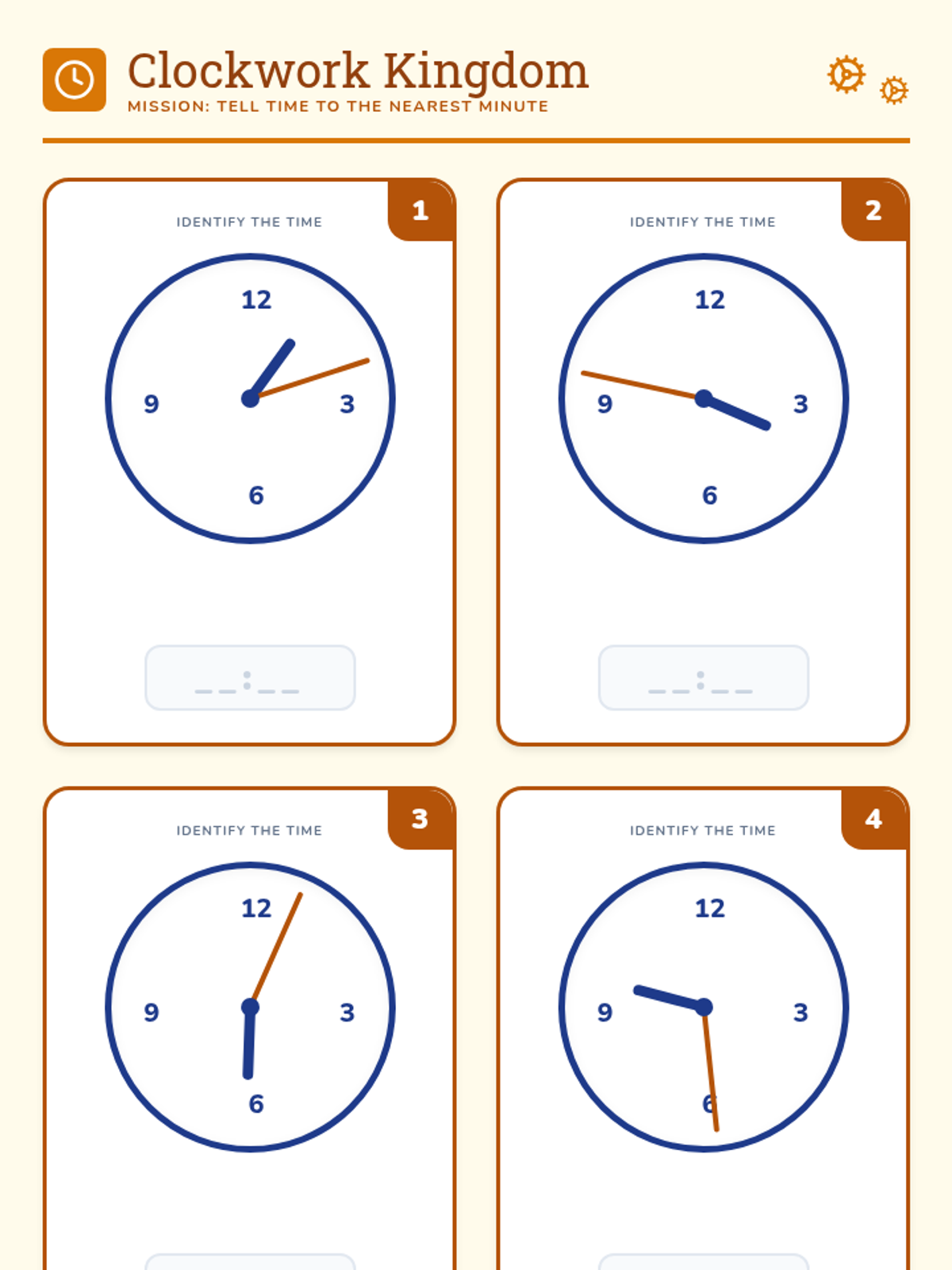
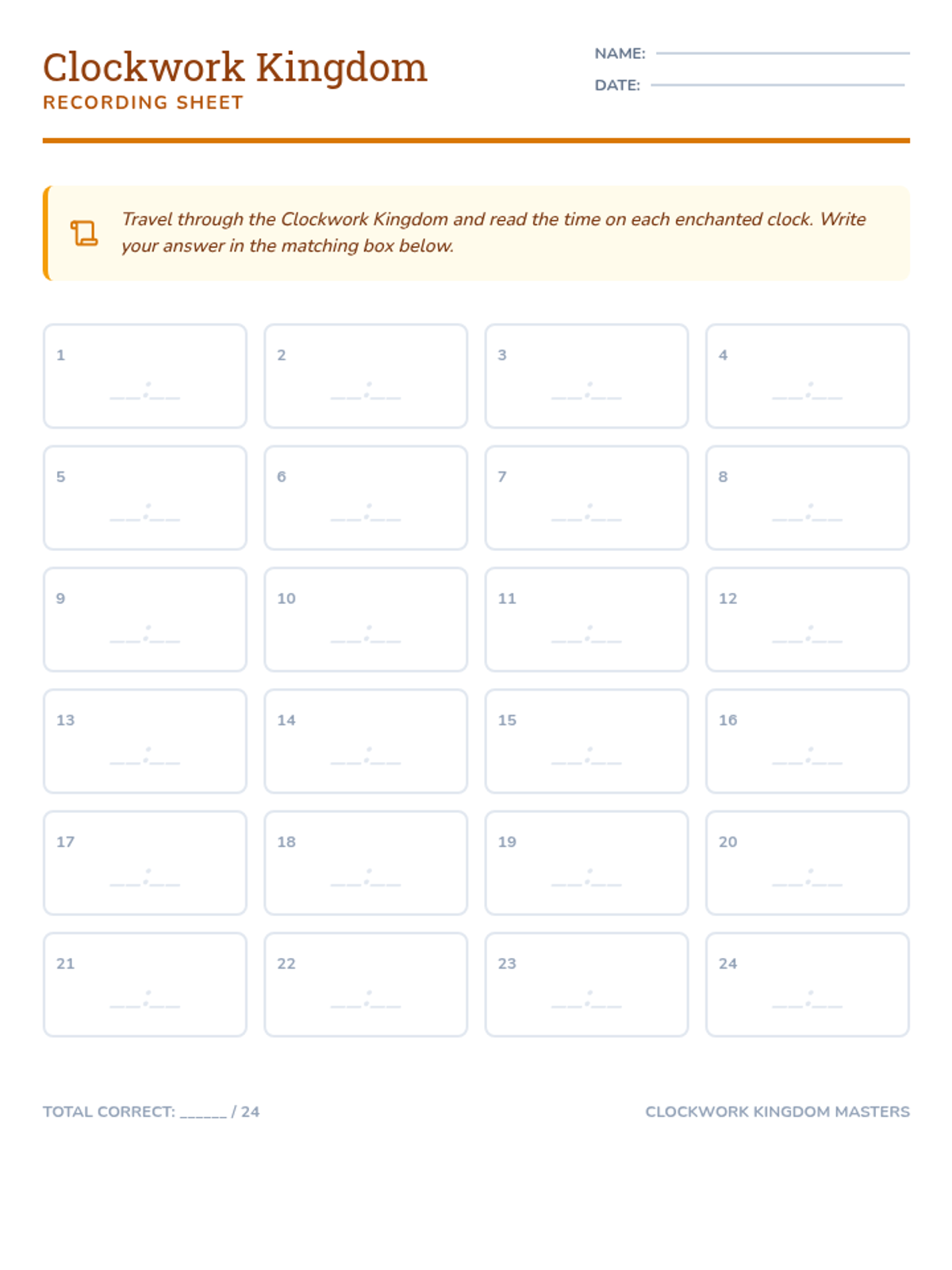
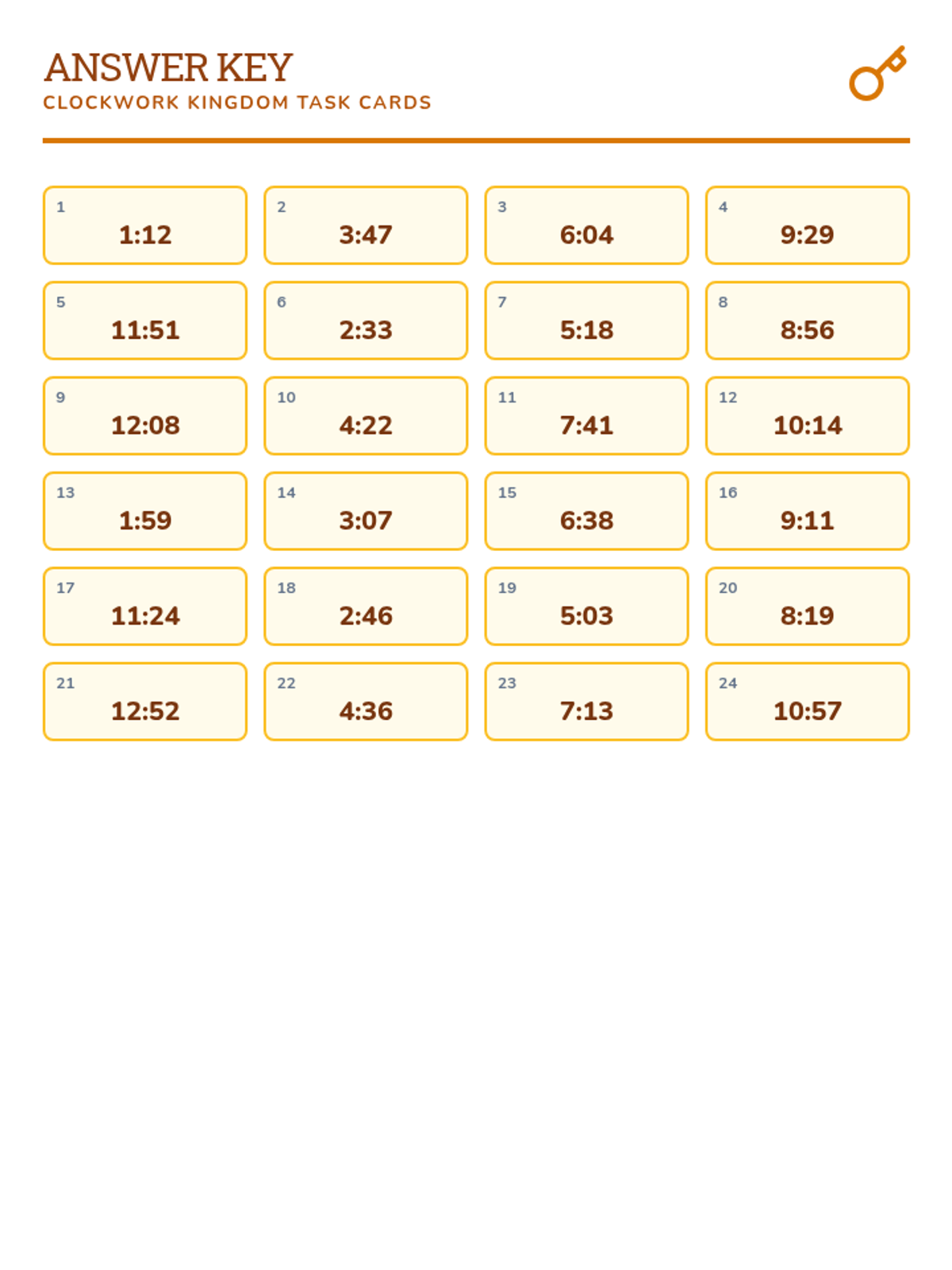
A set of resources for third graders to master telling time to the nearest minute using analog clocks, featuring a whimsical Clockwork Kingdom theme.
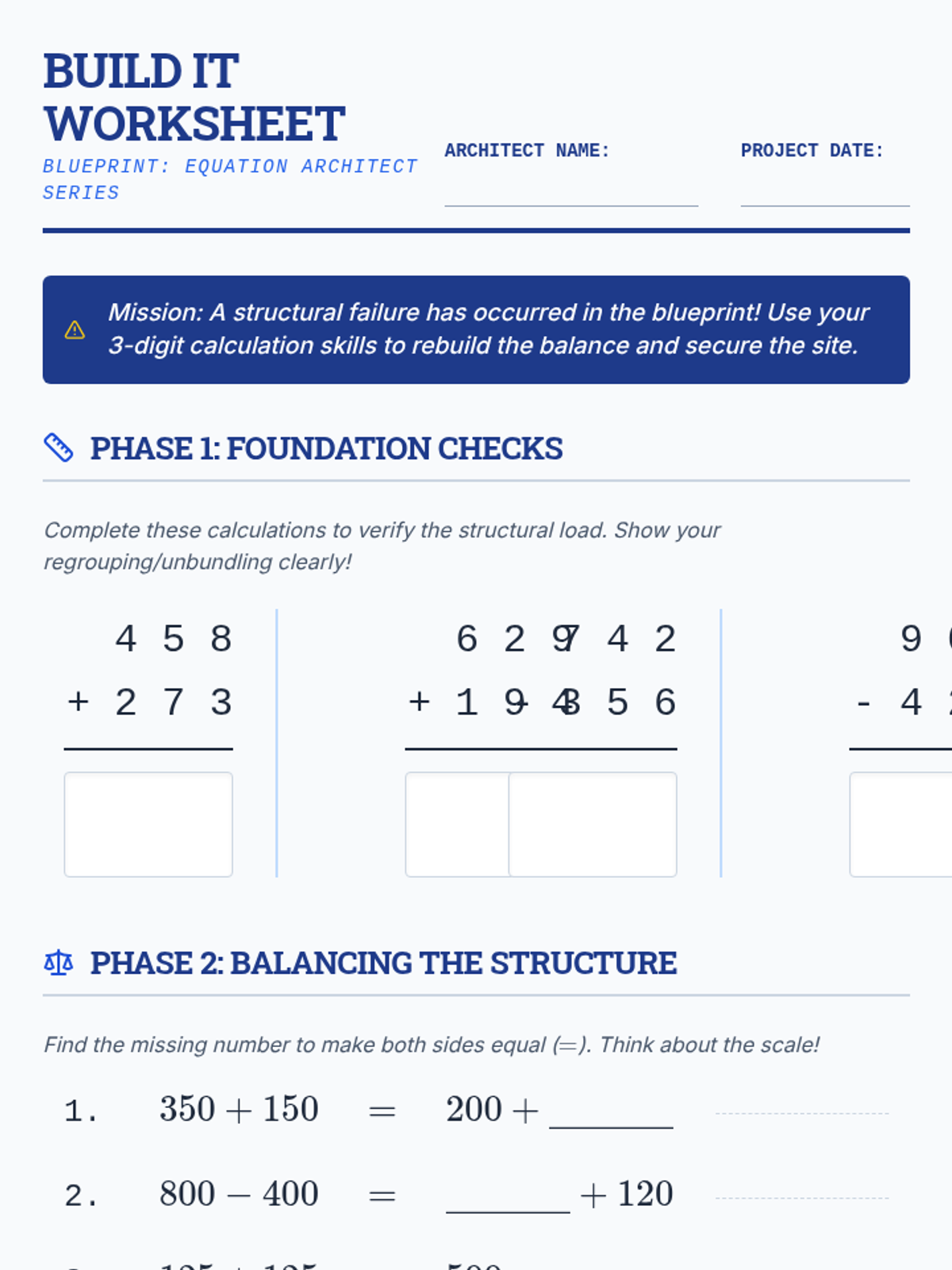
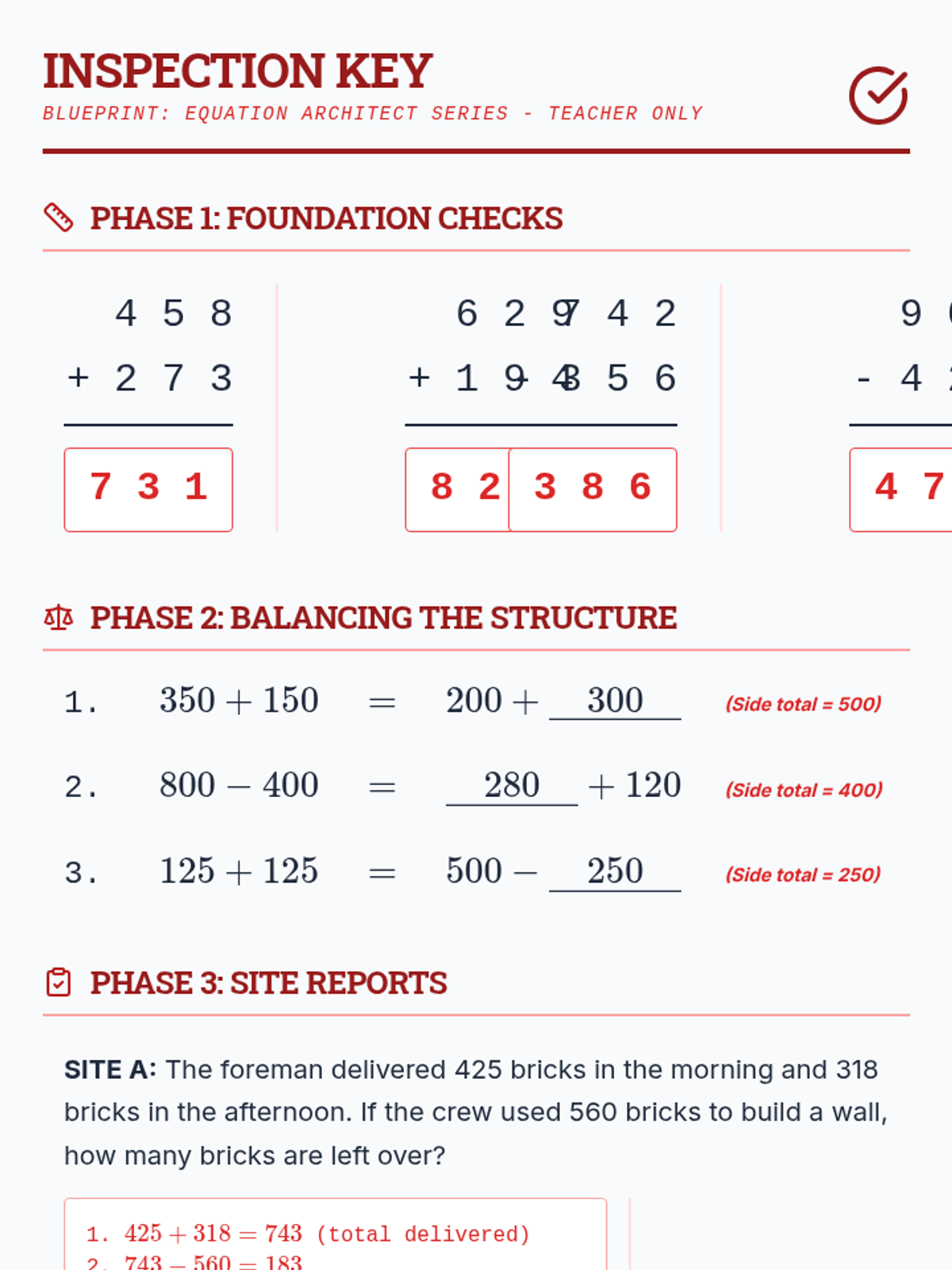
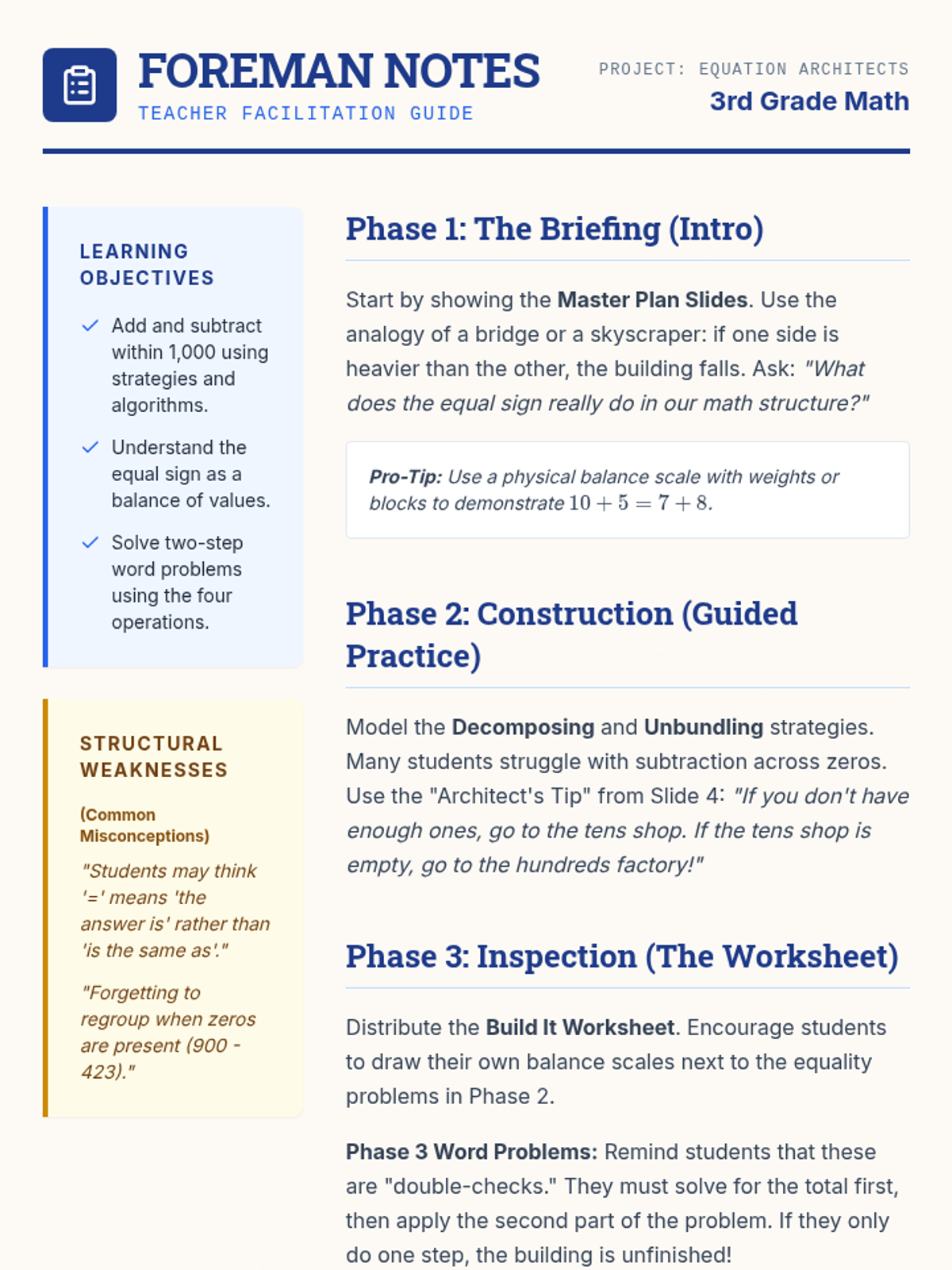
In this lesson, students will master 3-digit addition and subtraction while exploring the concept of equality as a balance. They will use 'blueprint' strategies to decompose numbers and solve two-step word problems within 1,000.
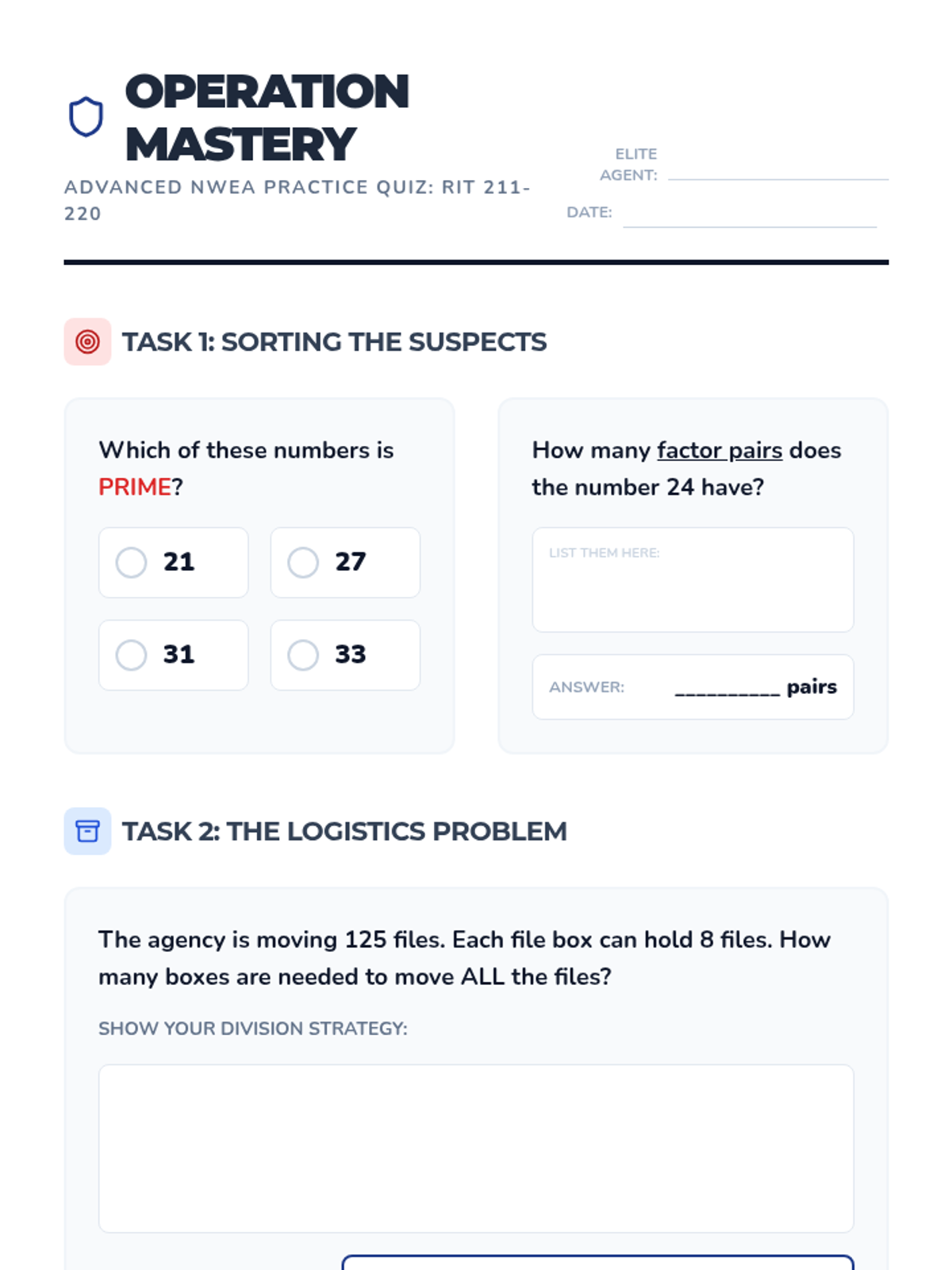
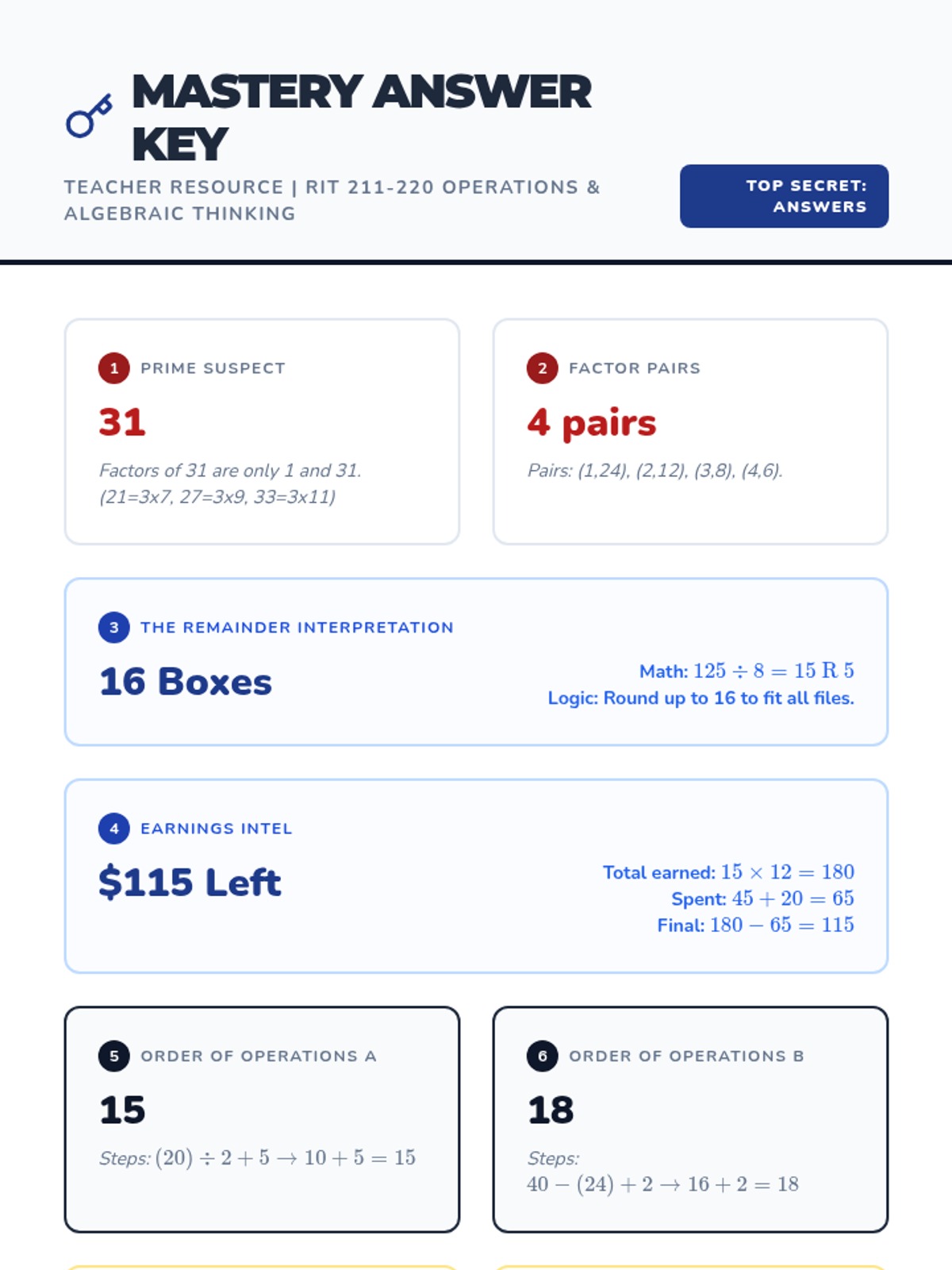
Advanced operations and algebraic thinking for the RIT 211-220 range, covering factors, multiples, prime/composite numbers, and multi-step word problems with remainders.
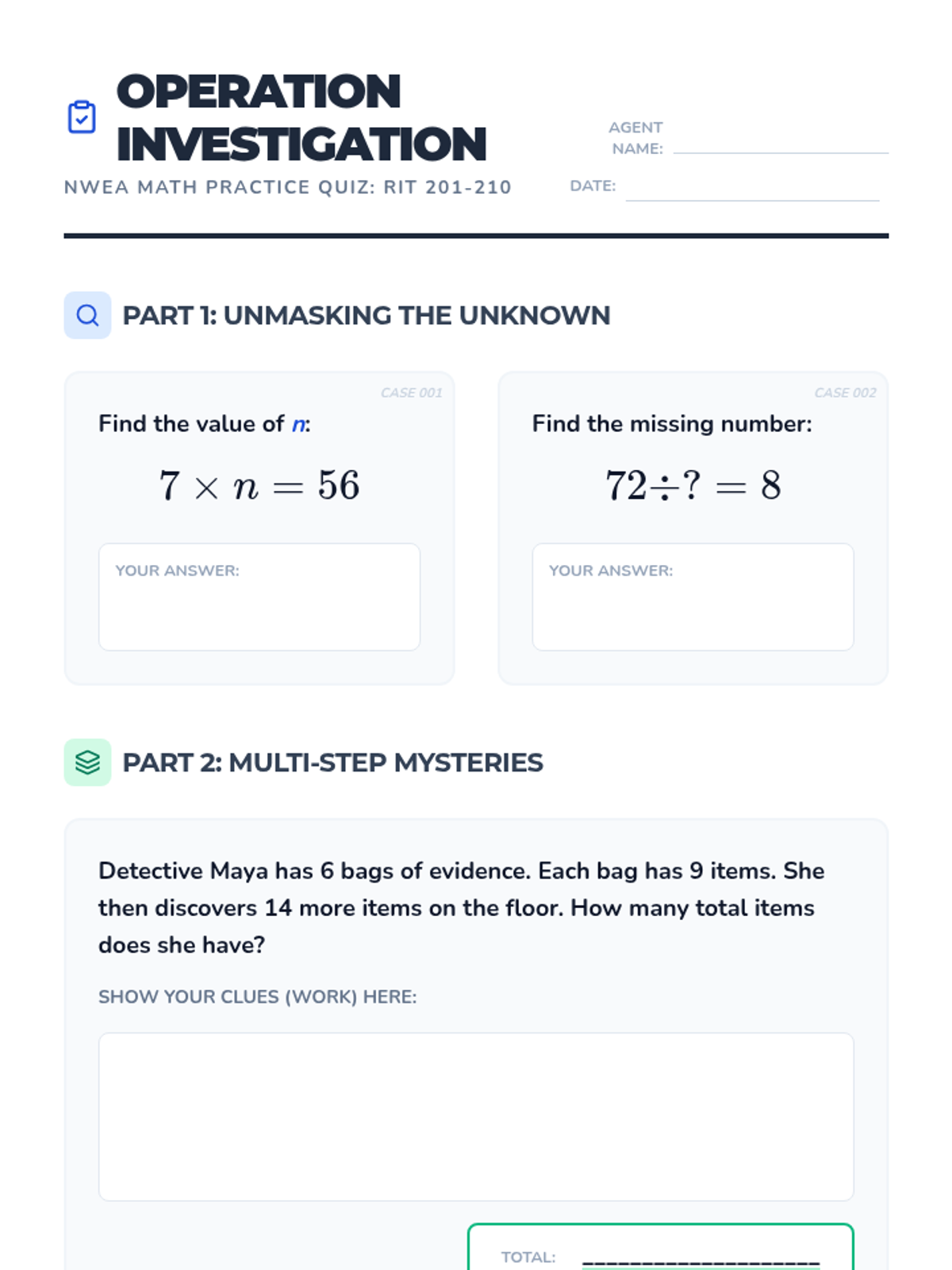
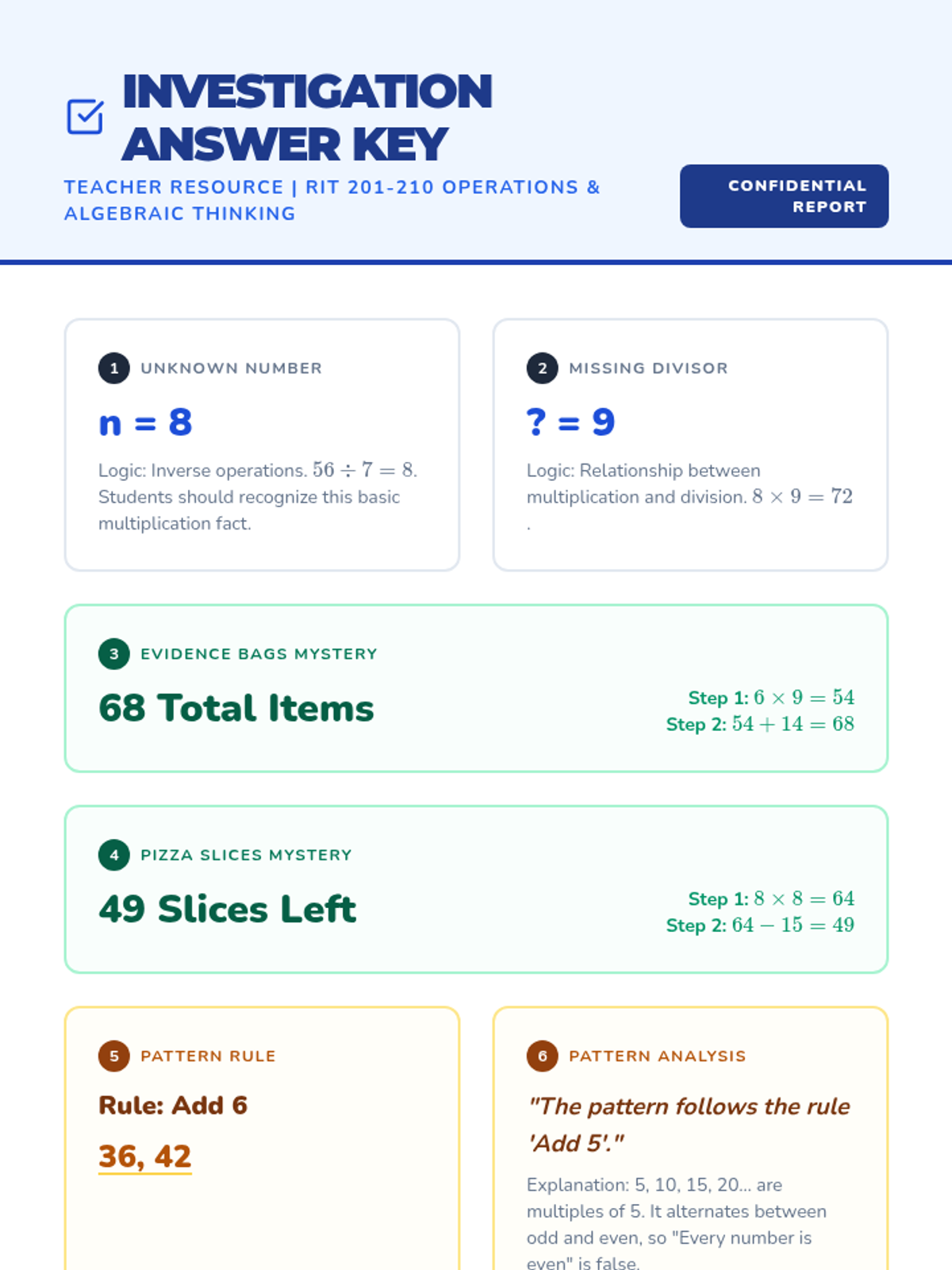
A targeted practice session focusing on Operations and Algebraic Thinking for students in the RIT 201-210 range, featuring multi-step word problems, patterns, and algebraic properties.
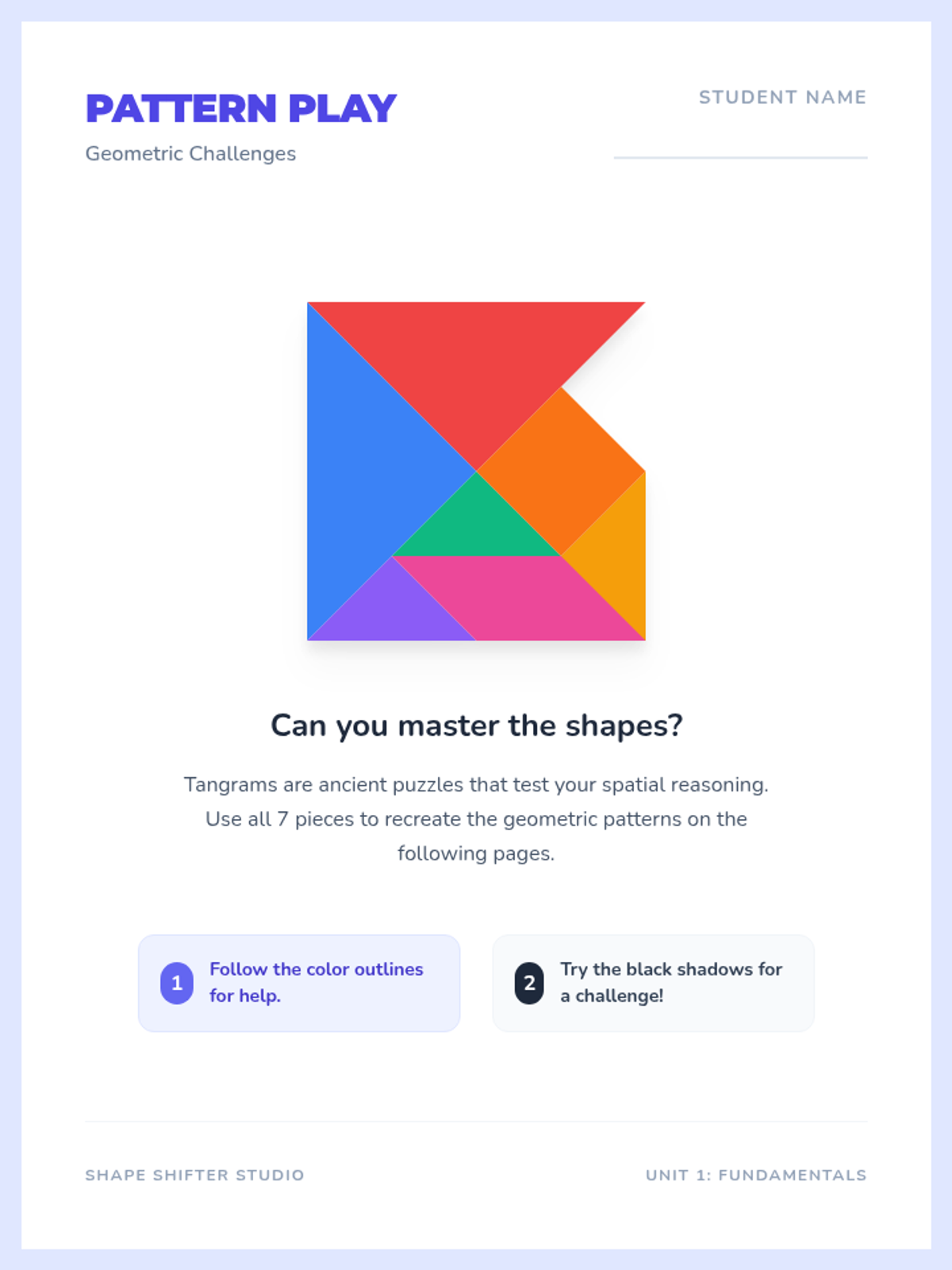
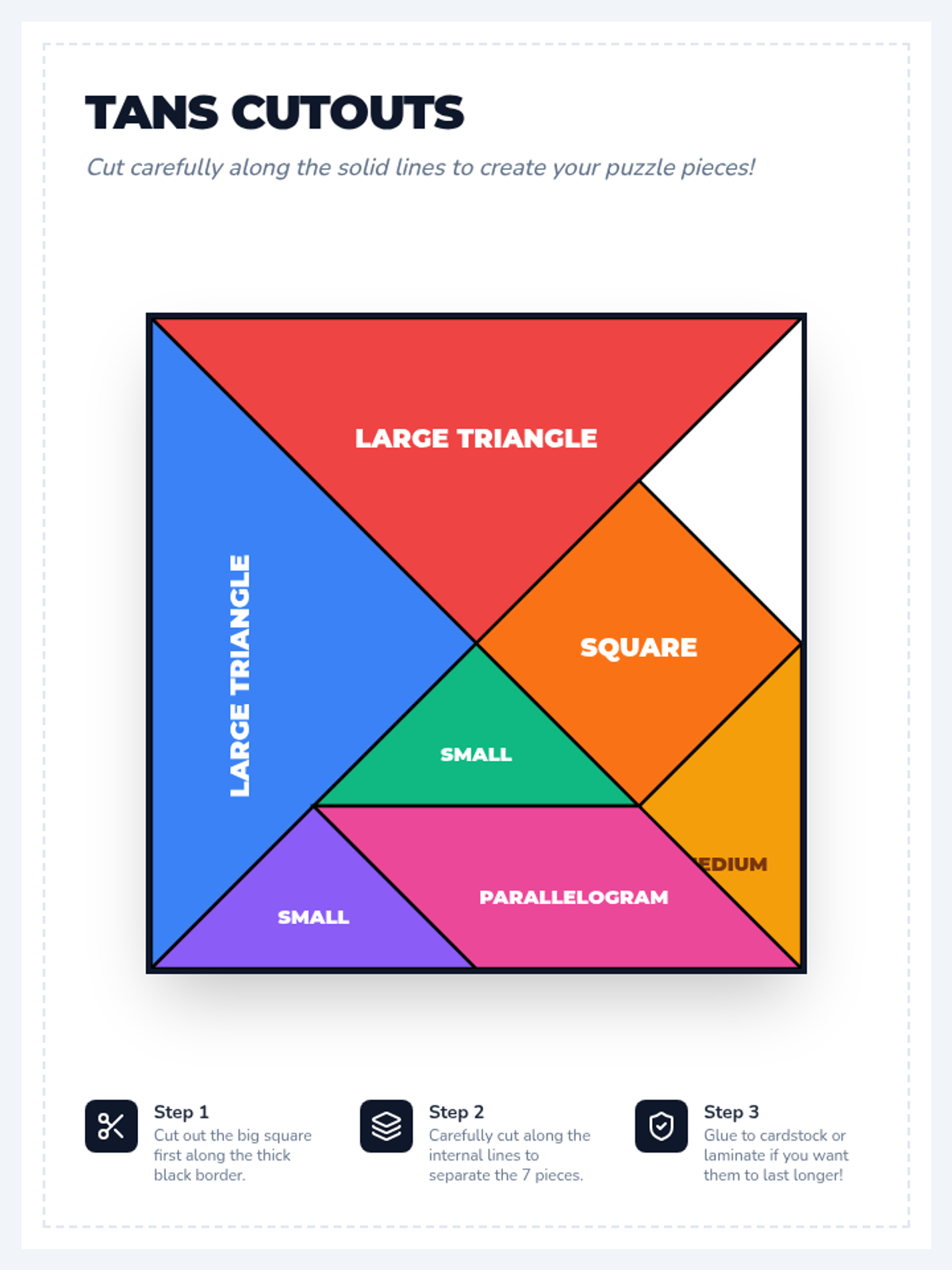
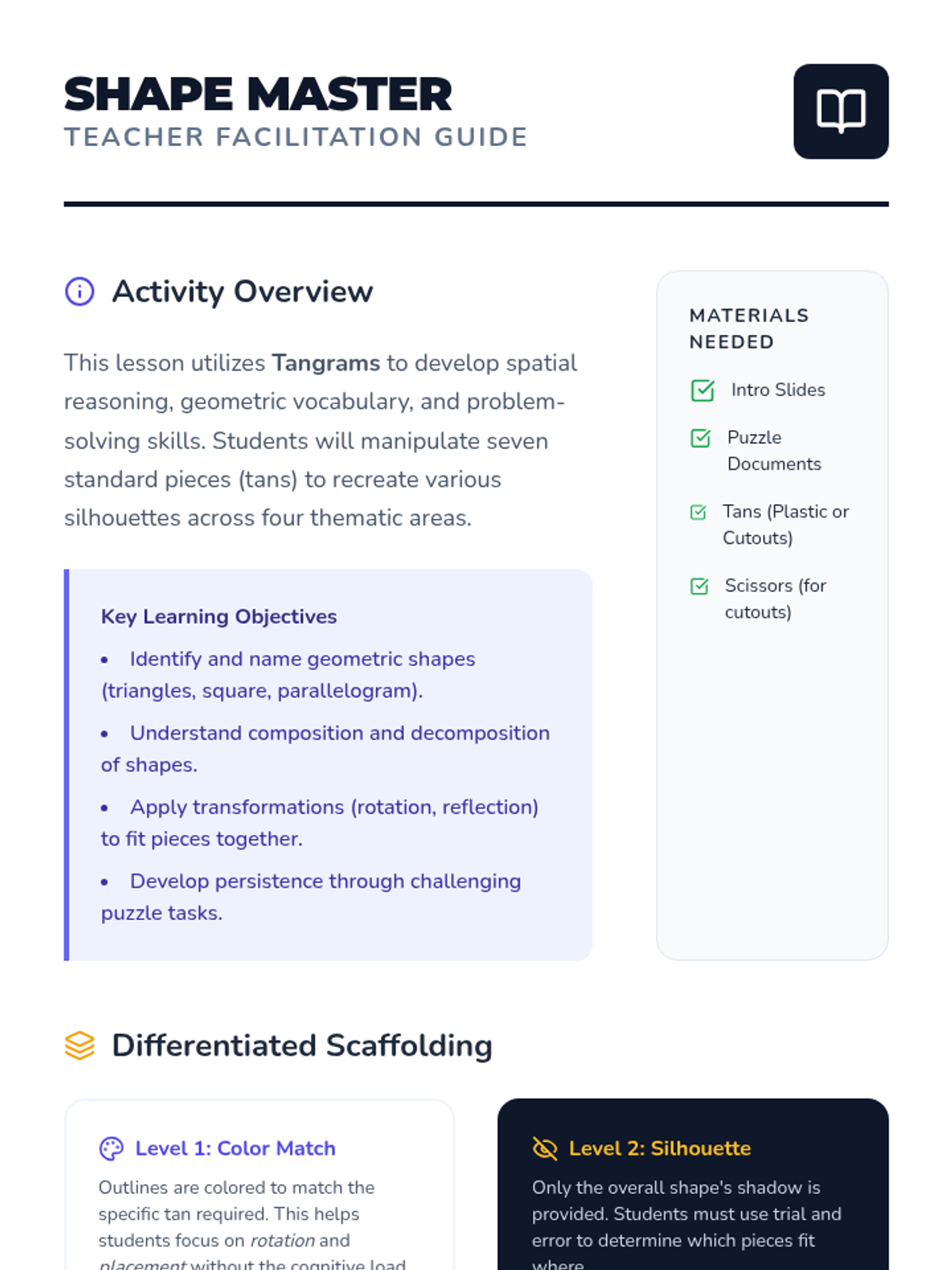
A hands-on exploration of geometry and spatial reasoning using tangrams, featuring puzzles across four diverse themes with varying difficulty levels.
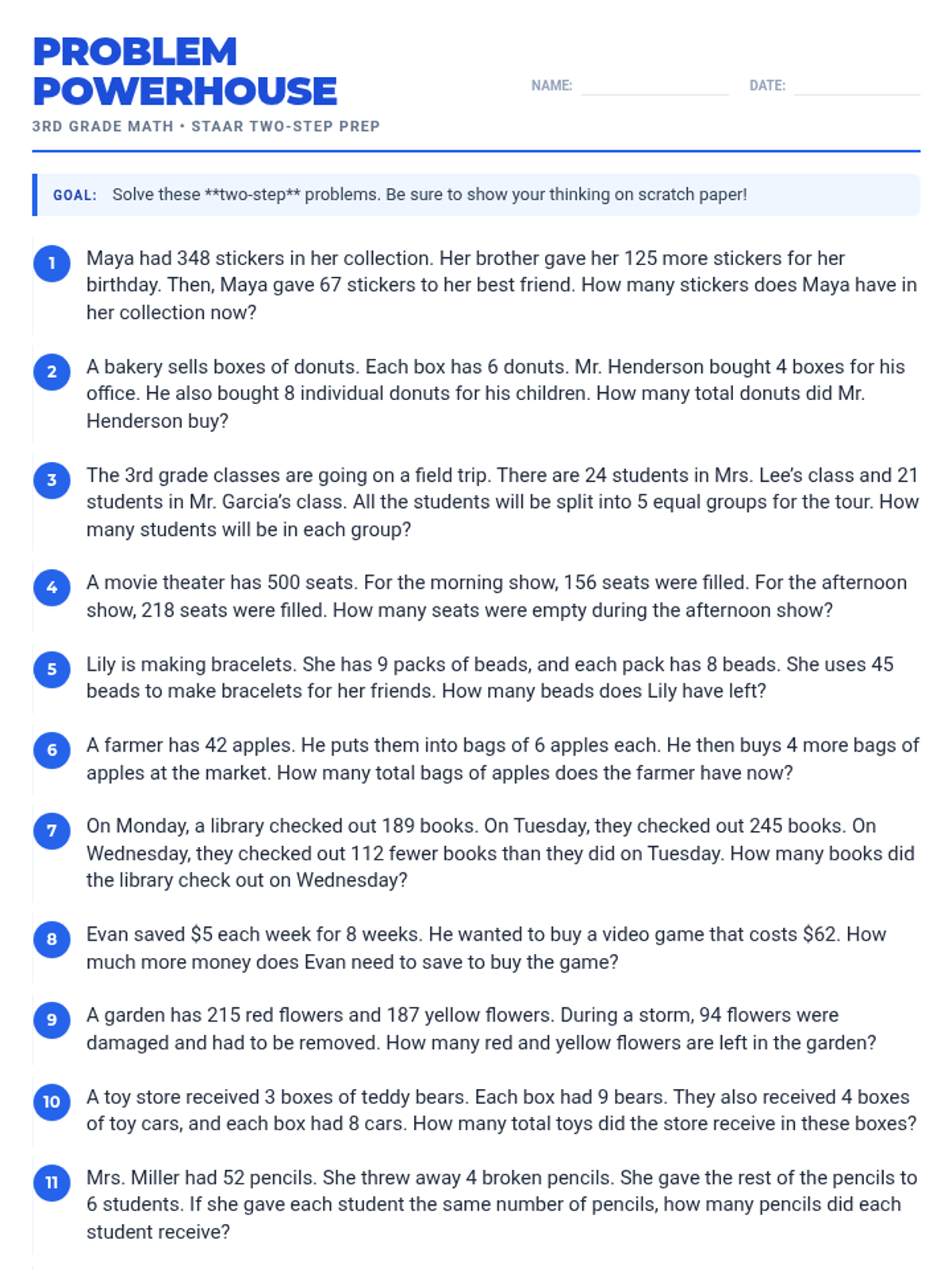
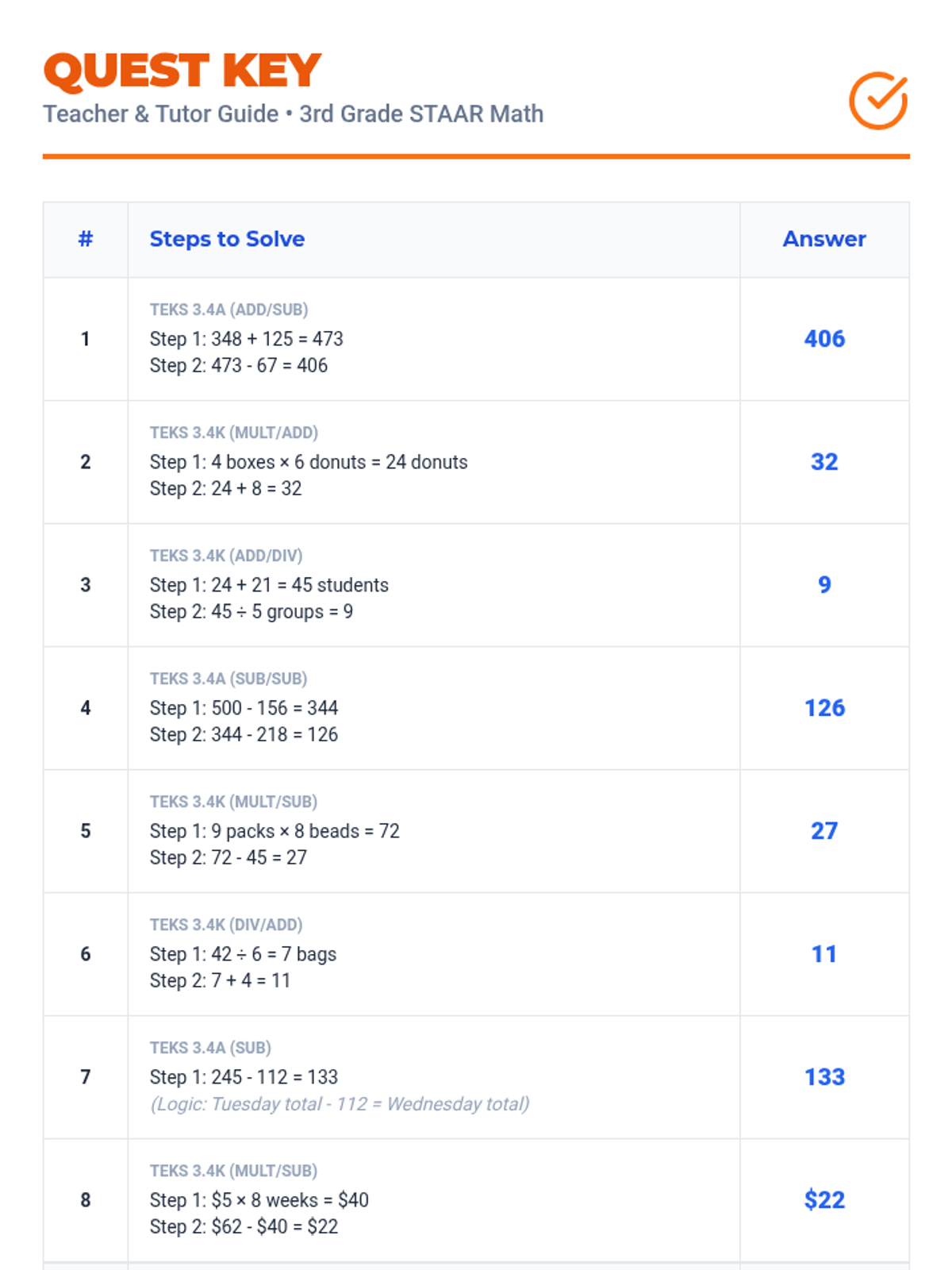
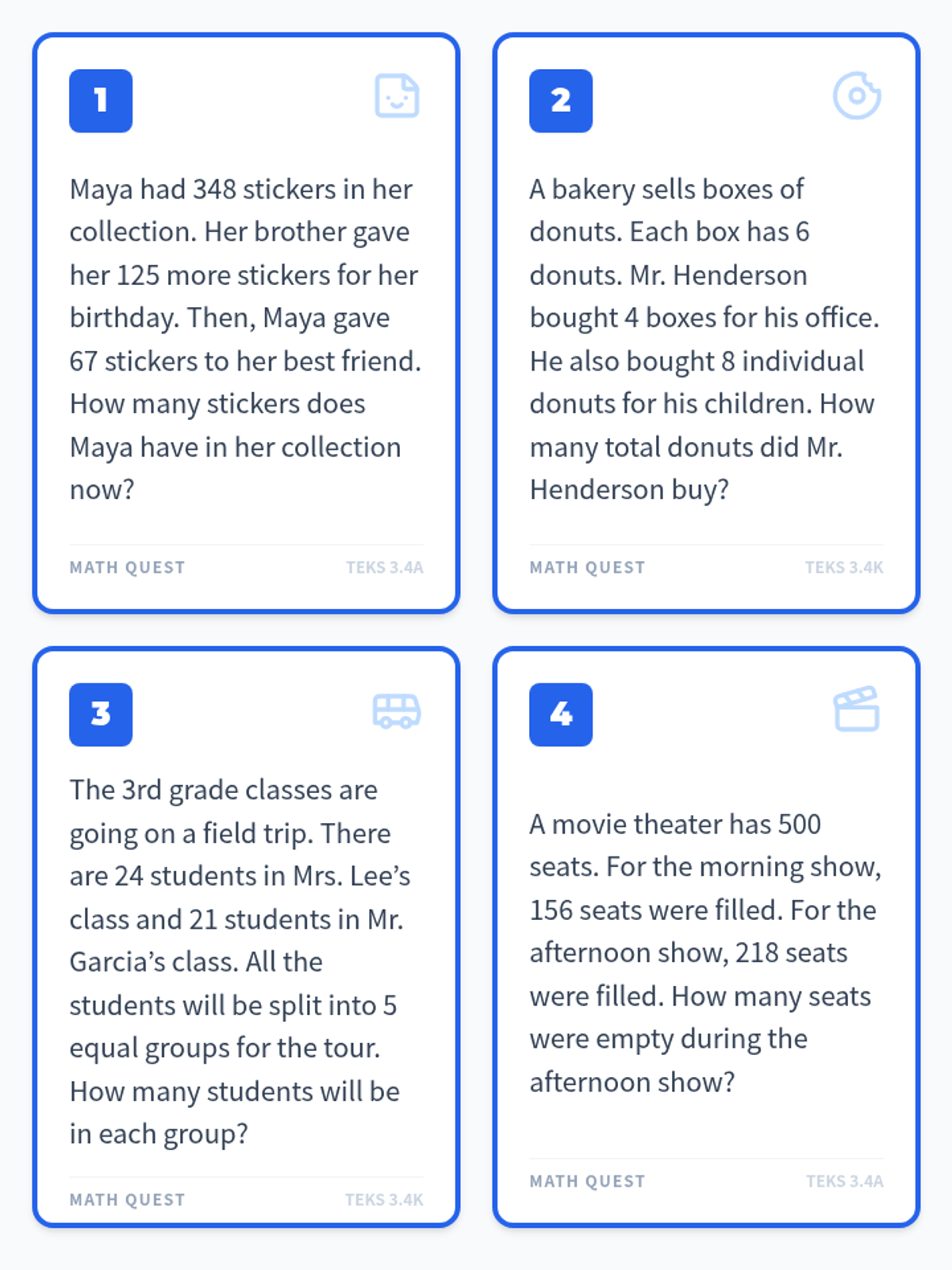
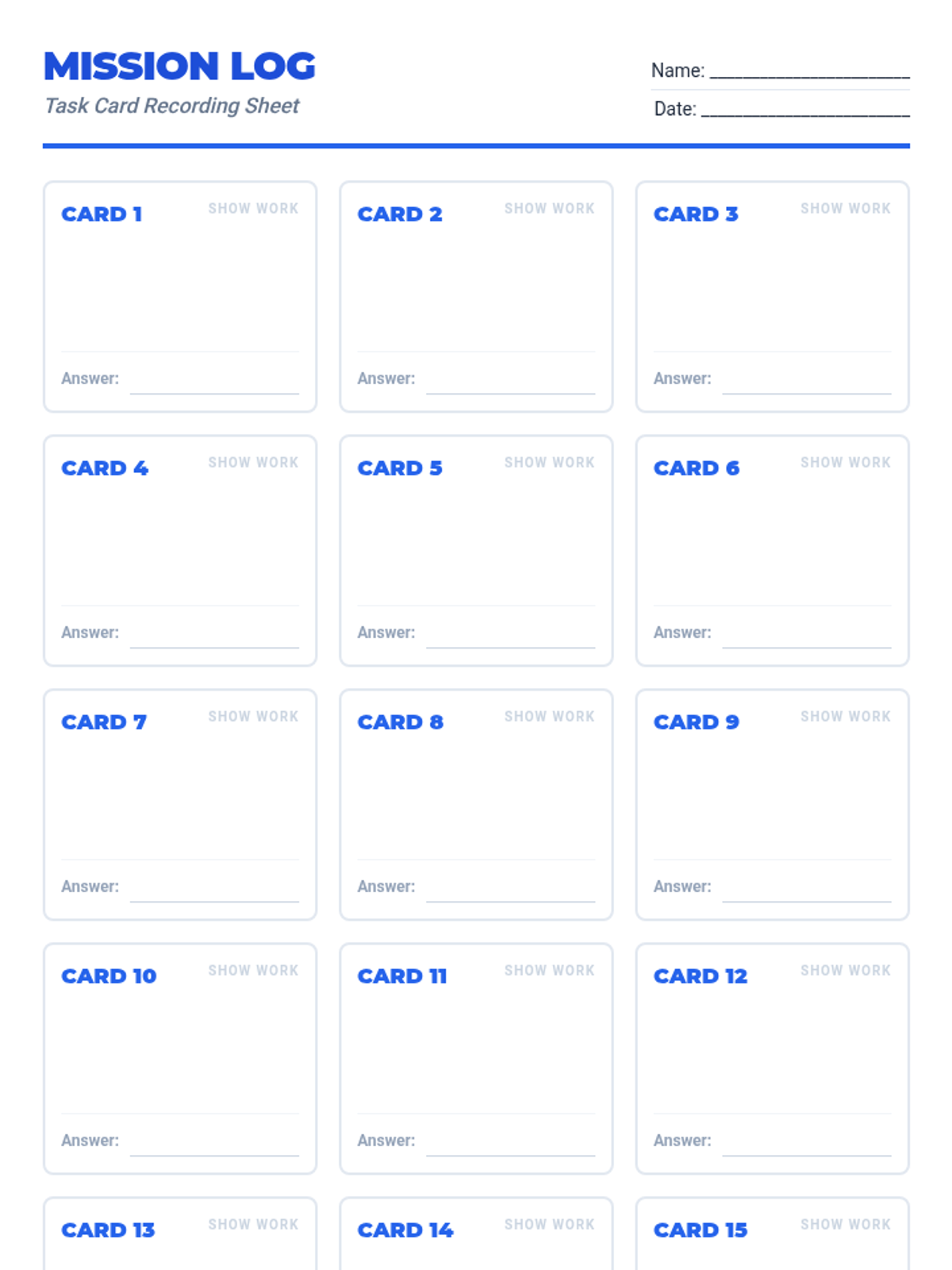
A collection of STAAR-aligned two-step word problems designed for 3rd-grade math mastery. This lesson focuses on problem-solving strategies for addition, subtraction, multiplication, and division scenarios commonly found on the Texas state assessment.
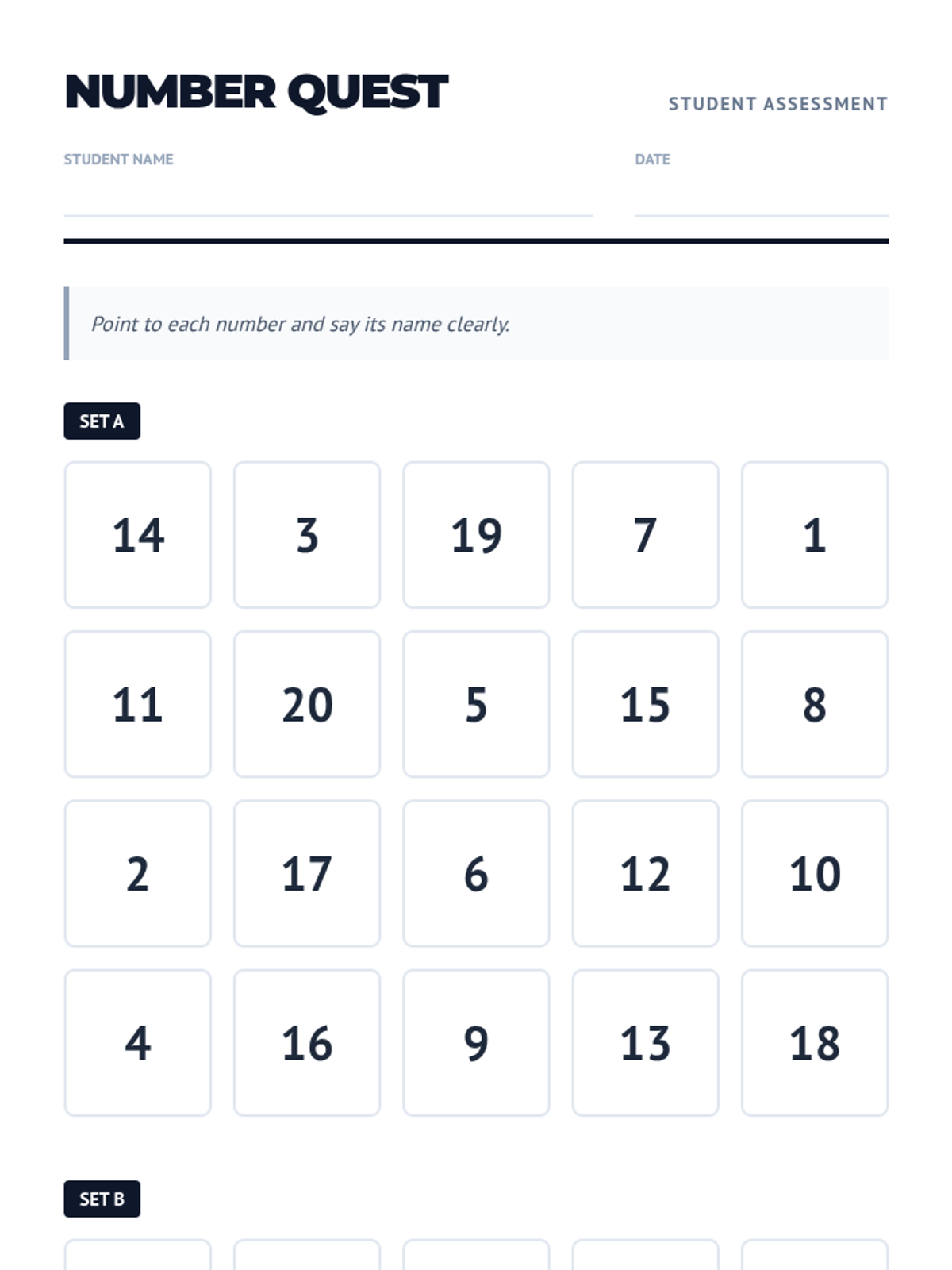
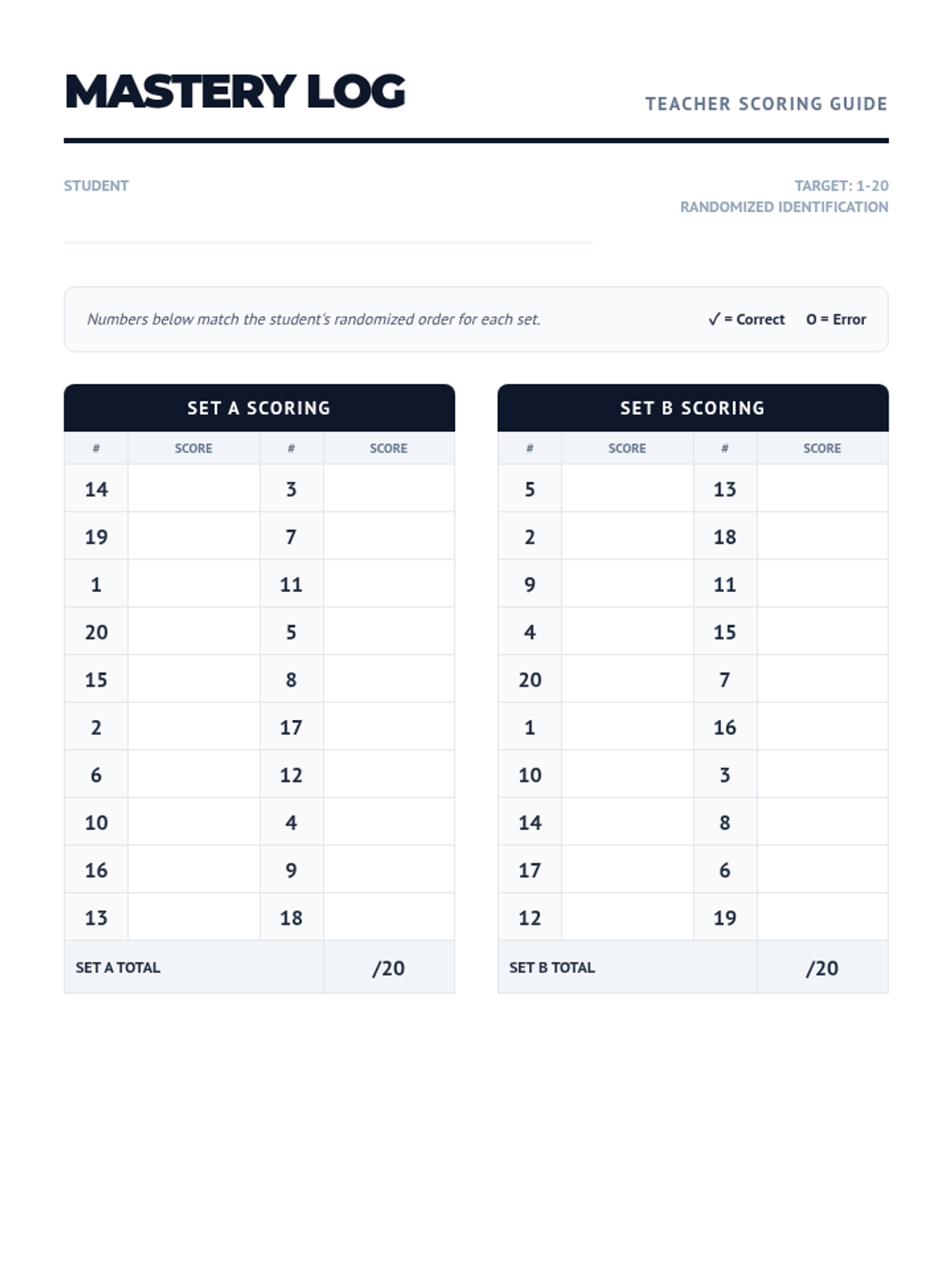
A comprehensive set of tools for assessing and tracking a student's ability to identify numbers 1 through 20 in randomized order.
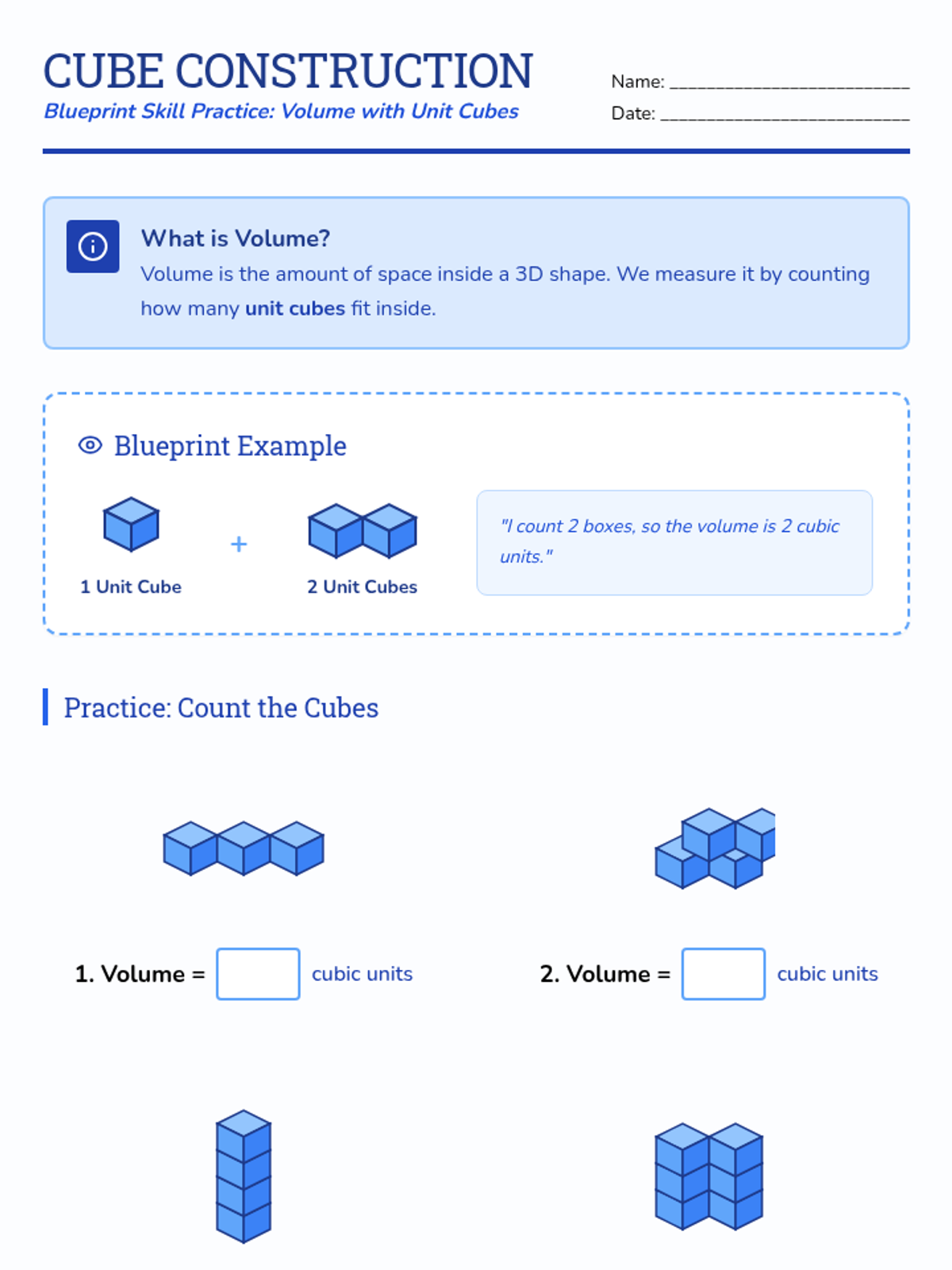
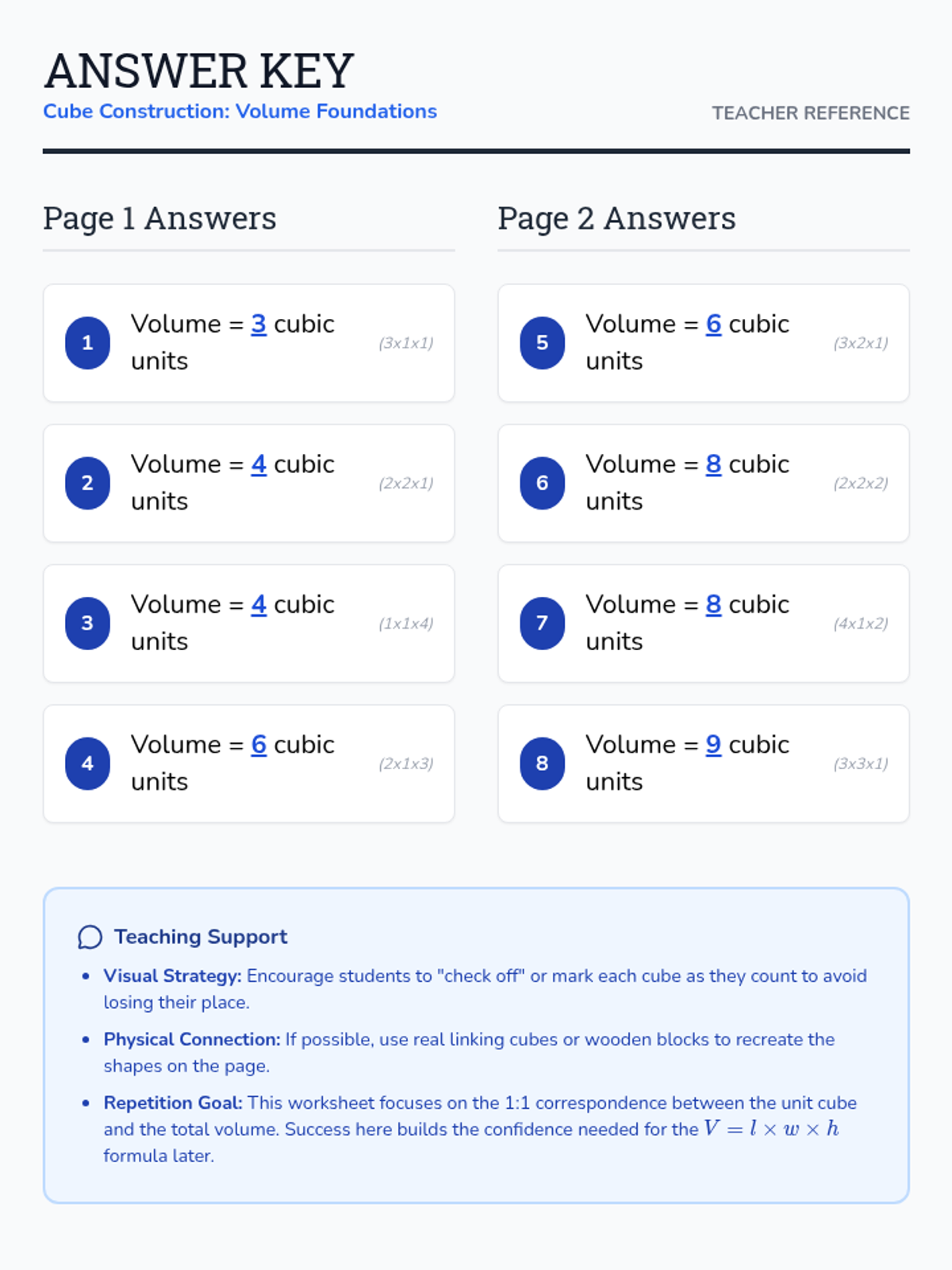
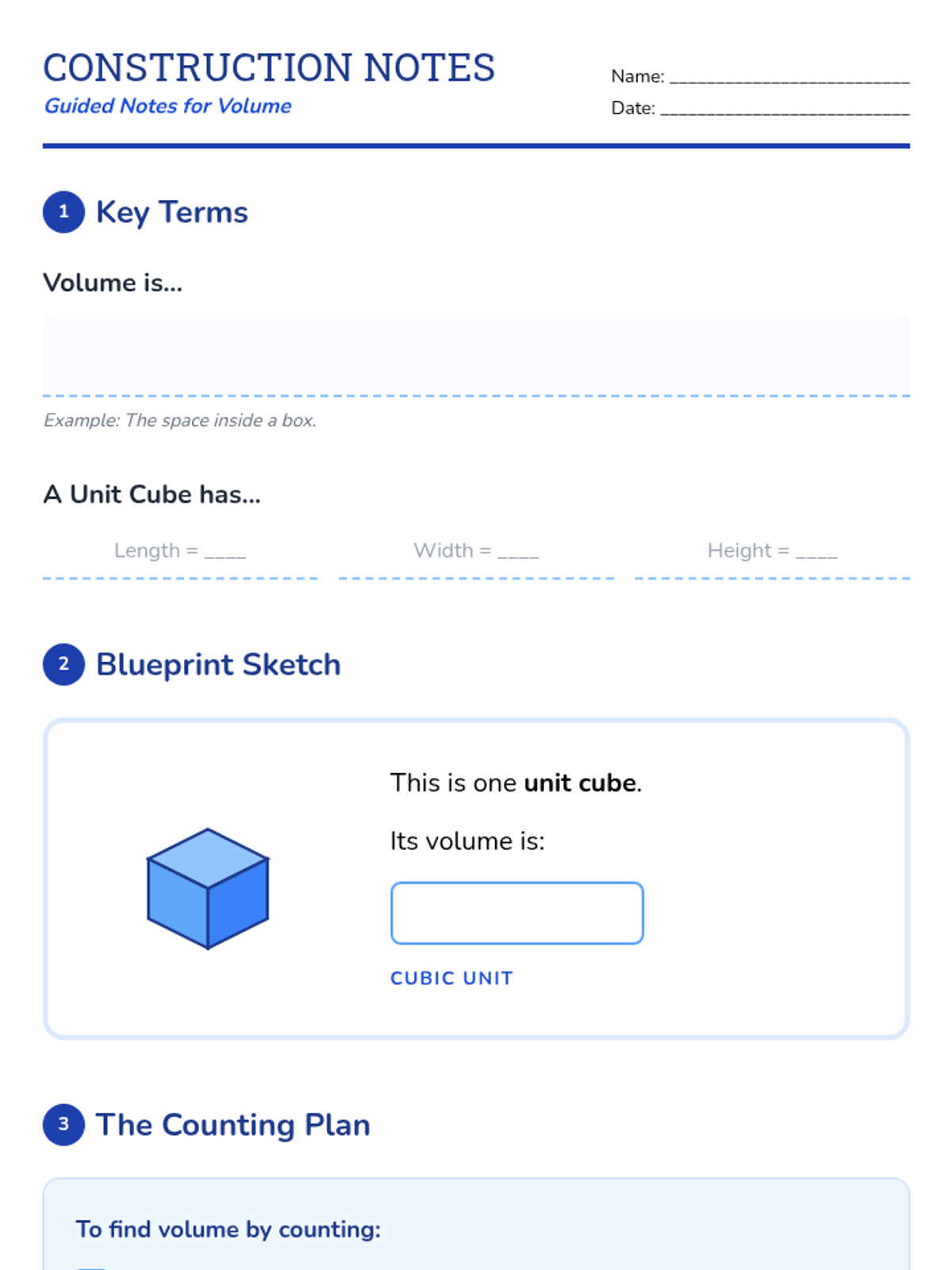
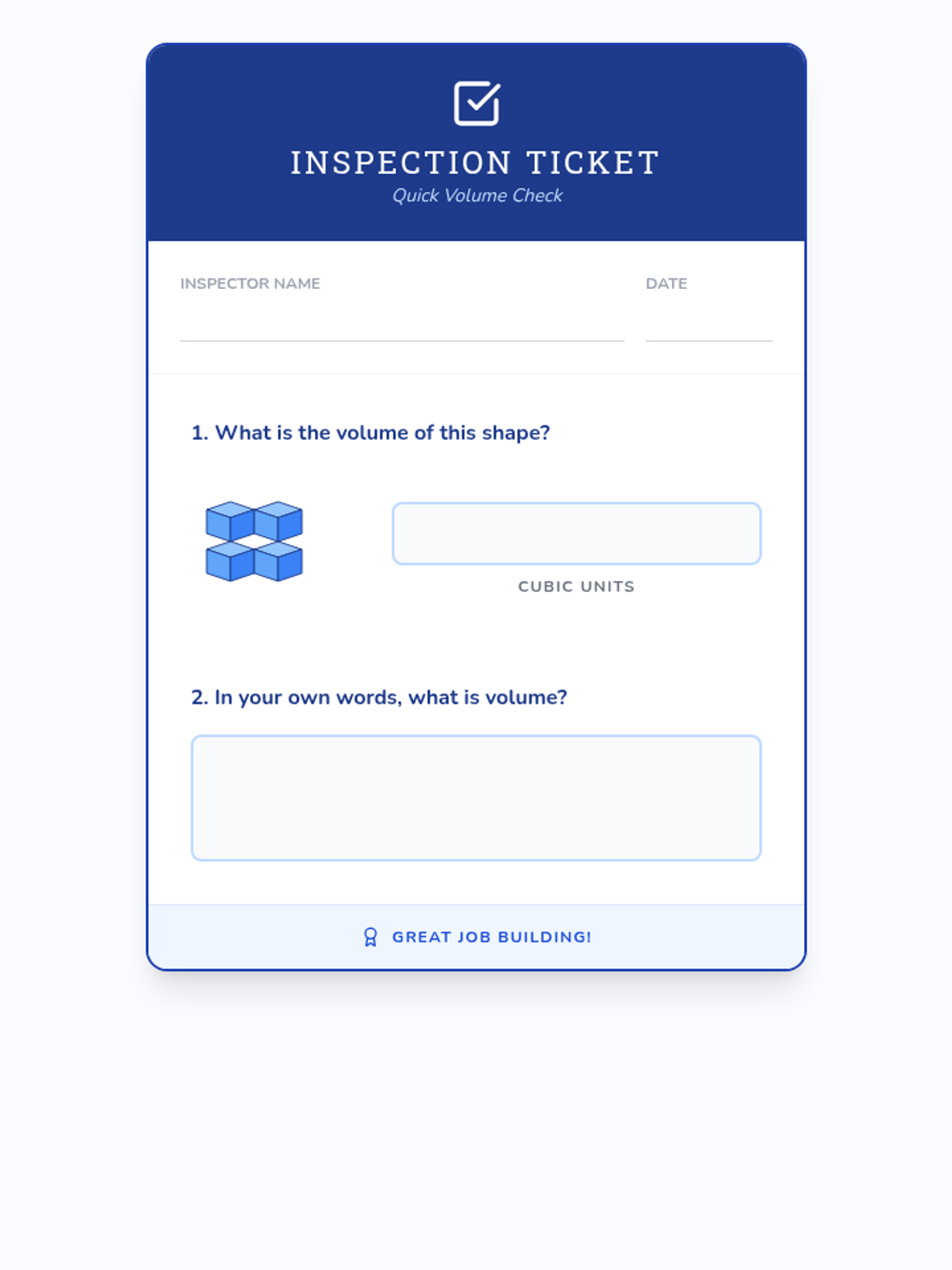
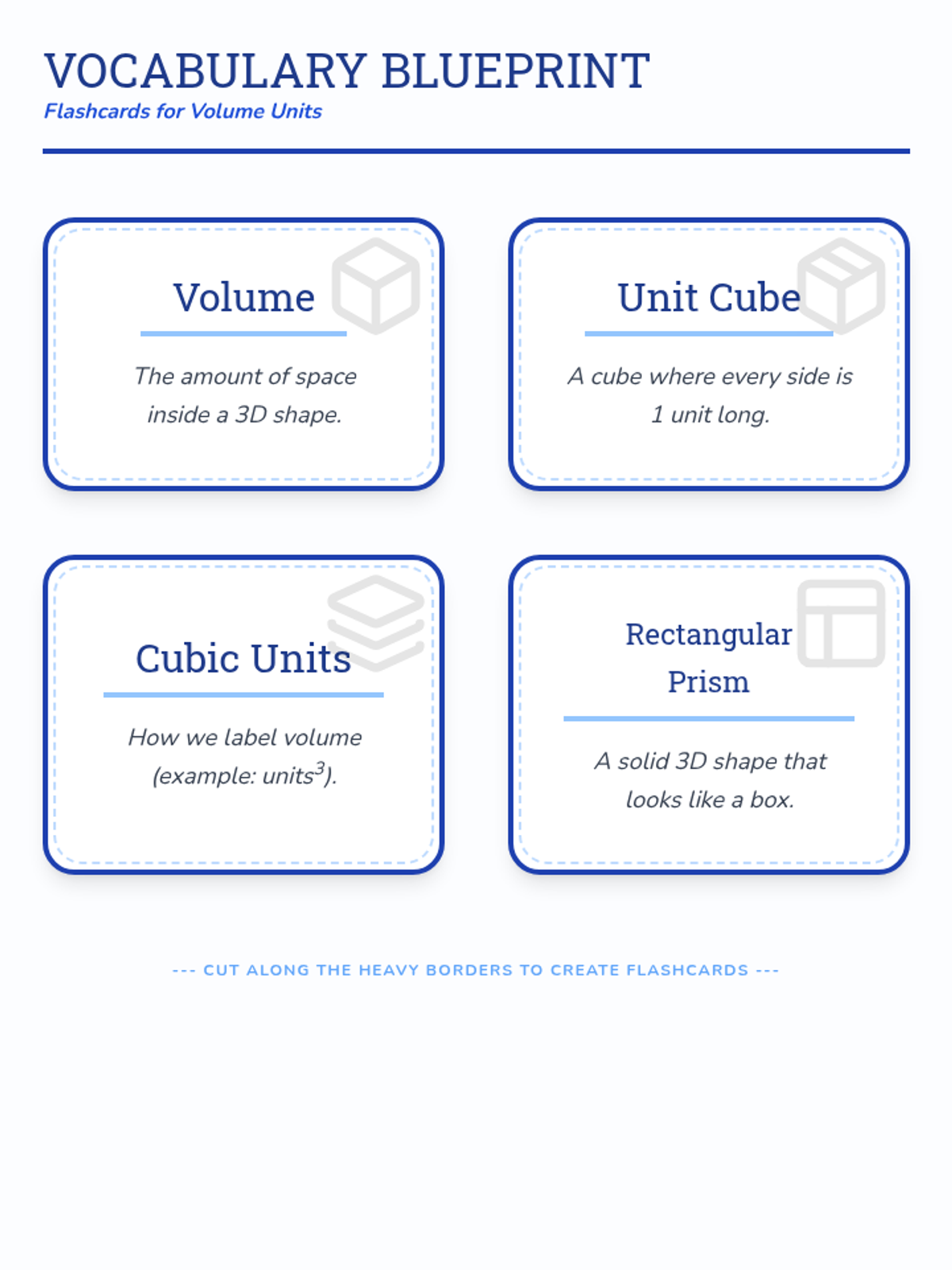
A lesson focused on developing a foundational understanding of volume by counting unit cubes within rectangular prisms, designed for students needing repetitive skill practice and clear visual support.
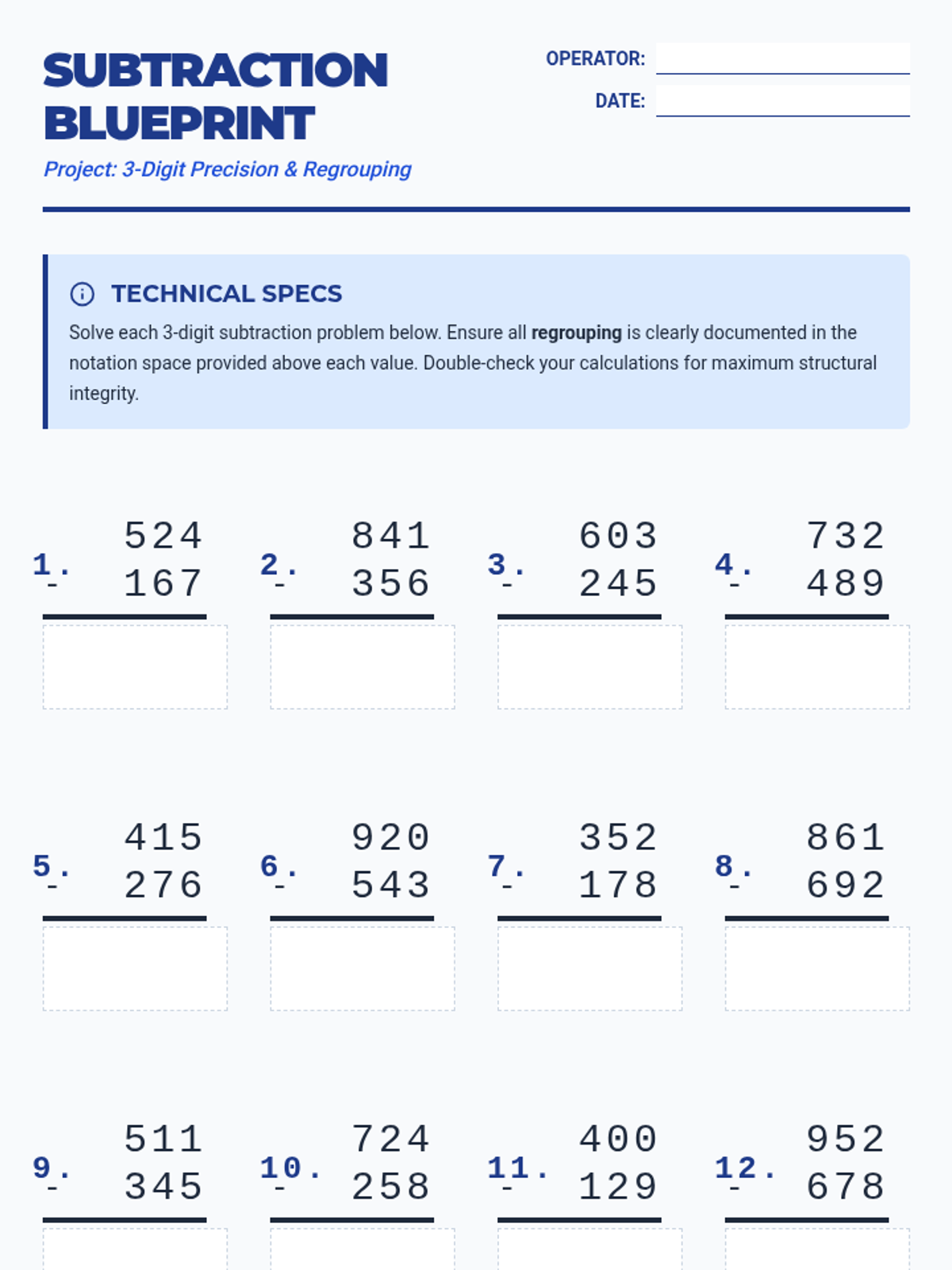
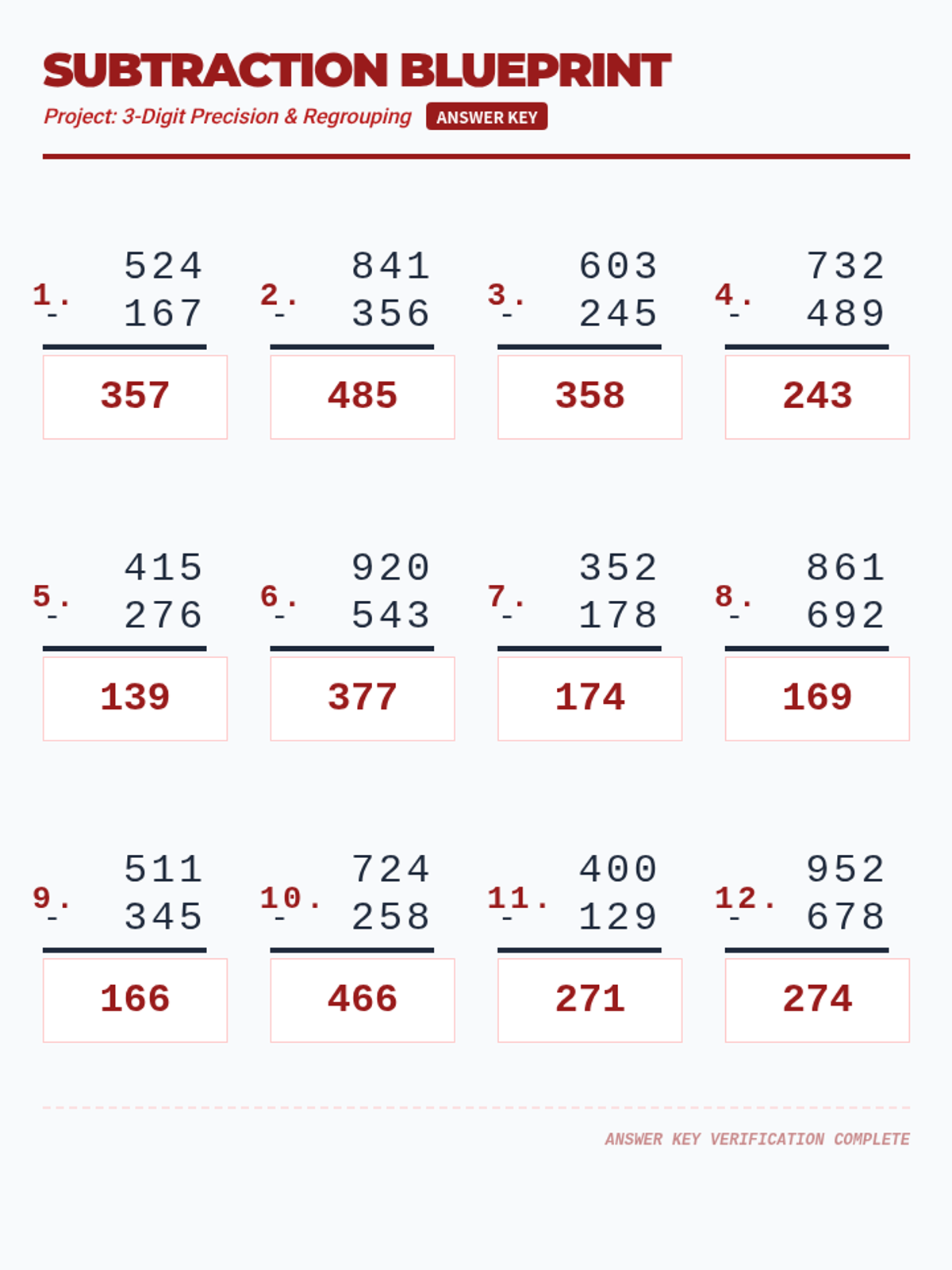
Students practice and master 3-digit subtraction with regrouping through targeted drill exercises.
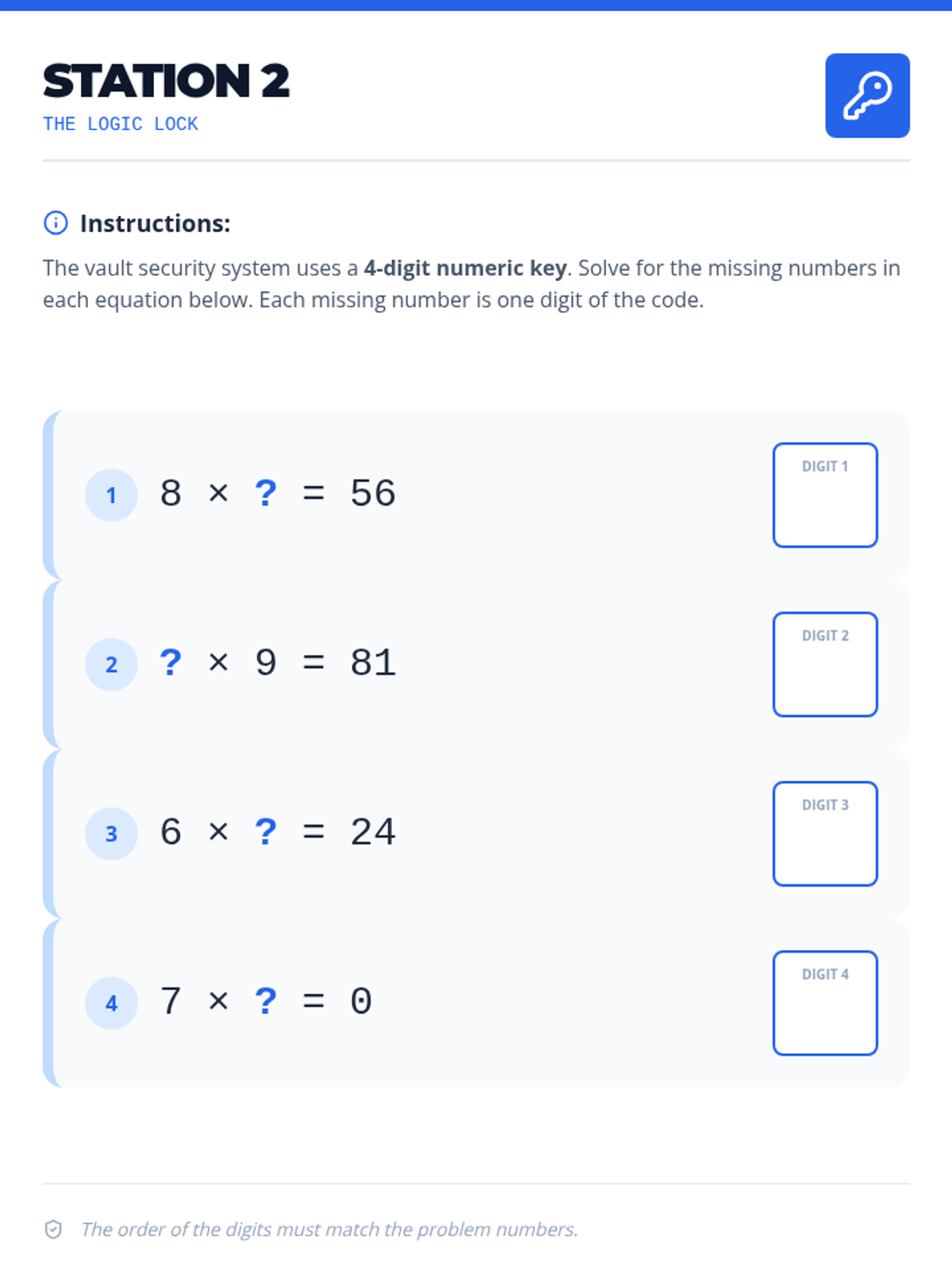
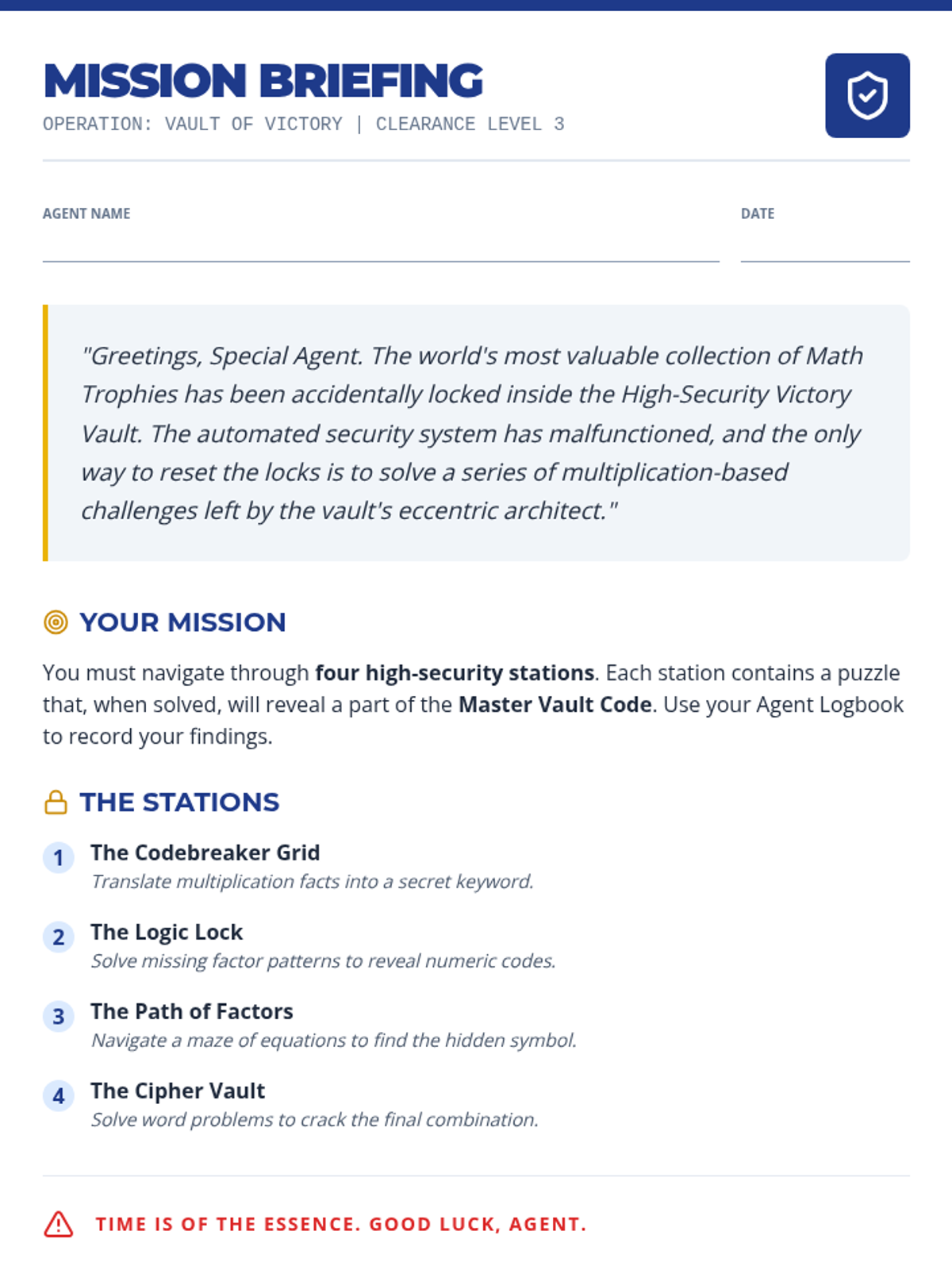
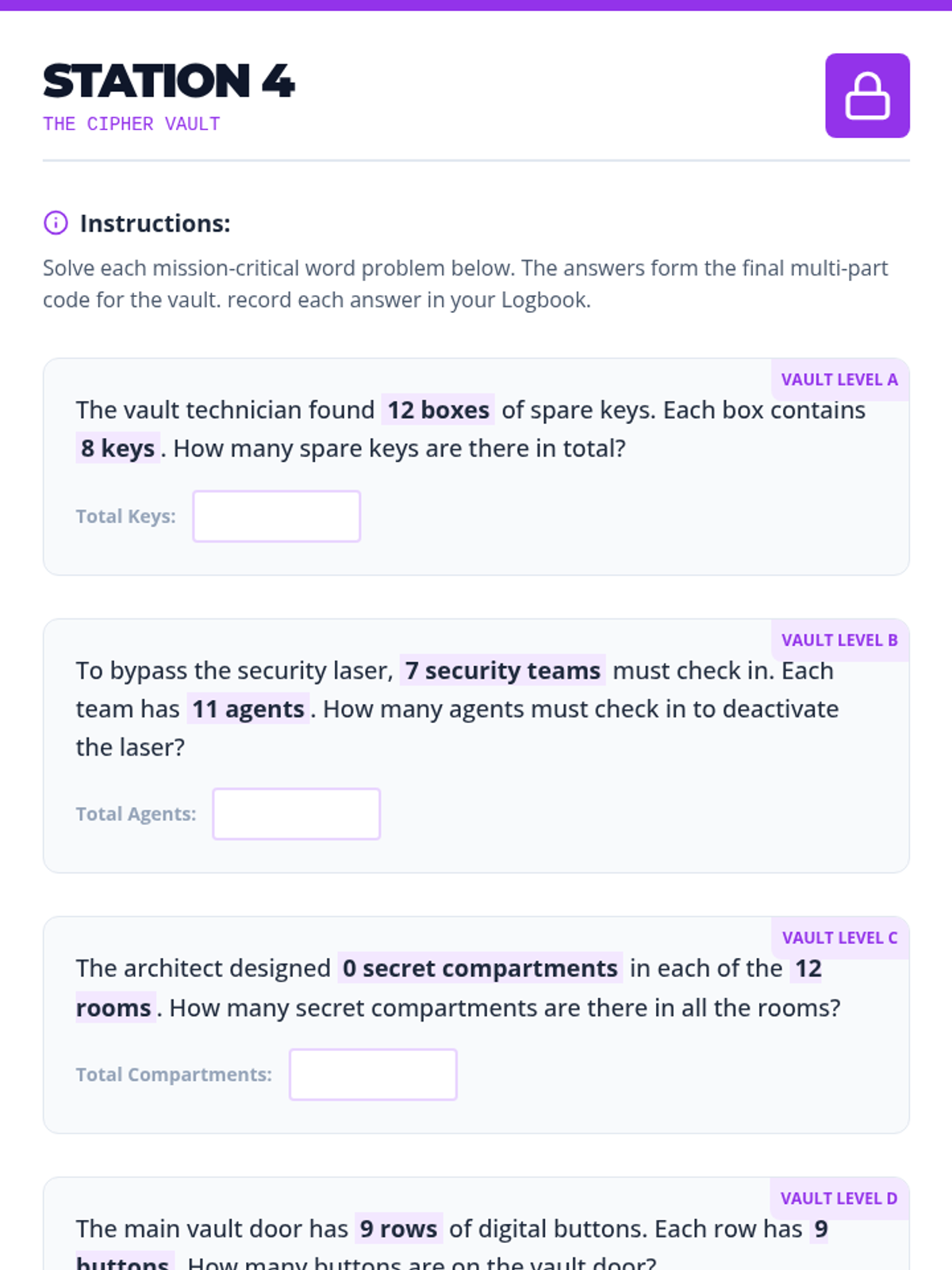
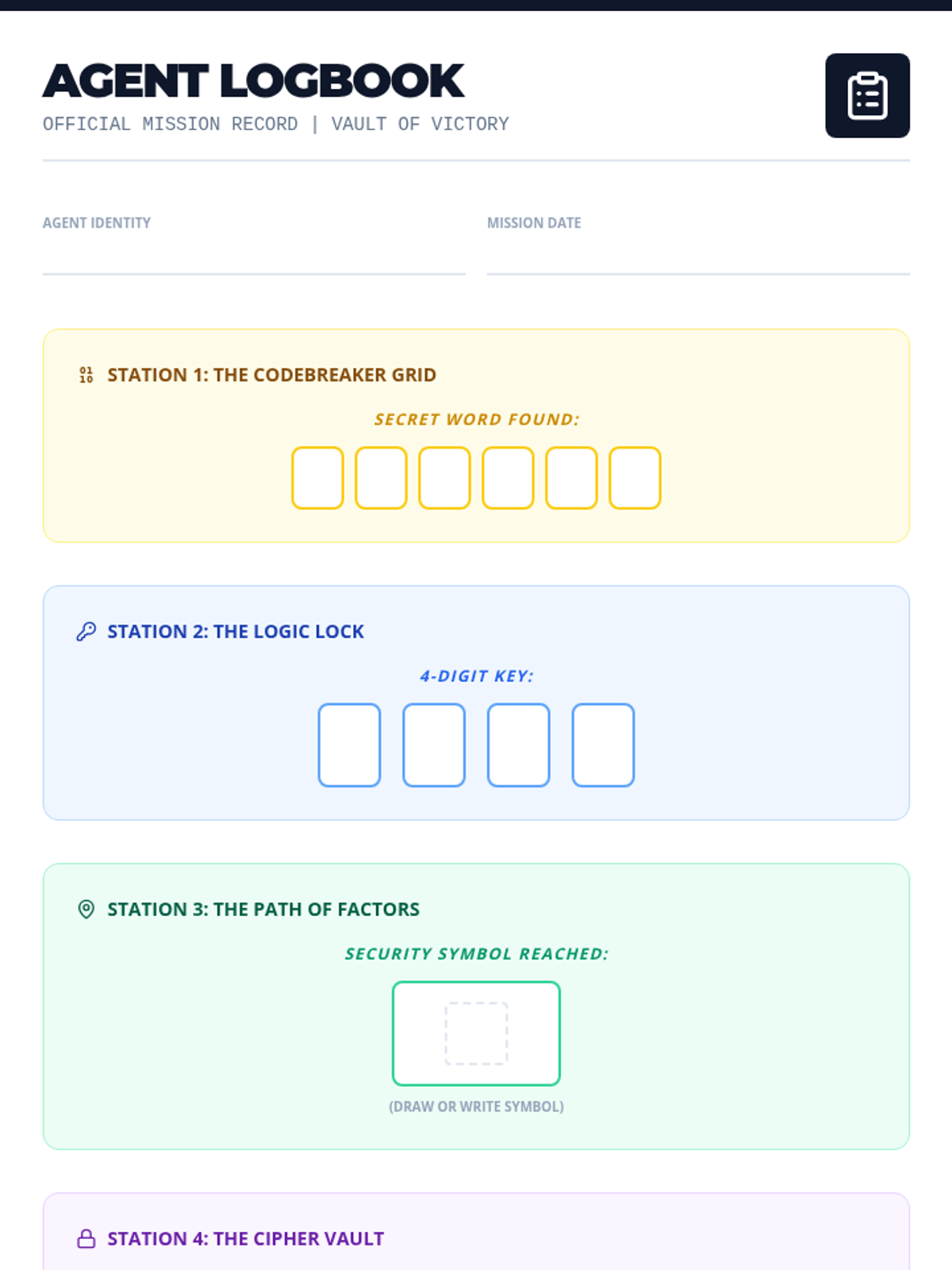
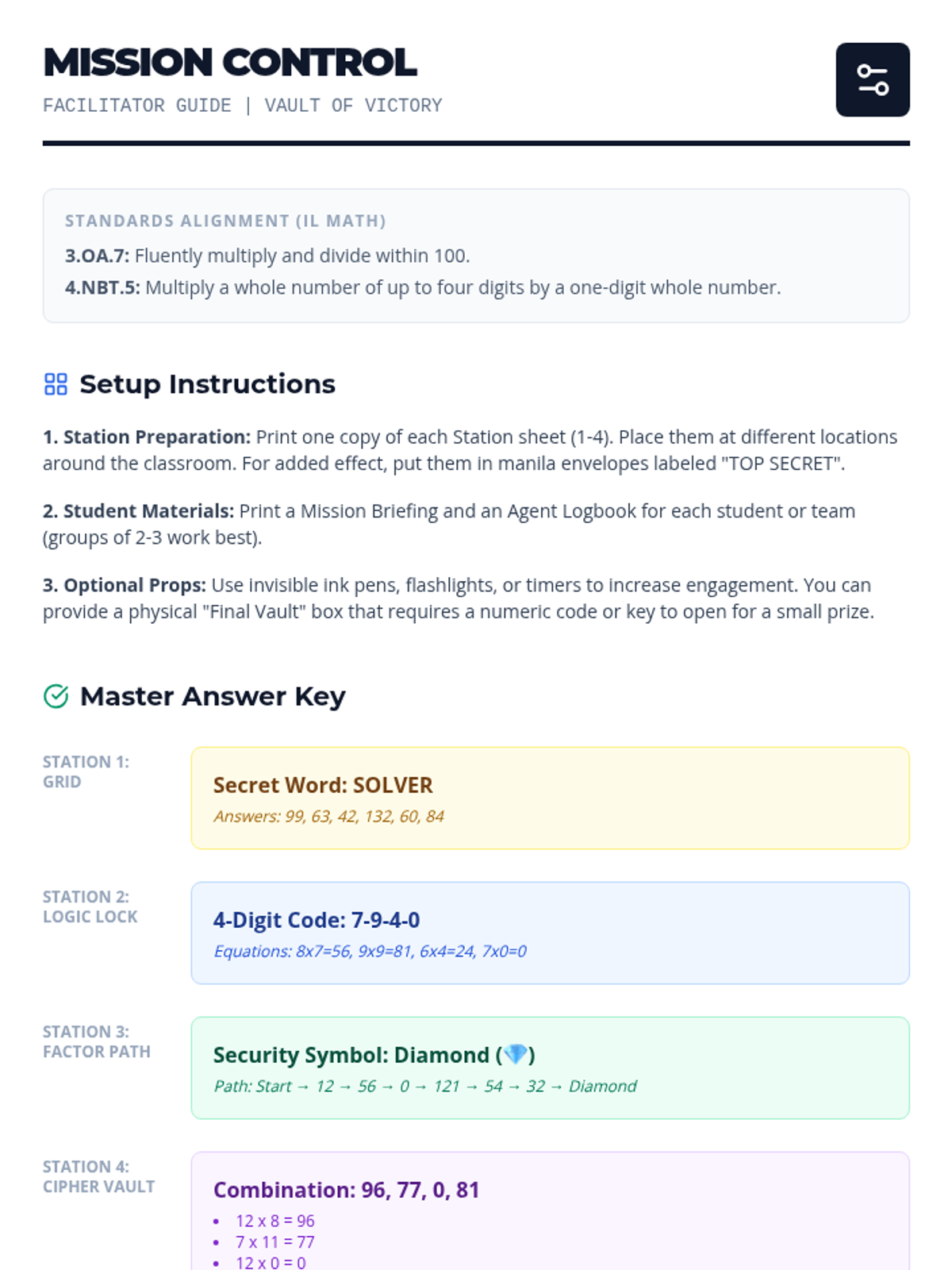
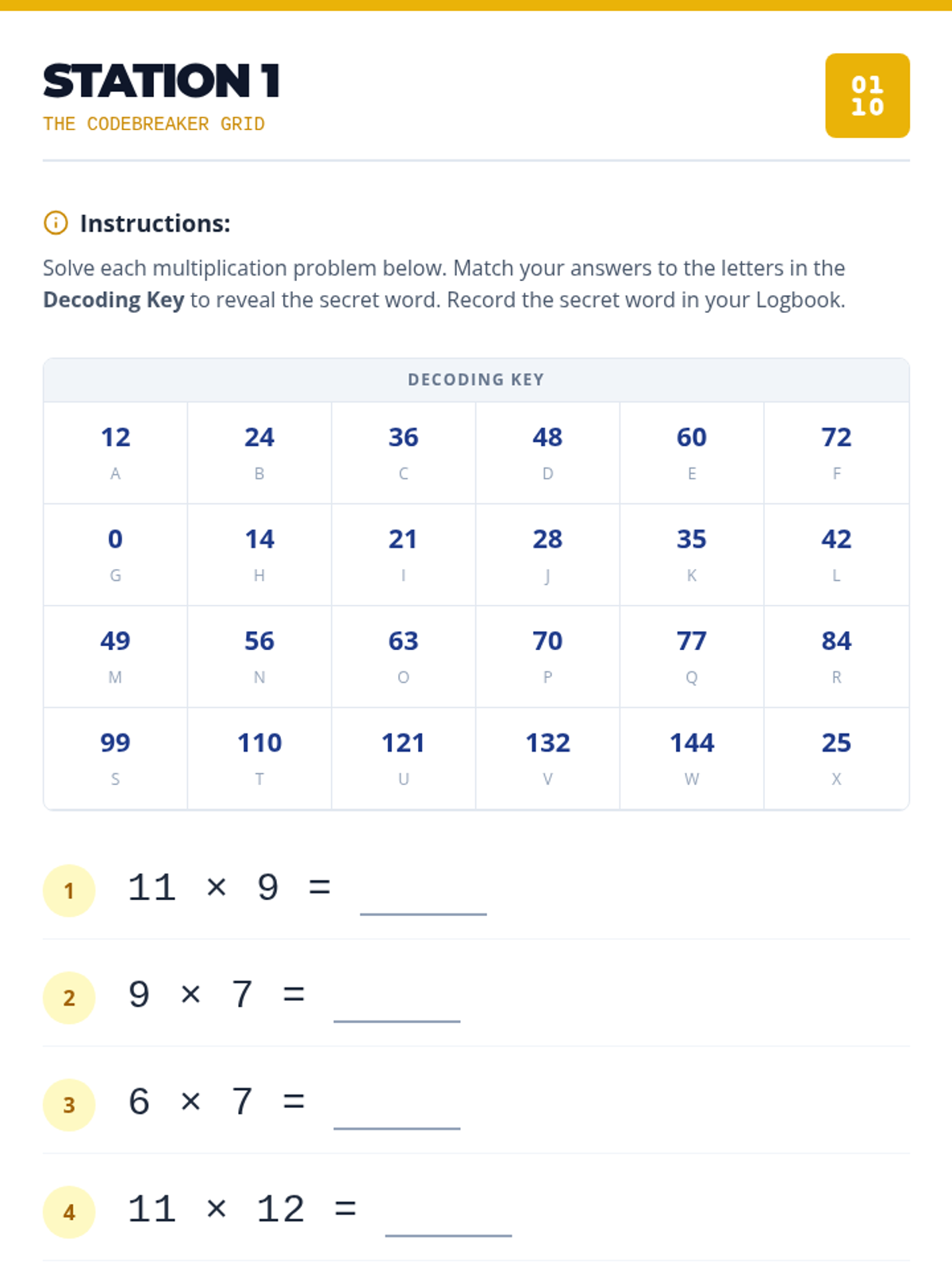
An immersive multiplication-themed escape room where students solve puzzles involving factors 0-12 to unlock a high-security vault. Designed for 3rd and 4th grade Illinois Learning Standards for Math.
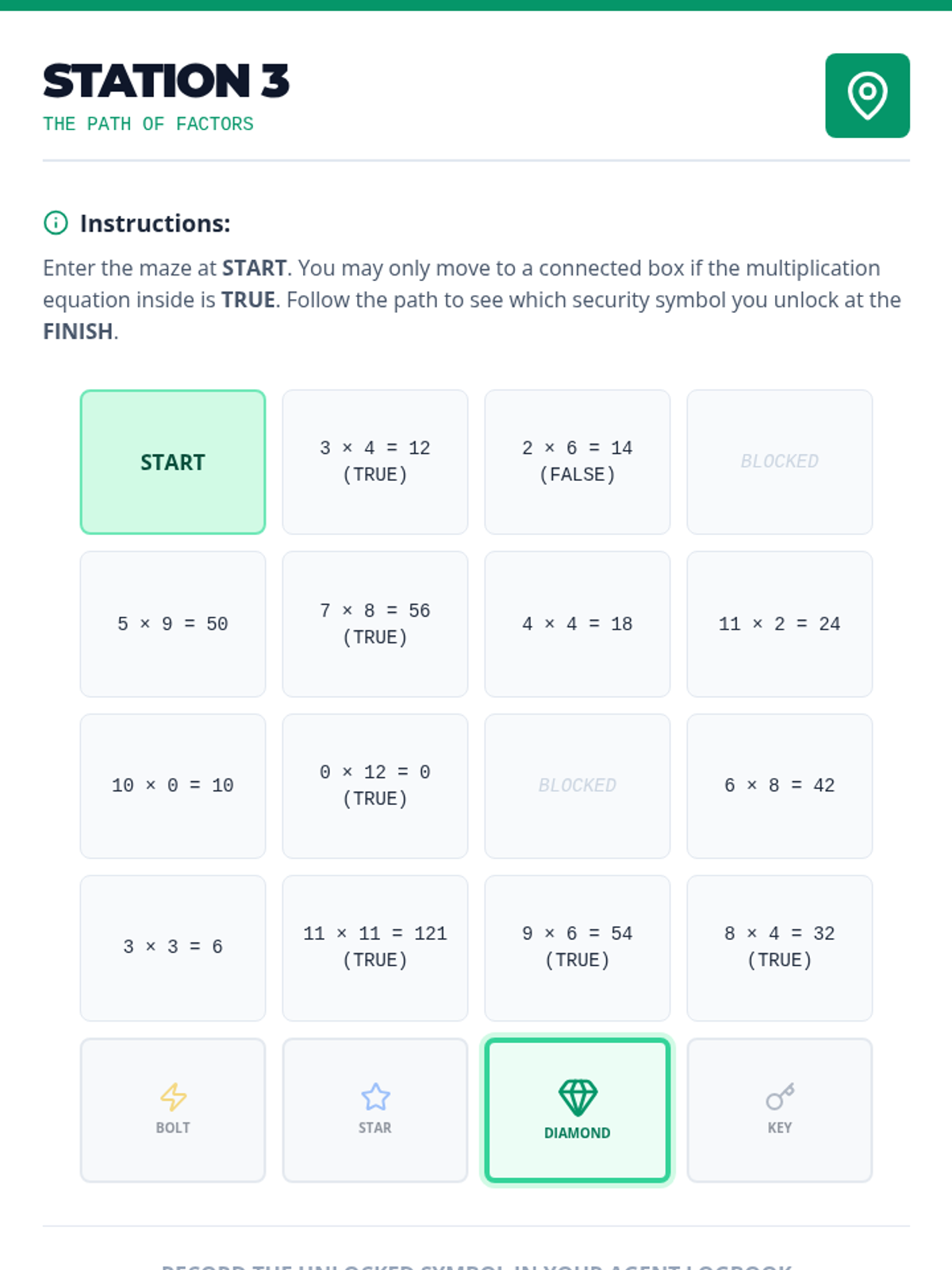
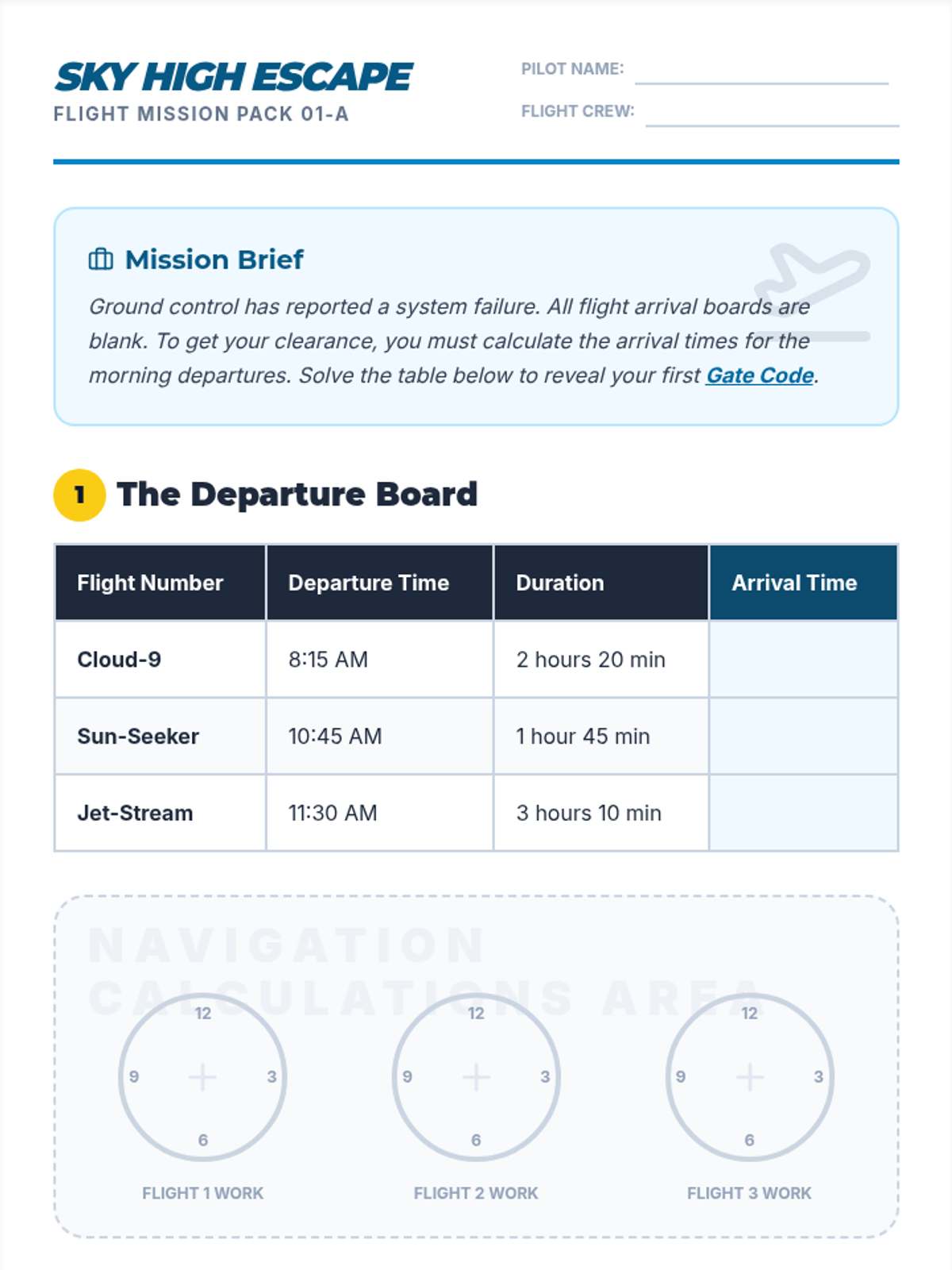
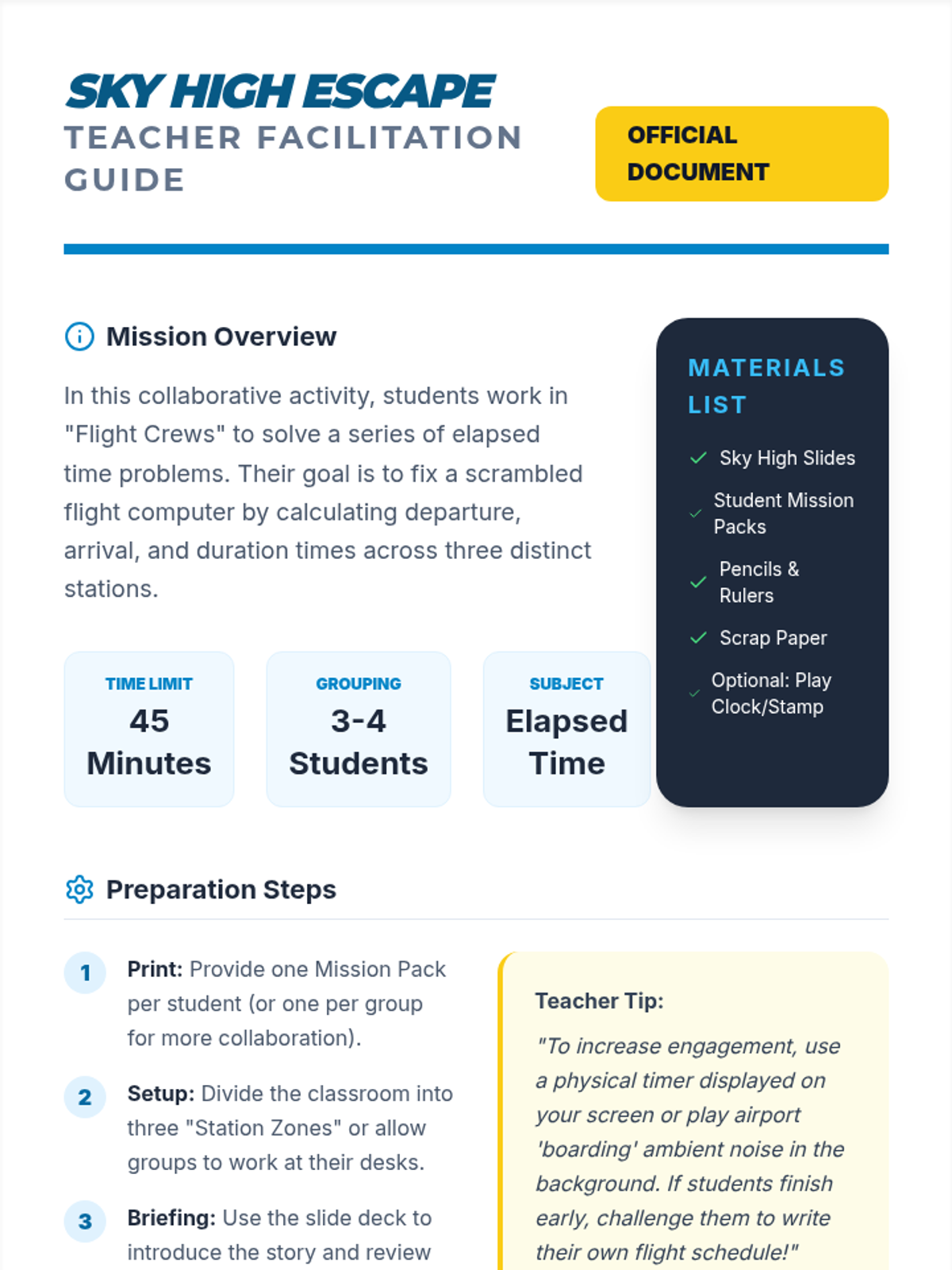
A collaborative escape room activity where students solve elapsed time puzzles themed around air travel and flight schedules to 'unlock' their grounded plane.
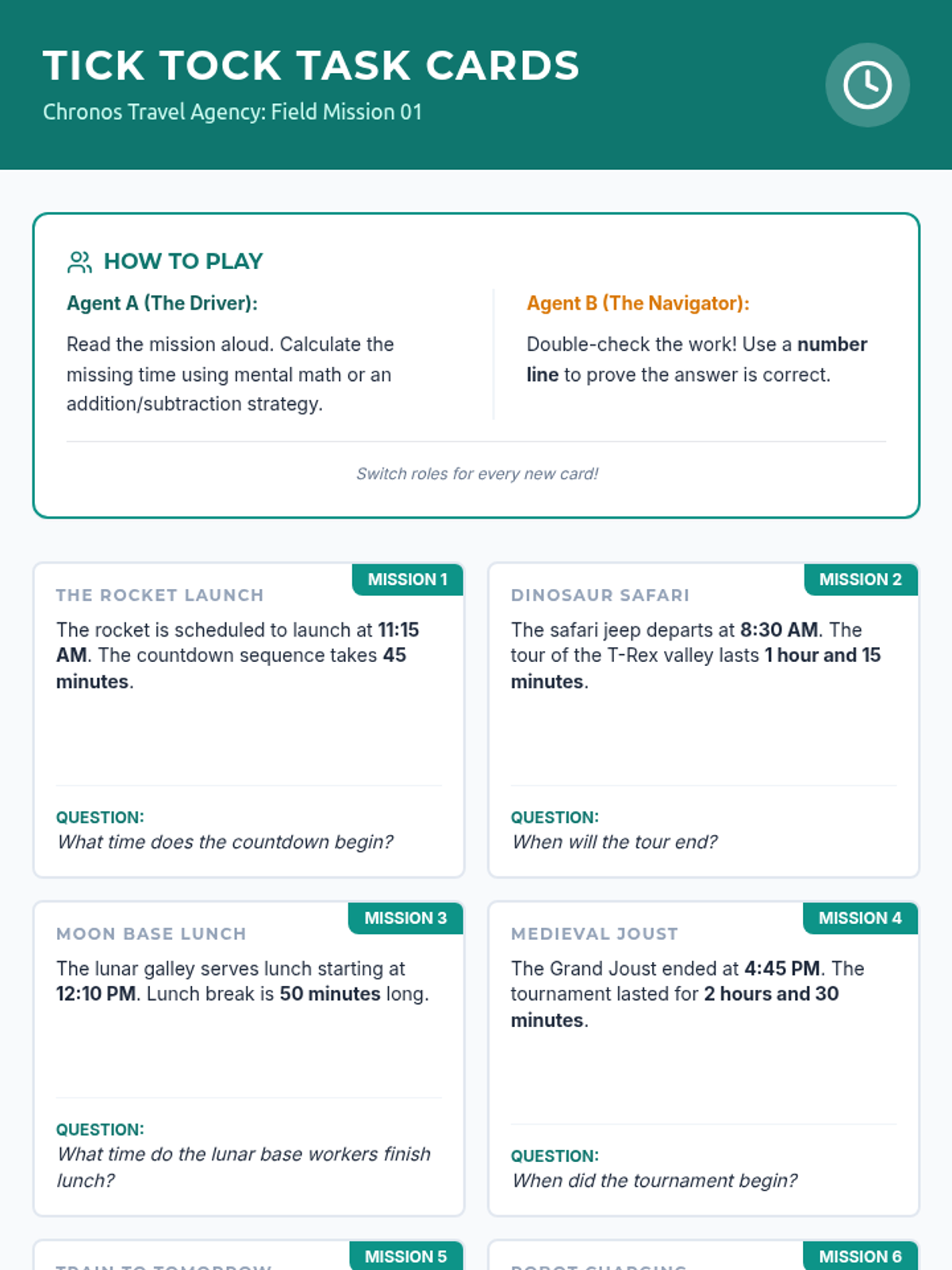
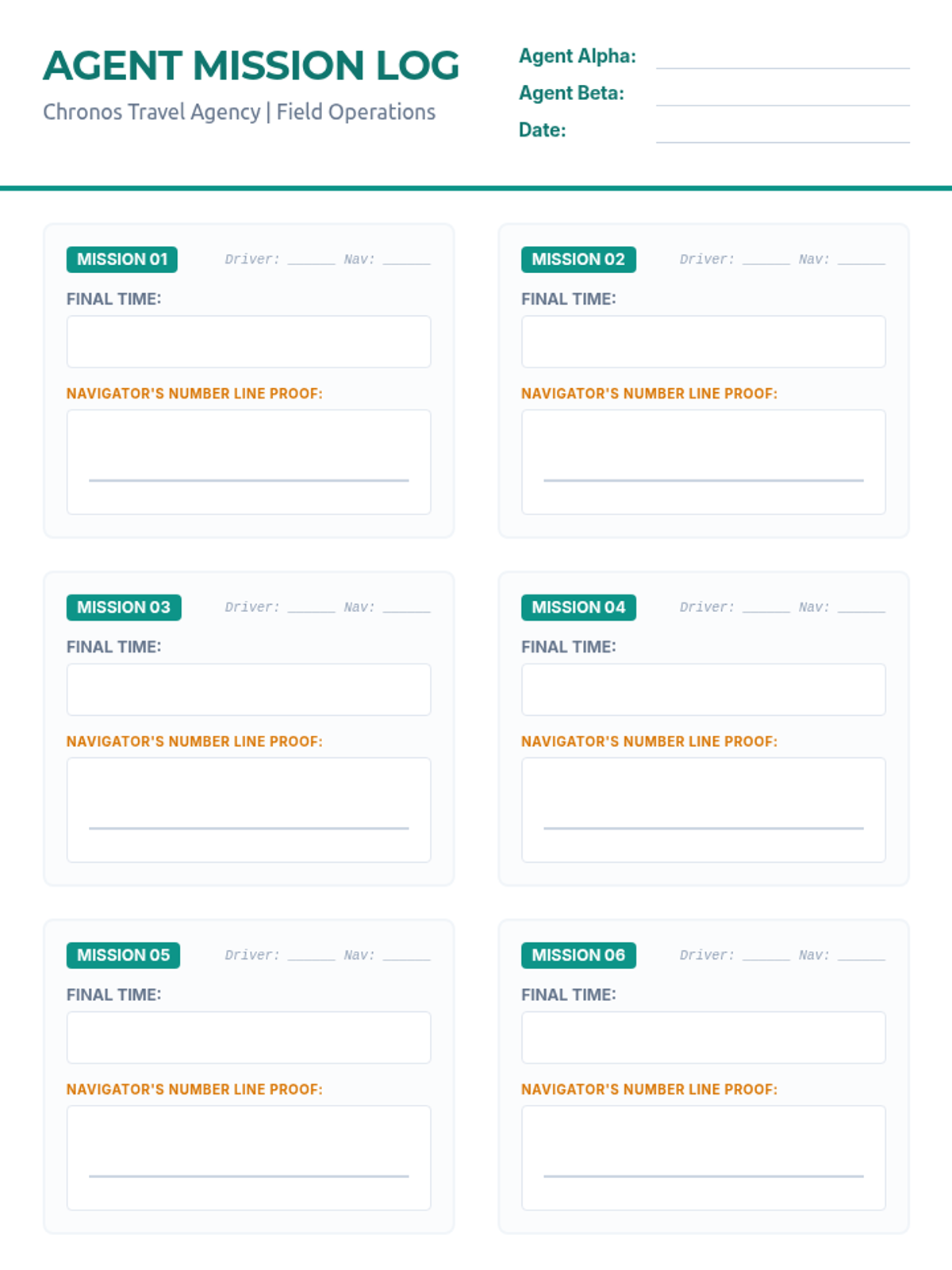
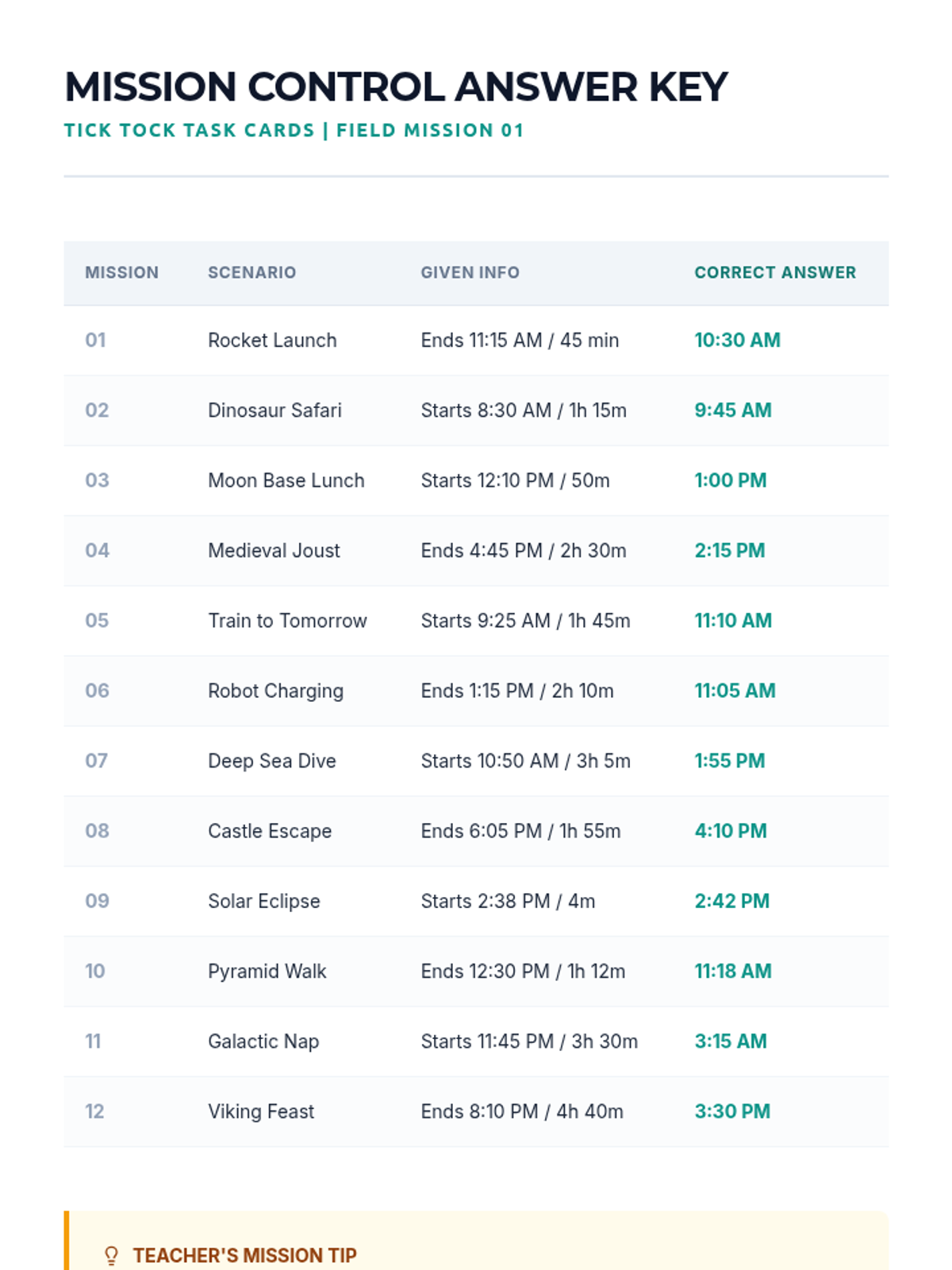
Students explore elapsed time by calculating start and end times through collaborative partner tasks. Using a time travel agency theme, they practice mental math and number line strategies to solve real-world duration problems.
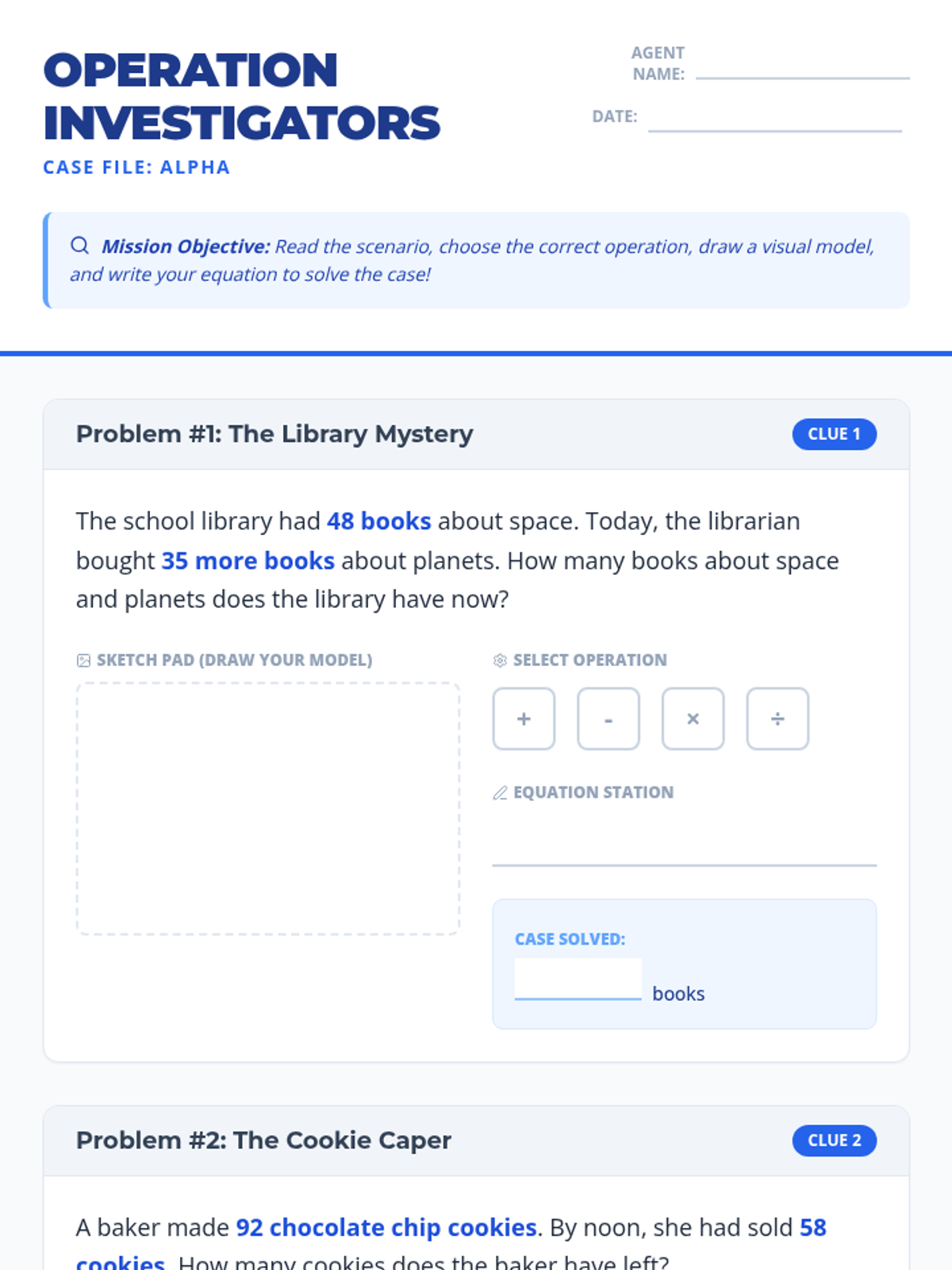
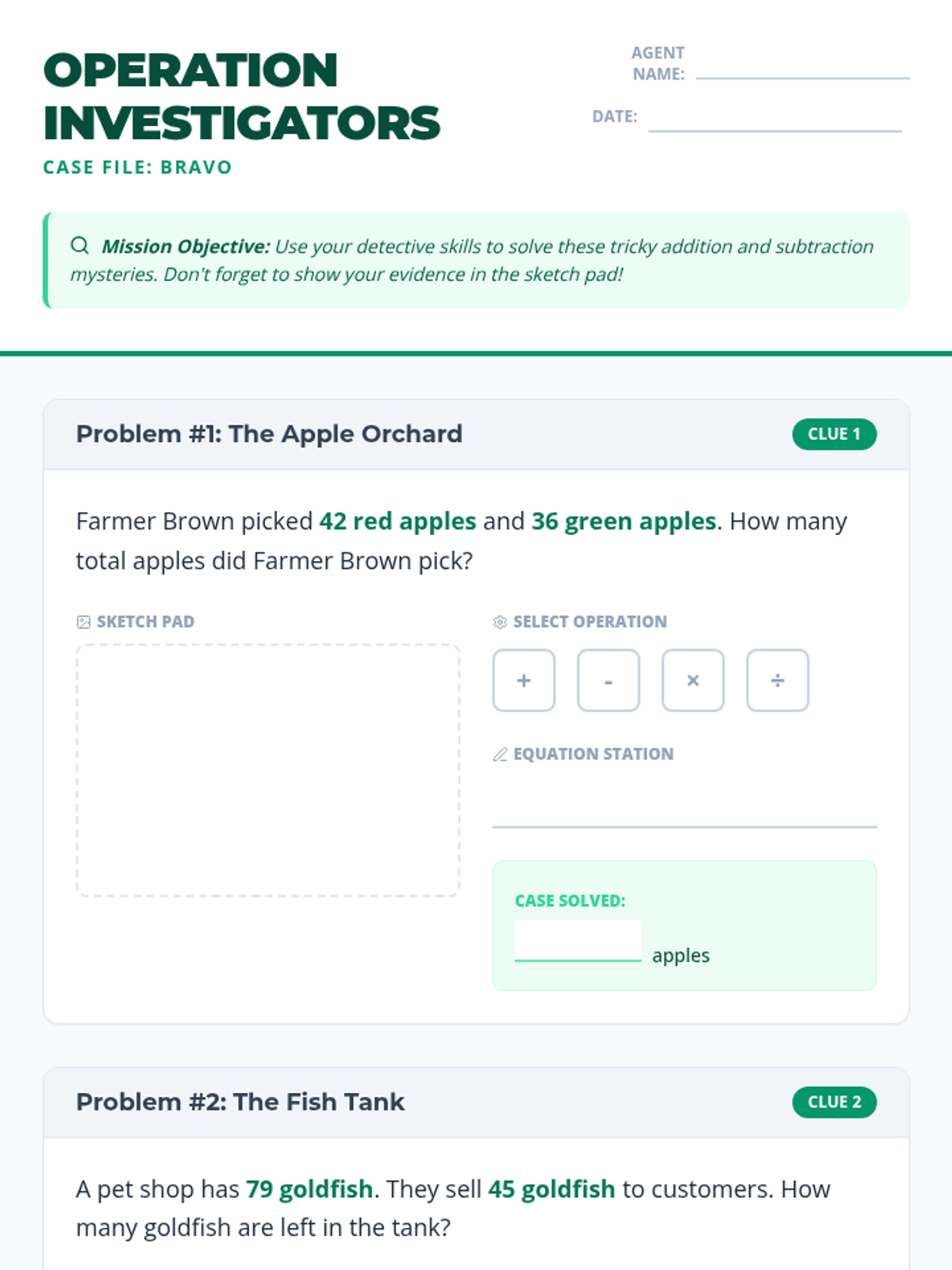
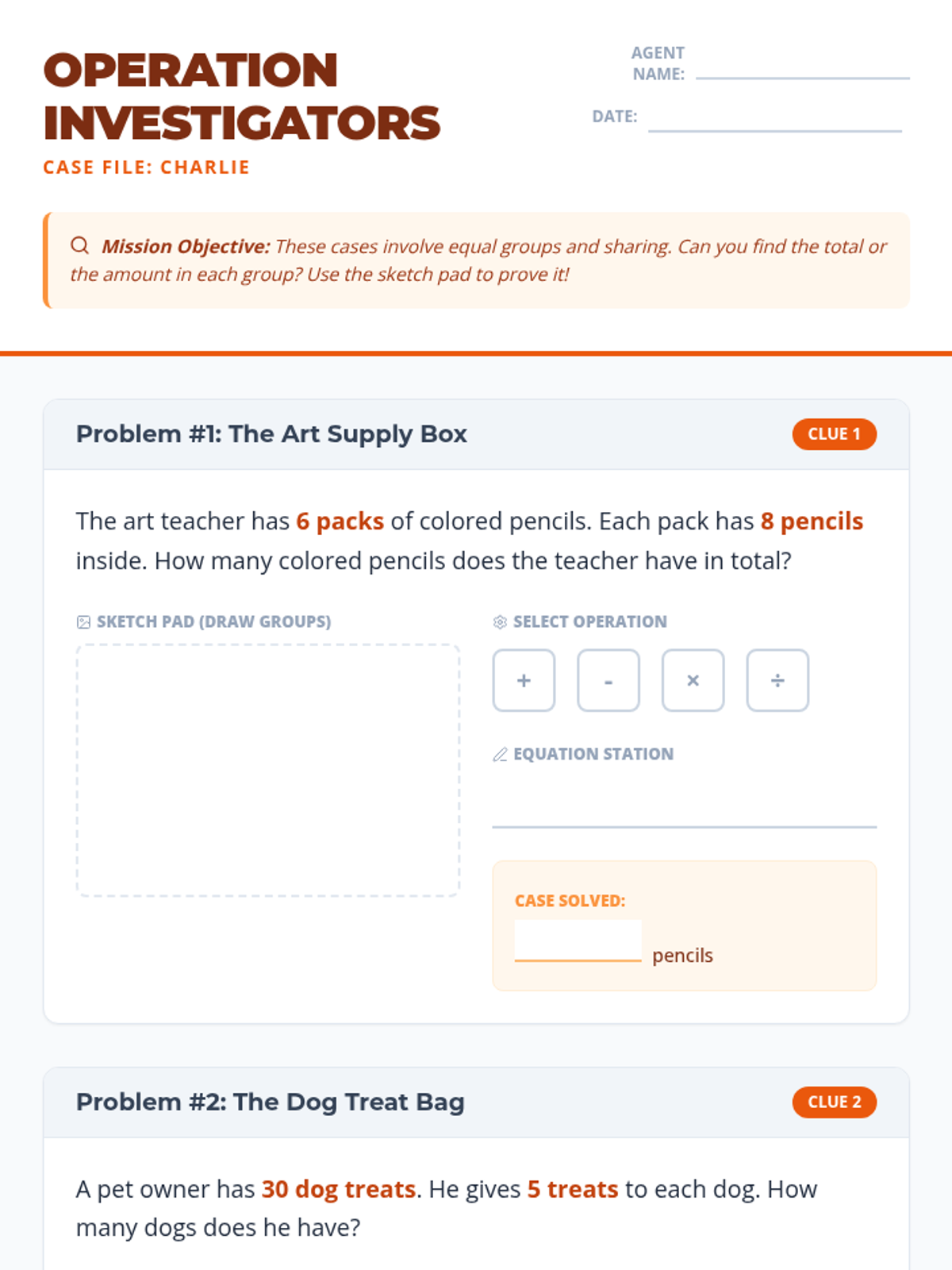
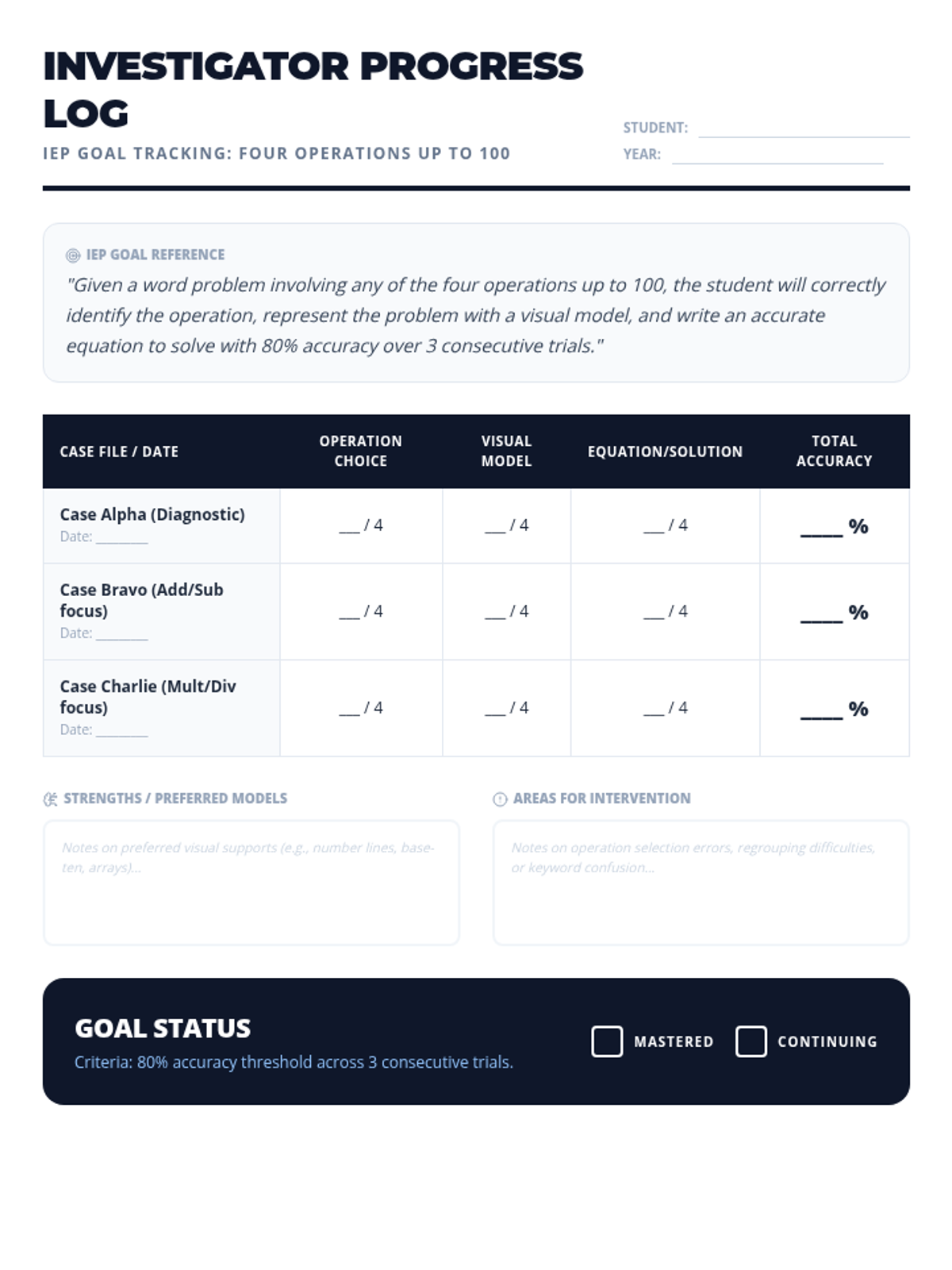
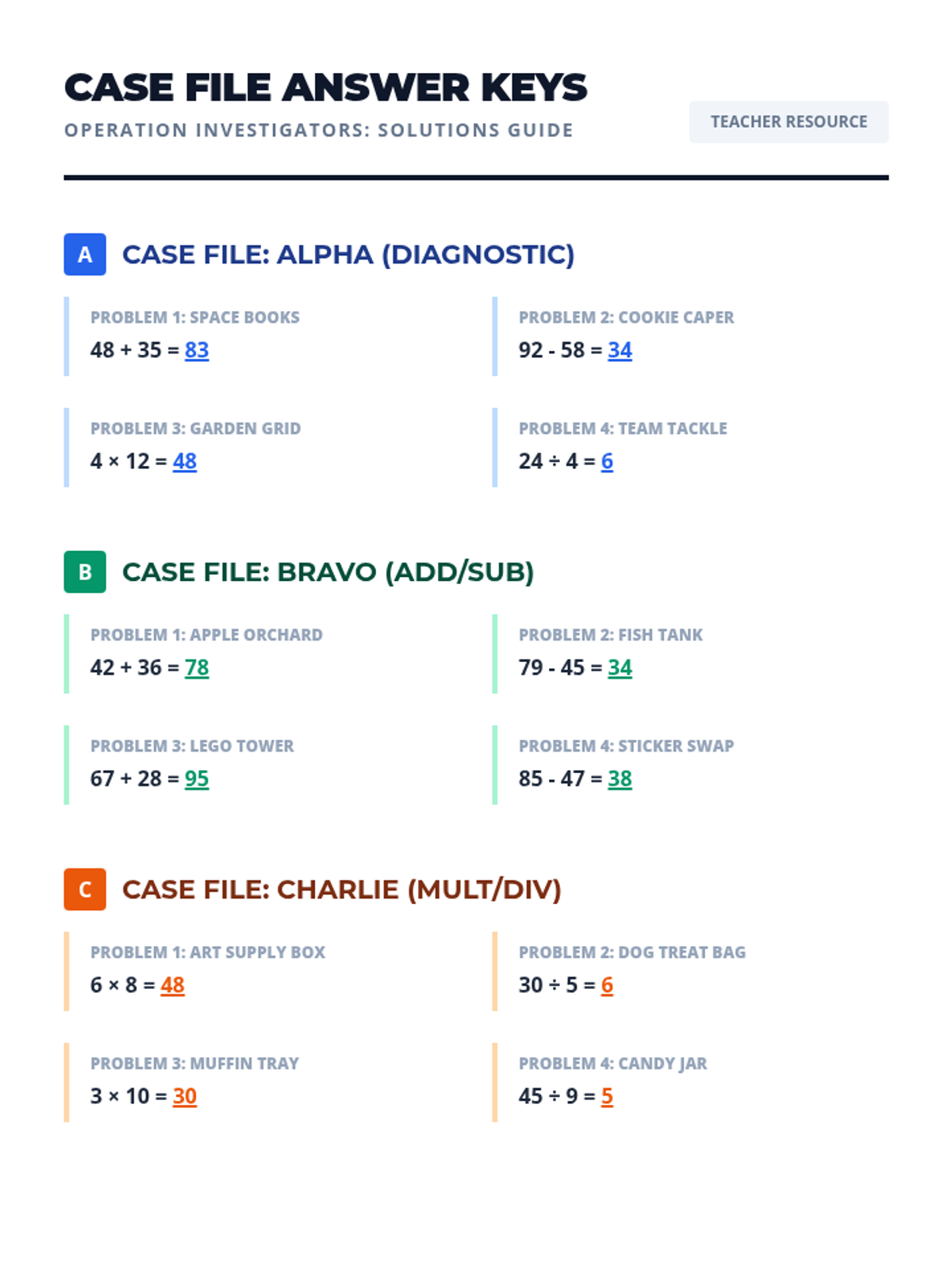
A series of practice pages designed for IEP goal tracking, focusing on selecting the correct operation, writing equations, and using visual models for all four operations up to 100.
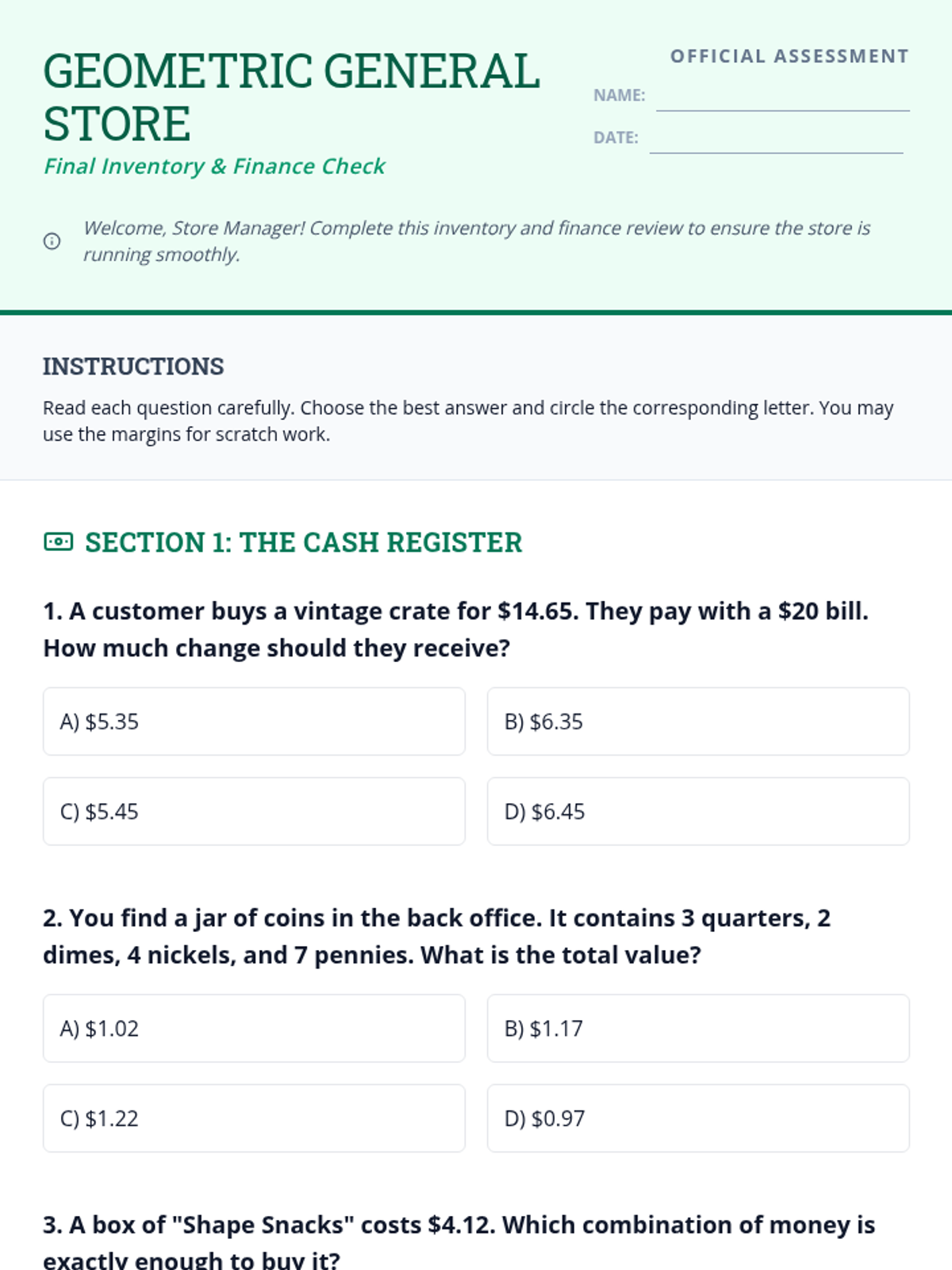
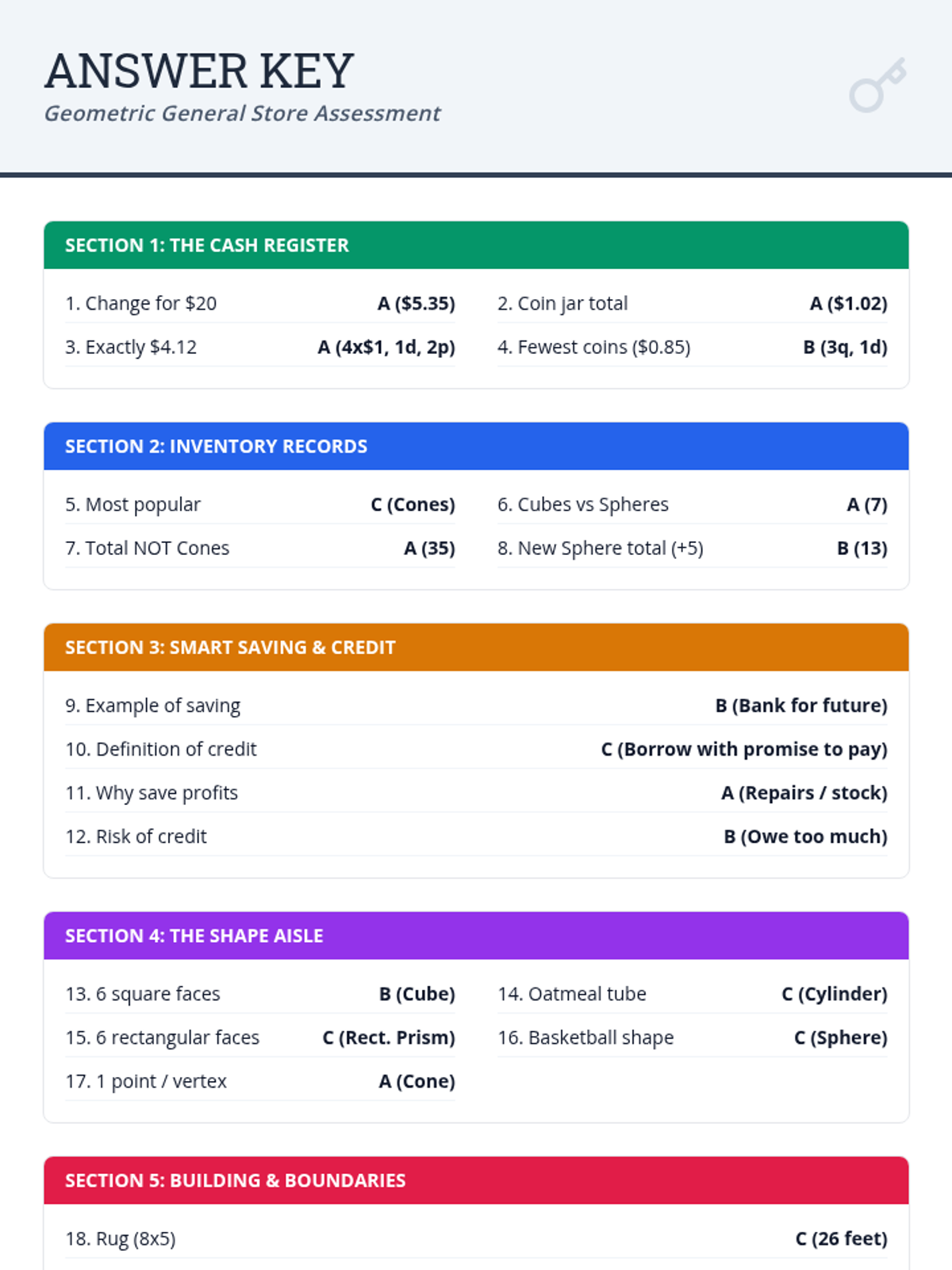
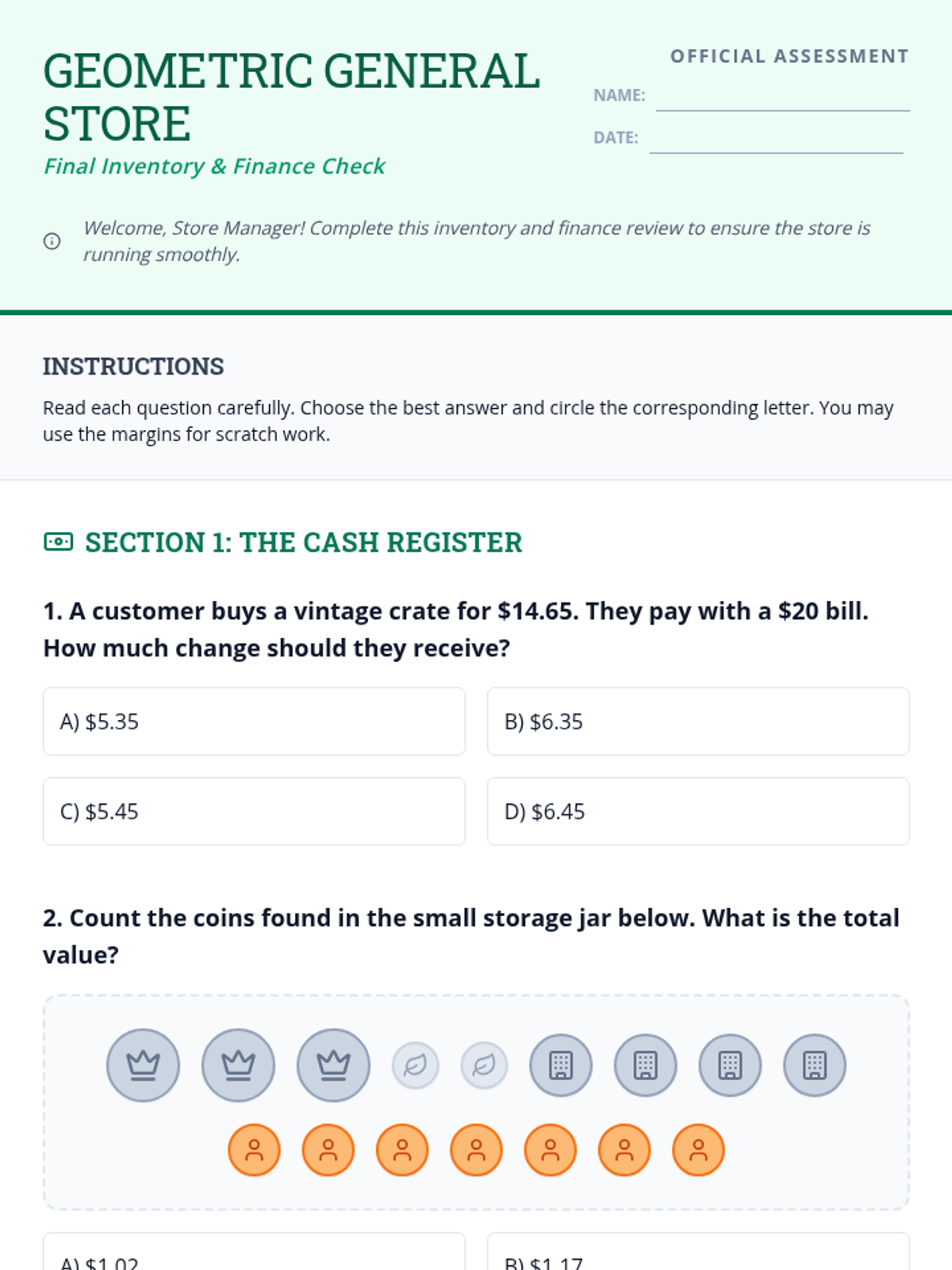
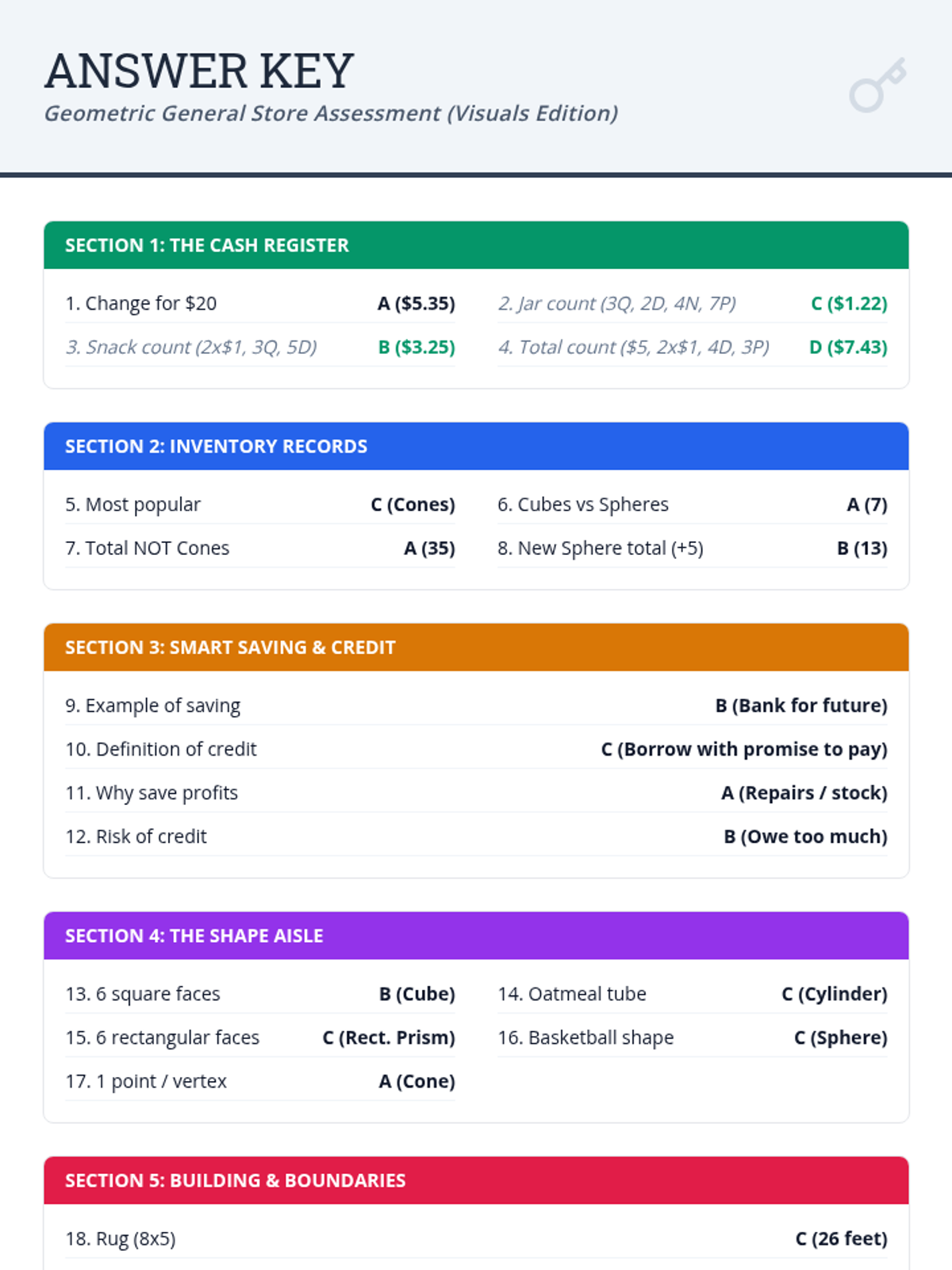
A comprehensive assessment covering counting money, data interpretation, saving and credit, 3D shapes, and perimeter calculation.
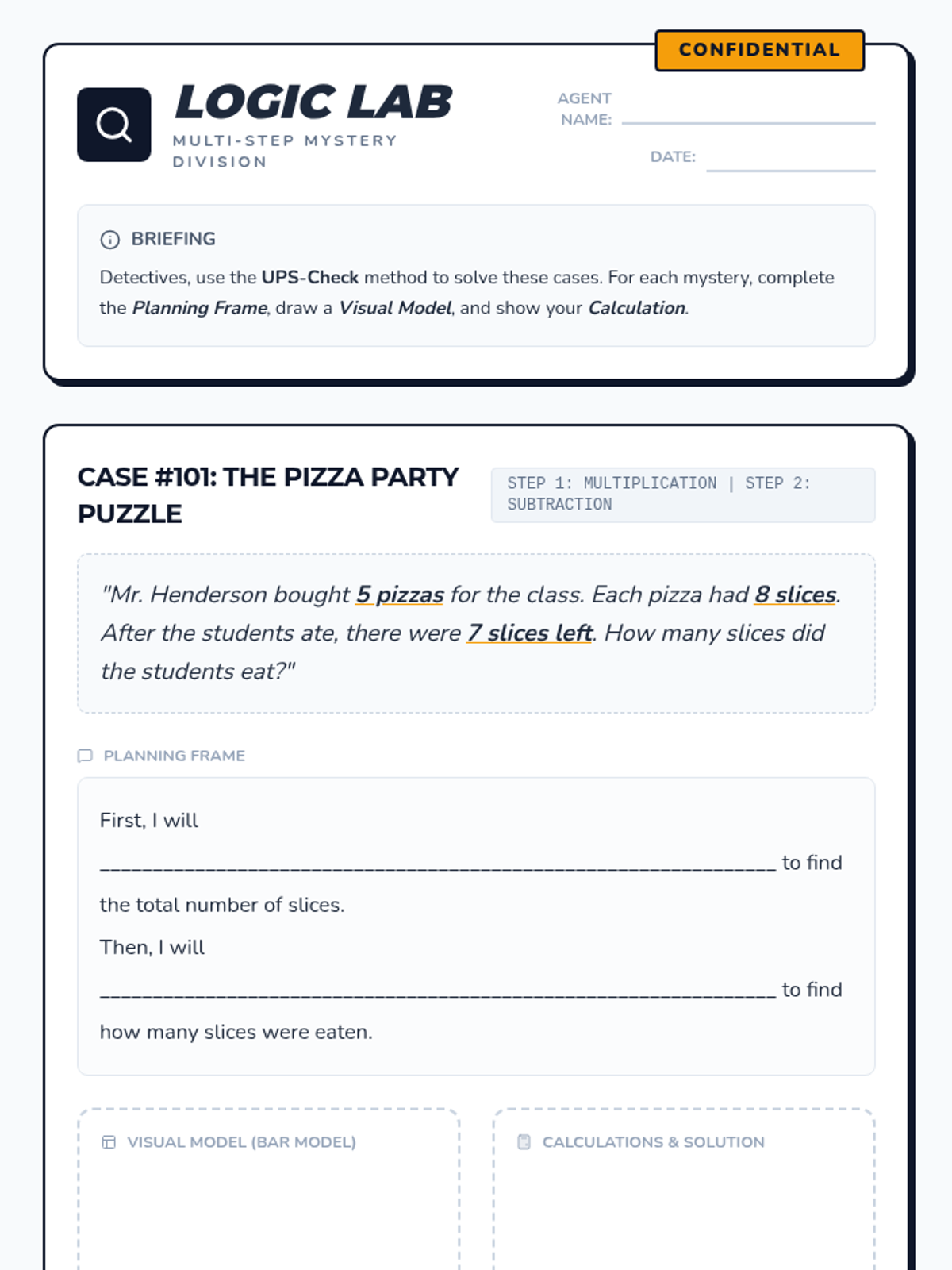
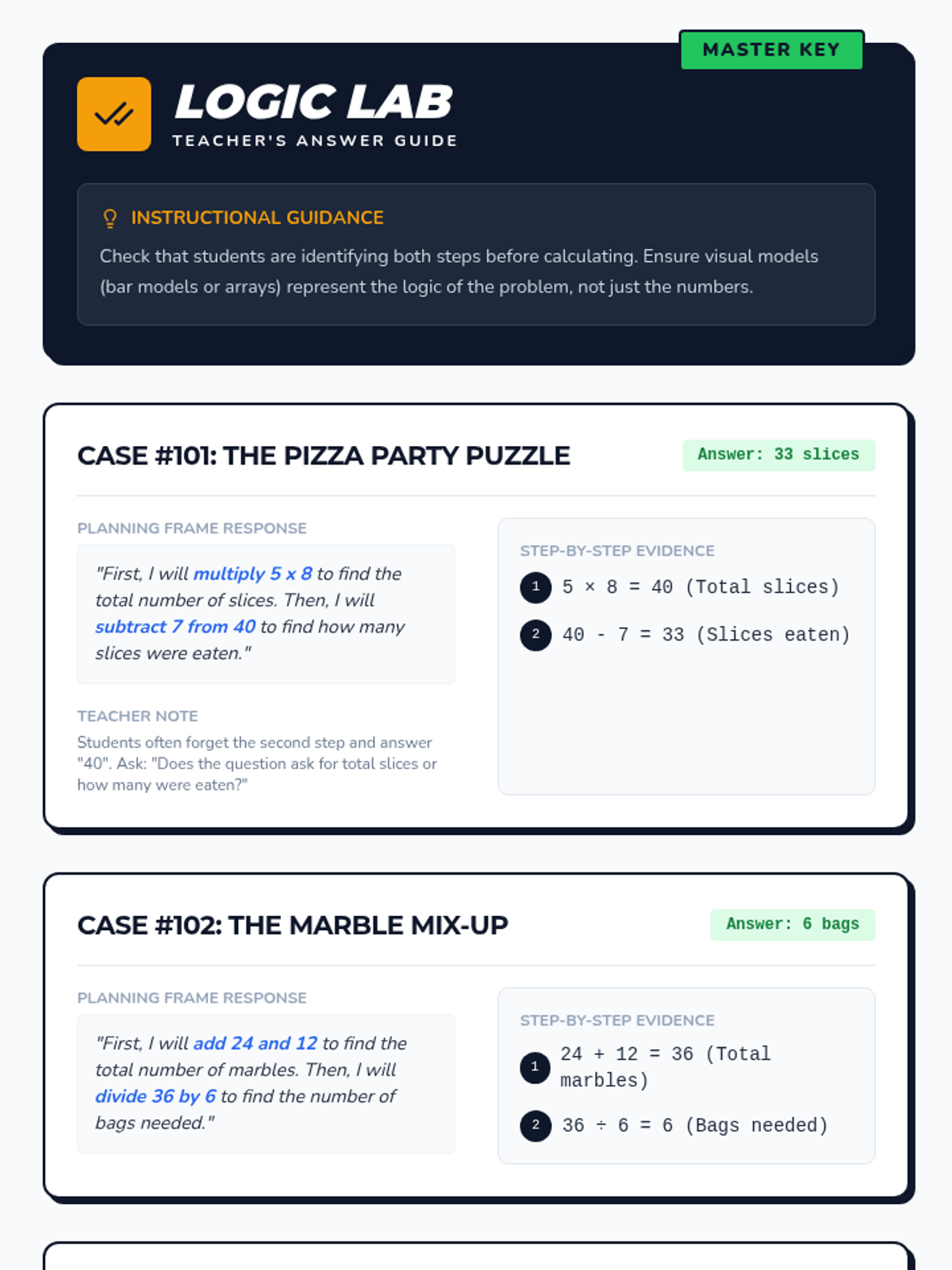
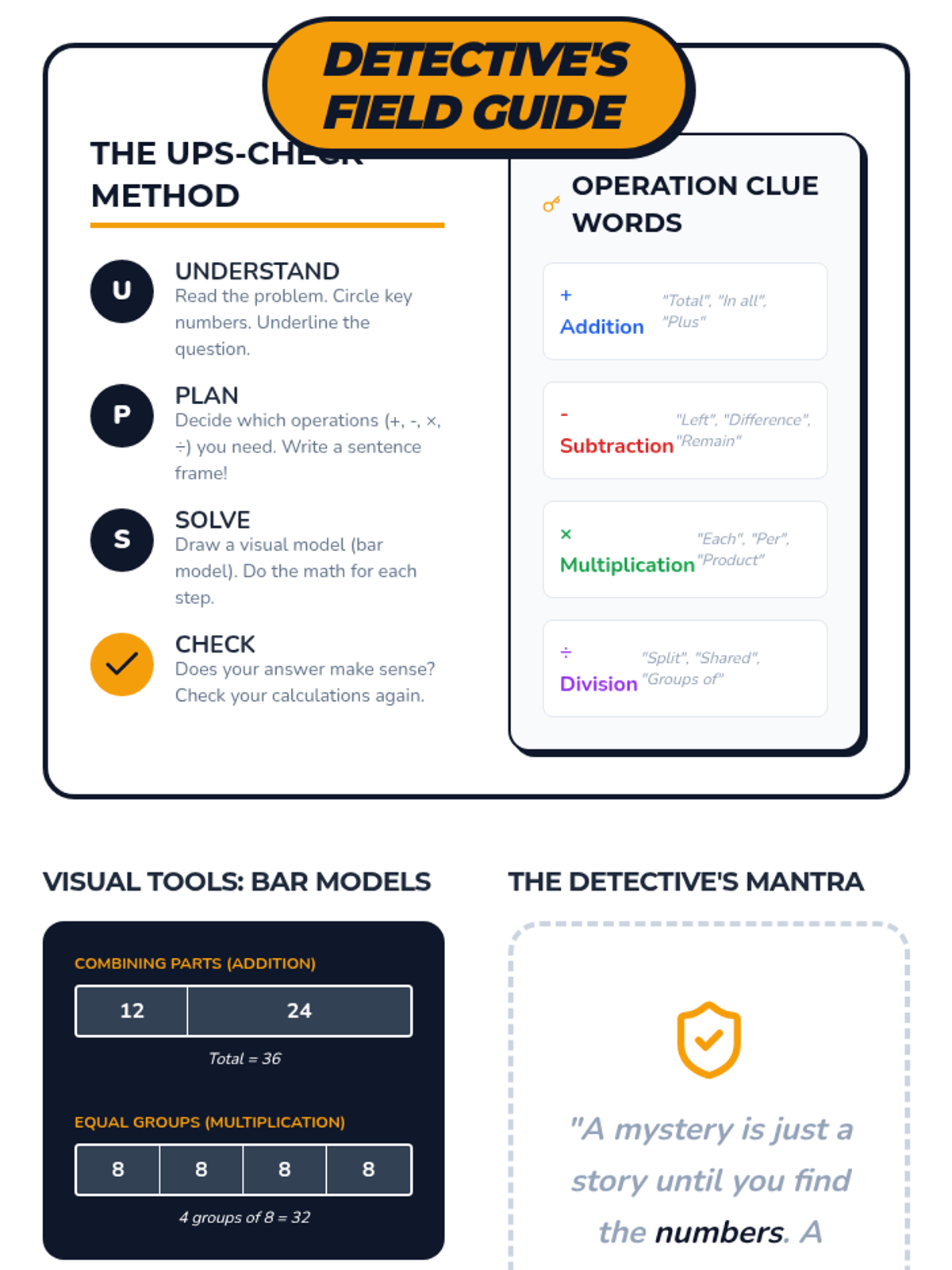
A comprehensive lesson on solving multi-step word problems using all four operations. Students will use the UPS-Check method, visual bar models, and sentence frames to break down complex 'mystery cases' and find solutions.
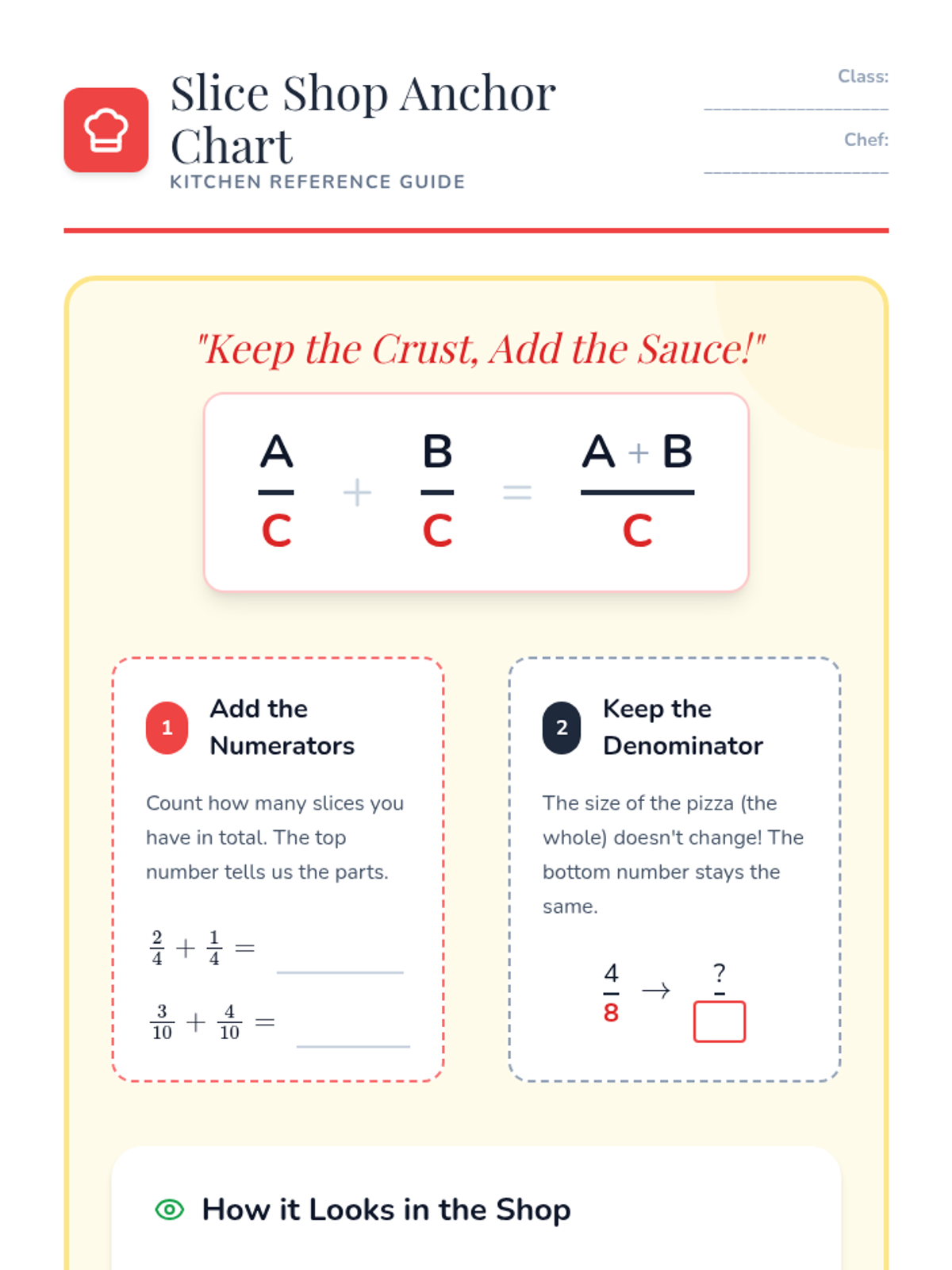
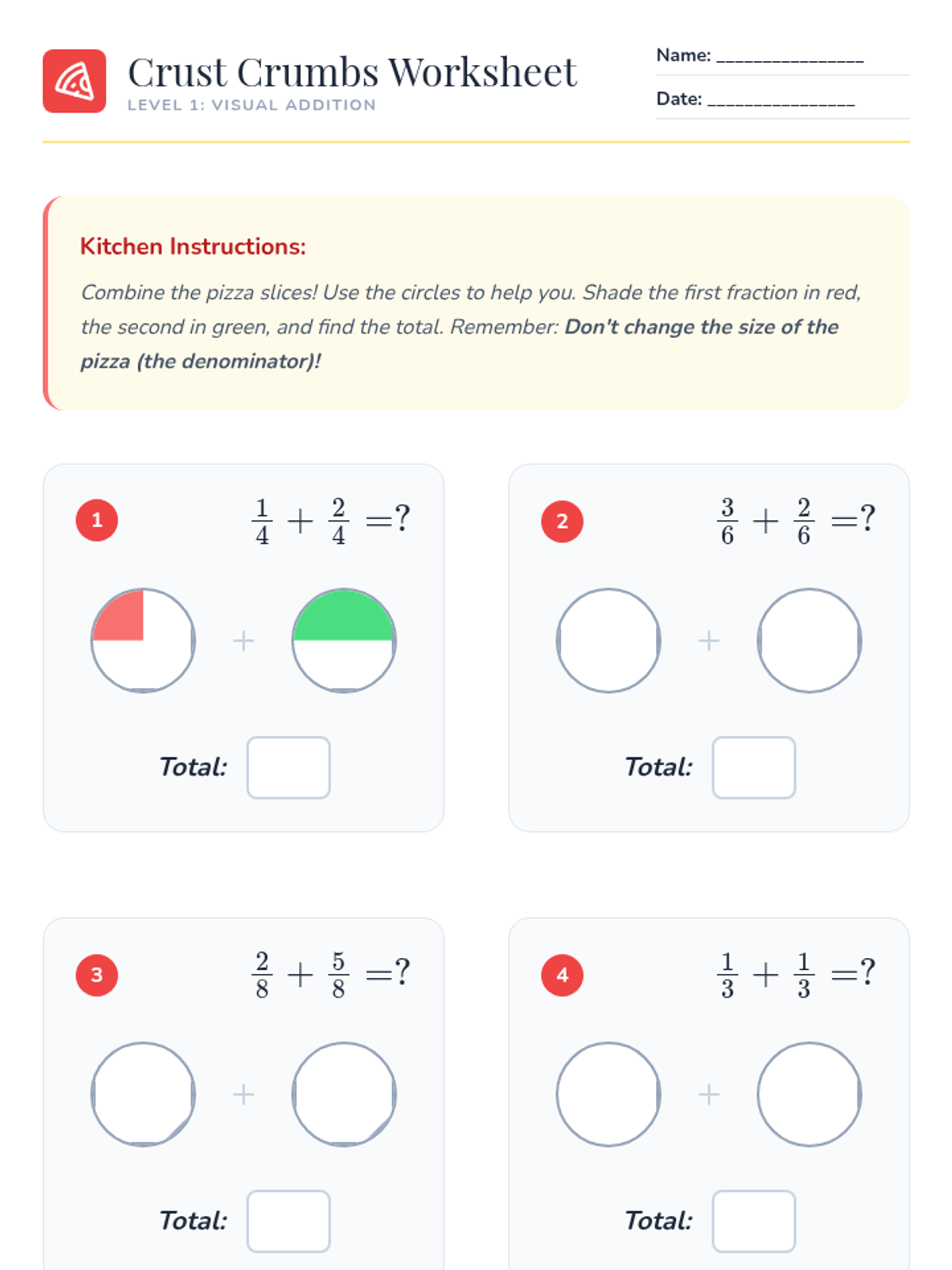
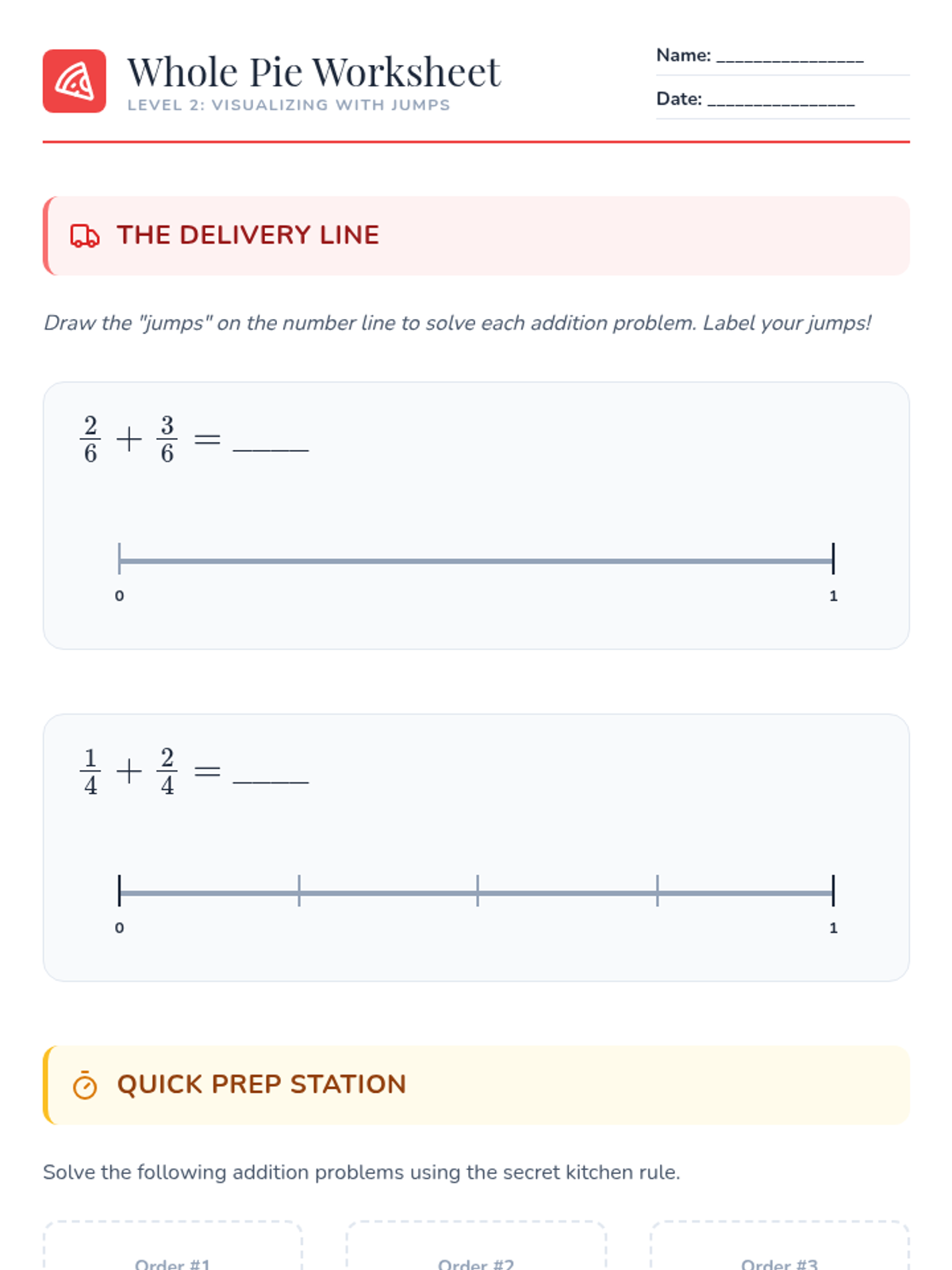
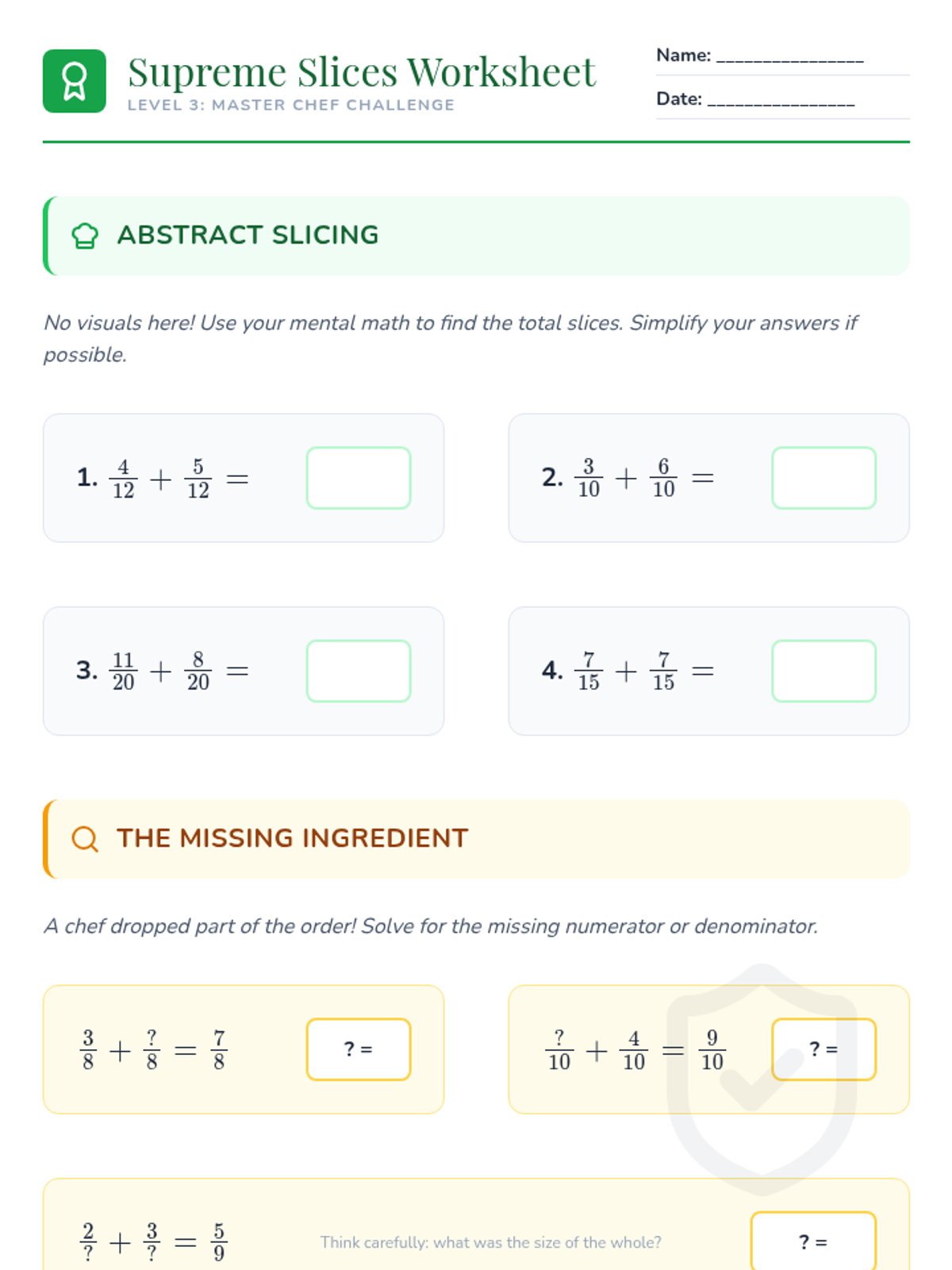
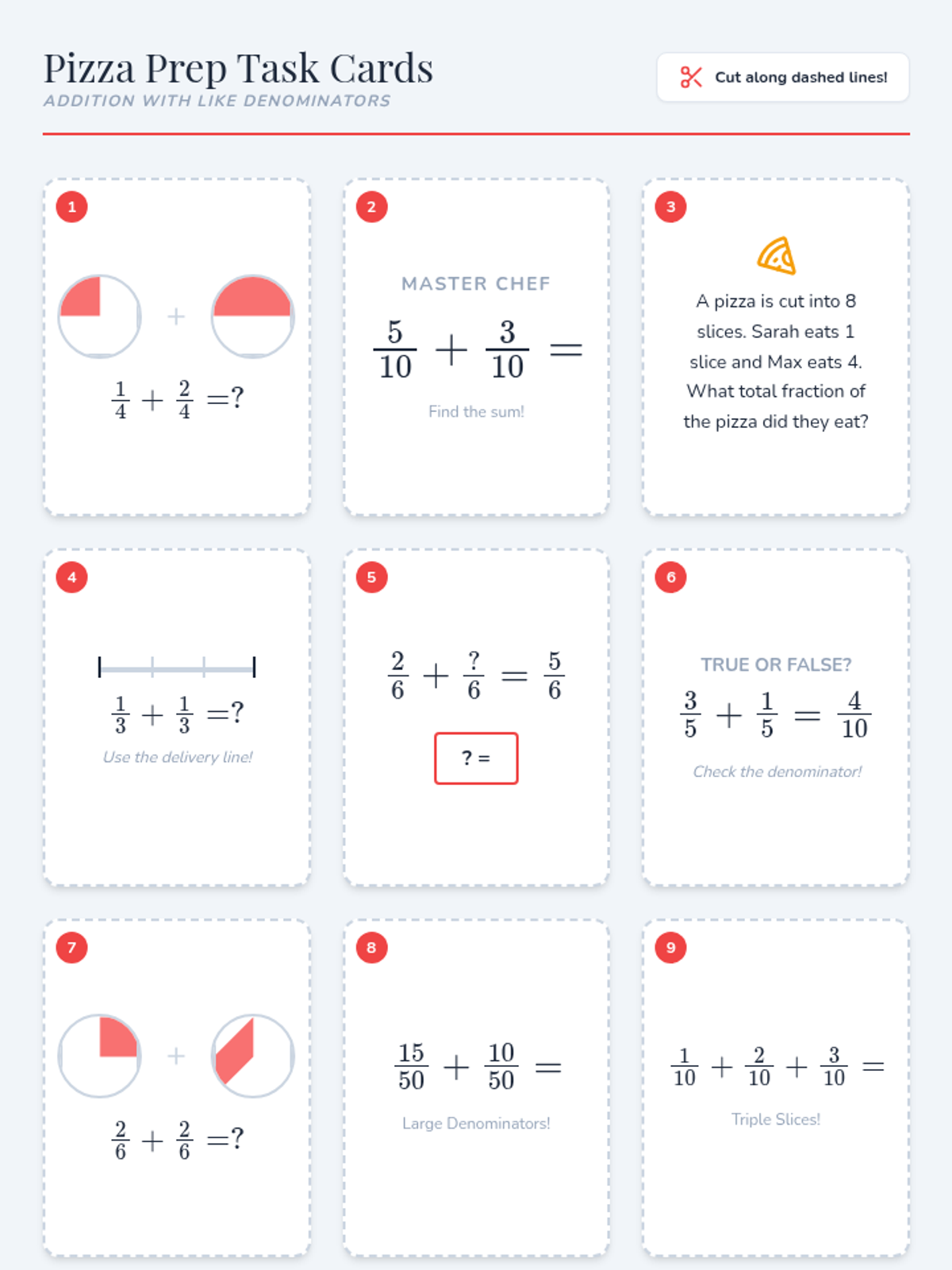
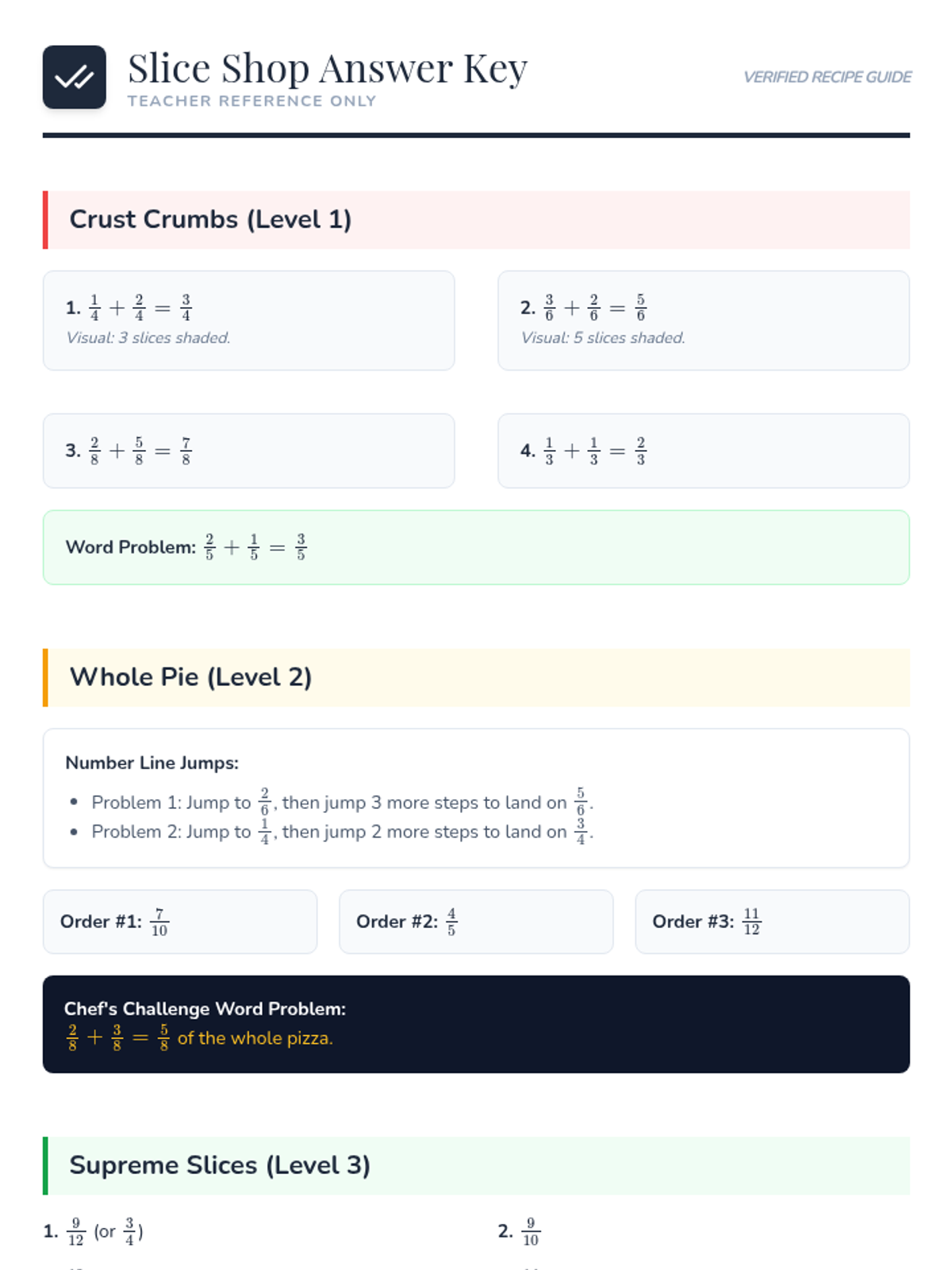
A comprehensive lesson on adding fractions with like denominators using visual models like fraction circles and number lines, themed around a pizza parlor.
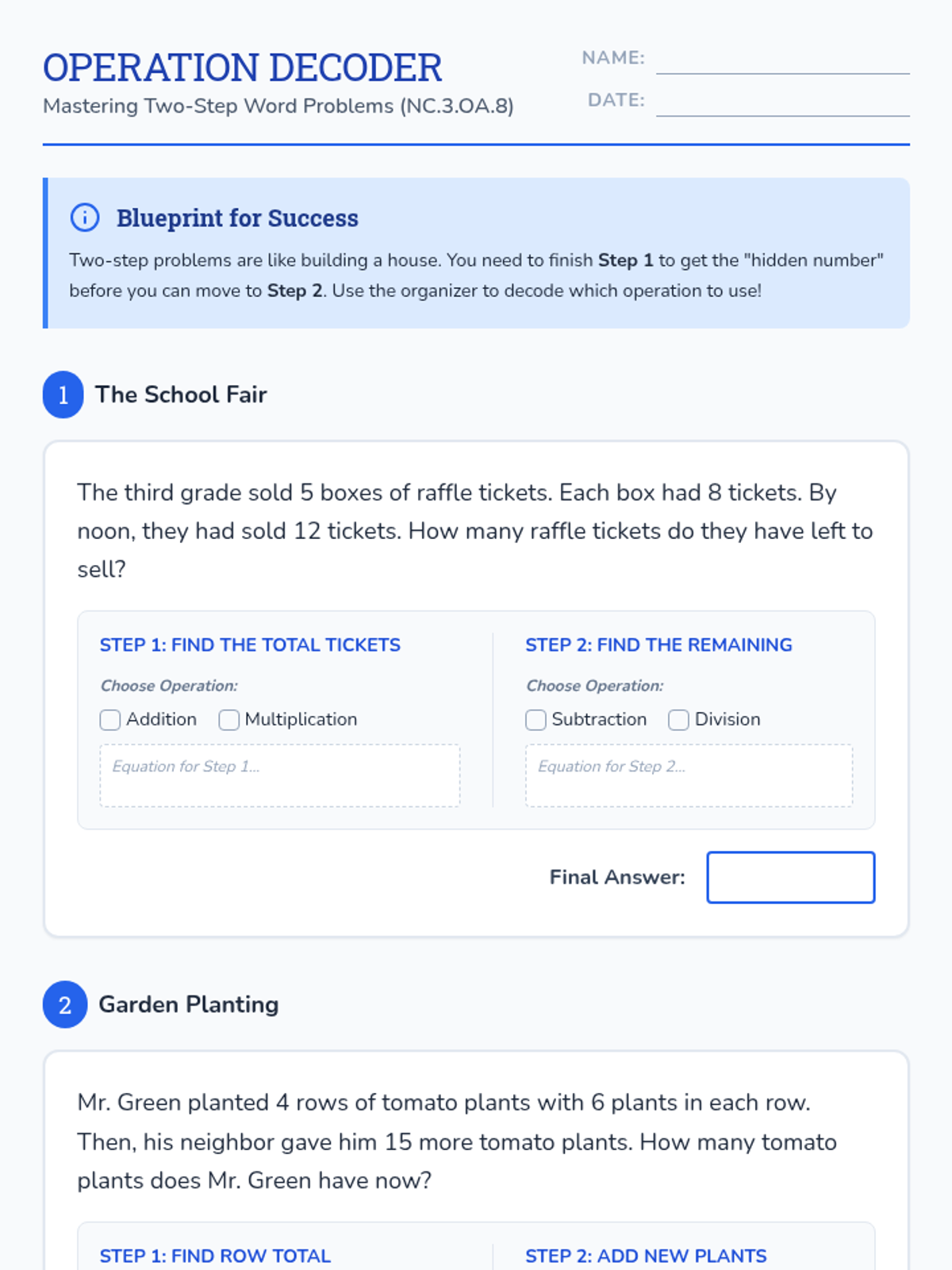
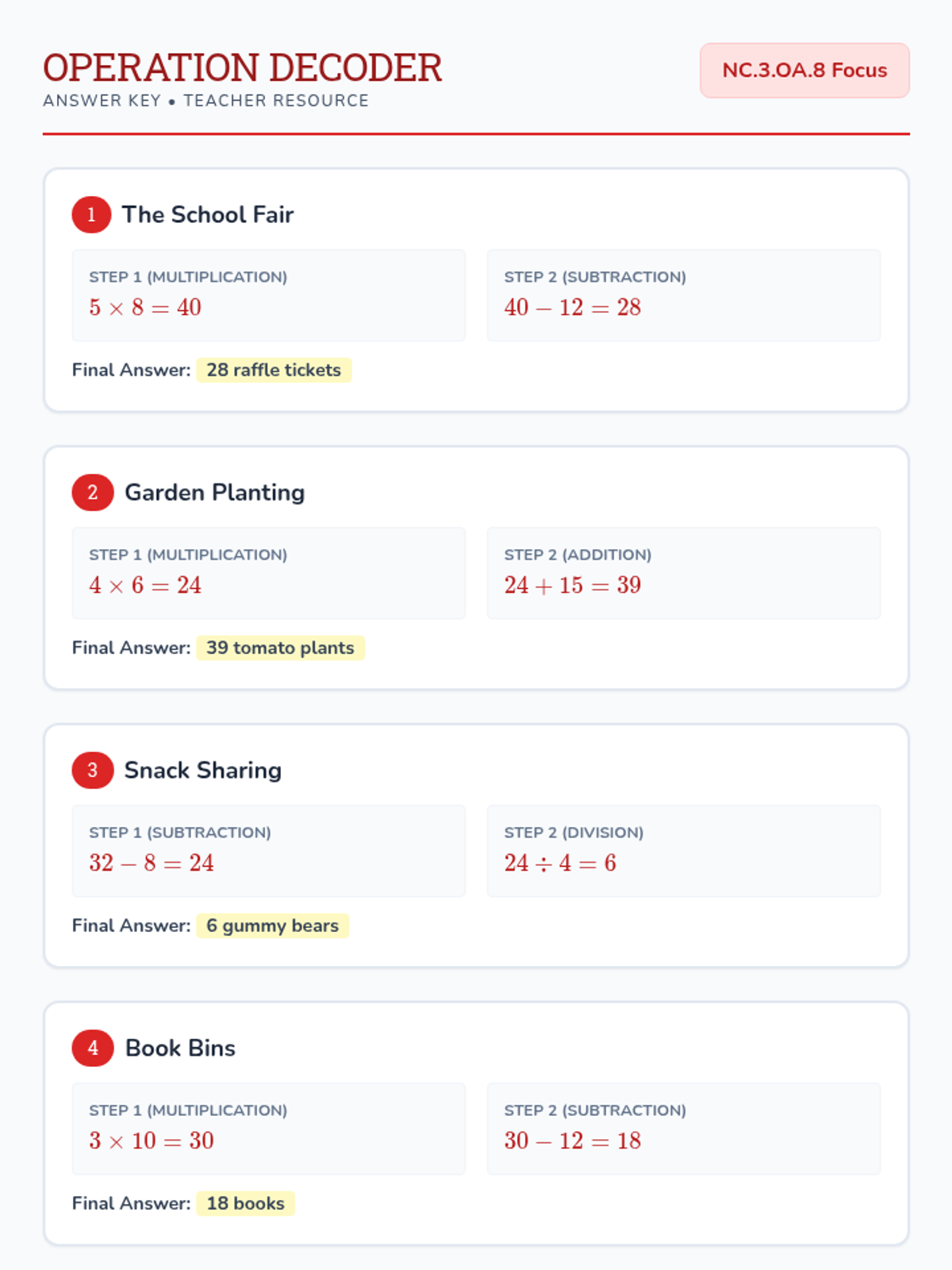
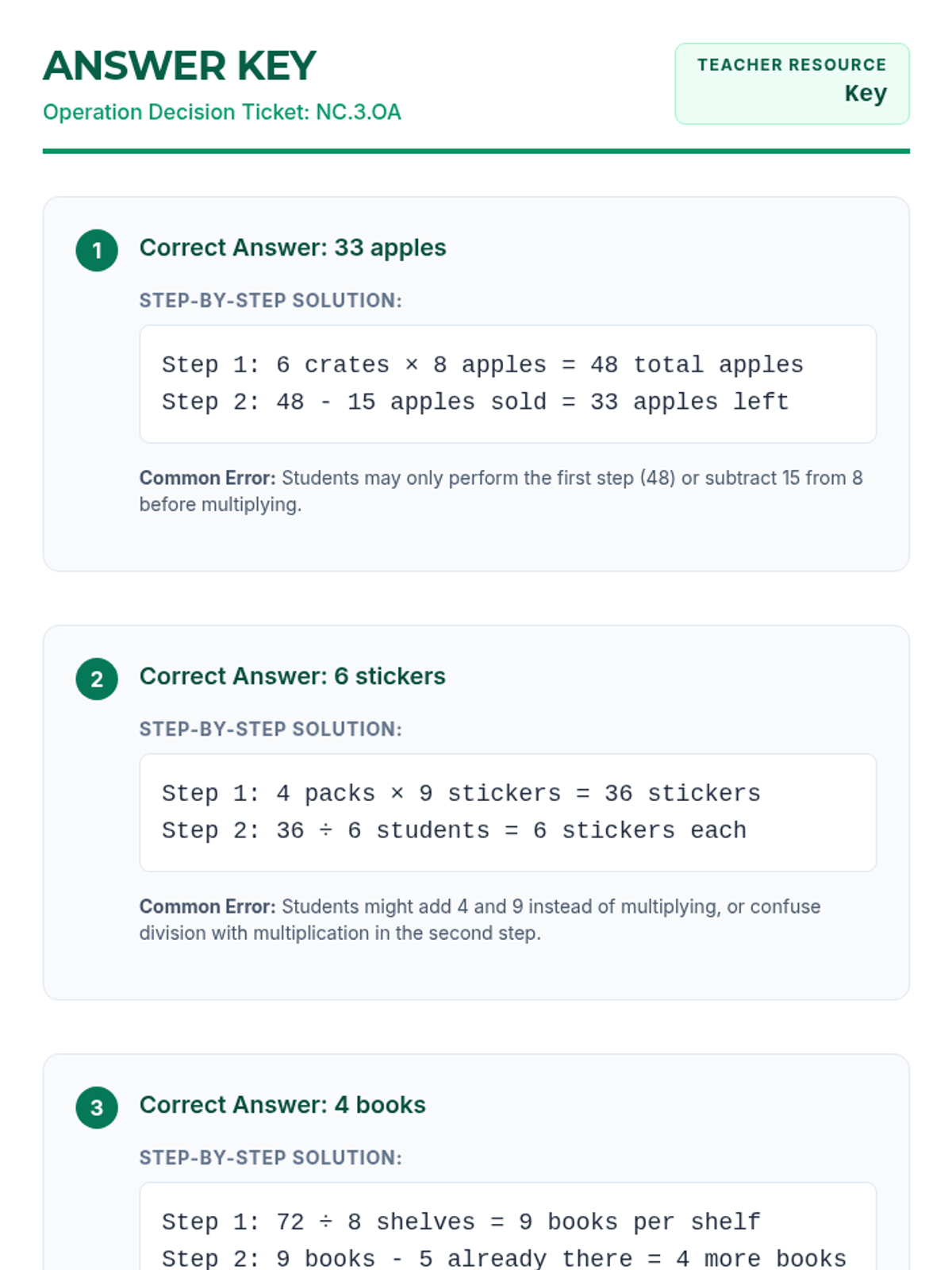
A guided practice set focused on NC.3.OA standards, helping students master two-step word problems through scaffolded operation selection and equation building.
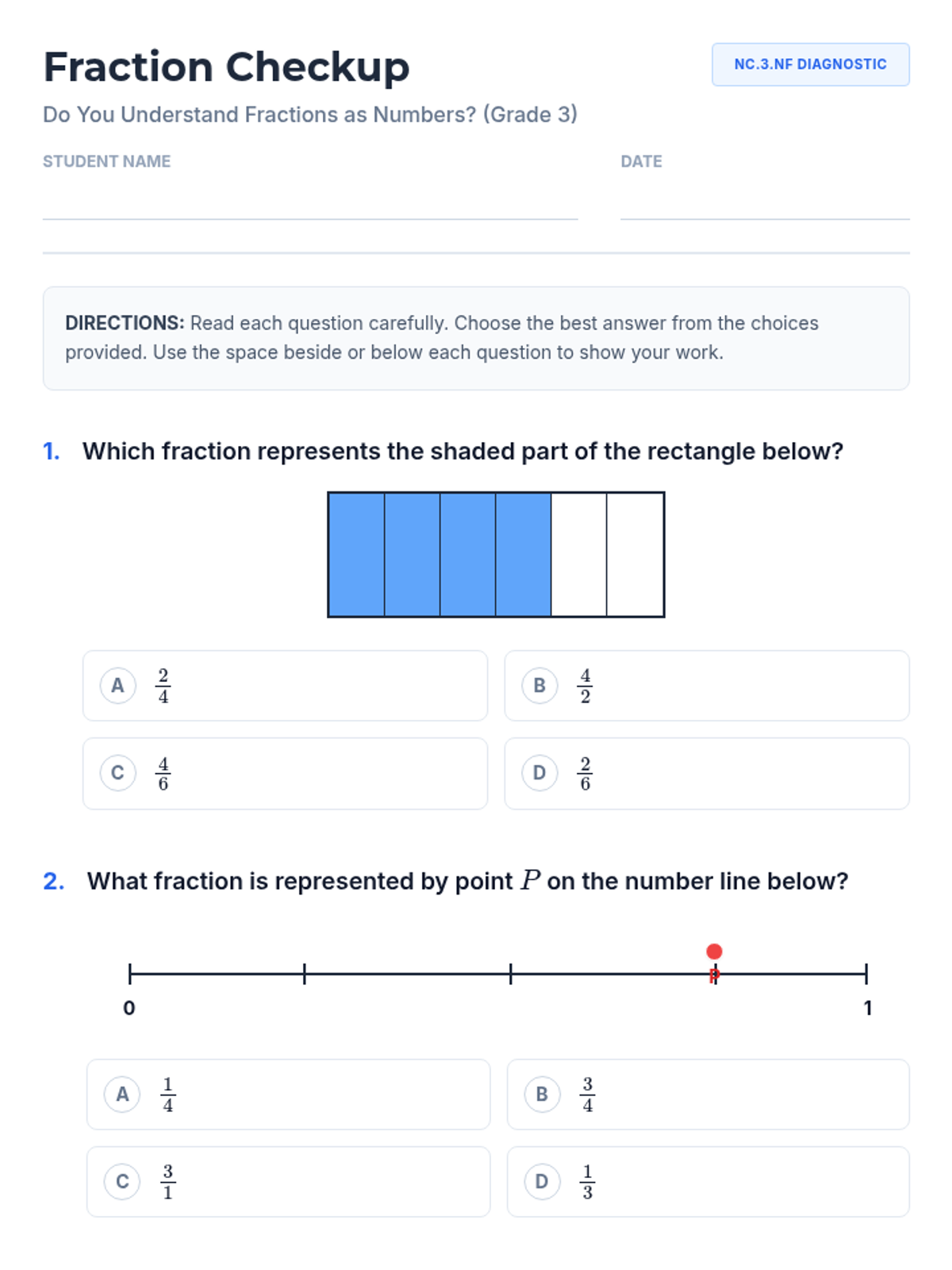
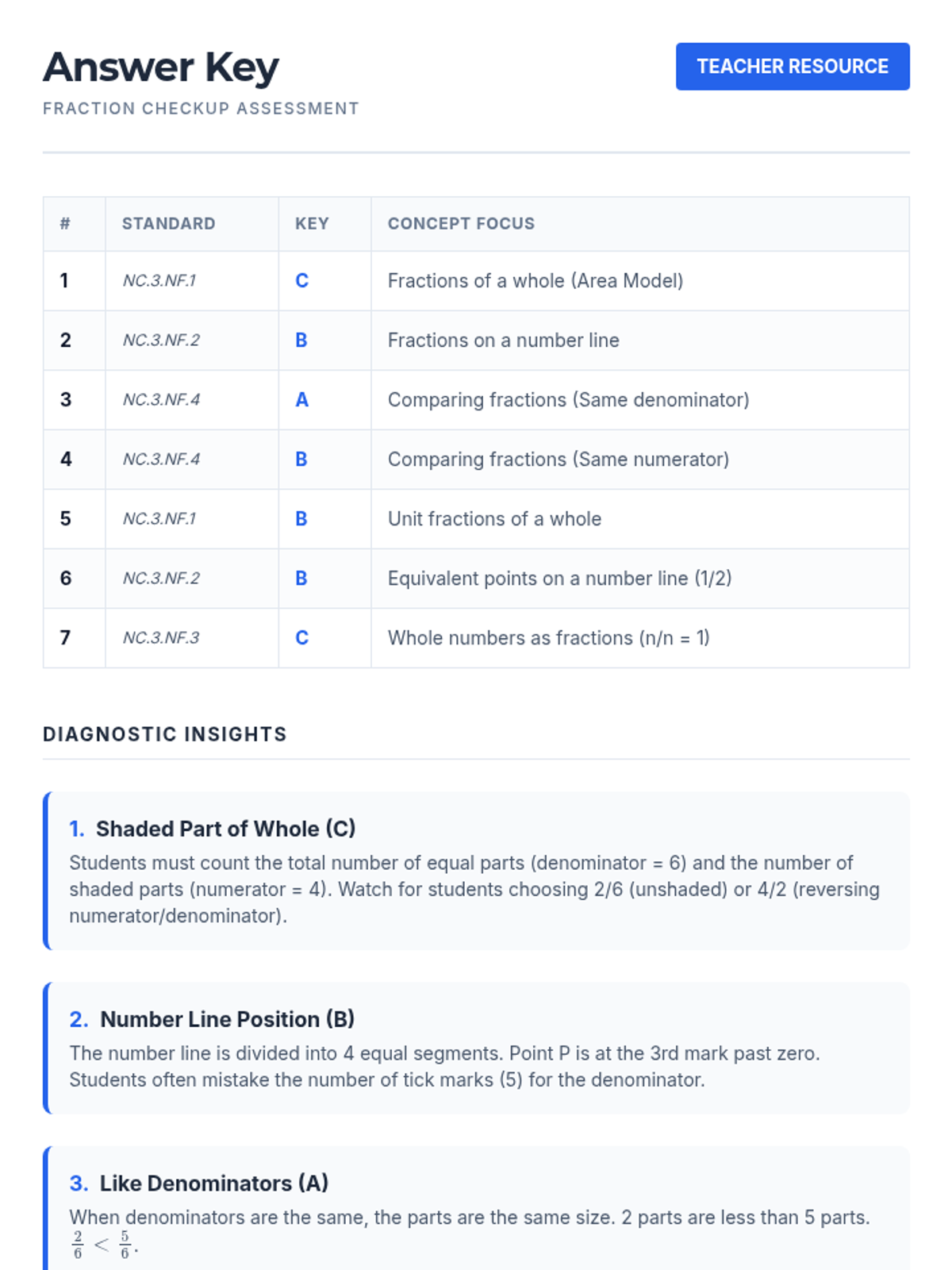
This lesson focuses on developing a deep understanding of fractions as numbers, including identifying parts of a whole, placing fractions on number lines, and comparing fractions with common numerators or denominators.
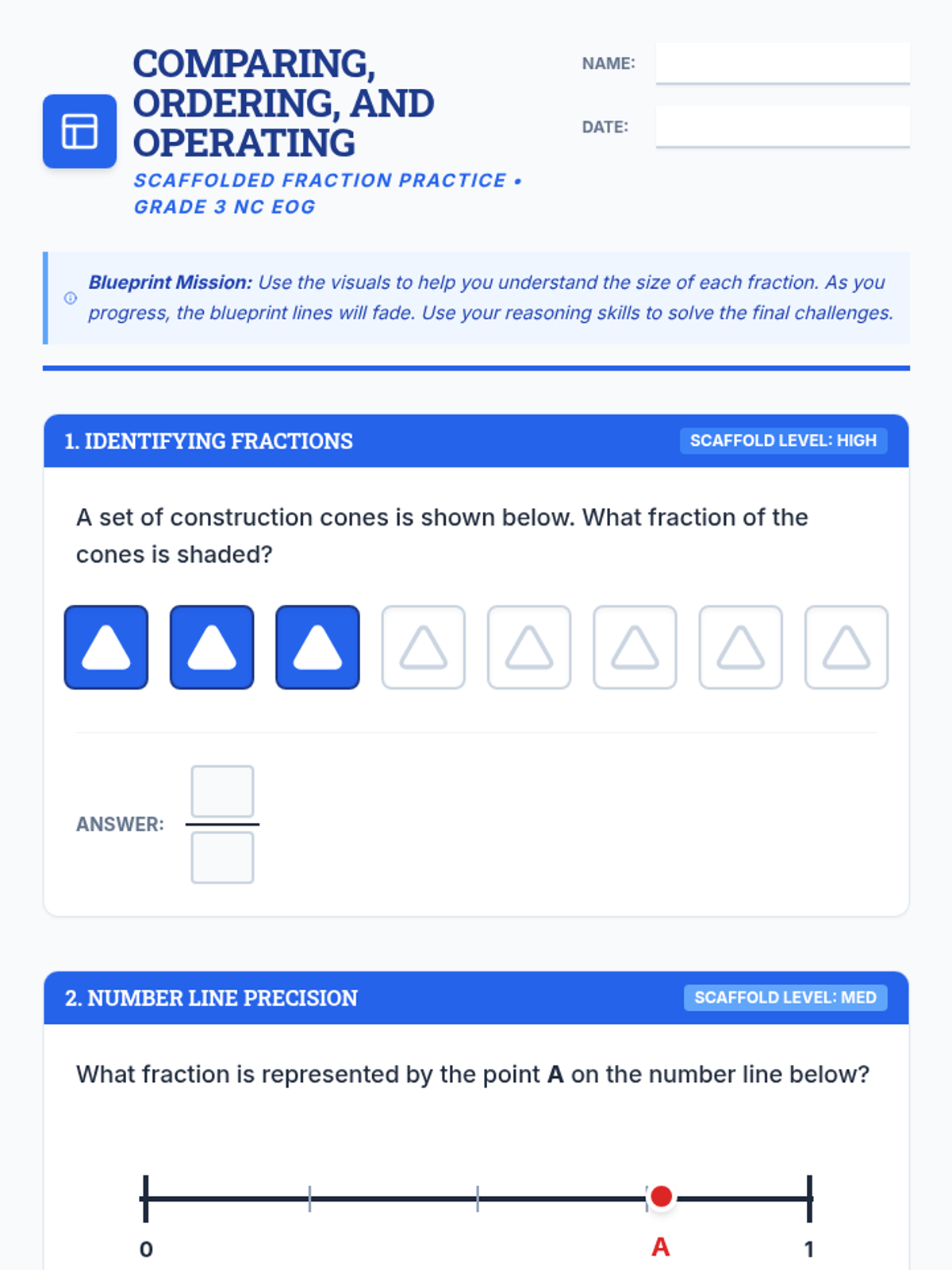
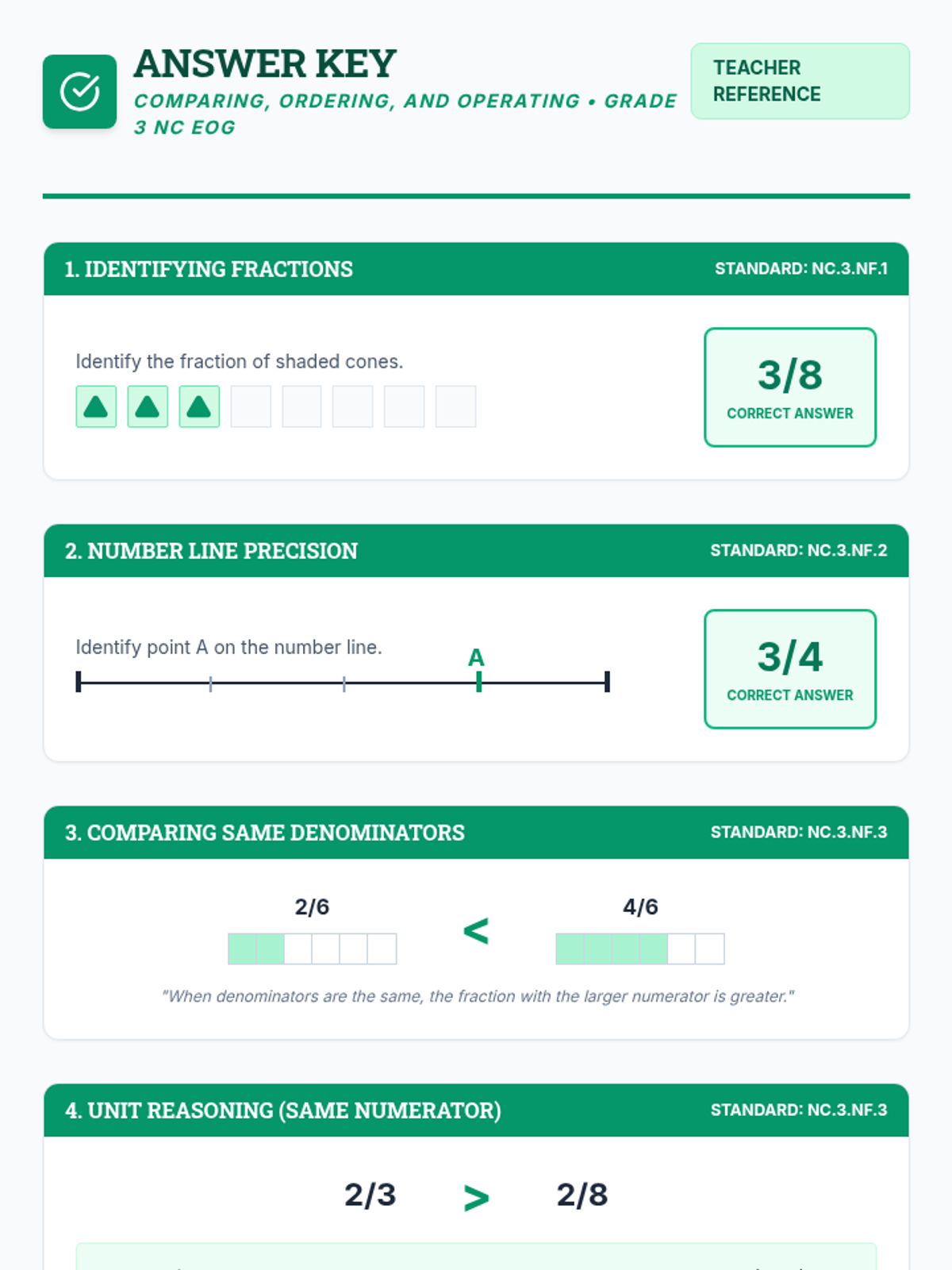
This lesson focuses on mastering fractions through visual models, number lines, and comparison strategies, specifically aligned with NC Grade 3 standards. Students will progress from highly scaffolded identification to independent problem-solving using EOG-style questions.
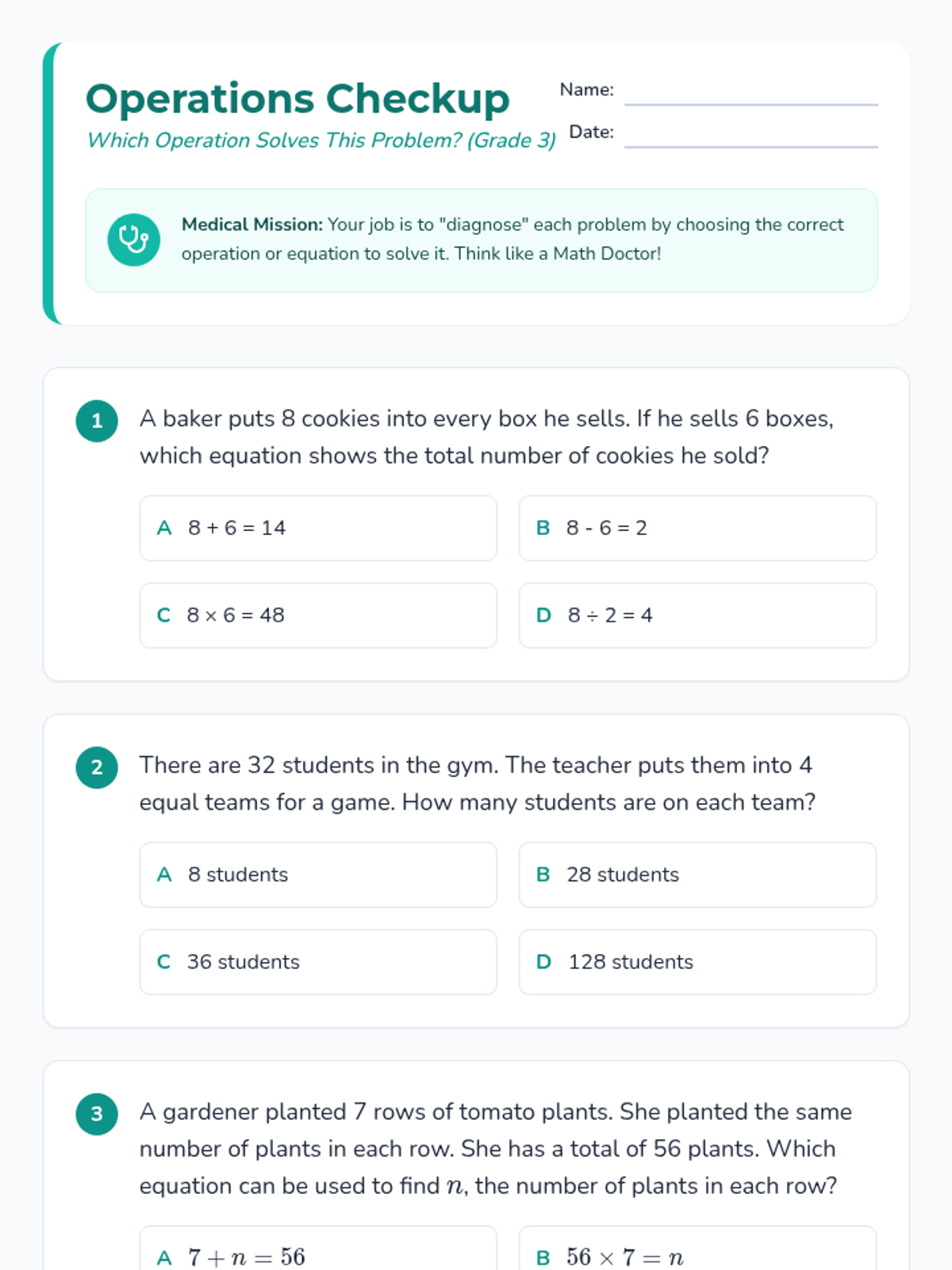
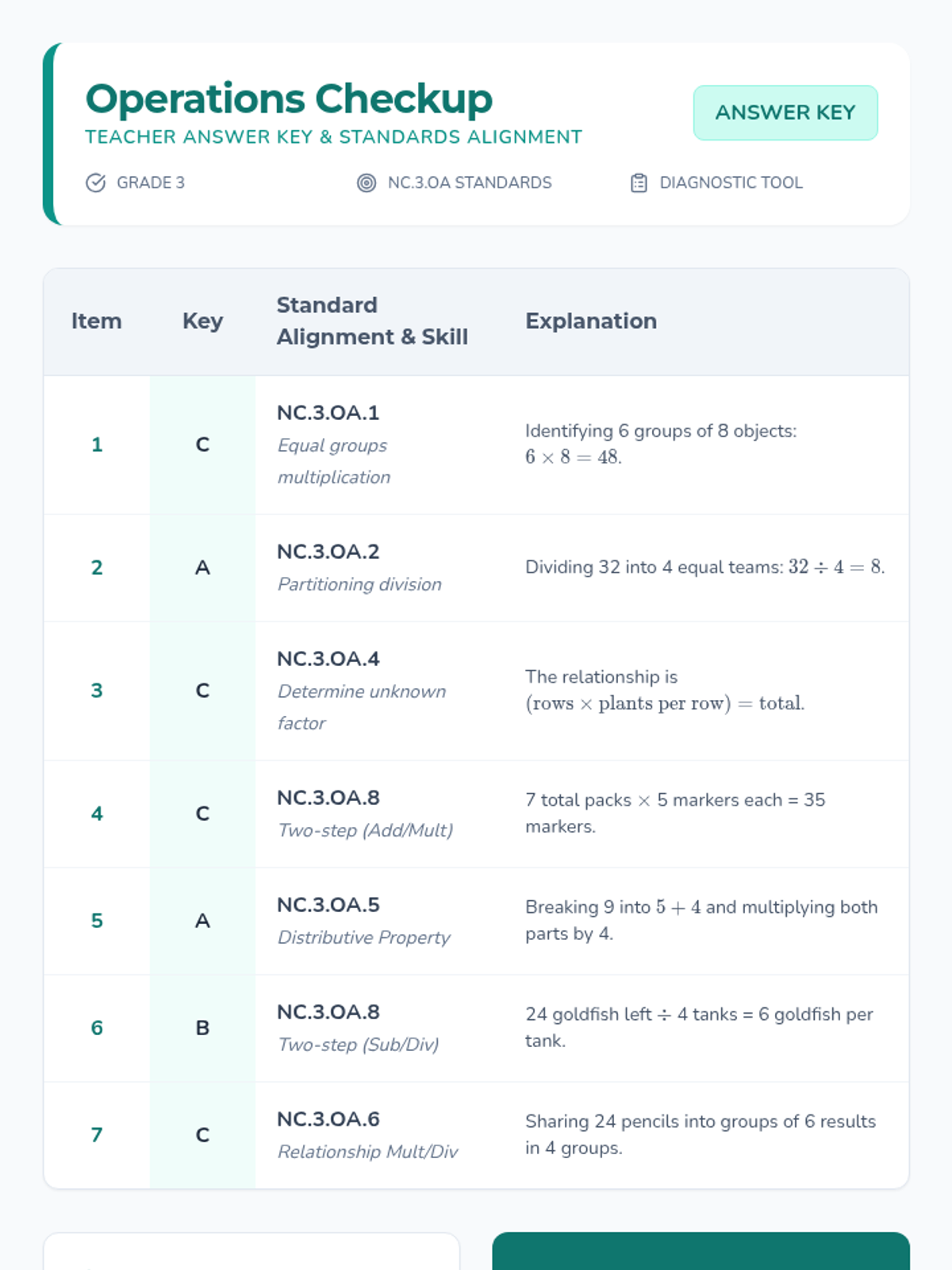
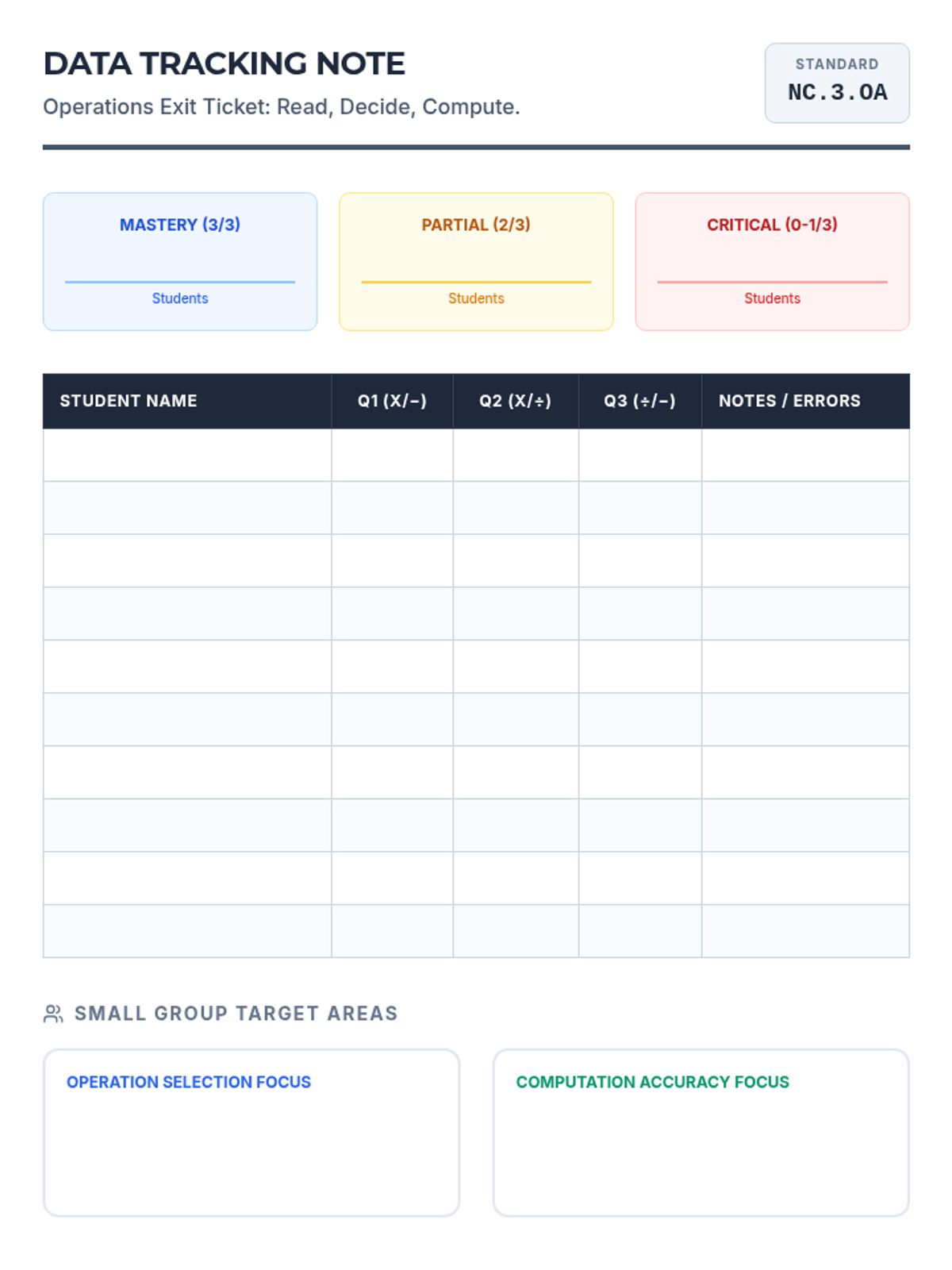
A diagnostic mini-assessment focused on NC.3.OA standards, including operation selection, fact fluency, and two-step word problems for 3rd grade students.
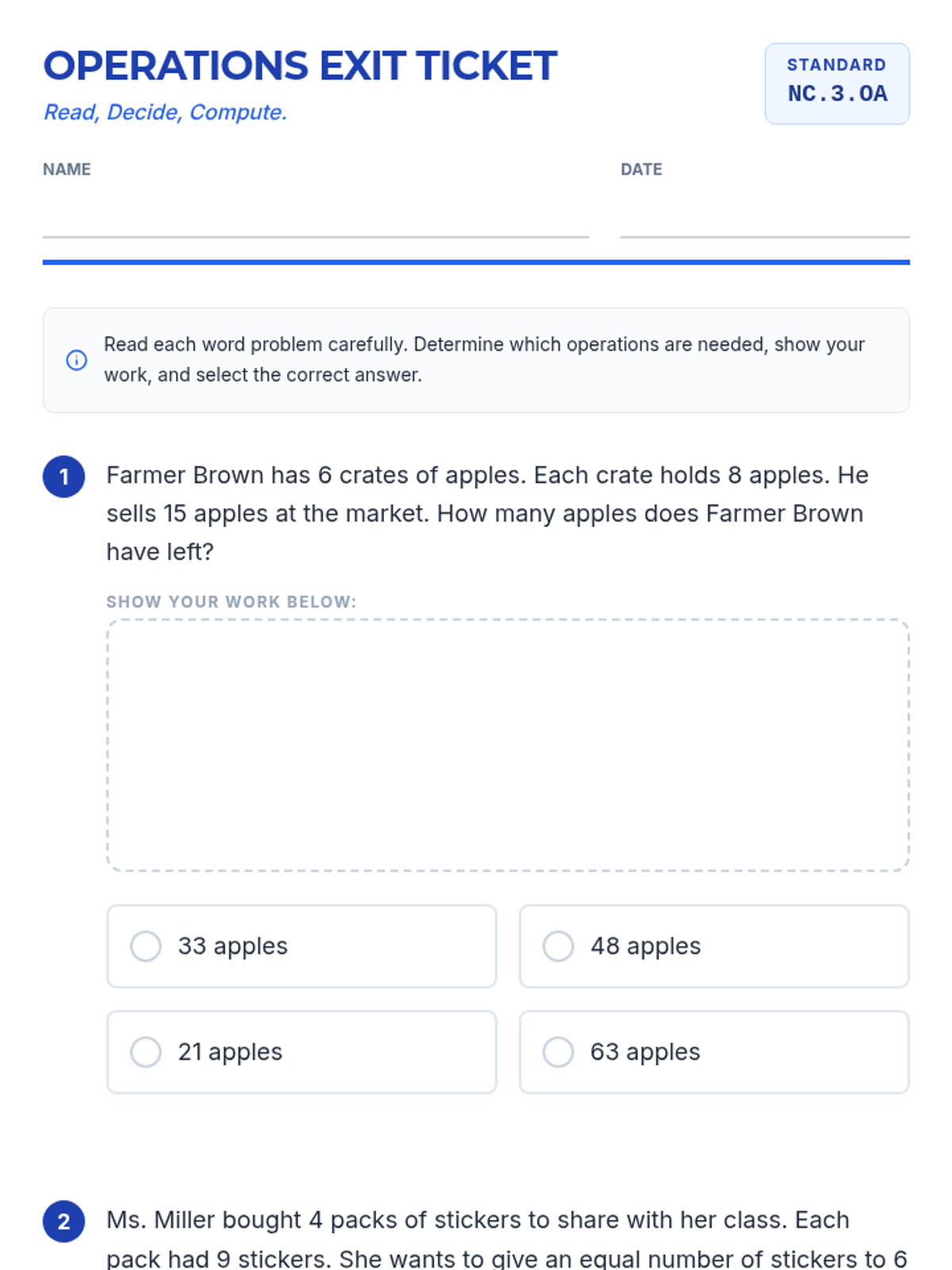
This lesson focuses on solving multi-step word problems using the four operations, specifically aligned with North Carolina Grade 3 standards (NC.3.OA). Students will practice identifying the correct operation, setting up equations, and computing accurately.
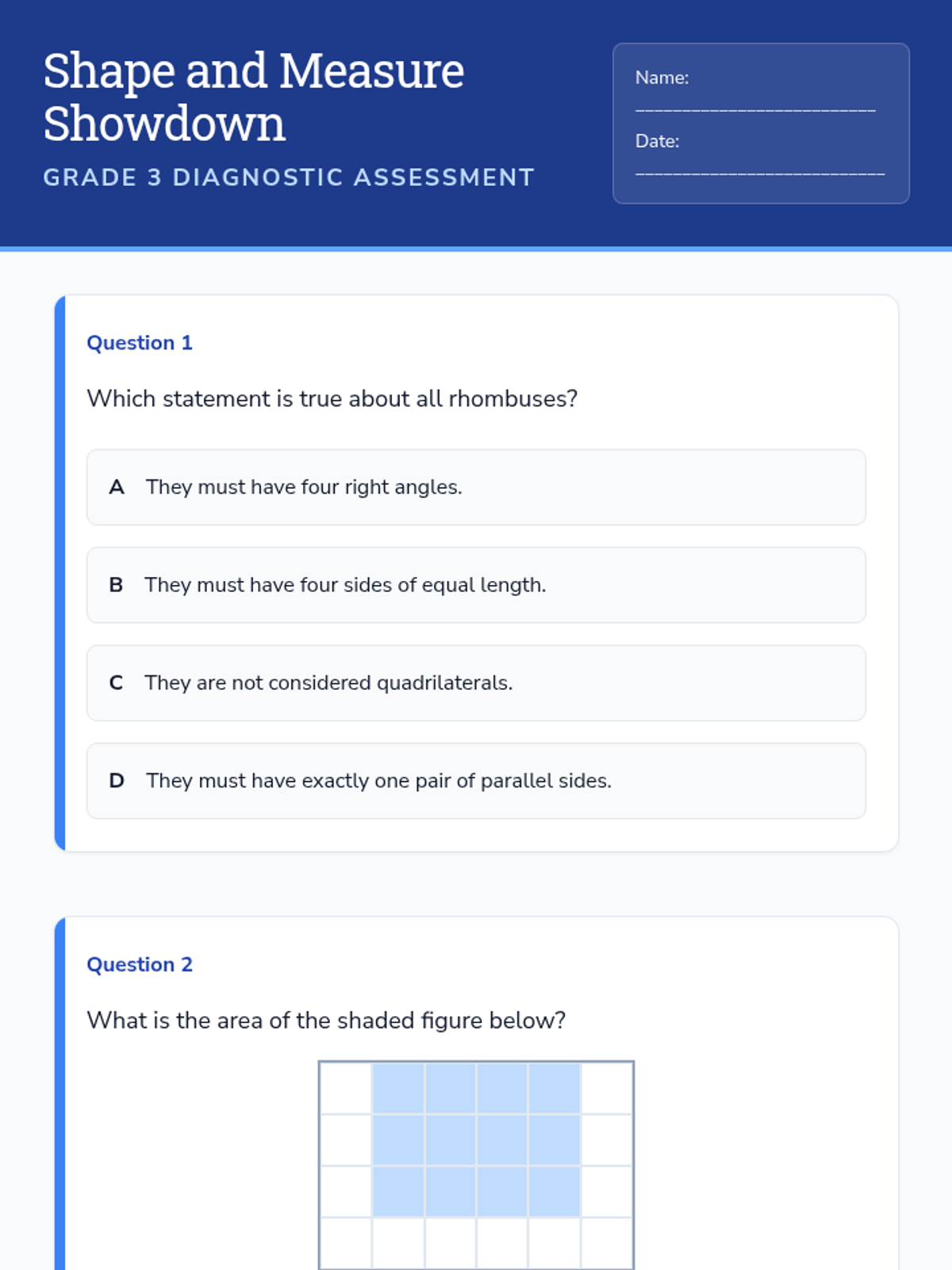
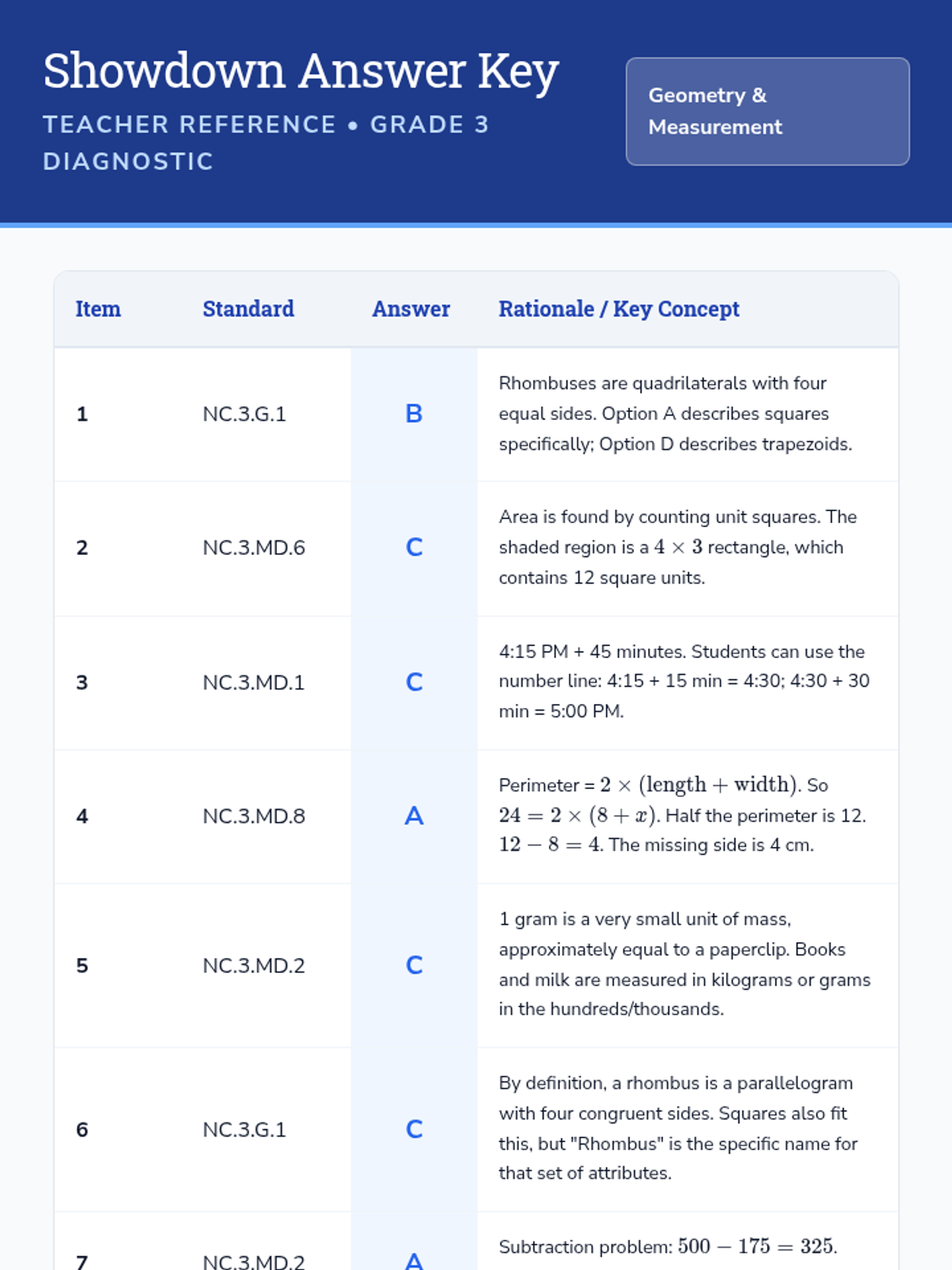
A diagnostic mini-assessment covering North Carolina Grade 3 standards for Geometry (NC.3.G) and Measurement and Data (NC.3.MD). Students will identify shape attributes, calculate area and perimeter, and solve measurement word problems.
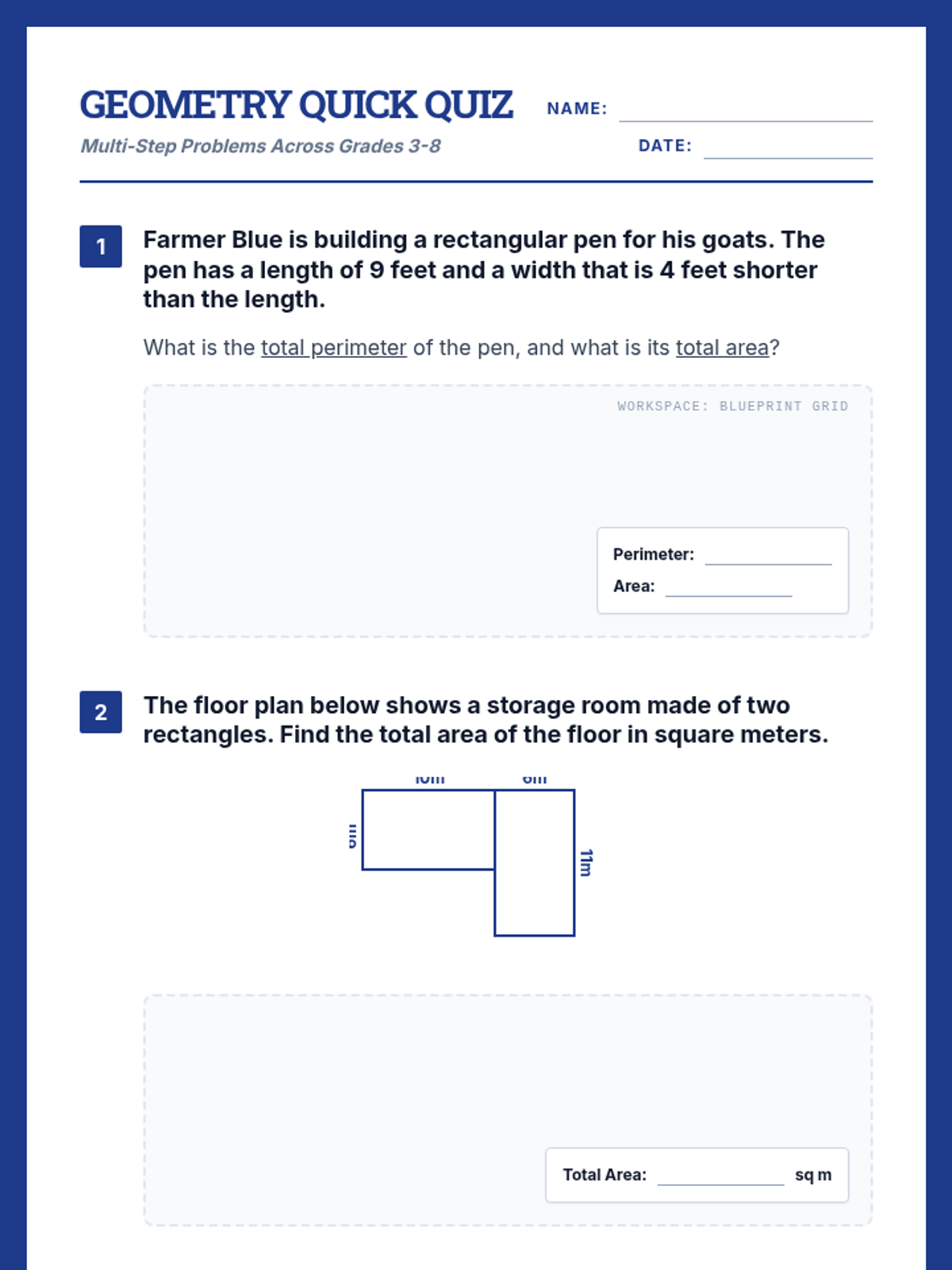
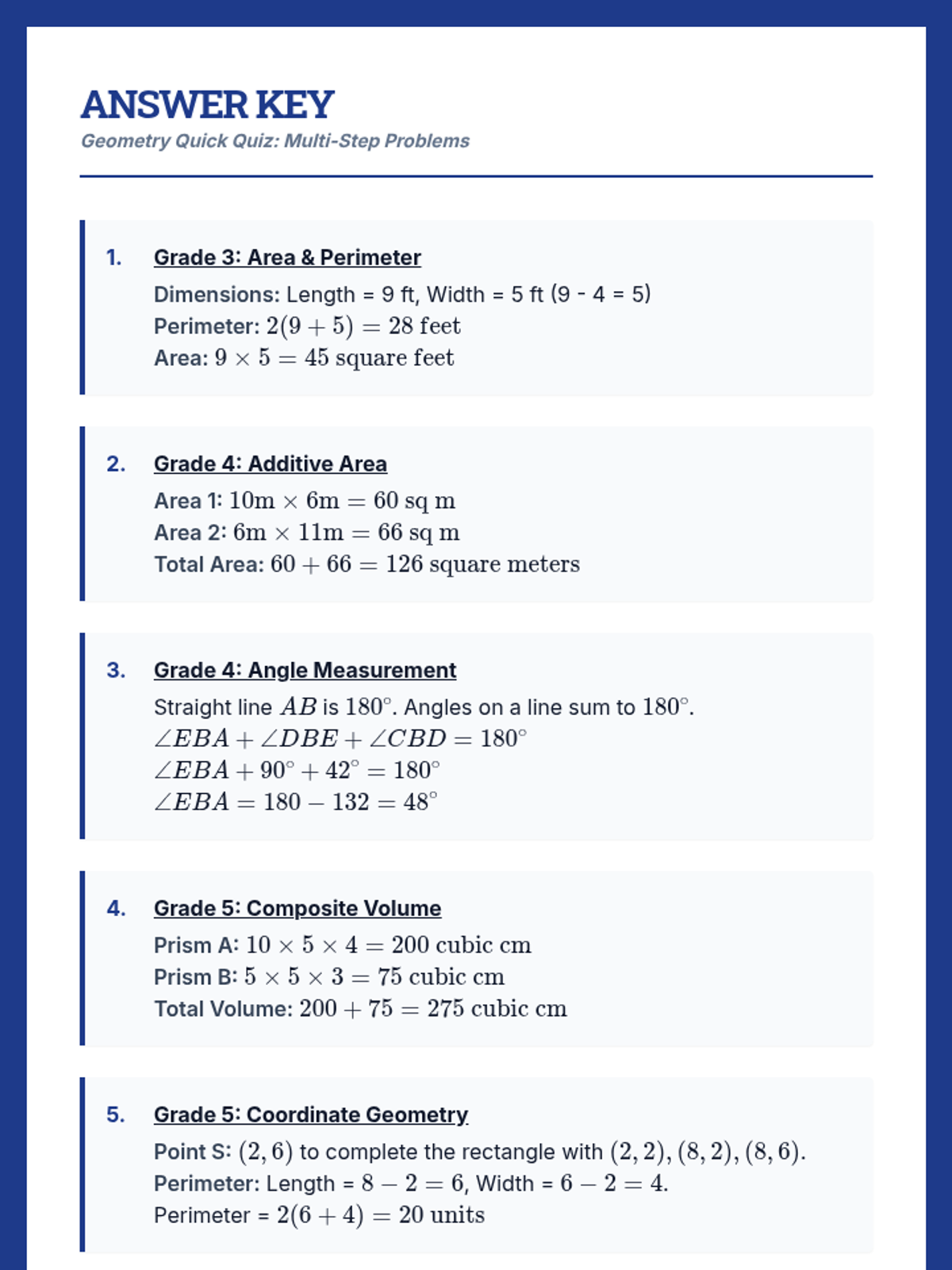
A comprehensive geometry and measurement assessment featuring multi-step problems aligned with North Carolina EOG standards for grades 3 through 8.
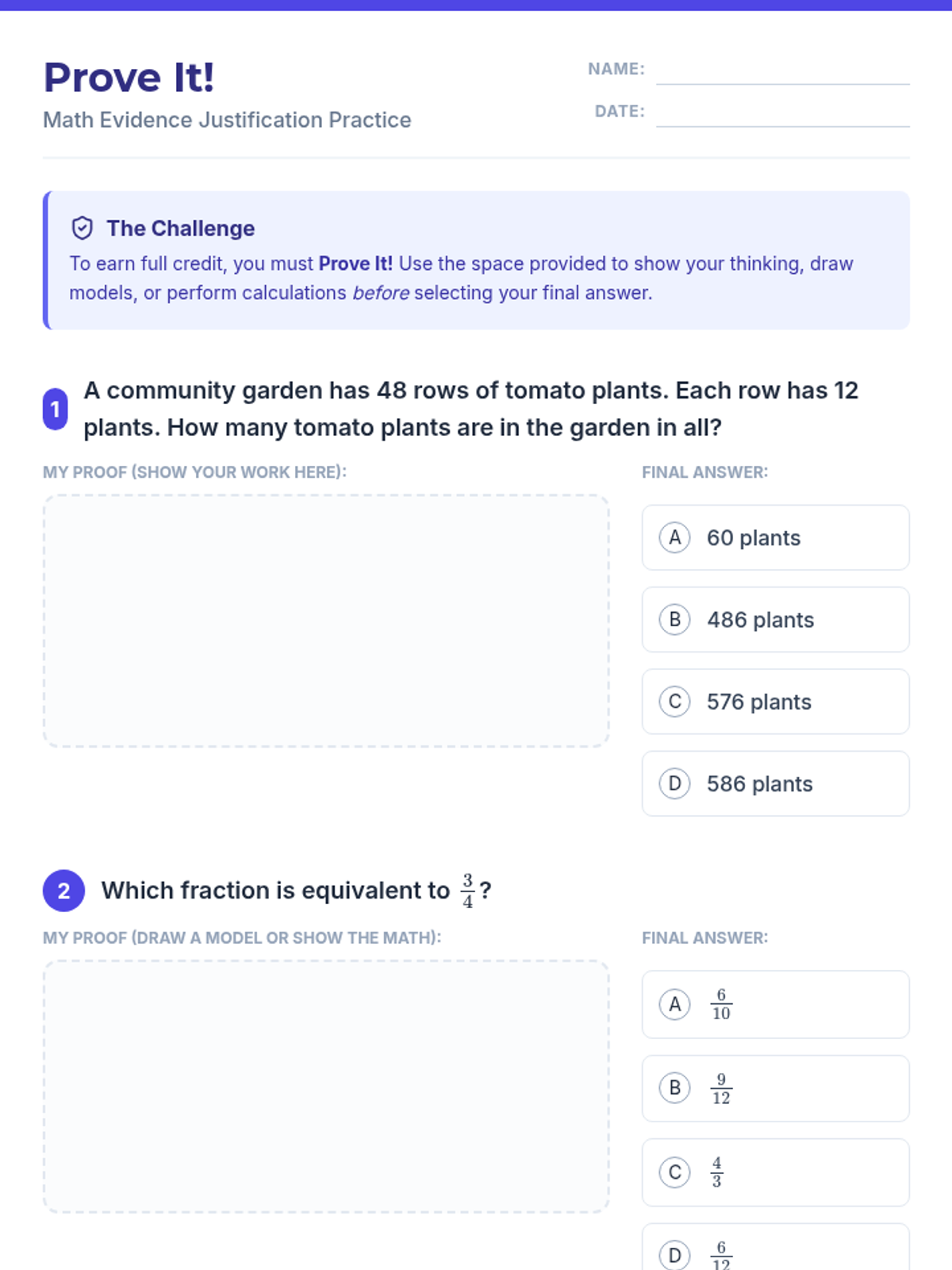
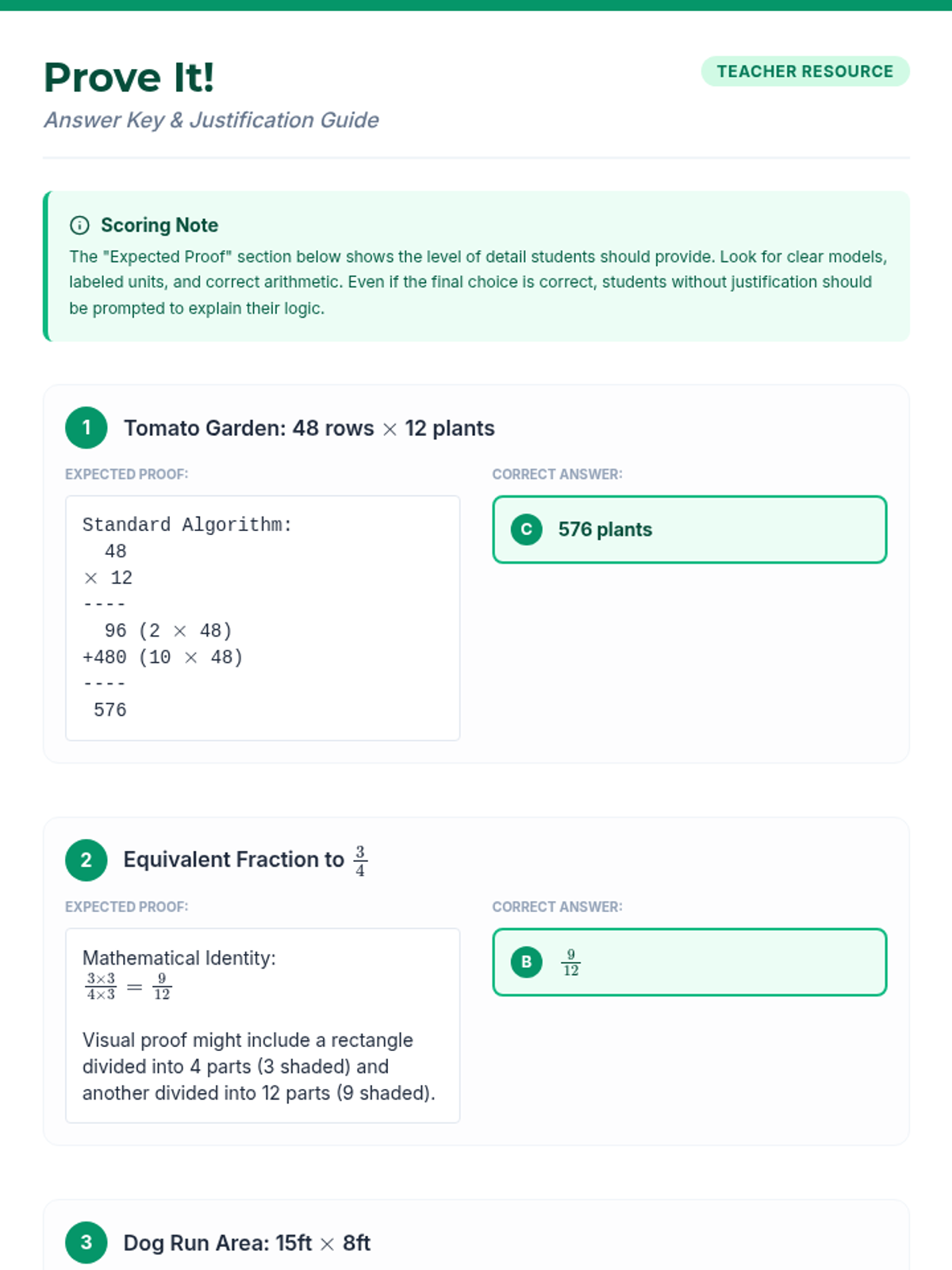
A math practice set focused on justifying answers with evidence and shown work, specifically designed for NC EOG preparation for grades 3-5.
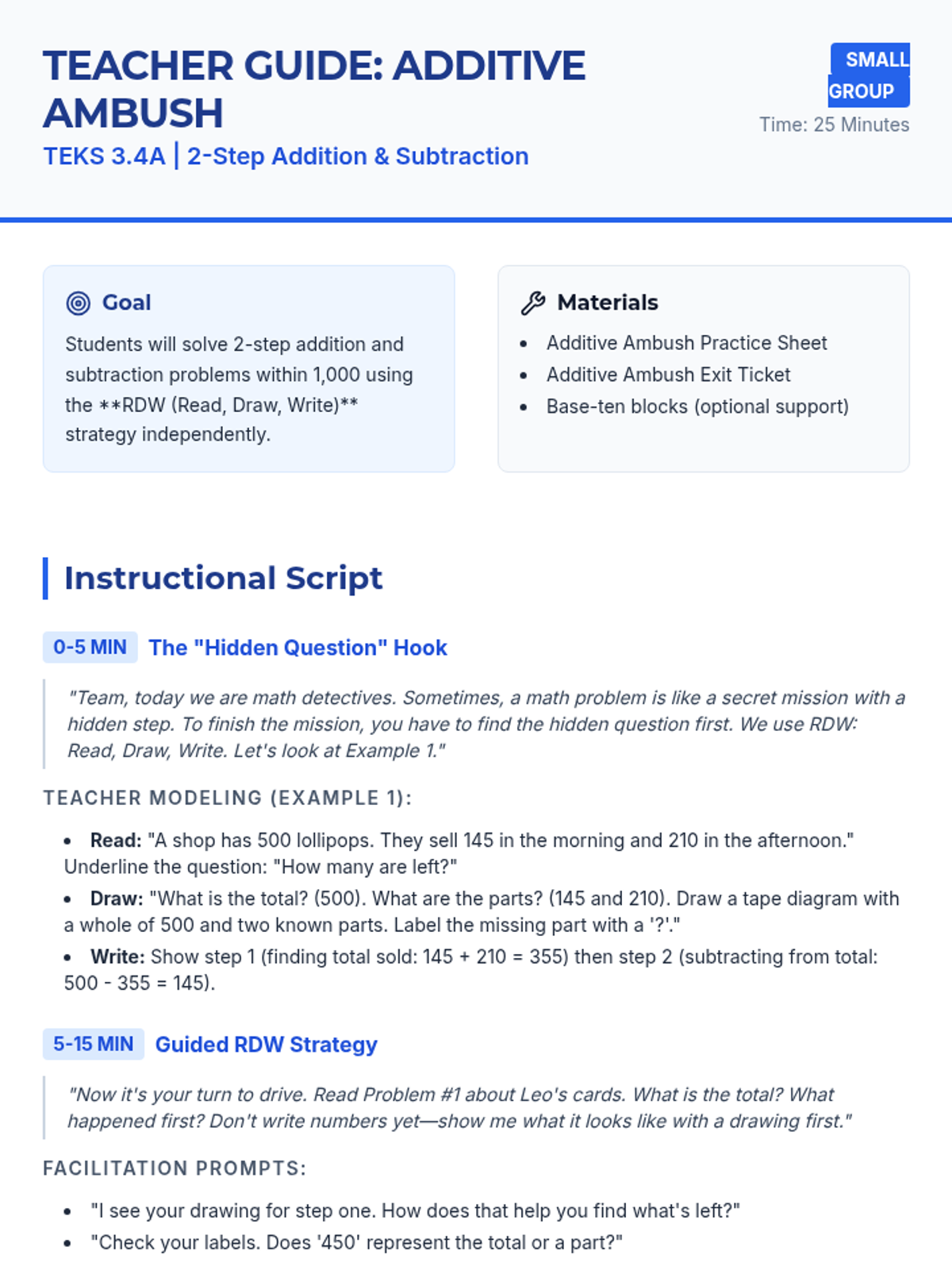
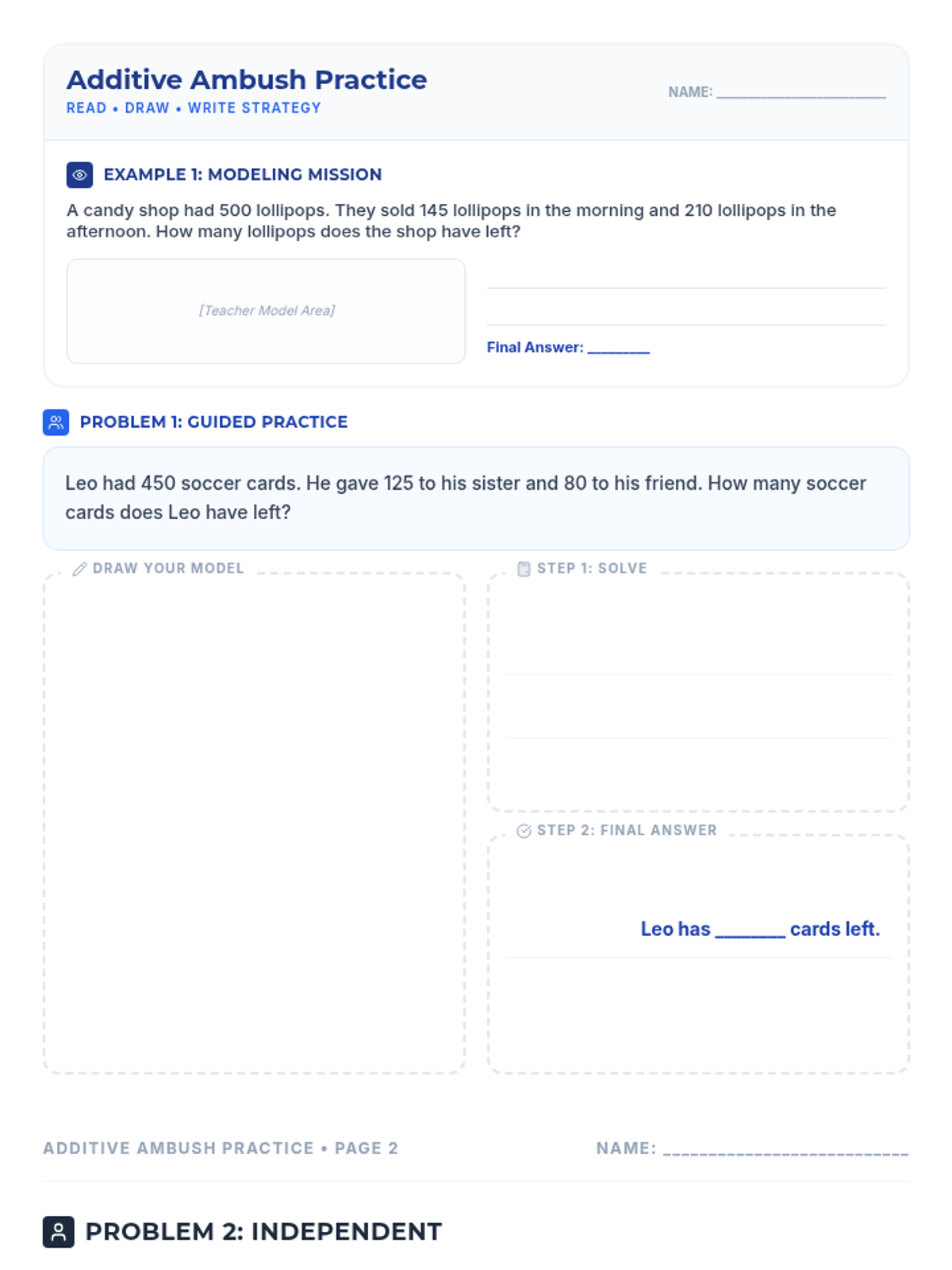
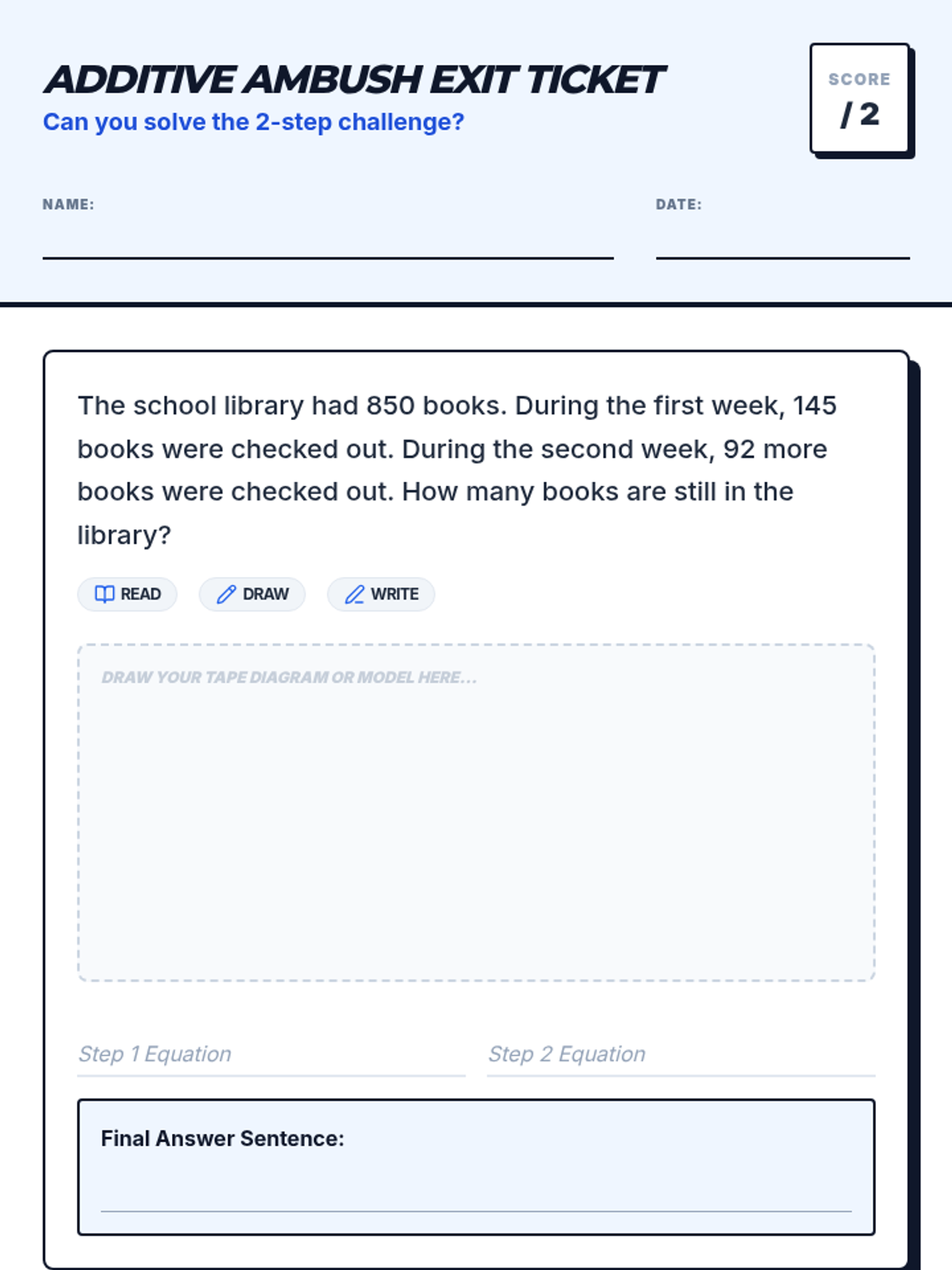
A small-group reteach lesson focused on solving two-step addition and subtraction problems within 1,000 using the Read-Draw-Write (RDW) strategy. Students identify the hidden question and model their thinking before solving.
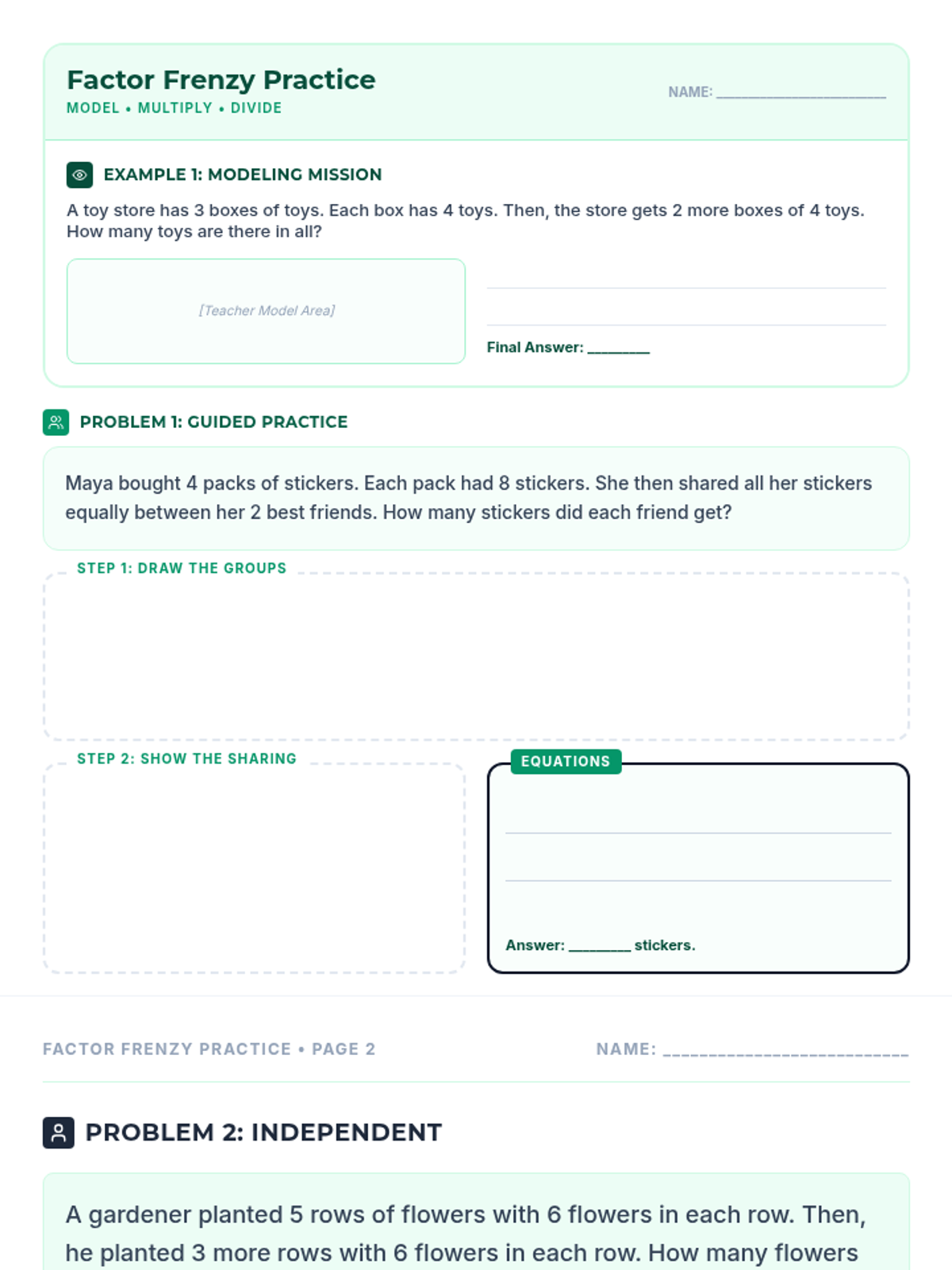
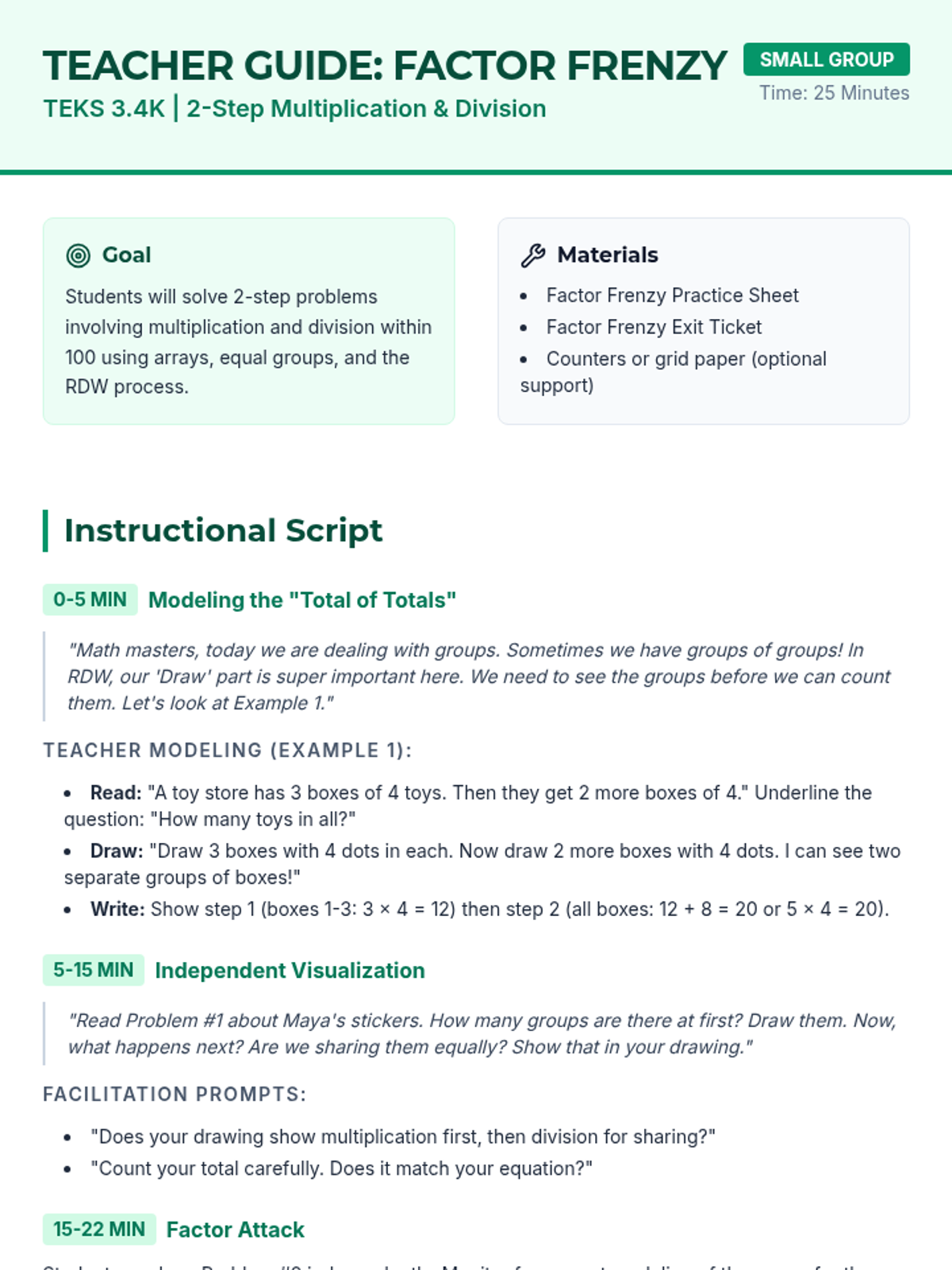
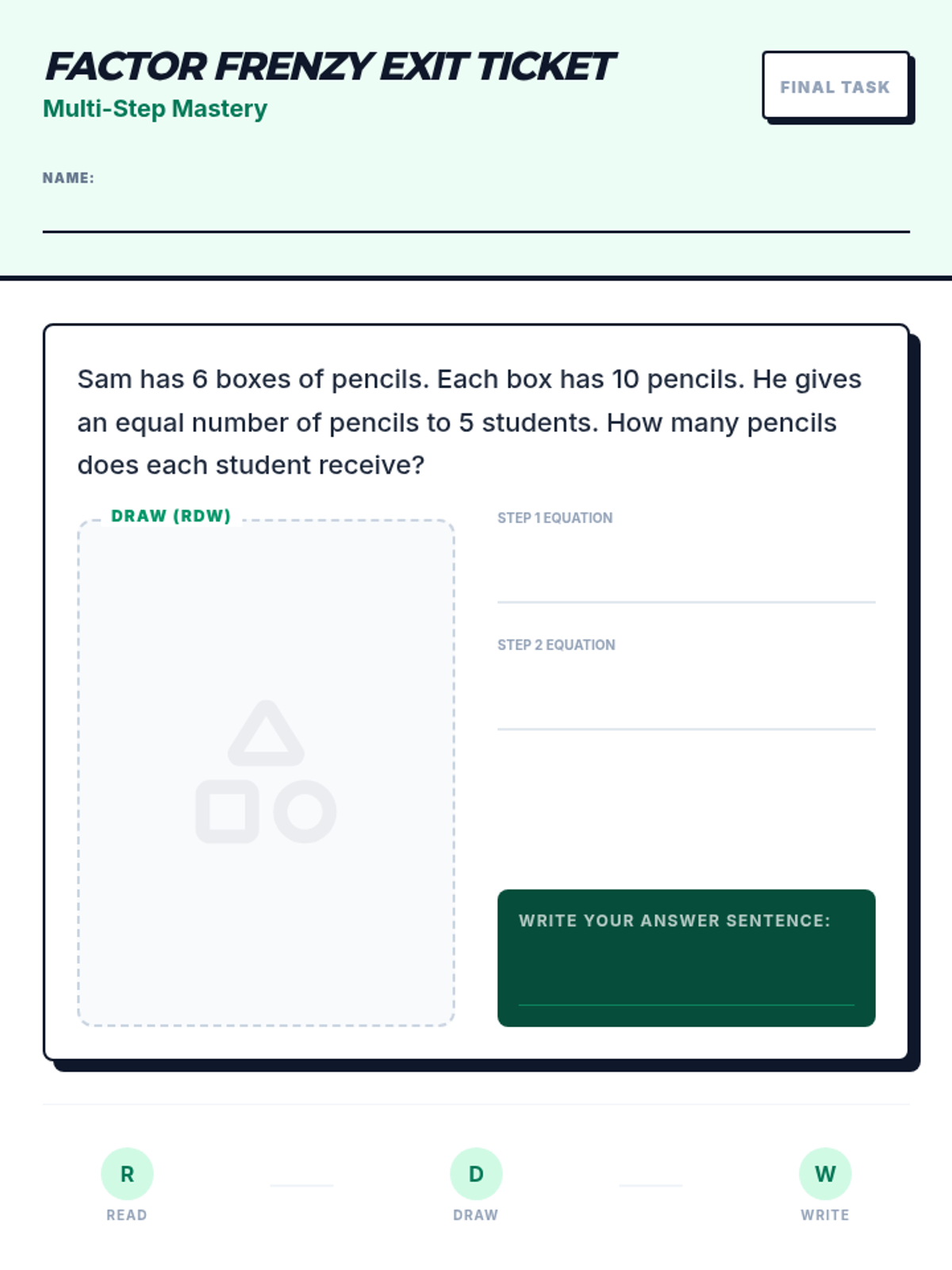
A small-group reteach lesson focused on solving two-step multiplication and division problems within 100. Students use the RDW strategy to represent equal groups, arrays, or area models to find solutions to multi-step challenges.
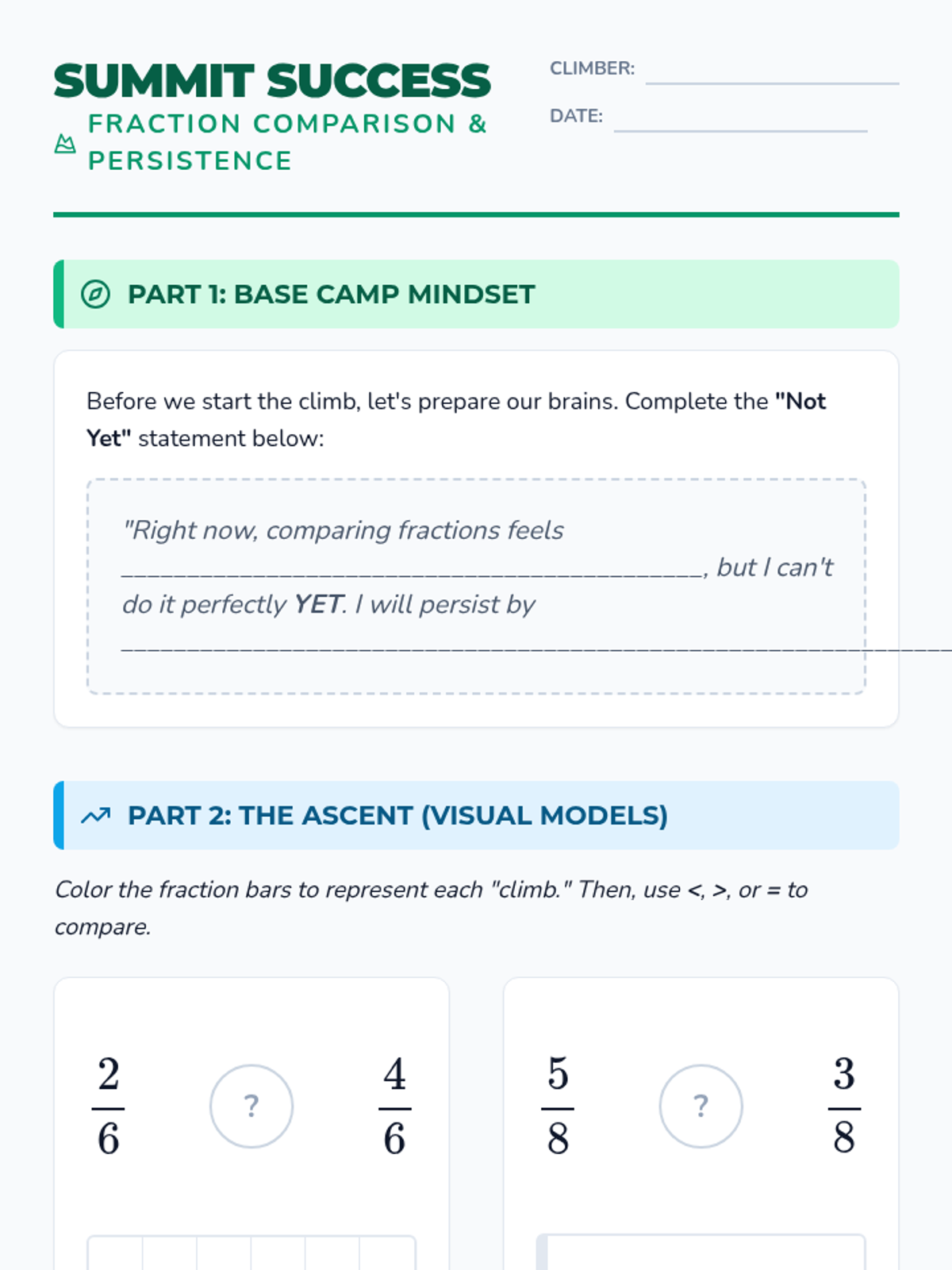
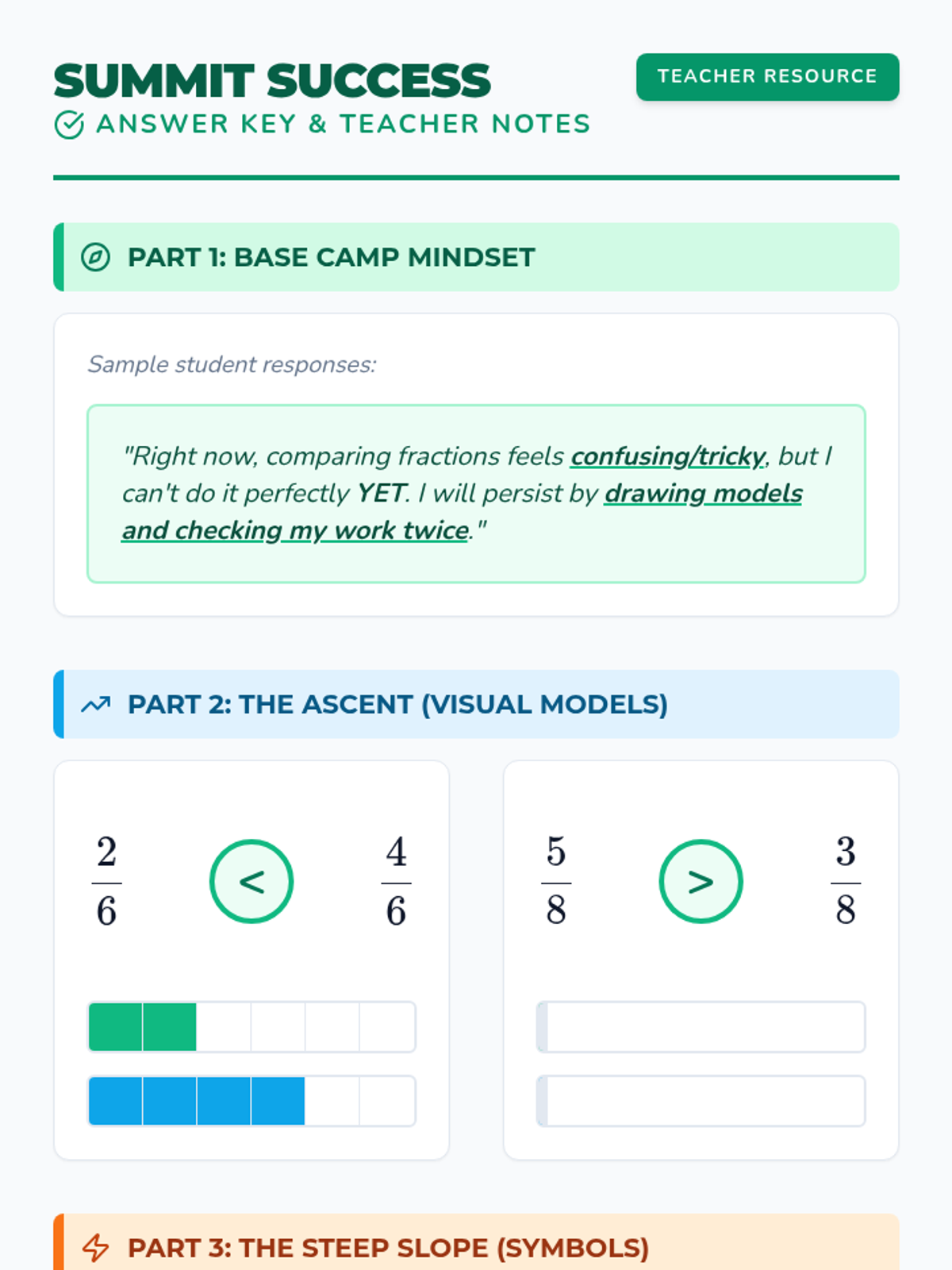
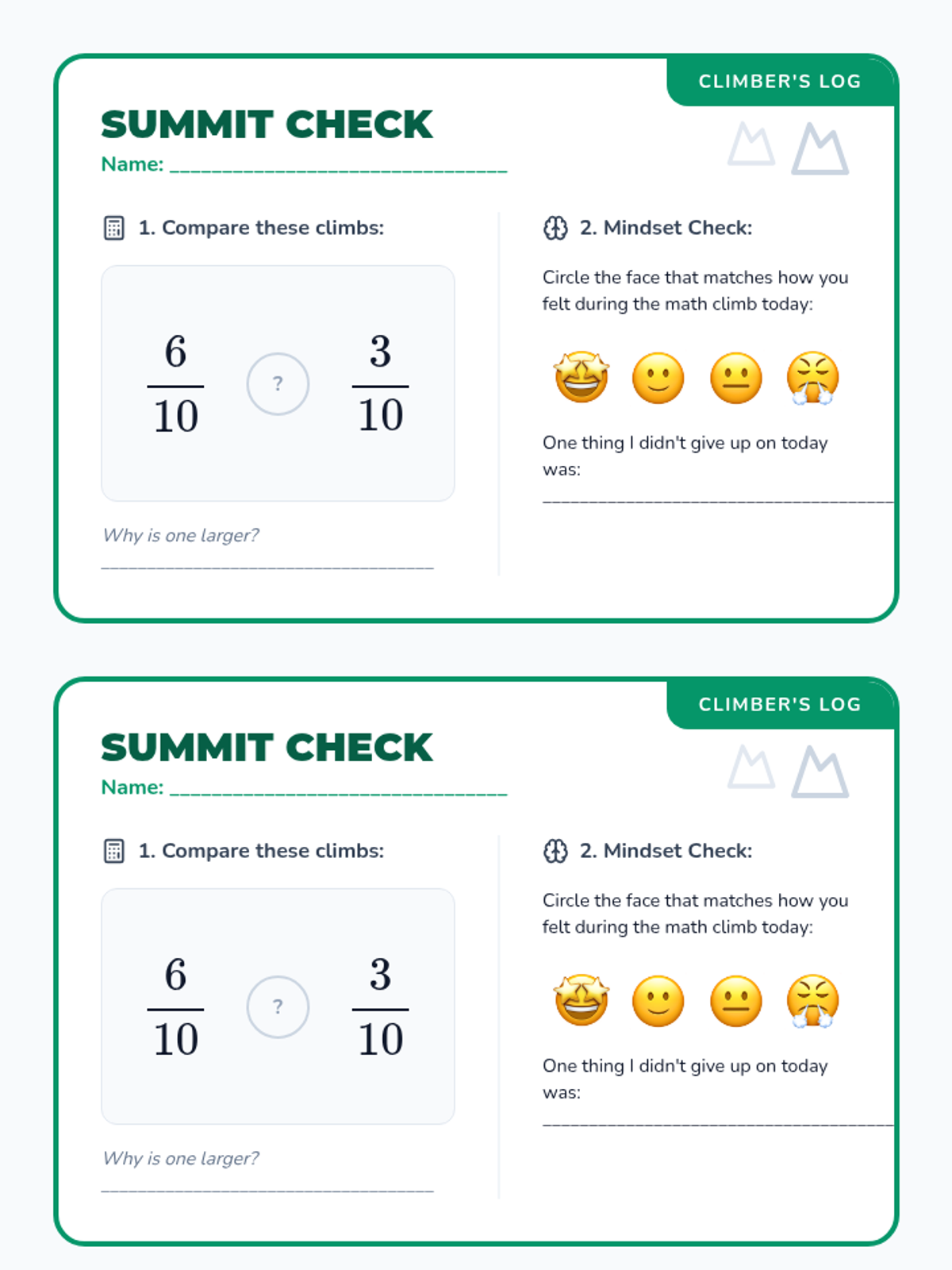
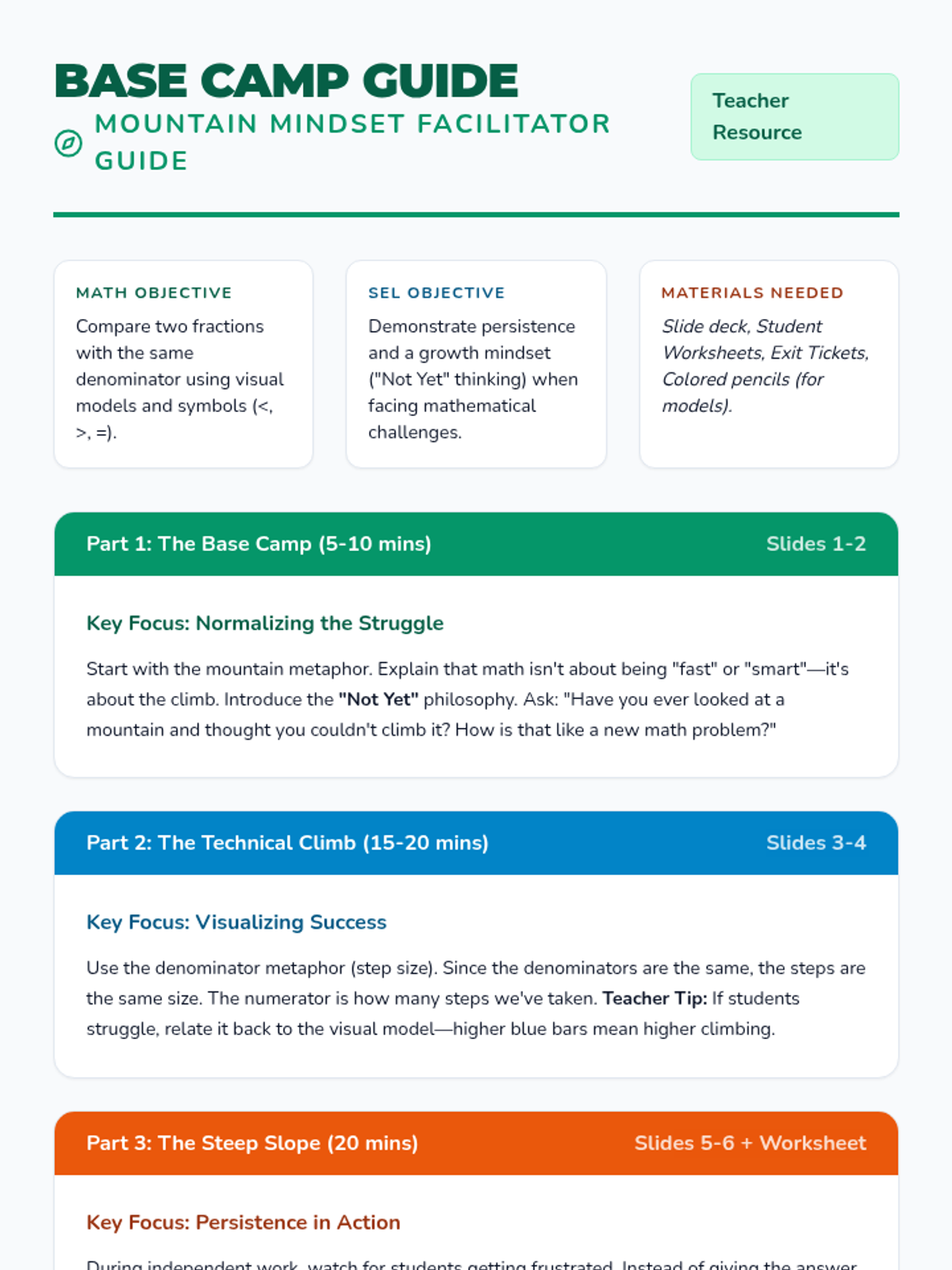
A math lesson focused on comparing fractions with like denominators, integrated with social-emotional learning (SEL) themes of growth mindset and persistence. Students will learn to use visual models and mathematical symbols while reflecting on their own learning journey.
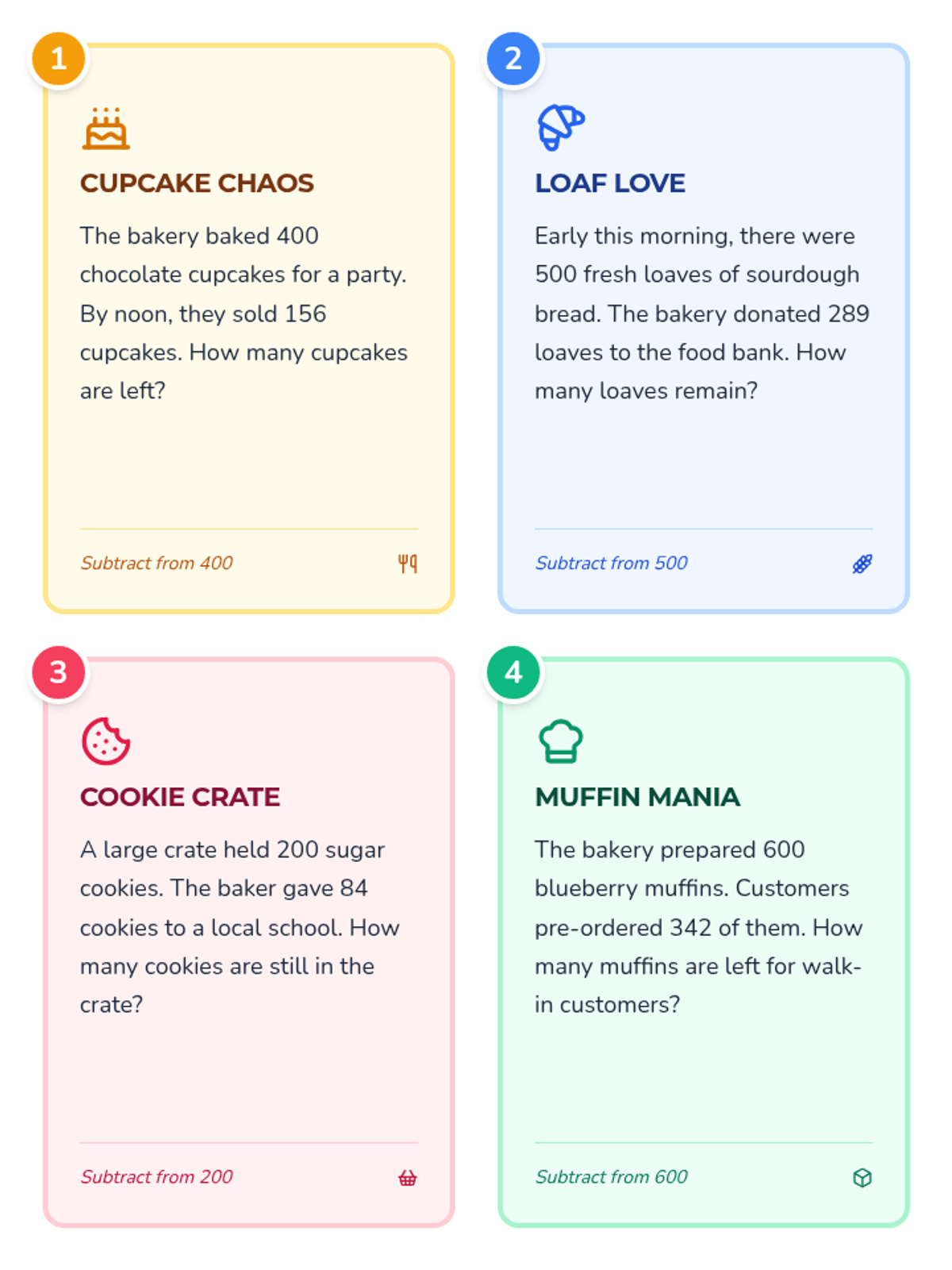
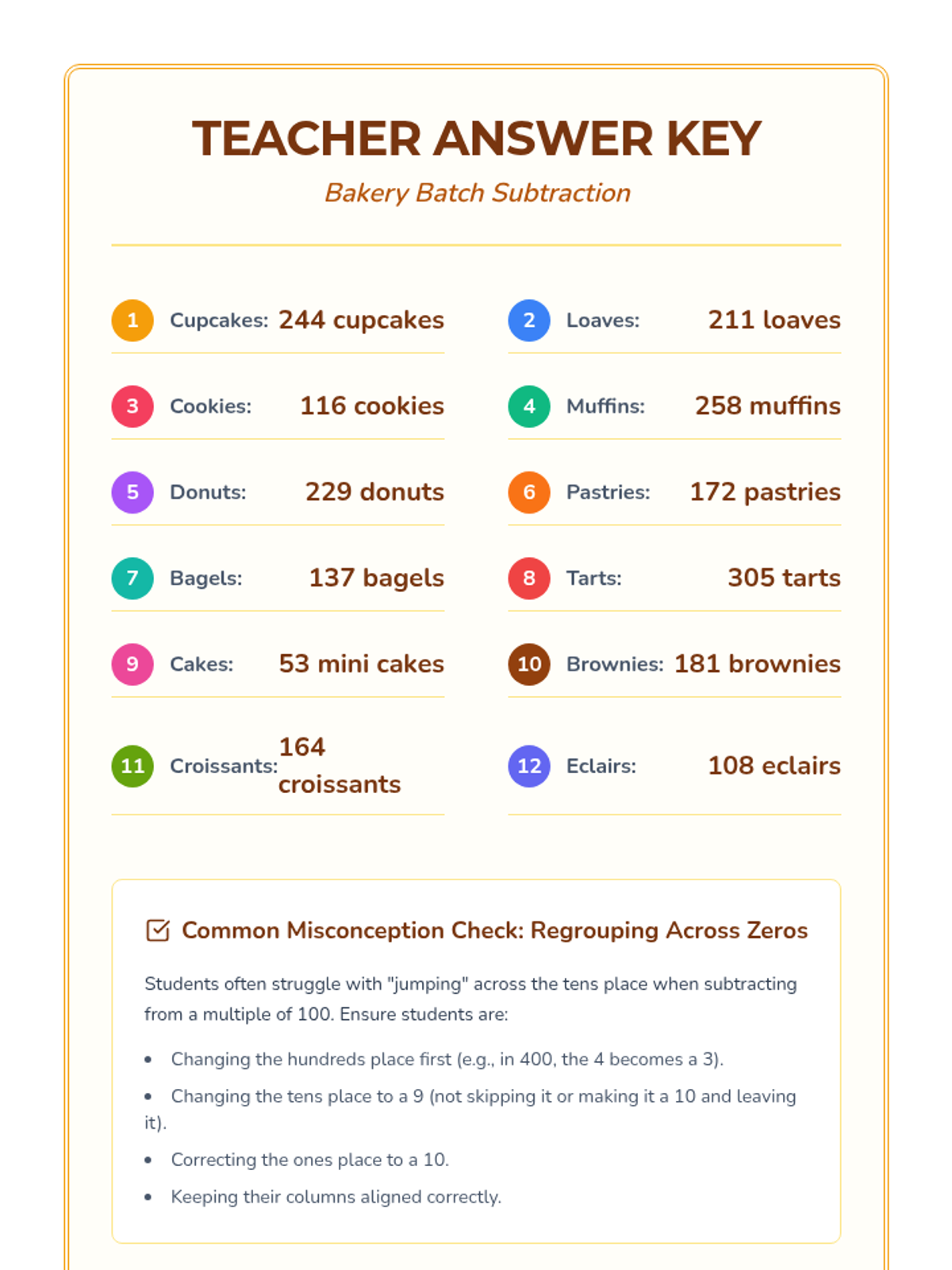
A series of story problems centered around a busy bakery, focusing on subtracting 2 and 3-digit numbers from multiples of 100, requiring students to master regrouping across zeros.
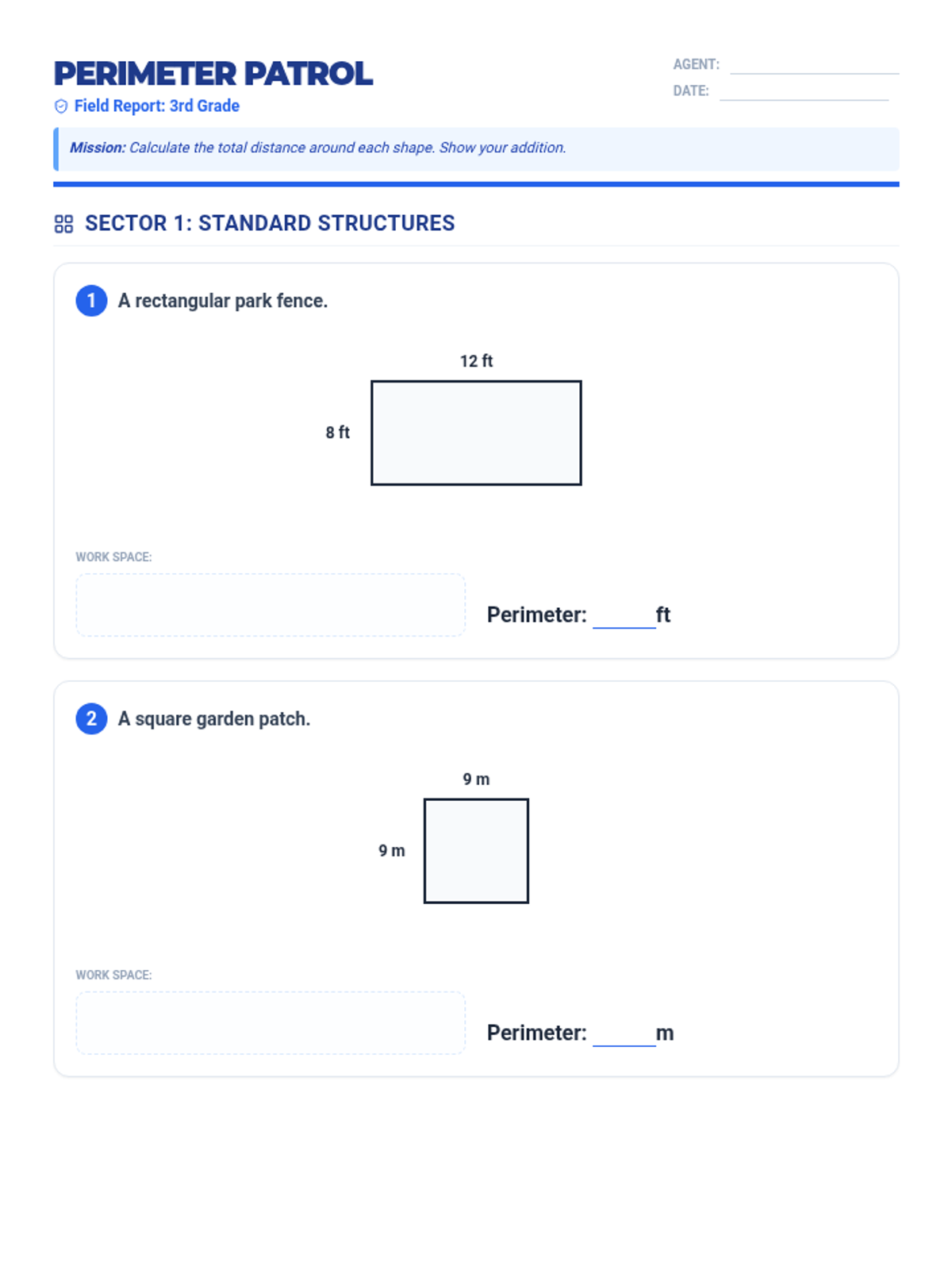
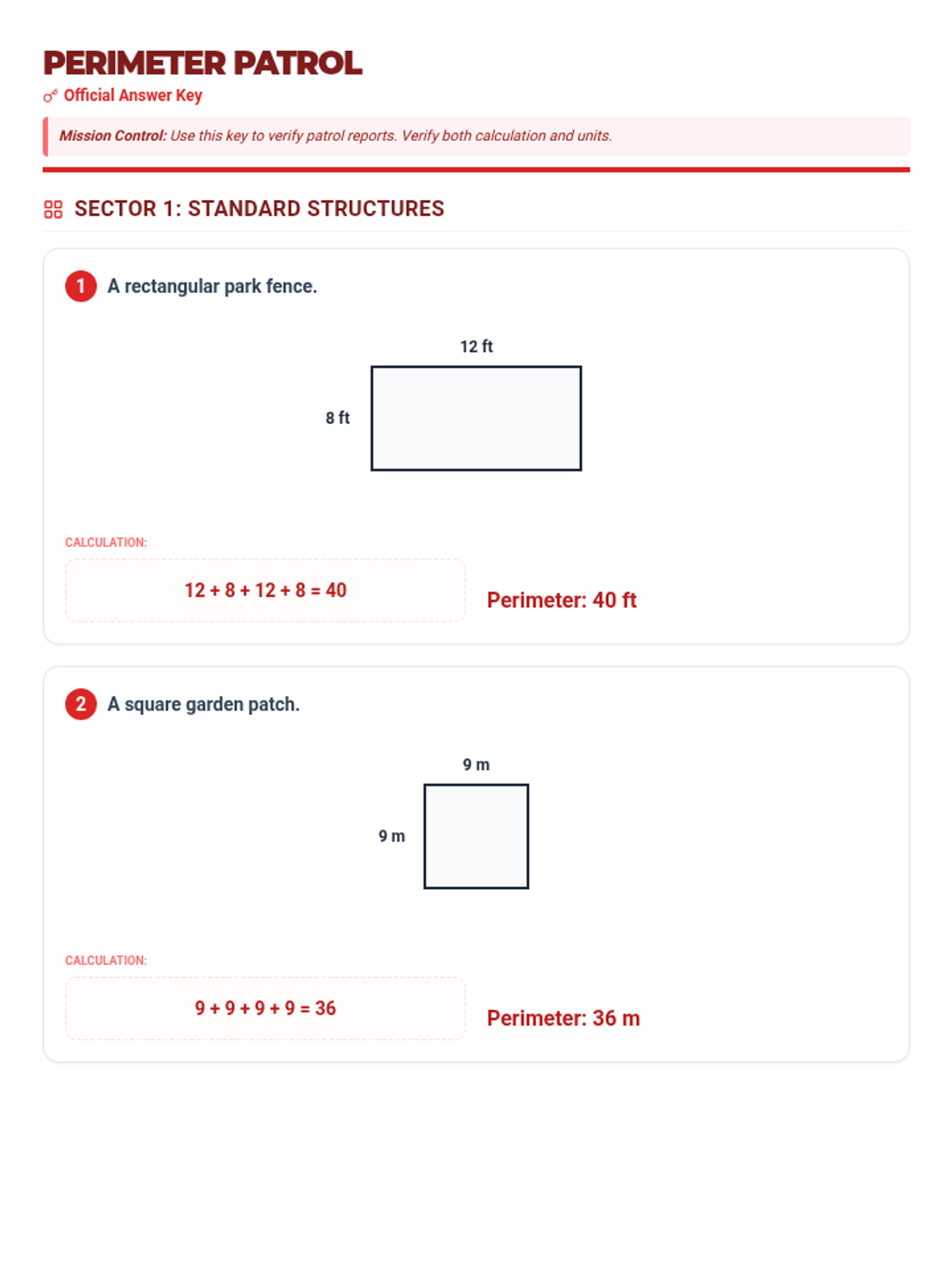
An introductory lesson on perimeter for 3rd grade, covering what perimeter is, how to calculate it for various polygons, and real-world applications.
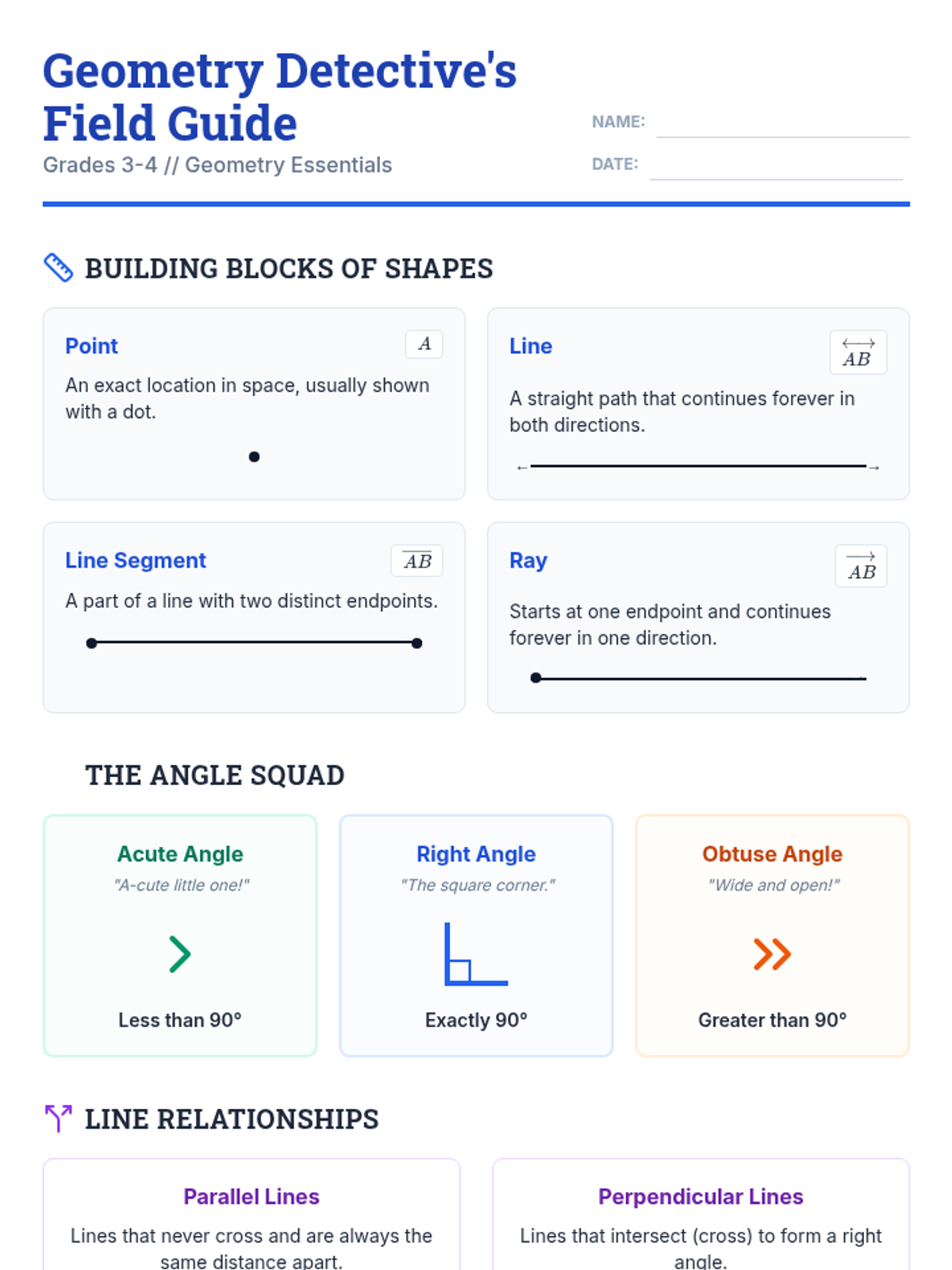
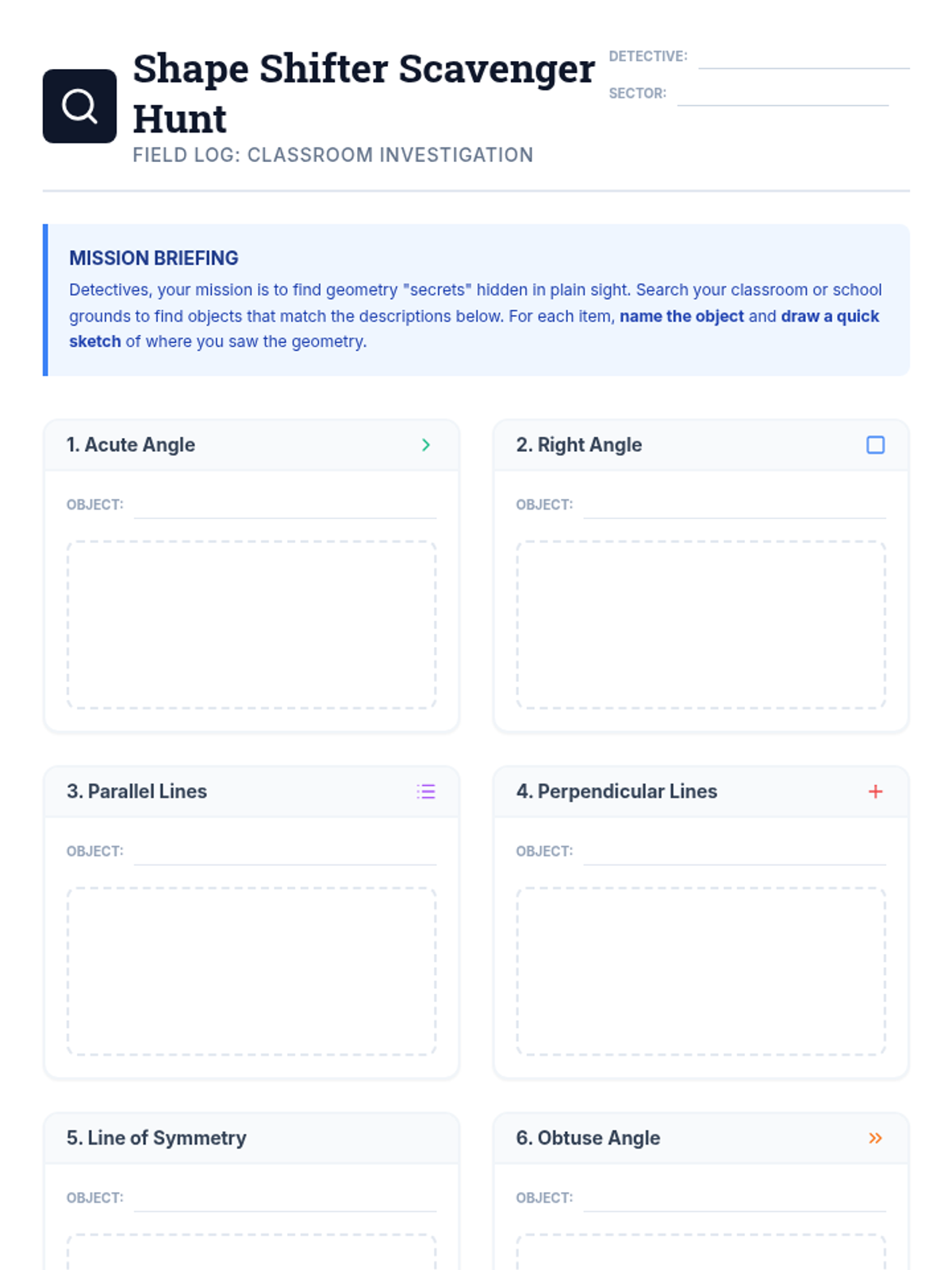
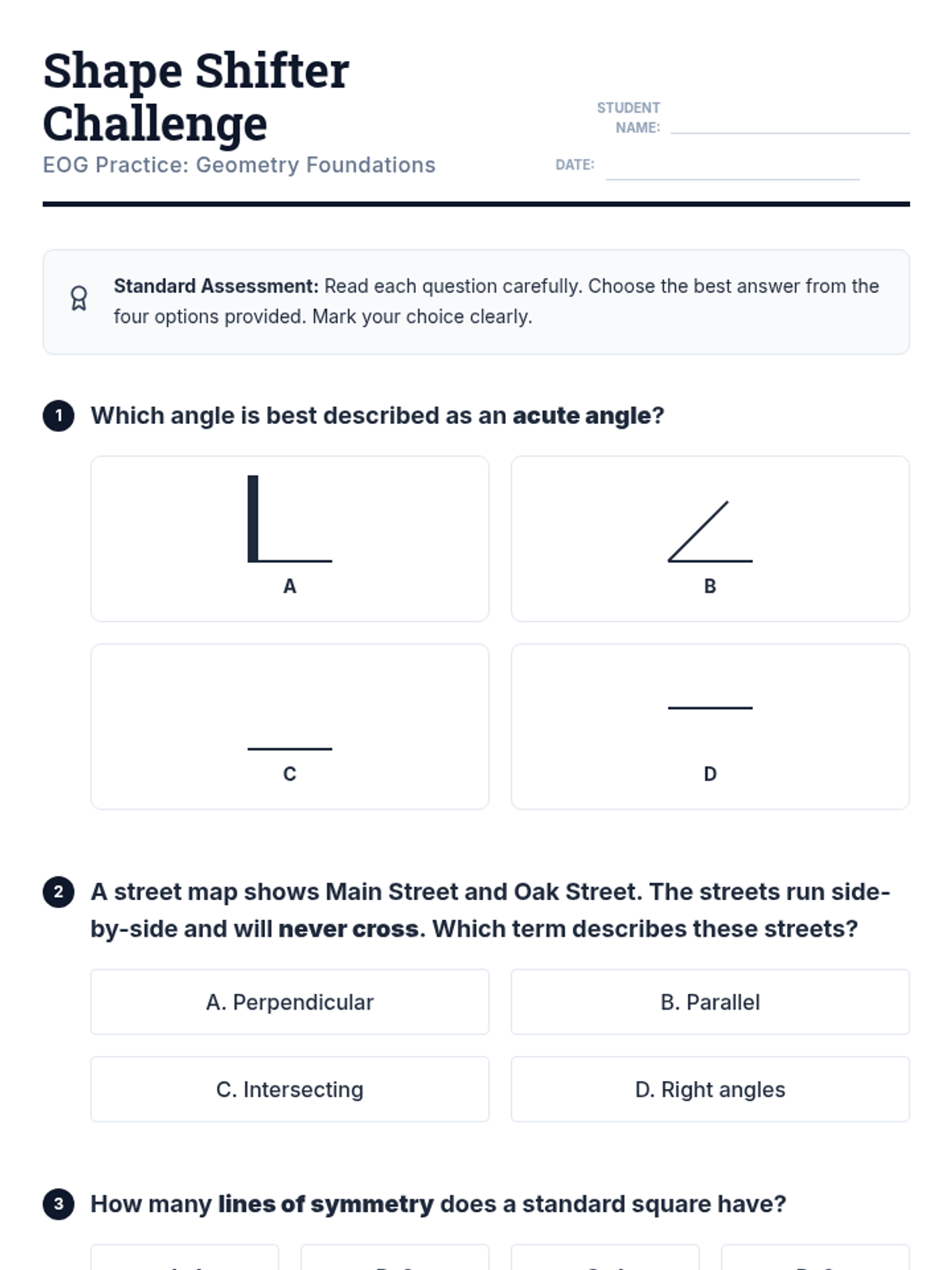
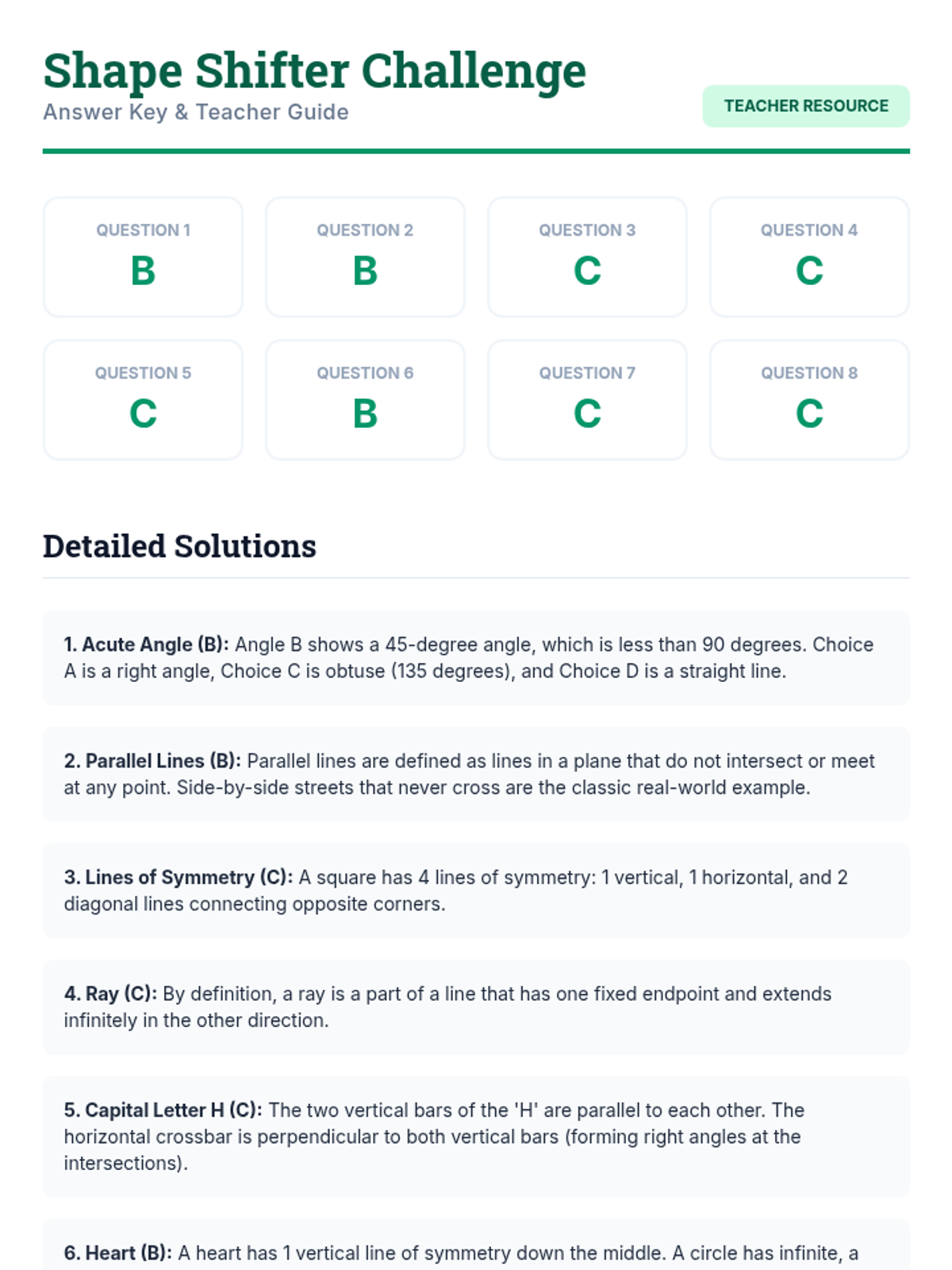
A comprehensive geometry lesson for grades 3-4 focusing on identifying lines, classifying angles, and recognizing symmetry through real-world applications and EOG-style practice.
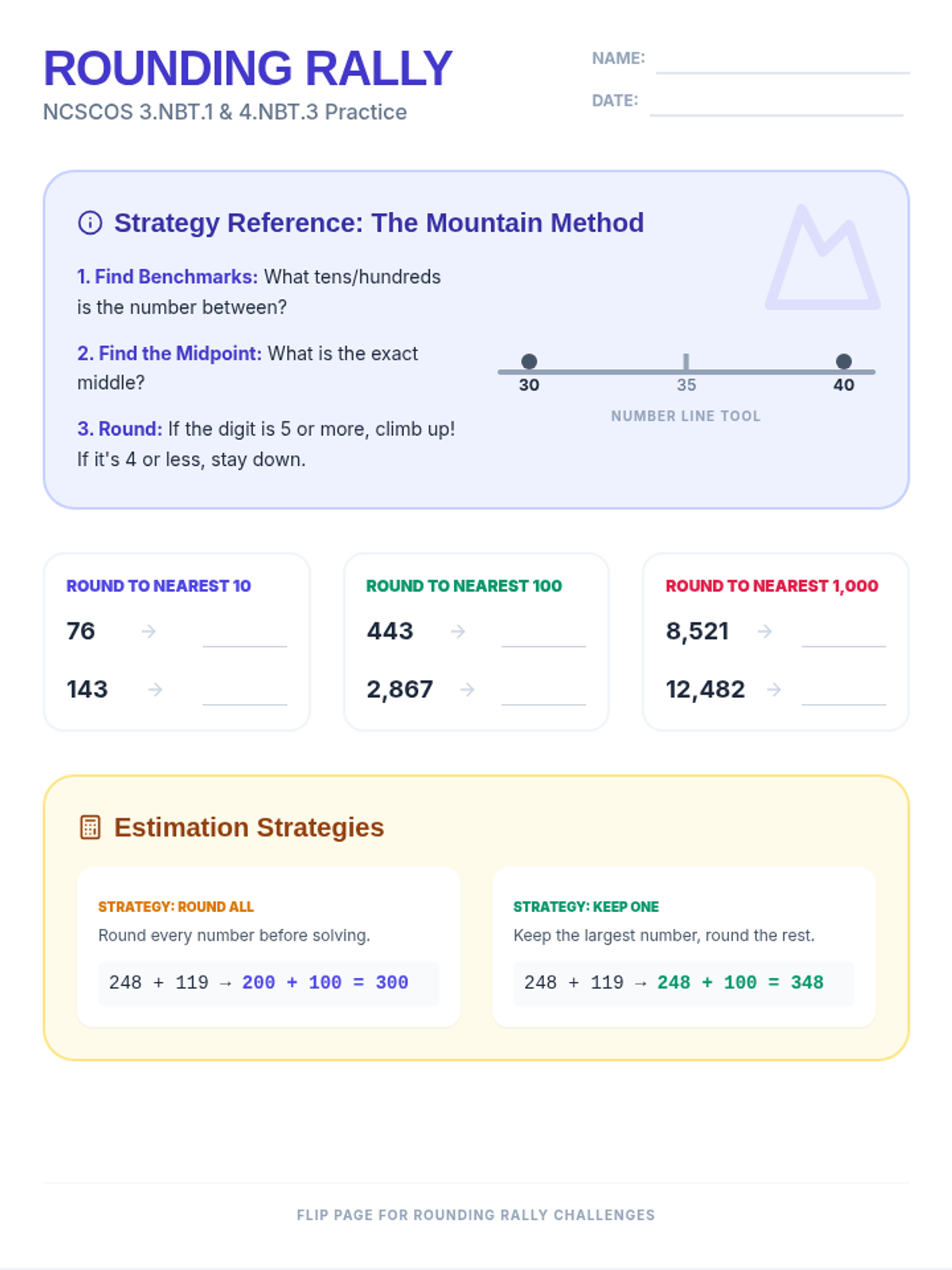
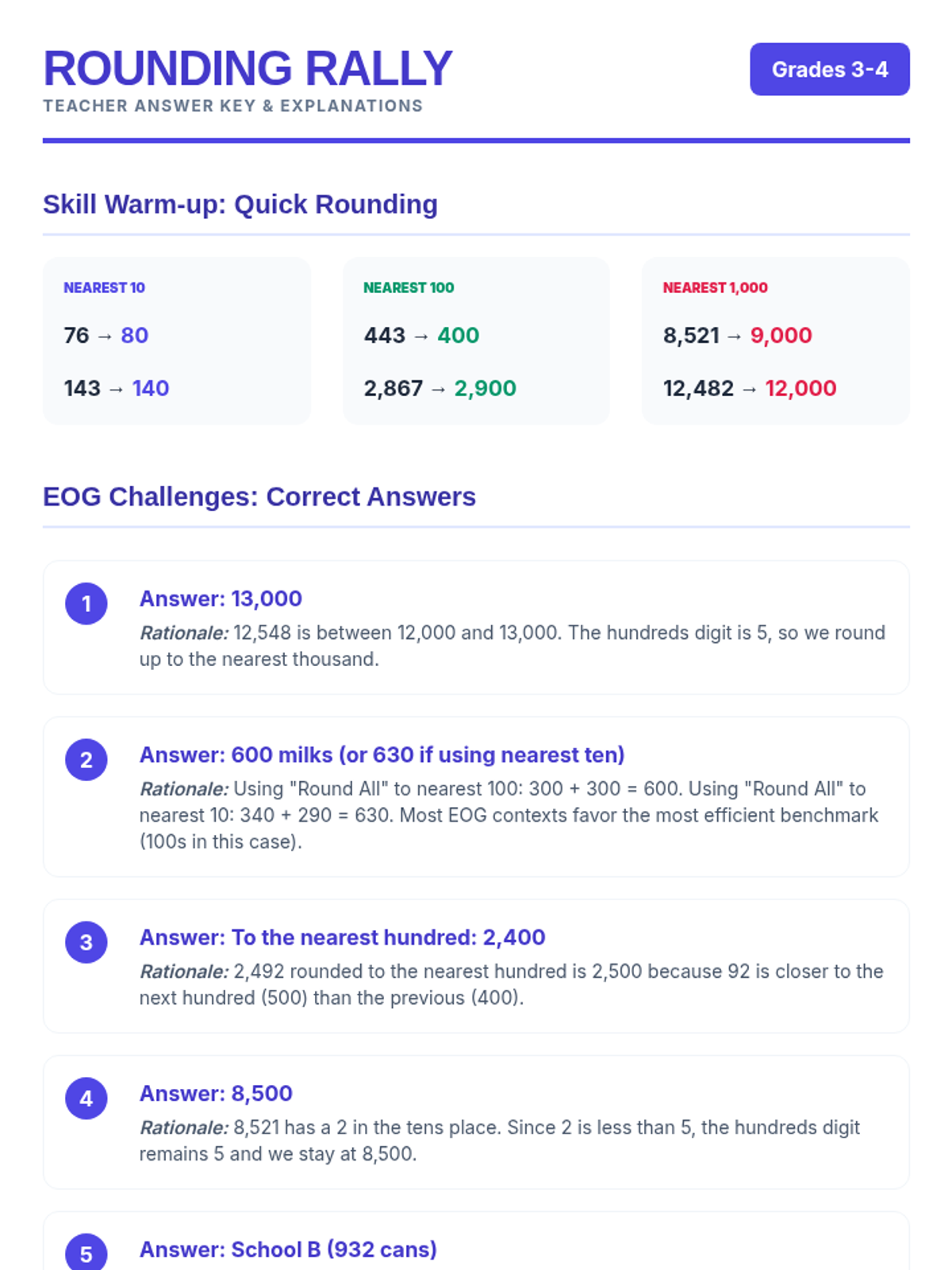
A Grade 3-4 math lesson focused on rounding whole numbers to the nearest 10, 100, and 1000, using number lines and estimation strategies within the context of North Carolina school events.
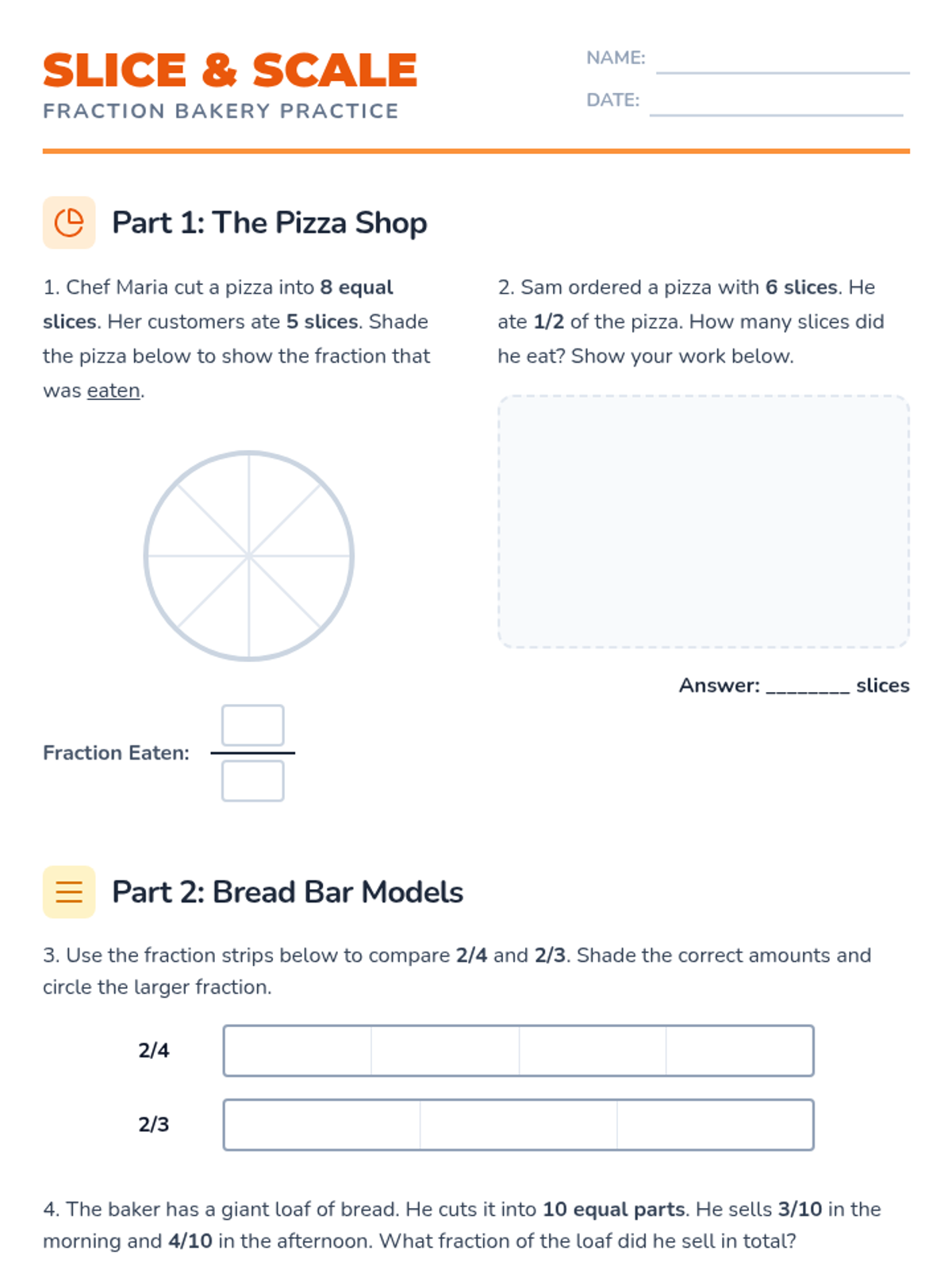
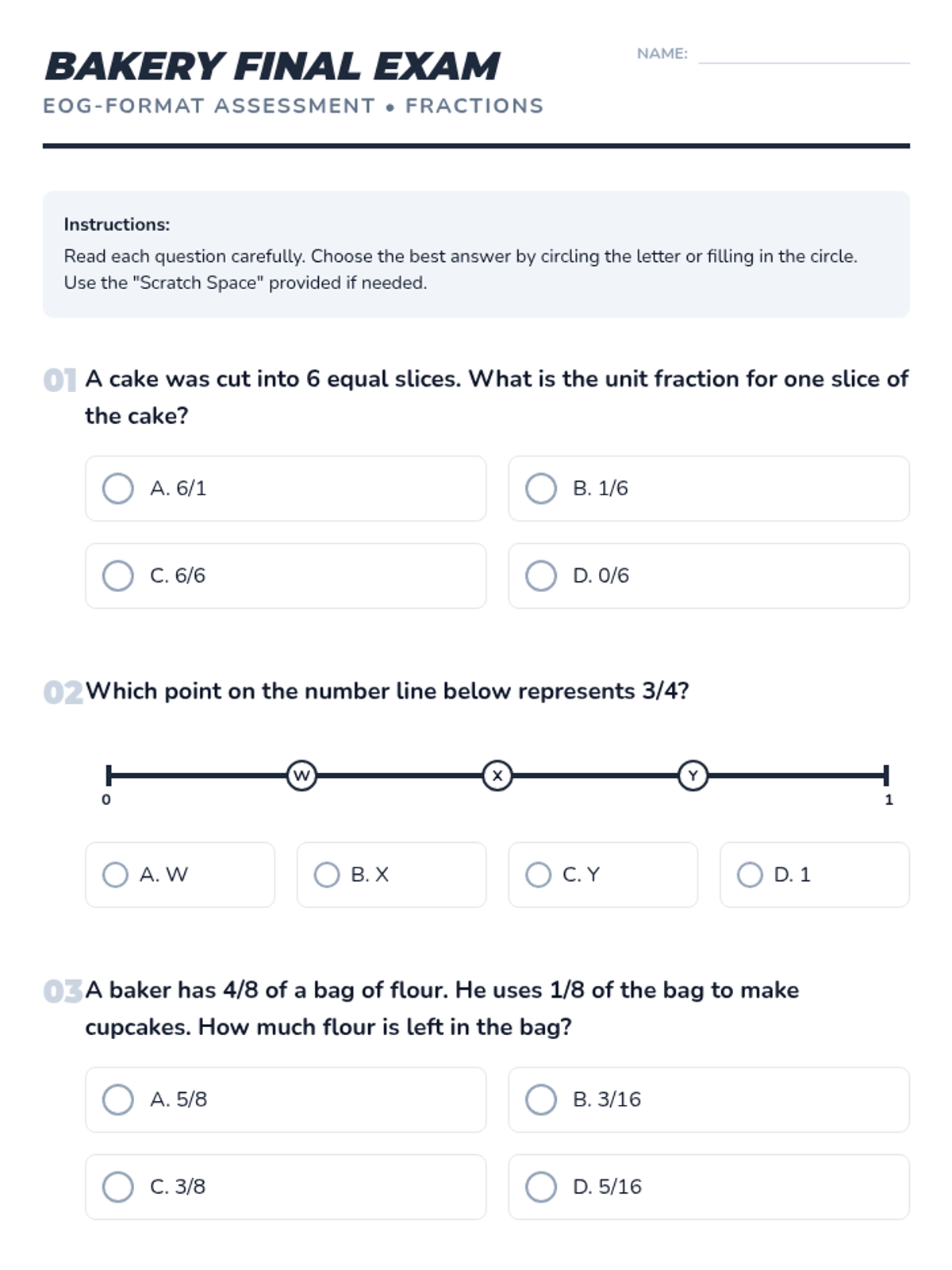
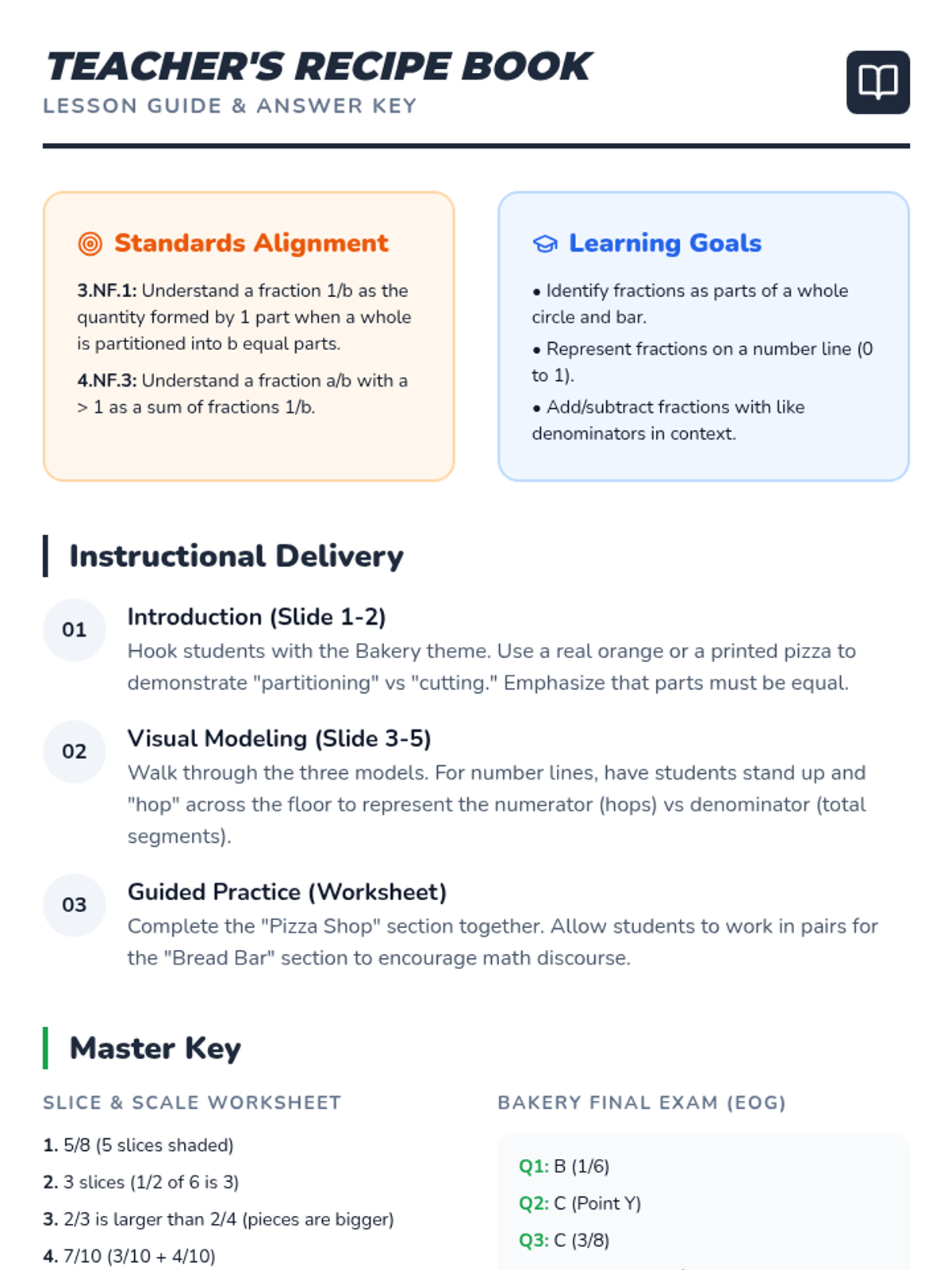
A comprehensive lesson on fractions of a whole using a bakery theme. Students explore visual models like pizza circles and fraction strips through real-world scenarios of sharing and scaling recipes.
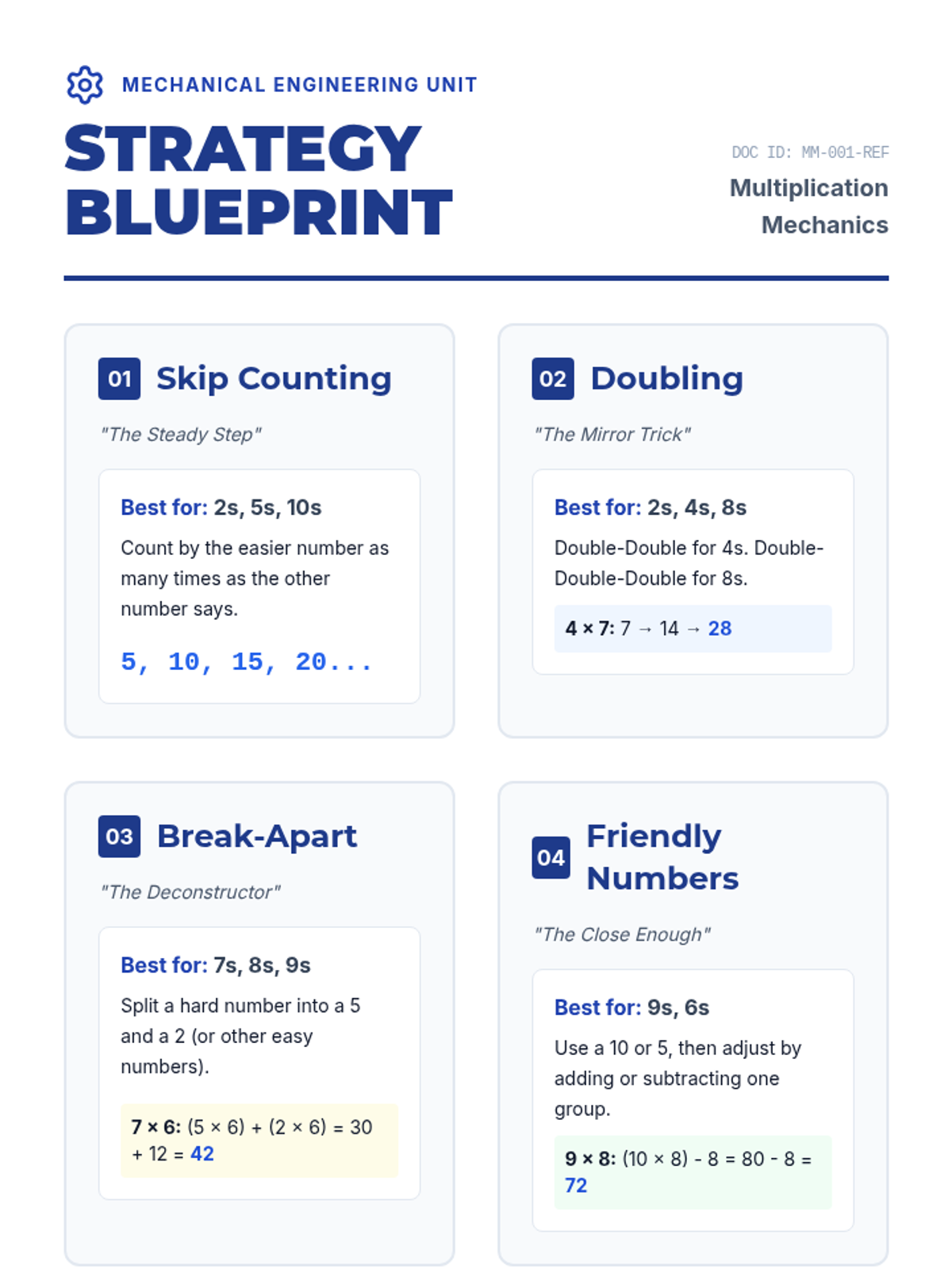
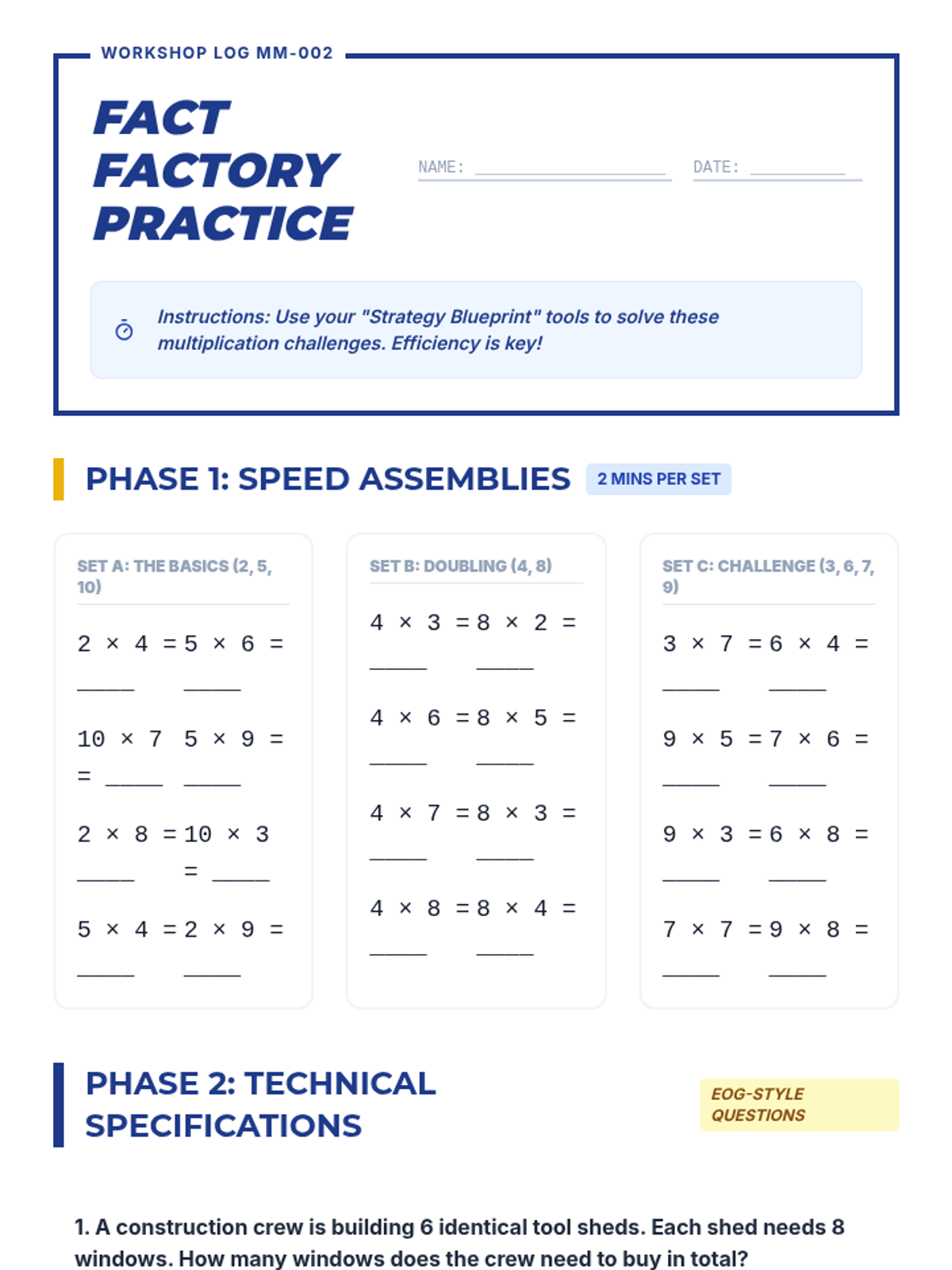
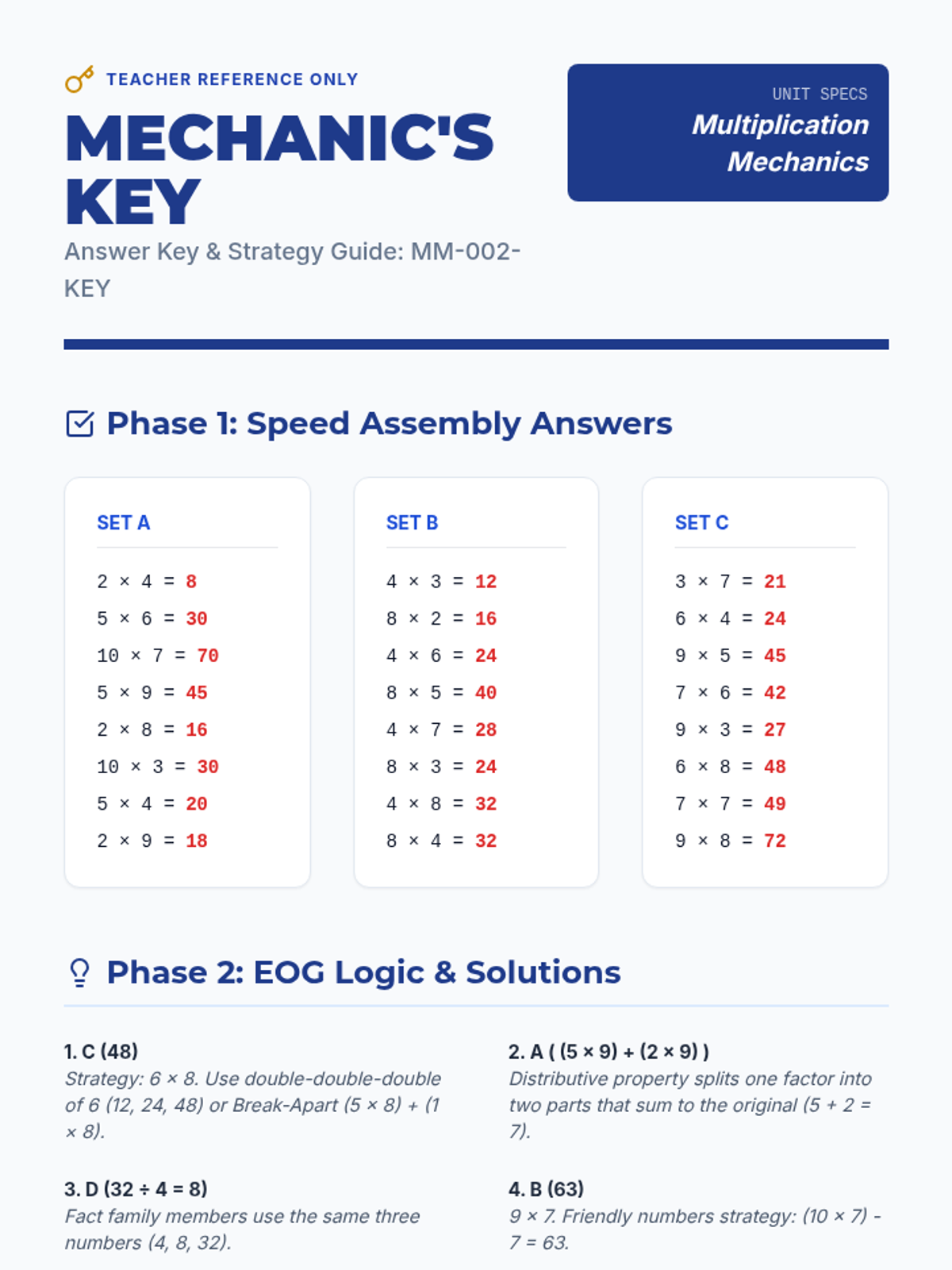
This lesson teaches students five powerful mental strategies for multiplication beyond rote memorization: skip counting, doubling, breaking apart, friendly numbers, and fact families. It focuses on building conceptual understanding and fluency through a 'Multiplication Mechanics' blueprint theme.