A hands-on introduction to measurement for Pre-K students, focusing on non-standard units and comparative vocabulary like 'taller', 'shorter', 'bigger', and 'smaller'. Students explore their environment to compare the sizes of everyday objects.
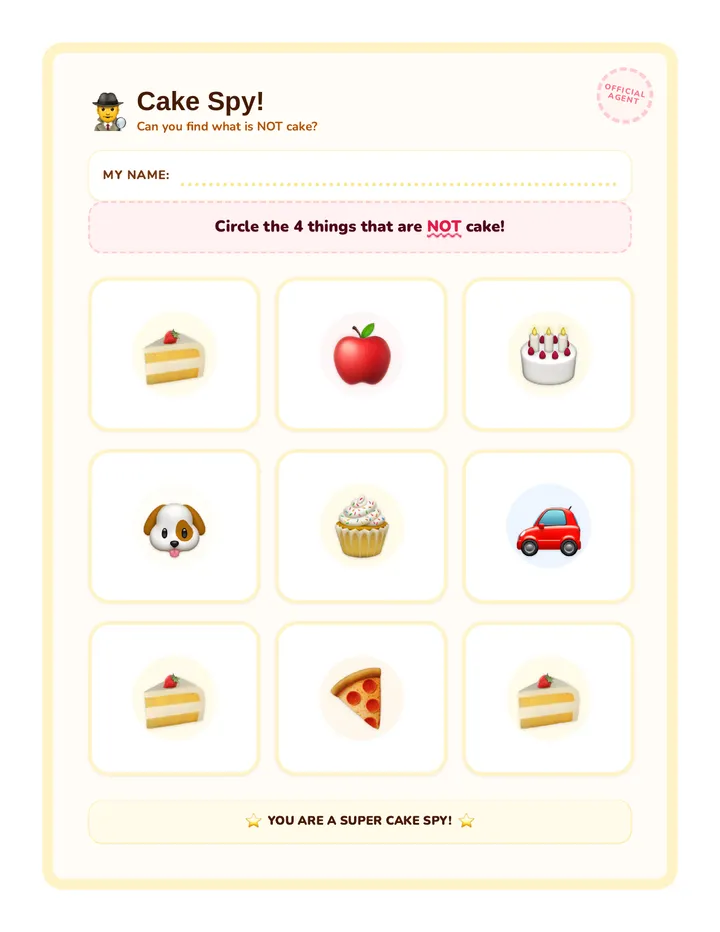
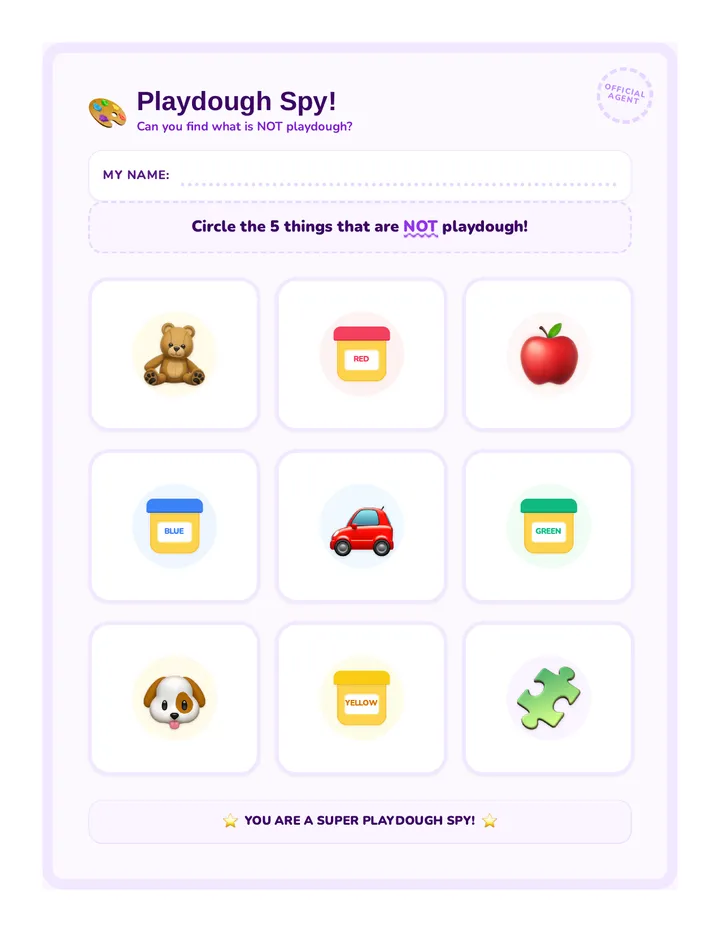
A foundational language and logic lesson for first graders to master the concept of negation ('not') through playful categorization activities.
A foundational lesson exploring how objects, animals, and helpers in our world connect. Students learn to identify associations and explain the logical relationships between paired items through interactive slides, drawing lines, and cut-and-paste worksheets.
Une séance de mathématiques complète de 25 minutes pour la maternelle (PS/MS/GS) sur le thème de la ferme. Comprend un guide de préparation détaillé pour l'enseignant et des fiches de jeu/évaluation imprimables pour le dénombrement, le tri et la comparaison.
A supportive guide and flyer for families to foster early math skills during the summer before kindergarten, emphasizing hands-on play, spatial vocabulary, and everyday discovery.
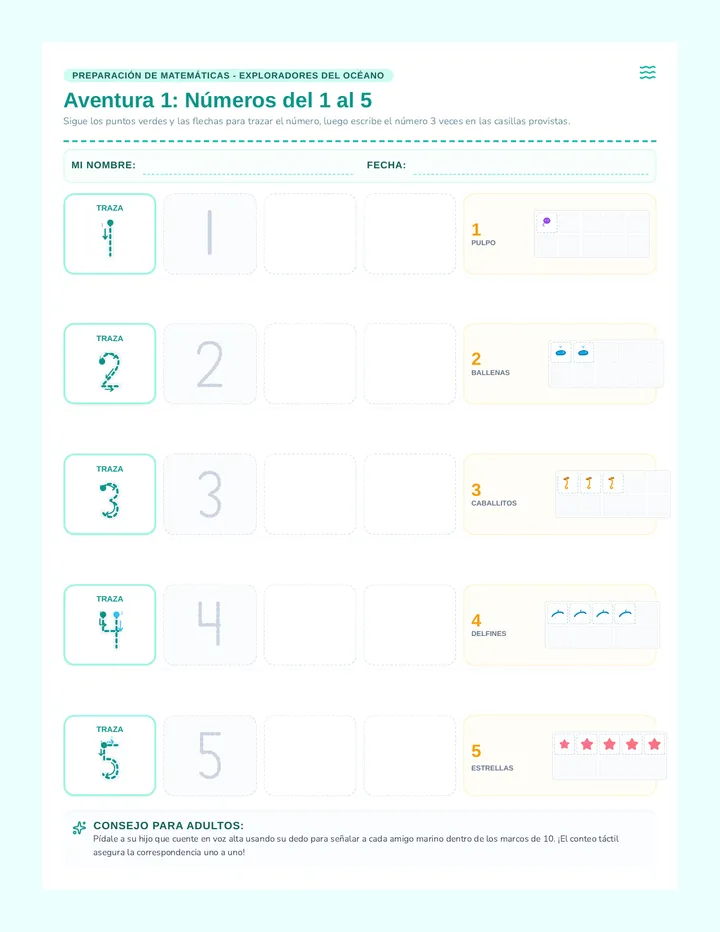
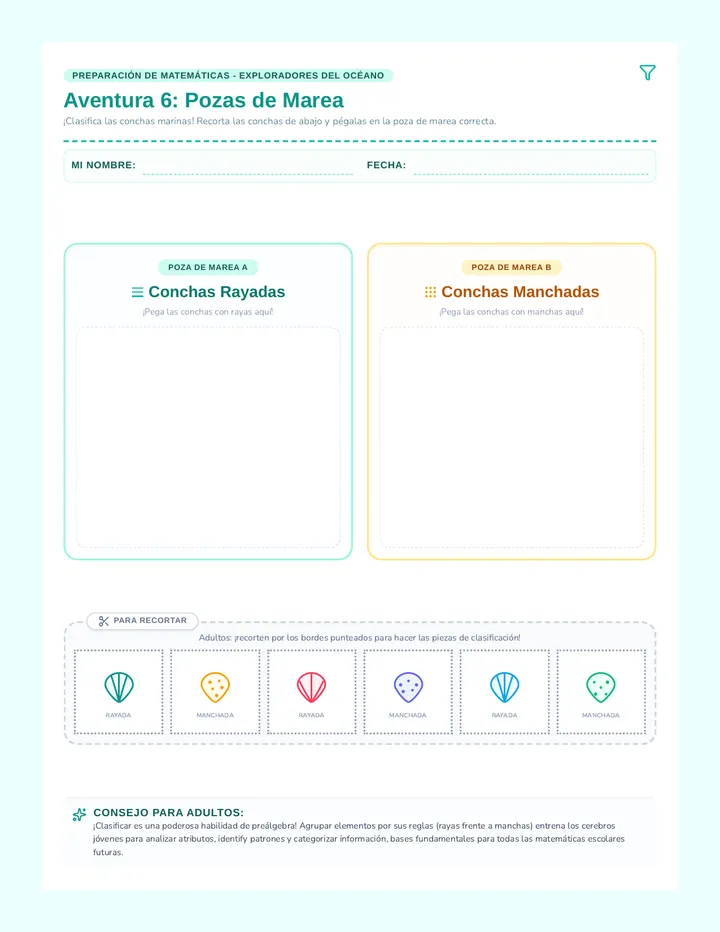
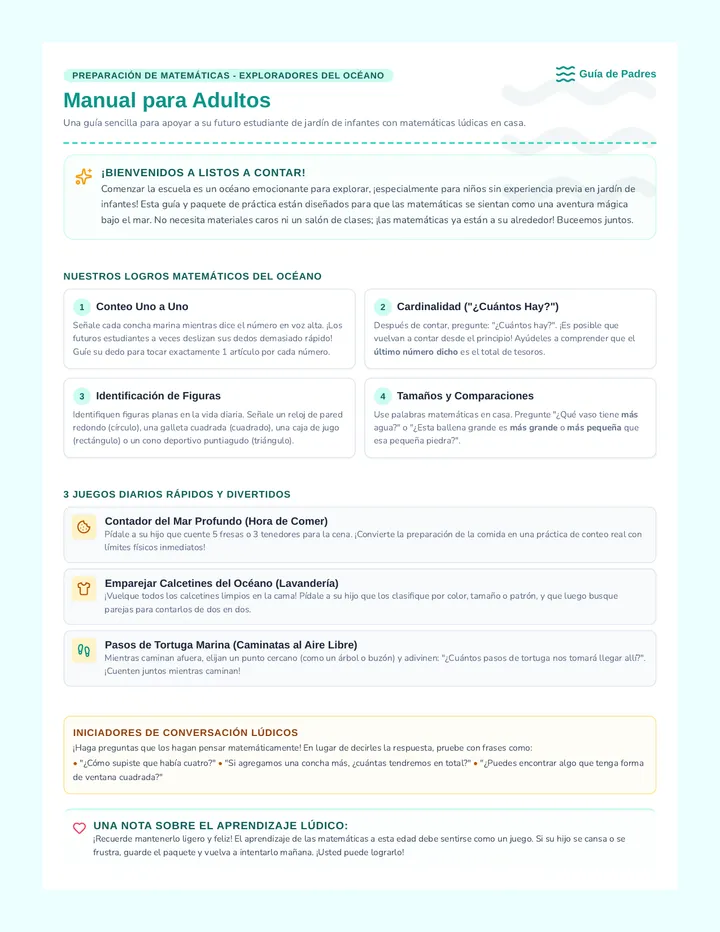
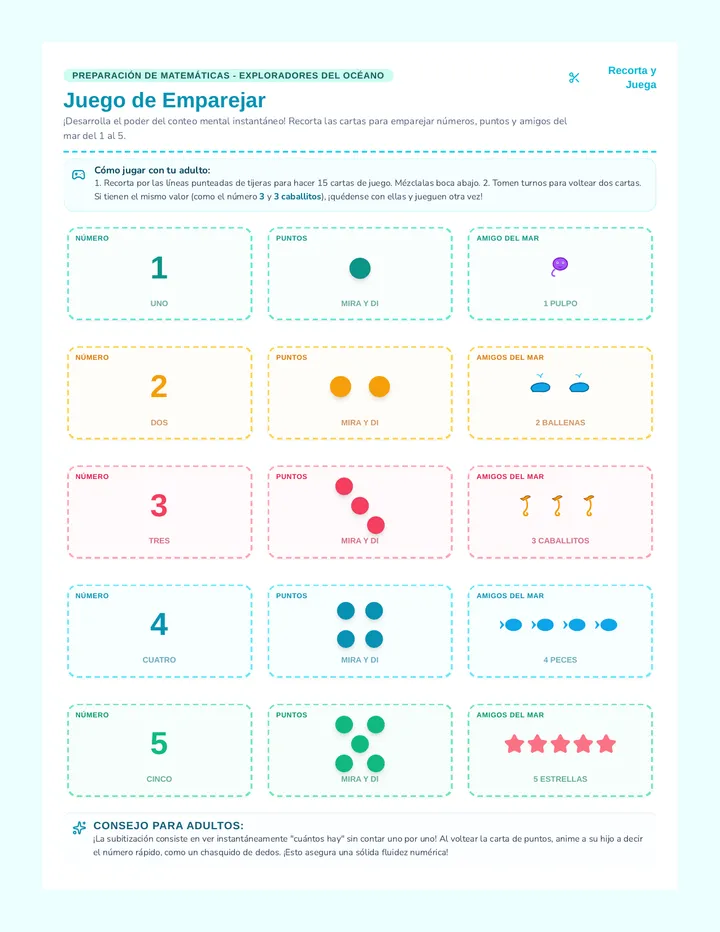
Un programa de preparación de matemáticas de verano con temas del océano diseñado para estudiantes que ingresan a jardín de infantes con un tema mágico y amigable bajo el mar. Ofrece práctica lúdica en español de habilidades matemáticas básicas.
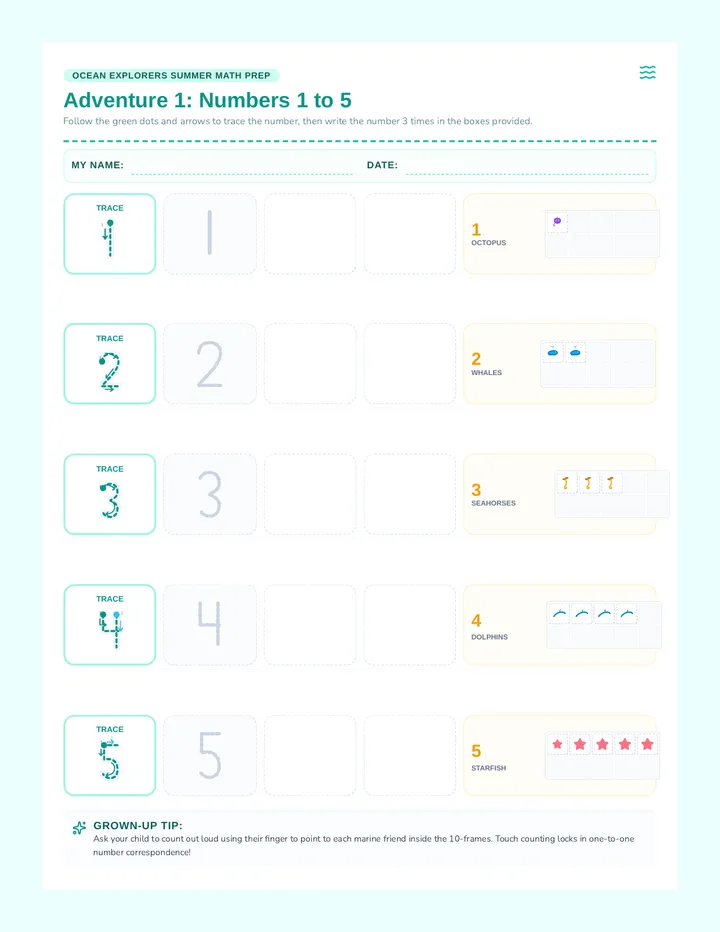
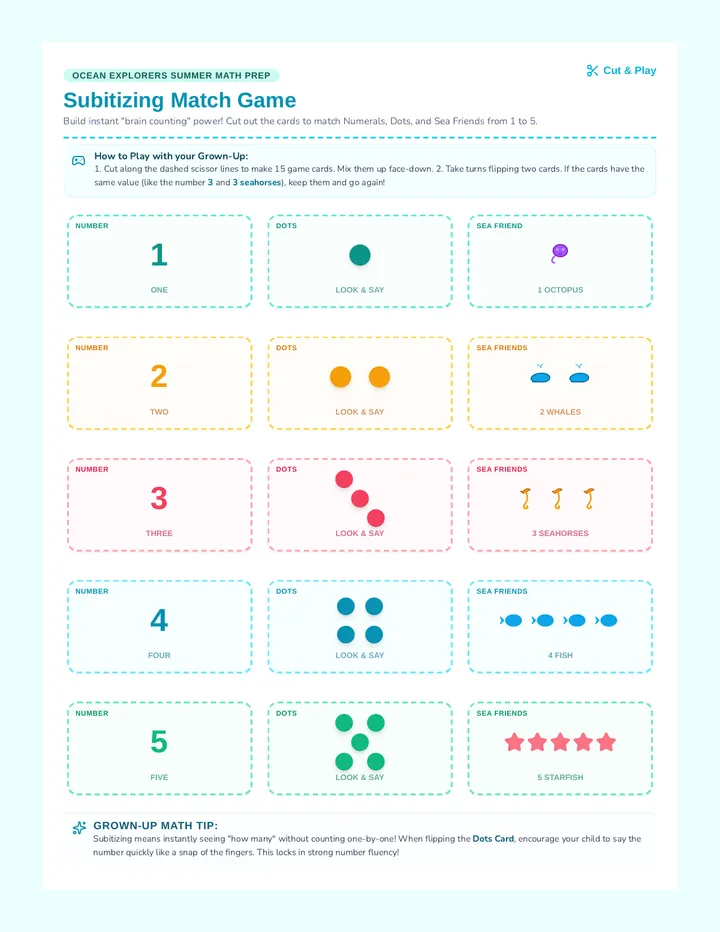
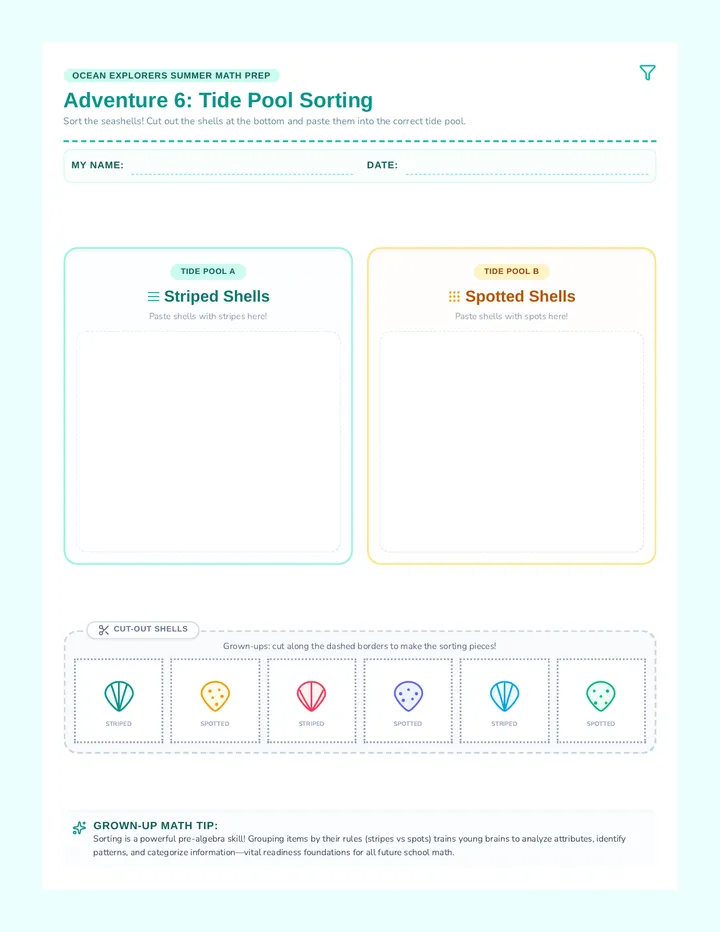
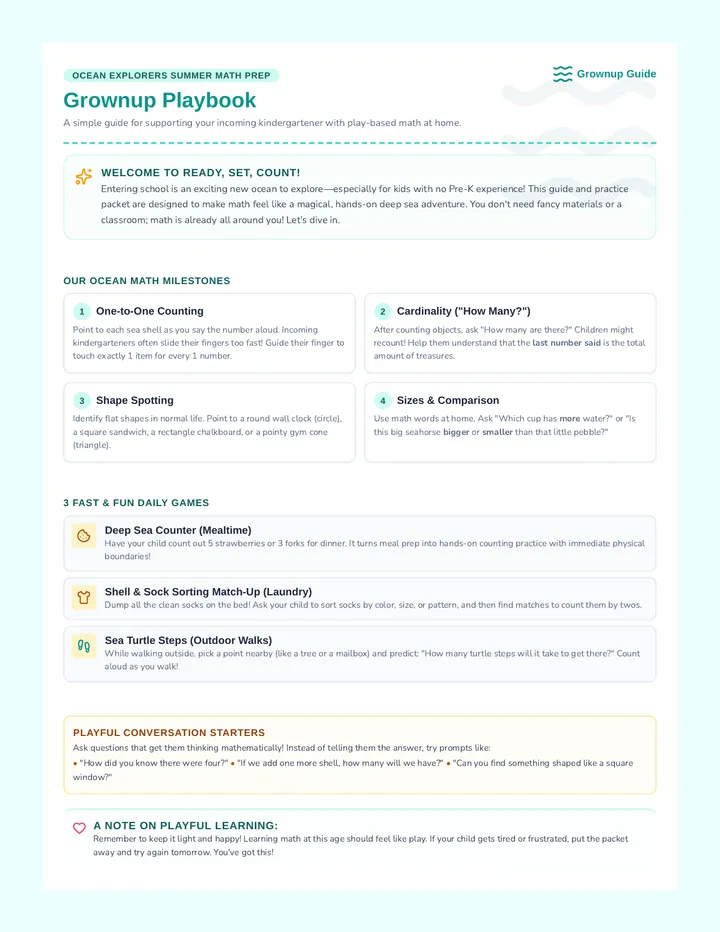
An ocean-themed summer math preparation program designed for incoming kindergarten students with no Pre-K experience, styled with a magical, kid-friendly Under the Sea theme. It provides engaging play-based practice in foundational math ready-to-learn skills.
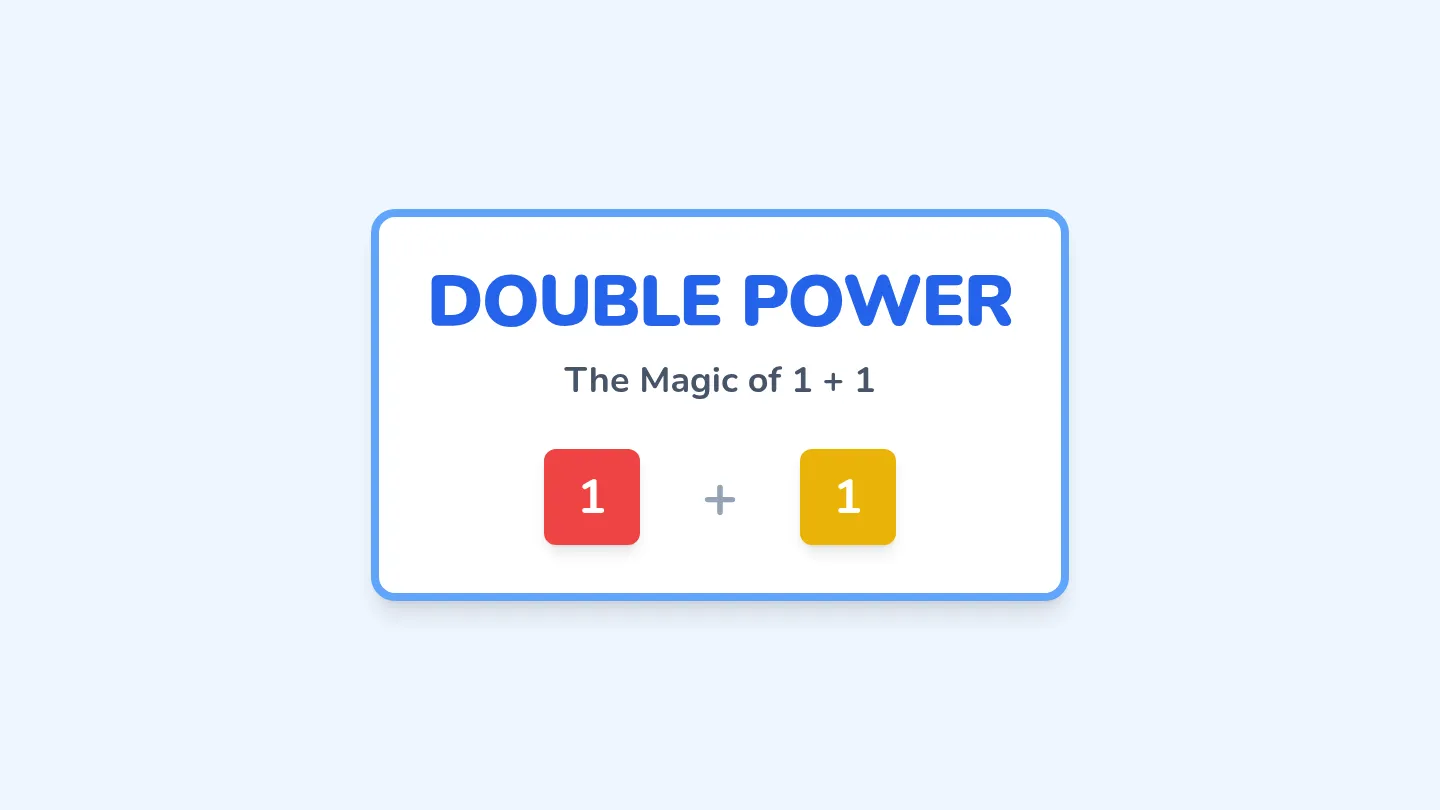
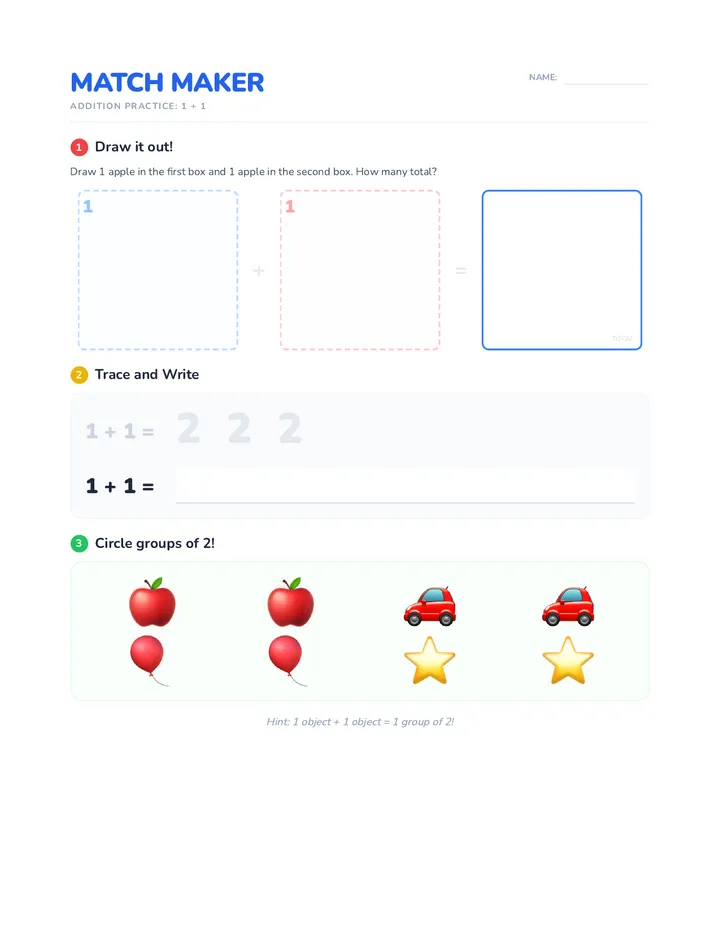
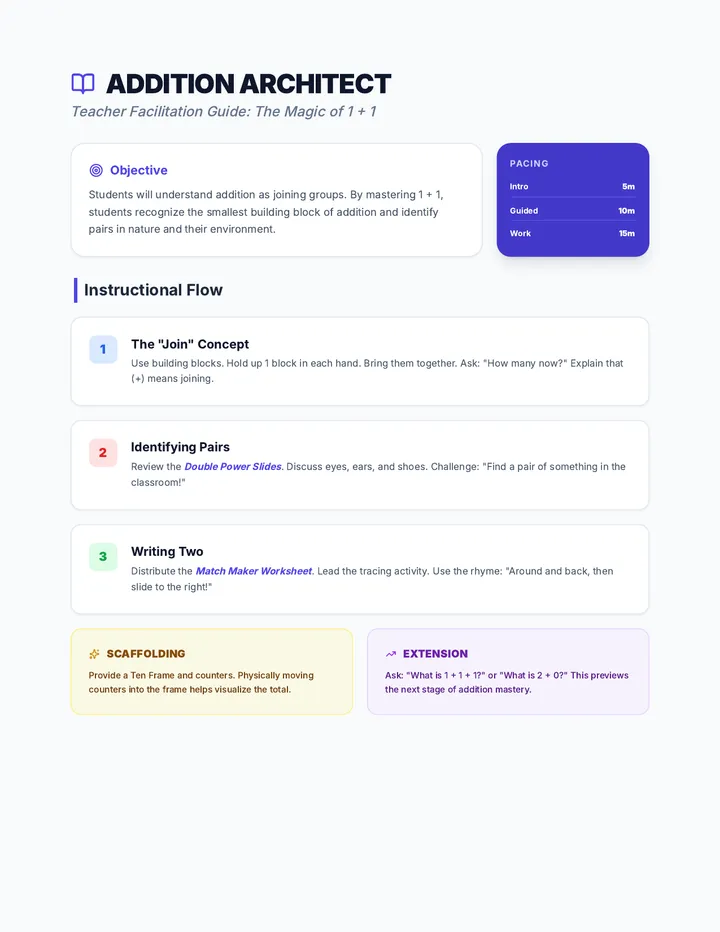
A foundational lesson introducing the concept of addition through the simplest equation: 1 + 1. Students use physical objects and visual representations to understand that adding one and one makes two.
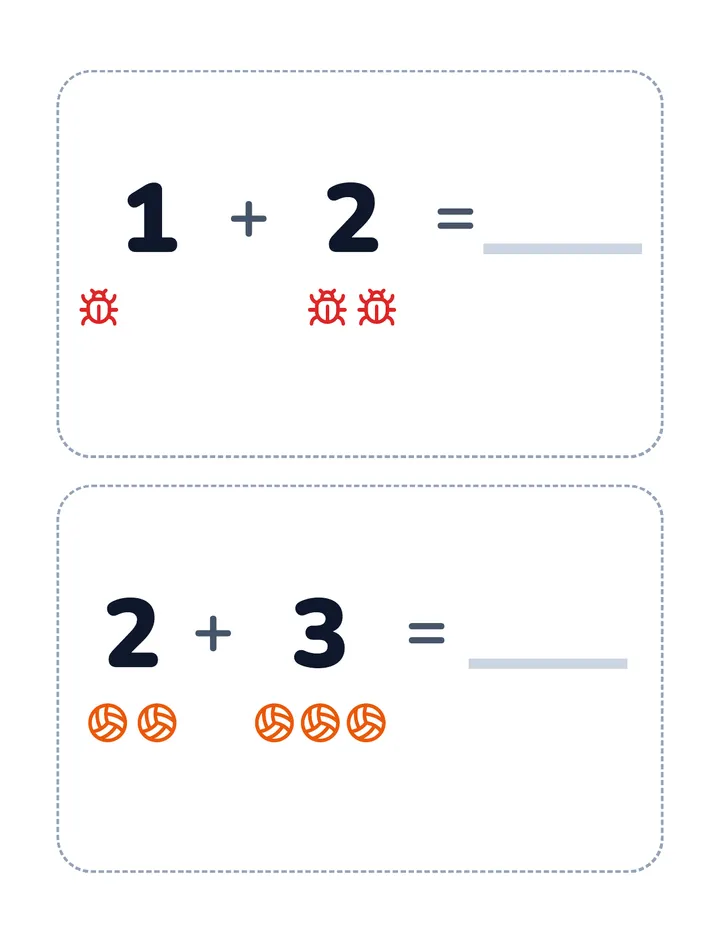
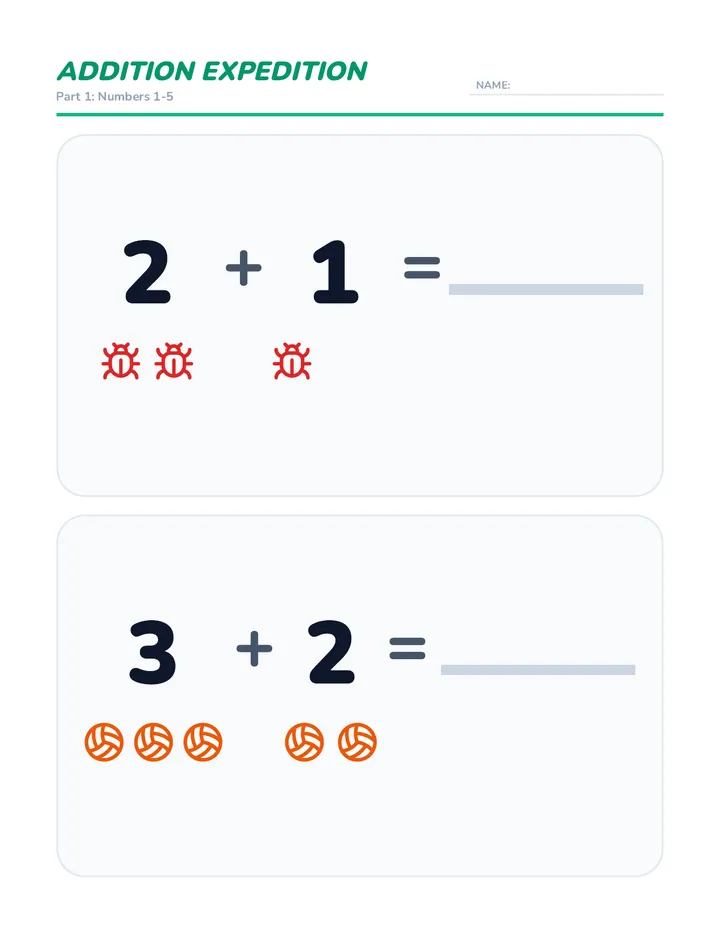
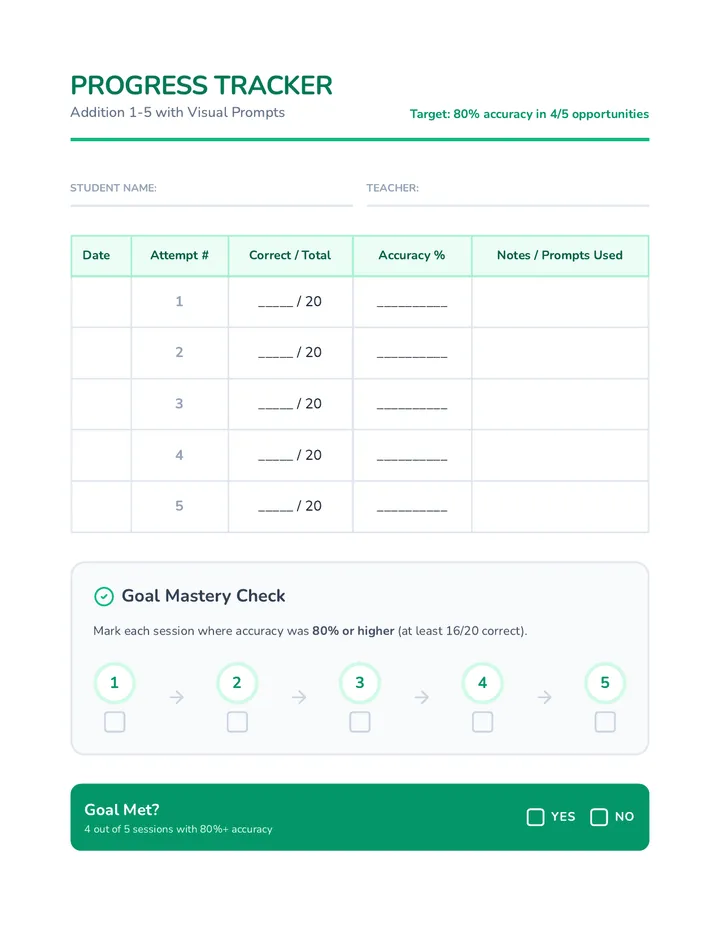
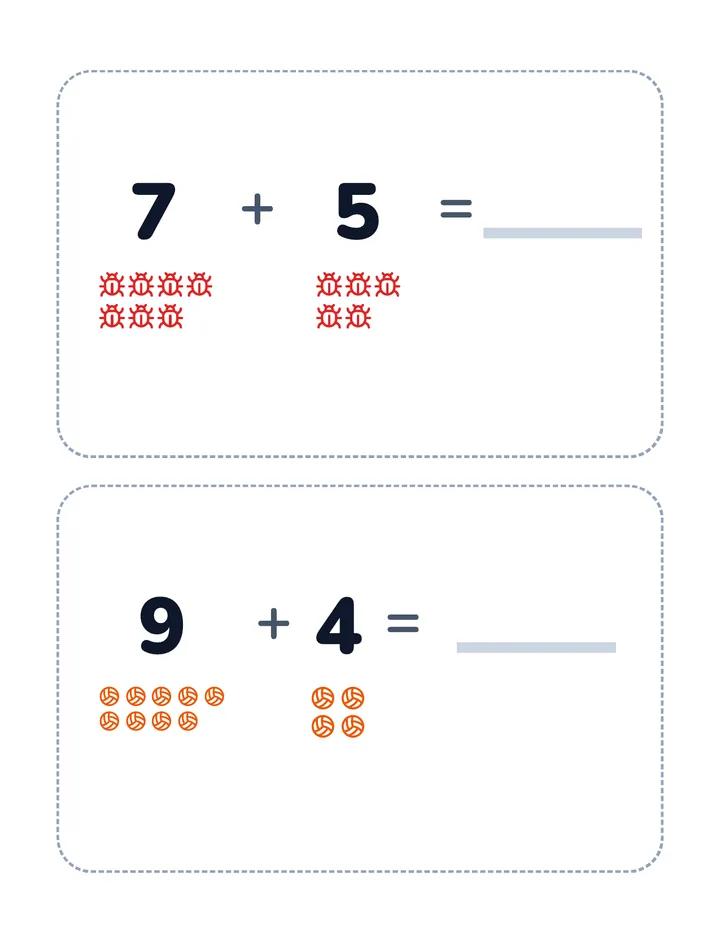
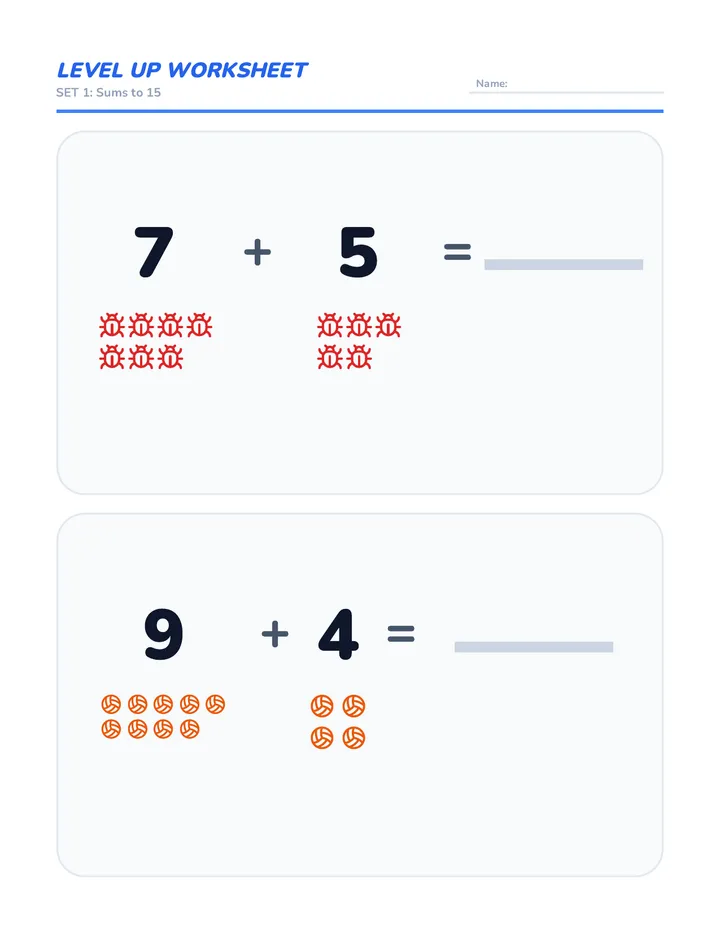
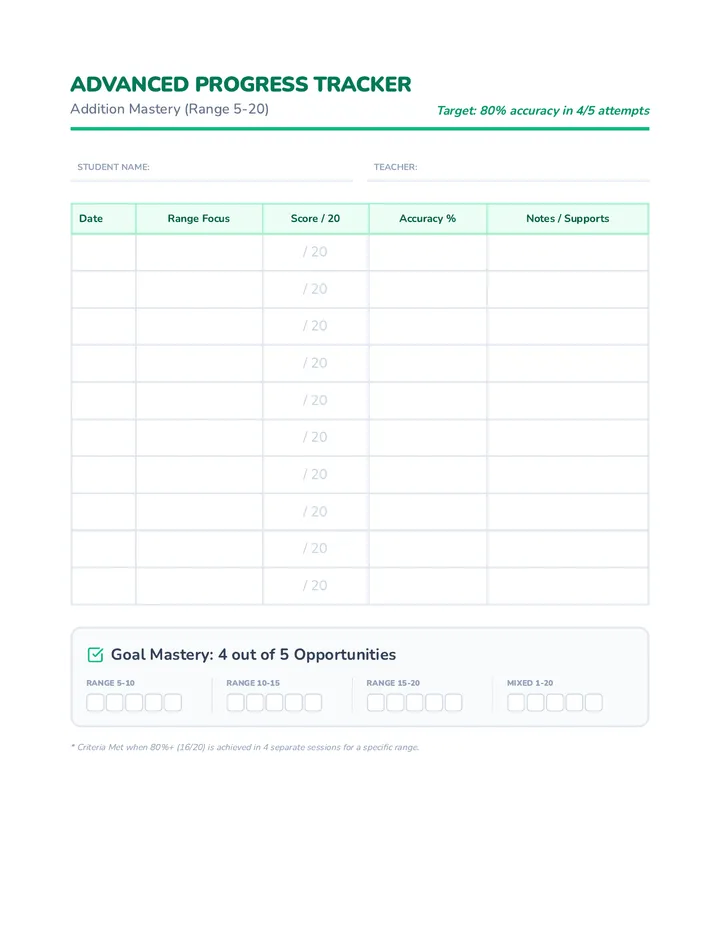
A set of resources designed to help early learners master addition of numbers 1-5 using visual counters and progress monitoring.
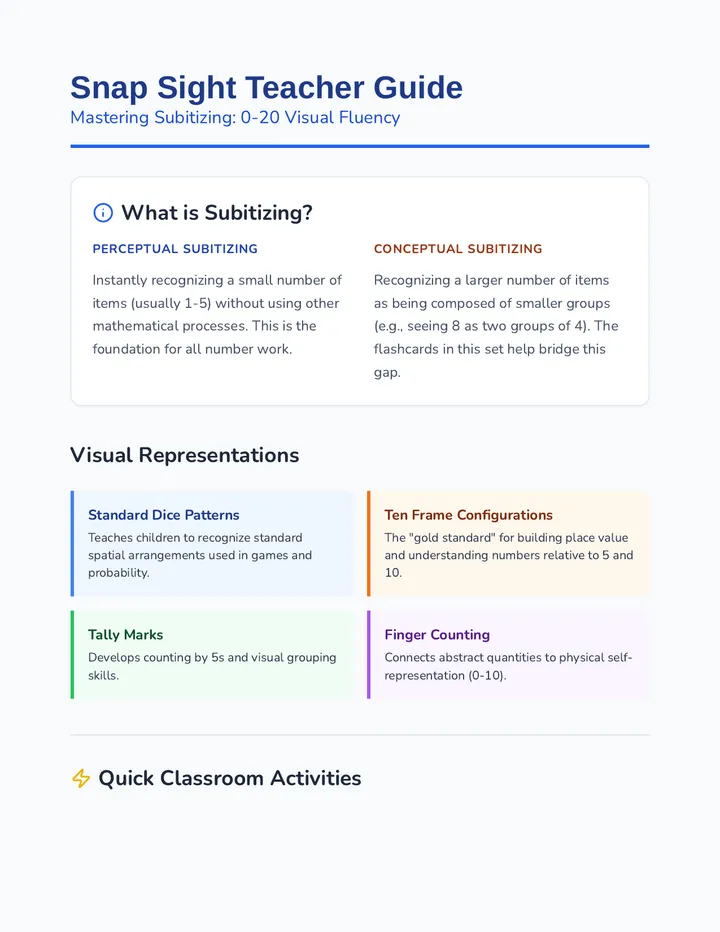
A comprehensive set of subitizing resources designed to develop instant quantity recognition for numbers 0-20 using diverse visual representations.
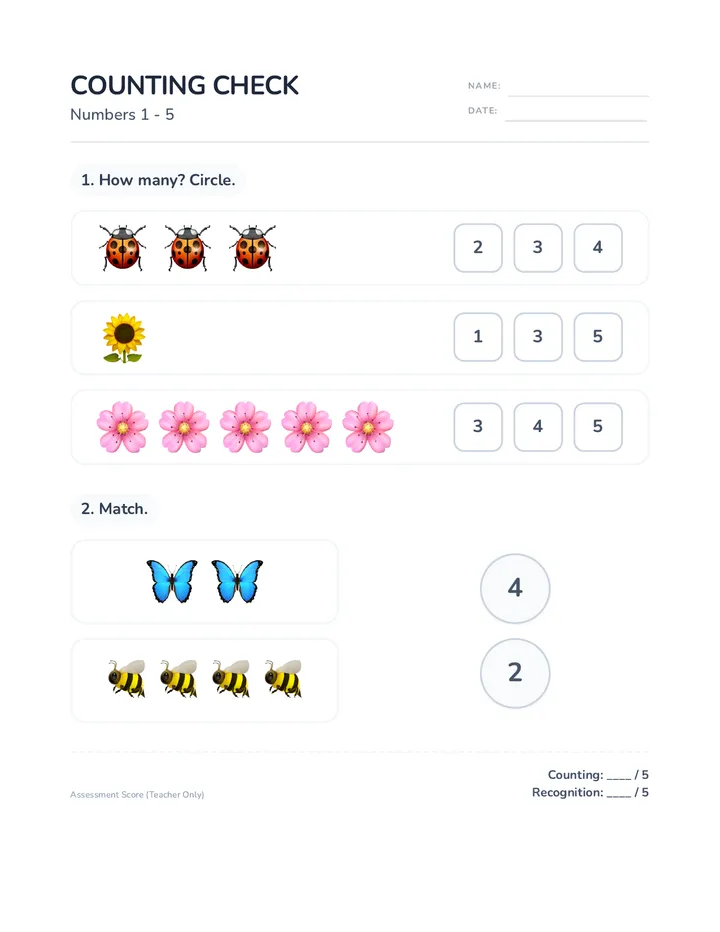
A comprehensive introduction to one-to-one correspondence for numbers 1-10 using a friendly garden theme. Students will practice matching, counting, and representing quantities through visual aids and hands-on worksheets.
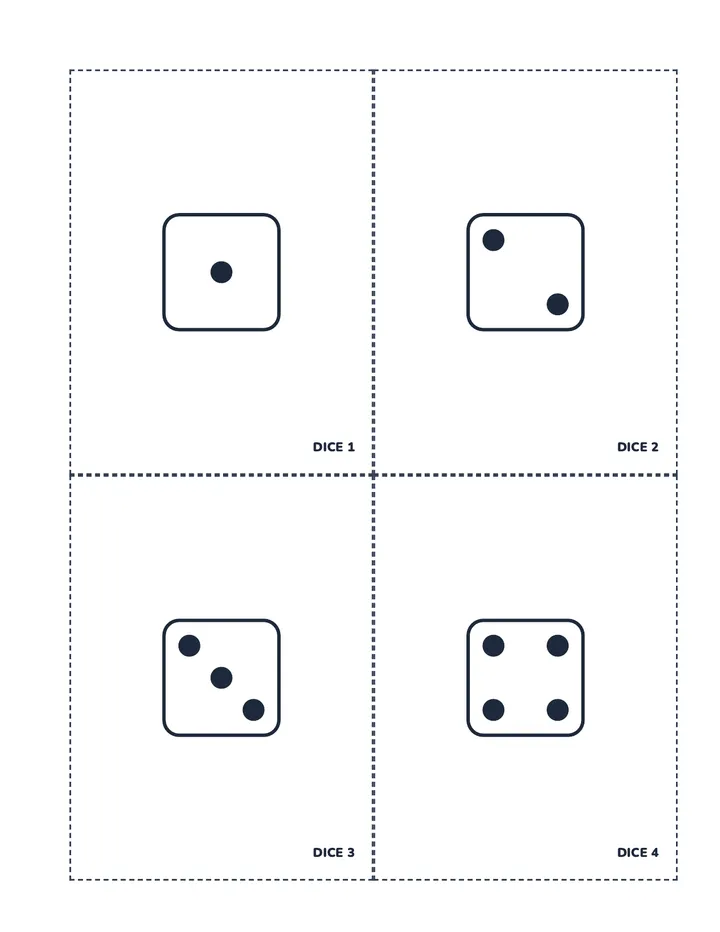
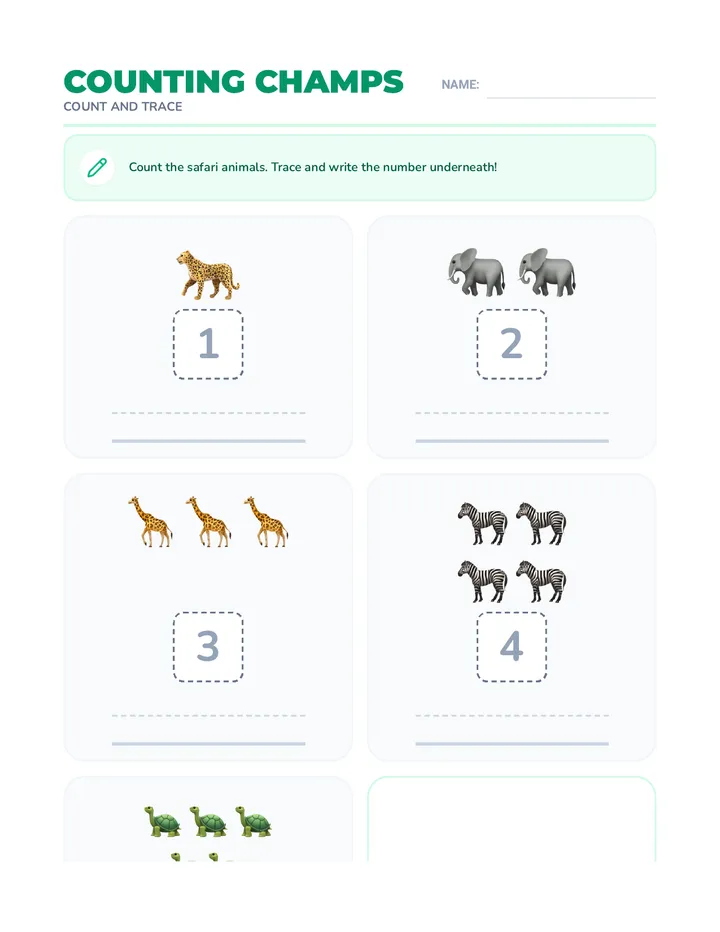
A hands-on counting lesson for Pre-K students focusing on one-to-one correspondence for numbers 1-10 using an engaging animal safari theme.
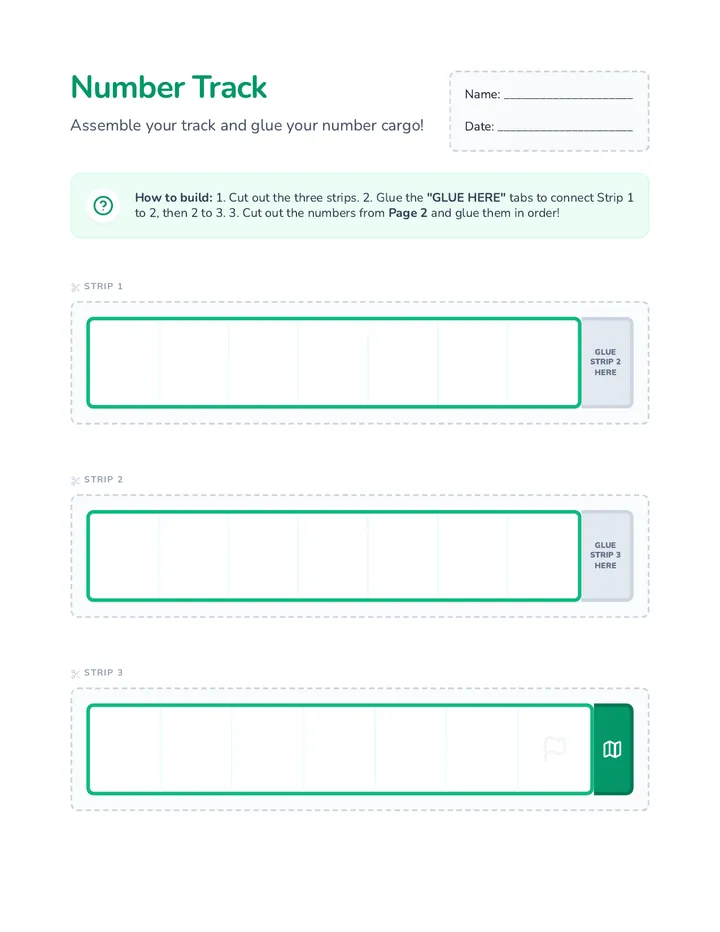
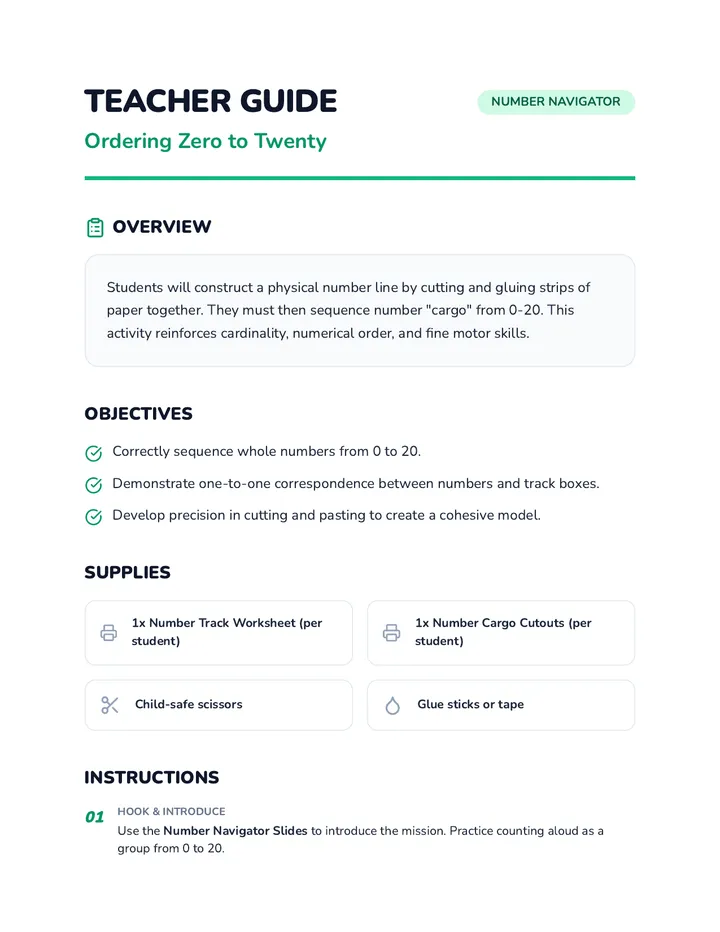
A hands-on lesson where students construct a physical number line by cutting and gluing numbers 0-20 in the correct sequence.
A progress monitoring assessment sequence for measuring and improving student fluency in decomposing numbers 1-20 using numerical and visual models.
A collection of visual math story problems for early learners, focusing on basic addition and subtraction within 5. Each item uses a five-frame layout to help students visualize quantities and match them to mathematical expressions.
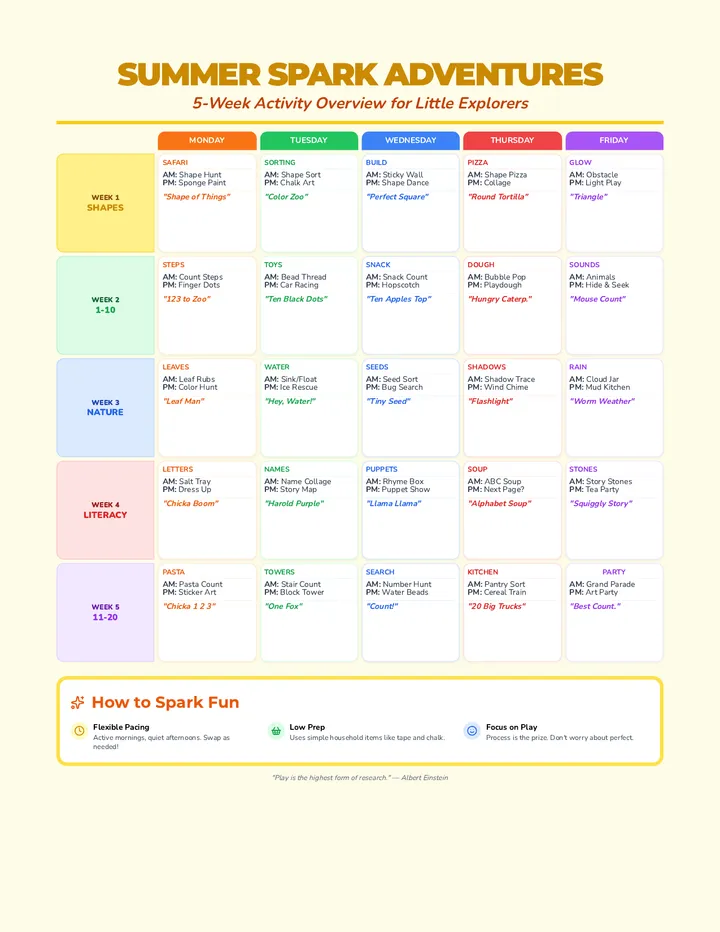
Expands counting skills to the numbers 11-20 while reviewing previous concepts through a celebratory final week.
Develops early literacy skills and fosters imagination through character play, rhyming, and collaborative storytelling.
Explores the natural world and basic scientific principles through outdoor exploration and simple experiments.
Introduces counting and number correspondence for numbers 1-10 using hands-on games and tactile materials.
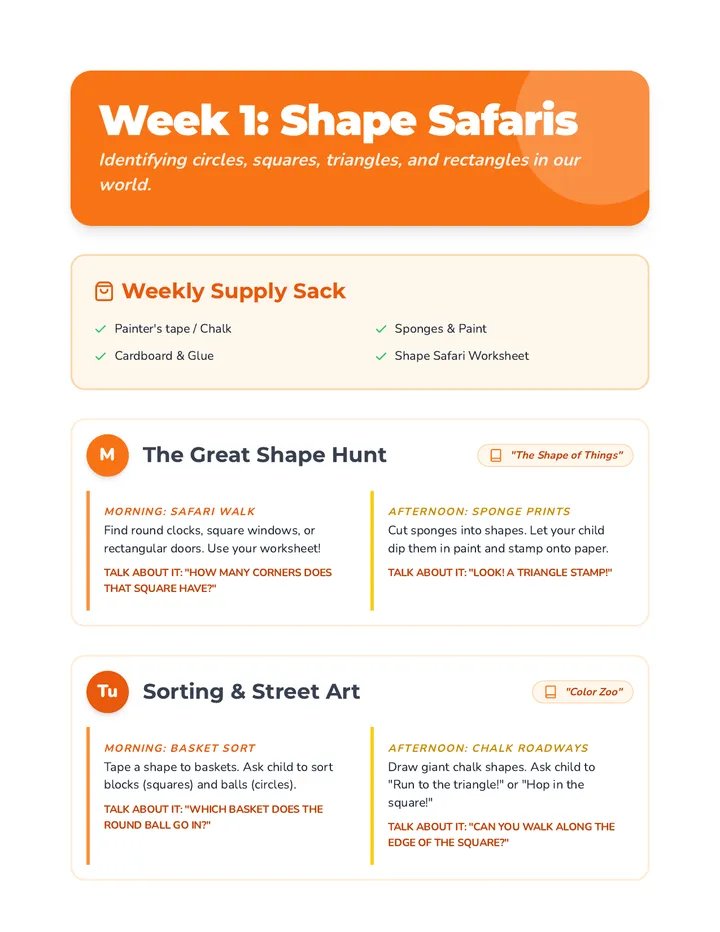
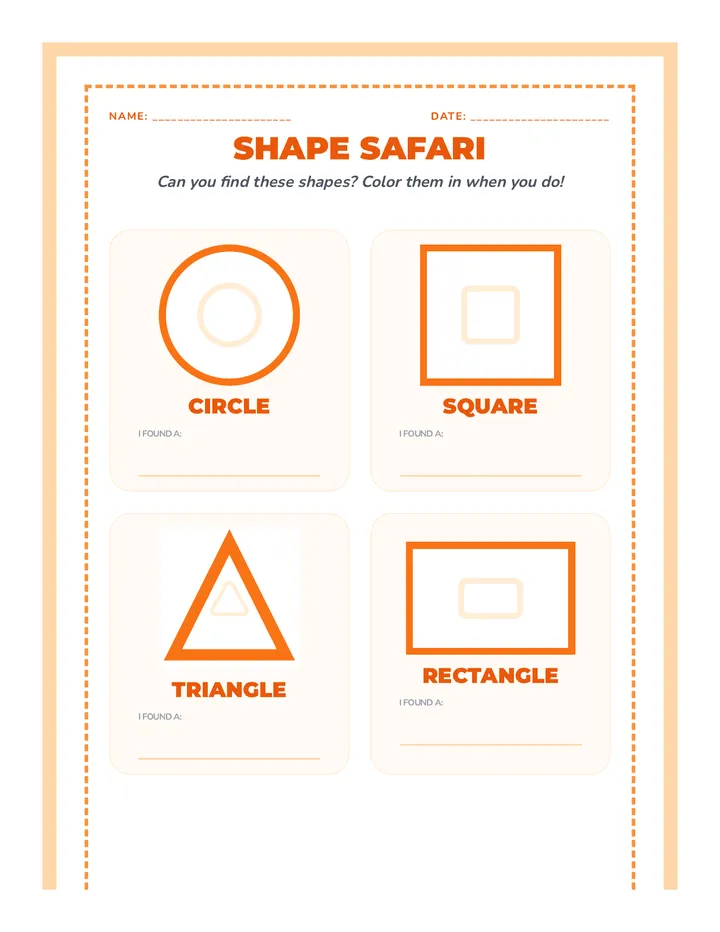
Focuses on identifying and creating shapes through sensory play, art, and physical movement.
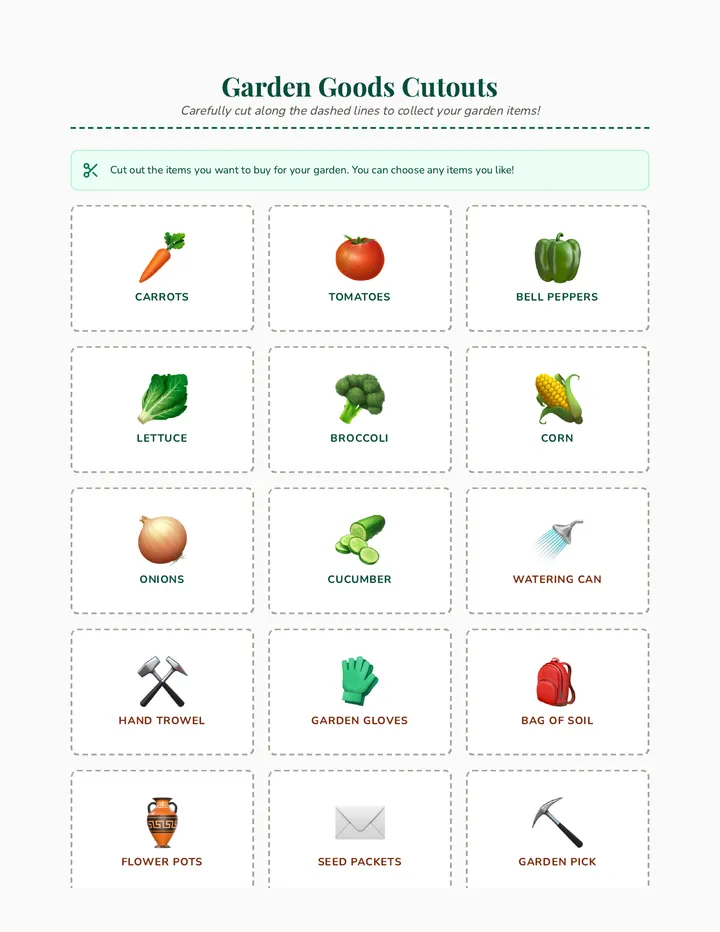
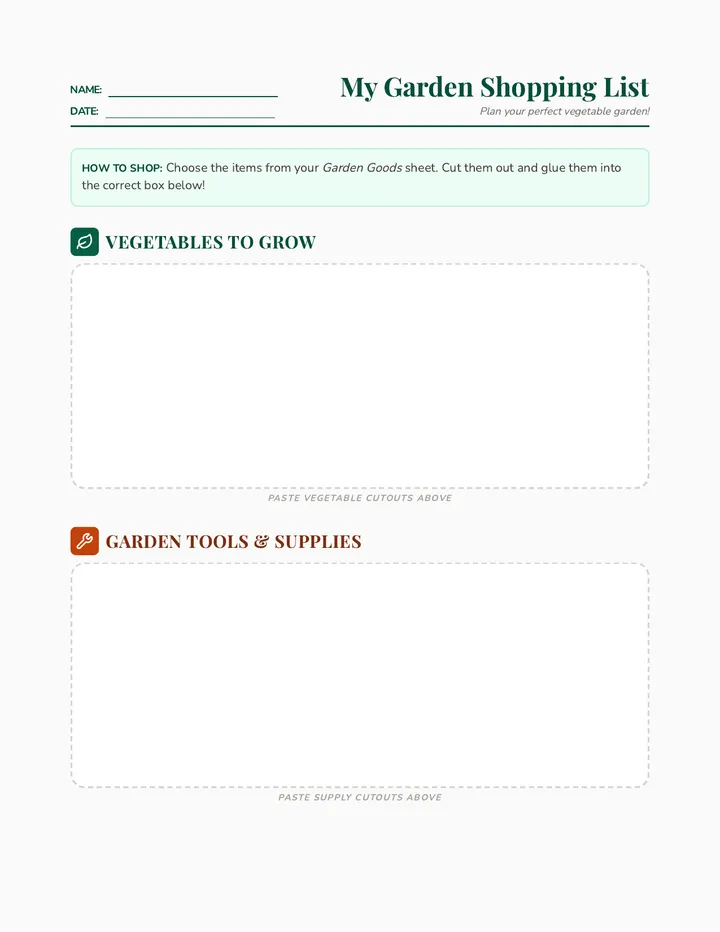
A hands-on activity where students select and sort vegetables and gardening supplies to plan their own garden space.
A hands-on introduction to basic shapes (circle, square, triangle) where students identify, write, and manipulate shapes to create their own reference book.
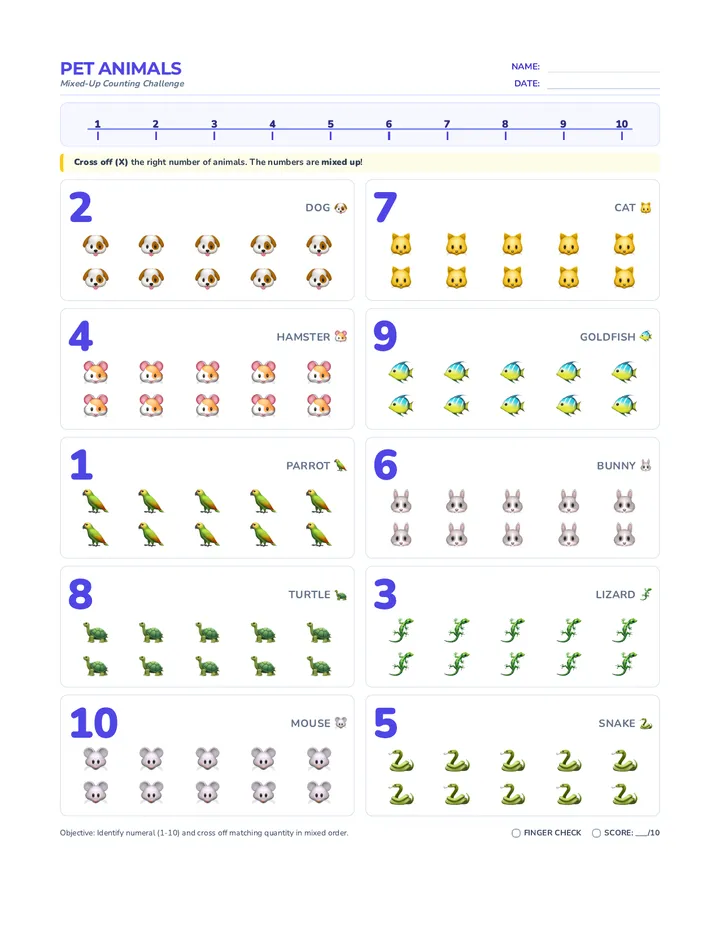
A foundational math lesson focused on one-to-one correspondence for numbers 1-10, using visual number lines, physical counting, and finger representation.
An engaging introduction to foundational skills including numbers 1-10, primary and secondary colors, basic 2D shapes, and counting through a vibrant animal-themed curriculum.
A hands-on fine motor activity where Pre-K students hunt for garden-themed task cards to practice drawing various lines and shapes.
A series of tracing and counting worksheets for numbers 11 through 14, featuring large bubble numbers for tactile practice and garden-themed objects for counting.
A collection of Western-themed activities for a Kindergarten Round Up, focusing on fundamental color and shape identification through engaging hands-on "ranch" tasks.
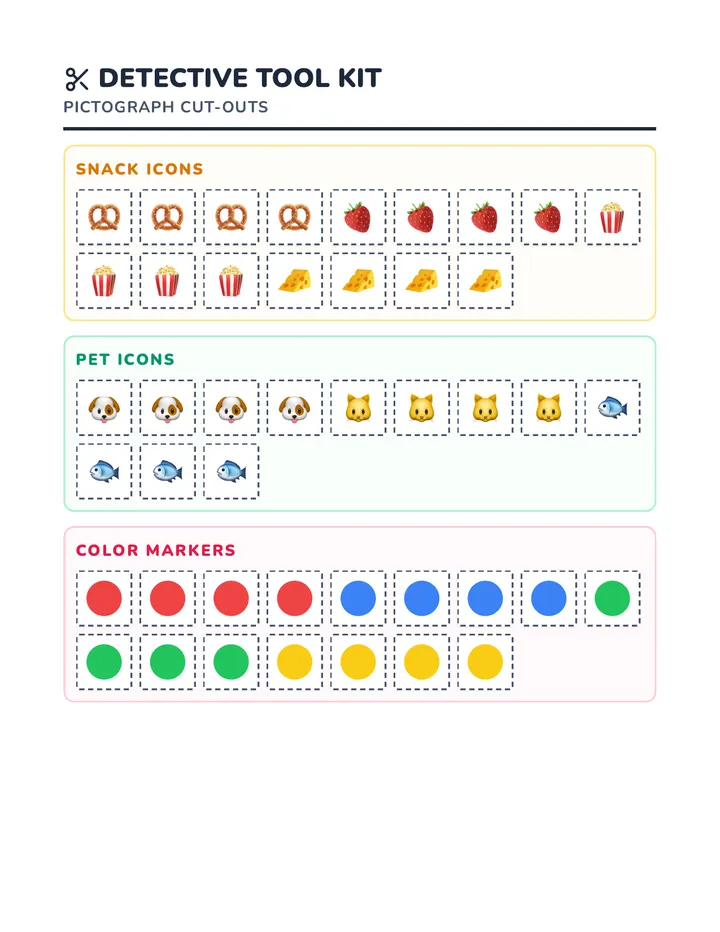
A hands-on graphing lesson designed for Essential Skills students, focusing on 1:1 pictographs and bar graphs using snack, color, and pet data with heavy visual supports.
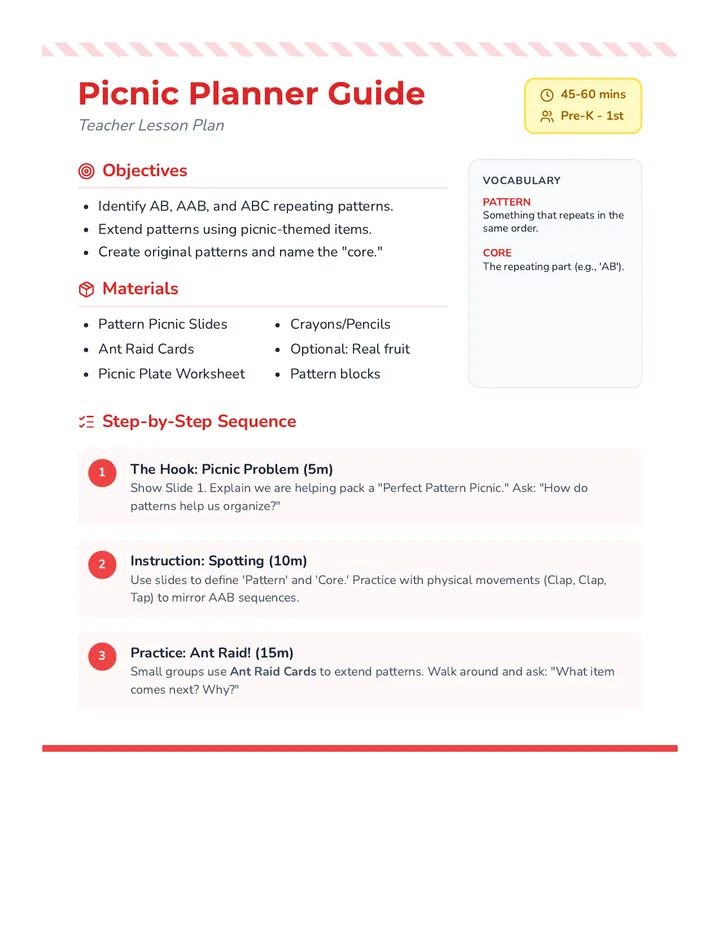
A hands-on lesson where students explore visual patterns using picnic-themed items to build early algebraic thinking skills. Students identify, extend, and create their own sequences using fruits, snacks, and picnic gear.
A fun, hands-on activity where students identify numbers 0-20 to reveal a hidden garden critter. Perfect for practicing number recognition and fine motor skills.
A fun, monster-themed lesson focused on identifying and naming numbers 1-20 through a hands-on 'Roll and Cover' game. Students practice subitizing and number recognition in a playful, low-stakes environment.
Students will explore the concepts of big, medium, and small by comparing various objects in the museum exhibits, promoting vocabulary development and visual discrimination.
An introduction to simple addition by combining groups of museum objects, focusing on the concept of 'putting together' using visual aids and tactile play scenarios.
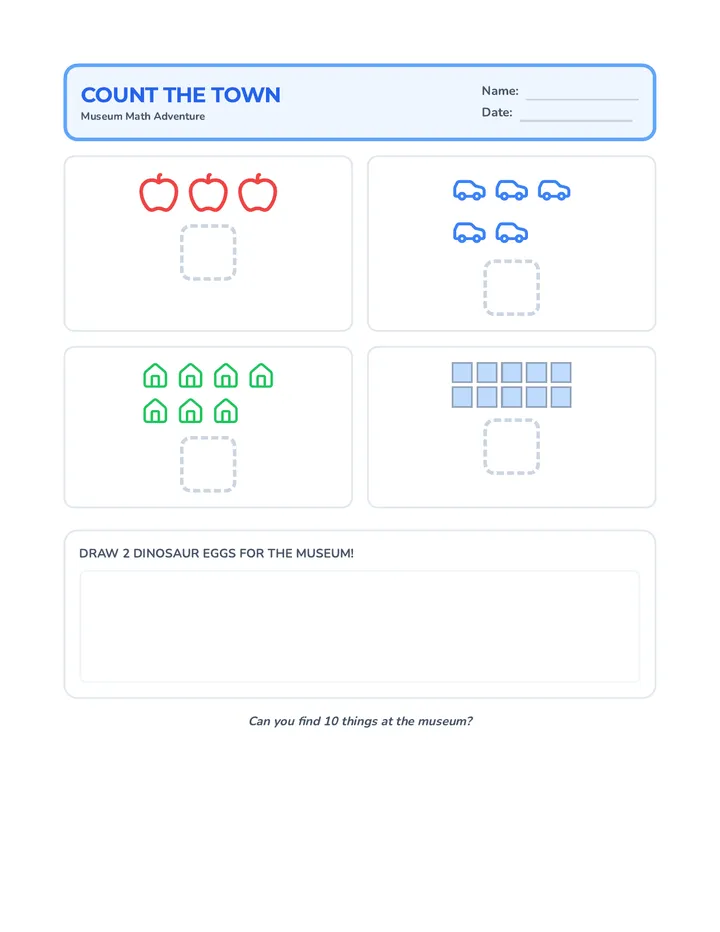
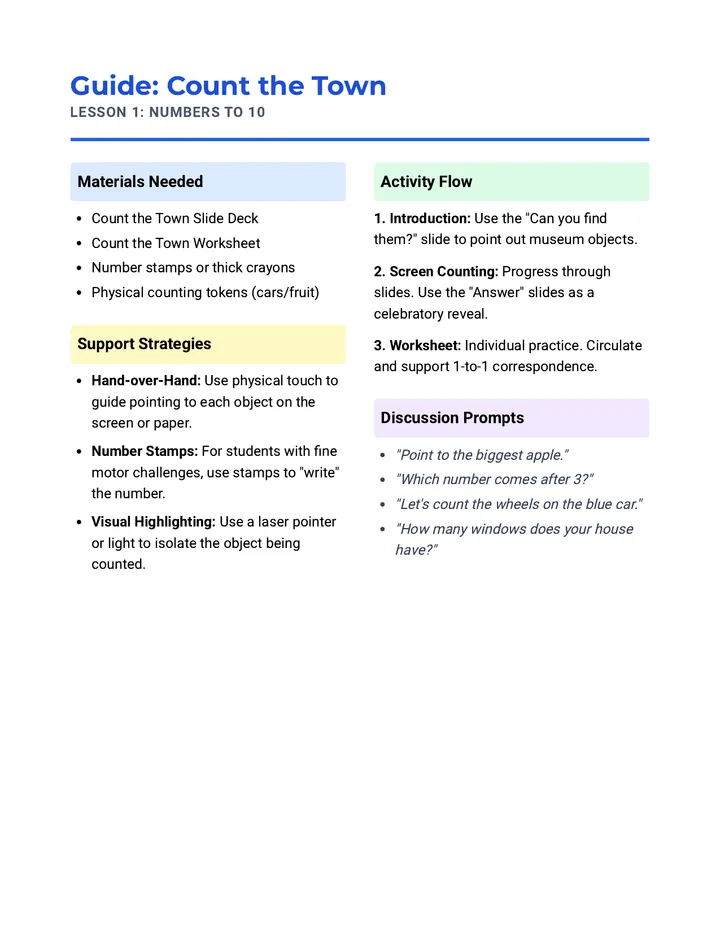
Students will practice identifying and counting numbers 1-10 using common items found in a play museum setting, such as grocery items, toy cars, and house windows.
A collection of five varied practice pages designed for kindergarten students to master the number 12 through finding, writing, and drawing. Each page features a unique layout and theme to maintain engagement through repetition.
A preschool-focused lesson based on 'Benny's Pennies' by Pat Brisson, targeting one-to-one correspondence and rhyming through hands-on play.
A daily routine lesson for morning circle and daily work, reinforcing garden themes, calendar skills, and social-emotional awareness.
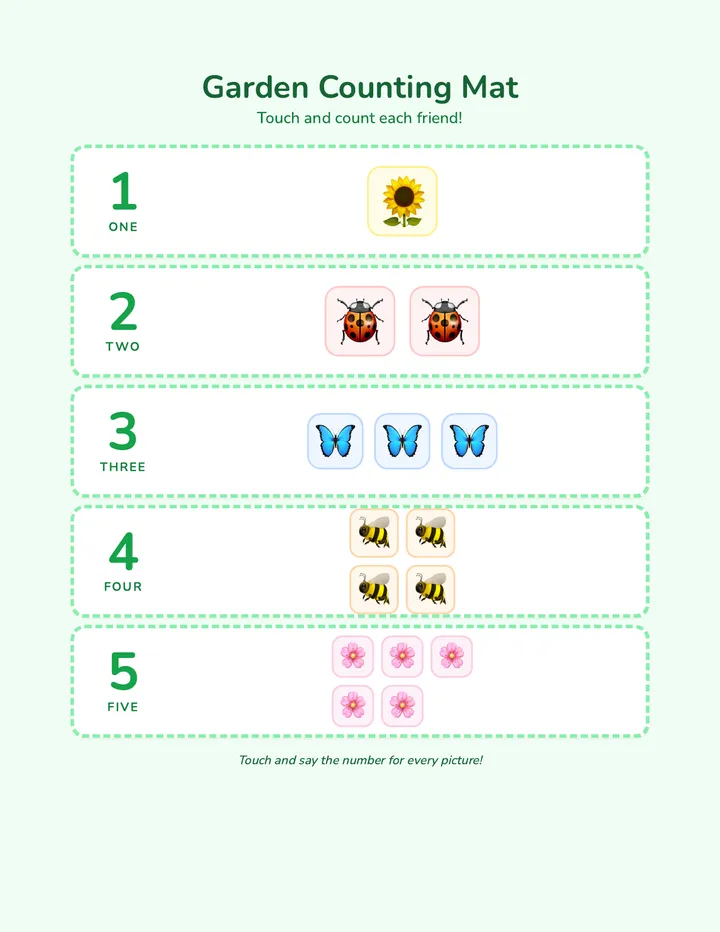
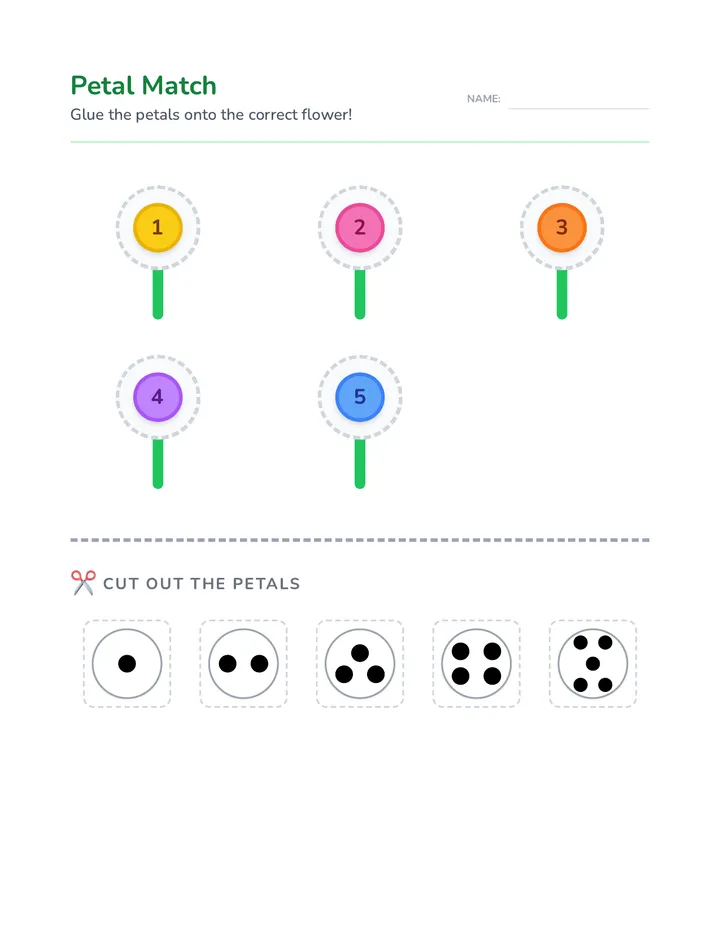
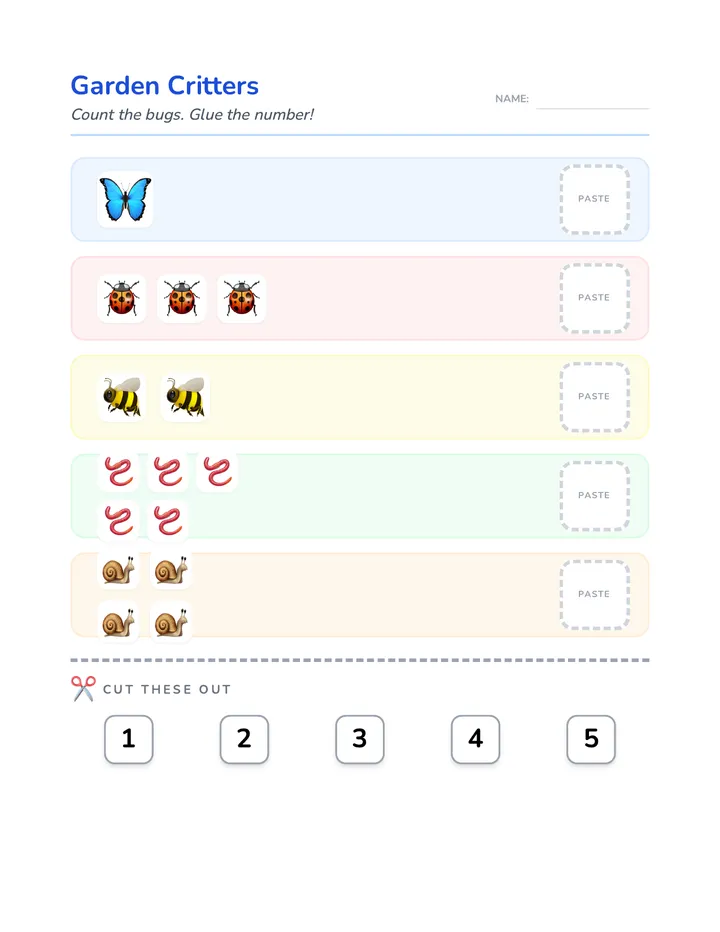
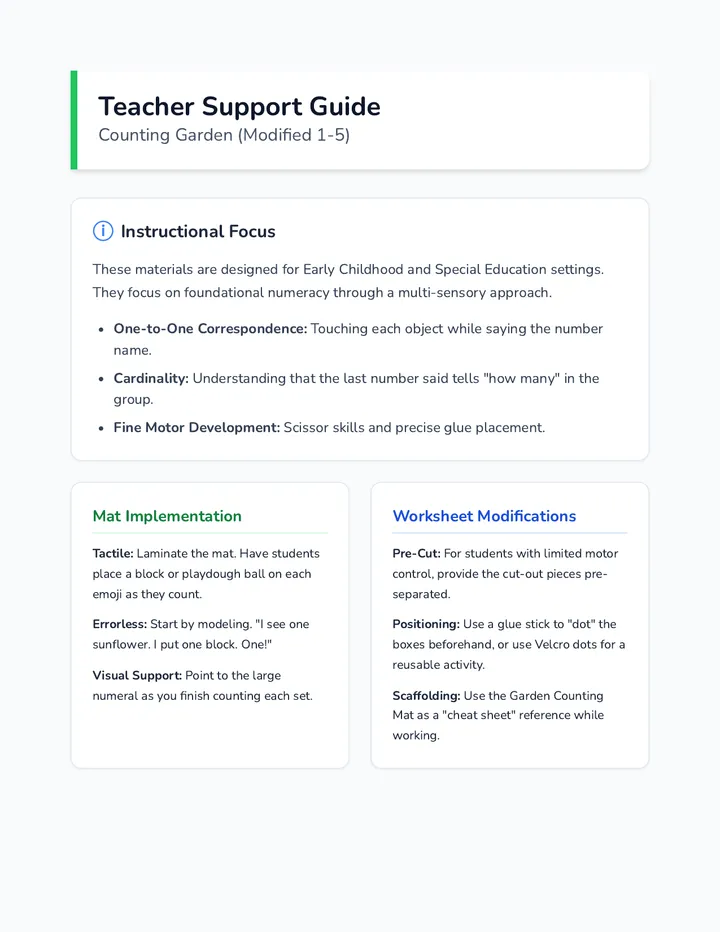
Students explore the numbers 1 through 5 using visual supports and hands-on matching activities to build one-to-one correspondence.