A 2nd-grade lesson exploring how different systems of measurement (Metric and Imperial) can measure the same object using different units, featuring a video call with a giant squid named Squipe.
A final assessment and review day to track progress towards identifying coins and performing money calculations with 80% accuracy.
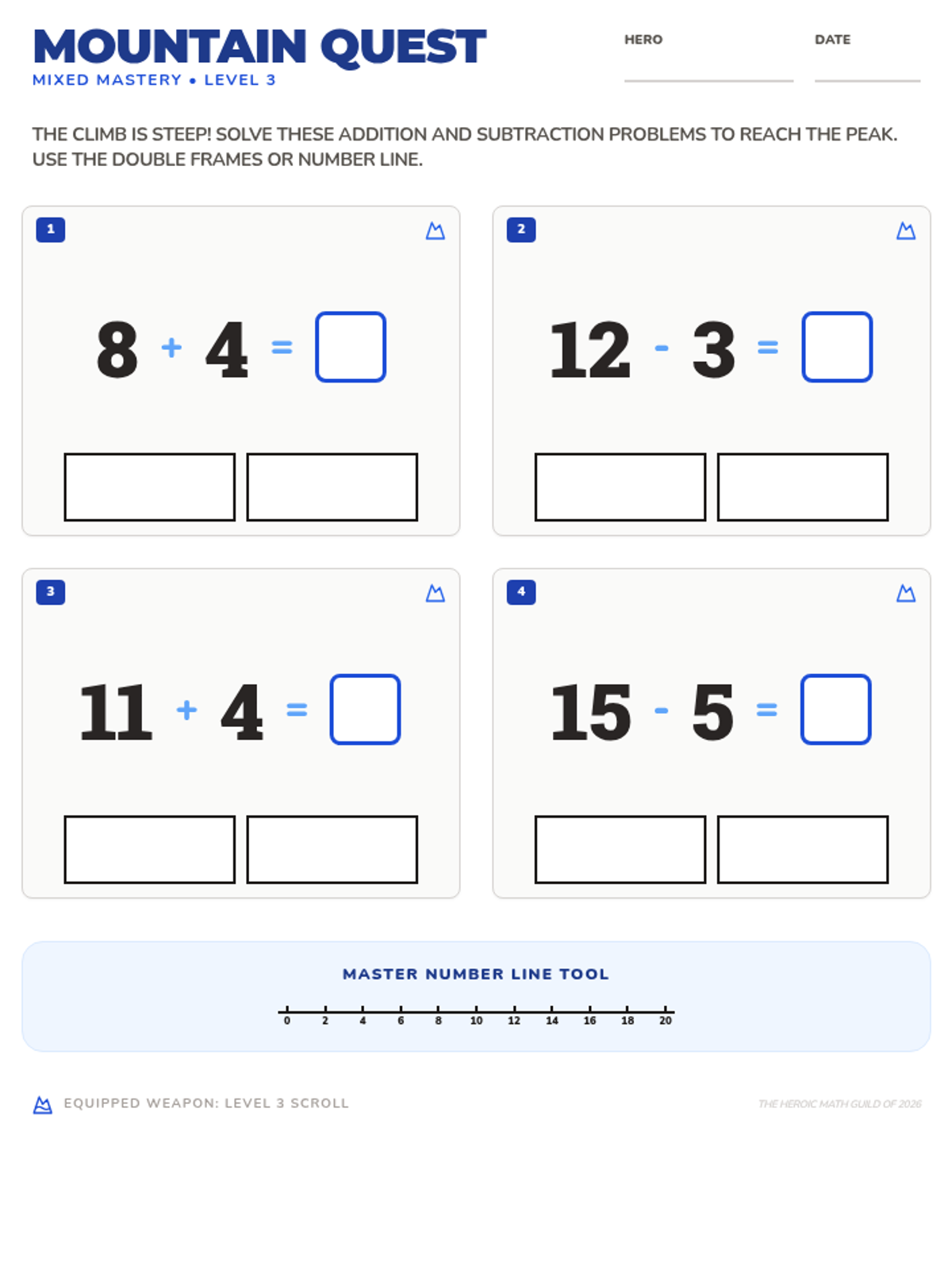
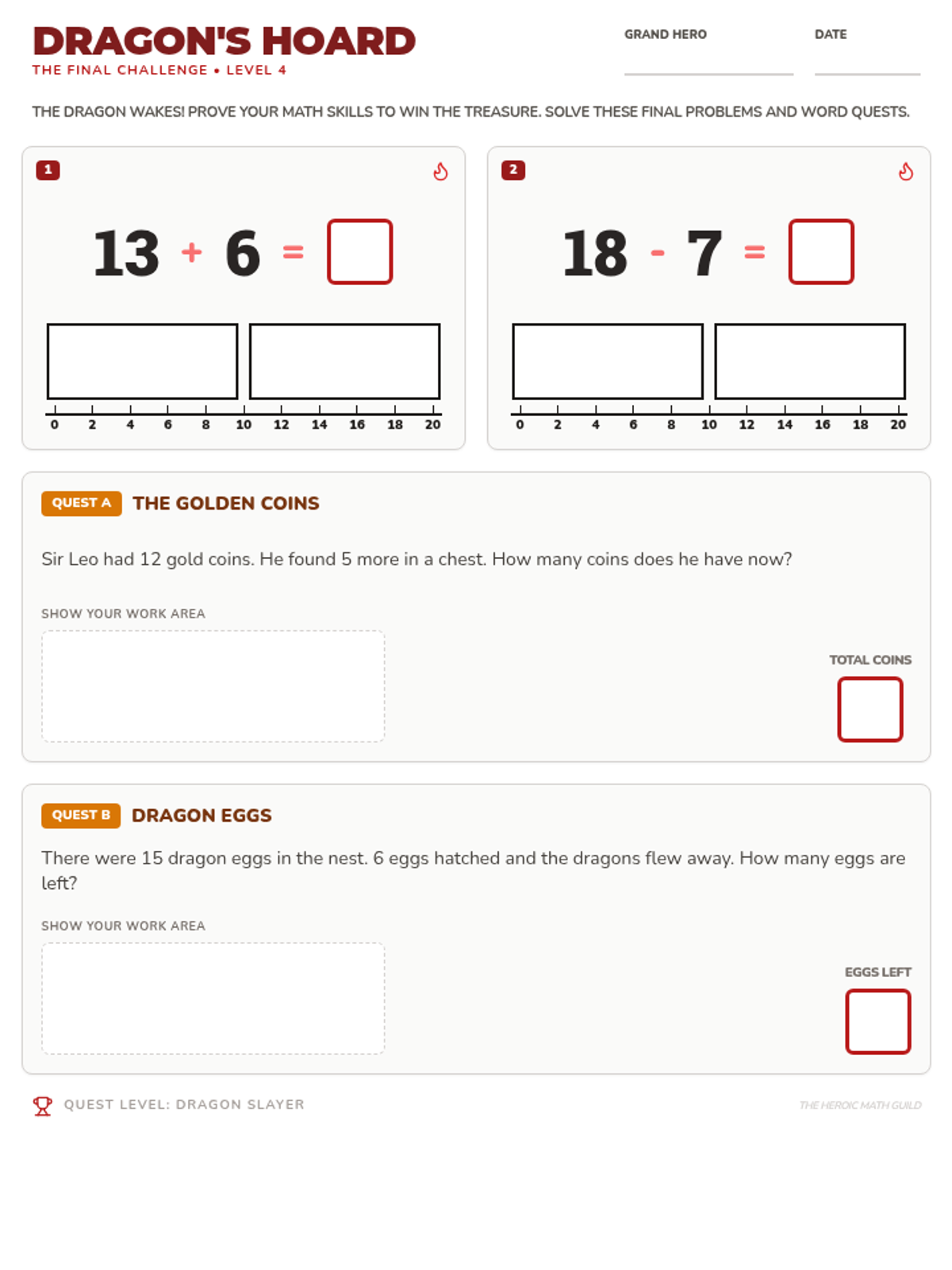
Applying both addition and subtraction to multi-step real-world scenarios using a set of interactive scenario cards.
Practicing subtraction skills to calculate change and budget remaining money from a $20 limit.
Introduction to adding money amounts up to $20 using a calculator based on shopping lists and grocery scenarios.
Focuses on identifying the names and values of pennies, nickels, dimes, and quarters through matching and visual aids.
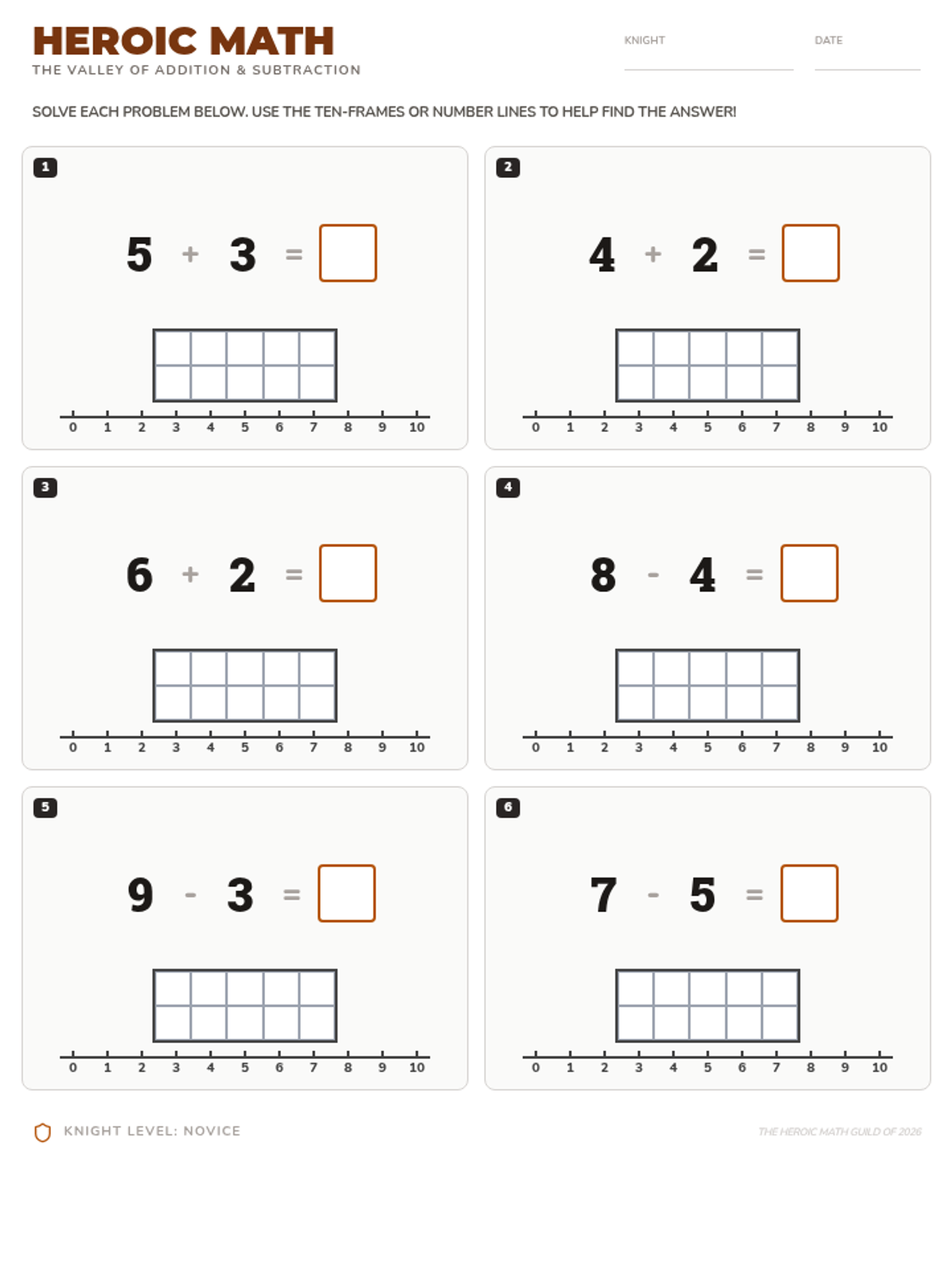
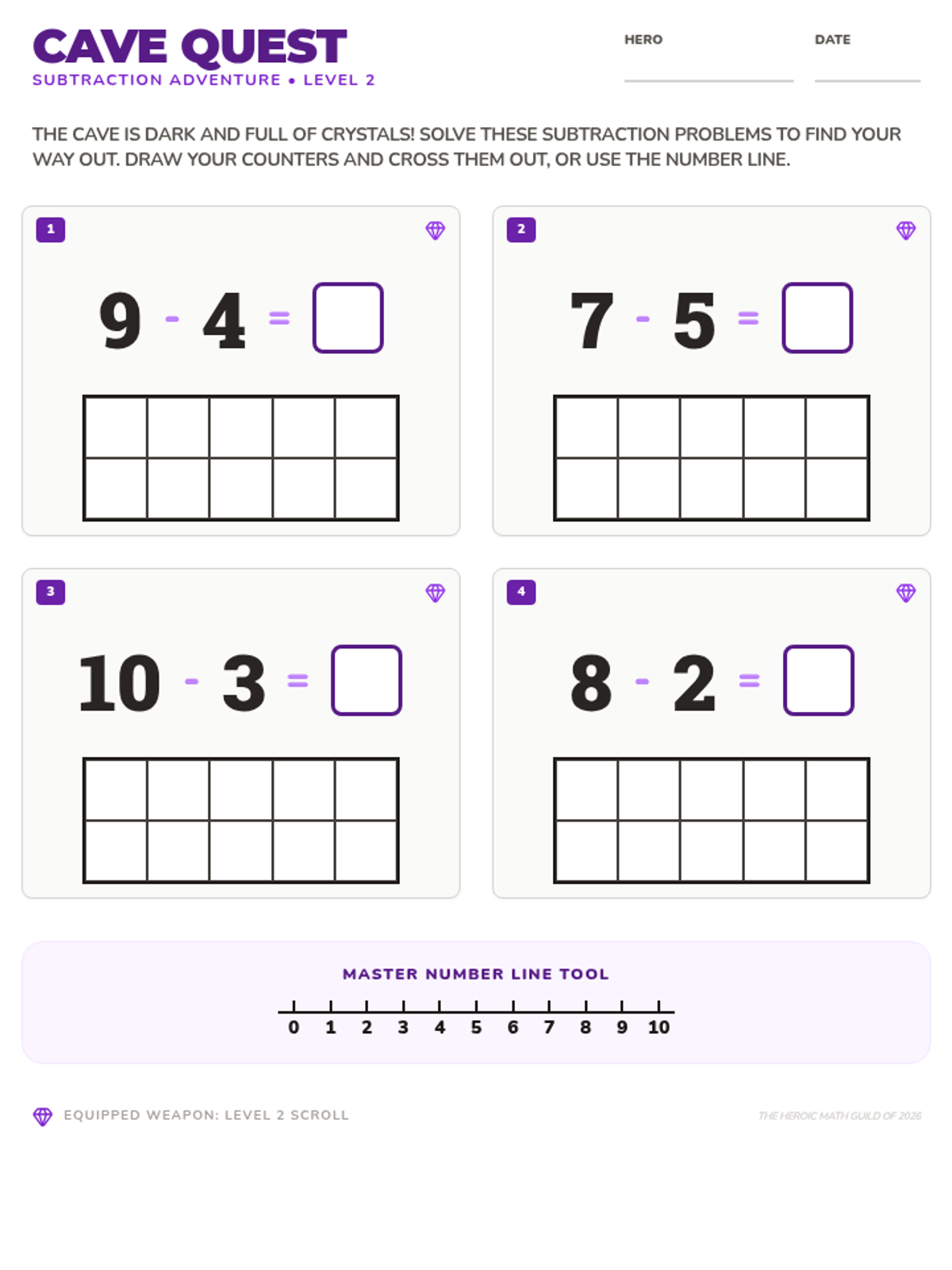
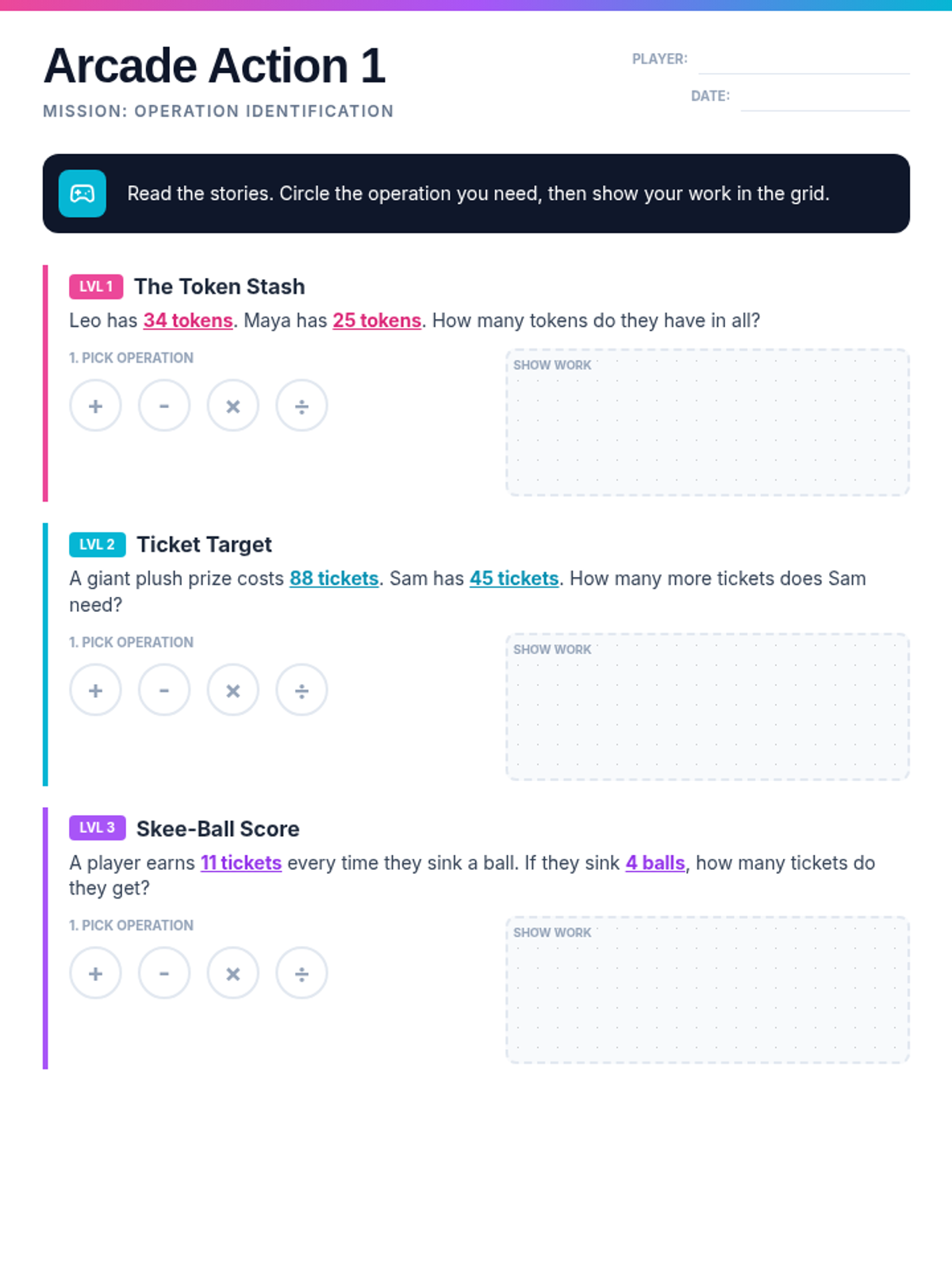
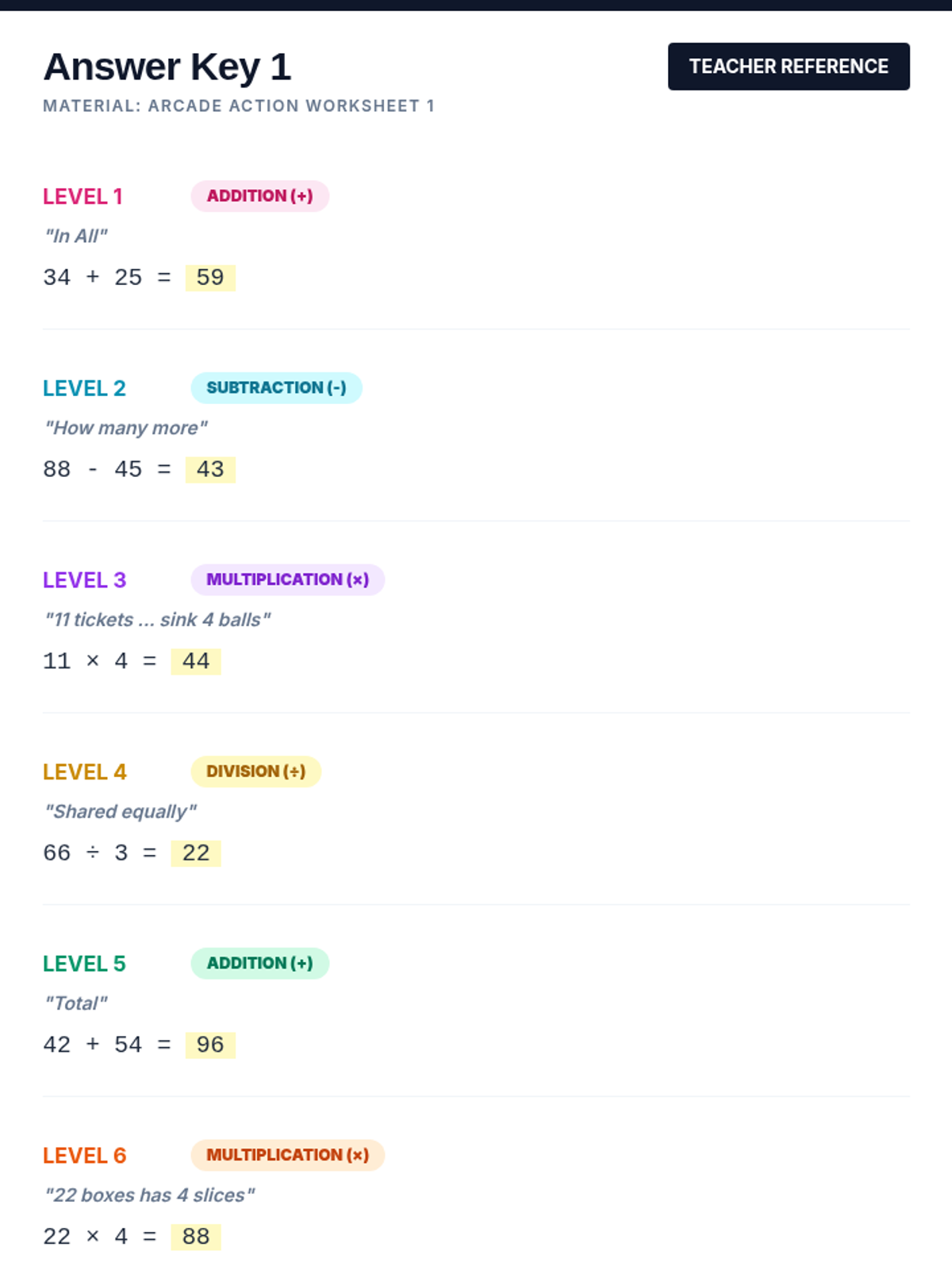
A week-long series of activities focused on identifying math operations in word problems, counting mixed coins, and determining if a purchase is affordable within a budget. Includes a teacher guide, graphic organizers, and practice worksheets themed around a neighborhood corner store.
A football-themed lesson featuring a complex 1-300 dot-to-dot and a math review based on game stats and scoring.
Final review and assessment of numeral ID and counting sequences.
Fluency focus on backward sequences across the full 0-120 range.
Advanced number line navigation and relative position (0-120).
Finding missing numbers in various sequences (FNS/BNS).
Mastery of the 100-120 range (the "Peak").
Backward sequences from 100 down to 50.
Forward sequences and numeral identification for numbers 50-100.
Placing and identifying numbers on an open number line (0-50).
Backward sequences across decades (50 down to 20).
Mastering transitions between decades from 20 to 50.
Intensive focus on backward number sequences from 20 down to 10.
Focus on numeral identification and forward sequences for numbers 11-20.
Advanced elapsed time practice focusing on five-minute intervals, providing the highest level of challenge in this unit.
Materials for mastering elapsed time in 15, 30, and 45-minute increments using scenarios and analog clocks.
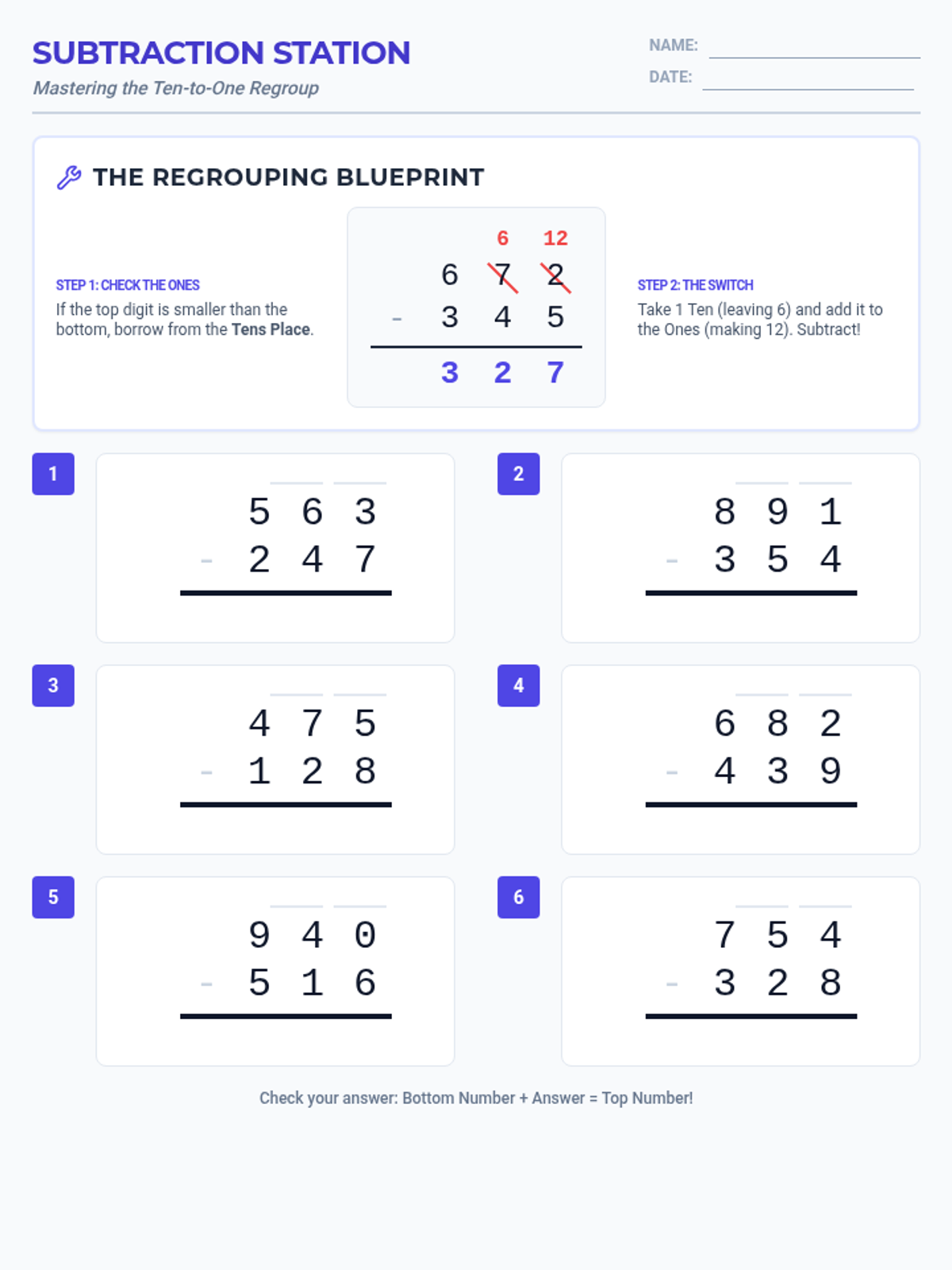
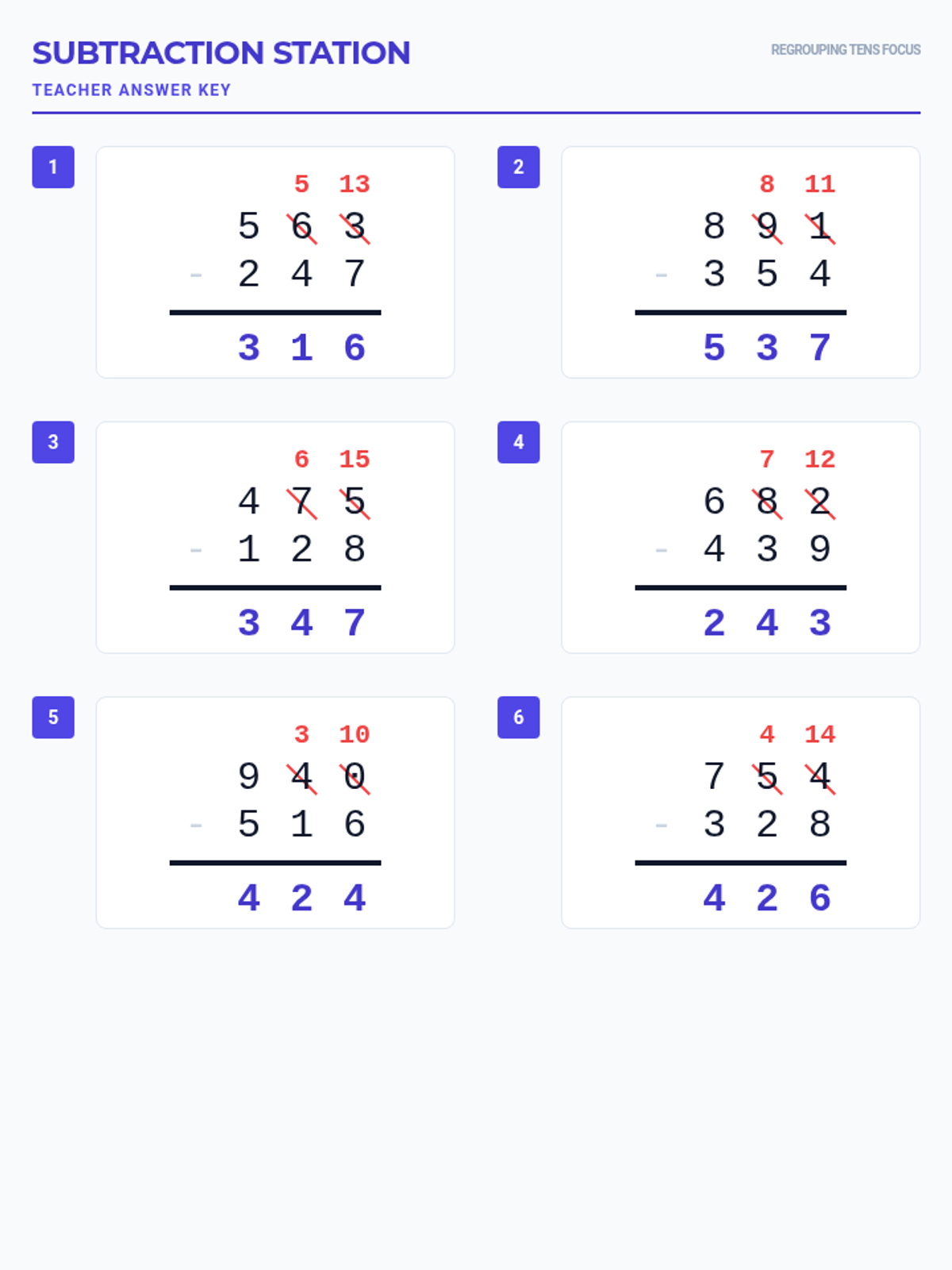
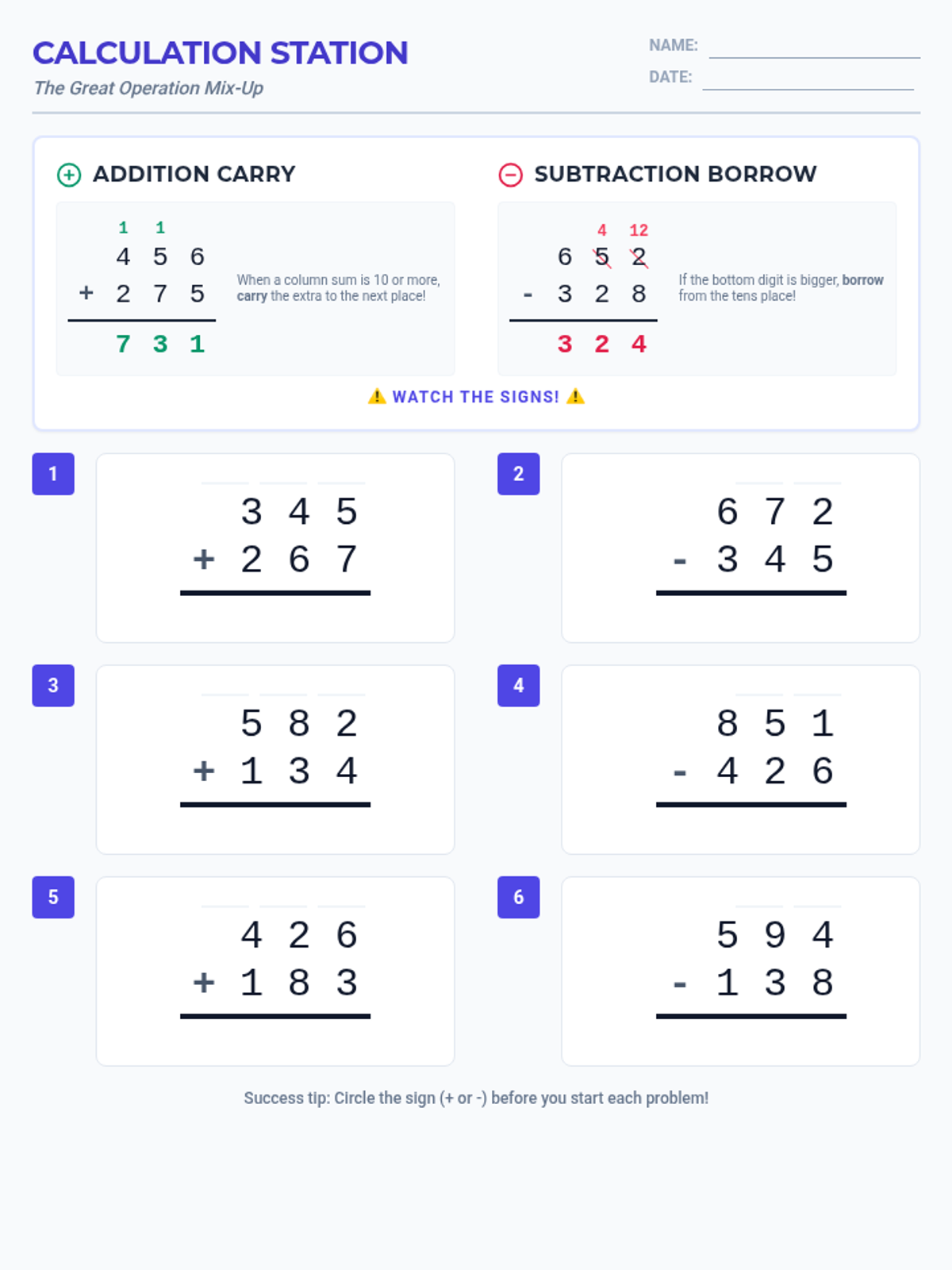
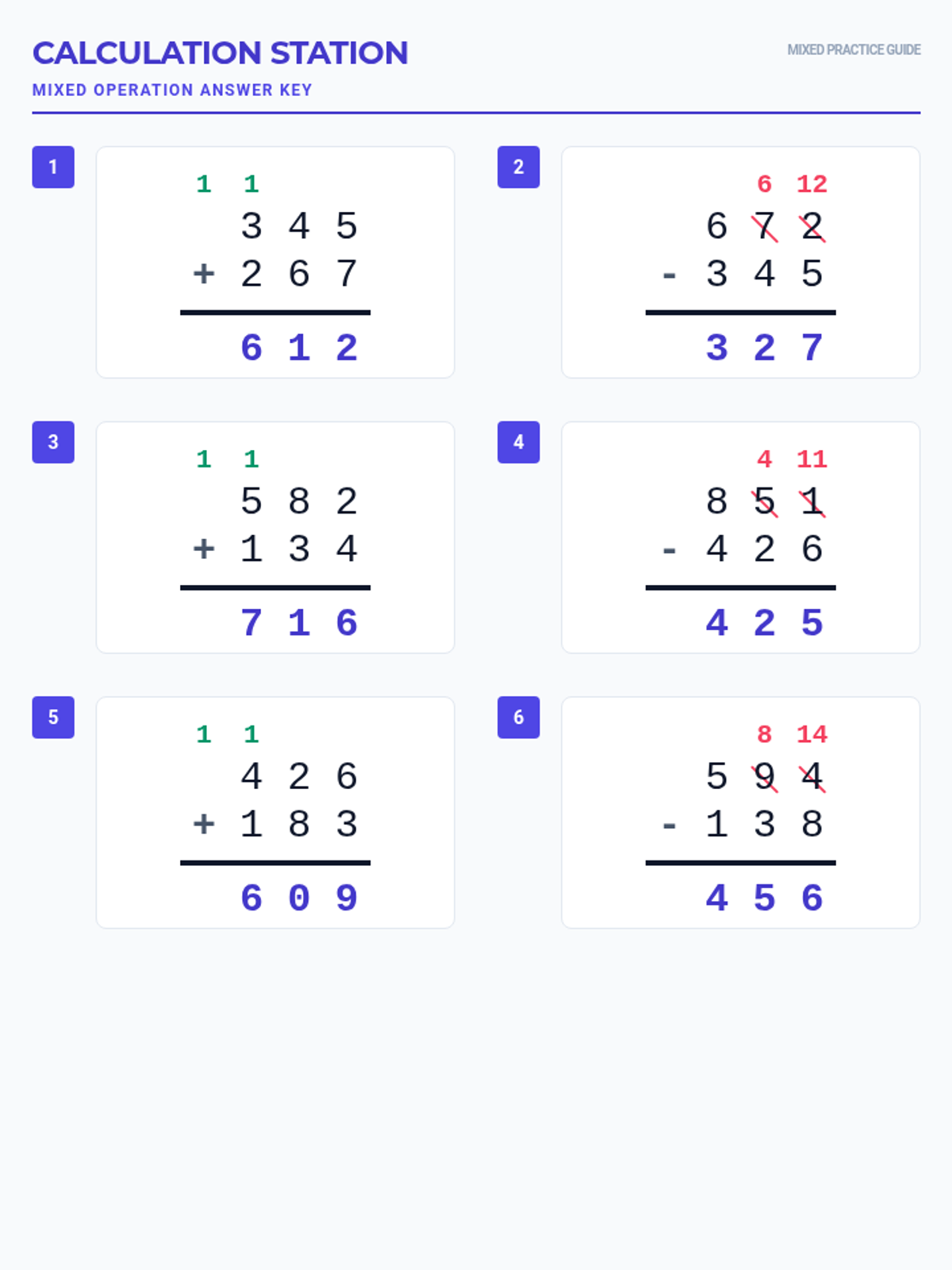
A lesson focused on mastering the US standard algorithm for subtraction using visual aids and place value organizers.
A lesson focused on mastering the standard algorithm for subtraction with regrouping, utilizing place value organizers to visualize the process.
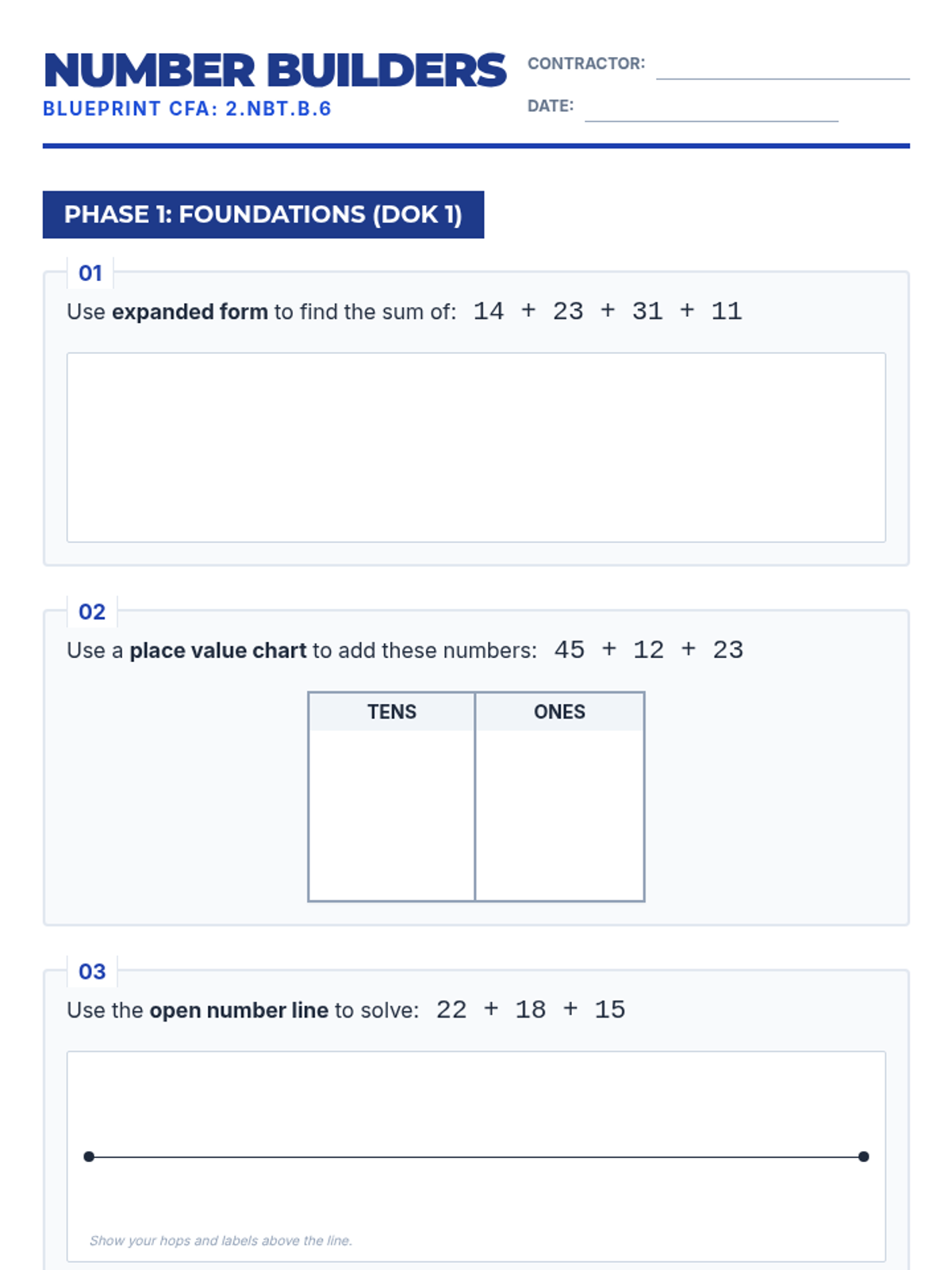
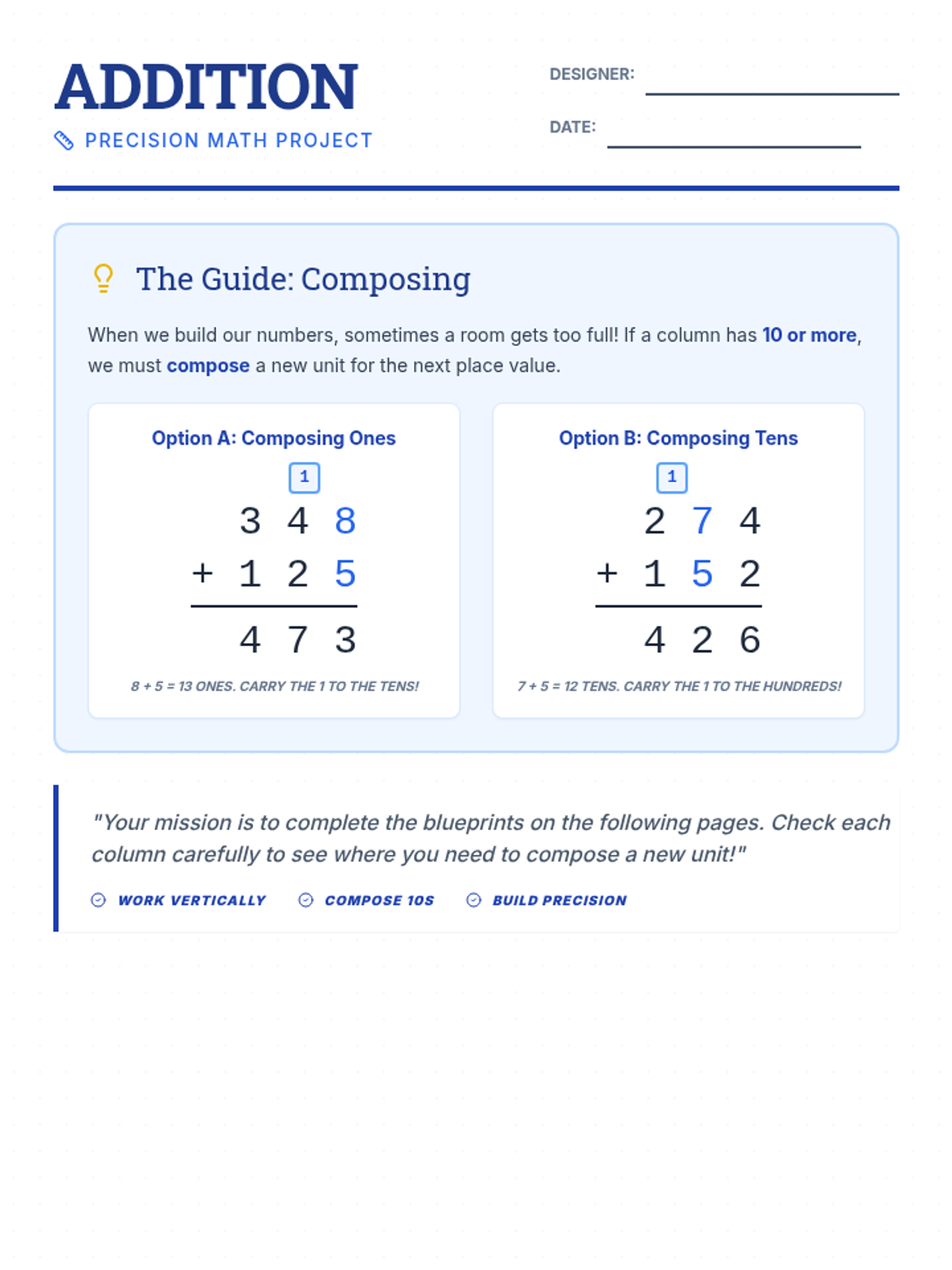
A small group lesson focused on multi-digit addition with regrouping using a "Master Builder" blueprint theme. Students use base-ten blocks and place-value charts to model and solve addition problems with regrouping.
Students will master 3-digit subtraction by using the 'counting back' strategy on a number line, focusing on identifying and jumping to friendly numbers (multiples of 10 and 100).
A lesson focused on solving addition story problems using visual representations, featuring a character named Indyia collecting pencils in a school hallway.
Students learn to classify word problems as Action (change over time) or Relationship (comparing or combining amounts). This distinction helps students choose the correct mathematical model and operation to solve problems effectively.
A lesson focused on identifying and using mathematical keywords to solve word problems in real-life scenarios. Students act as 'Math Detectives' to uncover clues that tell them which operation to use.
A comprehensive lesson on applying basic math skills to real-world shopping scenarios, featuring differentiated word problems for various ability levels.
This lesson teaches students how to subtract 3-digit numbers by using the 'add up' strategy on an open number line, visualizing the difference as distance between two points.
This lesson introduces spatial and temporal concepts through active guided practice, a cut-and-paste sequencing task, and a collaborative station game. Students will identify relative positions and order events chronologically.
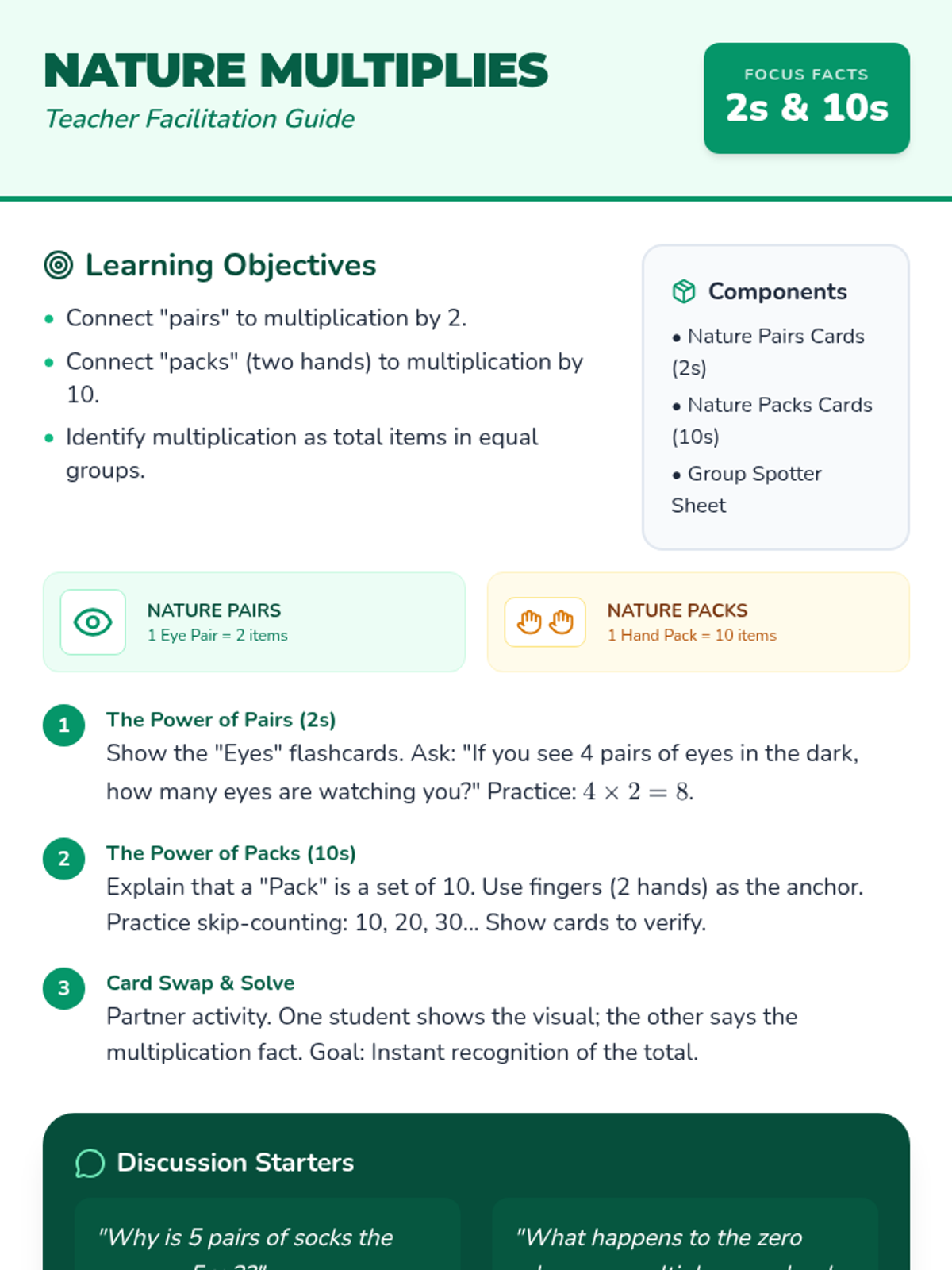
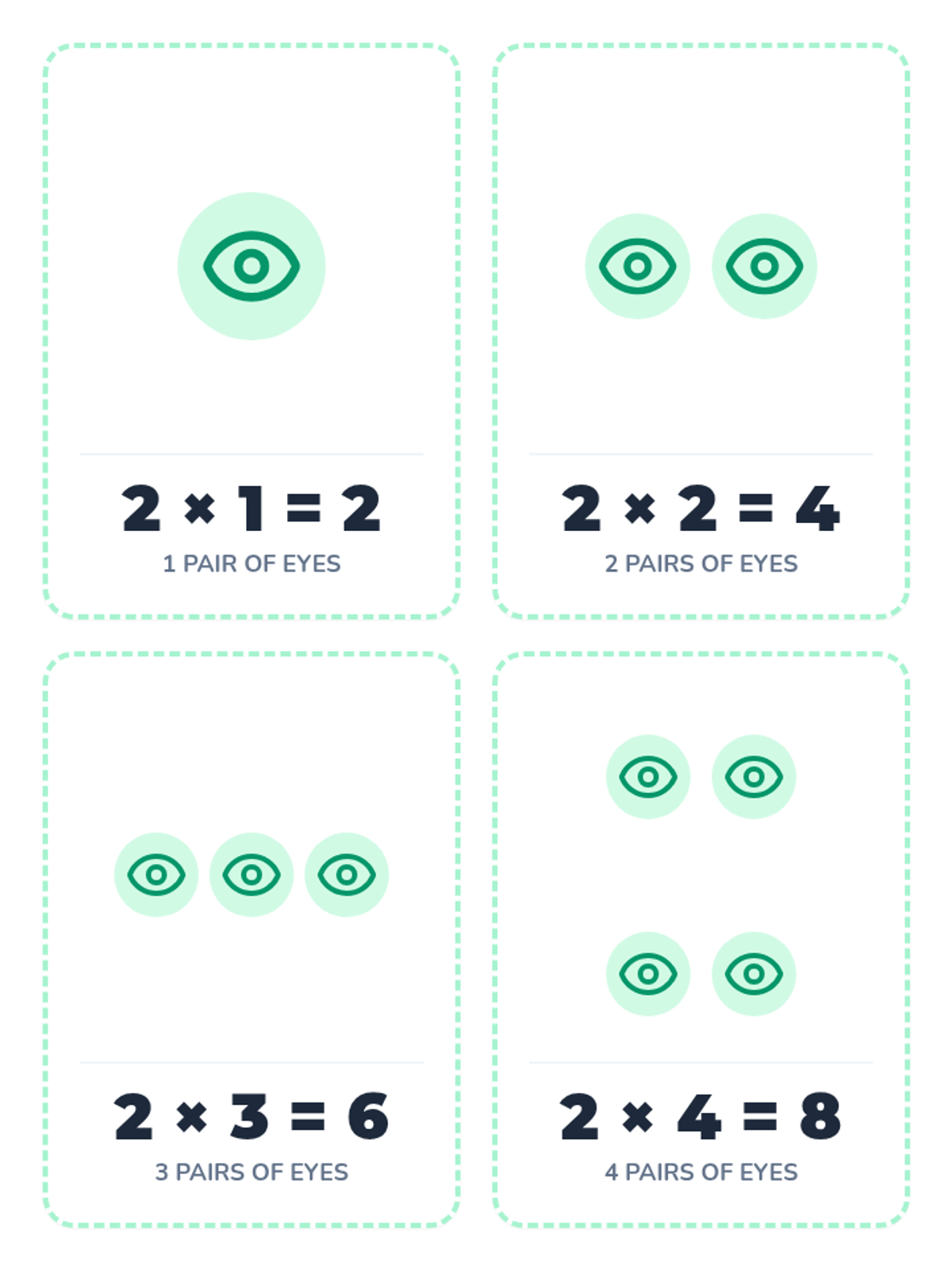
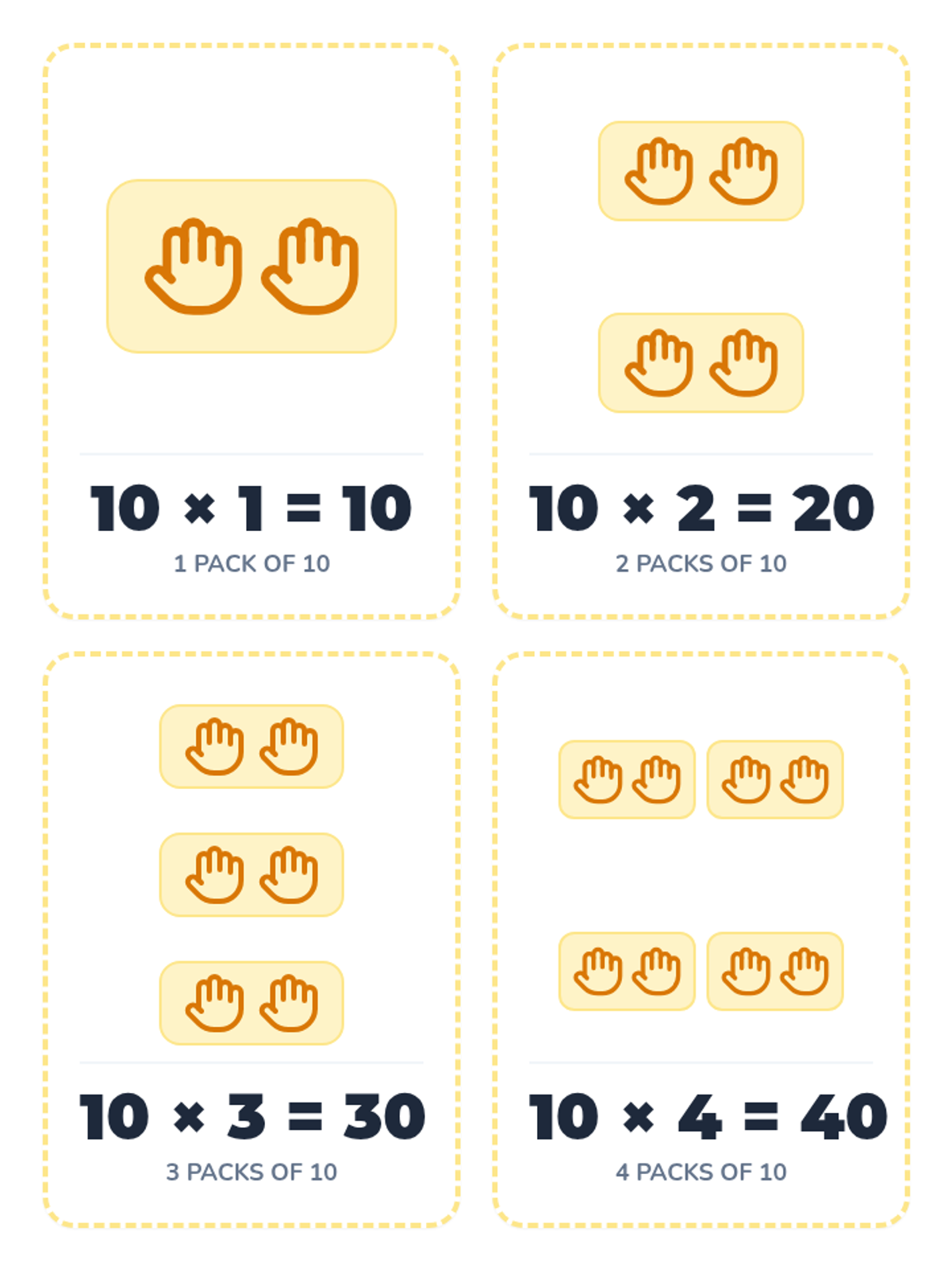
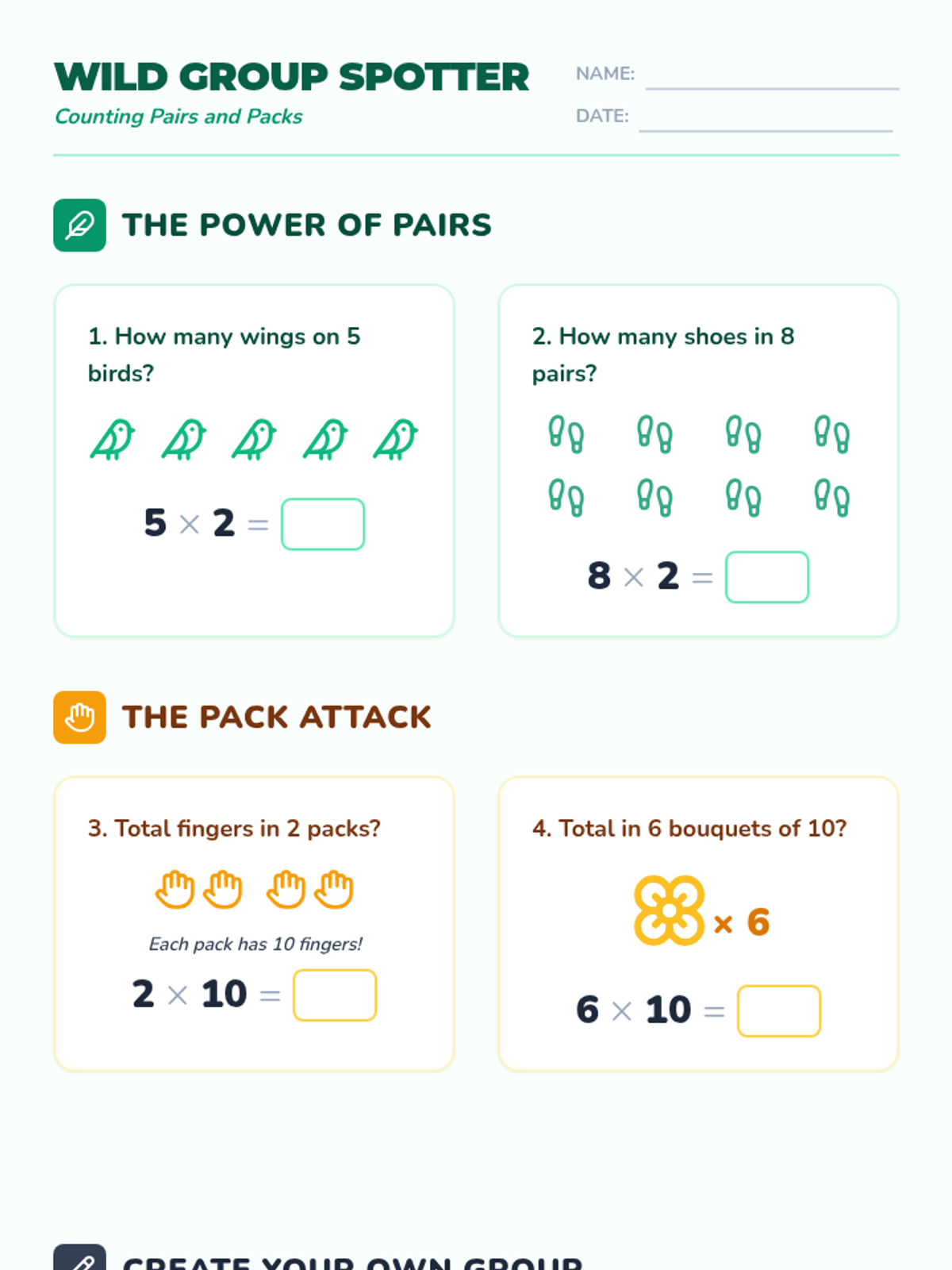
A high-energy lesson focused on mastering multiplication through doubles (x2) and skip counting (x5, x10) strategies, culminating in a fast-paced Bingo game.
A set of materials designed to help students master elapsed time within one-hour intervals through real-life scenarios, visual models, and systematic data tracking.
A collection of 10 distinct data analysis work samples featuring bar and circle graphs, designed for MCAS Alt portfolio evidence. Each sample focuses on identifying key information, making comparisons, and calculating totals.
A lesson focused on the 'Dollar Up' method for rounding money to the nearest dollar, specifically designed for MCAS-Alt work samples. Students practice connecting decimals to whole dollars using visual price tags and simple rounding rules.
Synthèse de l'apprentissage avec l'exploration du tableau des 100. Identification des régularités (colonnes des unités, lignes des dizaines) pour naviguer dans la grande comptine numérique.
Focus sur le comptage par dizaines (10, 20, 30... 100). Apprentissage des noms des familles (Vingt, Trente, Quarante, etc.) et visualisation de leur structure en barres de 10.