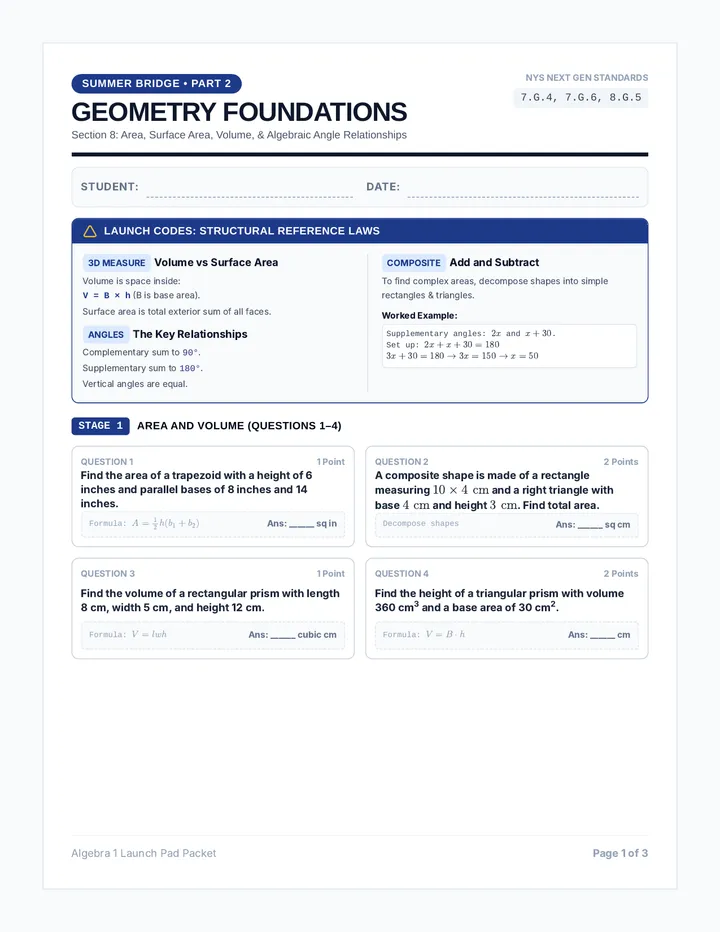
A comprehensive lesson focused exclusively on calculating the surface area of right prisms and composite 3D objects. Students learn to master the calculation of 5 and 6-faced prisms and the "Hidden Face" subtraction method for composite structures.
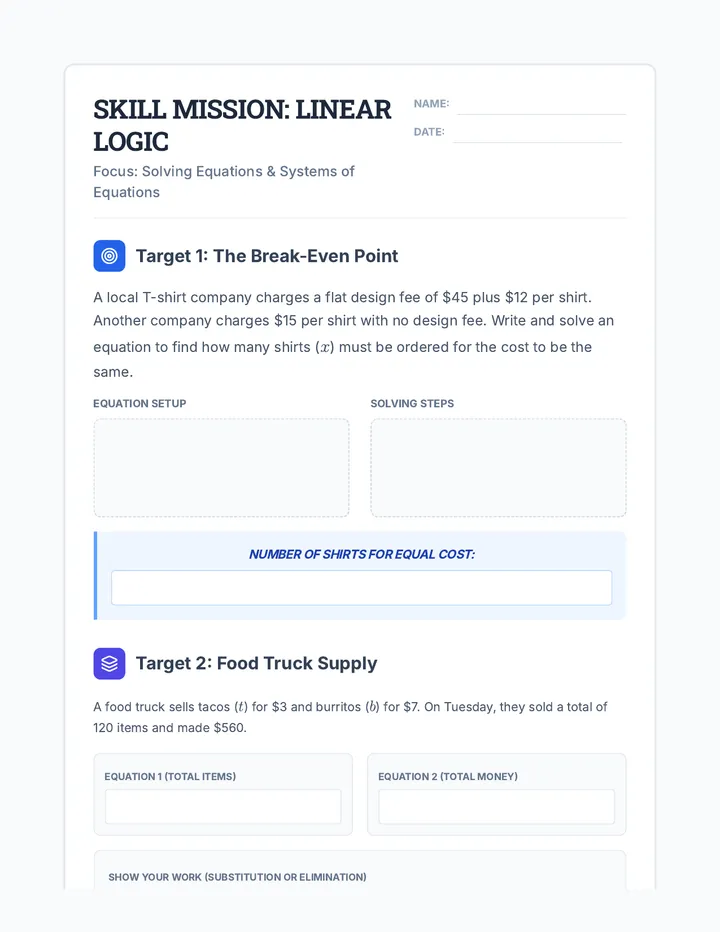
A comprehensive review lesson designed to support students in mastering linear functions, graphing, and word problem interpretation ahead of their unit test.
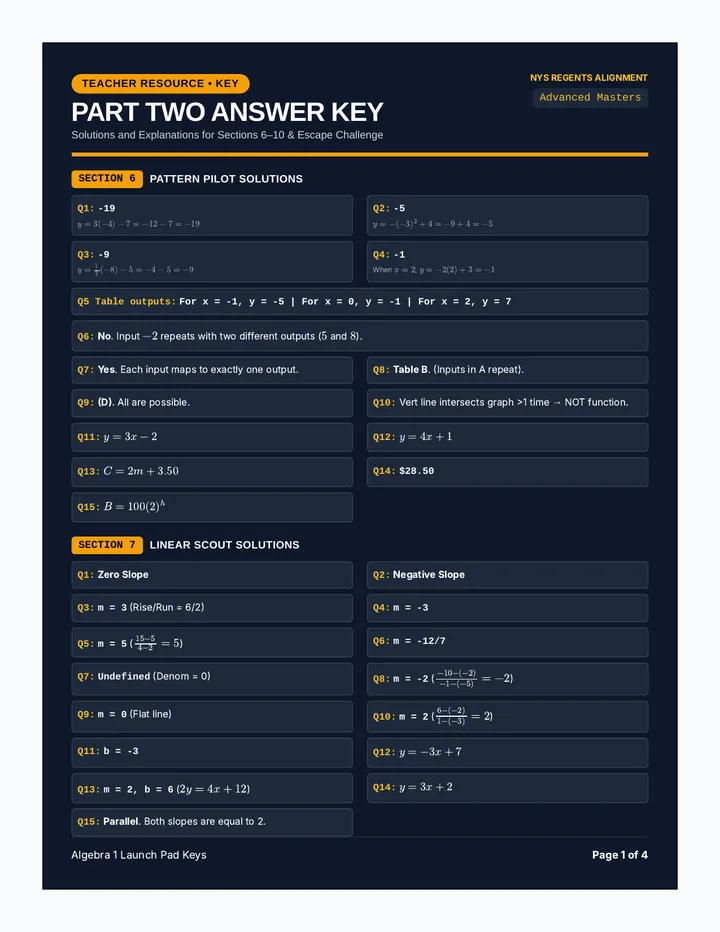
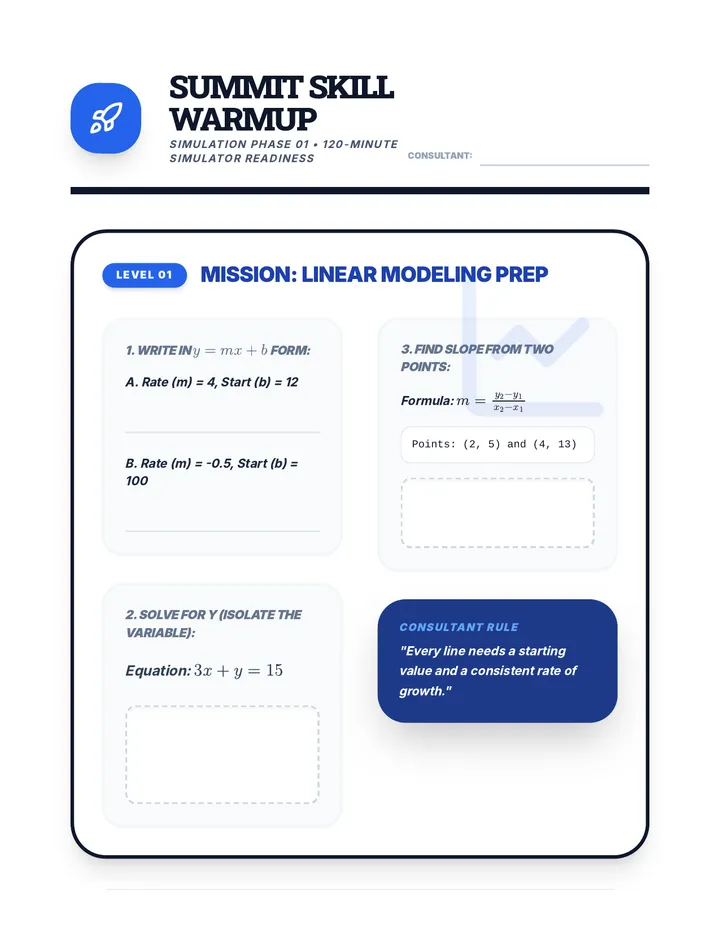
A comprehensive 90-minute lesson on transforming linear equations into slope-intercept form ($y = mx + b$), designed for Algebra I students and easy delivery by non-math teachers. Includes visual slides, a detailed facilitator guide, and extensive practice with error analysis.
A comprehensive 90-minute review of graphing linear inequalities (TEKS A.3D) designed for non-math teachers to facilitate. Students will practice identifying line types, shading regions, and graphing by hand without technology.
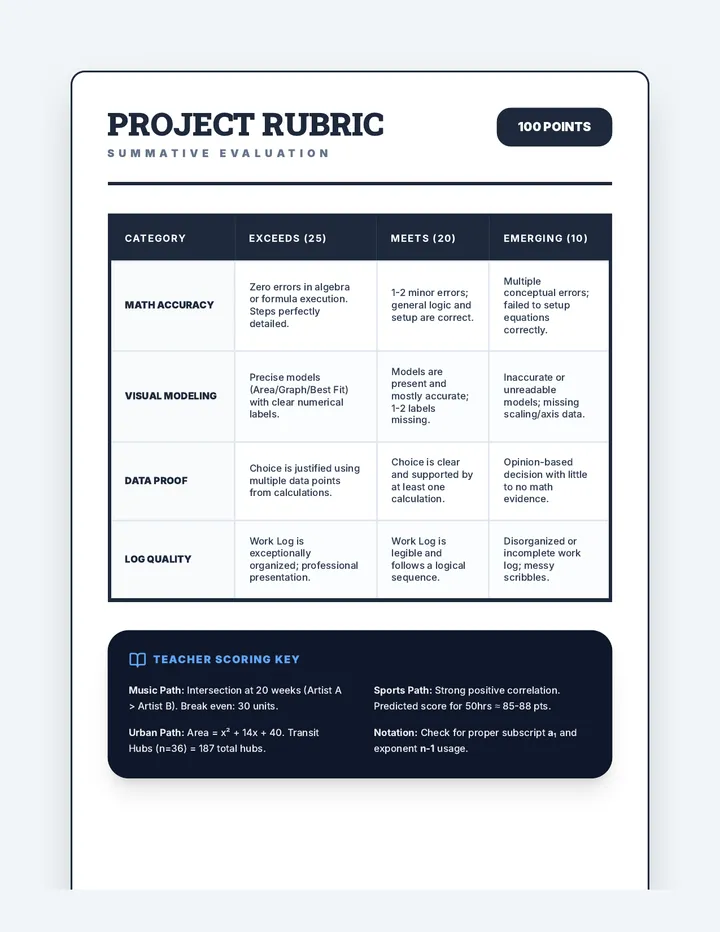
A lesson focused on identifying and graphing transformations of radical functions, including square roots and cube roots. Students will master horizontal/vertical shifts, reflections, and dilations.
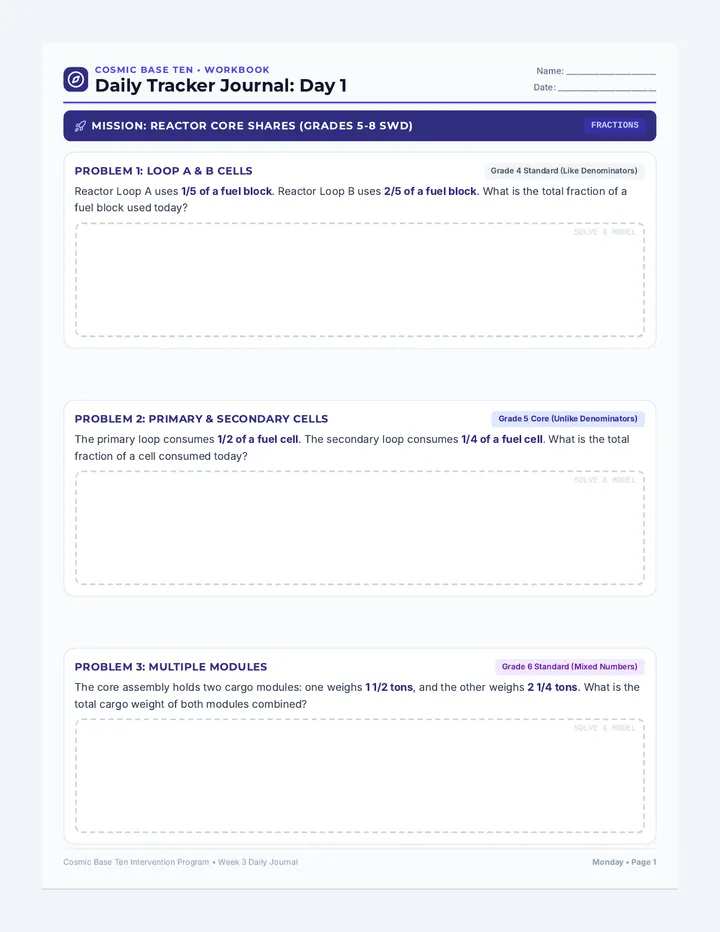
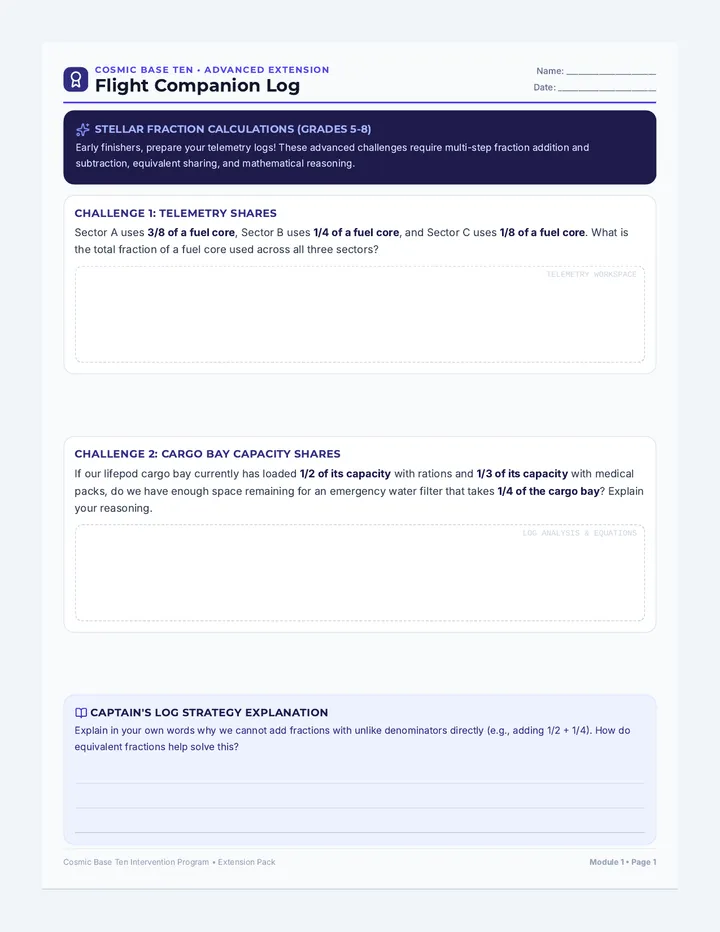
A lesson focused on adding positive and negative fractions and mixed numbers using architectural-themed visualization and problem-solving.
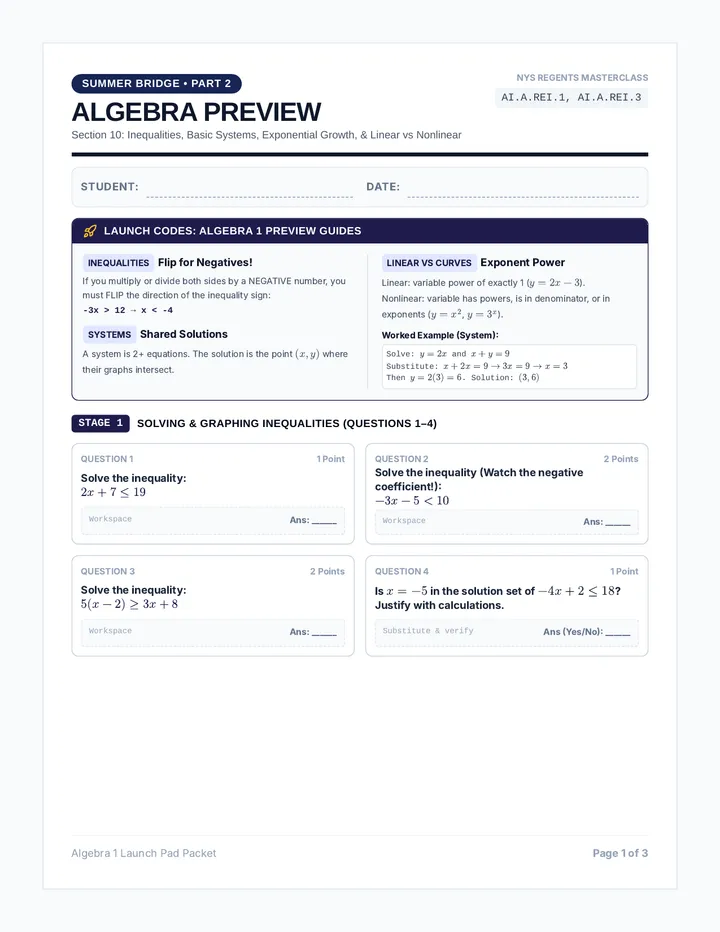
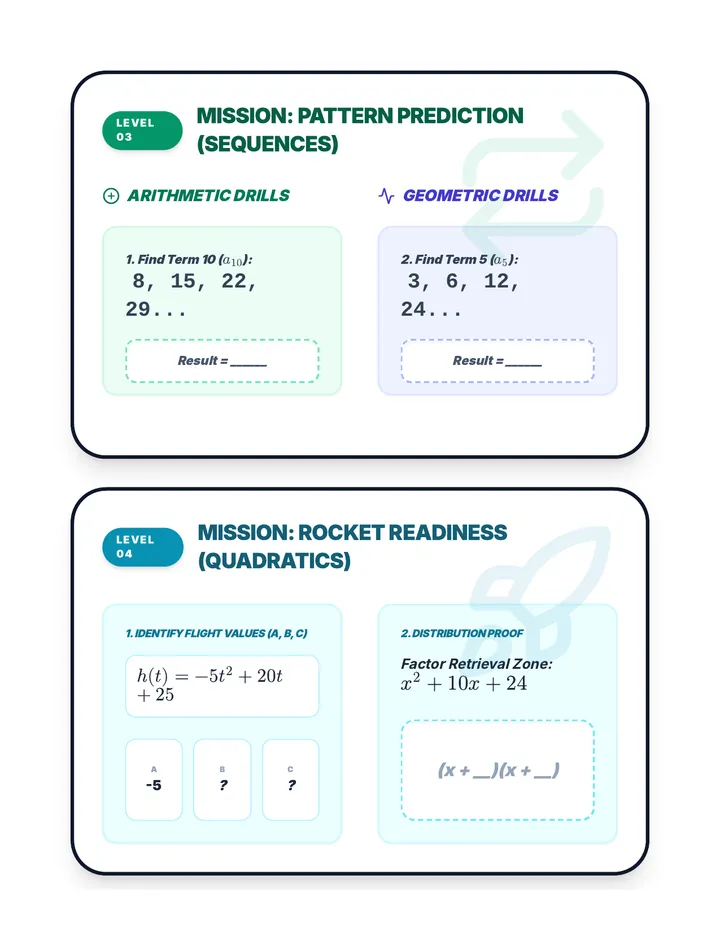
A comprehensive Algebra 1 lesson focusing on factoring polynomials, simplifying expressions with exponents, and analyzing linear and exponential functions.
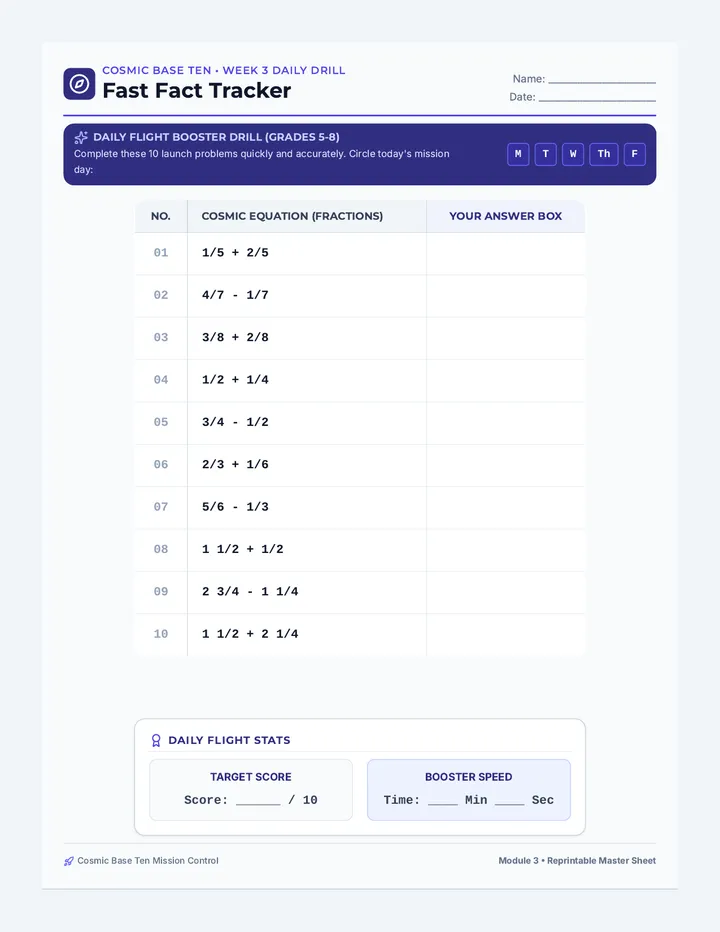
A comprehensive 45-minute lesson on adding and subtracting fractions and mixed numbers, focusing on finding common denominators and simplifying final results through a construction-inspired blueprint theme.

A quick assessment lesson on adding complex numbers, focusing on combining like terms (real and imaginary components) and correcting common misconceptions.

A project-based lesson where students apply geometry skills to design and build a 3D miniature city, focusing on polyhedra, volume, and spatial reasoning.
A comprehensive lesson on adding and subtracting fractions with unlike denominators, using a blueprint-themed architectural approach to 'building' common denominators.
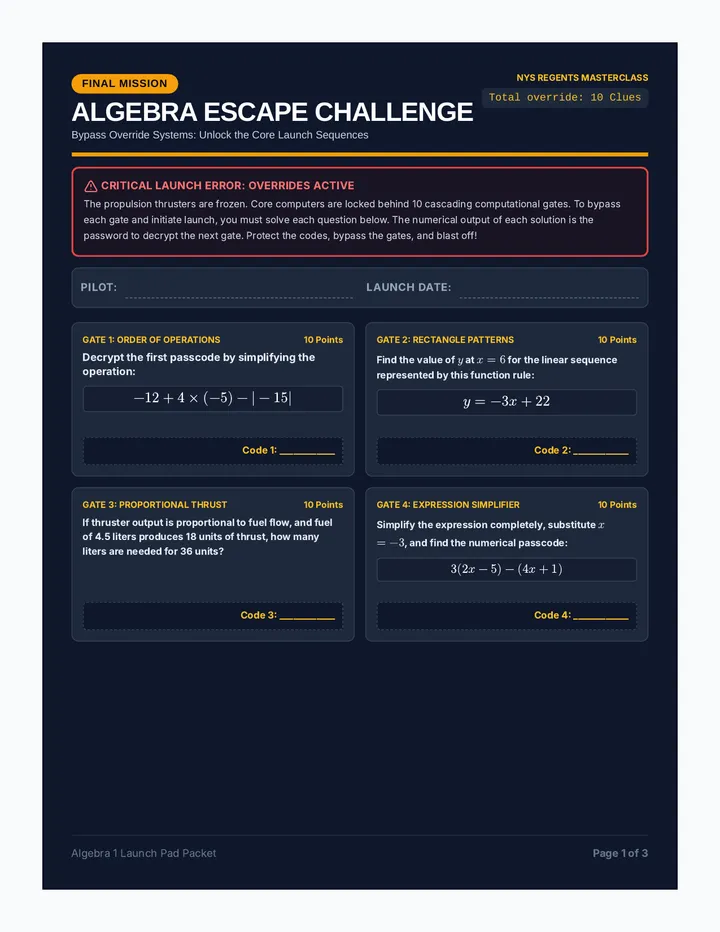
A comprehensive lesson on the Order of Operations (PEMDAS/GEMDAS), focusing on identifying the correct sequence of operations and solving multi-step mathematical expressions with precision.
A comprehensive lesson on mastering analog clocks and calculating elapsed time, designed for middle school students with a focus on logical deduction and practical application.
A lesson focused on identifying and correcting common mistakes in factoring, specifically GCF and basic trinomials. Students take on the role of 'Math Detectives' to solve factoring 'crimes'.
Students will learn the concept of a health insurance deductible, focusing on the math of reaching the deductible amount before insurance coverage begins.
A middle school inquiry project where students collect, analyze, and interpret local data to solve 'mysteries' in their community. Students learn to select appropriate graph types and draw evidence-based conclusions.
A comprehensive review lesson covering all health insurance concepts, including terminology, cost calculations, and plan comparisons to prepare for assessment.
A comprehensive assessment covering health insurance basics, cost calculations, and plan comparisons for consumer math students.
A comprehensive lesson focused on performing and interpreting linear regression analysis using real-world UN population and surface area data. Students will learn to identify variables, evaluate the impact of outliers, and draw conclusions based on correlation coefficients.
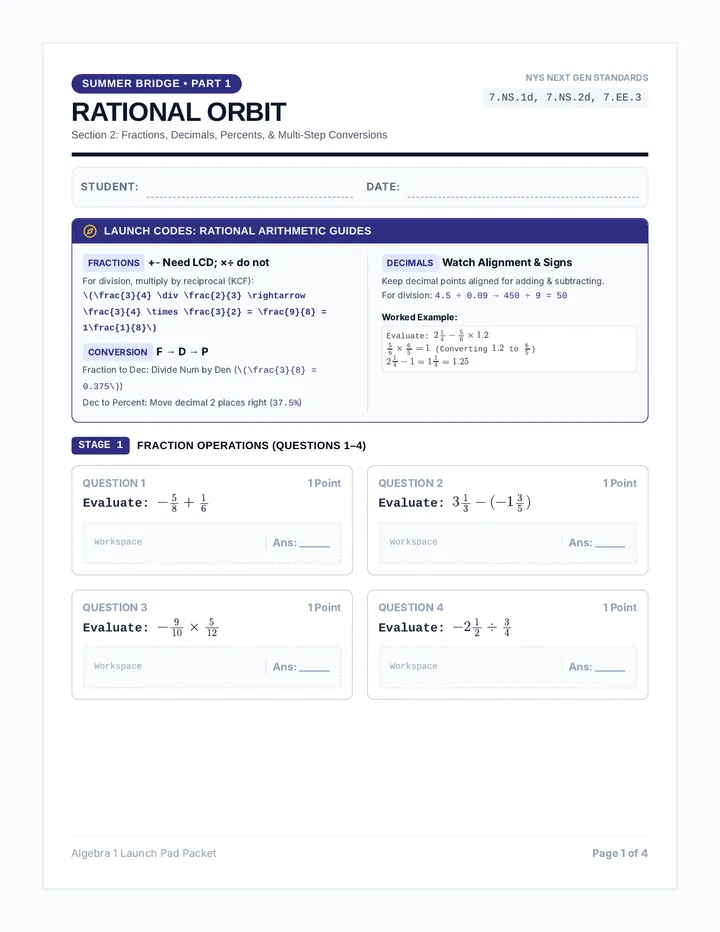
A comprehensive lesson on converting between fractions, decimals, and percents using a differentiated choice board. Students explore benchmark values and real-world applications through varied tasks tailored to different learning needs.
A review and application of both strategies through a competitive classroom game.
Focused practice on the standard long division algorithm to build fluency and accuracy with multi-digit divisors.
Step-by-step introduction to the standard algorithm for long division, connecting it to the partial quotients method.
Practice with partial quotients to solve more complex multi-digit division problems, emphasizing estimation and subtraction accuracy.
Introduction to division through partial quotients, focusing on using "friendly numbers" to build confidence with large numbers.
A focused lesson on solving quadratic equations and understanding quadratic functions, featuring a review presentation and a multiple-choice assessment.
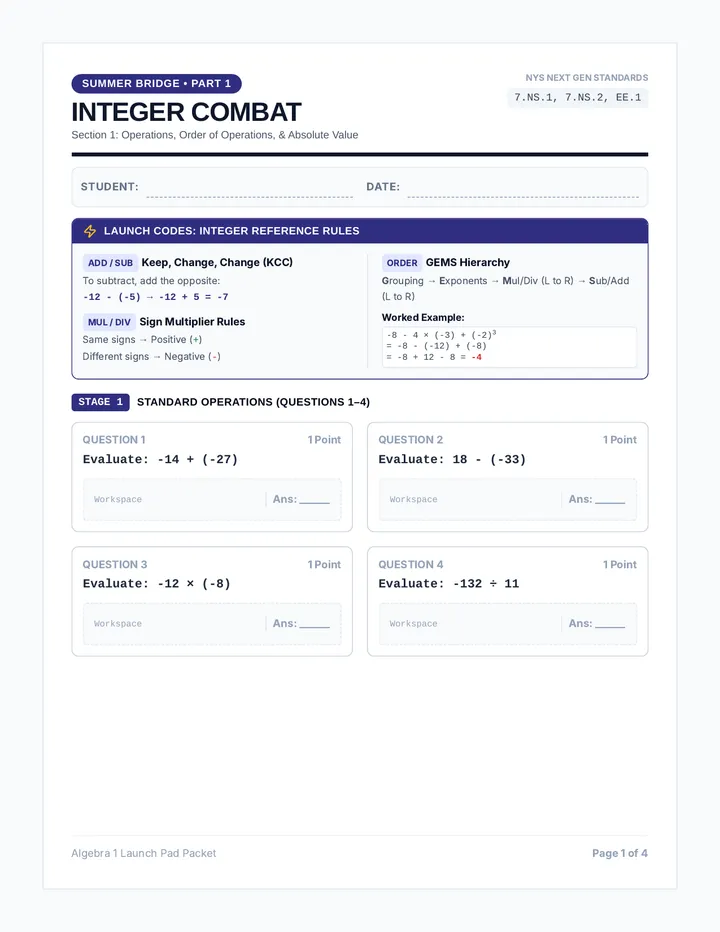
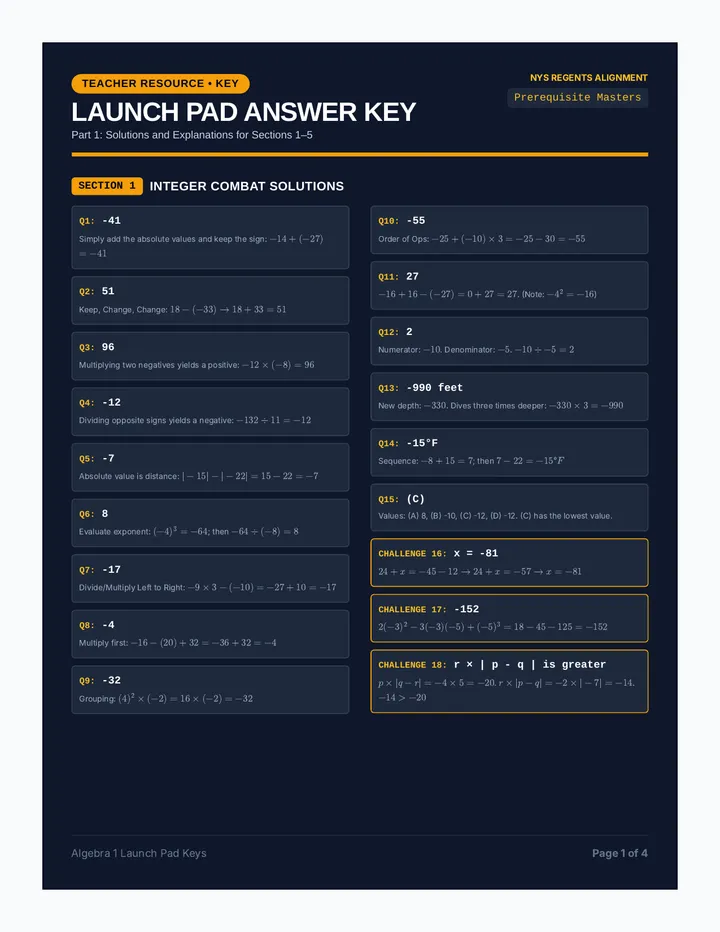
A comprehensive lesson covering addition, subtraction, multiplication, and division of integers using visual models and algorithmic rules.
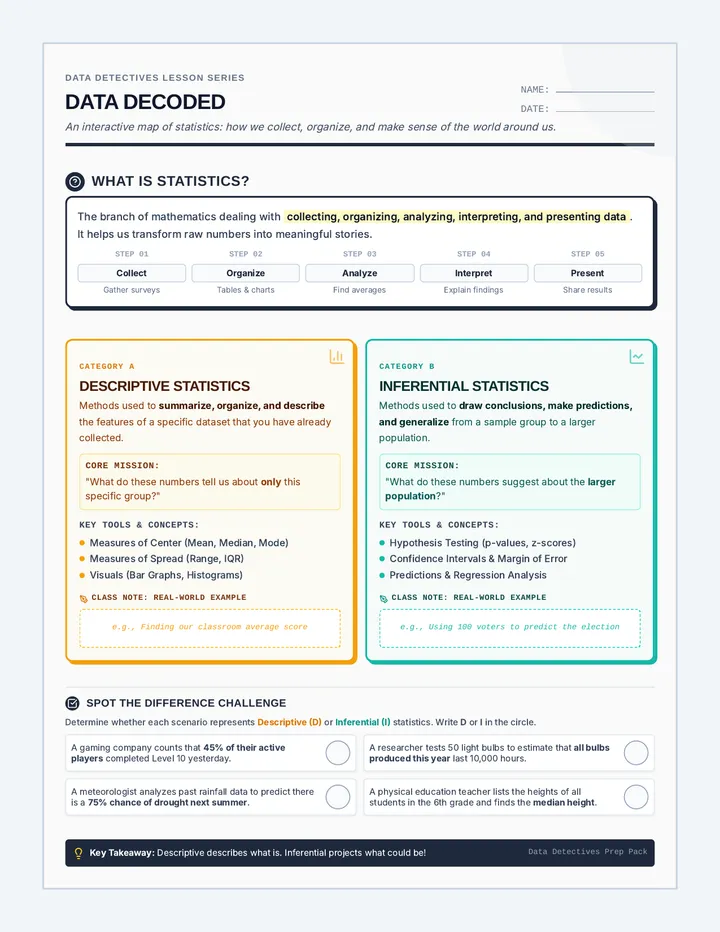
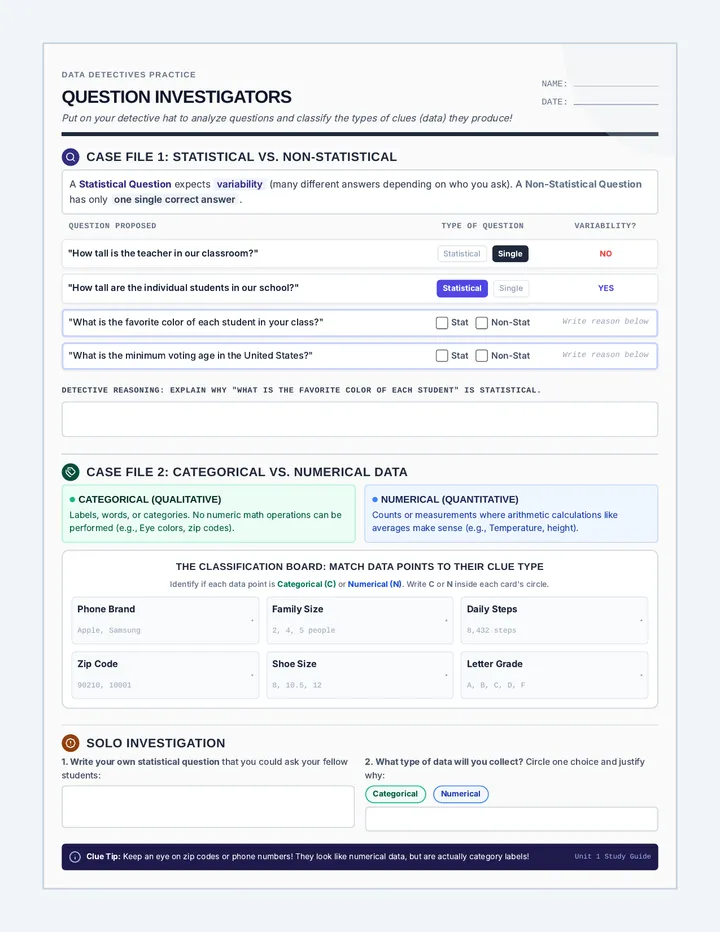
A summative assessment evaluating mastery of the Data Decoder sequence. Students apply their skills to a final case study involving complex data analysis and interpretation.
A deep dive into distinguishing between correlation and causation. Students analyze the correlation coefficient (r) and explore how external factors can influence perceived relationships between variables.
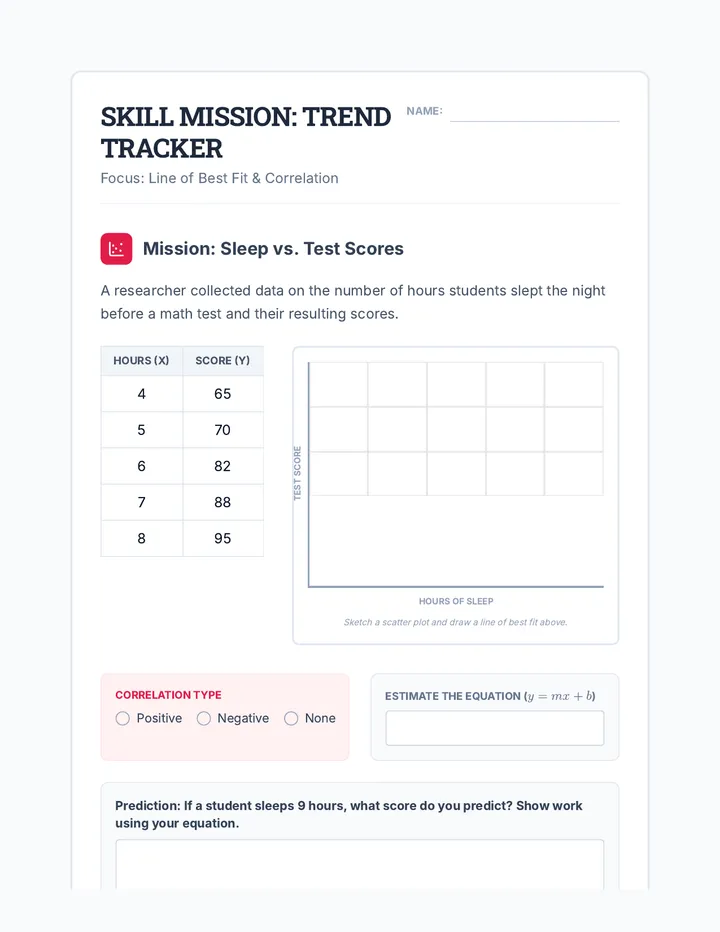
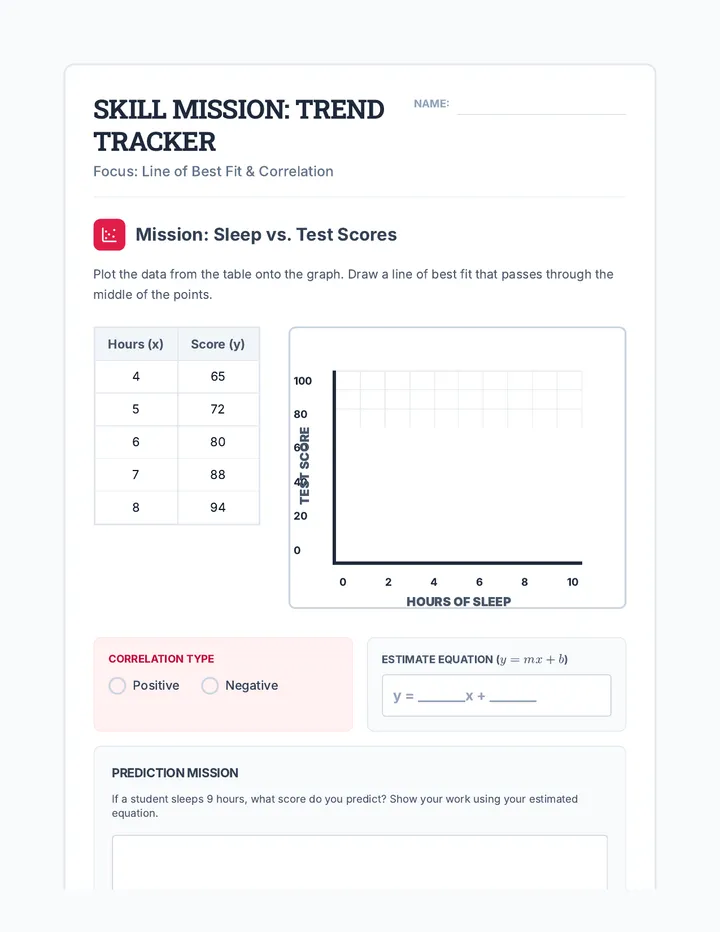
Explores bivariate data through scatter plots, trend lines, and the basics of linear regression. Students learn to use technology or manual methods to find the line of best fit and interpret the slope and intercept.
Instruction on organizing and interpreting categorical data using two-way frequency tables. Students calculate joint, marginal, and conditional relative frequencies to find associations between variables.