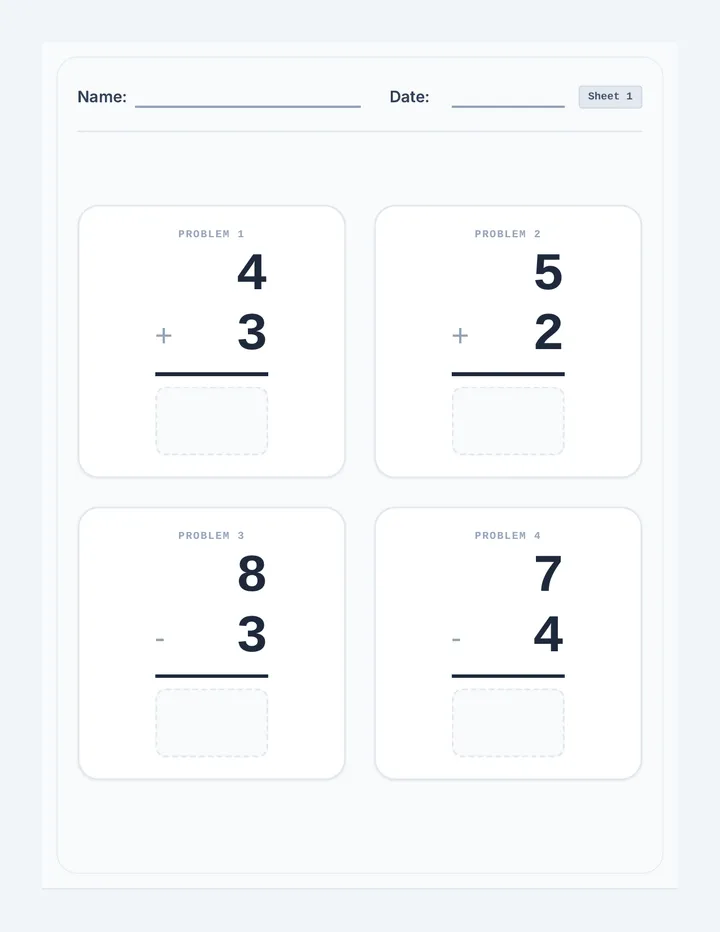
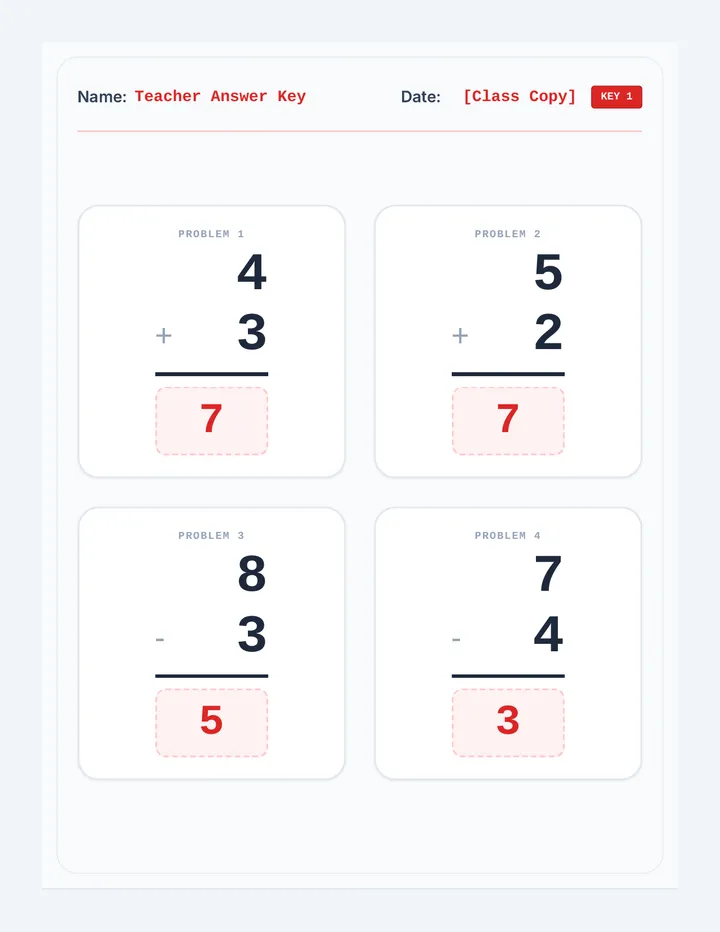
A cumulative review and assessment where students solve mixed addition and subtraction problems using their choice of tools.
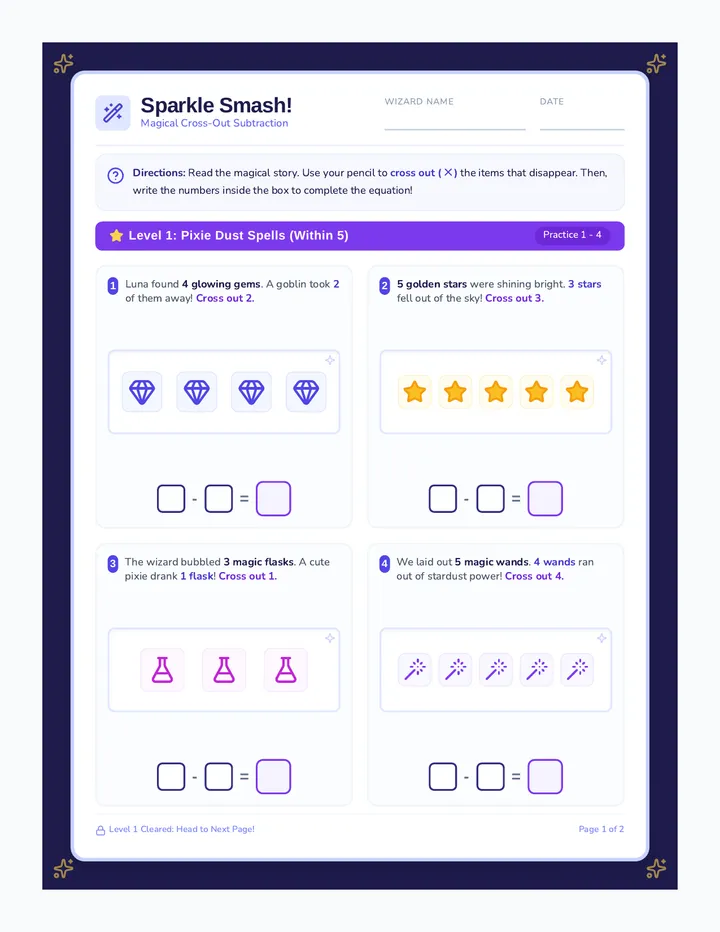
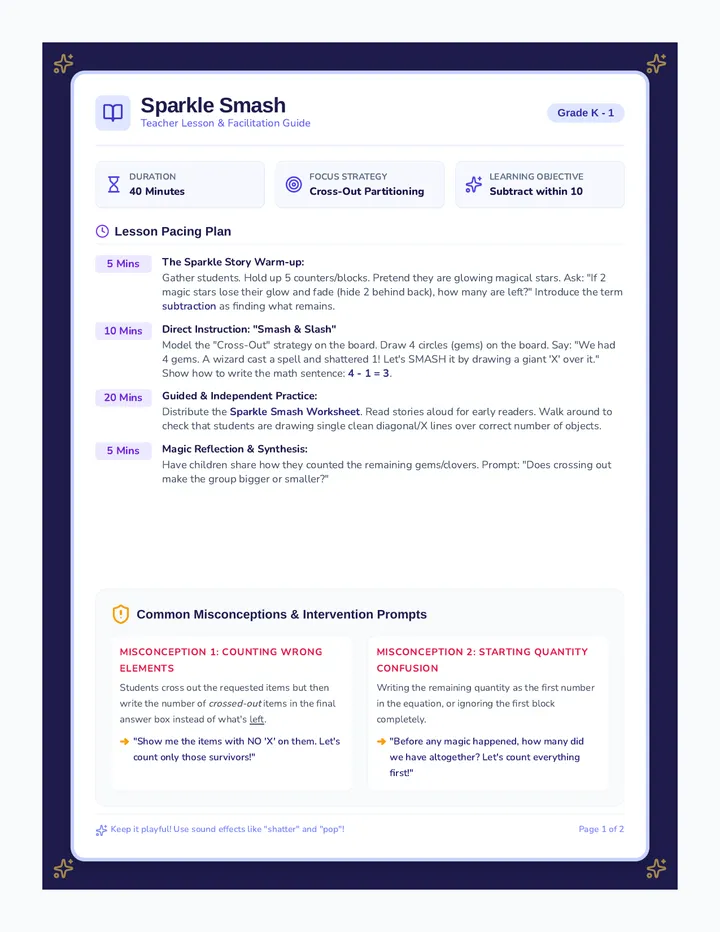
A magical introduction to subtraction within 10 using cross-out strategies with glowing stars, pixie dust, and magical gems.
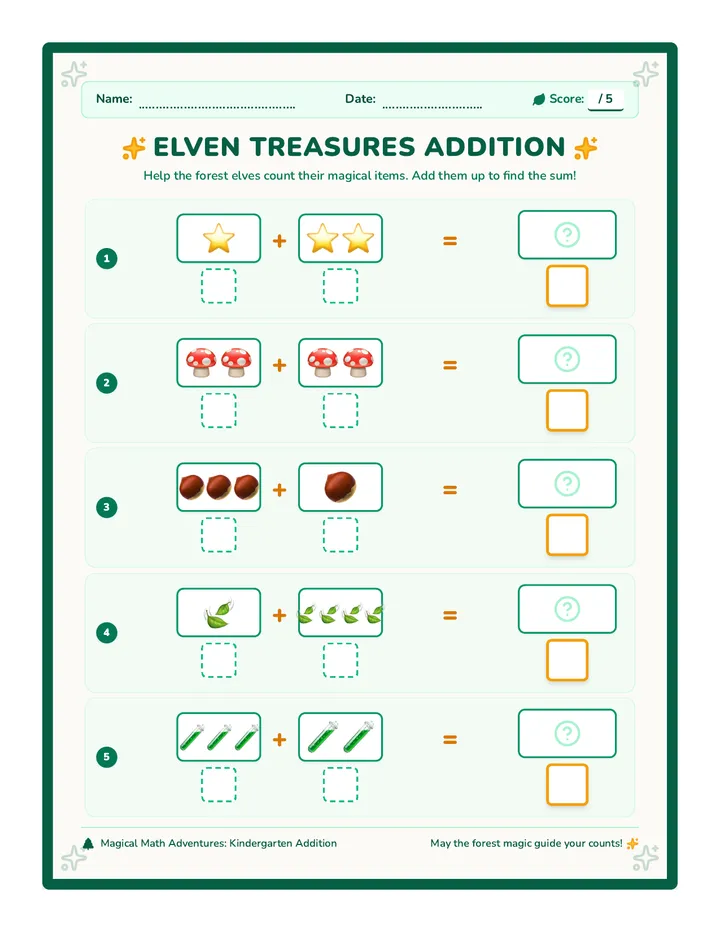
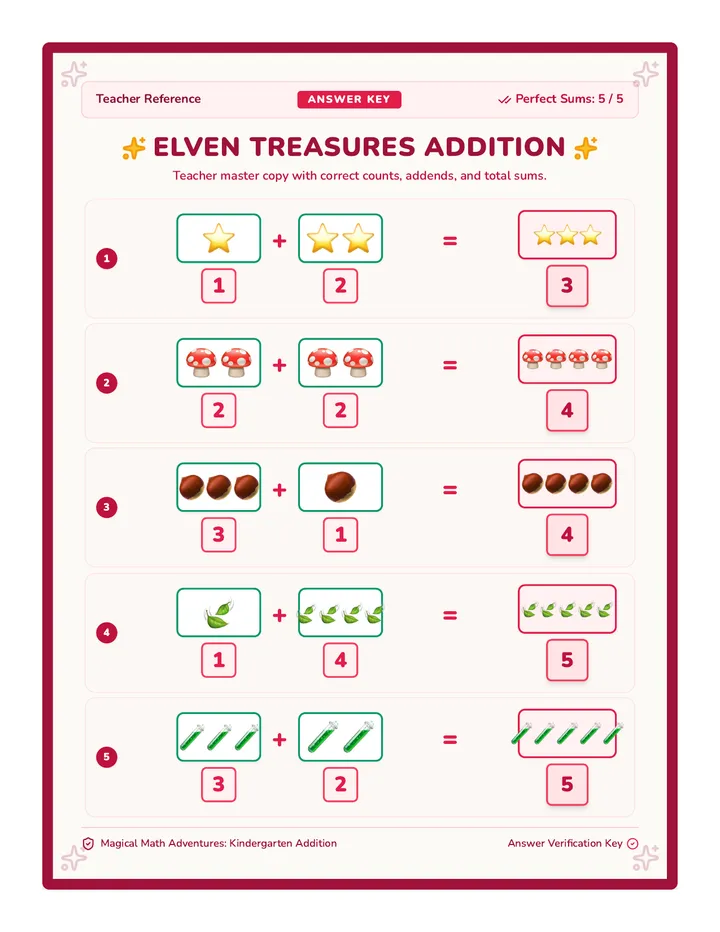
An introductory math lesson focused on picture addition up to 5 using cute elven items and forest treasures, designed to engage early kindergarteners in basic counting and operations.
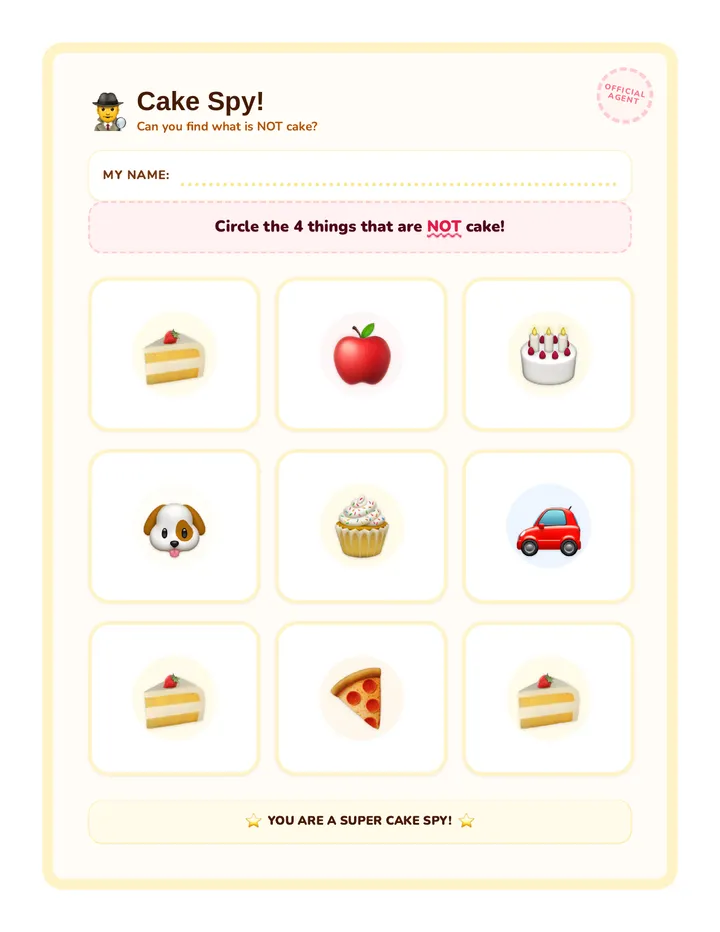
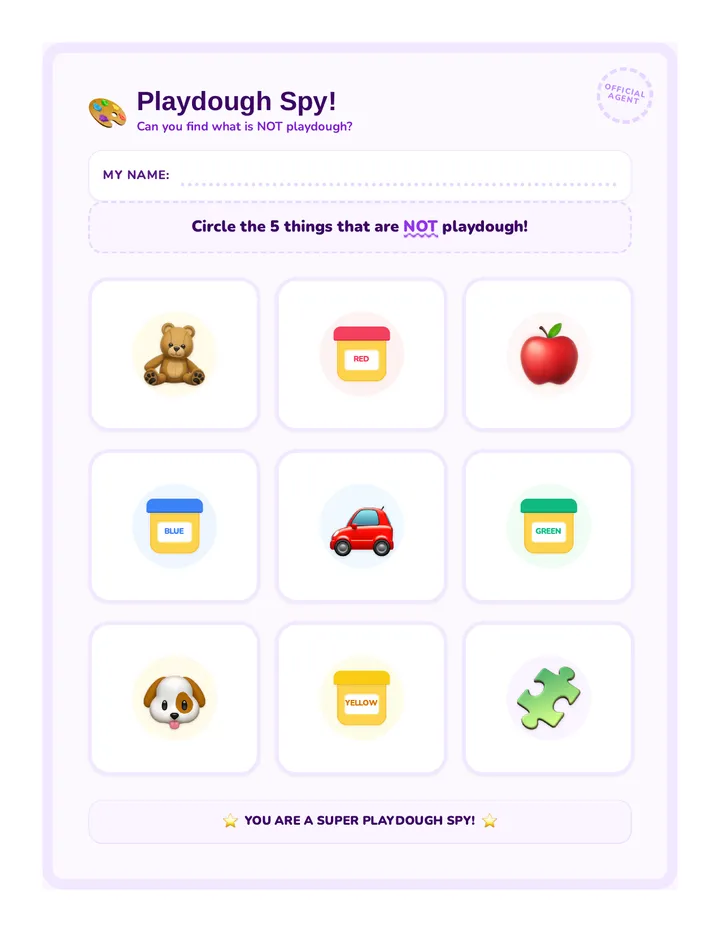
A foundational language and logic lesson for first graders to master the concept of negation ('not') through playful categorization activities.
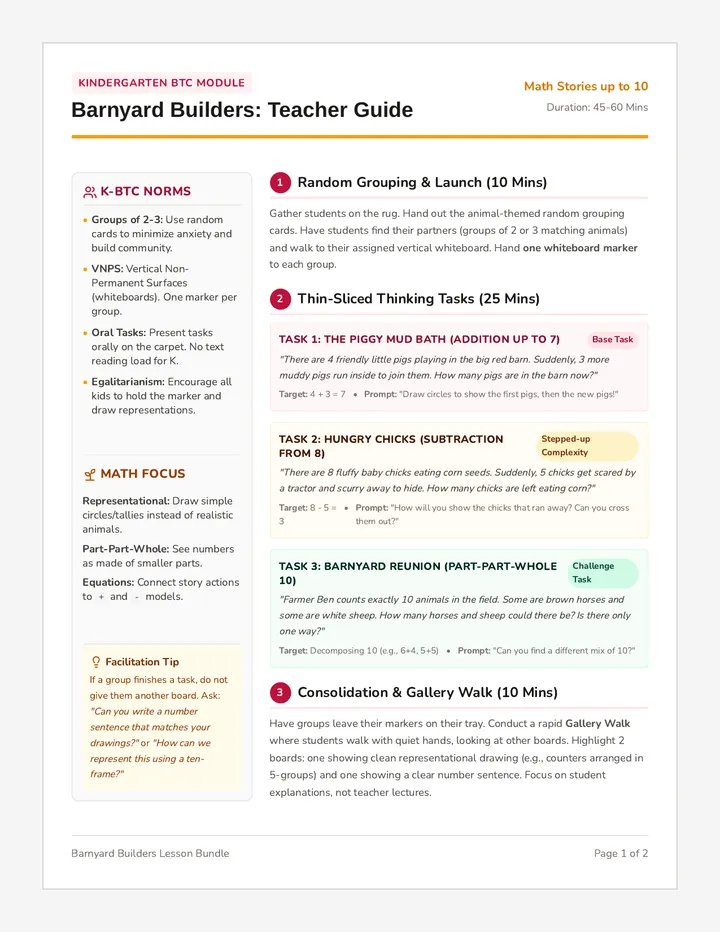
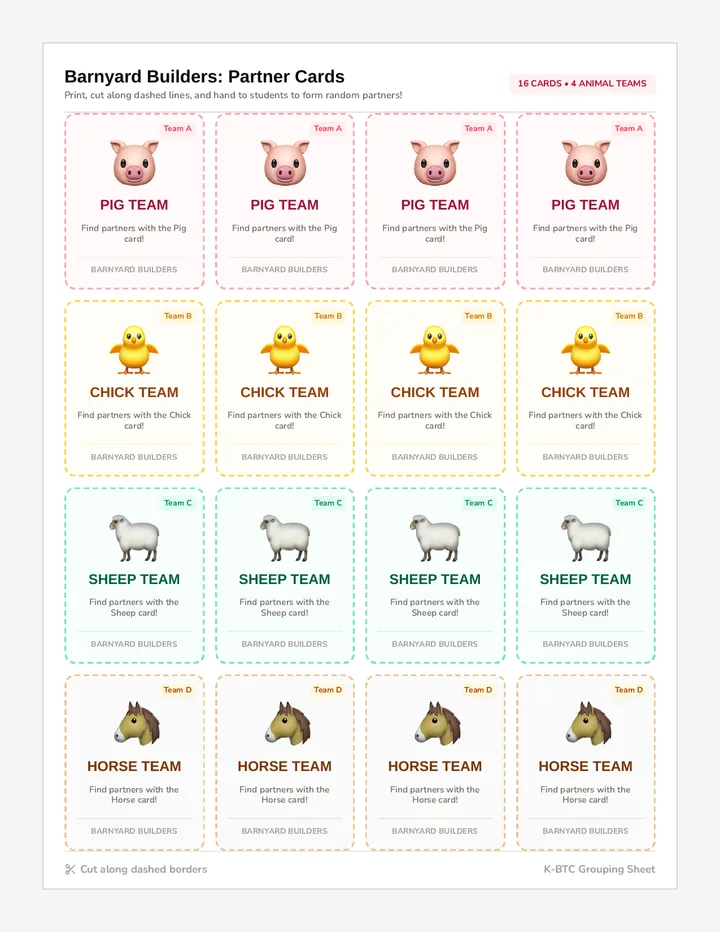
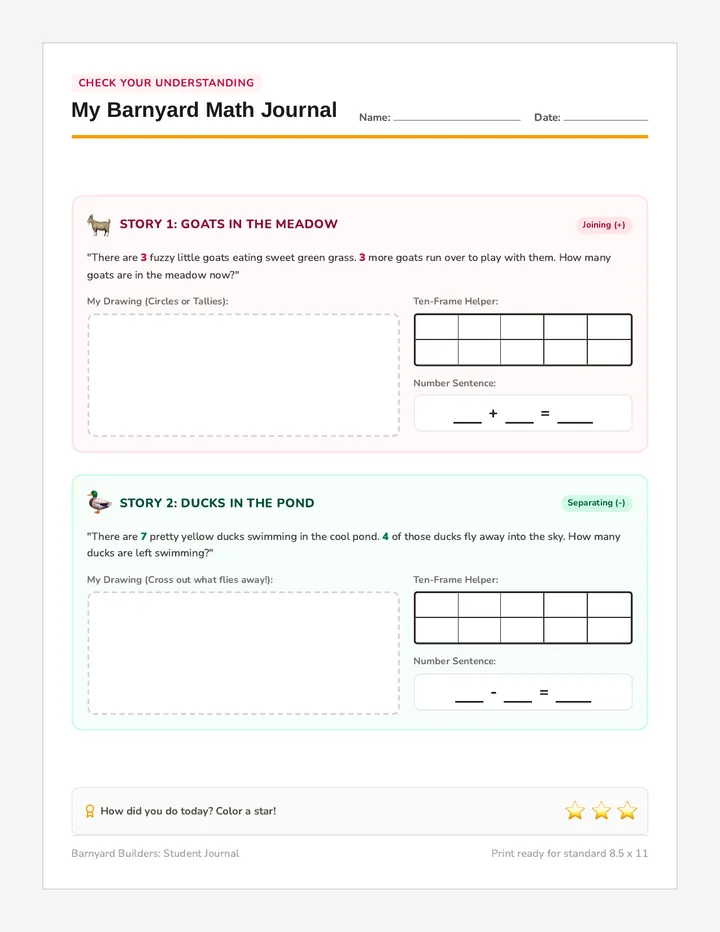
A Kindergarten Building Thinking Classroom (BTC) lesson on math story problems up to 10 using collaborative learning, representational drawings, and number sentences.
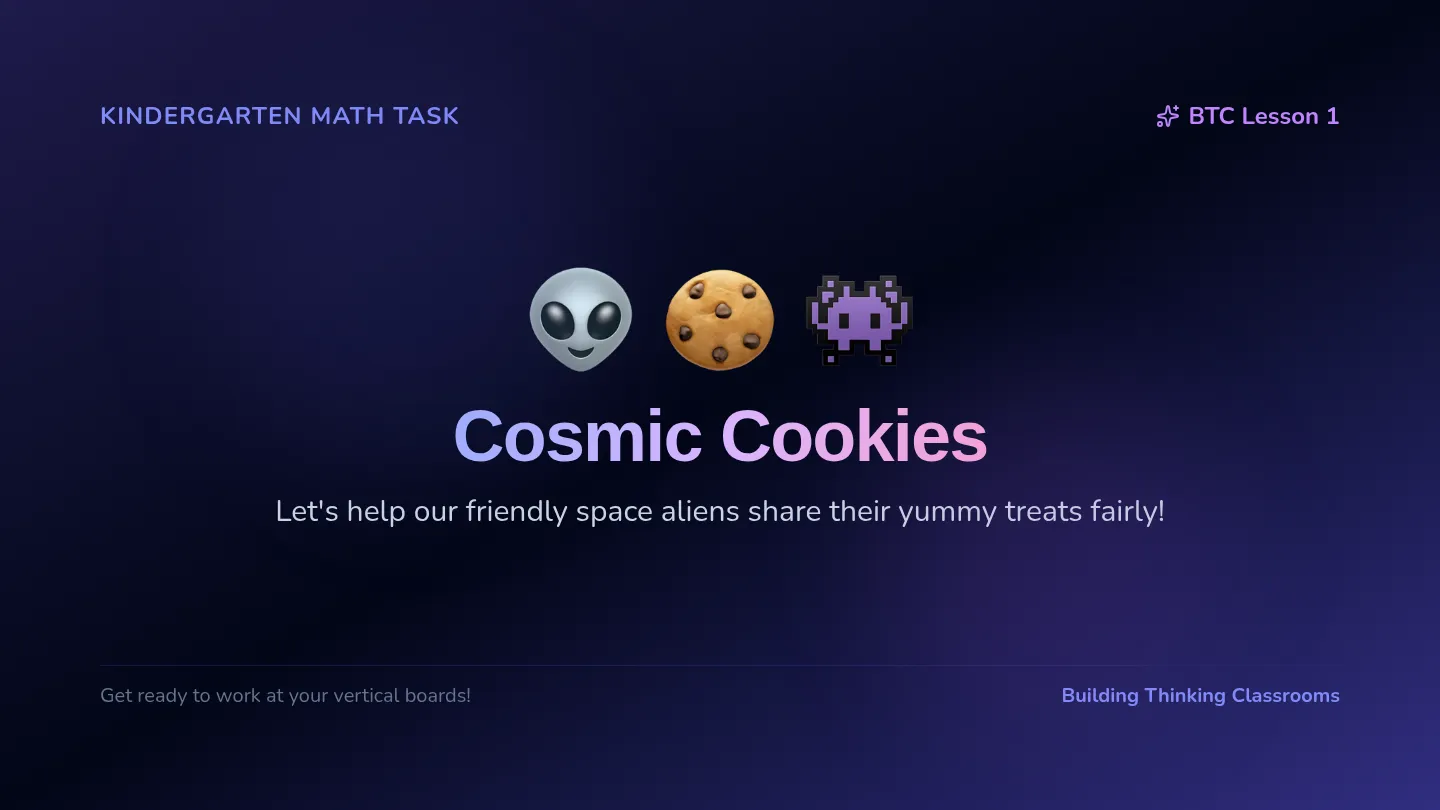
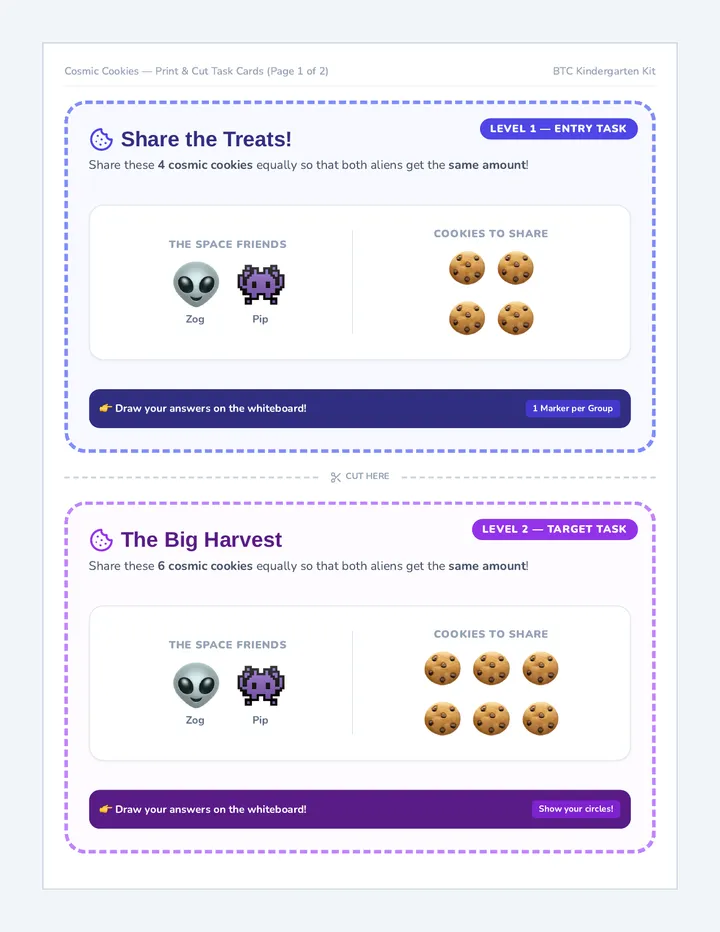
A BTC-inspired 15-minute kindergarten math lesson on fair sharing. Students work in random vertical groups to help adorable space aliens share cosmic cookies equally.
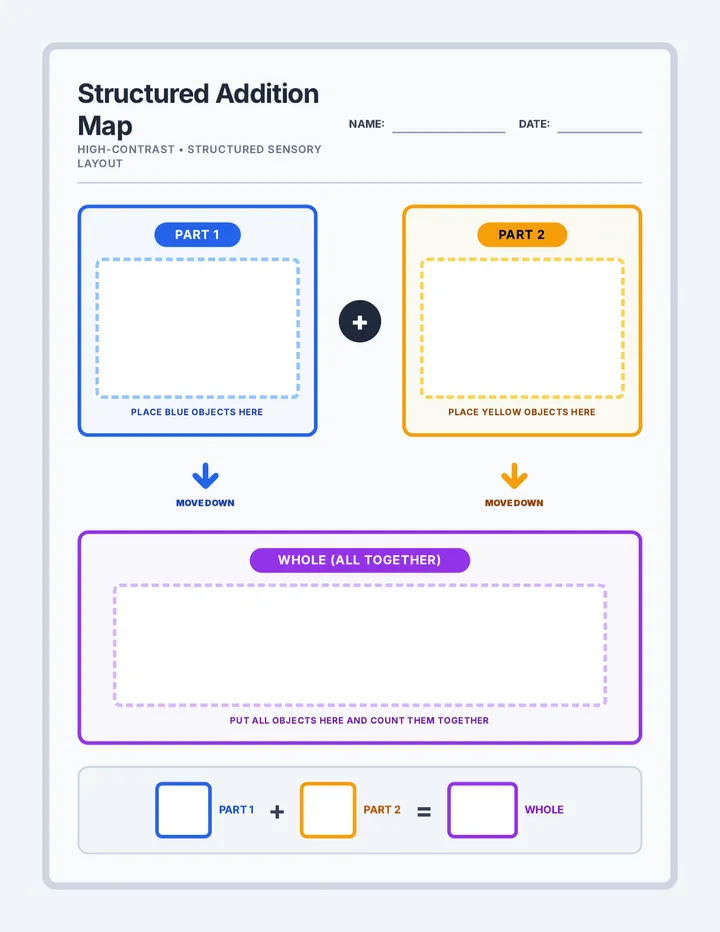
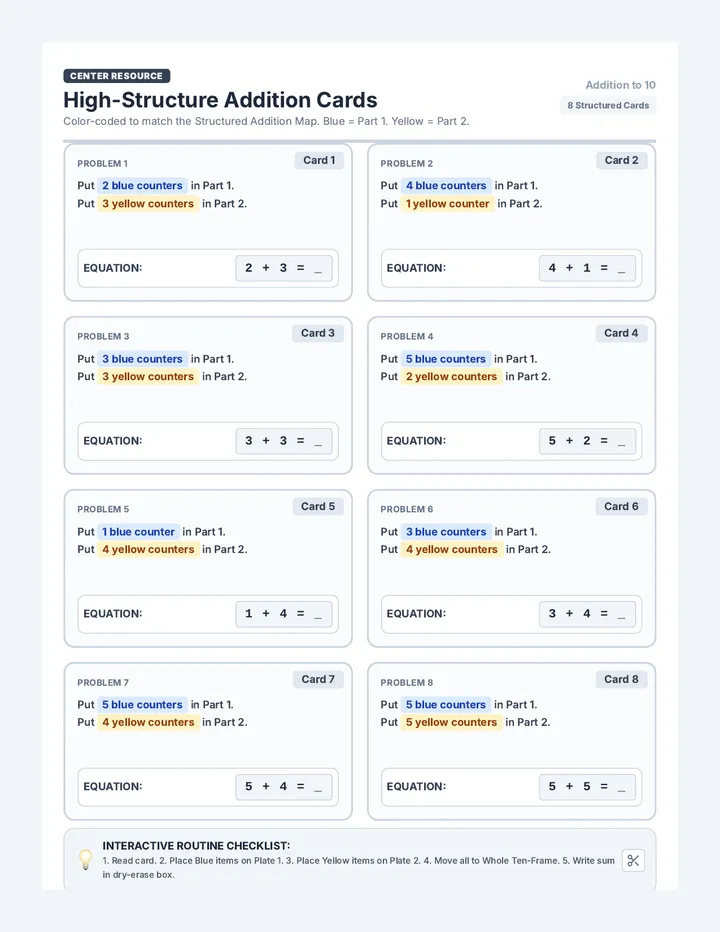
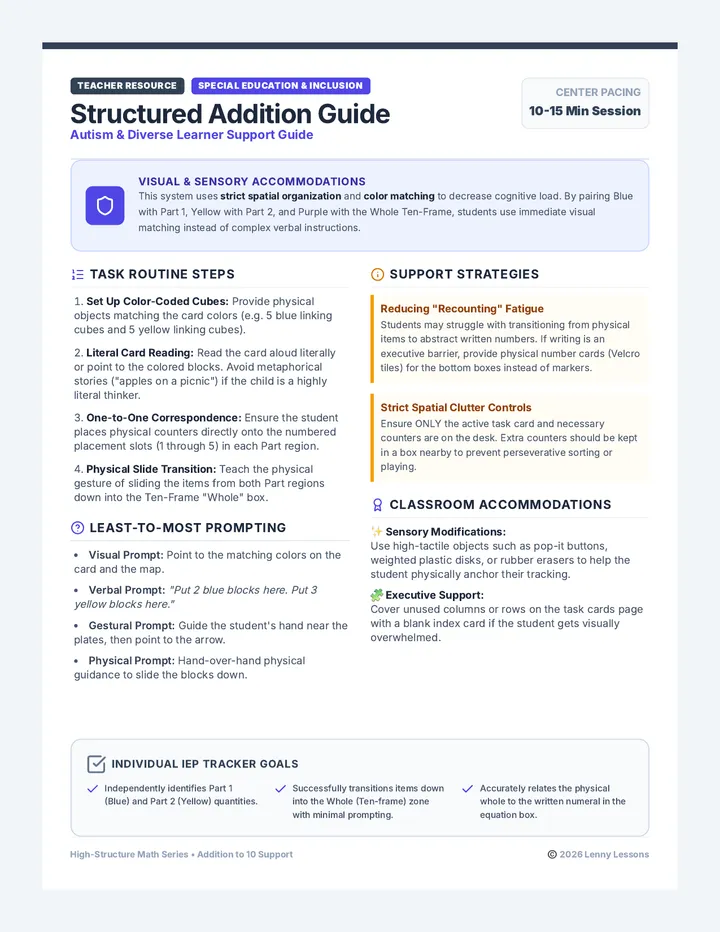
An autism-friendly, high-structure math center featuring a distraction-free Part-Part-Whole Mat with solid, clean workspaces and color-coded task cards for structured physical addition.
A collection of 20 high-frequency printable math worksheets designed to build addition and subtraction fluency within 20, containing standard vertical algorithm problems.
A foundational lesson exploring how objects, animals, and helpers in our world connect. Students learn to identify associations and explain the logical relationships between paired items through interactive slides, drawing lines, and cut-and-paste worksheets.
Une séance de mathématiques complète de 25 minutes pour la maternelle (PS/MS/GS) sur le thème de la ferme. Comprend un guide de préparation détaillé pour l'enseignant et des fiches de jeu/évaluation imprimables pour le dénombrement, le tri et la comparaison.
A supportive guide and flyer for families to foster early math skills during the summer before kindergarten, emphasizing hands-on play, spatial vocabulary, and everyday discovery.
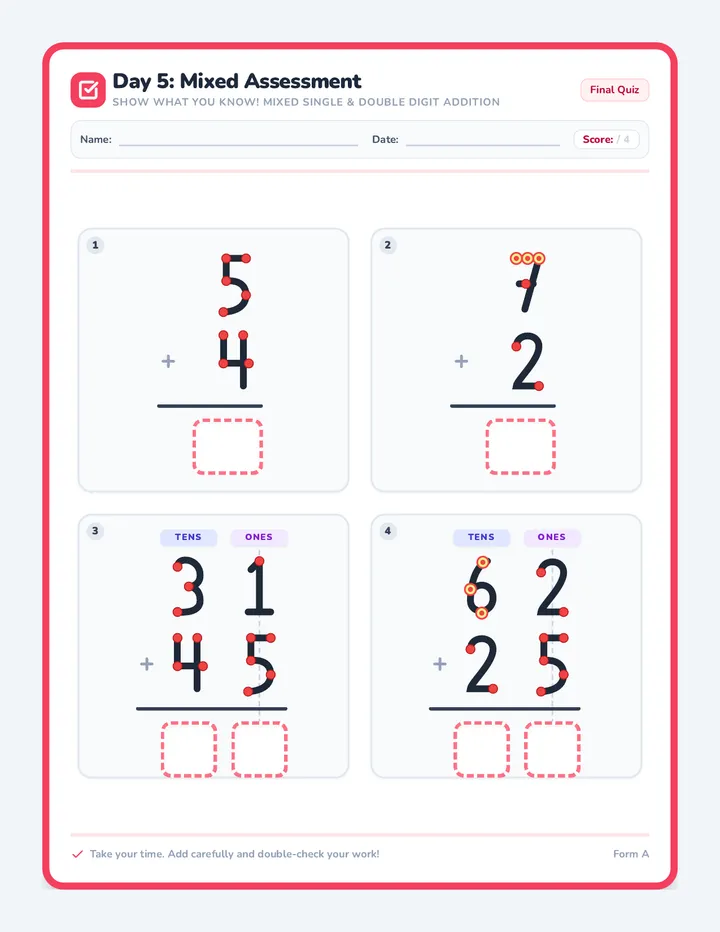
A final day of mixed practice and a structured assessment to measure mastery of single-digit and double-digit touchpoint addition.
Reinforcing double-digit addition using scaffolded materials where grid lines and touchpoints are gradually faded to foster mental math and fluency.
Transitioning to double-digit addition without regrouping, with high-contrast vertical dividers and large columns to support tracking.