Students learn strategies for managing silence and thinking time while the microphone is active. They practice using the 'pause' command or simply waiting quietly without saying filler words like 'um' or 'uh' that appear in text.
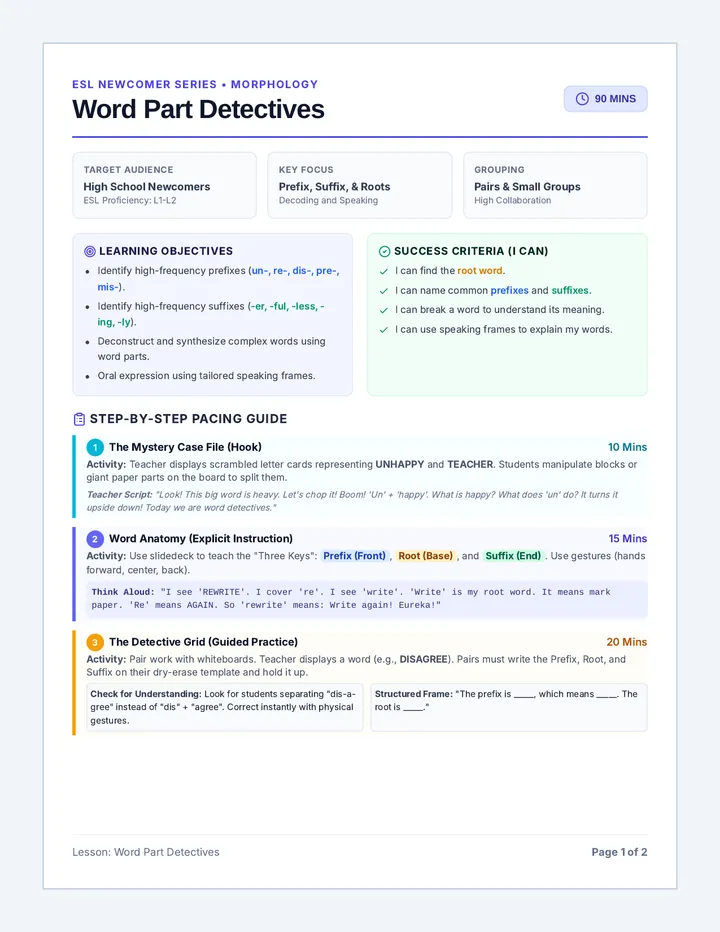
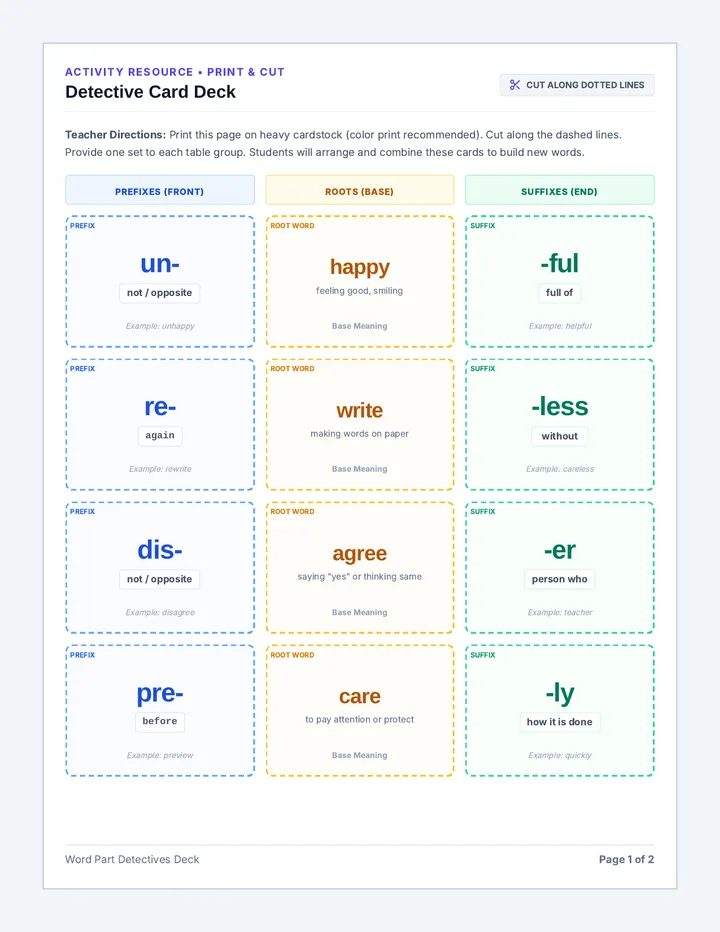
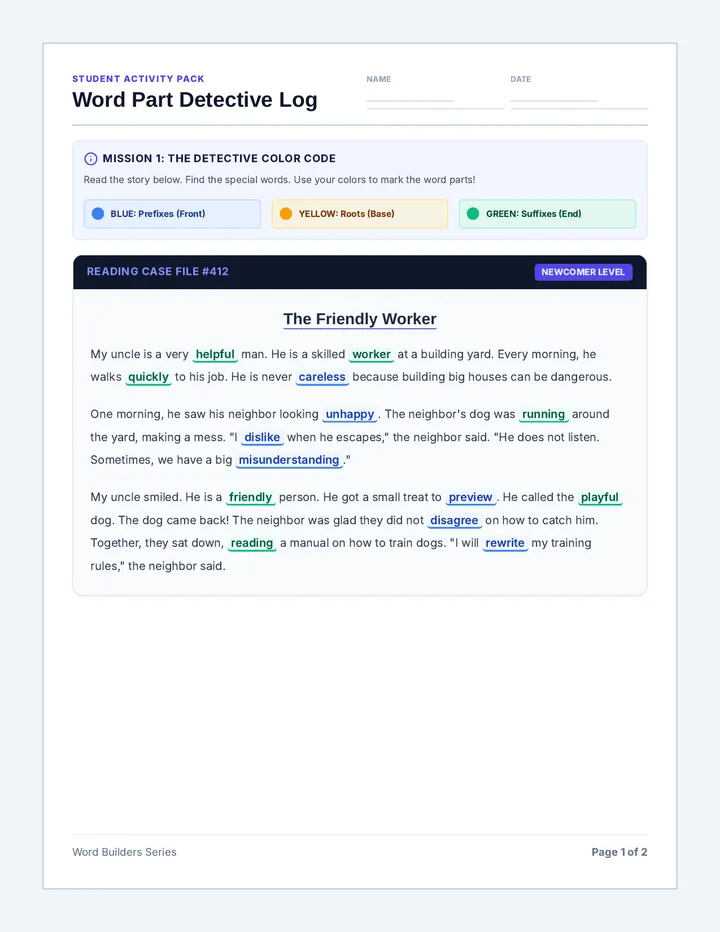
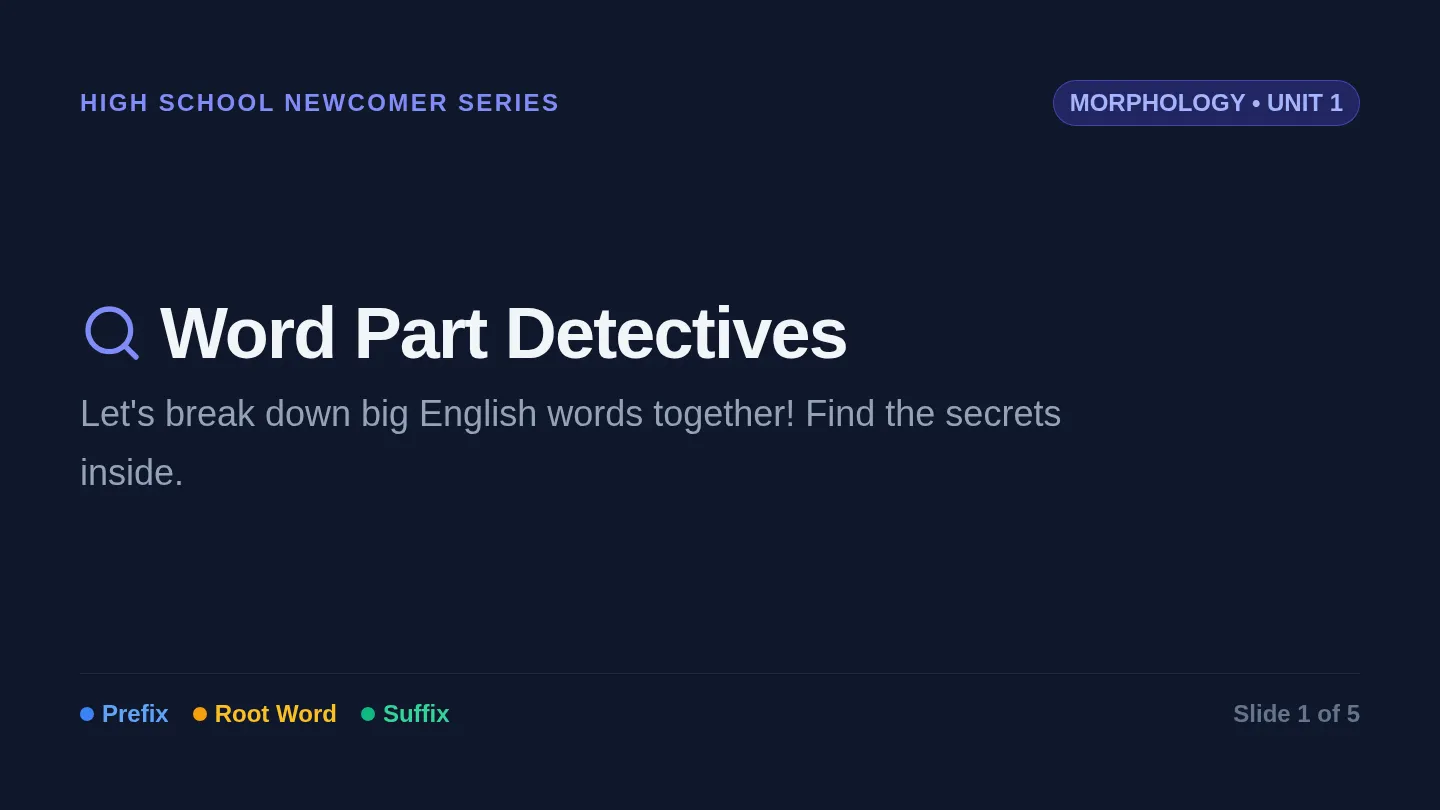
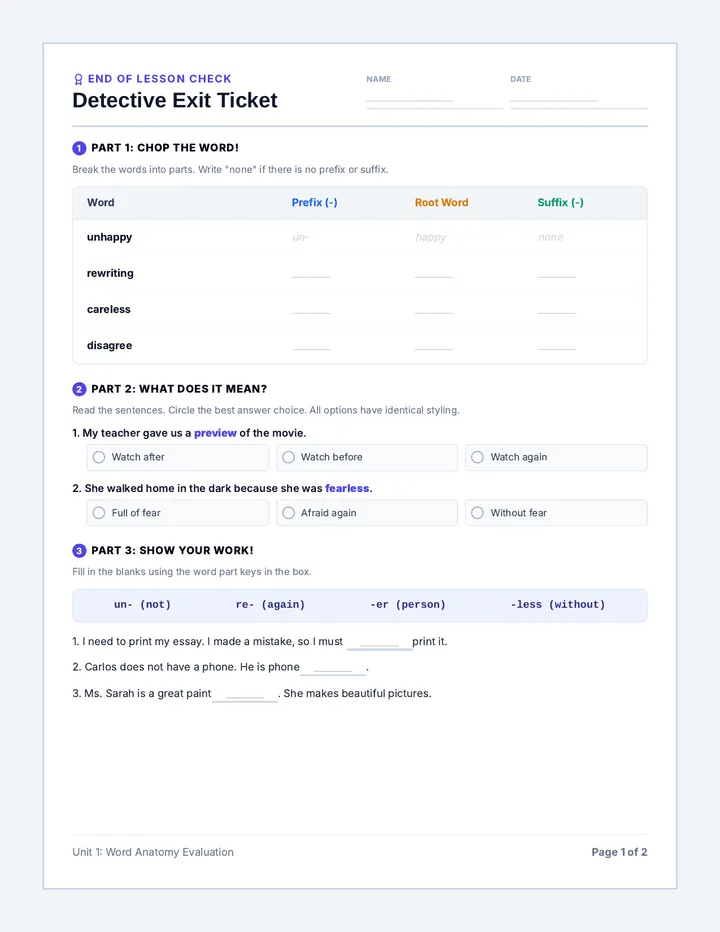
A dynamic 90-minute lesson where newcomers learn to identify root words, prefixes, and suffixes. Through color-coded physical cards, collaborative games, and visual anchor charts, students practice decoding unfamiliar words and speaking with structured sentence frames.
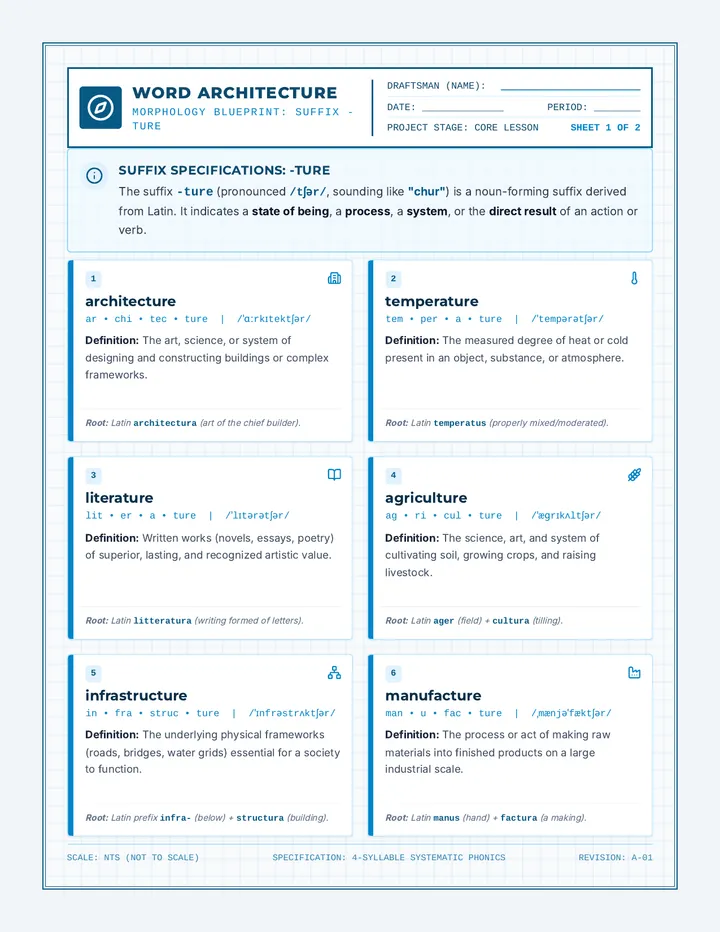
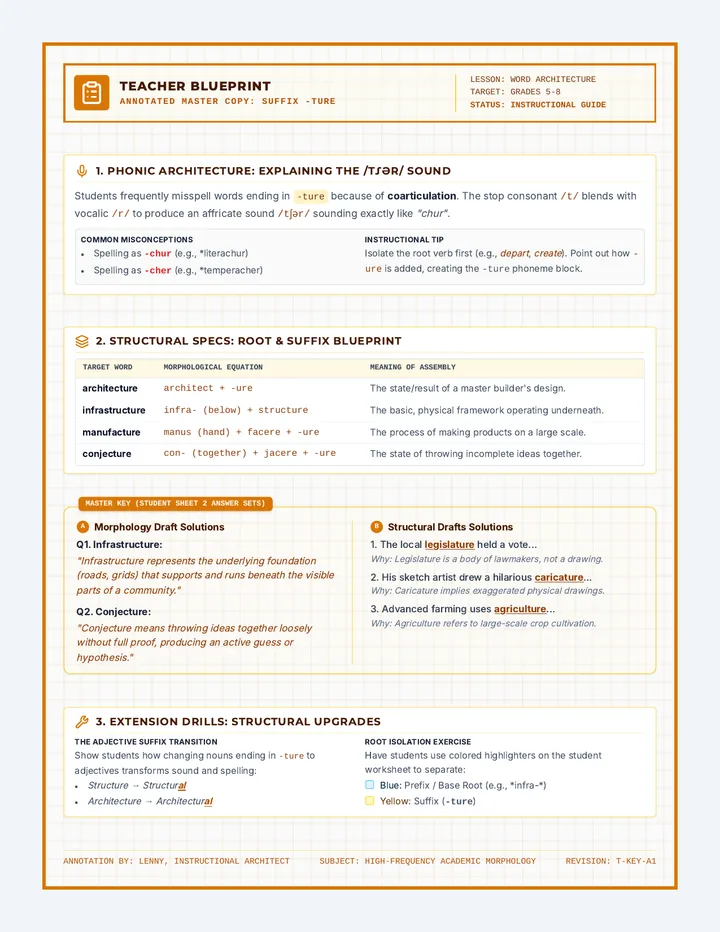
A middle school vocabulary lesson exploring 3-to-4 syllable academic words ending in the suffix -ture. Students examine pronunciation, morphological structure, definitions, and applications through a technical drafting/blueprint theme.
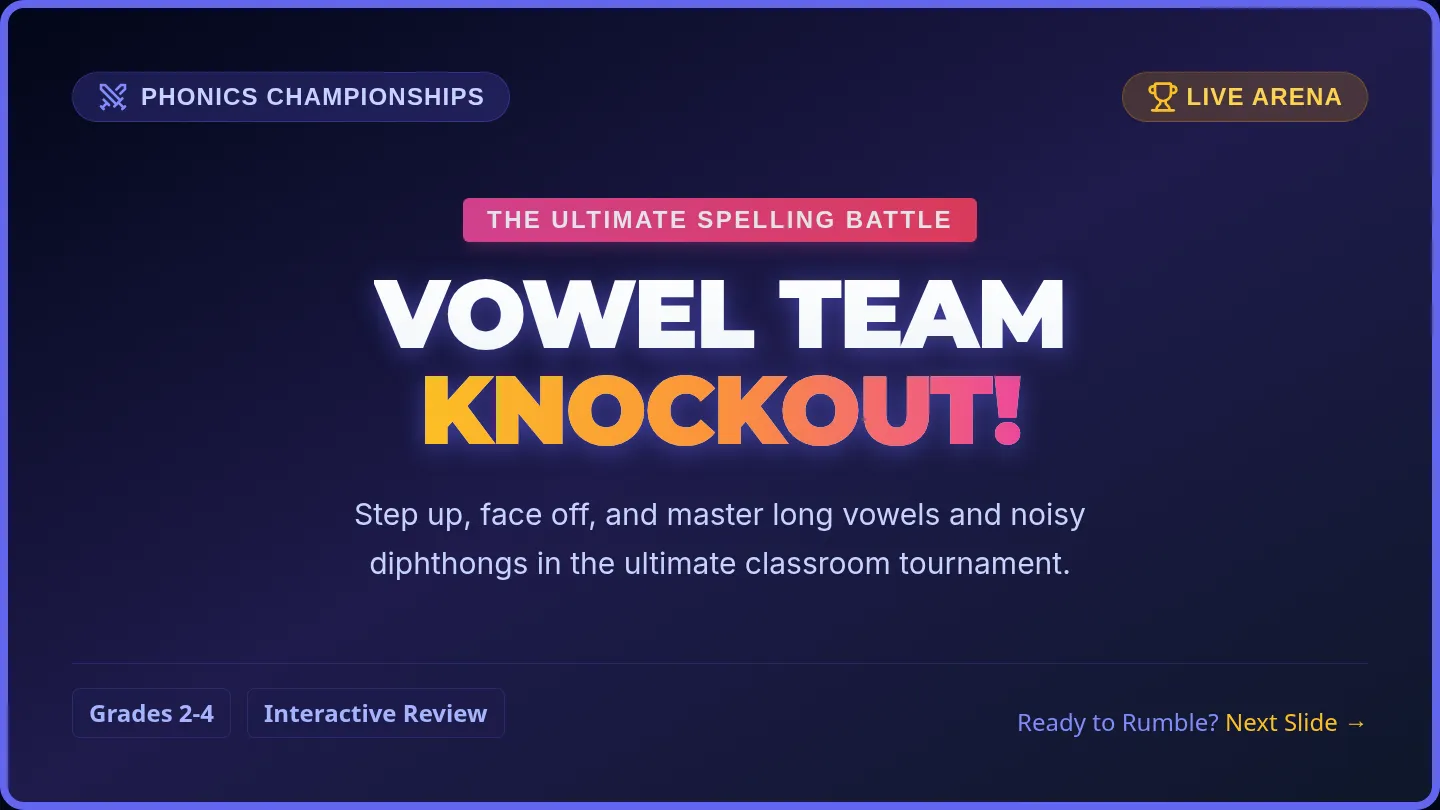
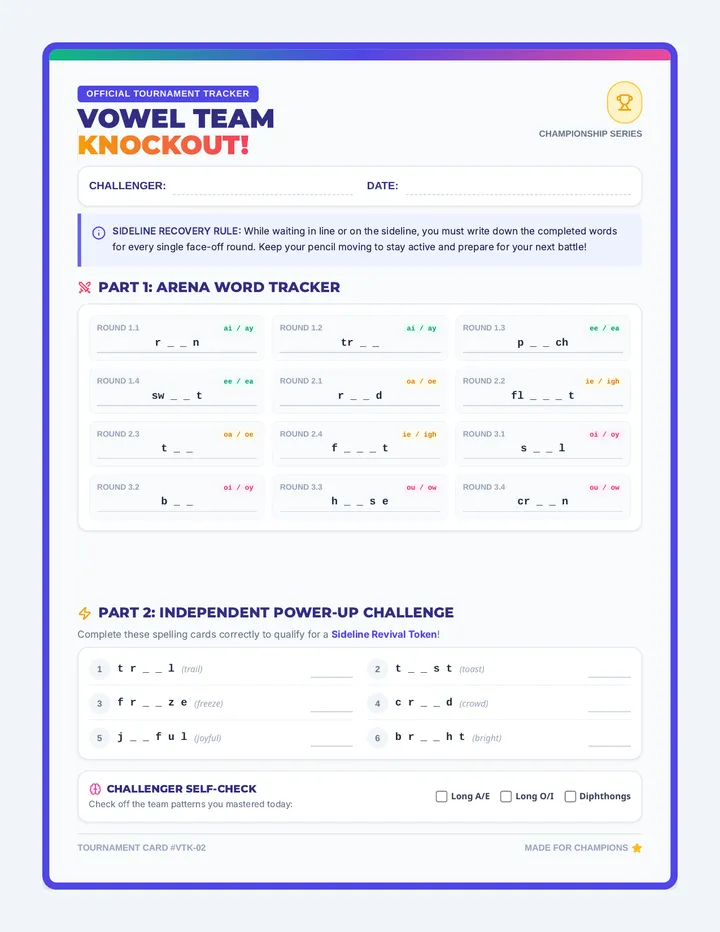
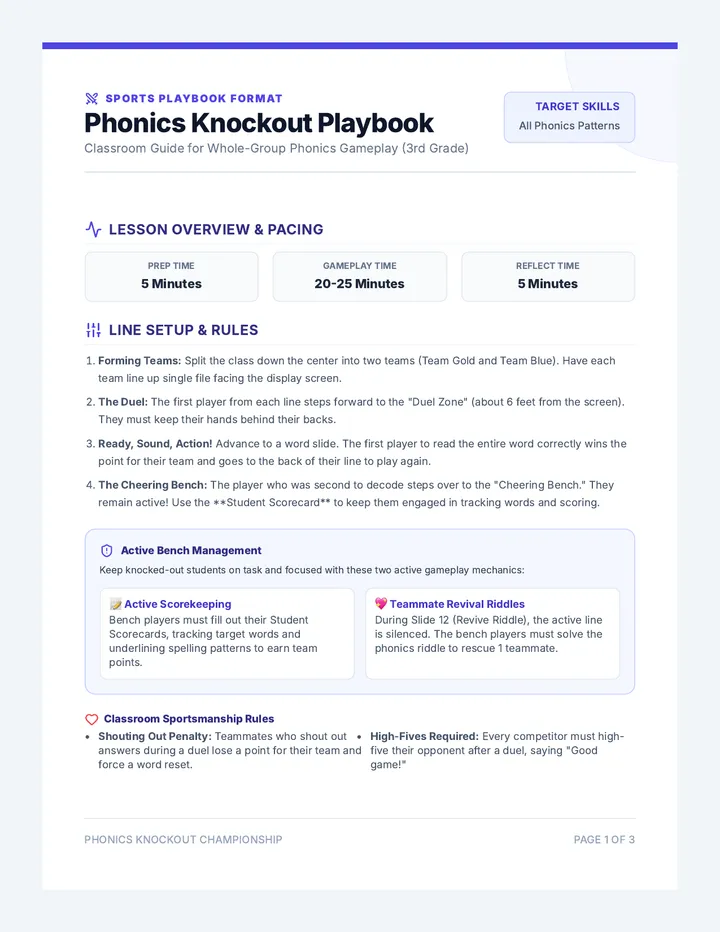
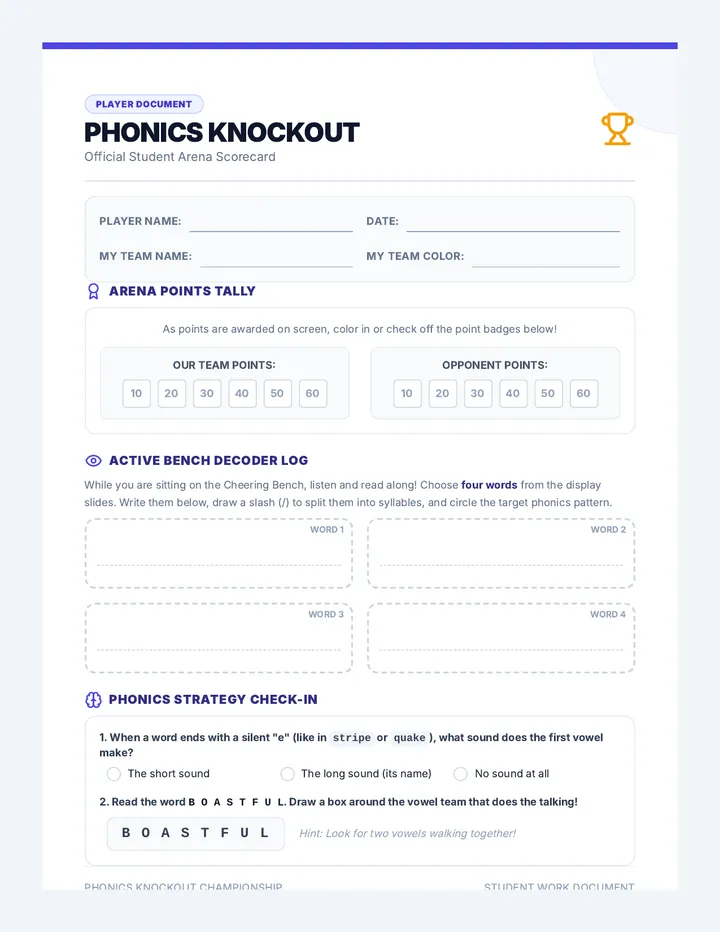
An energetic classroom phonics lesson where students compete in a friendly Knockout tournament to master vowel teams and diphthongs. Includes interactive instructional and gameplay slides, plus a student tracking sheet.
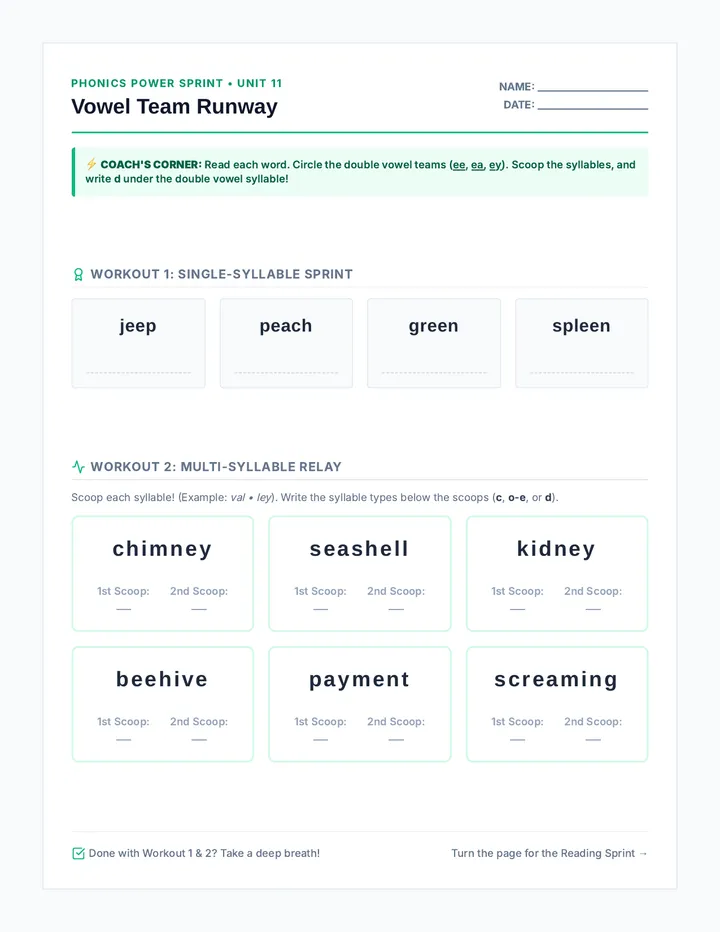
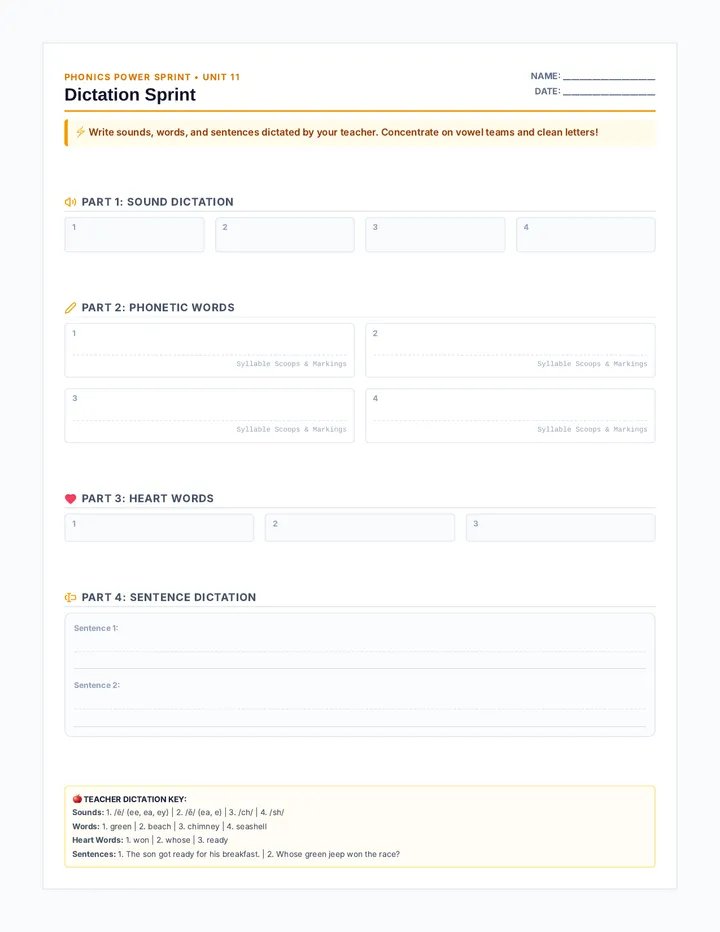
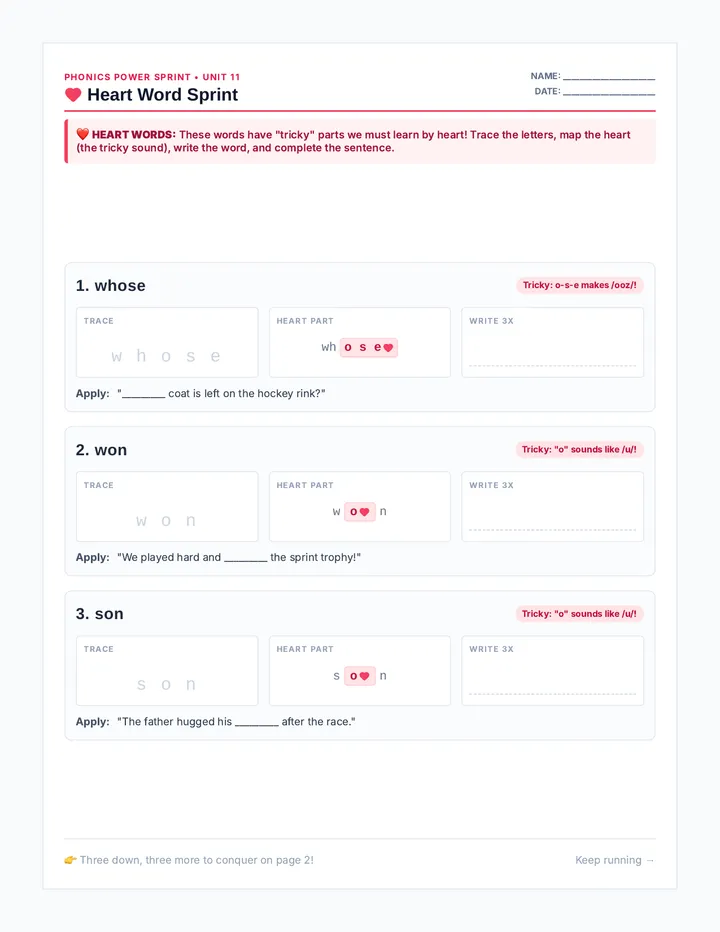
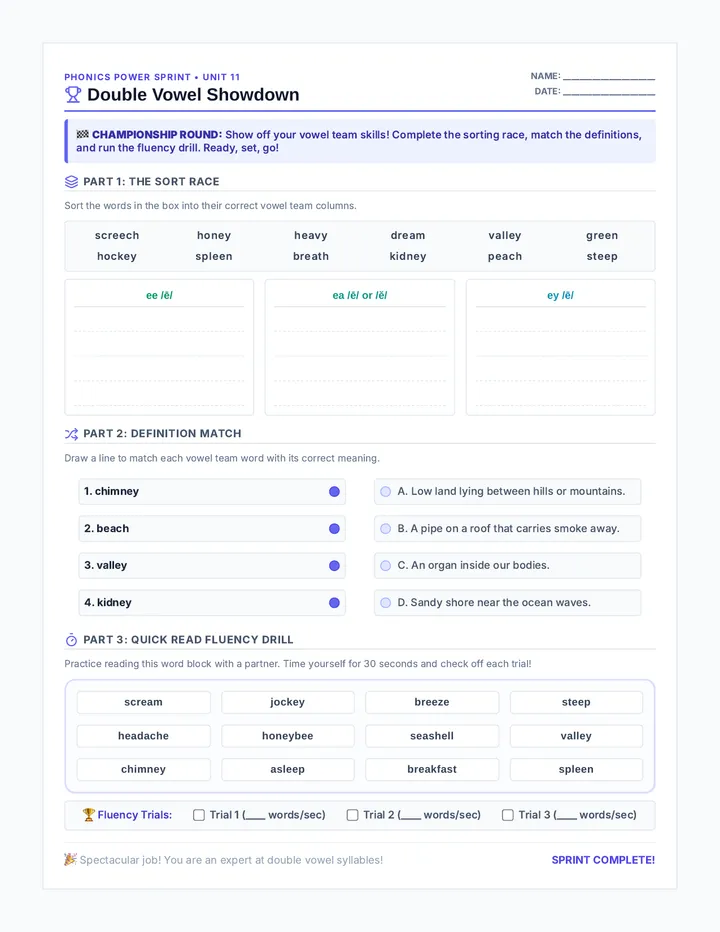
An intensive review of the double vowel teams 'ee', 'ea', and 'ey' in single and multi-syllabic words. This lesson compresses Unit 11 into a high-octane 1.5-day cycle featuring direct instruction, decodable text practice, and multi-sensory heart word spelling.
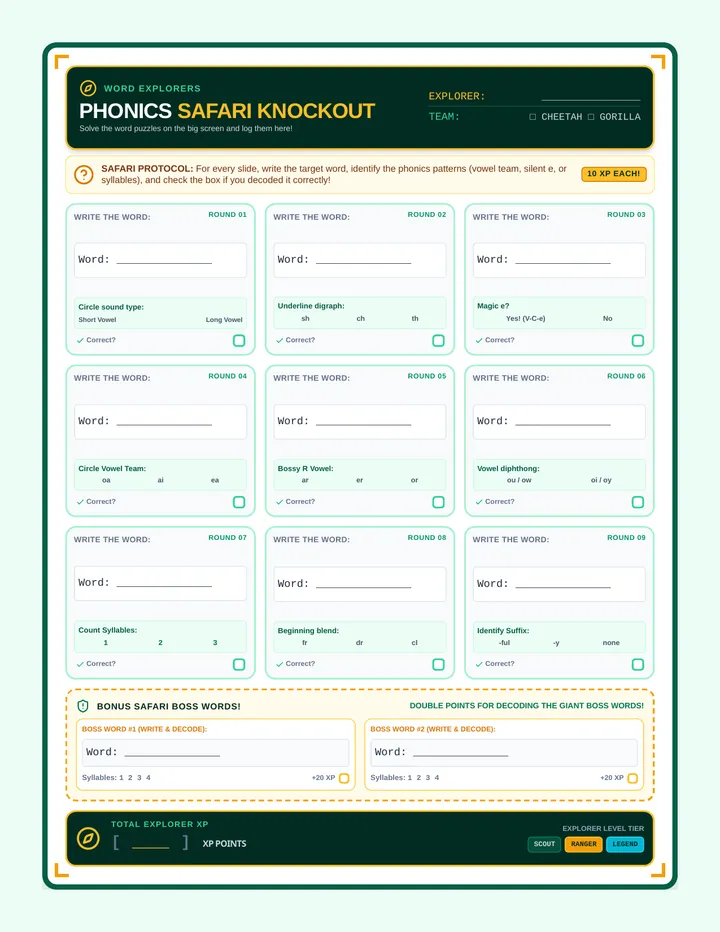
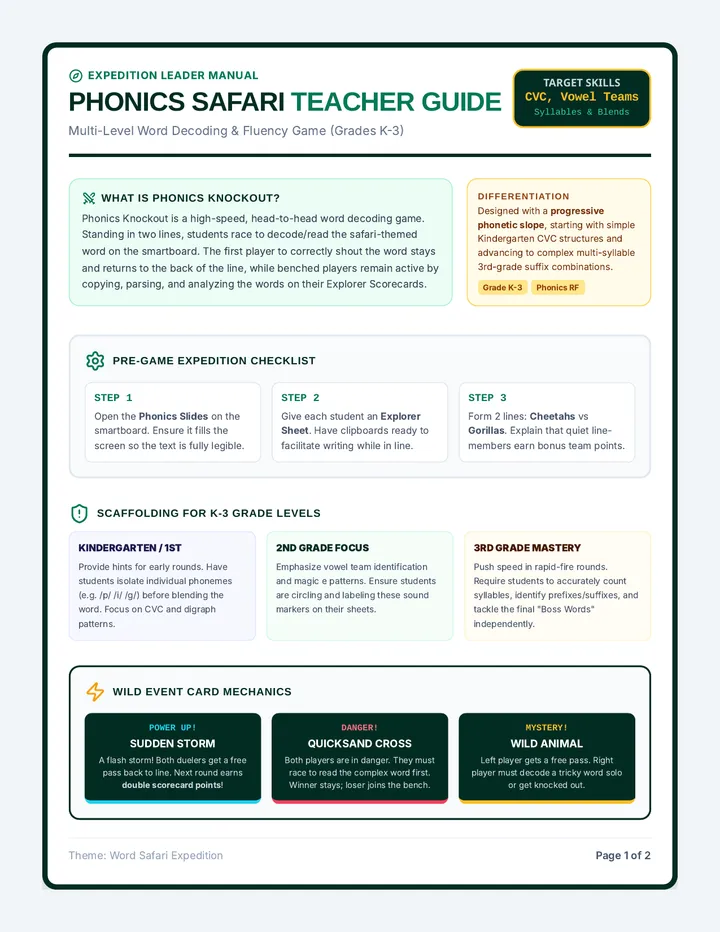
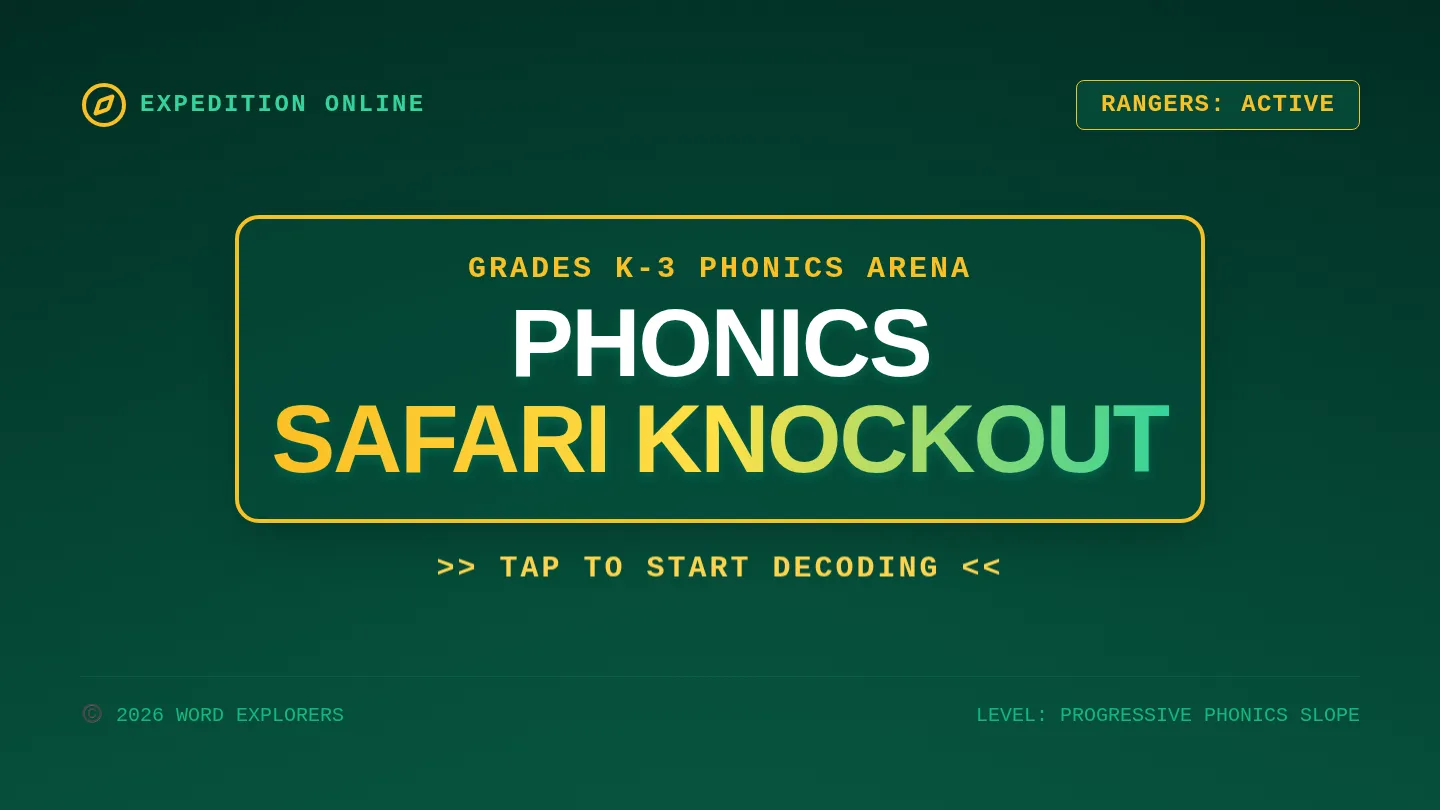
A high-energy, wild safari-themed classroom game for K-3 students focusing on key phonics skills including CVC words, silent 'e', vowel teams, and multi-syllable decoding. This lesson includes a widescreen smartboard presentation, a teacher facilitation guide with word keys, and an active-participation student tracker sheet.
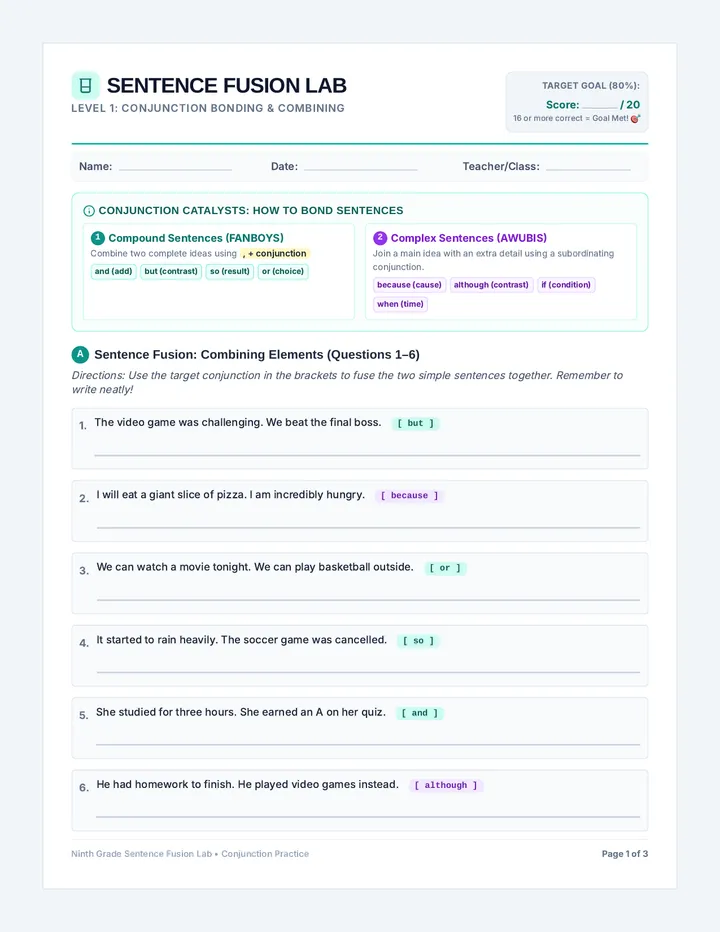
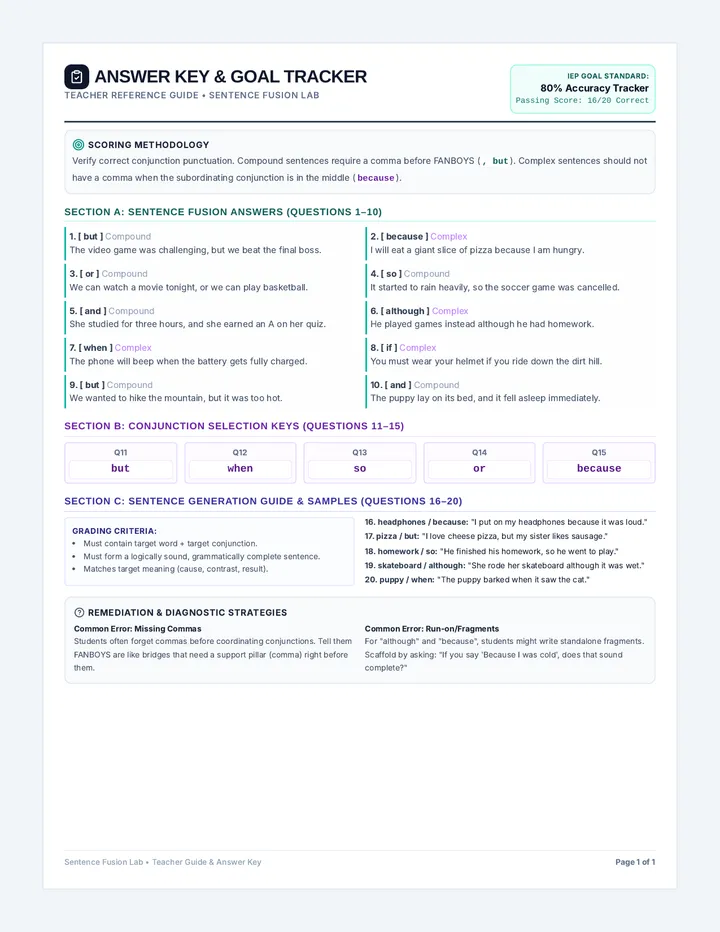
A highly scaffolded grammar and sentence-combining lesson designed for 9th-grade special education. Students learn to use coordinating and subordinating conjunctions to combine and generate compound and complex sentences.
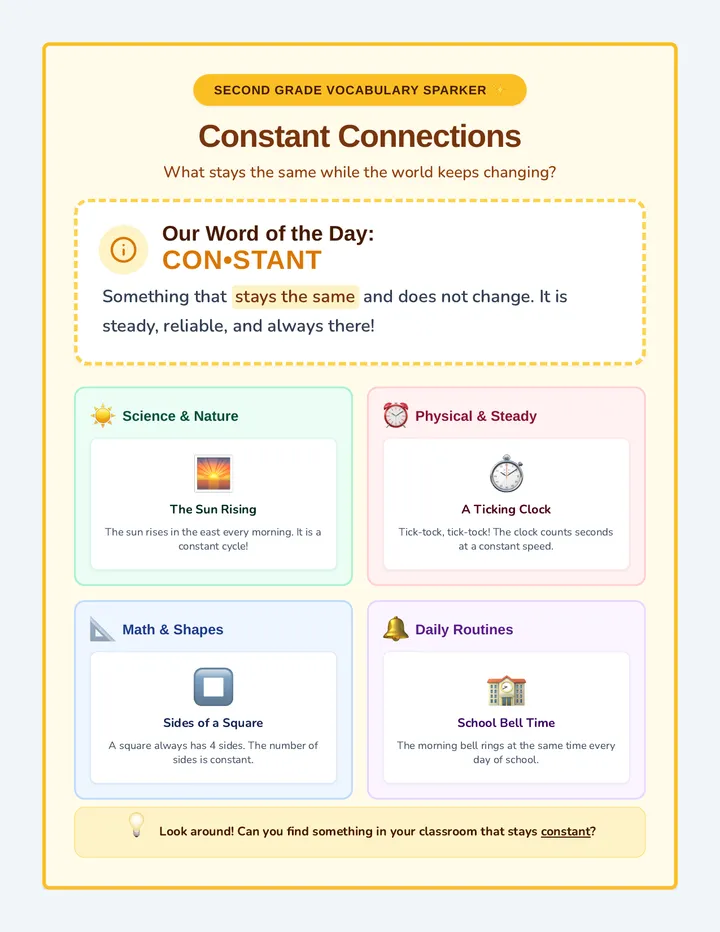
A second-grade vocabulary lesson introducing the word 'constant' through everyday examples in science, nature, math, and daily routines. Students engage with pocket-chart visual matching cards and an interactive sorting worksheet.
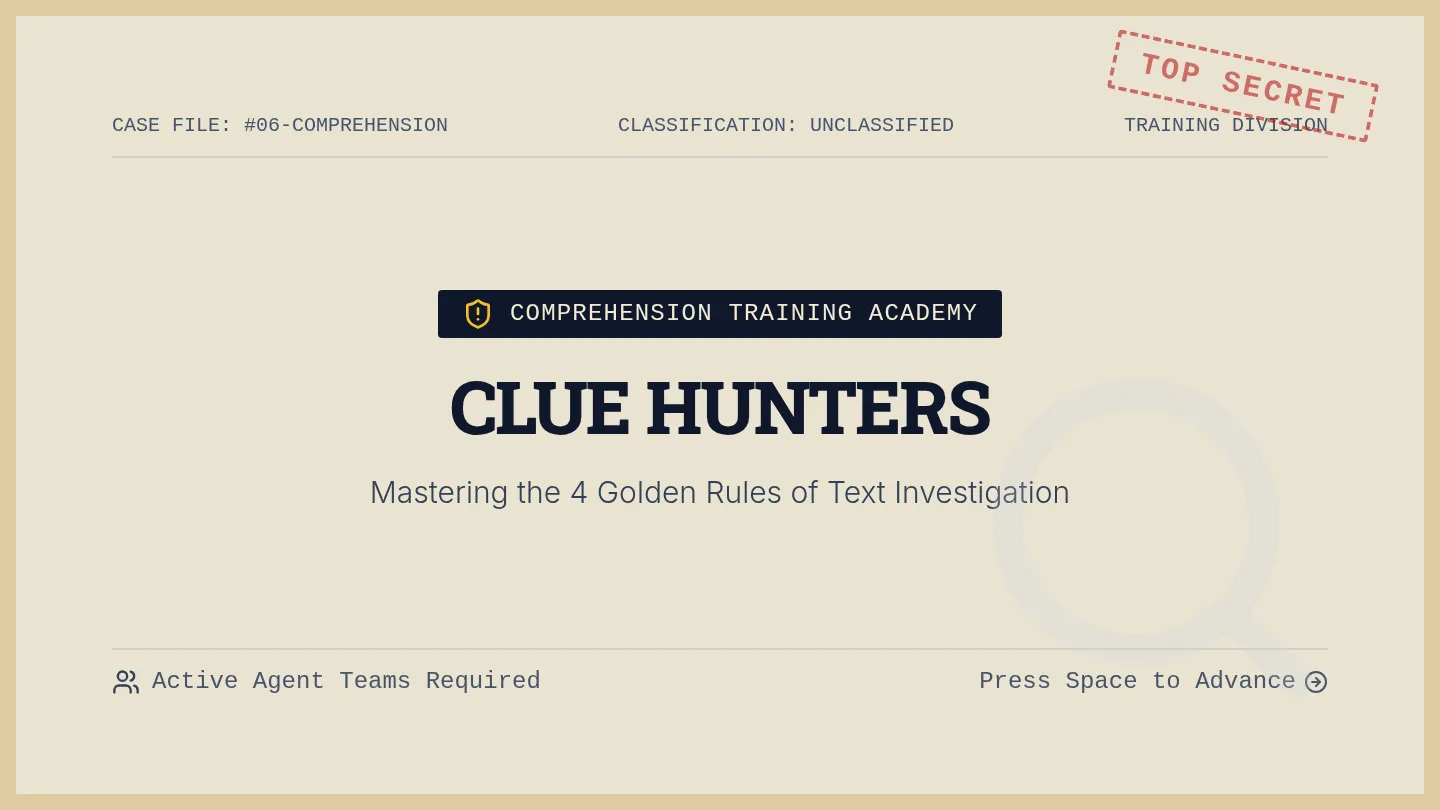
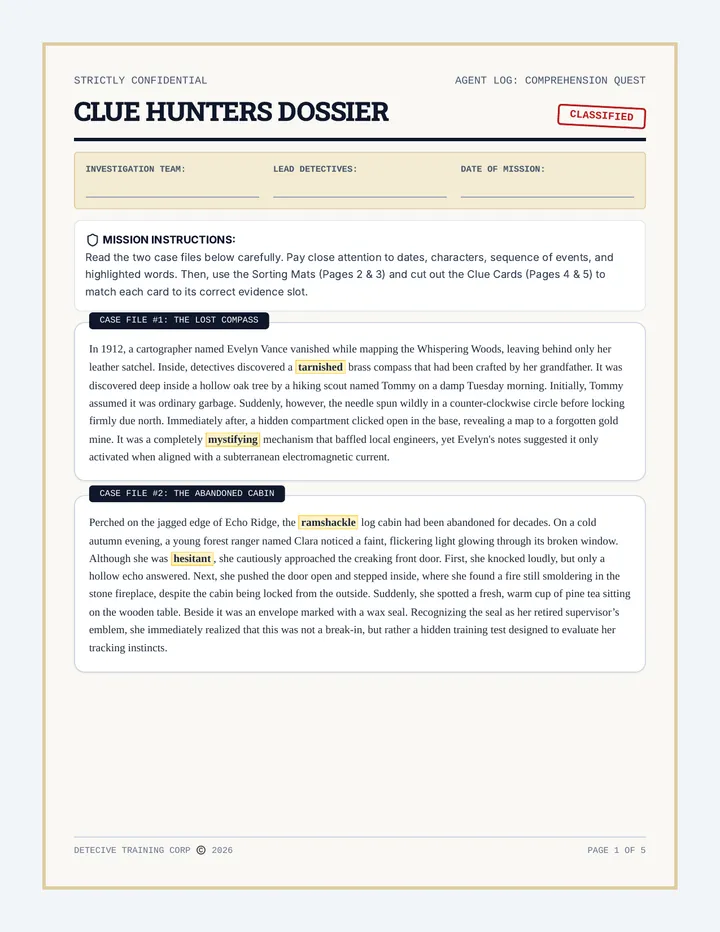
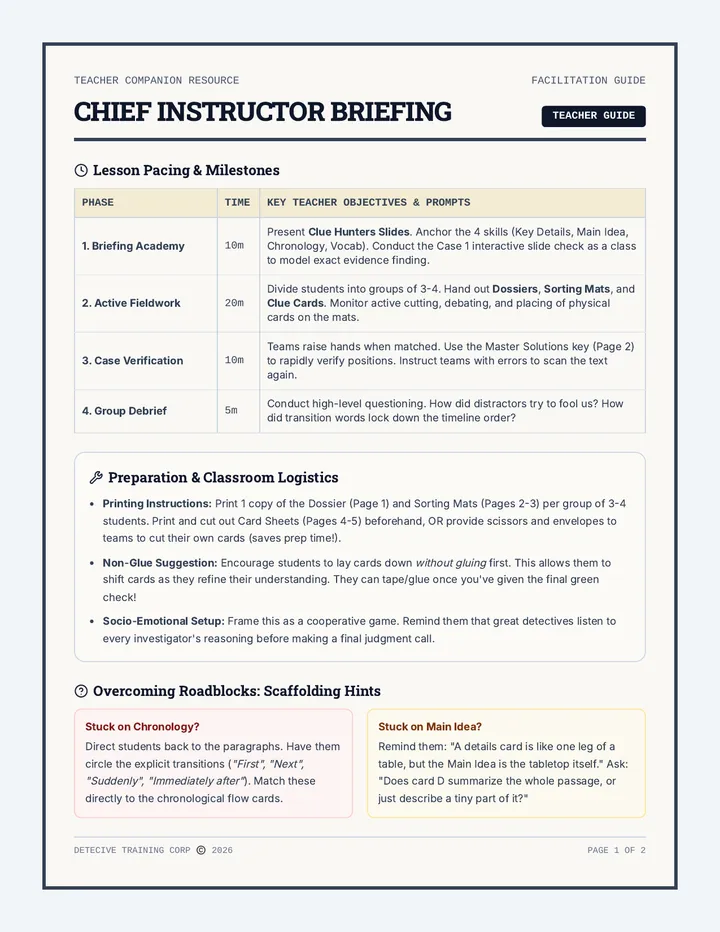
A hands-on, collaborative game-based lesson where students master core 6th-grade reading comprehension skills—finding key details, main ideas, sequencing, and vocabulary in context—by solving text-based mysteries using sorting mats and clue cards.
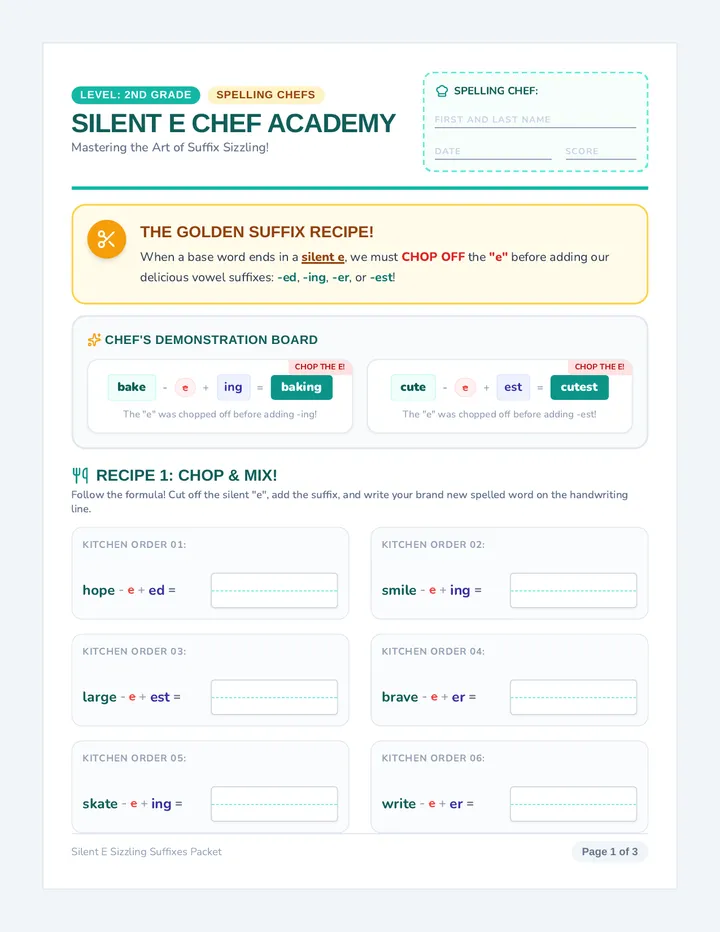
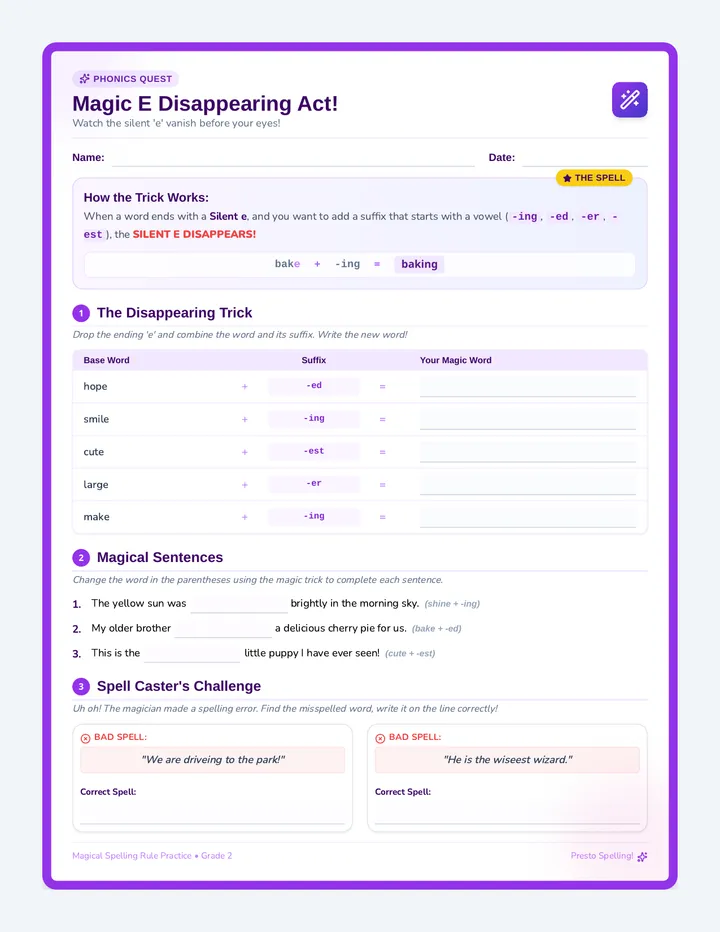
A spelling lesson for second graders focused on dropping the final silent 'e' before adding vowel suffixes (-er, -est, -ed, -ing) using a fun kitchen/chef theme.
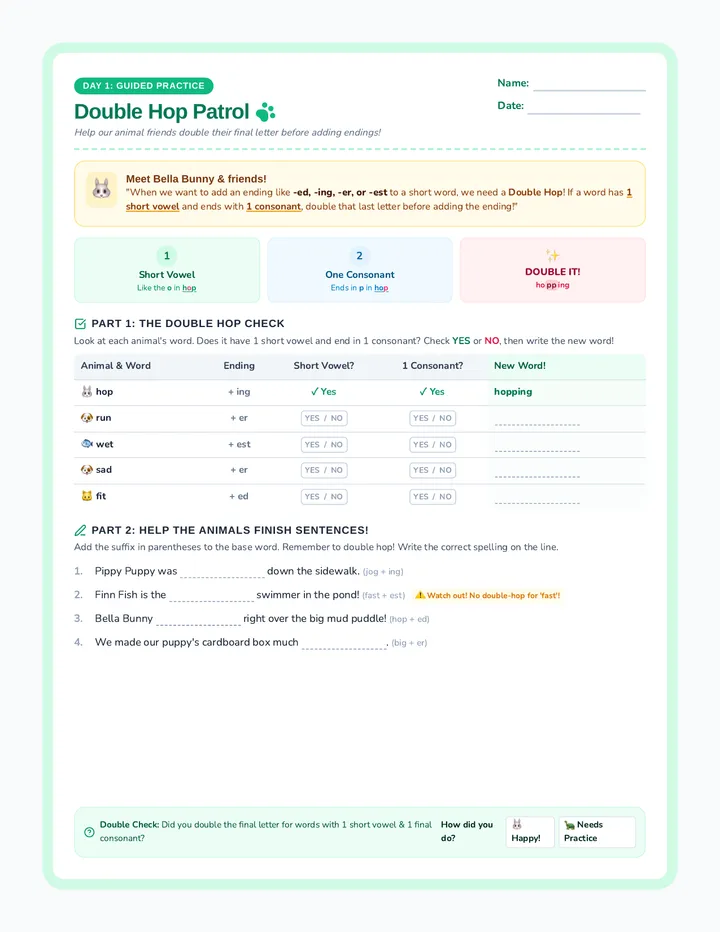
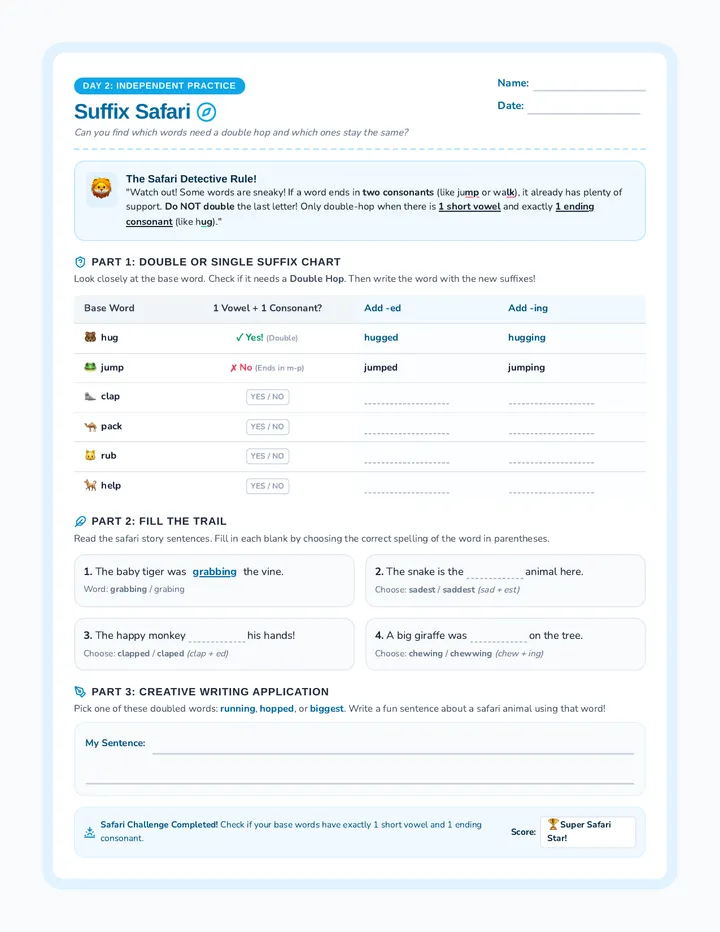
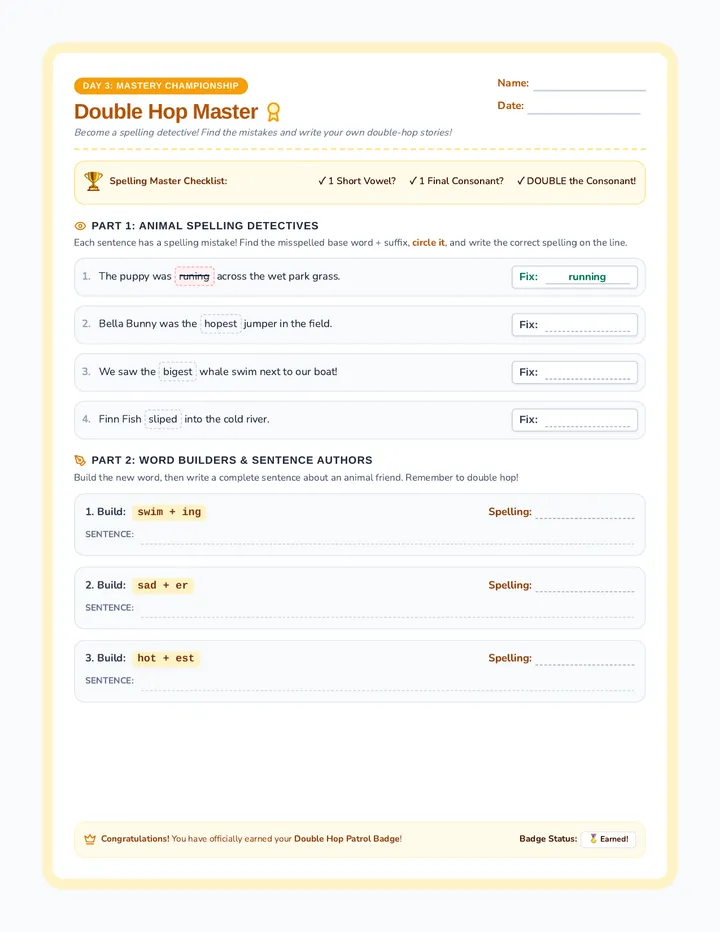
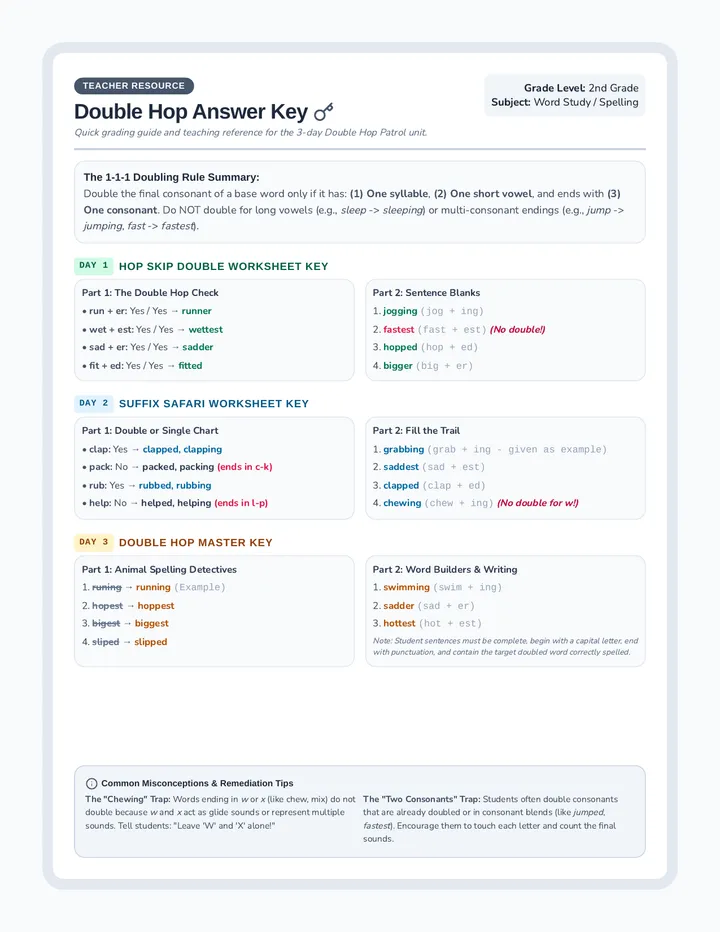
A multi-day 2nd-grade spelling and word study unit focused on the consonant-doubling rule when adding suffixes -er, -est, -ed, and -ing. Features an engaging 'Animal Adventures' theme with hopping bunnies, running puppies, and swimming fish to help students master the spelling rules through guided and independent practice.
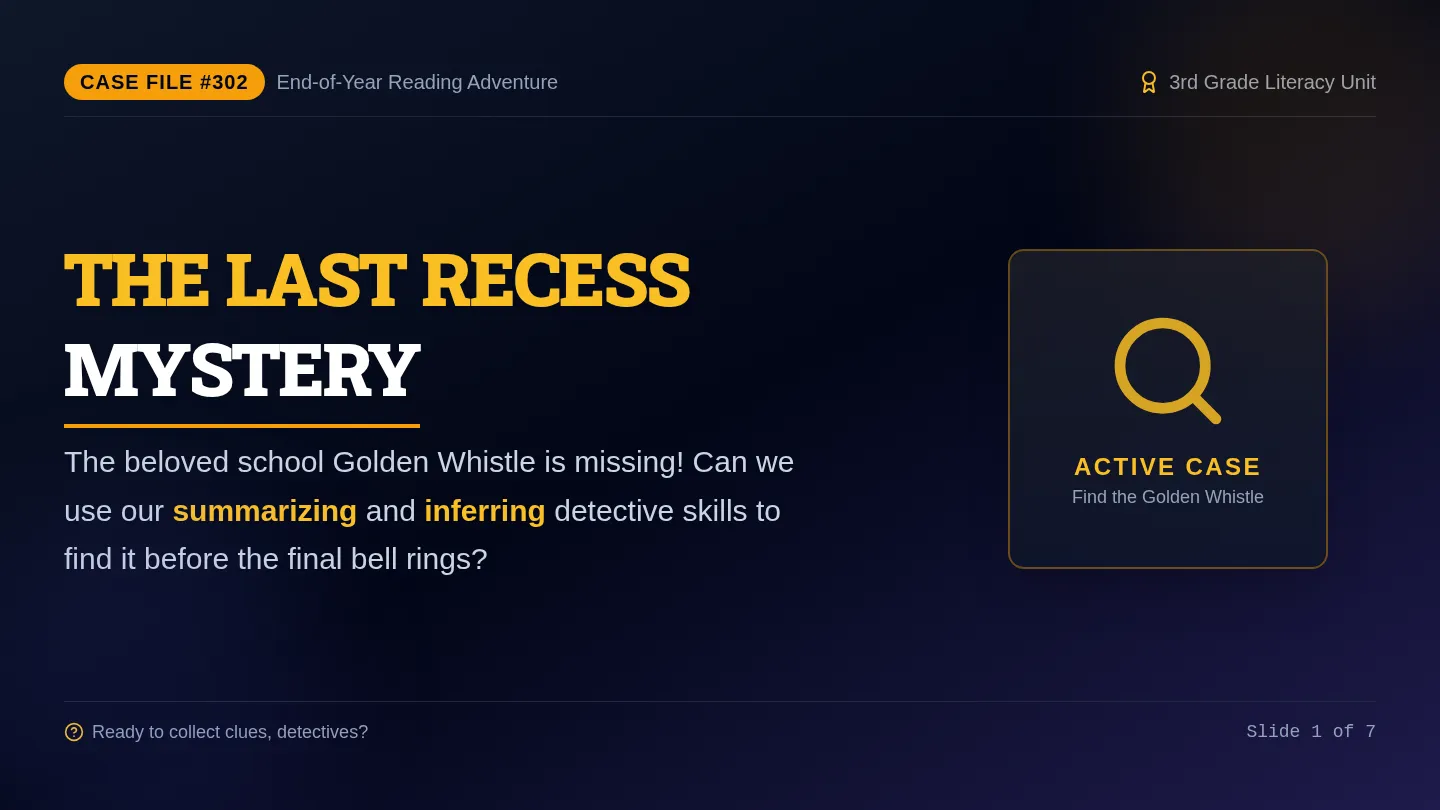
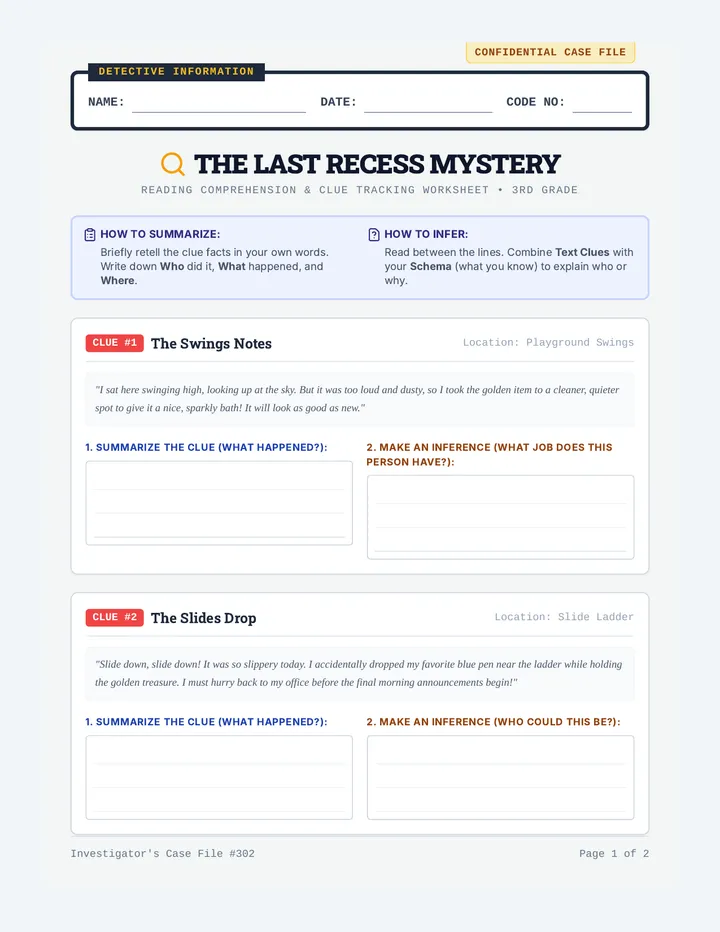
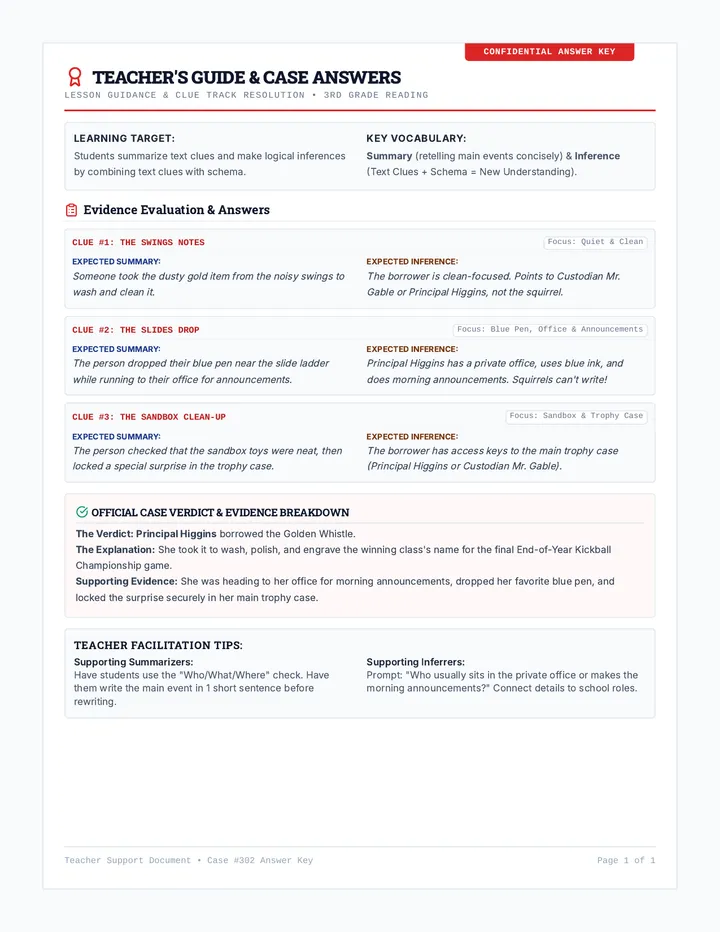
A third-grade reading lesson centered on an end-of-year mystery. Students learn and practice summarizing and making inferences by examining clues around the playground to locate a missing playground item before the last recess ends.
A 2nd grade phonics lesson focused on the spelling rule of dropping the silent 'e' before adding vowel suffixes (-ing, -ed, -er, -est). The lesson includes a high-engagement magical-themed worksheet and a corresponding teacher answer key.
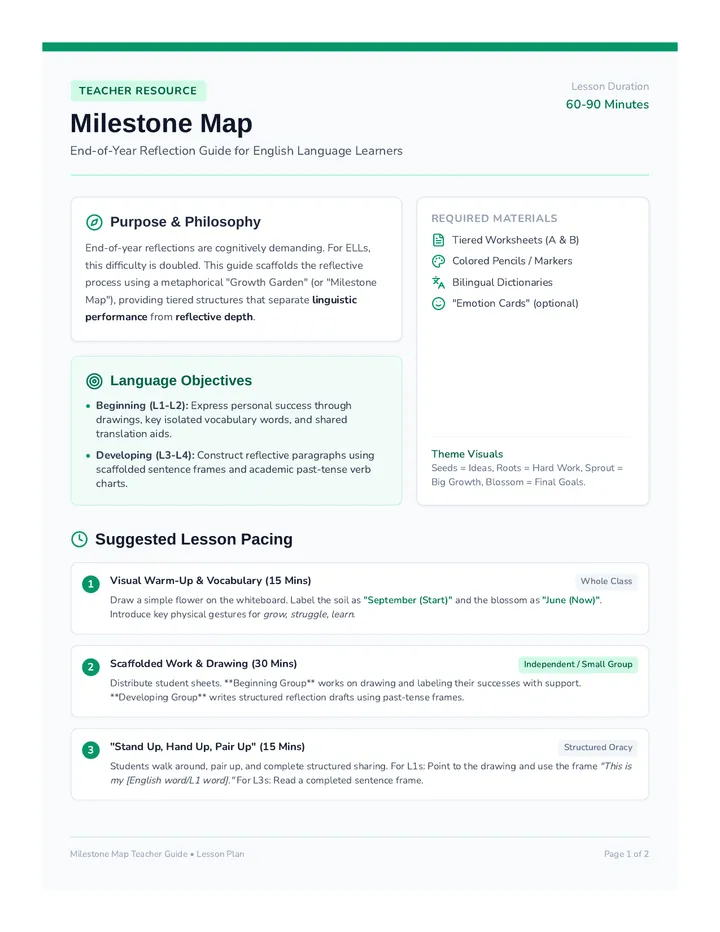
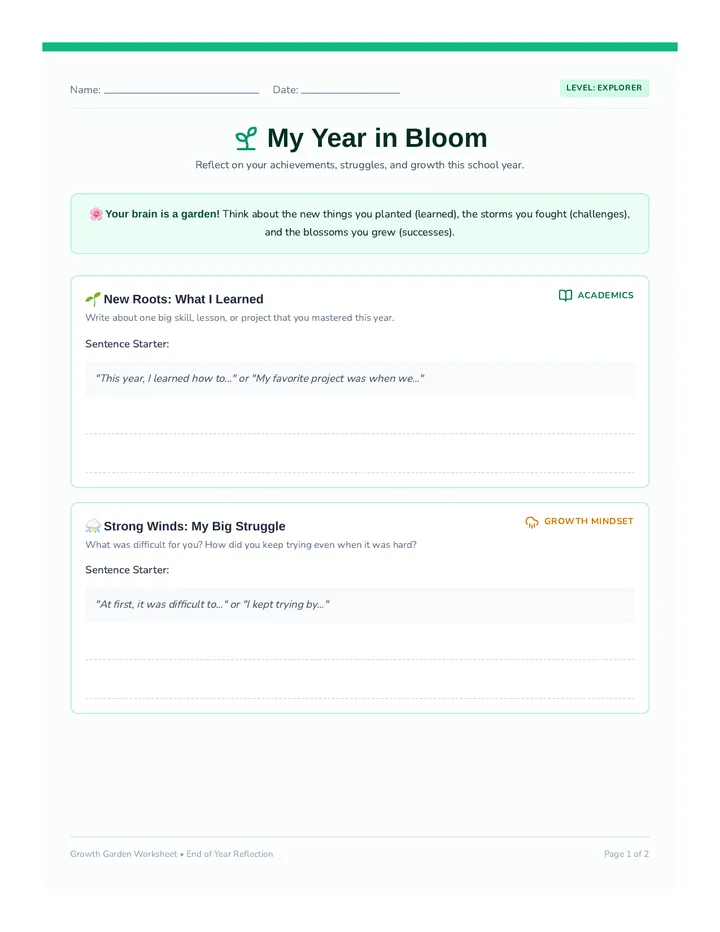
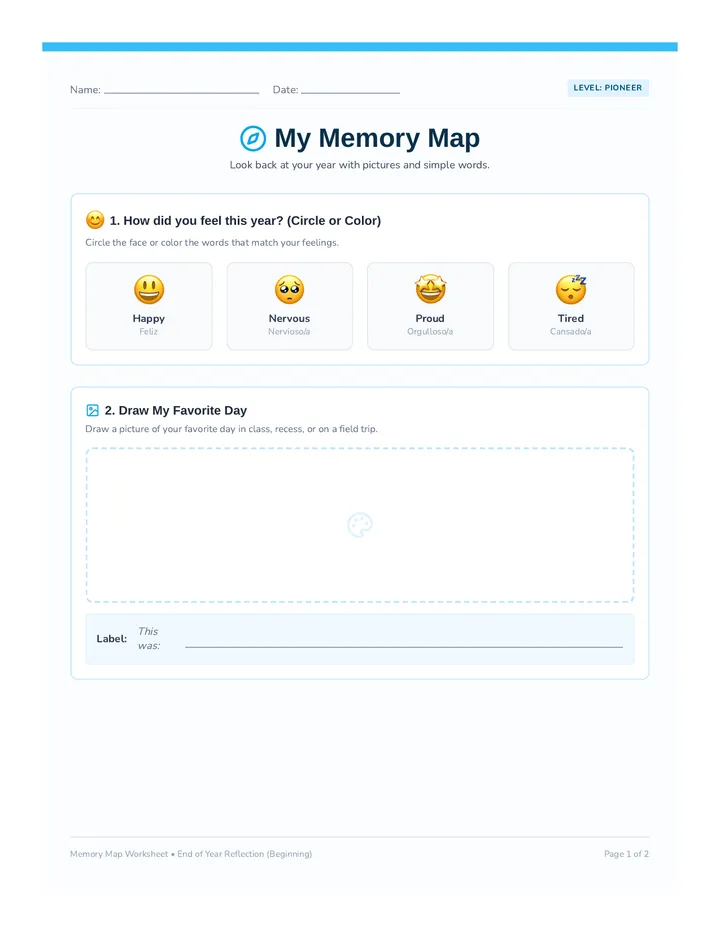
An end-of-year reflection lesson designed specifically for English Language Learners, featuring tiered worksheets for Beginning/Entering and Developing/Expanding levels, supported by a detailed facilitator guide.
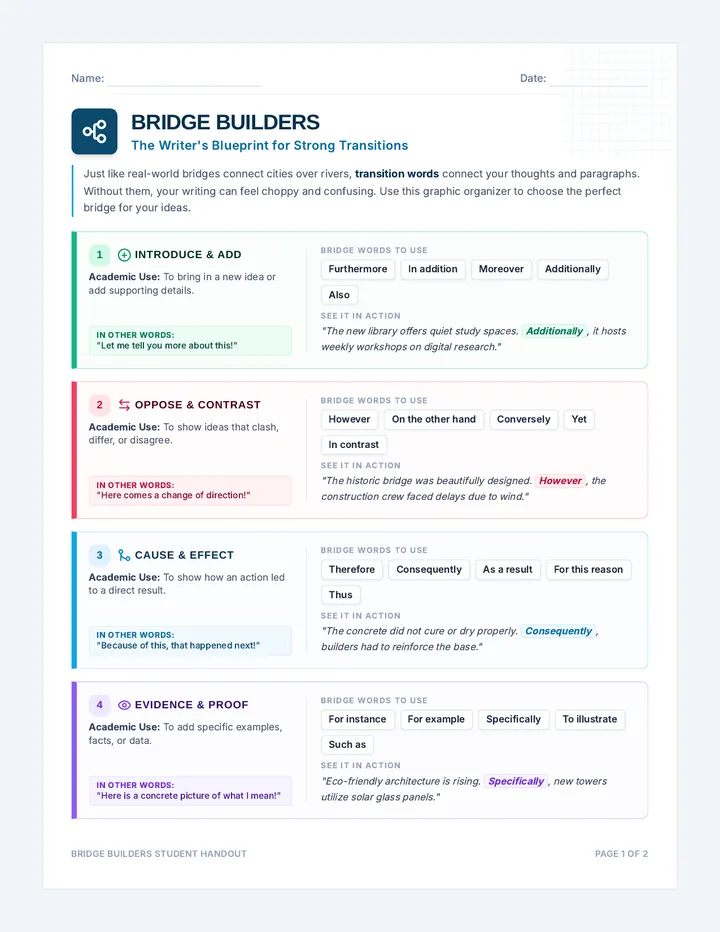
A comprehensive lesson focused on understanding and applying transition words to build logical, smooth connections between ideas in writing.
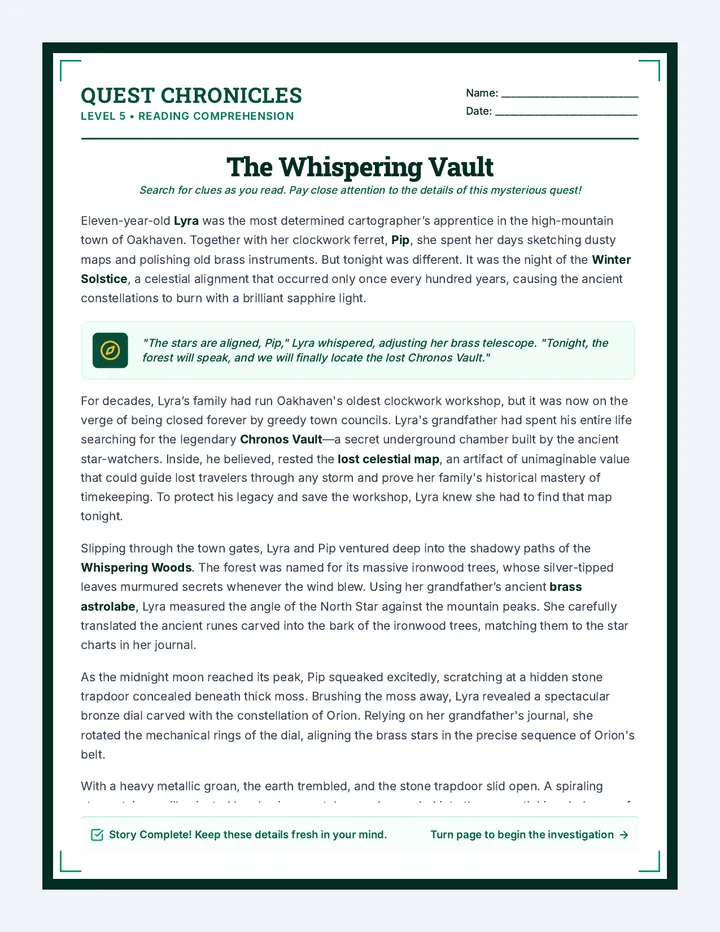
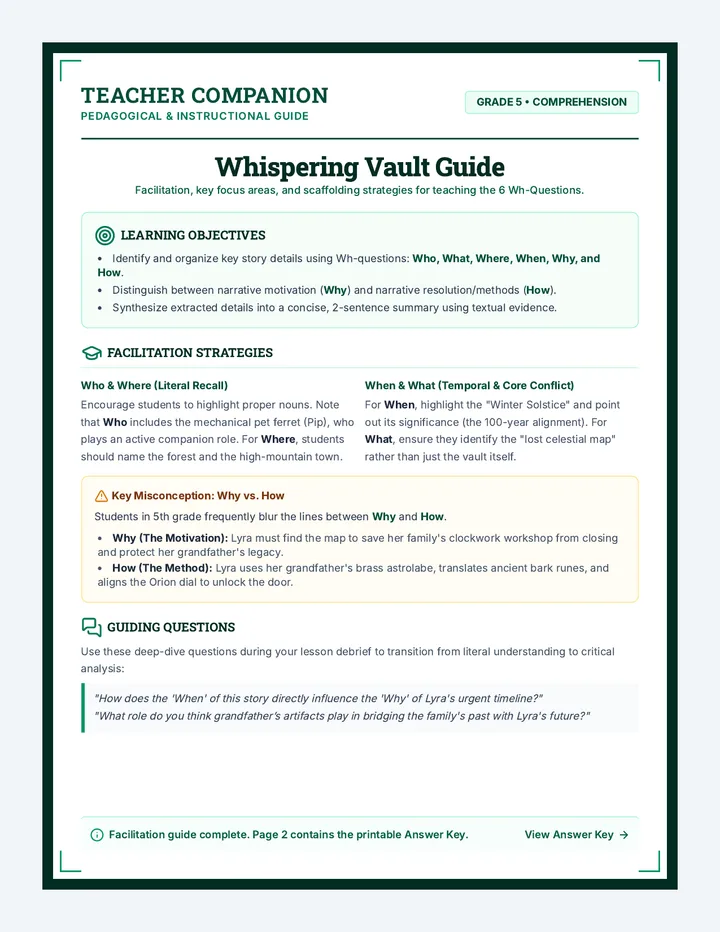
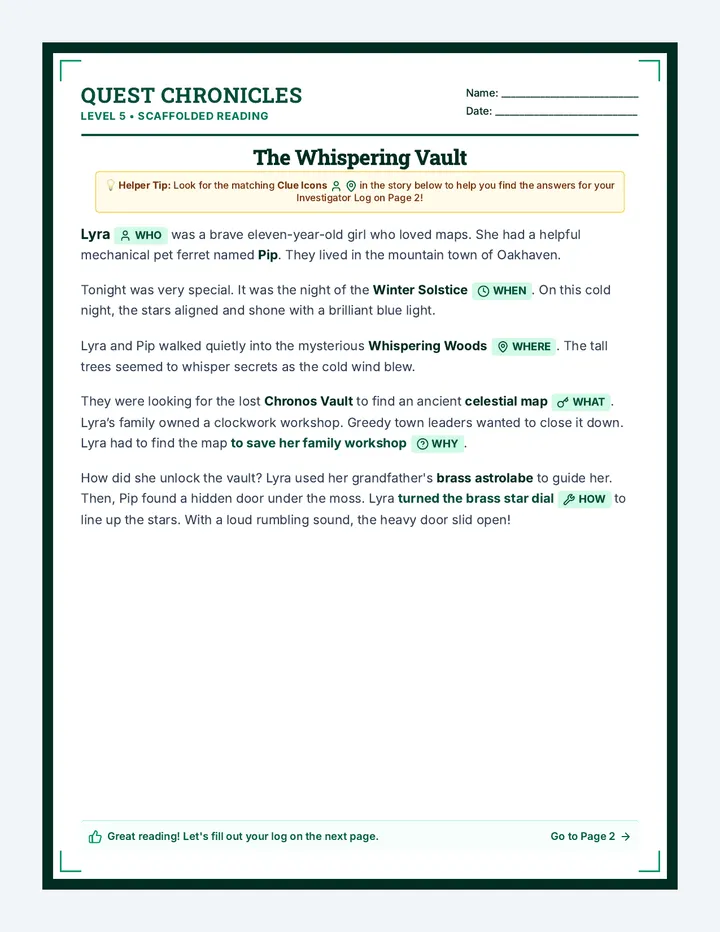
A 5th-grade comprehension lesson focused on identifying key story elements using Wh-questions (Who, What, Where, When, Why, How) within an engaging fantasy-adventure narrative.
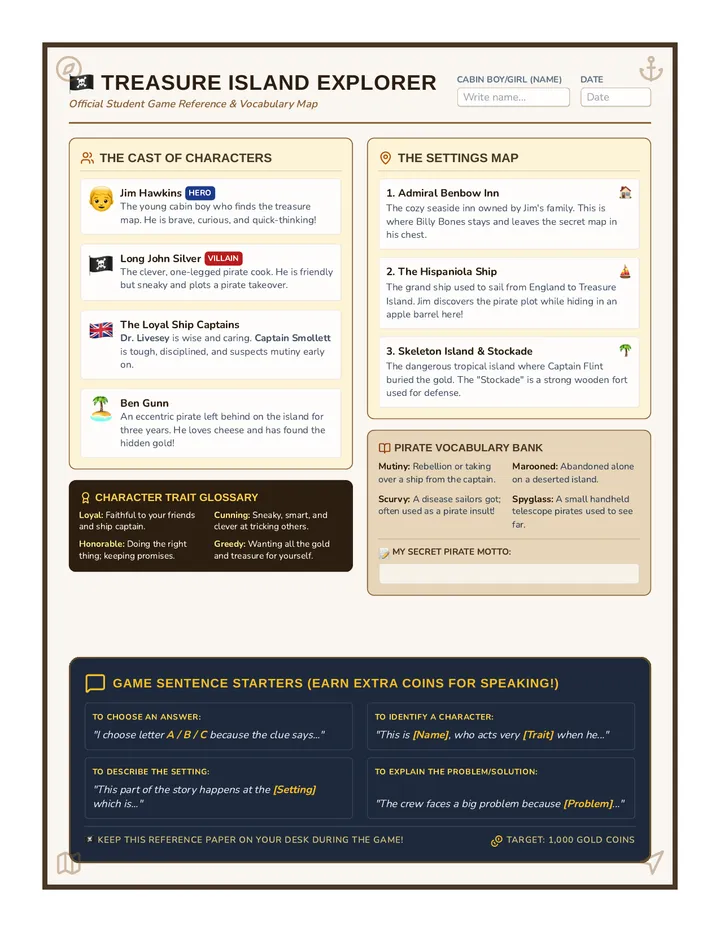
A high-engagement, Jeopardy-style review game designed for 4th-grade English Language Learners to master the characters, settings, key events, and plot structure of Treasure Island. Includes visual clues, multiple-choice options, sentence frames, and a vocabulary explorer handout to scaffold oral and written responses.
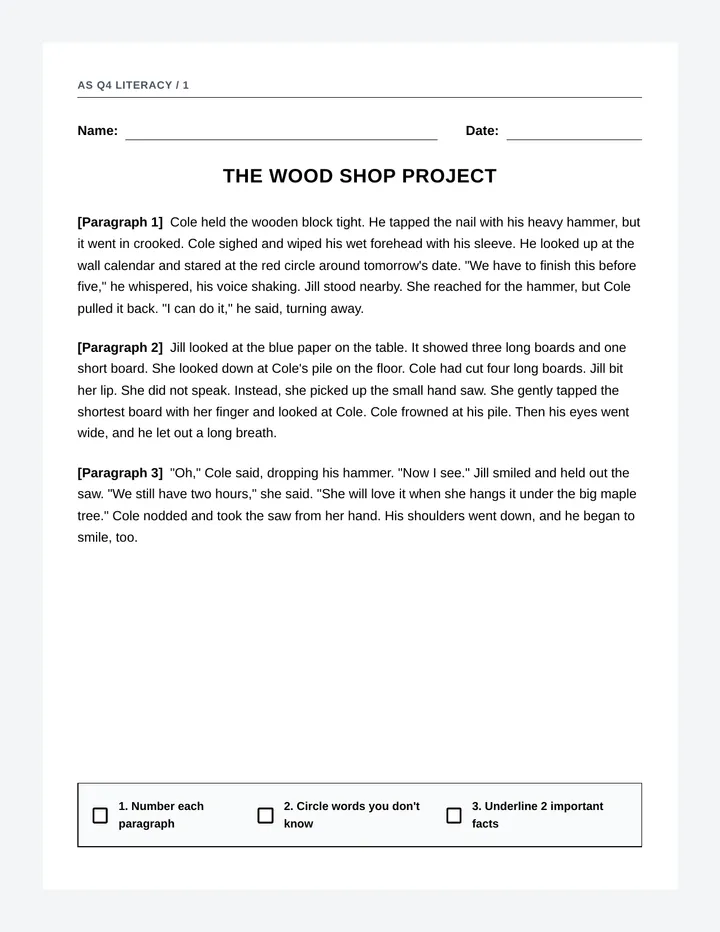
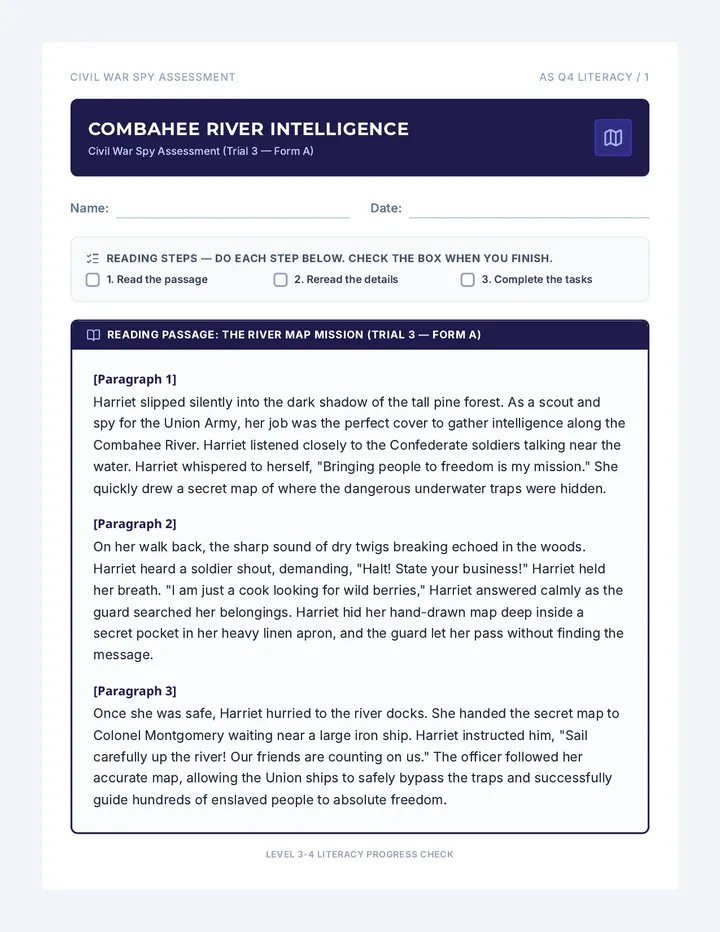
A grade 3-4 literacy assessment lesson that includes a comprehensive, multi-page student progress assessment covering reading passage comprehension, retelling, inferential analysis, writing, and editing.
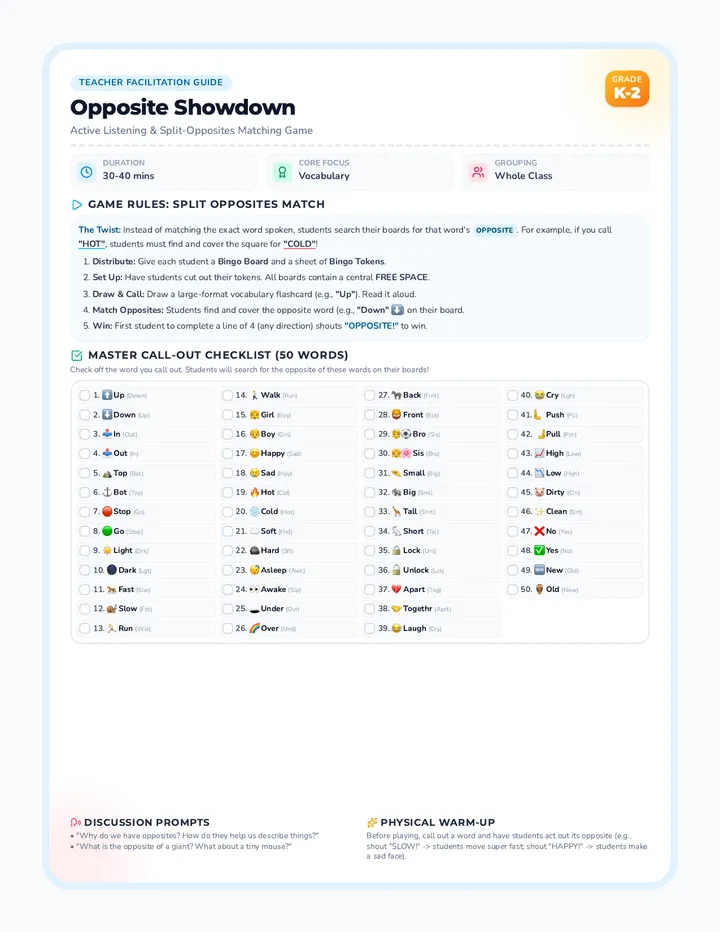
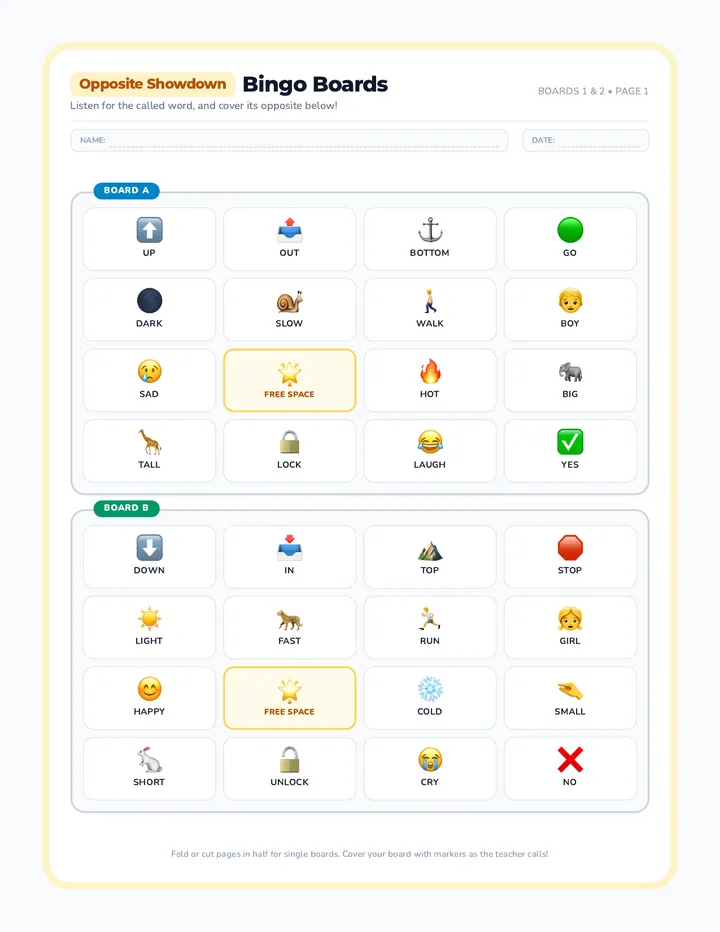
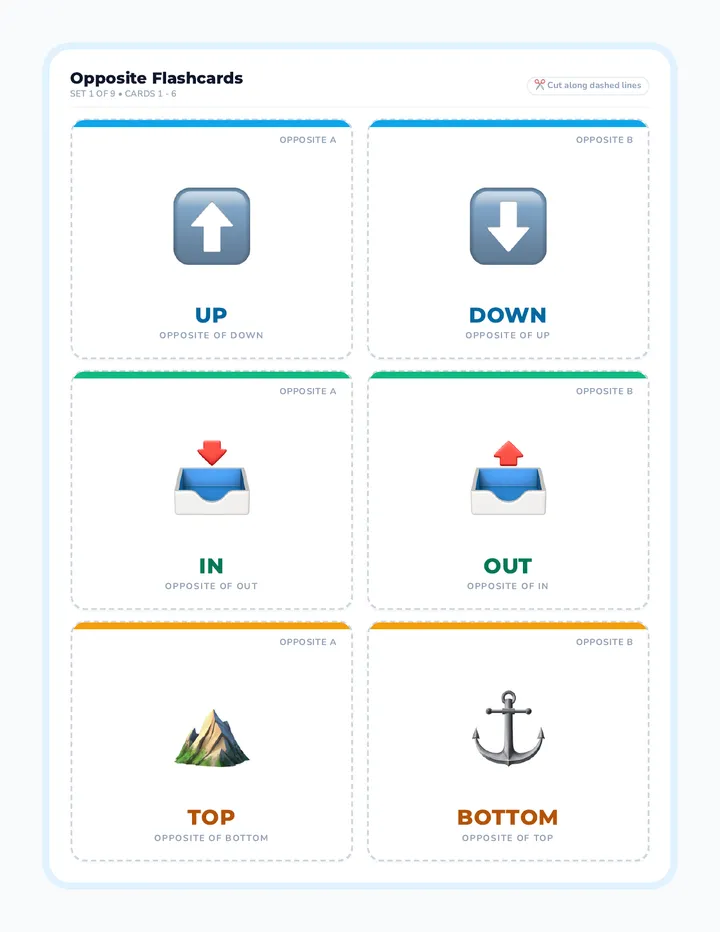
An interactive lesson package centered on teaching opposites through 'Split Opposites Matching' Bingo, featuring illustrated playing boards, large-format vocabulary cards, and a comprehensive activity guide.
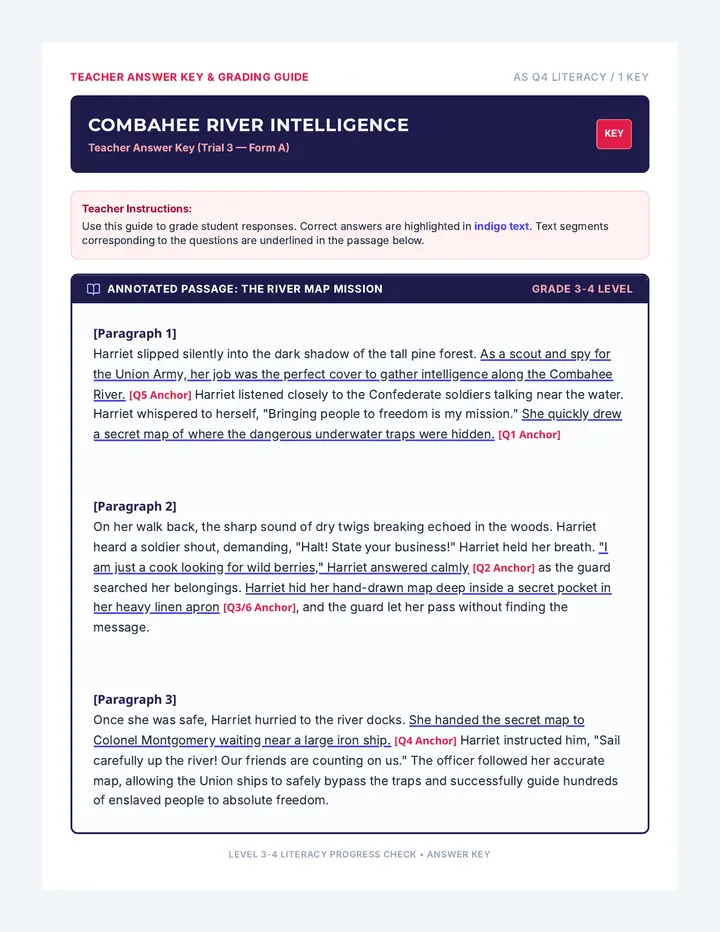
A reading comprehension and writing assessment themed around Harriet Tubman's Union spy missions during the Civil War. Designed for 3rd and 4th-grade students with simplified questions, guided text retelling, and editing practice.
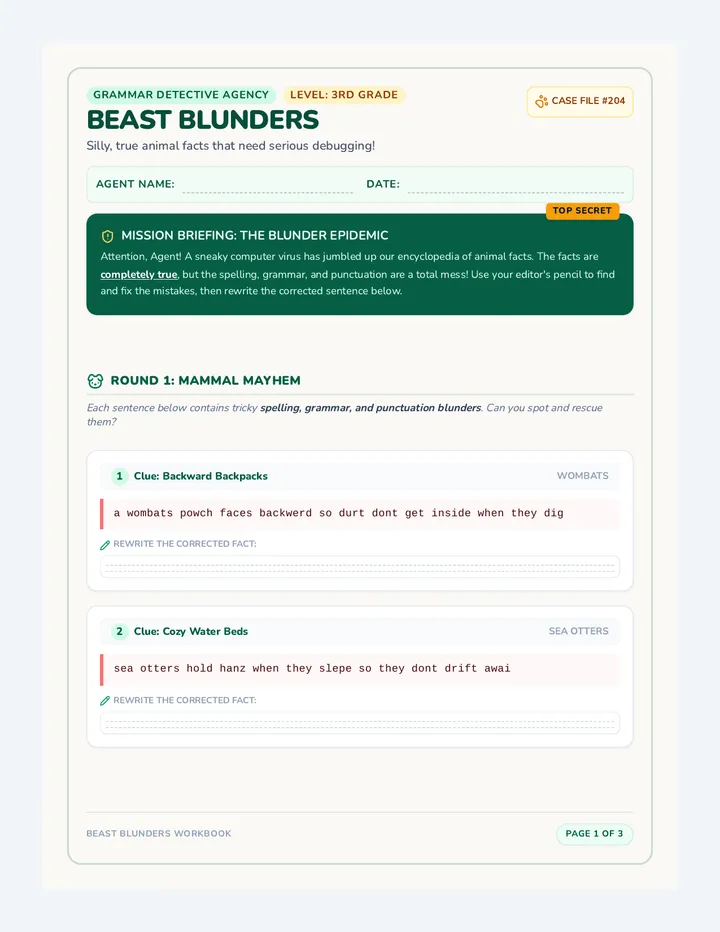
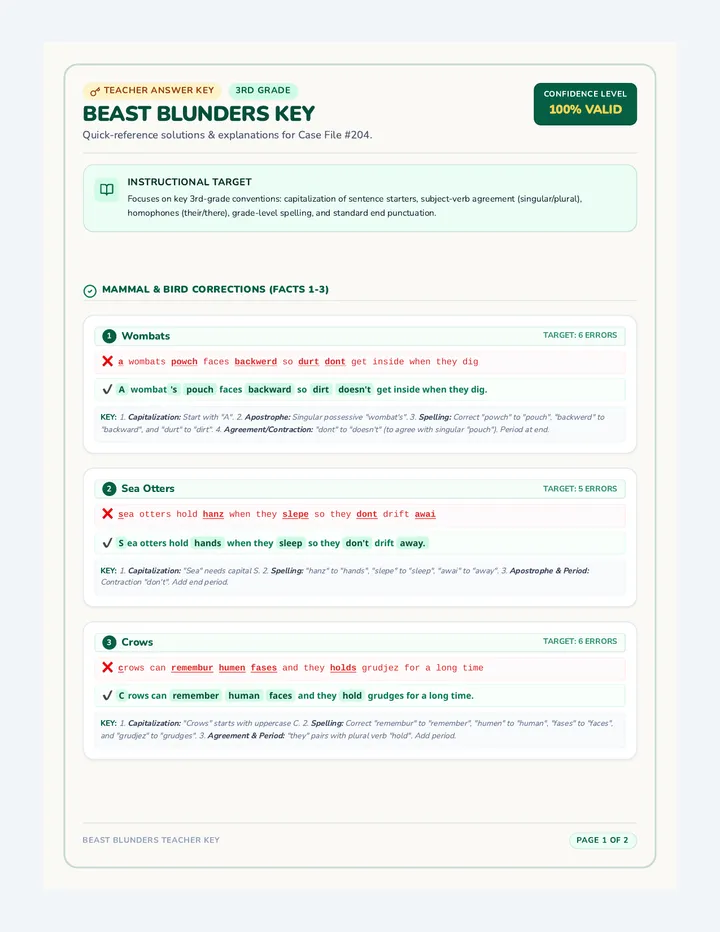
A humorous, grammar-editing lesson where third-grade students debug silly but true animal facts. Includes a multi-page student worksheet and a teacher answer key.
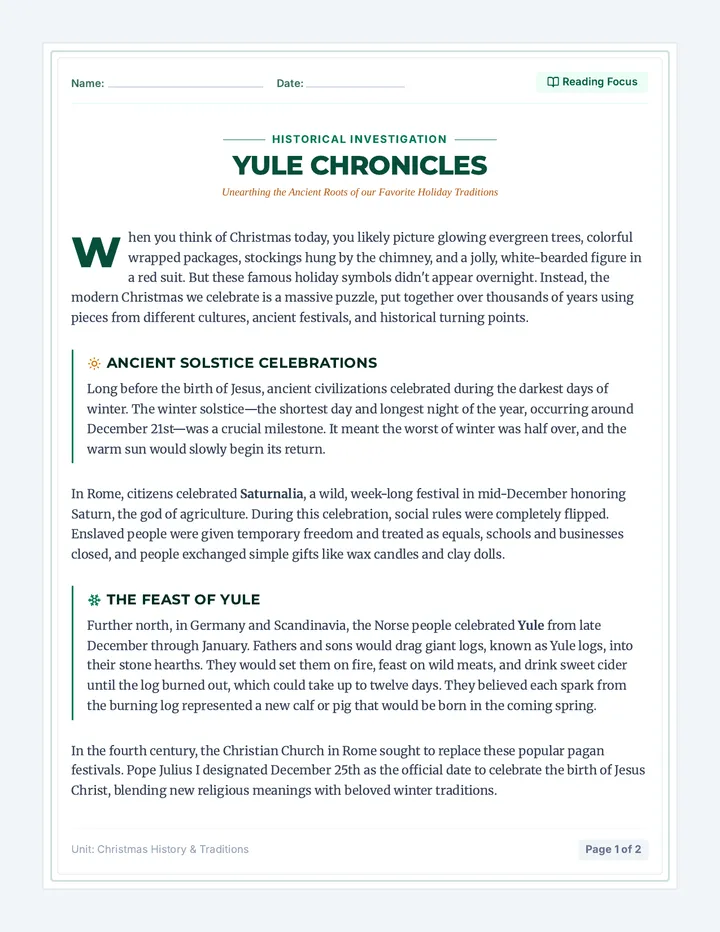
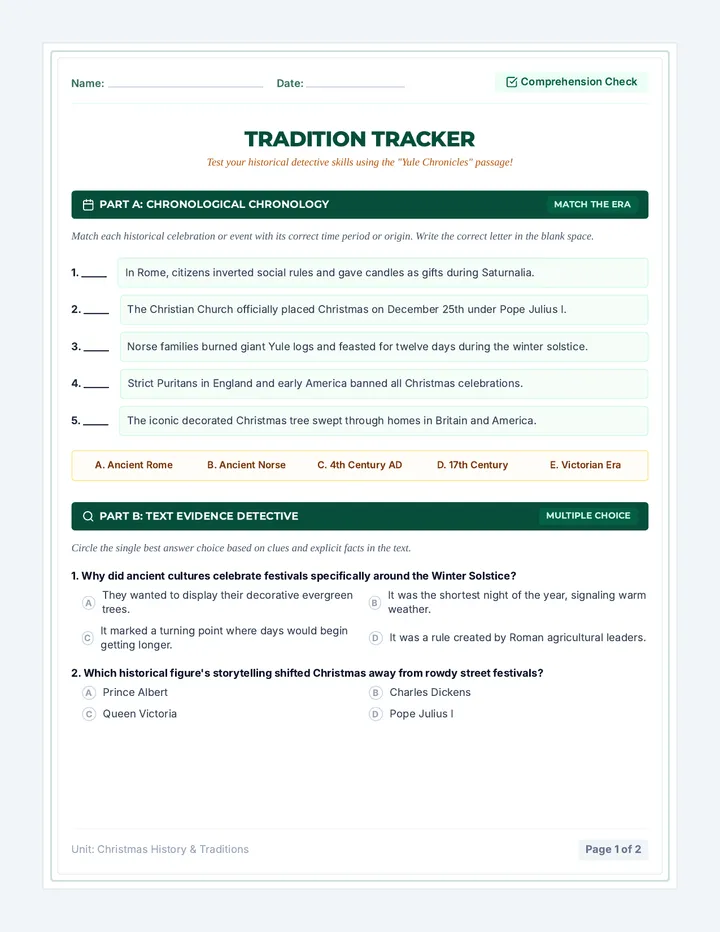
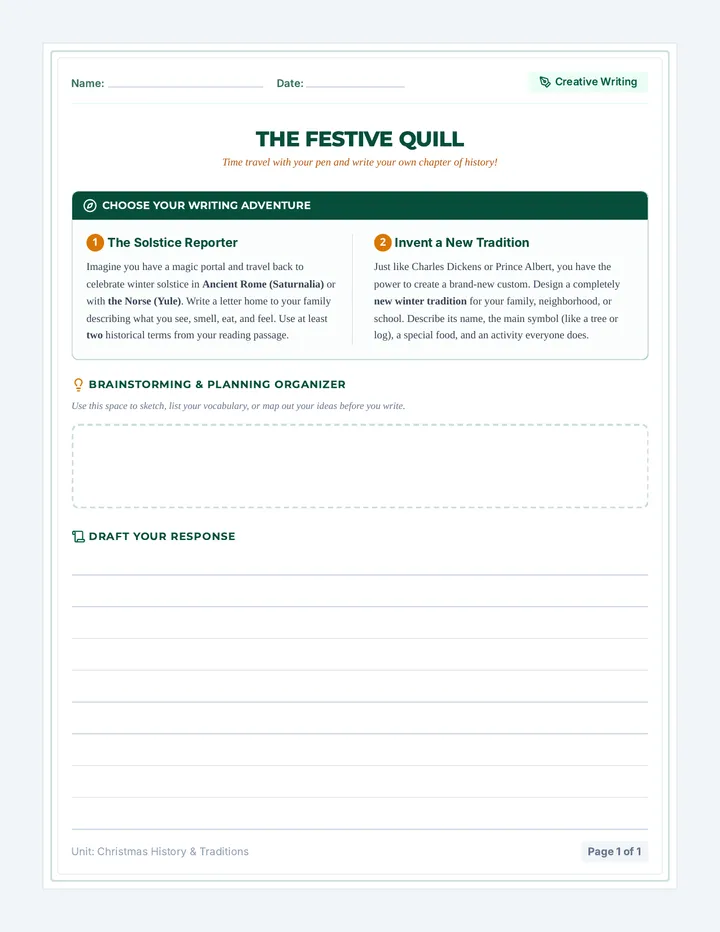
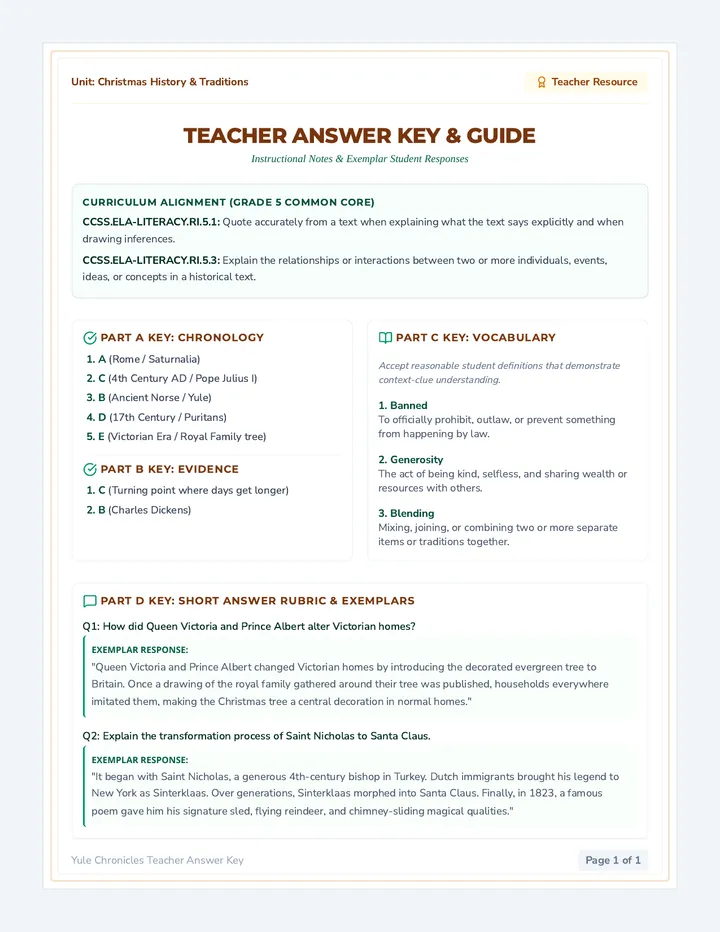
A comprehensive 5th-grade ELA lesson exploring the historical roots, evolution, and cultural symbols of modern Christmas traditions. It includes a historical reading passage, comprehension and vocabulary worksheets, and a creative writing extension.
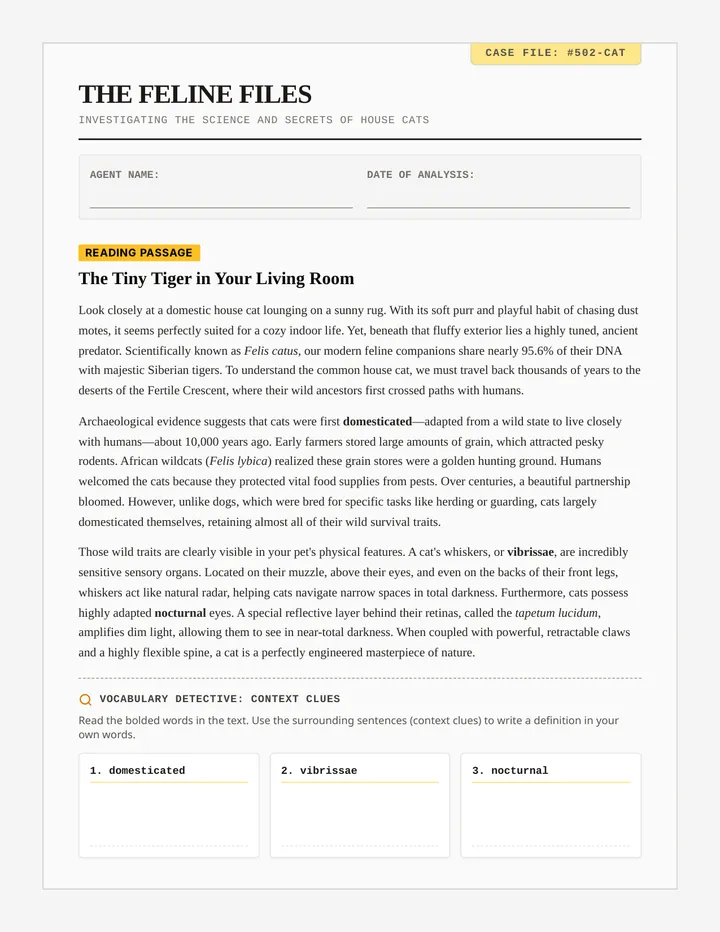
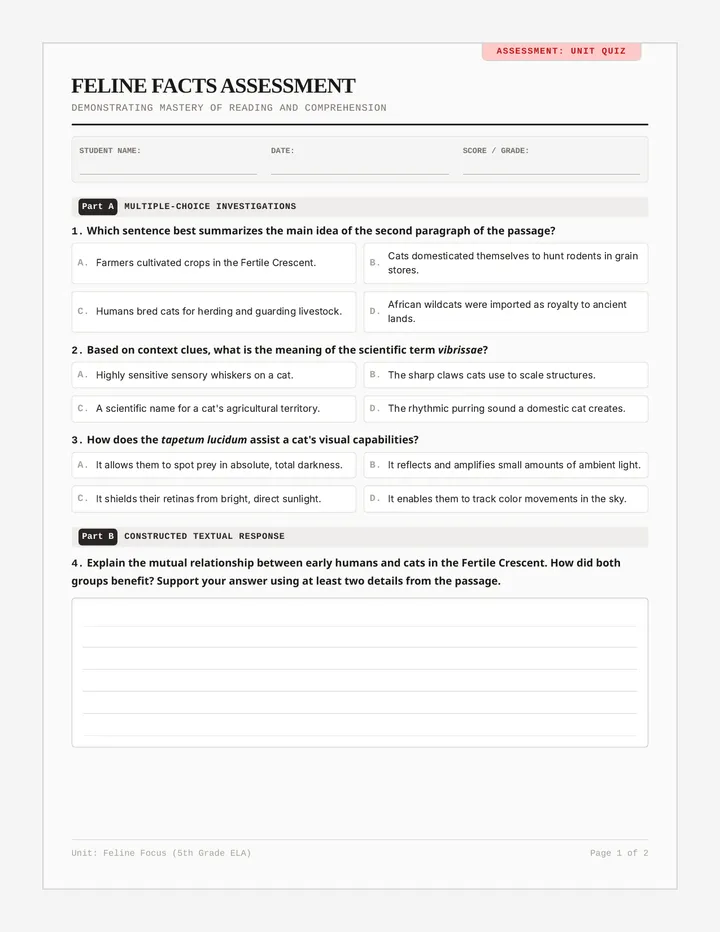
A comprehensive 5th-grade ELA lesson exploring the fascinating world of cats. Students read a rich non-fiction passage comparing domestic cats to their wild ancestors, analyze key vocabulary using context clues, identify main ideas, and distinguish feline facts from myths.
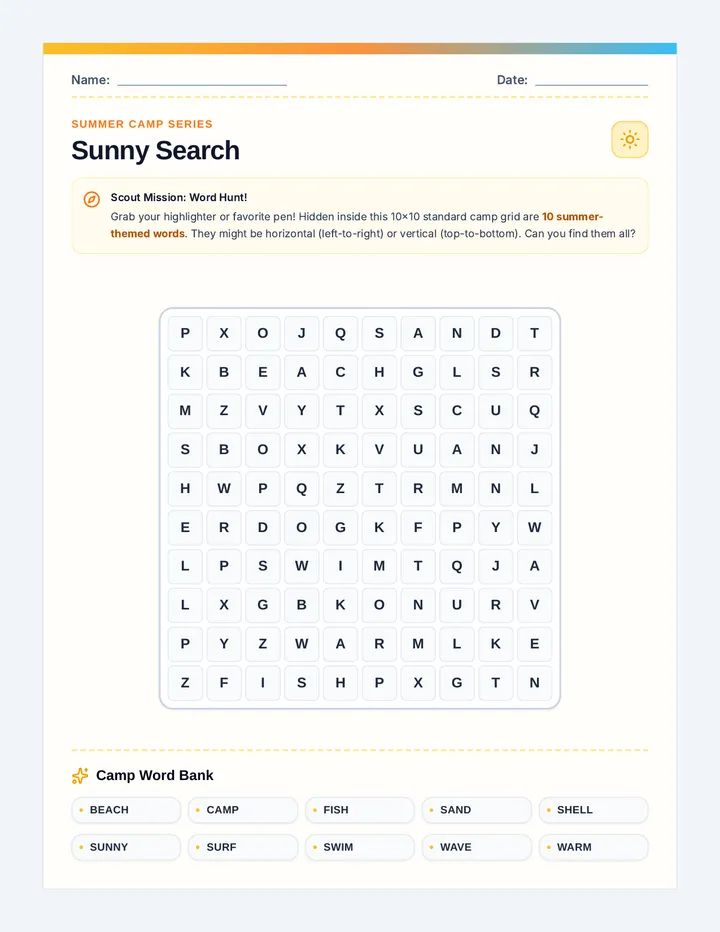
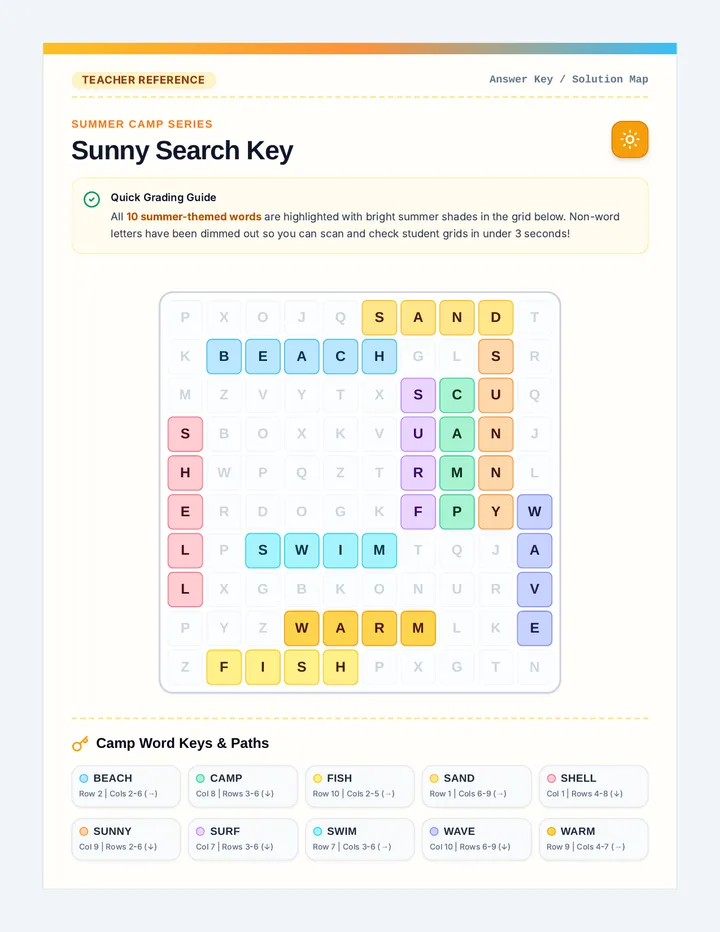
A fun, summer-themed word search lesson designed for standard grid gameplay with high-contrast elements suitable for highlight strips. Includes a clean 10x10 word search and a corresponding teacher answer key.
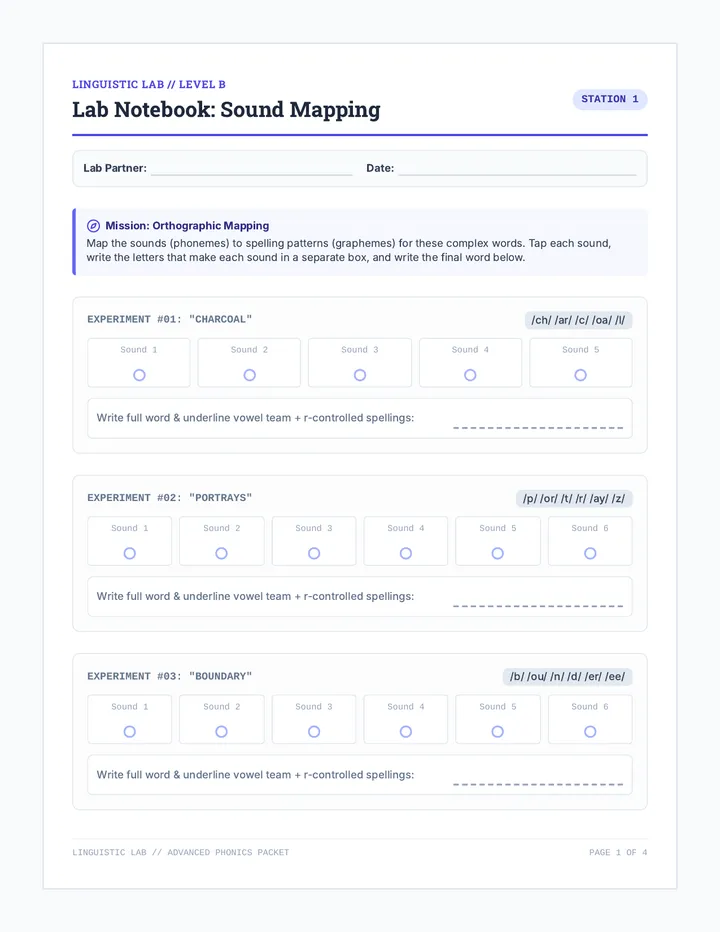
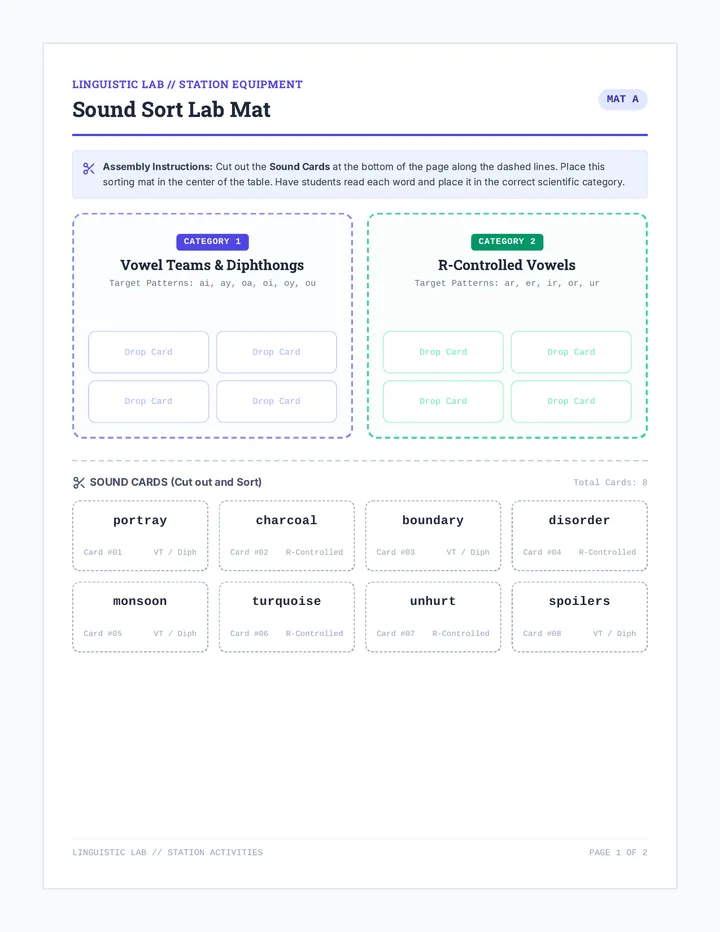
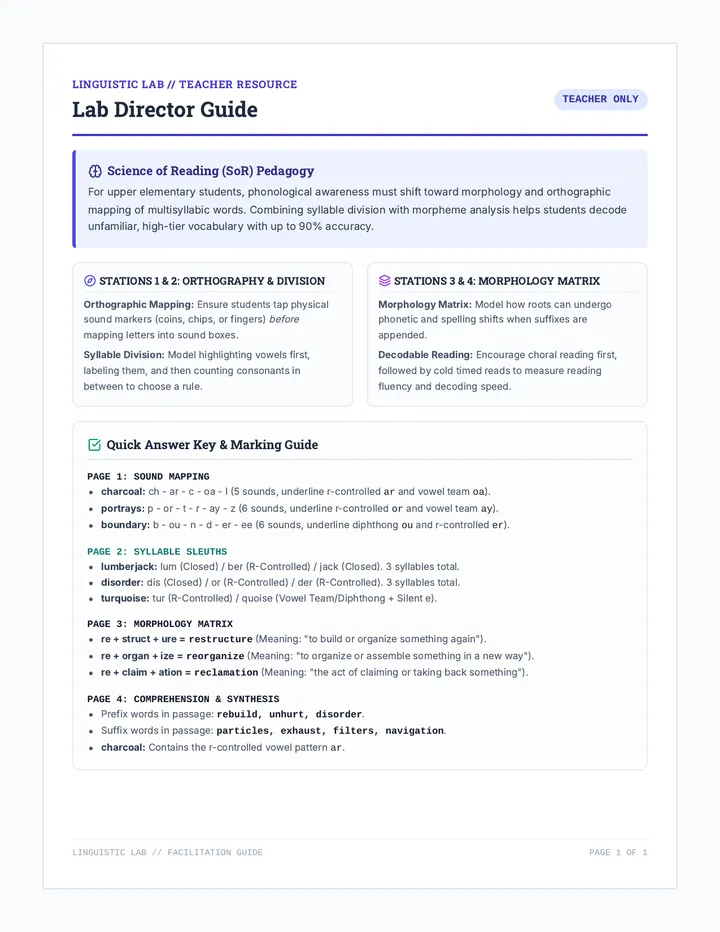
An interactive, Science of Reading-aligned phonics and morphology program for upper elementary students. It features multi-sensory station activities, orthographic mapping, syllable division practice, and morphological decoding tools.
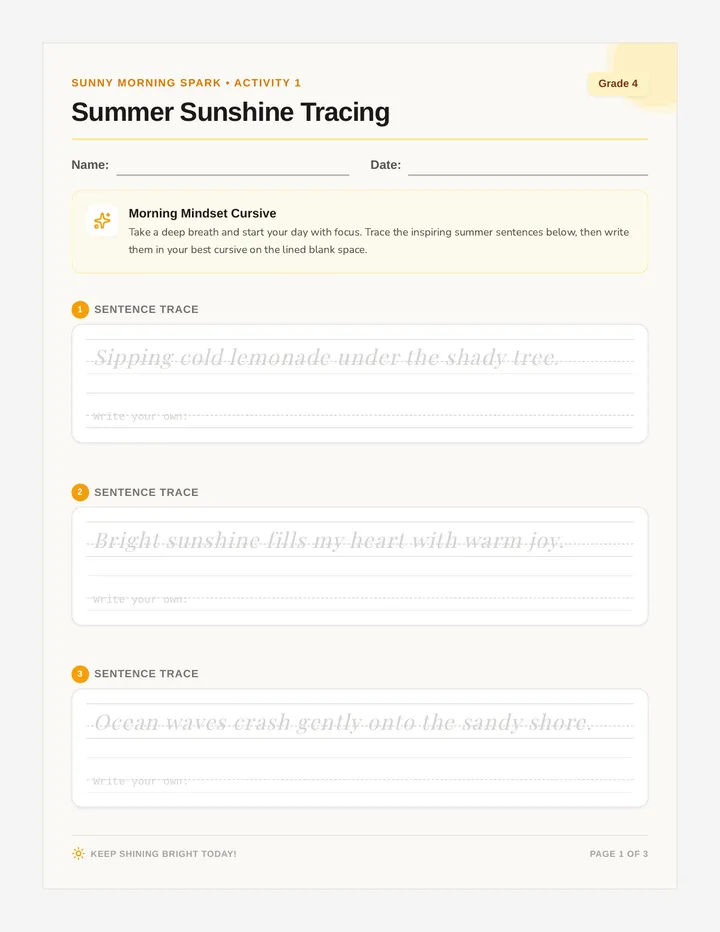
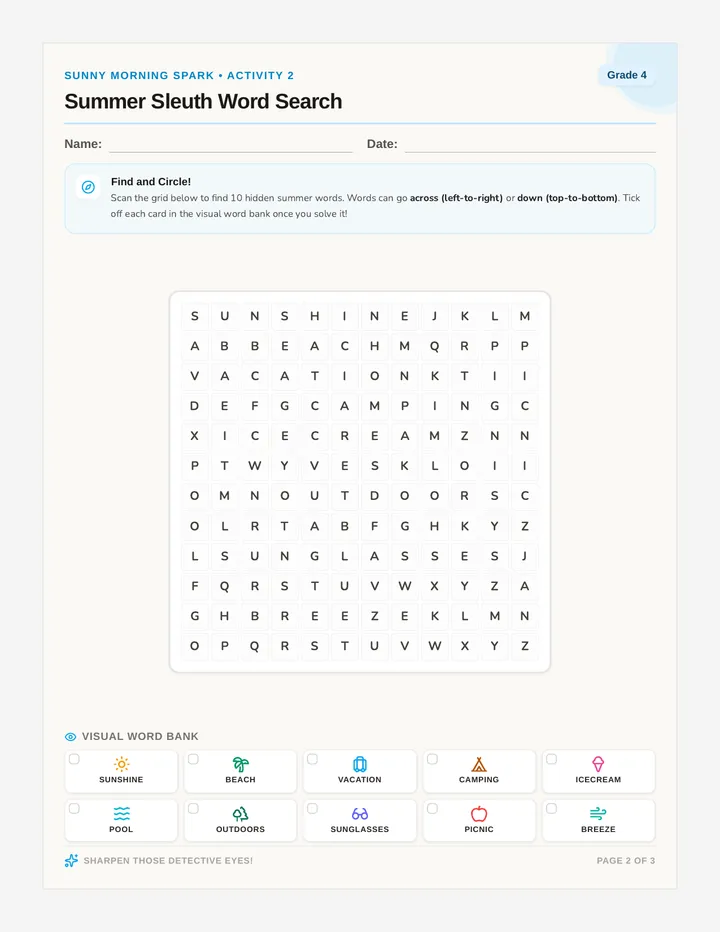
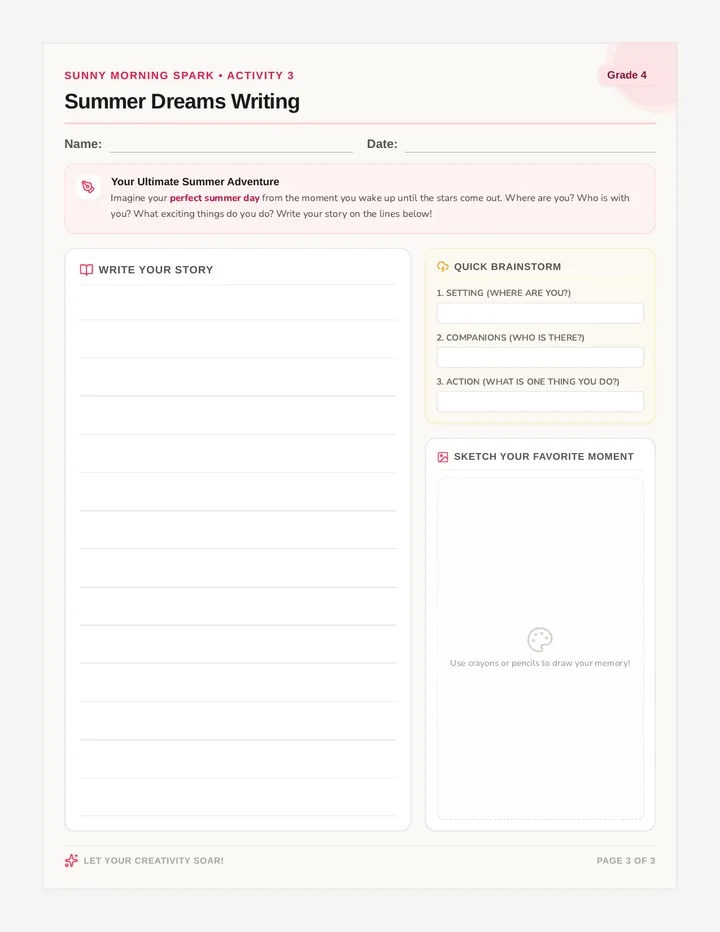
A collection of engaging morning work activities designed for fourth graders to start their summer days with focus and creativity. Features cursive tracing, a visual-aided summer word search, and a creative writing prompt.
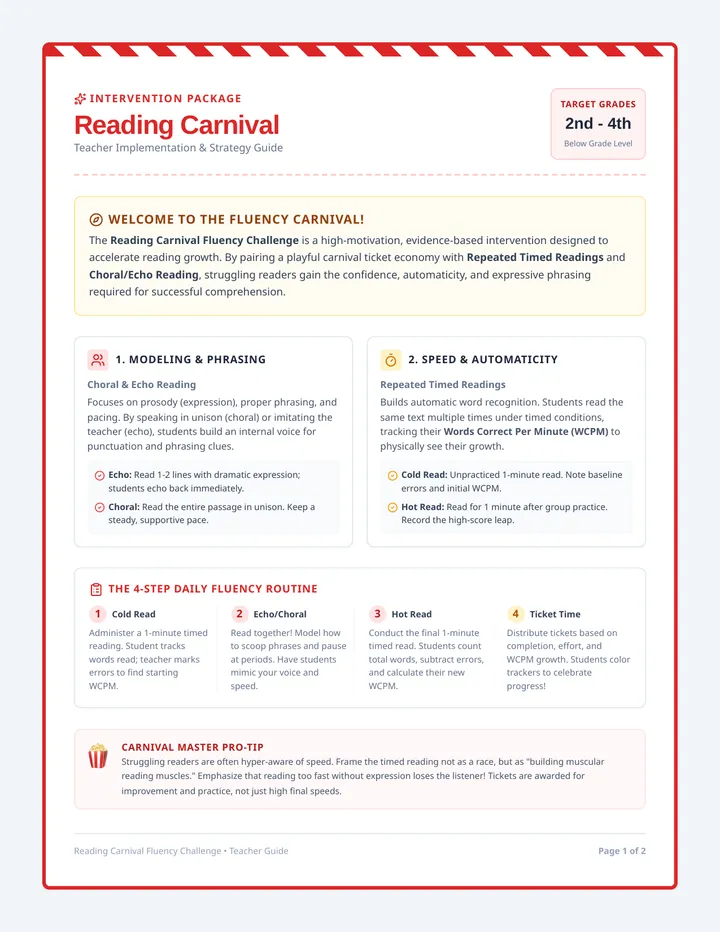
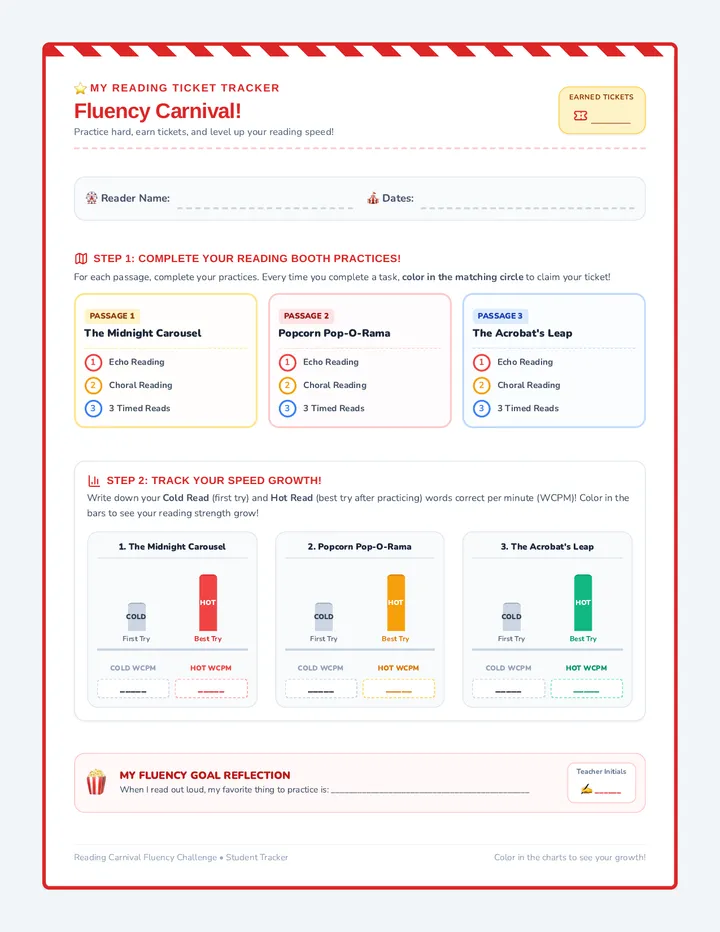
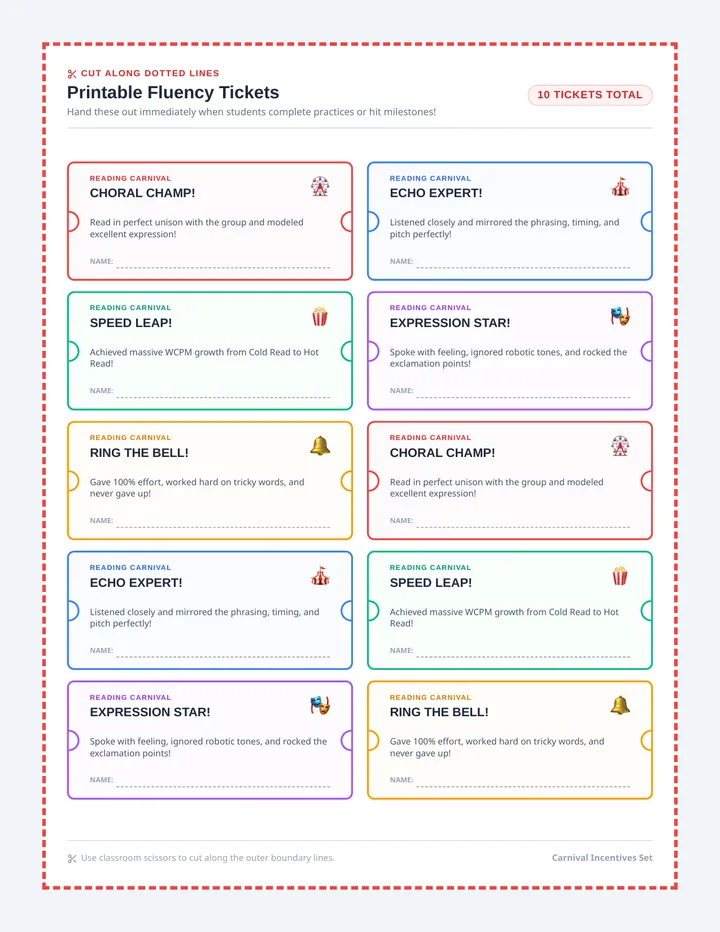
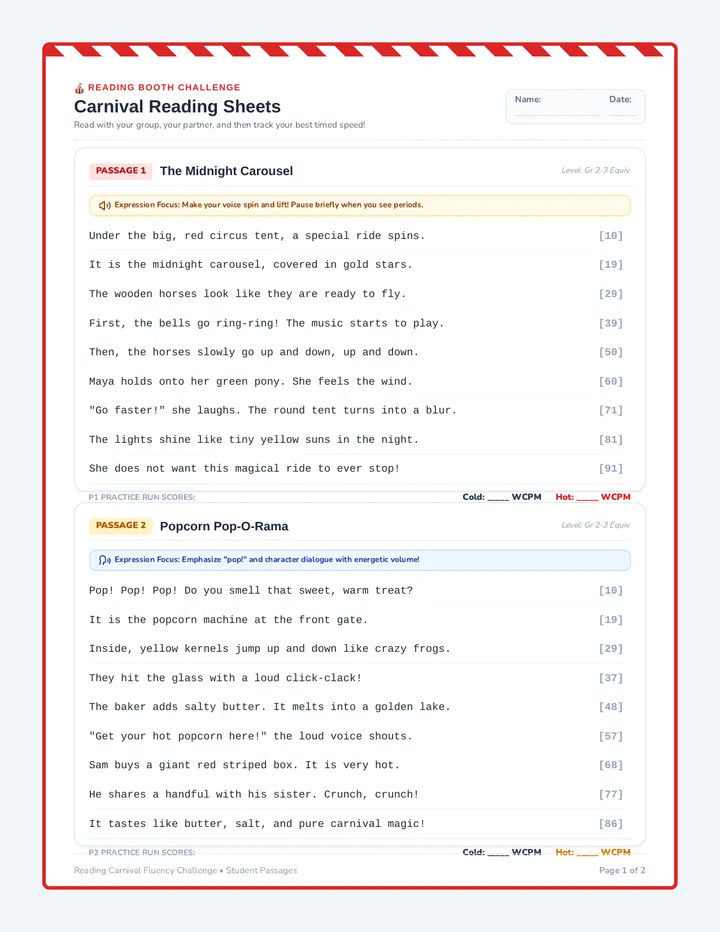
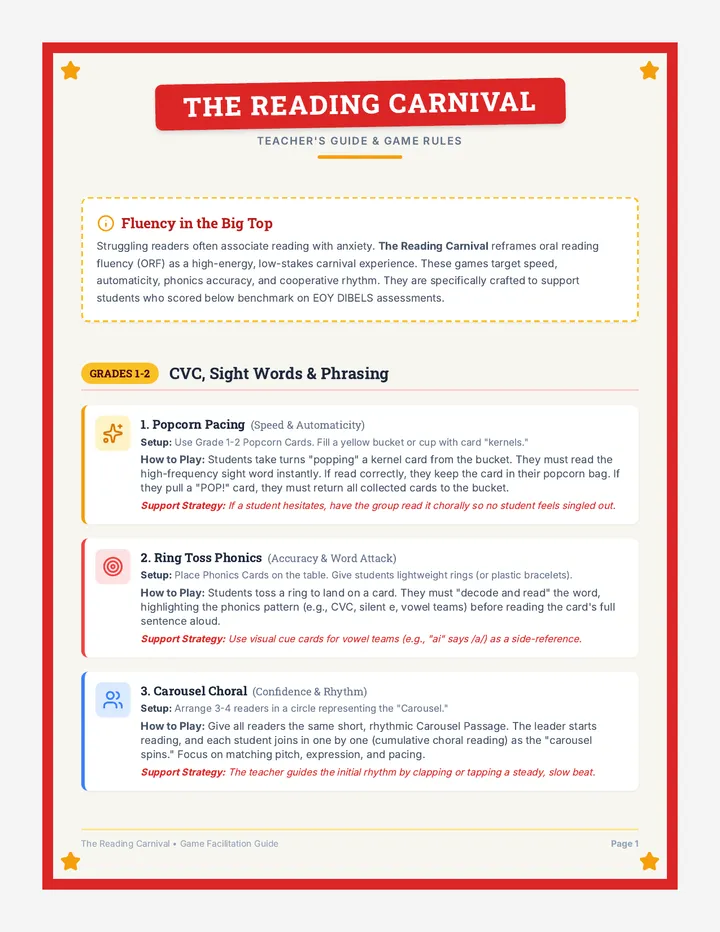
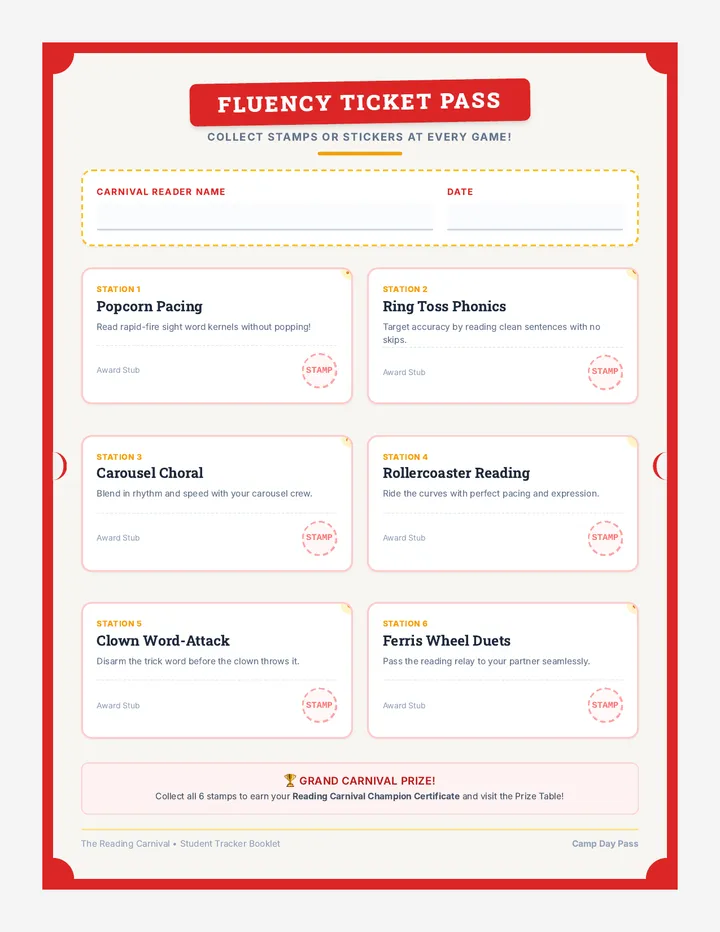
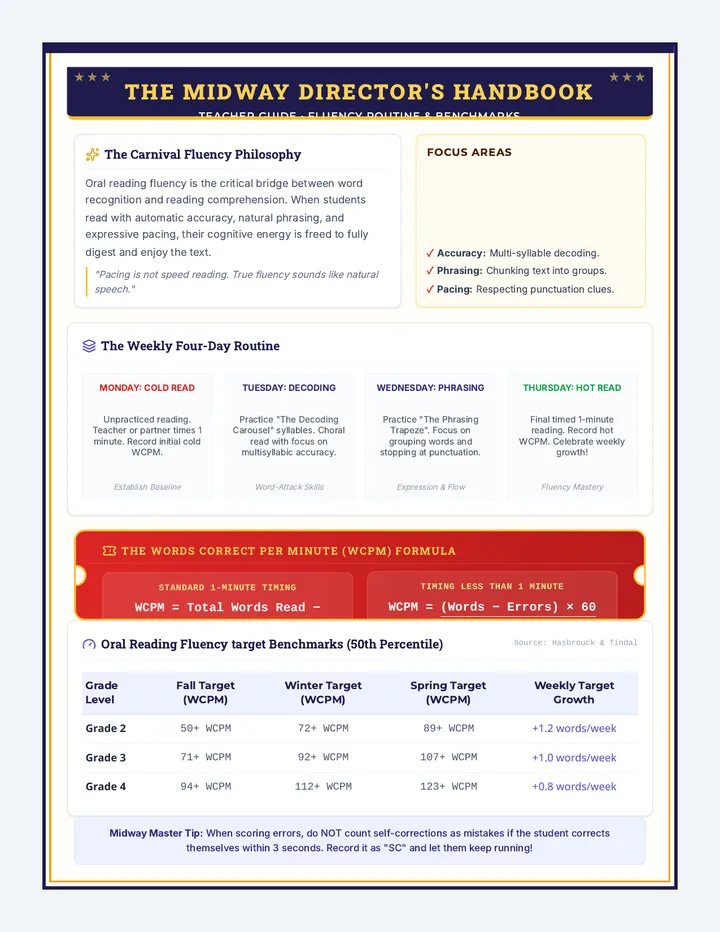
A complete intervention pack designed to boost reading fluency for 2nd-4th grade students reading below grade level. The pack contains teacher instructions, student tracking charts, printable carnival tickets, and themed passages optimized for repeated timed readings and choral/echo practice.
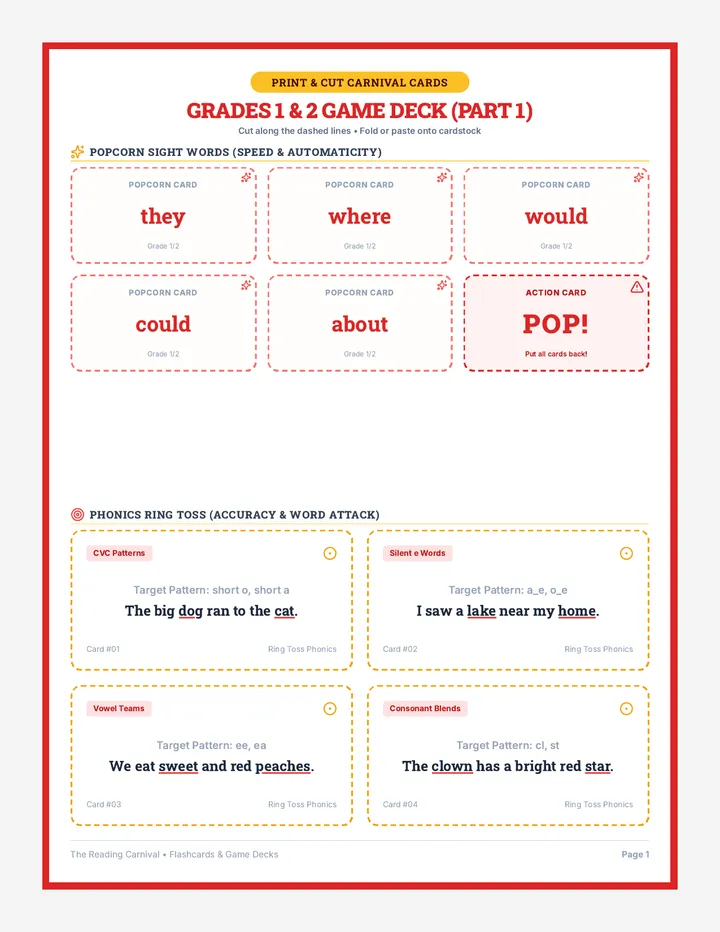
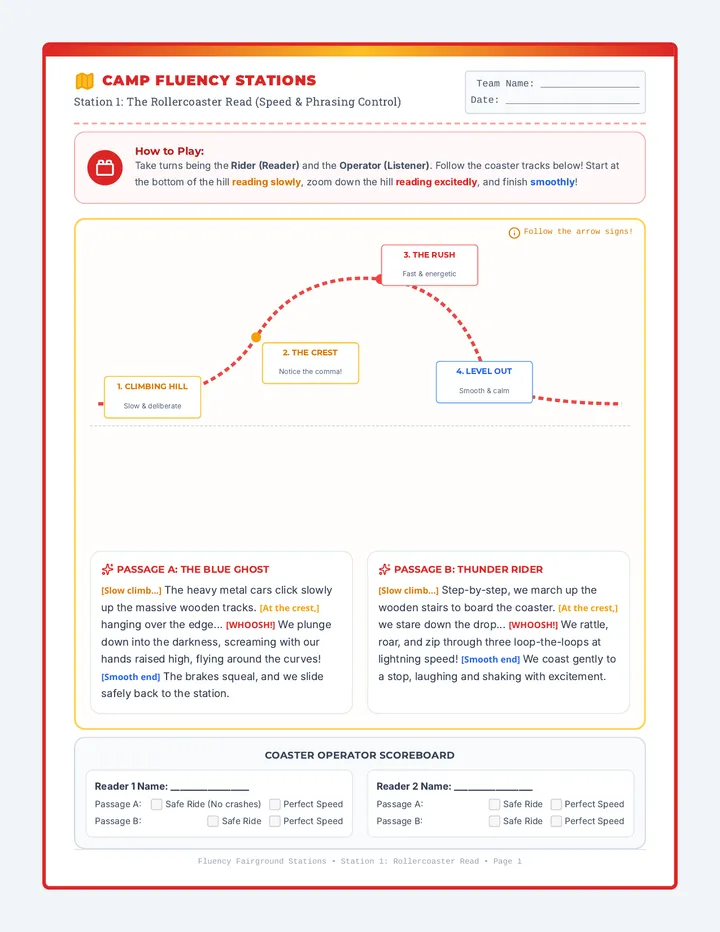
A comprehensive oral reading fluency bundle themed around 'The Reading Carnival'. It includes game guides, differentiated reading cards, progress trackers, and achievement awards designed specifically for struggling 1st-4th grade readers to build speed, accuracy, and confidence in a high-energy summer camp environment.
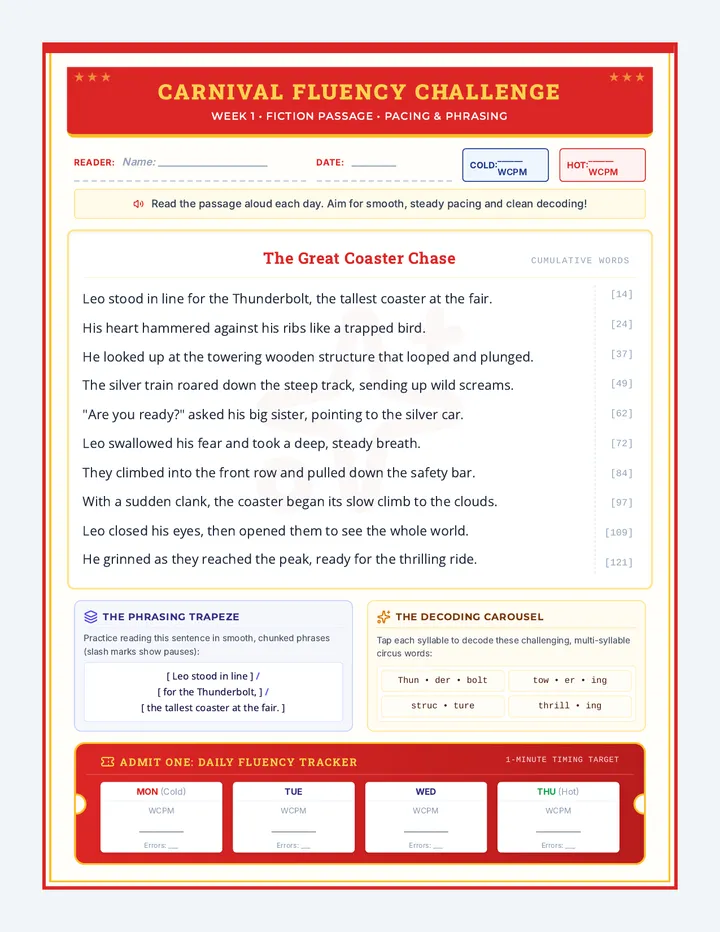
A weekly oral reading fluency program themed around a vintage carnival. It focuses on pacing, phrasing, and decoding multi-syllable words through engaging fiction and non-fiction passages with built-in trackers.
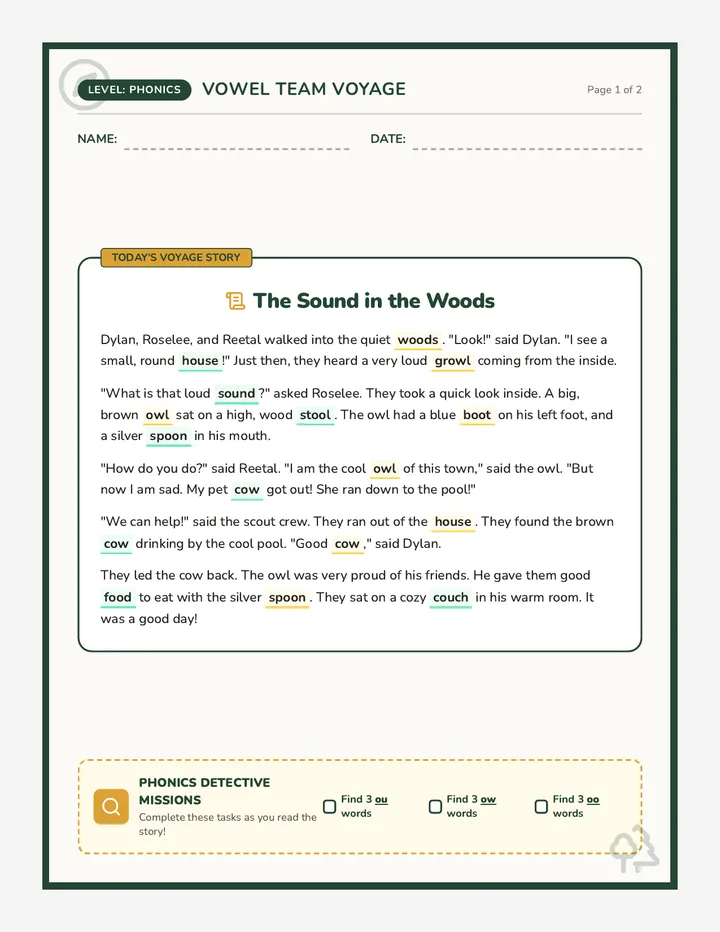
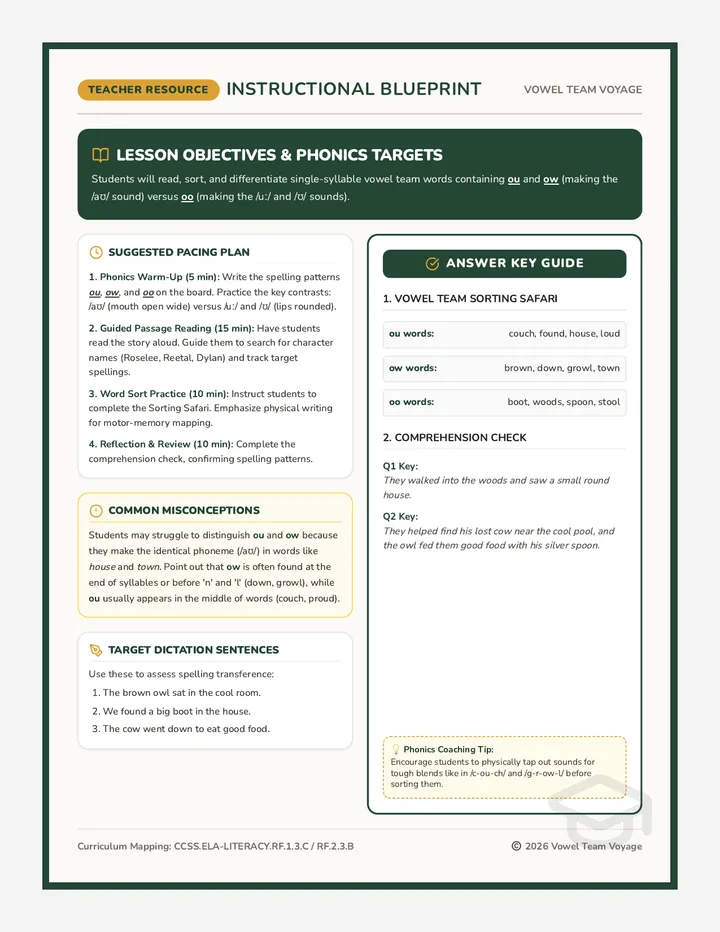
A targeted phonics lesson focused on contrasting single-syllable words containing 'ou', 'ow', and 'oo' vowel teams. Students read an engaging phonics story featuring Roselee, Reetal, and Dylan, and complete structured word-sorting and reading comprehension exercises.
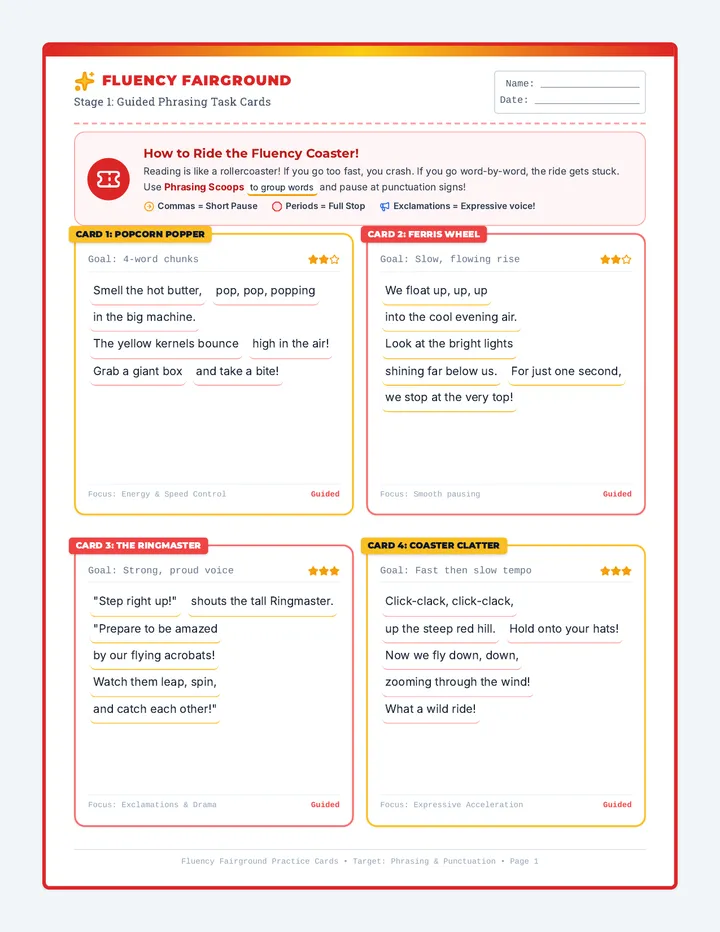
A high-energy, carnival-themed literacy package designed to boost oral reading fluency with a focus on phrasing and punctuation. Features print-and-cut phrasing task cards, partner-based carnival games, and a dramatic Reader's Theater script set under the Big Top.
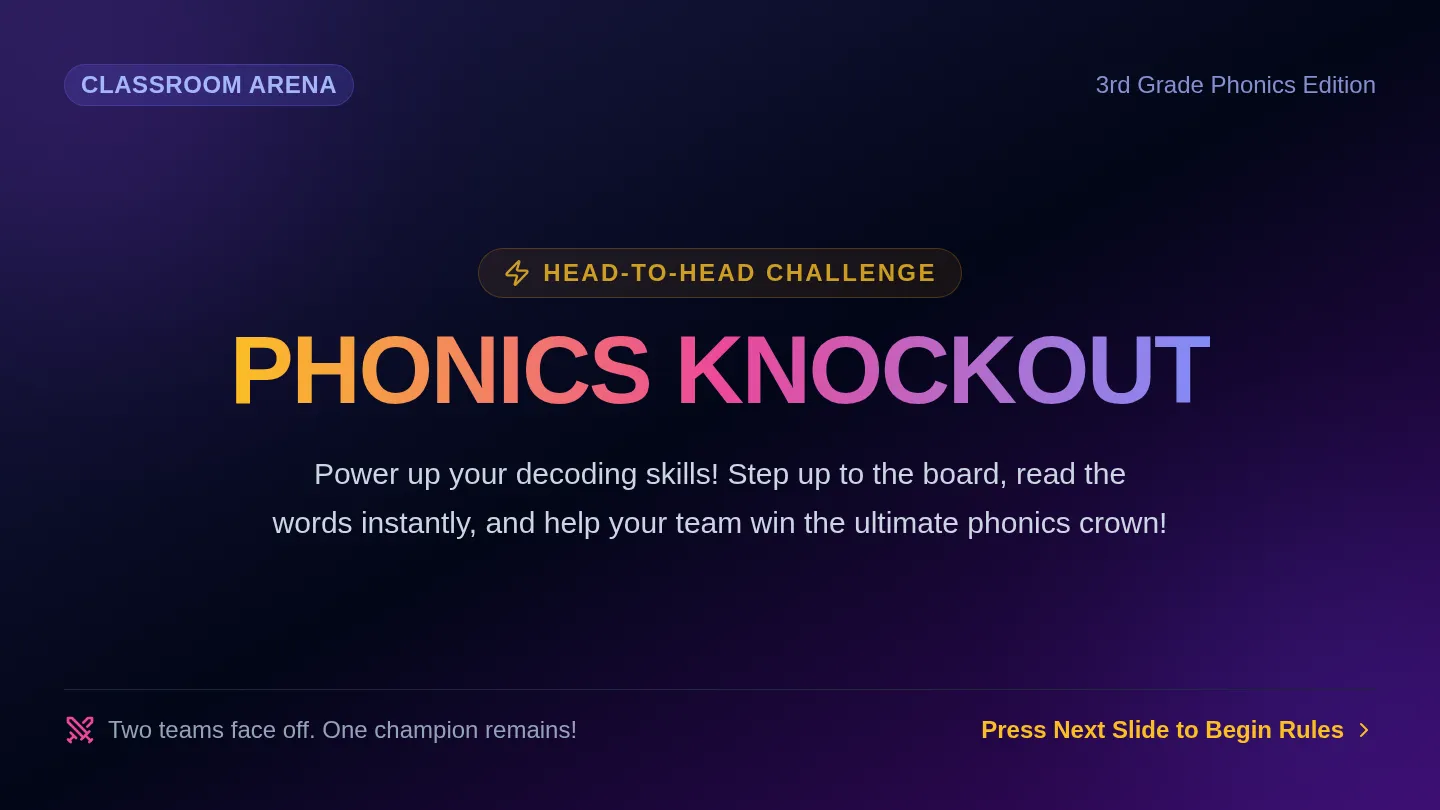
A high-energy, competitive phonics game designed for 3rd-grade classrooms. Students face off head-to-head to quickly decode complex phonics patterns including r-controlled vowels, vowel teams, digraphs, and silent e.
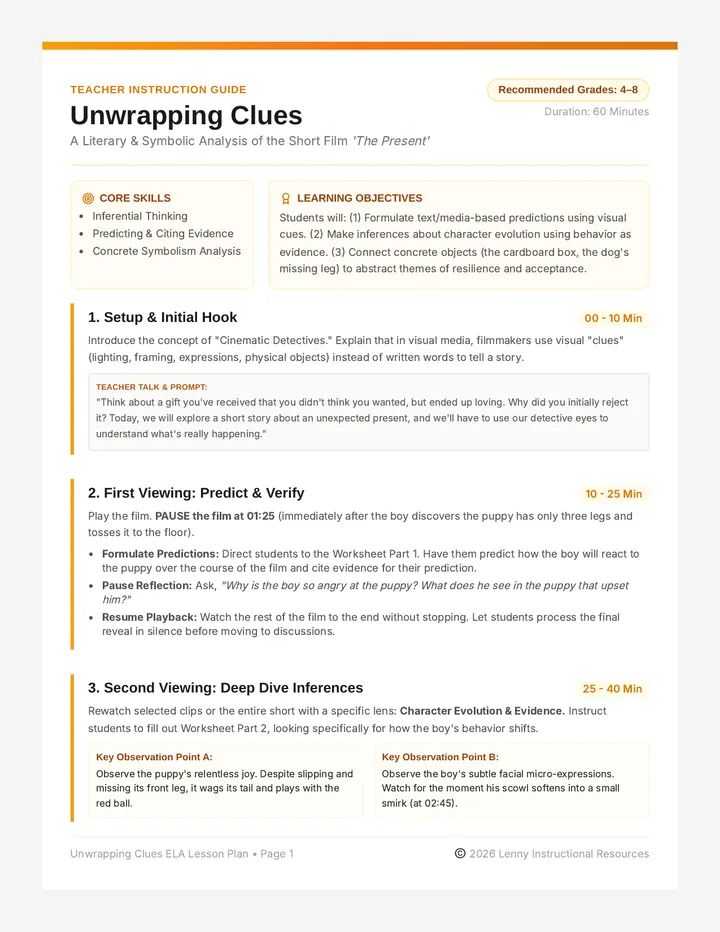
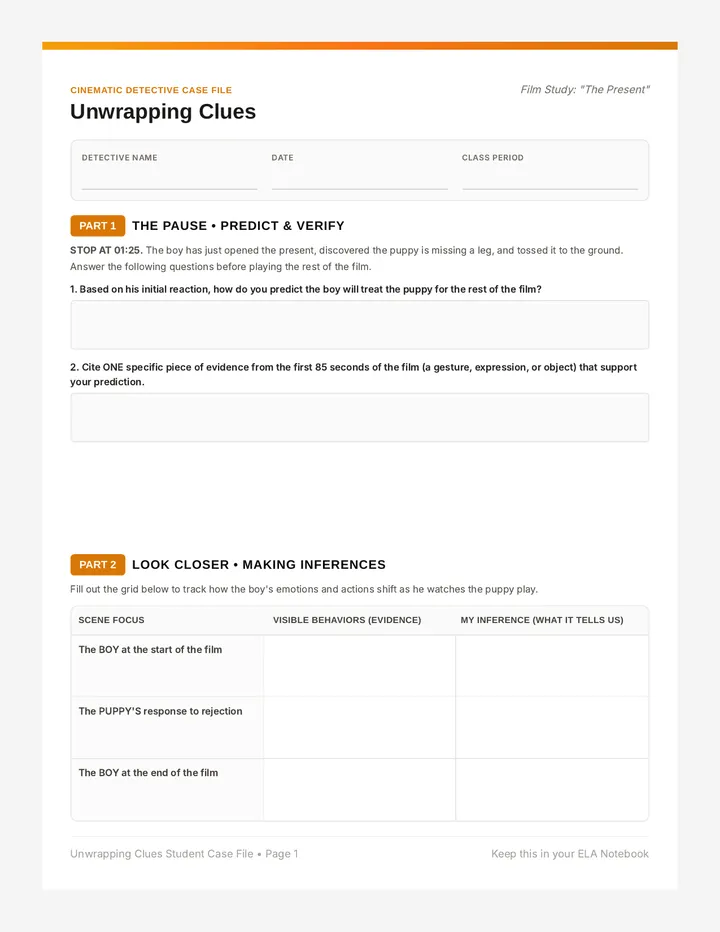
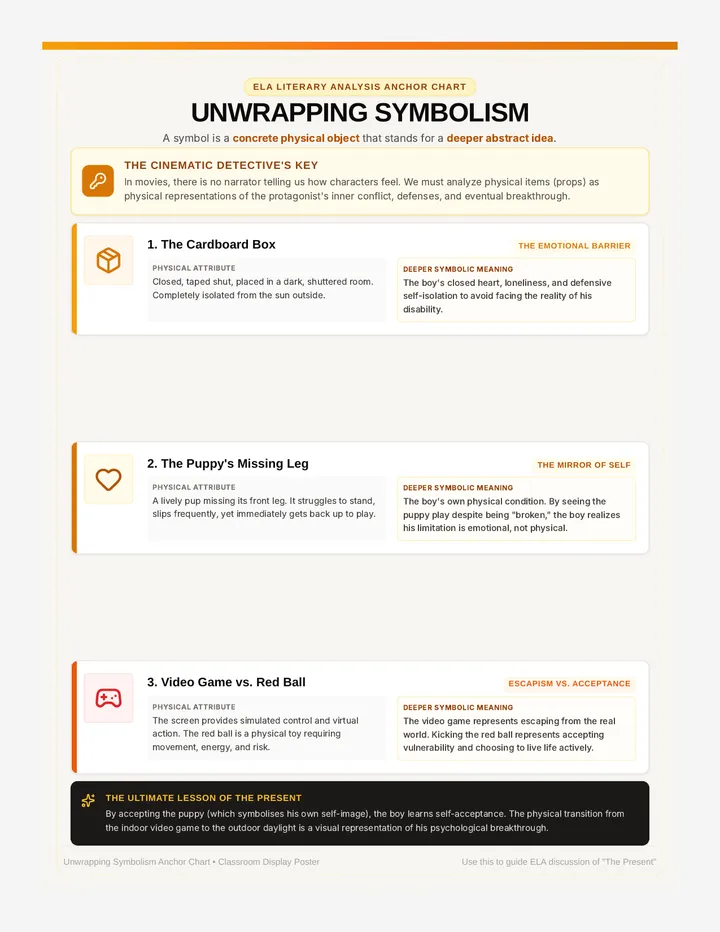
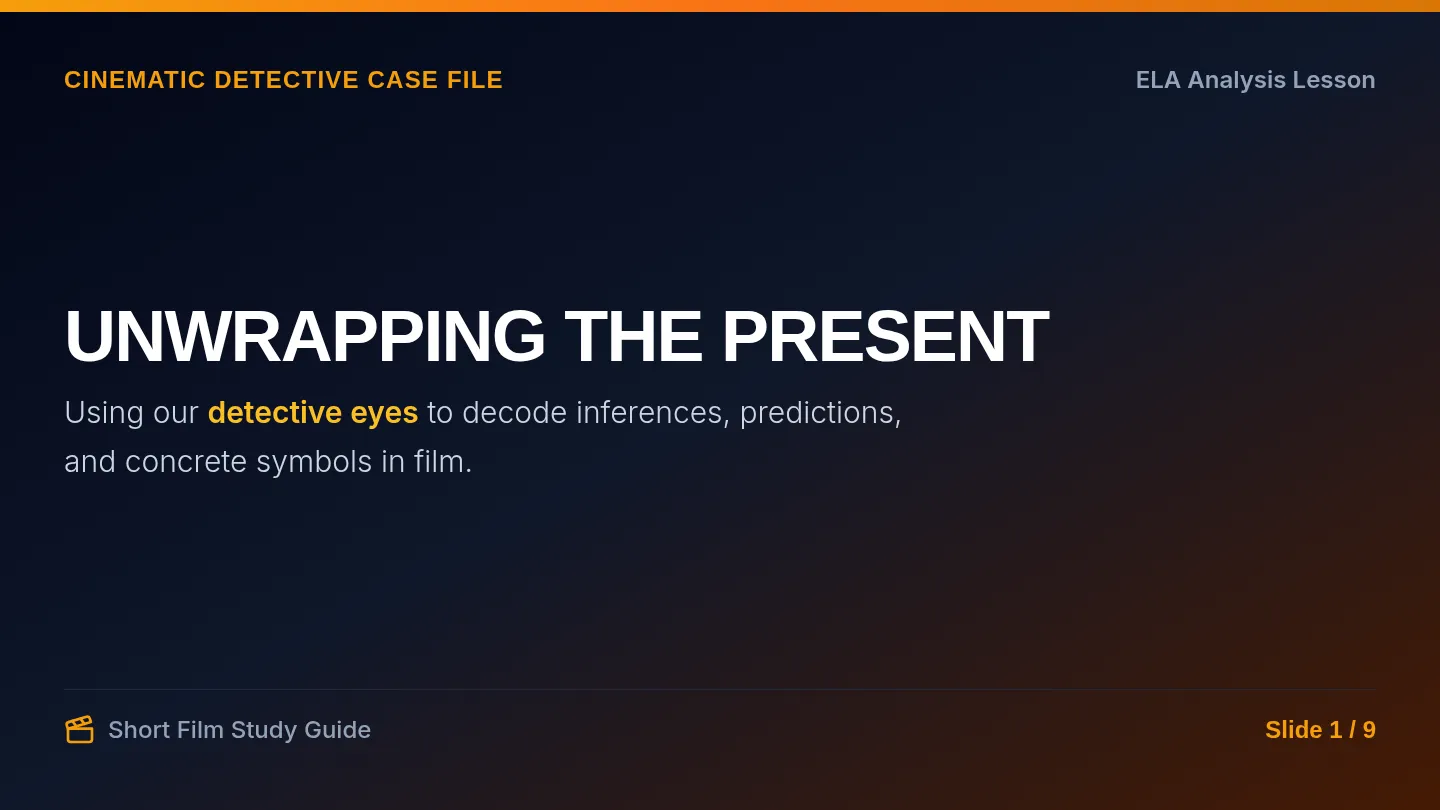
A comprehensive 60-minute ELA lesson focused on the animated short film 'The Present'. Students explore core reading skills—inferential thinking, prediction, citing evidence, and concrete symbolism—by analyzing the boy, the box, the dog, and the final reveal.
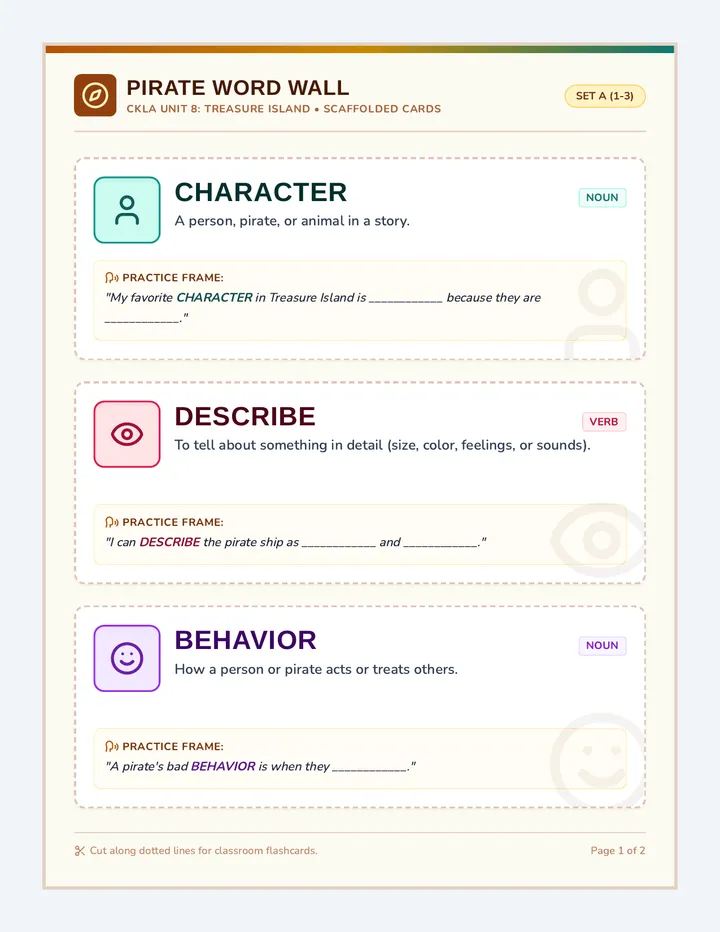
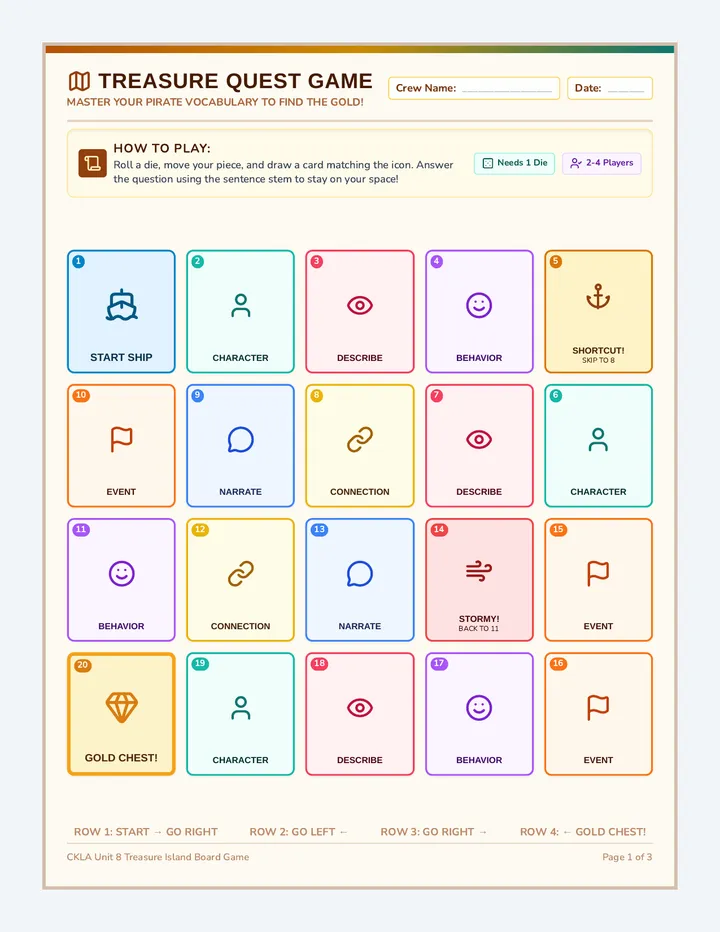
An engaging end-of-the-year activity bundle themed around CKLA Unit 8 Treasure Island, specifically scaffolded for 4th-grade students with low literacy. This lesson incorporates active gameplay, visual word wall cards, and sentence-stem writing prompts to master key vocabulary.