A lesson focused on understanding the magnitude of numbers through powers of 10, comparing small units like milligrams to larger quantities like grams using visual scales and scaffolded practice.
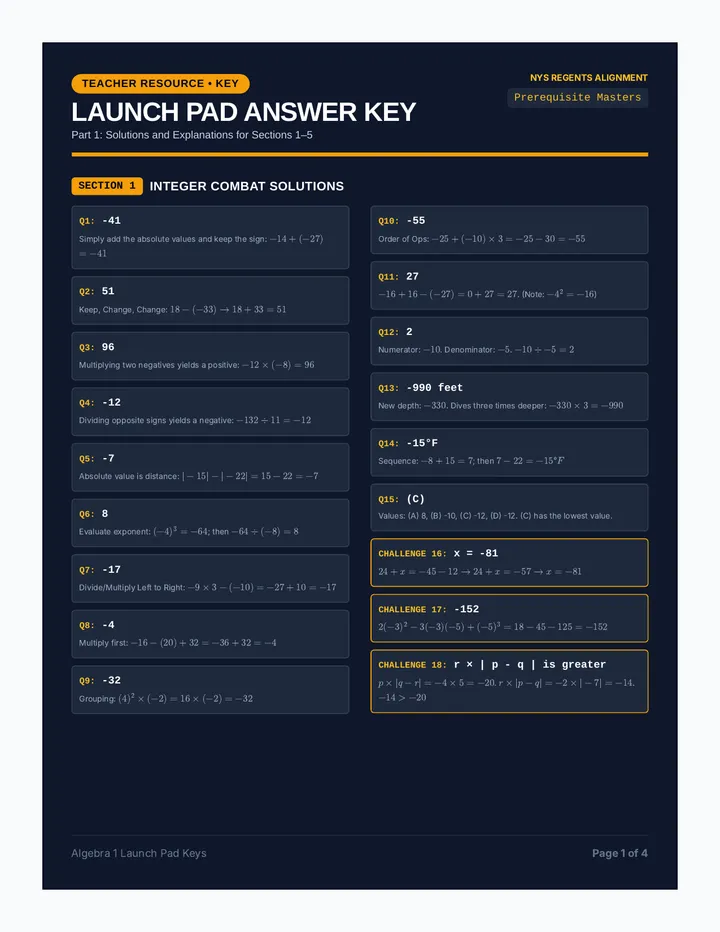
A comprehensive review of adding and subtracting integers and calculating averages using numbers between -20 and 20, set in a polar exploration theme.
Students practice translating English word phrases into mathematical expressions using variables and operations.
A comprehensive guide for students to master factoring quadratic expressions using the GCF, X-Method, and Grouping. This lesson breaks down complex expressions into manageable construction-themed steps.
A comprehensive look at the powers of 10, scientific notation, and comparing the scale of objects from the microscopic to the cosmic. Students will learn to visualize and calculate magnitude differences.
A lesson focused on calculating the margin of error for population means when the population standard deviation is known. Students practice using z-scores for different confidence levels.
A comprehensive lesson on scaled picture and bar graphs with a festive Cinco de Mayo theme, featuring taco toppings and piñata treats. Students will practice drawing graphs and solving 'how many more/less' problems.
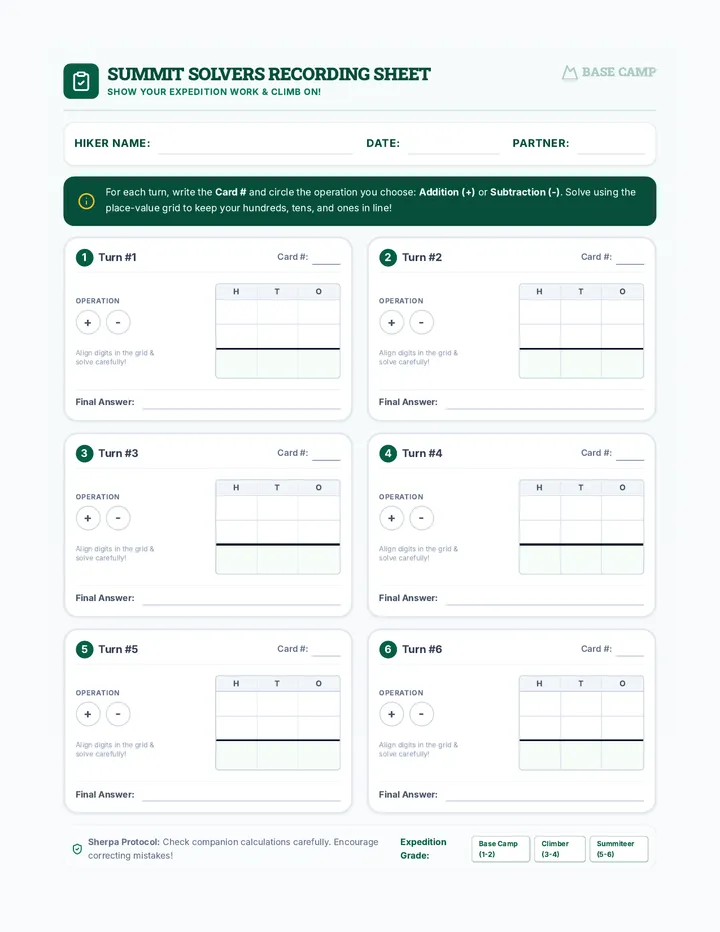
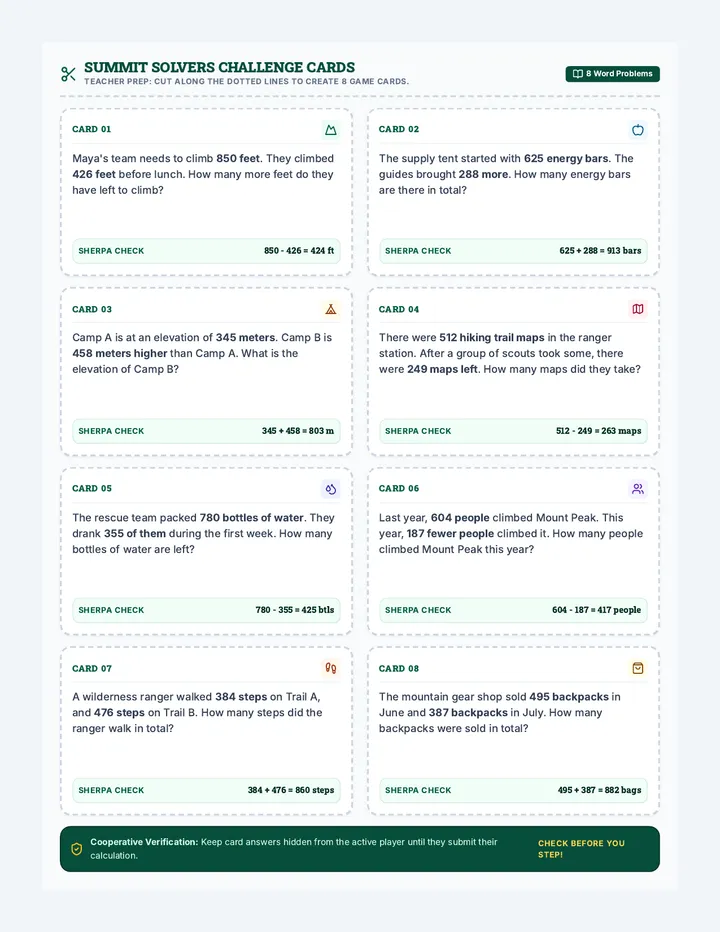
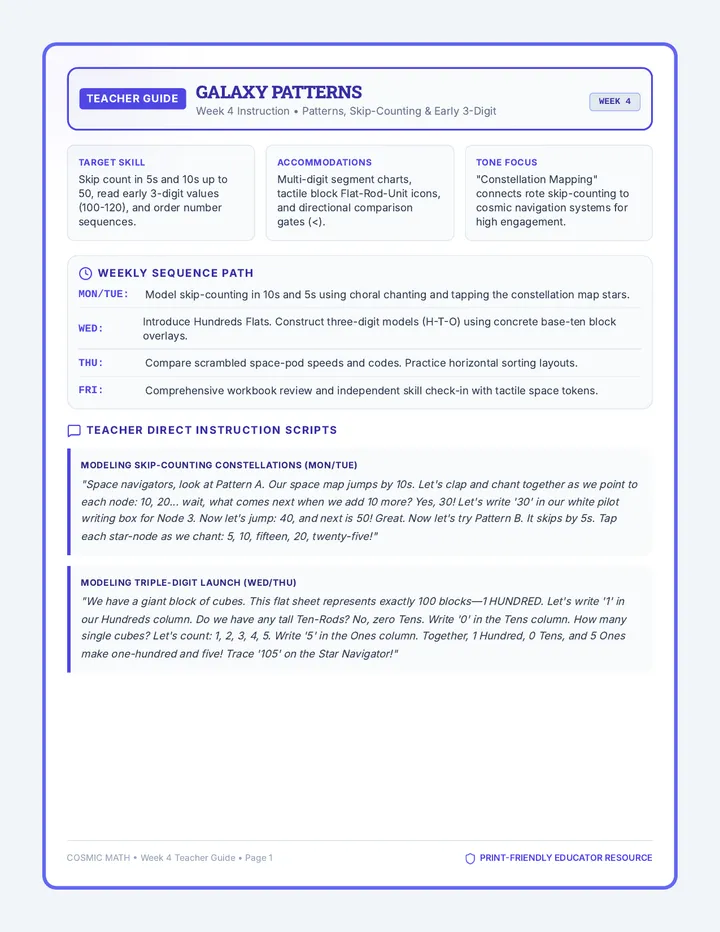
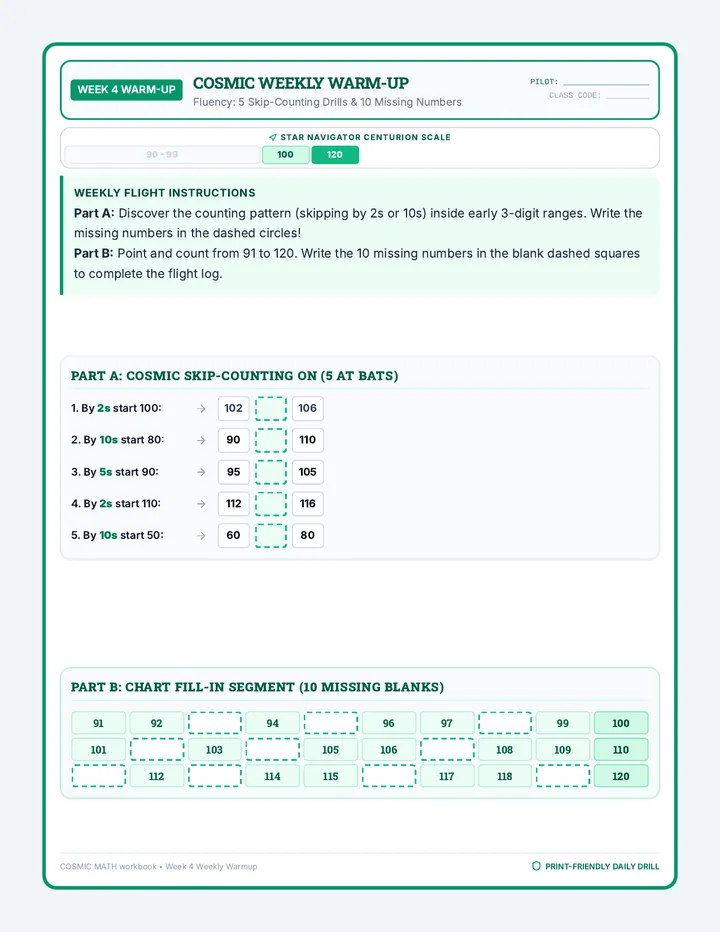
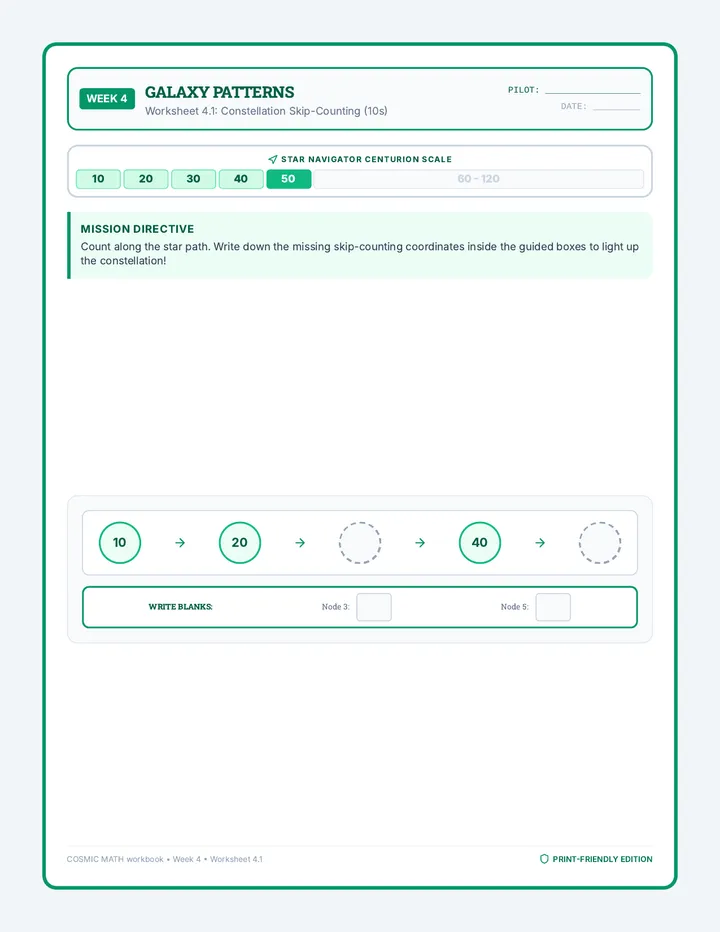
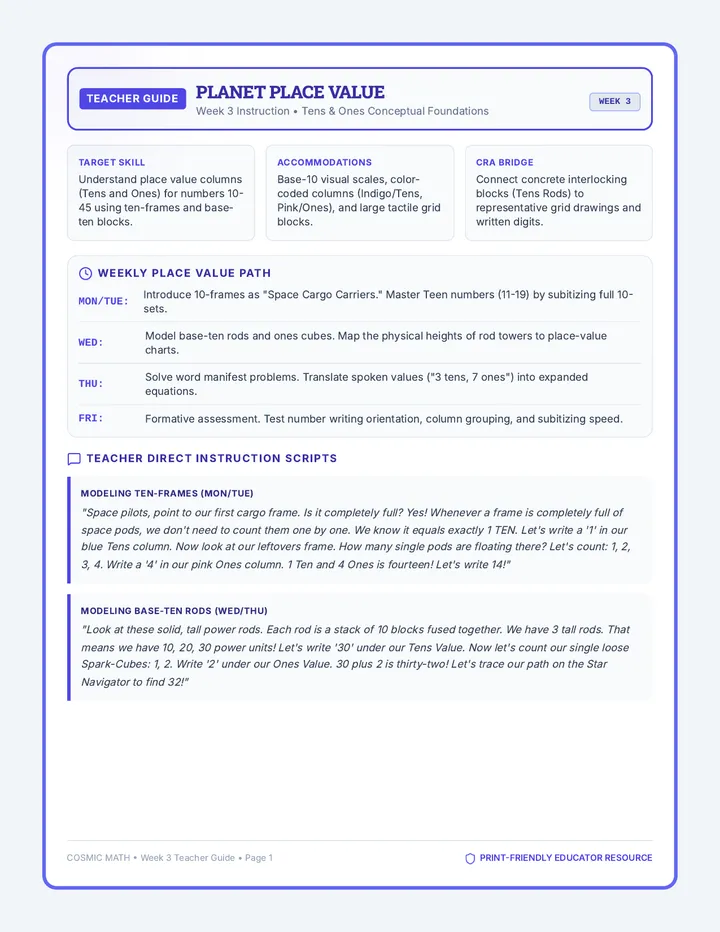
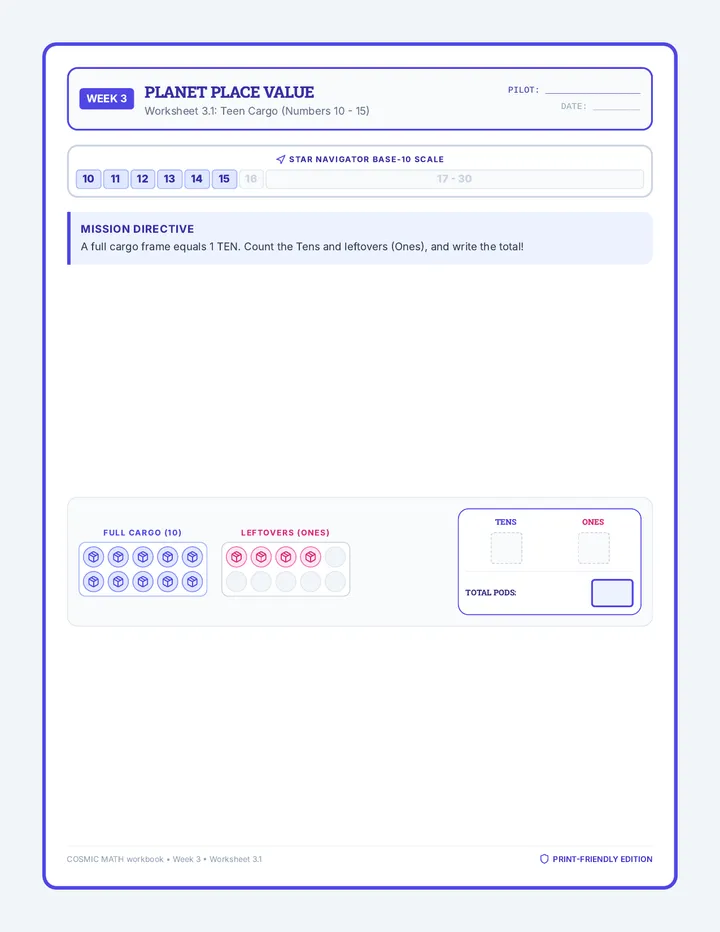
A math lesson for 3rd-grade RSP students focusing on foundational 2nd-grade number sense skills. Students will practice mental addition of 10 and 100 and use place value to compare numbers up to 1,000 using scaffolding such as place value mats and visual aids.
Foundational tools for assessing student levels and planning instruction based on California Power Standards across grades K-5.
A short assessment focused on the 4th-grade skill of finding common denominators to create equivalent fractions. Includes a student exit ticket and a teacher proficiency guide.
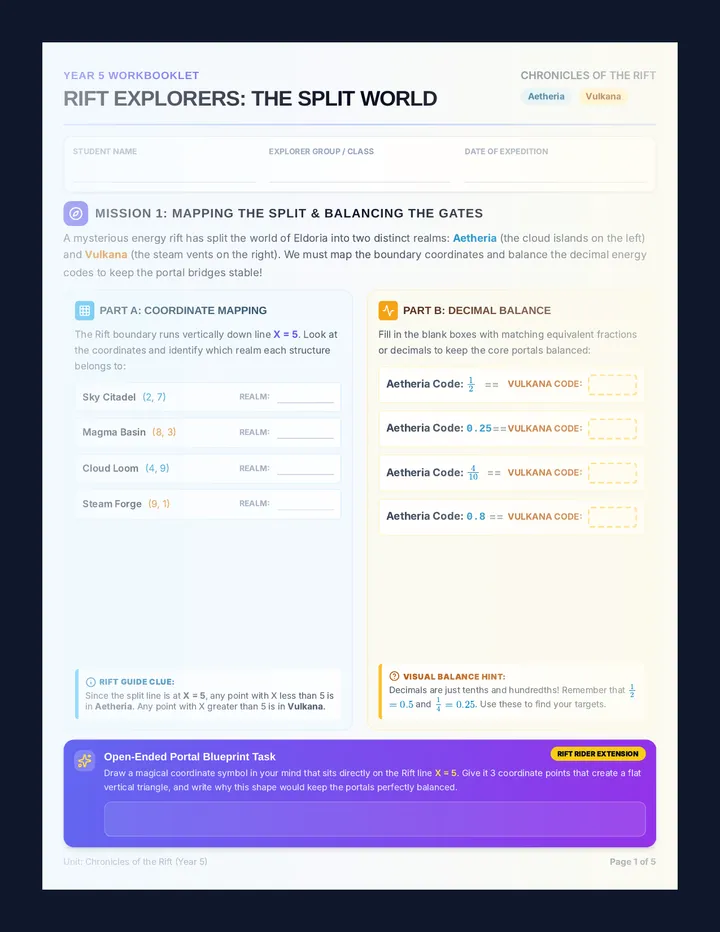
A lesson on comparing fractions with same numerators or same denominators using visual models and number lines.

A lesson focused on solving radical equations derived from function notations, specifically finding the input value (x) given an output value (g(x)).
A comprehensive lesson on identifying and calculating vertical asymptotes, horizontal asymptotes, and removable discontinuities (holes) in rational functions. Students will practice factoring and simplifying functions to reveal their underlying structure.
A quick practice set focused on solving basic rational equations where a single variable is in the denominator. Students will develop their algebraic manipulation skills to isolate the variable and find solutions.
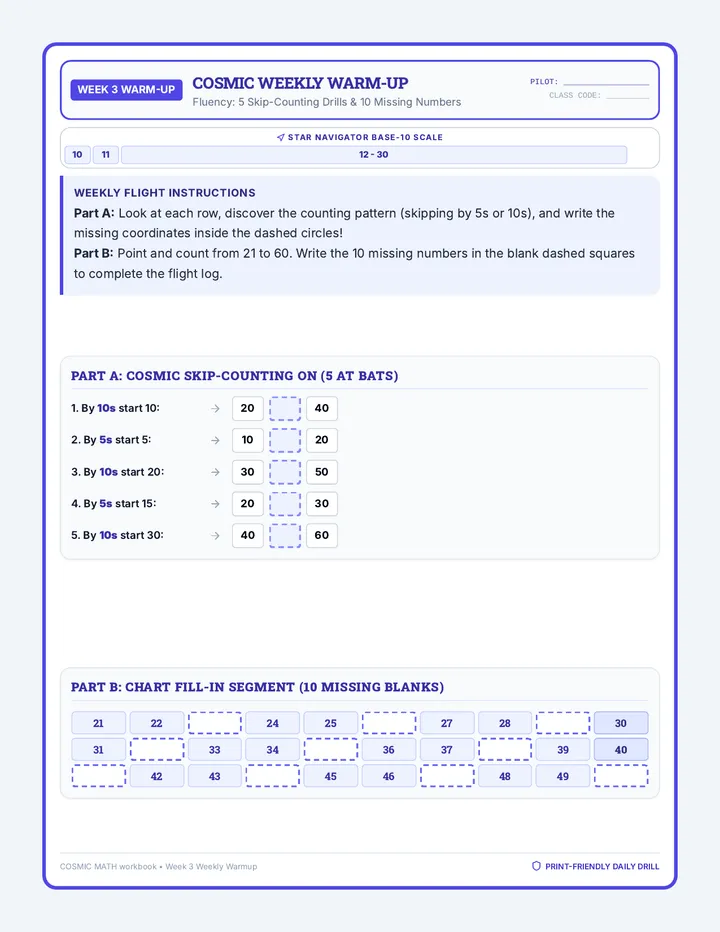
A 25-minute small group lesson focusing on identifying whether a pattern is additive ($y = x + a$) or multiplicative ($y = ax$) from tables and graphs.
A practice lesson focusing on identifying solutions to rational equations using function tables. Students analyze given functions and their corresponding tables to find specific x-values for target outputs.
A lesson focused on identifying the domain and range of rational functions using set-builder notation. Students analyze various horizontal and vertical asymptotes to determine functional constraints.
An alternate version of the Trapezoid Territory mission featuring a larger plot of land and new coordinate data. Students continue to apply coordinate geometry formulas for survey verification.
A lesson on multiplying radical expressions focusing on square roots and cube roots with numerical radicands. Students will learn the product property of radicals and apply it to simplify expressions.
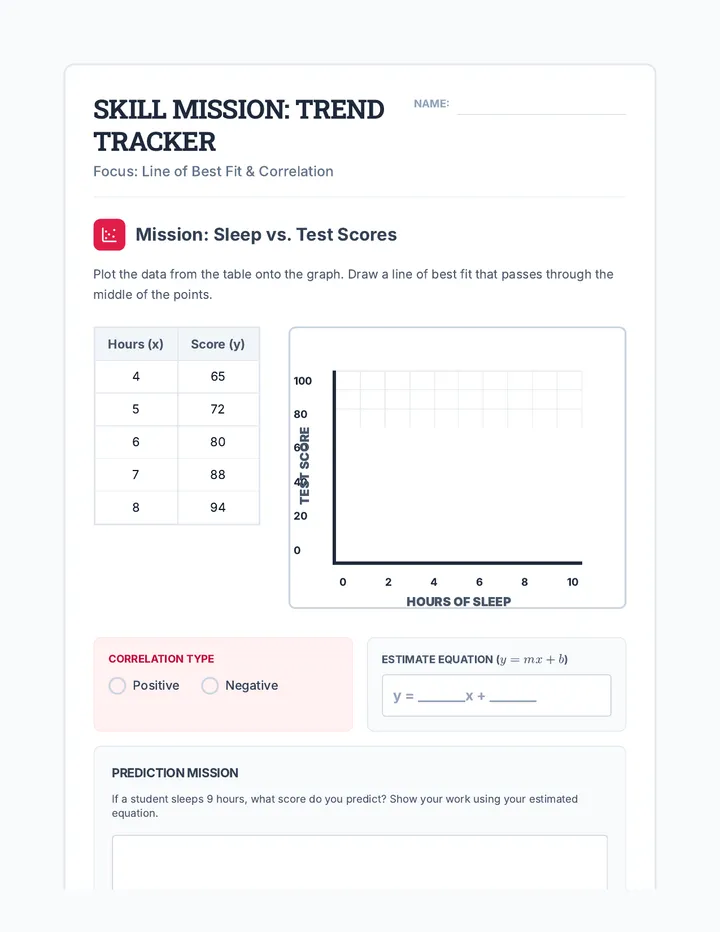
The opening mission for the Trapezoid Territory unit. Students plot the primary boundary coordinates on a 2D plane to visualize the land reserve.