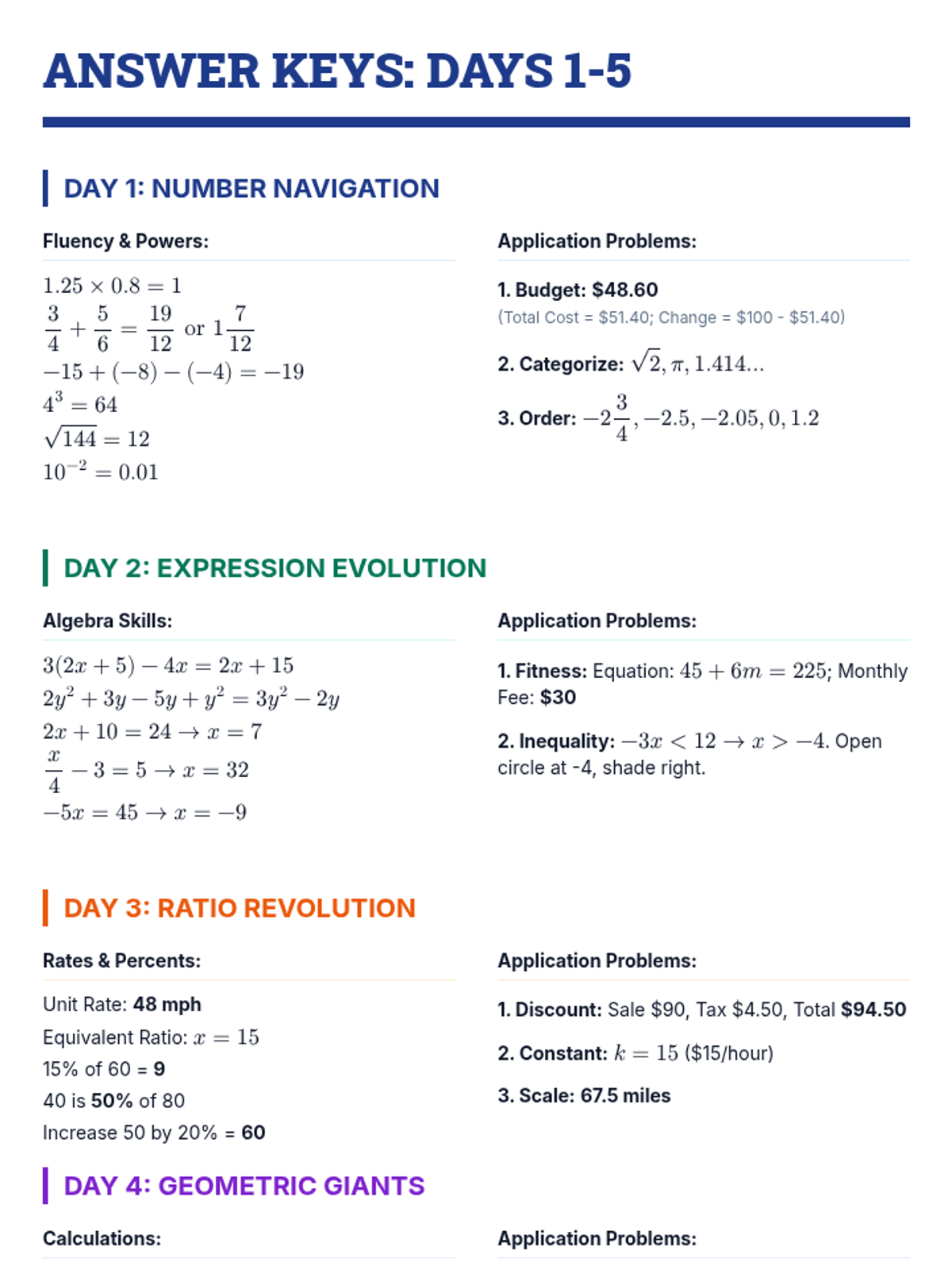
A hands-on geometry lesson where students calculate the volume of cylinders and verify their math using water displacement, bridging the gap between abstract formulas and physical reality.
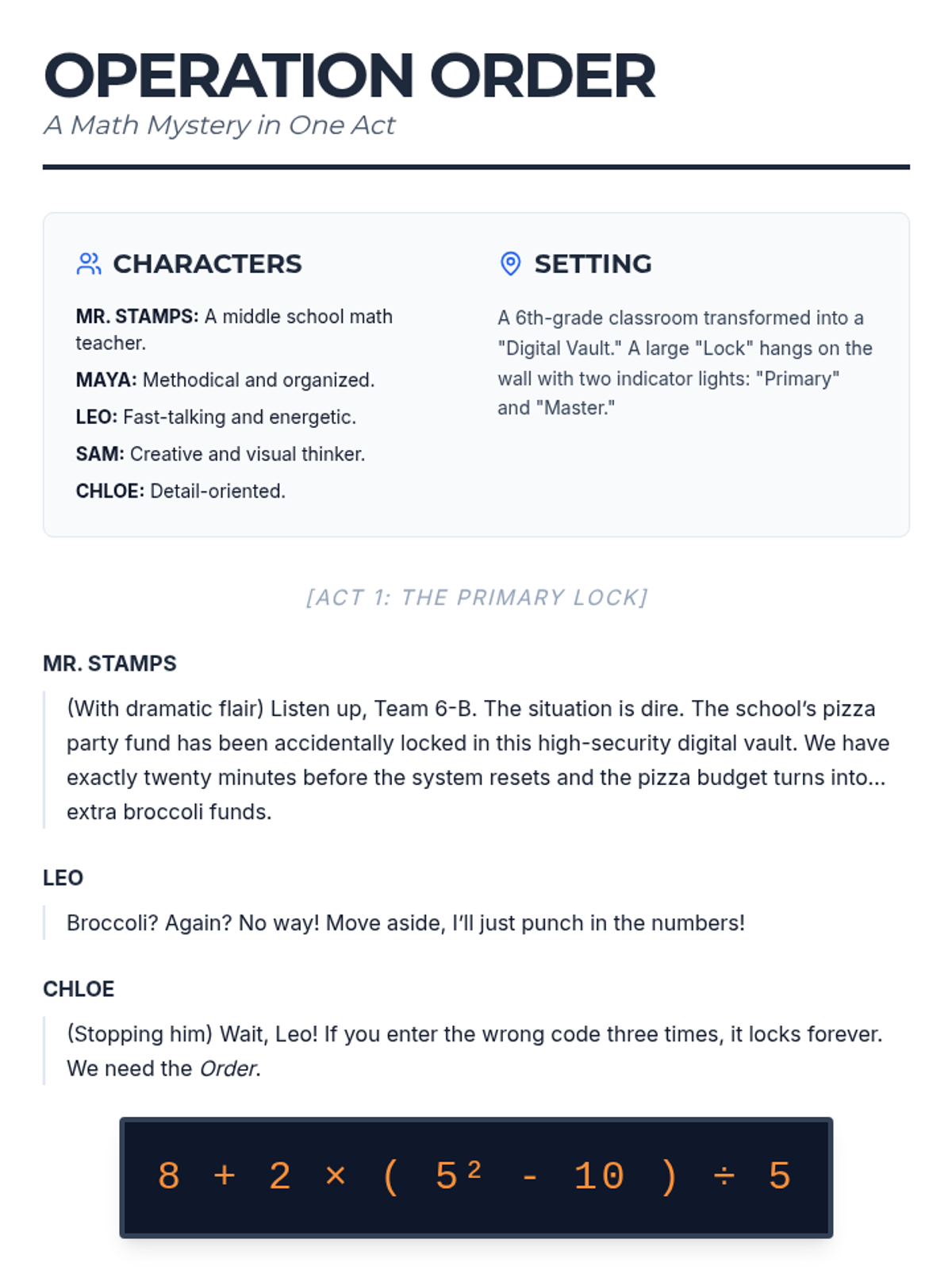
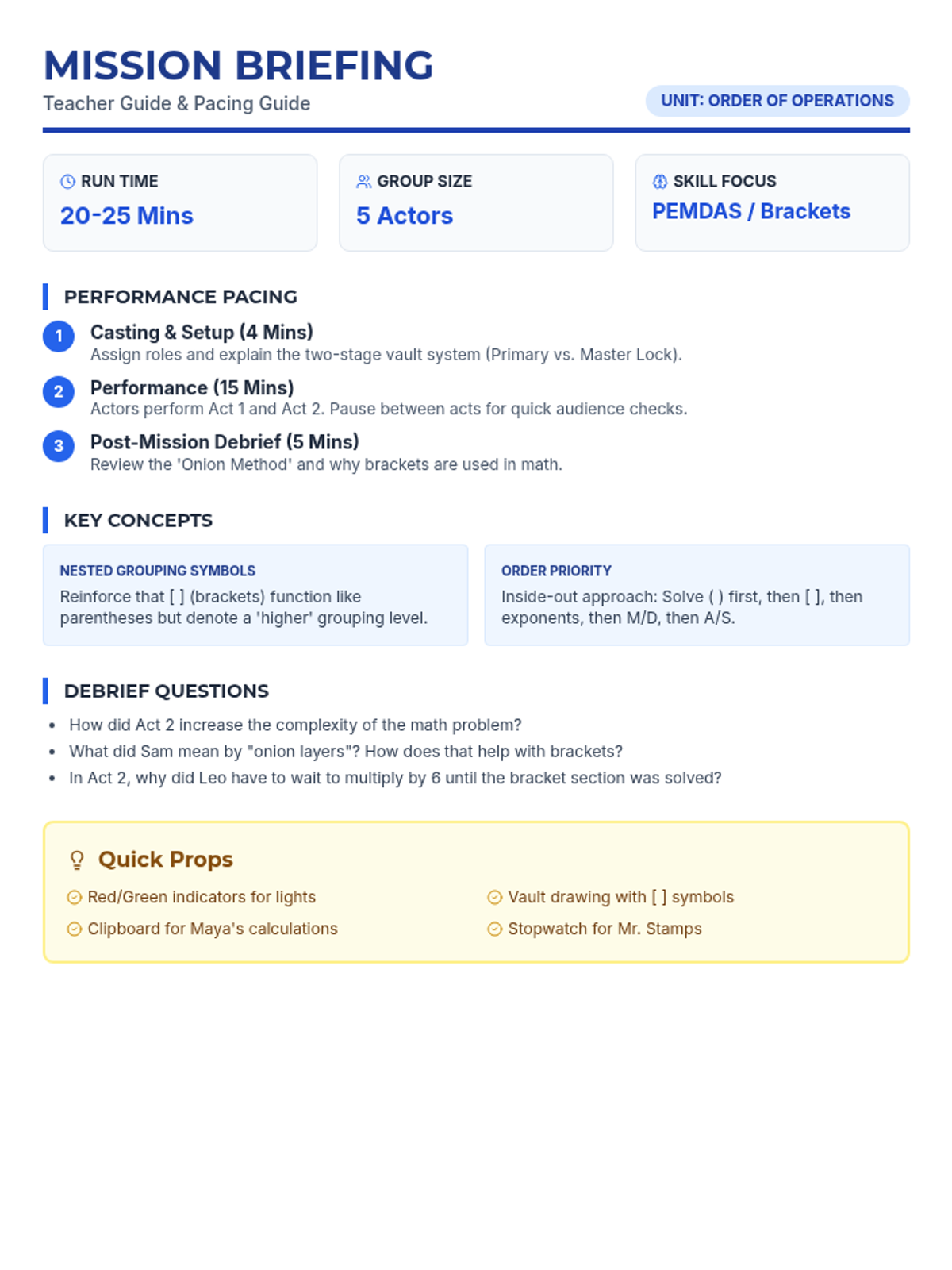
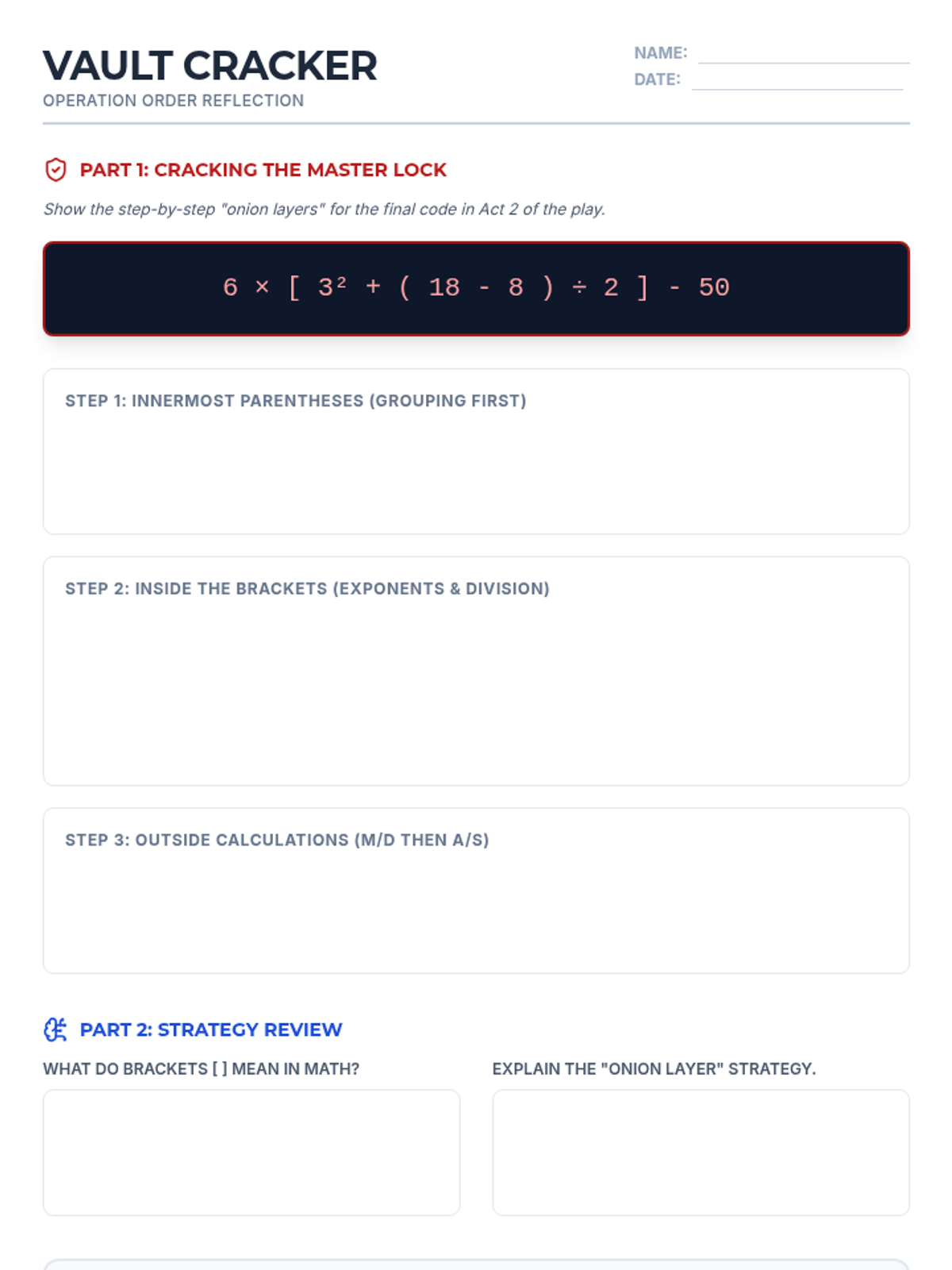
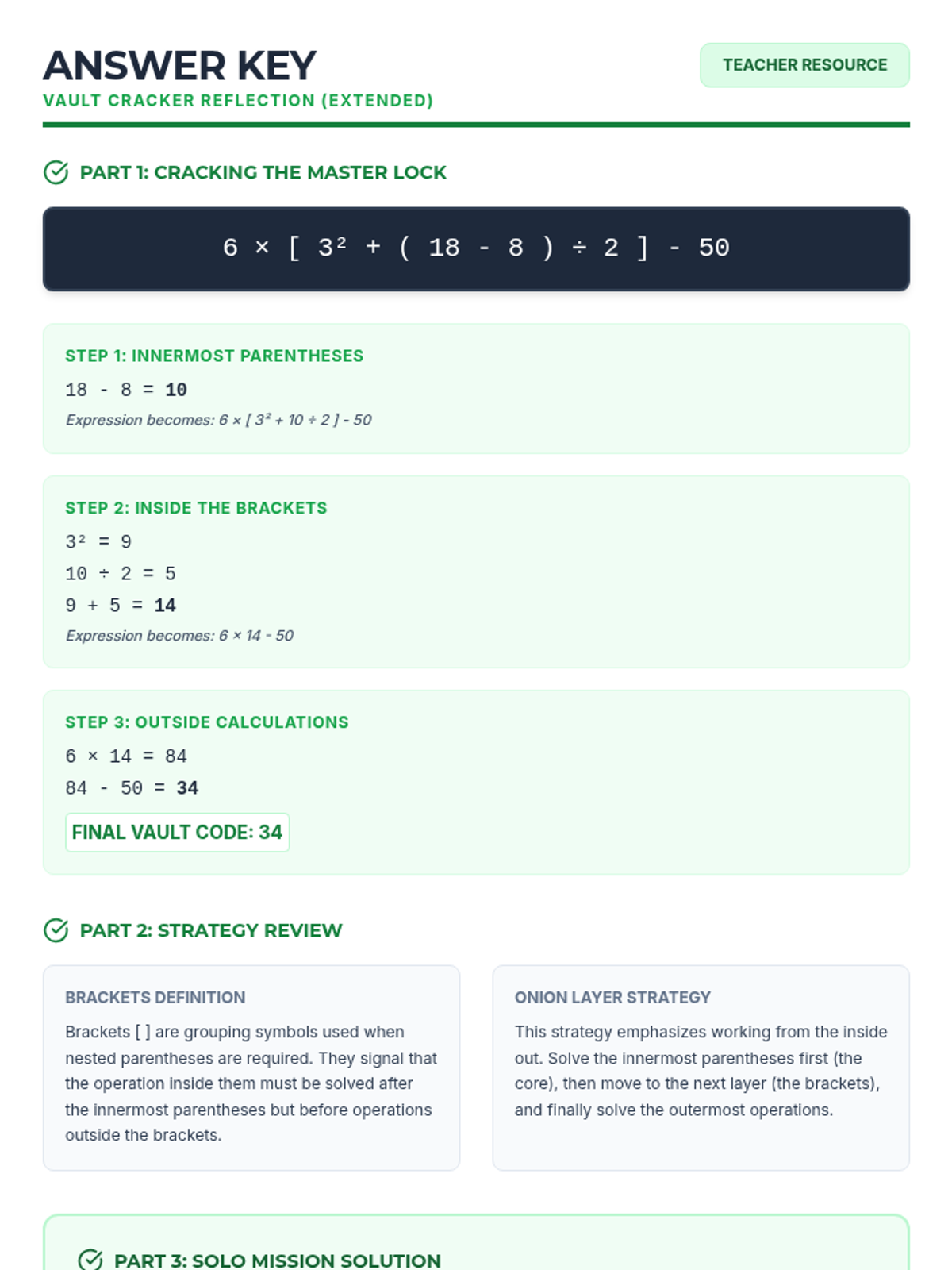
A collaborative math-themed drama lesson where students perform a play about the Order of Operations. The lesson explores teamwork and the real-world application of PEMDAS through an escape room scenario.
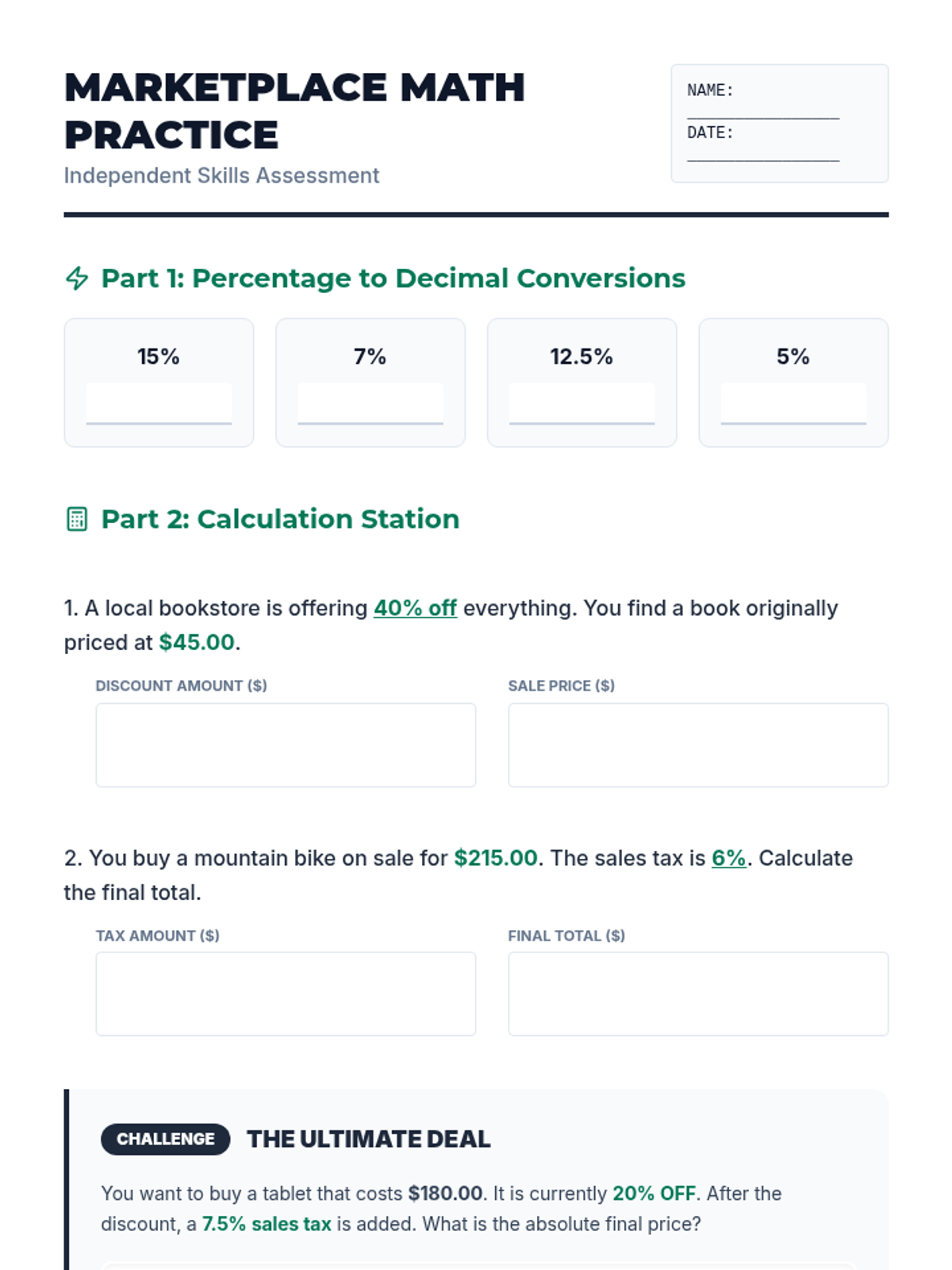
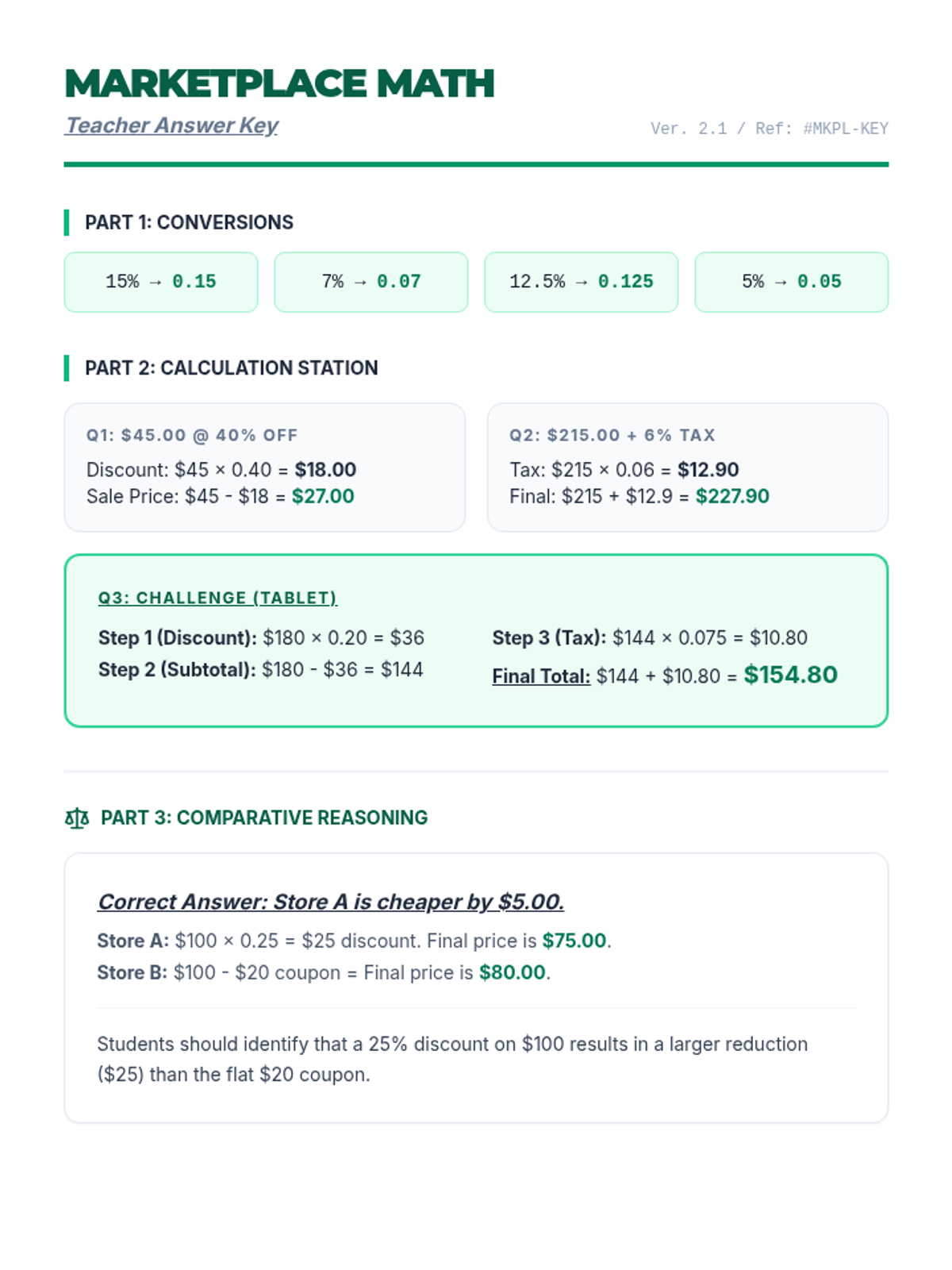
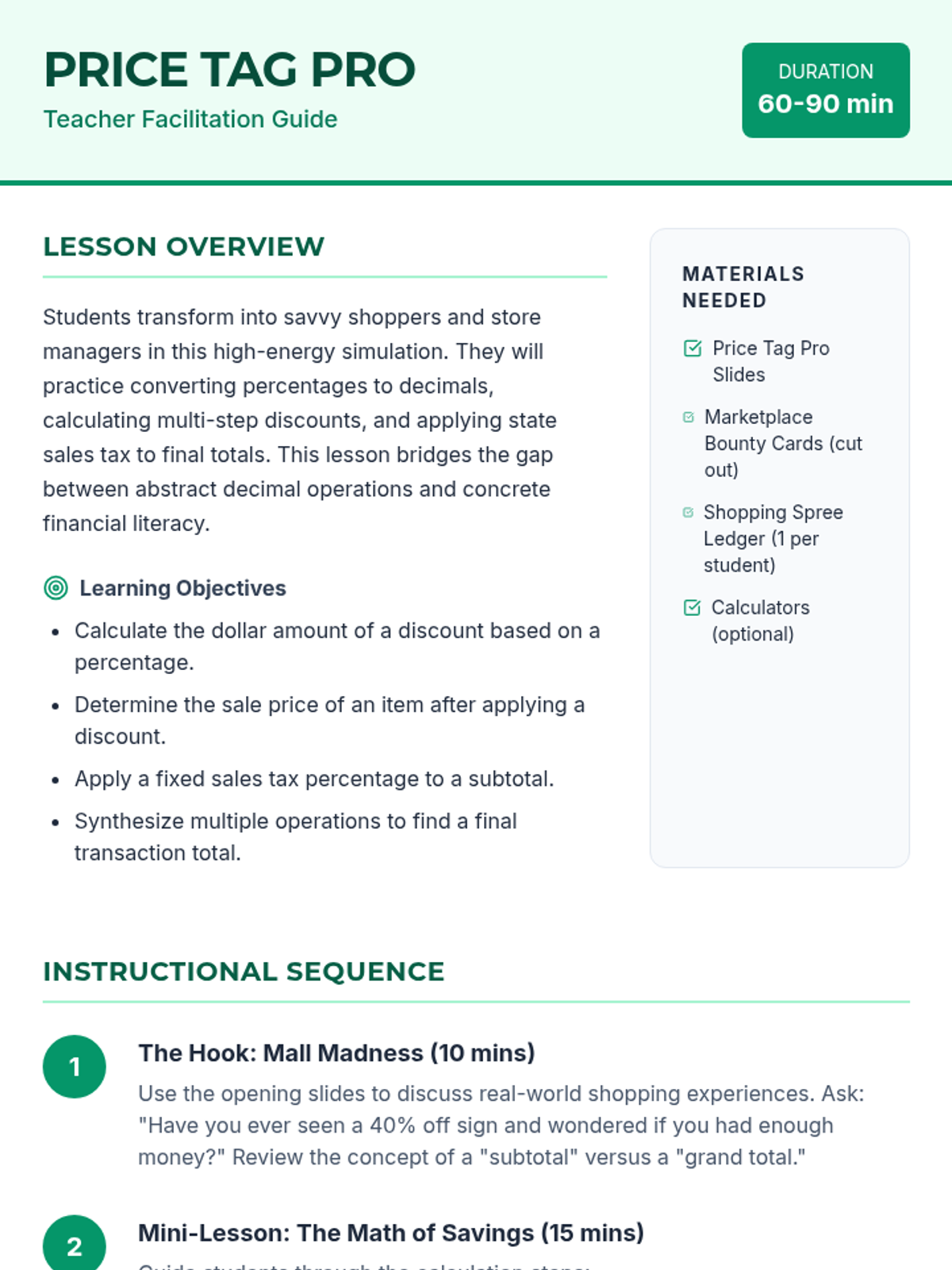
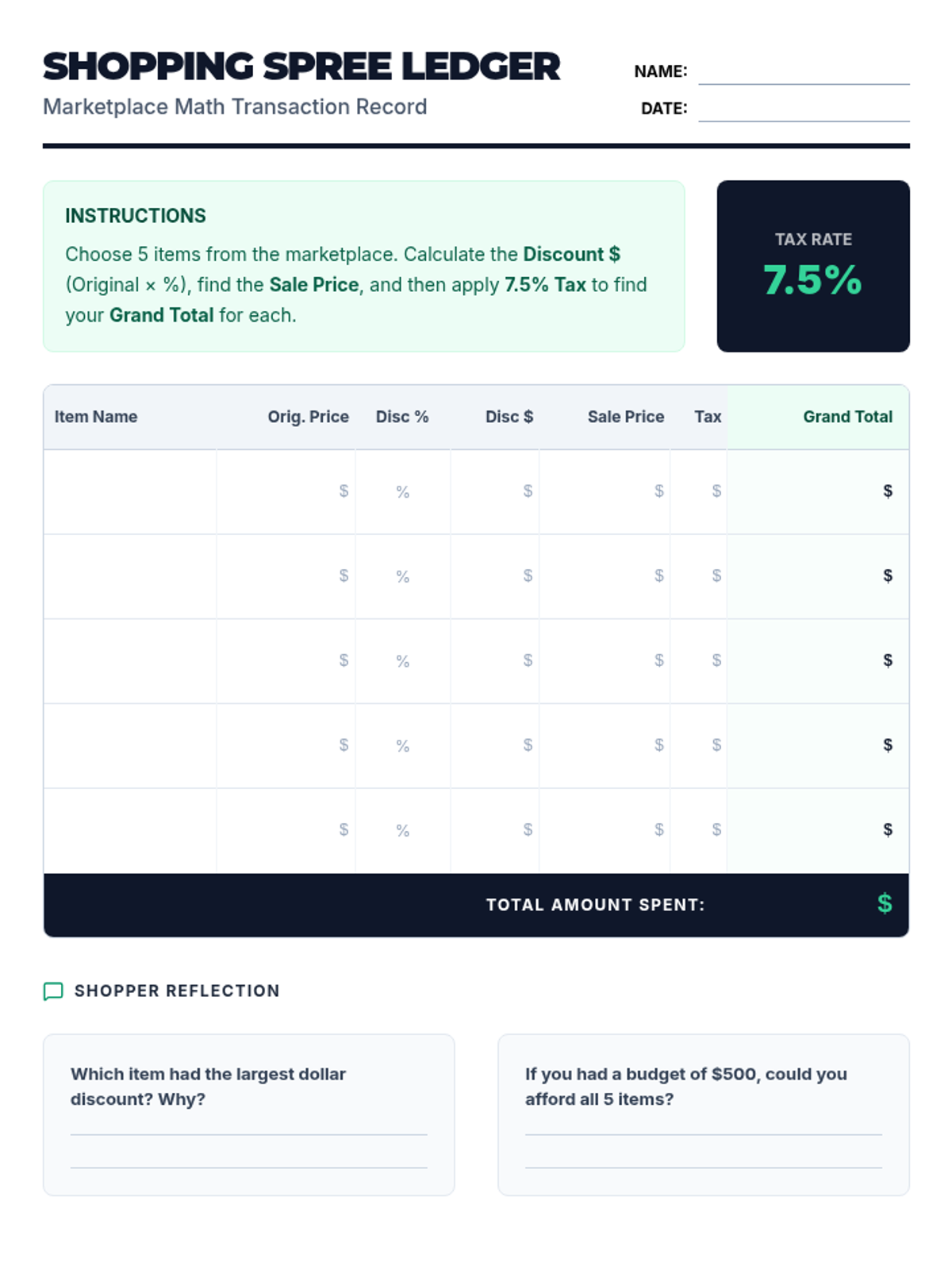
A project-based lesson where students master percentages and decimals by calculating discounts, sales tax, and final totals in a simulated shopping environment.
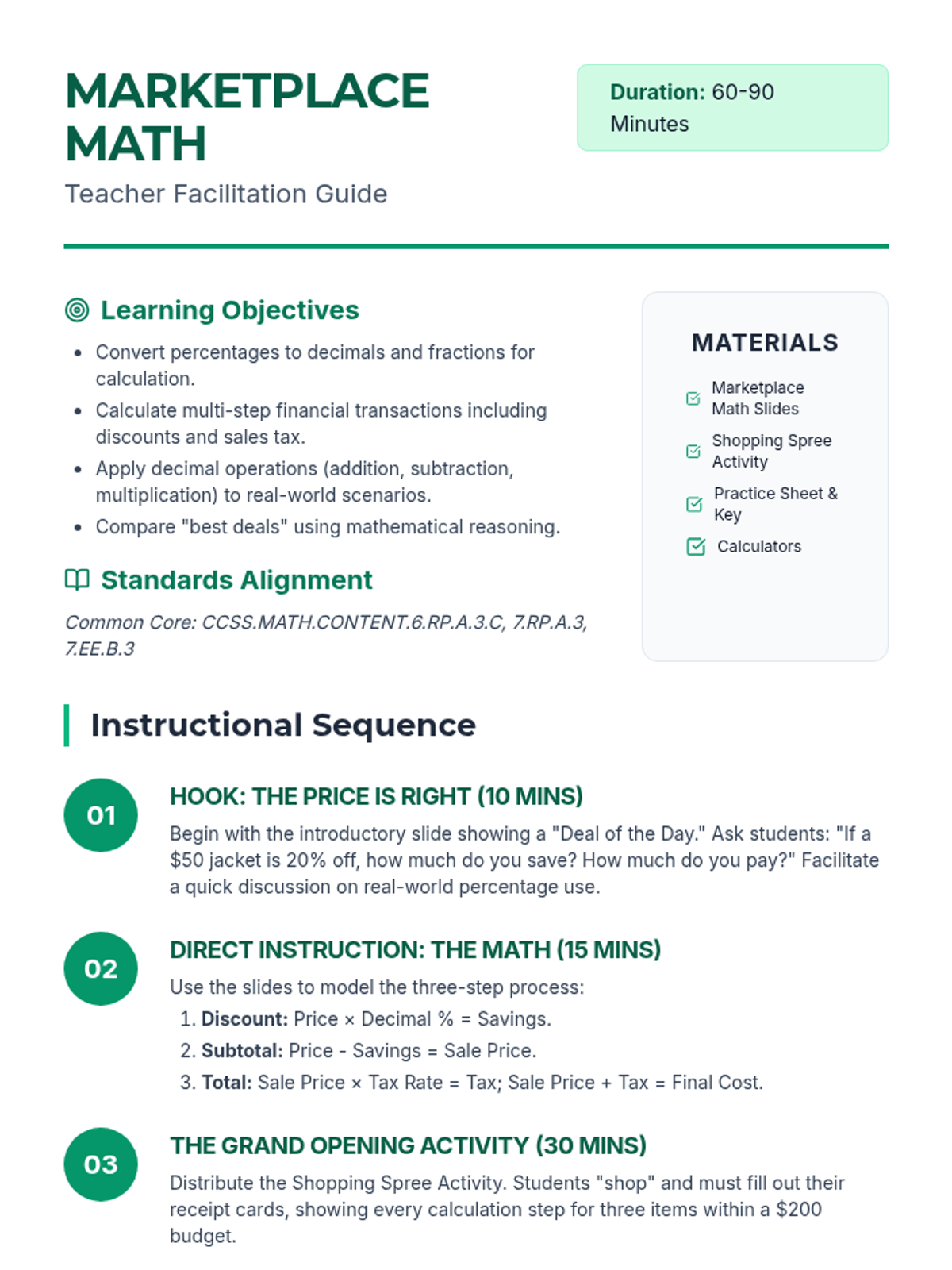
A project-based math lesson where students master percentages and decimals by navigating a simulated marketplace, calculating real-world discounts and sales tax.
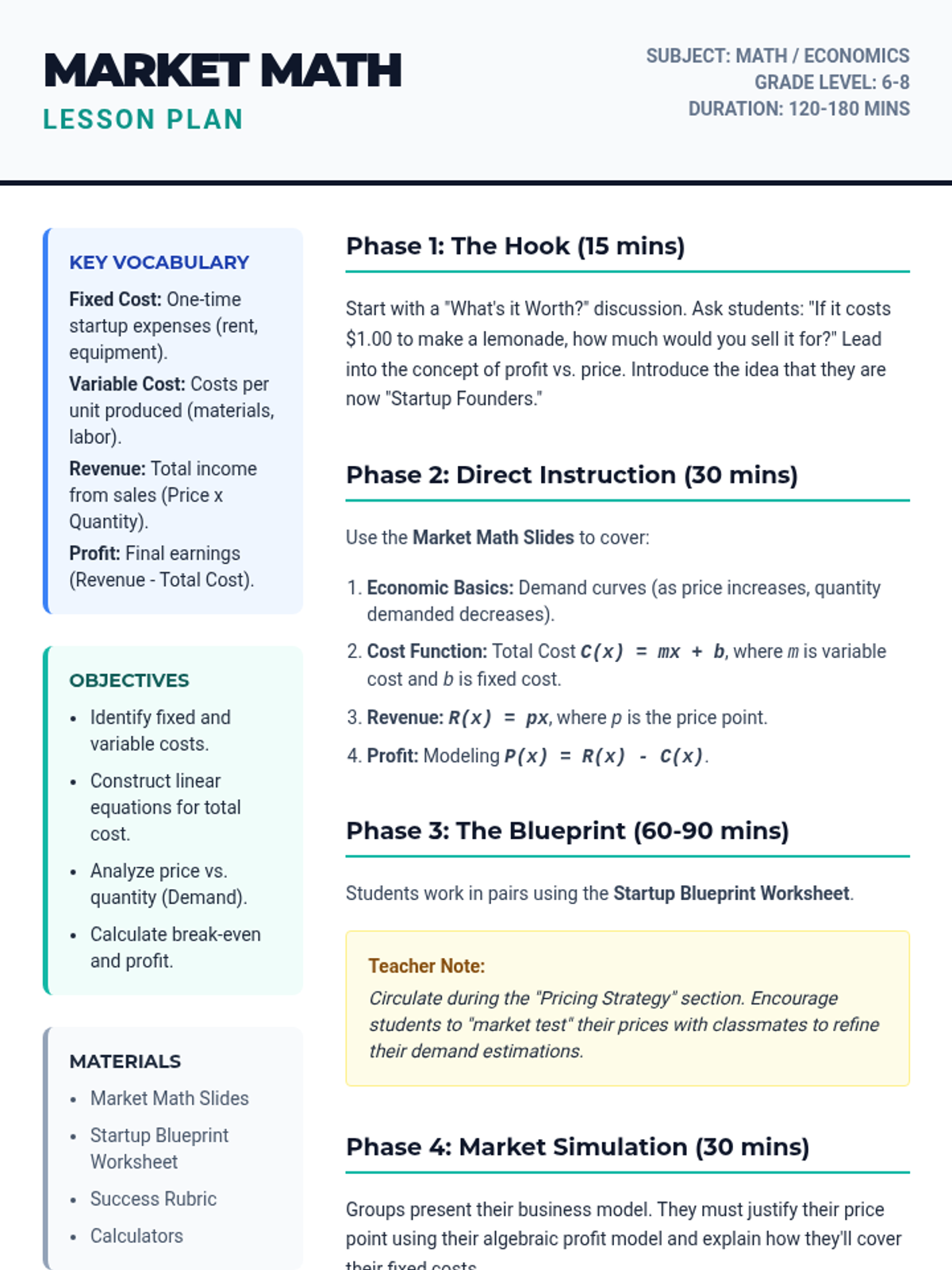
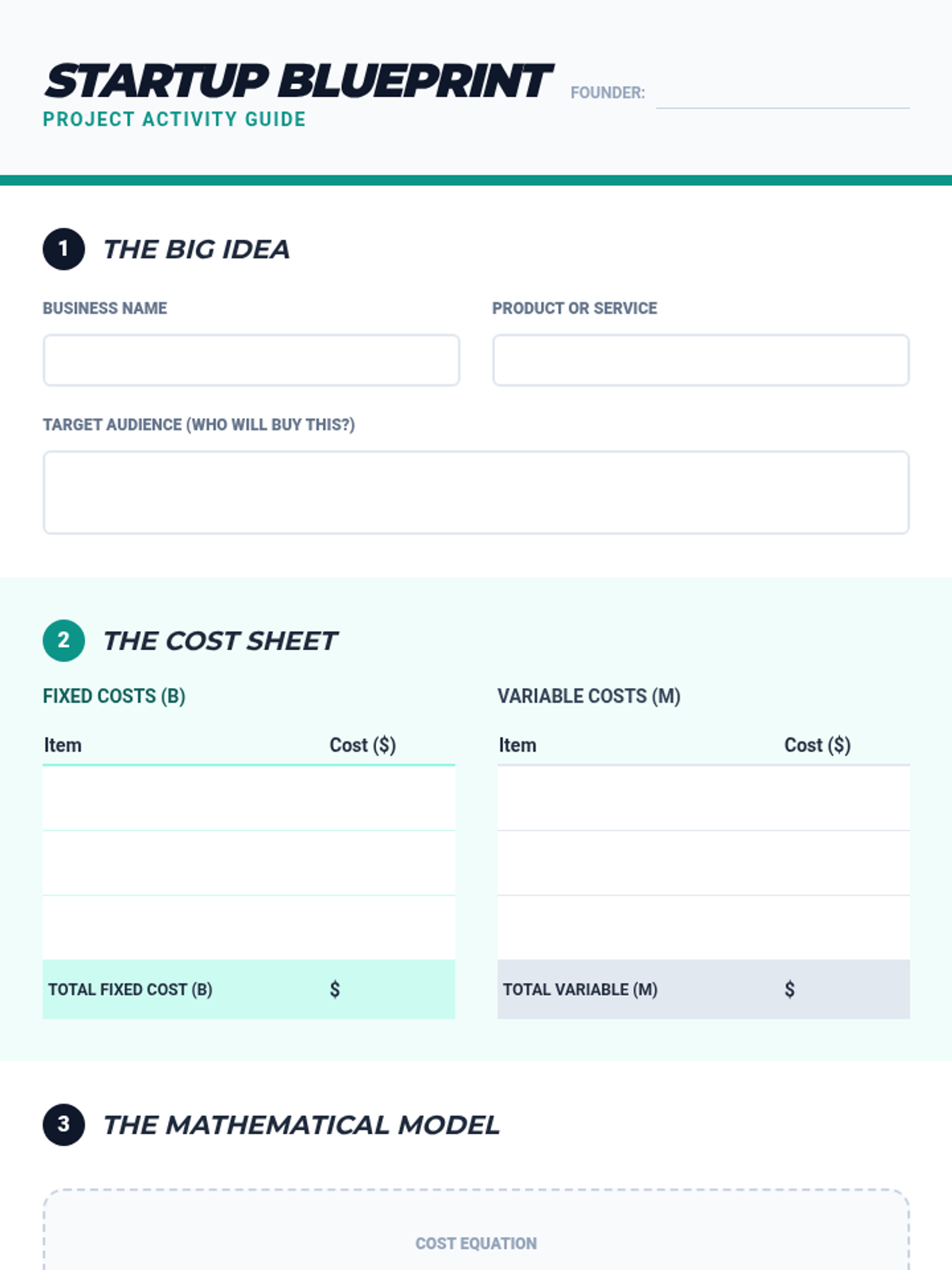
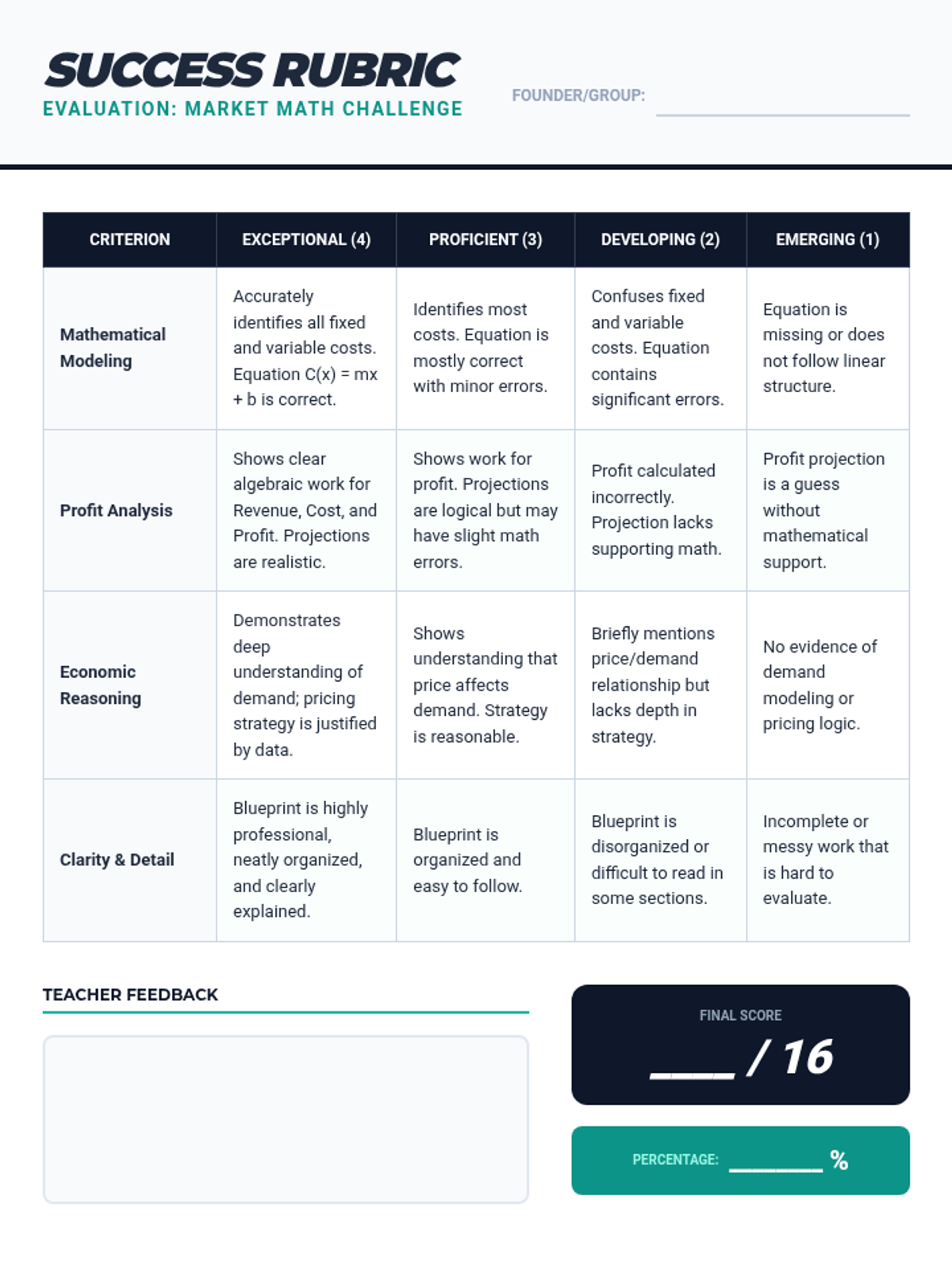
Middle school students design a small business model to apply principles of economics and algebraic reasoning through startup cost calculation and profit modeling.
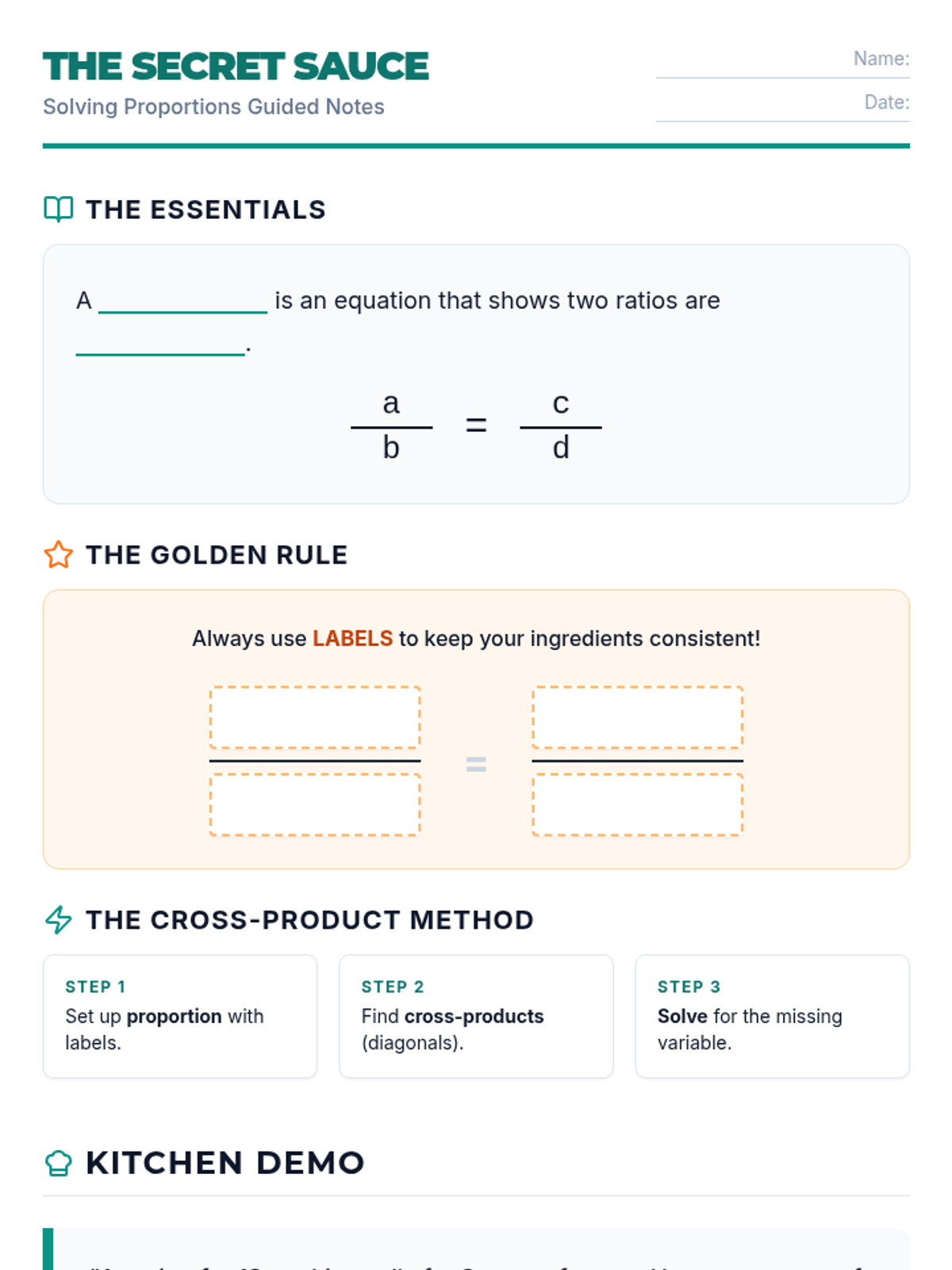
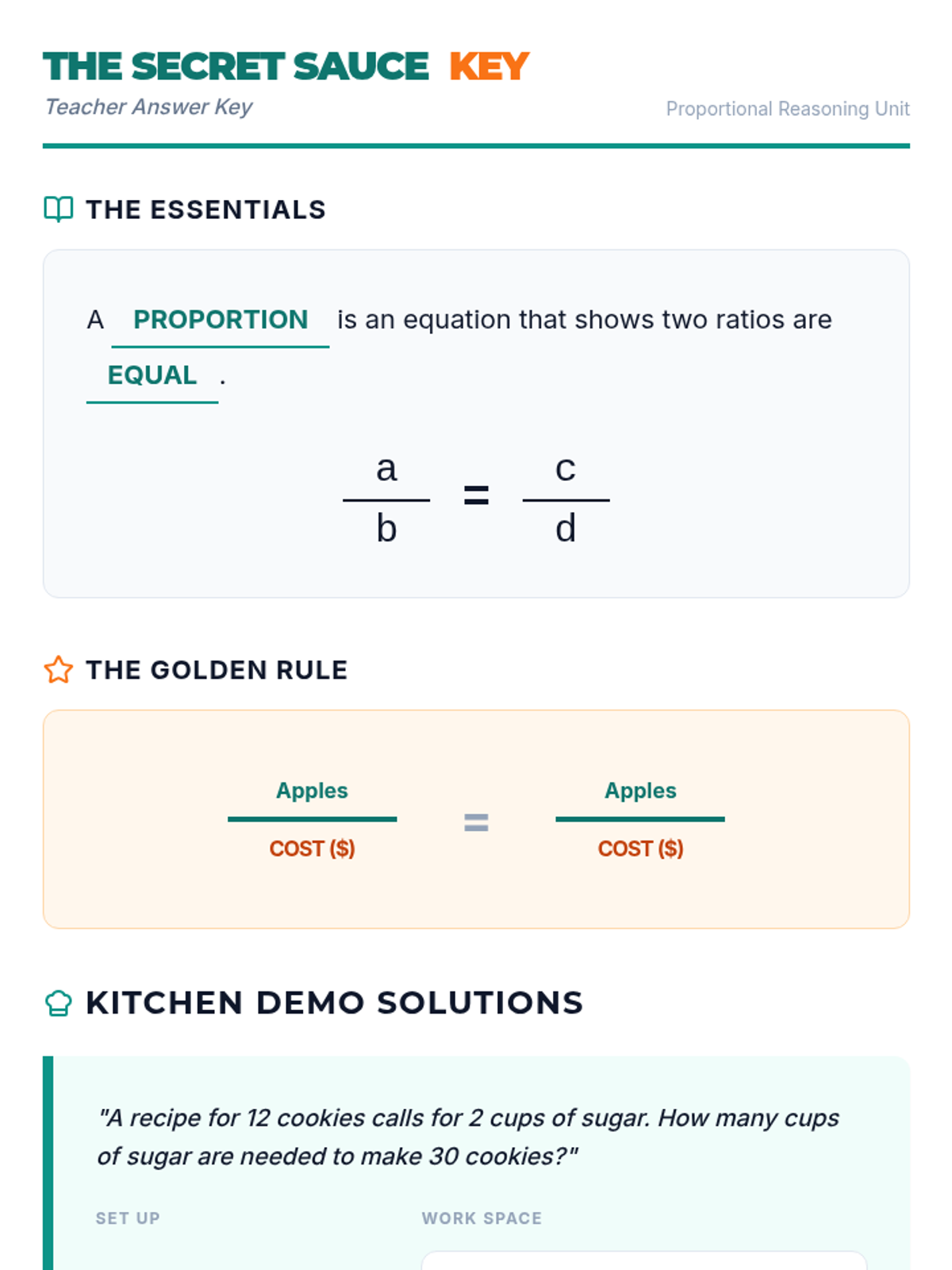
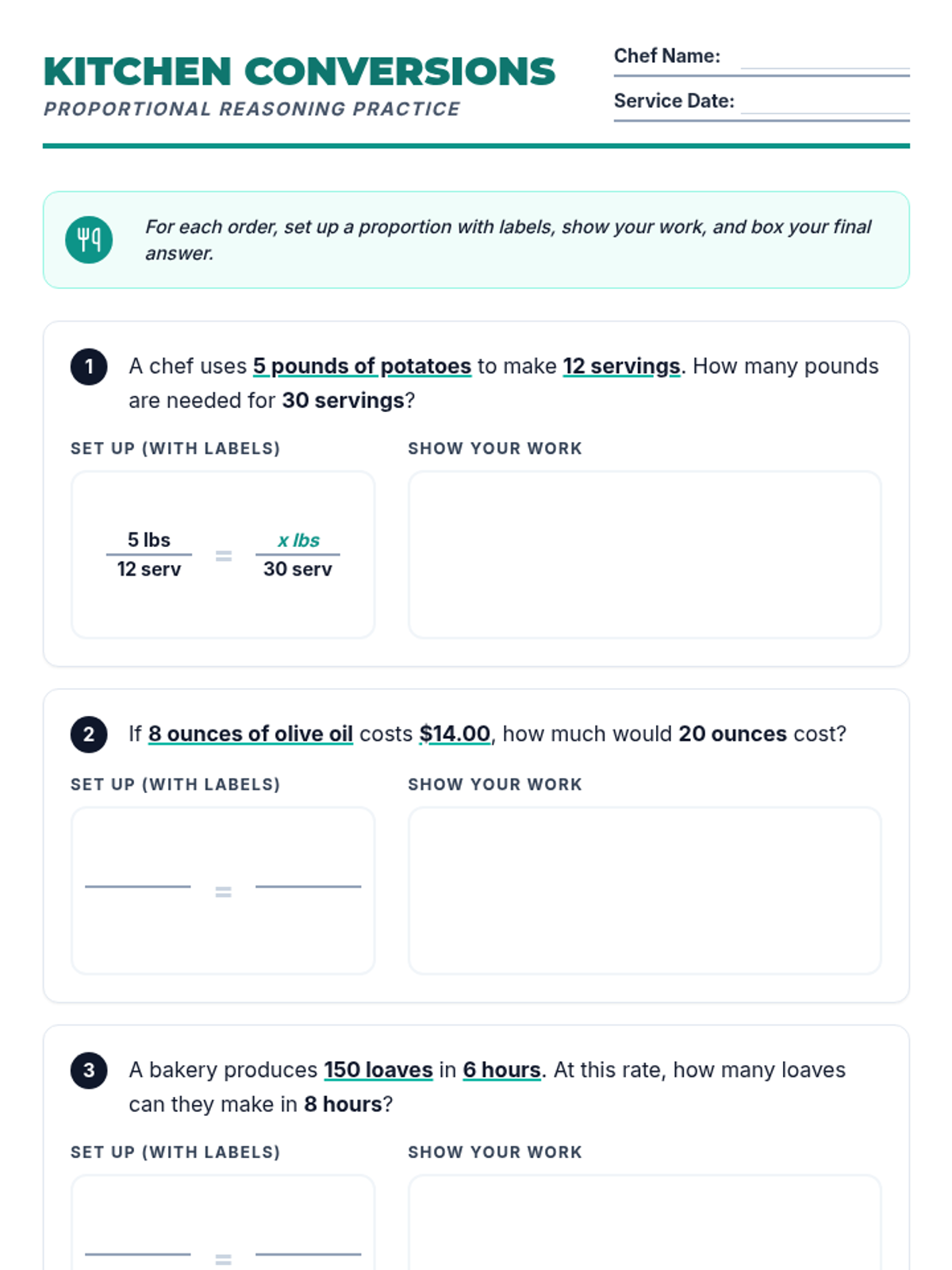
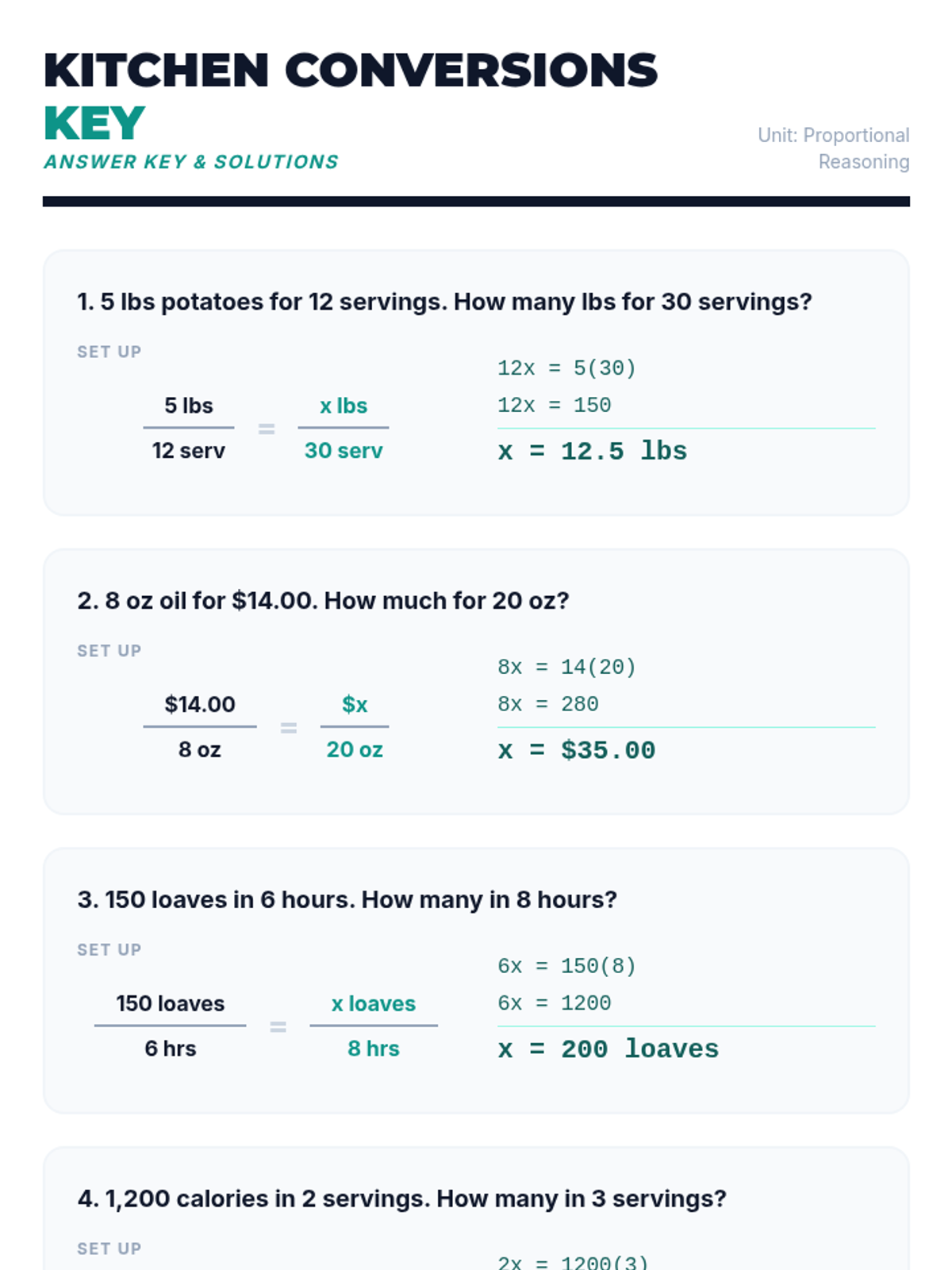
A comprehensive lesson on solving proportional word problems using a culinary theme. Students will learn to set up and solve proportions using cross-multiplication and scaling strategies.
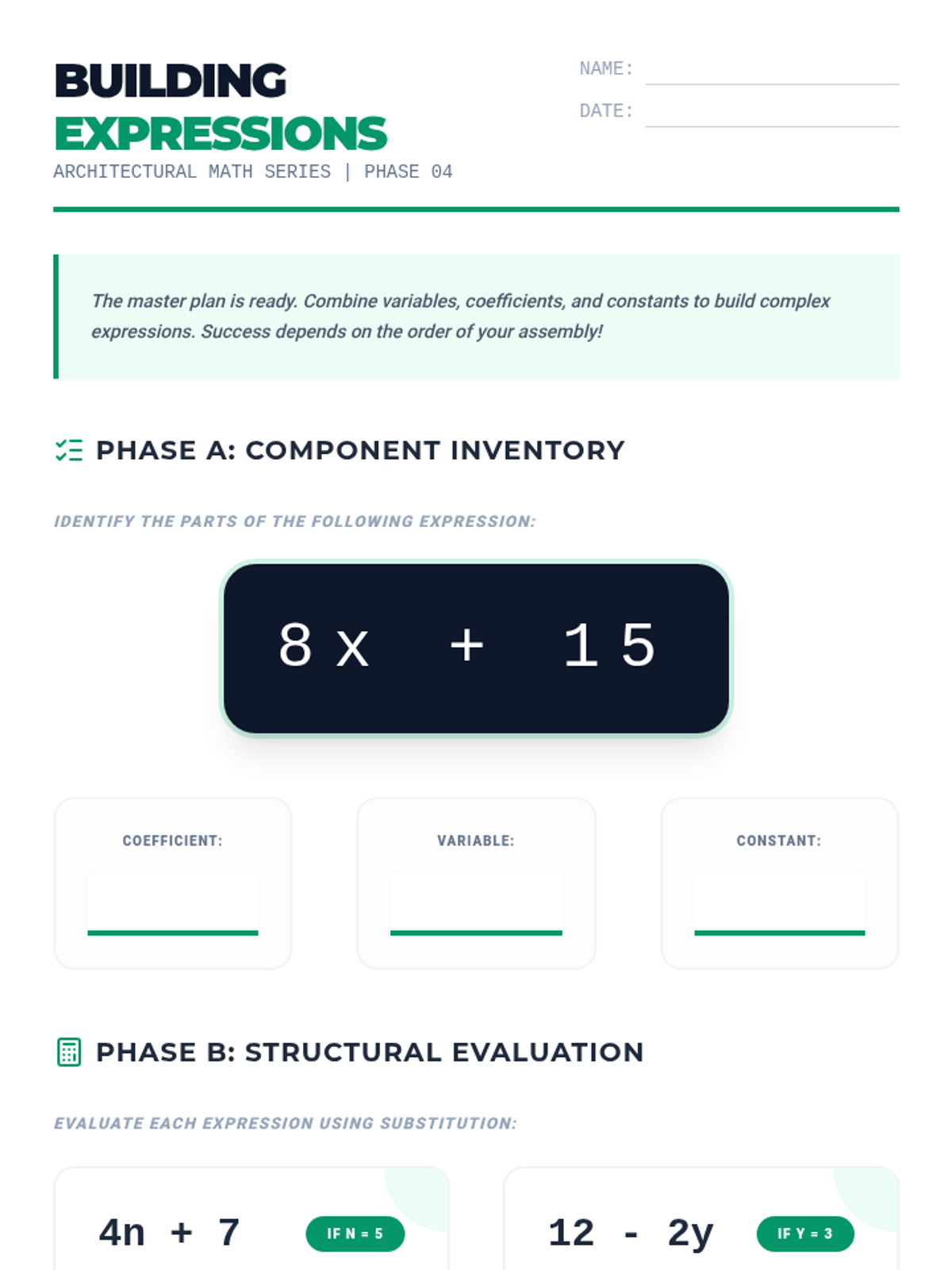
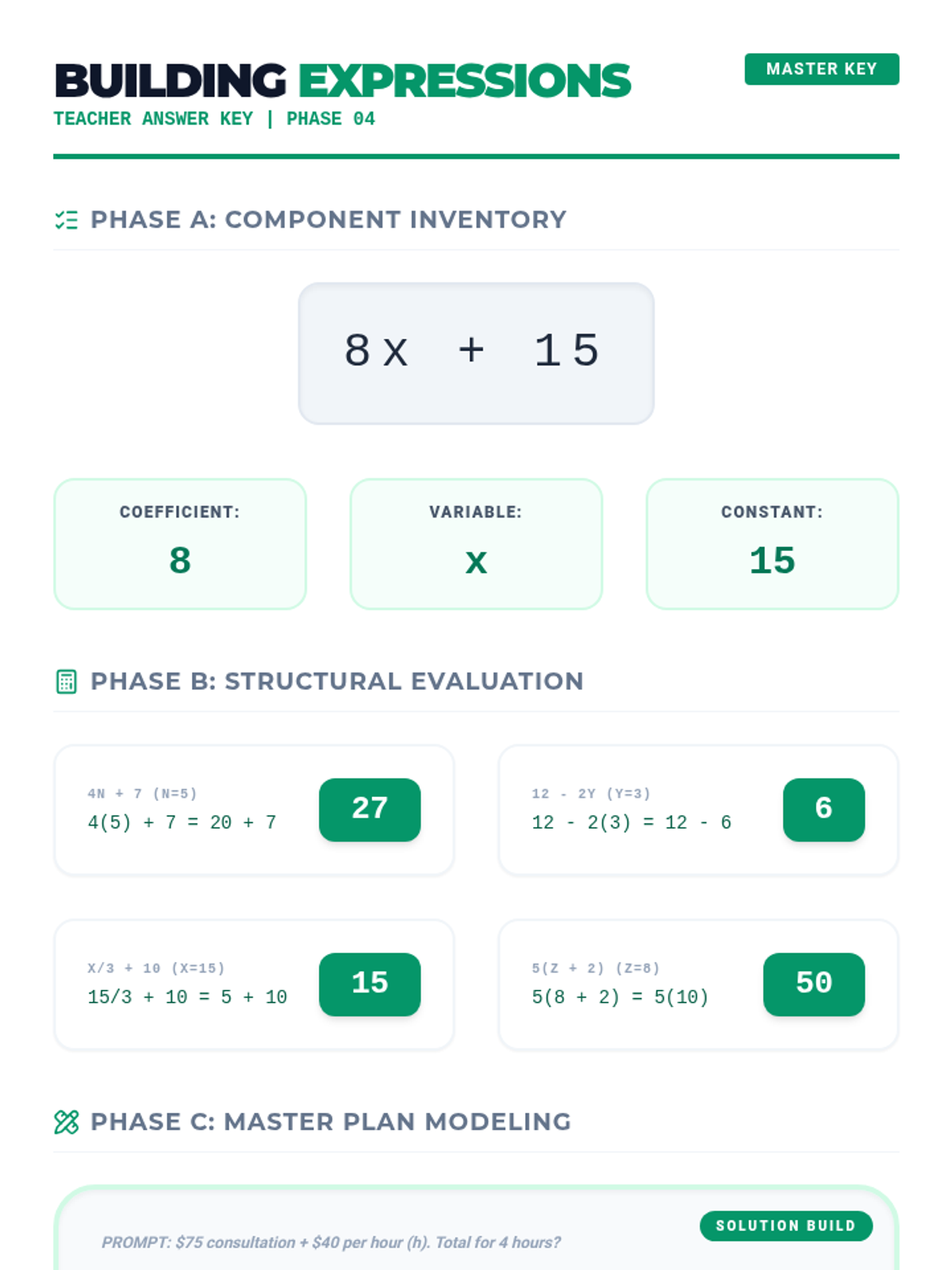
Assembling full algebraic expressions and equations, learning to manipulate variables like architectural components.
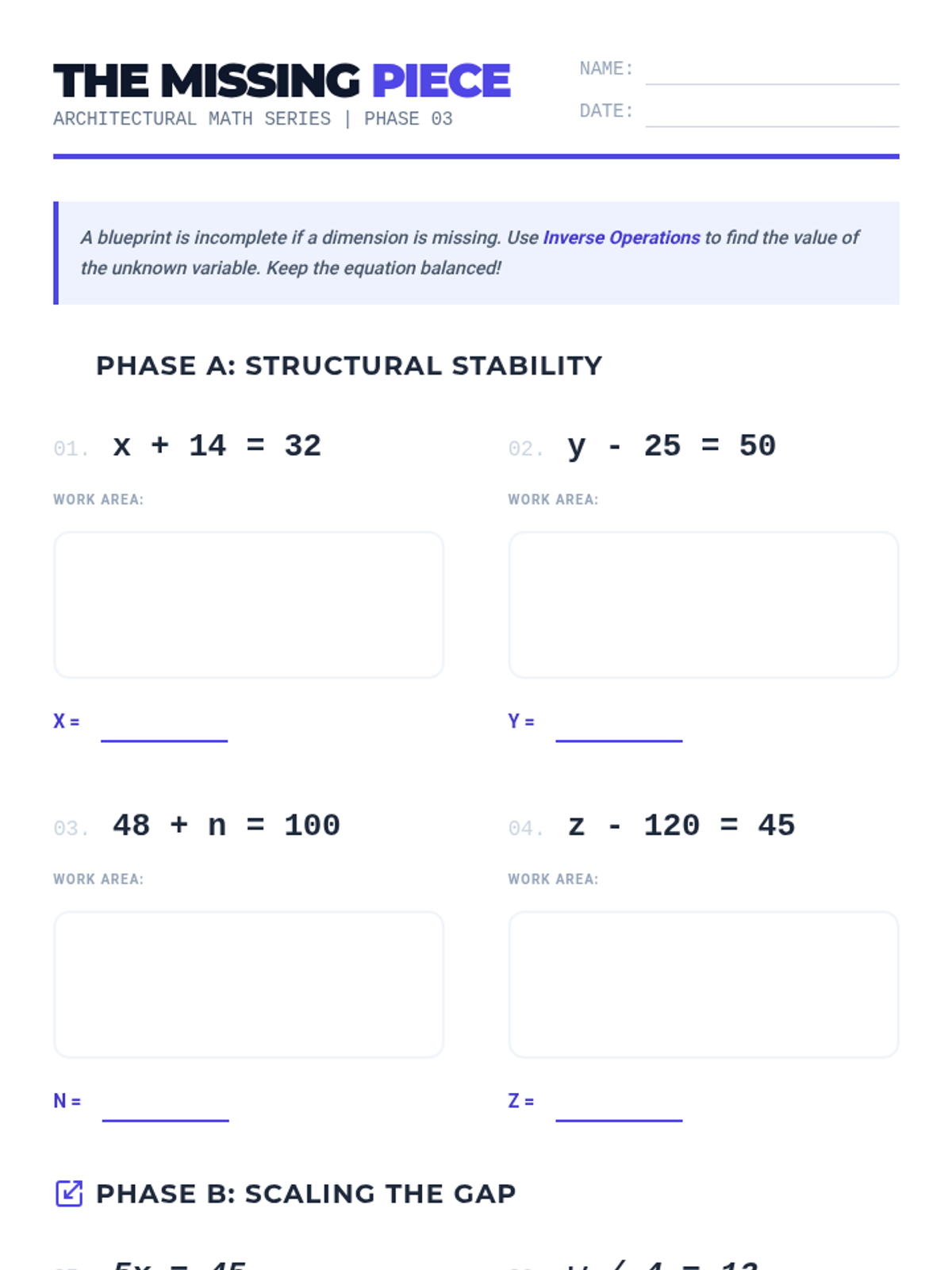
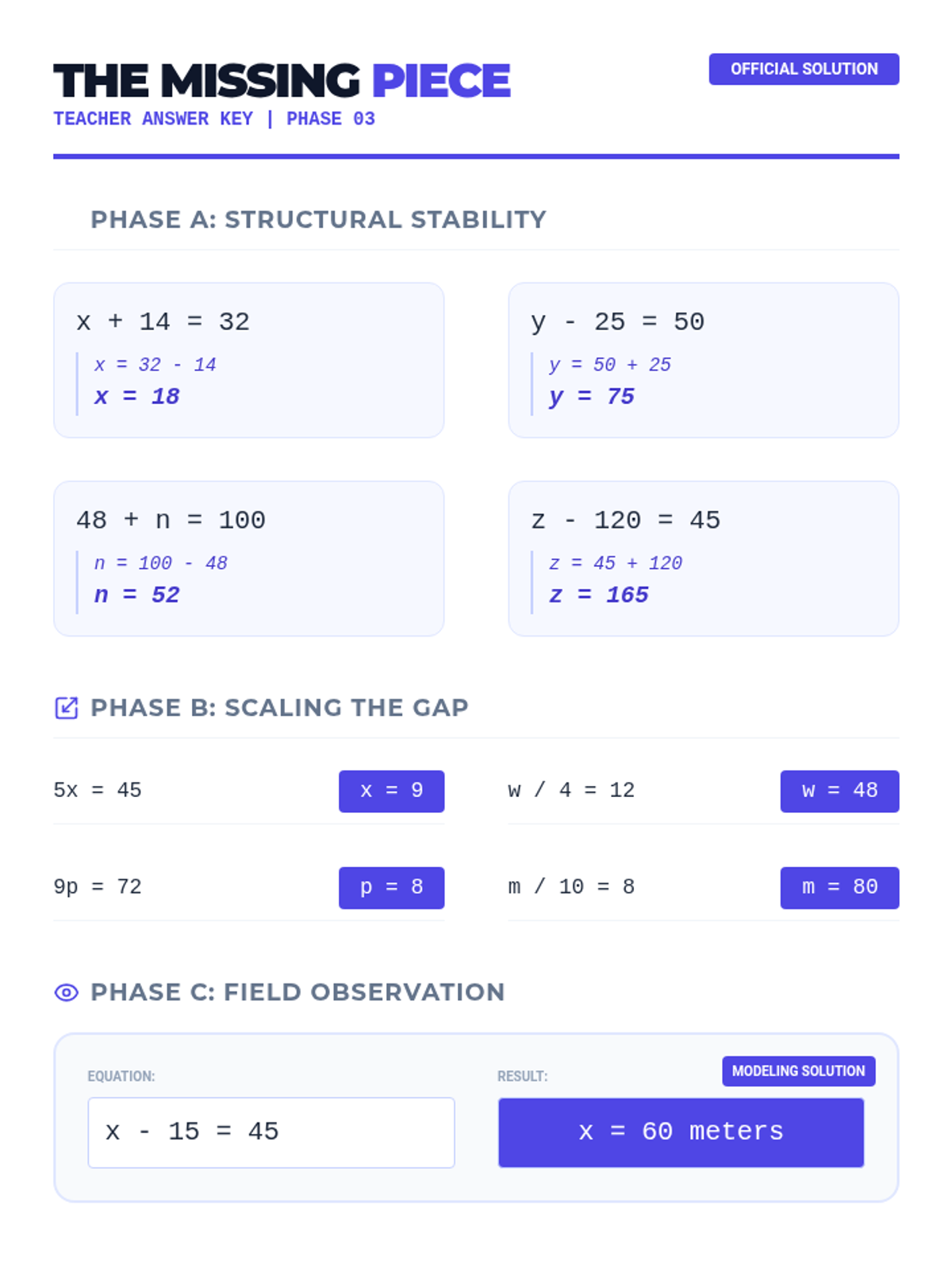
Introducing the concept of the unknown as a structural gap that needs to be filled, shifting from arithmetic to early algebraic thinking.
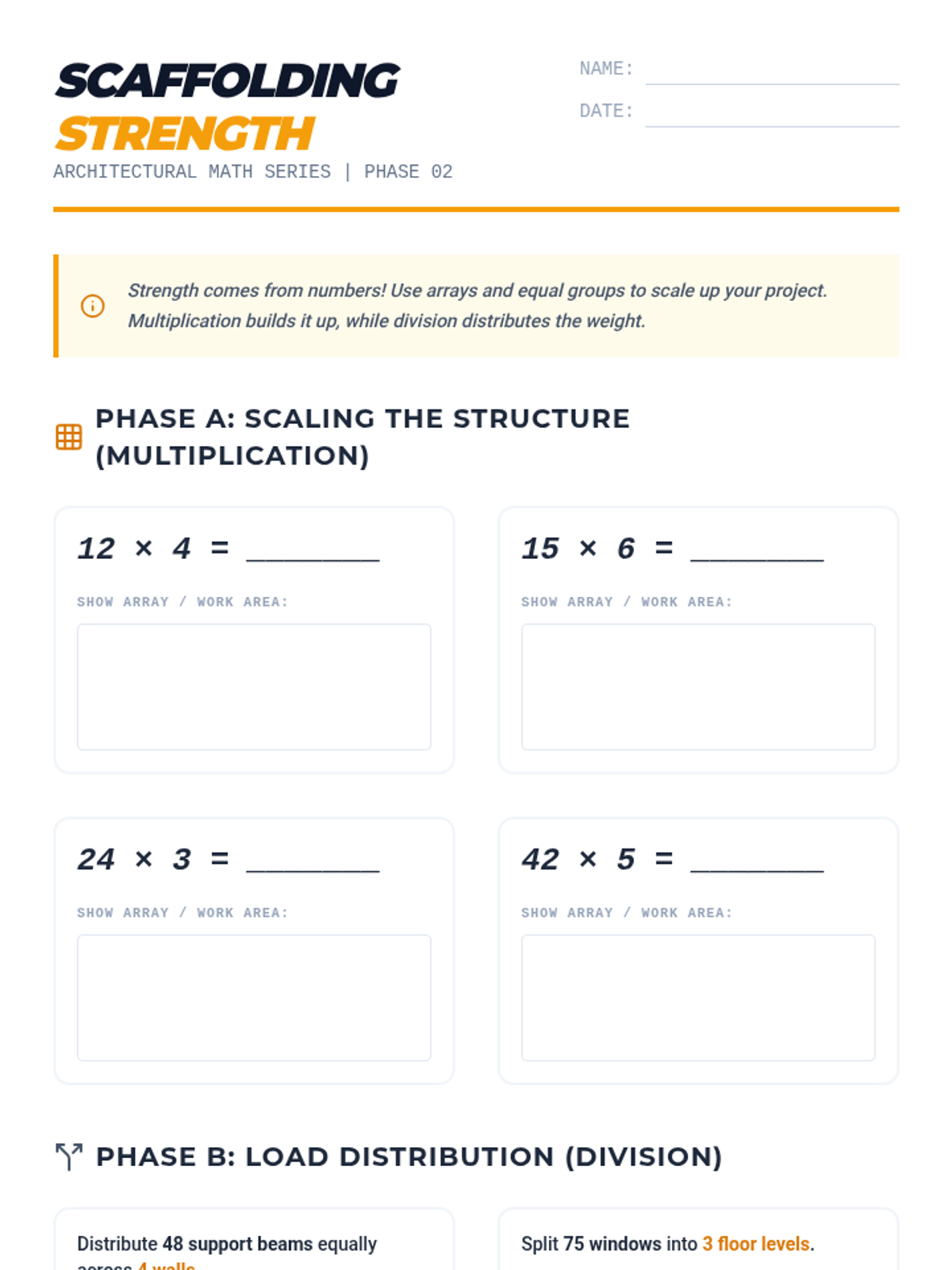
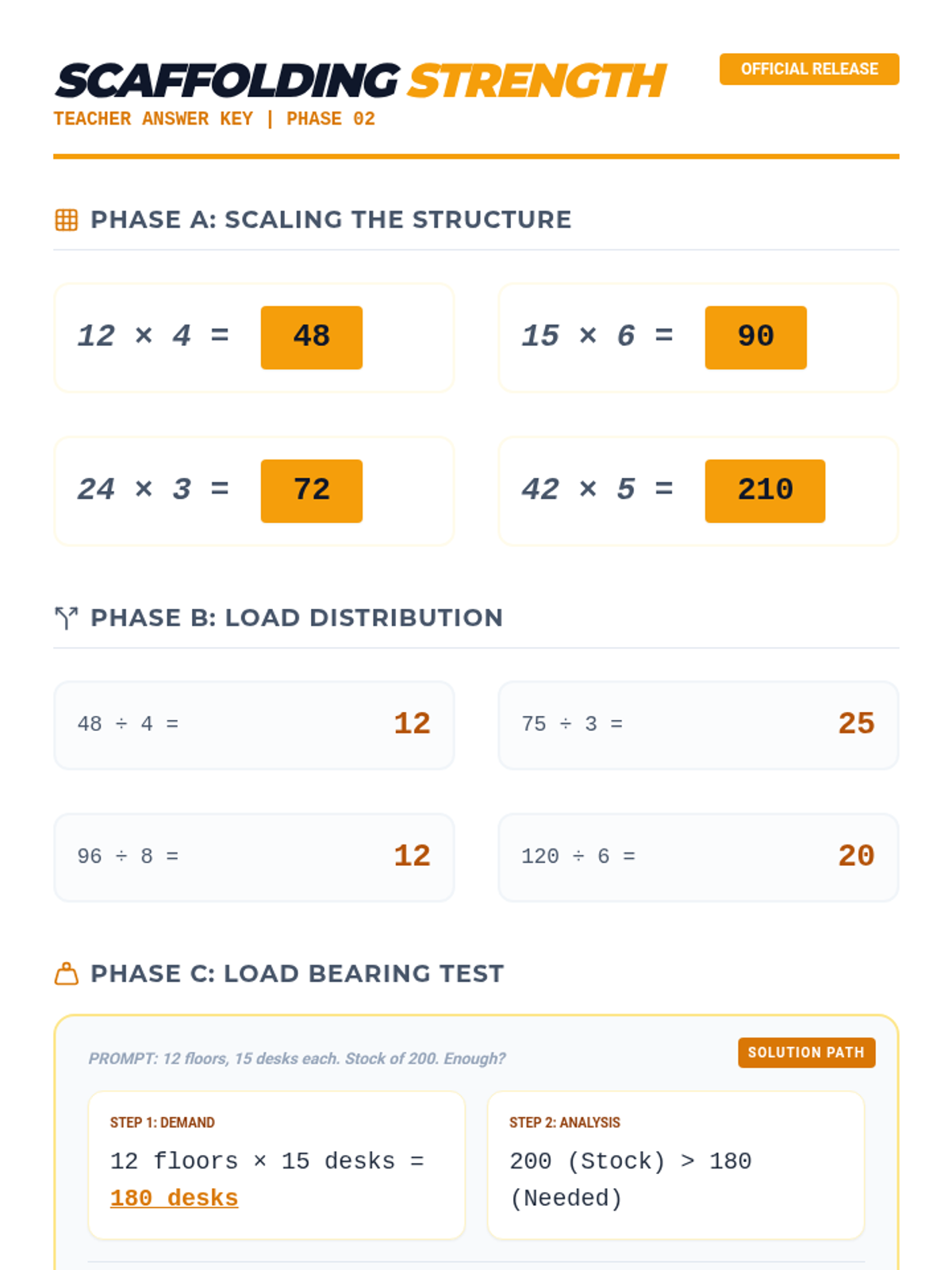
Scaling up operations with multiplication and division, exploring arrays and equal groups as the scaffolding for complex math.
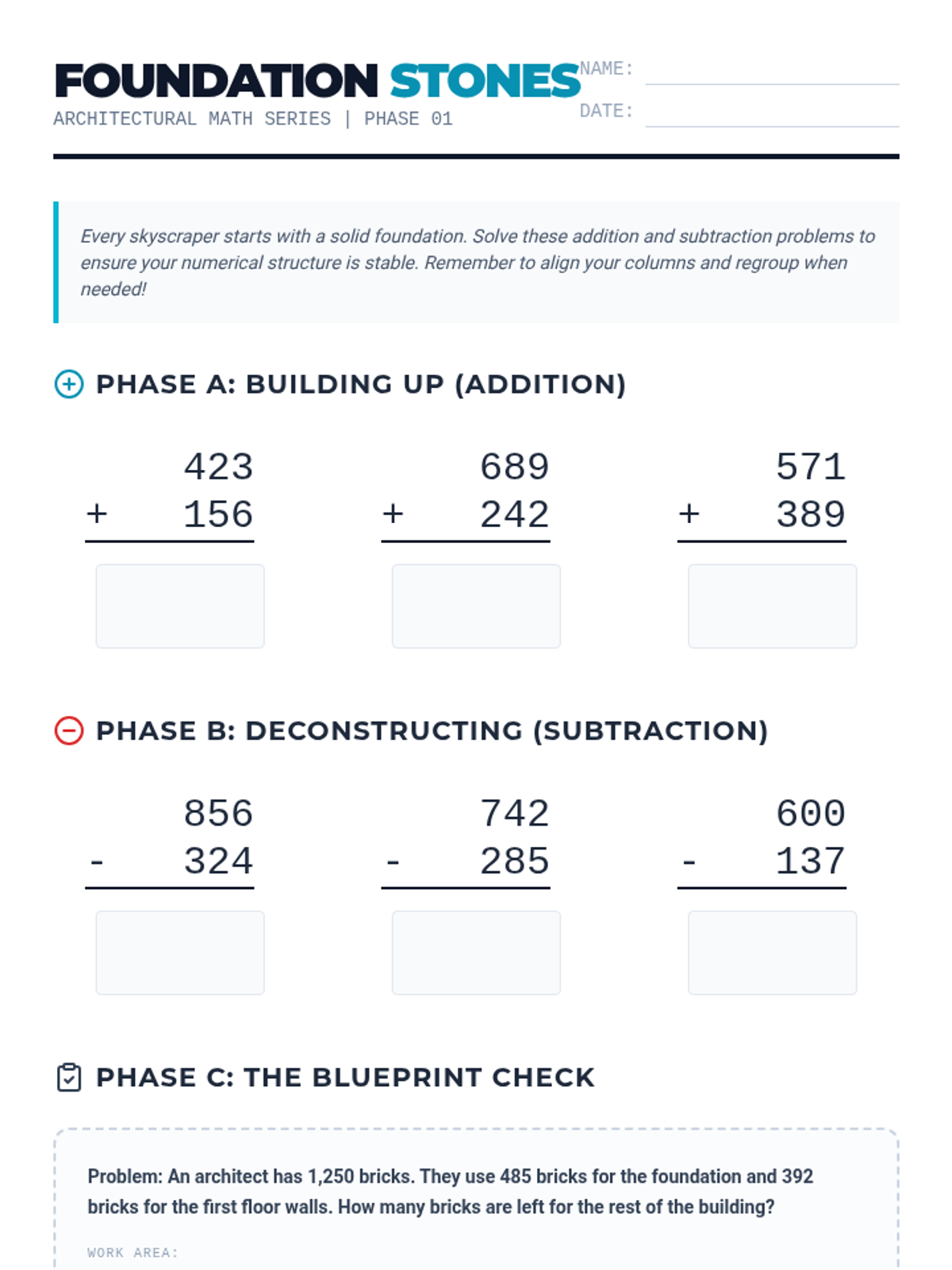
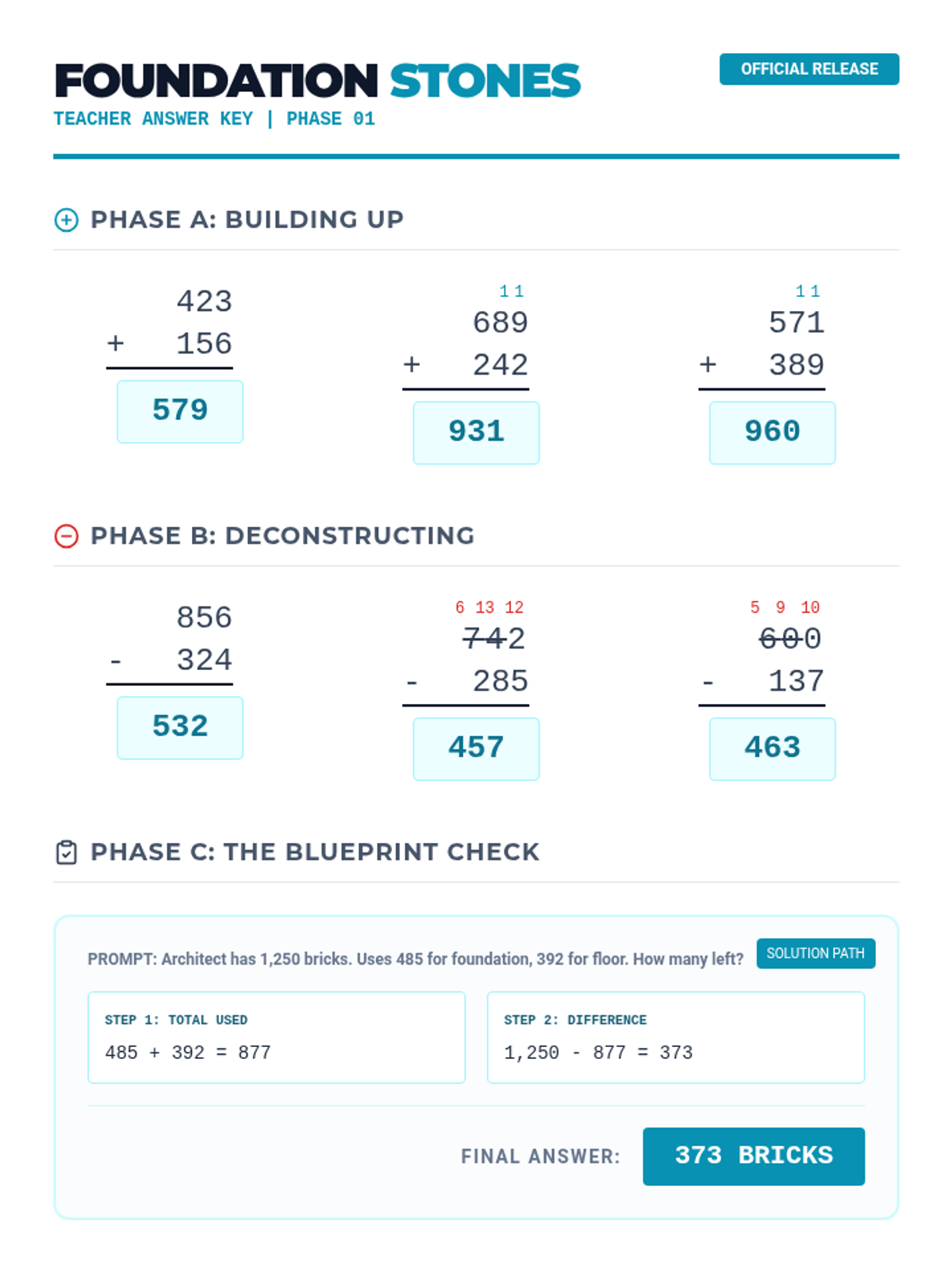
Mastering the core mechanics of addition and subtraction using place value and architectural grouping strategies.
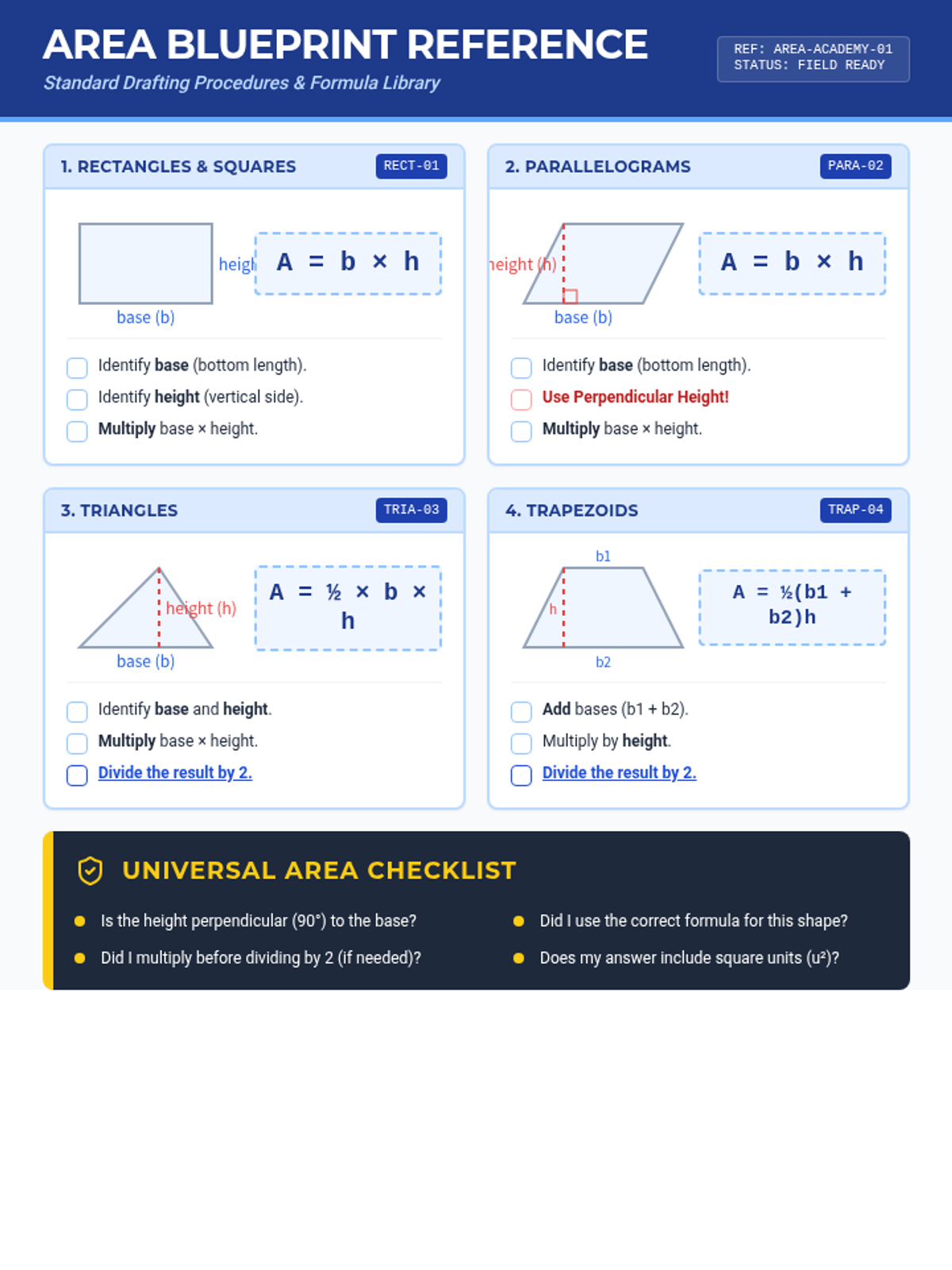
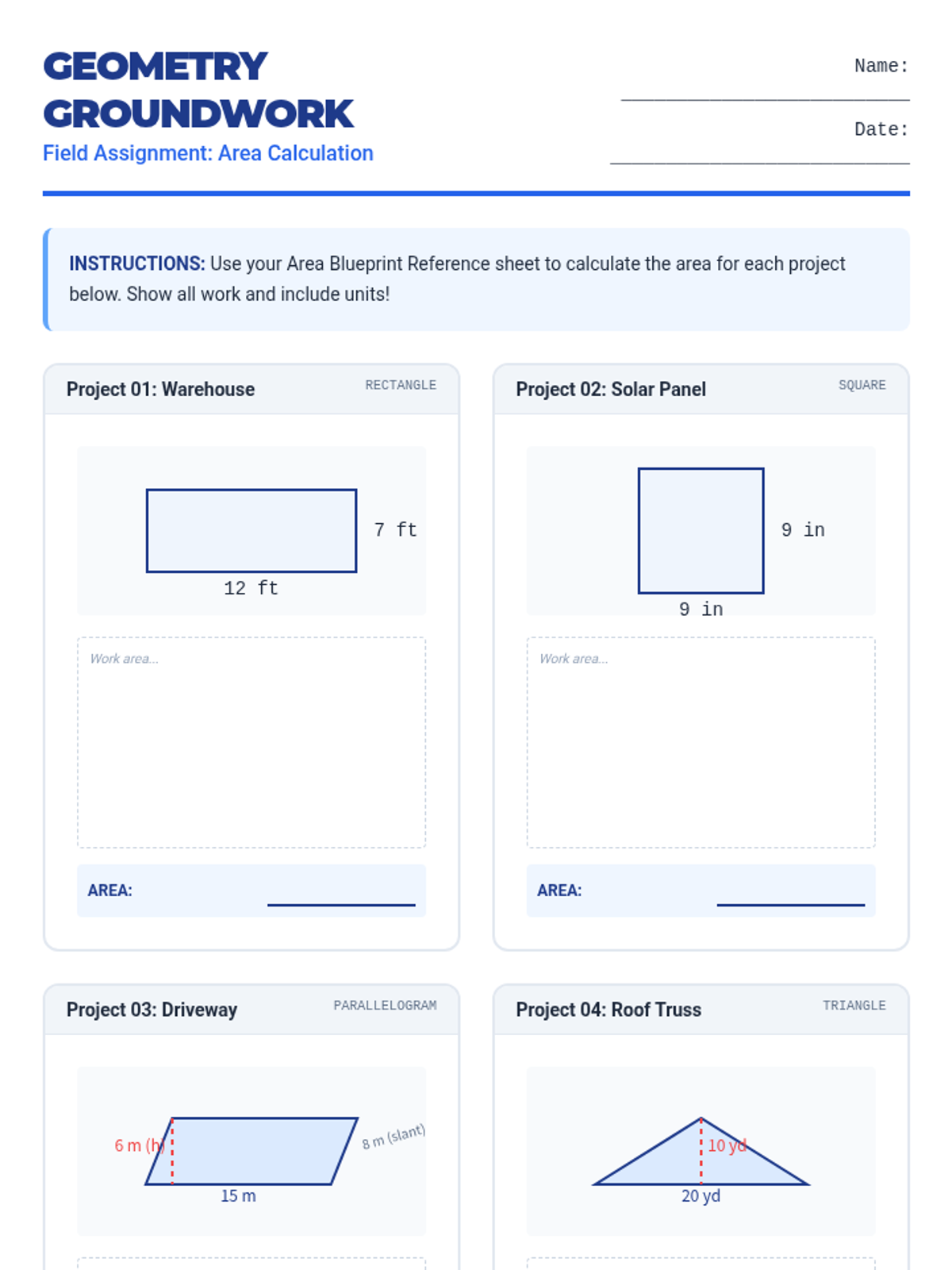
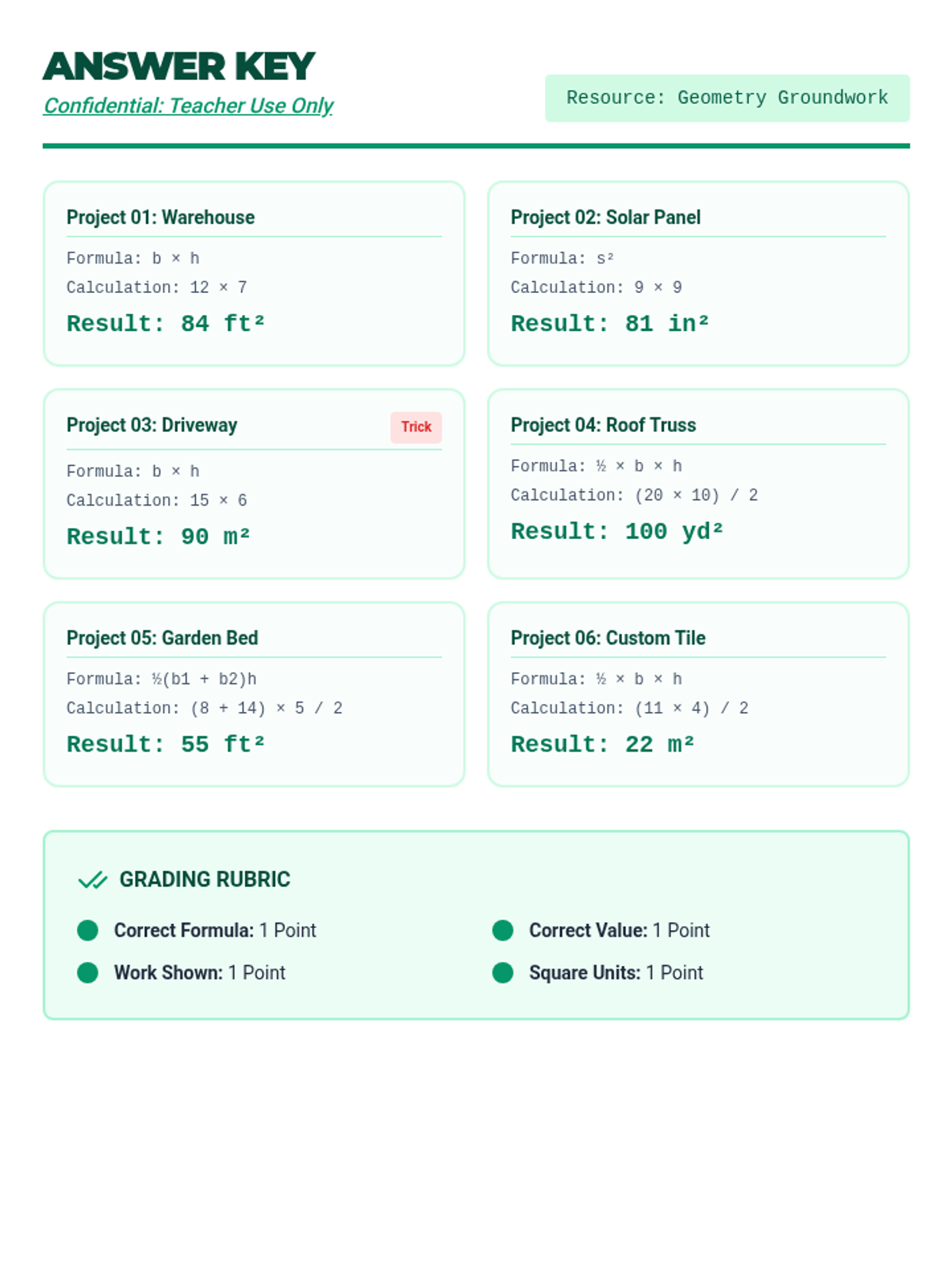
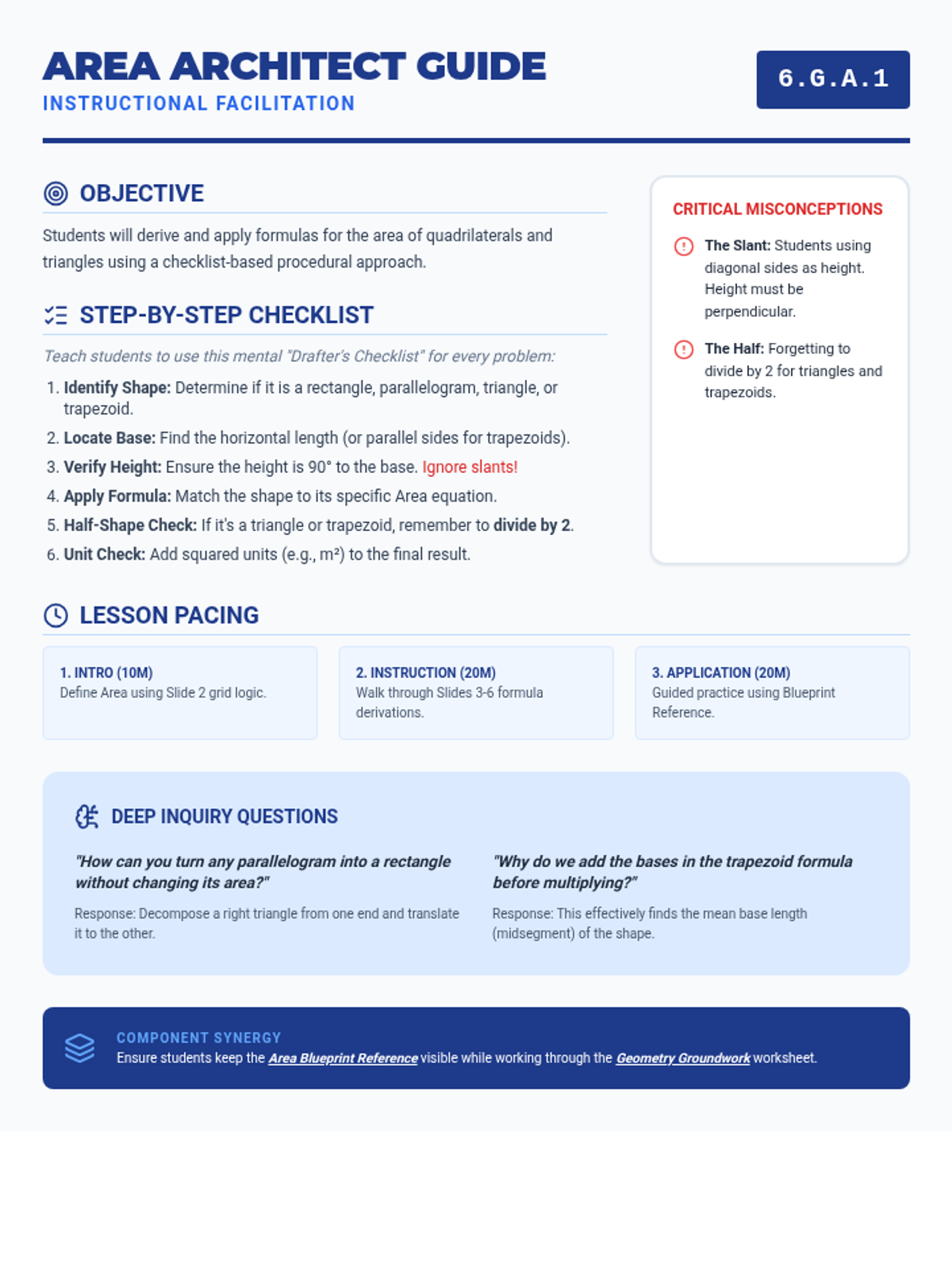
Students will learn to identify base and height dimensions and apply formulas to find the area of various quadrilaterals and triangles using step-by-step checklists.
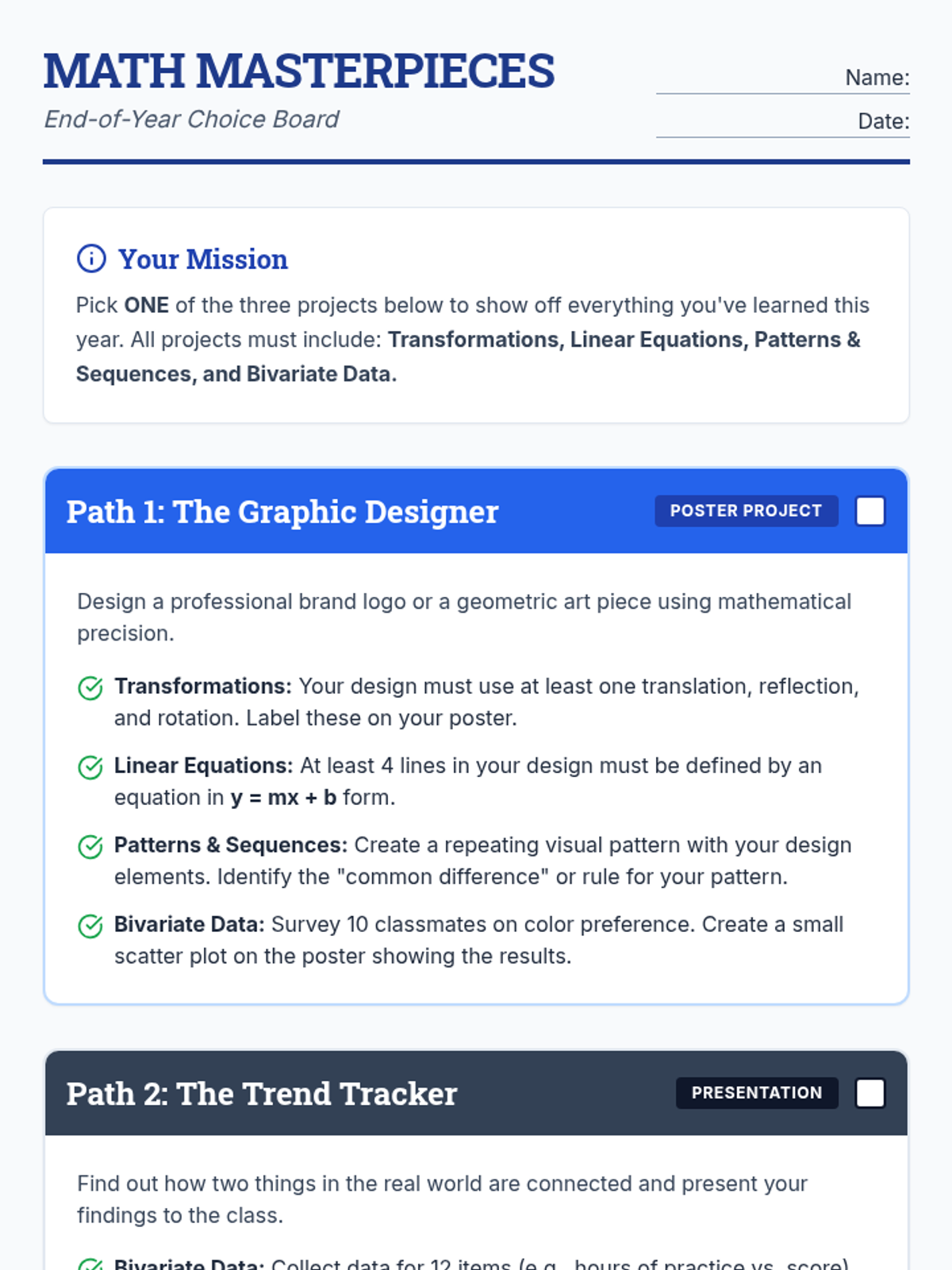
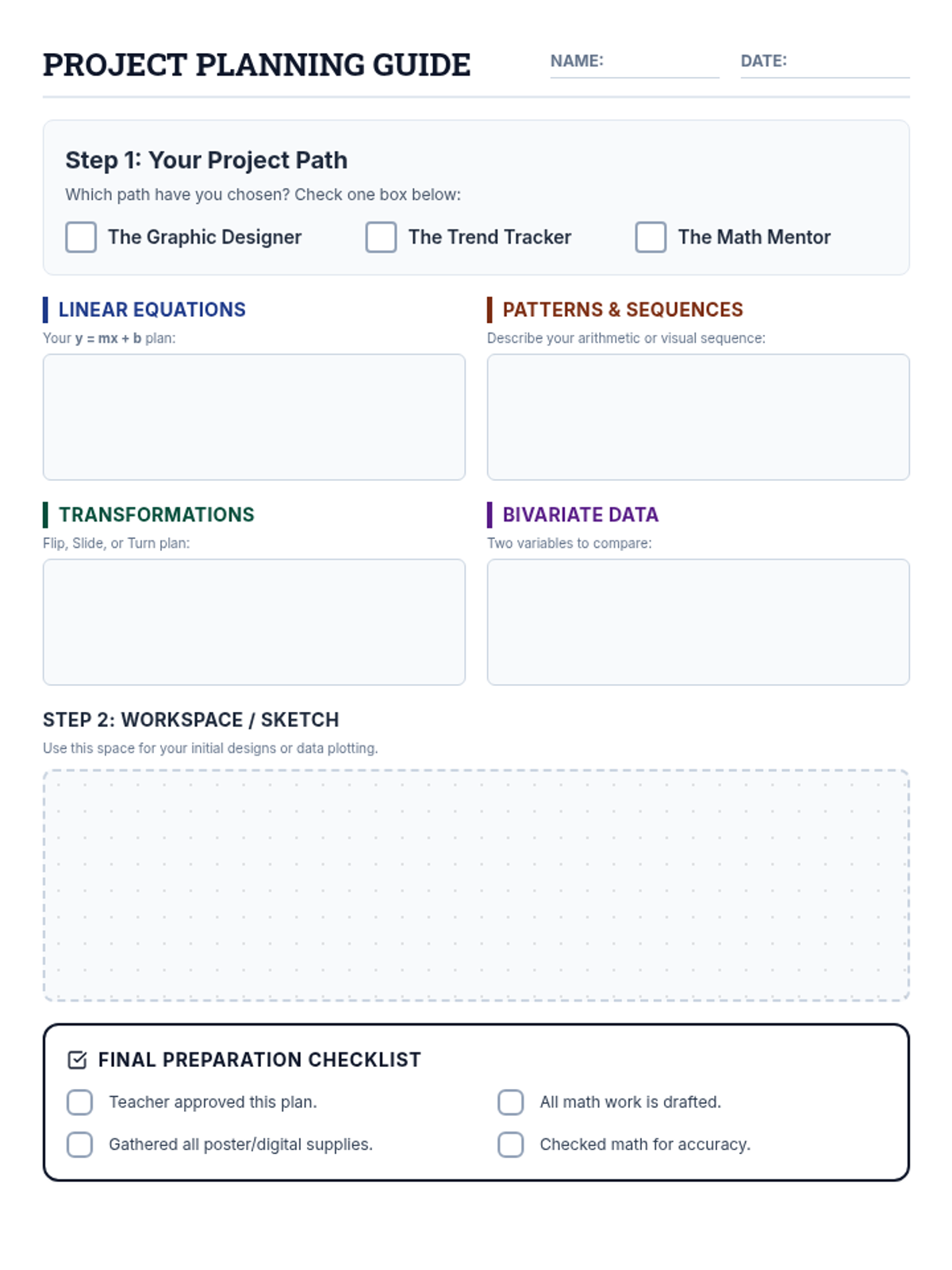
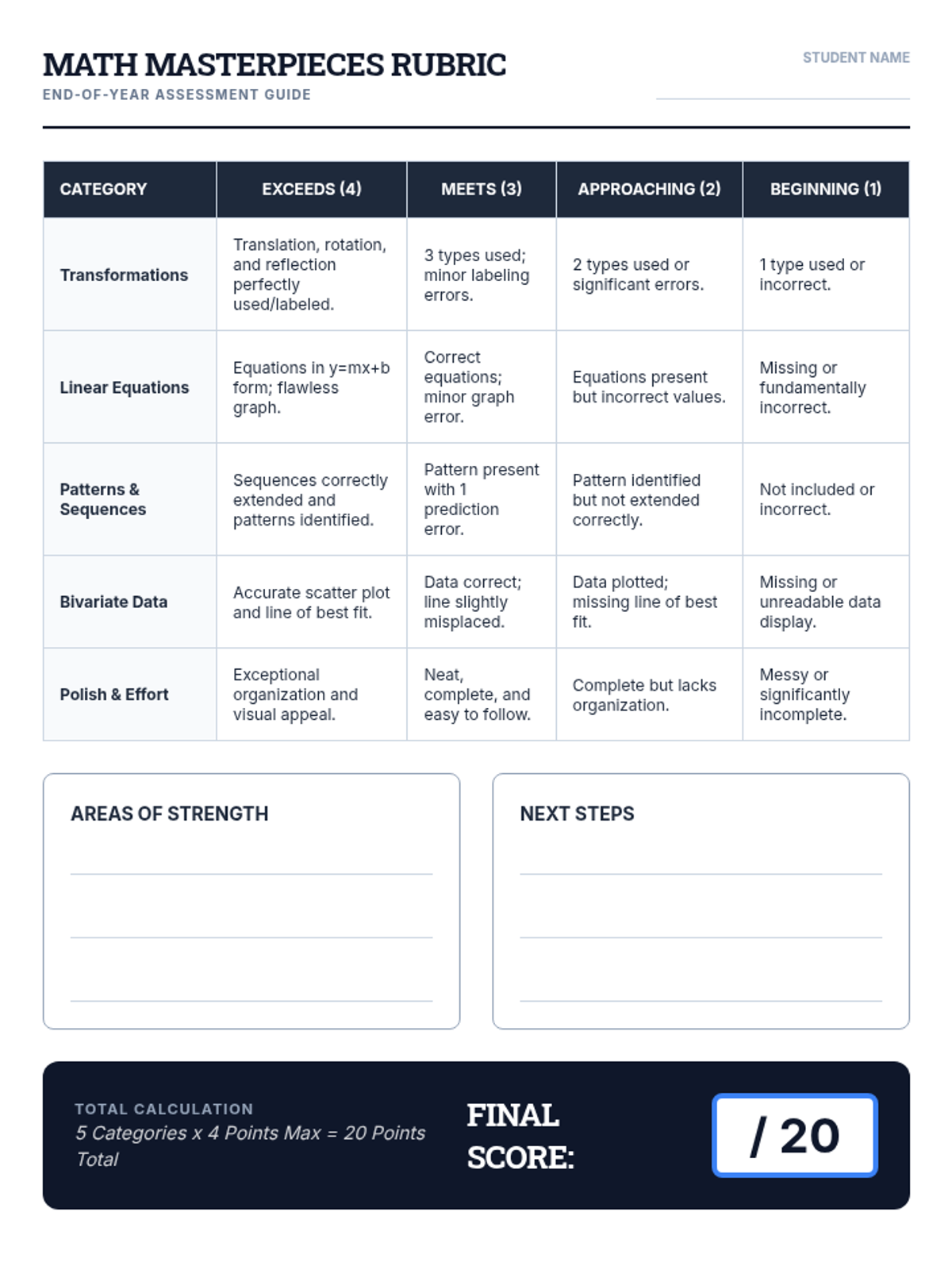
A creative end-of-year project where students choose between three paths to demonstrate mastery of transformations, linear equations, exponents, and bivariate data. Designed with scaffolded options for 8th-grade students.
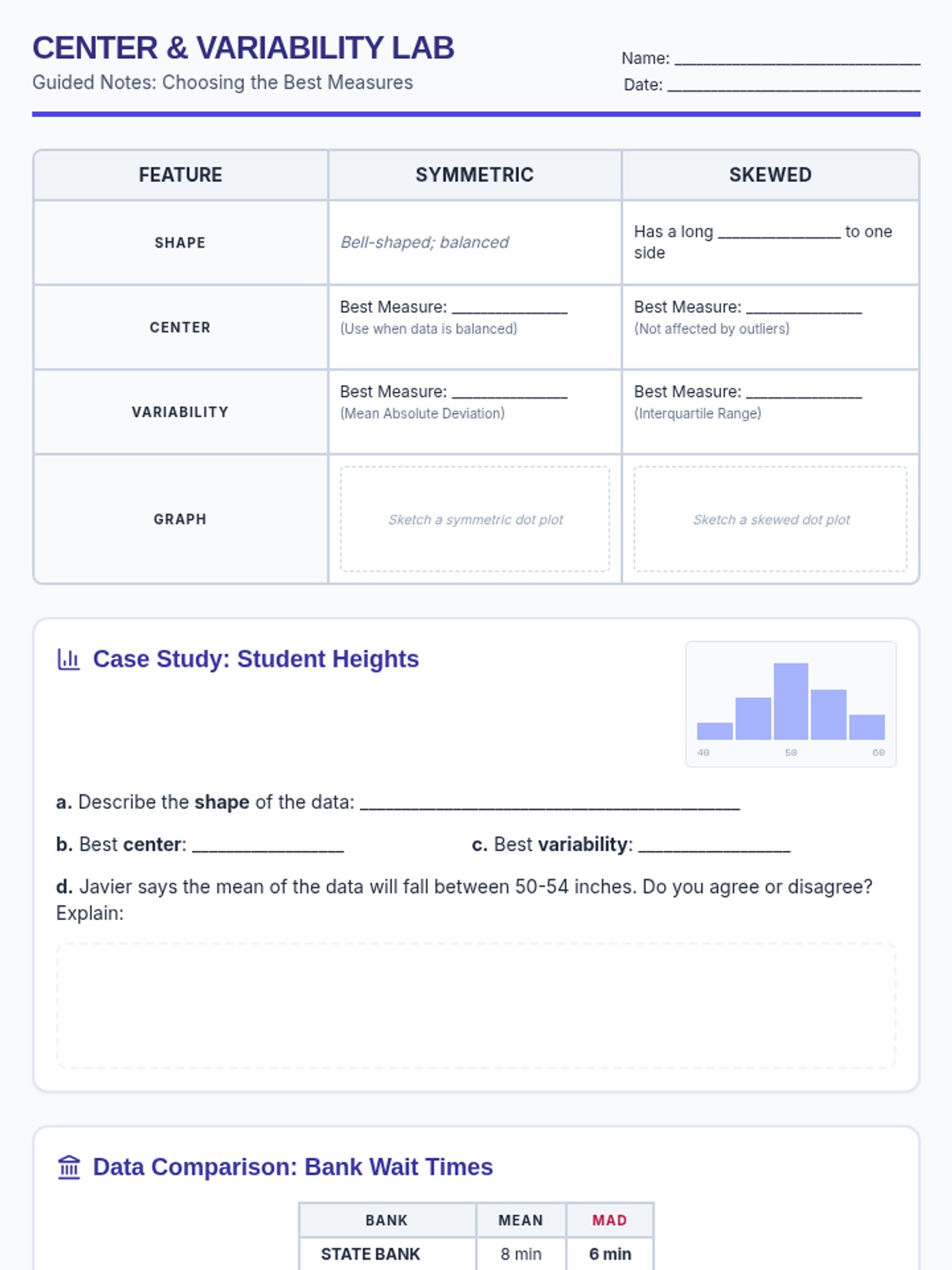
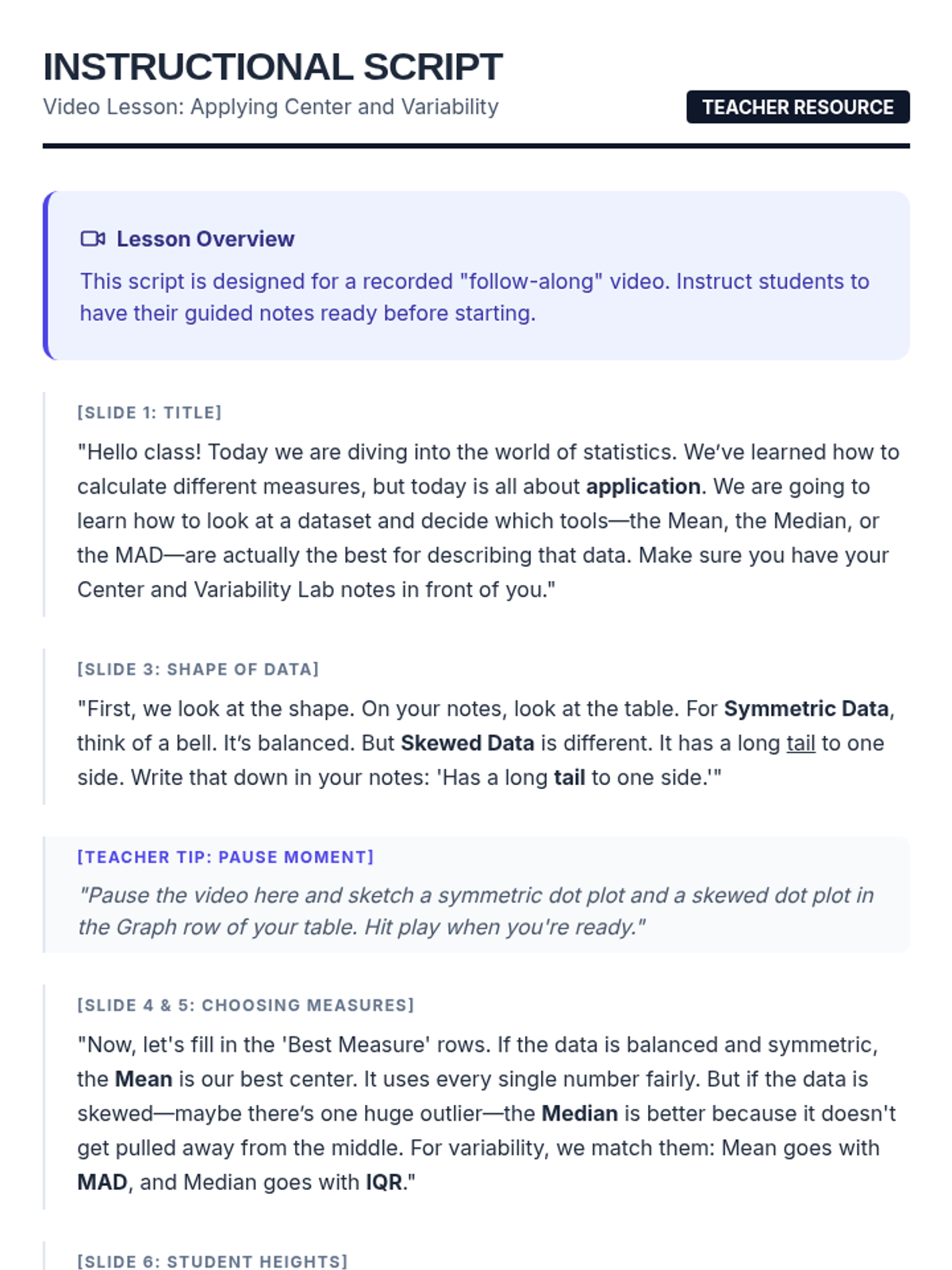
Students learn to select and apply appropriate measures of center and variability based on data distribution (symmetric vs. skewed), with real-world practice comparing wait times and student heights.
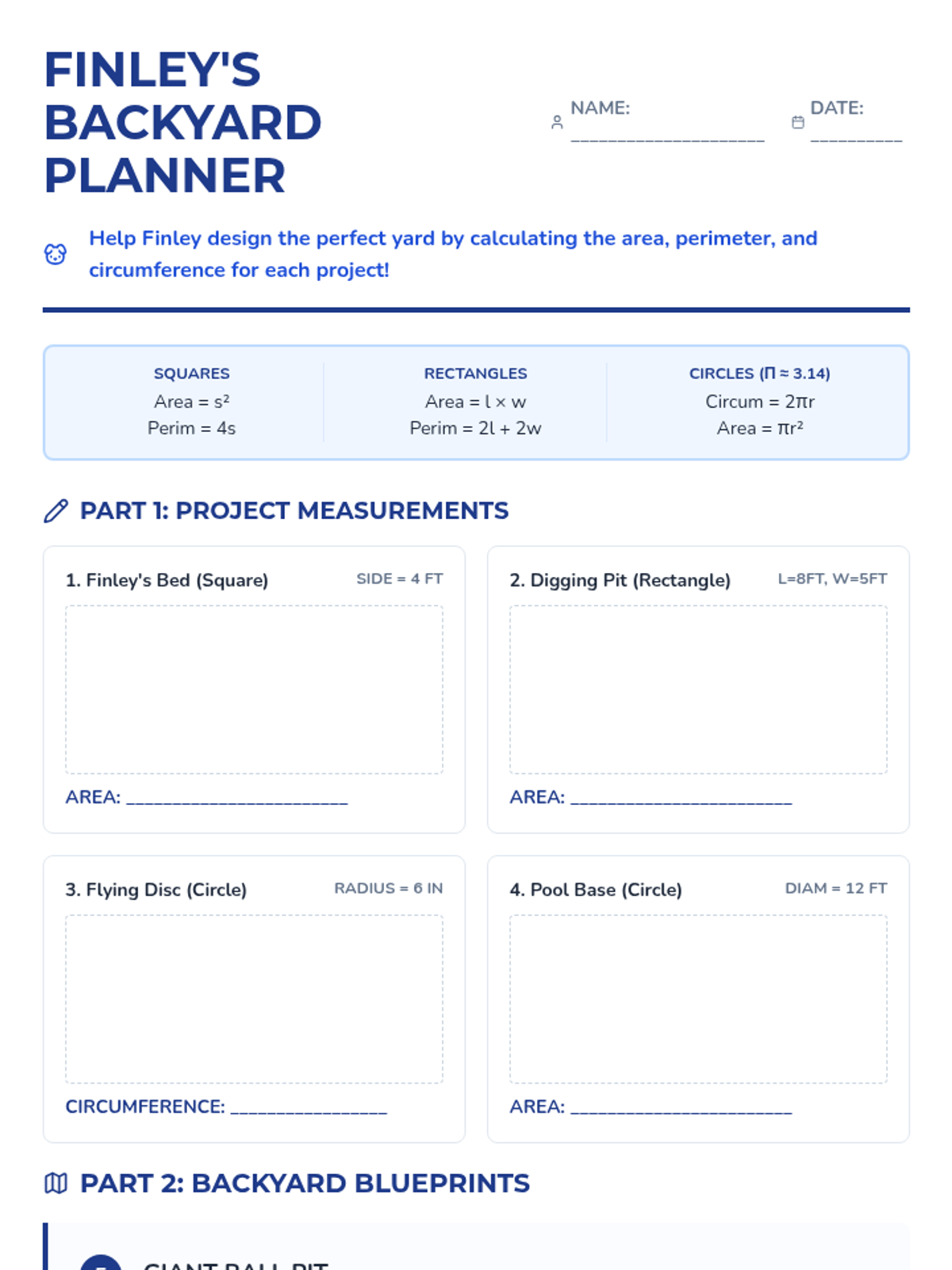
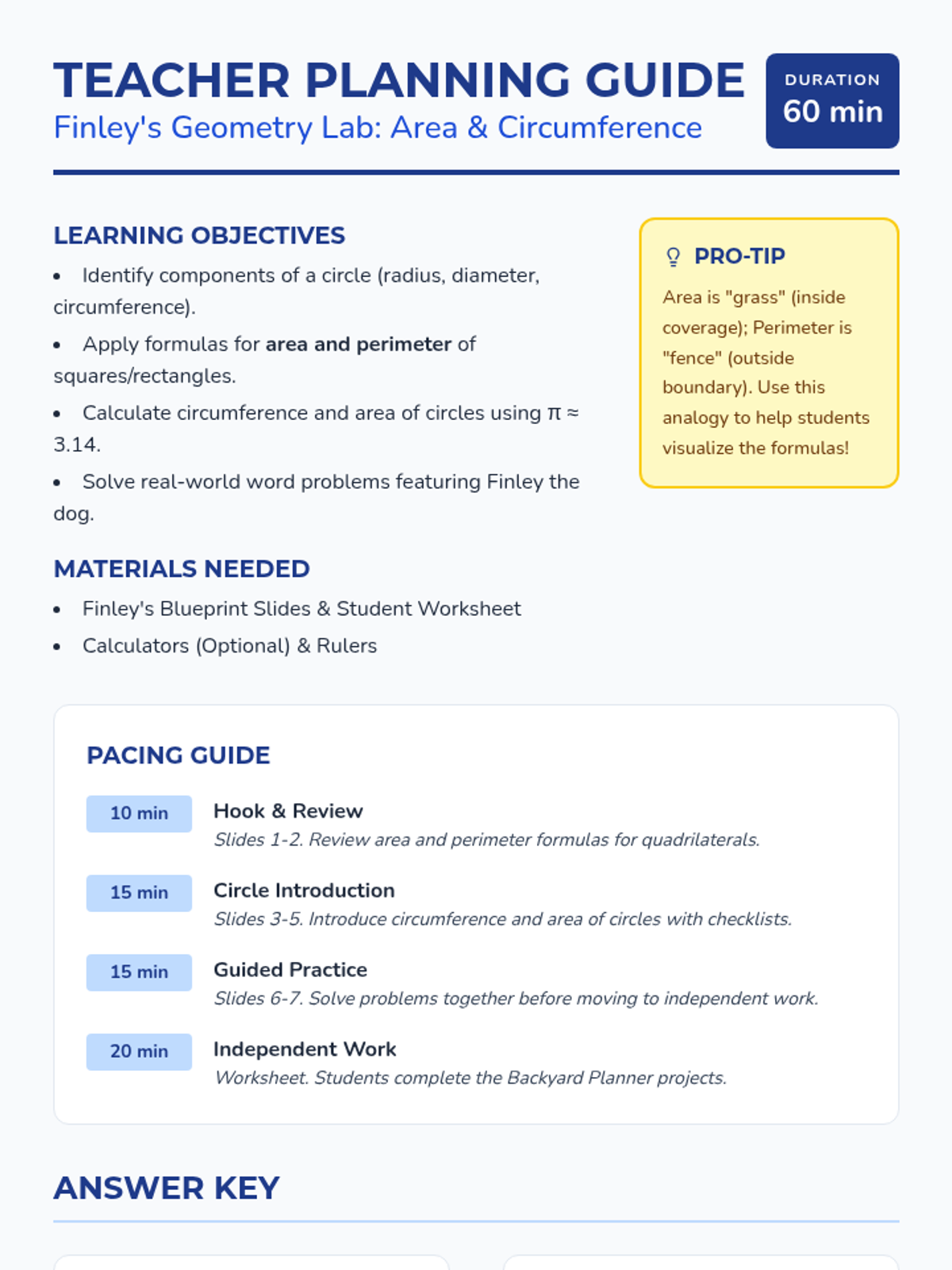
A geometry lesson focused on calculating the area of squares, rectangles, and circles, as well as the circumference of circles, featuring Finley the dog.
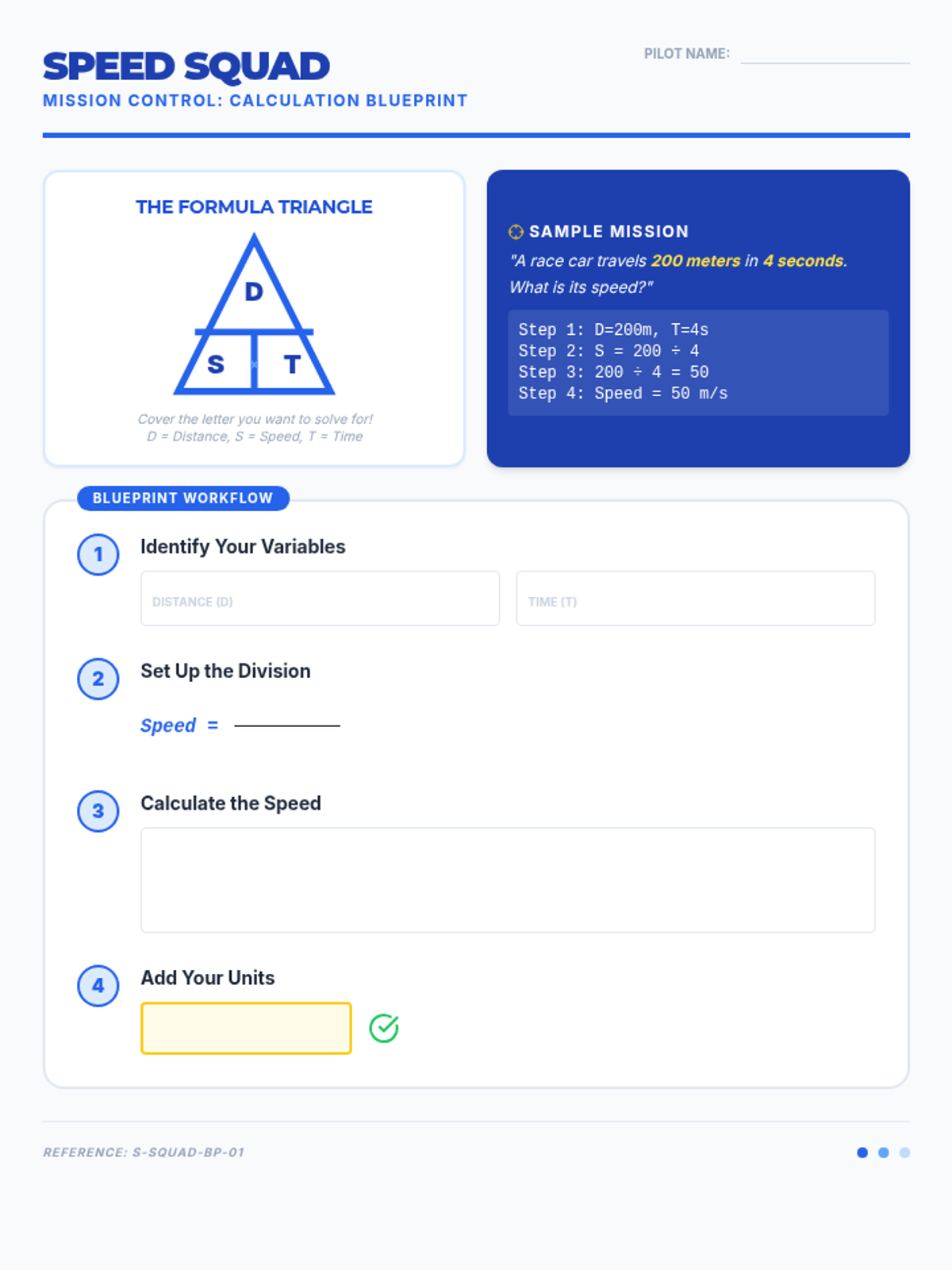
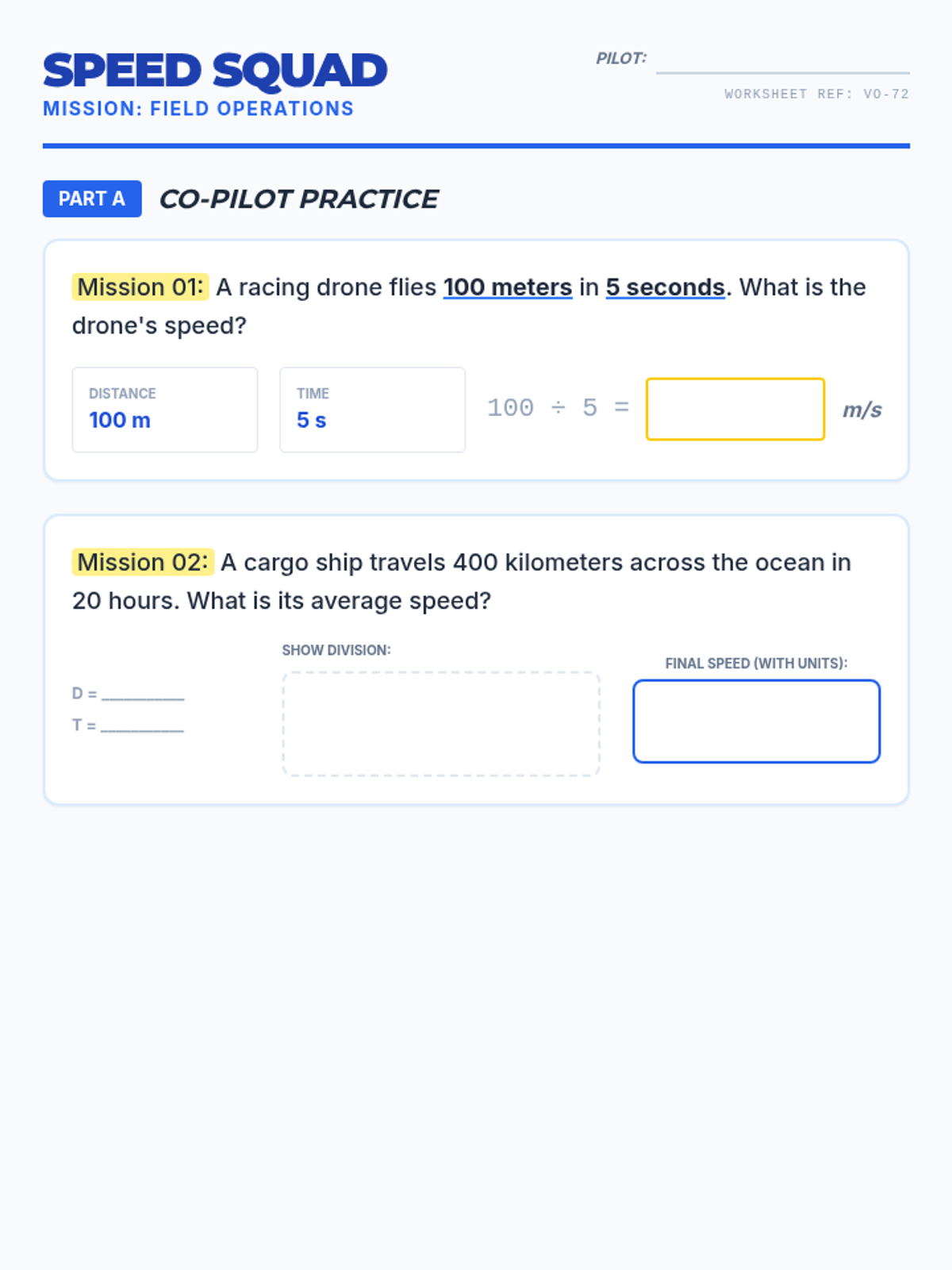
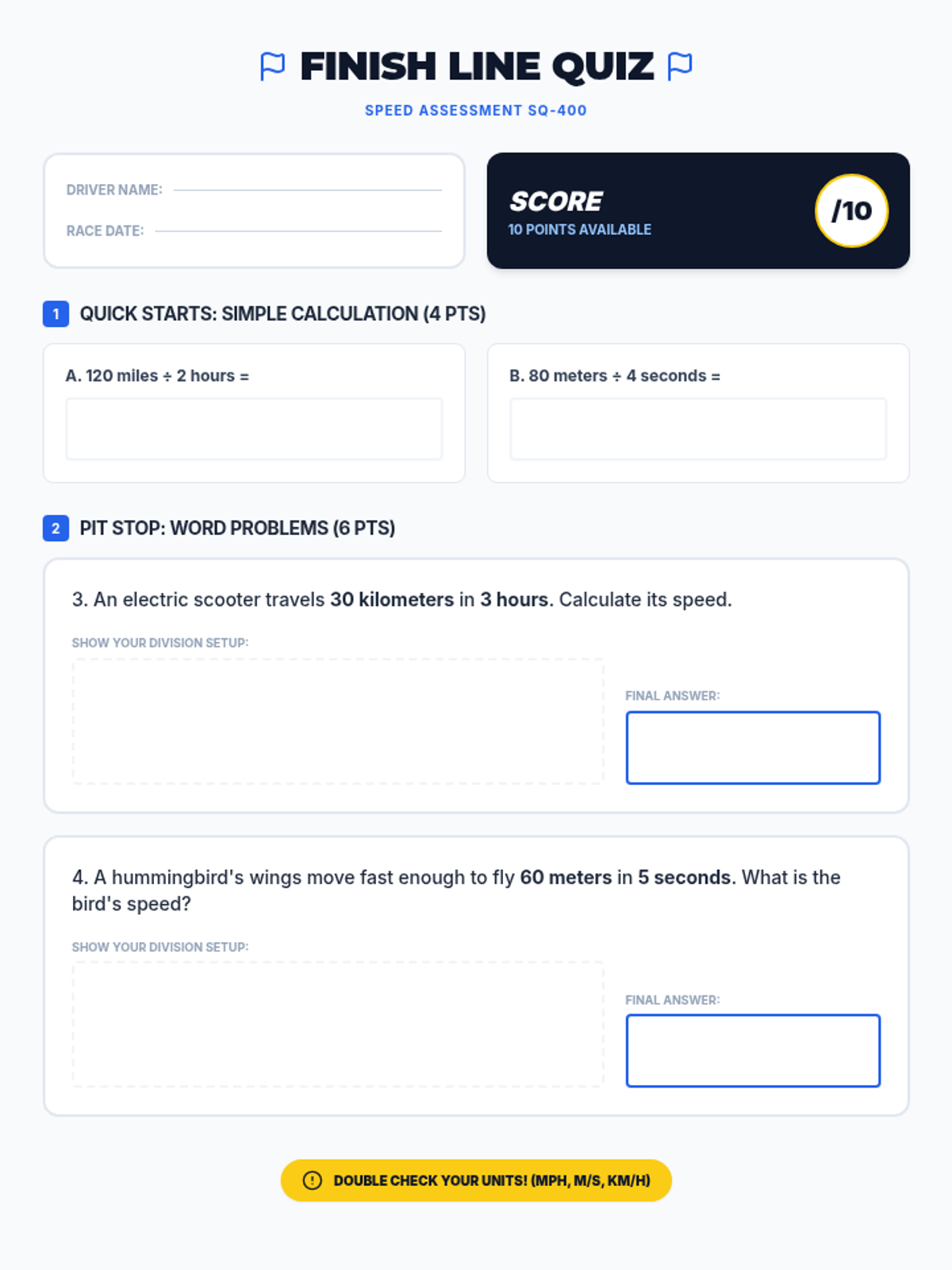
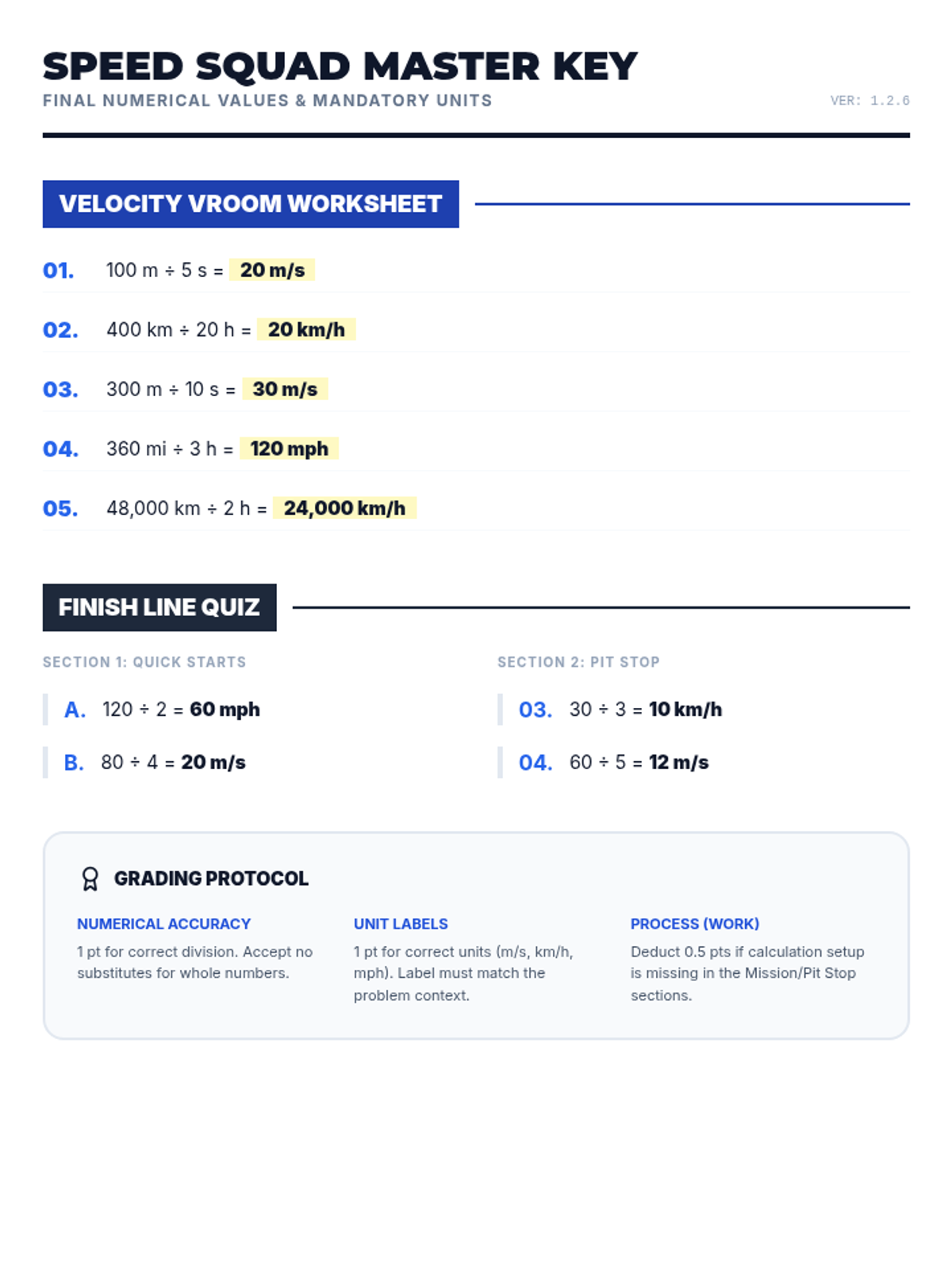
A comprehensive introduction to calculating speed using the formula Speed = Distance ÷ Time. This lesson uses a racing-themed framework to guide students through identifying units, setting up calculations, and solving whole-number word problems.
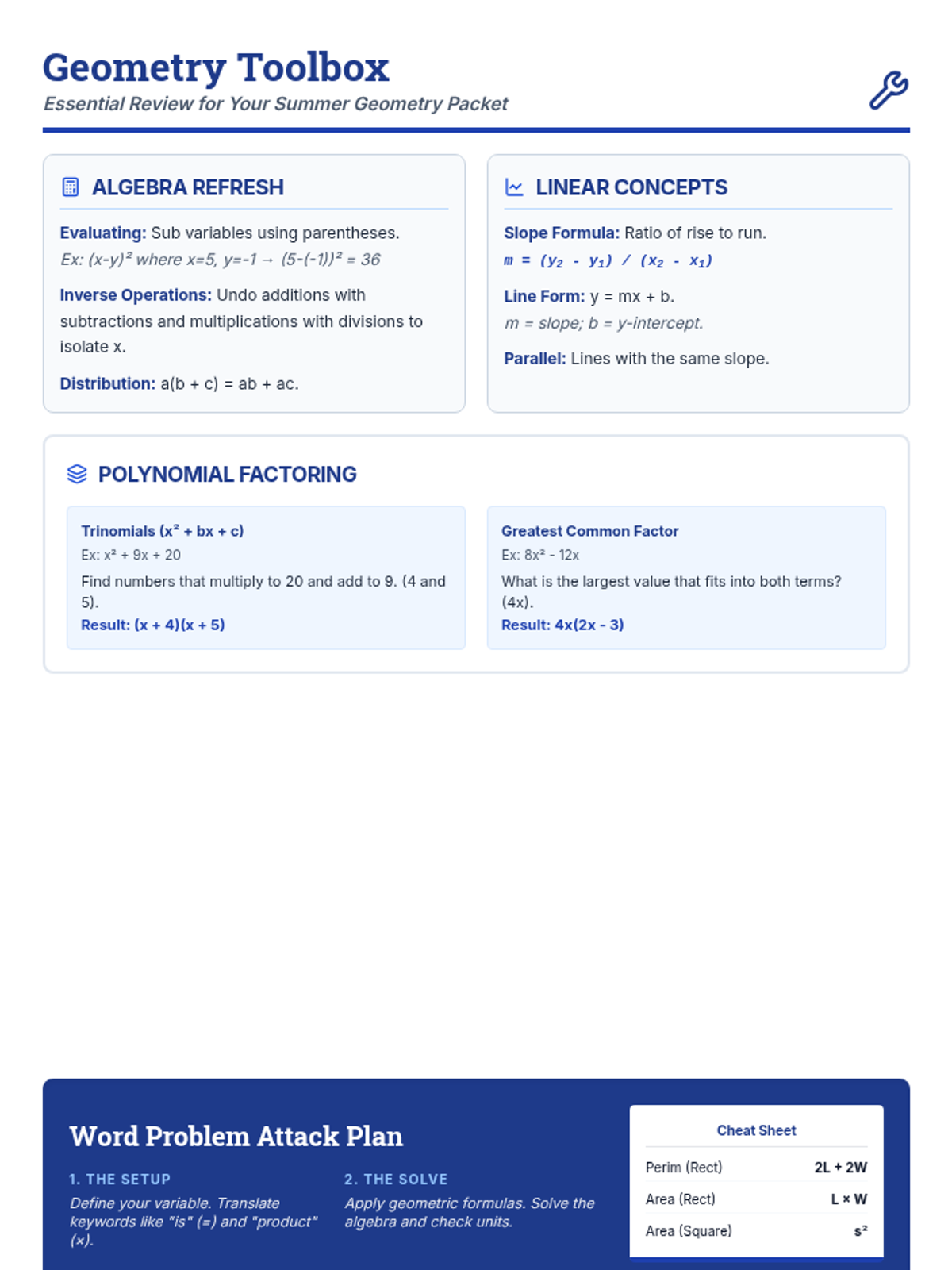
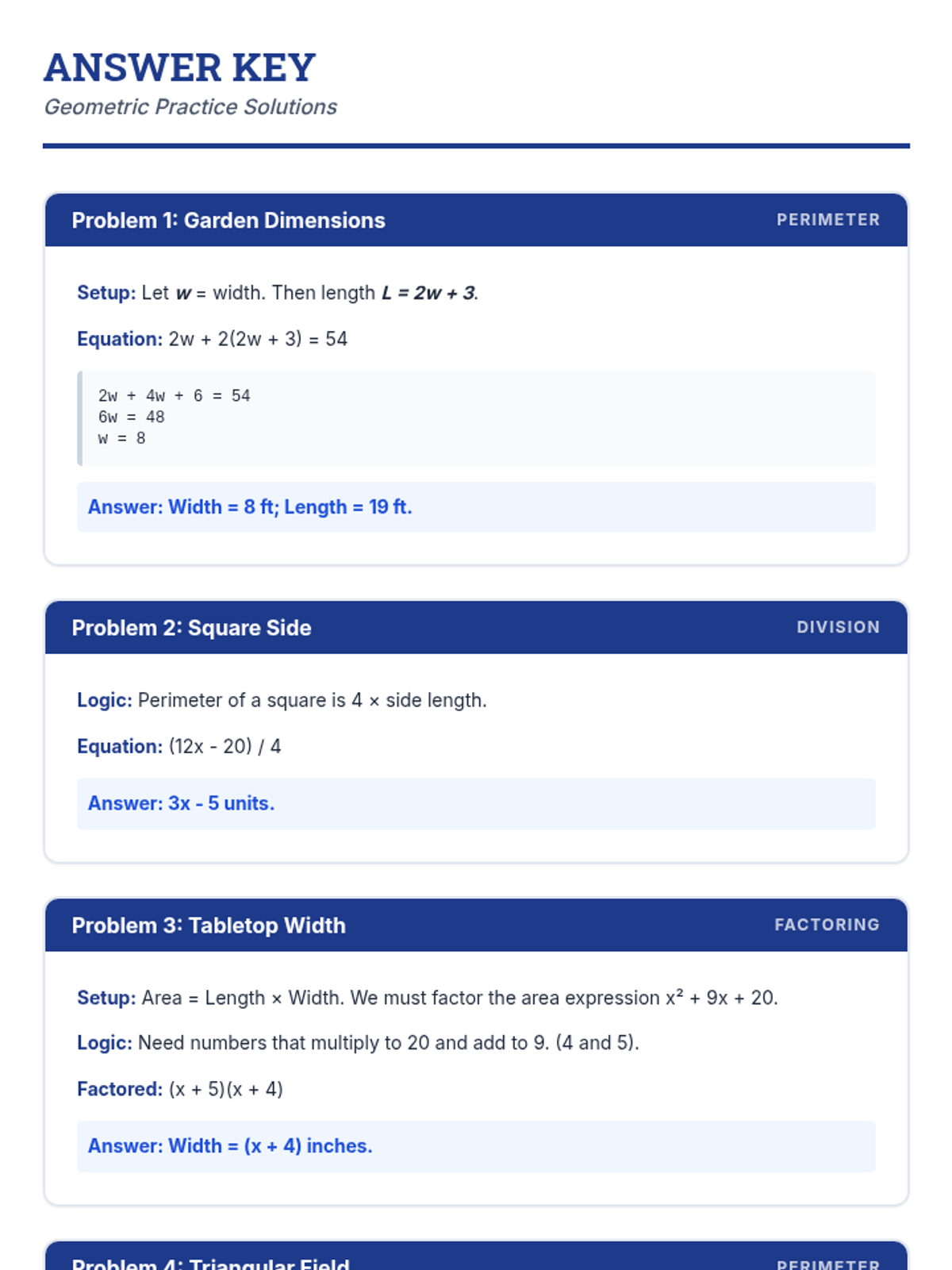
A collection of resources to support students completing their summer geometry packet, focusing on algebra foundations and geometric word problem applications.
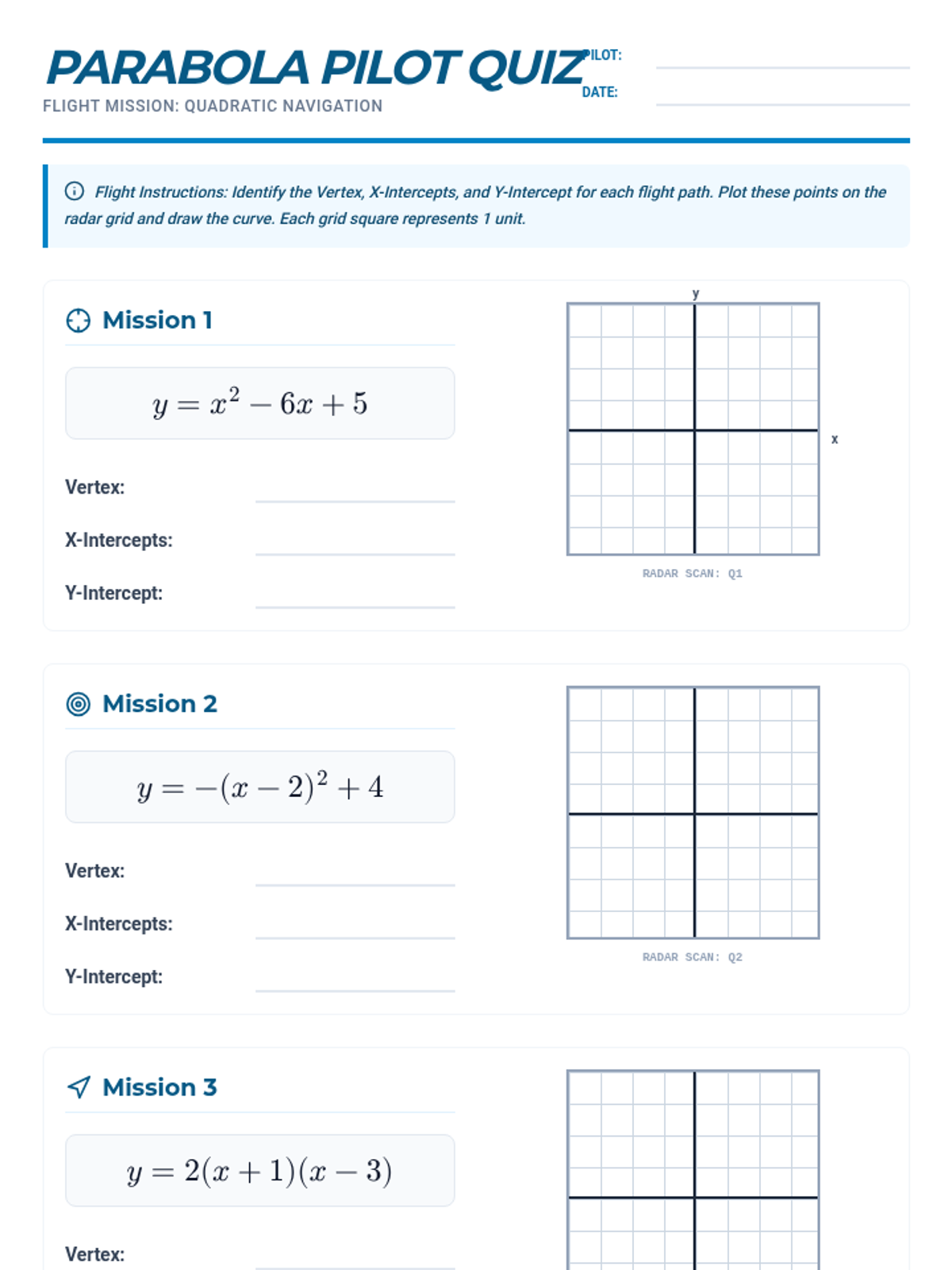
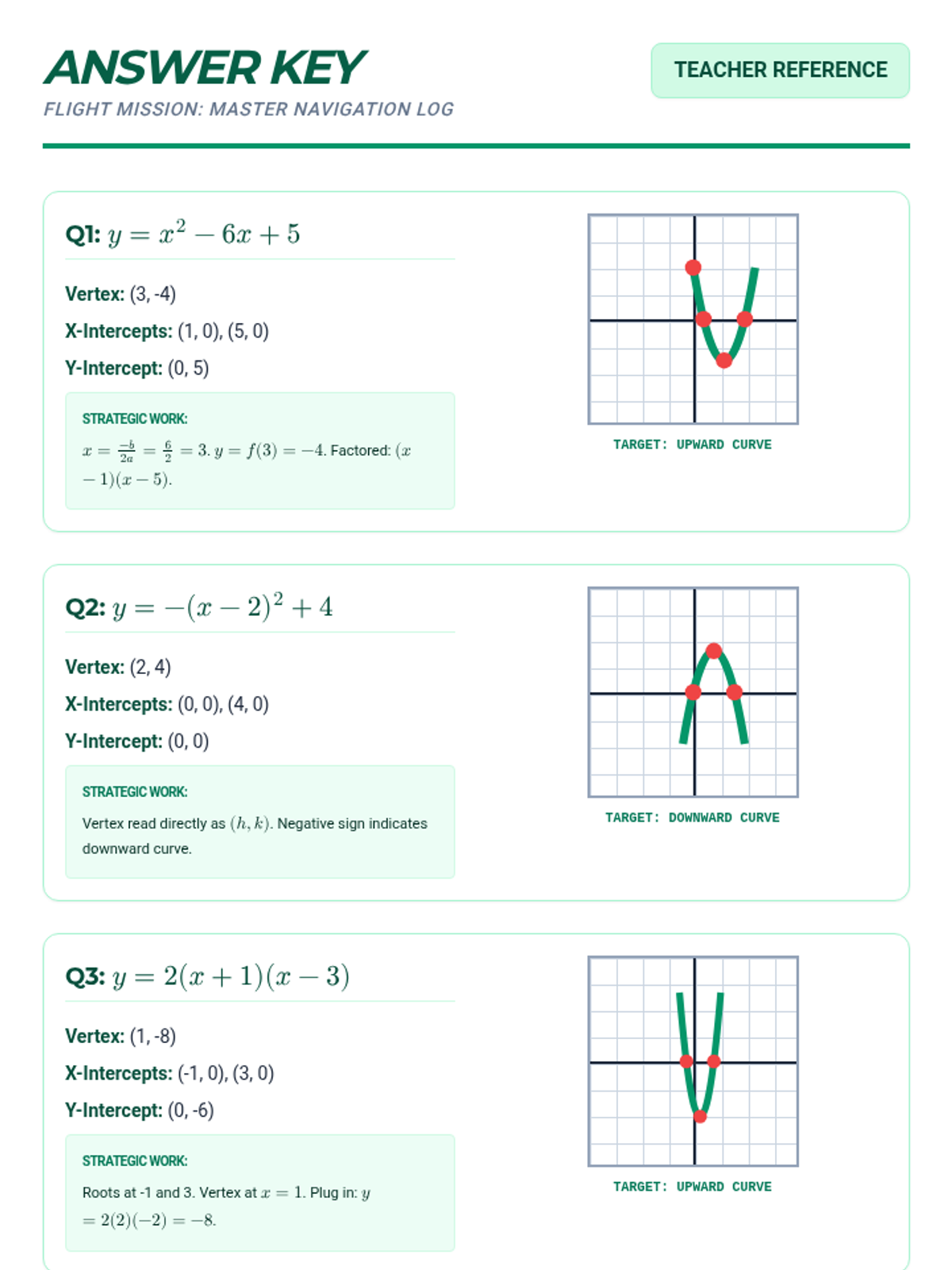
A lesson focused on identifying key features (vertex, intercepts) and graphing quadratic equations across standard, vertex, and factored forms.
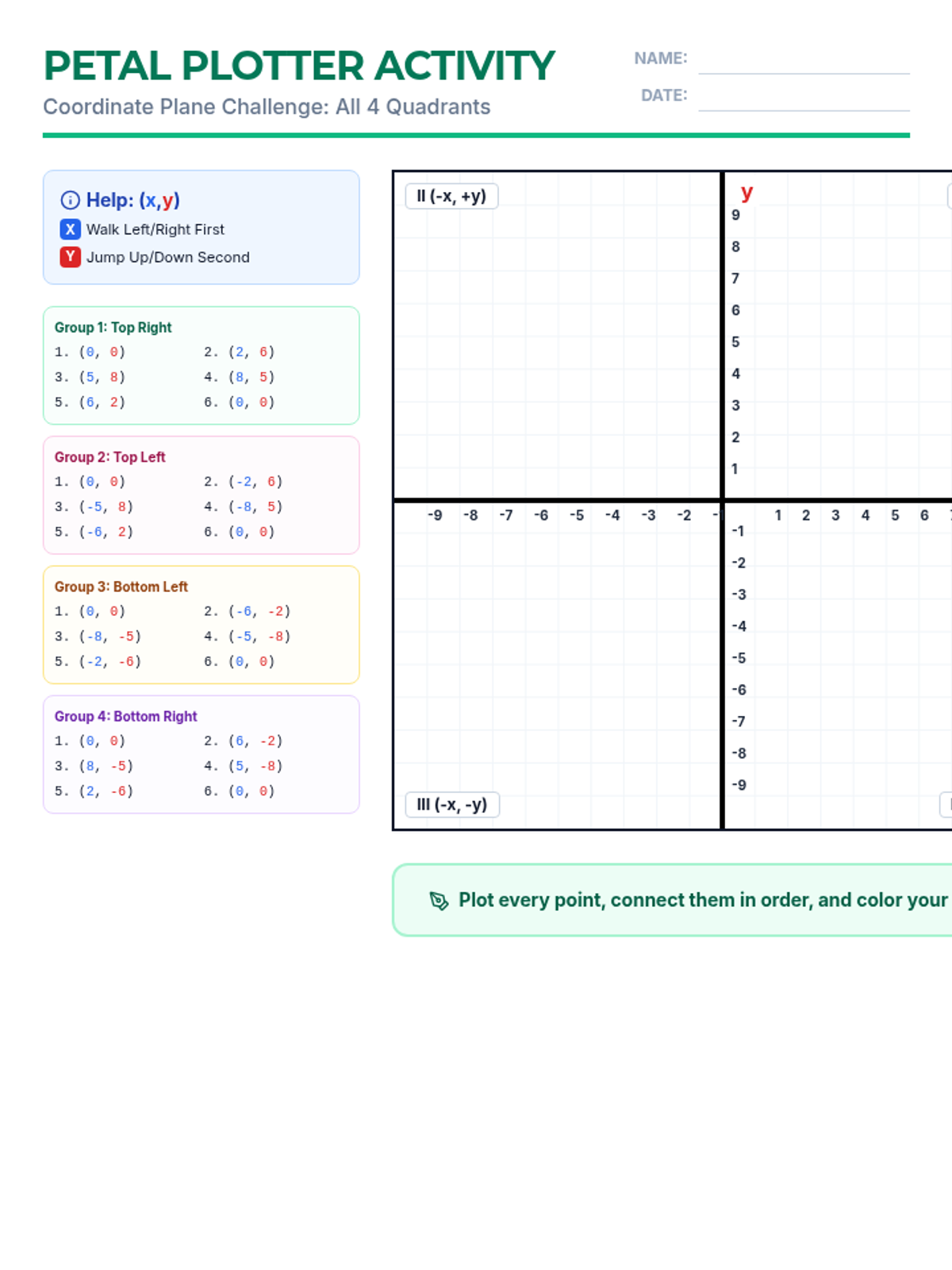
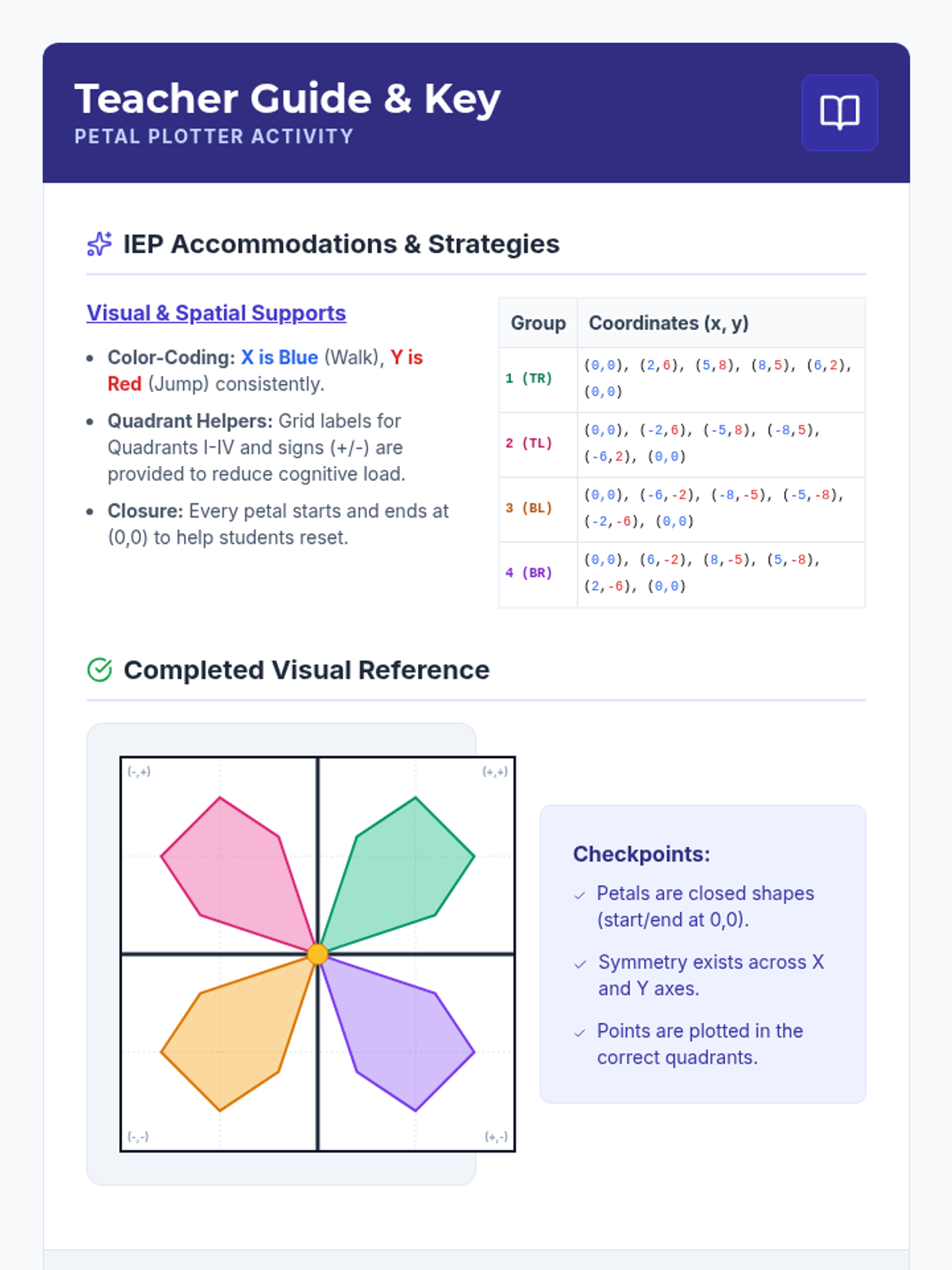
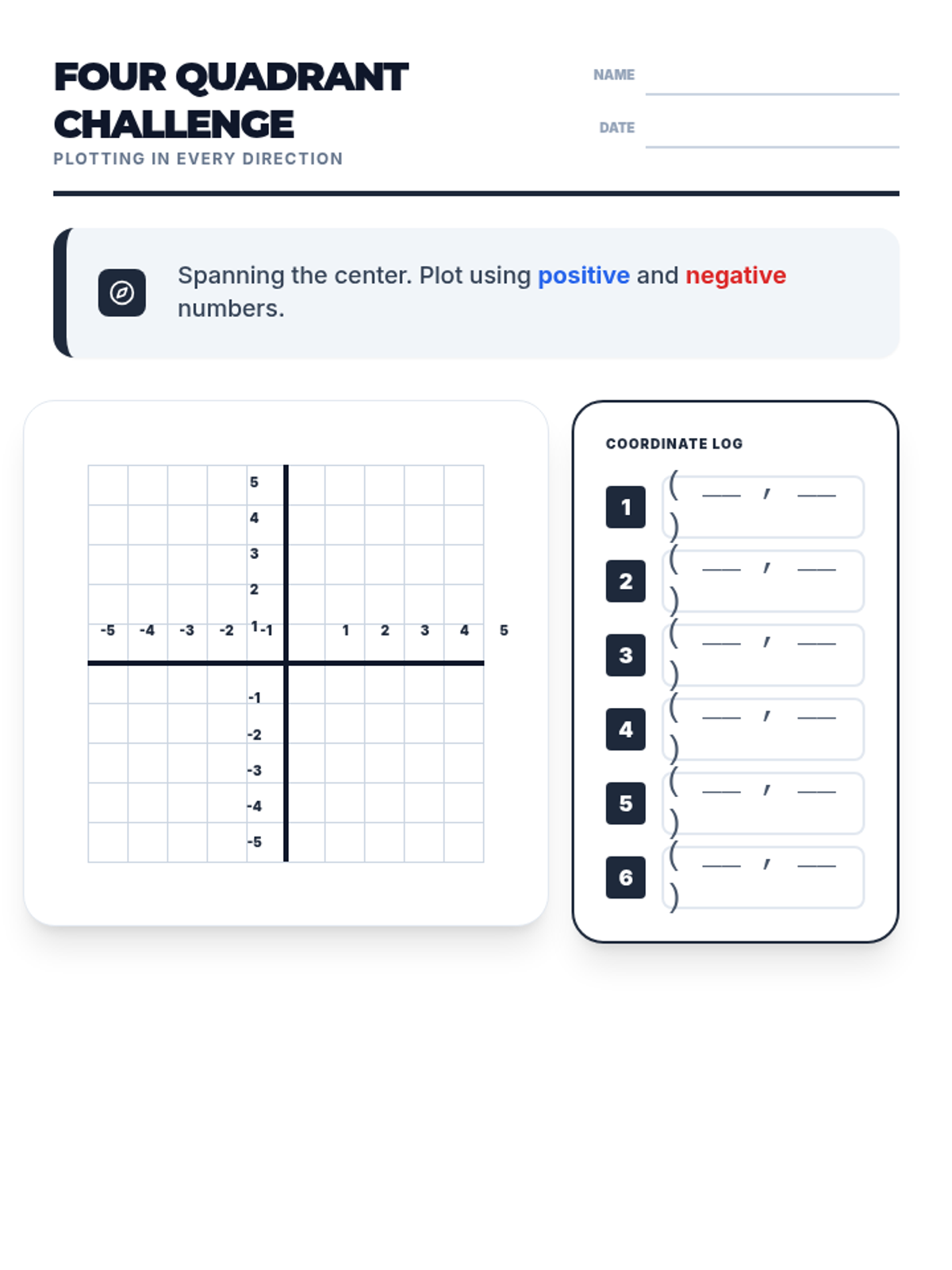
A modified coordinate plane lesson for IEP students focusing on plotting points in all four quadrants to create a seasonal flower image. Includes scaffolding such as color-coding and directional prompts.
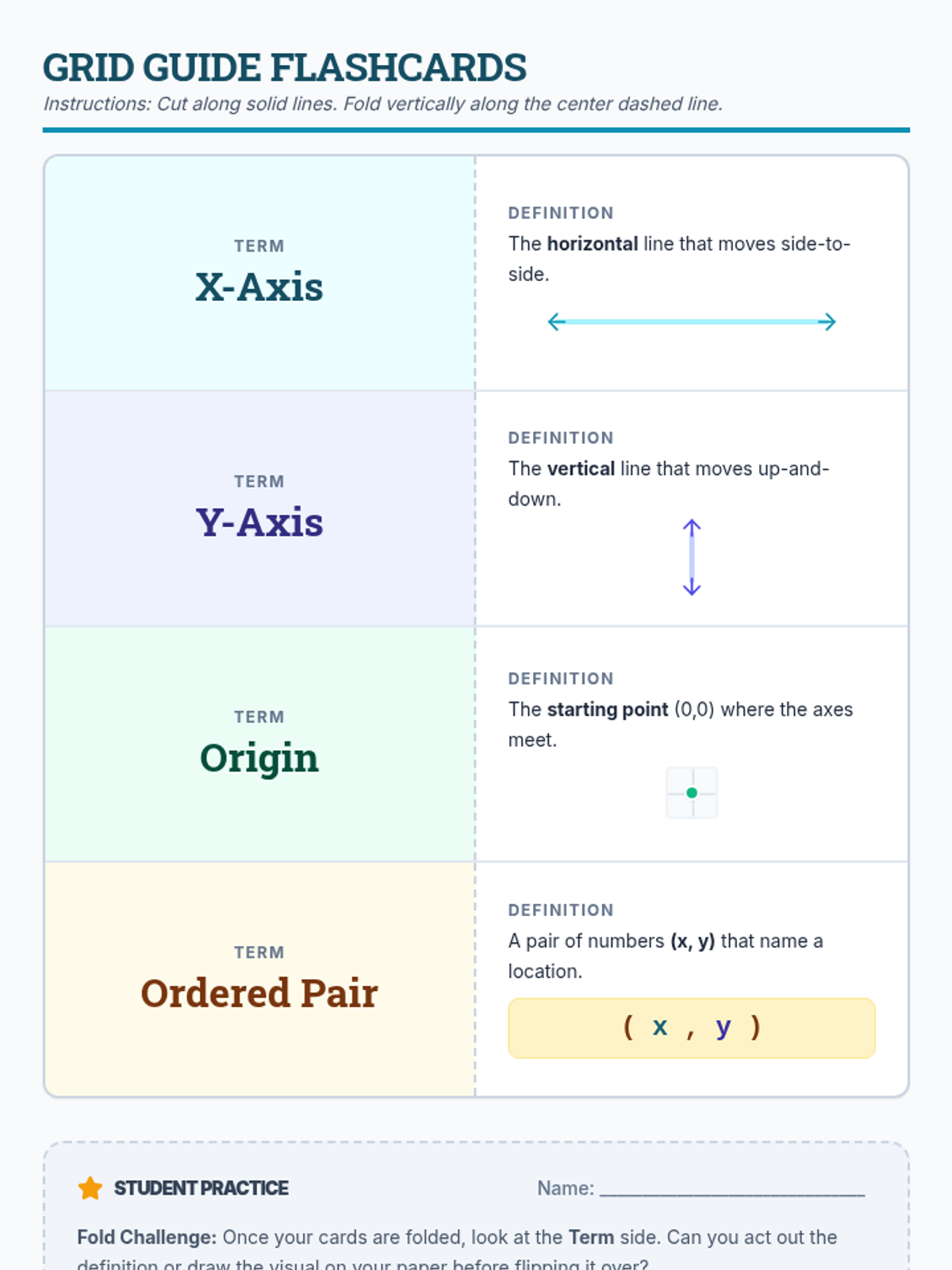
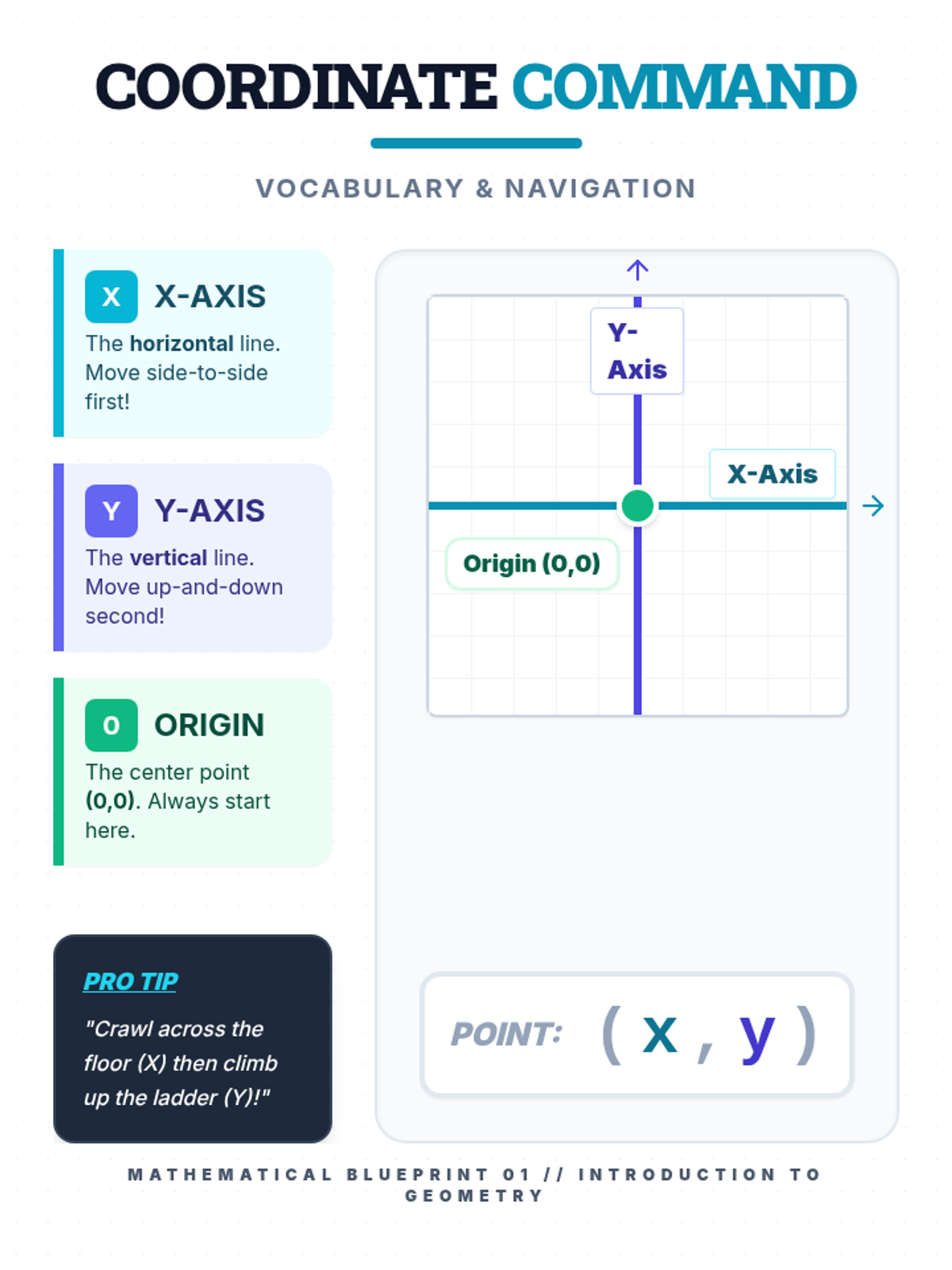
An introduction to the coordinate plane, focusing on identifying the x-axis, y-axis, and the origin to begin plotting ordered pairs.
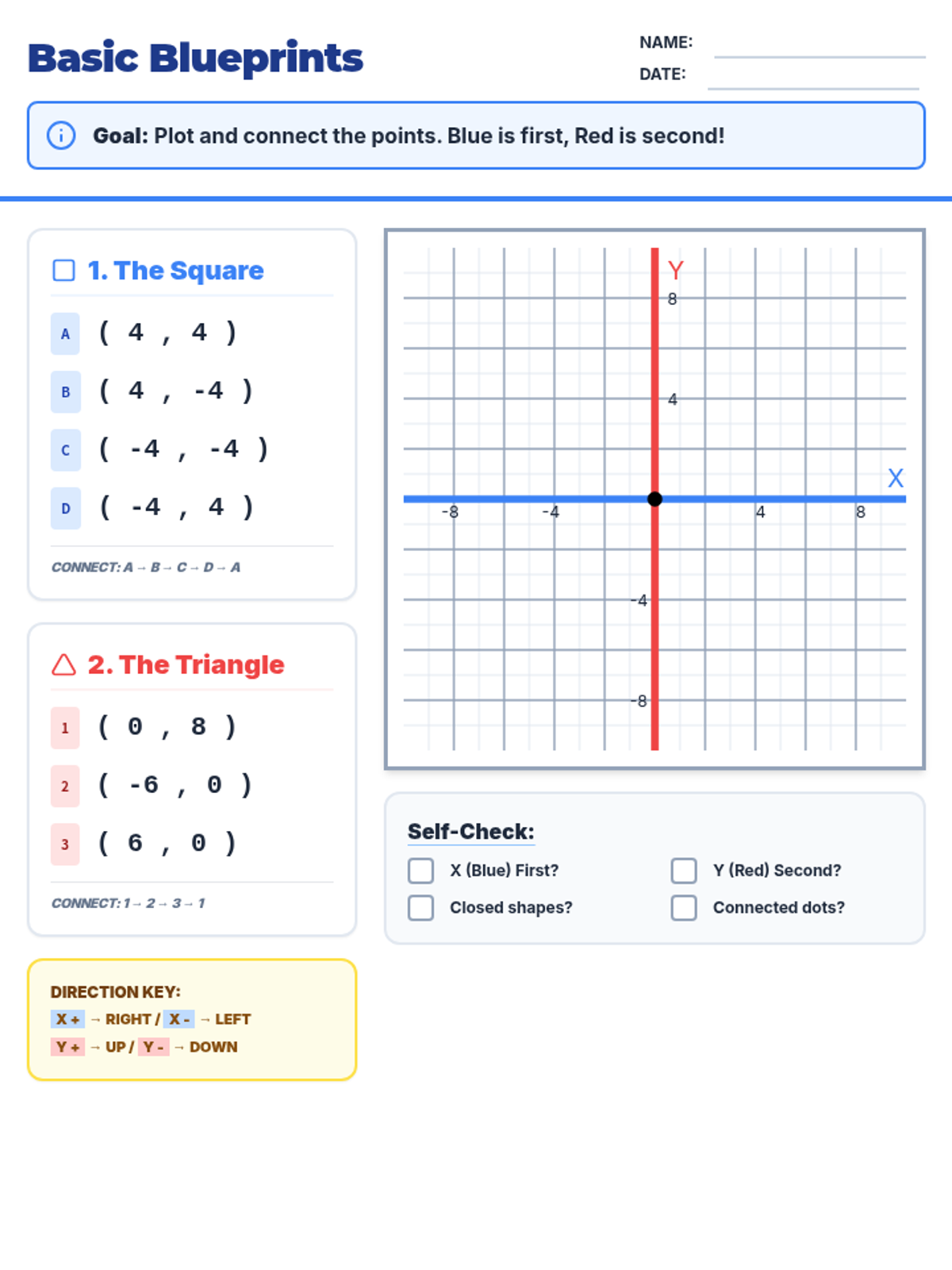
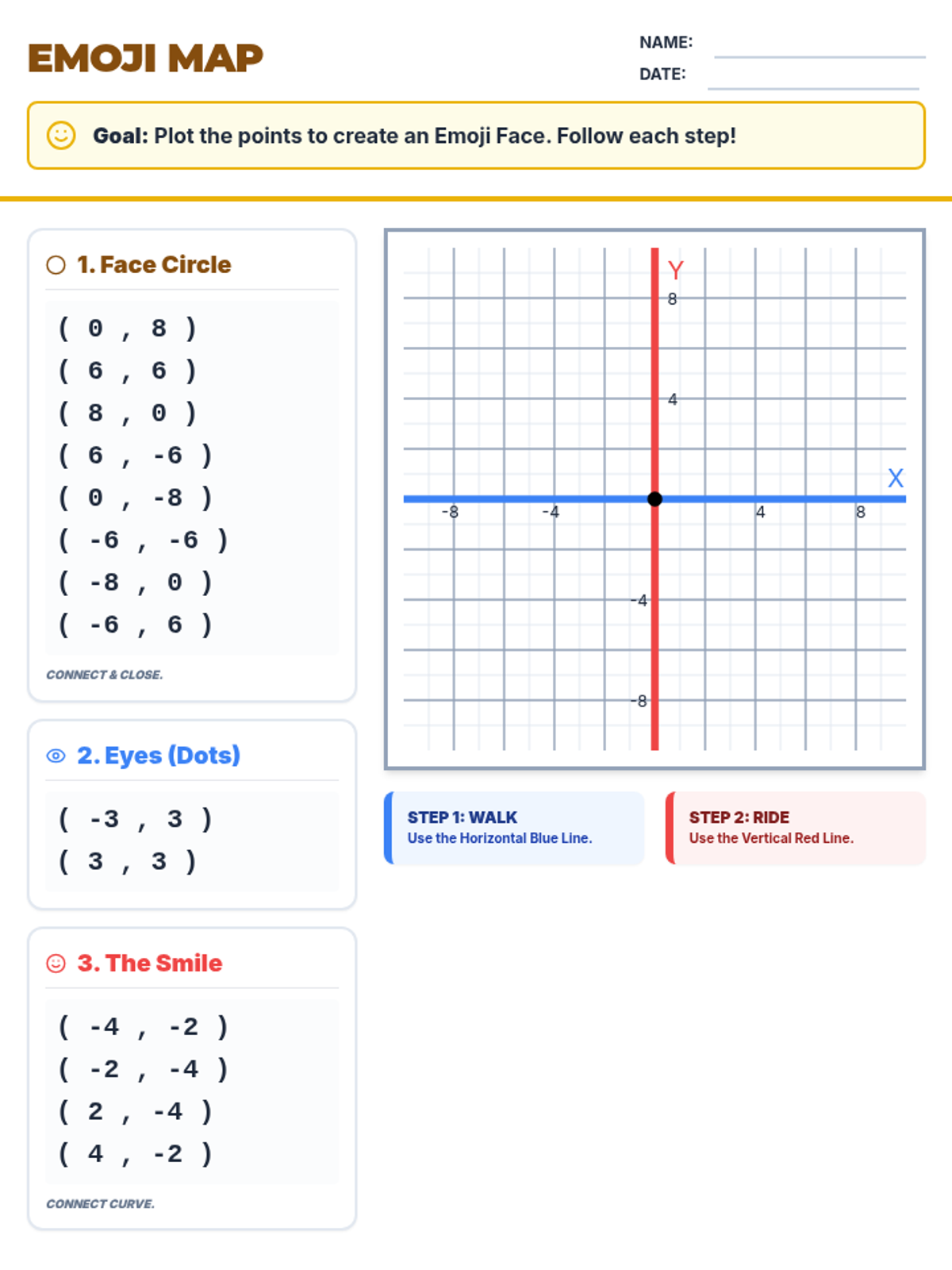
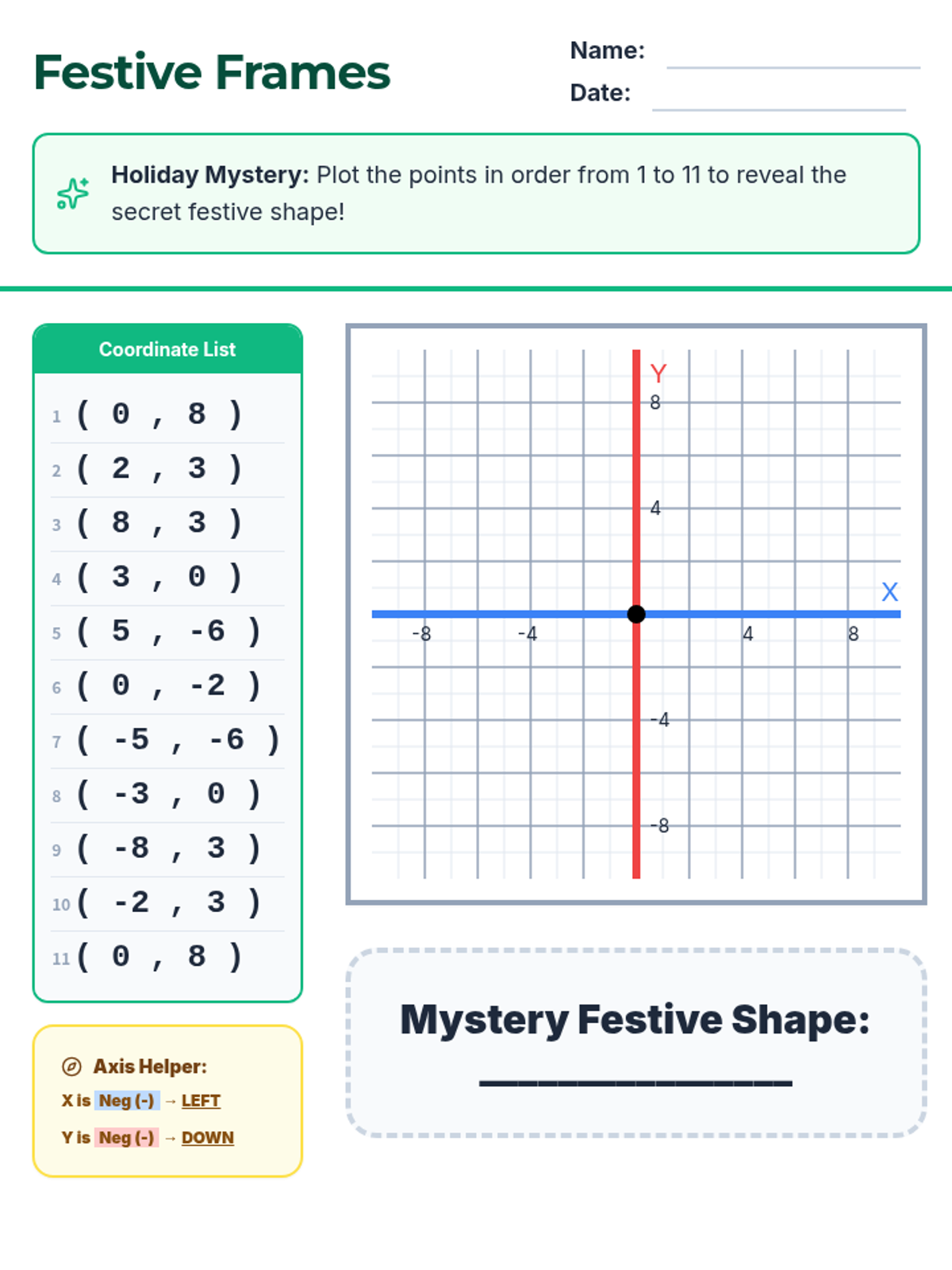
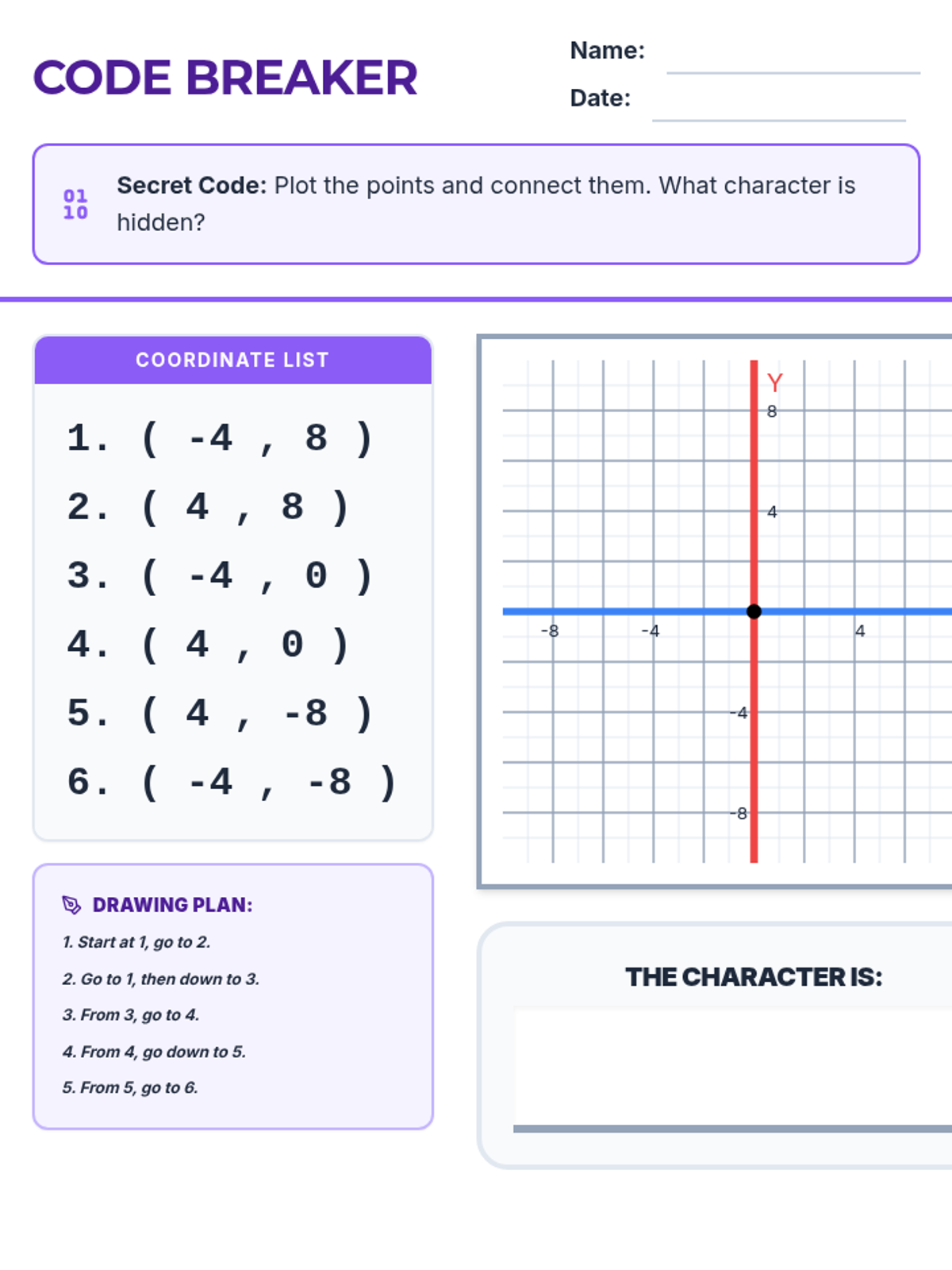
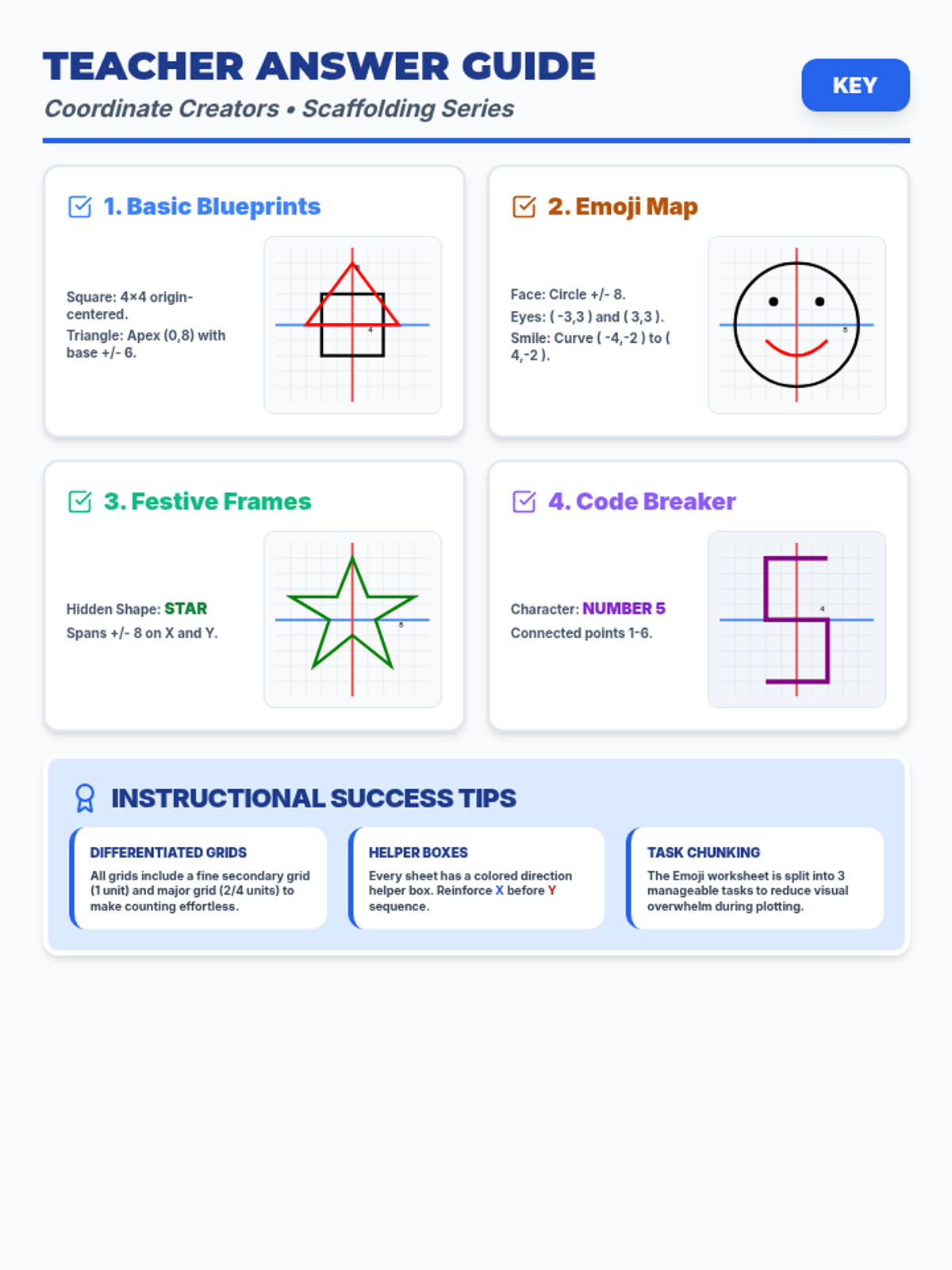
A beginner-friendly introduction to the four-quadrant coordinate plane, specifically designed with scaffolding and visual aids for students with diverse learning needs. Students will practice plotting points to reveal basic shapes, emojis, holiday symbols, and characters.
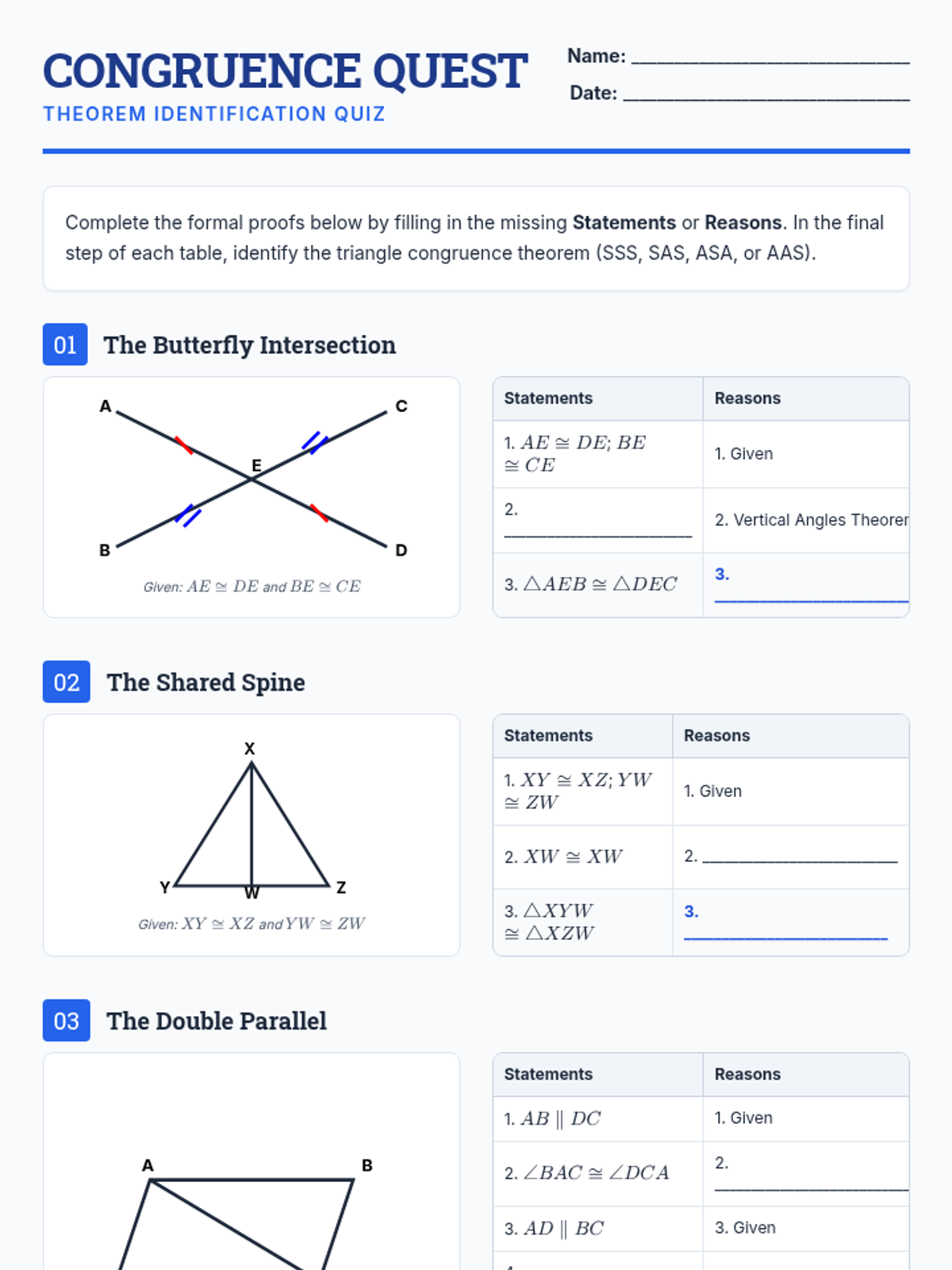
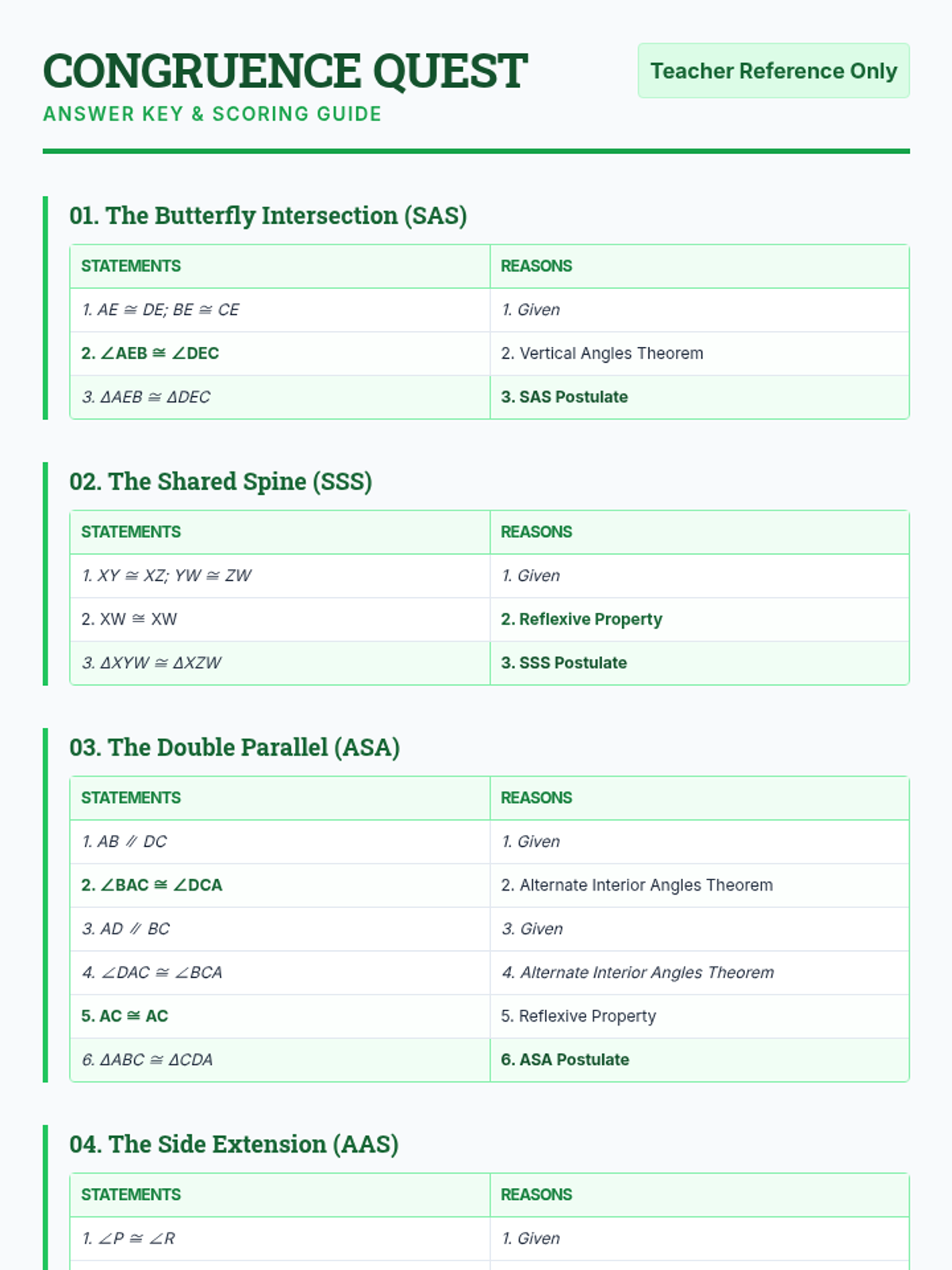
A focused challenge on identifying triangle congruence theorems through formal proofs, requiring students to complete statement-reason tables.
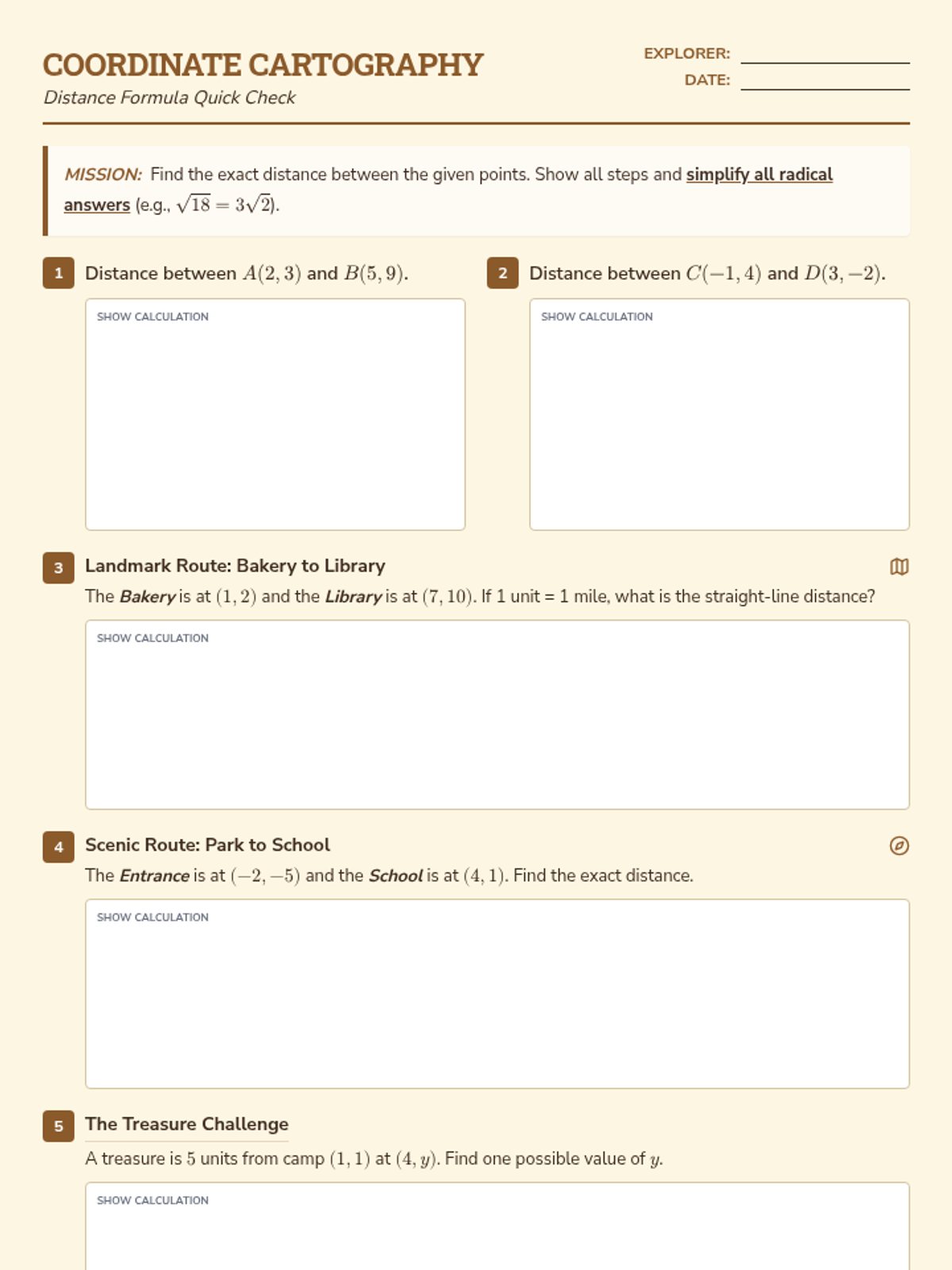
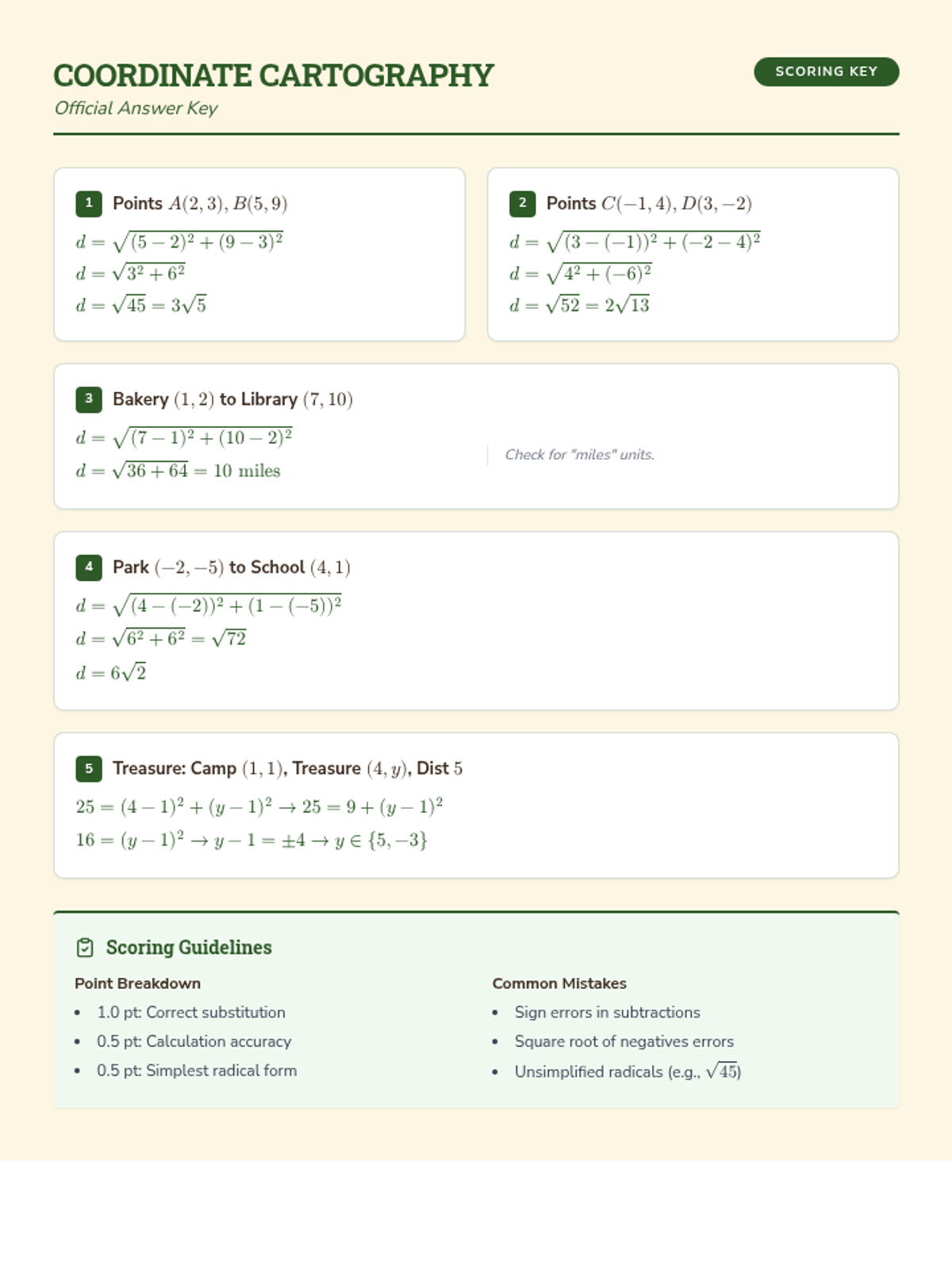
A focused lesson on applying the distance formula to coordinate geometry and real-world map scenarios, featuring radical simplification and spatial reasoning.
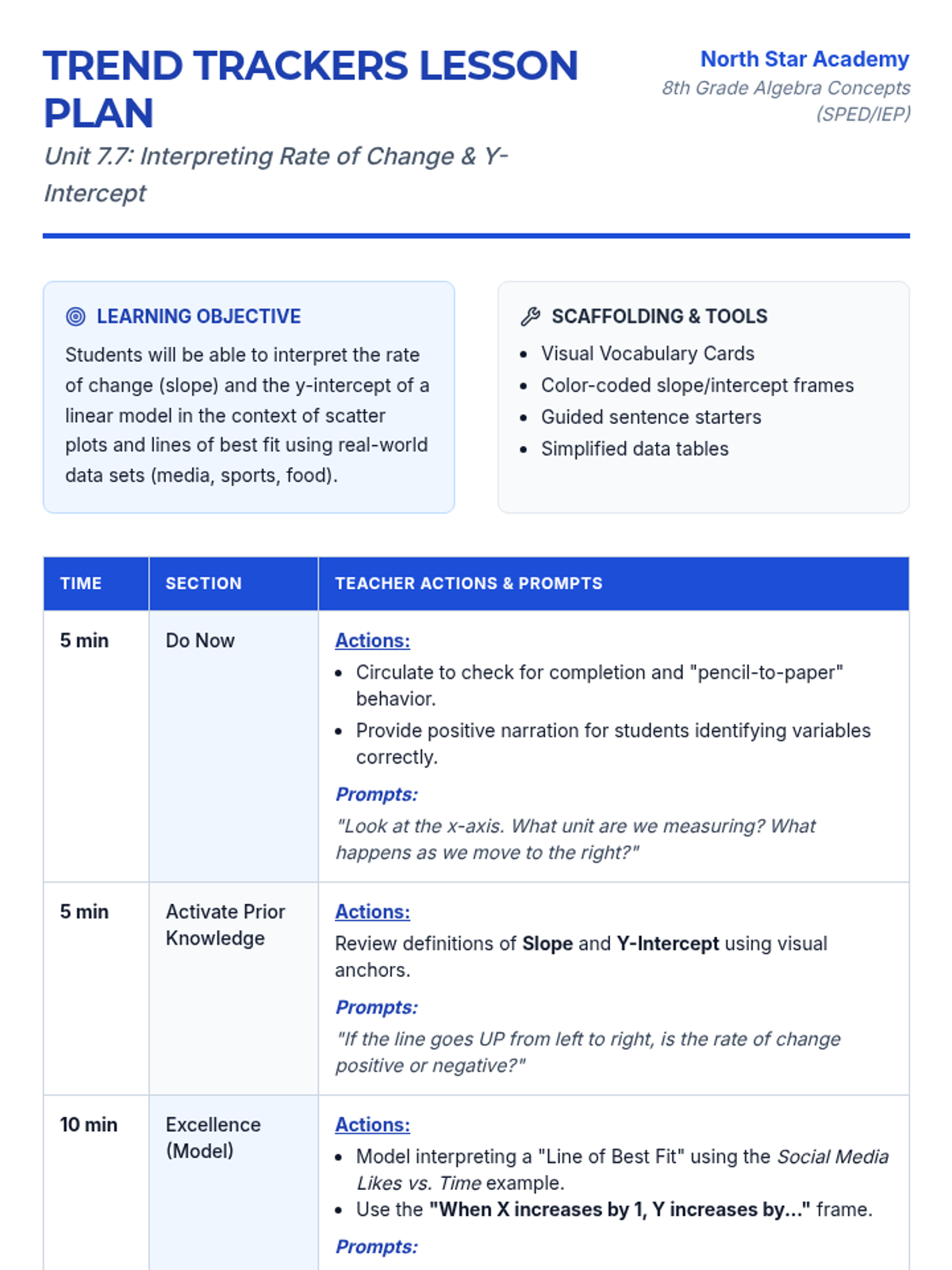
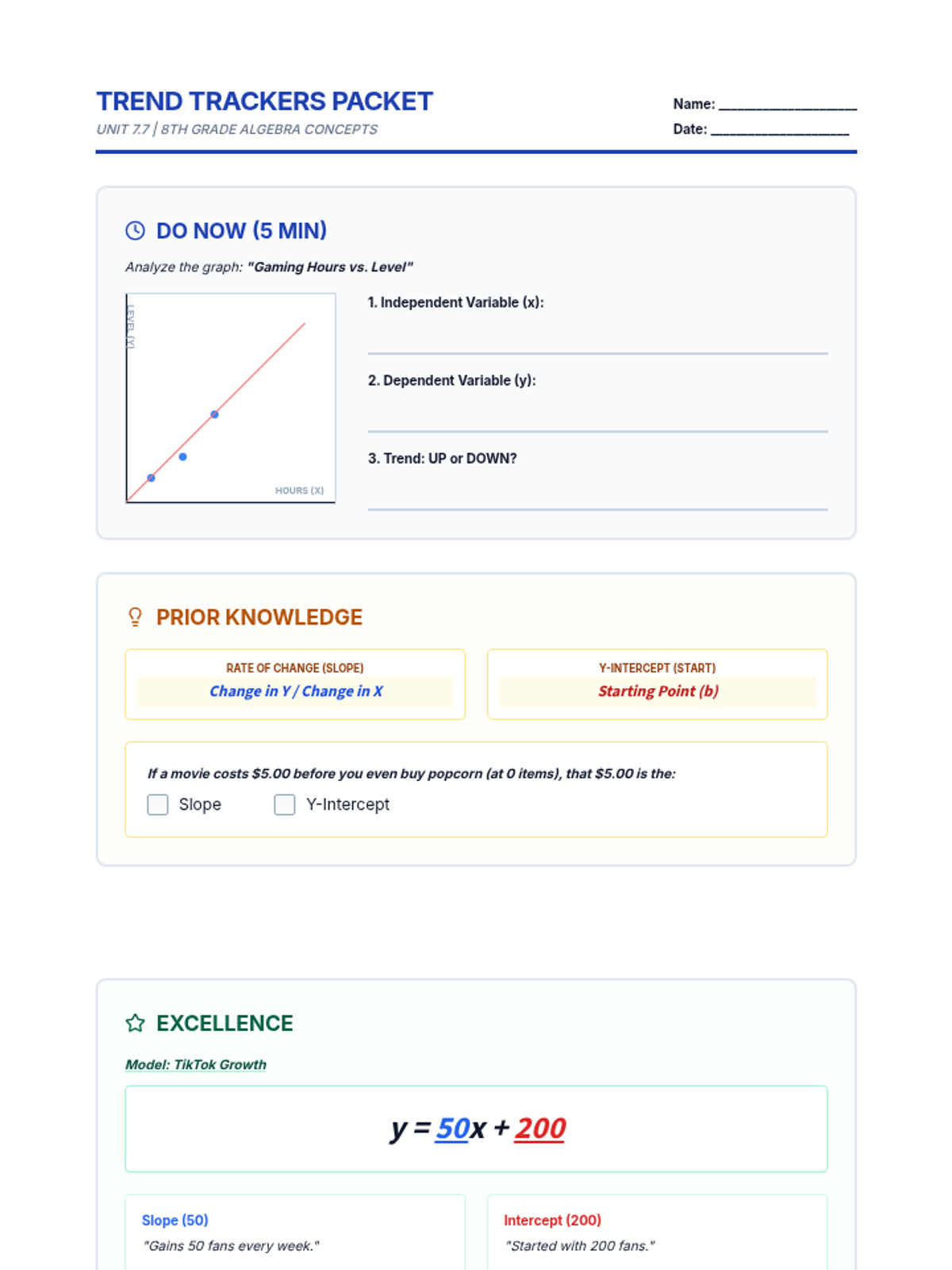
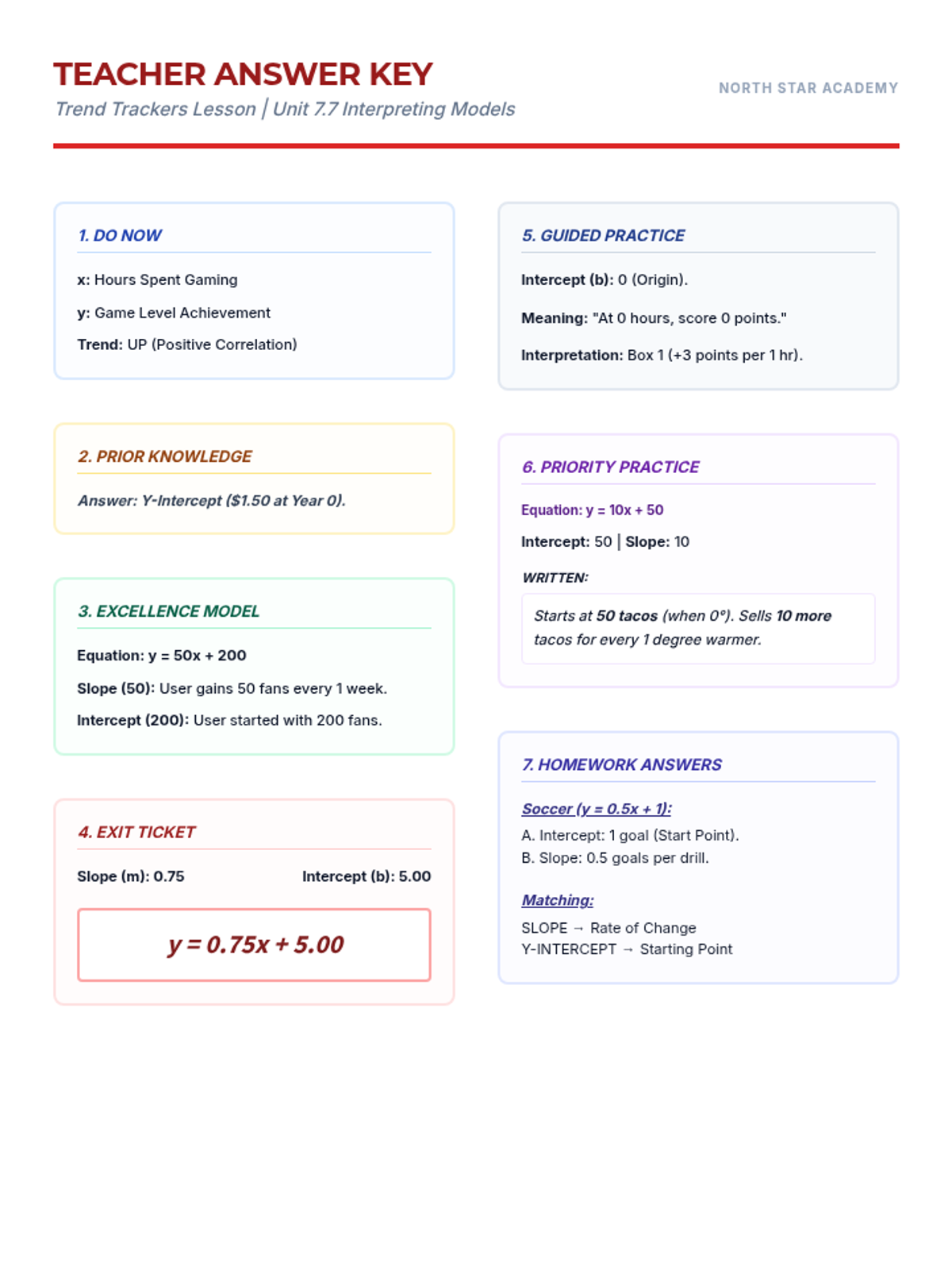
An 8th grade Algebra lesson focused on interpreting slope and y-intercept in the context of scatter plots and lines of best fit, specifically designed for Special Education students with IEP supports.
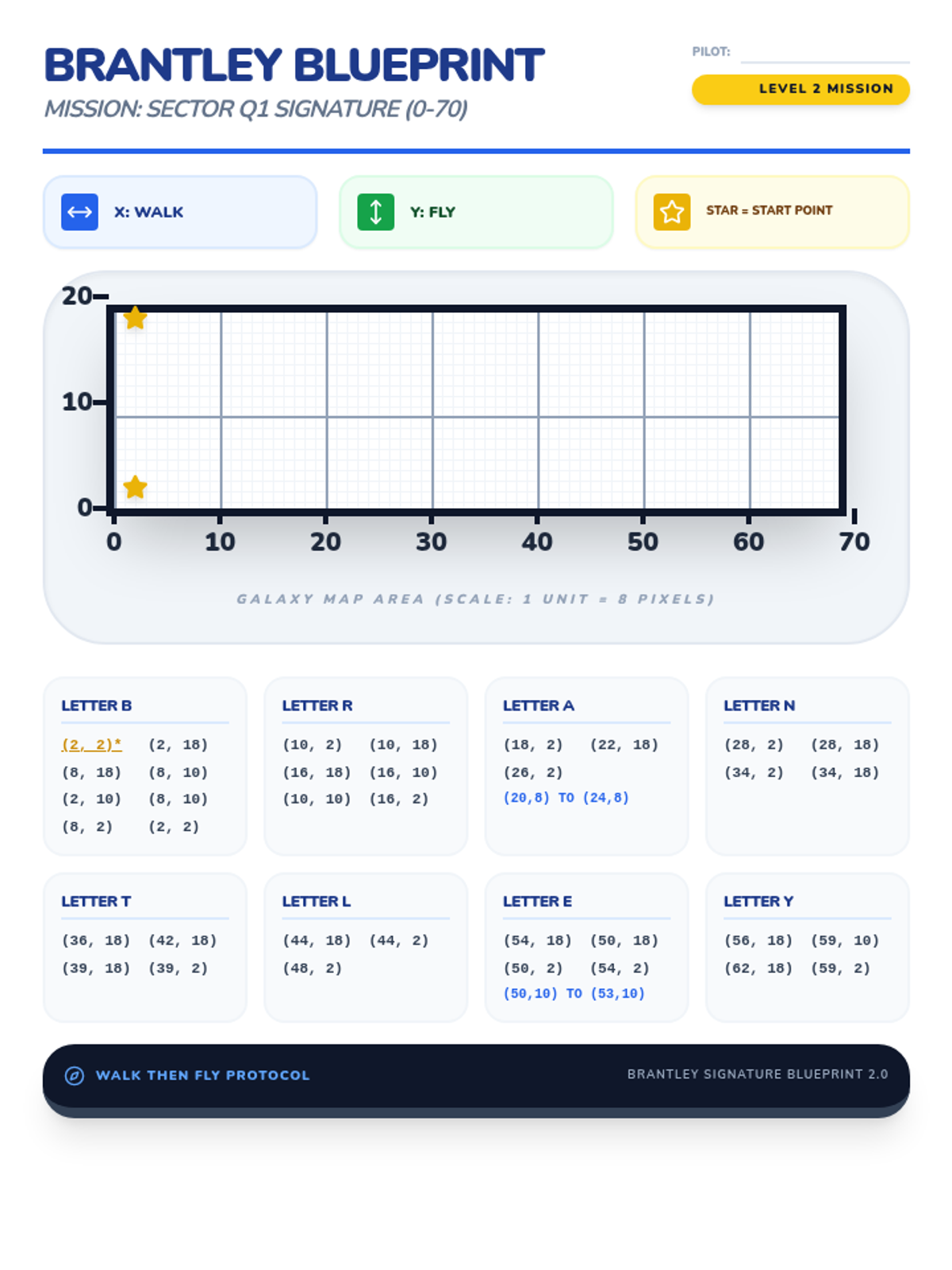
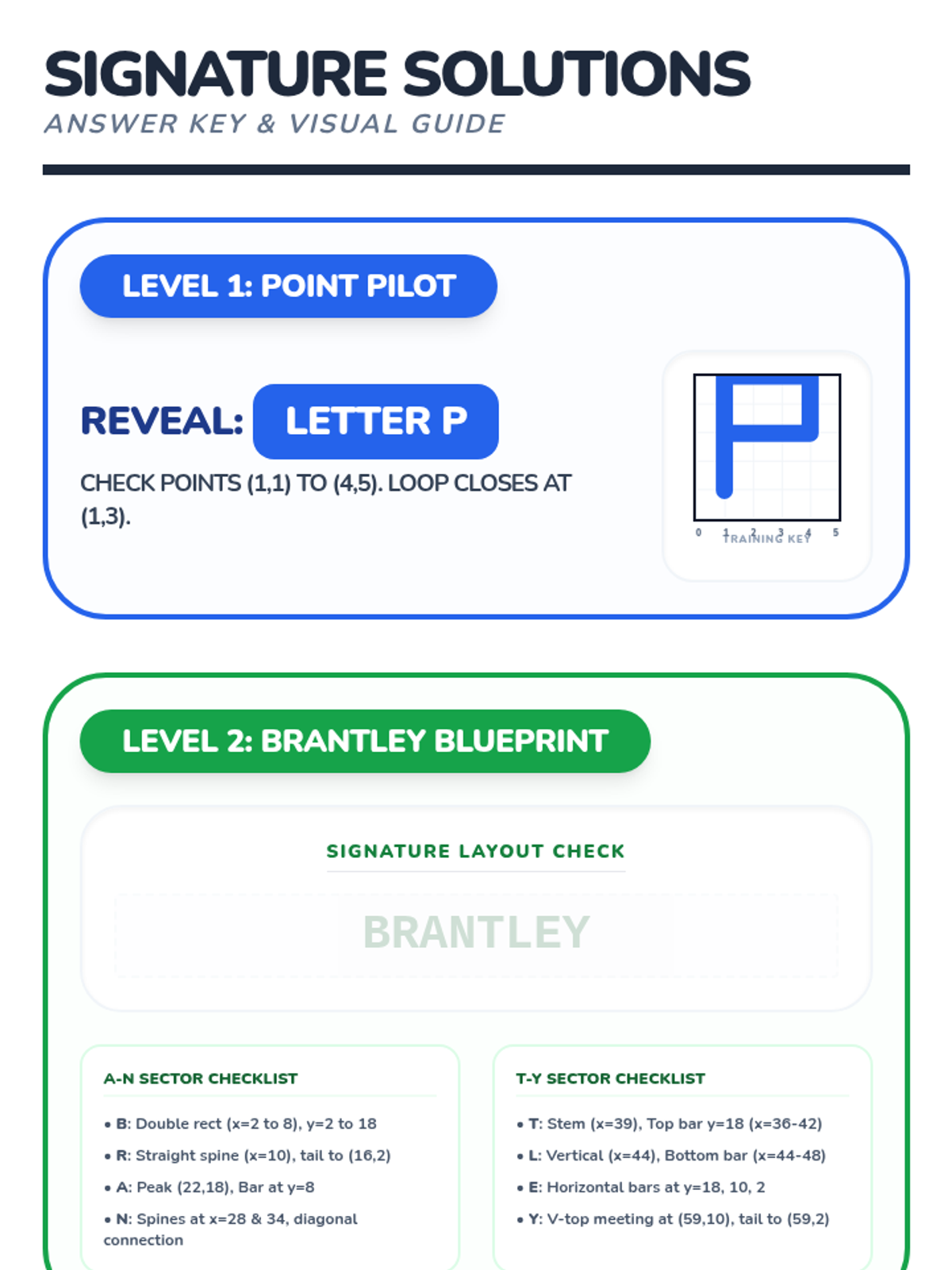
A simplified introduction to plotting points on a coordinate plane (Quadrant 1) to create the signature "Brantley". Designed specifically for IEP students with large grids and clear instructions.
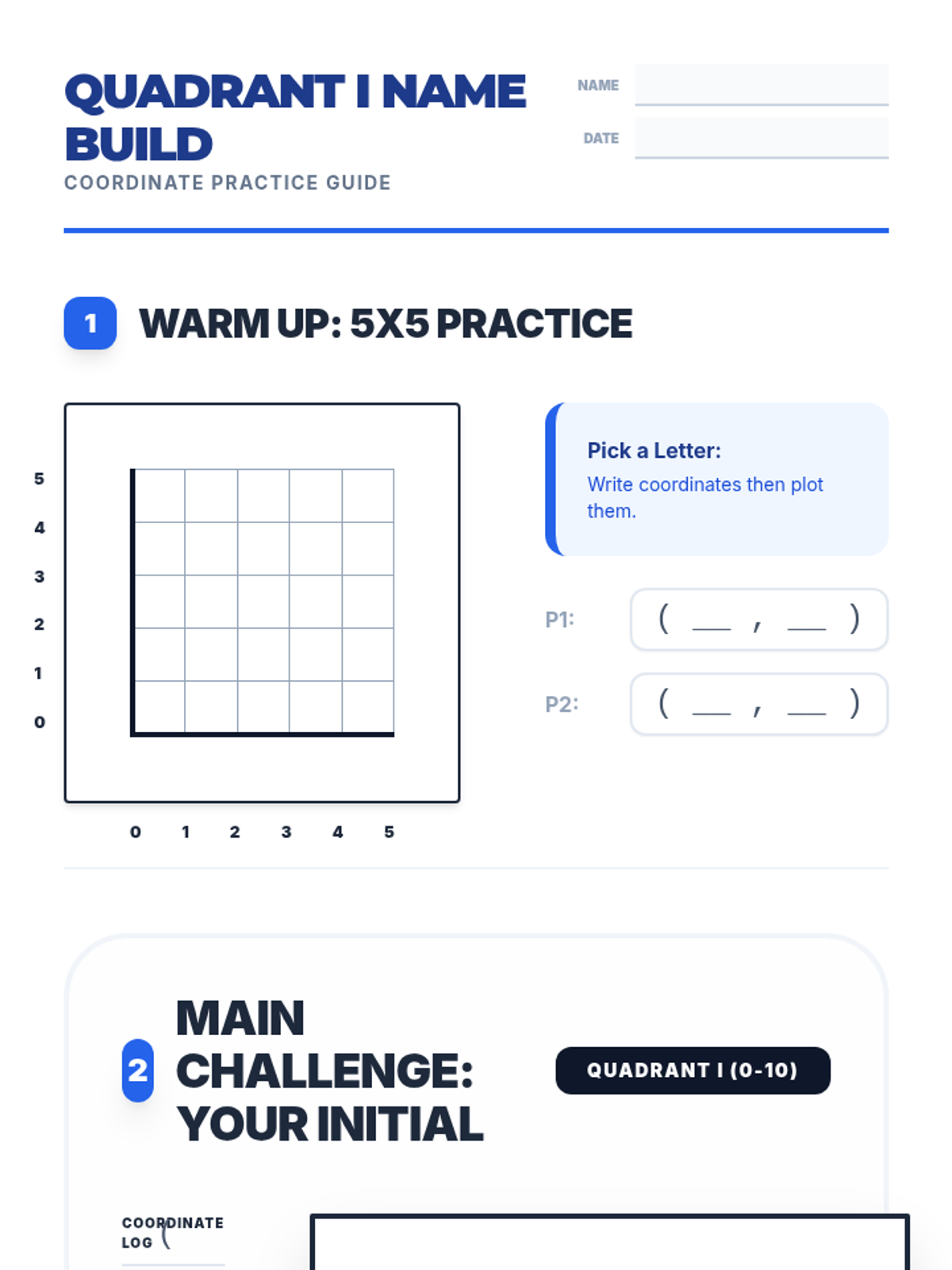
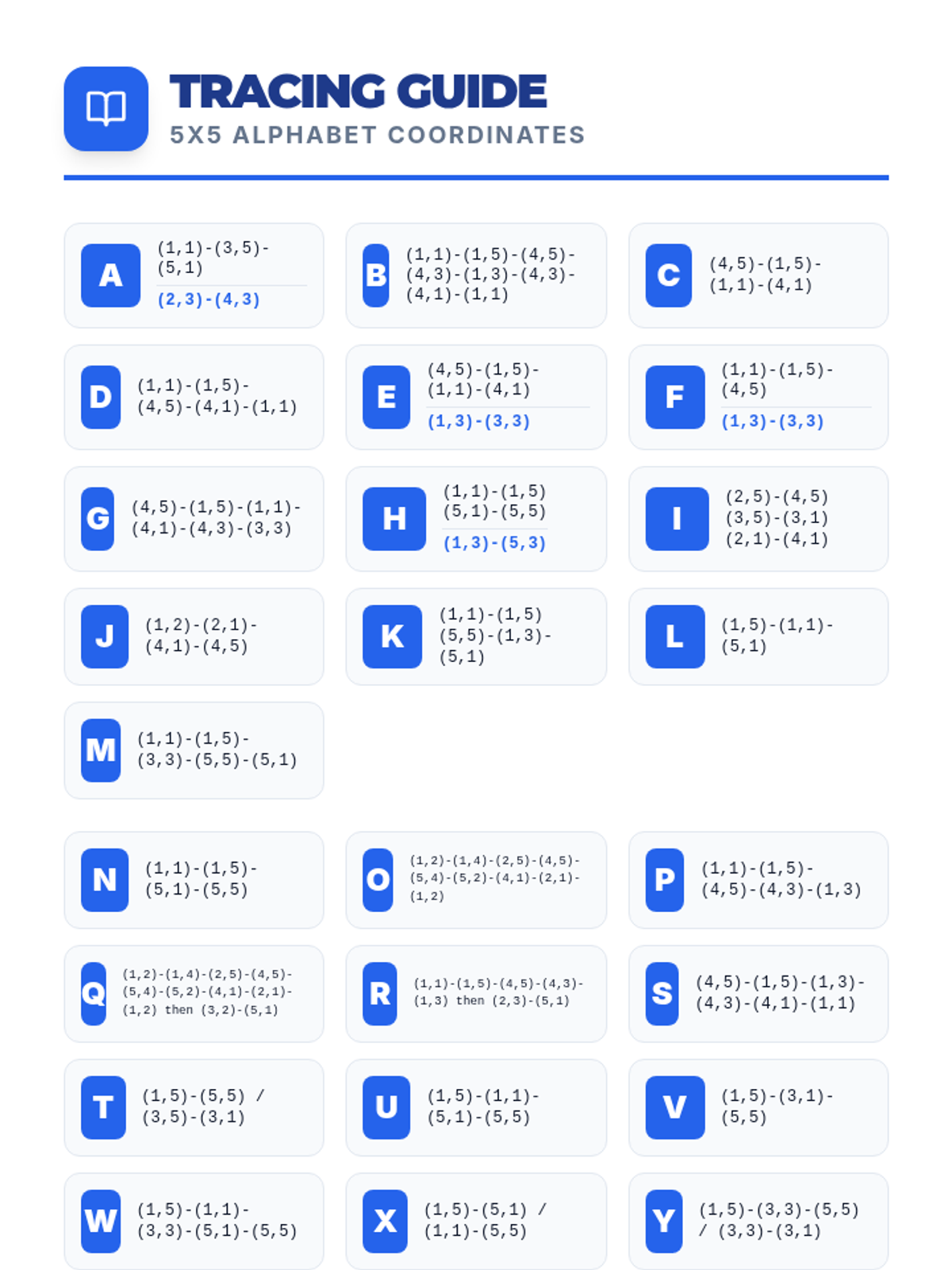
Students learn to plot coordinates to form letters and their own names. This lesson includes differentiated materials for Quadrant I, simplified 5x5 grids, and all four quadrants, with built-in tracing supports for IEP students.
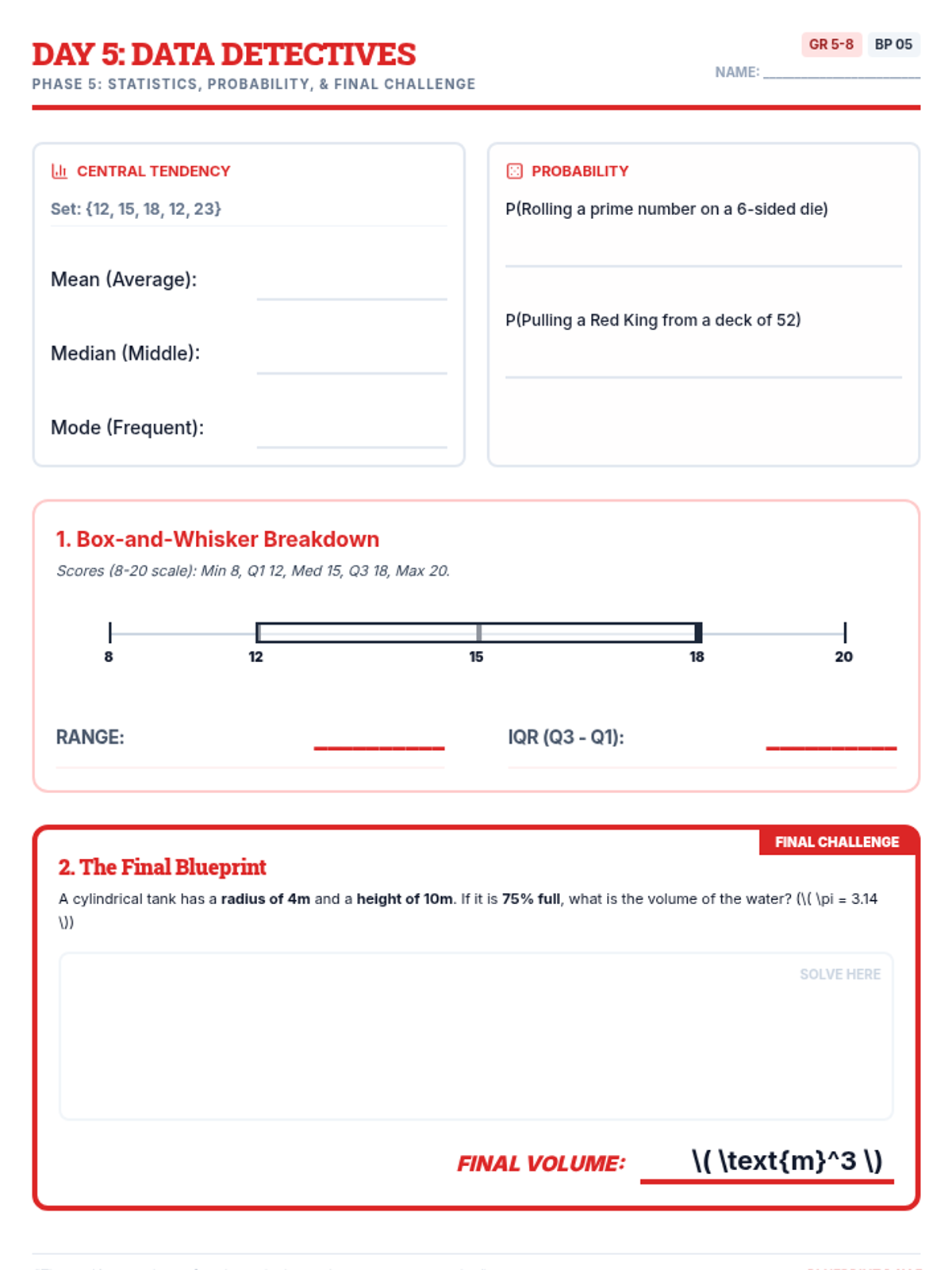
Day 5 concludes with statistics, probability, and a mixed challenge review of all concepts.