Students learn to select and apply appropriate measures of center and variability based on data distribution (symmetric vs. skewed), with real-world practice comparing wait times and student heights.
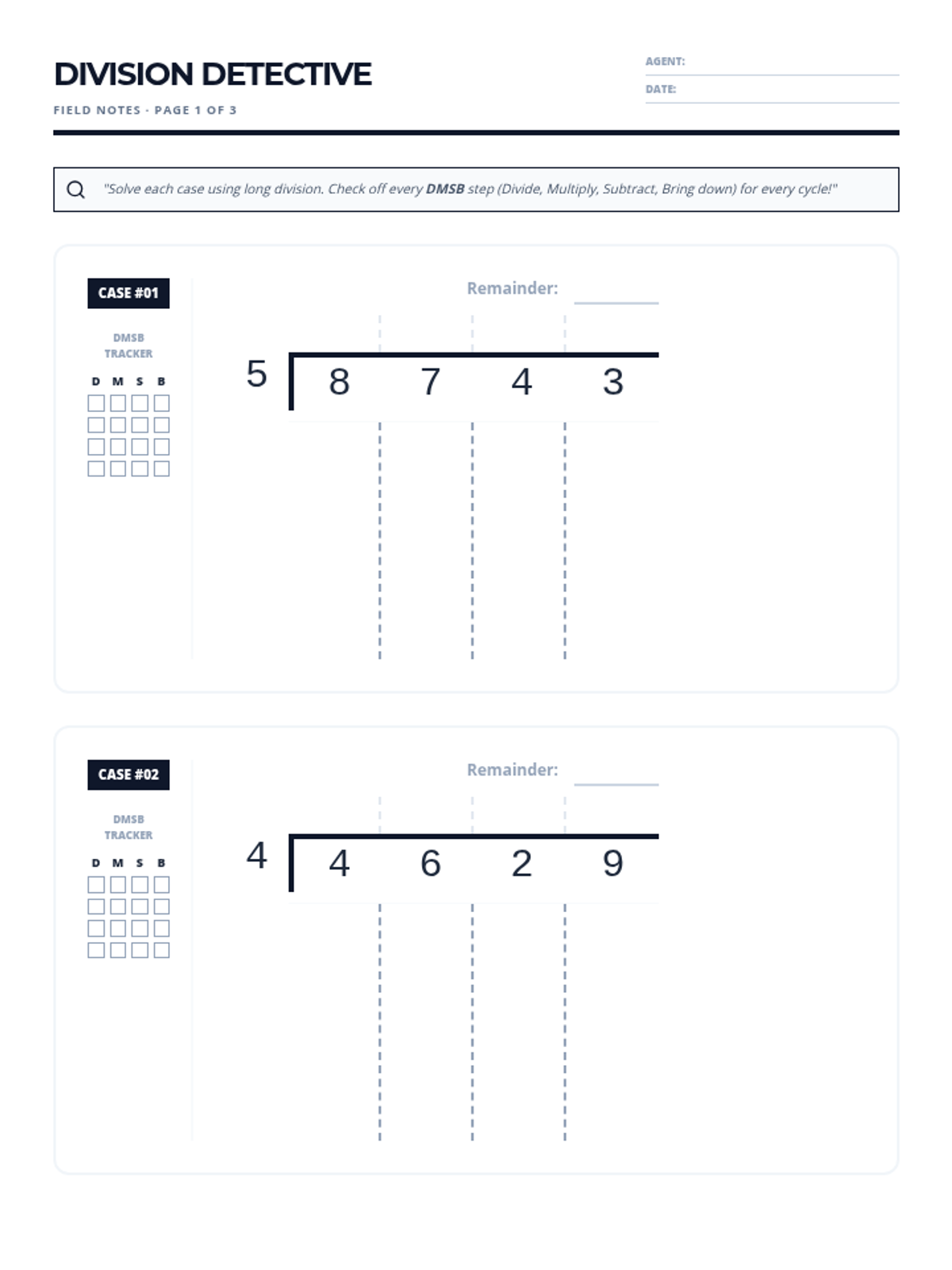
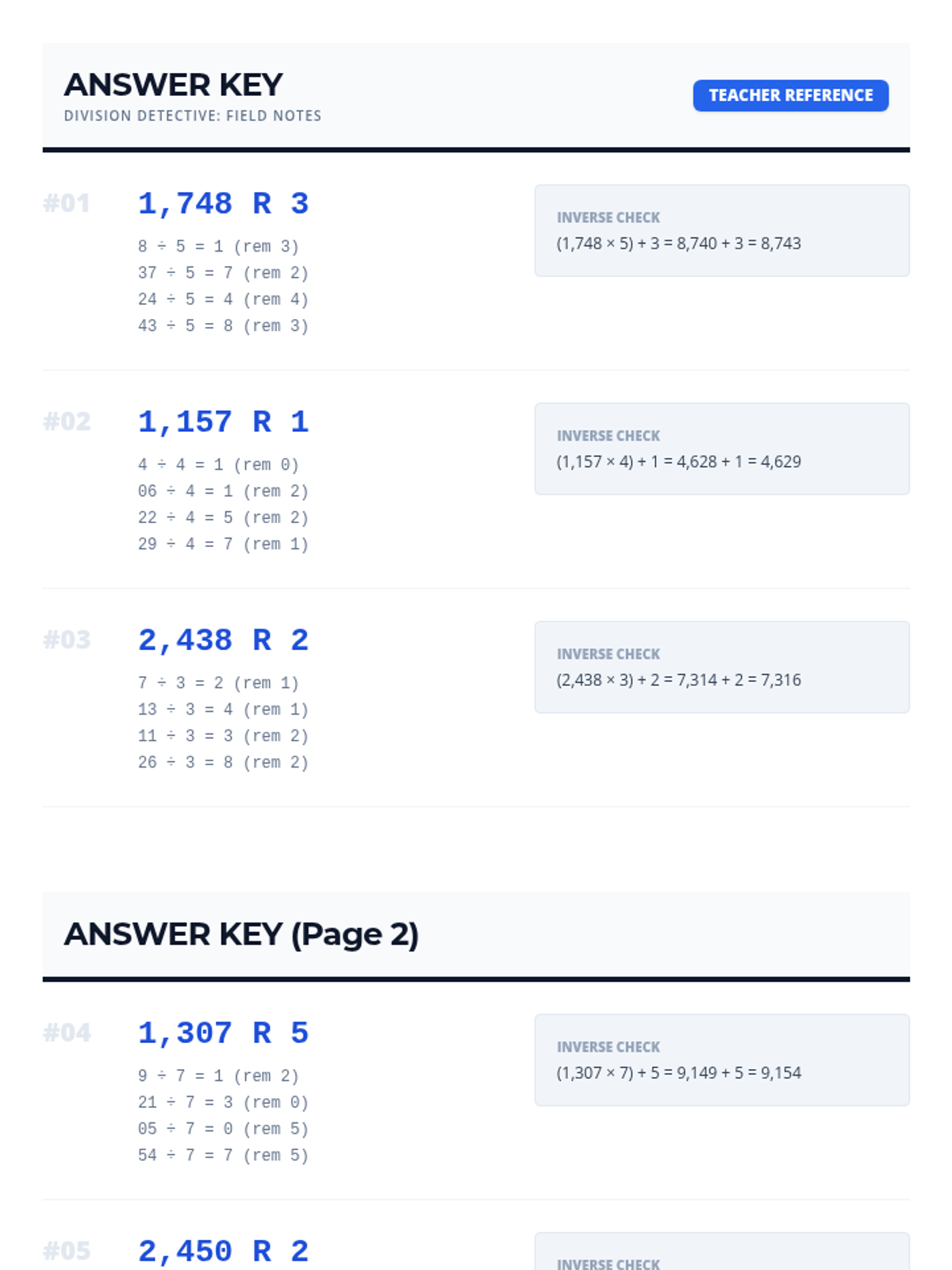
A detective-themed math lesson focused on long division of 4-digit numbers by 1-digit divisors, featuring guided practice and clear procedural scaffolds.
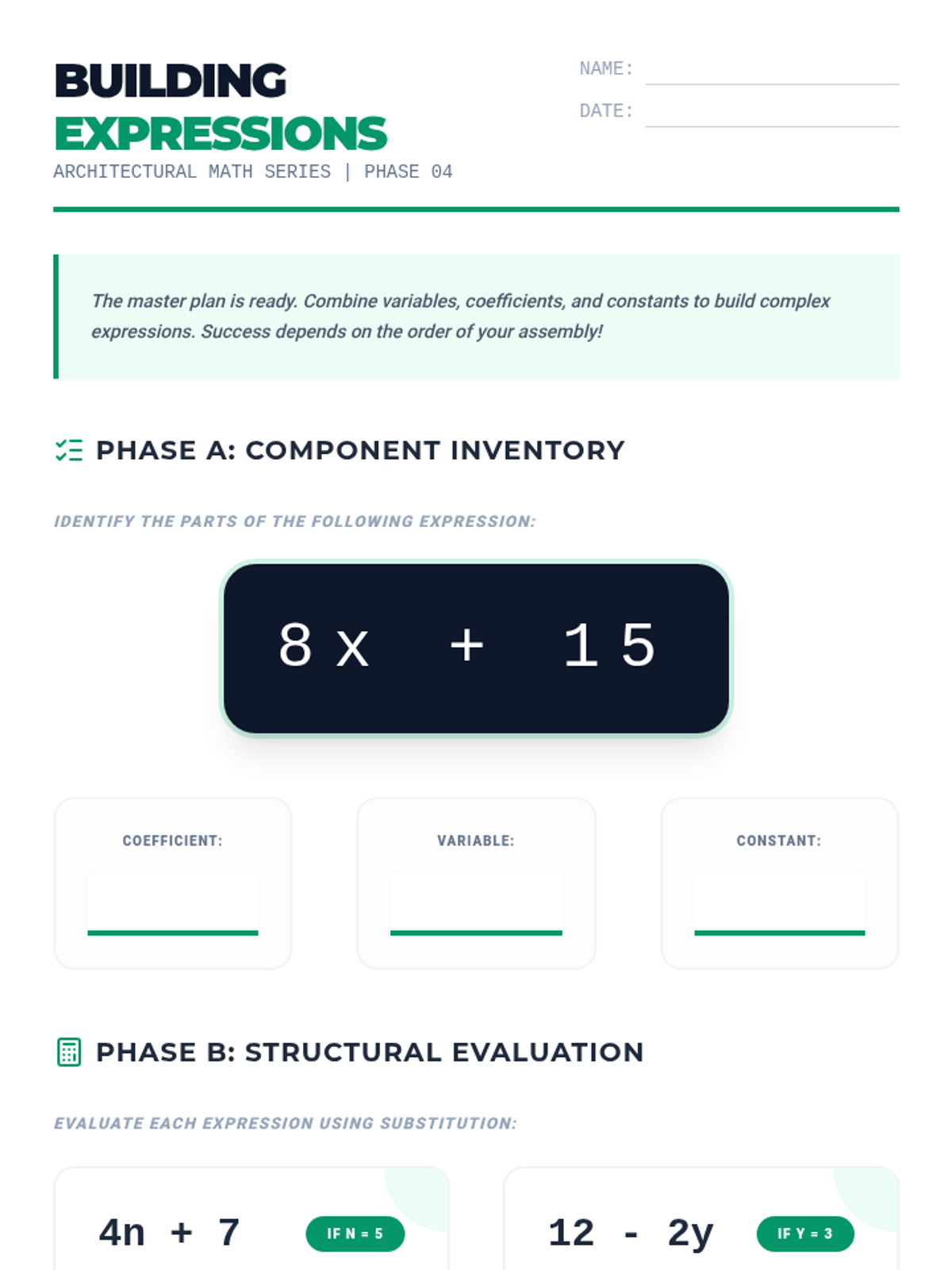
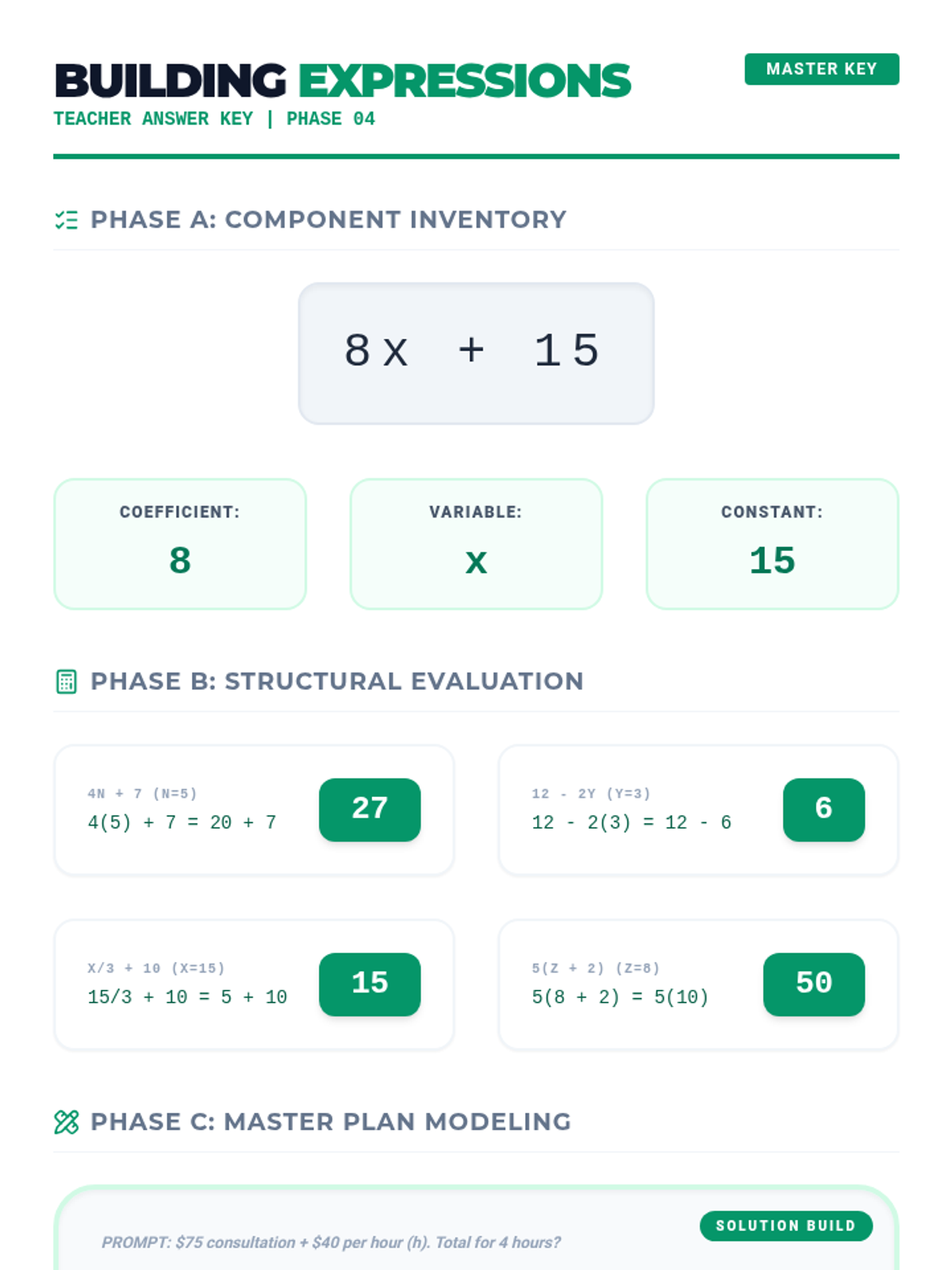
Assembling full algebraic expressions and equations, learning to manipulate variables like architectural components.
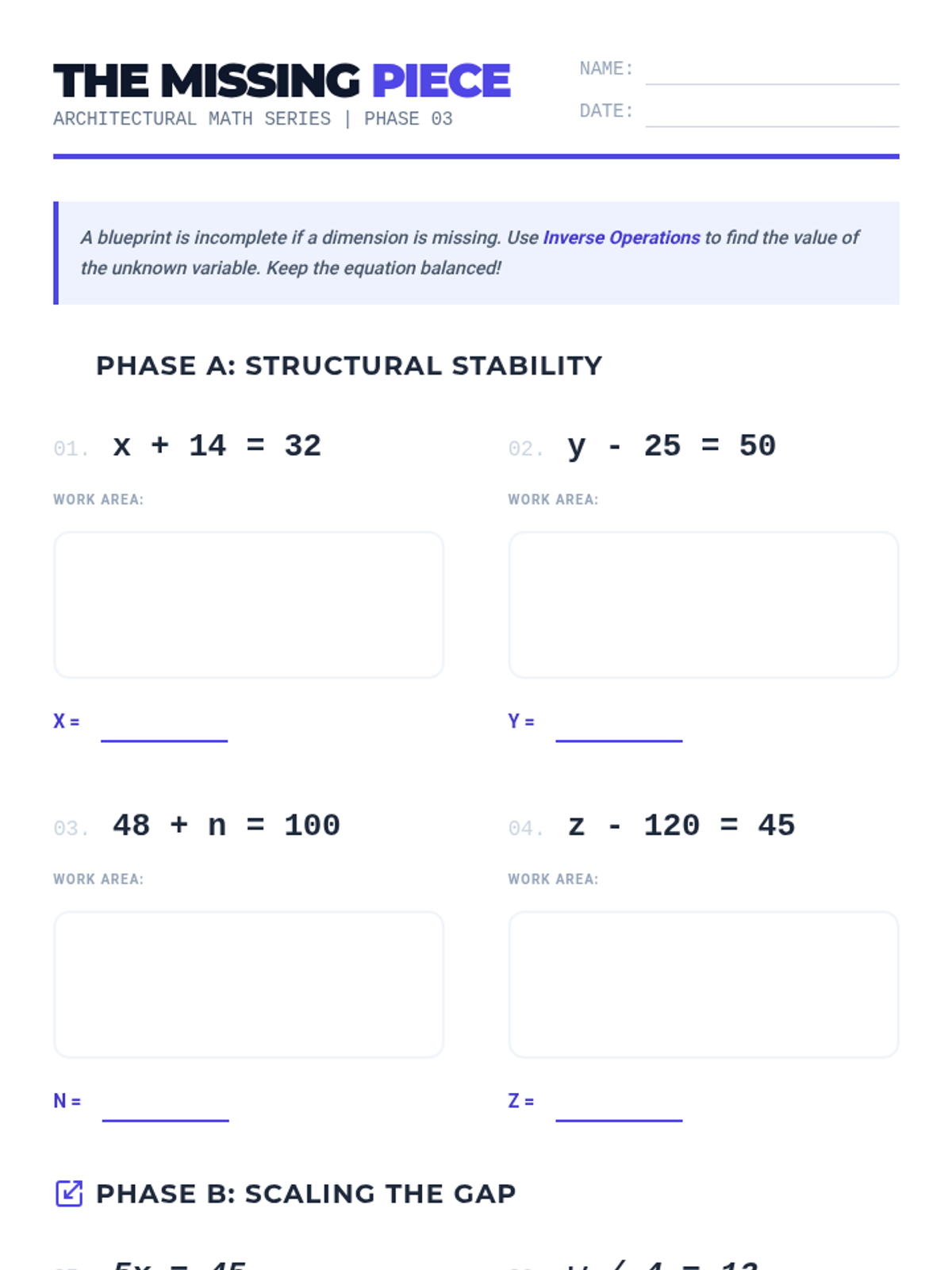
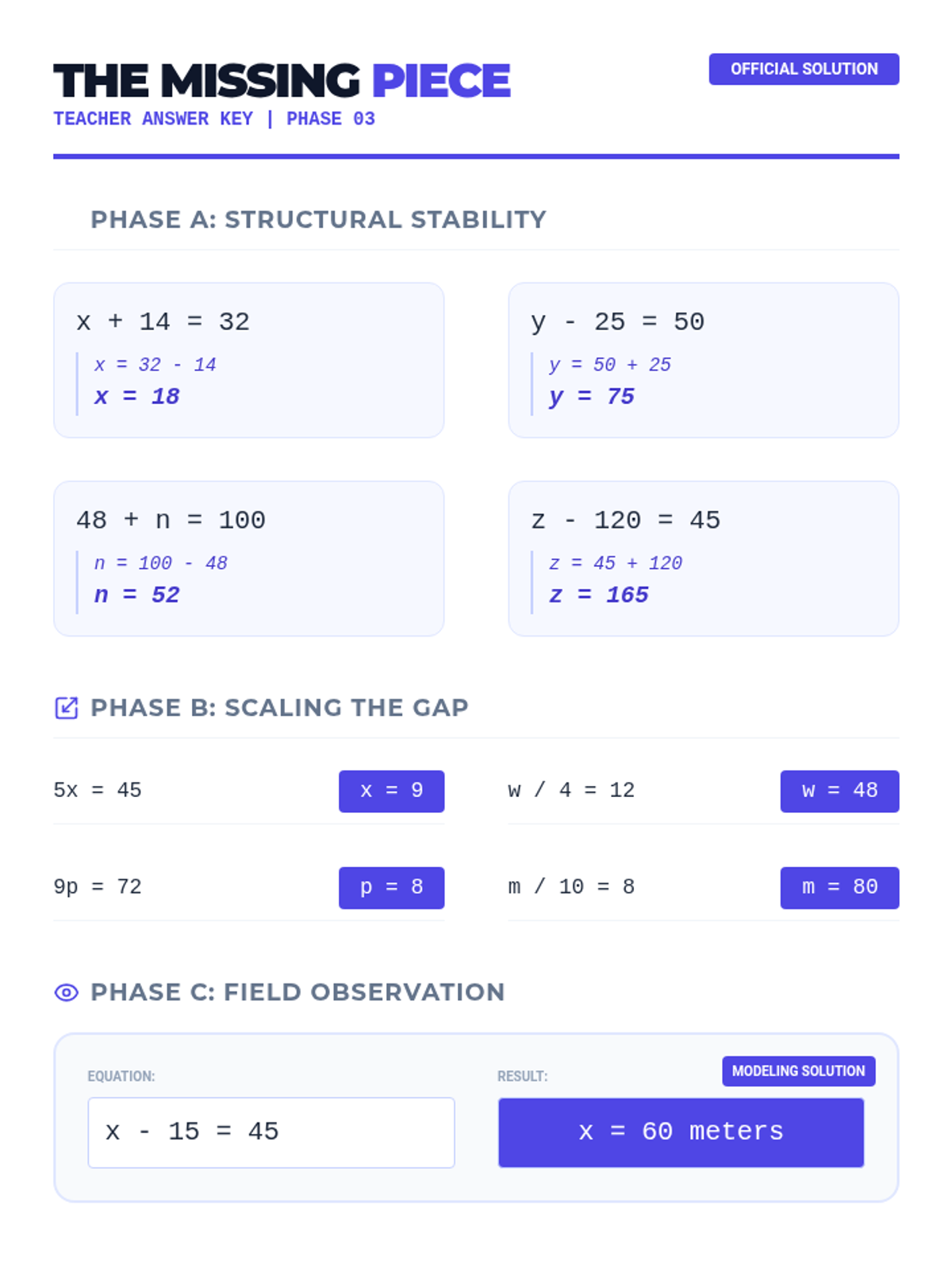
Introducing the concept of the unknown as a structural gap that needs to be filled, shifting from arithmetic to early algebraic thinking.
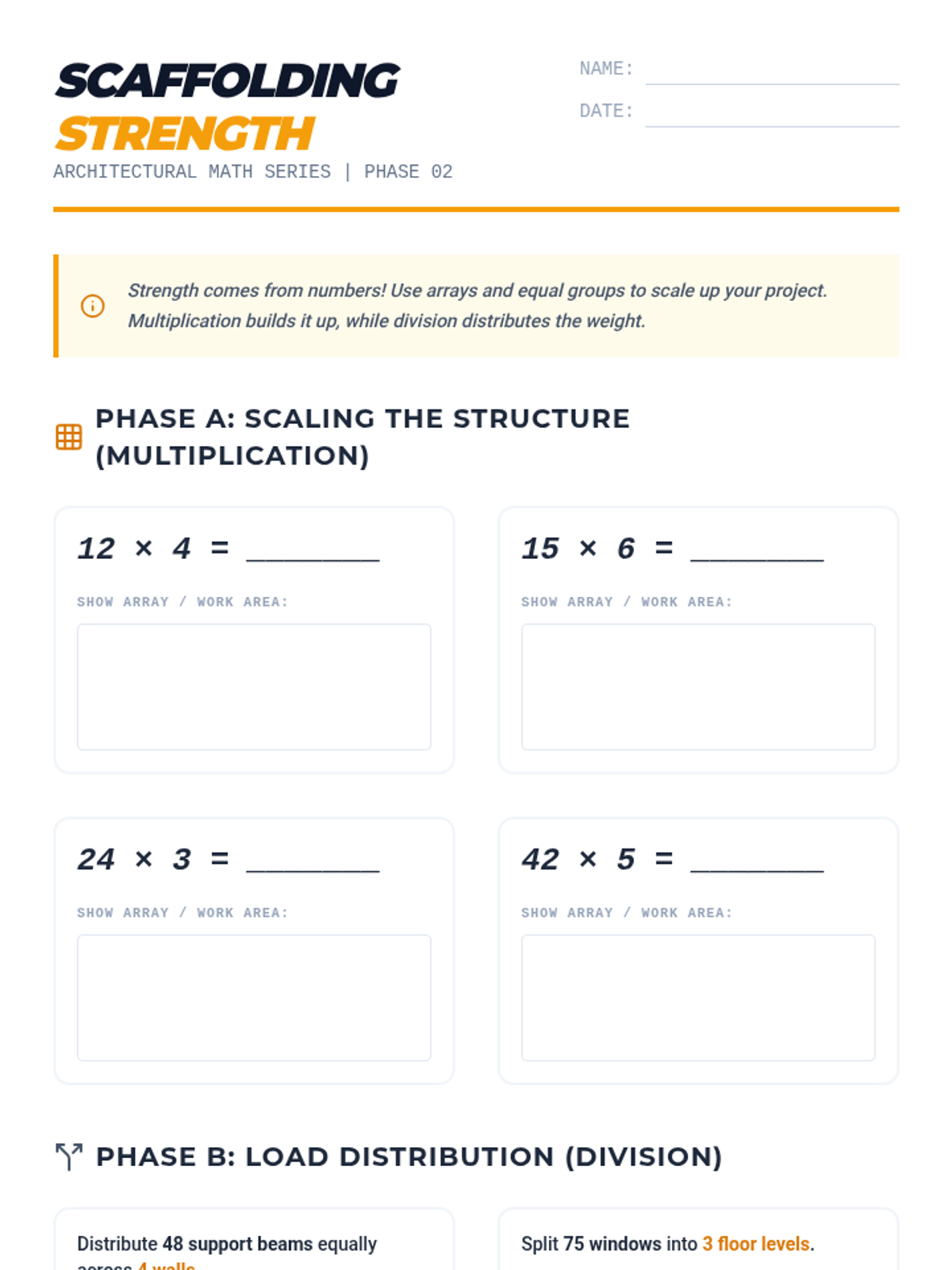
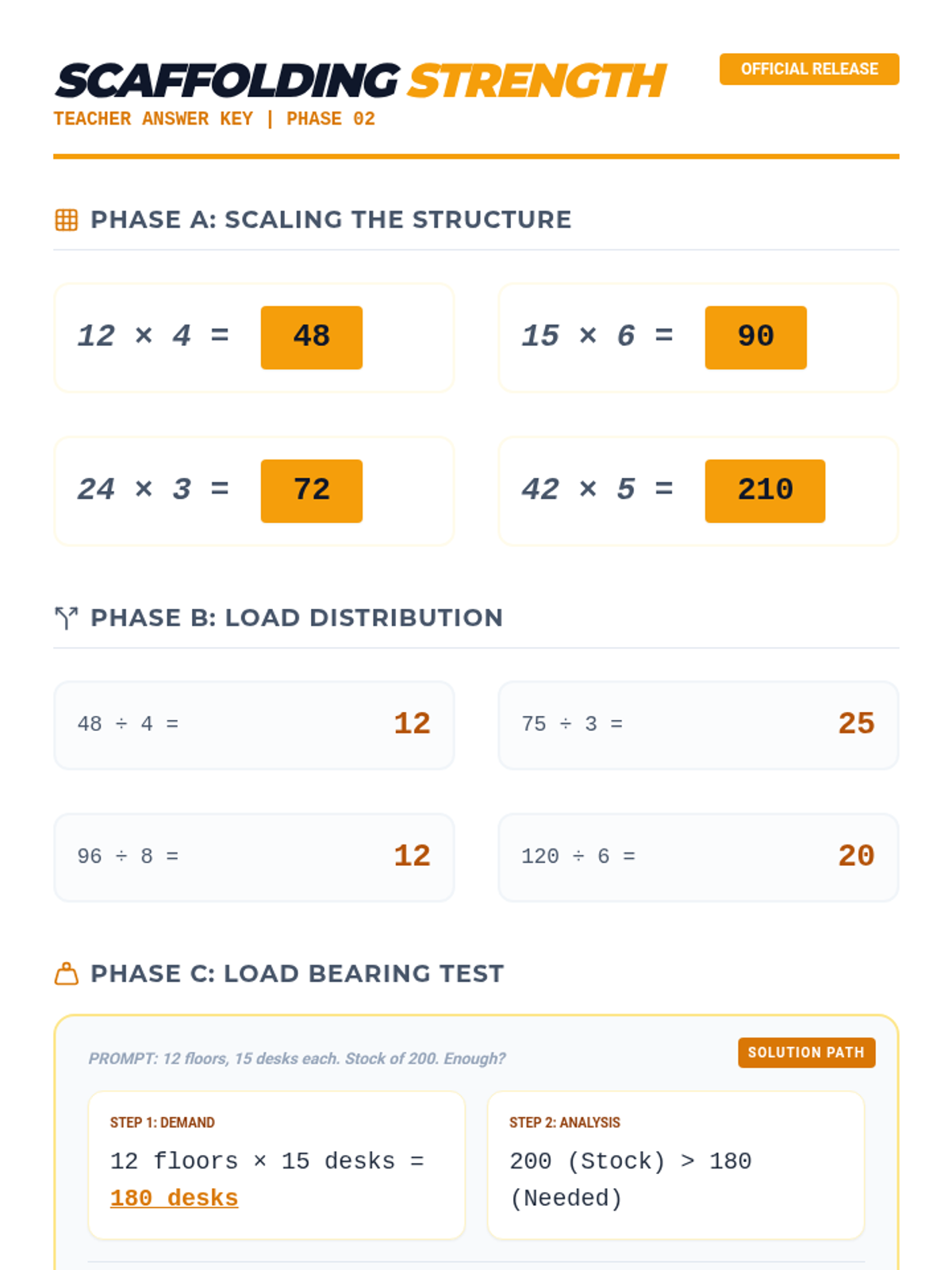
Scaling up operations with multiplication and division, exploring arrays and equal groups as the scaffolding for complex math.
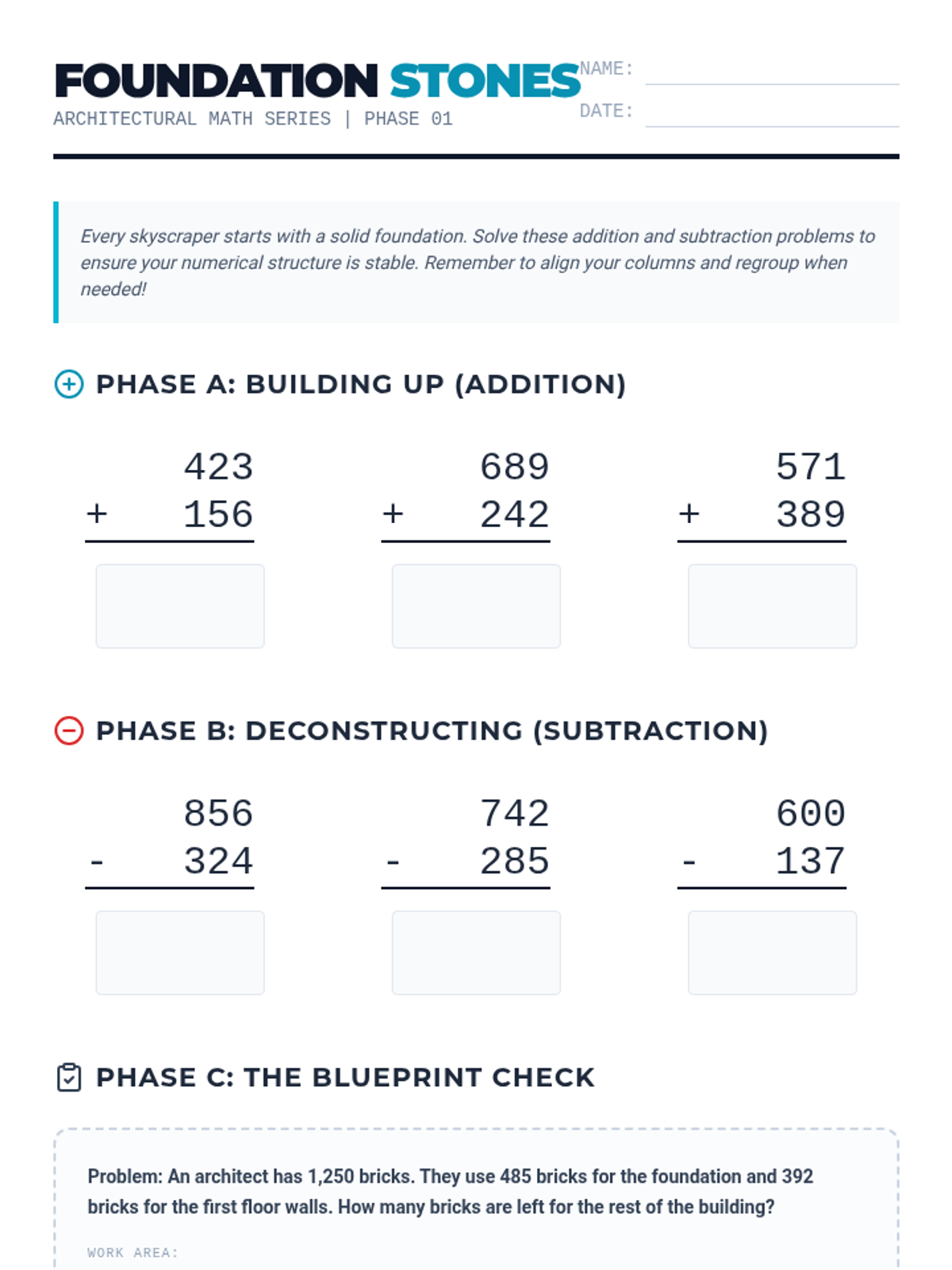
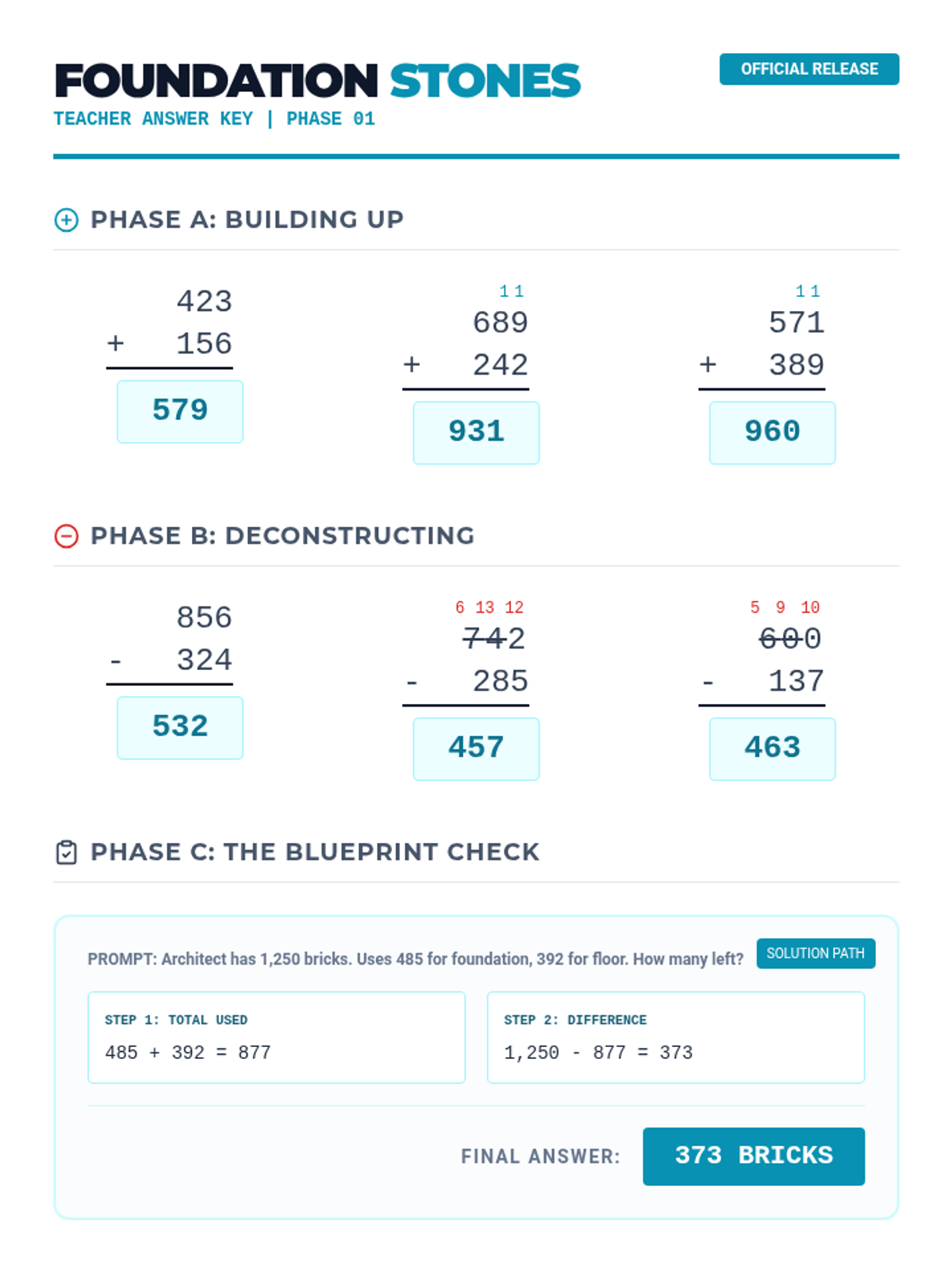
Mastering the core mechanics of addition and subtraction using place value and architectural grouping strategies.
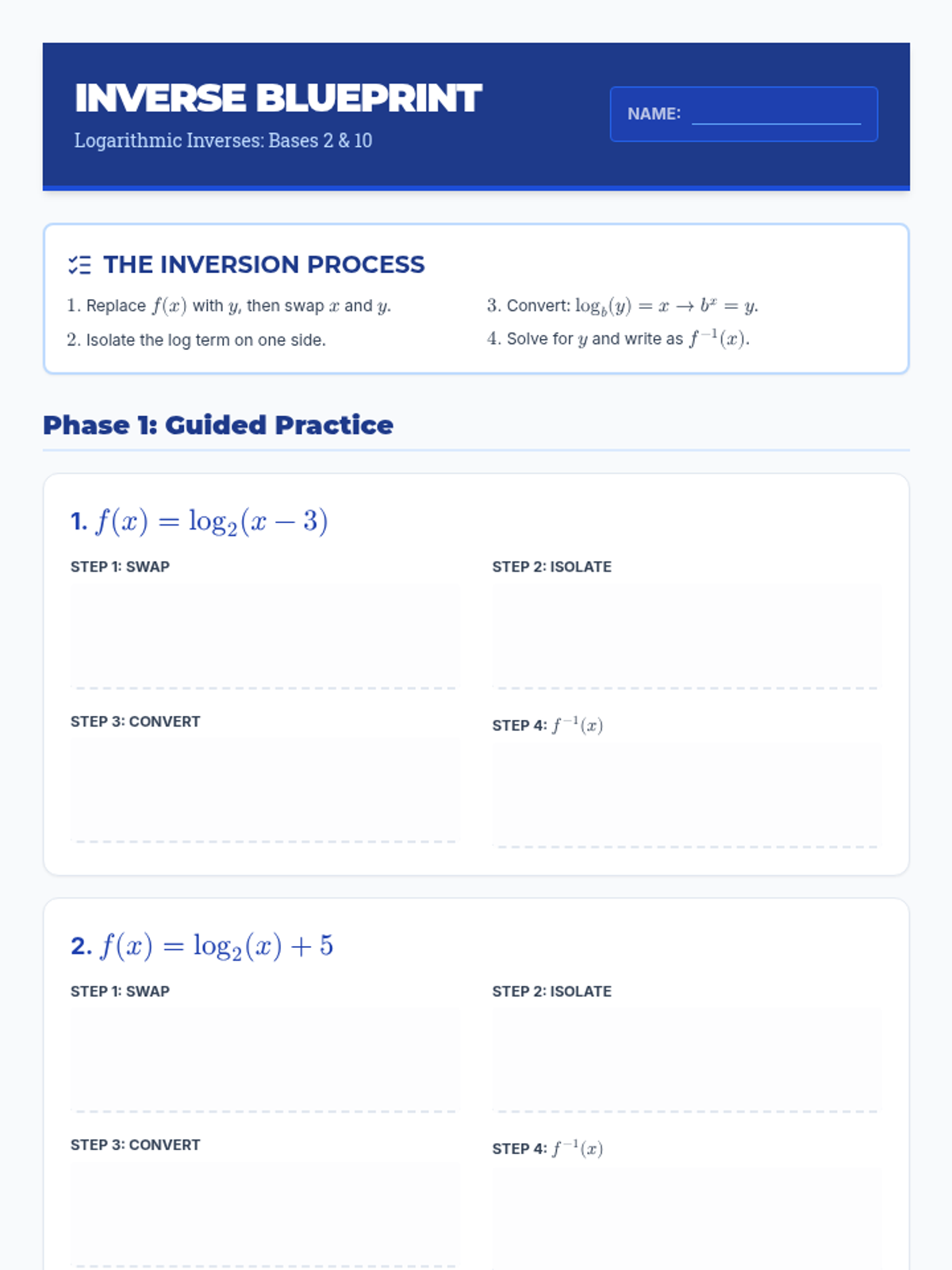
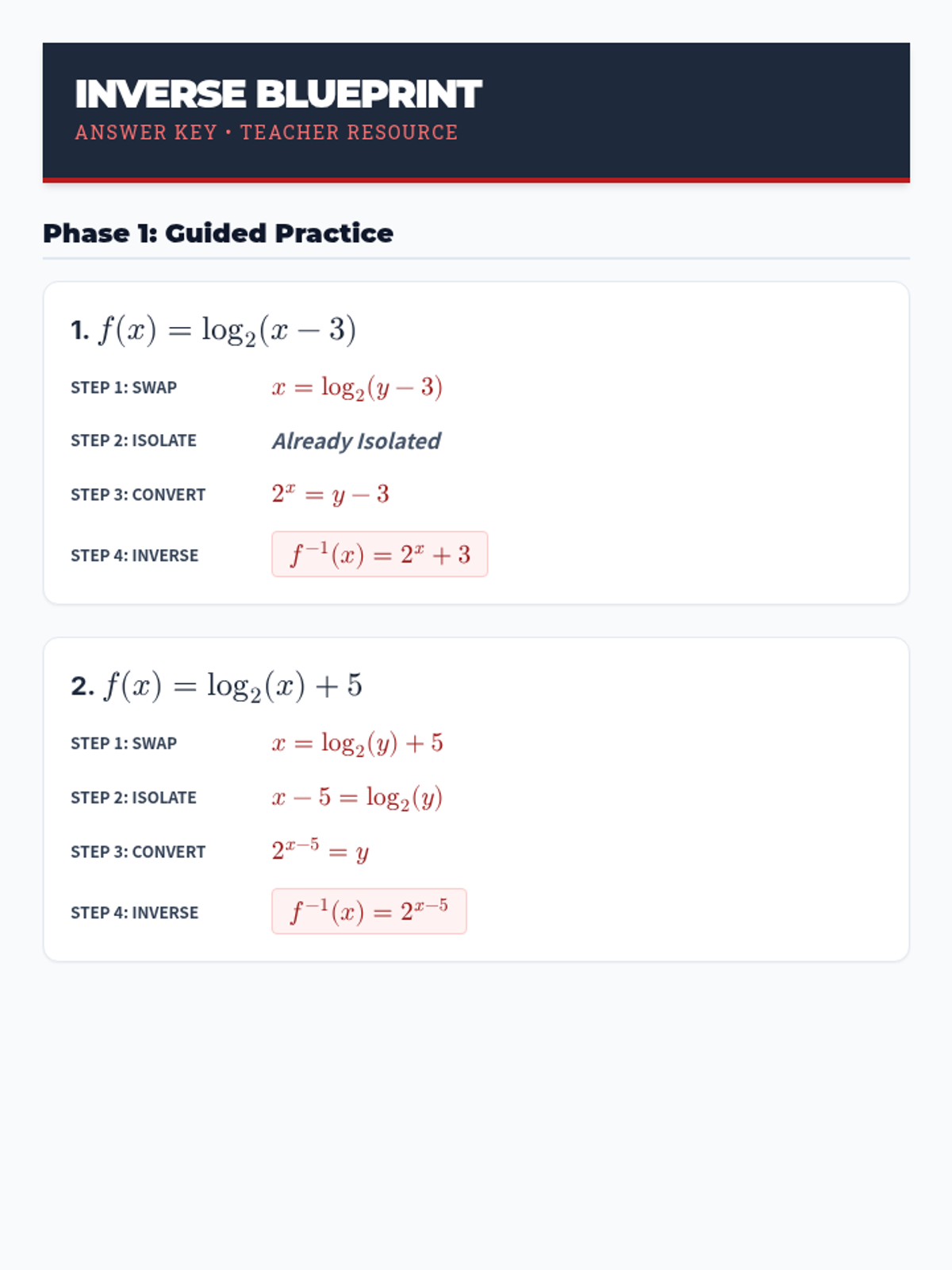
A focused lesson on finding the inverse of basic logarithmic functions using algebraic steps, specifically focusing on base 10 and base 2.
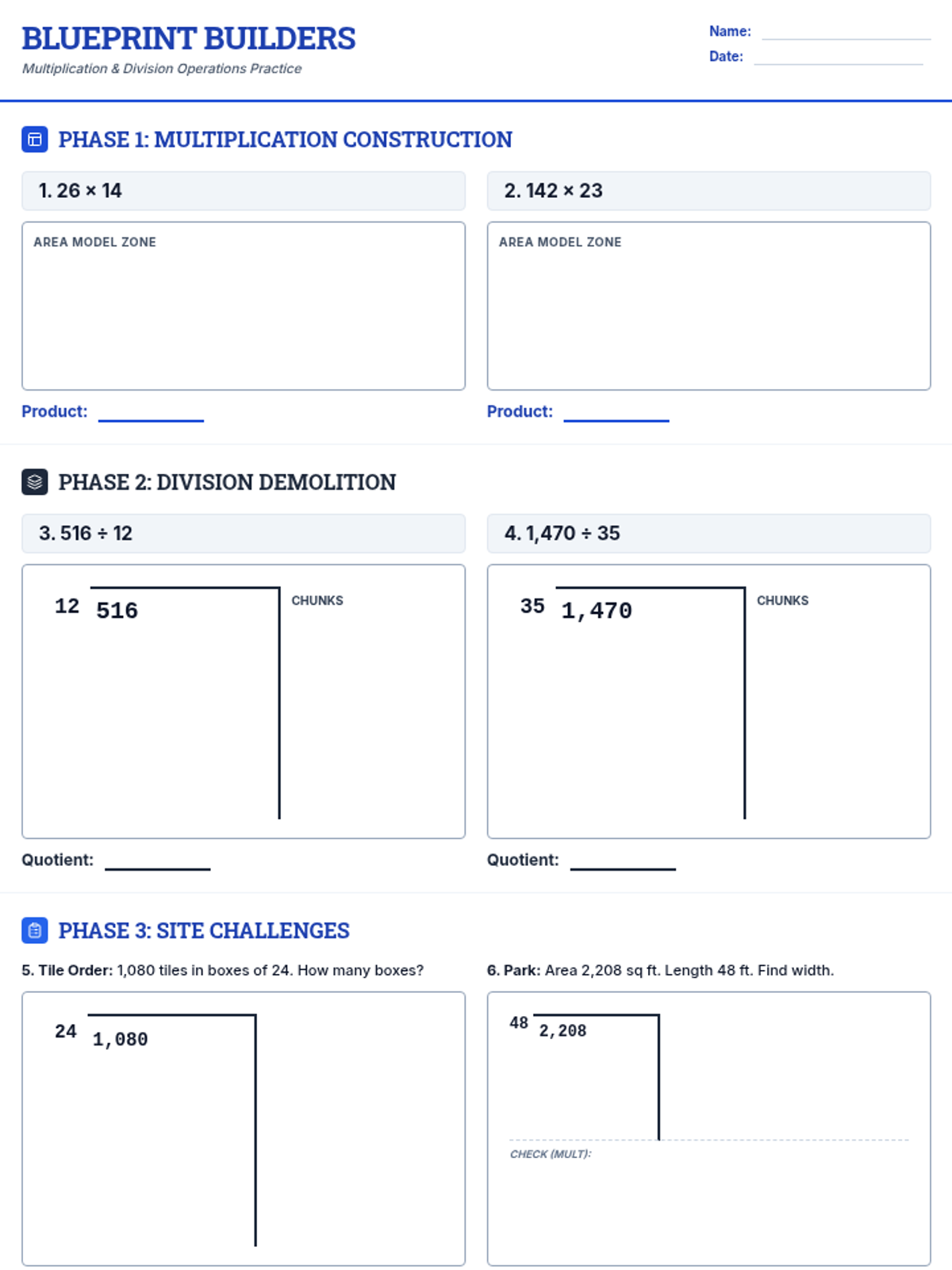
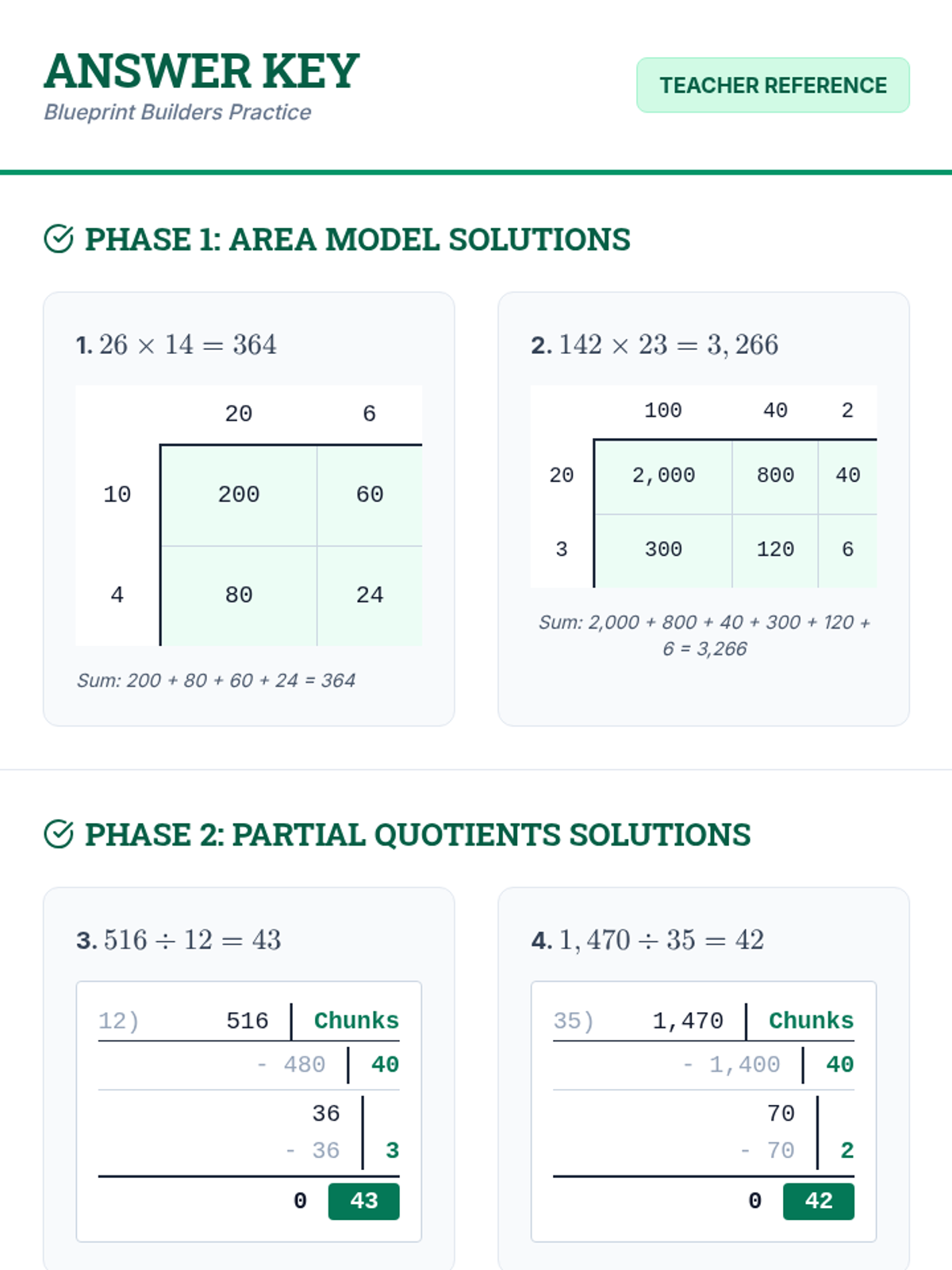
A comprehensive lesson on multi-digit multiplication and division using area models and partial quotients, highlighting the inverse relationship between these operations.
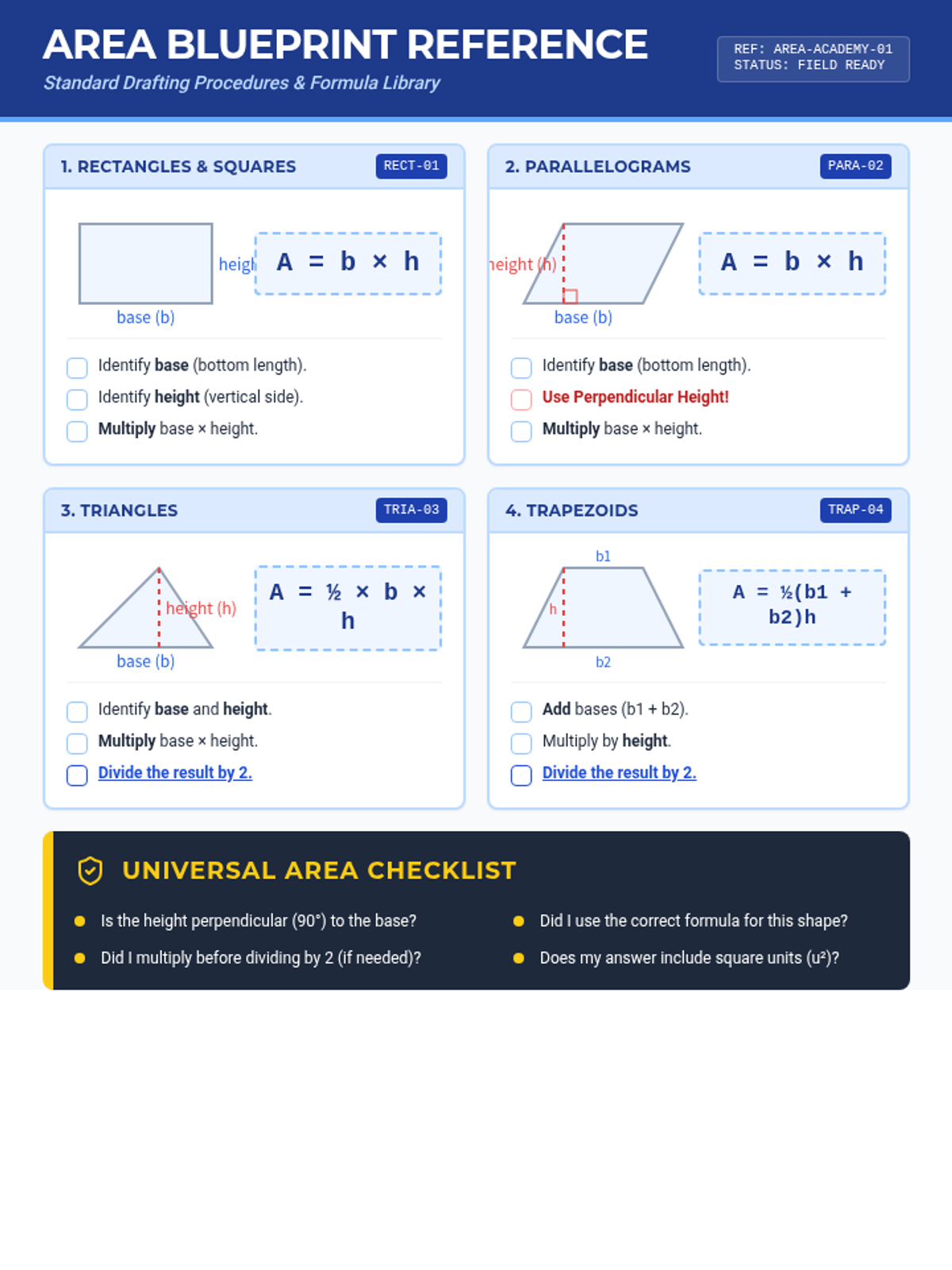
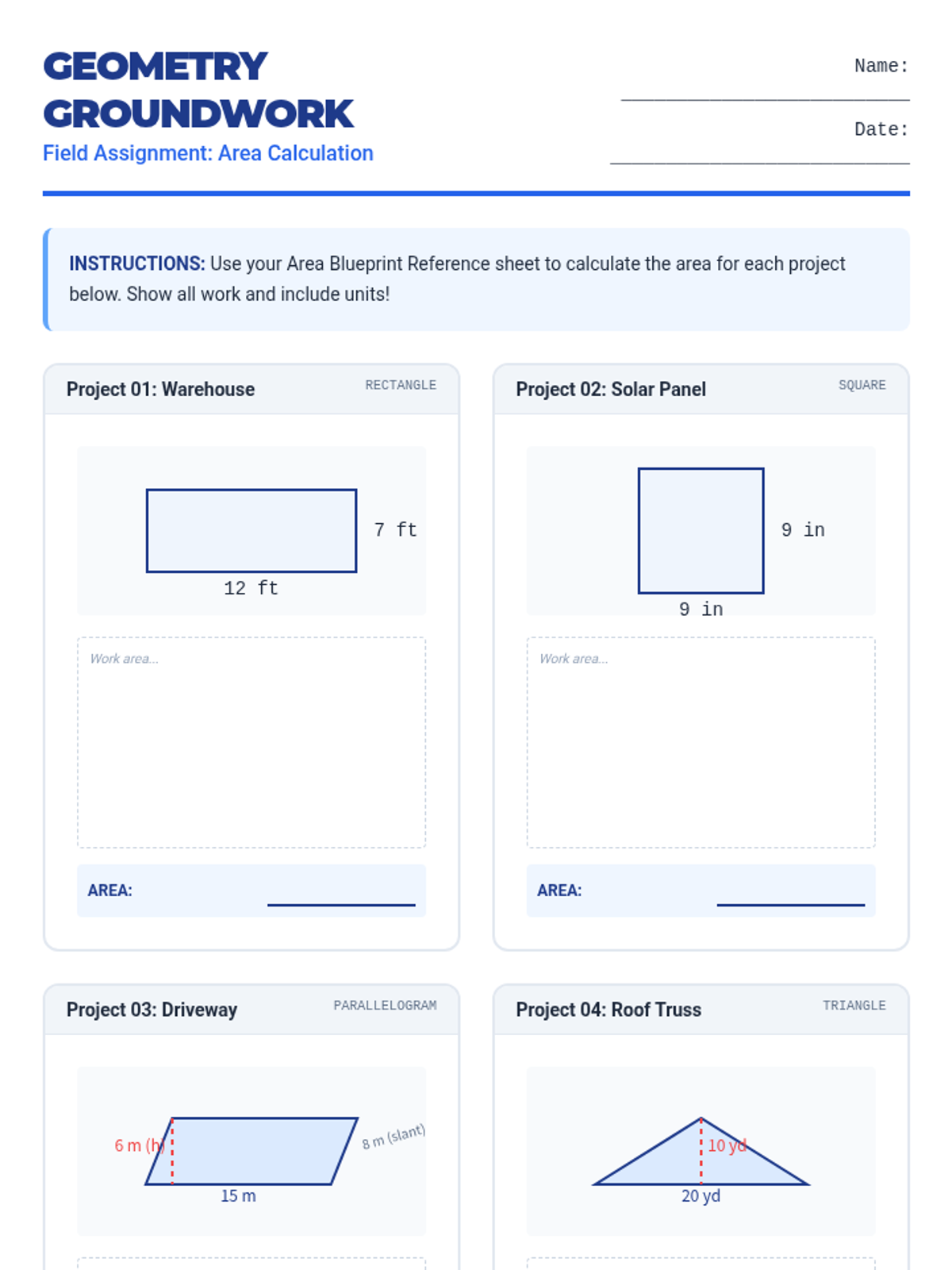
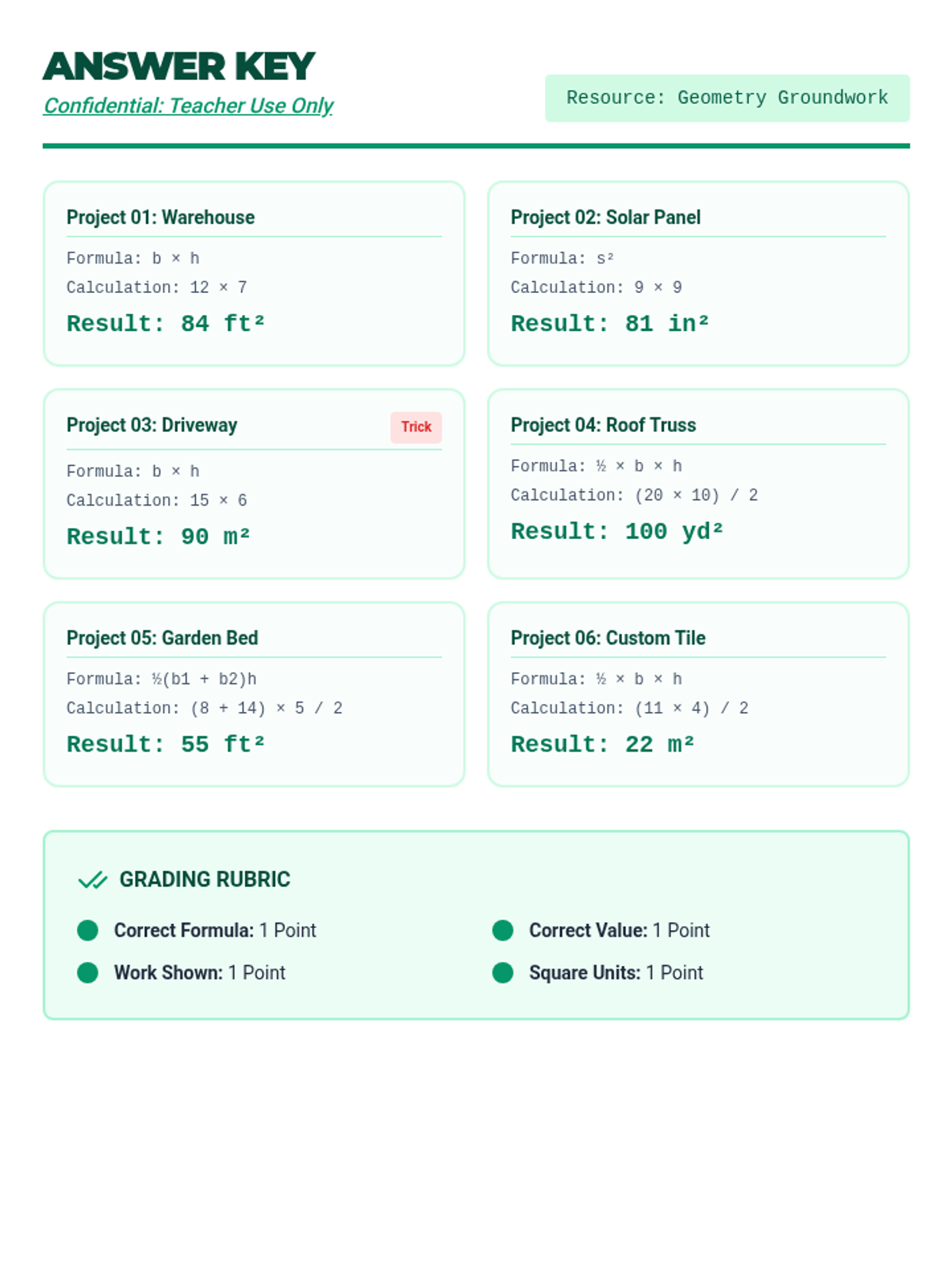
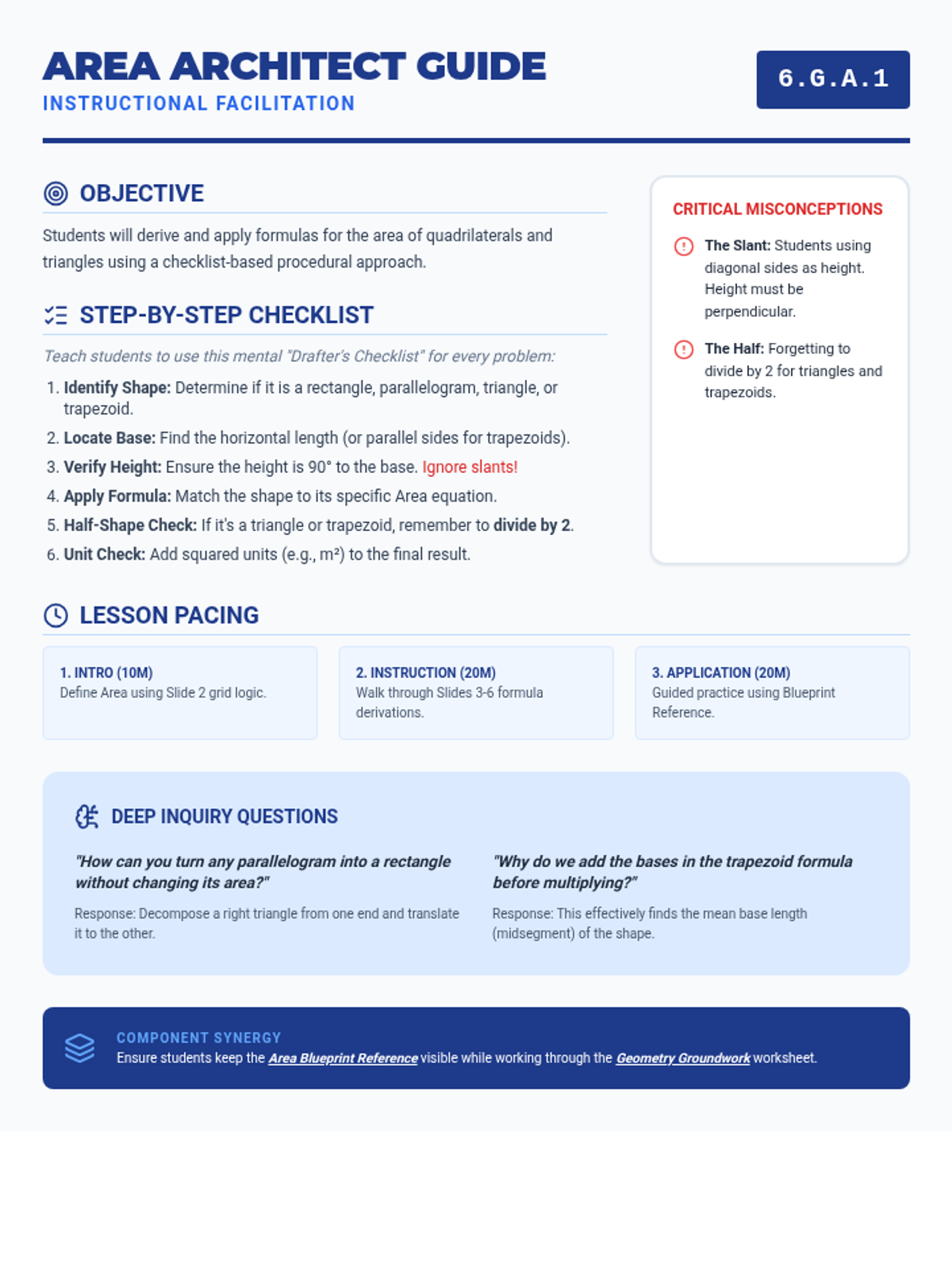
Students will learn to identify base and height dimensions and apply formulas to find the area of various quadrilaterals and triangles using step-by-step checklists.

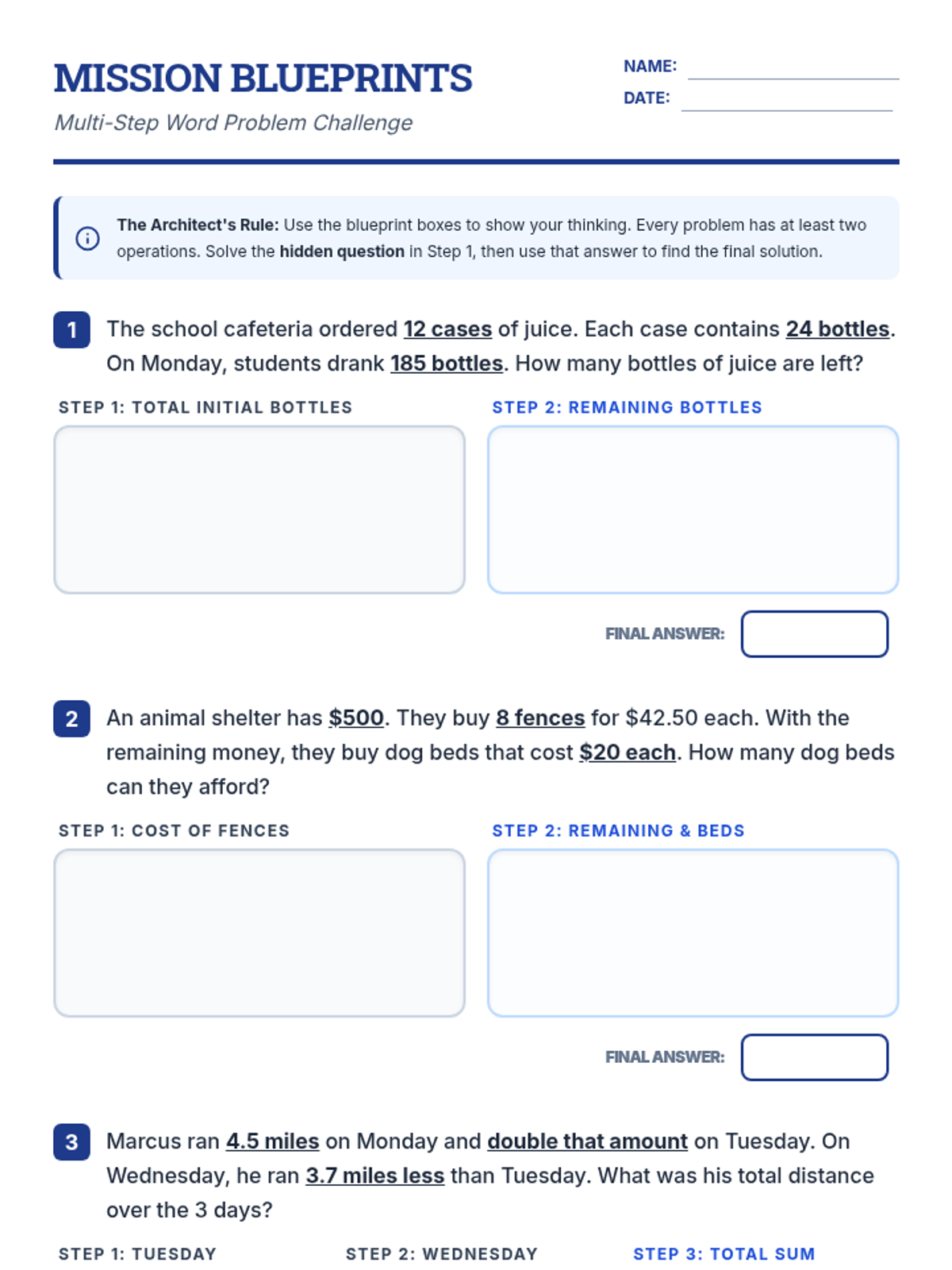
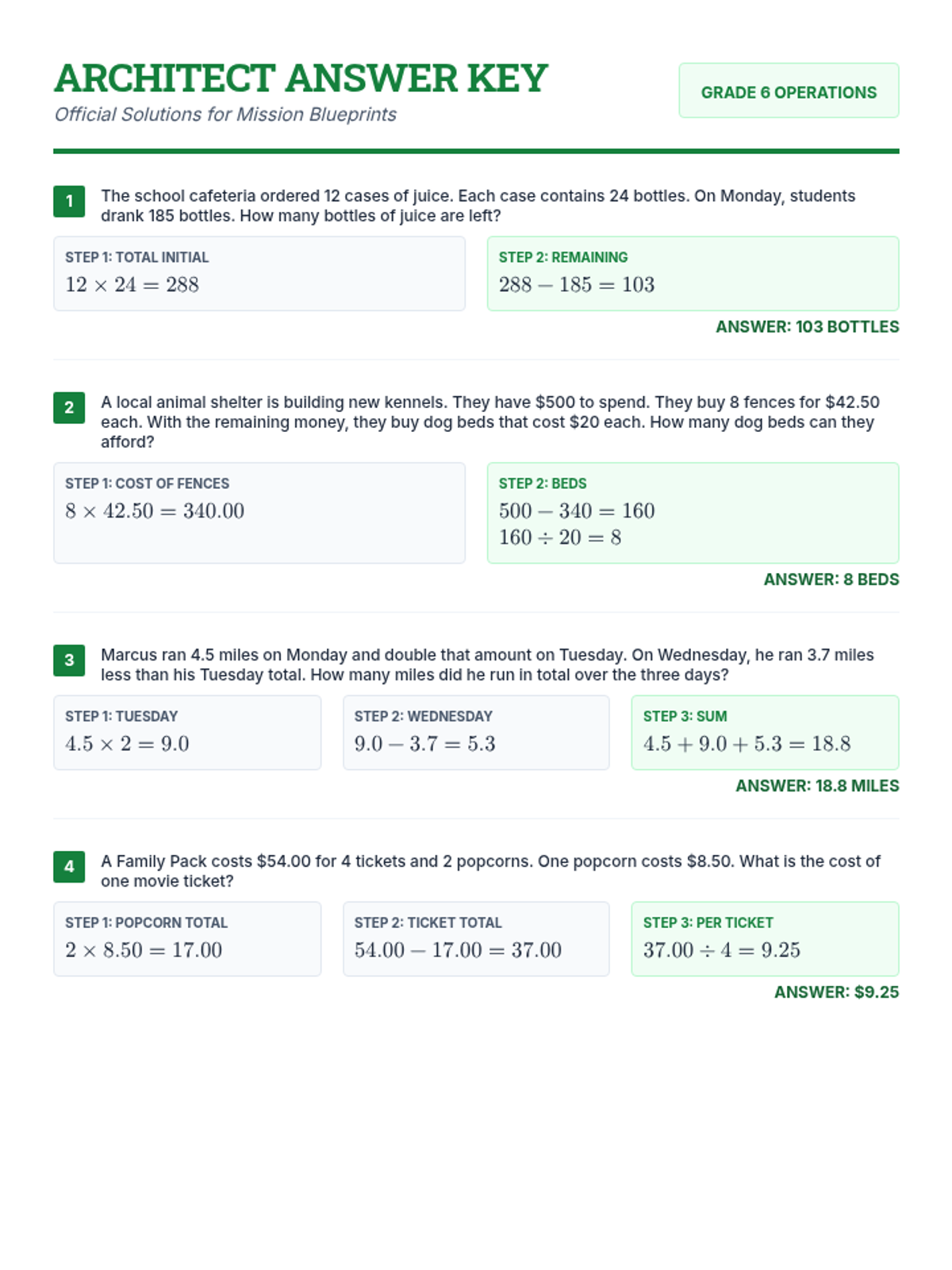
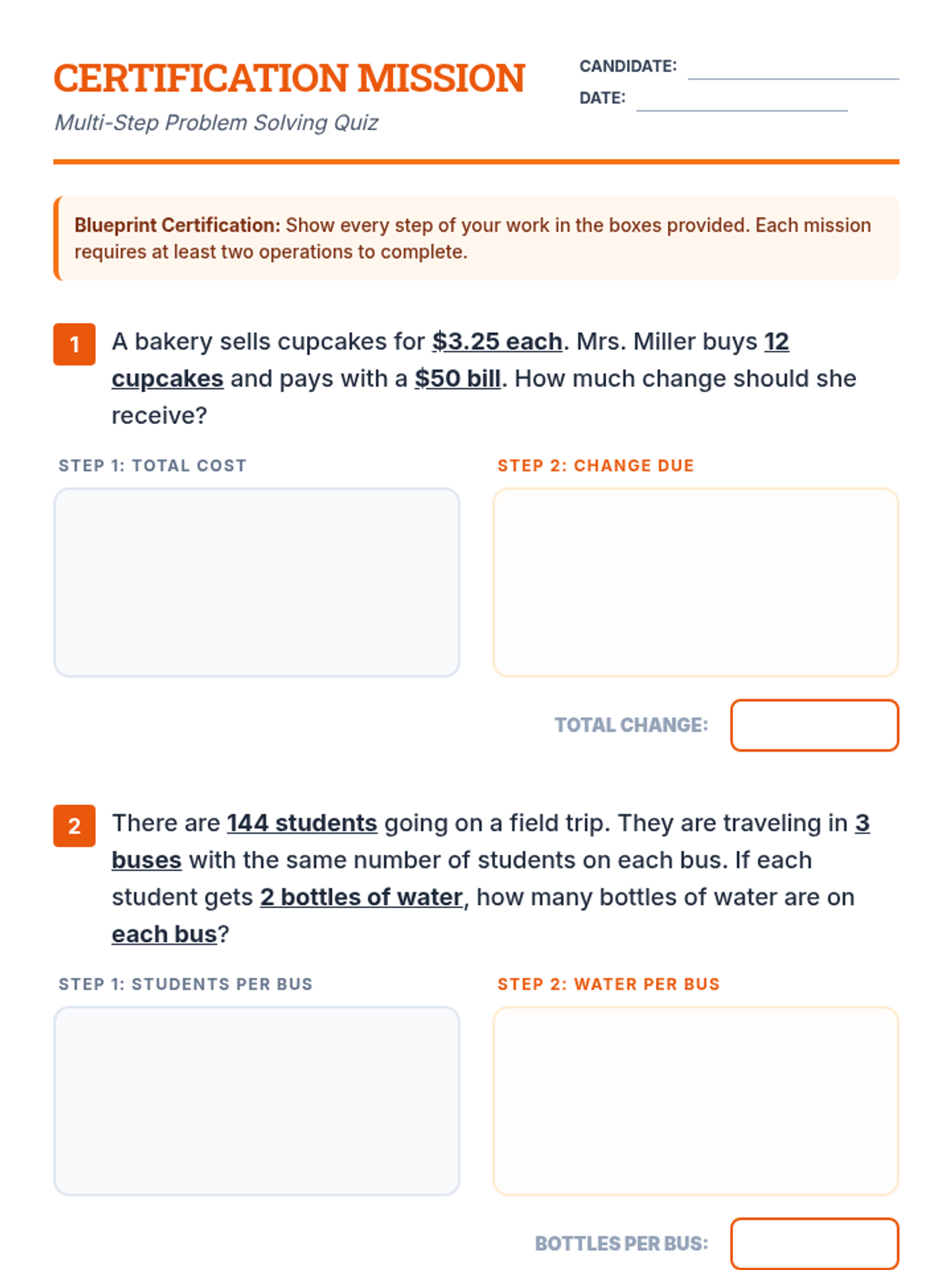
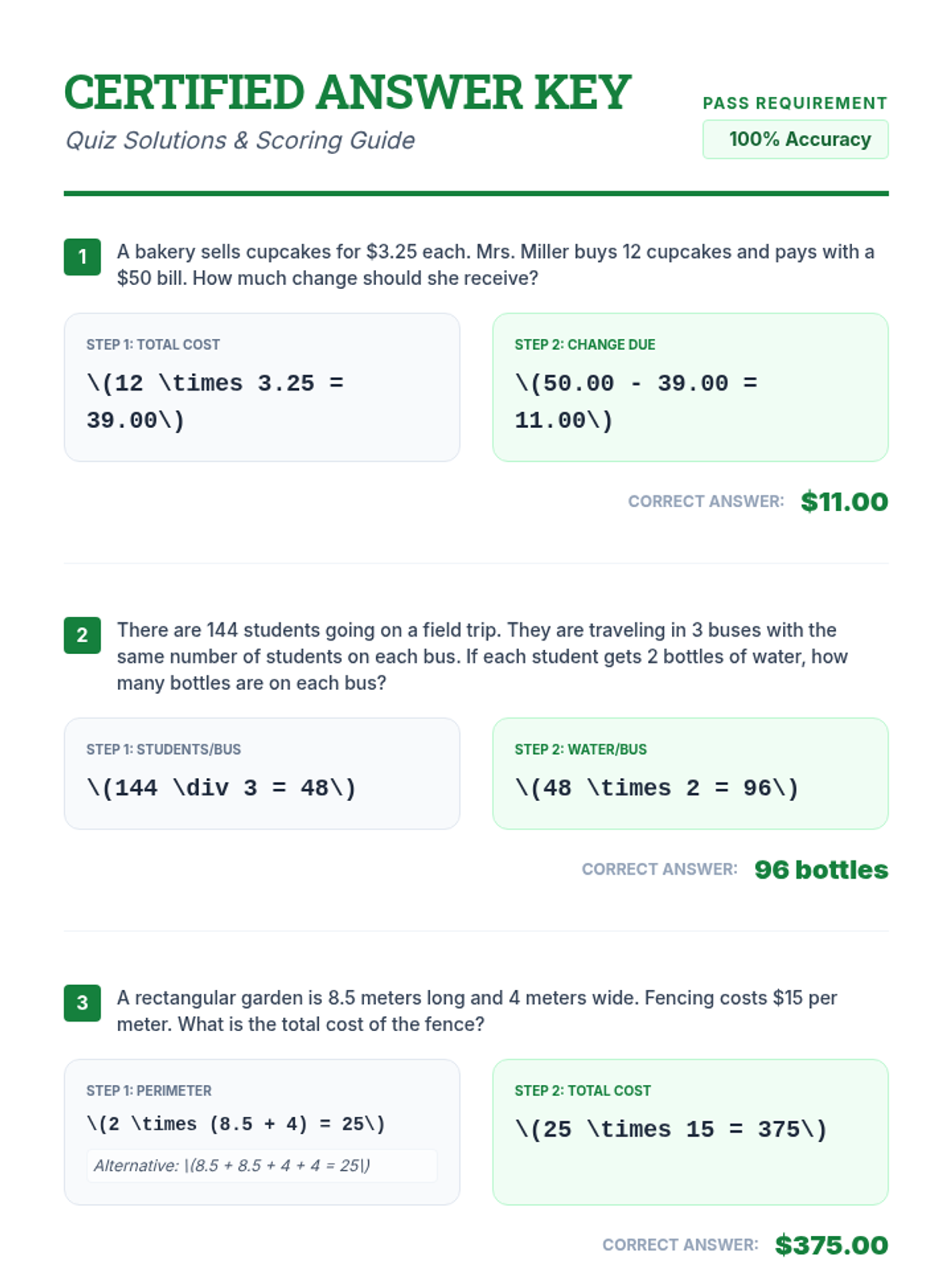
Students learn to use graphic organizer 'blueprints' to decompose multi-step word problems involving addition, subtraction, multiplication, and division into manageable steps.
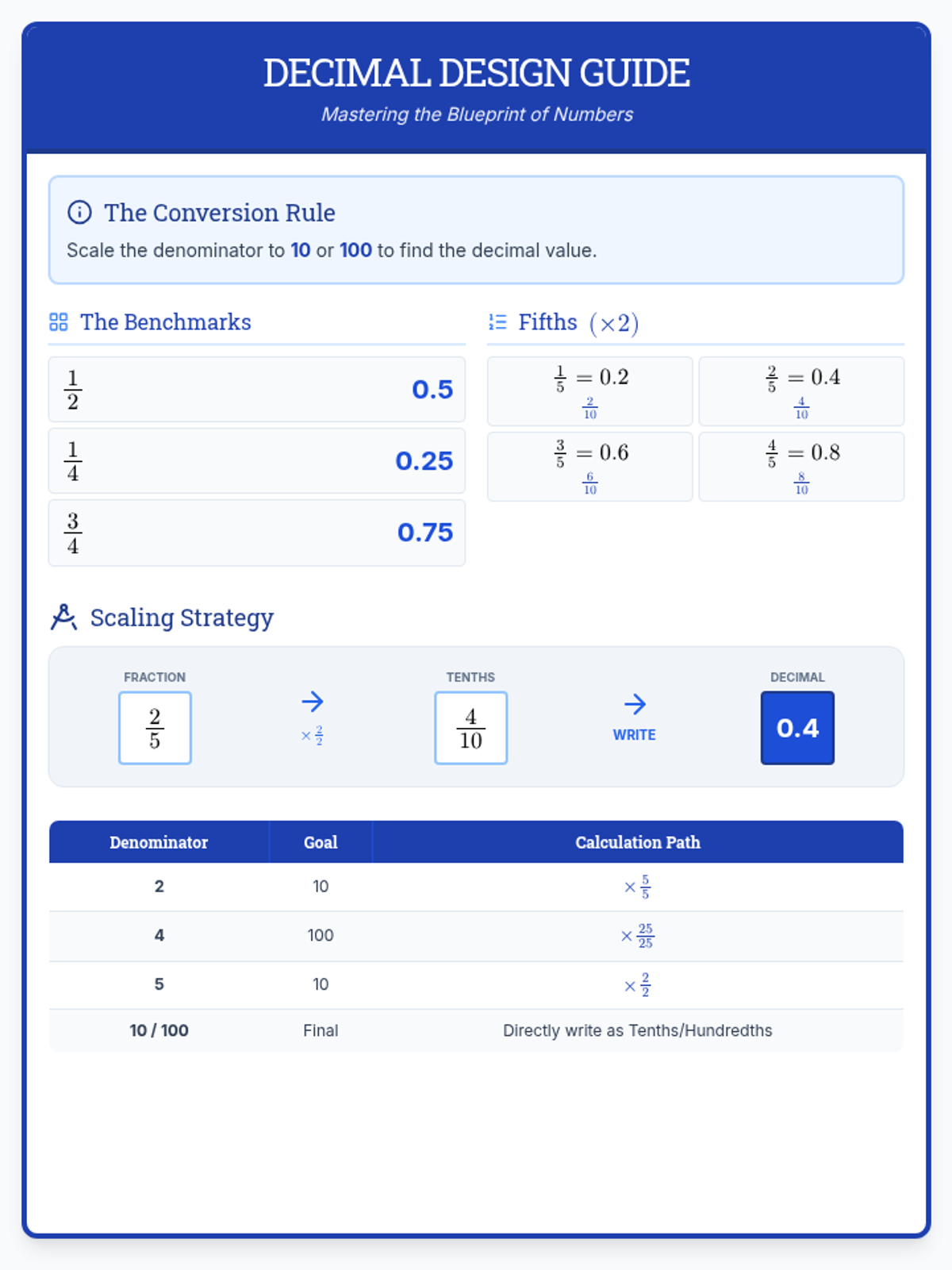
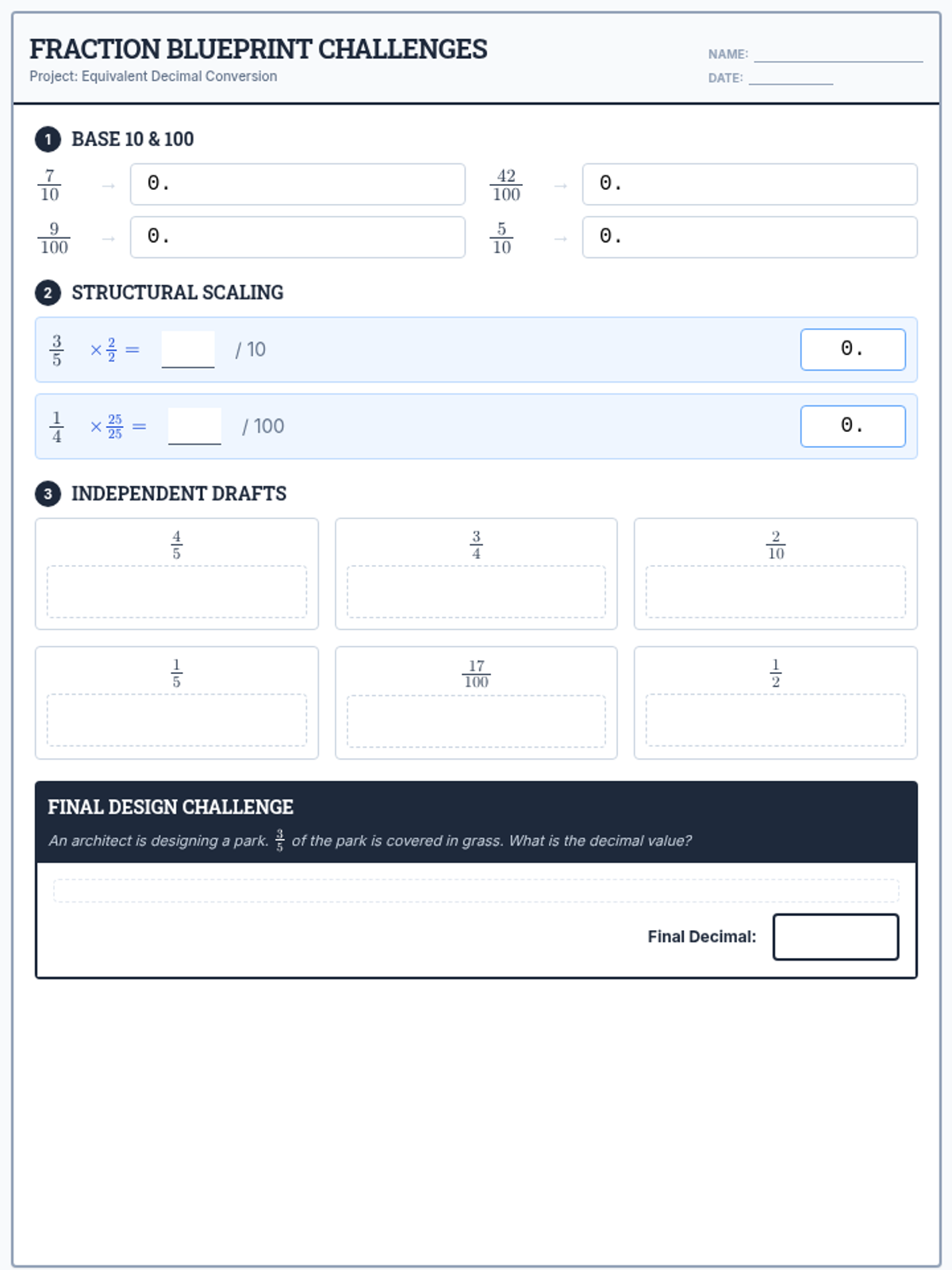
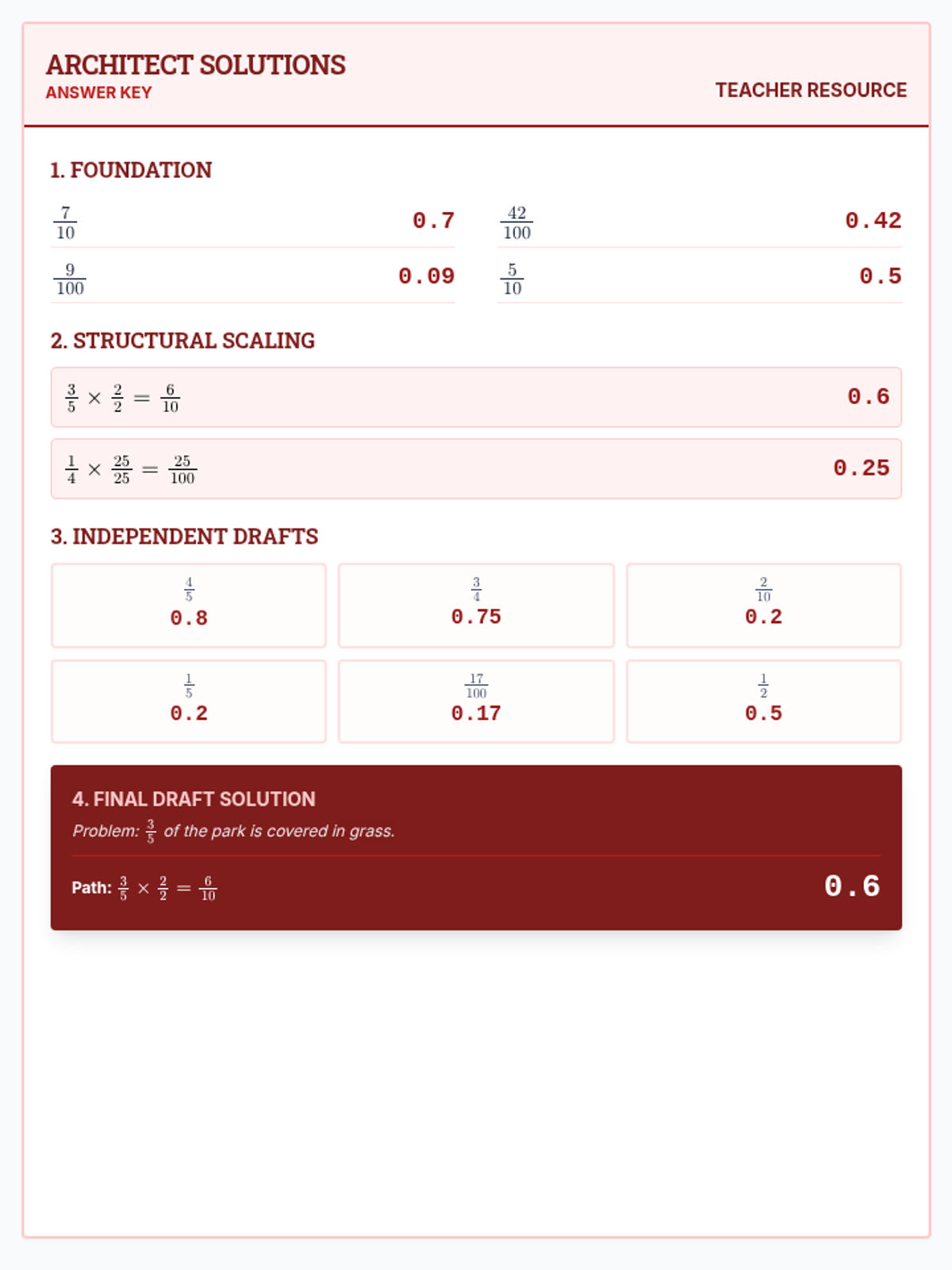
A focused lesson on converting common fractions with denominators of 2, 4, 5, 10, and 100 into their decimal equivalents through visual models and scaling strategies.

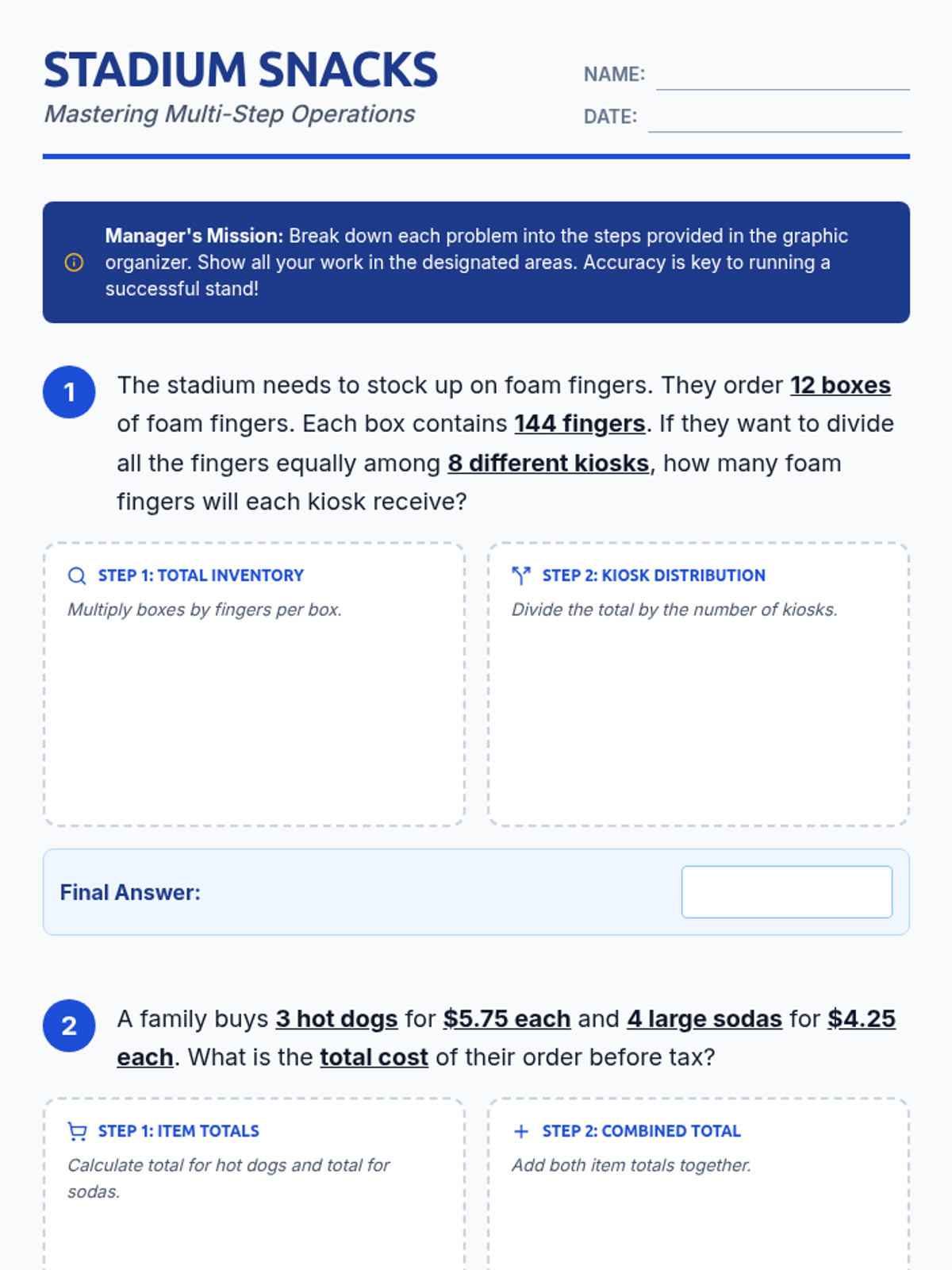
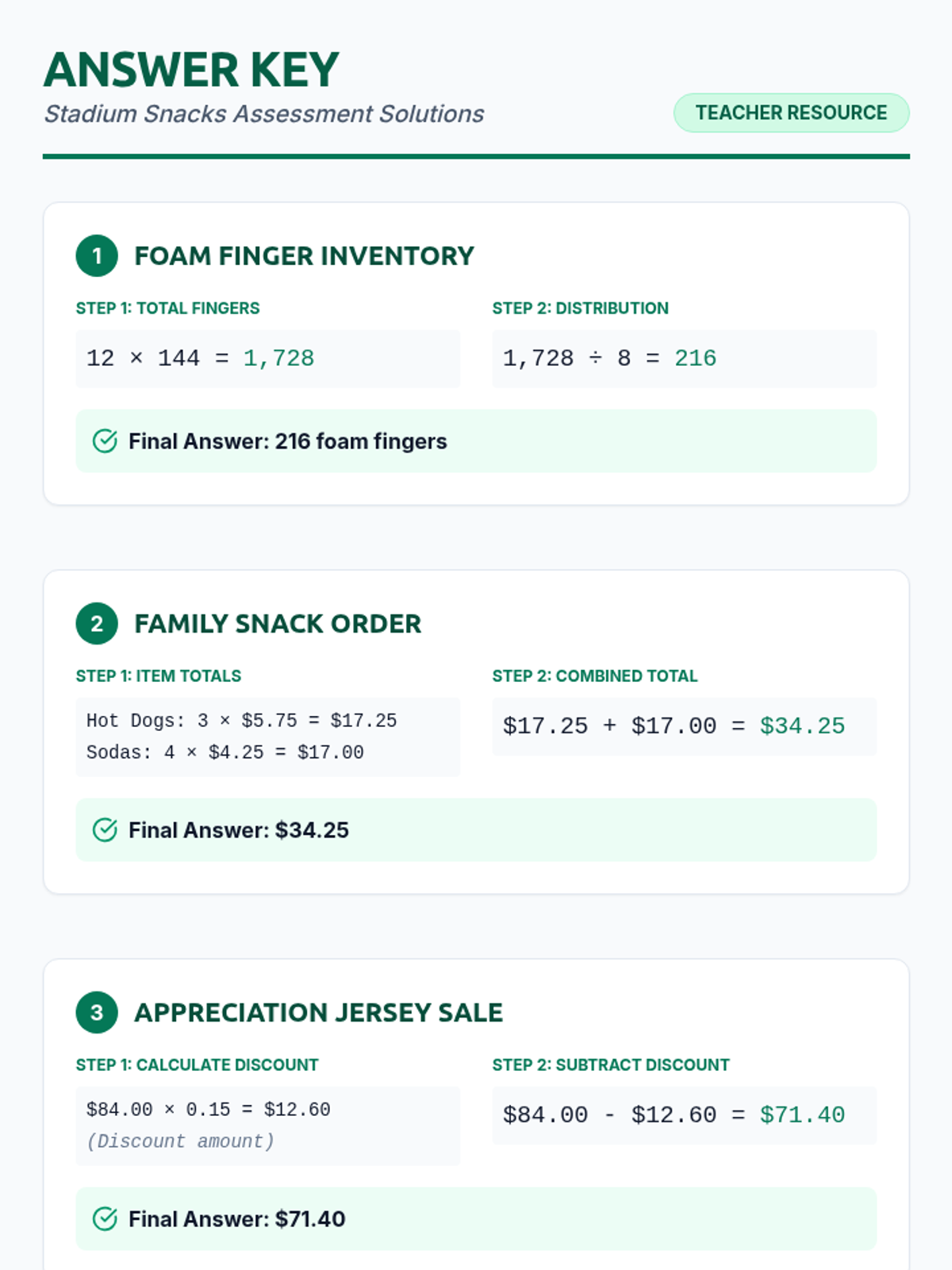
A multi-step math assessment focused on decimals, percentages, and whole number operations within a stadium concession stand theme. Students use graphic organizers to break down complex problems into manageable steps.
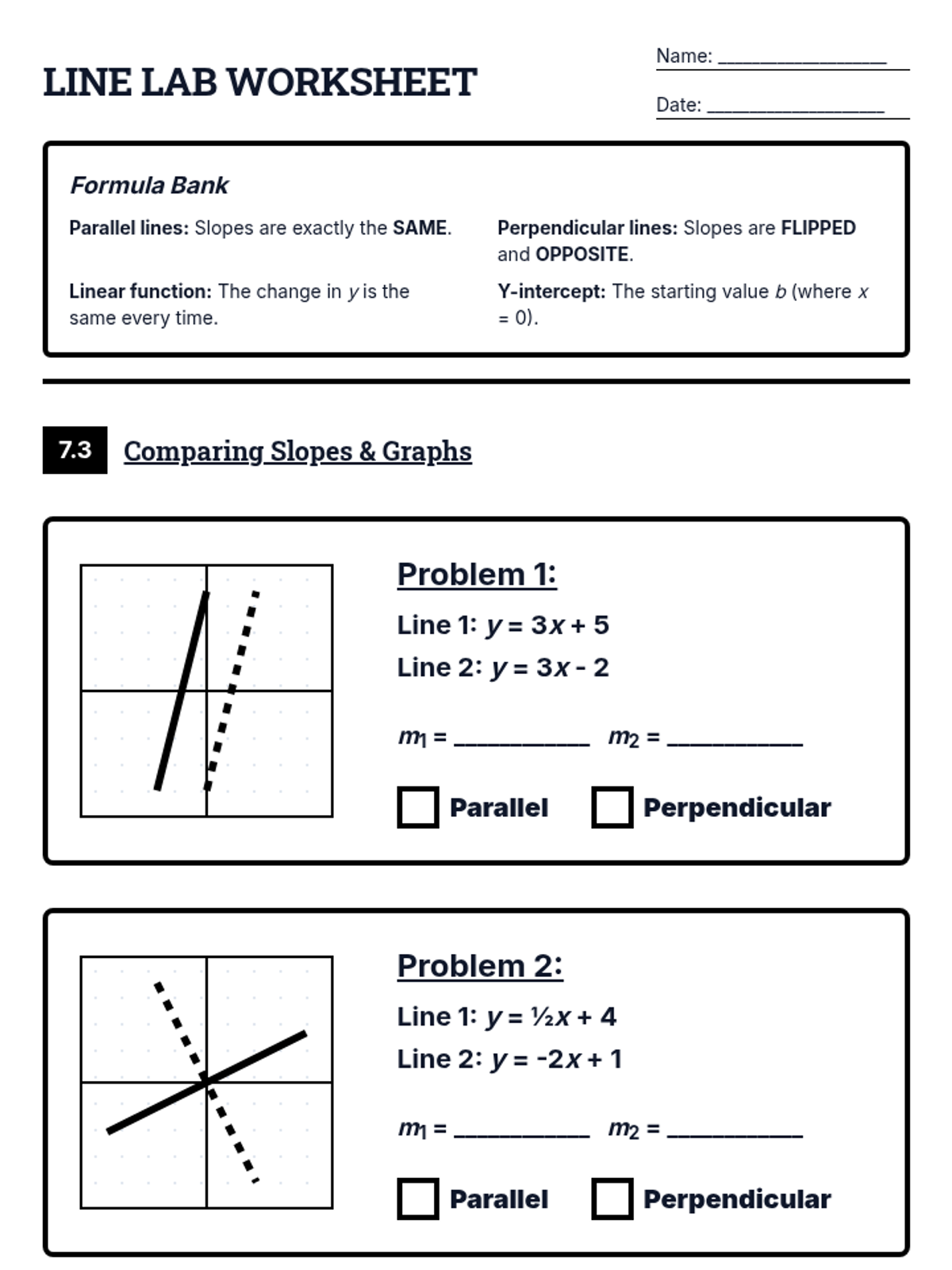
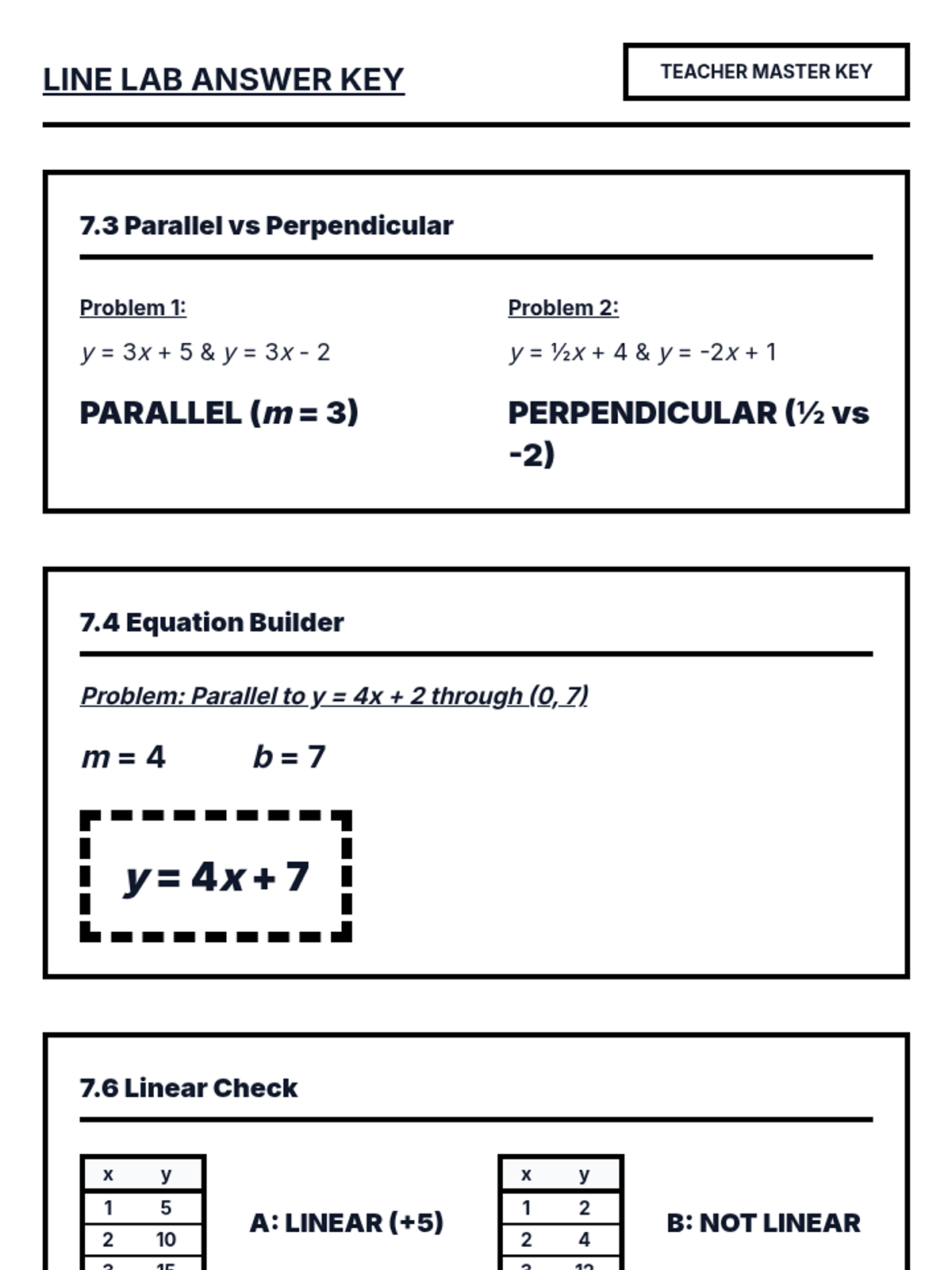
A comprehensive lesson on linear relationships, covering parallel and perpendicular lines, writing equations, and interpreting linear models in real-world contexts, specifically scaffolded for students with IEPs.
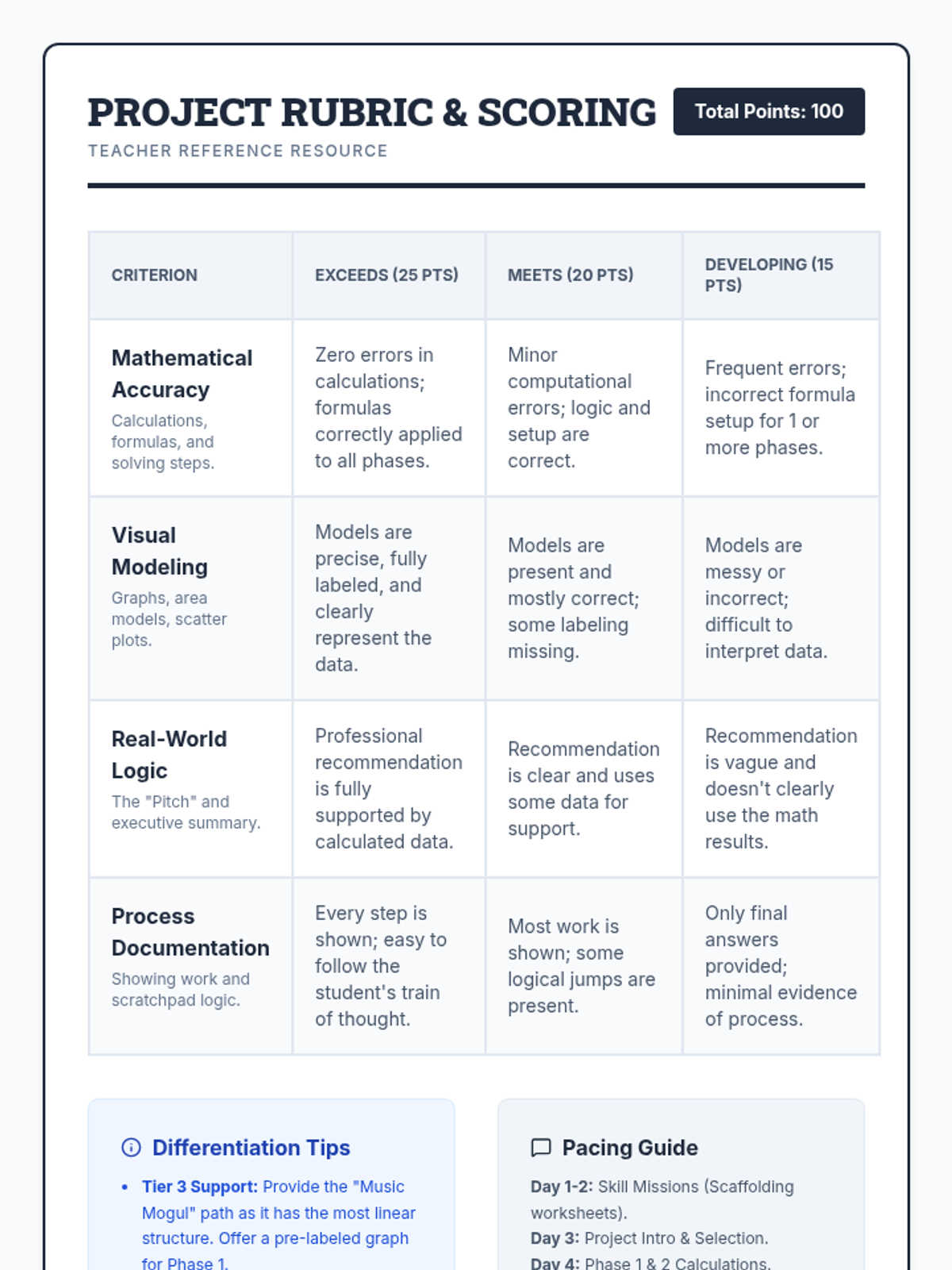
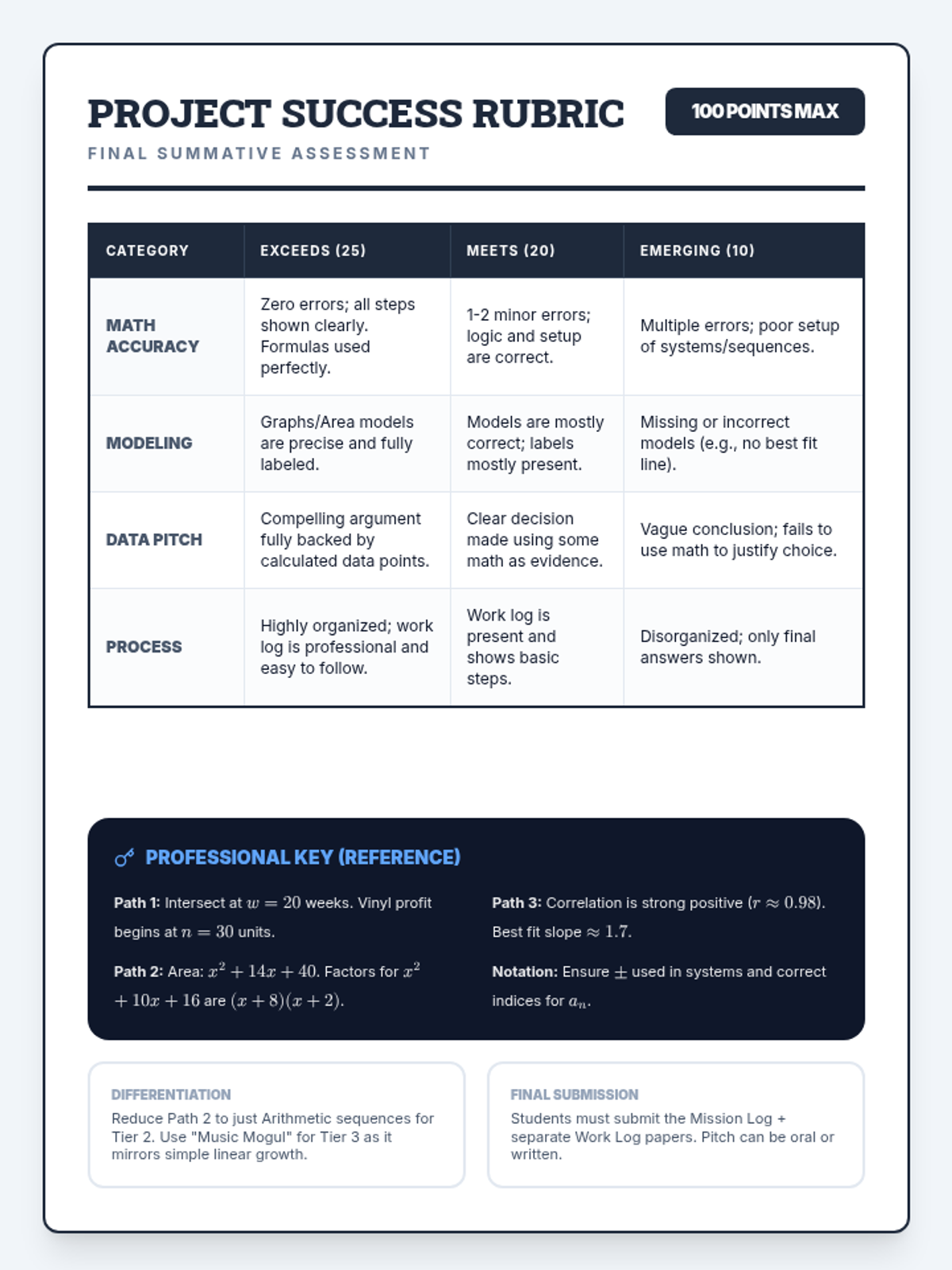
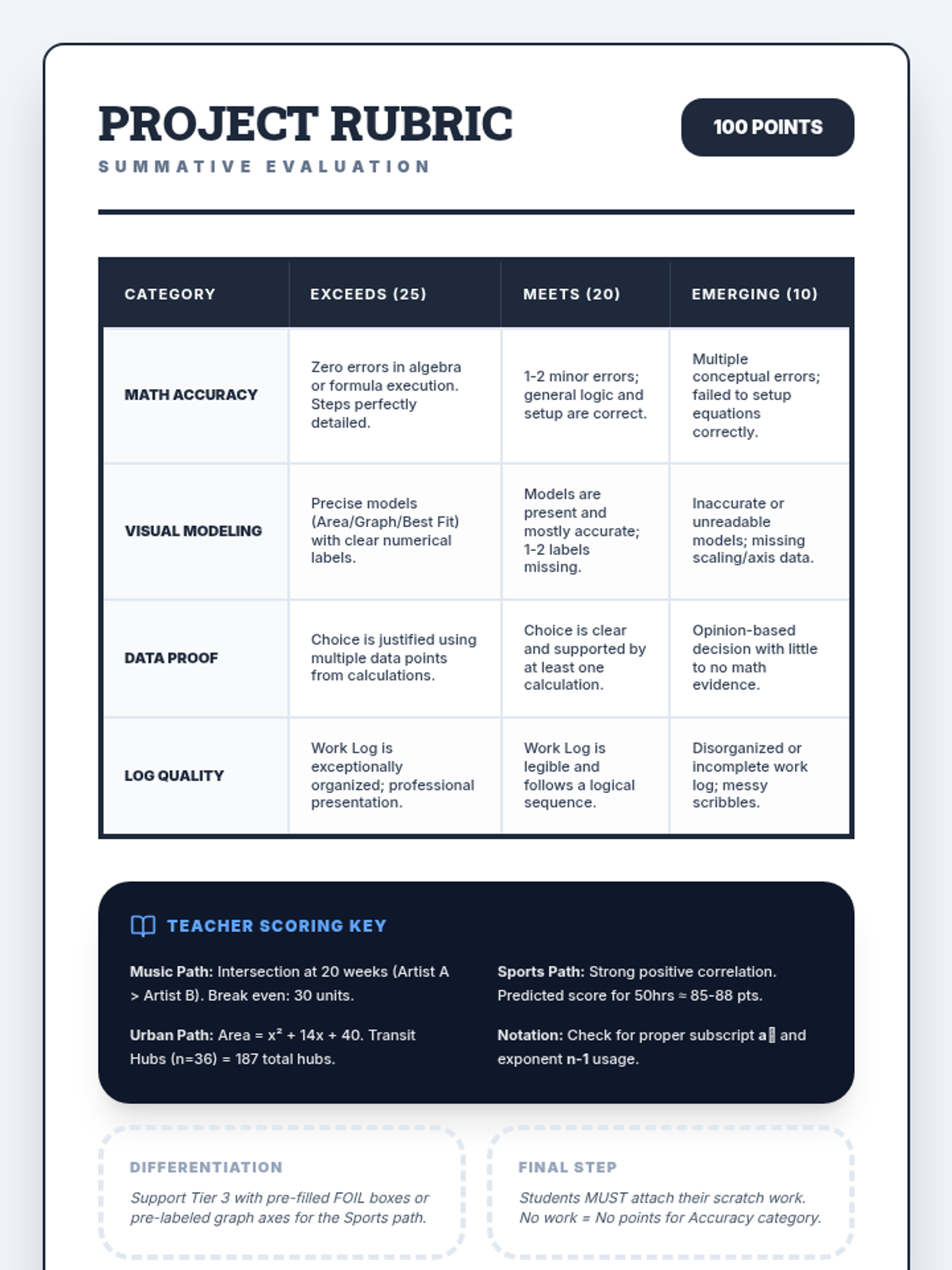
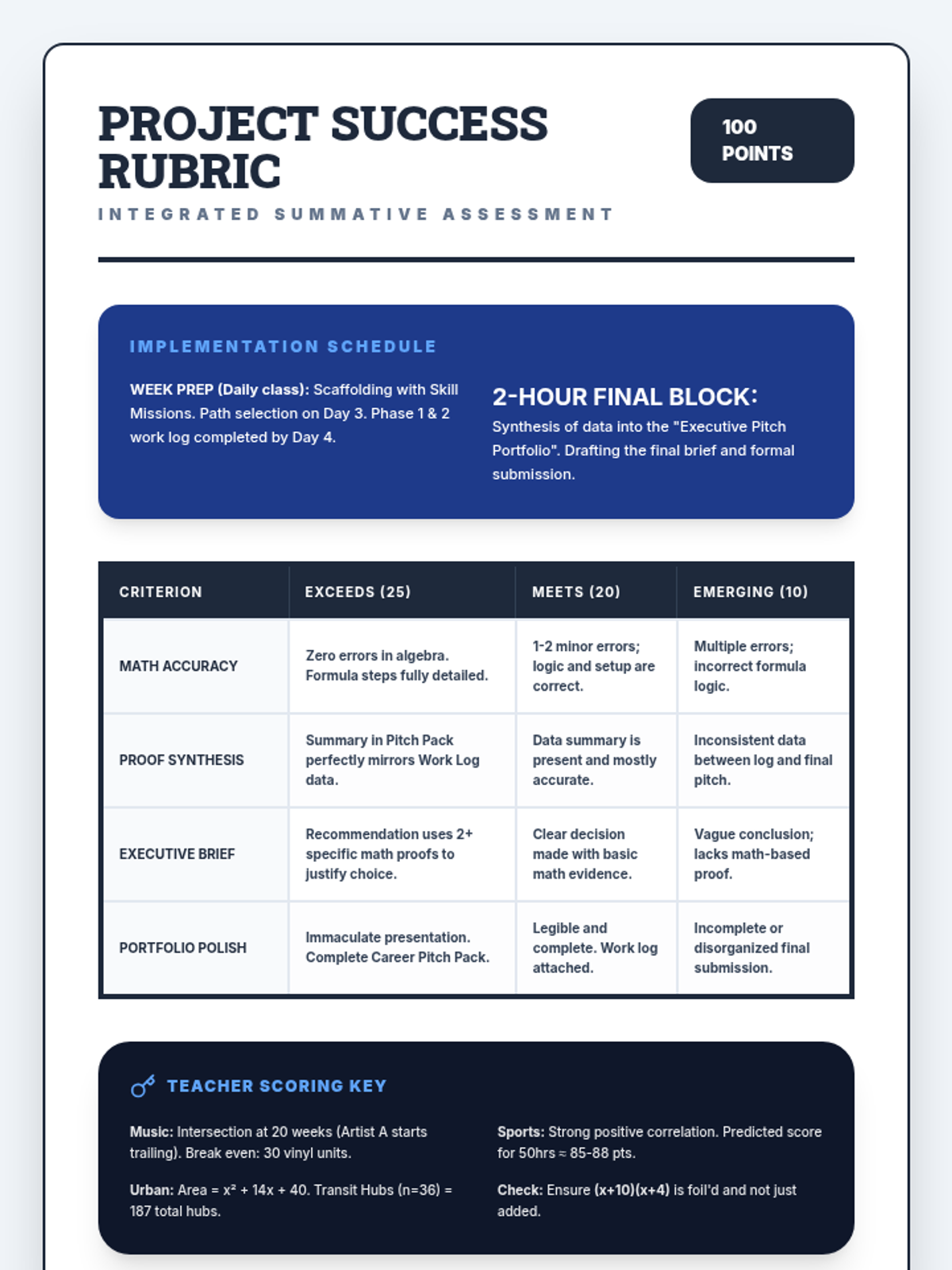
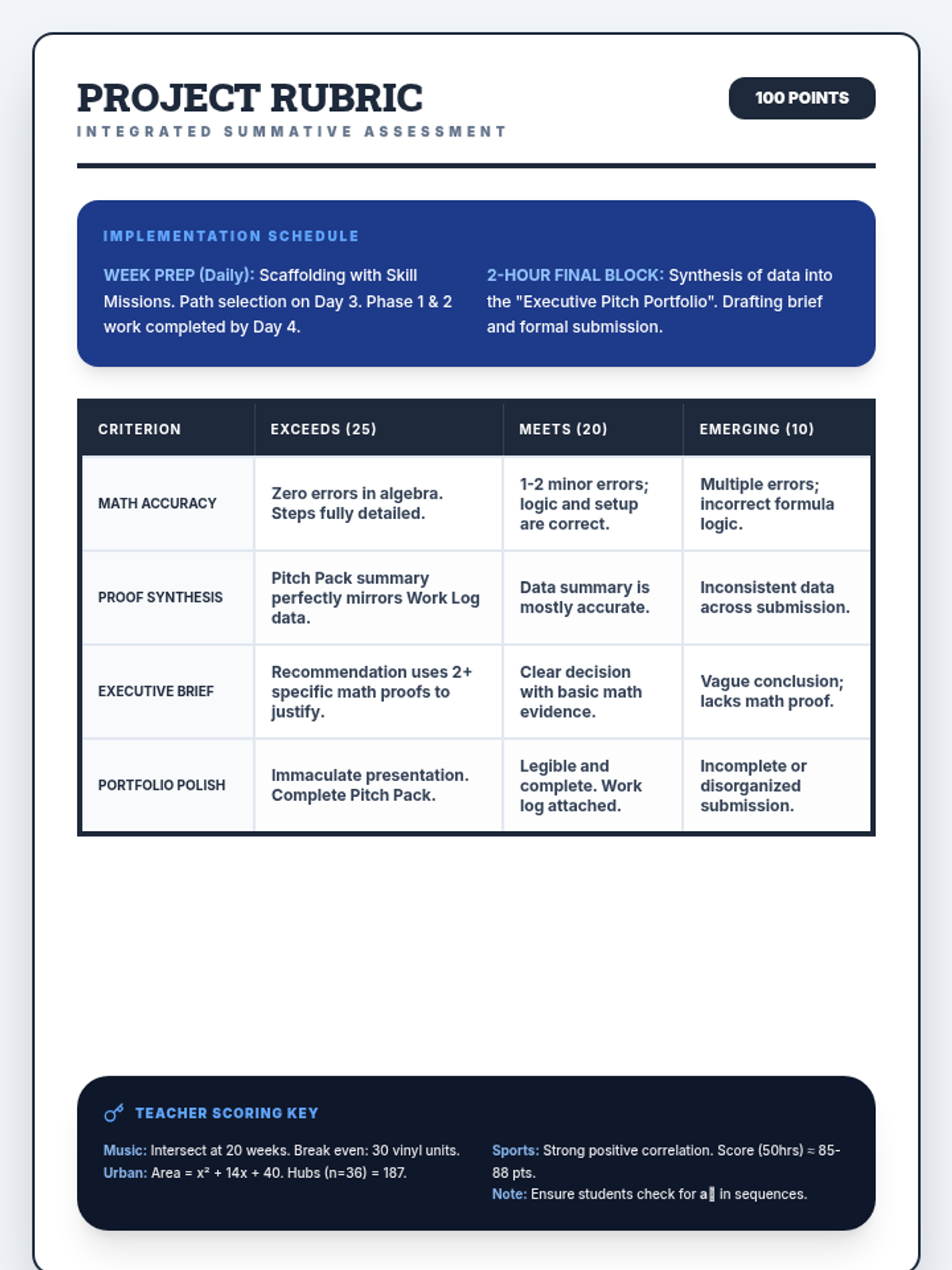
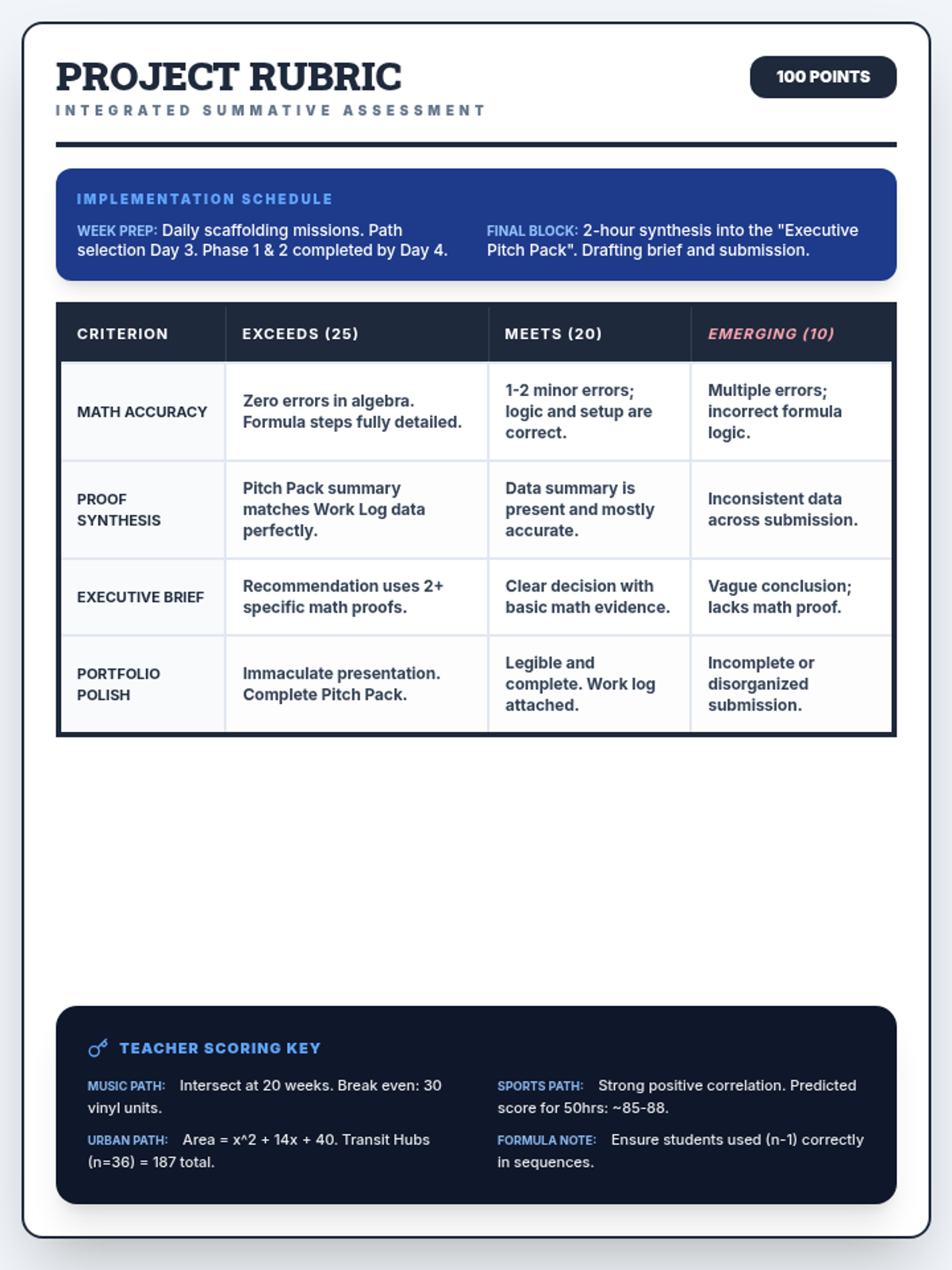
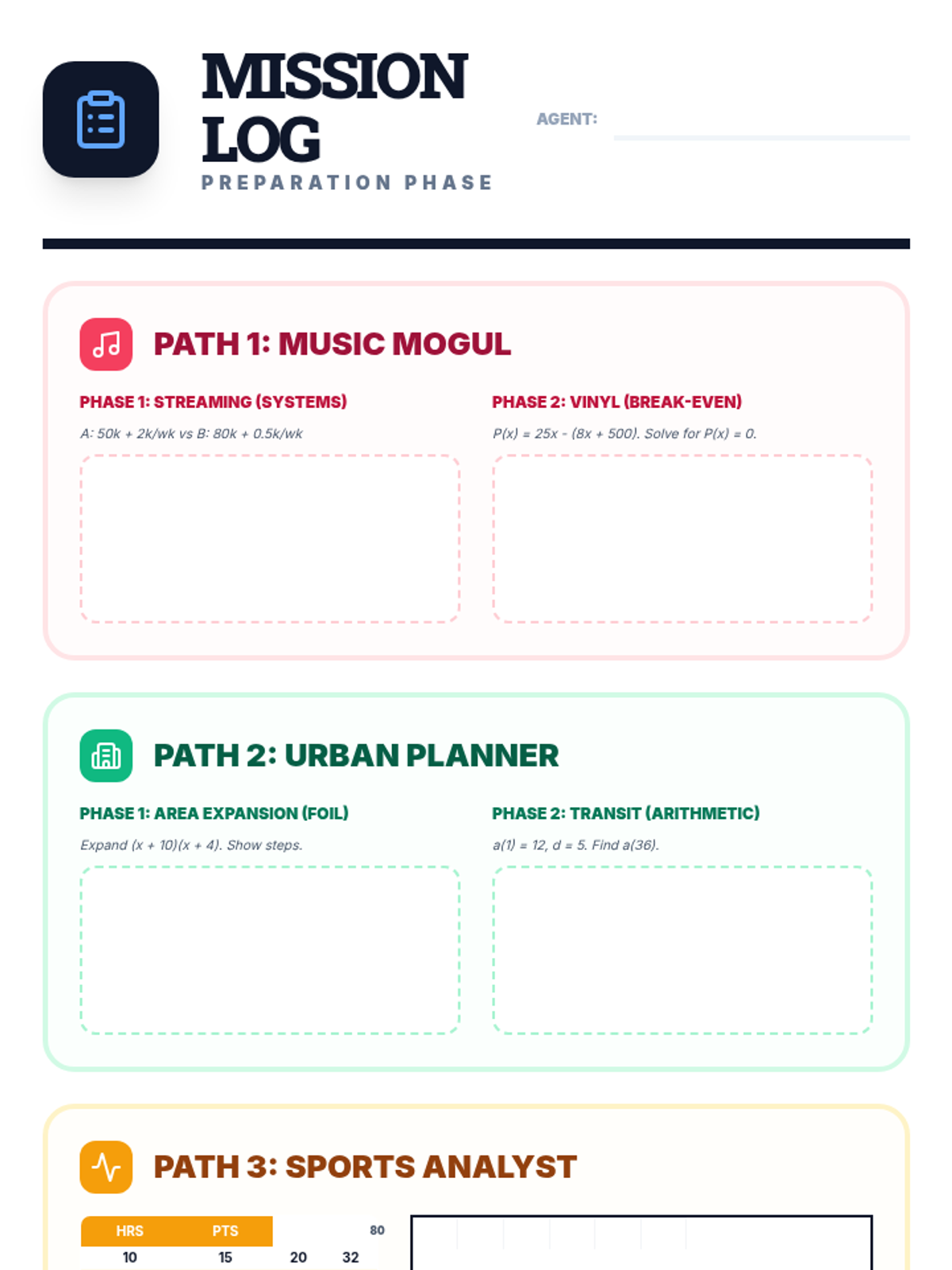
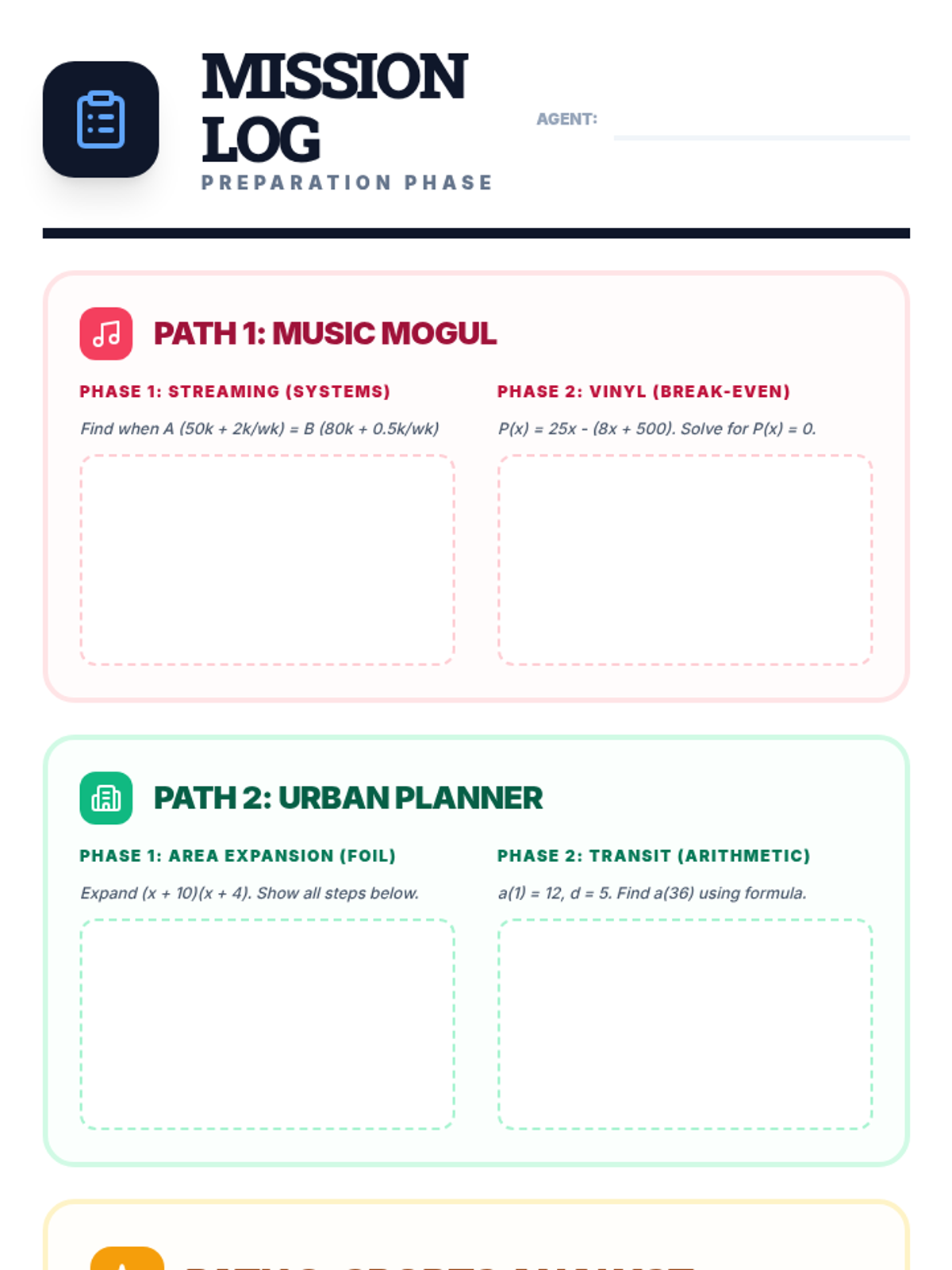
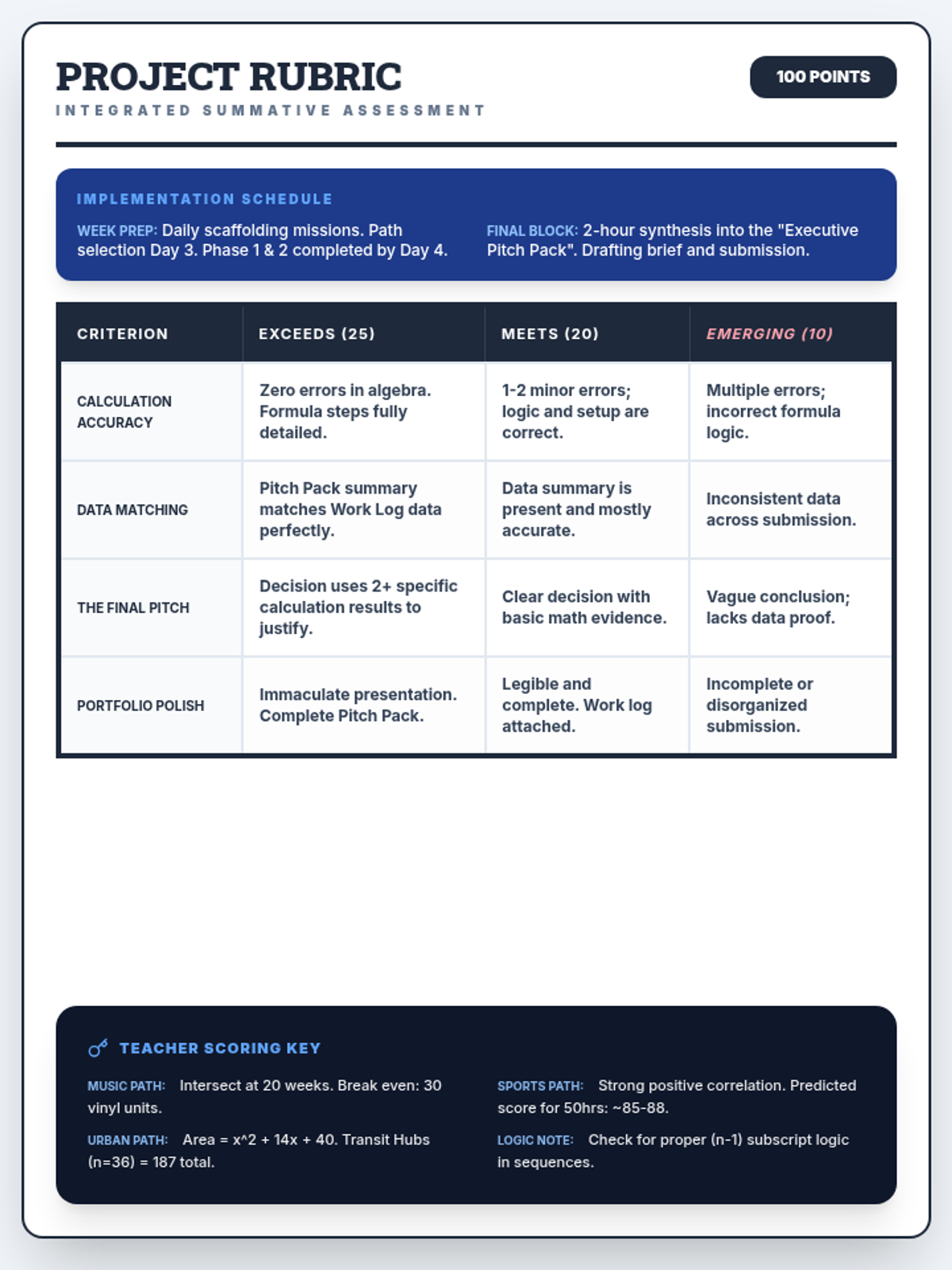
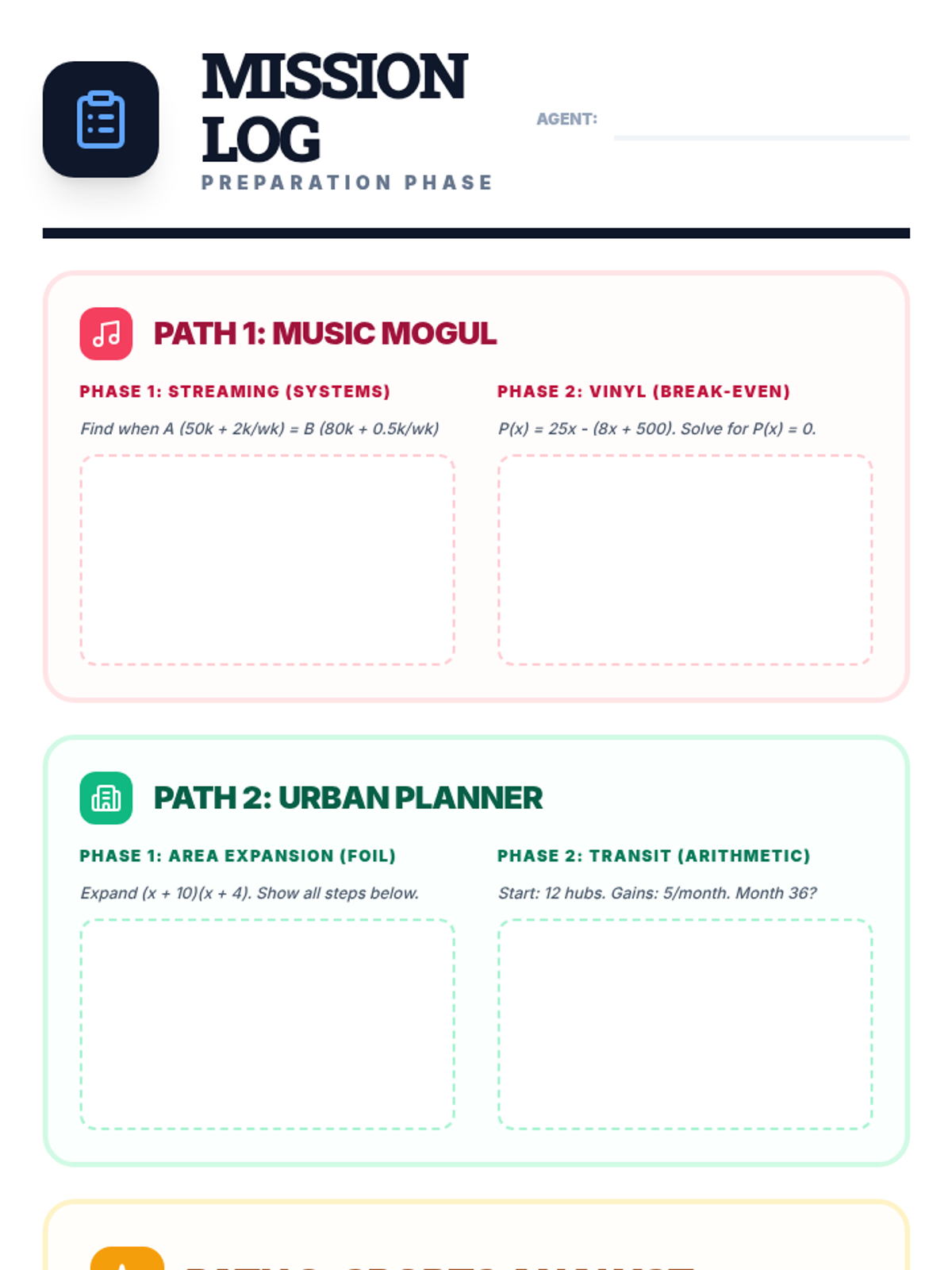
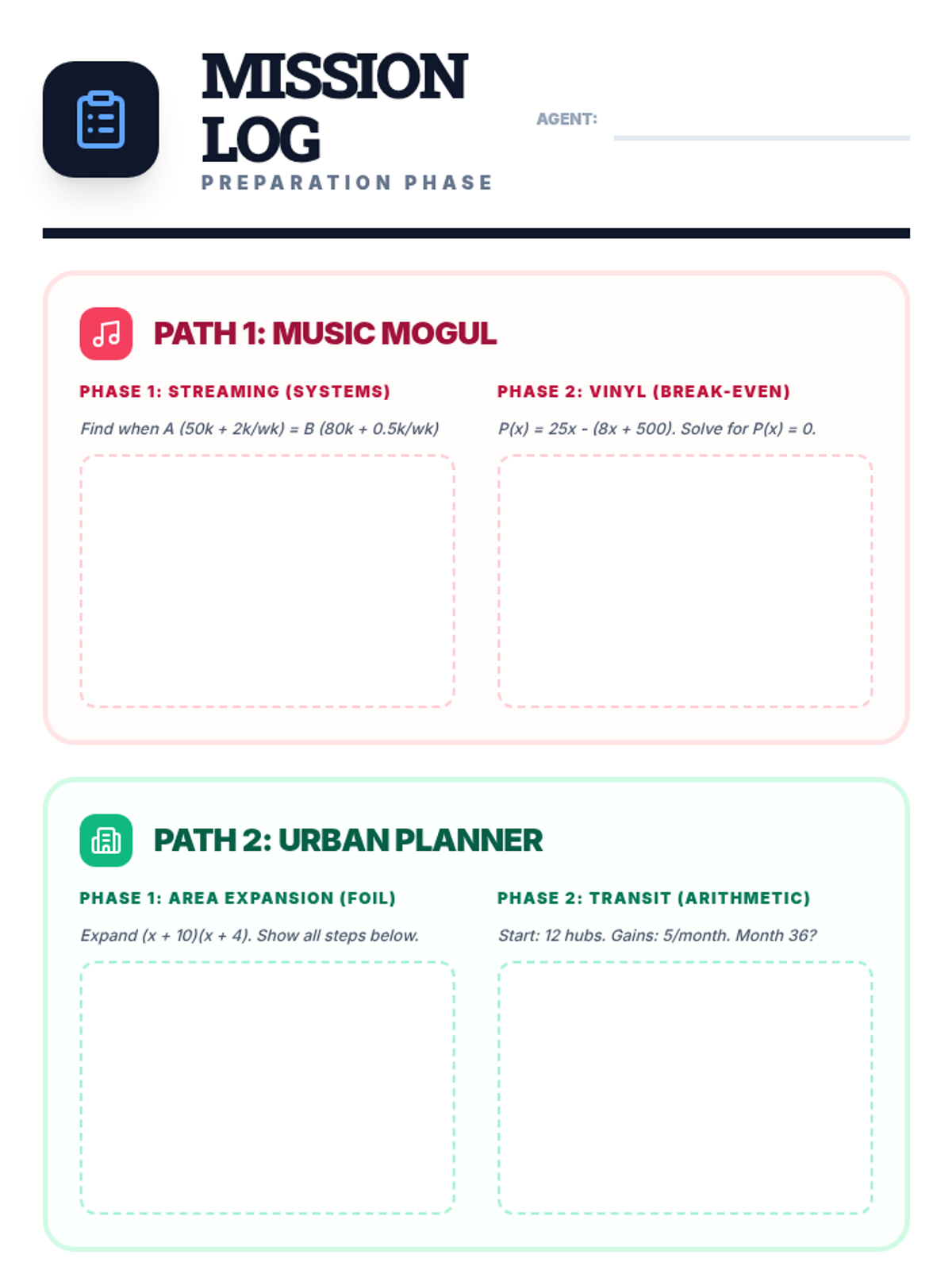
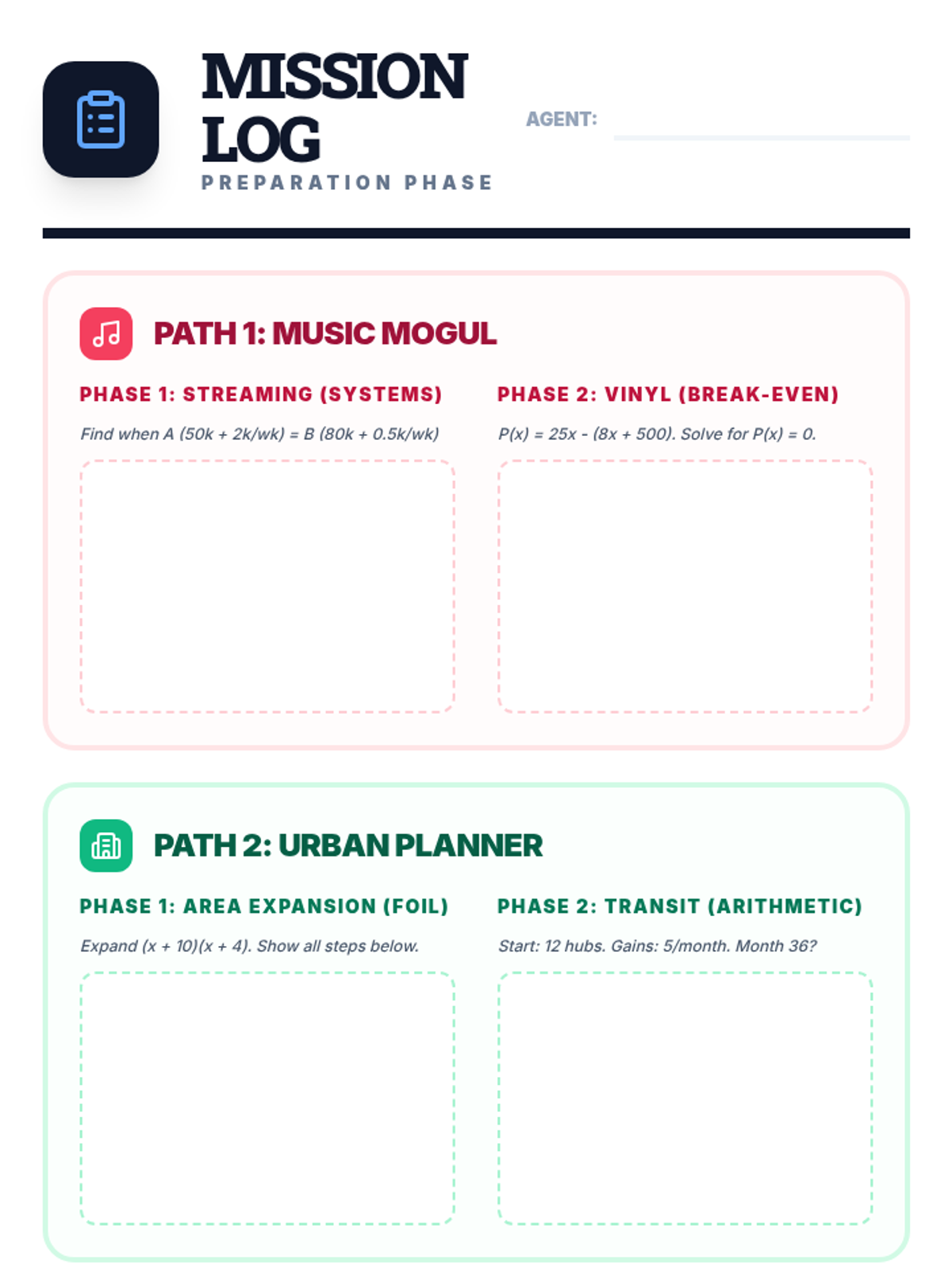
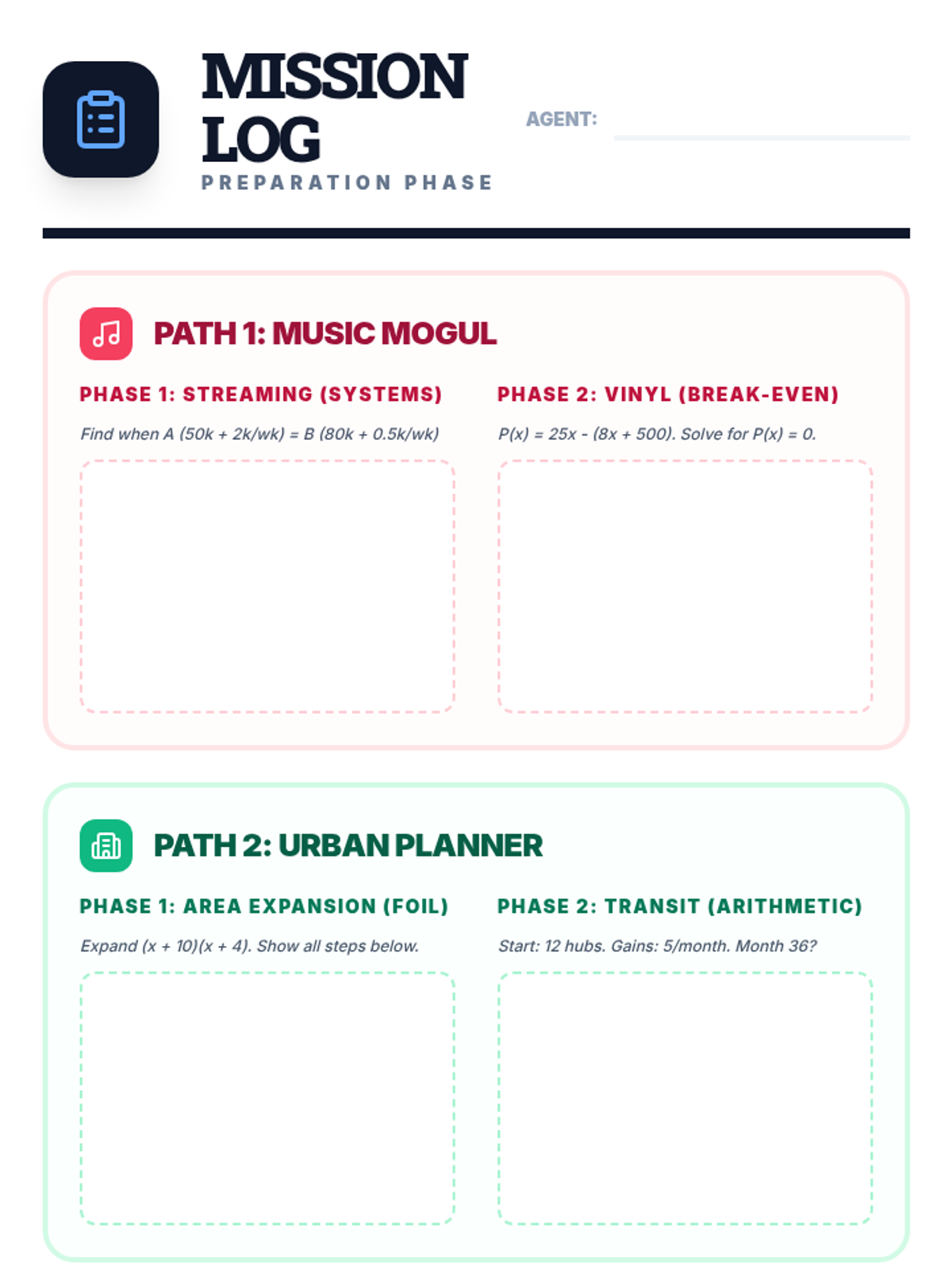
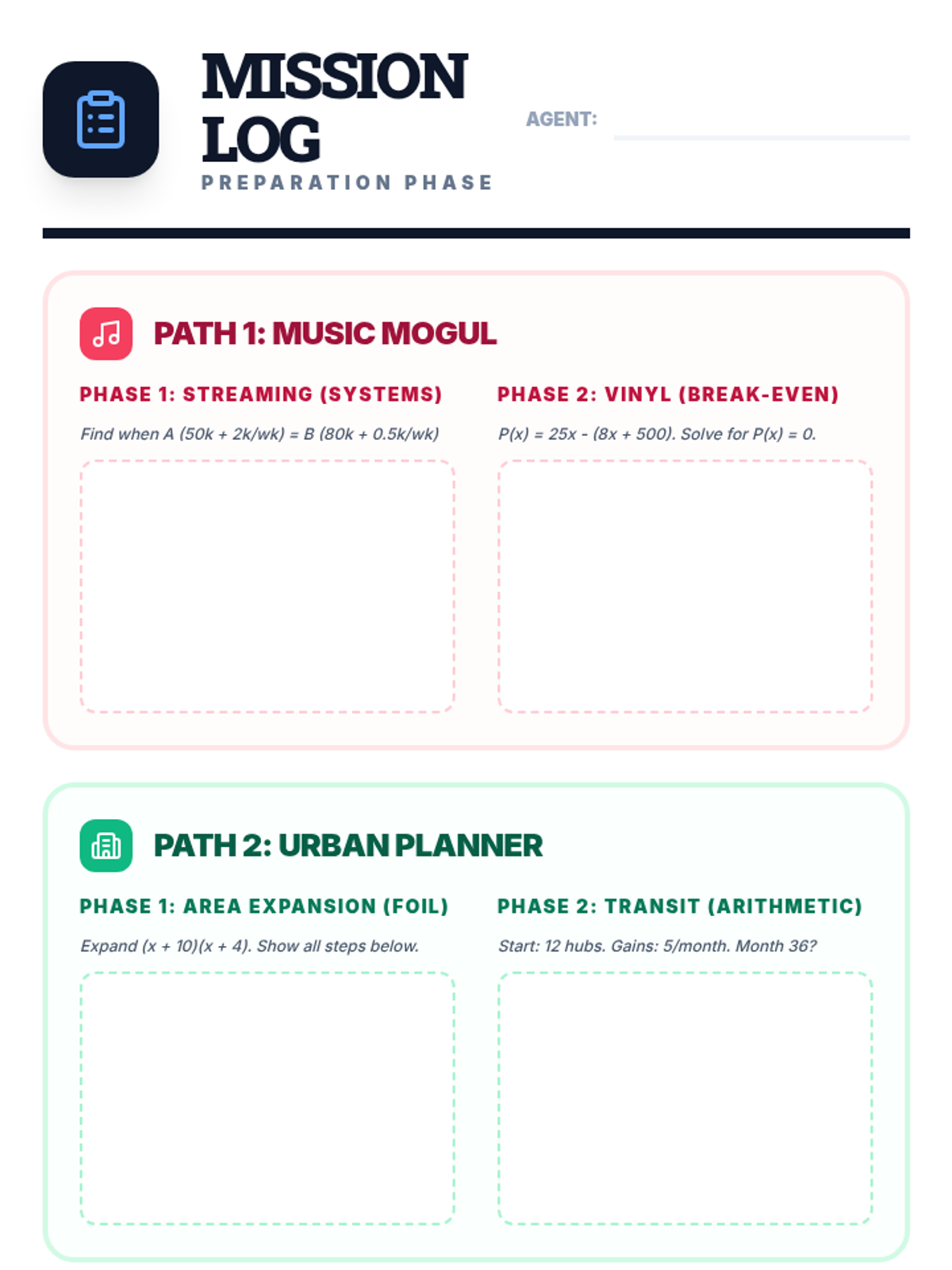
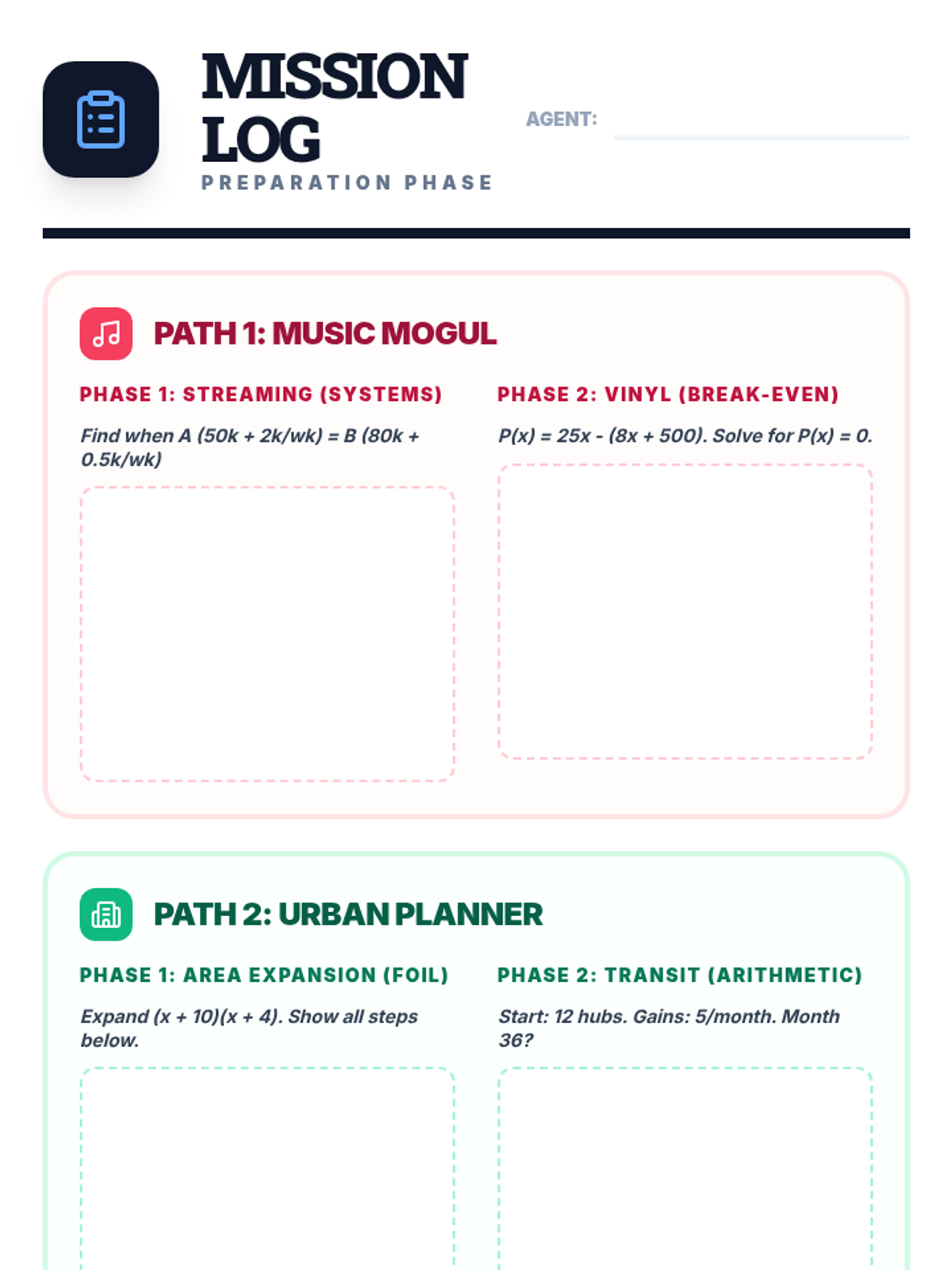
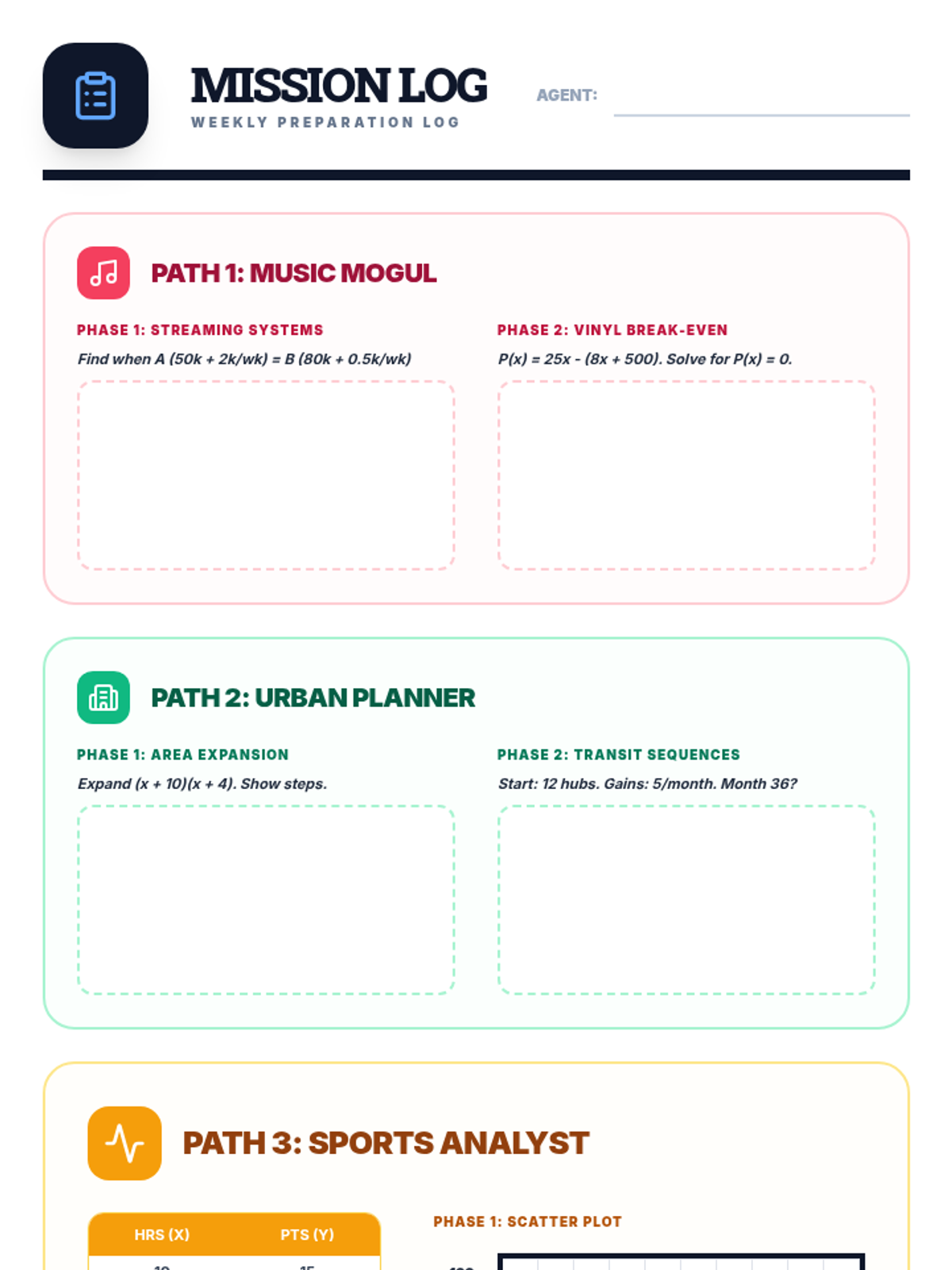
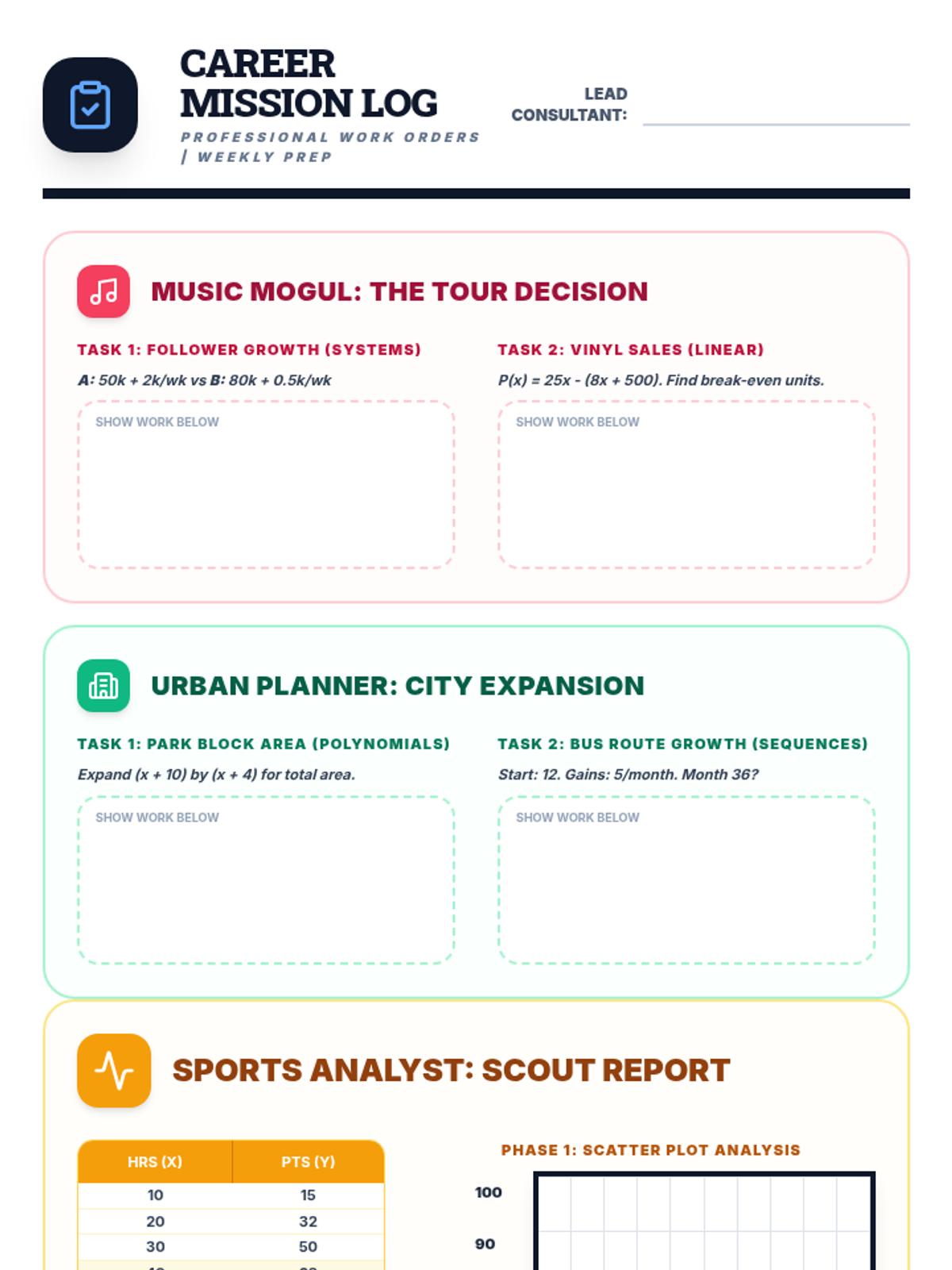
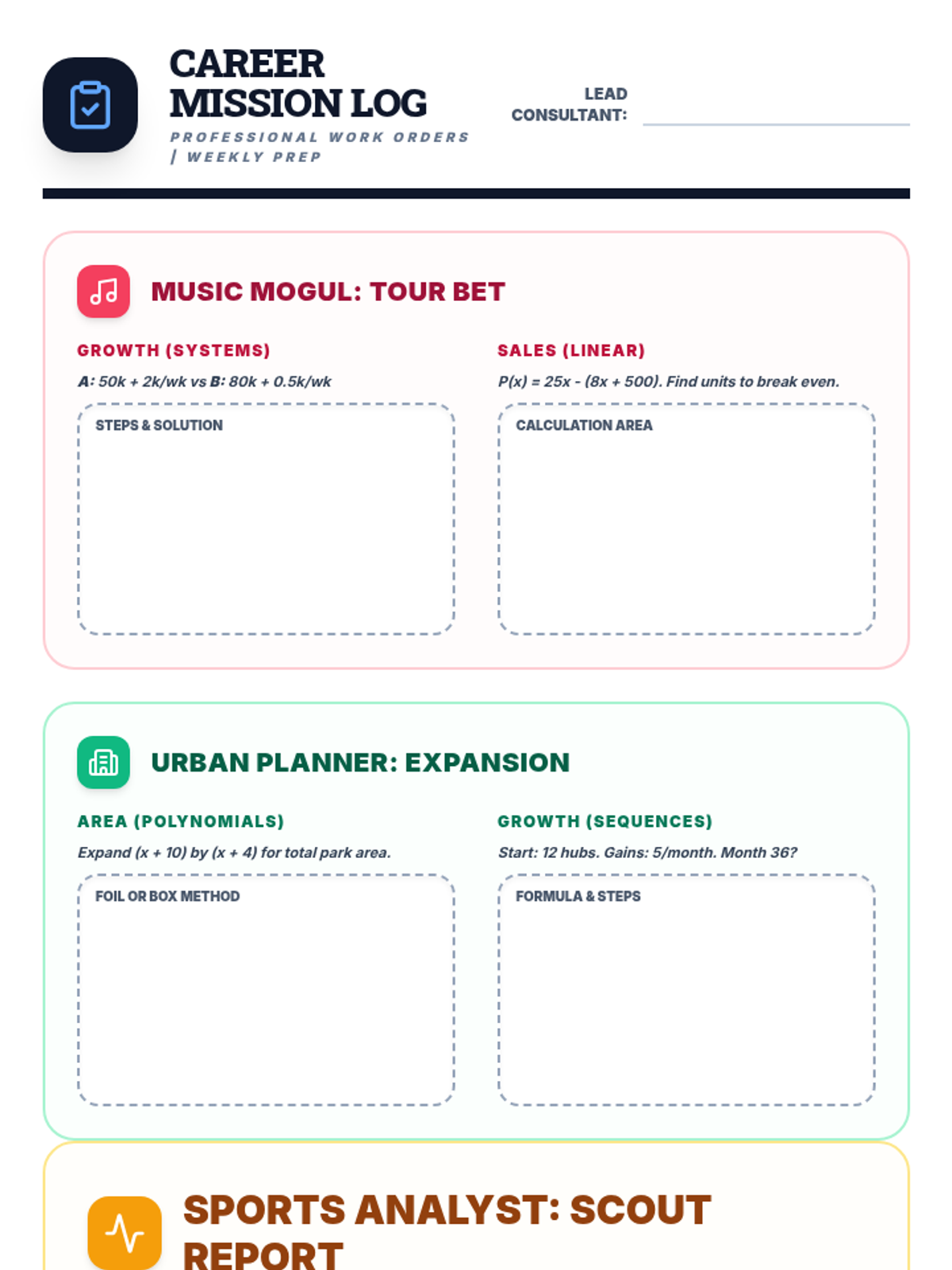
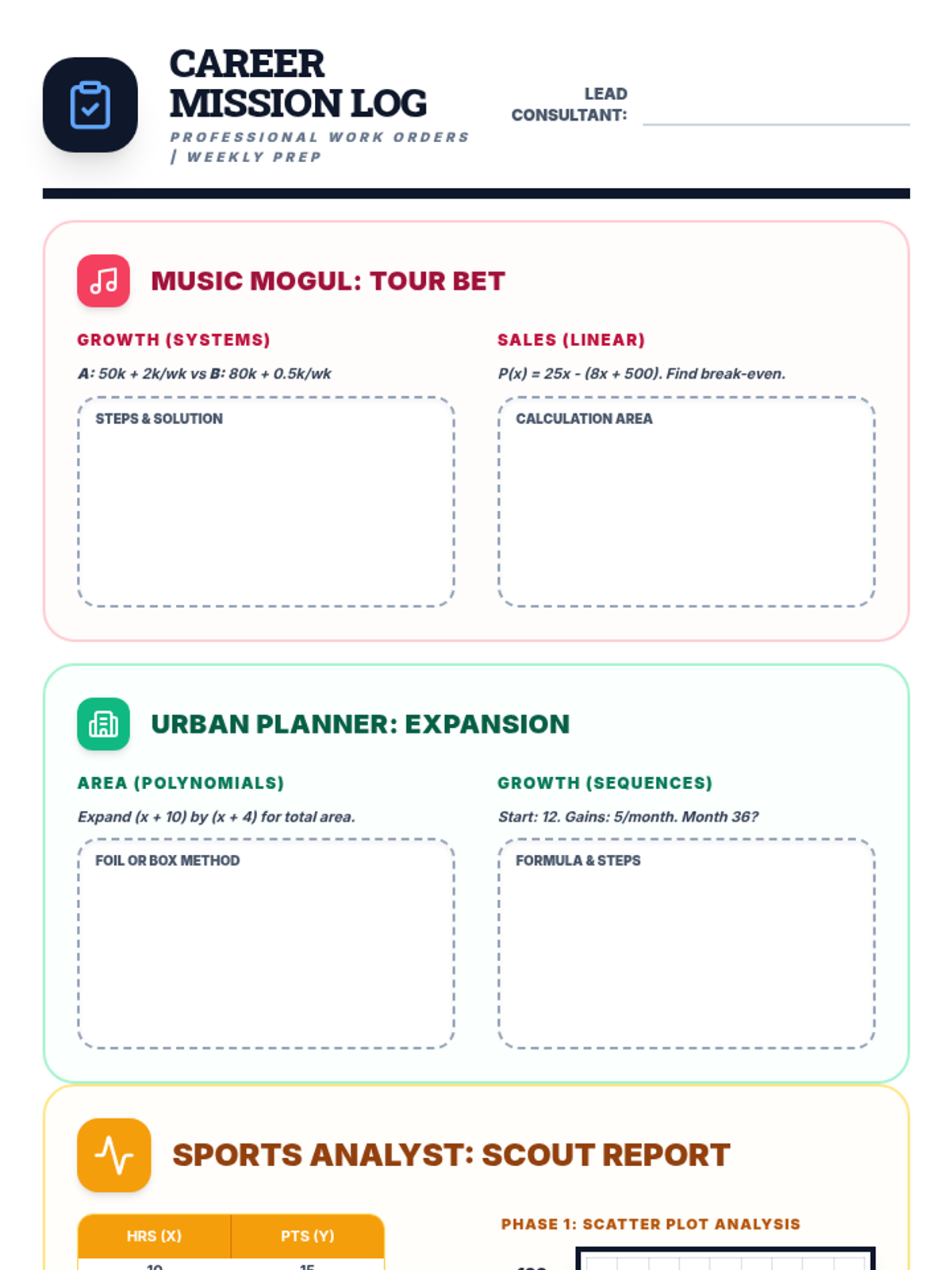
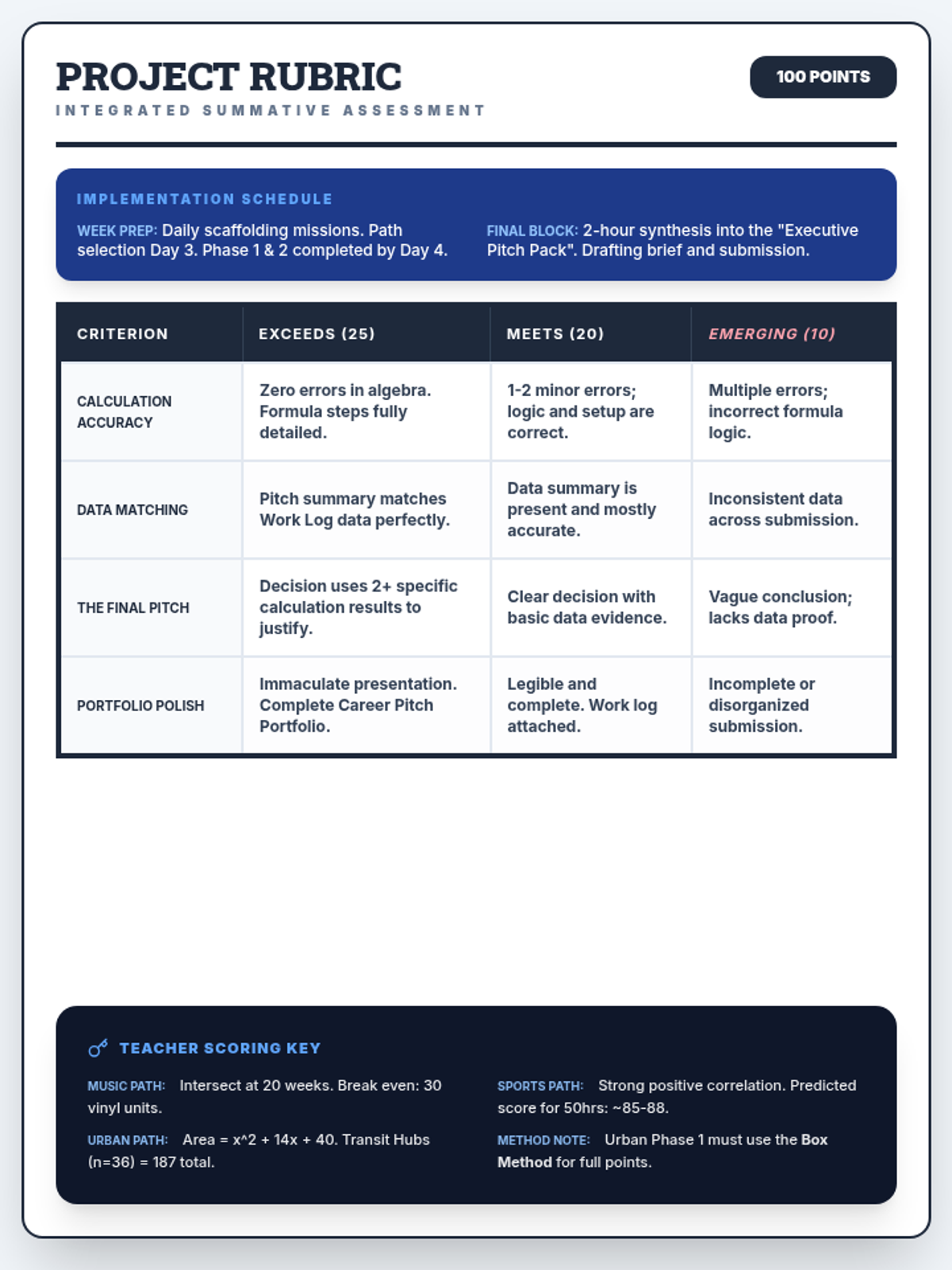
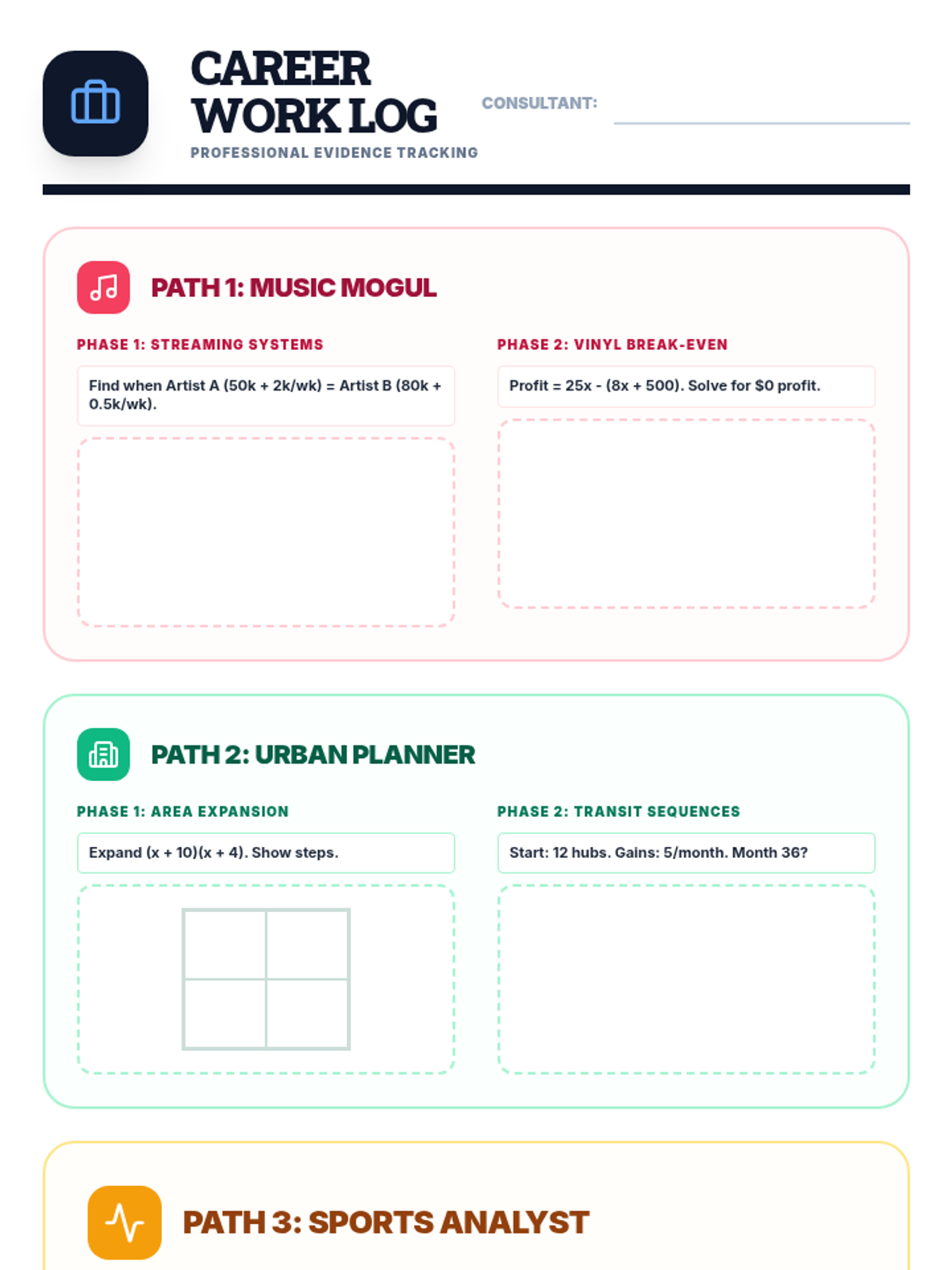
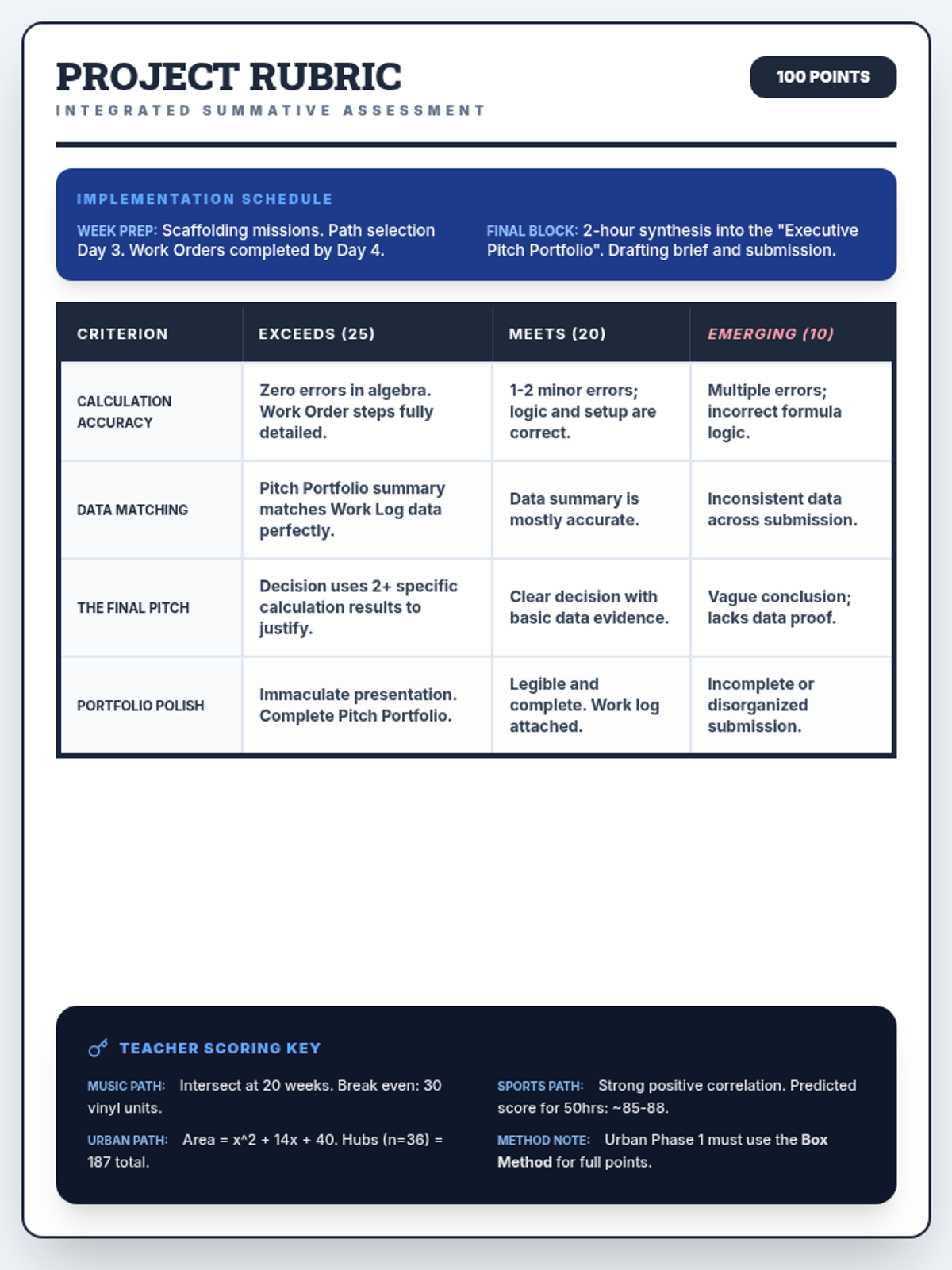
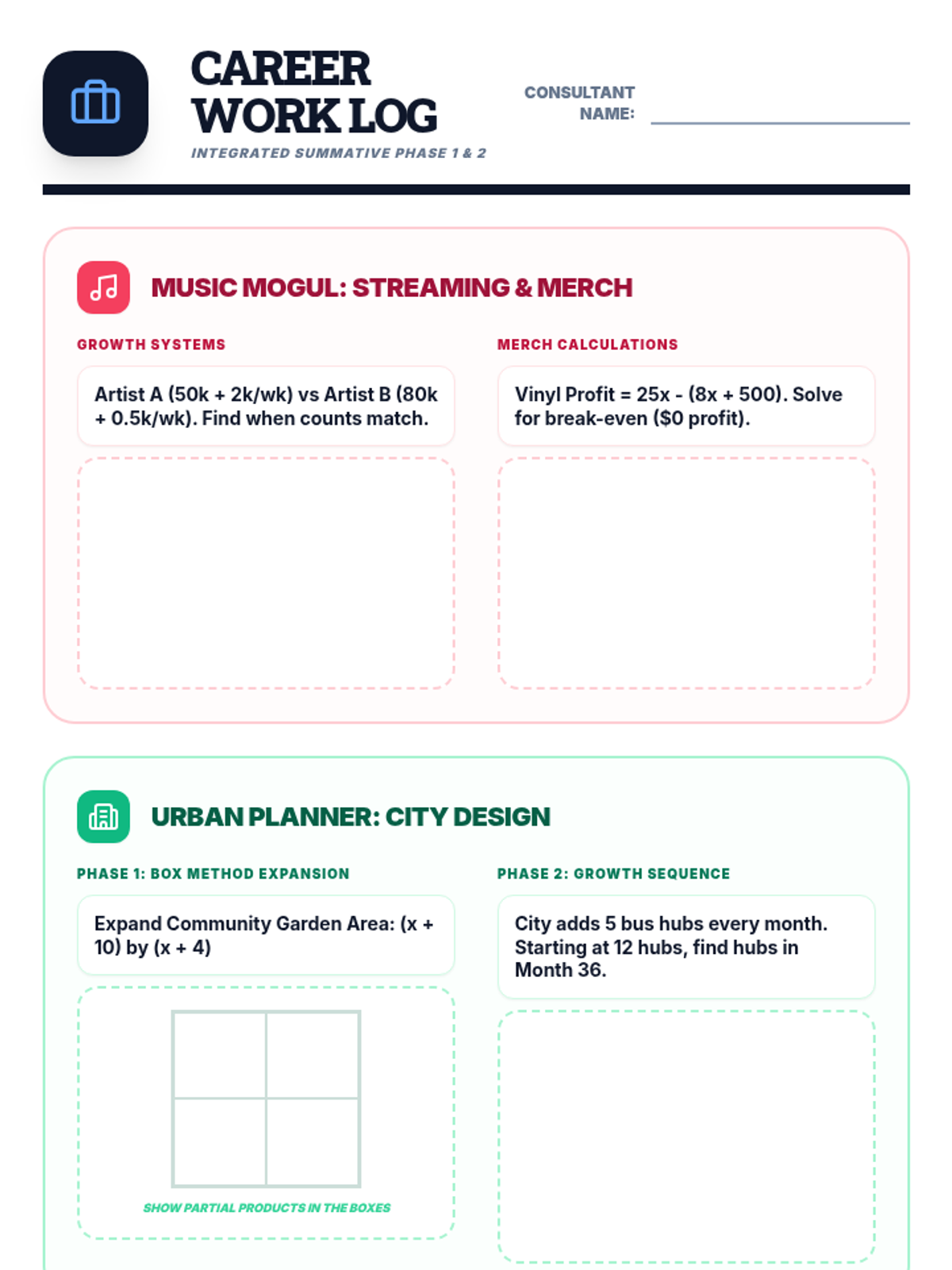
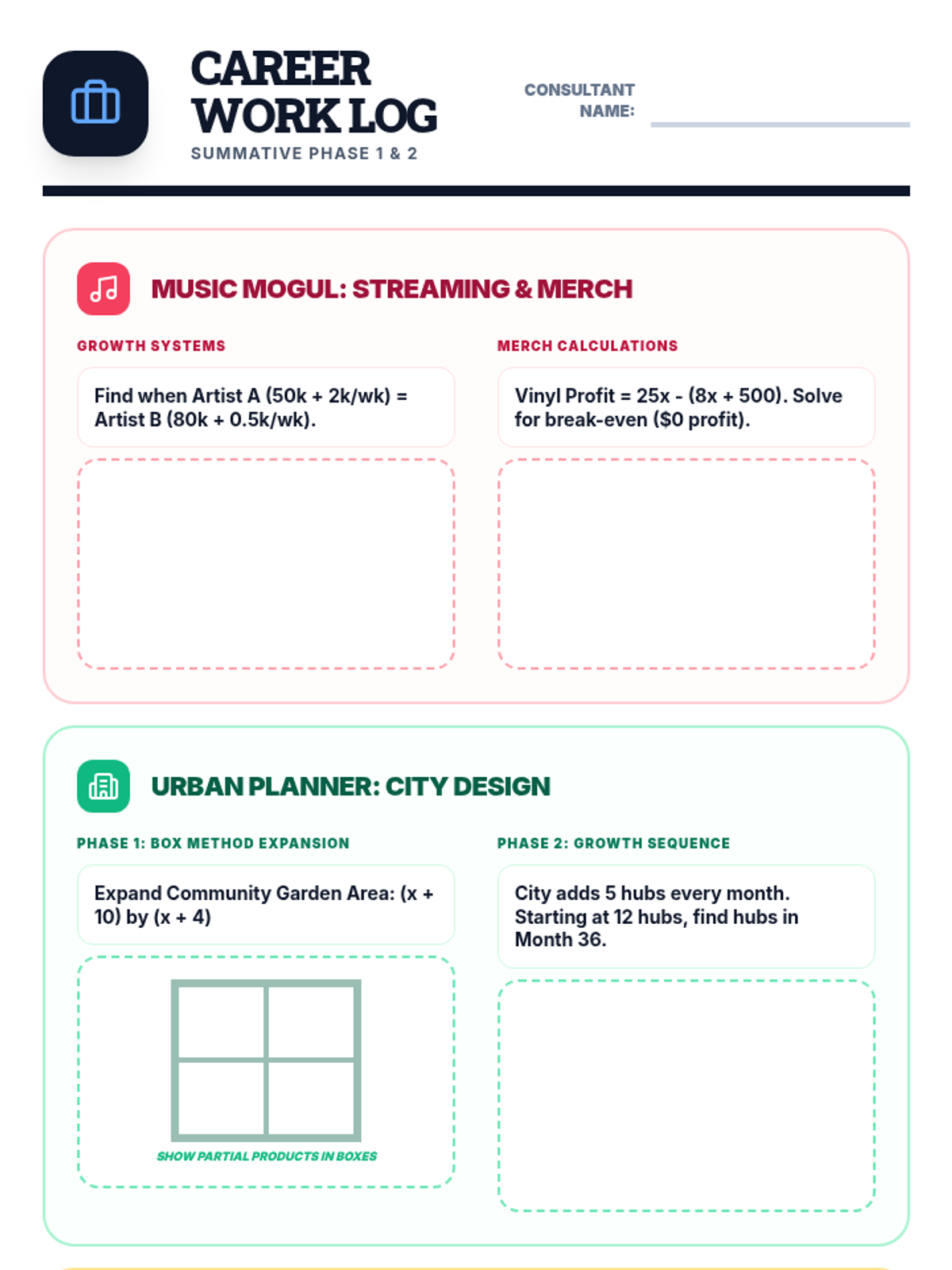
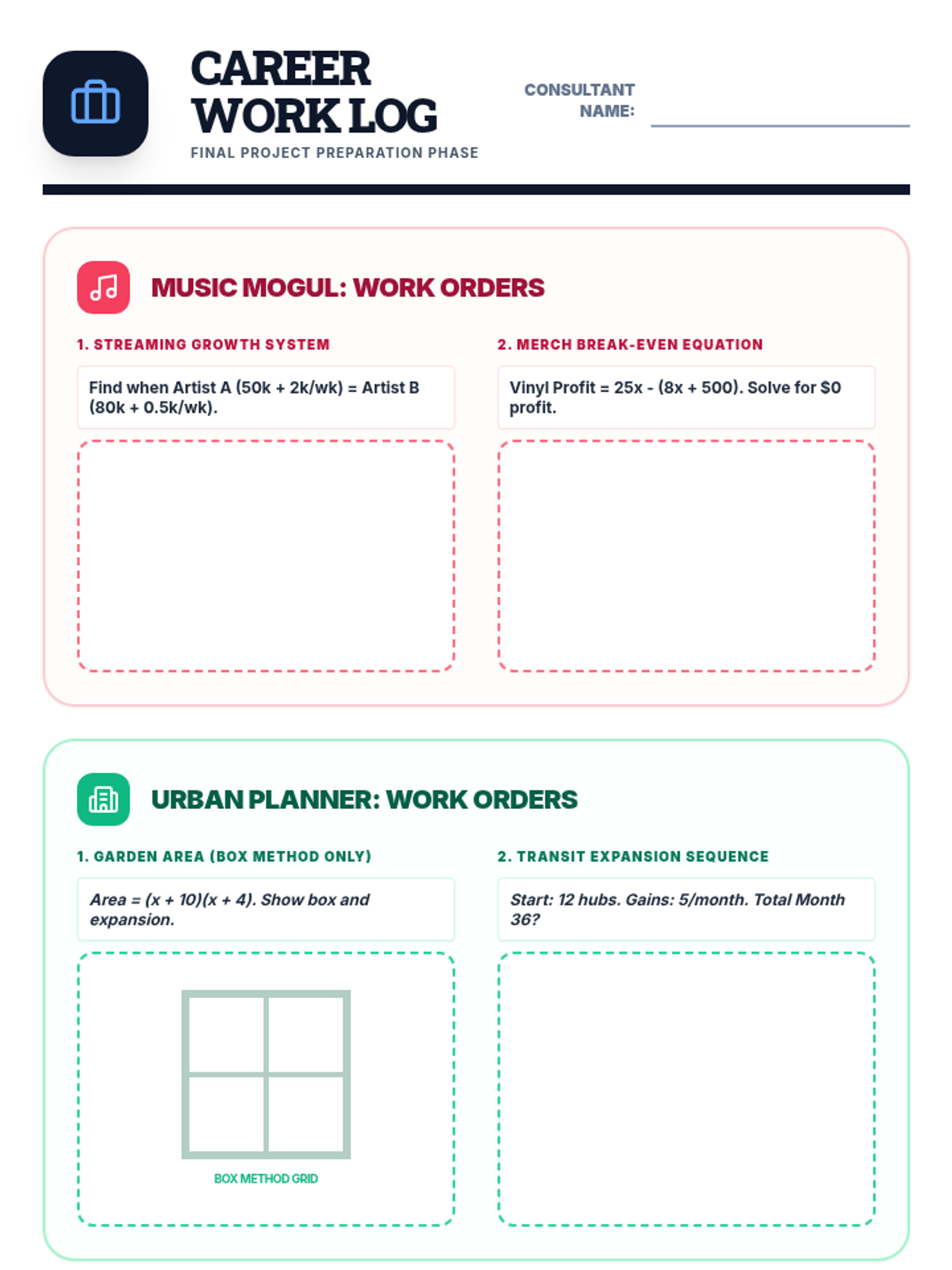
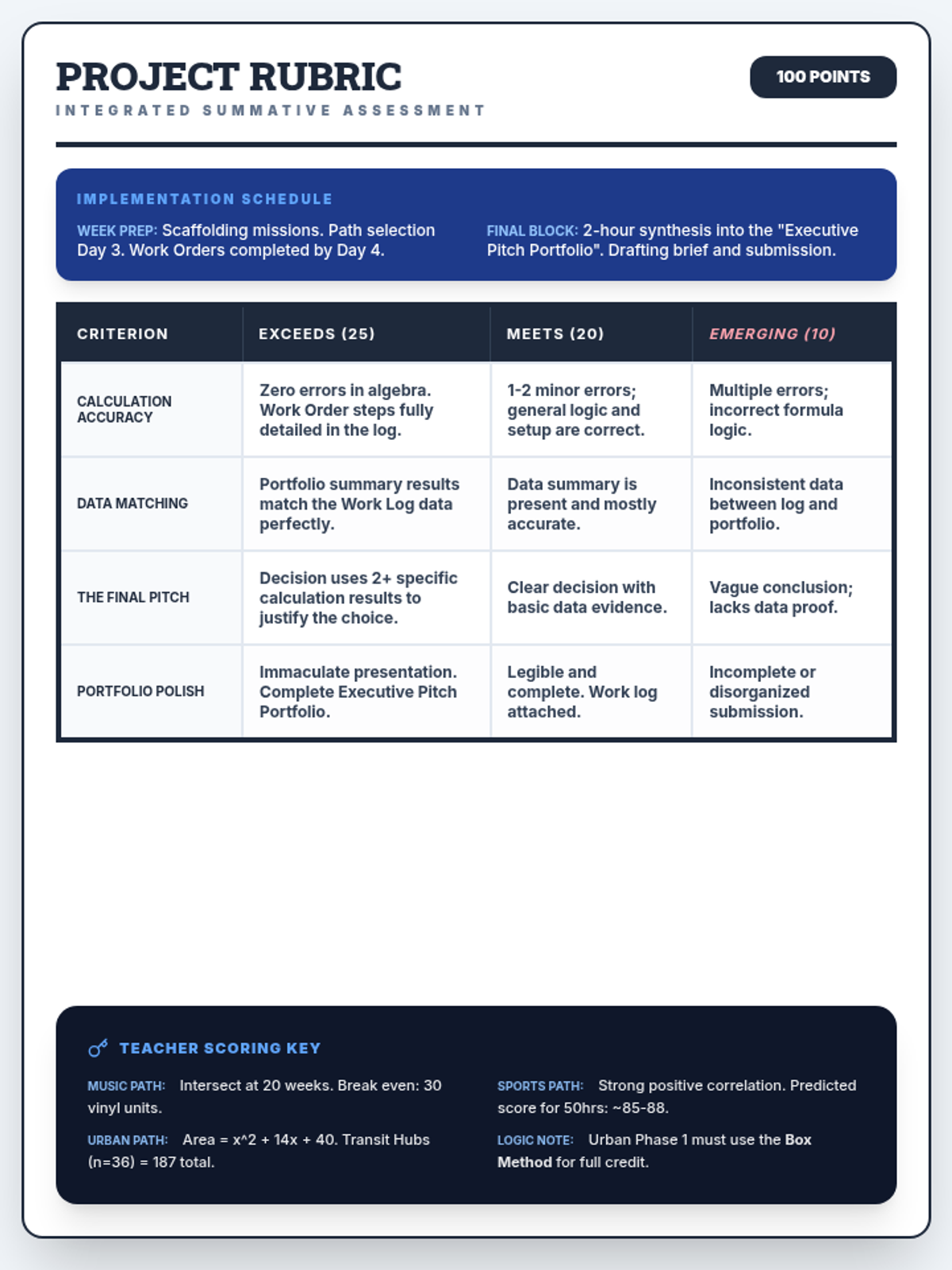
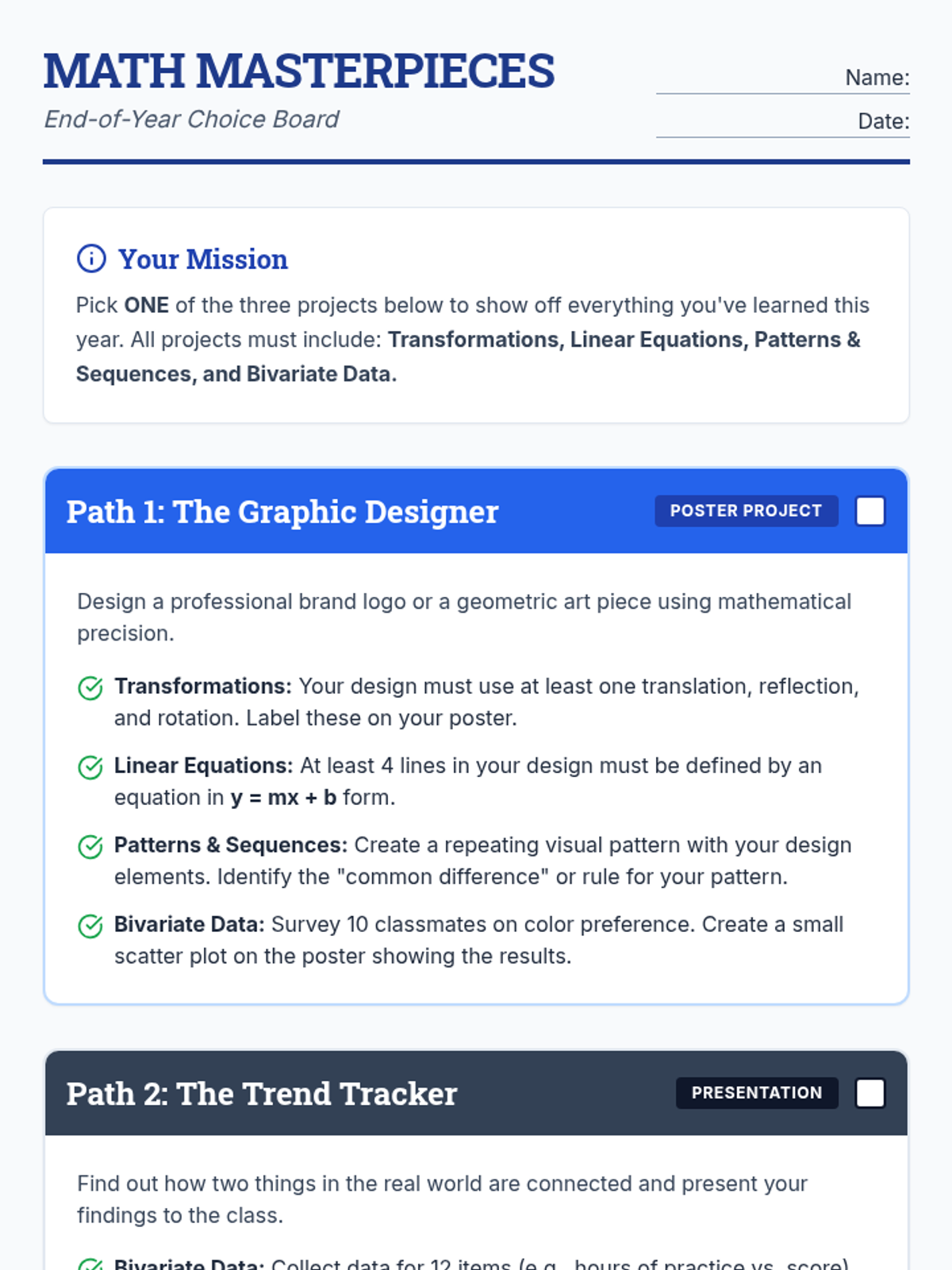
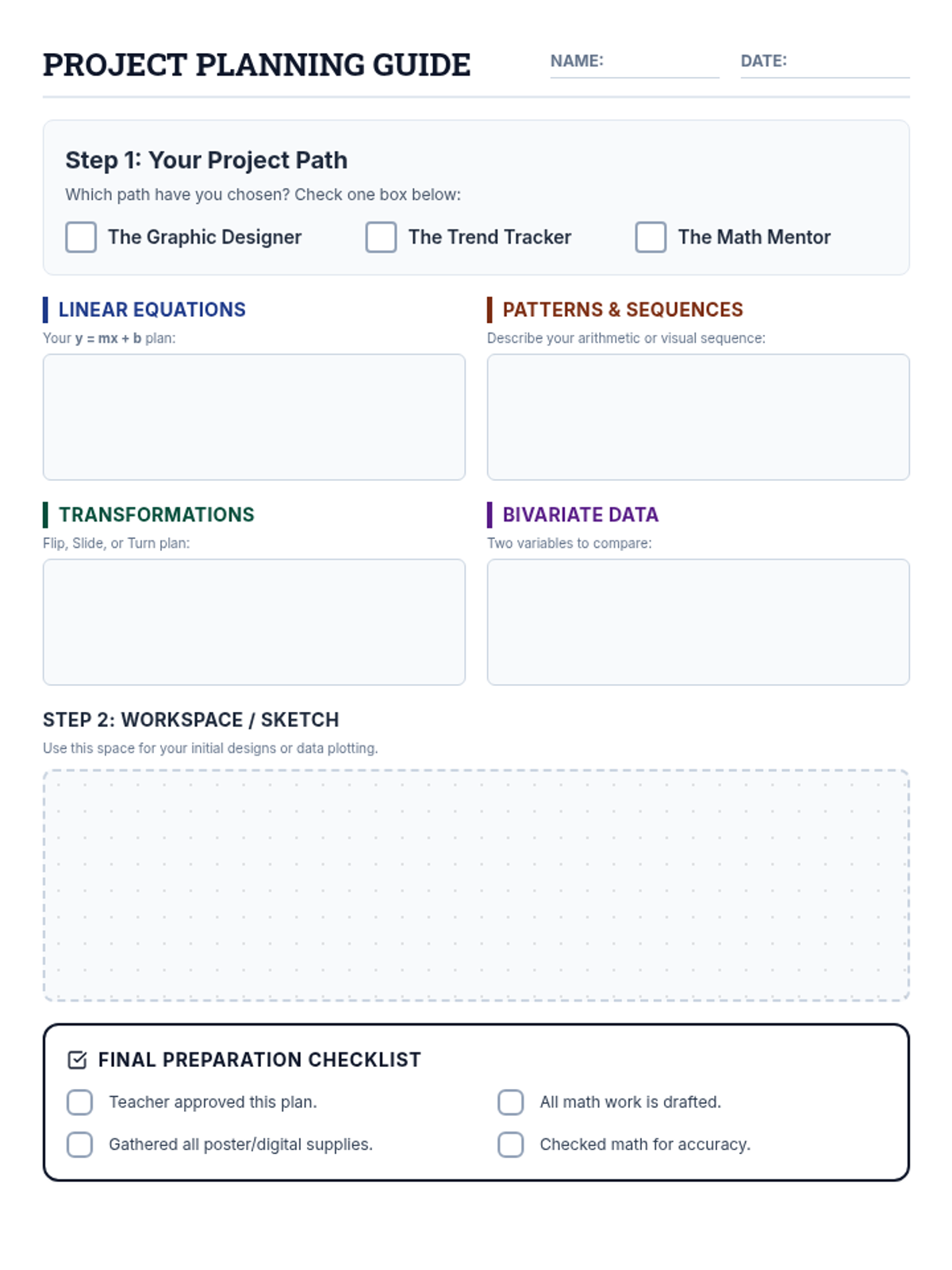
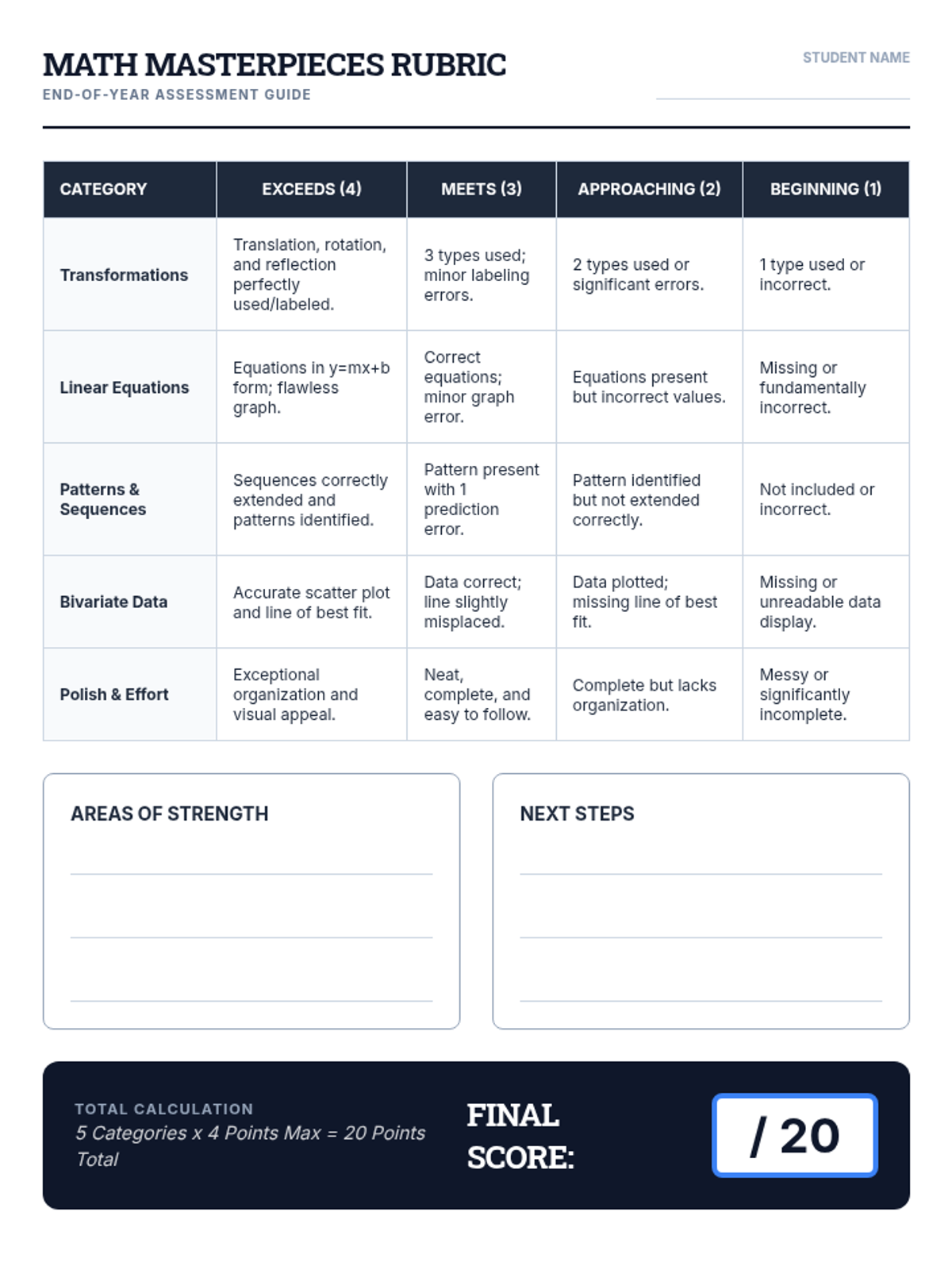
A creative end-of-year project where students choose between three paths to demonstrate mastery of transformations, linear equations, exponents, and bivariate data. Designed with scaffolded options for 8th-grade students.
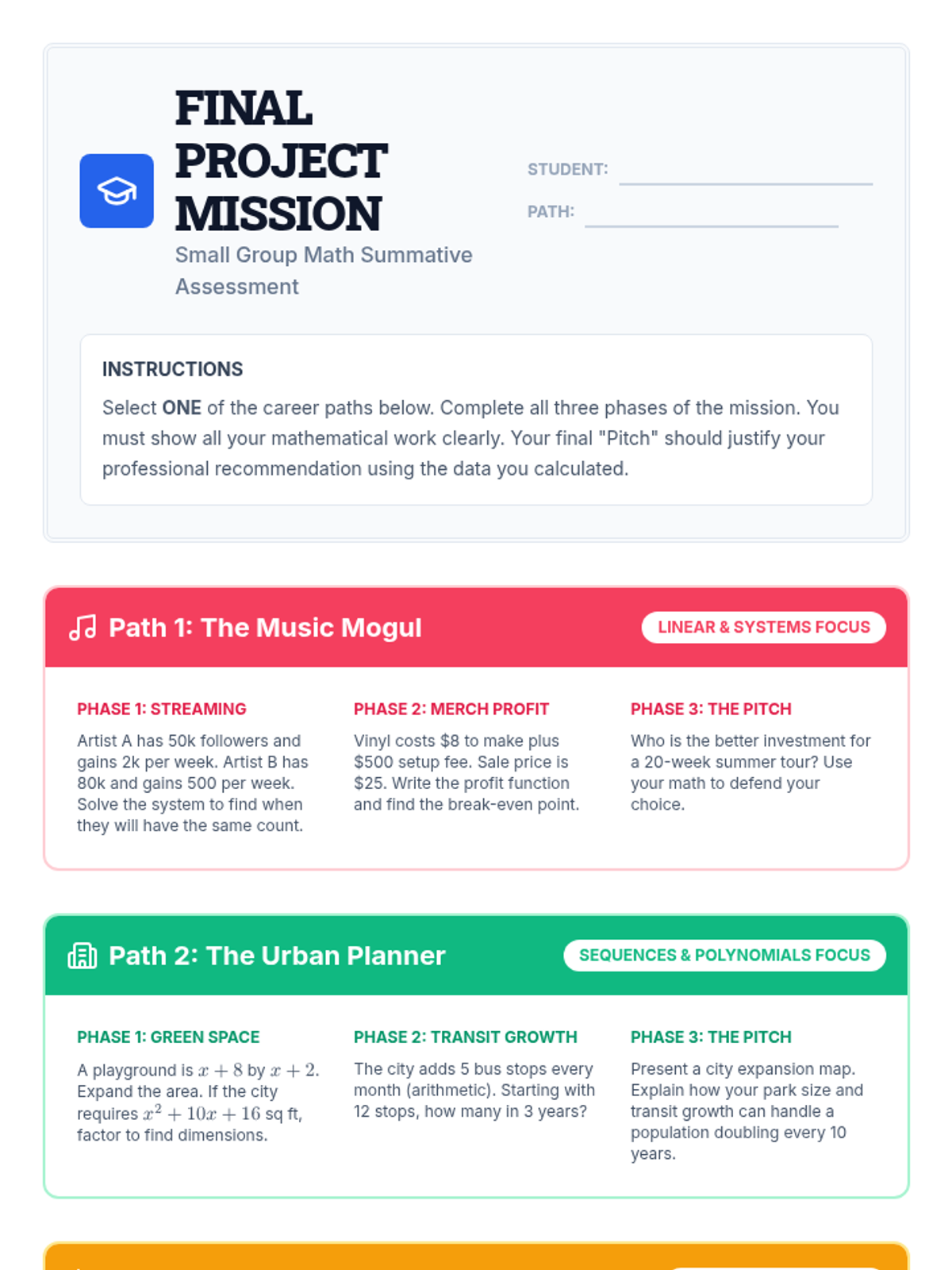
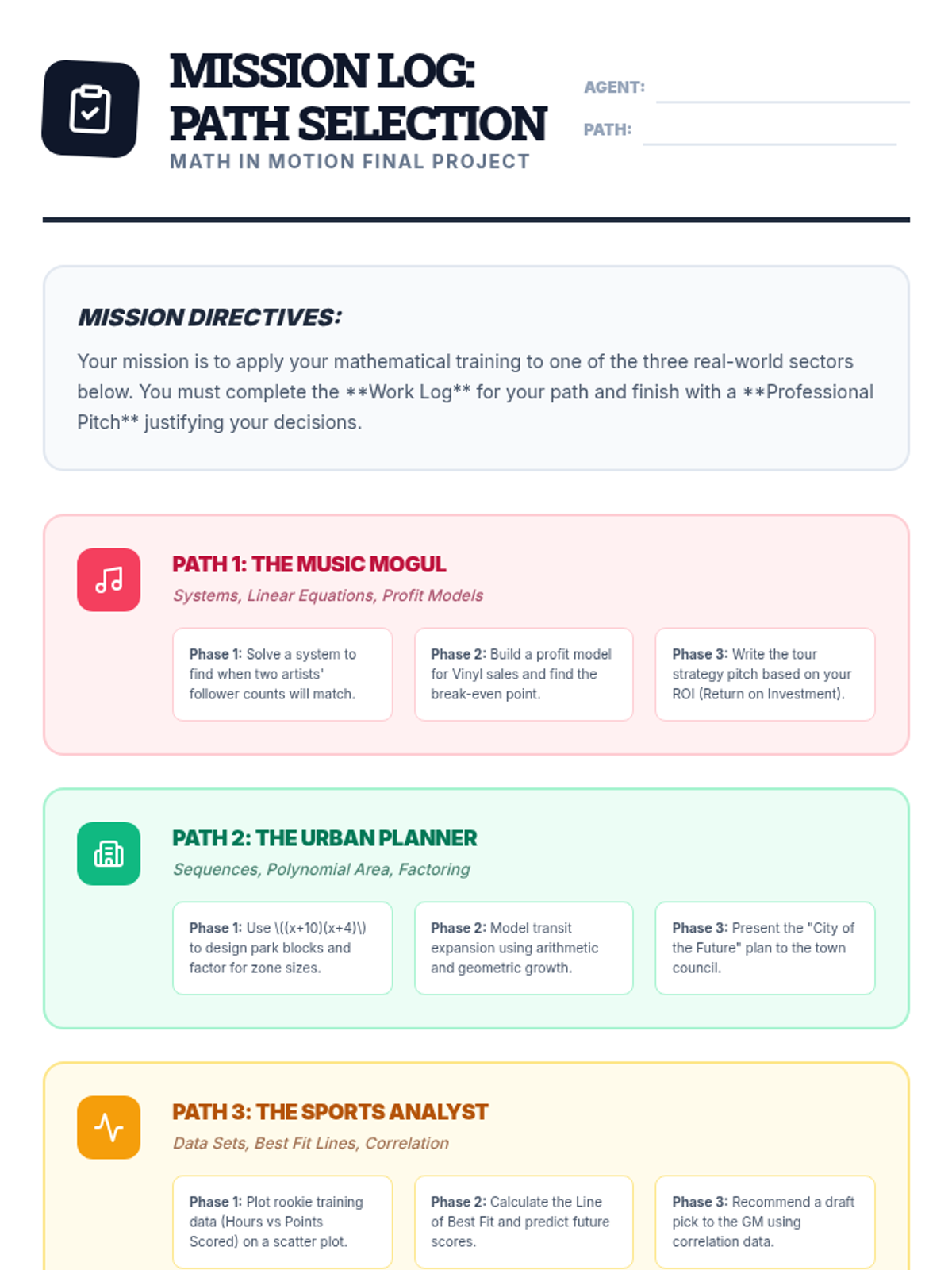
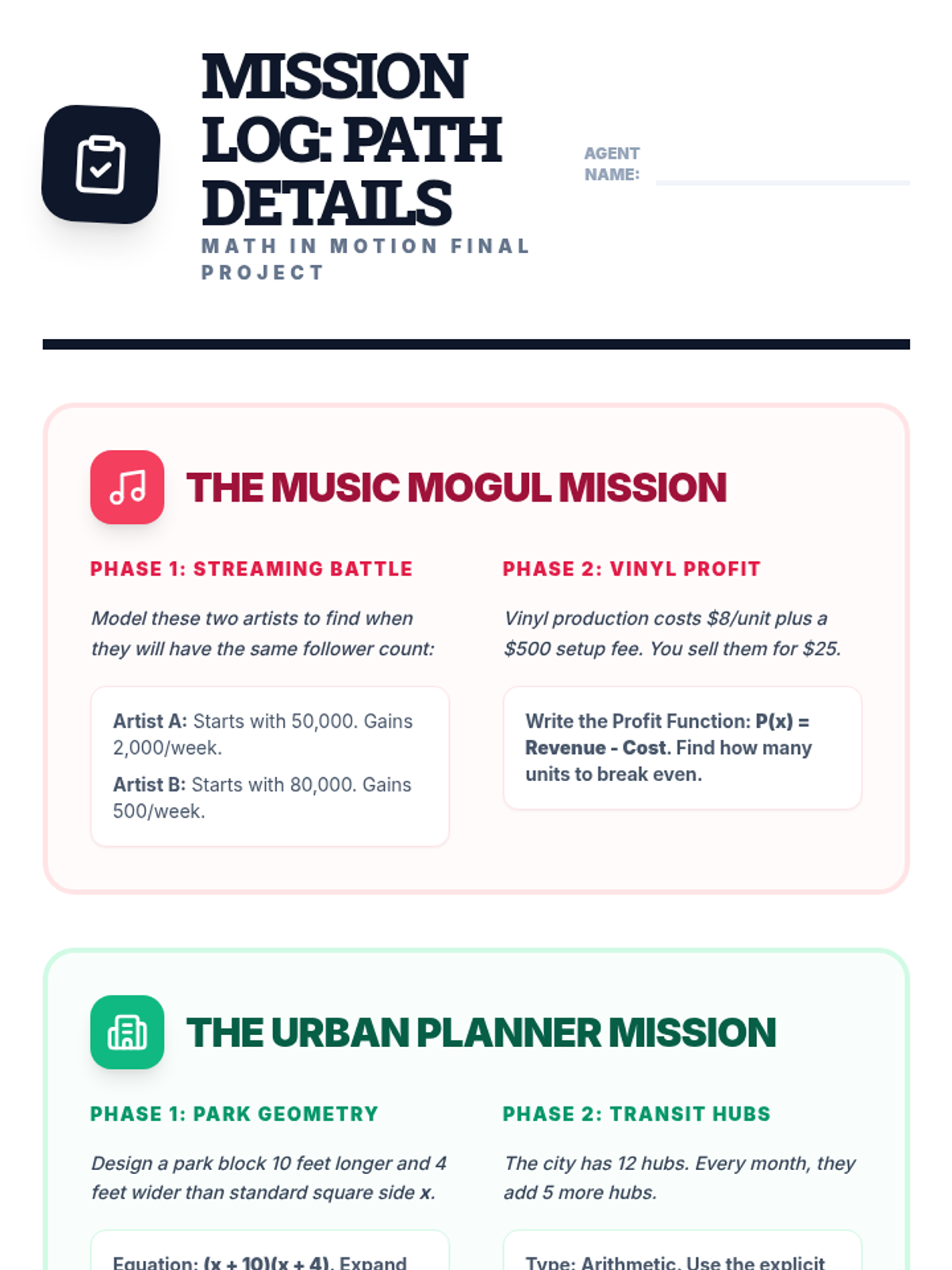
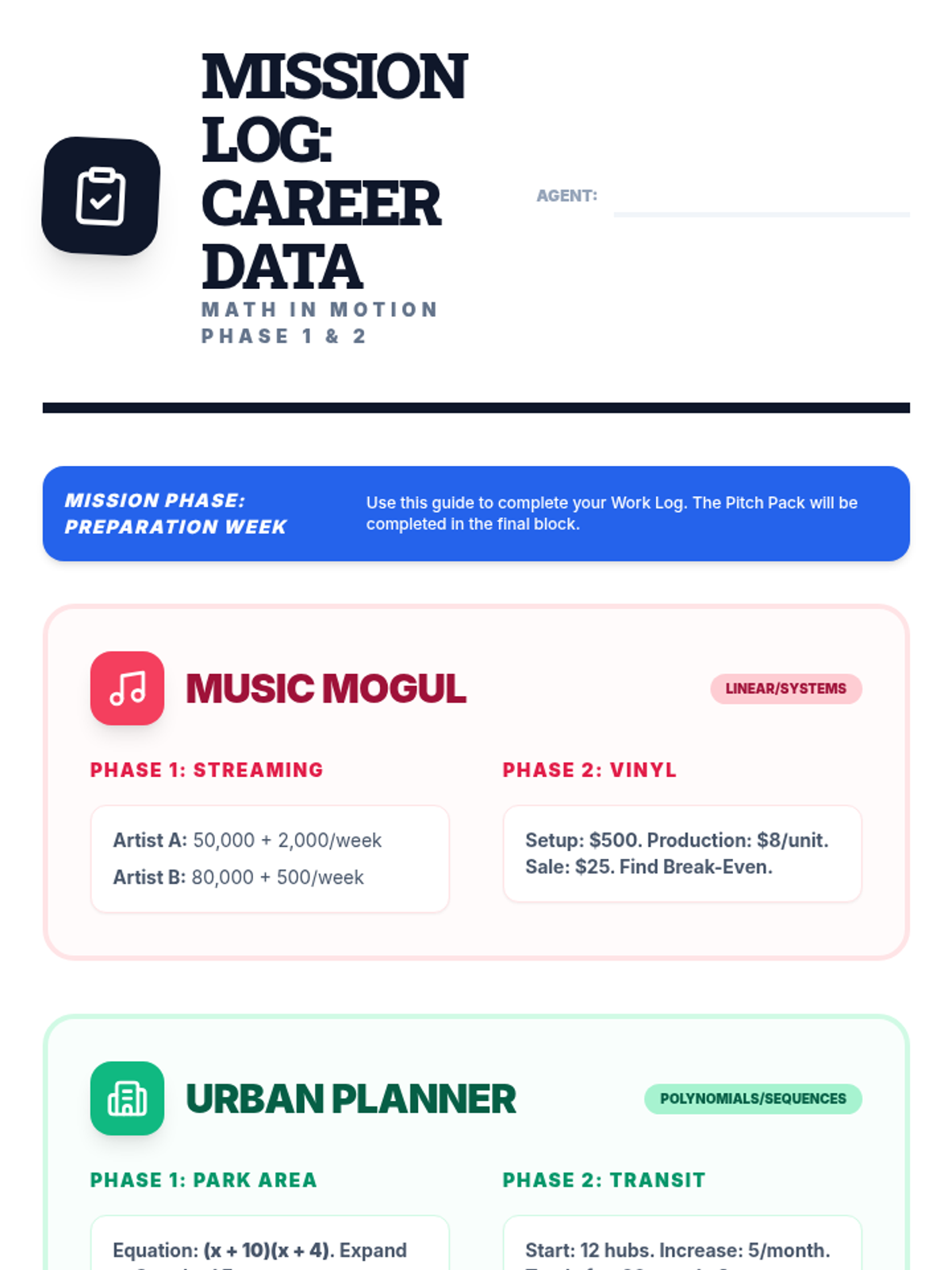
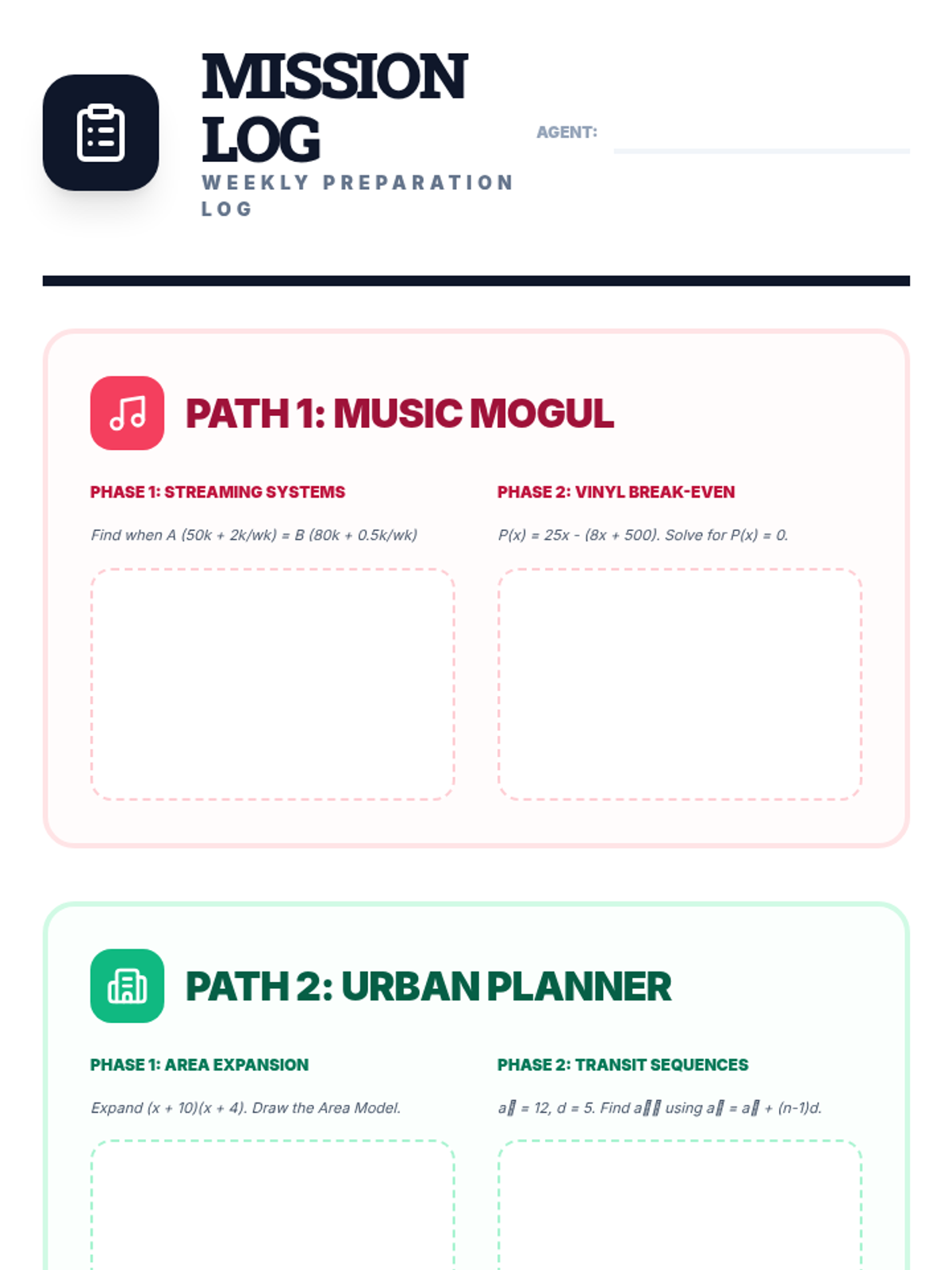
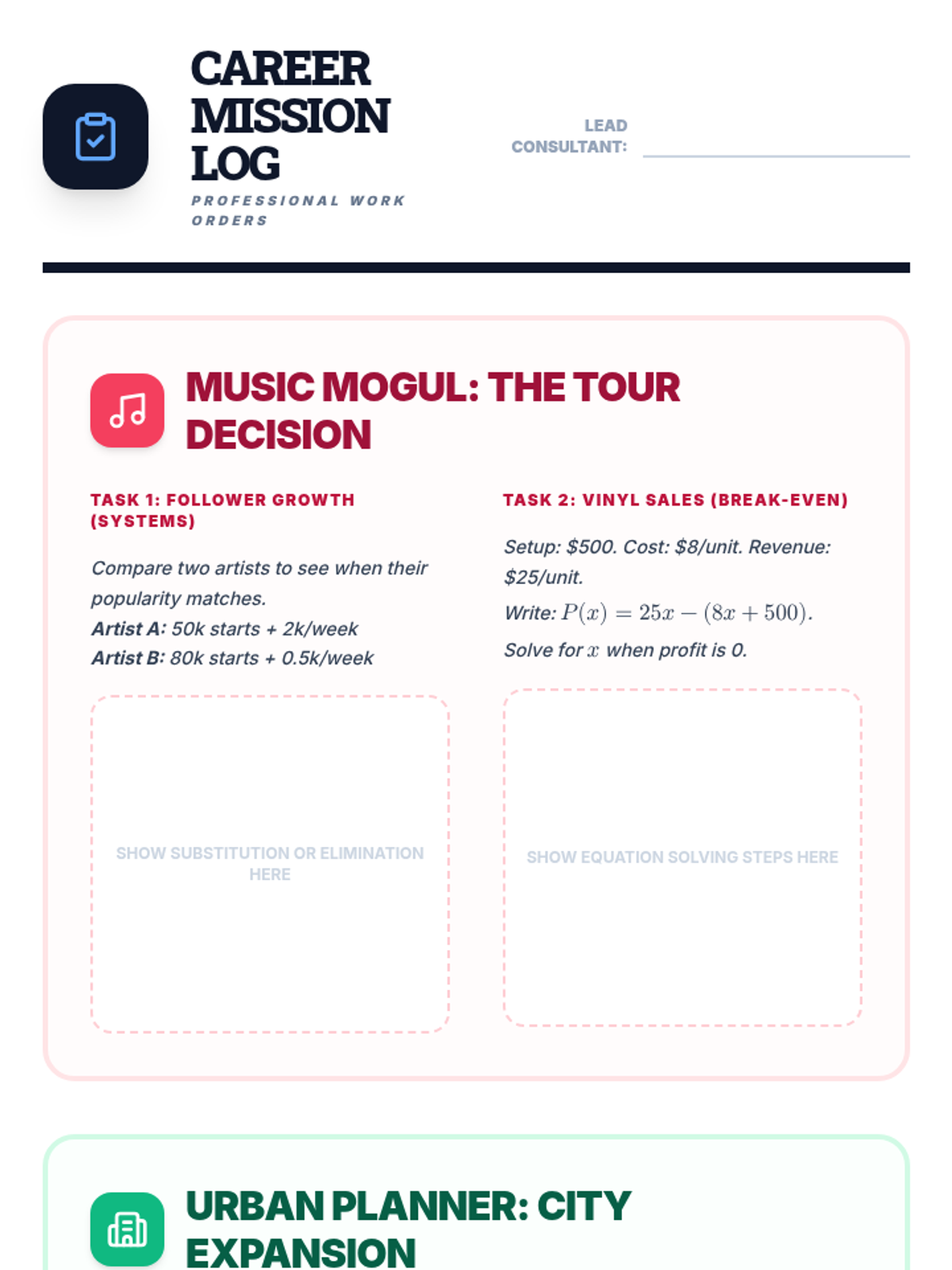
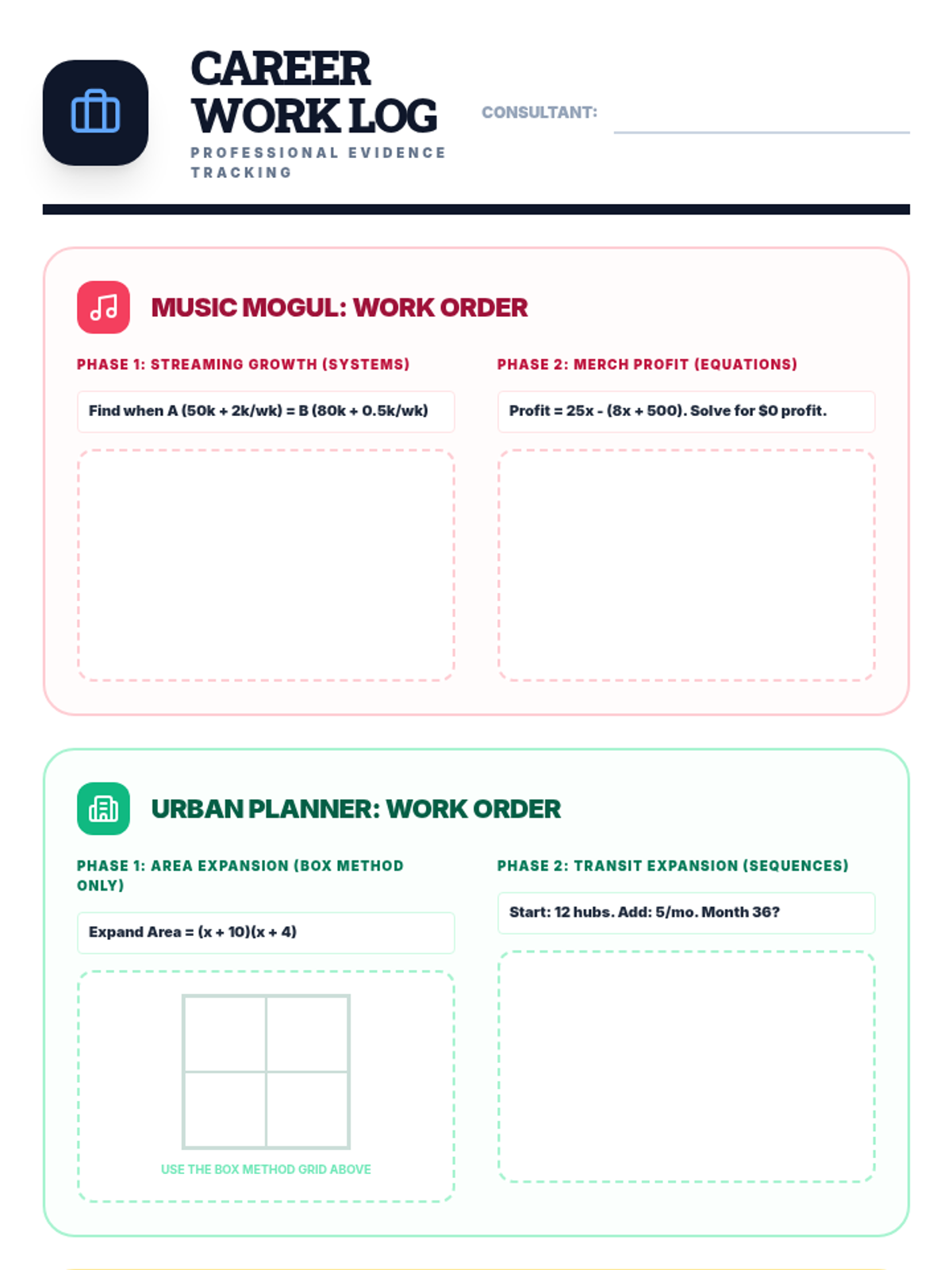
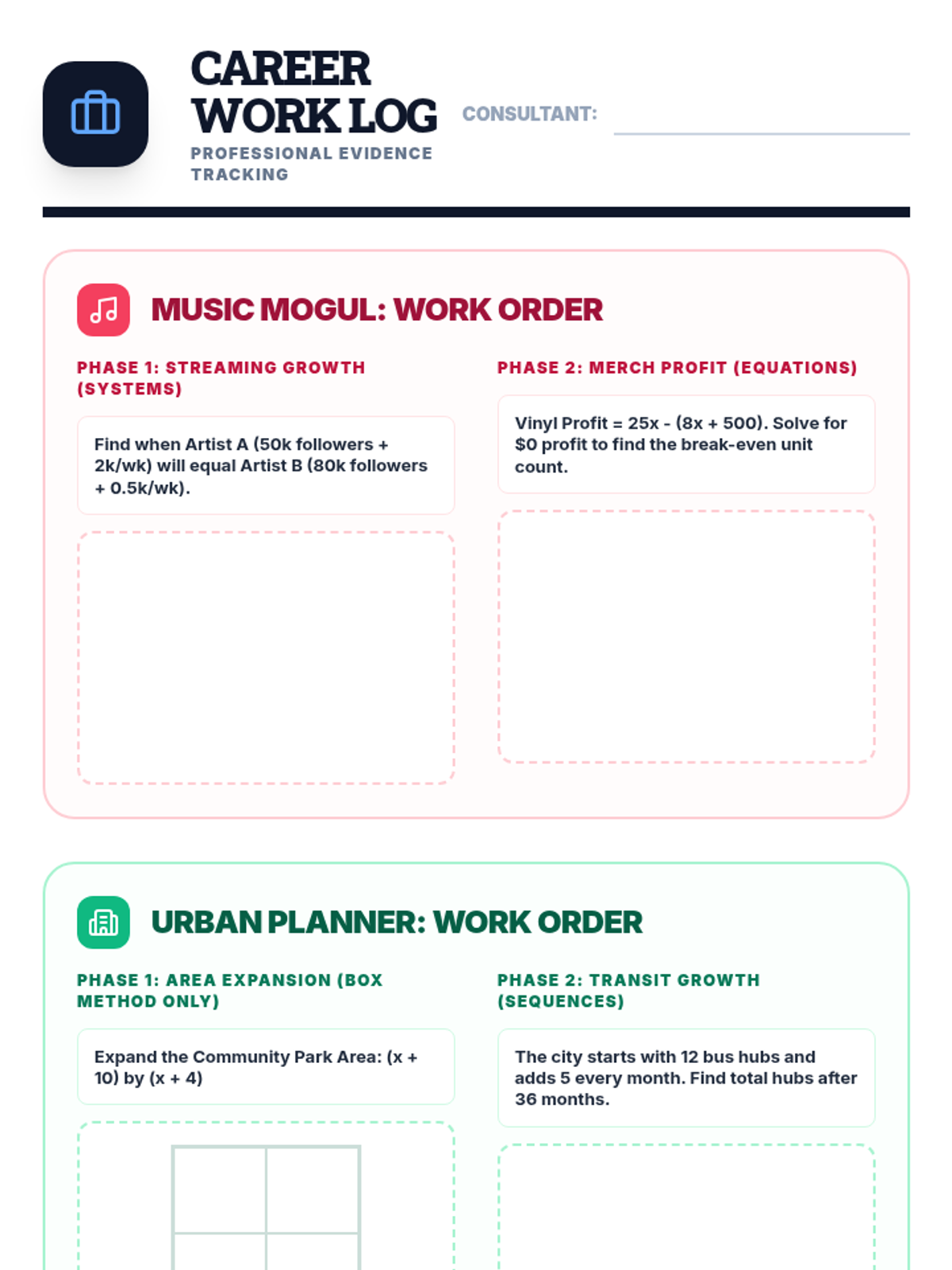
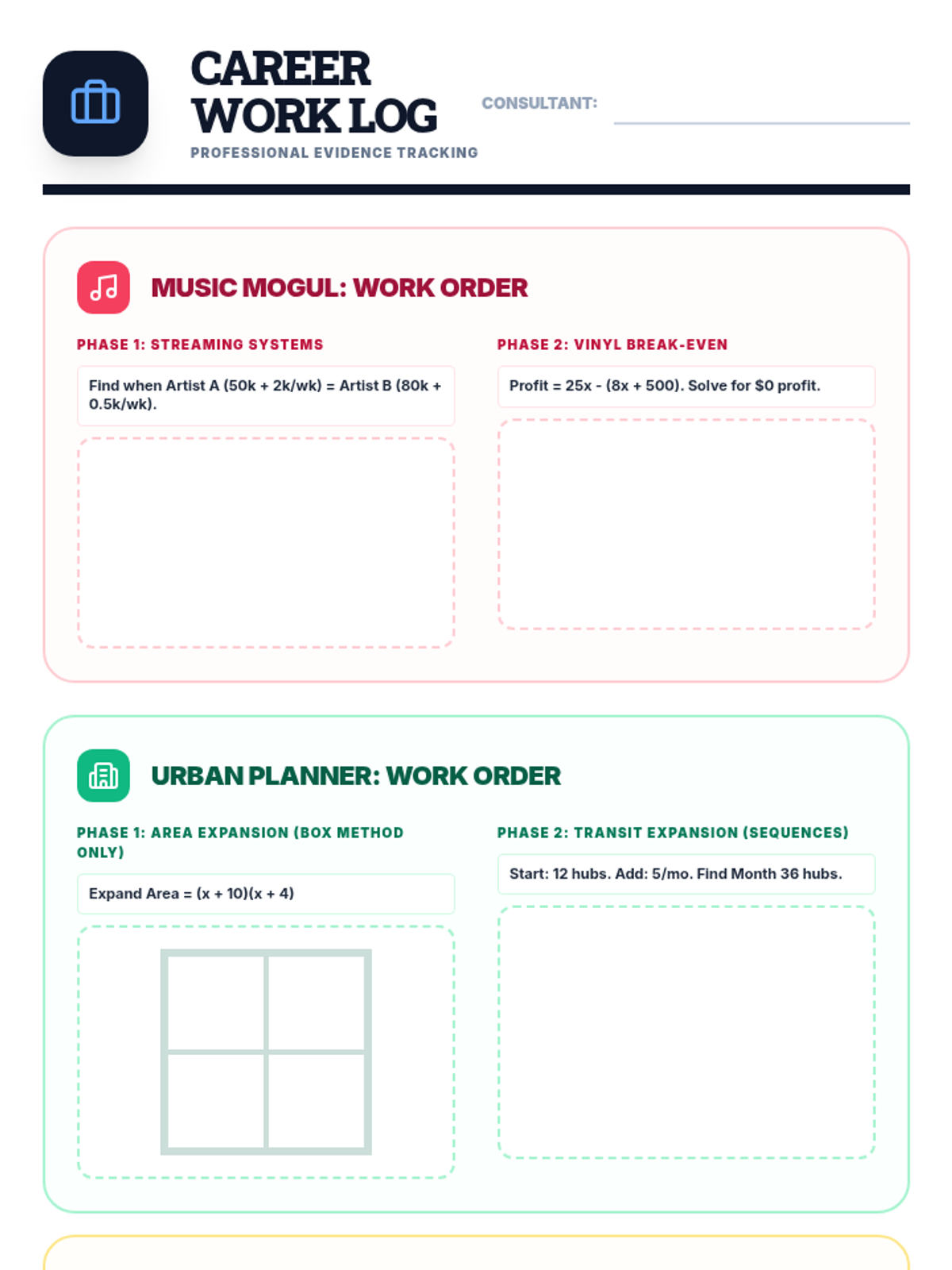
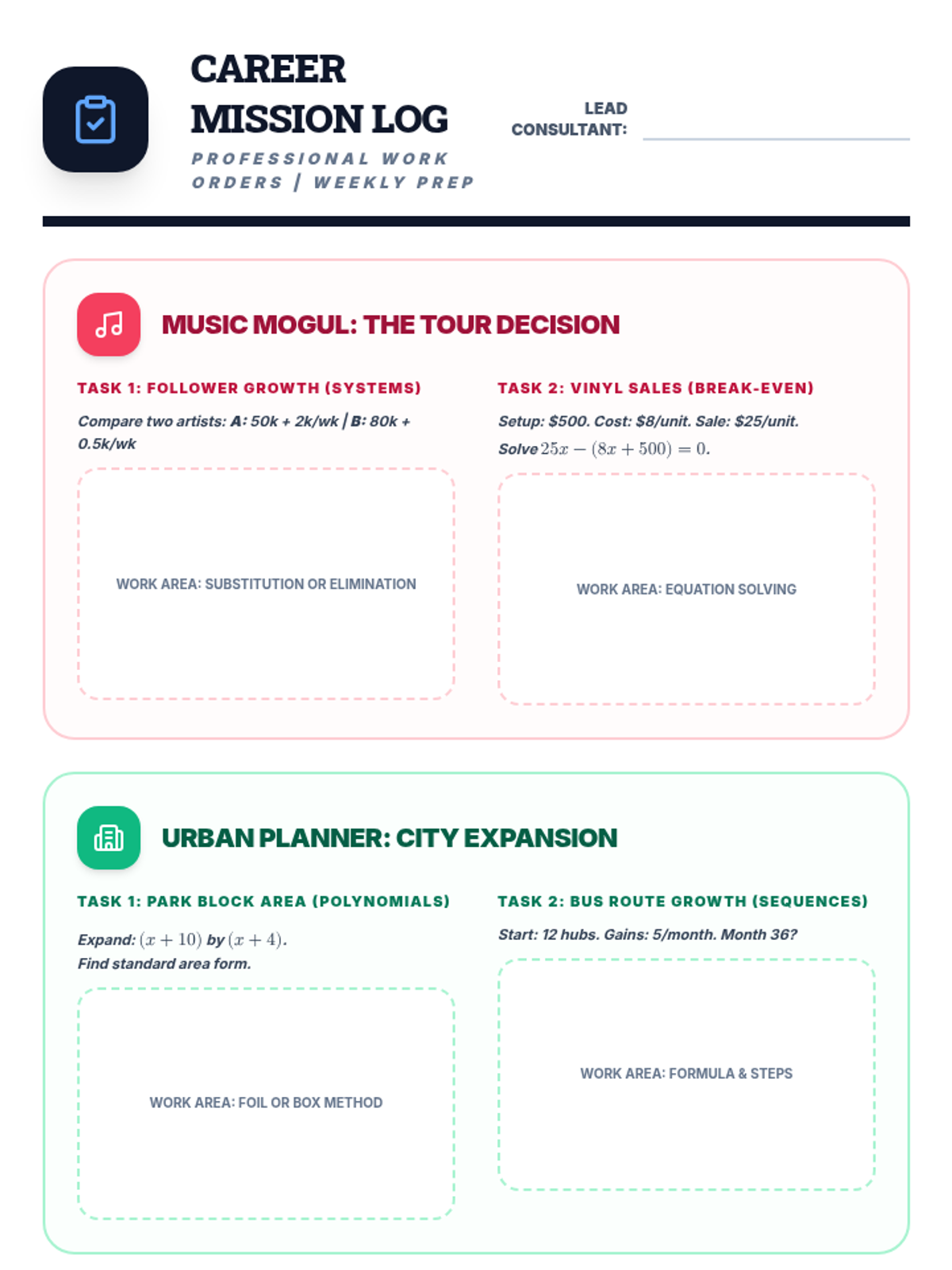
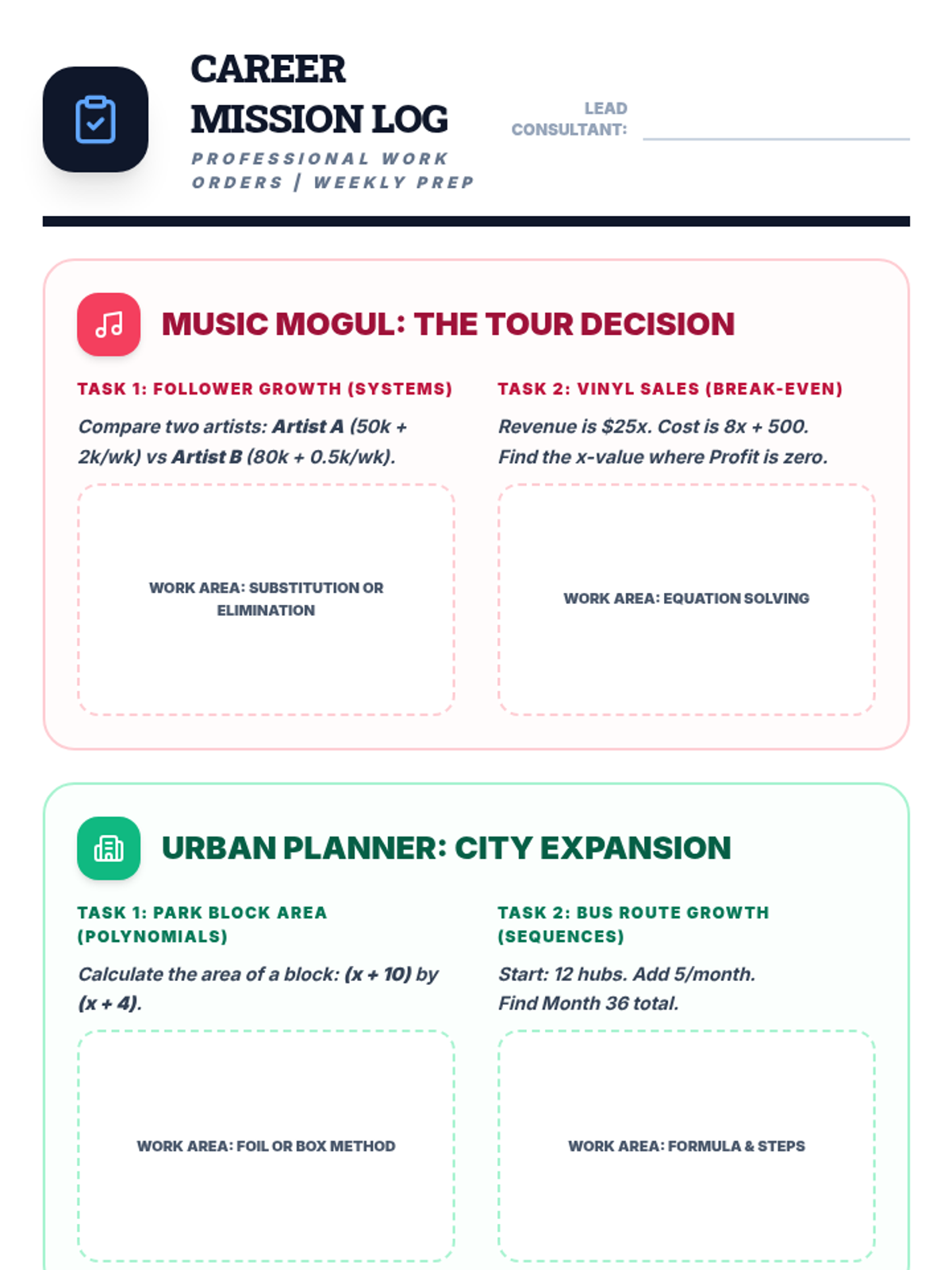
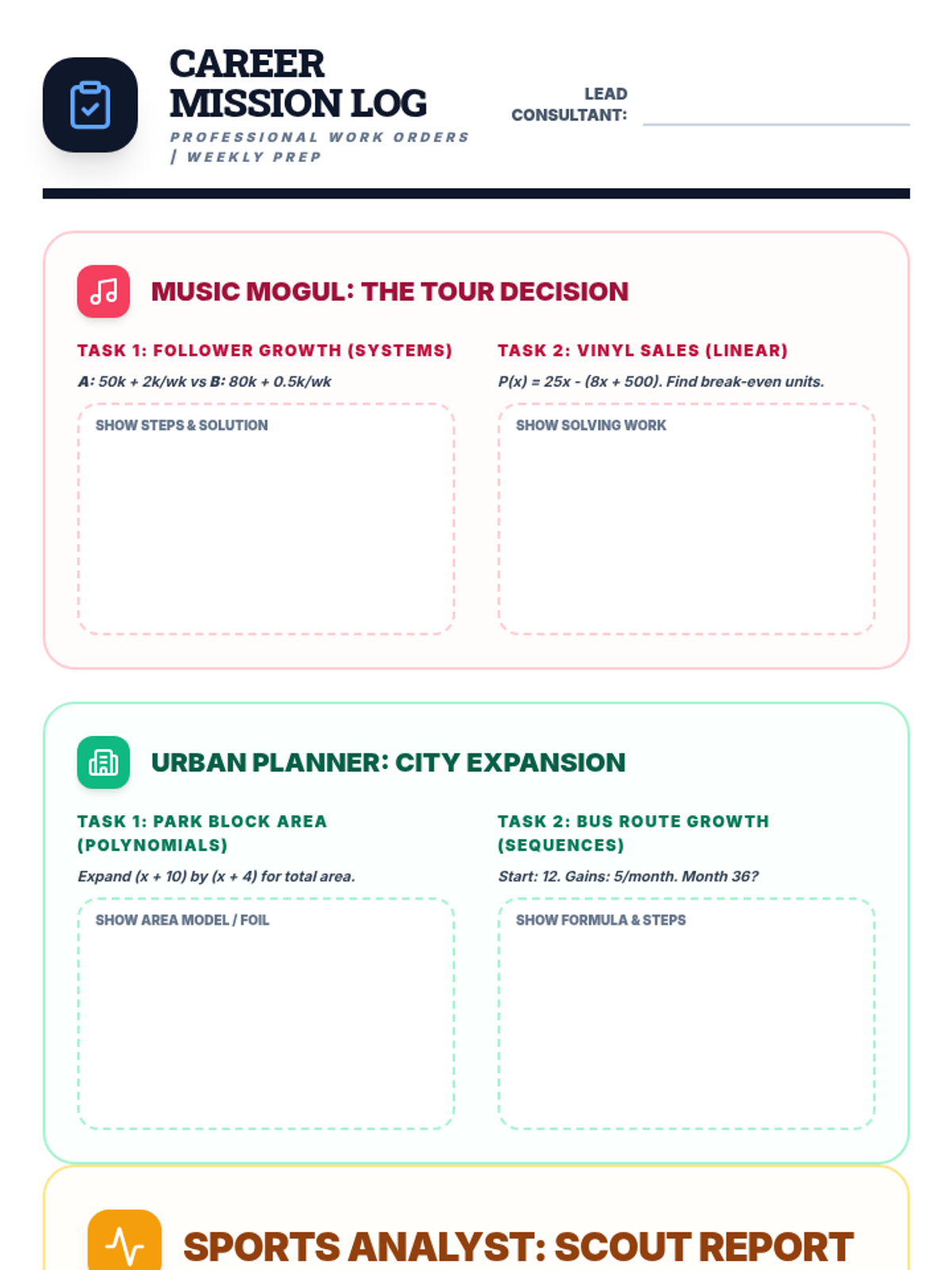
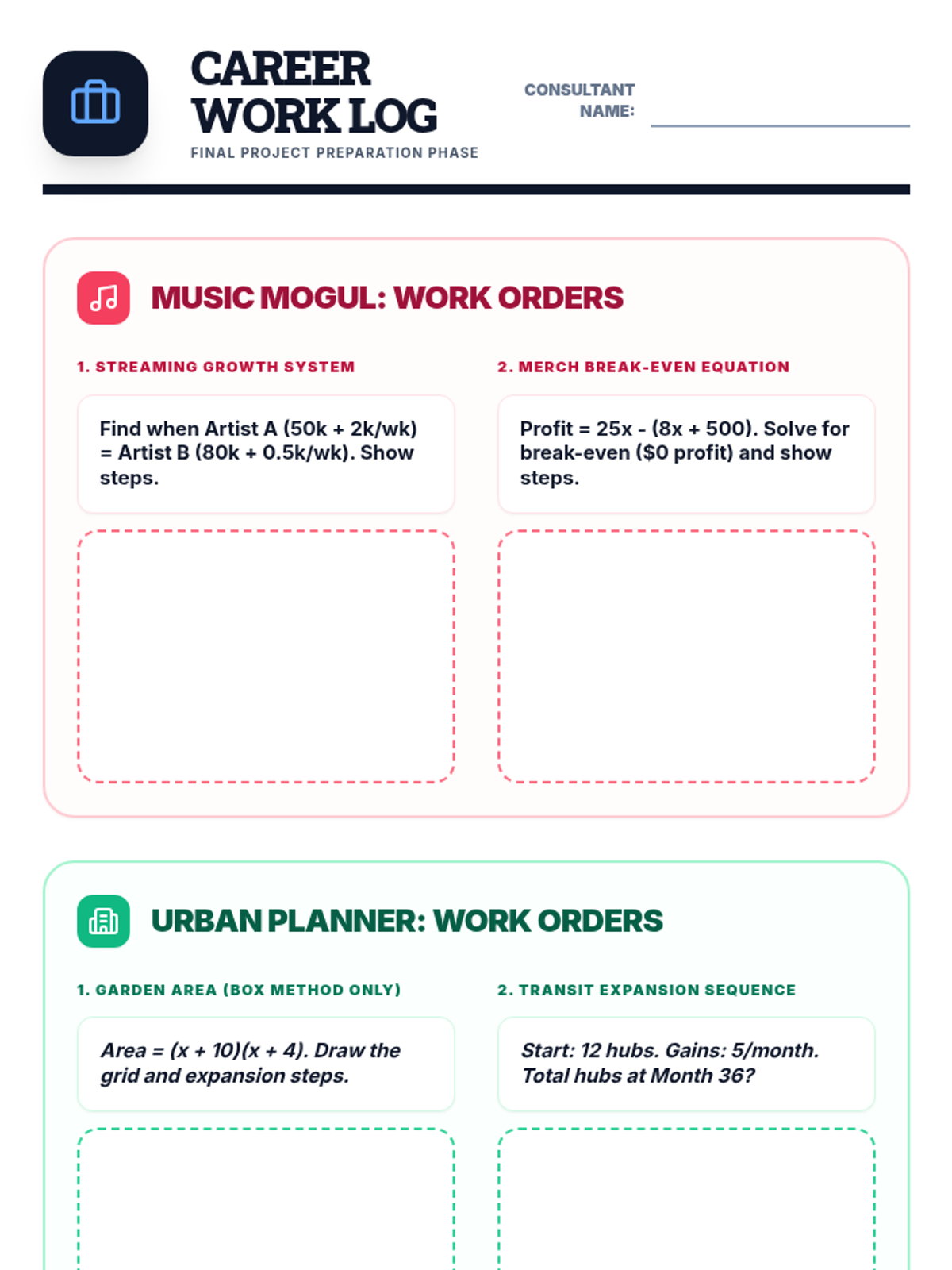
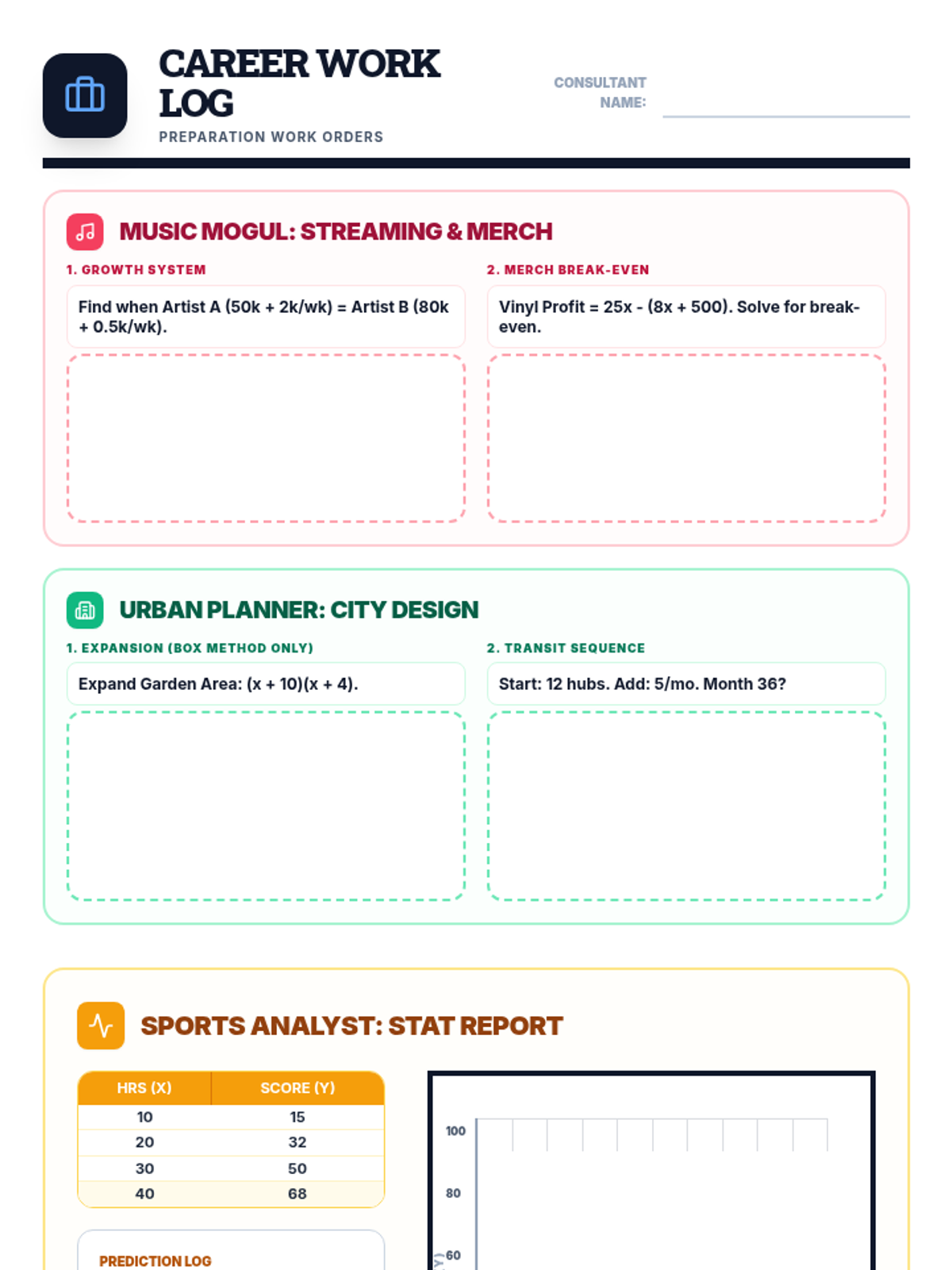
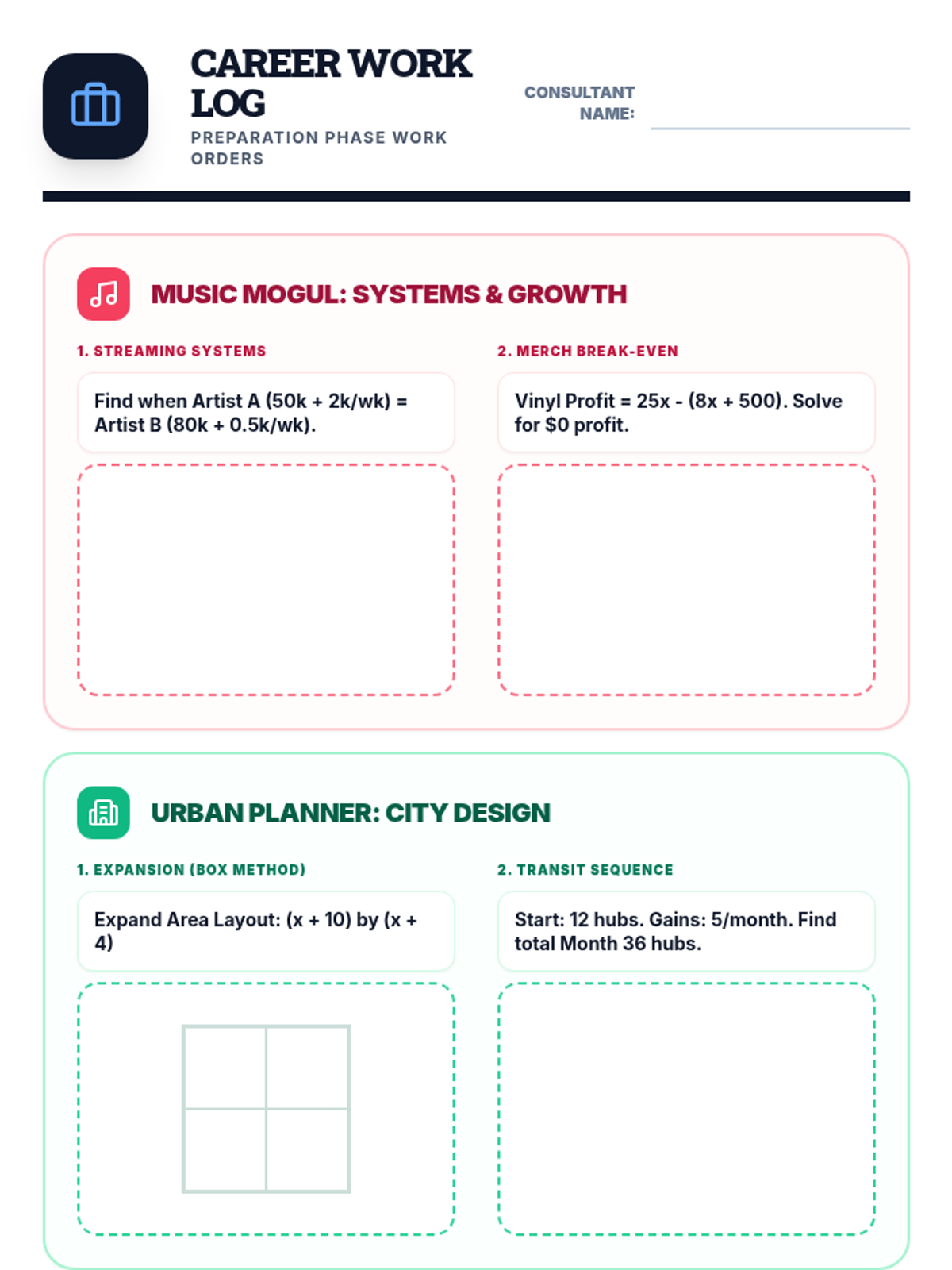
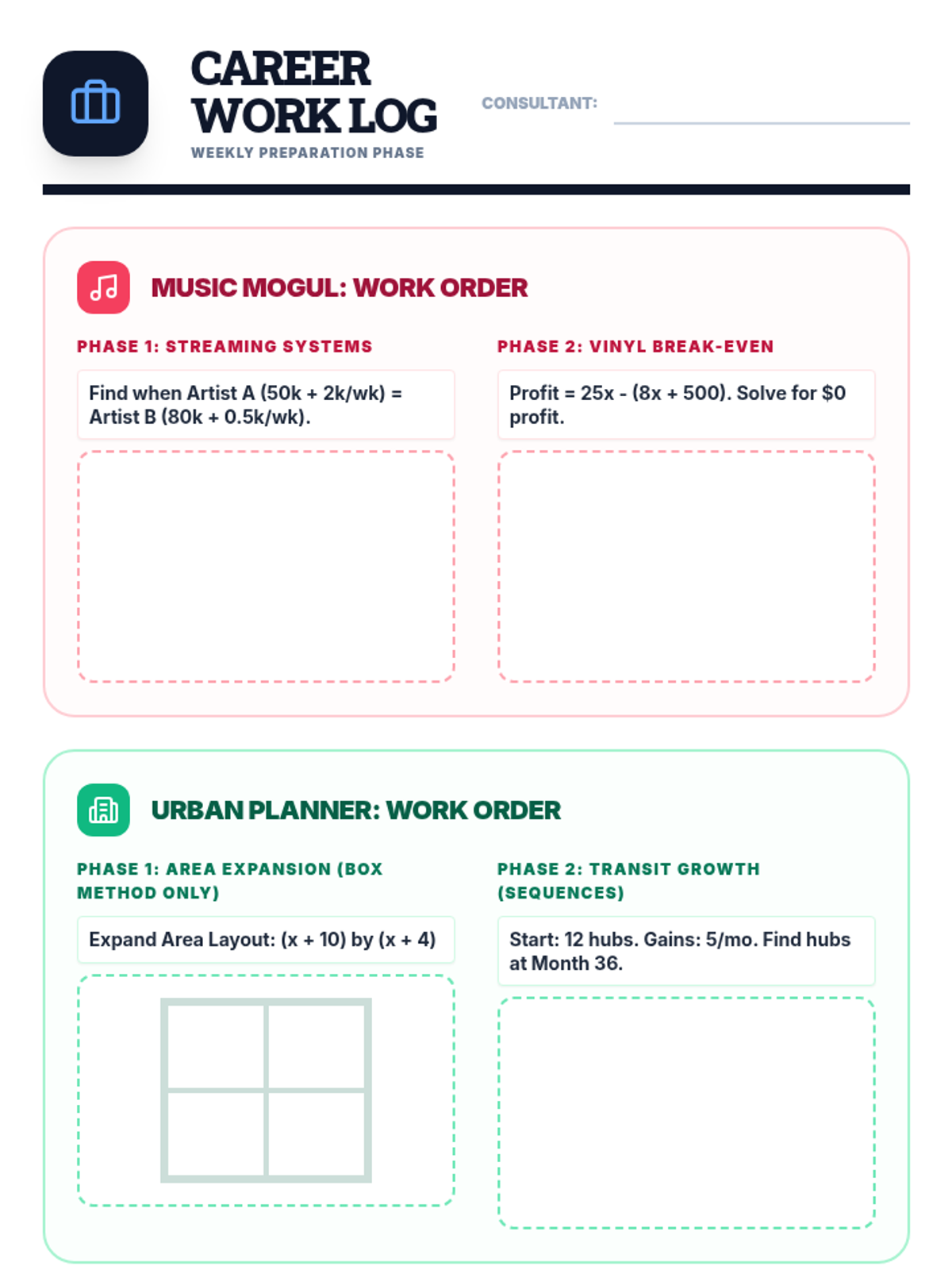
The final project phase where students select one of three real-world career paths (Music Mogul, Urban Planner, or Sports Analyst) to apply their mathematical knowledge in a summative assessment.
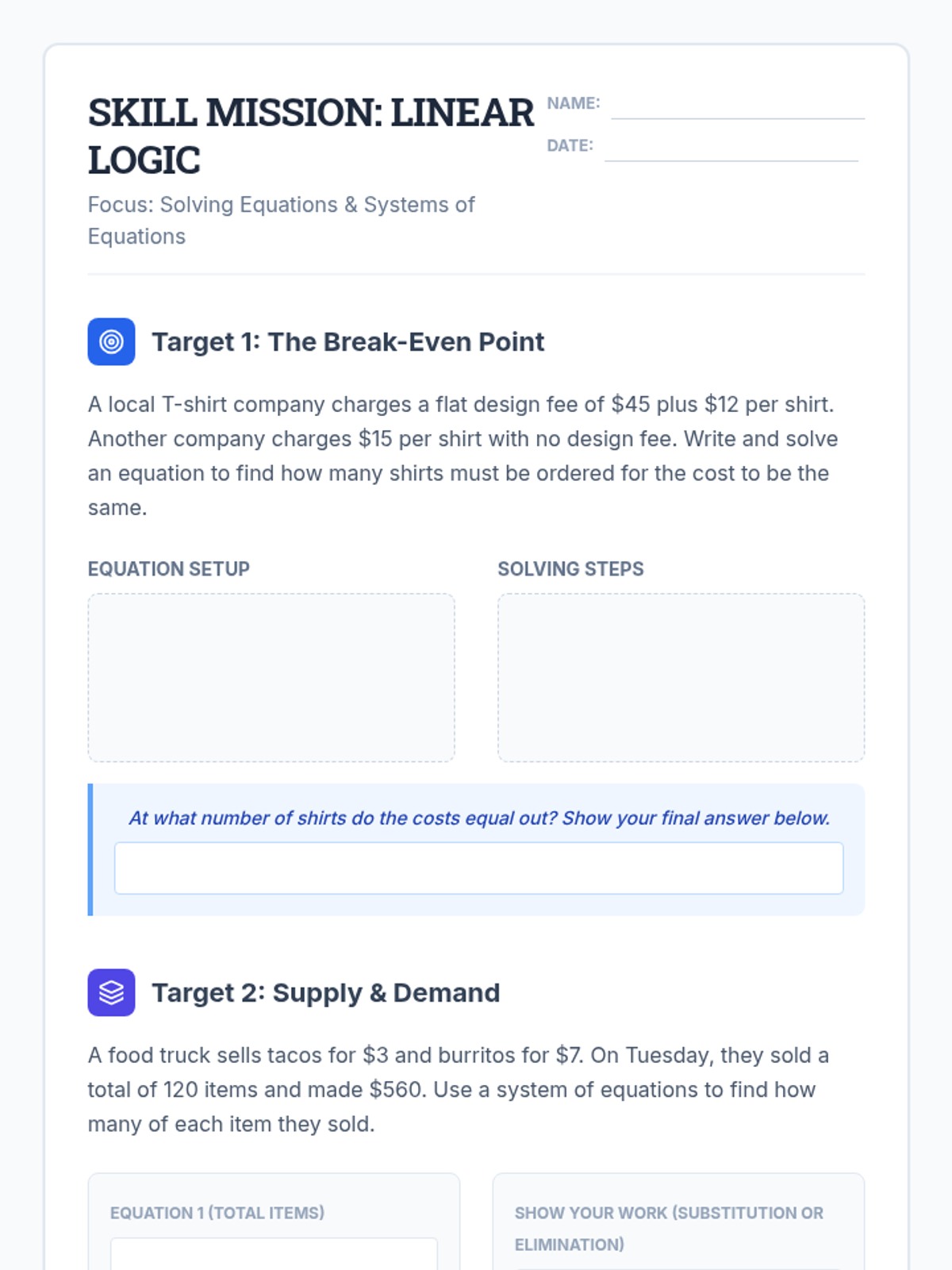
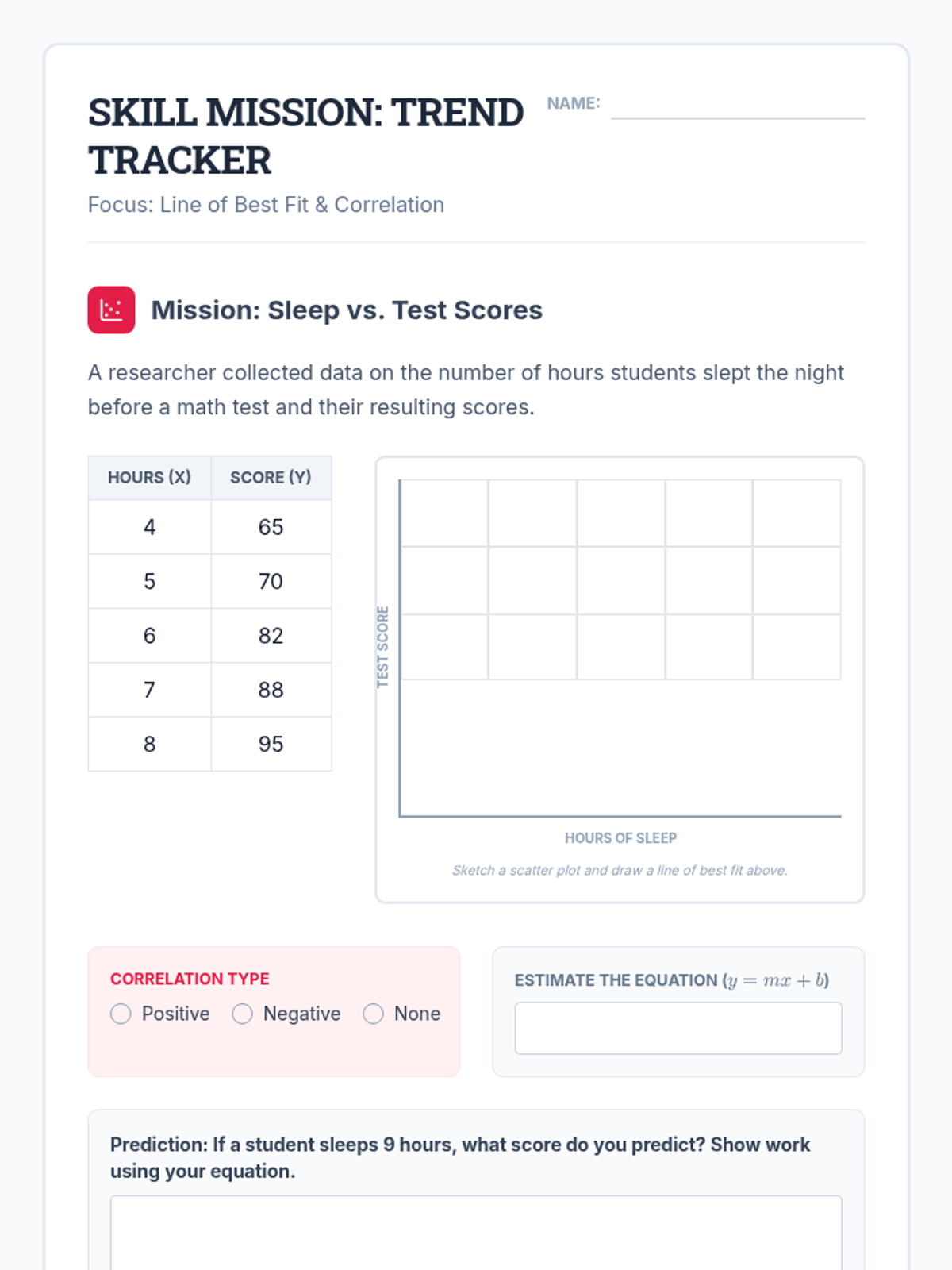
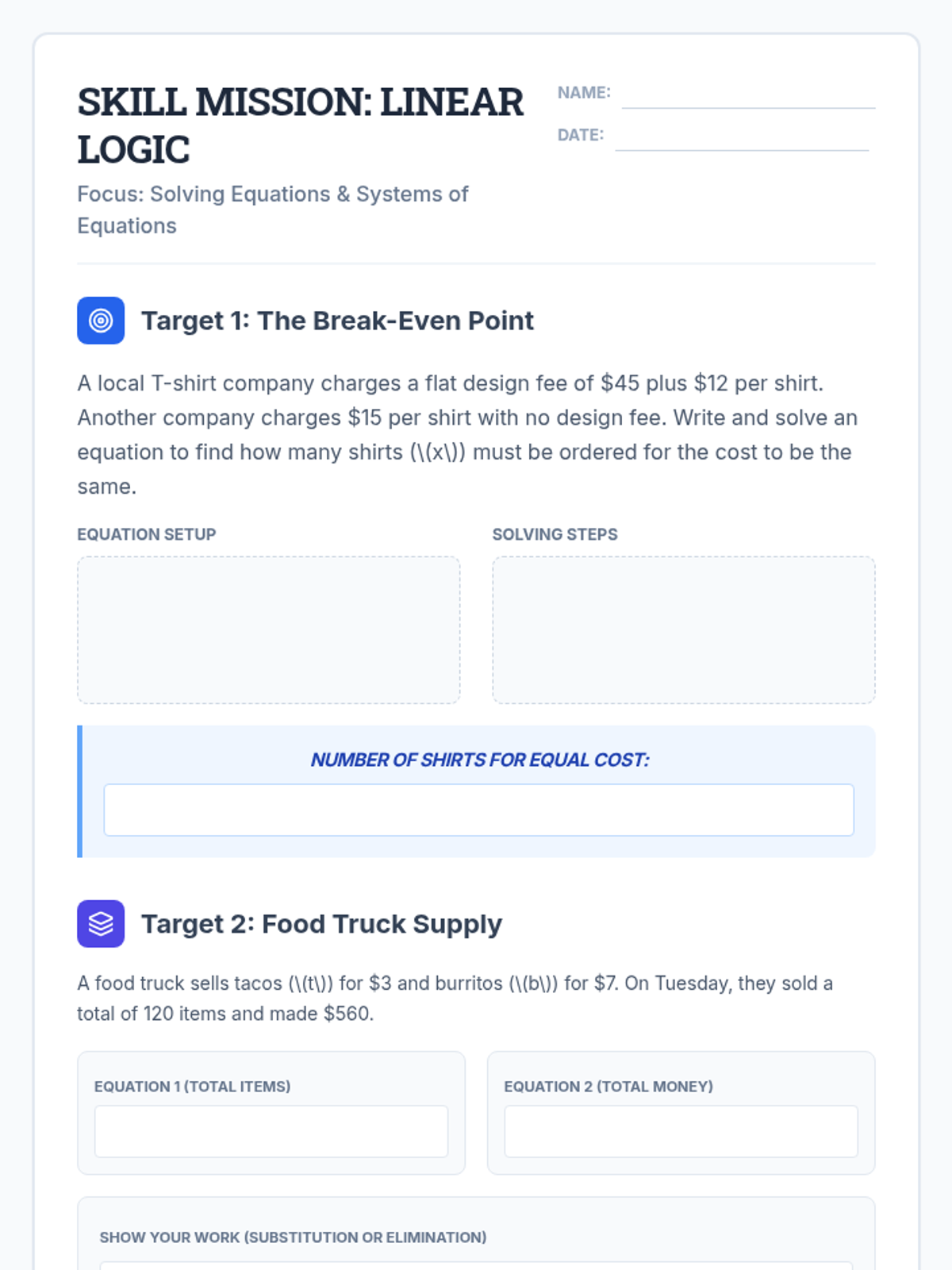
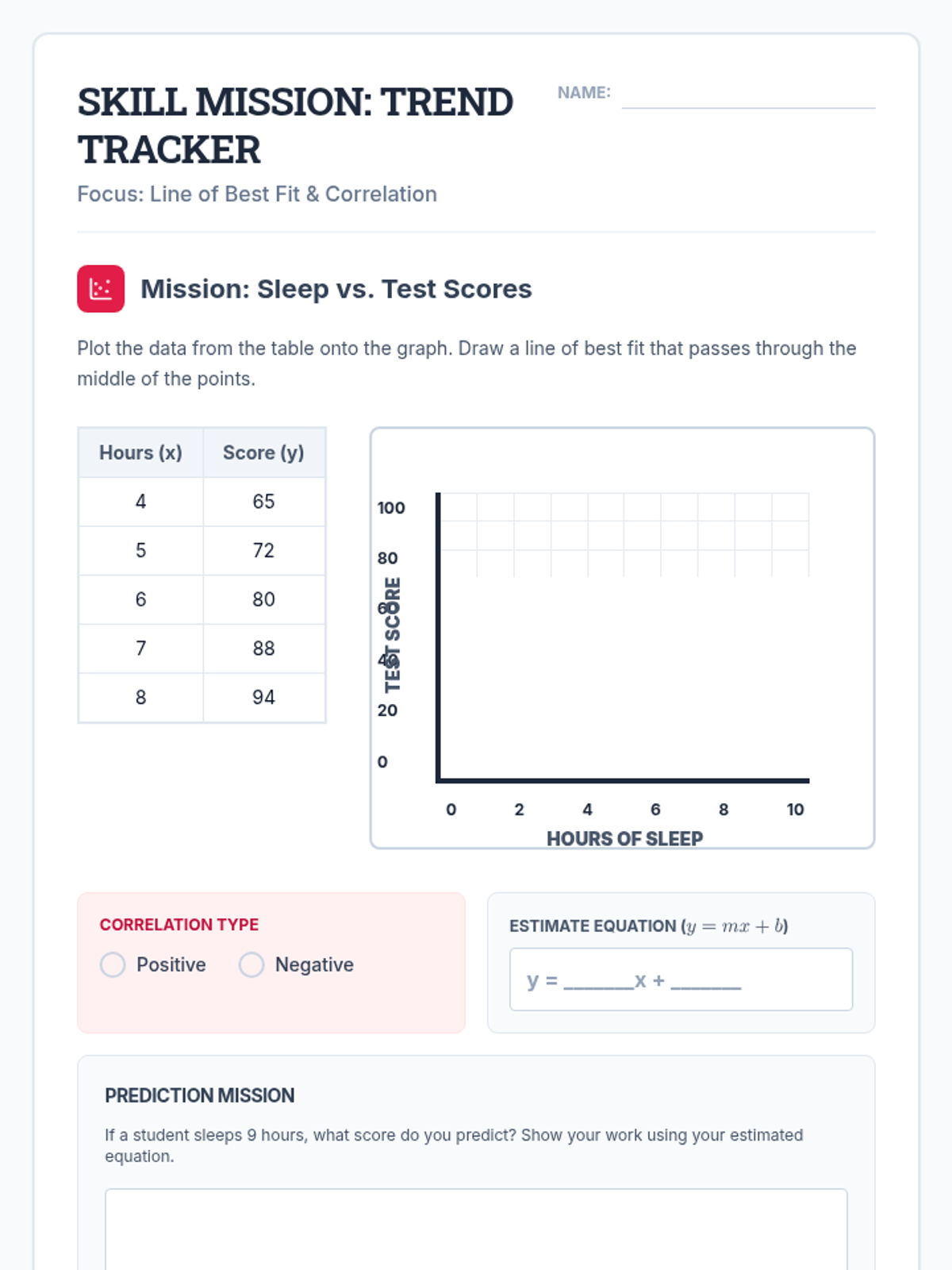
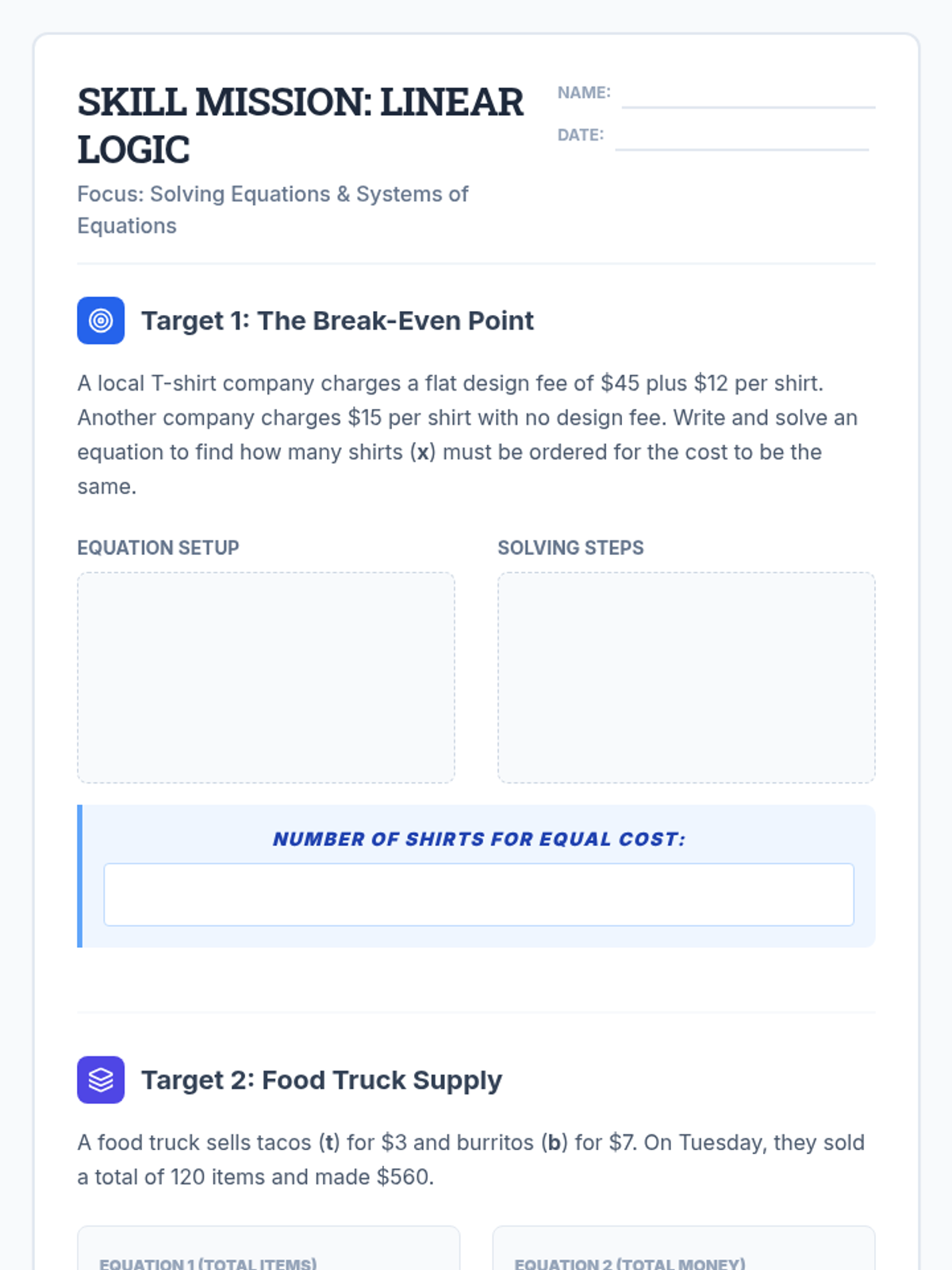
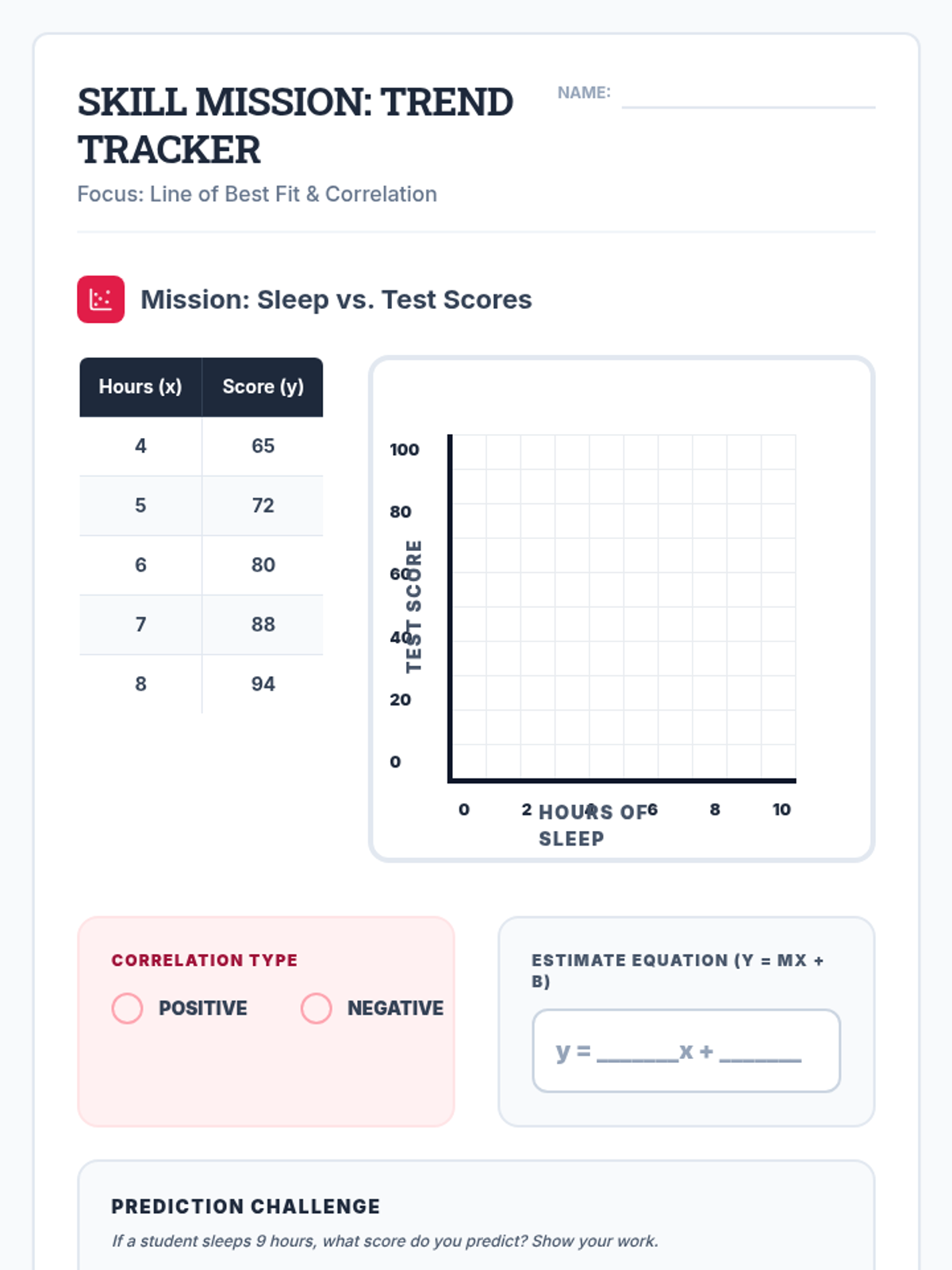
Scaffolded practice activities ('Skill Missions') that review key concepts: linear equations, systems, sequences, lines of best fit, and factoring. These activities ensure students have the foundational skills needed for their final project.
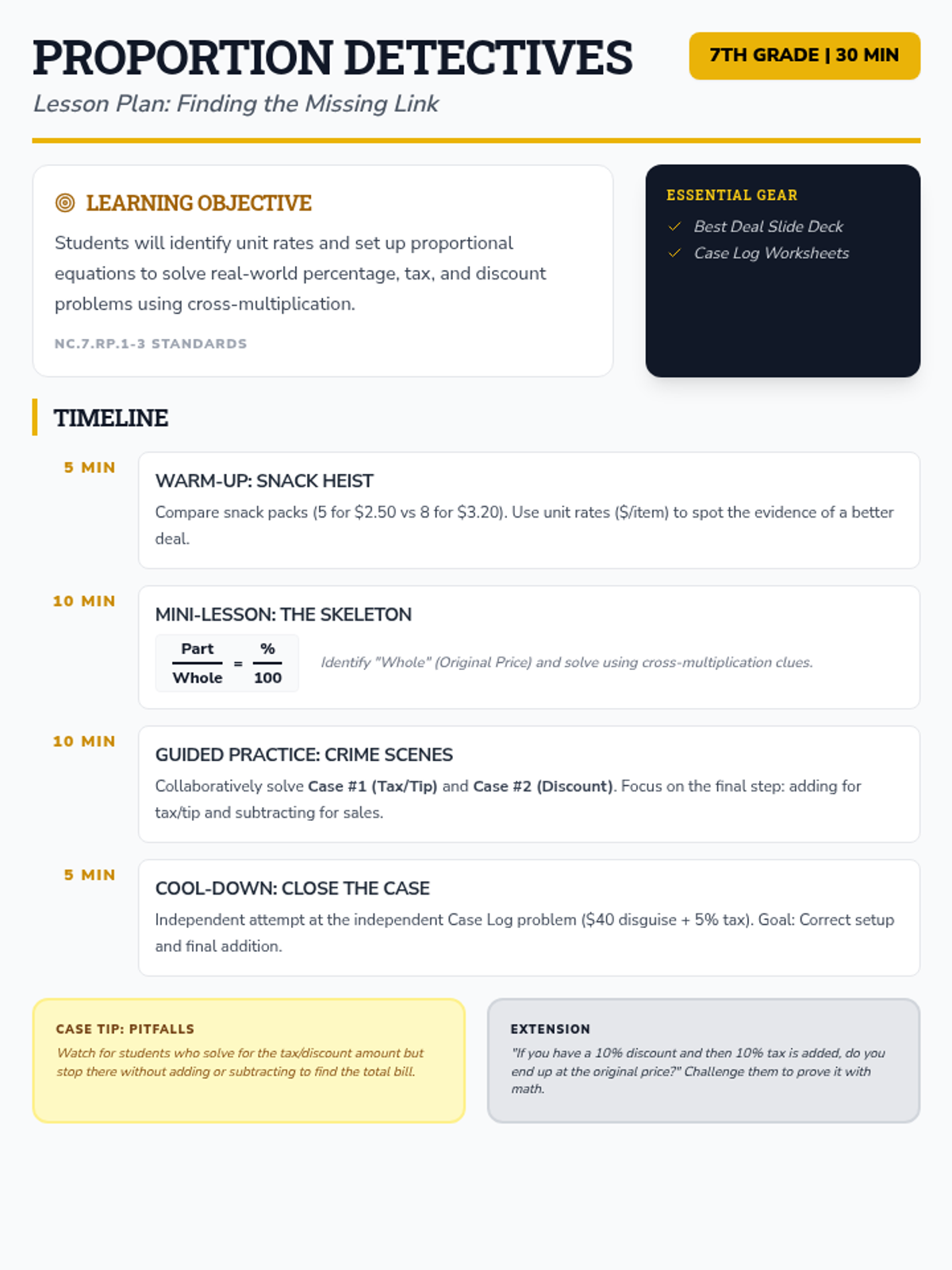
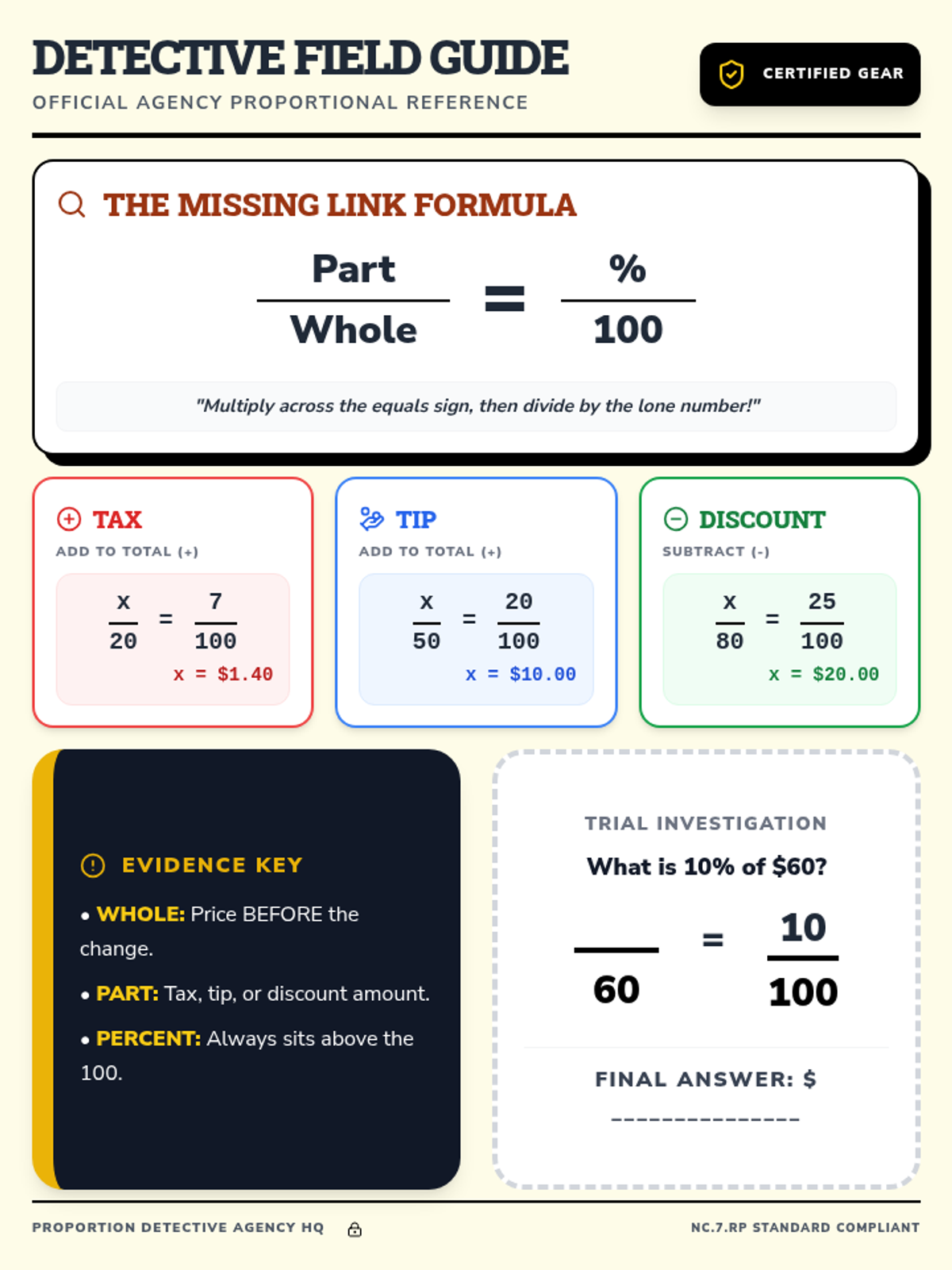
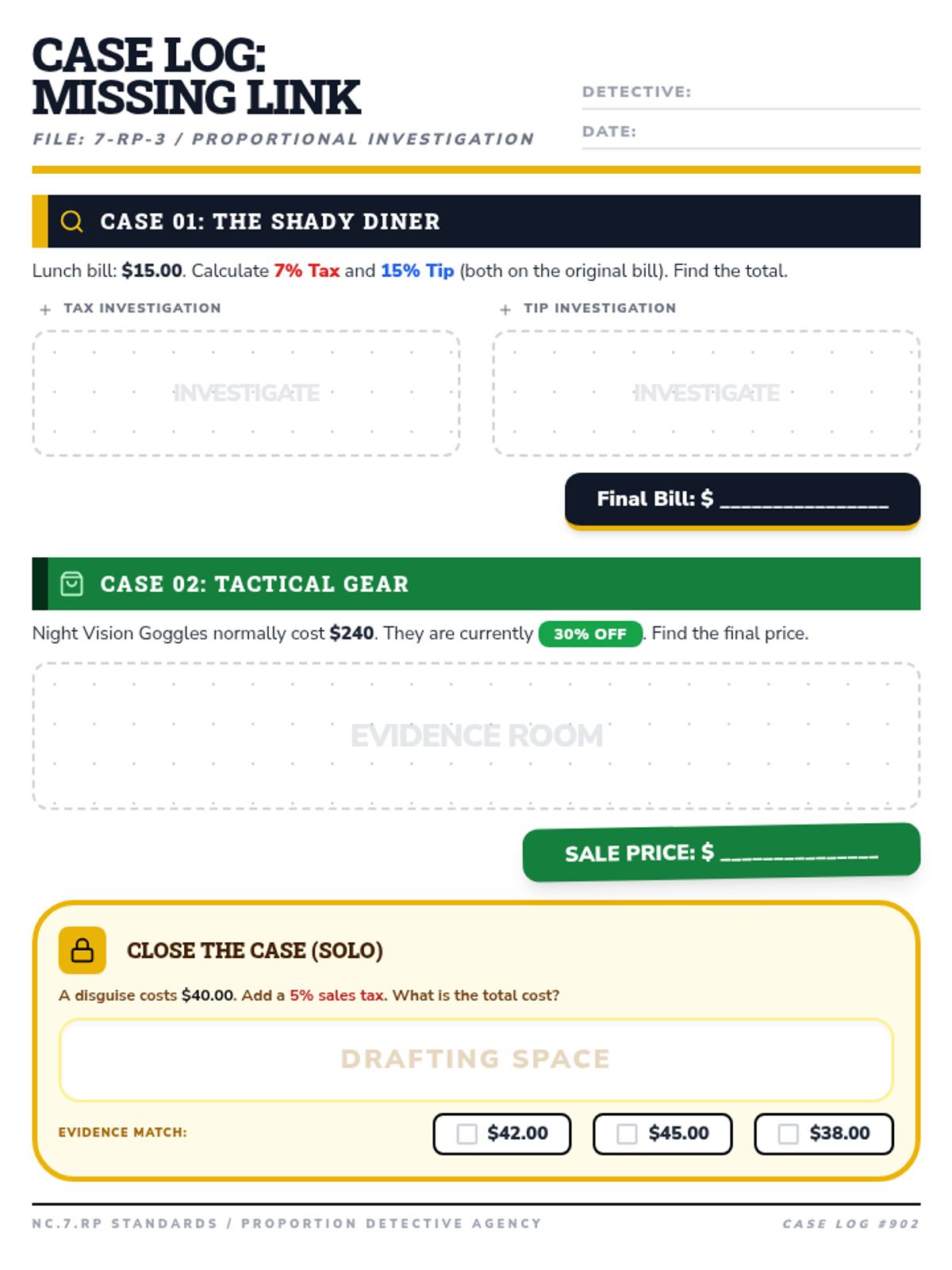
A fast-paced 7th-grade math lesson that transforms students into detectives solving real-world proportion mysteries involving unit rates, tax, tips, and discounts. Students learn to set up and solve proportional equations through a series of 'investigations'.
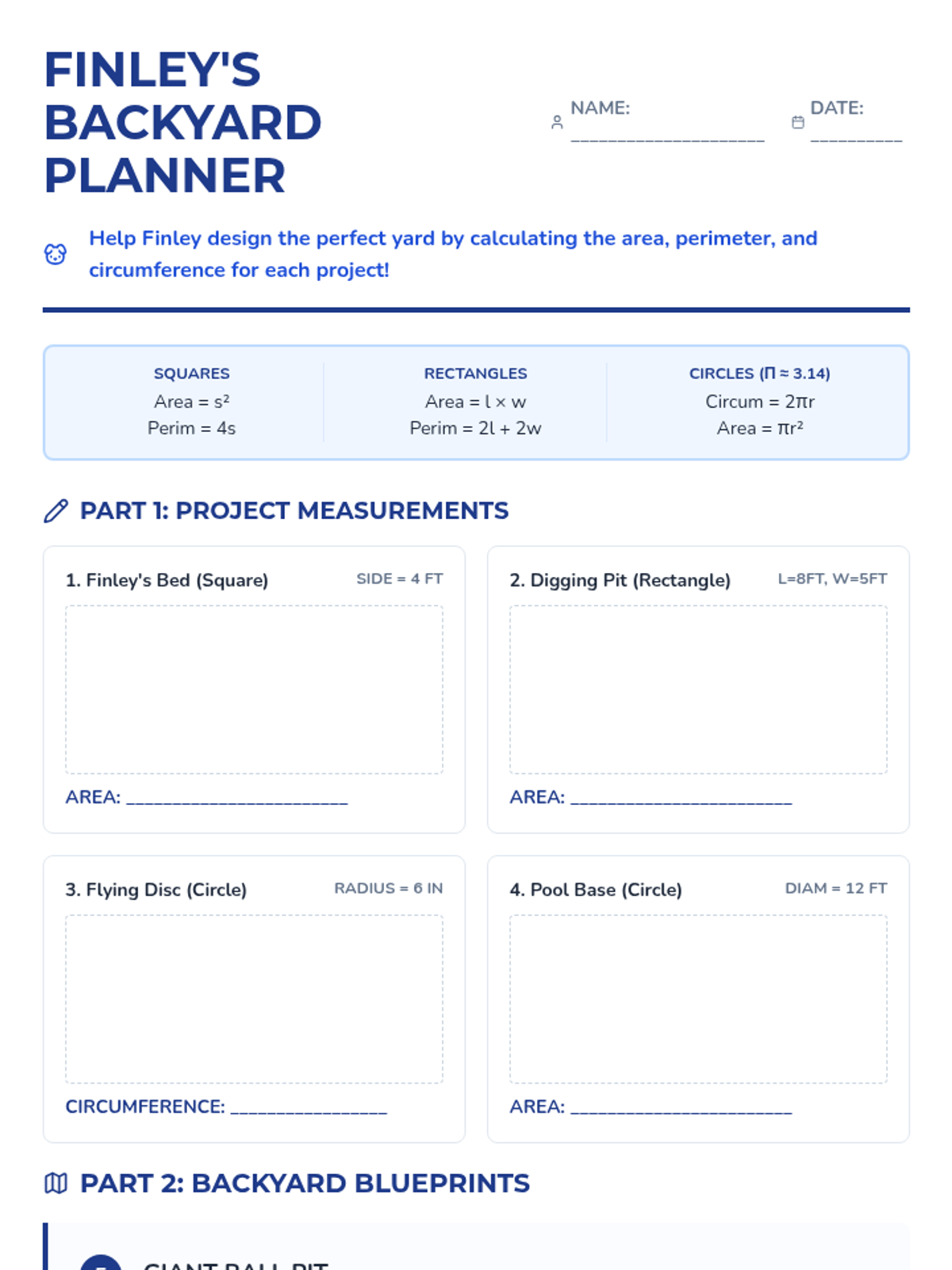
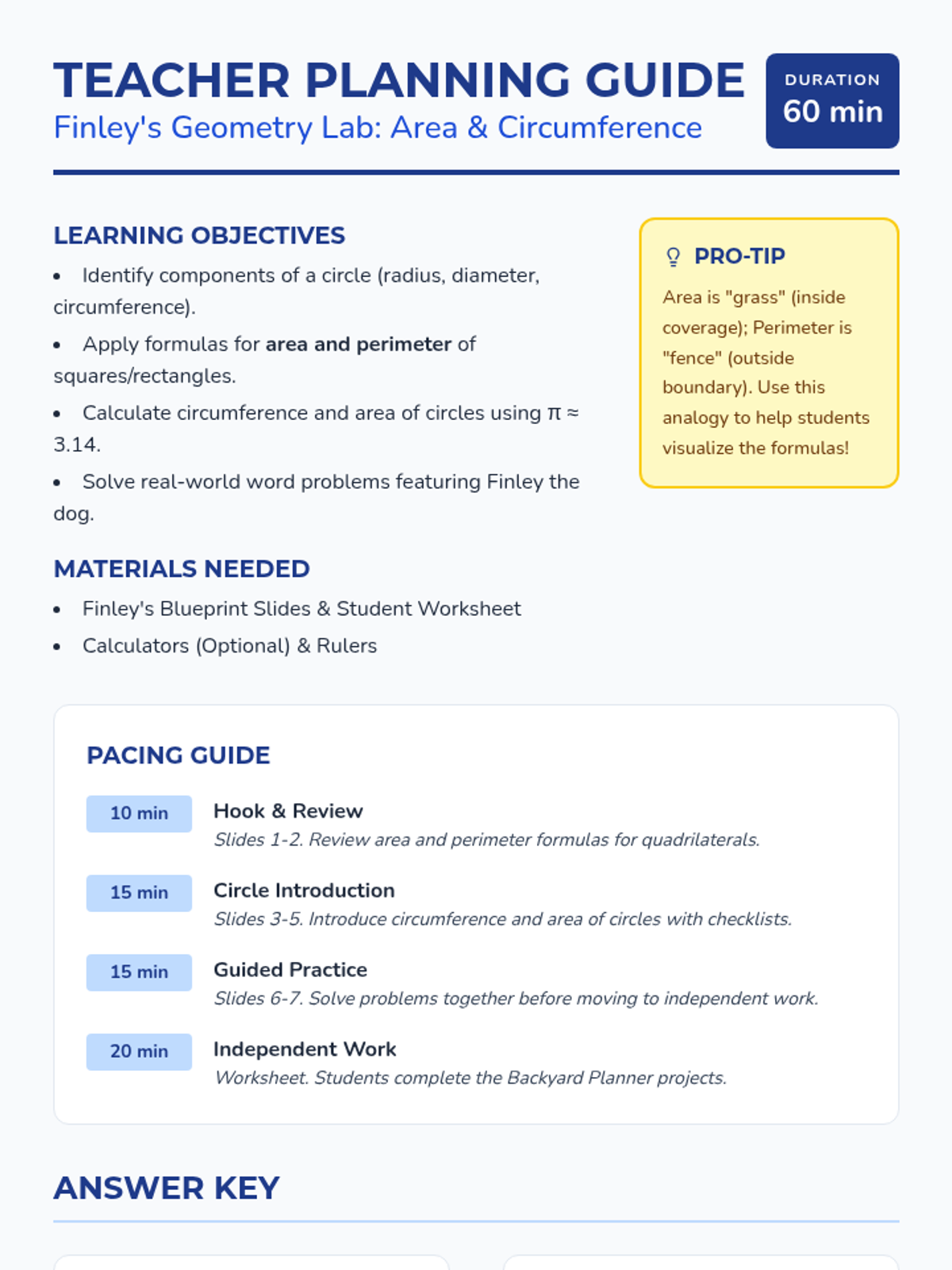
A geometry lesson focused on calculating the area of squares, rectangles, and circles, as well as the circumference of circles, featuring Finley the dog.
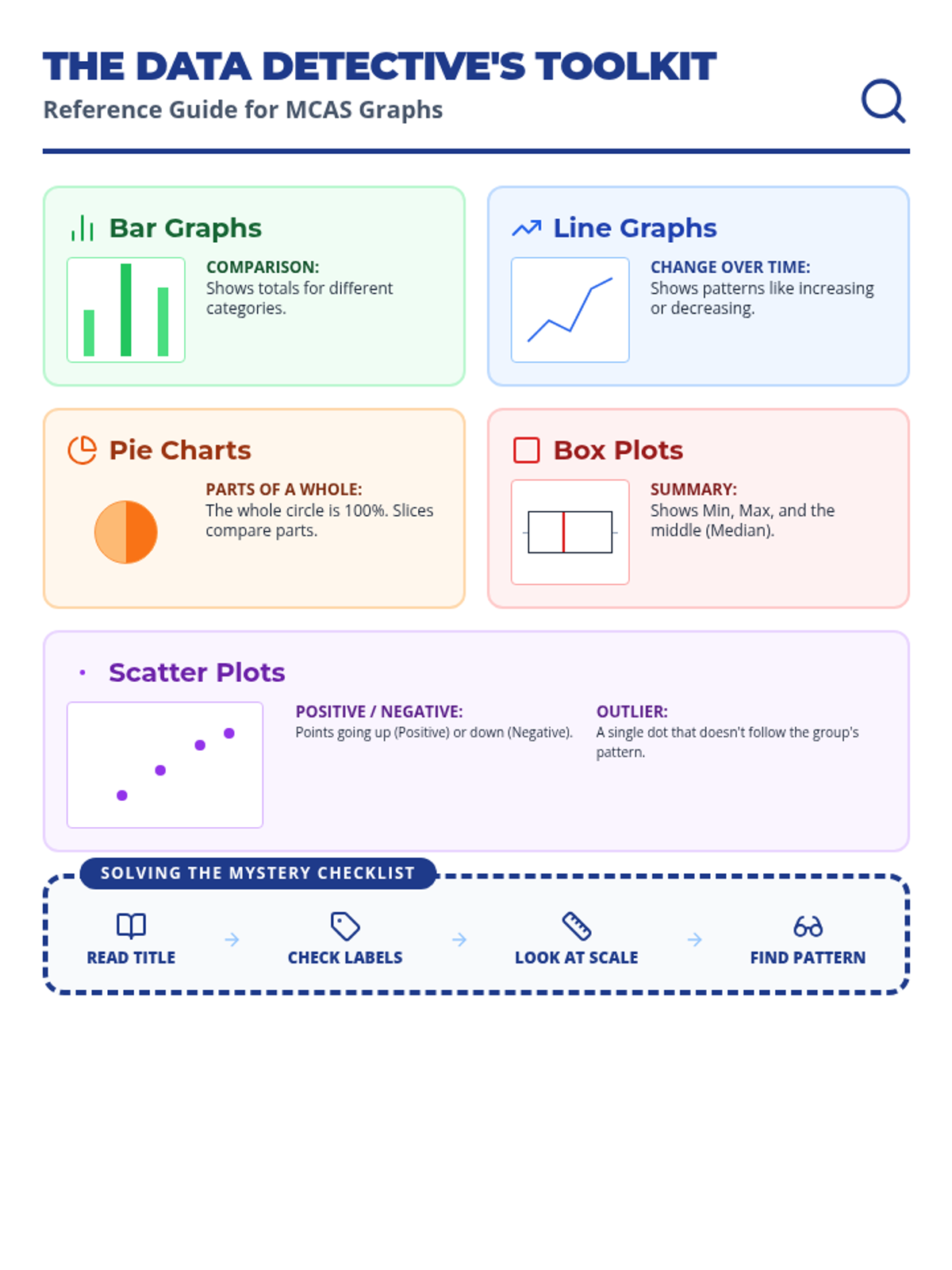
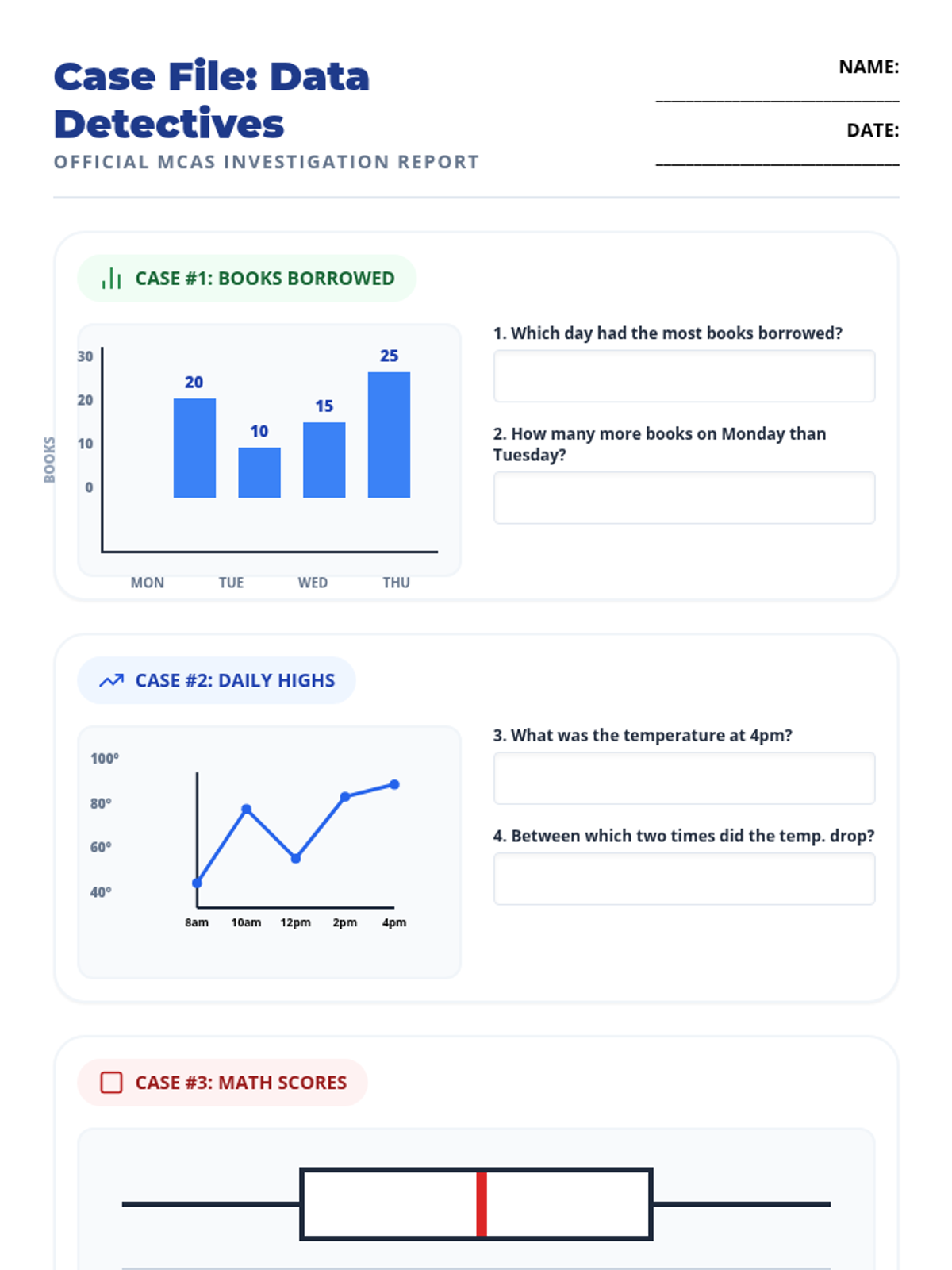
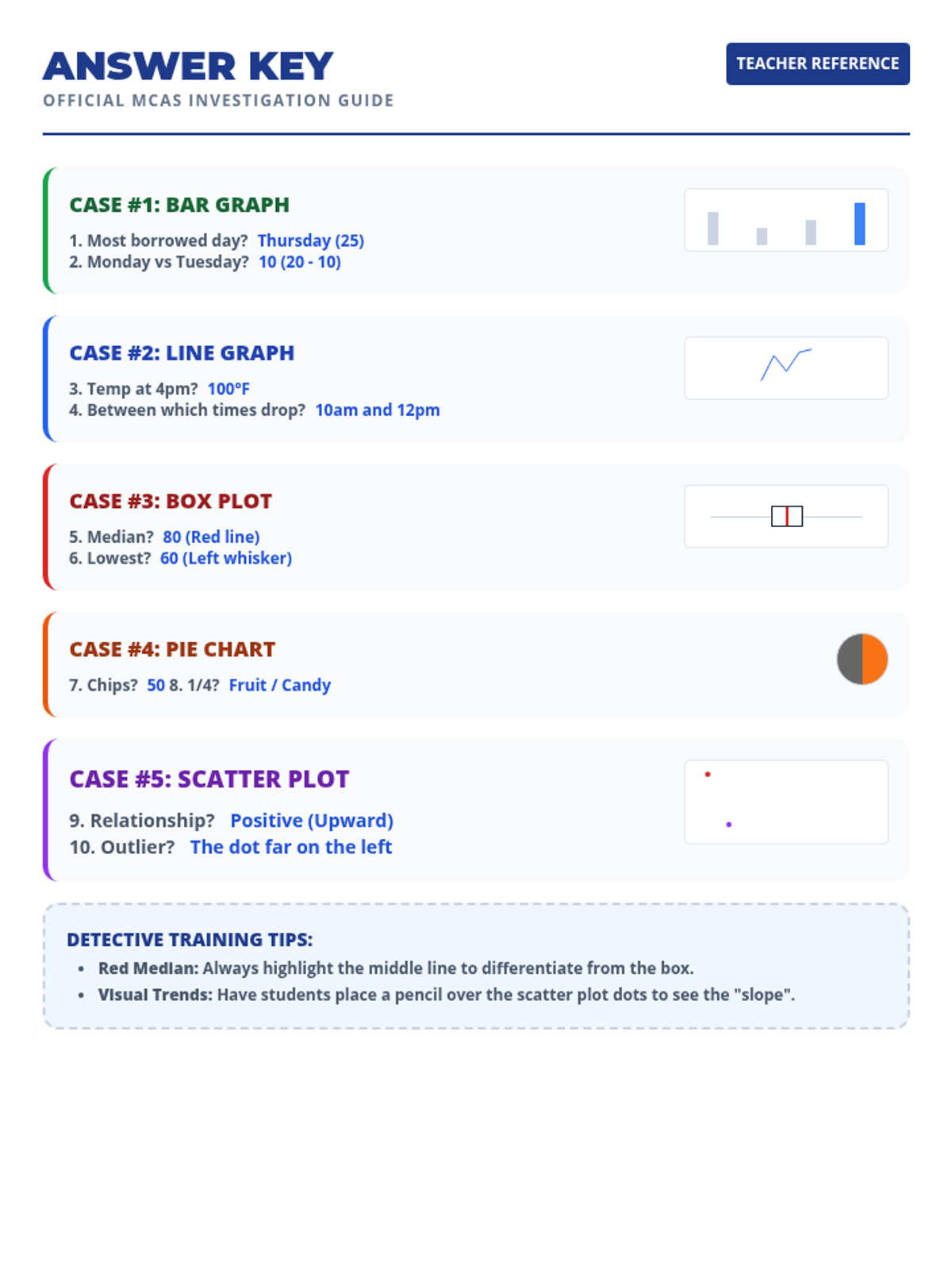
A focused lesson for 7th grade students (specifically designed for SPED support) to master interpreting data from box plots, bar graphs, pie charts, line graphs, and scatter plots in preparation for the MCAS.
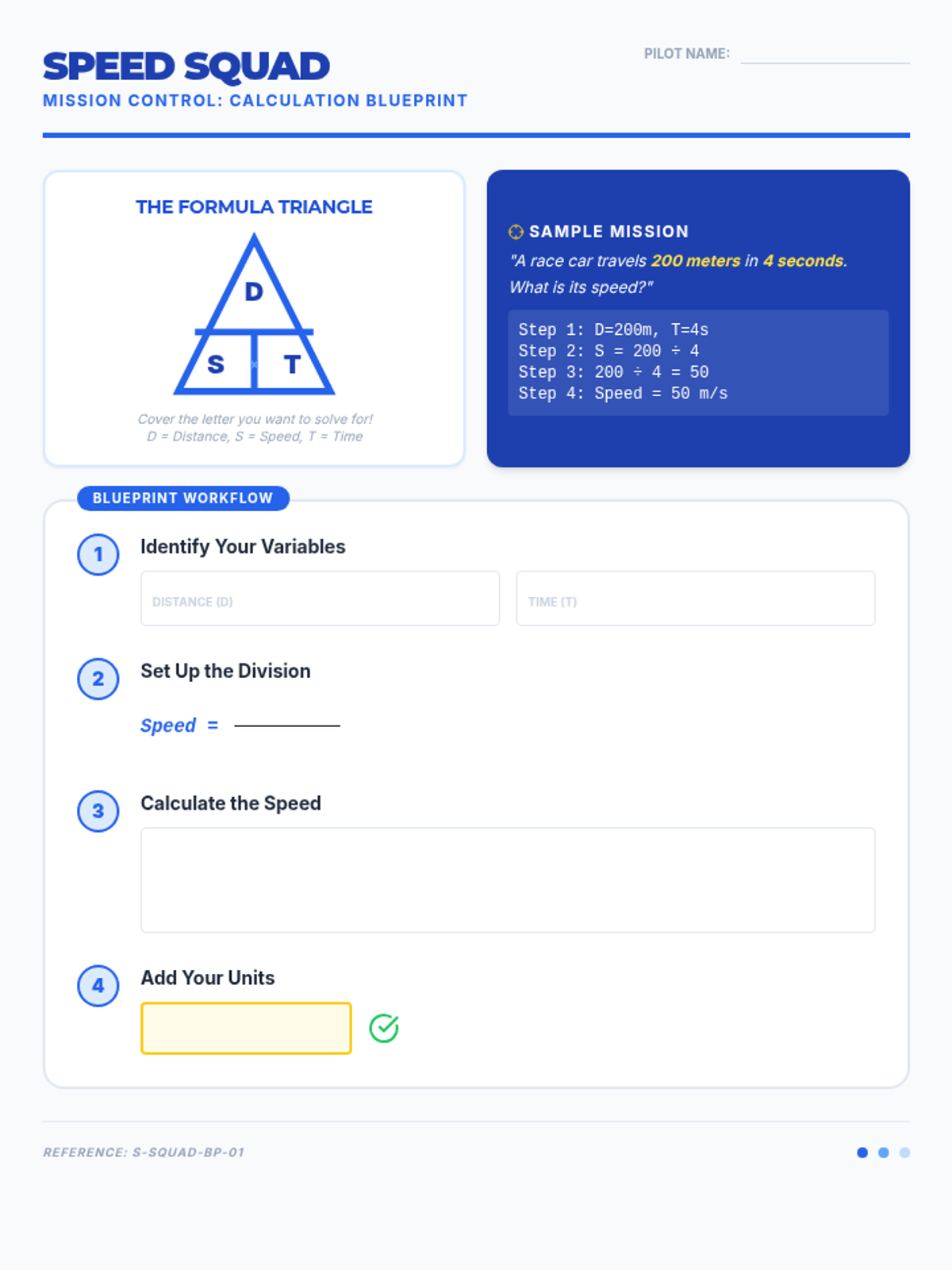
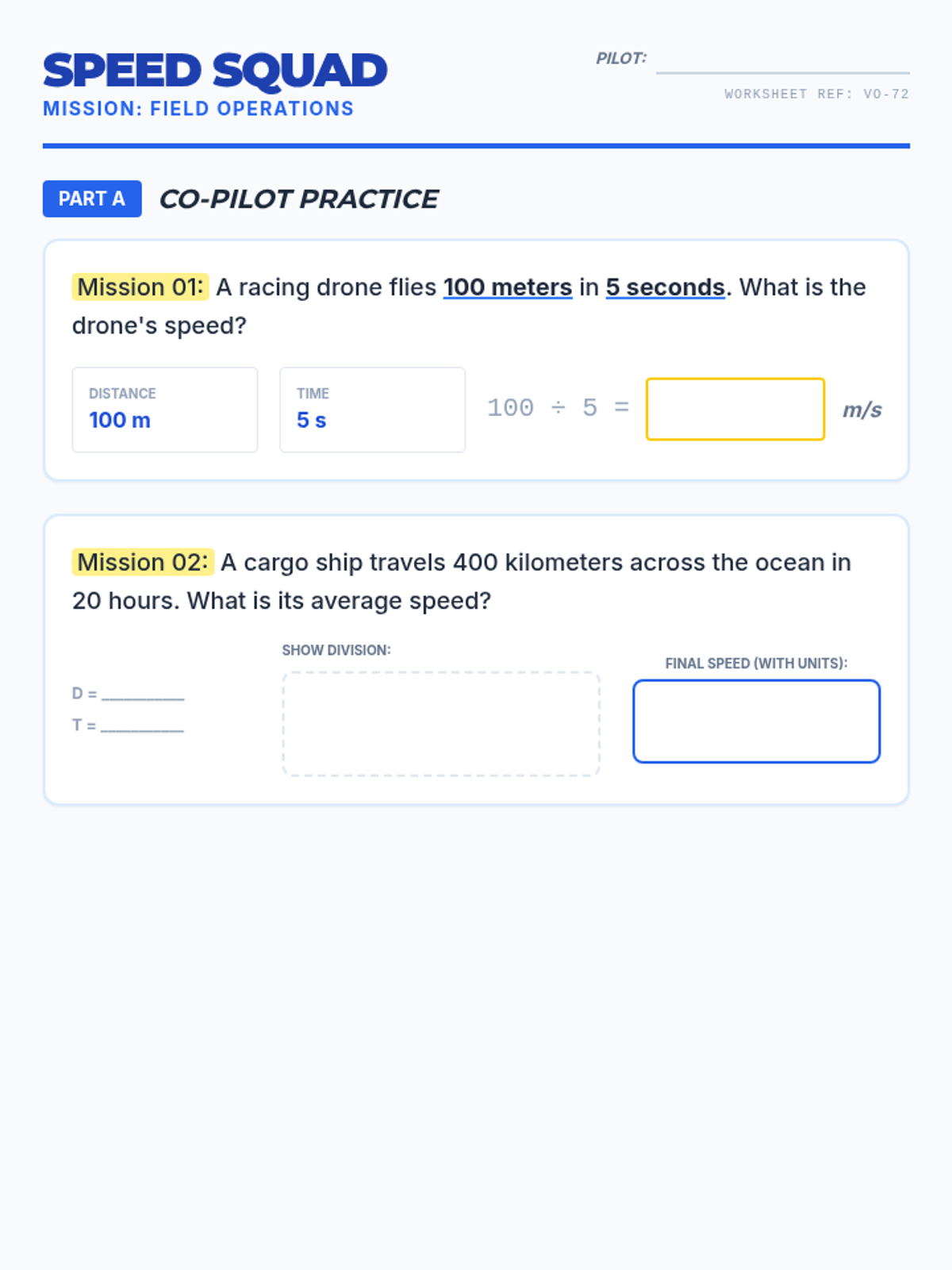
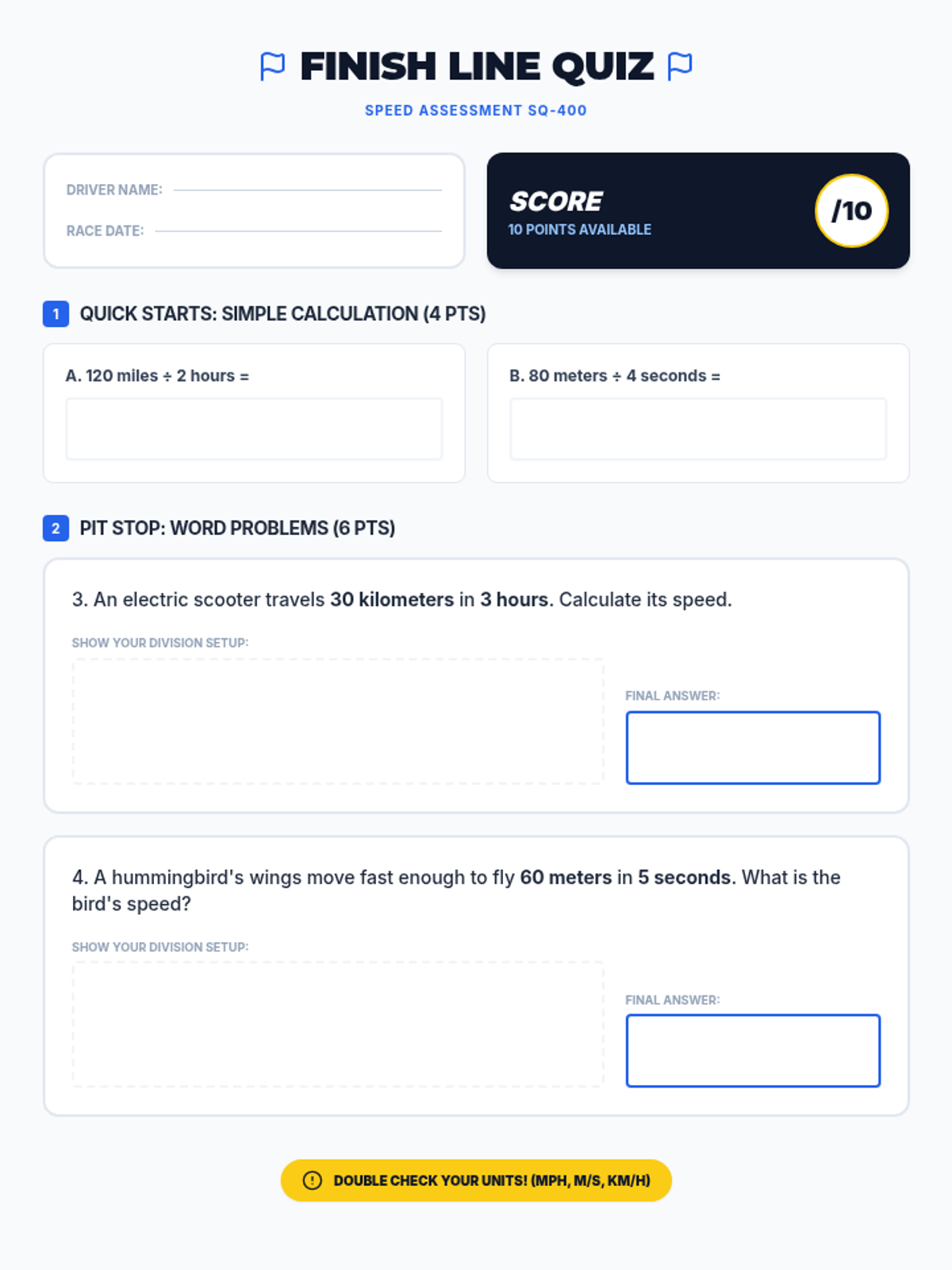
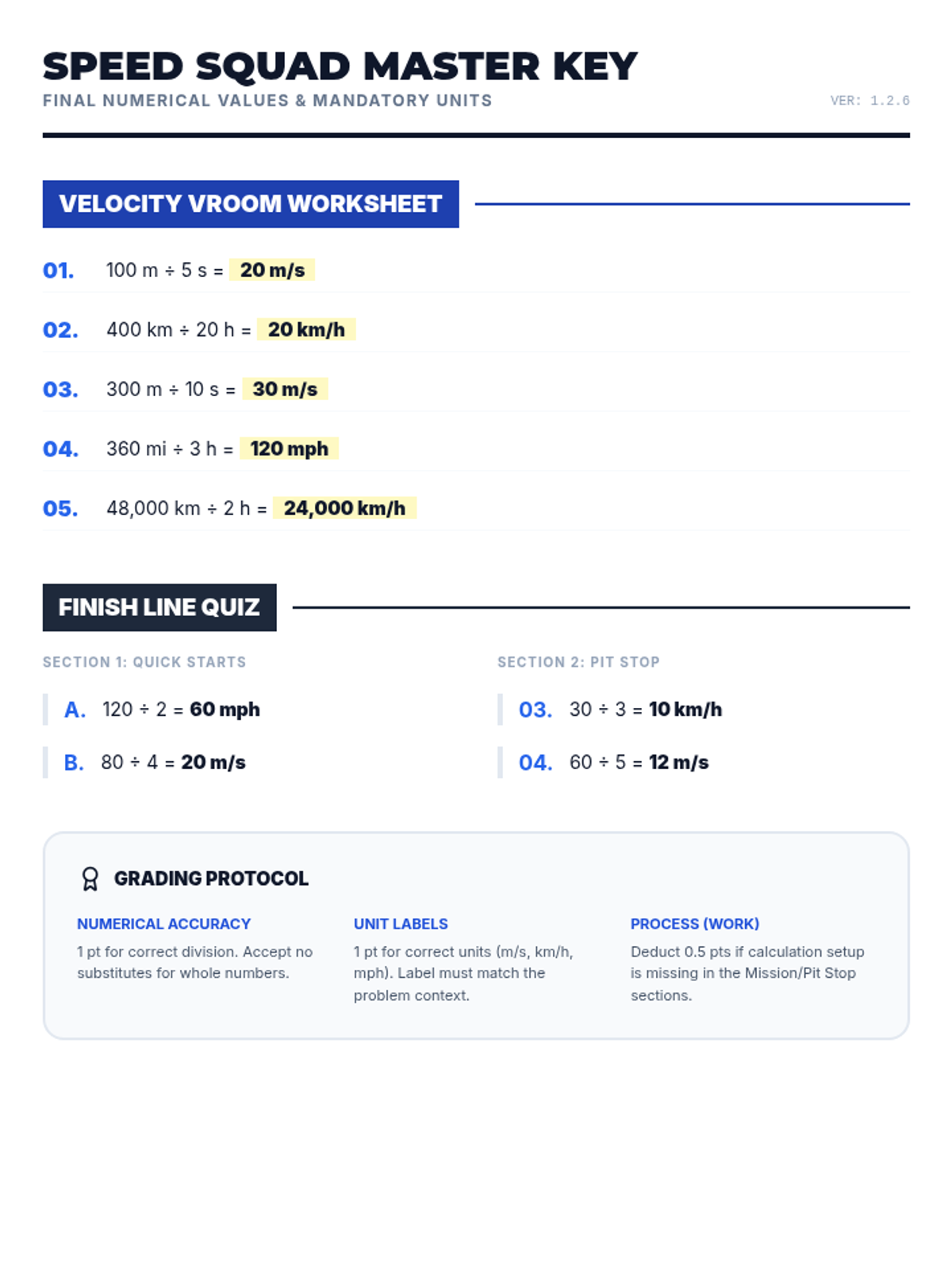
A comprehensive introduction to calculating speed using the formula Speed = Distance ÷ Time. This lesson uses a racing-themed framework to guide students through identifying units, setting up calculations, and solving whole-number word problems.
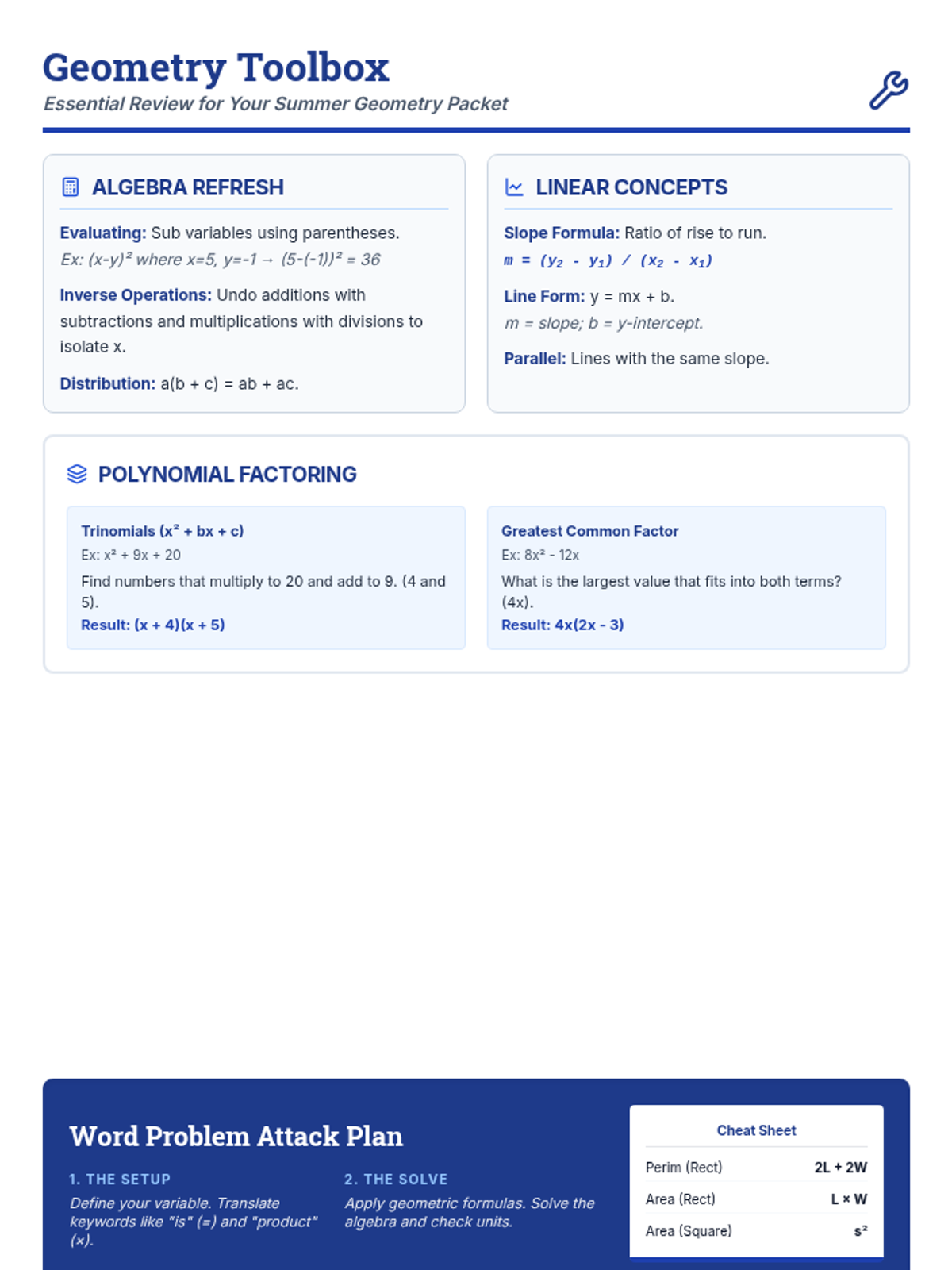
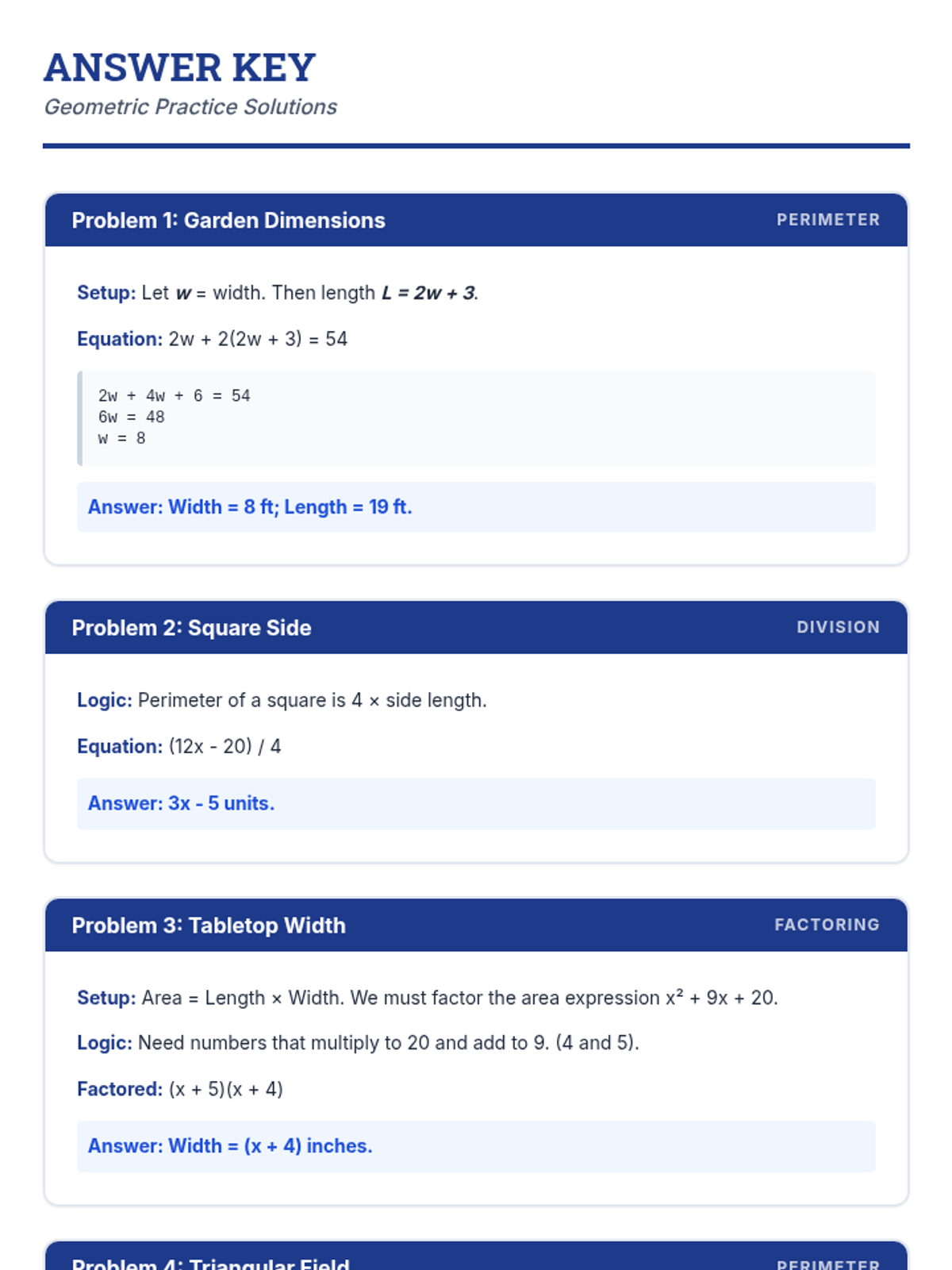
A collection of resources to support students completing their summer geometry packet, focusing on algebra foundations and geometric word problem applications.
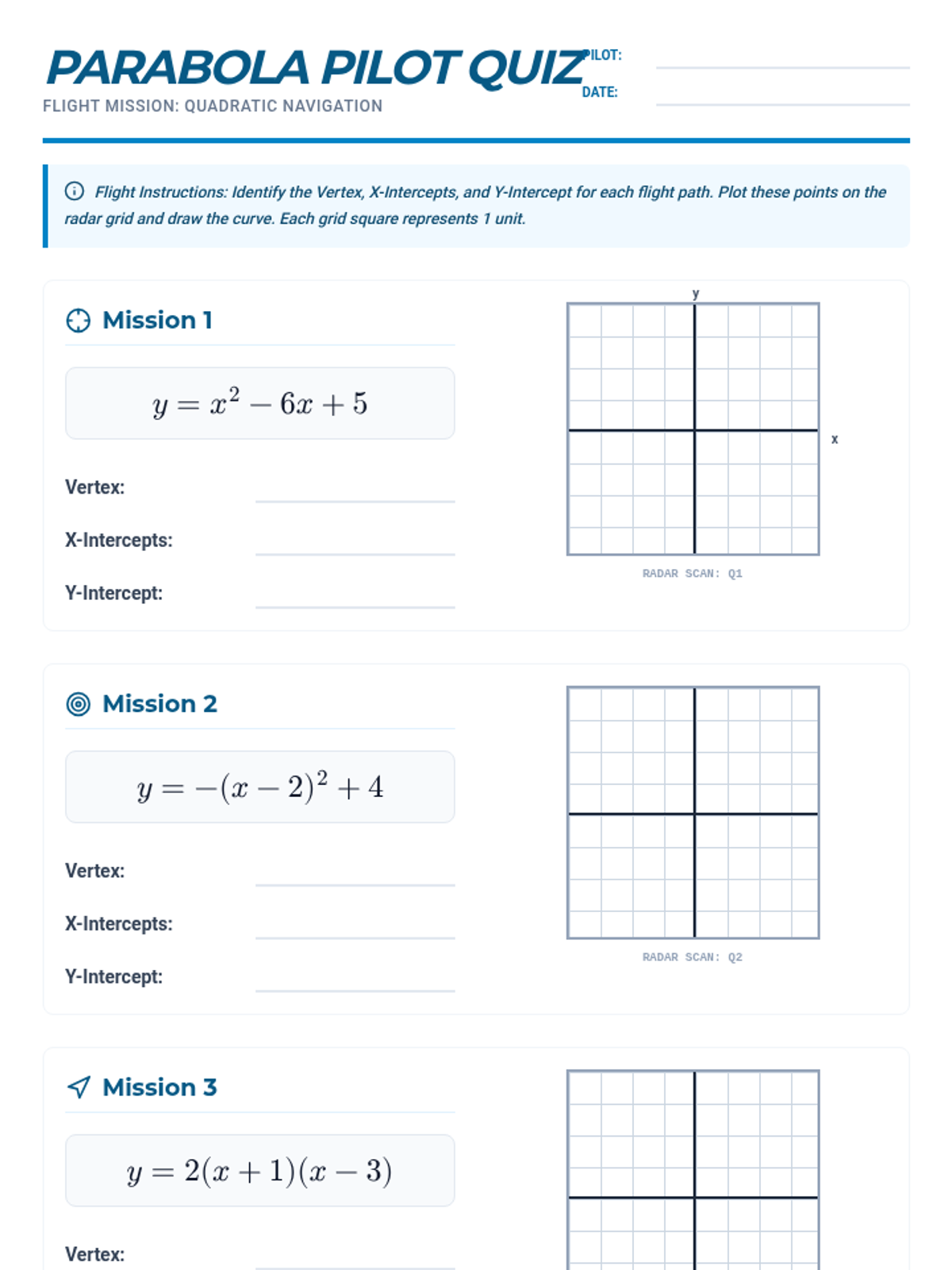
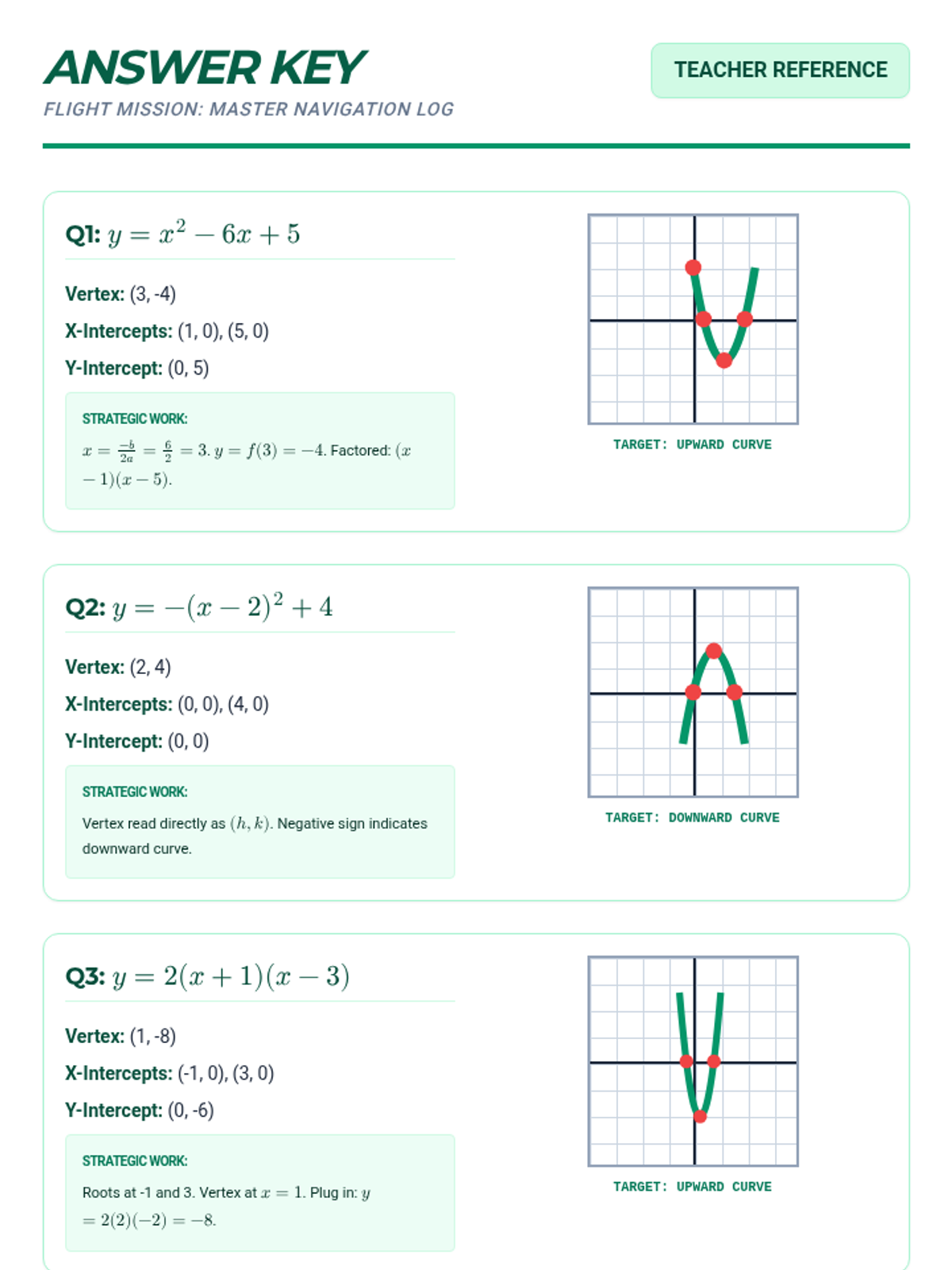
A lesson focused on identifying key features (vertex, intercepts) and graphing quadratic equations across standard, vertex, and factored forms.
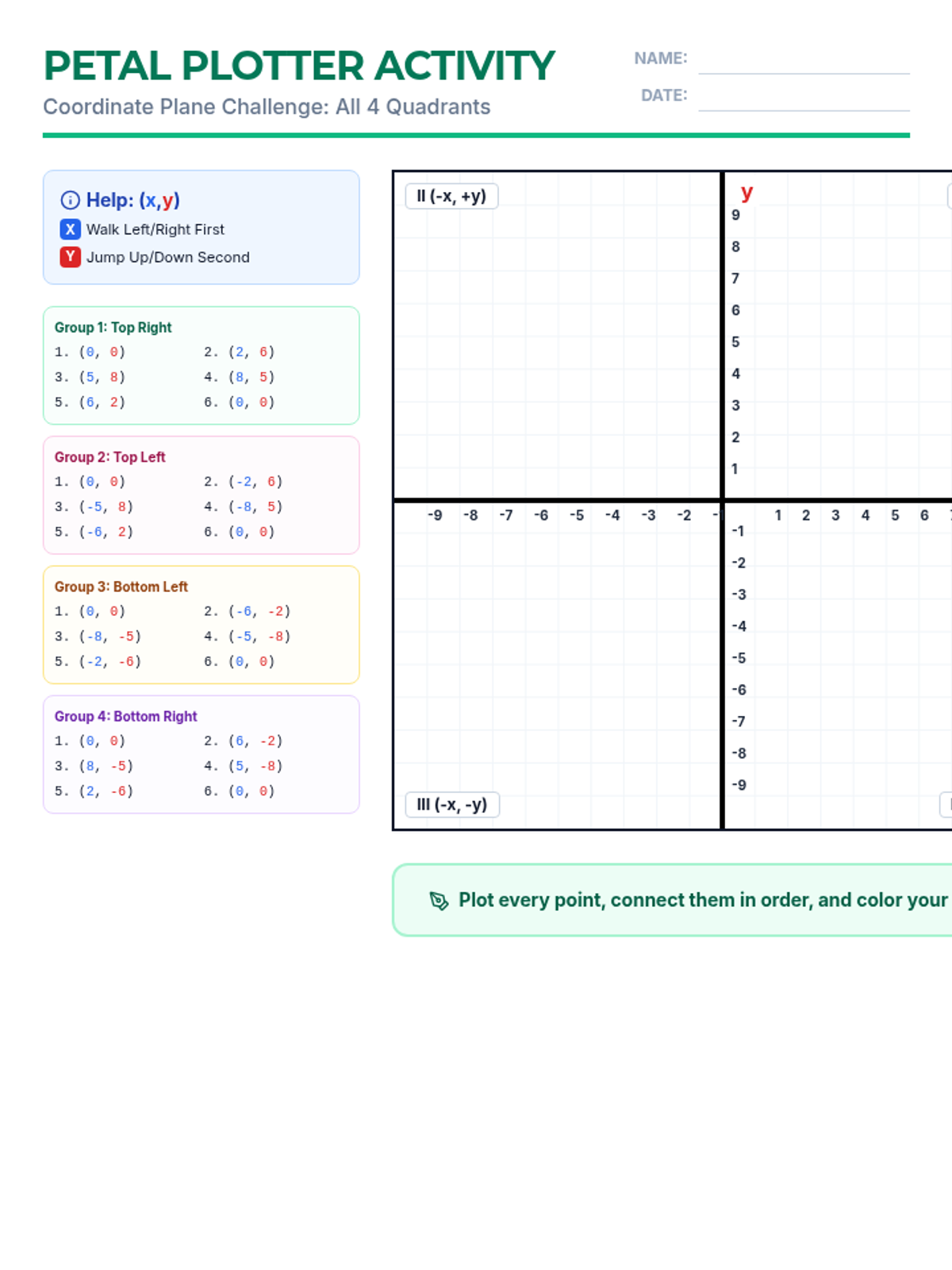
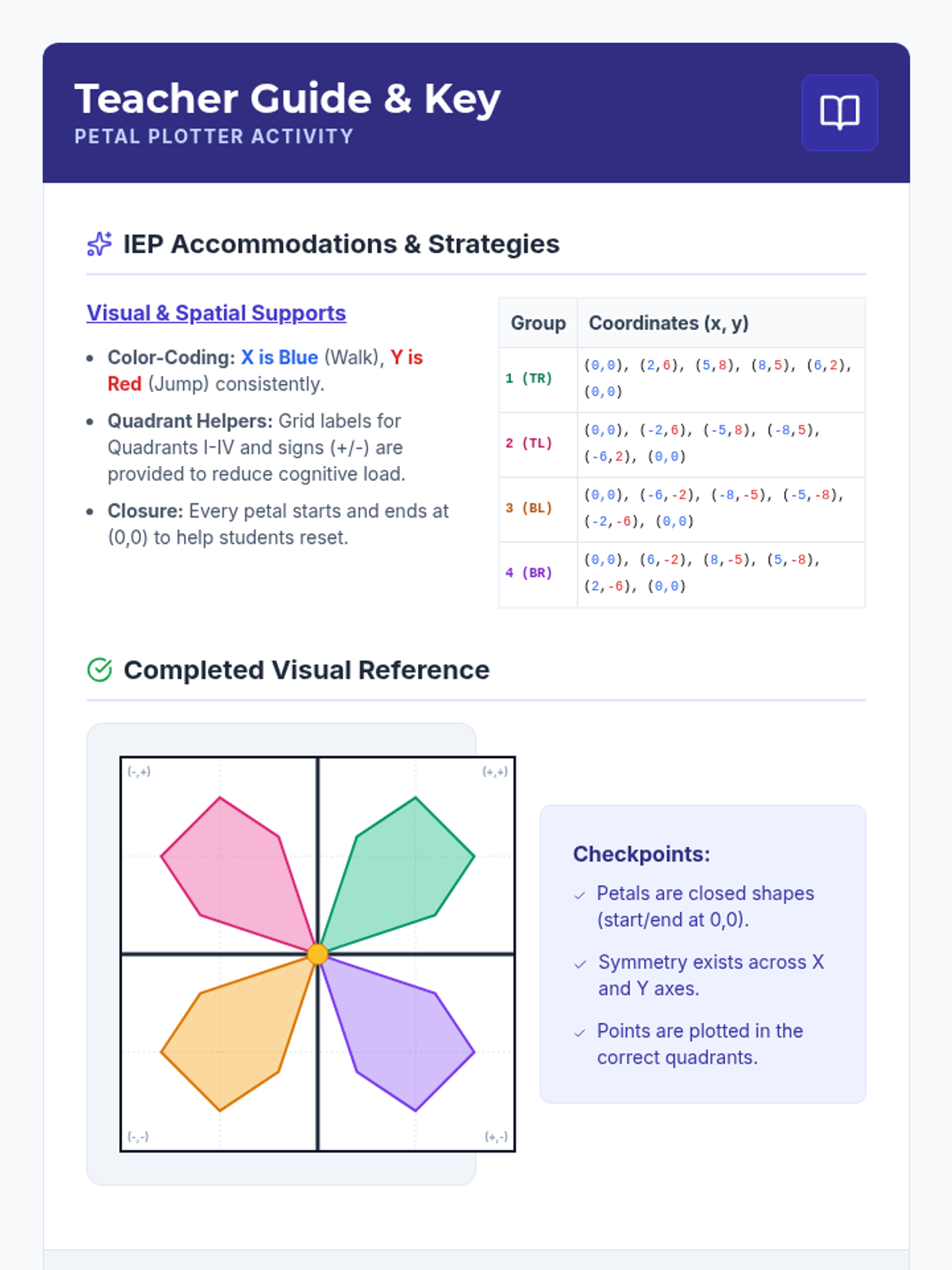
A modified coordinate plane lesson for IEP students focusing on plotting points in all four quadrants to create a seasonal flower image. Includes scaffolding such as color-coding and directional prompts.
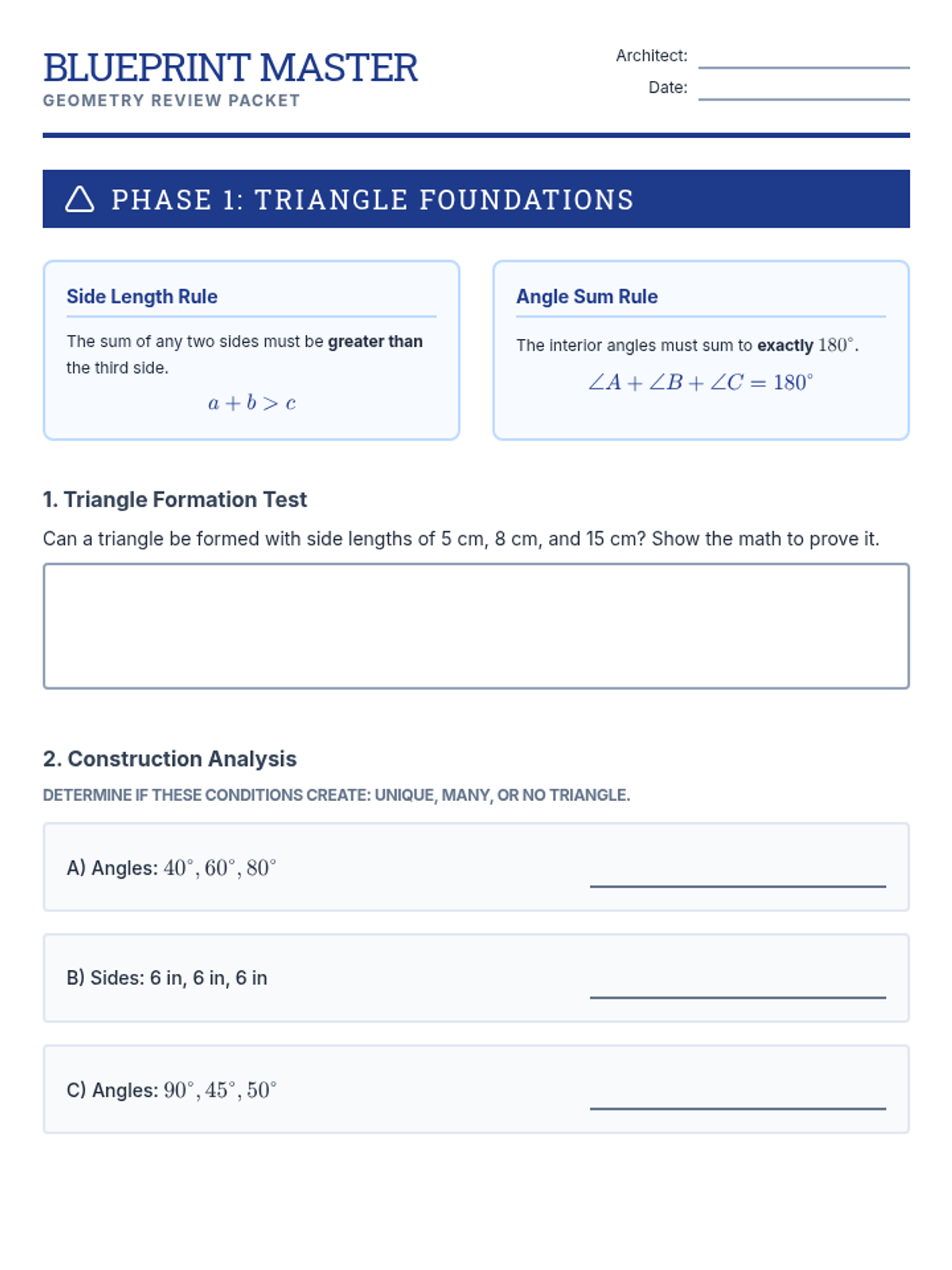
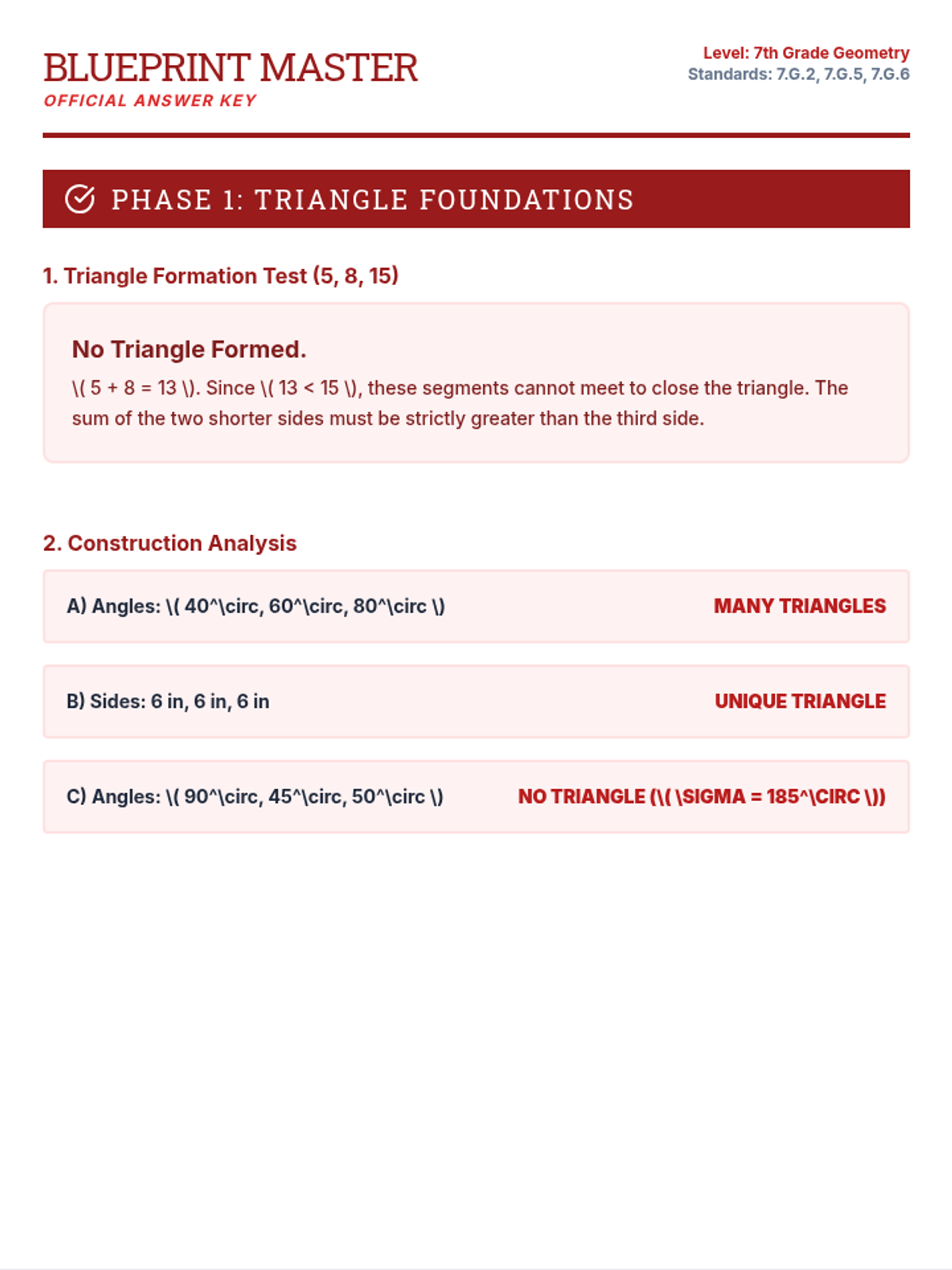
A comprehensive geometry review covering triangle construction, angle relationships, and 2D/3D measurements. Students take on the role of an architect to master essential geometric principles.
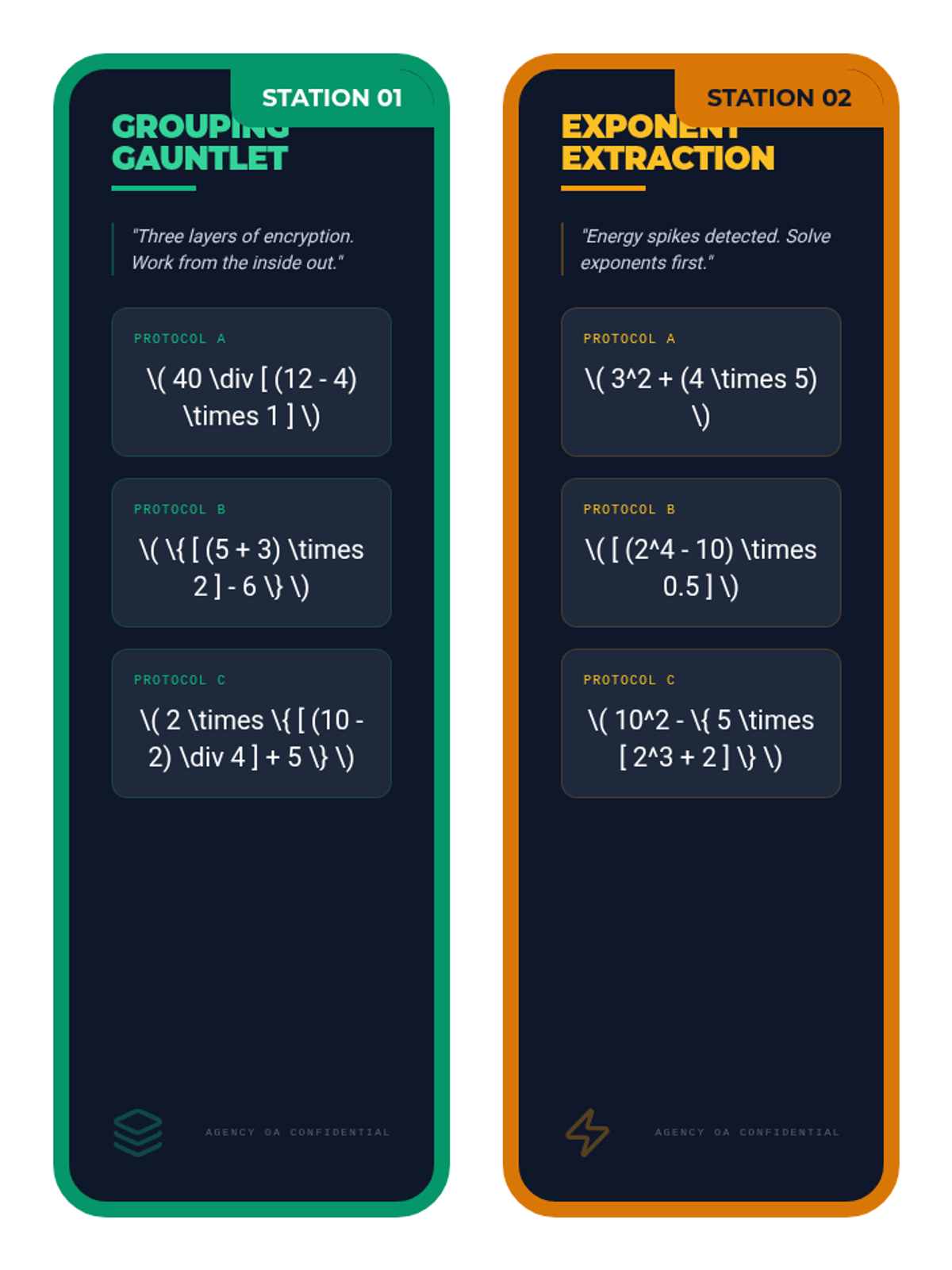
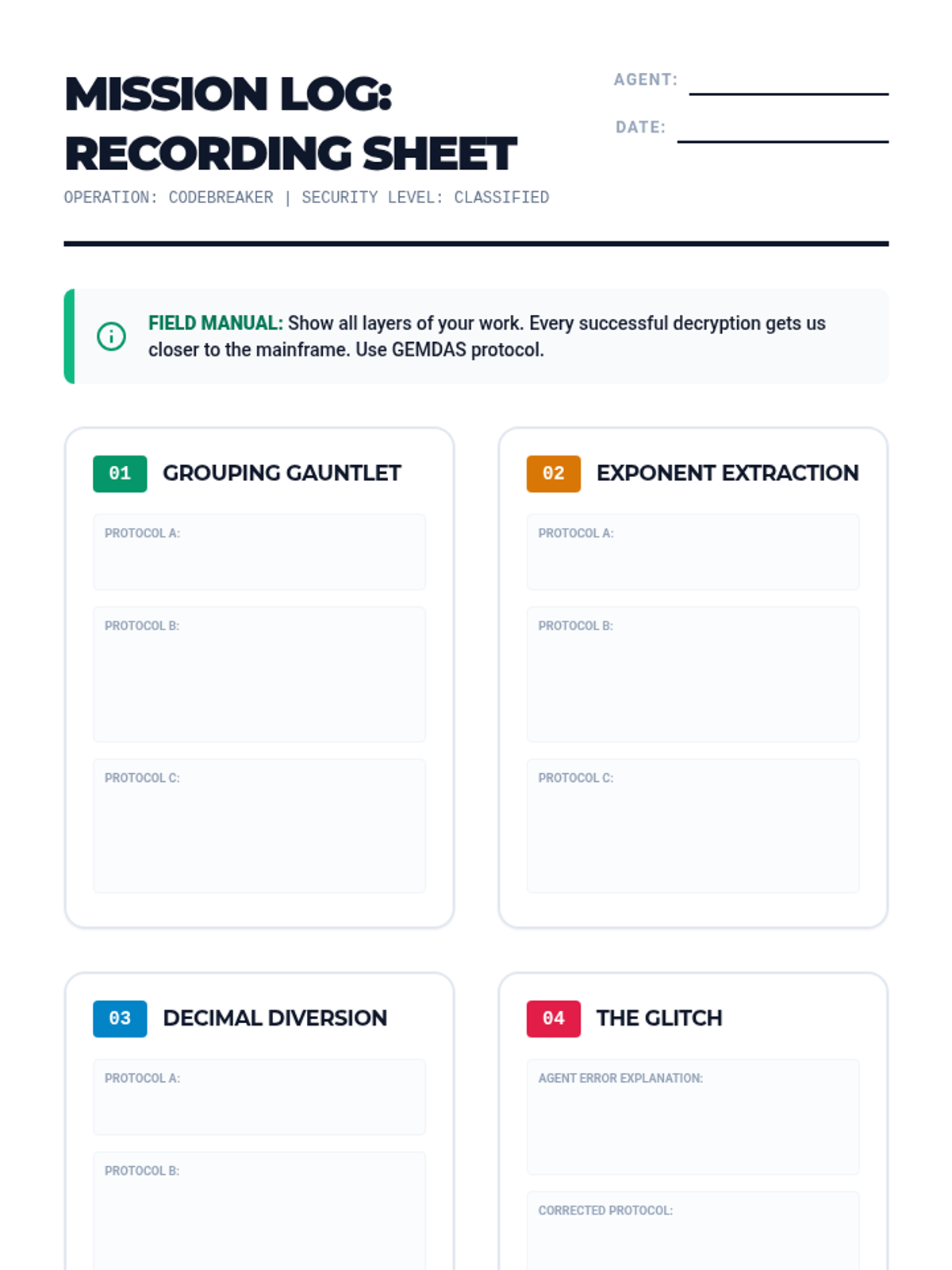
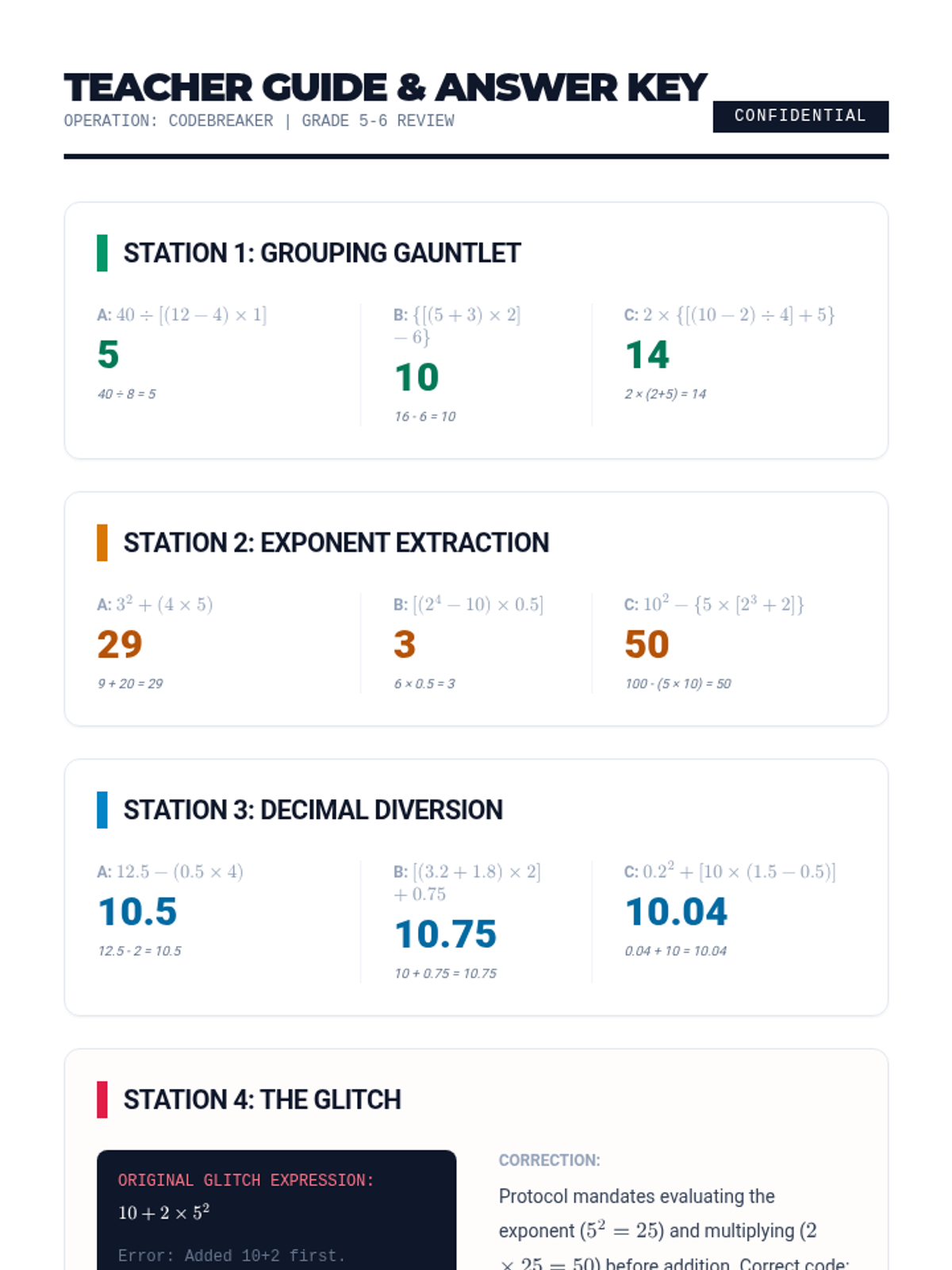
A high-energy, spy-themed review of the order of operations featuring nested groupings (parentheses, brackets, braces), exponents, and decimal operations. Students take on the role of codebreakers to solve complex numerical missions.
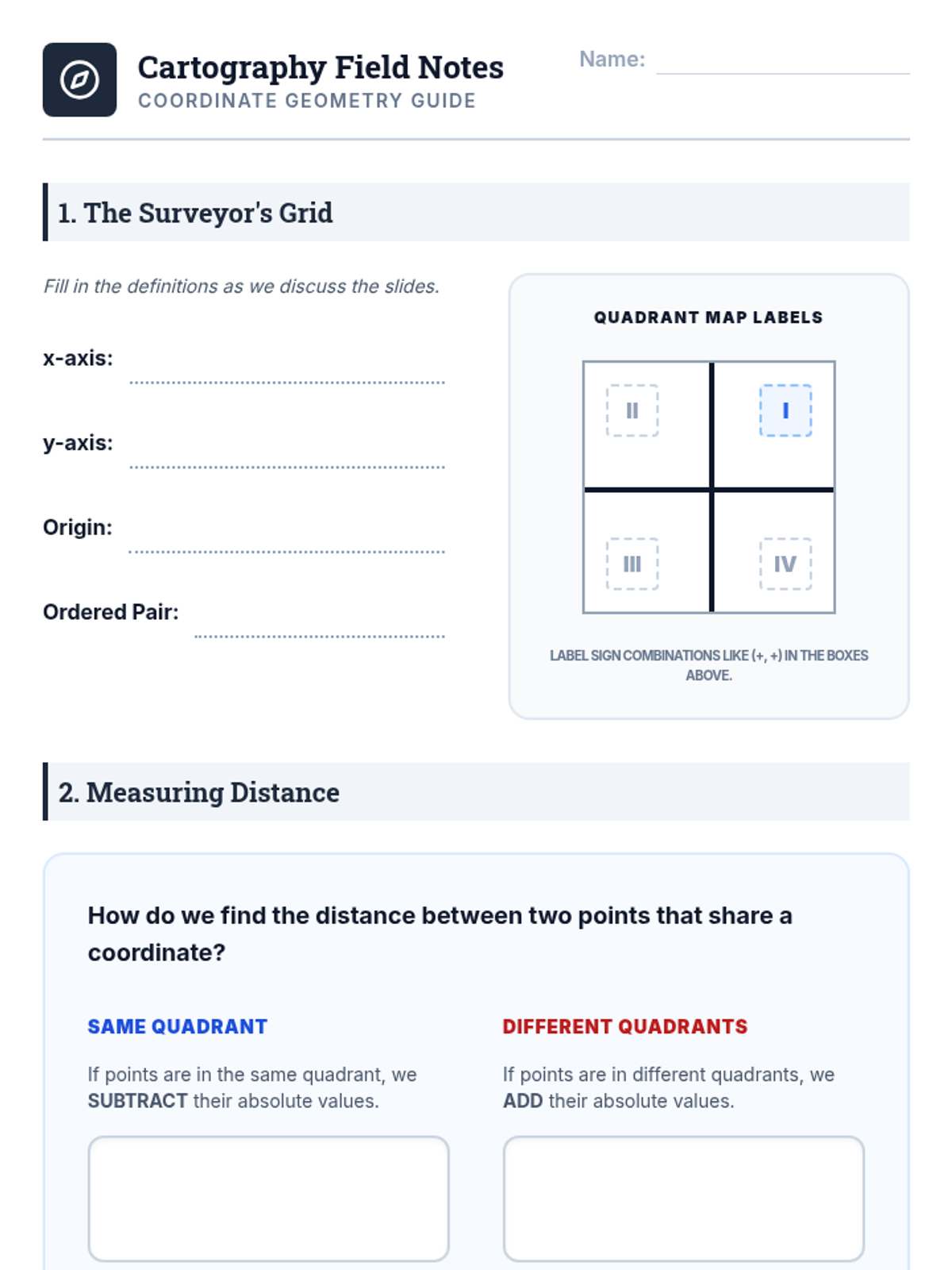
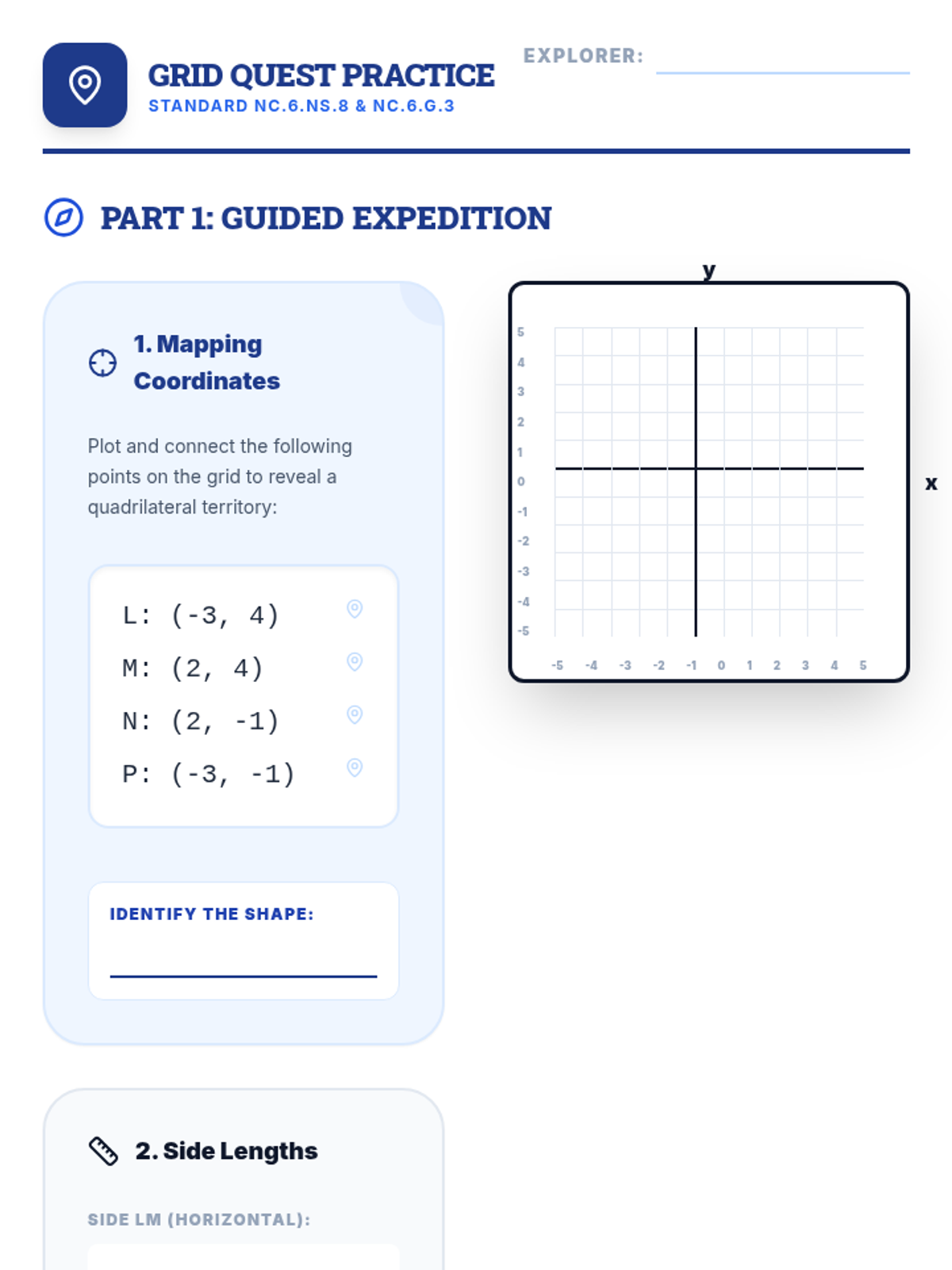
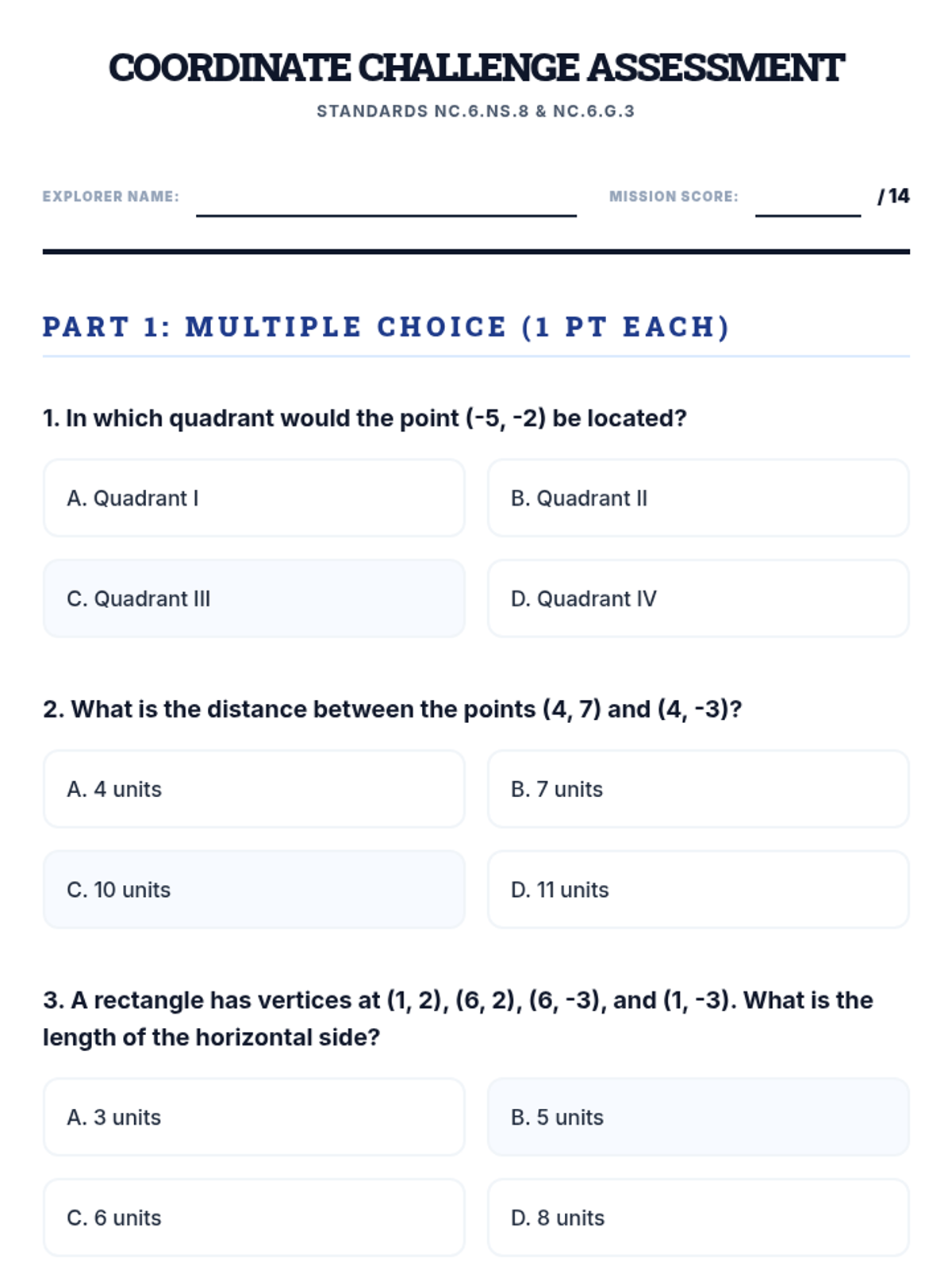
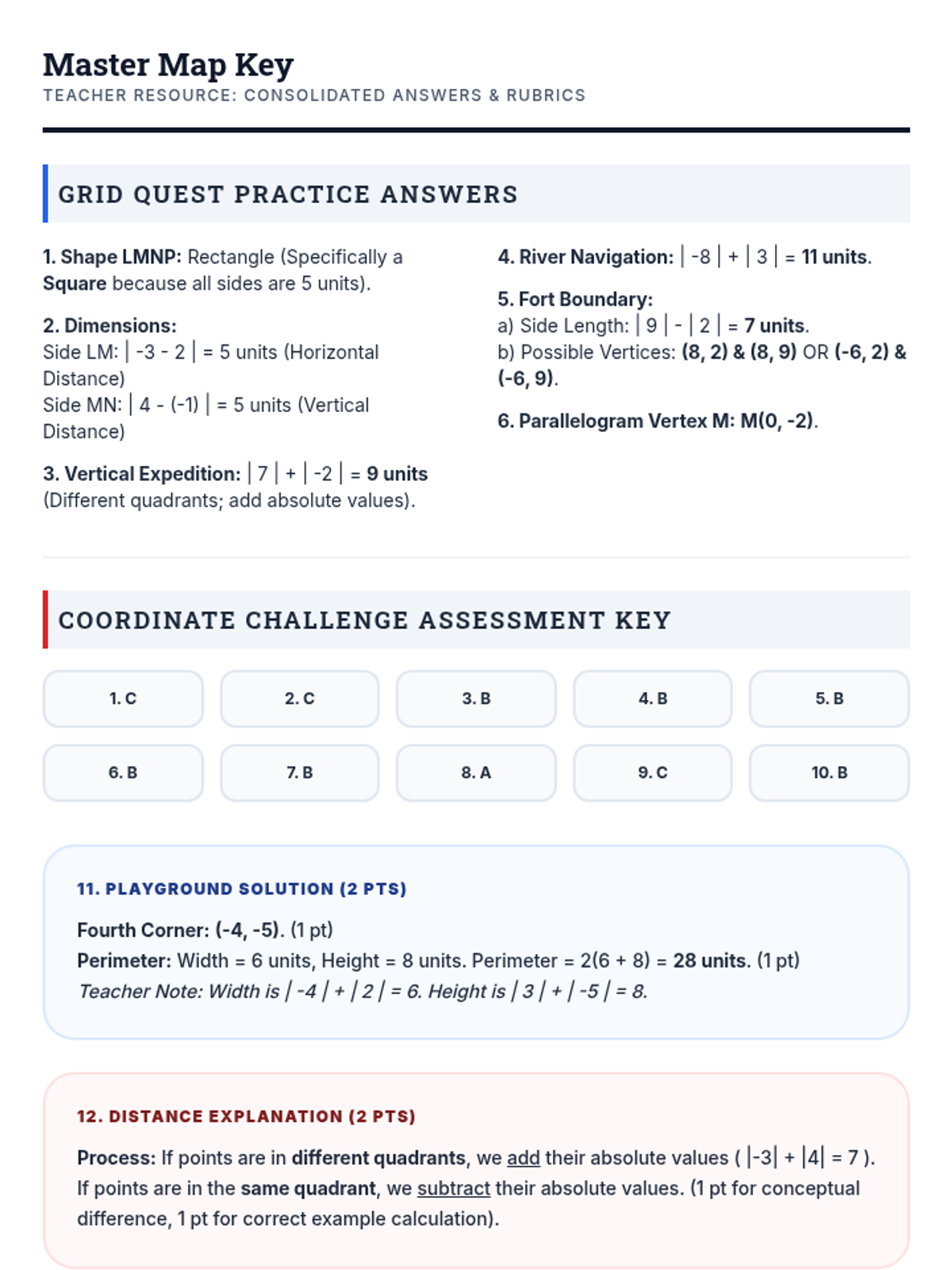
A comprehensive lesson on plotting points, identifying quadrilaterals, and calculating distances on the coordinate plane. Students use cartography-themed materials to master 6th-grade geometry and number system standards.
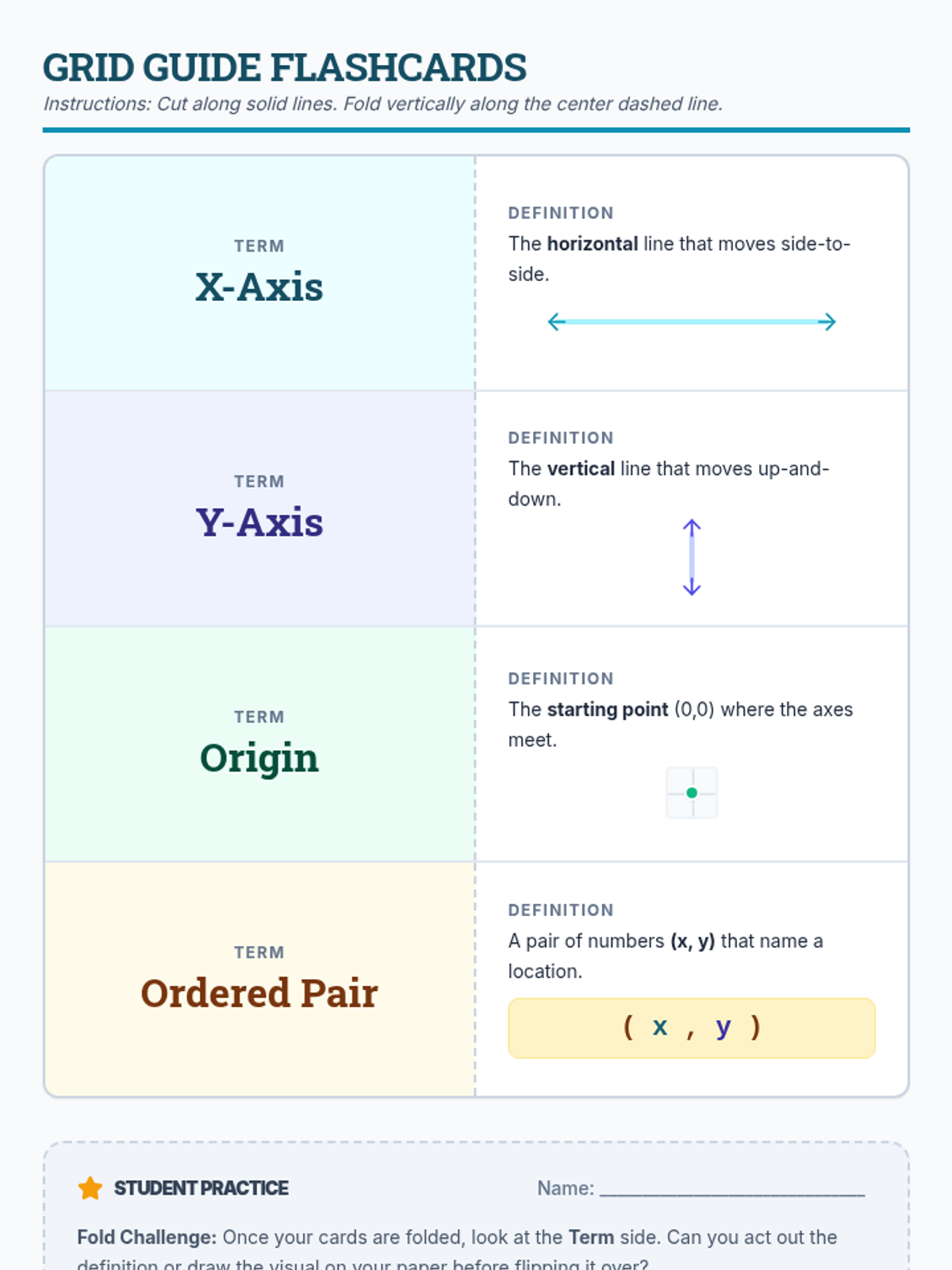
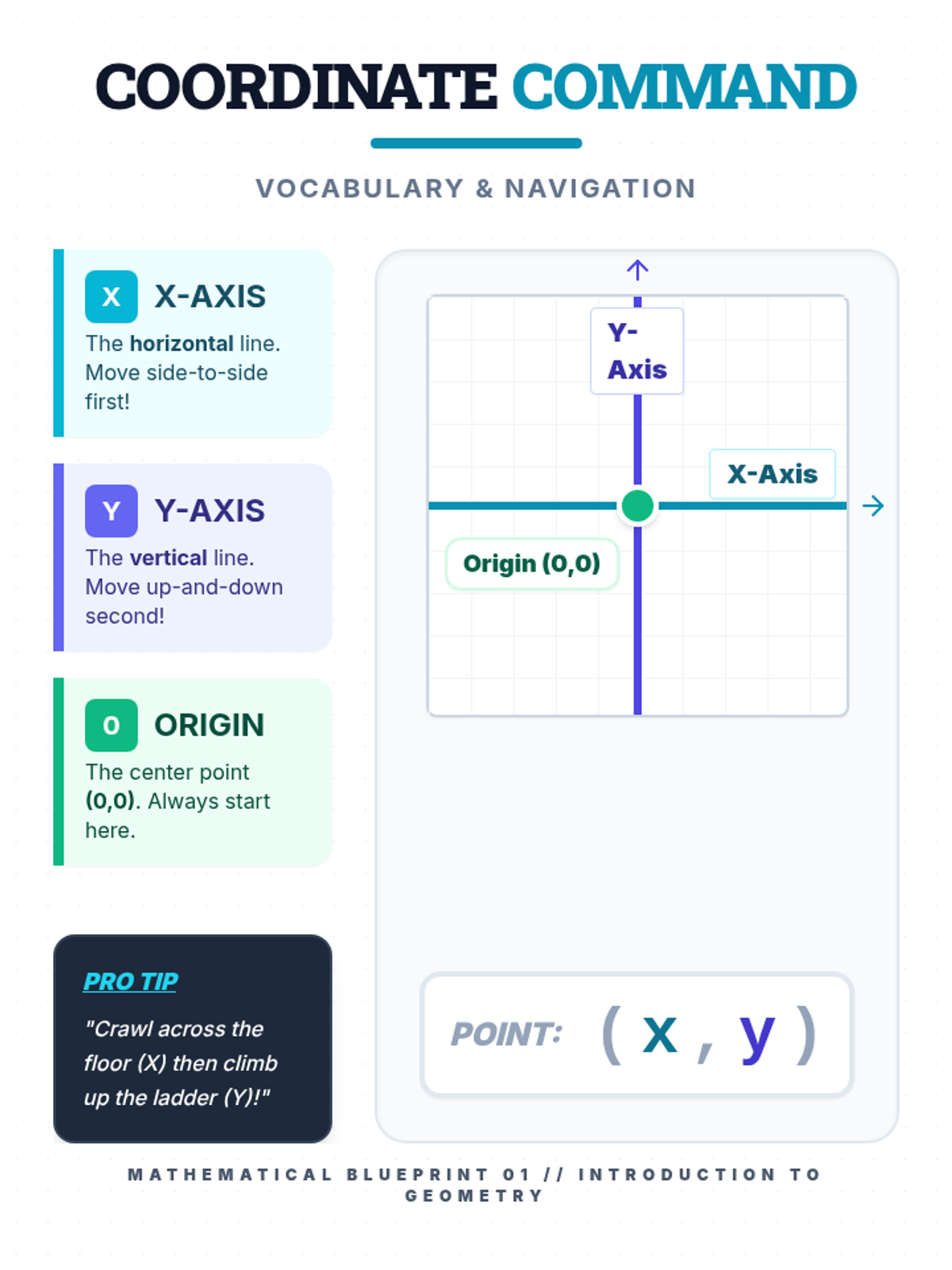
An introduction to the coordinate plane, focusing on identifying the x-axis, y-axis, and the origin to begin plotting ordered pairs.
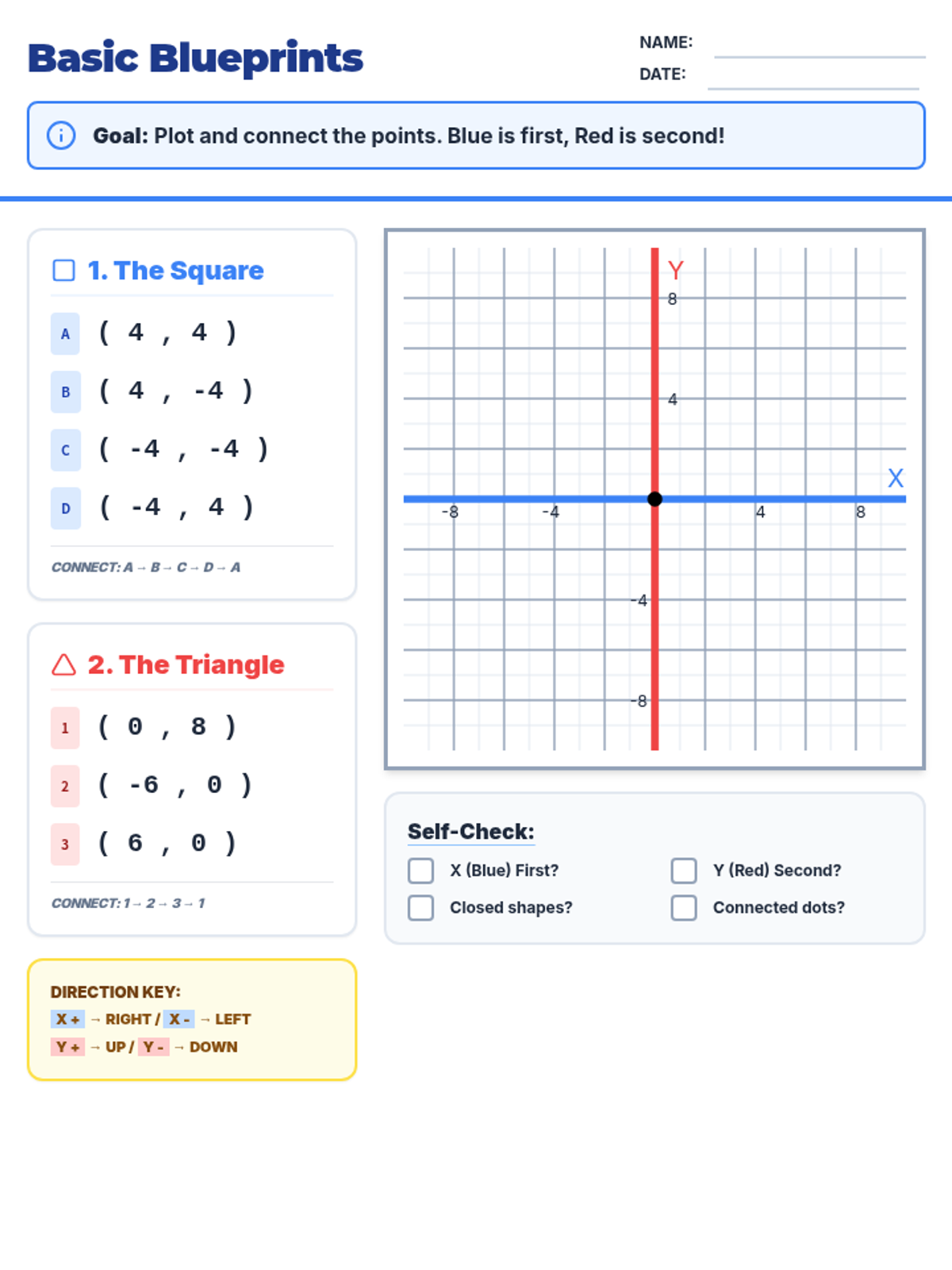
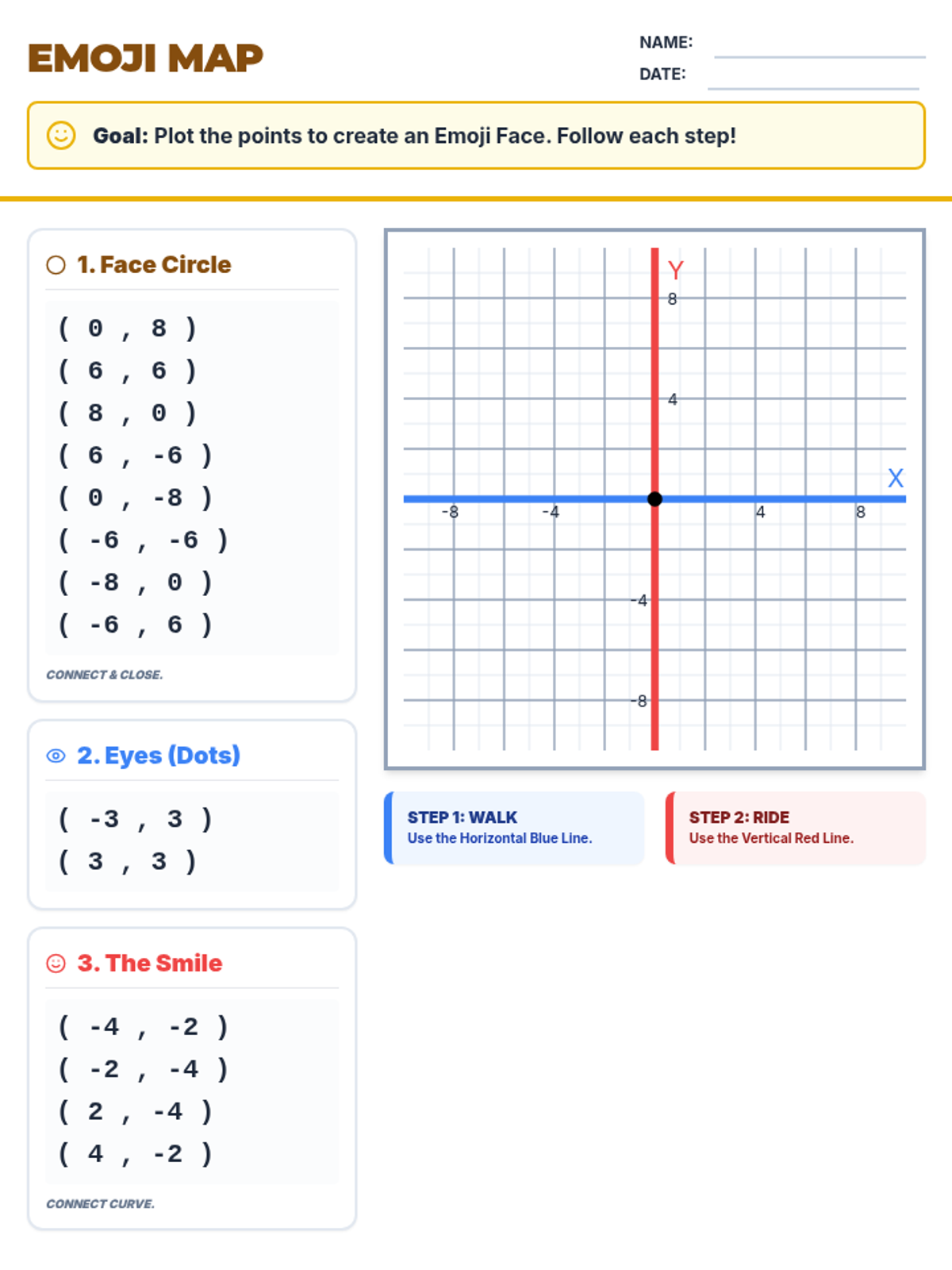
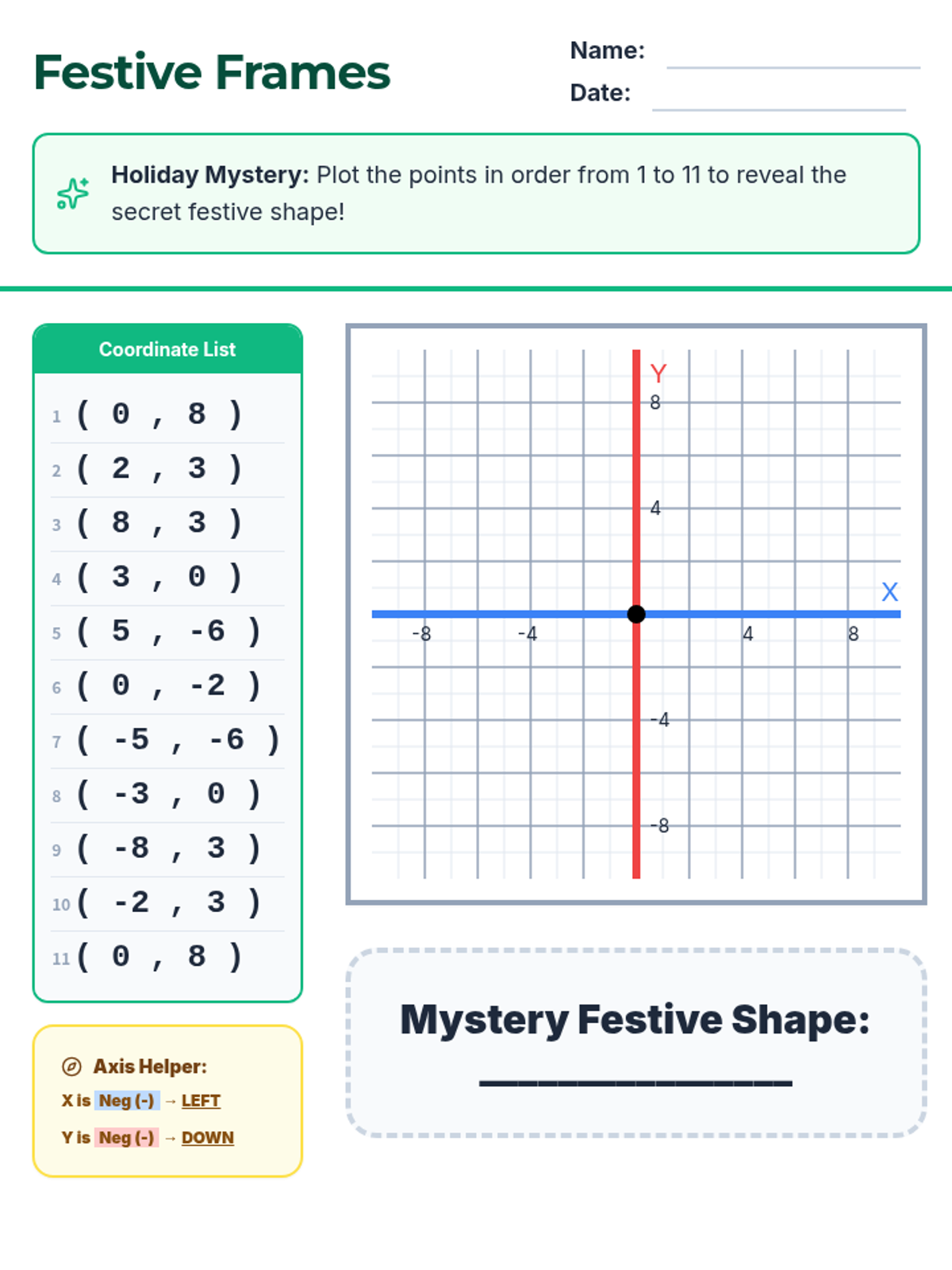
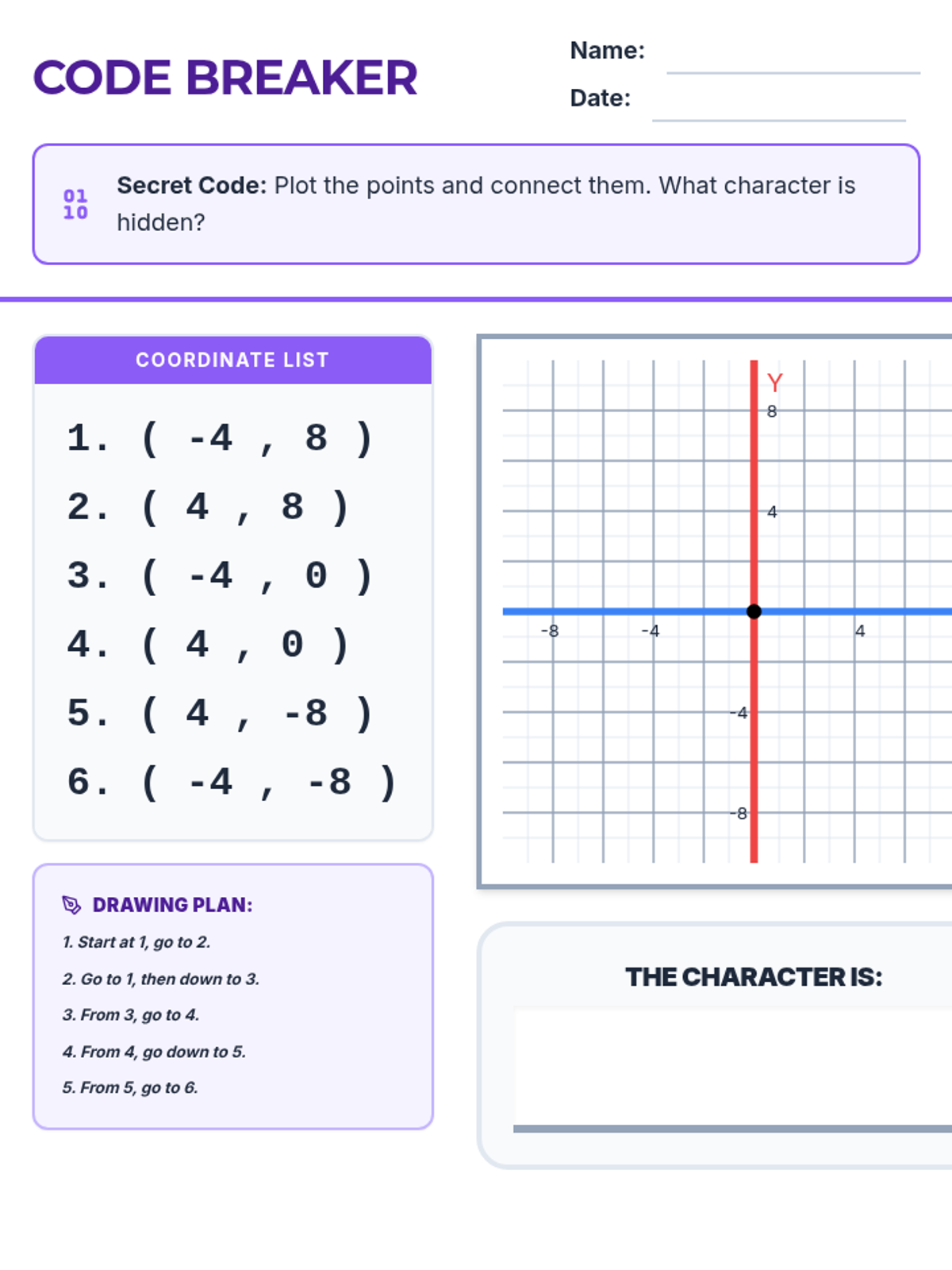
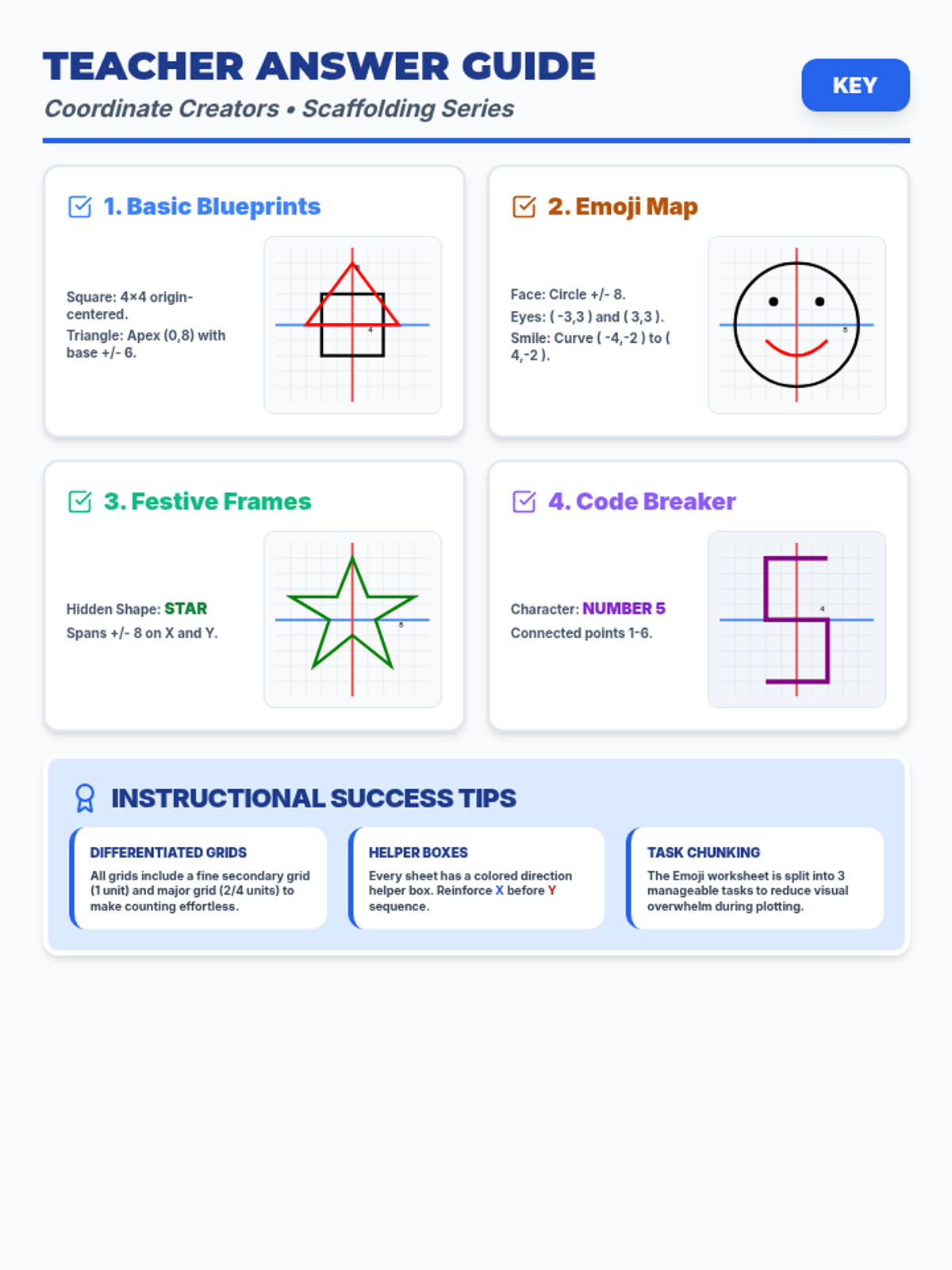
A beginner-friendly introduction to the four-quadrant coordinate plane, specifically designed with scaffolding and visual aids for students with diverse learning needs. Students will practice plotting points to reveal basic shapes, emojis, holiday symbols, and characters.
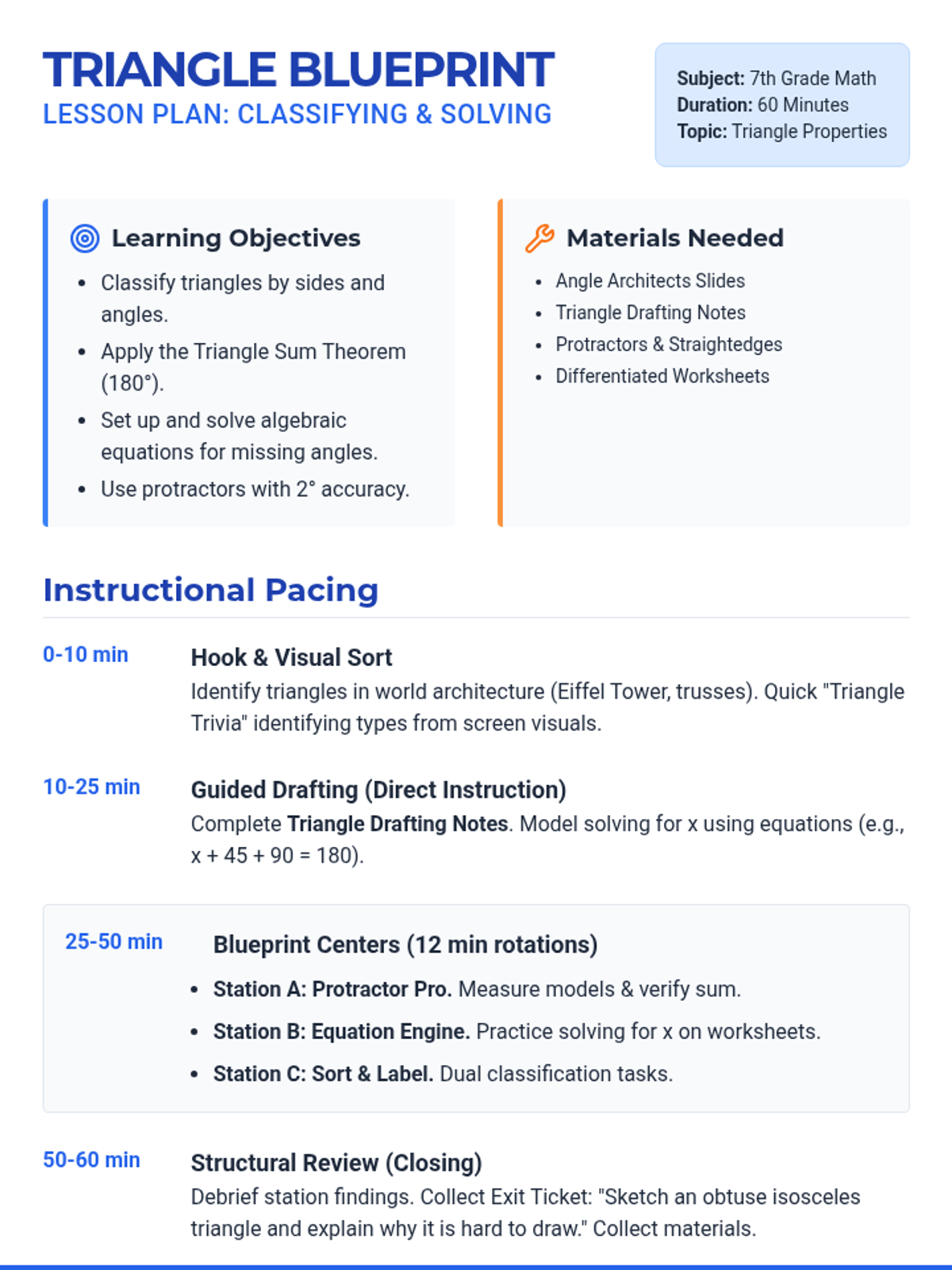
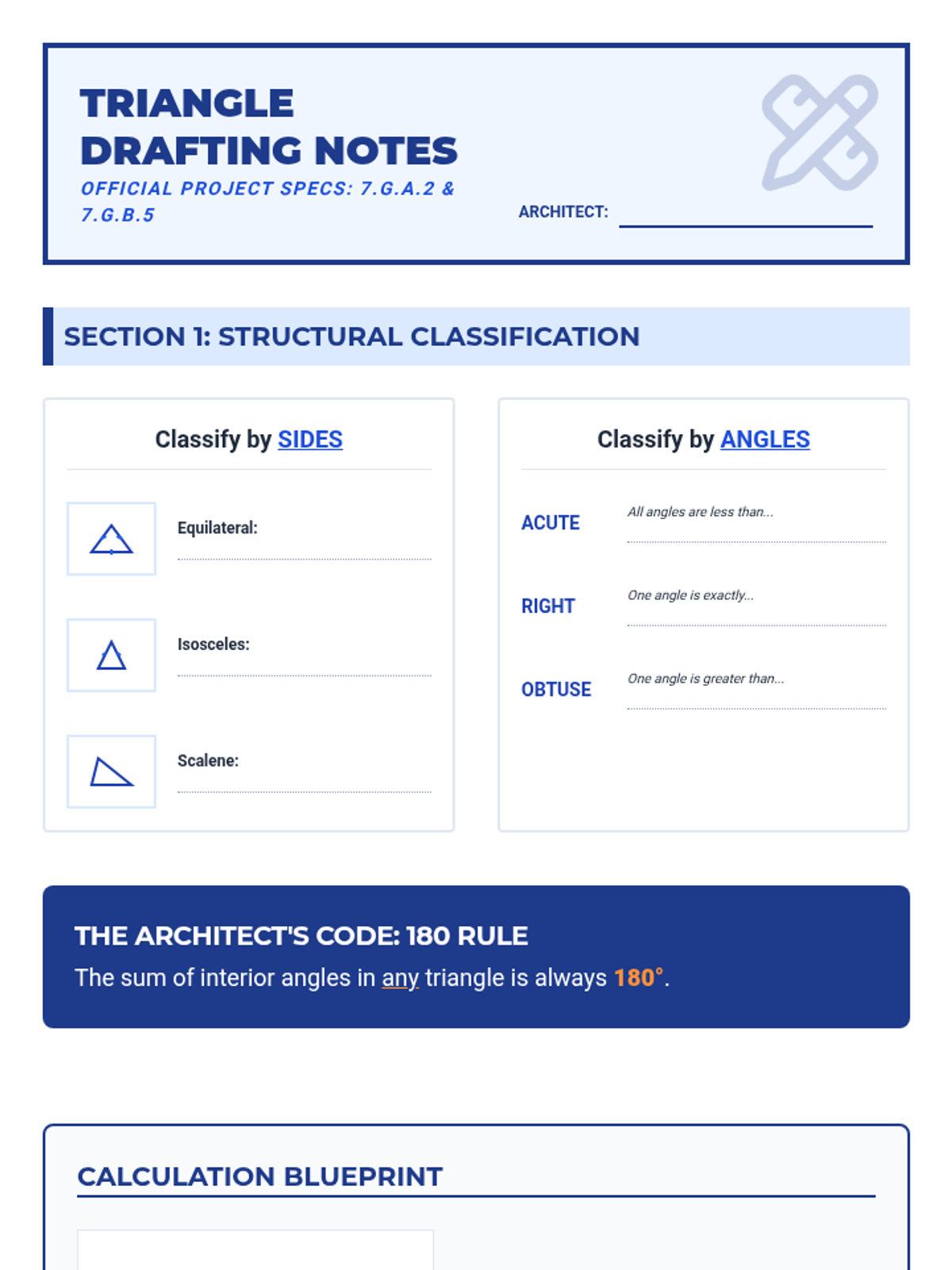
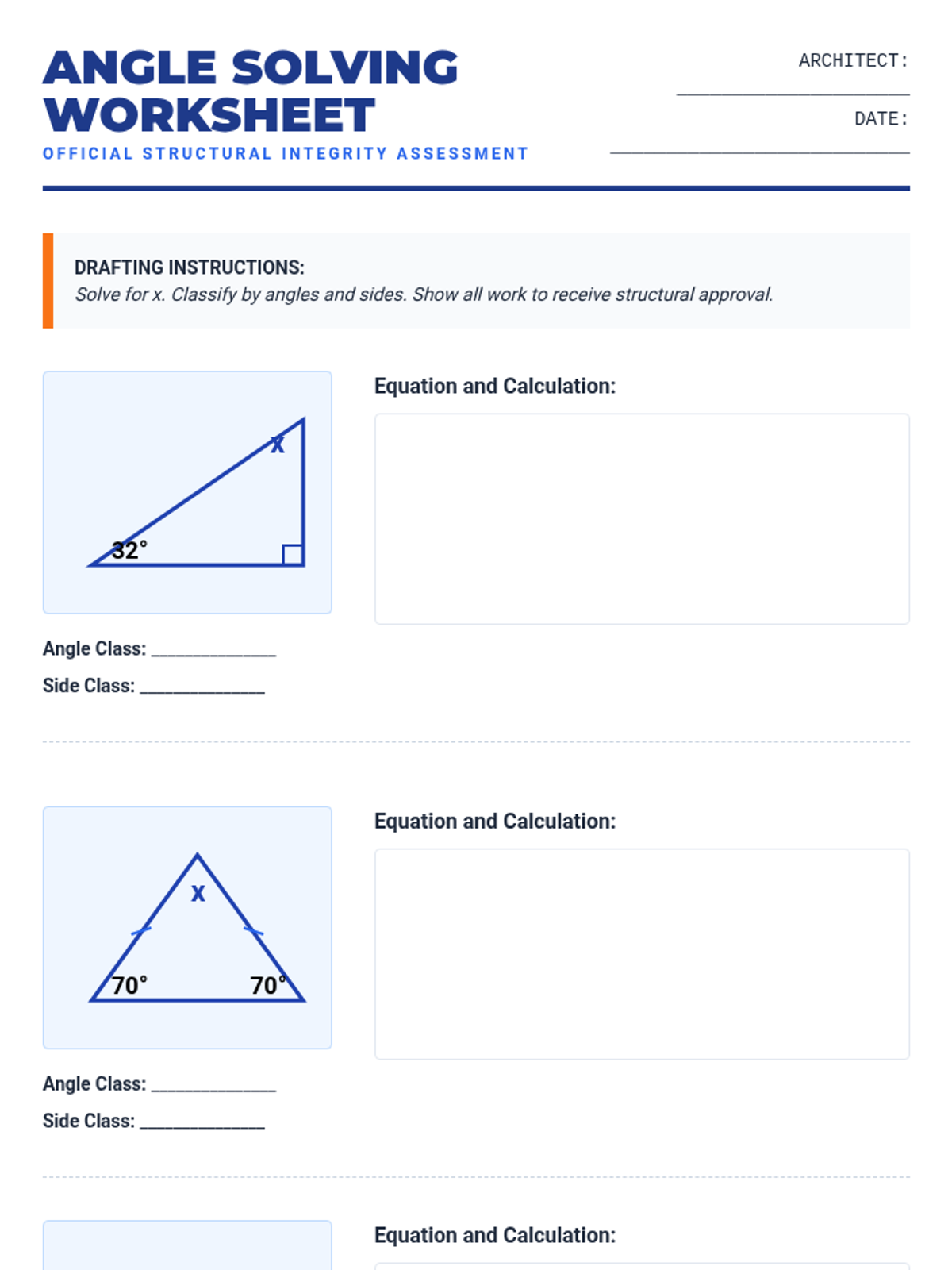
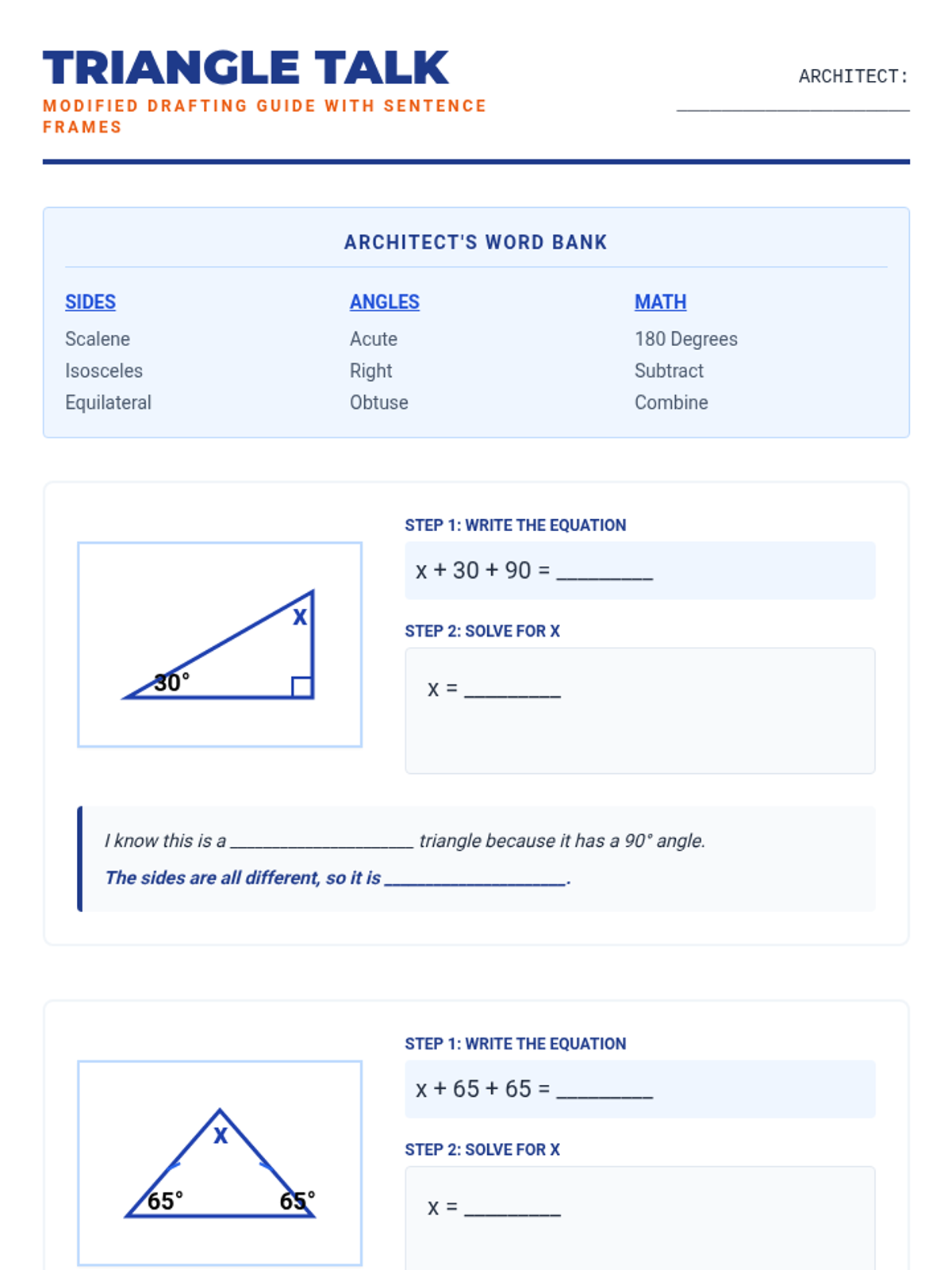
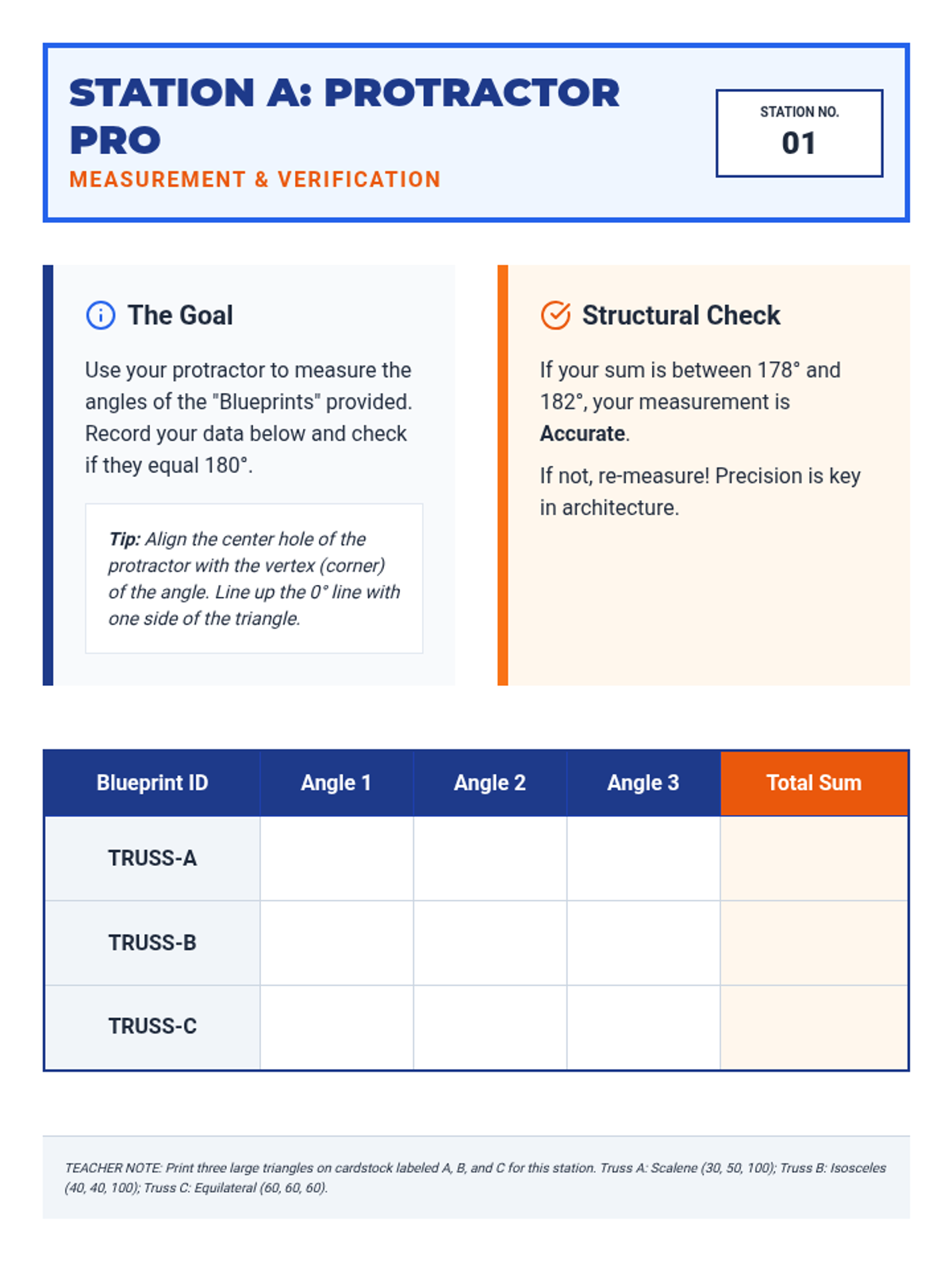
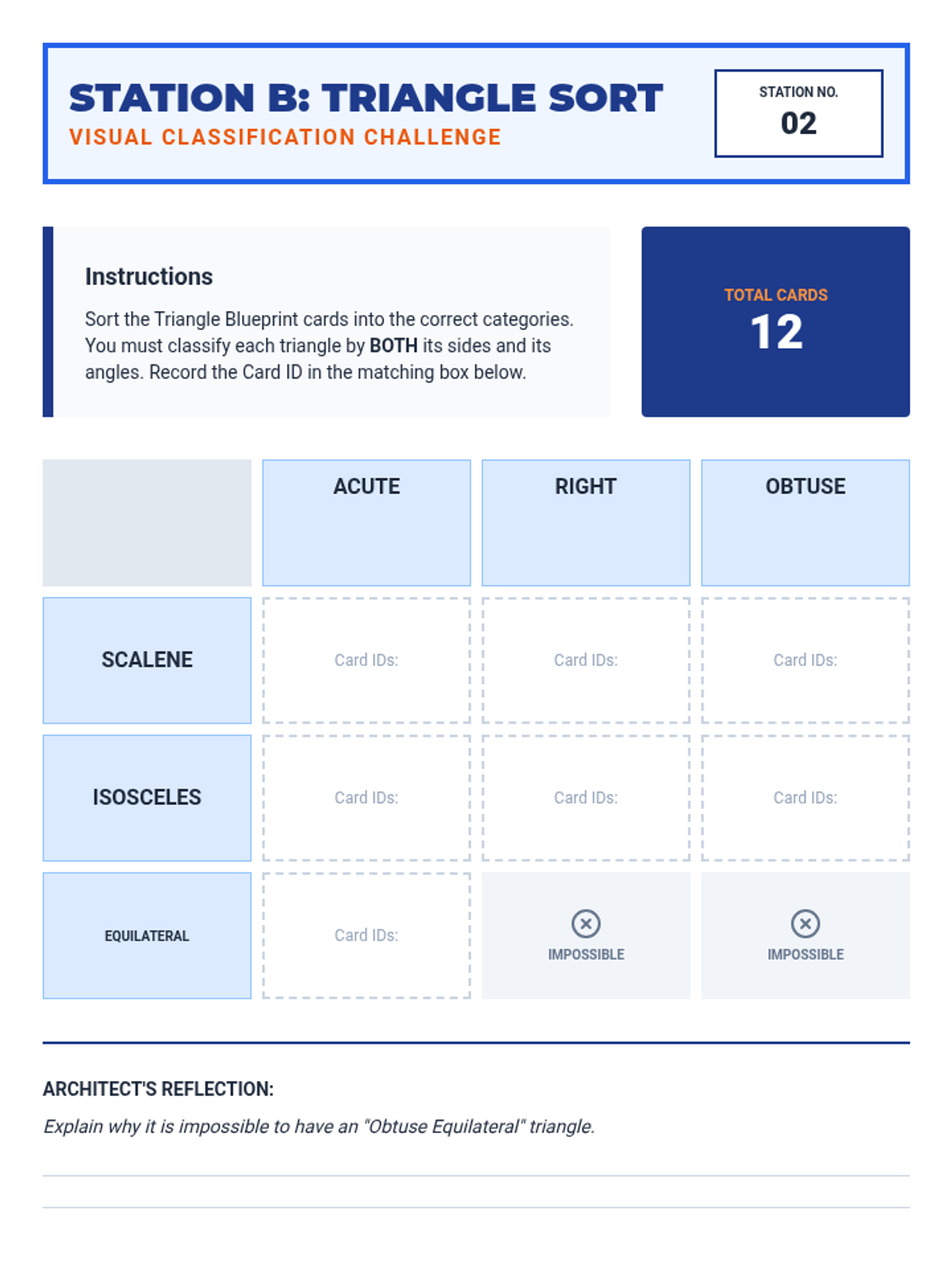
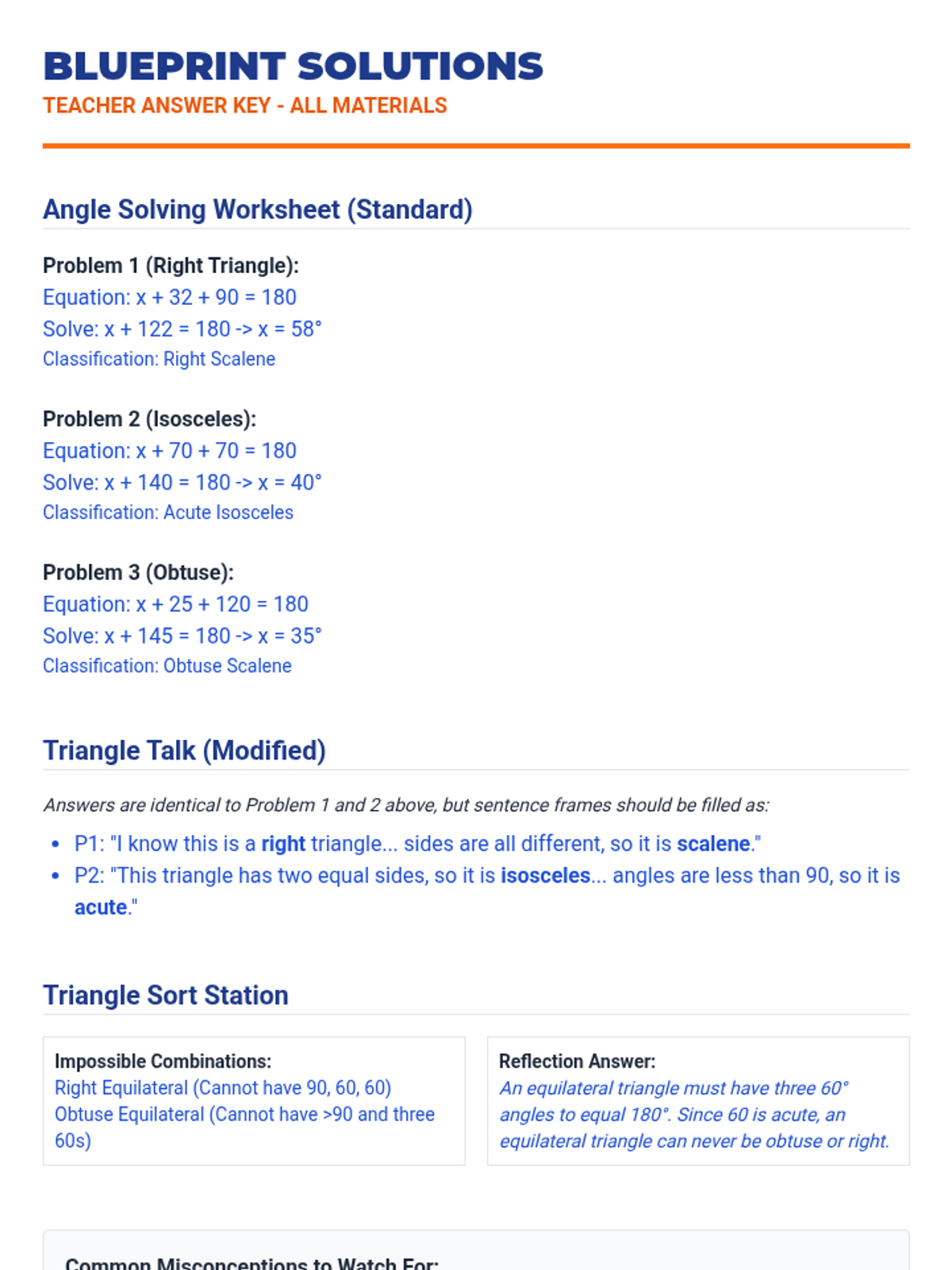
A comprehensive 7th-grade math lesson on triangle classification and angle relationships, featuring a blueprint-inspired aesthetic and tiered differentiation. Students will master visual identification, algebraic solving, and precise measurement using protractors.
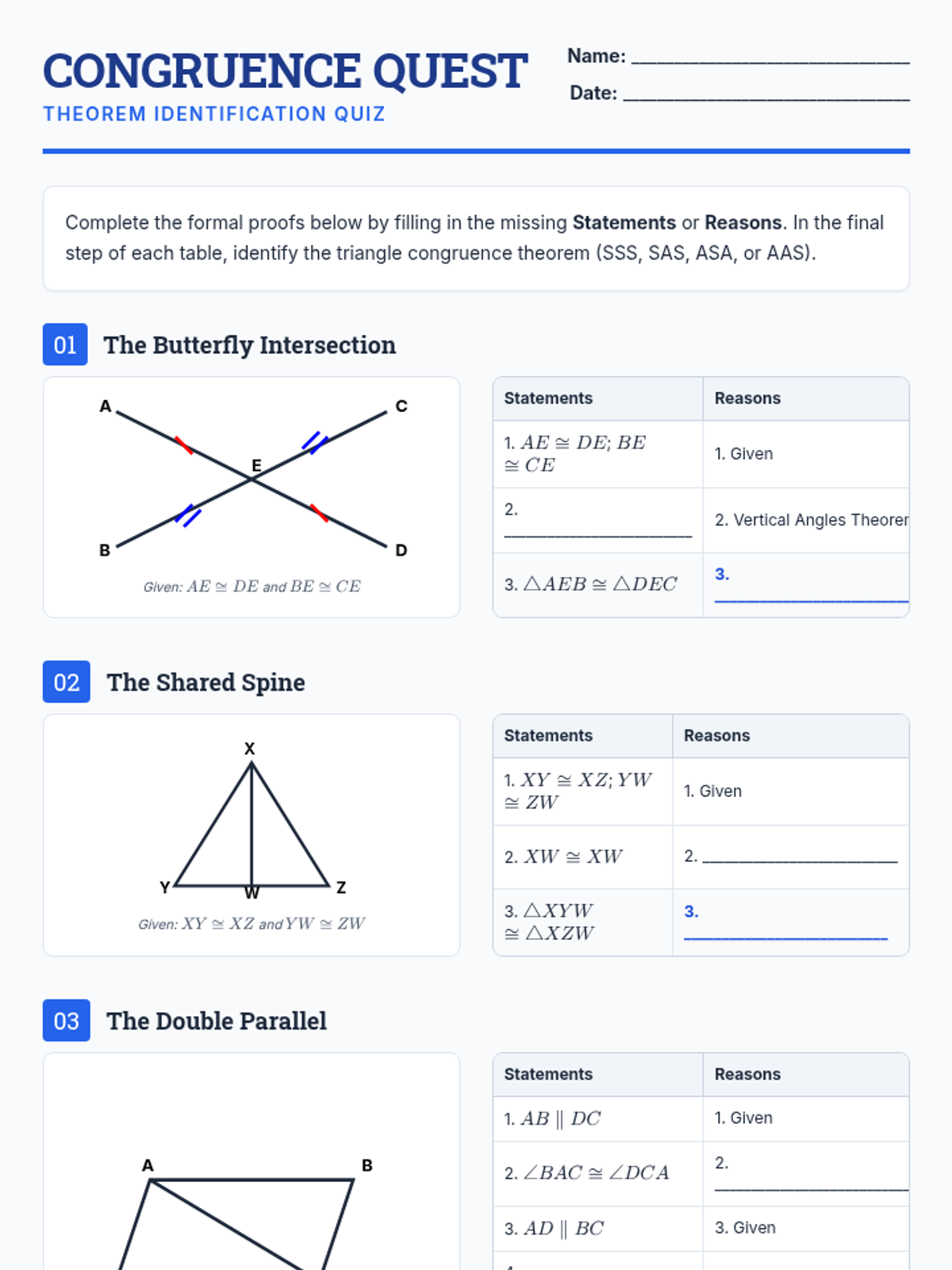
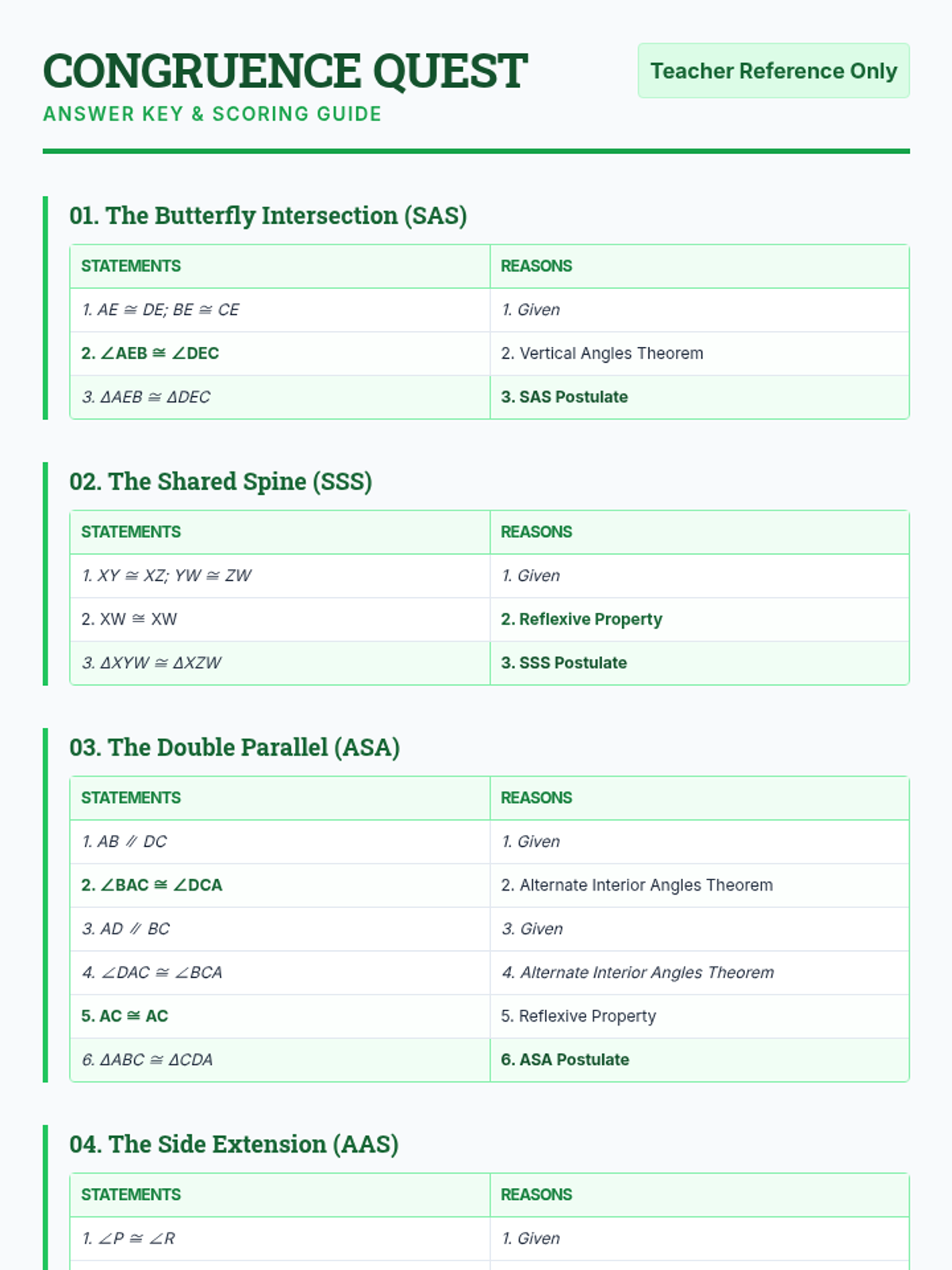
A focused challenge on identifying triangle congruence theorems through formal proofs, requiring students to complete statement-reason tables.
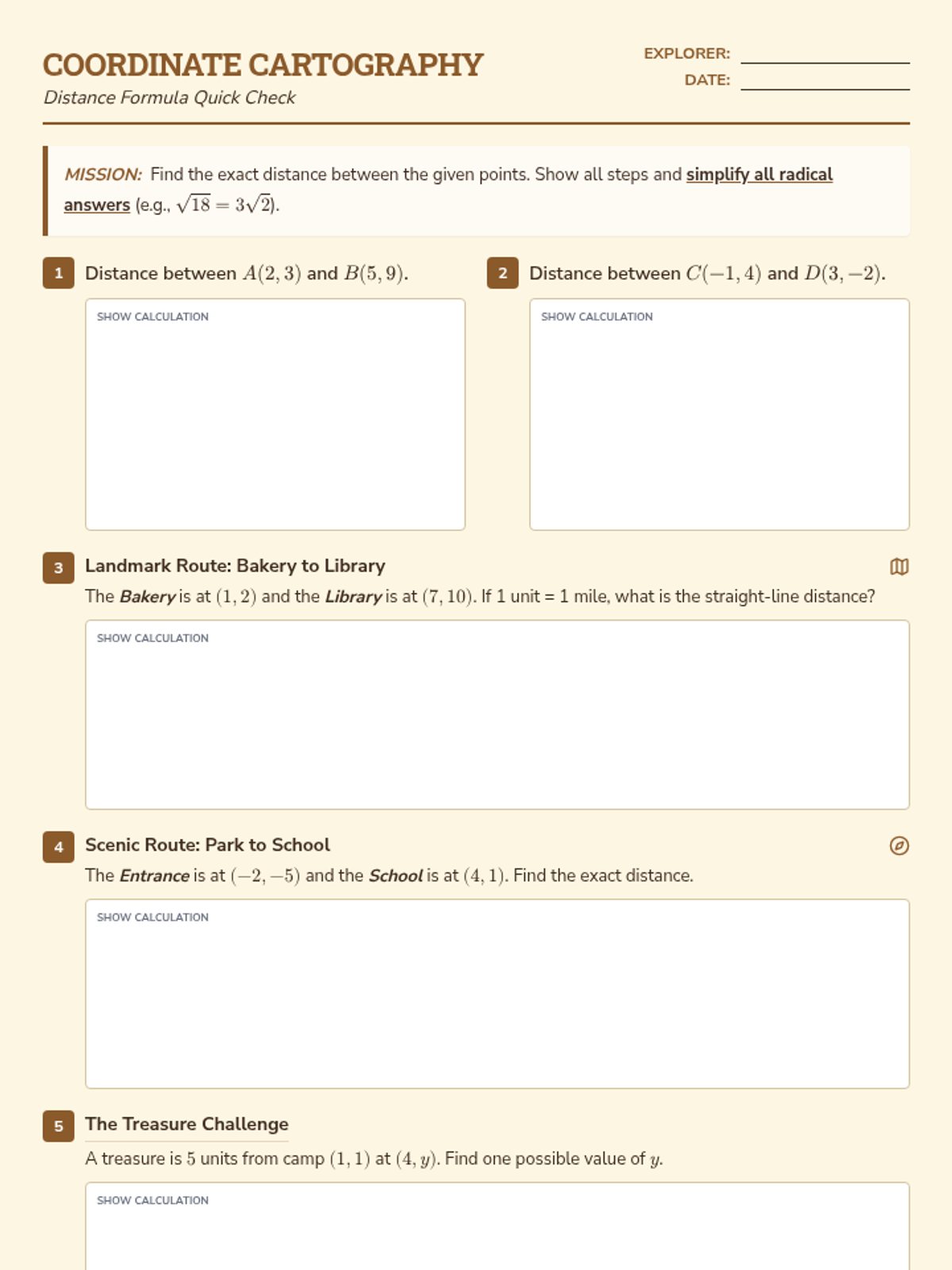
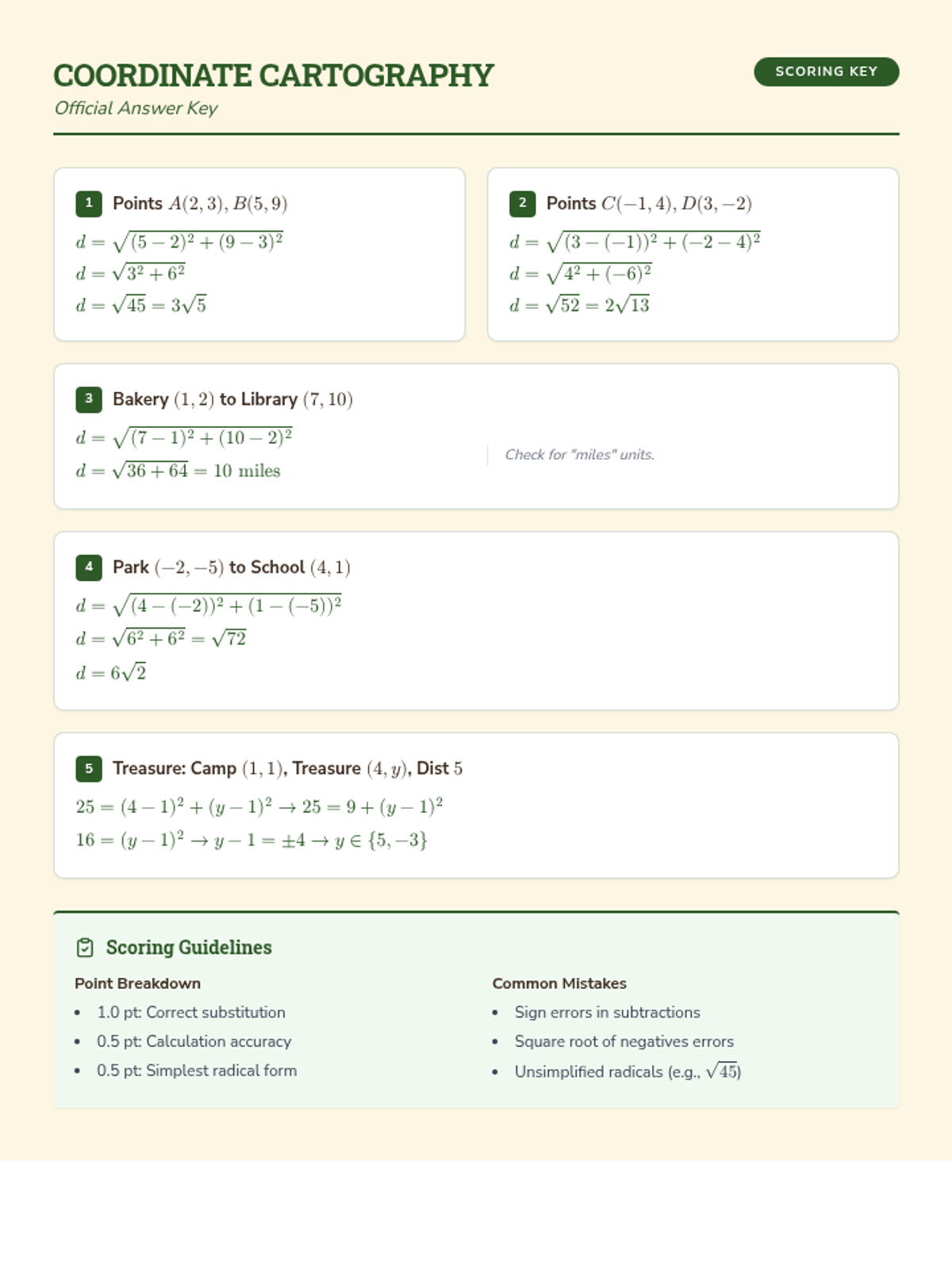
A focused lesson on applying the distance formula to coordinate geometry and real-world map scenarios, featuring radical simplification and spatial reasoning.
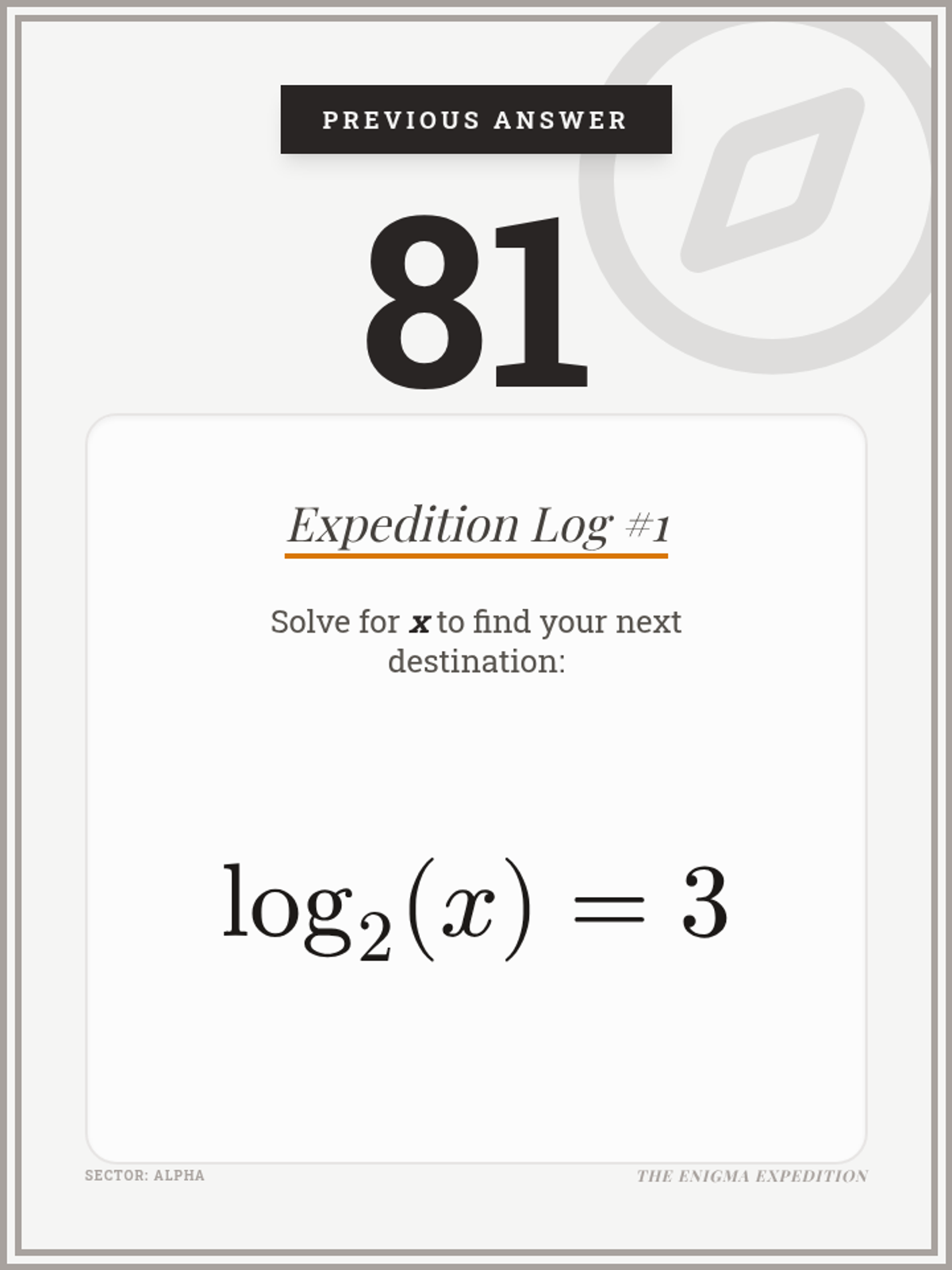
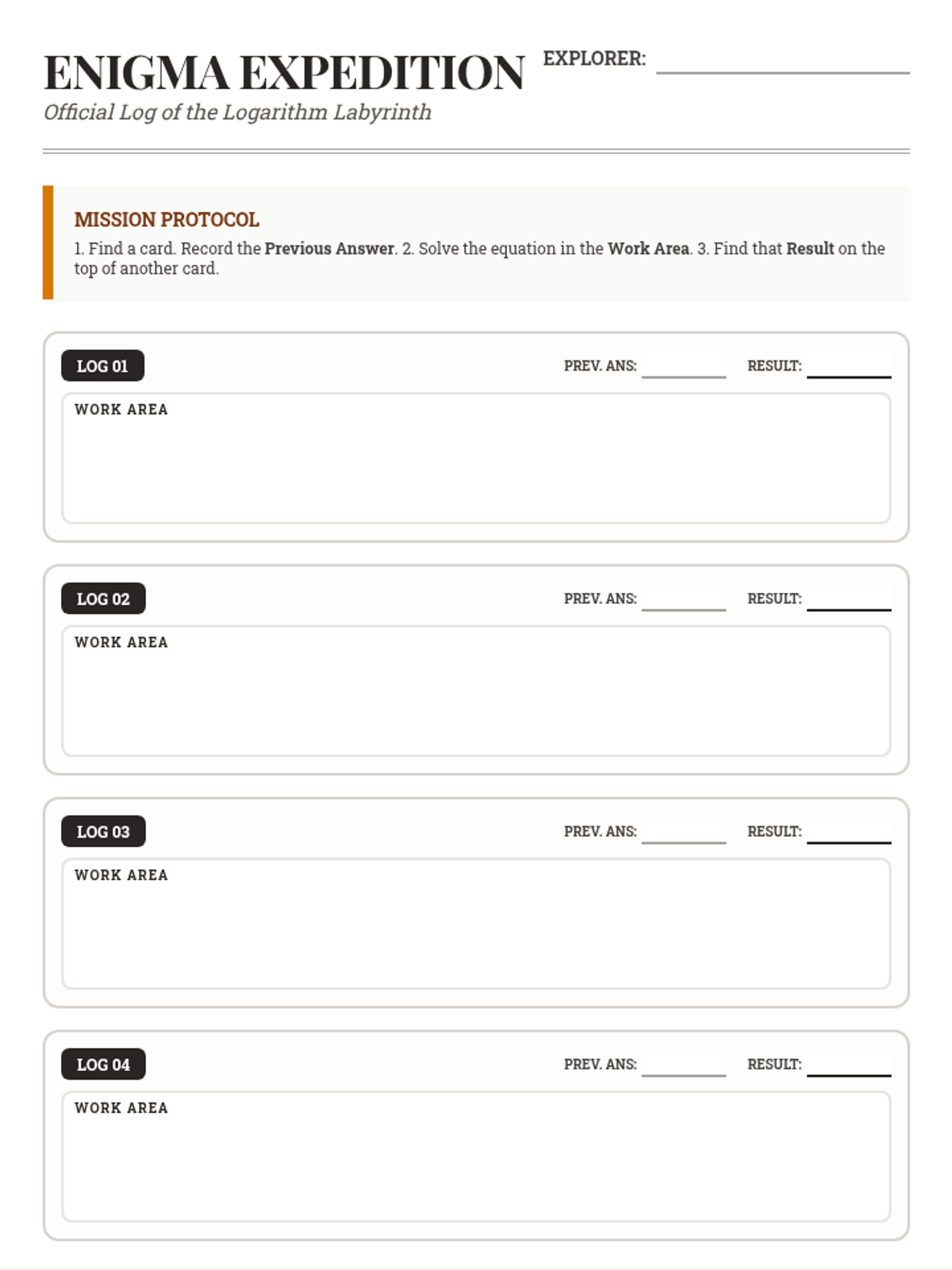
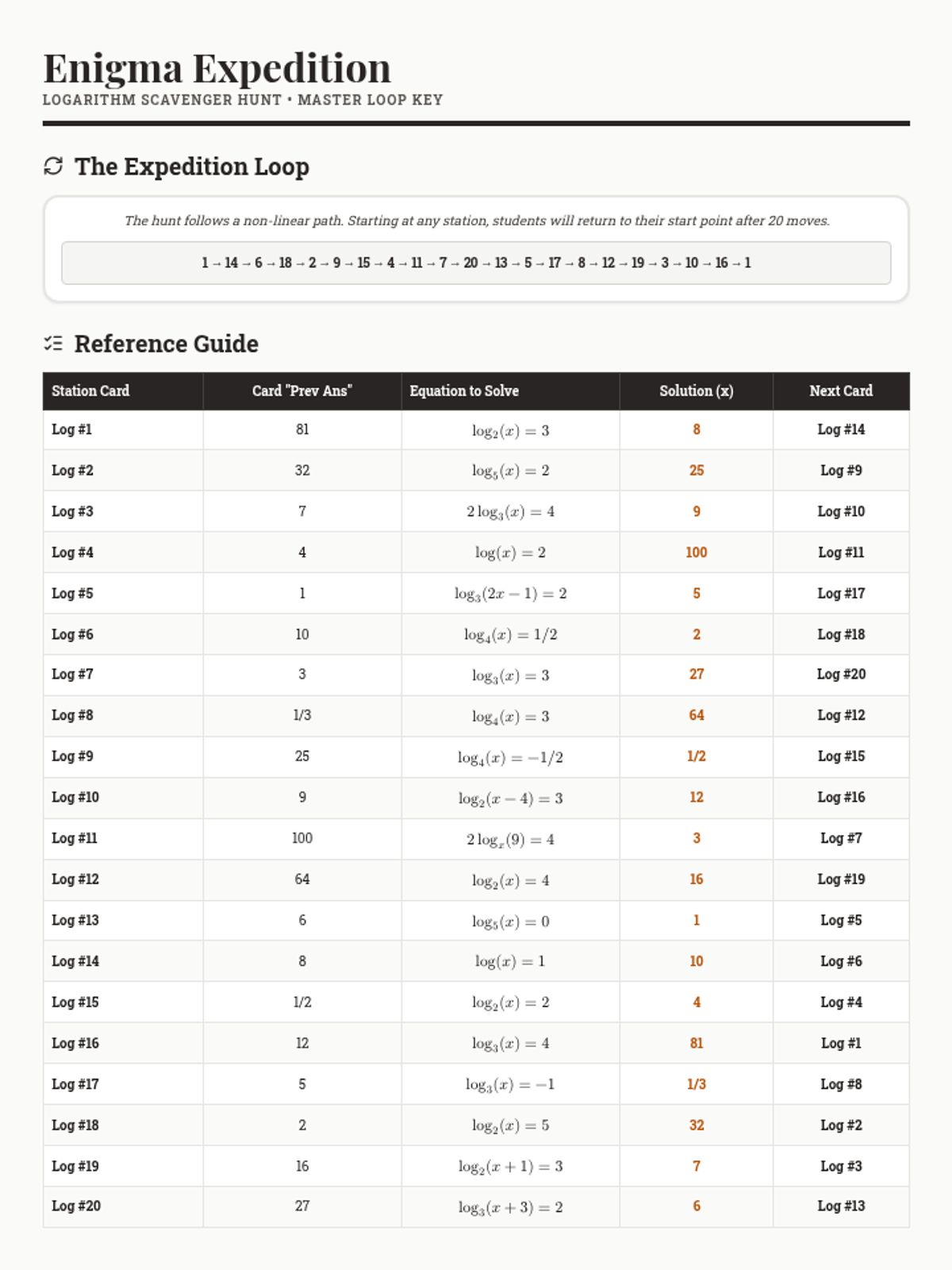
A self-checking scavenger hunt activity where students solve basic logarithmic equations involving conversions, isolations, and simple expressions. The activity is themed as an 'Enigma Expedition' through ancient ruins.
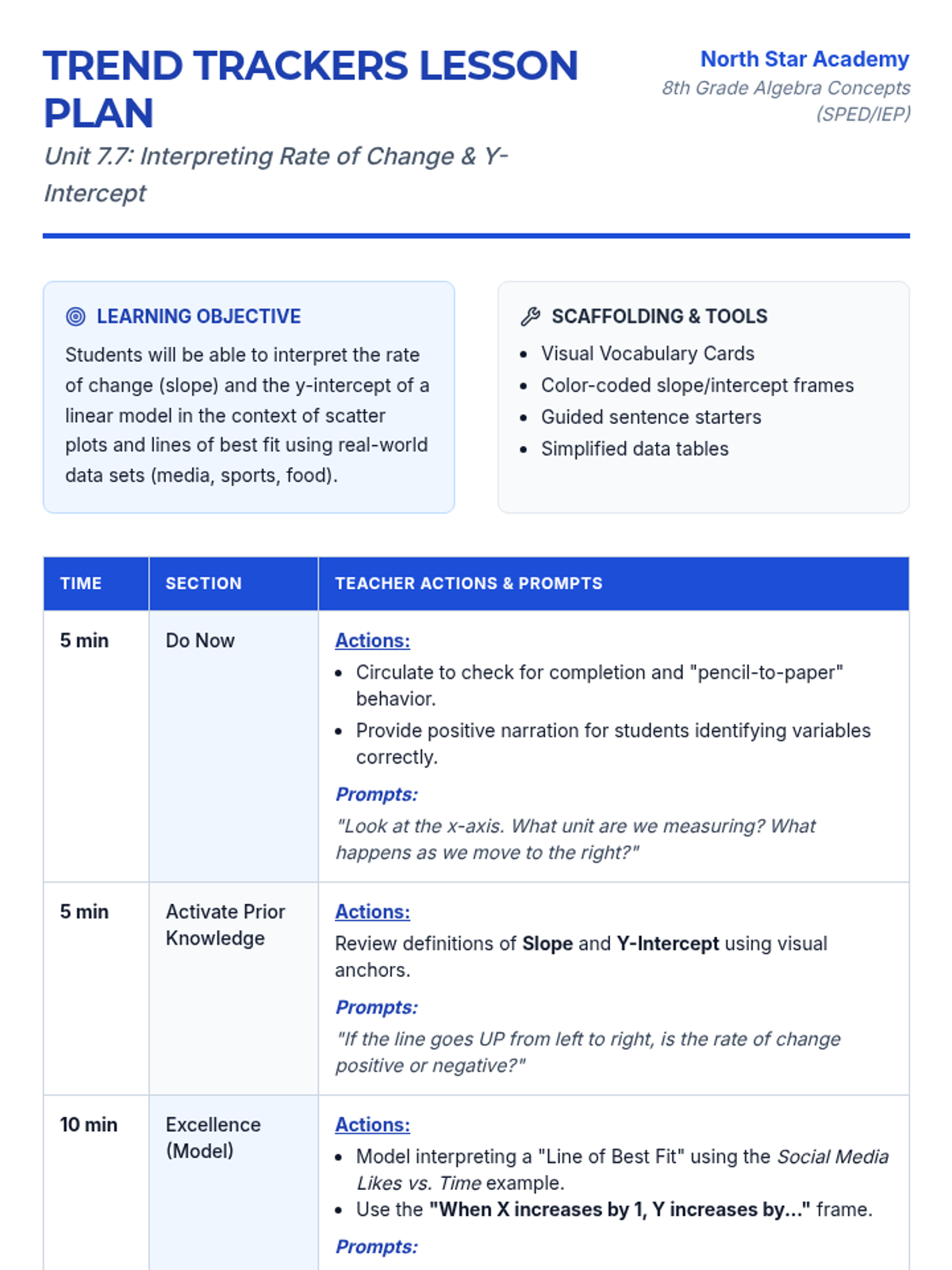
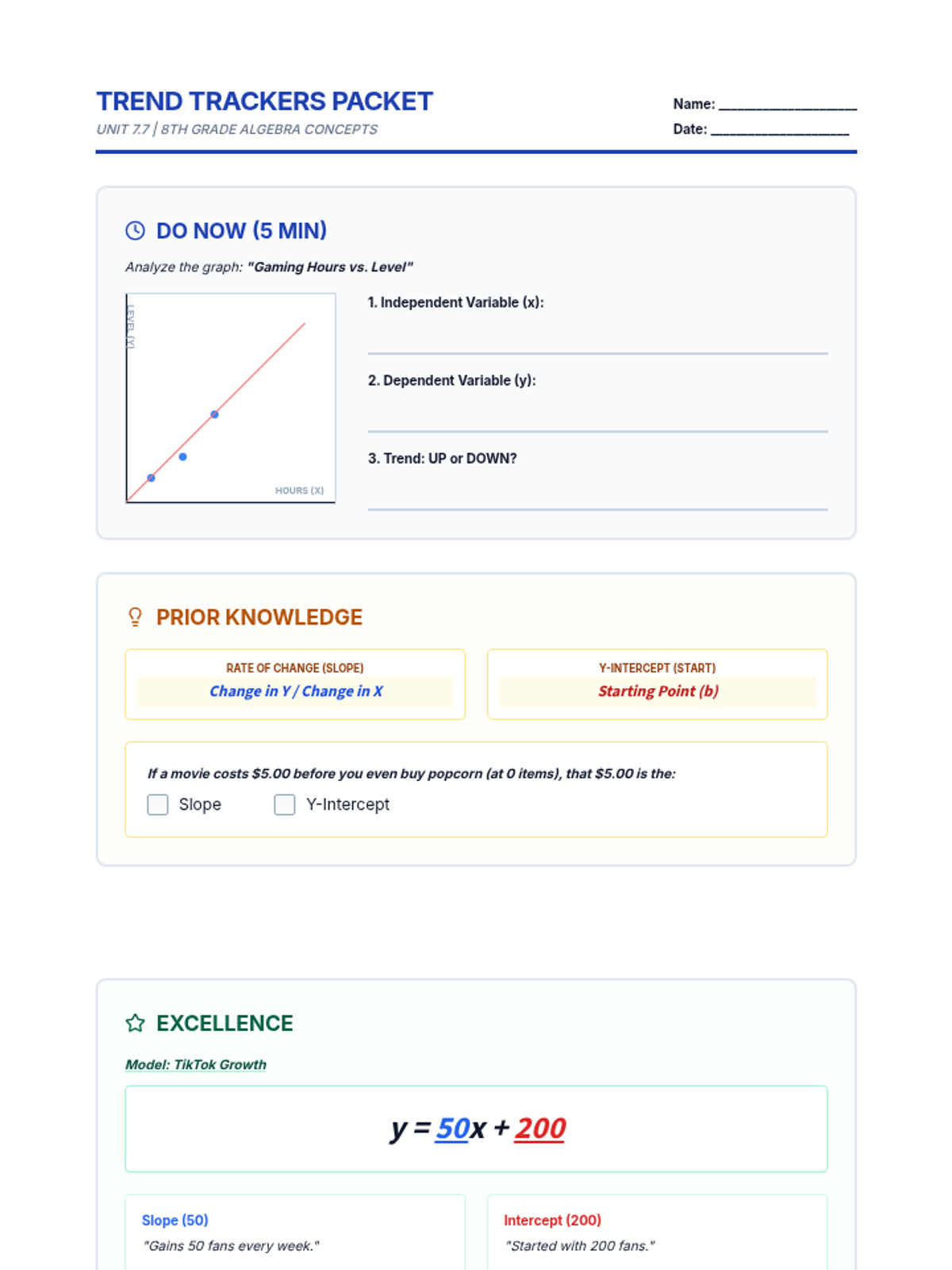
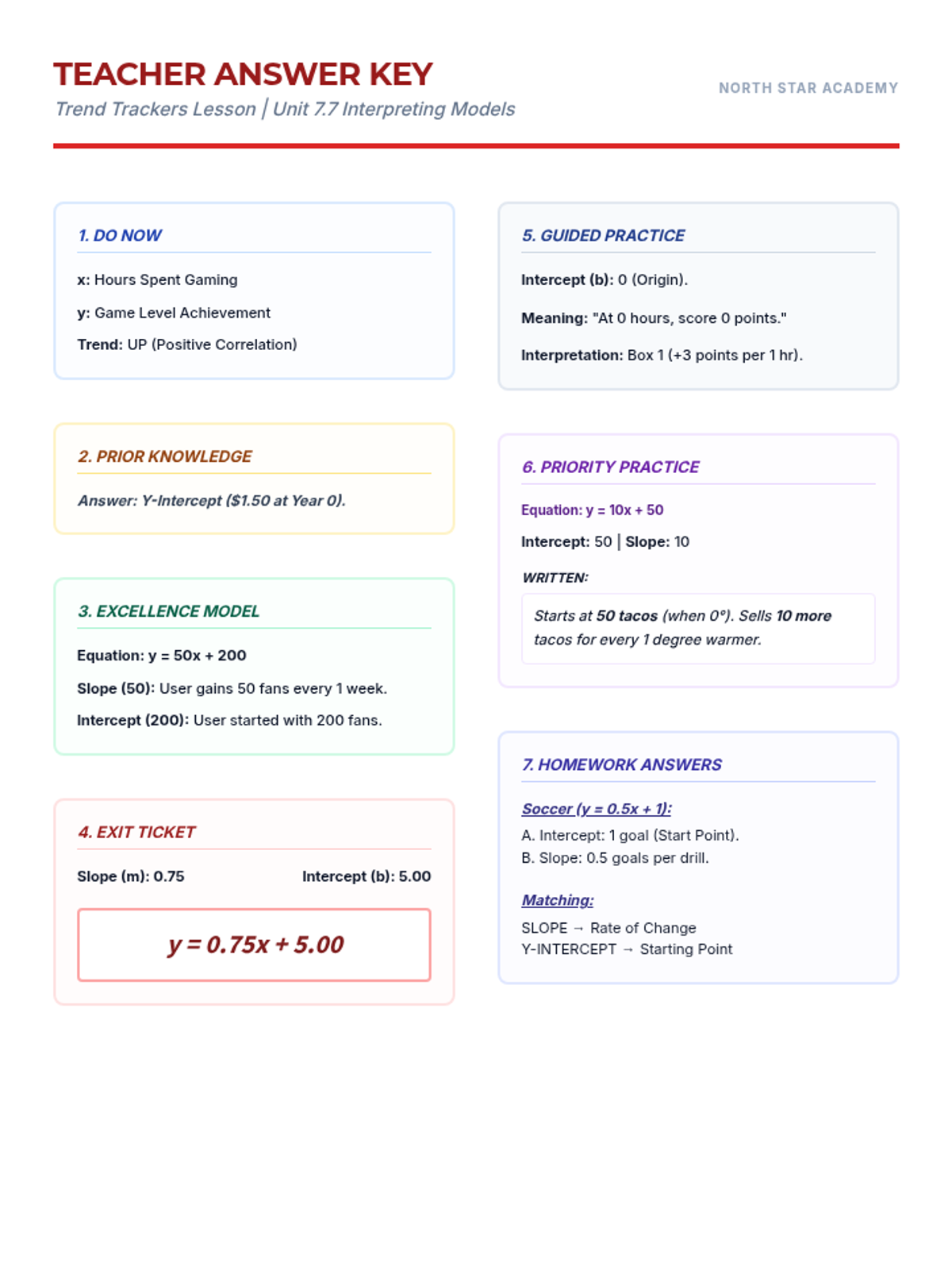
An 8th grade Algebra lesson focused on interpreting slope and y-intercept in the context of scatter plots and lines of best fit, specifically designed for Special Education students with IEP supports.
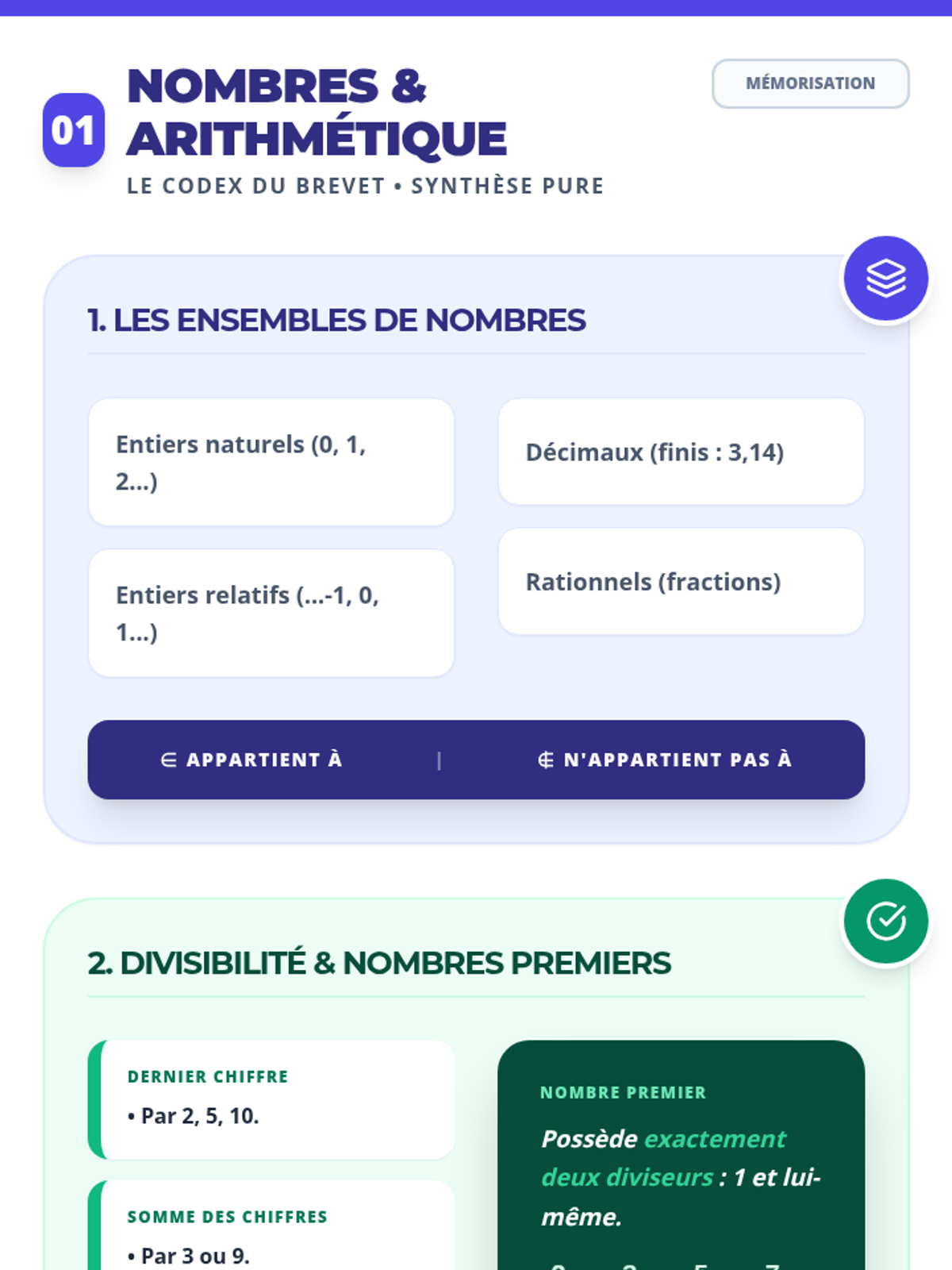
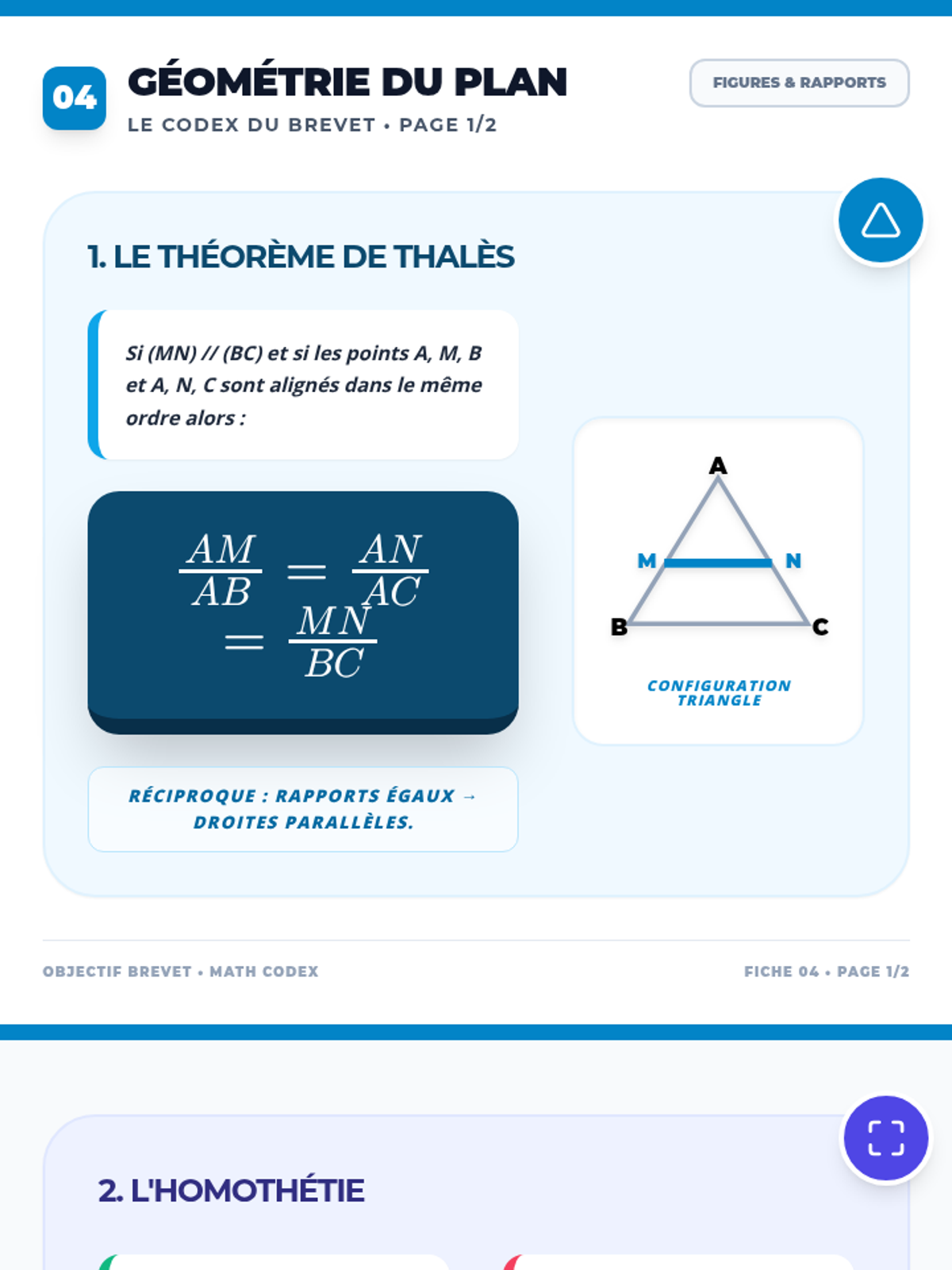
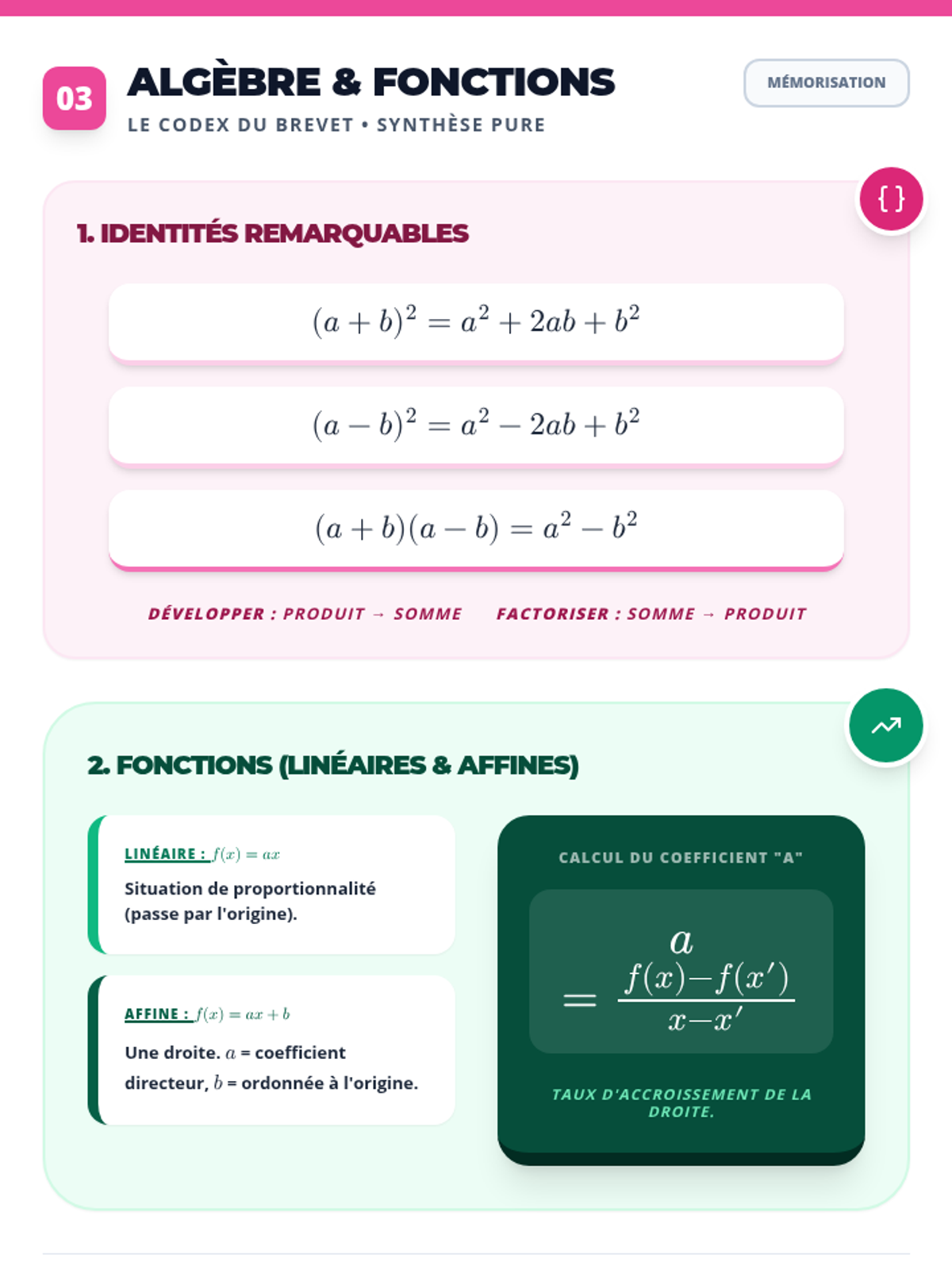
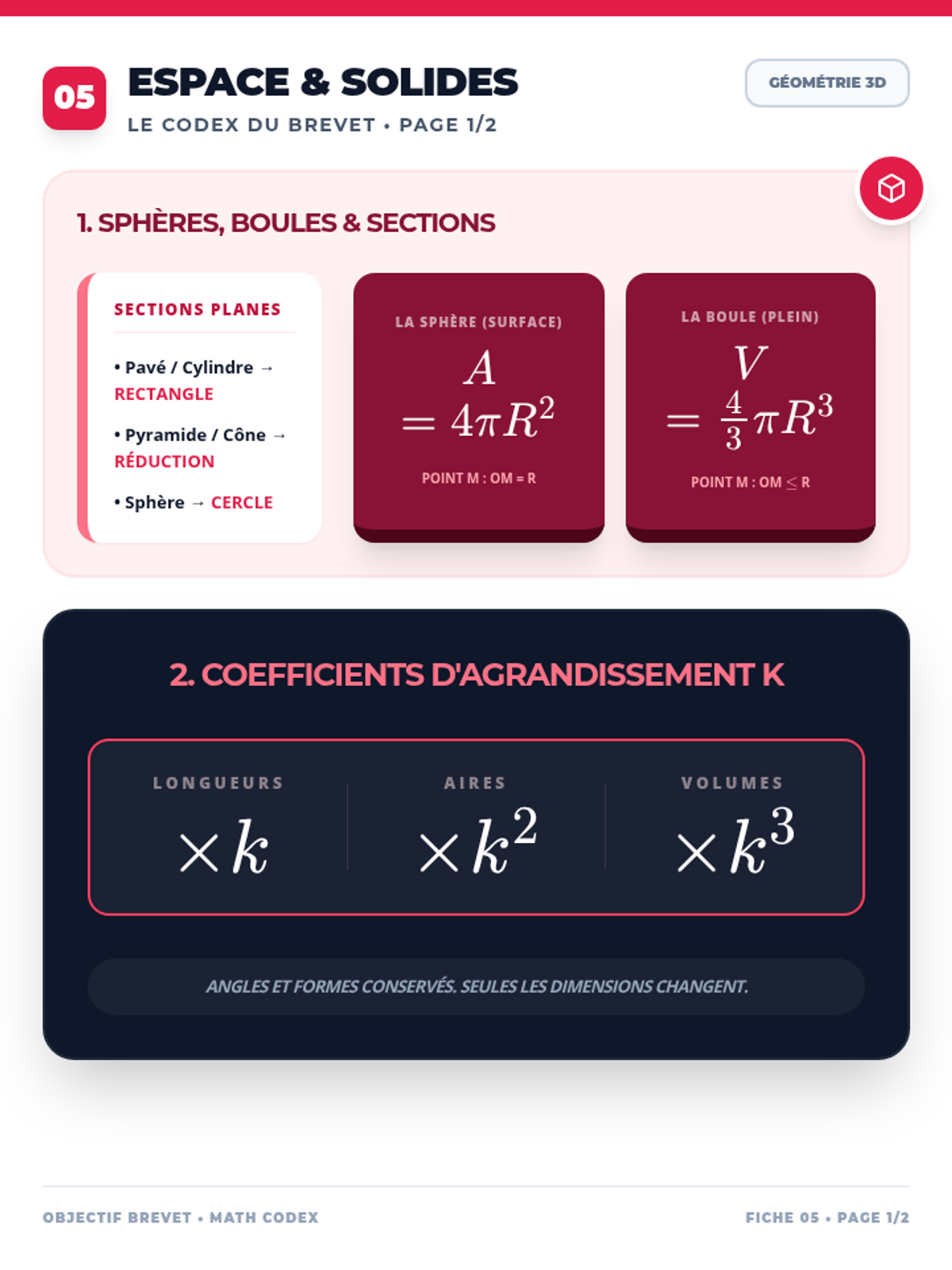
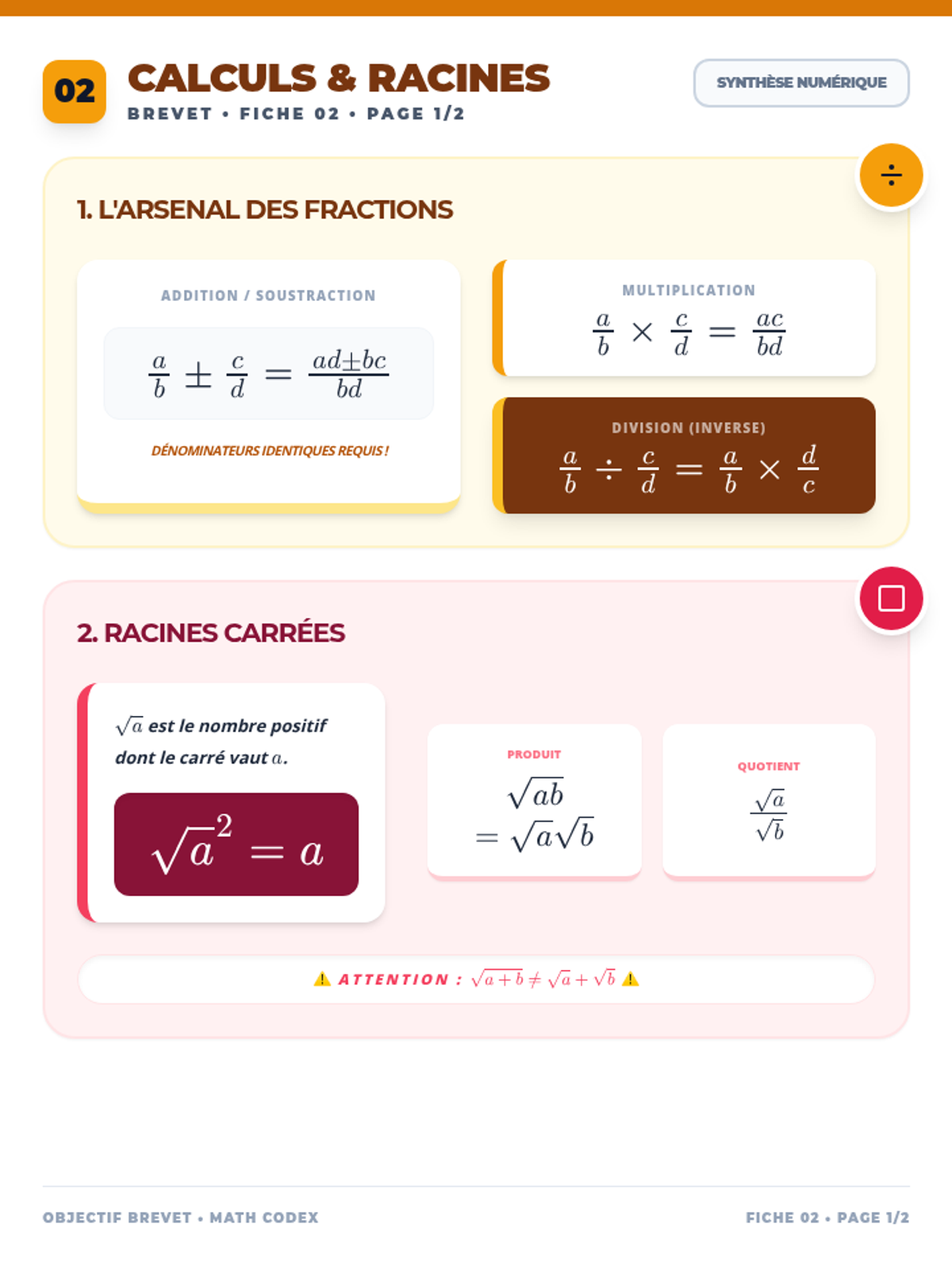
Une collection complète de fiches de révision et un diaporama dynamique pour maîtriser le programme de mathématiques de 3ème. Couvre l'arithmétique, l'algèbre, la géométrie et la trigonométrie avec des visuels clairs et modernes.
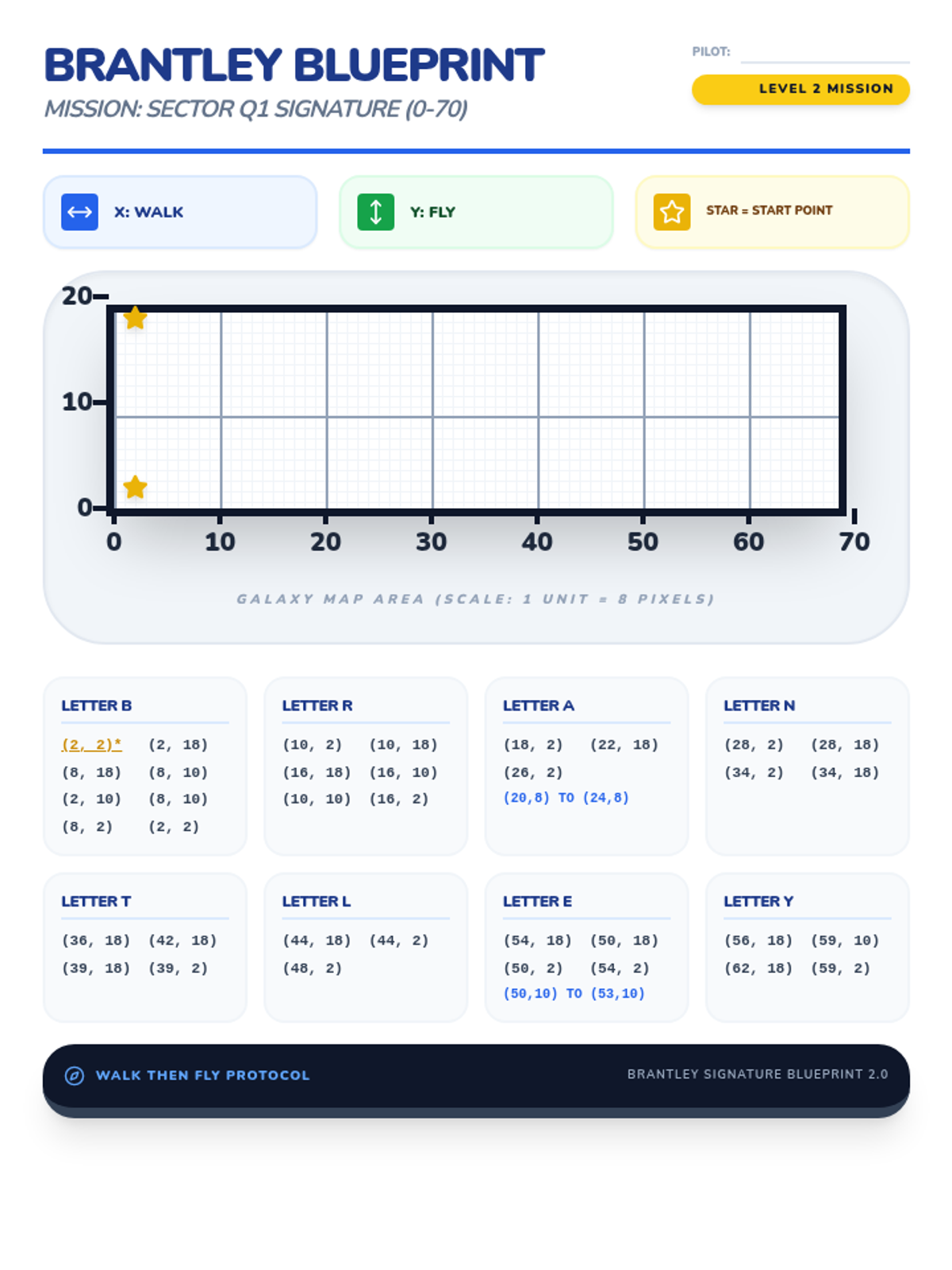
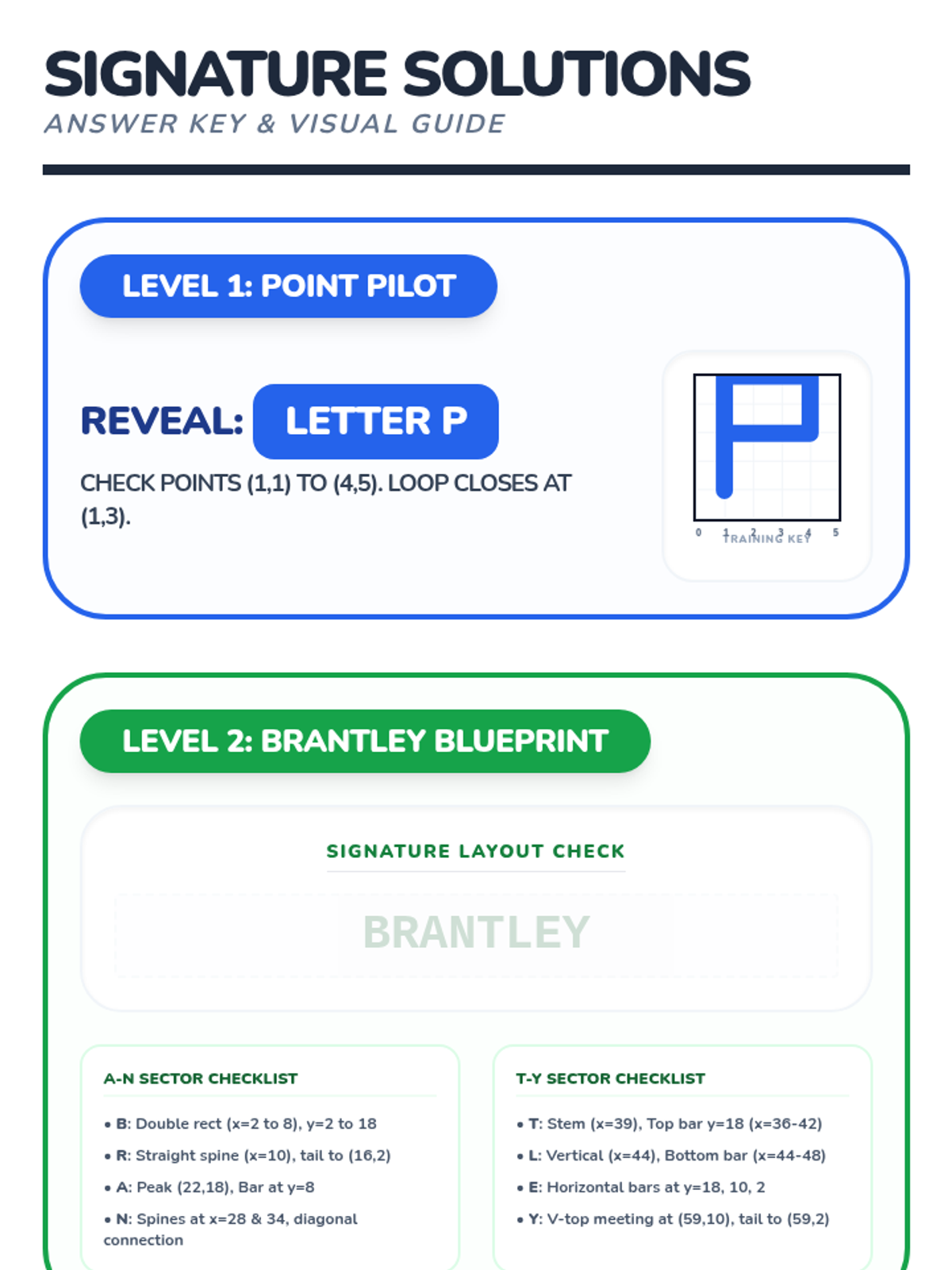
A simplified introduction to plotting points on a coordinate plane (Quadrant 1) to create the signature "Brantley". Designed specifically for IEP students with large grids and clear instructions.
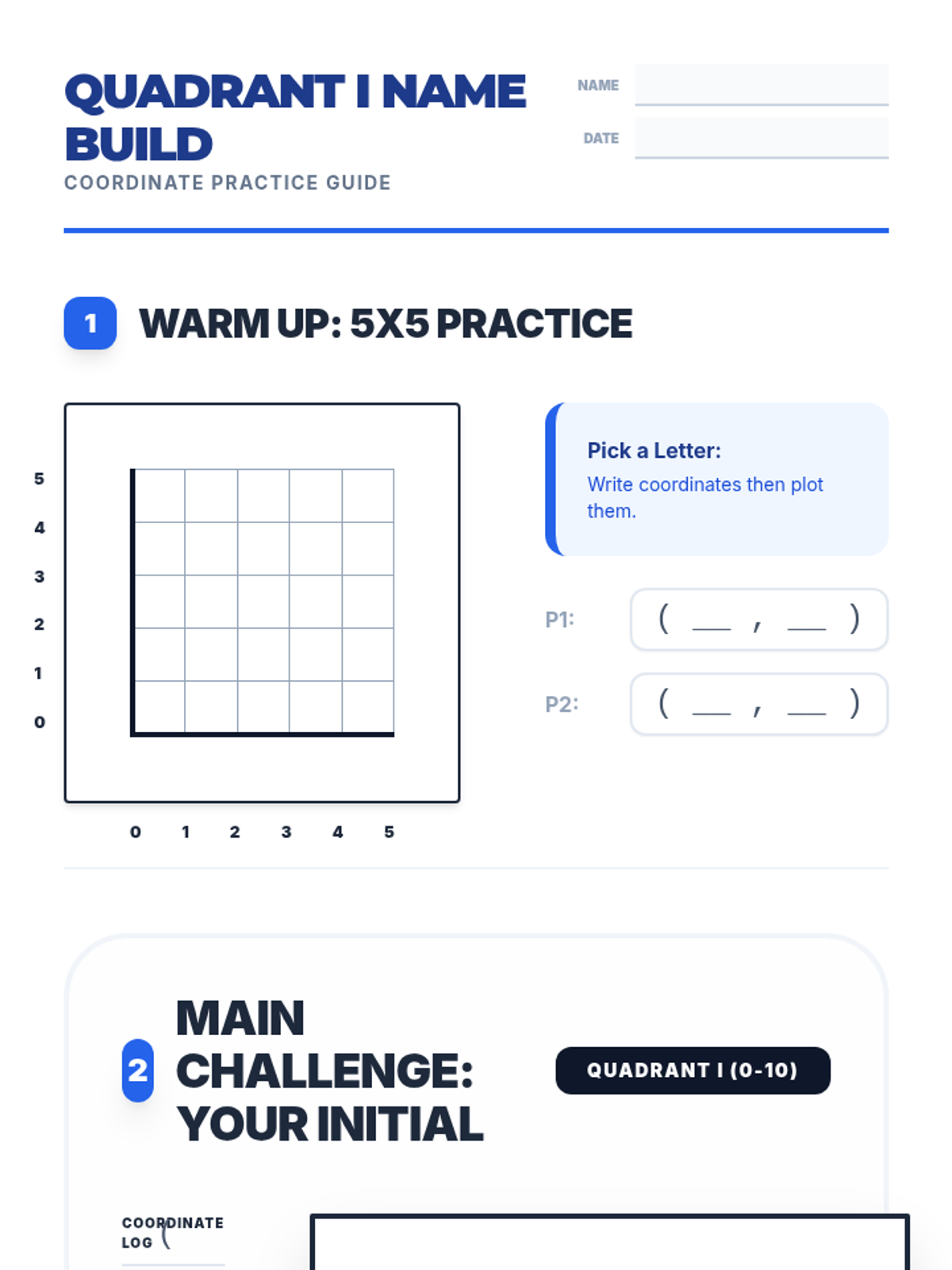
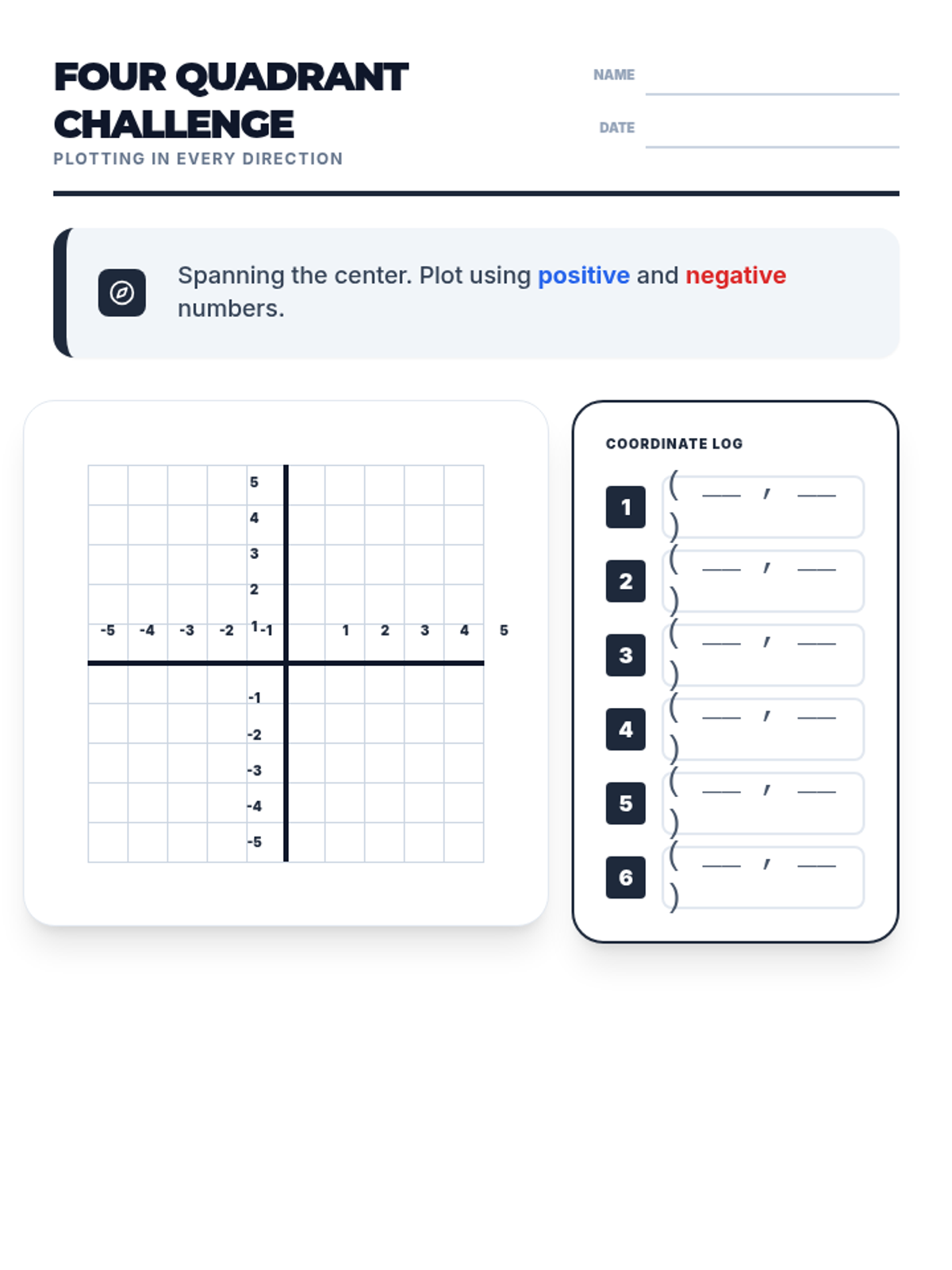
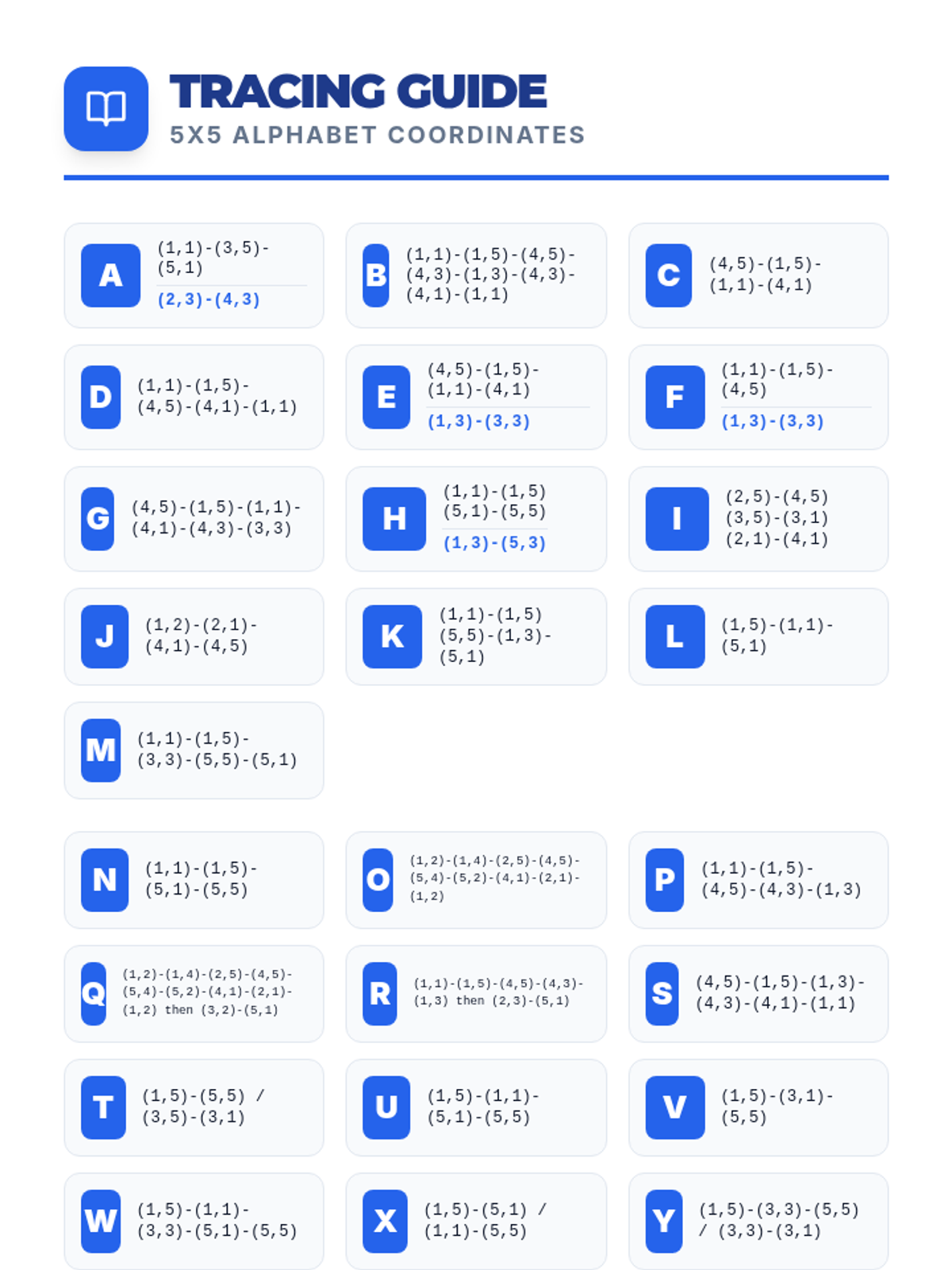
Students learn to plot coordinates to form letters and their own names. This lesson includes differentiated materials for Quadrant I, simplified 5x5 grids, and all four quadrants, with built-in tracing supports for IEP students.
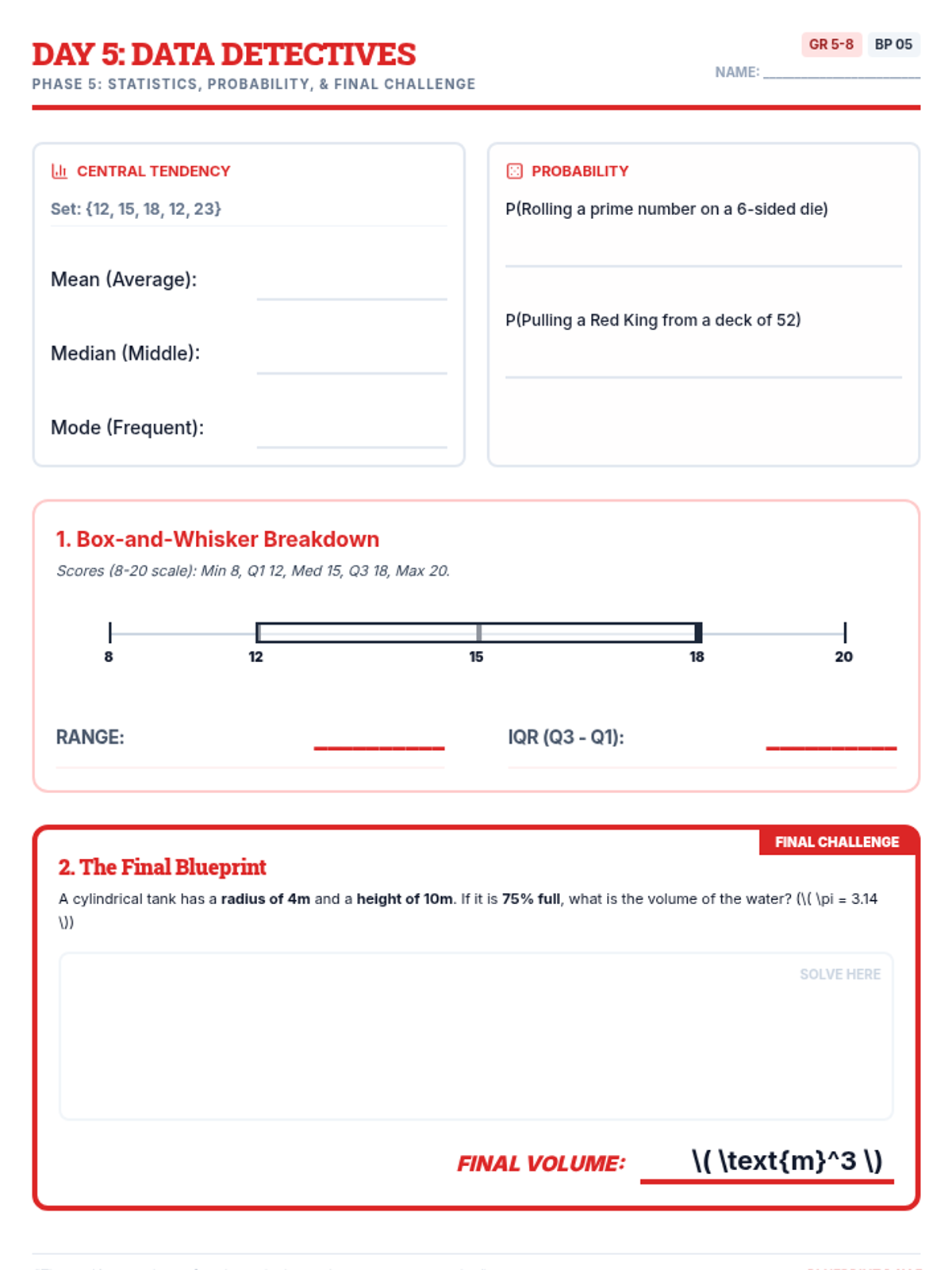
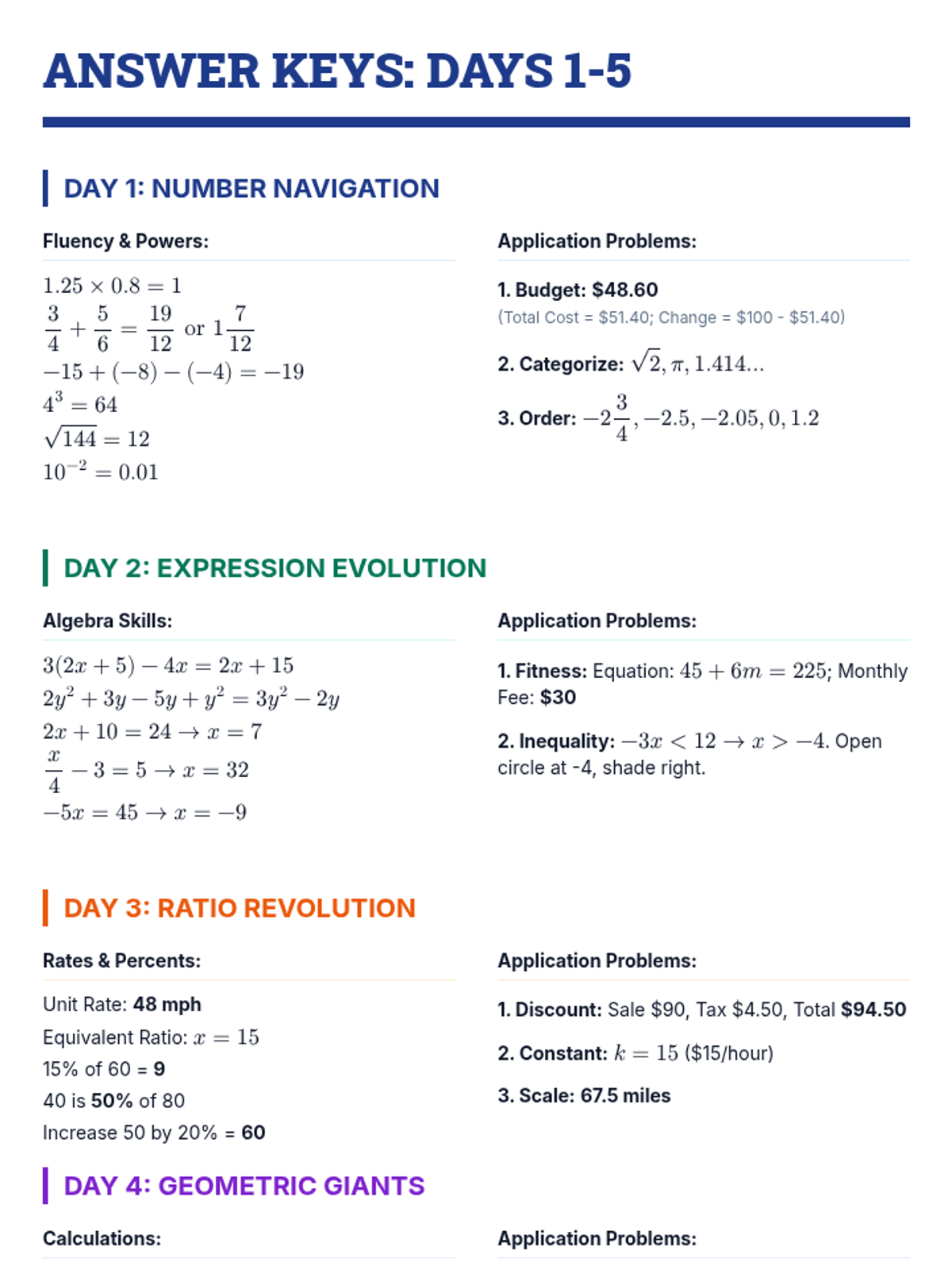
Day 5 concludes with statistics, probability, and a mixed challenge review of all concepts.