Students engage in a pattern-finding activity connecting group numbers to the number of electrons in the outermost shell. They discover that elements in the same vertical column share the same valence configuration.
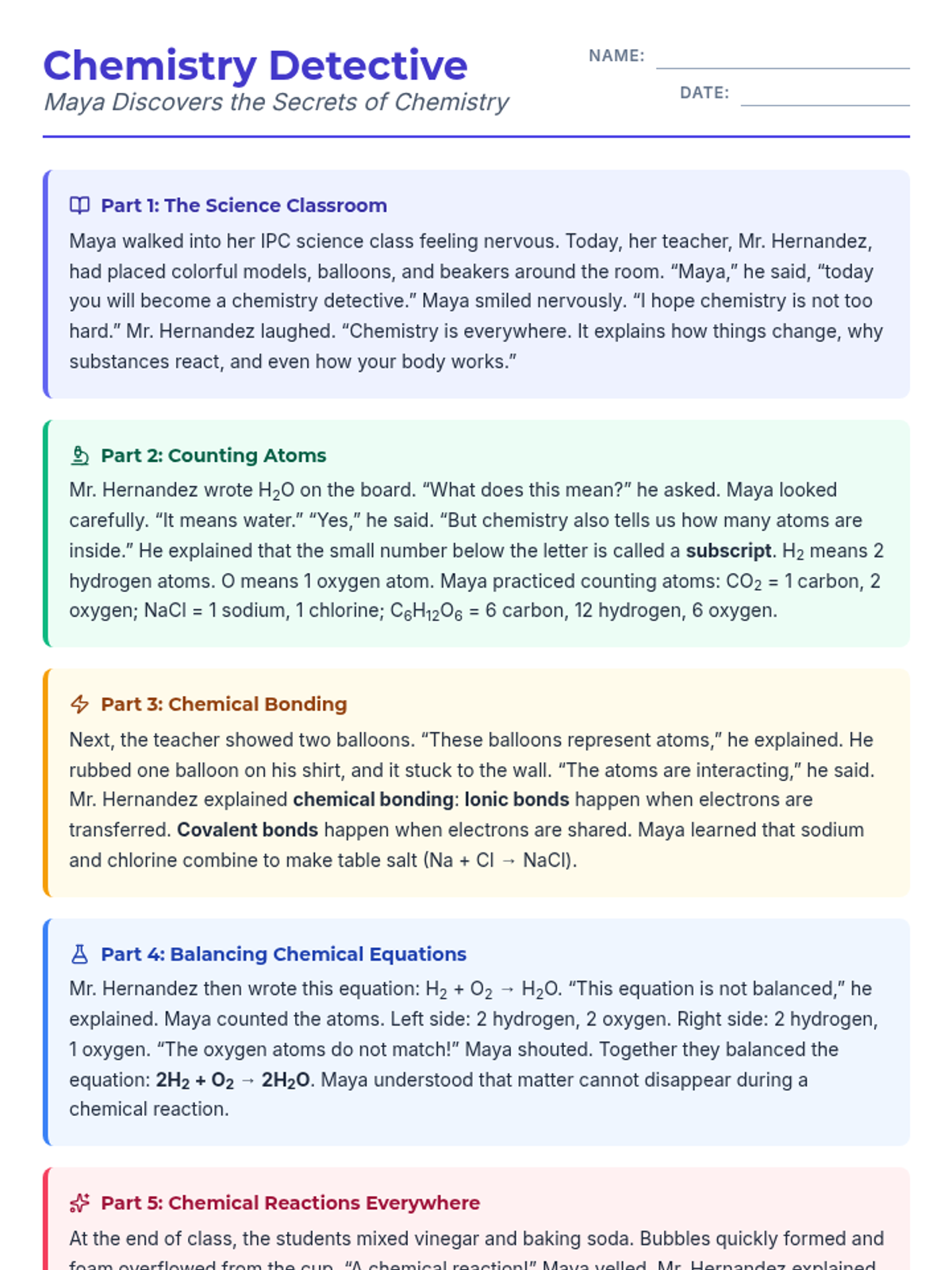
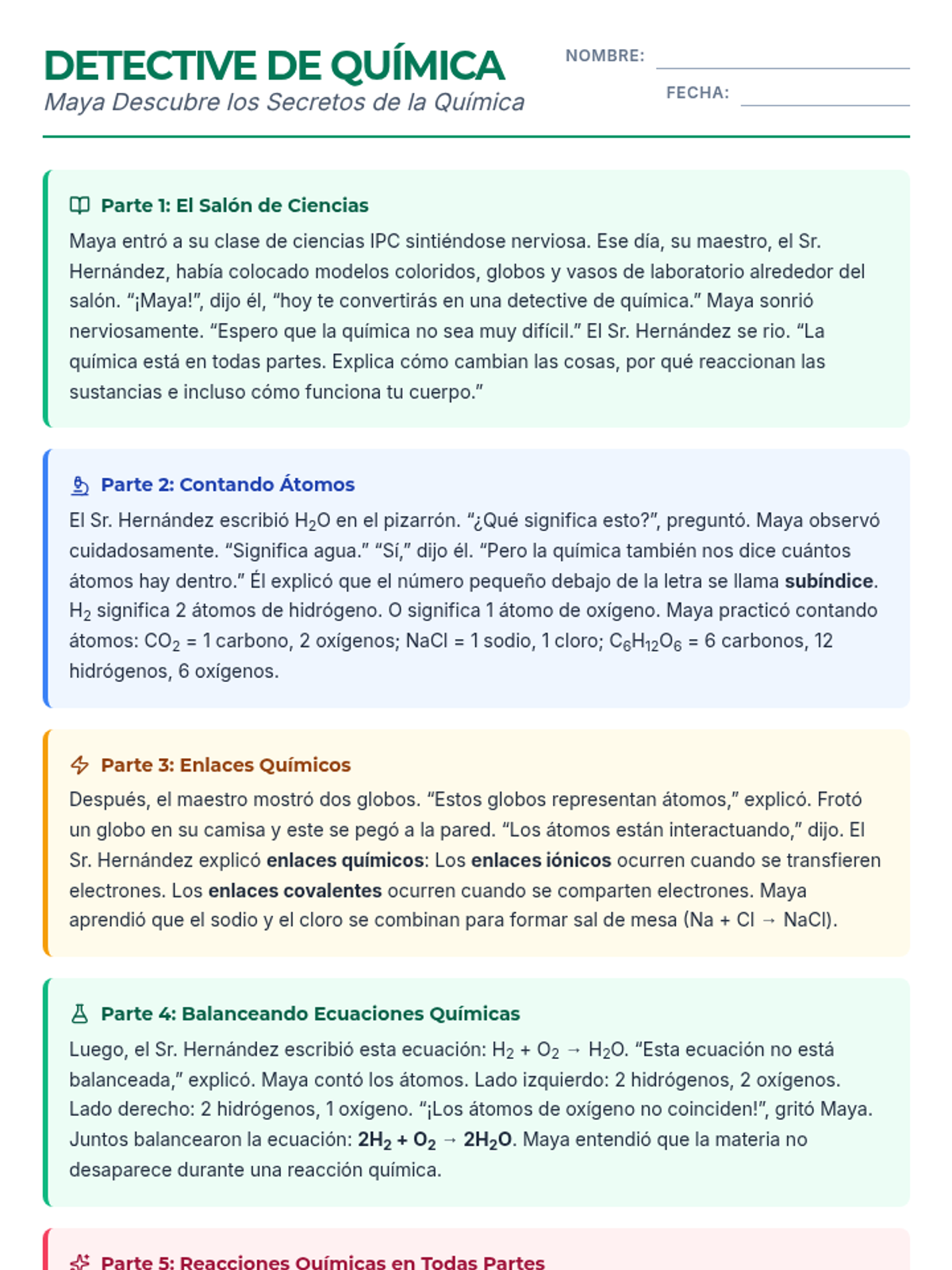
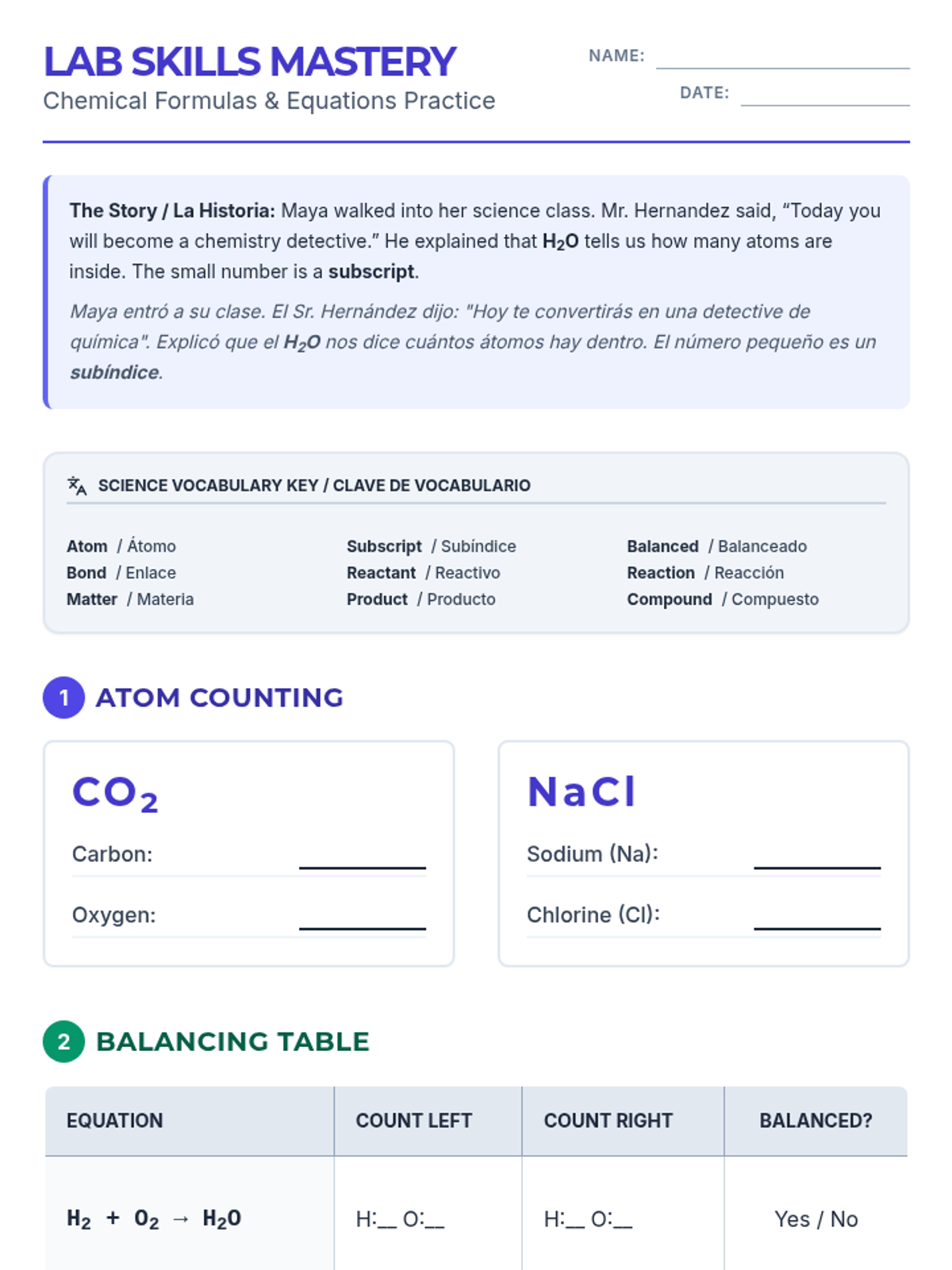
An introductory chemistry lesson based on Maya's discovery of atoms, bonds, and reactions, available in English and Spanish with hands-on practice.
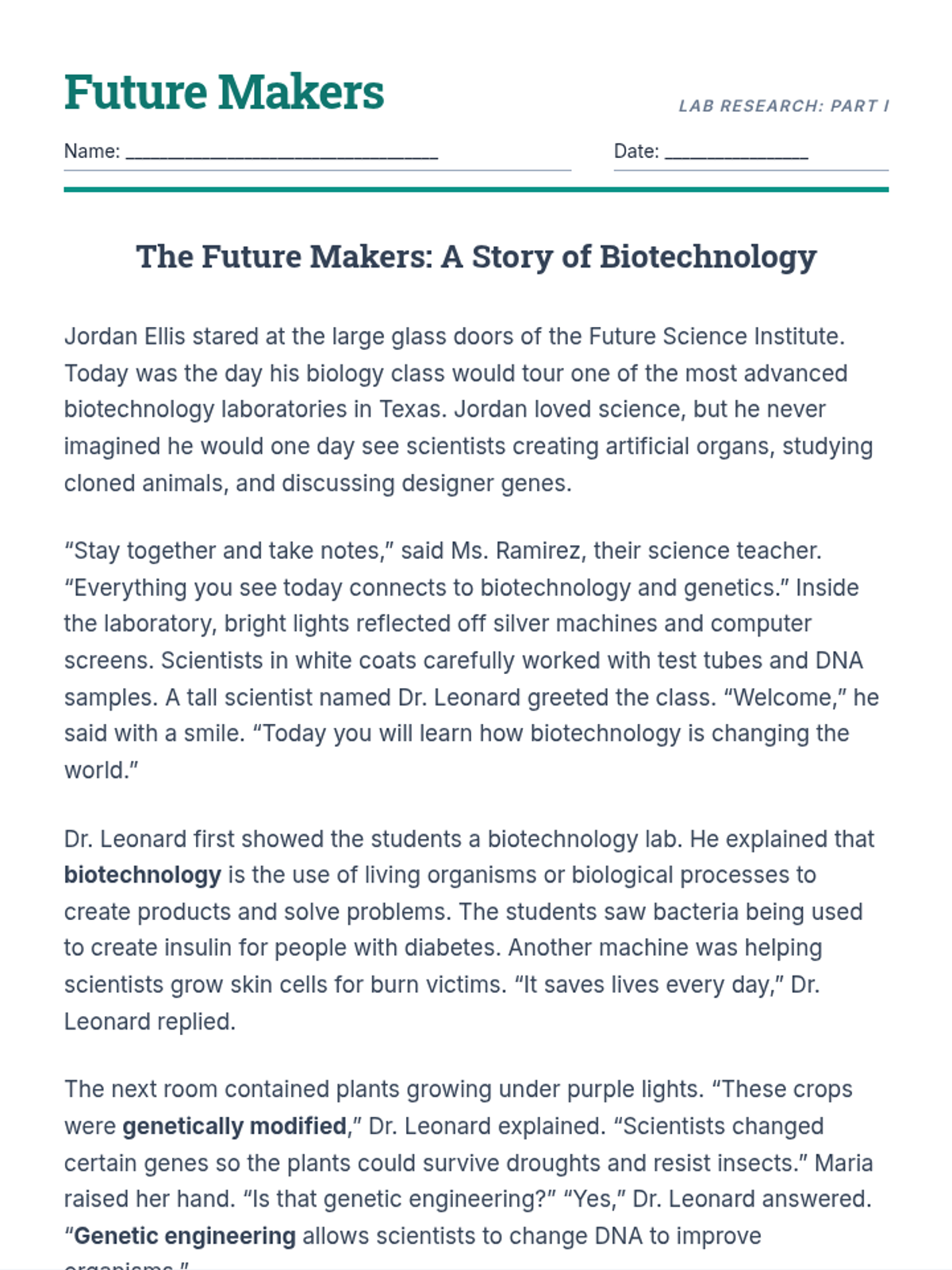
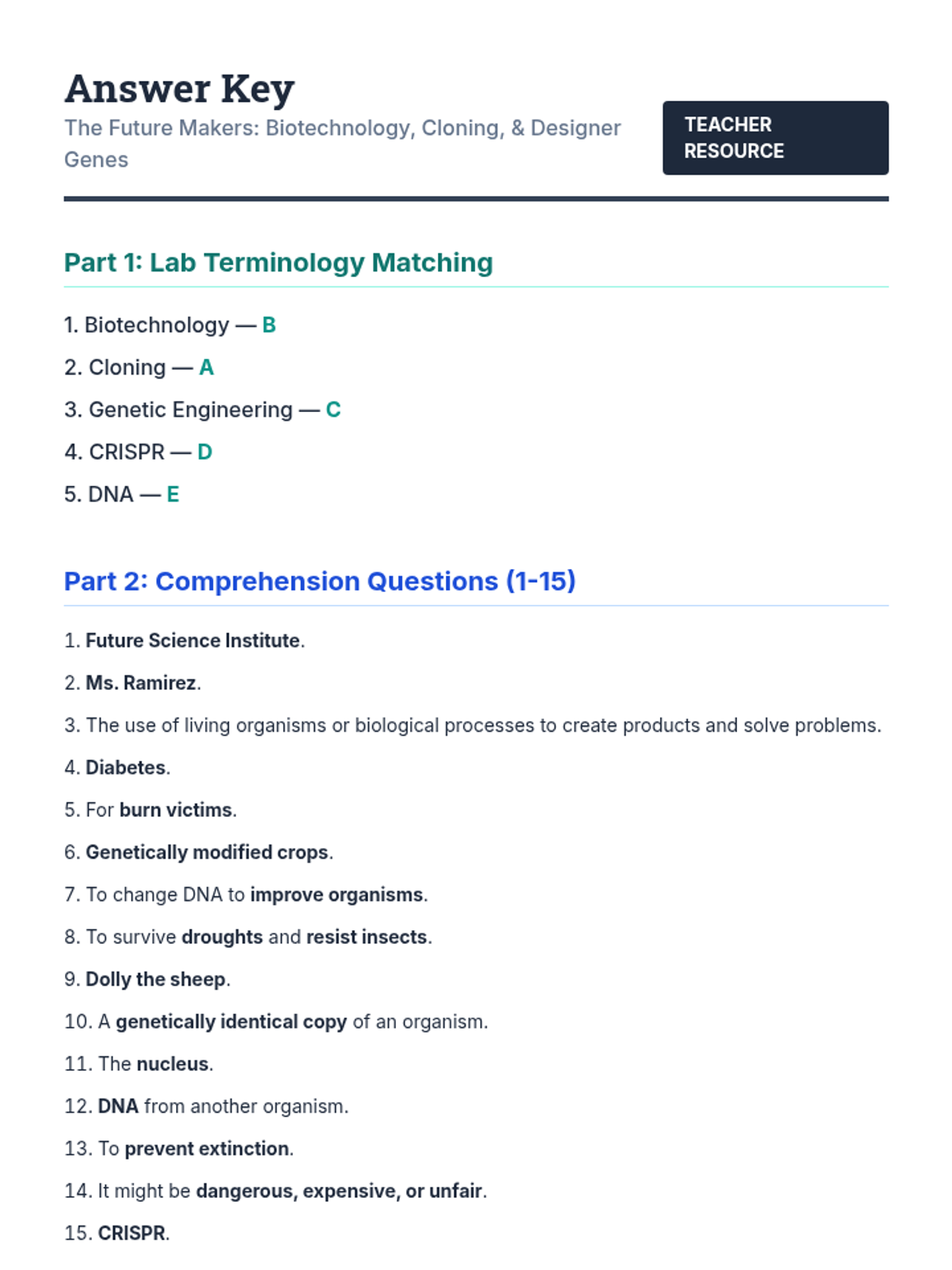
A lesson exploring the advancements and ethical considerations of biotechnology, including cloning, genetic engineering, and designer genes, based on a visit to the Future Science Institute.
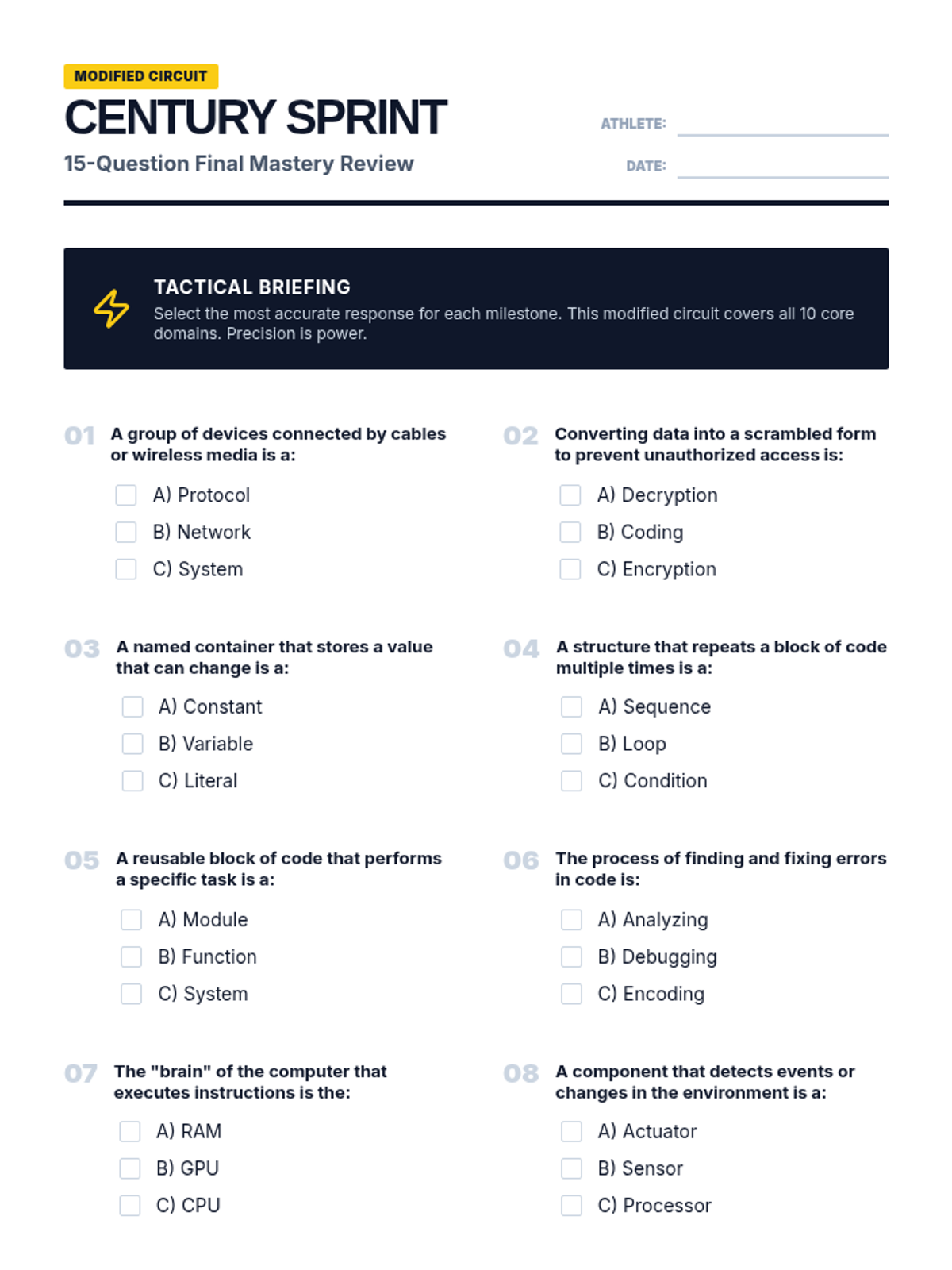
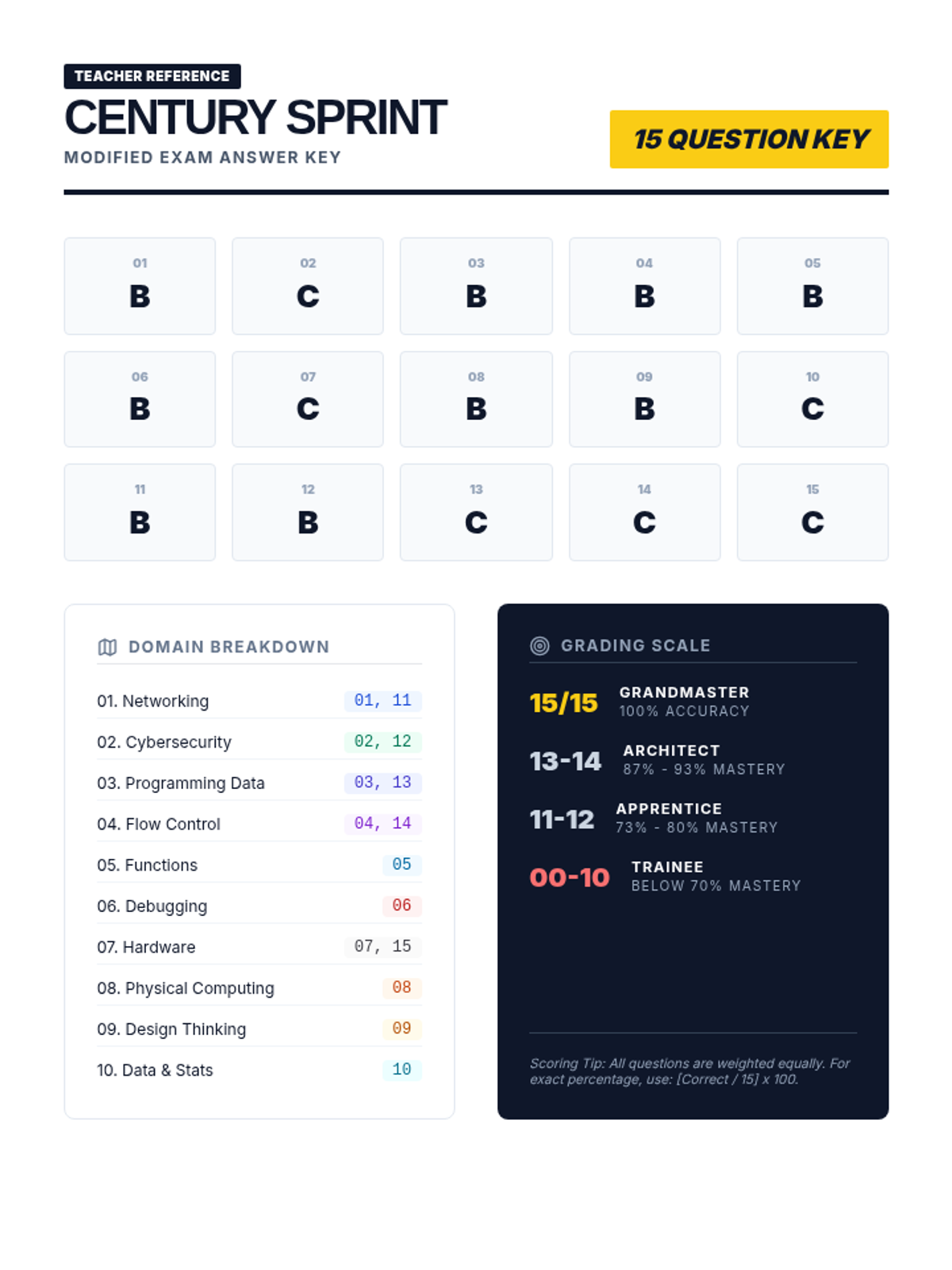
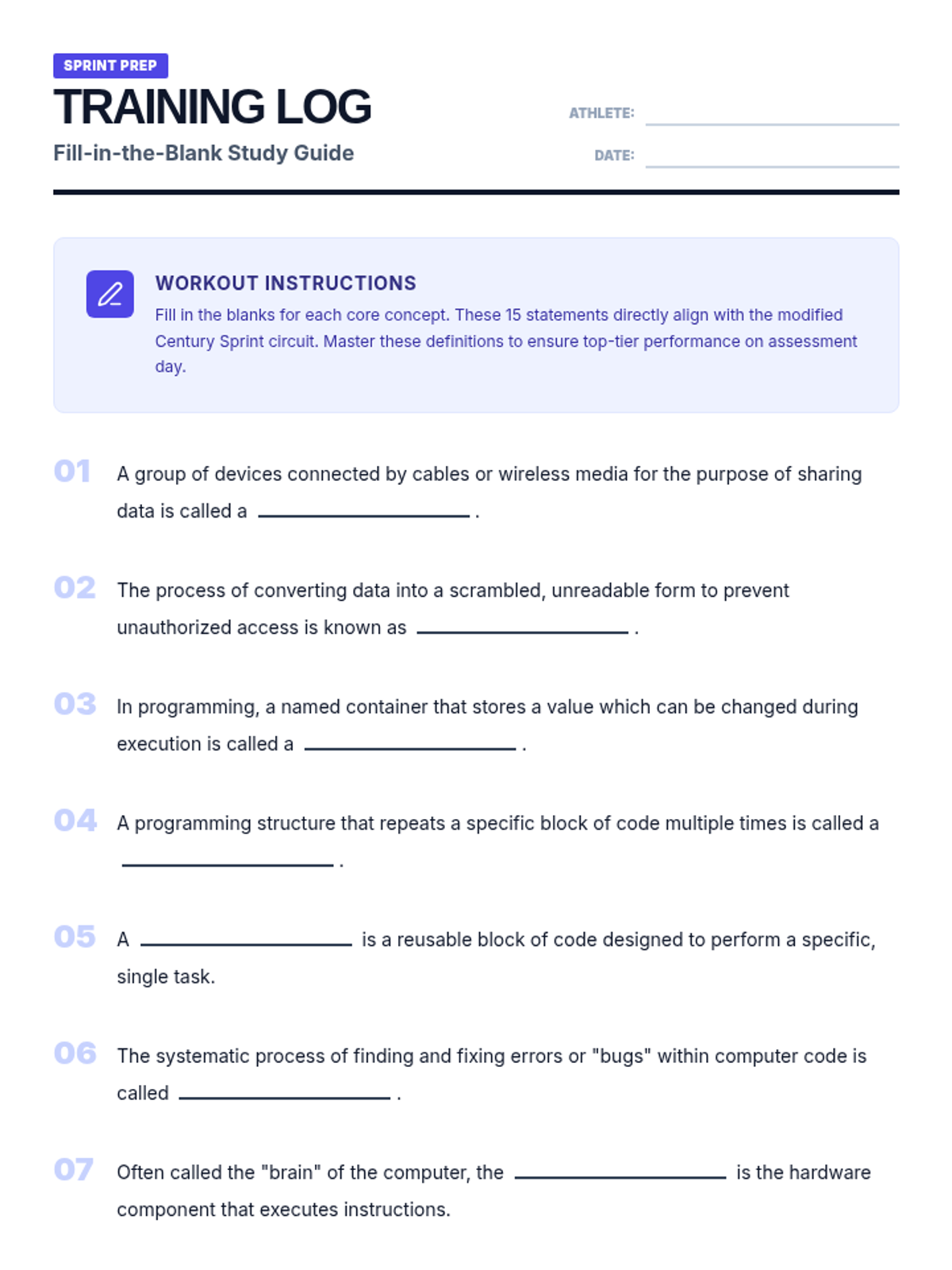
A comprehensive 100-question final review encompassing all domains of computer science covered in the sequence.
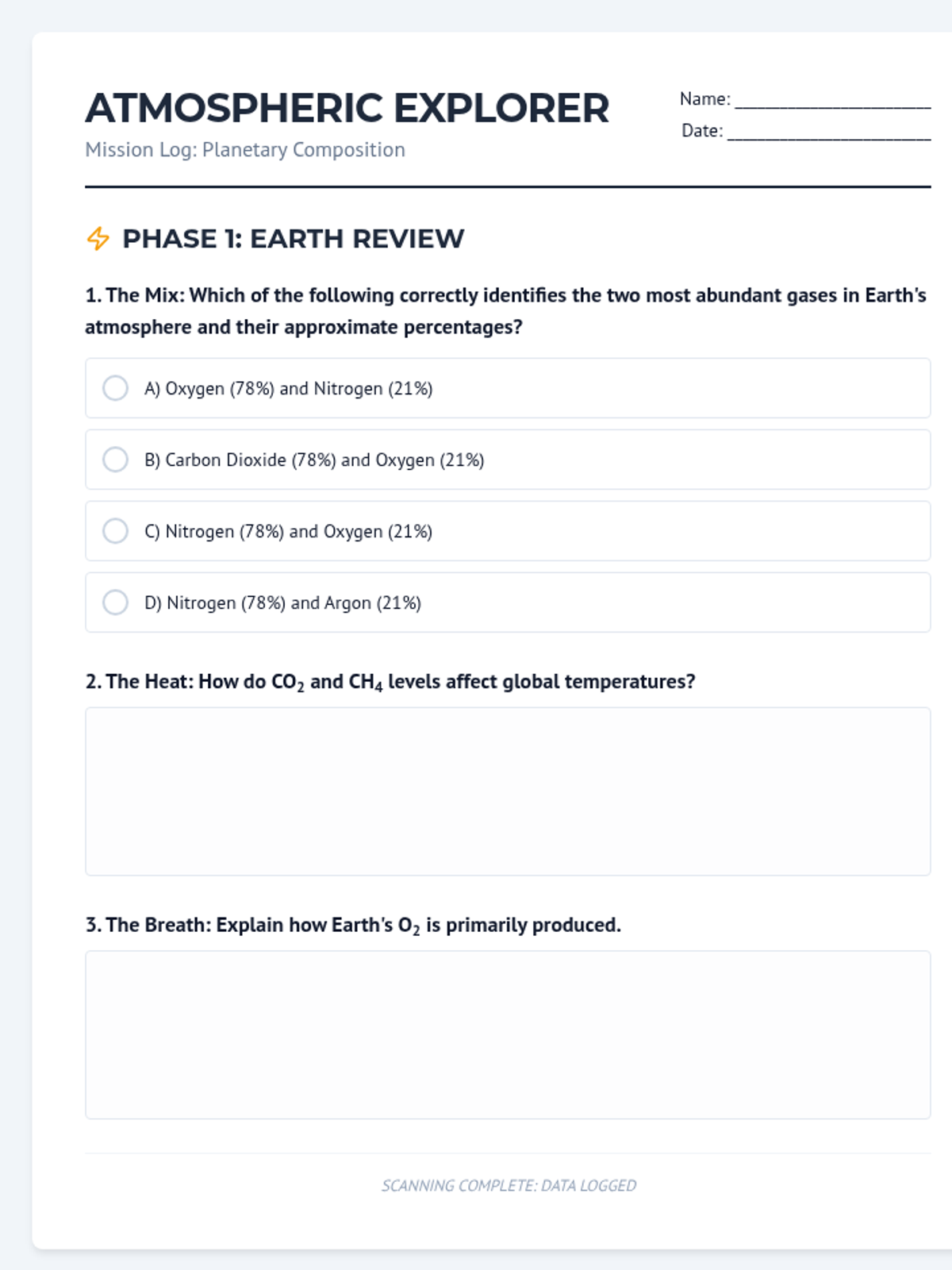
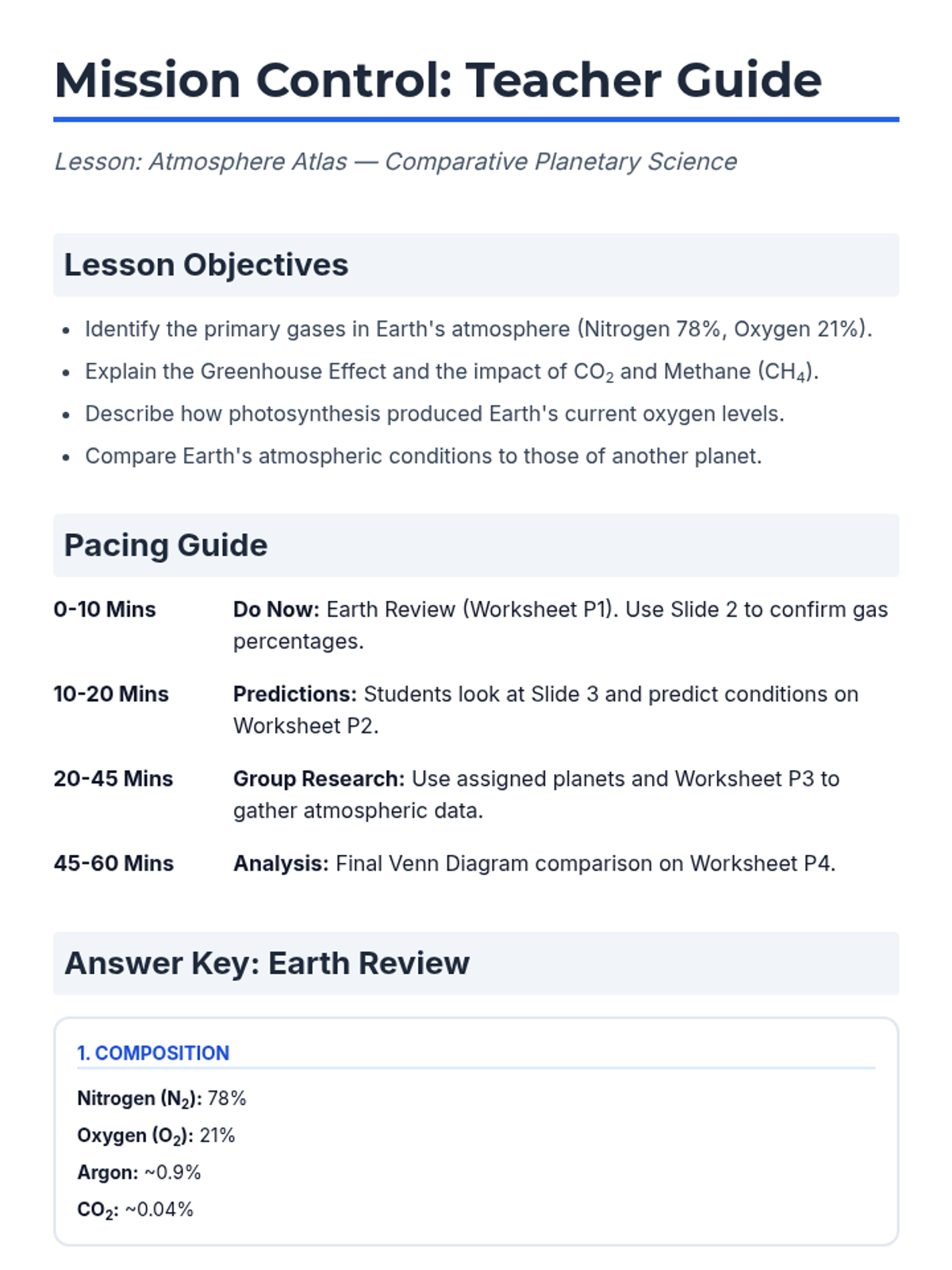
Students investigate and compare the atmospheric compositions of planets in our solar system, exploring how Earth's unique air supports life while analyzing the extreme environments of our celestial neighbors.
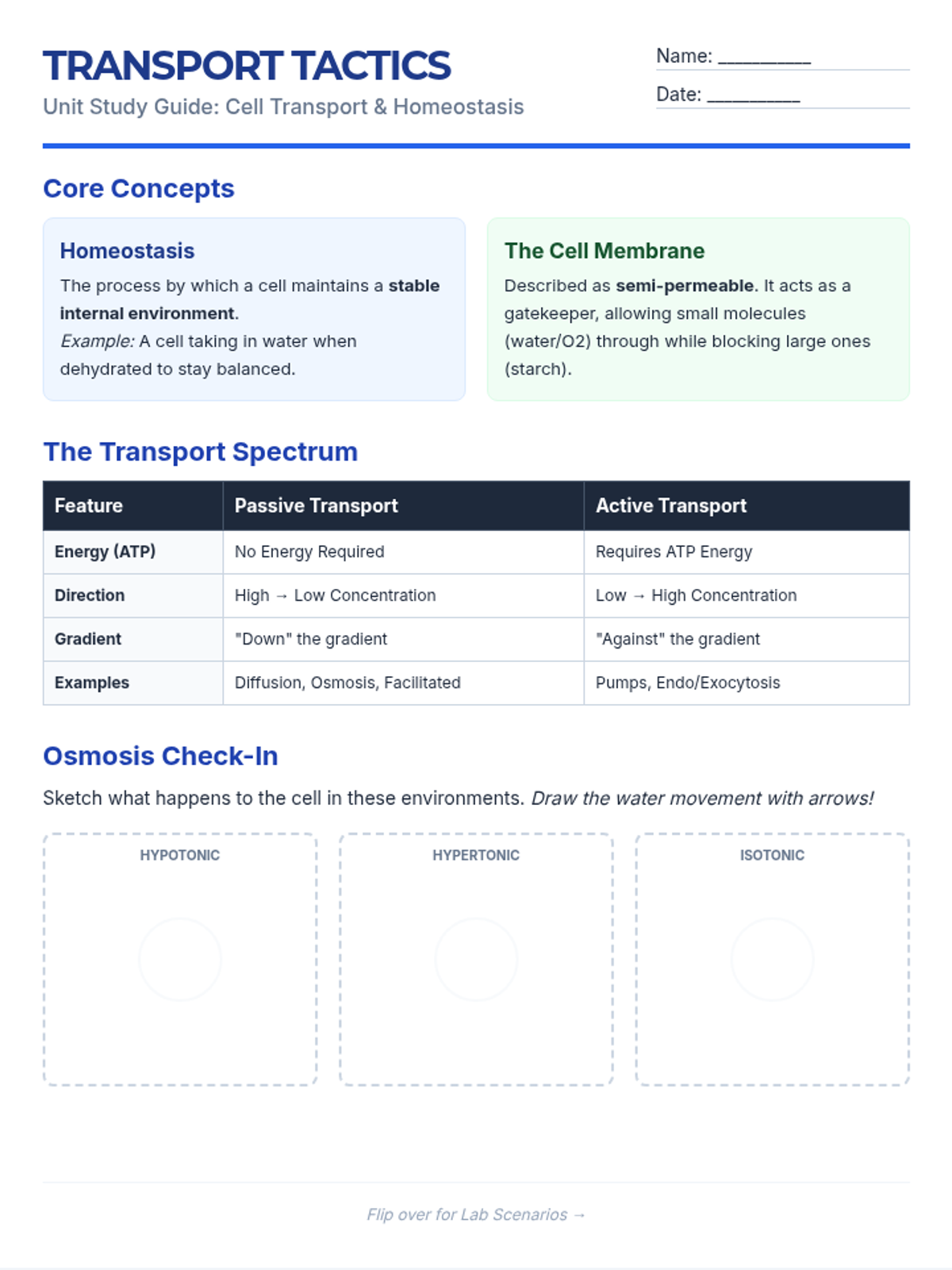
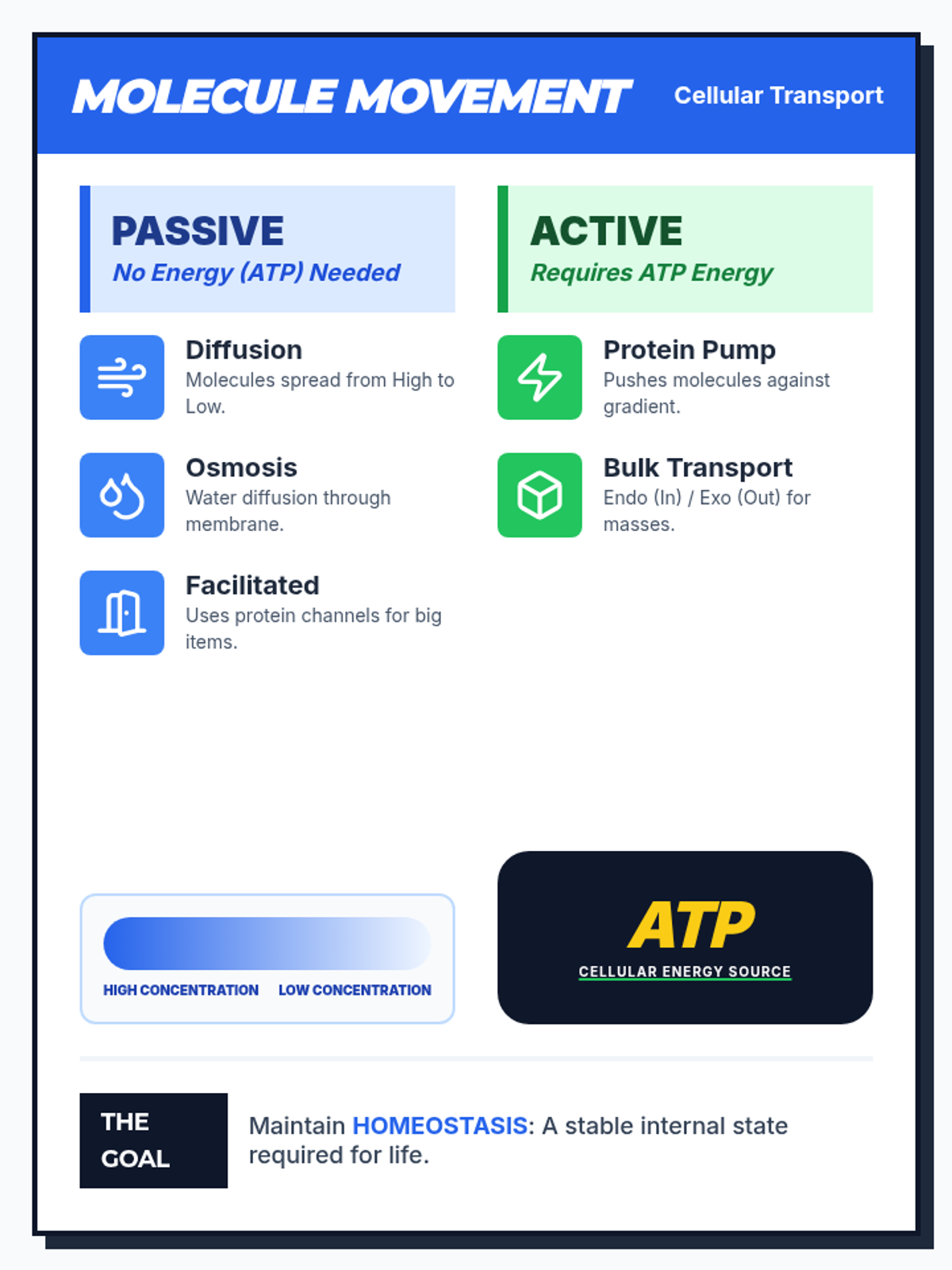
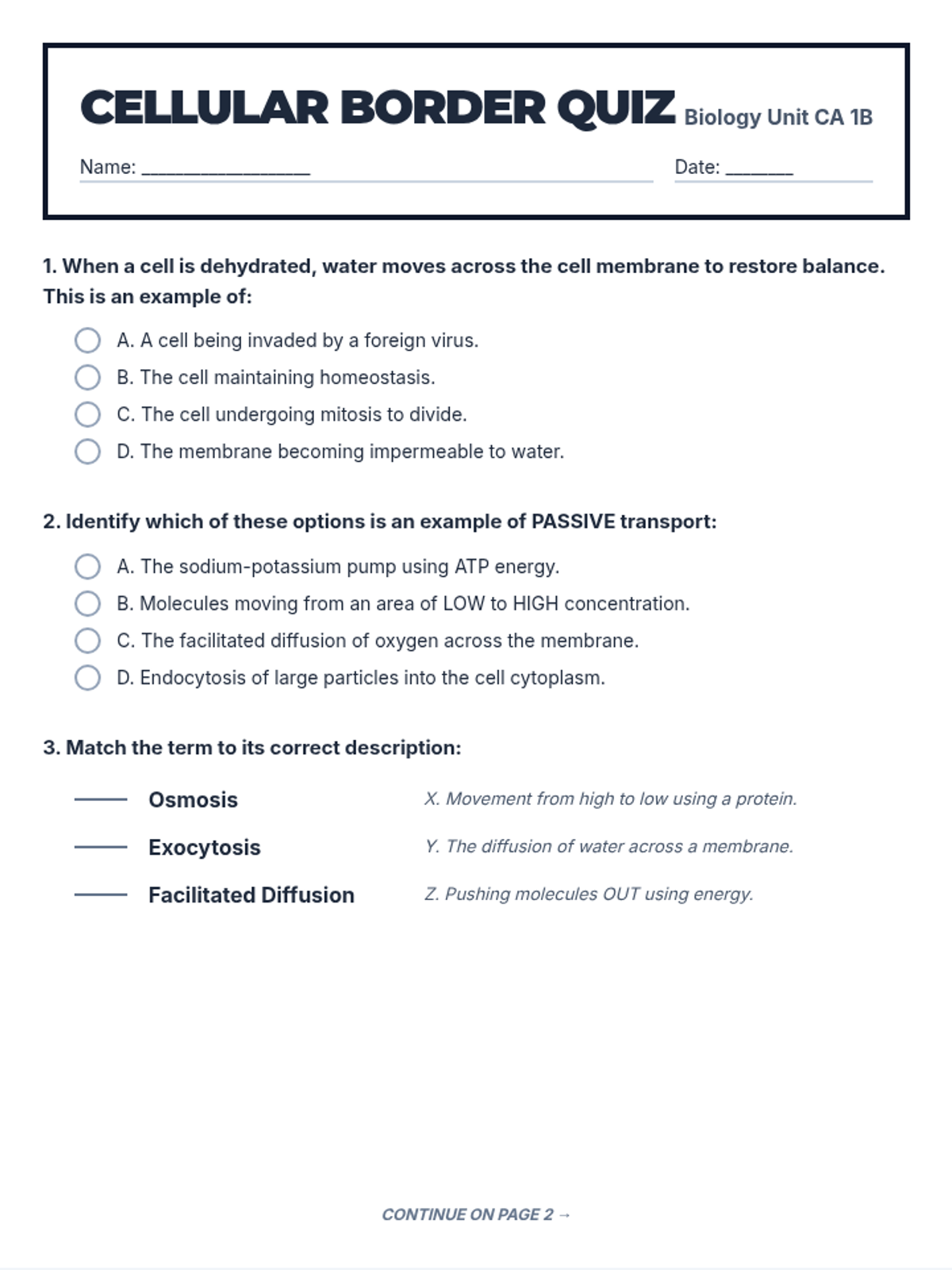
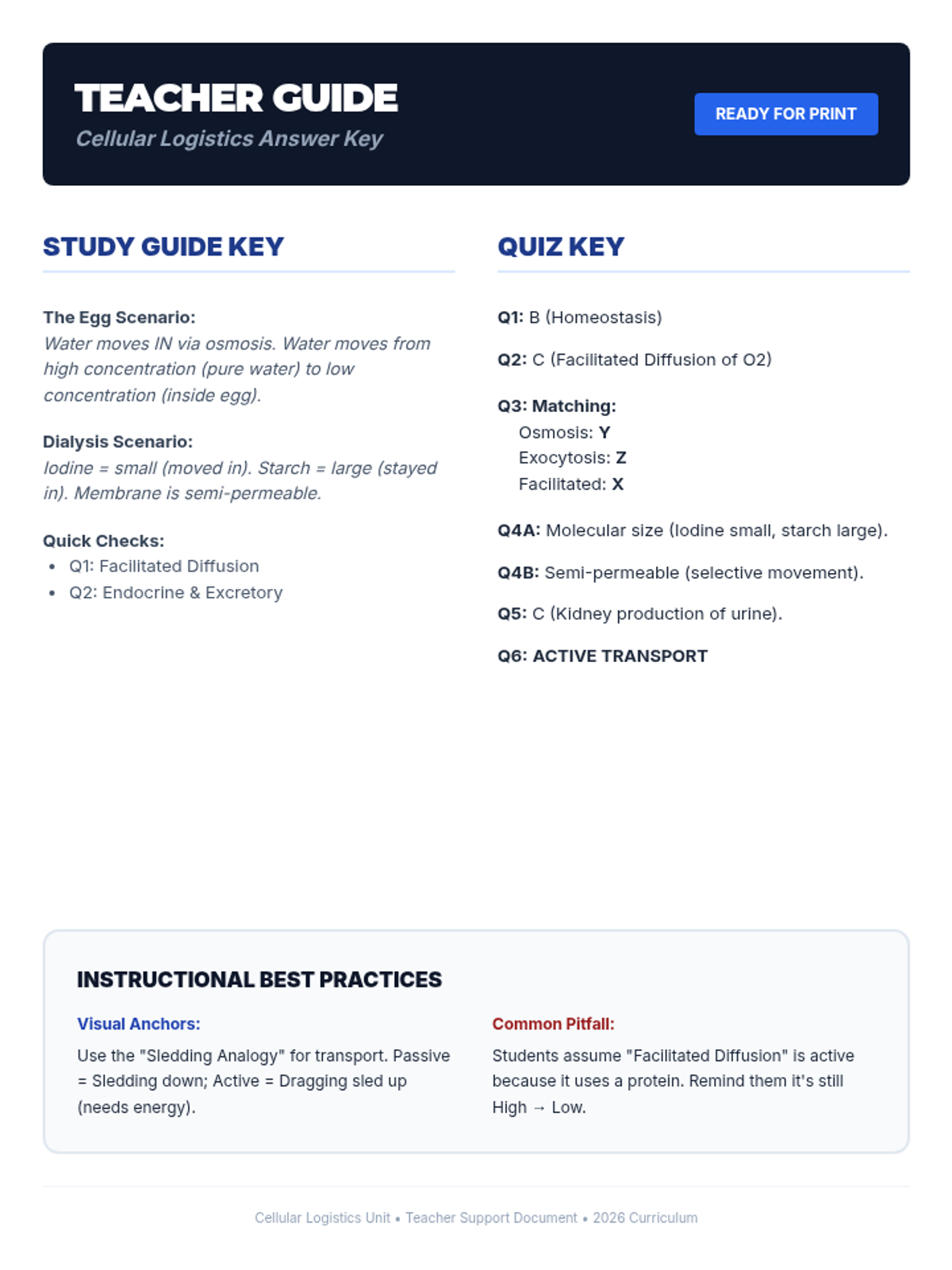
A comprehensive unit on cellular transport mechanisms, including passive and active transport, osmosis, and homeostasis, featuring hands-on scenario analysis and visual review materials.
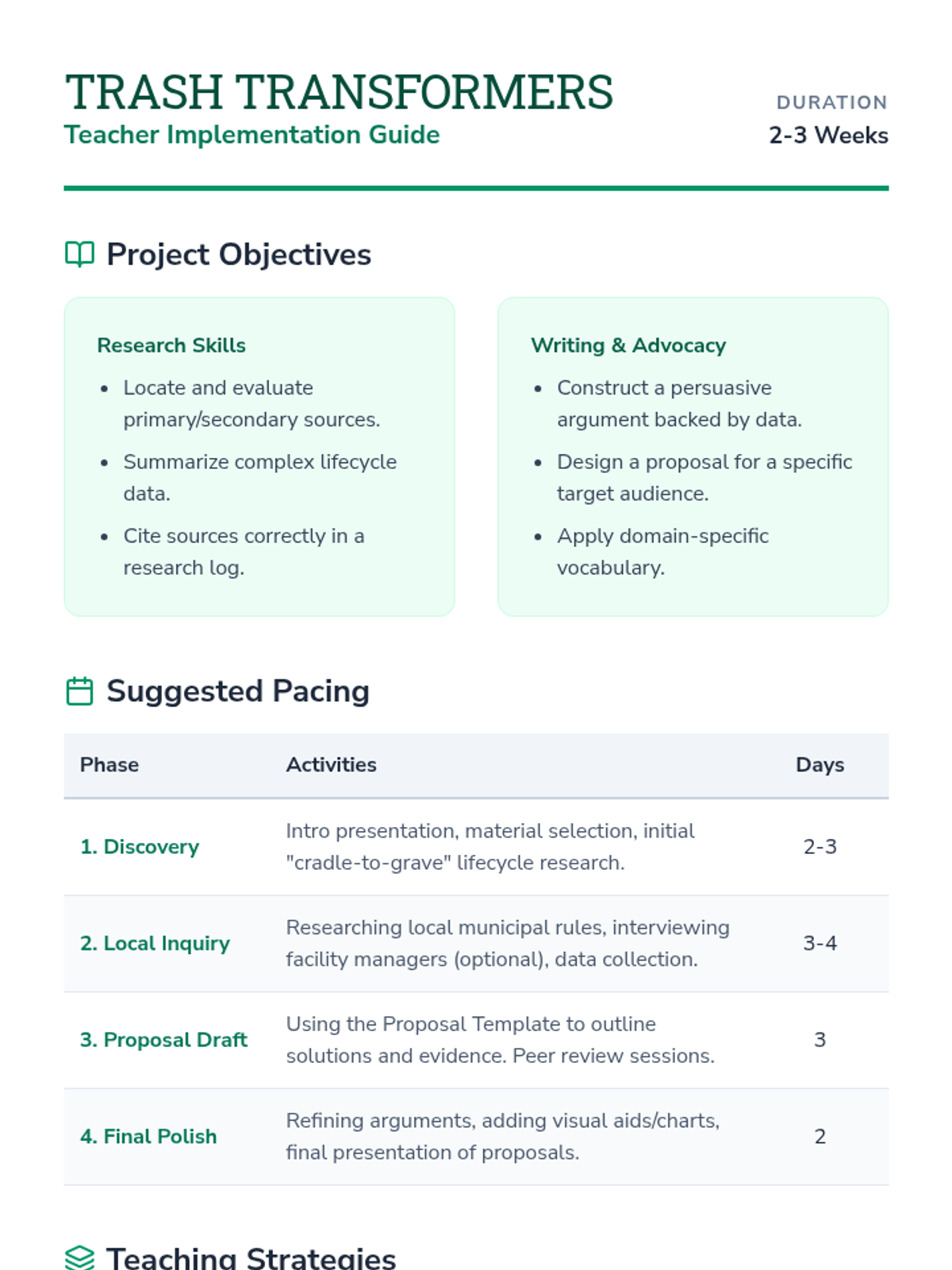
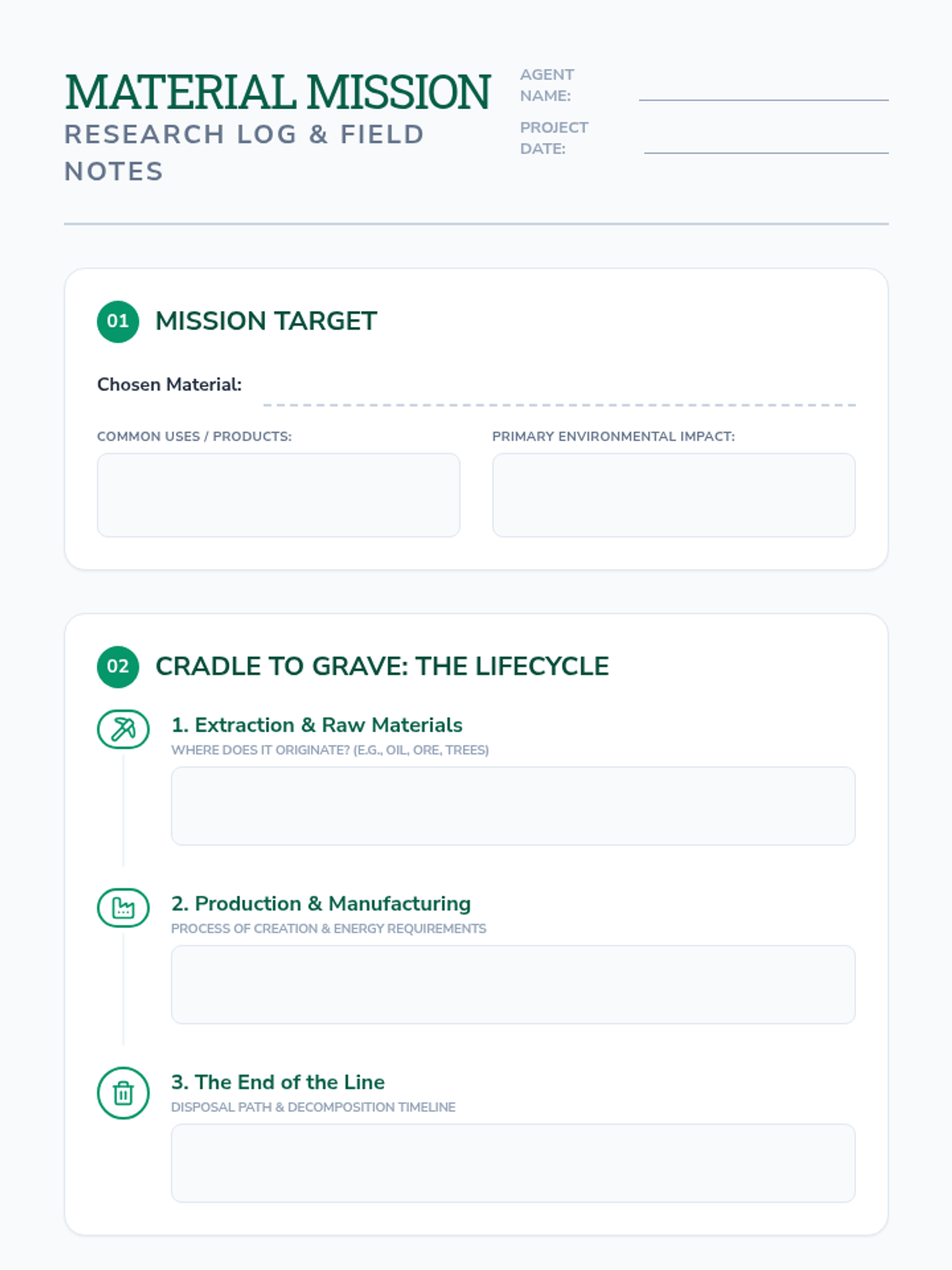
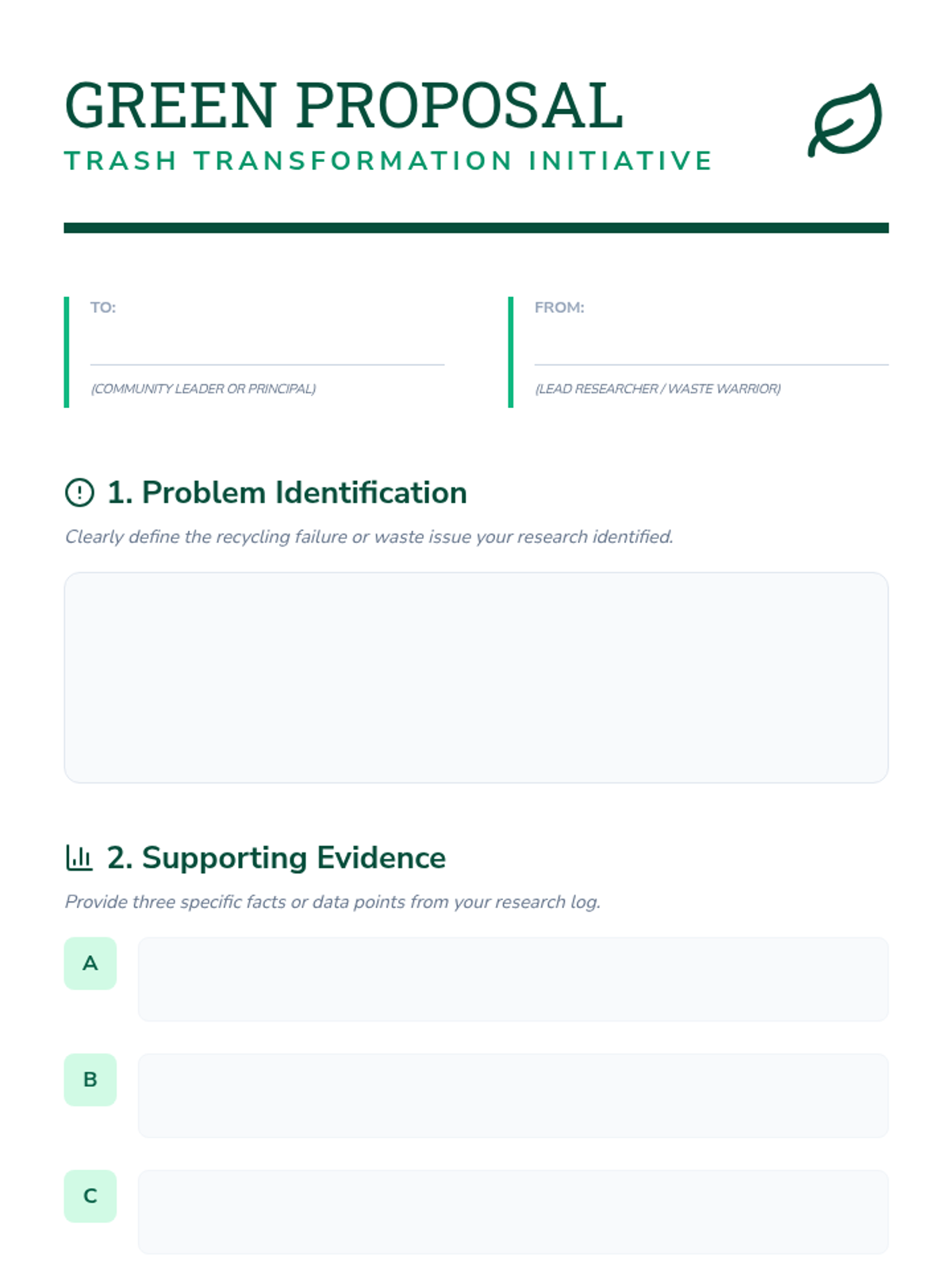
Students investigate the lifecycle of common materials and develop a data-backed proposal to improve local waste management and recycling systems. This lesson scaffolds the research process from initial inquiry to a formal persuasive proposal.
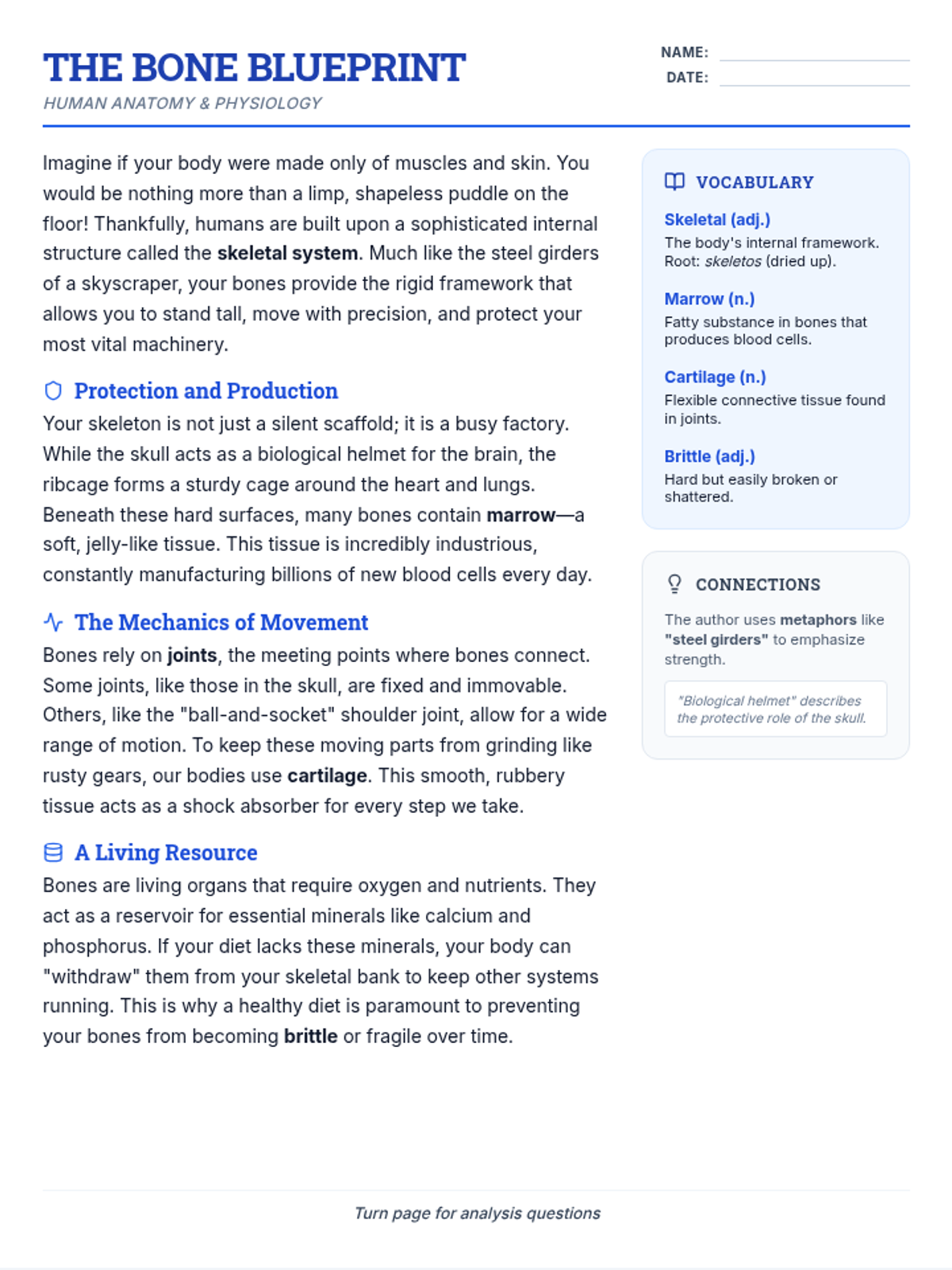
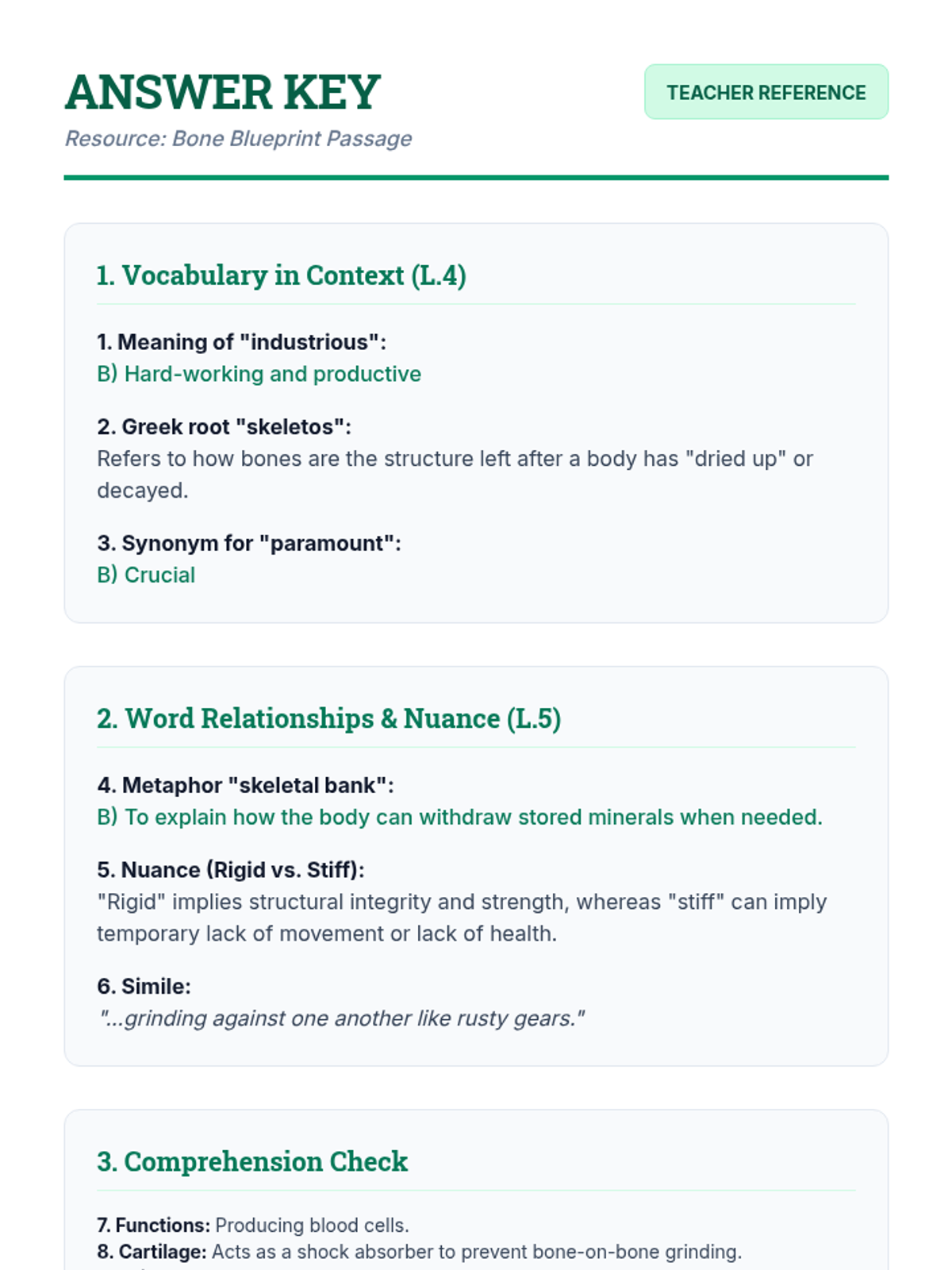
A comprehensive exploration of the skeletal system's structure and function, focusing on domain-specific vocabulary and figurative language. Students will analyze a detailed passage to understand how bones support and protect the human body.
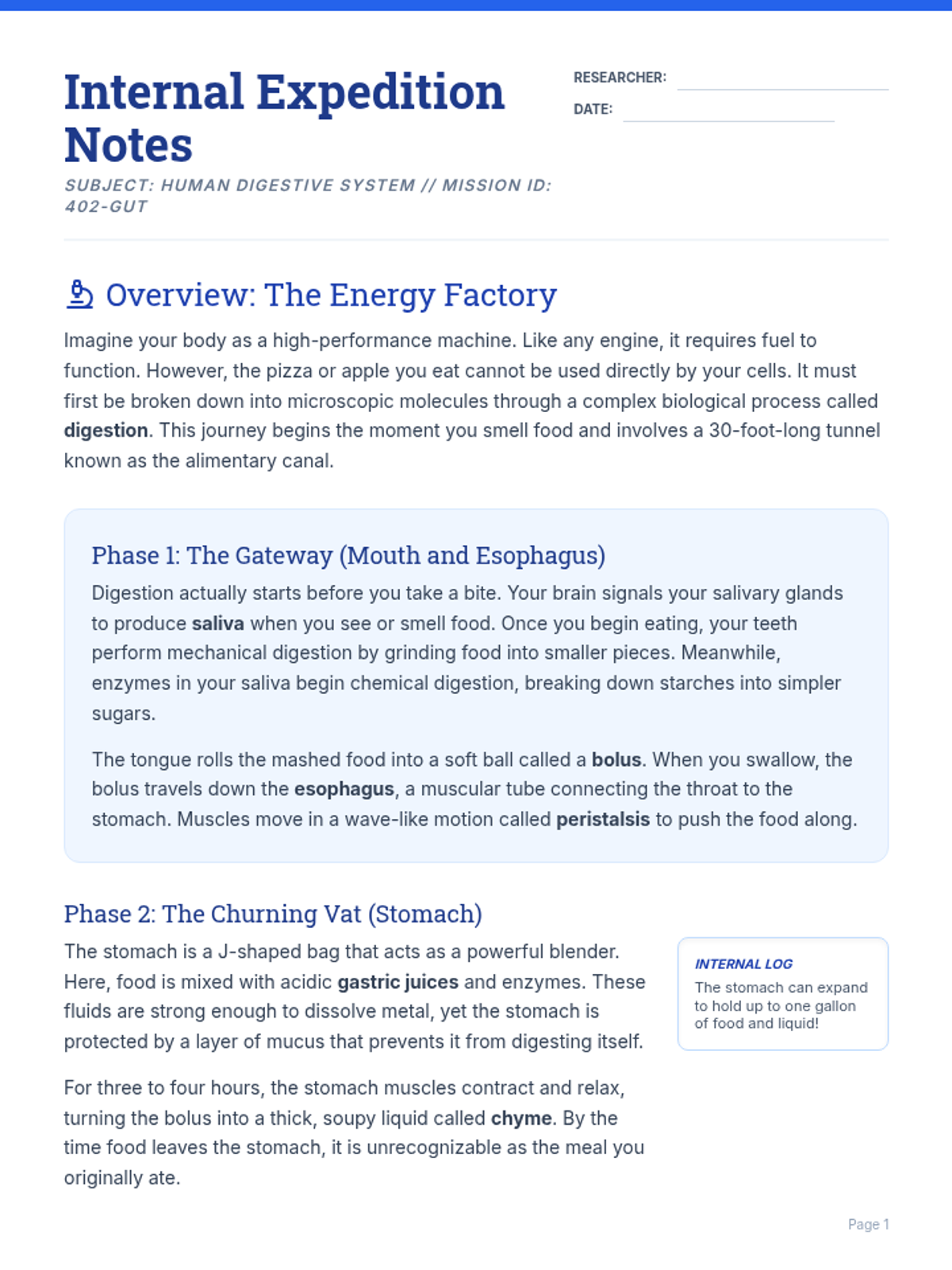
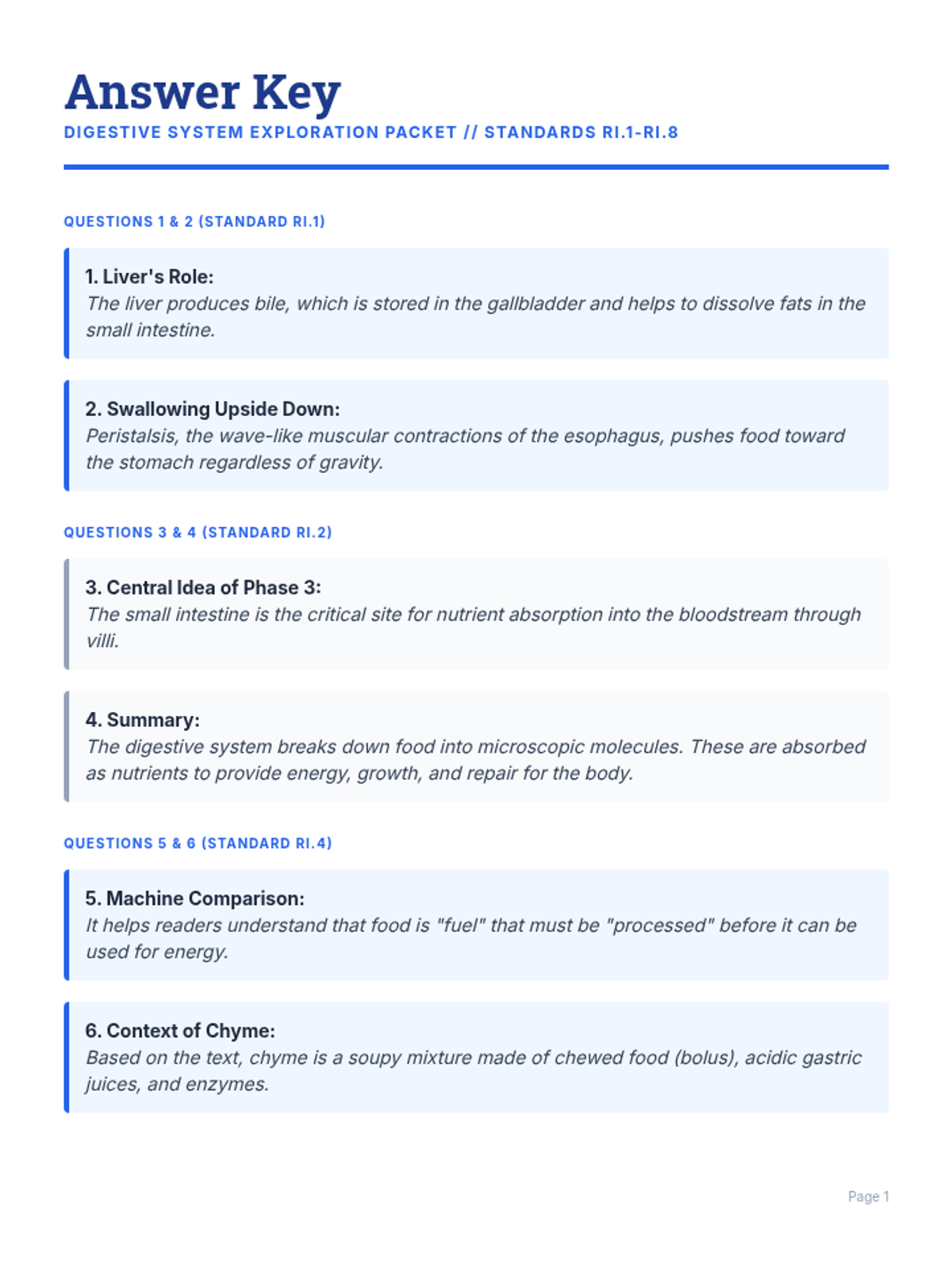
A comprehensive exploration of the human digestive system, focusing on key processes, organ functions, and evidence-based reading comprehension.
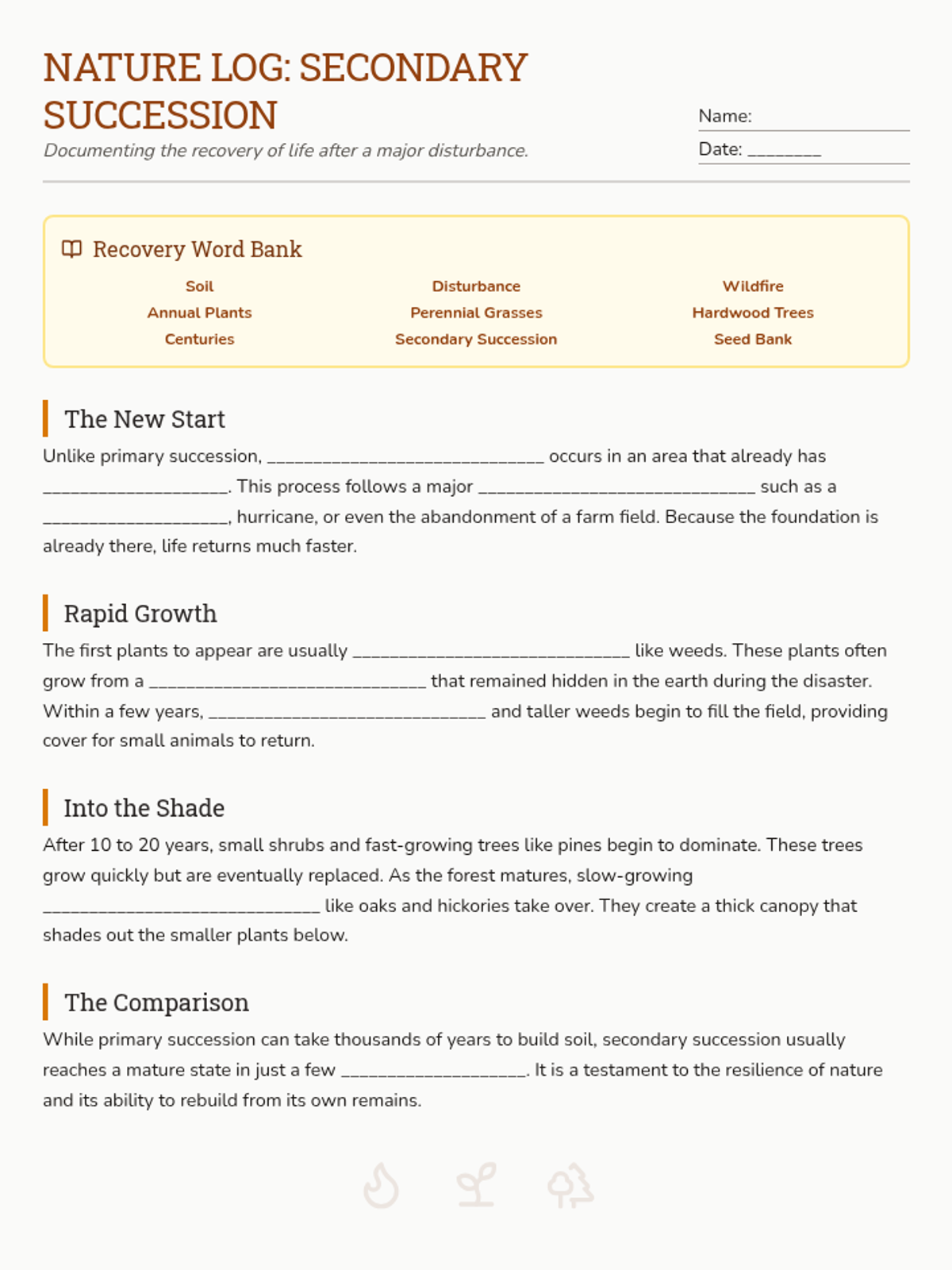
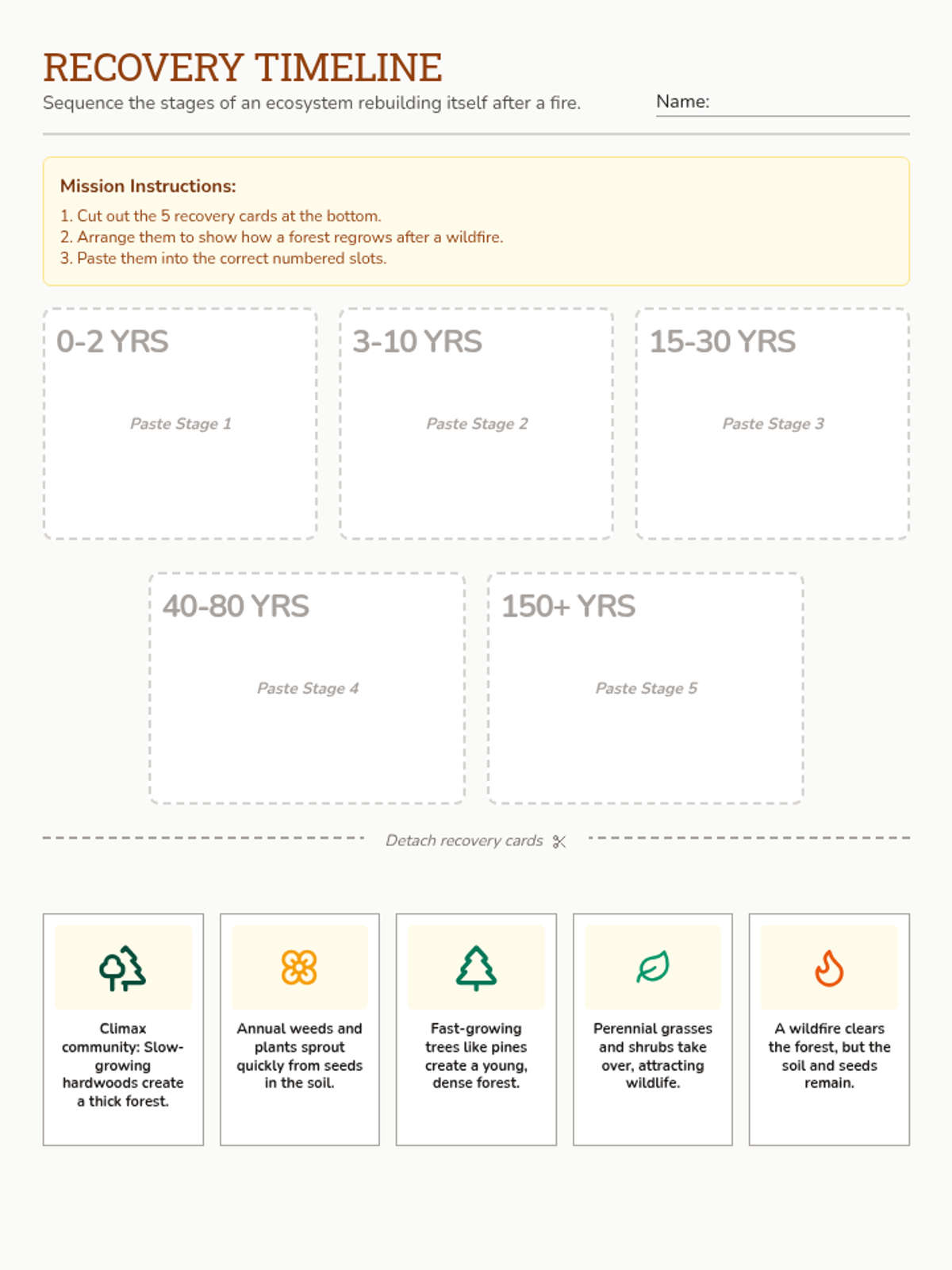
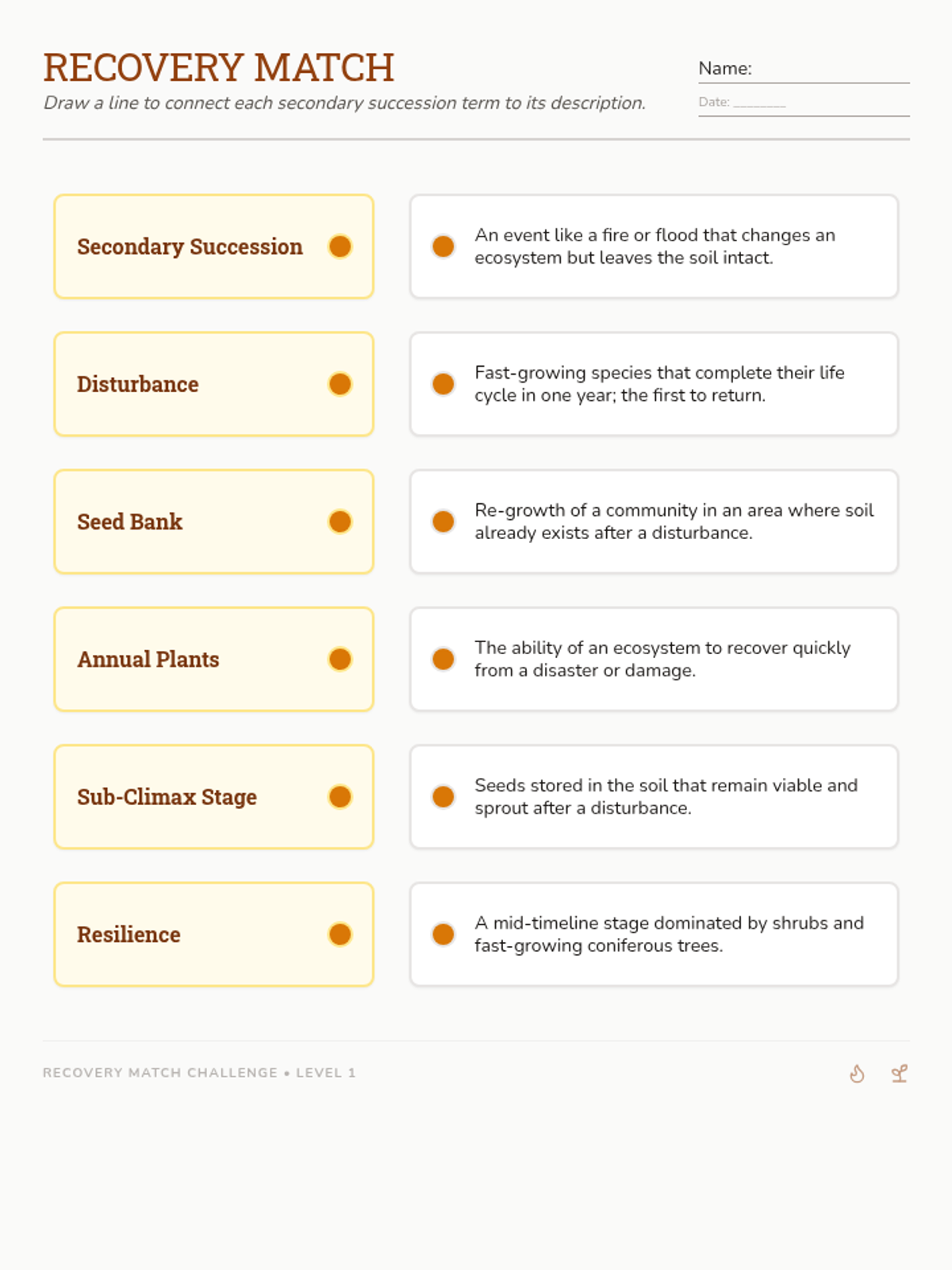
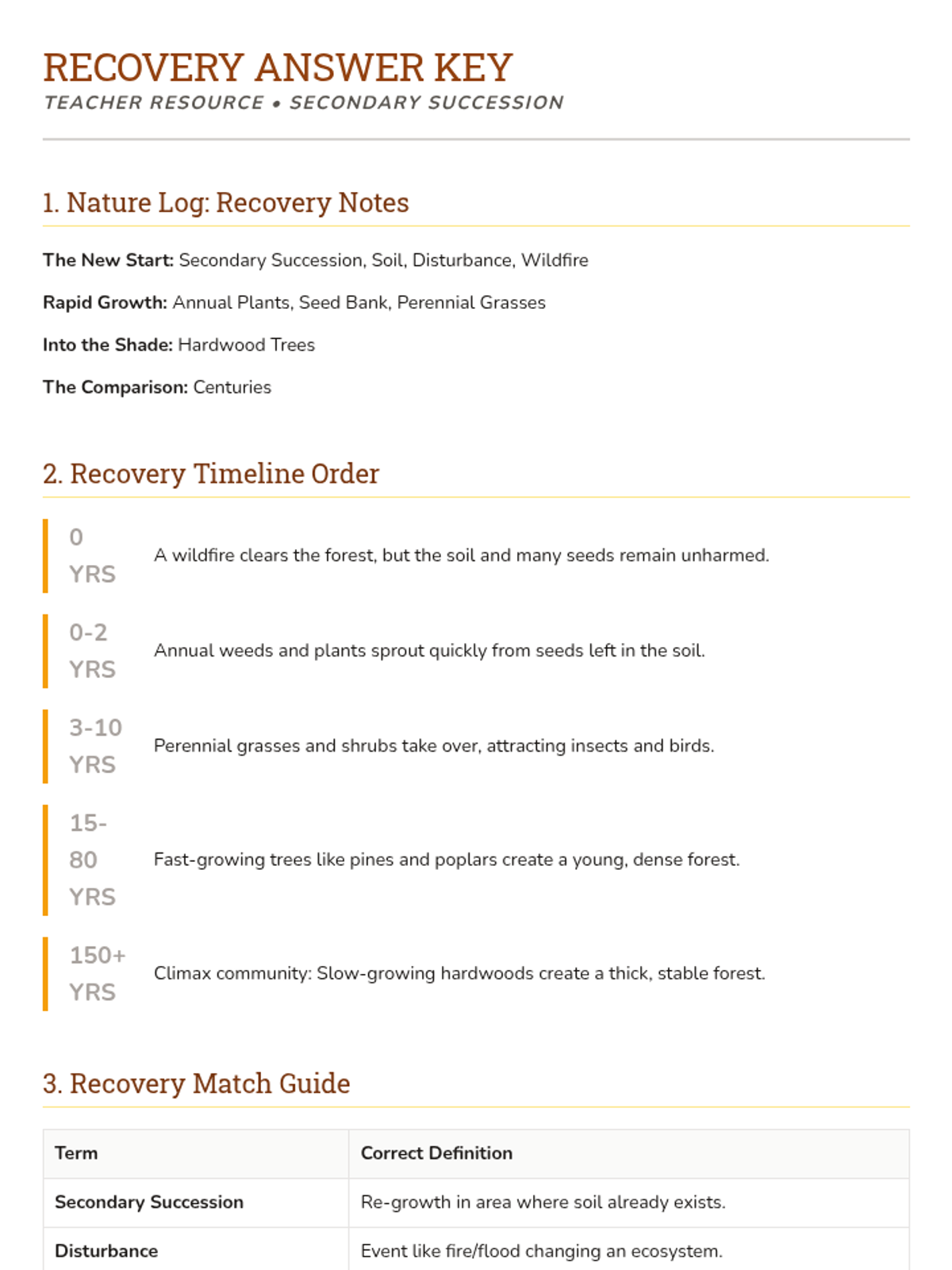
A lesson on secondary succession, focusing on how ecosystems recover after disturbances like fire or farming when soil is already present.
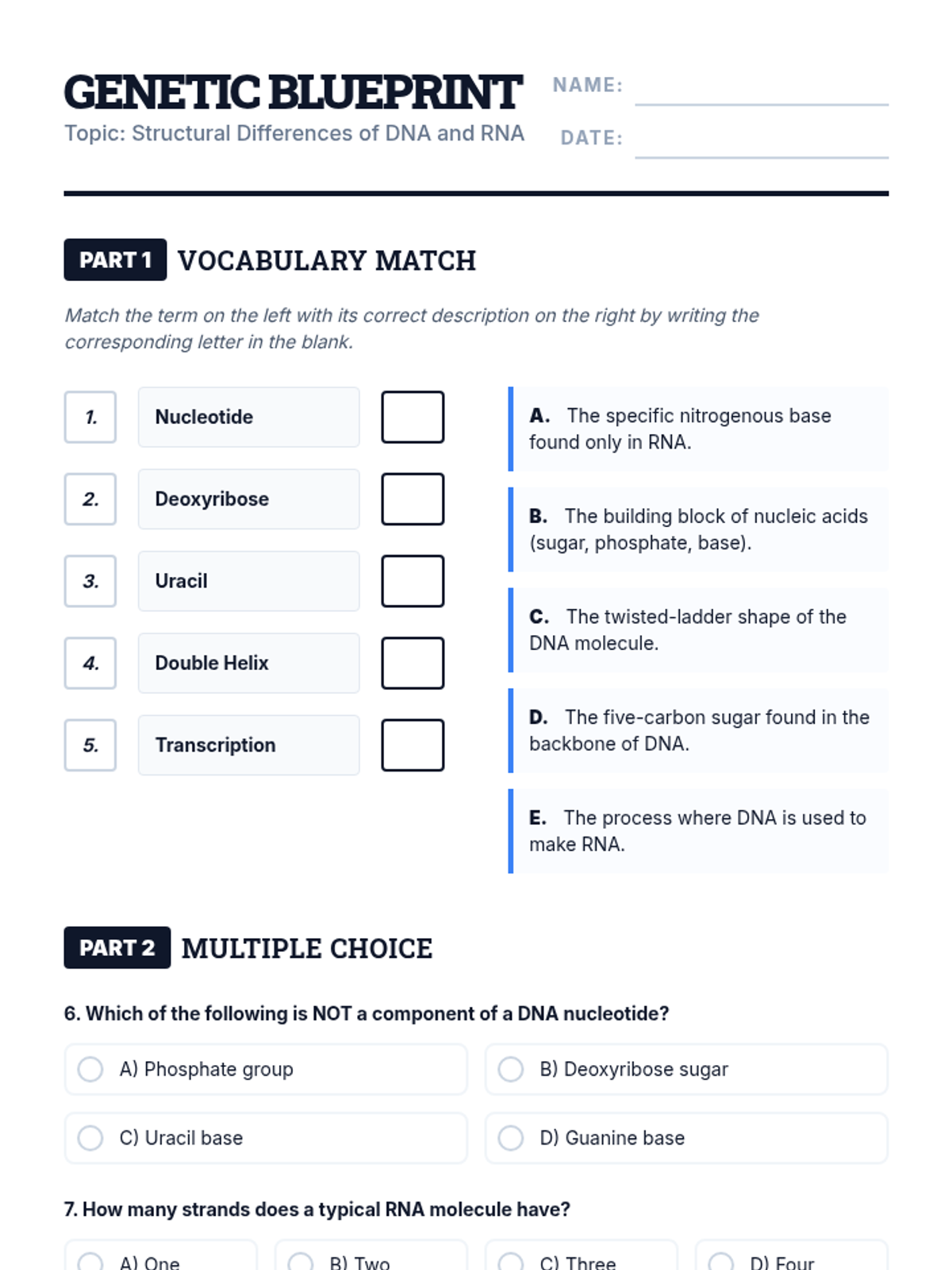
A lesson exploring the structural and functional differences between DNA and RNA, focusing on molecular components and their roles in genetic expression.
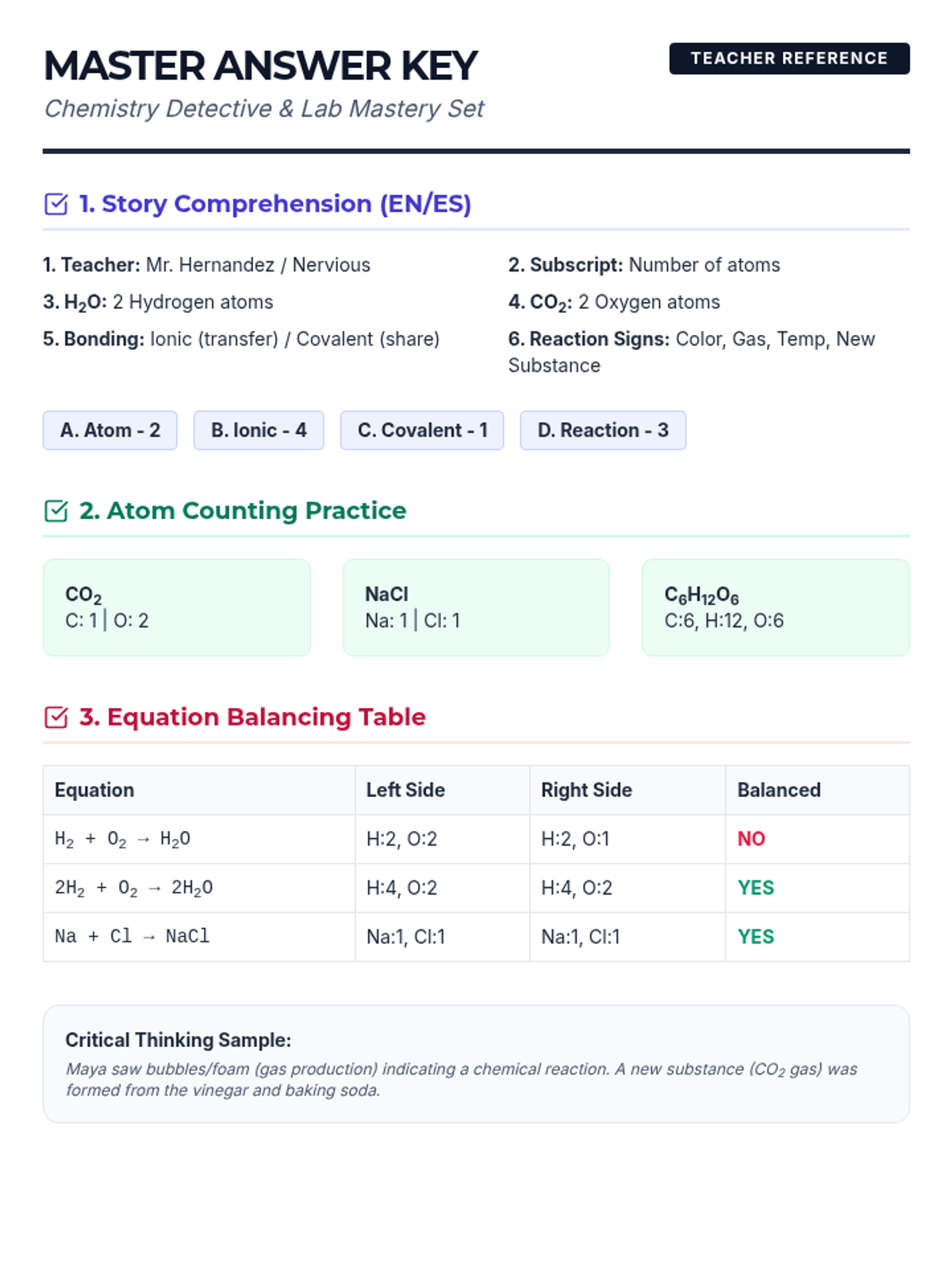
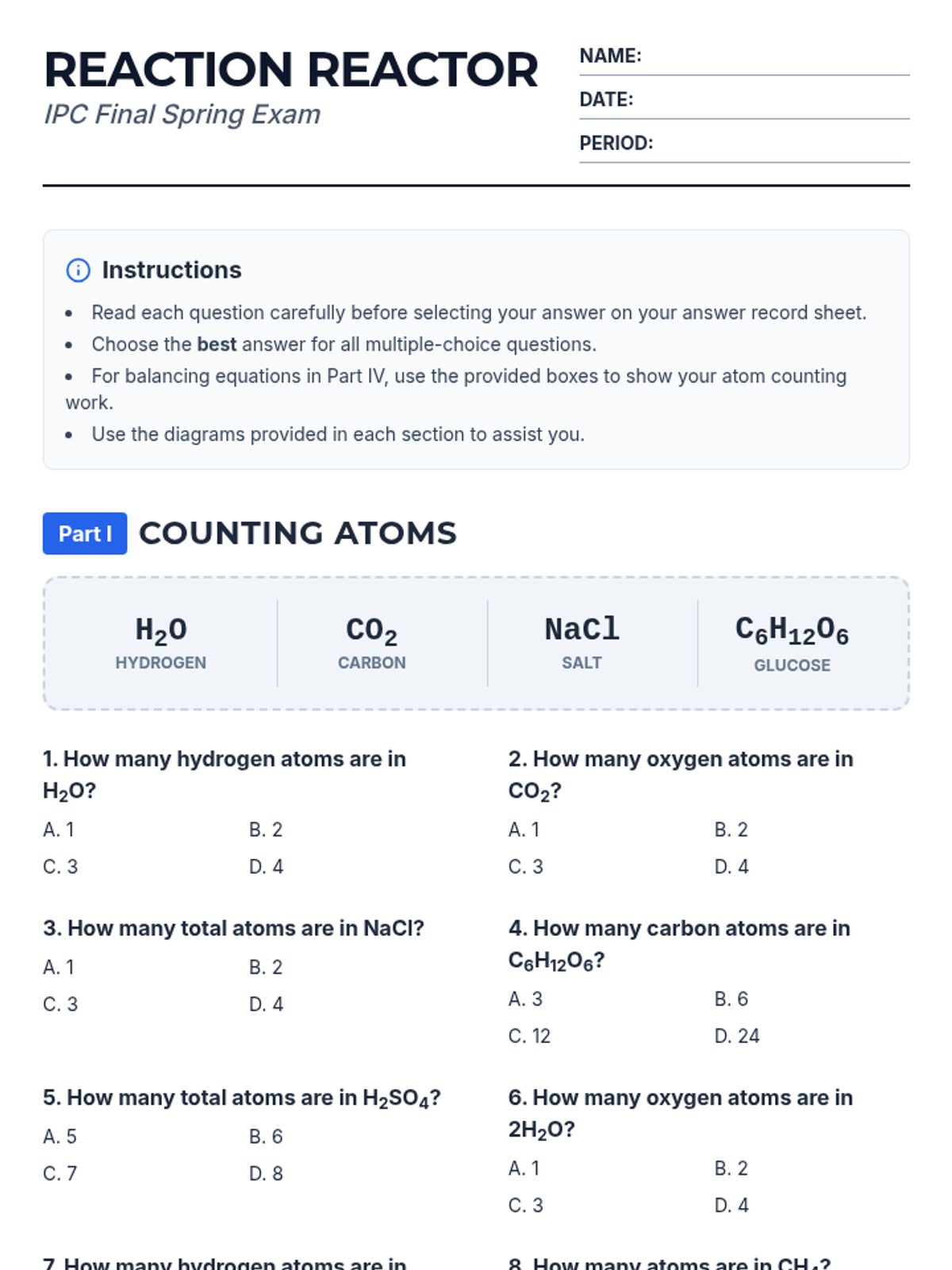
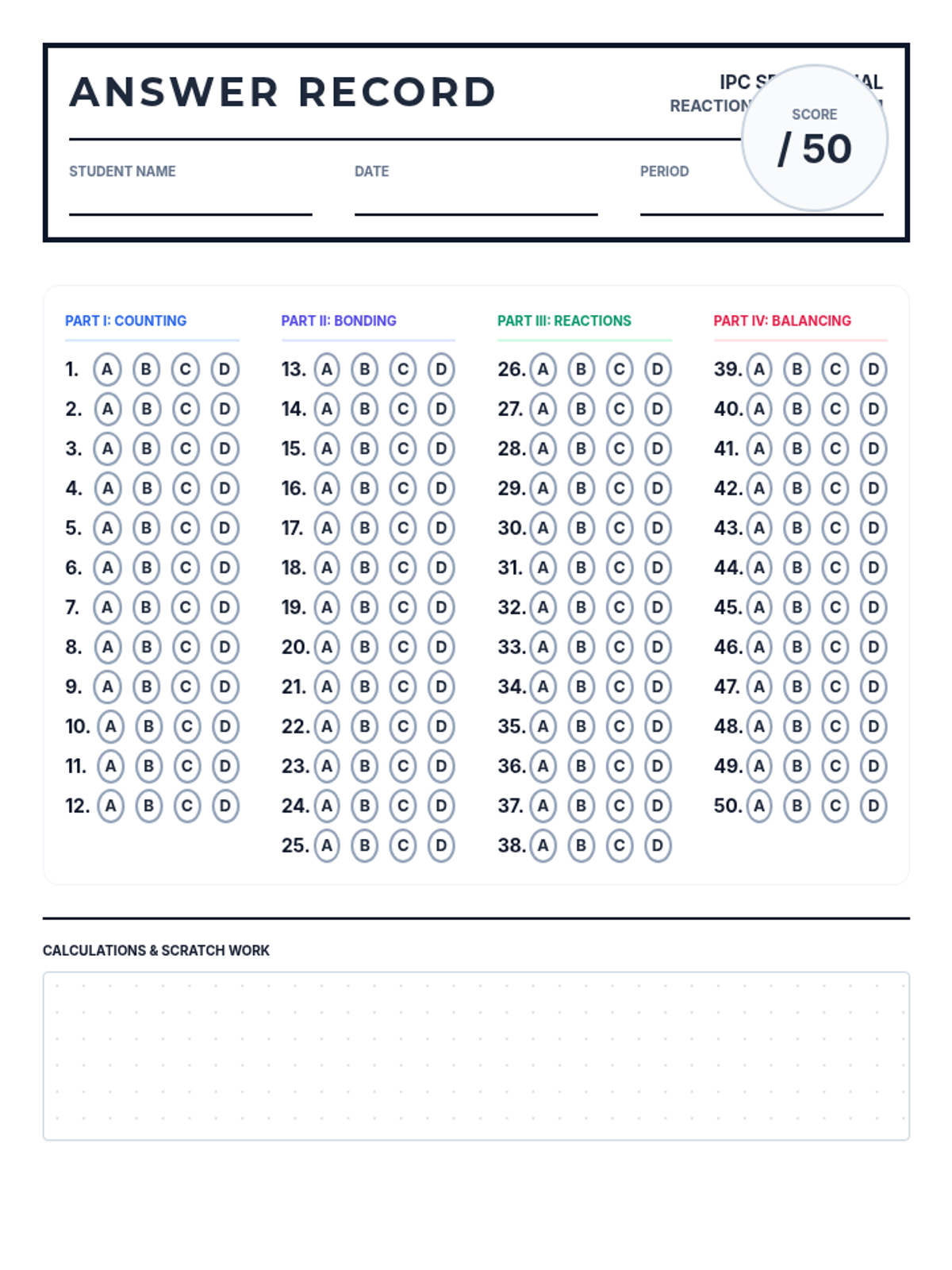
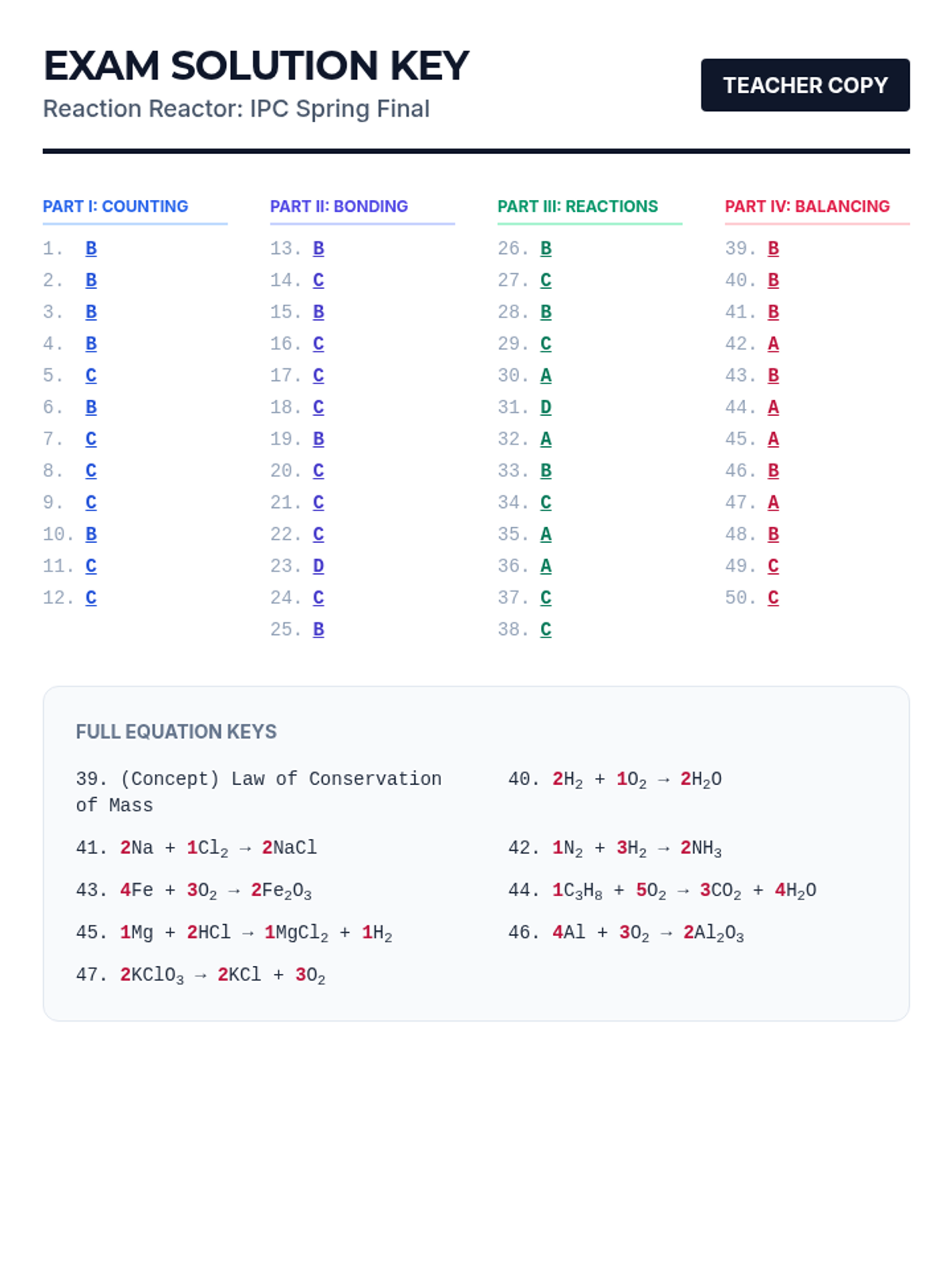
A comprehensive IPC chemistry final exam lesson covering counting atoms, bonding, reactions, and balancing equations. Includes the exam, student answer sheet, and teacher key.
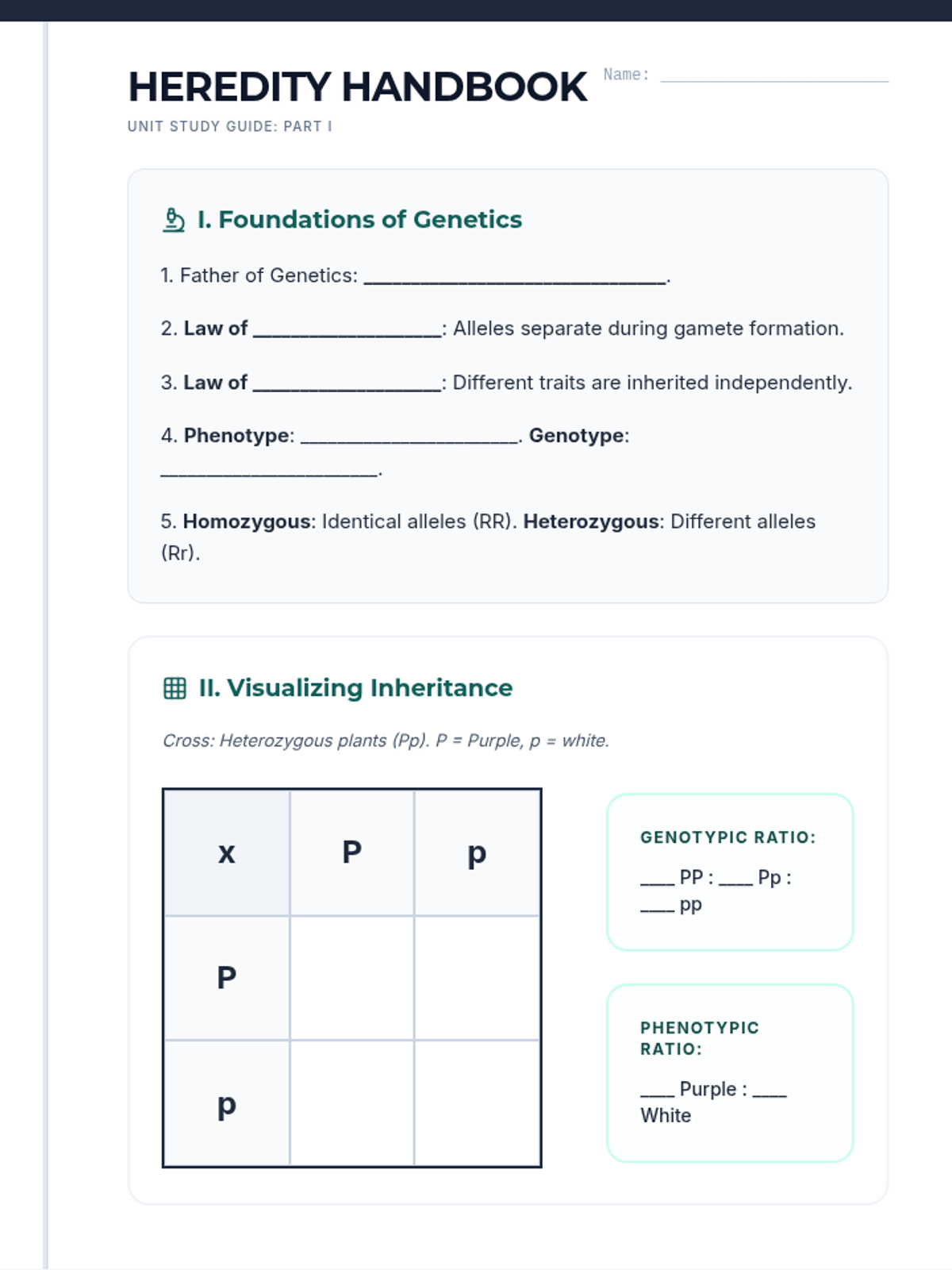
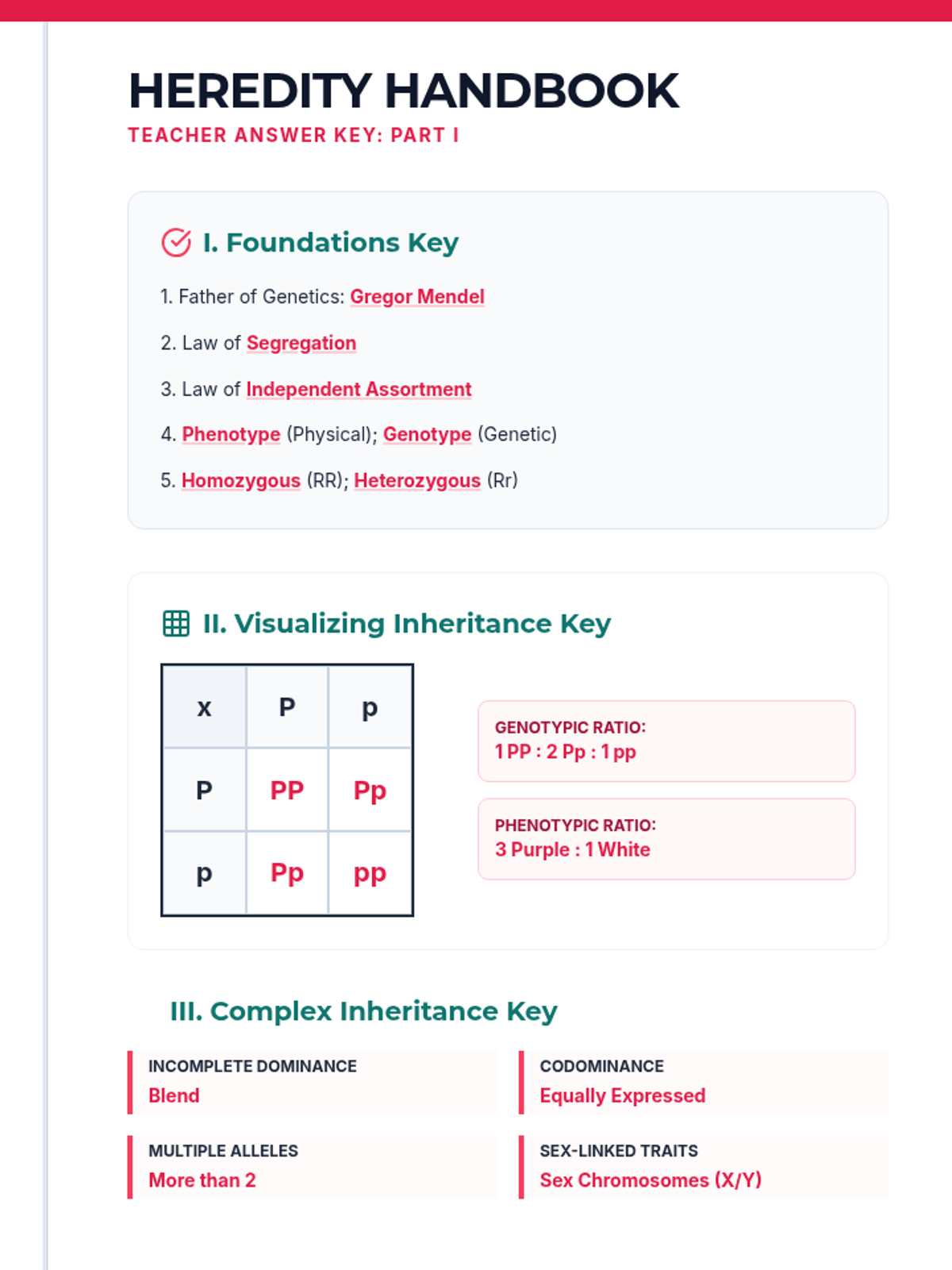
A comprehensive study unit covering the principles of Mendelian and Non-Mendelian inheritance, alongside practical pedigree analysis tools.
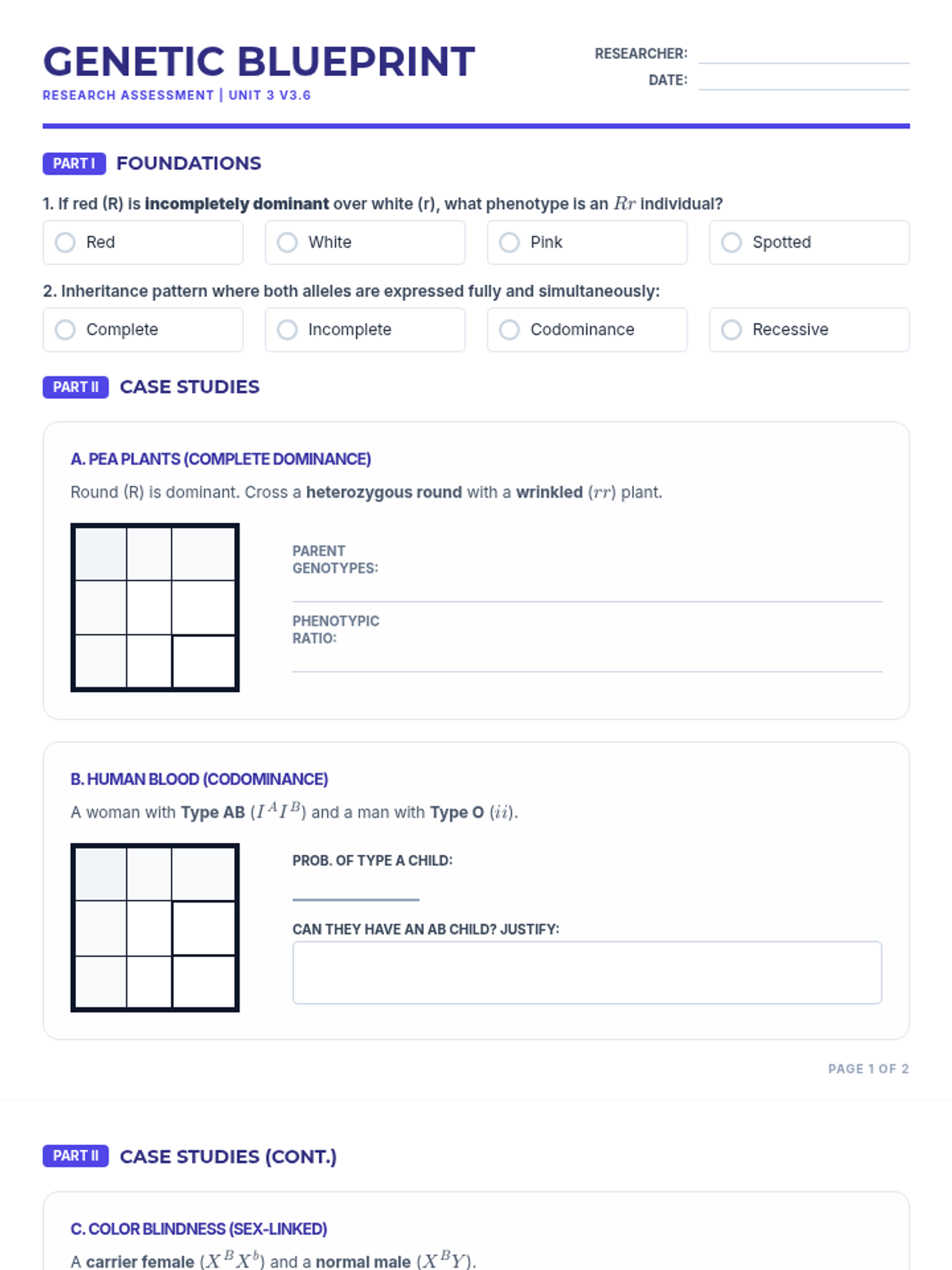
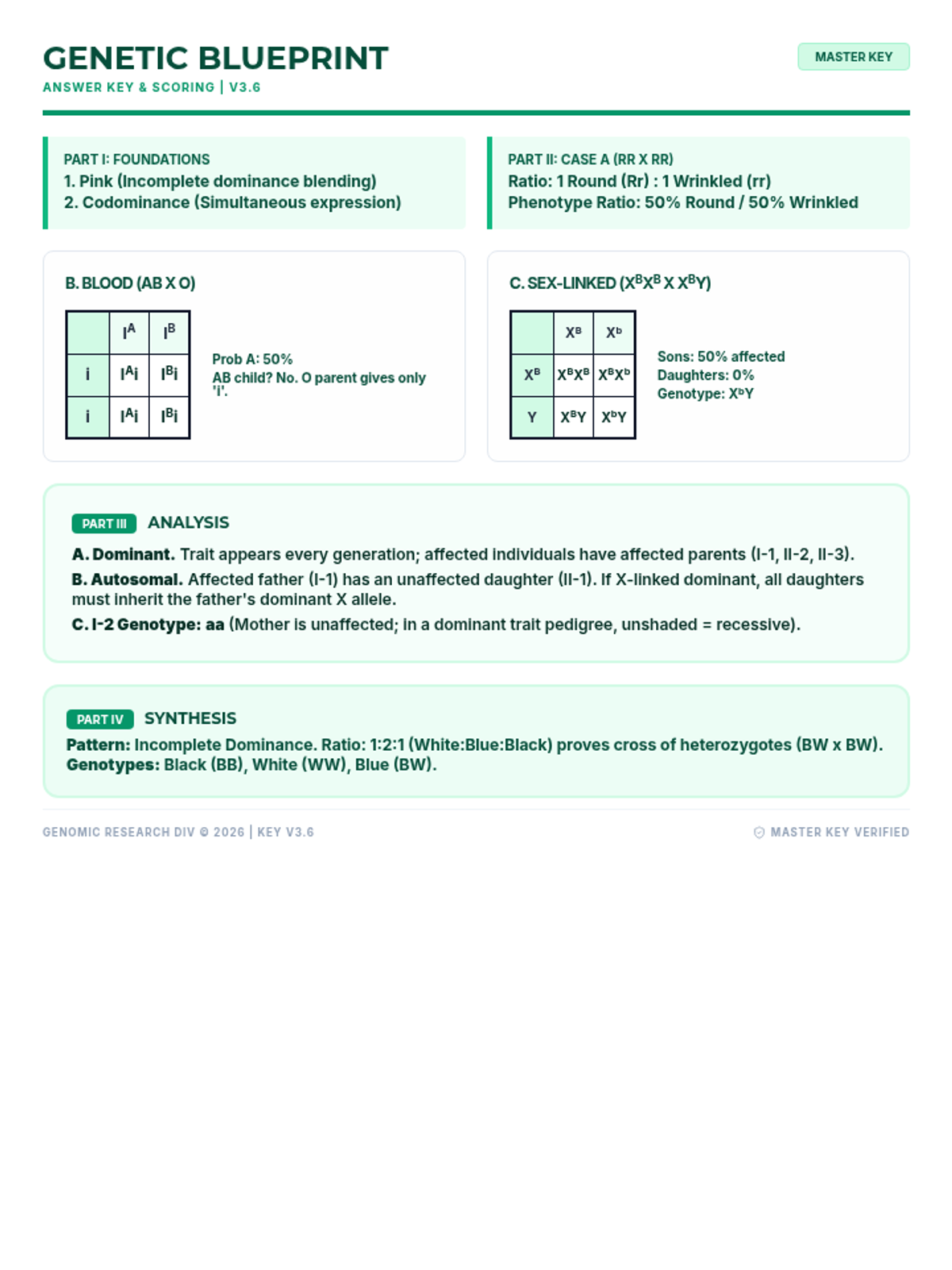
A comprehensive assessment covering Mendelian genetics, incomplete dominance, codominance, and sex-linked traits through word problems and pedigree analysis.
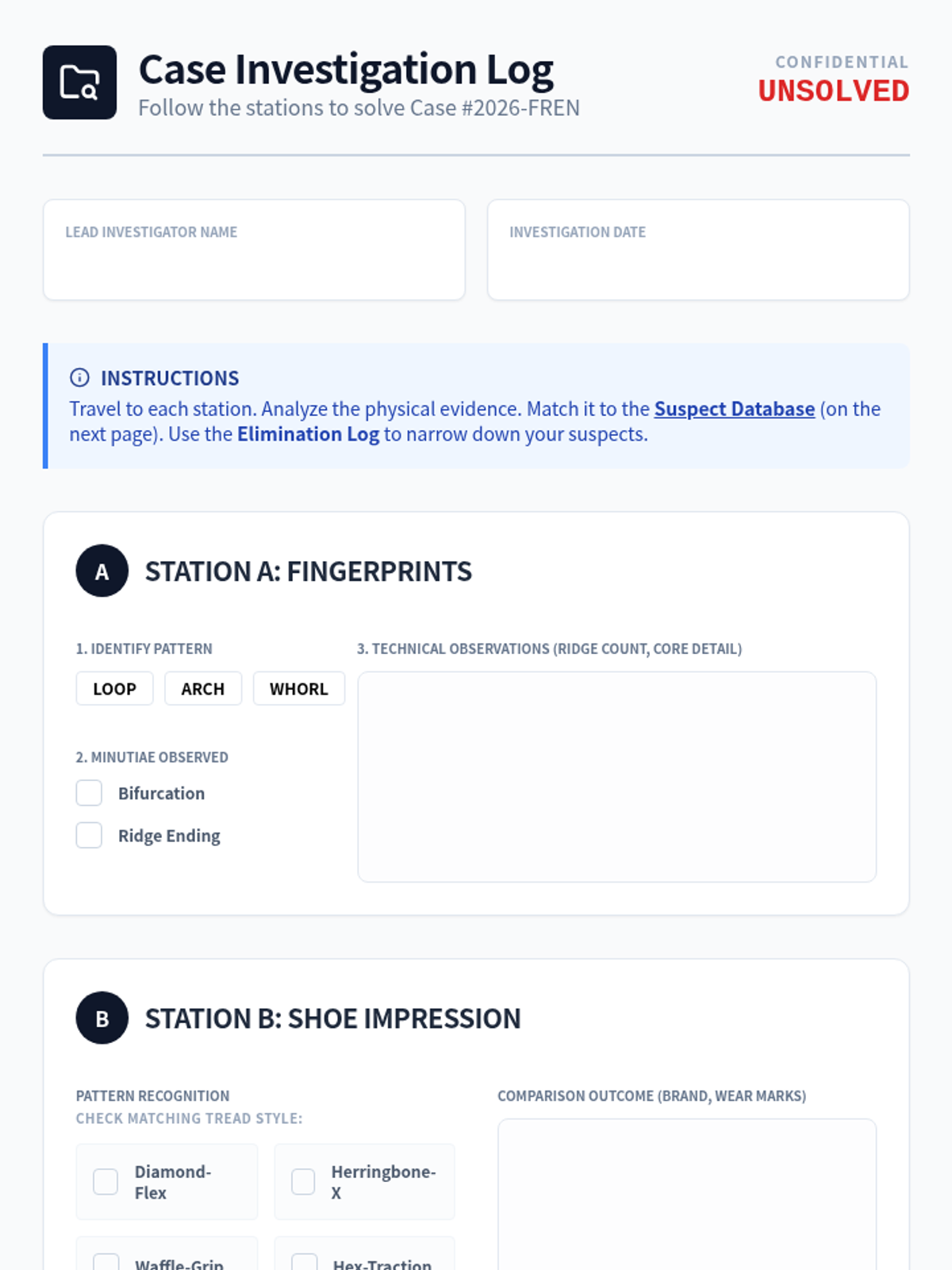
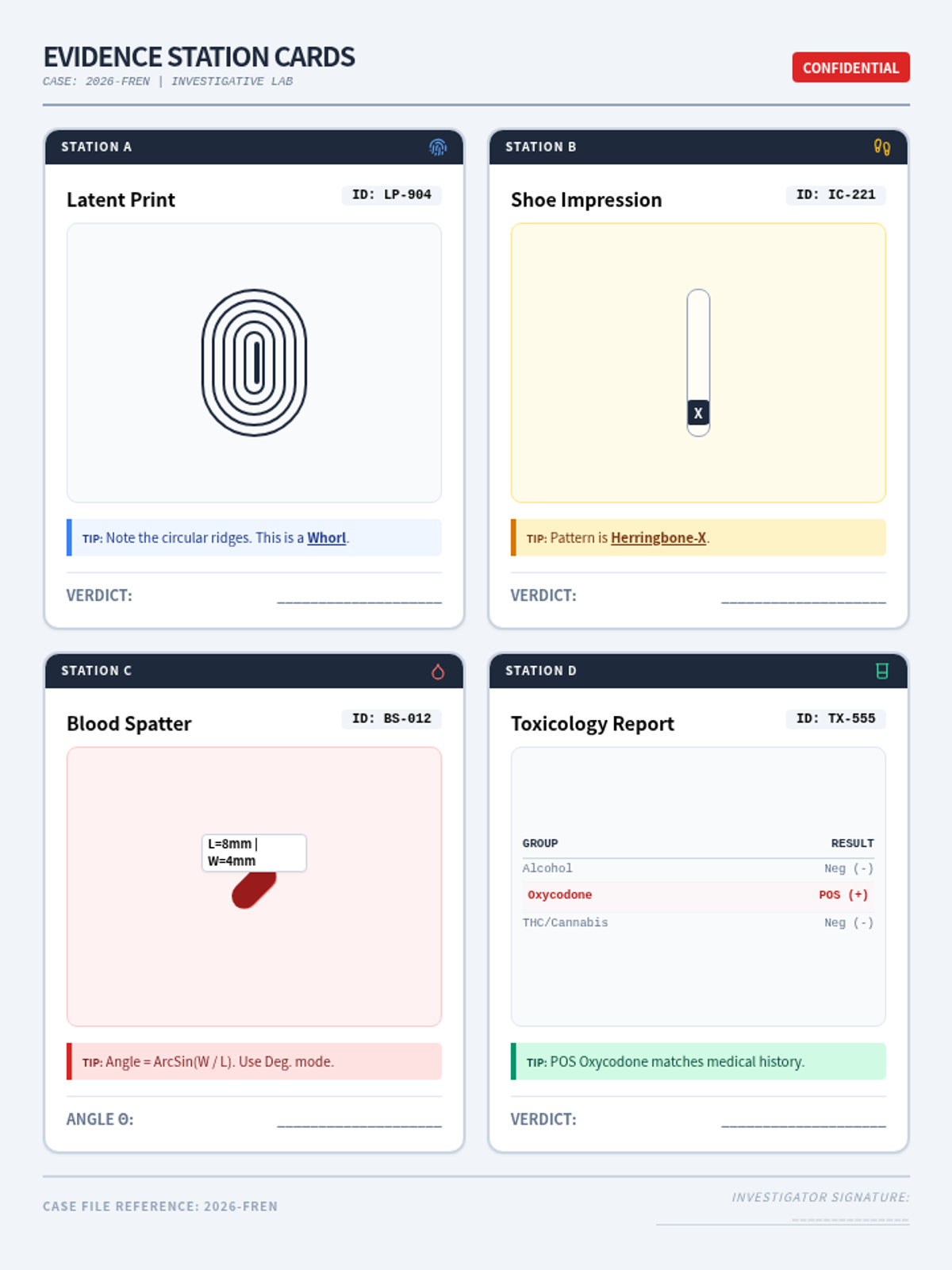
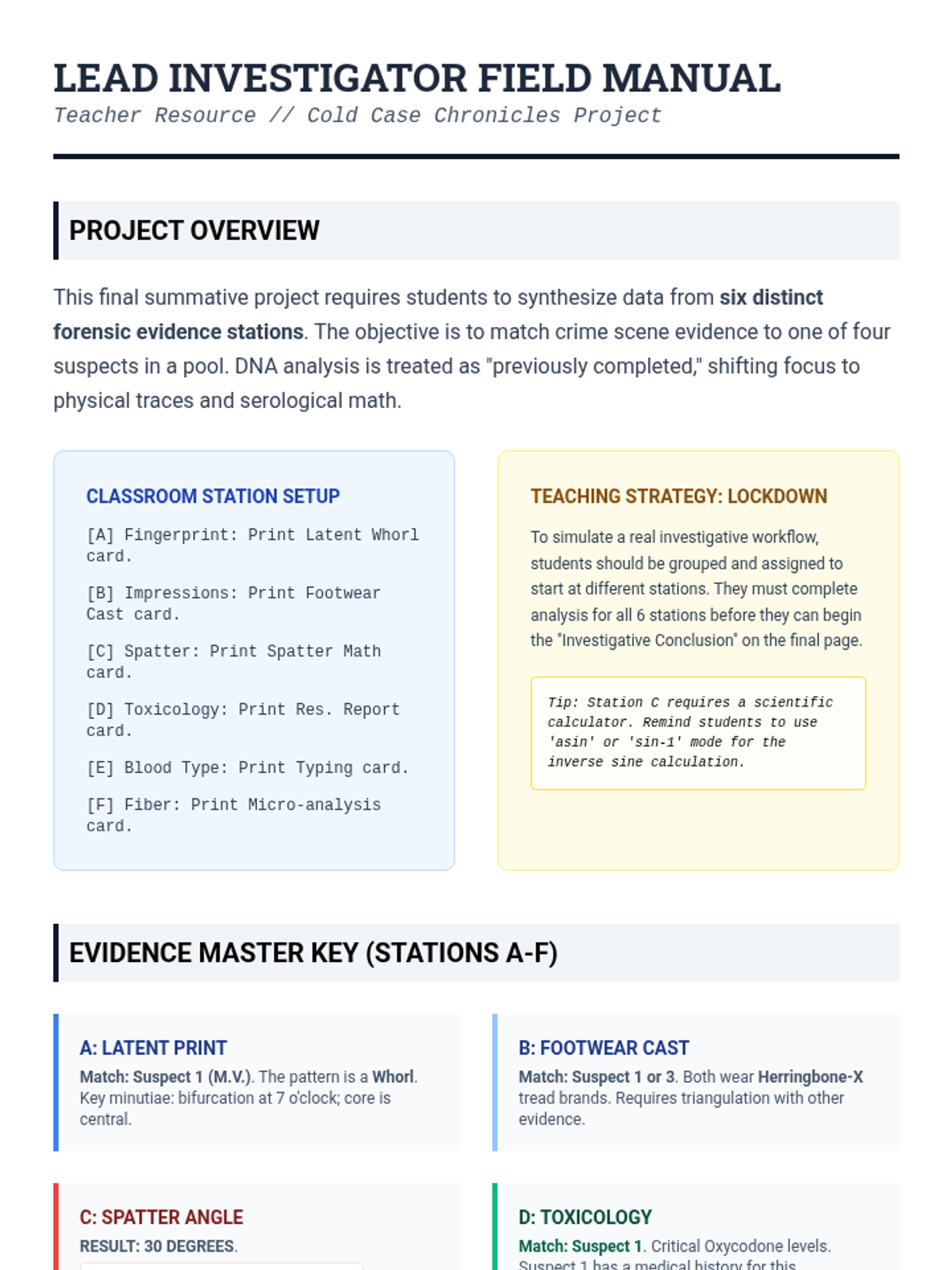
The final summative project where students act as lead investigators on a cold case, applying their knowledge of DNA, serology, toxicology, and impression evidence to identify a suspect.
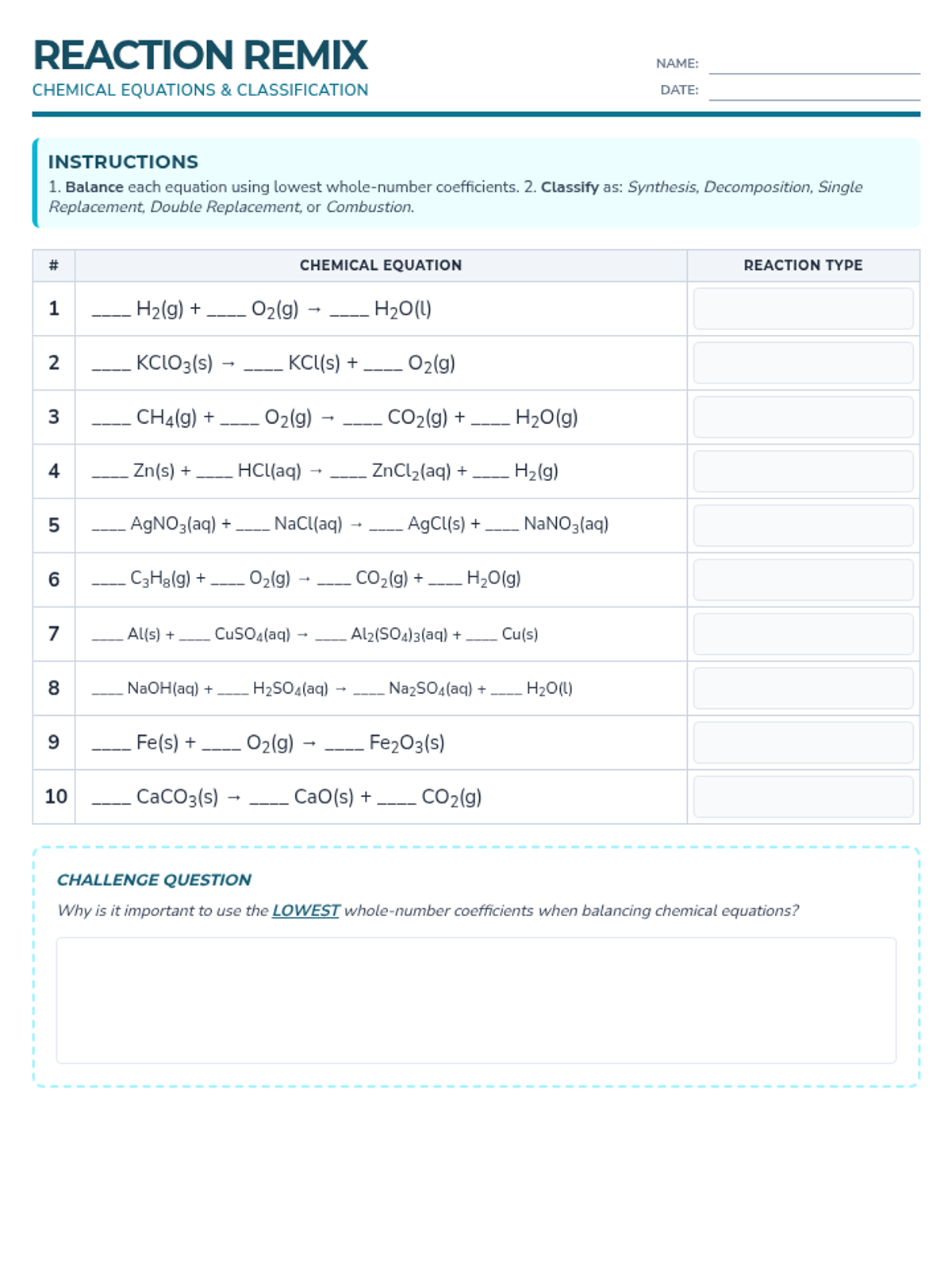
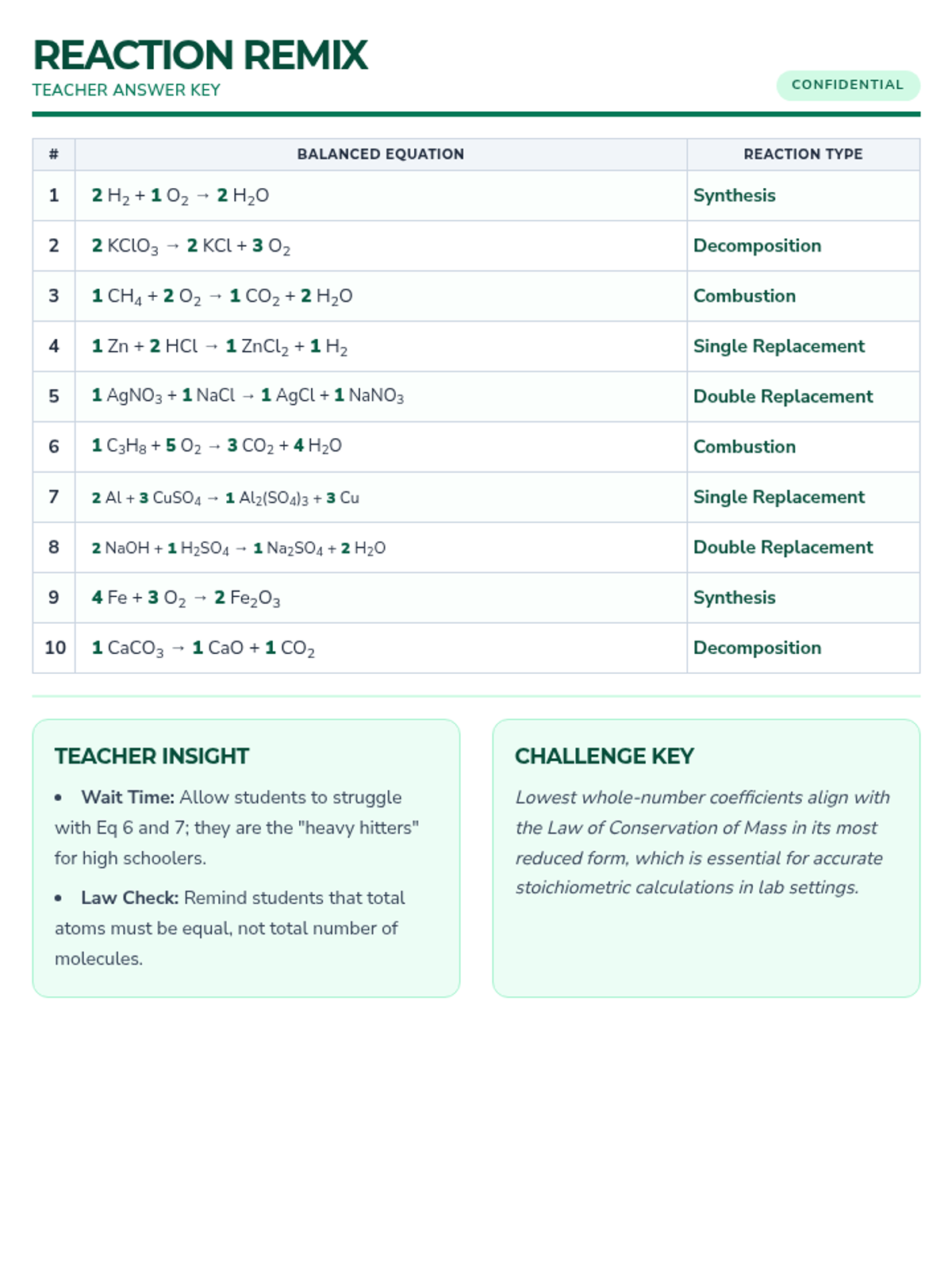
A concise practice lesson focused on balancing chemical equations and identifying the five primary types of chemical reactions for high school chemistry students.
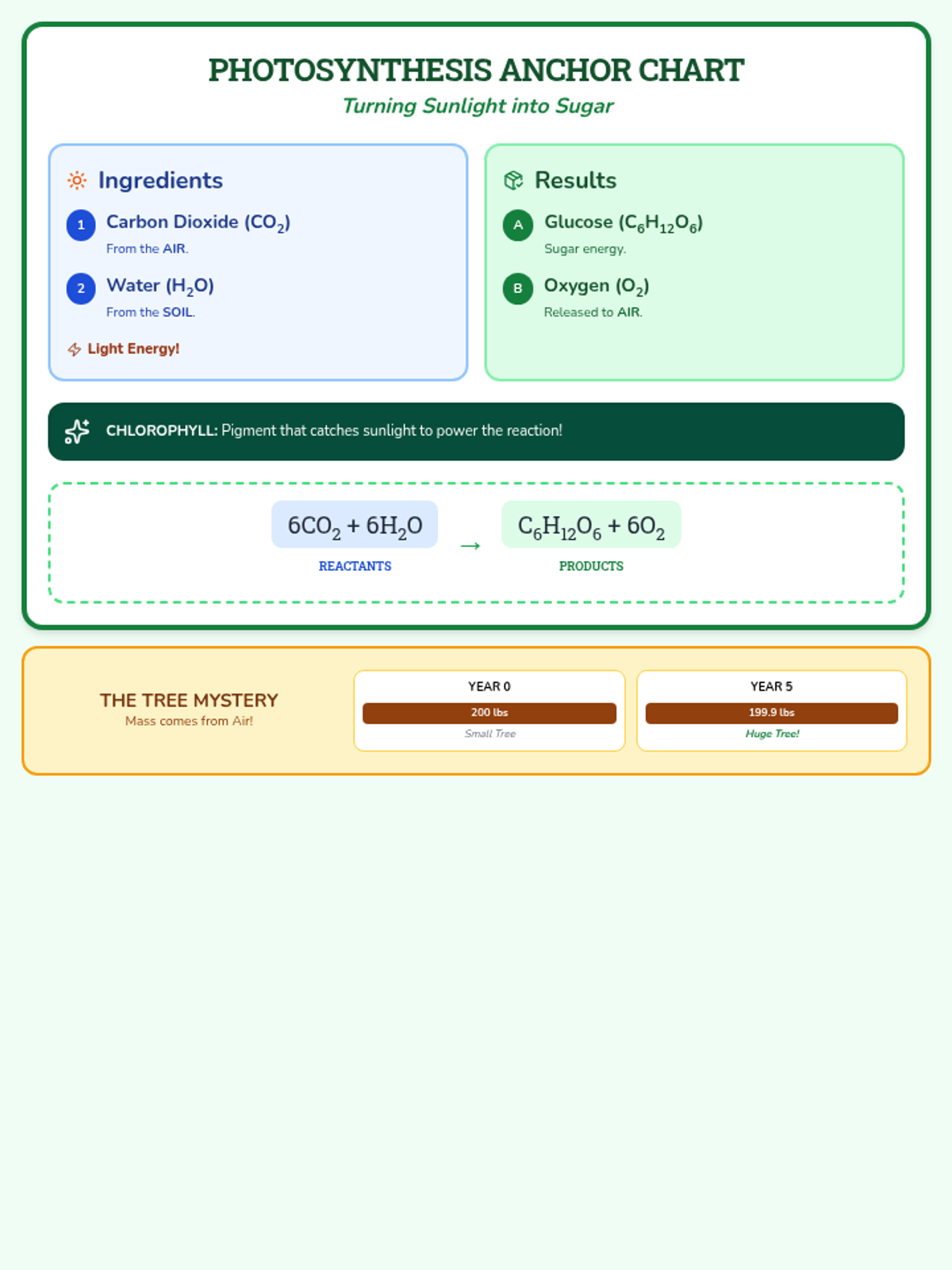
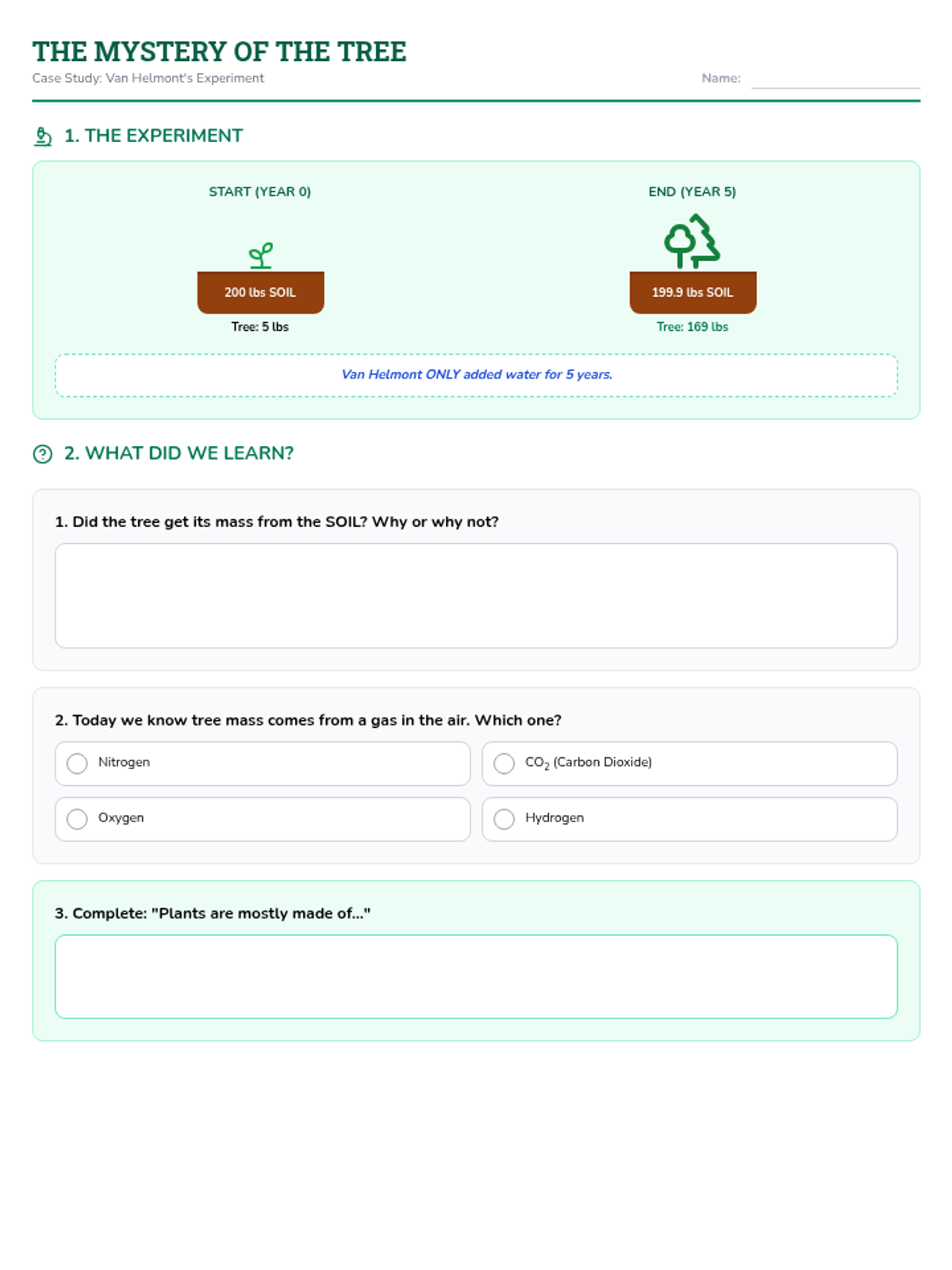
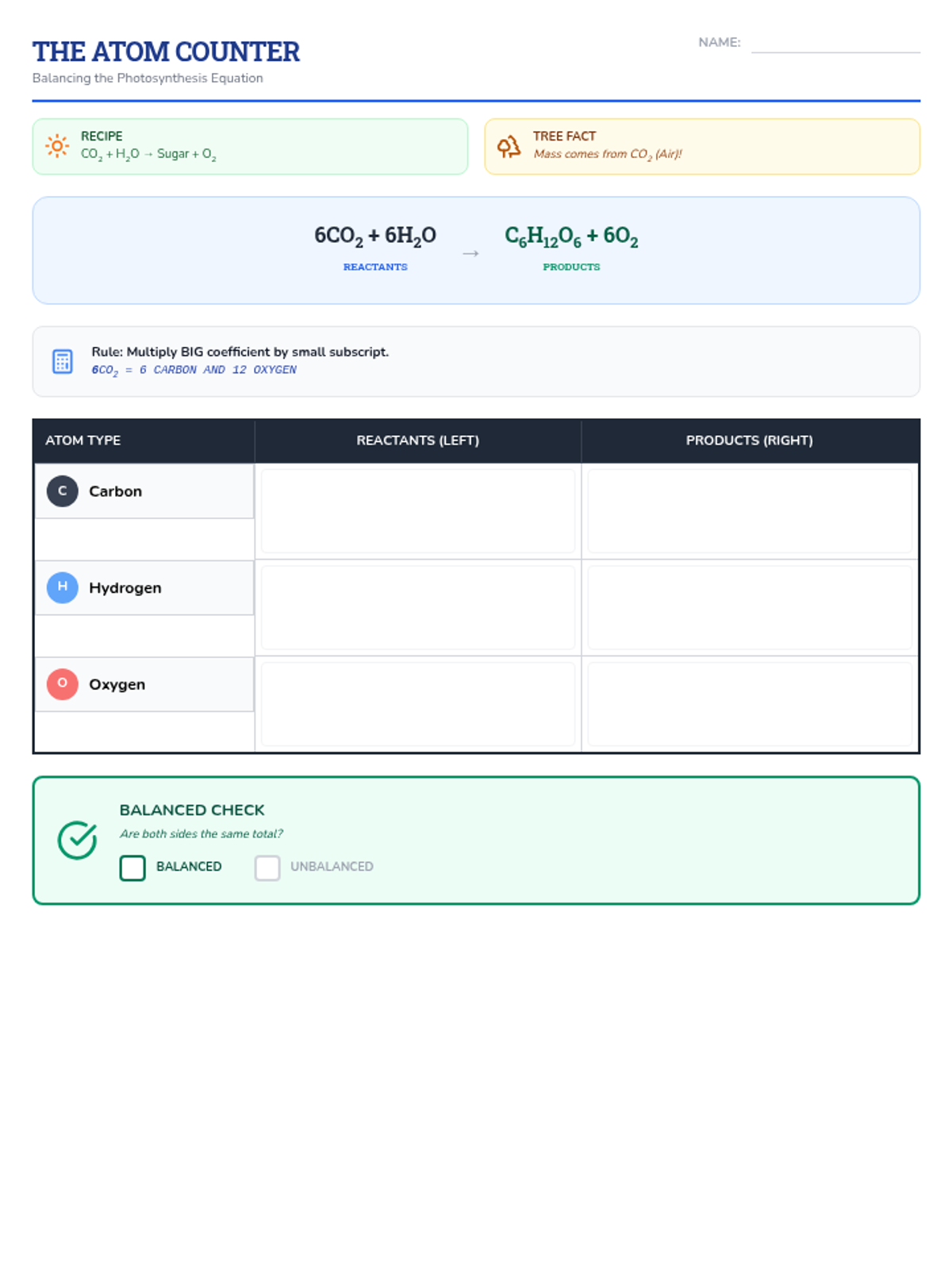
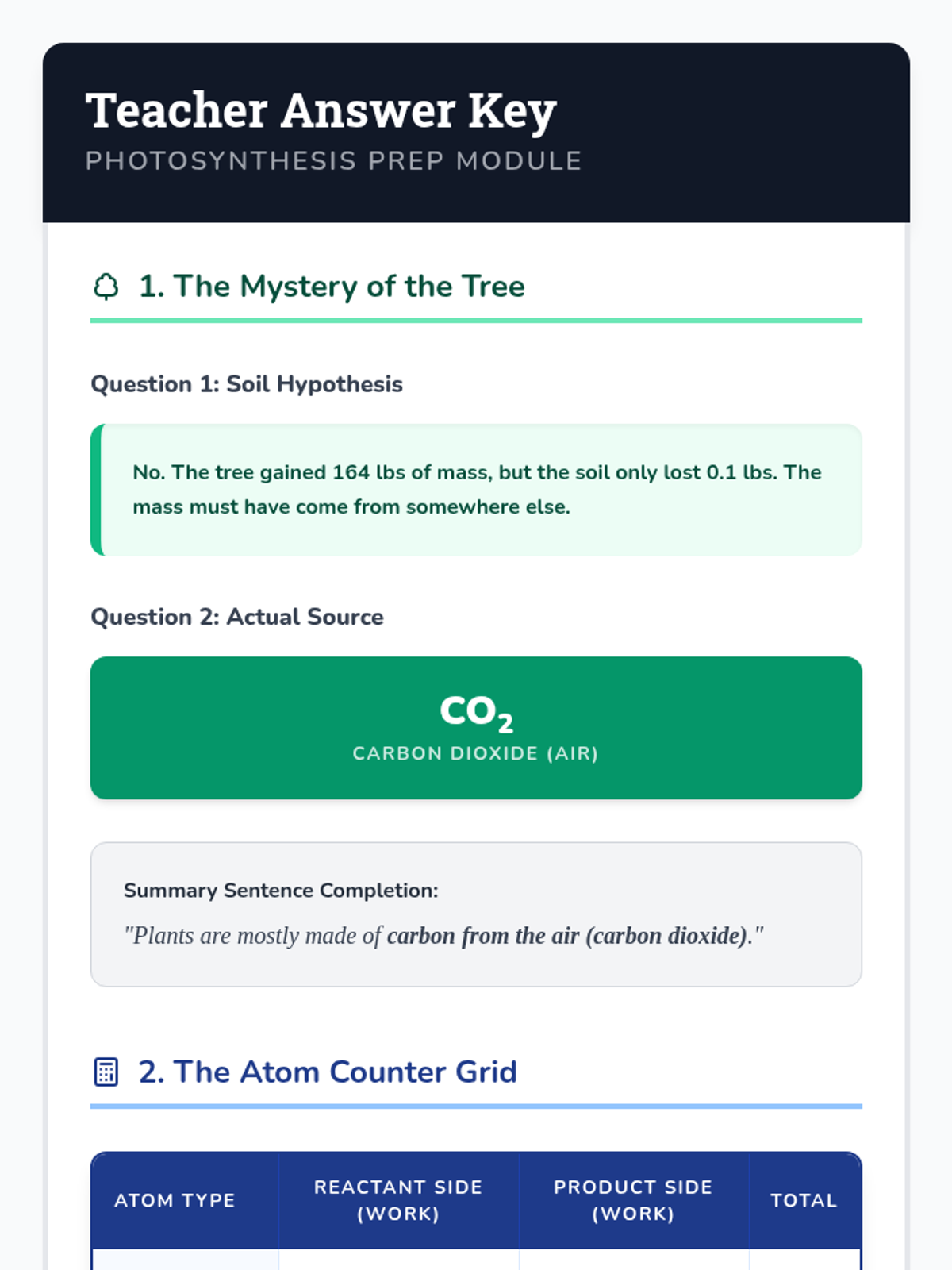
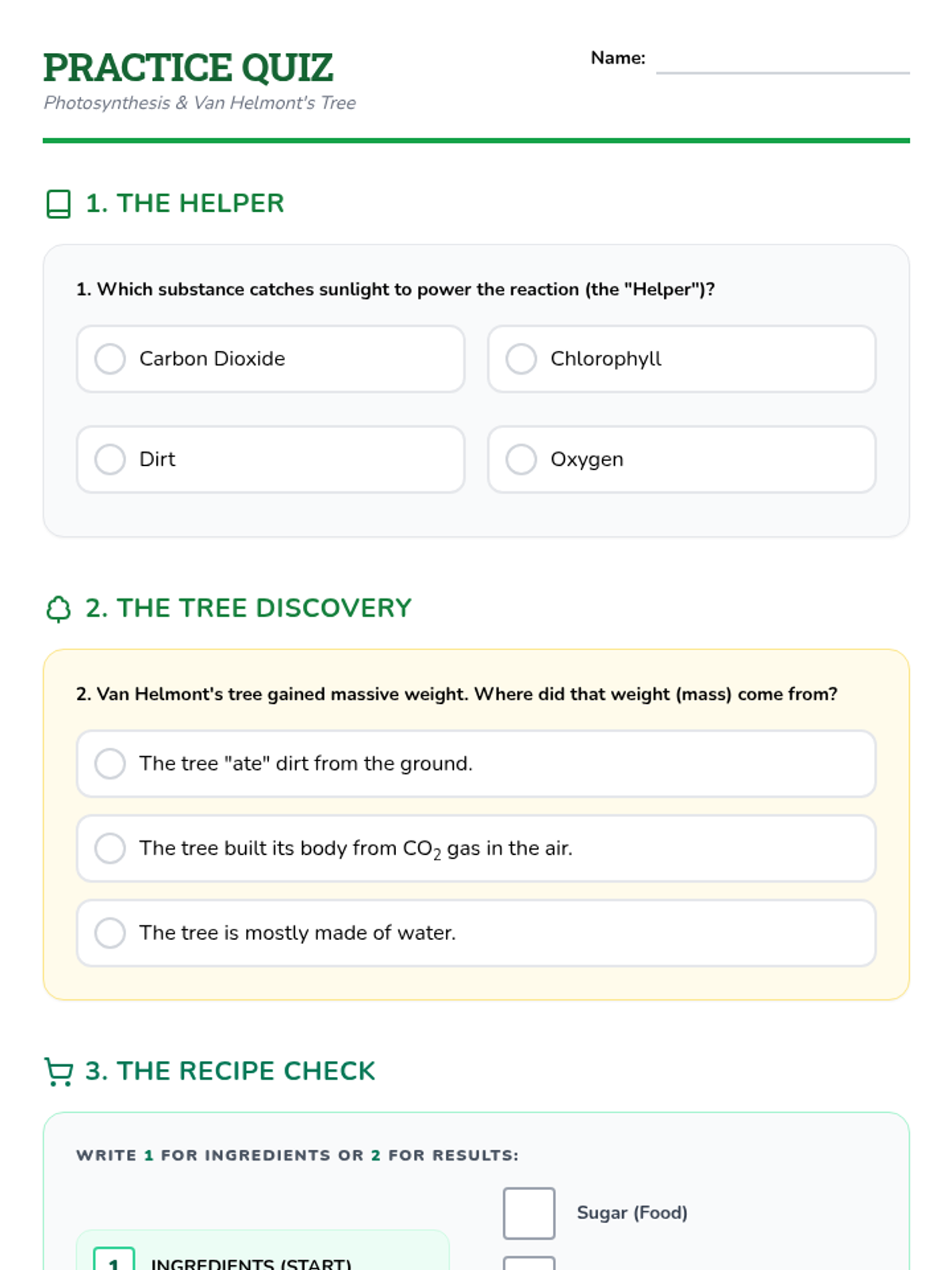
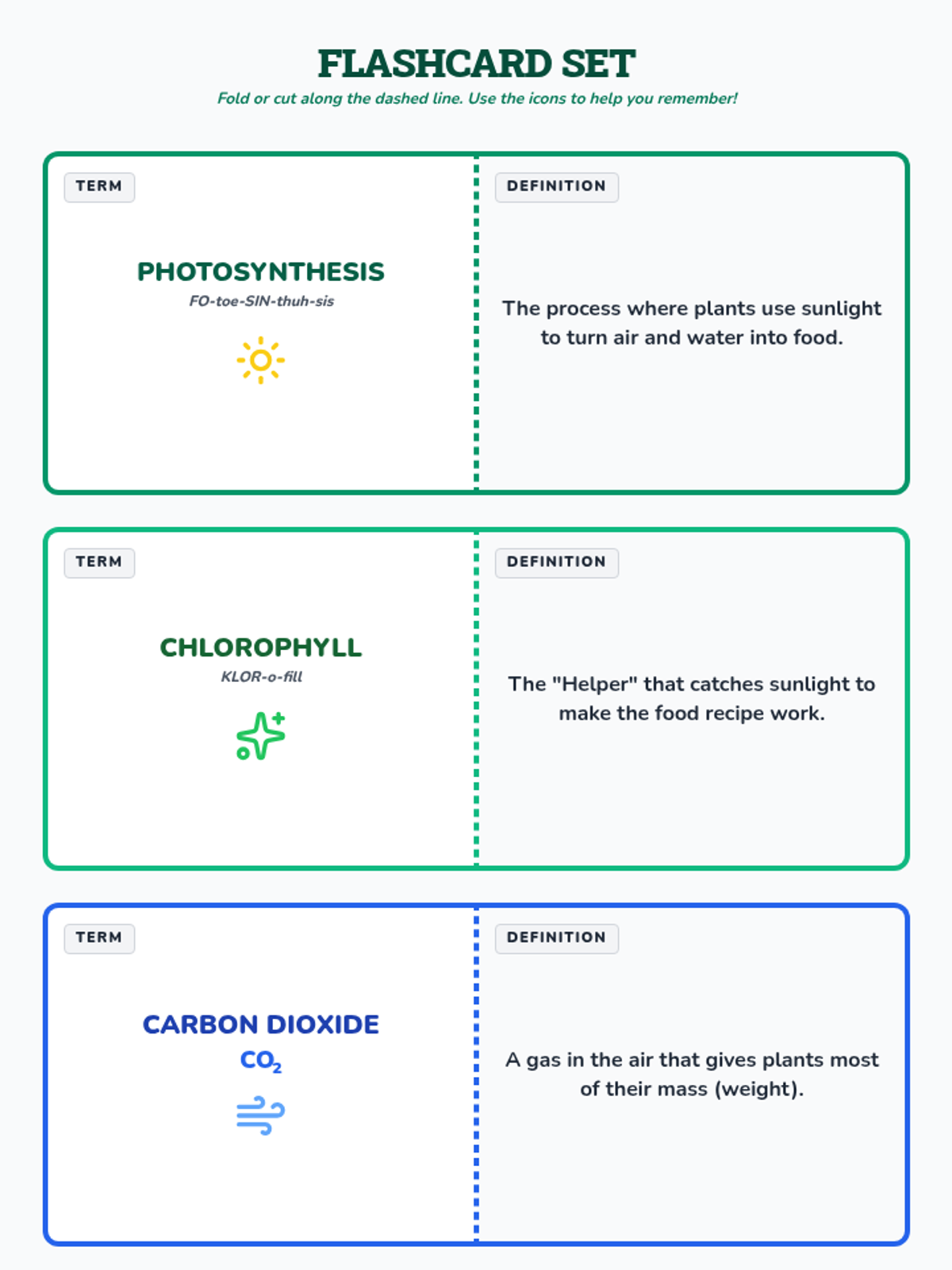
A guided practice lesson on photosynthesis focusing on Van Helmont's experiment and the chemistry of the photosynthetic equation, designed for students with executive function and reading challenges.
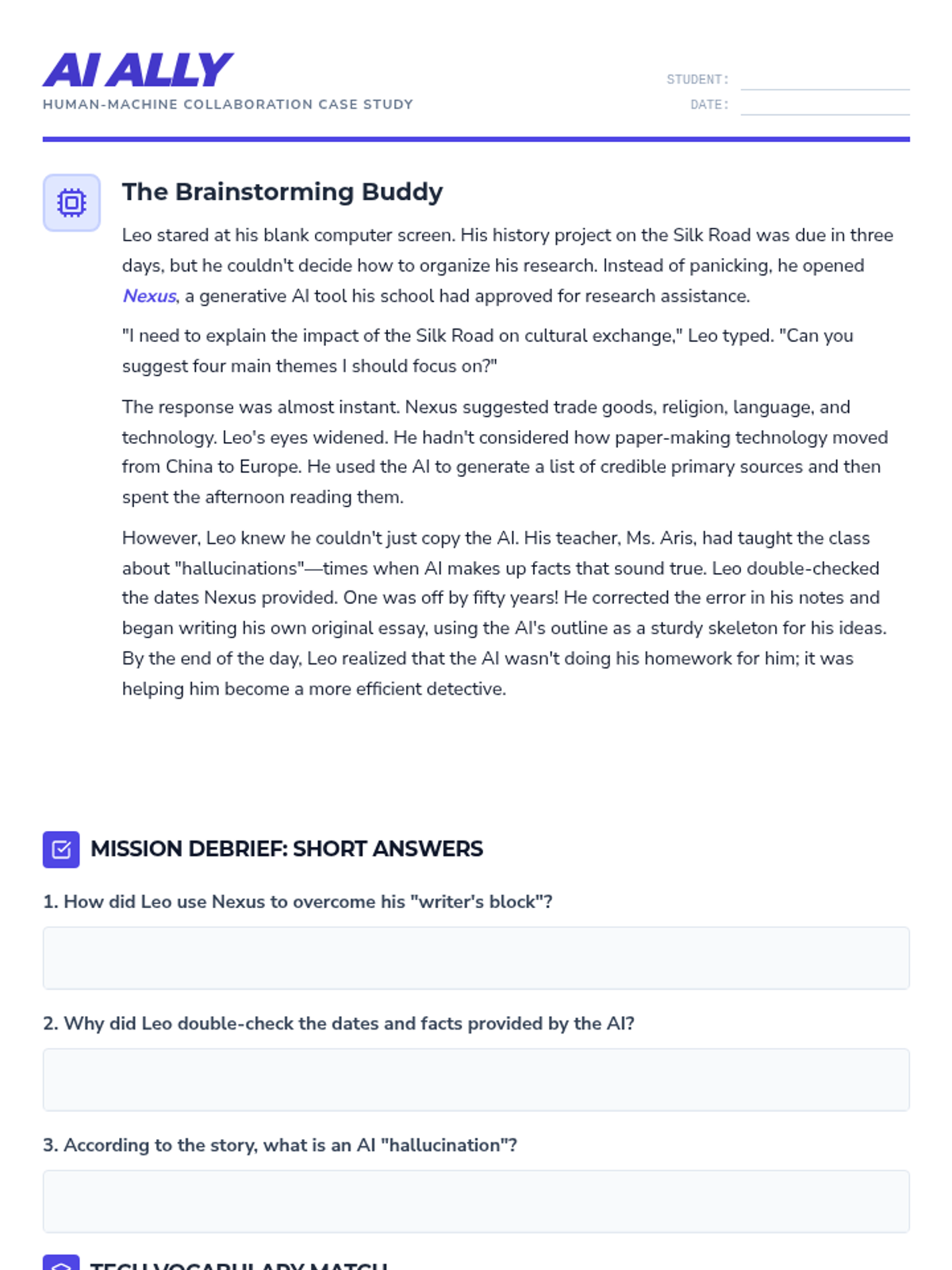
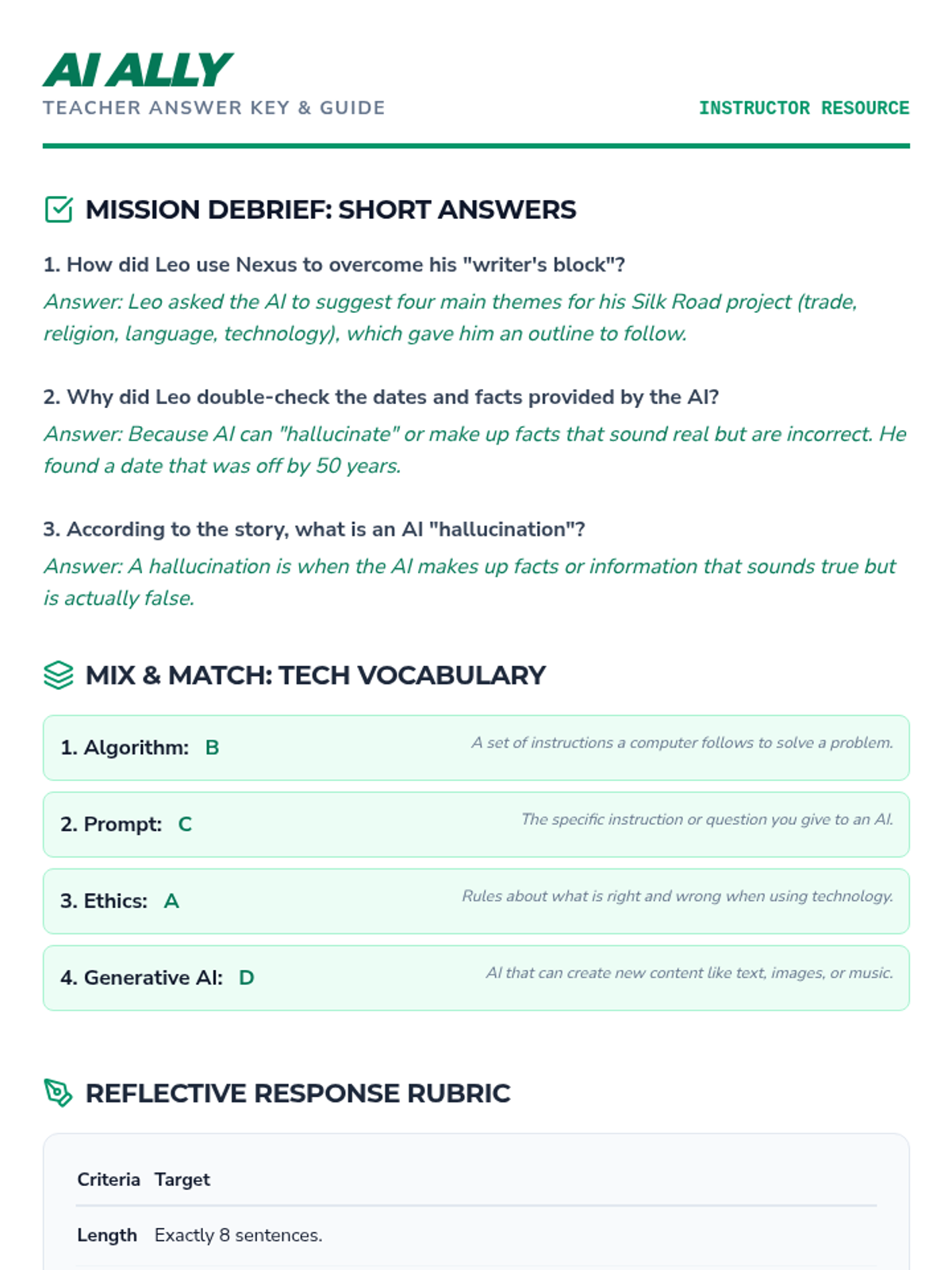
A lesson exploring the role of AI in education through a story about responsible use, featuring comprehension questions, a vocabulary matching activity, and a reflective writing prompt.
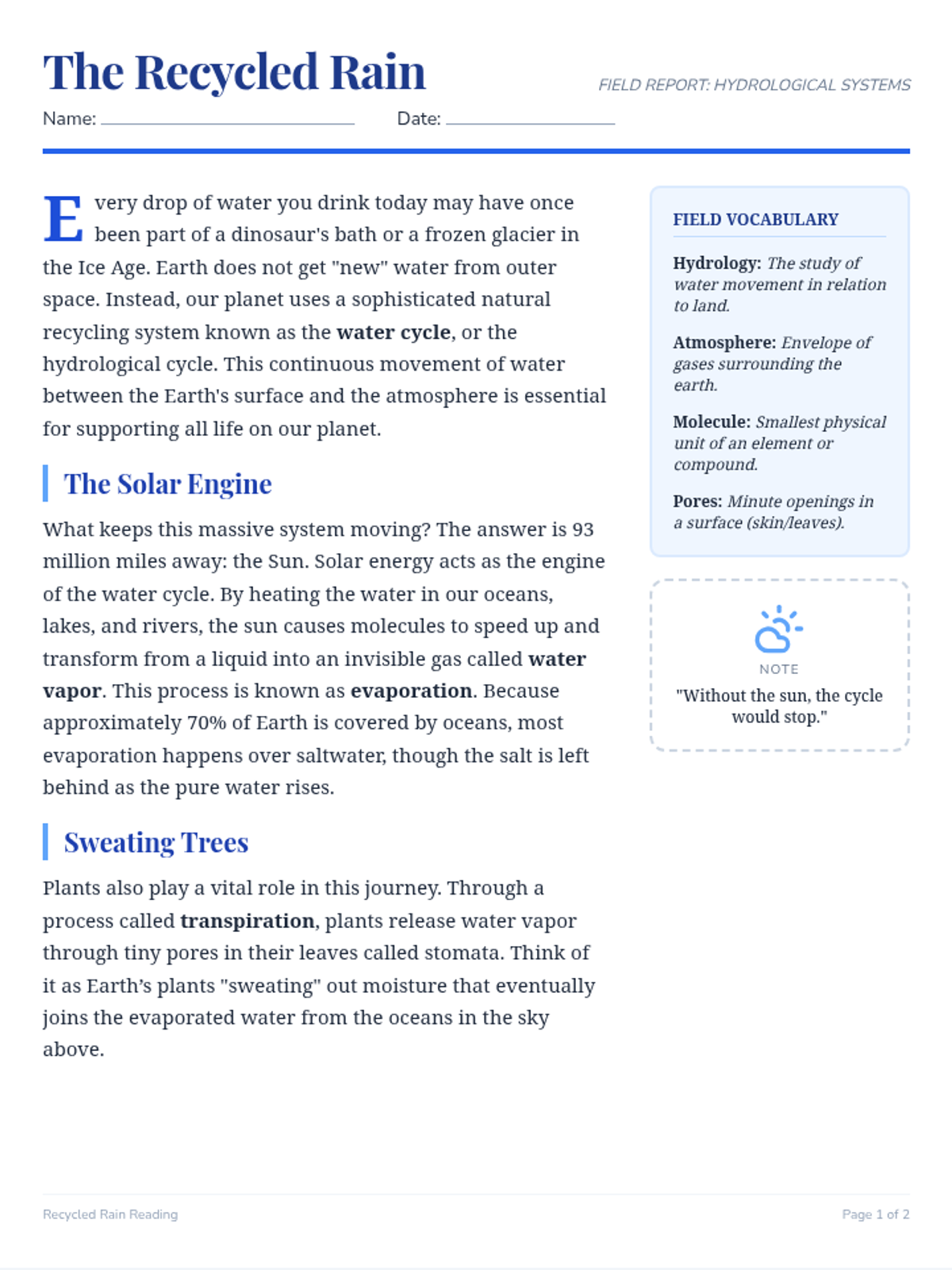
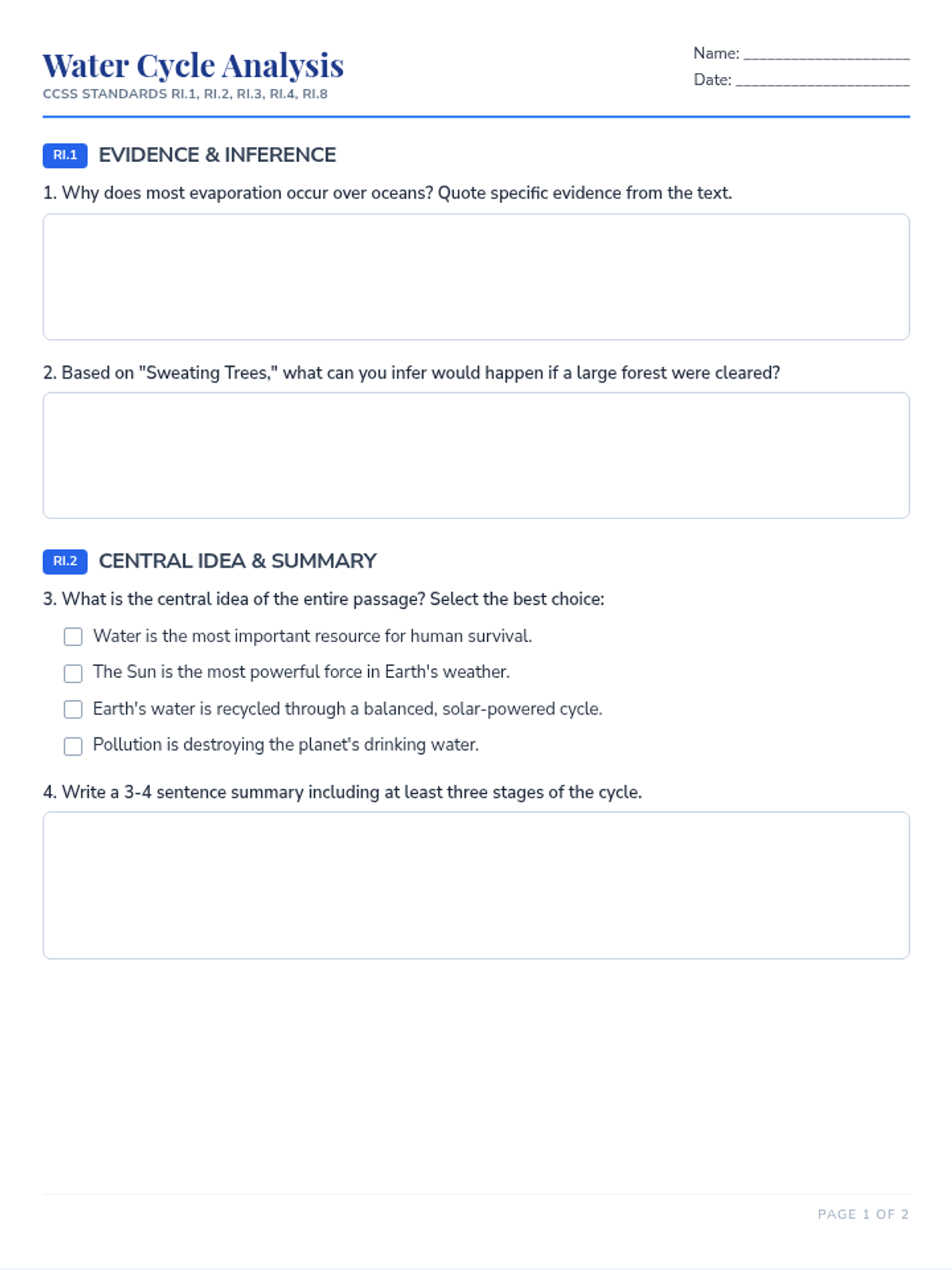
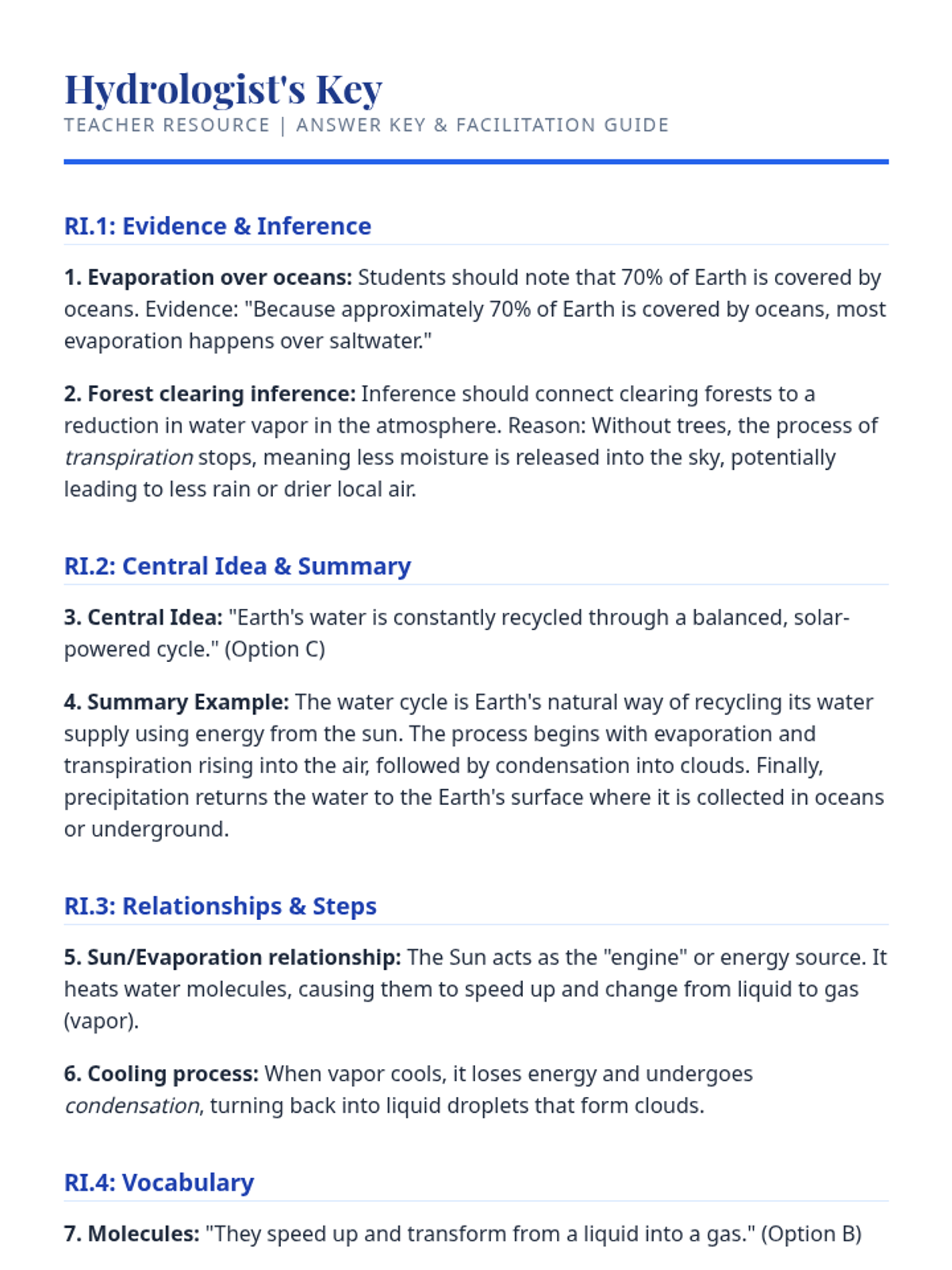
A comprehensive exploration of the water cycle, focusing on informational text analysis, vocabulary development, and understanding Earth's natural systems.
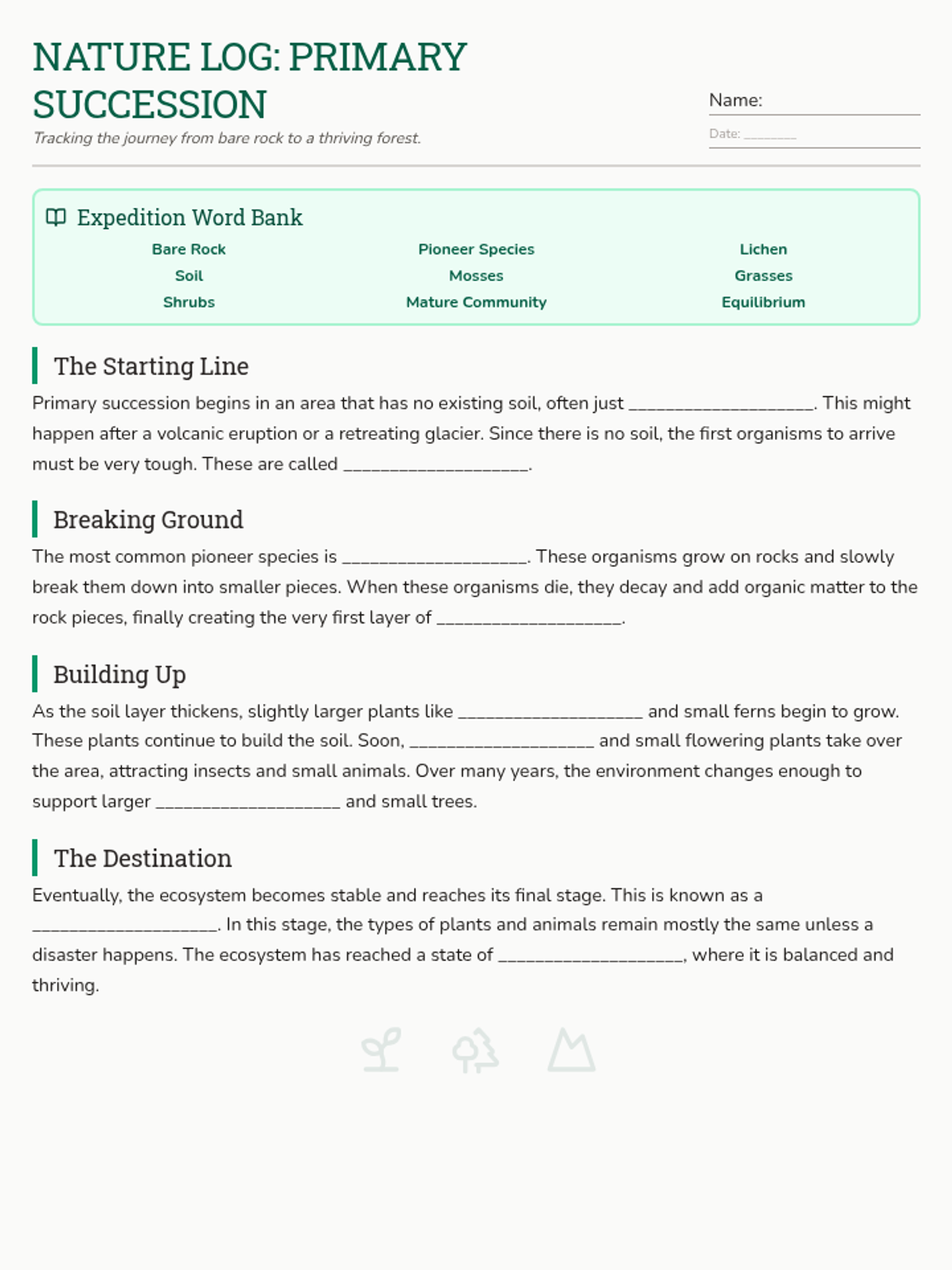
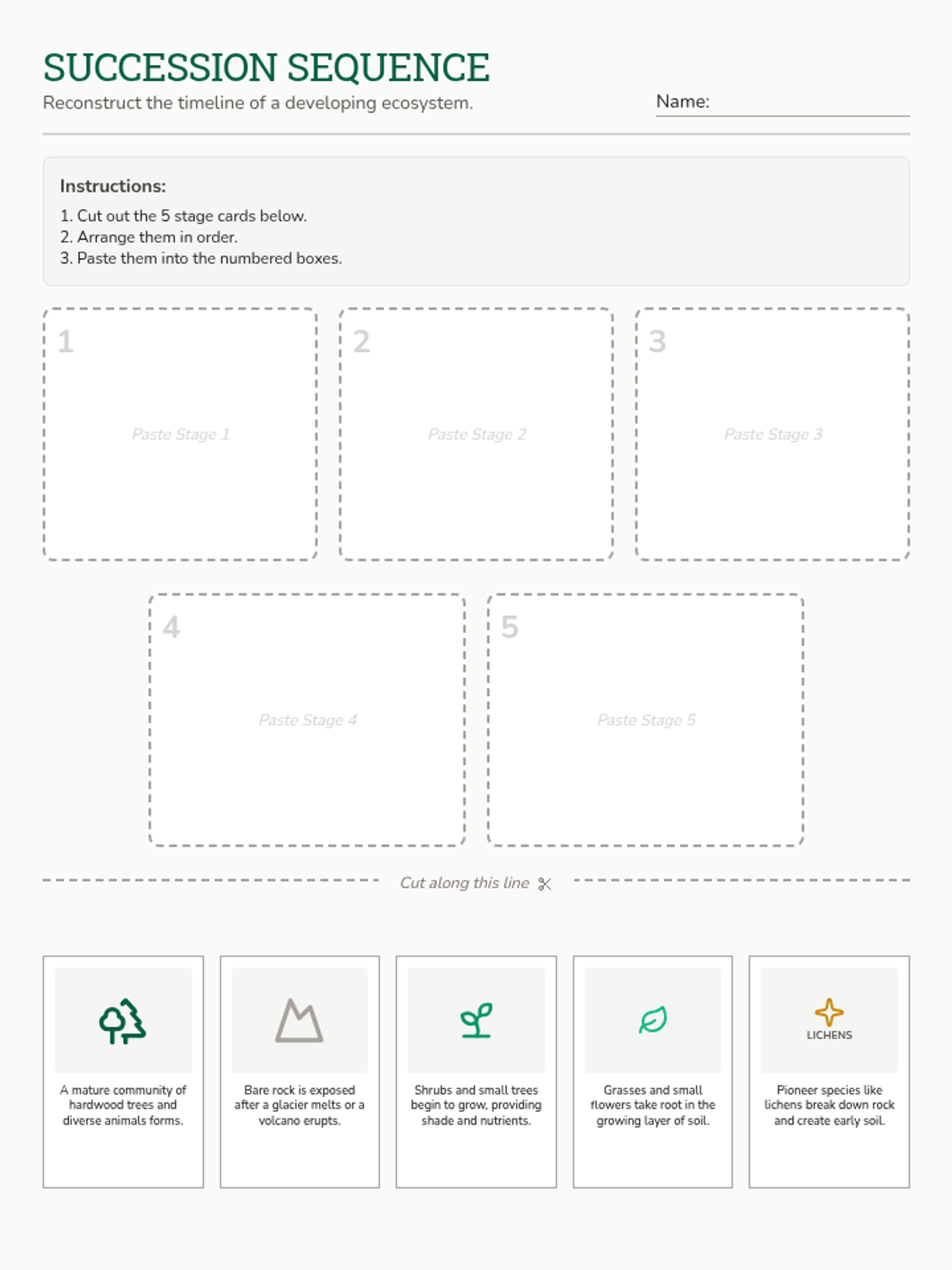
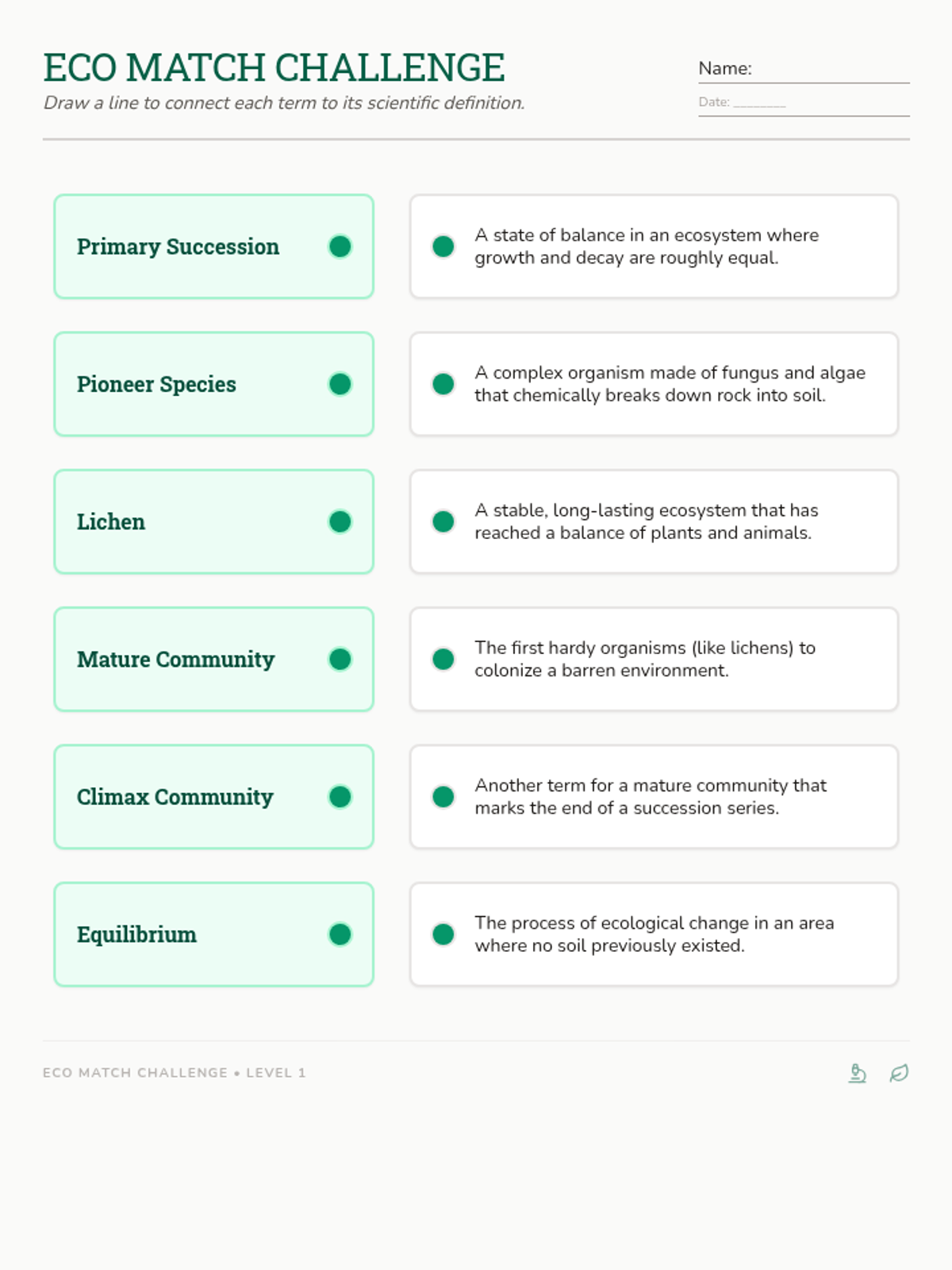
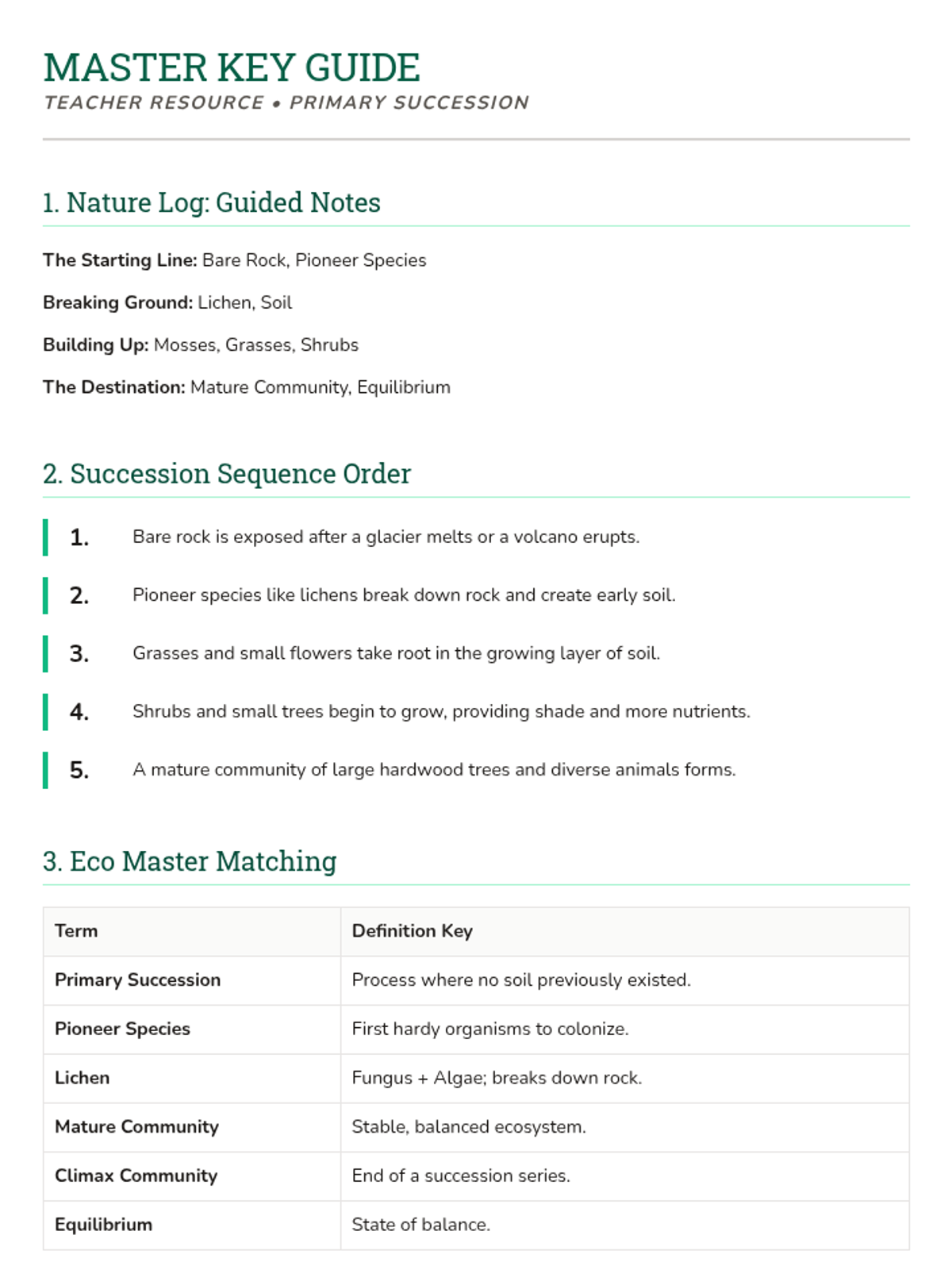
A comprehensive lesson exploring the stages of primary succession, focusing on the role of pioneer species in transforming bare rock into a mature community.
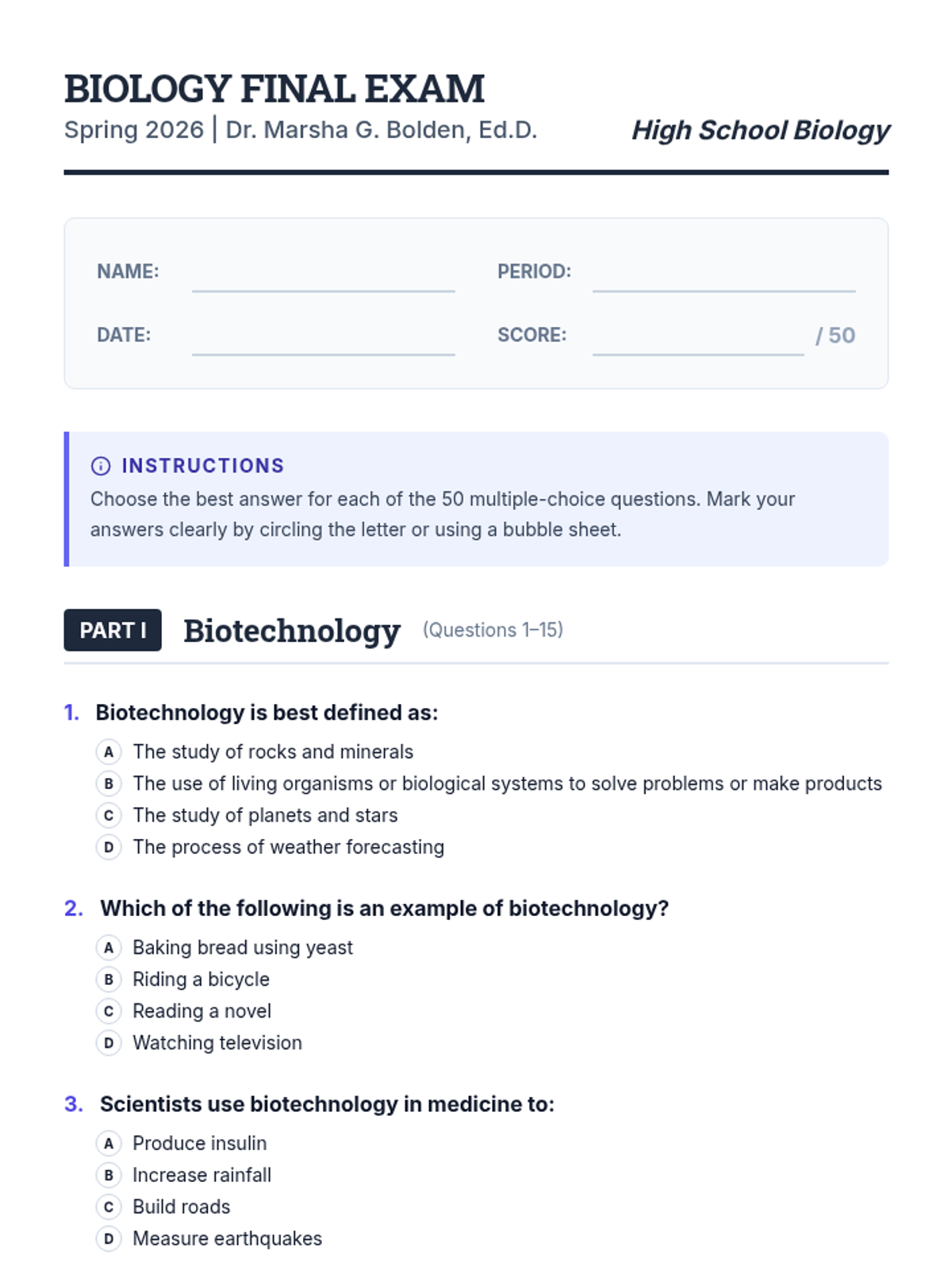
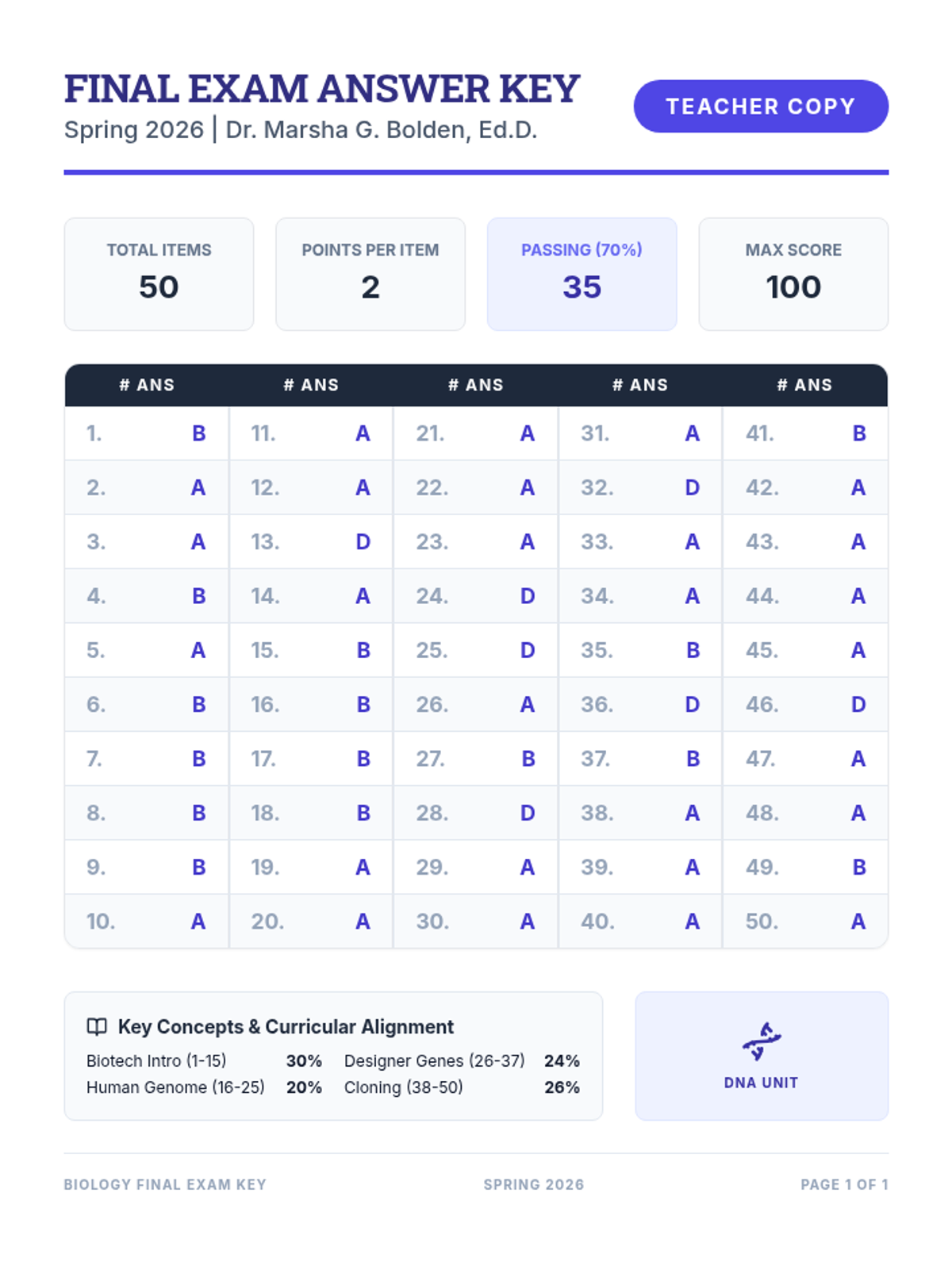
A comprehensive final examination covering biotechnology, the Human Genome Project, genetic engineering, and cloning for high school biology students.
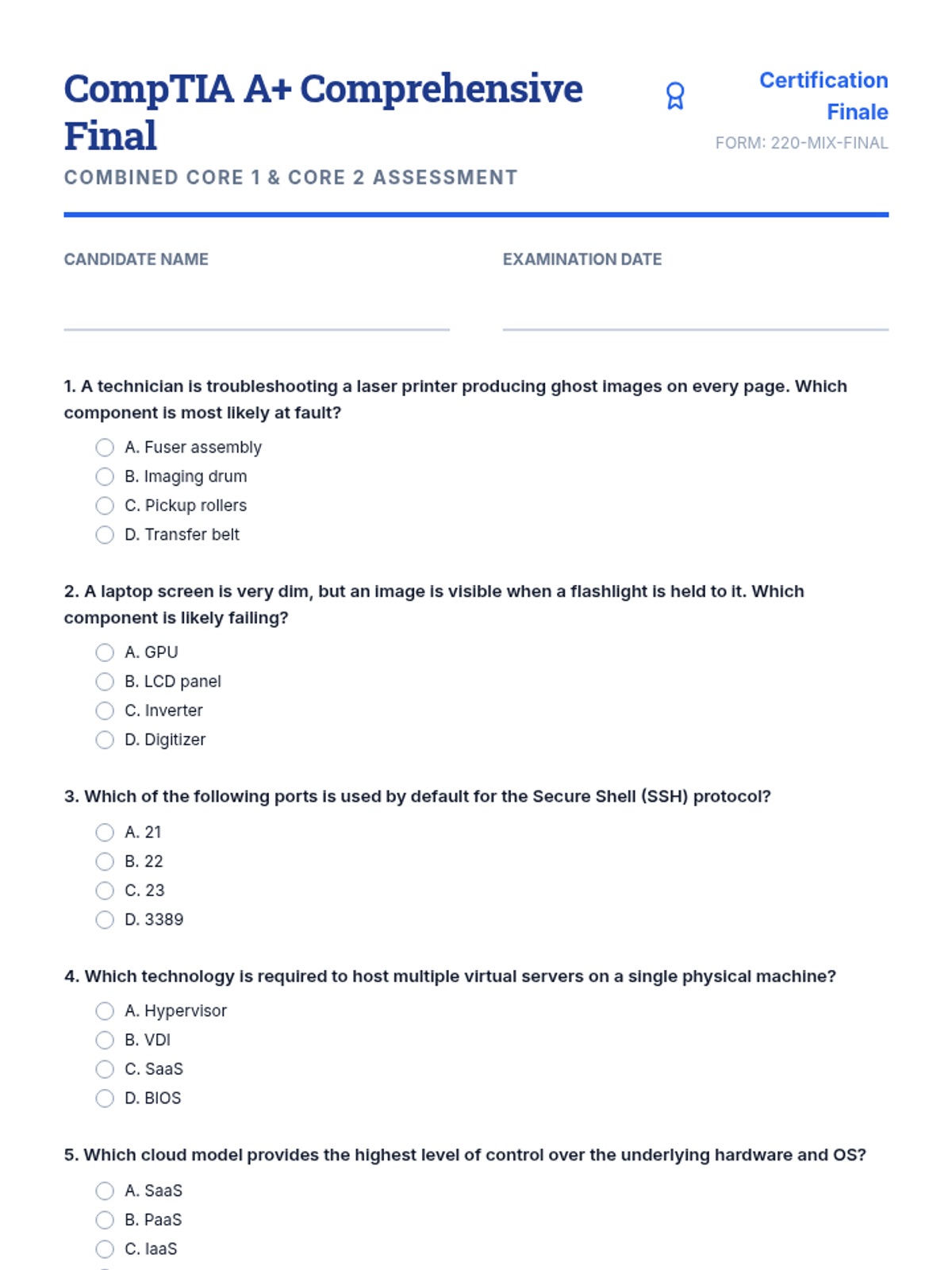
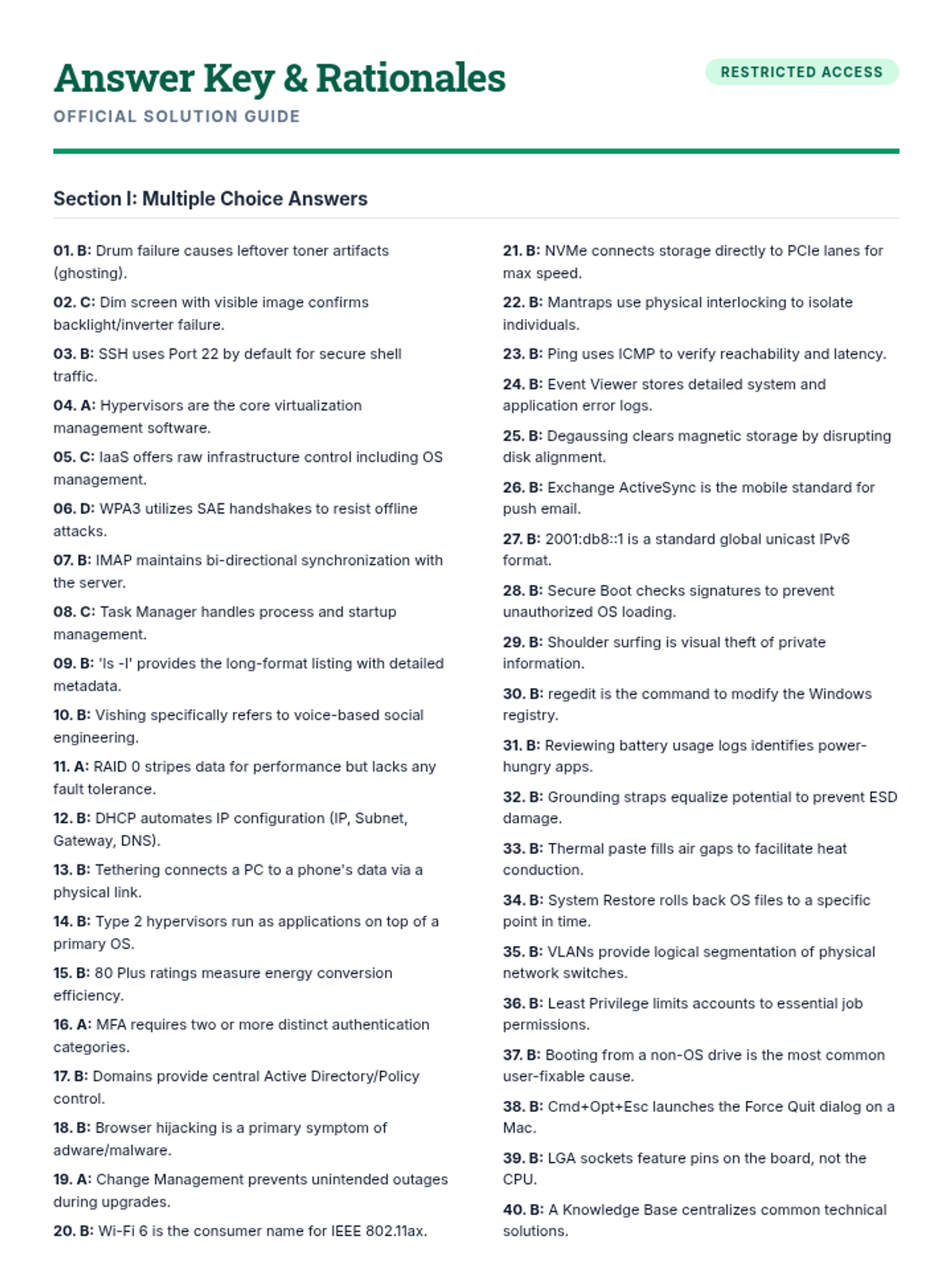
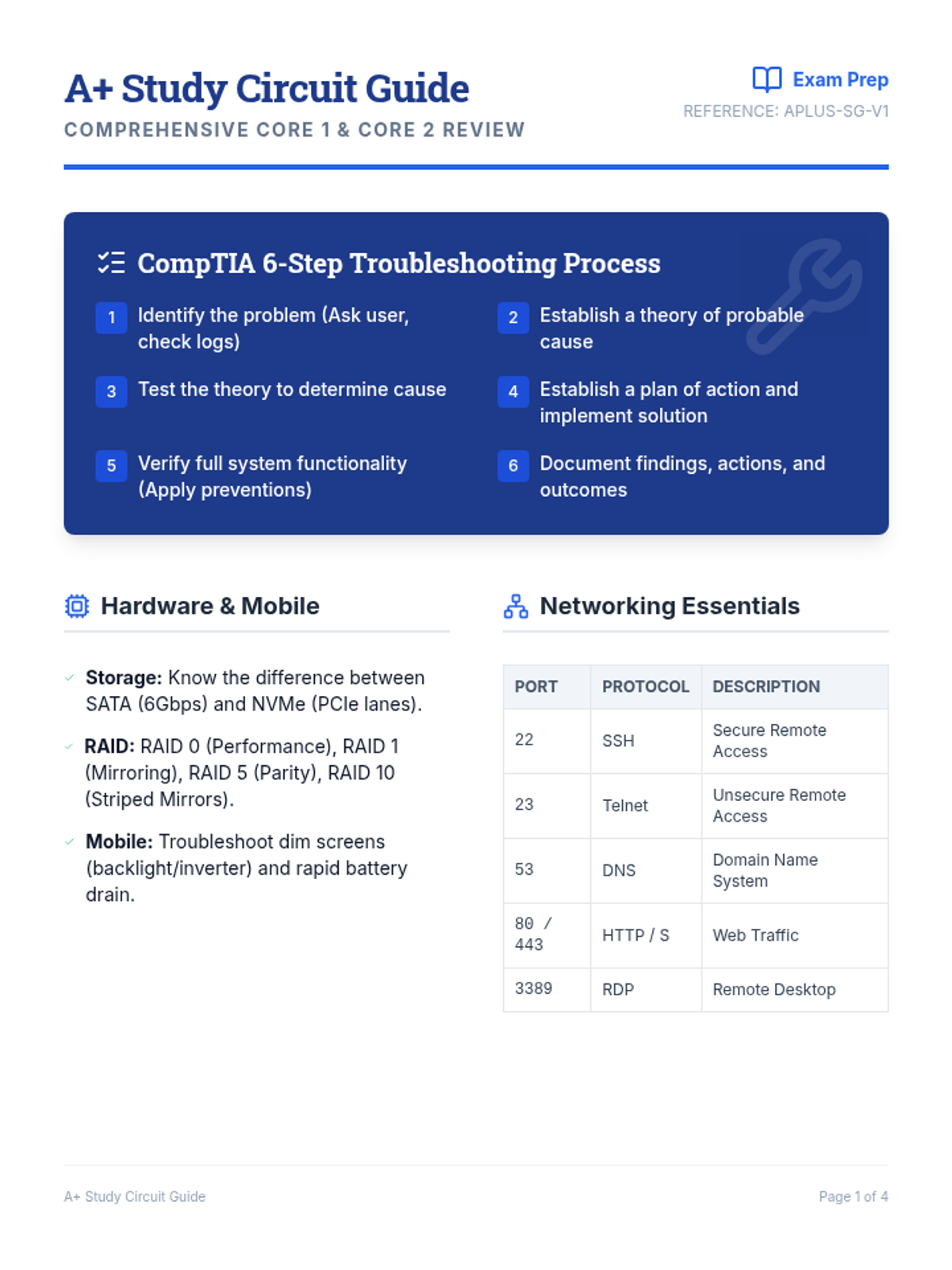
A comprehensive capstone assessment covering CompTIA A+ Core 1 (220-1101) and Core 2 (220-1102) domains, including multiple-choice questions and performance-based scenarios.
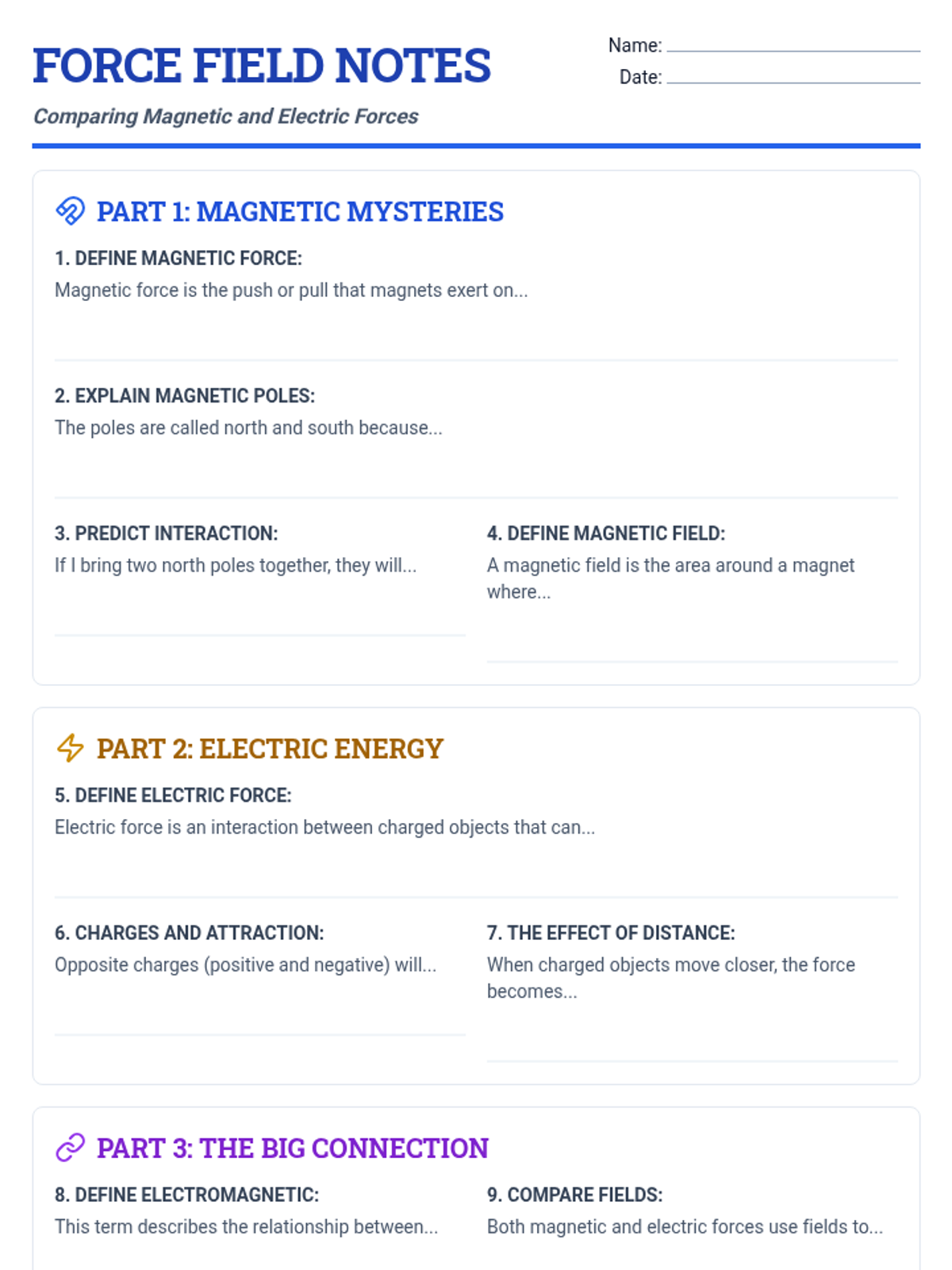
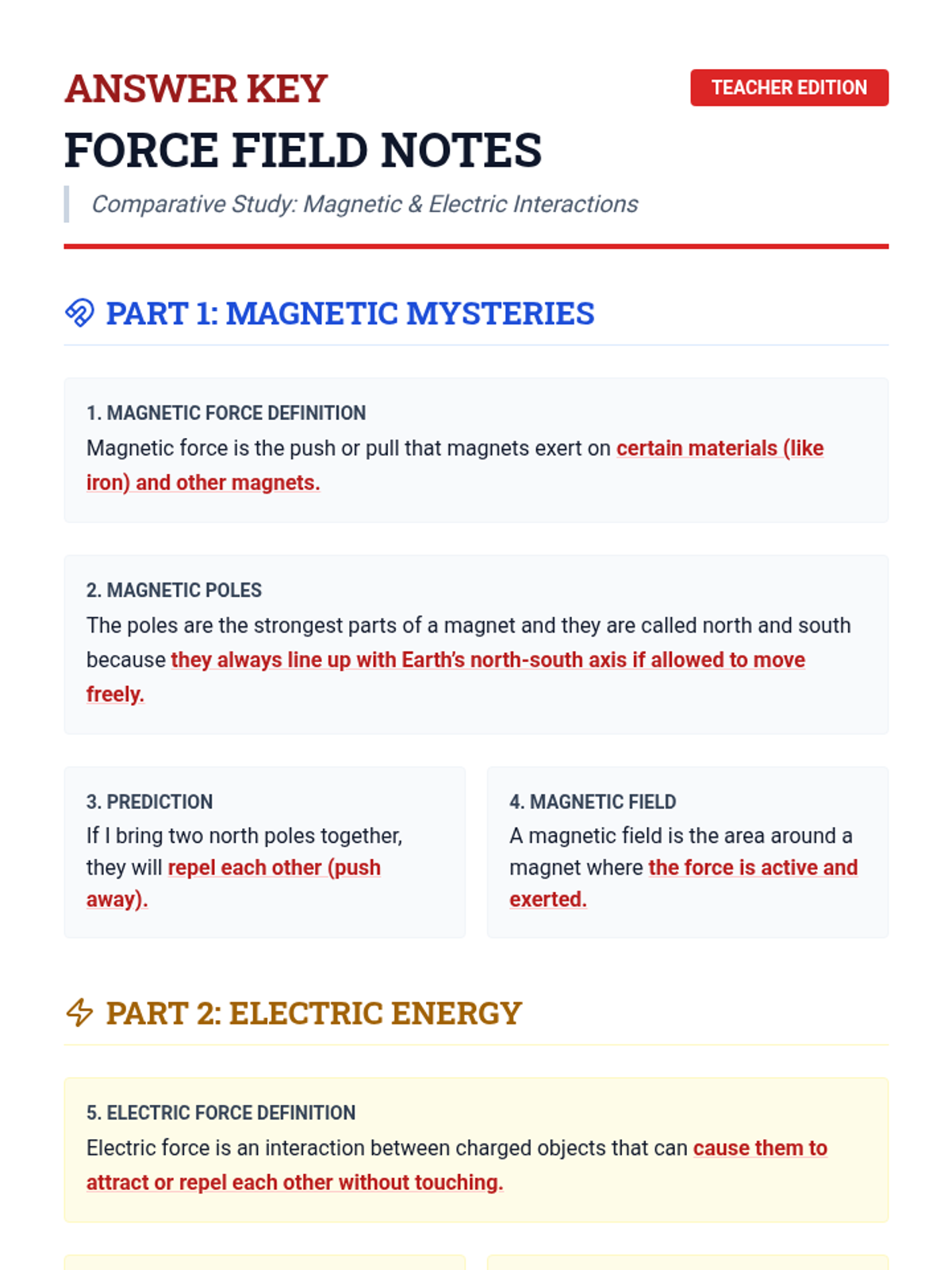
A lesson exploring the characteristics of magnetic and electric forces, their similarities and differences, and the fundamental concept of electromagnetism.
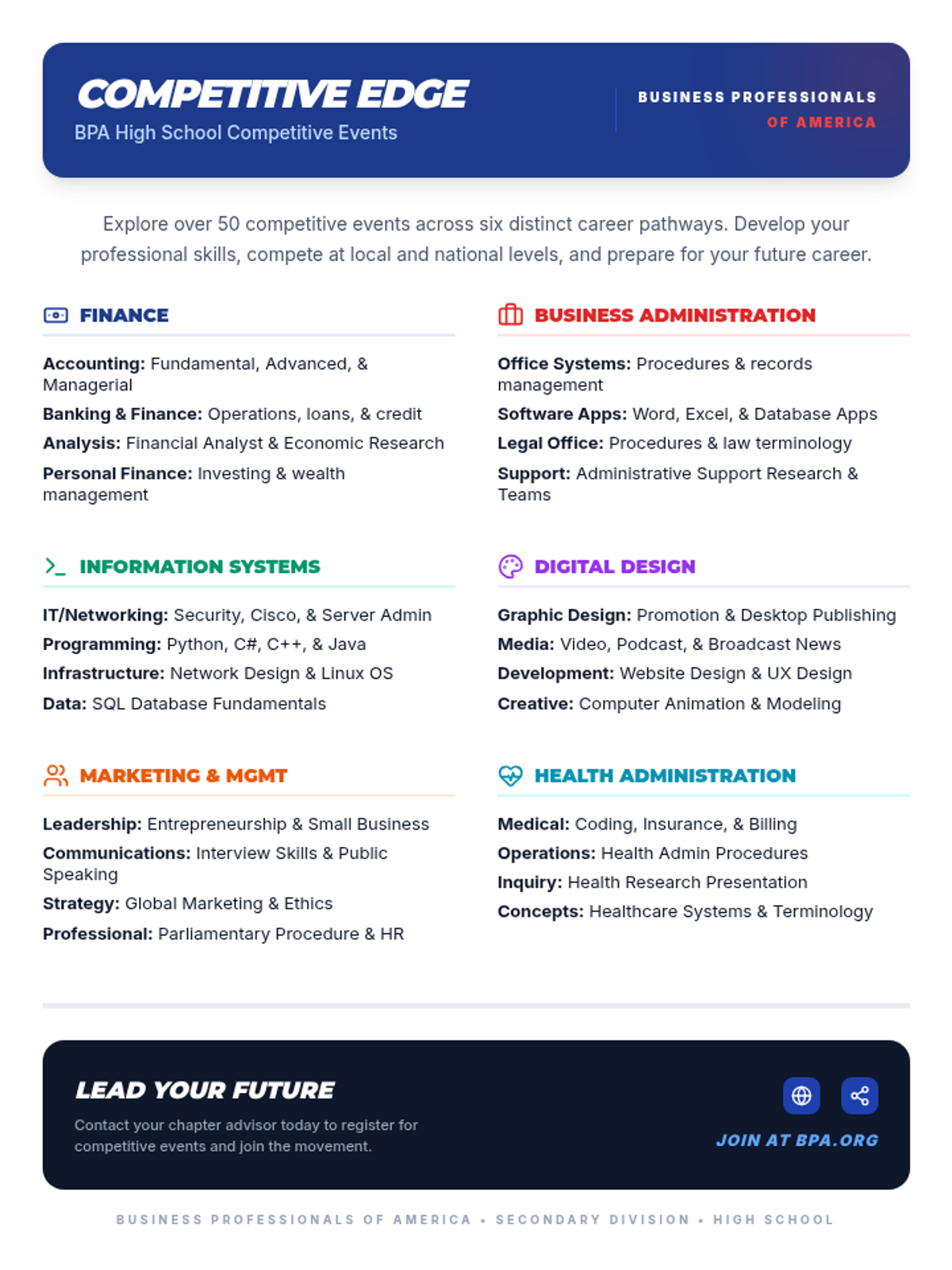
A comprehensive set of materials to introduce high school students to the diverse competitive events offered by Business Professionals of America (BPA). Includes a visual flyer and a detailed event directory.
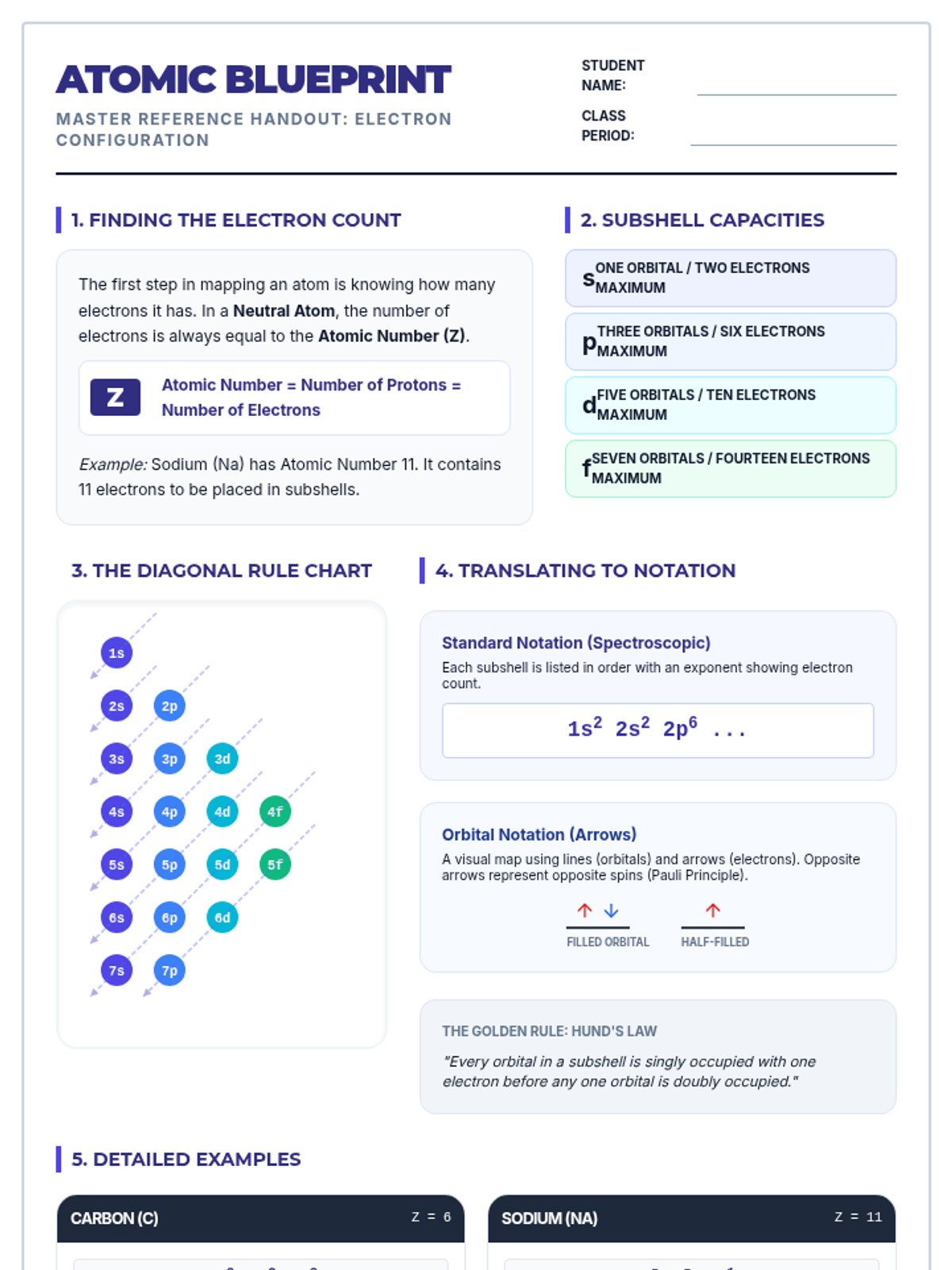
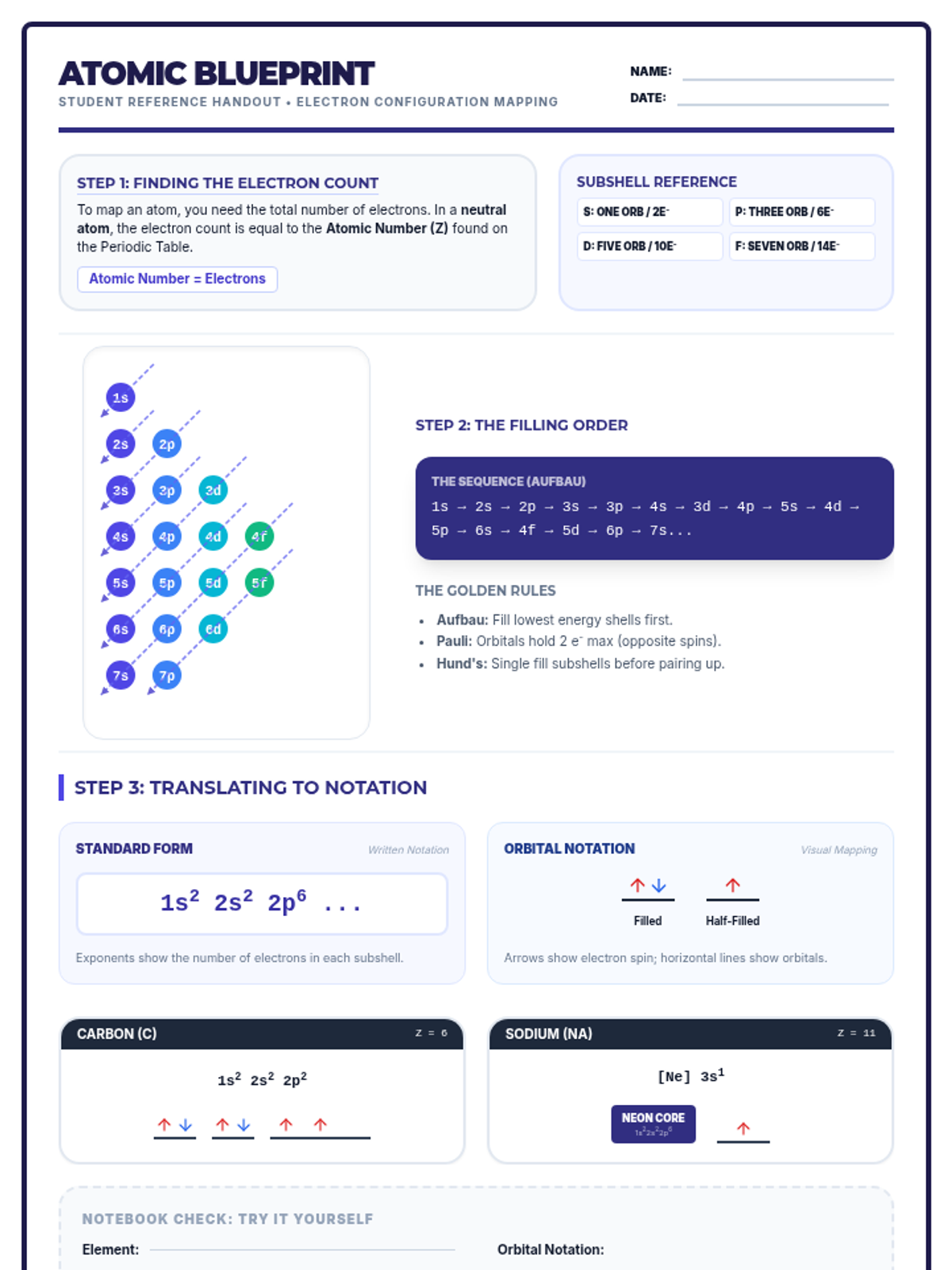
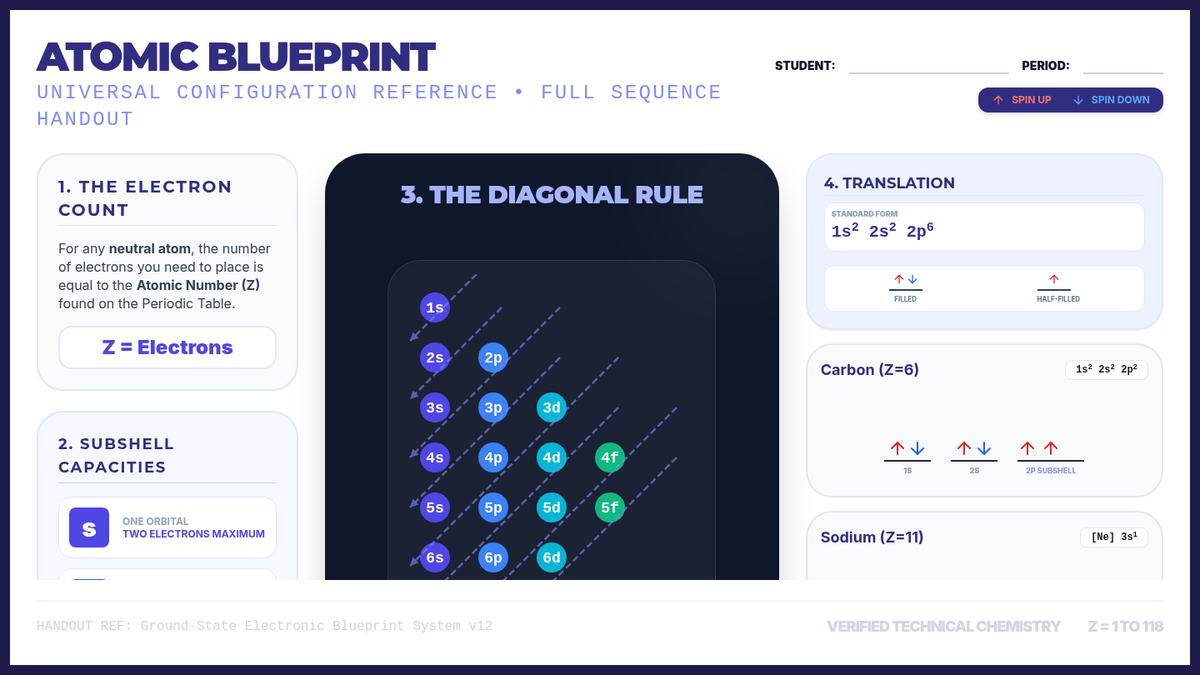
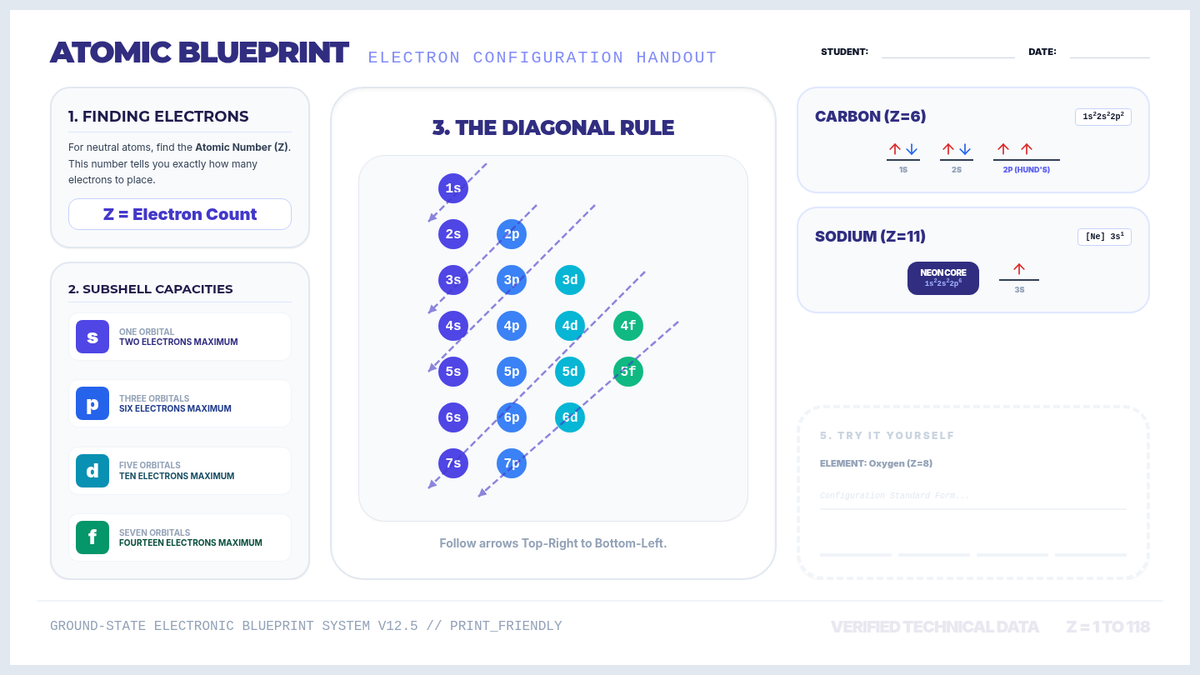
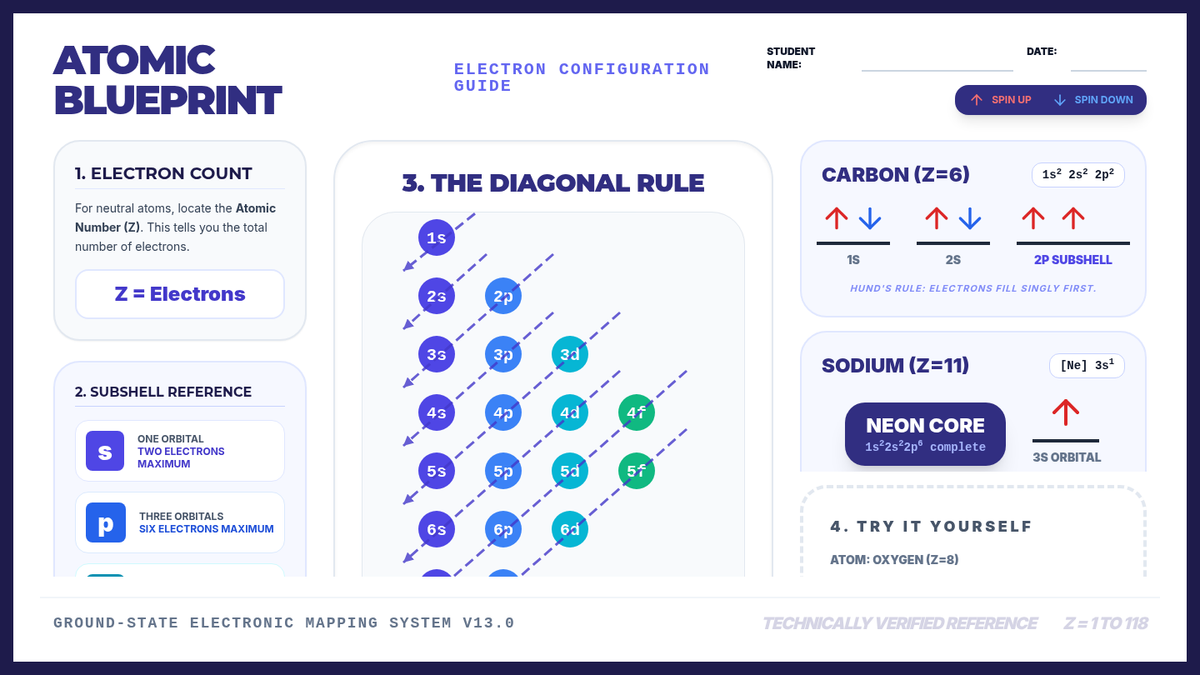
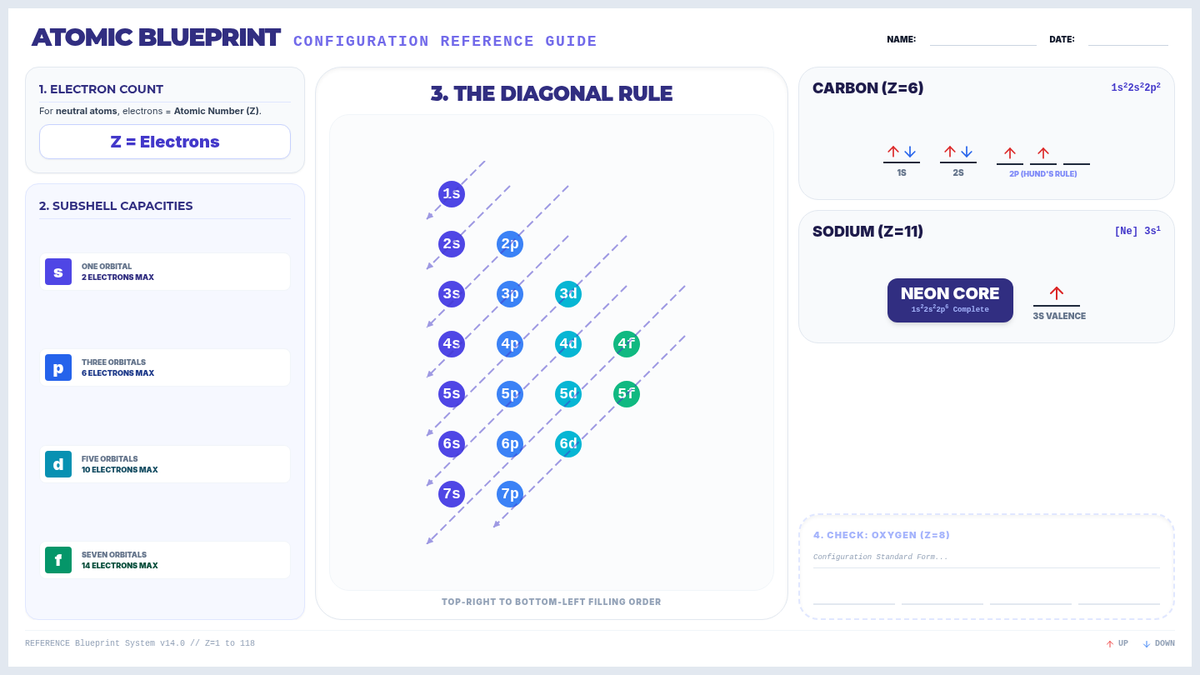
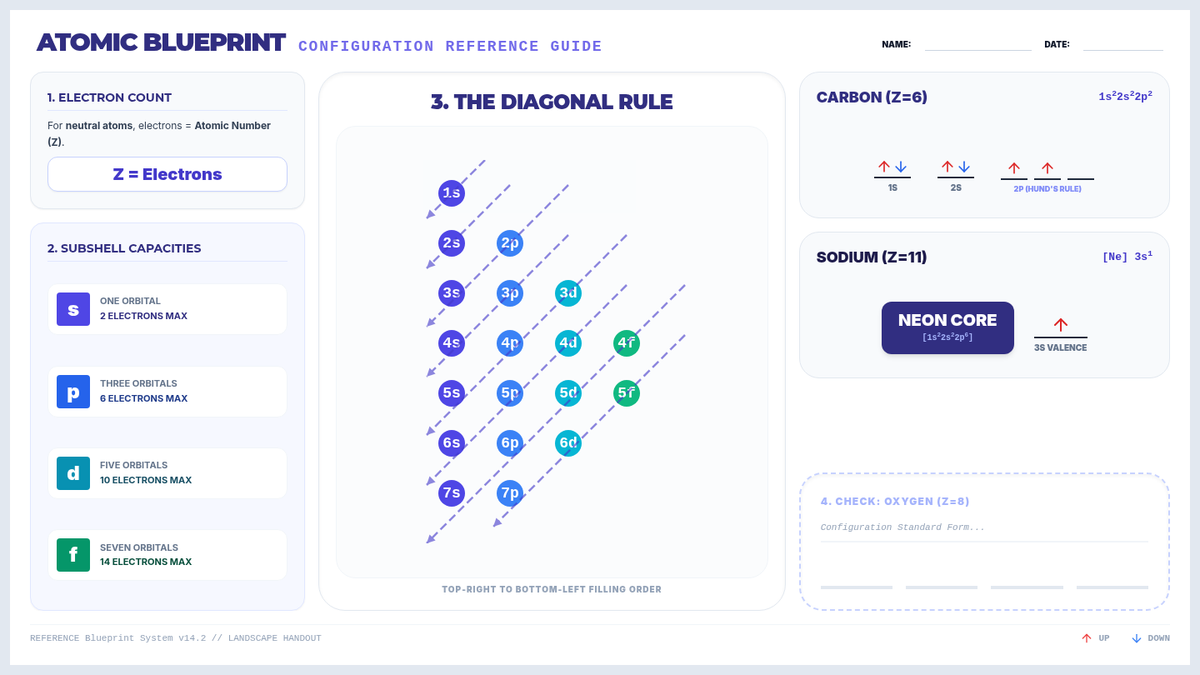
A foundational lesson on electron configurations, covering subshell filling orders, orbital notation, and specific examples to visualize how electrons occupy atomic space.
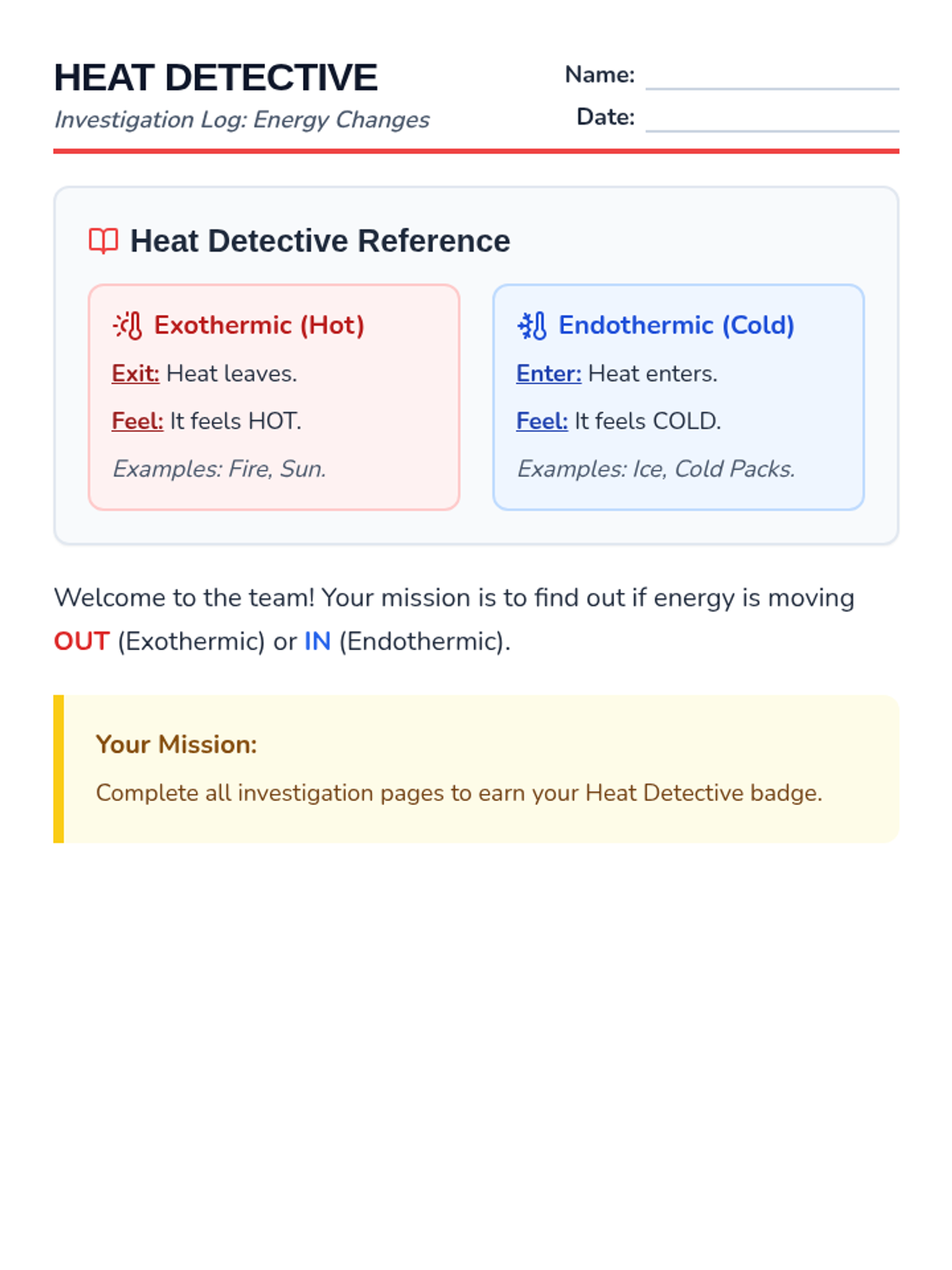
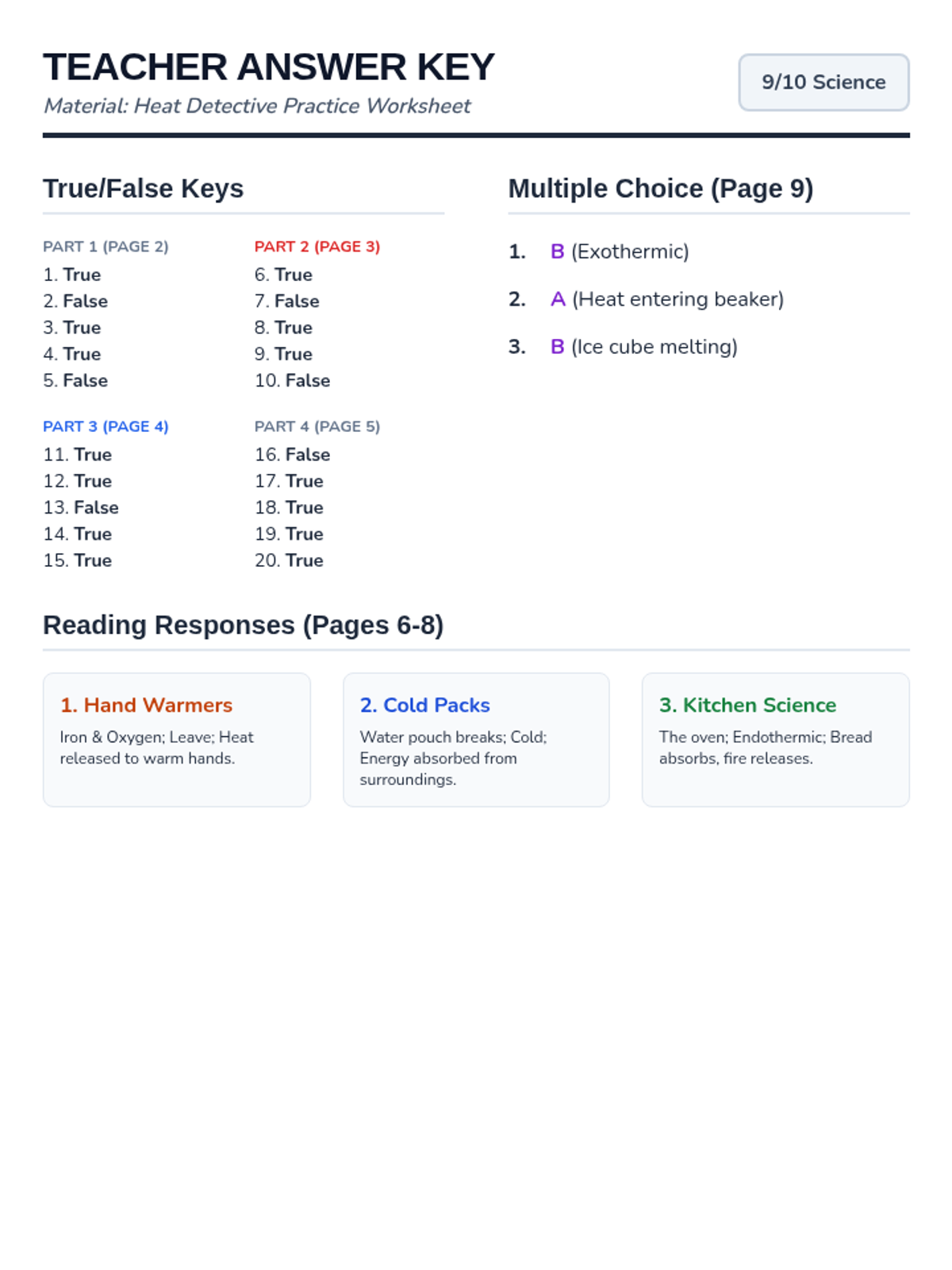
A highly scaffolded exploration of endothermic and exothermic reactions designed for high school special education students, focusing on energy flow and temperature changes.
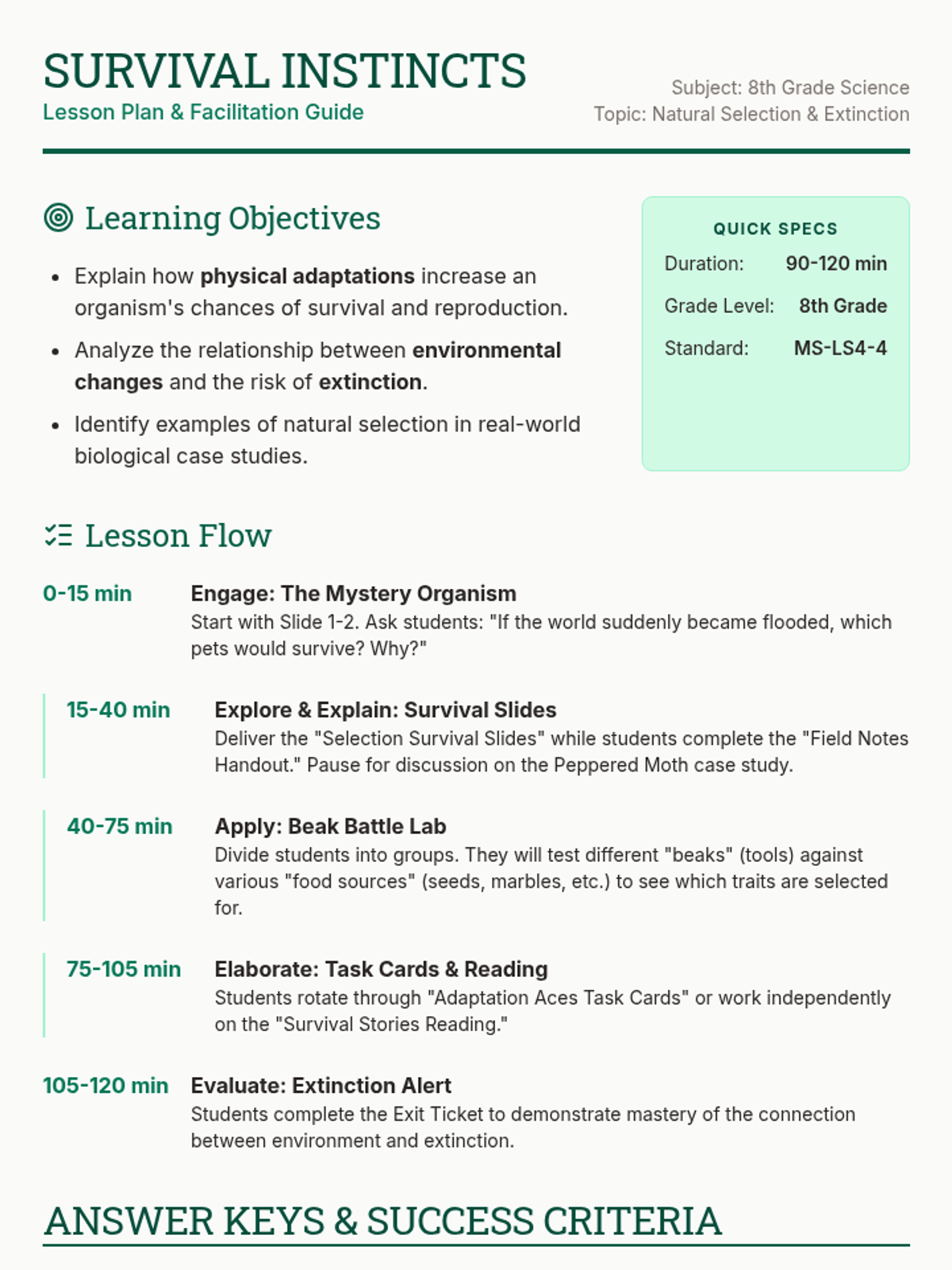
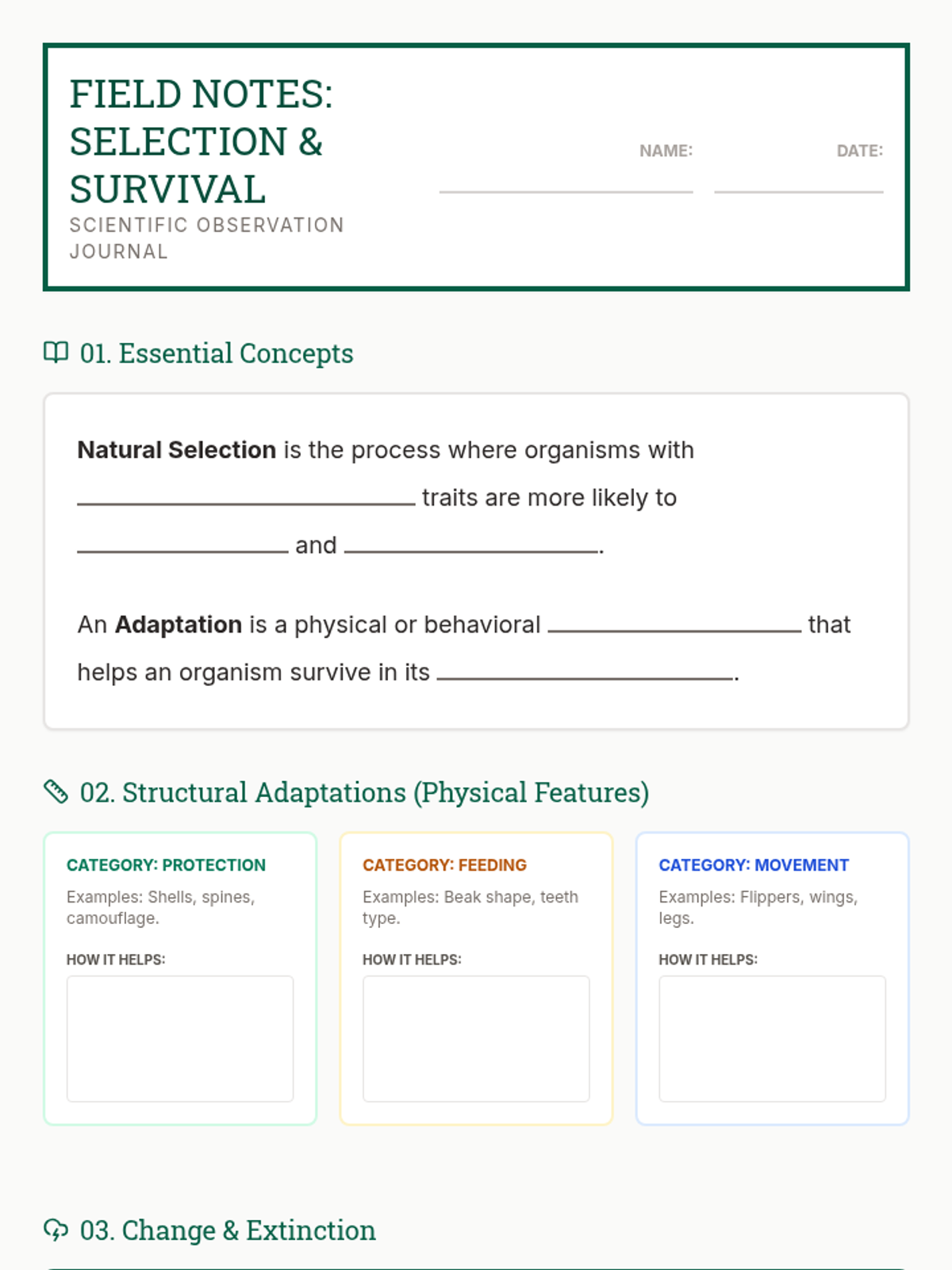
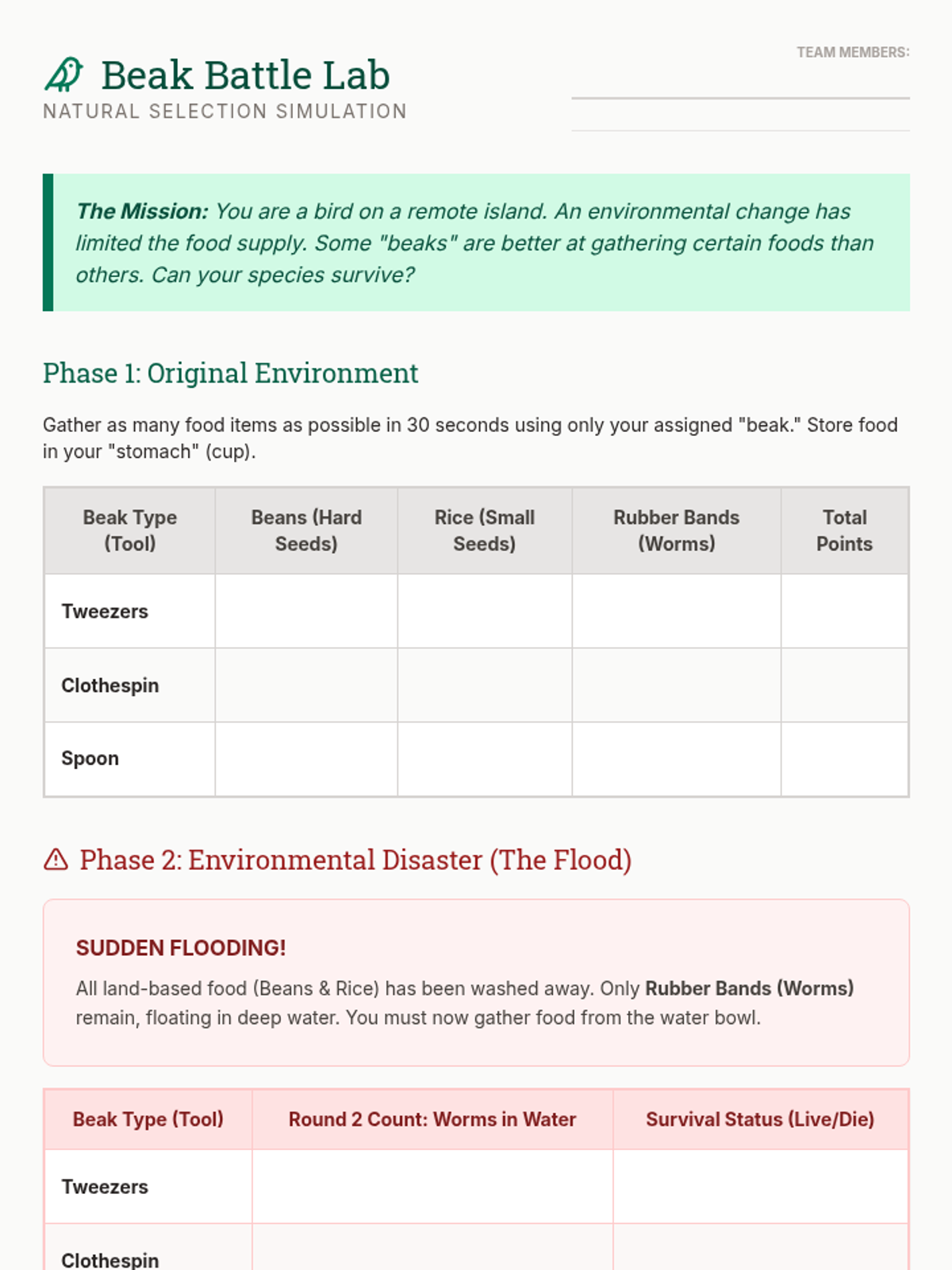
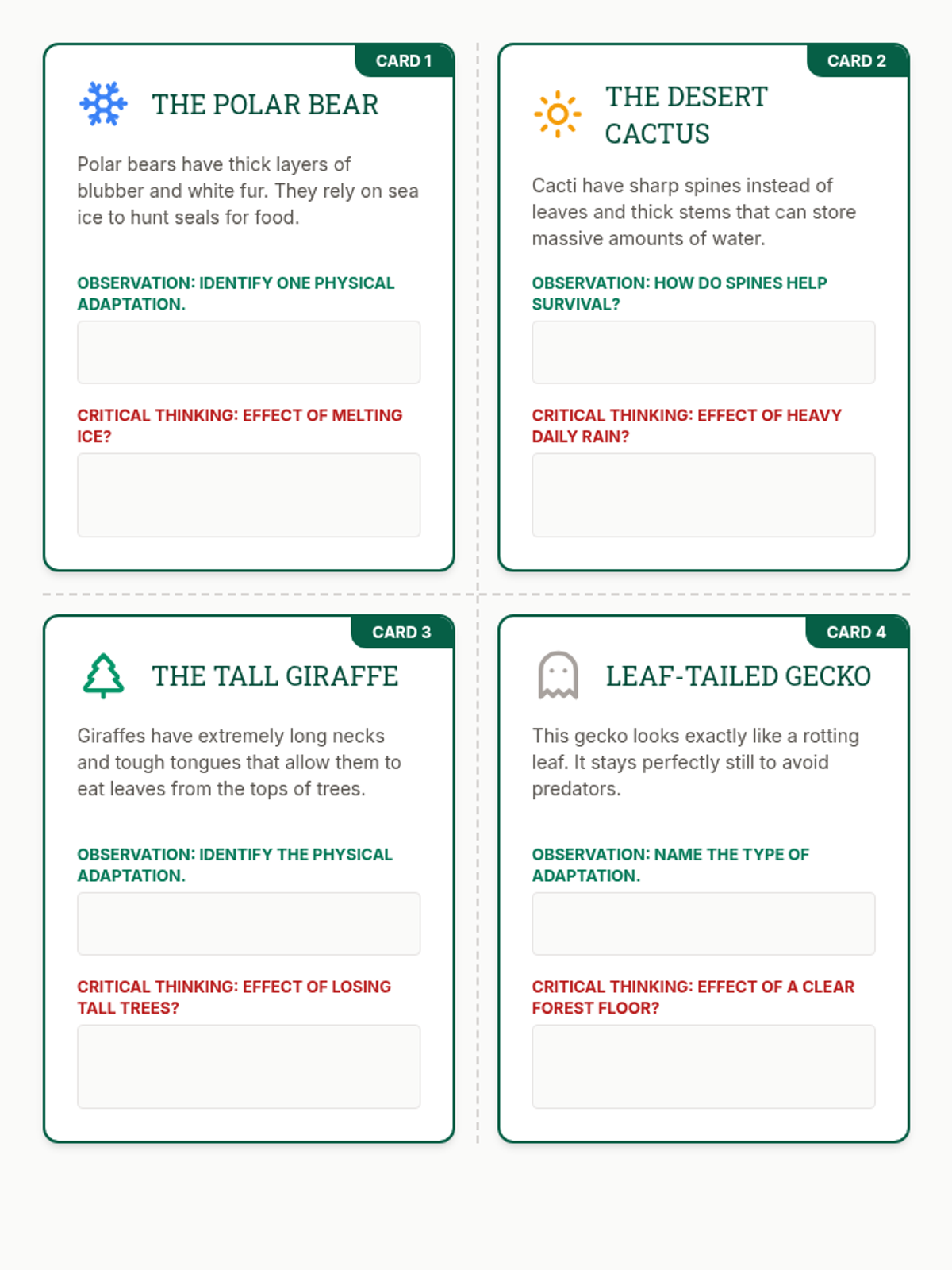
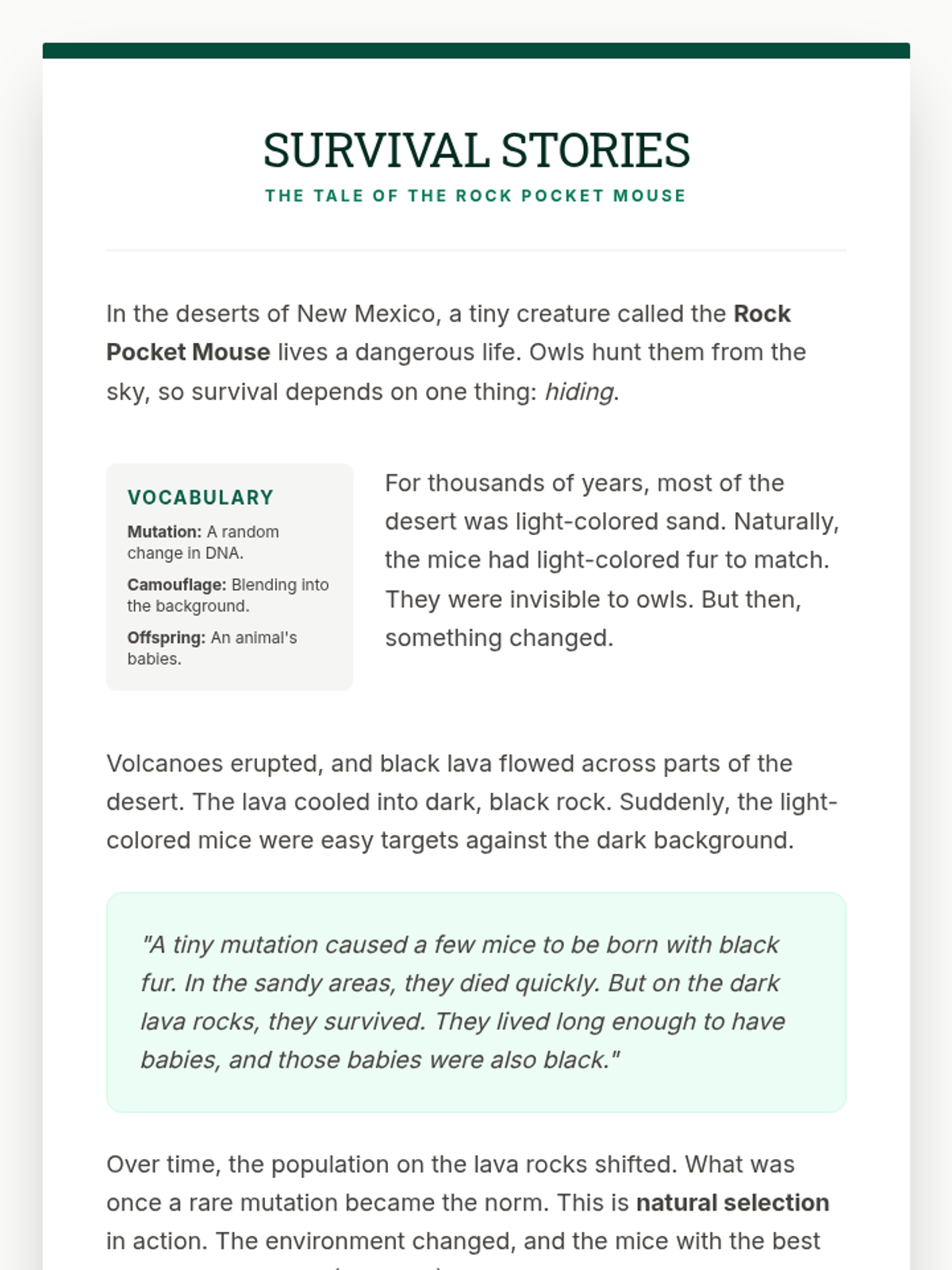
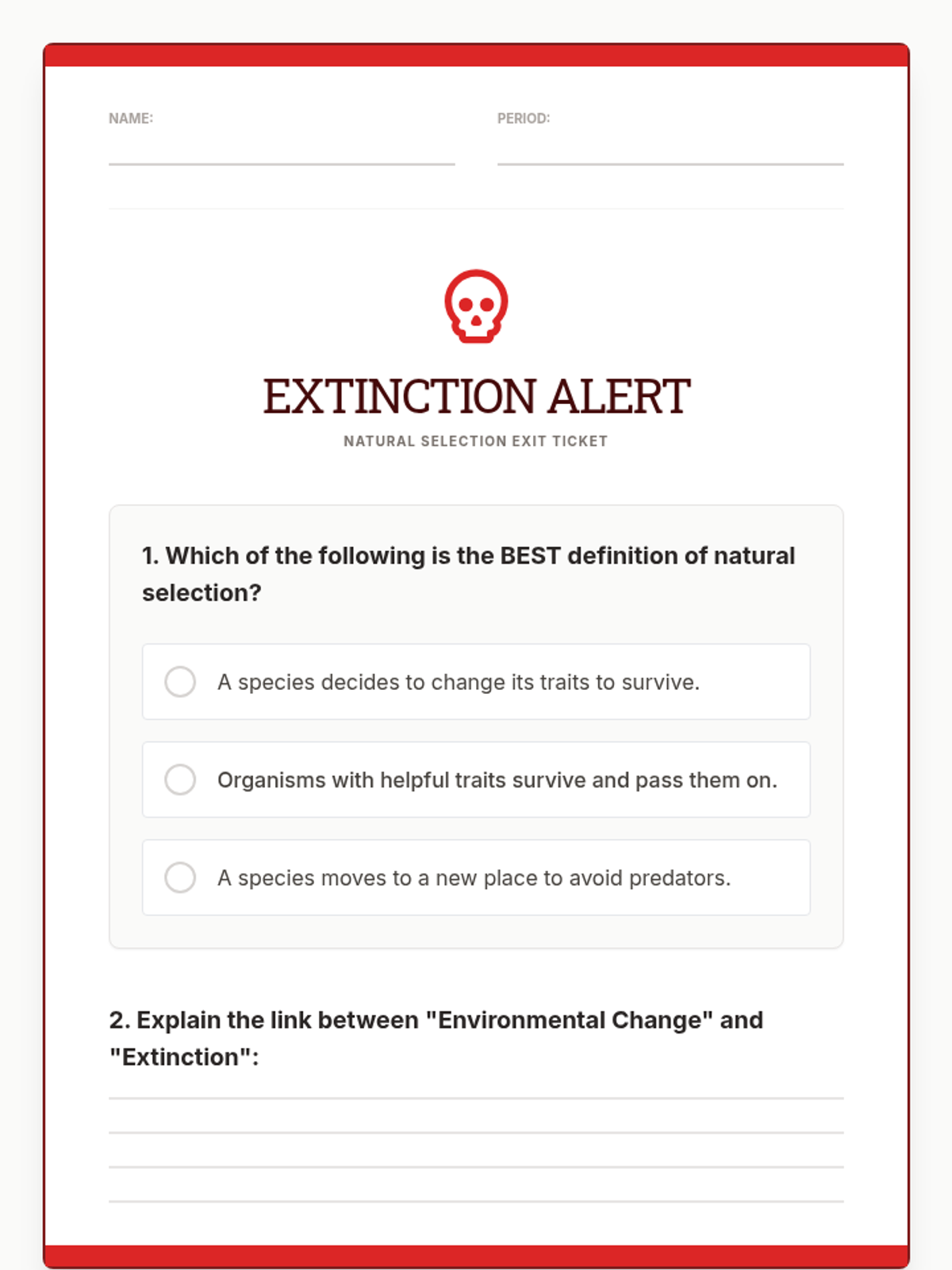
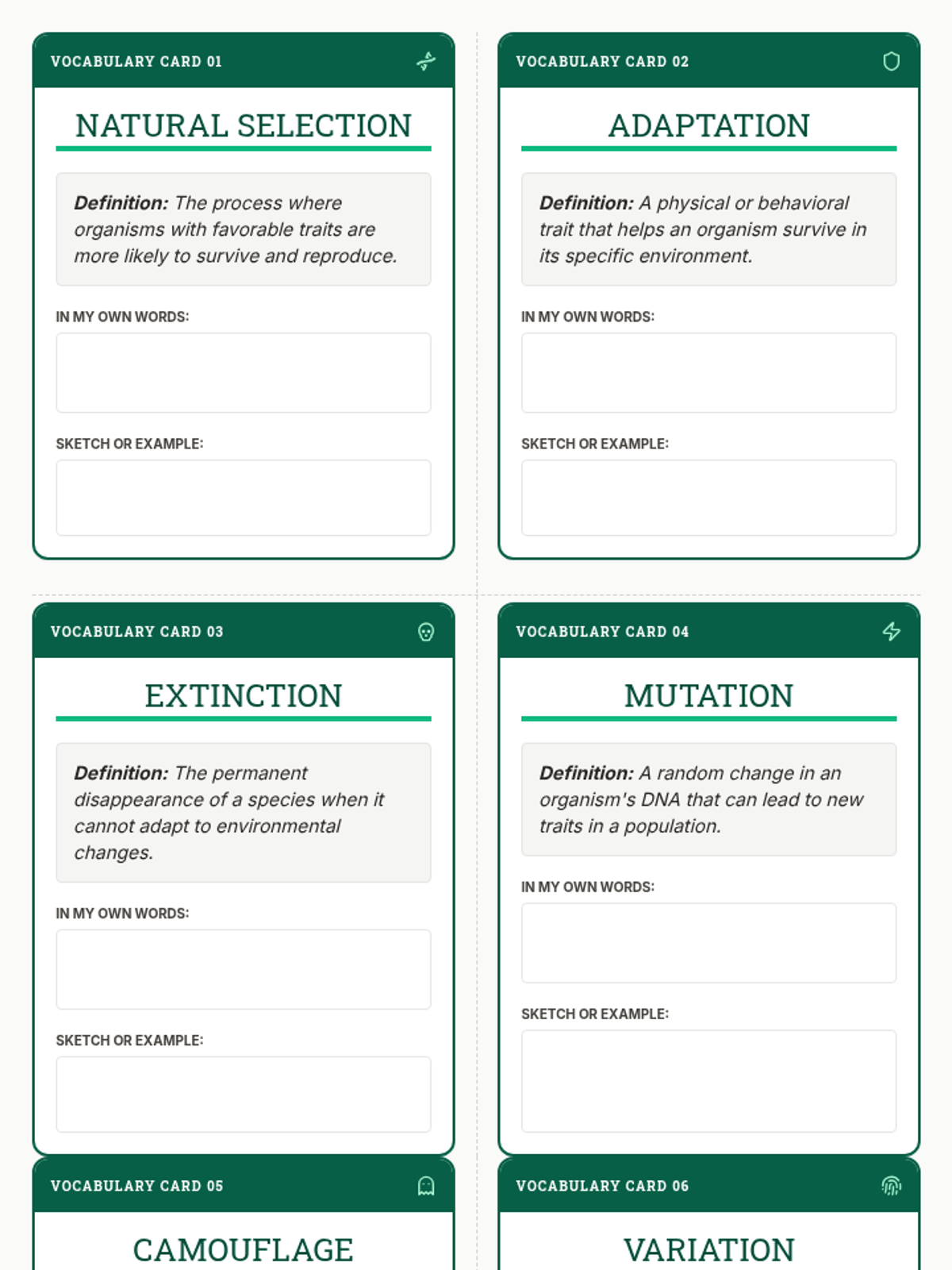
An 8th-grade science lesson exploring how physical adaptations drive survival and how environmental shifts lead to extinction. Students will engage with a slide presentation, guided notes, a hands-on beak simulation, and visual task cards.
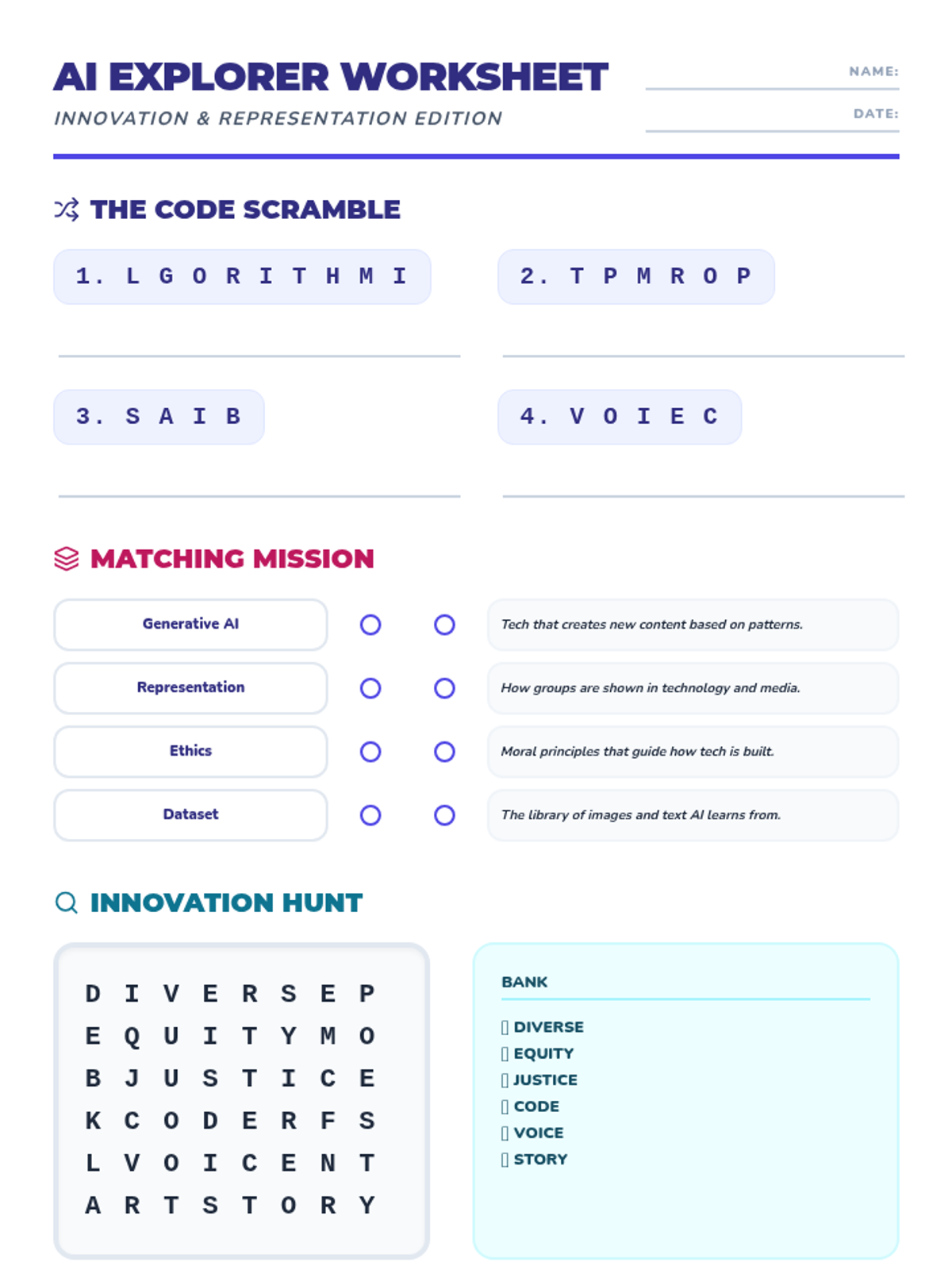
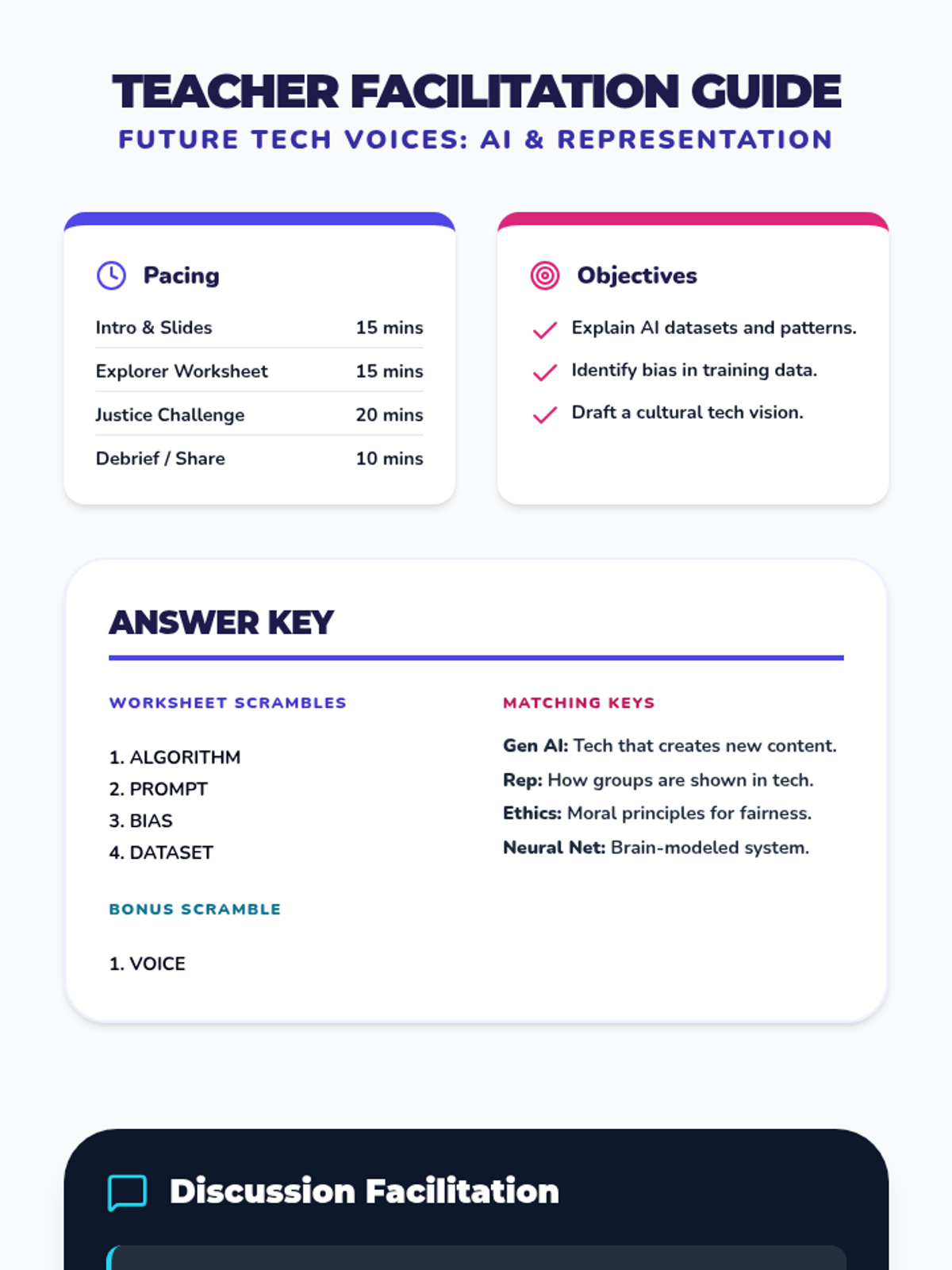
A lesson exploring the mechanics of AI generators and their social impact, specifically focusing on the experiences of young African Americans in tech and representation.
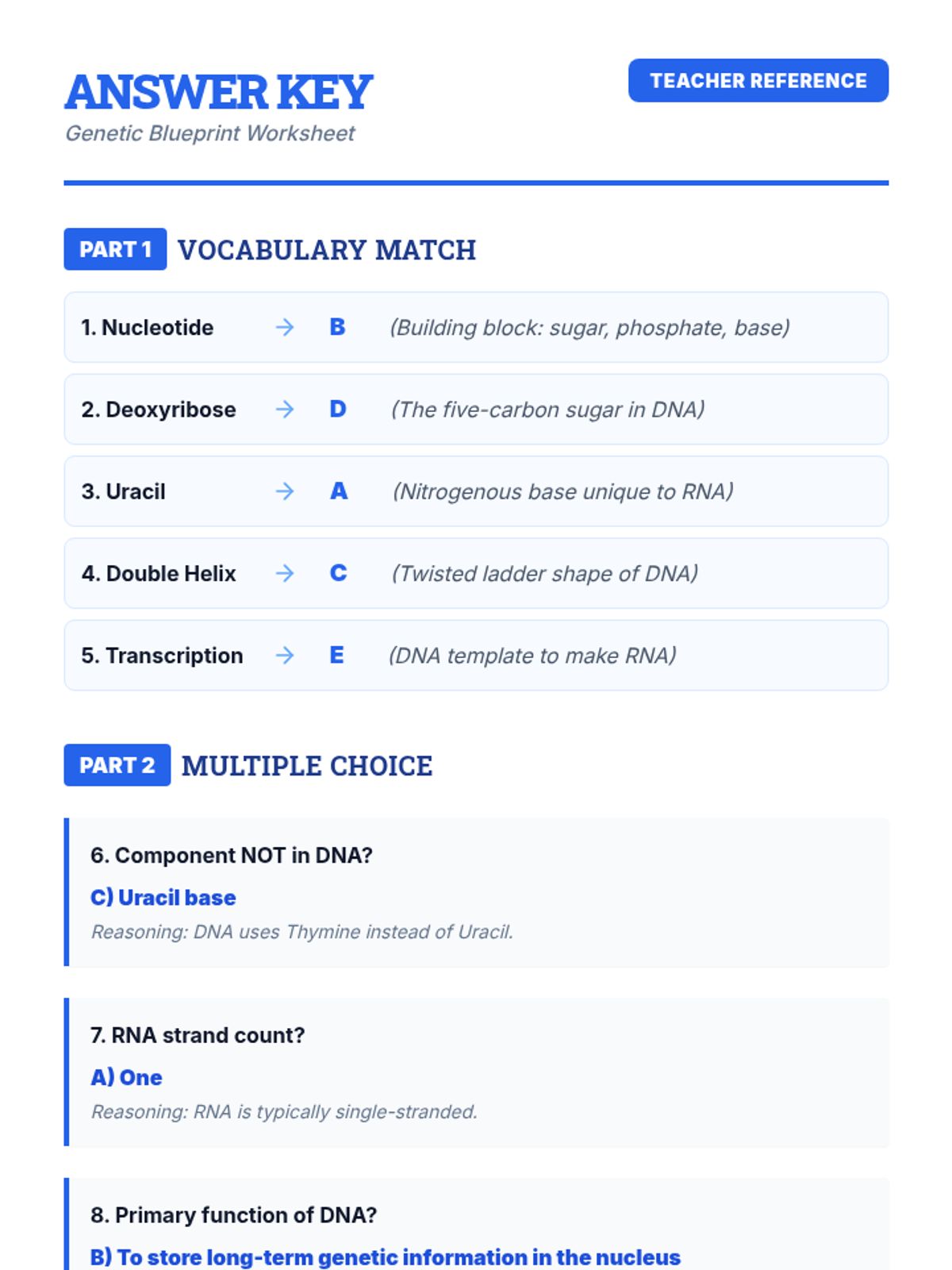
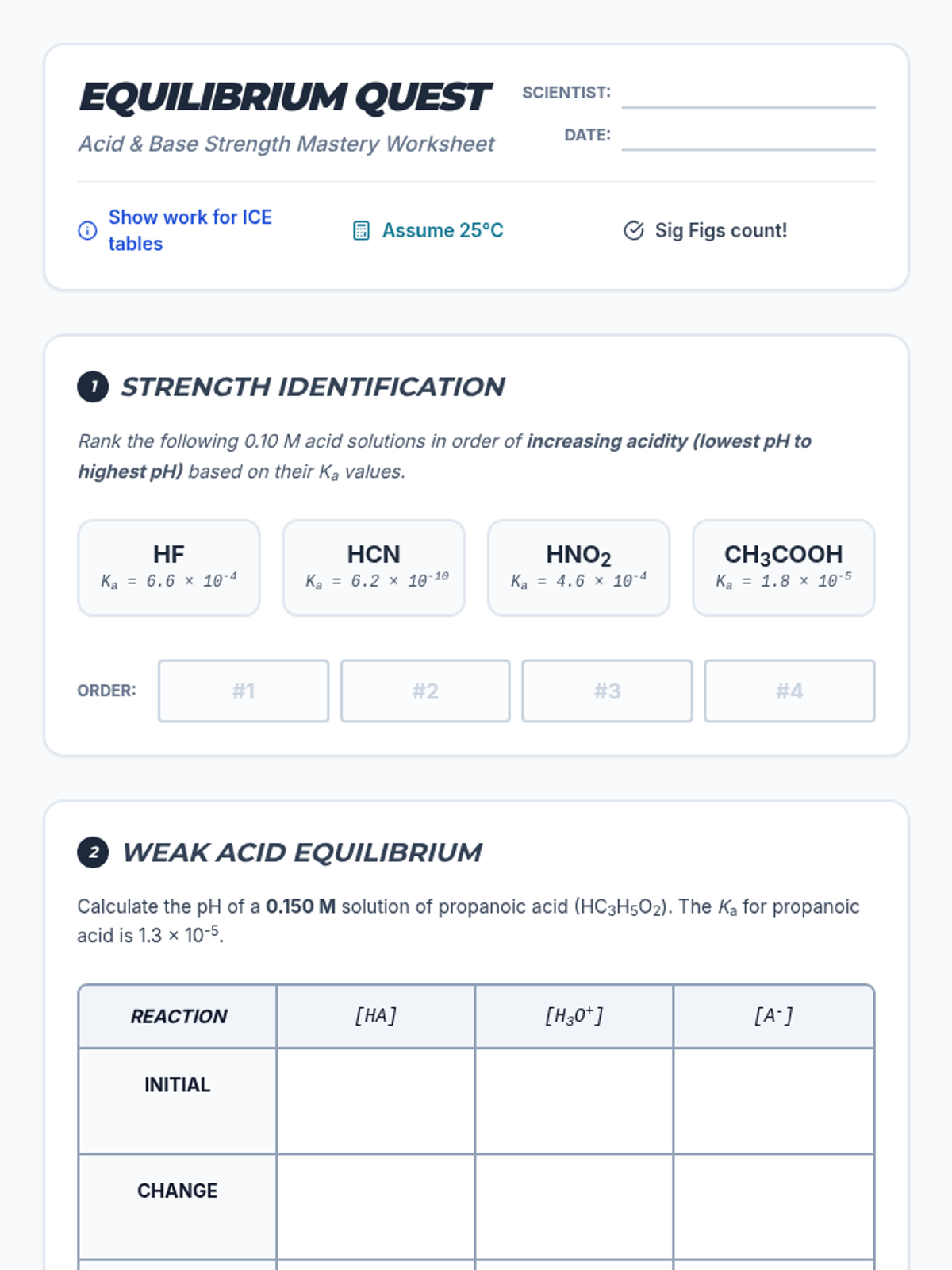
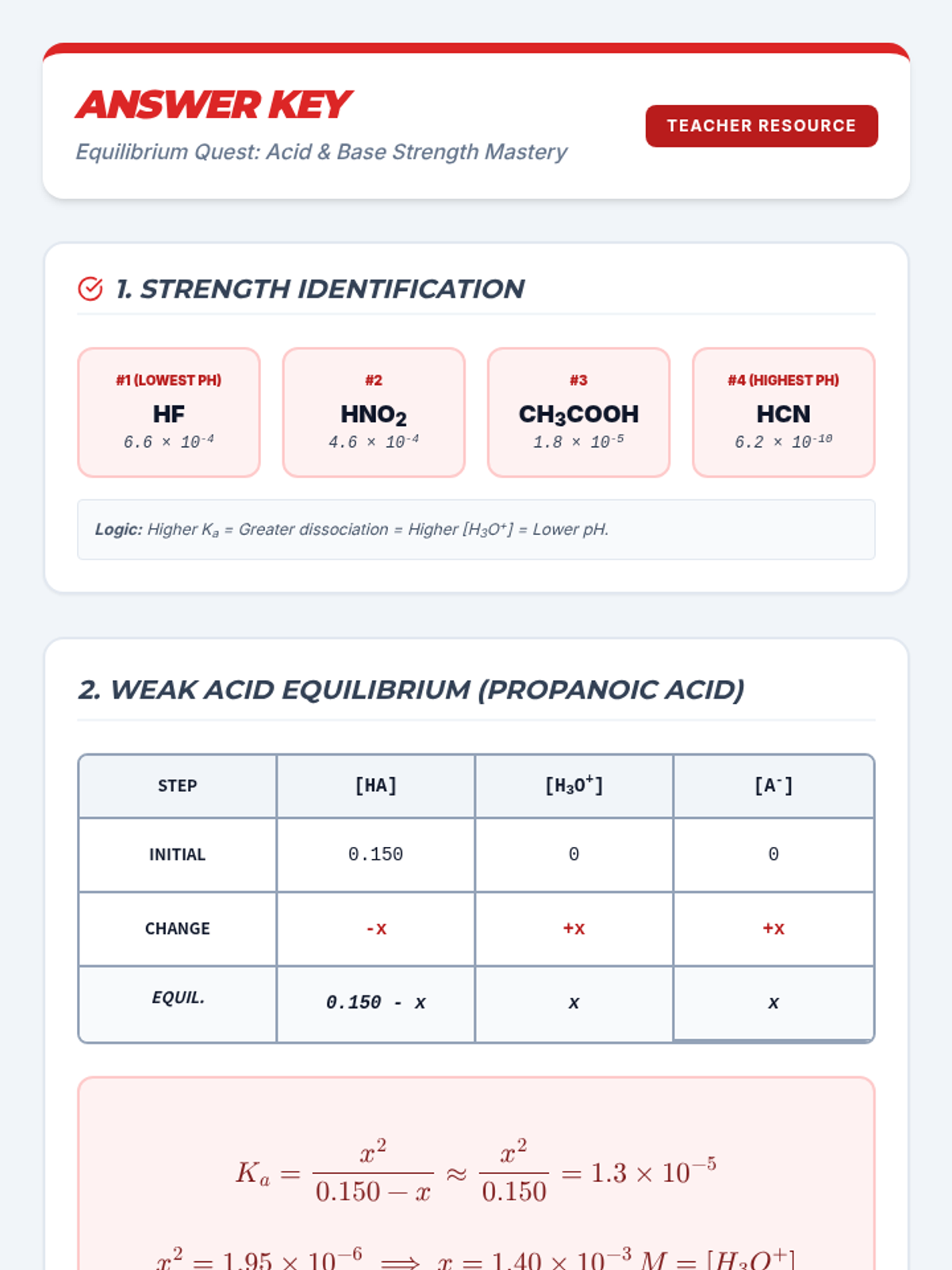
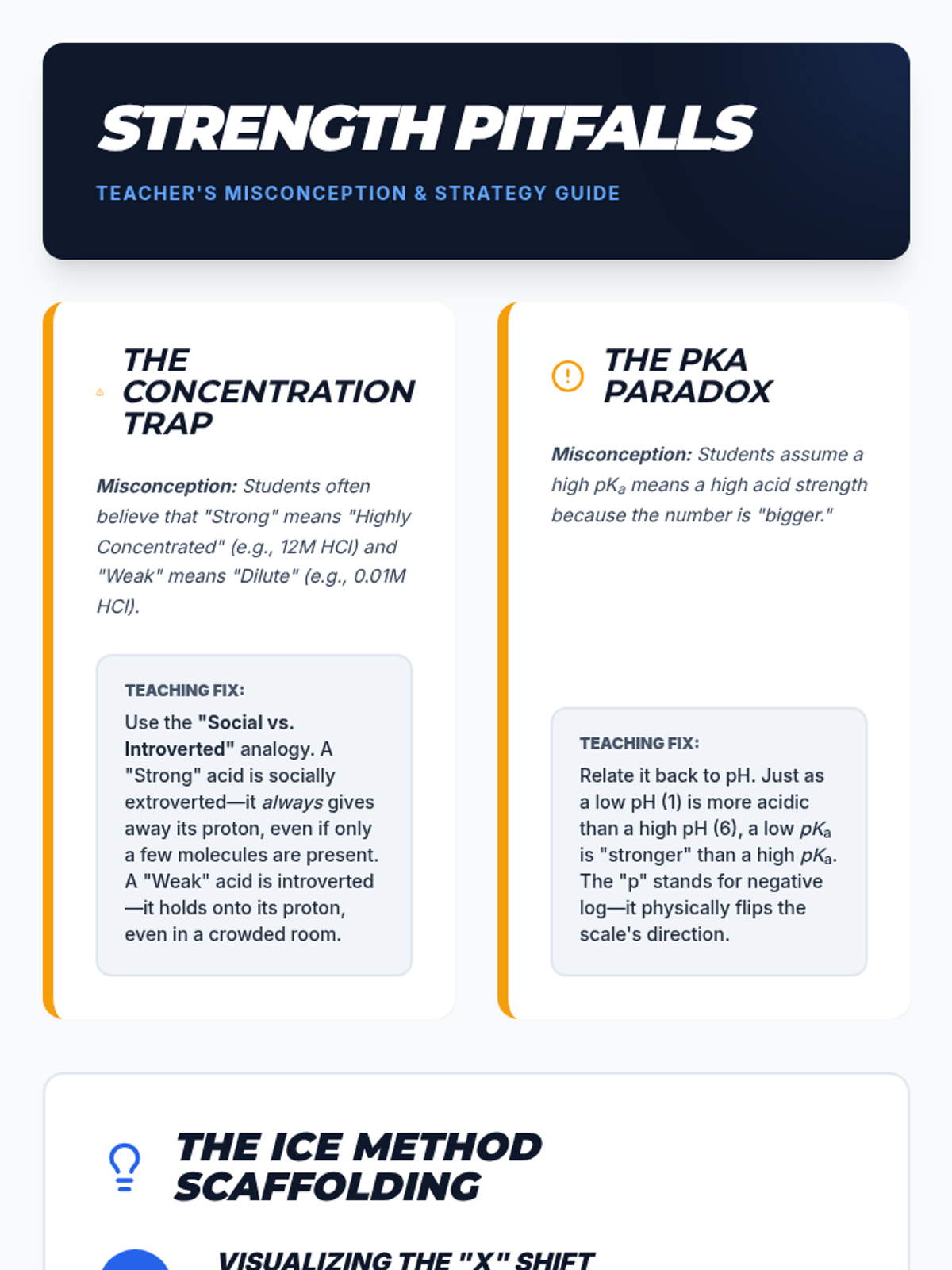
Explores the mathematical relationship between acid/base strength, dissociation constants, and equilibrium pH calculations using the ICE method.
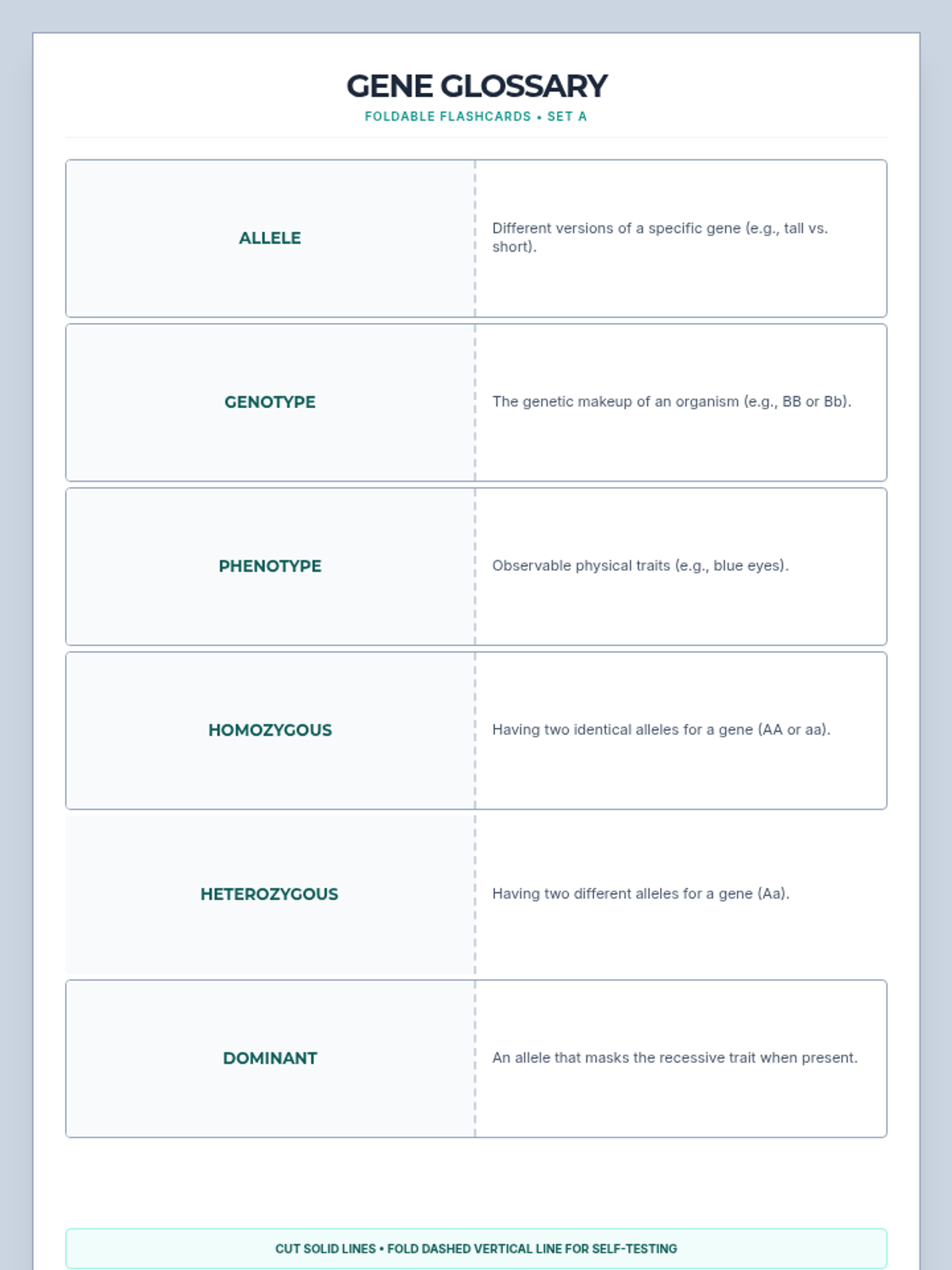
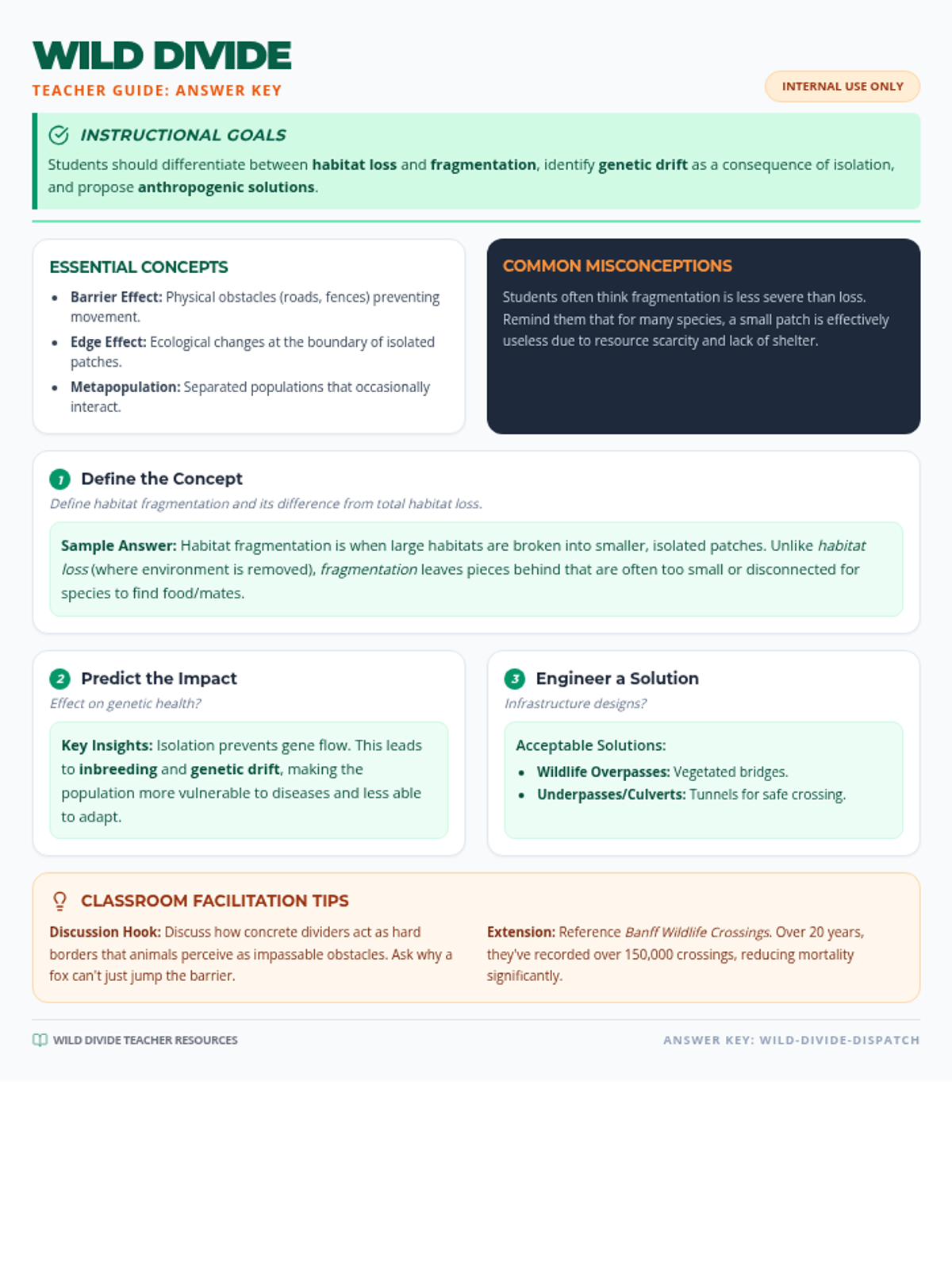
This lesson explores the ecological consequences of habitat fragmentation caused by human infrastructure. Students analyze case studies of wildlife isolation and propose engineering solutions like wildlife corridors to mitigate the impact of roads and urban sprawl.
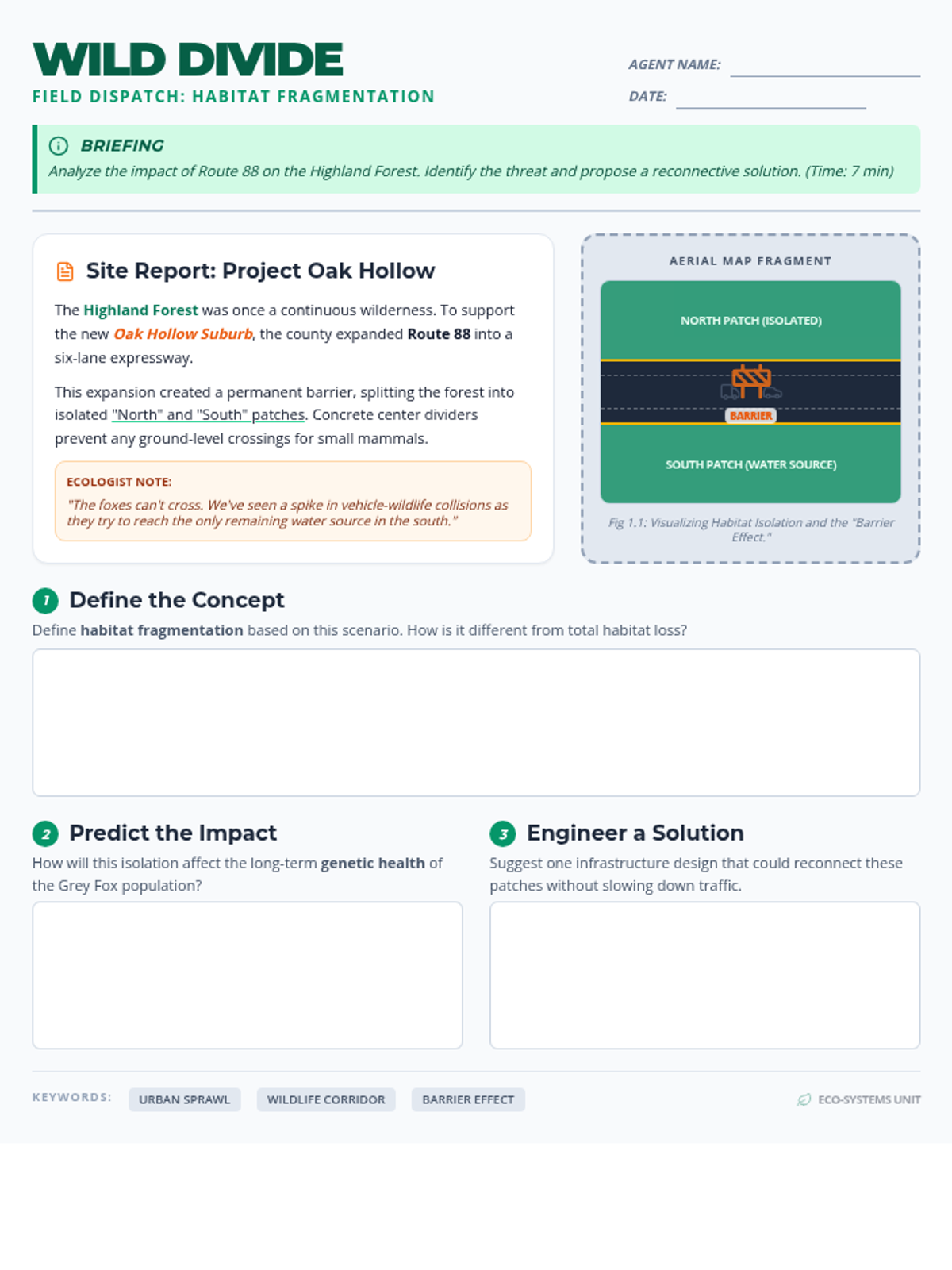
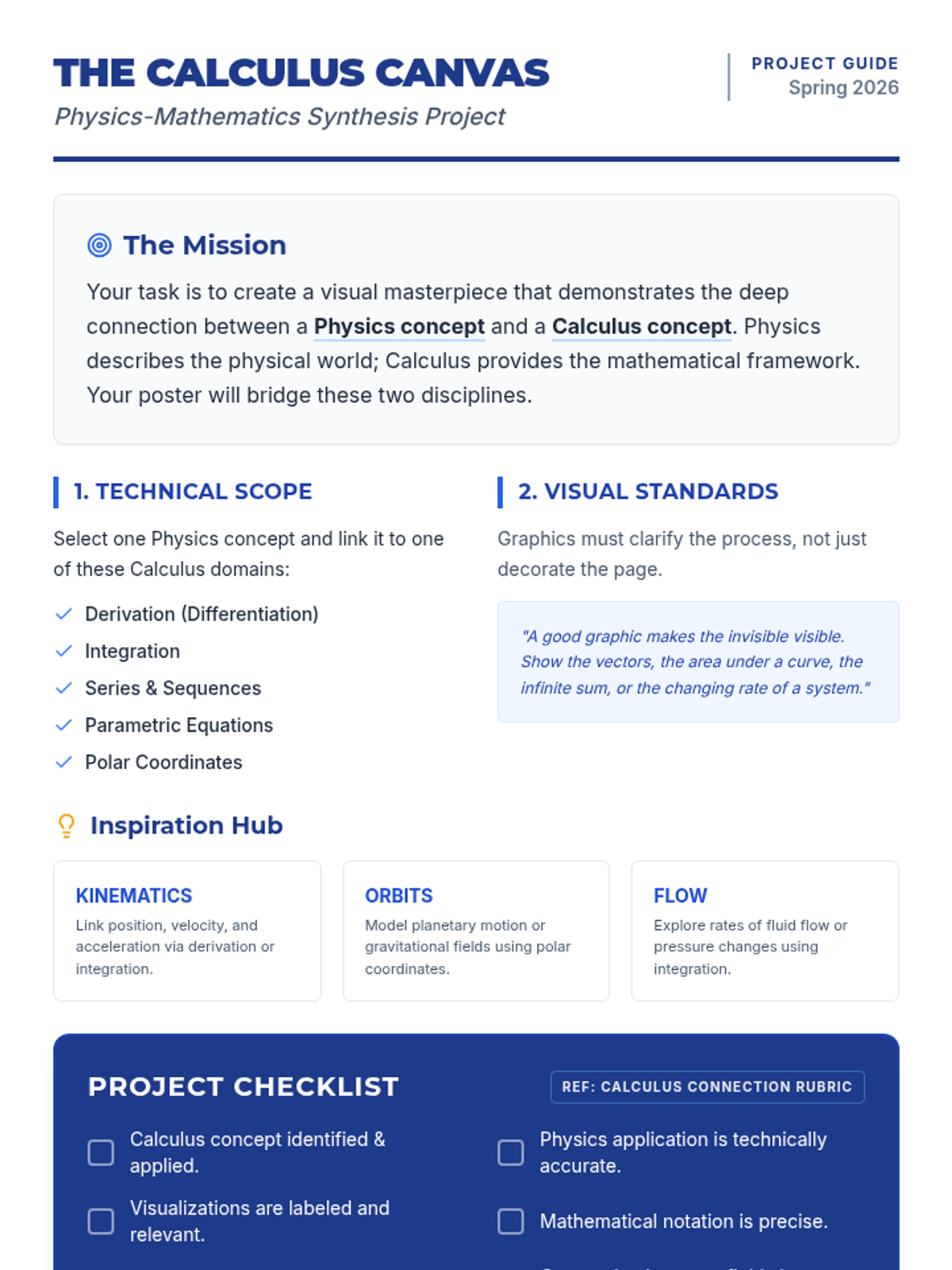
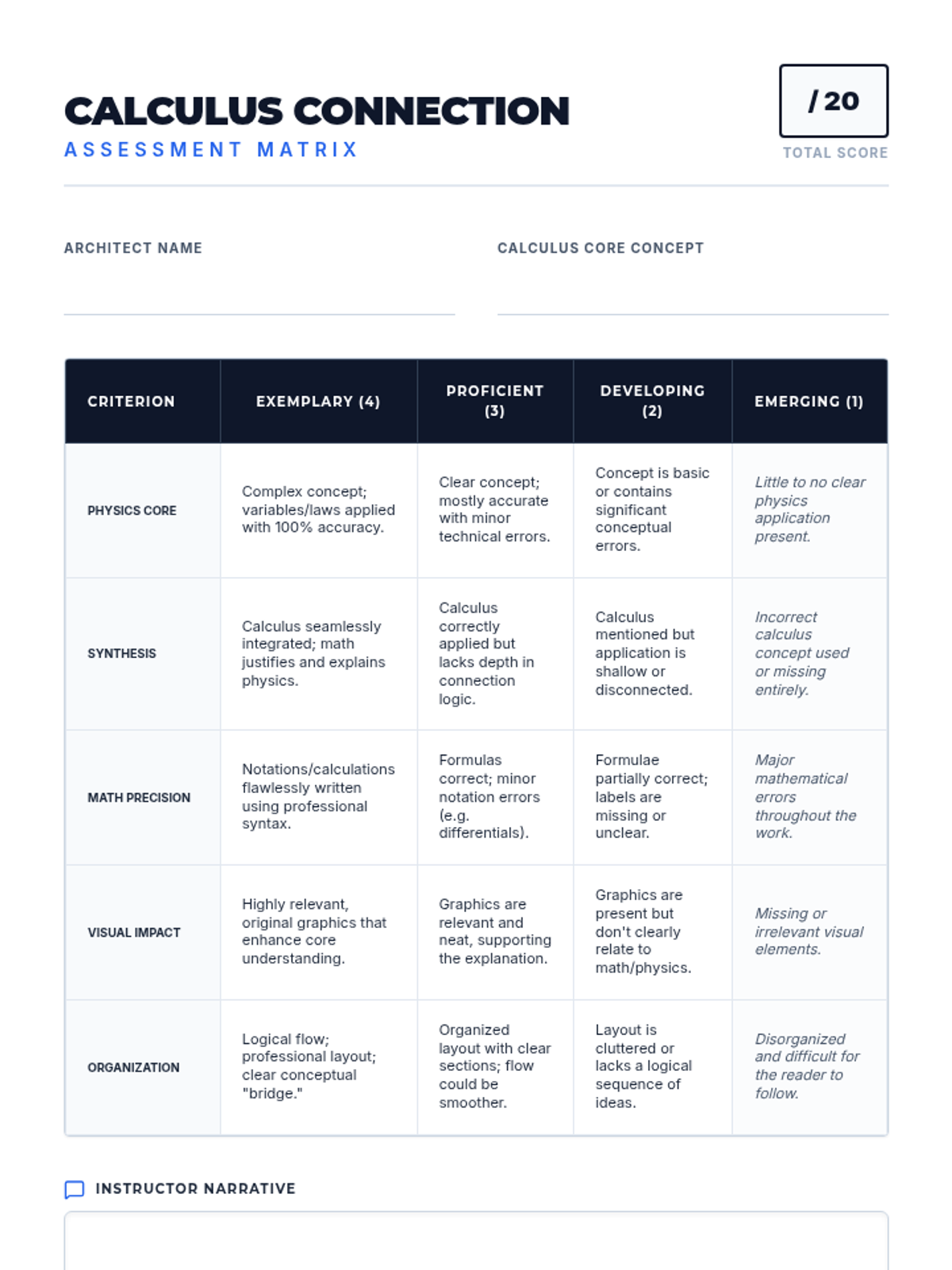
A project-based lesson where students synthesize their knowledge of physics and calculus by creating a visual poster that bridges the two disciplines.
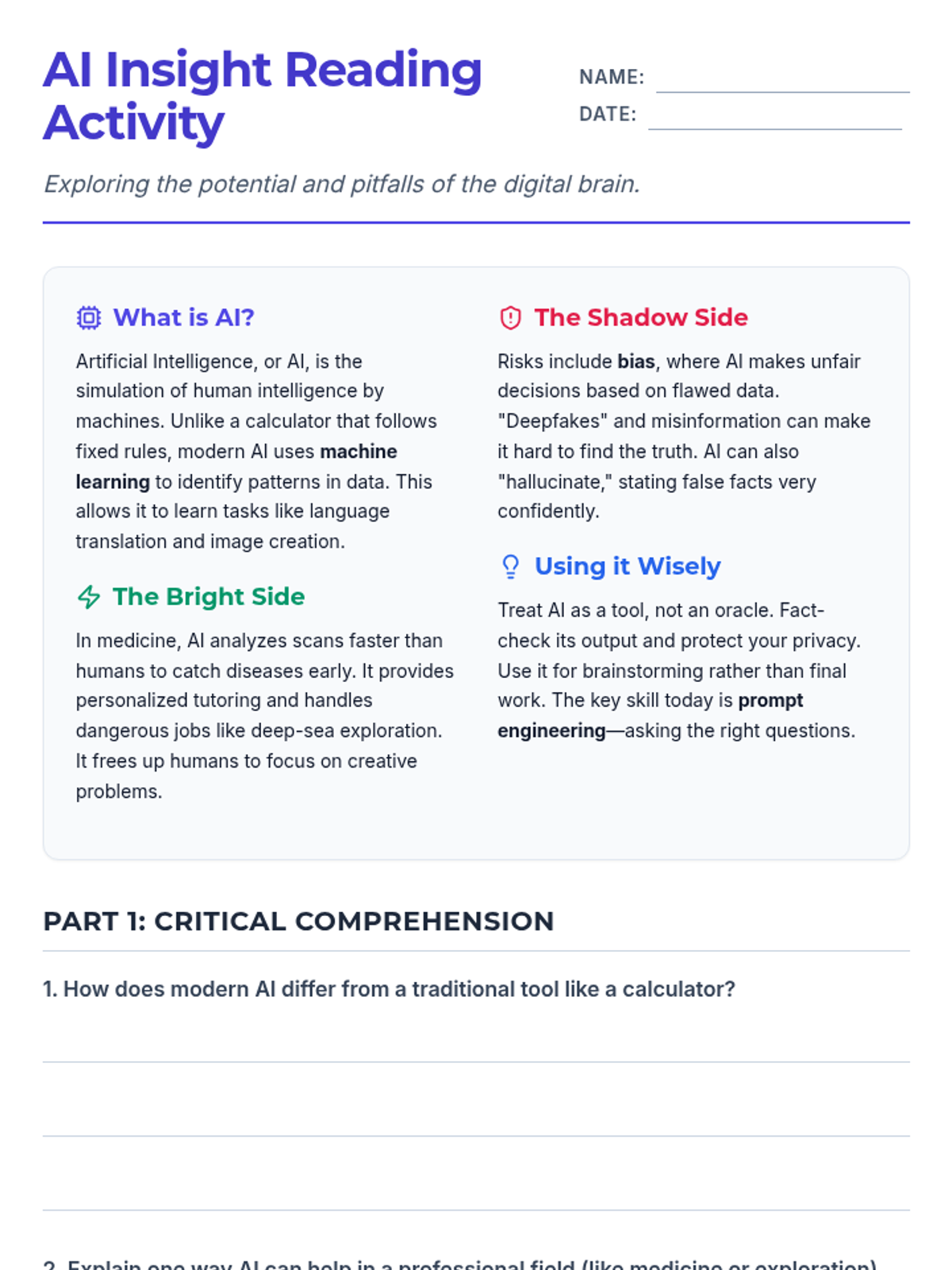
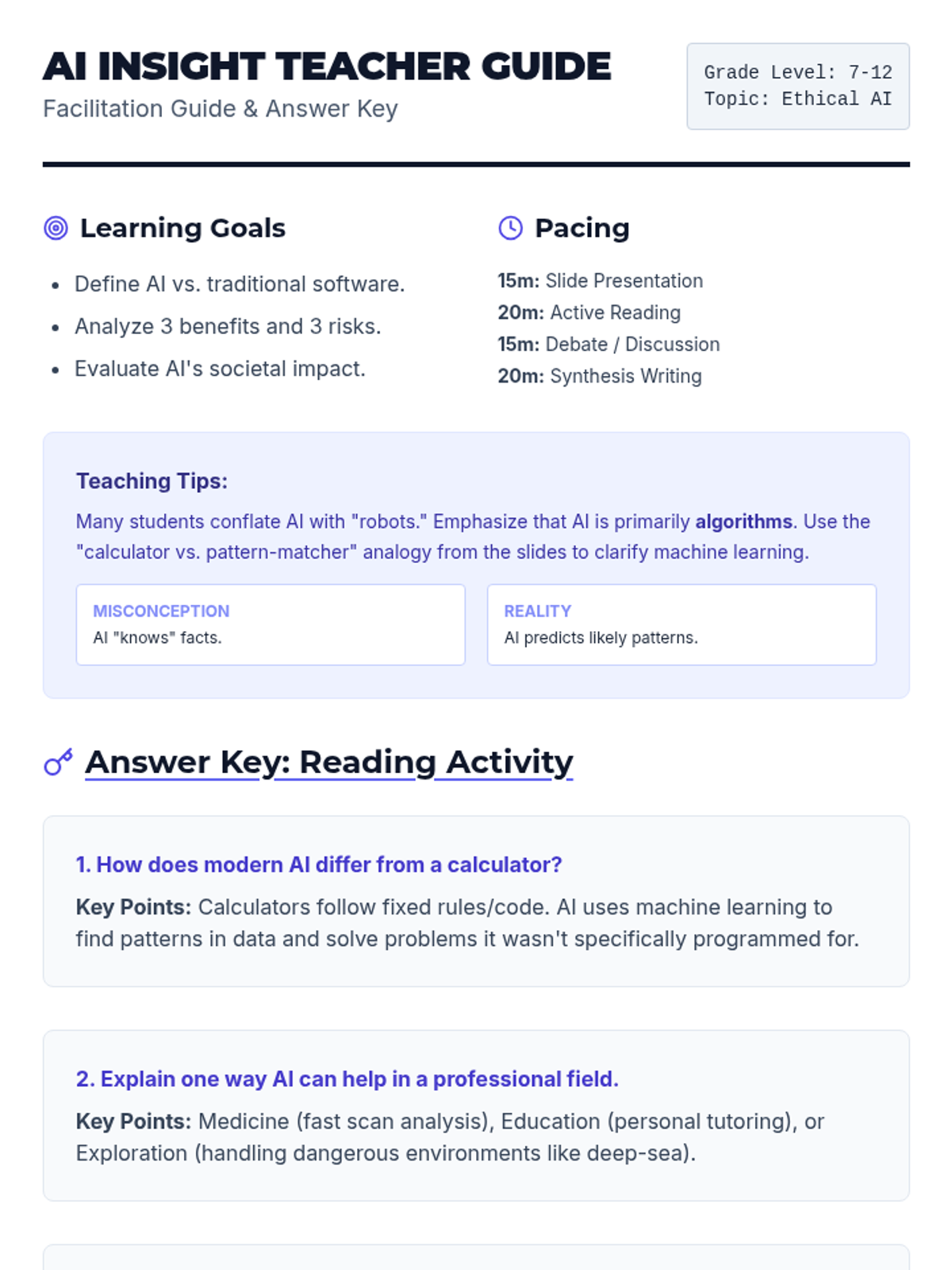
A comprehensive introduction to Artificial Intelligence, exploring its benefits, risks, and ethical usage through reading, discussion, and critical writing.
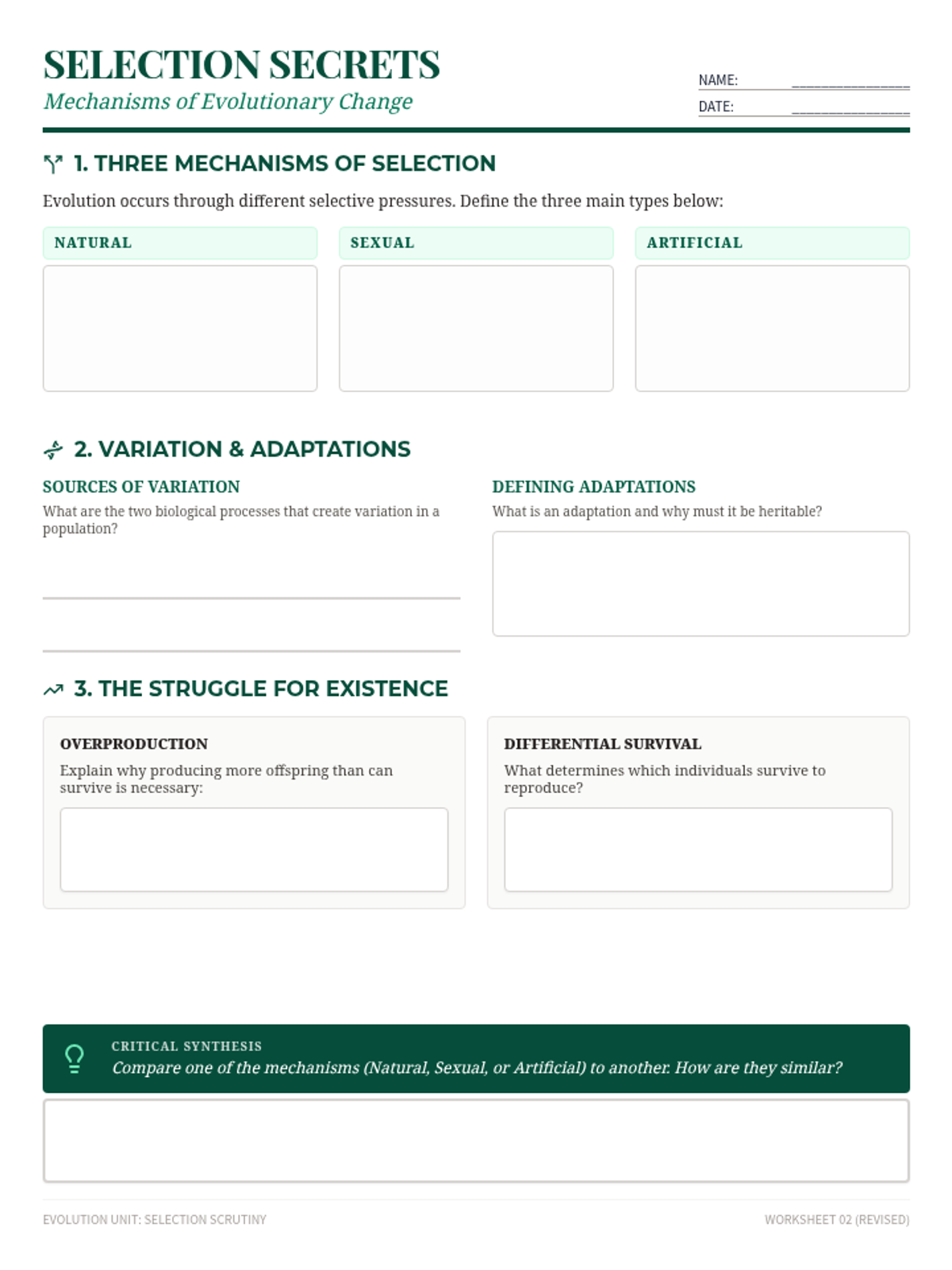
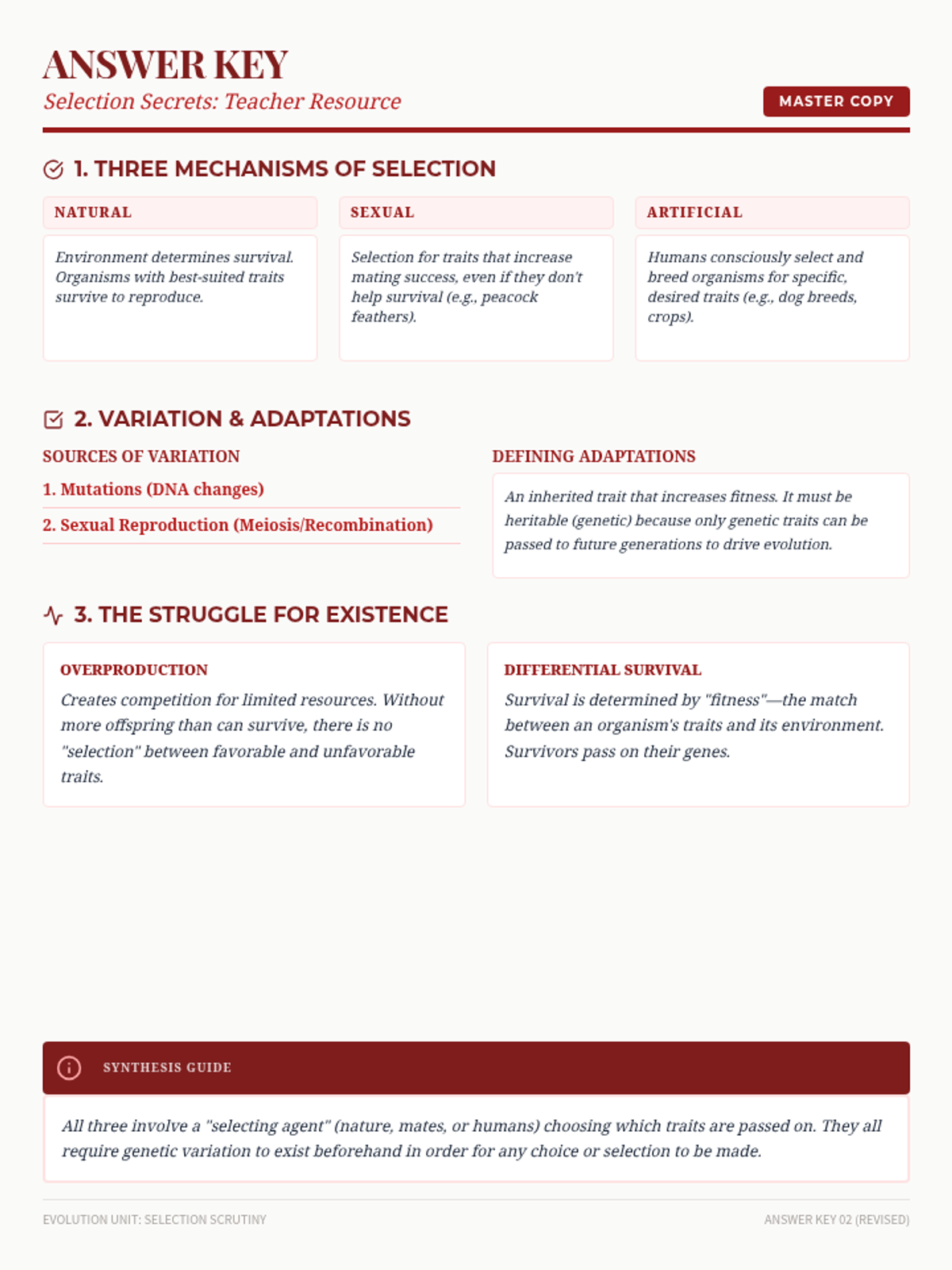
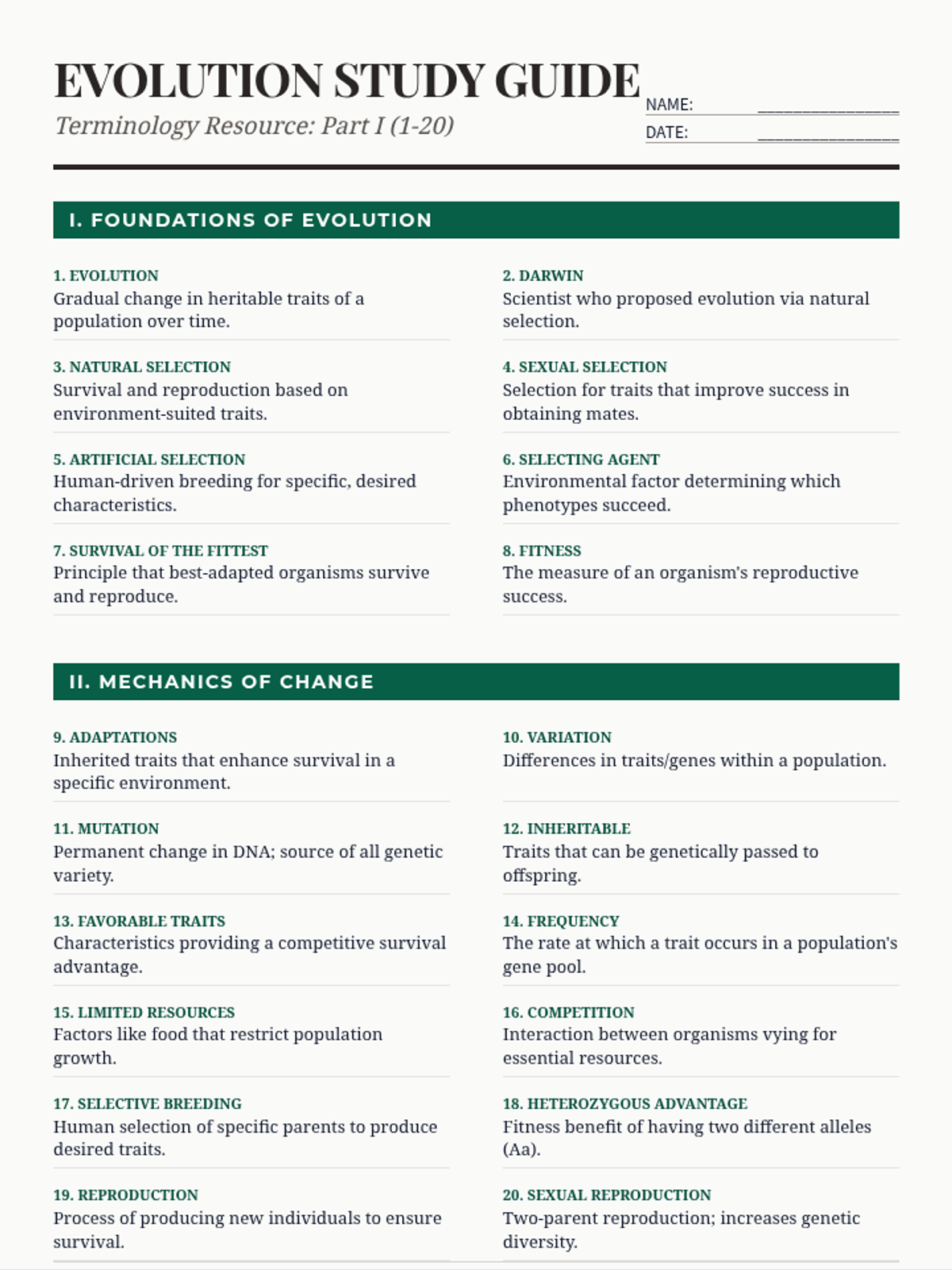
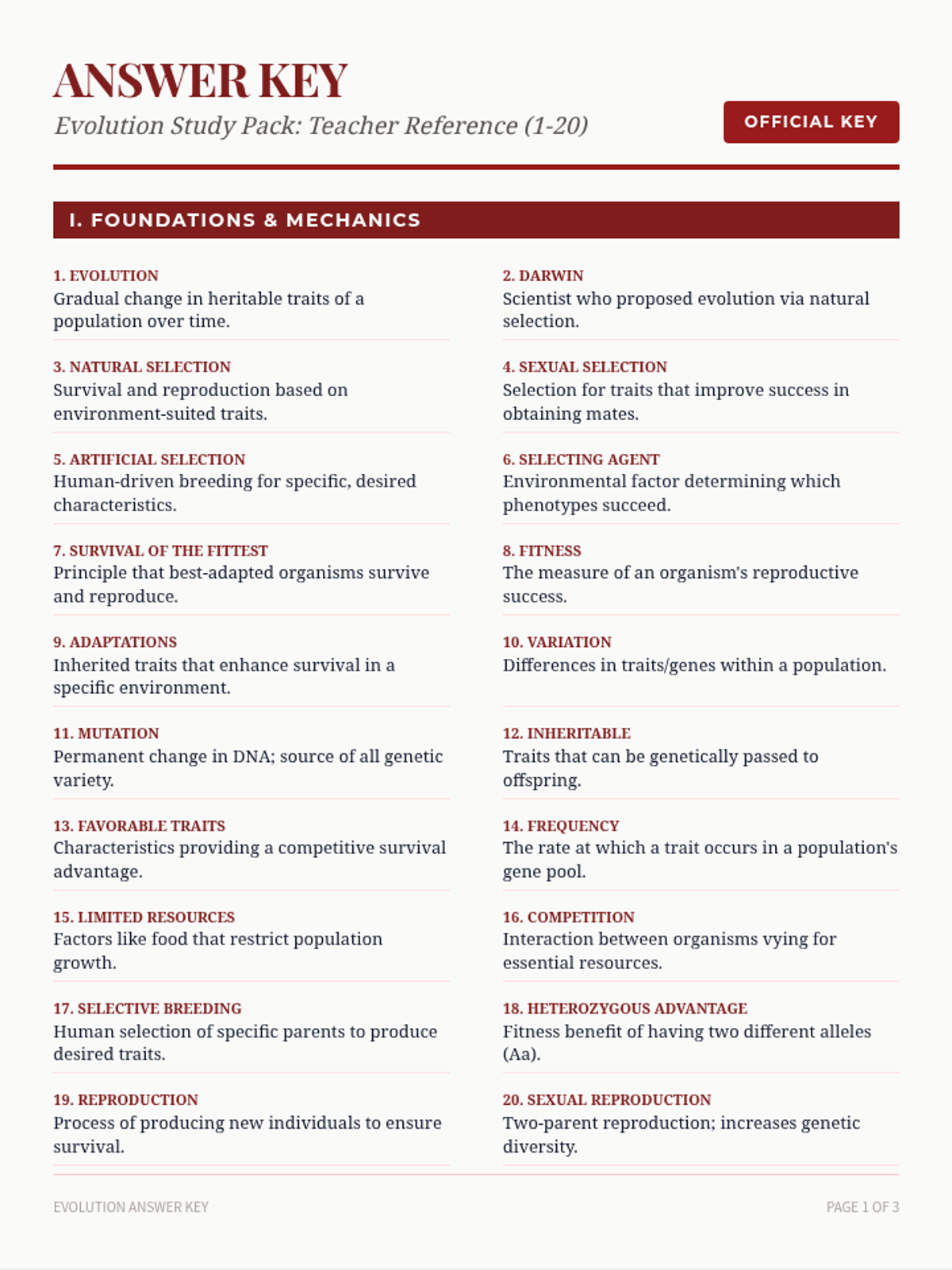
A comprehensive study pack covering the principles of evolution, including vocabulary definitions and a conceptual framework linking key biological terms.
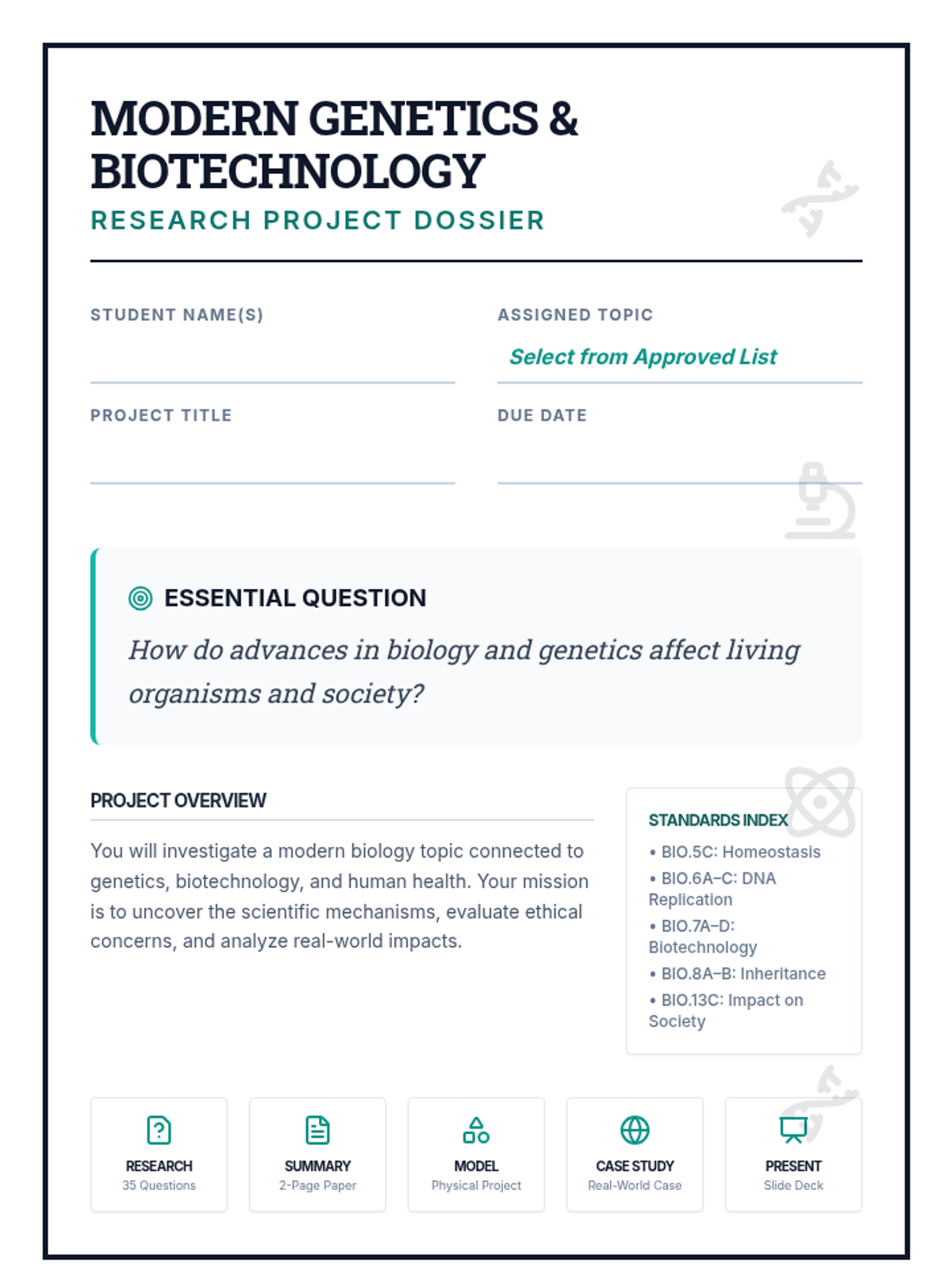
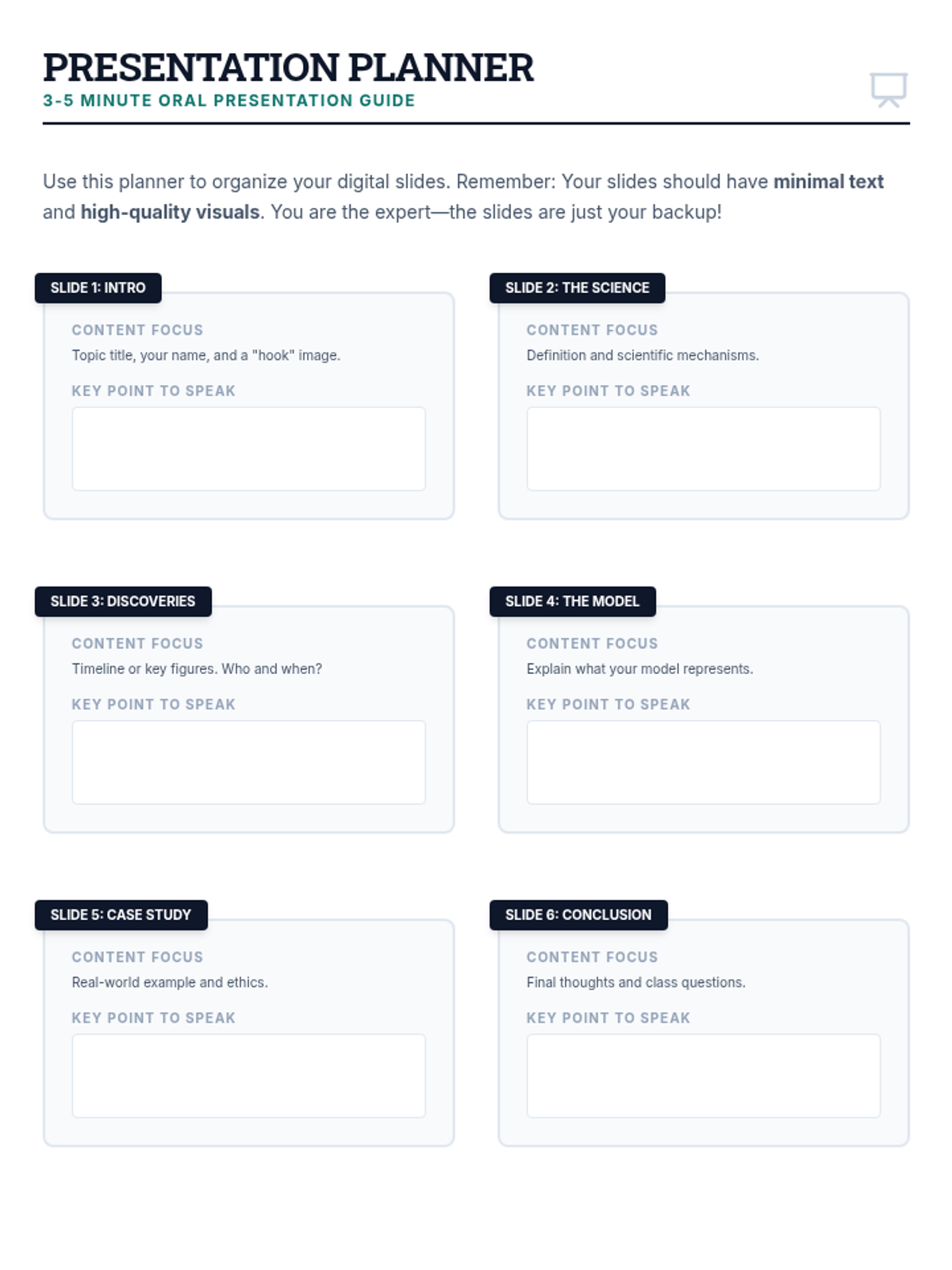
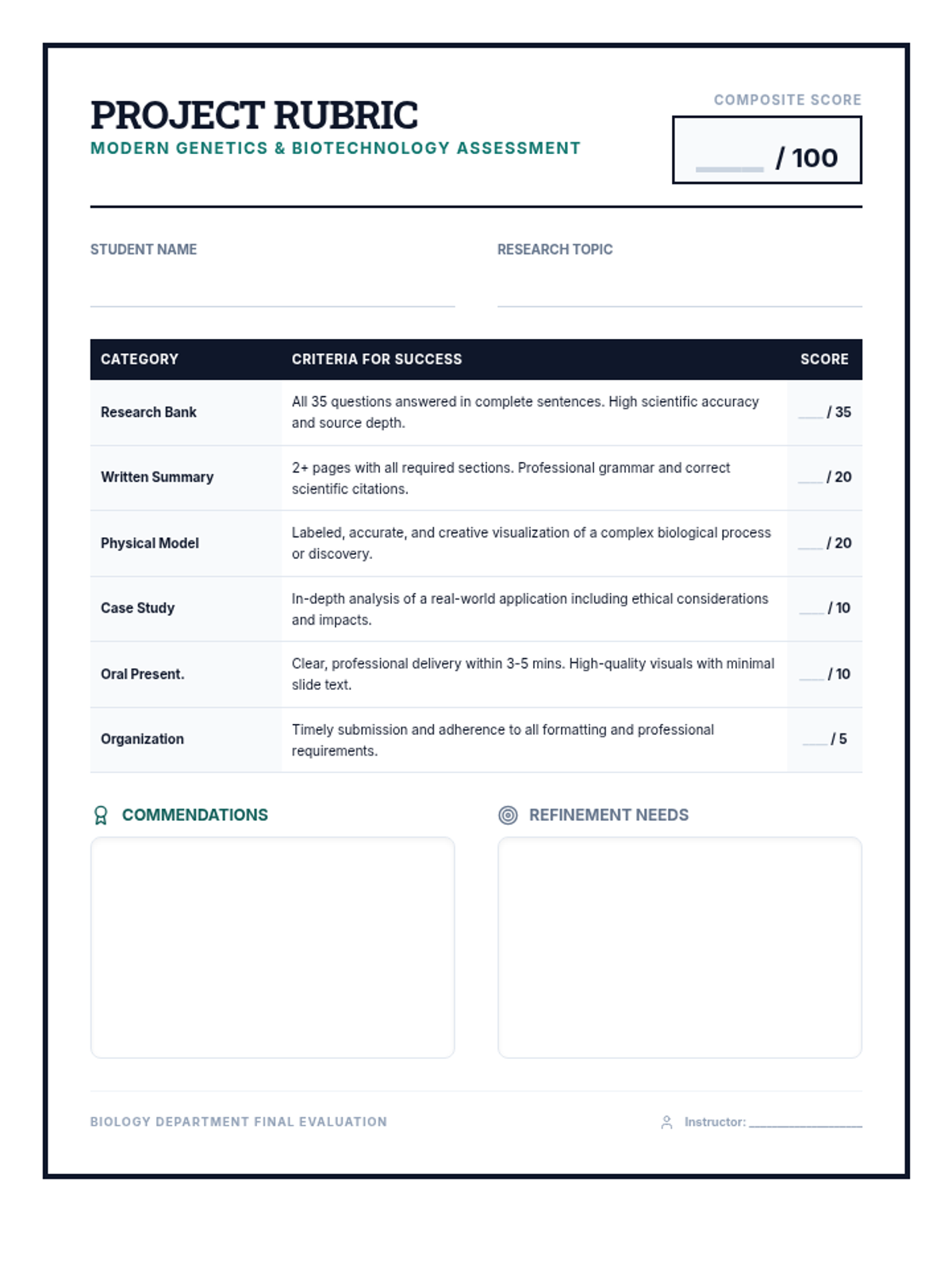
A comprehensive two-week research project exploring modern genetics, biotechnology, and ethical impacts on society. Students investigate topics like cloning, CRISPR, and the Human Genome Project through research, writing, and model-building.
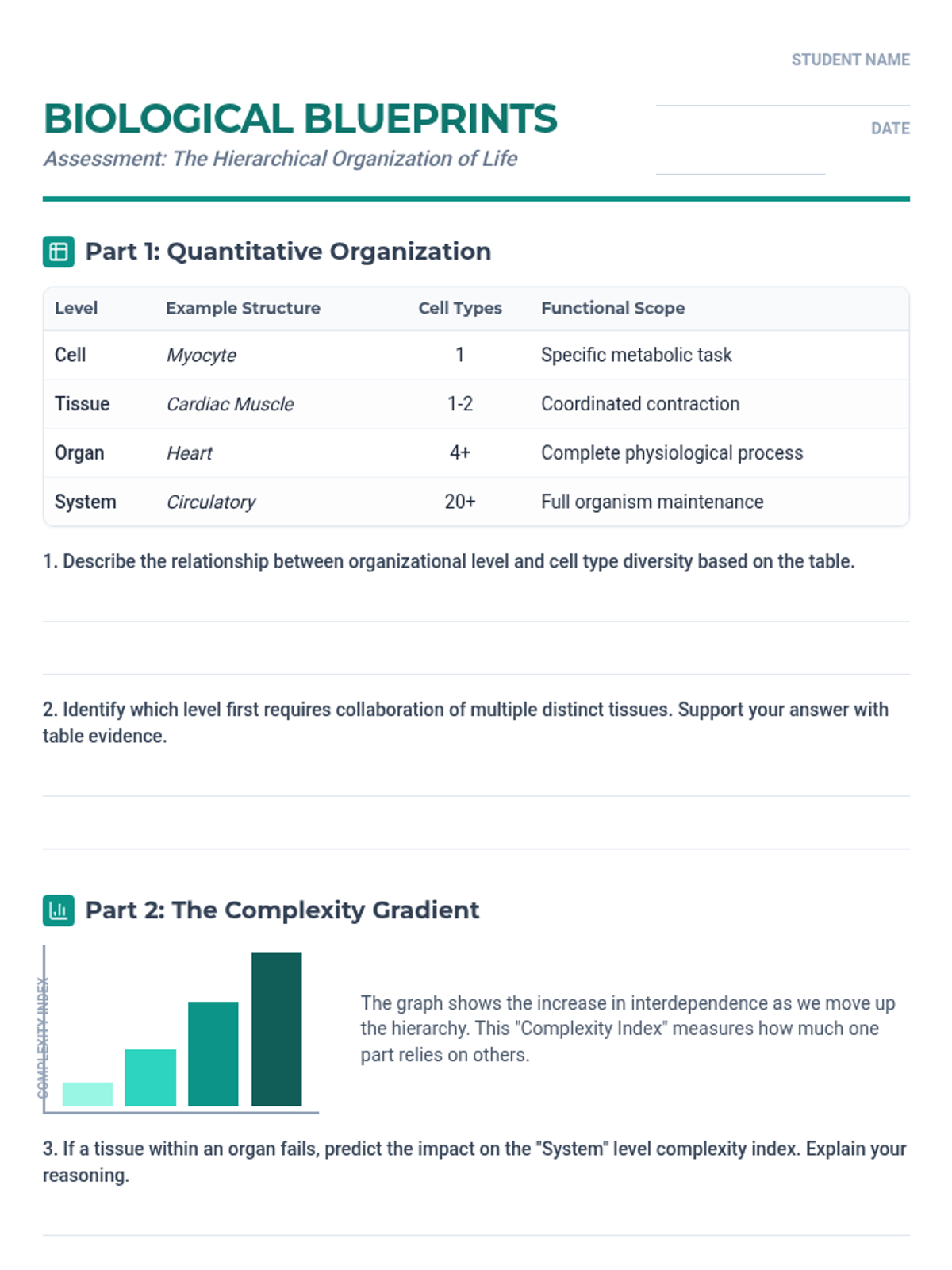
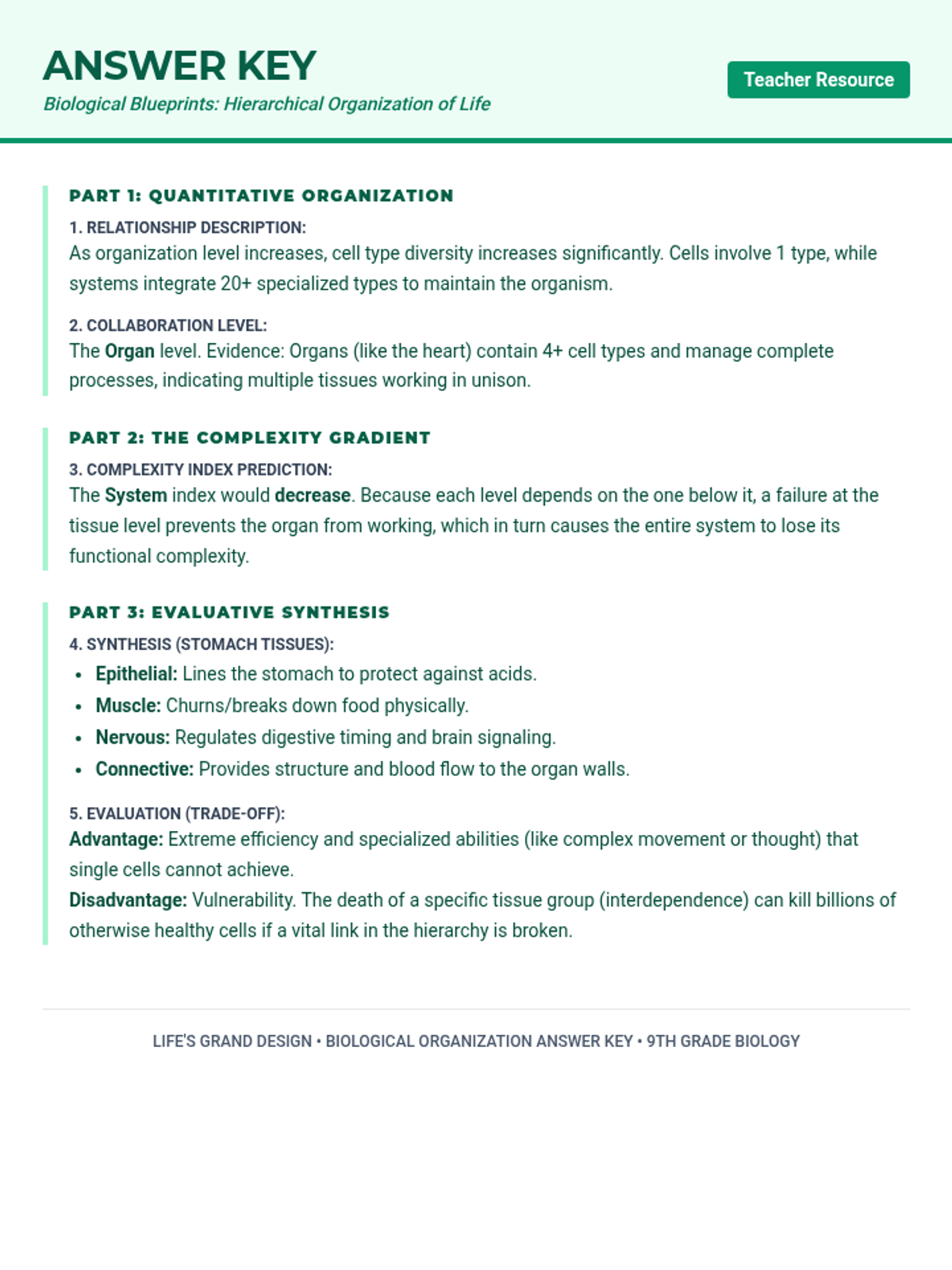
A comprehensive lesson exploring how life is organized from the cellular level up to complex organ systems, focusing on structure-function relationships.
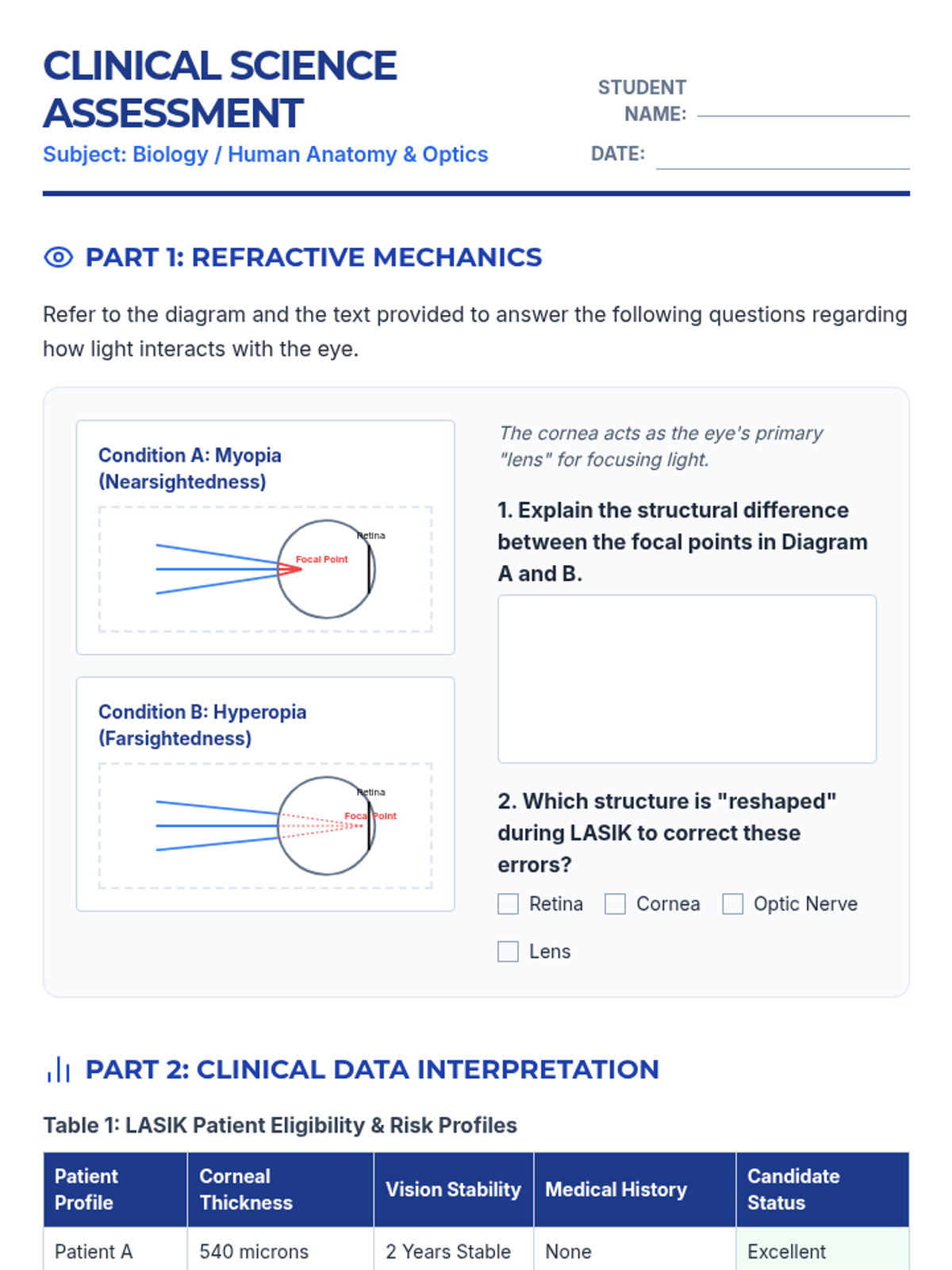
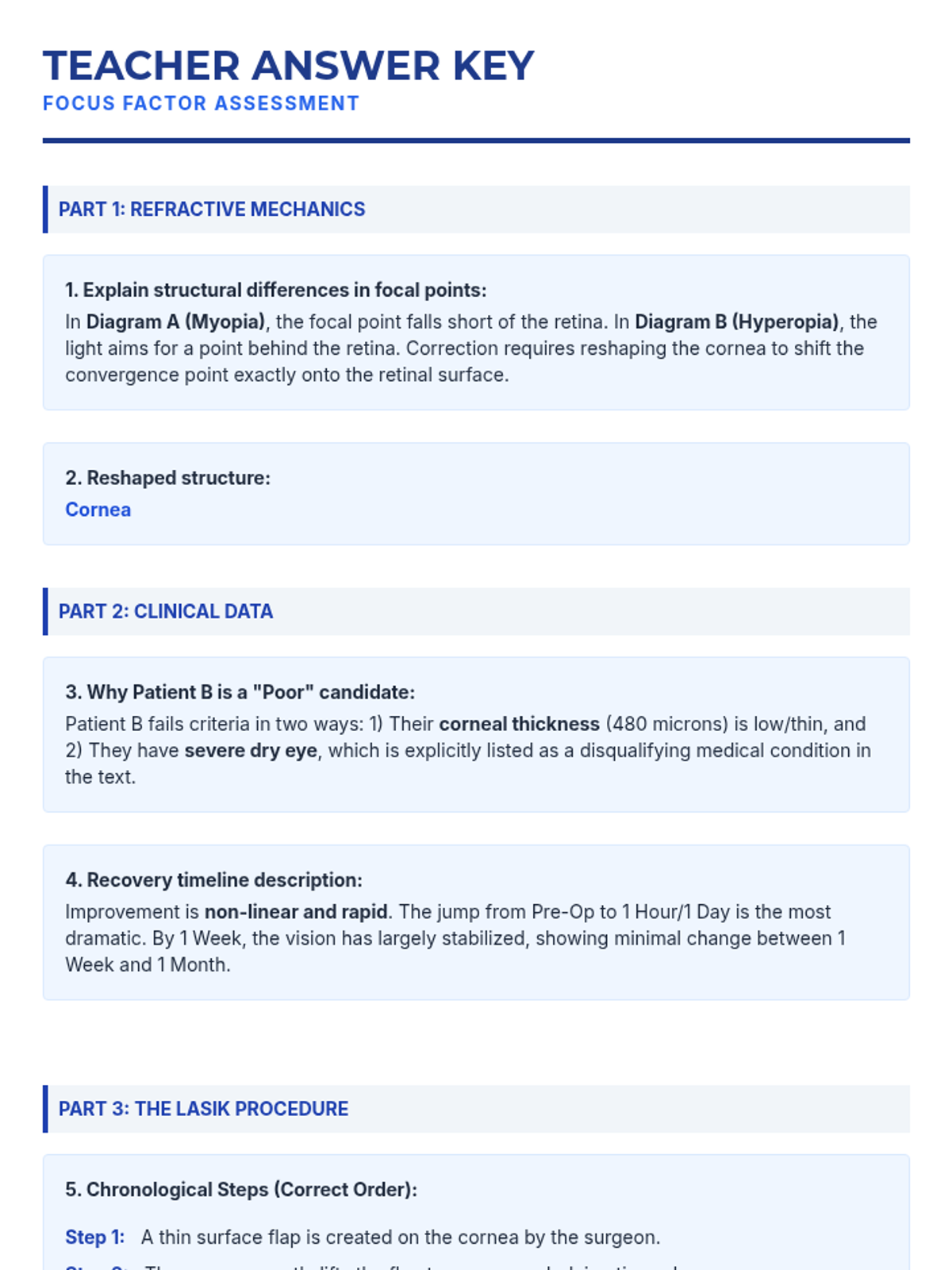
A comprehensive look at eye anatomy, refractive errors, and the medical technology used in LASIK surgery to reshape the cornea.