This lesson focuses on the Latin-based abbreviations A.M. and P.M. regarding the 12-hour clock. Students practice writing sentences describing daily routines, ensuring the abbreviations are capitalized or lowercased consistently.

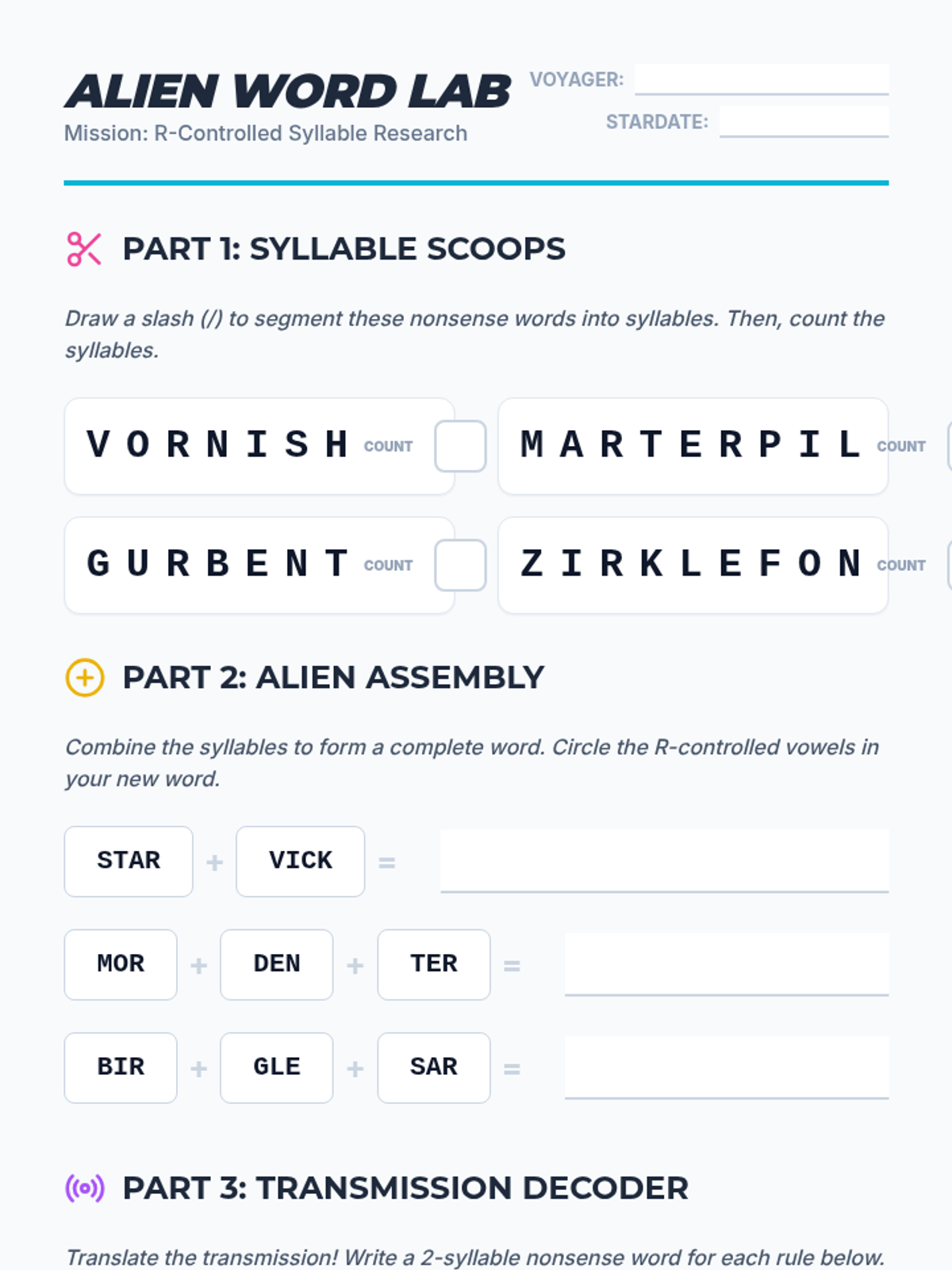
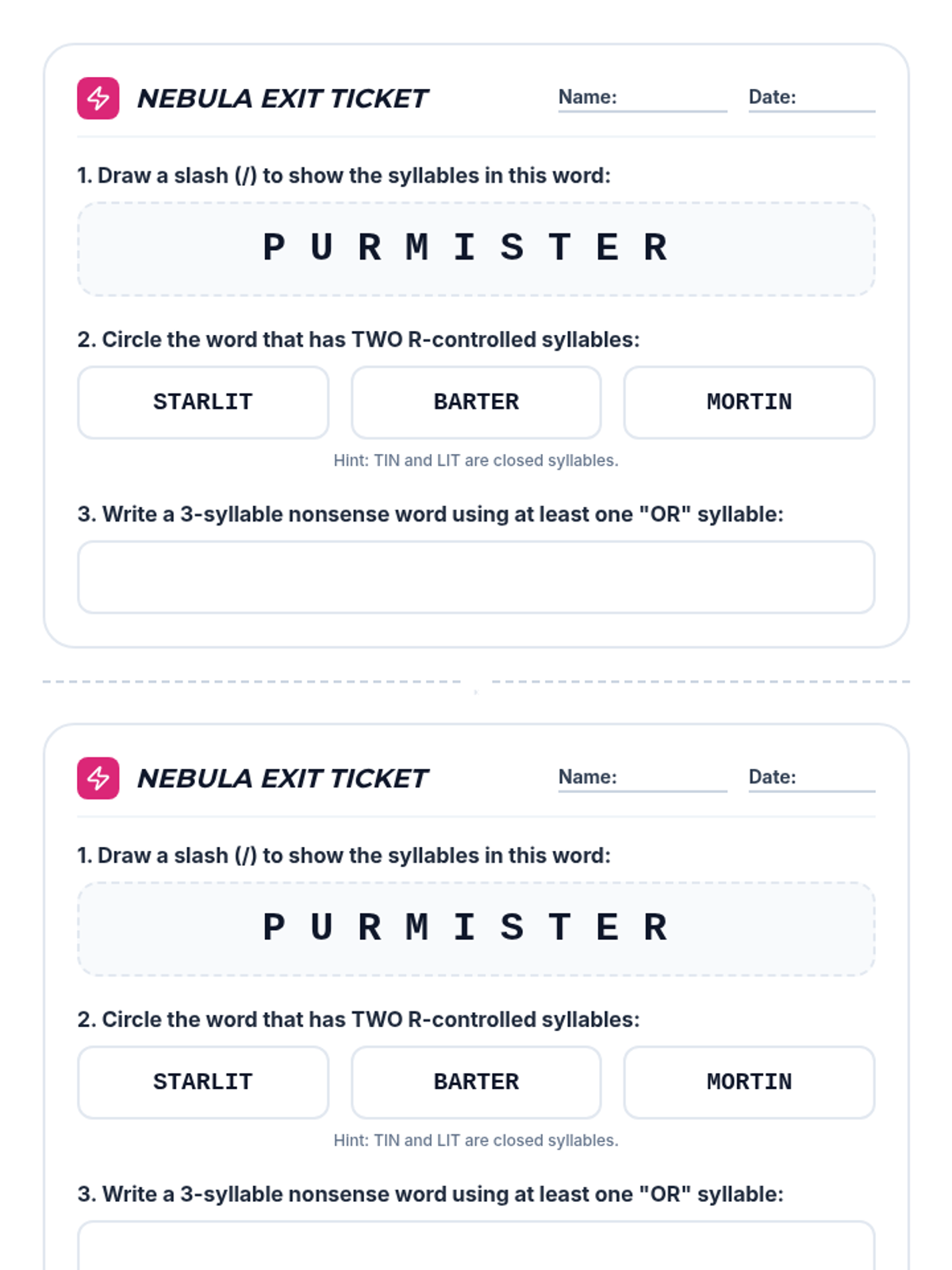
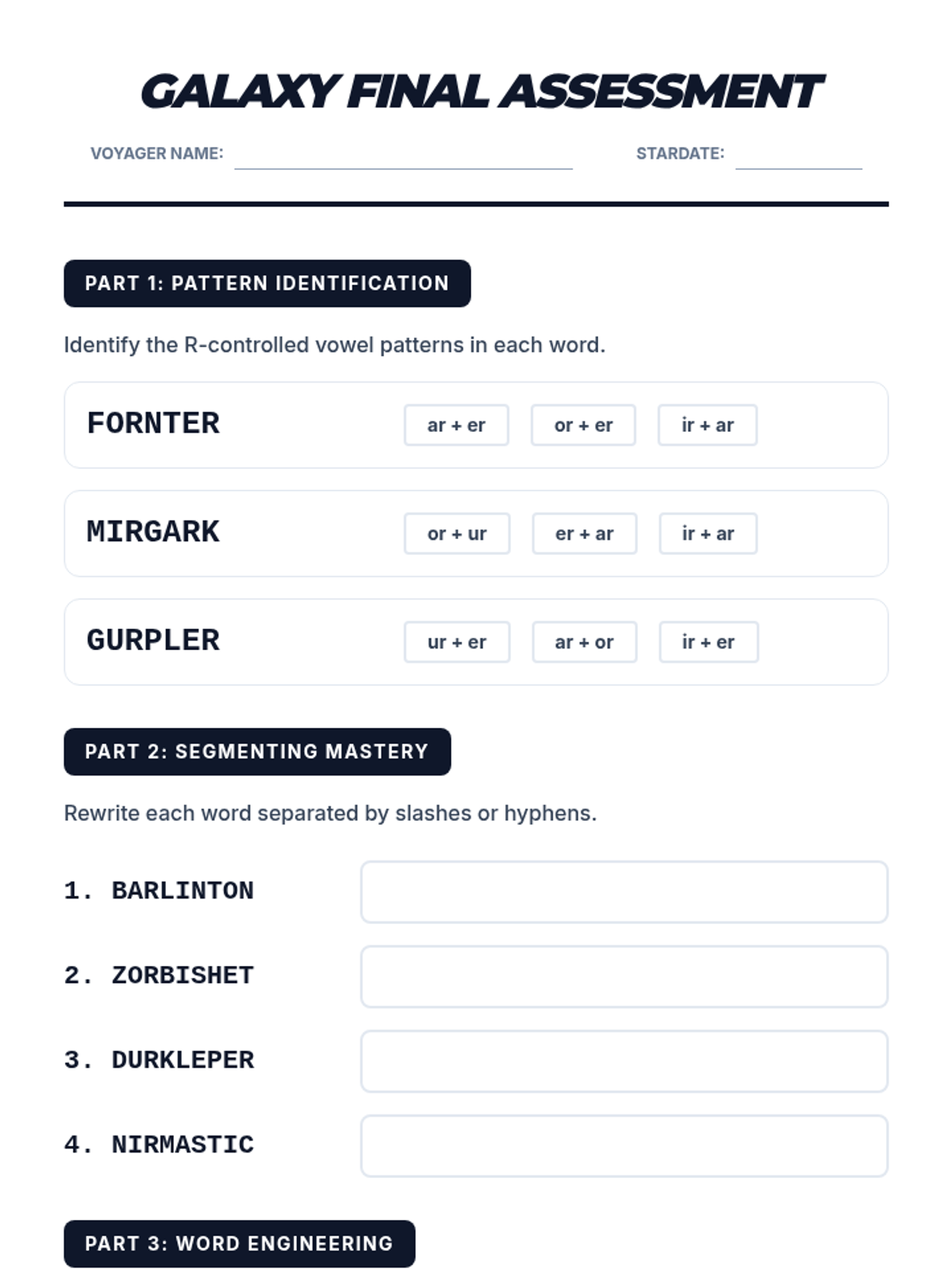
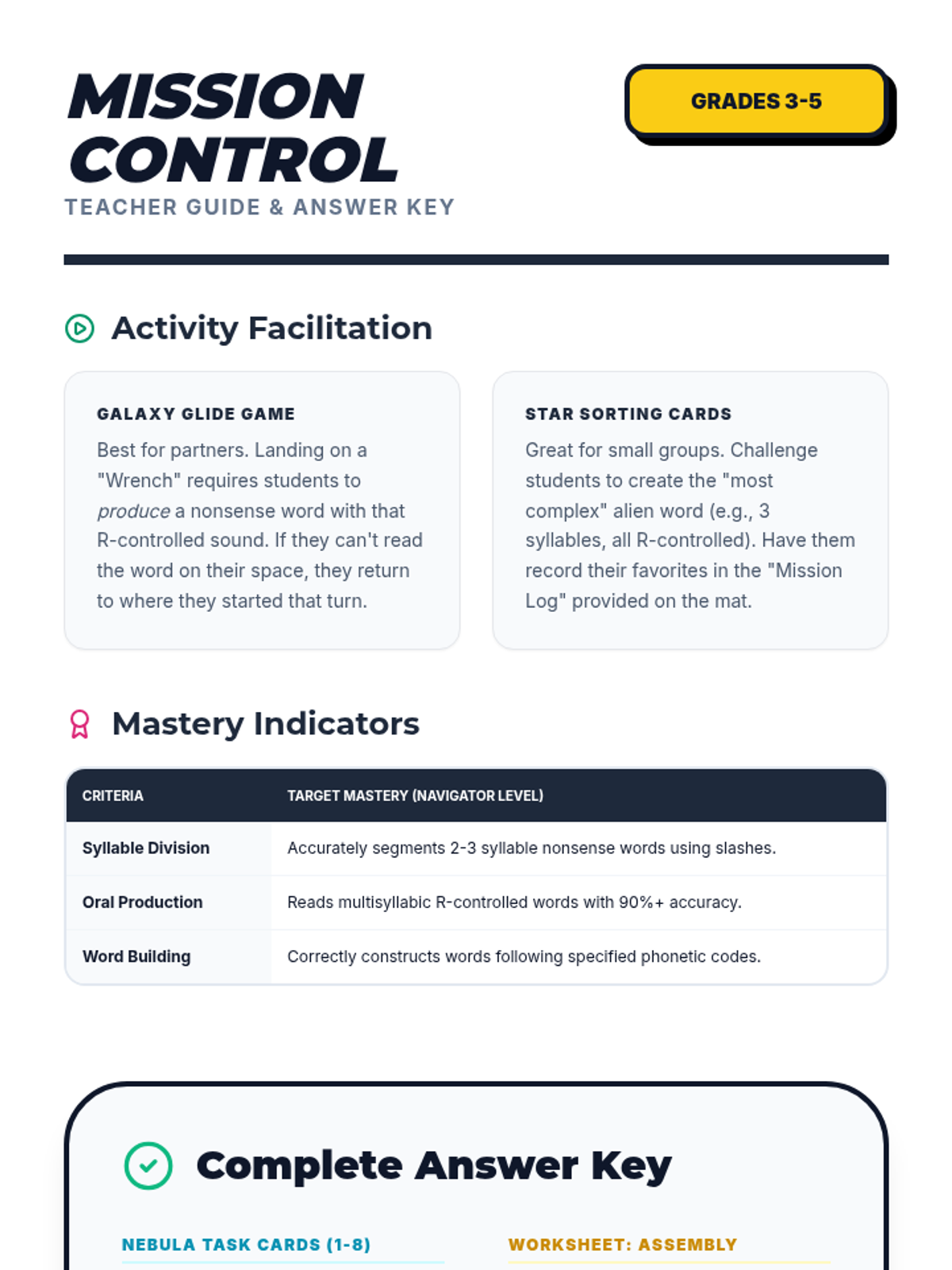
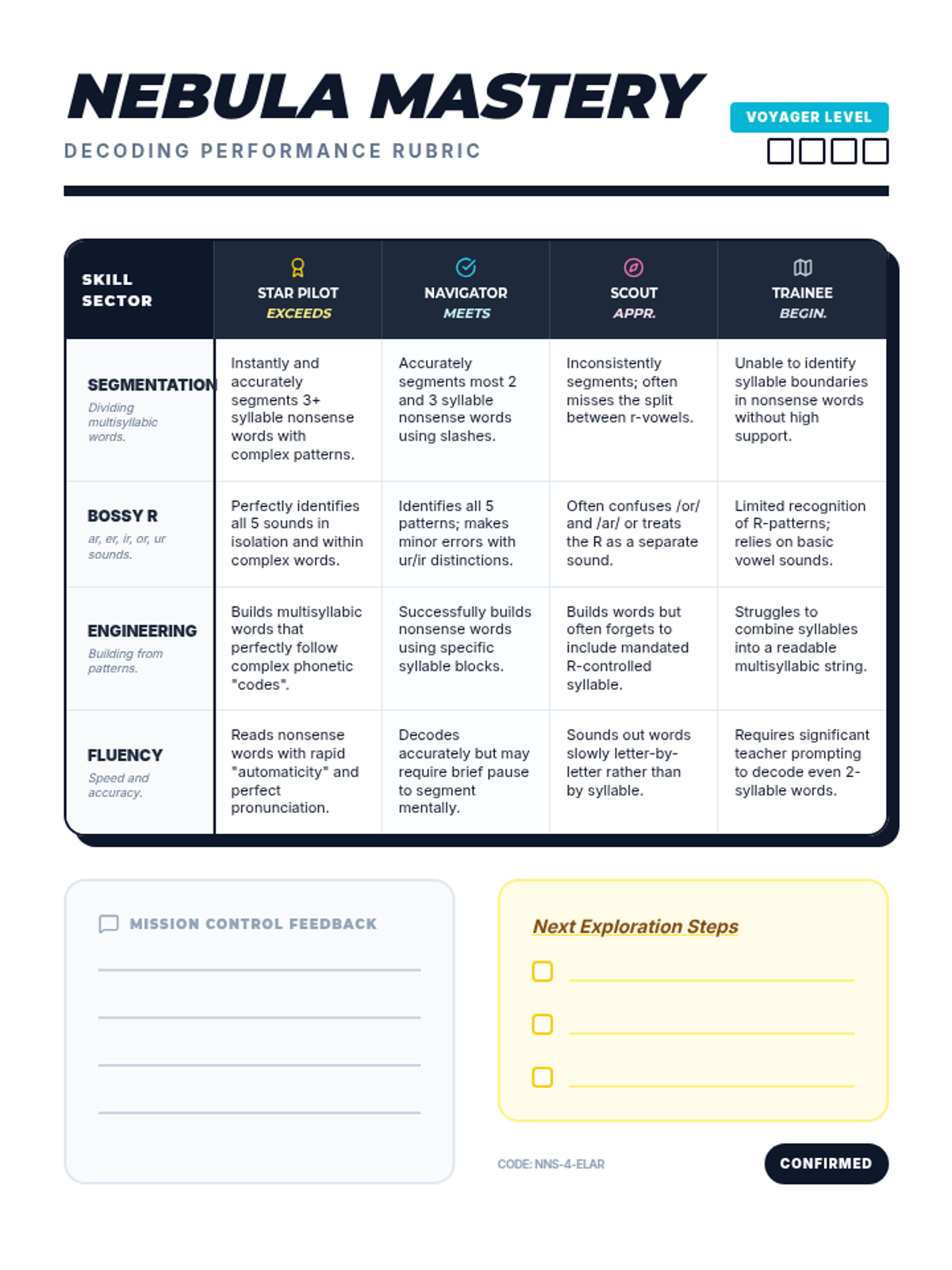
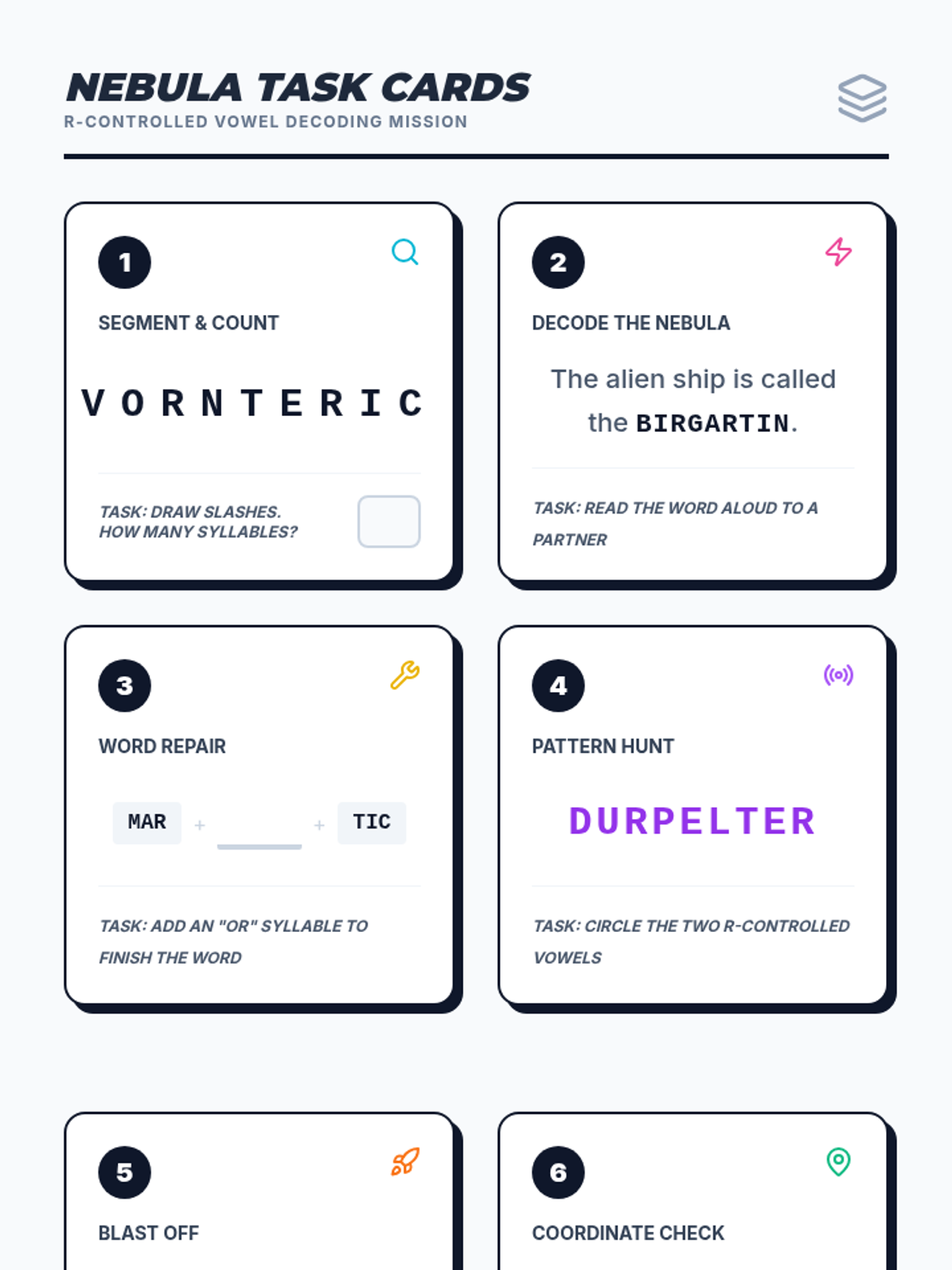
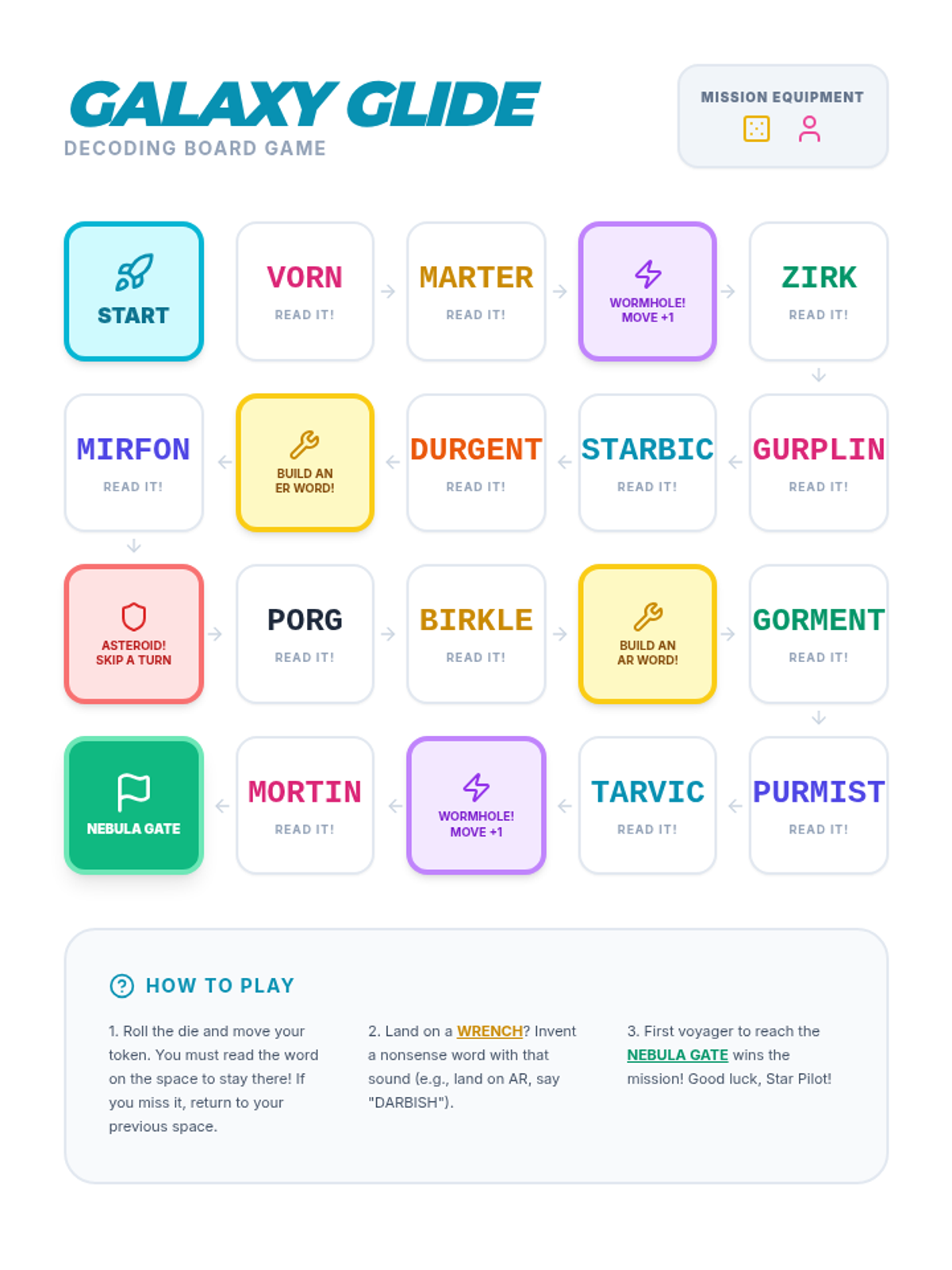
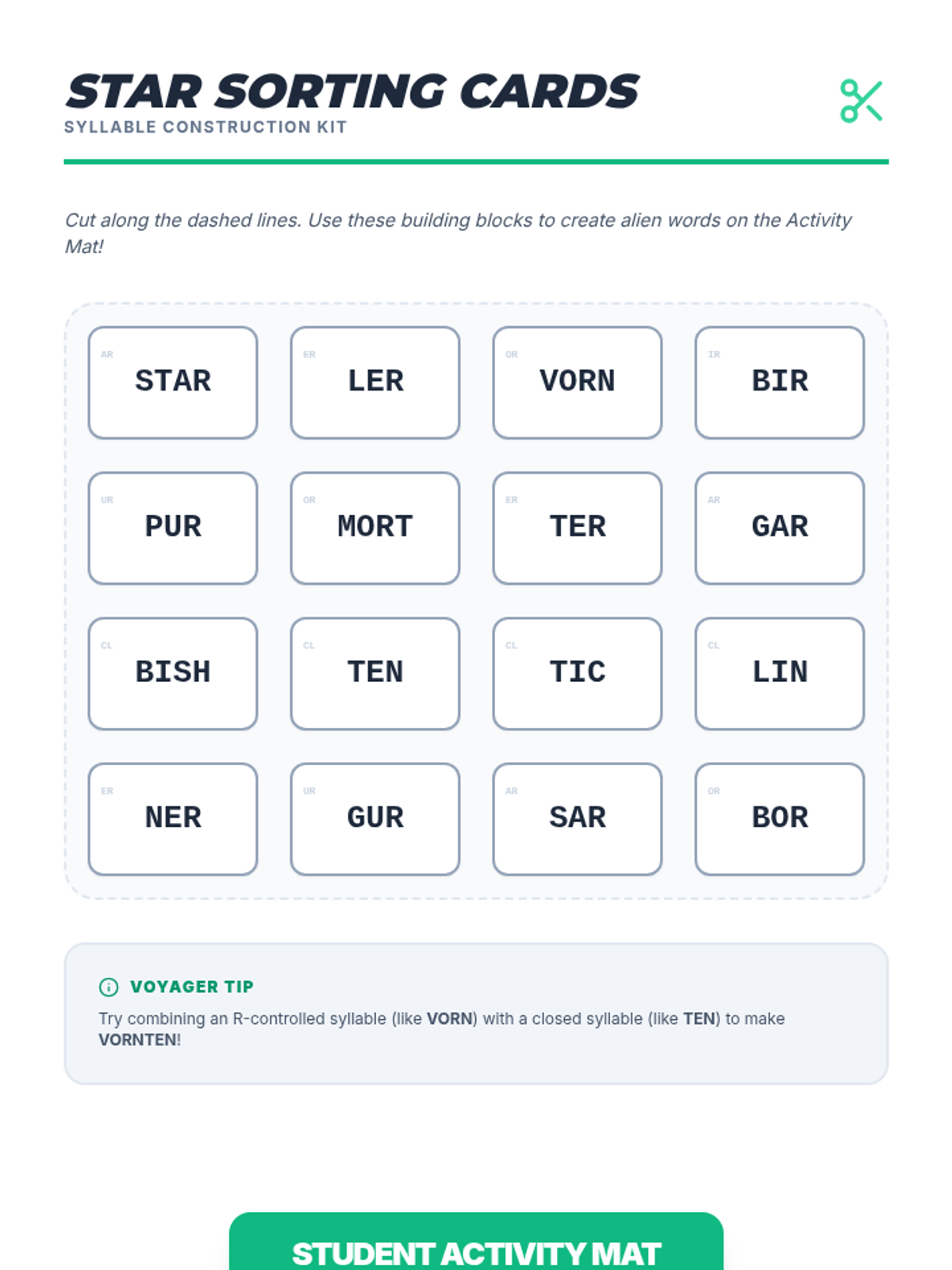
Students will identify, segment, and build multisyllabic nonsense words using R-controlled vowels (ar, er, ir, or, ur) to strengthen their decoding skills.
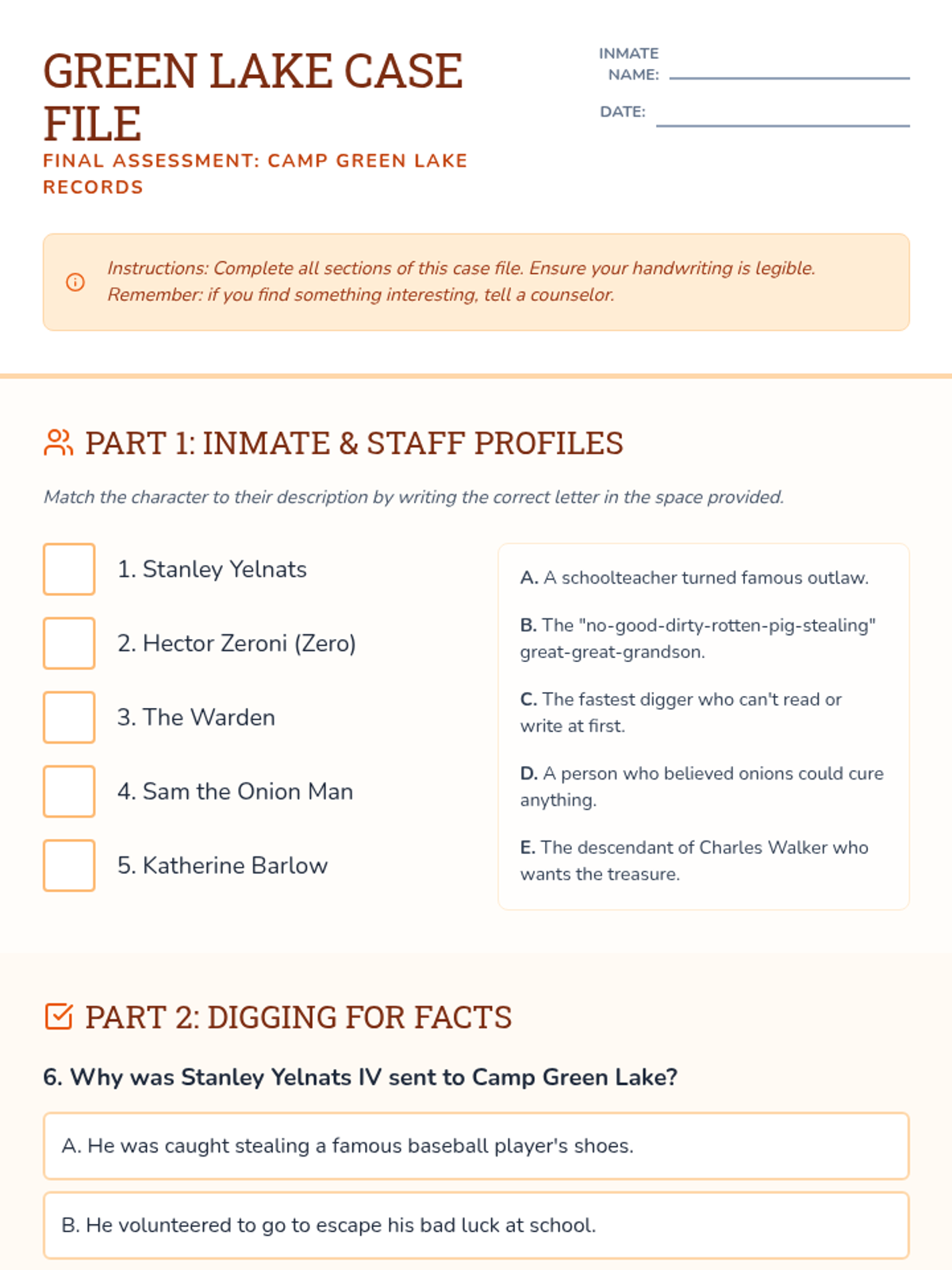
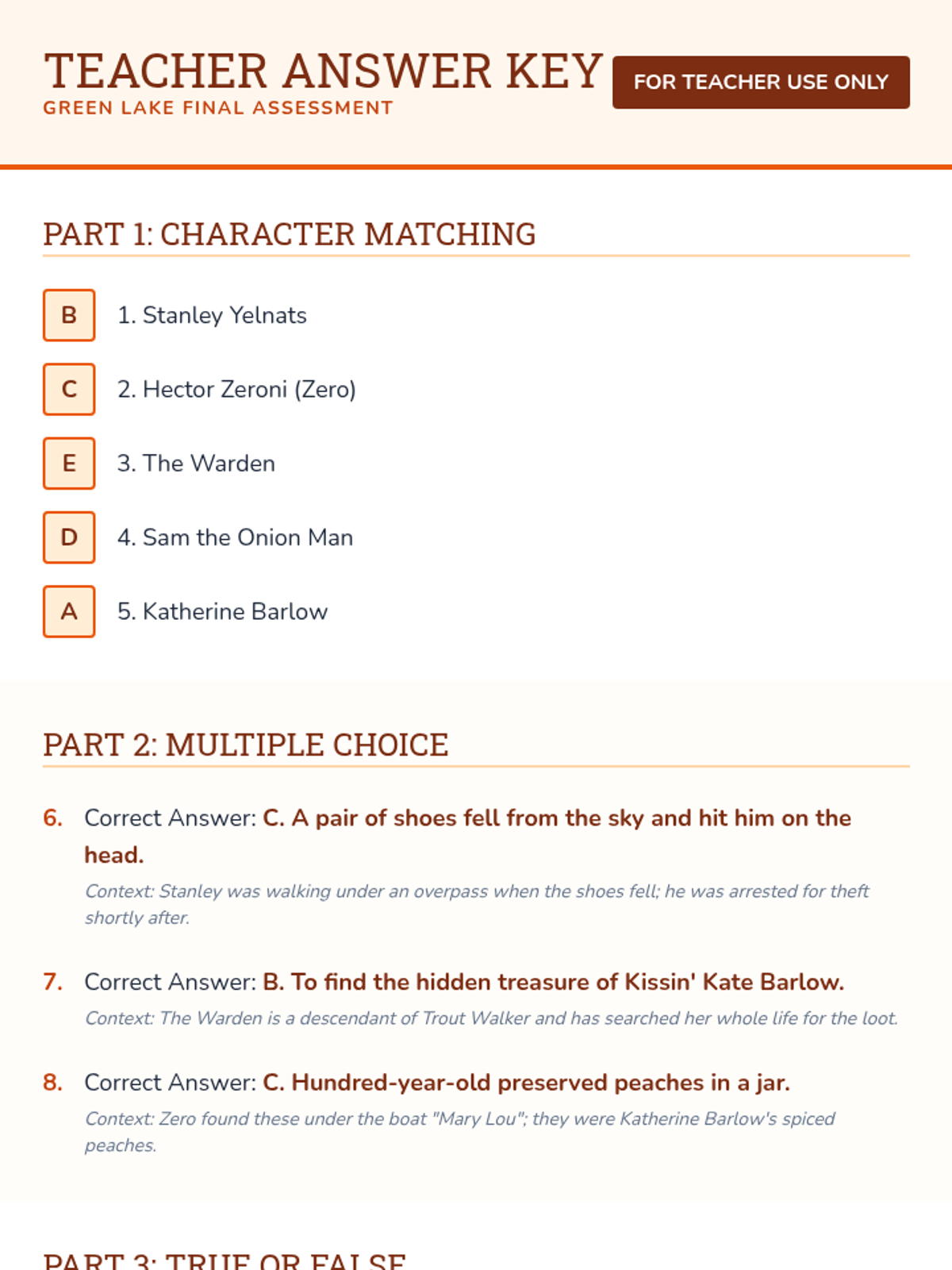
A final assessment and review lesson for the novel Holes by Louis Sachar, focusing on character identification, plot sequencing, and thematic connections. Students will complete a comprehensive test after a visual review of the major story arcs.
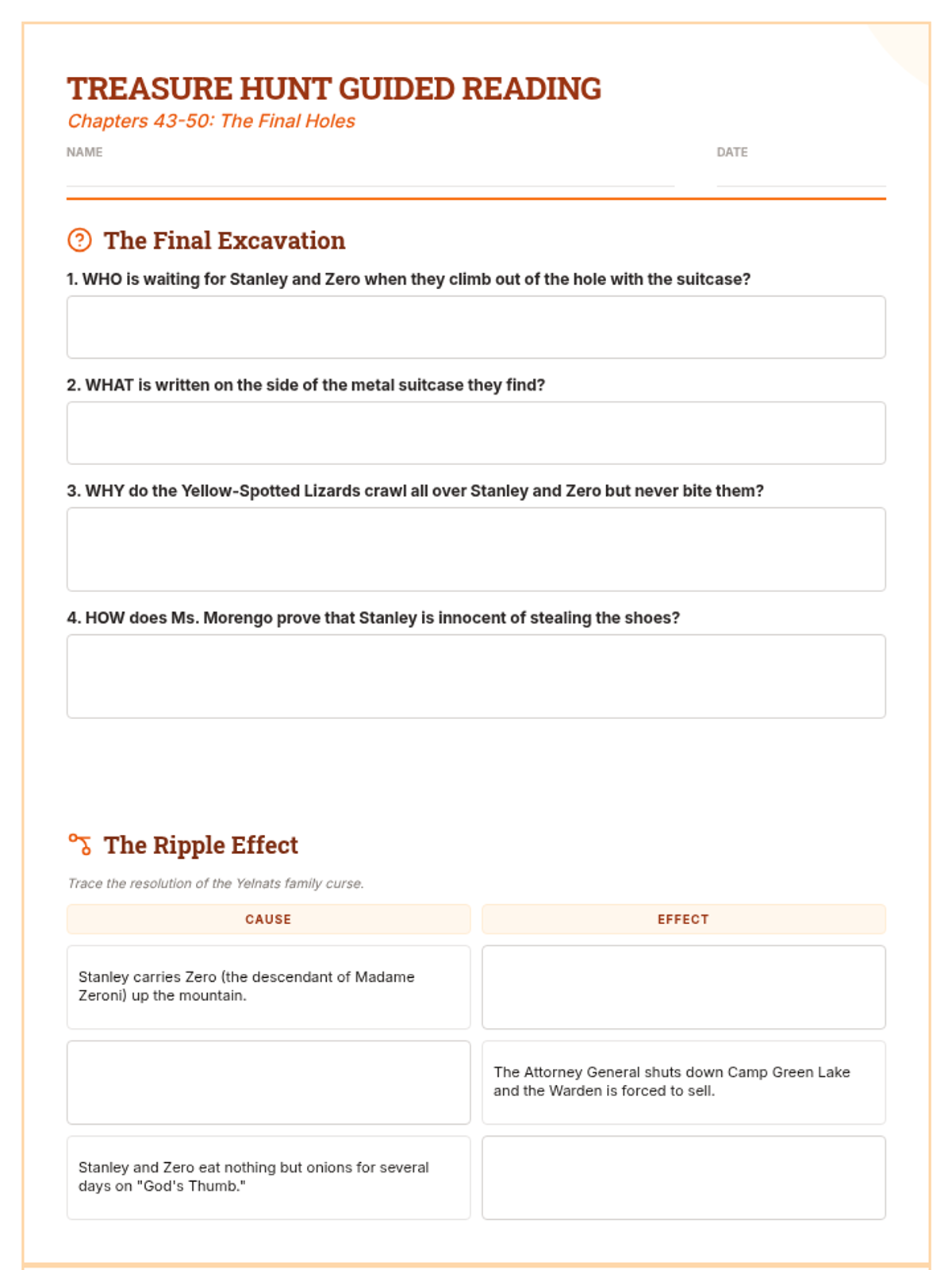
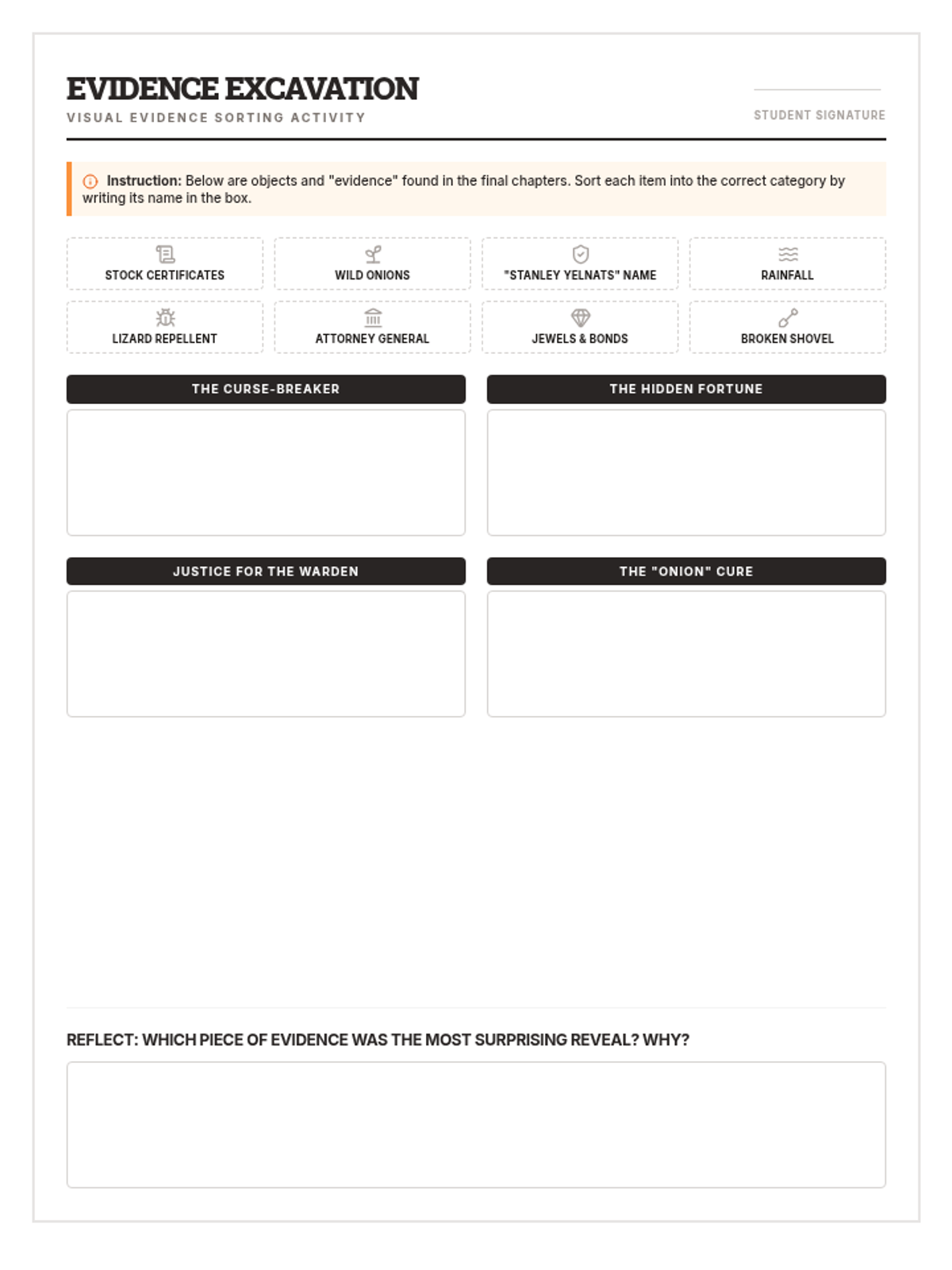
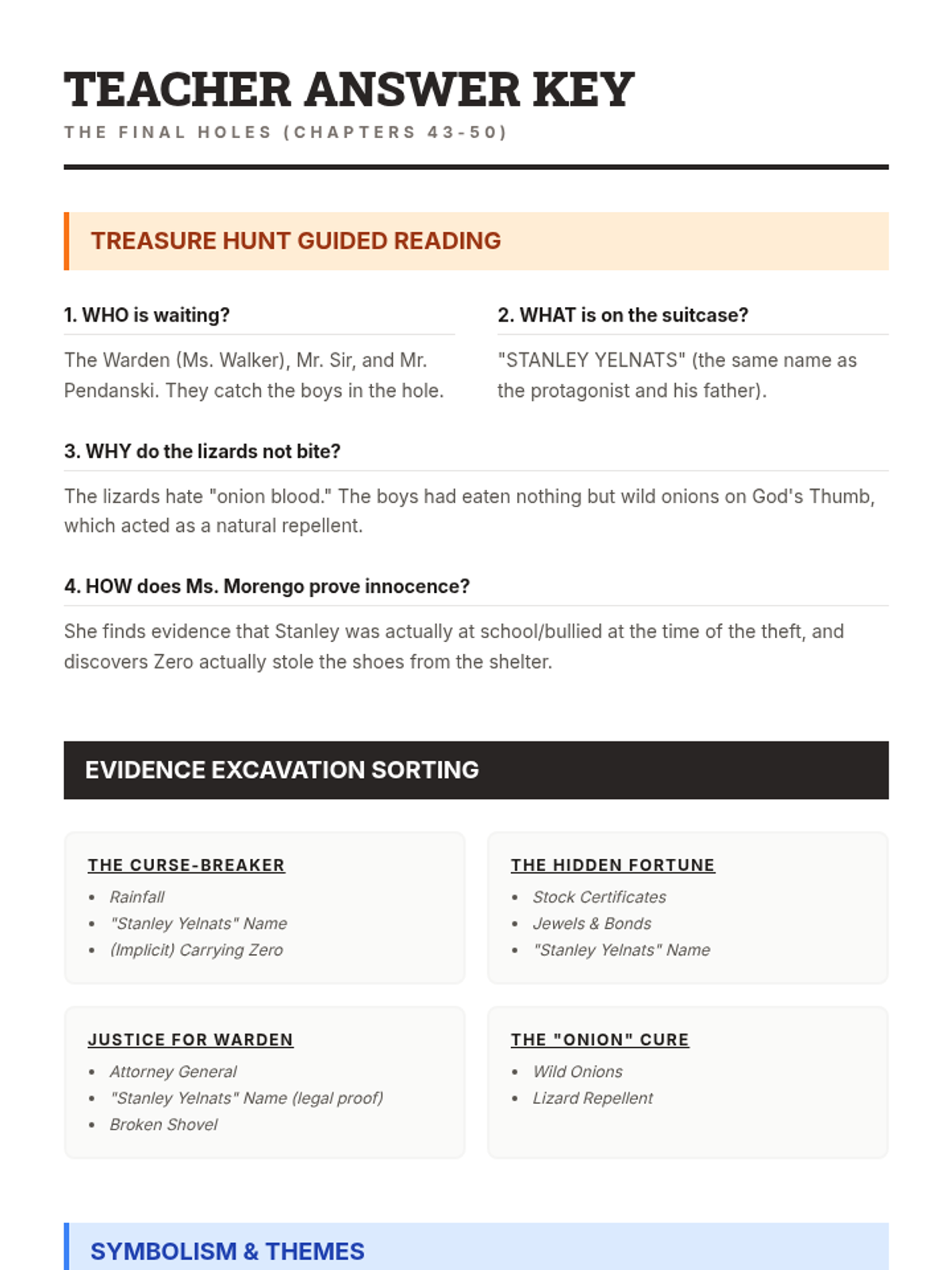
A comprehensive exploration of the final chapters of Holes (43-50), focusing on the resolution of the curse, the reveal of the treasure, and the symbolic cleansing of Camp Green Lake.
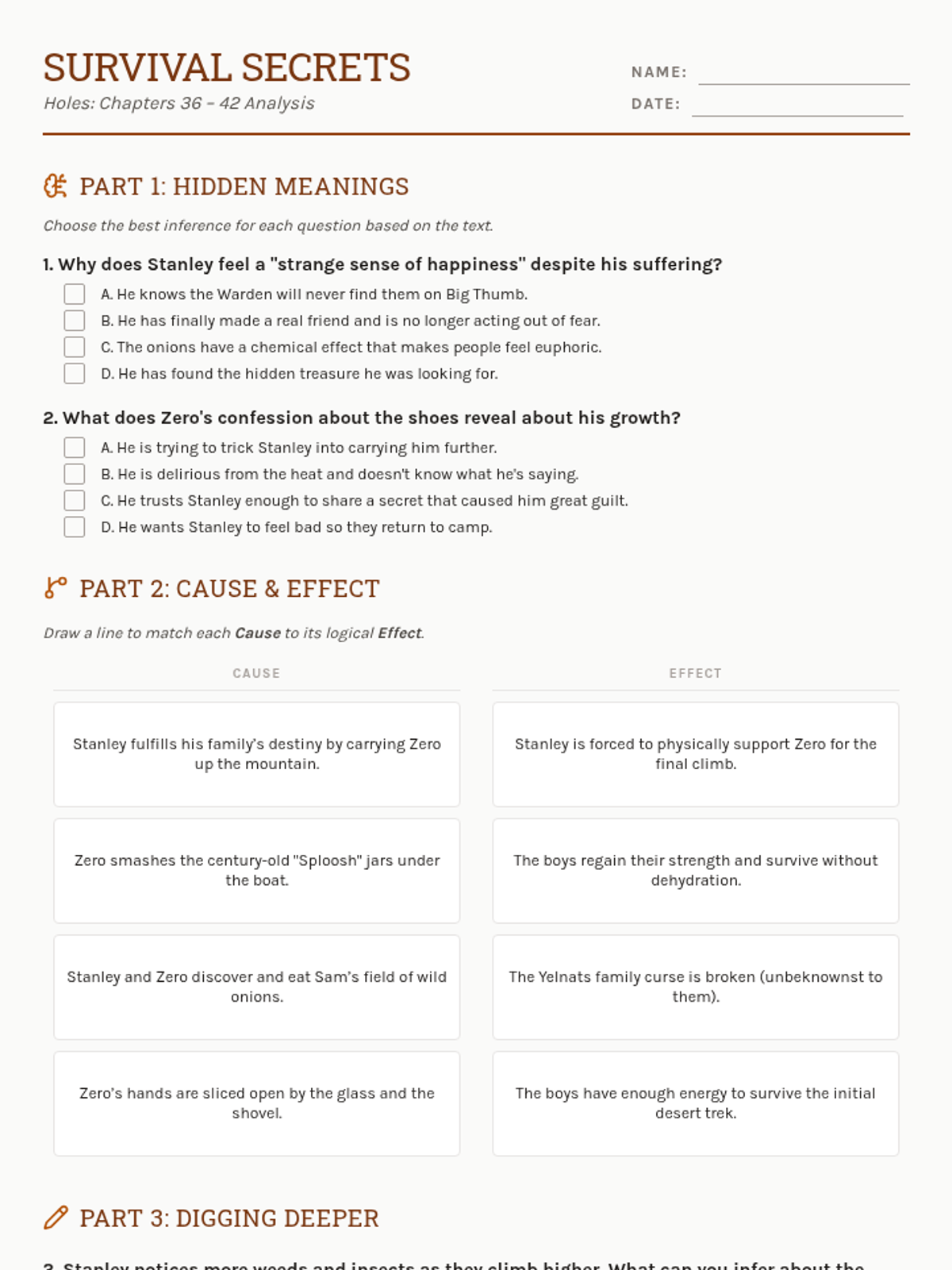
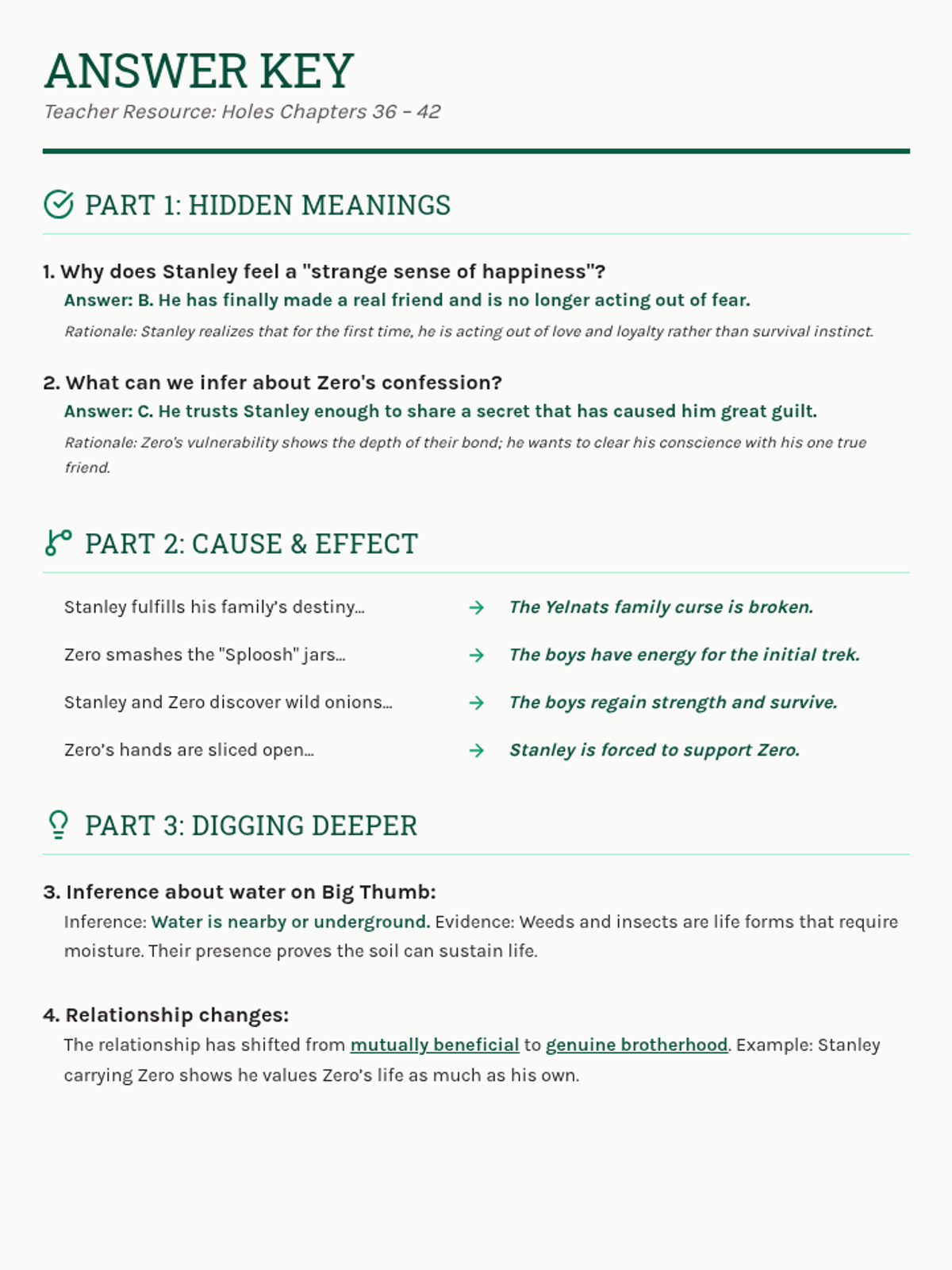
A lesson focused on analyzing character motivations and causal relationships in chapters 36-42 of Louis Sachar's Holes, specifically during the ascent of Big Thumb.
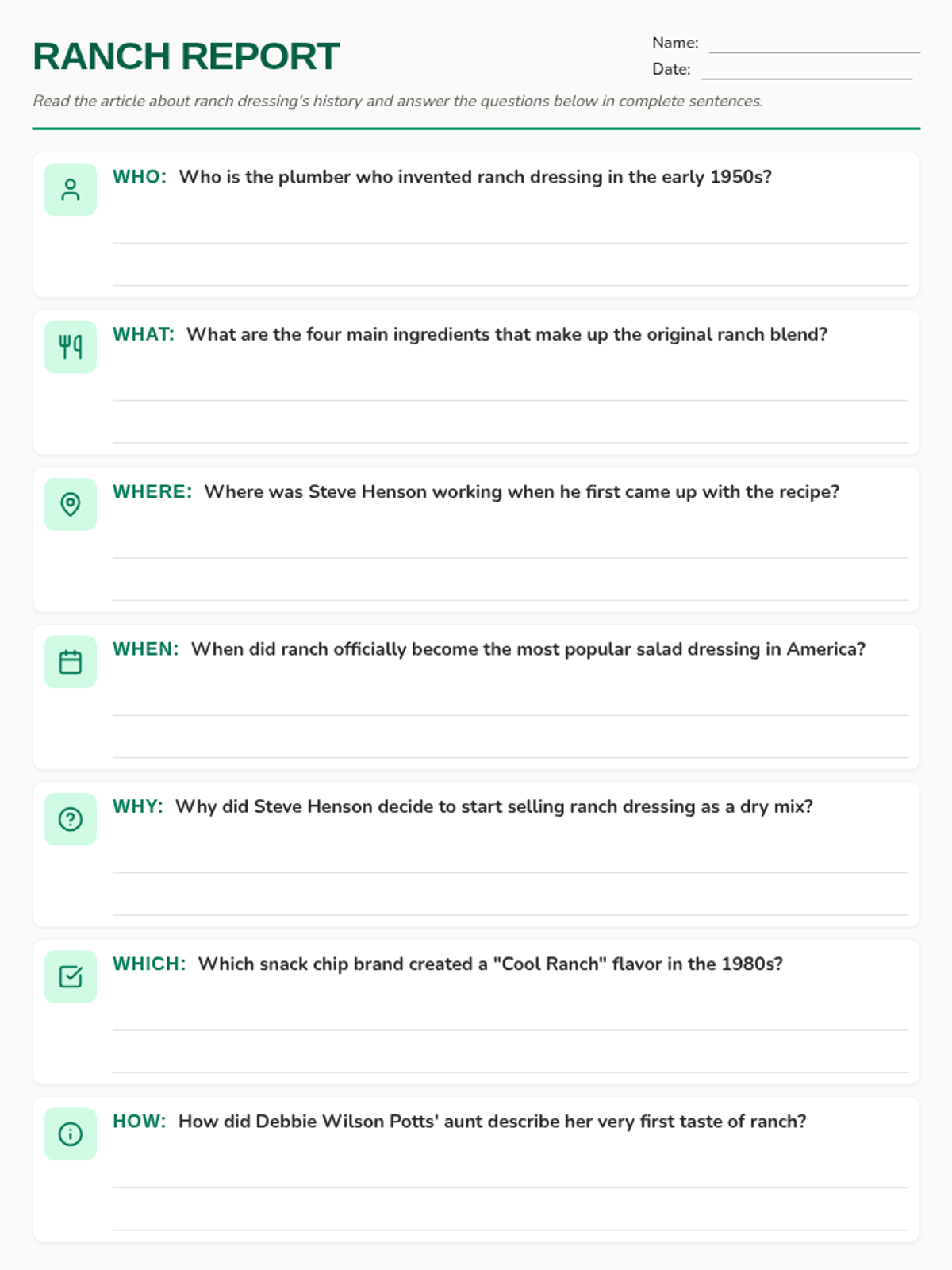
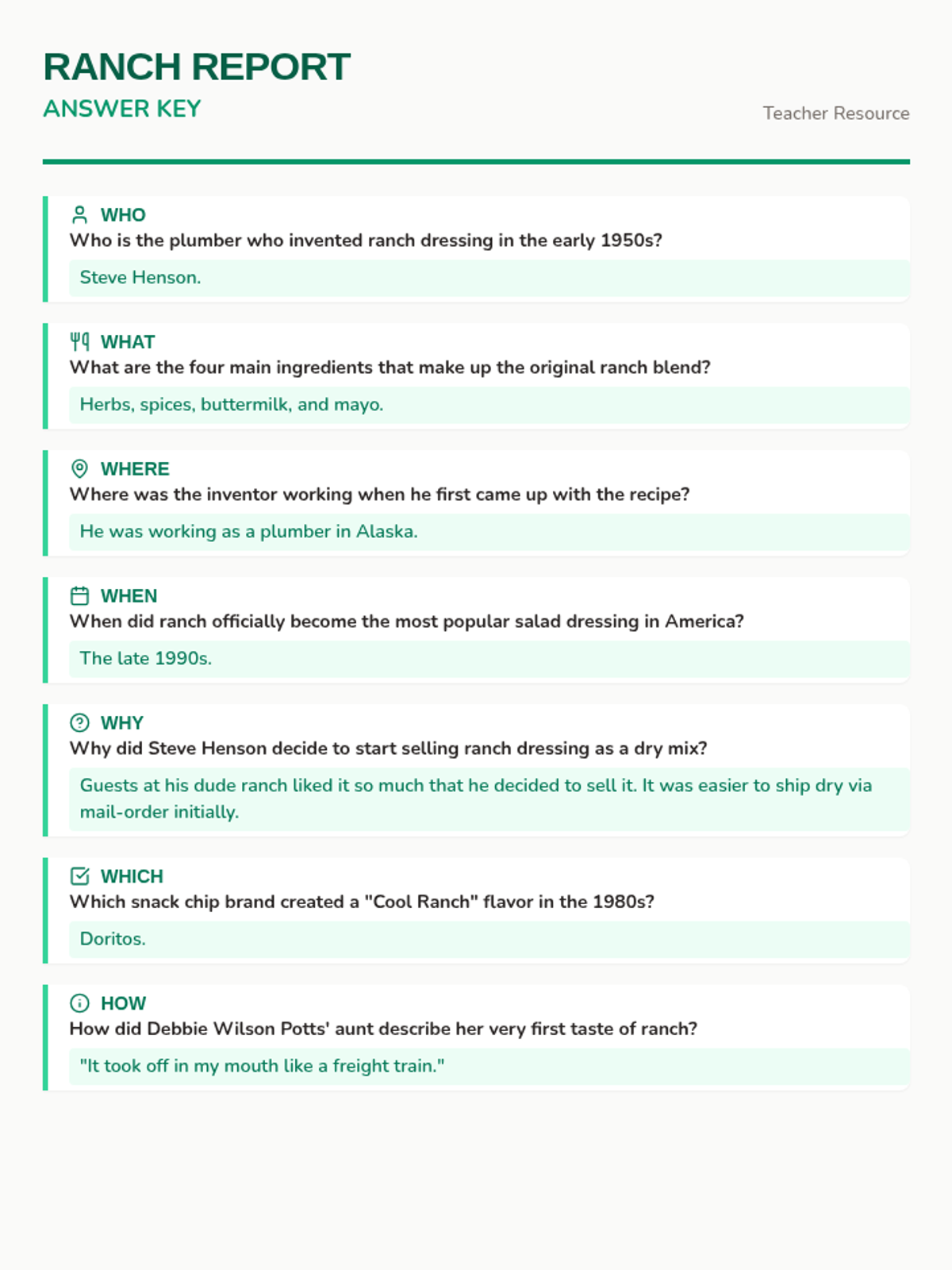
A lesson exploring the history and cultural impact of ranch dressing based on a Newsela article, featuring a reading comprehension worksheet and answer key.
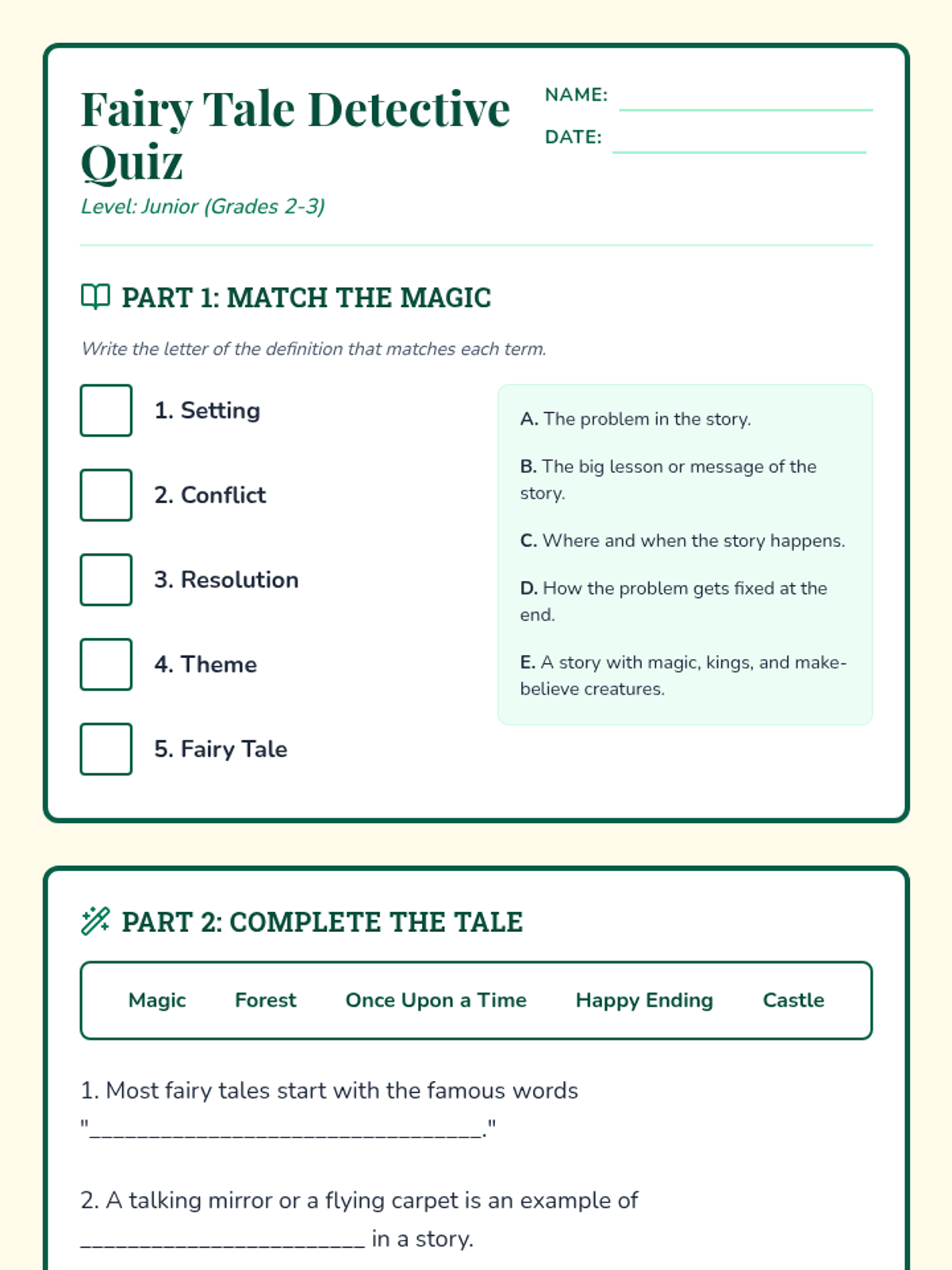
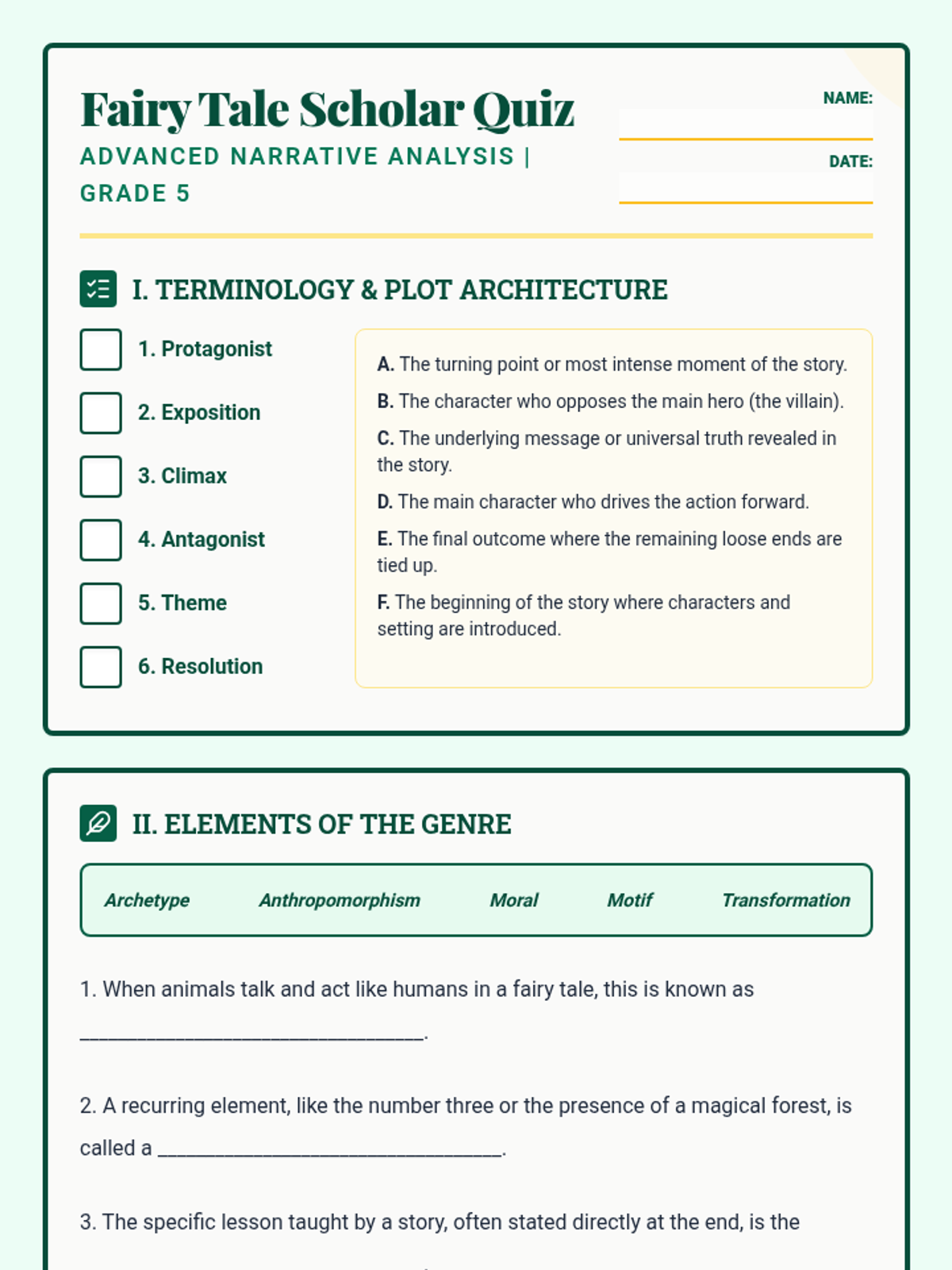
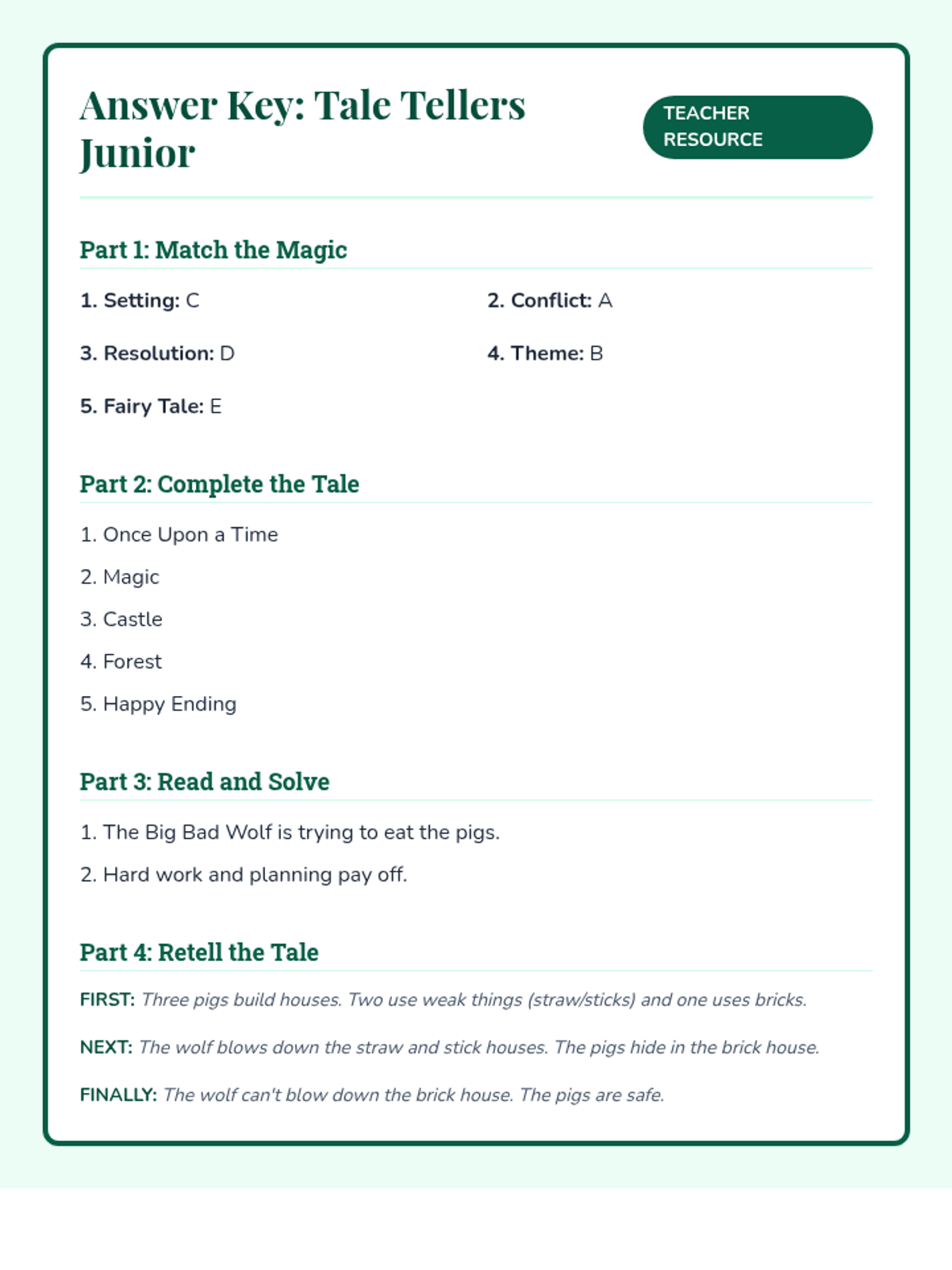
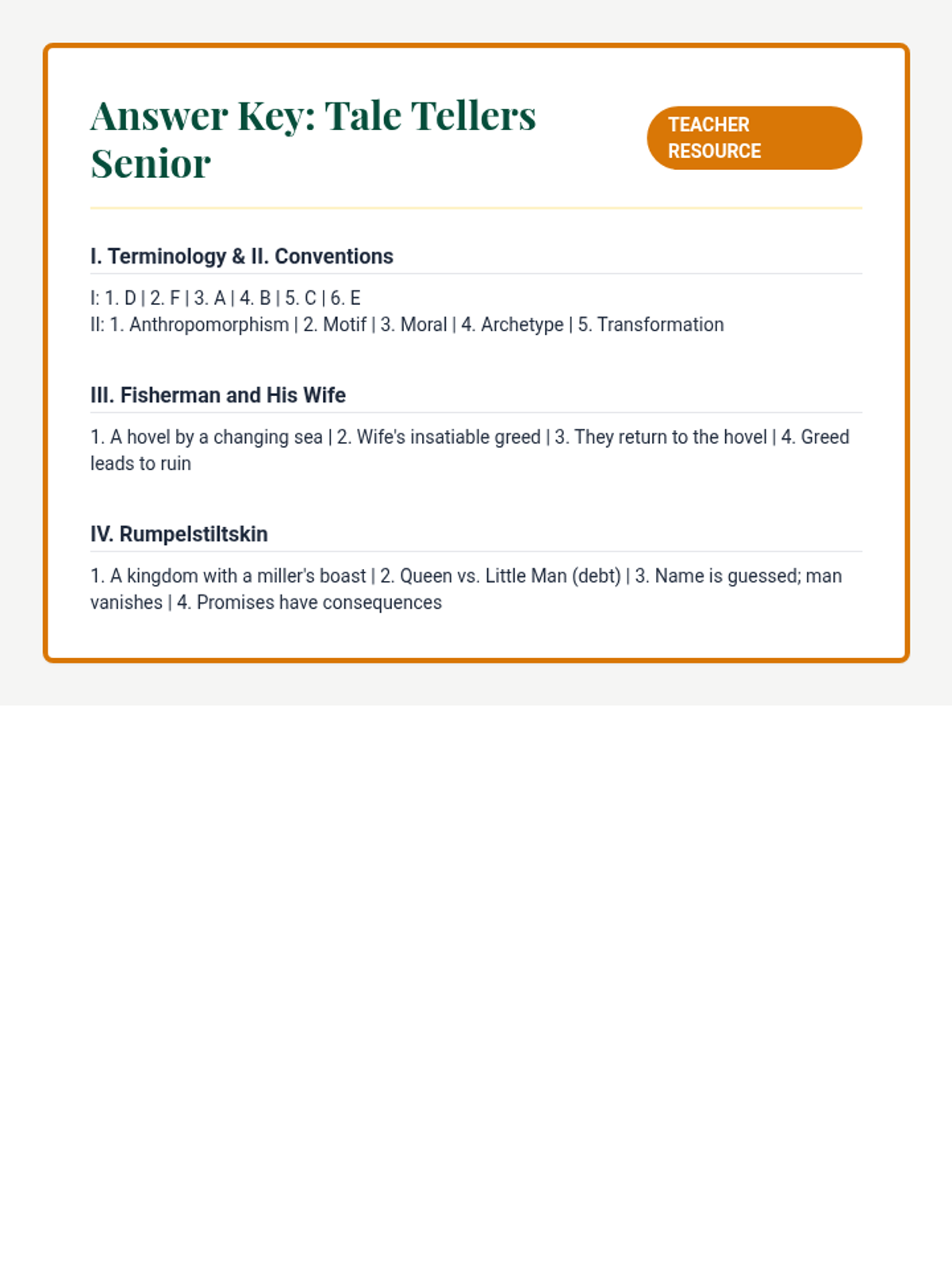
A comprehensive assessment on fairy tale elements and plot structures for elementary students, featuring two differentiated levels to meet specific grade-level standards.
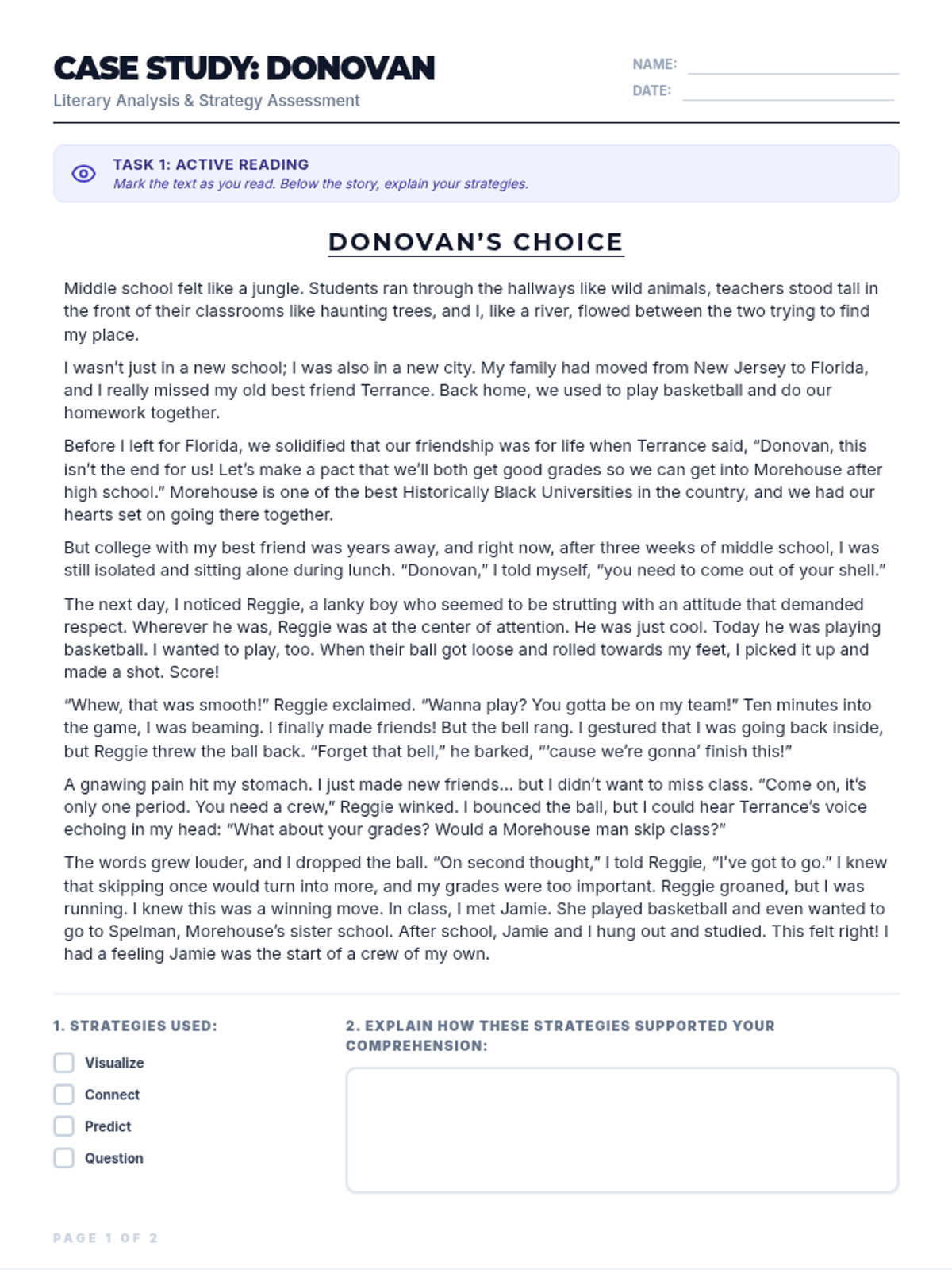
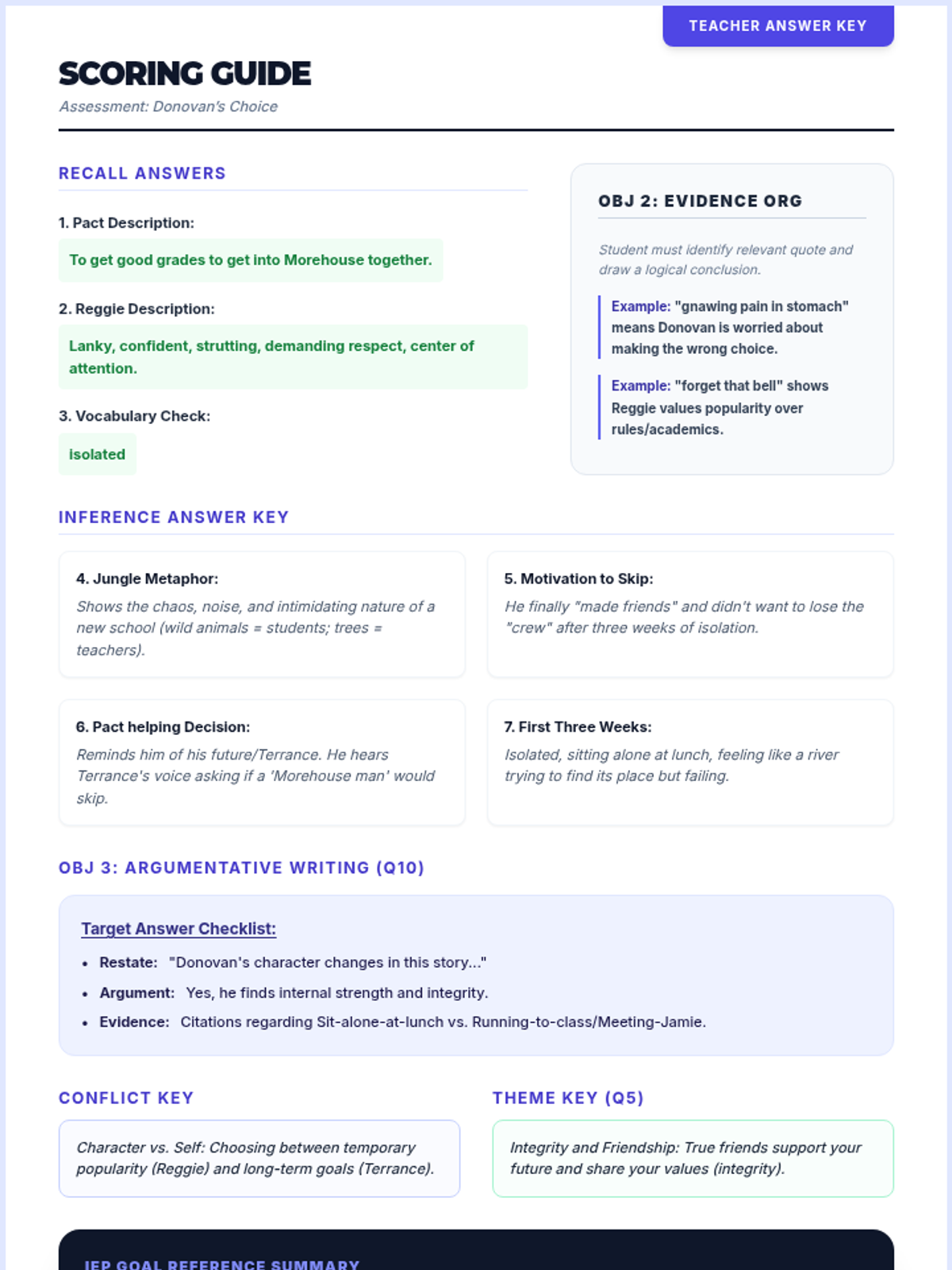
A literature-based assessment focused on evidence-based reading, active strategy reflection, and identifying conflict and theme through the story of Donovan's social choices.
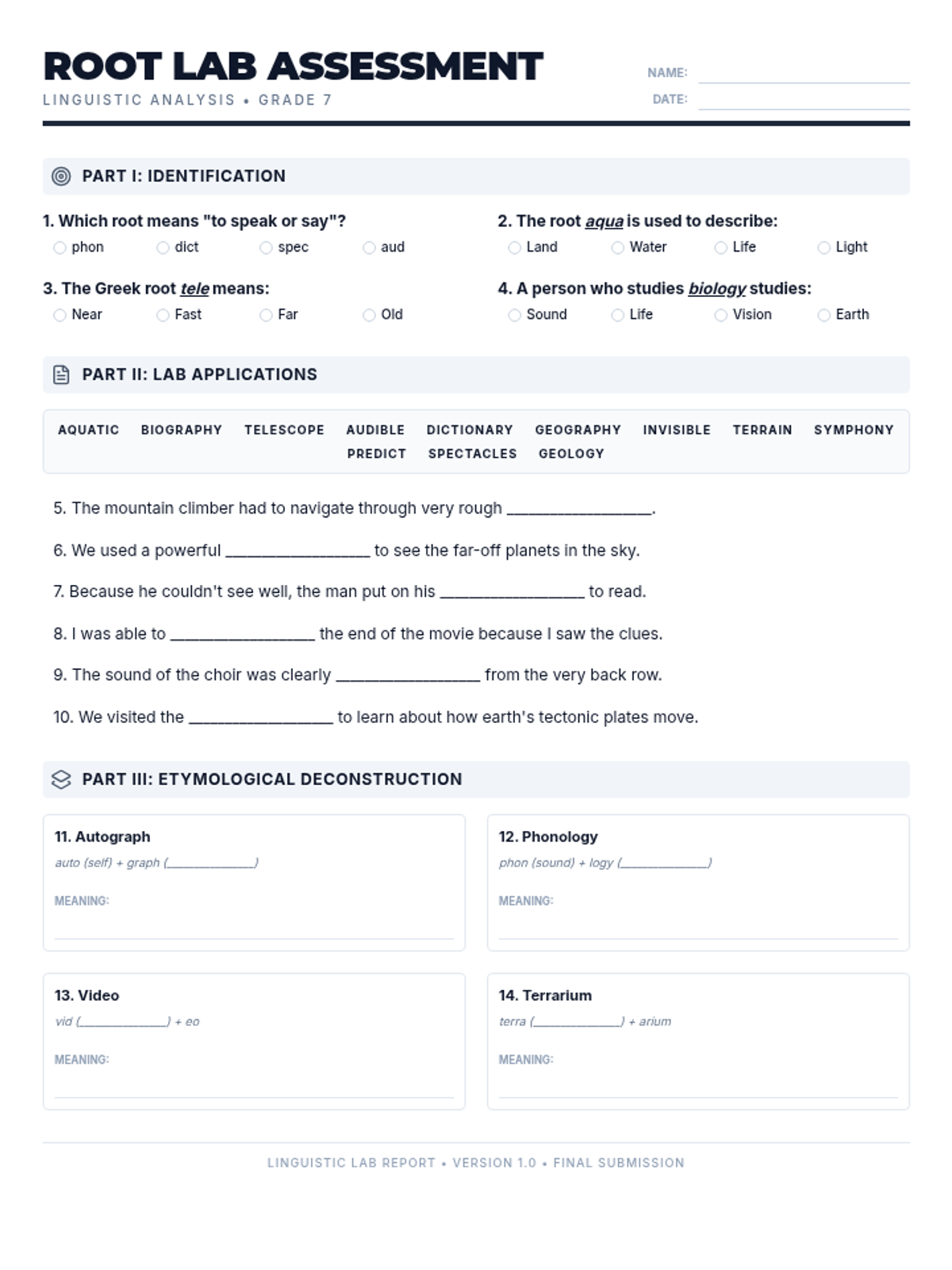
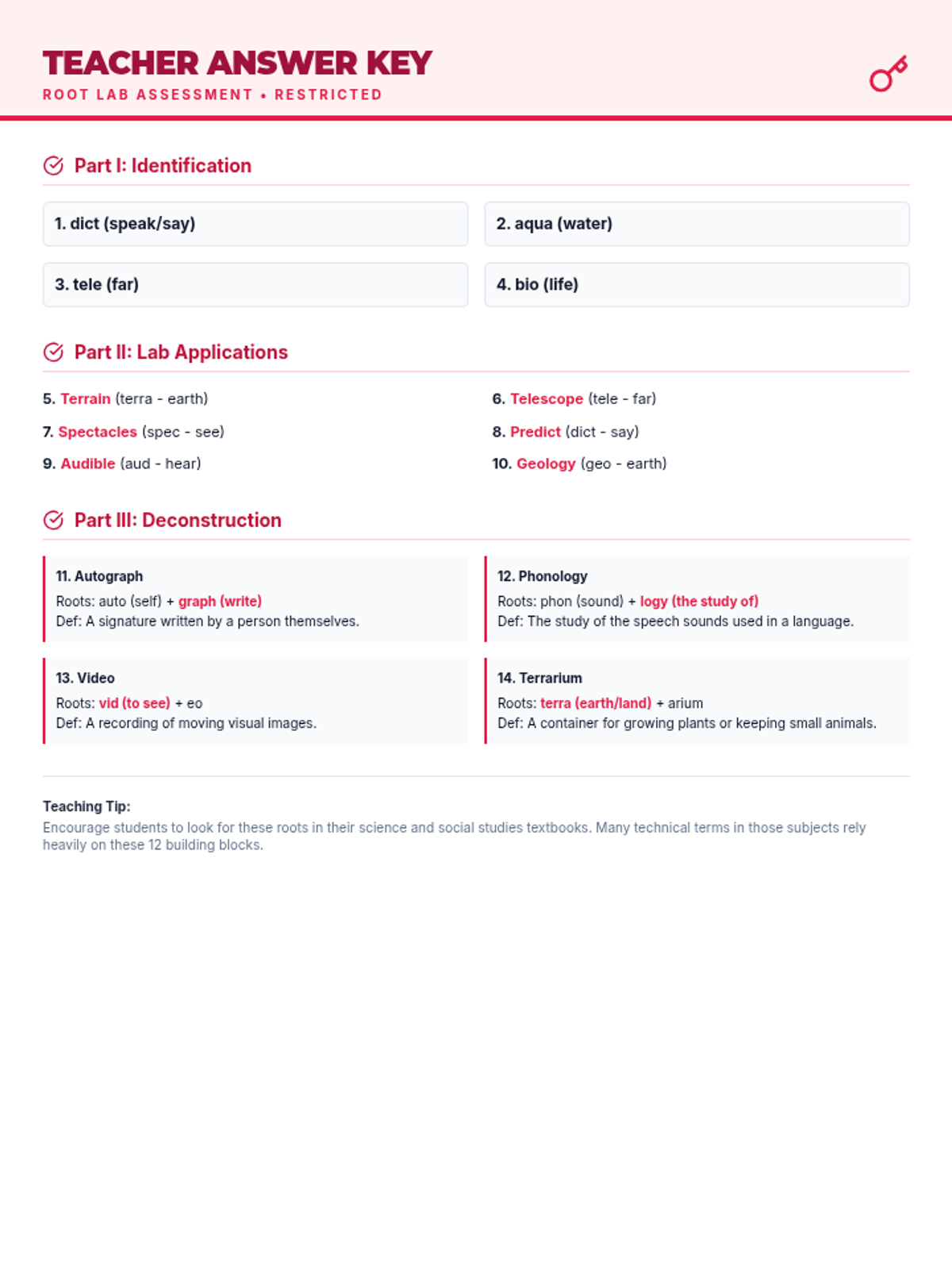
Students explore 10 common Greek and Latin roots, identifying their meanings and applying them to determine the definitions of complex academic vocabulary.
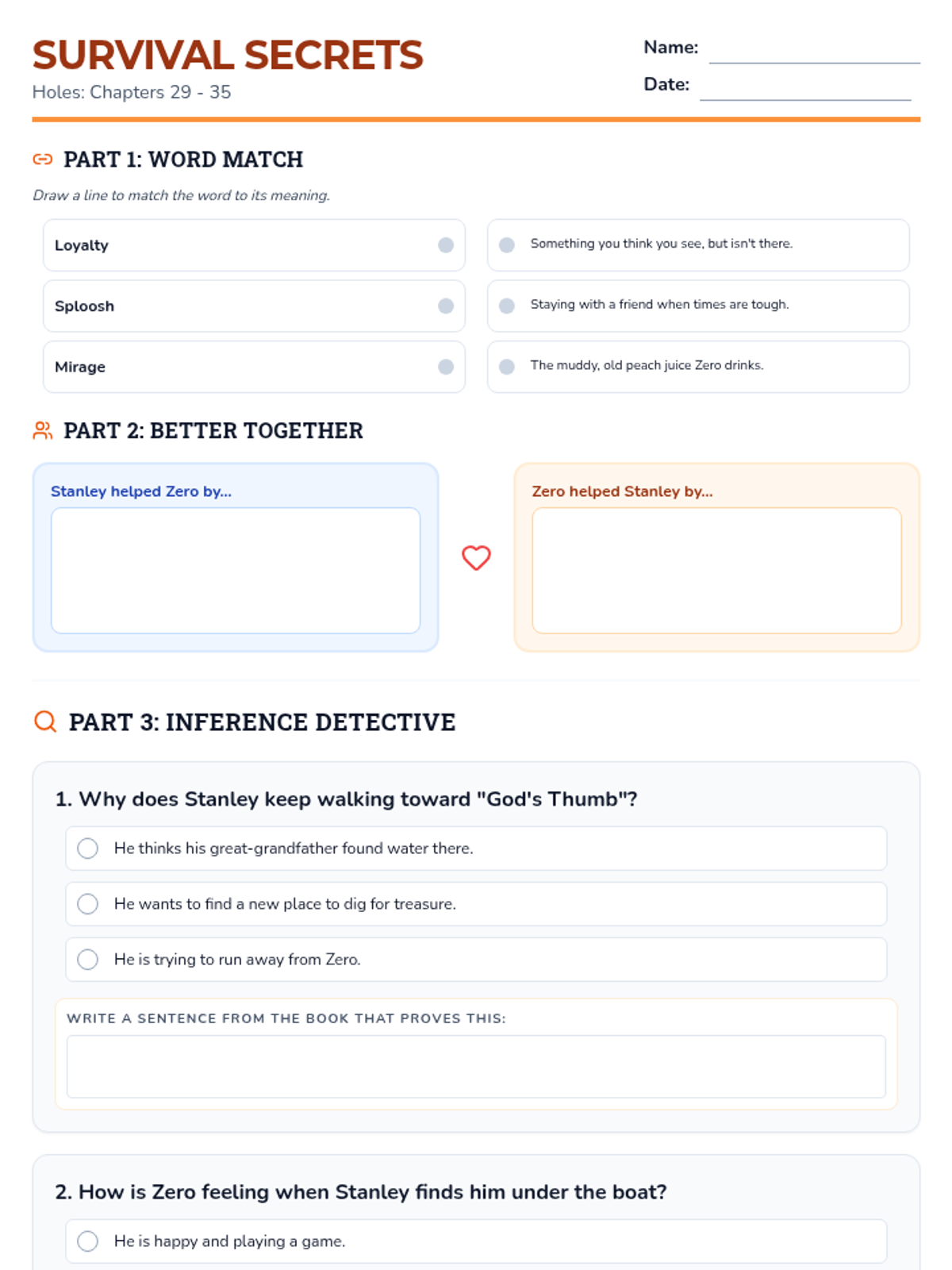
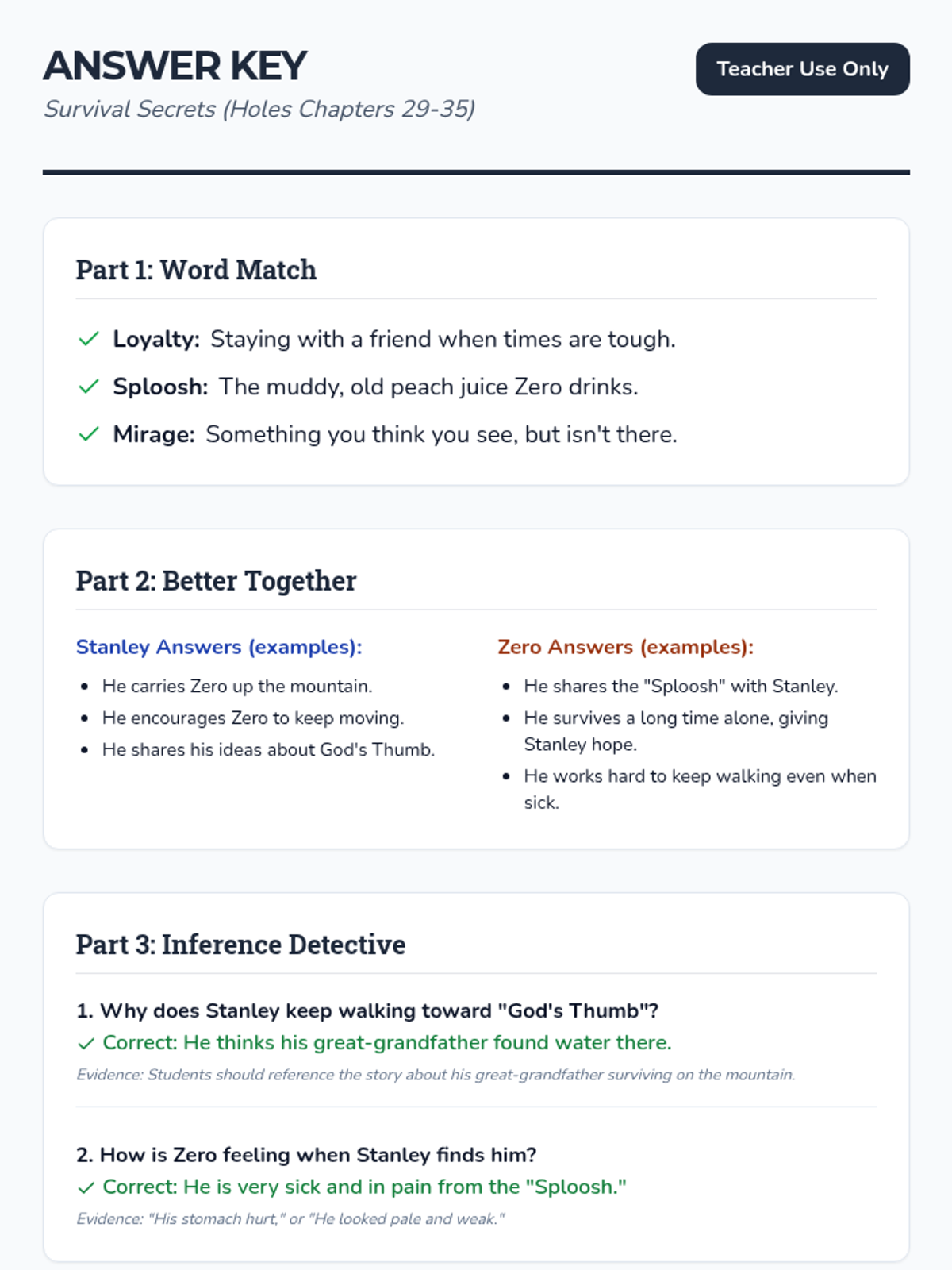
A lesson focused on chapters 29-35 of Louis Sachar's Holes, exploring the deepening friendship between Stanley and Zero as they face the challenges of the desert. Students will analyze character relationships, make inferences about their survival, and identify the central theme of loyalty.
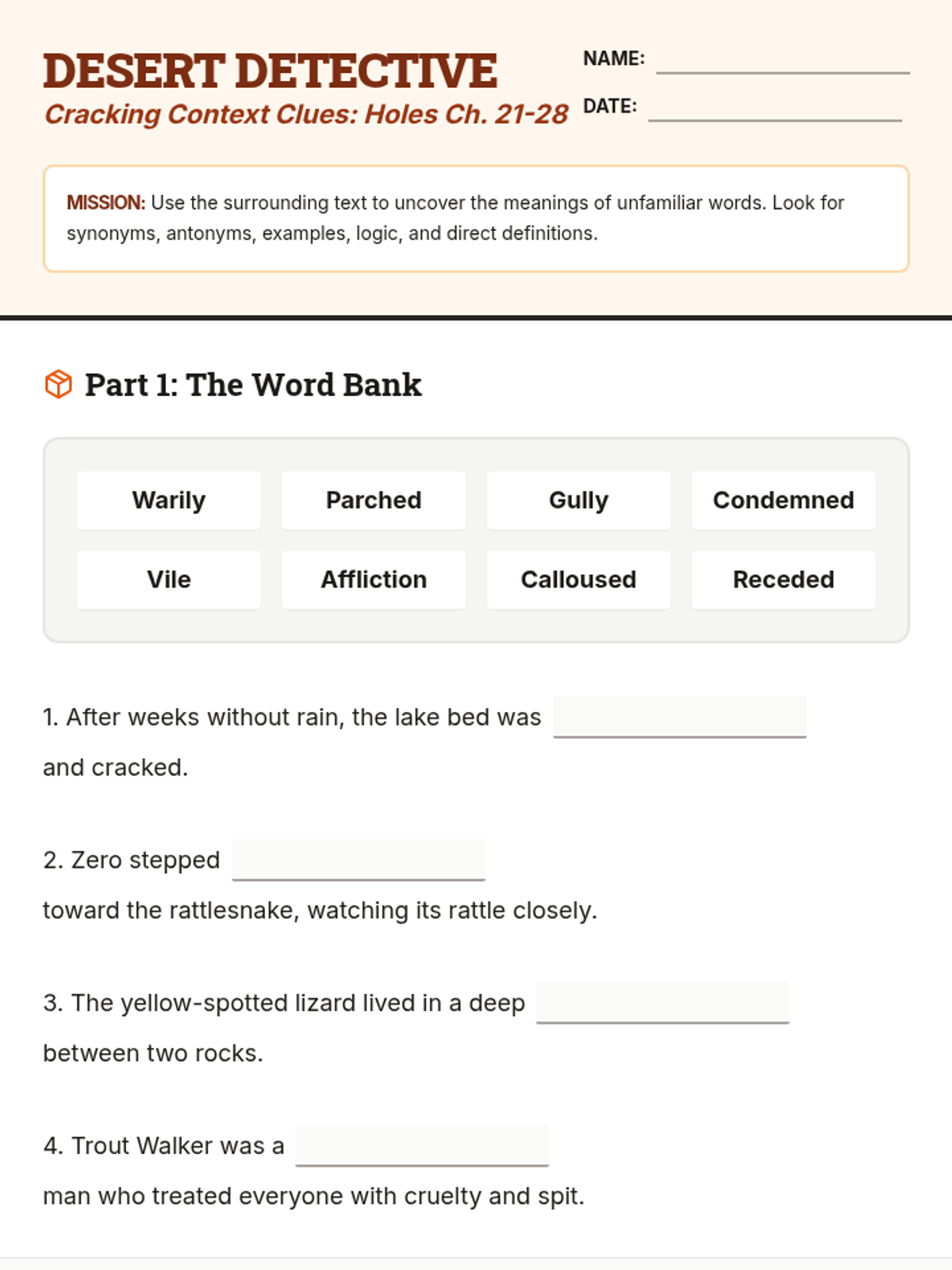
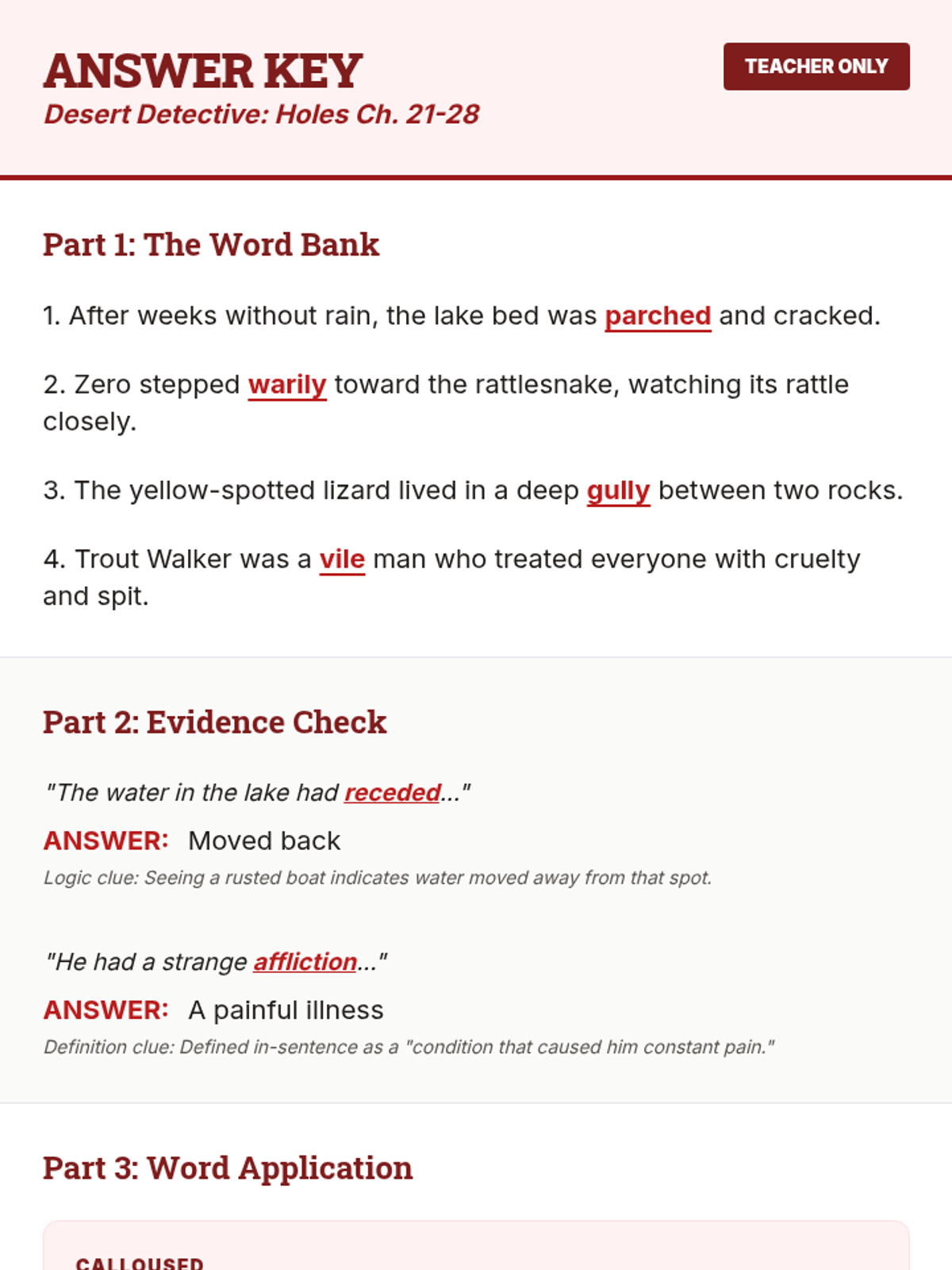
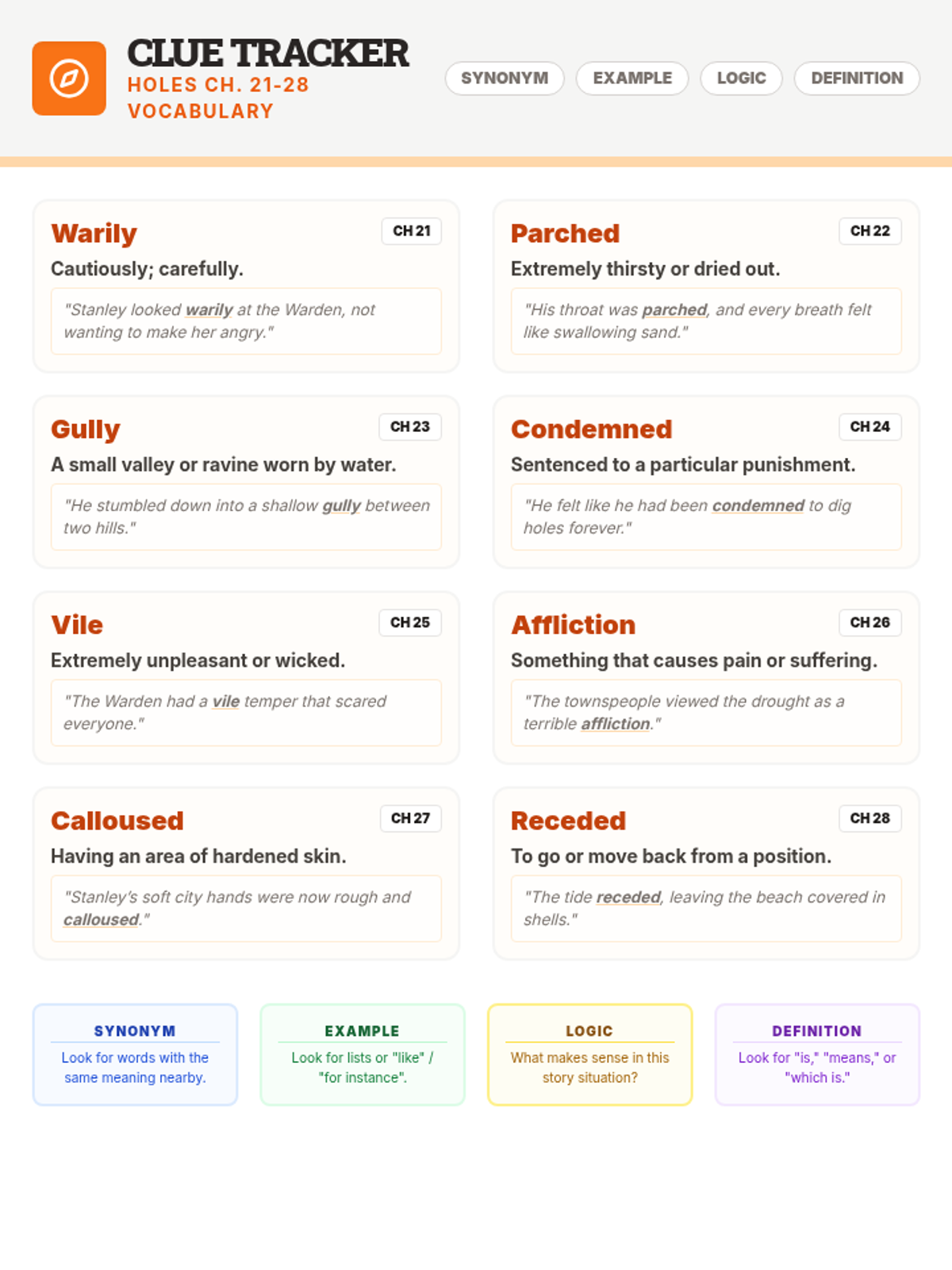
A deep dive into context clue strategies using key vocabulary from chapters 21-28 of Holes, featuring multi-level support for diverse learners.
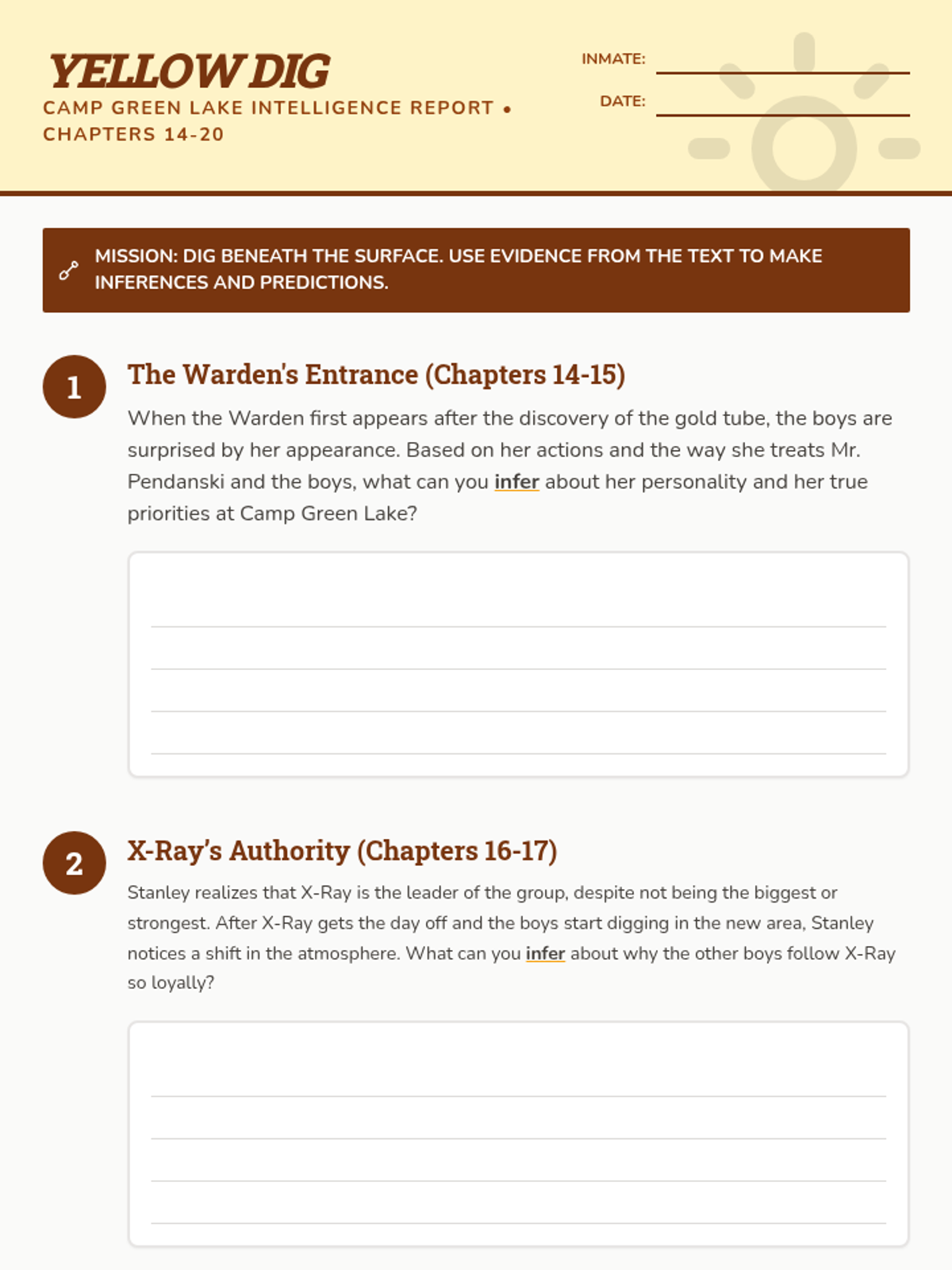
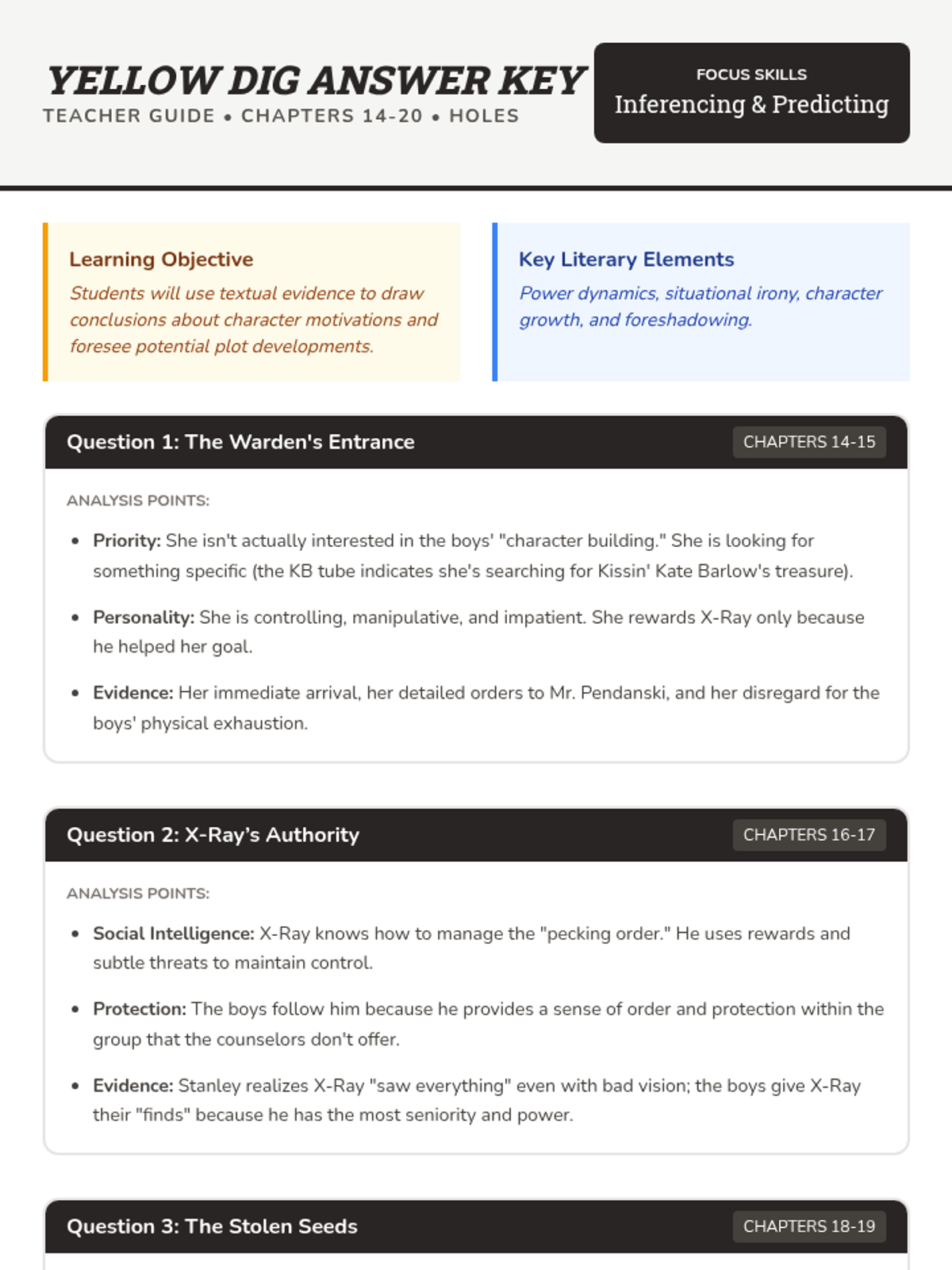
This lesson focuses on chapters 14-20 of Louis Sachar's 'Holes', emphasizing the development of inferencing and predicting skills as students analyze character motivations and plot developments.
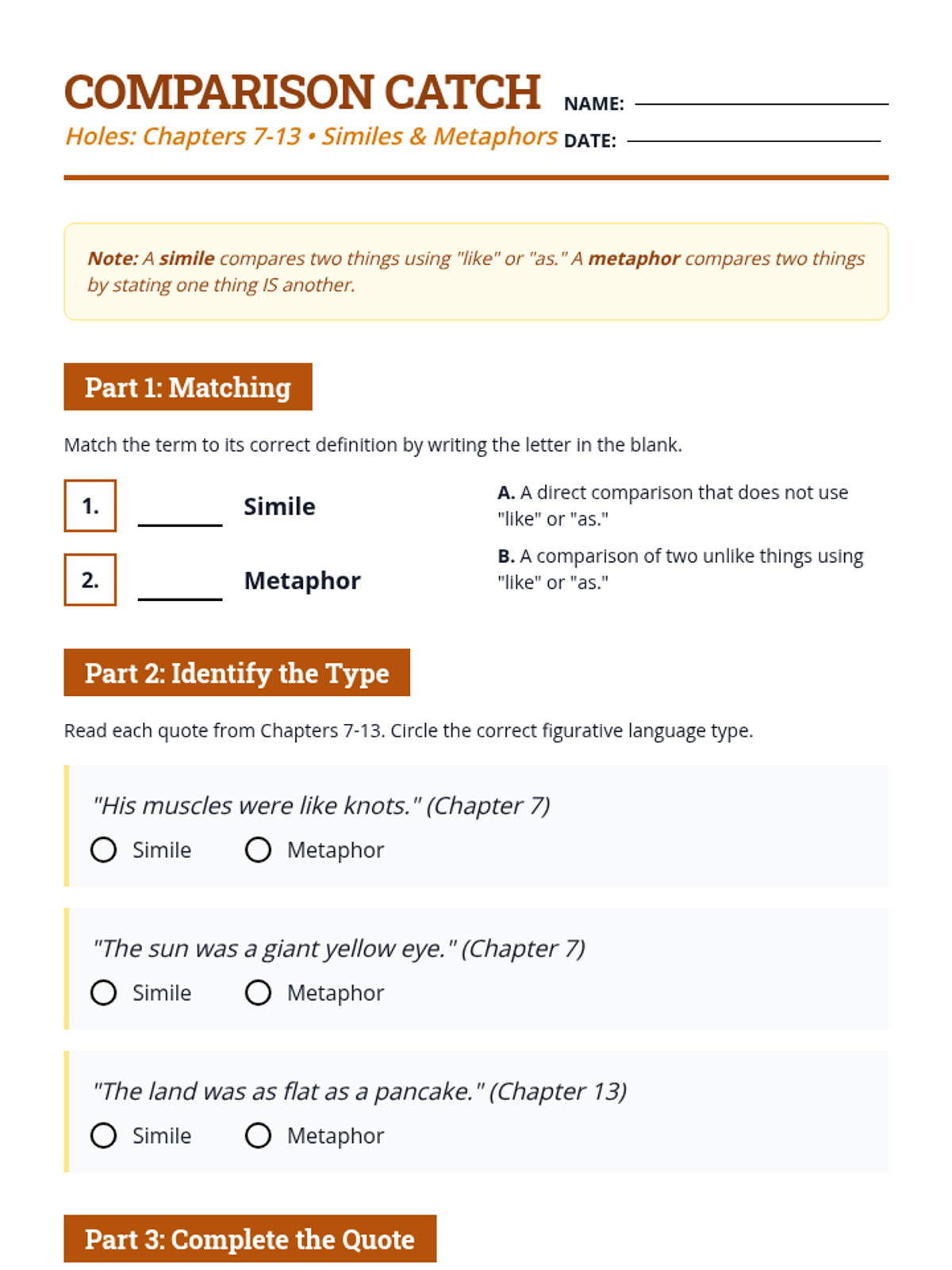
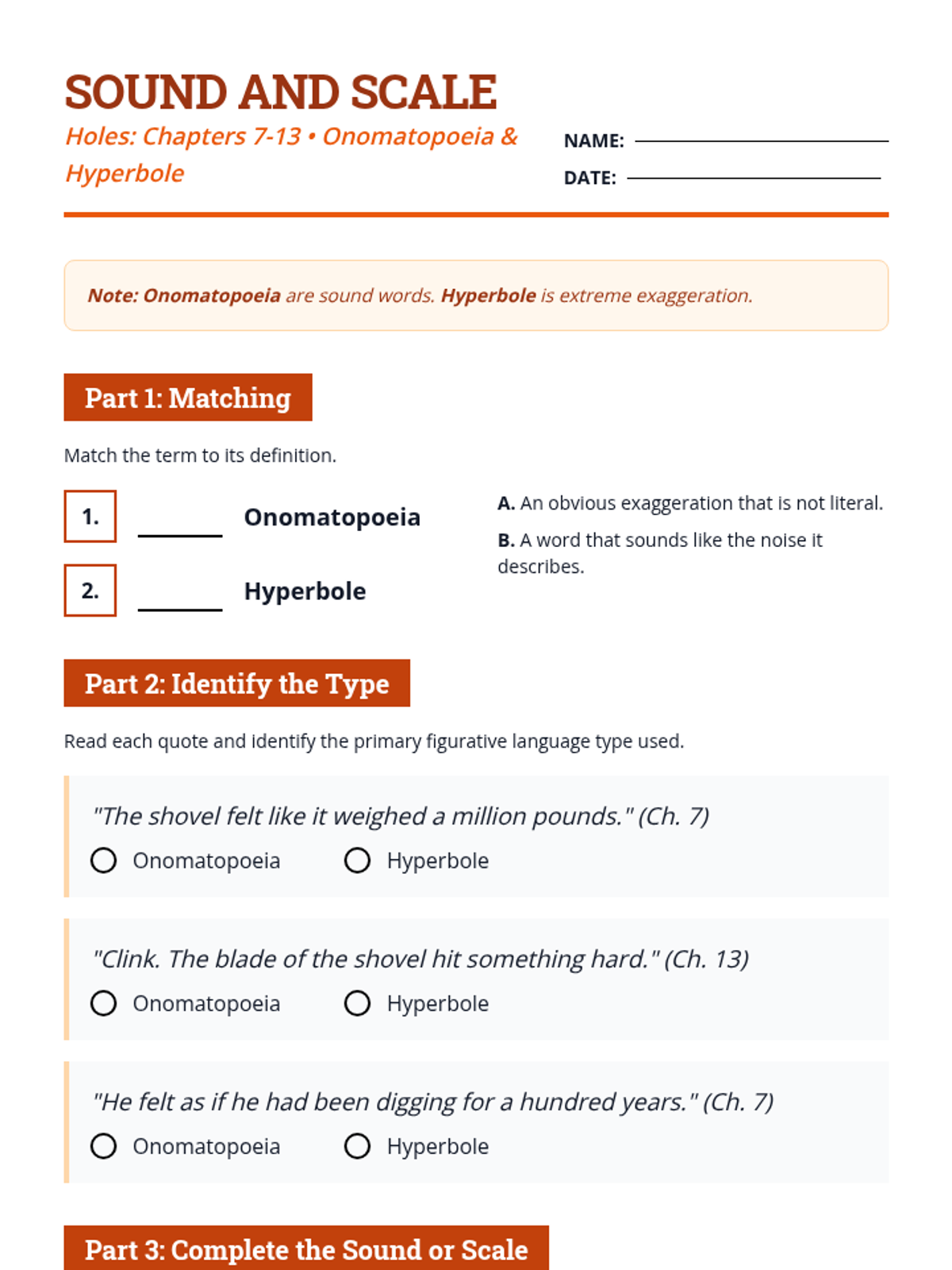
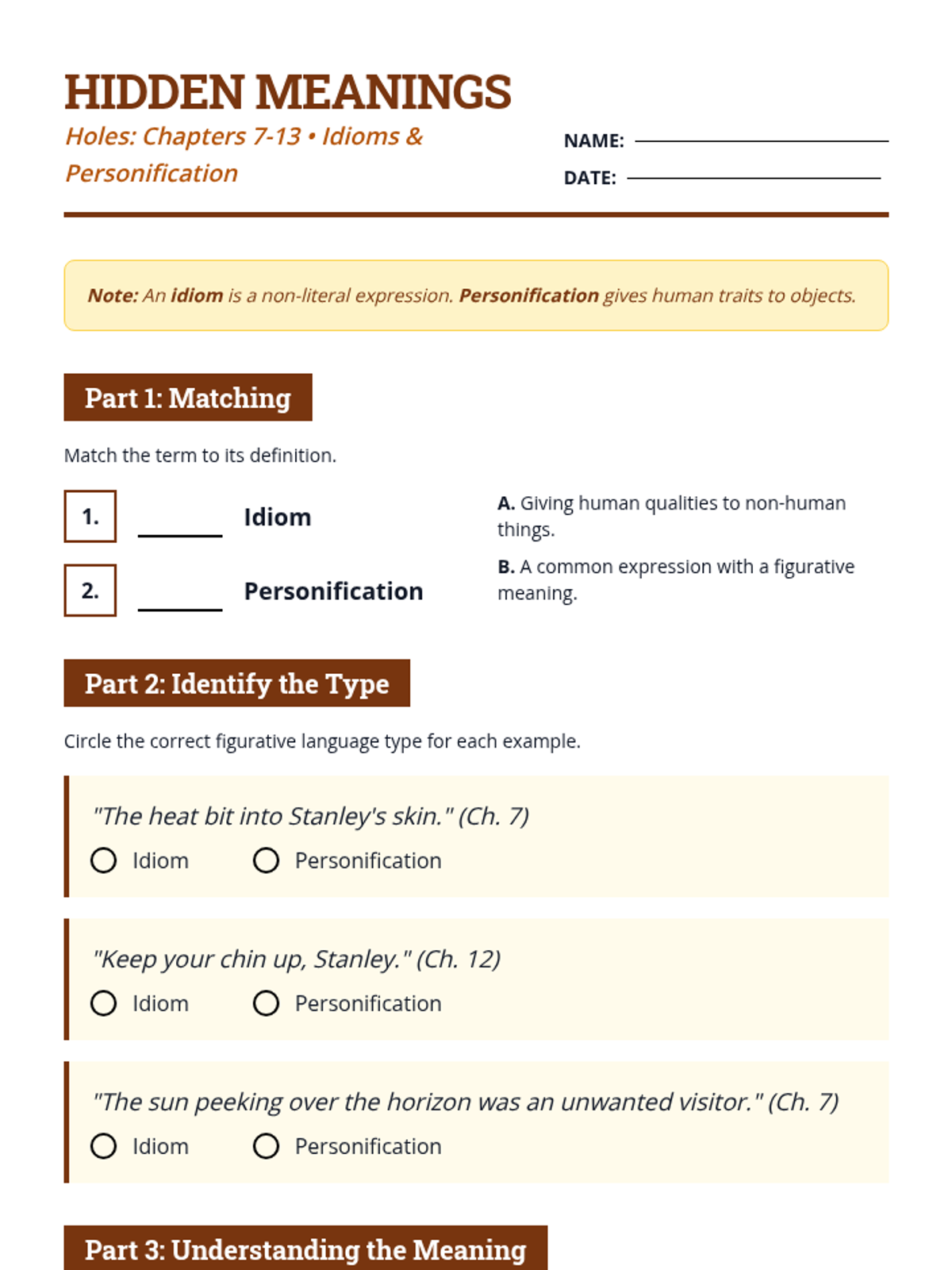
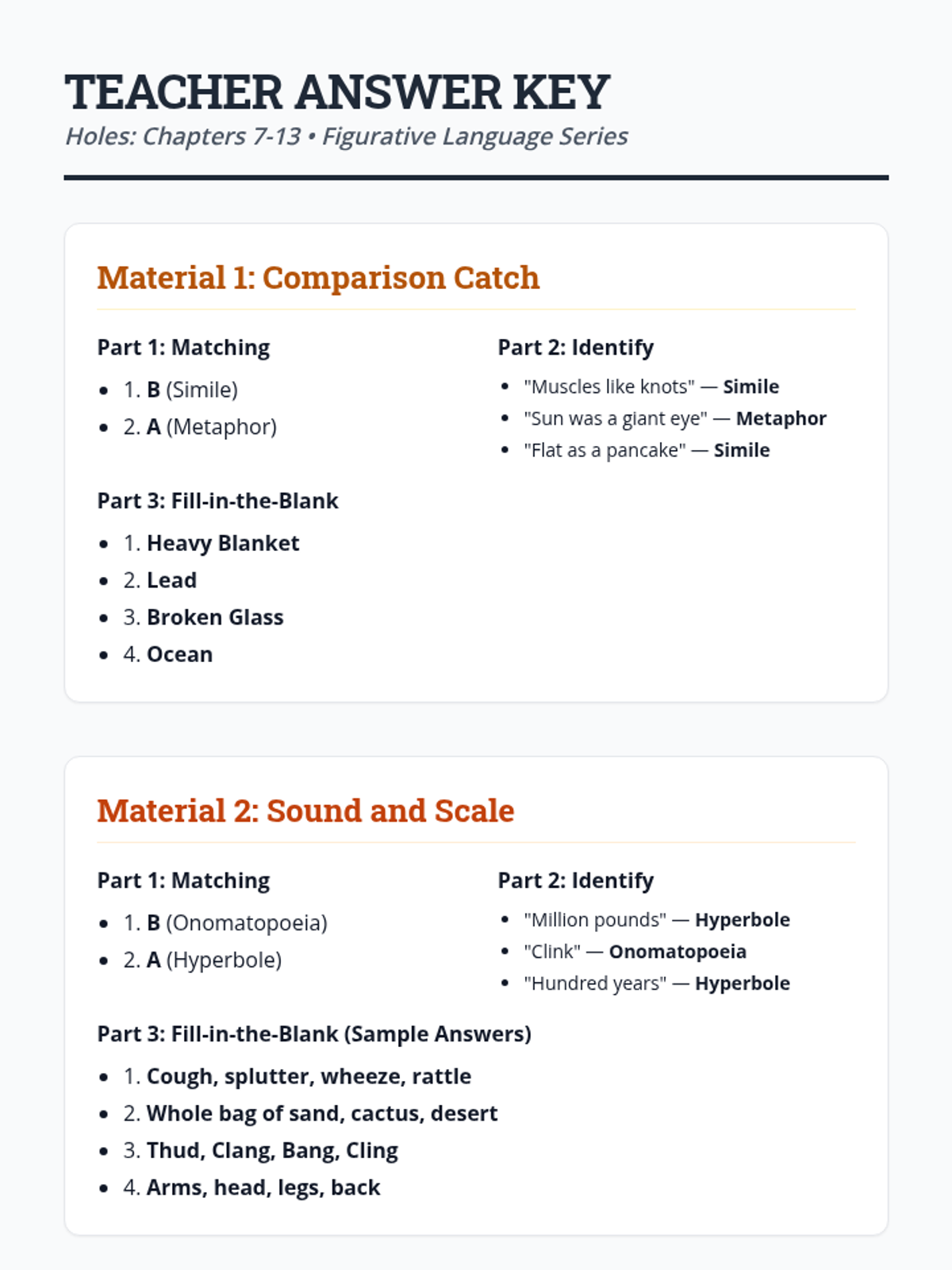
A lesson exploring figurative language in Chapters 7-13 of Louis Sachar's Holes, focusing on identifying and analyzing similes, metaphors, onomatopoeia, hyperbole, idioms, and personification through the lens of life at Camp Green Lake.
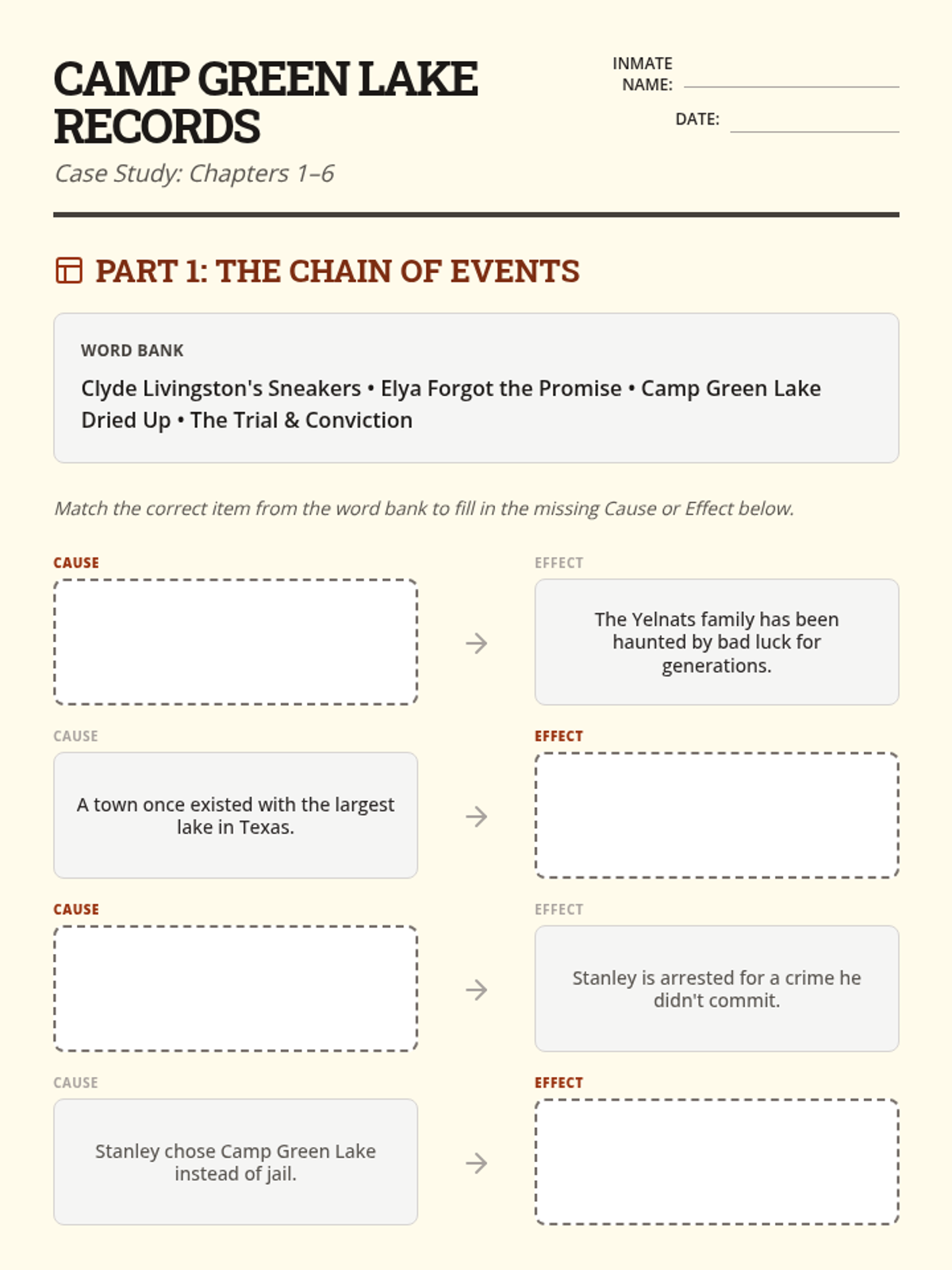
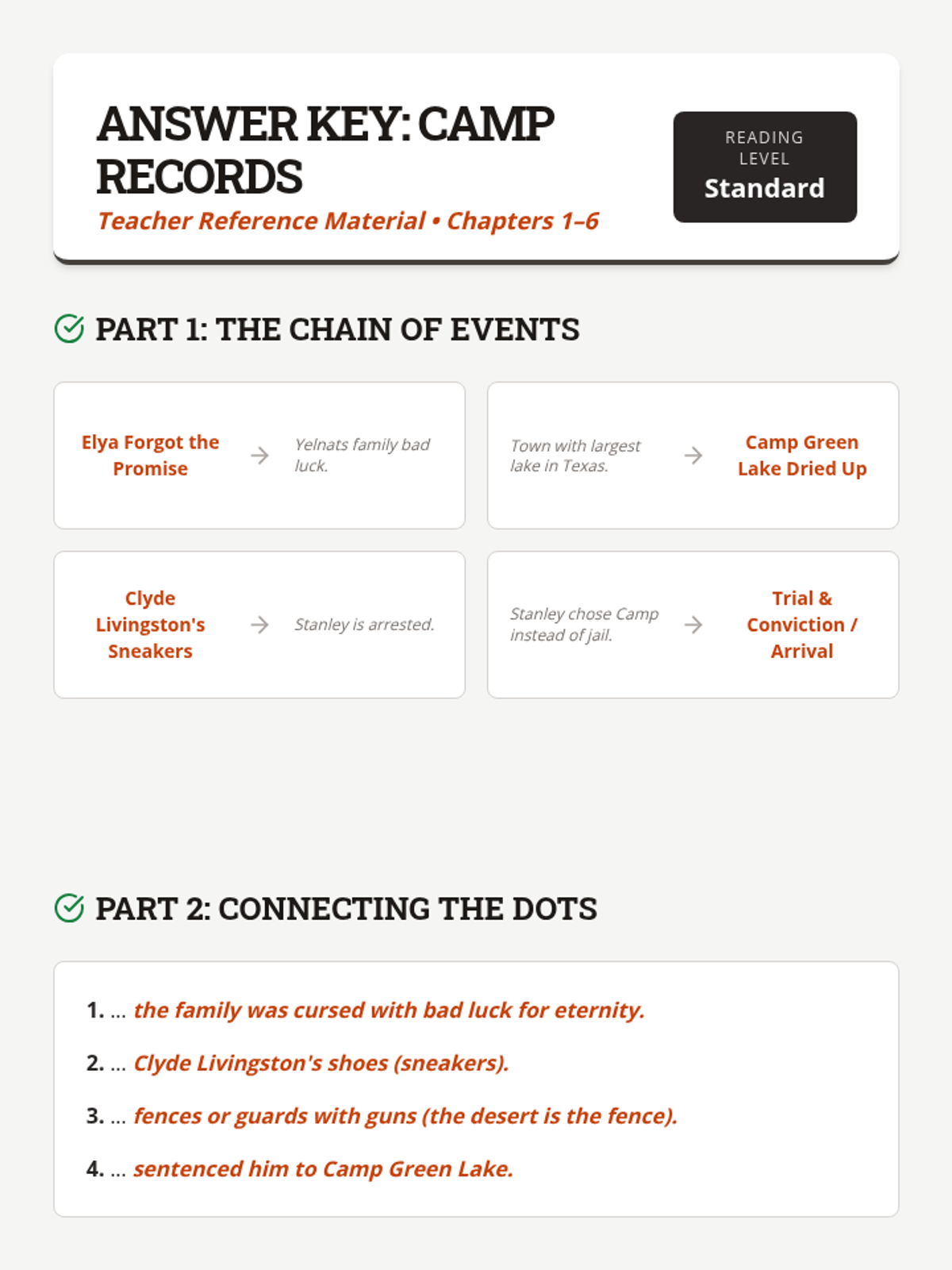
A focused exploration of cause and effect relationships in the opening chapters of Louis Sachar's 'Holes', covering Stanley's arrival at Camp Green Lake and the history of the Yelnats family curse.
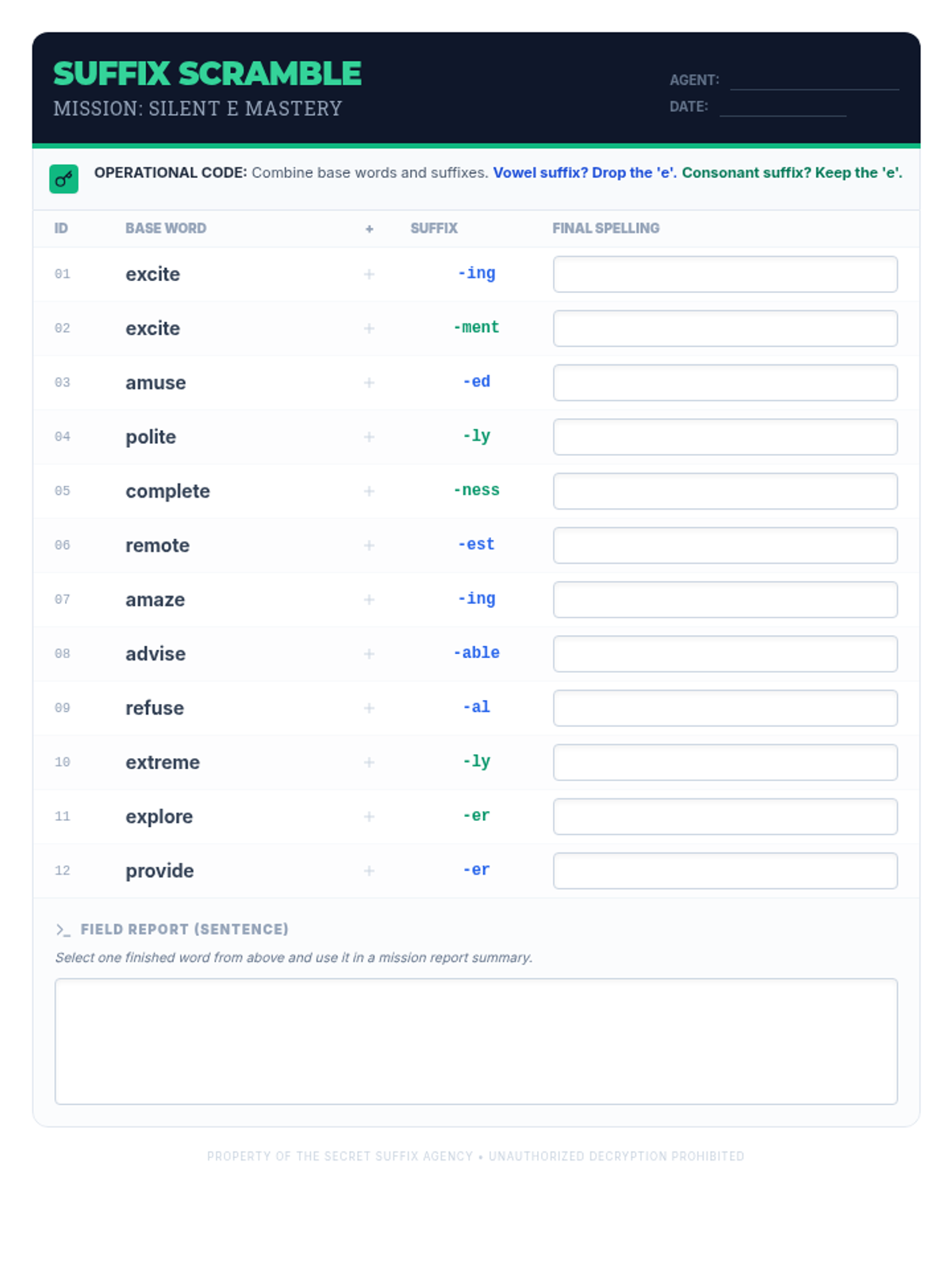
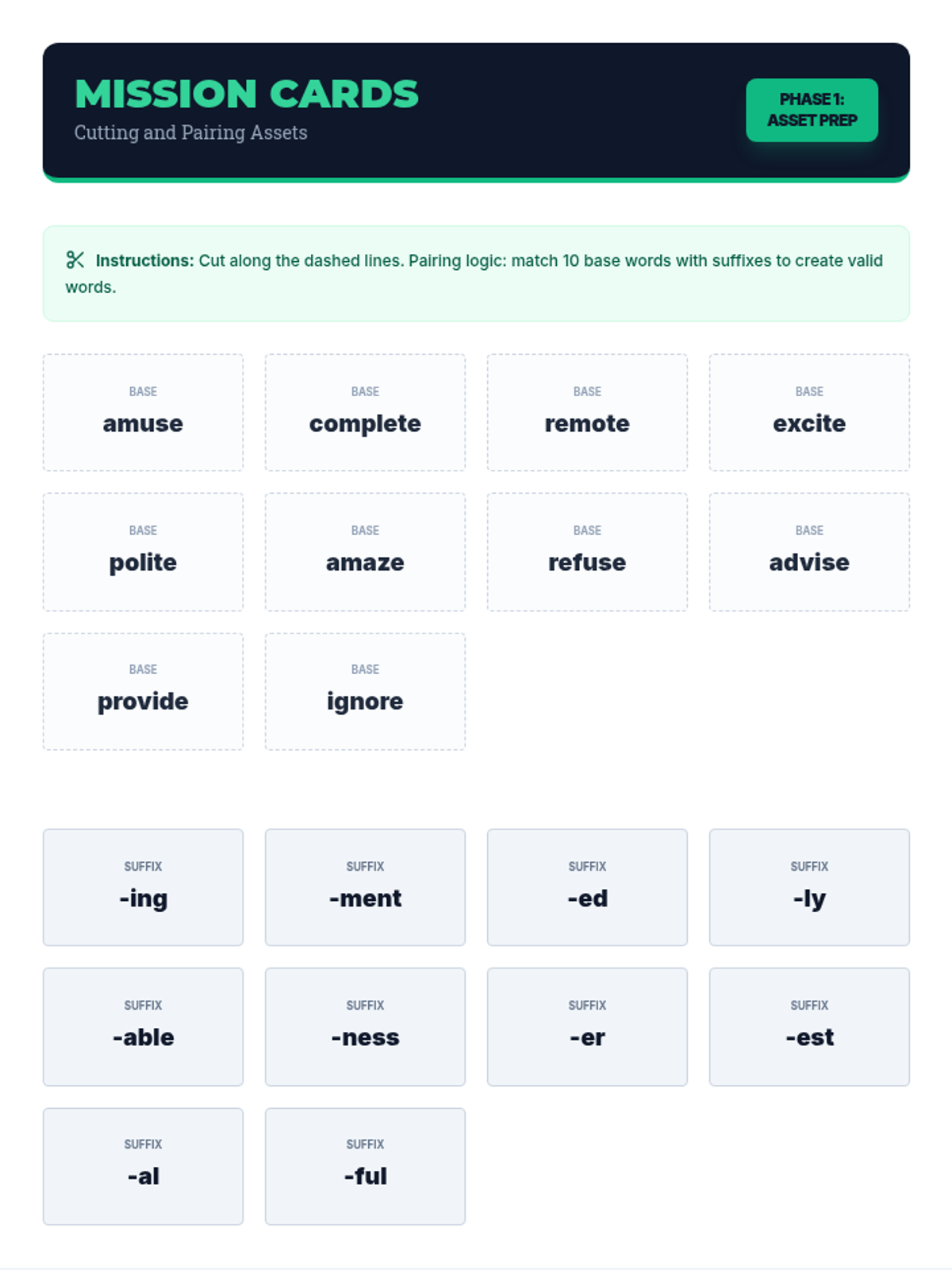
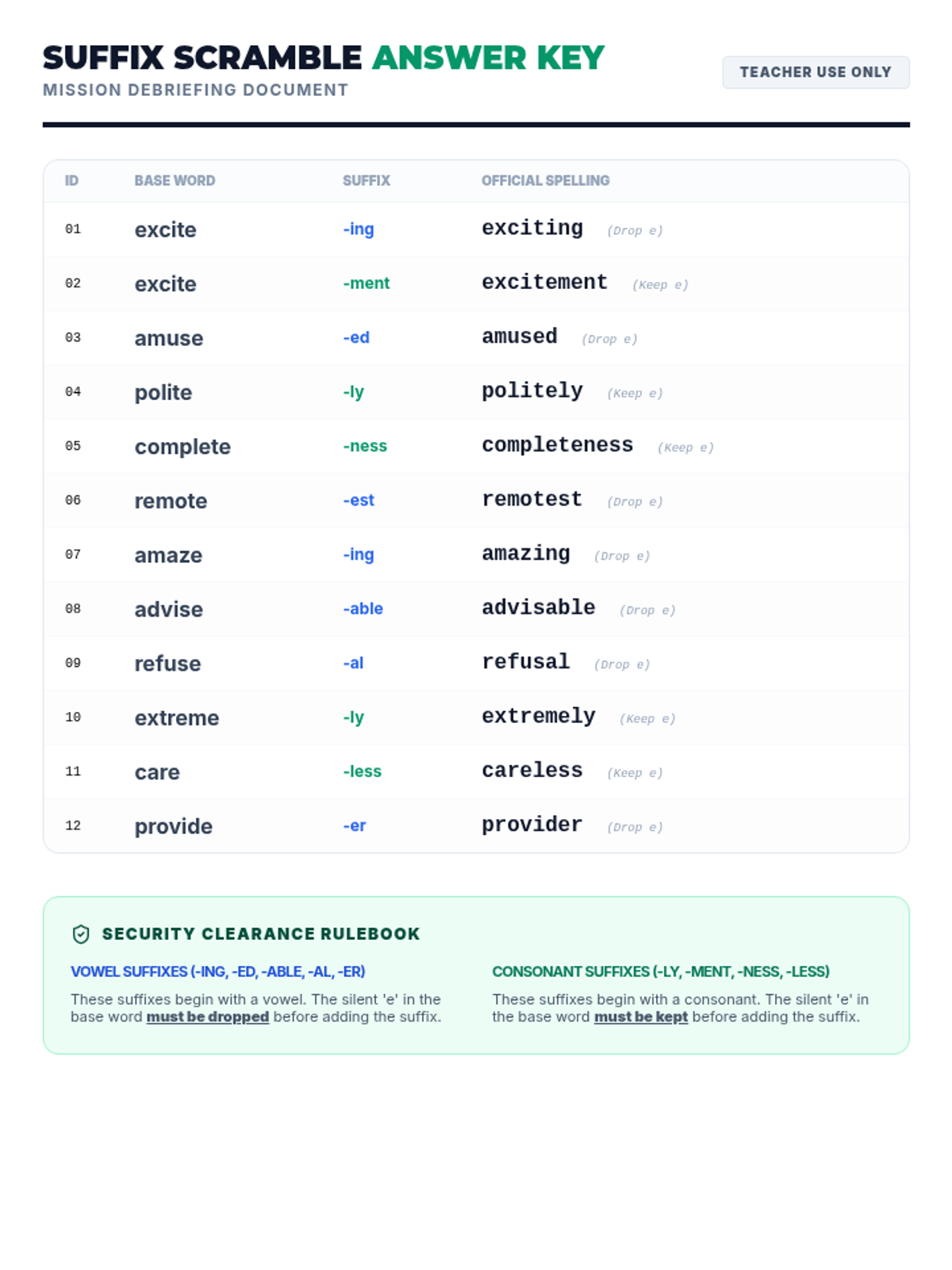
A comprehensive lesson on adding suffixes to multi-syllabic words ending in a silent 'e', focusing on the rules for dropping or keeping the 'e' based on the suffix type.
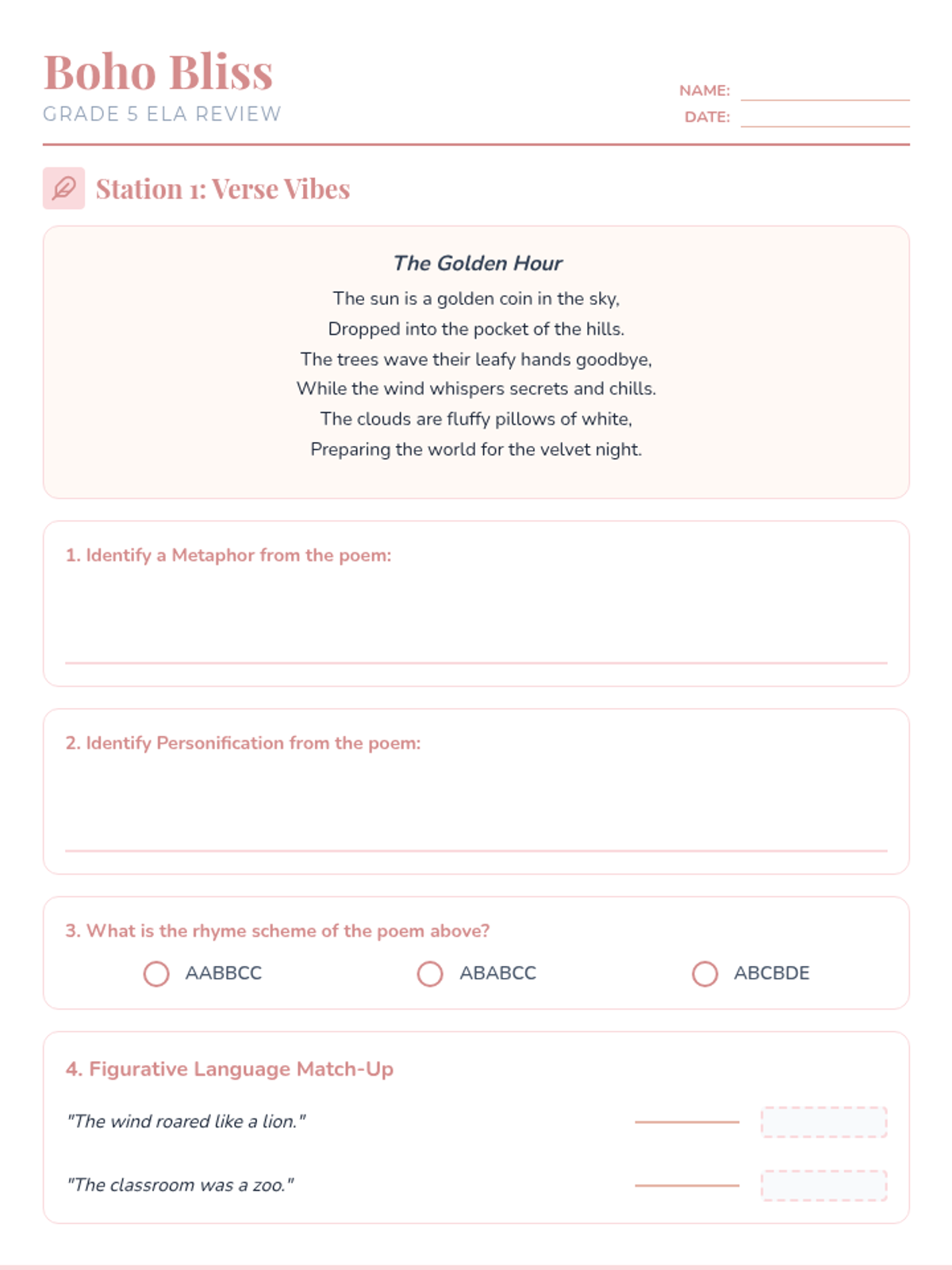
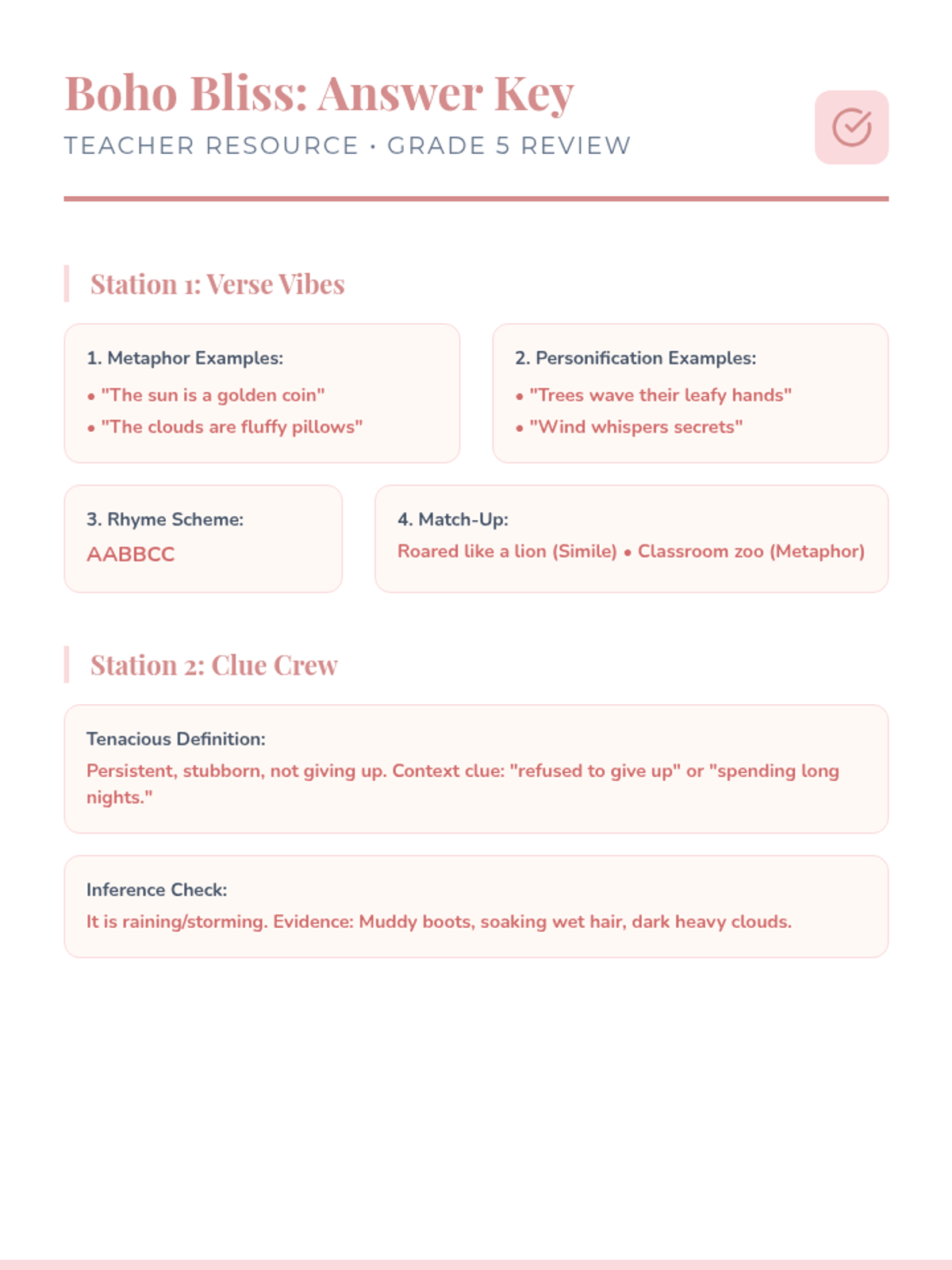
A comprehensive ELA review packet designed for 5th graders following IAR testing, featuring a fun boho-pink aesthetic. The lesson covers key domains including poetry, figurative language, context clues, main idea, inferencing, summarizing, and grammar.
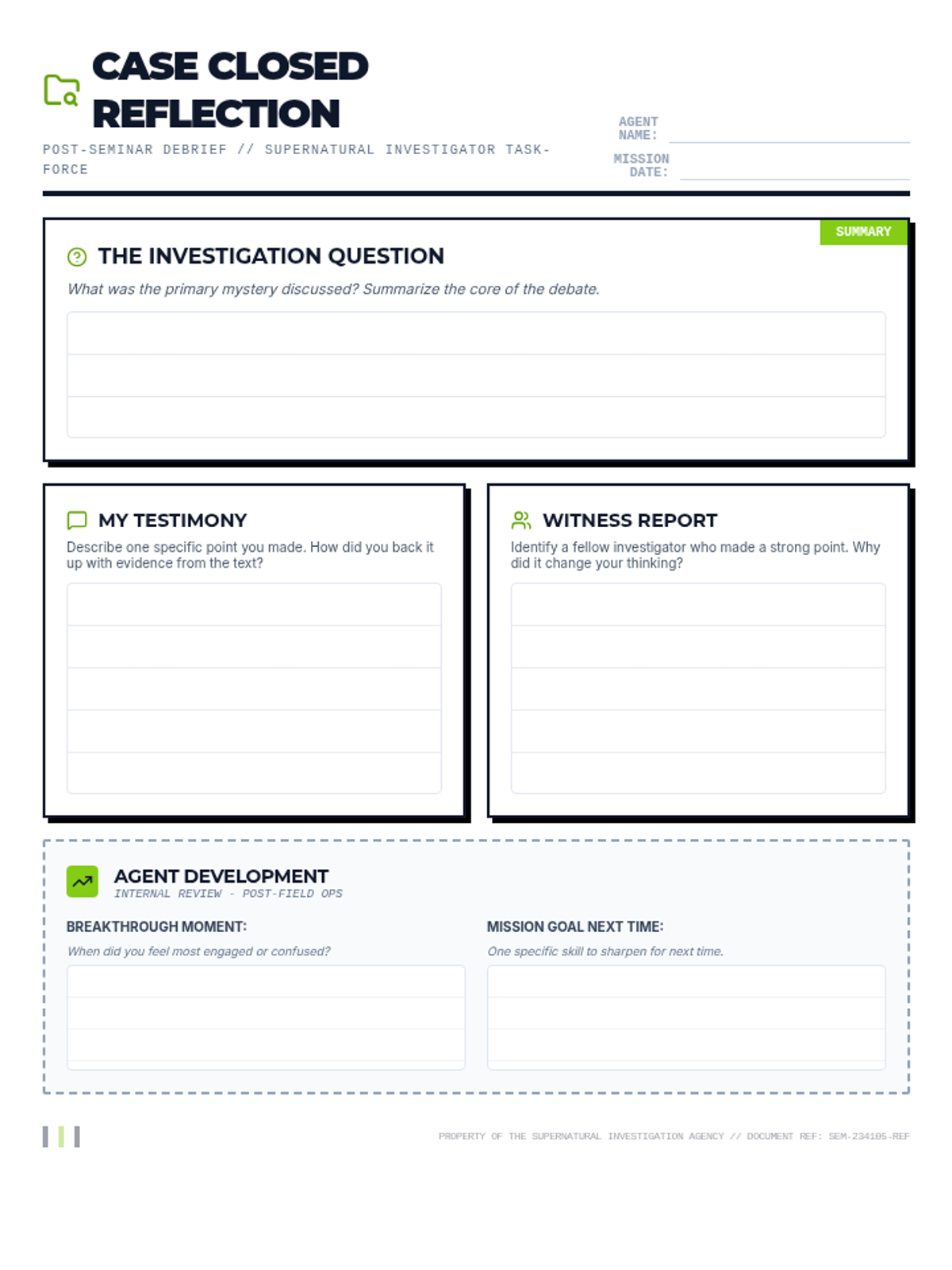
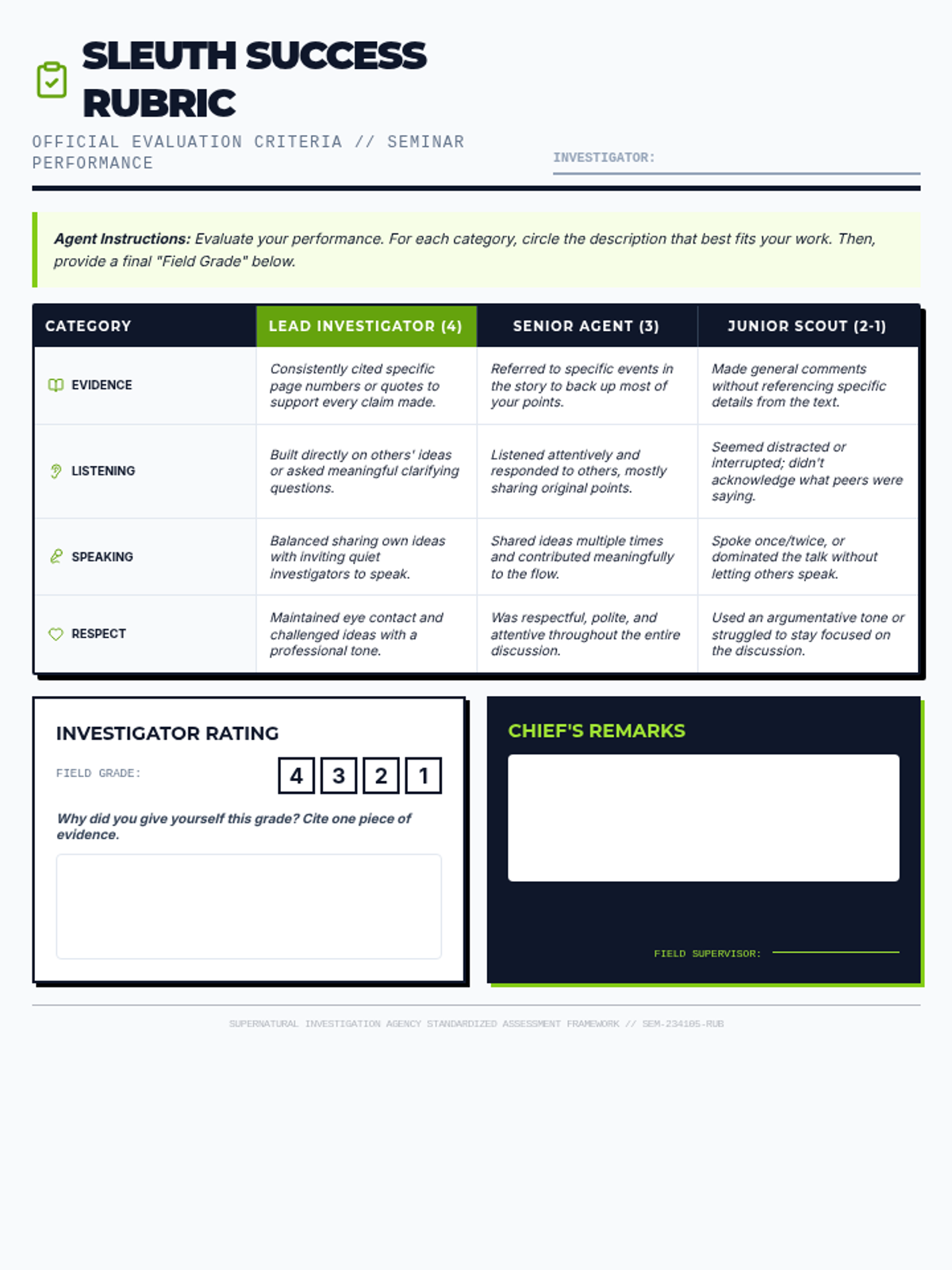
A wrap-up activity for a Socratic Seminar where students reflect on their contributions, evaluate their peers' ideas, and self-assess their performance using an investigative 'Monster Mystery' theme.
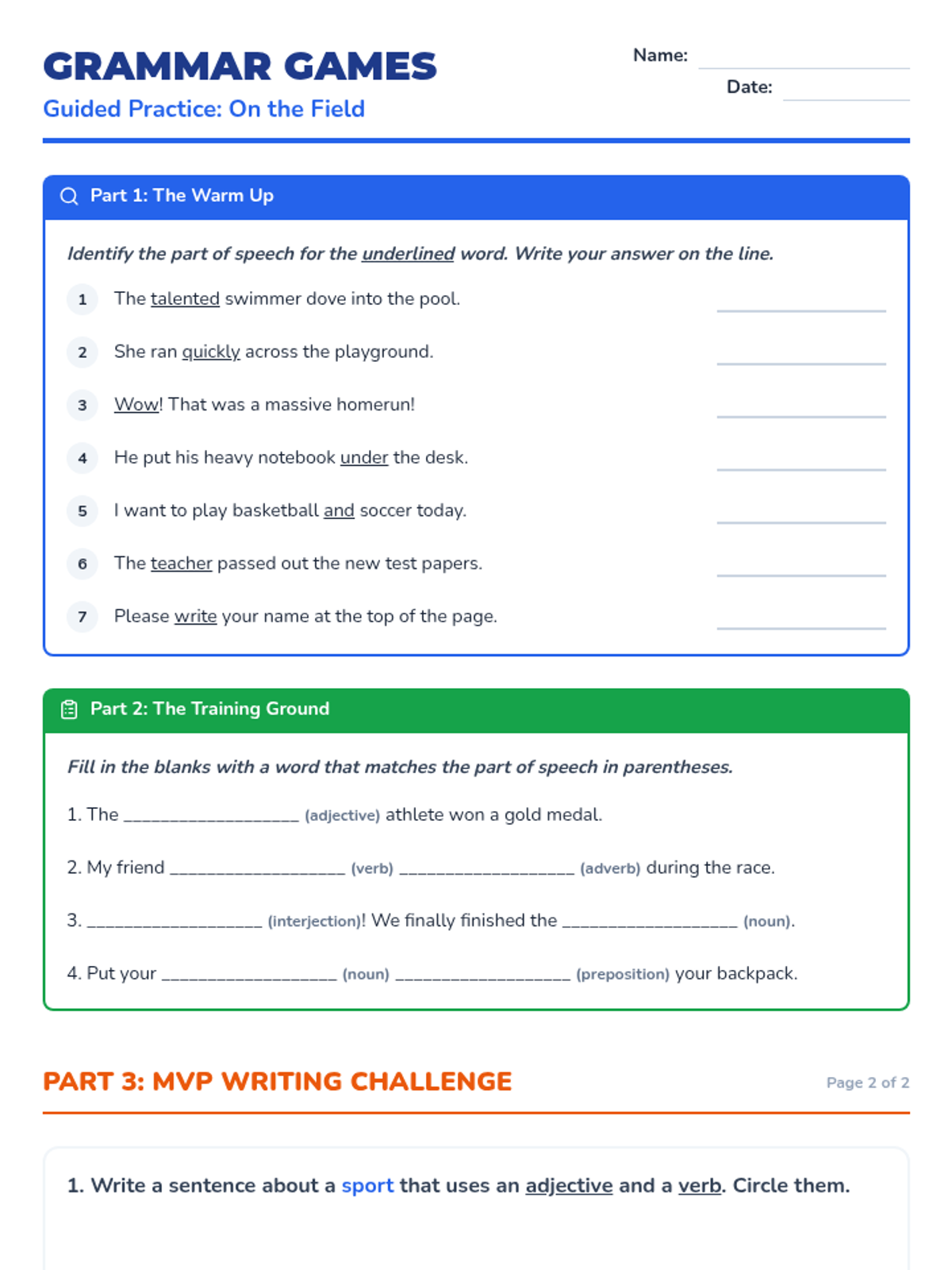
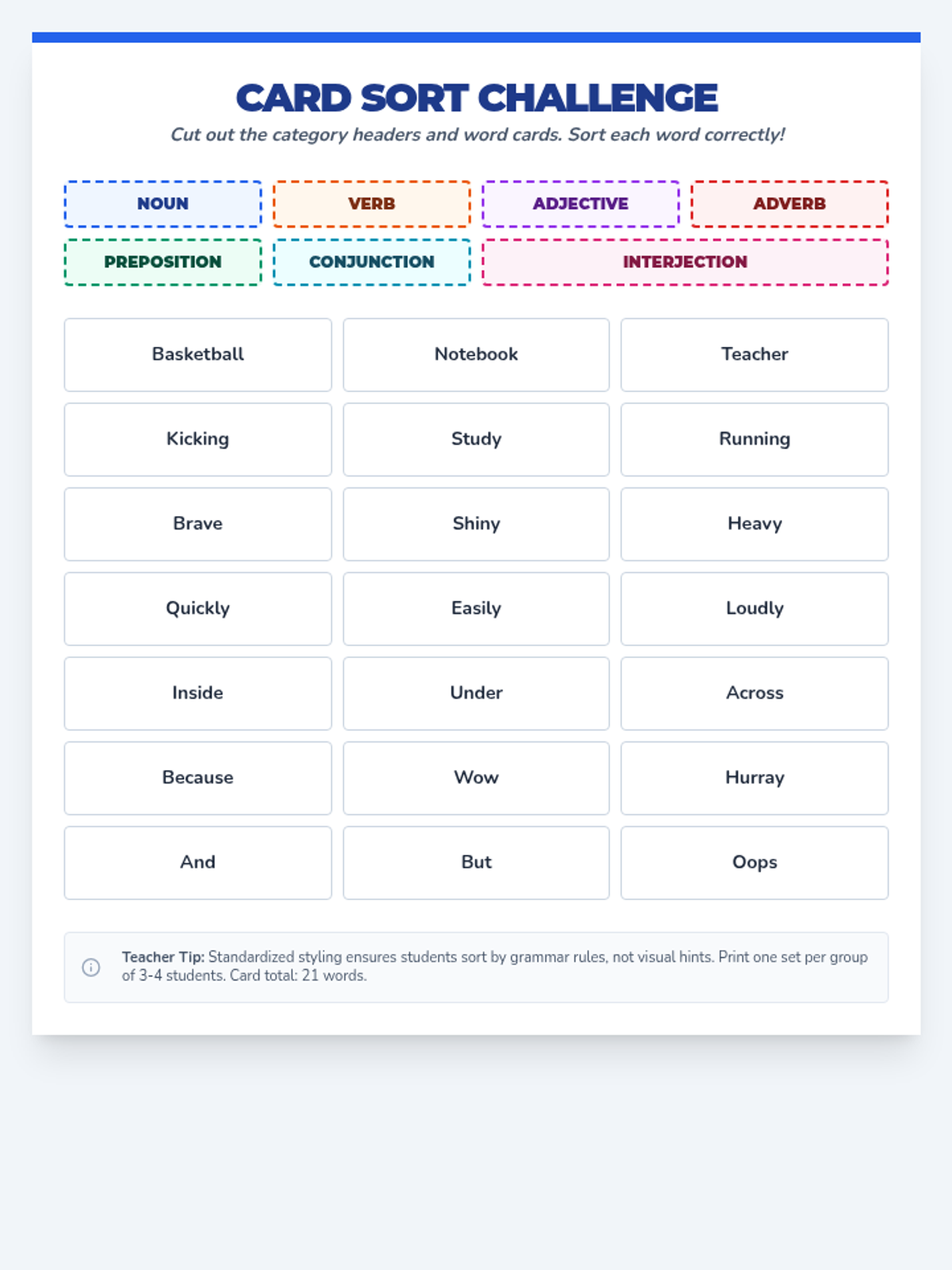
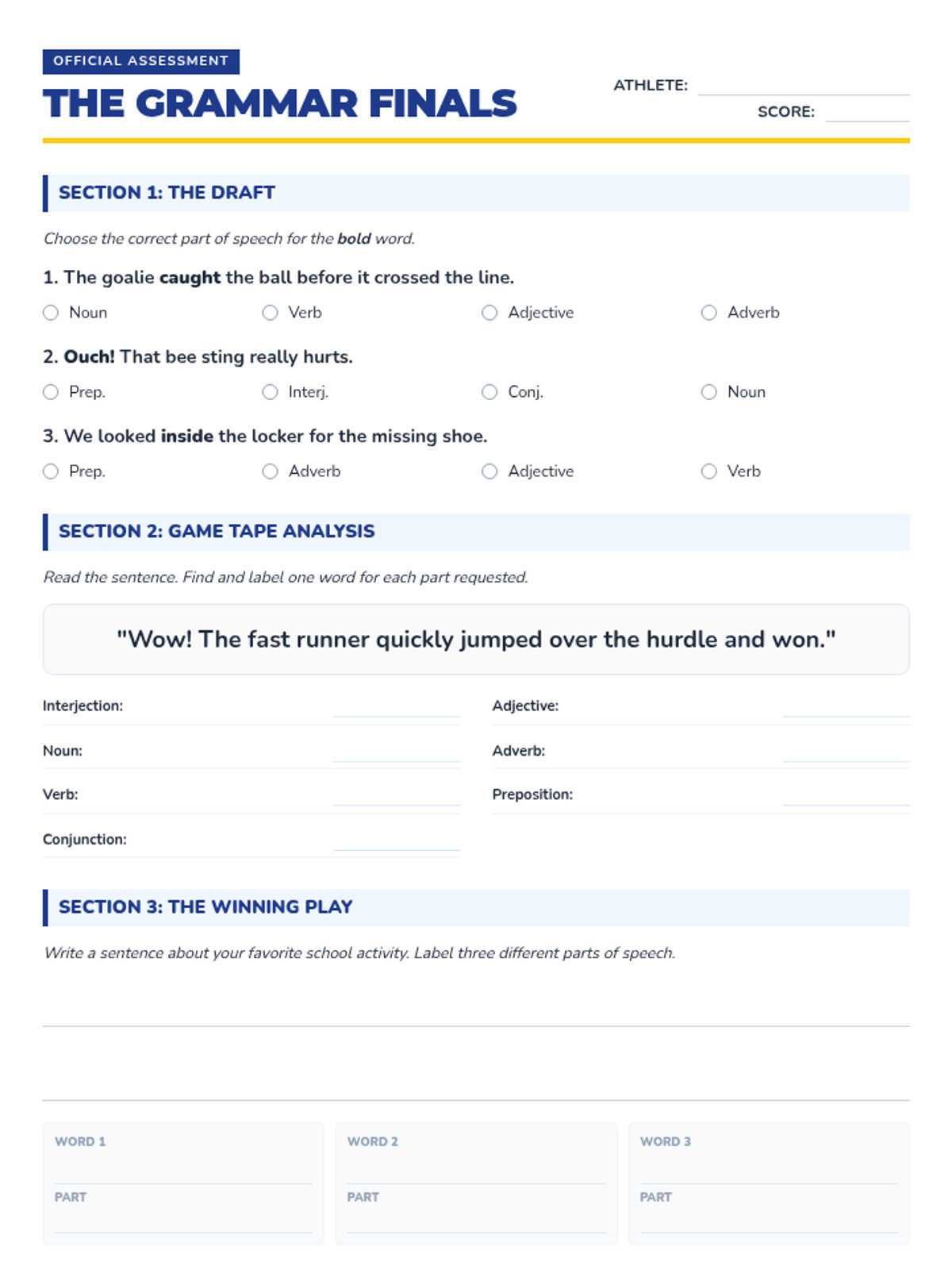
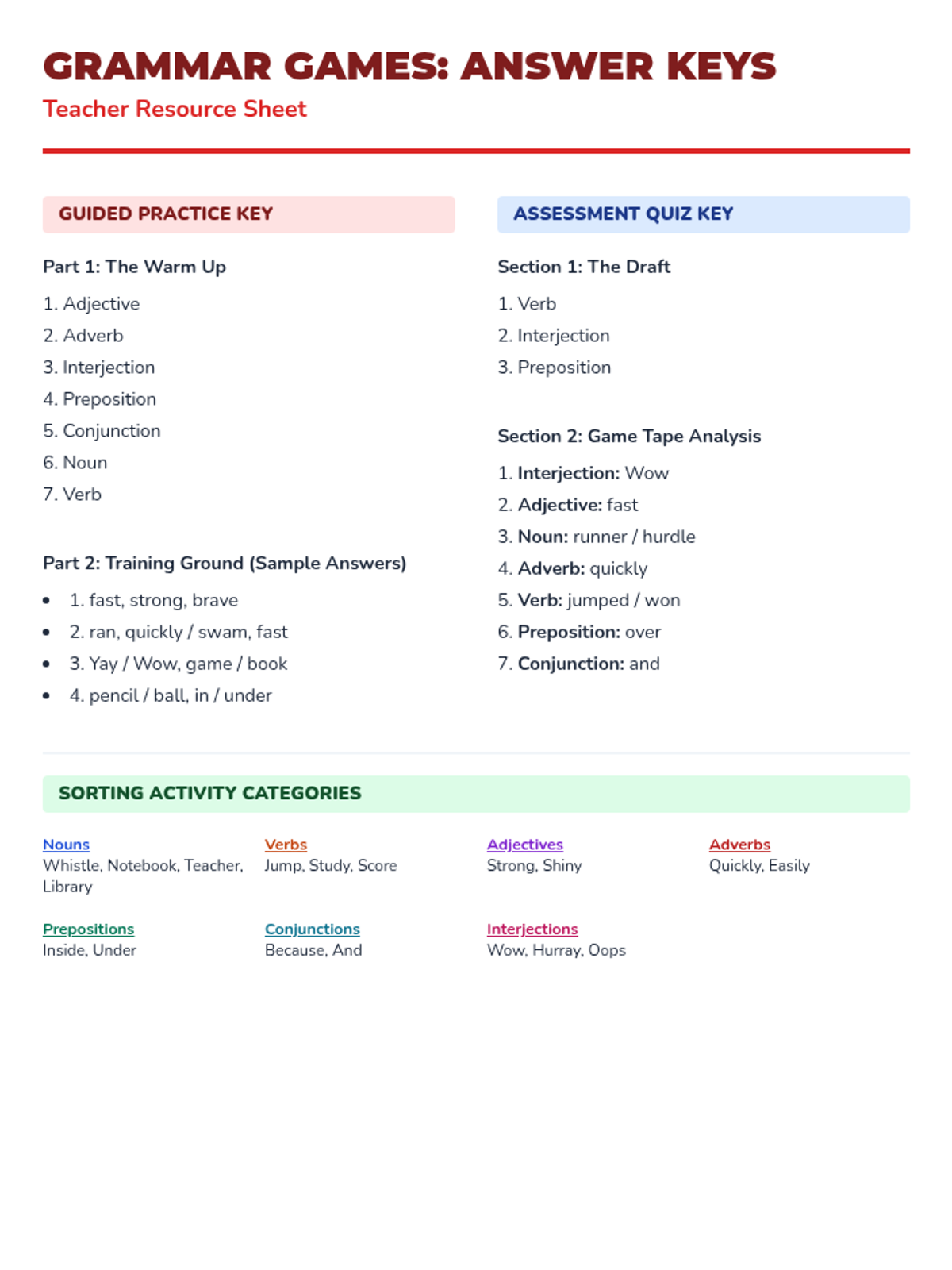
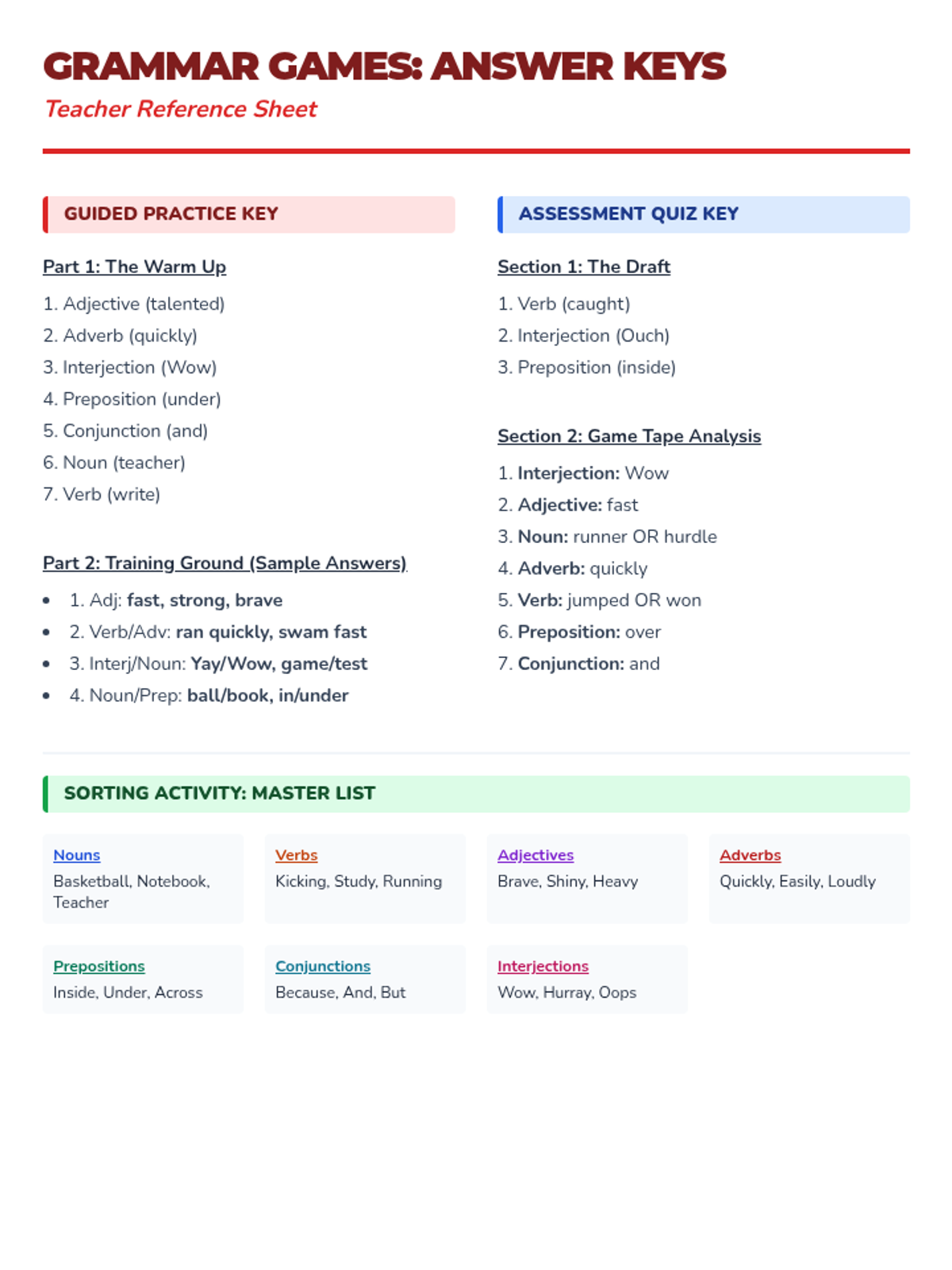
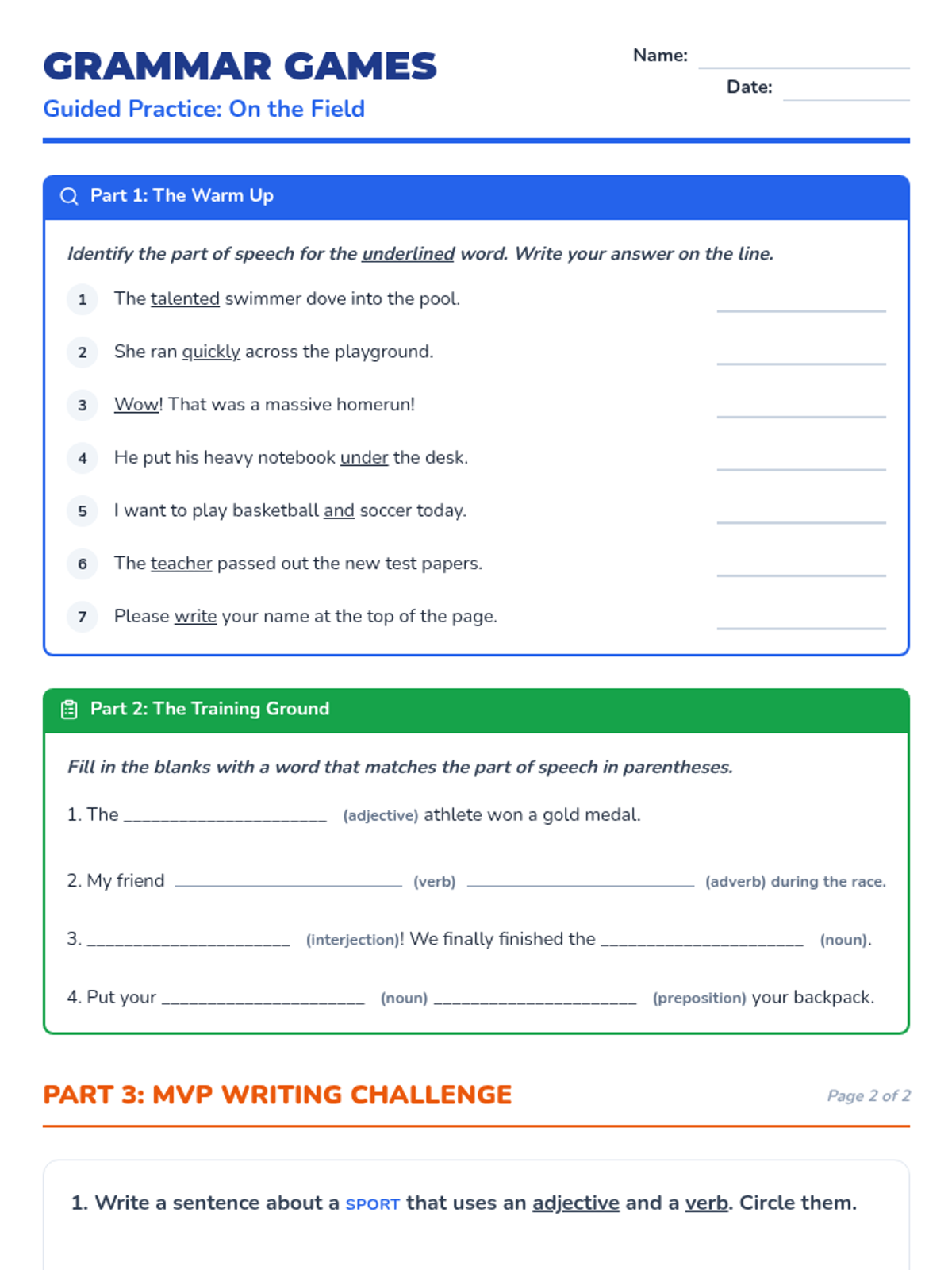
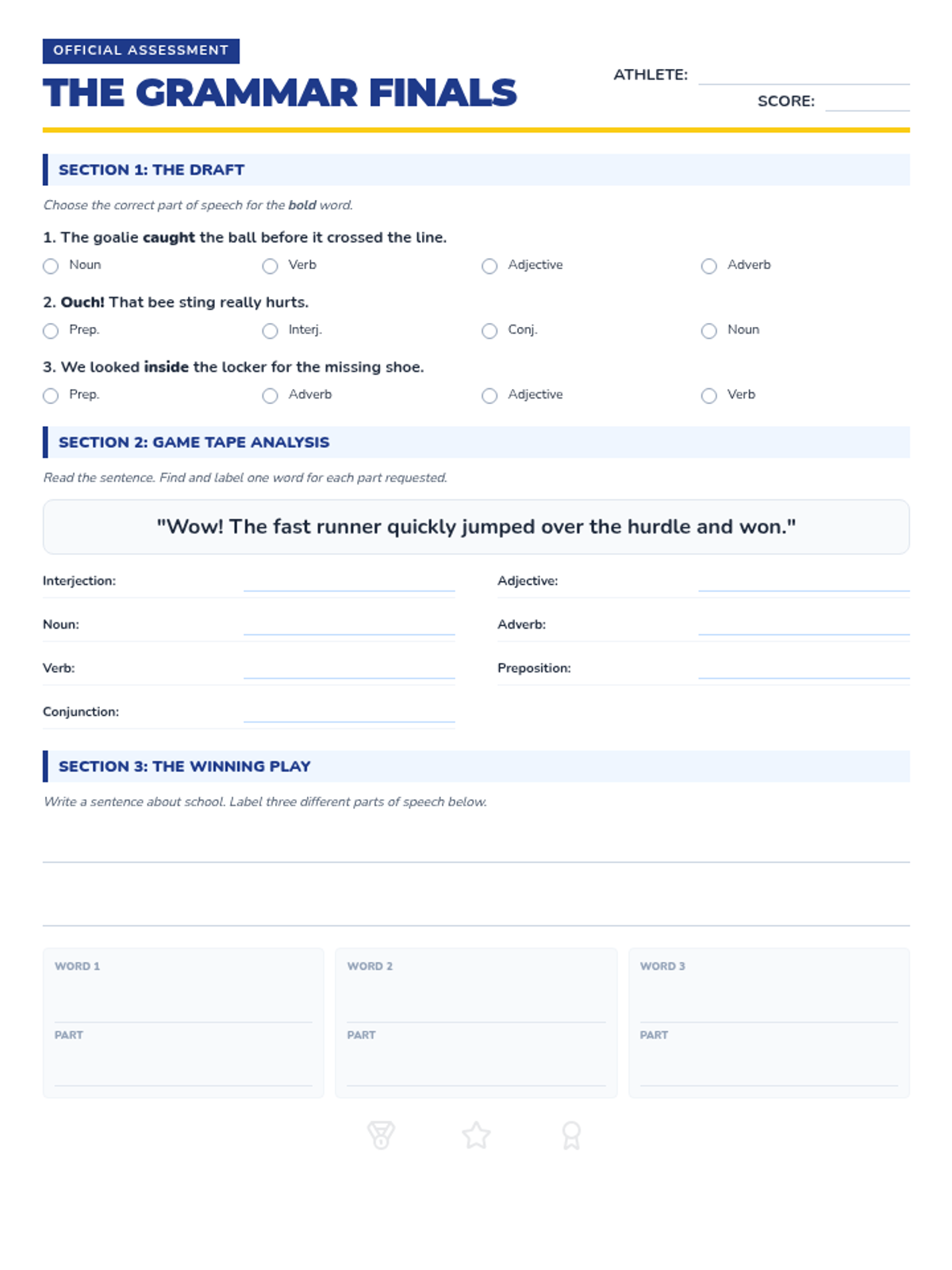
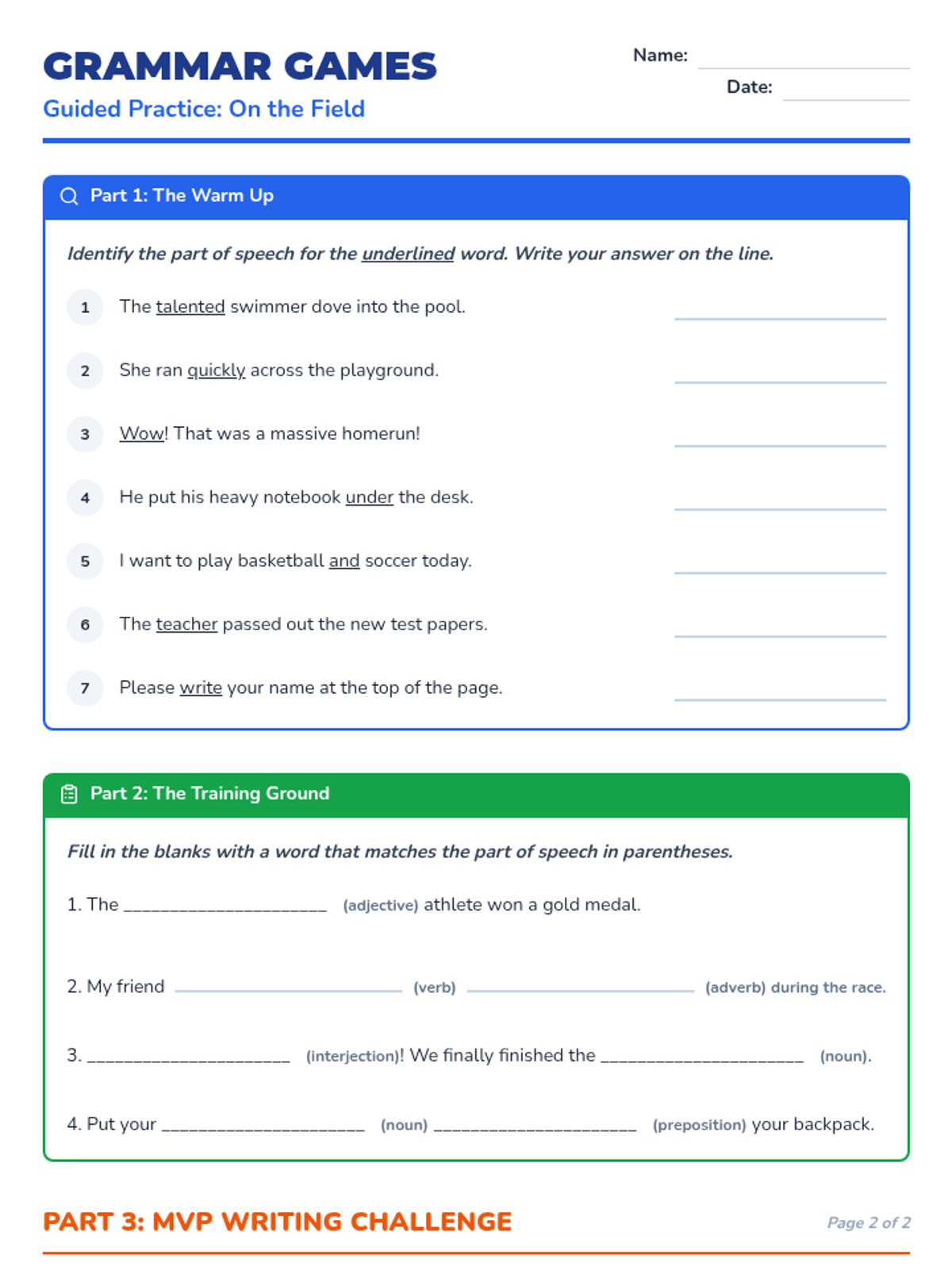
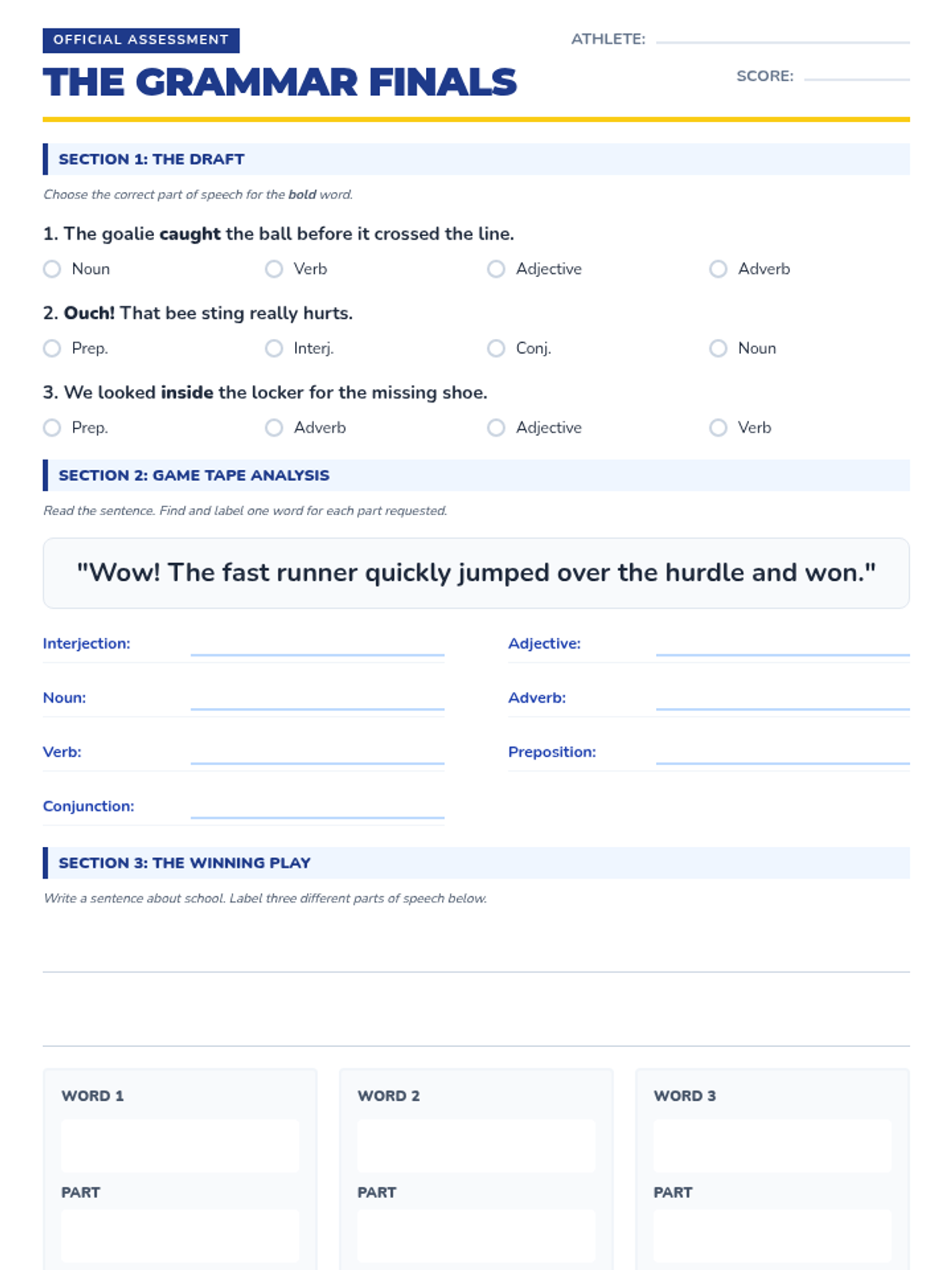
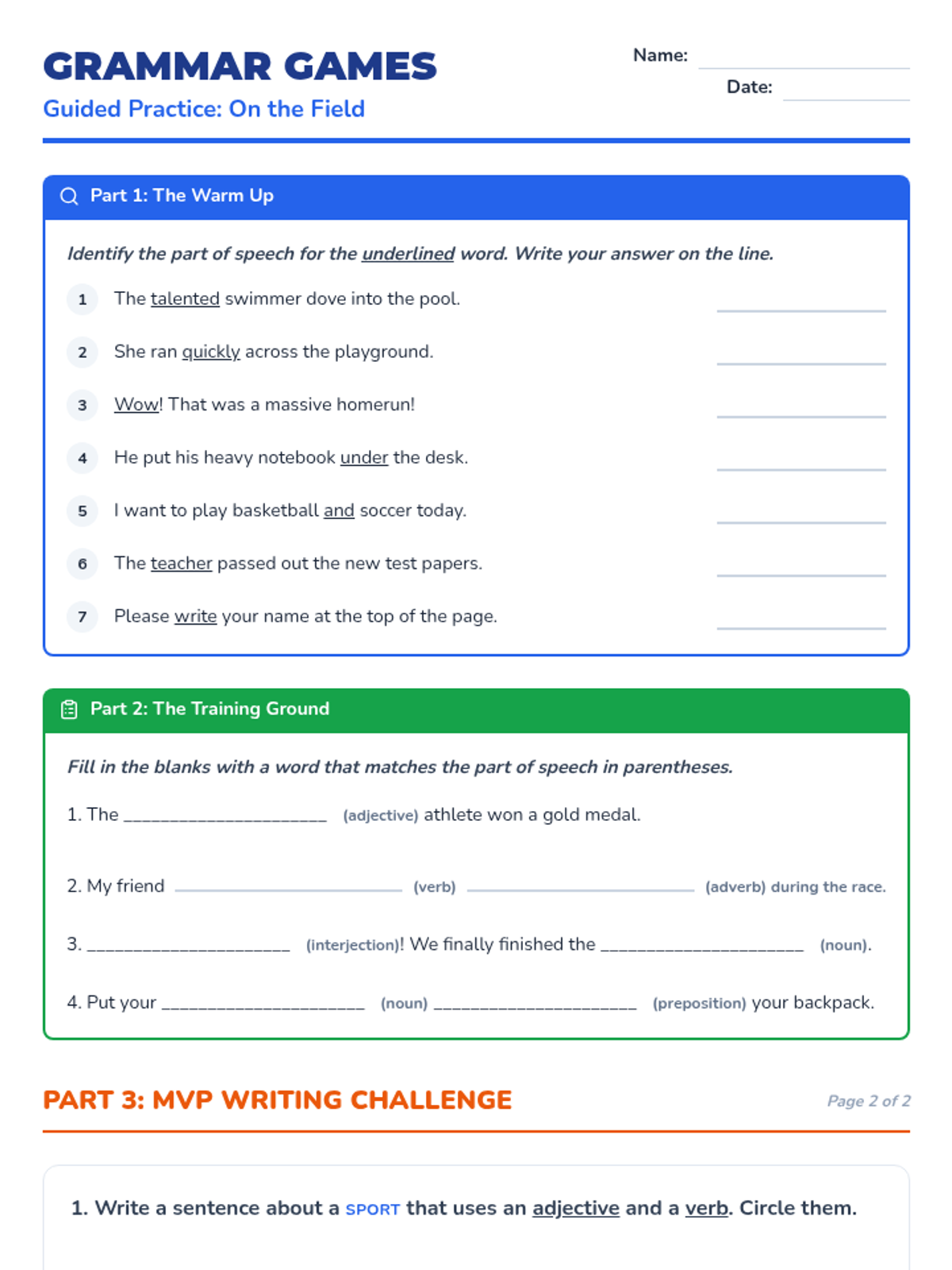
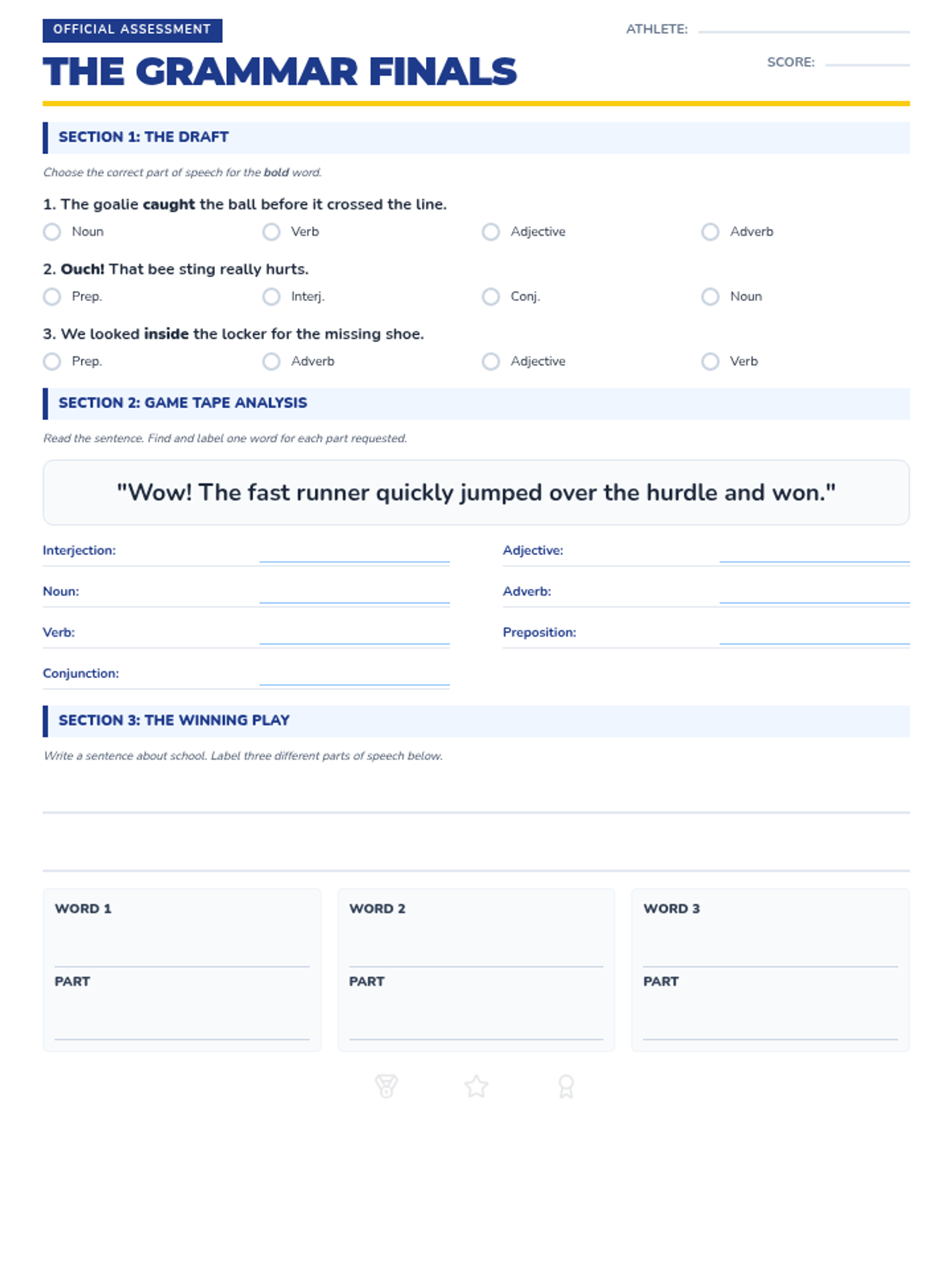
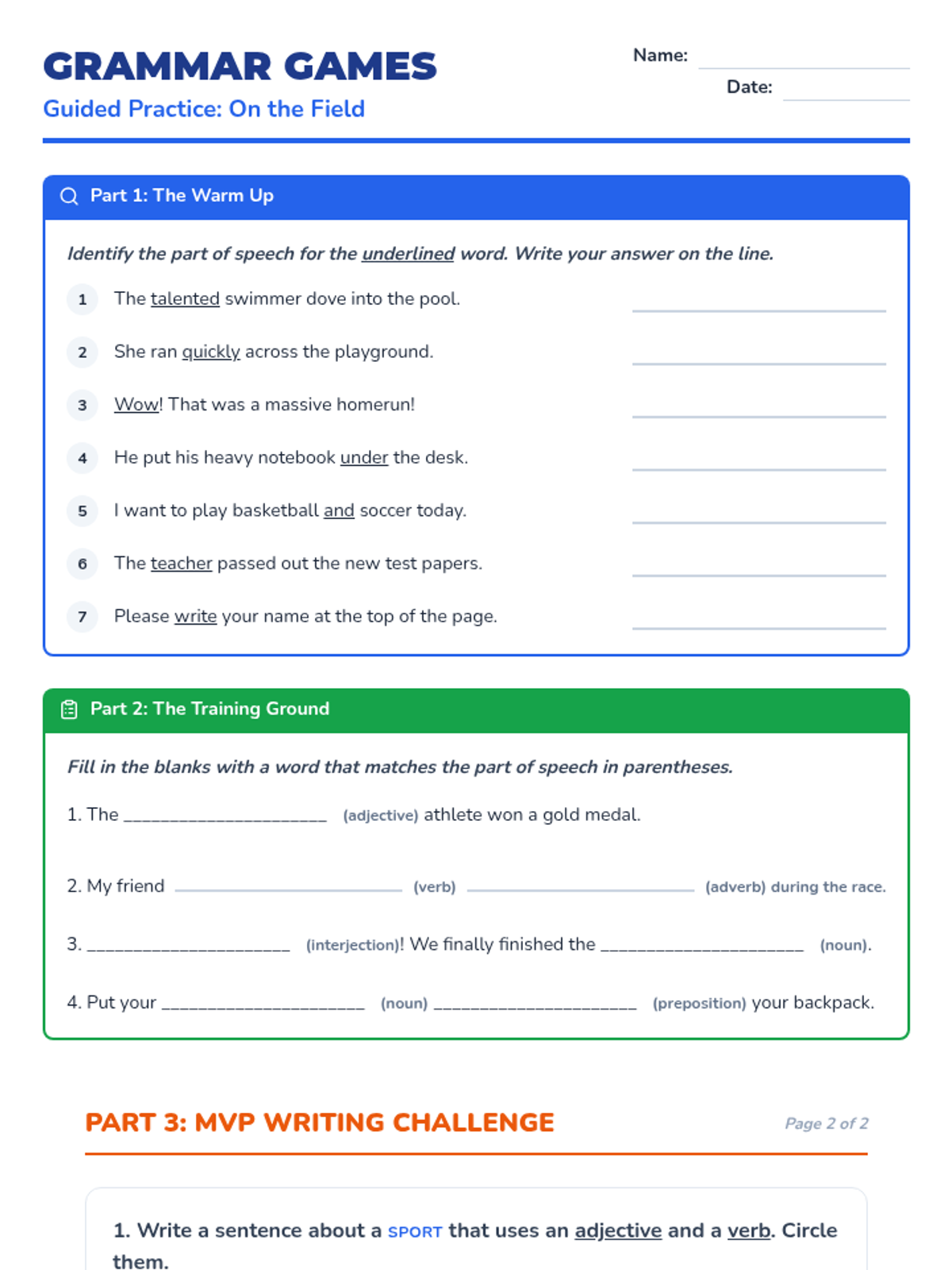
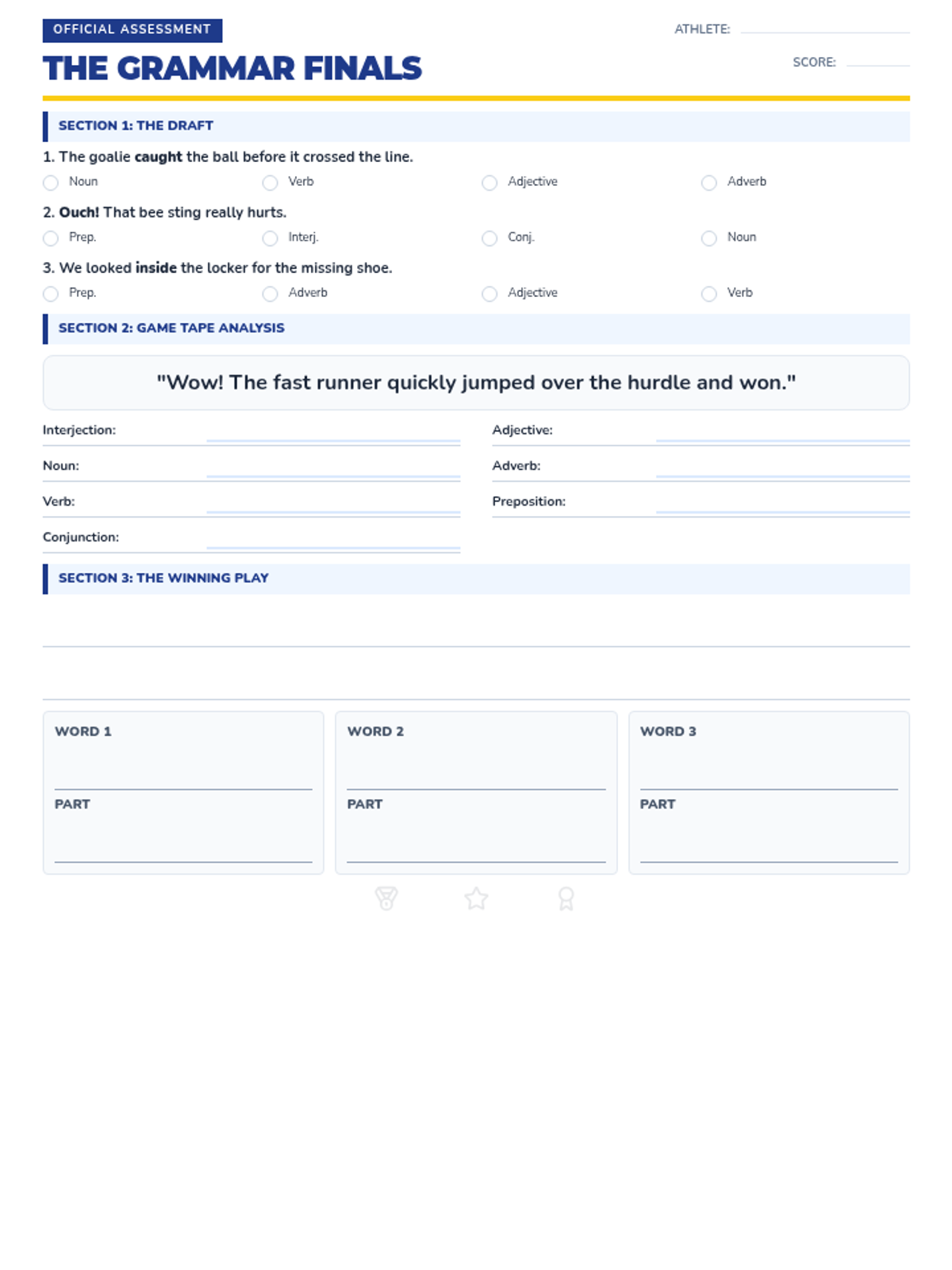
A lesson focusing on identifying nouns, verbs, adjectives, adverbs, prepositions, conjunctions, and interjections using athletic and academic contexts.
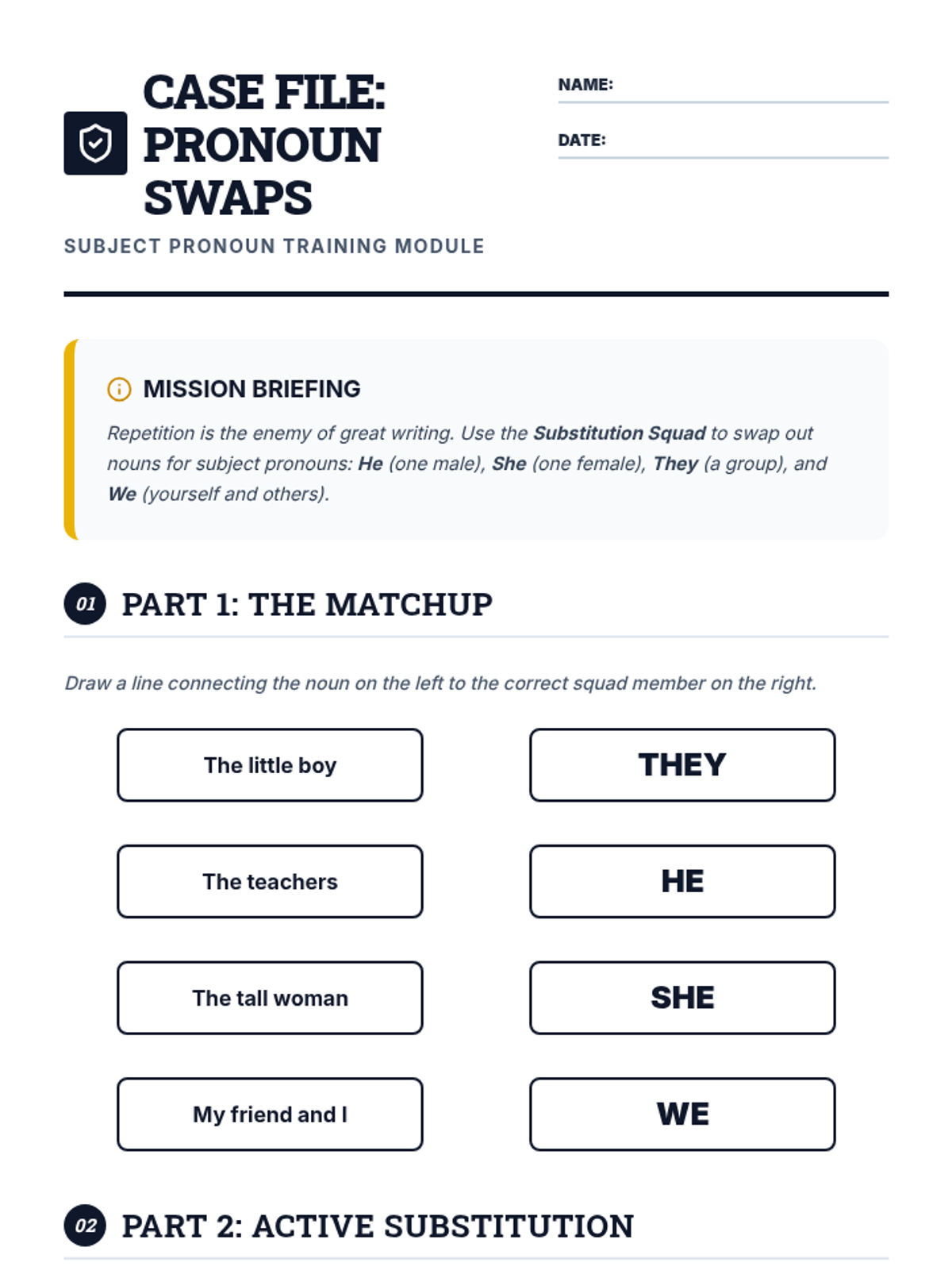
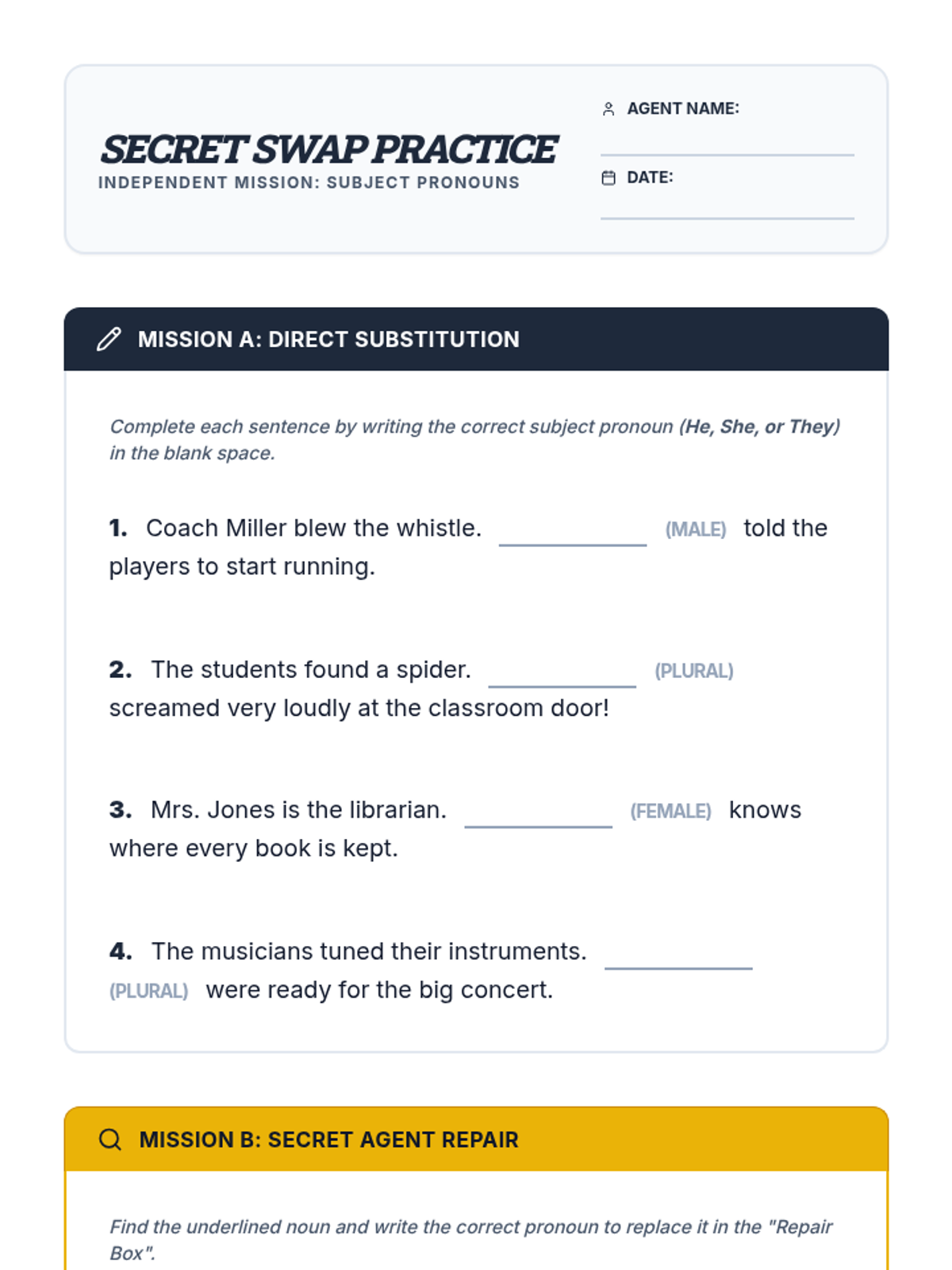
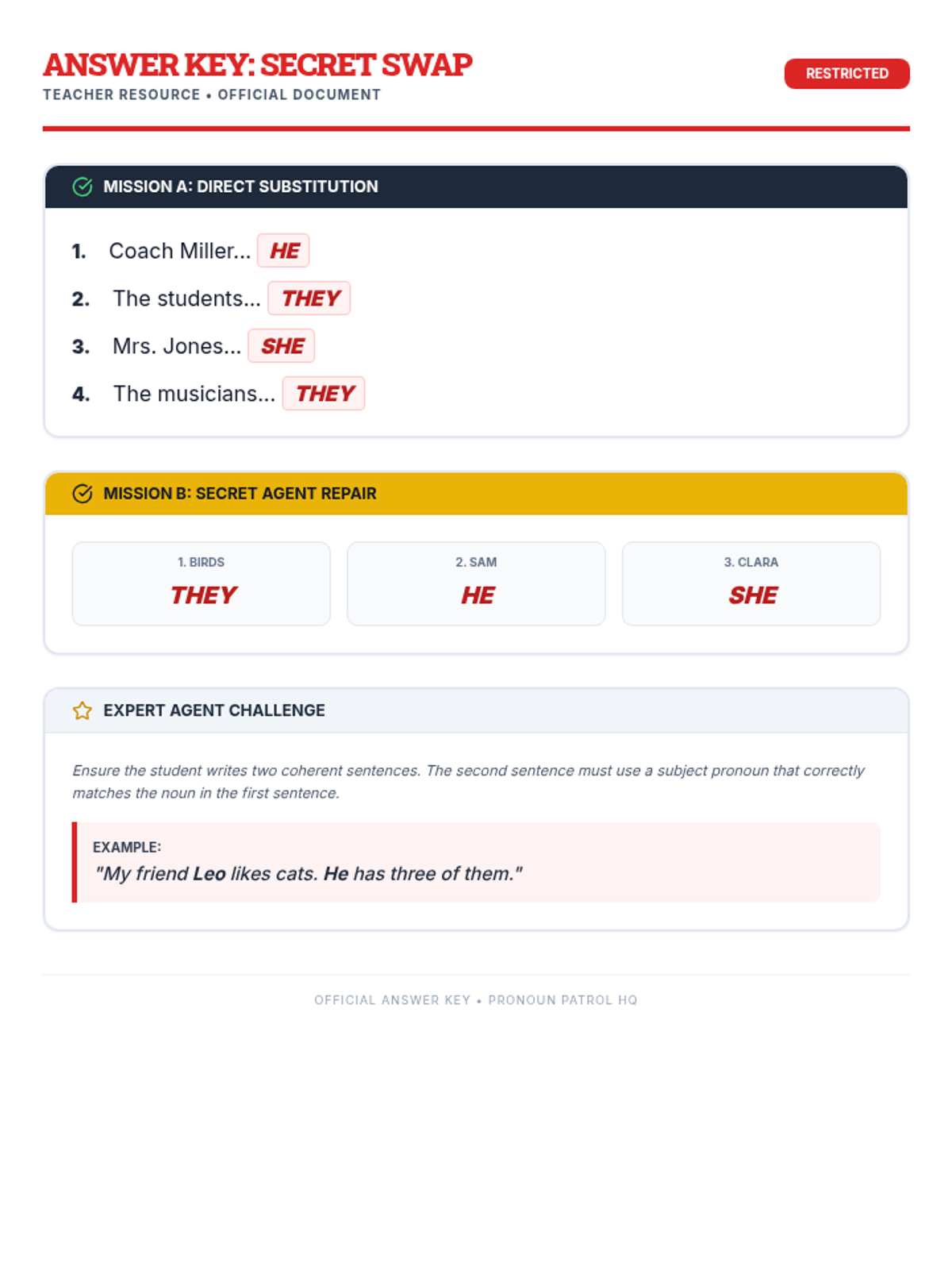
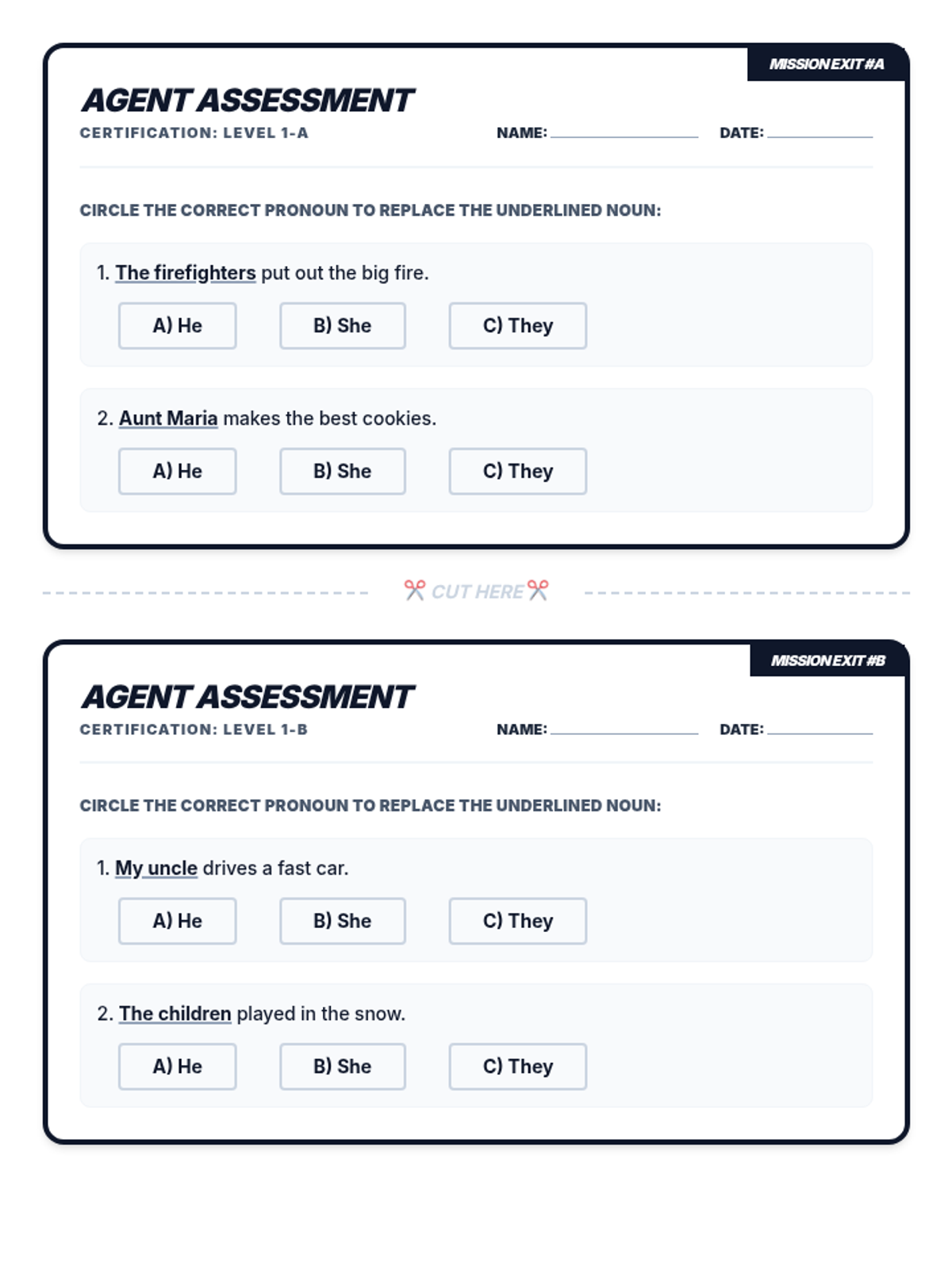
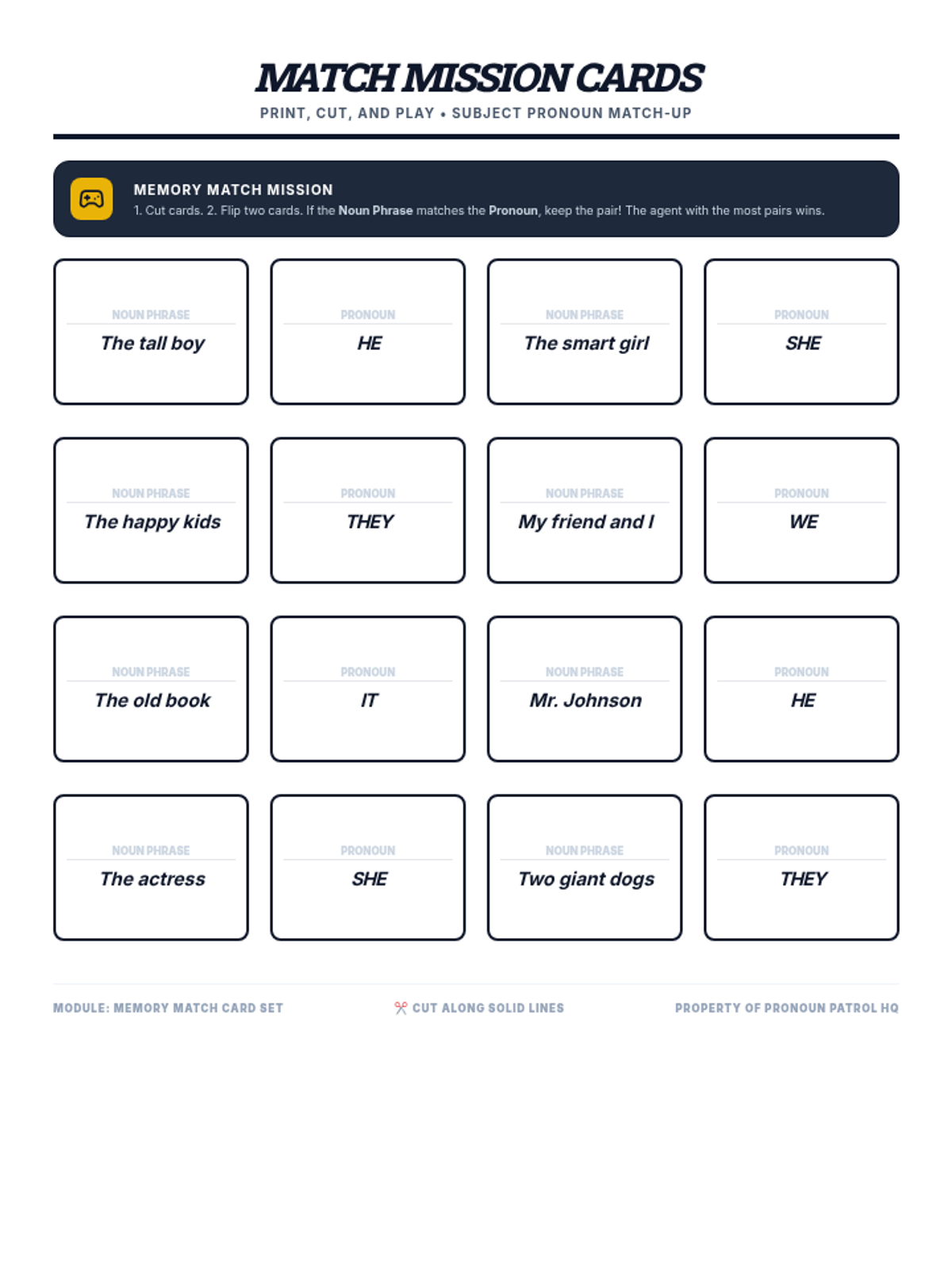
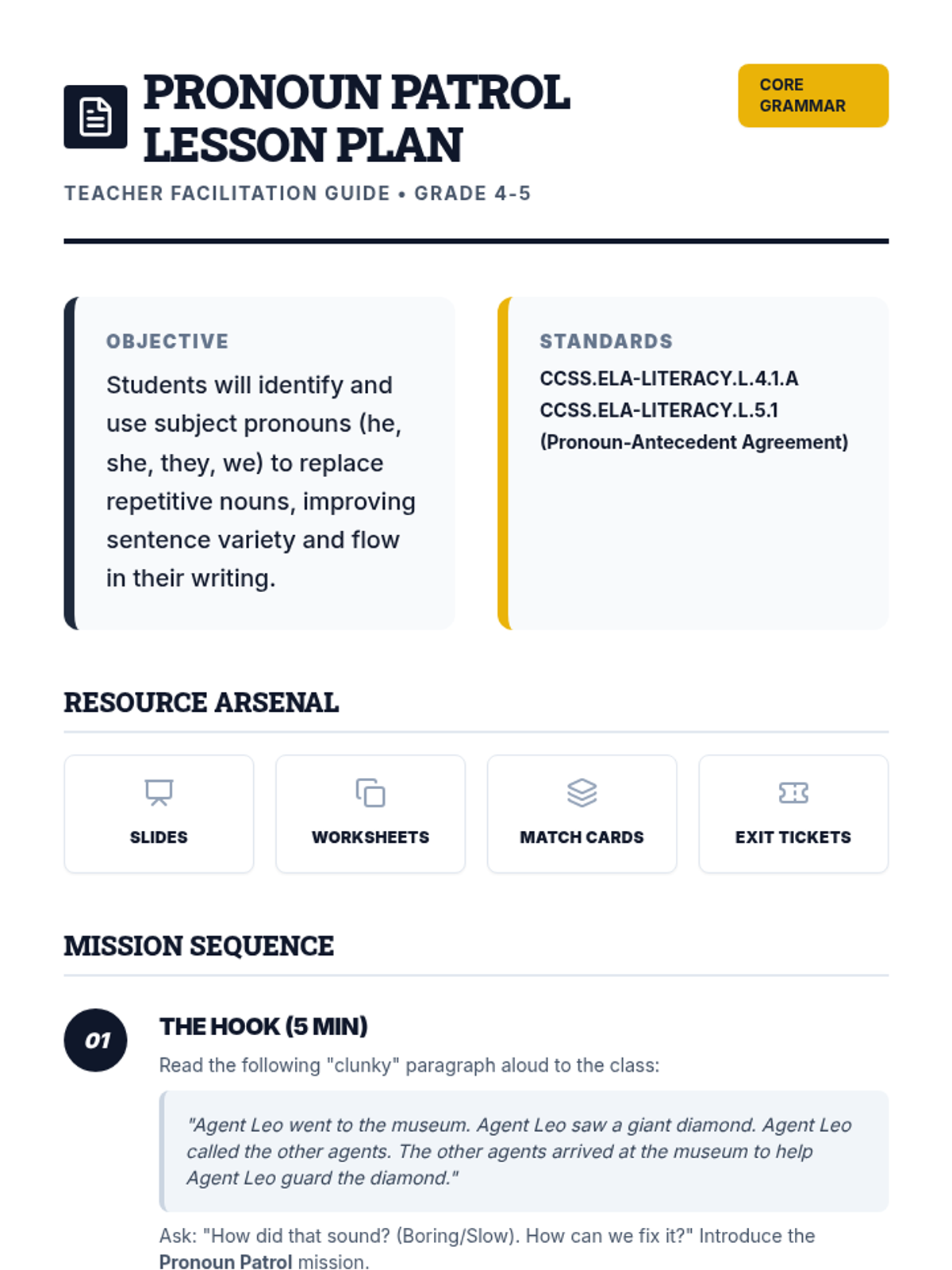
A comprehensive grammar lesson for 4th and 5th graders on identifying and using subject pronouns (he, she, they) to improve sentence variety and clarity. Students will learn to 'swap' repetitive nouns for efficient pronouns in various contexts.
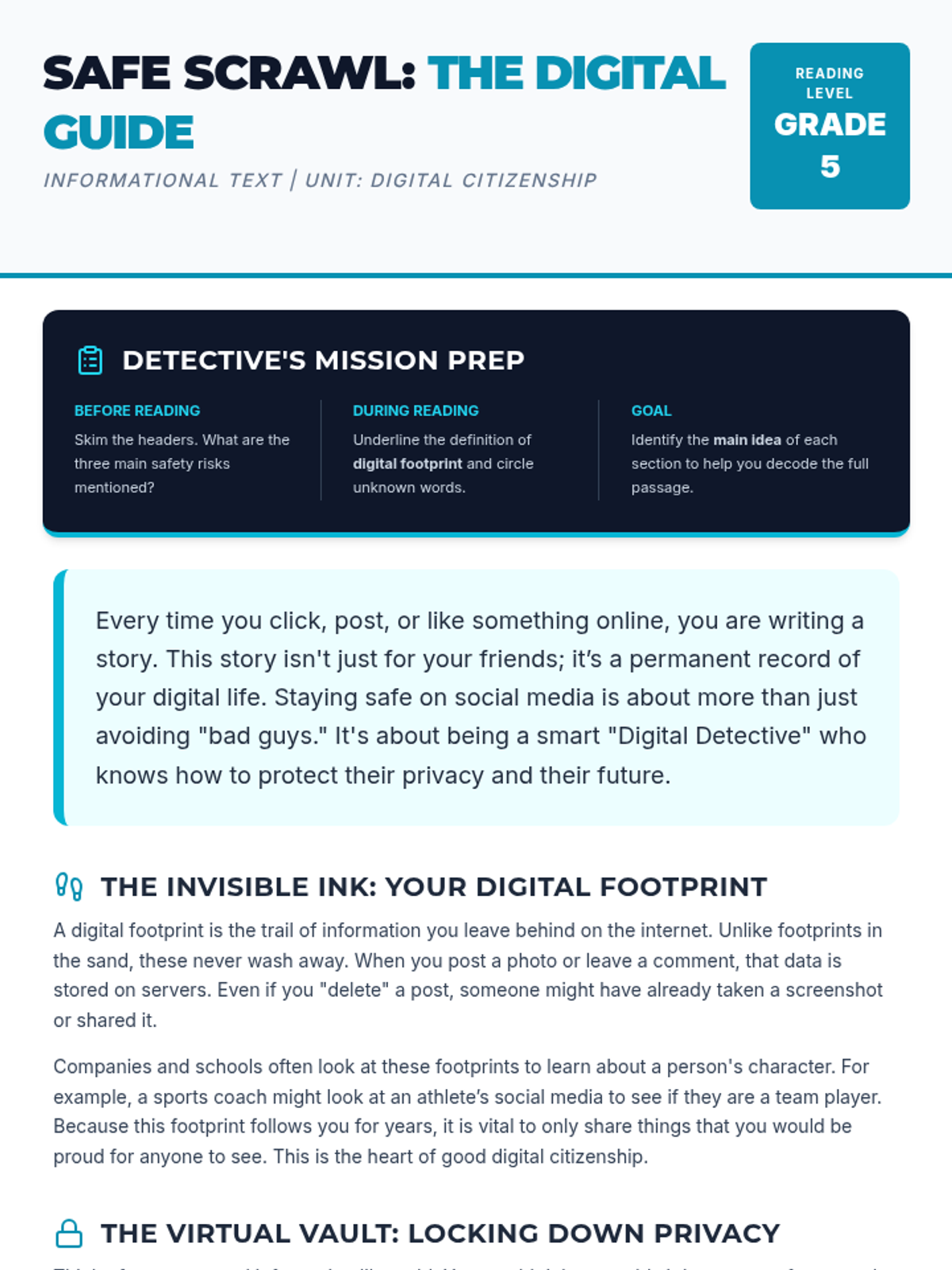
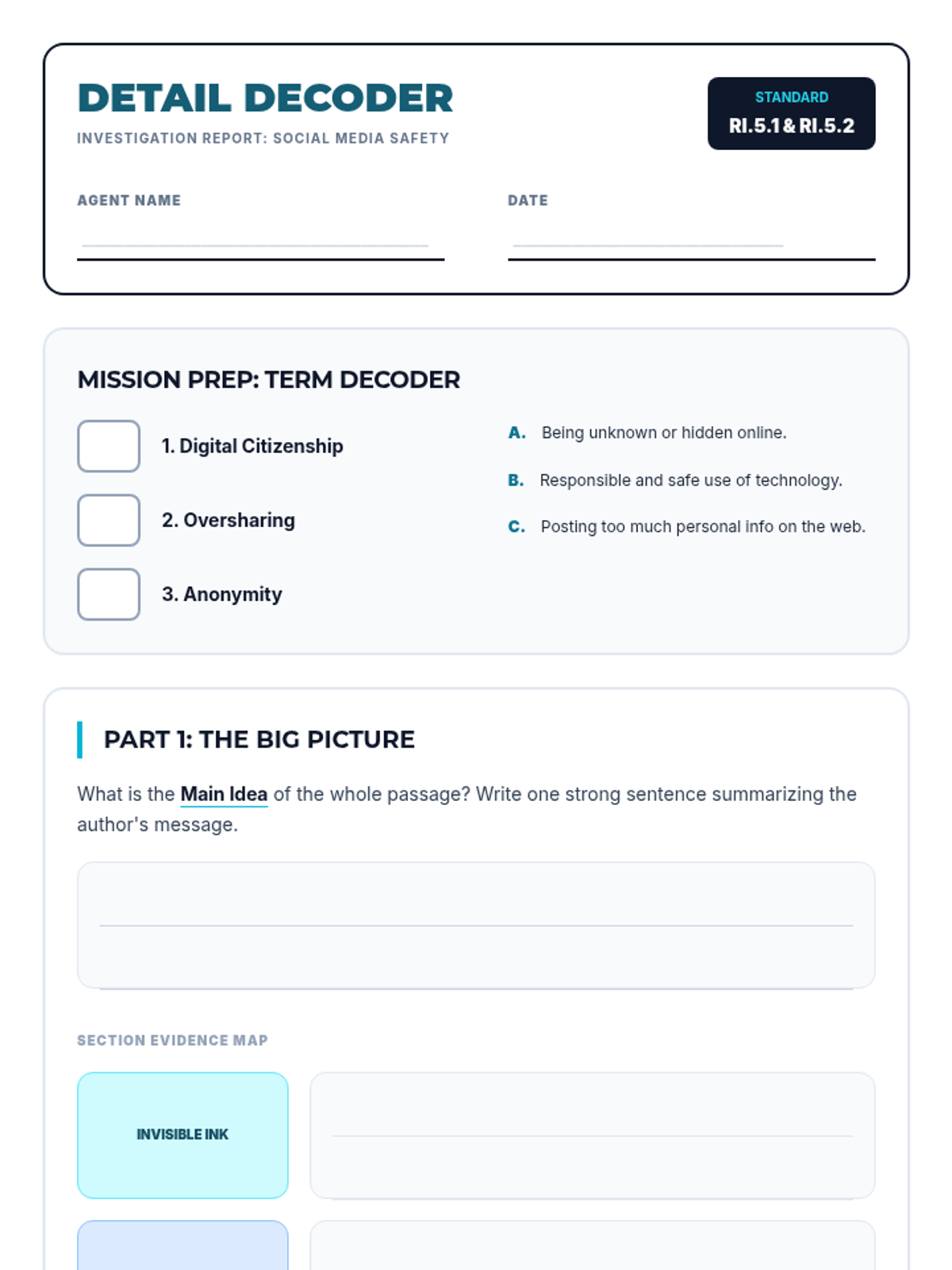
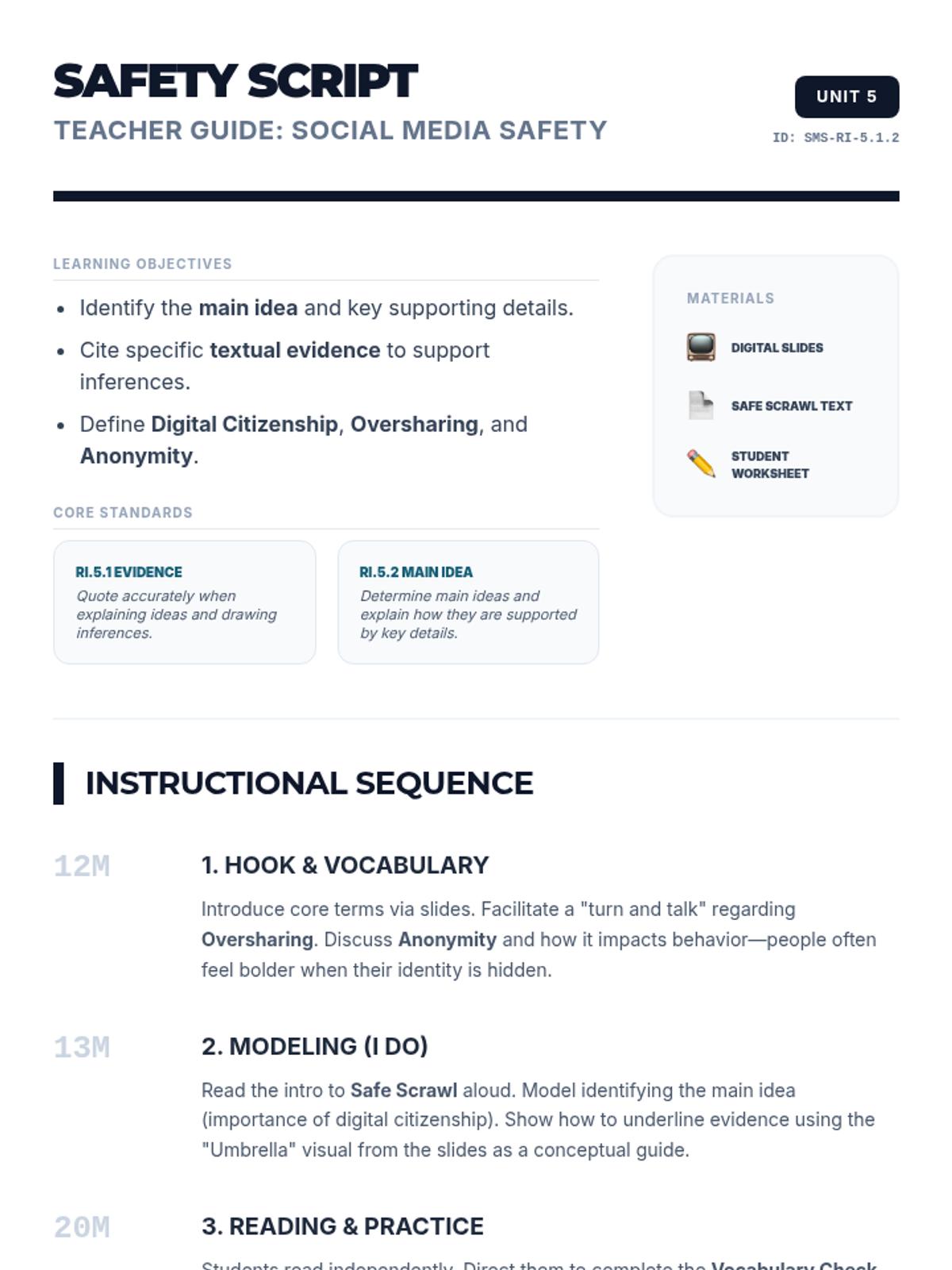
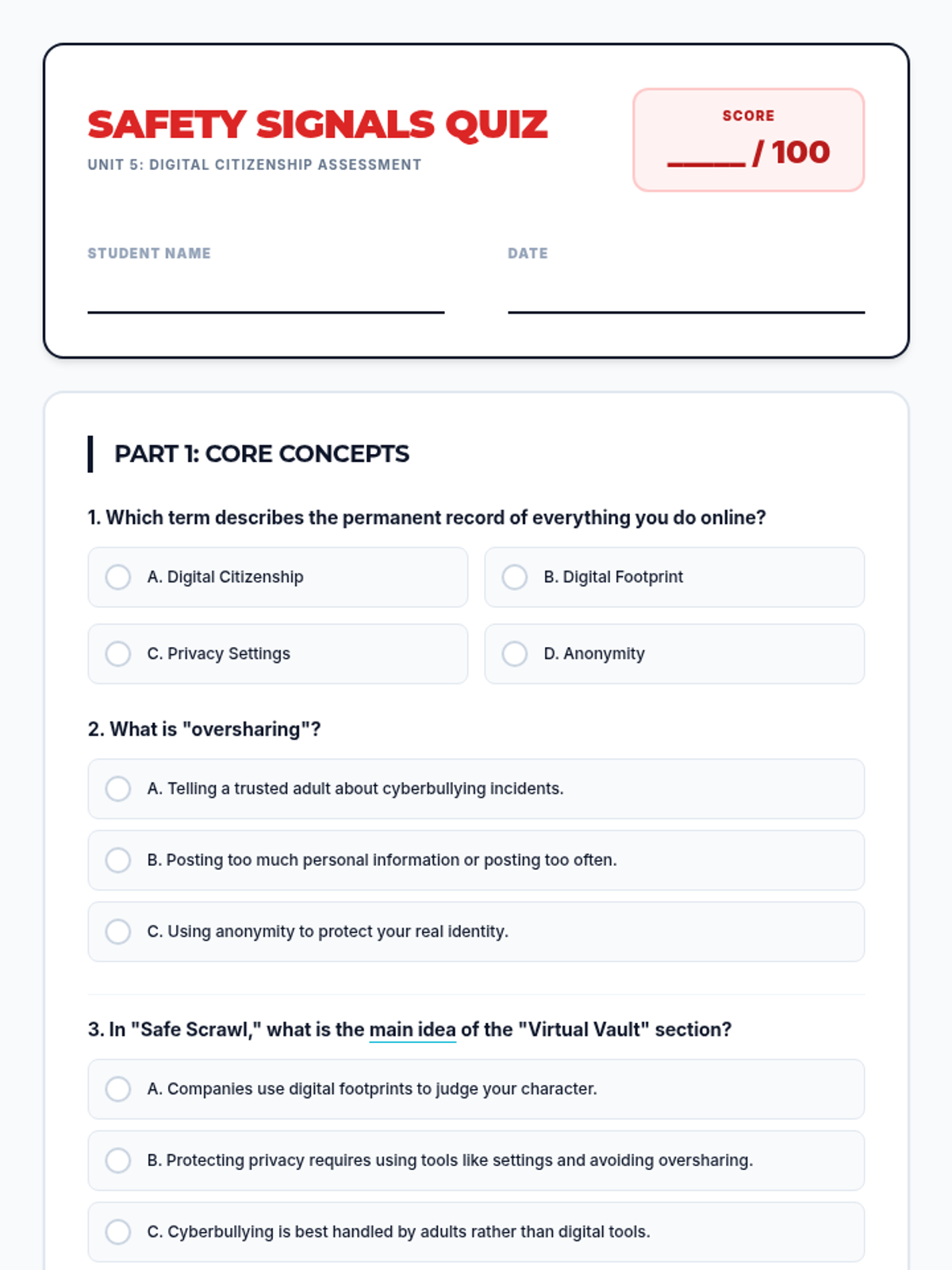
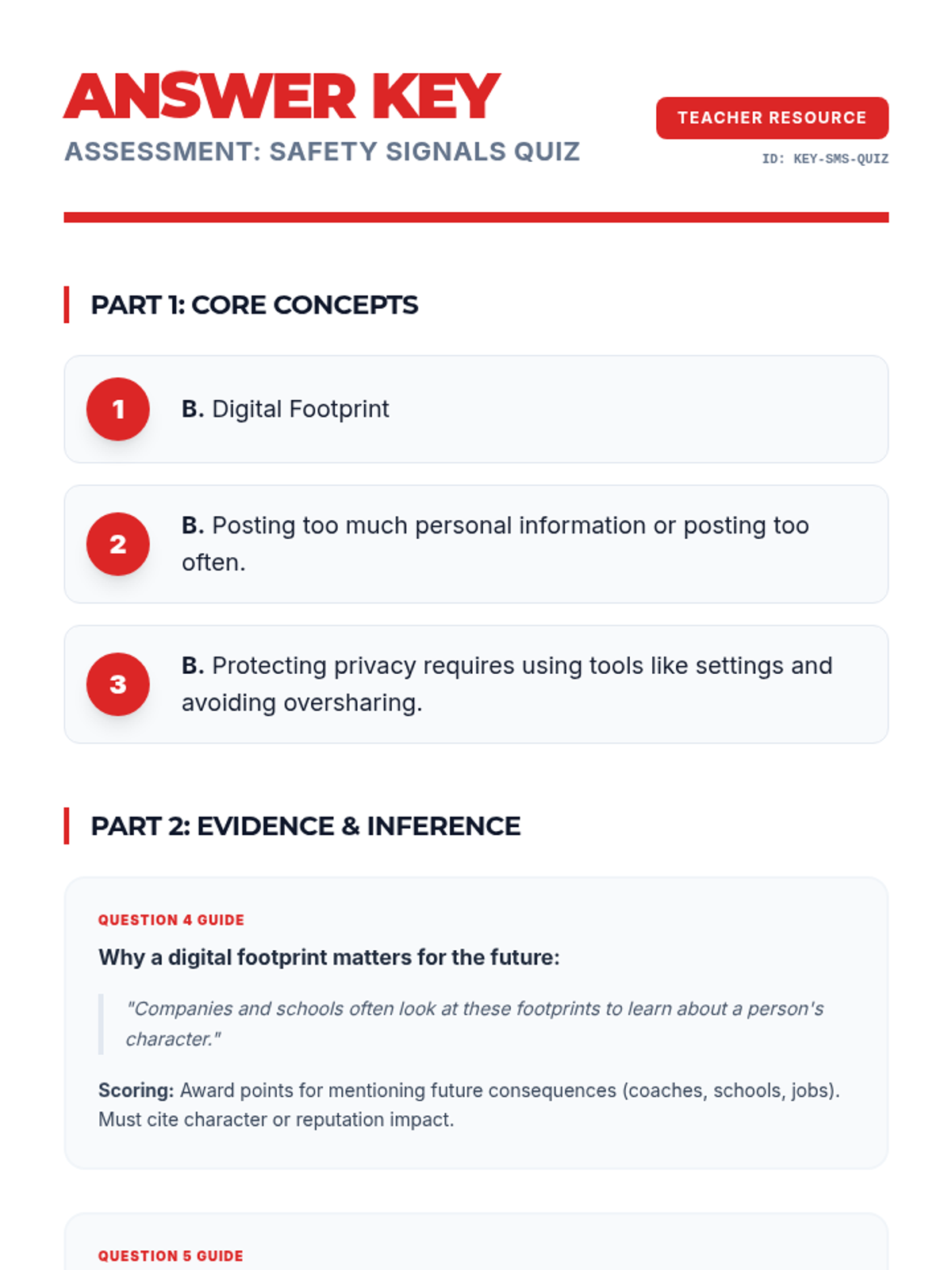
A comprehensive lesson focused on identifying key details and determining the main idea in texts about social media safety and digital citizenship.
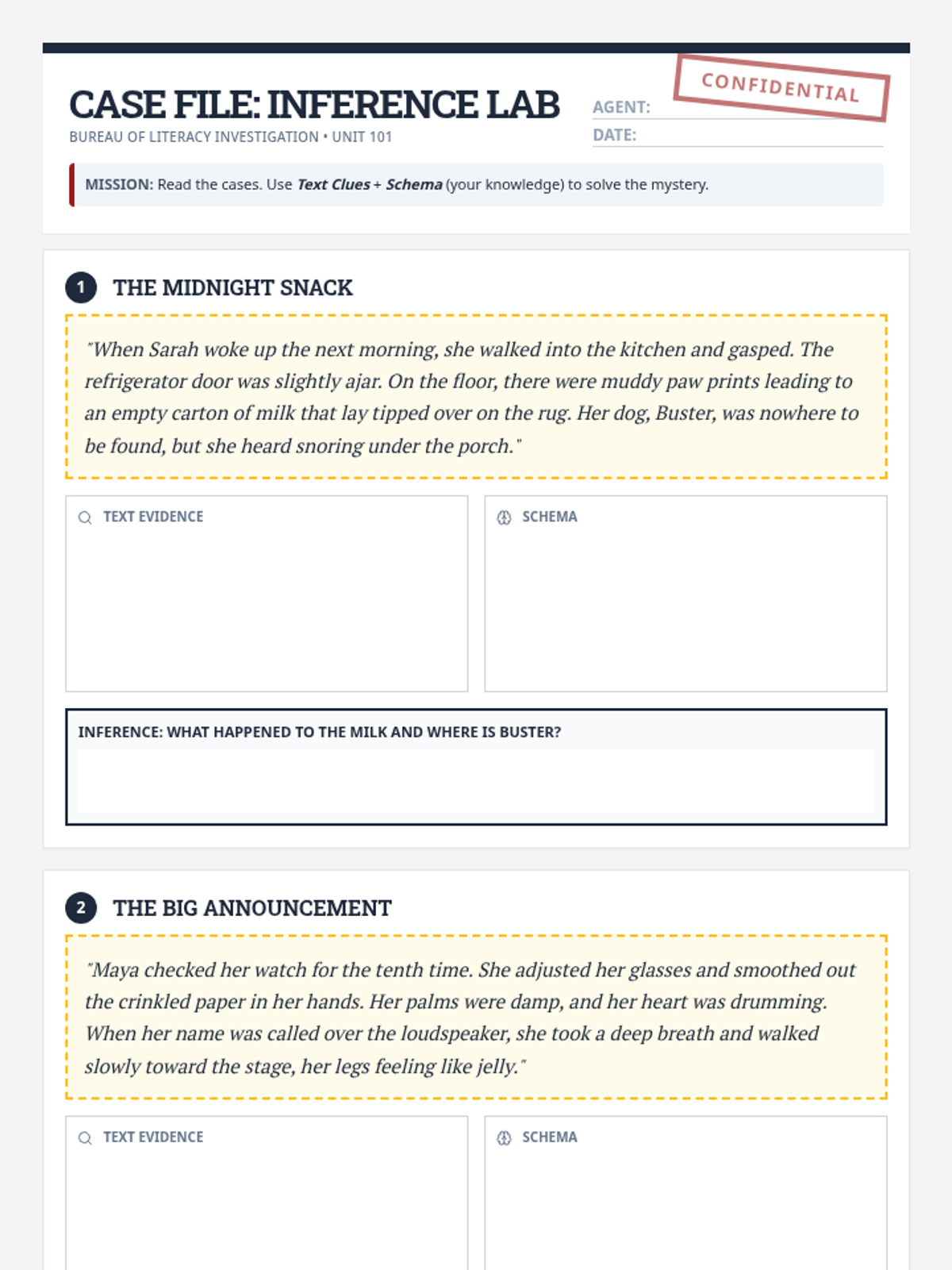
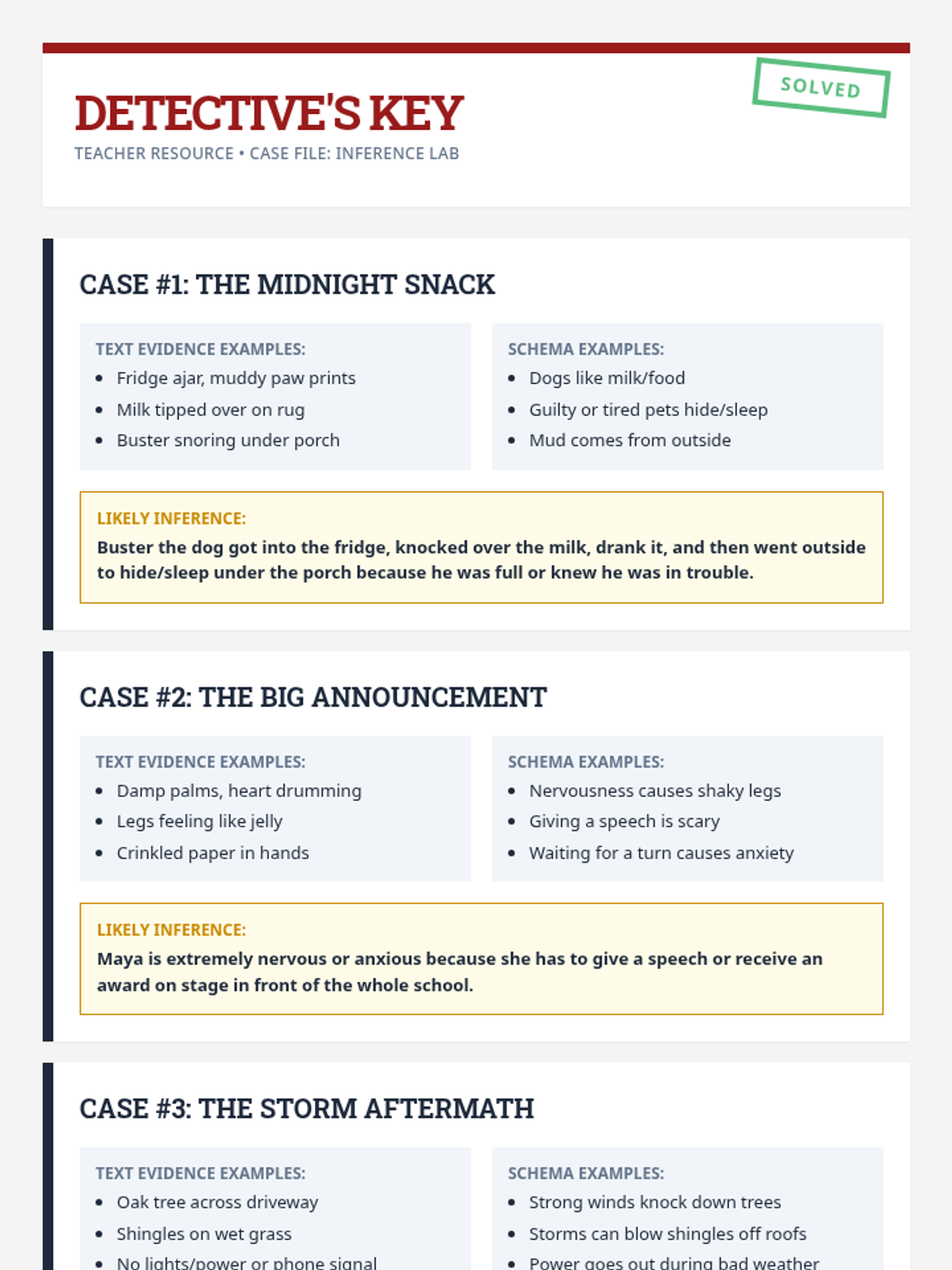
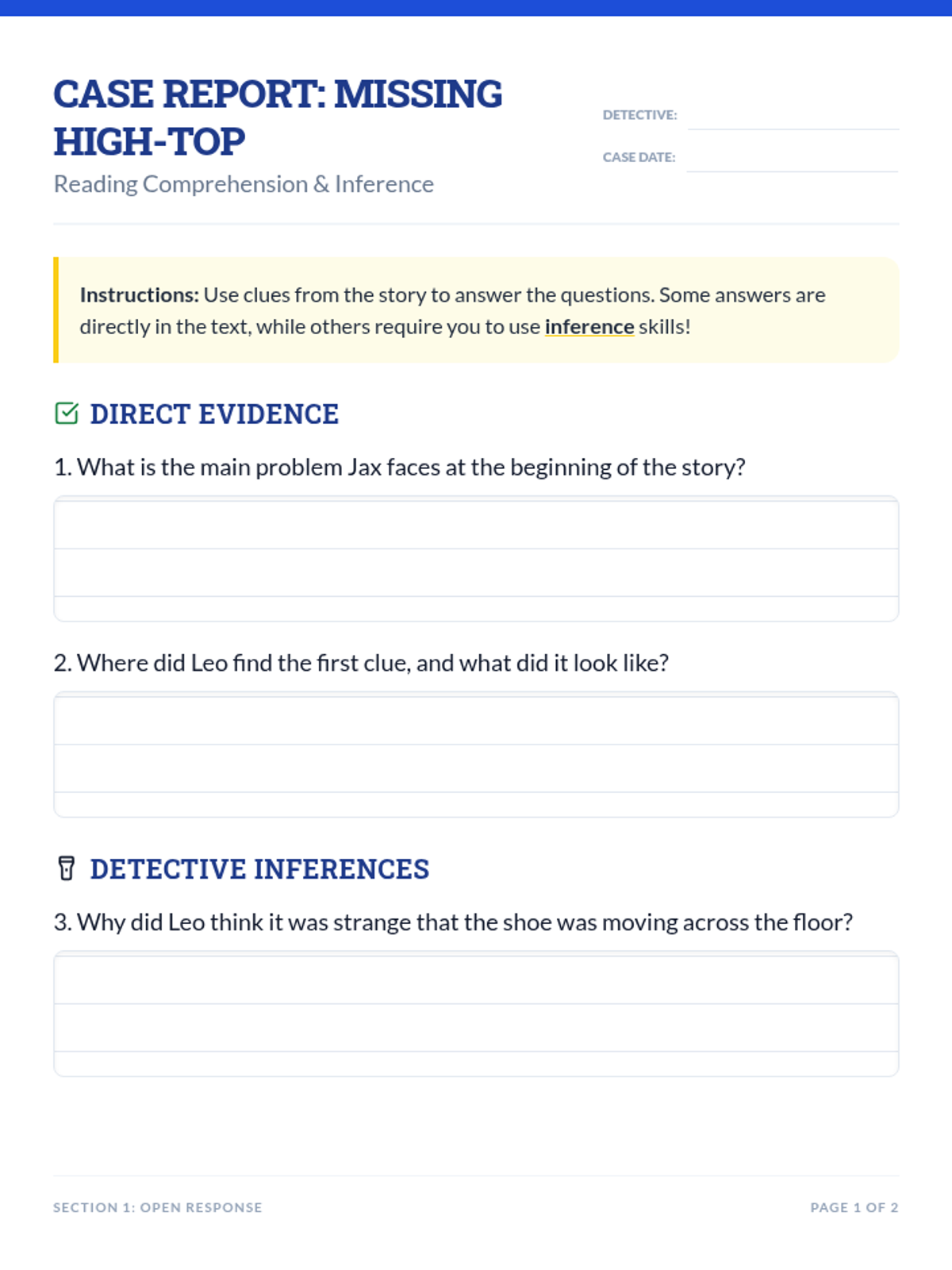
A lesson on making inferences using the 'Detective Agency' theme. Students learn to combine text evidence with background knowledge to uncover hidden meanings in short stories.
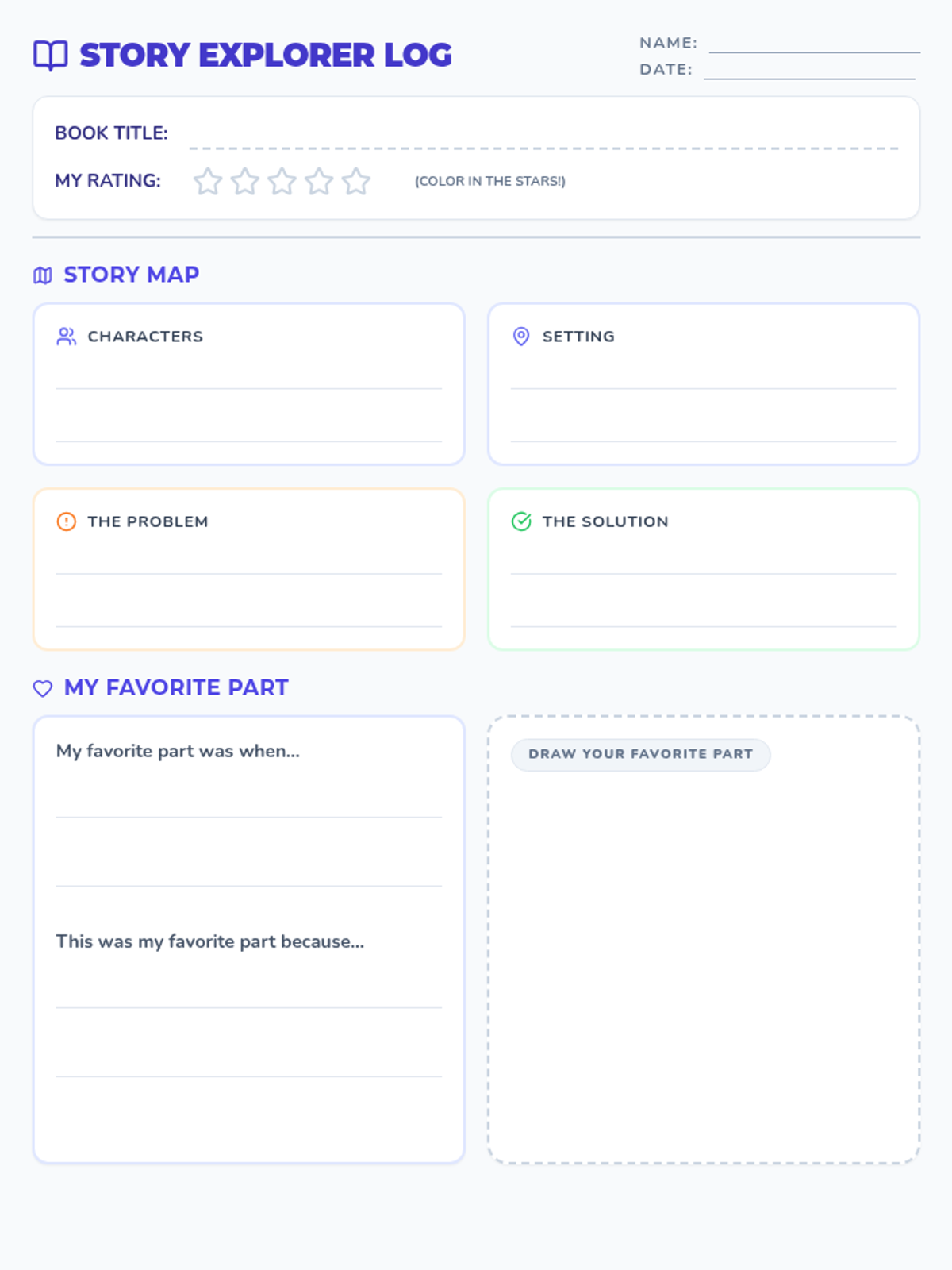
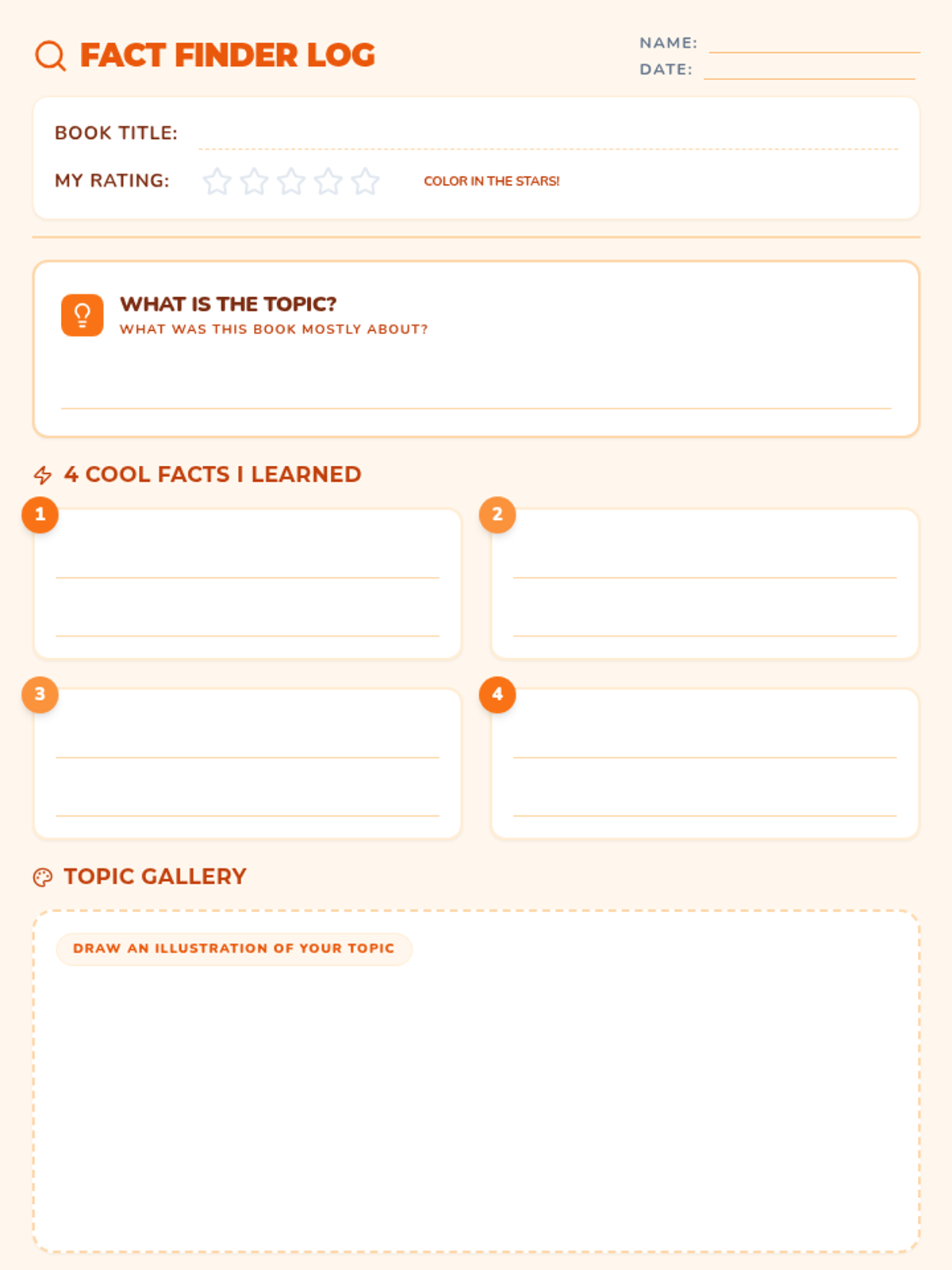
A pair of engaging recording sheets designed for students to track their reading on Epic!, featuring specific templates for both fiction and nonfiction texts.
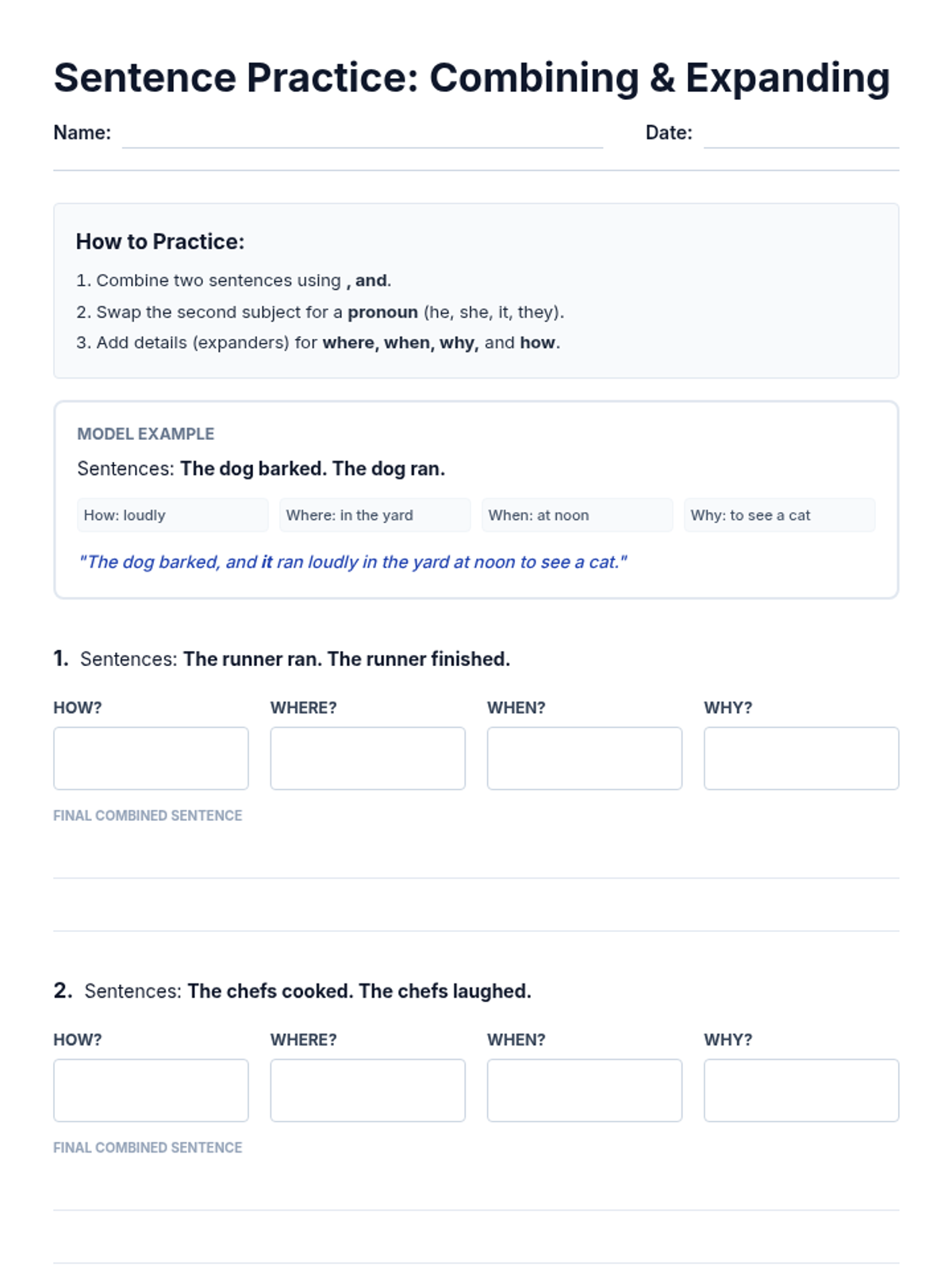
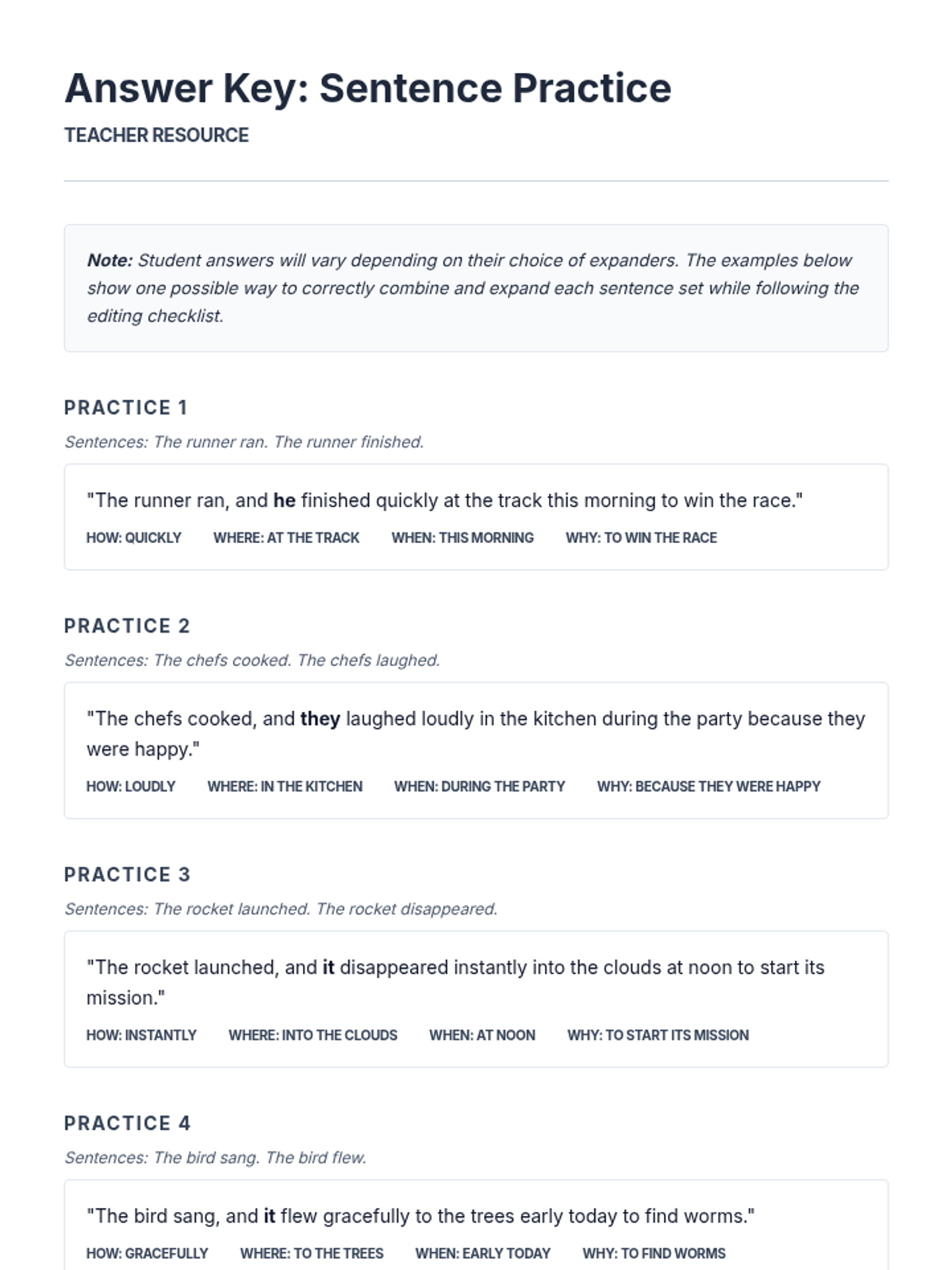
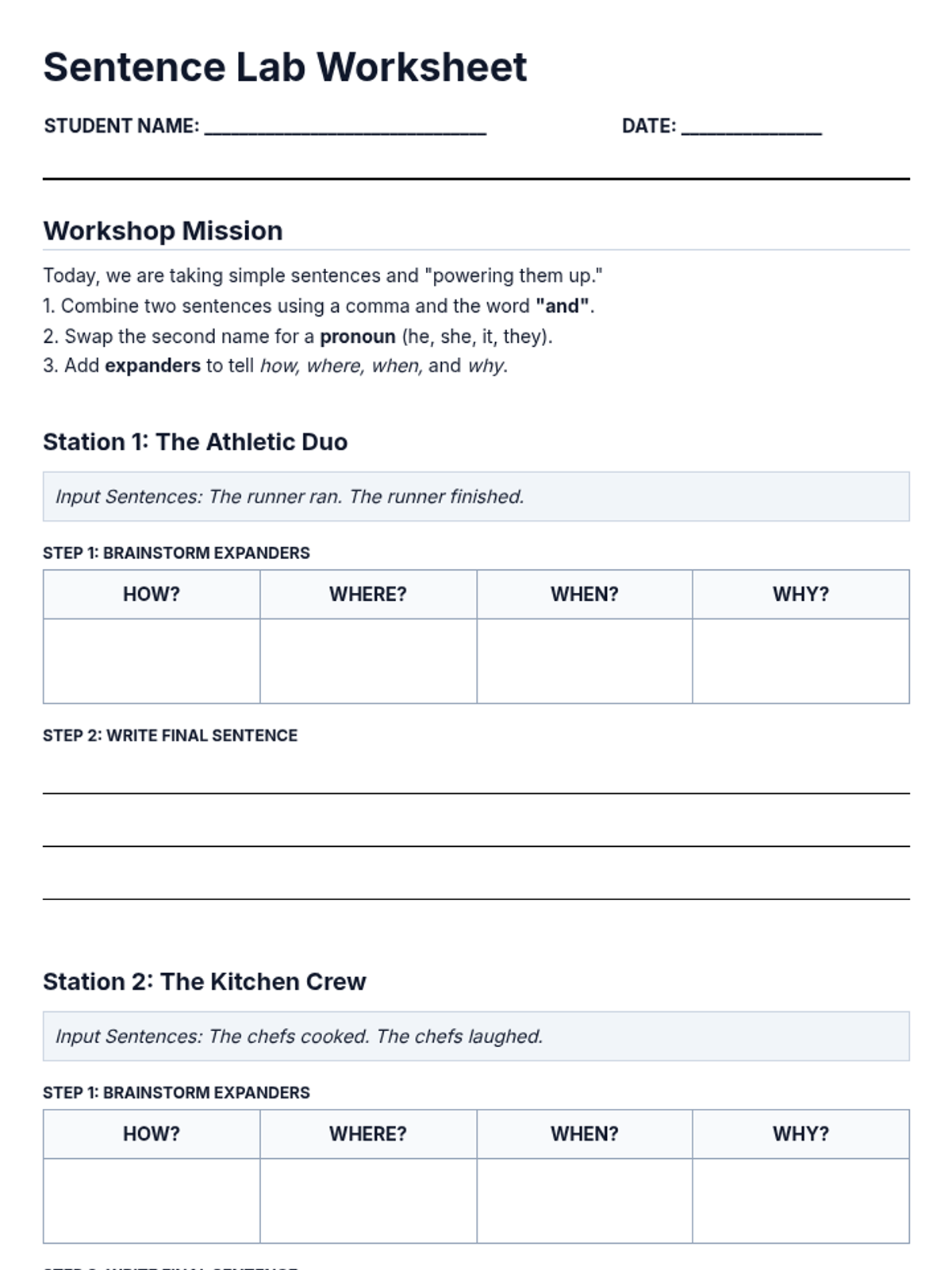
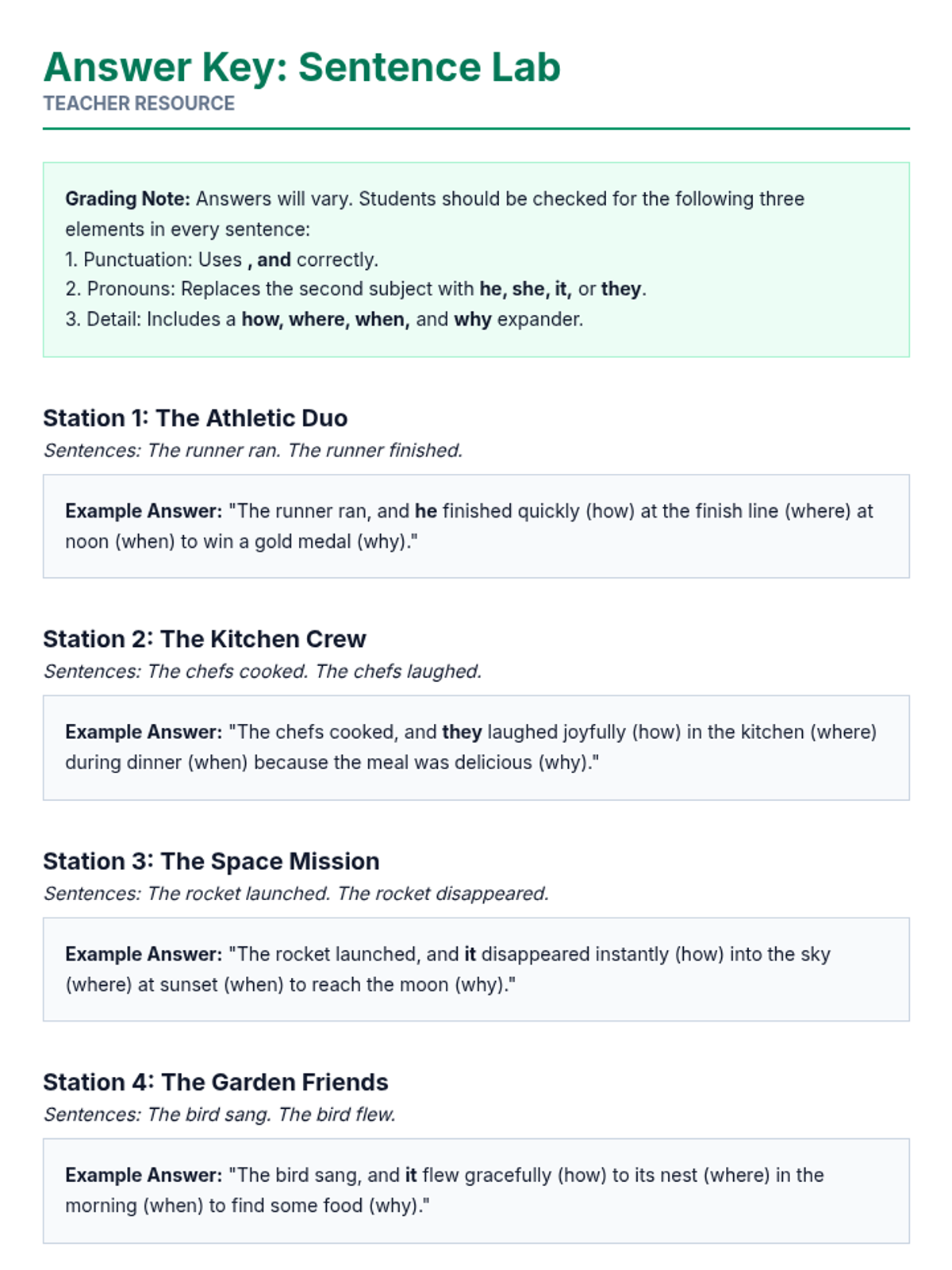
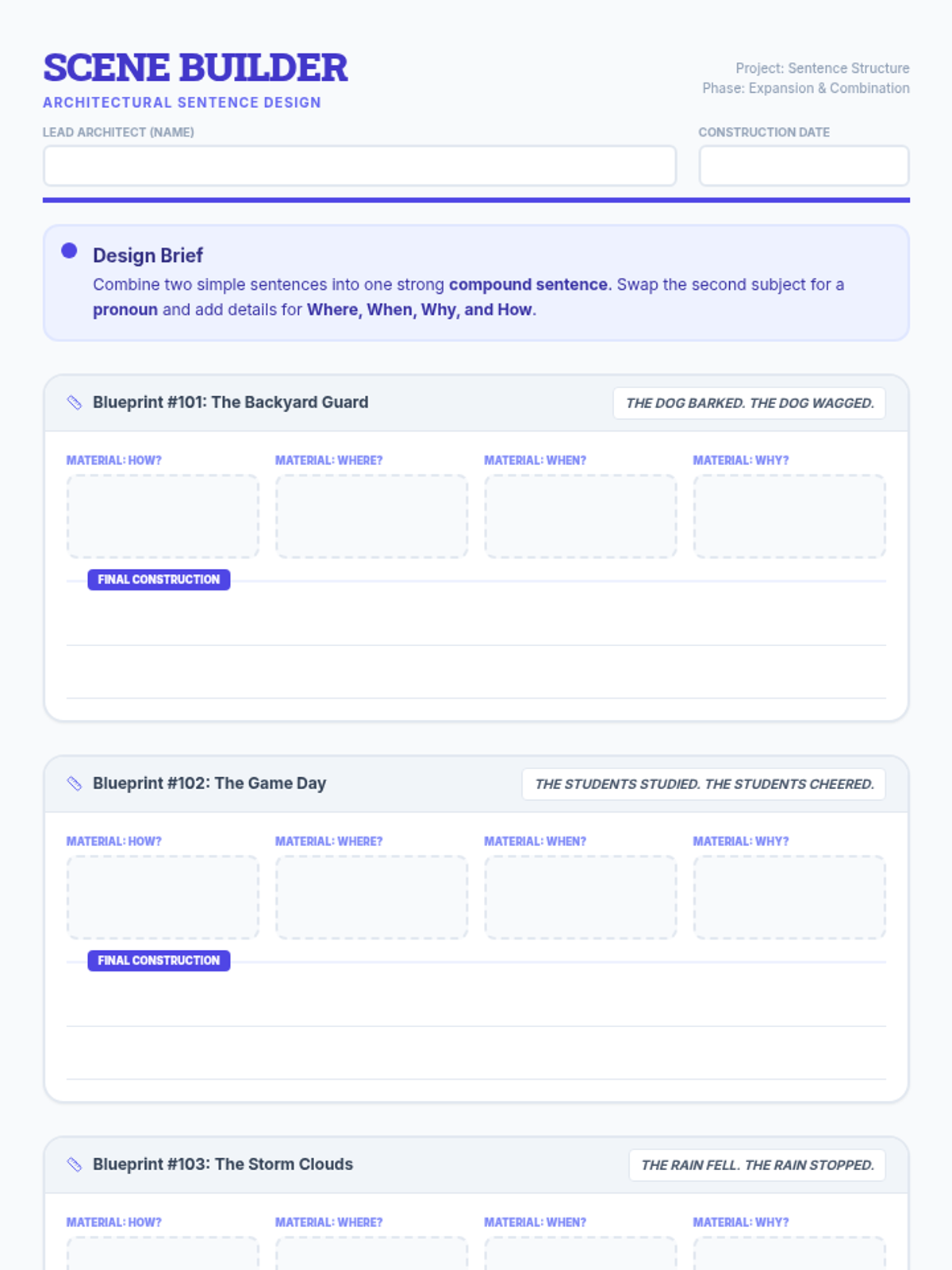
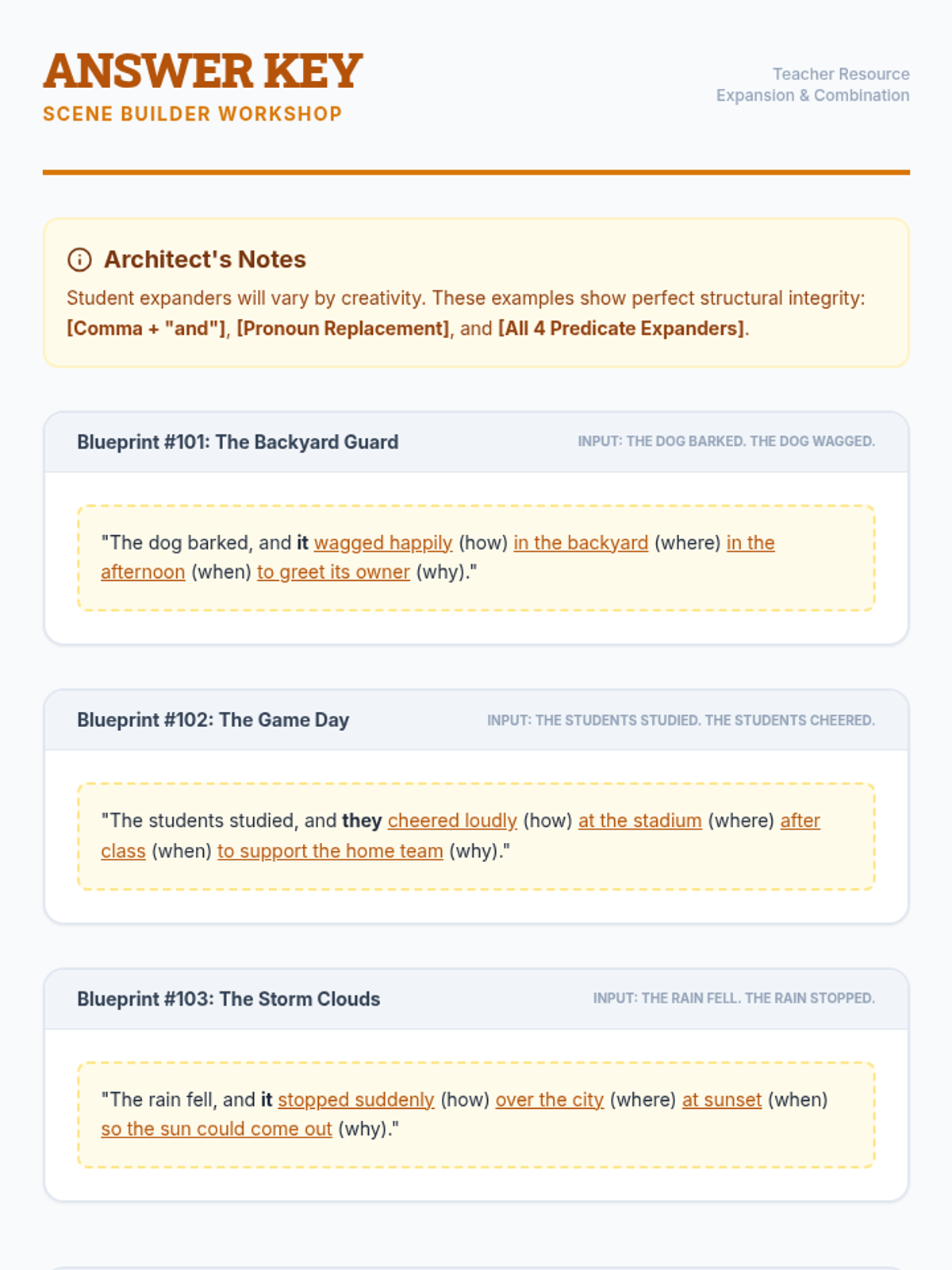
Students practice combining simple sentences with the same subjects into compound sentences using pronouns and adding descriptive predicate expanders (where, when, why, and how).
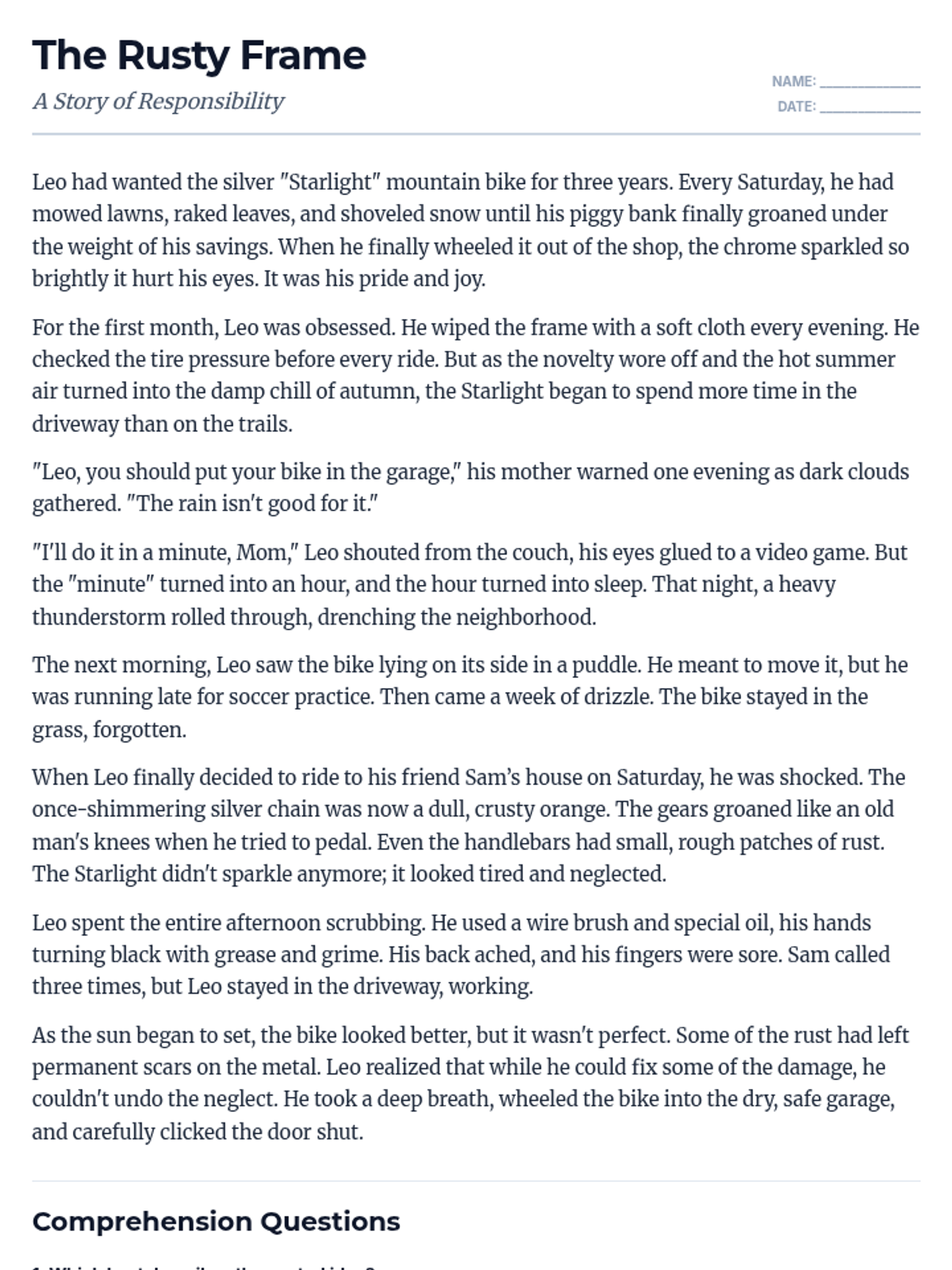
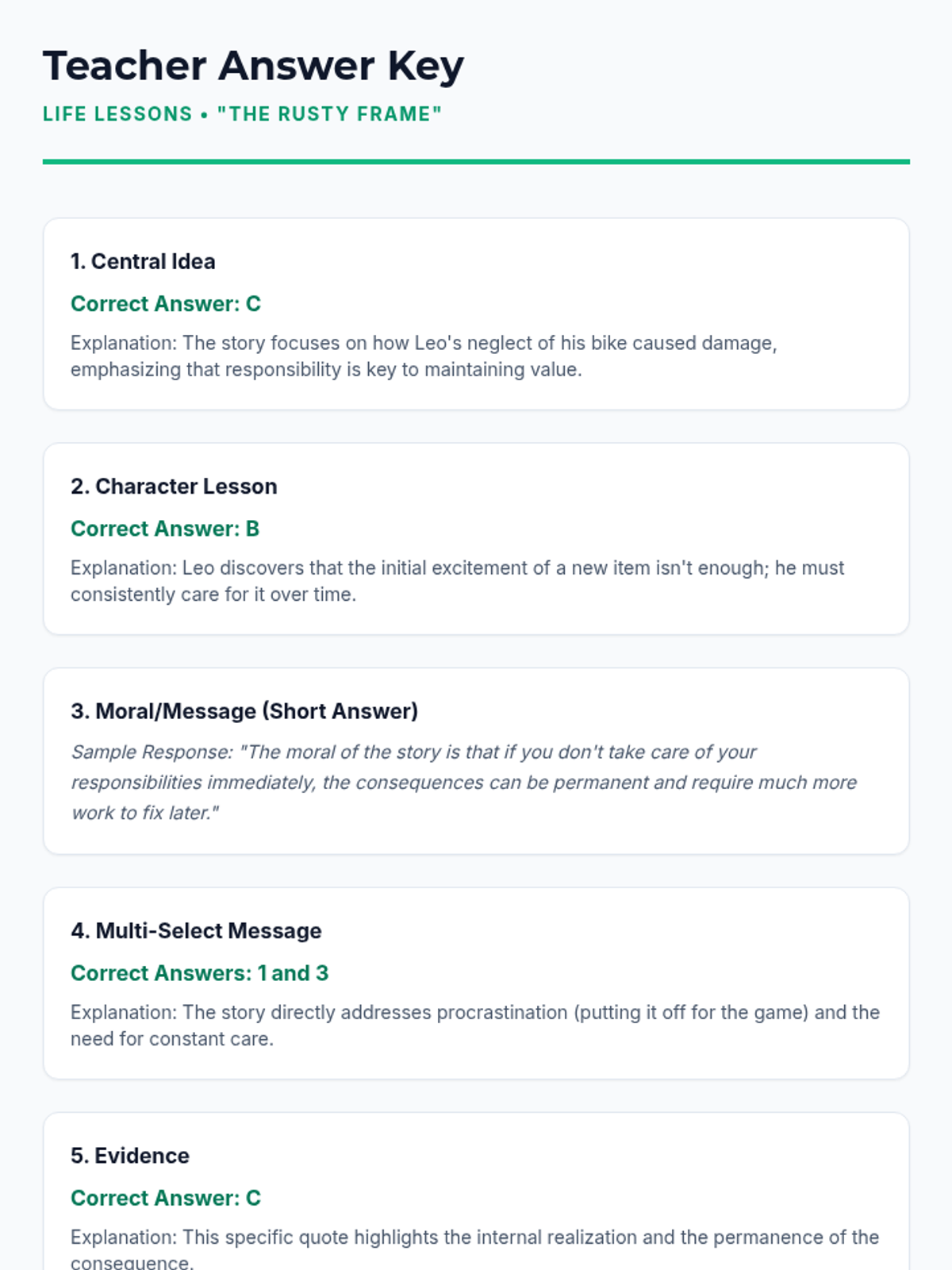
A lesson focused on identifying central ideas and morals within realistic fiction through a story about responsibility and growth.
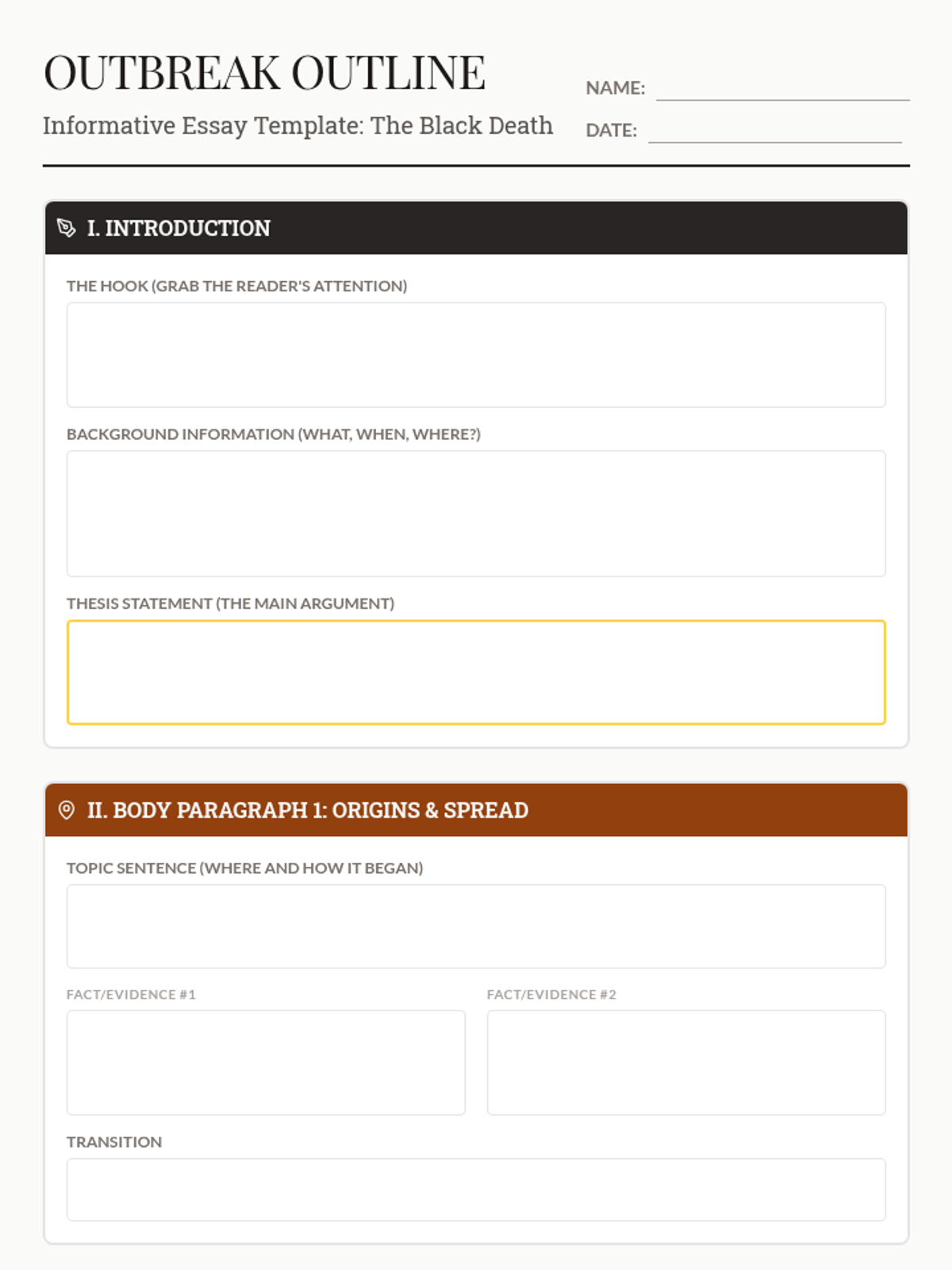
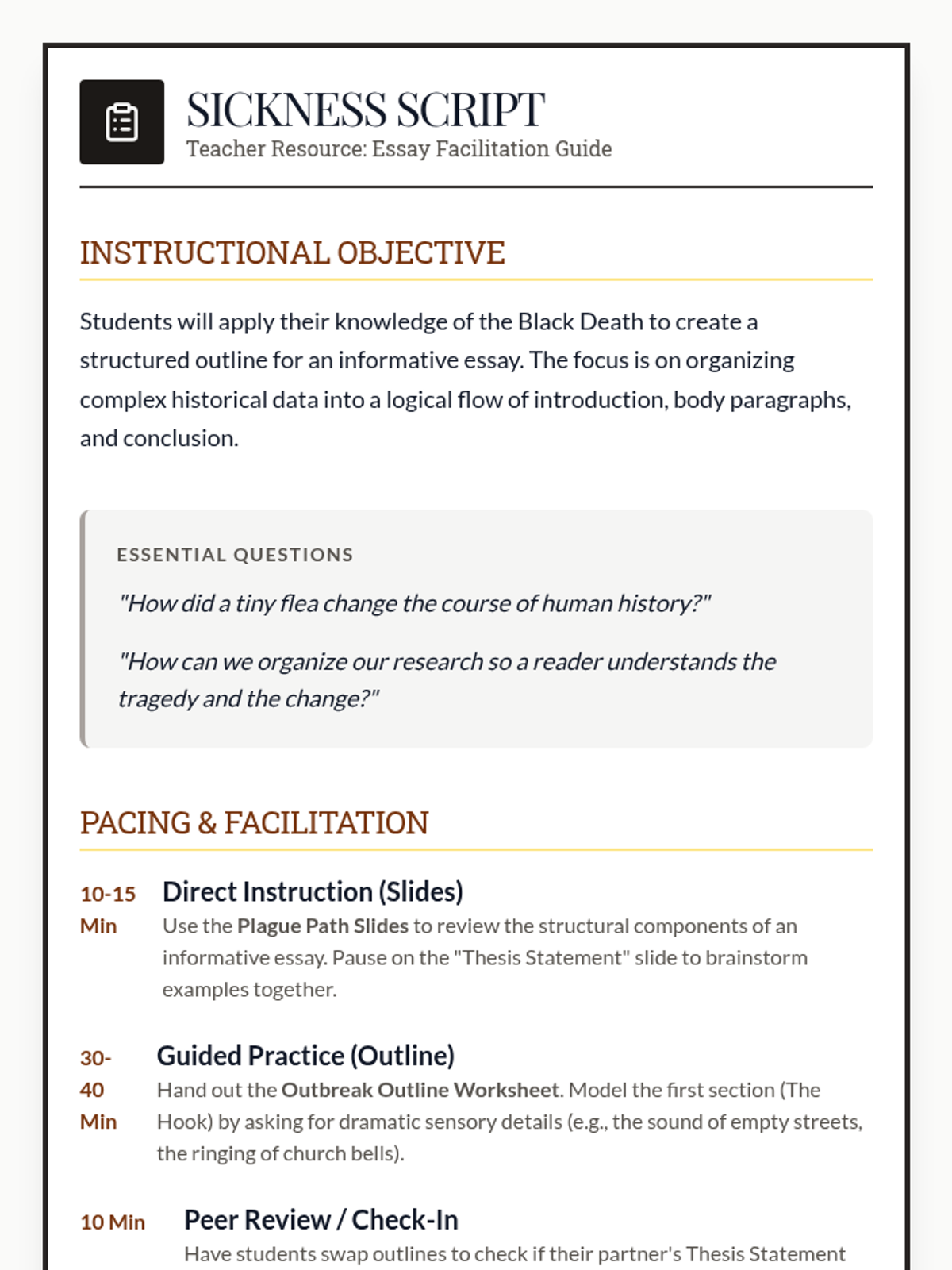
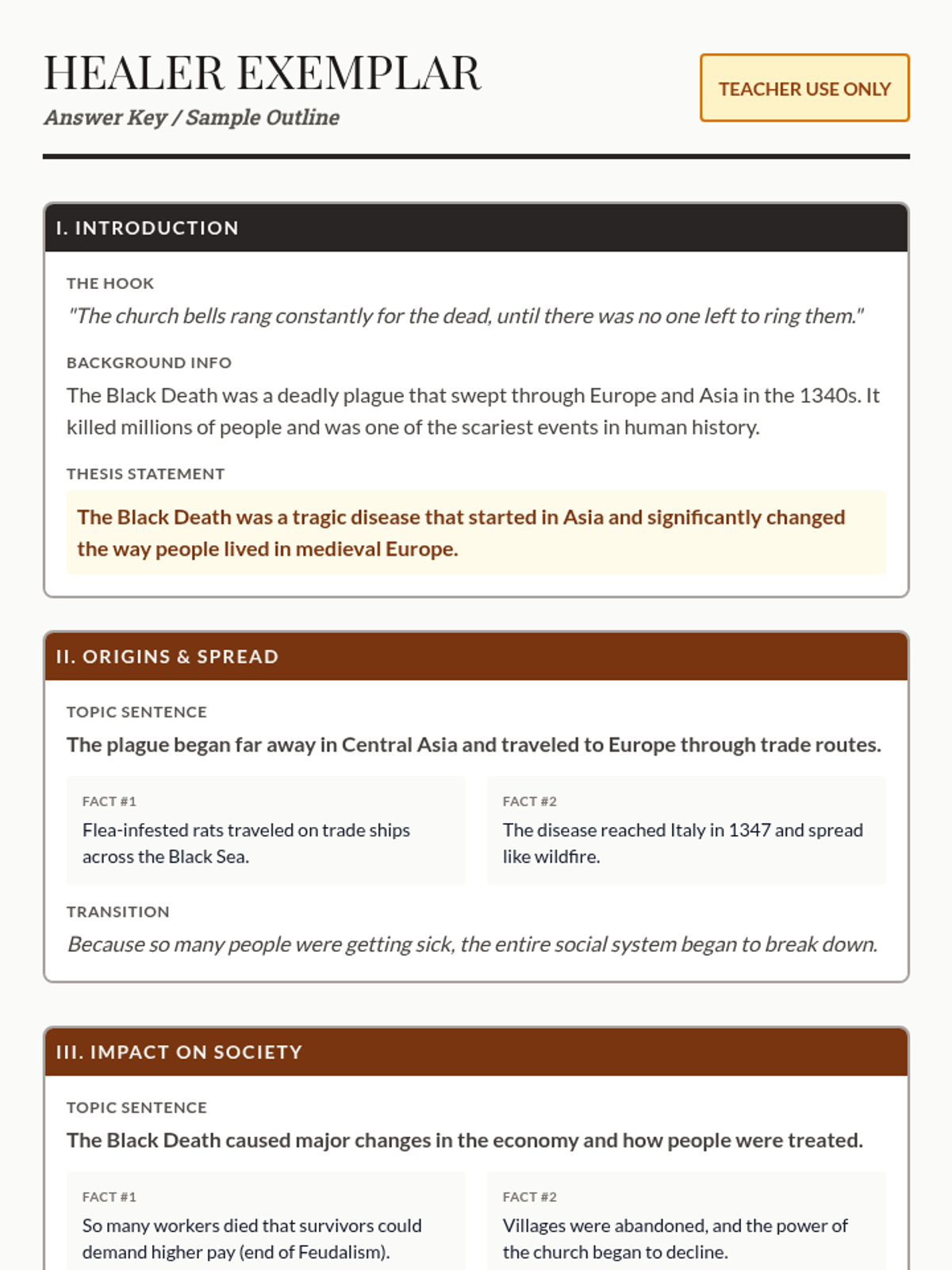
Students will learn how to structure an informative essay about the Black Death, focusing on its origins, spread, and impact on medieval society. This lesson provides a guided outline to help 5th graders organize their research into a cohesive multi-paragraph format.
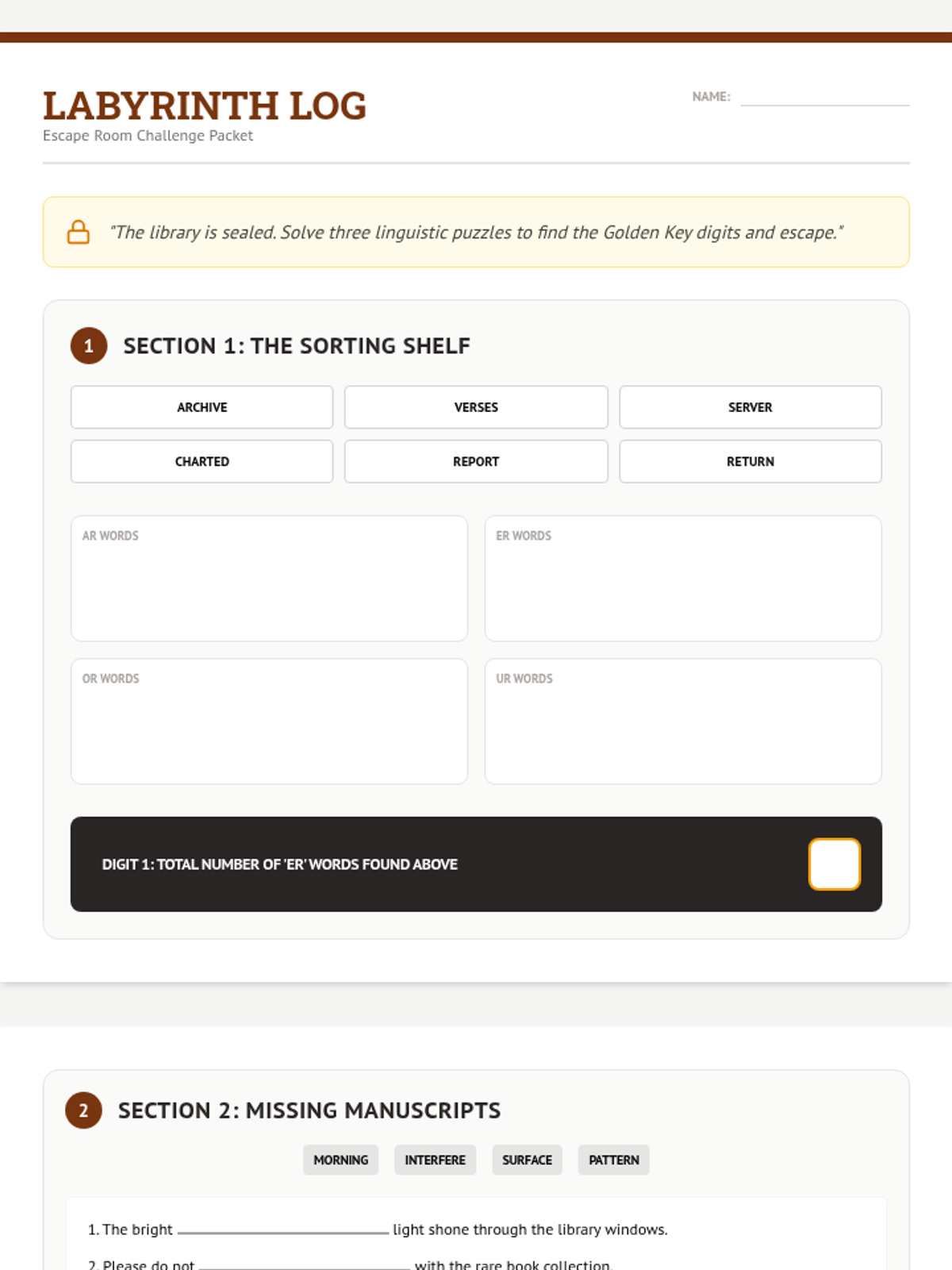
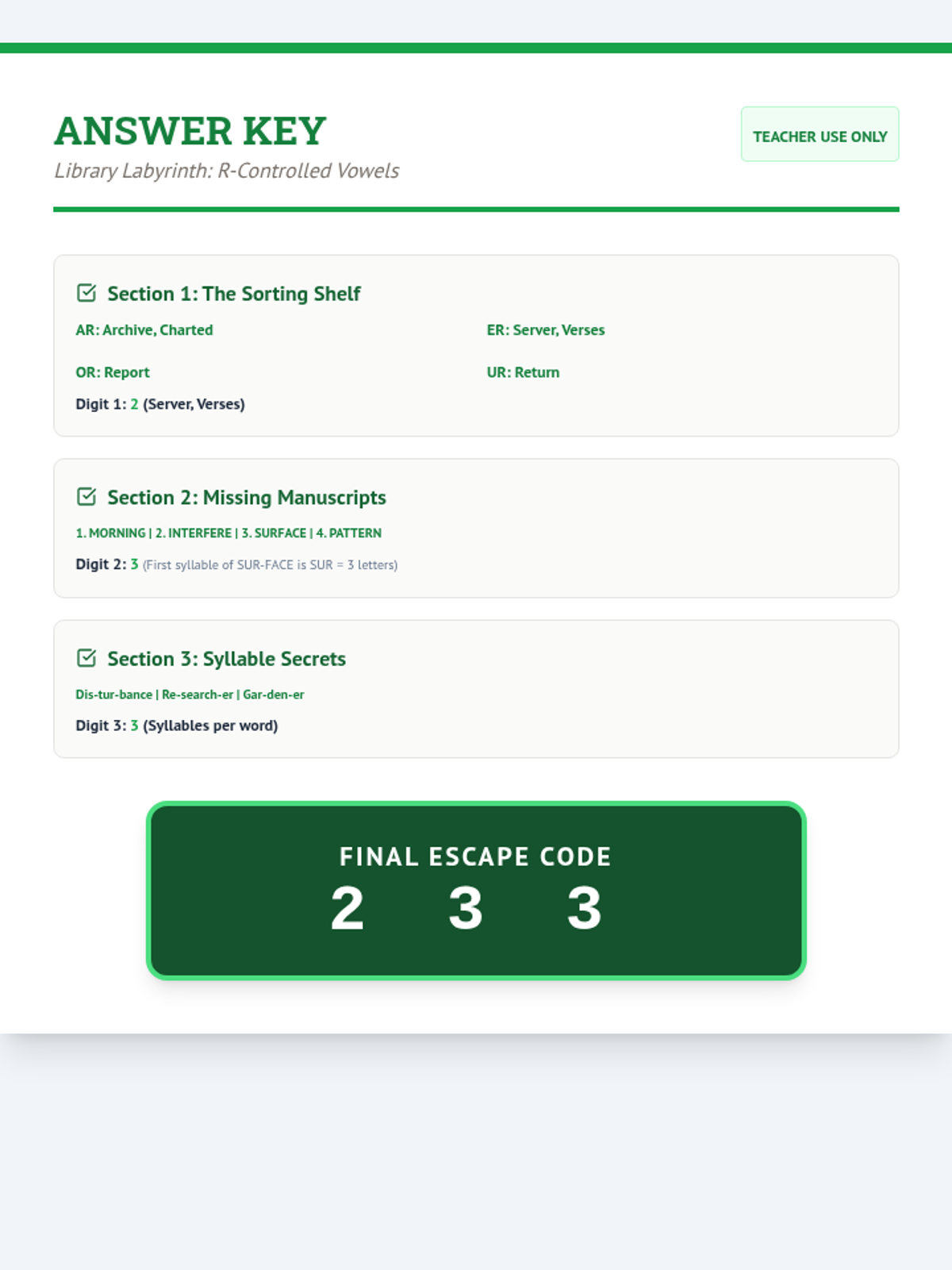
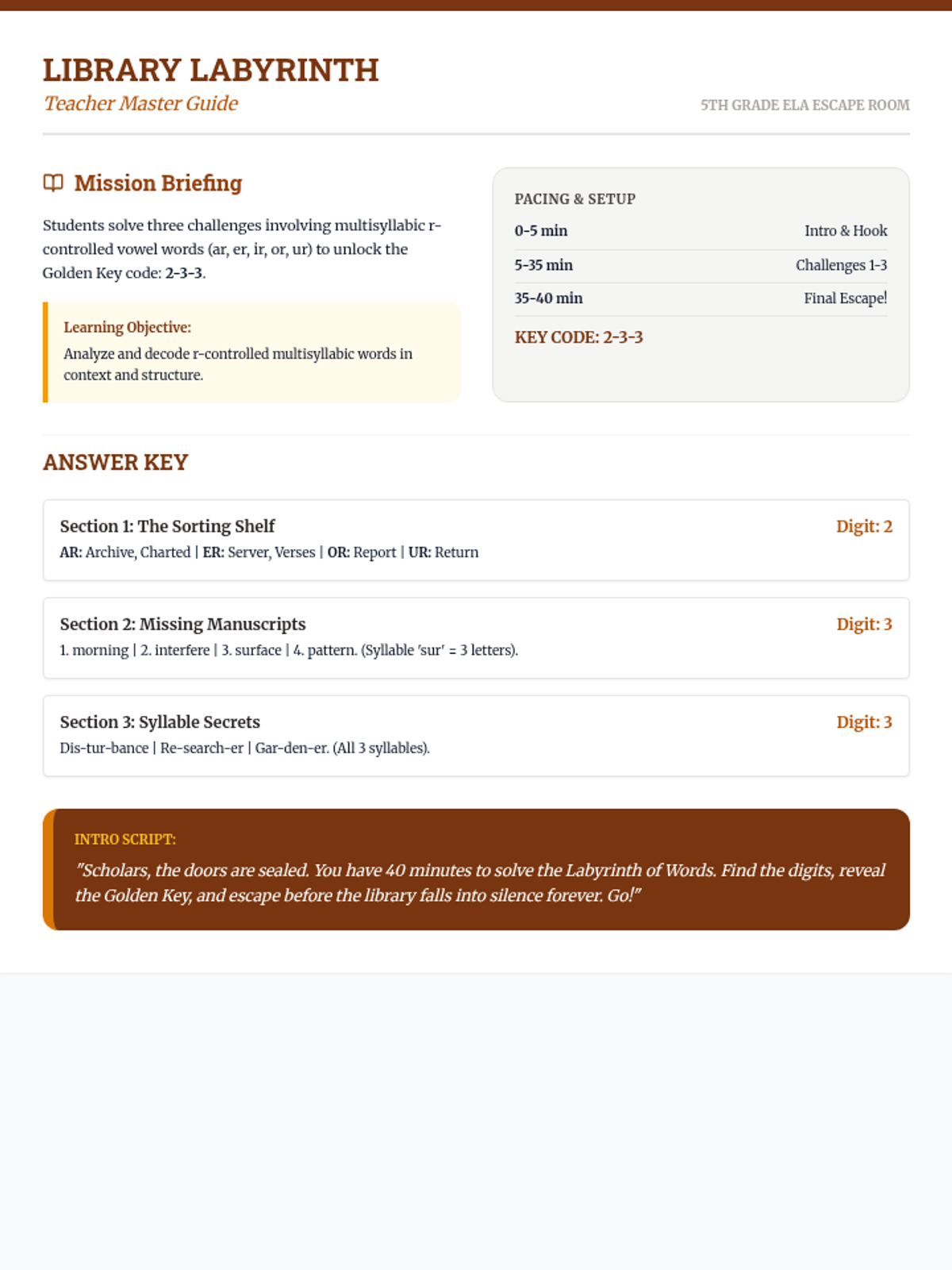
A 5th grade ELA escape room focused on decoding and understanding multisyllabic r-controlled vowel words, set in a mysterious, locked library. Students must solve three linguistic challenges to find the 'Golden Key' and exit the library before the 40-minute timer expires.
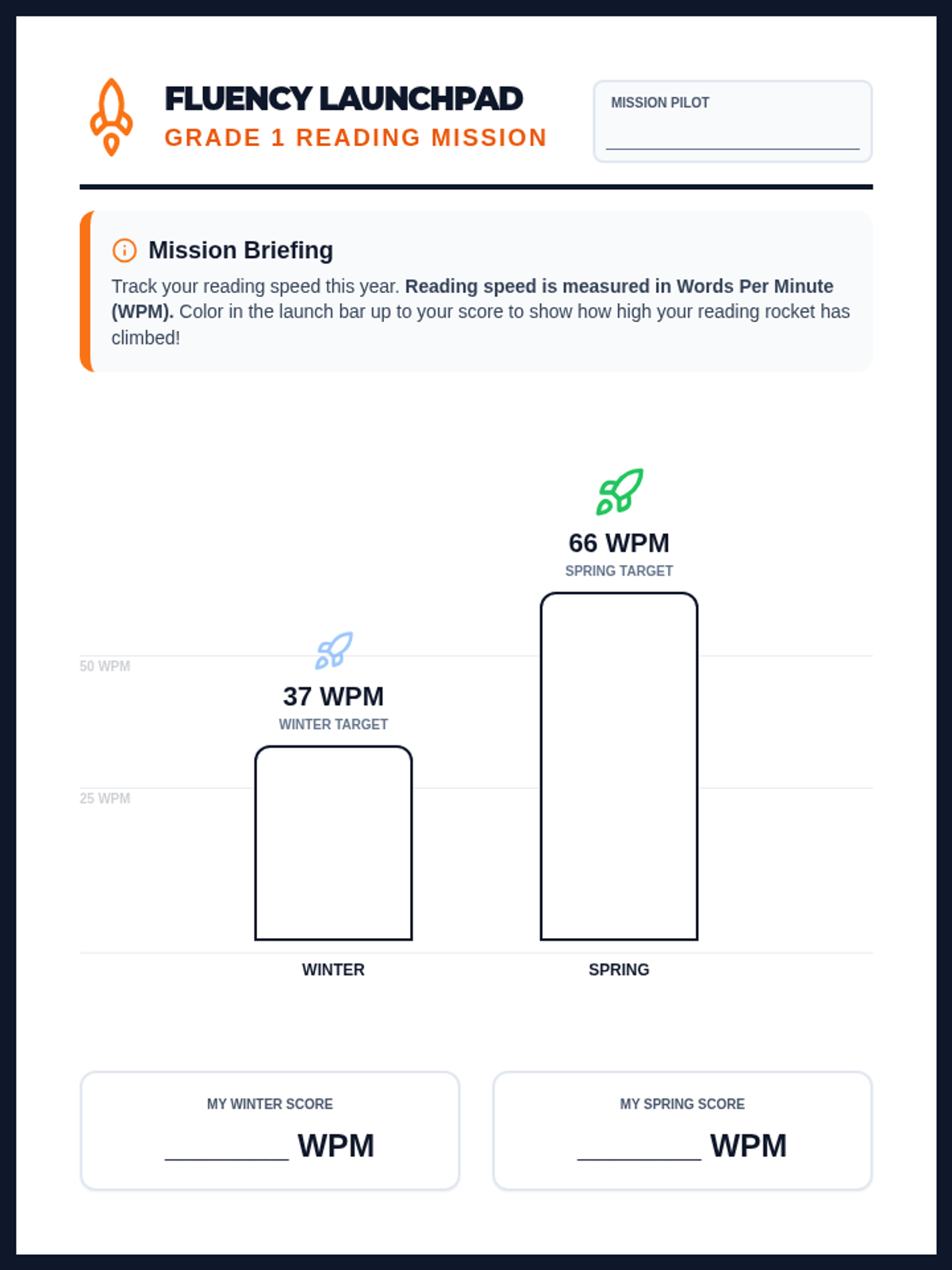
A collection of visual goal-tracking dashboards for grades 1-5, using a rocket launch theme to help students visualize their reading fluency targets for the year.
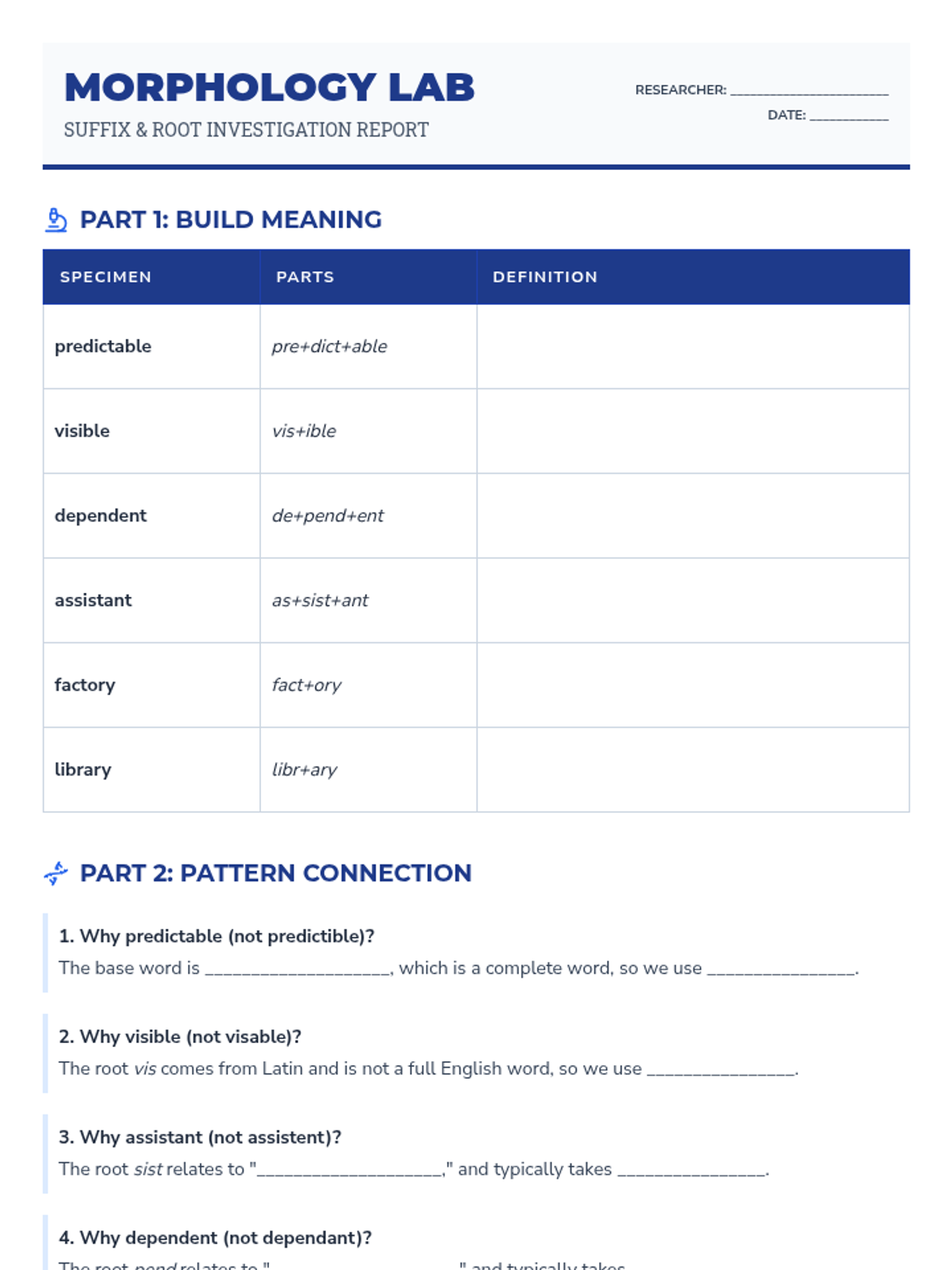
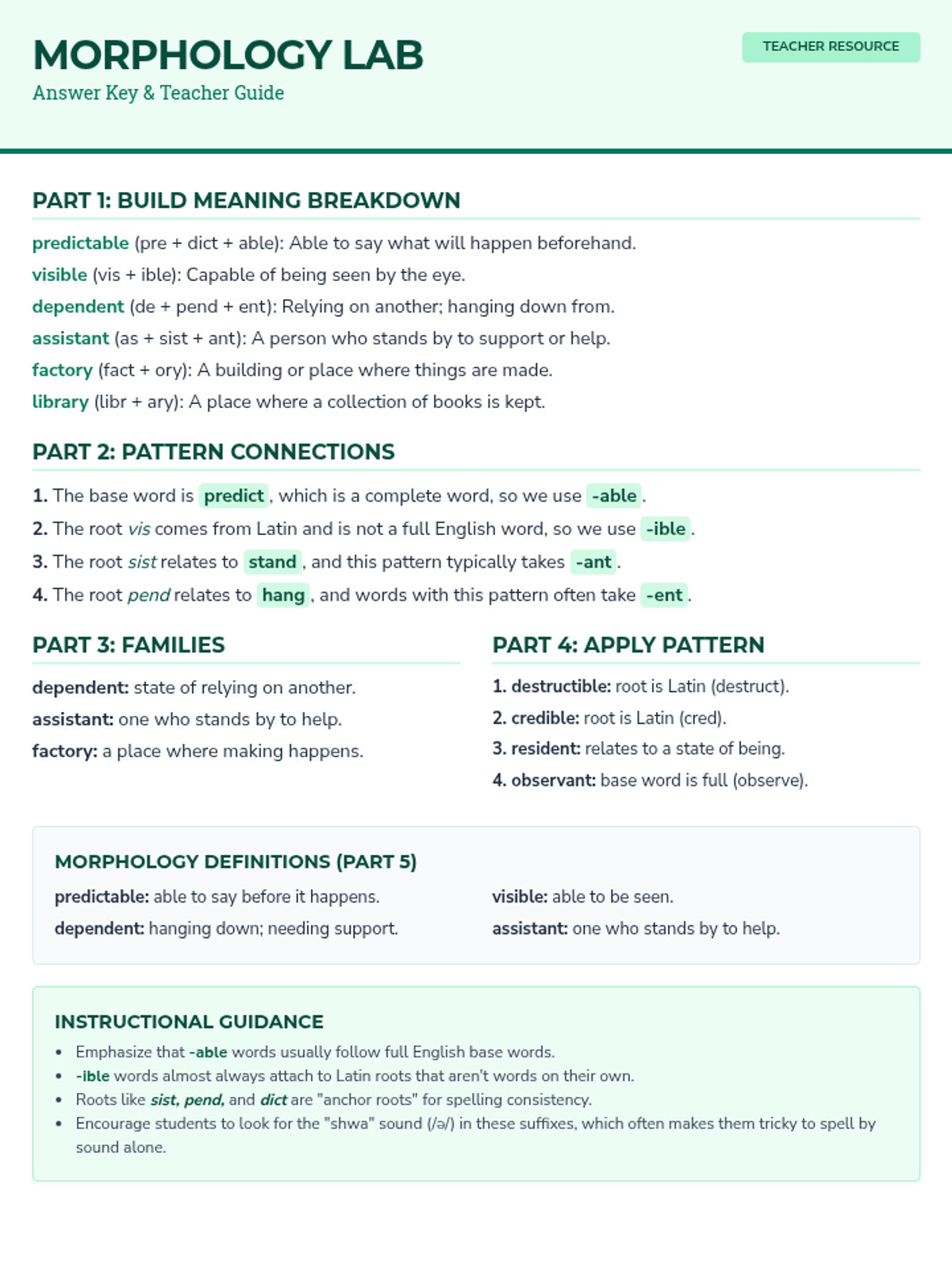
A deep dive into morphology and common word endings (-able, -ible, -ary, -ery, -ory, -ant, -ent), focusing on how Latin roots and base words determine spelling patterns.
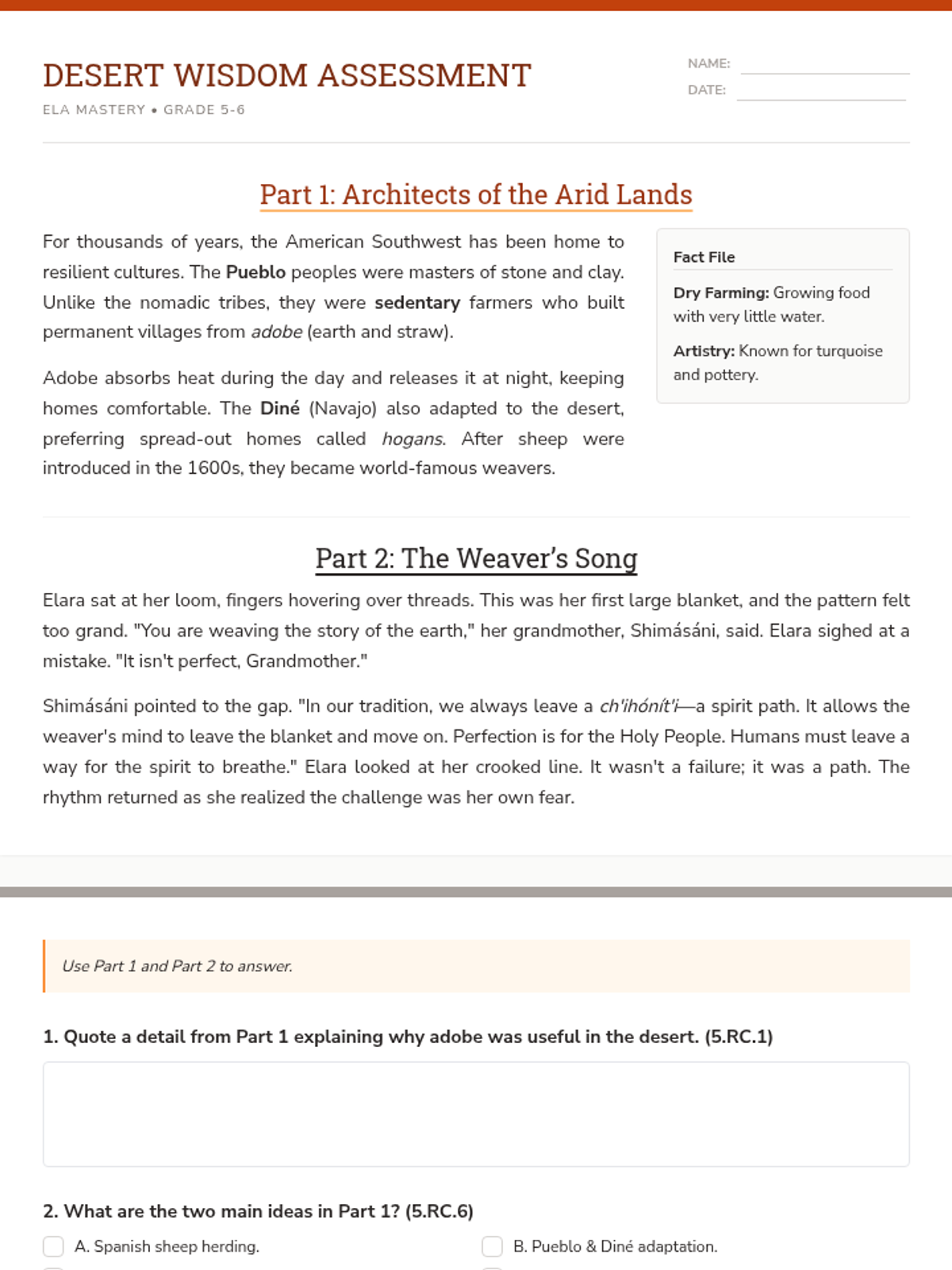
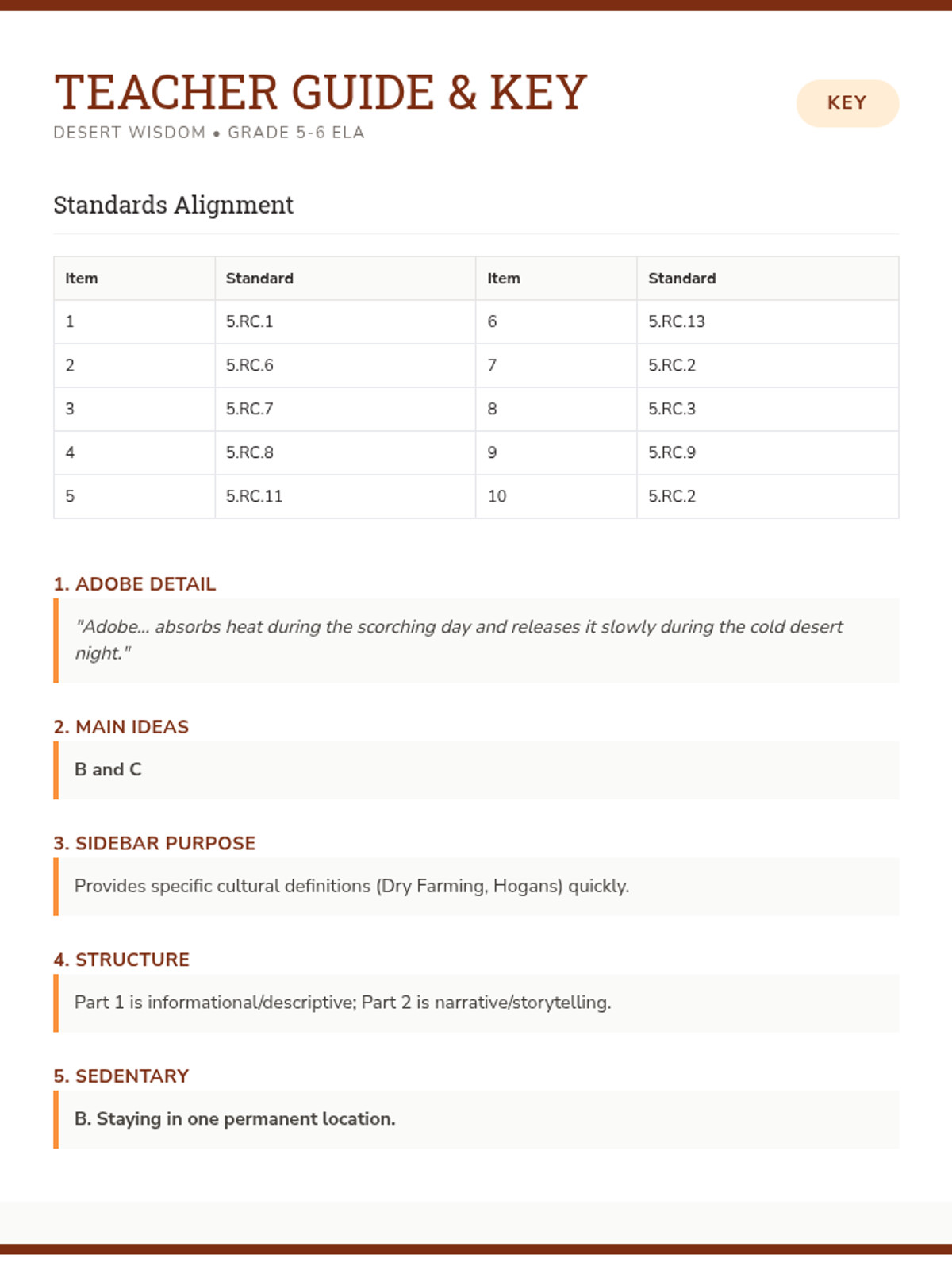
A comprehensive ELA assessment featuring informational and literary texts about Southwest Native American tribes, aligned to 5th-6th grade standards. Students will analyze text structure, theme, and main ideas while exploring the cultures of the Pueblo and Diné people.
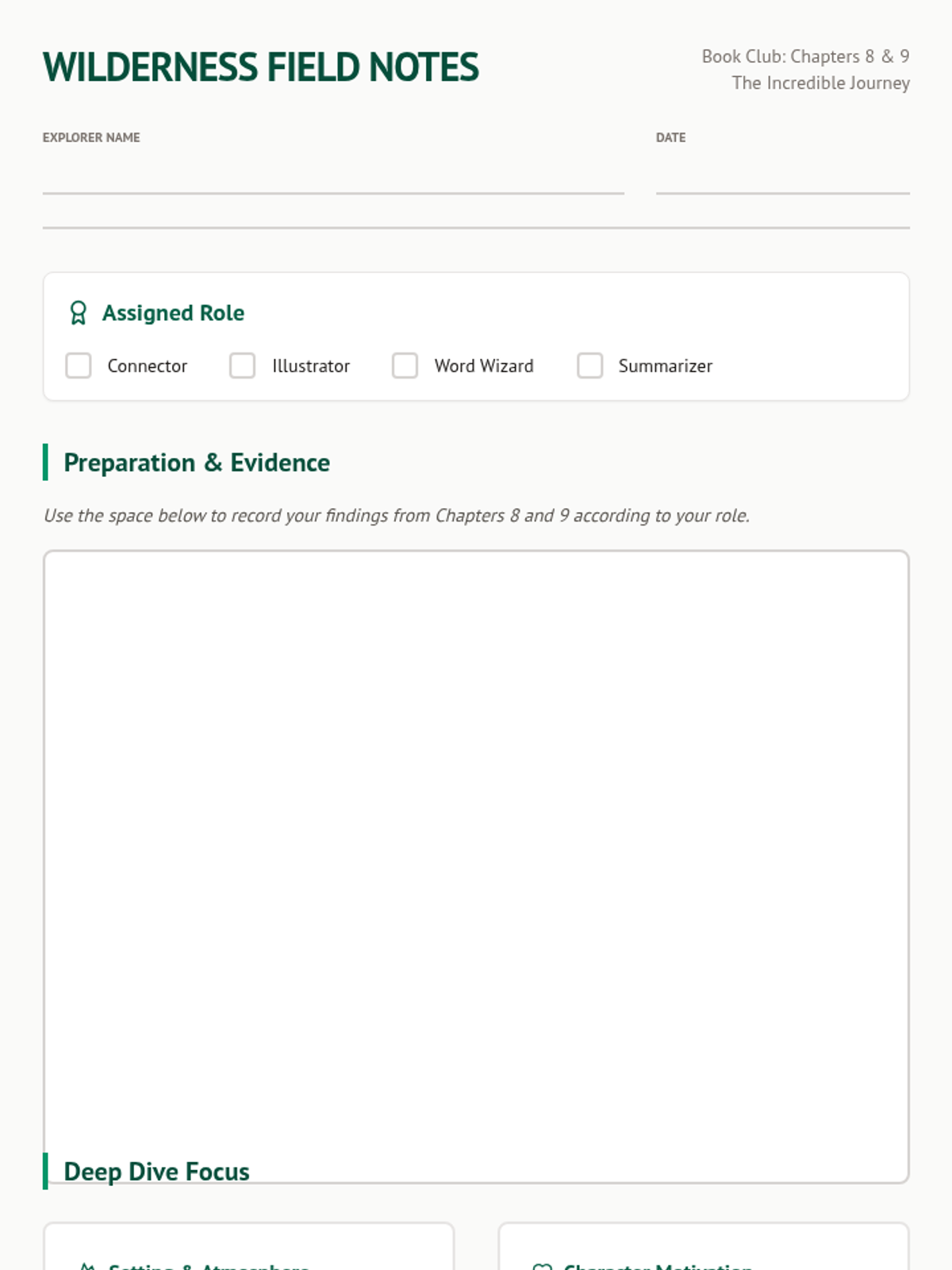
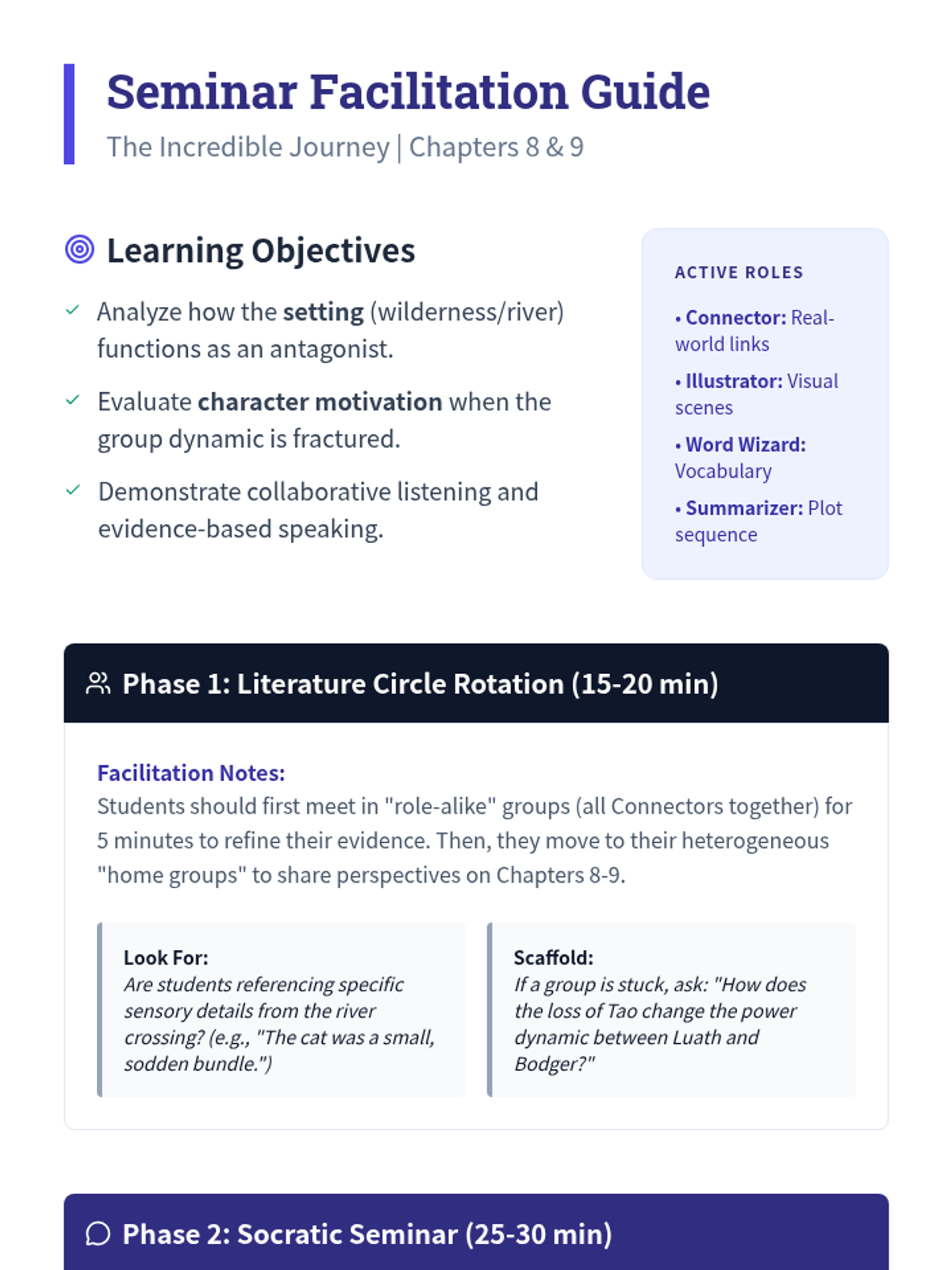
A deep dive into Sheila Burnford's classic adventure, focusing on the trio's survival through the Canadian wilderness. Students explore character motivations, analyze the atmospheric setting, and practice collaborative discussion techniques.
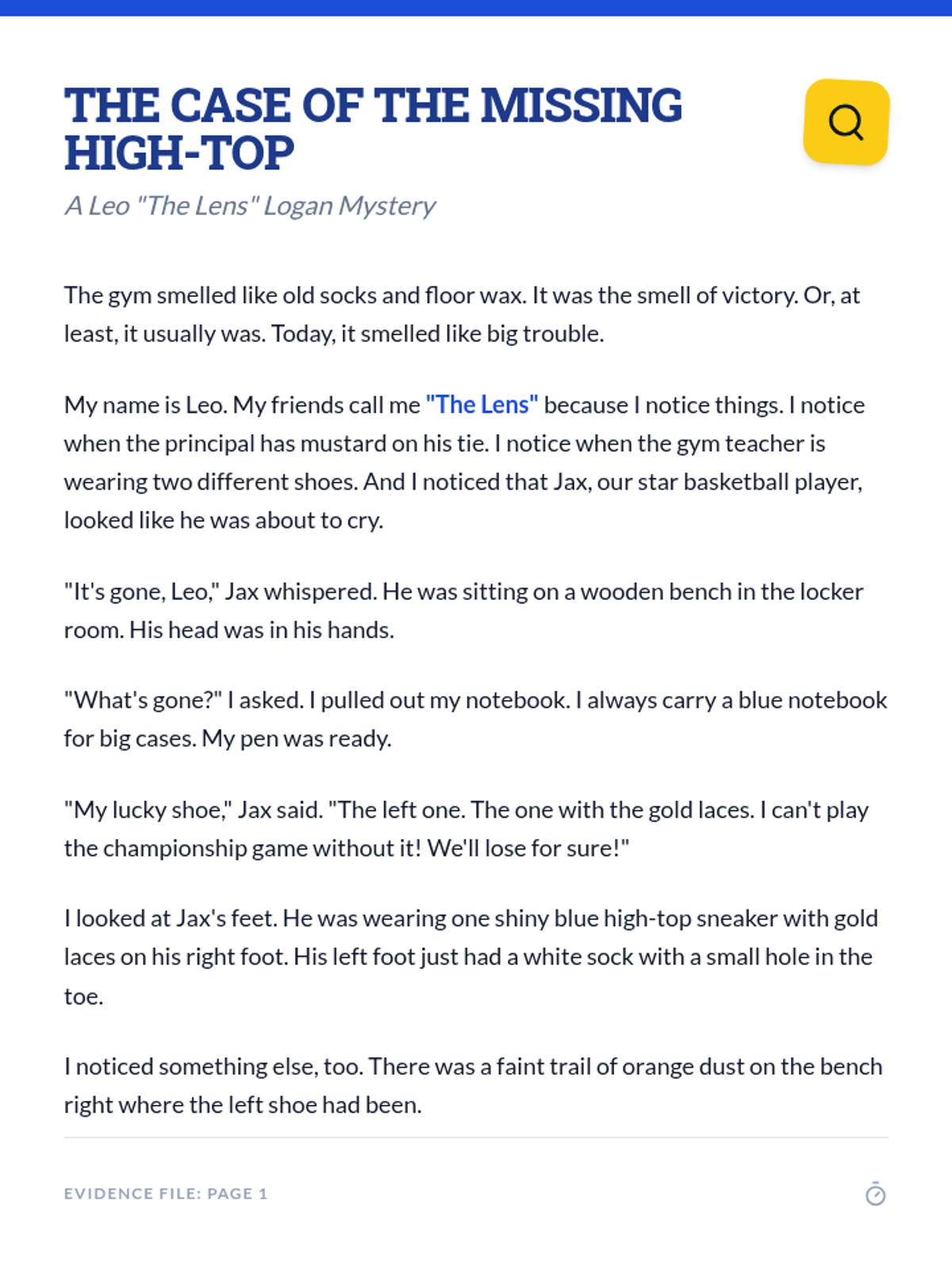
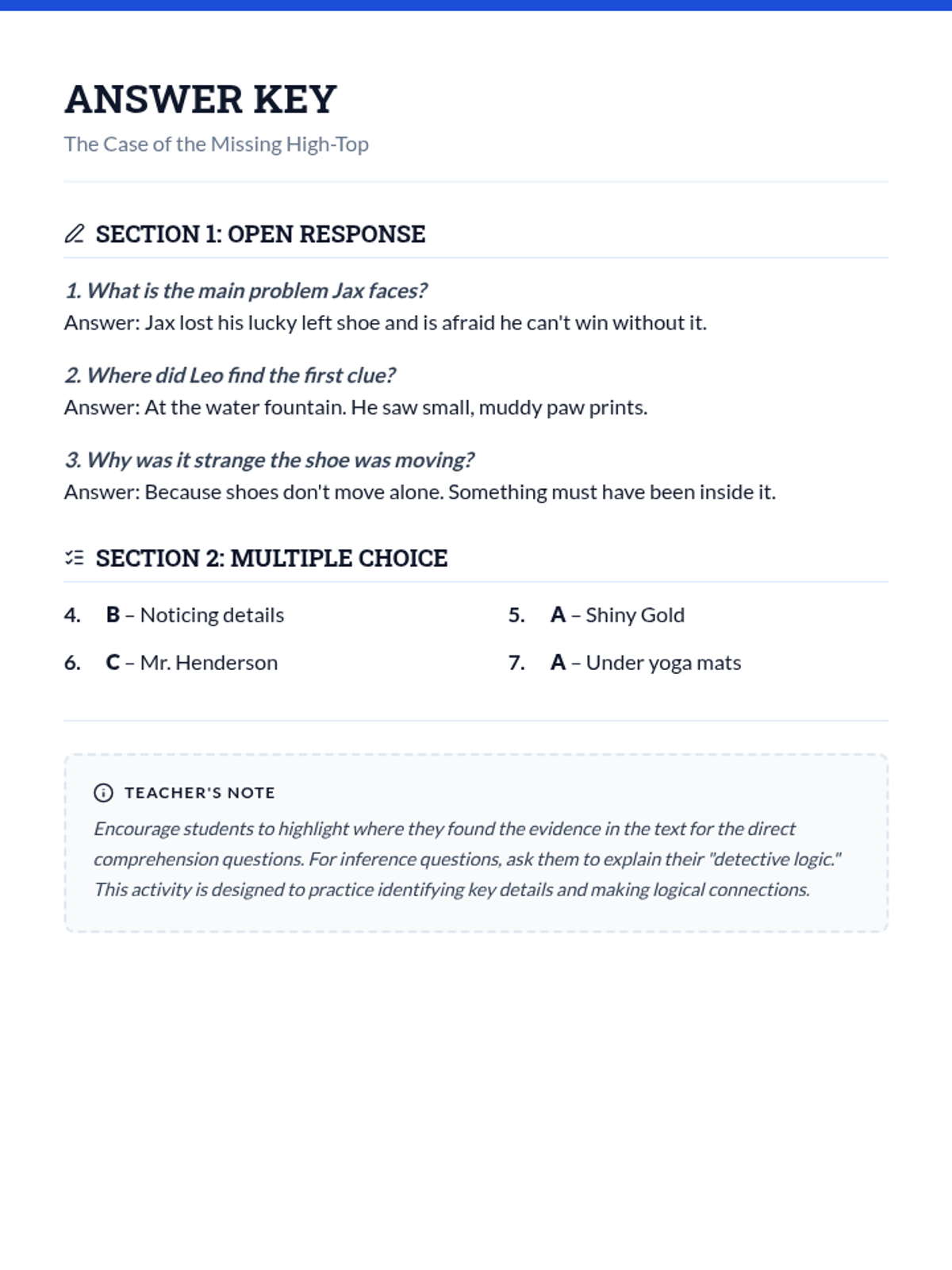
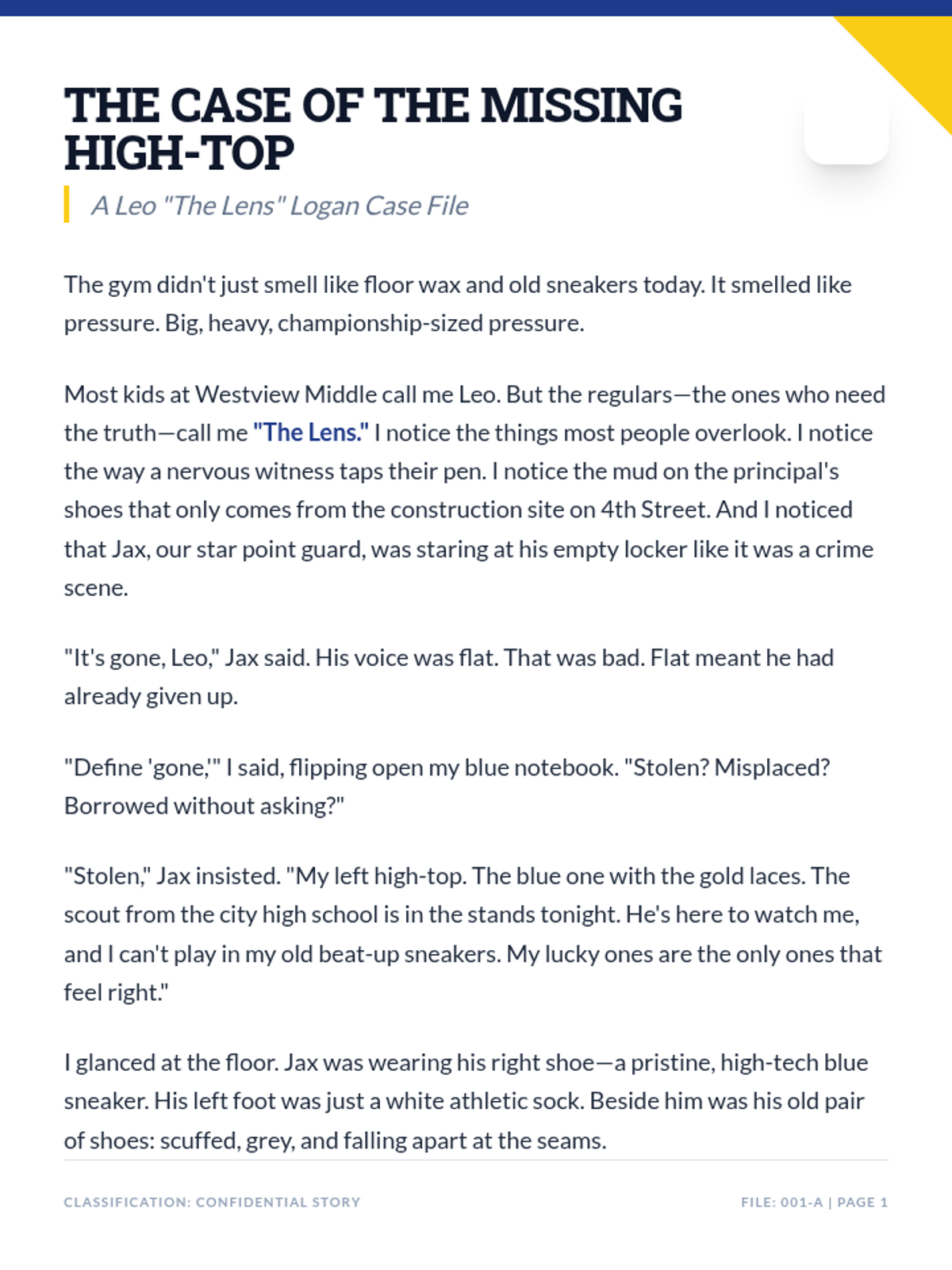
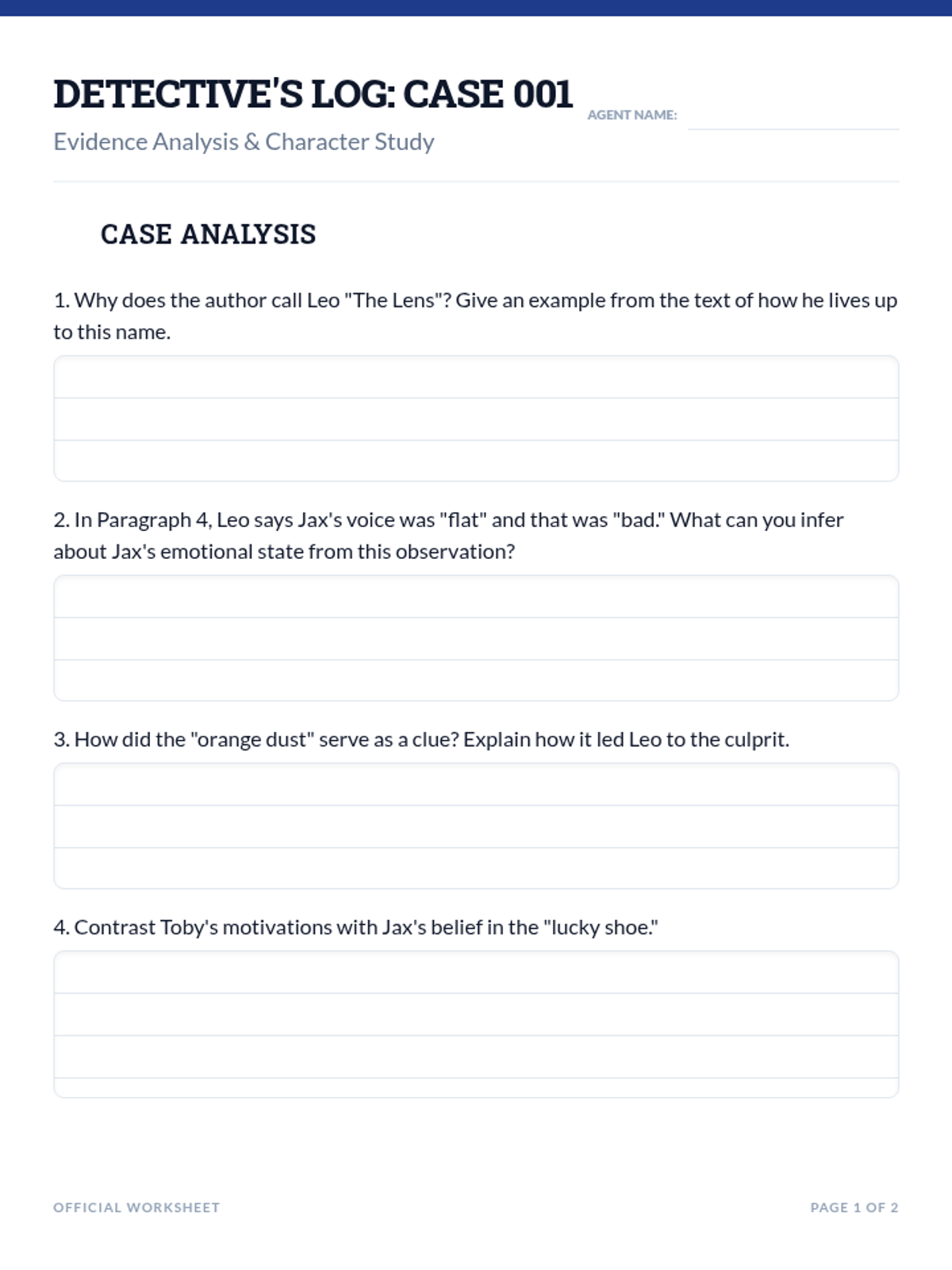
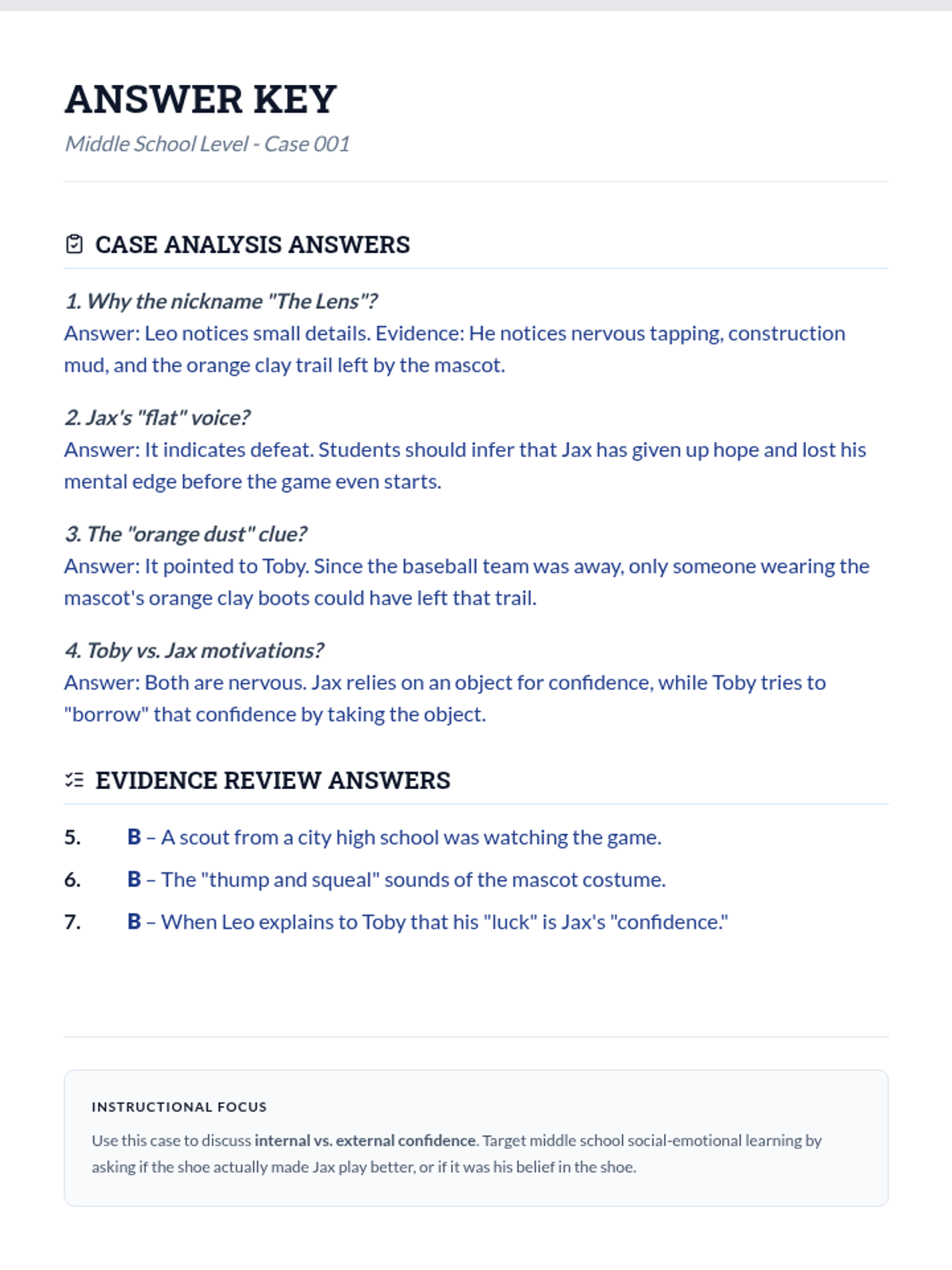
A sports-themed mystery story and comprehension activity designed for 3rd-4th grade reading levels, focusing on making inferences and identifying key details.
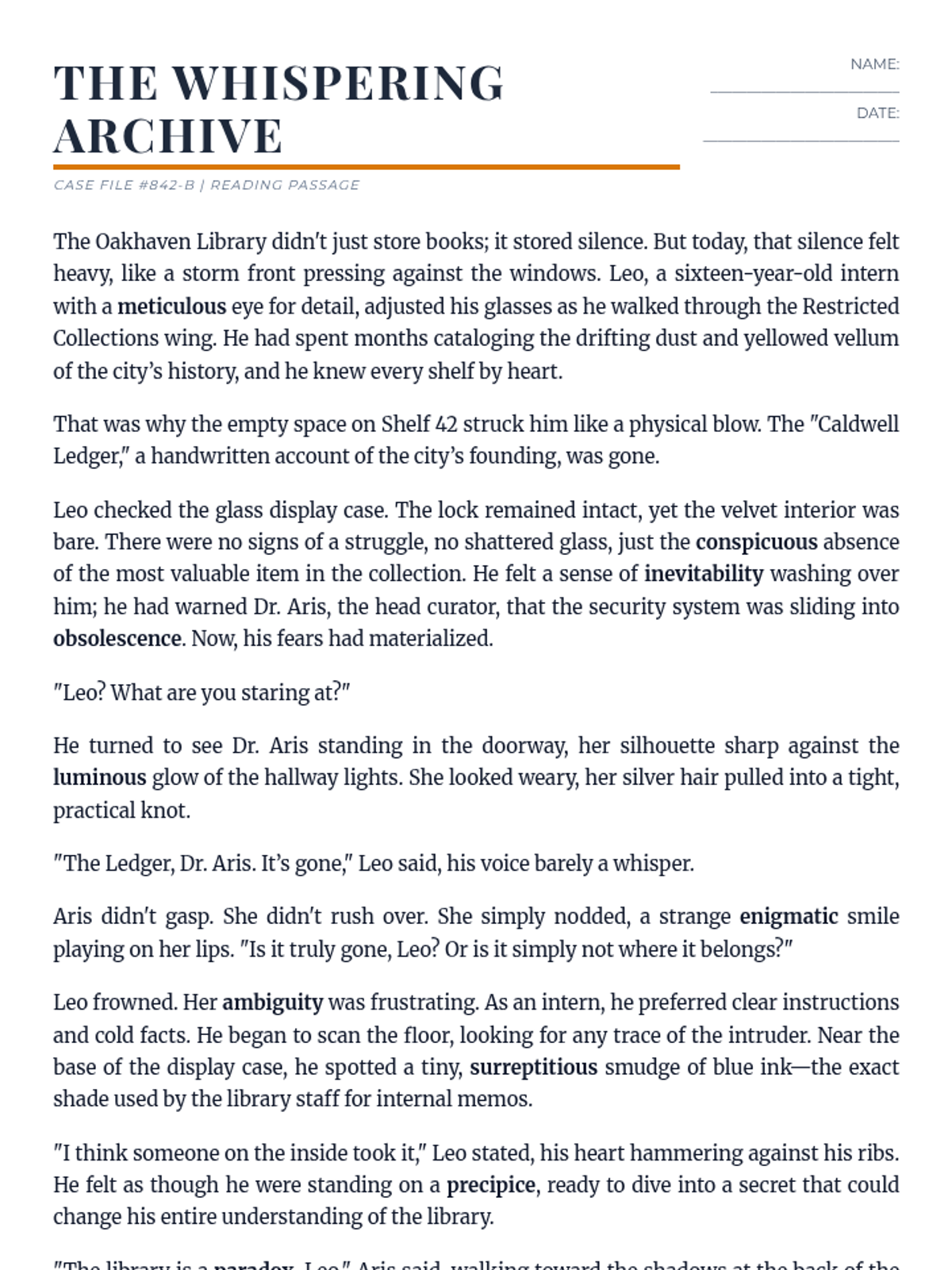
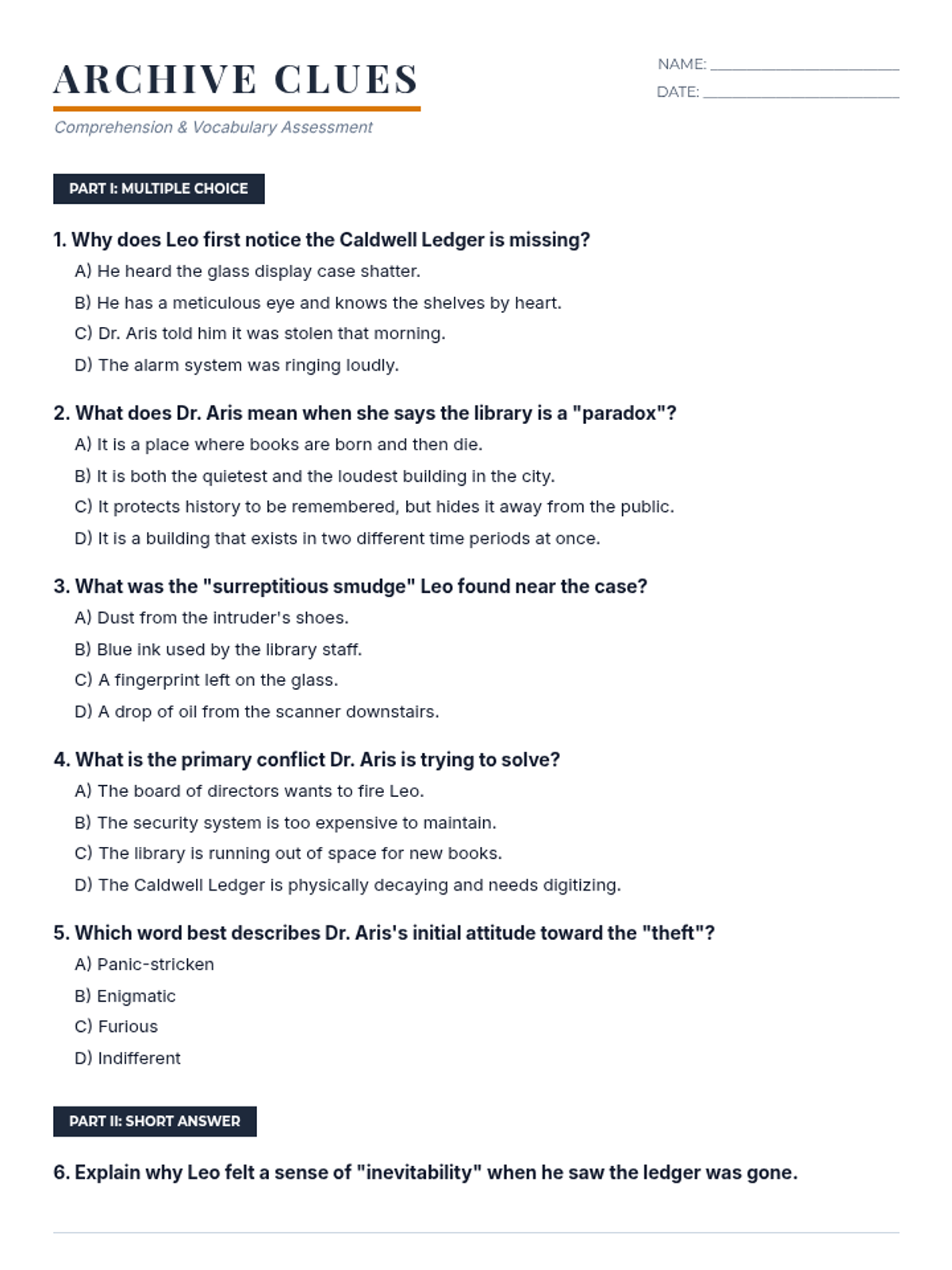
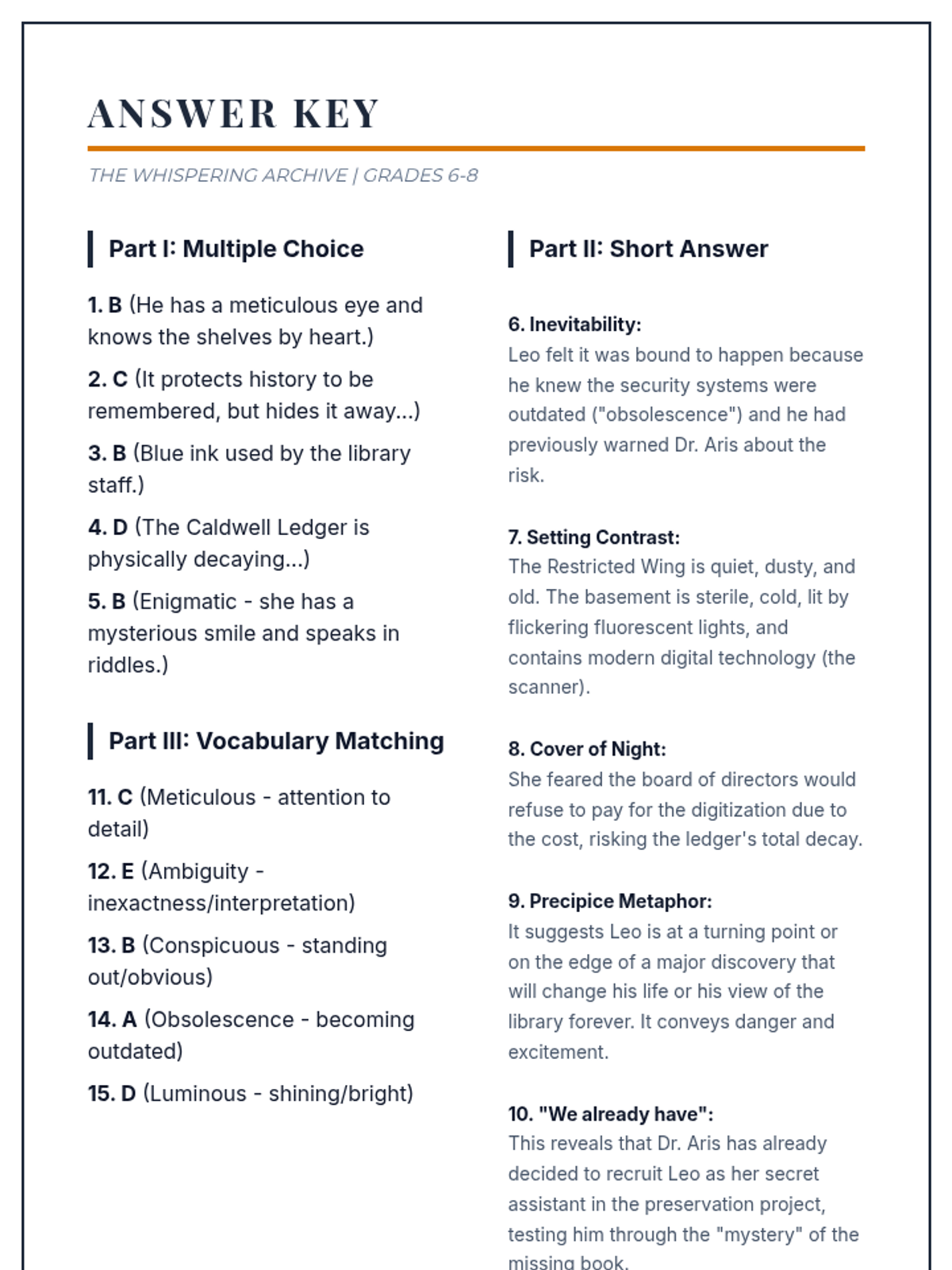
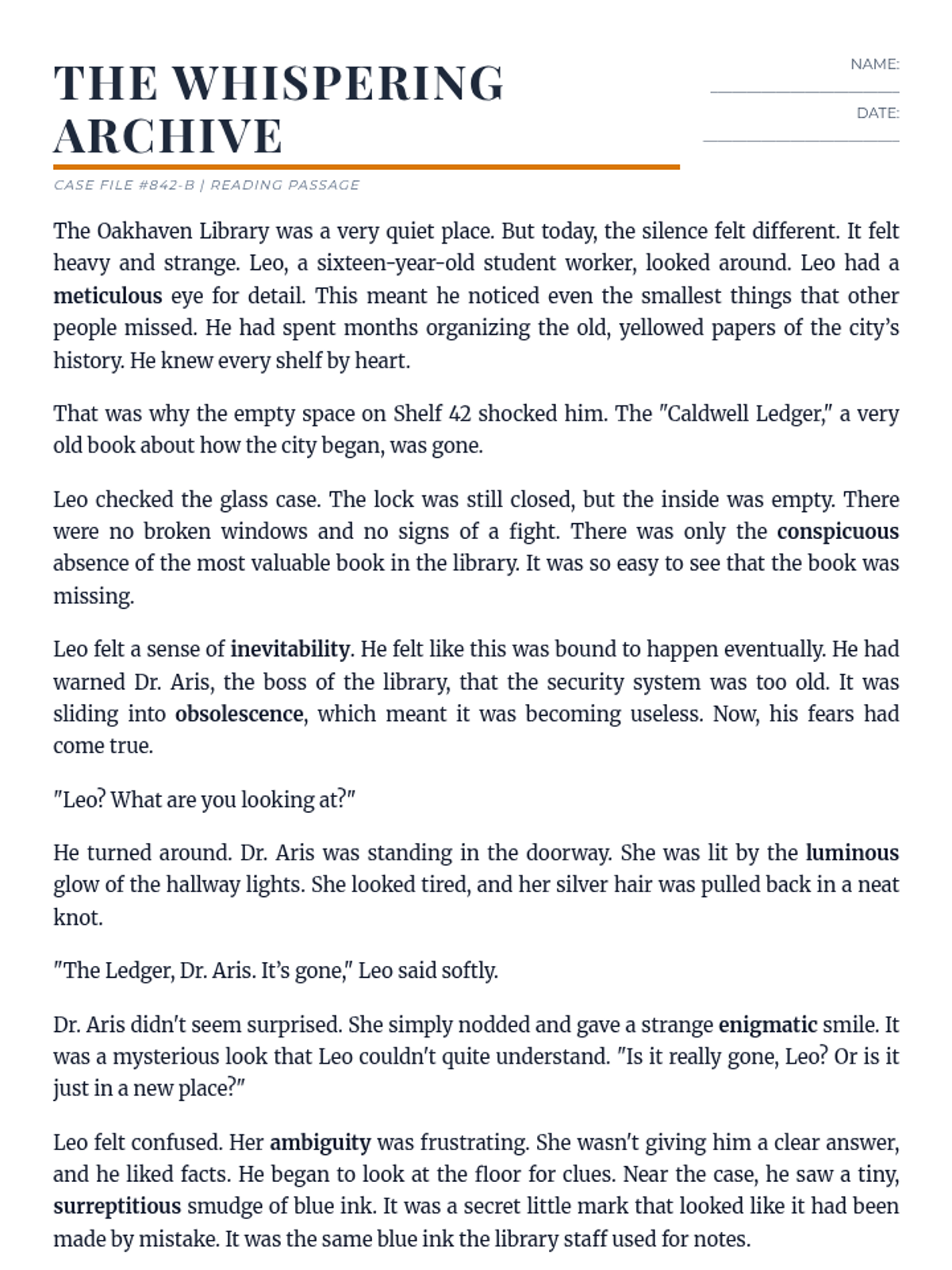
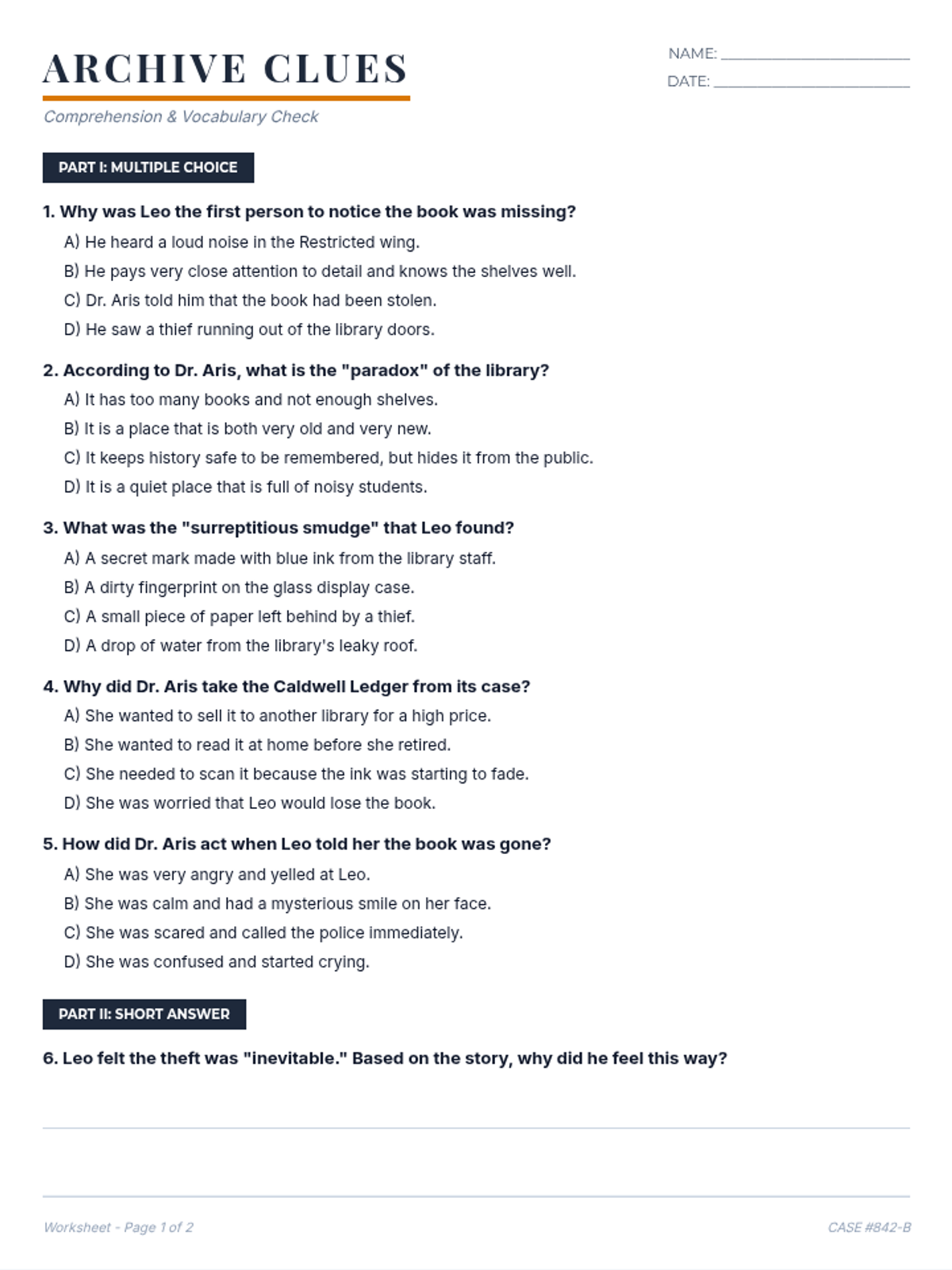
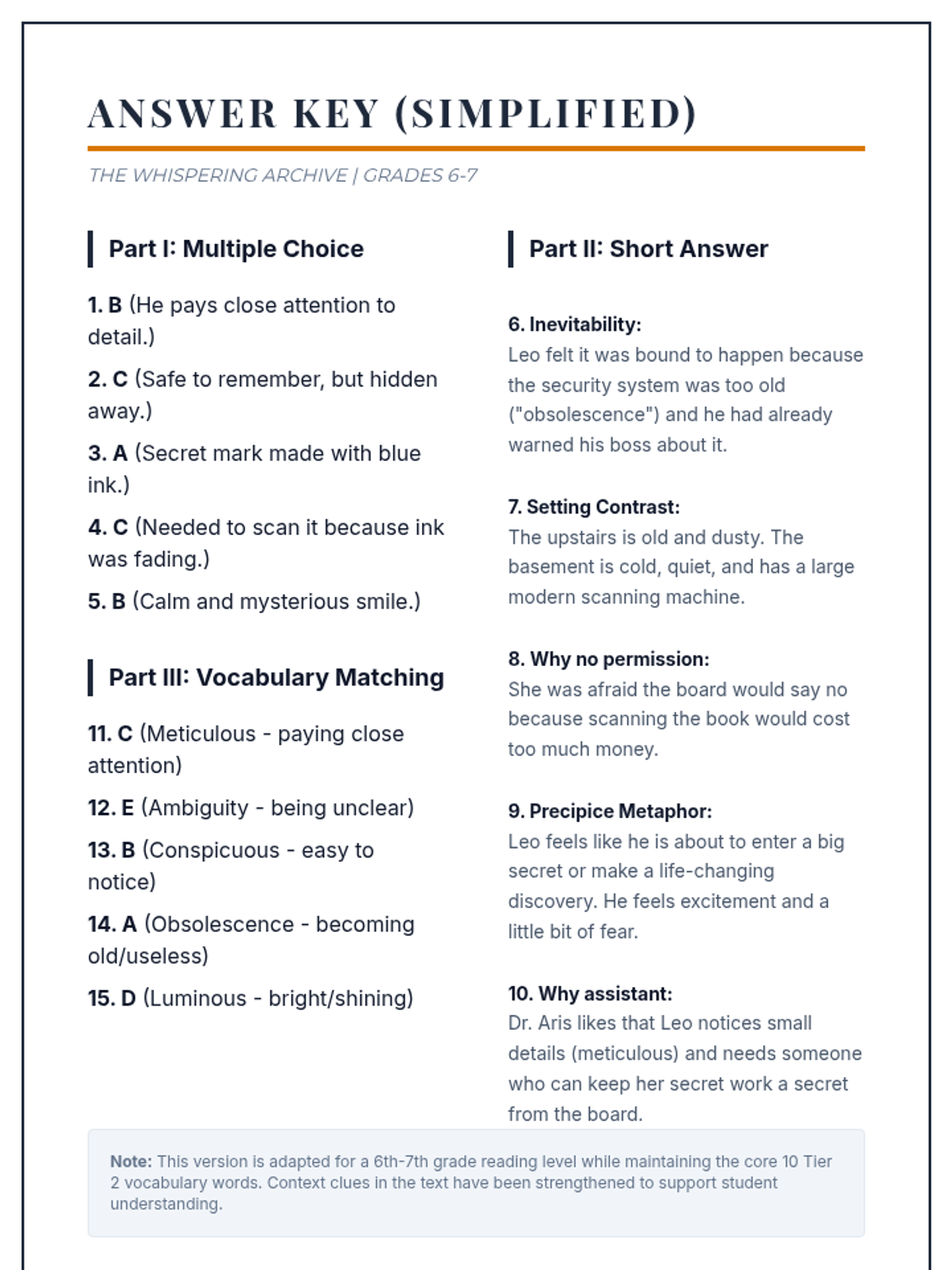
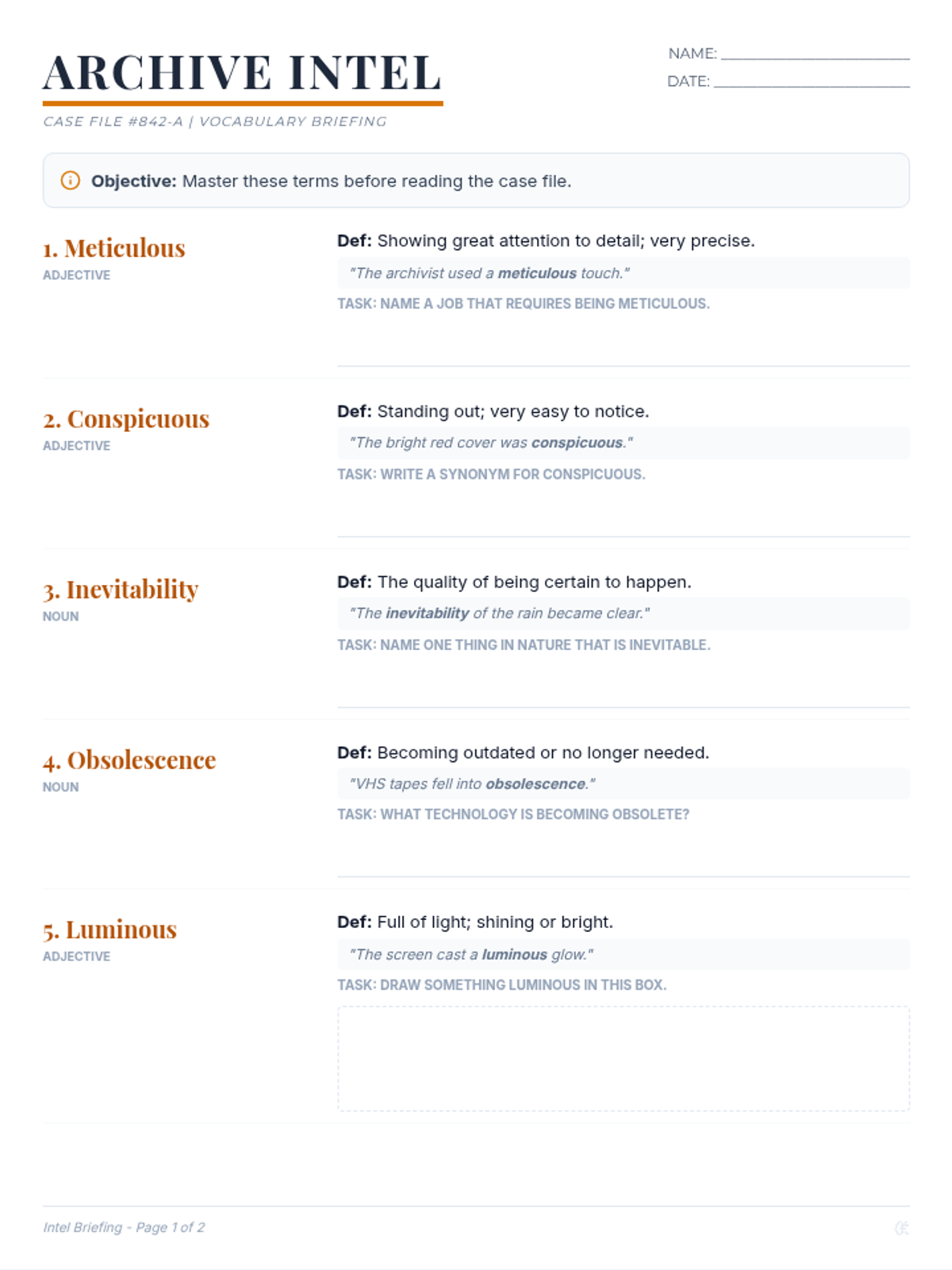
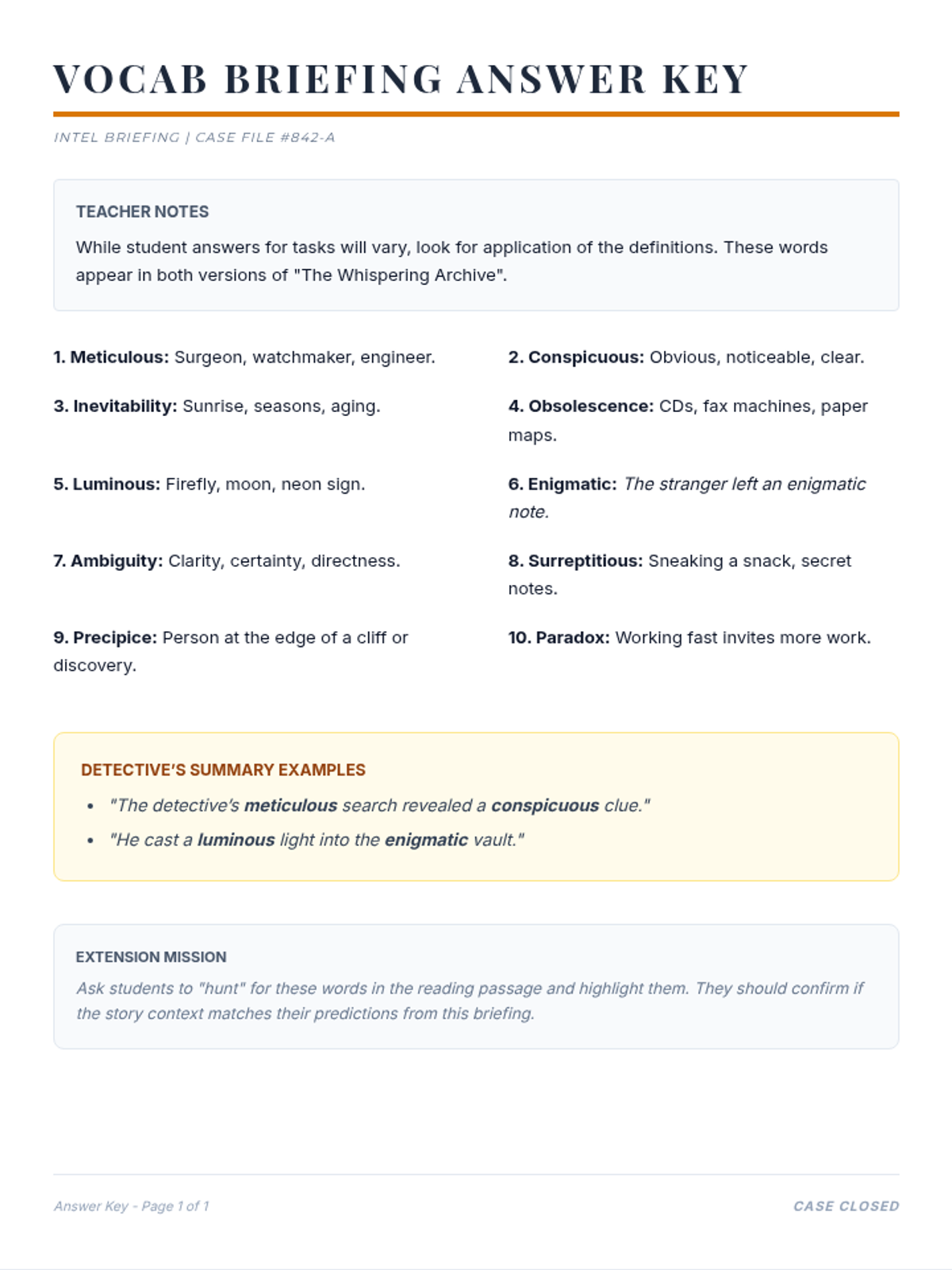
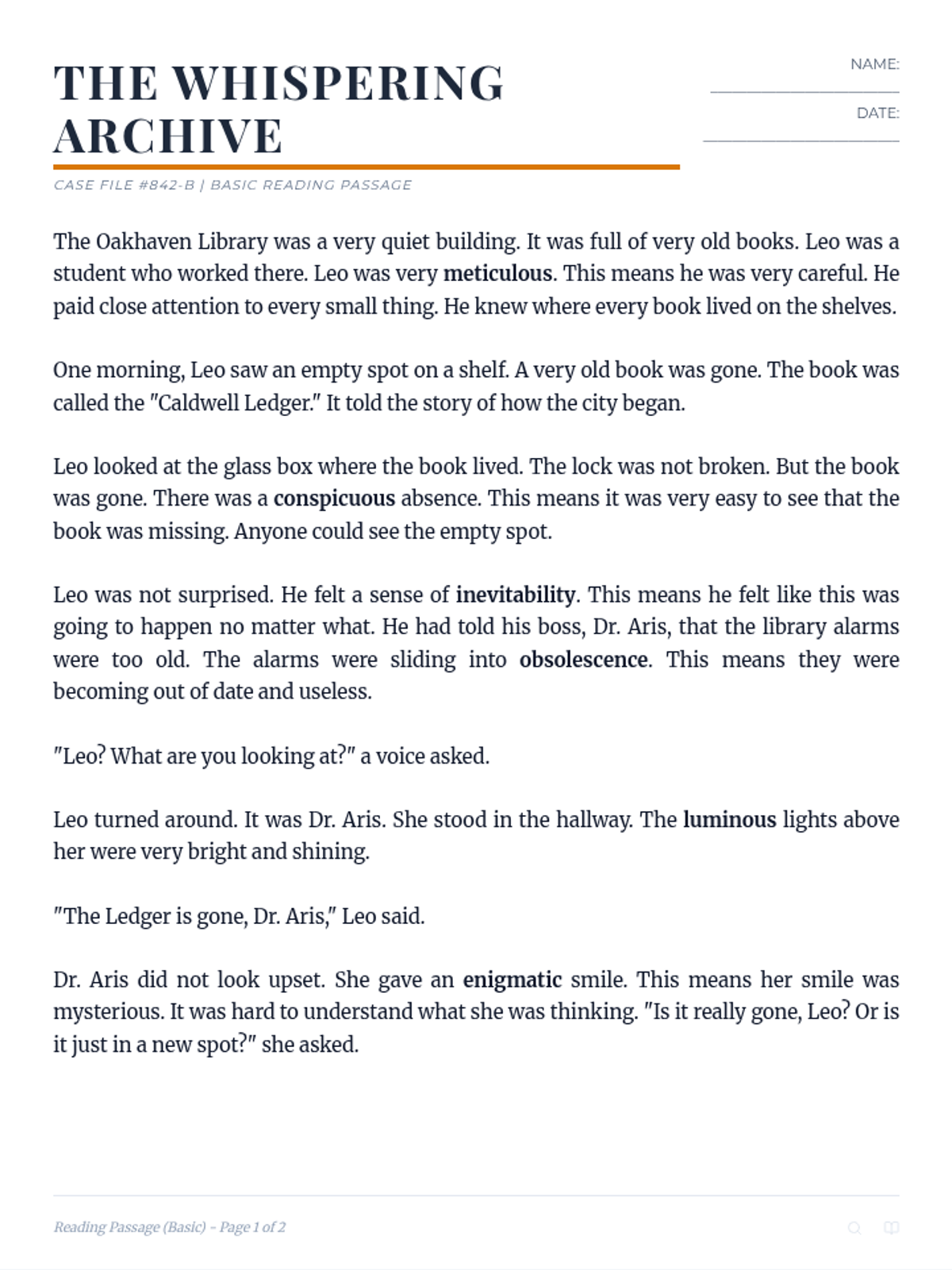
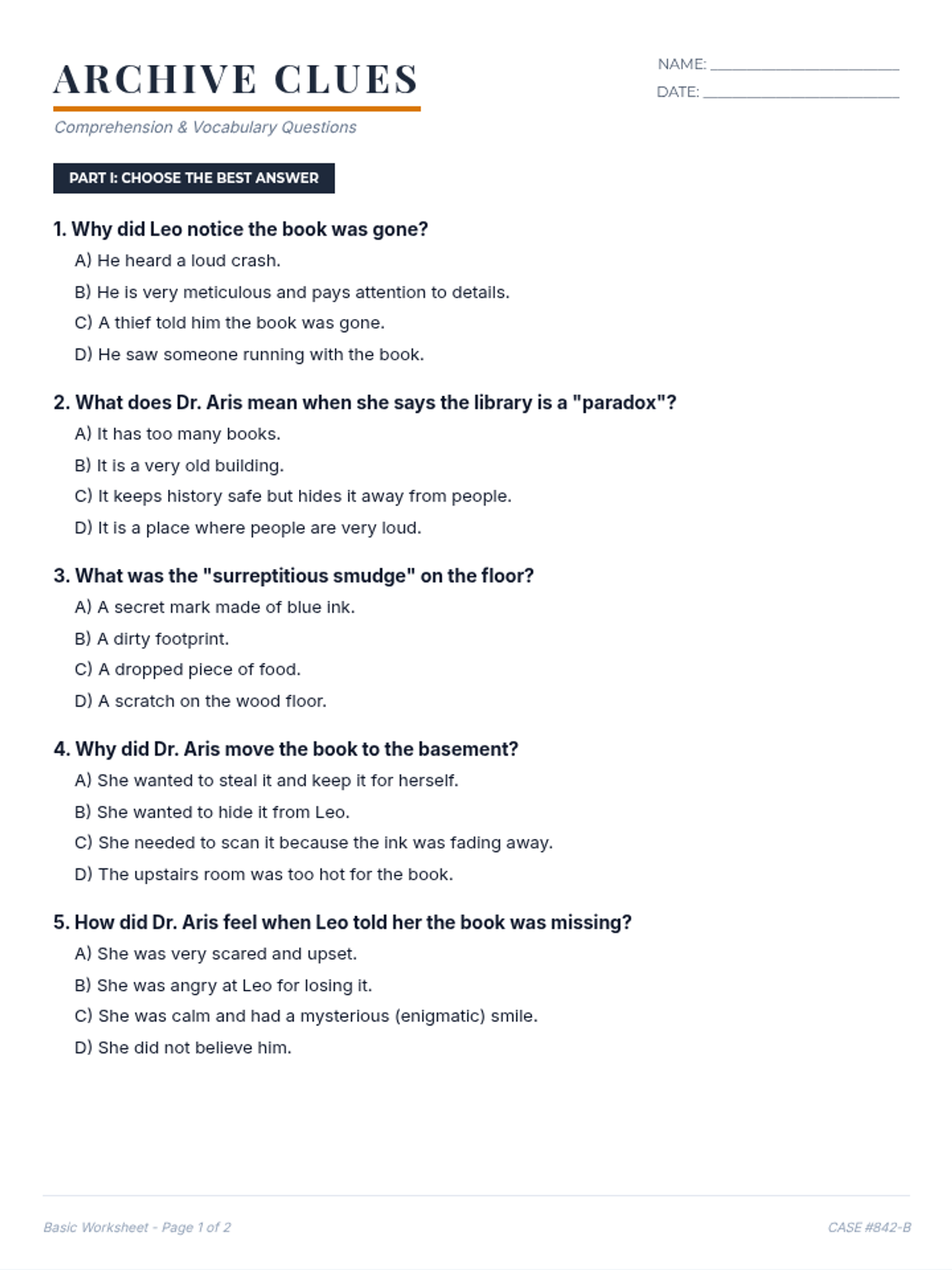
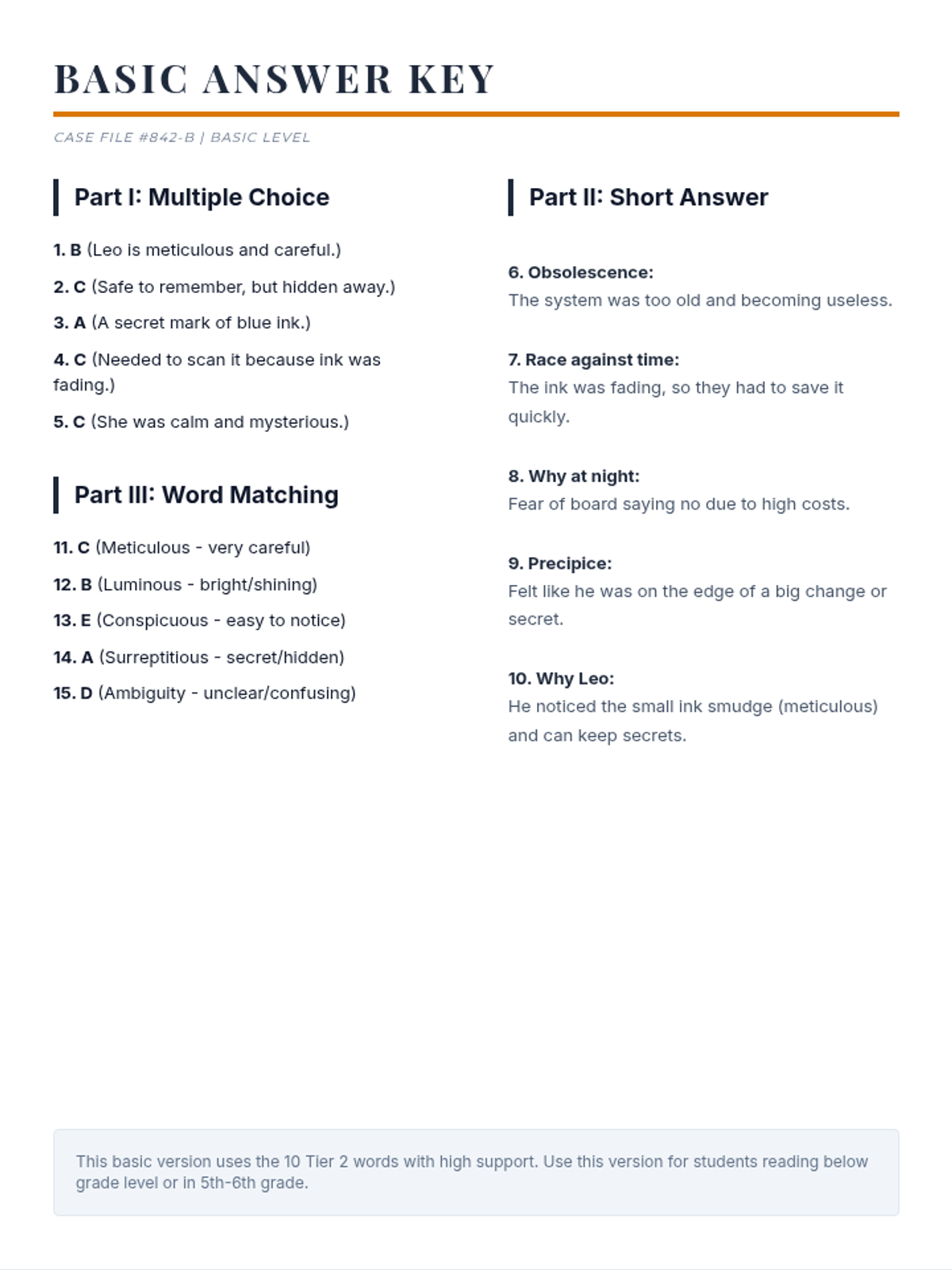
A mystery-themed reading comprehension lesson featuring a 2-page original fiction story and a comprehensive assessment focused on Tier 2 vocabulary and analytical skills.
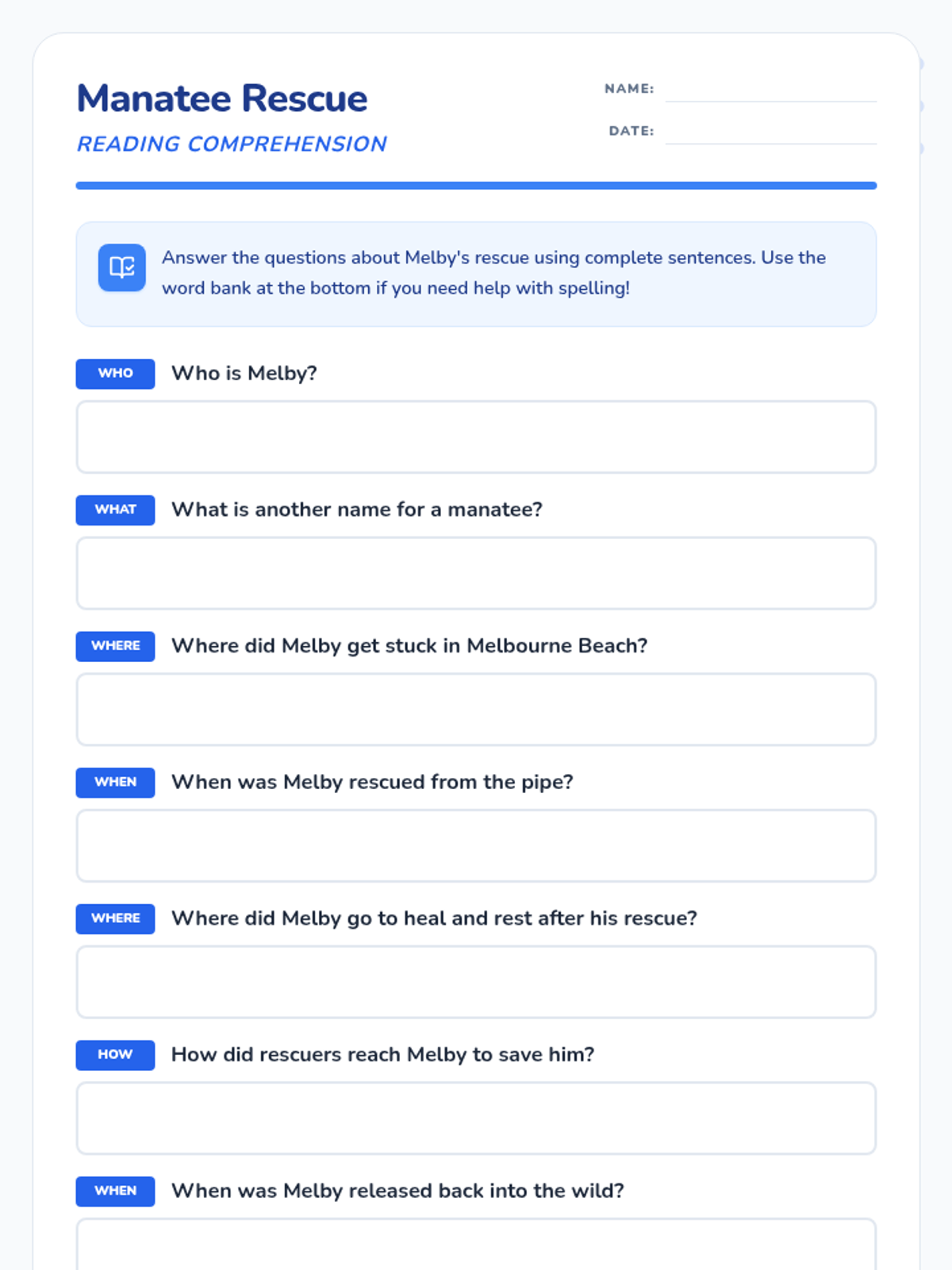
A lesson focused on reading comprehension and identifying key details from a news article about a manatee rescue.
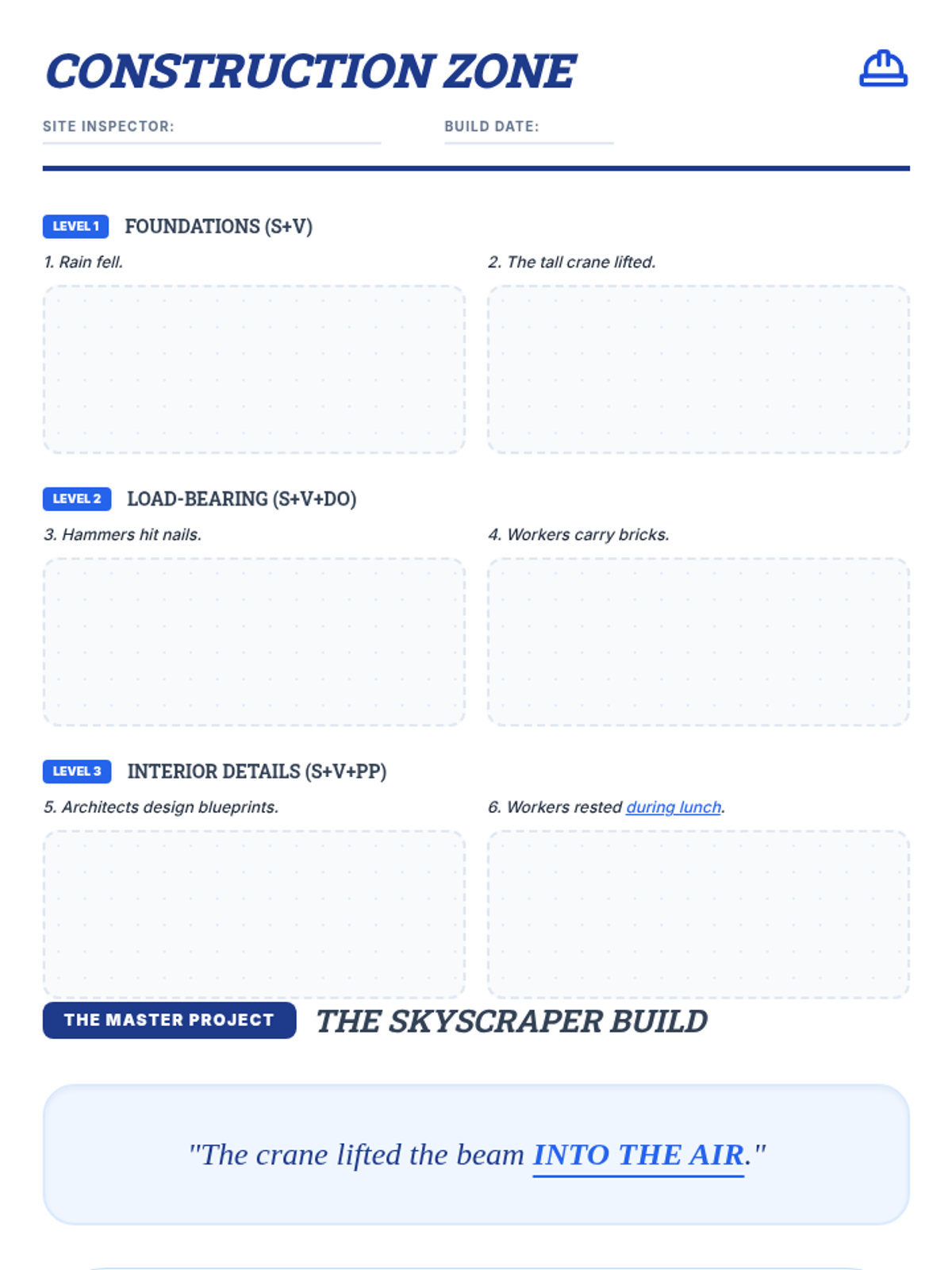
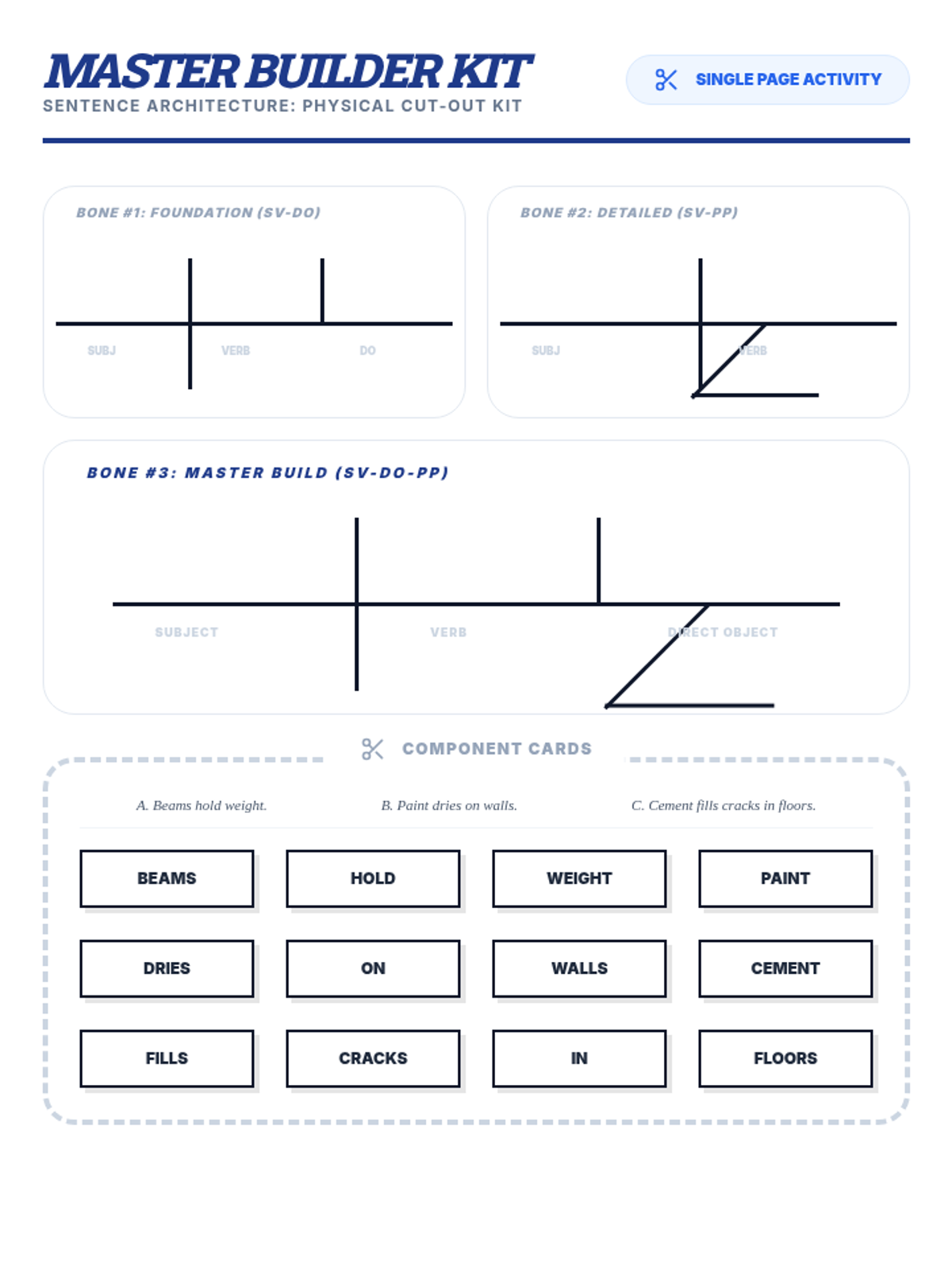
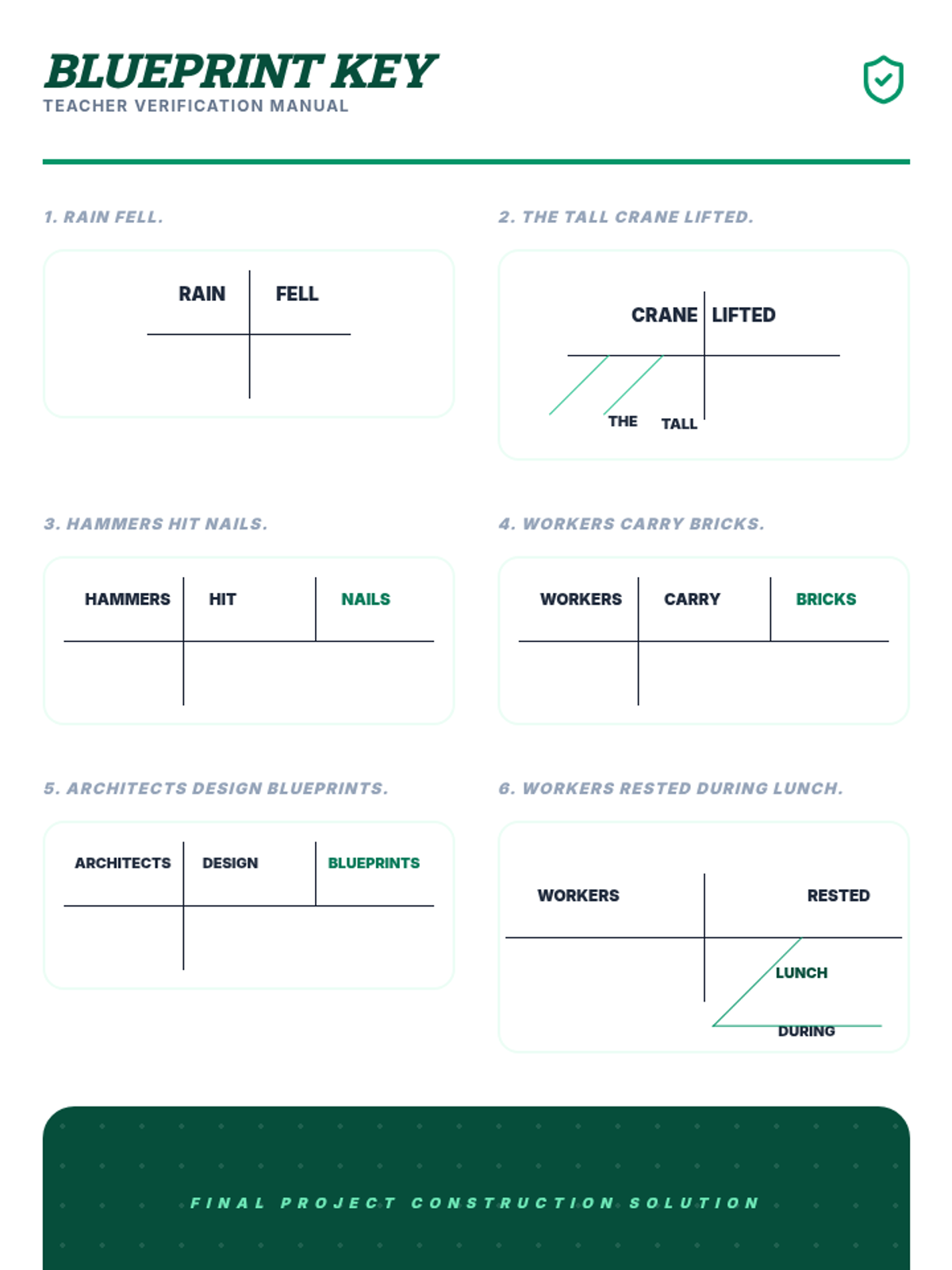
A comprehensive introduction to Reed-Kellogg sentence diagramming, covering subjects, verbs, direct objects, and prepositional phrases through a structural engineering lens.
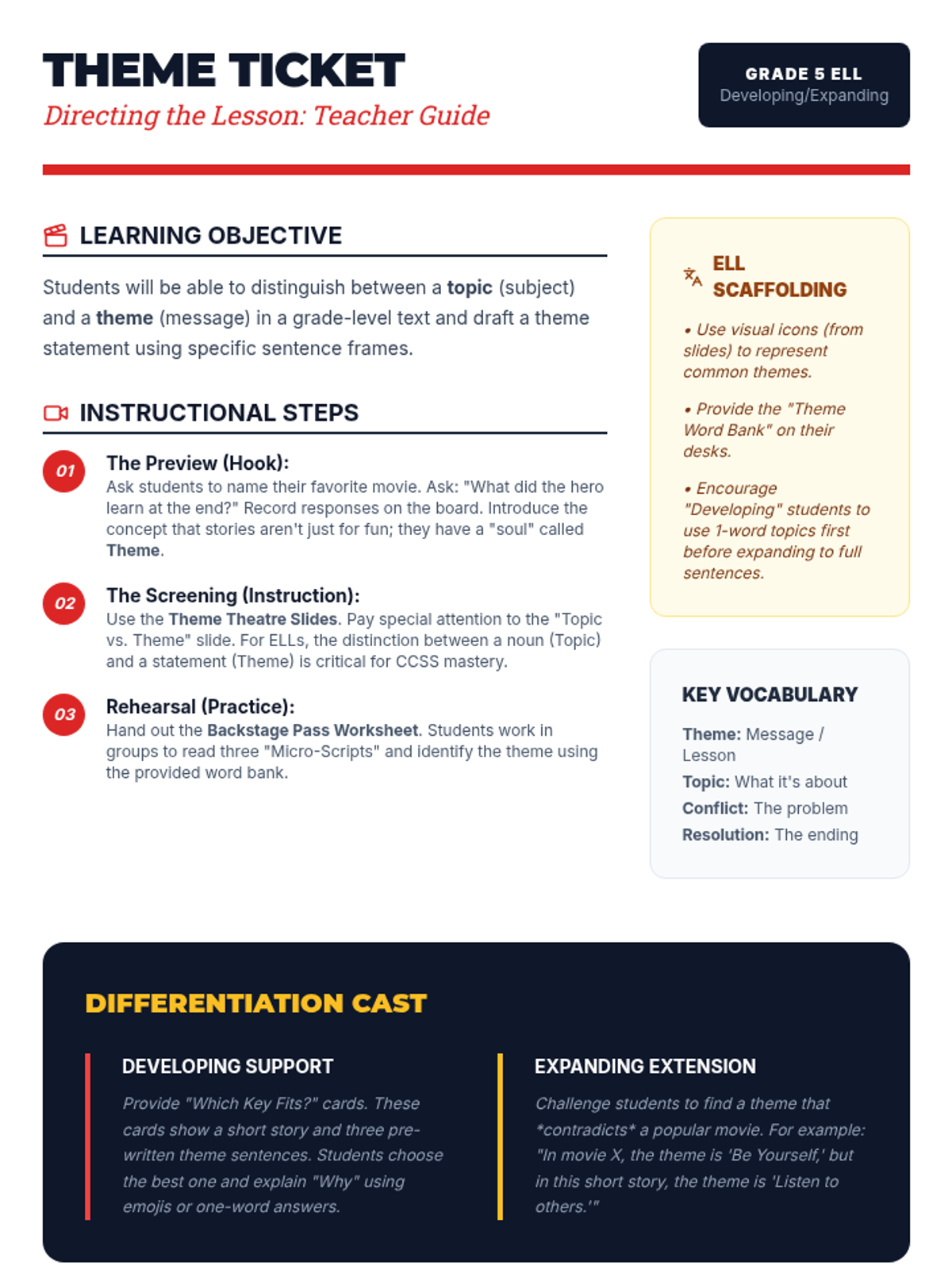
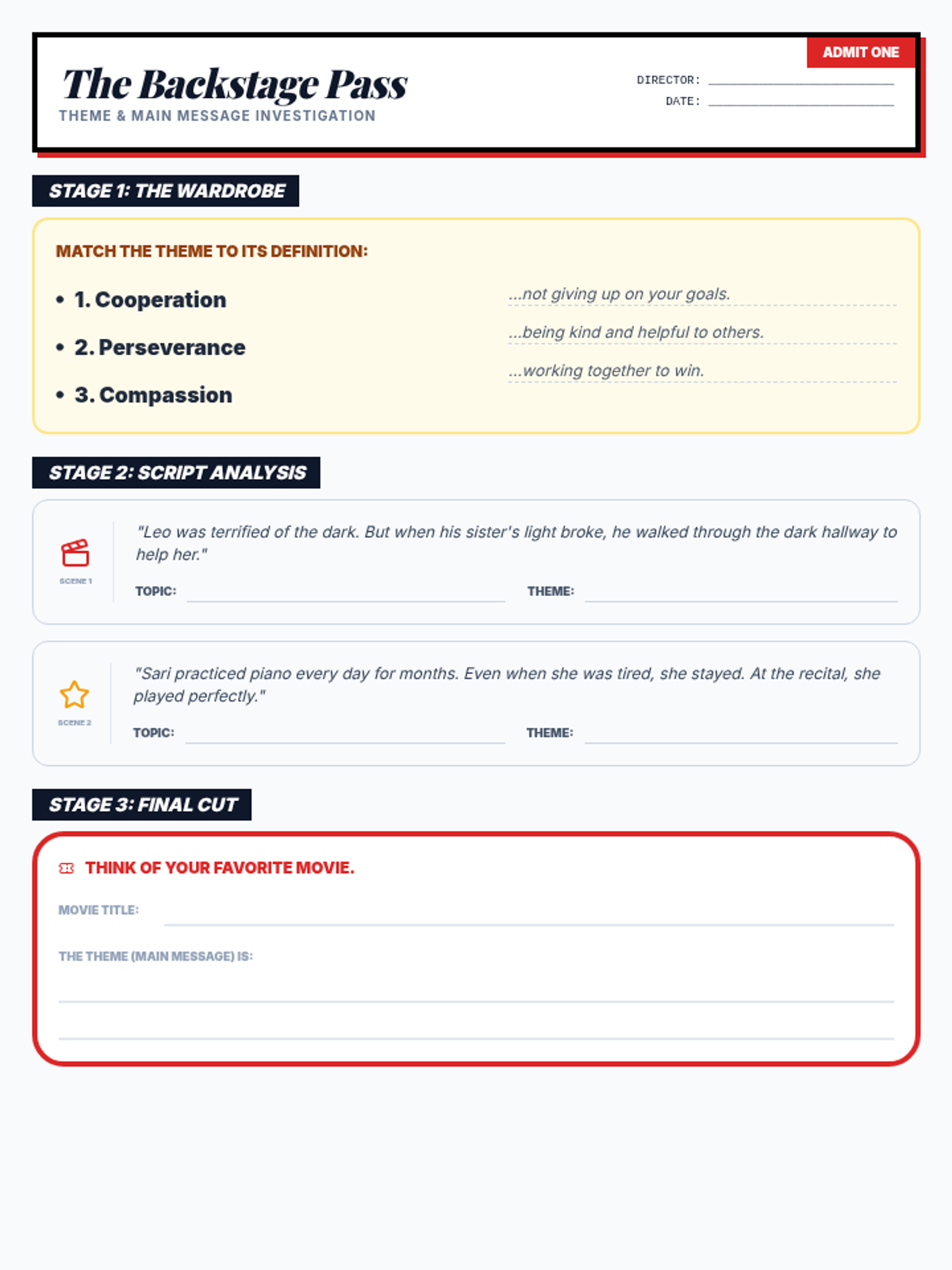
Students learn to identify the theme or main message of a story by analyzing character choices and outcomes, framed through a "Cinema" or "Movie Theatre" lens to help ELL students distinguish between topic and theme.
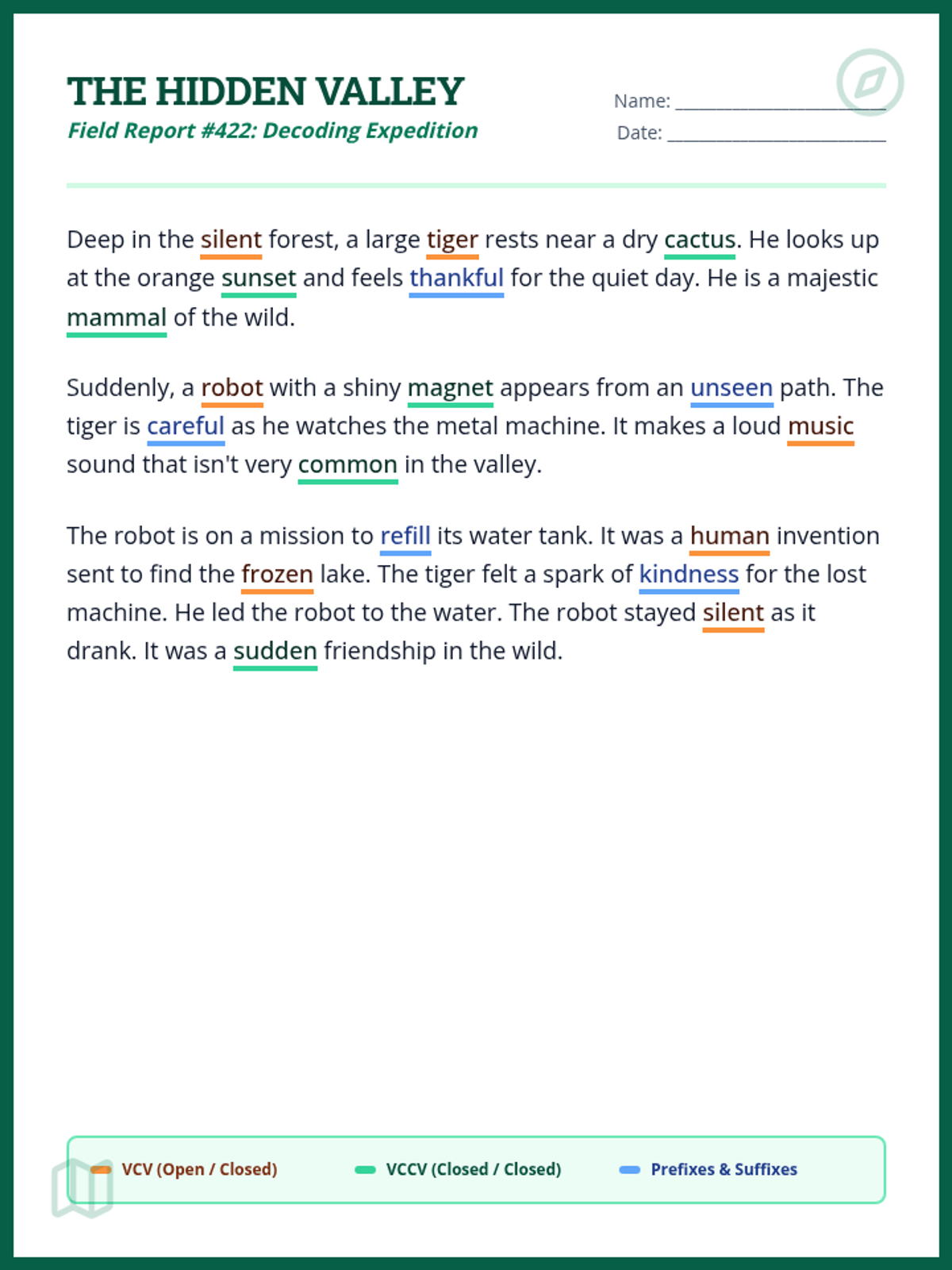
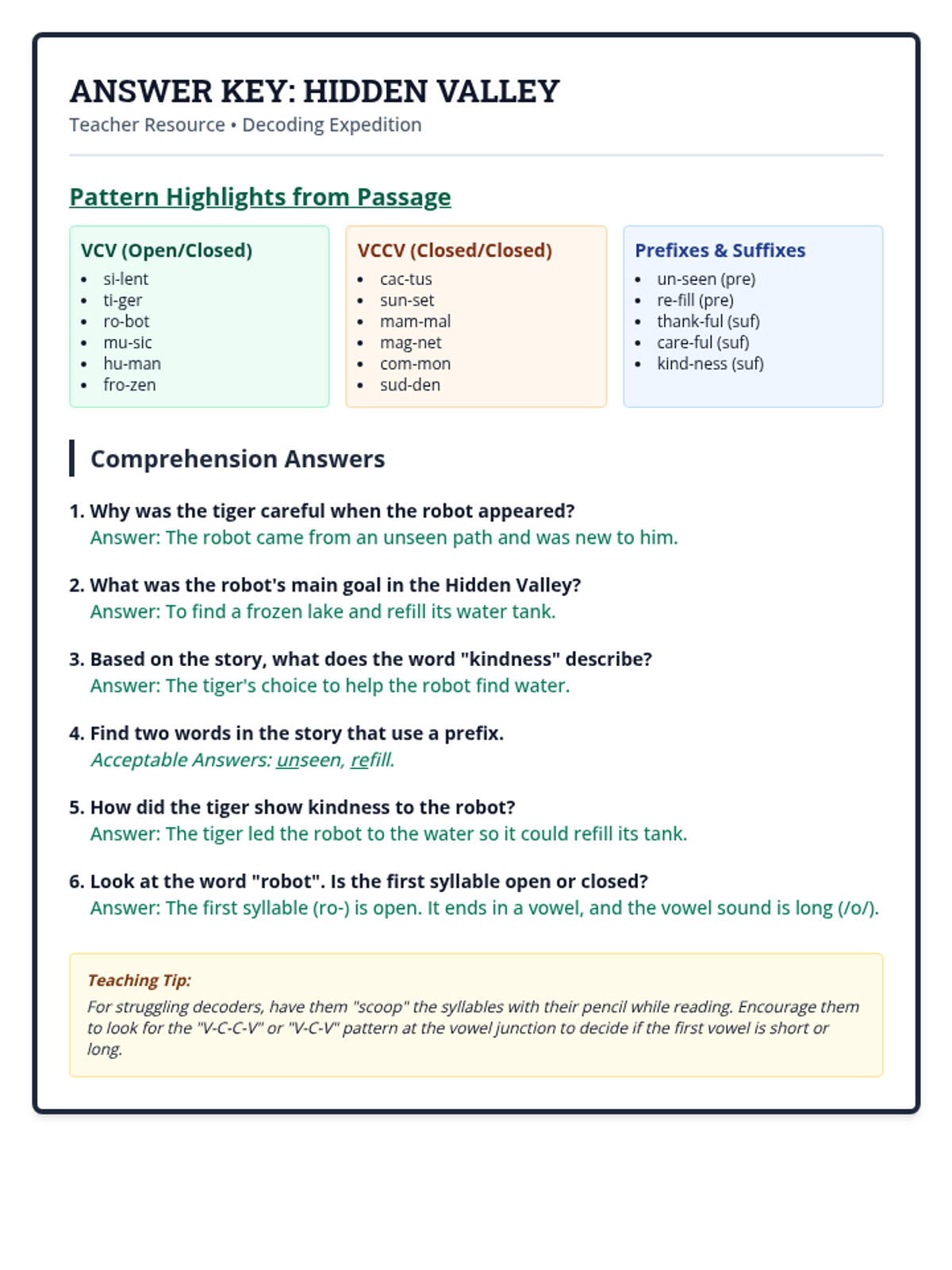
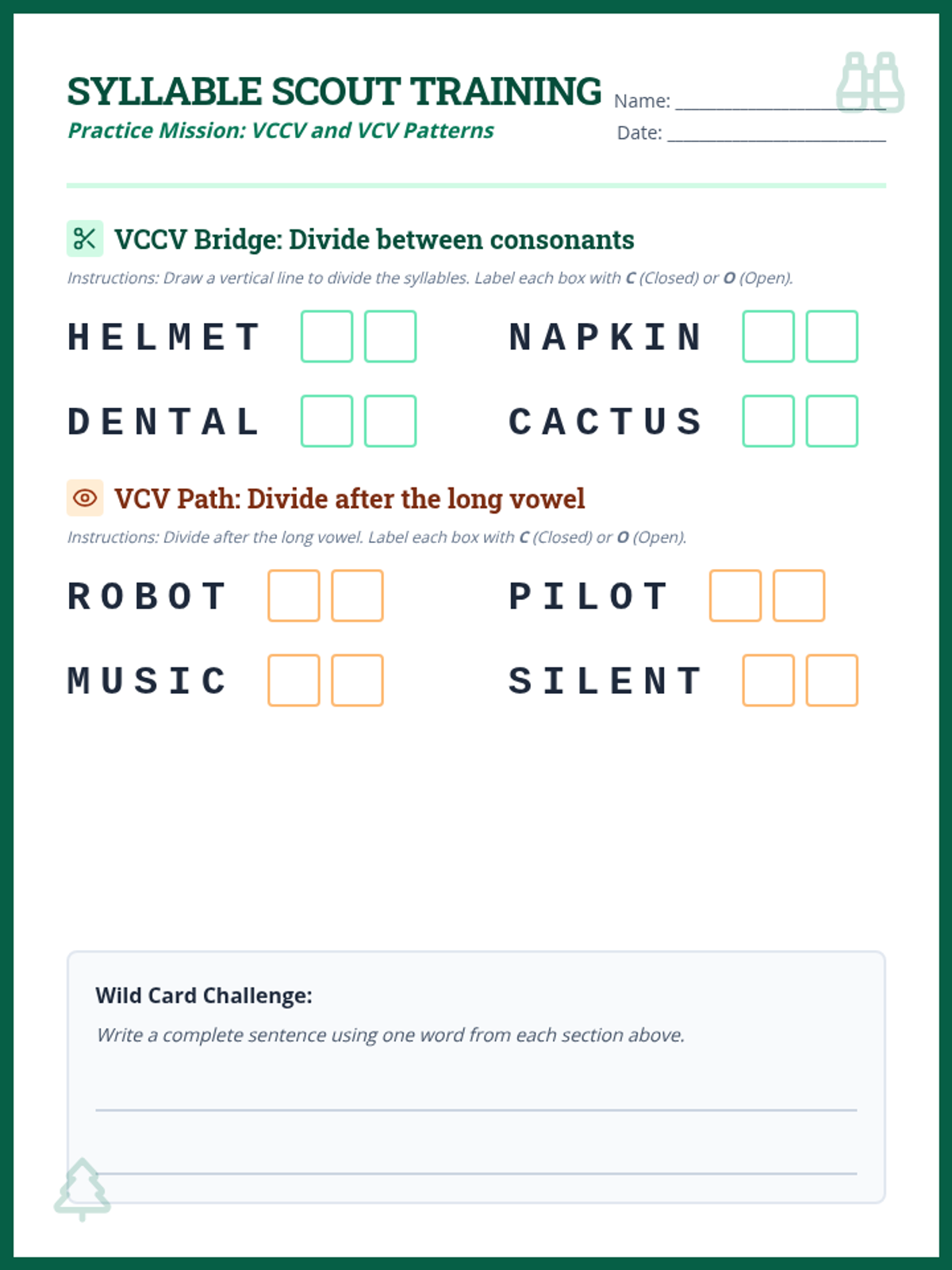
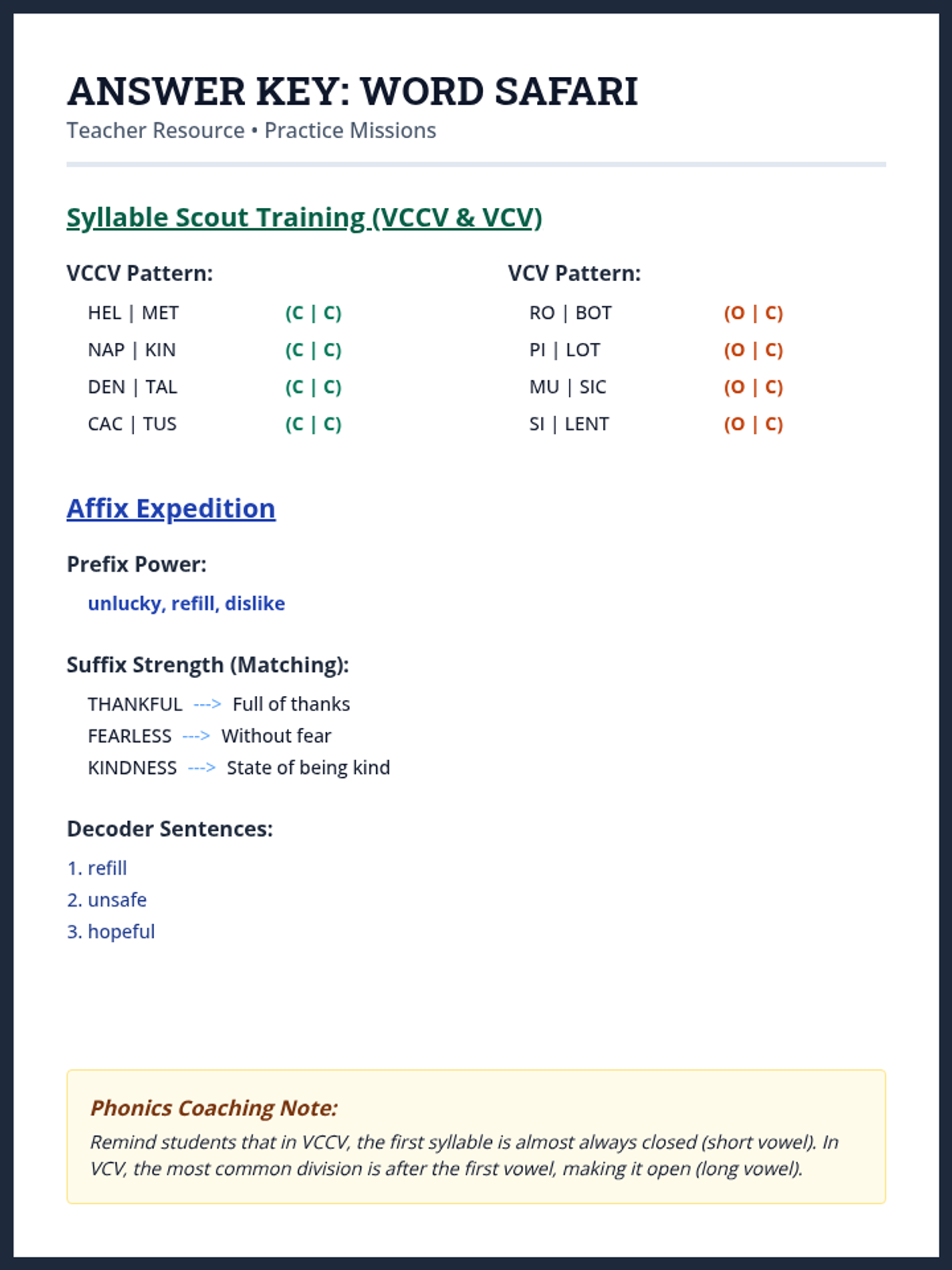
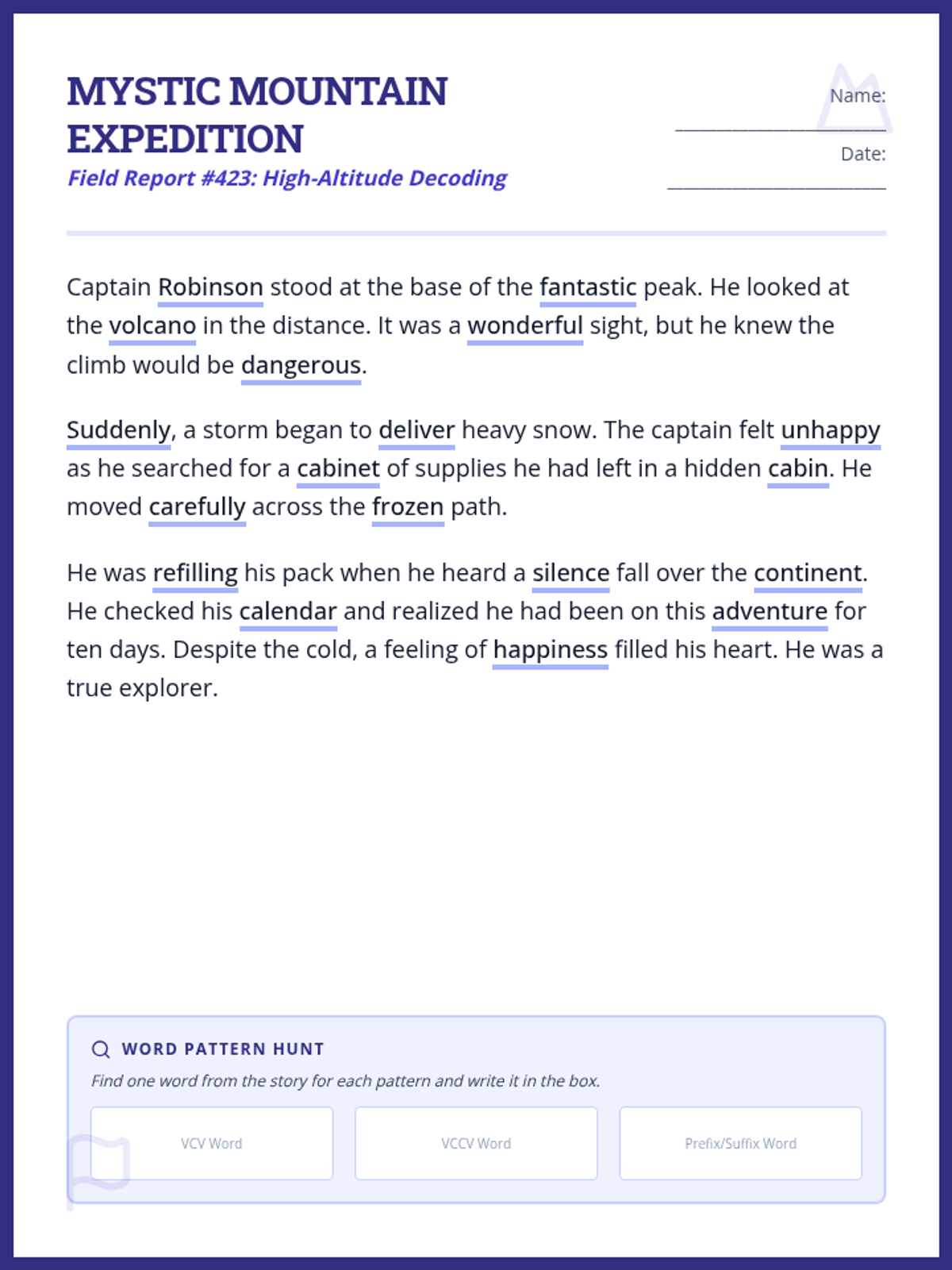
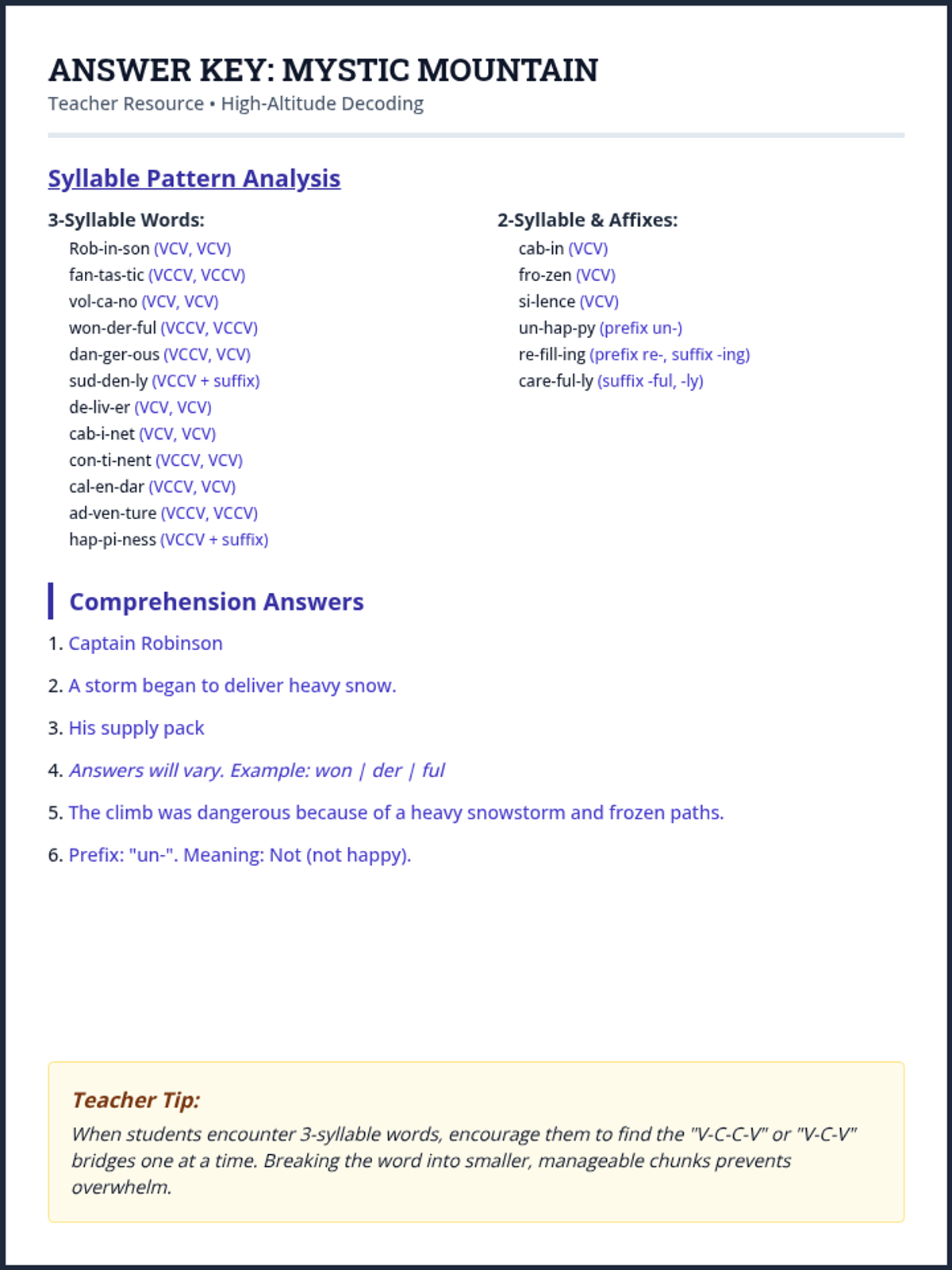
A lesson focused on decoding VCCV and VCV syllable patterns, along with common prefixes and suffixes, through an engaging reading passage and comprehension check.
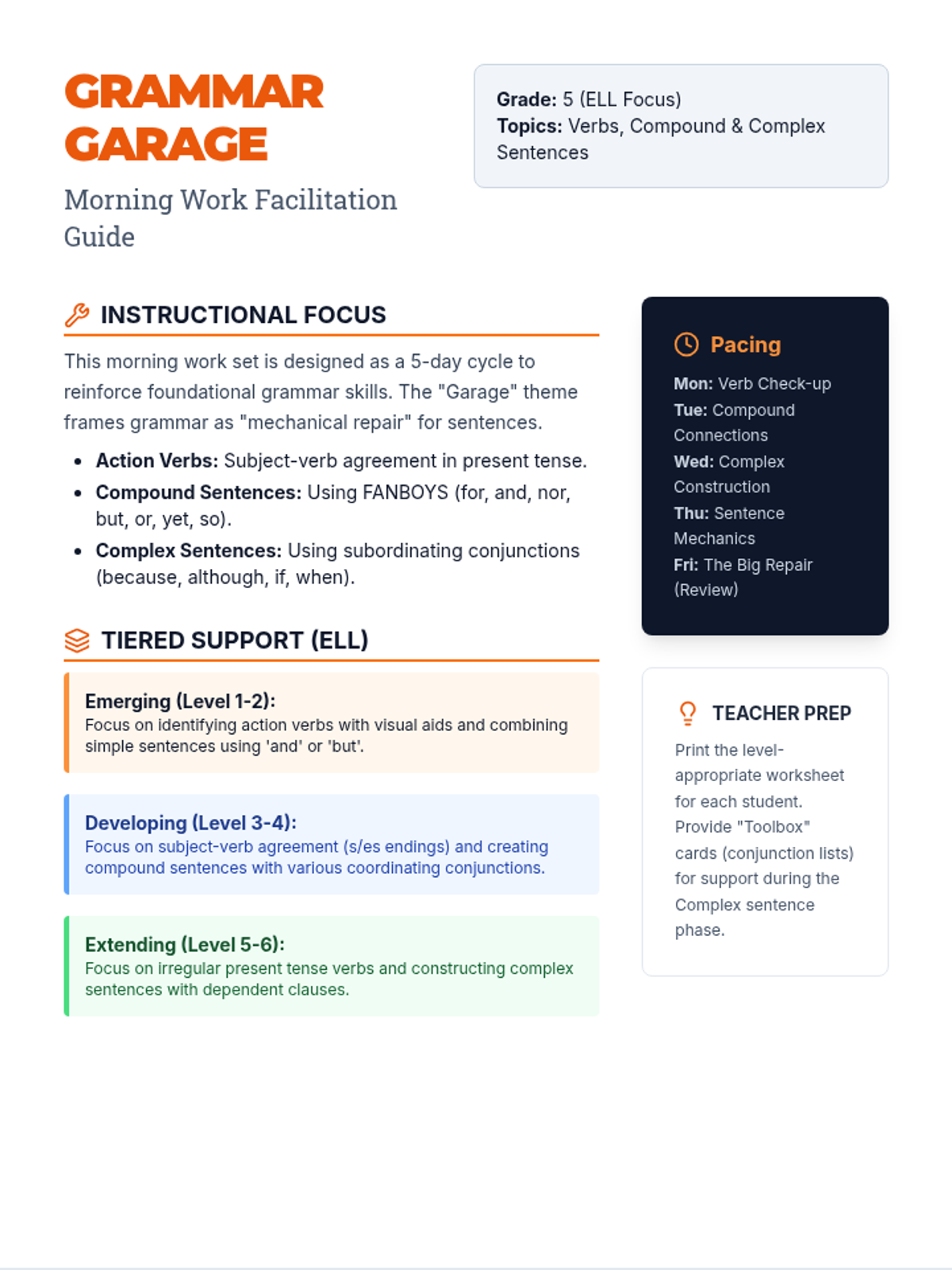
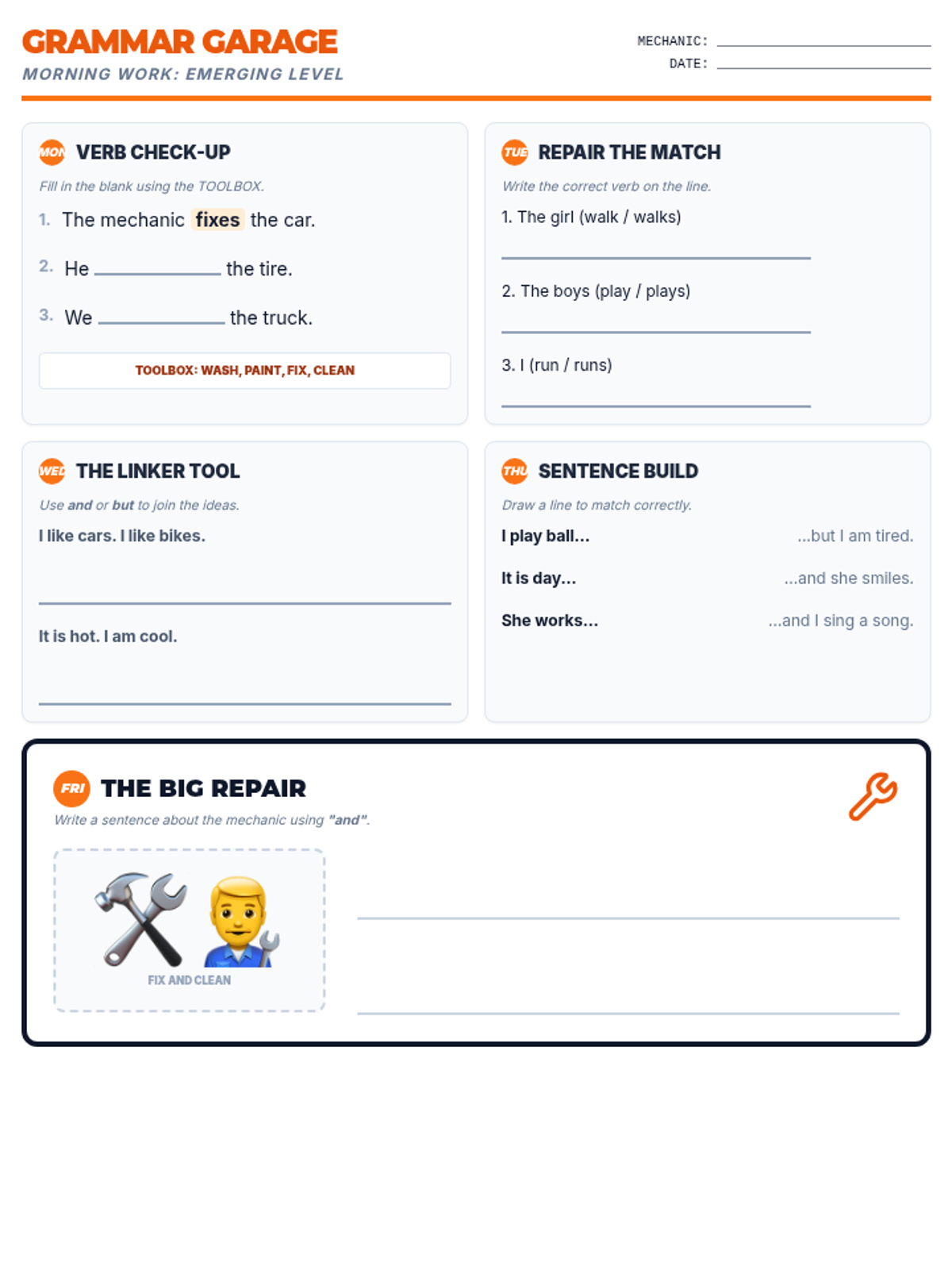
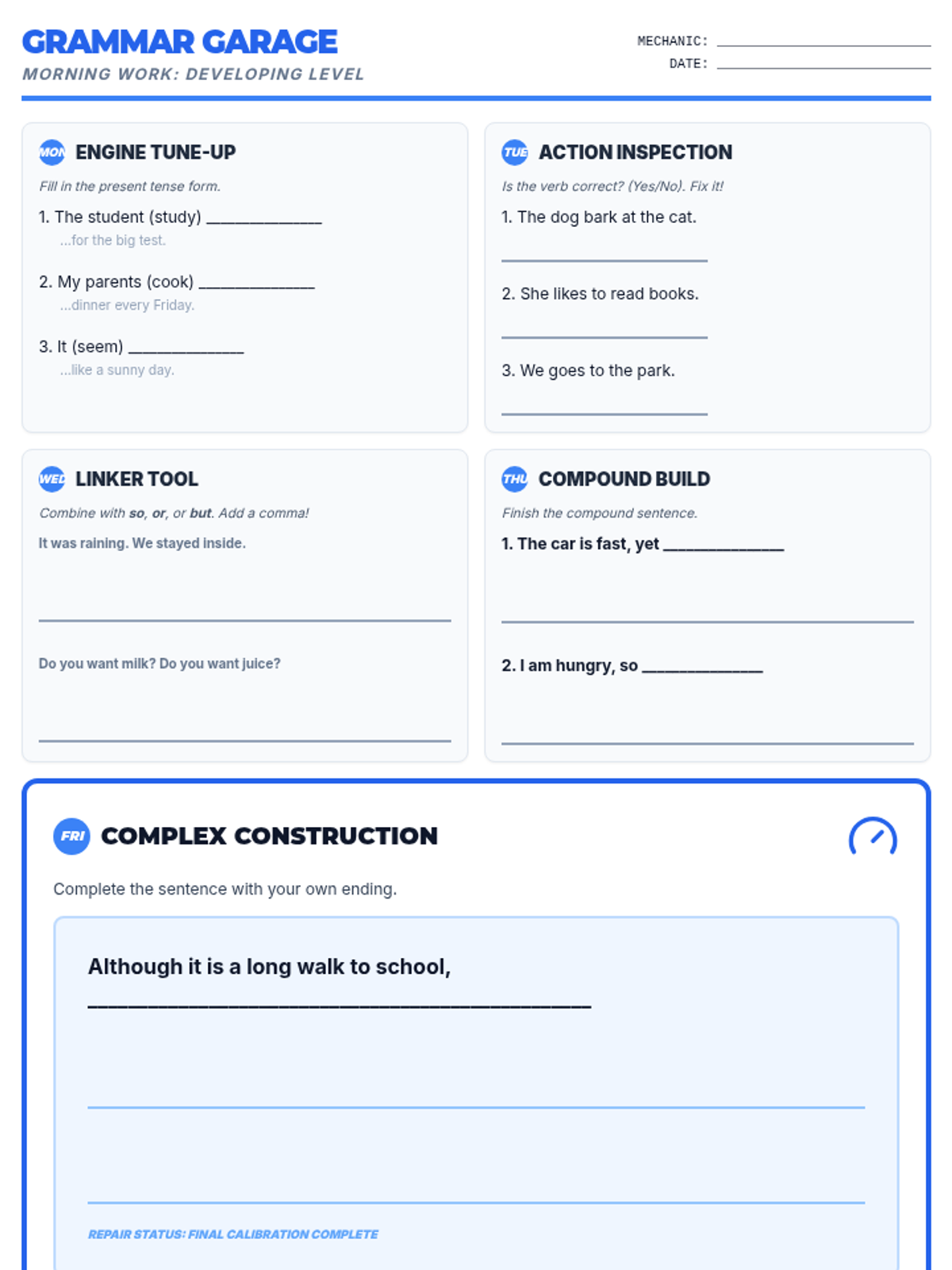
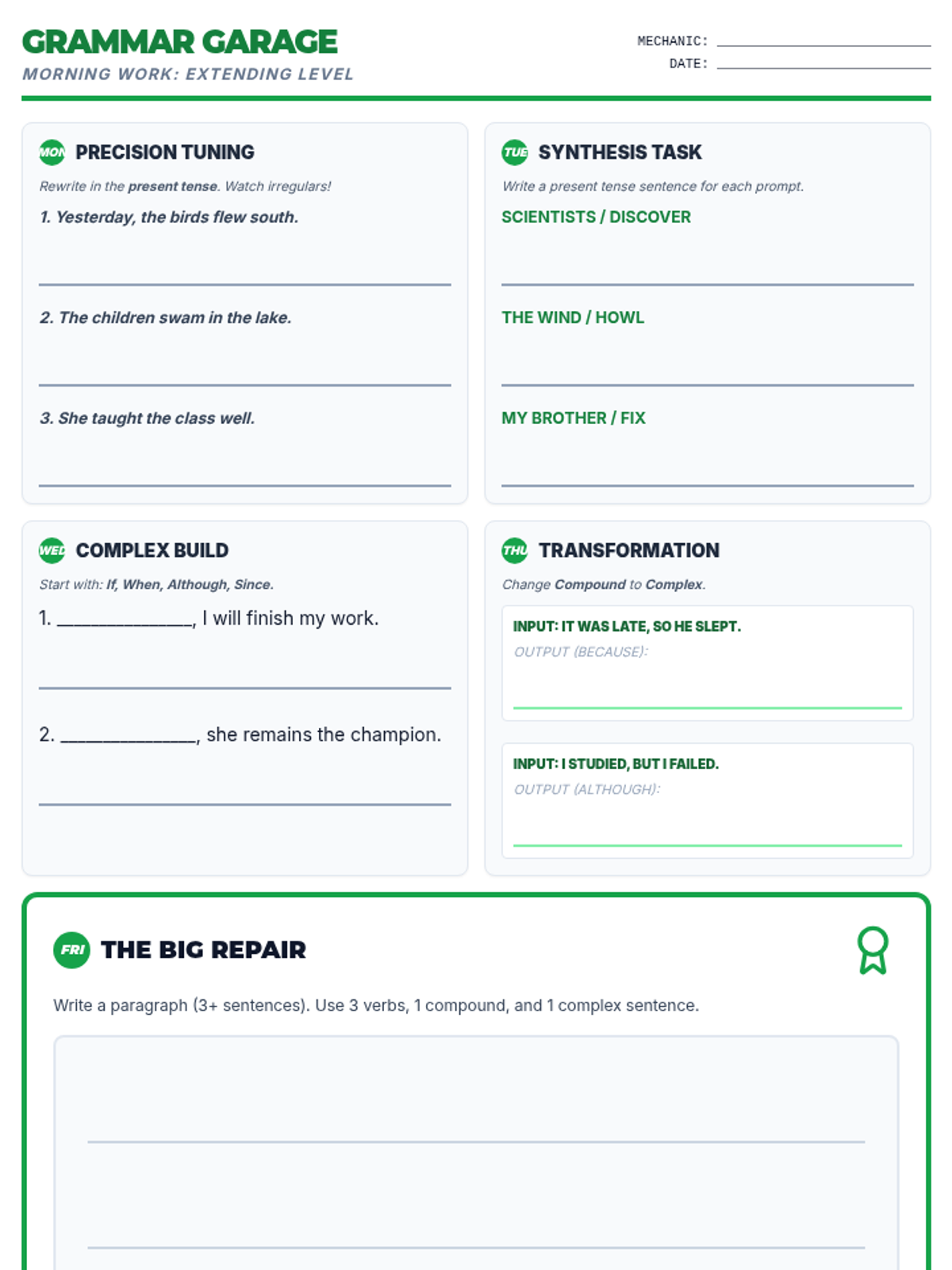
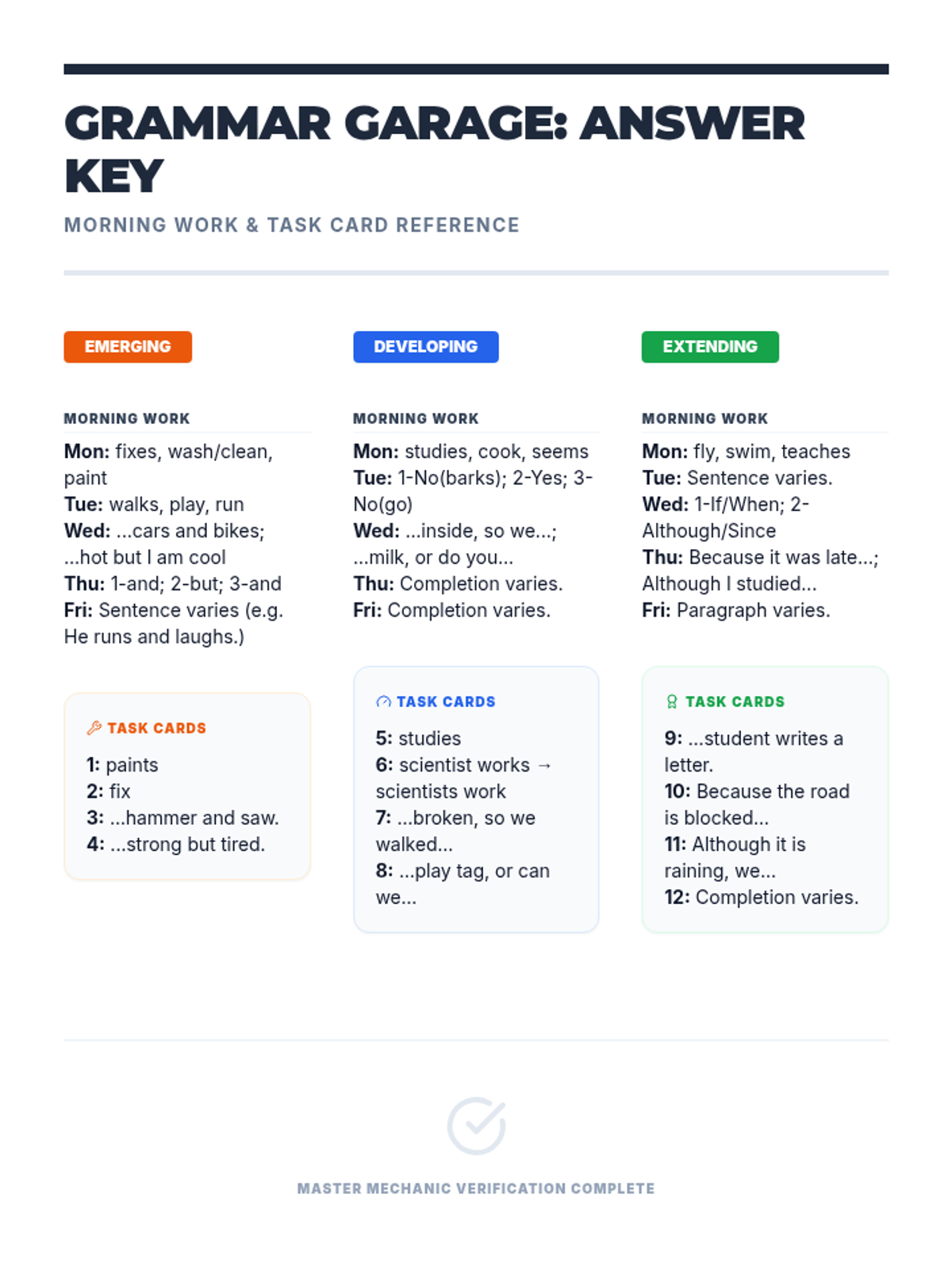
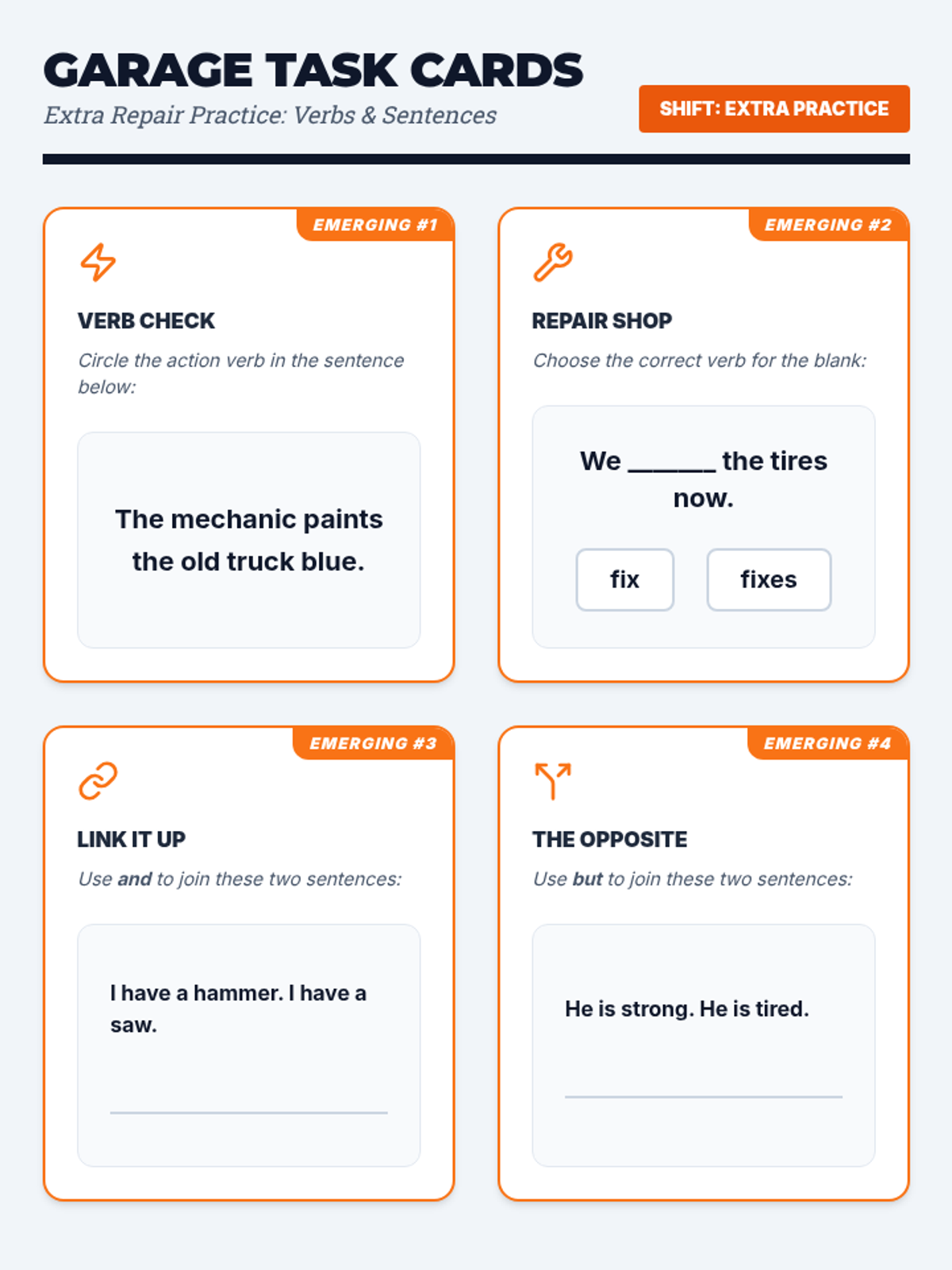
A series of tiered morning work activities designed to review present tense action verbs, compound sentences, and complex sentences for 5th-grade ELL students.
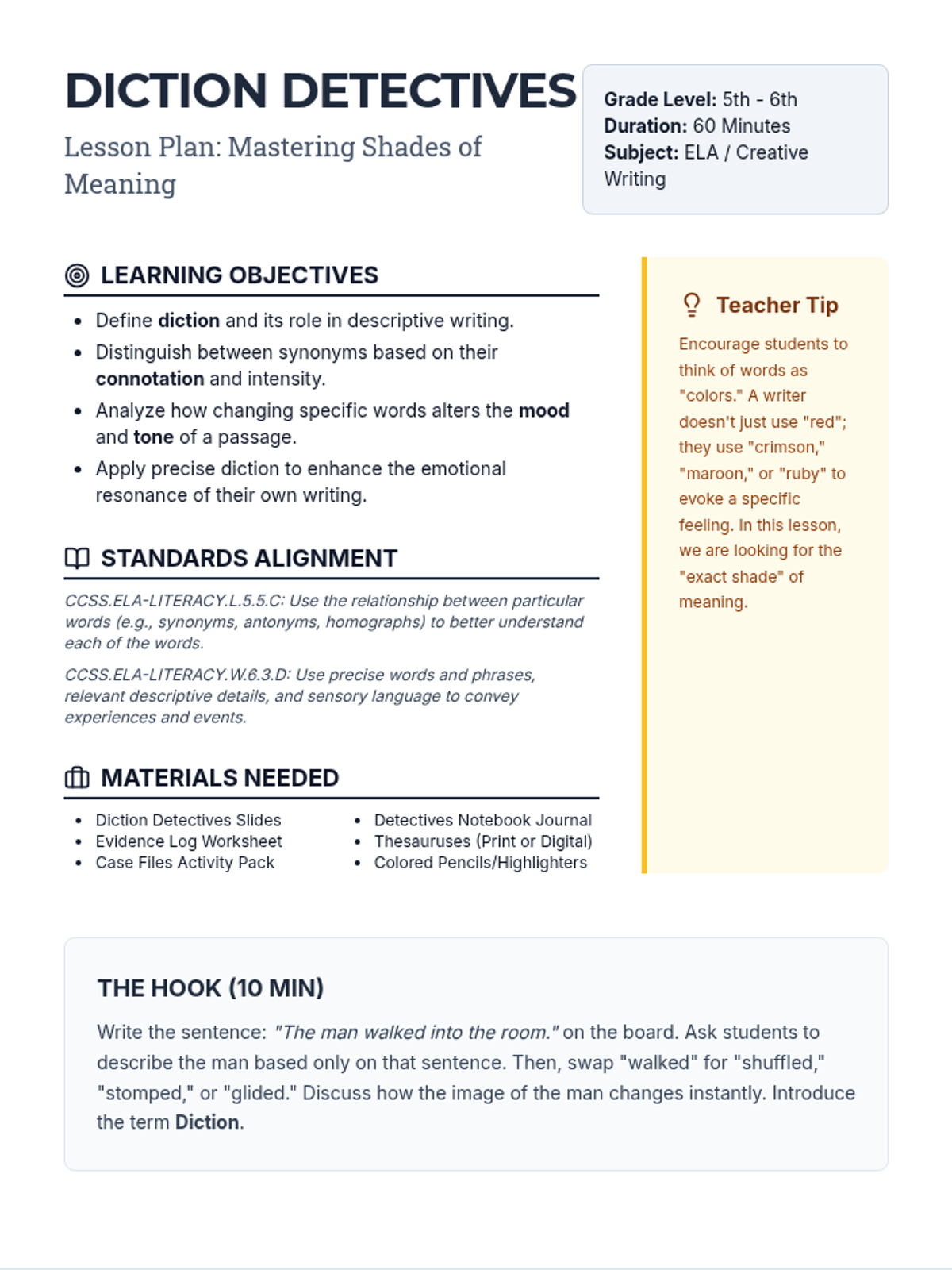
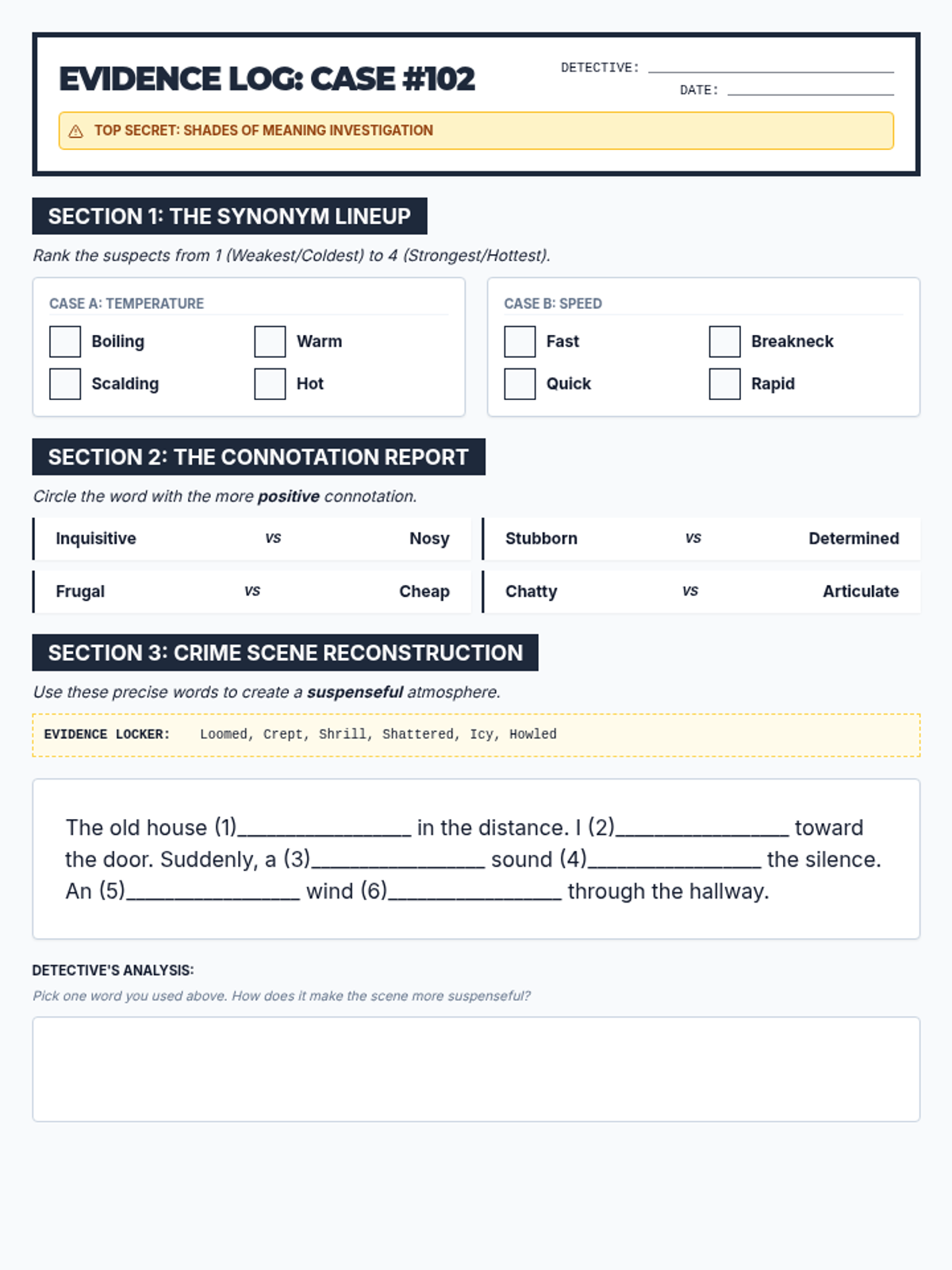
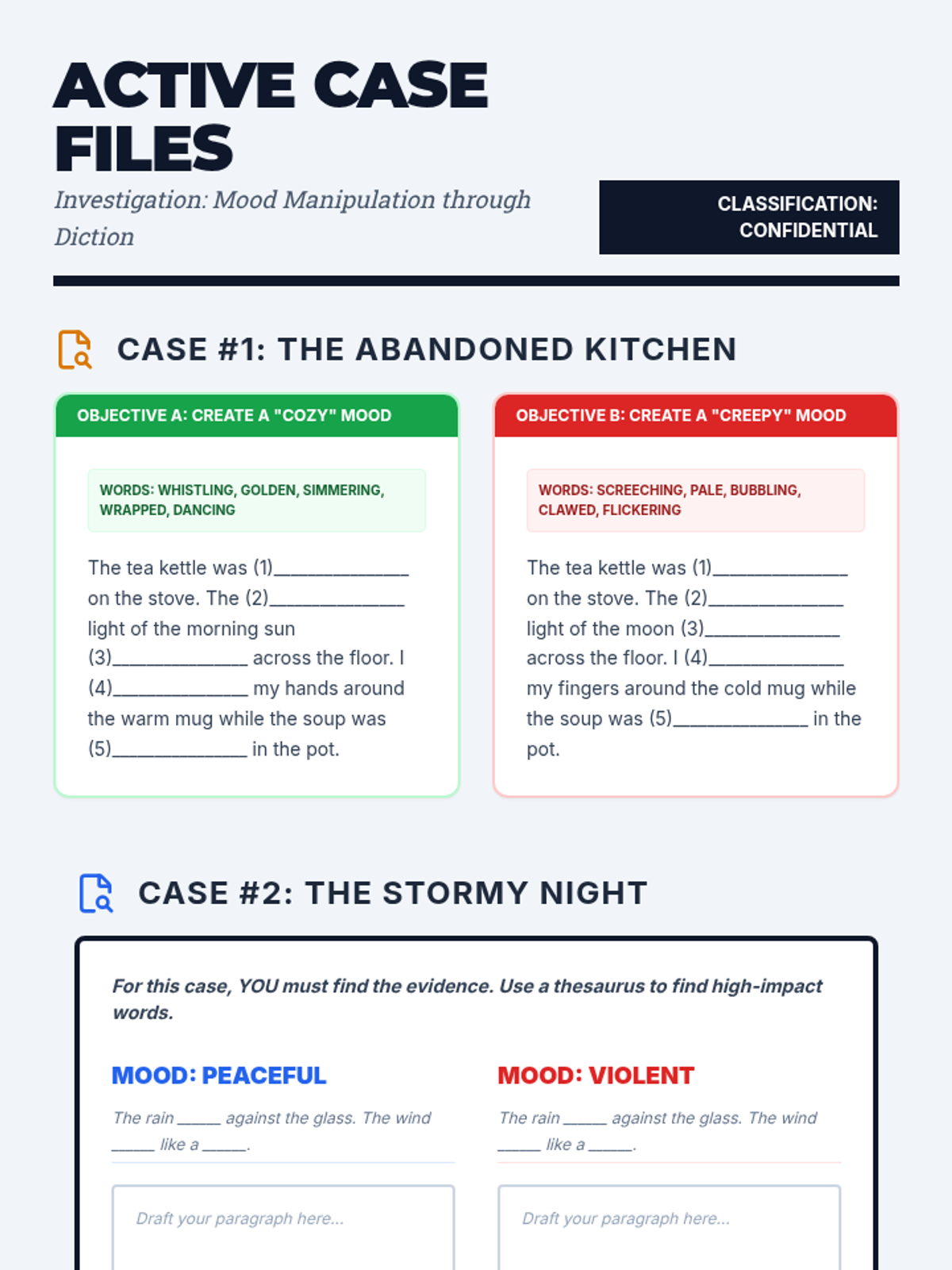
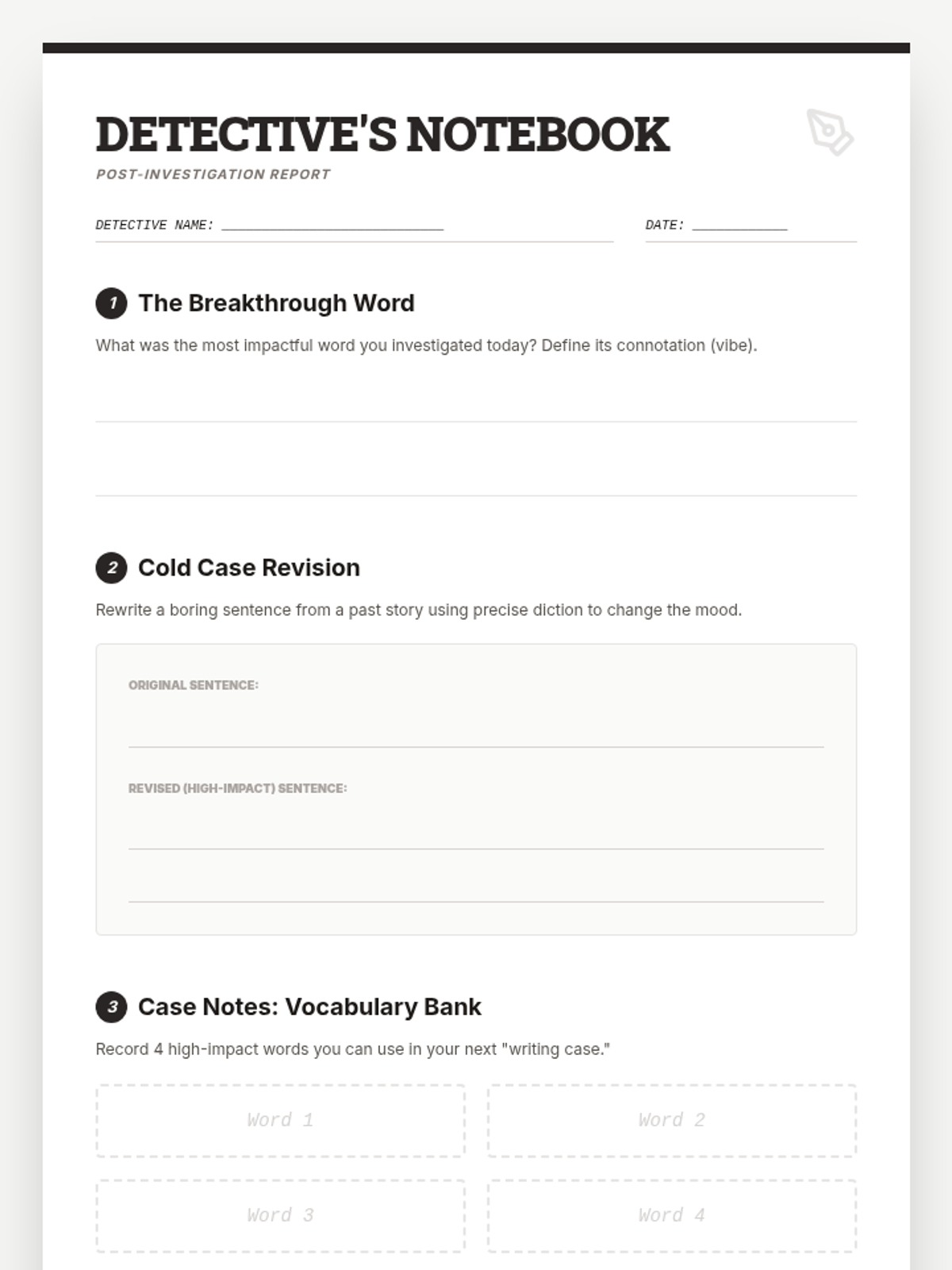
Students investigate how precise word choices (diction) influence the mood and tone of a story through a detective-themed exploration of synonyms and shades of meaning.