A collection of visual goal-tracking dashboards for grades 1-5, using a rocket launch theme to help students visualize their reading fluency targets for the year.
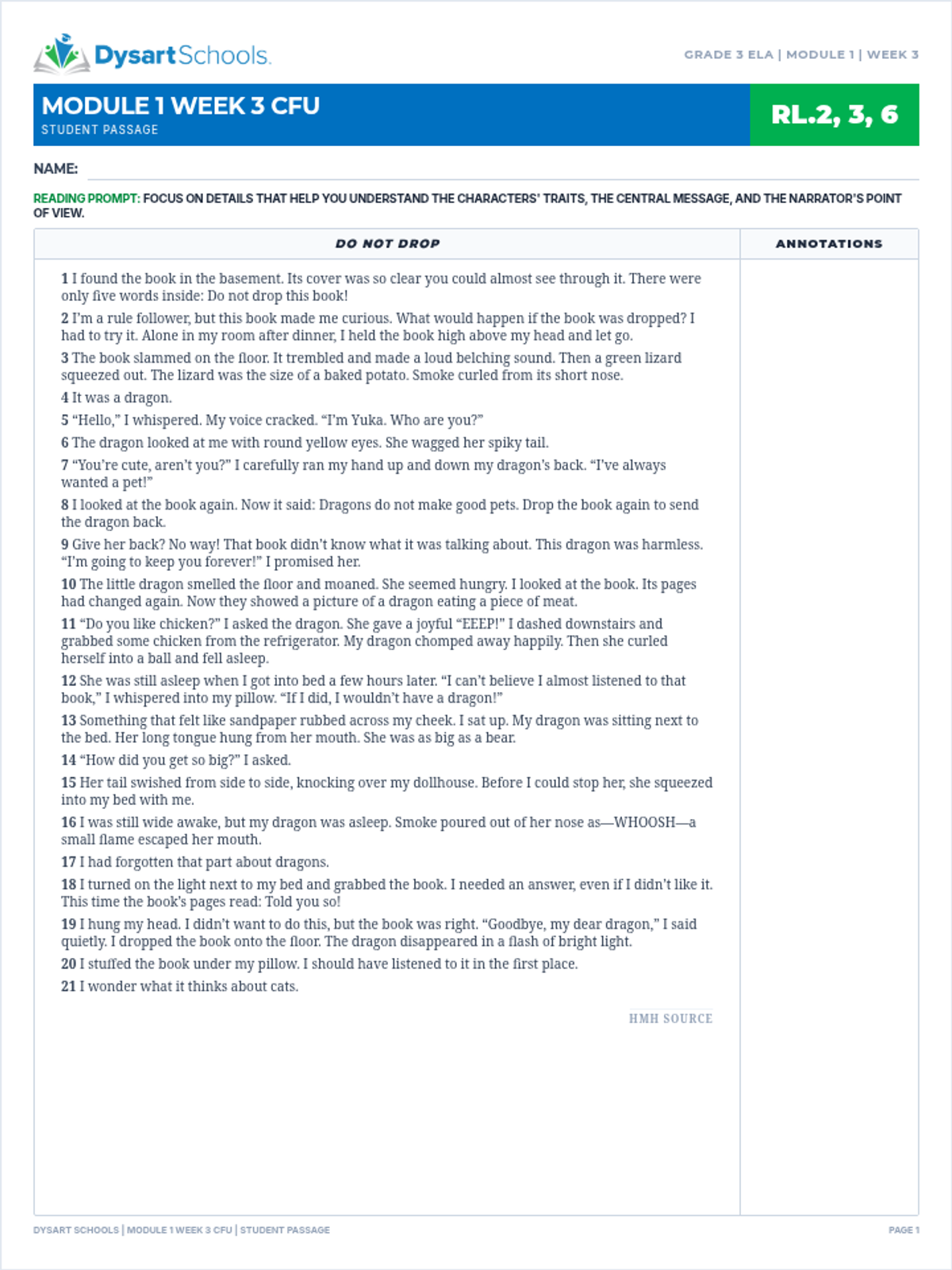
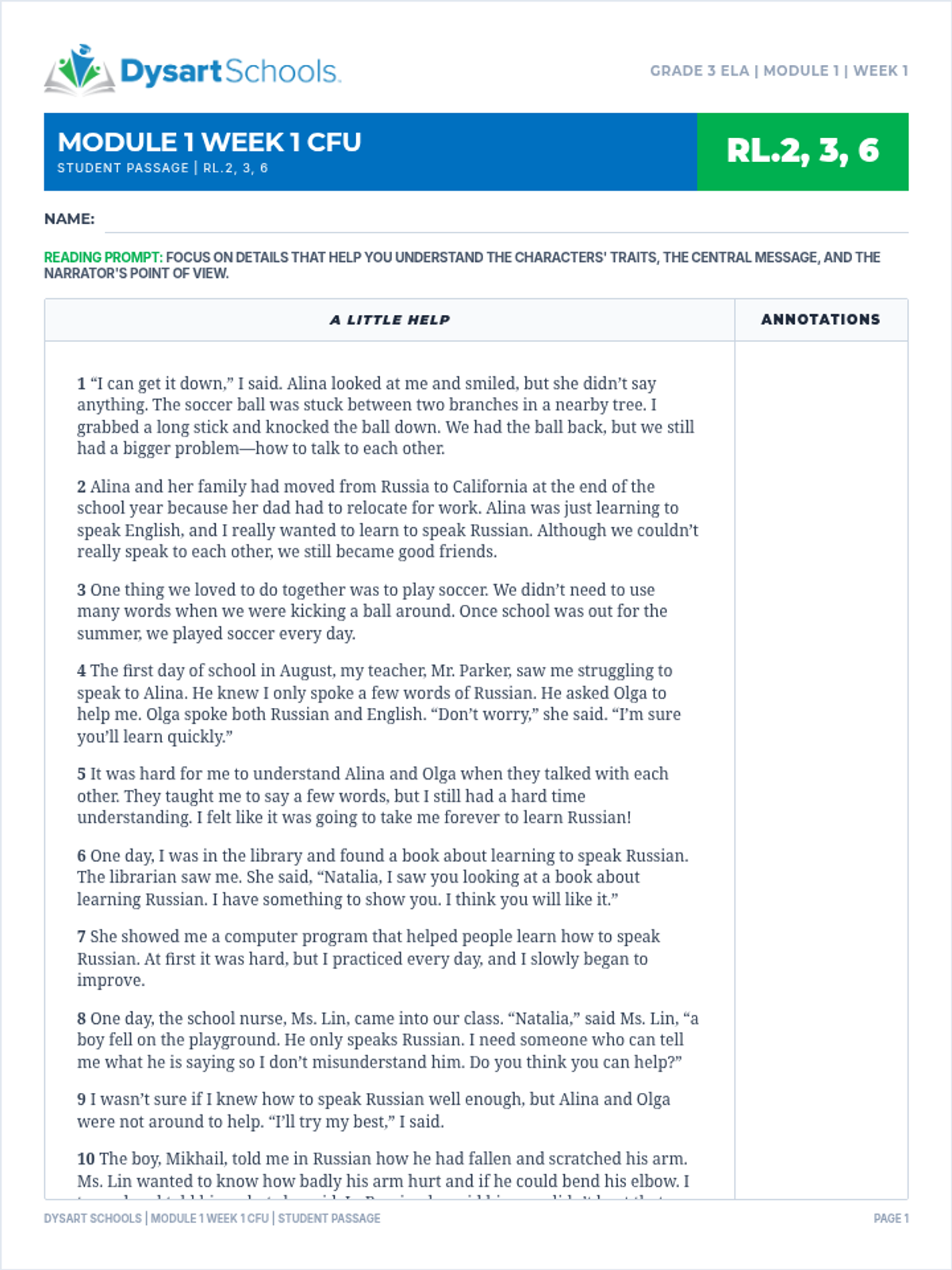
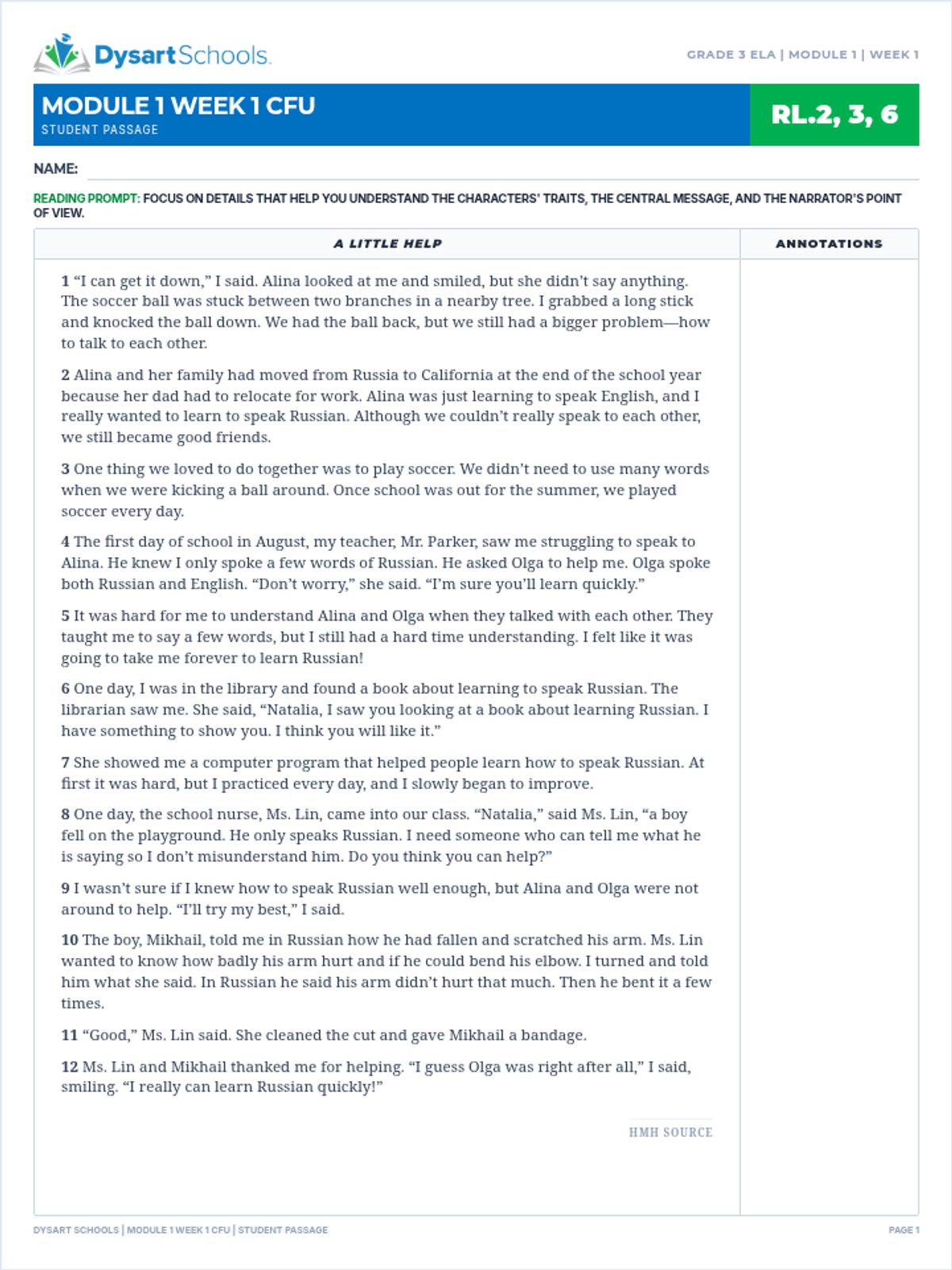
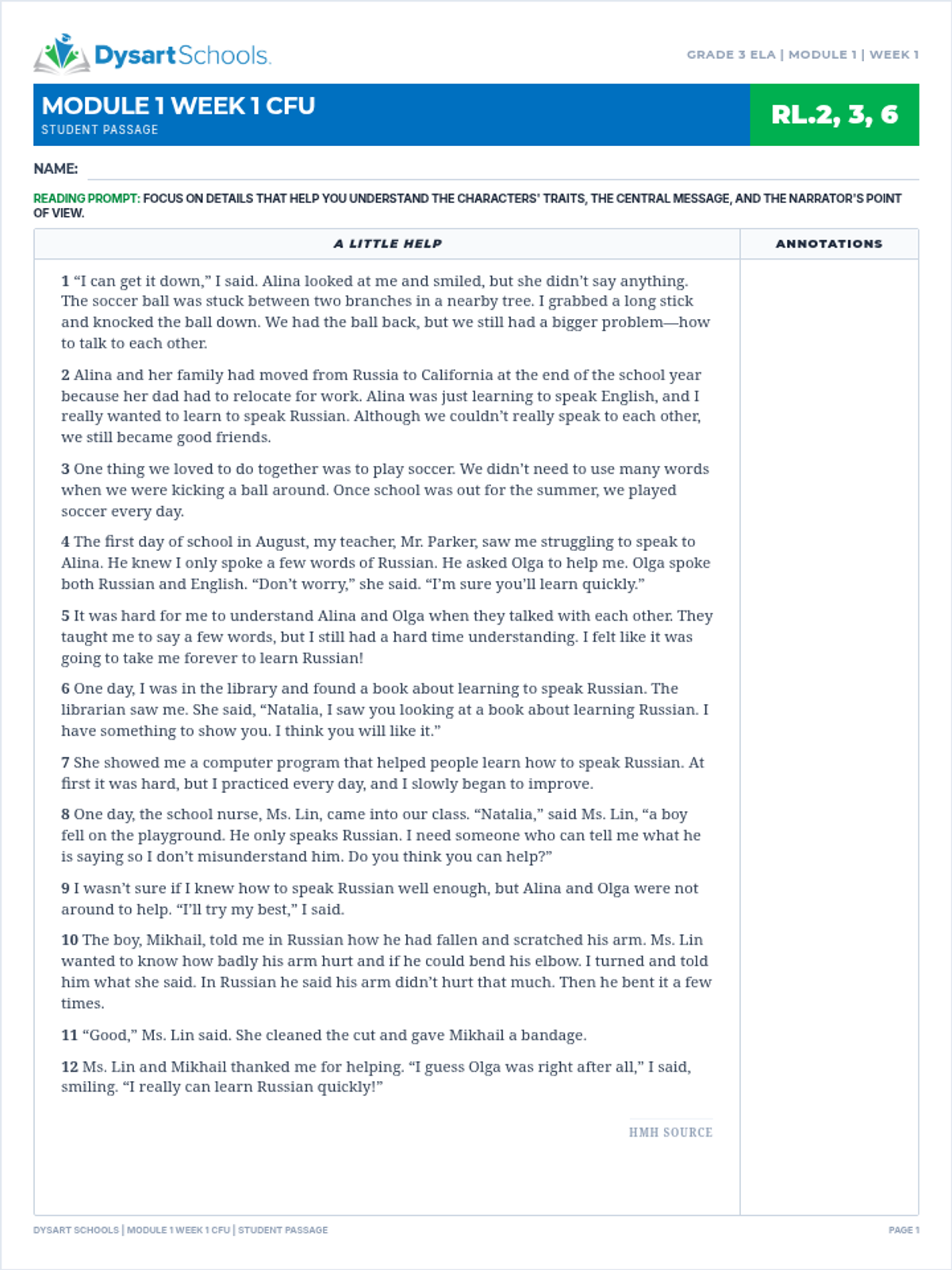
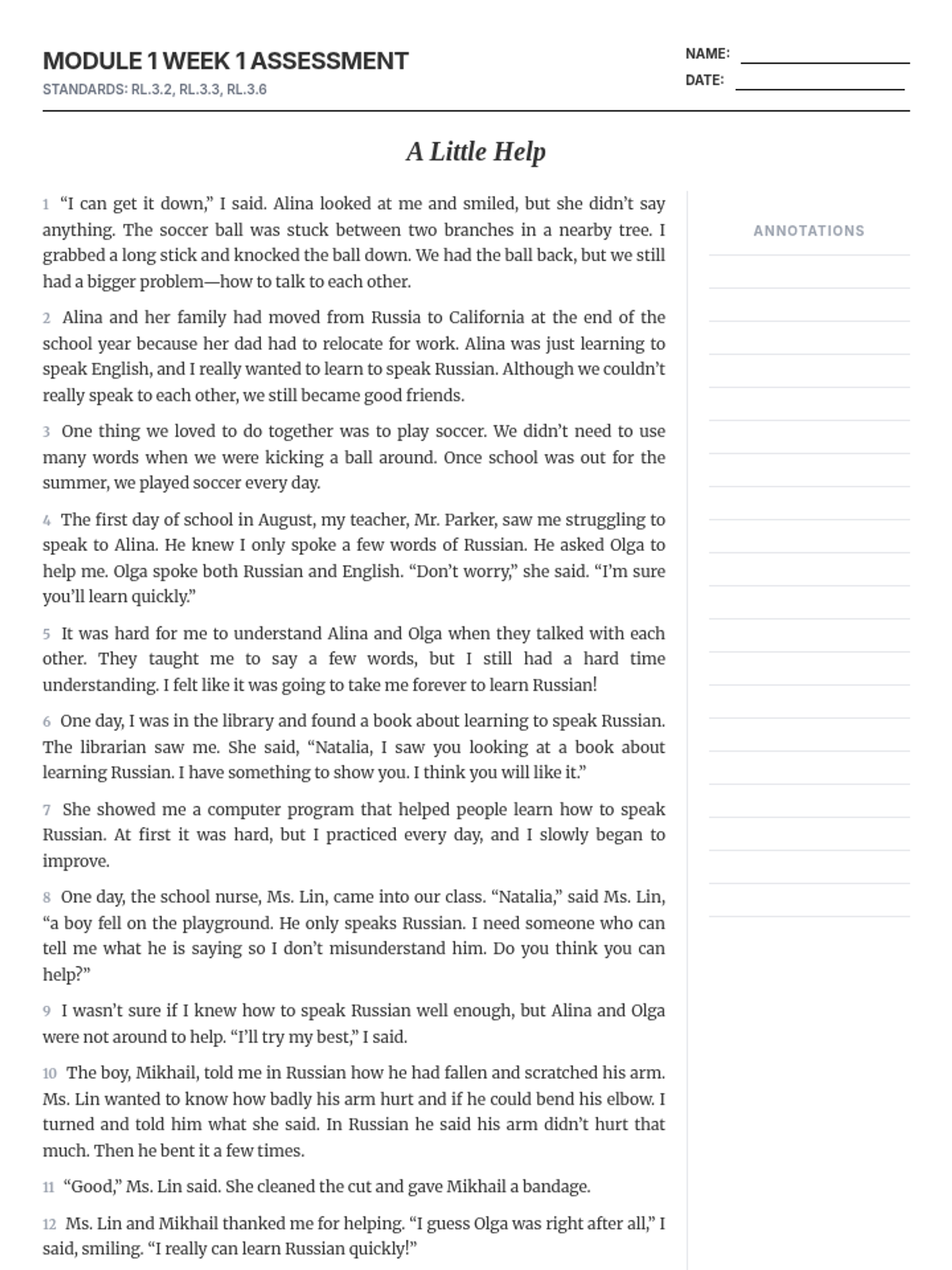
A collection of weekly reading assessments (CFUs) for Module 1, focused on character traits, central message, and point of view.
A lesson focused on analyzing character traits, determining central messages, and distinguishing points of view using the story 'A Little Help'. Students practice applying RL.2, RL.3, and RL.6 standards through standards-aligned multiple-choice questions.
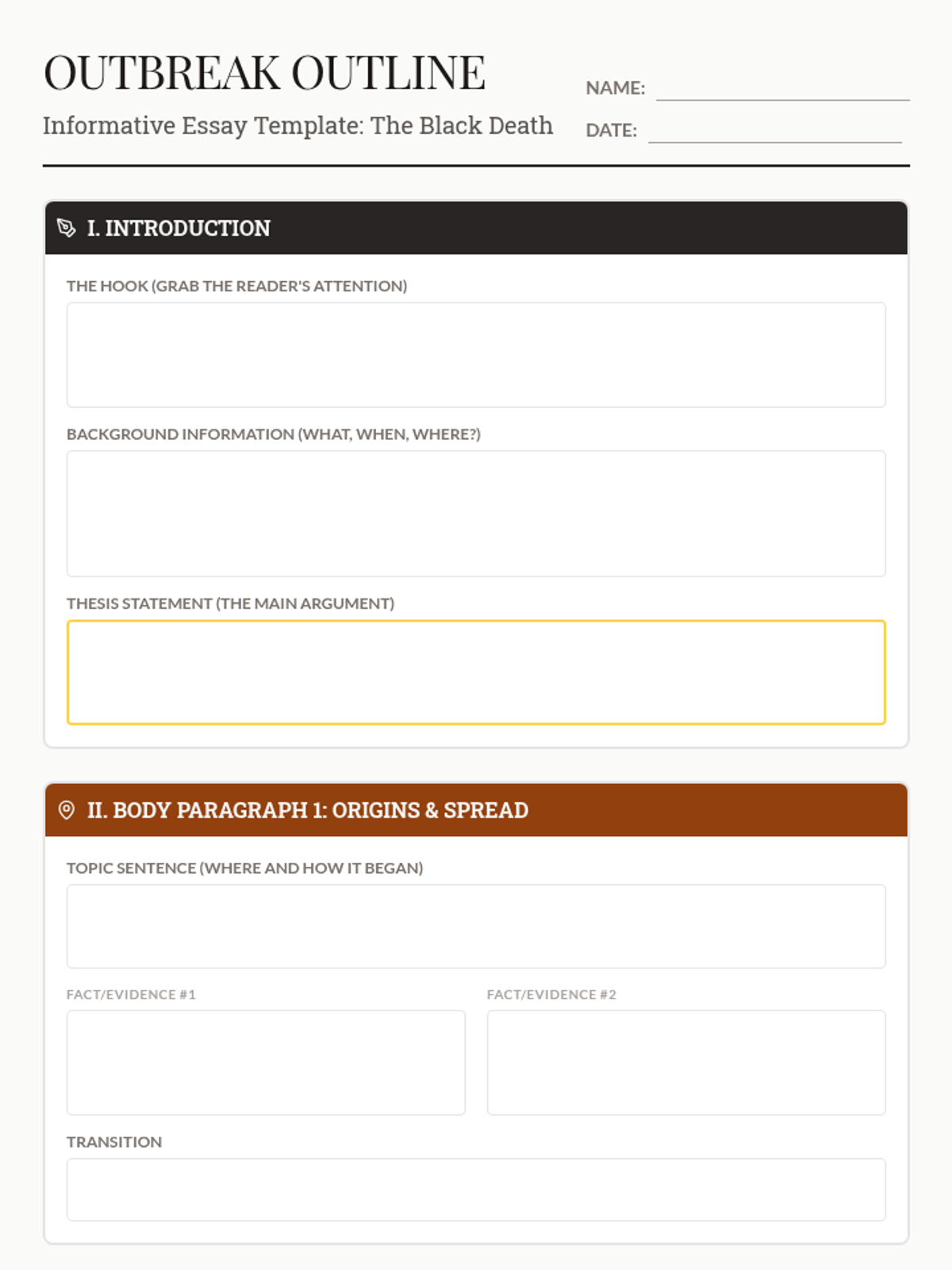
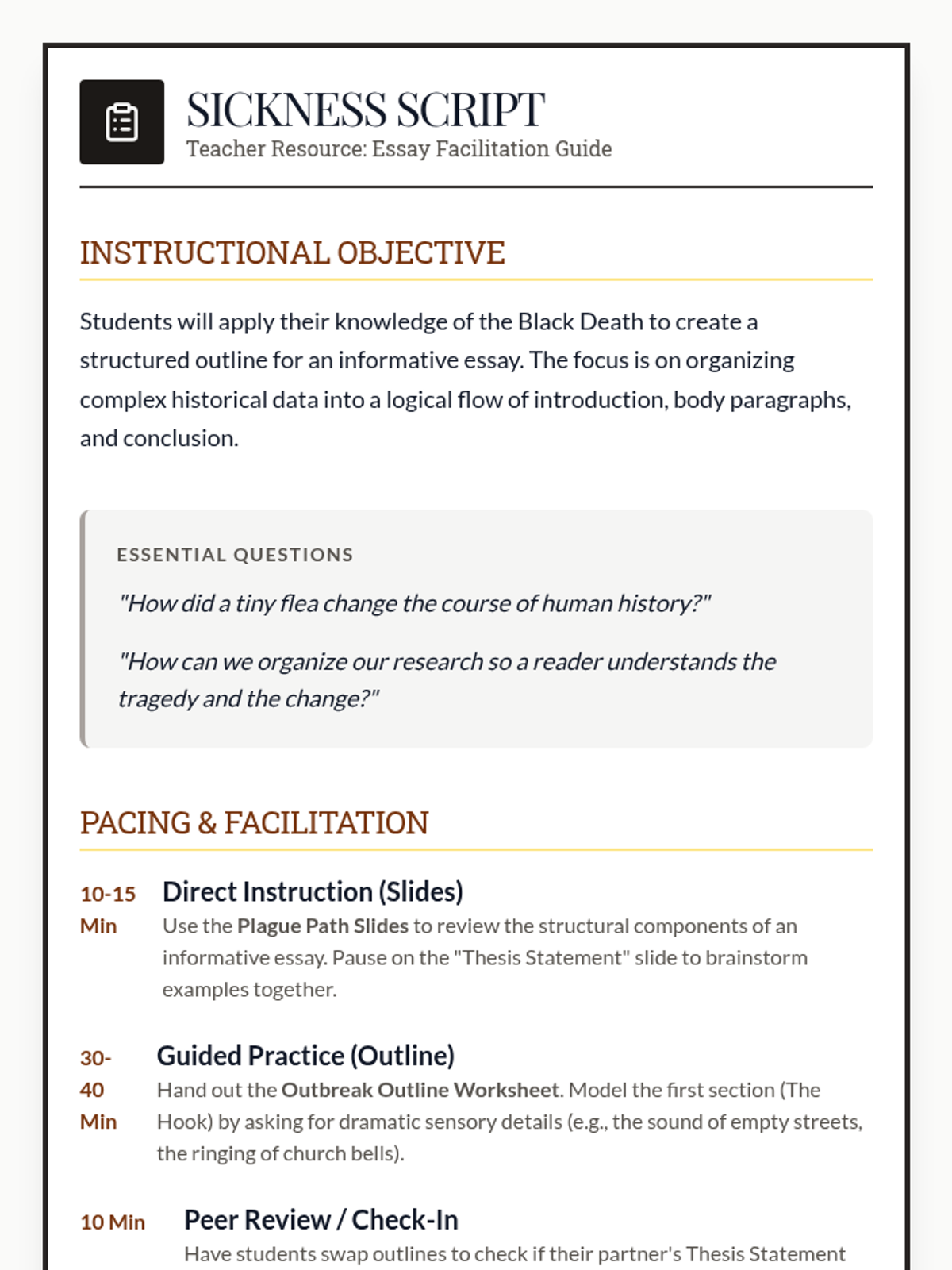
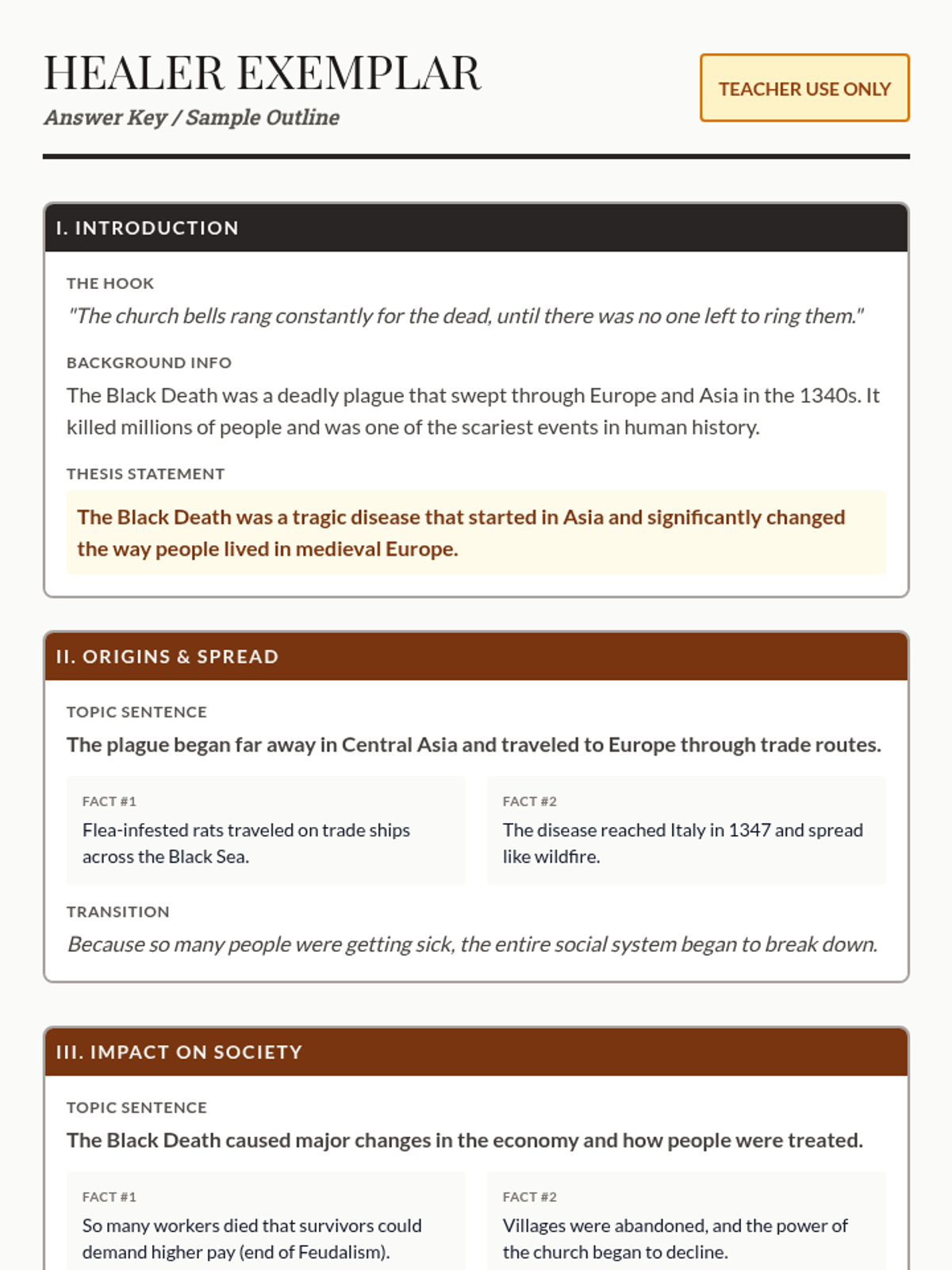
Students will learn how to structure an informative essay about the Black Death, focusing on its origins, spread, and impact on medieval society. This lesson provides a guided outline to help 5th graders organize their research into a cohesive multi-paragraph format.
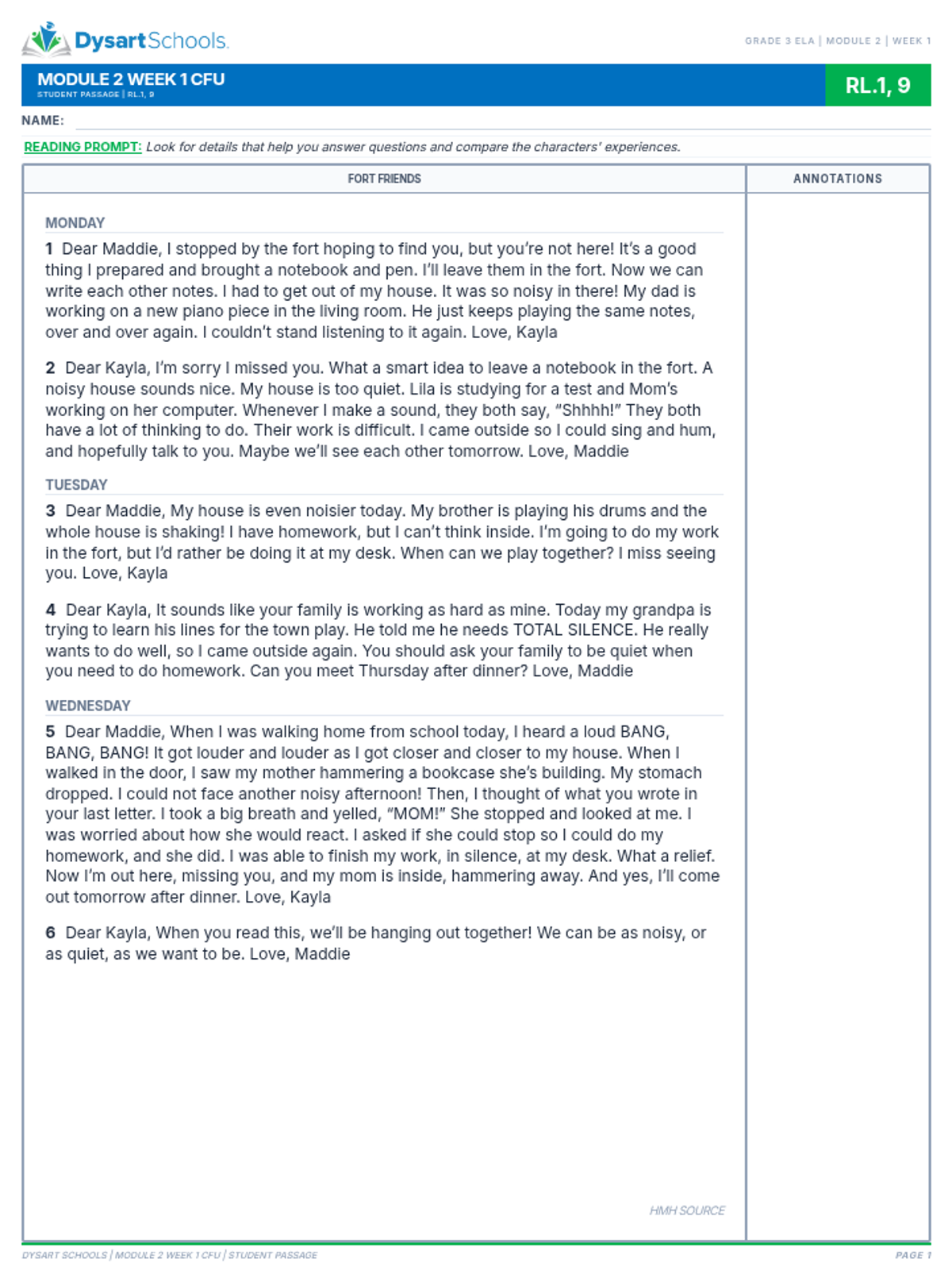
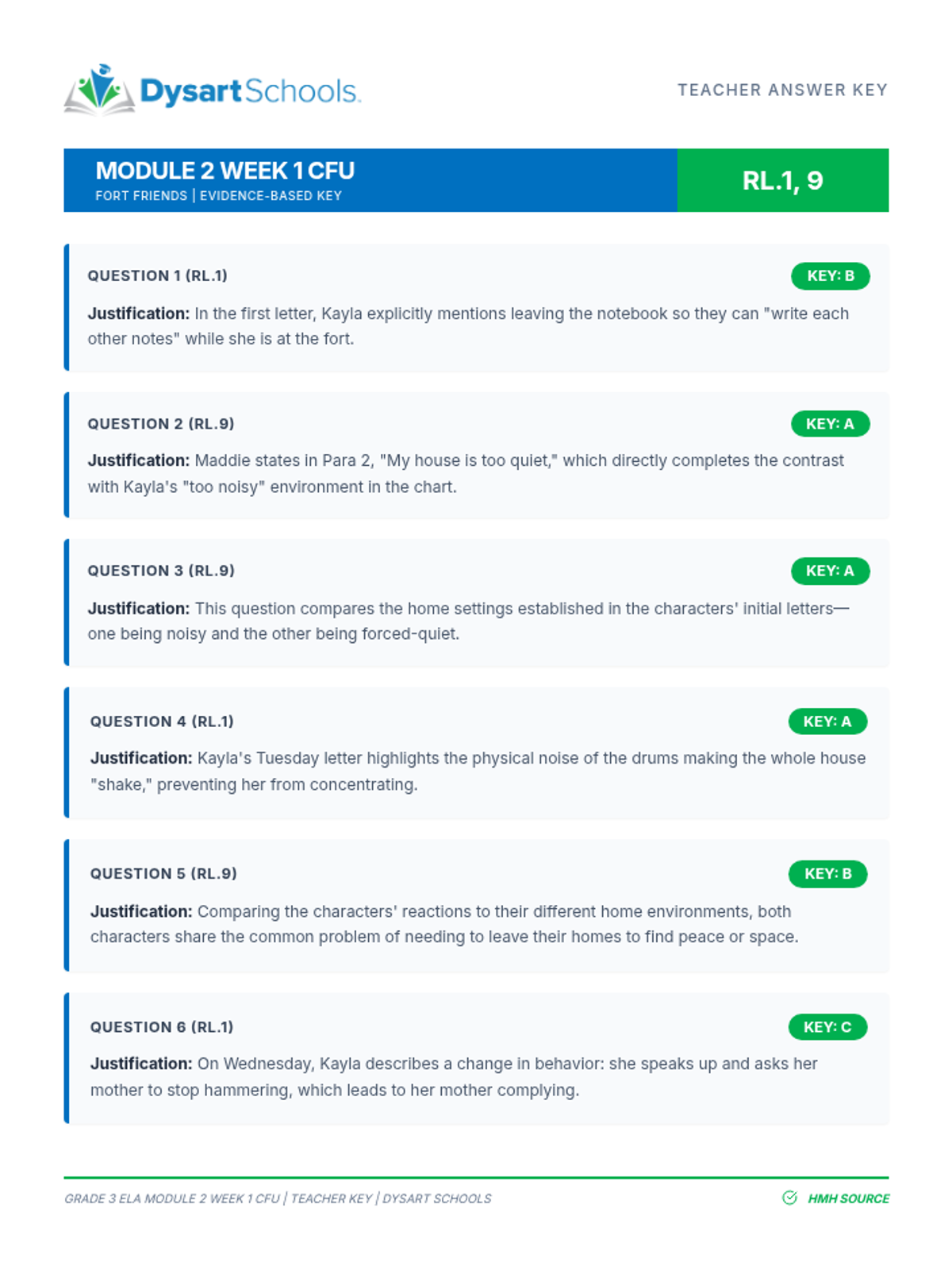
Assessment for 'Fort Friends' focusing on Arizona 3rd grade standards RL.1 and RL.9 through AASA-aligned multiple-choice questions.
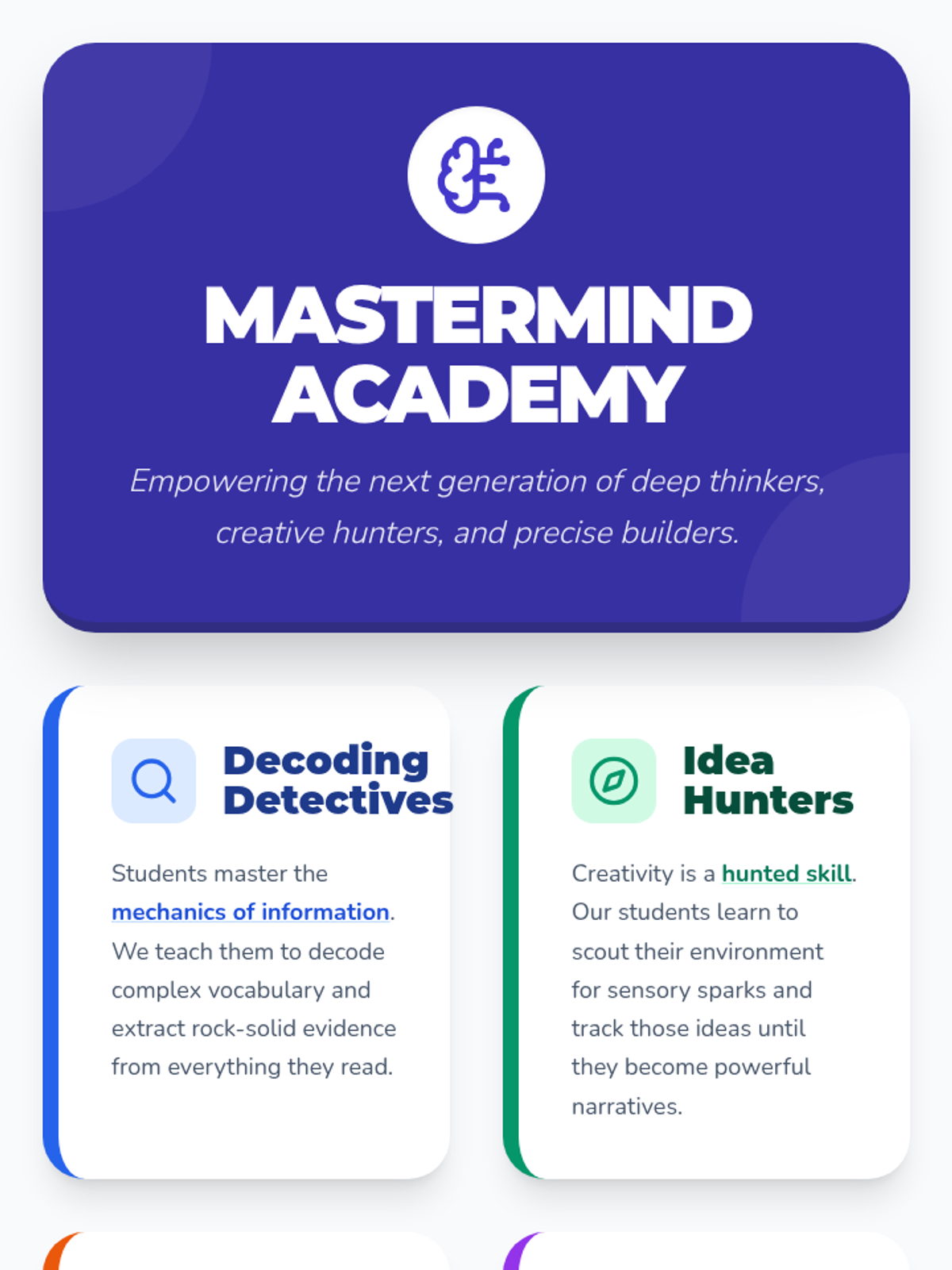
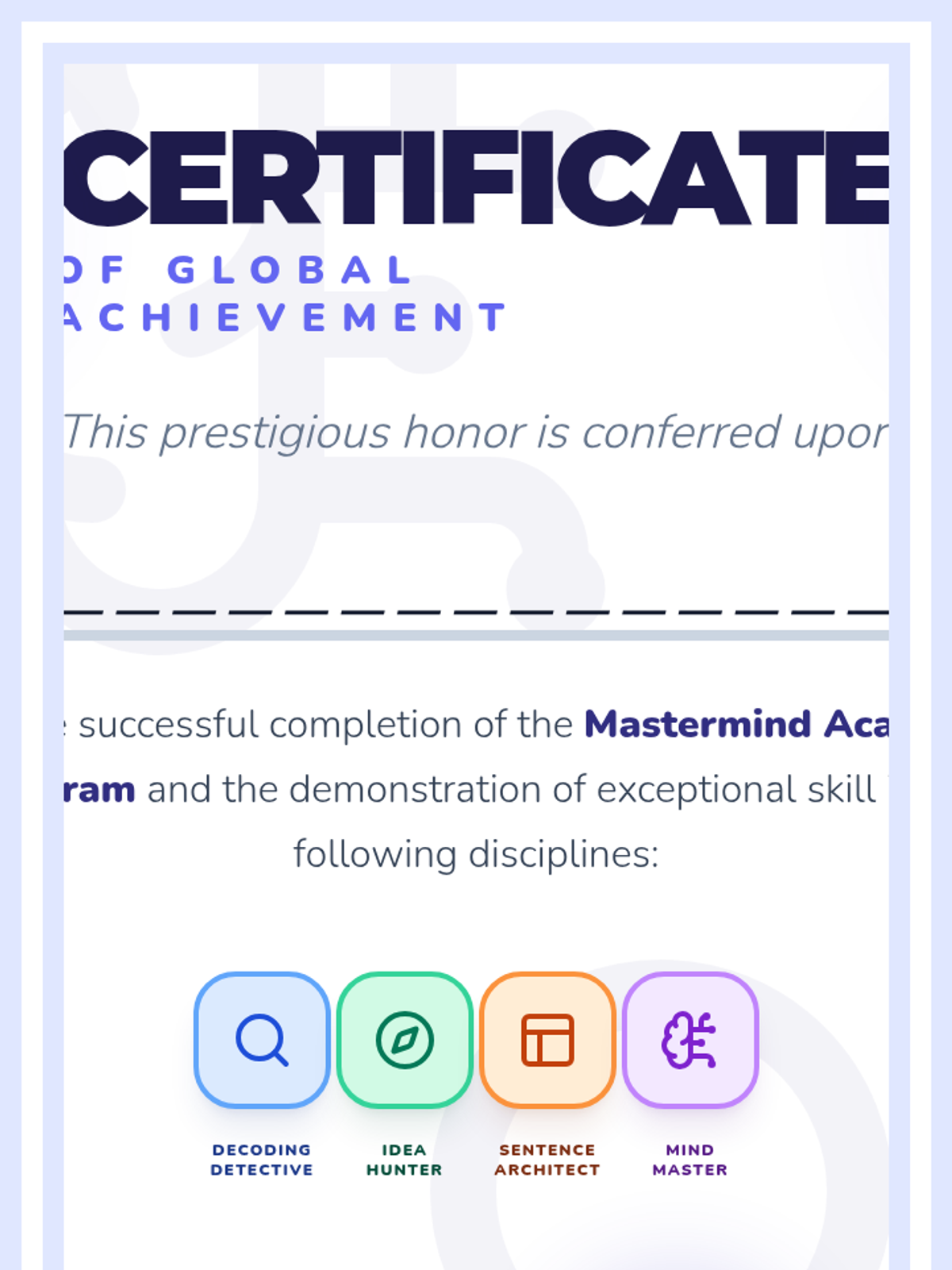
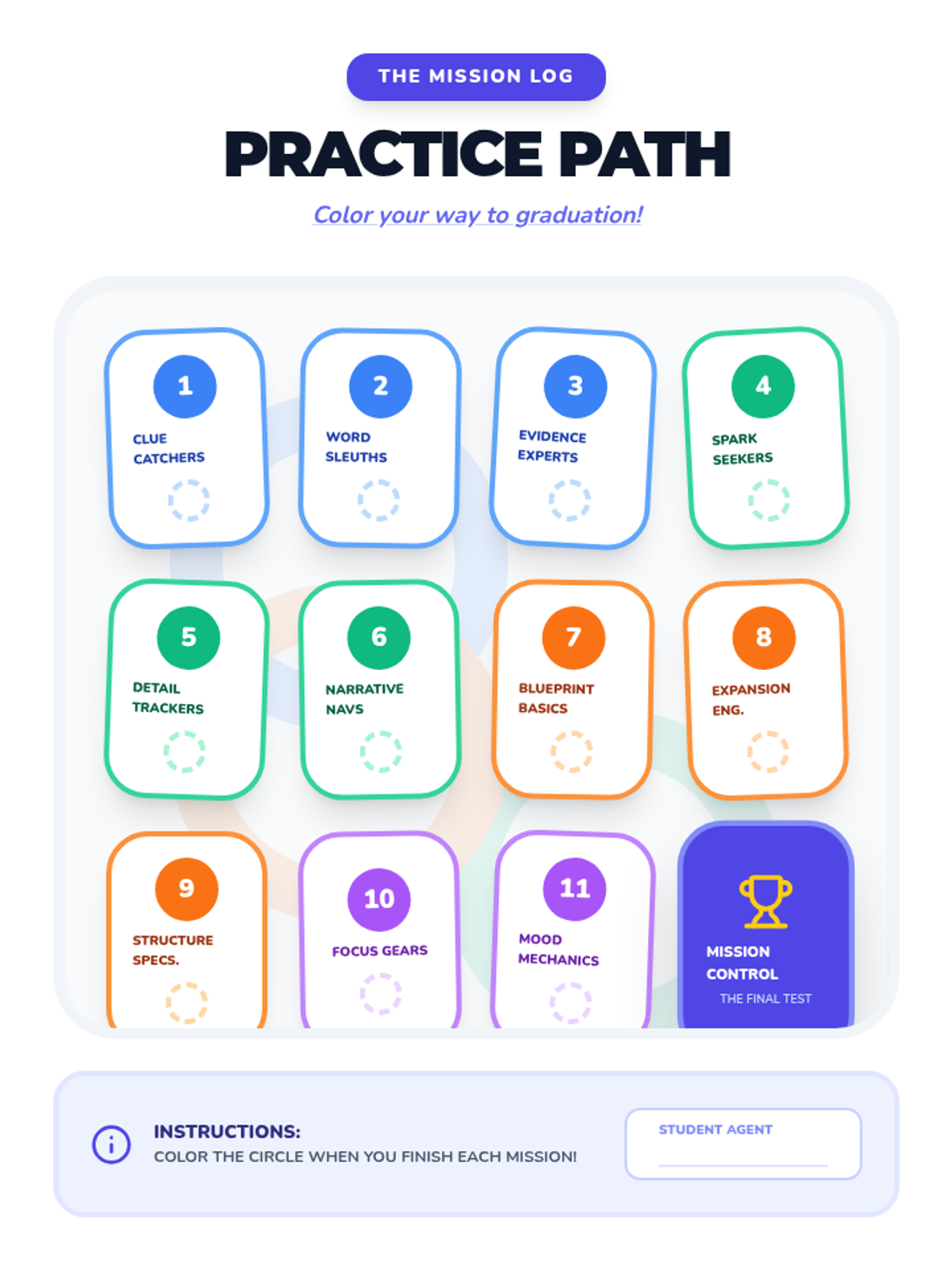
Program-wide materials for the Mastermind Academy, including the parent information brochure and the student graduation certificate.
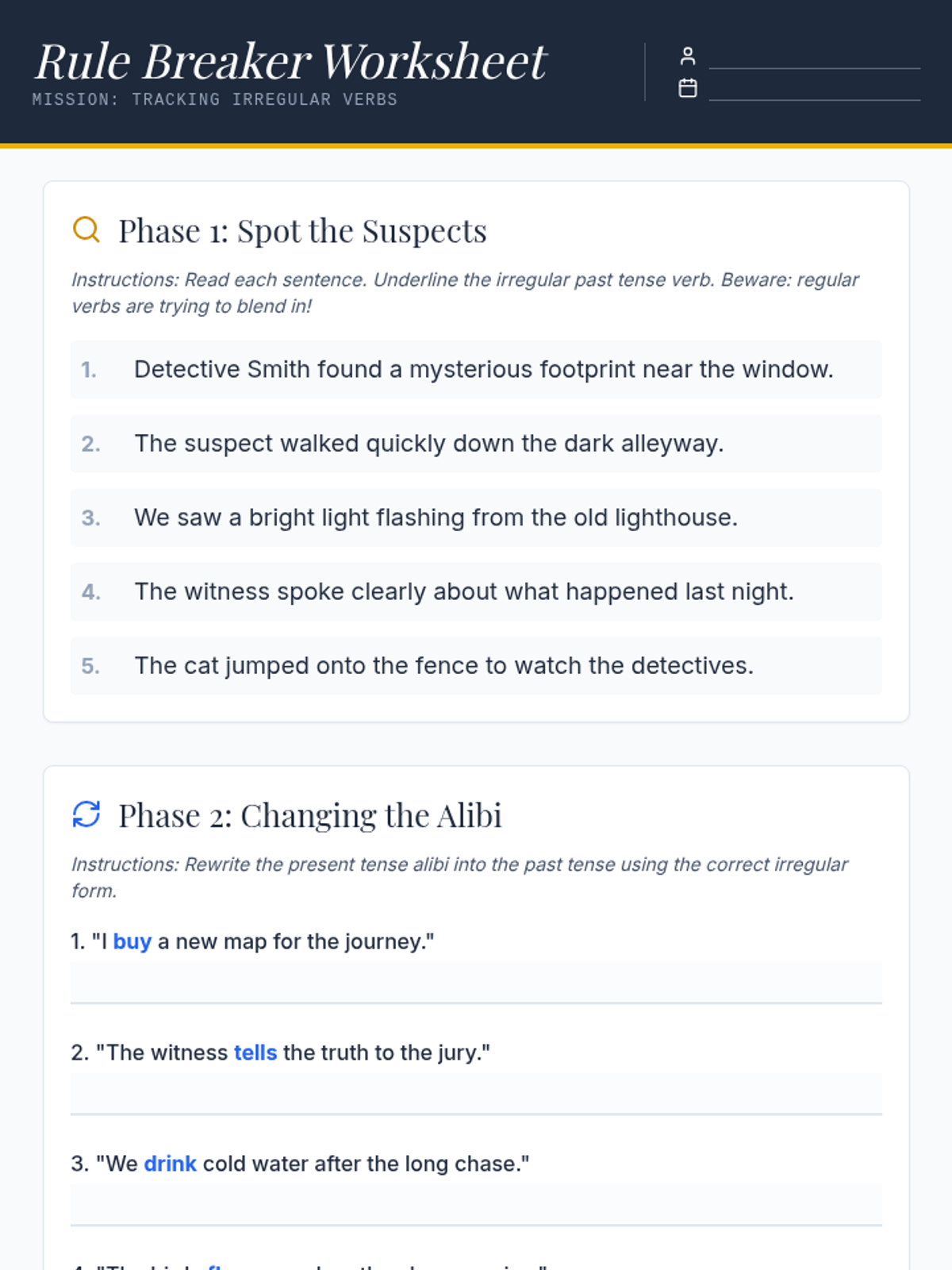
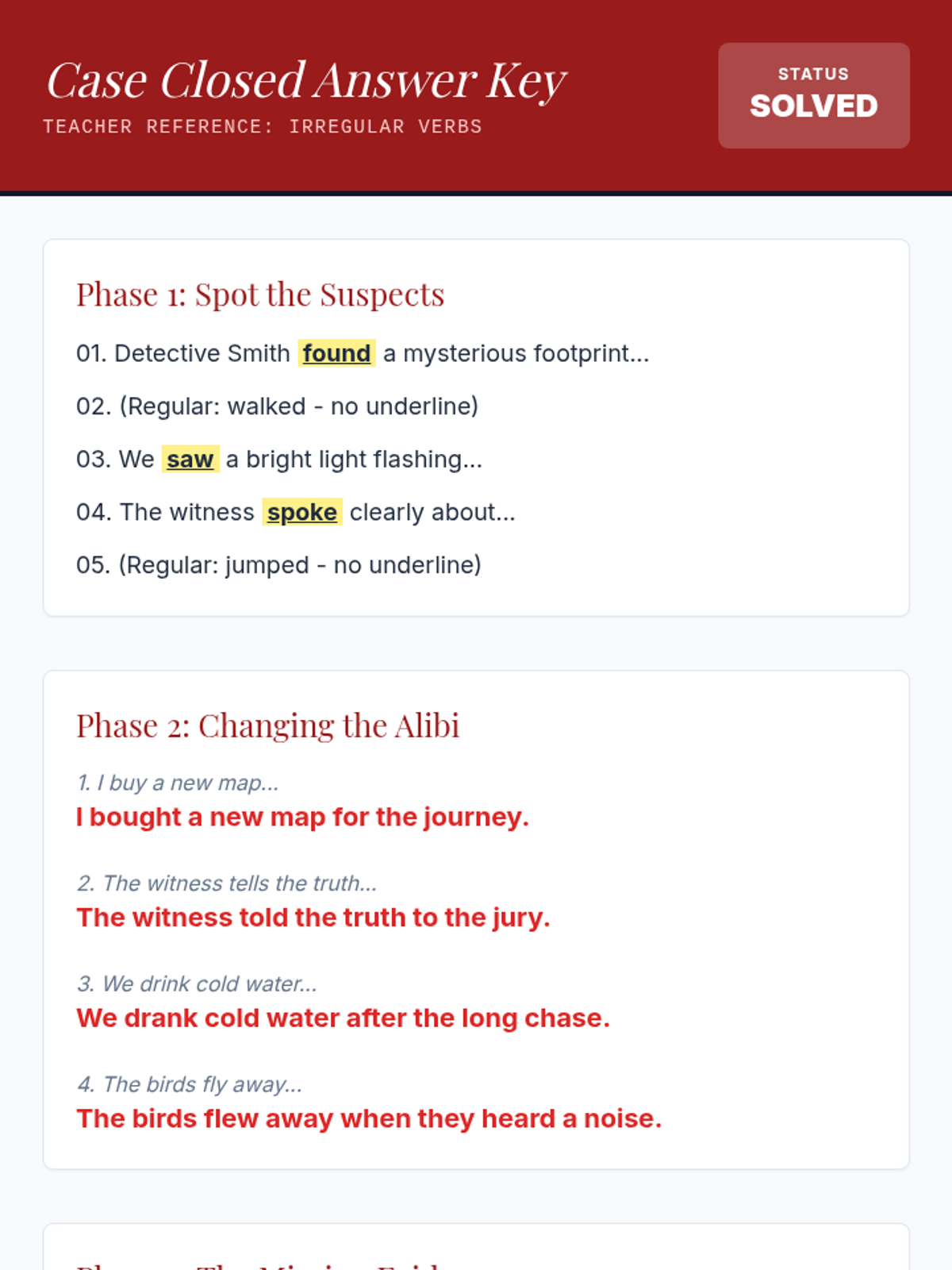
A friendly mystery-themed lesson where second graders become 'Verb Detectives' to find and fix common irregular past tense verbs like 'went', 'saw', and 'ate'.
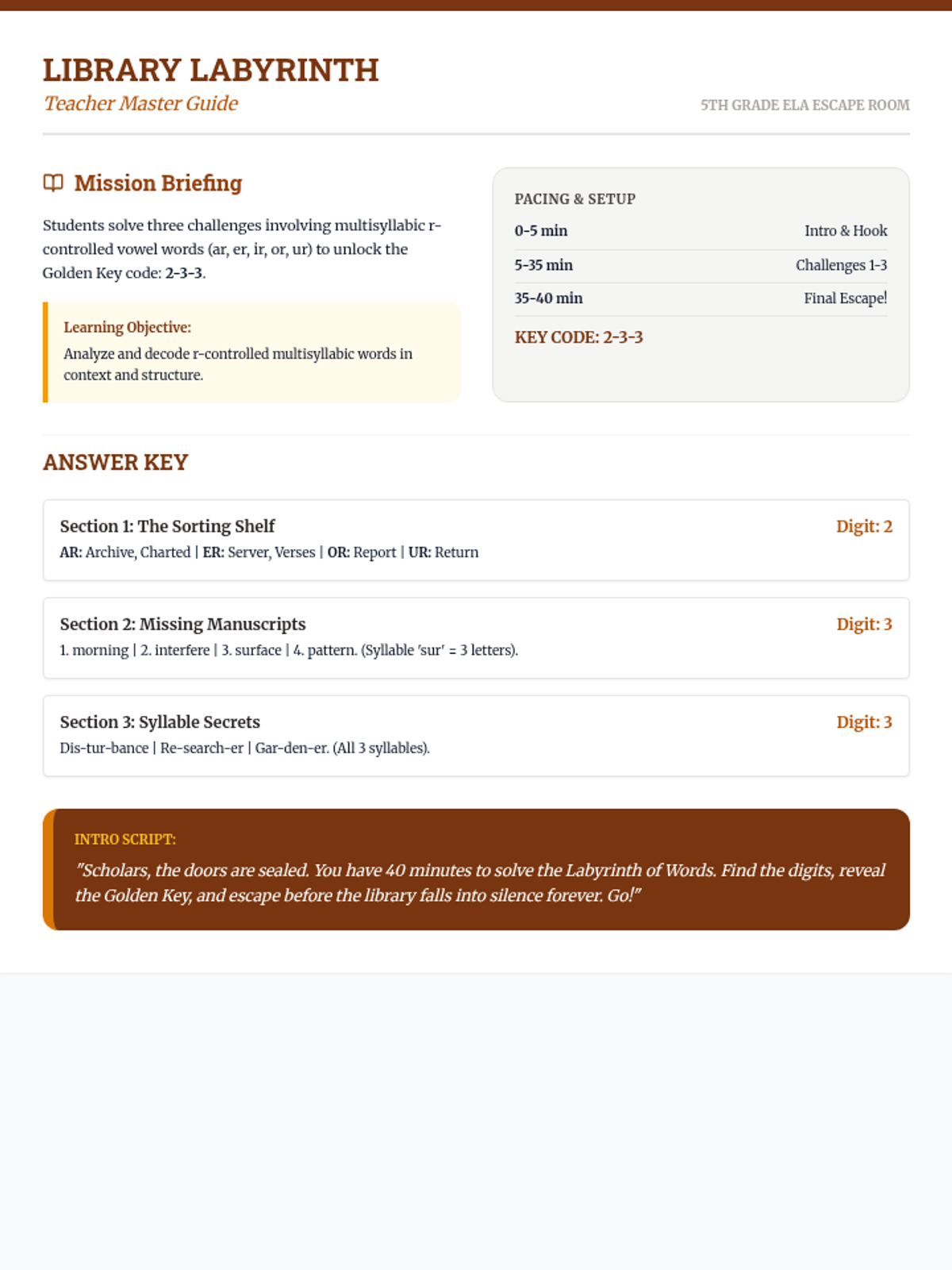
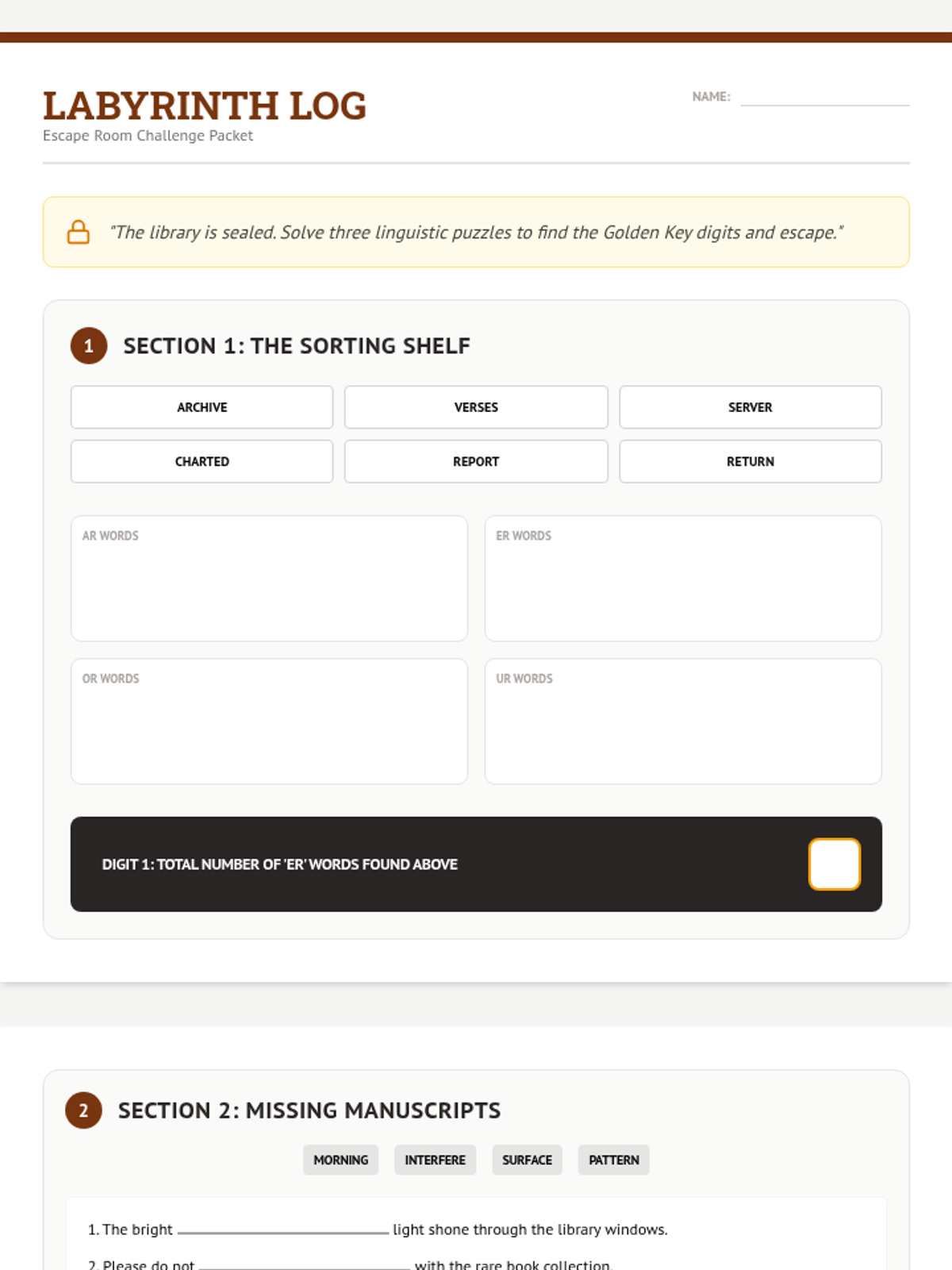
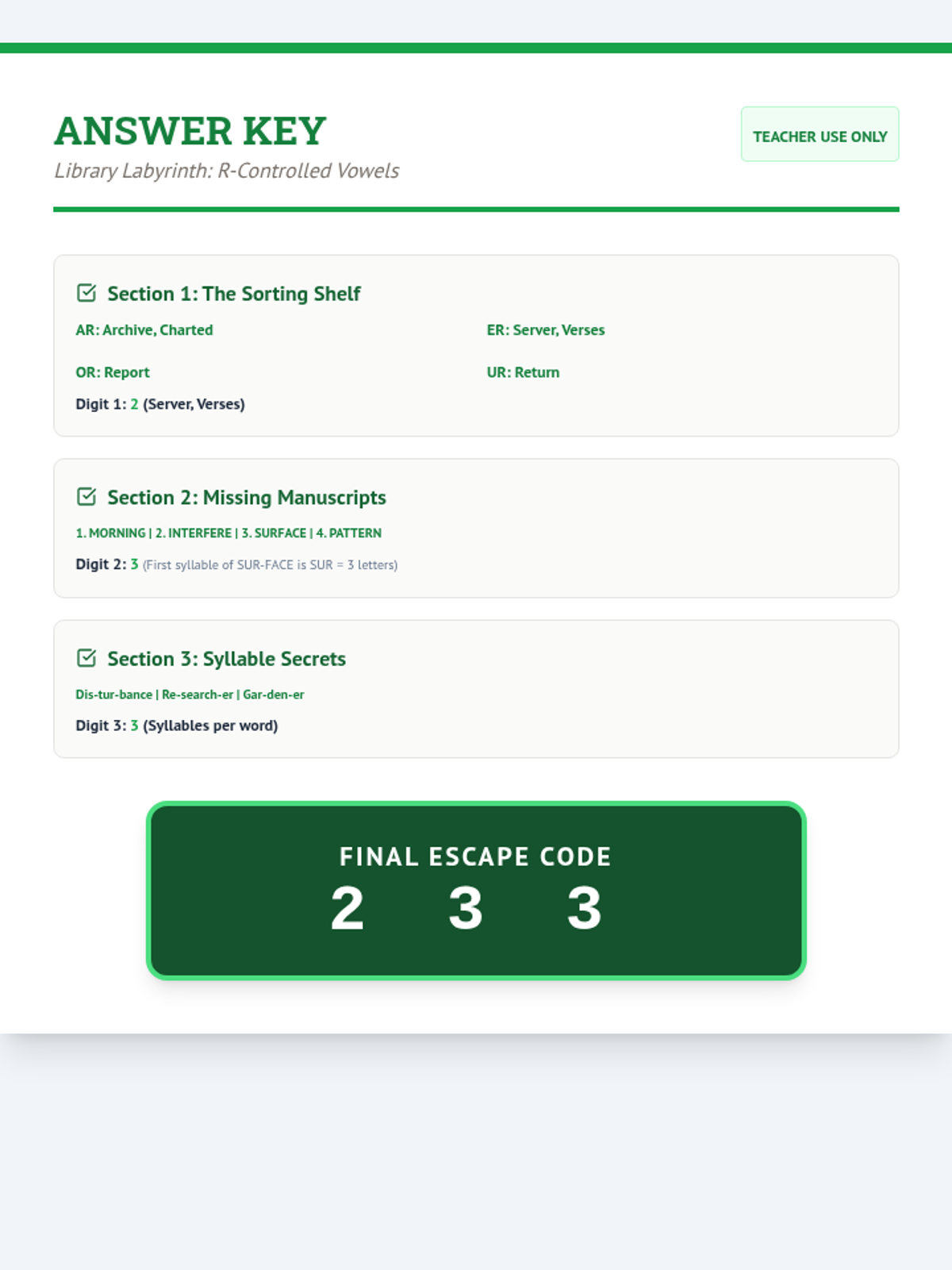
A 5th grade ELA escape room focused on decoding and understanding multisyllabic r-controlled vowel words, set in a mysterious, locked library. Students must solve three linguistic challenges to find the 'Golden Key' and exit the library before the 40-minute timer expires.
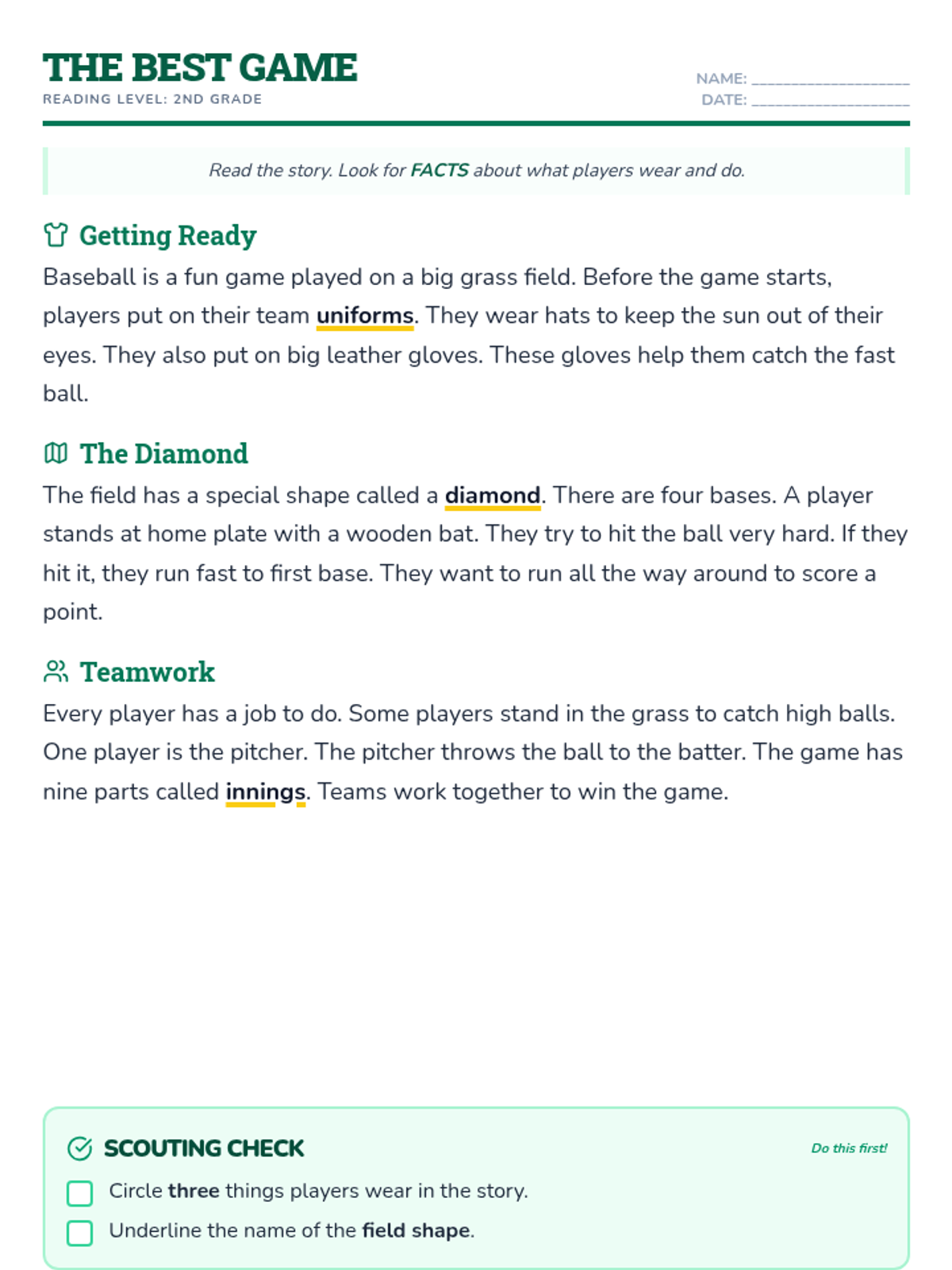
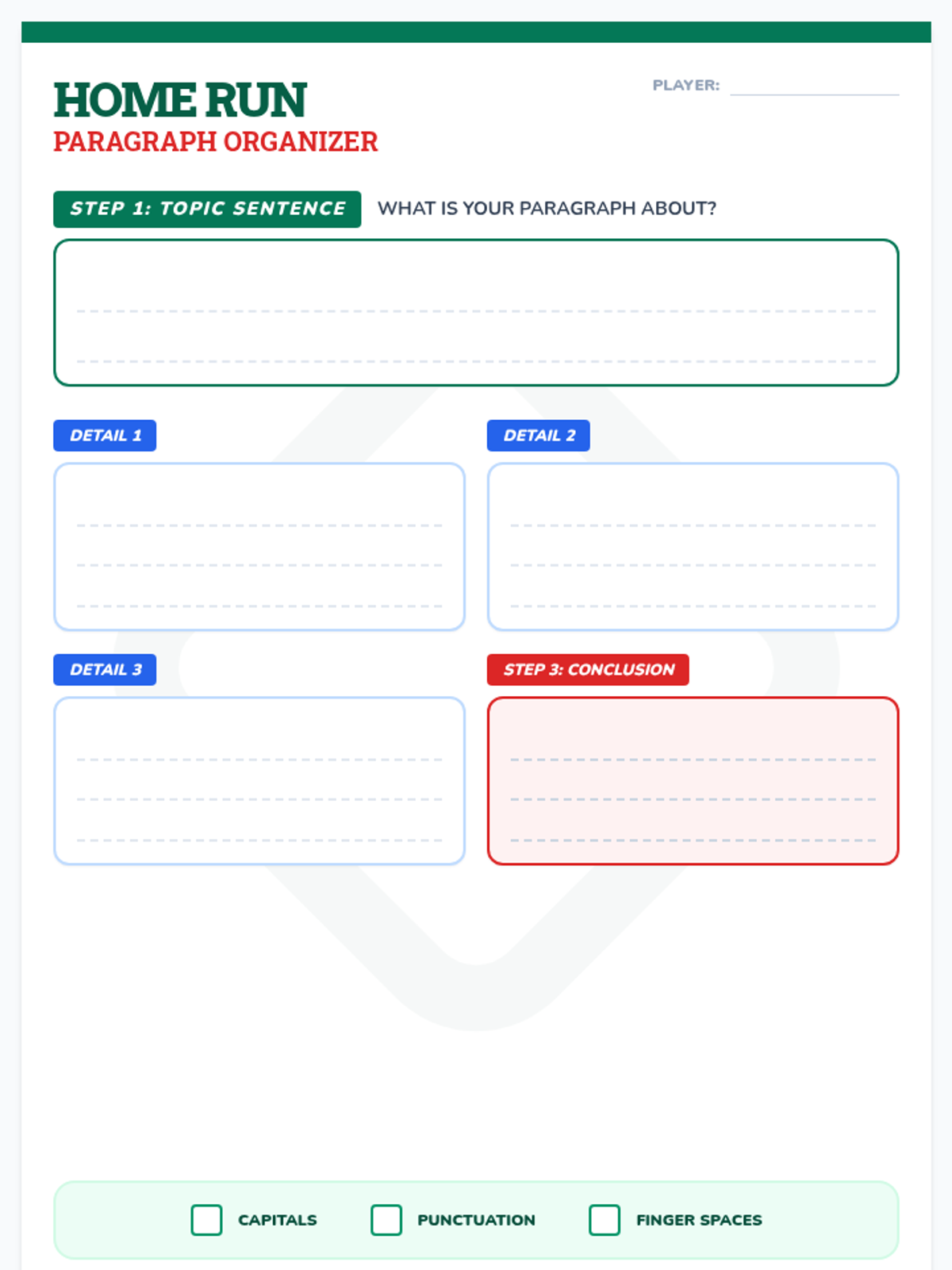
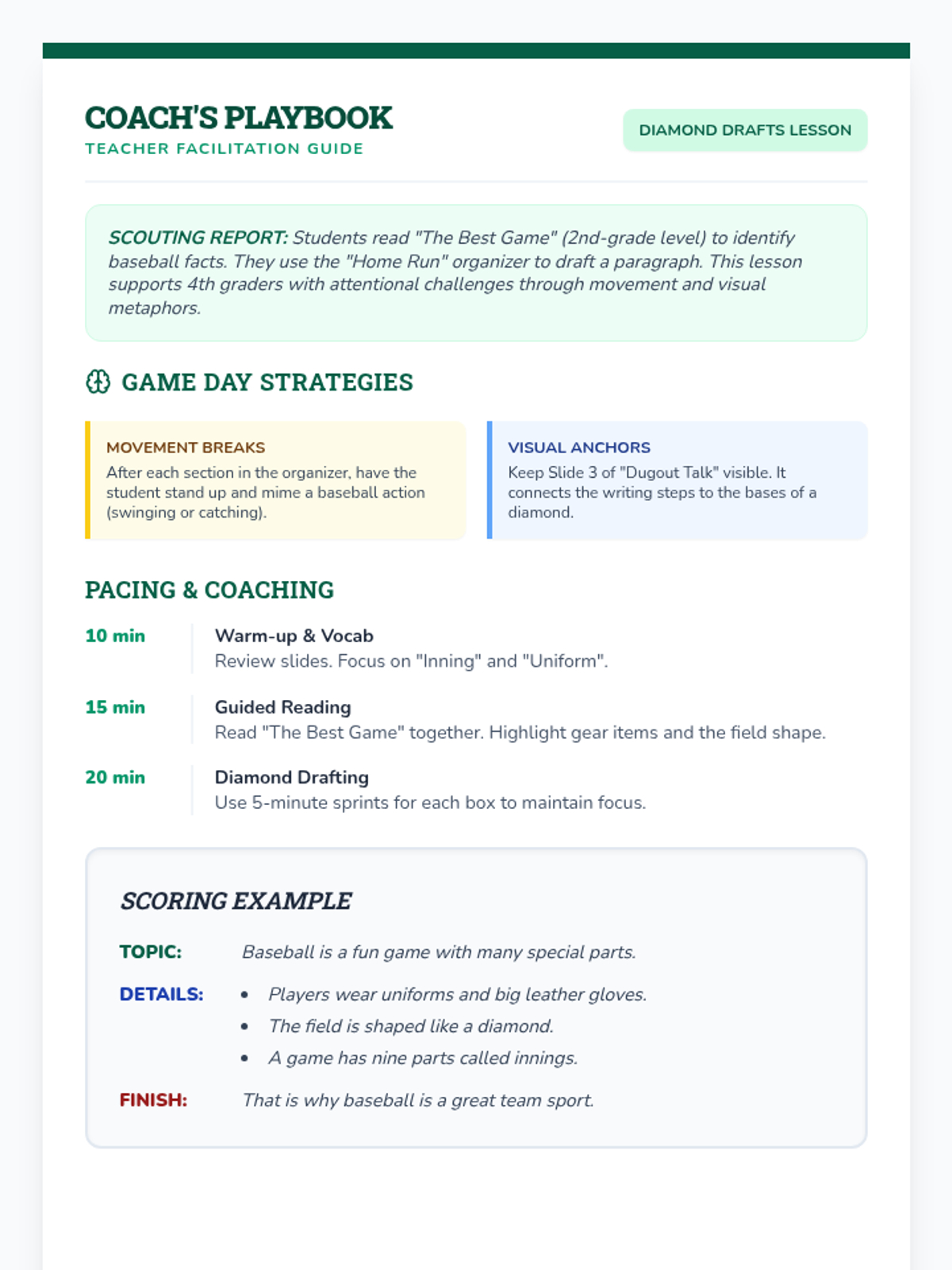
A baseball-themed reading and writing lesson designed for a 4th grader reading at a 2nd-grade level. The lesson focuses on identifying key details and organizing a paragraph using a topic sentence, three details, and a conclusion.
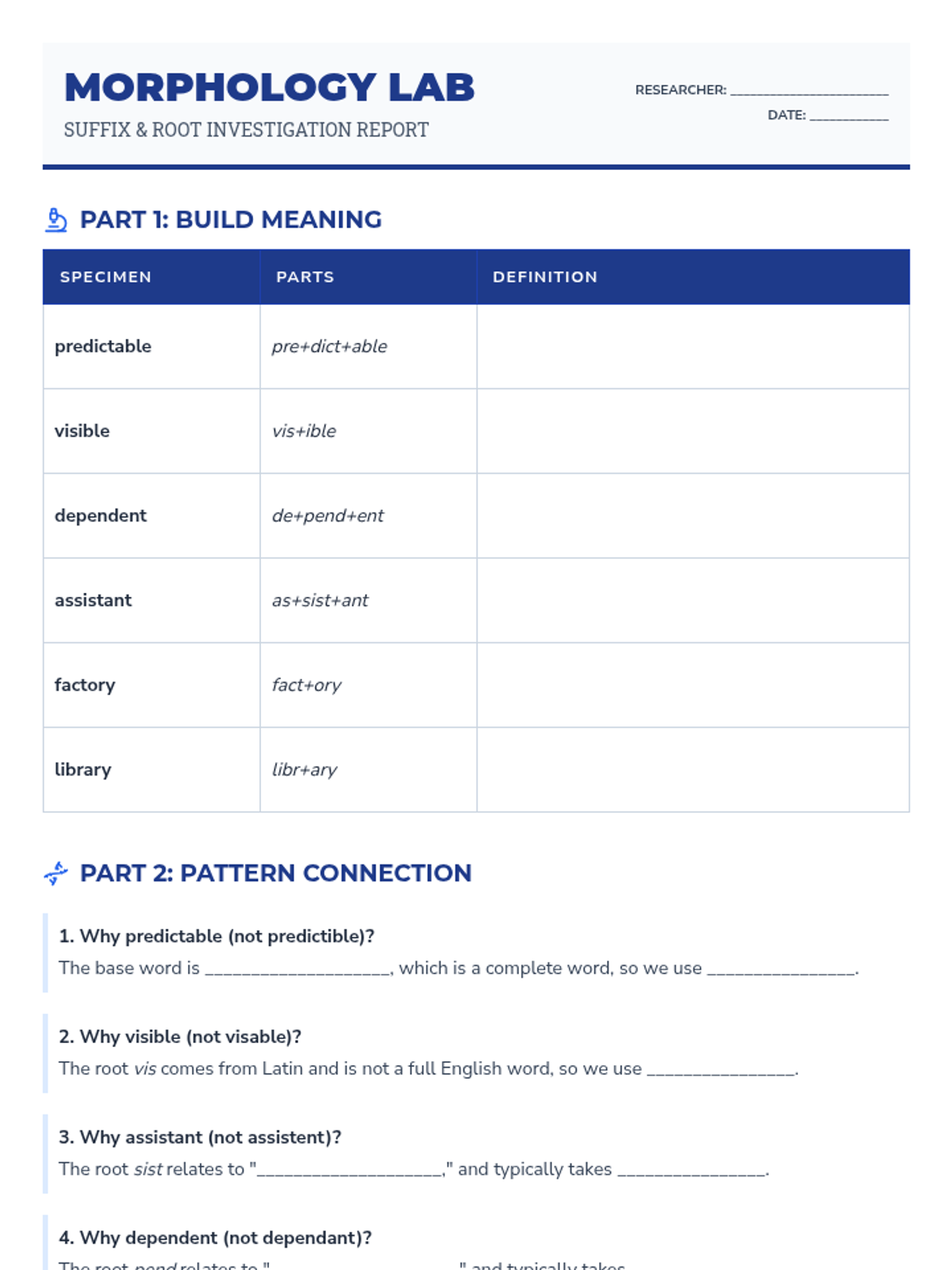
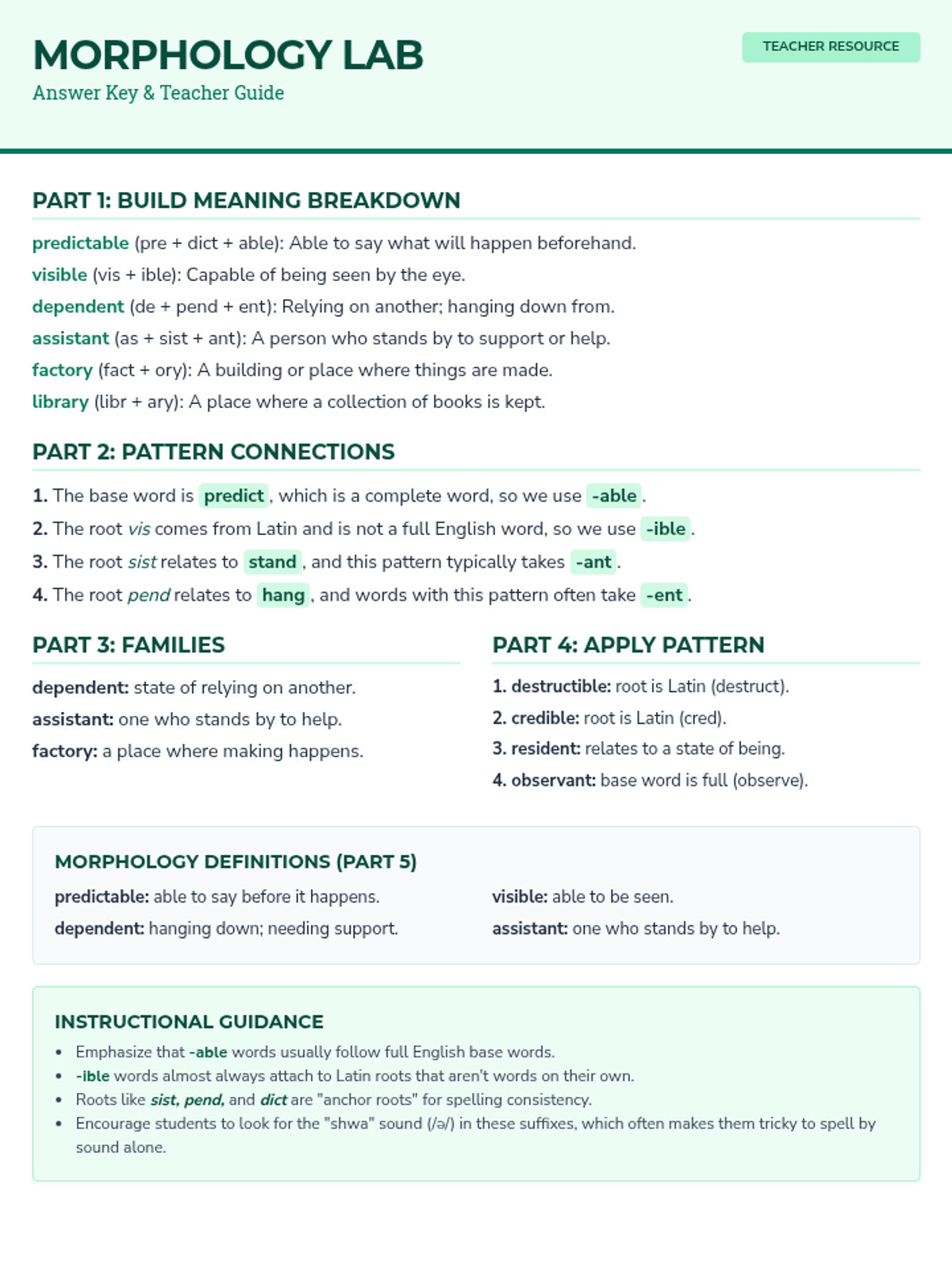
A deep dive into morphology and common word endings (-able, -ible, -ary, -ery, -ory, -ant, -ent), focusing on how Latin roots and base words determine spelling patterns.
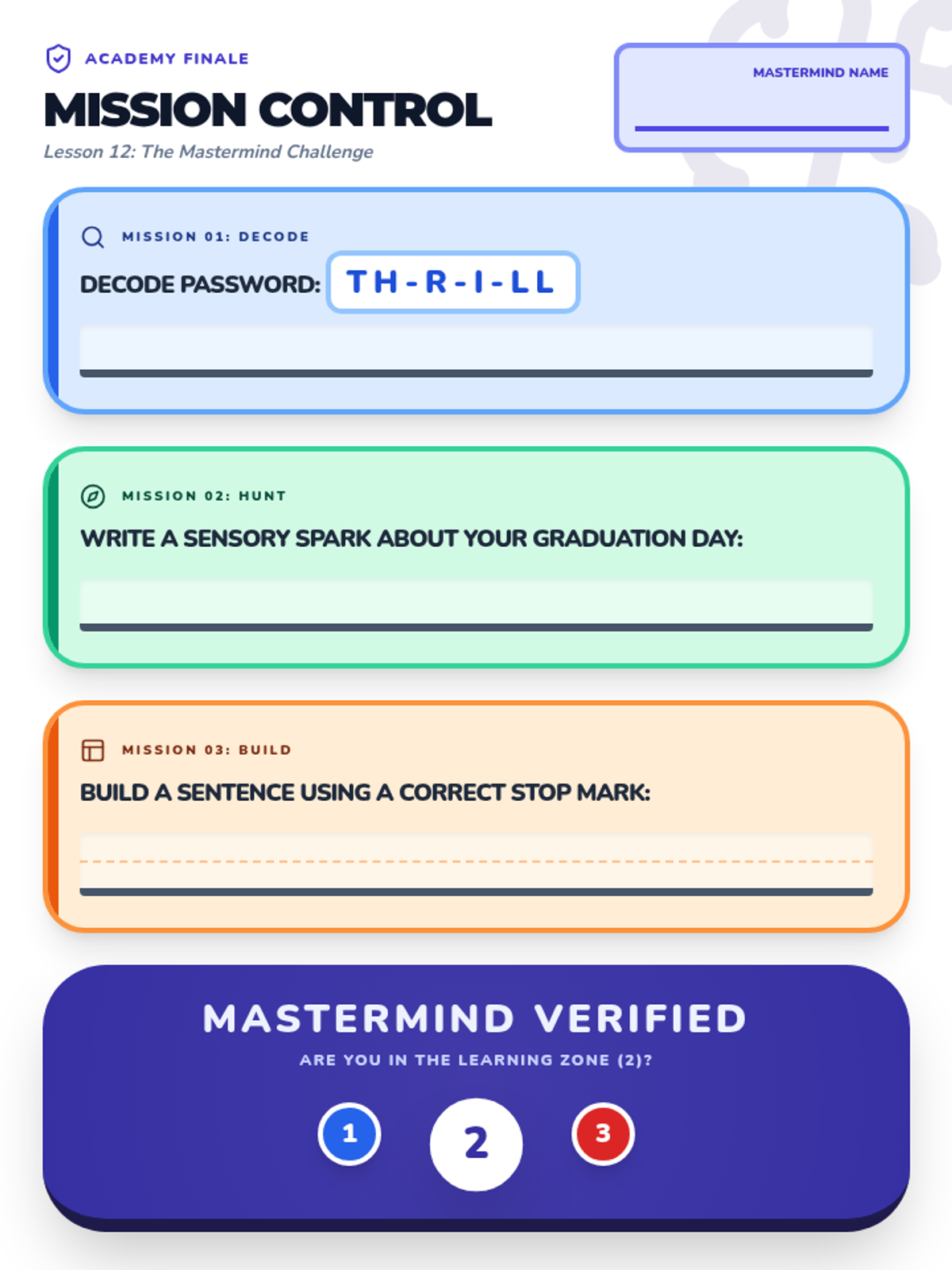
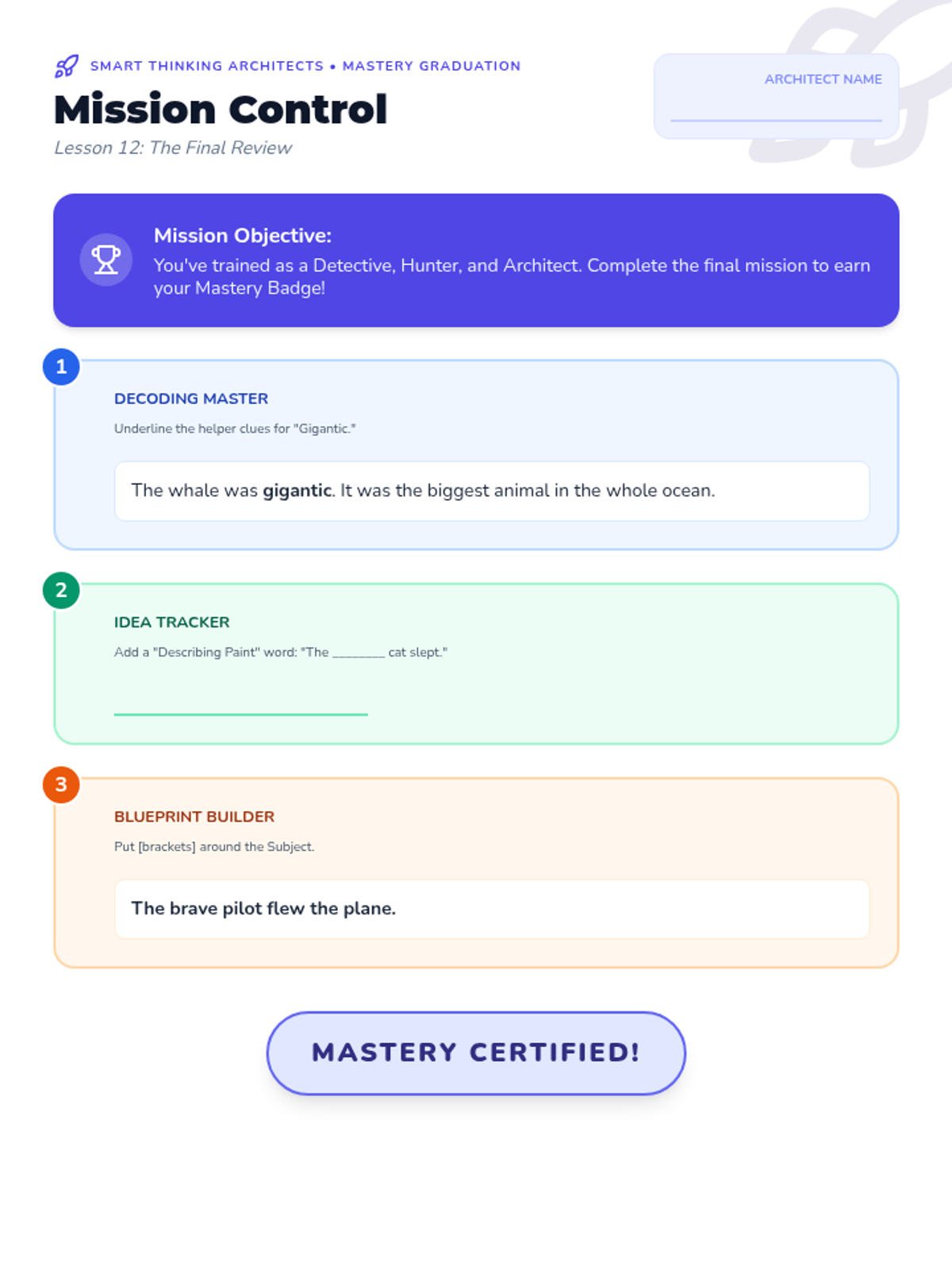
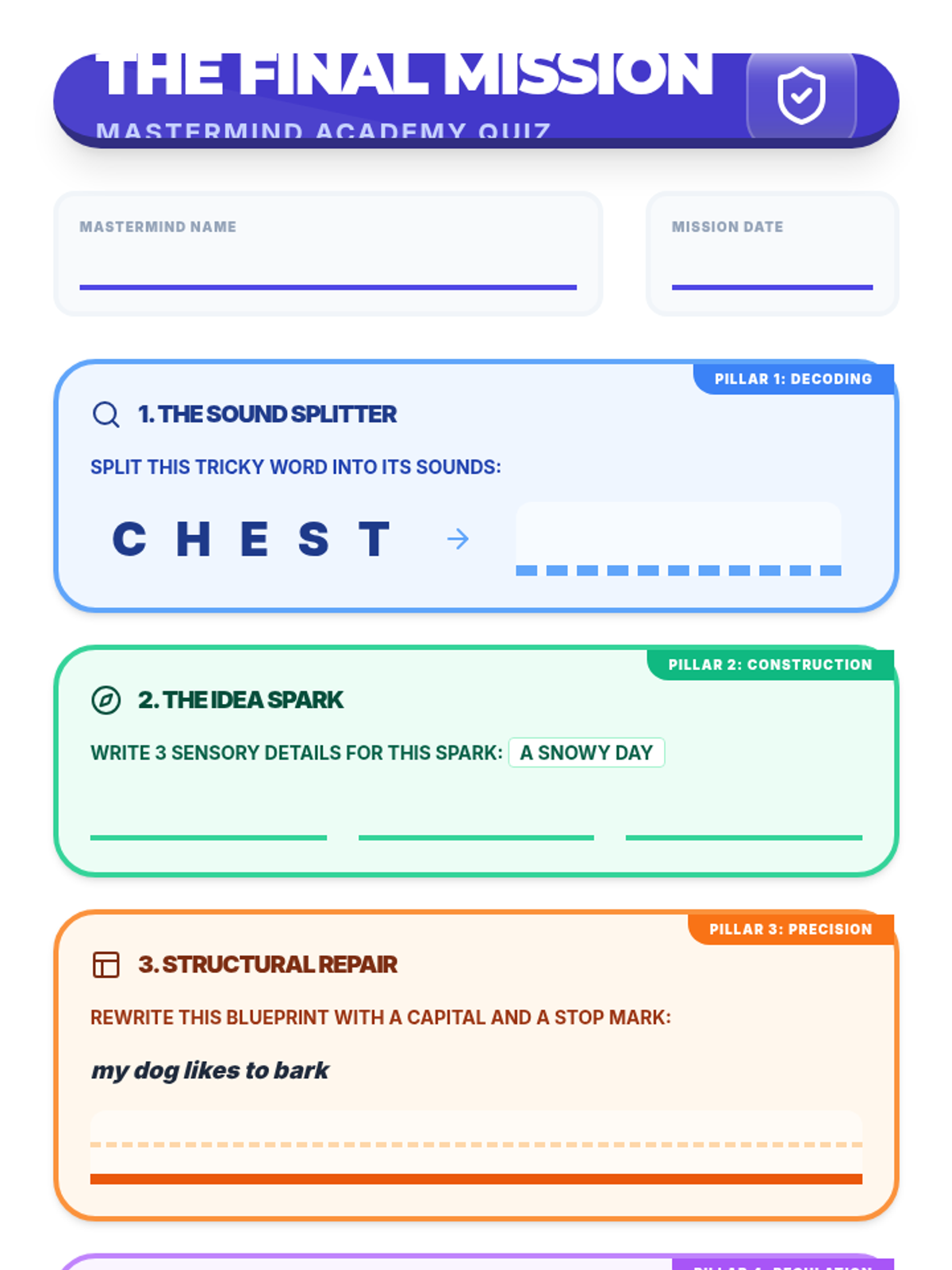
A final review and celebration of the skills learned throughout the Mastermind Academy program.
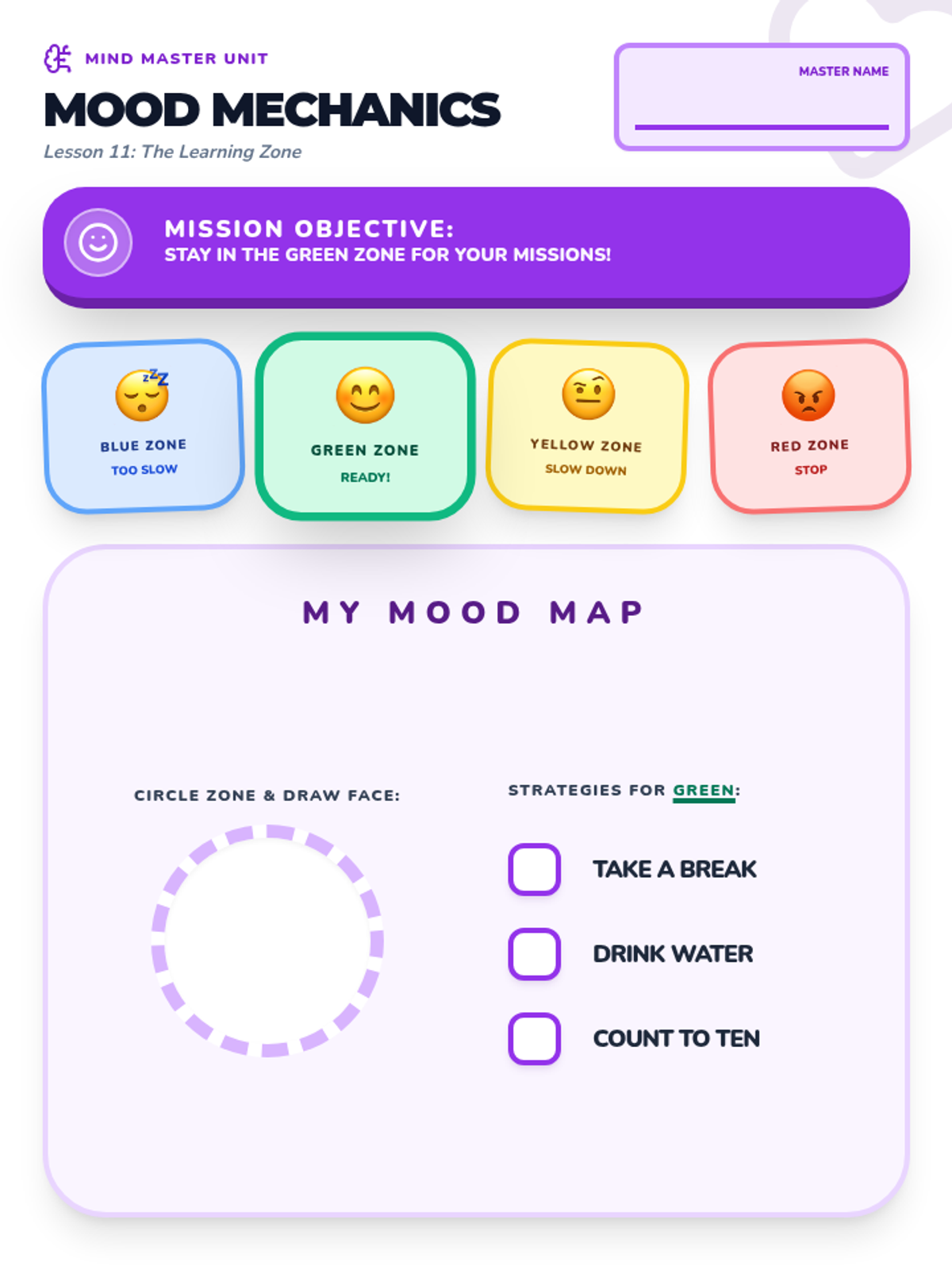
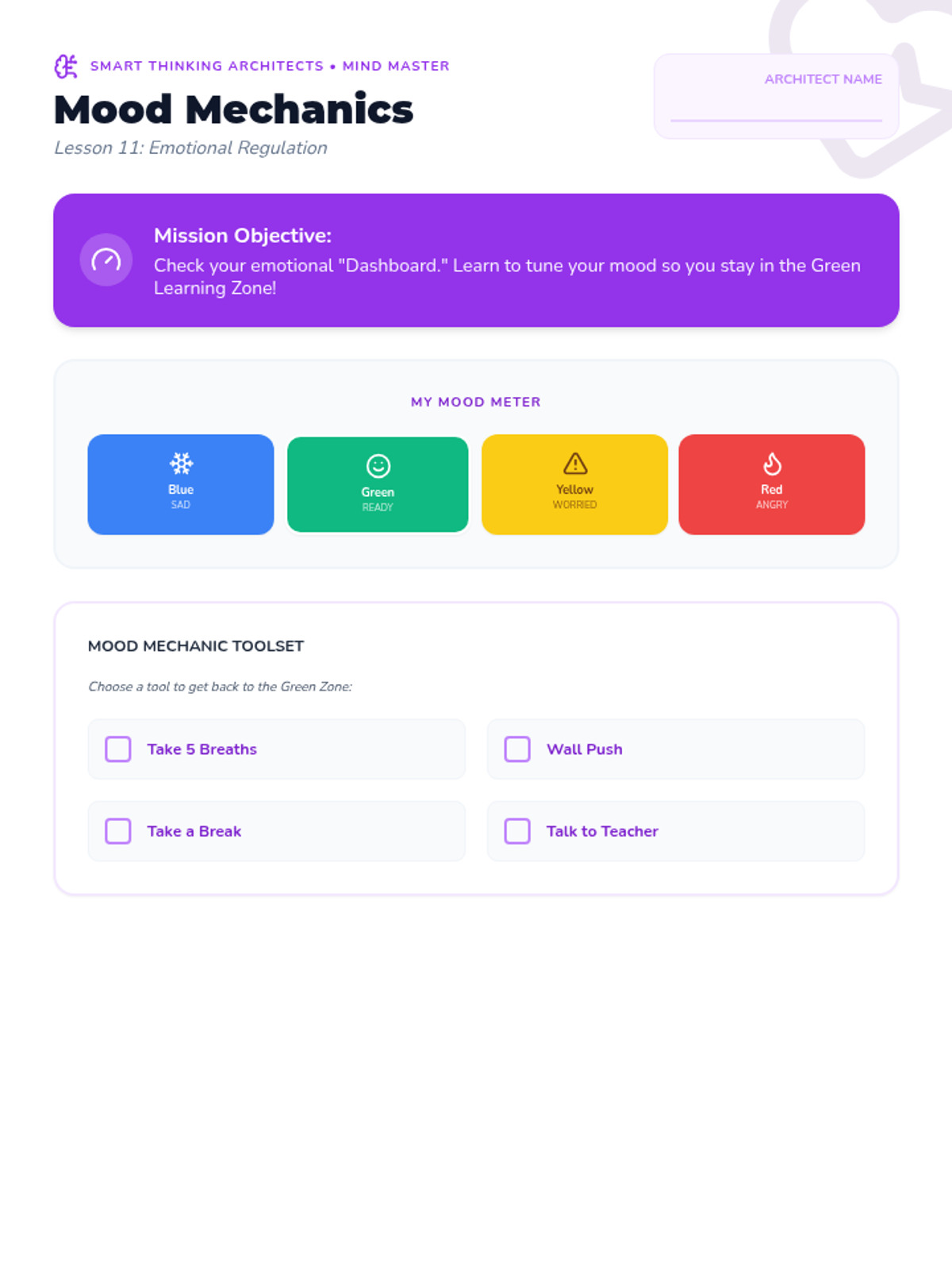
Students learn to identify and regulate their emotions to stay in the "learning zone."
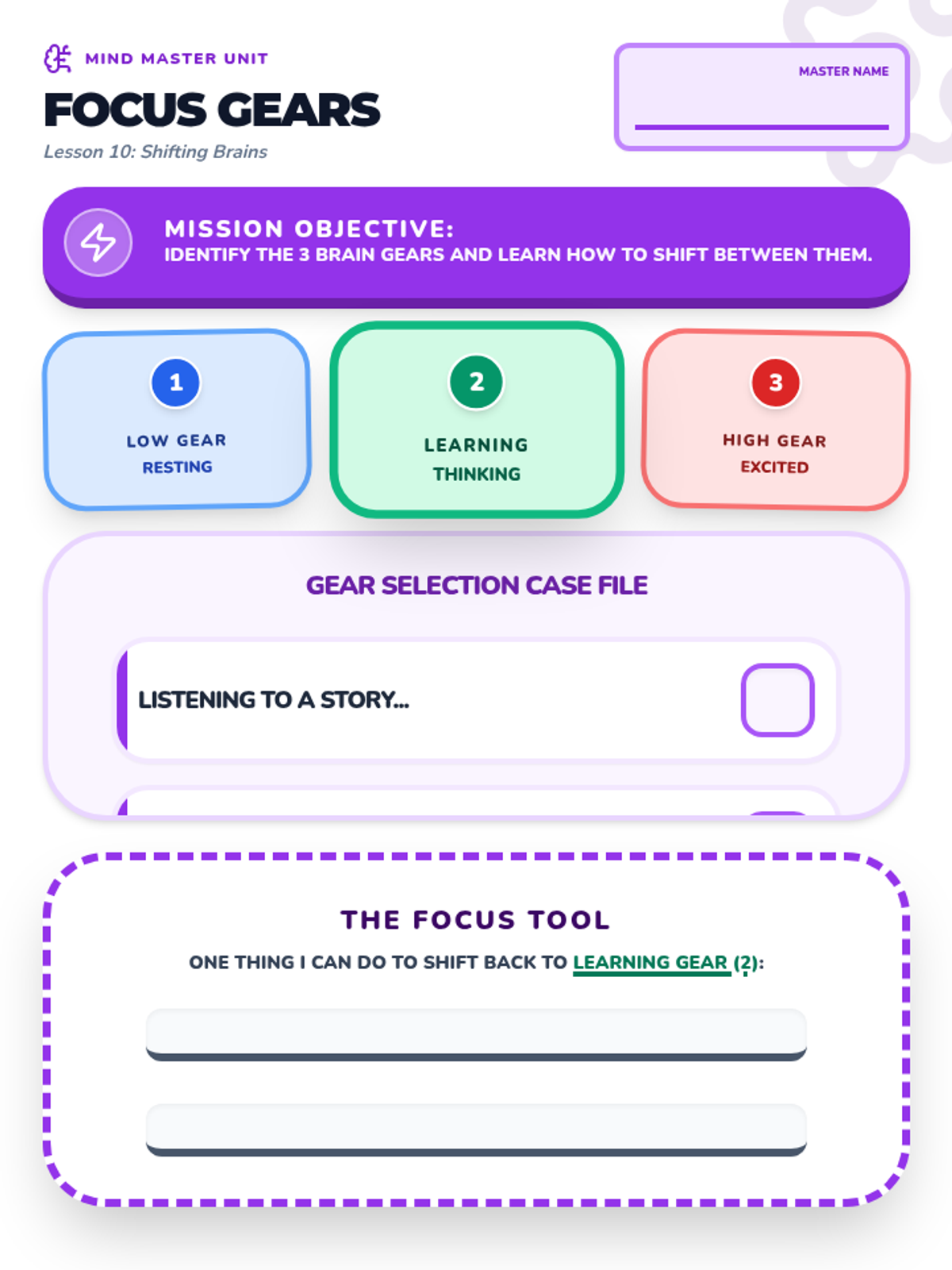
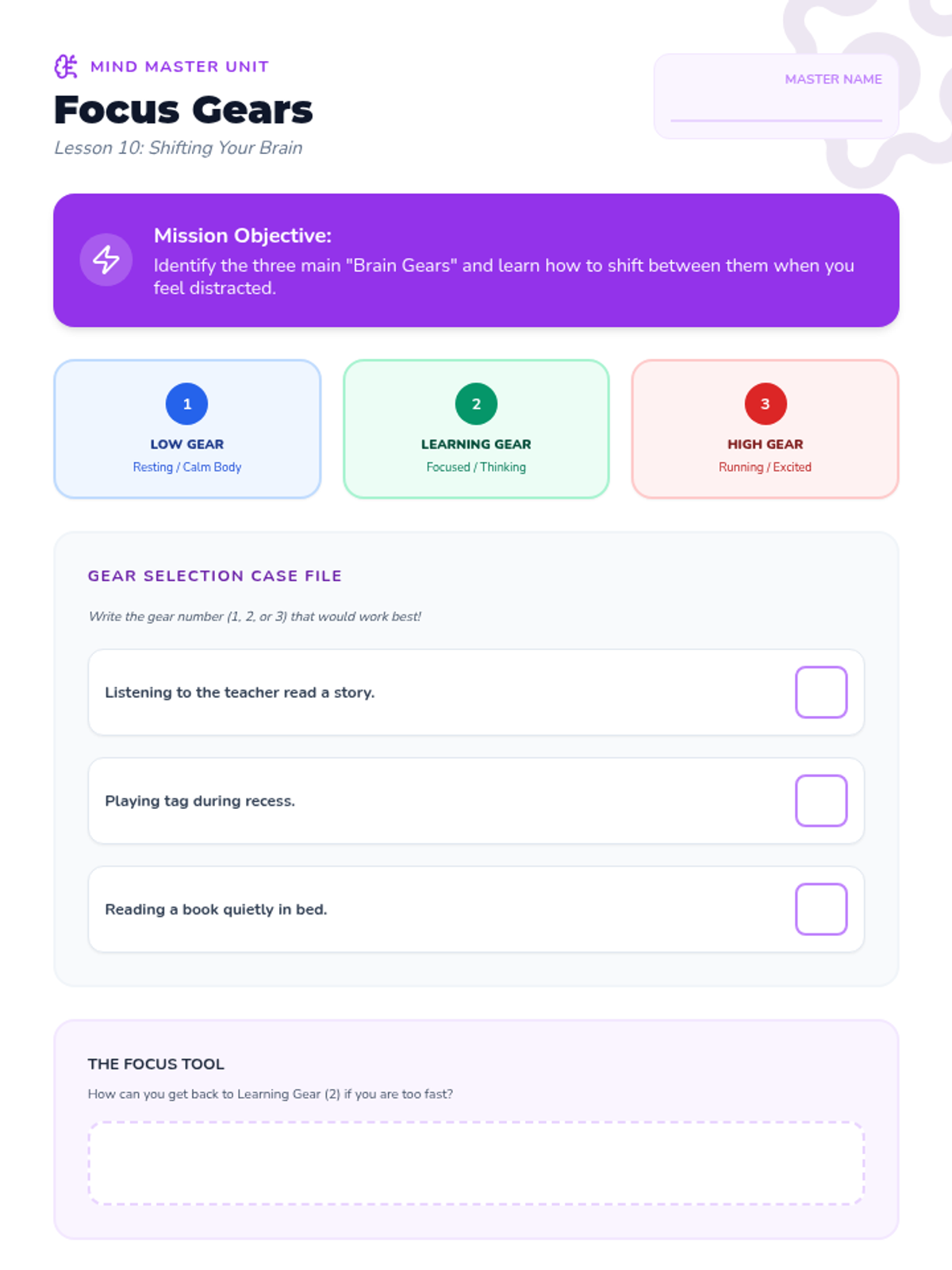
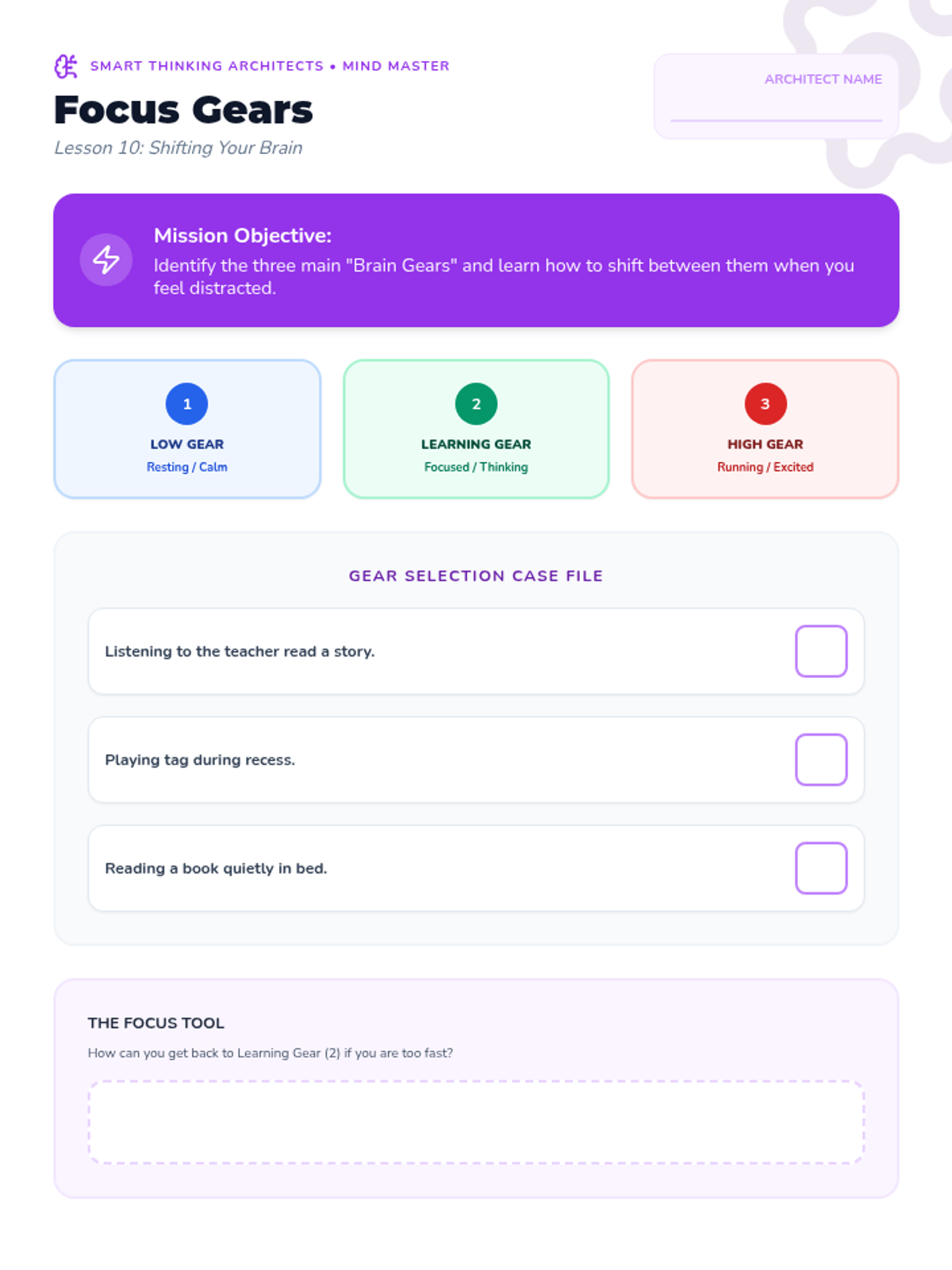
Mind masters learn to switch their "brain gears" to focus on the task at hand and ignore distractions.
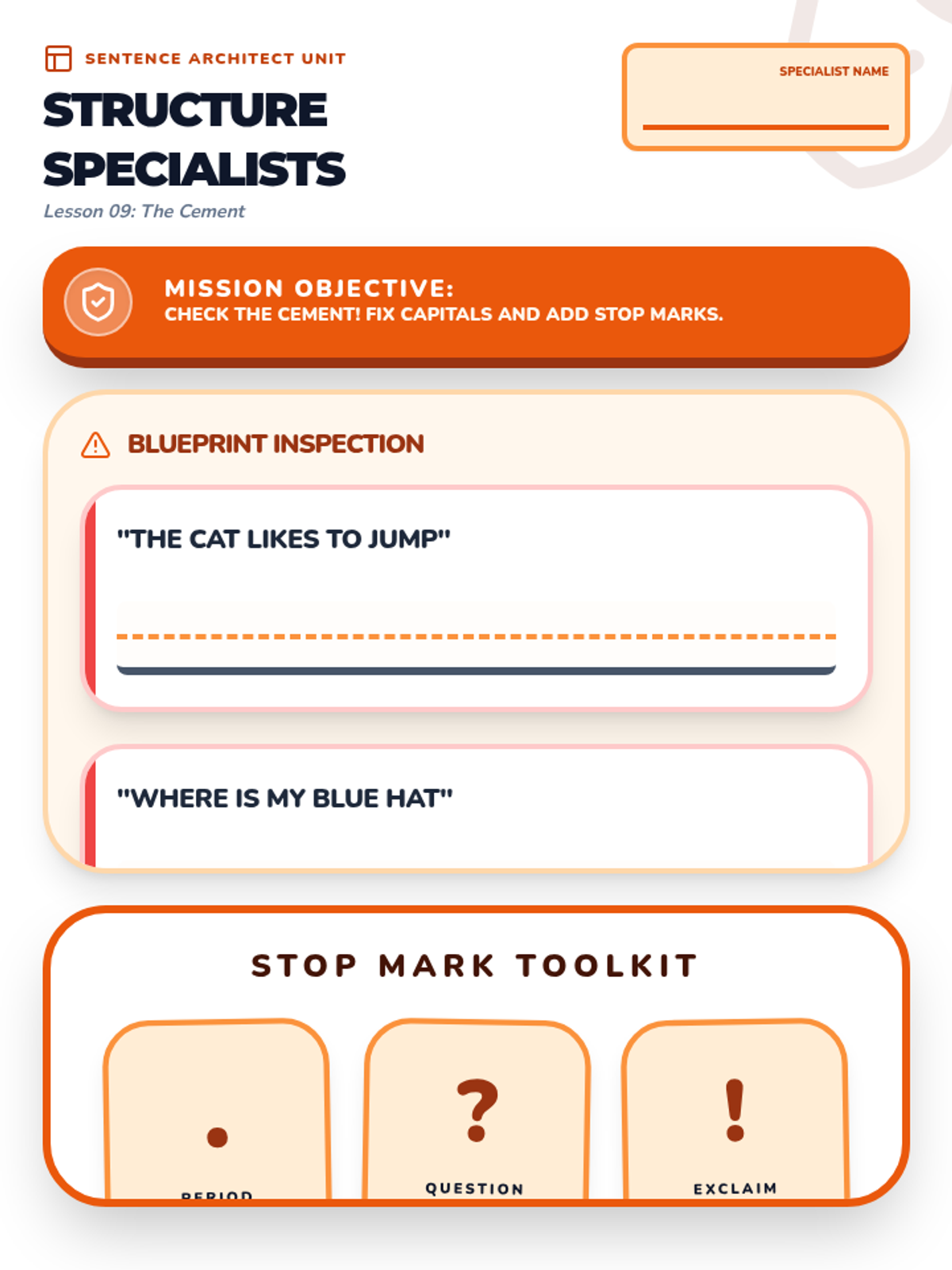
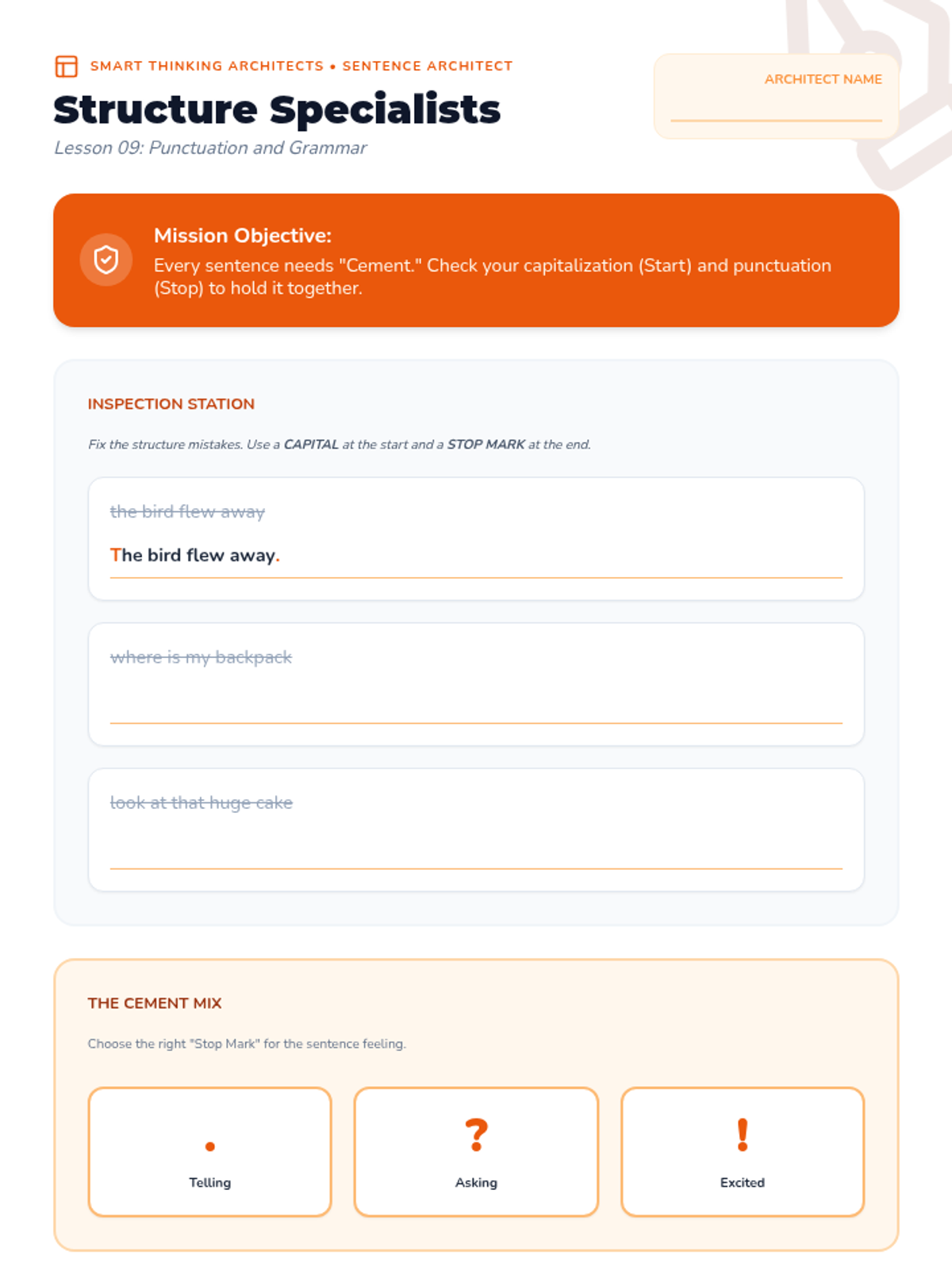
Specialists focus on the "cement" of writing: punctuation, capitalization, and grammar rules.
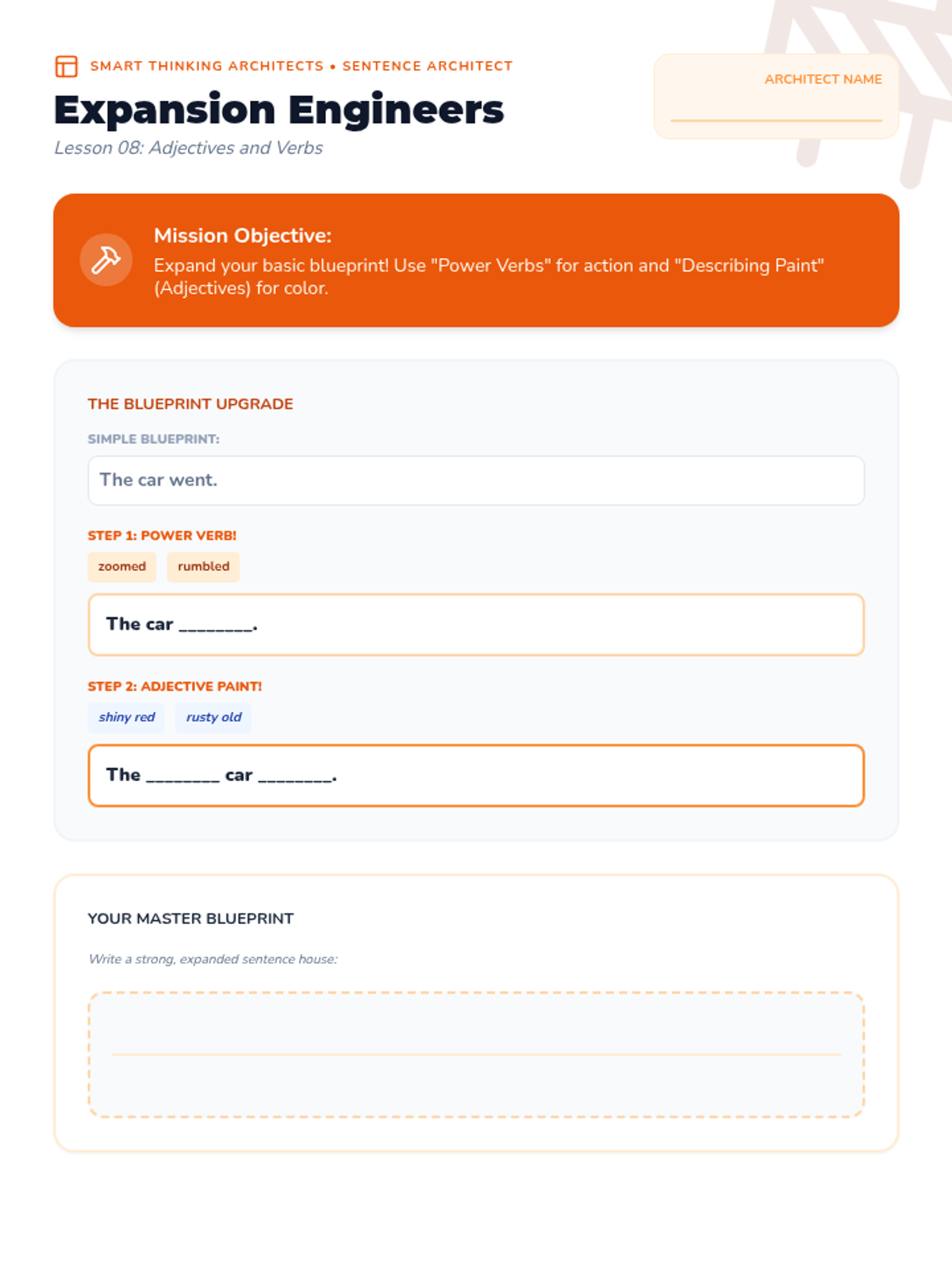
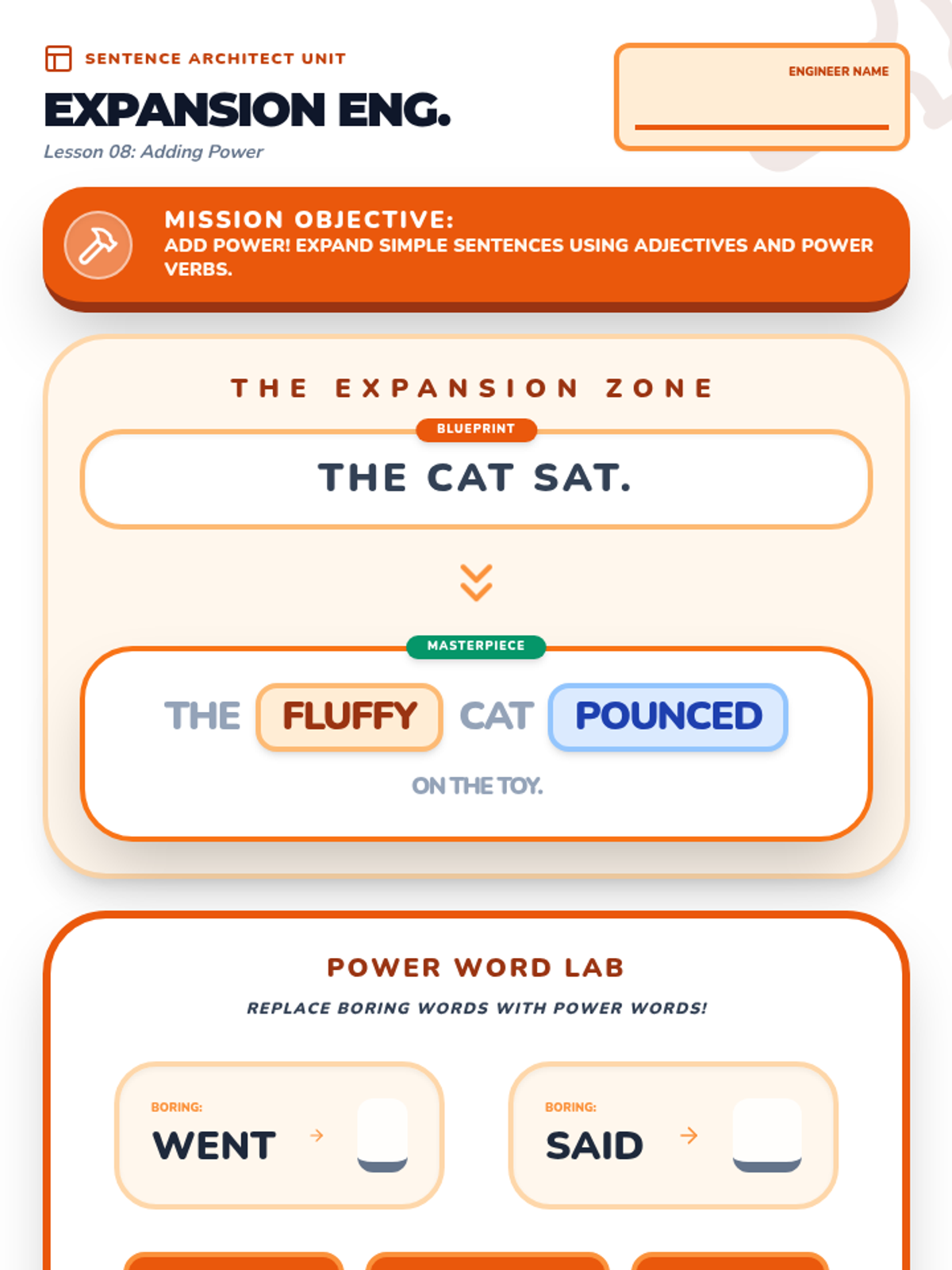
Engineers learn to expand their simple "blueprints" by adding descriptive adjectives and powerful verbs.
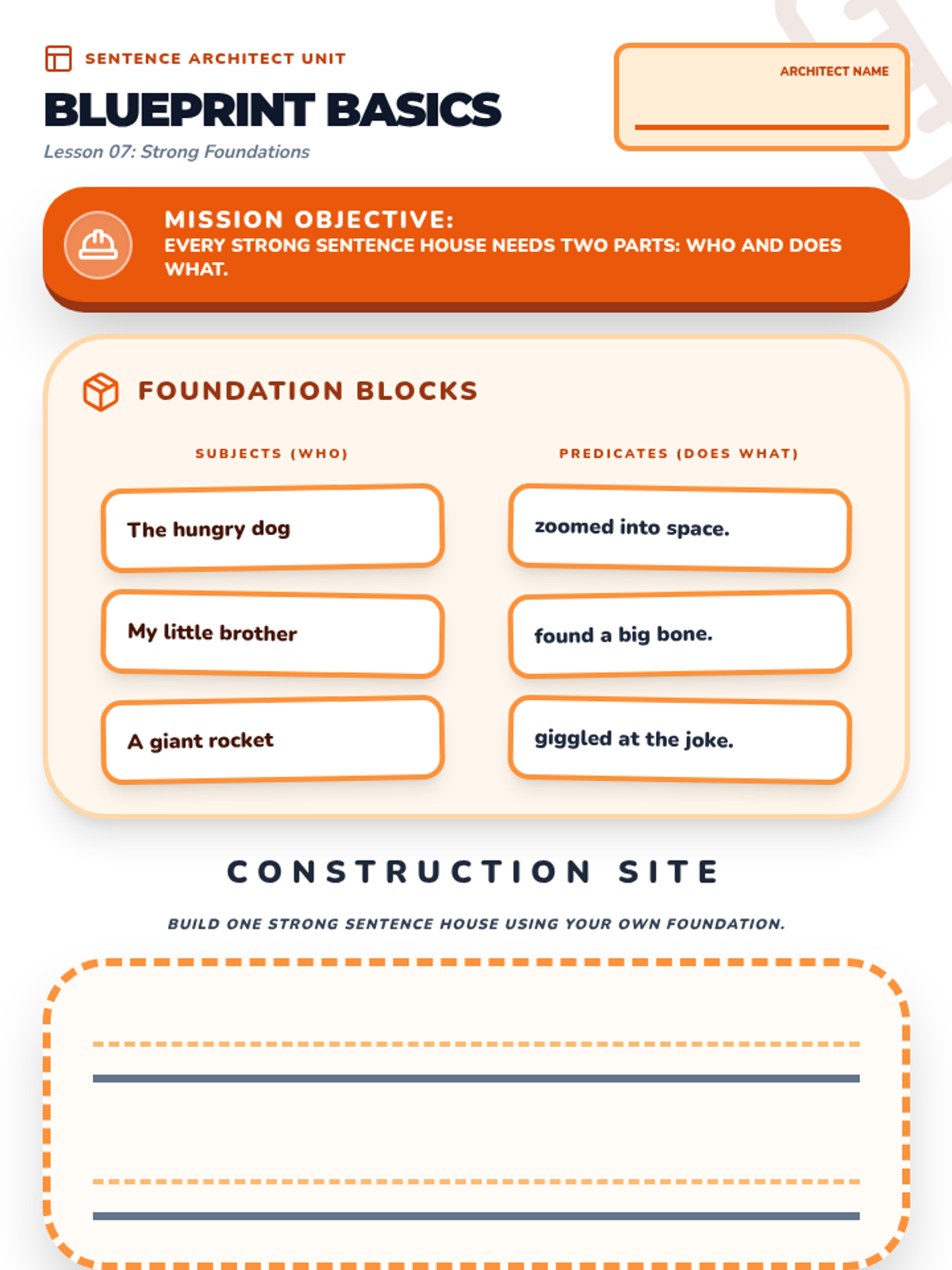
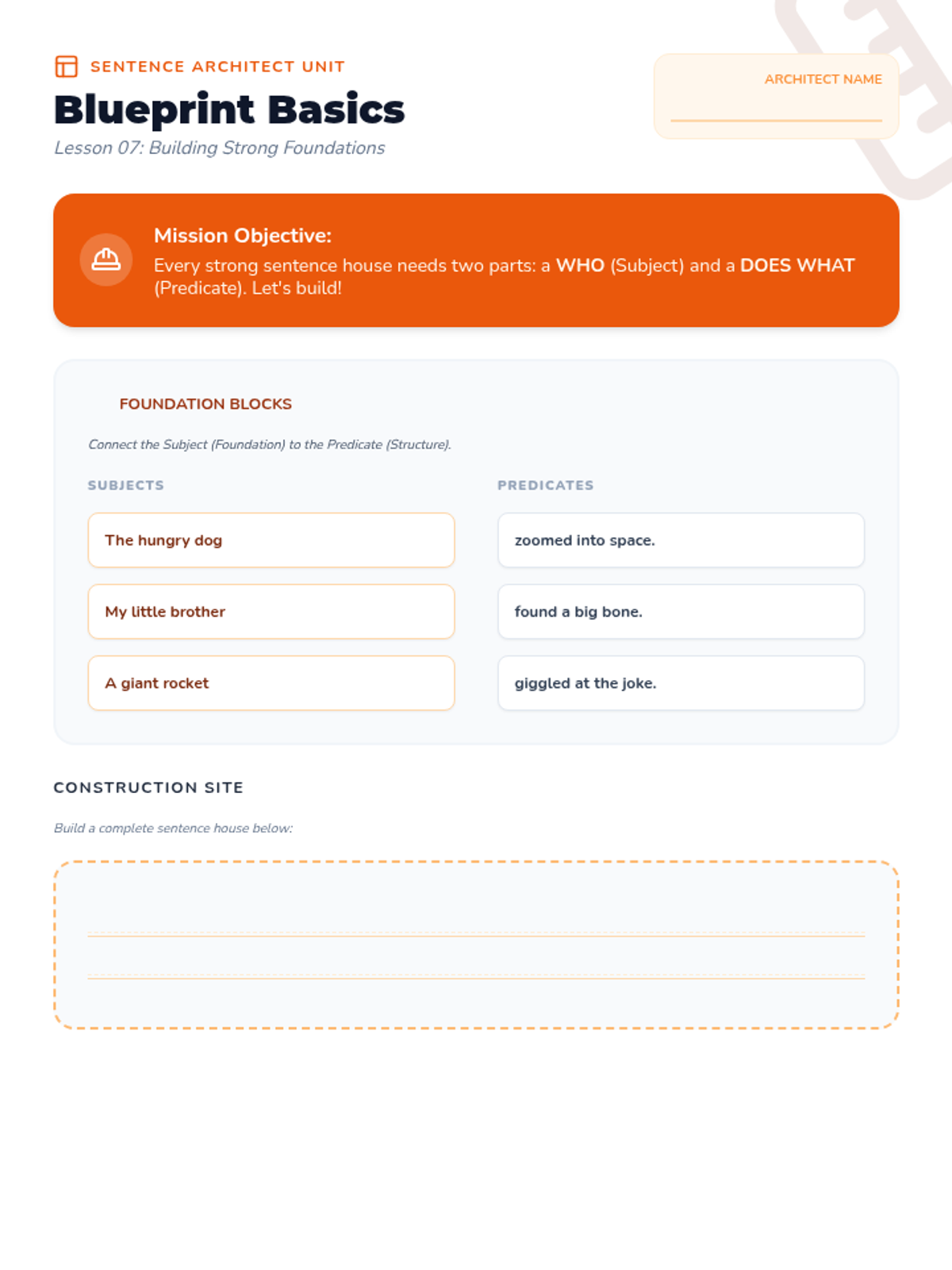
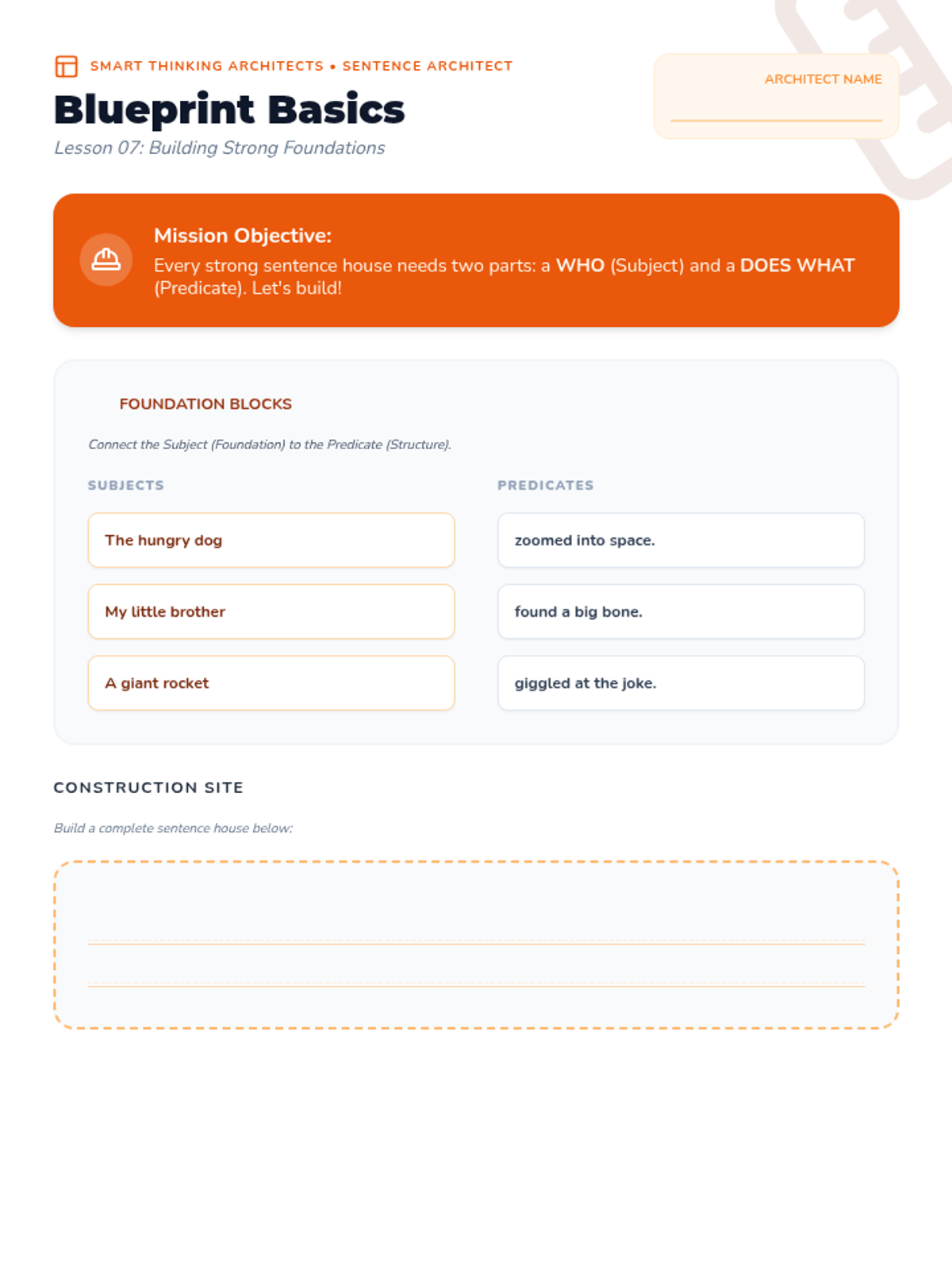
Sentence architects learn the foundations of a strong sentence, including subjects and predicates.
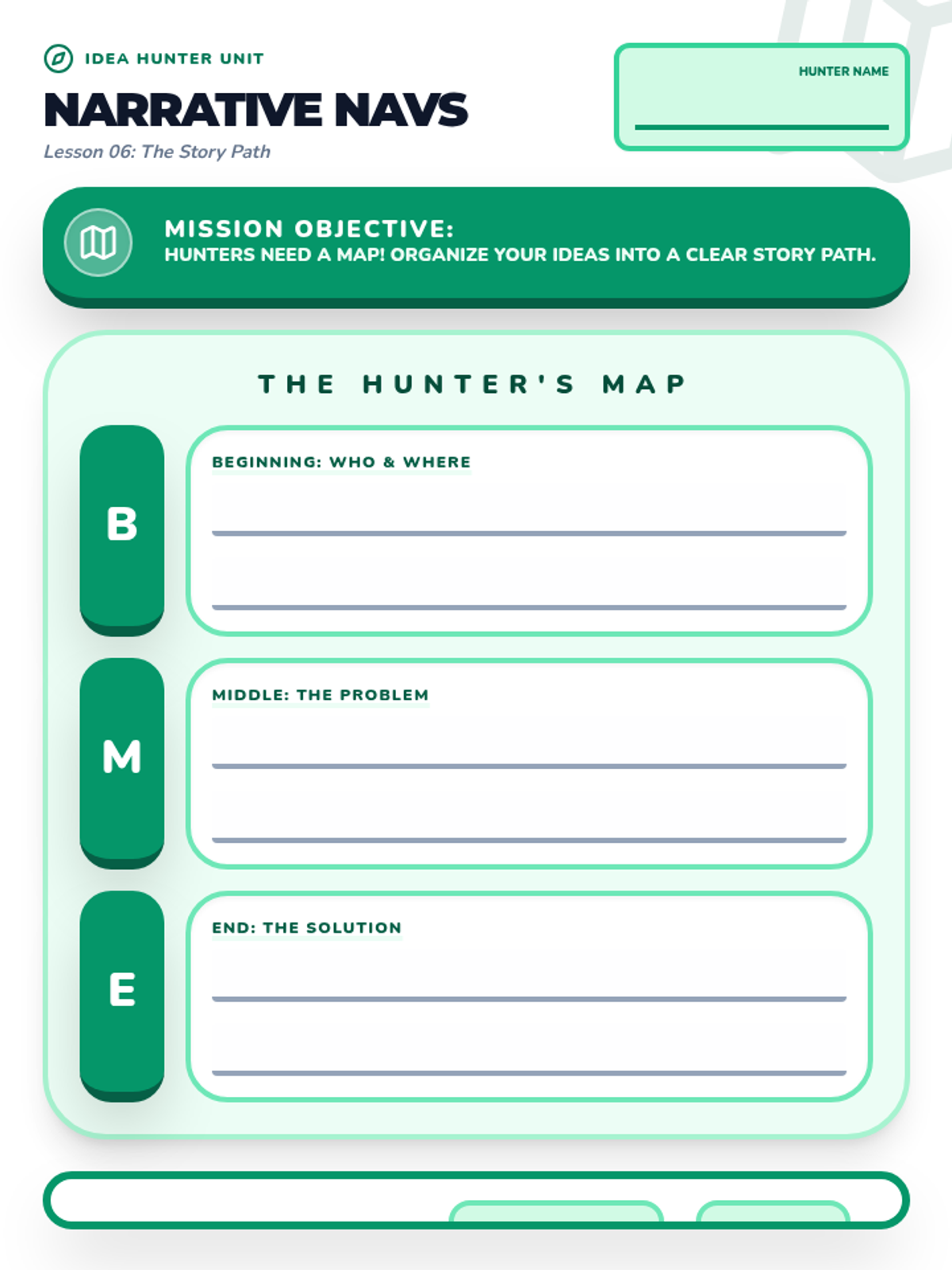
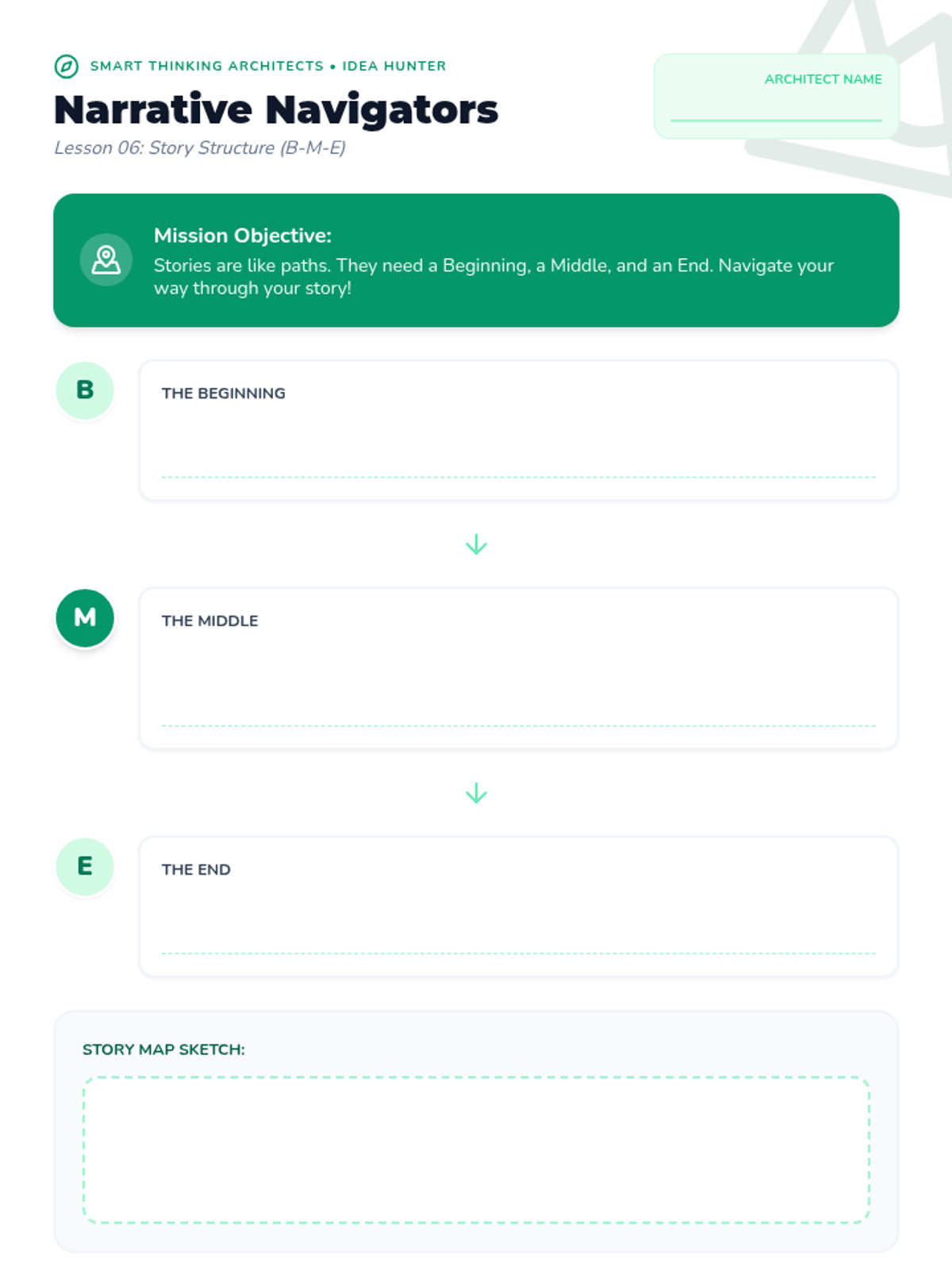
Explorers learn to organize their hunted ideas into a clear beginning, middle, and end.
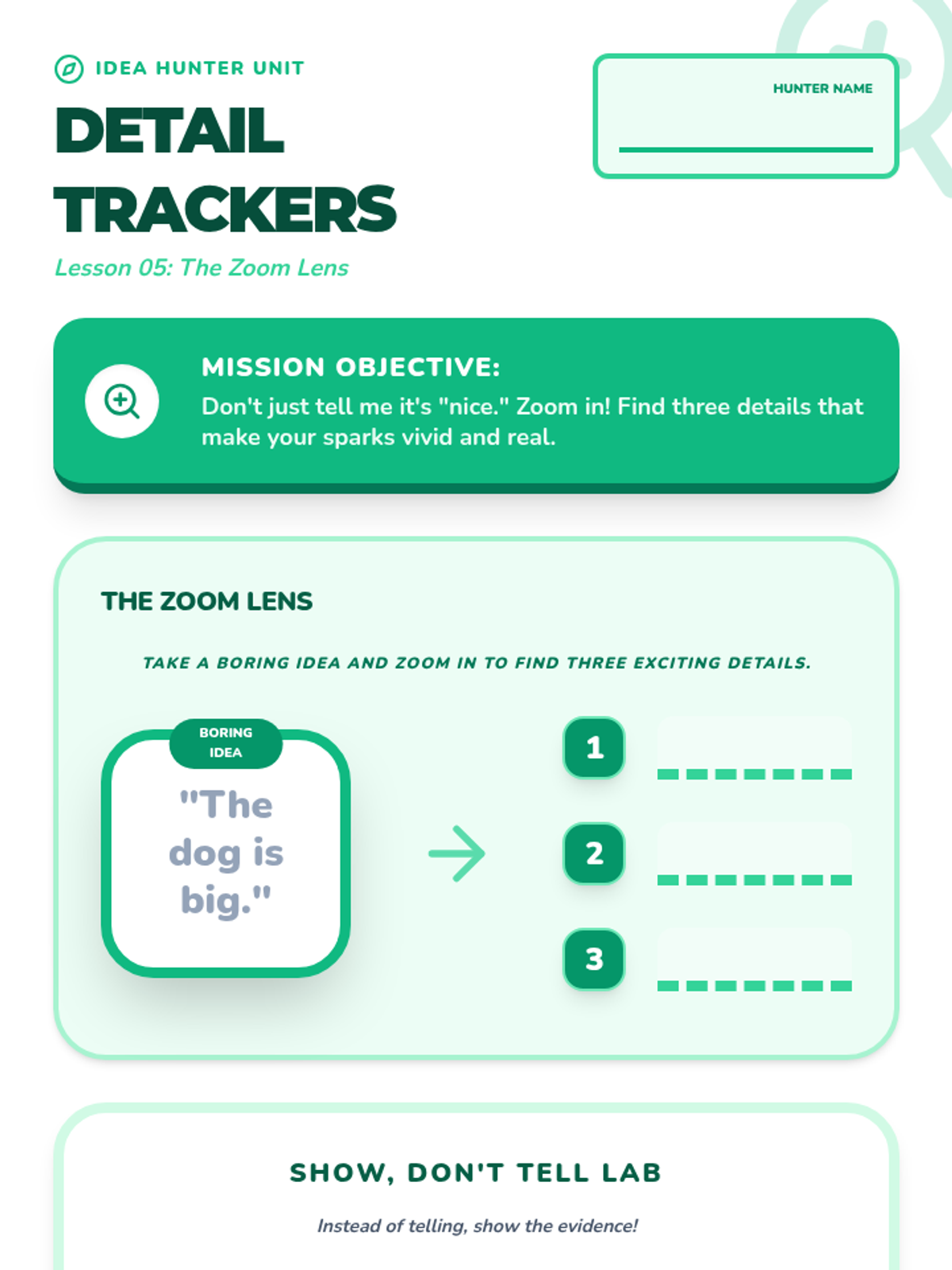
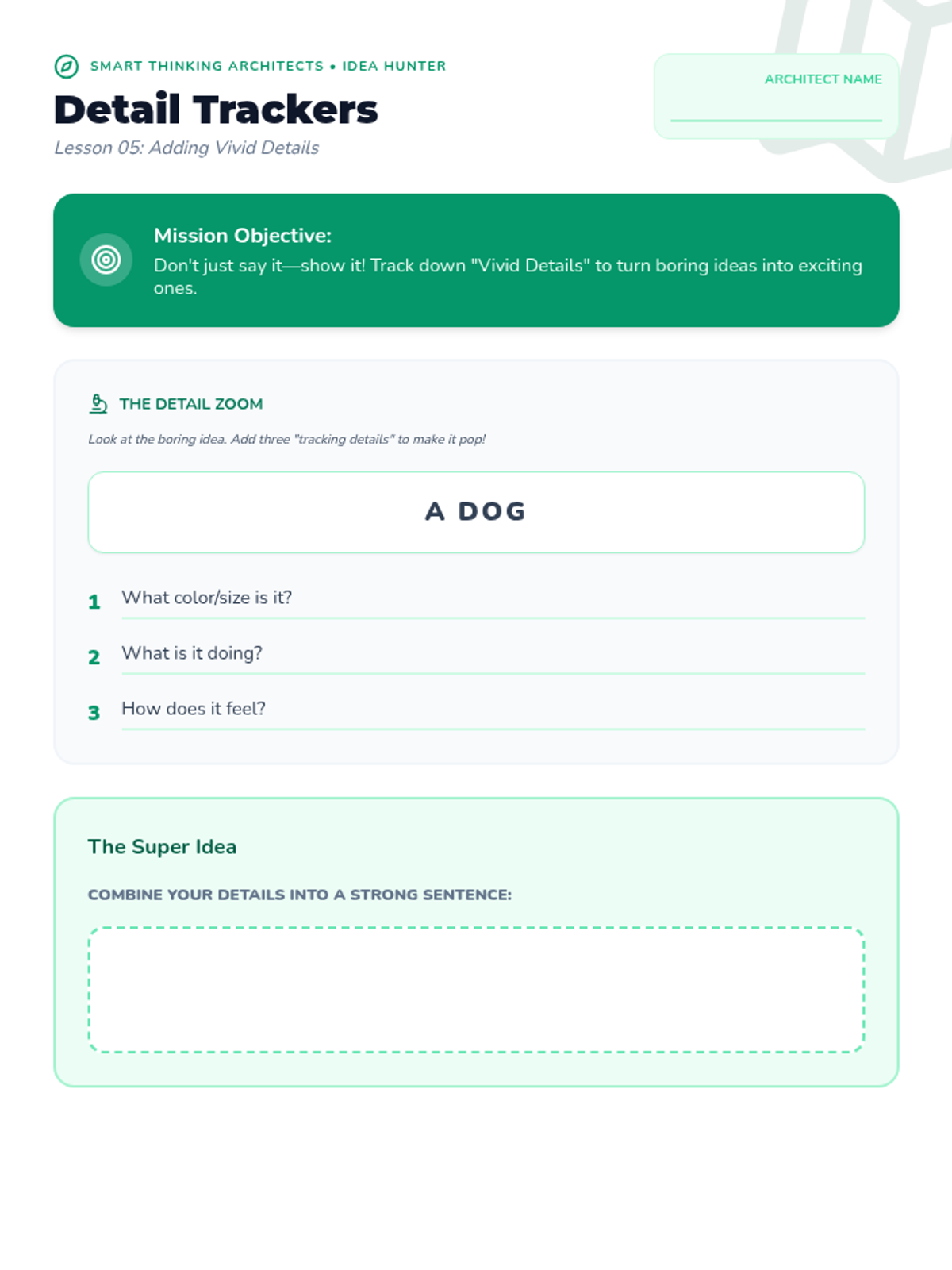
Hunters learn to track down specific details that make their ideas stronger and more vivid.
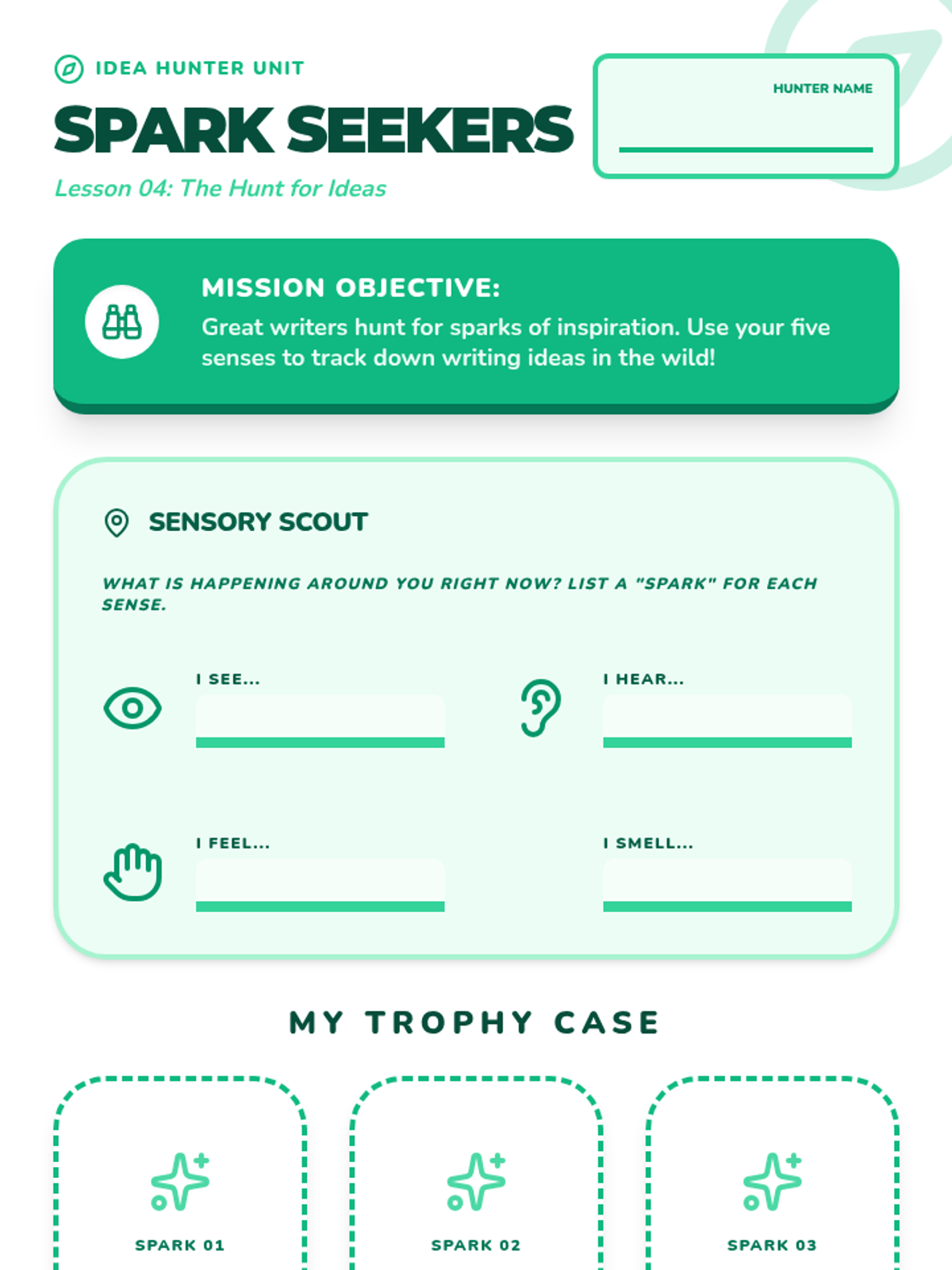
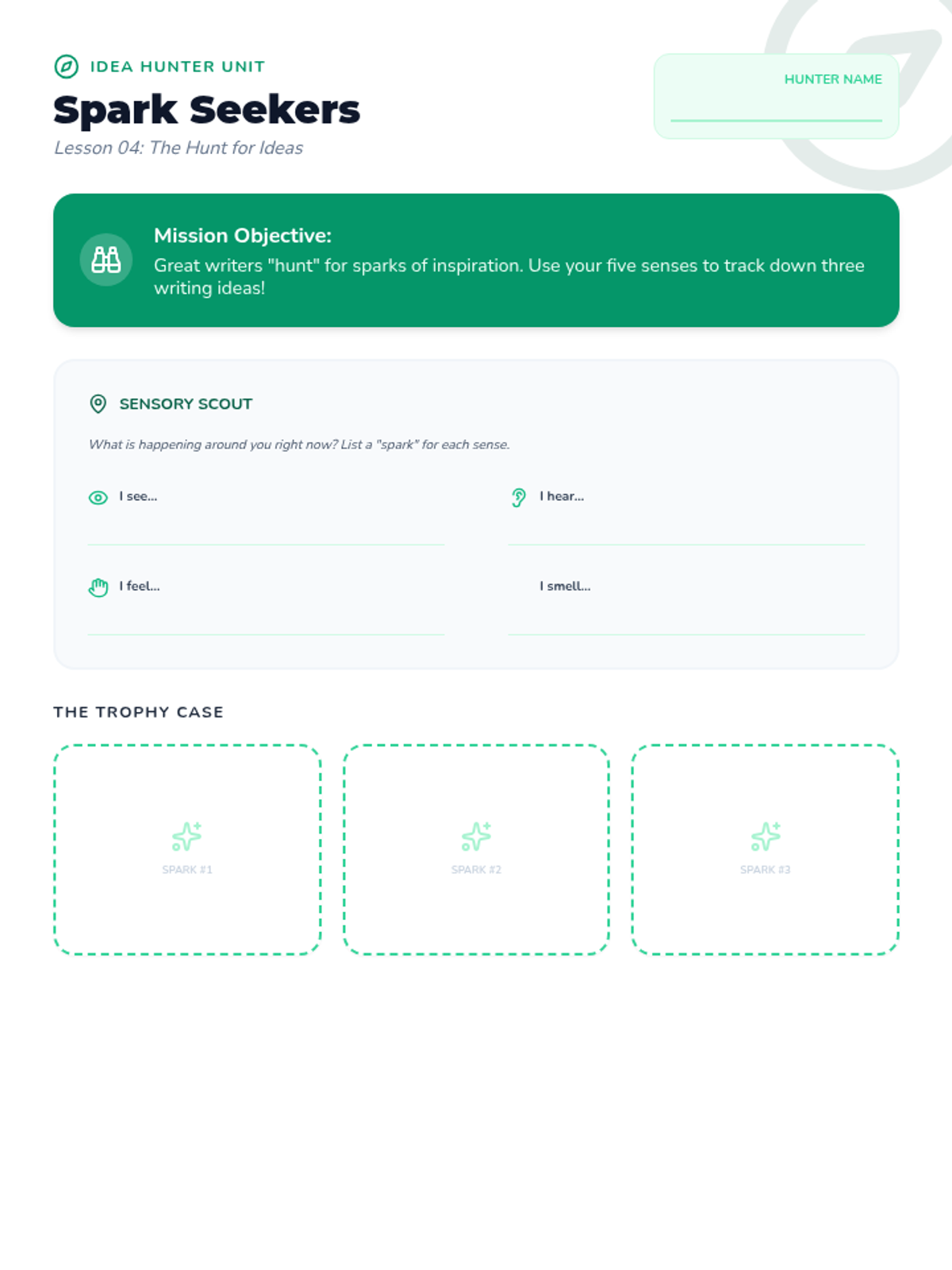
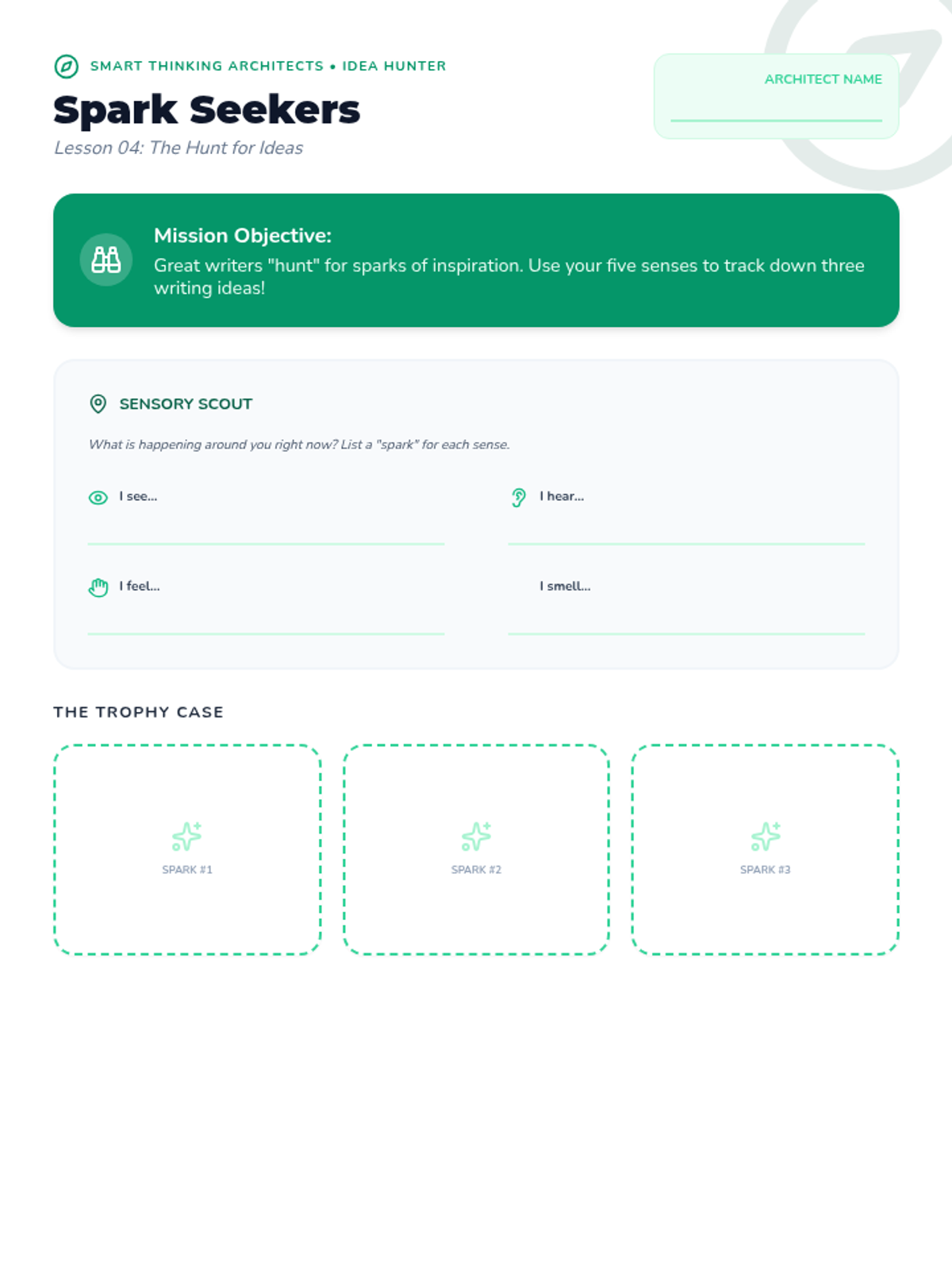
Idea hunters head into the wild to find "sparks" of inspiration for their writing using their senses.
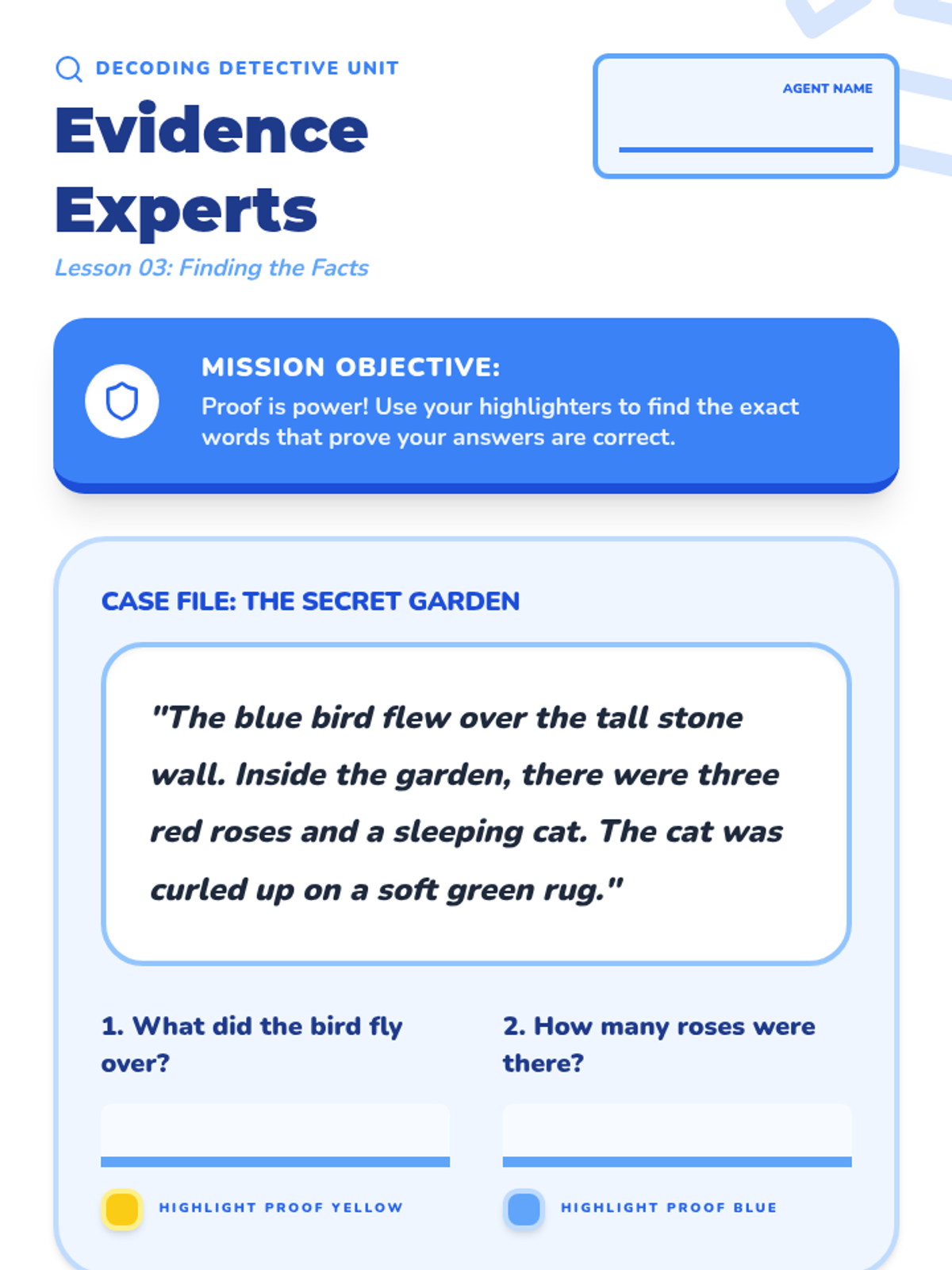
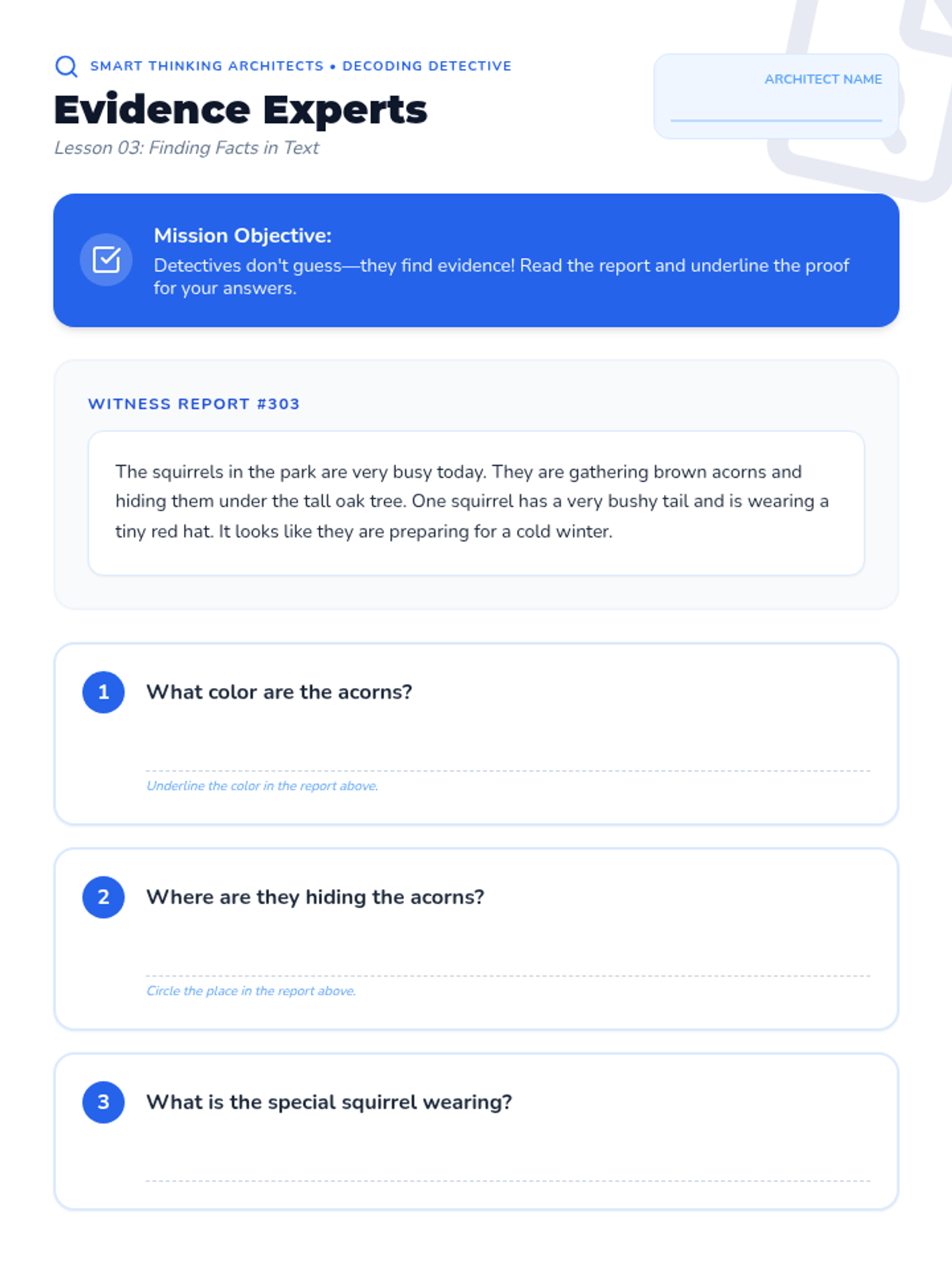
Detectives learn to pull specific information and evidence from texts to solve comprehension cases.
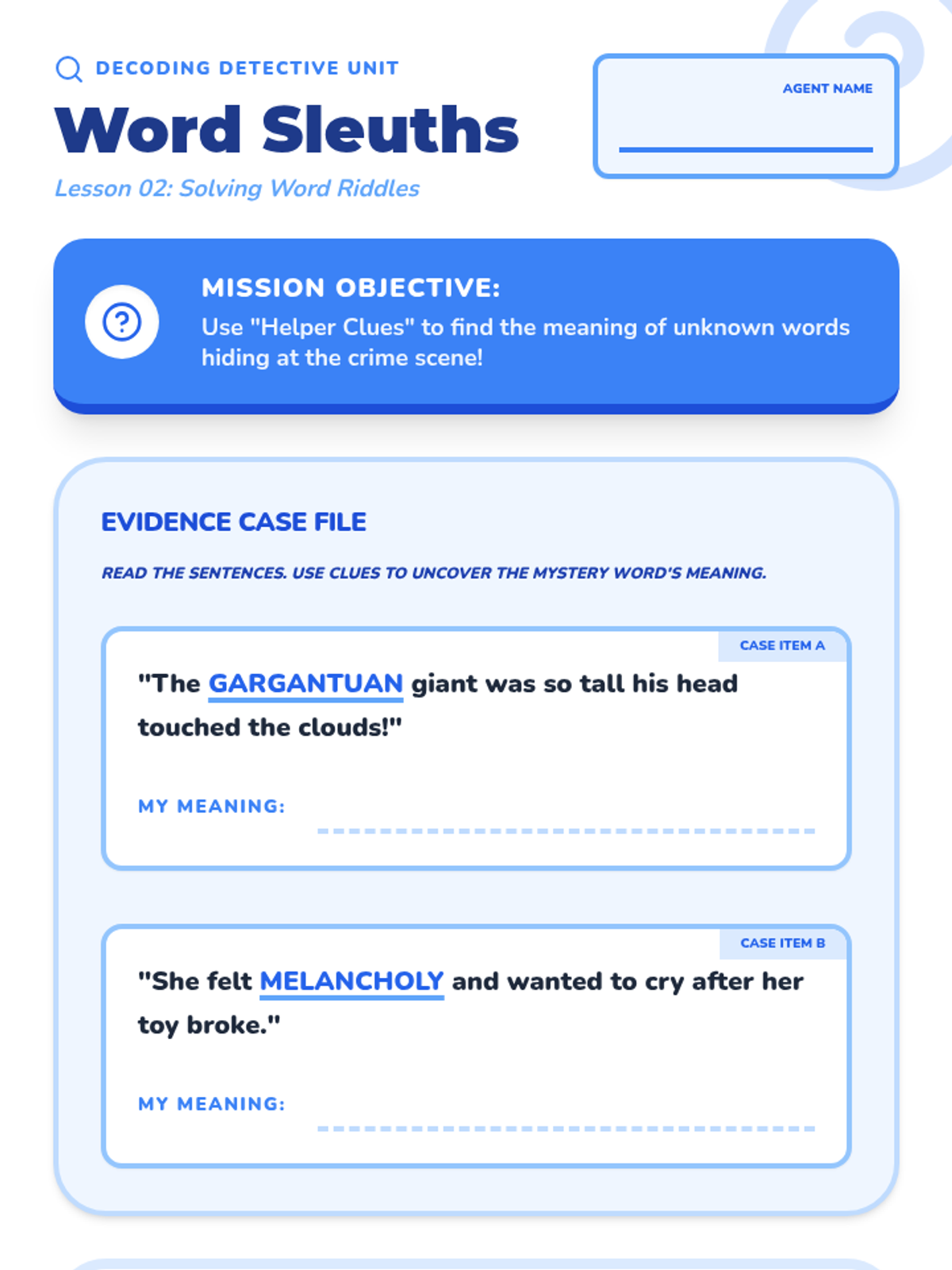
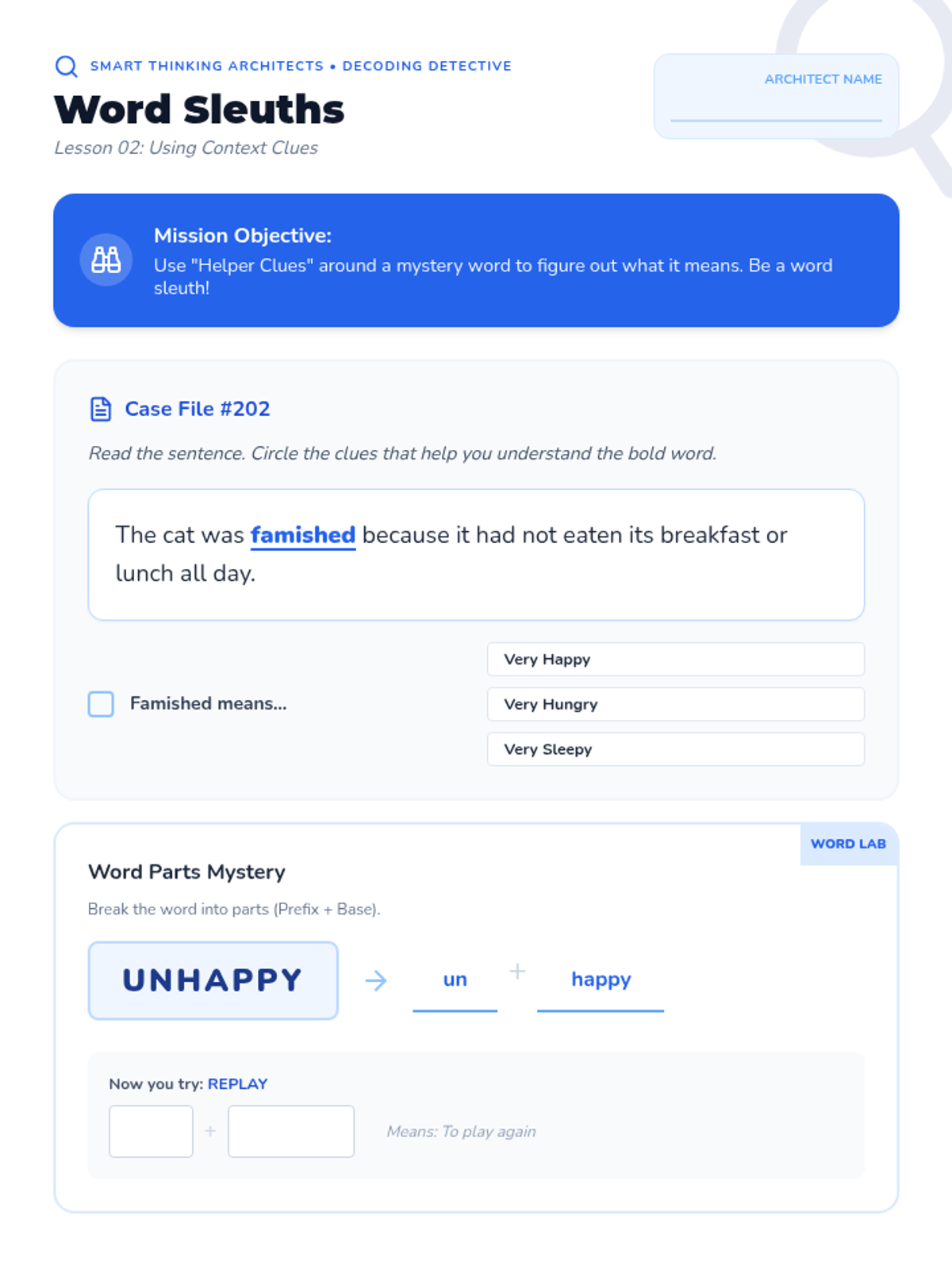
Young sleuths learn how to use context clues and word parts to uncover the meaning of tricky vocabulary.
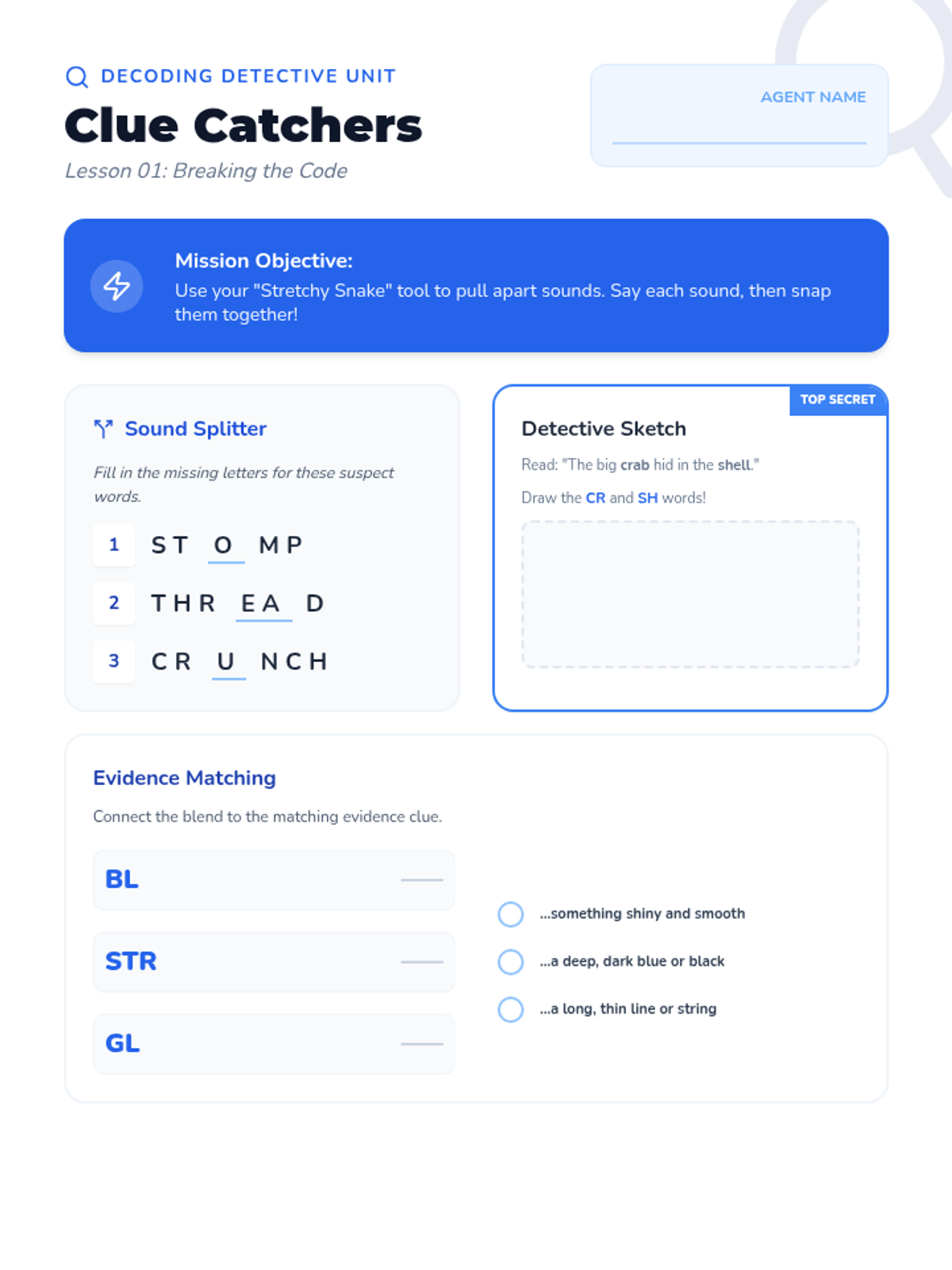
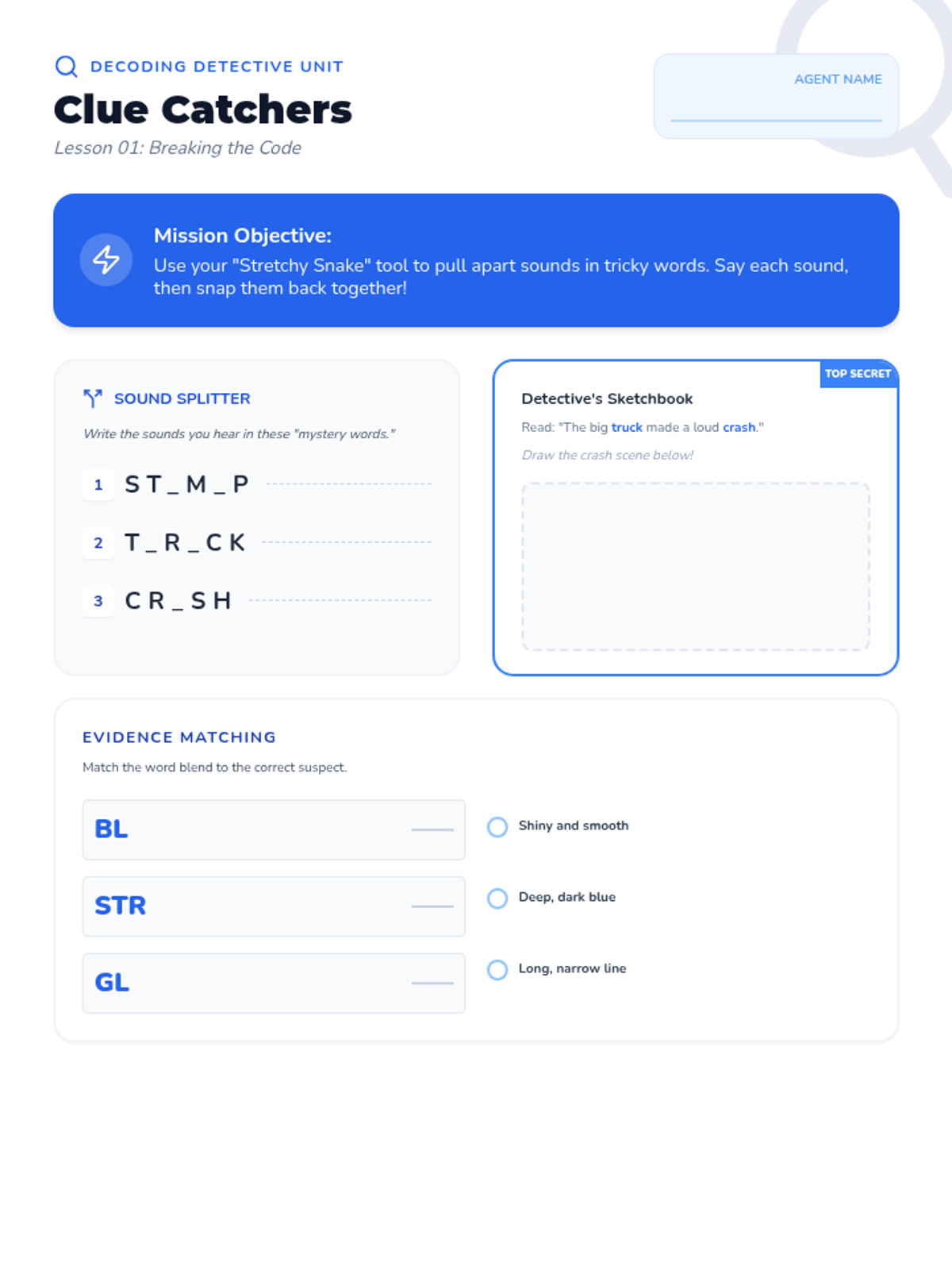
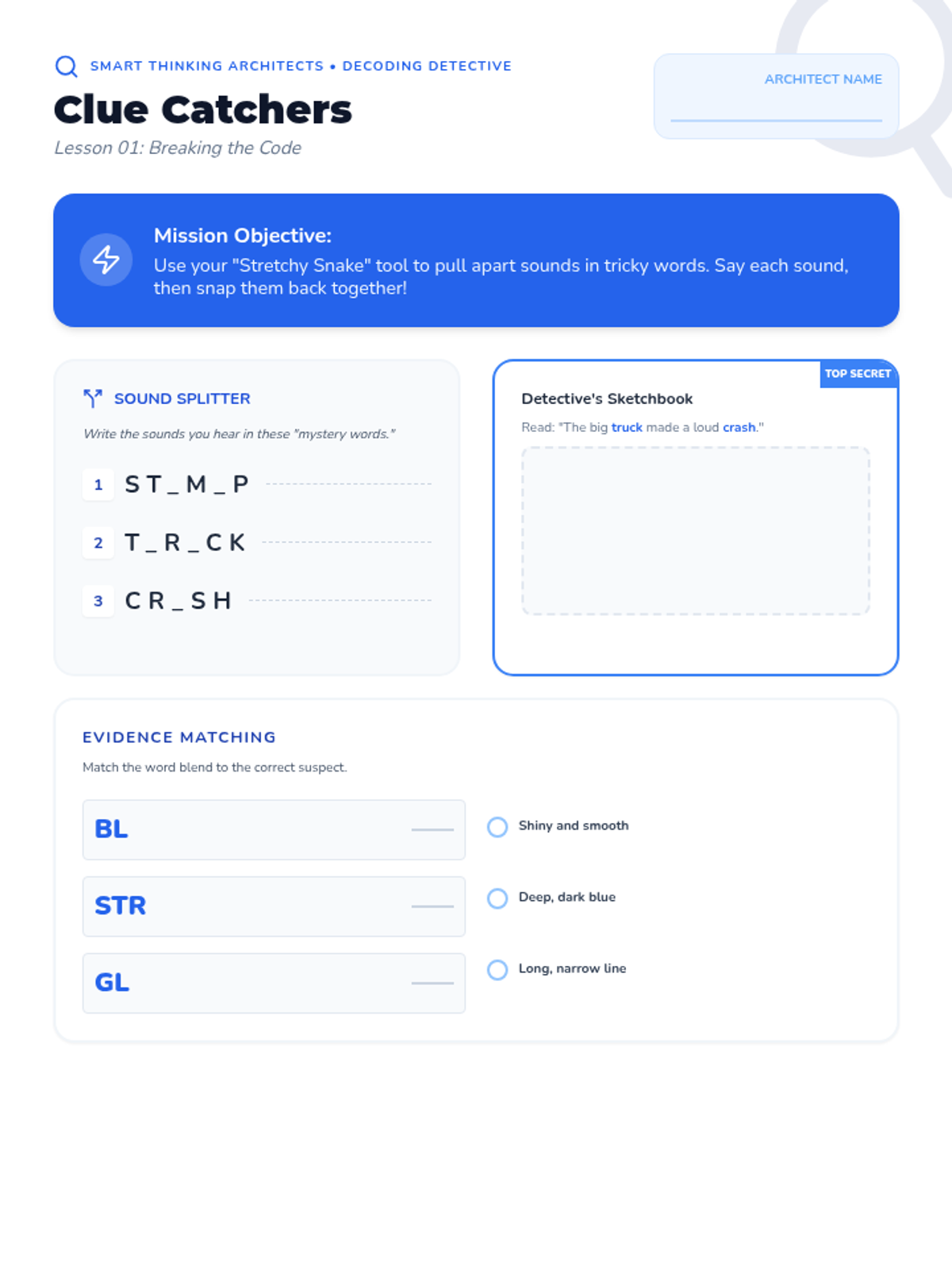
Students become Clue Catchers, using detective strategies to decode unfamiliar words and sounds in text.
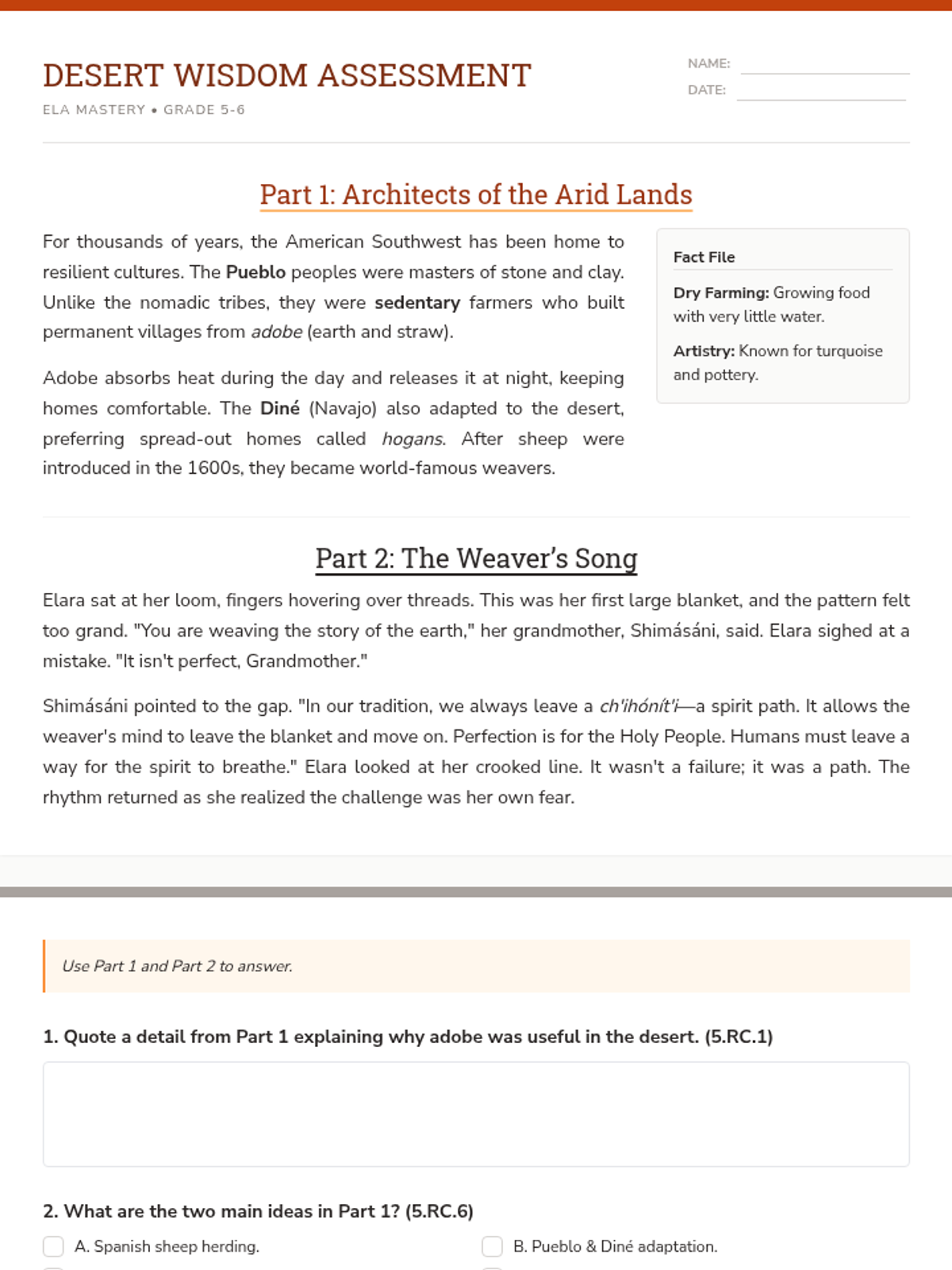
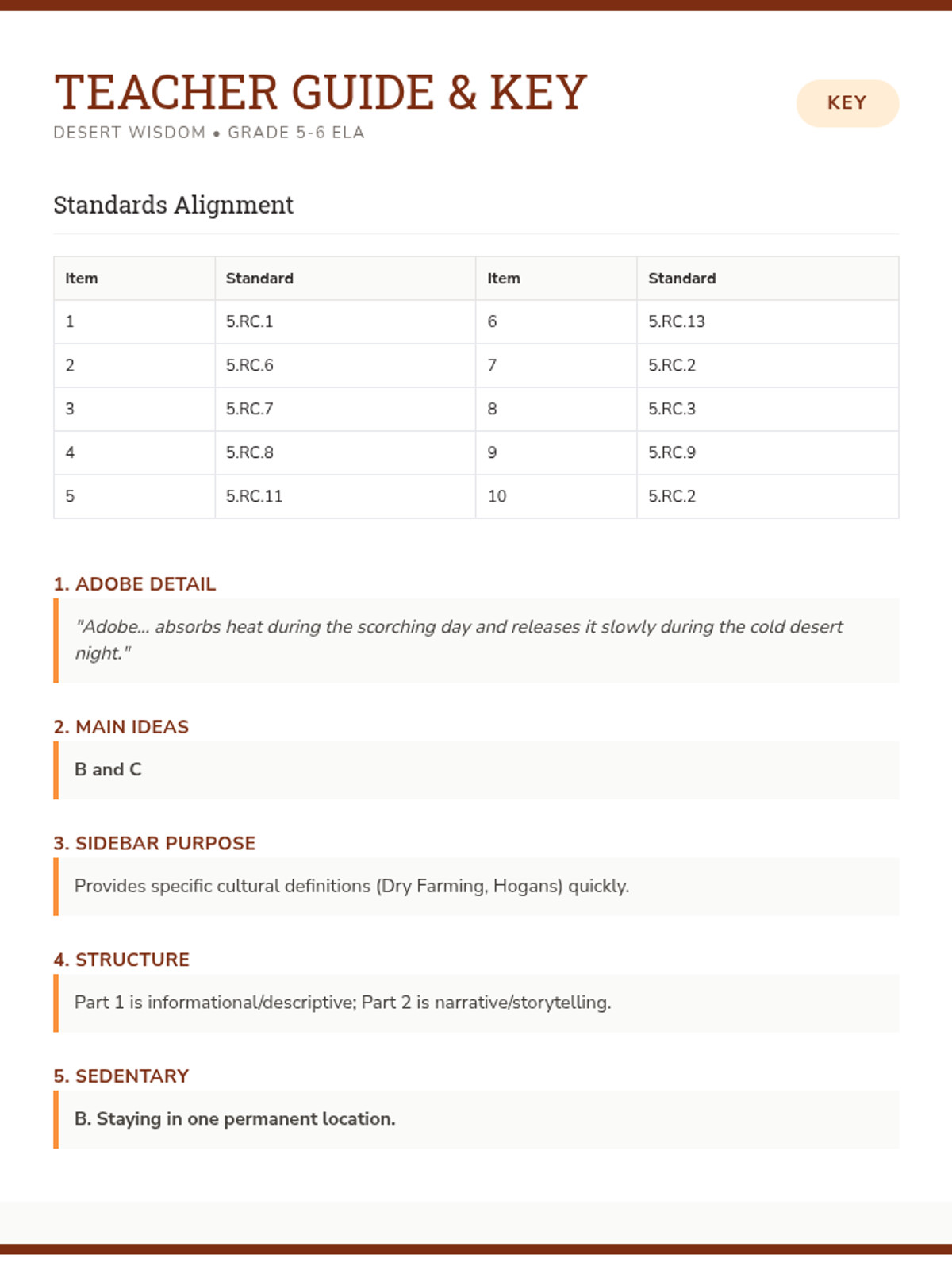
A comprehensive ELA assessment featuring informational and literary texts about Southwest Native American tribes, aligned to 5th-6th grade standards. Students will analyze text structure, theme, and main ideas while exploring the cultures of the Pueblo and Diné people.