A lesson exploring the liturgical season of Lent, focusing on the three pillars of prayer, fasting, and almsgiving as ways to grow closer to God.
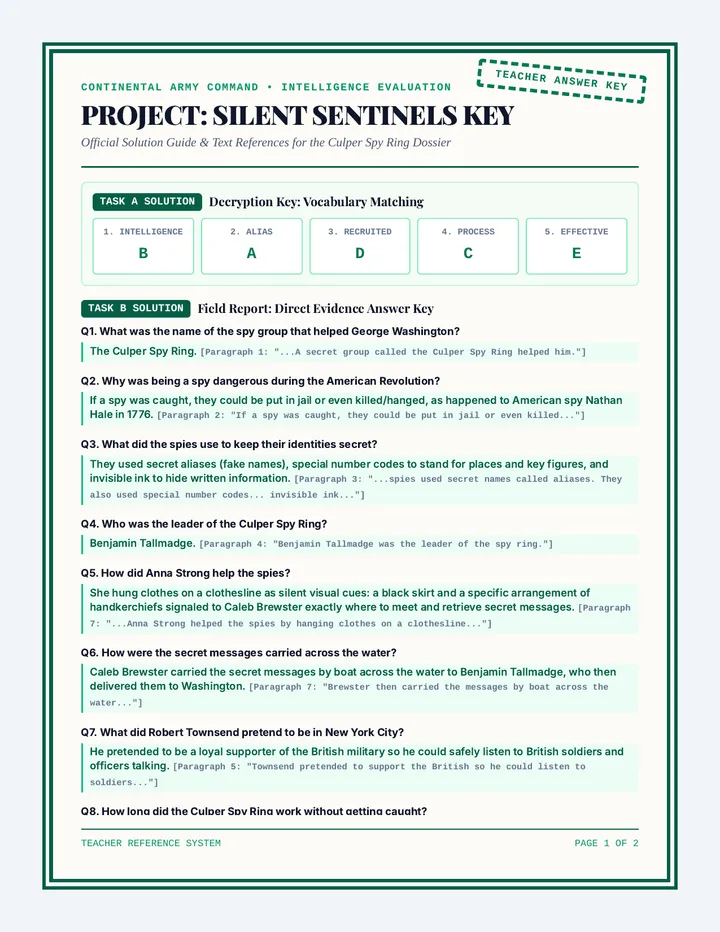
Explore the pivotal role of the Buffalo Soldier regiments during the Spanish-American War, focusing on their heroic actions at San Juan Hill and the key figures who led them.
A 45-minute social studies lesson for 3rd graders exploring the functions of local and tribal governments in Montana, focusing on roles, responsibilities, and community services.
A collection of 6 short historical skits covering key Idaho history figures, accompanied by a teacher guide and student reflection materials. Each skit is designed for a 3-5 minute performance focusing on daily life and historical challenges.
A highly accessible lesson on the five First Amendment freedoms, designed for middle school students in a self-contained setting using 1st-grade reading level text and clear visuals.
A high-energy look at Ancient Greece's impact on the modern world, comparing geography, government, and culture across millennia.
A fast-paced exploration of Ancient Greece's lasting impact on the modern world, focusing on geography, democracy, sports, and architecture.
An interactive lesson that introduces the first ten amendments of the Constitution through simplified language and a partner-based 'Right or Not' game to help students understand how the government protects their freedoms and safety.
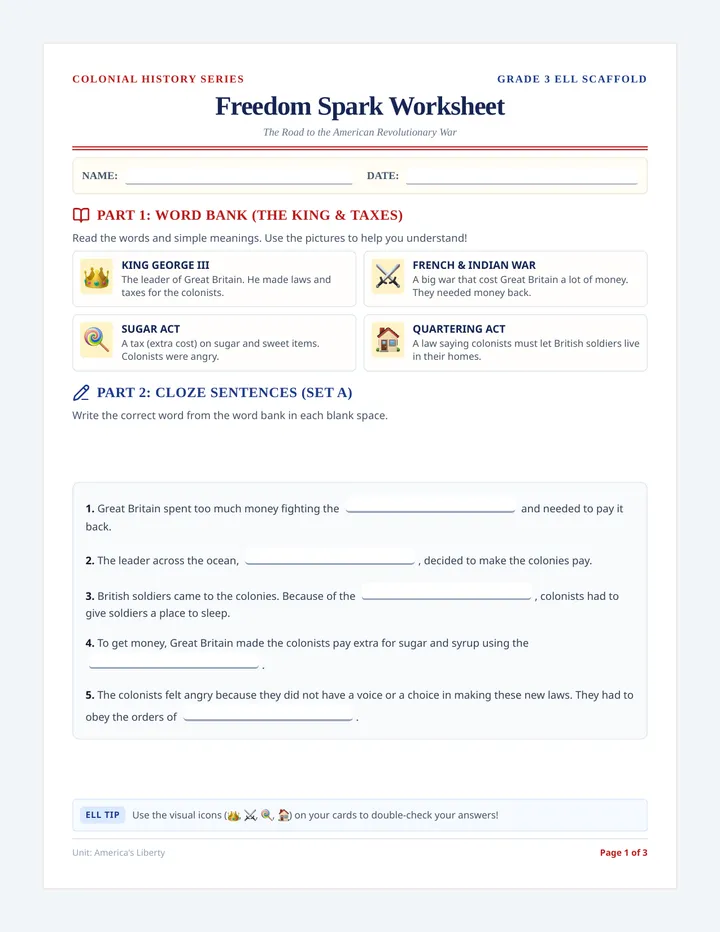
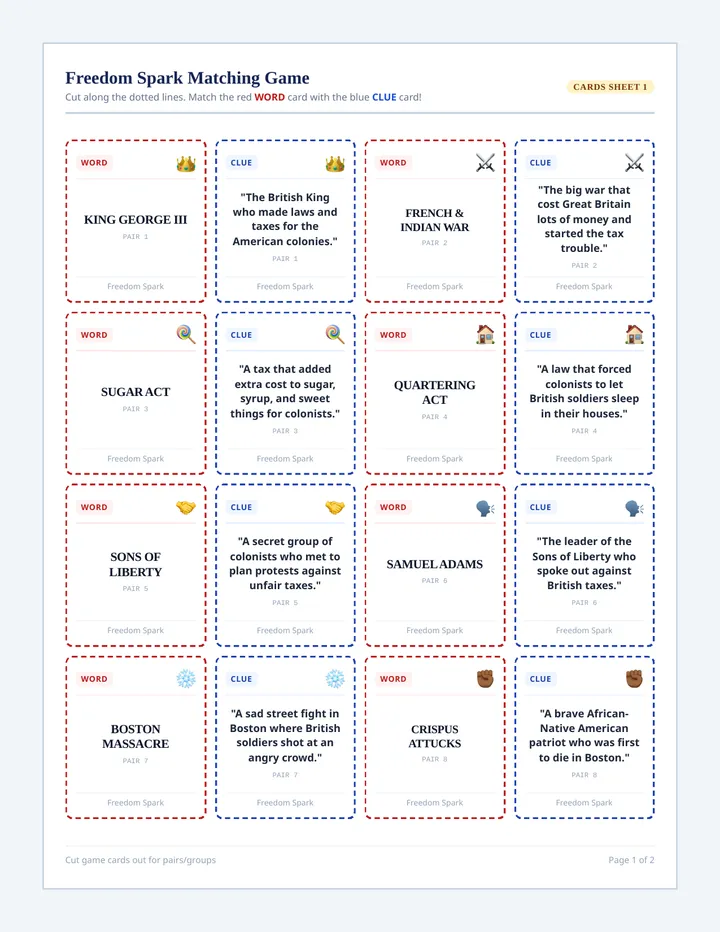
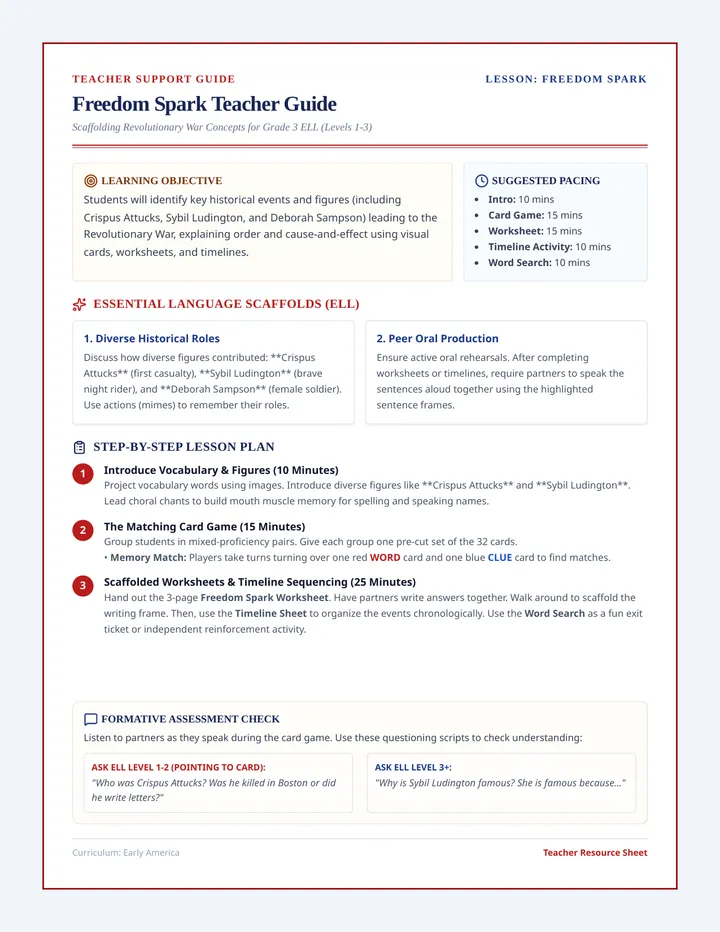
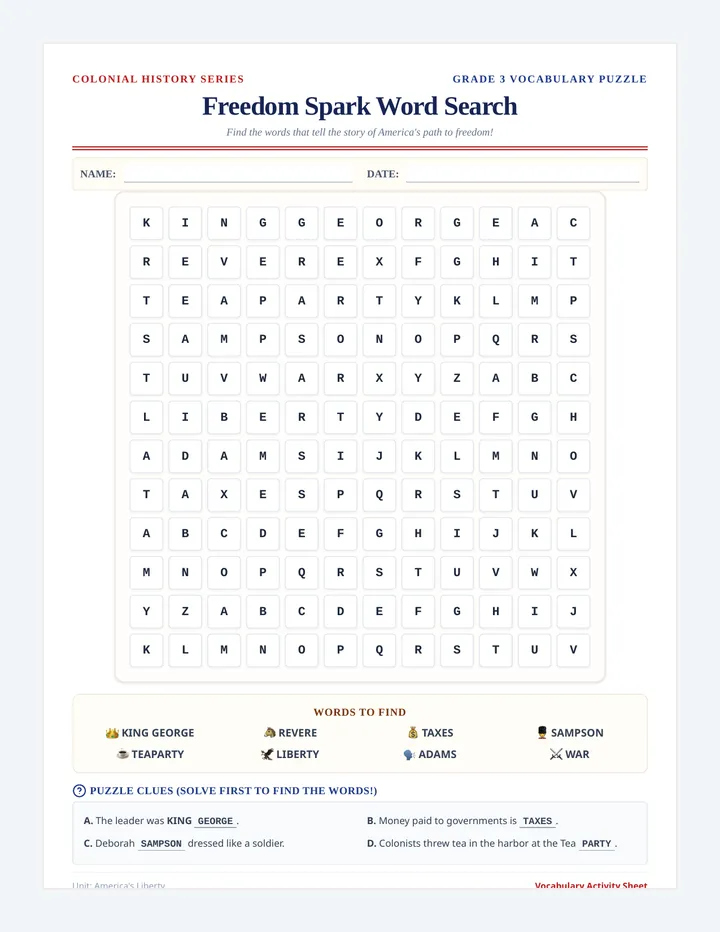
A comprehensive spelling and vocabulary unit for 4th graders focused on historical terms related to the American Revolution and civic foundations. Students will explore definitions, synonyms, antonyms, and usage through various interactive and written exercises.
A comprehensive spelling and vocabulary unit centered on the American Revolution, featuring 9 key terms. Students will explore definitions, usage, and word relationships through a variety of engaging activities.
Understand landforms defined by their relationship to water, specifically islands and peninsulas.
Investigate how water carves deep paths into the Earth, creating valleys and canyons.
Explore flat landforms at different elevations, focusing on plains and plateaus.
Introduce the concept of landforms and focus on the characteristics of mountains and hills.
Students will dive into the stories of different Winter Olympic host cities, identifying key details and geographical features through a reading-based scavenger hunt.
Students use evidence from both texts to compare and contrast the impact of historical and everyday heroes, meeting RI.9 standards.
Students read about a modern-day local hero, identifying main ideas and using diagrams and labels to understand how everyday people make a difference.
Students explore the life of Rosa Parks, focusing on identifying key details and navigating complex text features like maps and timelines.
A lesson exploring the symbols, landmarks, and holidays that represent American pride and the diverse people who make up the nation.
A high-energy introductory lesson designed to spark curiosity about Jackie Robinson's life and legacy through a mystery-style unveiling and movement-based exploration.
A simulation-based lesson where students step into the roles of Constitutional Convention delegates to debate and resolve the crisis of state representation.
A set of vocabulary posters focused on key terms from the Constitutional Convention, including government structures, legislative roles, and foundational principles like compromise and federalism.
A comprehensive look at the D-Day landings, focusing on the intricate planning, the role of weather and geography, and the daring execution of Operation Overlord.
A comprehensive lesson plan for simulating the Constitutional Convention's debate over representation. It includes a teacher-facing facilitation script tailored for small class sizes and a student-facing strategy sheet to guide delegates through the complex negotiations between large and small states, ensuring a historically accurate deadlock and eventual Great Compromise.
A lesson exploring the events of Pearl Harbor, its causes, and how it changed America's role in World War II, designed for 3rd-grade learners.
This lesson guides students through an analysis of Día de Muertos, focusing on the cultural significance, historical roots, and identity-affirming power of the tradition. Students will practice synthesizing information from multiple paragraphs to construct a meaningful written response about resilience and memory.
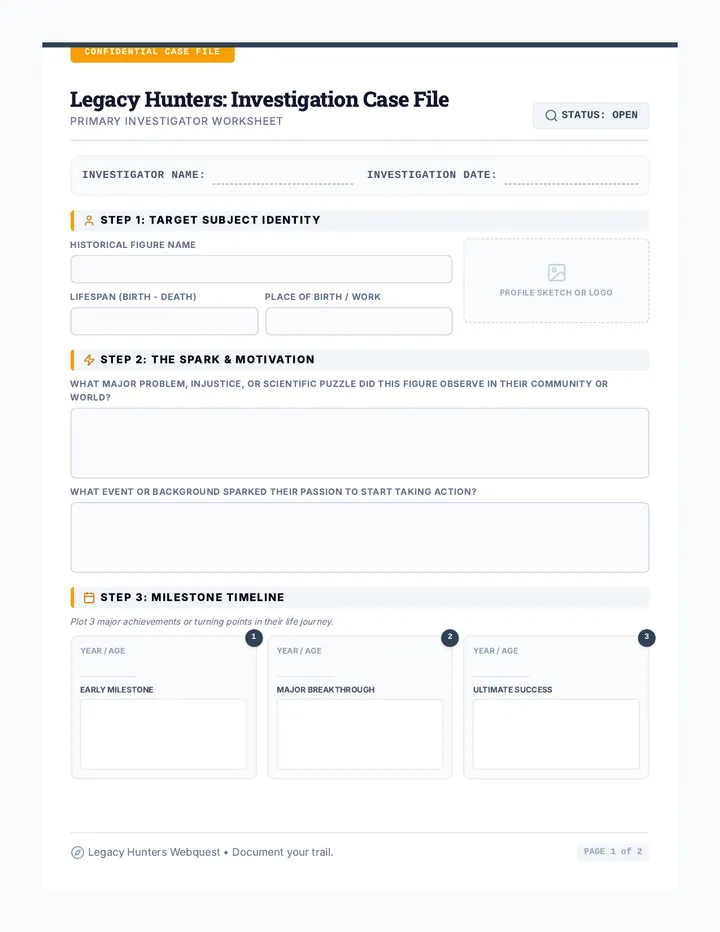
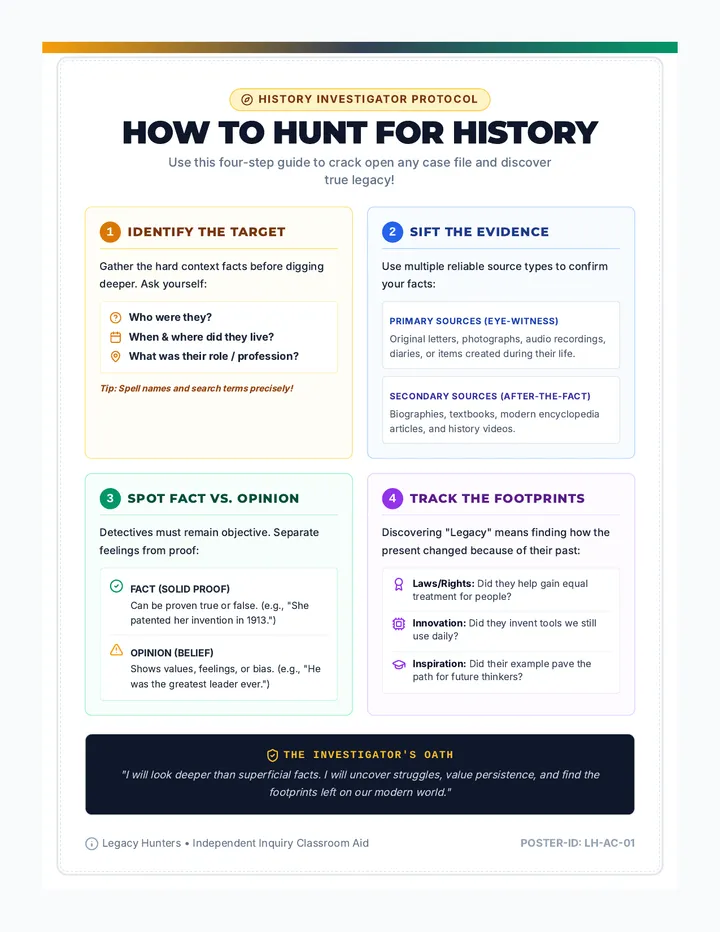
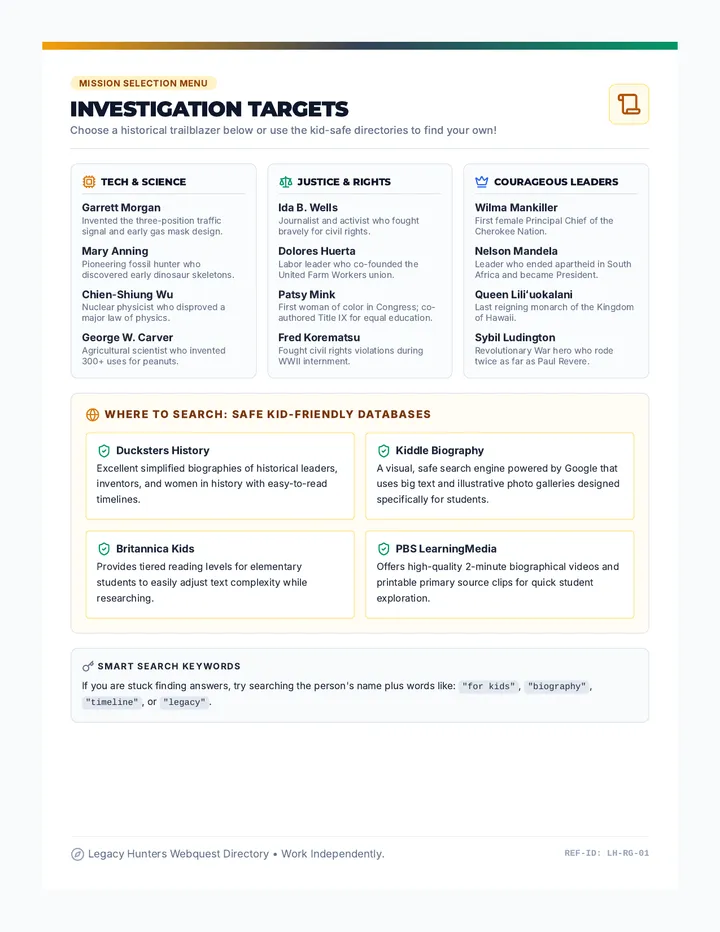
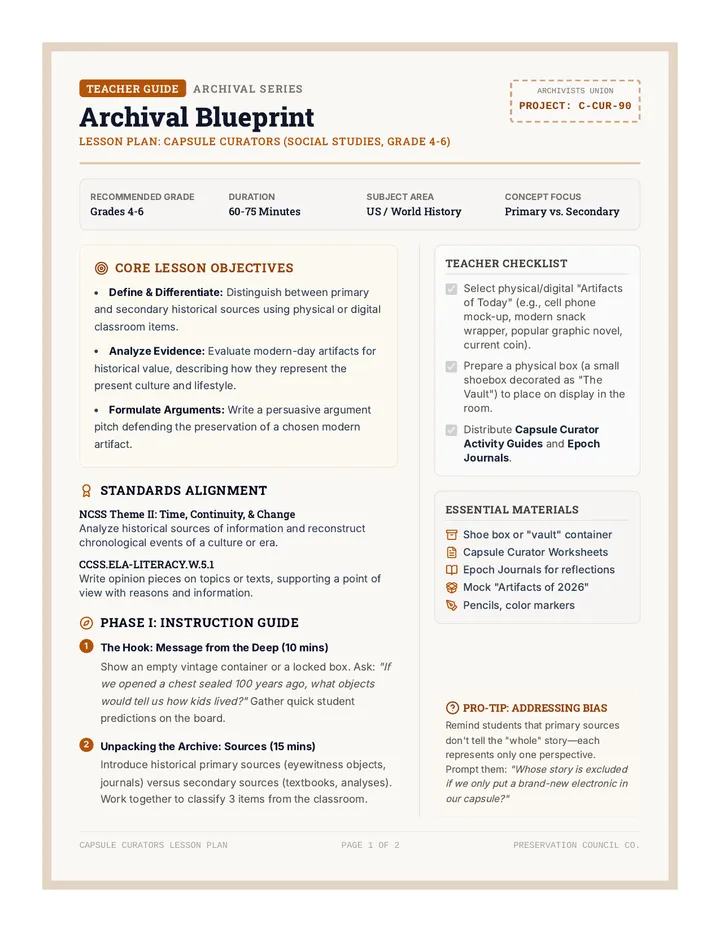
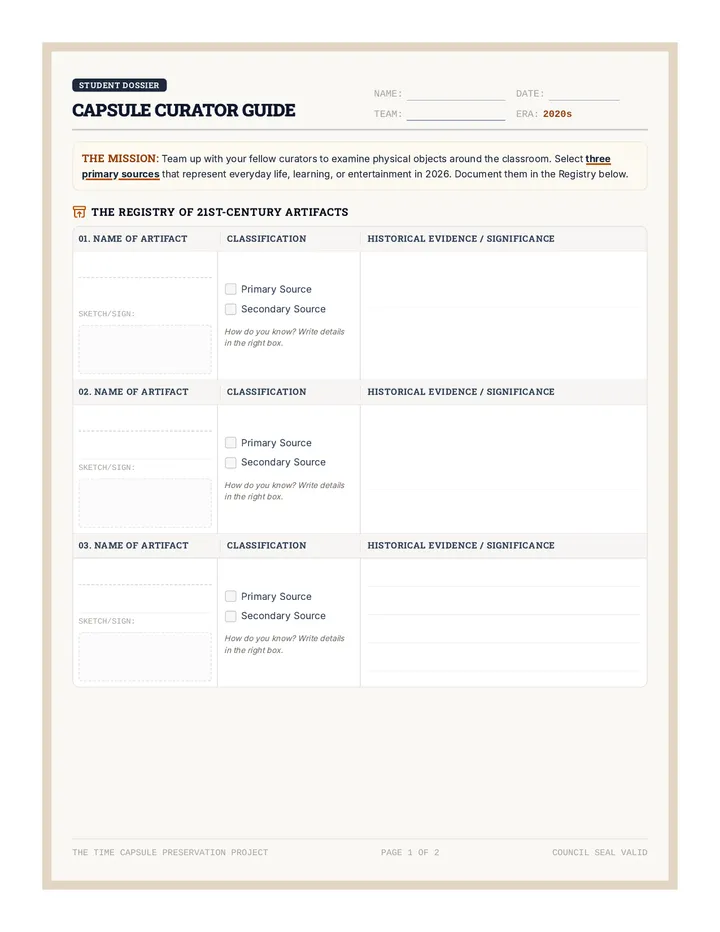
A social studies PBL project for middle schoolers. Students act as historical investigators, using primary and secondary sources to piece together a narrative around a 'mystery' event or figure from the past.
A science-focused PBL project for elementary students. Students research an animal and design a functional 3D habitat model that meets all the animal's survival needs, demonstrating their understanding of ecosystems.
An elementary project where students apply addition, subtraction, and simple multiplication to create and run a classroom marketplace, focusing on financial literacy and operational math.
An early childhood project where students grow their literacy skills by 'planting' a story garden, focusing on letter recognition, sequencing, and narrative creation.
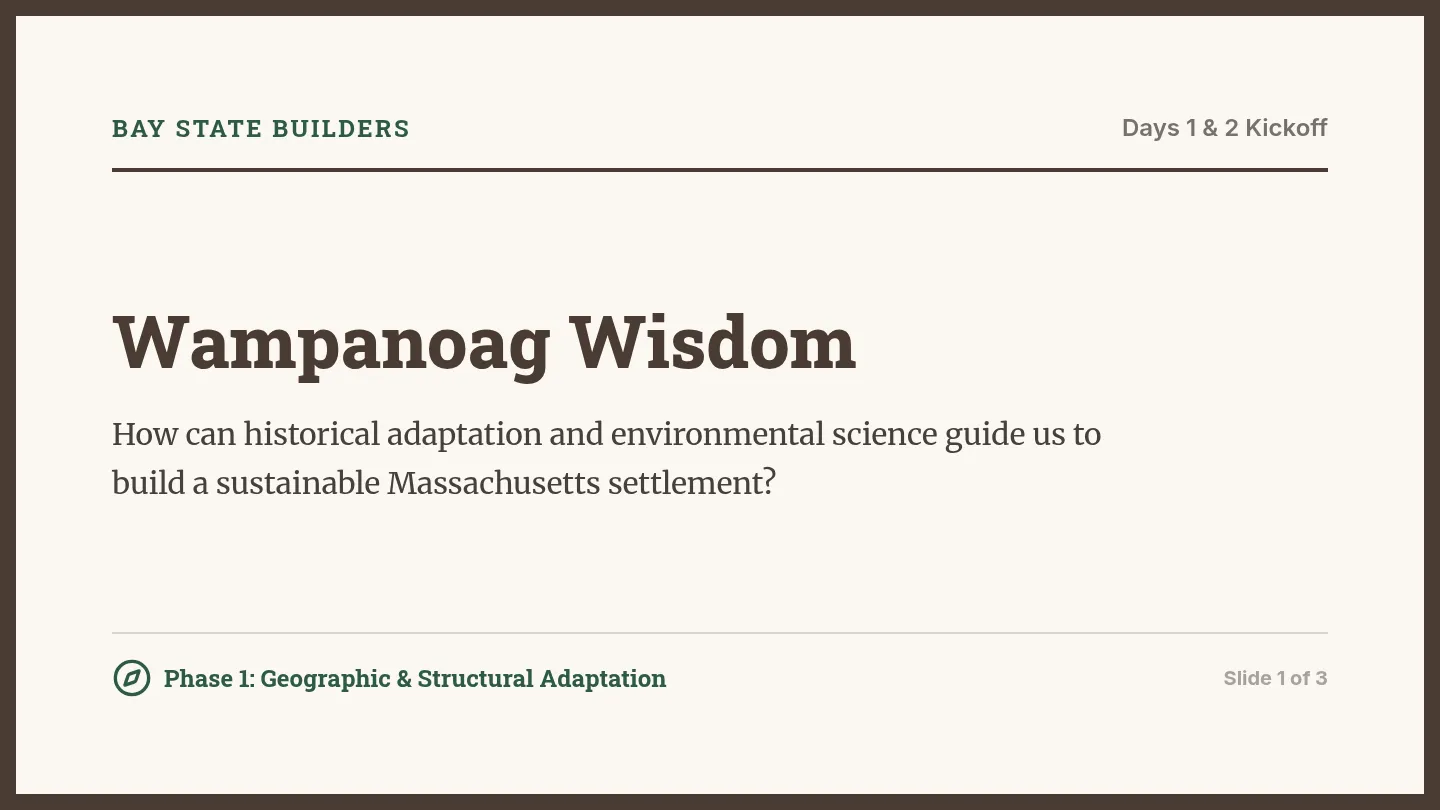
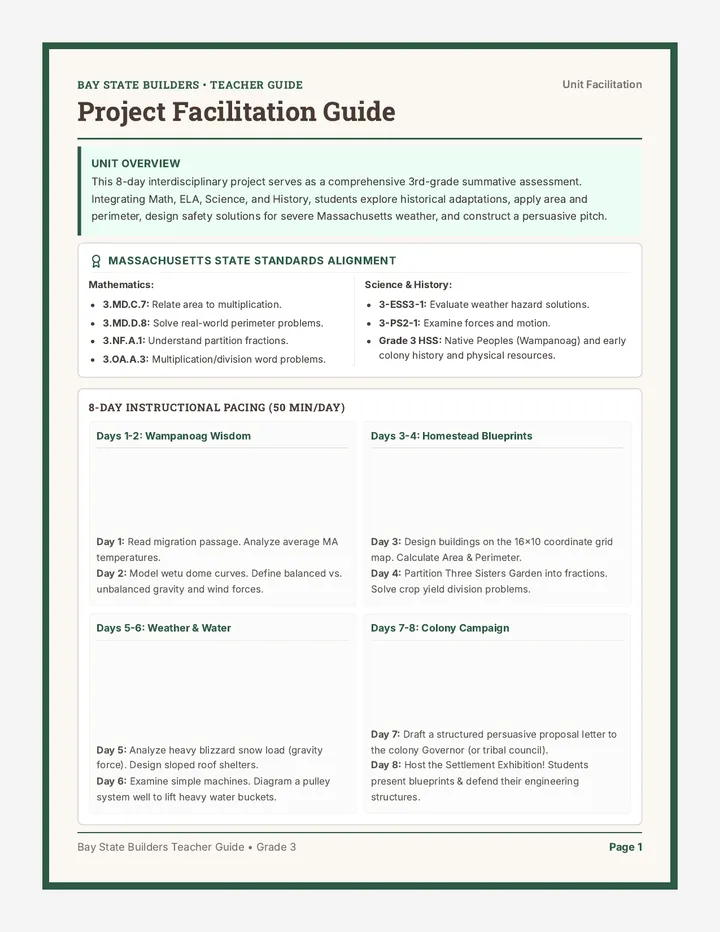
A hands-on exploration of sustainable urban design using grid-based planning. Students learn about walkability, green spaces, and efficient transit while designing their own eco-friendly neighborhood.
A lesson focused on understanding the purpose, traditions, and personal practices of the Lenten season.
Explore the lives and legacies of early African American leaders and abolitionists through an interactive scavenger hunt. Students will rotate through stations to gather information about key historical figures.
Journey to the last frontier to explore the vast glaciers, towering peaks, and diverse wildlife of Alaska's eight magnificent national parks.
Explore the diverse ecosystems of the Pacific Coast, from the giant redwoods of California to the volcanic peaks of Hawaii and the lush rainforests of Washington.
Journey through the vast deserts and dramatic canyons of the American Southwest, exploring the unique geology and resilient life of the arid lands.
Explore the rugged peaks and deep canyons of the Mountain West, featuring the iconic landscapes of Colorado, Wyoming, Montana, and Utah's "Mighty Five."
Explore the national parks of the American heartland, including the Great Lakes region and the vast northern plains.
Exploration of the national parks located along the Atlantic coast and the Appalachian Mountains, including Acadia, Shenandoah, and the Everglades.
A journey through the history and natural wonders of America's major National Parks, focusing on conservation and unique geological features.
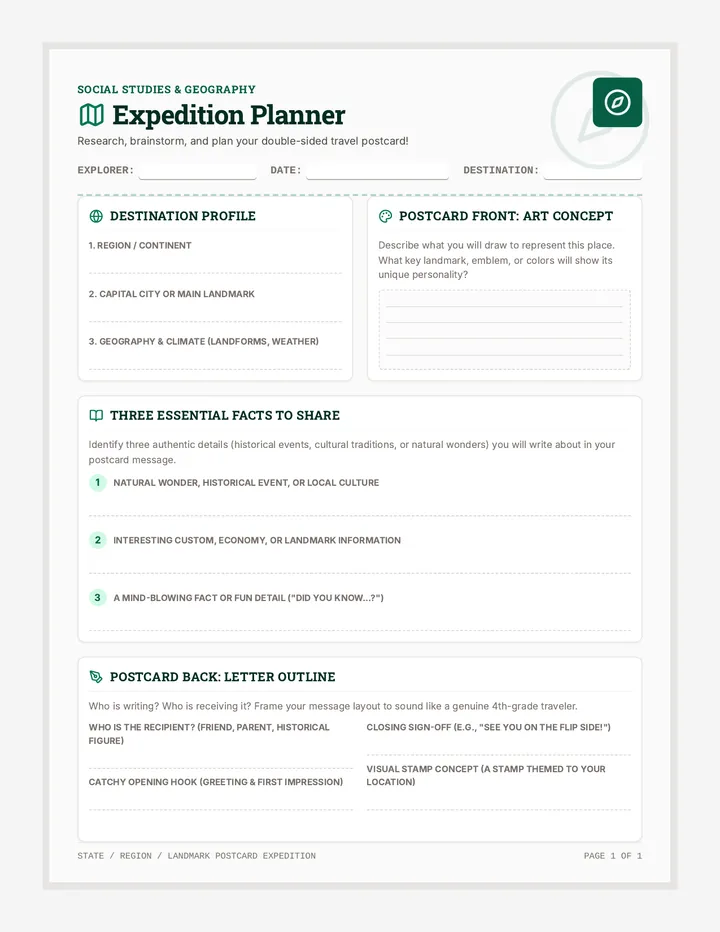
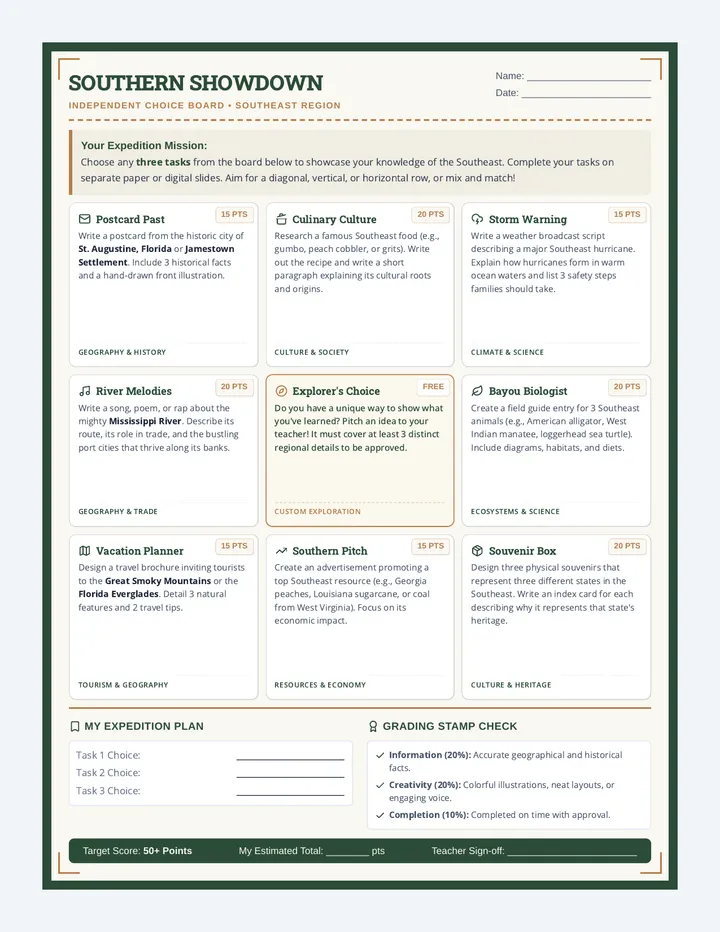
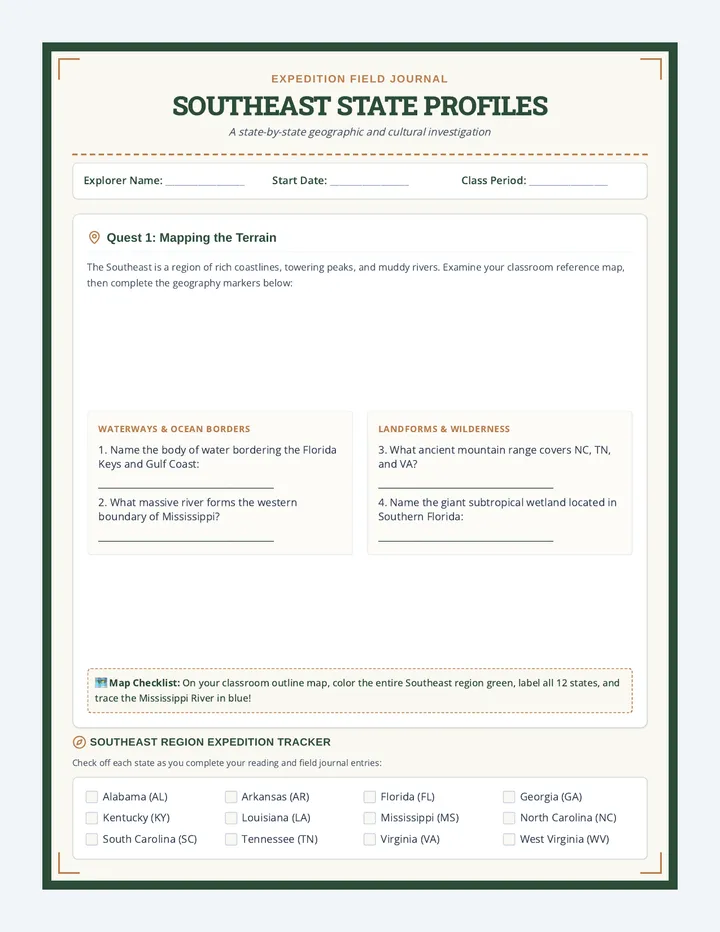
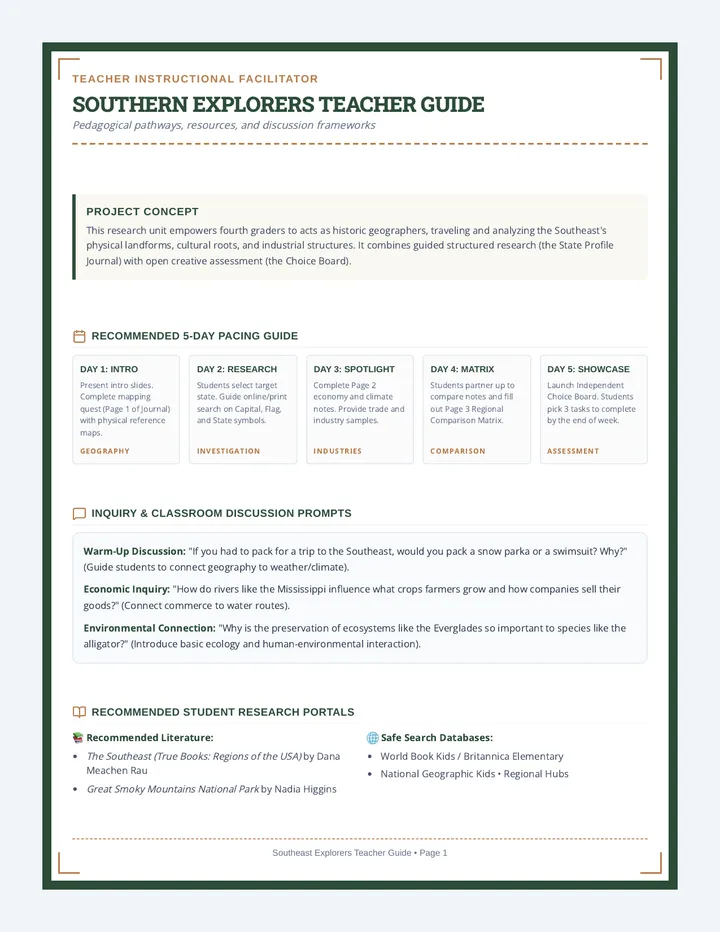
A comprehensive lesson on identifying and mapping the states and capitals of the Southeast region of the United States. Students will explore geographic features, state locations, and regional identity through visual presentation and hands-on mapping.
A hands-on introduction to using a compass rose and cardinal directions (North, South, East, West) using a town map. Students will learn the 'Never Eat Soggy Waffles' mnemonic and apply their skills to navigate a fictional town.
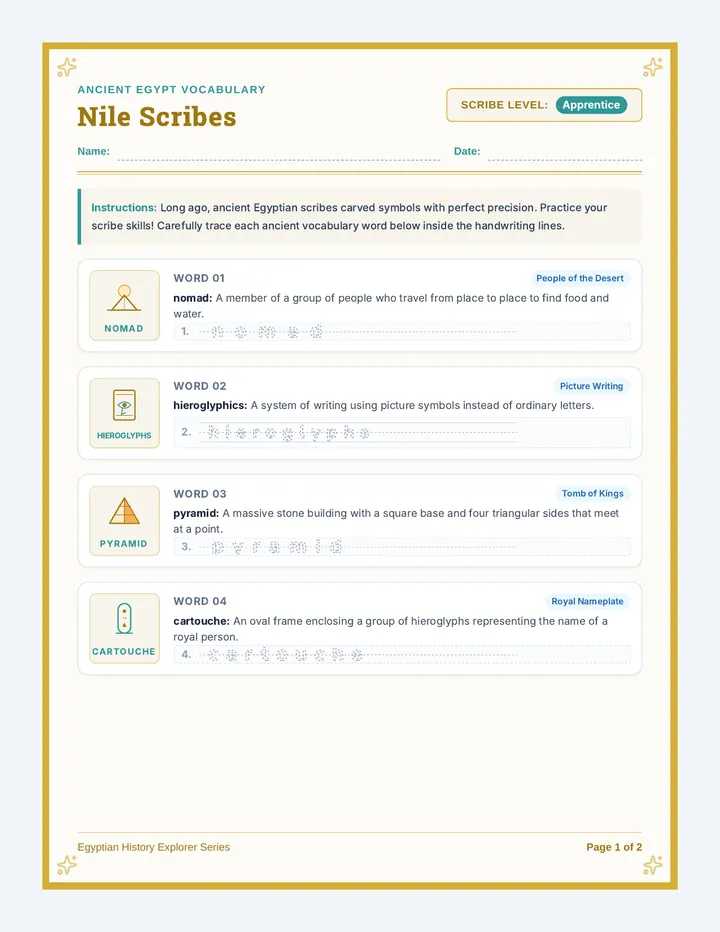
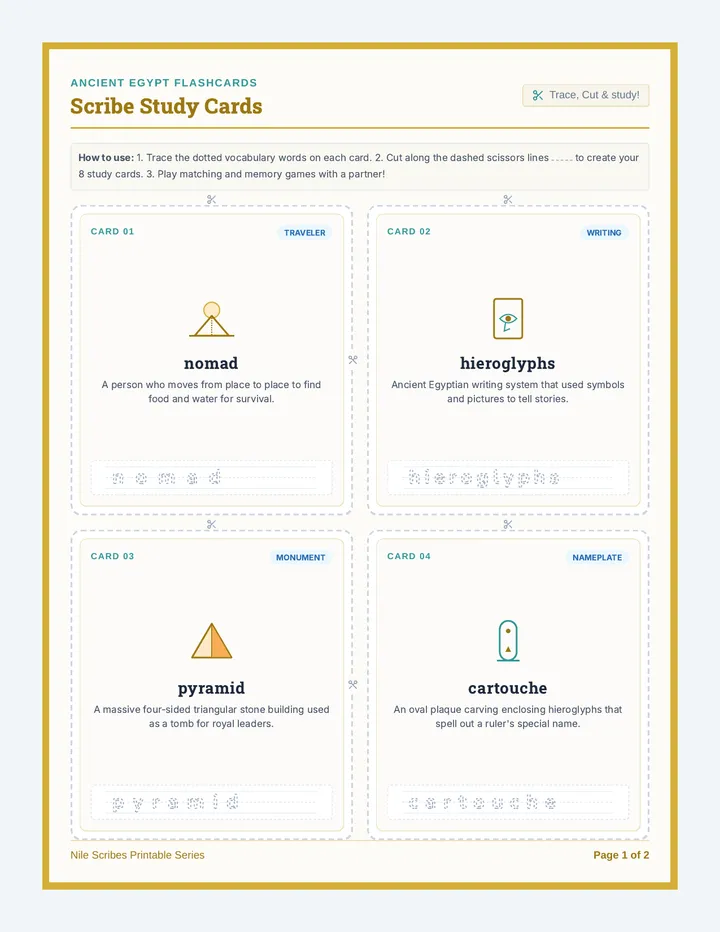
Focuses on Ancient Egypt, the importance of the Nile River, the power of Pharaohs, and the building of the pyramids.
Examines the rise of the Persian Empire and its influence on the region, concluding with a unit review.
Introduces the ancient Israelites, their beliefs, and the concept of monotheism.