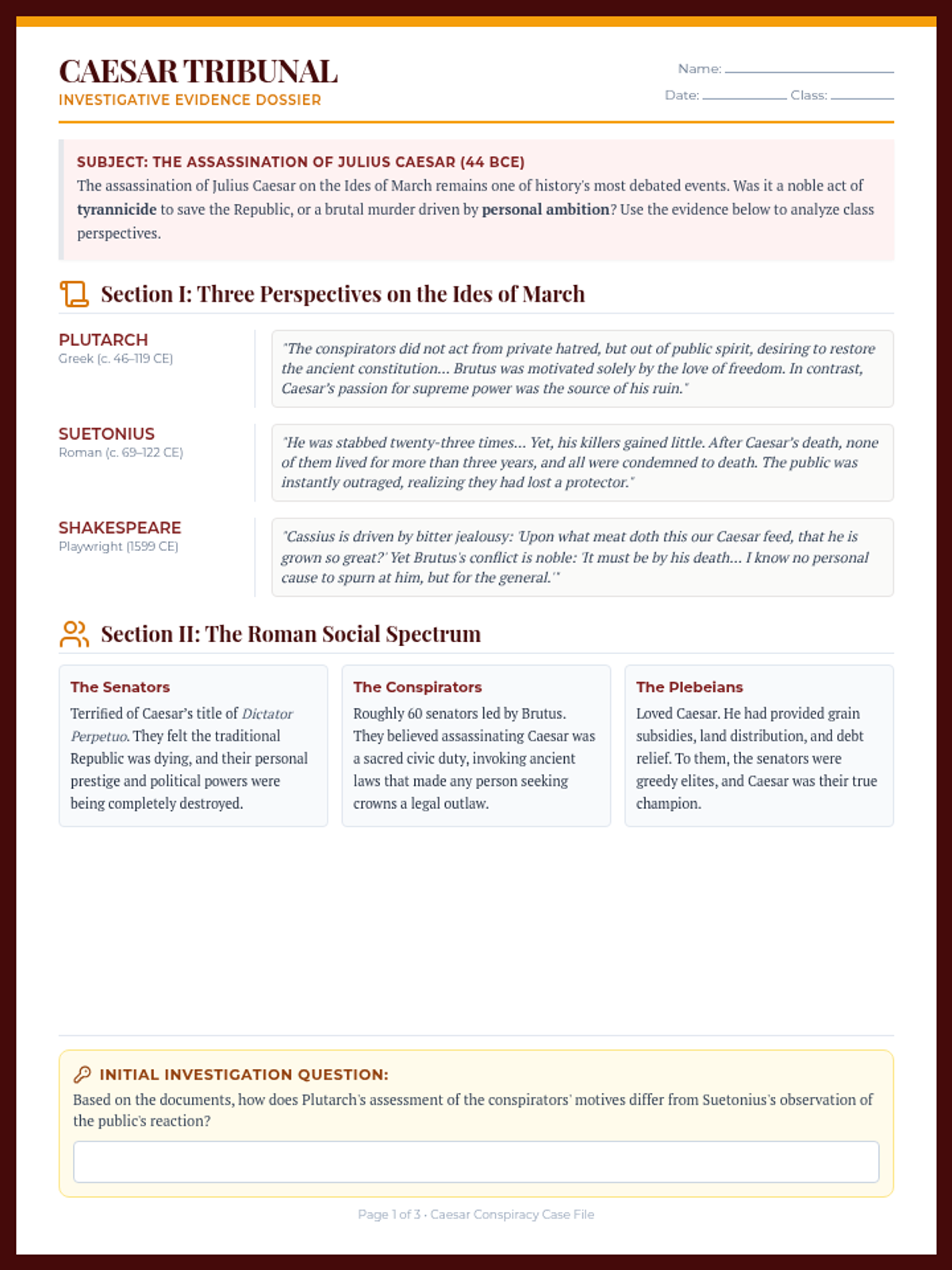
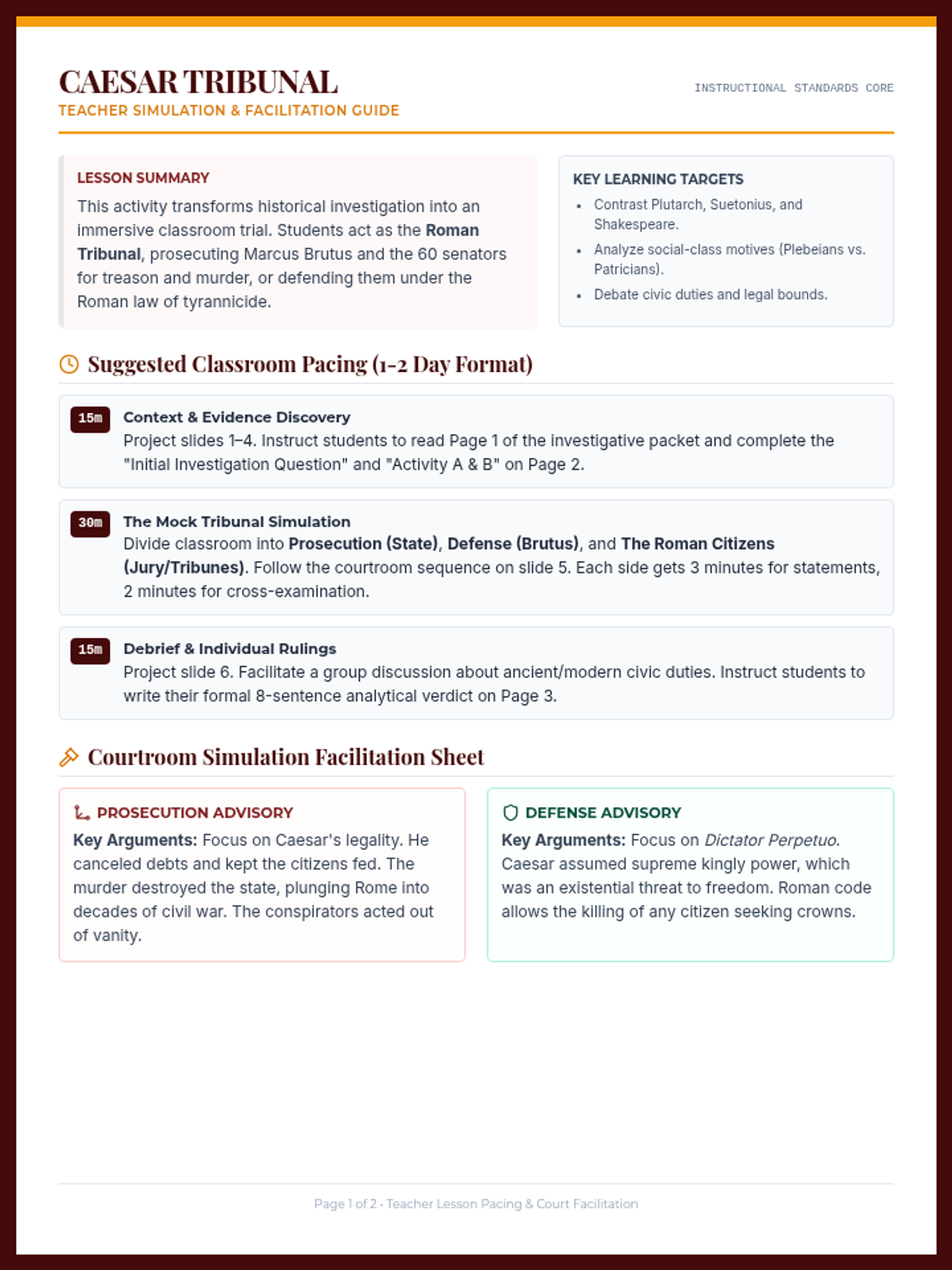
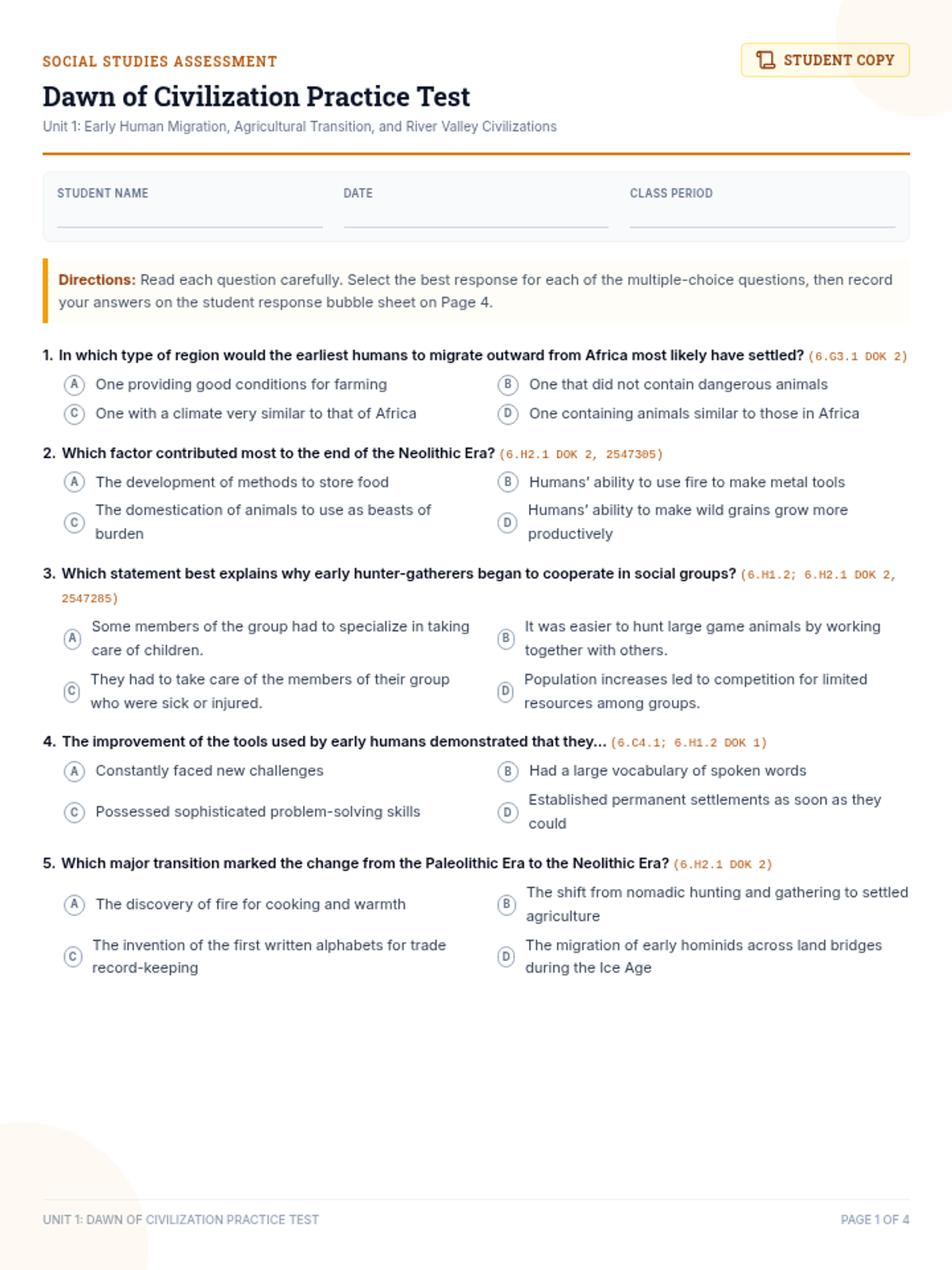
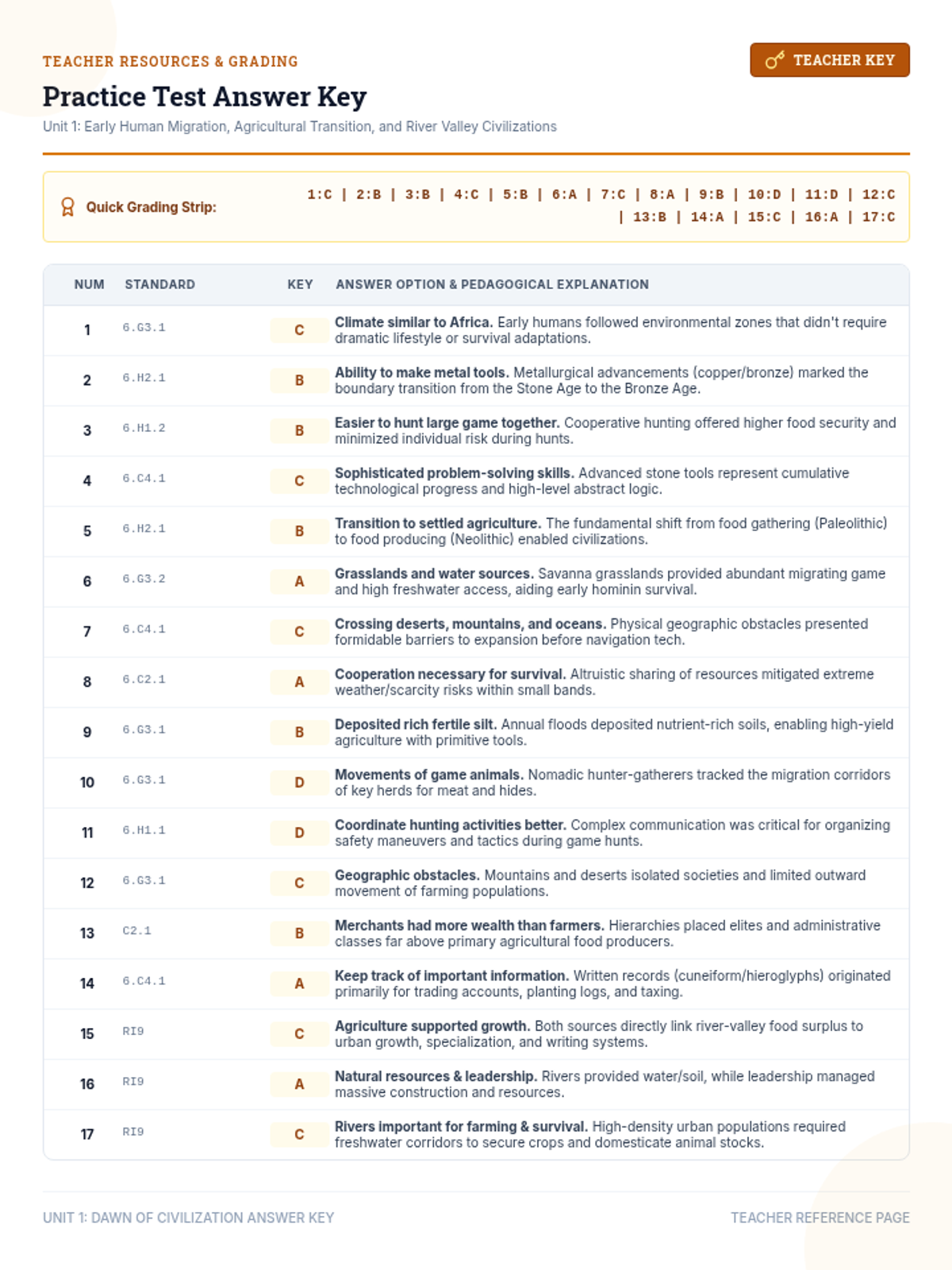
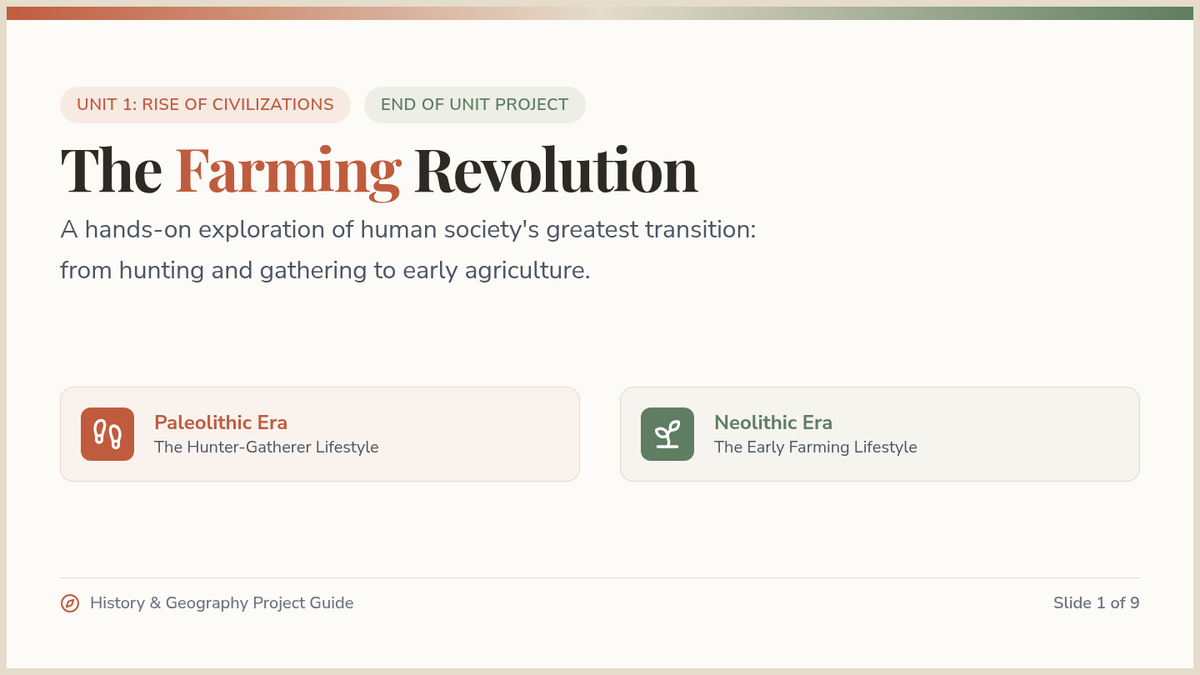
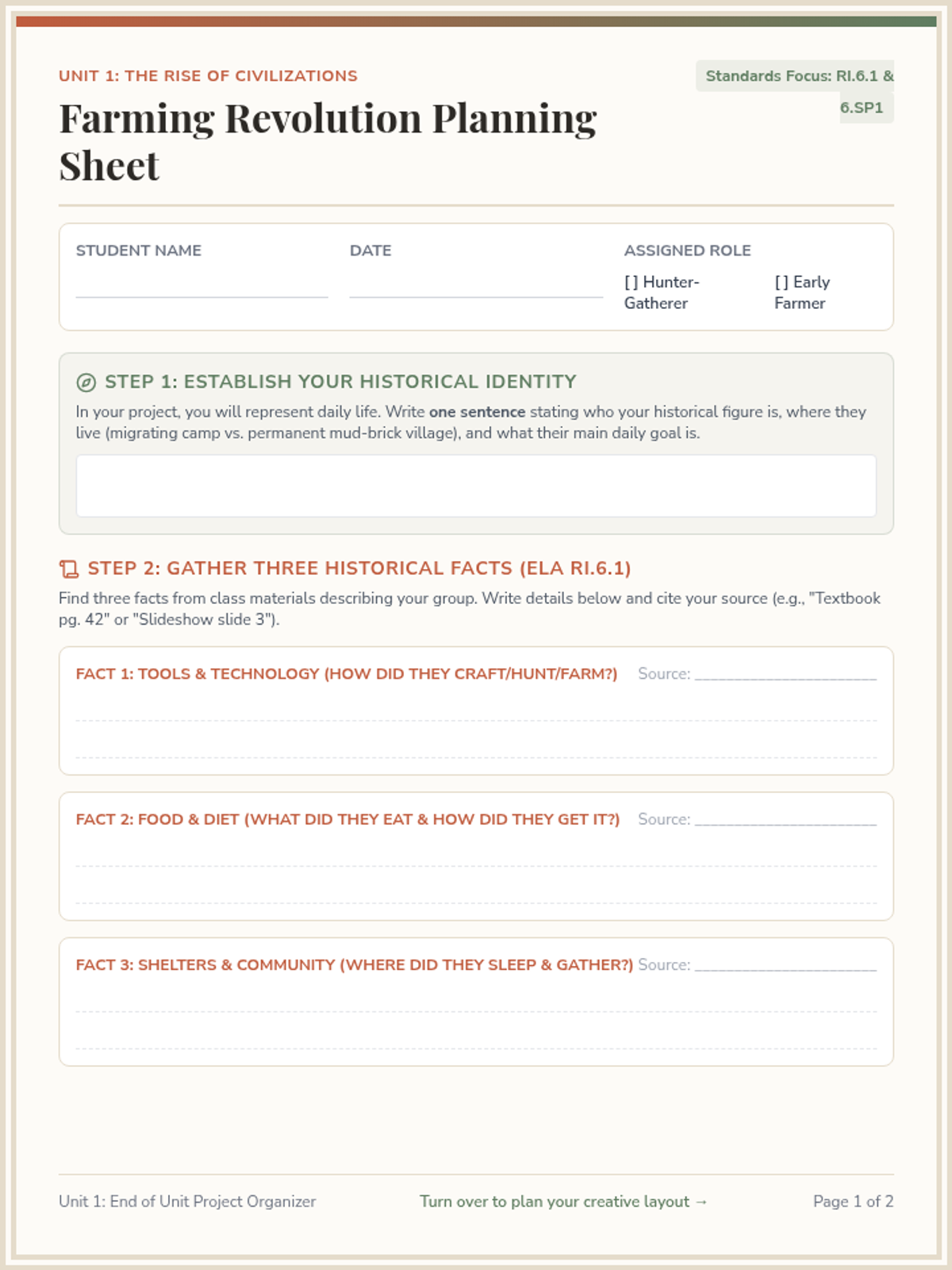
A social studies PBL project for middle schoolers. Students act as historical investigators, using primary and secondary sources to piece together a narrative around a 'mystery' event or figure from the past.
A philosophical exploration of identity and logic centered on the Ship of Theseus paradox. Students analyze historical context, learn formal debate techniques, and grapple with the nature of change and continuity.
A collection of vocabulary resources focused on the structure of government and the role of the Pharaoh in Ancient Egypt, tailored for both elementary and high school levels.
An introductory lesson exploring the concept of immigration, push and pull factors, and the emotional journey of moving to a new country through a hands-on suitcase activity.
A comprehensive look at the founding, geography, and development of the thirteen original American colonies.
This lesson introduces 4th-grade students to Article 1 of the Indiana Constitution, focusing on individual rights such as freedom of speech and religion. Students will explore how these rights protect Hoosiers and apply them to real-world scenarios.
A 20-minute mini-lesson exploring how diverse groups of people have influenced a region's culture through food, music, traditions, and language. Students will act as 'Heritage Hunters' to identify cultural contributions in their own communities.
A comprehensive look at medieval Scottish life, covering religious devotion, the impact of the Black Death, the lawless Border Reivers, and the dangerous lives of monarchs.
A 69-minute lesson exploring the intersection of environmental issues and social equity, specifically designed for 6th-grade students to understand why climate change affects different communities in different ways and what fair solutions look like.
An exploration of life in medieval Scotland, adapted for an 800L Lexile level, covering history, castles, clothing, and diet.
A focused look at Thomas Jefferson's Embargo Act of 1807, exploring its causes, the economic fallout for New England merchants, and its role in leading to the War of 1812.
A hands-on history project inspired by 'Born on the Water', focusing on ancestry, resilience, and the power of storytelling. Students create a visual legacy map that traces the journey of a people or family from their roots to the present day.
A lesson focusing on Thomas Jefferson's early presidency and his shift toward Republican policies, specifically highlighting his budget cuts, laissez-faire philosophy, and protection of First Amendment rights.
This lesson introduces the importance of the Nile River to the ancient Egyptians, focusing on its role in farming, fishing, and transportation. Students will explore how the river's annual flooding provided fertile soil and how the Egyptians managed water using canals.
A lesson exploring the realities of life in medieval Scotland, from castle luxury to peasant survival, based on historical accounts of clothing, food, and social structure.
A complete walkthrough of 'Hidden Figures' with chapter-by-chapter summaries, key vocabulary, and discussion points designed for 6th-grade students.
A comprehensive chapter-by-chapter summary and exploration of the book 'Hidden Figures', focusing on the lives and contributions of Katherine Johnson, Dorothy Vaughan, Mary Jackson, and Christine Darden during the Space Race.
A focused study on the complex factors and historical context surrounding President Harry S. Truman's decision to use atomic weapons at the end of World War II.
A comprehensive lesson on Nazi Blitzkrieg tactics during WWII, featuring a detailed reading passage and a structured analysis worksheet for 7th-grade students.
A comprehensive study of Ancient Egypt focusing on the Nile River, the role of Pharaohs, and the engineering of pyramids. Includes reading, assessment, and interactive note-taking.