A 45-minute reading comprehension lesson for 3rd grade ESL students exploring diverse food cultures and eating habits across five countries. Students will practice identifying key details and comparing different cultural traditions.

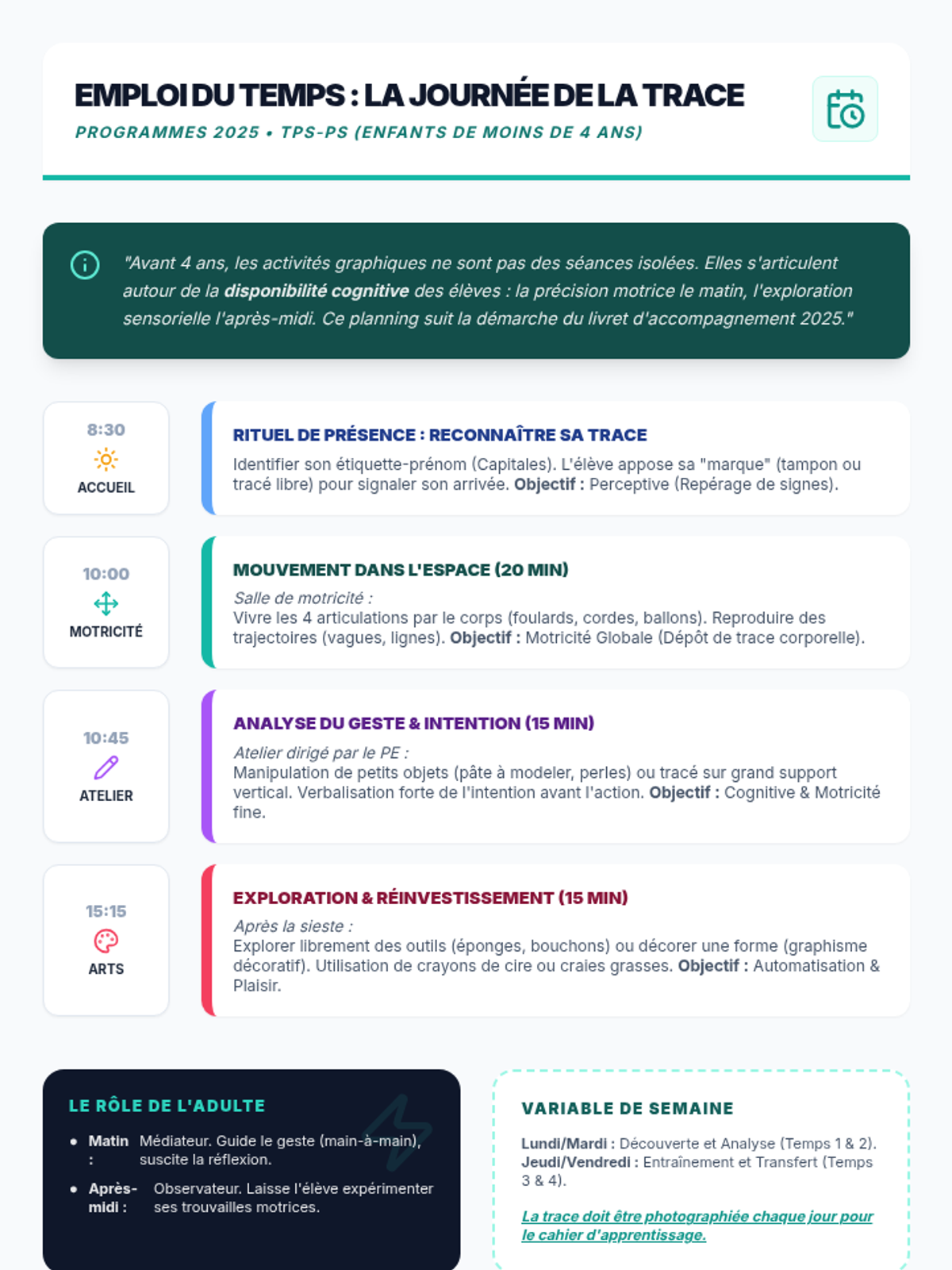
Cette formation pour les professeurs de TPS-PS vise à professionnaliser la conception des "traces" d'activités (cahiers de vie, affichages). En s'appuyant sur les photos de classe et les guides 2025, les enseignants apprennent à rendre les apprentissages explicites pour les élèves et les familles.
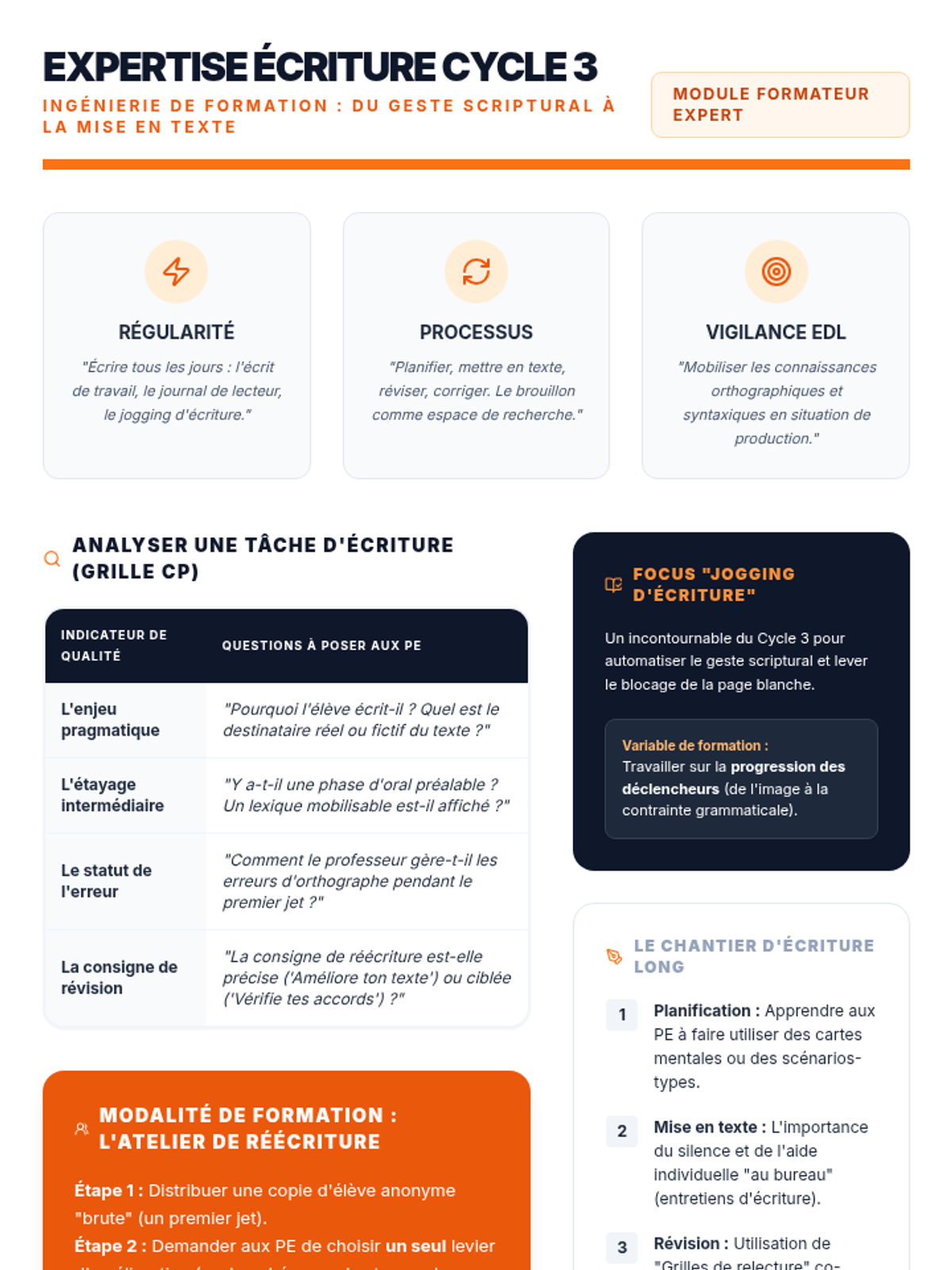
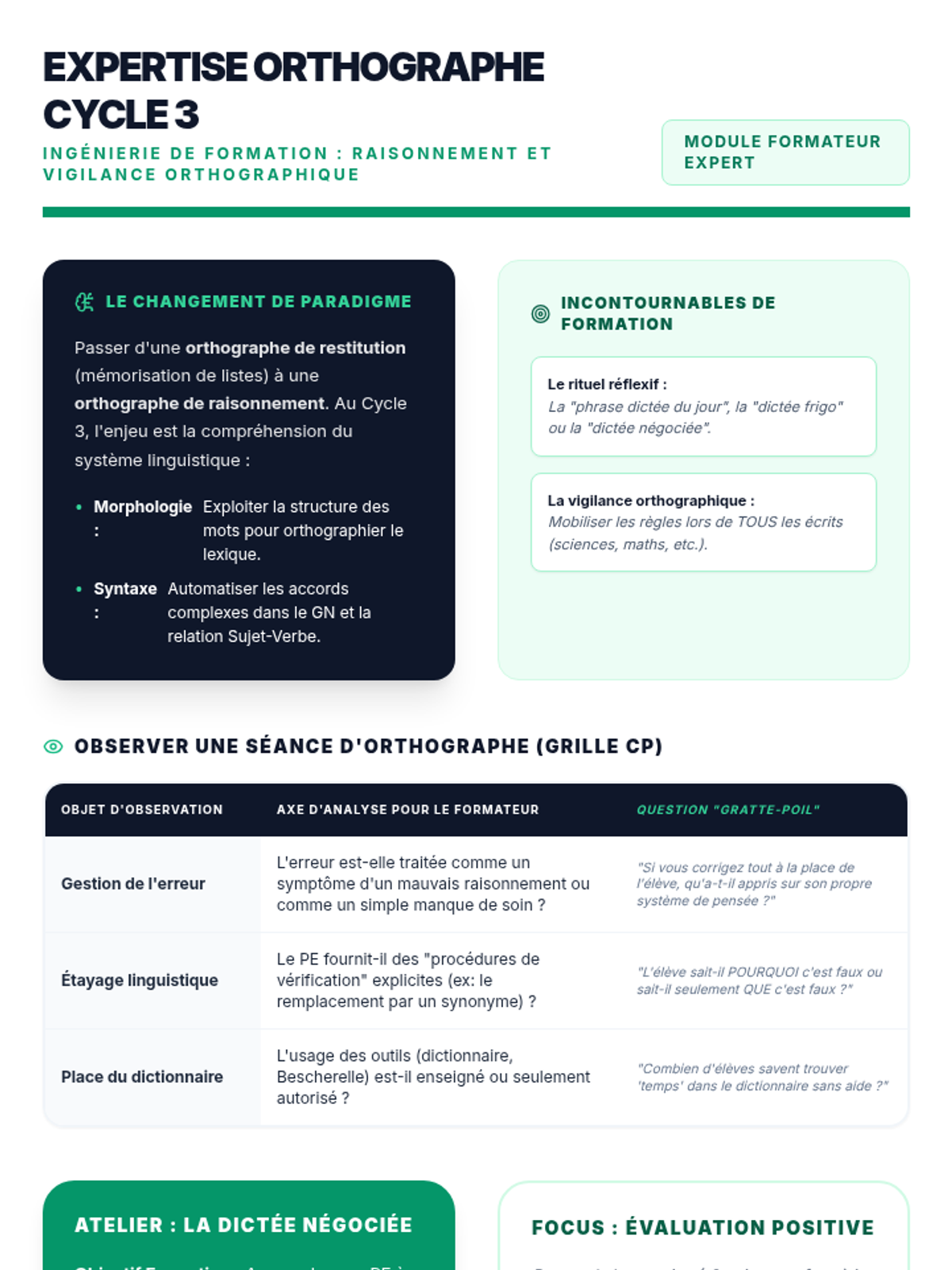
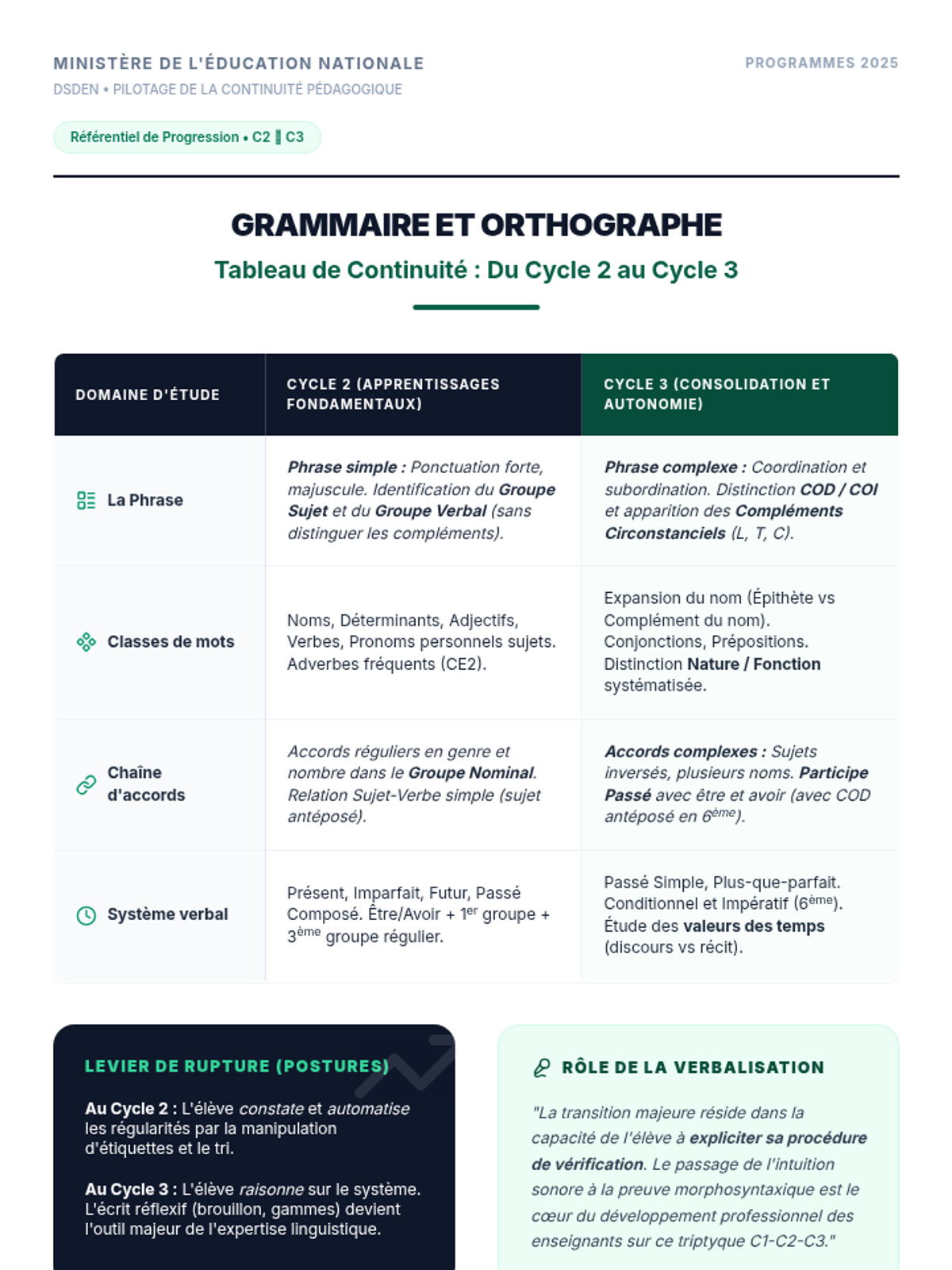
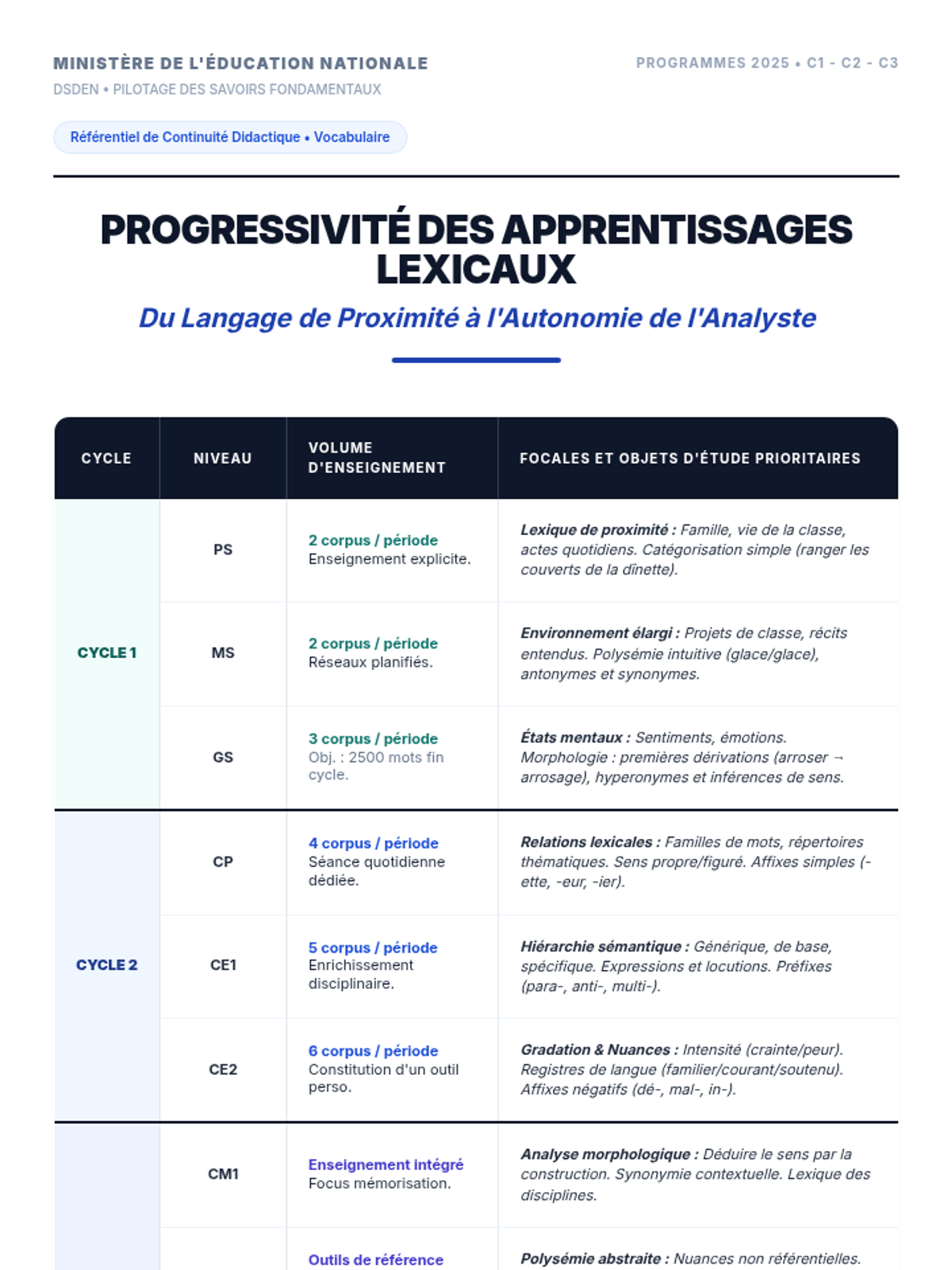
Cette formation vise à outiller les conseillers pédagogiques pour l'analyse et l'exploitation de ressources diverses (vidéos, manuels, guides) dans le cadre de la formation continue des professeurs des écoles en français, conformément aux orientations stratégiques nationales.
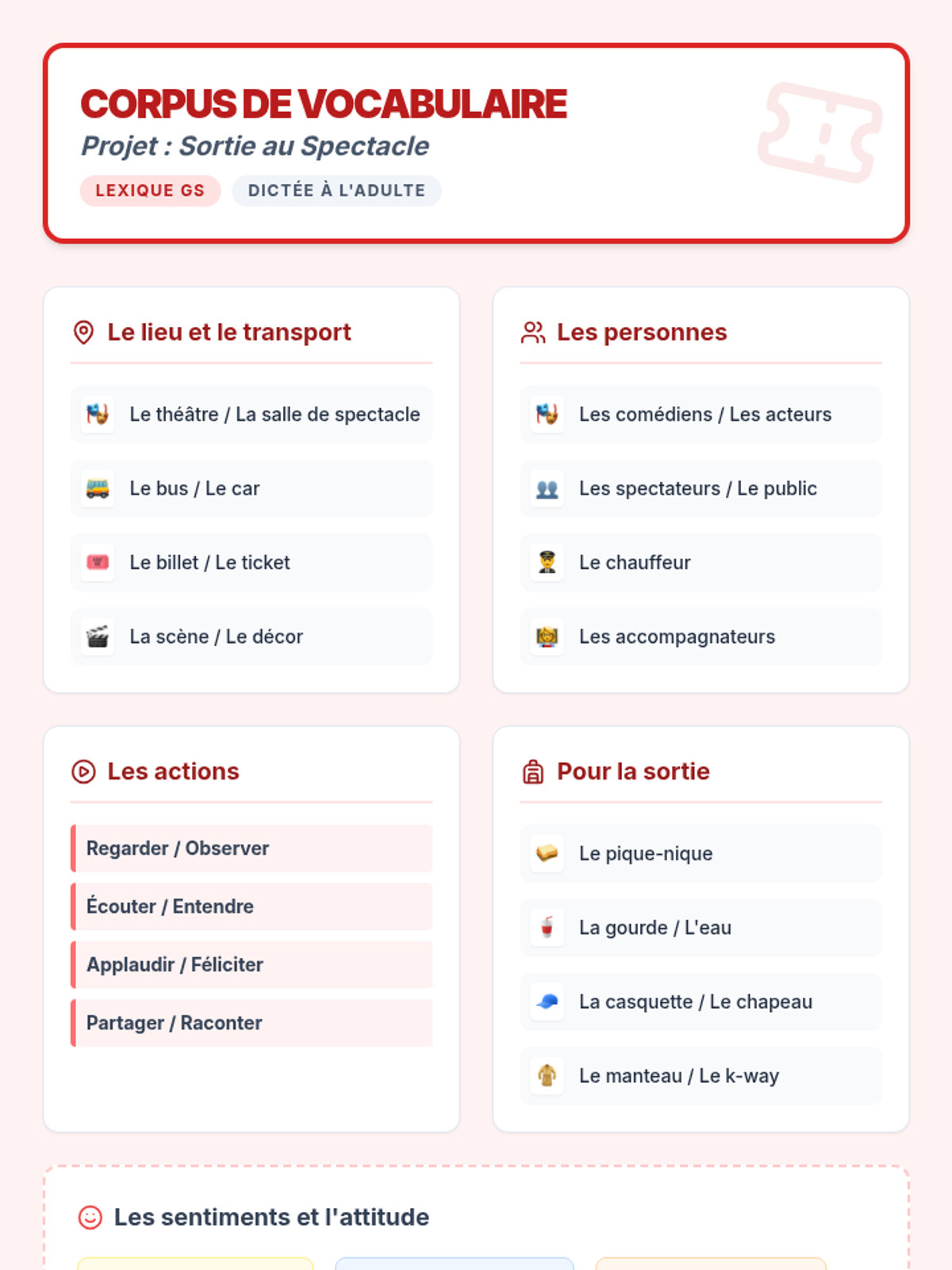
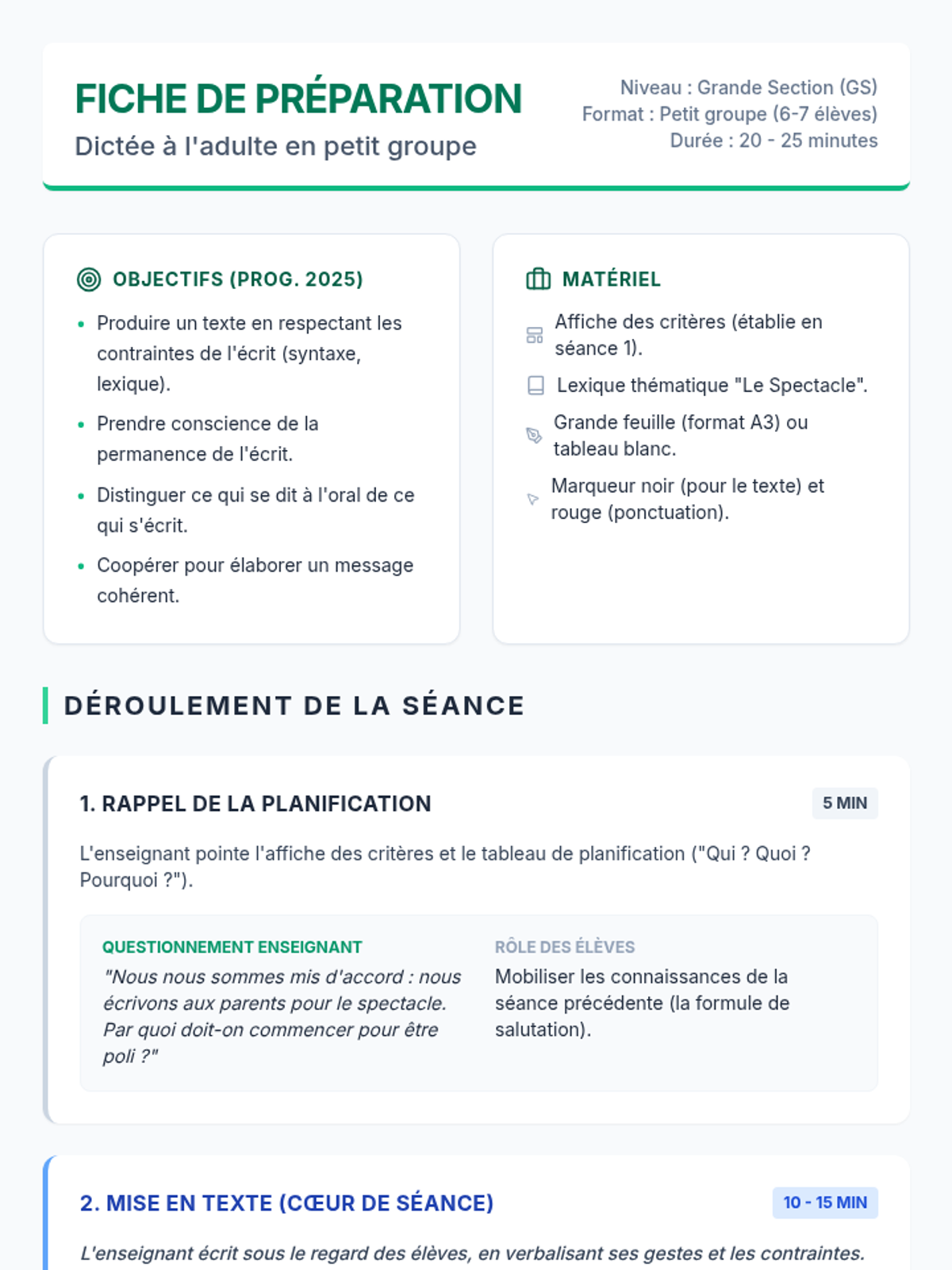
Cette leçon vise à introduire un projet d'écriture authentique en Grande Section : rédiger un message aux parents pour annoncer une sortie scolaire. Elle s'appuie sur l'observation de messages existants pour définir des critères de réussite et initier la planification selon les programmes 2025.
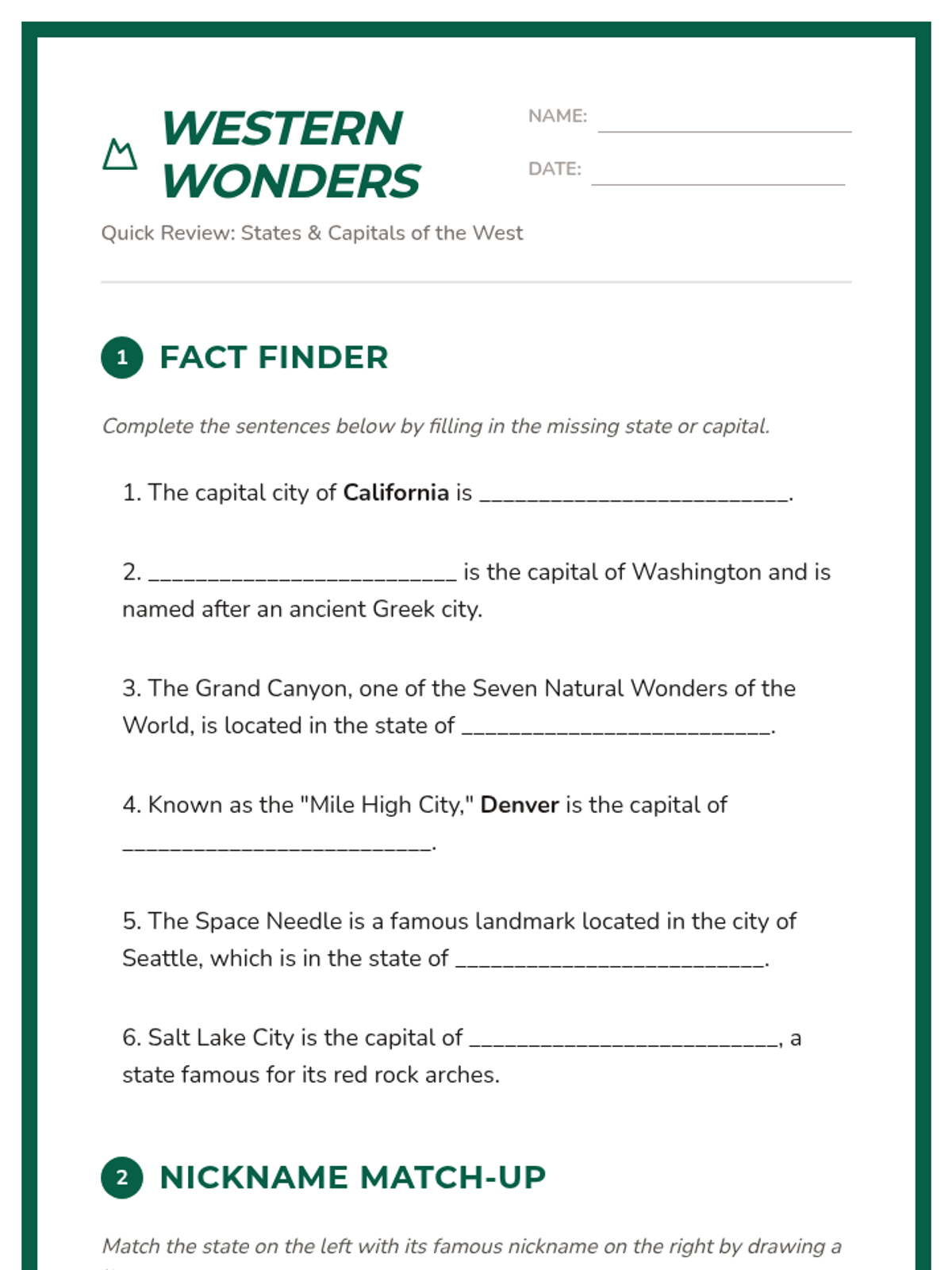
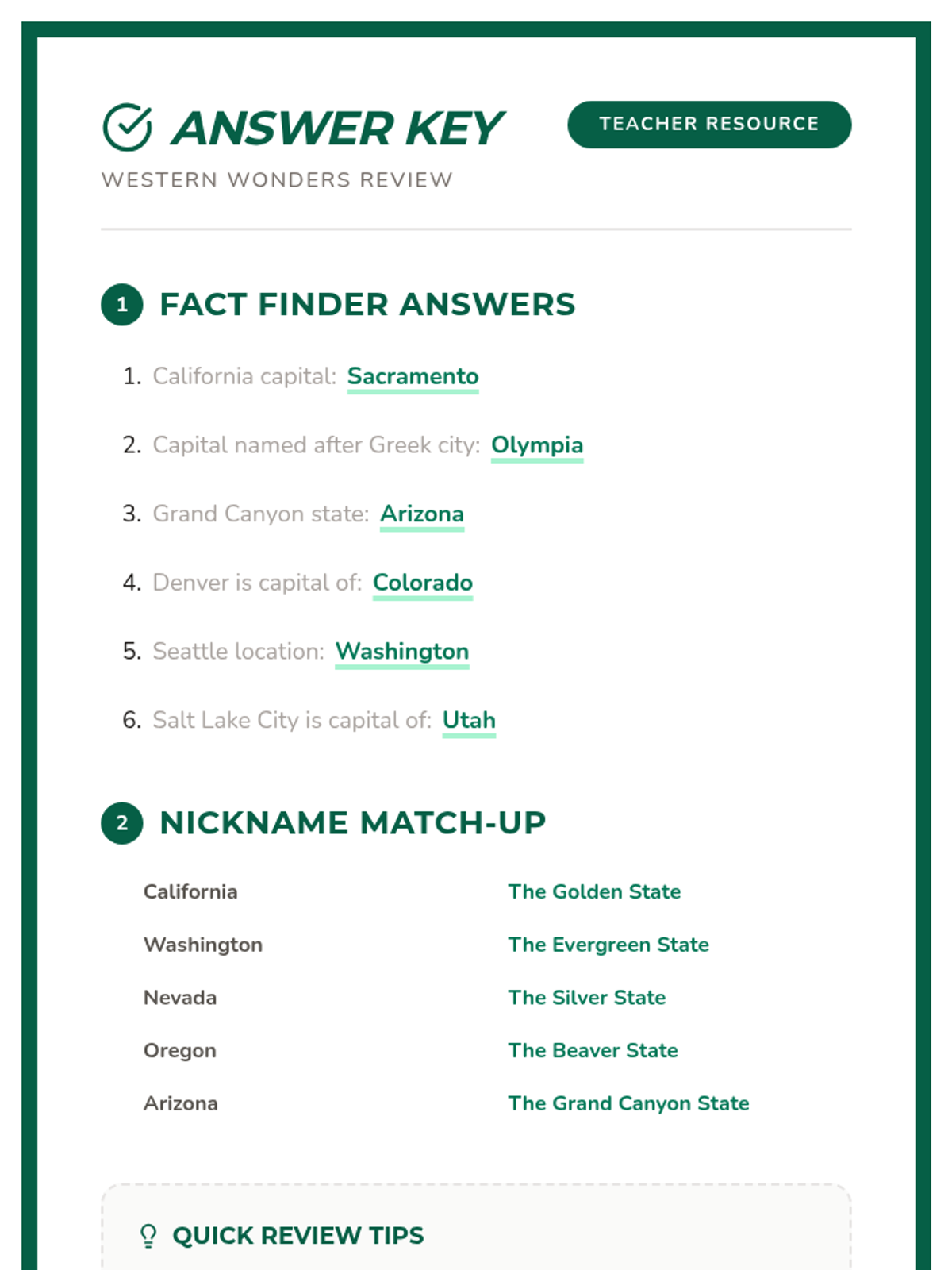
A quick-fire review of the Western United States, covering state names, capitals, and iconic landmarks through a visual presentation and interactive worksheet.
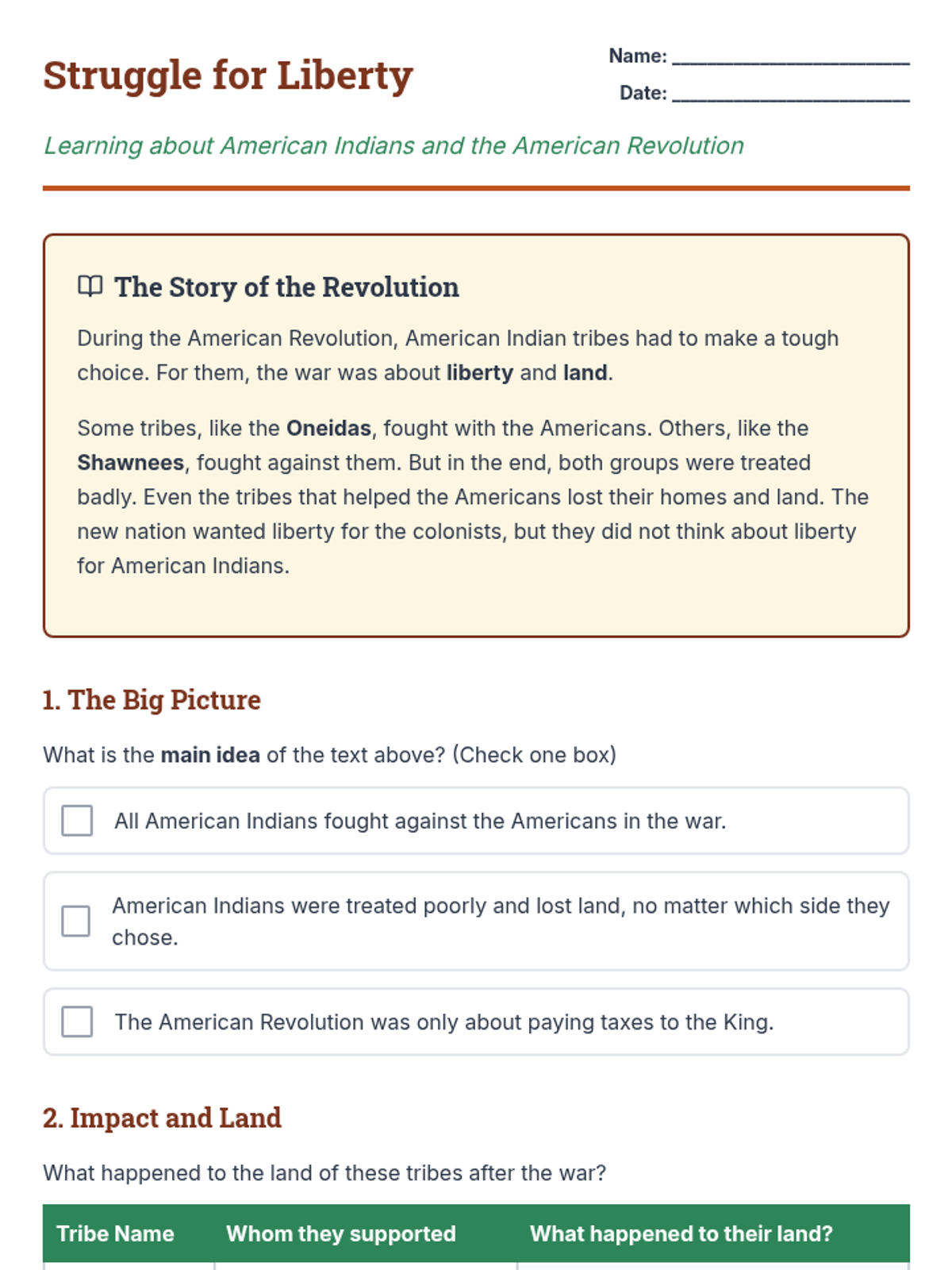
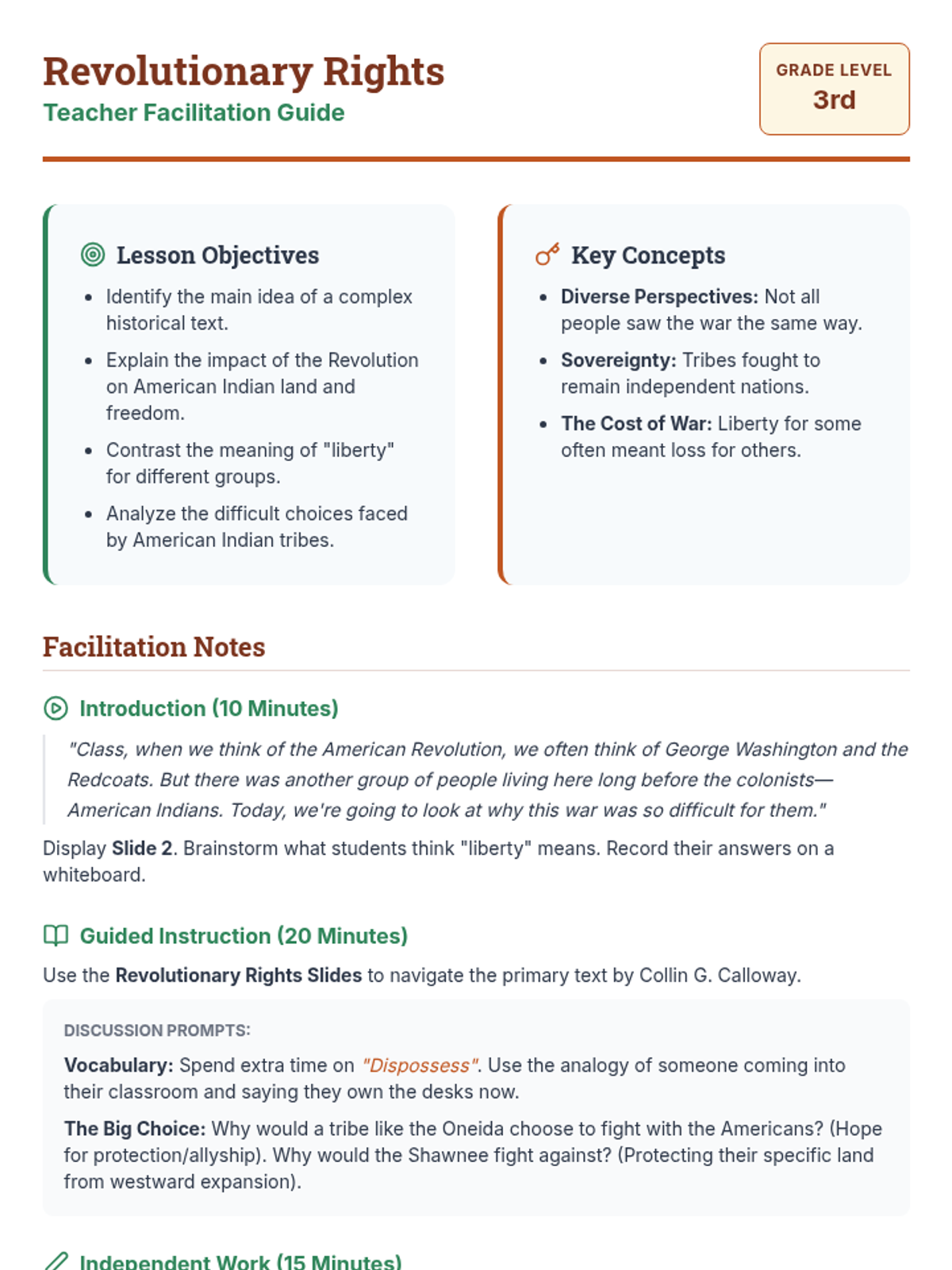
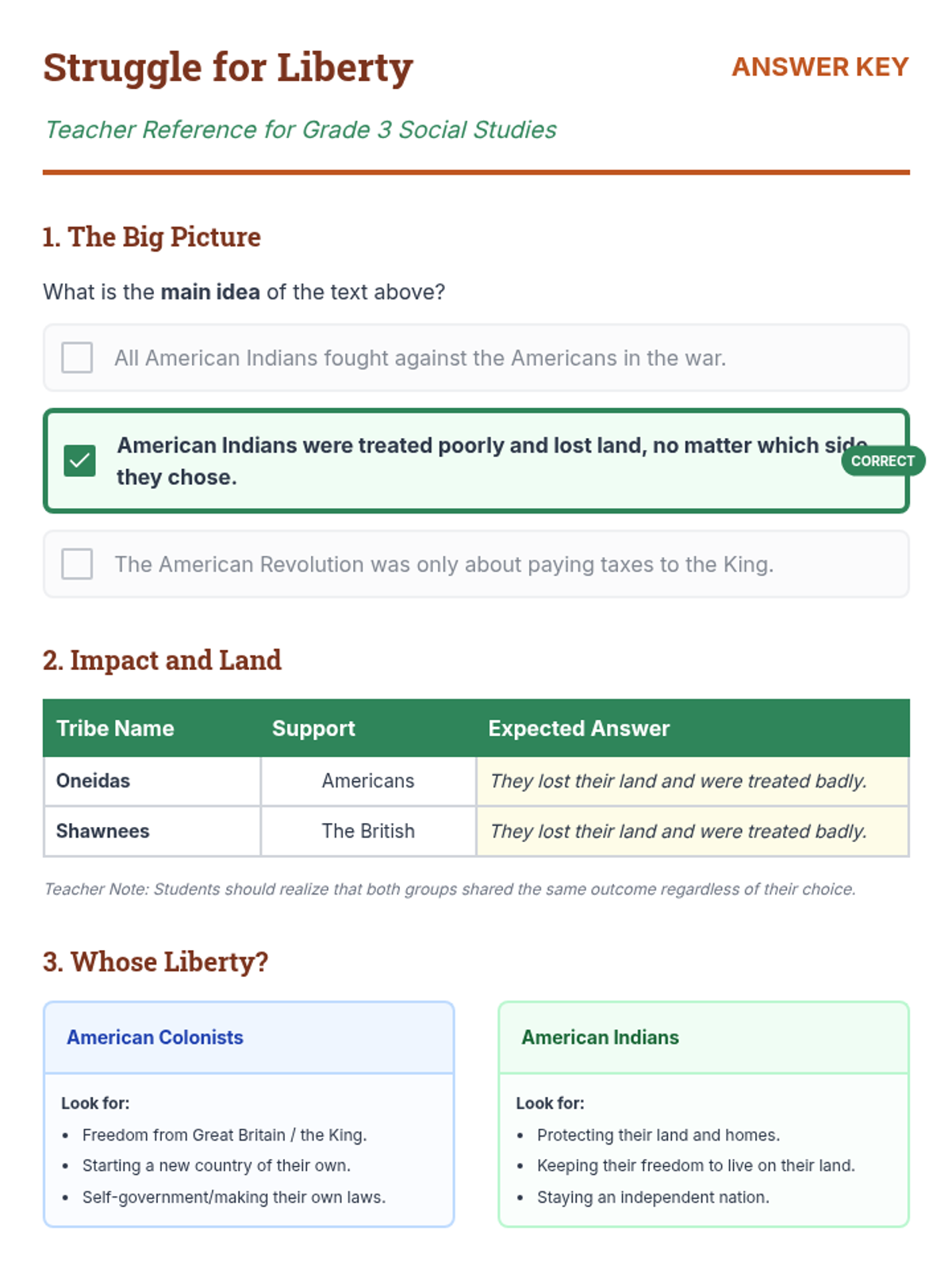
A lesson exploring the complex role and impact of the American Revolution on American Indian tribes, focusing on the conflicting meanings of liberty and the struggle for land.
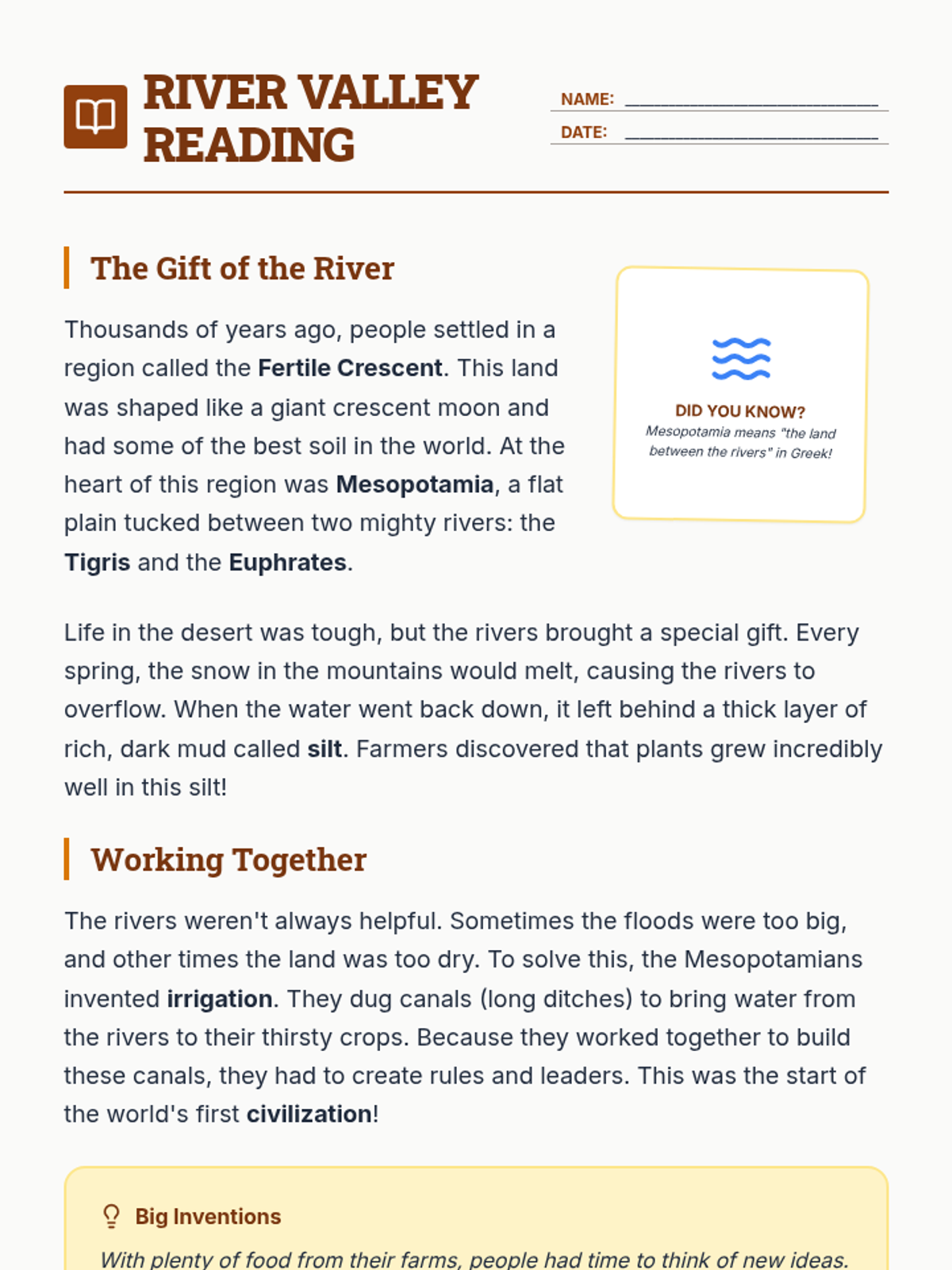
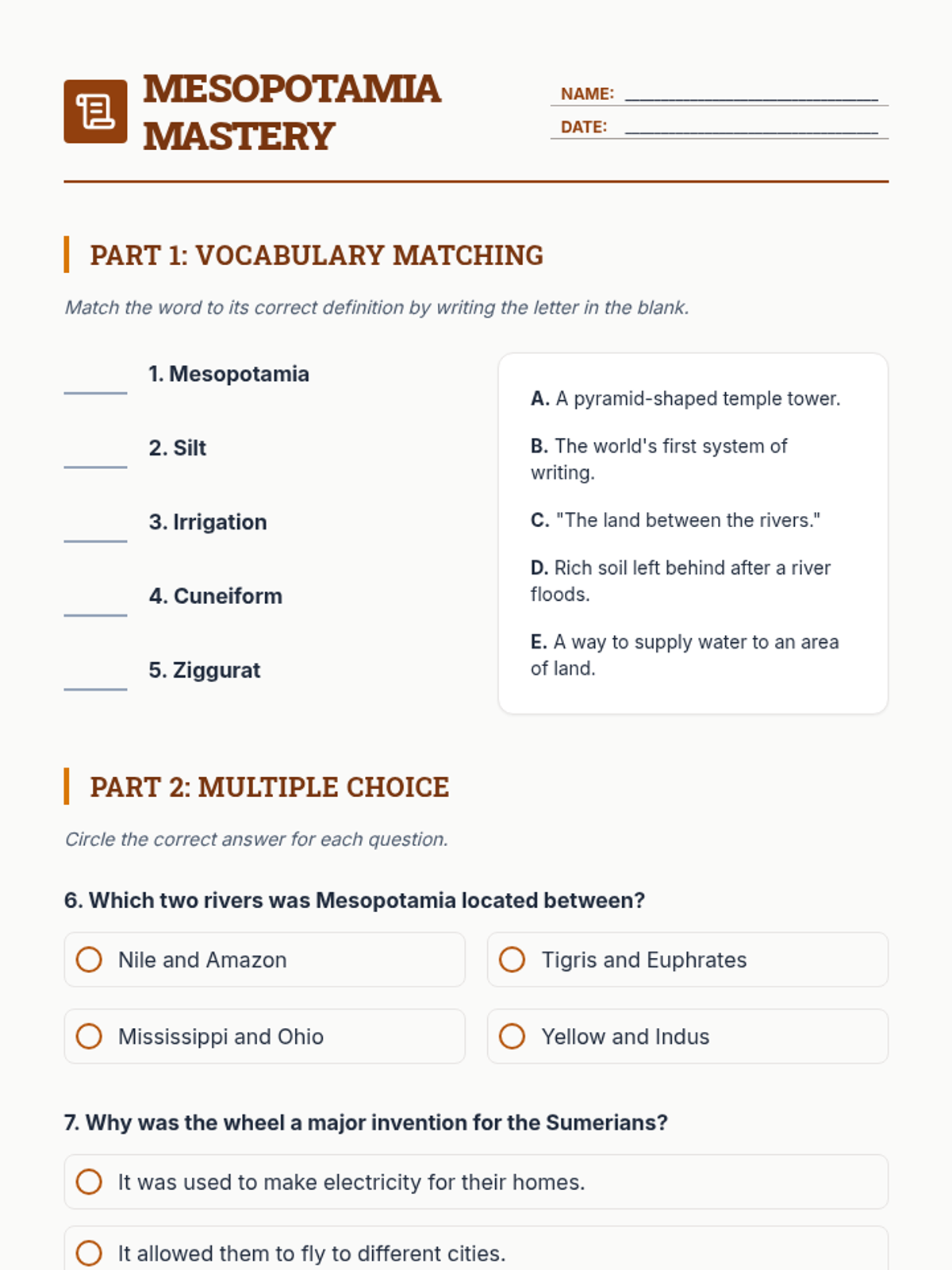
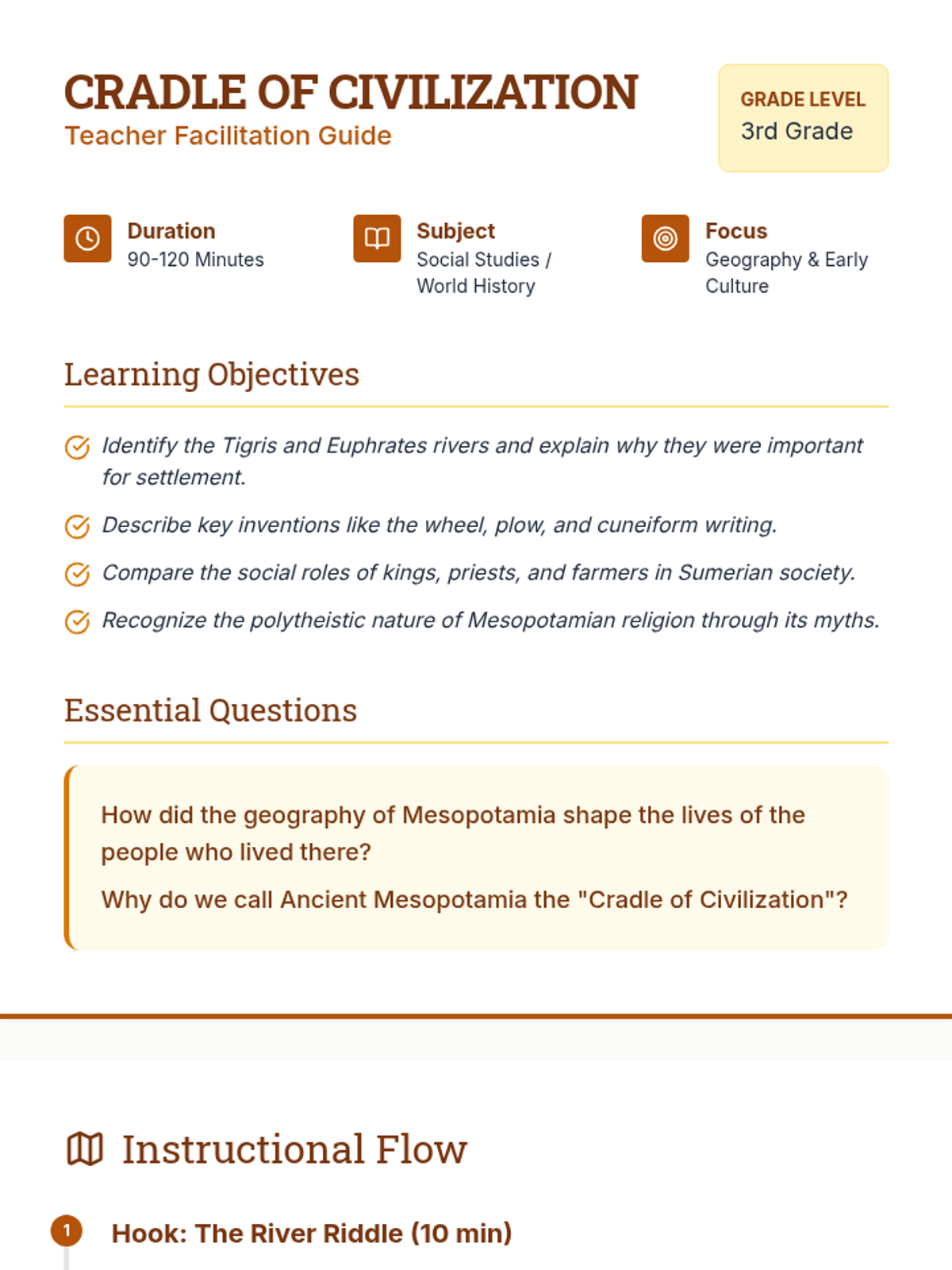
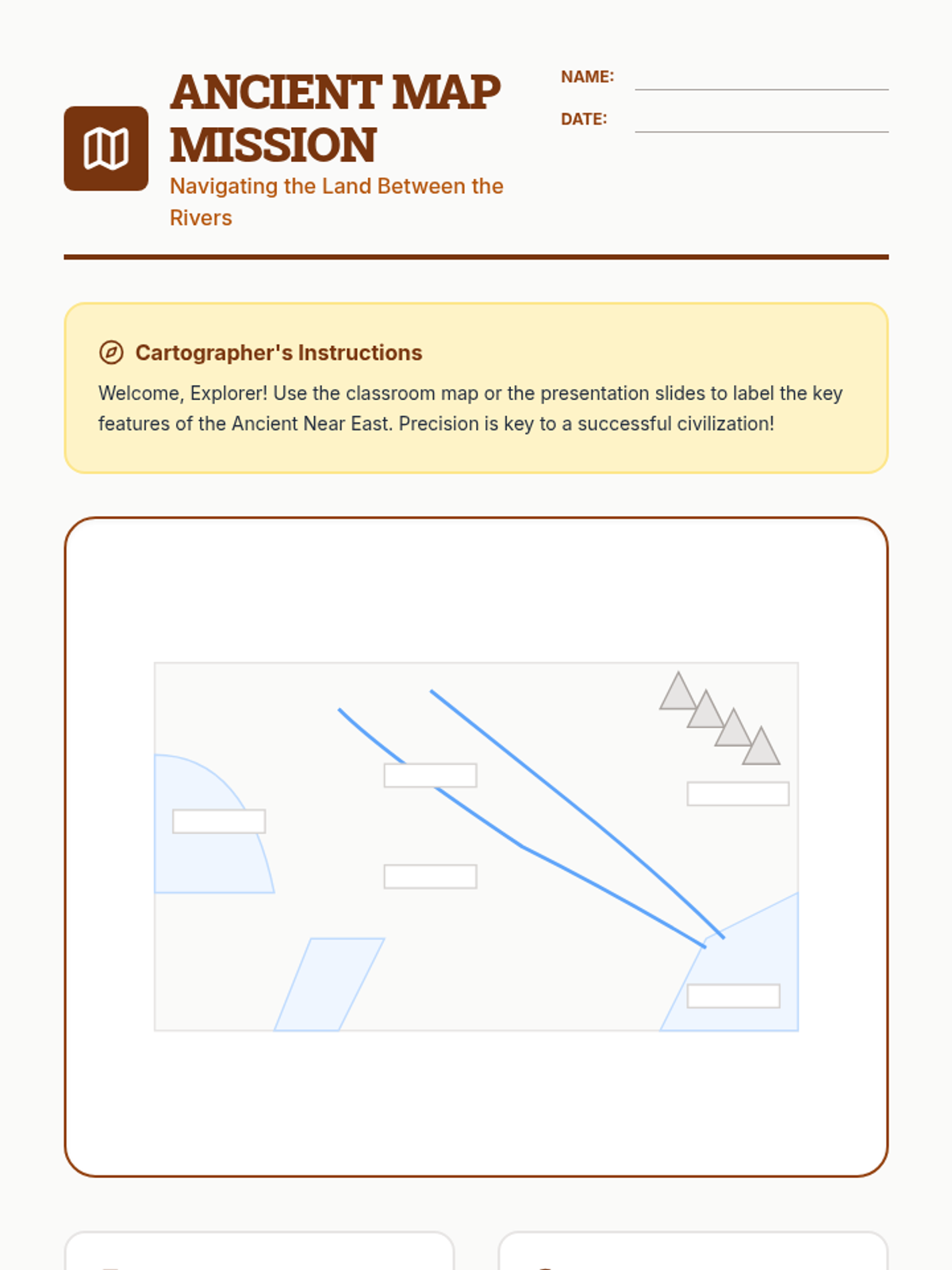
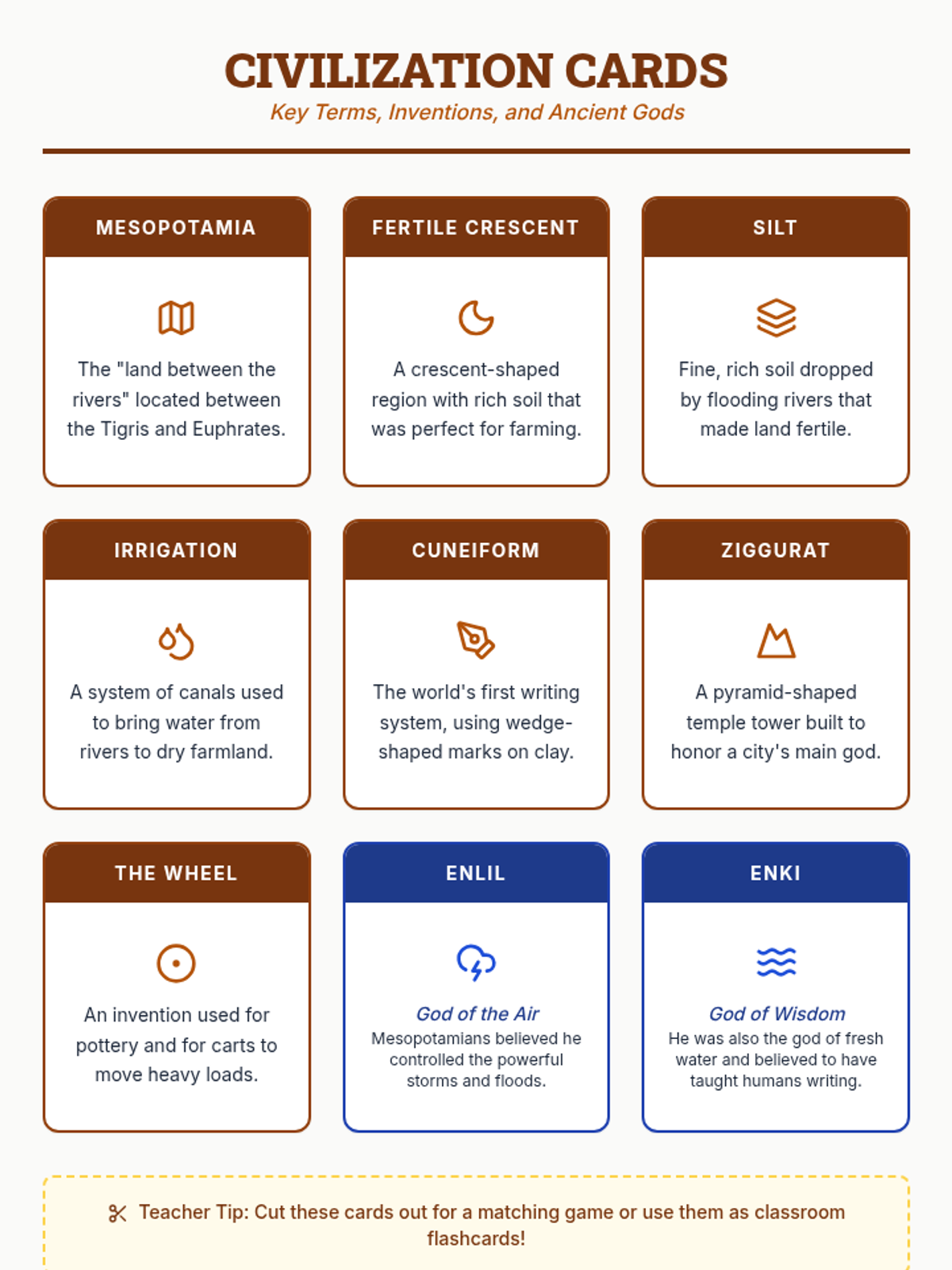
An introductory lesson on Ancient Mesopotamia covering its geography, social structure, inventions, and mythology. Students will explore why this region is called the 'Cradle of Civilization' through mapping, reading, and creative activities.
A foundational geography lesson designed to help students identify and name the seven continents through visual exploration, fact-finding, and hands-on matching activities. Students will explore unique characteristics of each landmass and practice spatial awareness by labeling a world map.
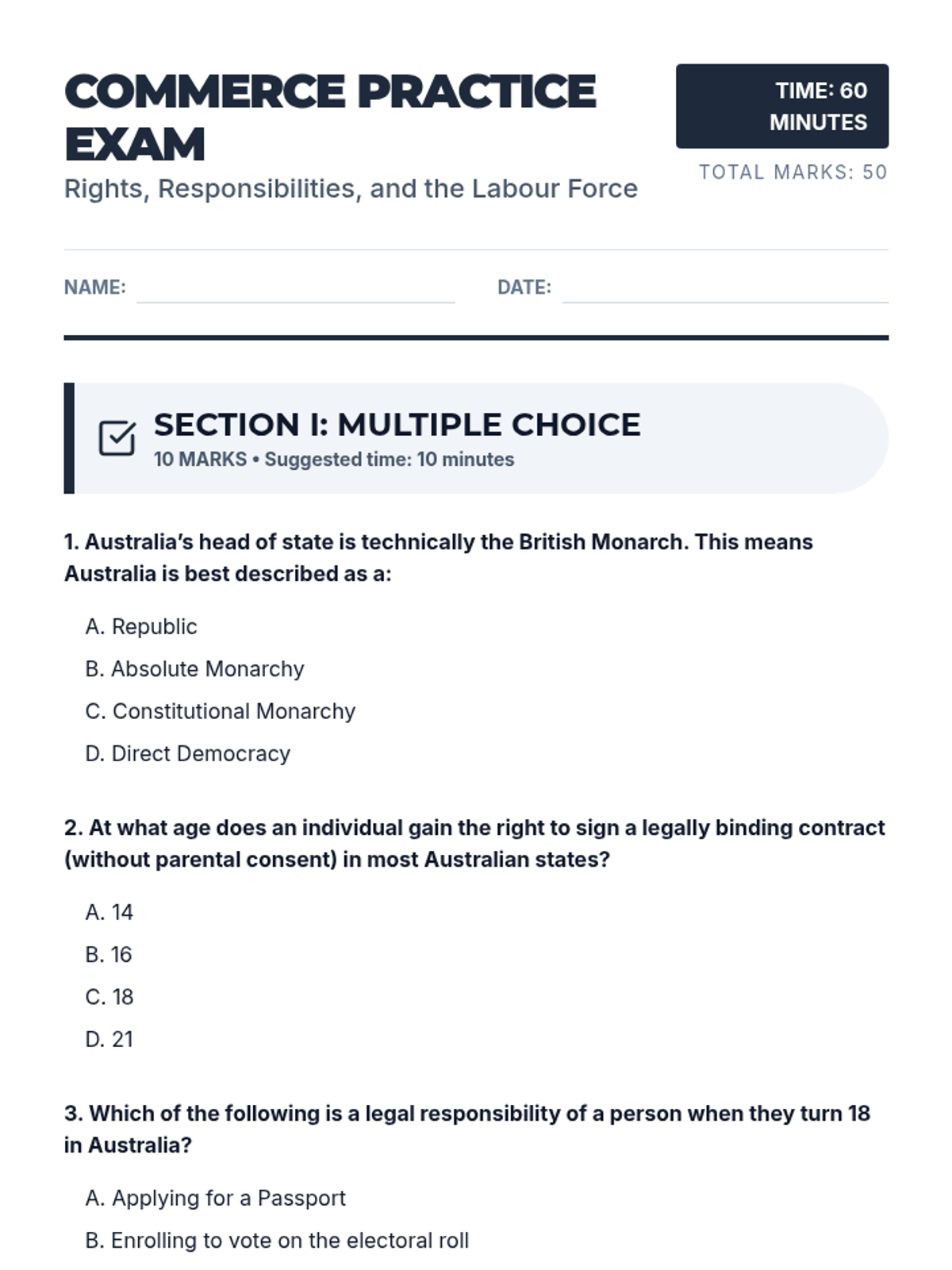
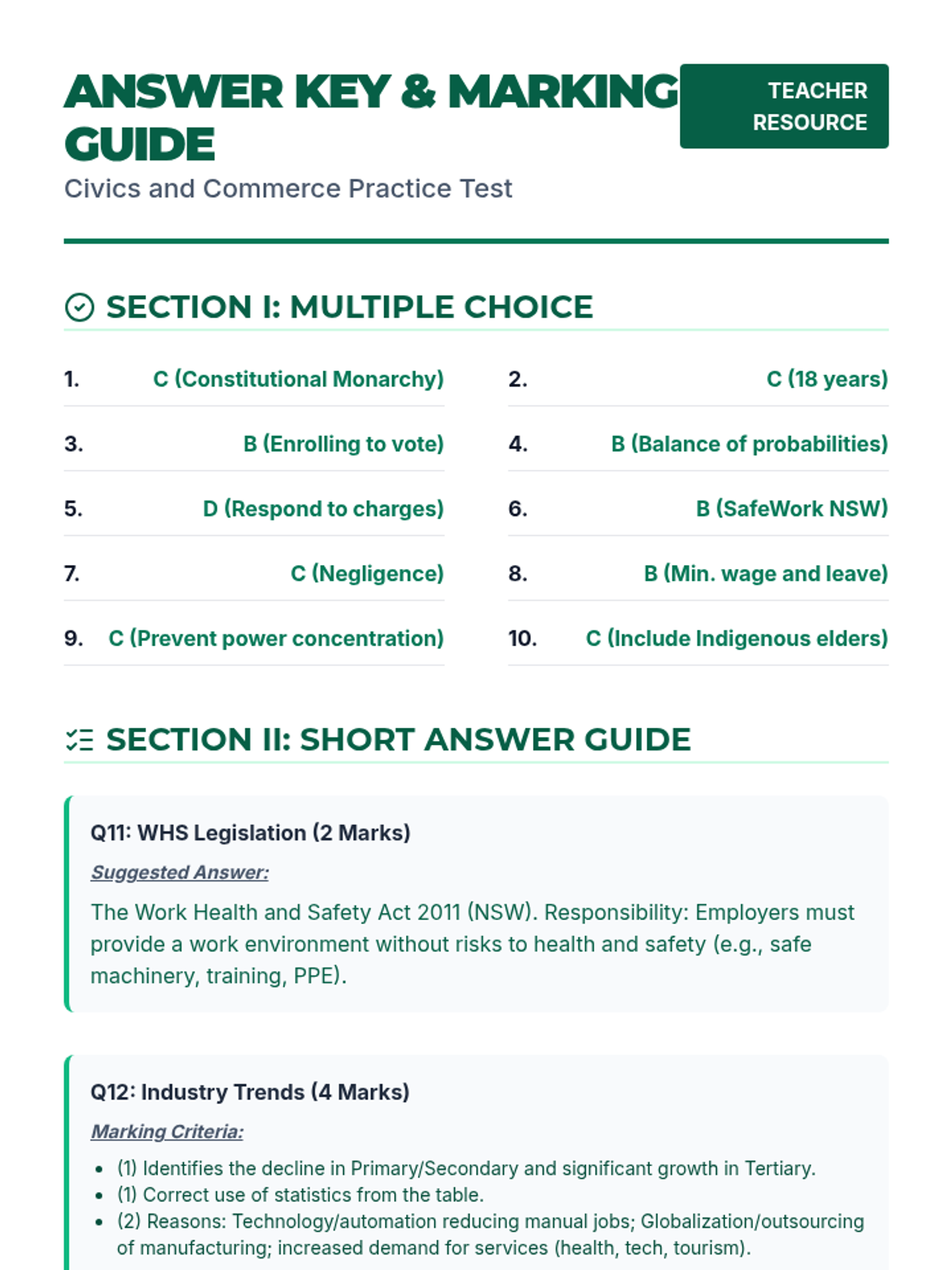
A practice exam focusing on the rights and responsibilities of individuals in legal and employment contexts, as well as factors affecting economic decisions. Includes multiple choice, data interpretation, and an extended response section.
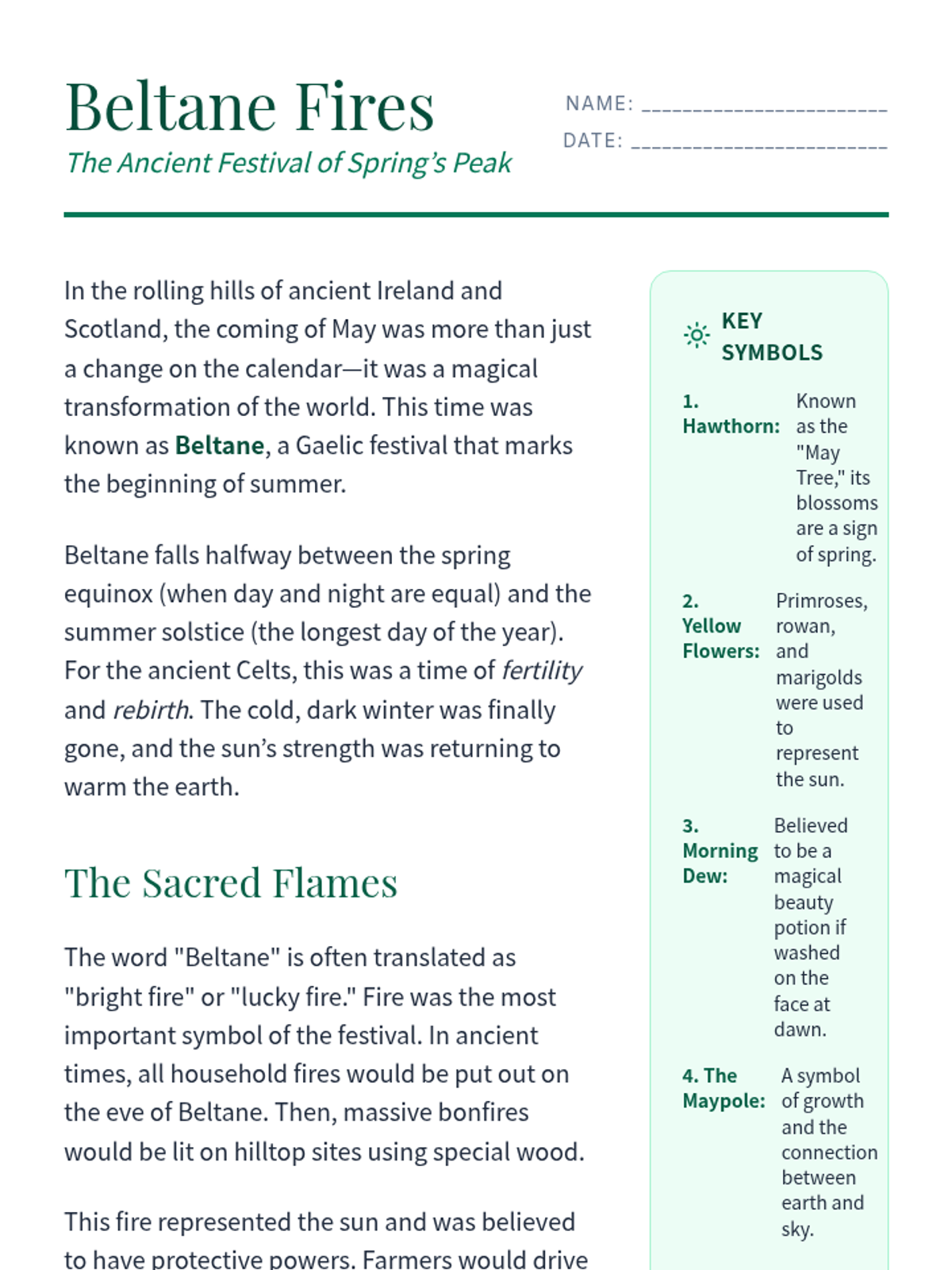
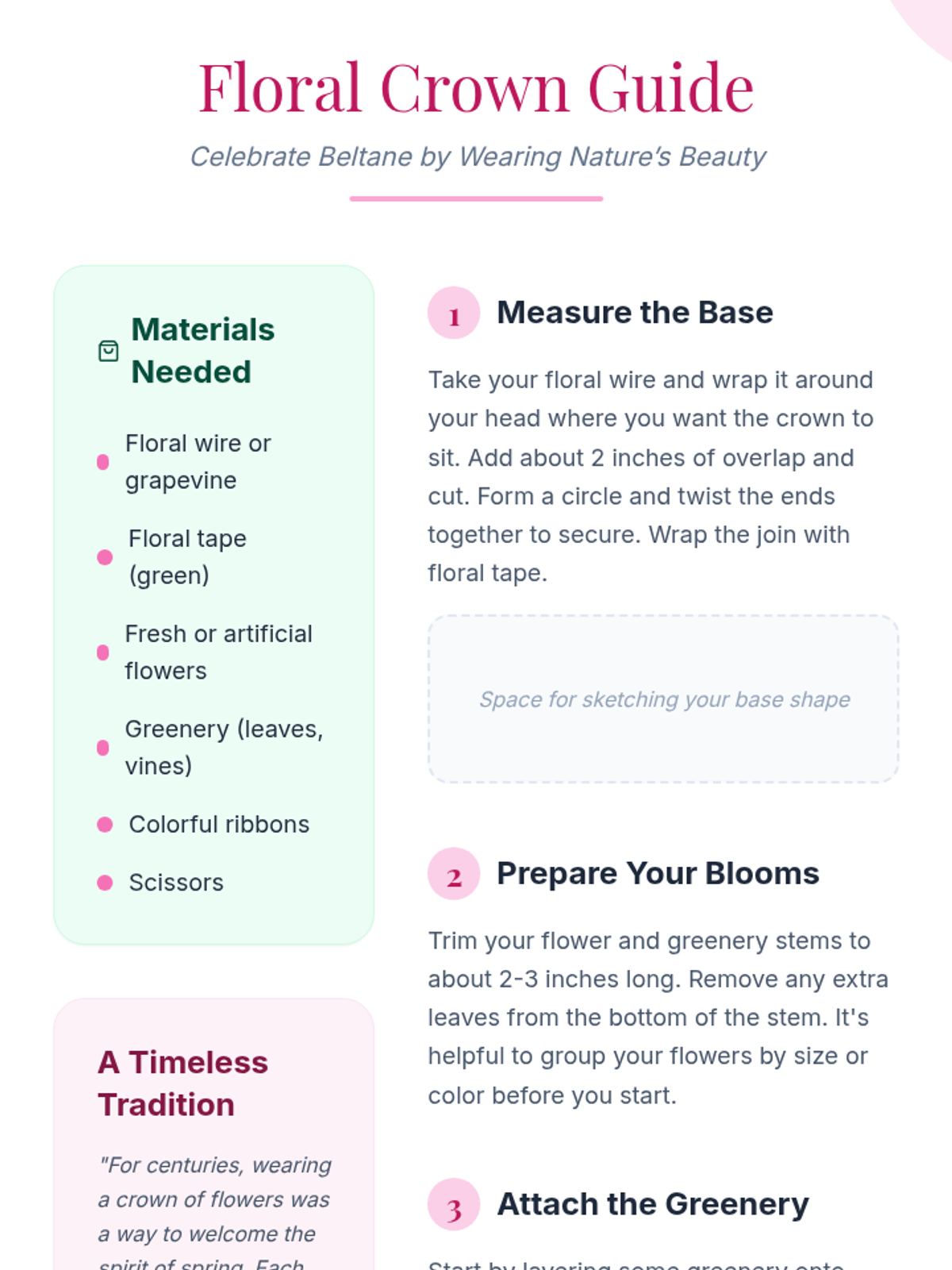
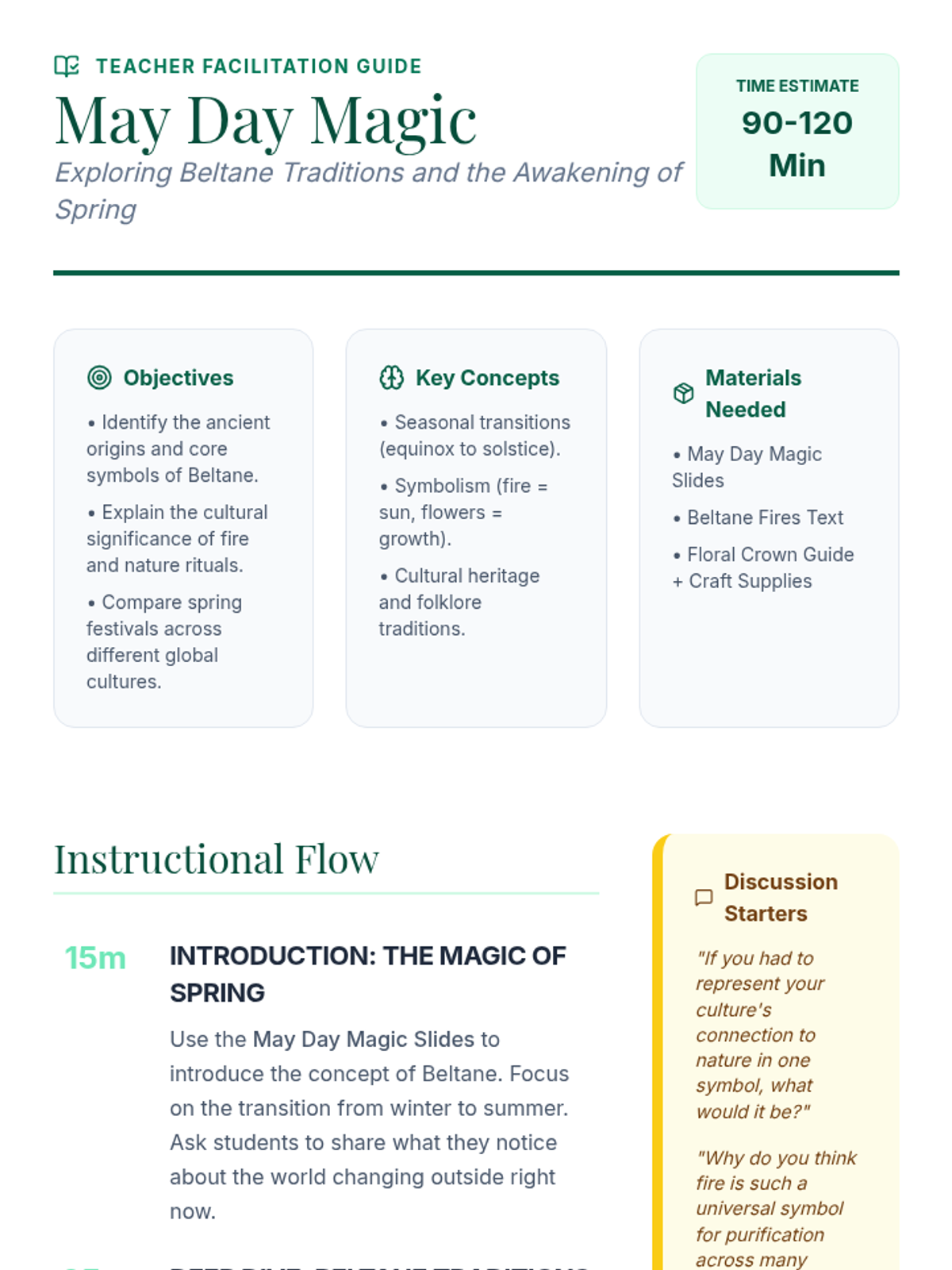
Discover the ancient origins, symbols, and nature-connected rituals of Beltane, alongside a creative floral craft.
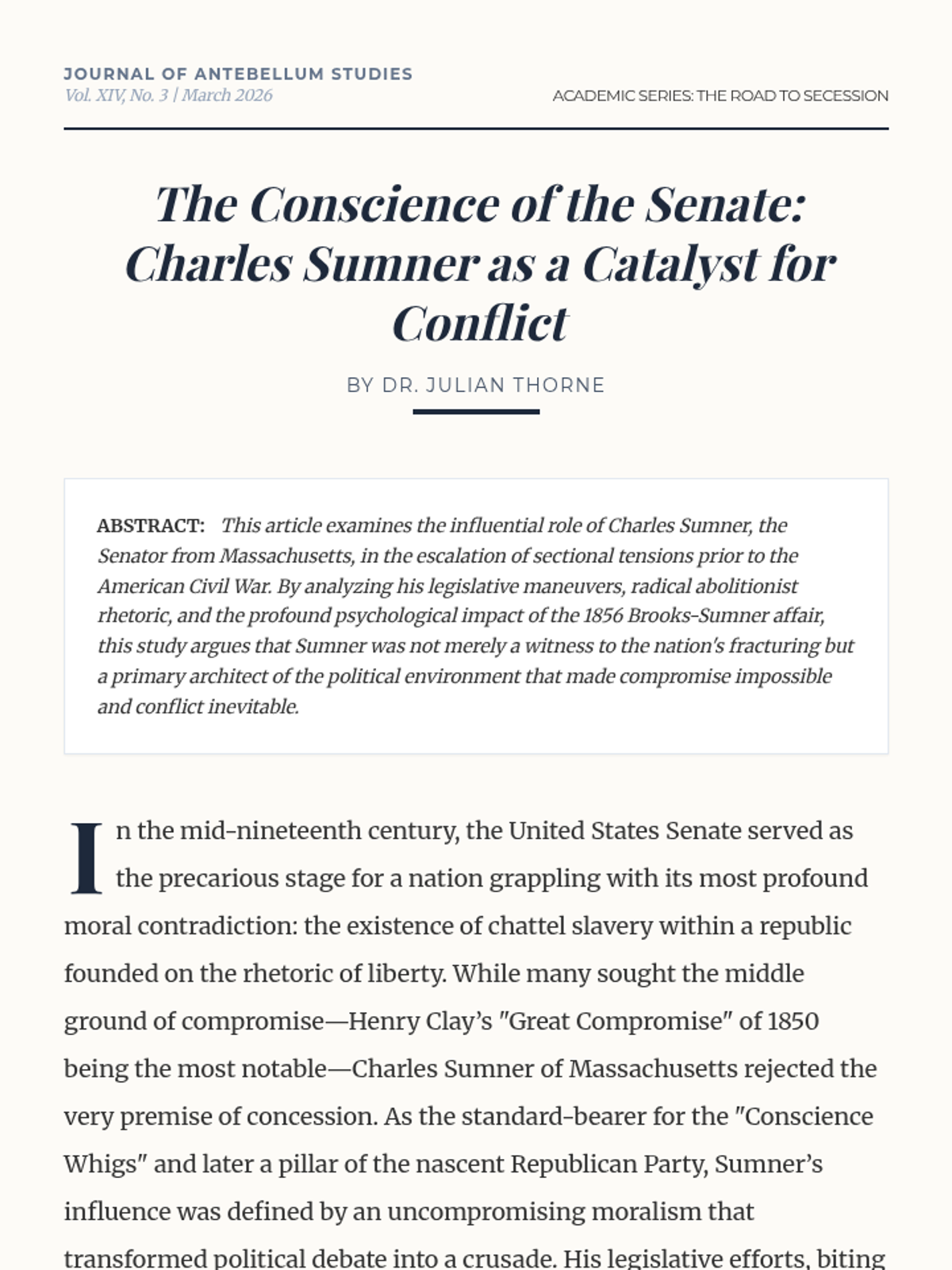
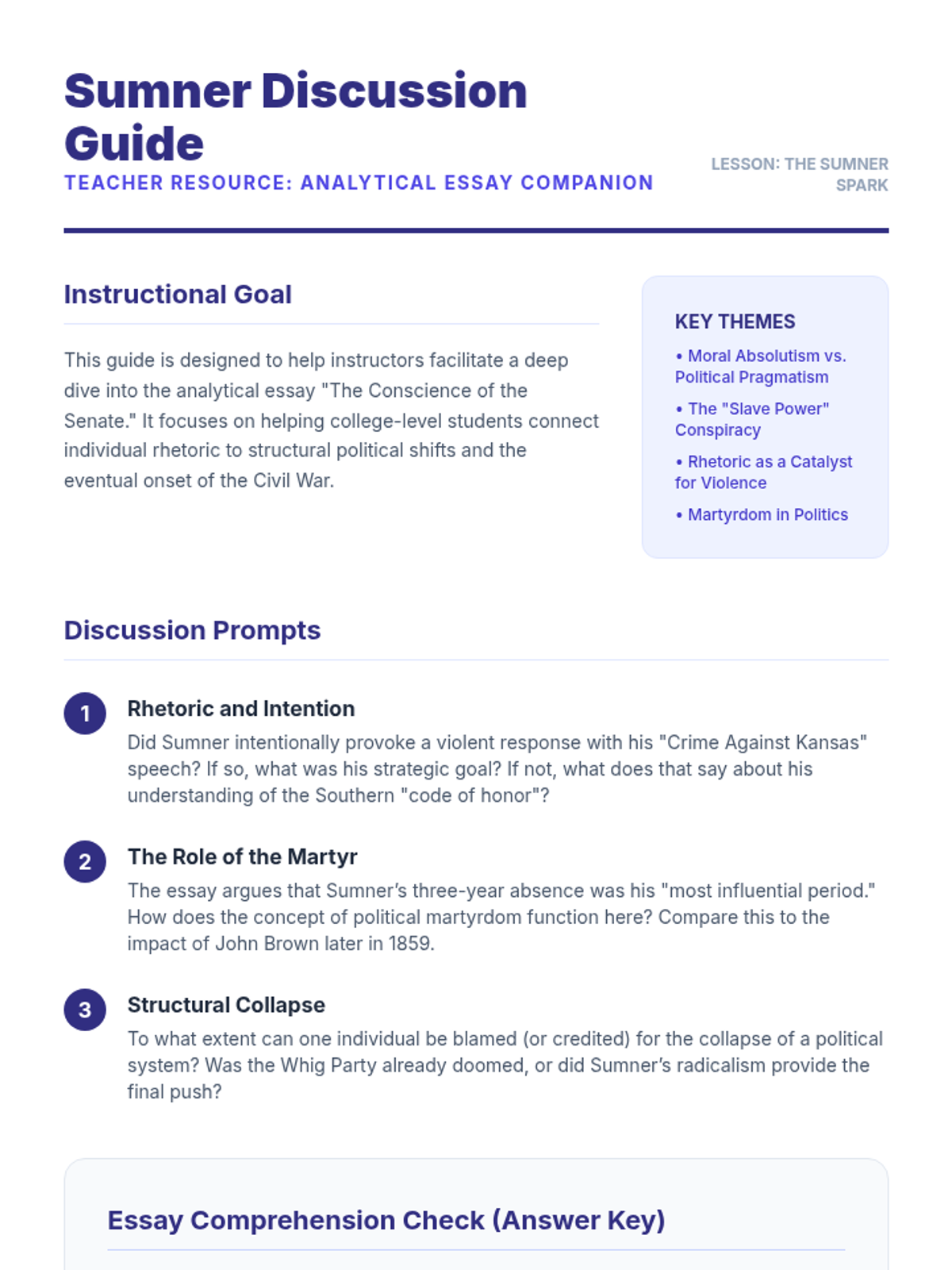
An in-depth exploration of Charles Sumner's role as a radical abolitionist and political catalyst in the years leading up to the American Civil War. This lesson examines his rhetoric, legislative strategies, and the national impact of his physical assault on the Senate floor.
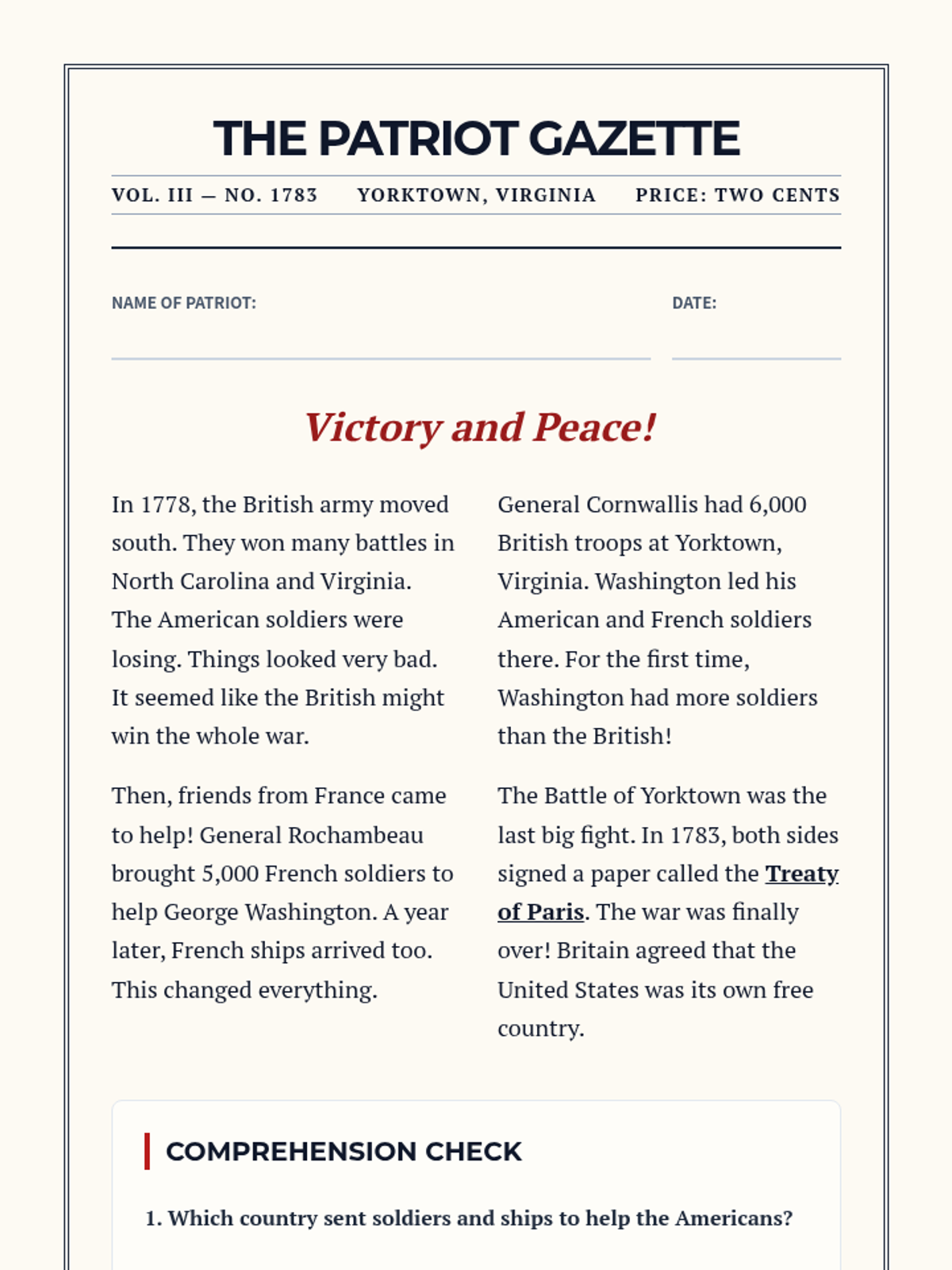
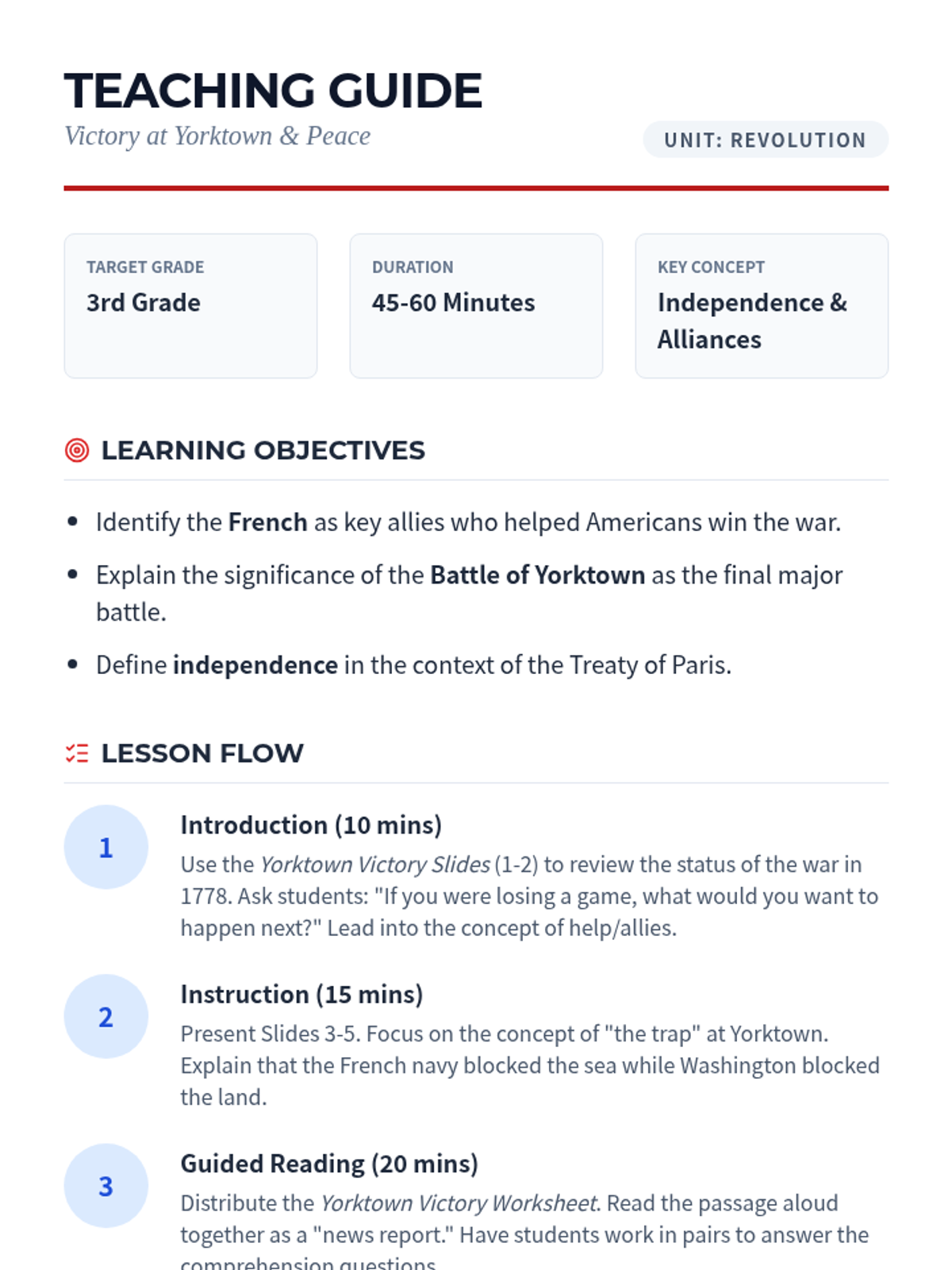
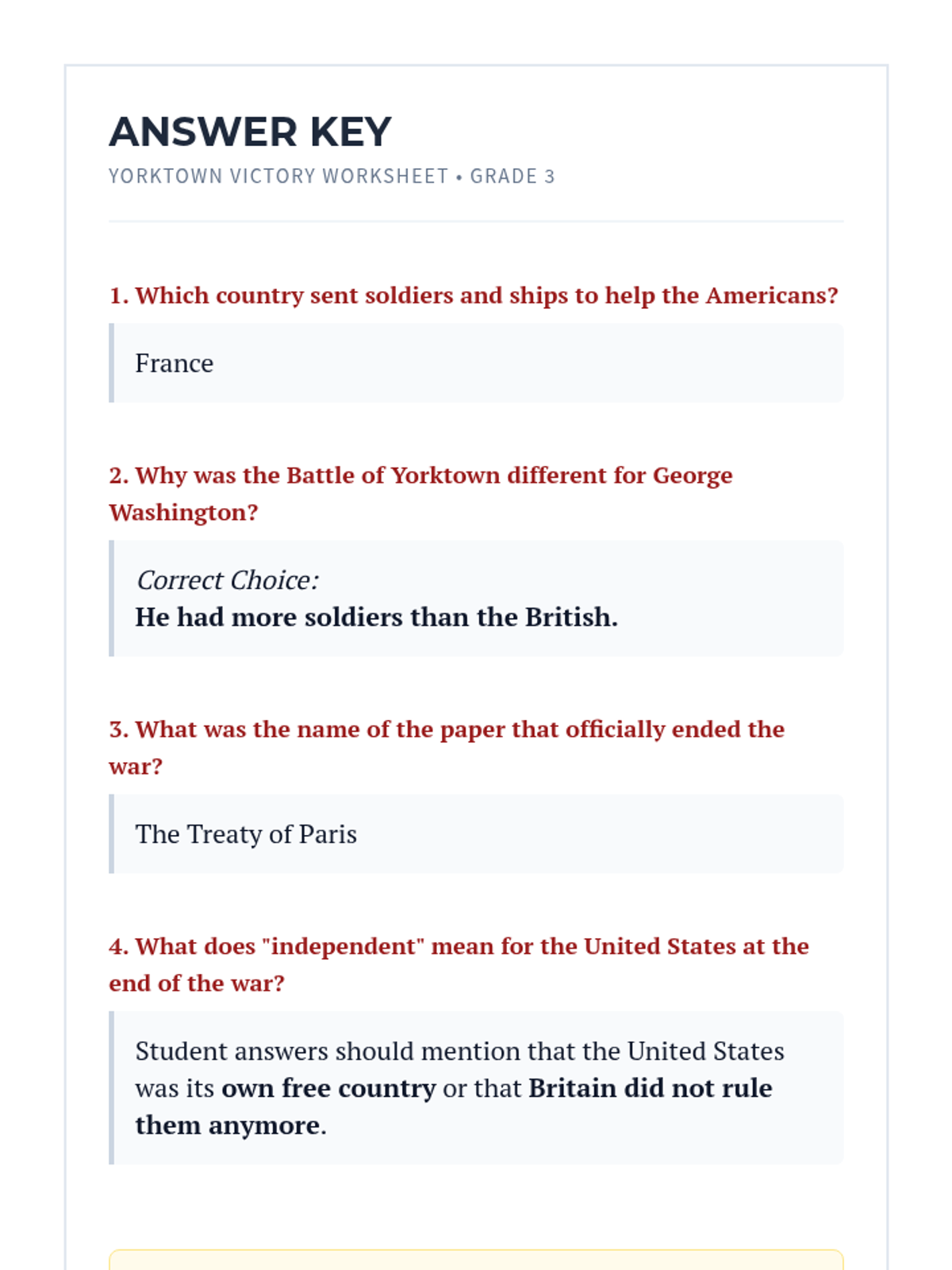
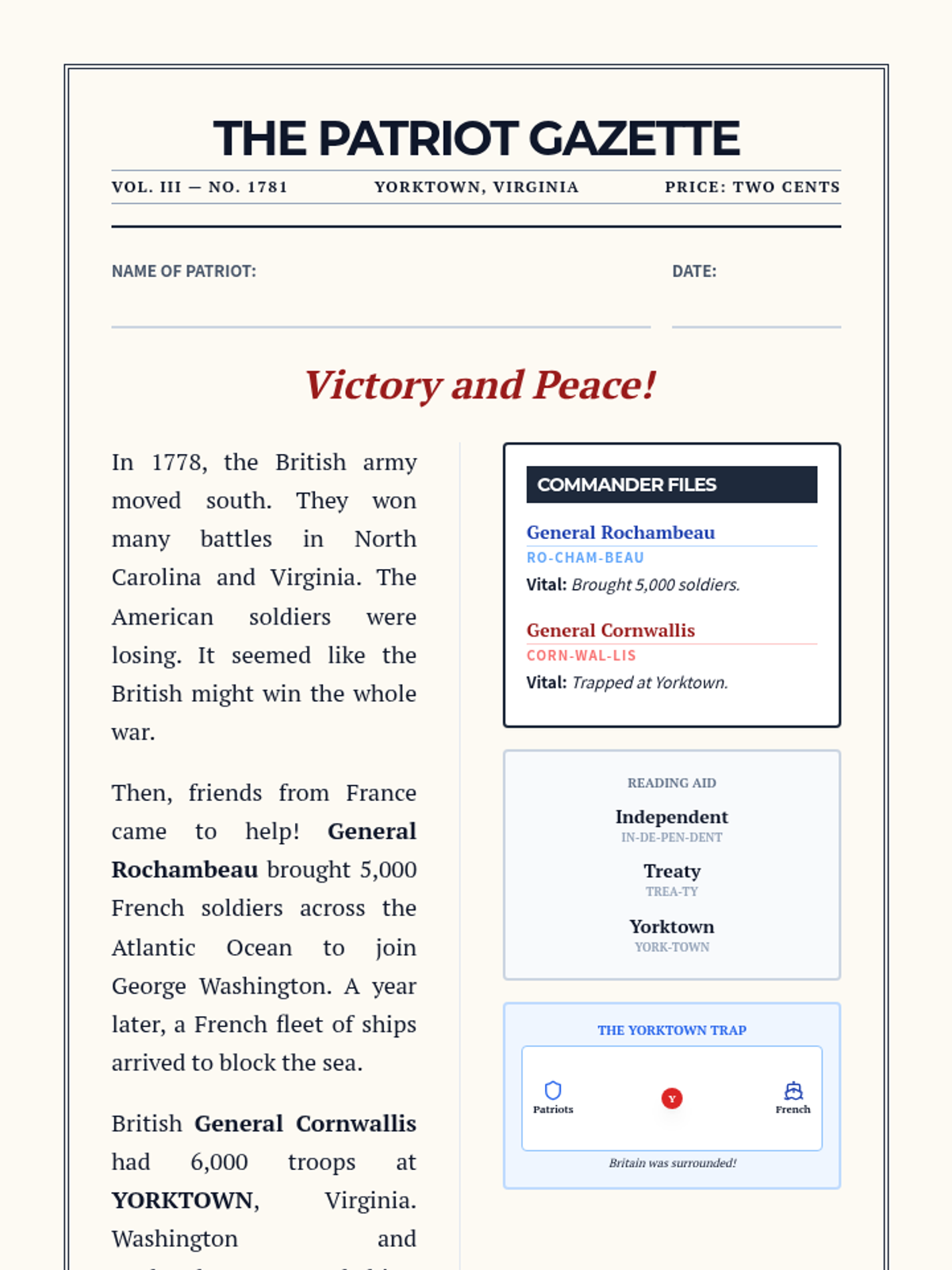
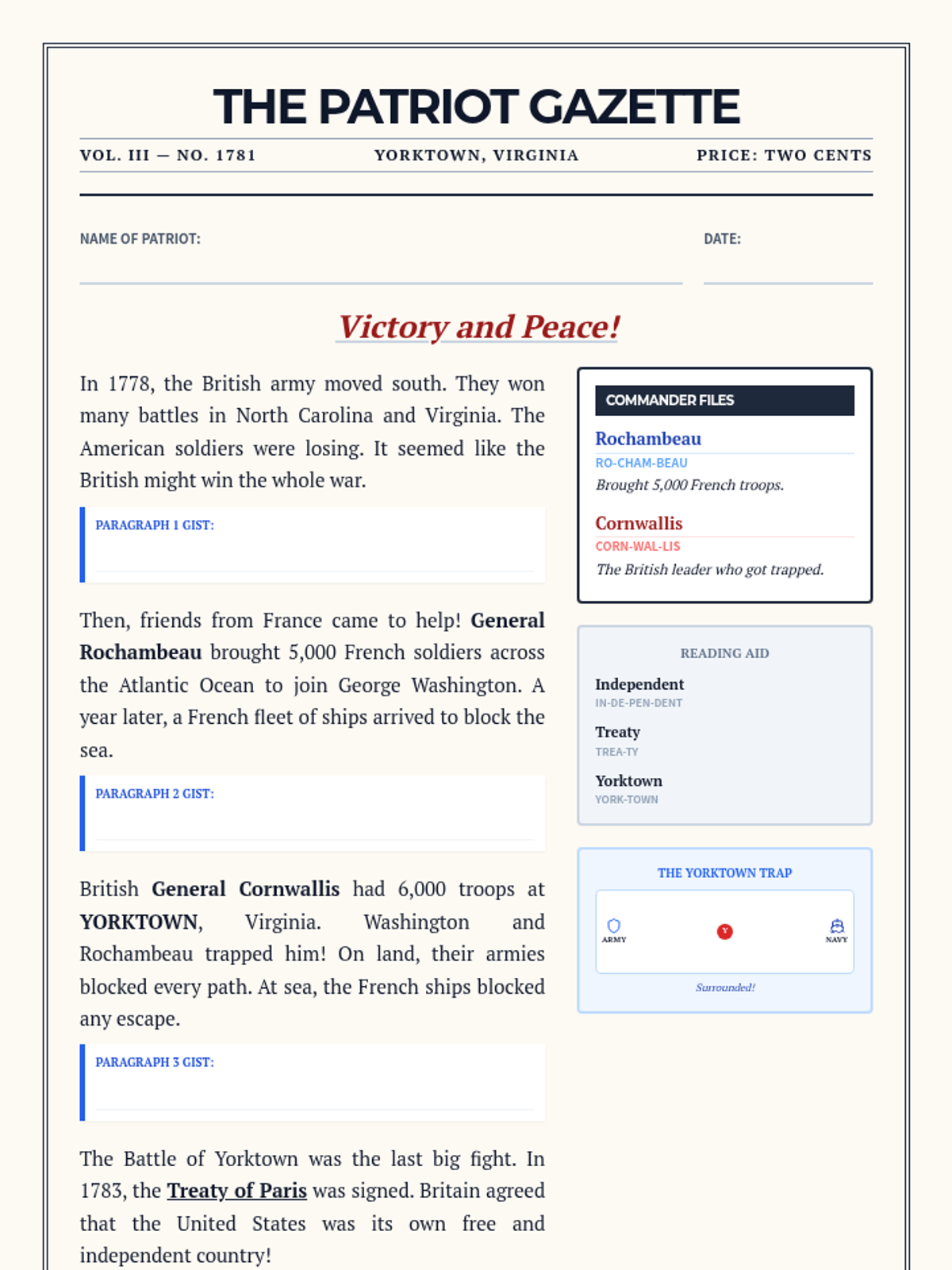
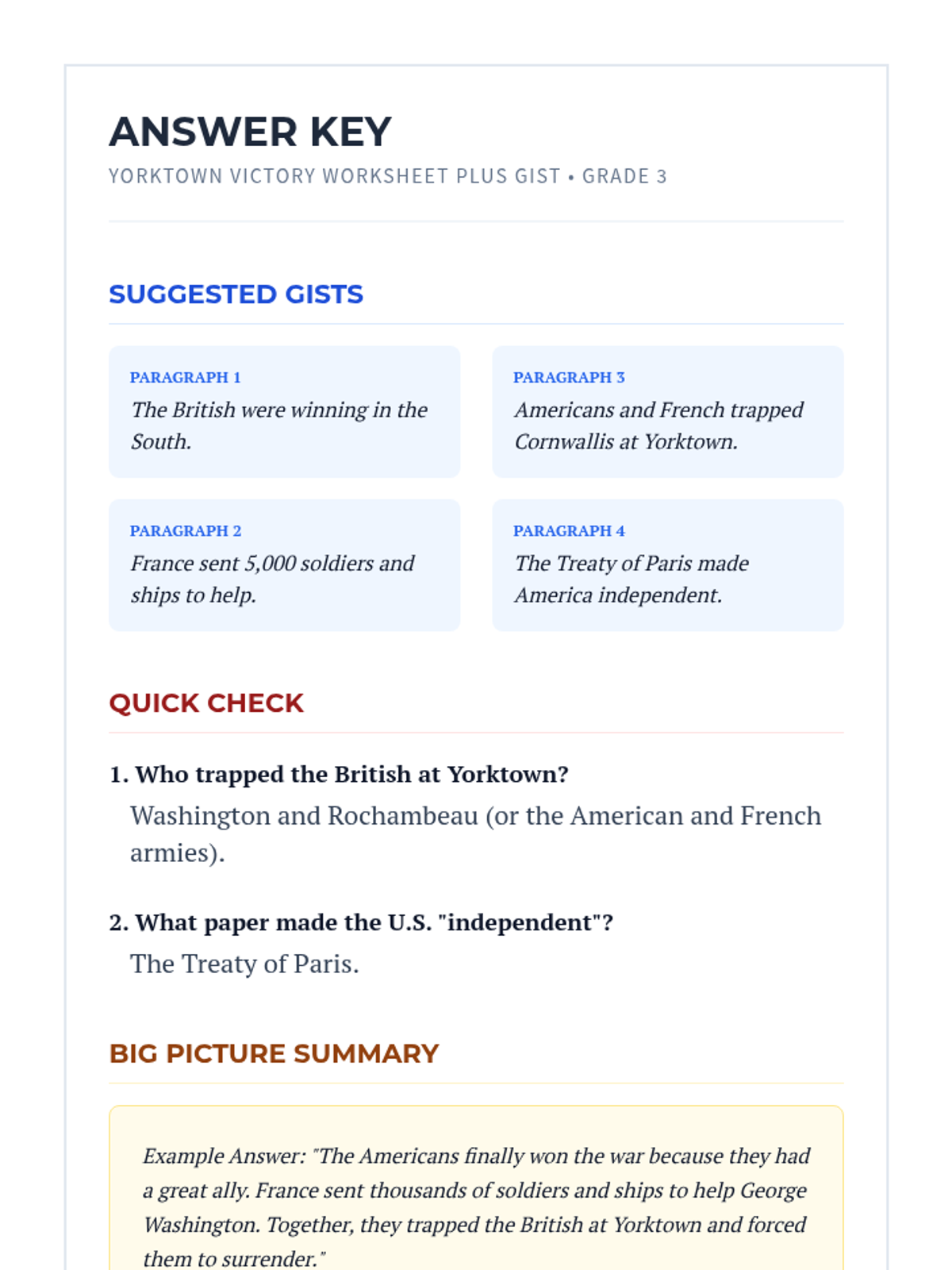
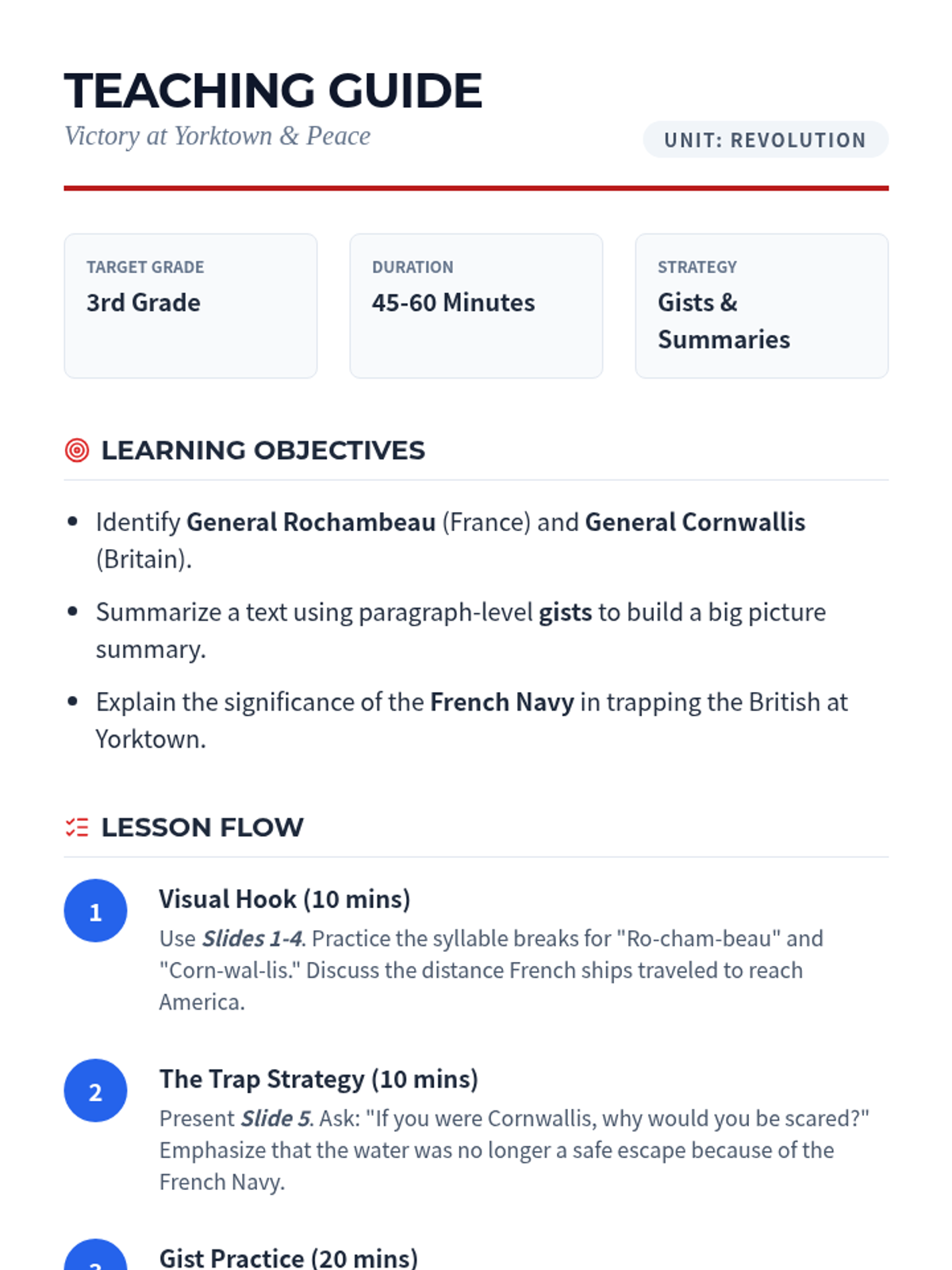
This lesson covers the final stages of the American Revolutionary War, focusing on the French alliance, the decisive Battle of Yorktown, and the peace treaty that established American independence.
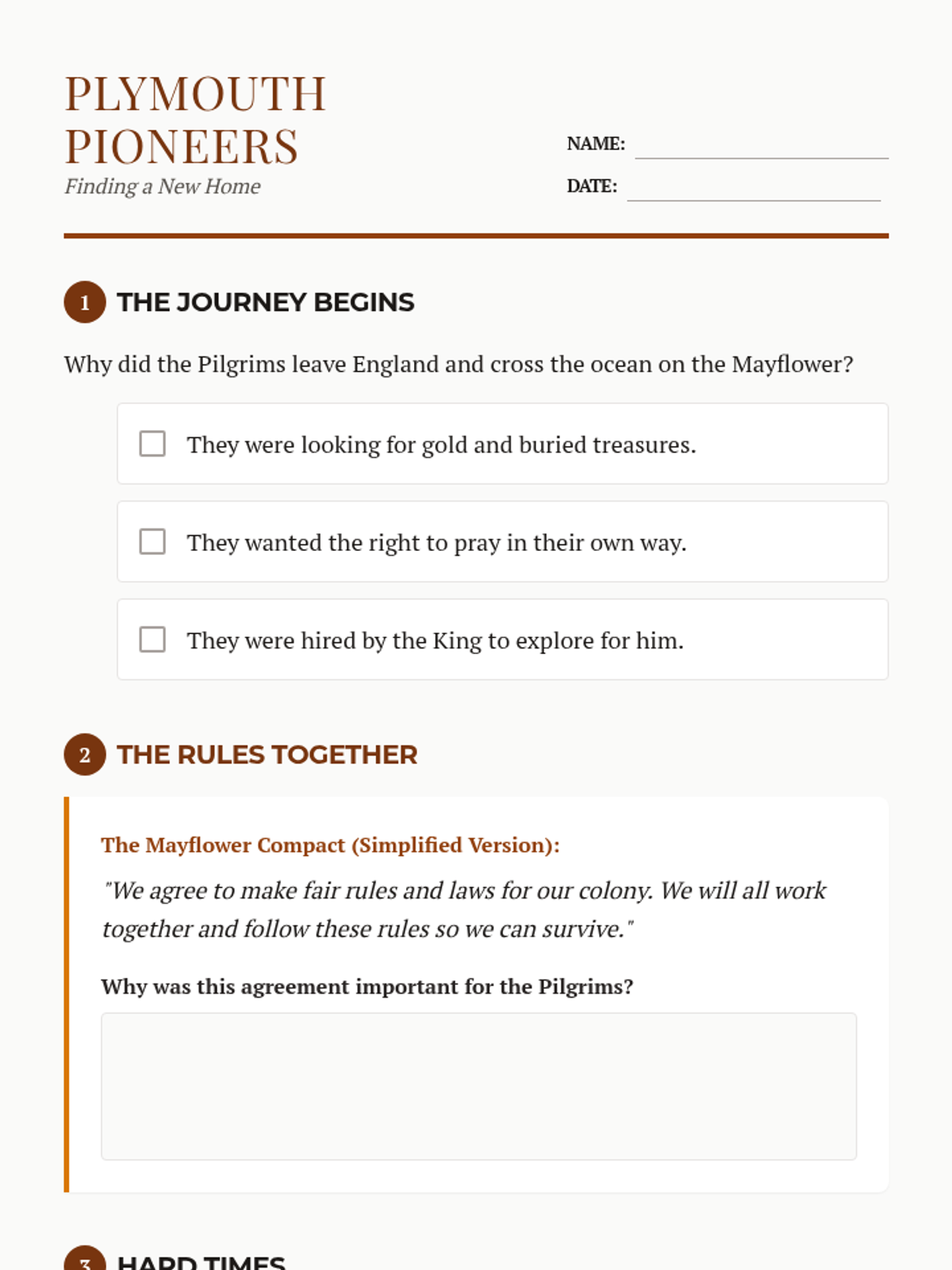
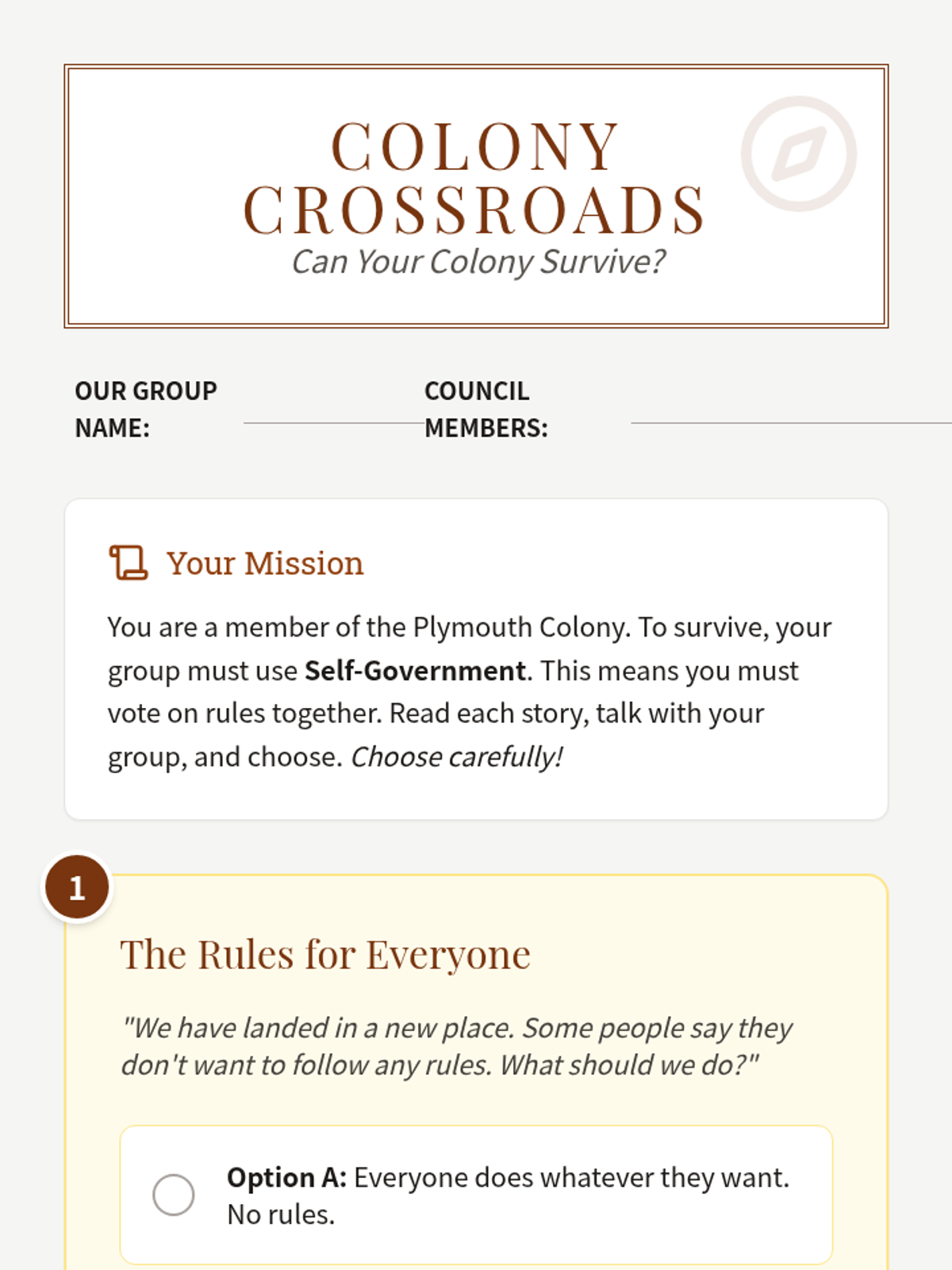
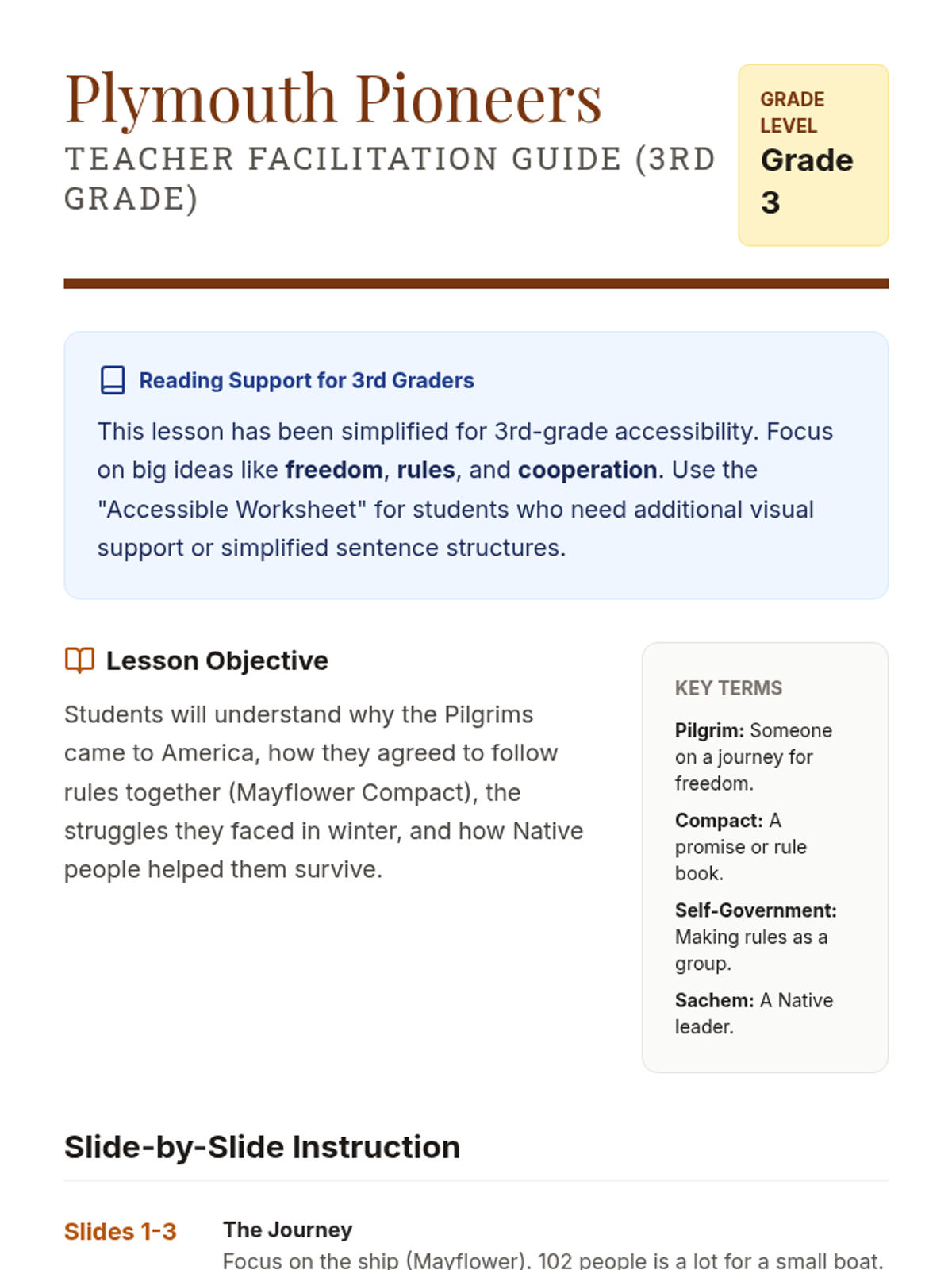
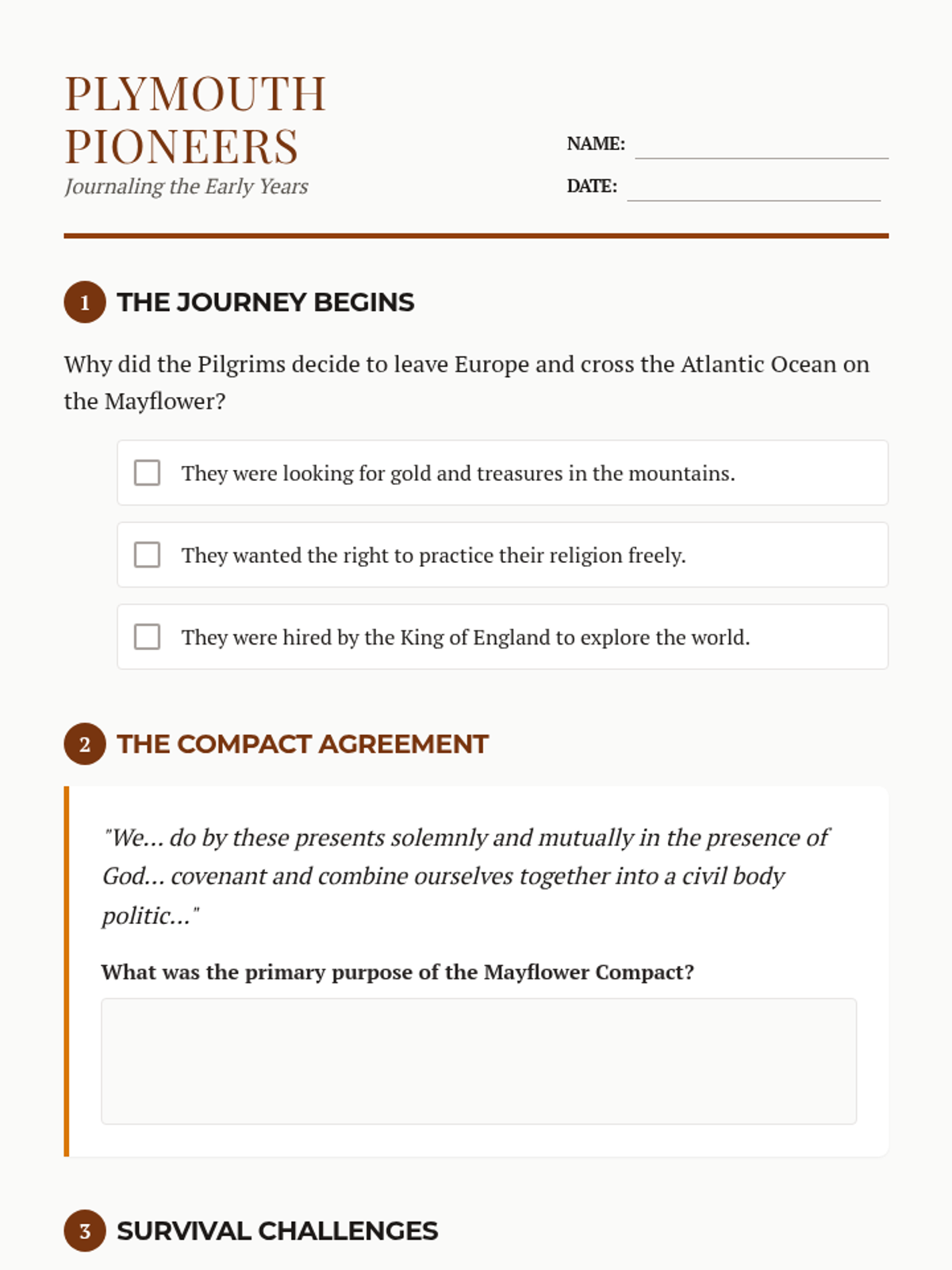
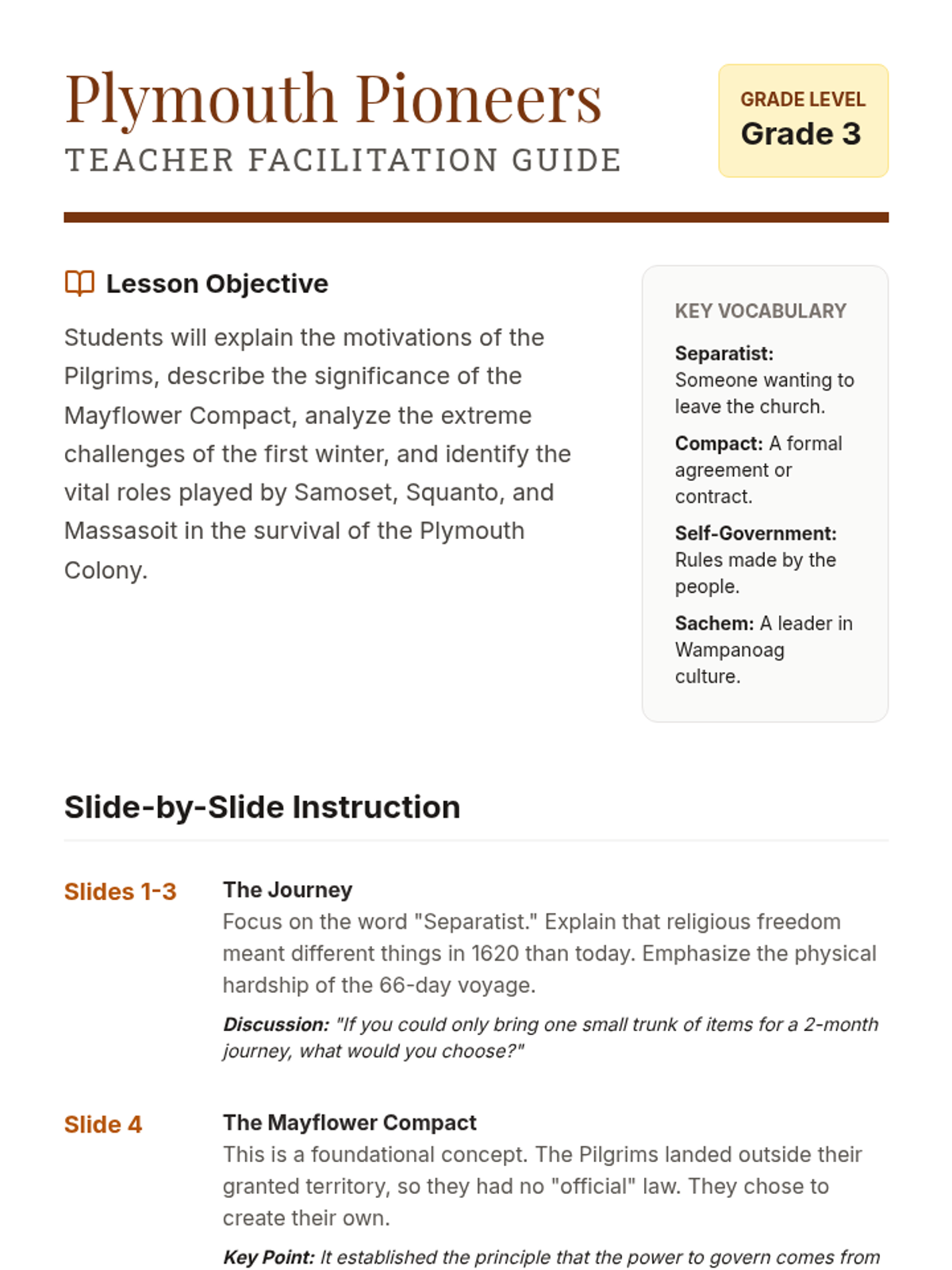
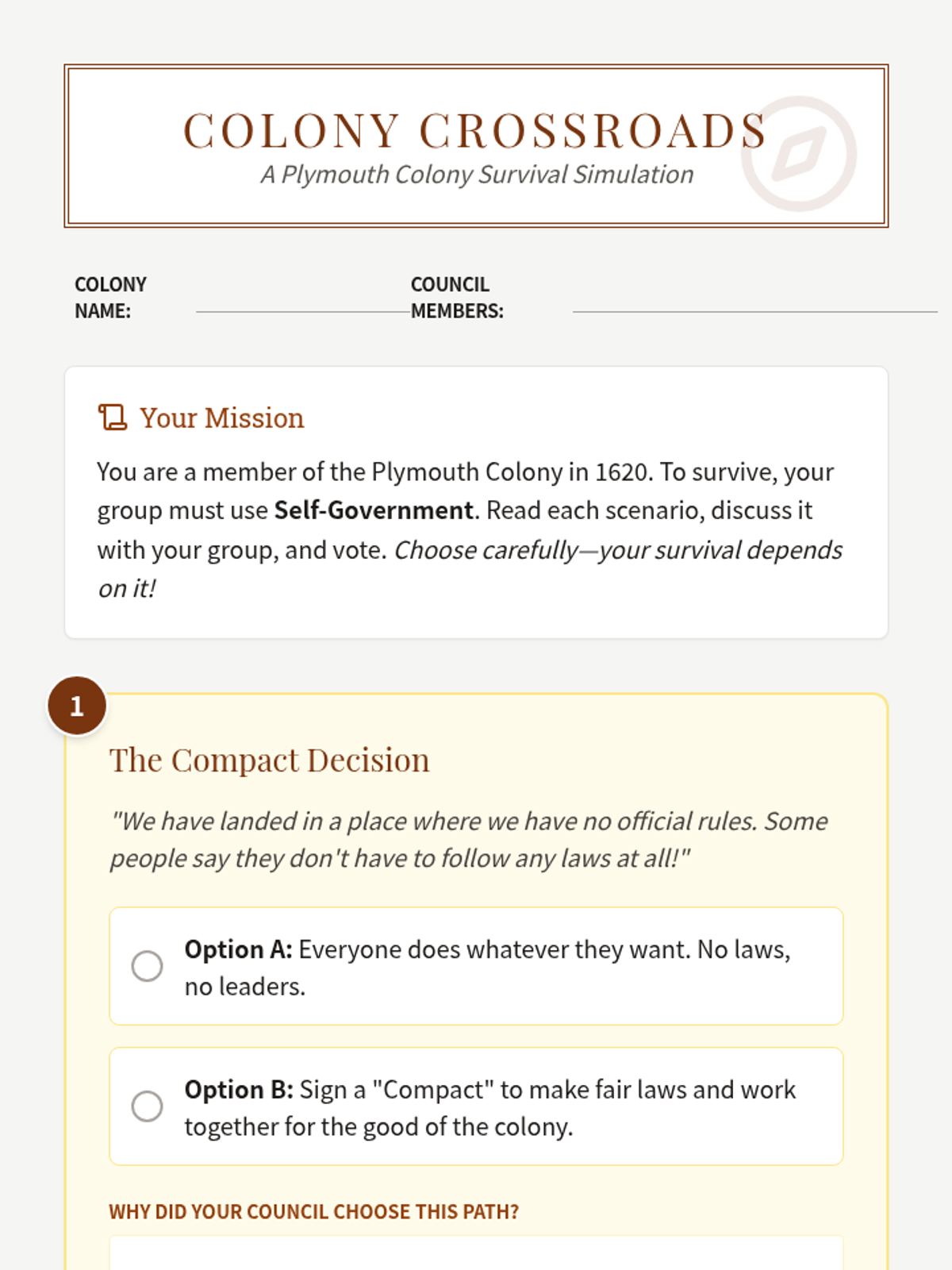
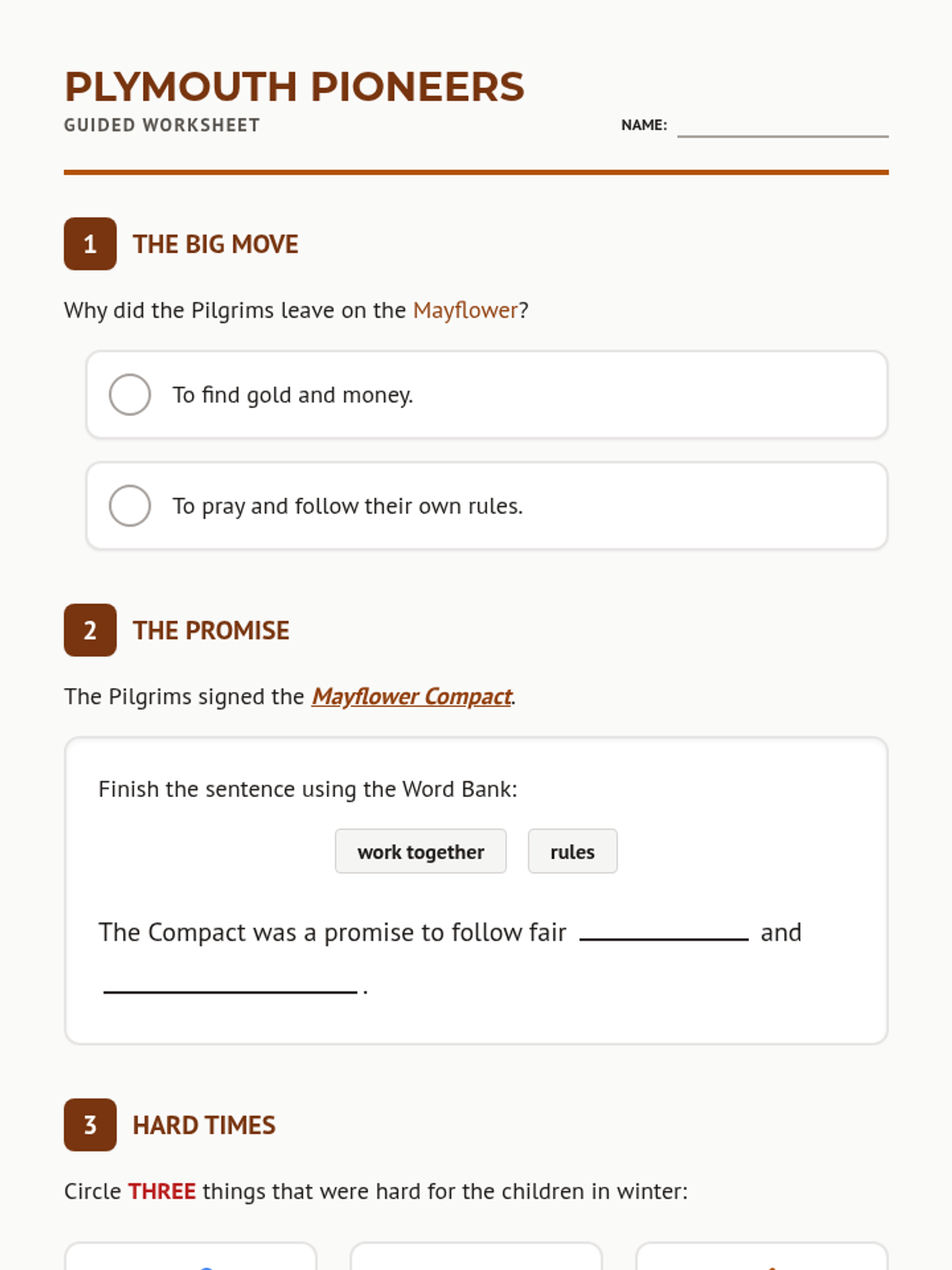
A comprehensive grade 3 lesson exploring the Pilgrims' journey, the Mayflower Compact, the challenges of colonial life, and the vital relationships between the Plymouth colonists and the Wampanoag and Wabanaki peoples.
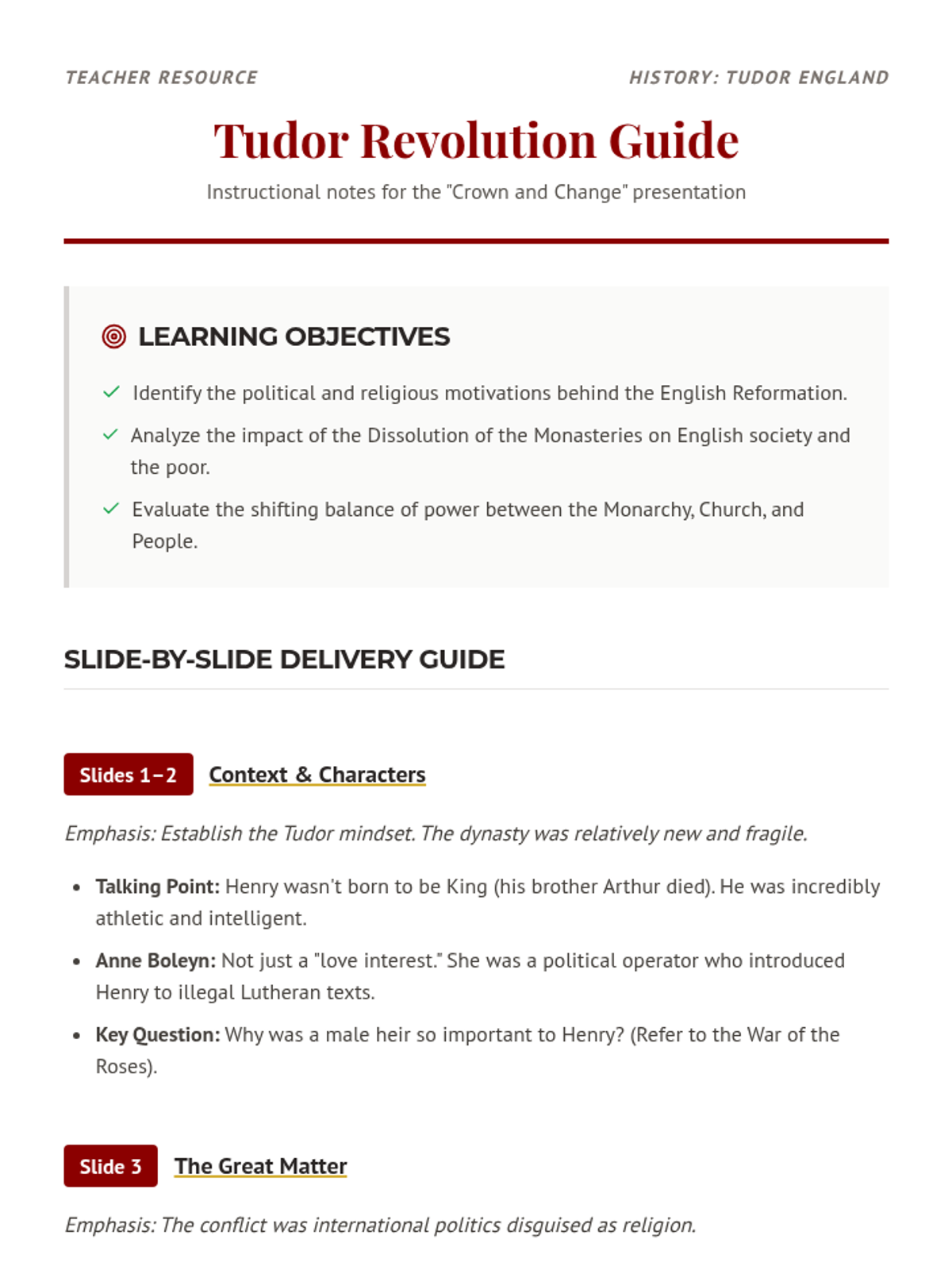
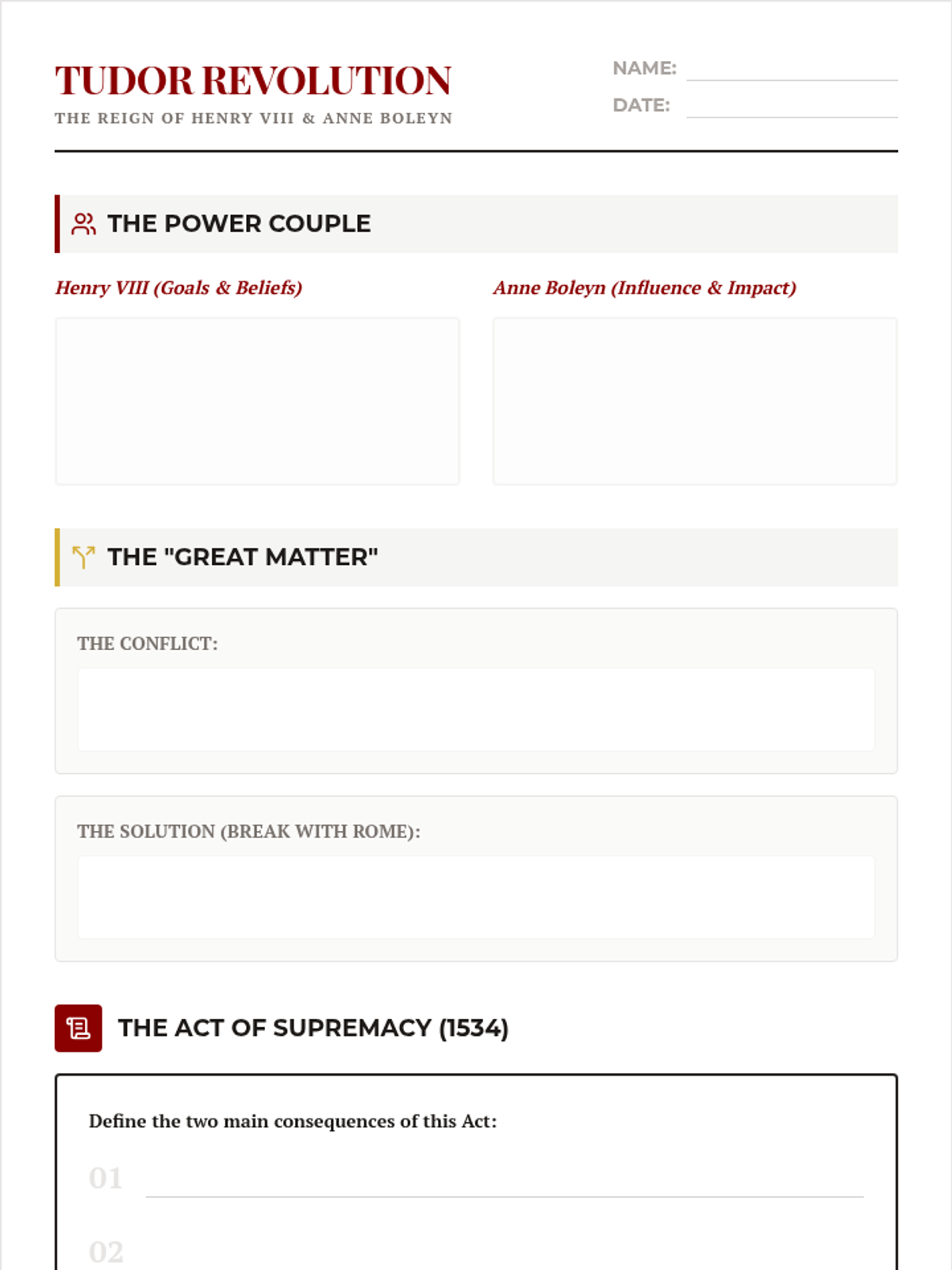
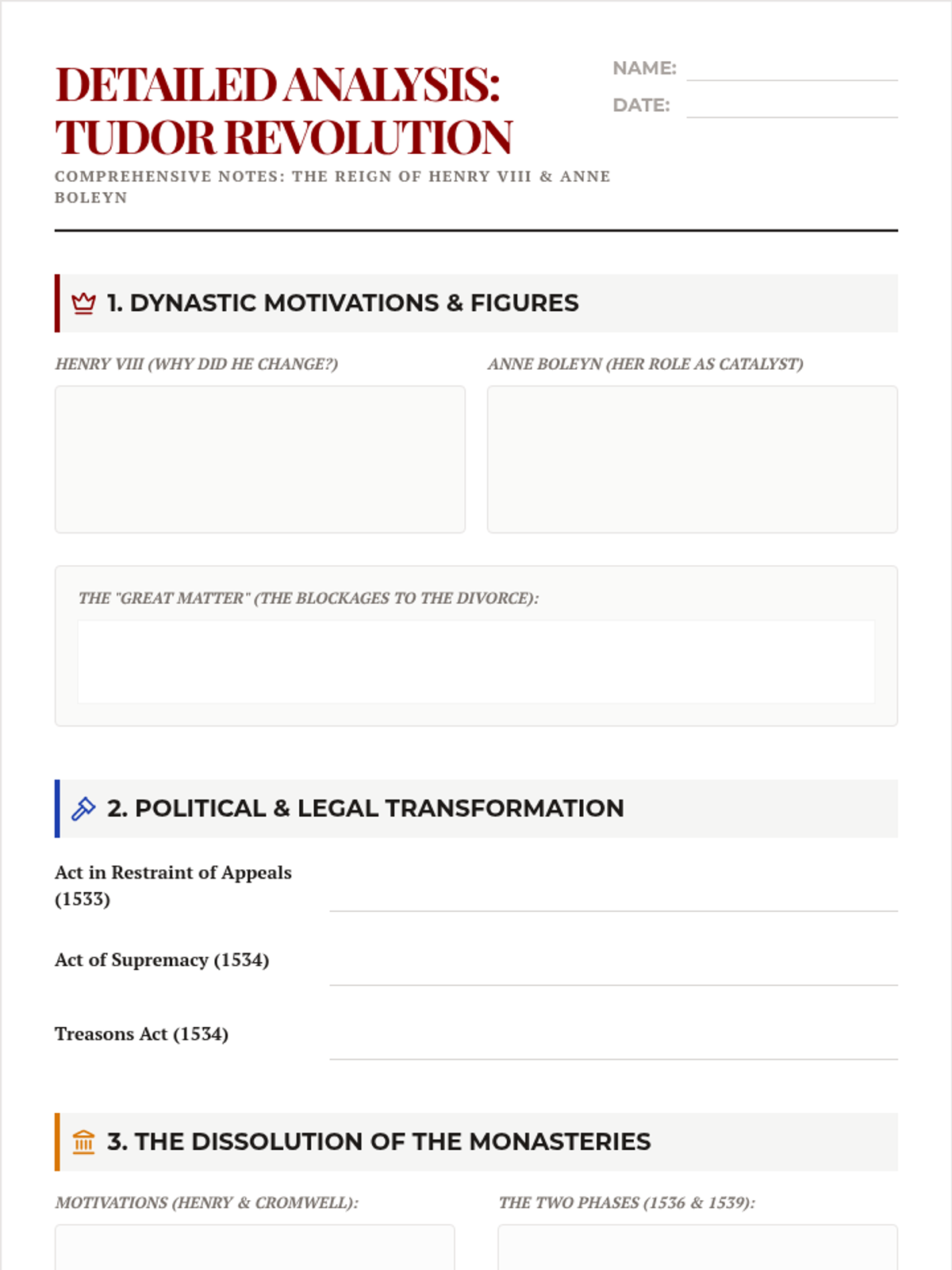
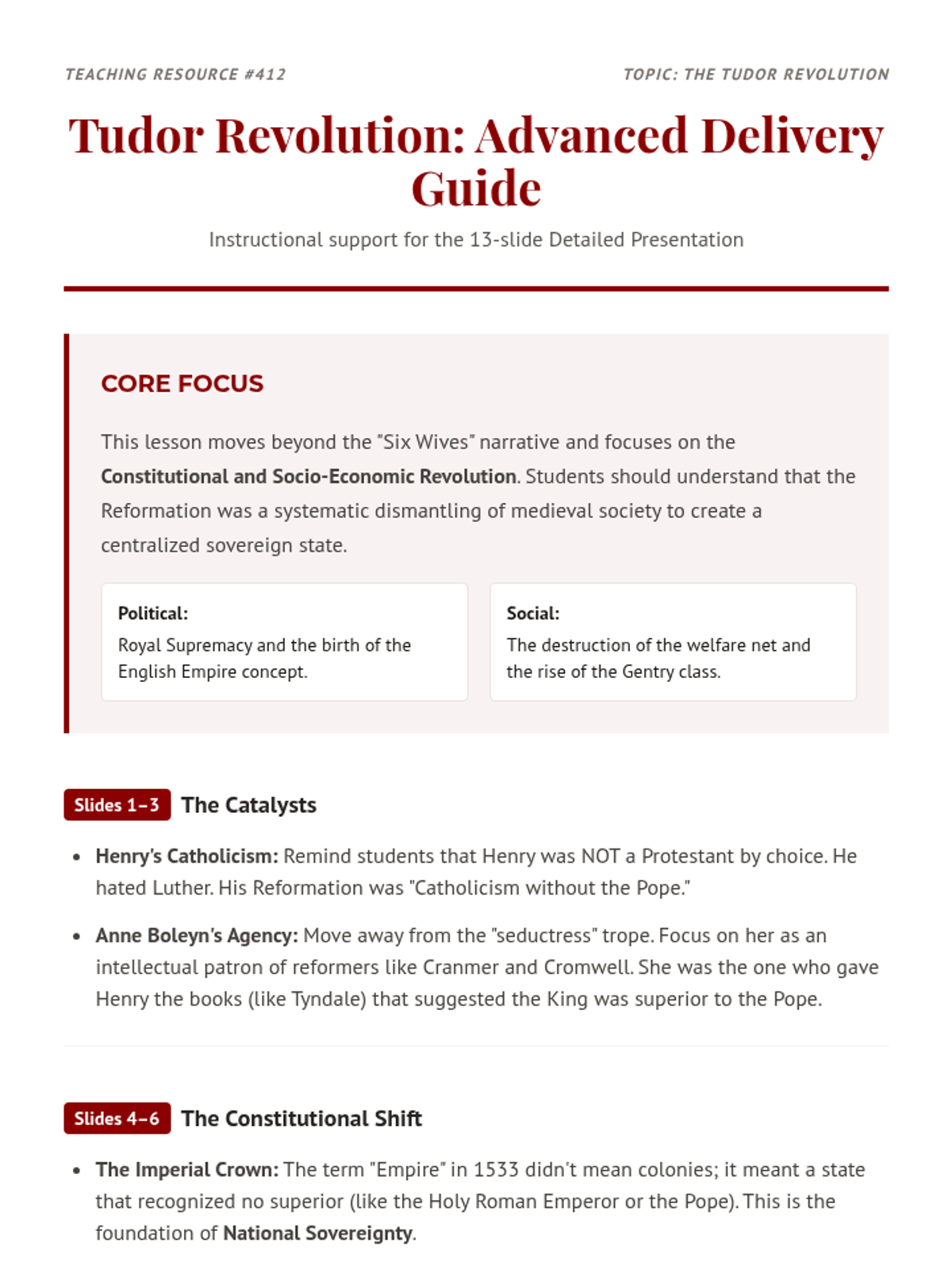
This lesson explores the transformative reign of Henry VIII and Anne Boleyn, focusing on the religious, political, and social upheavals of the English Reformation and its lasting impact on English society.
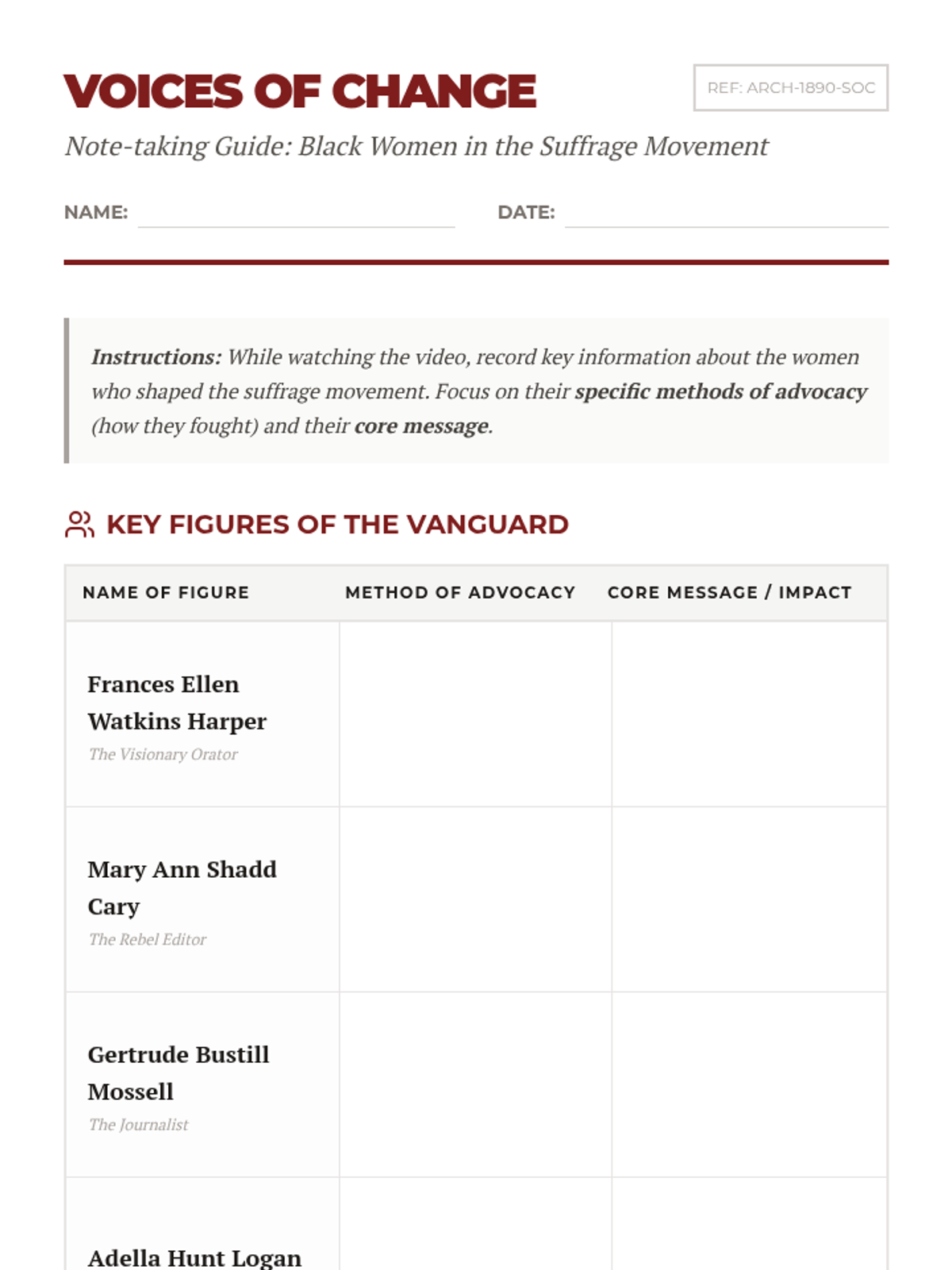
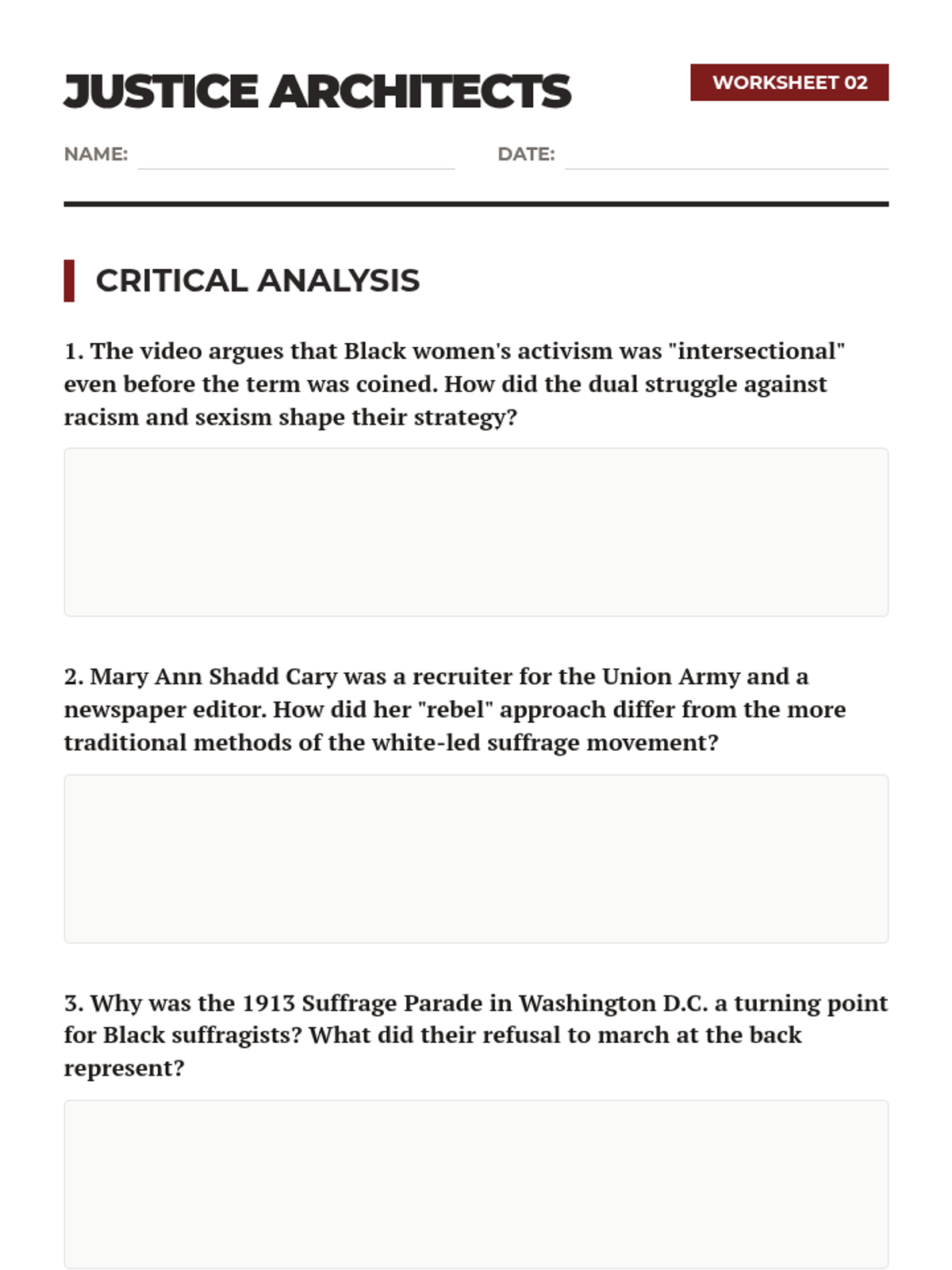
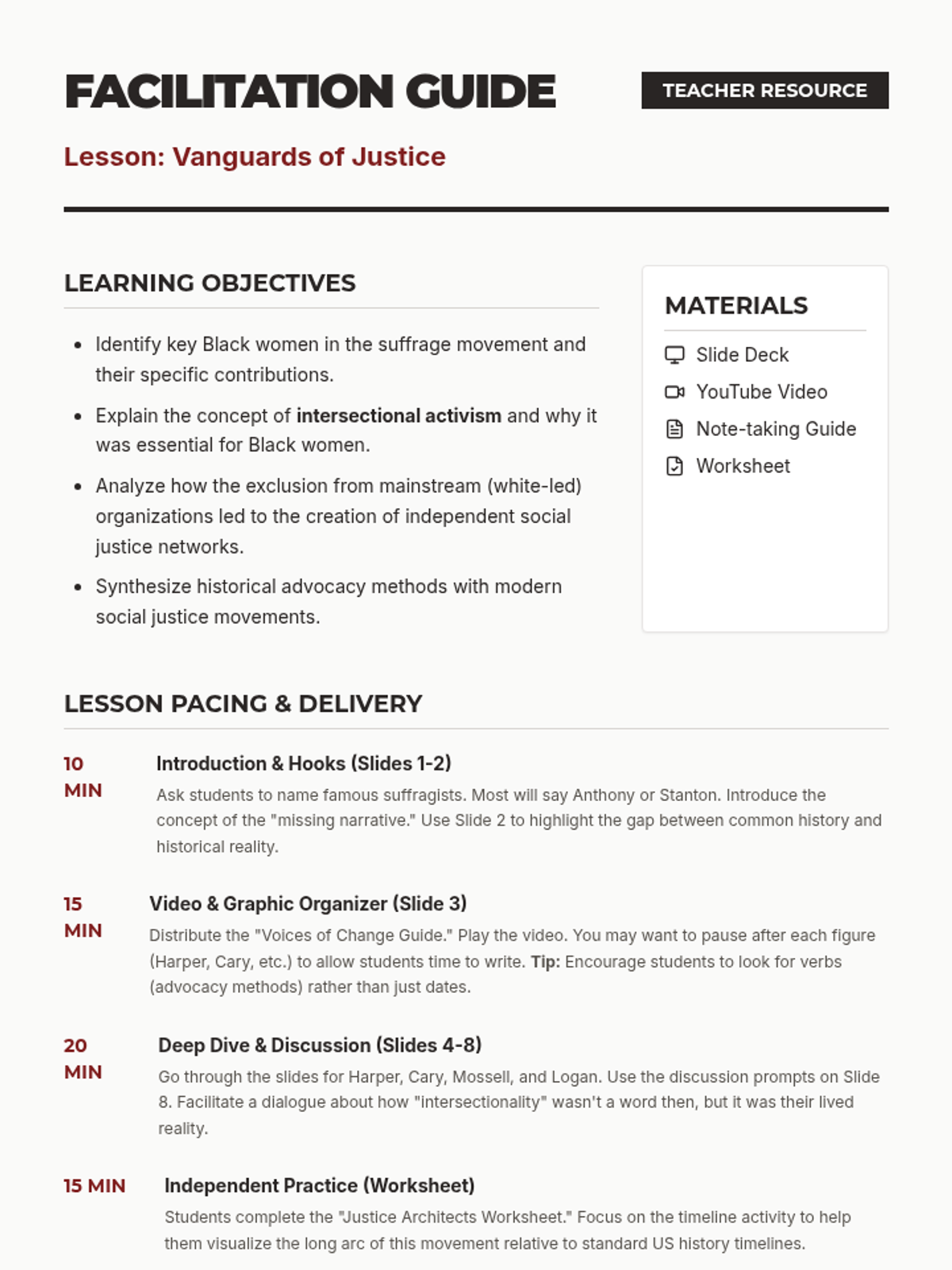
A deep dive into the contributions of Black women to the suffrage movement, focusing on their dual advocacy for racial and gender equality. Students will analyze key figures and the concept of intersectional activism.
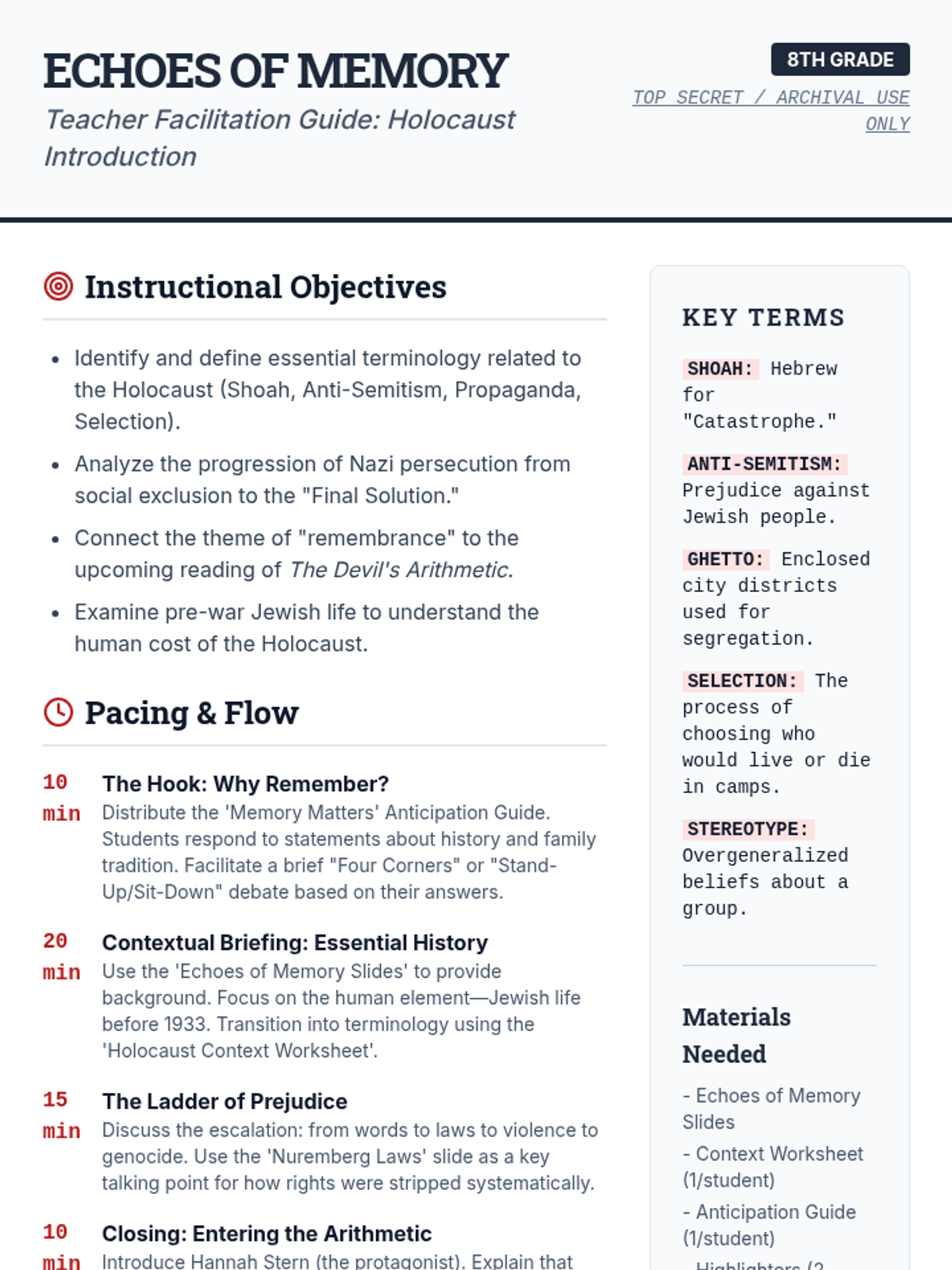
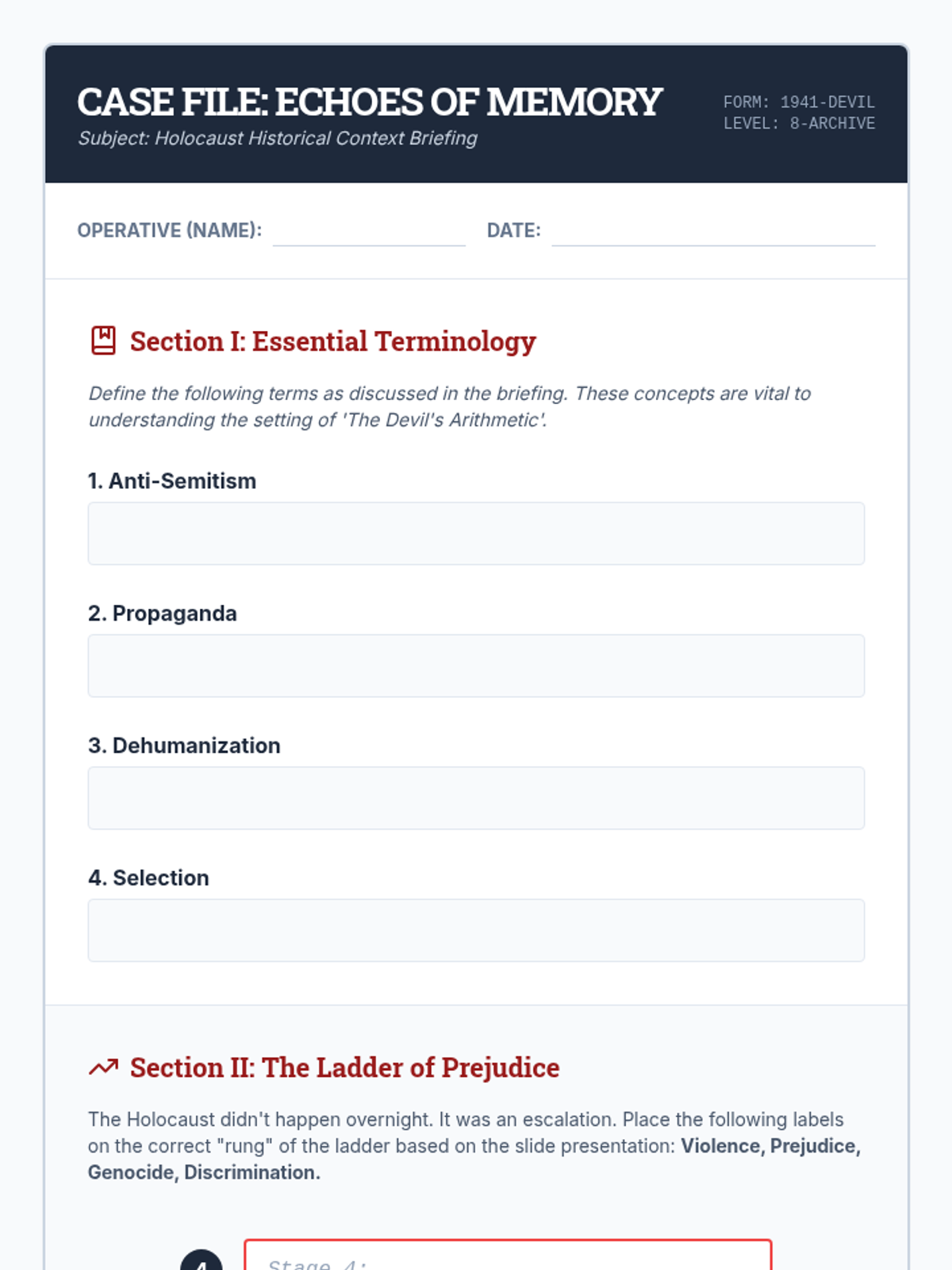
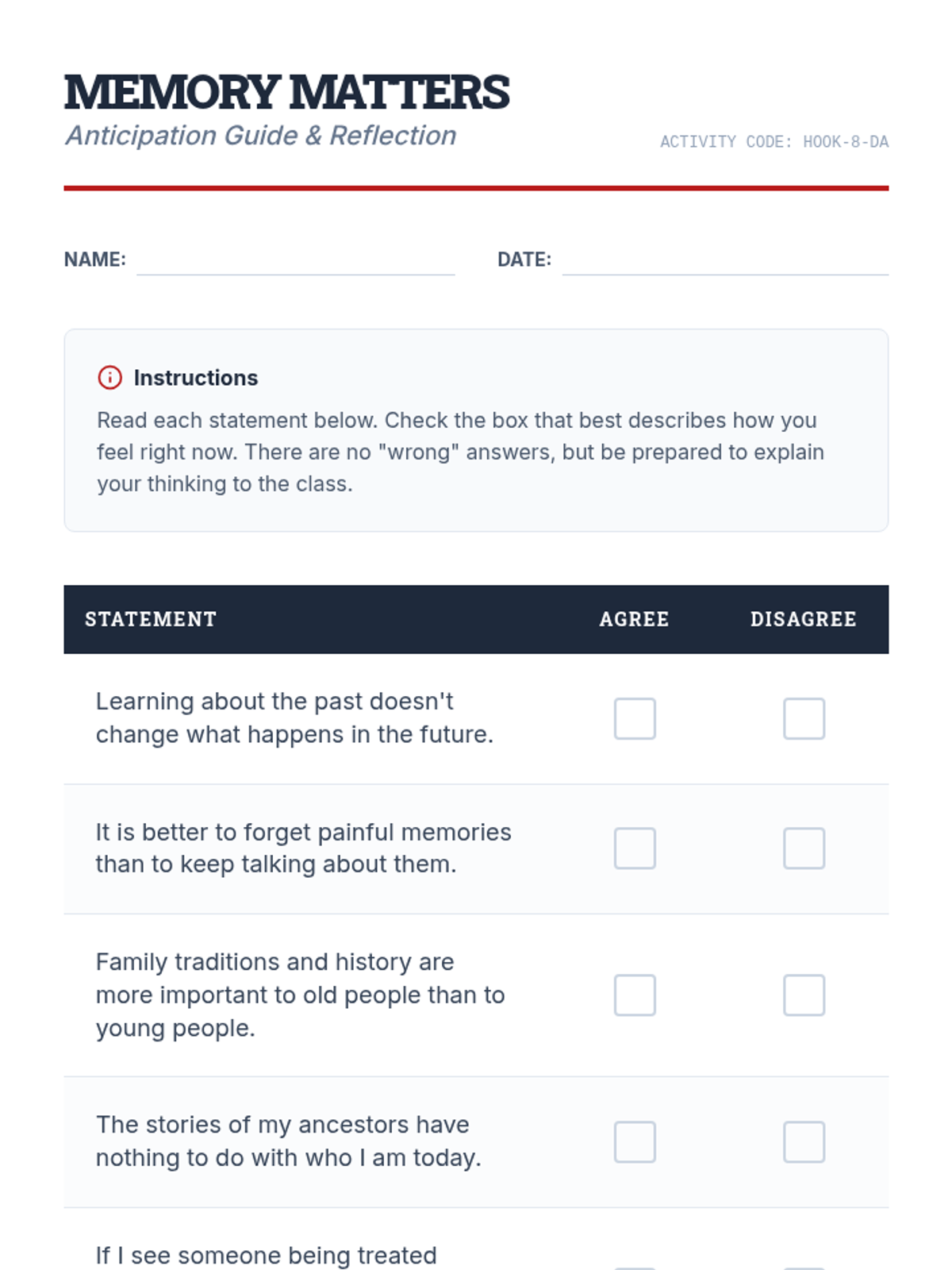
An introductory lesson to the Holocaust designed to build necessary background knowledge and thematic awareness for students beginning 'The Devil\'s Arithmetic'. Students explore key terminology, the escalation of the Holocaust, and the central role of memory.
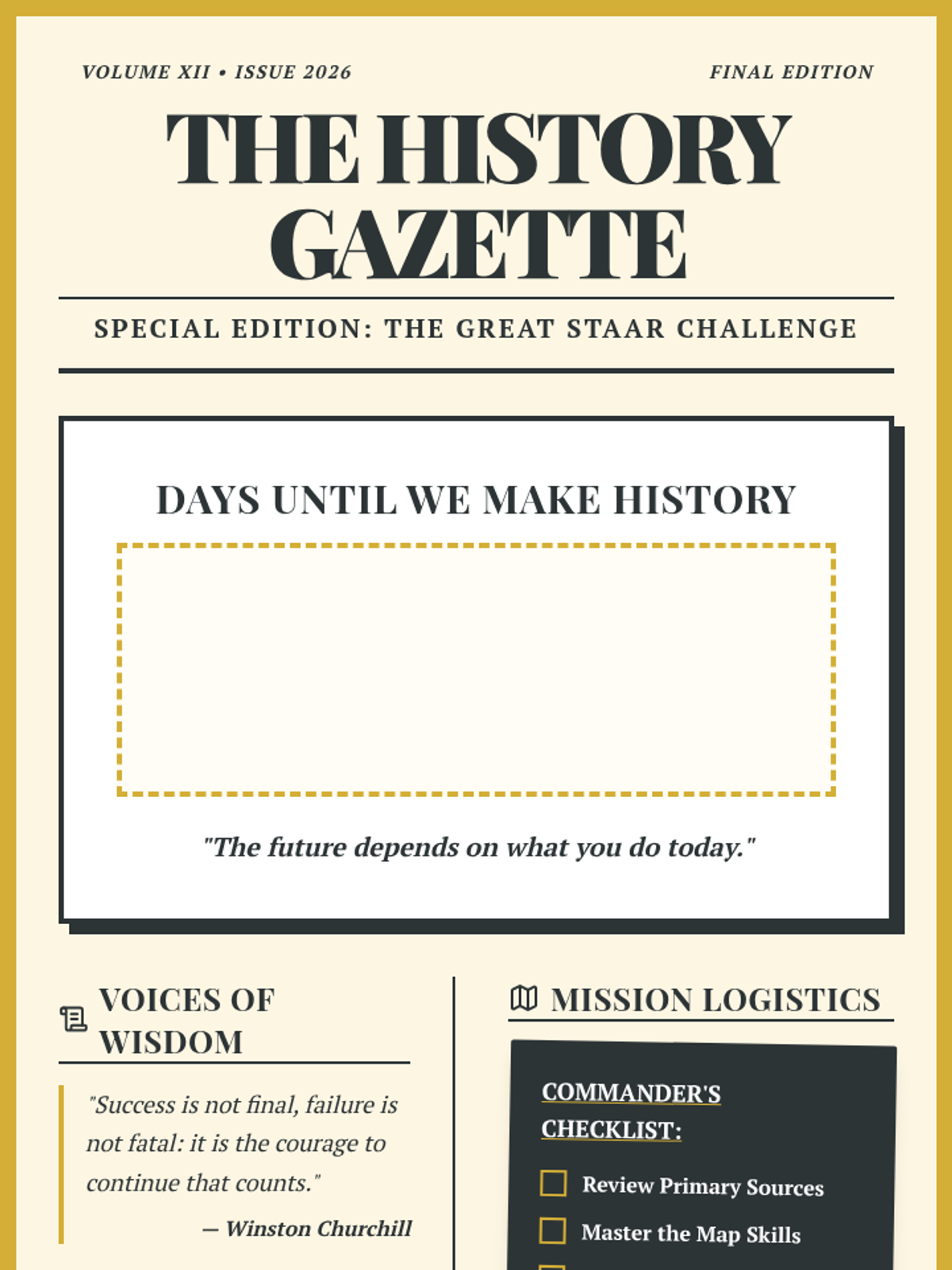
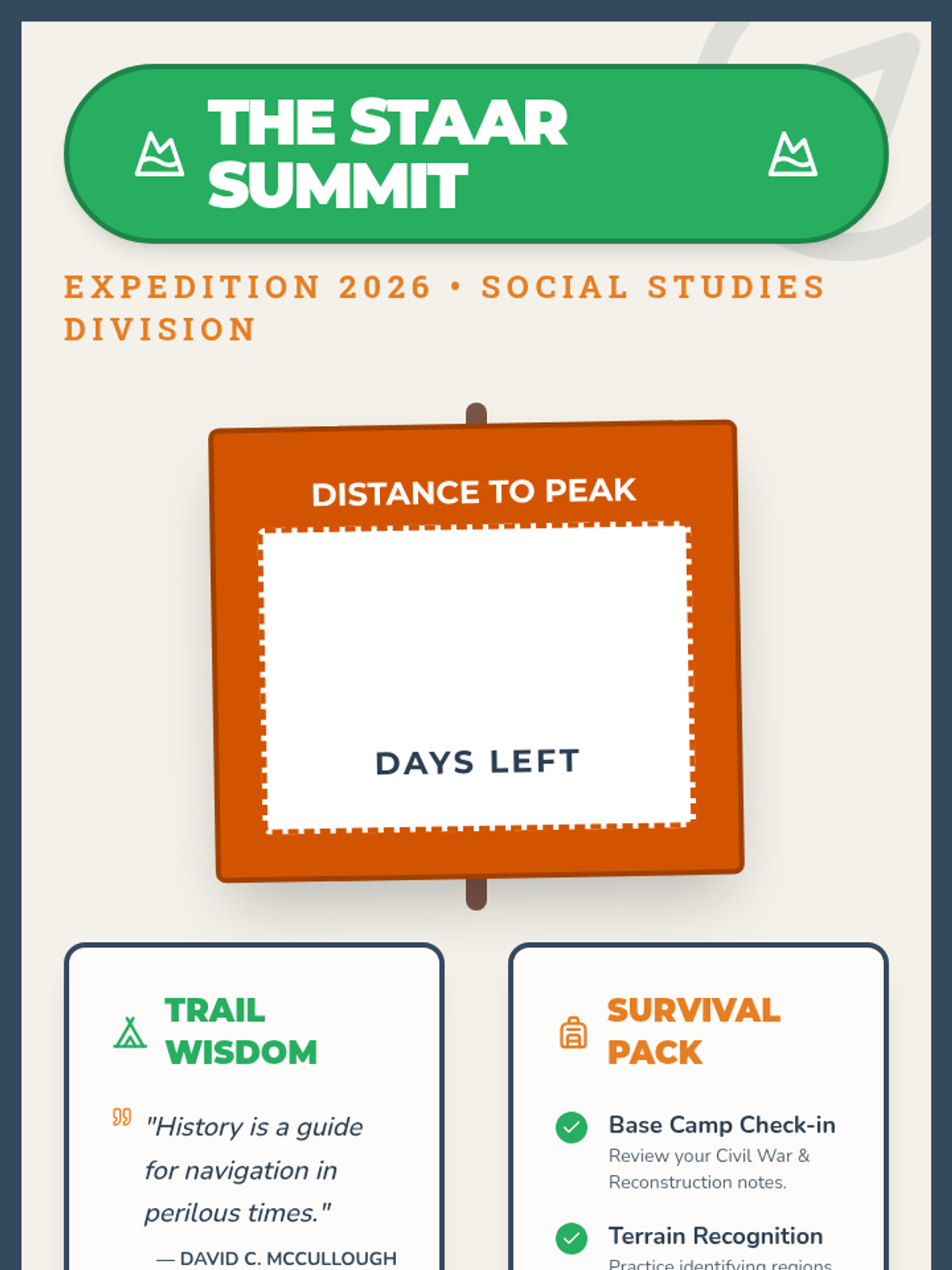
A collection of creative and motivational countdown posters designed for Social Studies classrooms preparing for the STAAR test.
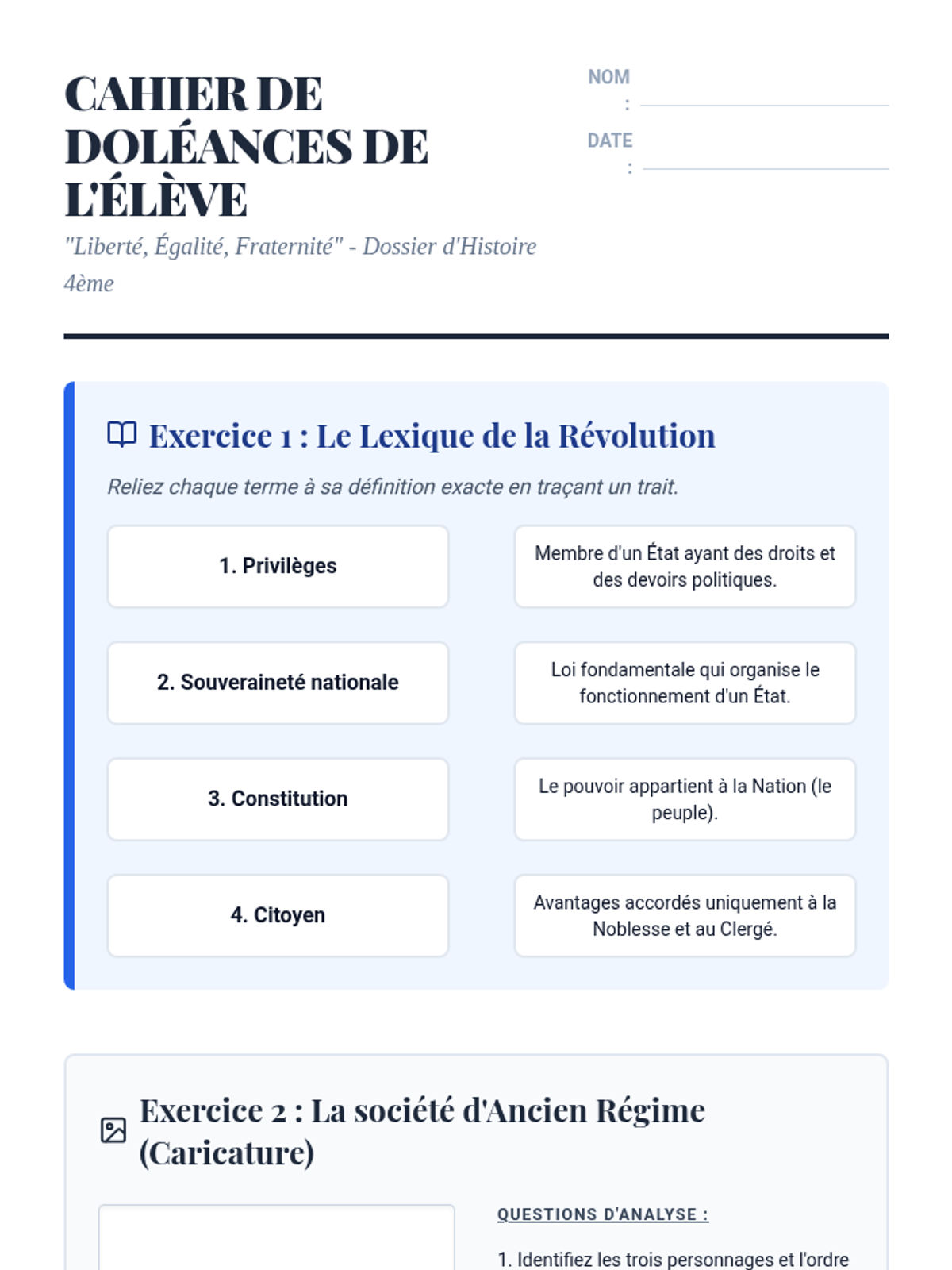
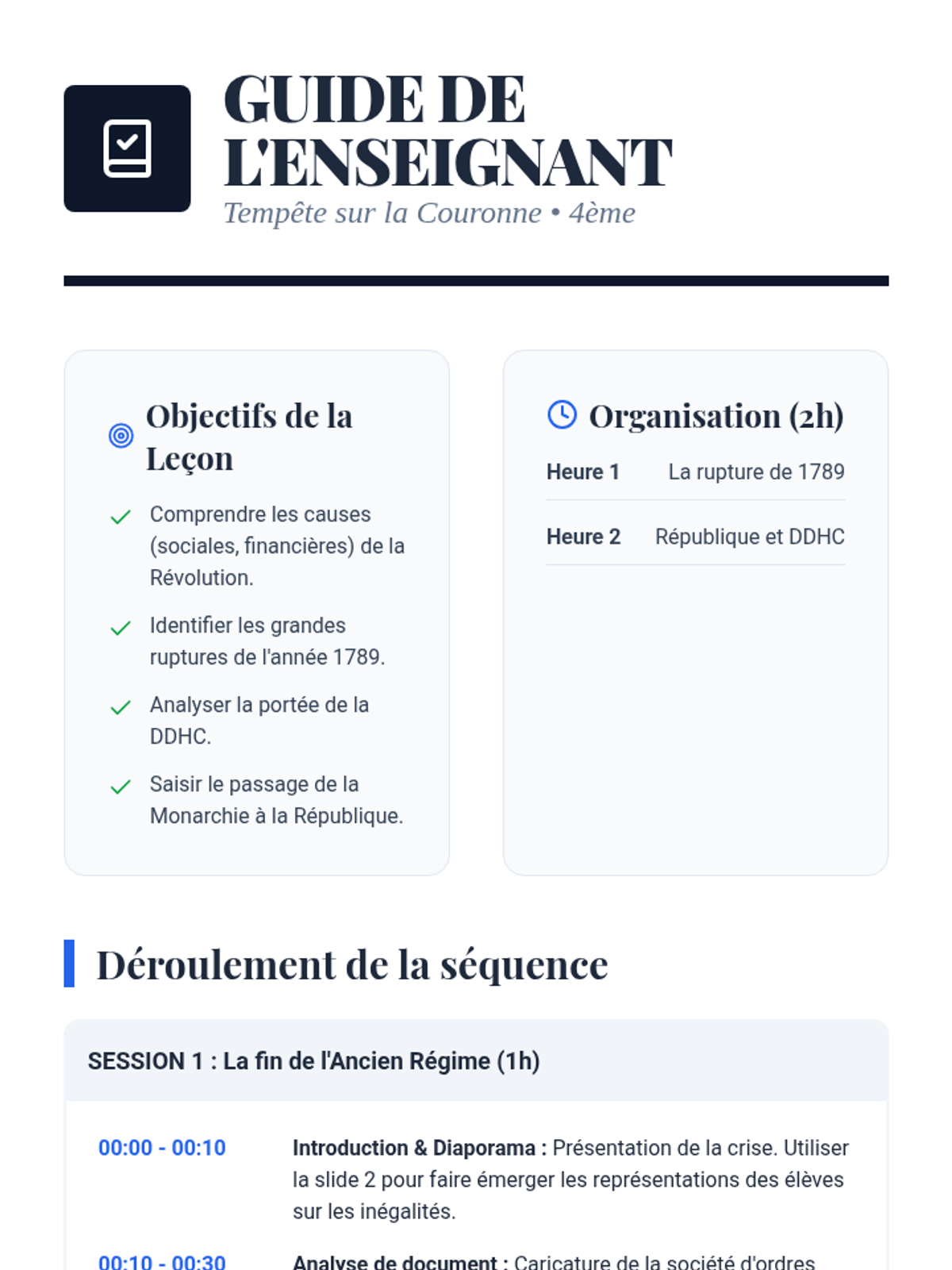
Une exploration des causes et des premières étapes de la Révolution française, de la crise de l'Ancien Régime à la Déclaration des Droits de l'Homme.
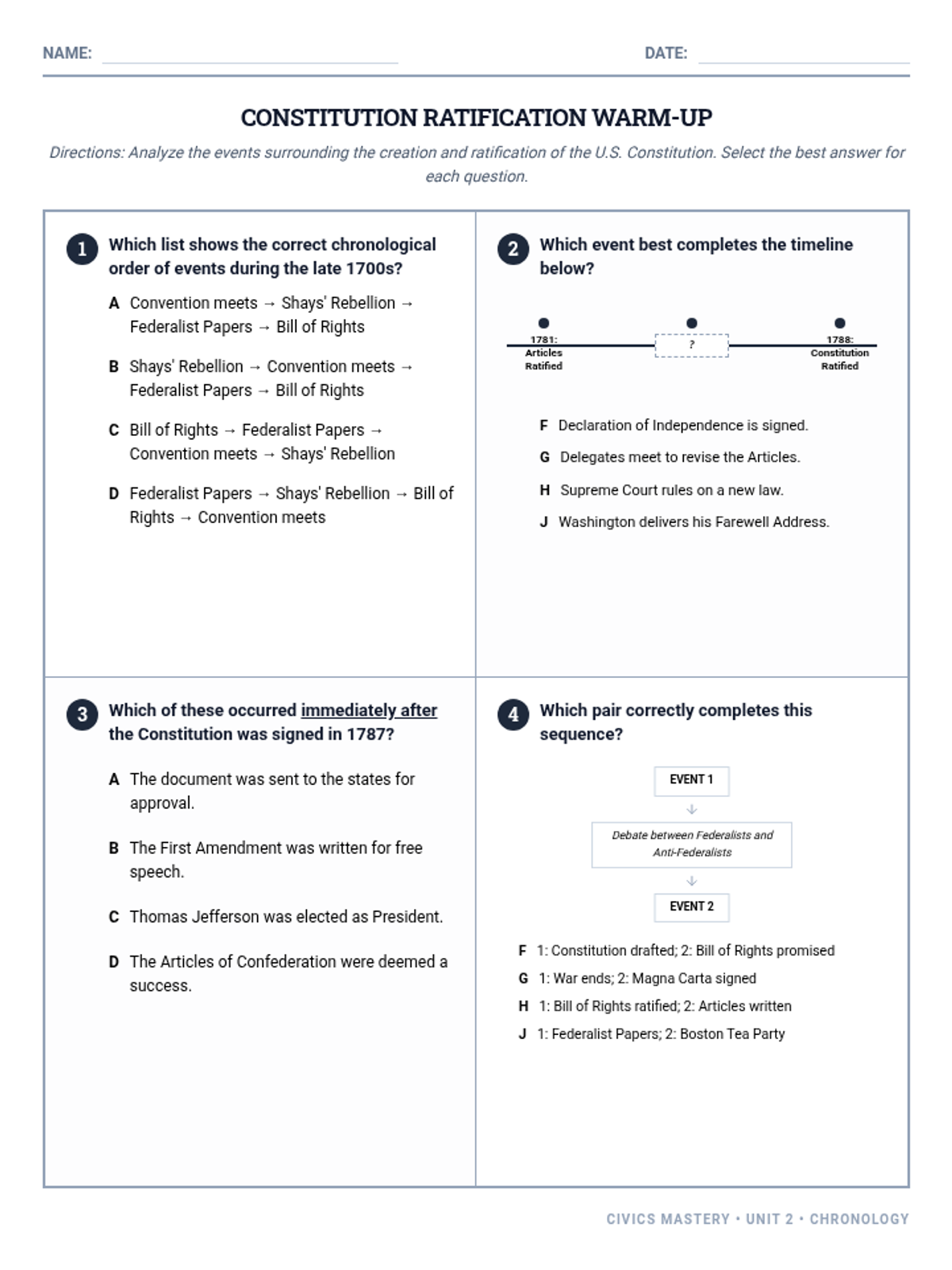
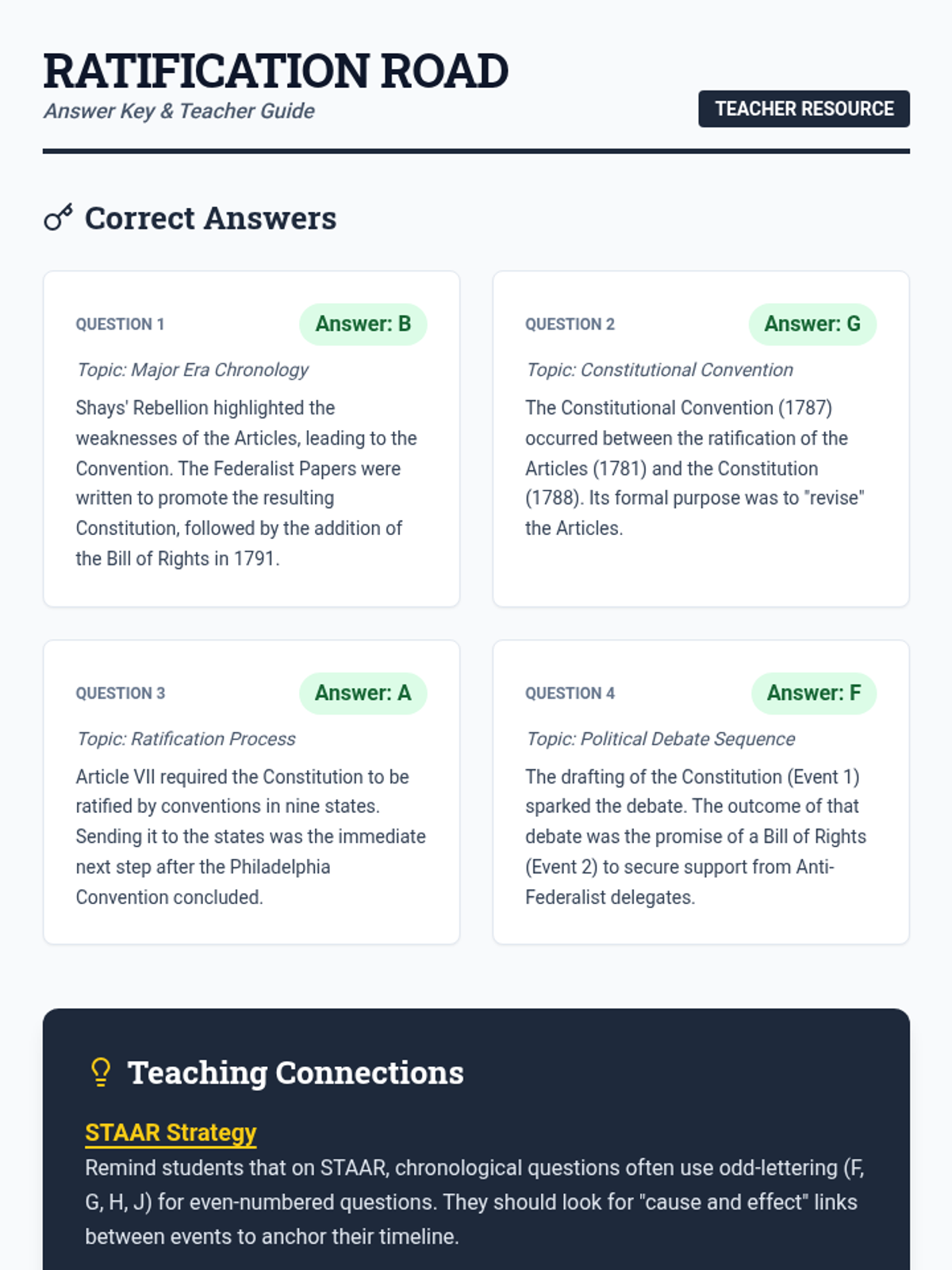
A warm-up activity focused on the chronological events leading to the ratification of the U.S. Constitution, formatted to align with 11th-grade state assessment standards.
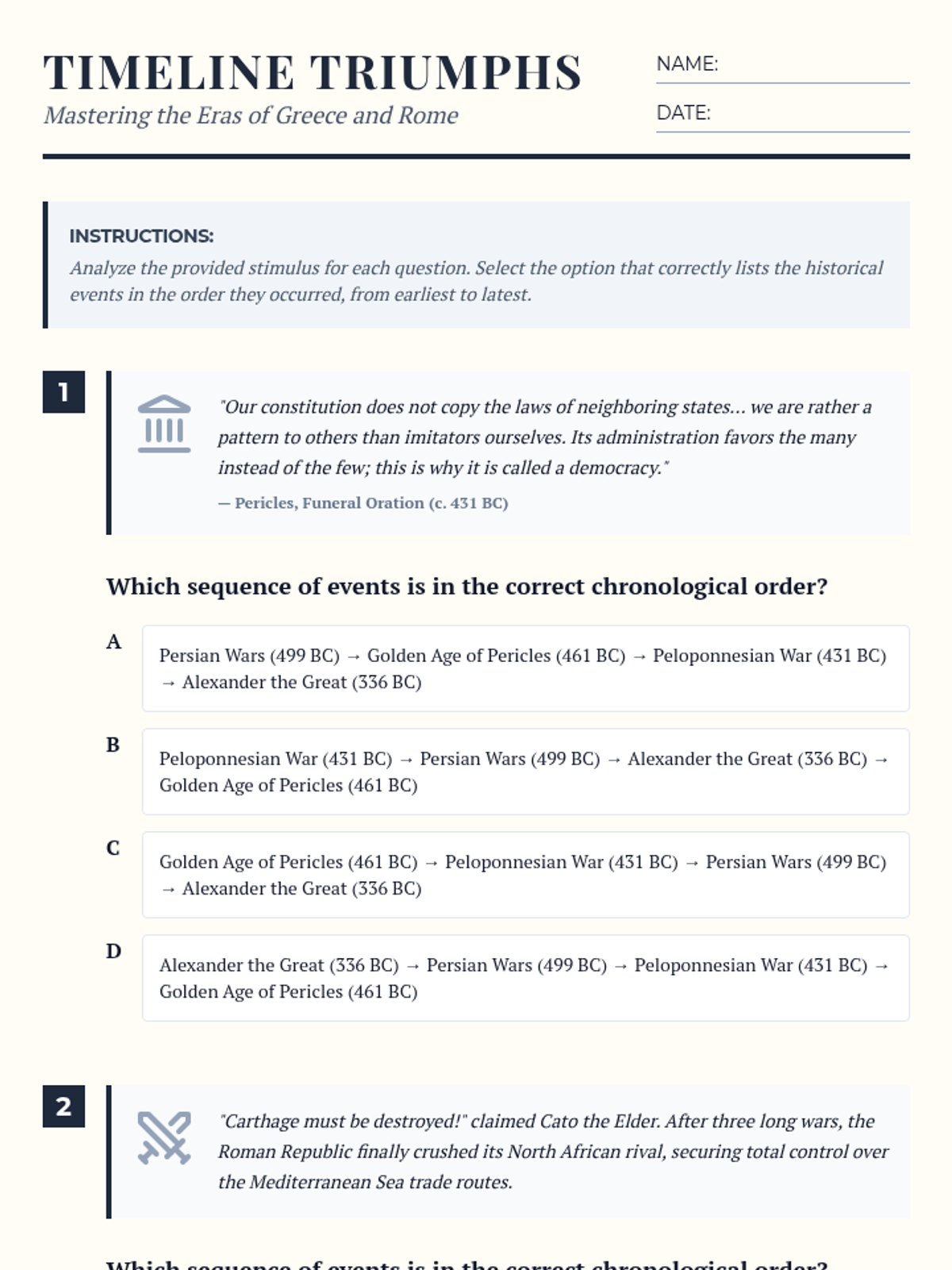
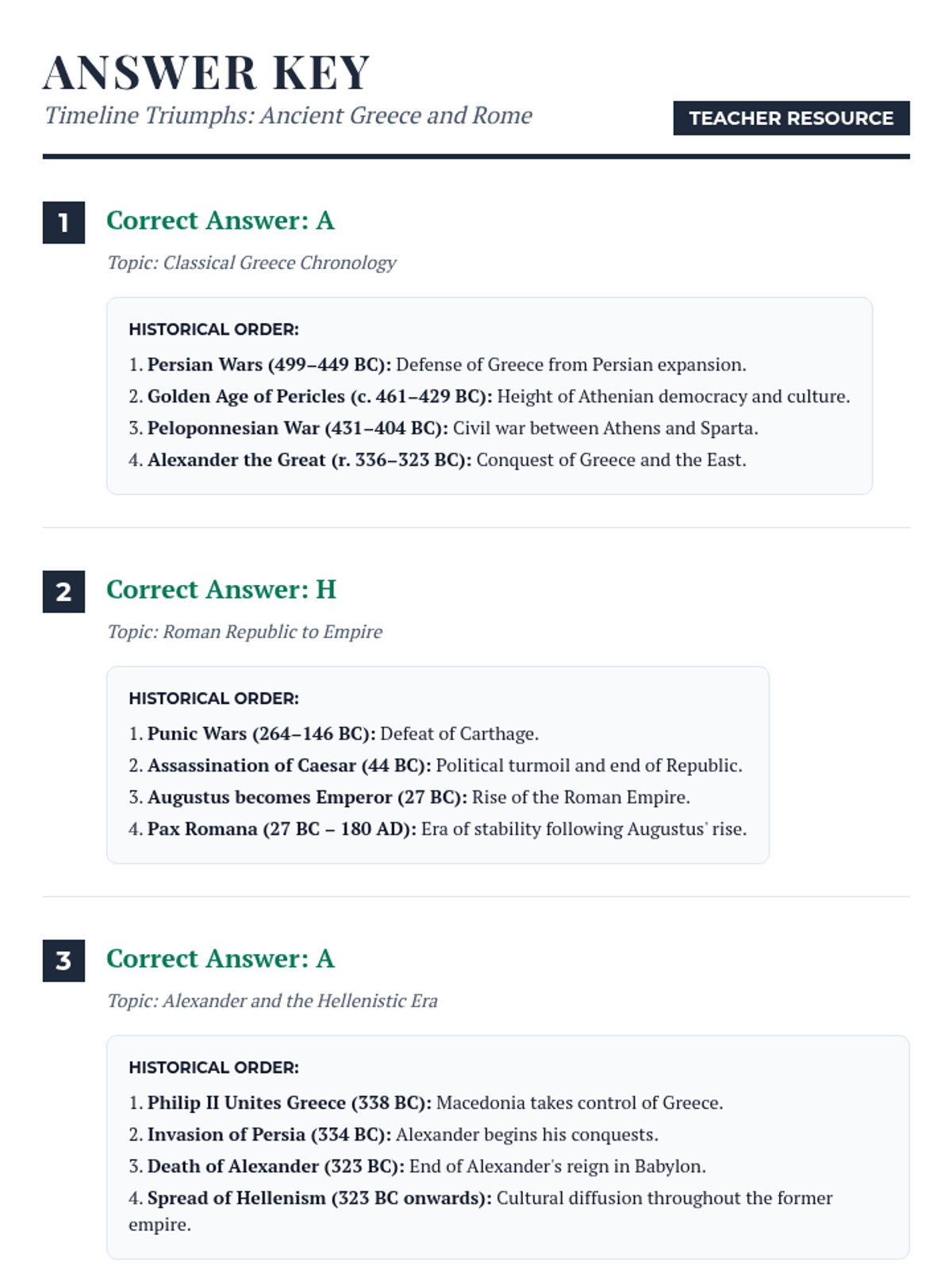
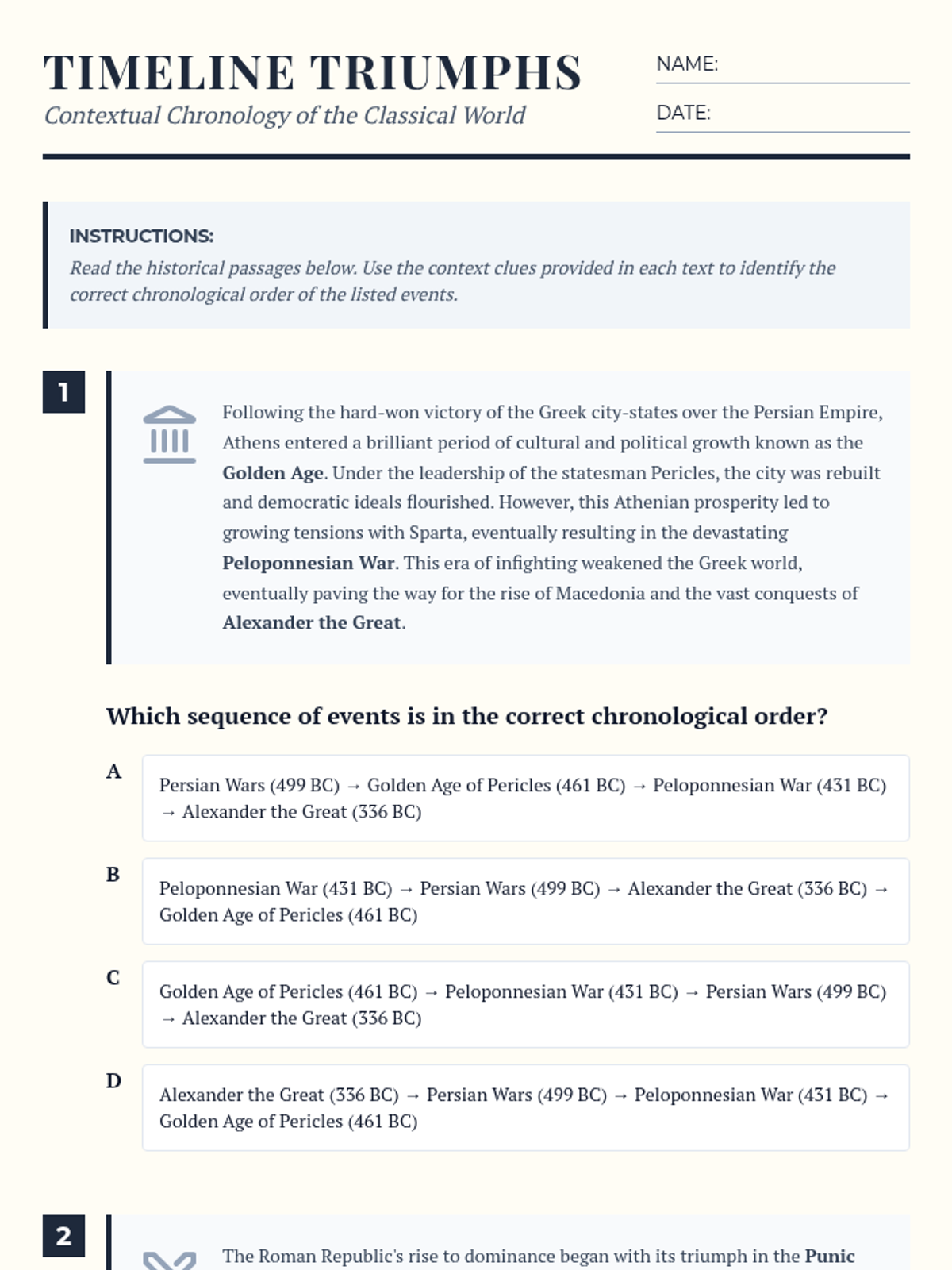
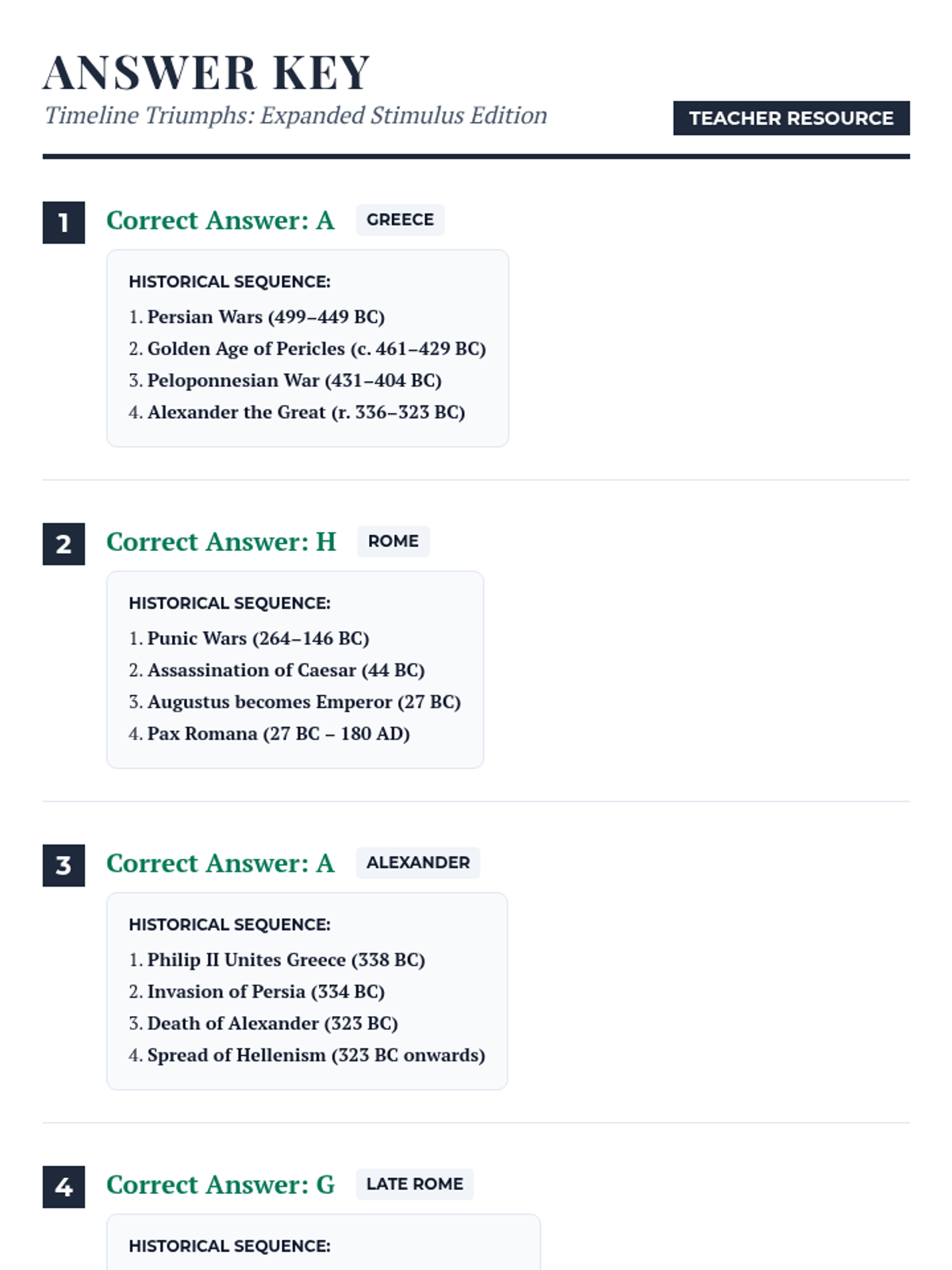
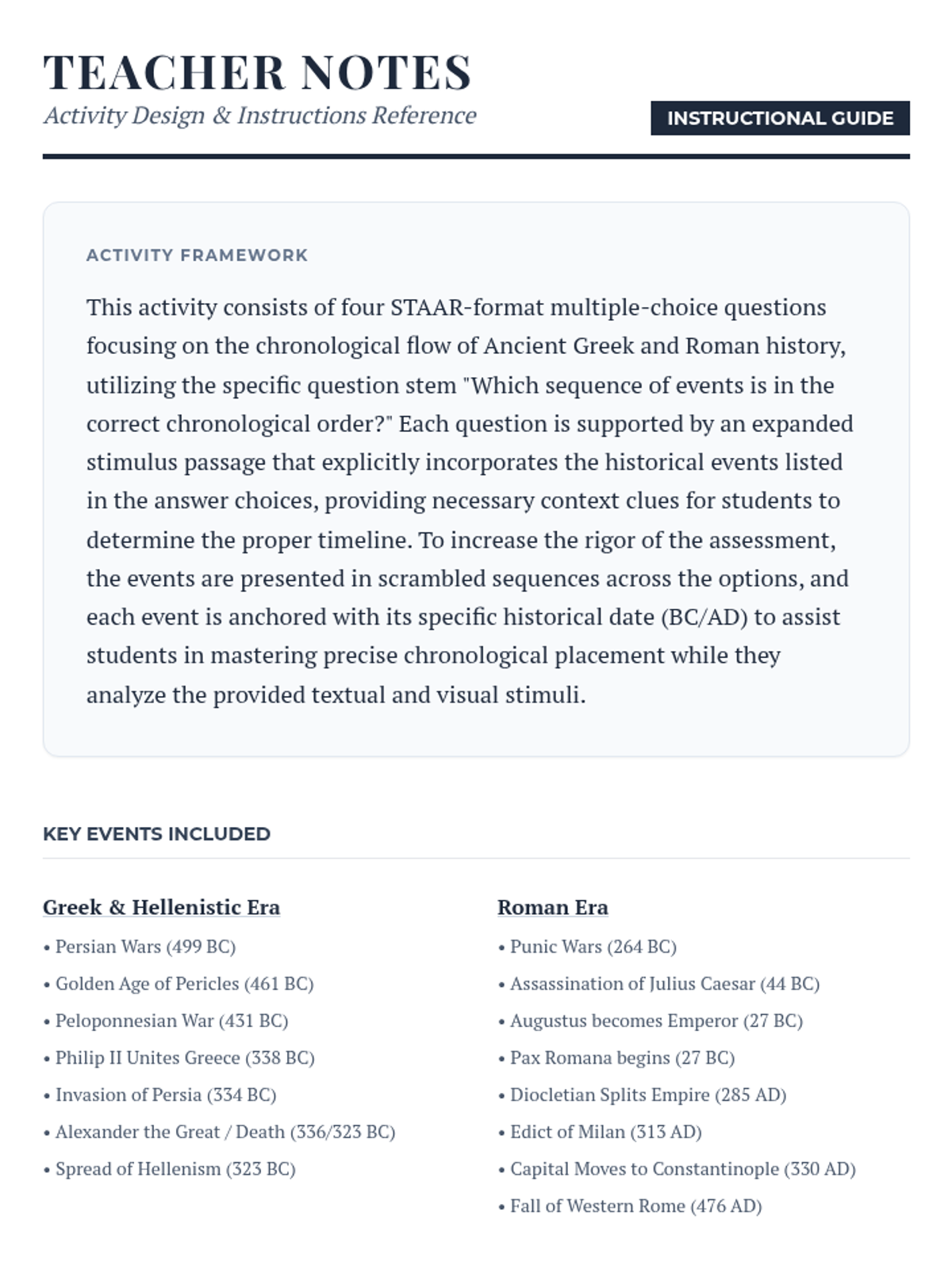
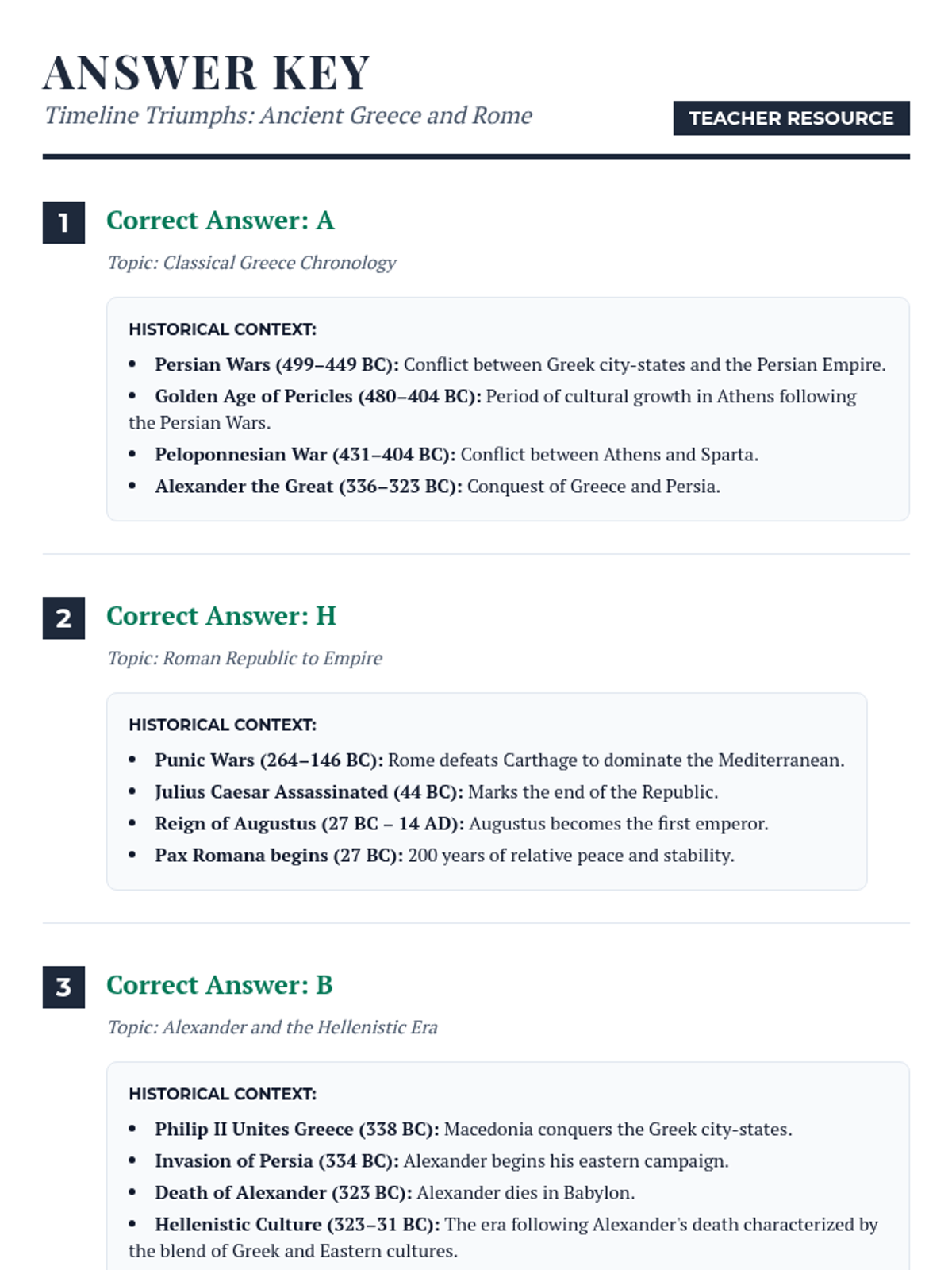
A lesson focused on mastering the chronological flow of key events in Ancient Greek and Roman history, prepared in the STAAR assessment format.
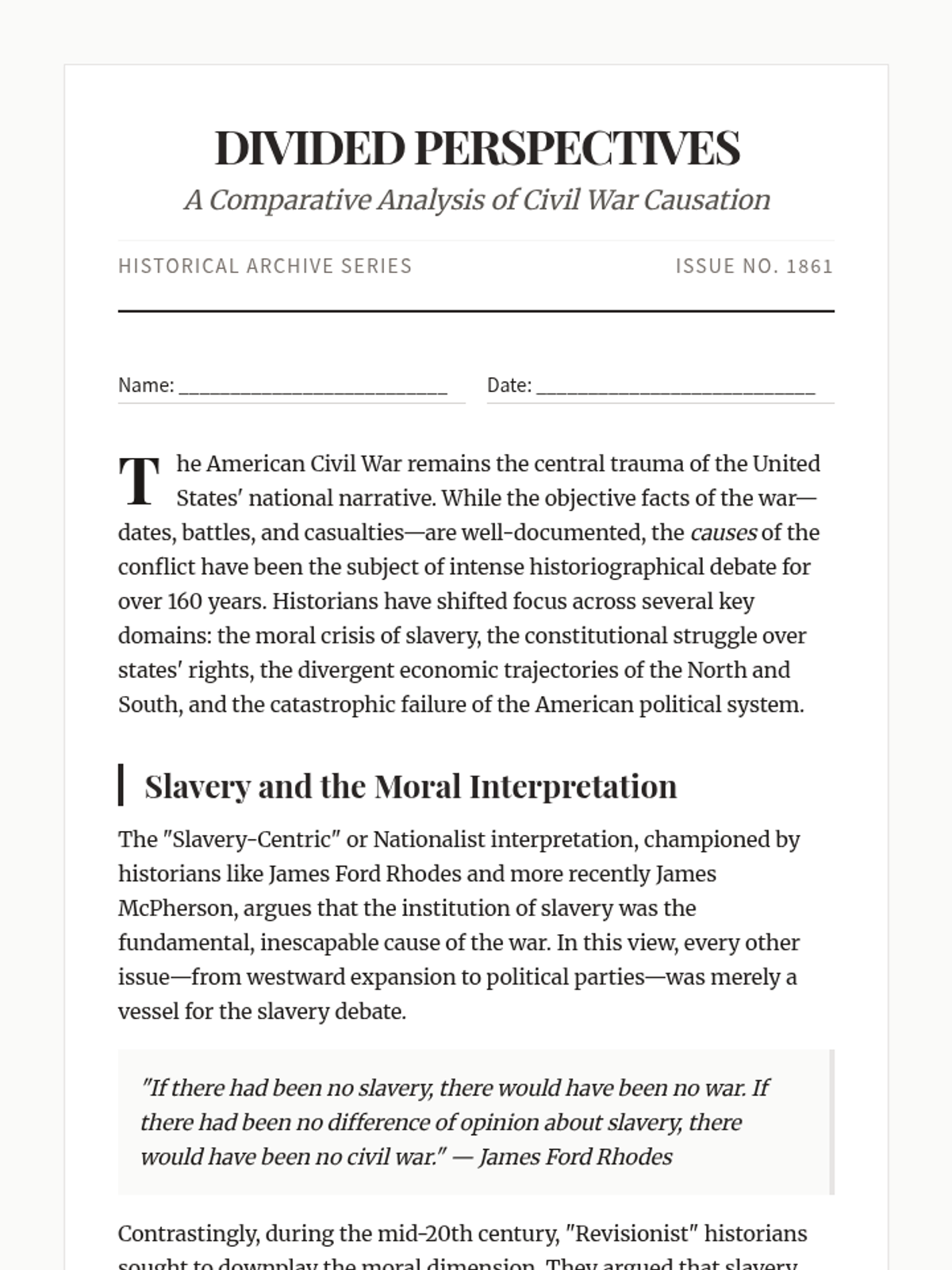
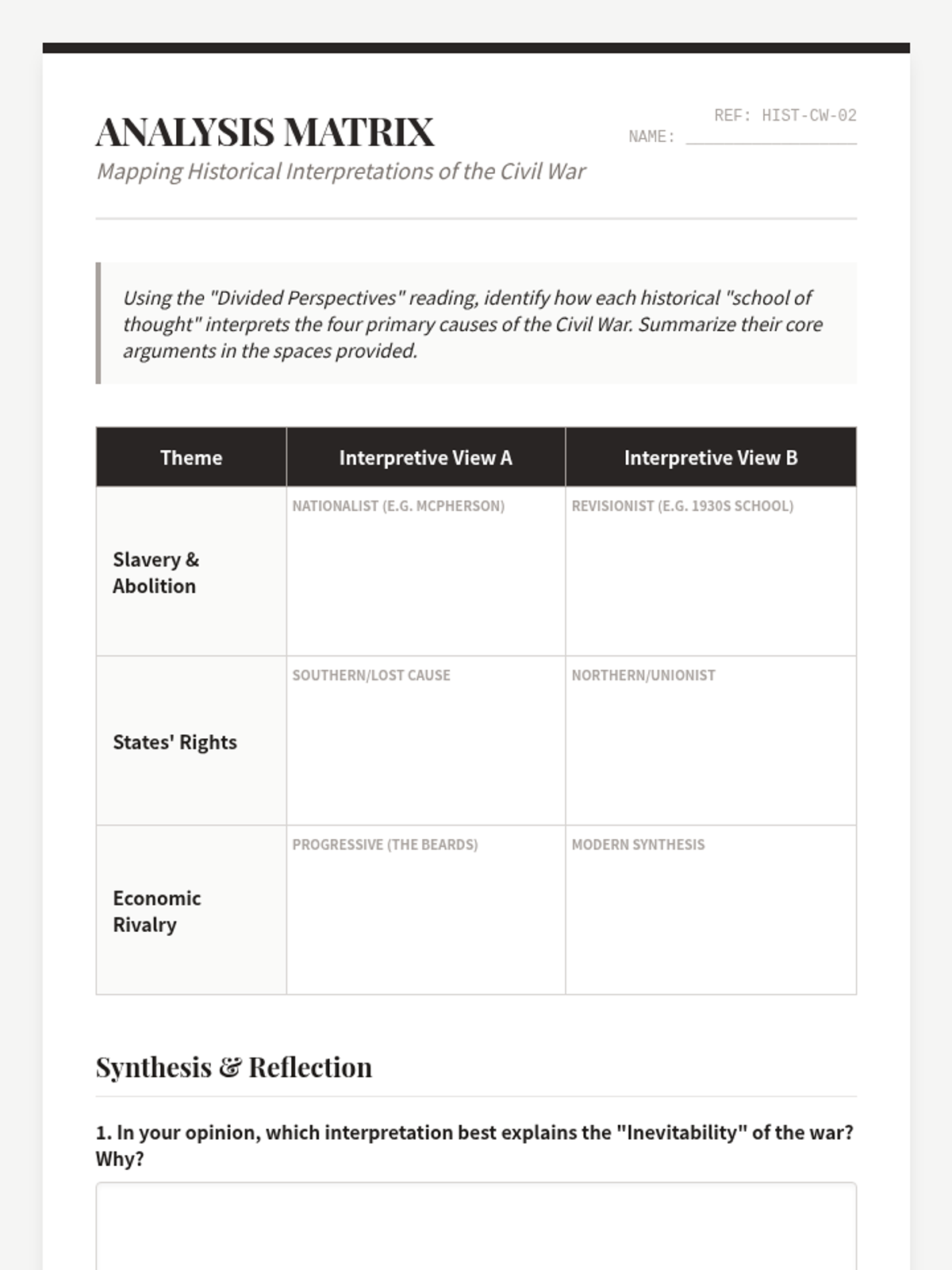
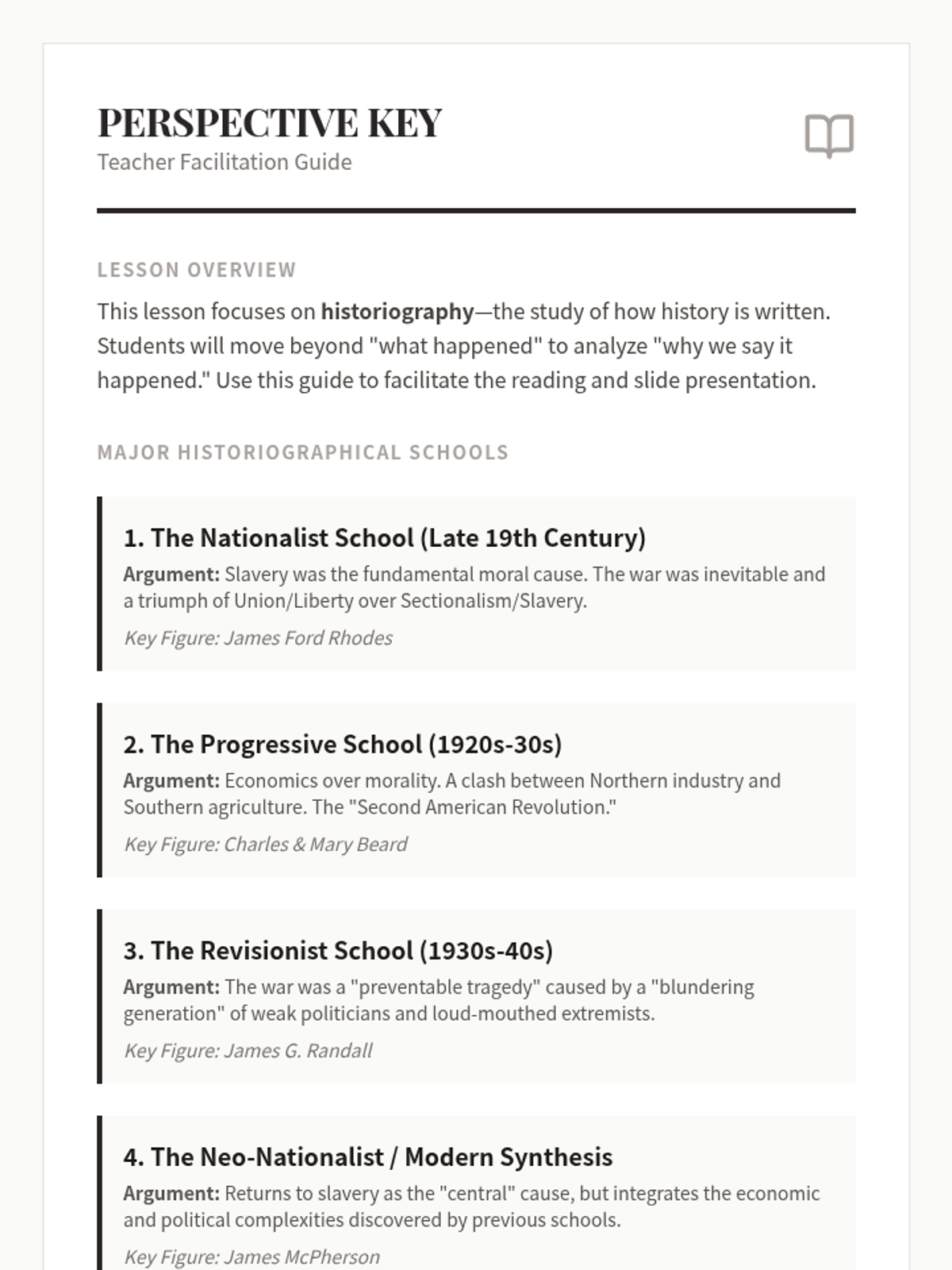
This lesson examines the historiography of the American Civil War, challenging students to compare and contrast various historical interpretations of the conflict's origins, including slavery, states' rights, and economic sectionalism.
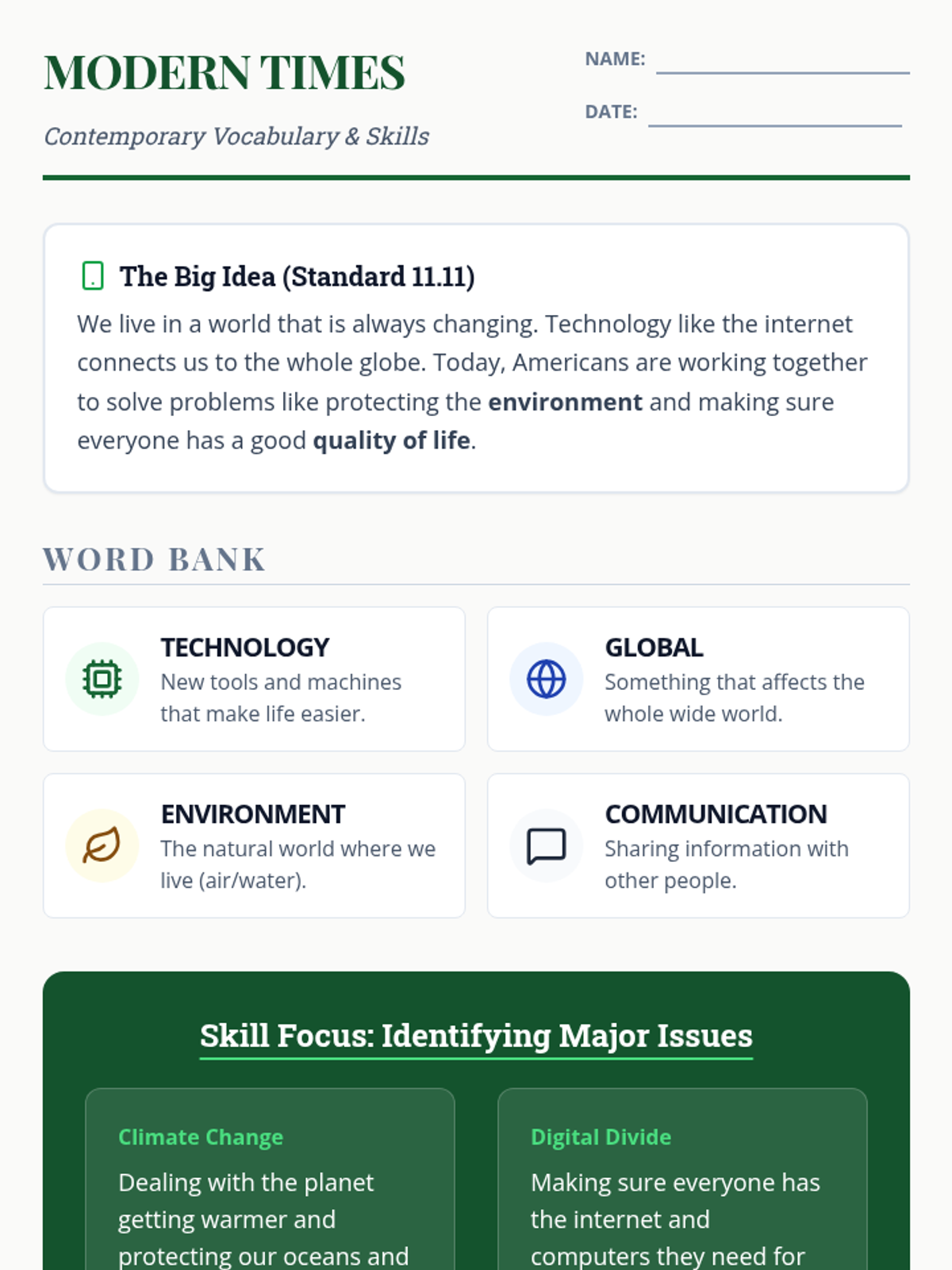
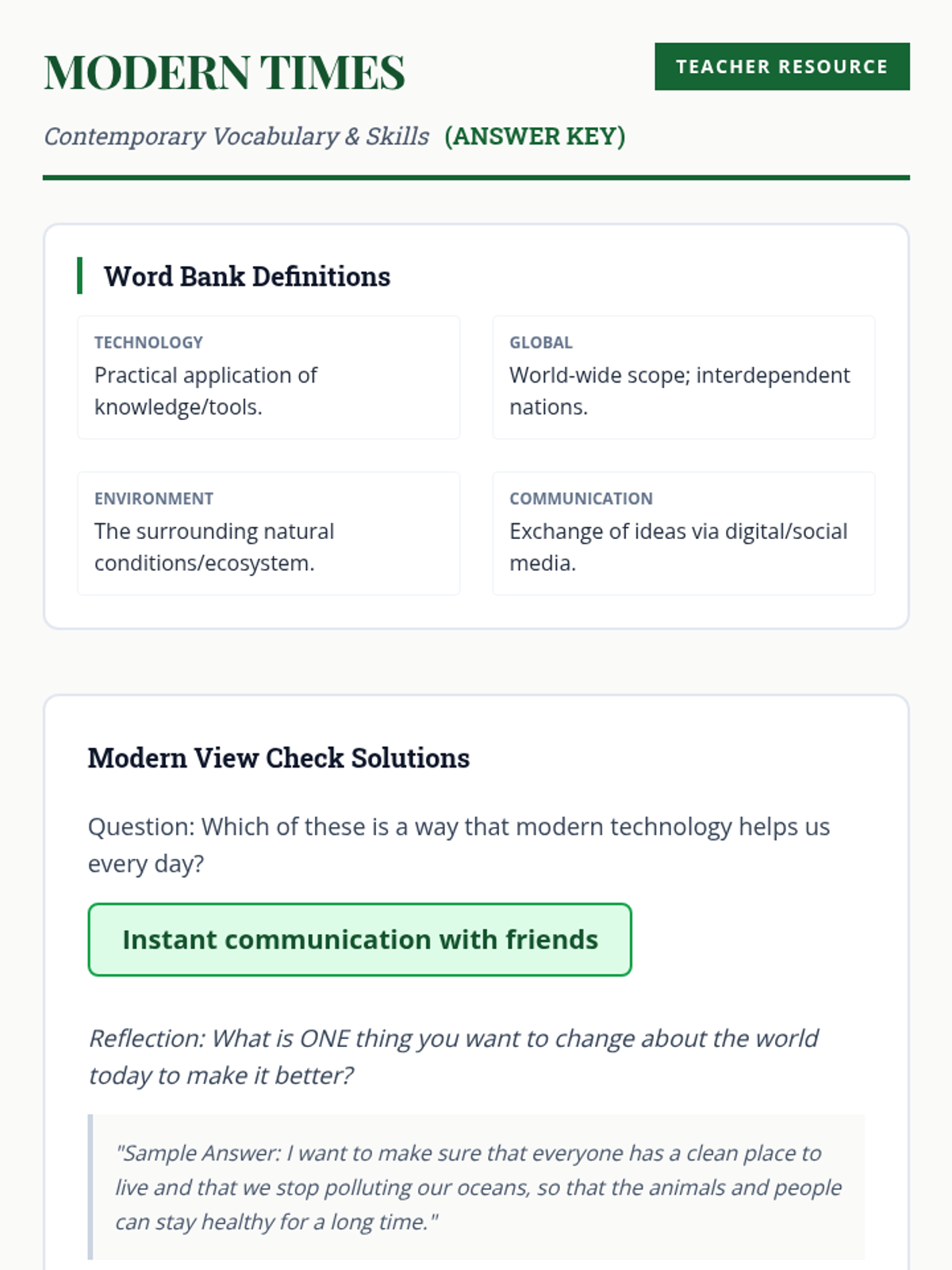
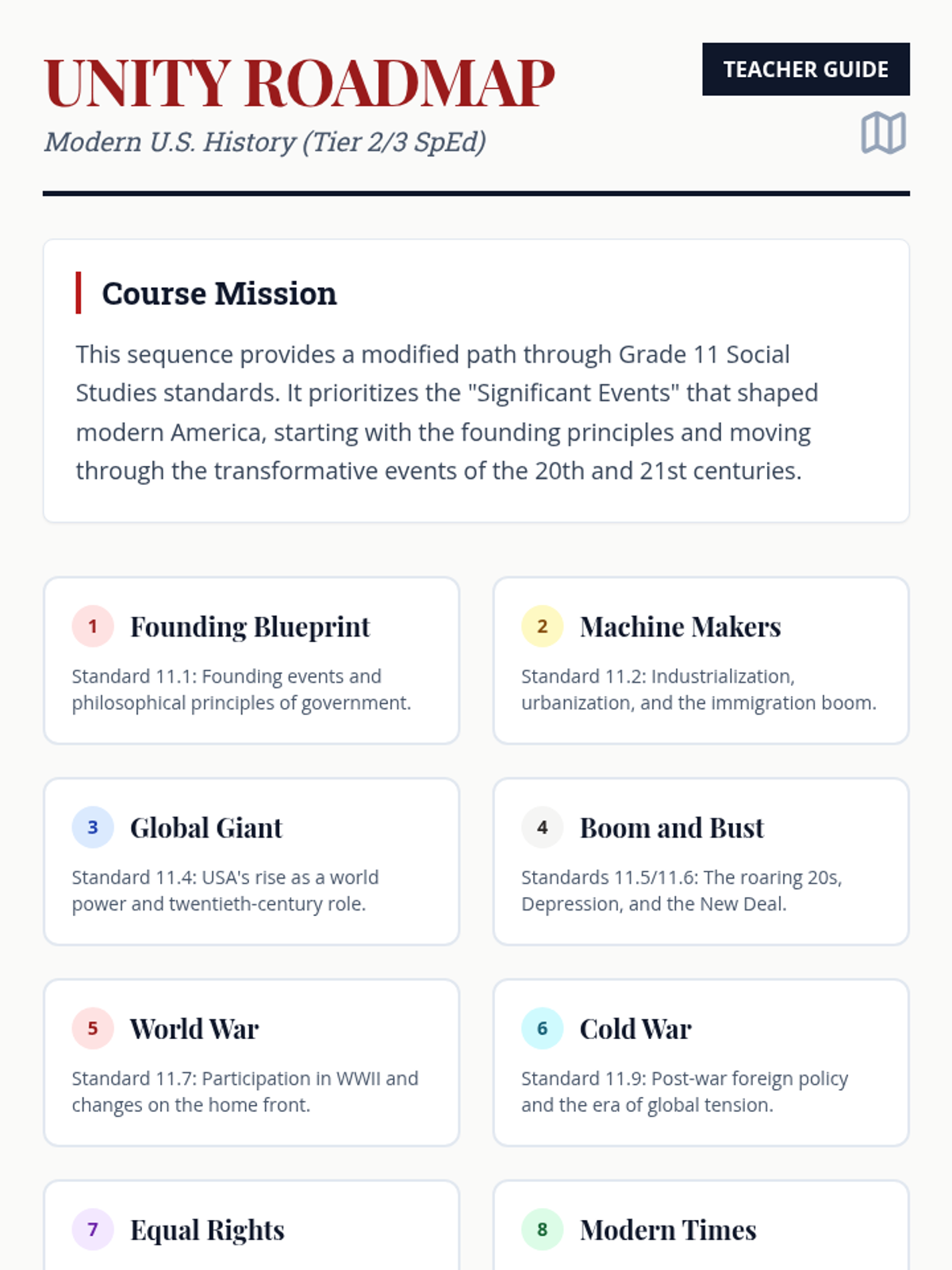
Exploring major social problems and domestic policy issues in contemporary American society, based on Grade 11 Standard 11.11.
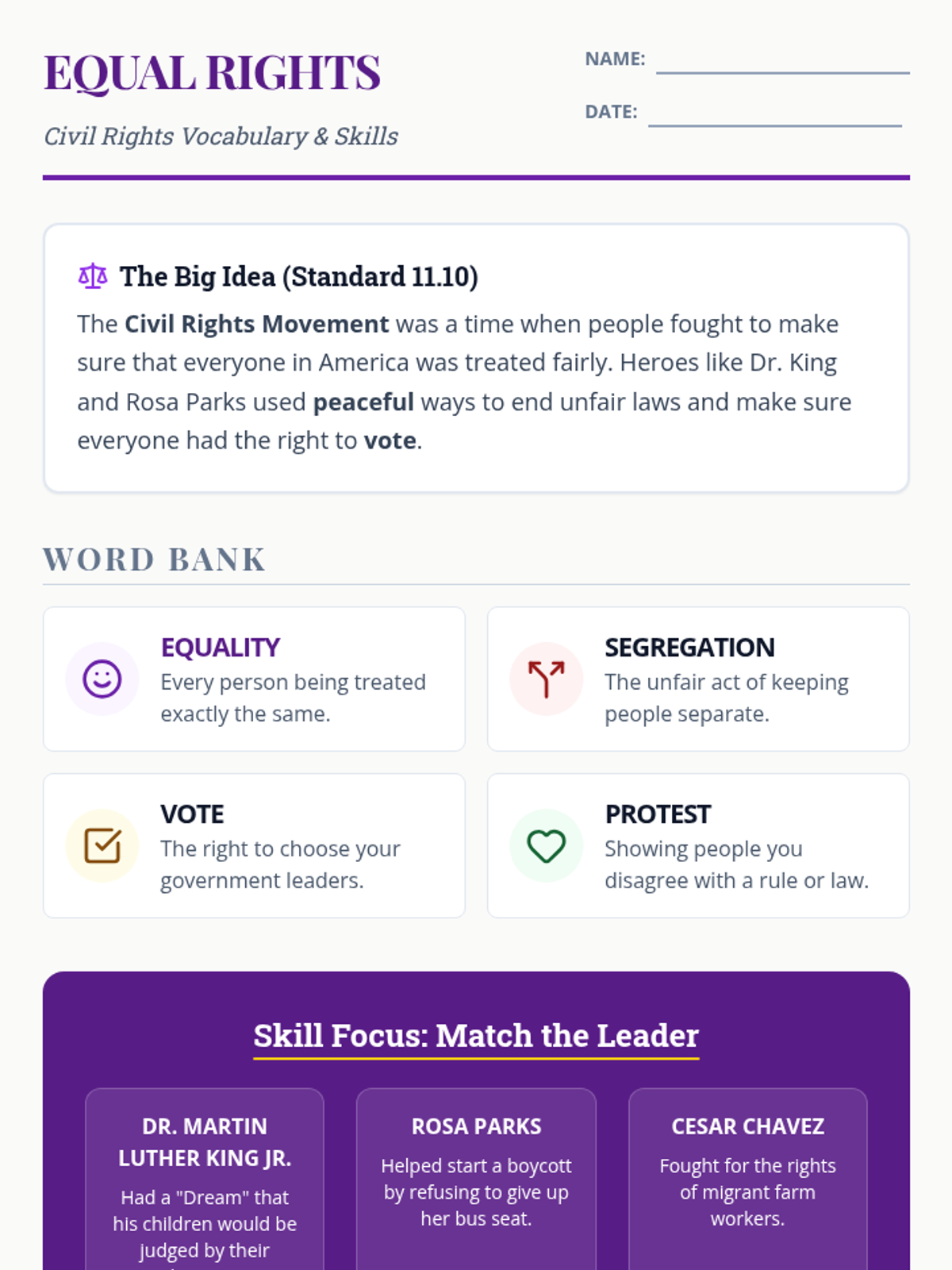
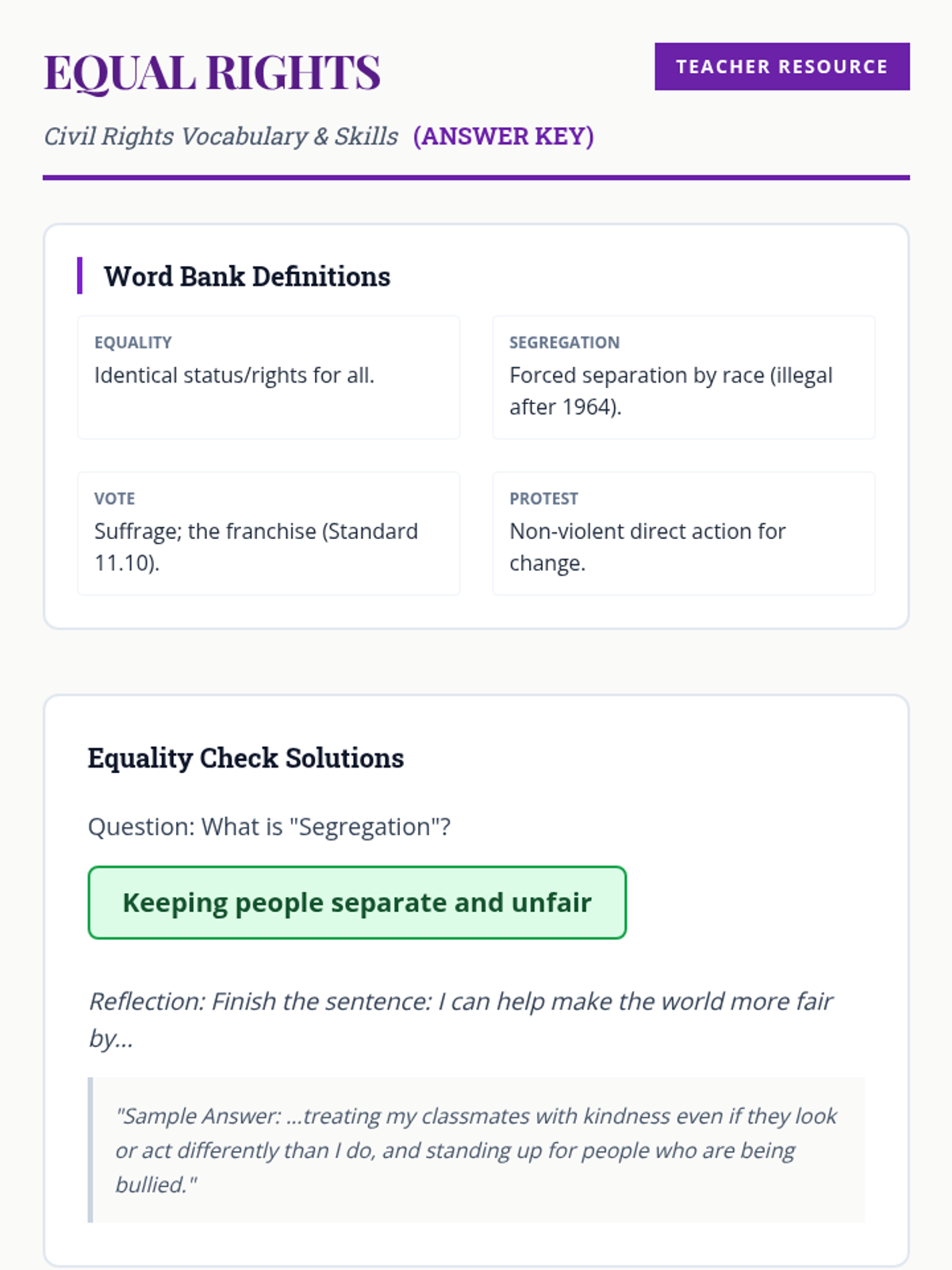
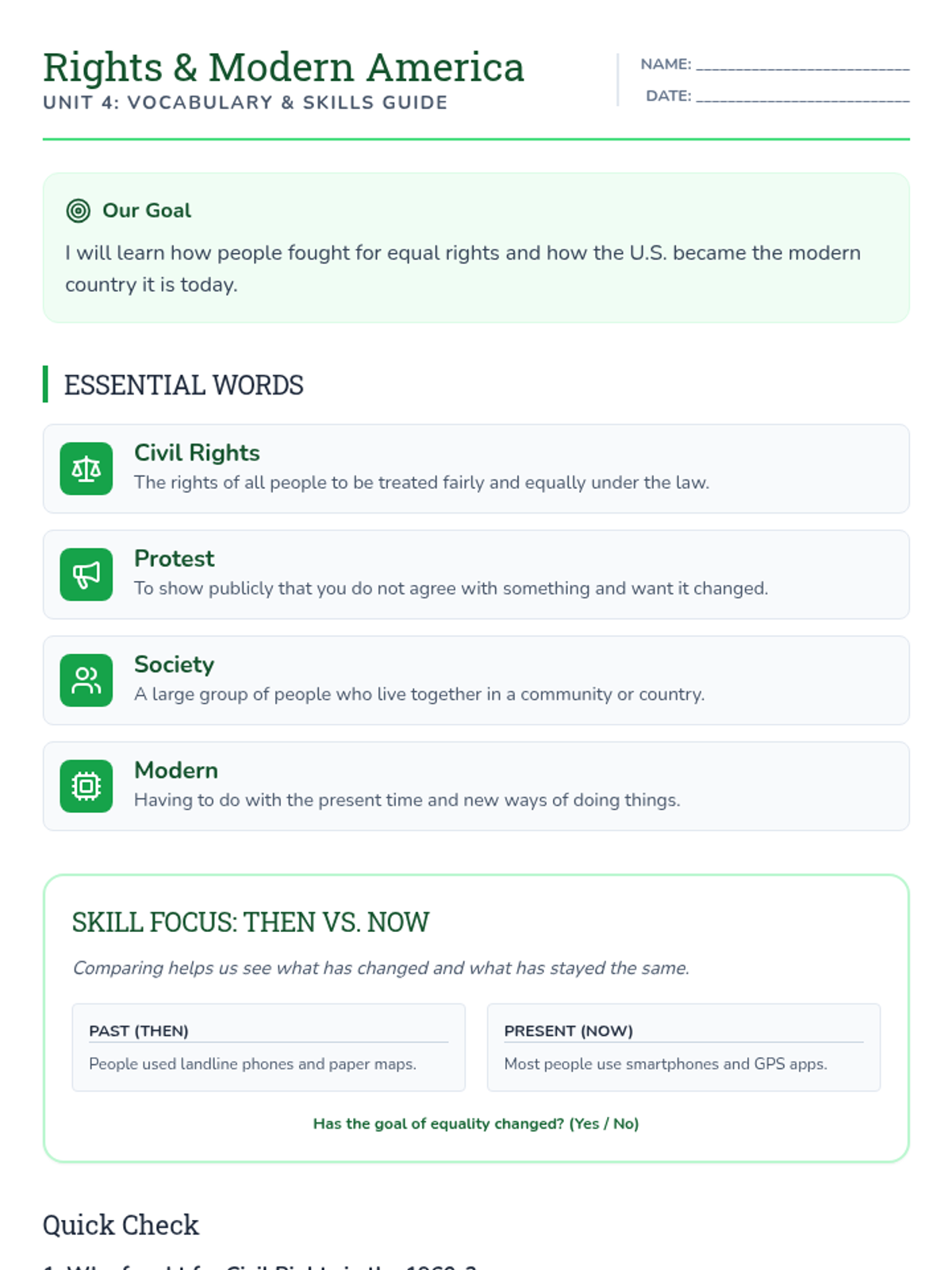
Analyzing the development of federal civil rights and the movements that fought for voting rights and equality, based on Grade 11 Standard 11.10.
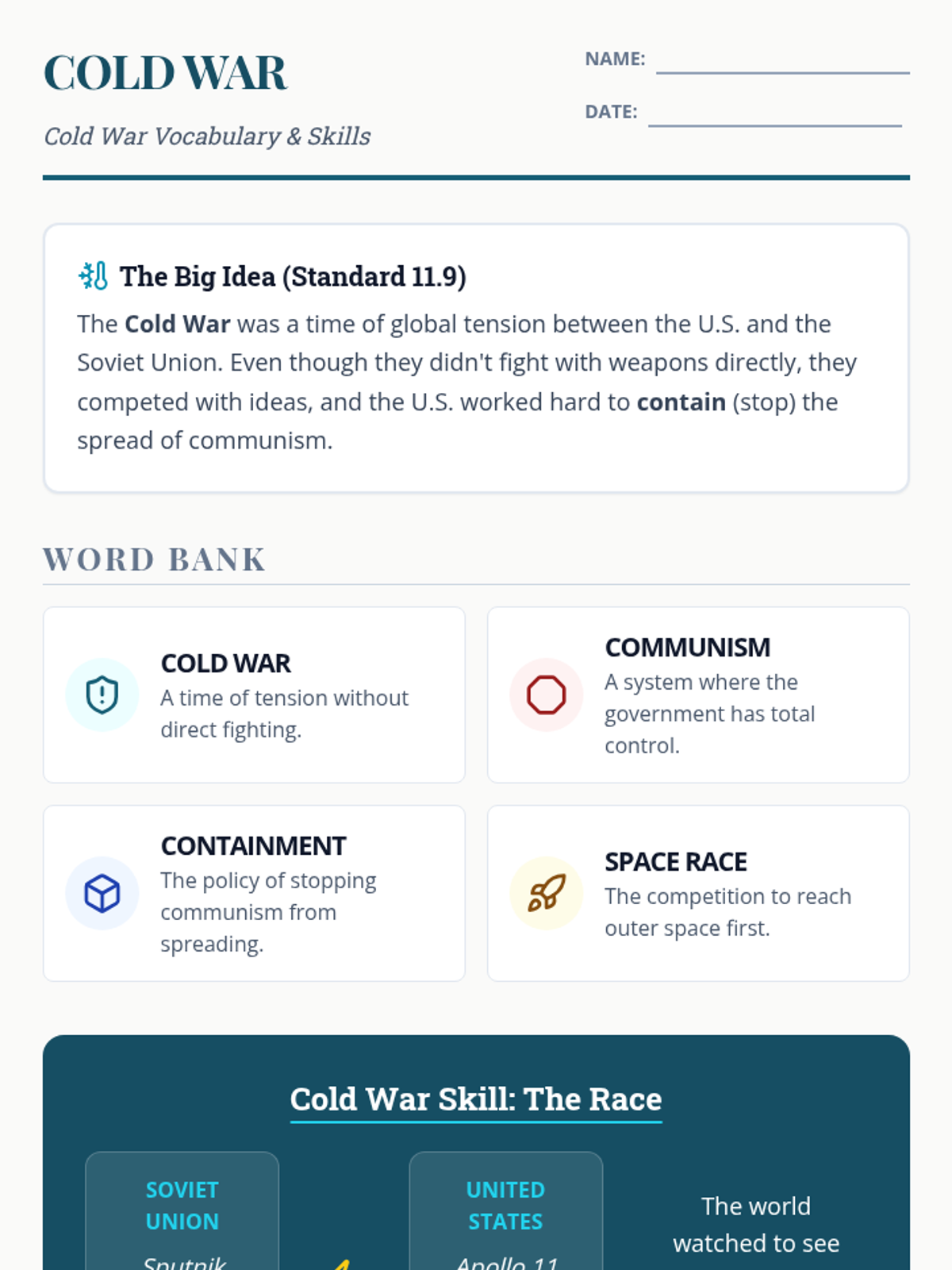
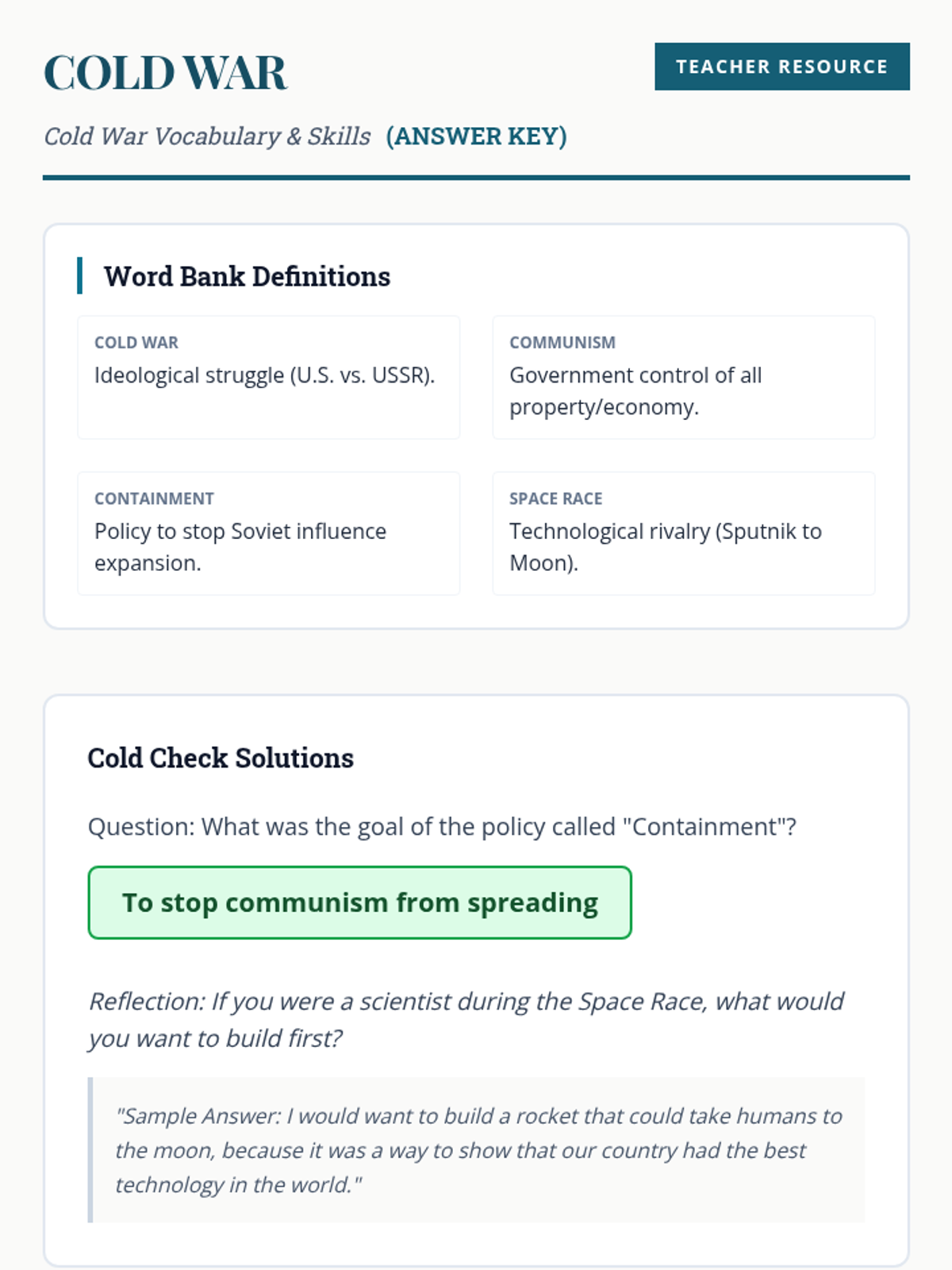
Understanding the global tensions of the Cold War and how they shaped American foreign policy, based on Grade 11 Standard 11.9.
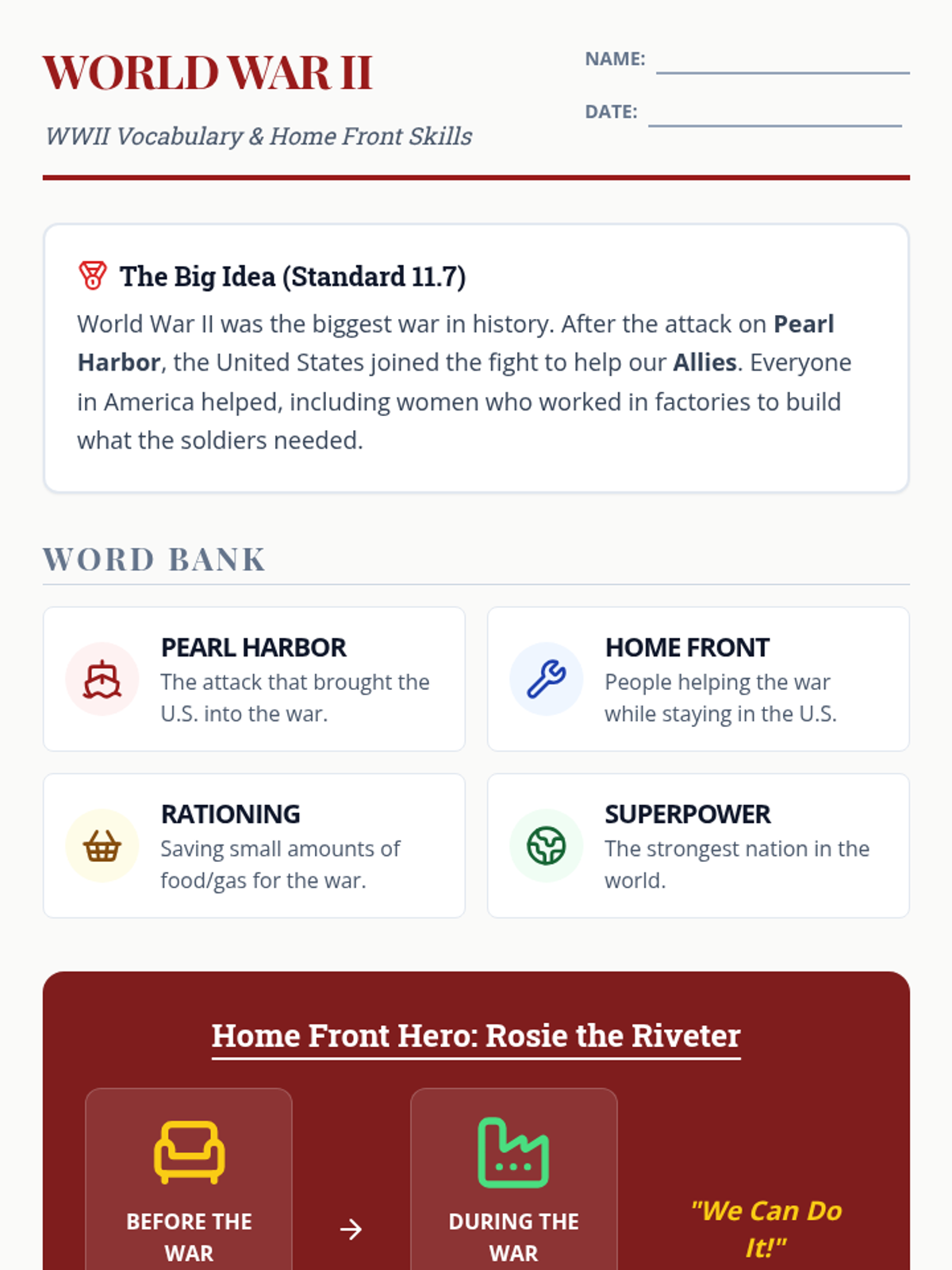
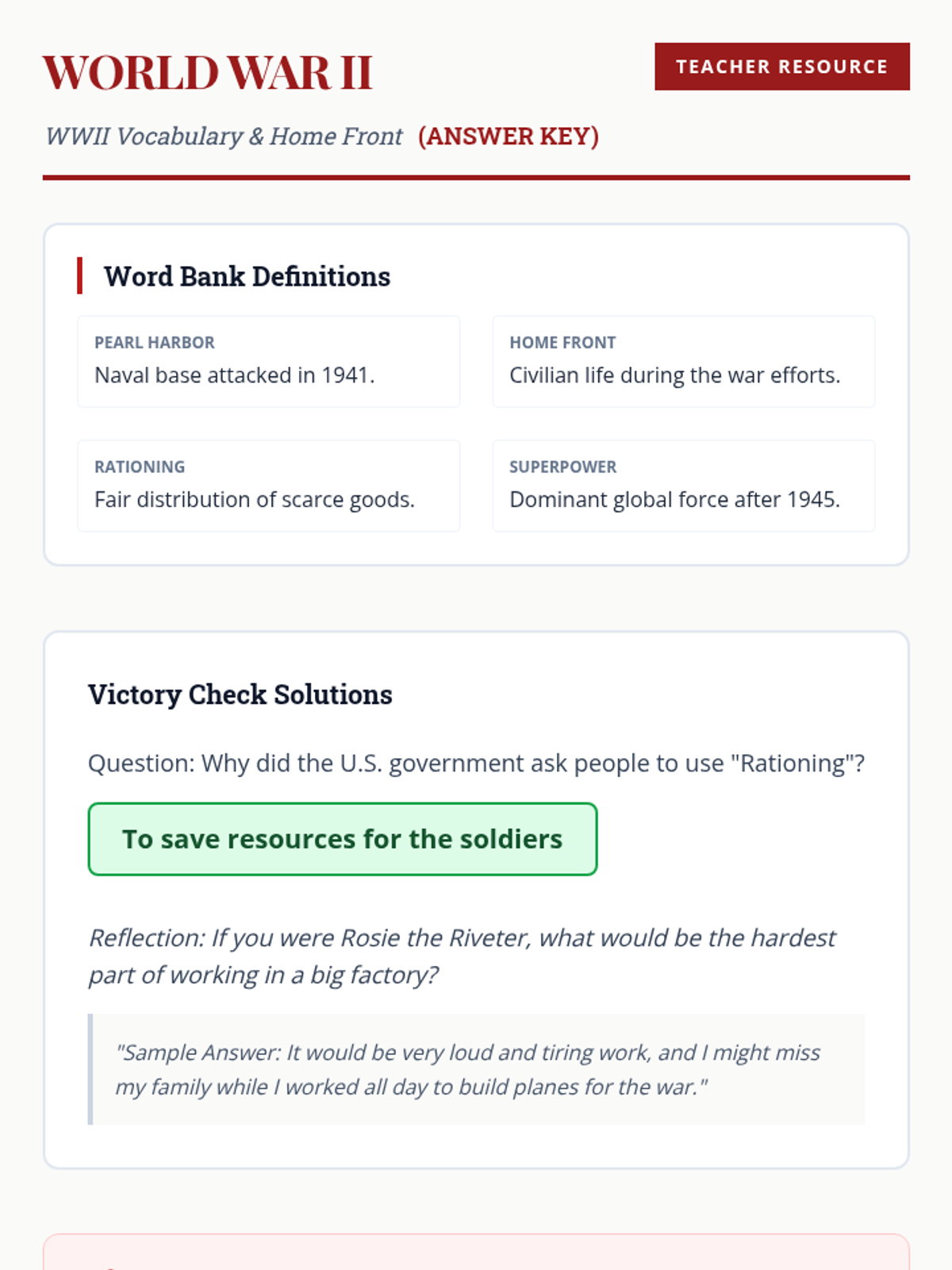
Tracing America's participation in World War II and the changes it brought to the home front, based on Grade 11 Standard 11.7.
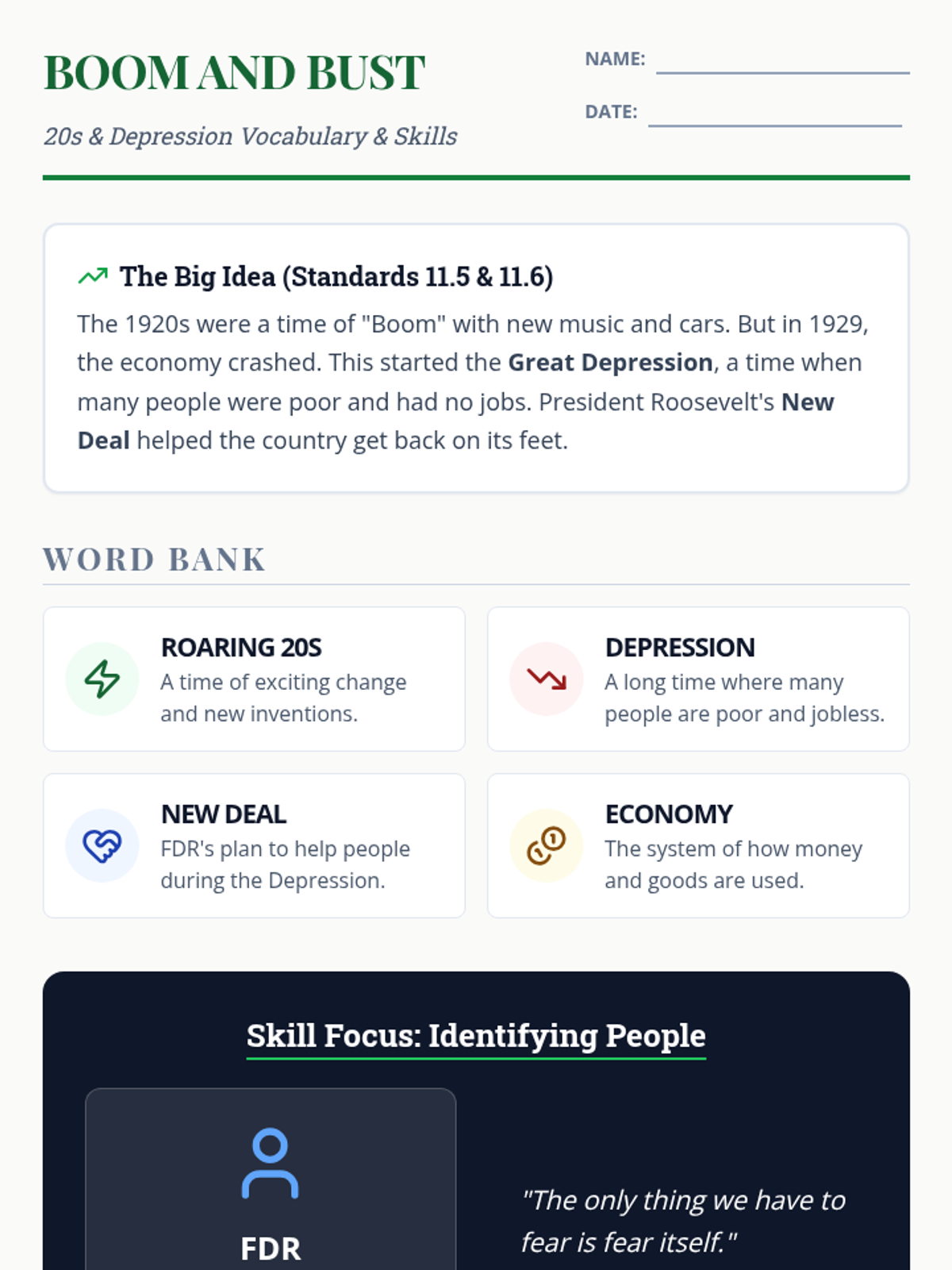
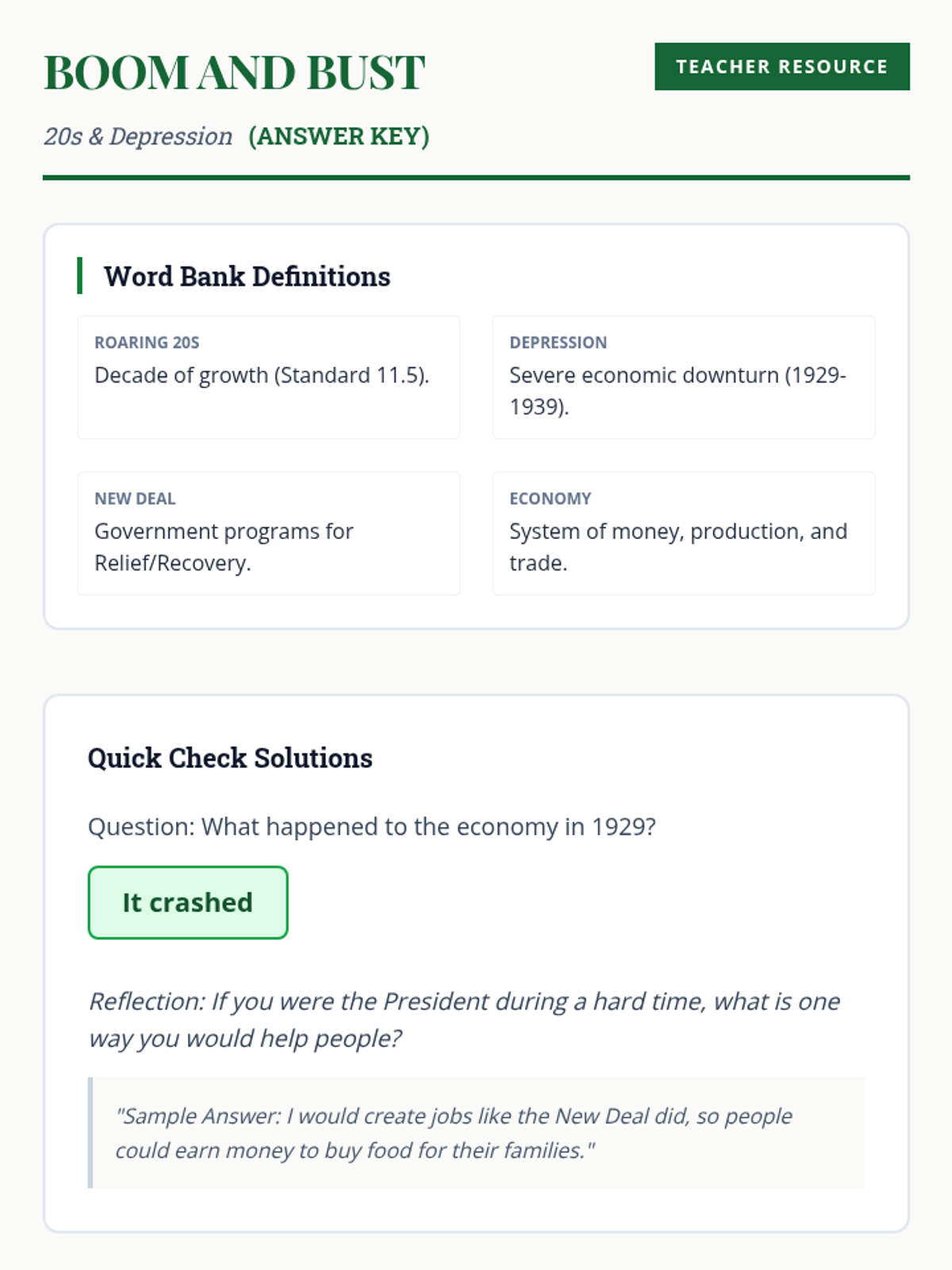
Analyzing the social and economic changes of the 1920s followed by the causes and impacts of the Great Depression and New Deal, based on Grade 11 Standards 11.5 and 11.6.
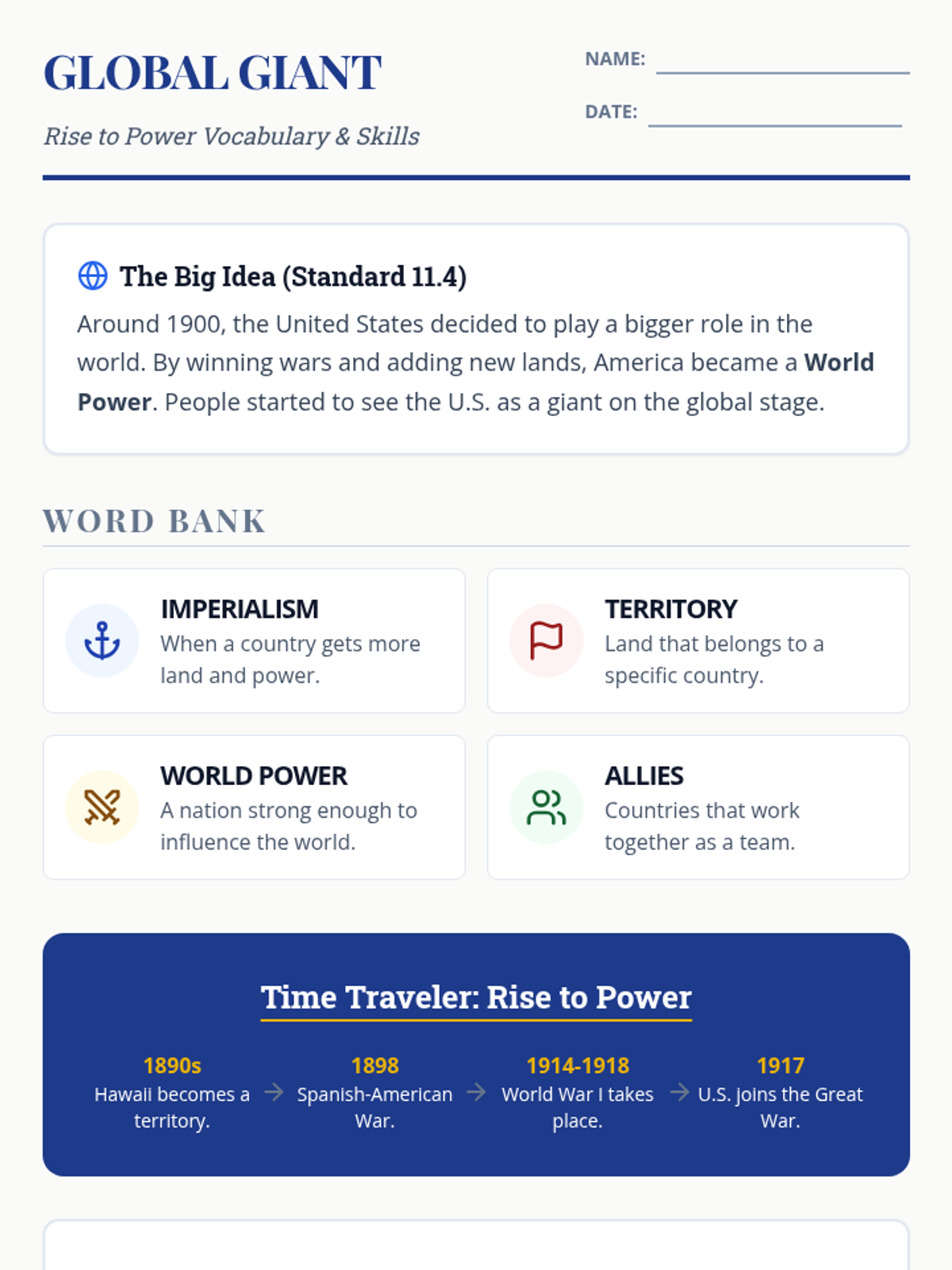
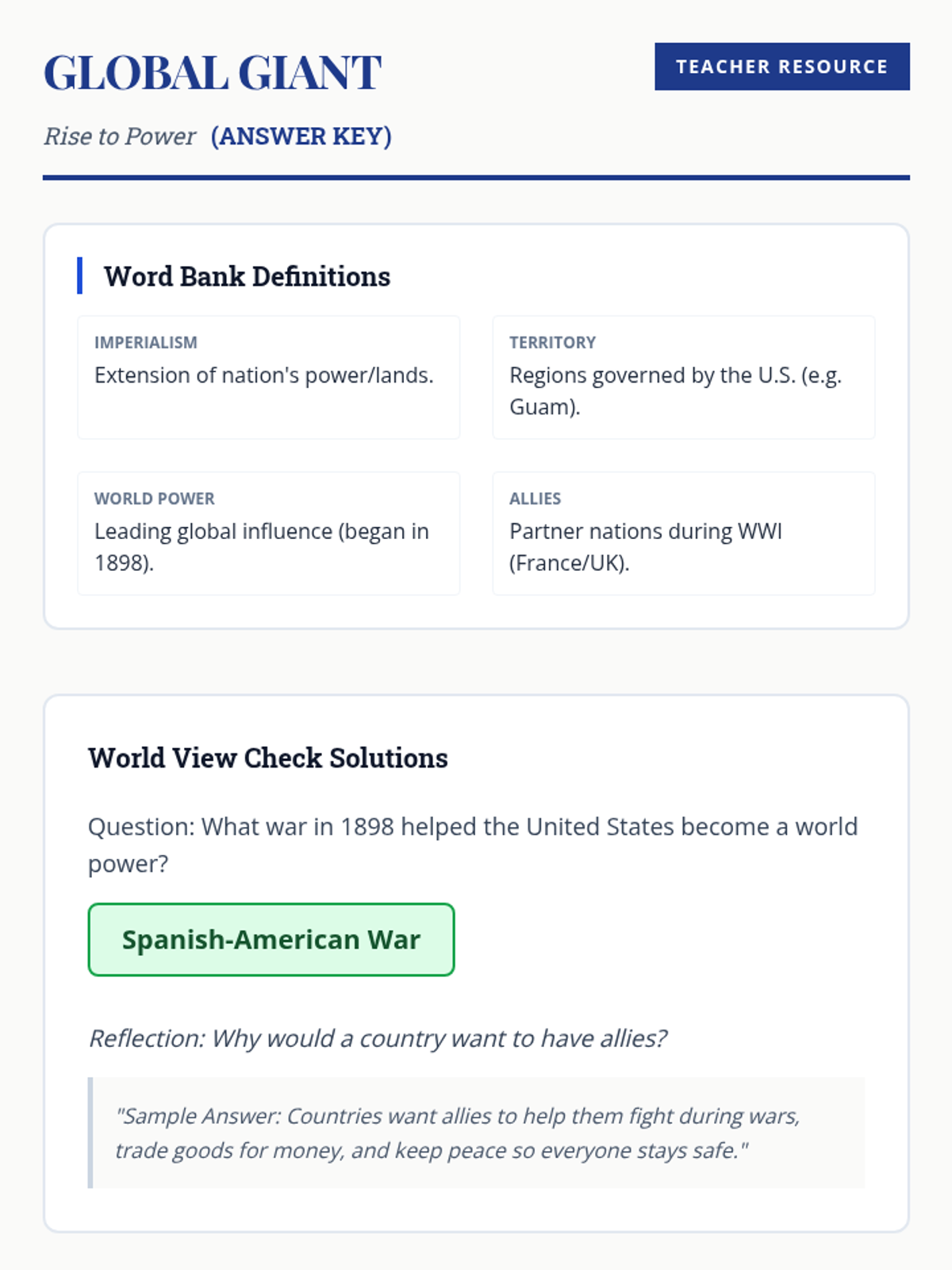
Examining the rise of the United States as a world power in the early twentieth century, including the Spanish-American War and world involvement, based on Grade 11 Standard 11.4.
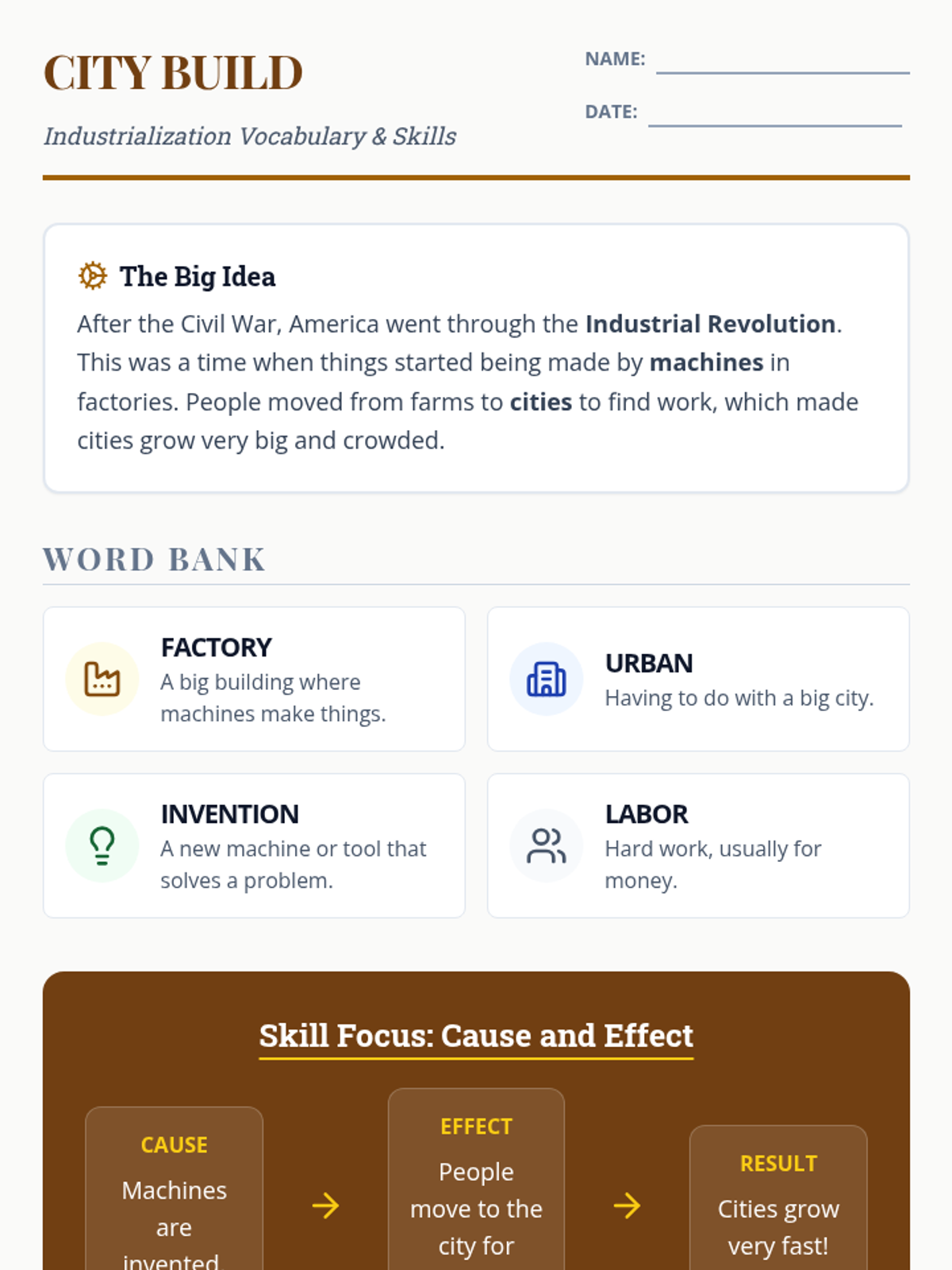
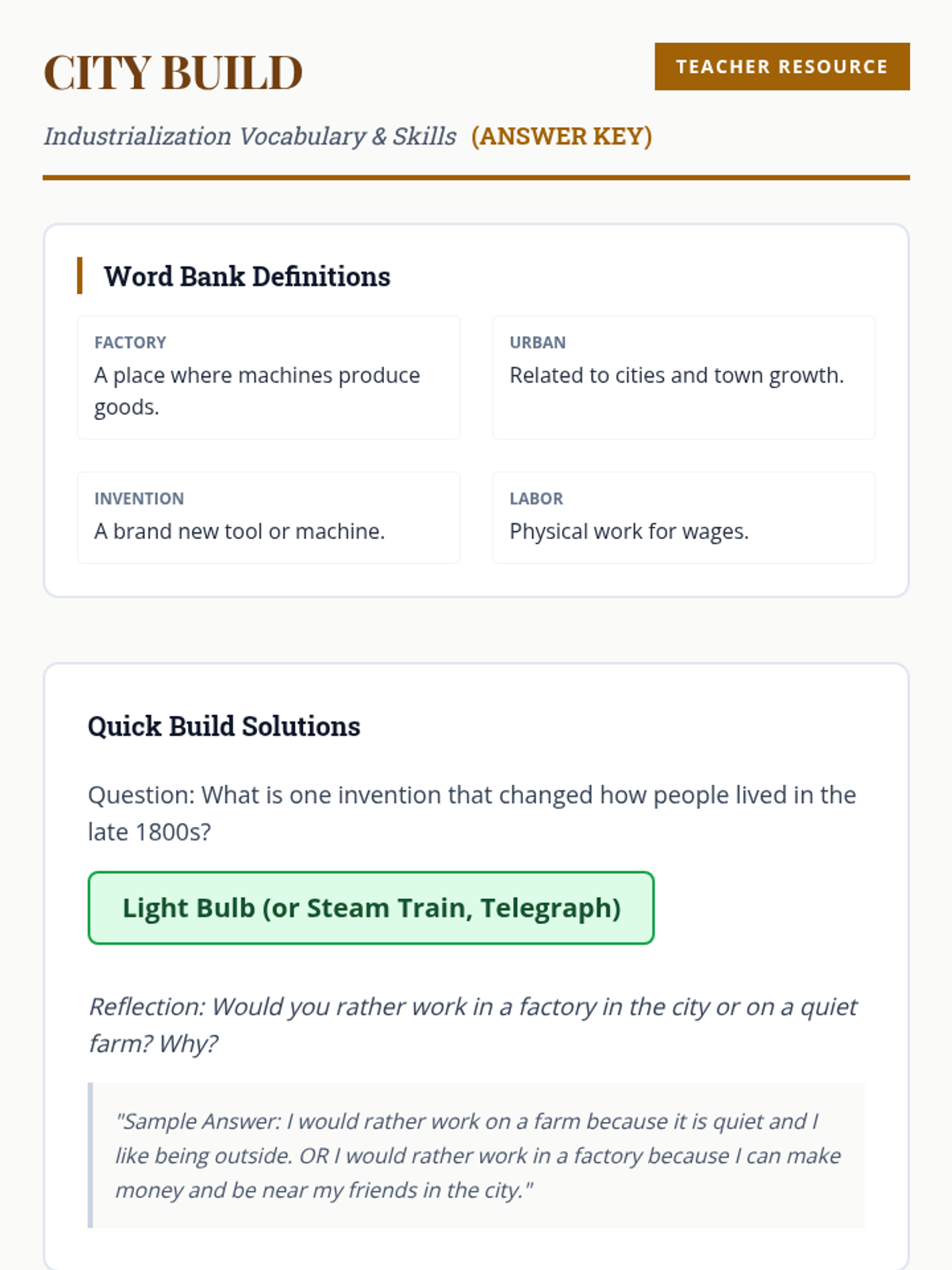
Exploring the rise of industrialization, large-scale migration to cities, and massive immigration from Europe, based on Grade 11 Standard 11.2.
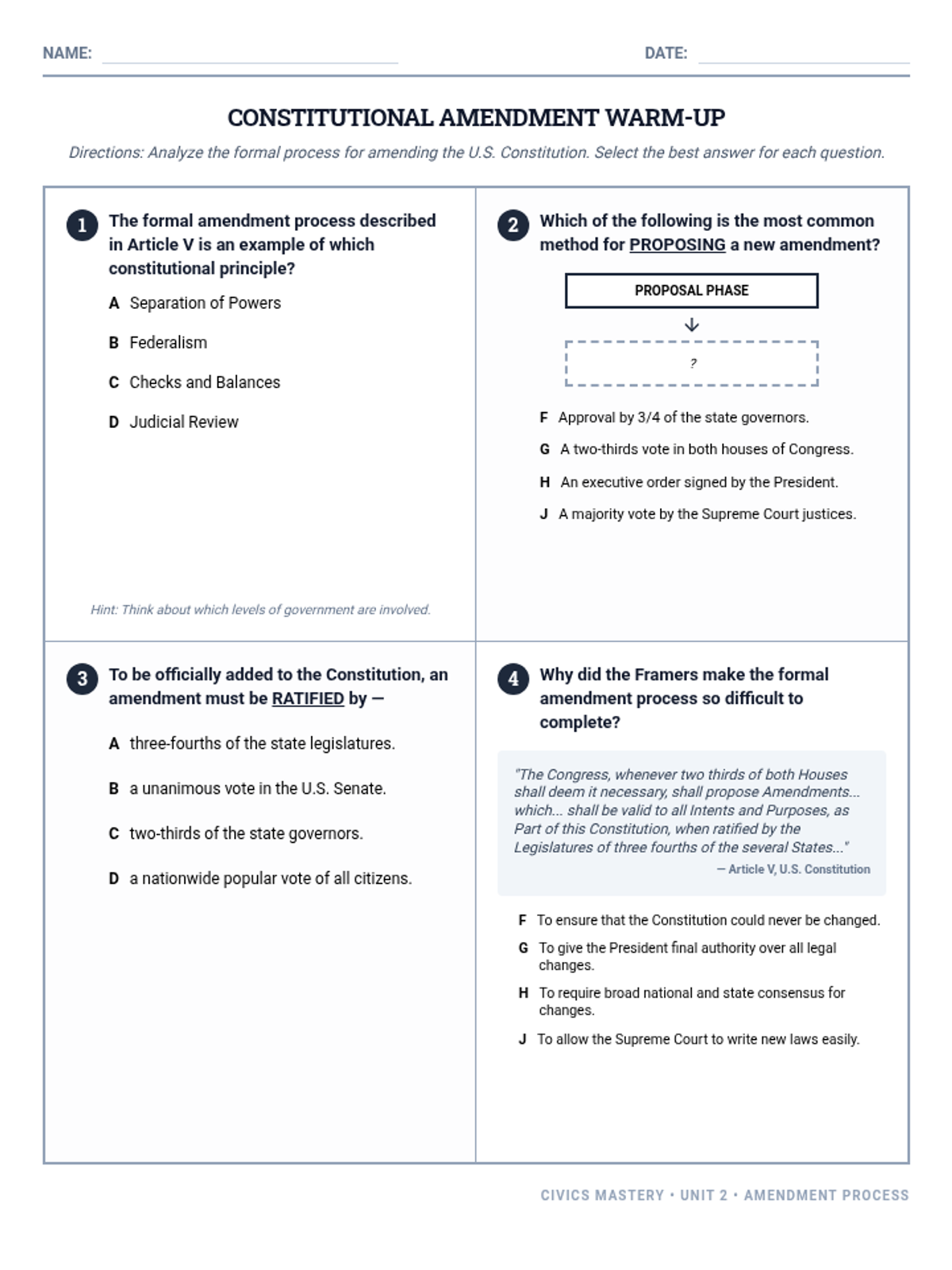
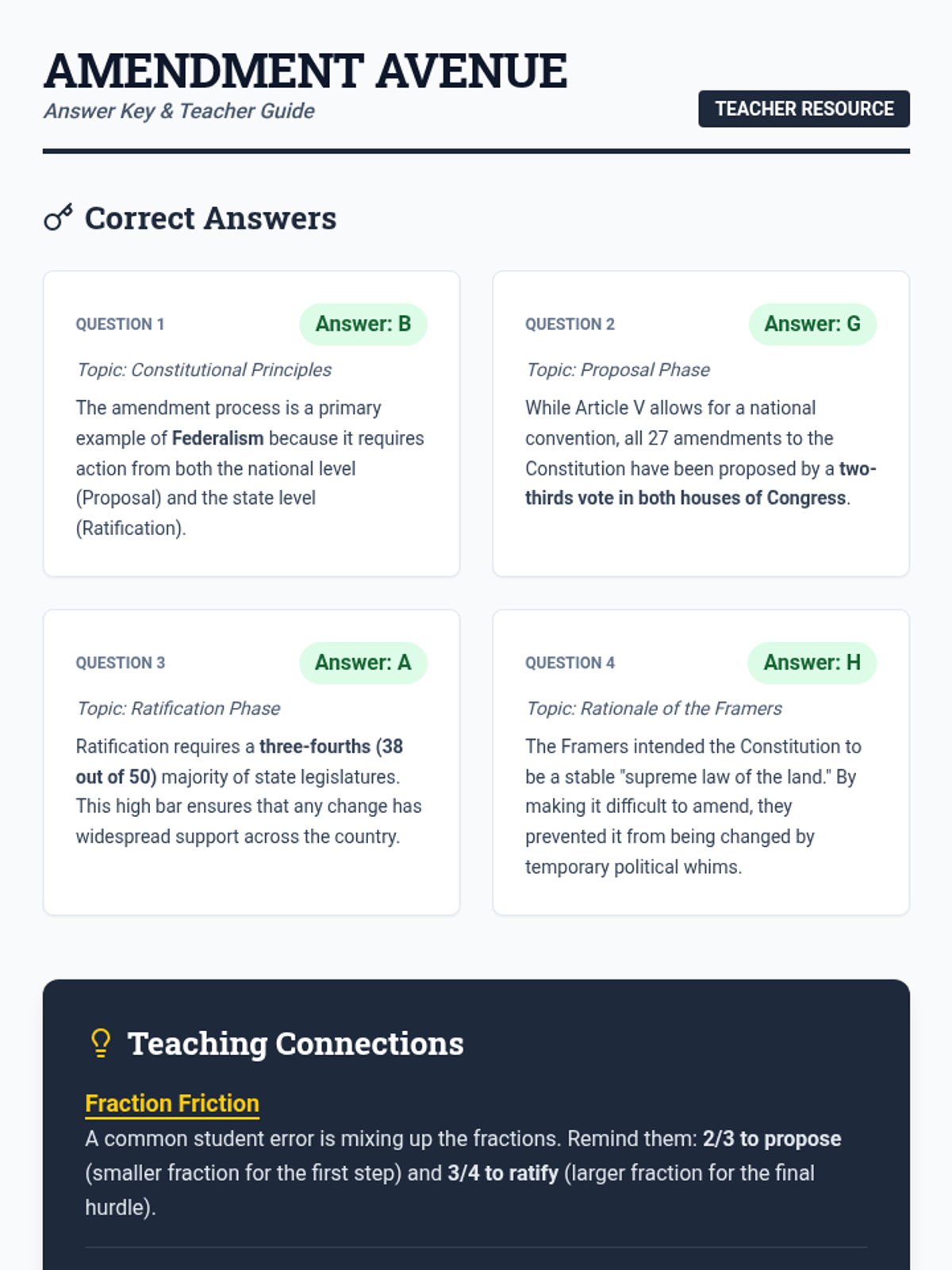
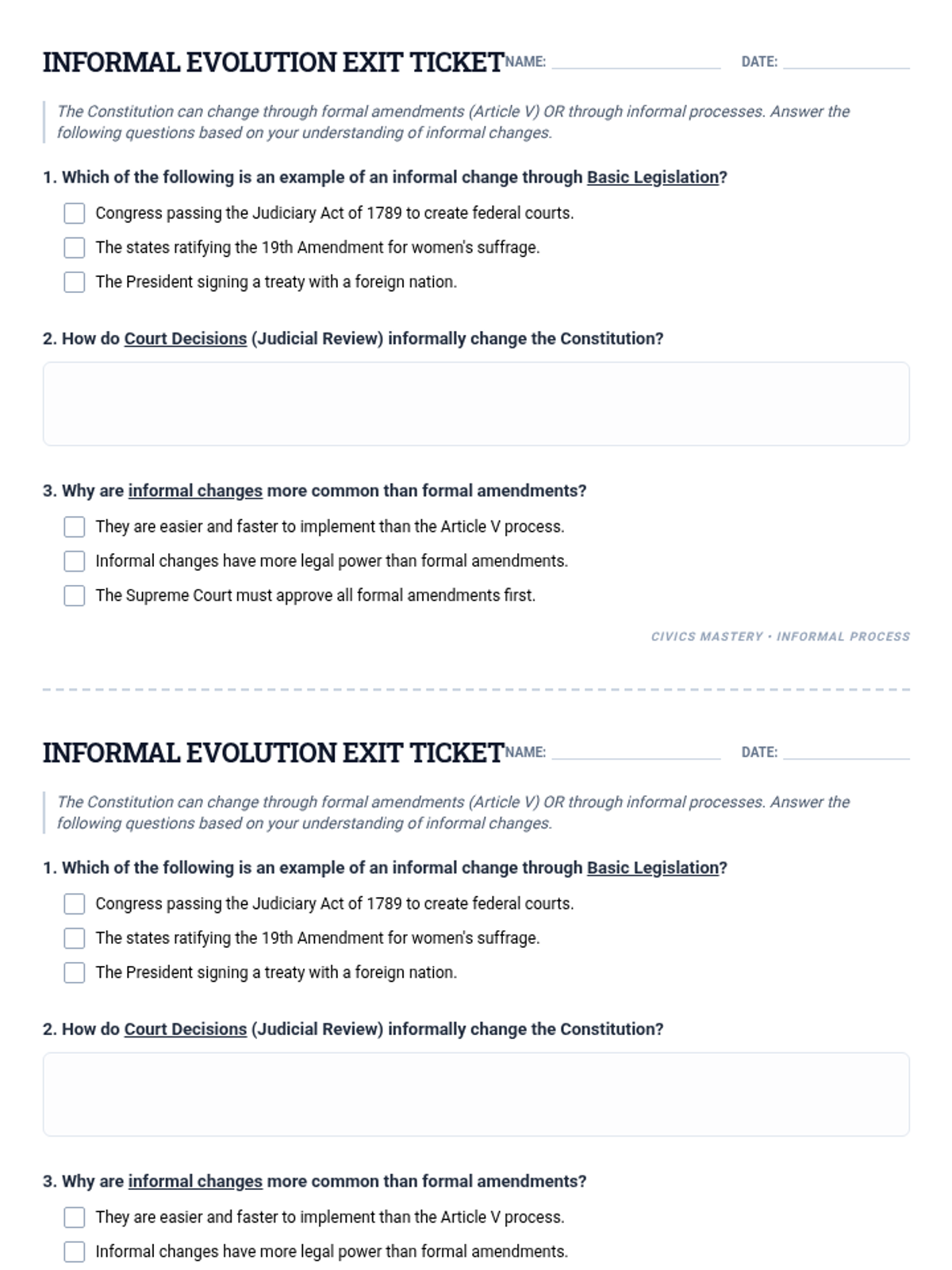
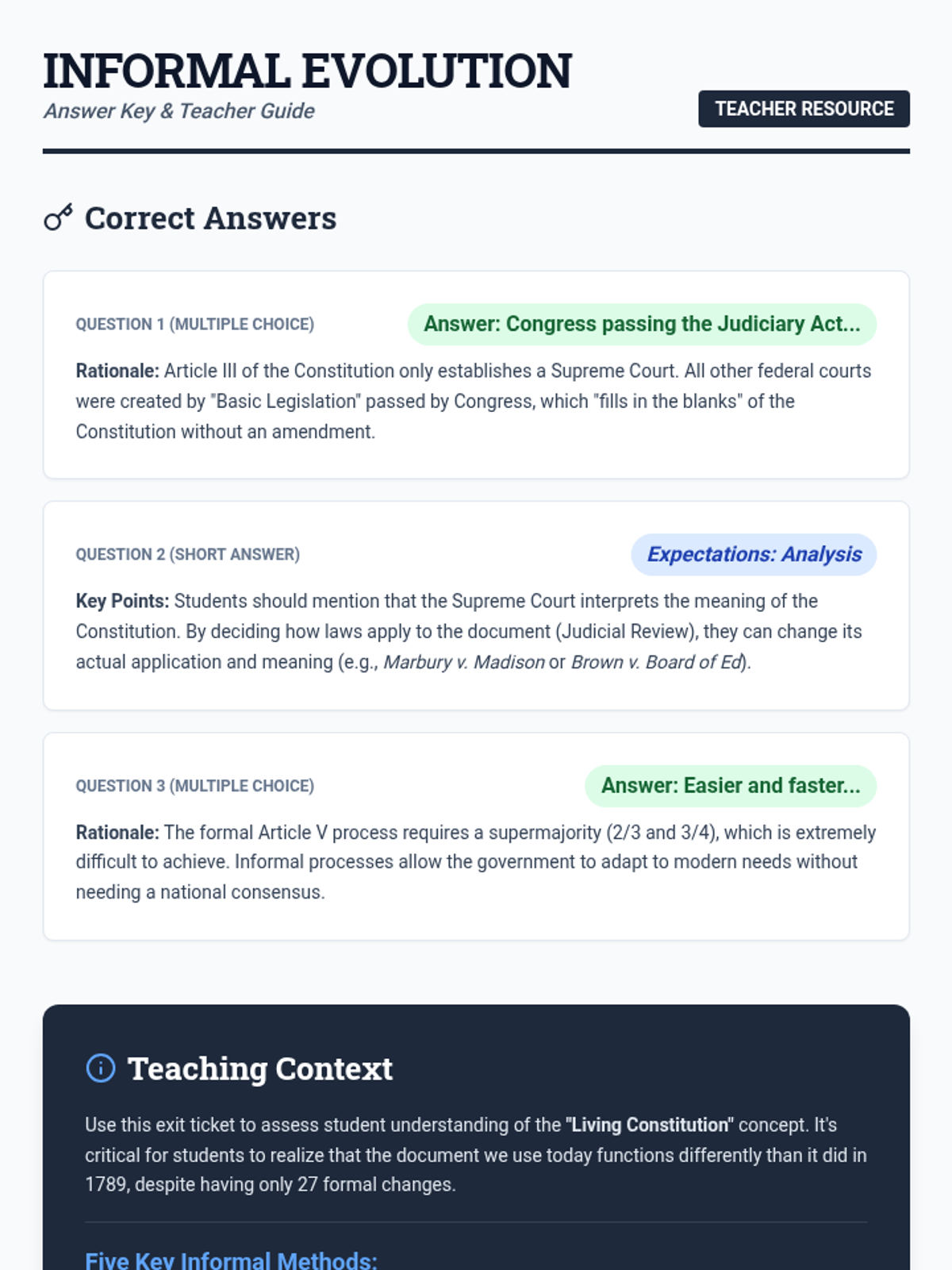
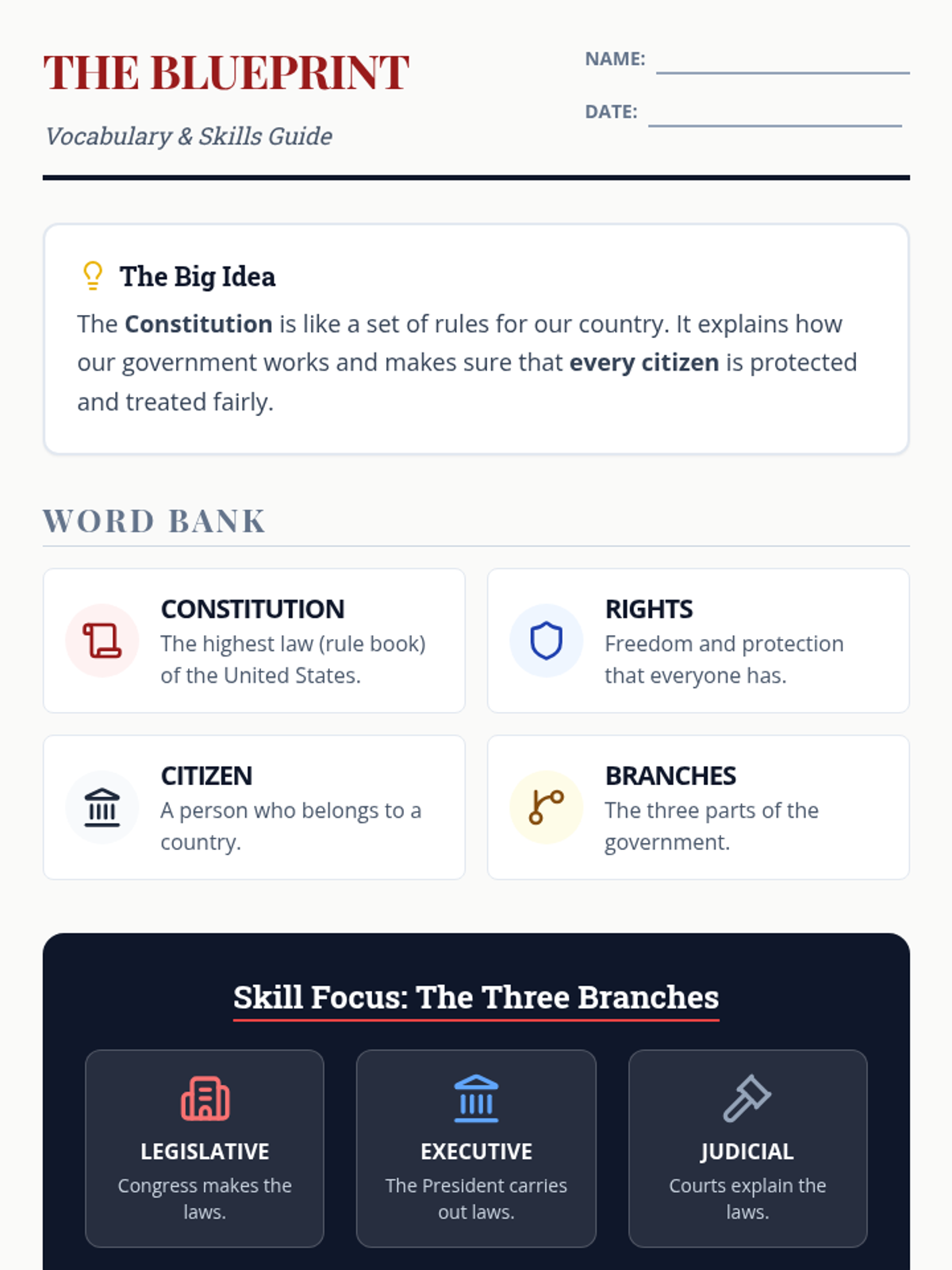
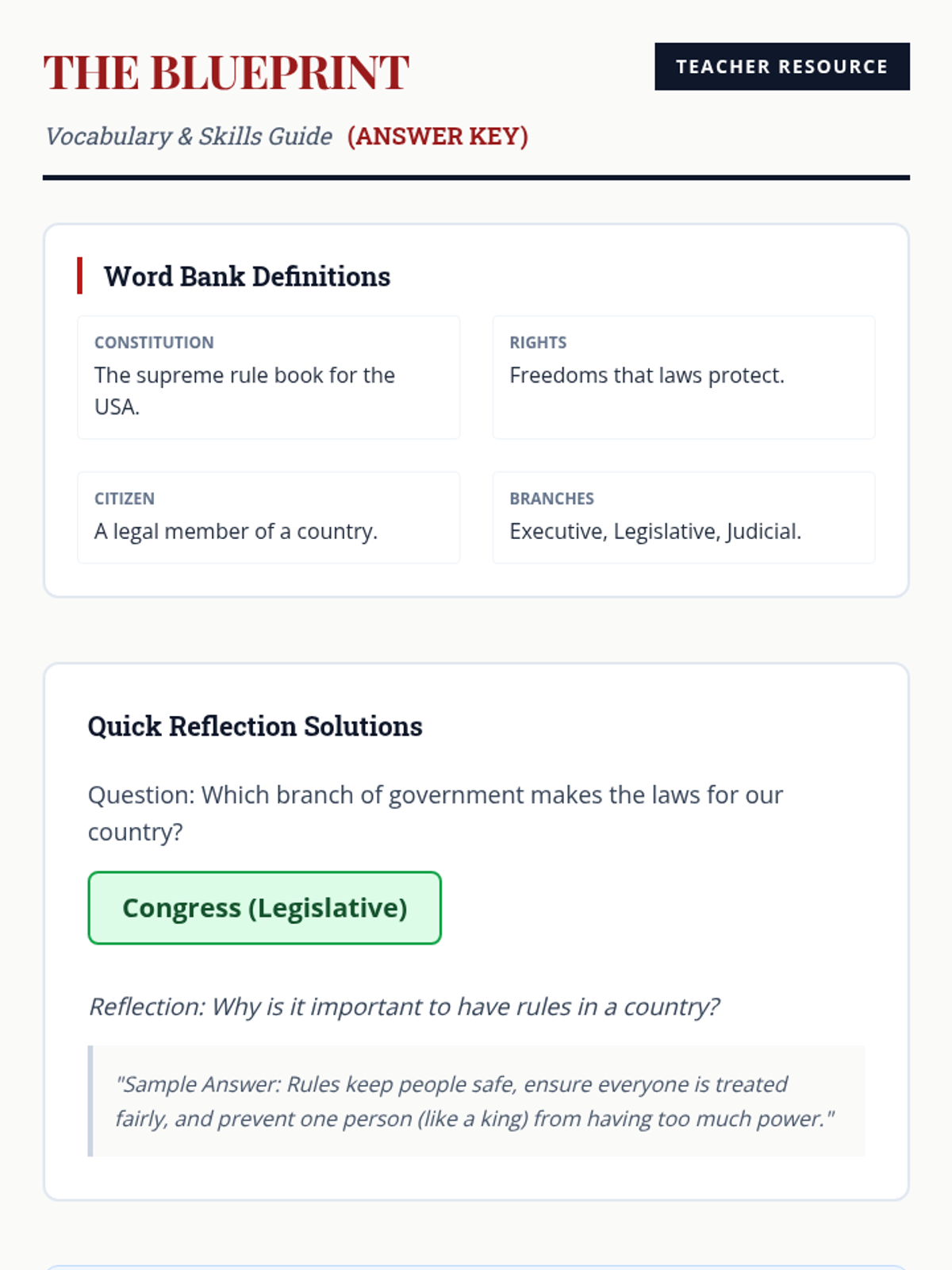
A review of the U.S. Constitution and the Bill of Rights, focusing on the core principles of the American government as described in Grade 11 Standard 11.1.
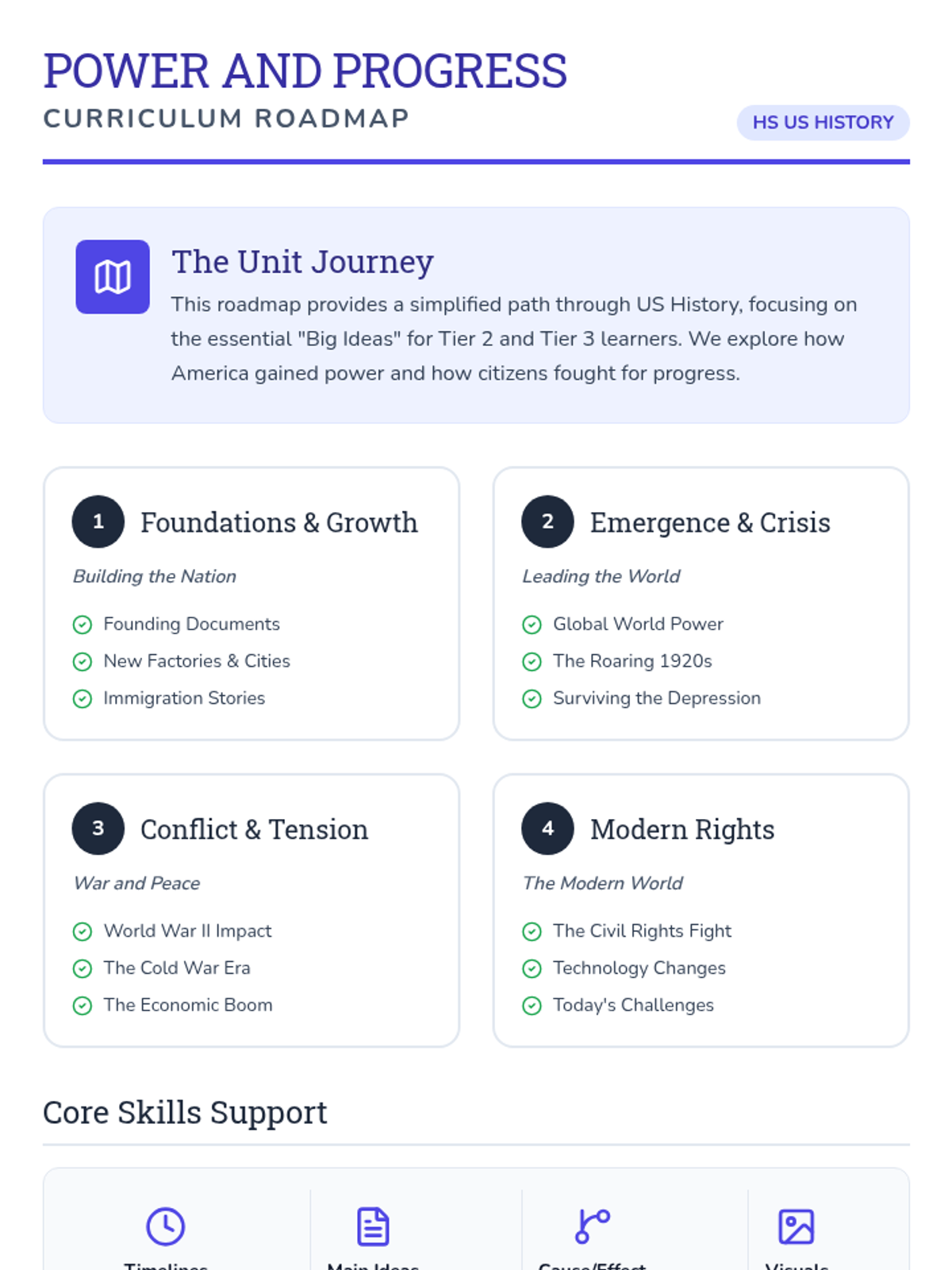
Introduces the Power and Progress curriculum structure, the four major units, and the core historical skills for the course.
Focuses on the Civil Rights movement and the development of contemporary American domestic and foreign policy.
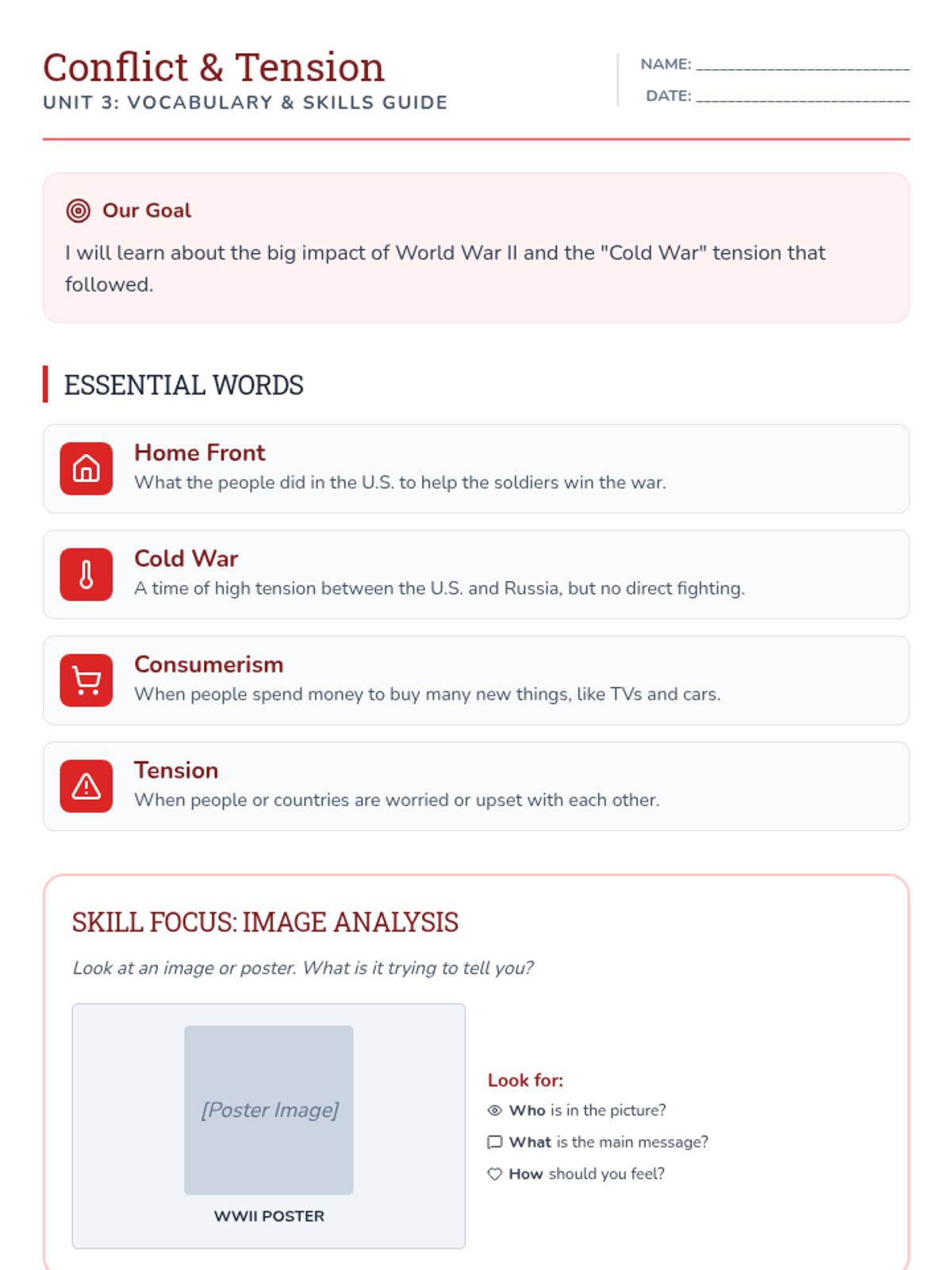
Examines the impact of World War II, the subsequent economic boom, and the tension of the Cold War era.
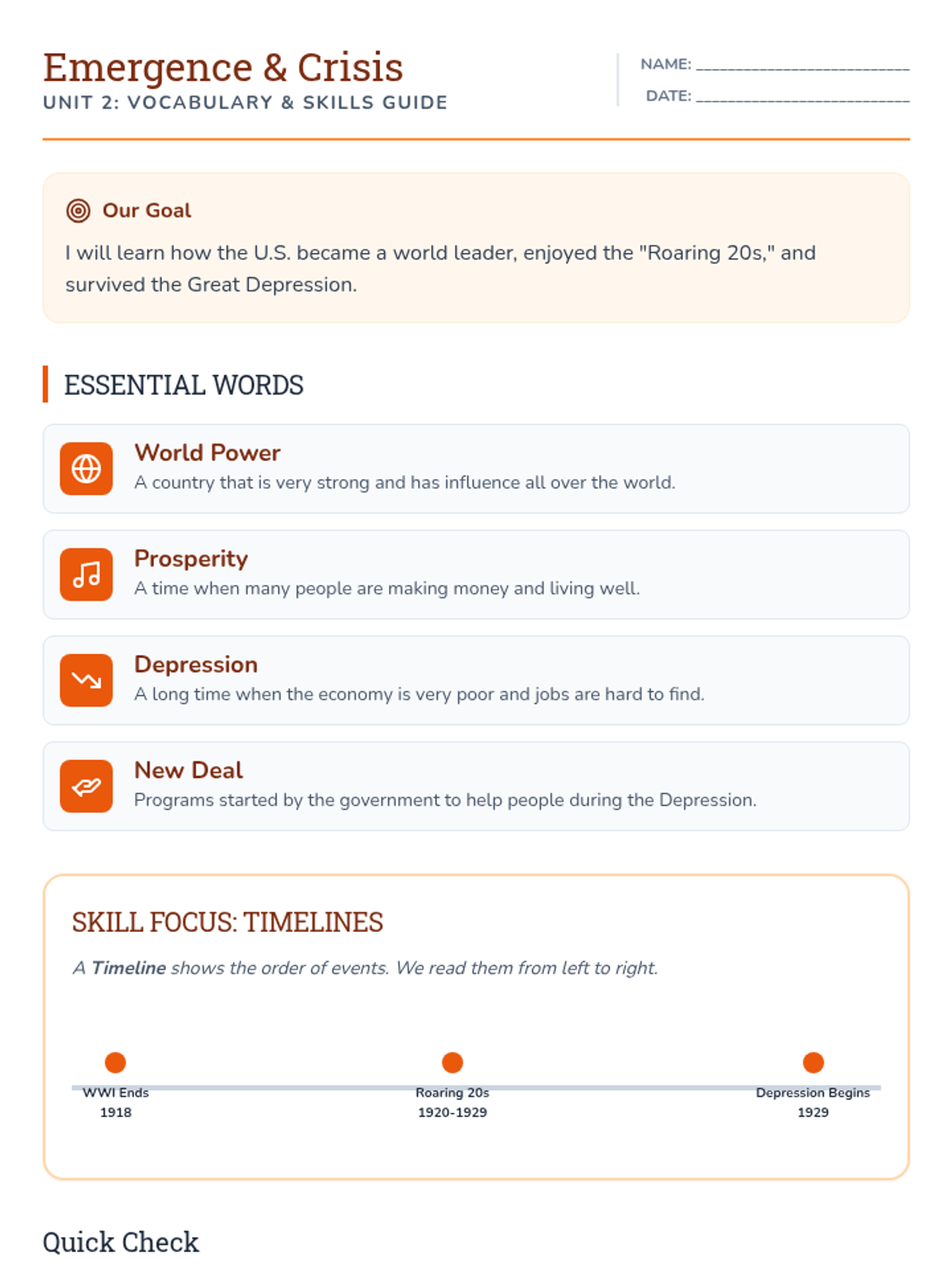
Explores America's rise as a world power, the cultural shifts of the 1920s, and the economic challenges of the Great Depression.
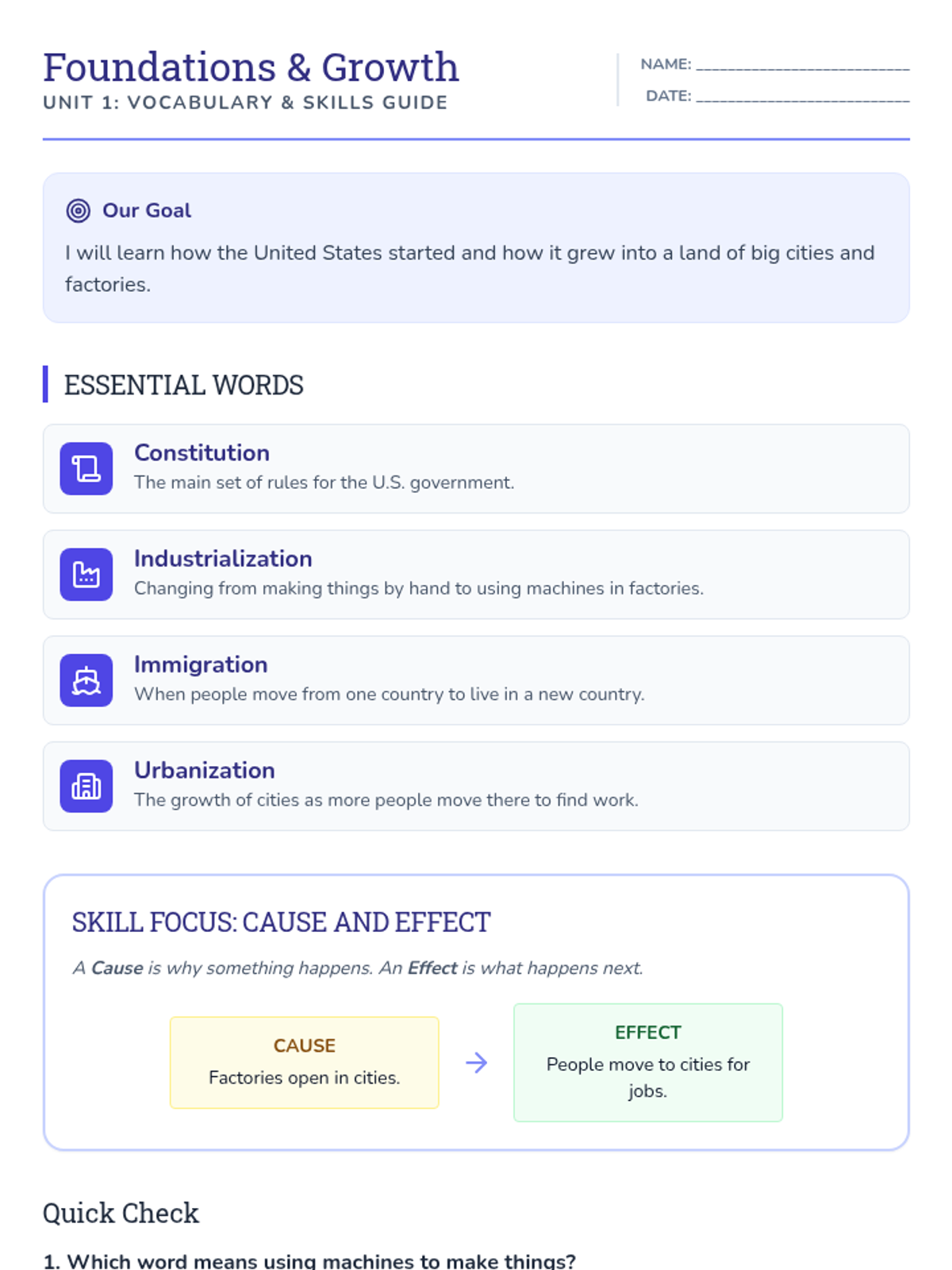
Covers the founding of the nation, the impact of religion, and the shift into industrialization and immigration.
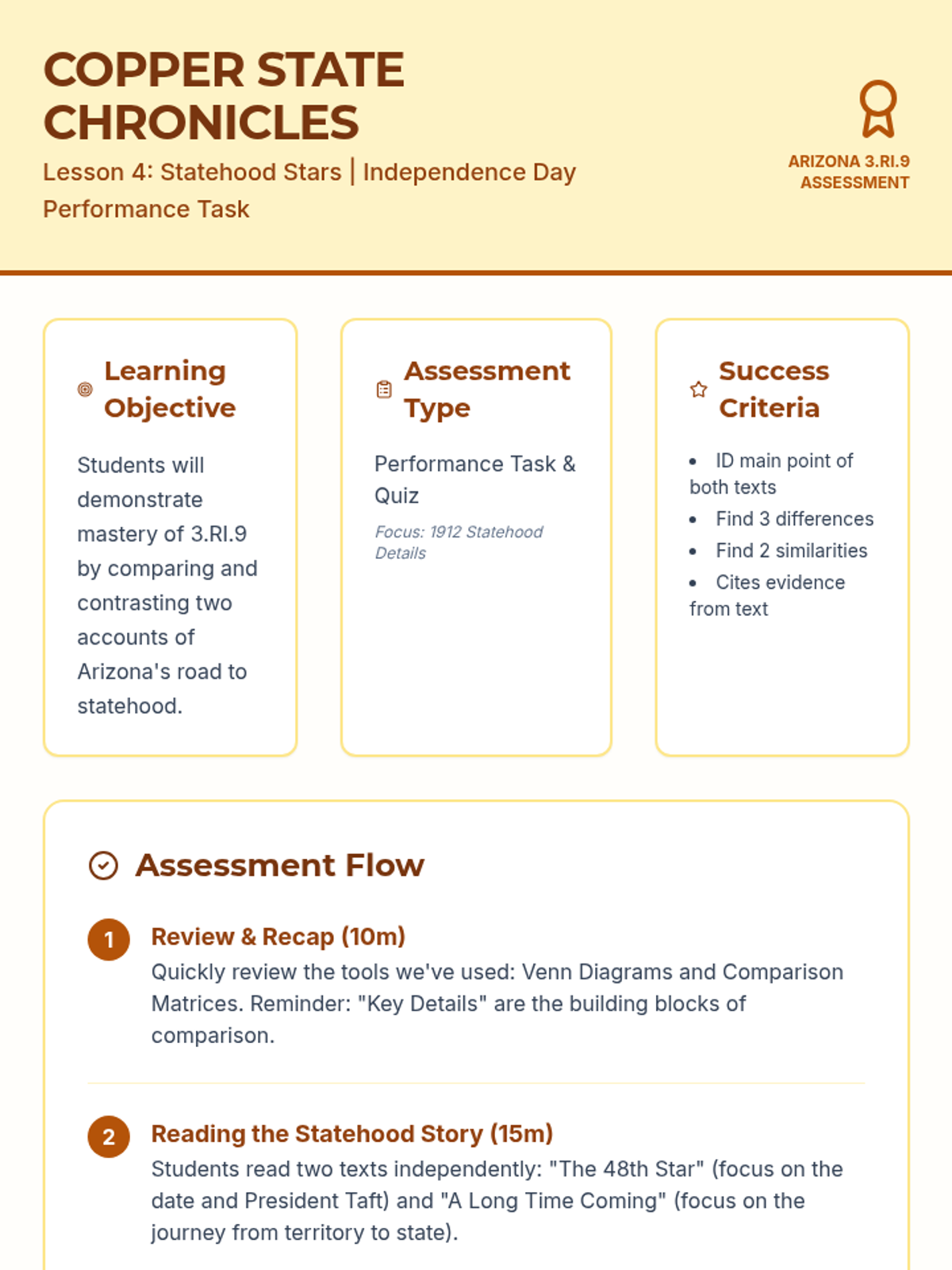
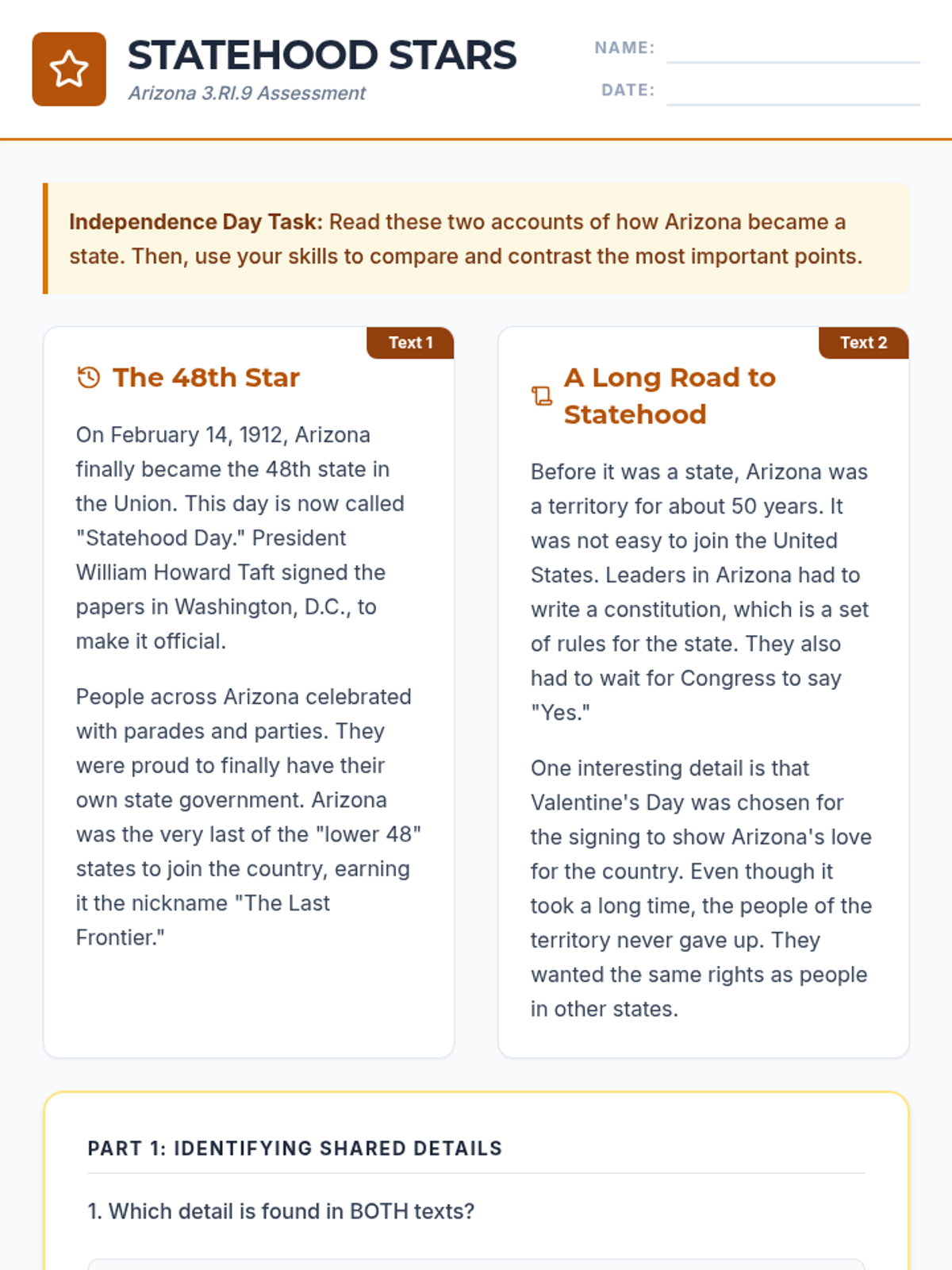
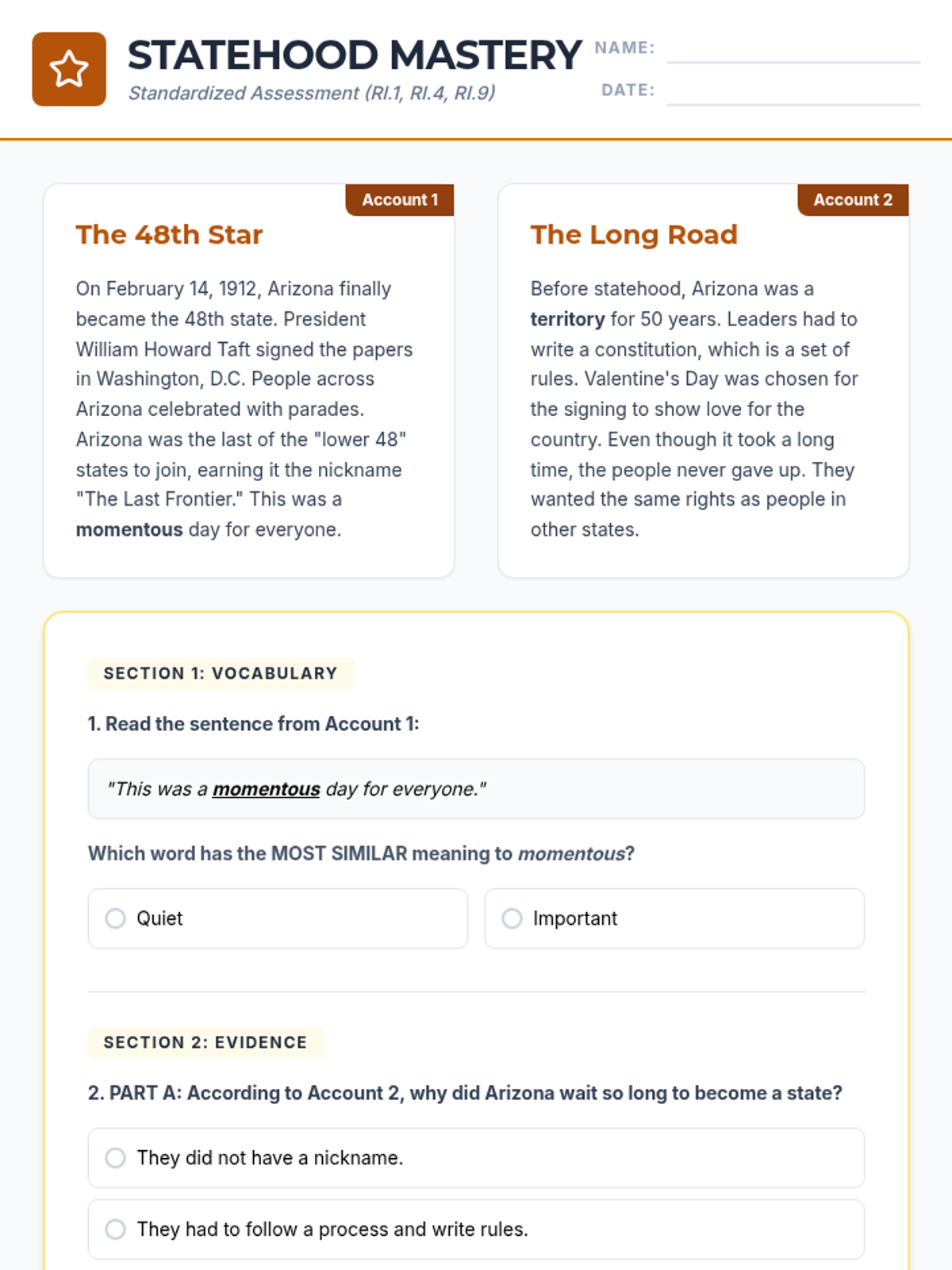
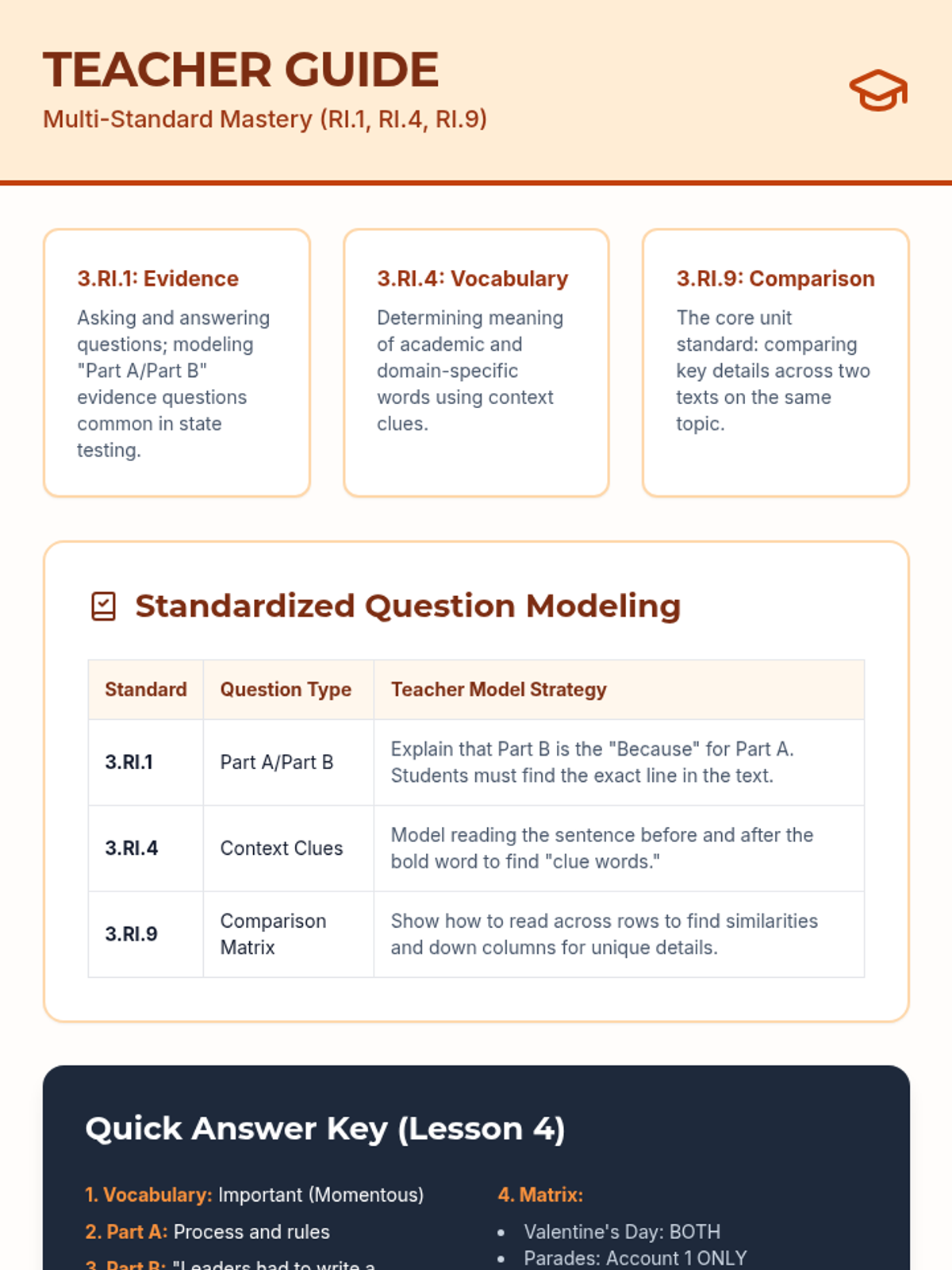
An assessment lesson where students read two accounts of Arizona's journey to statehood and demonstrate their ability to compare and contrast key details independently.