This lesson examines the historiography of the American Civil War, challenging students to compare and contrast various historical interpretations of the conflict's origins, including slavery, states' rights, and economic sectionalism.

A comprehensive lesson exploring the Cuban Refugee Crisis through music, primary source analysis, and historical context, focusing on the human experience of displacement and the resilience of the Cuban-American community.
A simplified introduction to the Magna Carta for special education students, focusing on the limitation of royal power and the birth of basic rights through visual aids and modified texts.
A lesson focused on the social structure and warrior culture of Medieval Japan, specifically designed with scaffolds for special education students to analyze the Shogun, Samurai, and the code of Bushido.
Exploring major social problems and domestic policy issues in contemporary American society, based on Grade 11 Standard 11.11.
Analyzing the development of federal civil rights and the movements that fought for voting rights and equality, based on Grade 11 Standard 11.10.
Understanding the global tensions of the Cold War and how they shaped American foreign policy, based on Grade 11 Standard 11.9.
Tracing America's participation in World War II and the changes it brought to the home front, based on Grade 11 Standard 11.7.
Analyzing the social and economic changes of the 1920s followed by the causes and impacts of the Great Depression and New Deal, based on Grade 11 Standards 11.5 and 11.6.
Examining the rise of the United States as a world power in the early twentieth century, including the Spanish-American War and world involvement, based on Grade 11 Standard 11.4.
Exploring the rise of industrialization, large-scale migration to cities, and massive immigration from Europe, based on Grade 11 Standard 11.2.
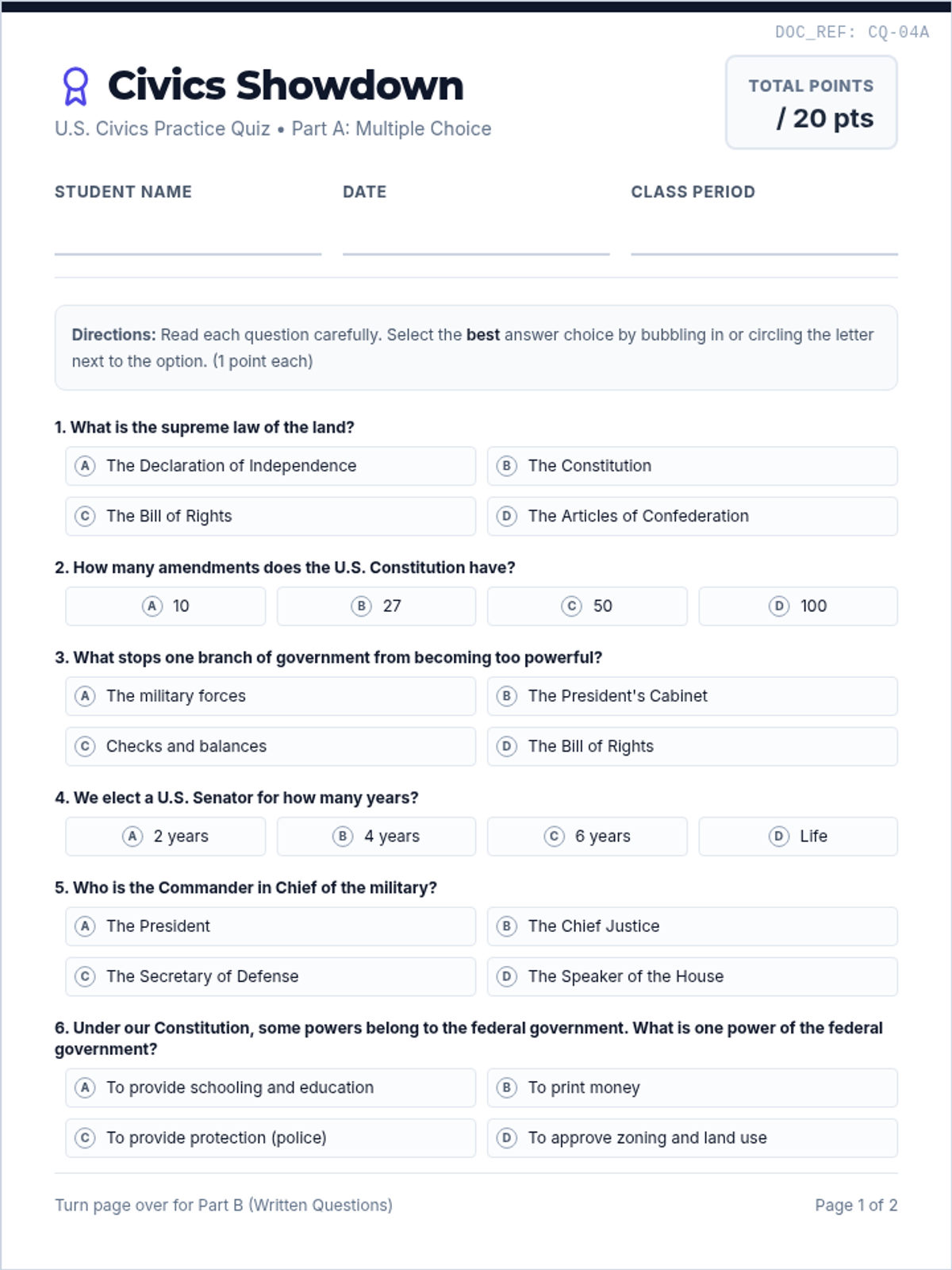
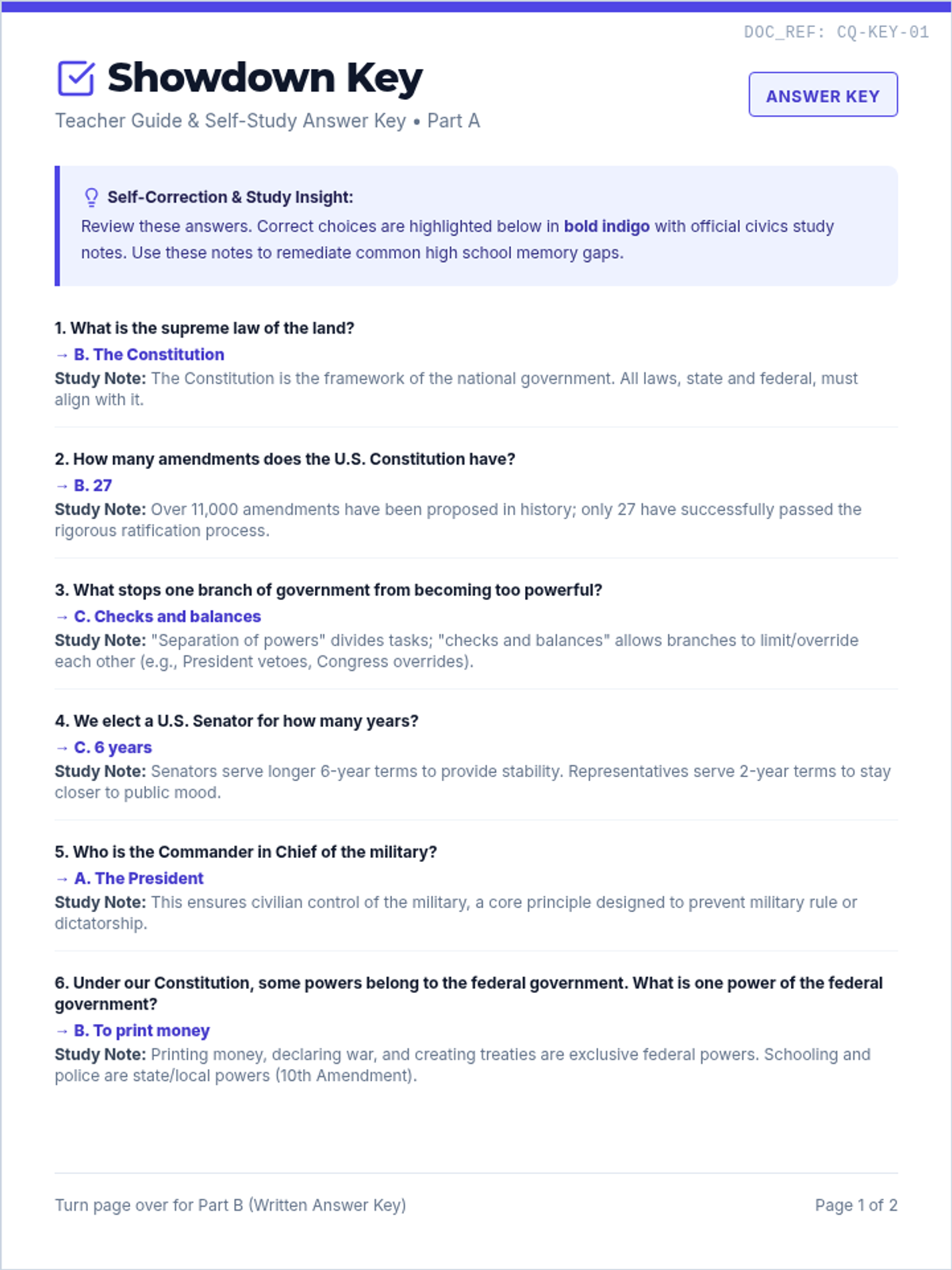
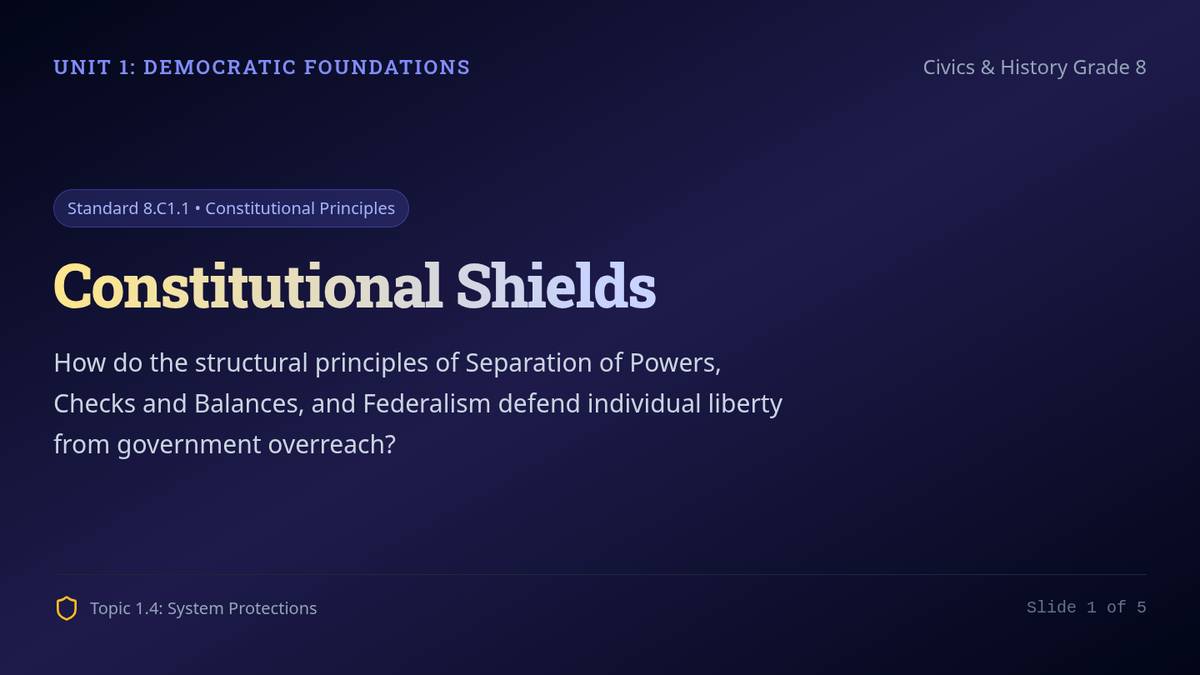
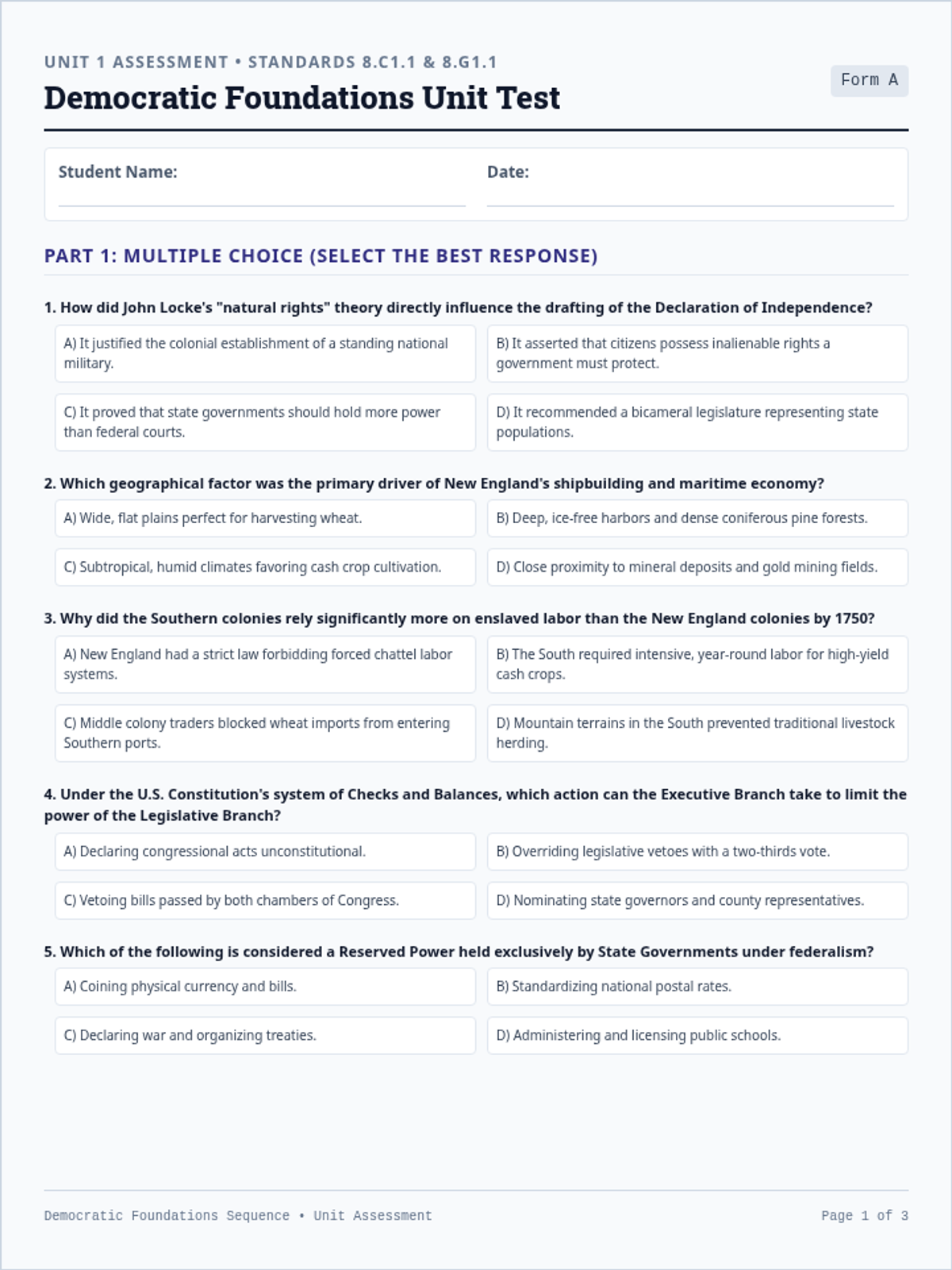
A review of the U.S. Constitution and the Bill of Rights, focusing on the core principles of the American government as described in Grade 11 Standard 11.1.
Introduces the Power and Progress curriculum structure, the four major units, and the core historical skills for the course.