A comprehensive lesson exploring Immanuel Wallerstein's World Systems Theory, using the history of Taiwan and modern economic data to understand Core, Periphery, and Semi-Periphery dynamics.
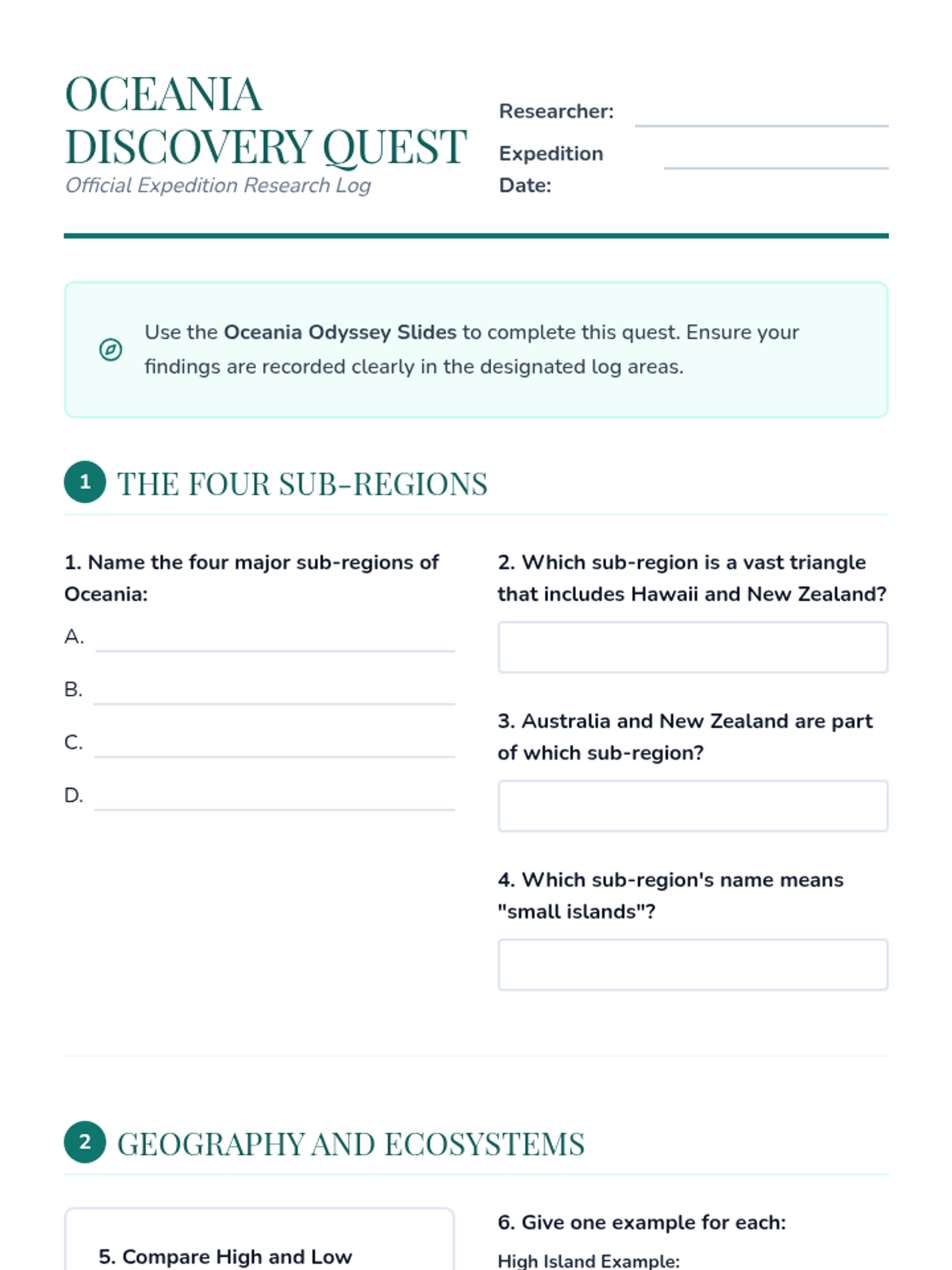
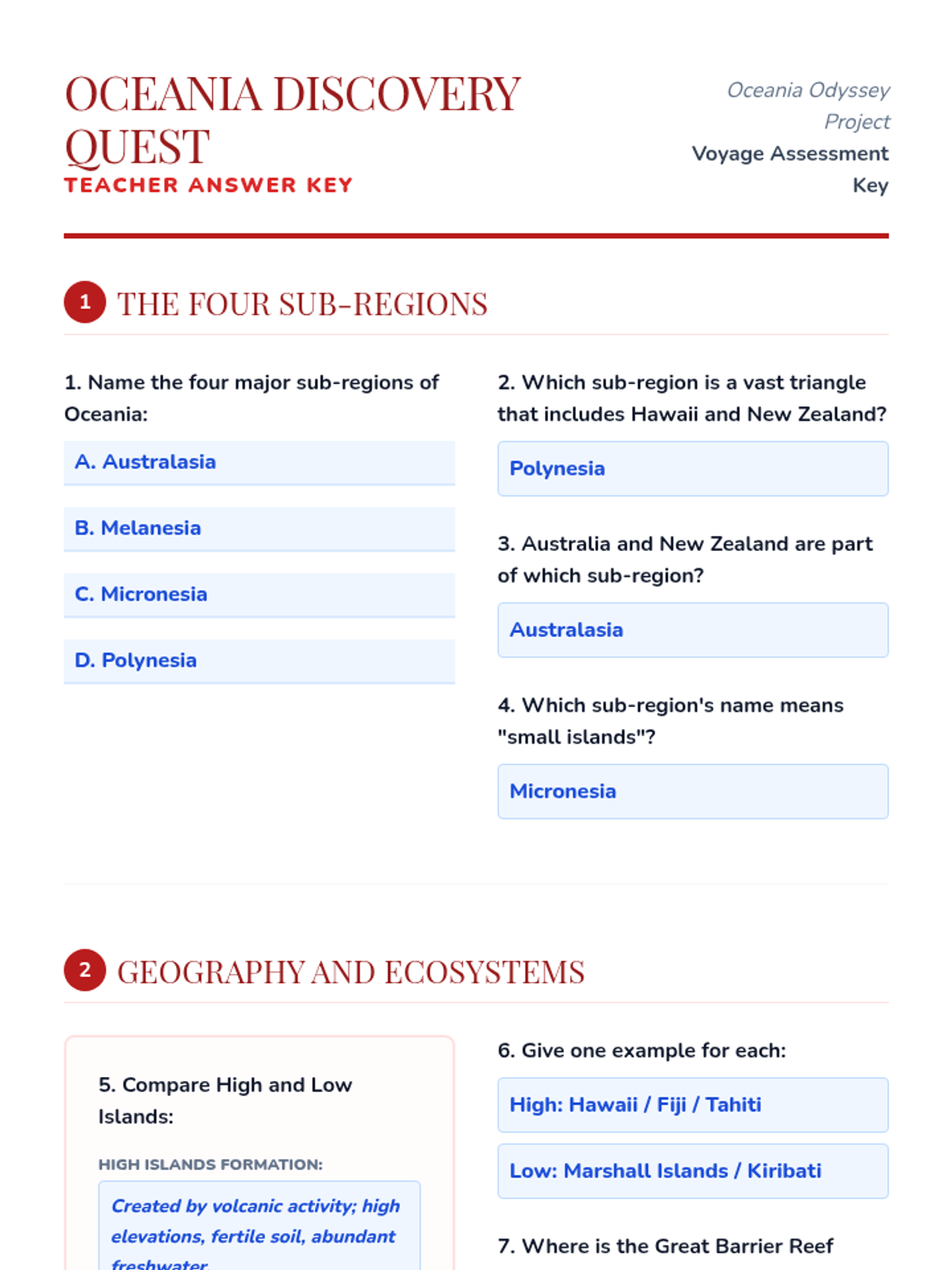
A comprehensive project exploring the Oceania region through its geography, history, and modern environmental challenges. Students use a detailed slide deck to complete a 20-question discovery quest.
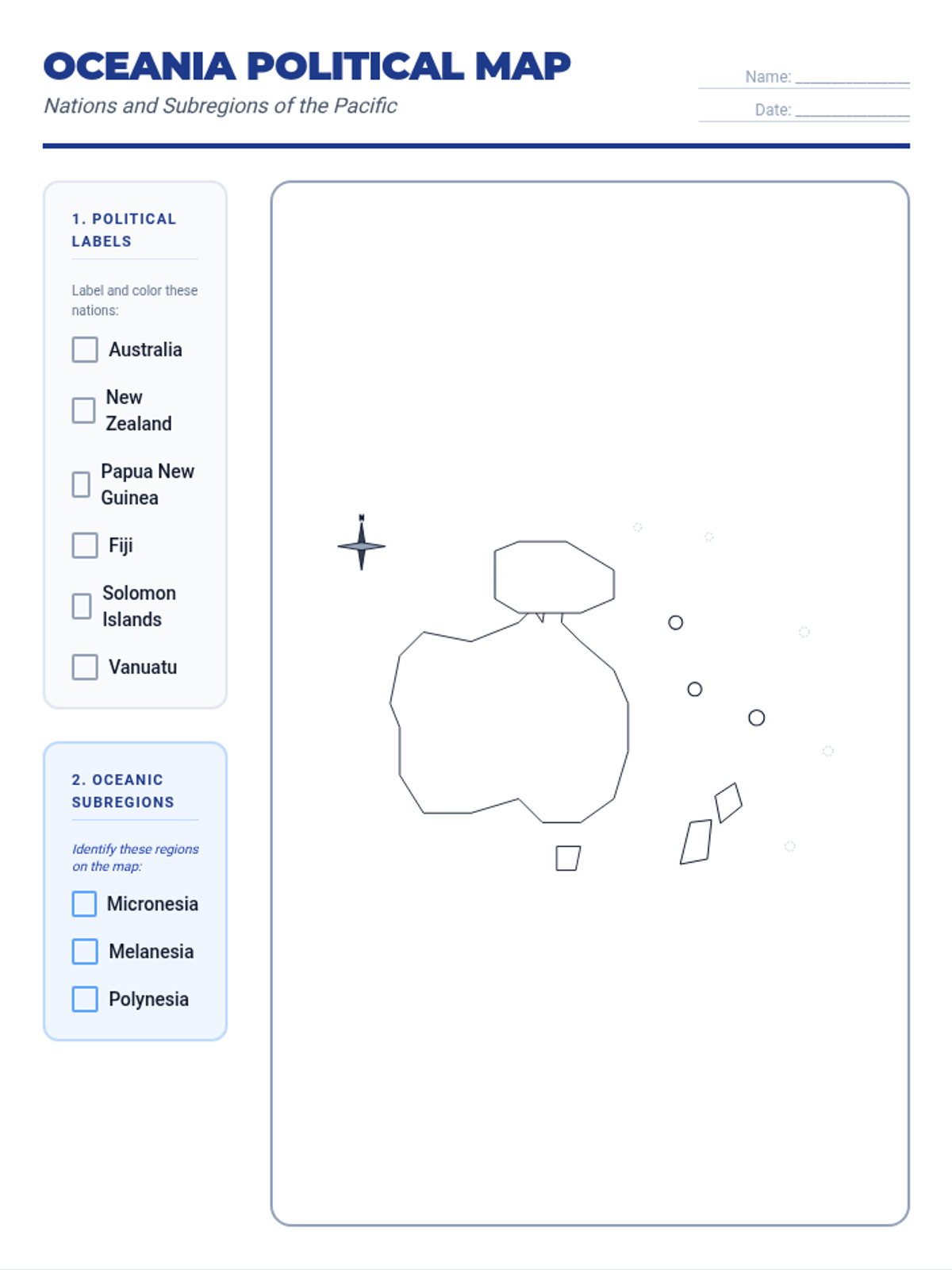
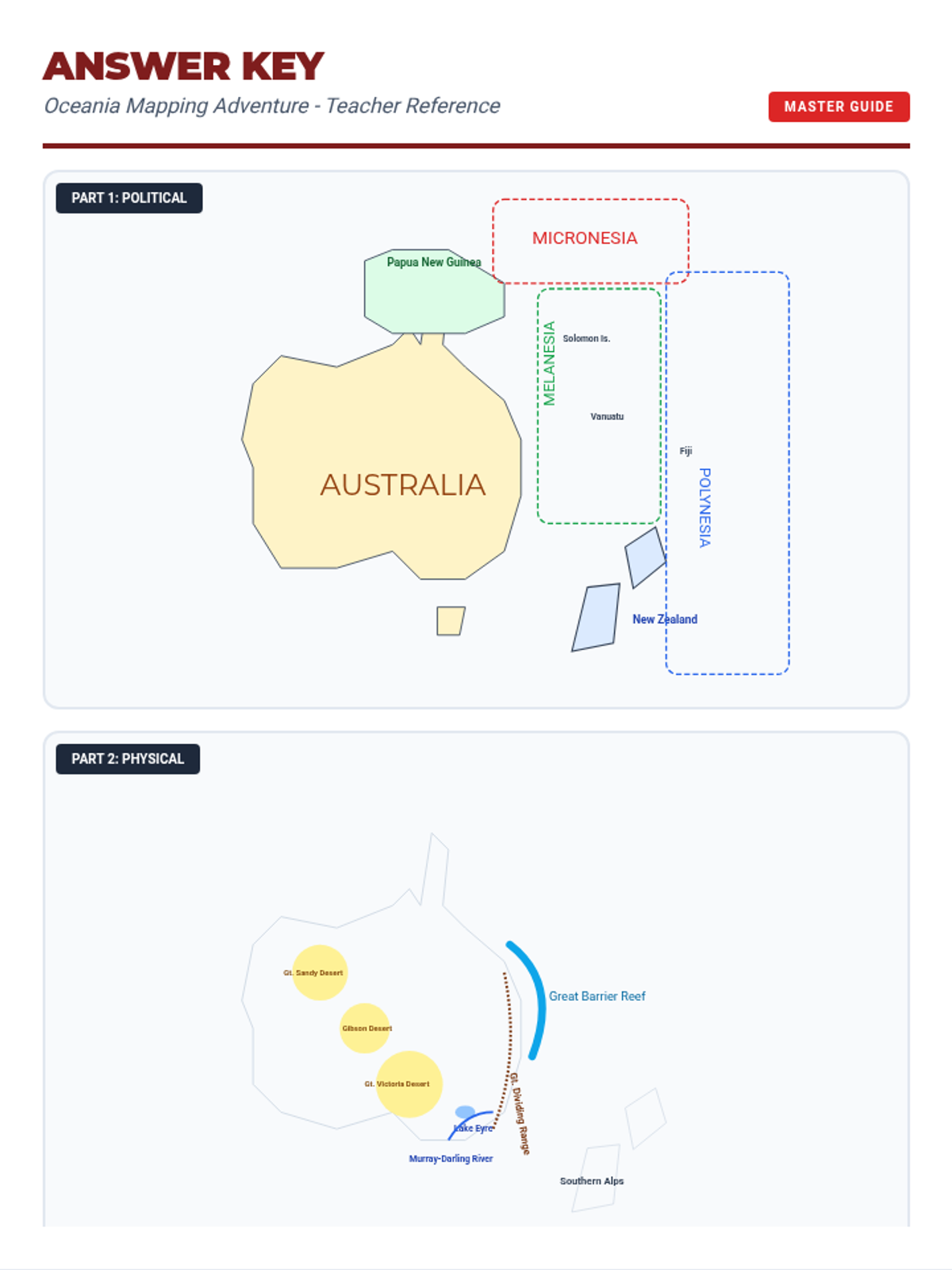
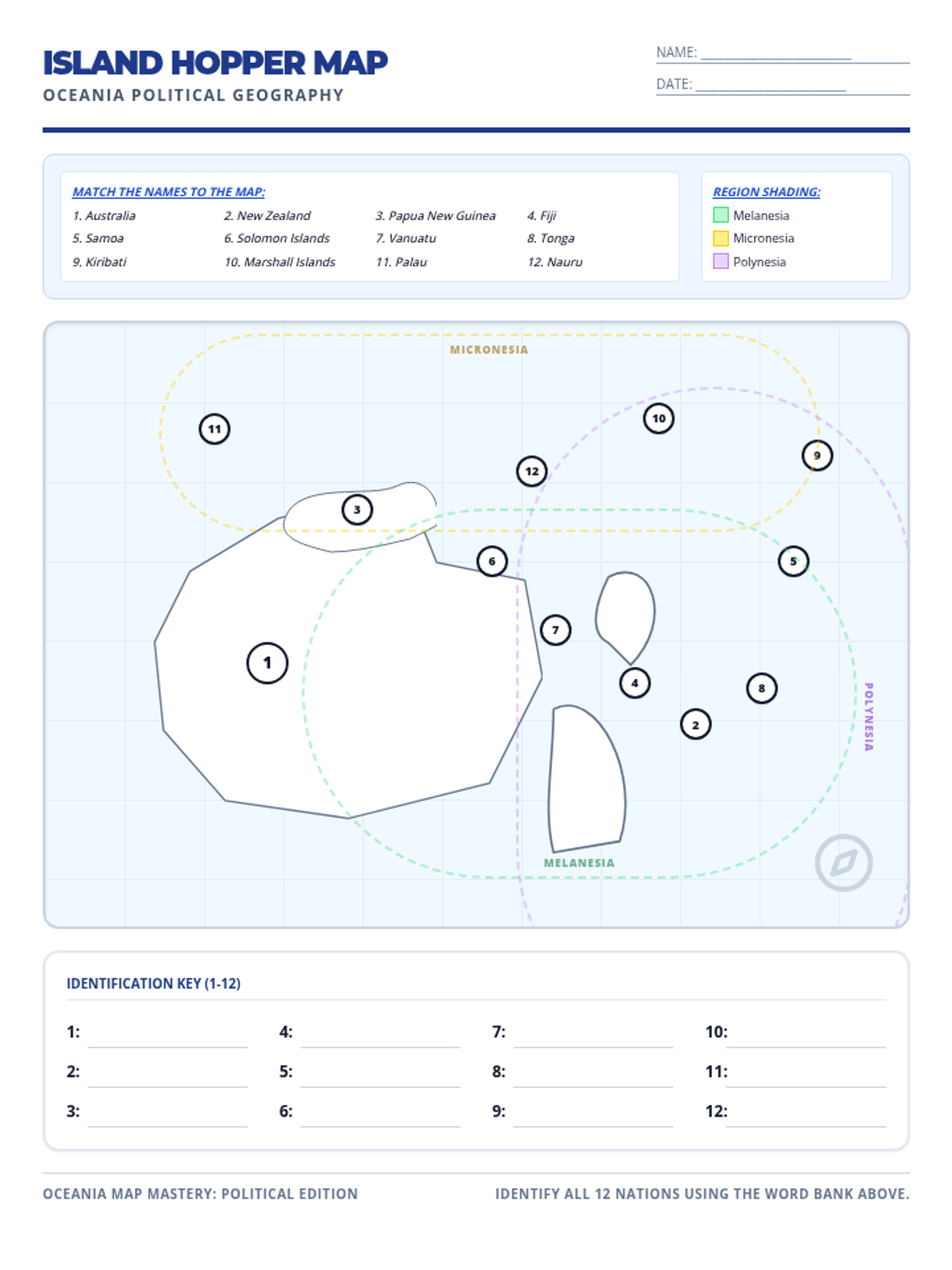
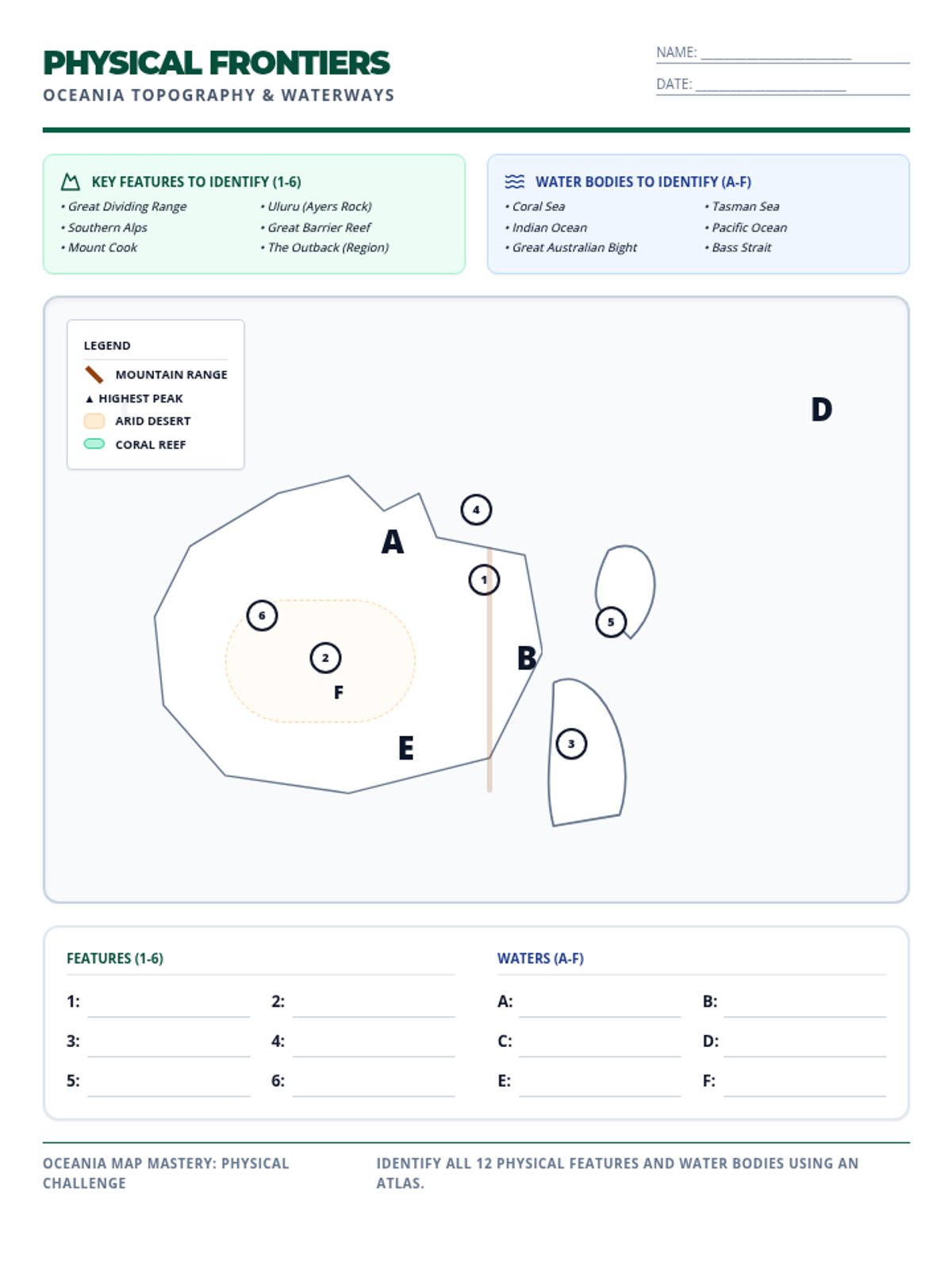
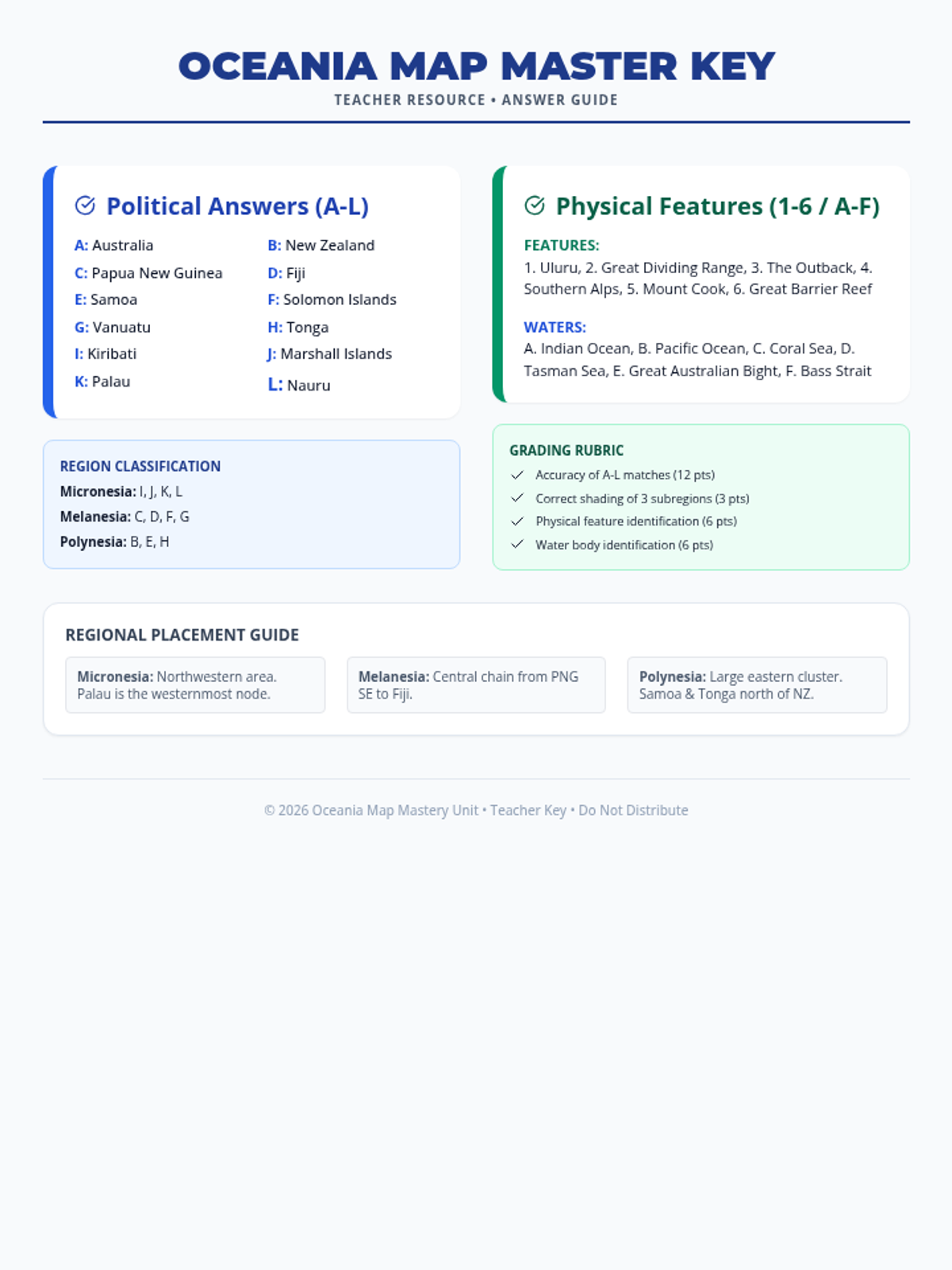
A hands-on cartography lesson where students explore the political boundaries and physical geography of Oceania through labeling and coloring.
A comprehensive mapping unit focused on the geography of Oceania. Students identify and label major subregions, island nations, and significant physical features across the Pacific.
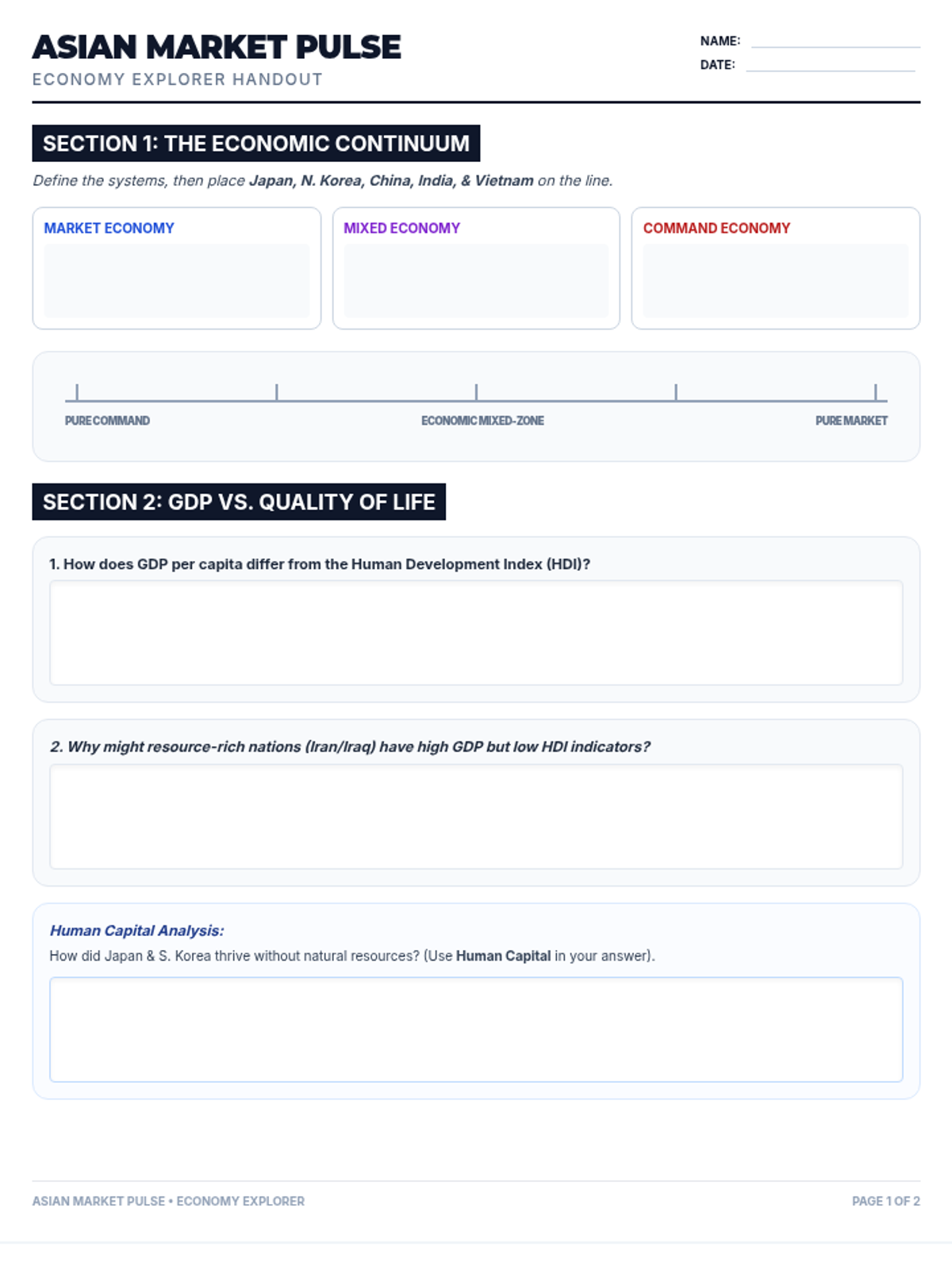
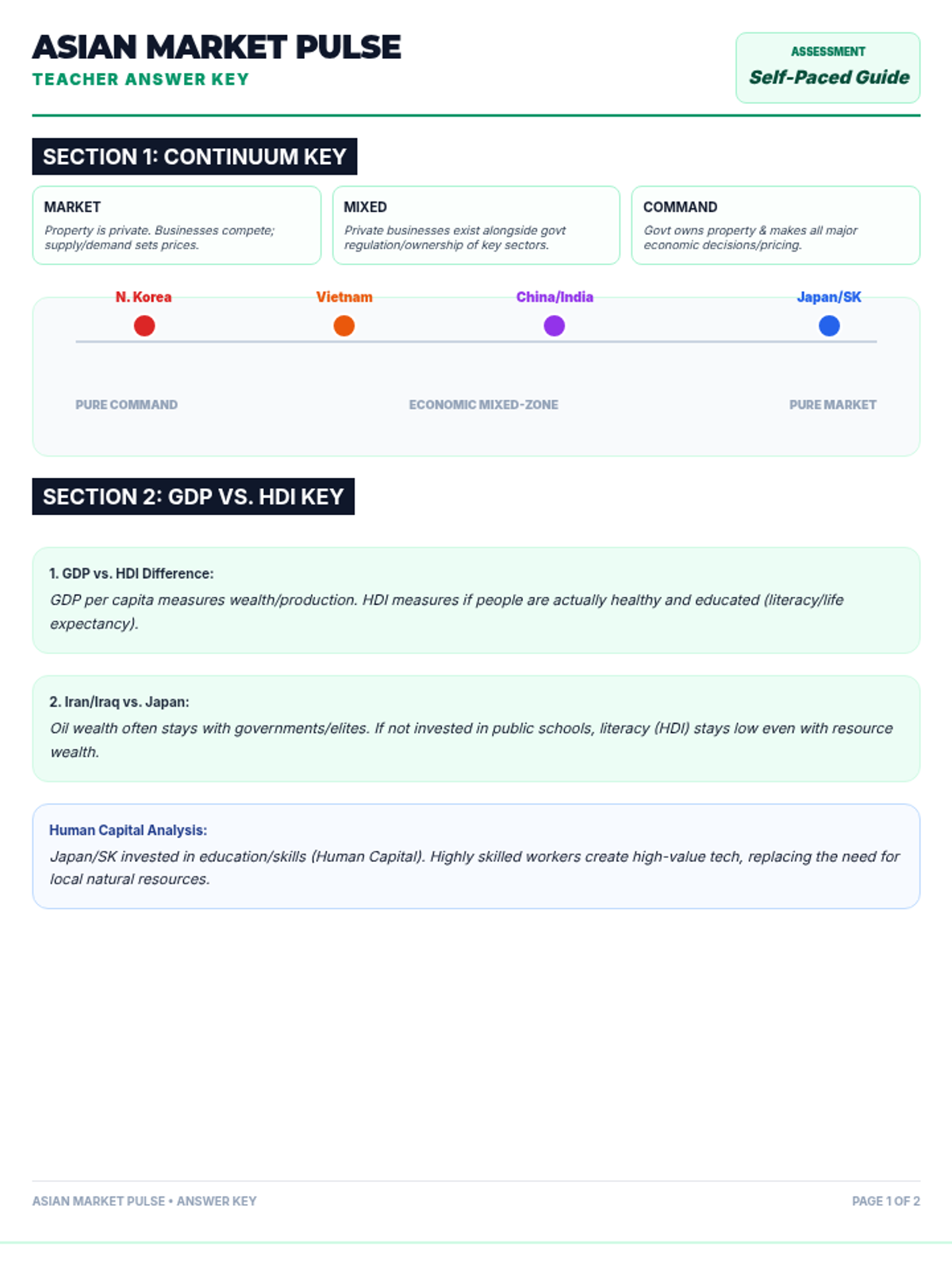
A self-paced study guide exploring the diverse economic landscapes of Asia, focusing on the relationship between economic systems, GDP, and quality of life across major nations.
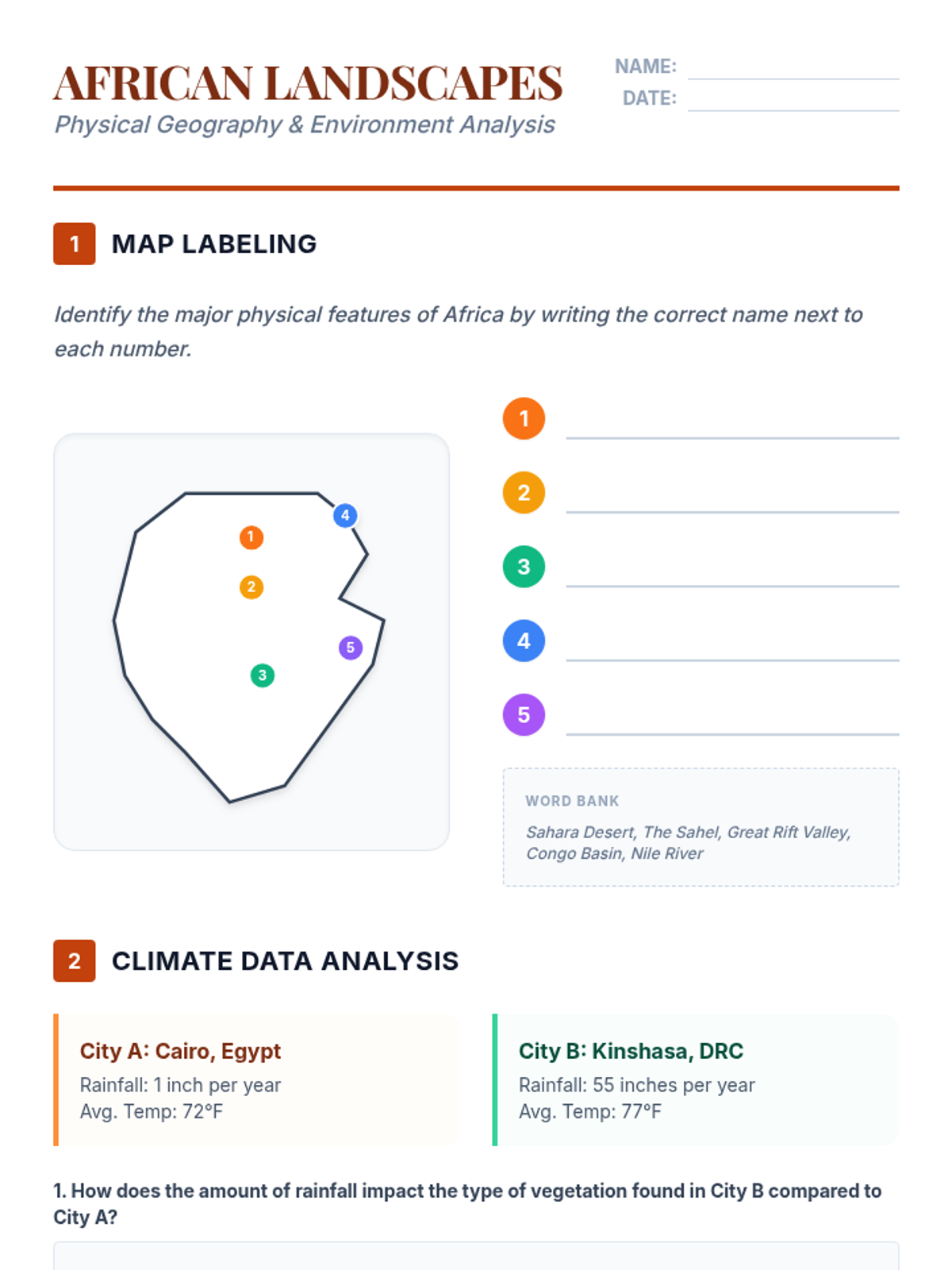
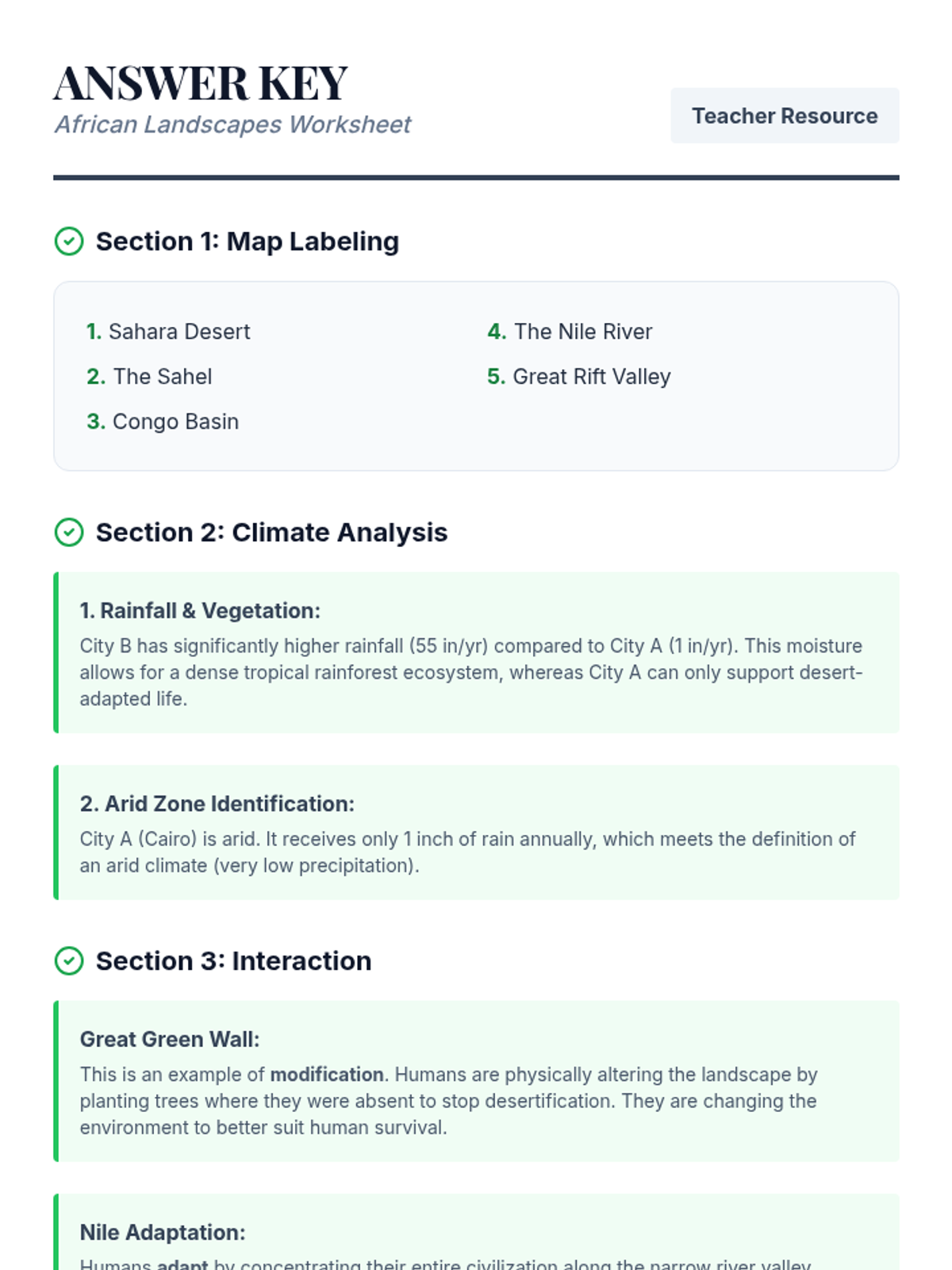
This lesson explores the diverse physical regions of Africa, including the Sahara, the Sahel, and Sub-Saharan landscapes, focusing on climate patterns and the relationship between humans and their environment.
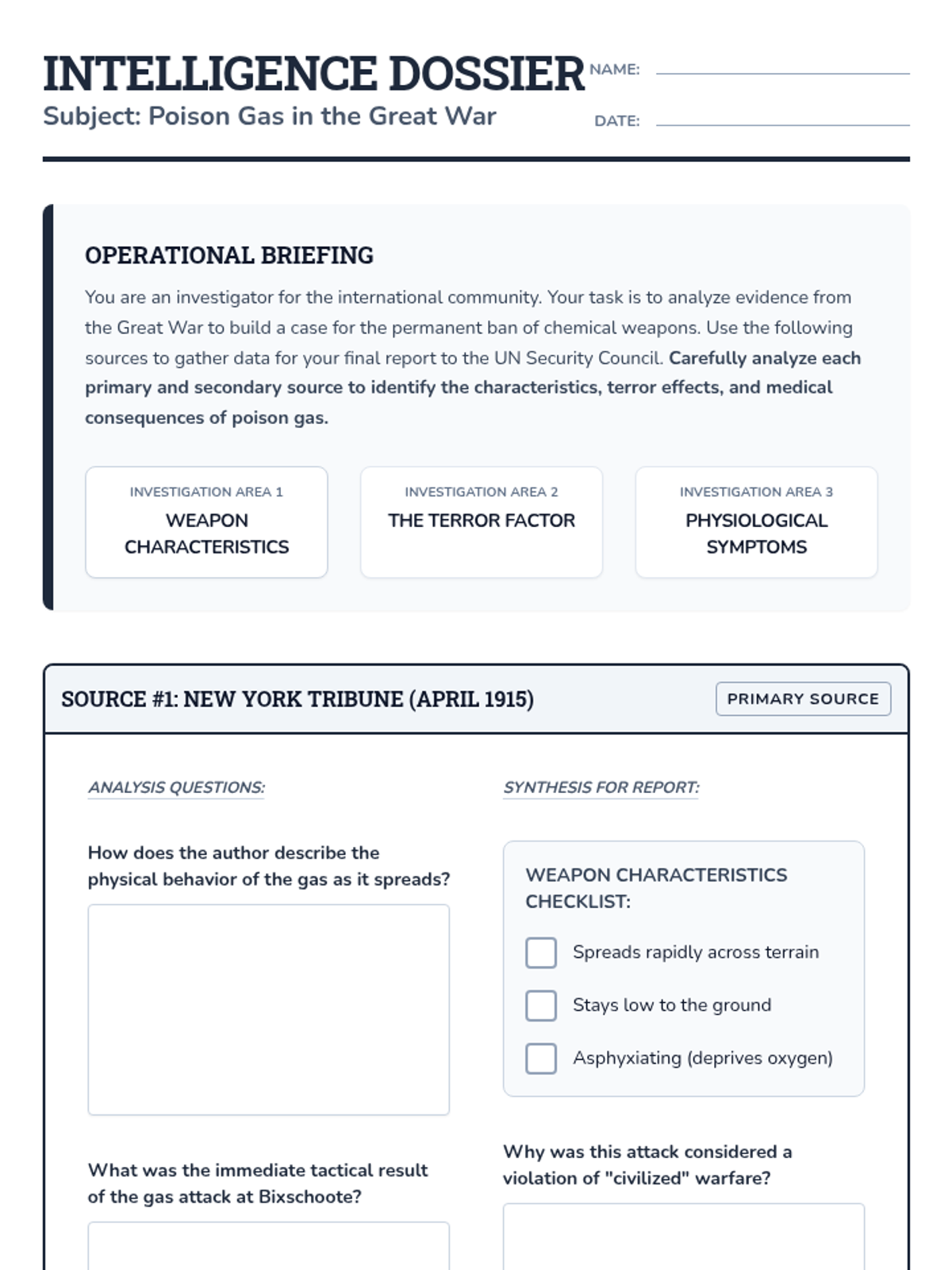
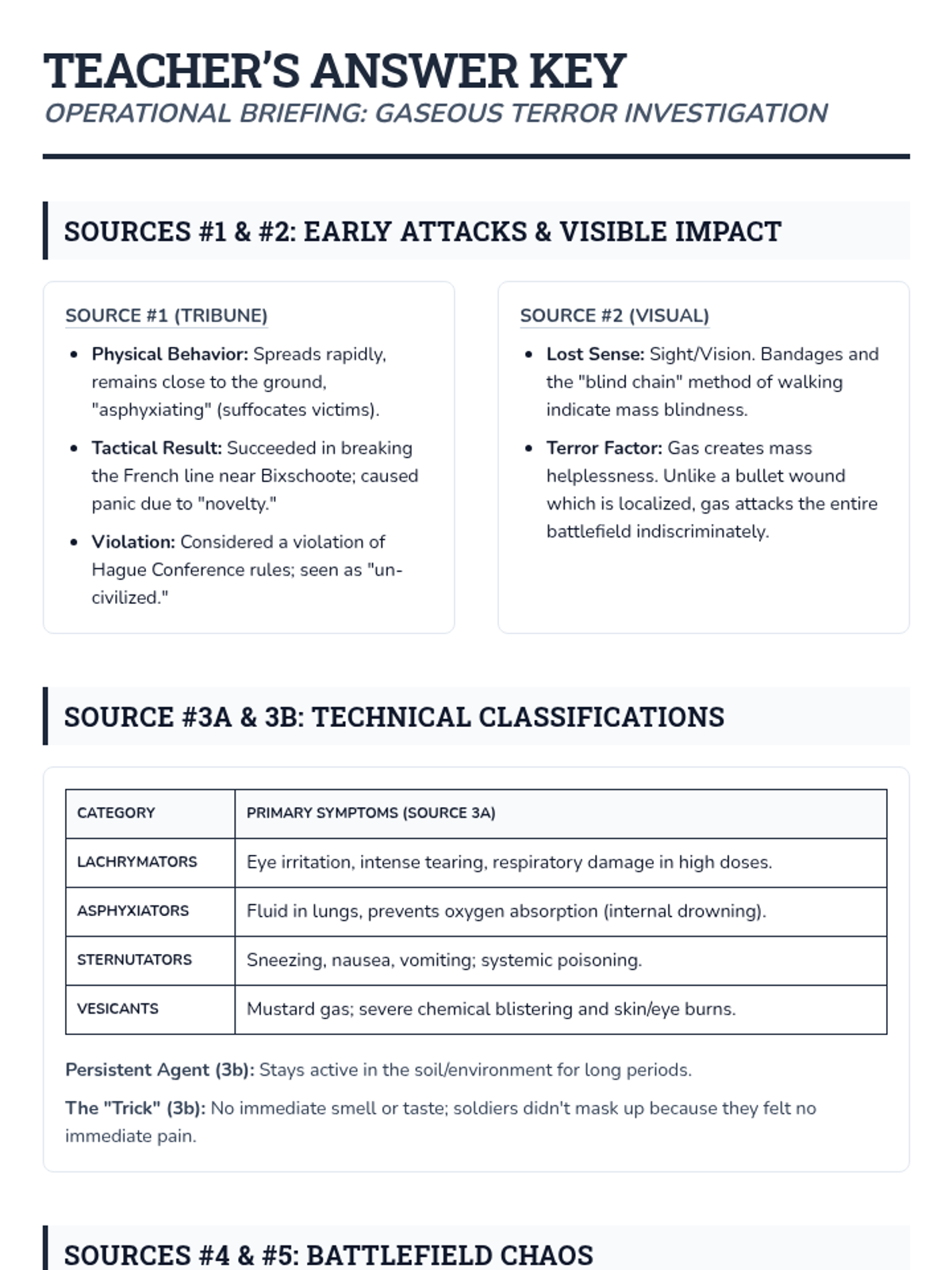
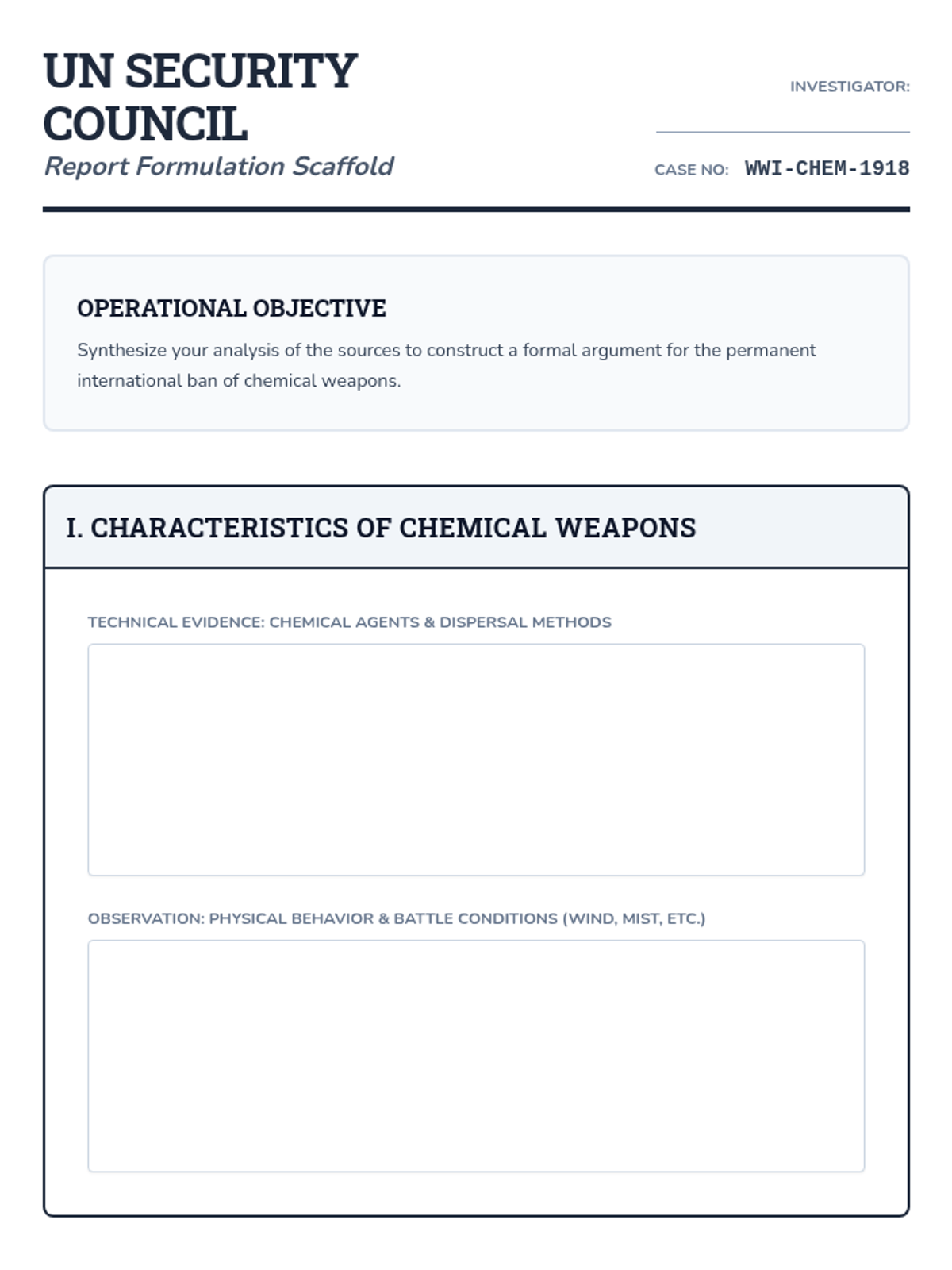
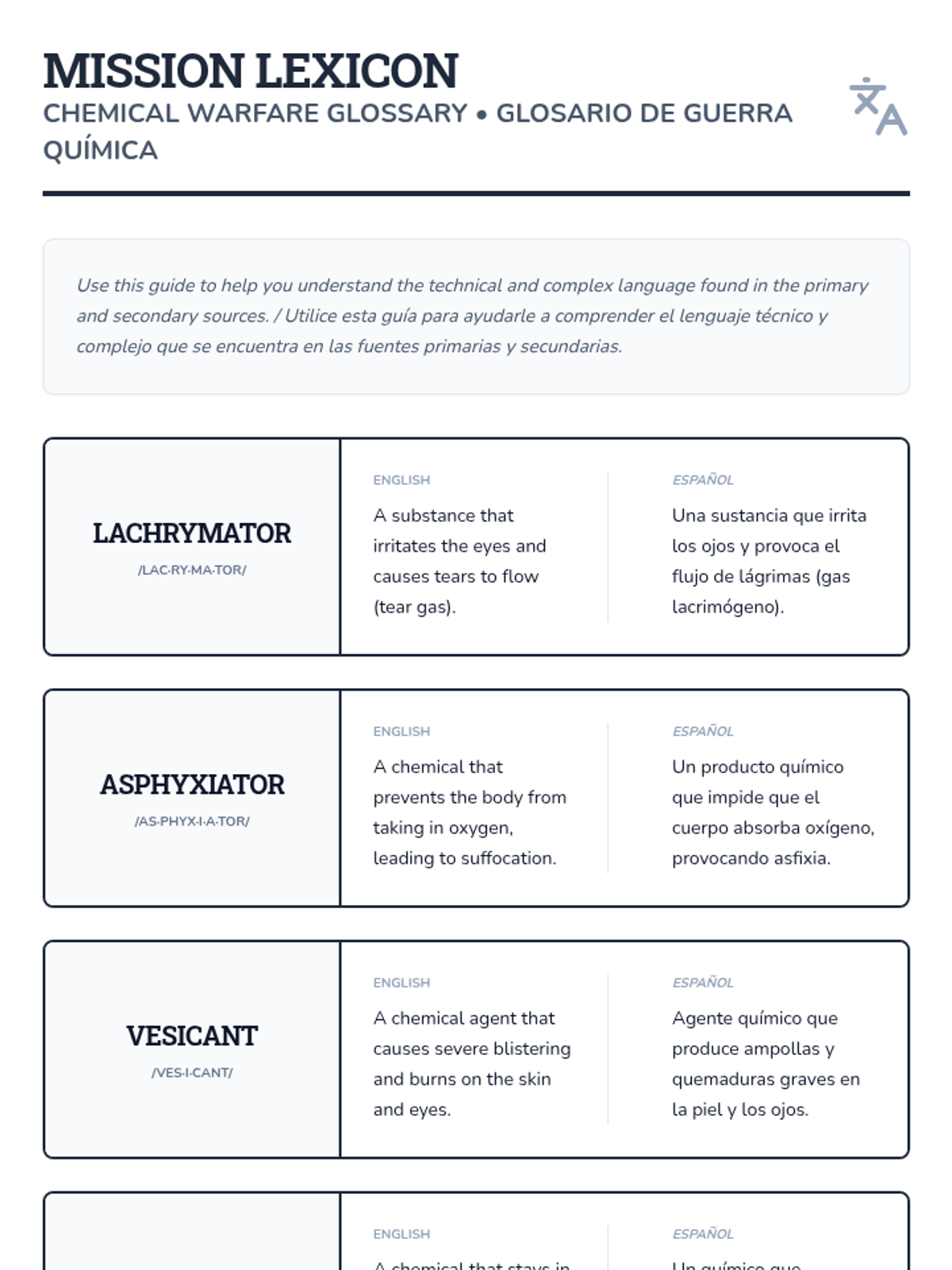
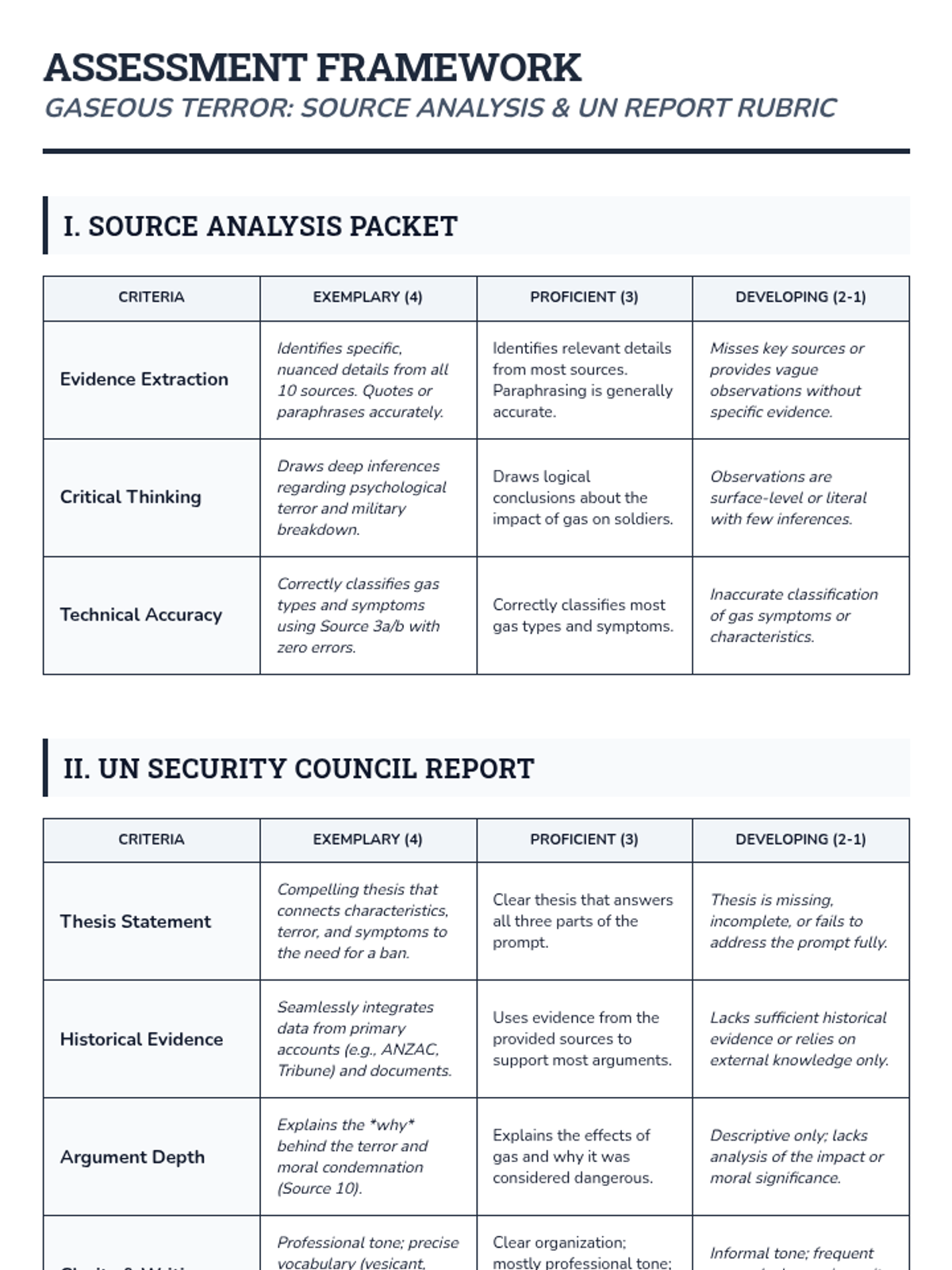
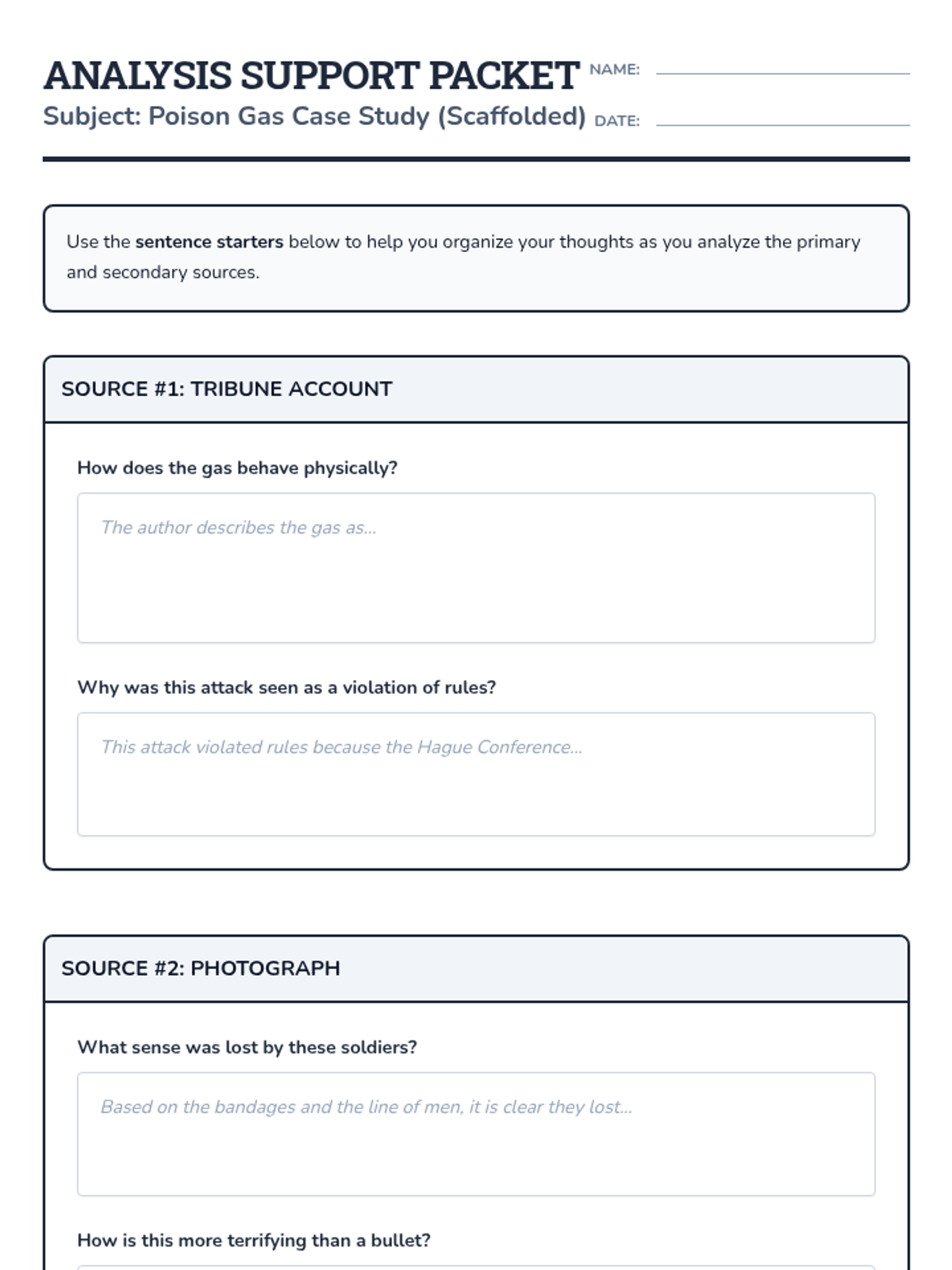
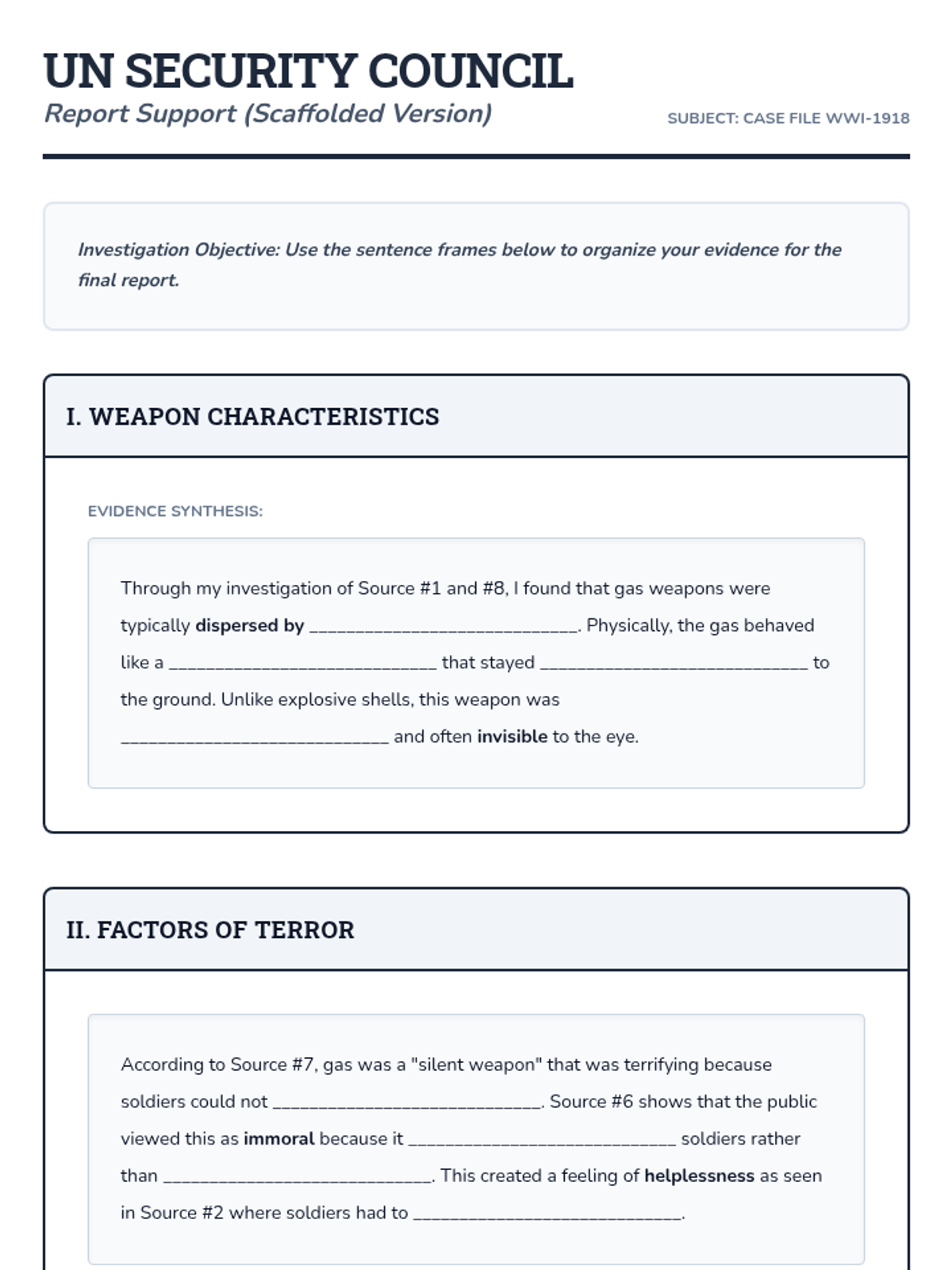
A comprehensive investigation into the use of chemical weapons during WWI, focusing on the tactical, psychological, and physiological impacts of poison gas. Students analyze multiple primary and secondary sources to construct a formal report on the horrors of gas warfare and the subsequent international efforts to ban it.
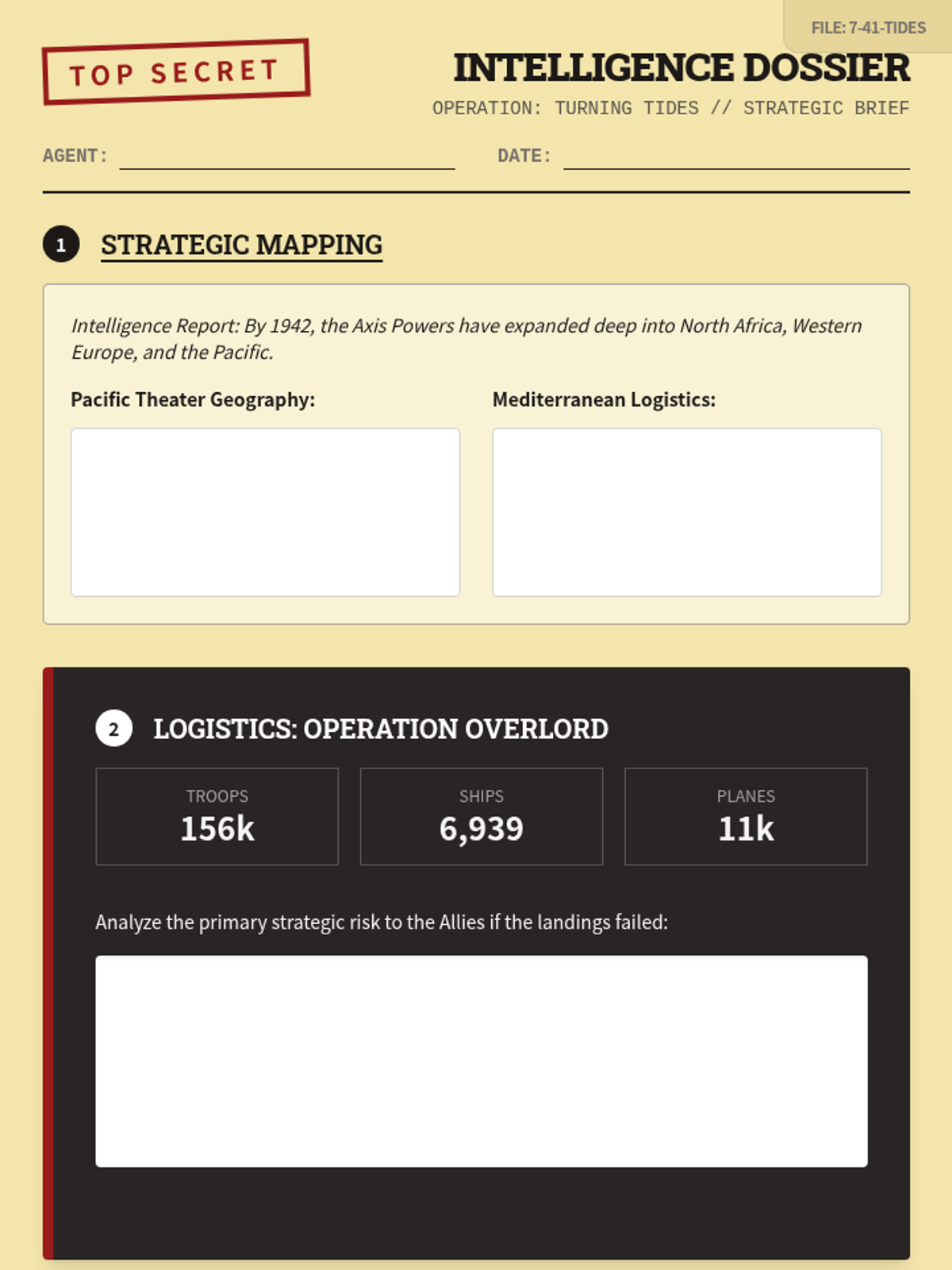
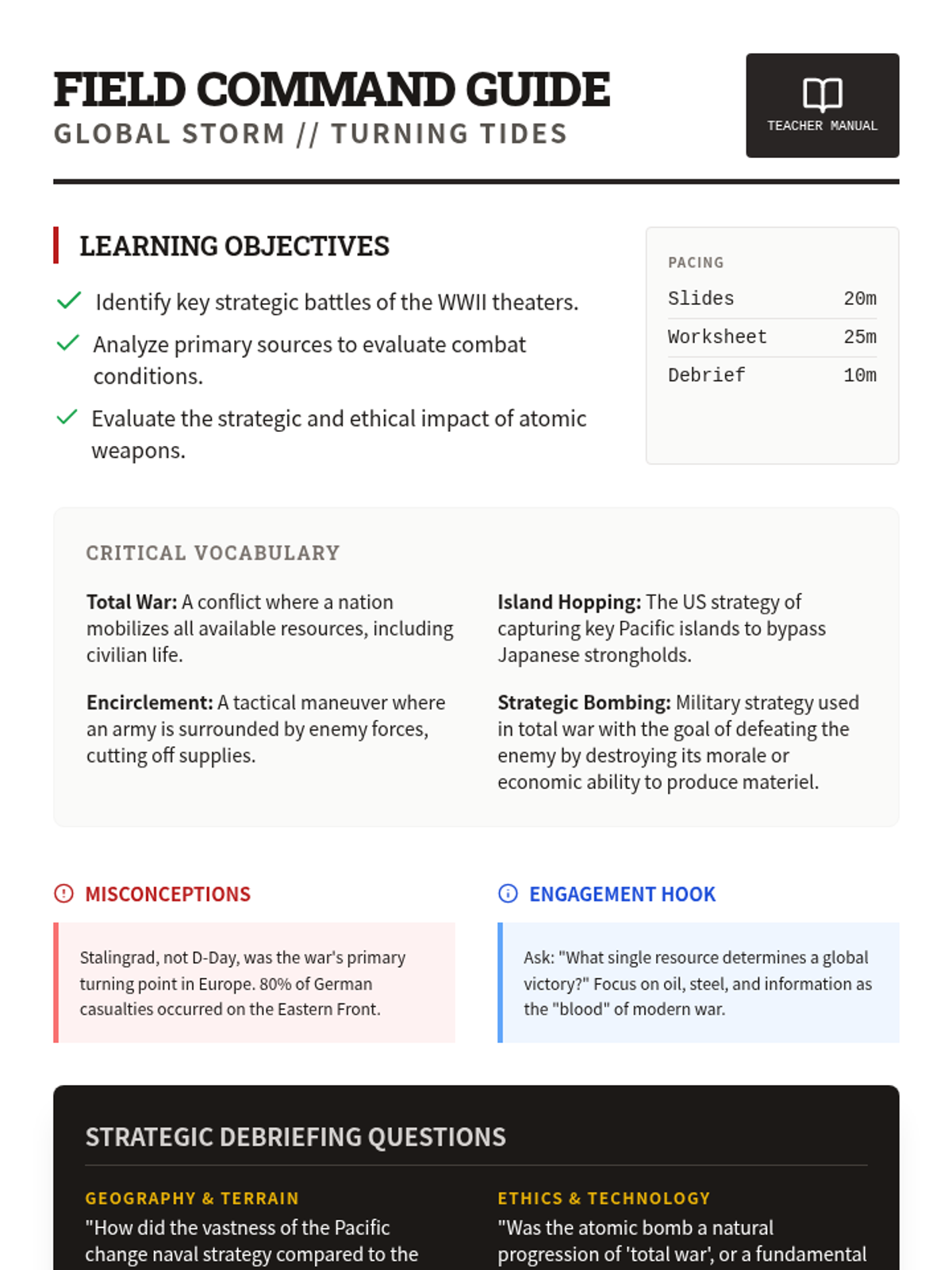
Focuses on the critical turning points of World War II, exploring the strategic shifts and human stories that defined the conflict's outcome.
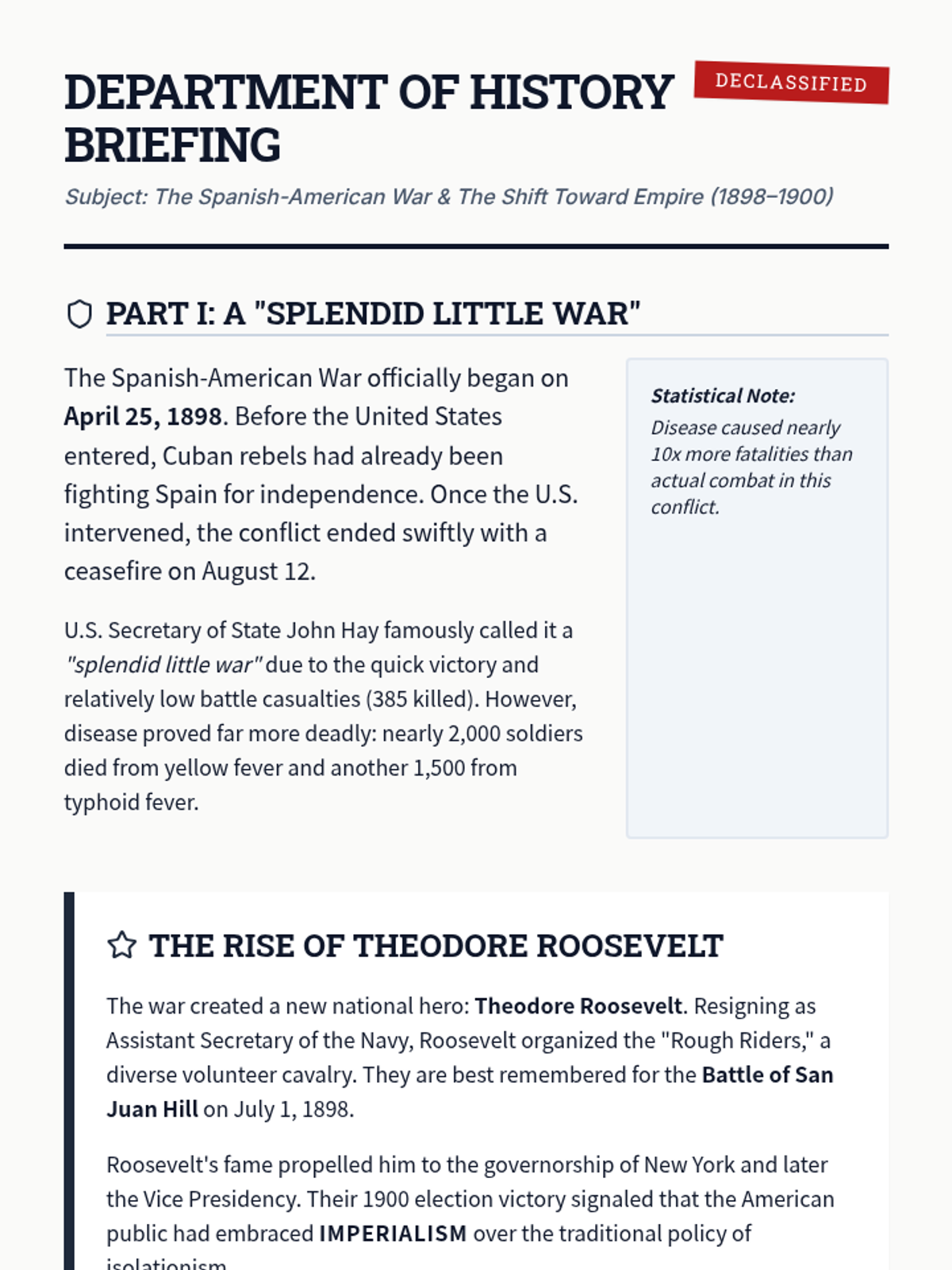
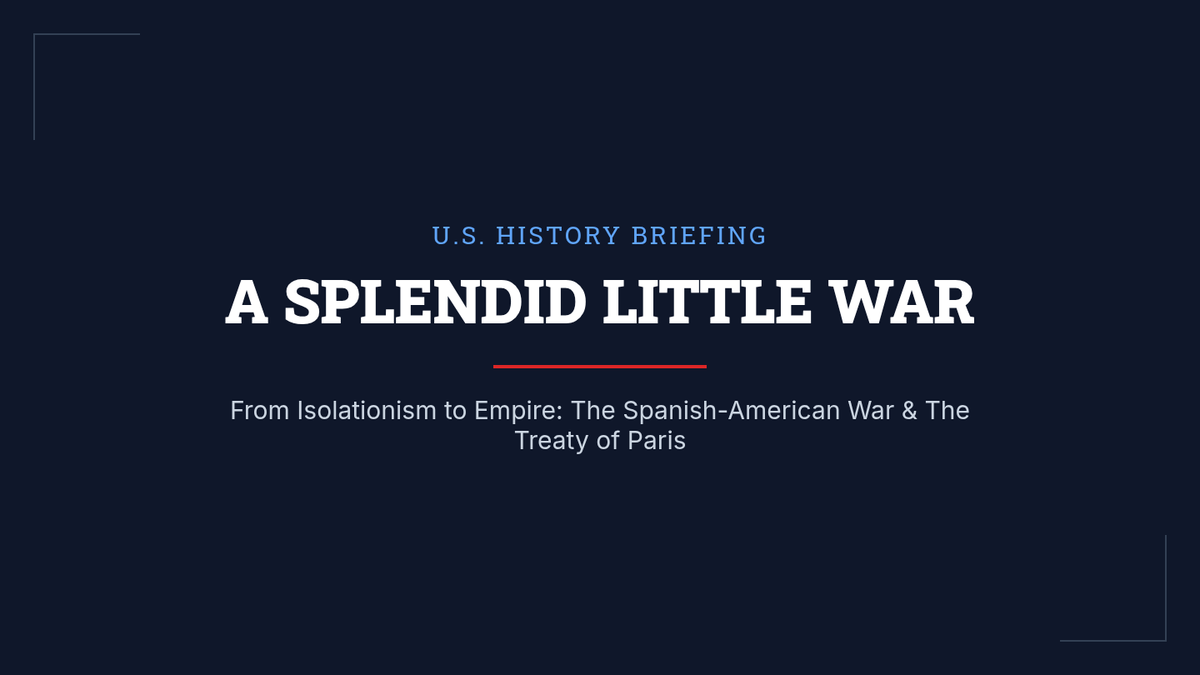
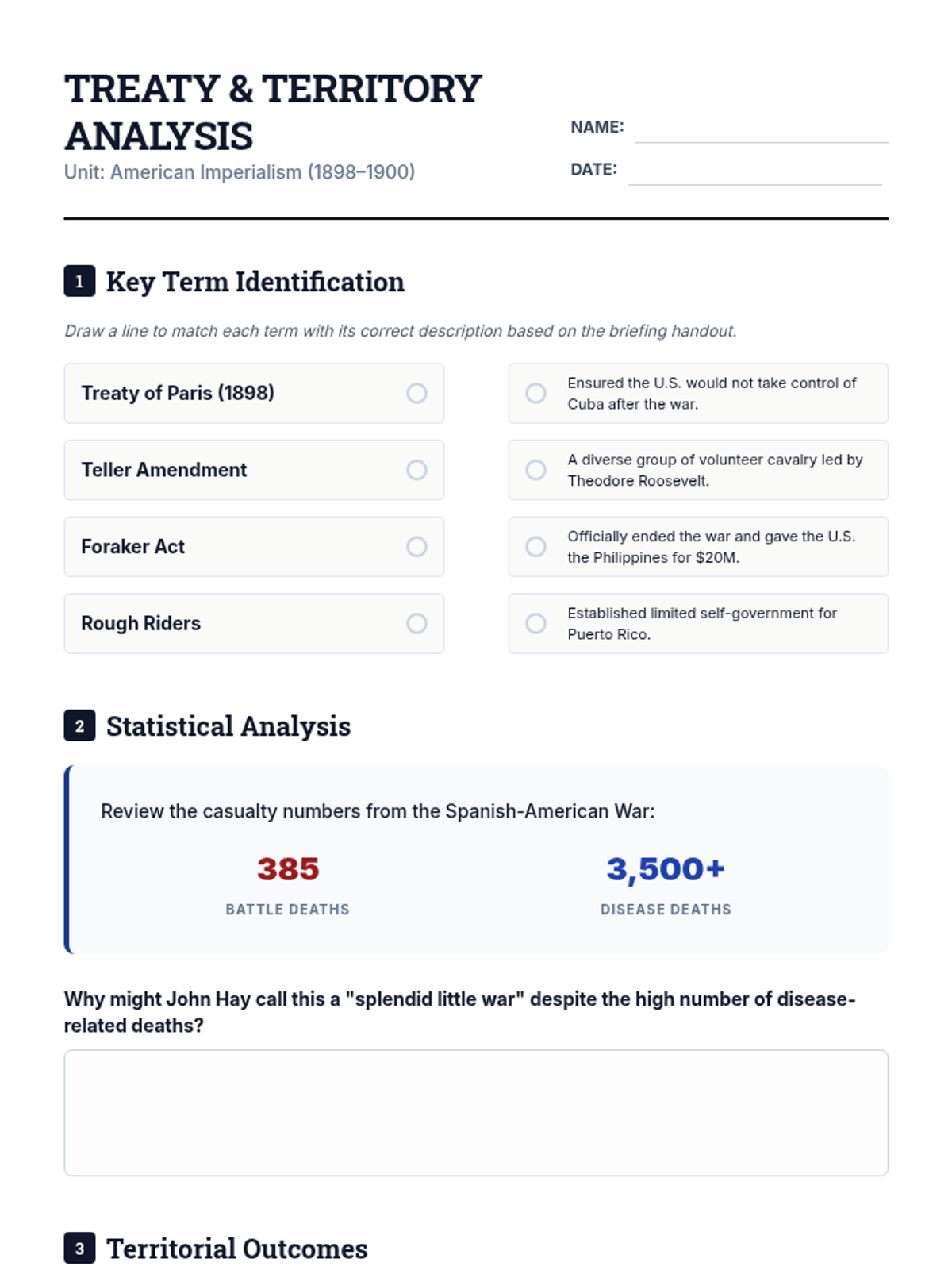
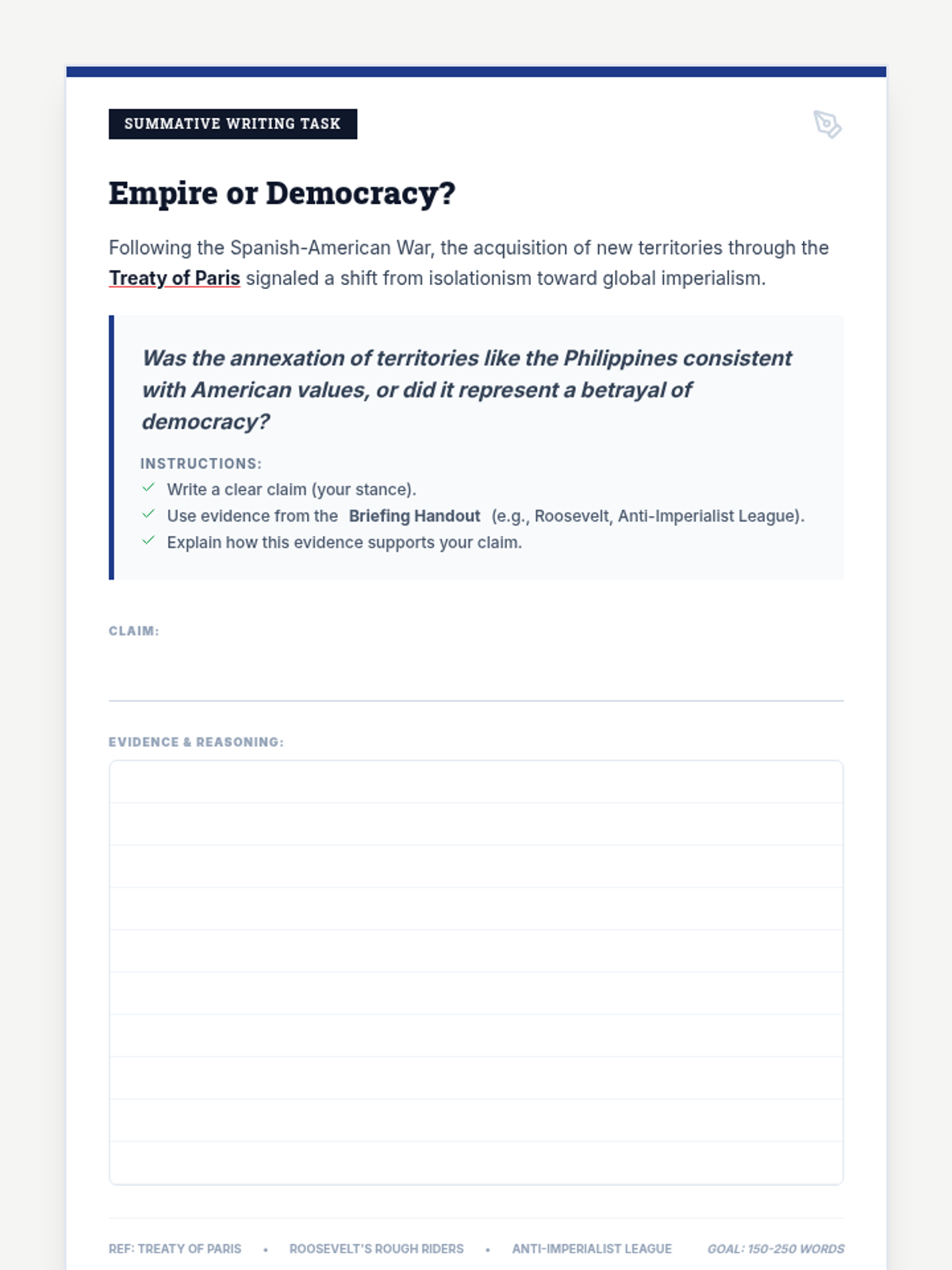
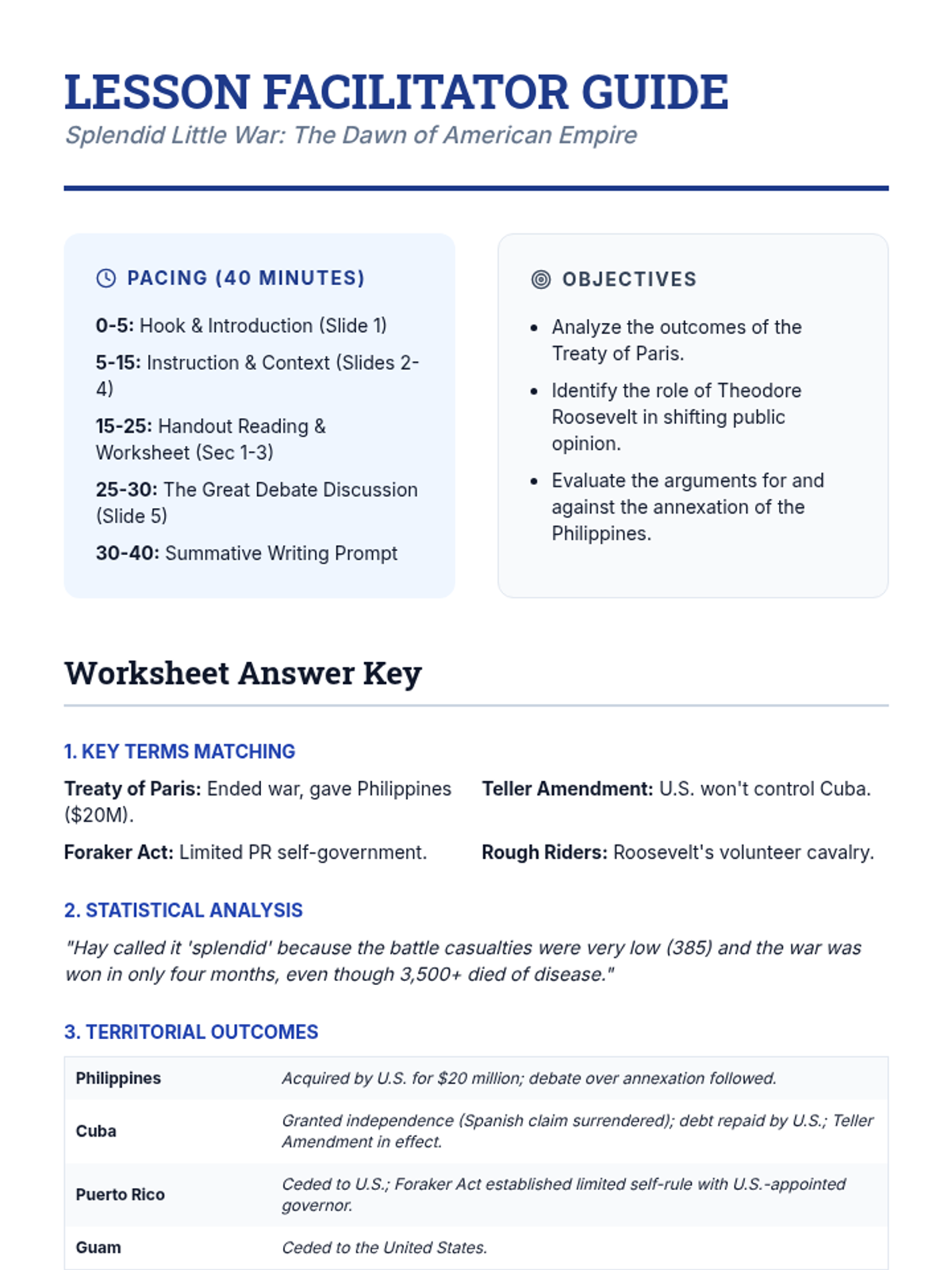
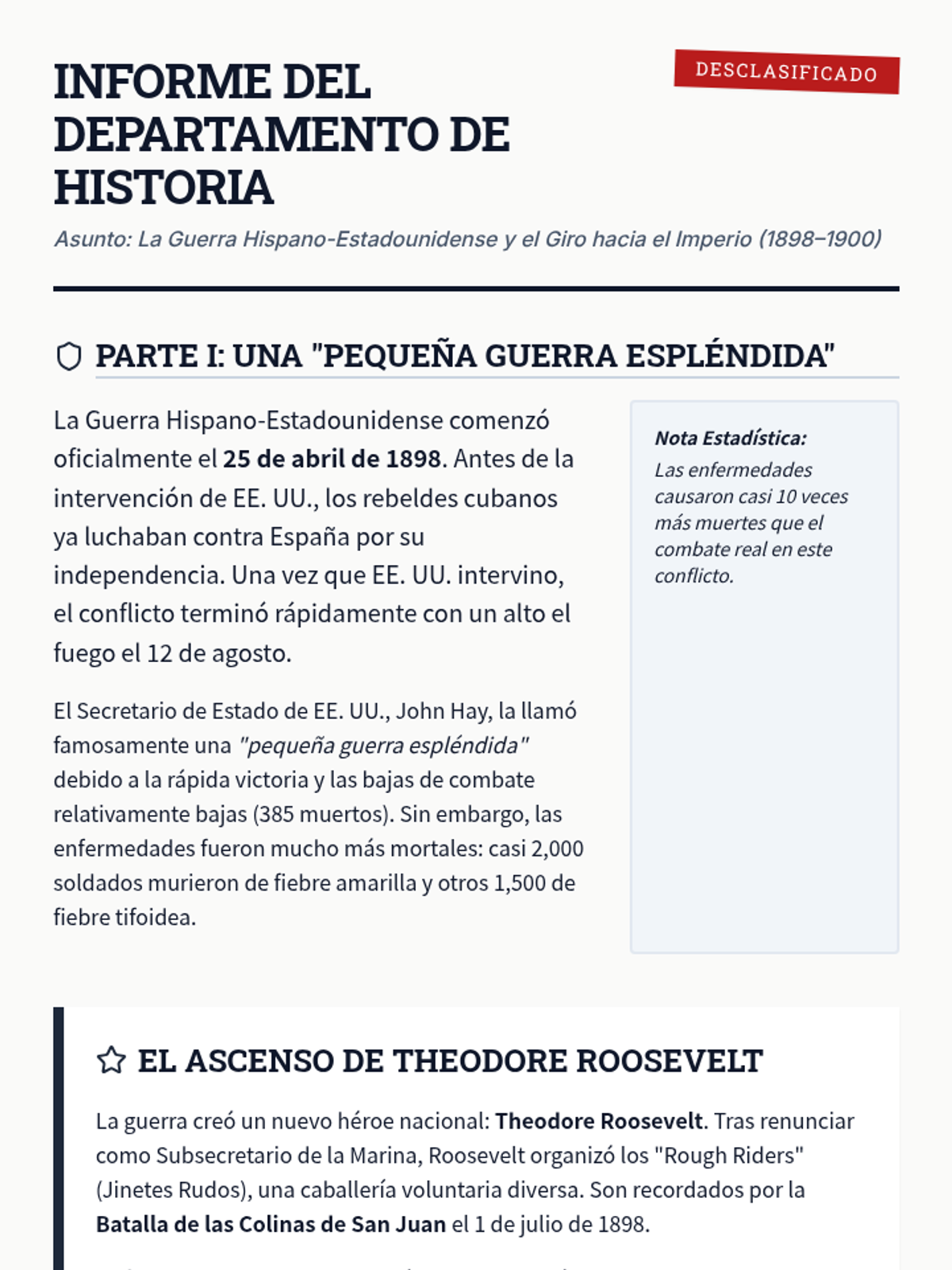
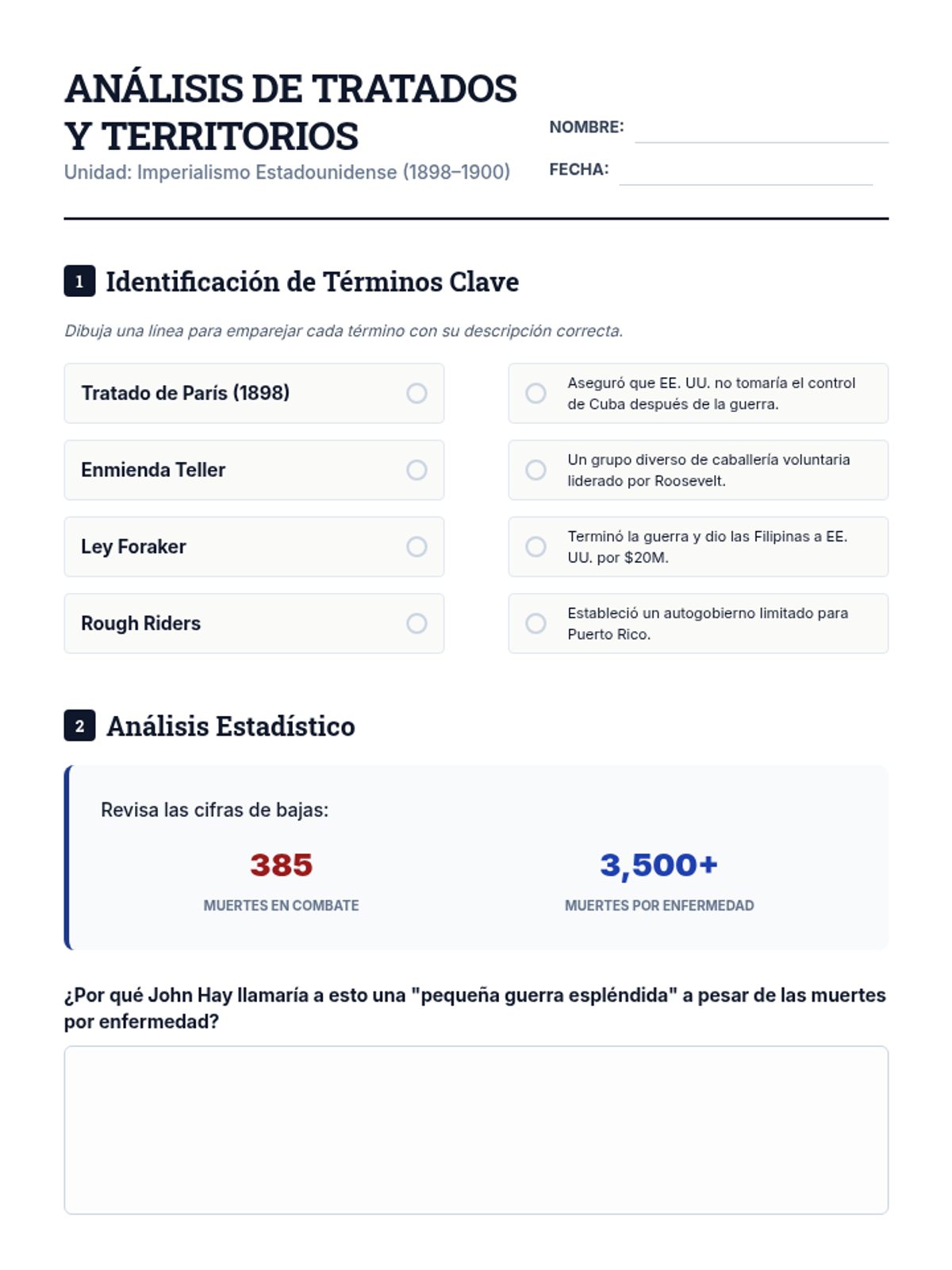
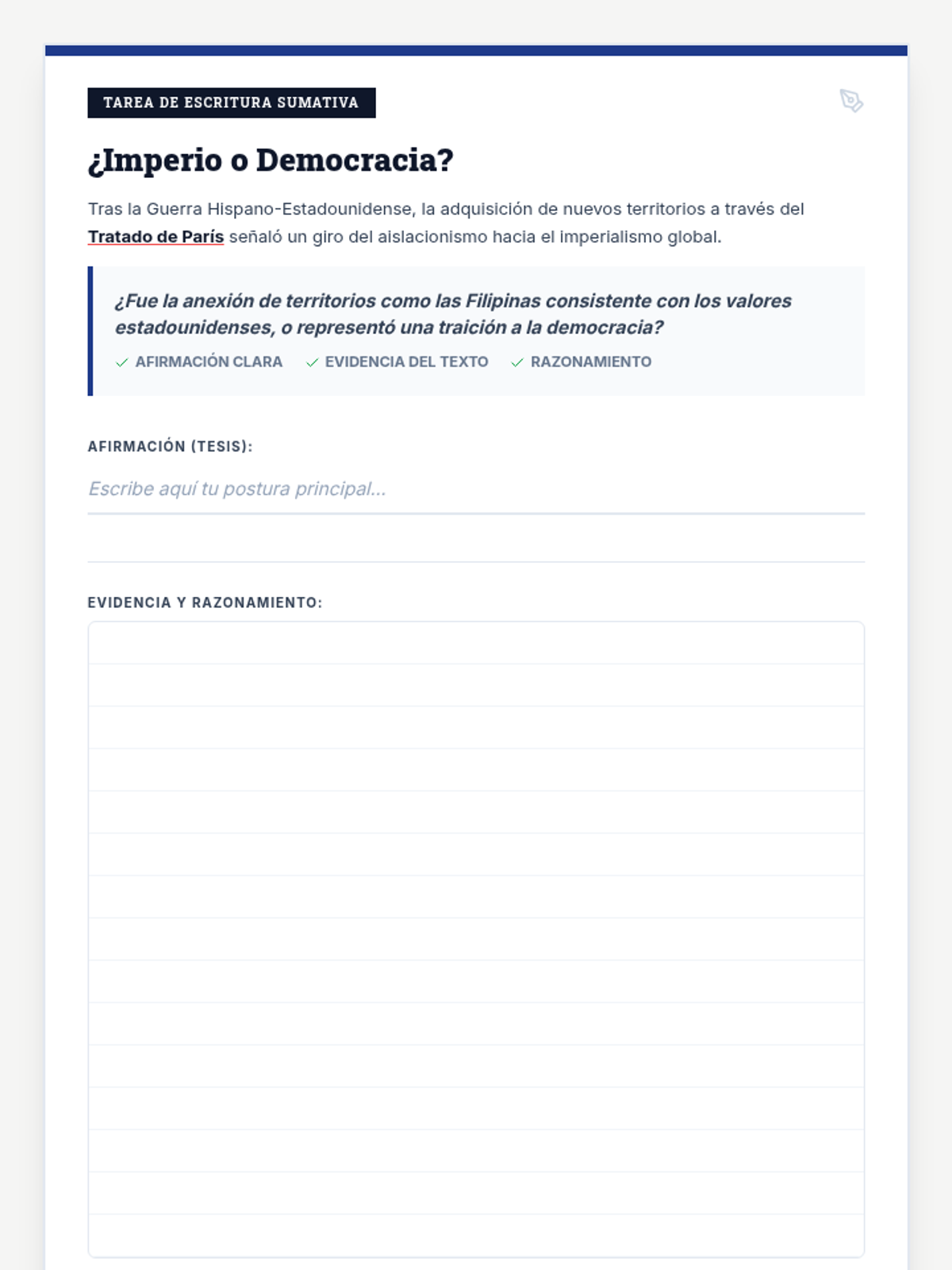
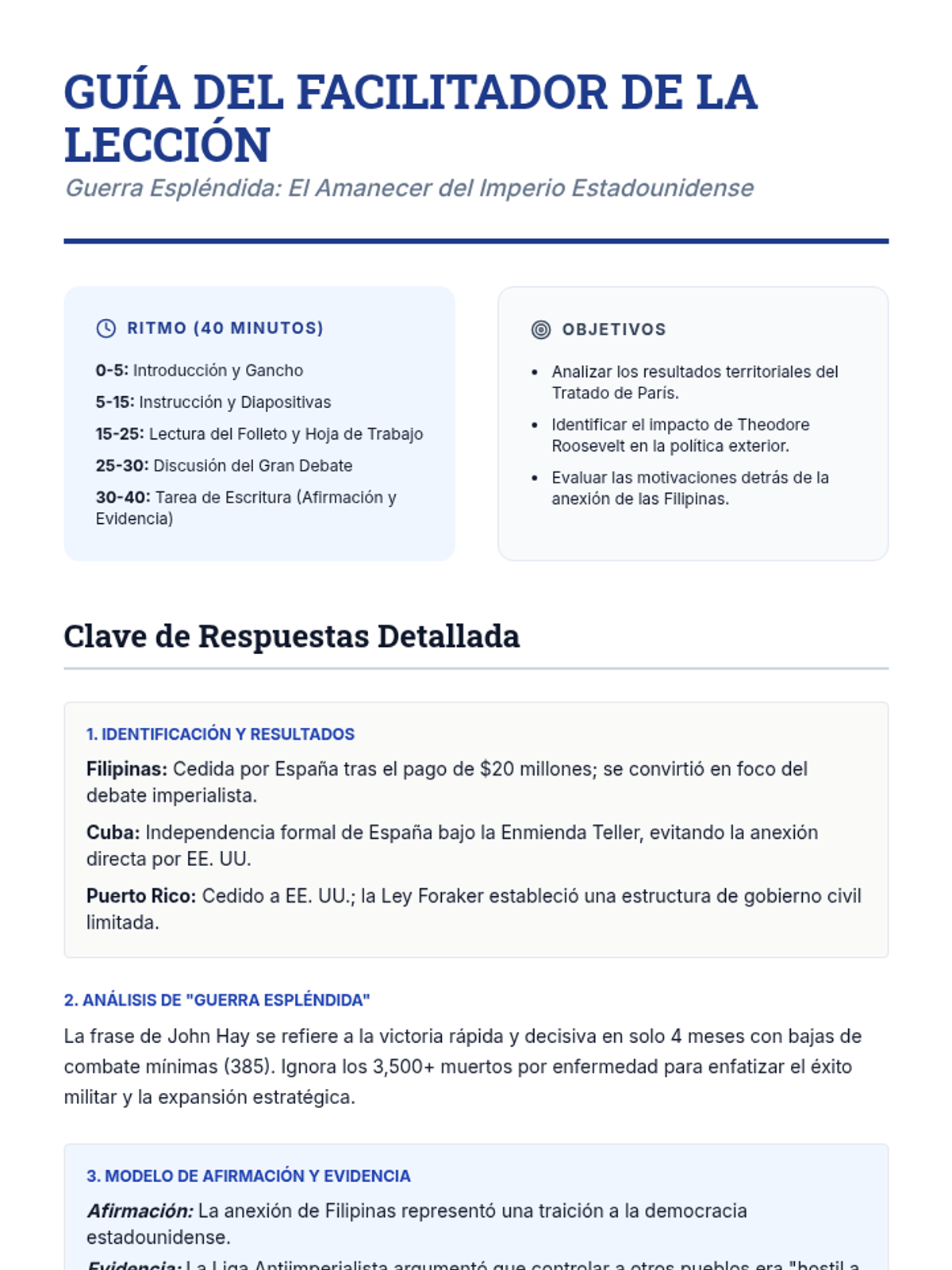
This lesson explores the Spanish-American War, focusing on Theodore Roosevelt's rise, the Treaty of Paris, and the United States' transition from isolationism to an imperial power. Students will analyze the motives and arguments surrounding the annexation of the Philippines and other territories.