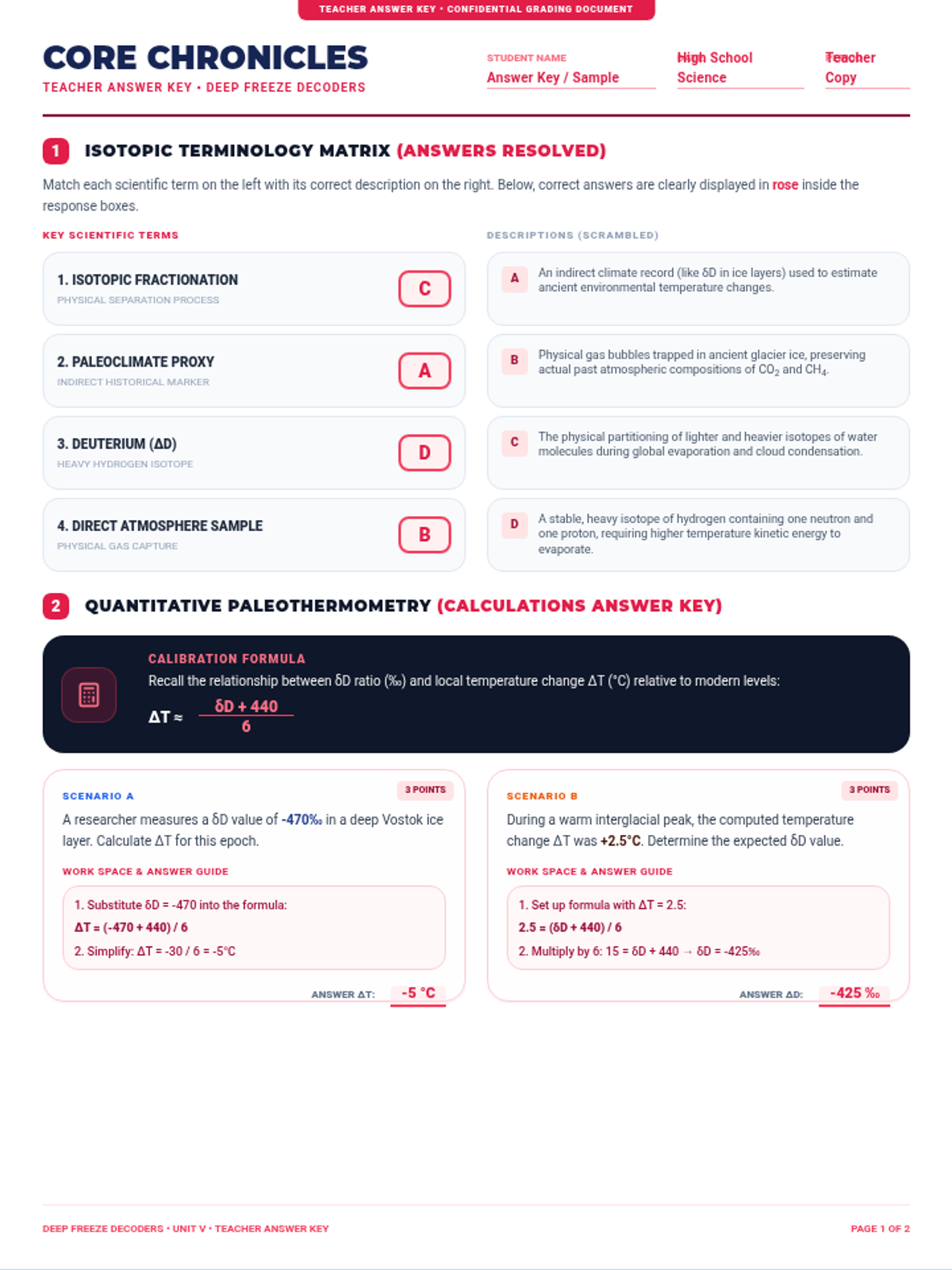
A comprehensive review lesson where students synthesize paleoclimate concepts, isotope calculations, and feedback loops. Students participate in interactive review challenges and complete a structured synthesis worksheet to demonstrate mastery.
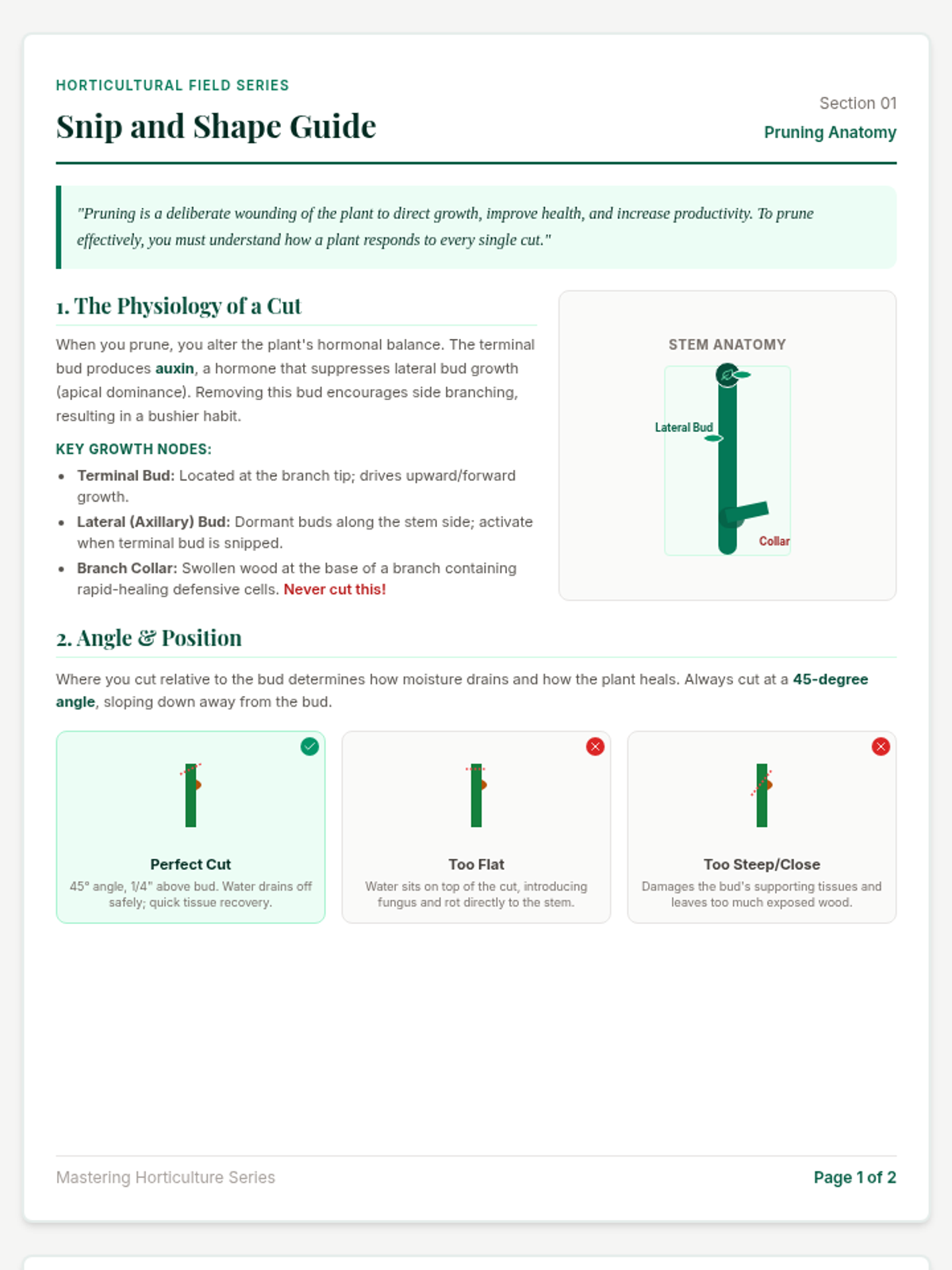
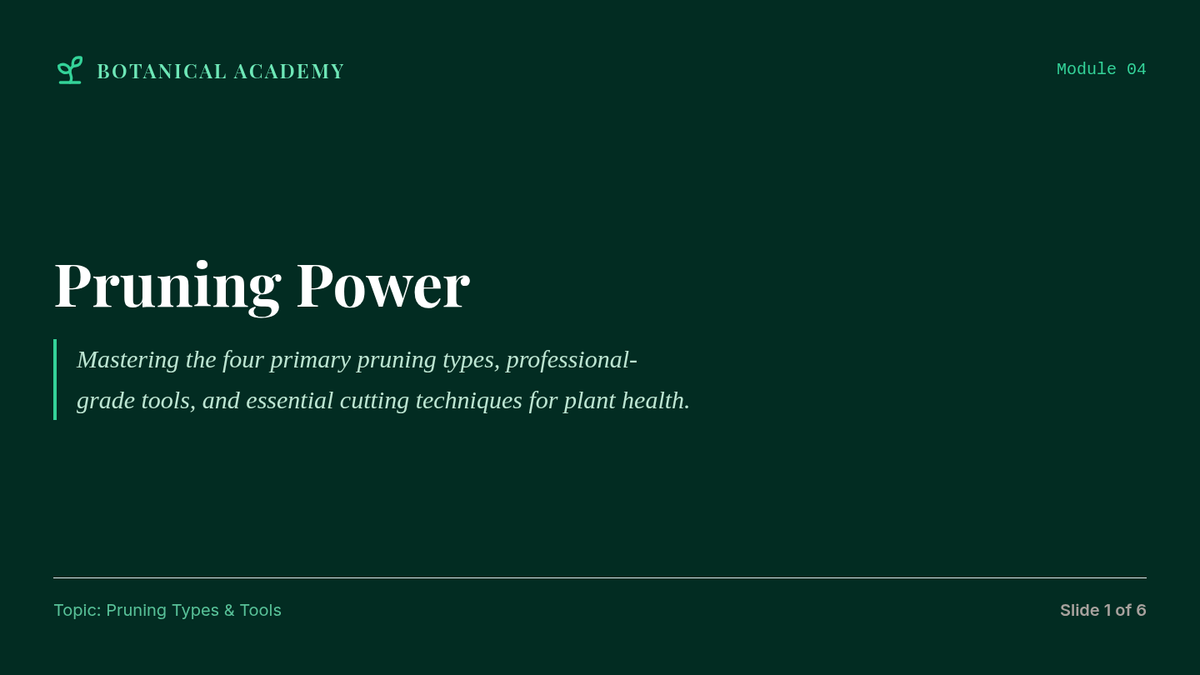
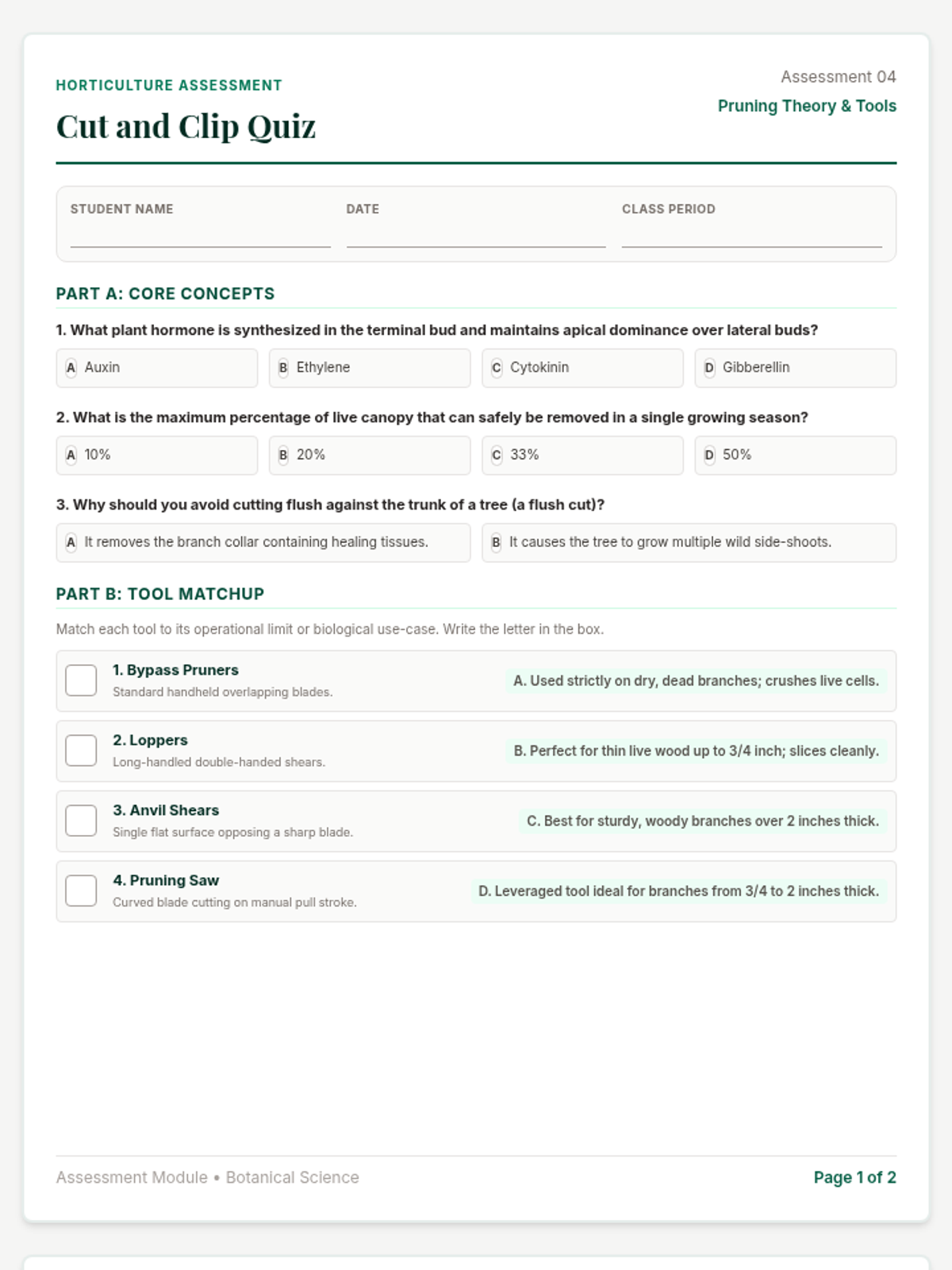
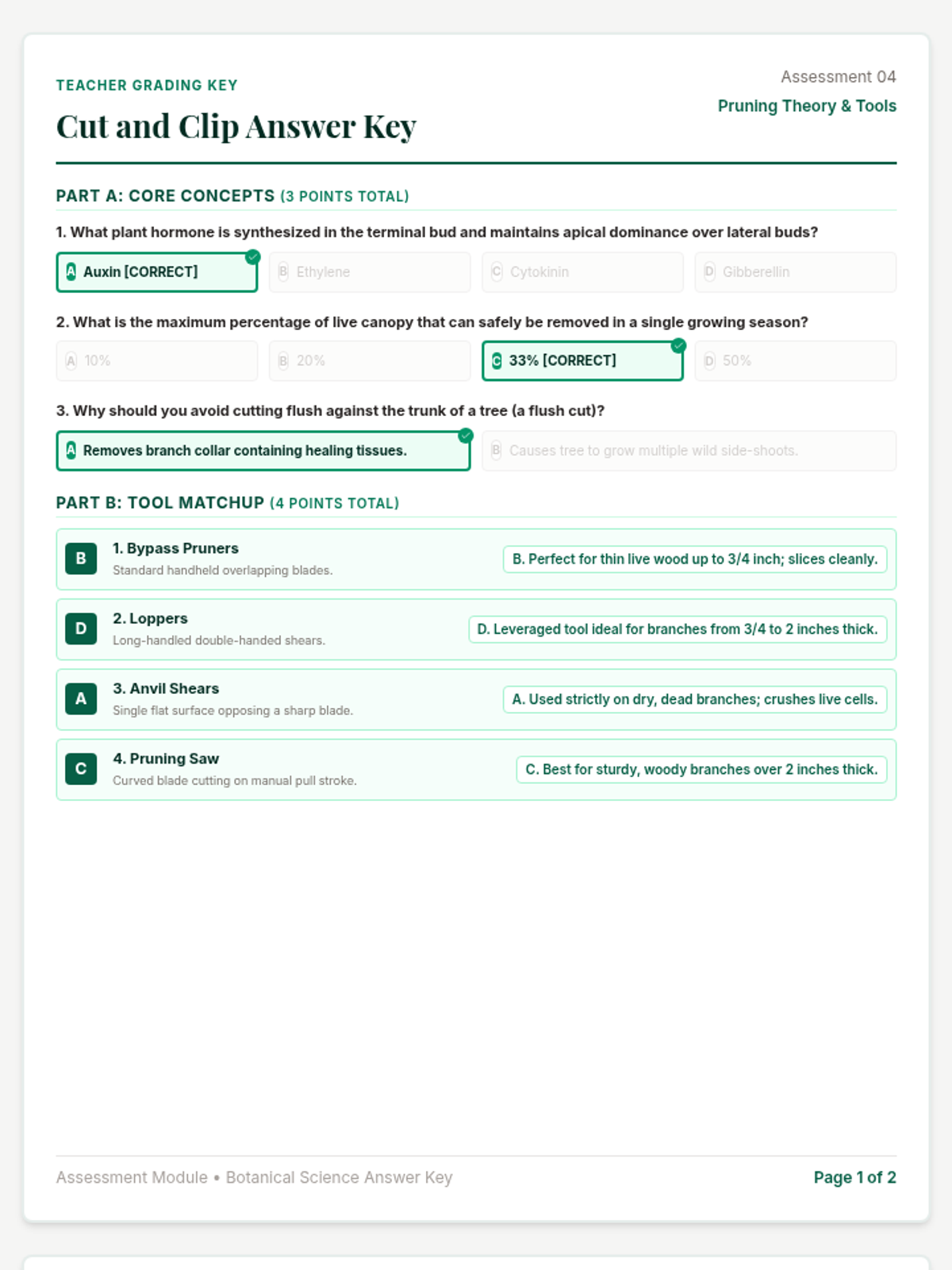
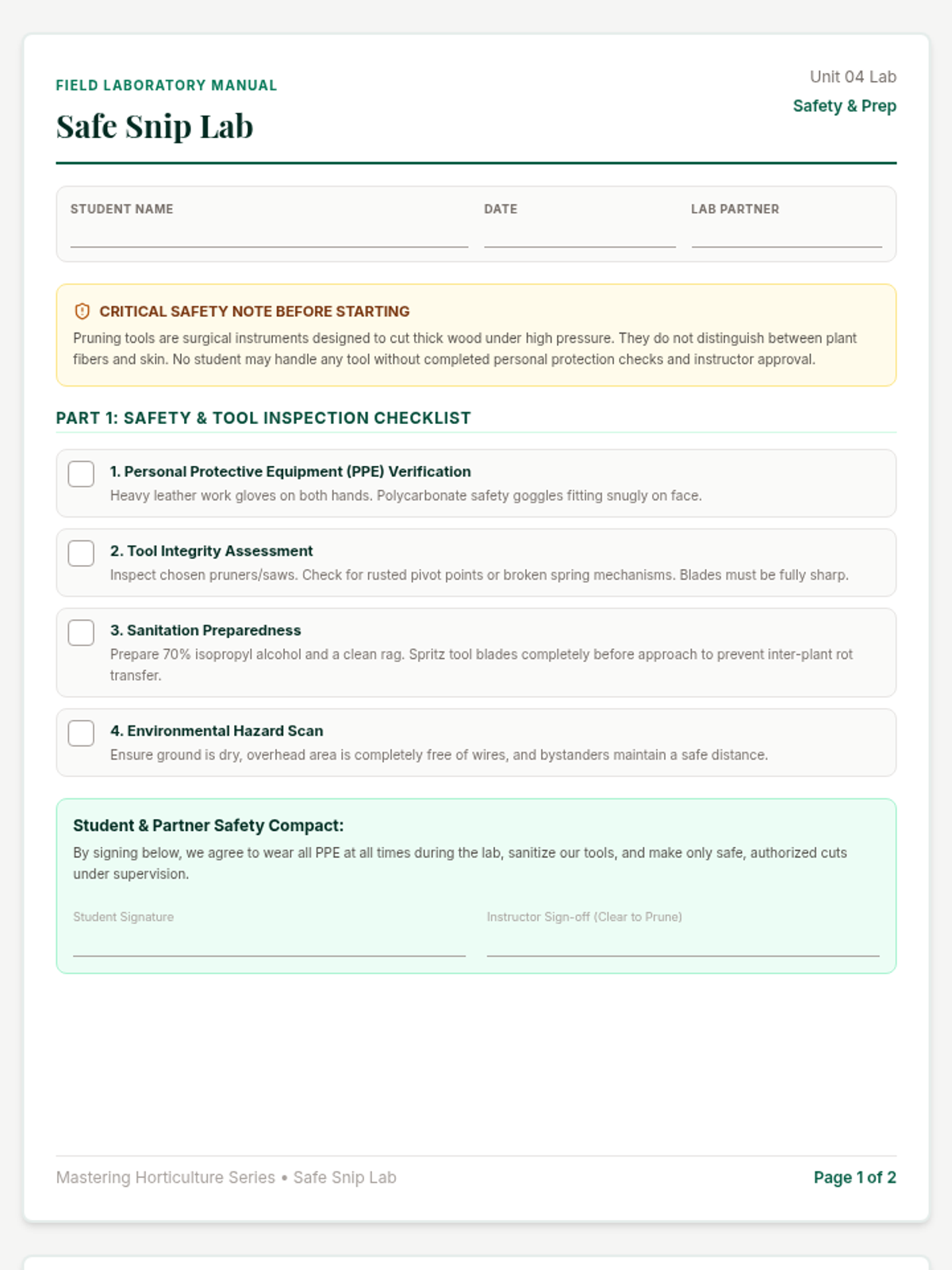
An immersive gardening lesson introducing pruning principles. Students master key tools, safety protocols, and the mechanics of plant growth to make clean, professional, and healthy cuts.
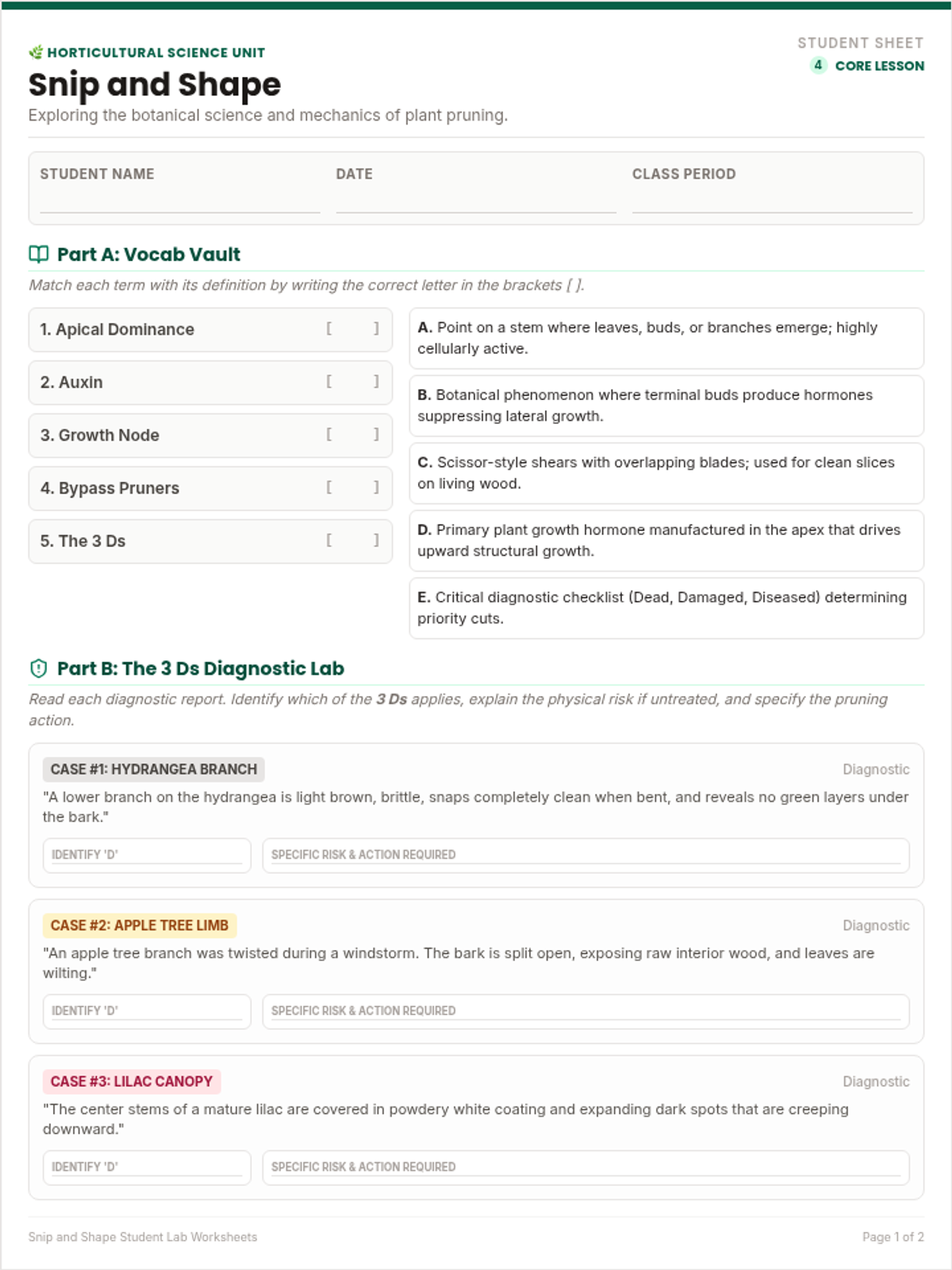
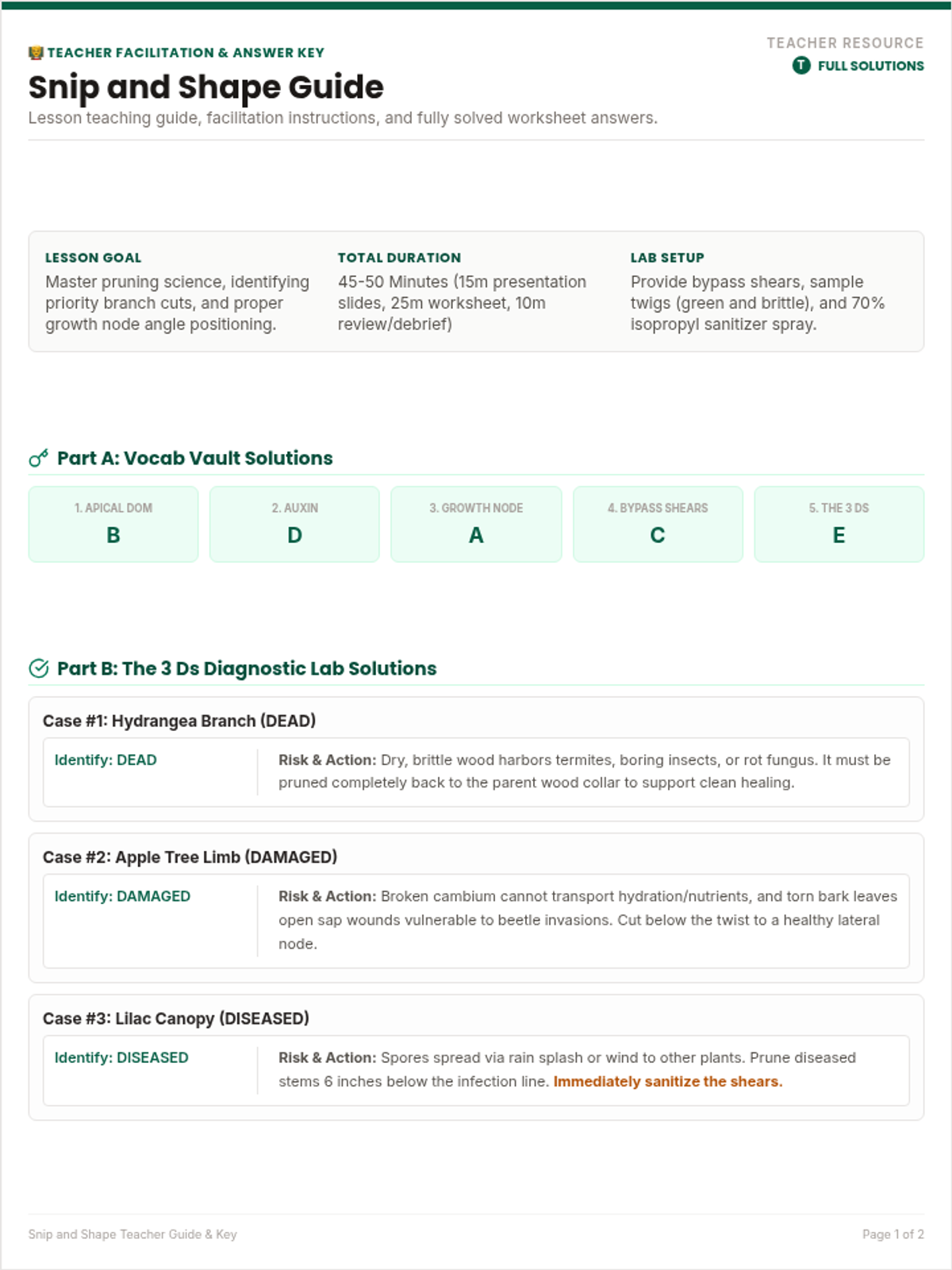
A hands-on, engaging lesson on the science and art of pruning. Students learn the botanical reasons for pruning (apical dominance), the "3 Ds" of identifying what to cut, and proper pruning cuts to keep plants healthy.
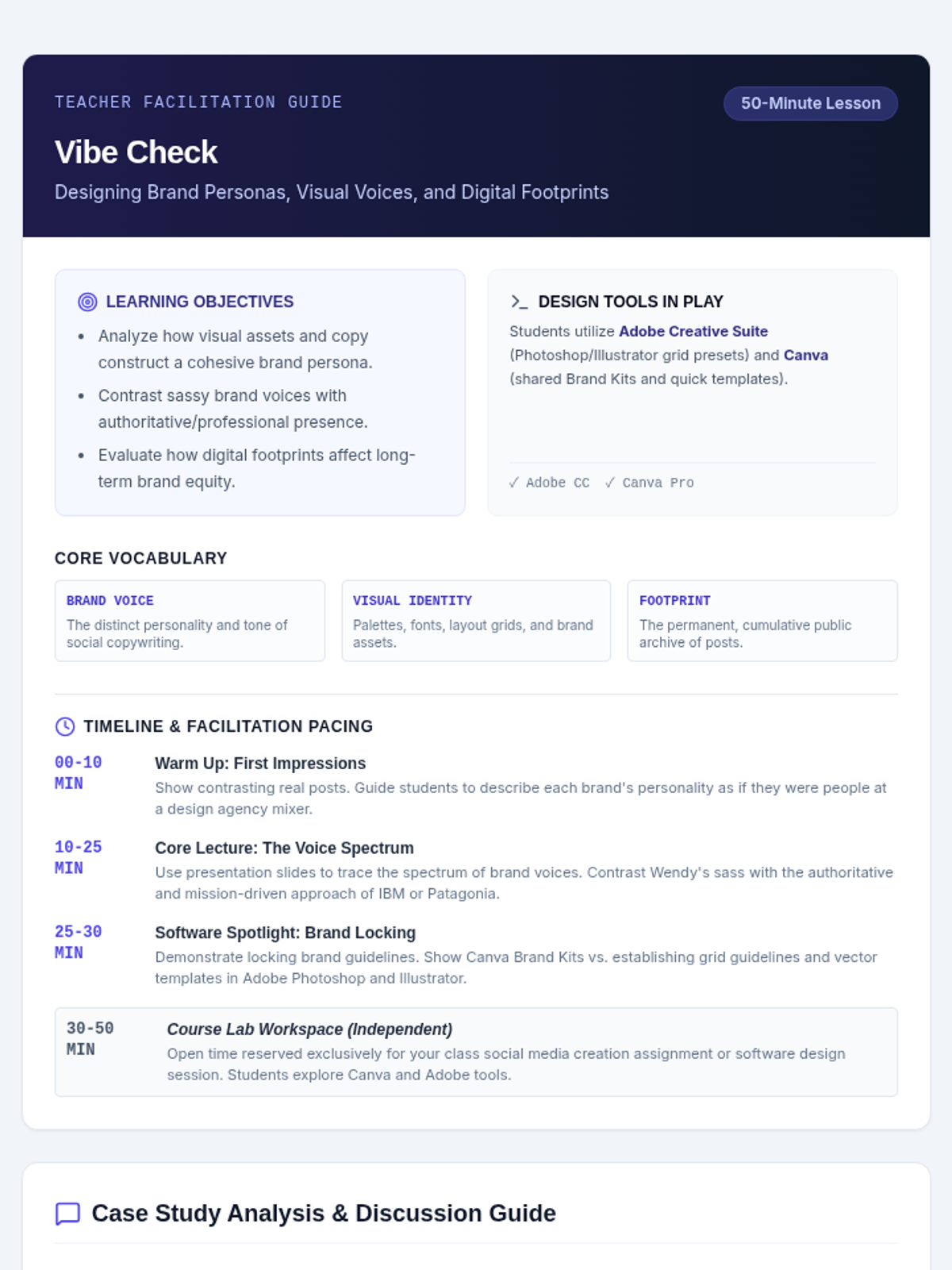
A digital design lesson focusing on social media brand personas, digital footprint, and visual design aesthetics using Adobe and Canva. Students compare contrasting brand voices, from Wendy's playful roasts to polished professional corporate presences.
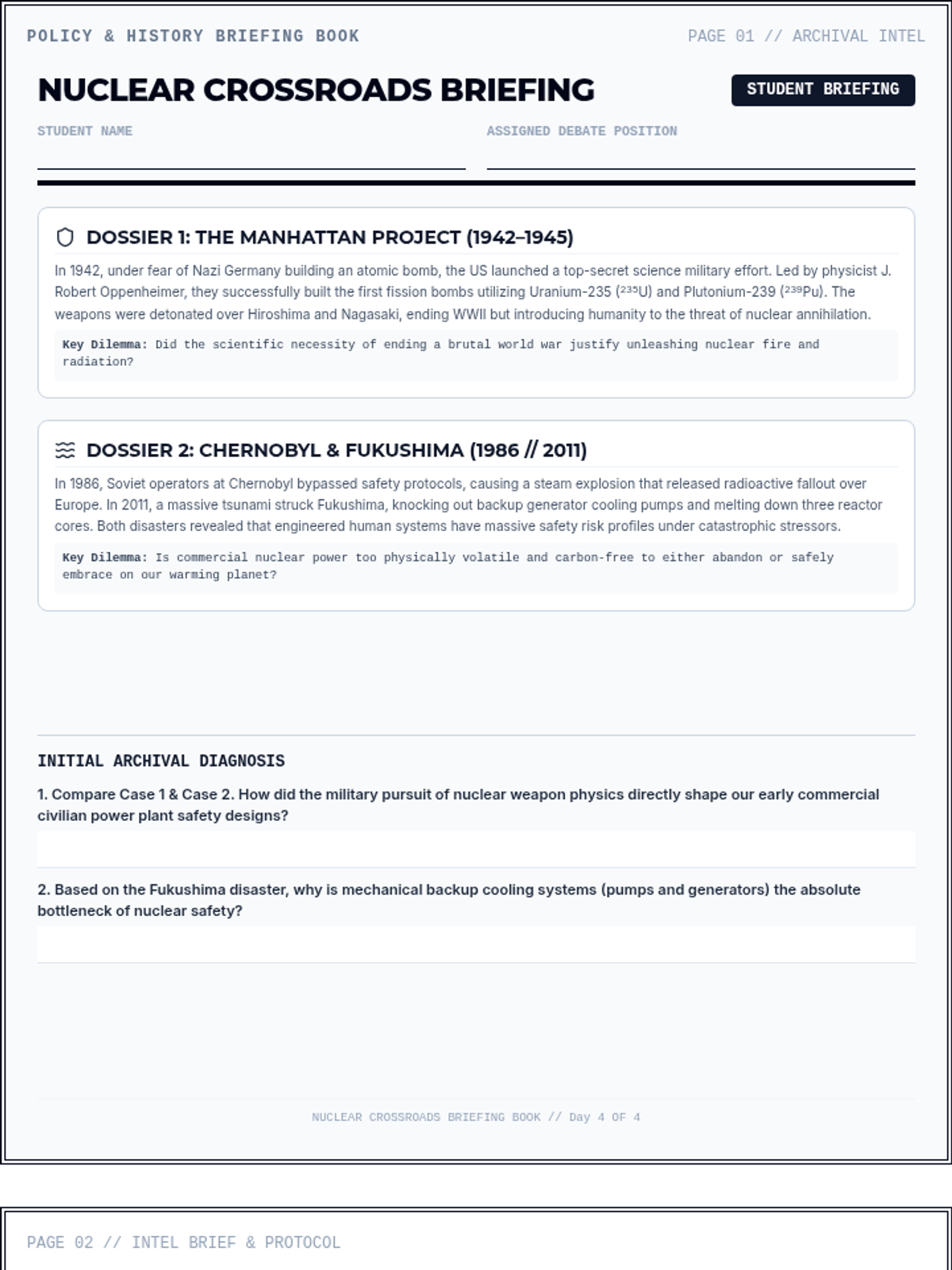
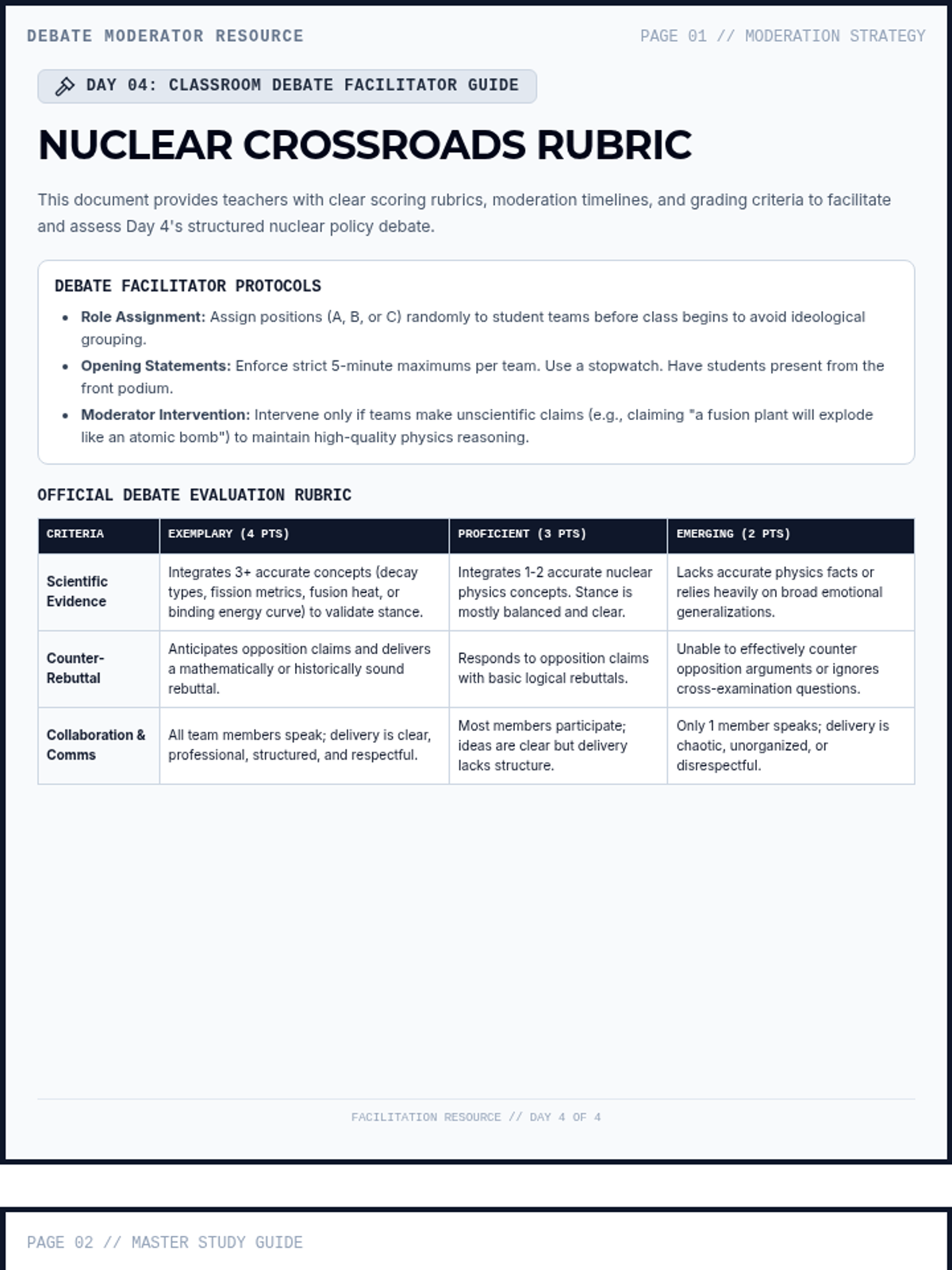
Students synthesize their understanding of radioactive decay, fission, fusion, and nuclear energy. They analyze historical case studies and participate in a structured debate on global nuclear energy and policy futures.
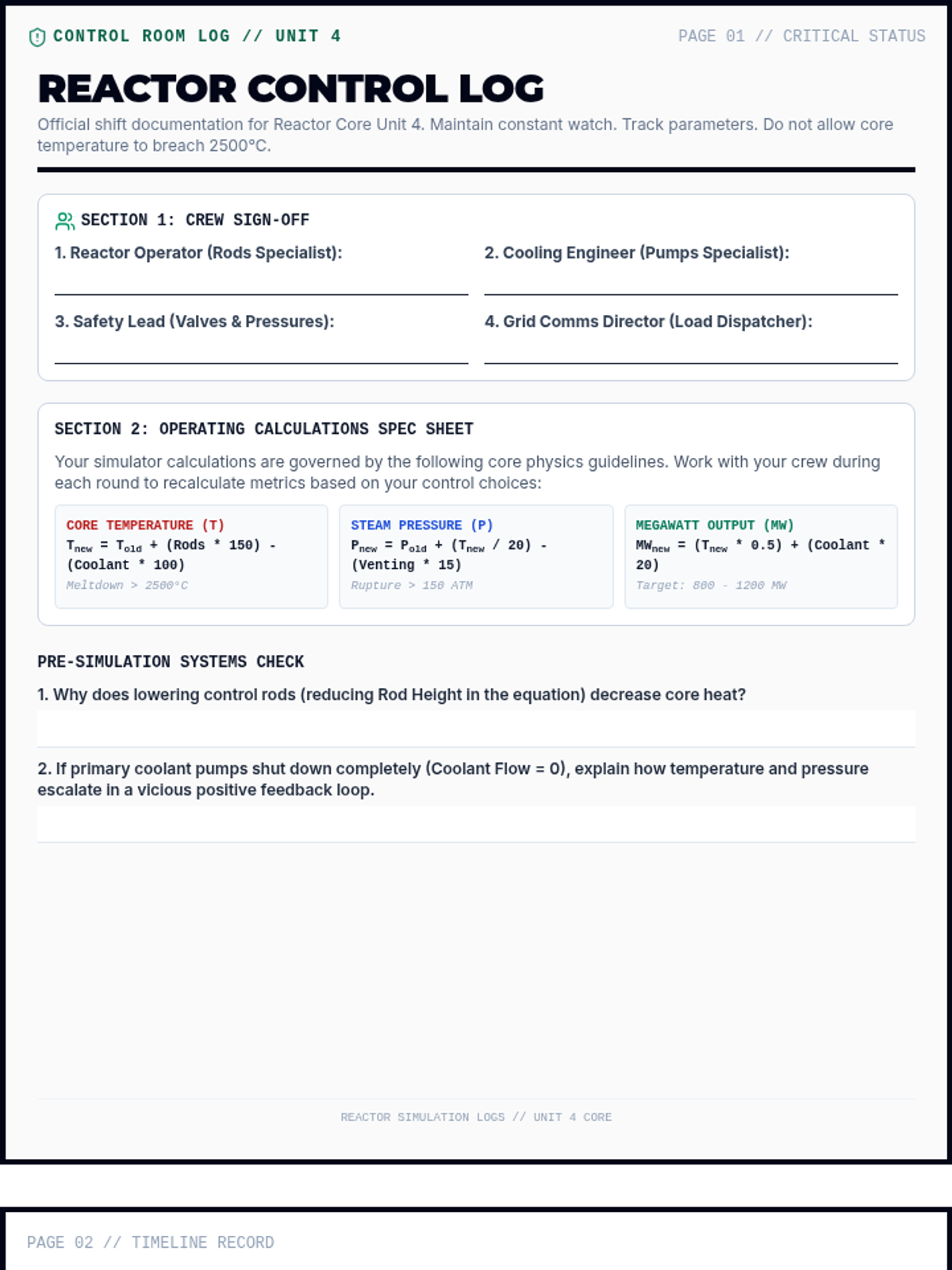
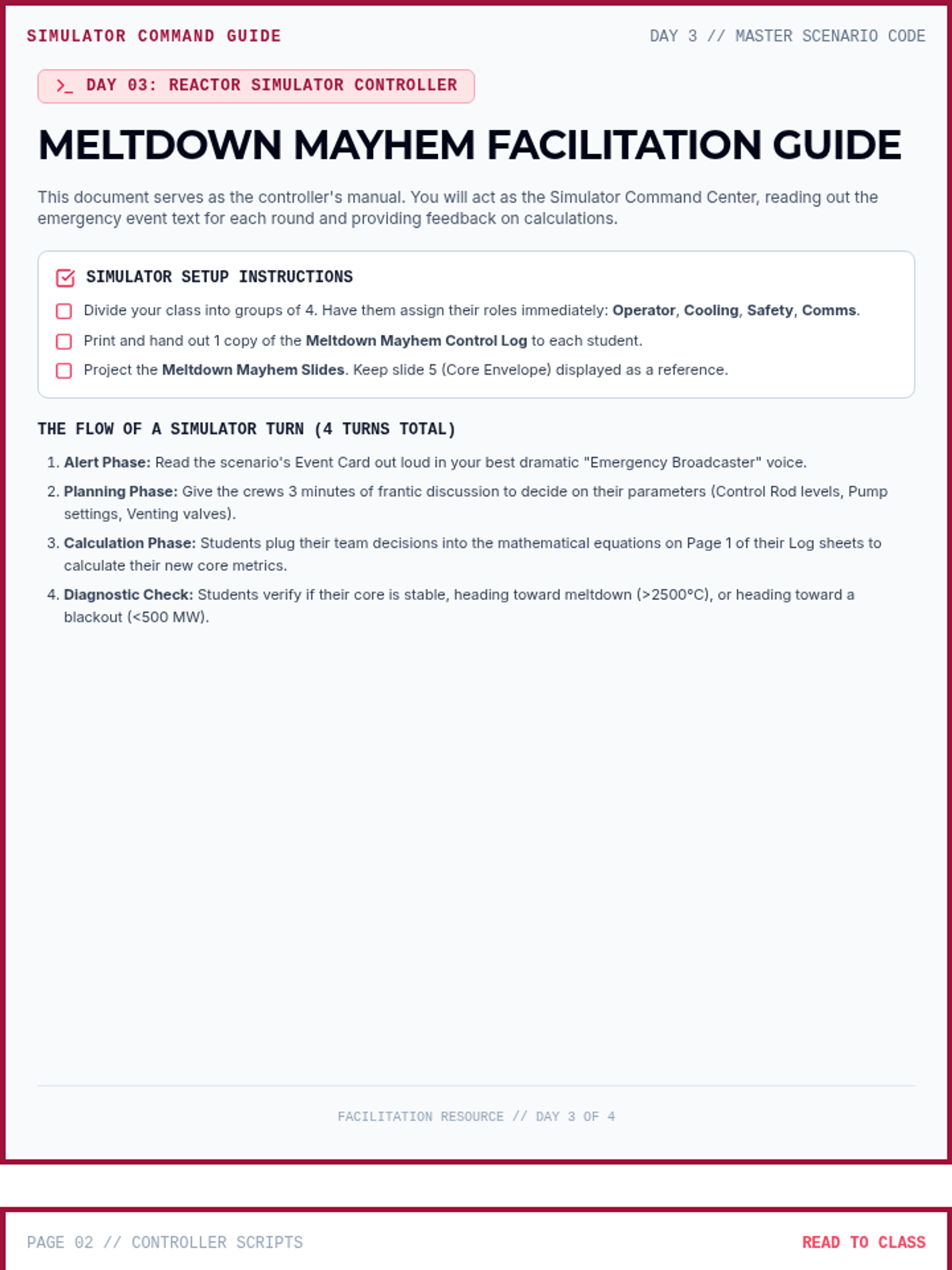
A tense, role-play nuclear control room simulation. Students act as engineers, reactor operators, and safety officers trying to manage a surging core under crisis while learning about nuclear energy systems and safety protocols.
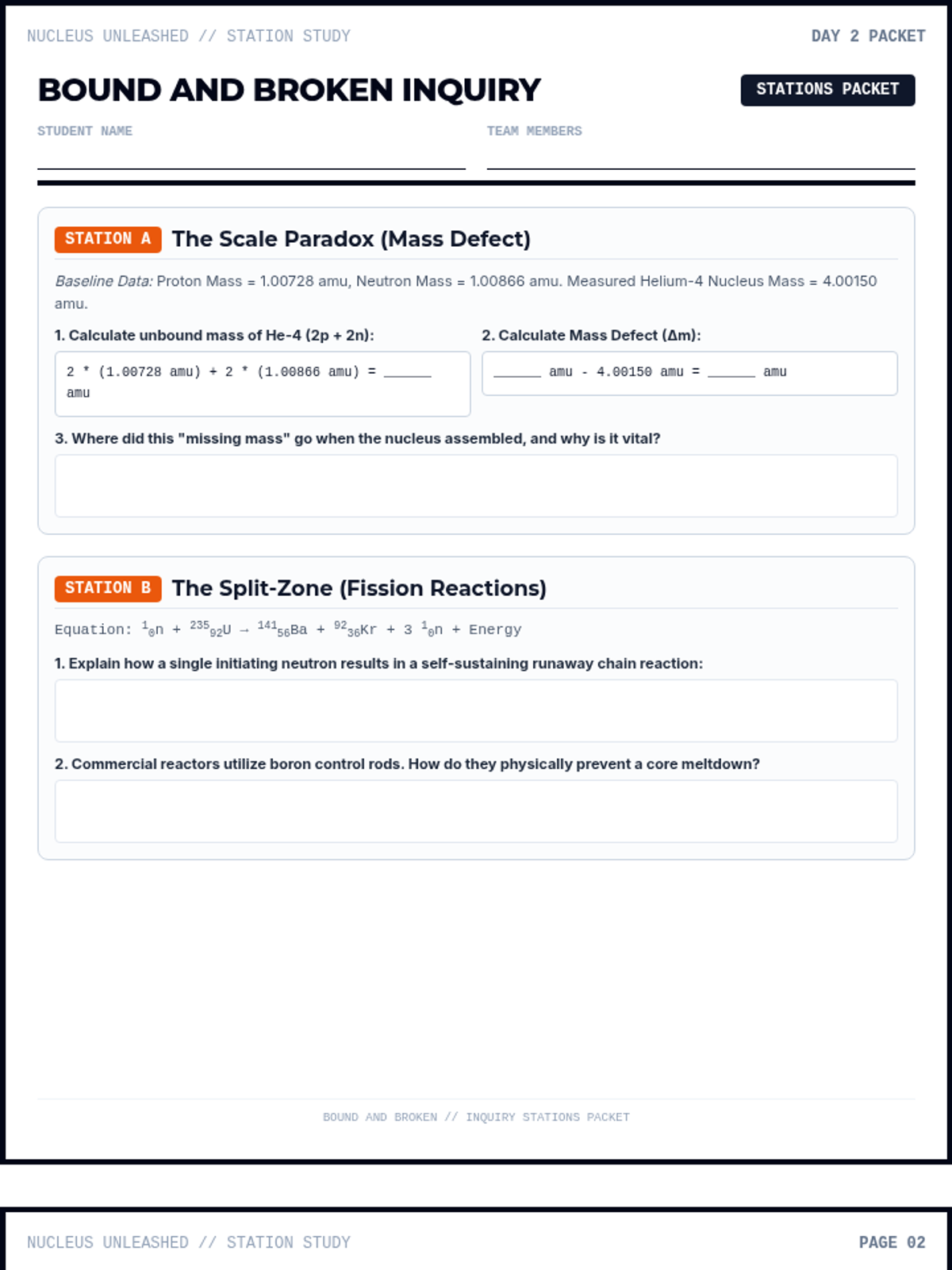
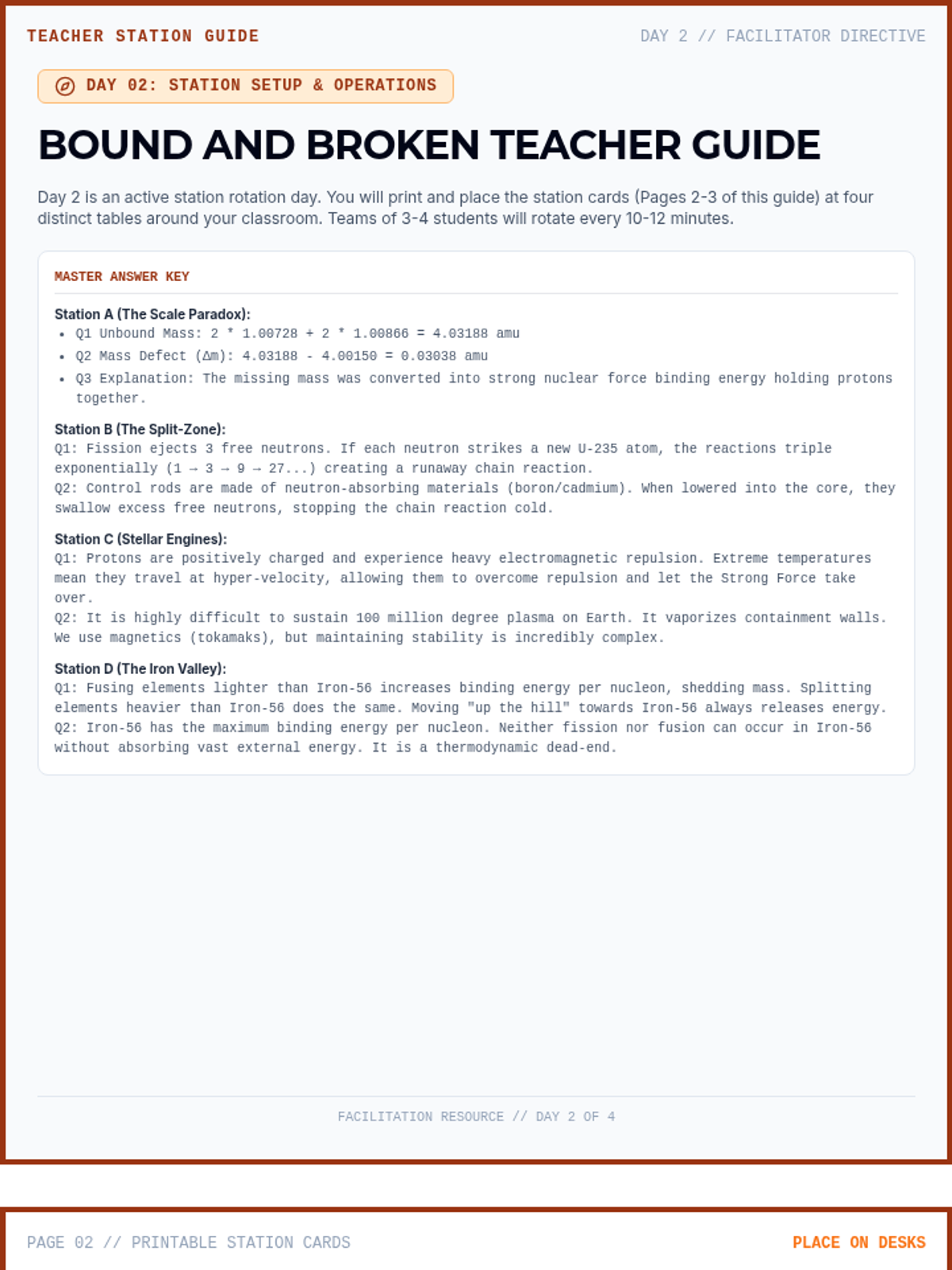
An active, station-based inquiry into fission, fusion, and mass-energy equivalence. Students rotate through tactile and analytical stations to untangle the powerful physics that bind and break atomic nuclei.
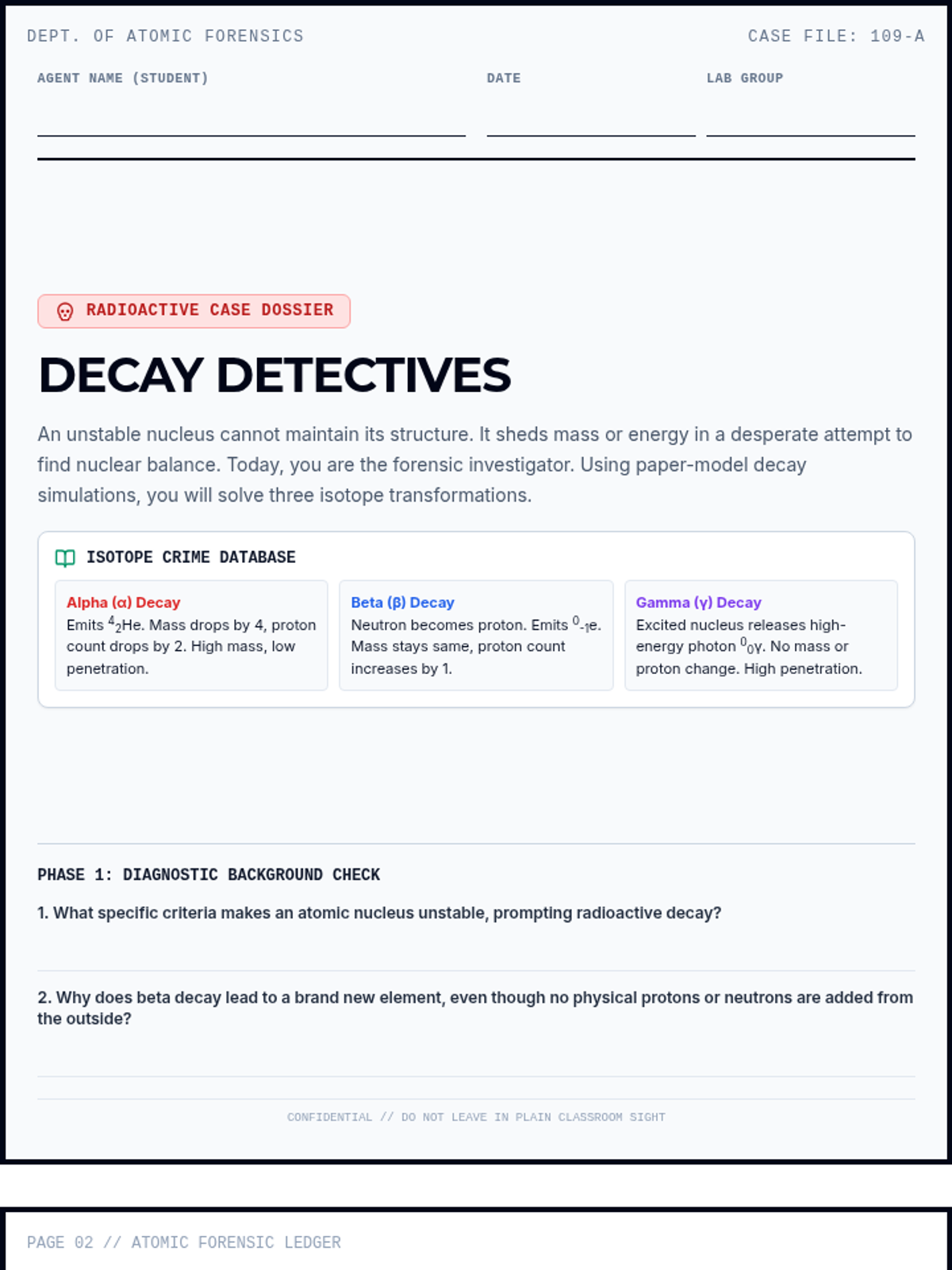
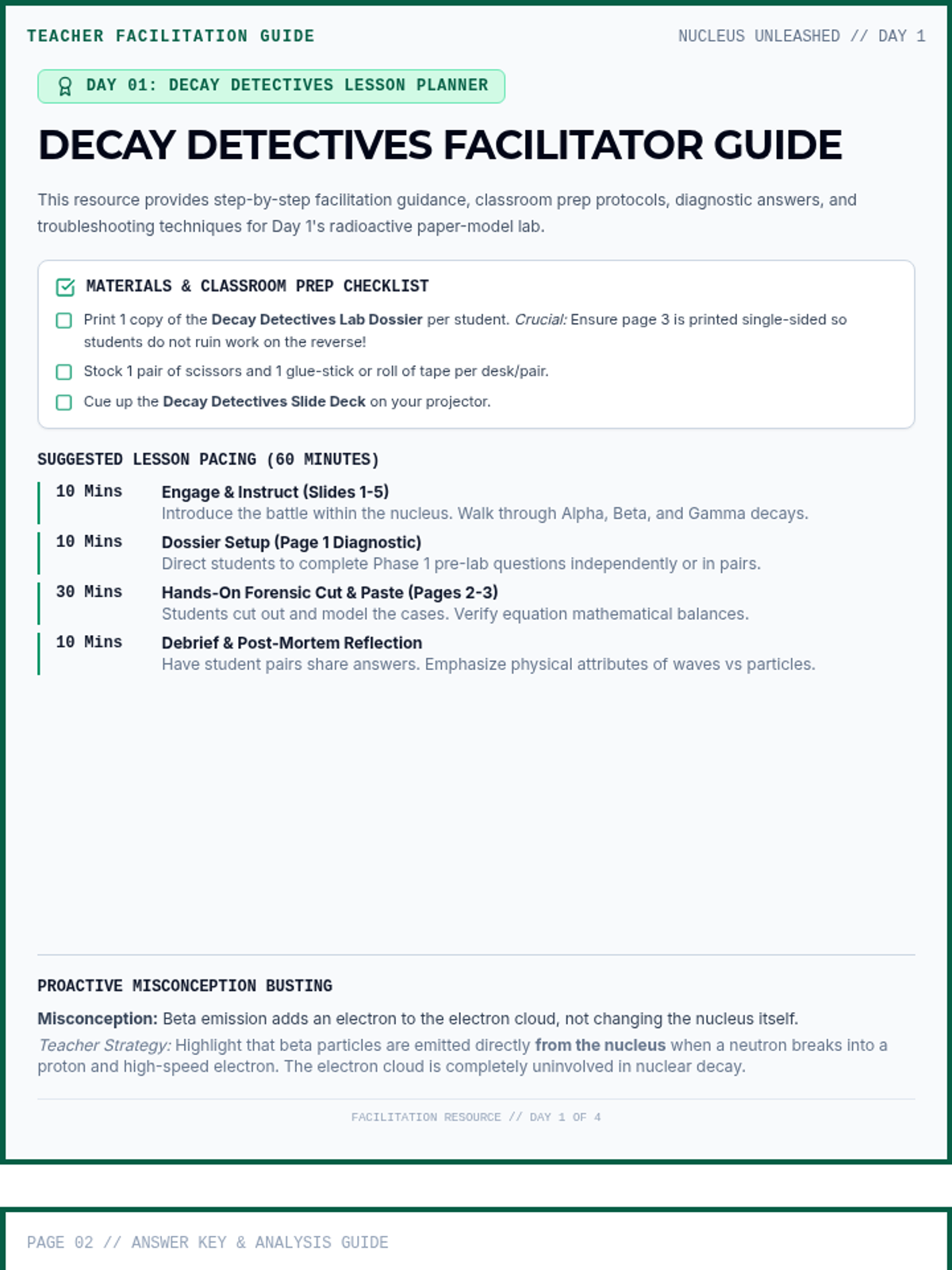
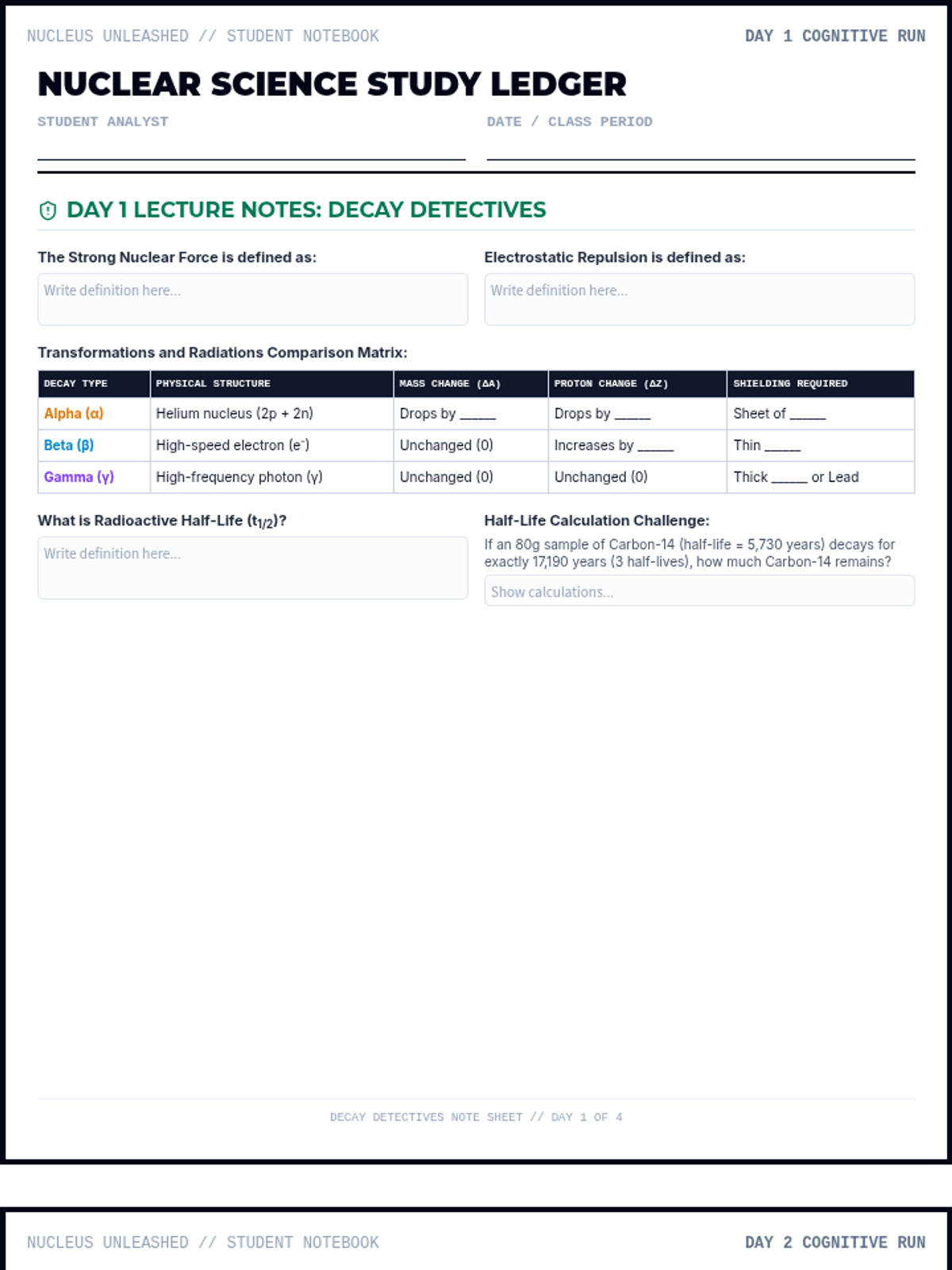
Students investigate alpha, beta, and gamma radioactive decay by building interactive paper models. They track nuclear equations and explore how unstable elements shed mass and energy to reach stability.
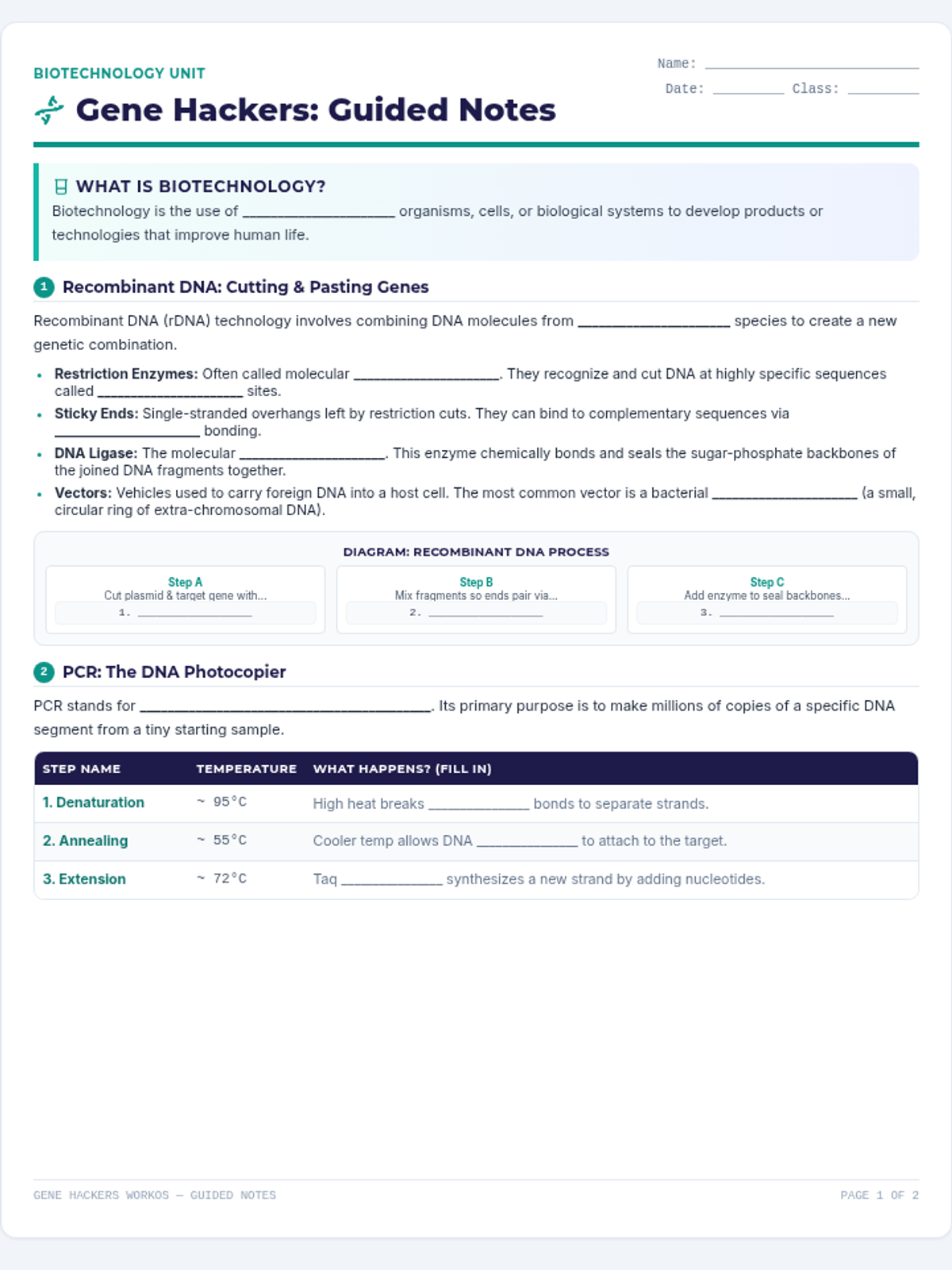
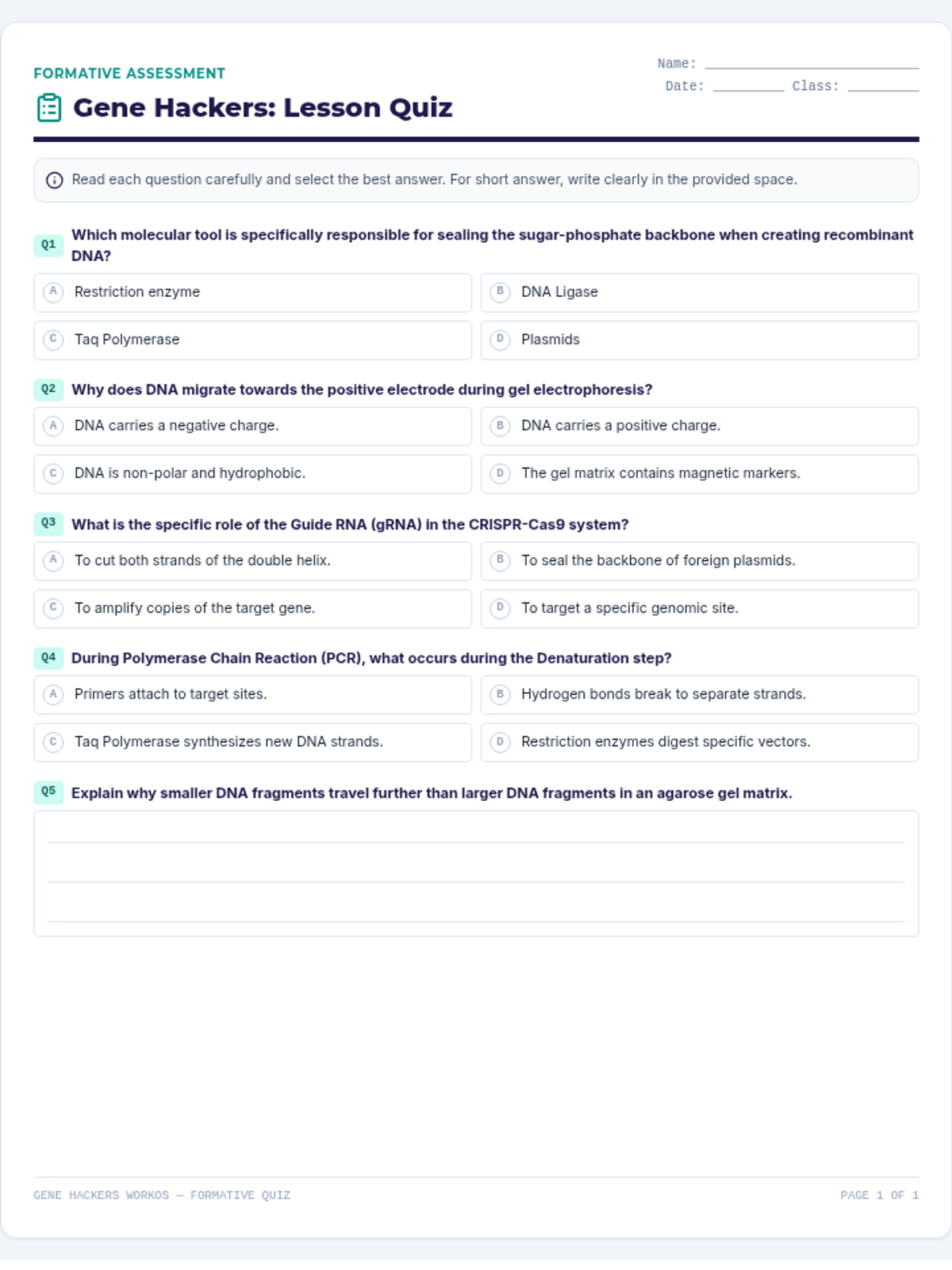
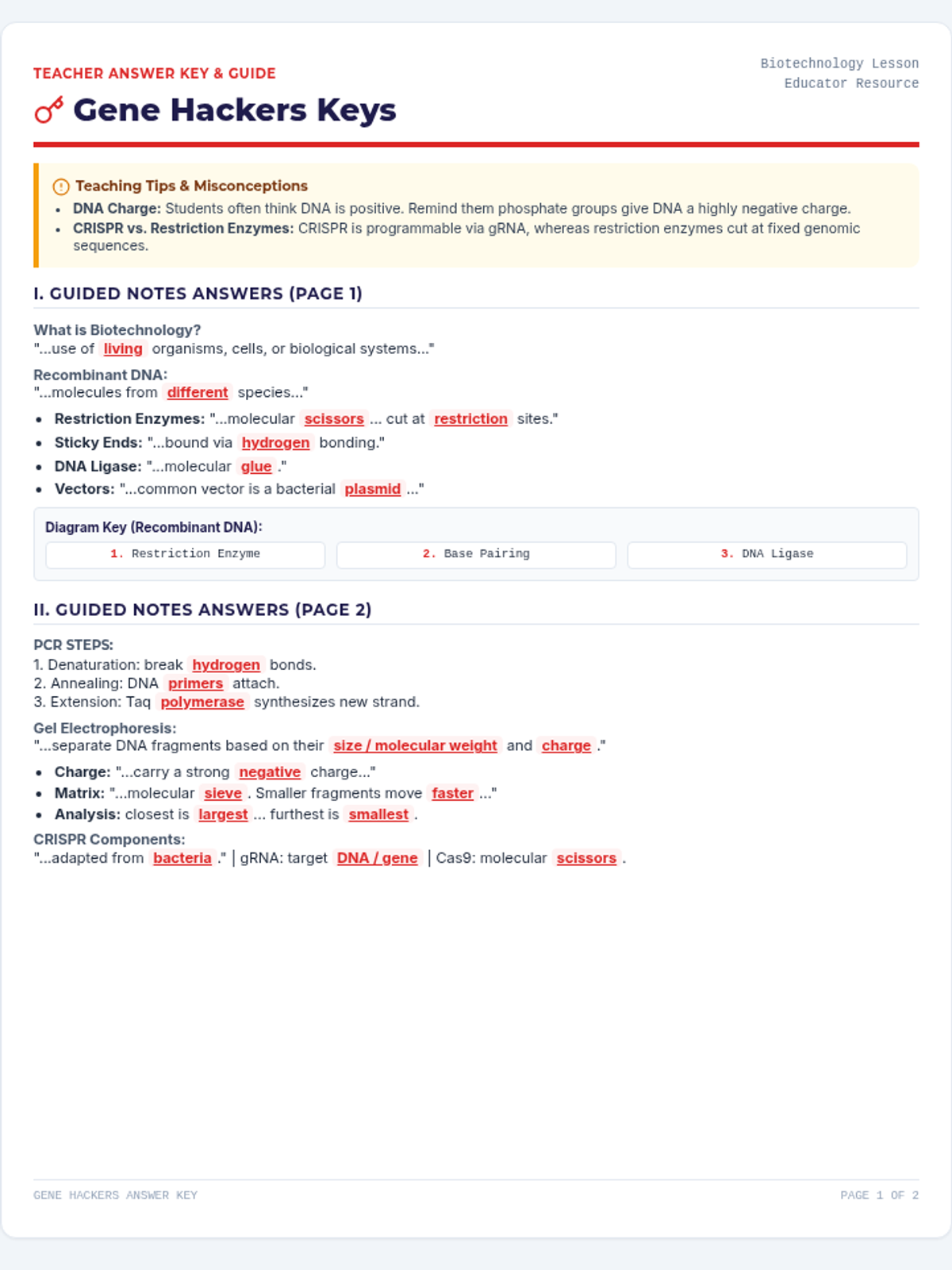
An introductory lesson on biotechnology, focusing on key tools like CRISPR, recombinant DNA, and gel electrophoresis. Students complete interactive guided notes and a formative assessment to demonstrate understanding of genetic engineering.
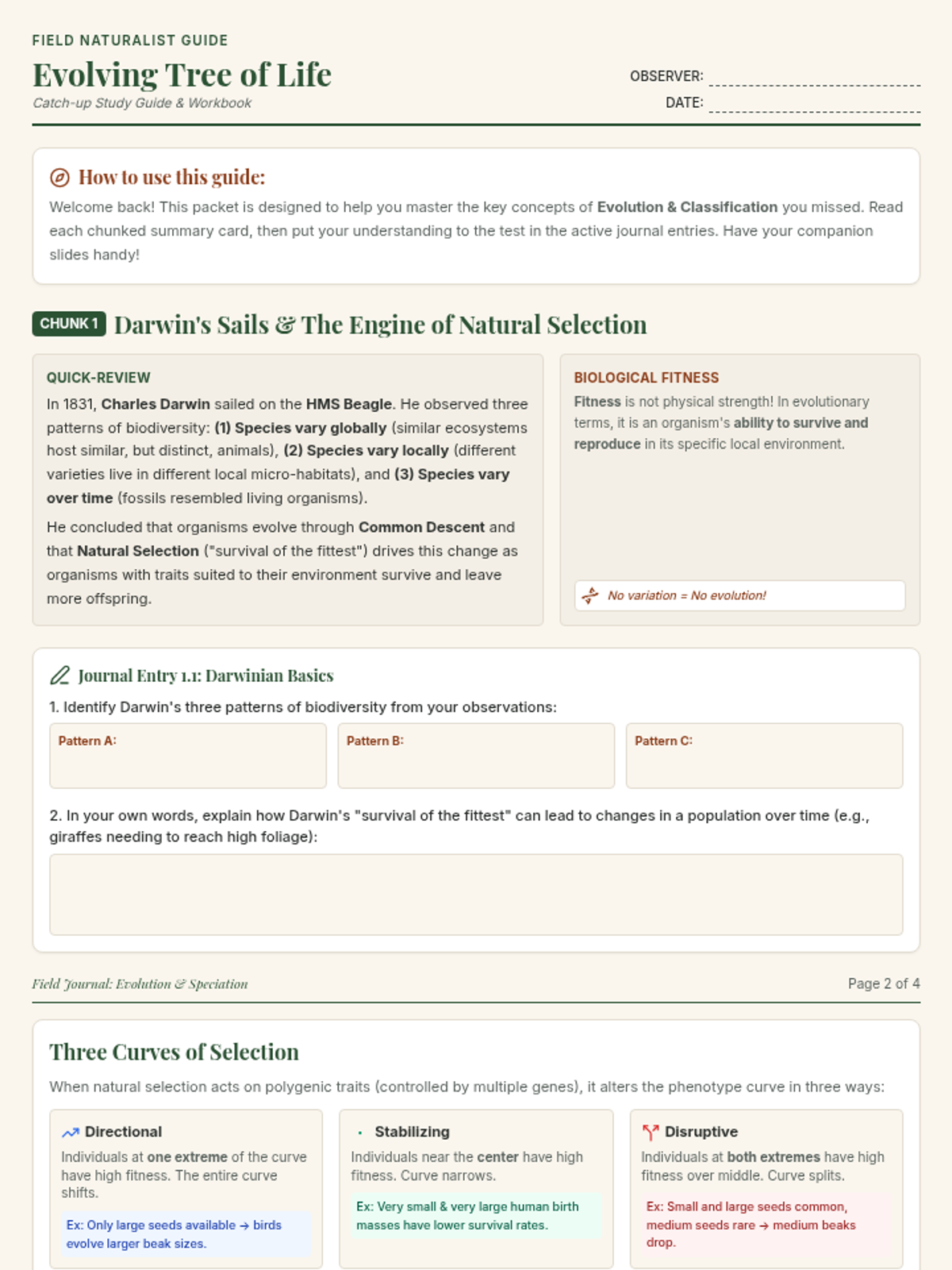
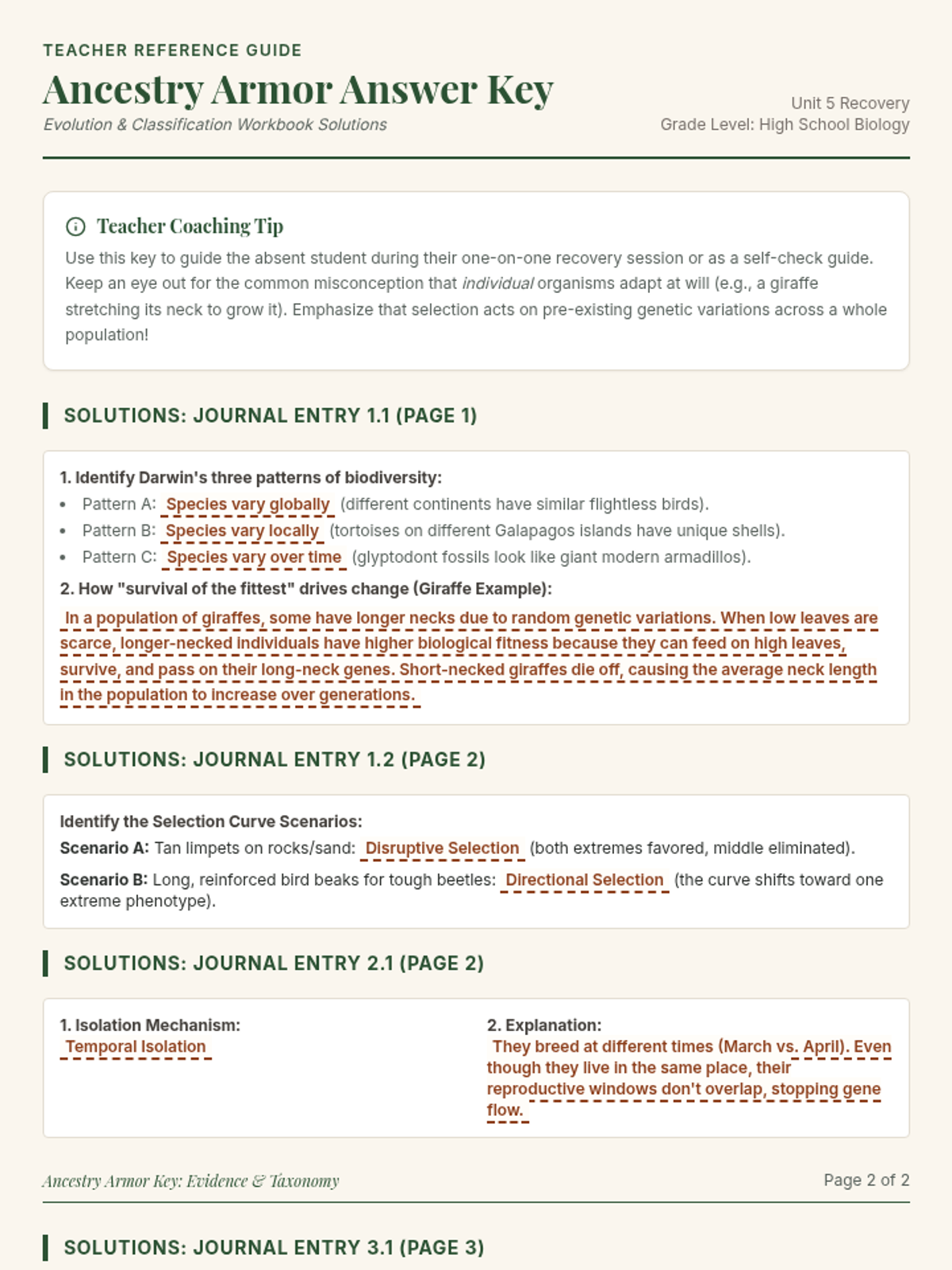
A self-paced study lesson designed for students catching up on Evolution and Classification. It chunk-packs Darwinian theory, speciation, lines of evolutionary evidence, Linnaean taxonomy, and cladograms into accessible, digestible visual summaries and active workbook exercises.
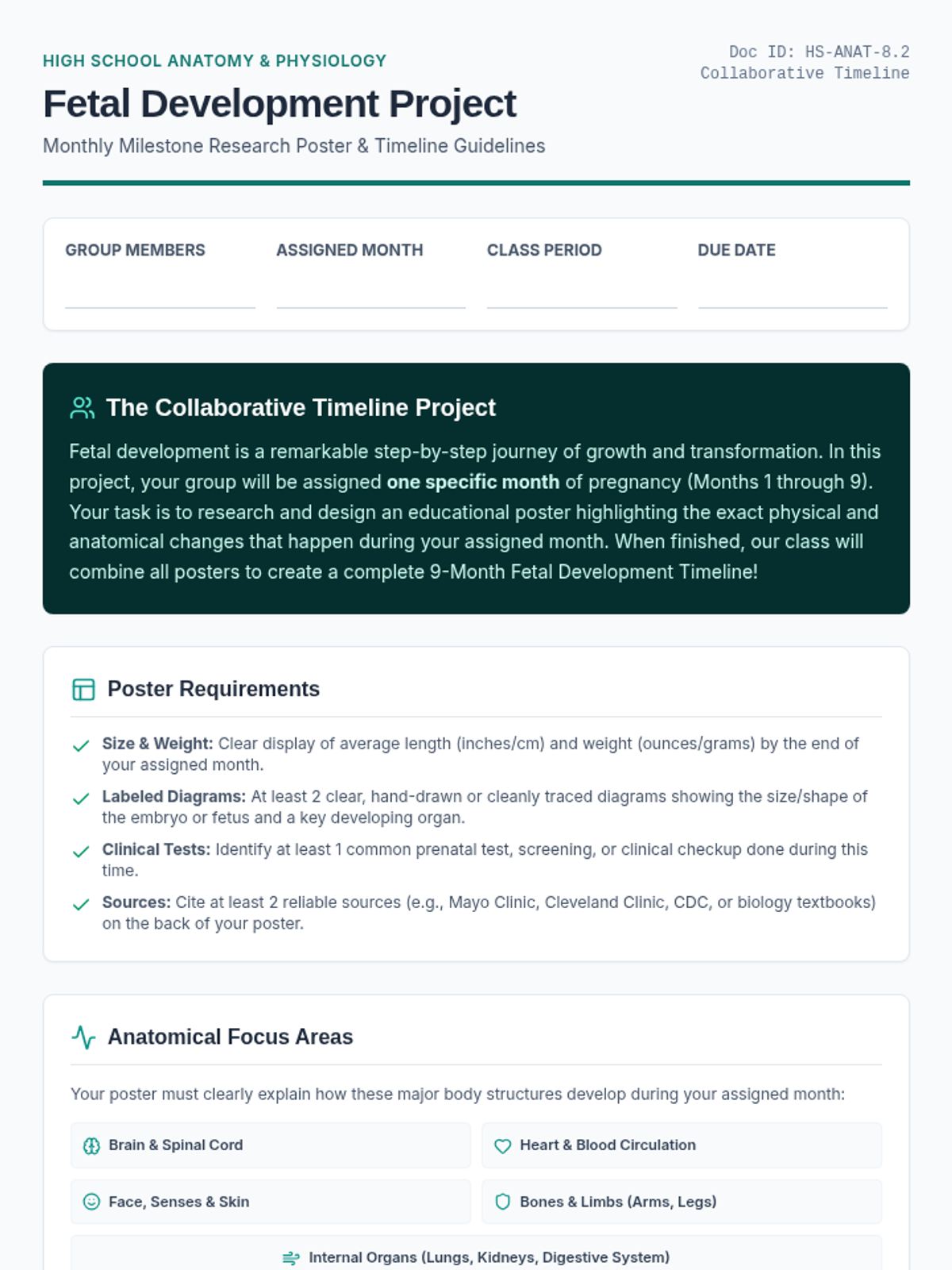
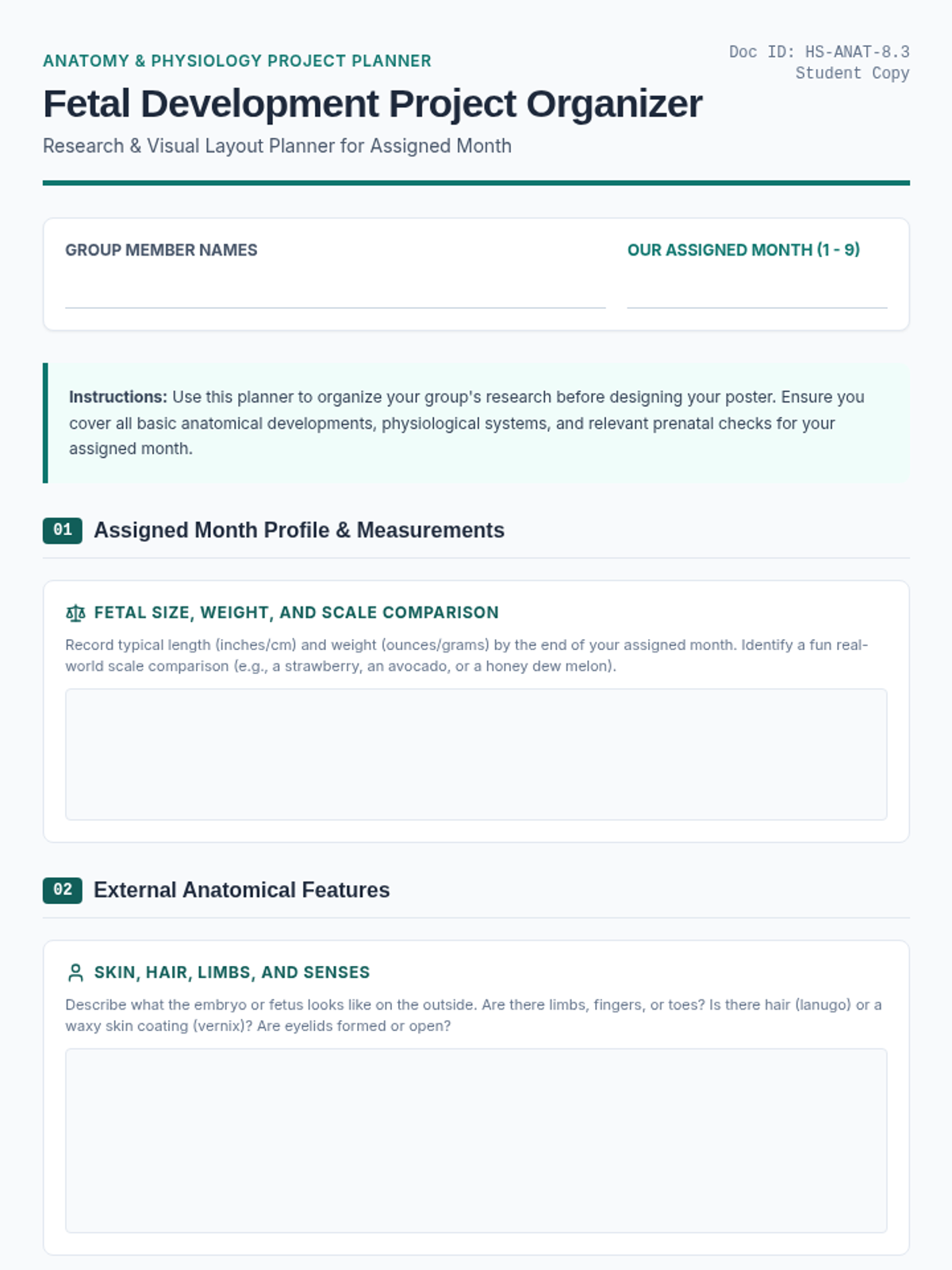
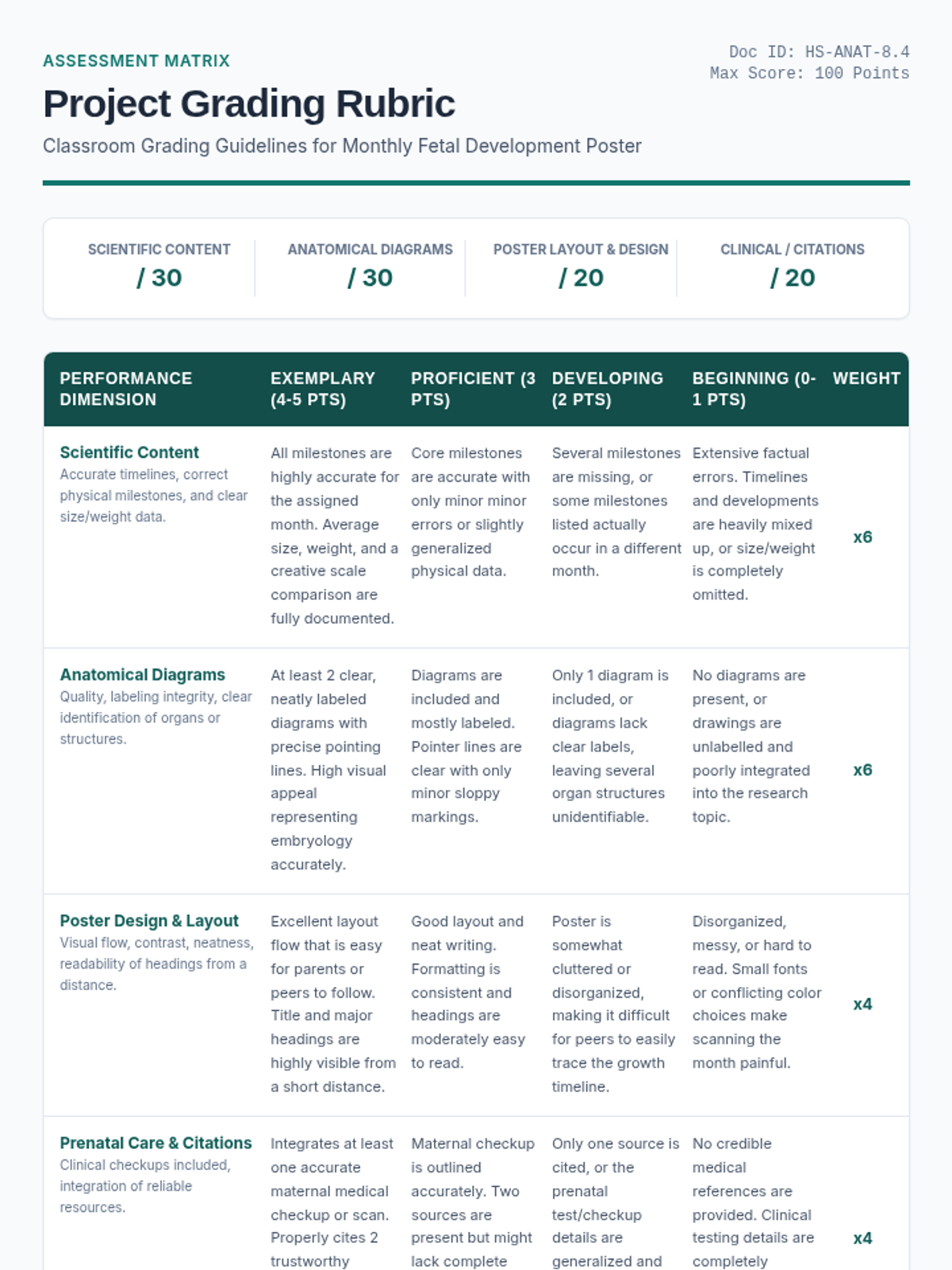
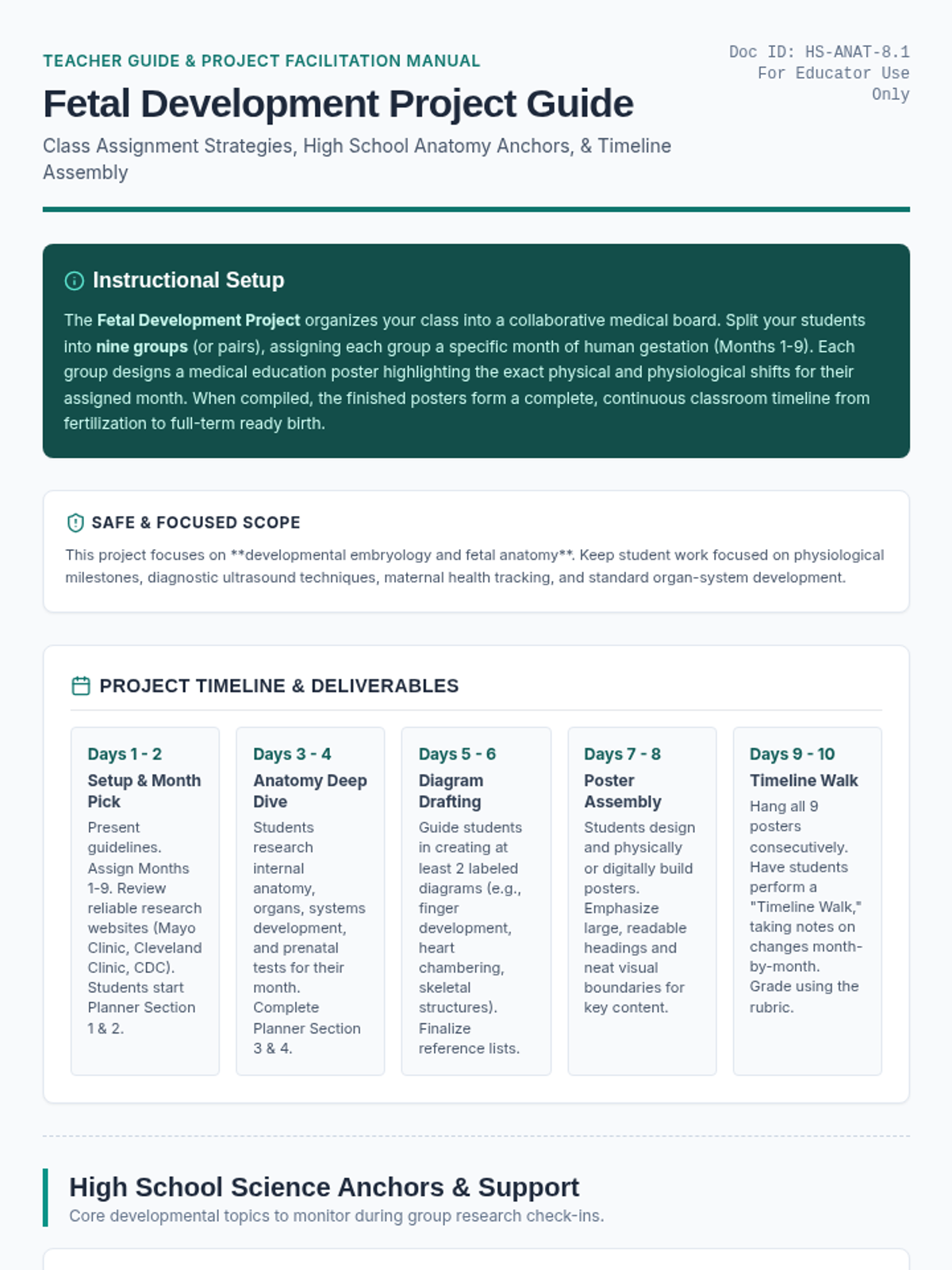
An engaging, collaborative high school anatomy project where students research and design educational communication posters tracking the monthly physical and physiological milestones of human fetal development across gestation.
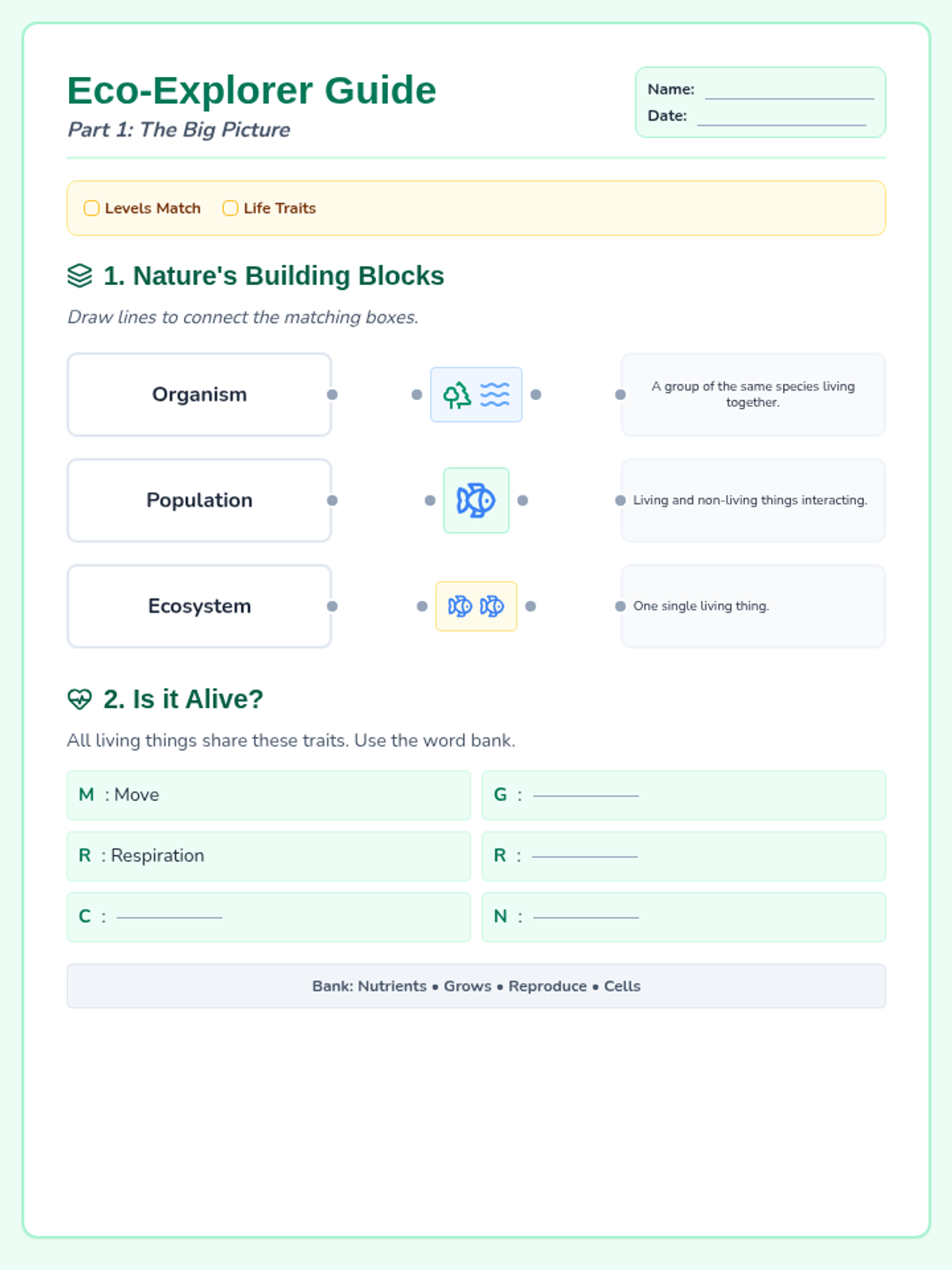
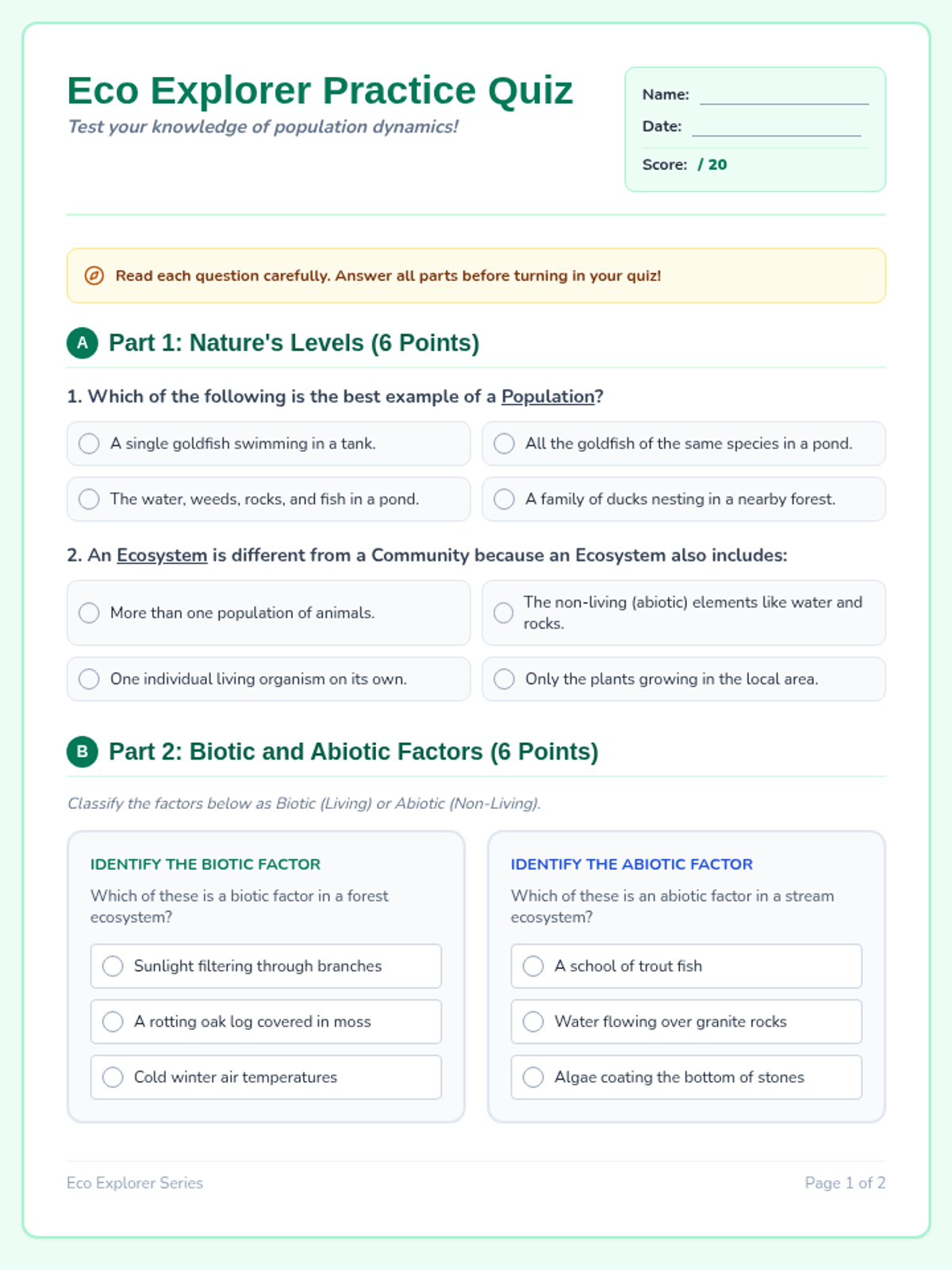
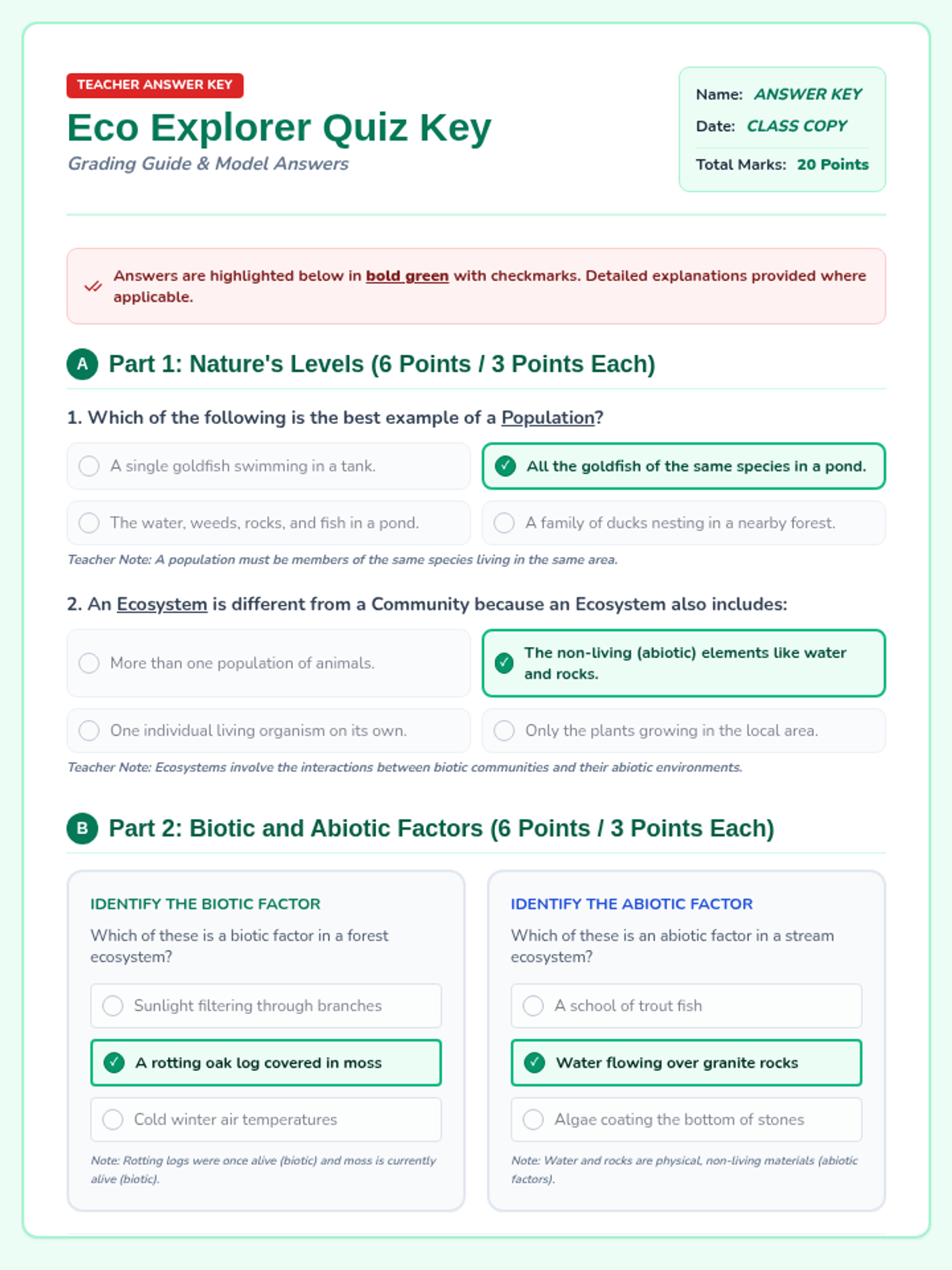
An introductory science lesson exploring ecological levels of organization, biotic versus abiotic factors, and population growth limits.
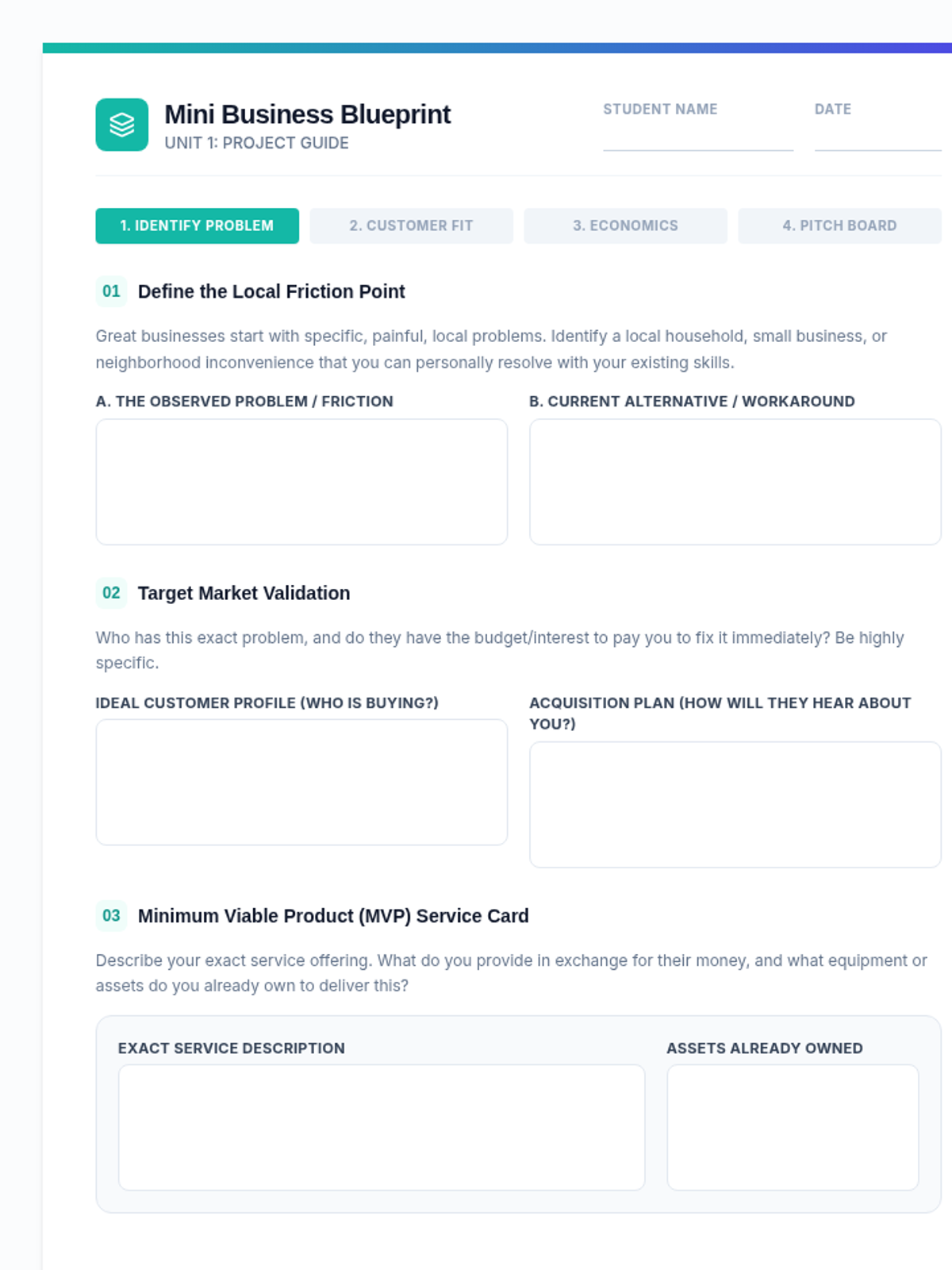
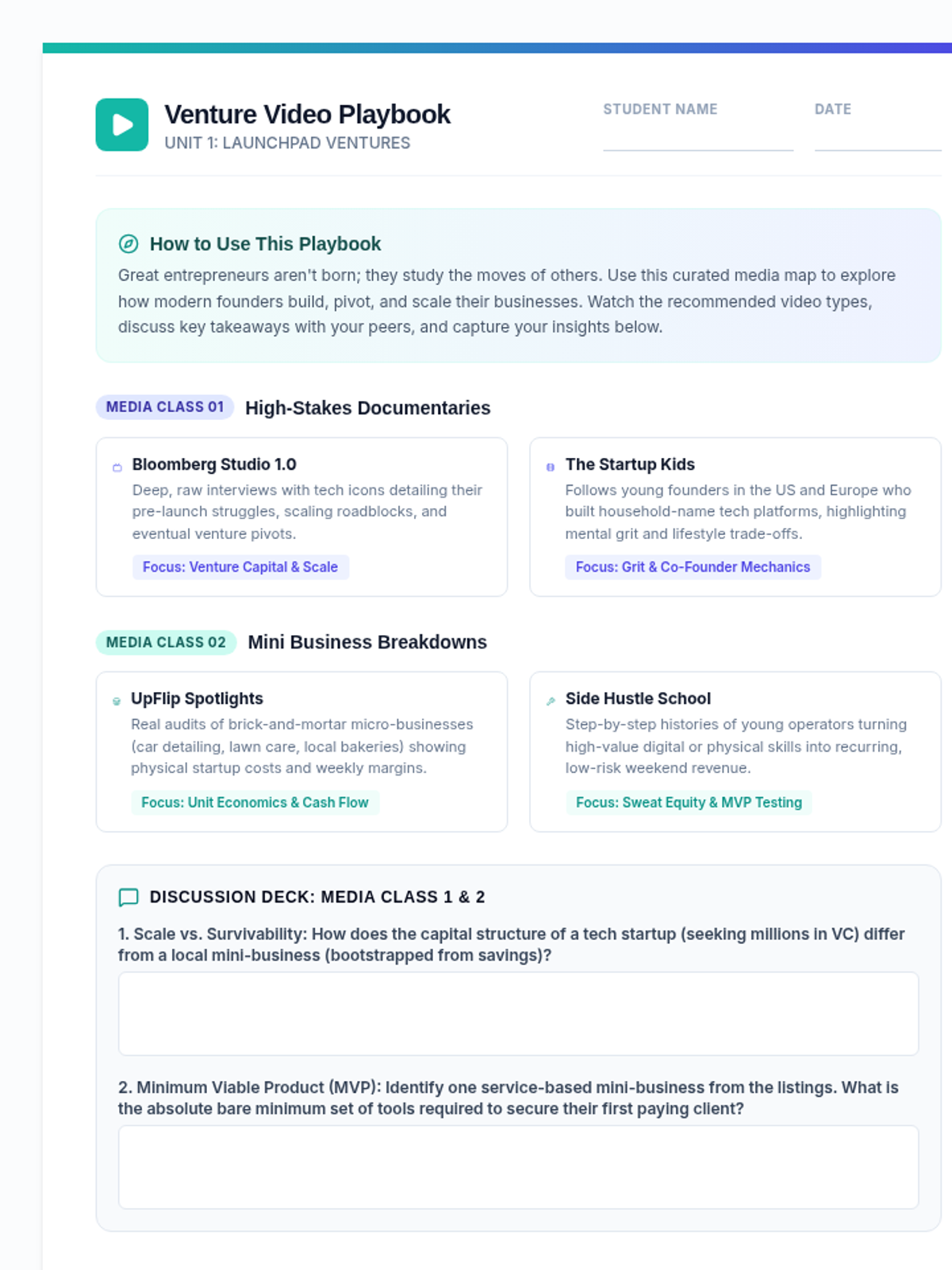
A dynamic, video-driven exploration of modern entrepreneurship for high schoolers. Students analyze real-world case studies and founder interviews, then plan and pitch their own mini-business ventures using a structured, practical blueprint.
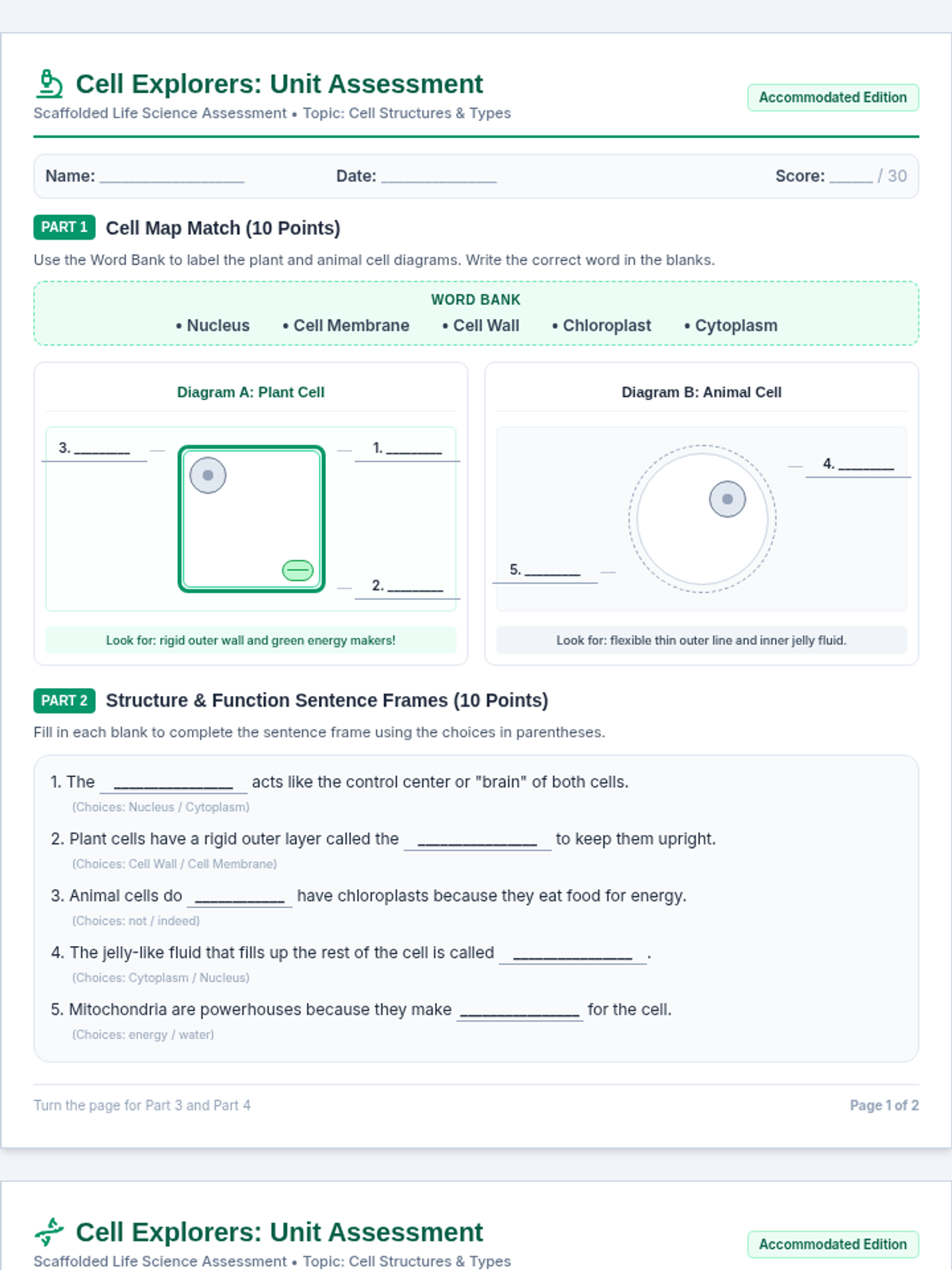
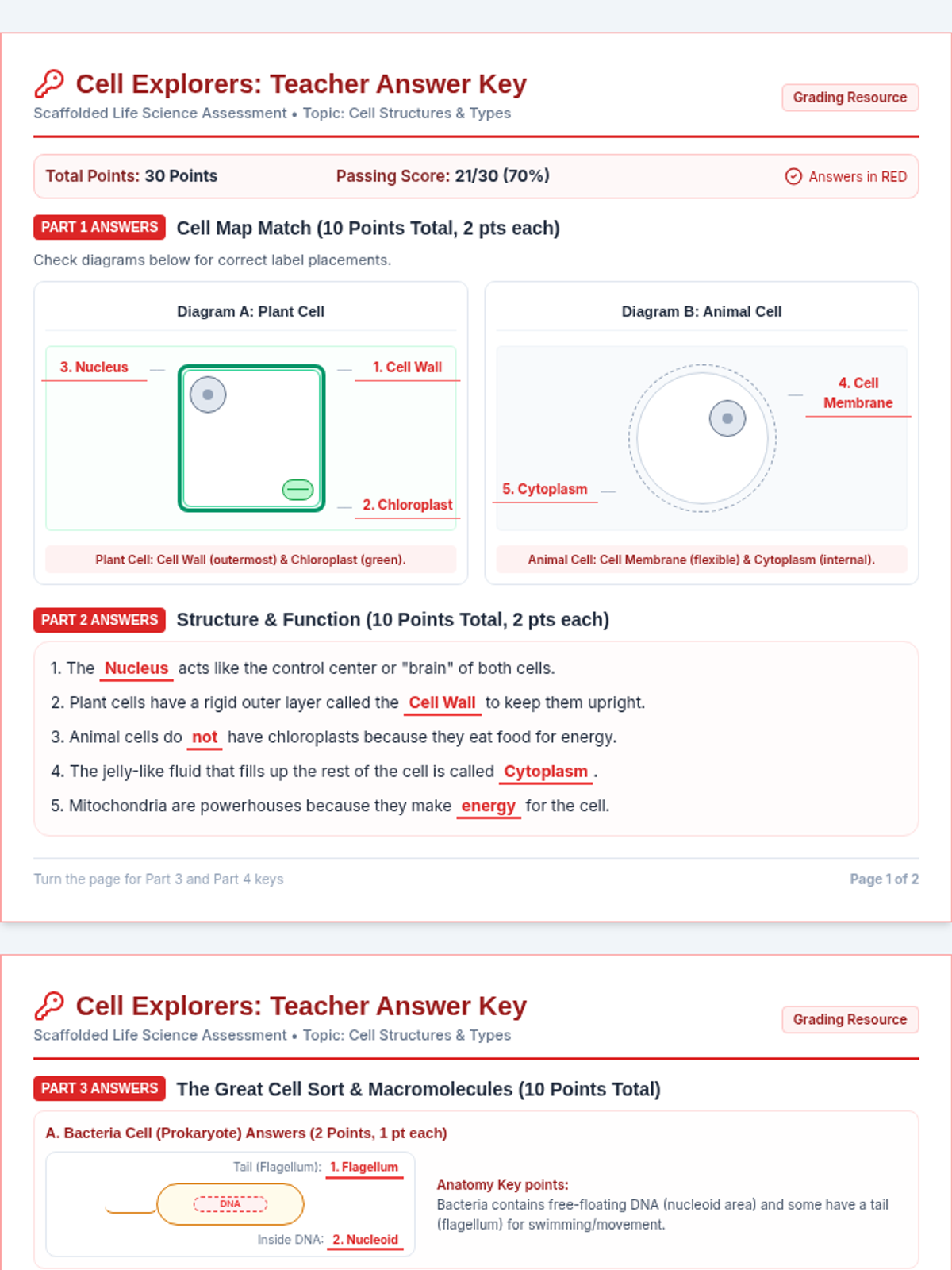
A scaffolded 2-page assessment and corresponding answer key covering prokaryotic and eukaryotic cells, including bacteria, plant, animal, and human cells. Features visual matching, labeling with word banks, sentence frames, and guided sentence starters.
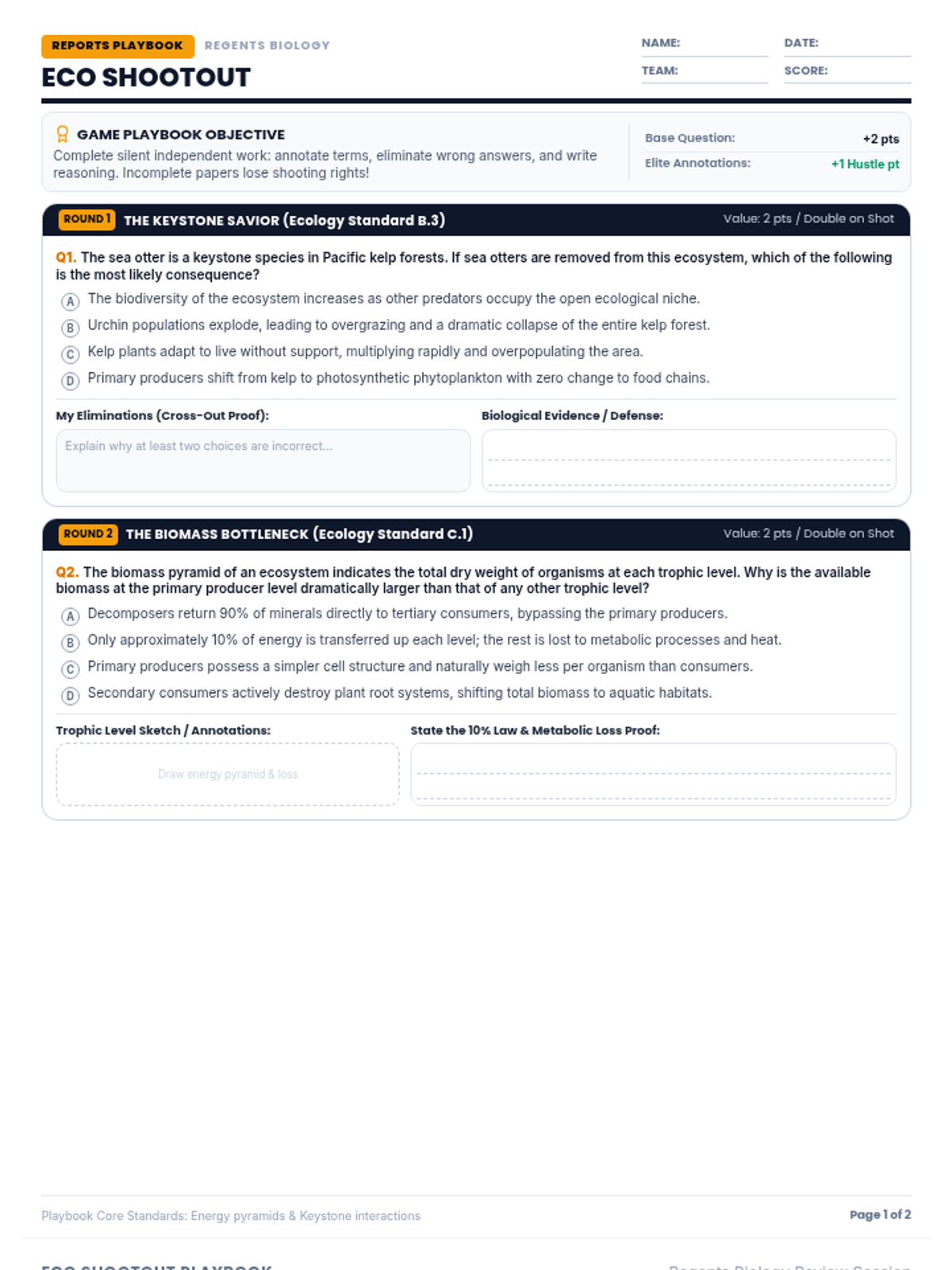
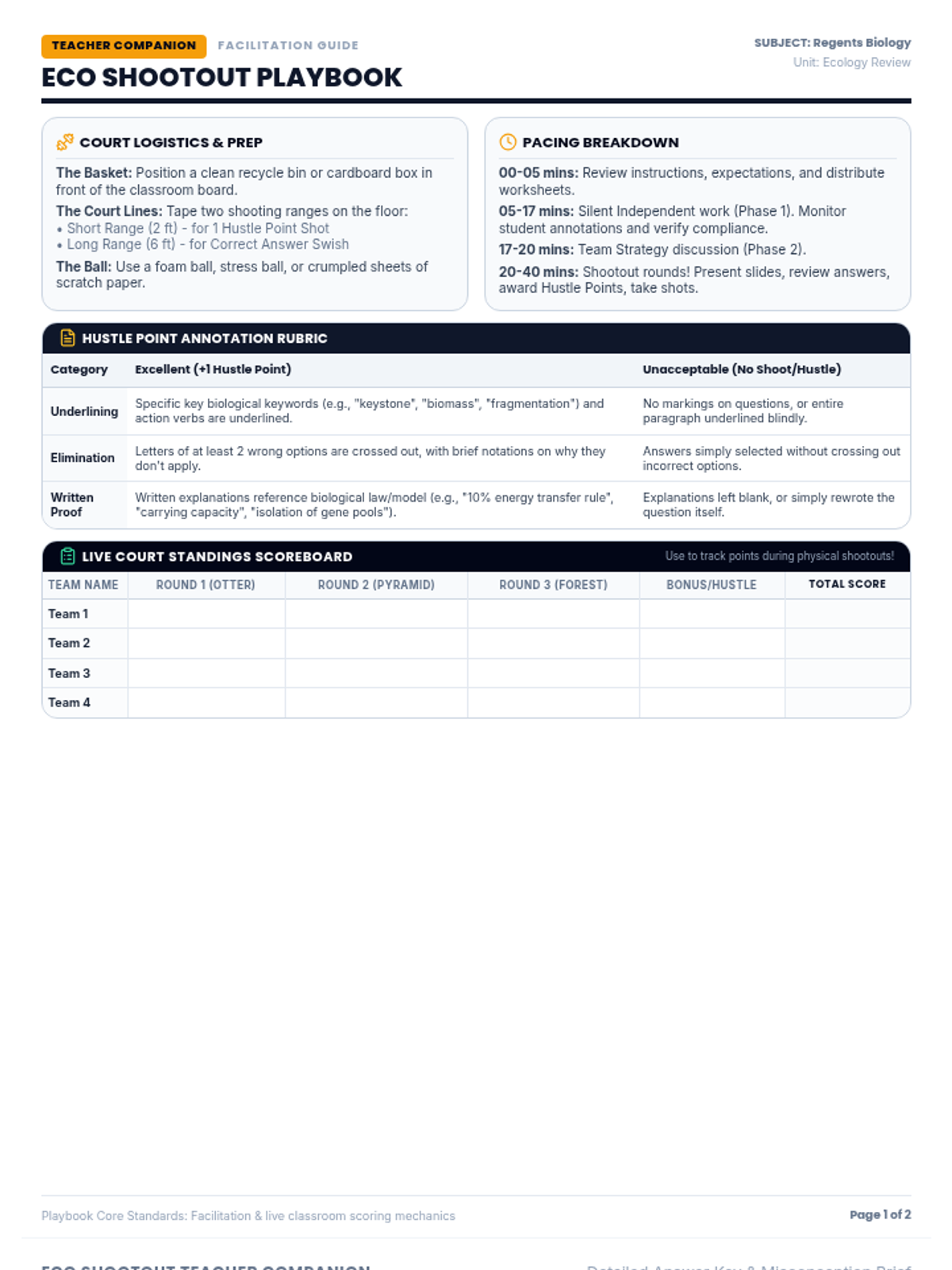
An interactive Regents Biology review game centered around keystone species, habitat fragmentation, and biomass pyramids. Students solve and annotate challenging Regents-style questions, collaborate in teams, and shoot for points in a high-energy classroom game.
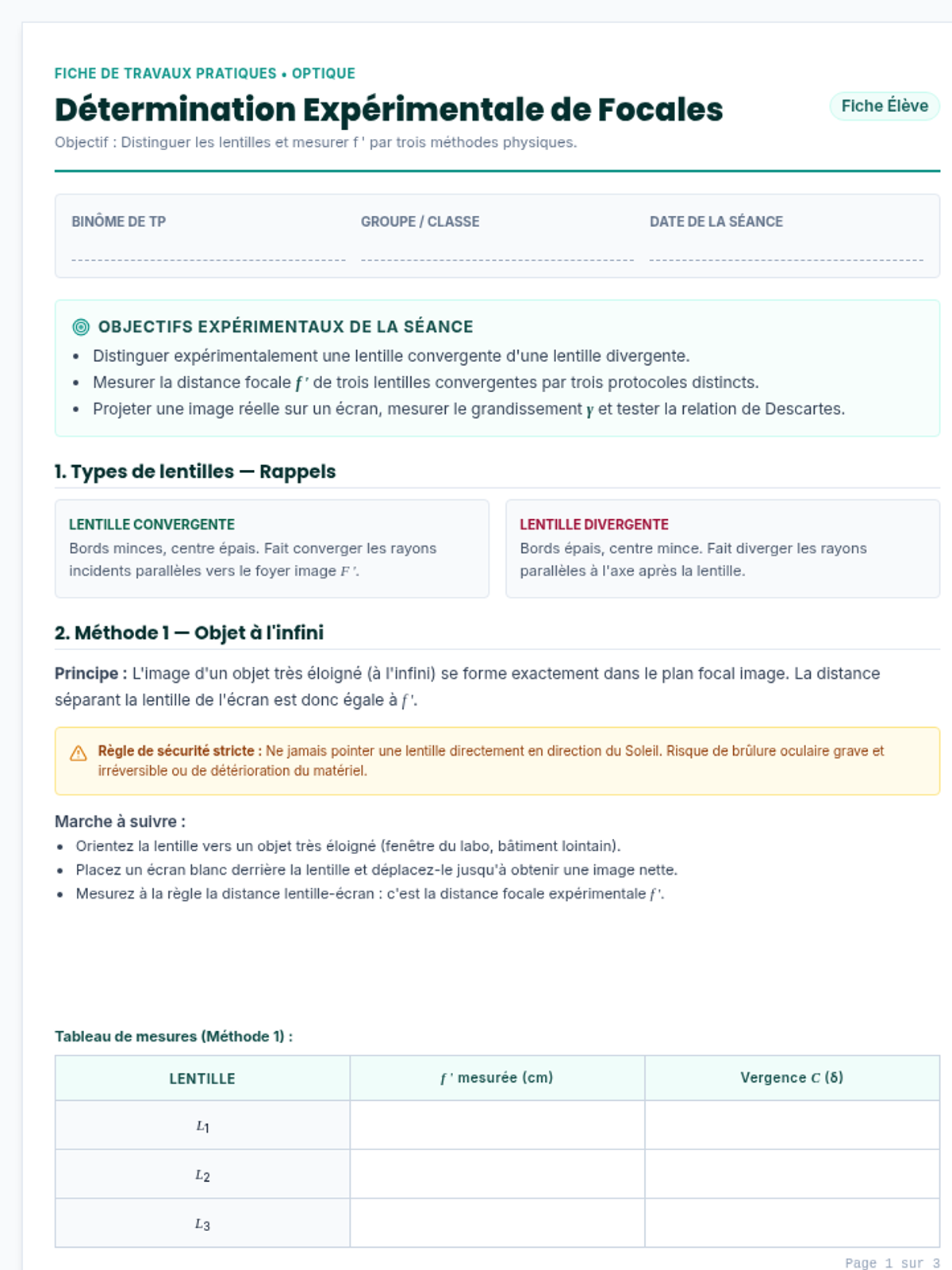
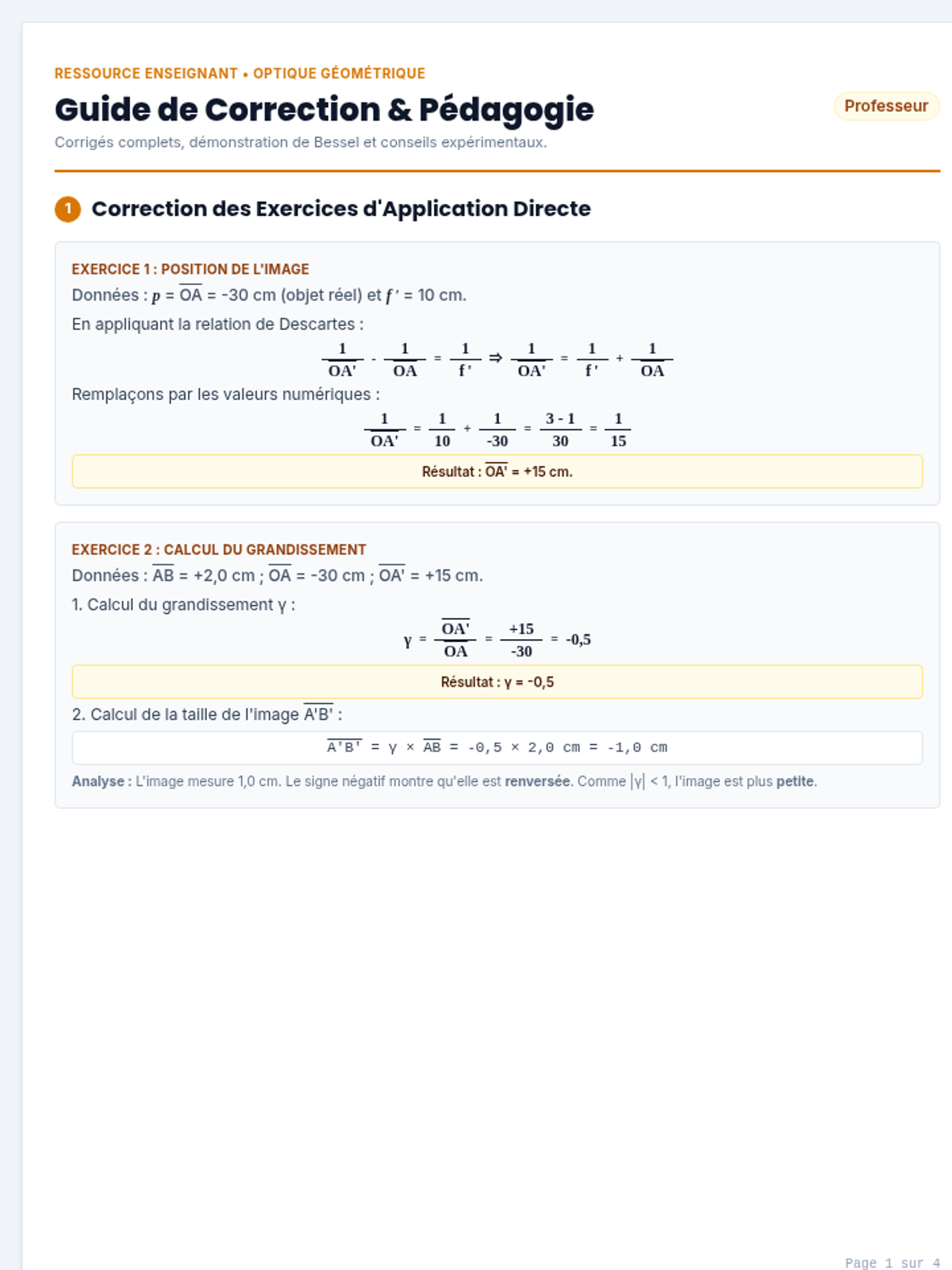
Analyse approfondie et pratique des techniques expérimentales de mesure de la distance focale d'une lentille convergente, incluant la méthode de l'objet à l'infini, l'autocollimation et la méthode de Bessel.
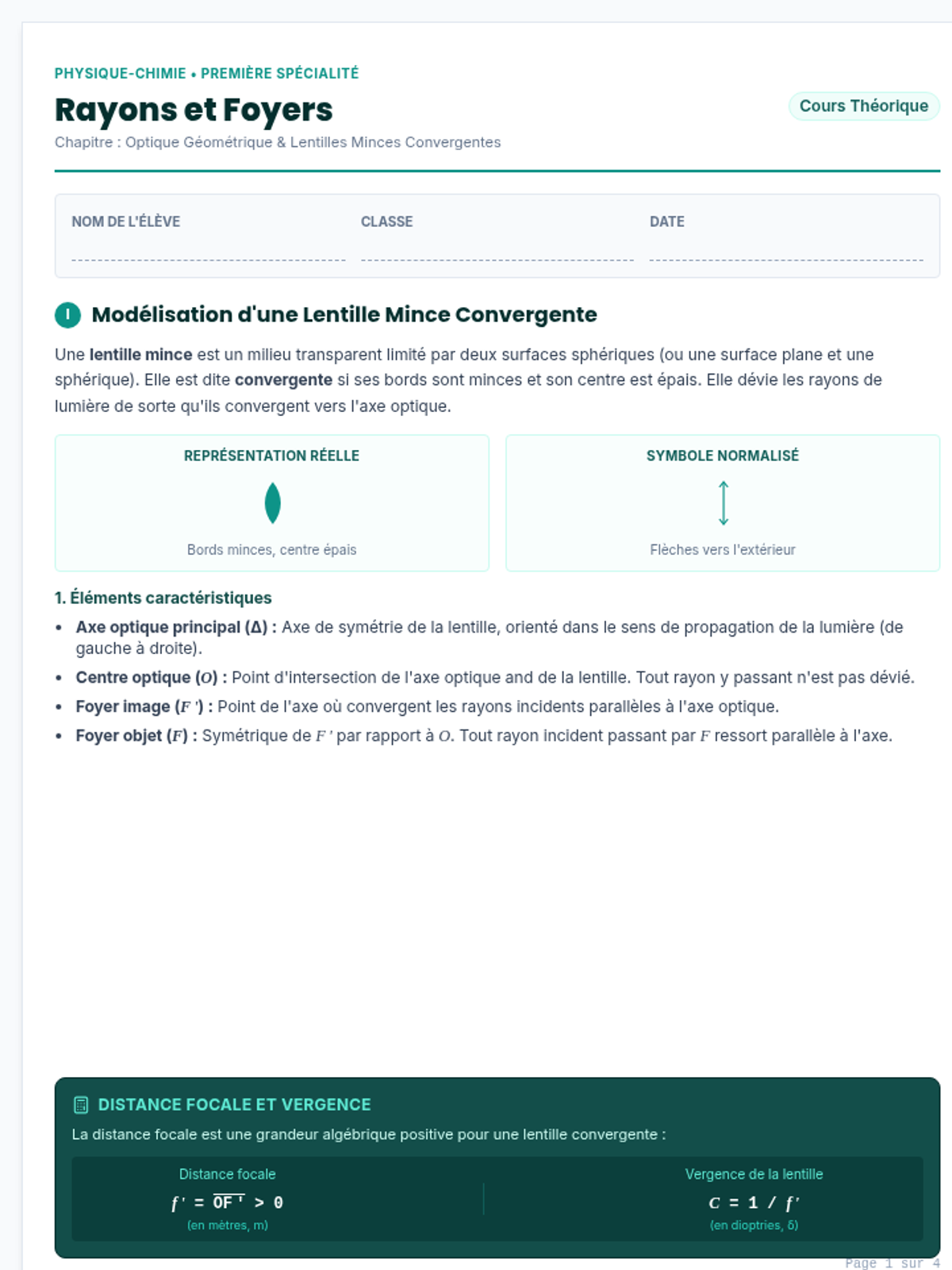
Étude théorique des lentilles minces convergentes, comprenant les caractéristiques géométriques (foyers, centre optique), la construction graphique de l'image d'un objet réel, et les relations de Descartes et du grandissement.
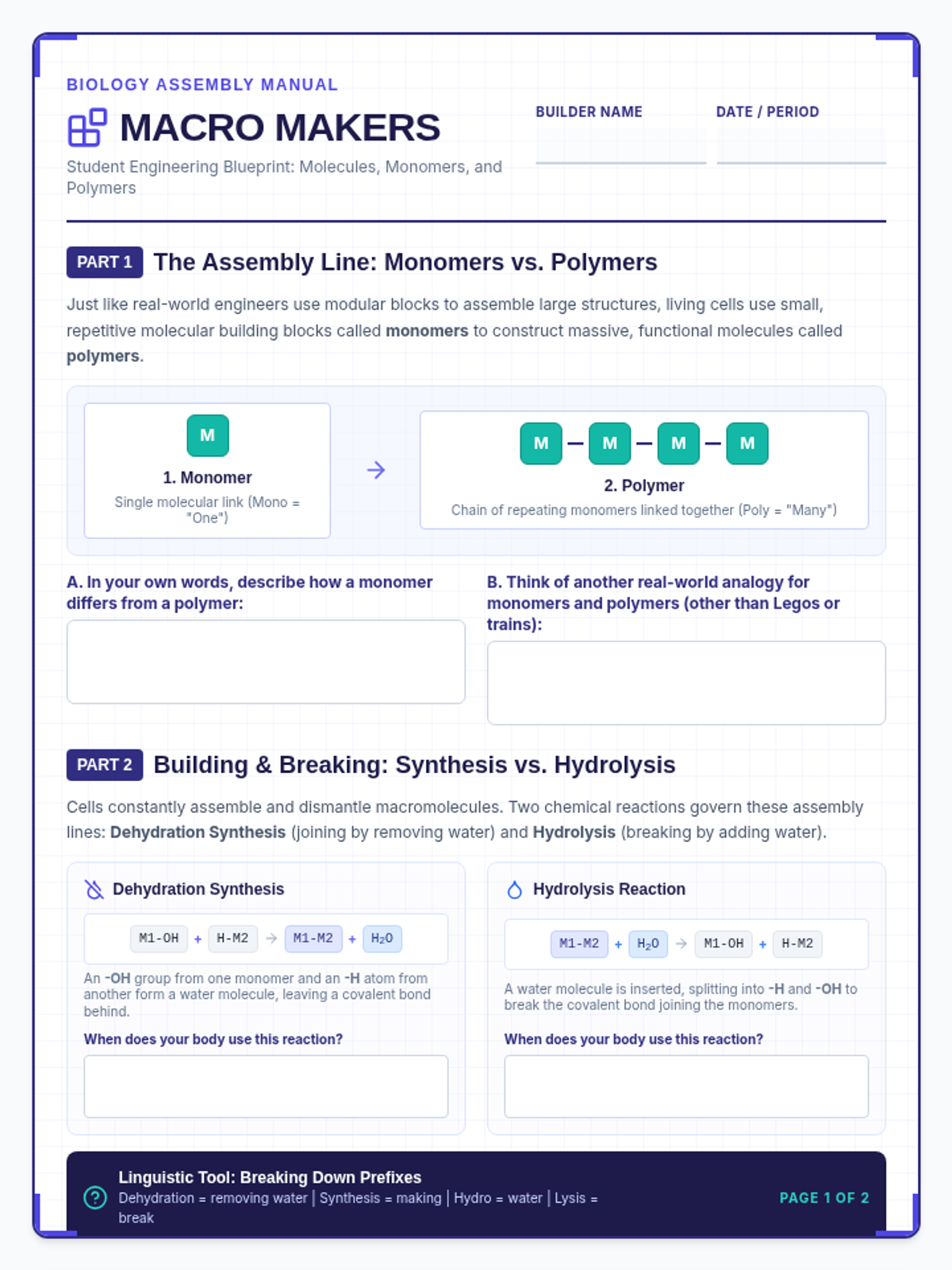
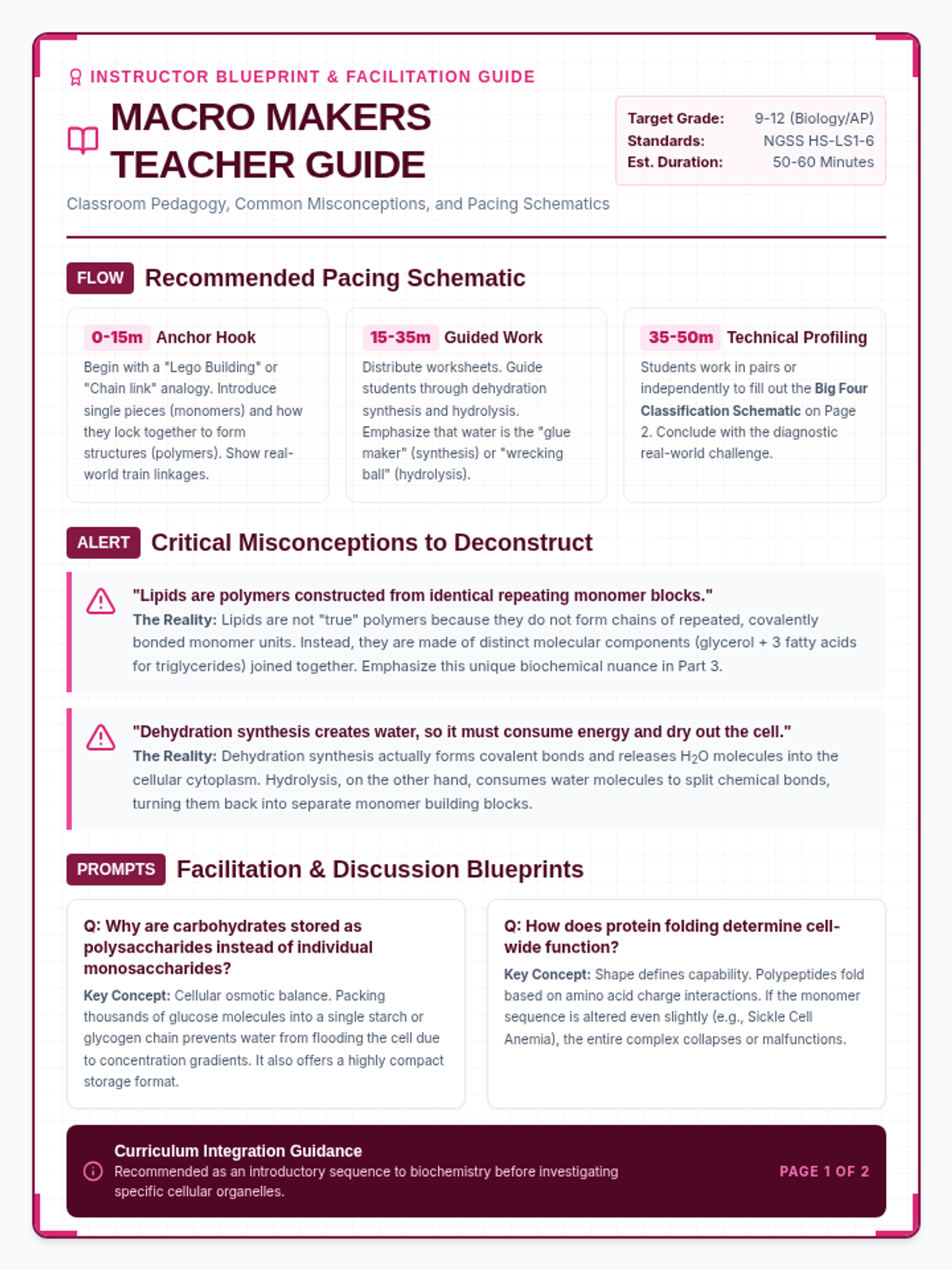
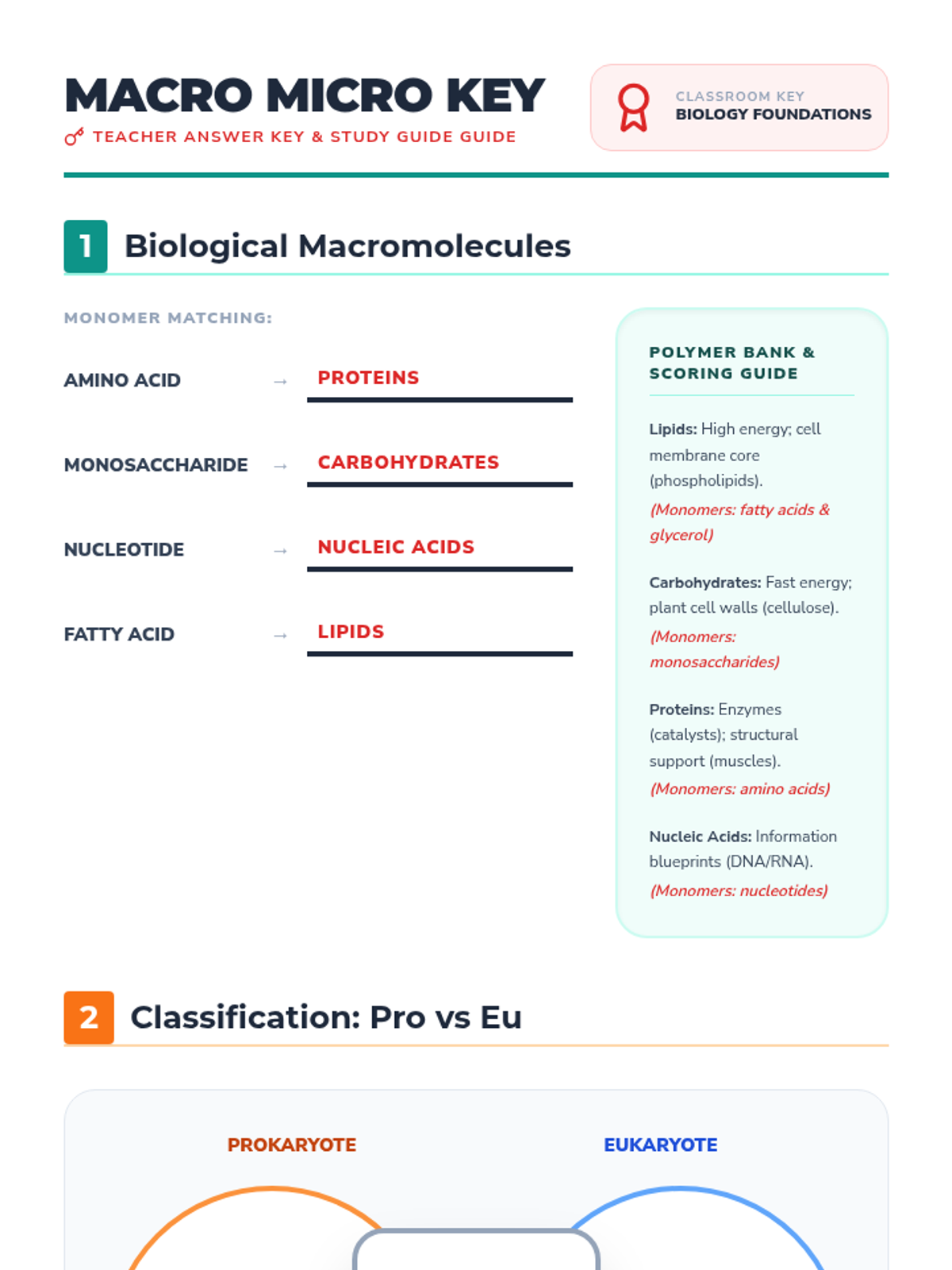
A highly visual lesson introducing the concepts of molecules, monomers, and polymers through the lens of the four biological macromolecules: carbohydrates, lipids, proteins, and nucleic acids. Students learn how monomer building blocks assemble into complex cellular structures.
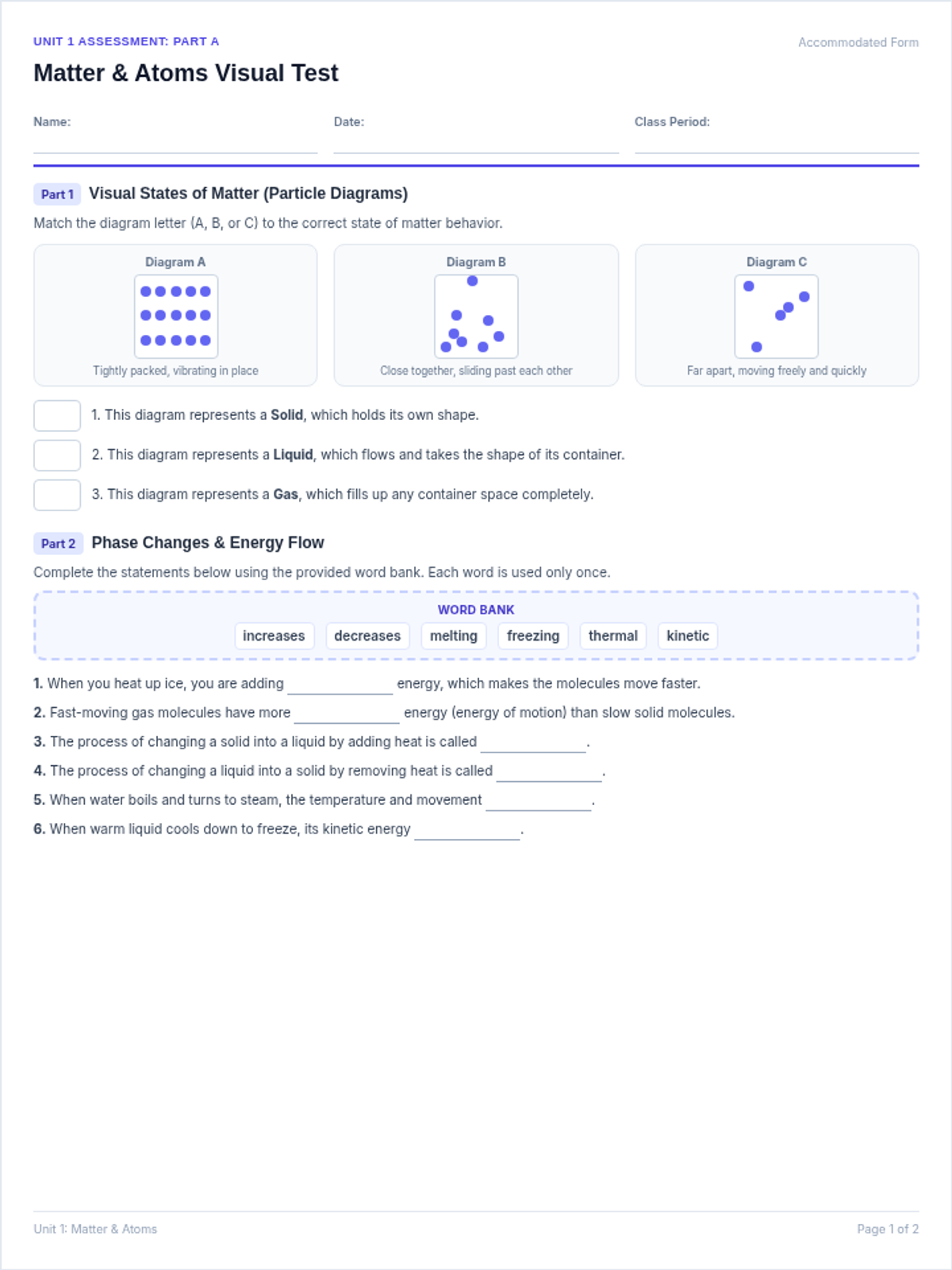
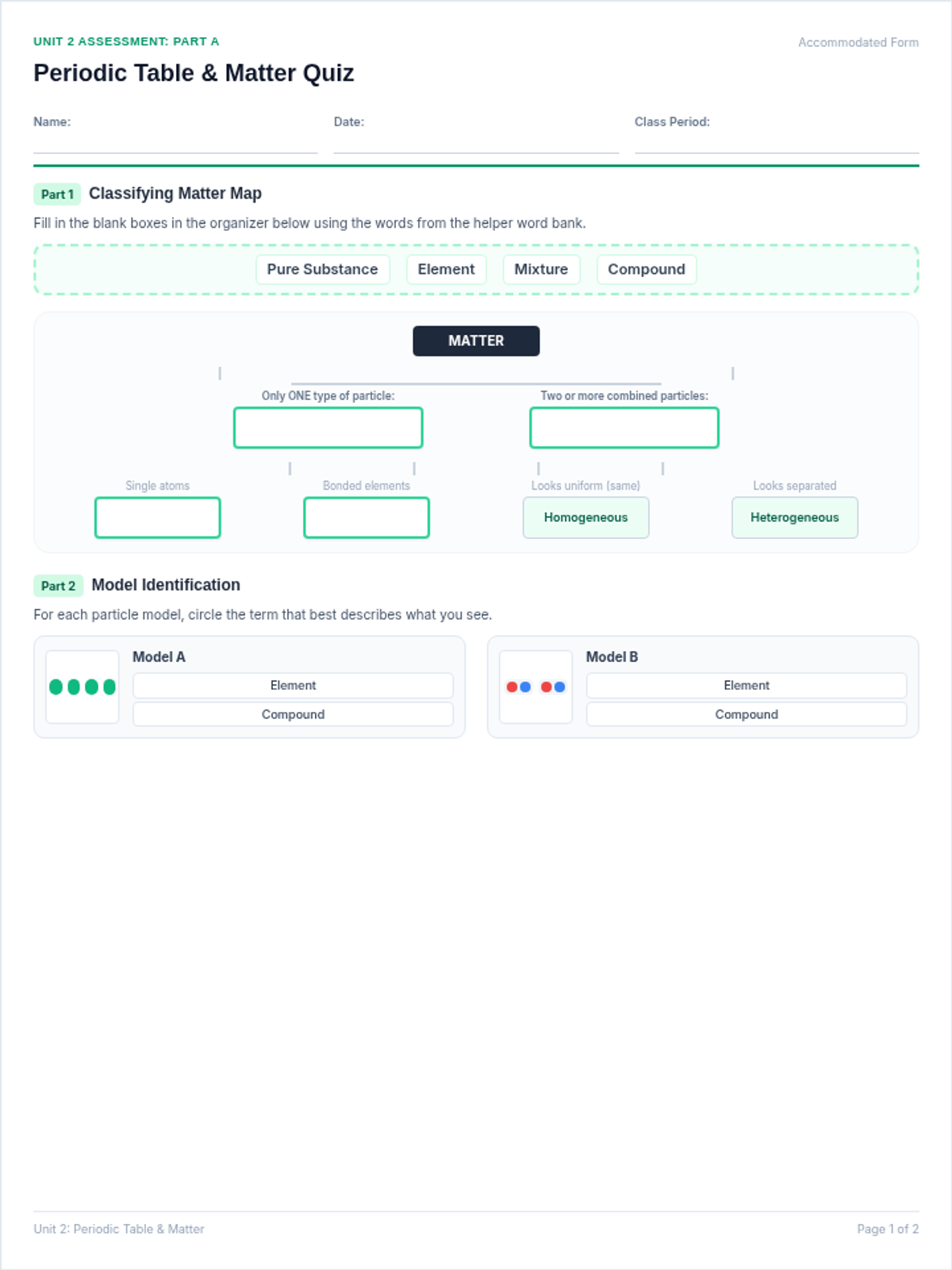
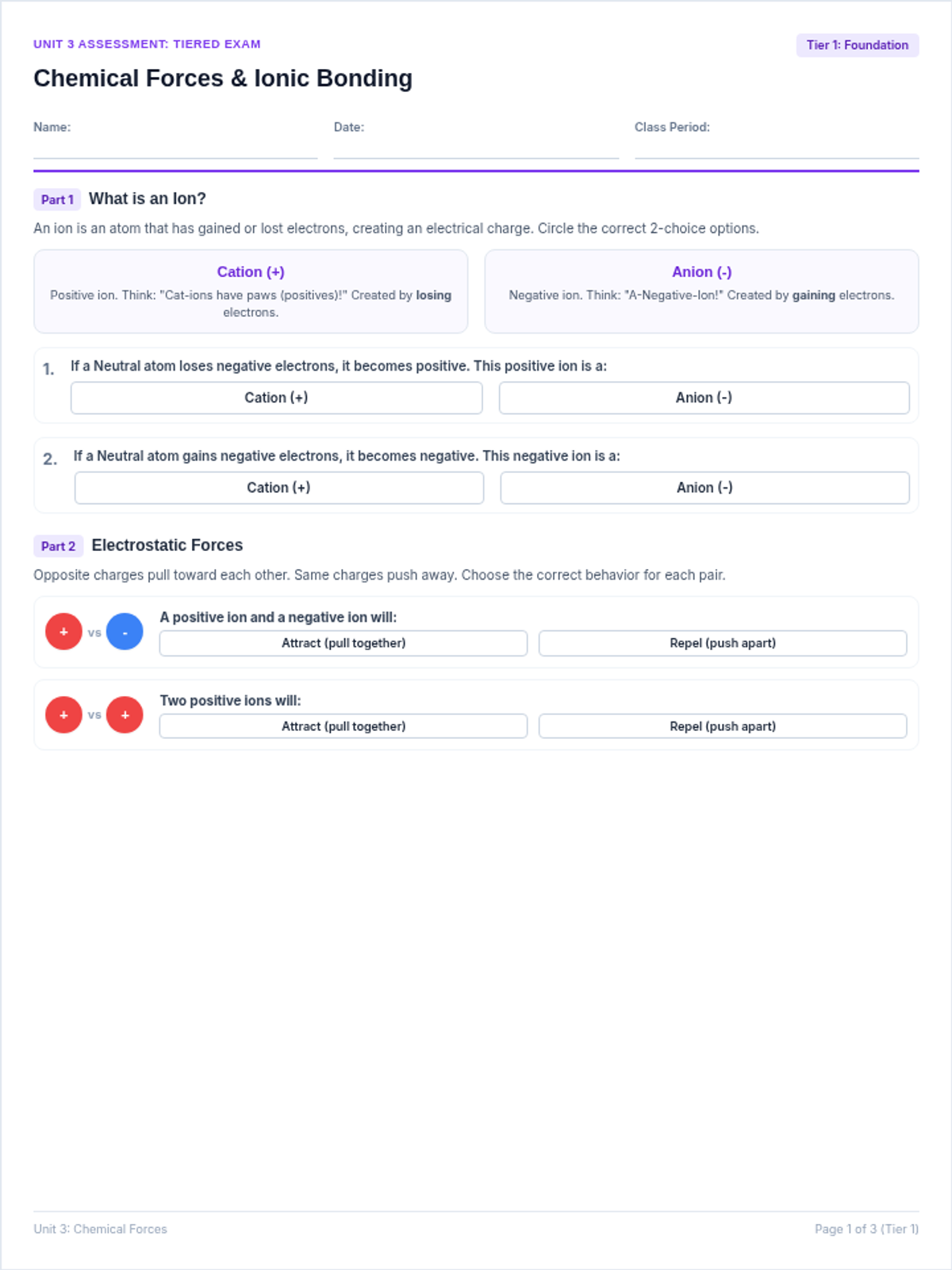
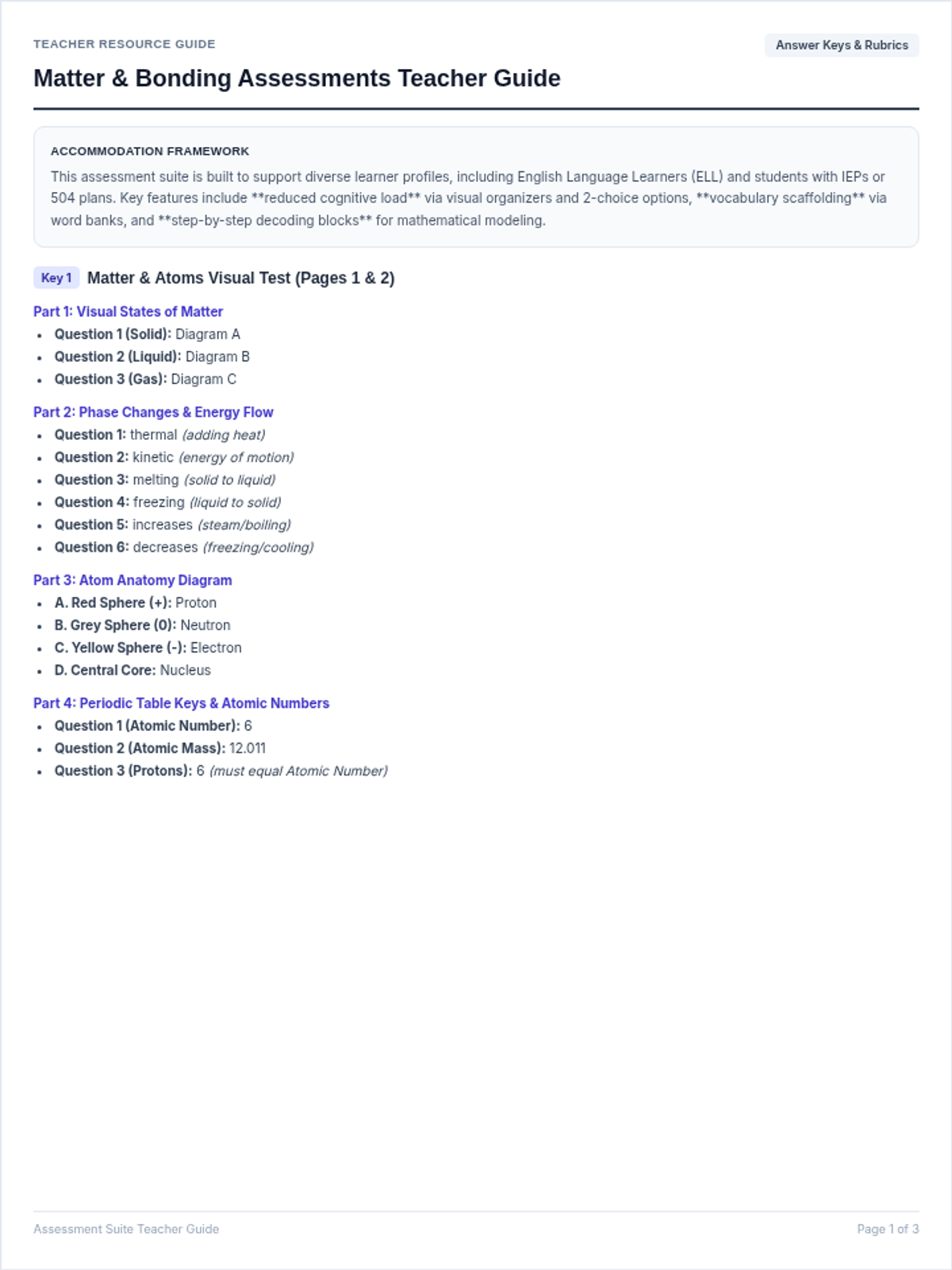
A comprehensive, highly accommodated, and tiered assessment suite covering states of matter, atomic structure, classifications of matter, periodic table trends, ions, and ionic bonding with Coulomb's Law. Built-in diverse learner supports include visual organizers, sentence starters, 2-choice questions, and step-by-step guided calculations.
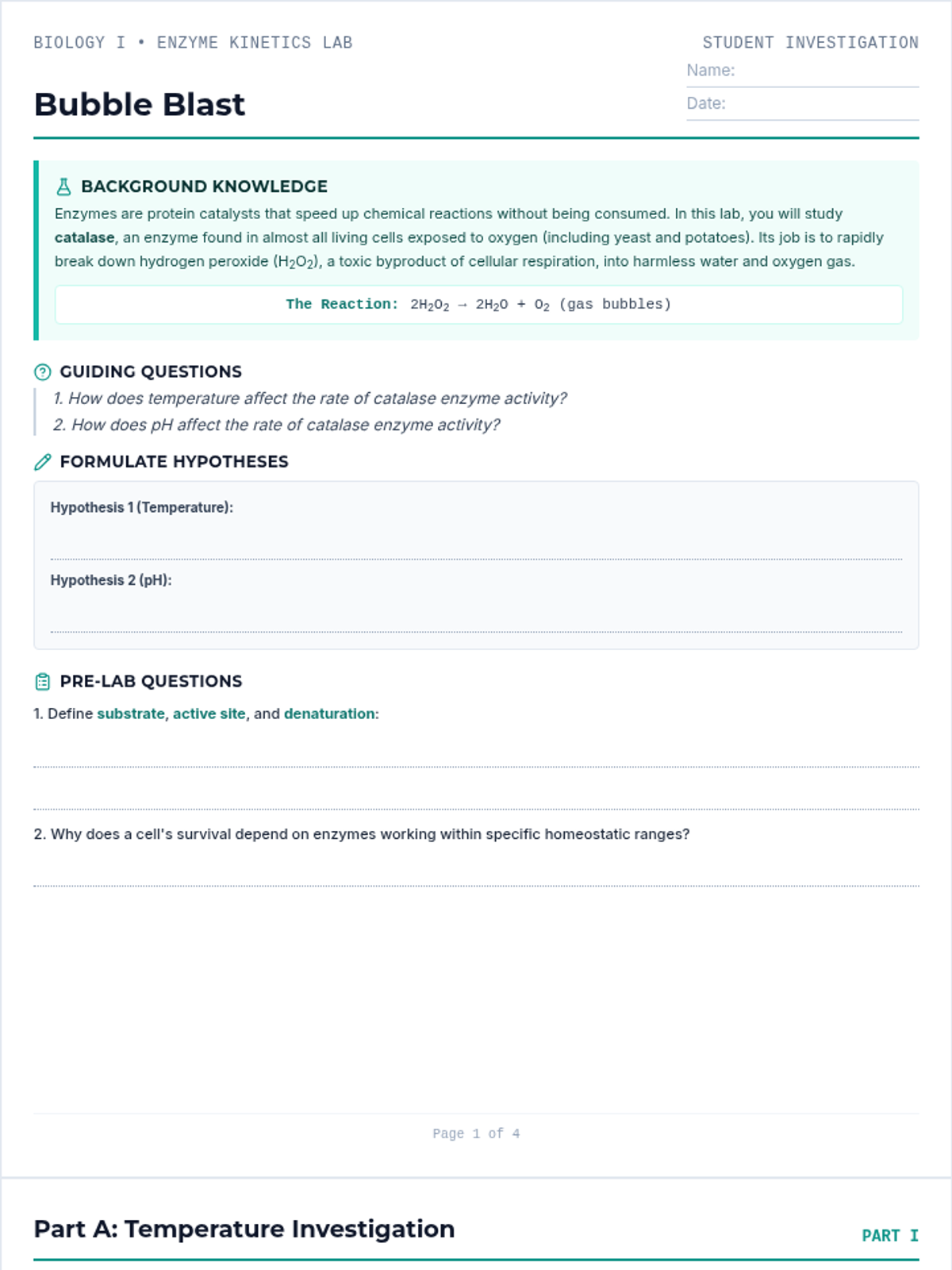
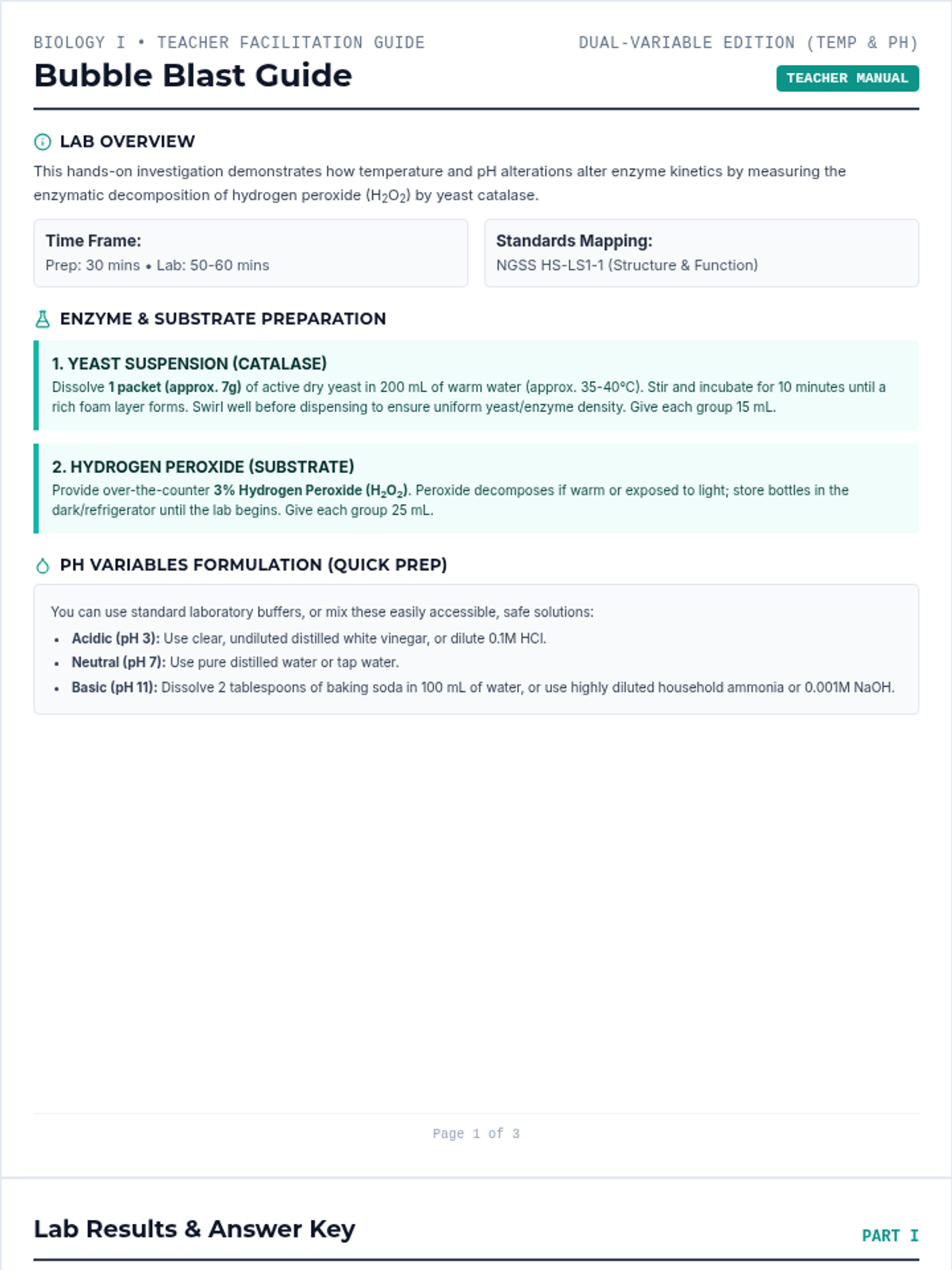
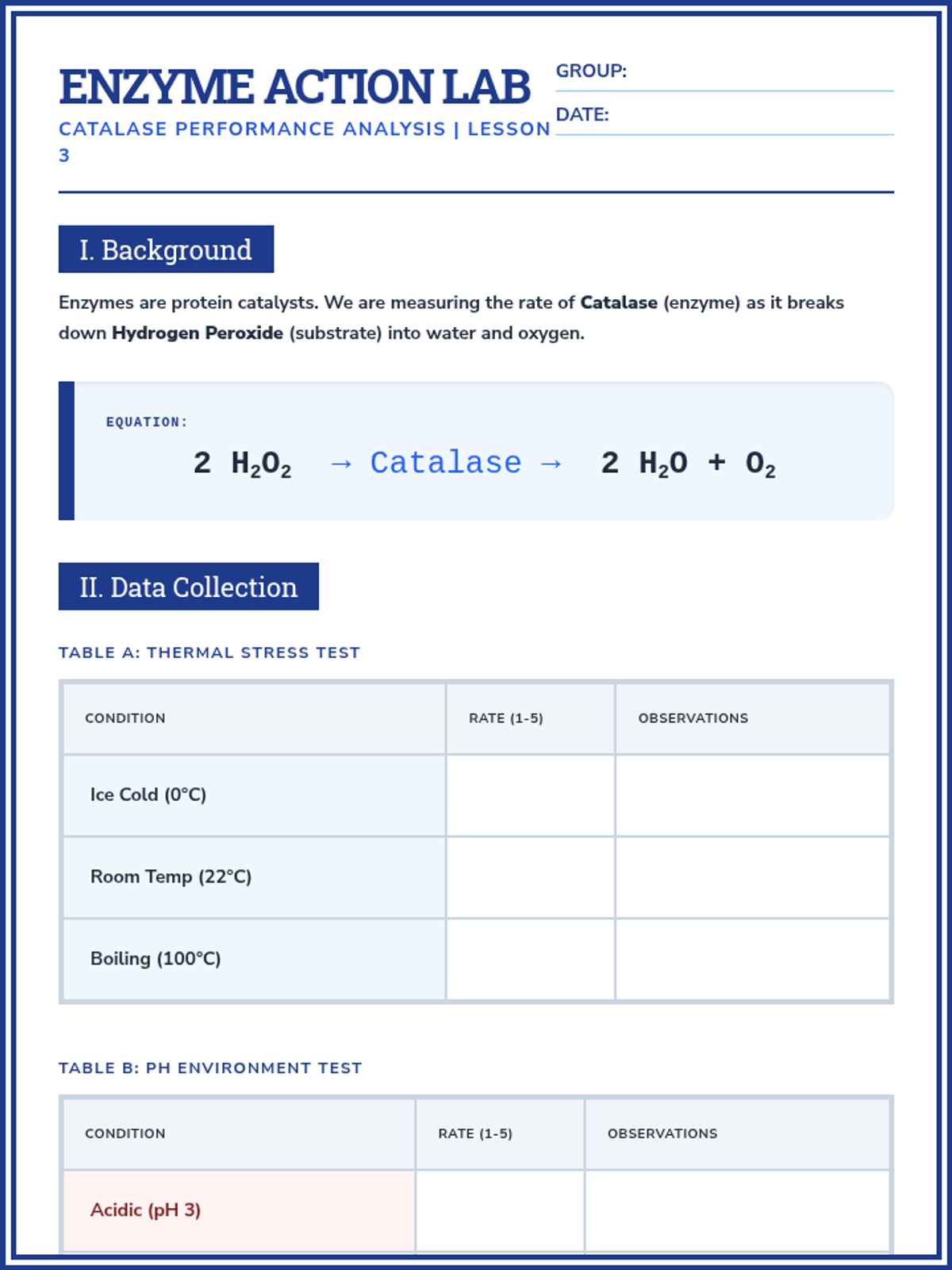
A comprehensive 9th-grade Biology laboratory lesson focusing on enzyme kinetics using catalase from yeast/potato and hydrogen peroxide. Students investigate the effects of temperature and pH on enzyme activity, complete data tables, and construct graphs.
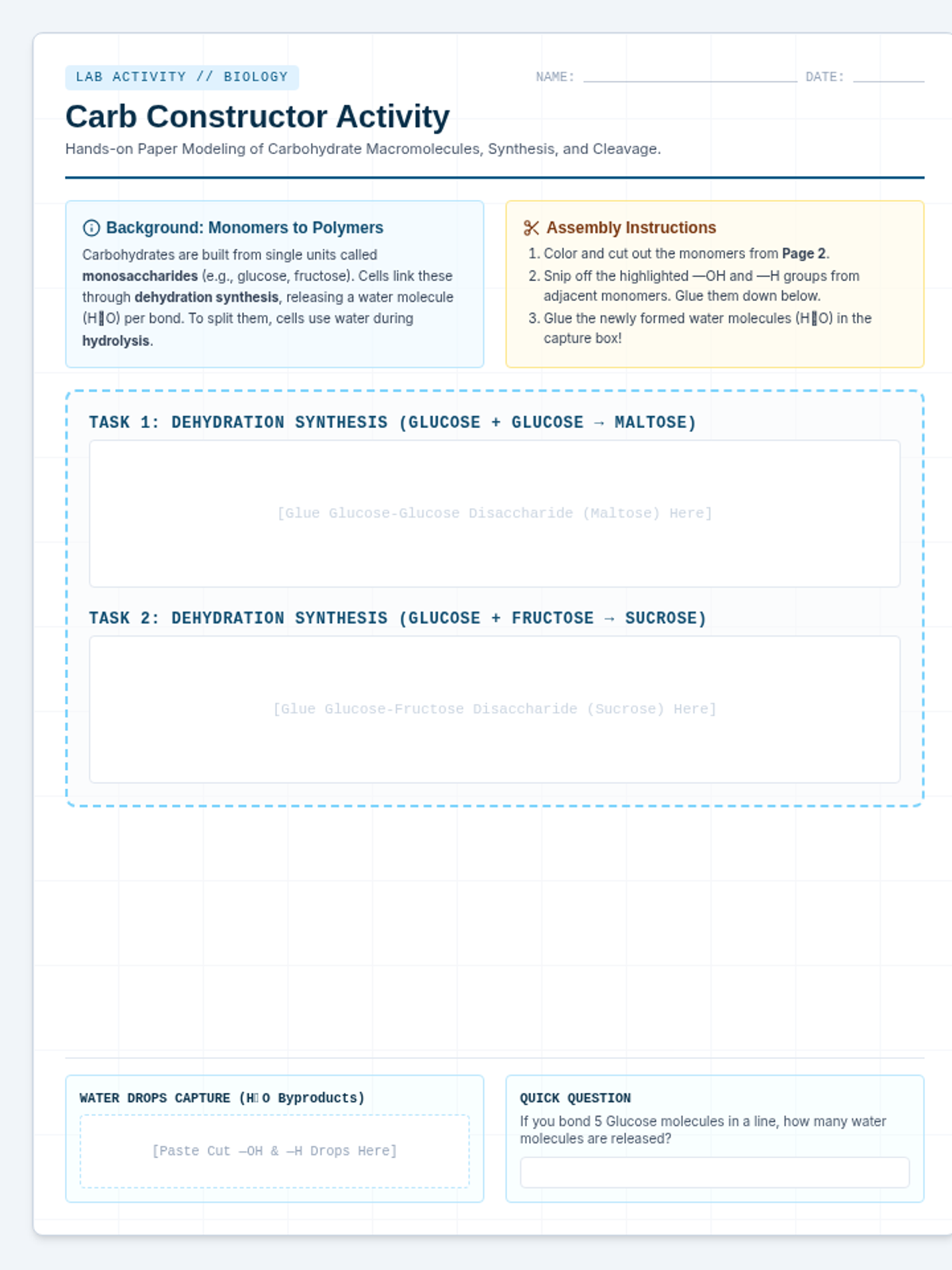
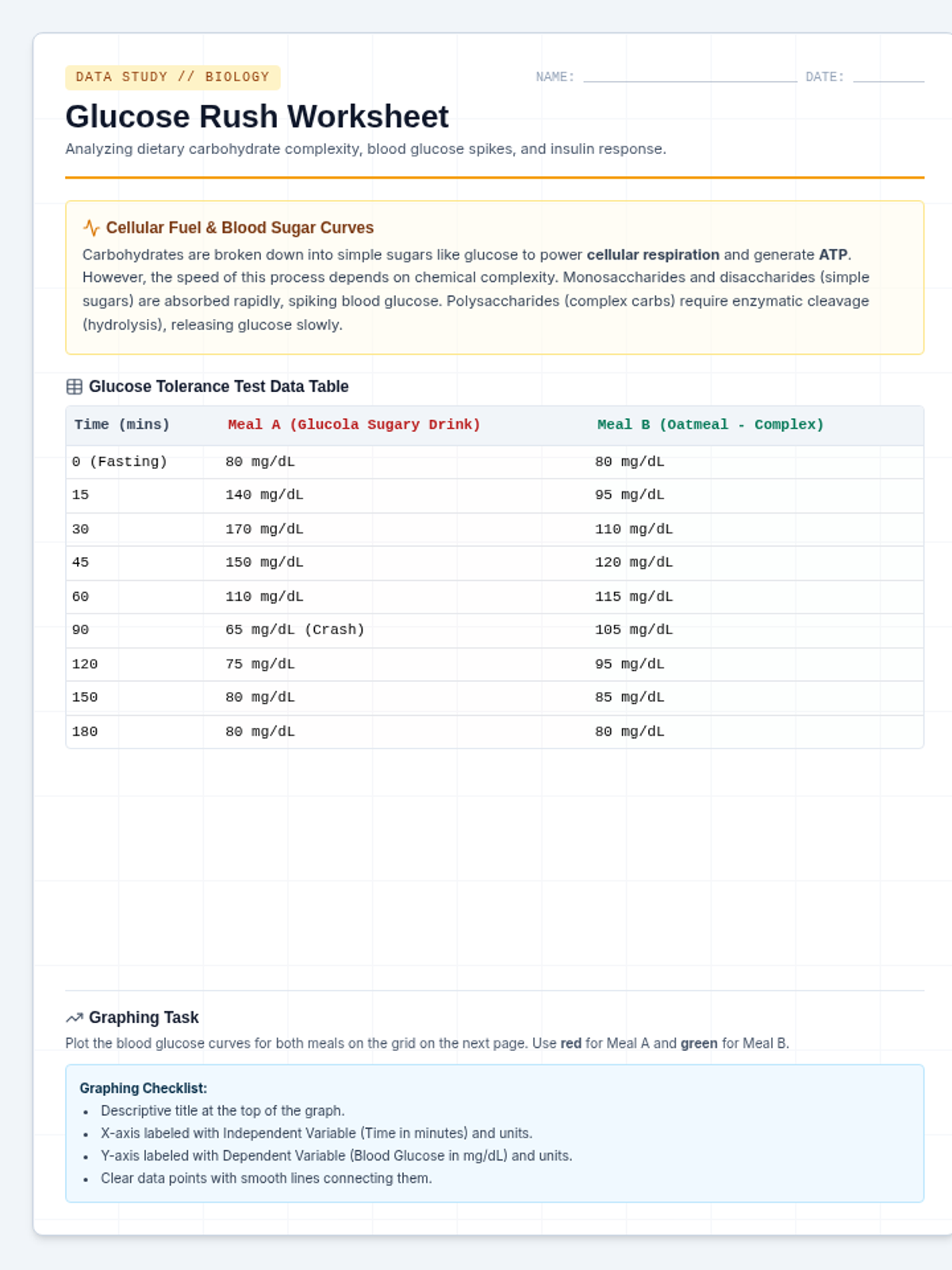
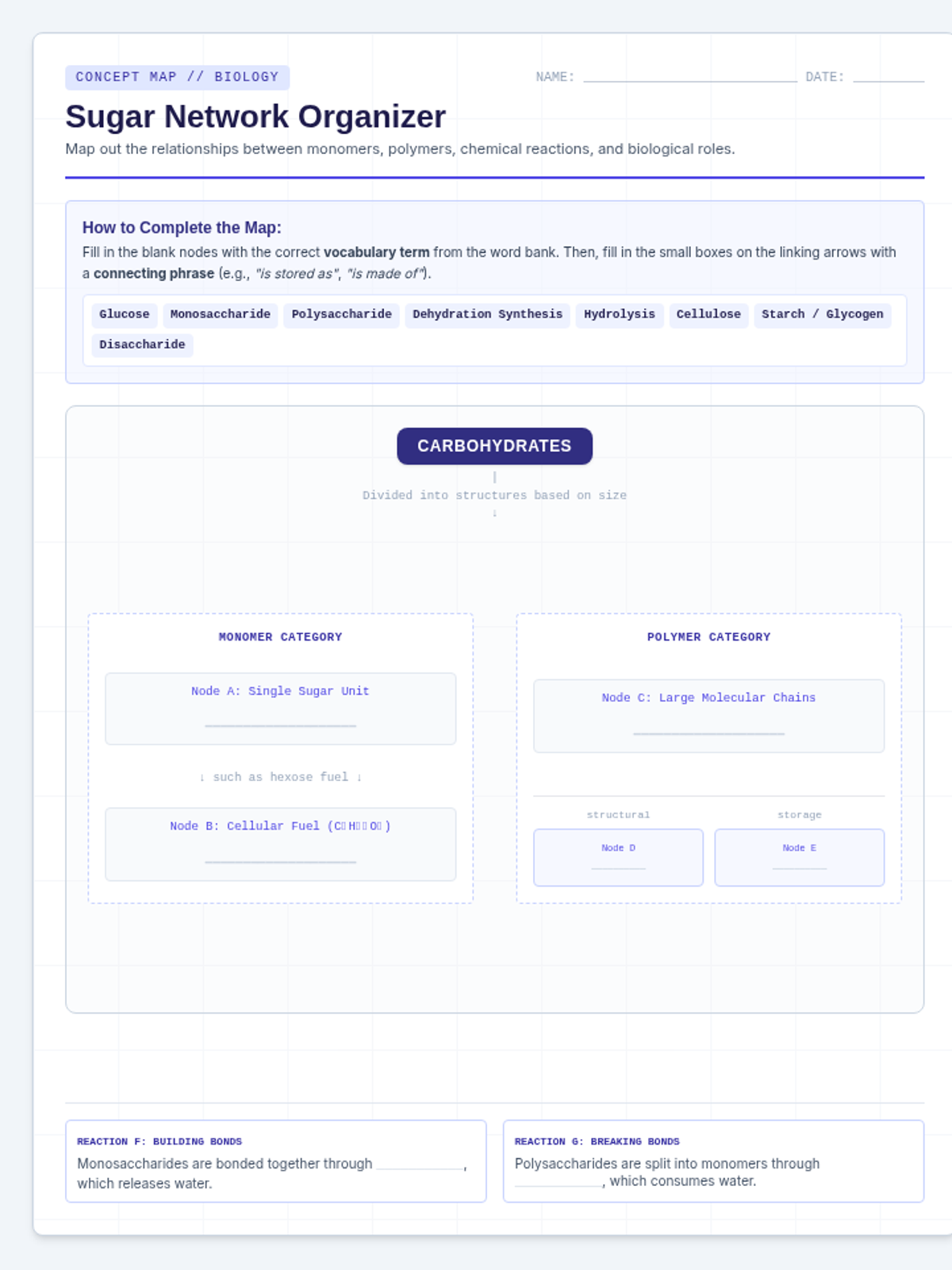
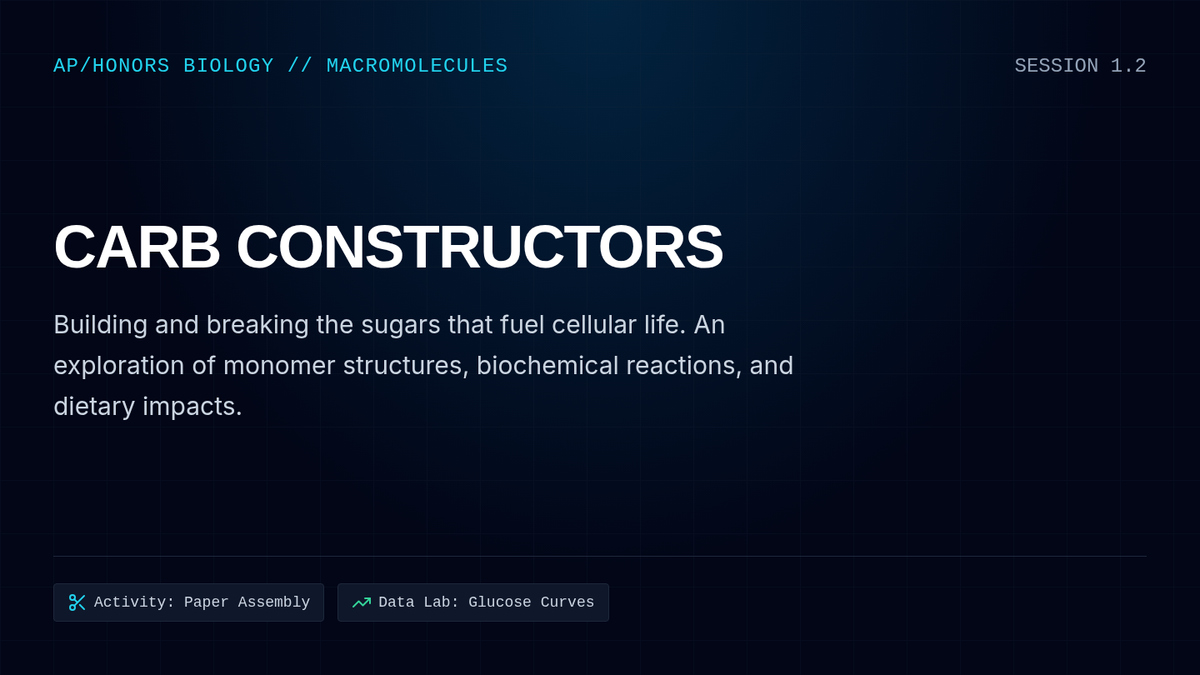
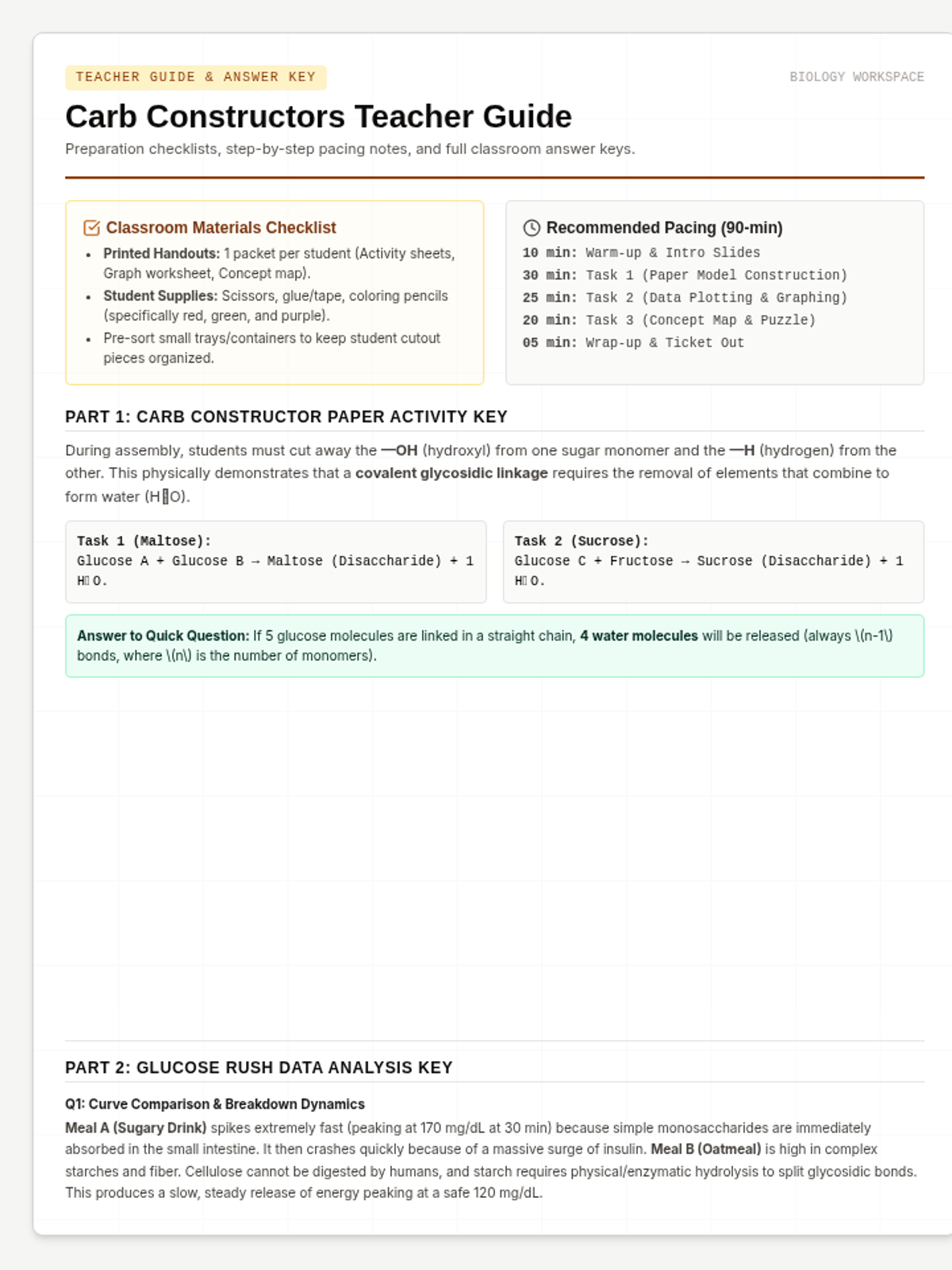
A hands-on biology lesson exploring carbohydrate structures, synthesis, dietary impacts, and cellular energy through paper modeling, blood glucose data analysis, and vocabulary concept maps.
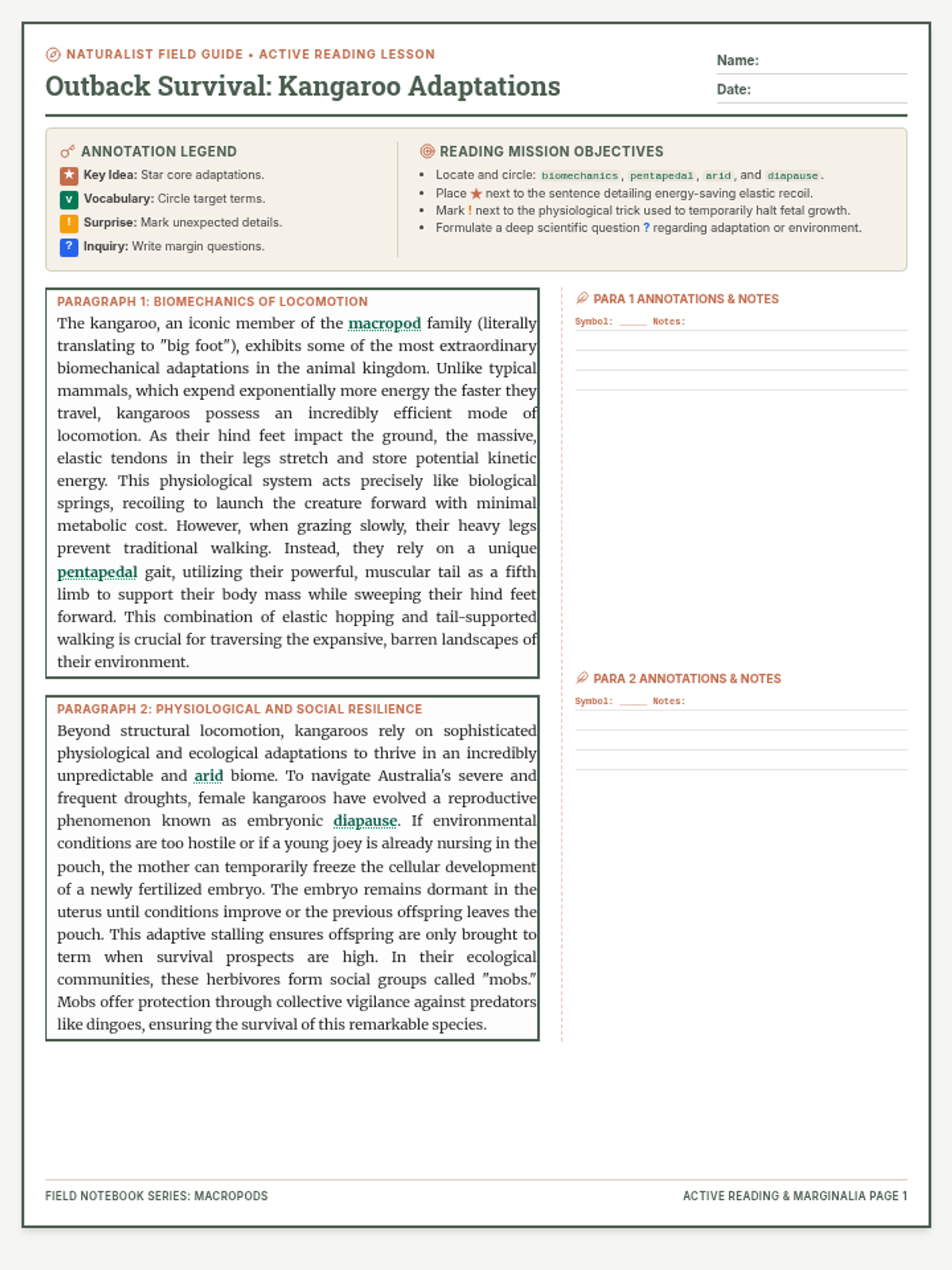
A rigorous 9th-grade active reading and annotation lesson focused on the ecological and biomechanical survival adaptations of kangaroos in the Australian outback.
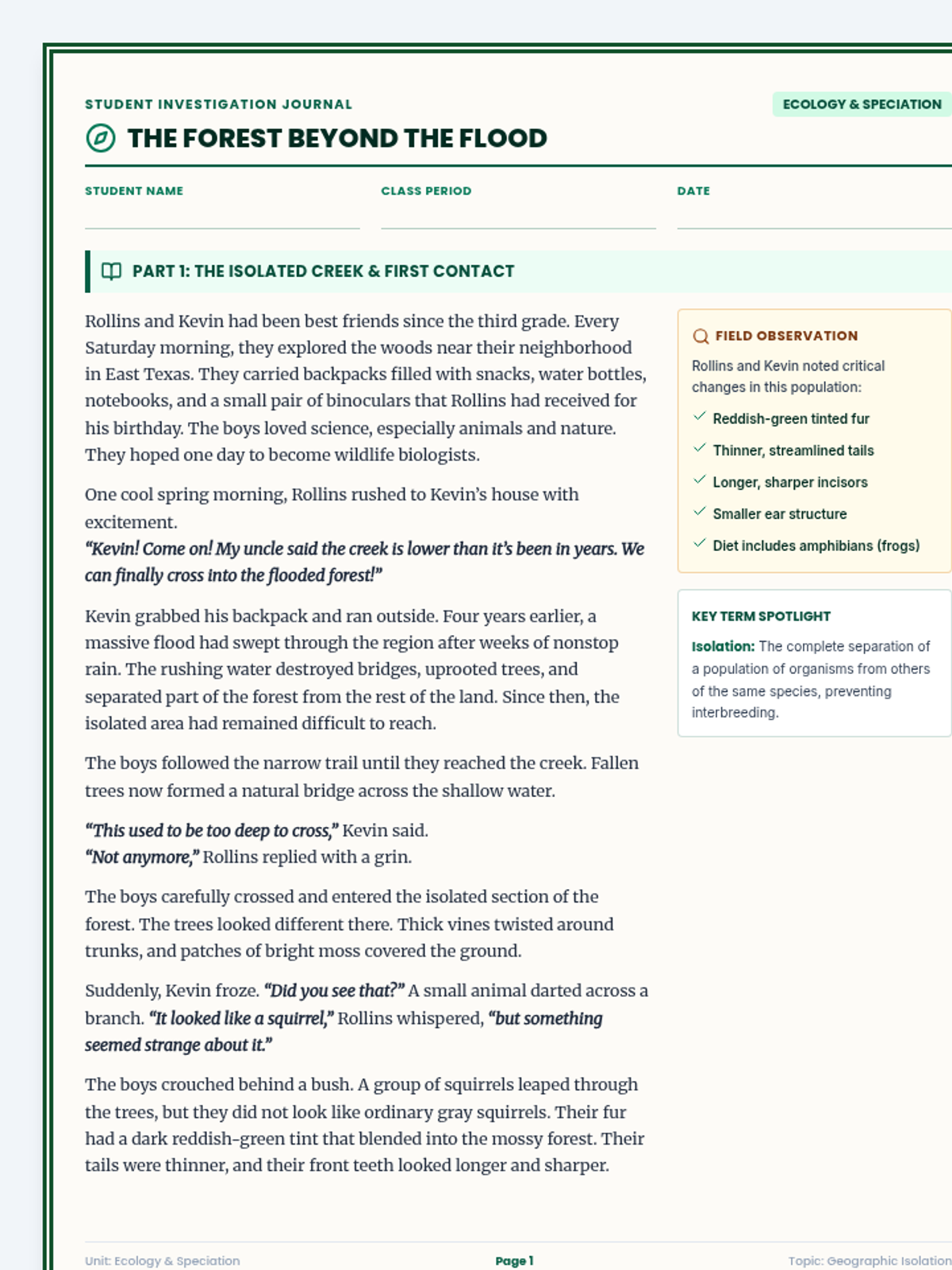
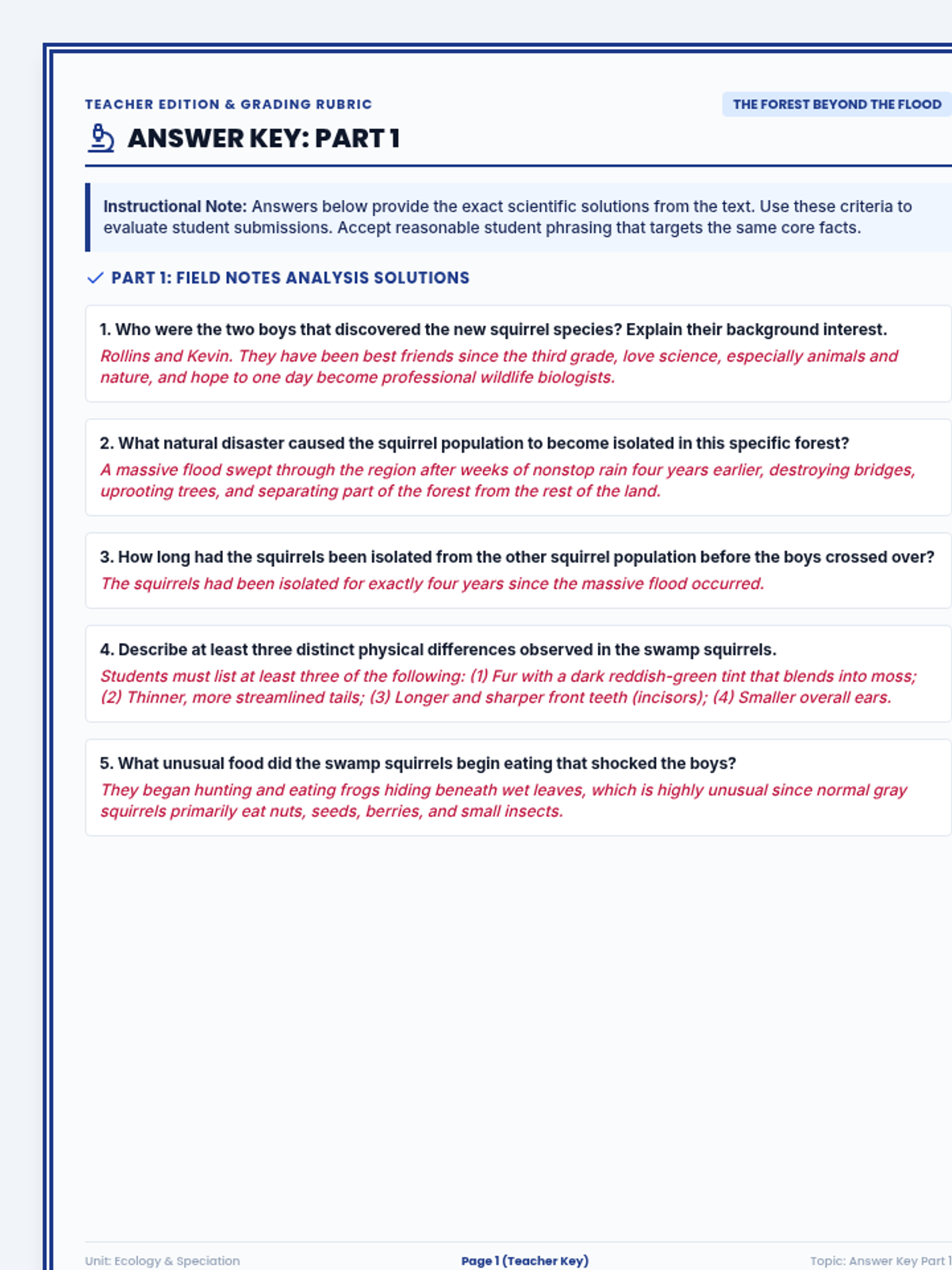
A complete lesson exploring natural selection, speciation, and invasive species through the story of Rollins and Kevin discovering the 'Swamp Squirrels' in an isolated East Texas forest. Includes a student reading packet with integrated comprehension questions and a detailed teacher answer key.
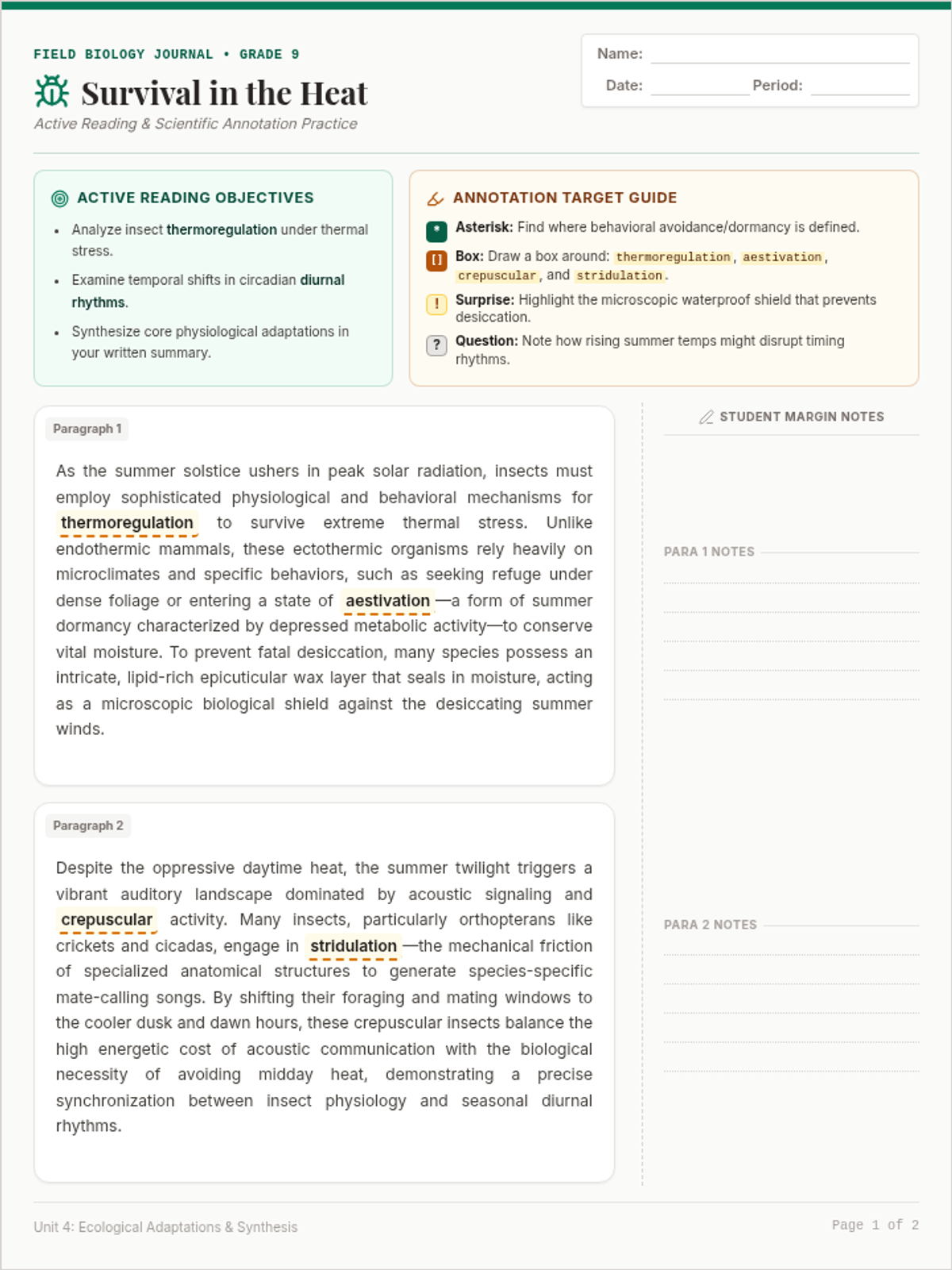
A 9th-grade biology and English language arts lesson focusing on reading comprehension, scientific annotation, and synthesis. Students read a complex passage on summer insect adaptations and write a structured summary.
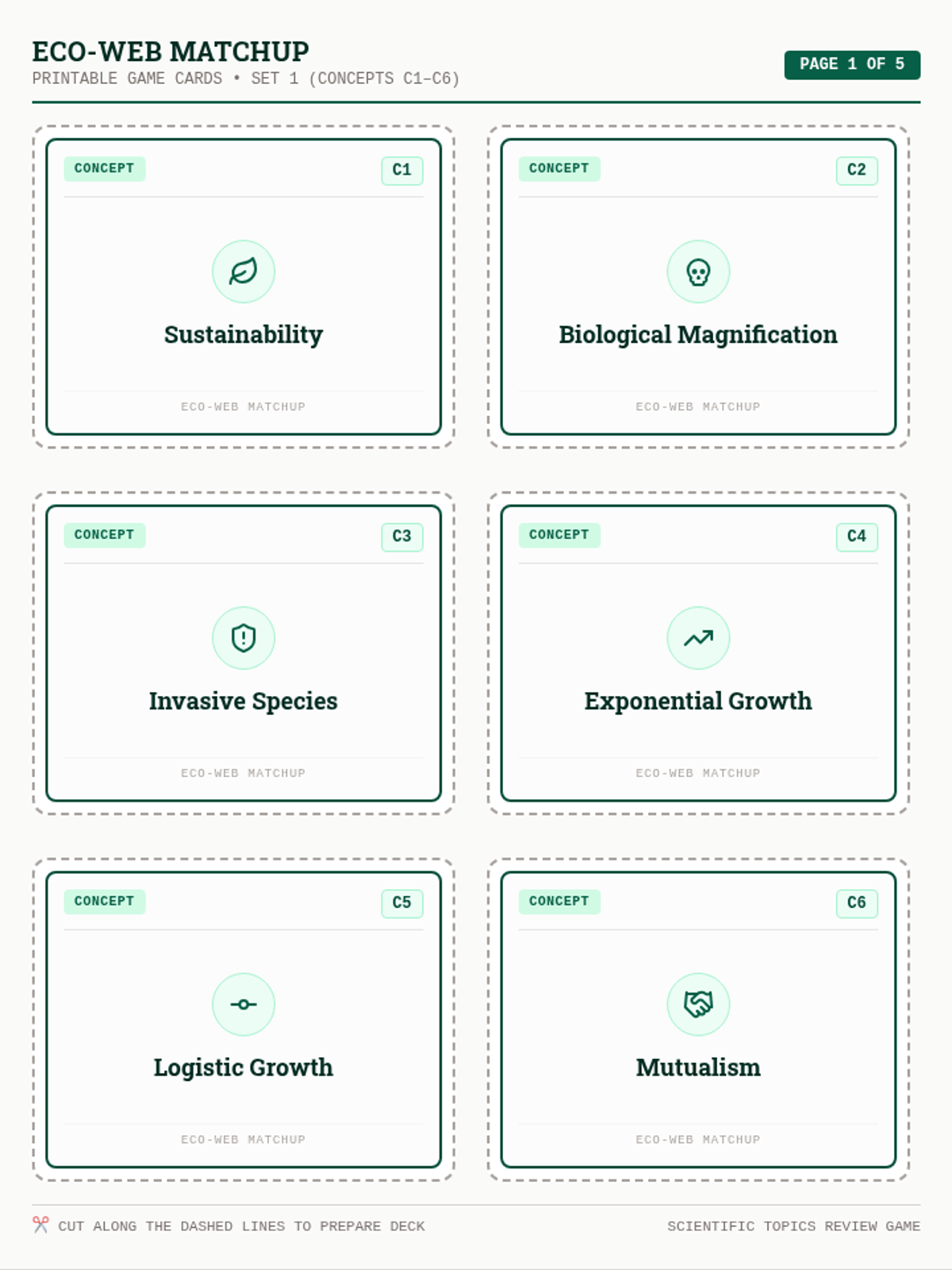
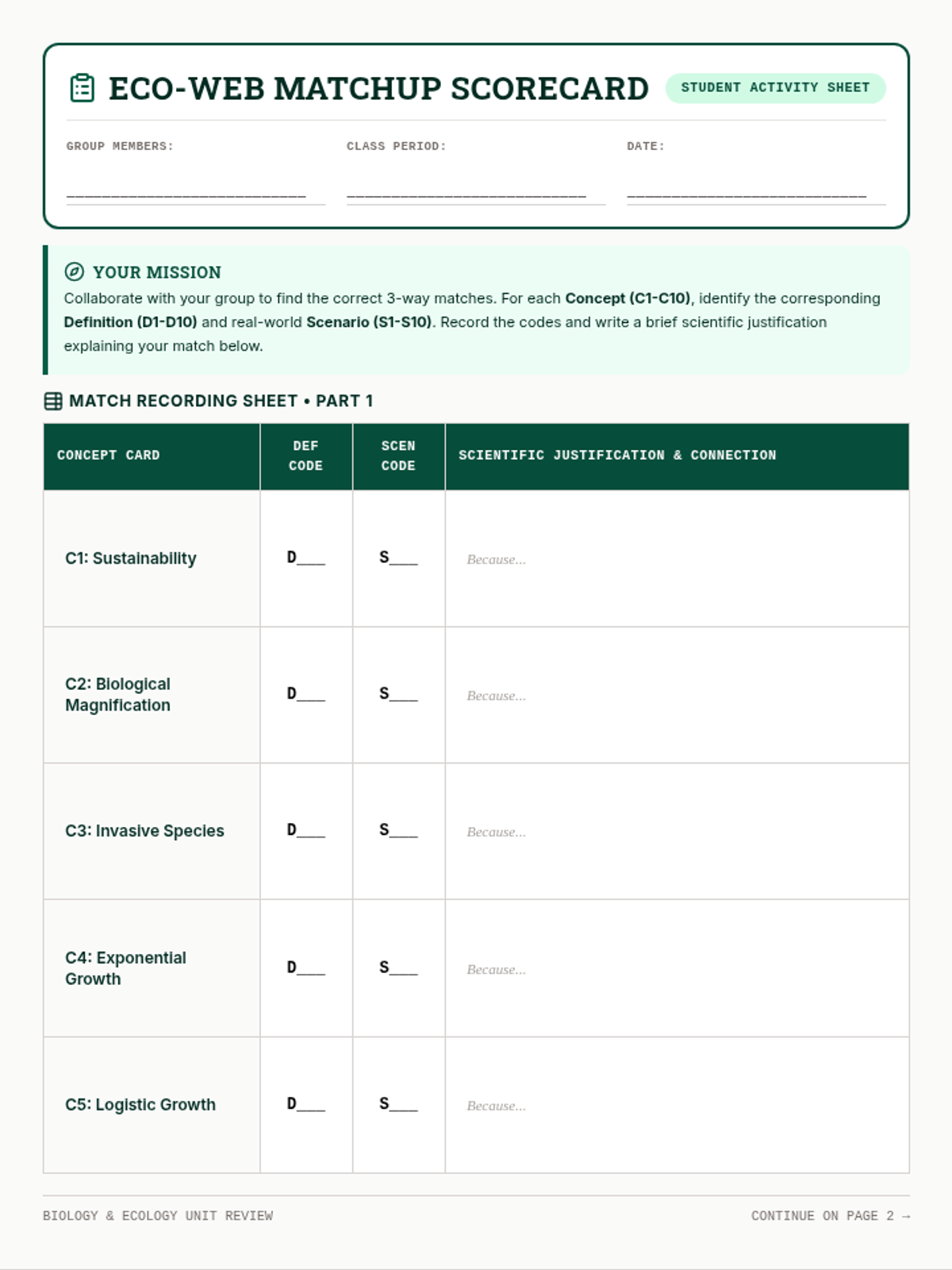
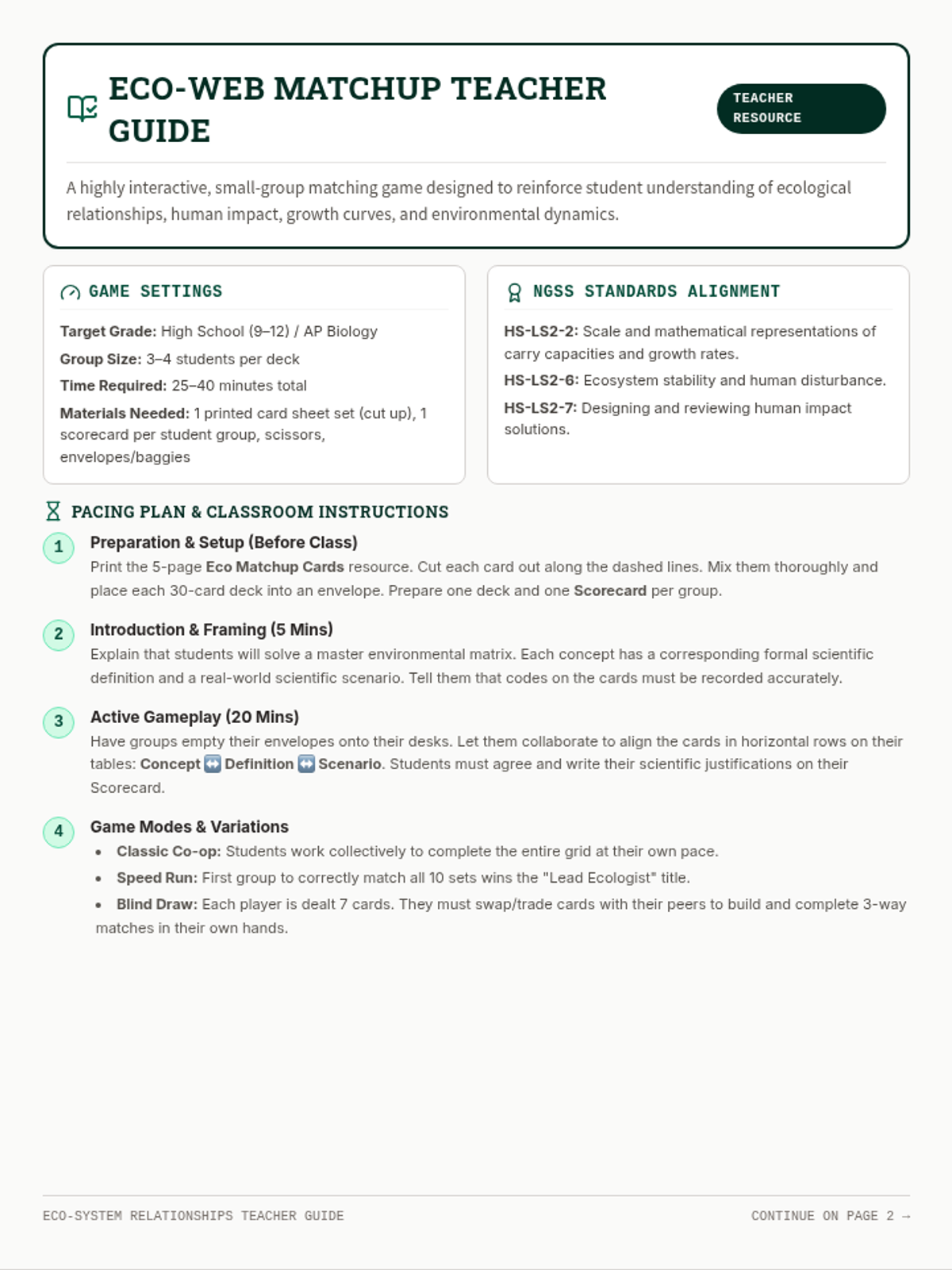
A highly engaging, collaborative card-matching game covering sustainability, human impact, population ecology, symbiosis, and conservation. Students work in small groups to match key concepts, definitions, and real-world ecological scenarios.
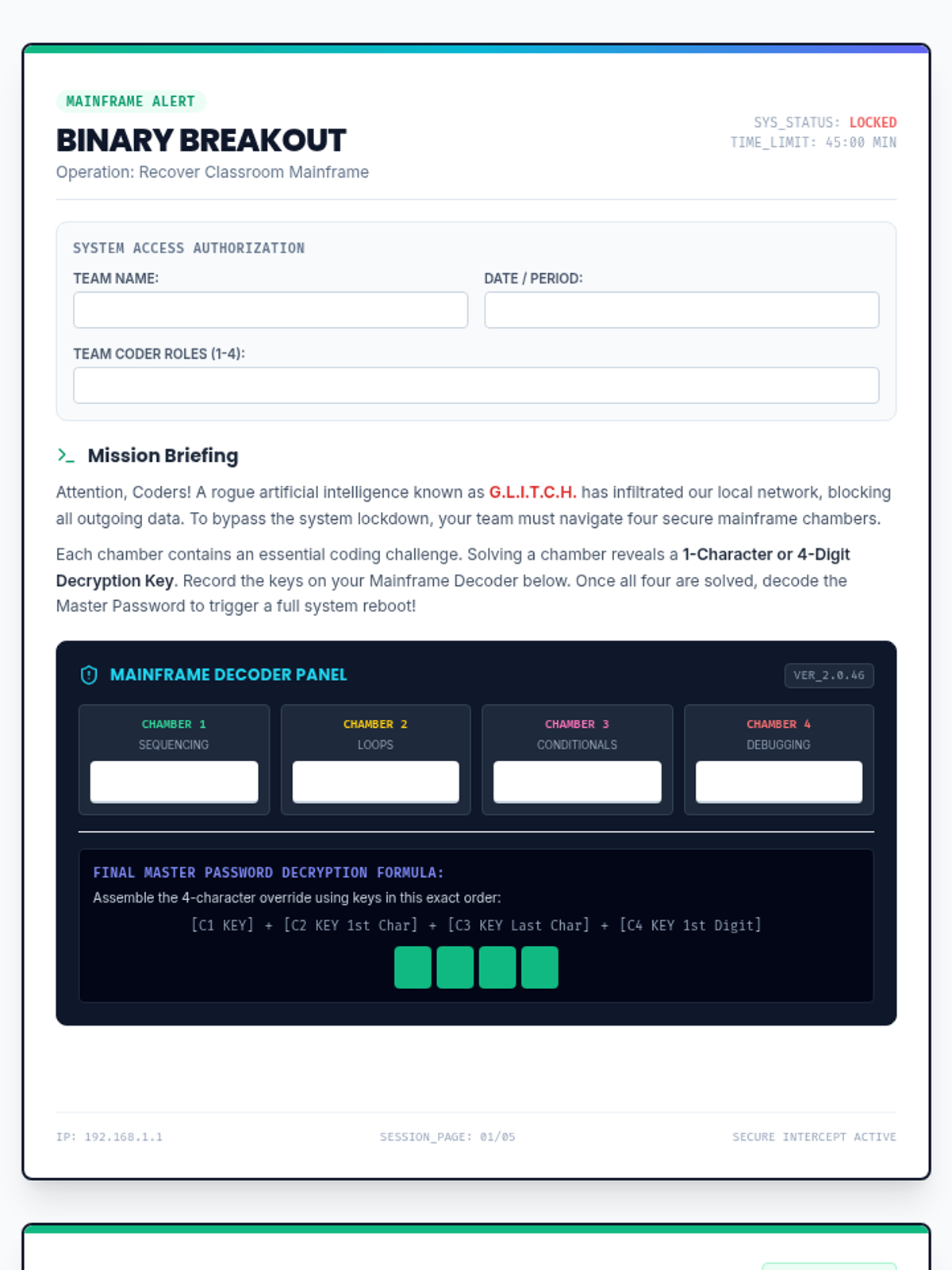
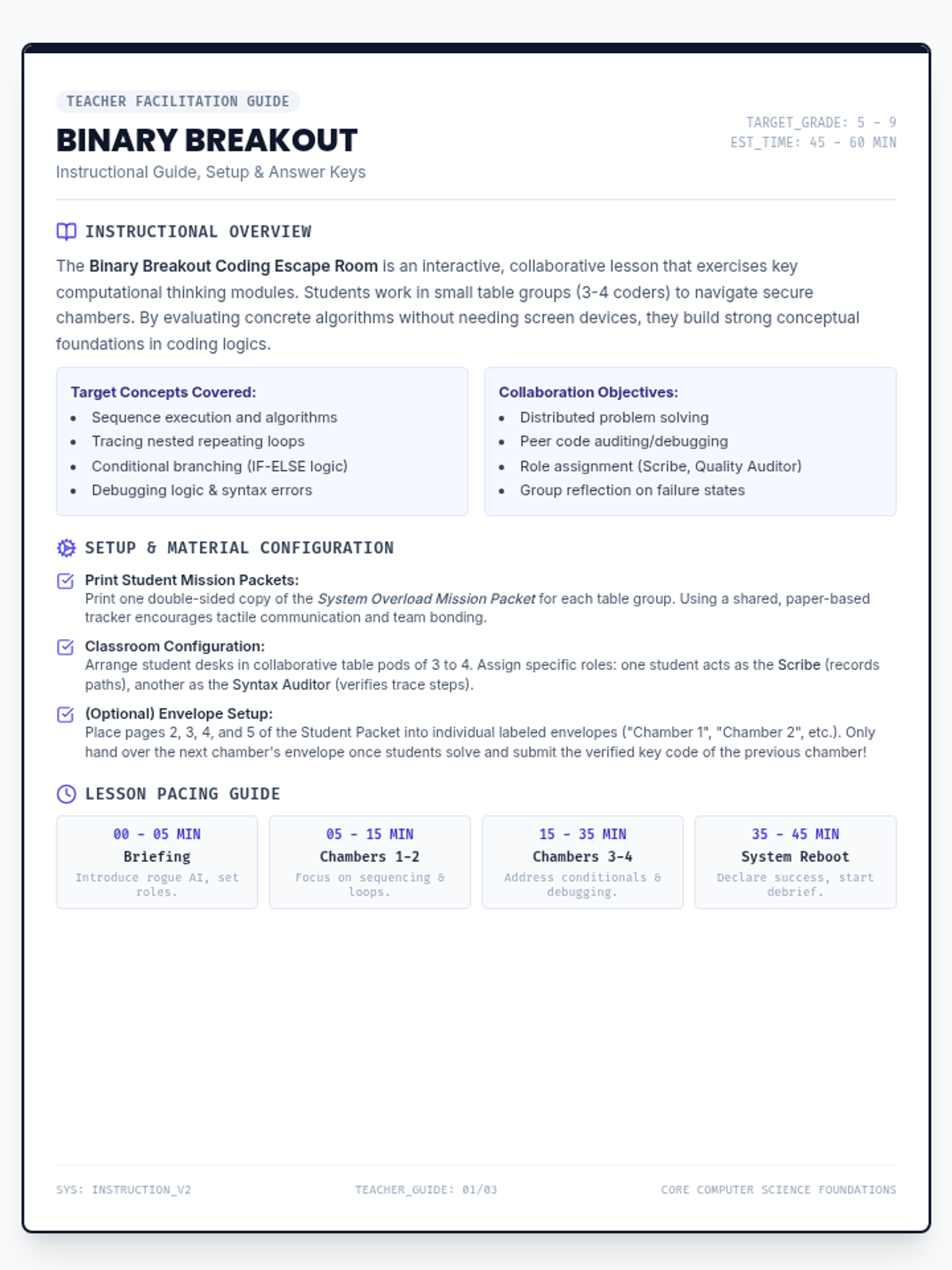
An immersive, puzzle-driven coding escape room where students work in table groups to defeat a rogue AI. By solving four distinct chambers focusing on sequencing, loops, conditionals, and debugging, students demonstrate core computational thinking skills.
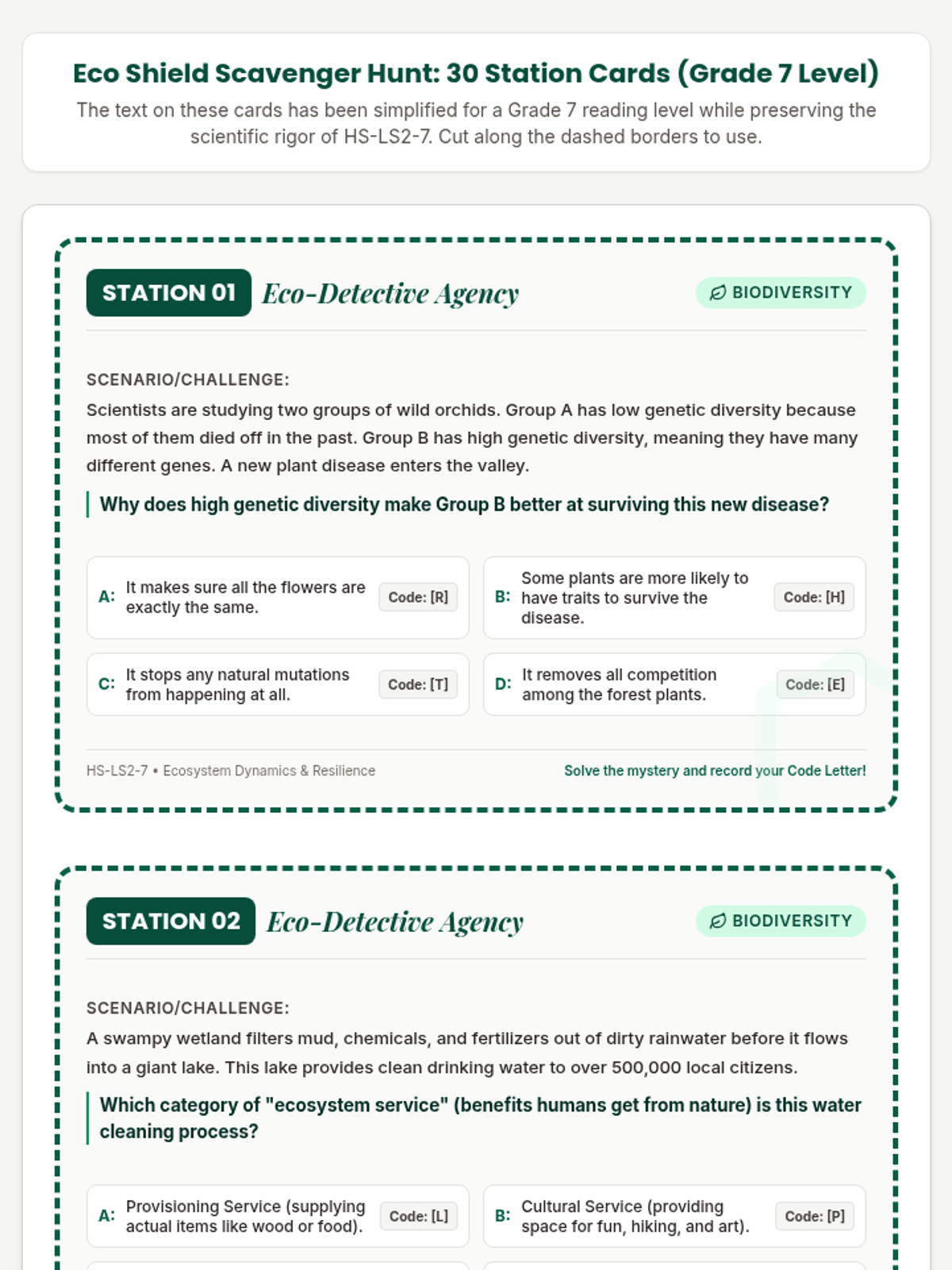
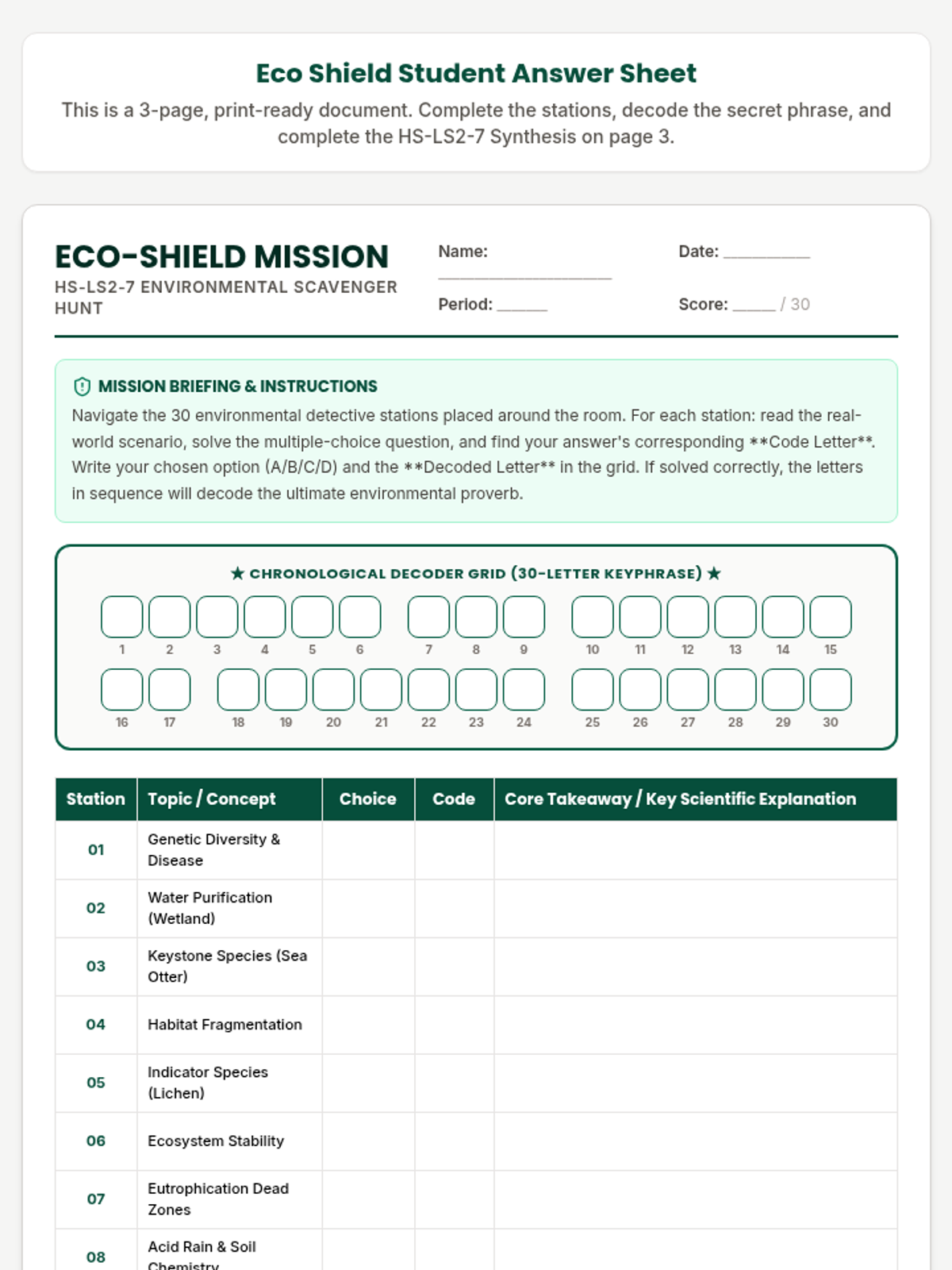
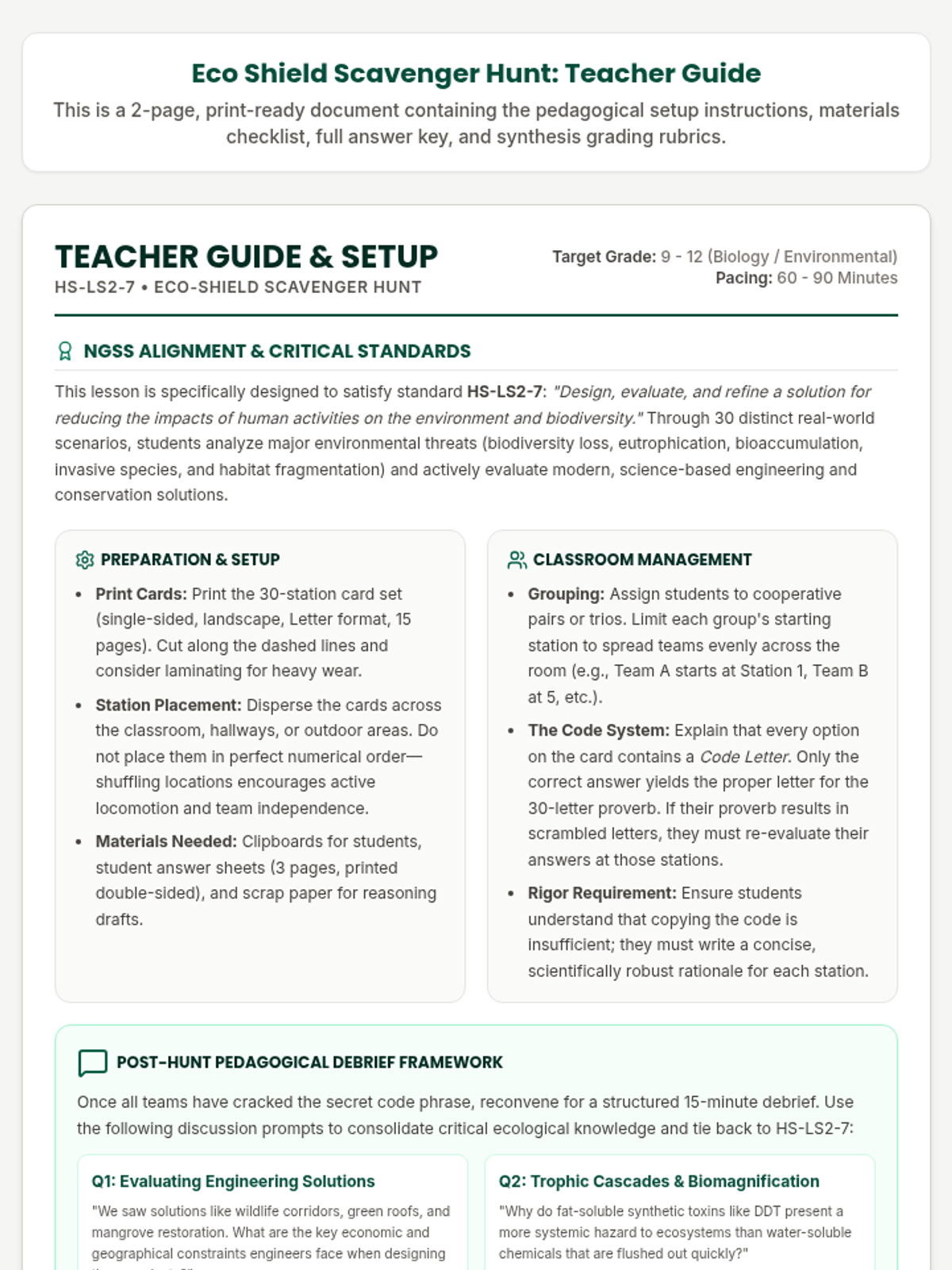
An active, movement-based scavenger hunt game for high school students to master human impact, biodiversity, sustainability, biological magnification, and invasive species (aligned to HS-LS2-7). Includes 30 custom-designed Station Cards, an interactive Student Answer Sheet, and a comprehensive Teacher Guide with Answer Key.
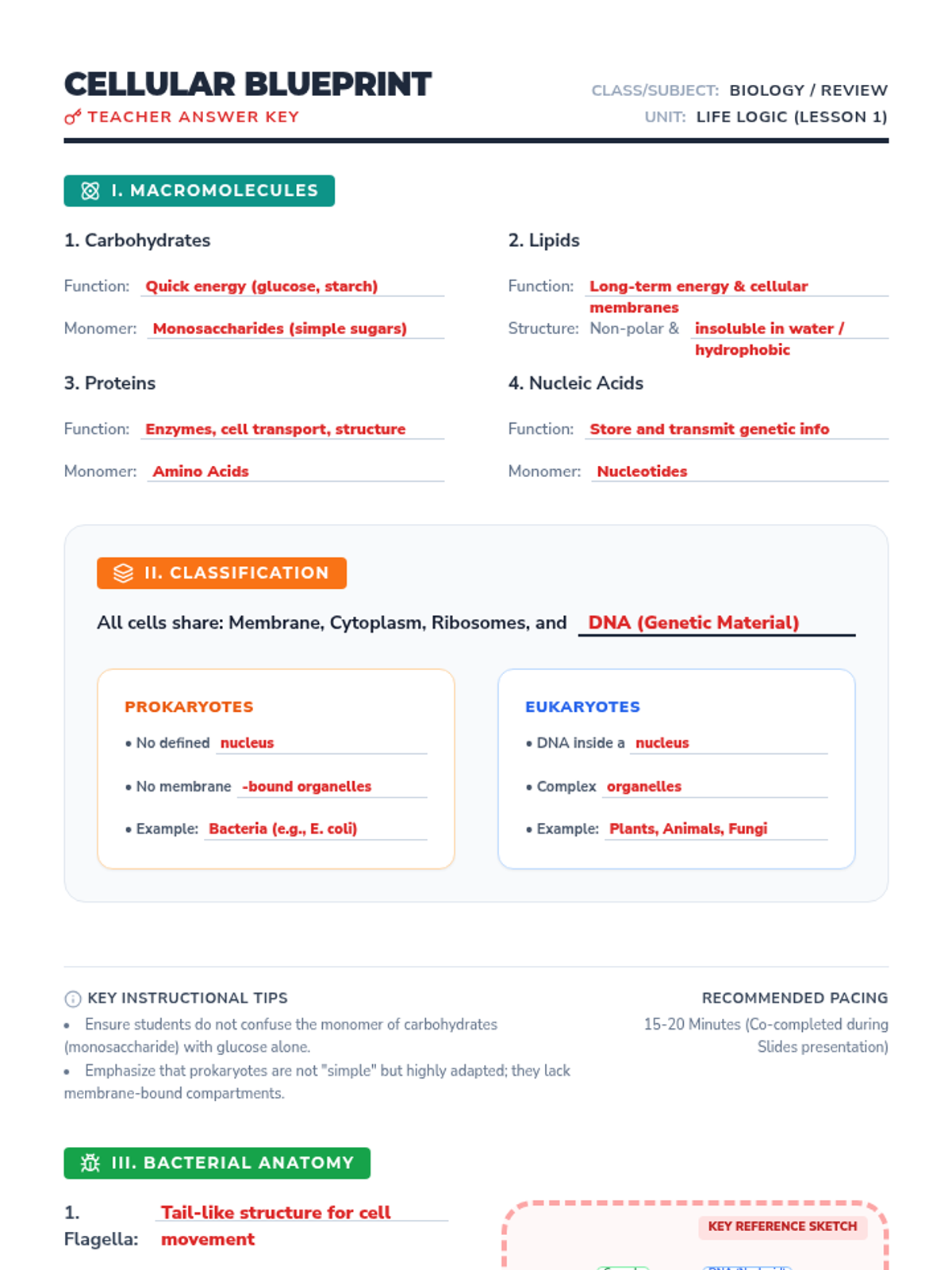
A review-focused lesson that synthesizes knowledge of macromolecules, bacterial structure, and the differences between plant and animal cells.
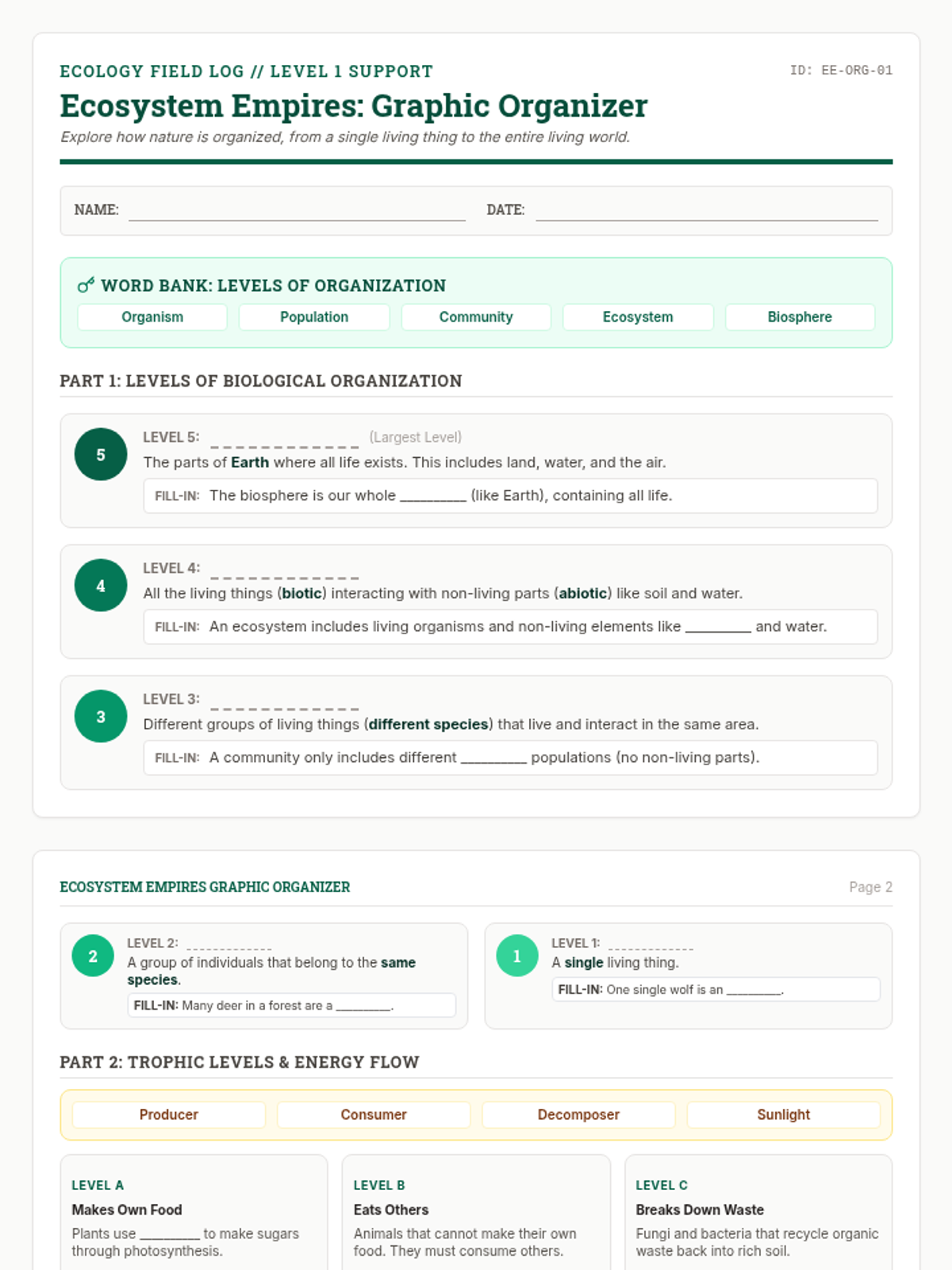
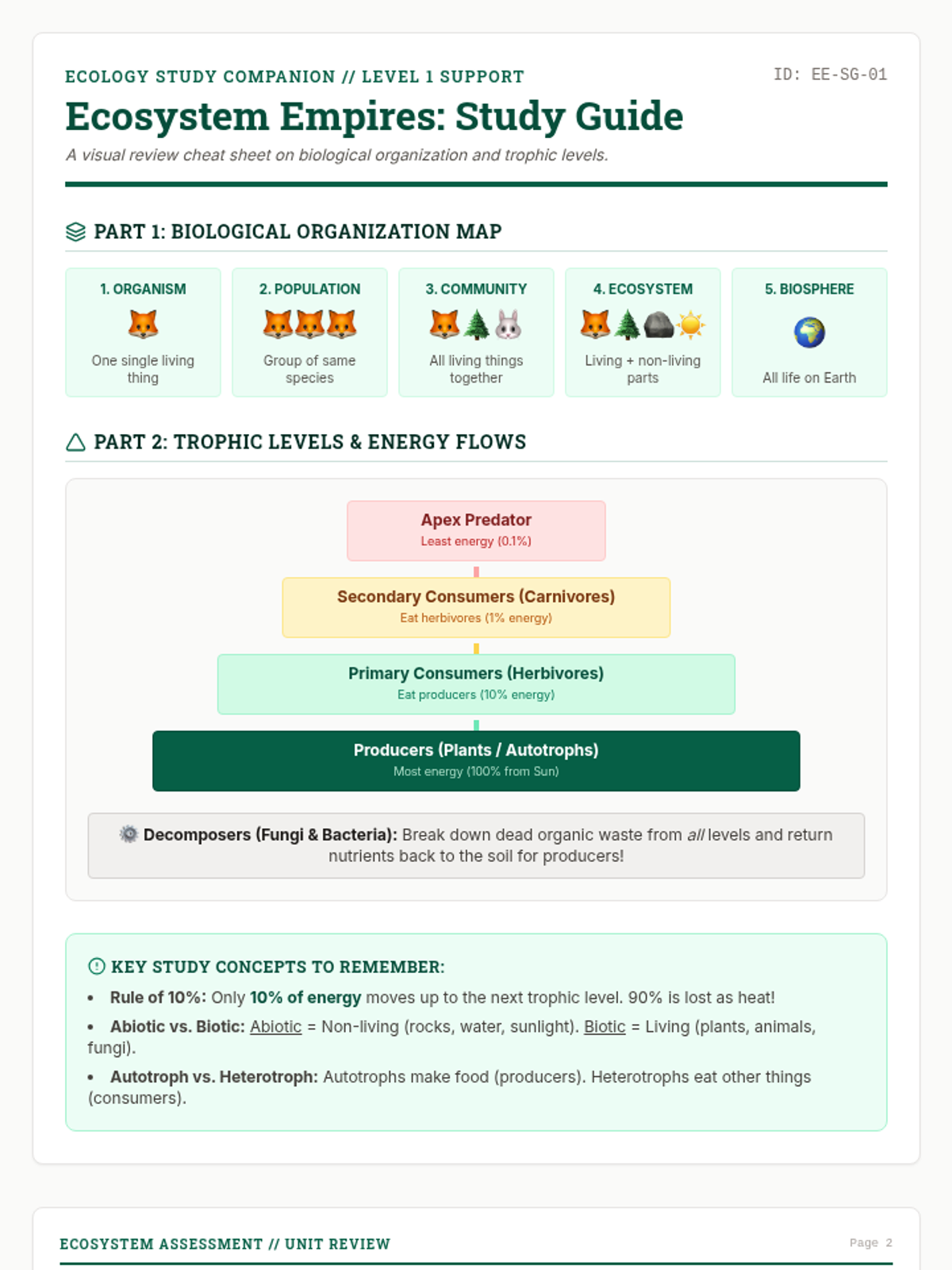
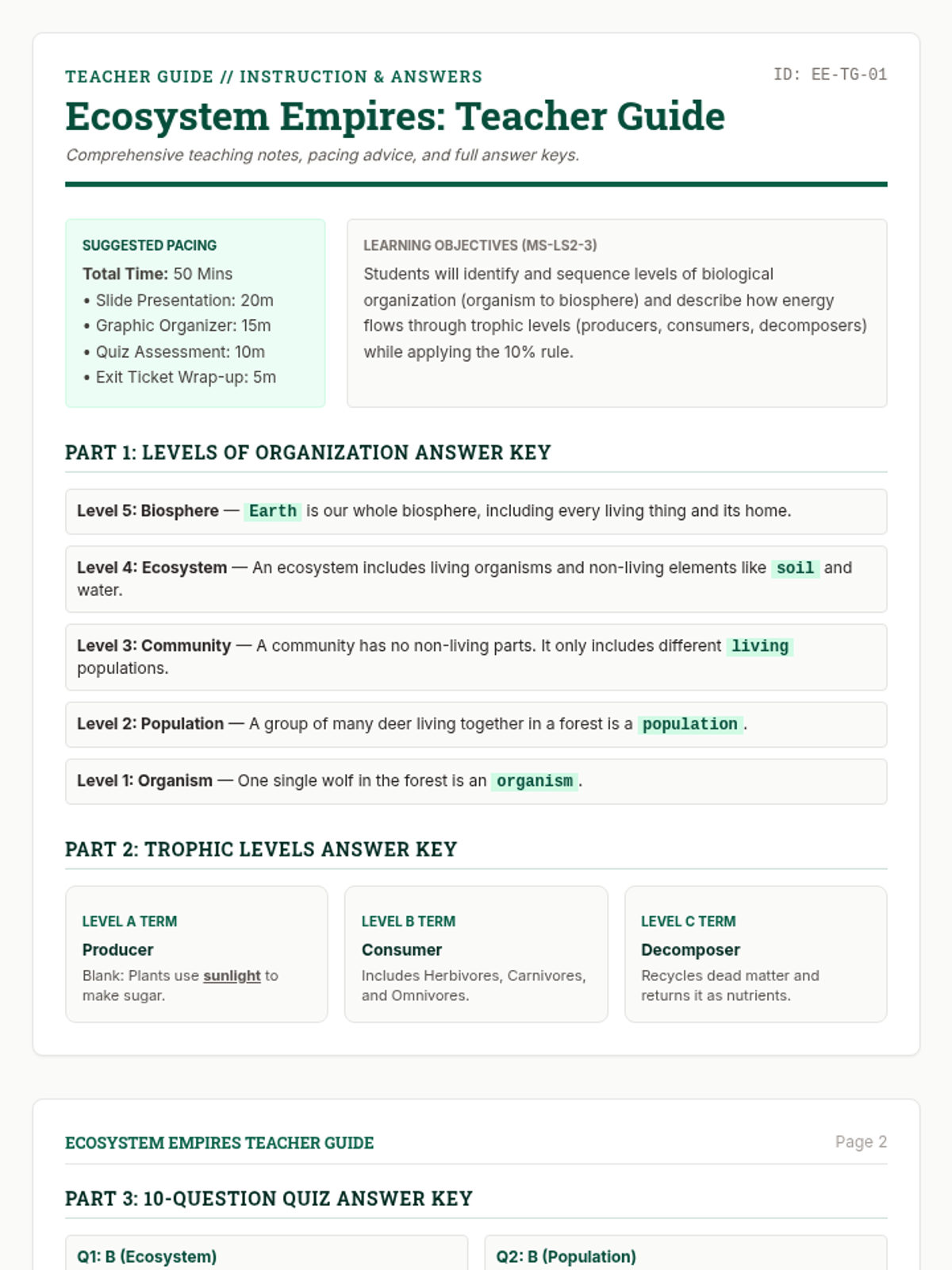
A comprehensive ecology review lesson focused on the levels of biological organization (organism to biosphere) and trophic levels (energy flow, producers, consumers, decomposers). Designed with scaffolded, modified text and guided fill-in-the-blanks for accessible learning.
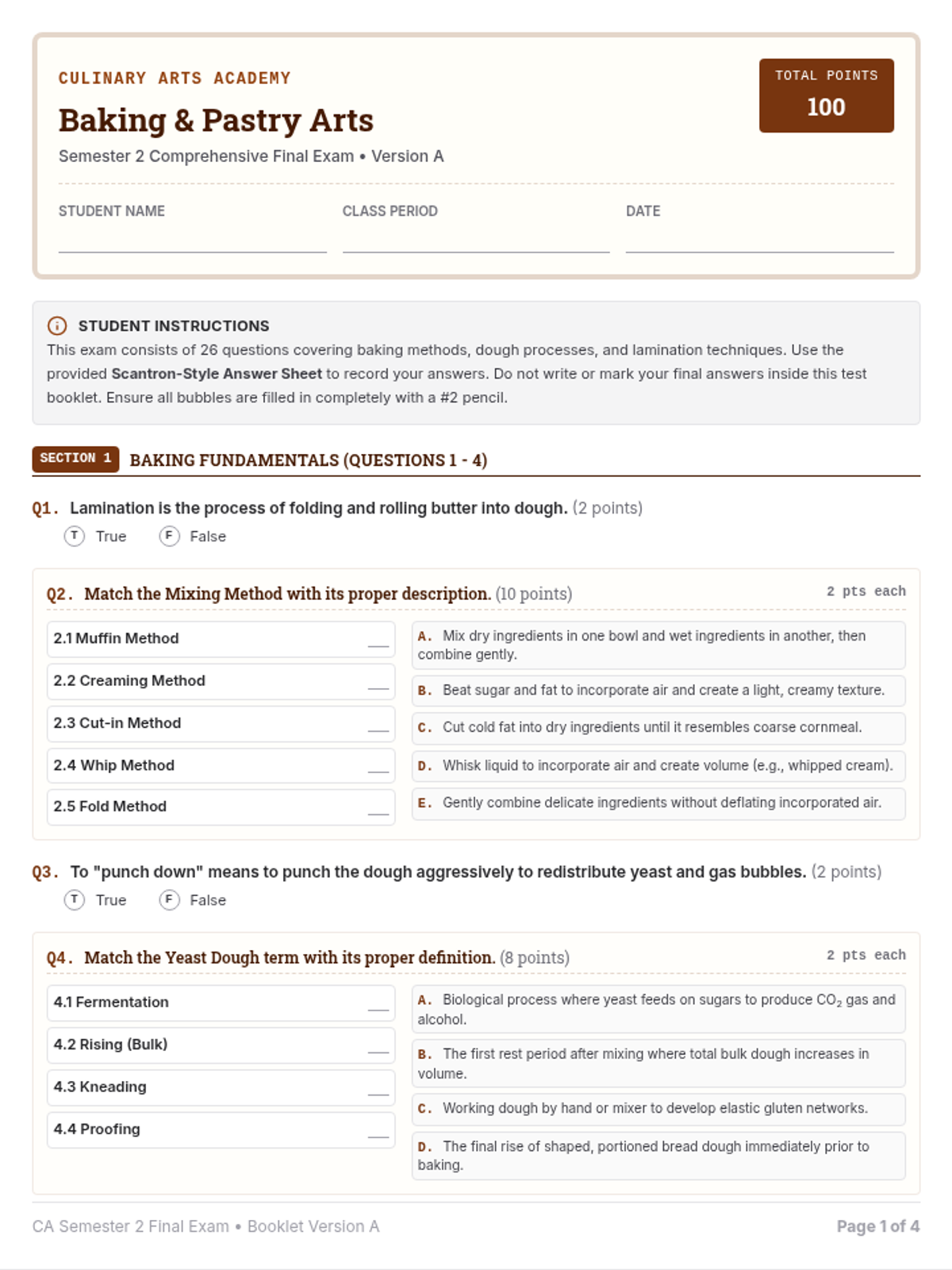
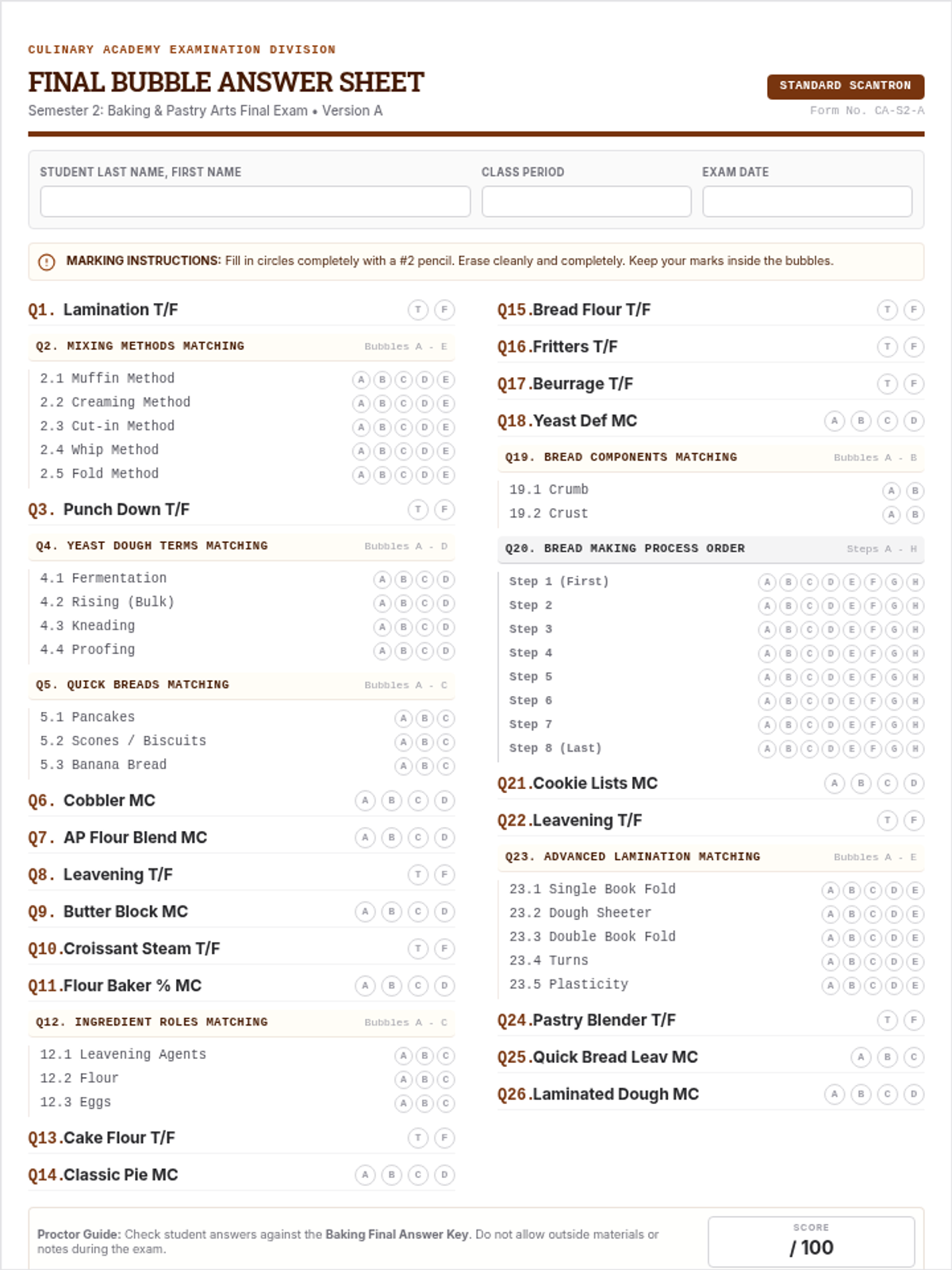
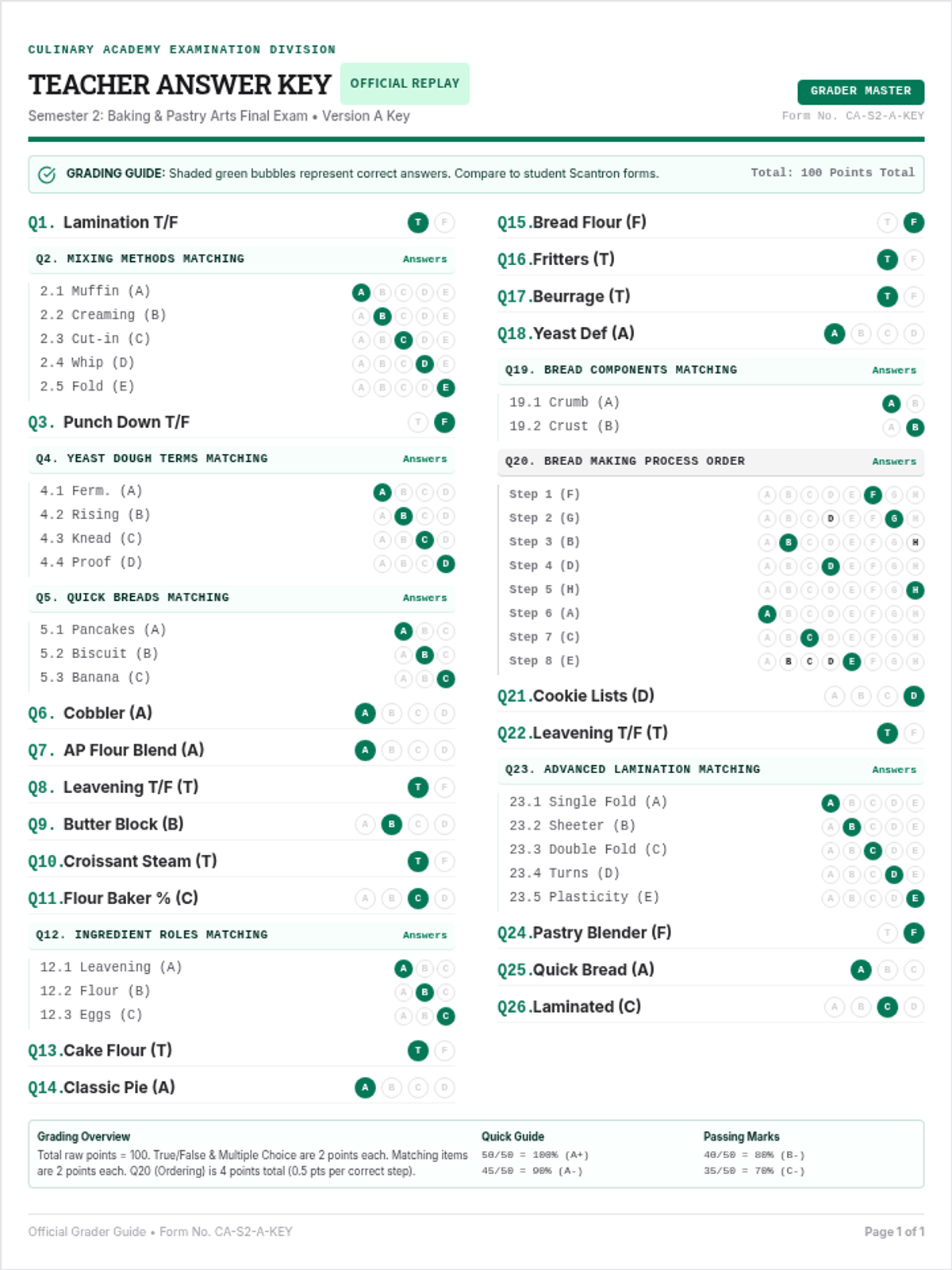
A comprehensive final exam assessment bundle for Culinary Arts Semester 2. Includes a highly polished, printable final exam test booklet, a student-facing scantron-style bubble answer sheet, and a complete teacher answer key and grading guide.
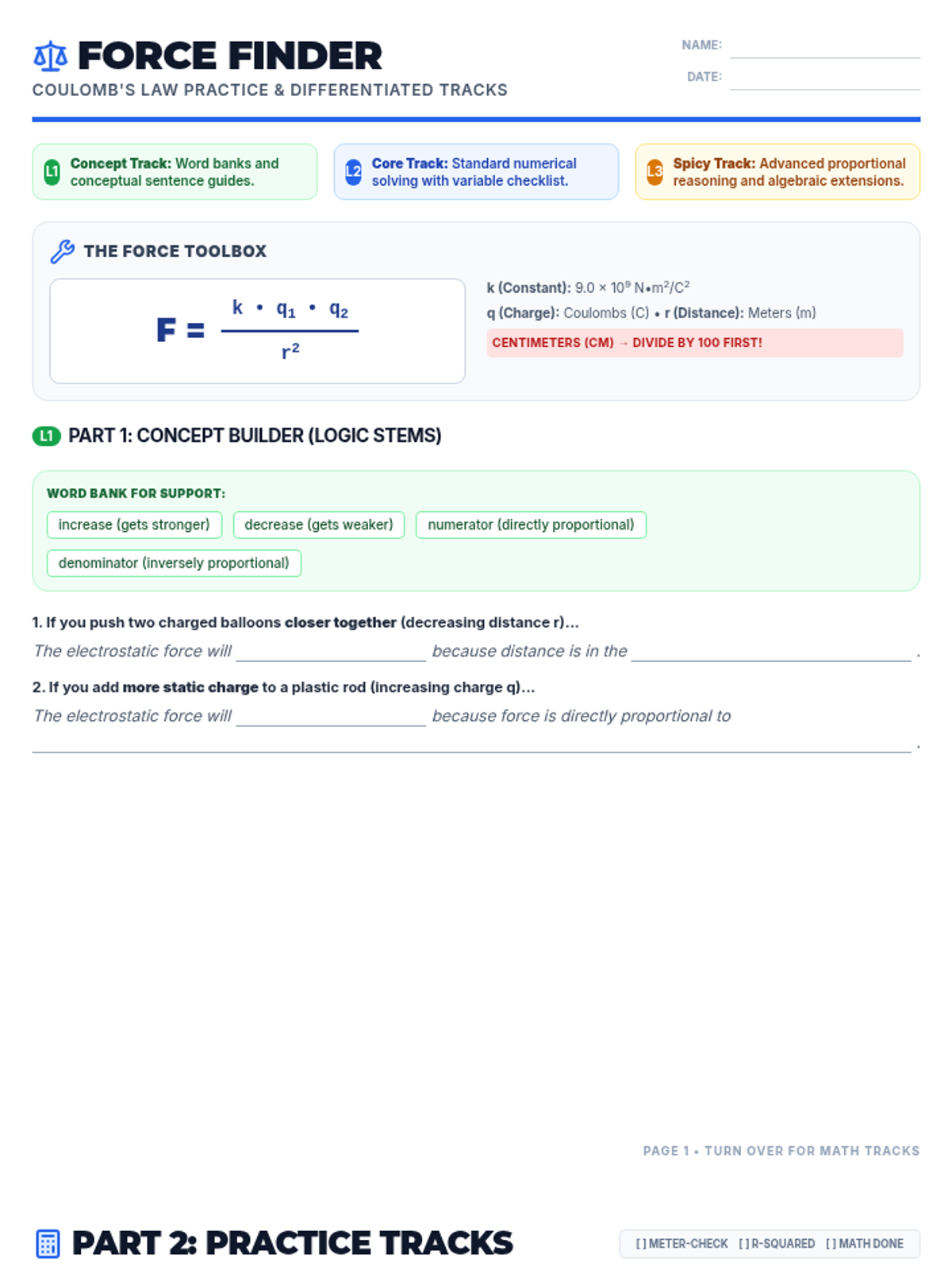
A comprehensive lesson on Coulomb's Law designed for diverse learners, featuring visual formula supports, step-by-step checklists, and real-world static electricity scenarios.
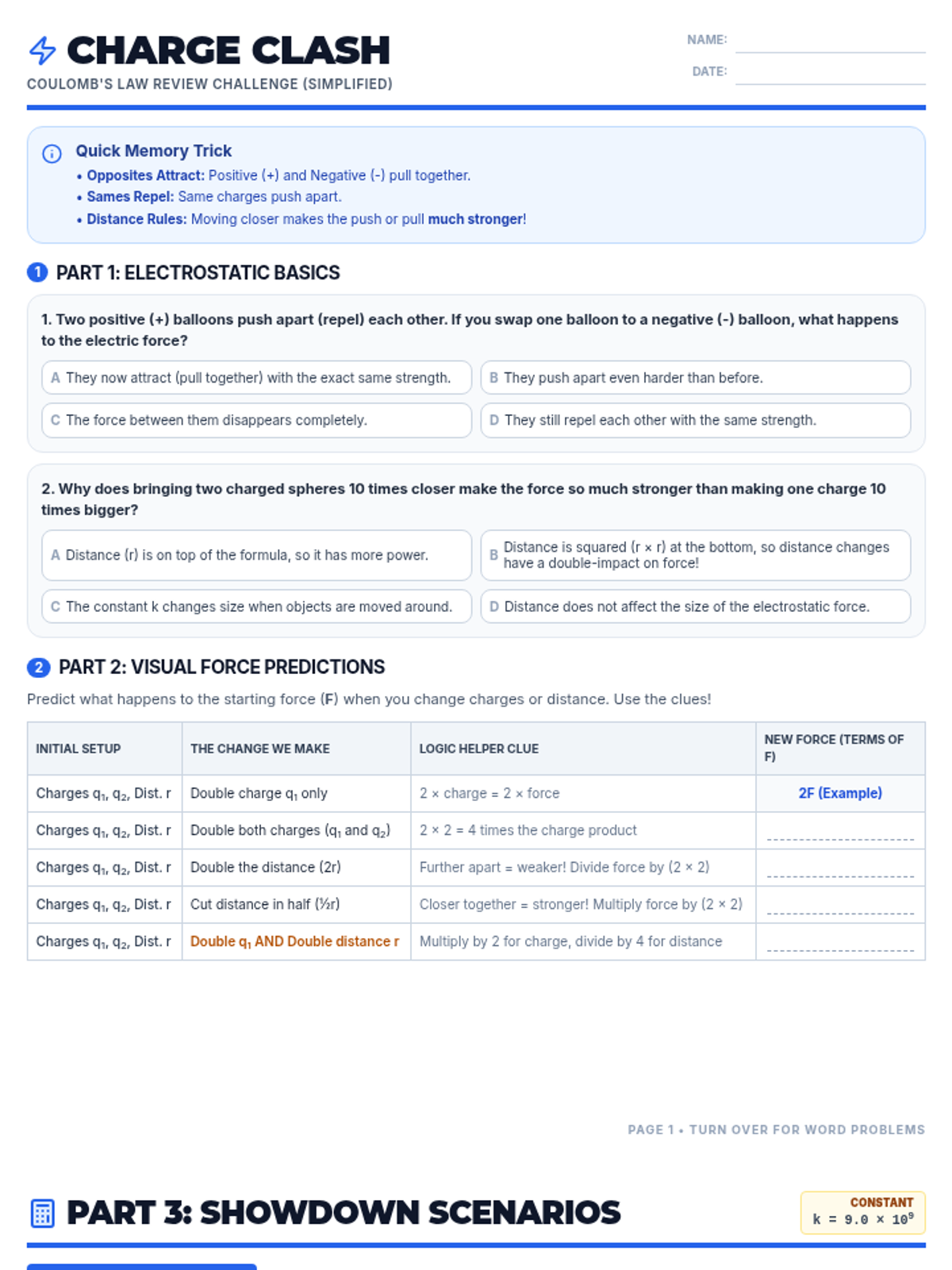
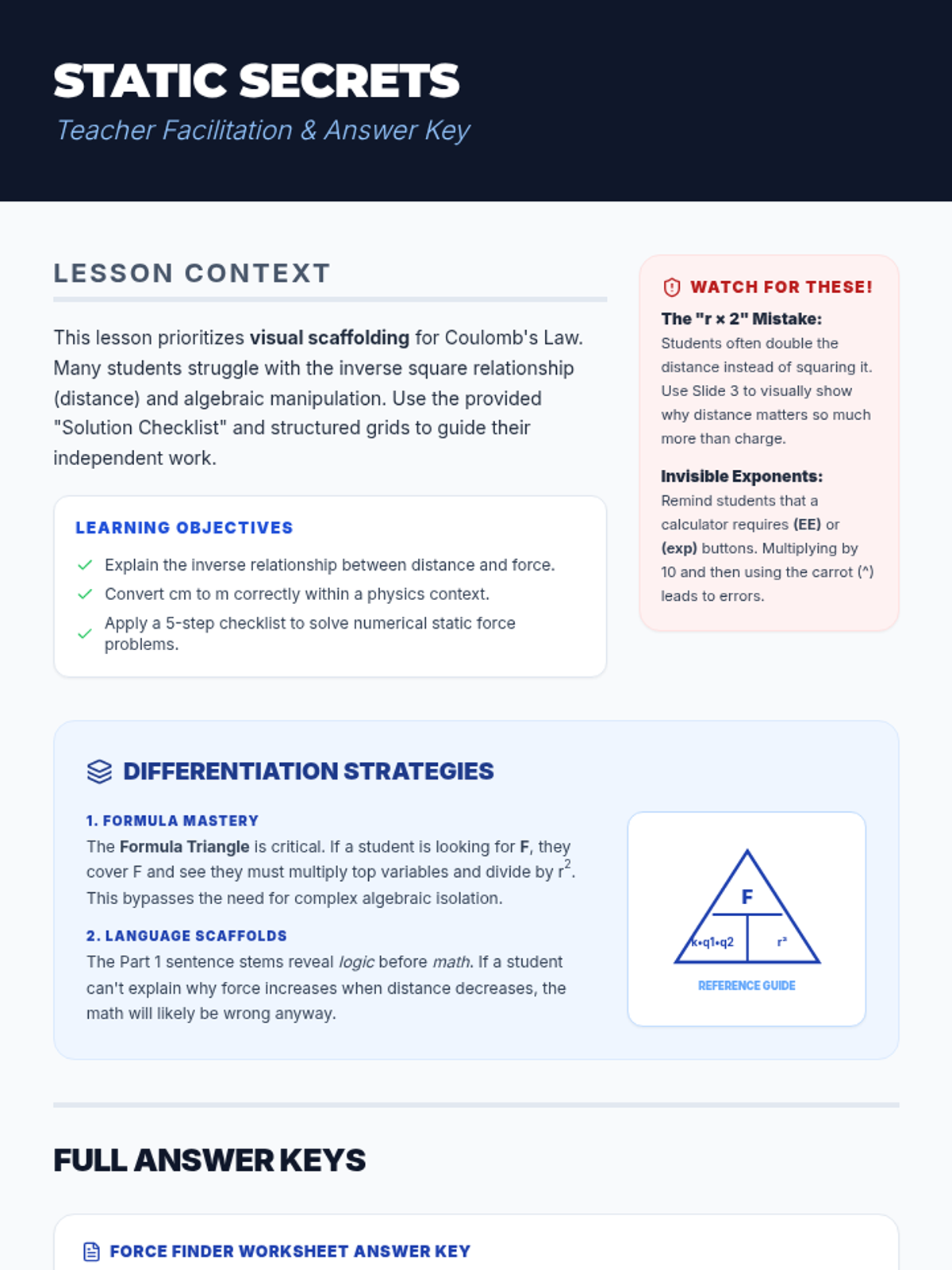
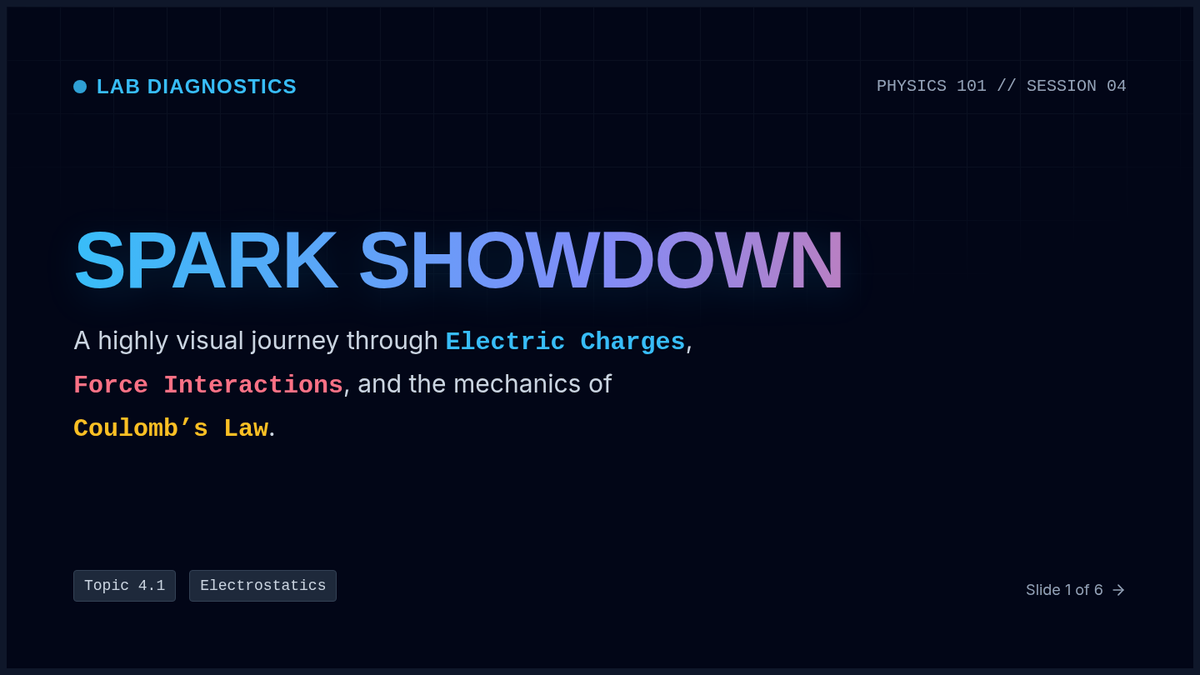
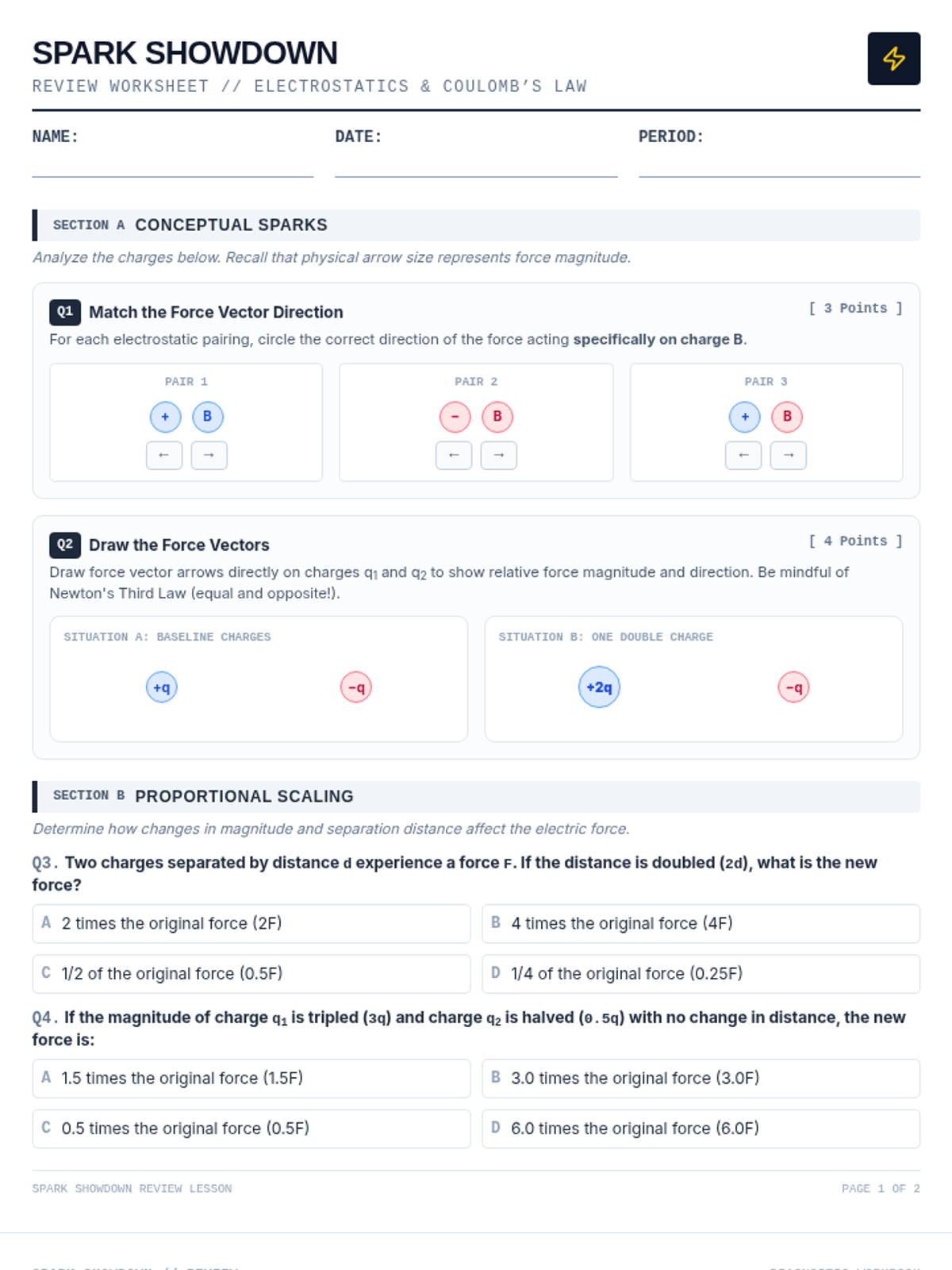
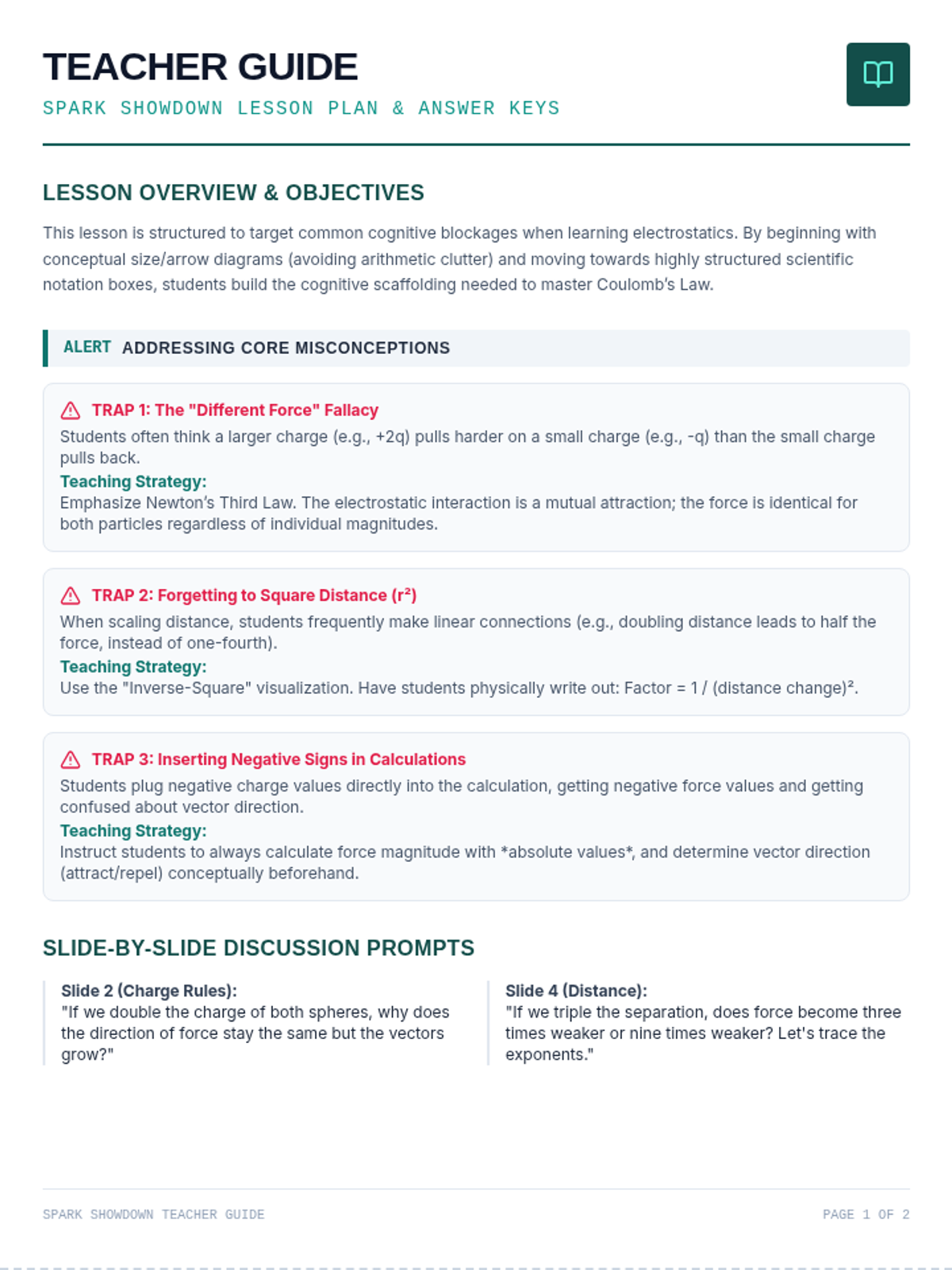
A highly visual and scaffolded review lesson covering electrostatic charge interactions and Coulomb's Law. Includes a concept-heavy visual slide deck, a scaffolded student worksheet with pre-formatted scientific notation grids, and a comprehensive teacher guide with common misconceptions and a complete answer key.
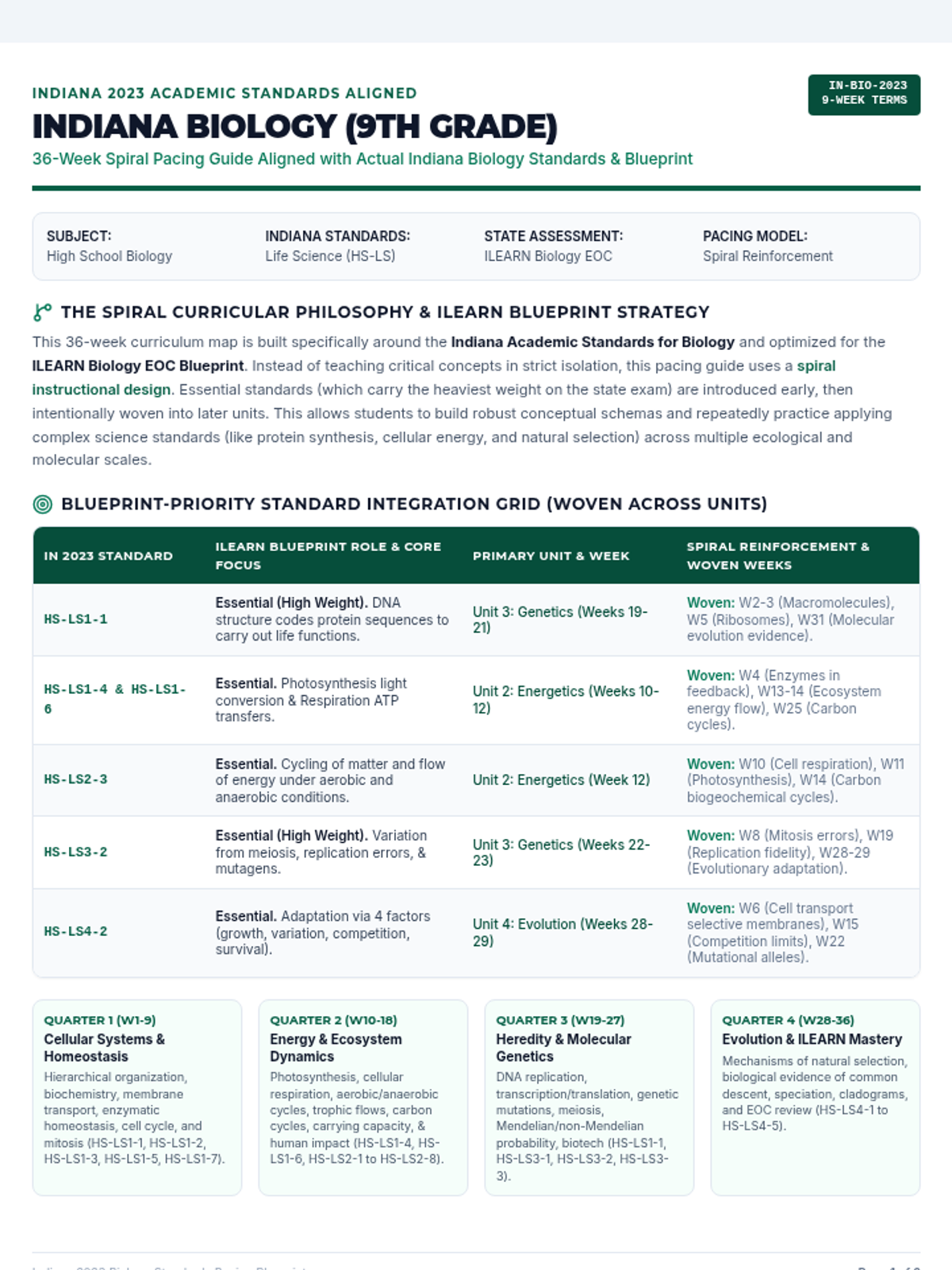
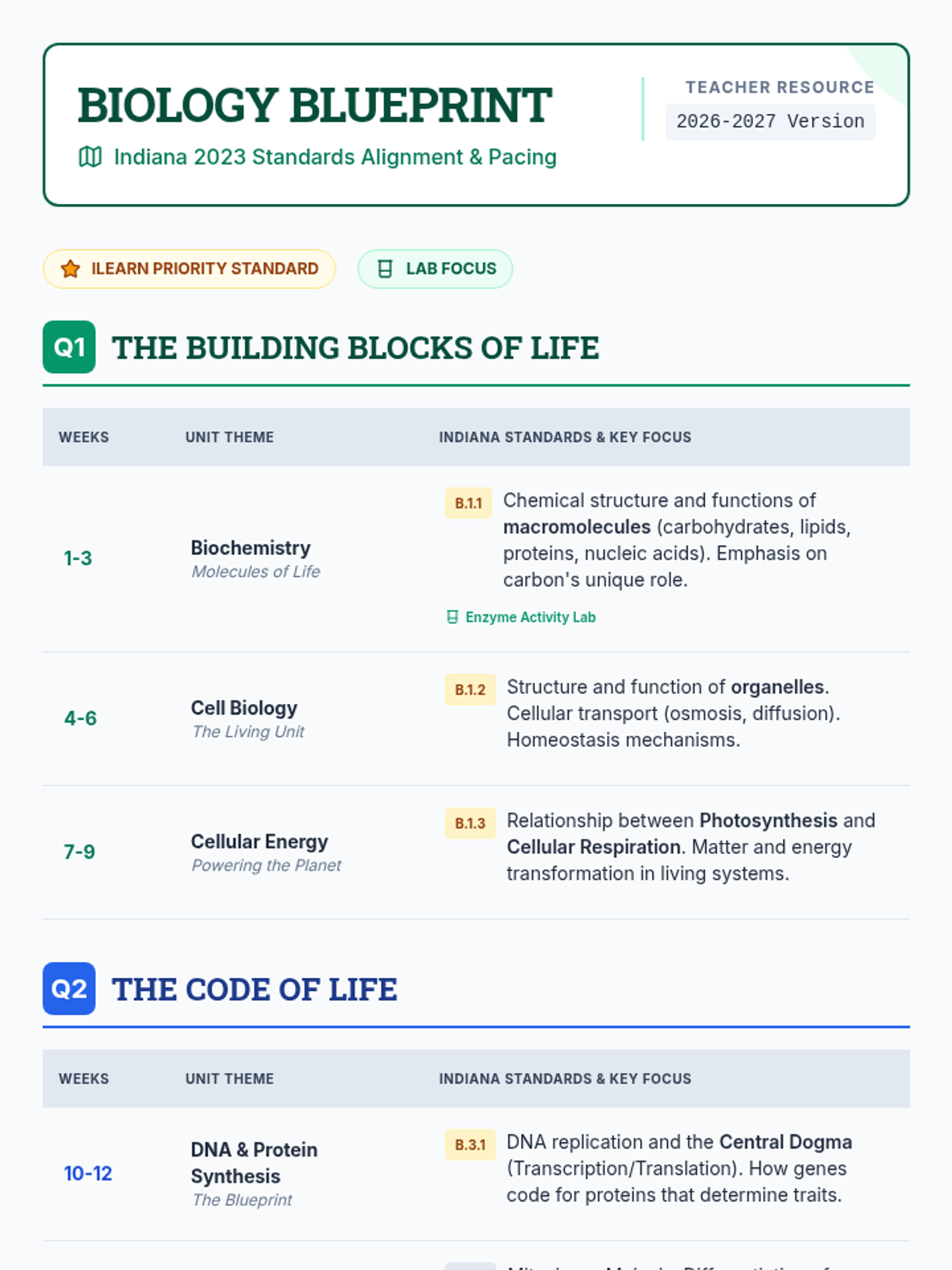
High school biology curriculum planning and pacing resources aligned to Indiana 2023 Academic Standards.
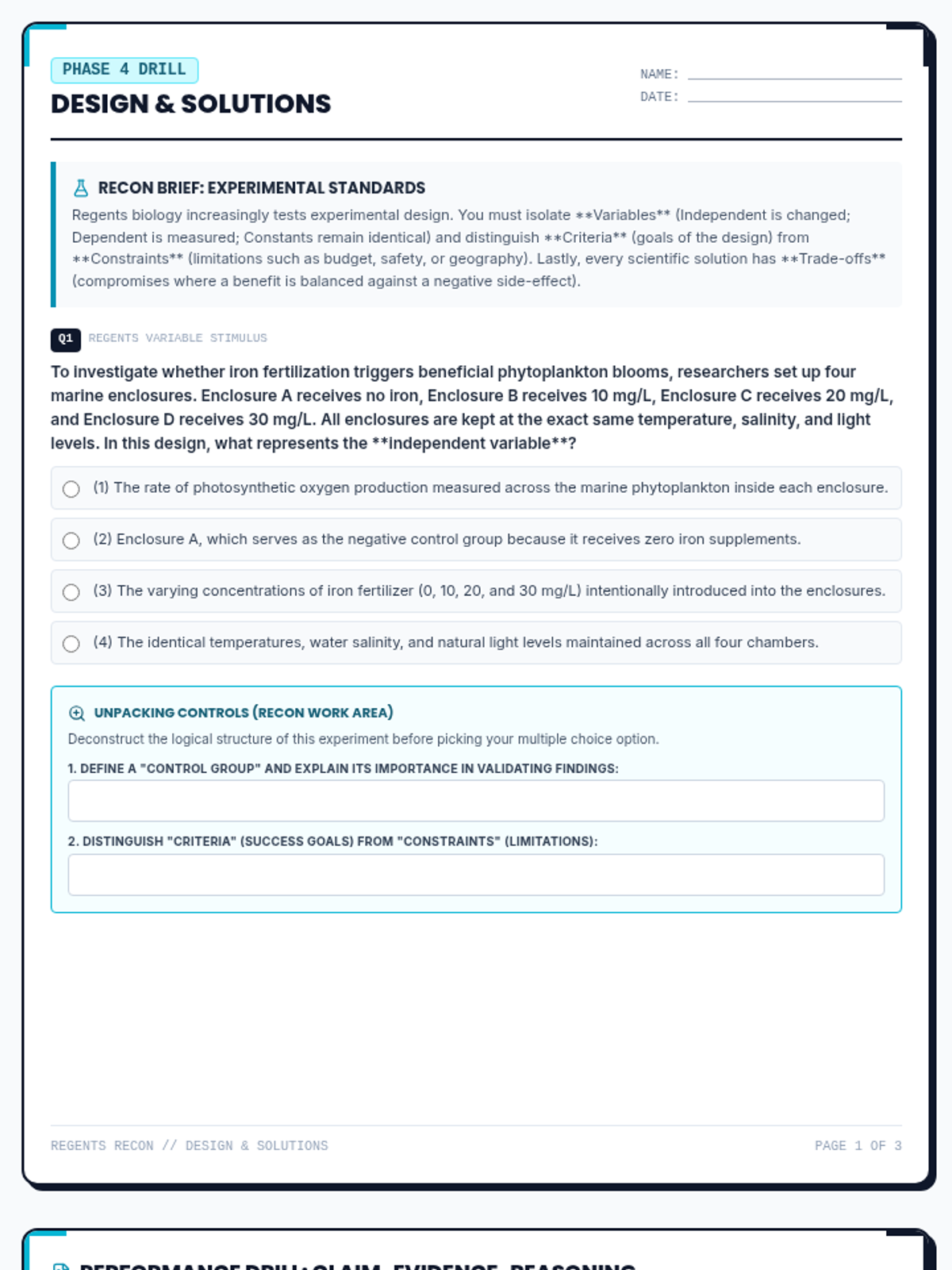
Days 15 to 19 of Regents preparation. Breaks down Regents experimental design standards, distinguishing criteria from constraints, identifying variables, and evaluating biological trade-offs.
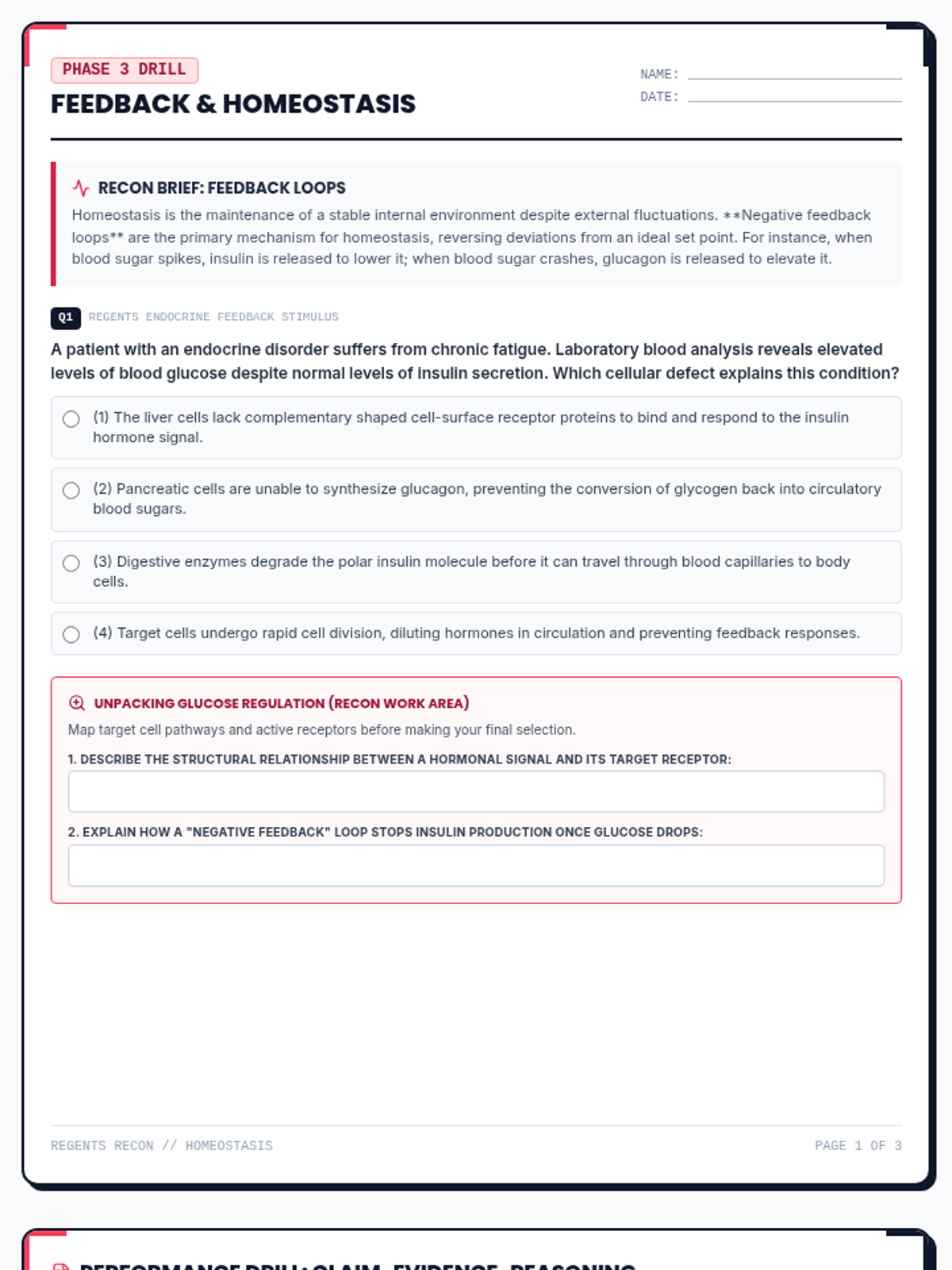
Days 10 to 14 of Regents preparation. Analyzes negative and positive feedback mechanisms, thermoregulation, blood glucose maintenance, and nervous/endocrine system integration.
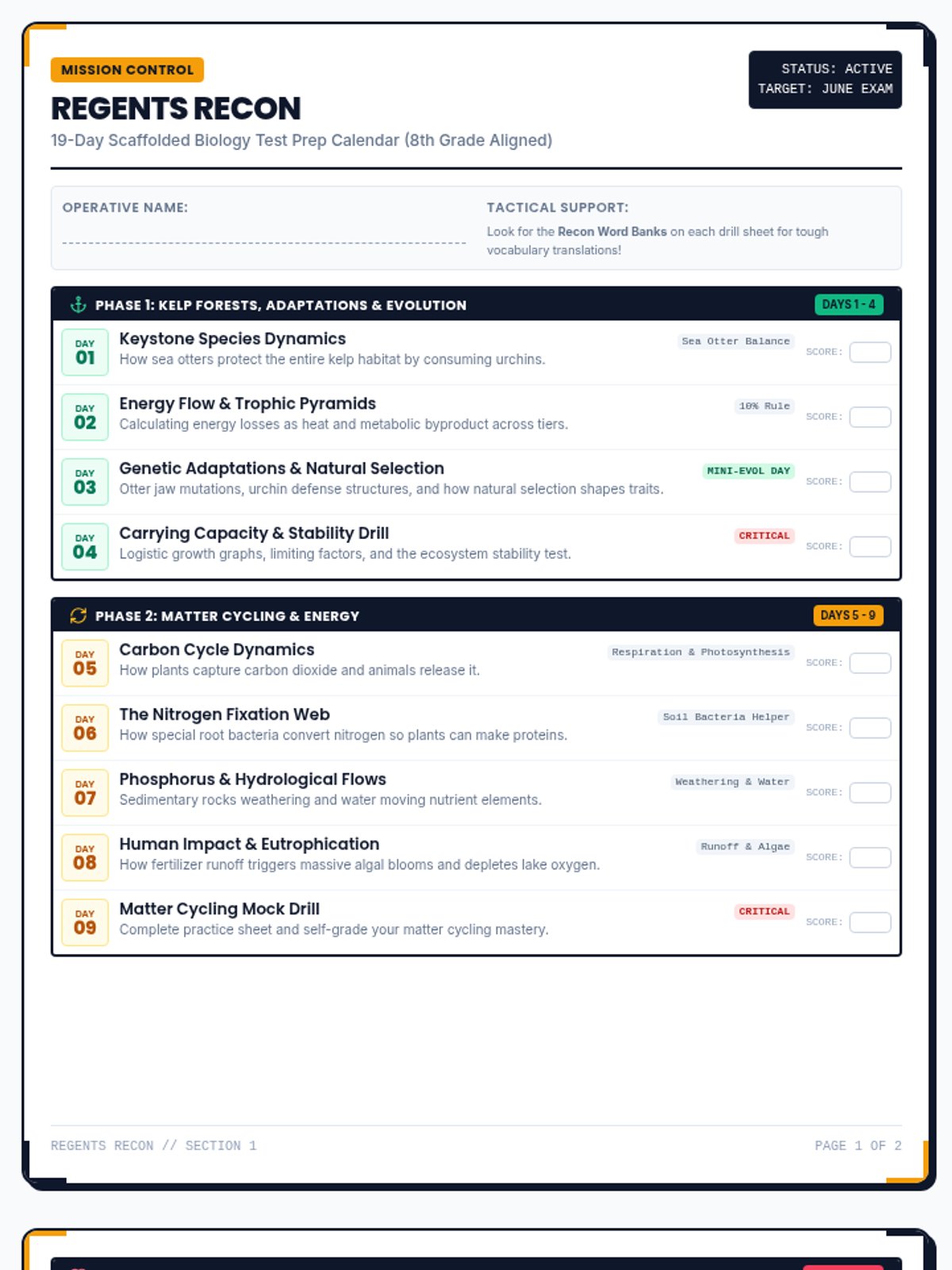
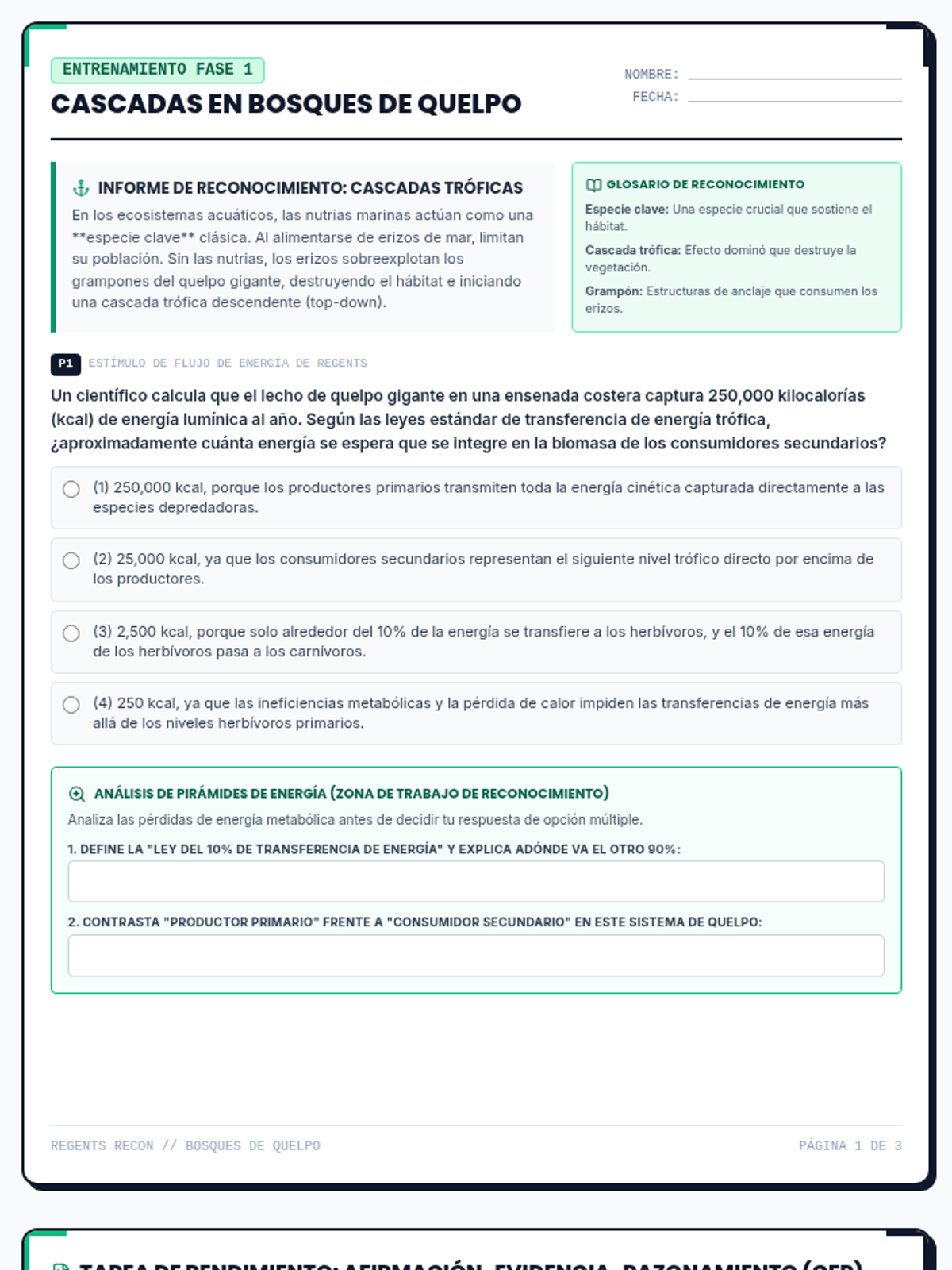
Days 1 to 4 of Regents preparation. Investigates trophic levels, carrying capacity, energy flow, adaptations, and the keystone role of sea otters in maintaining kelp forest homeostasis.
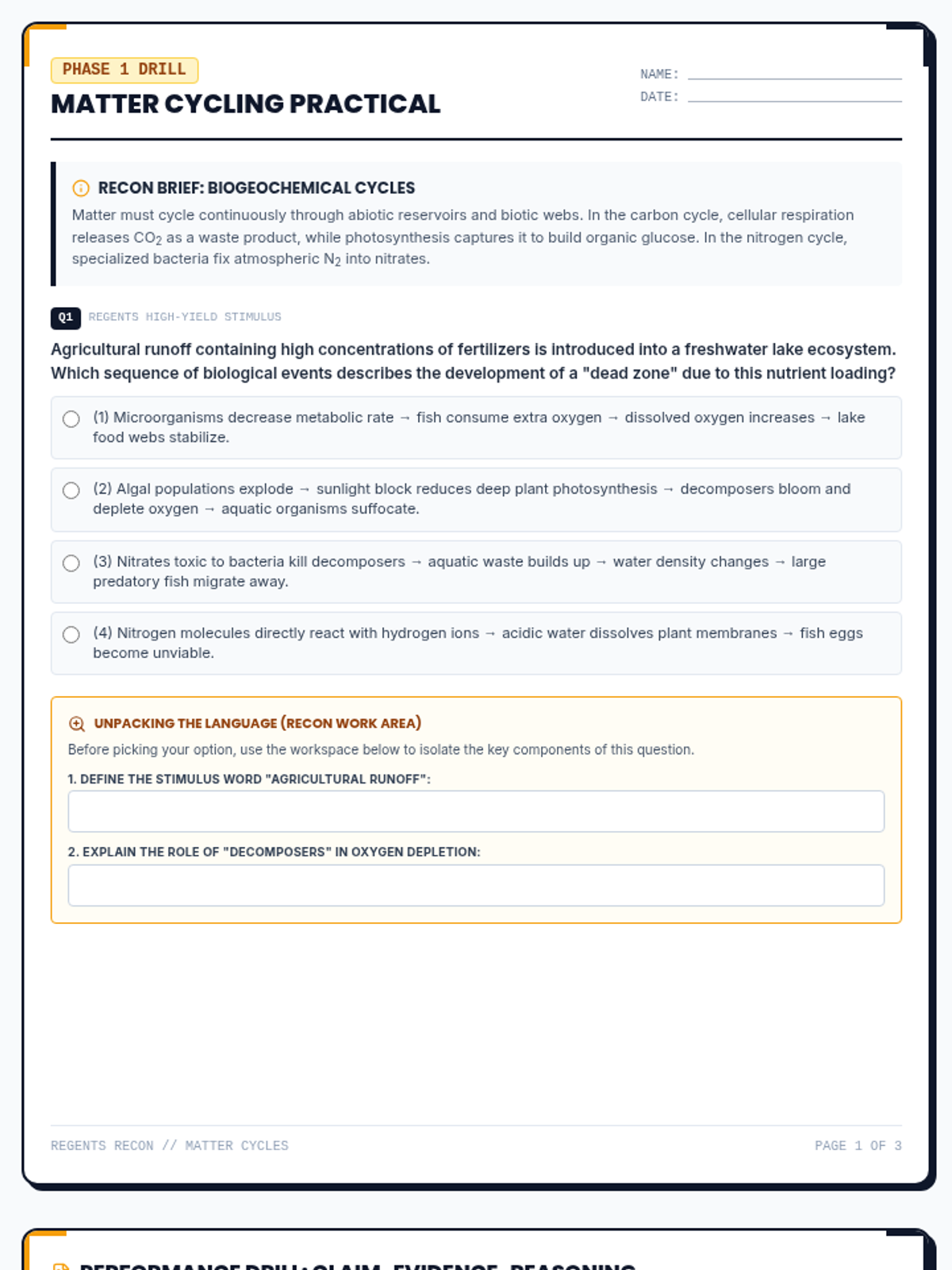
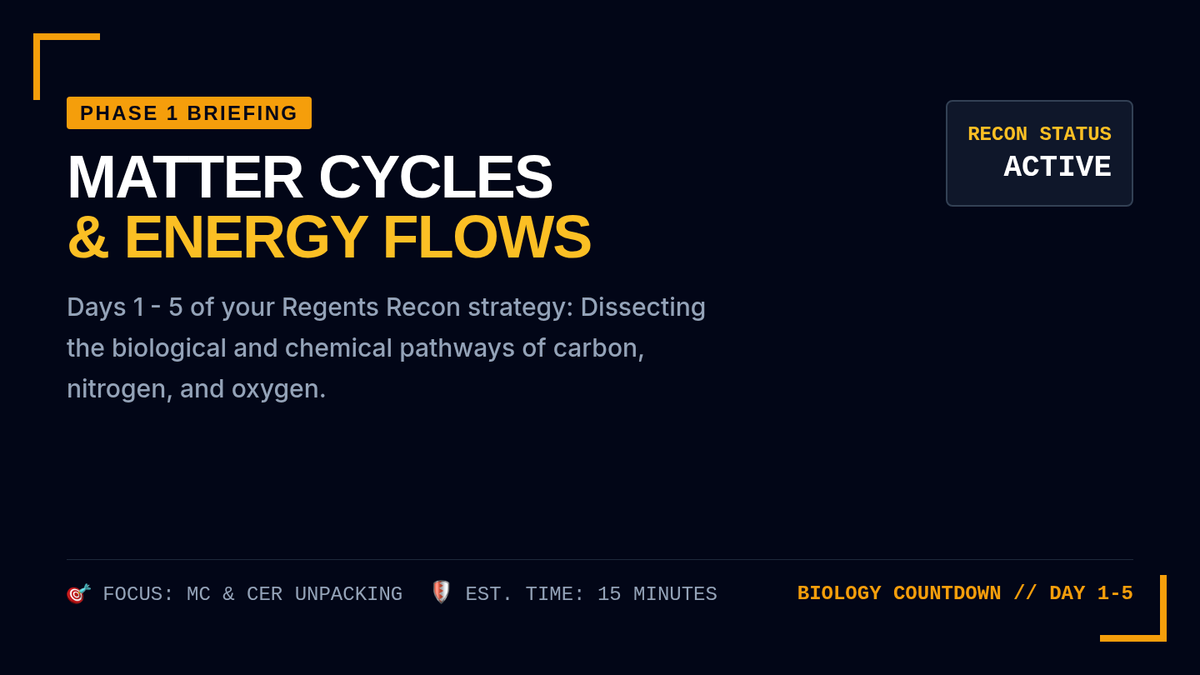
Days 5 to 9 of Regents preparation. Focuses on the biogeochemical cycling of carbon, nitrogen, water, and phosphorus, including cellular respiration and photosynthesis connections.
Curriculum planning resources for the entire academic year, including standard alignment, pacing, and priority focus areas.
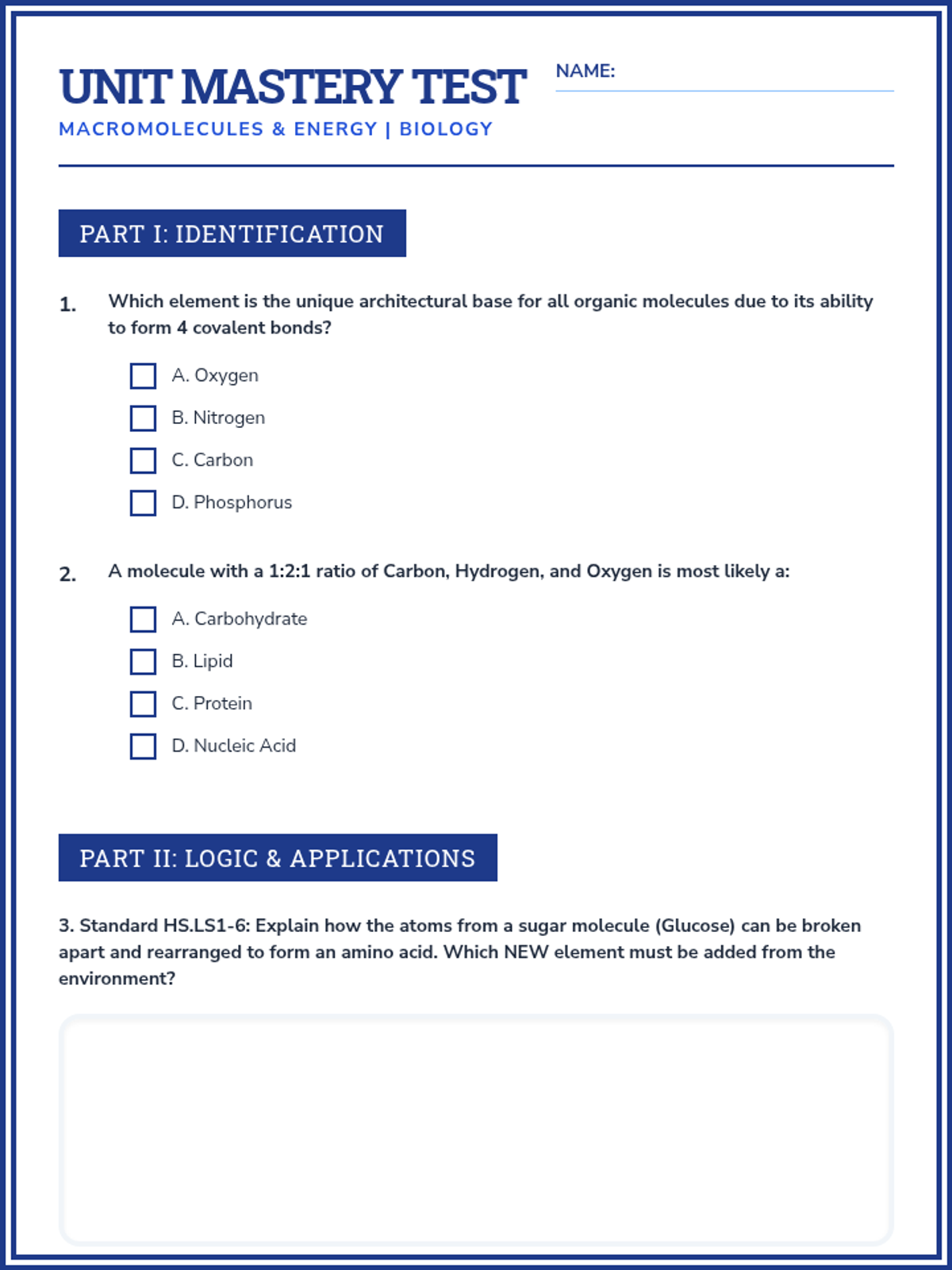
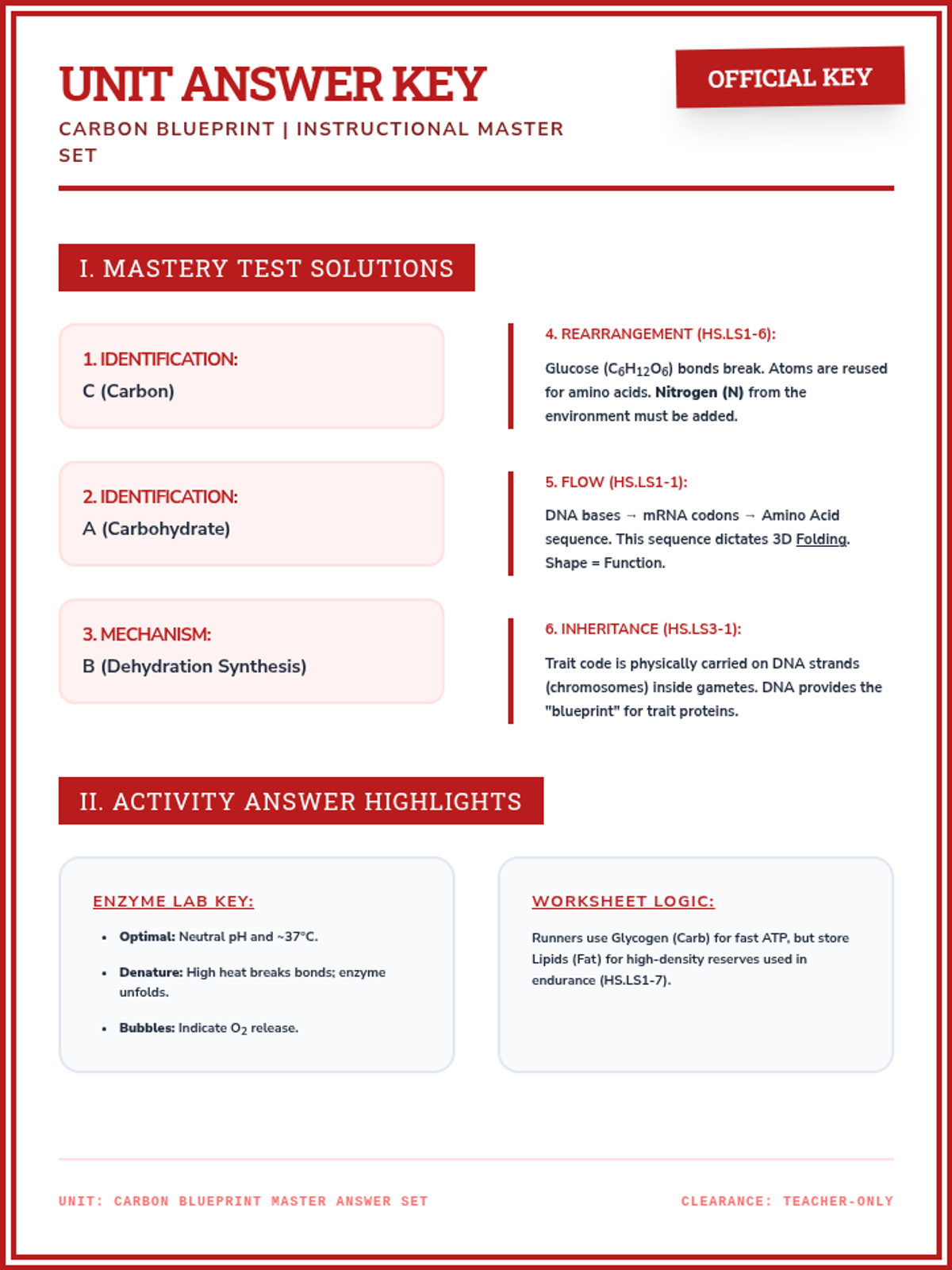
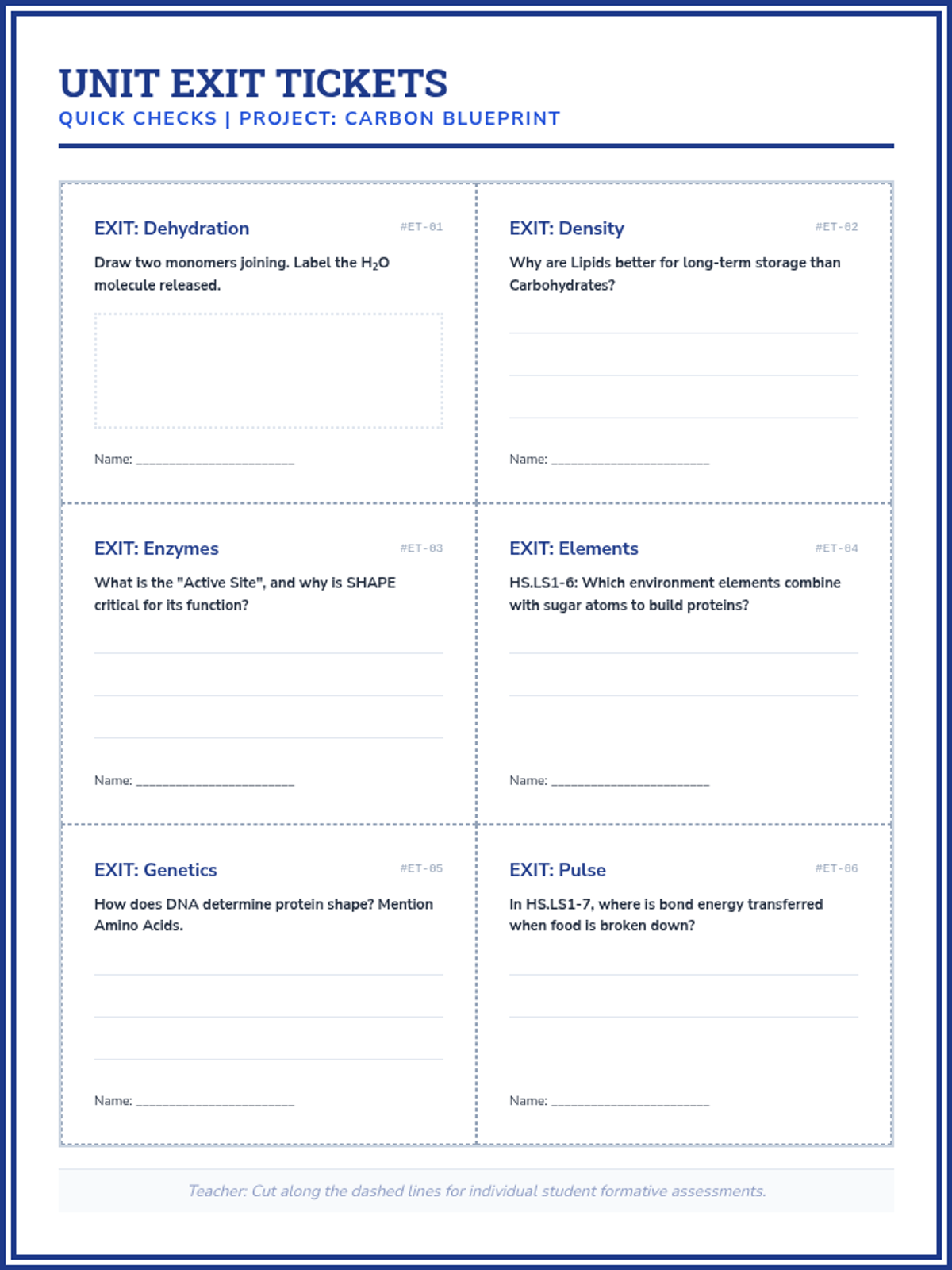
Final review and assessment of the Macromolecules unit.
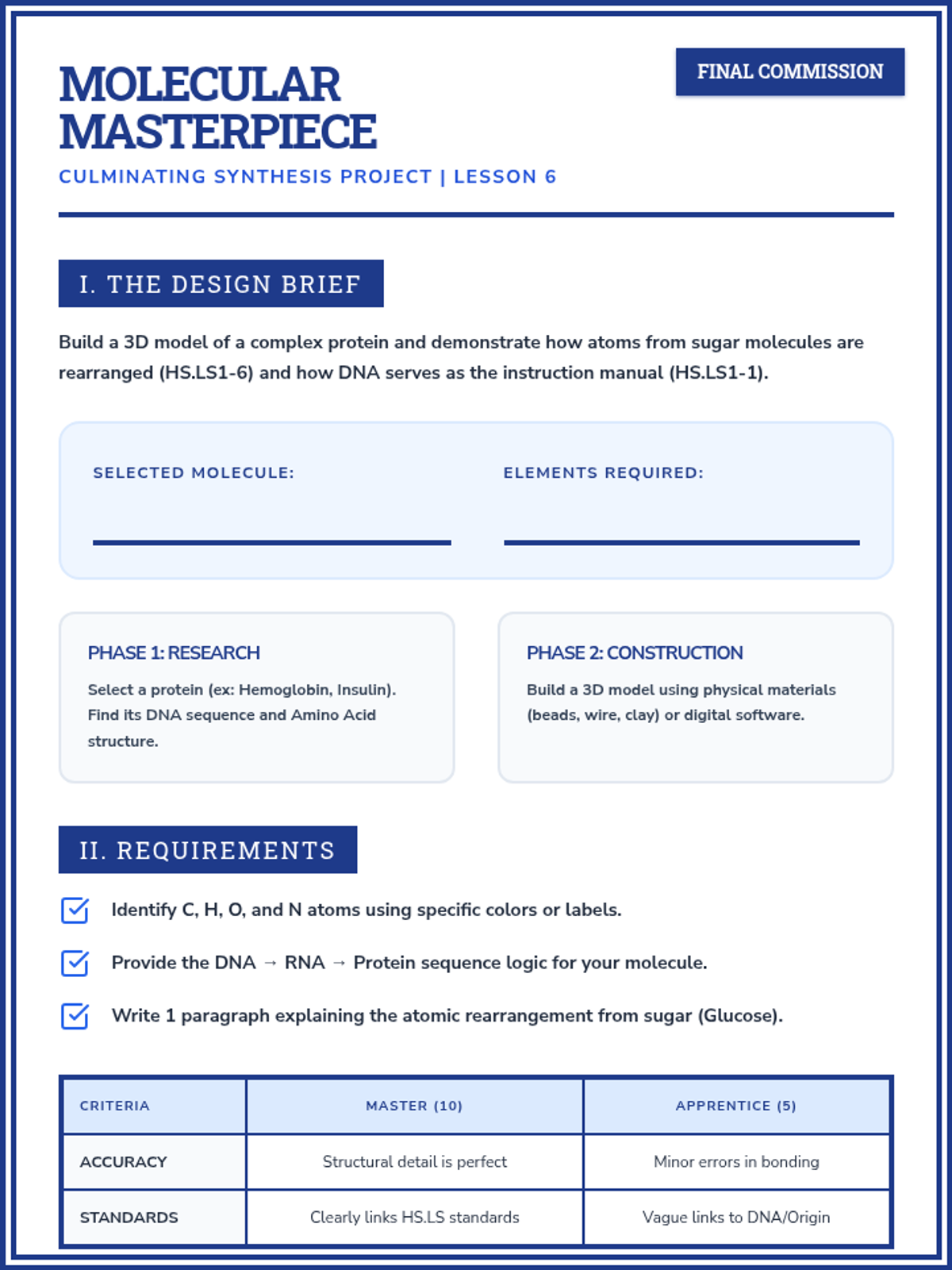
A culminating creative project where students design a "Biological Structure" based on macromolecule principles.
Connecting macromolecule breakdown to energy transfer and cellular respiration (HS.LS1-7).
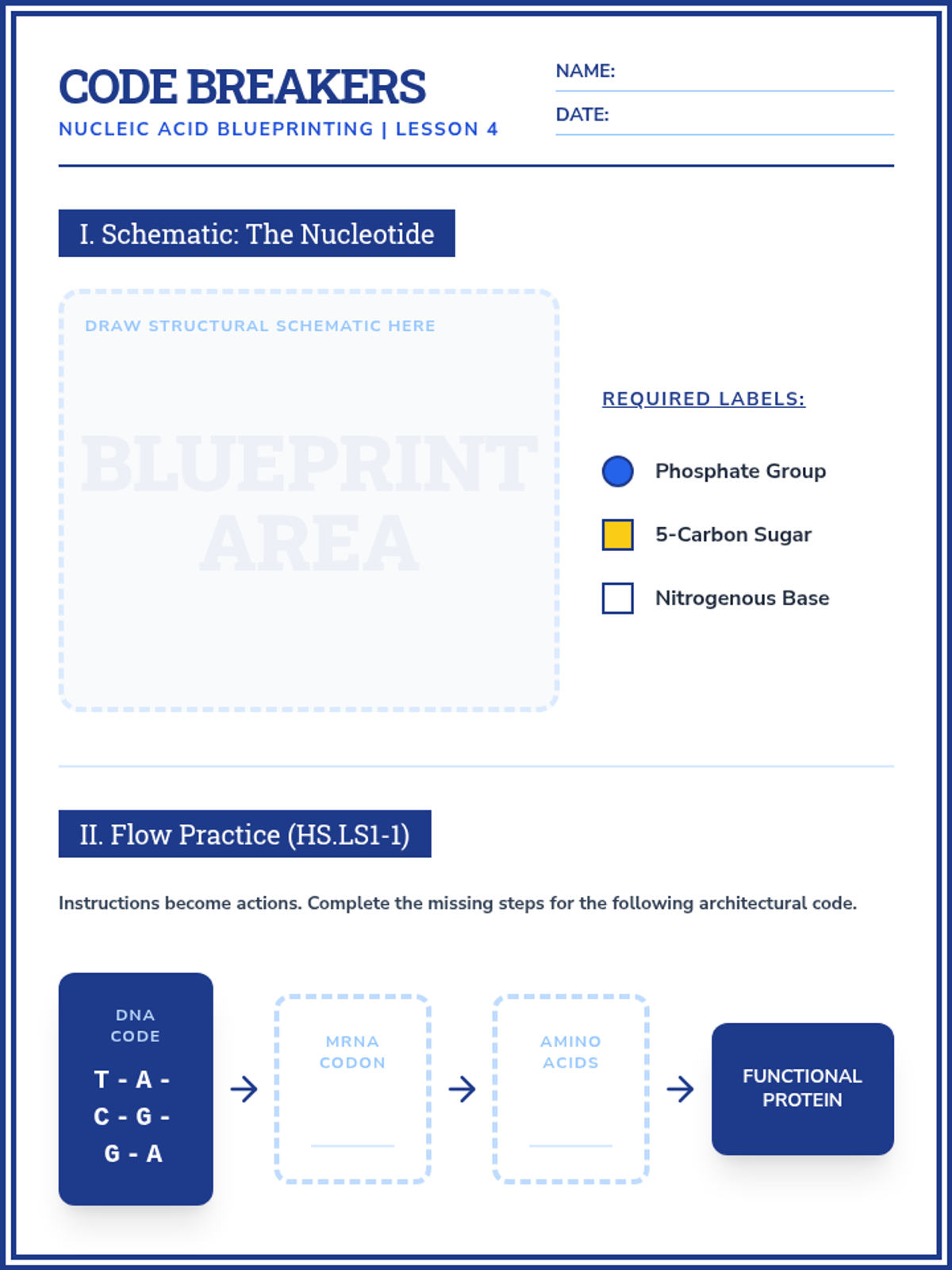
Focusing on nucleic acids and their role in coding for life's traits and instructions (HS.LS3-1).
Exploring protein structure and enzyme function, emphasizing the connection between DNA sequences and protein form as per HS.LS1-1.
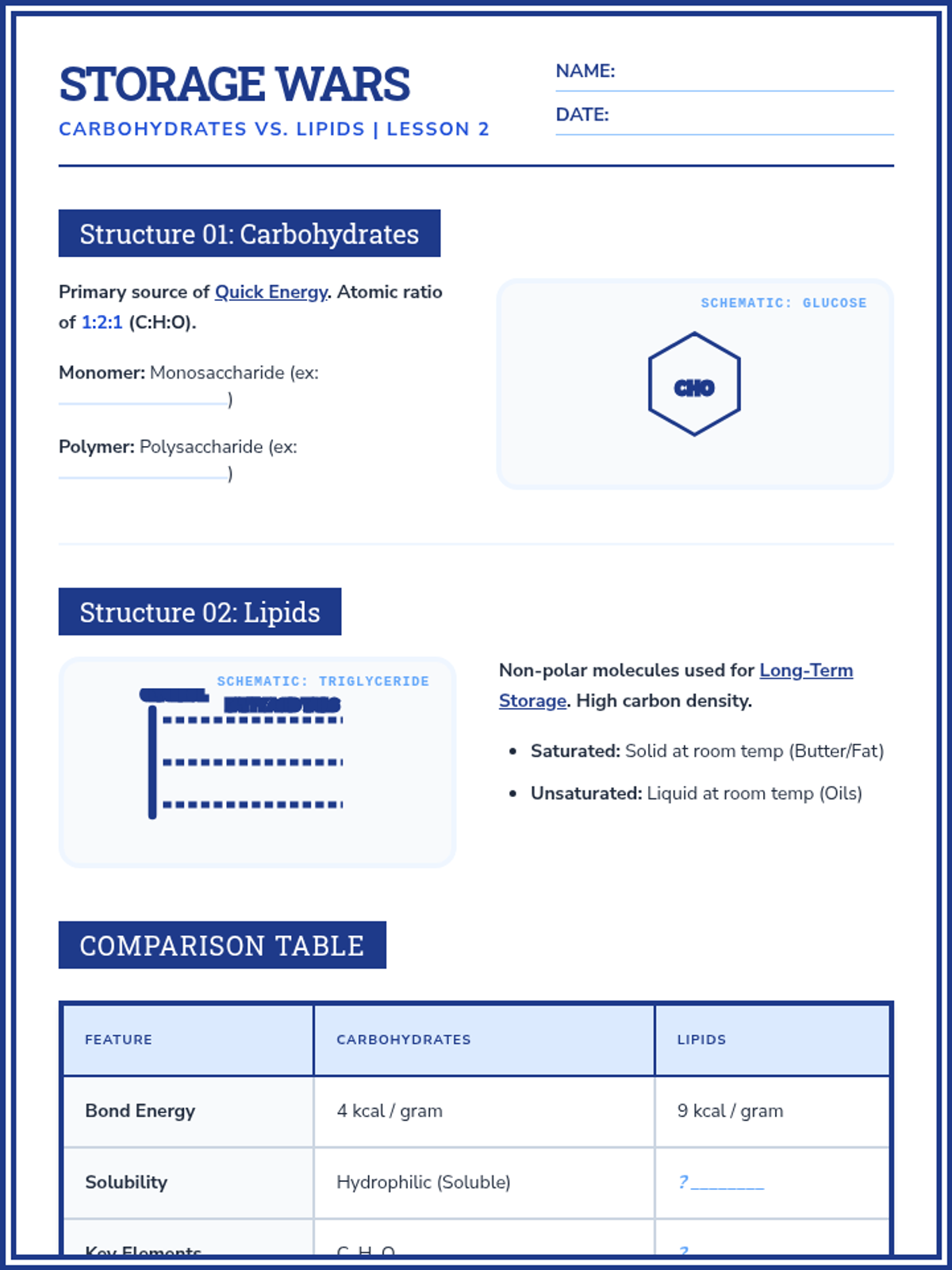
Investigating the energy storage and structural roles of carbohydrates and lipids in living systems.
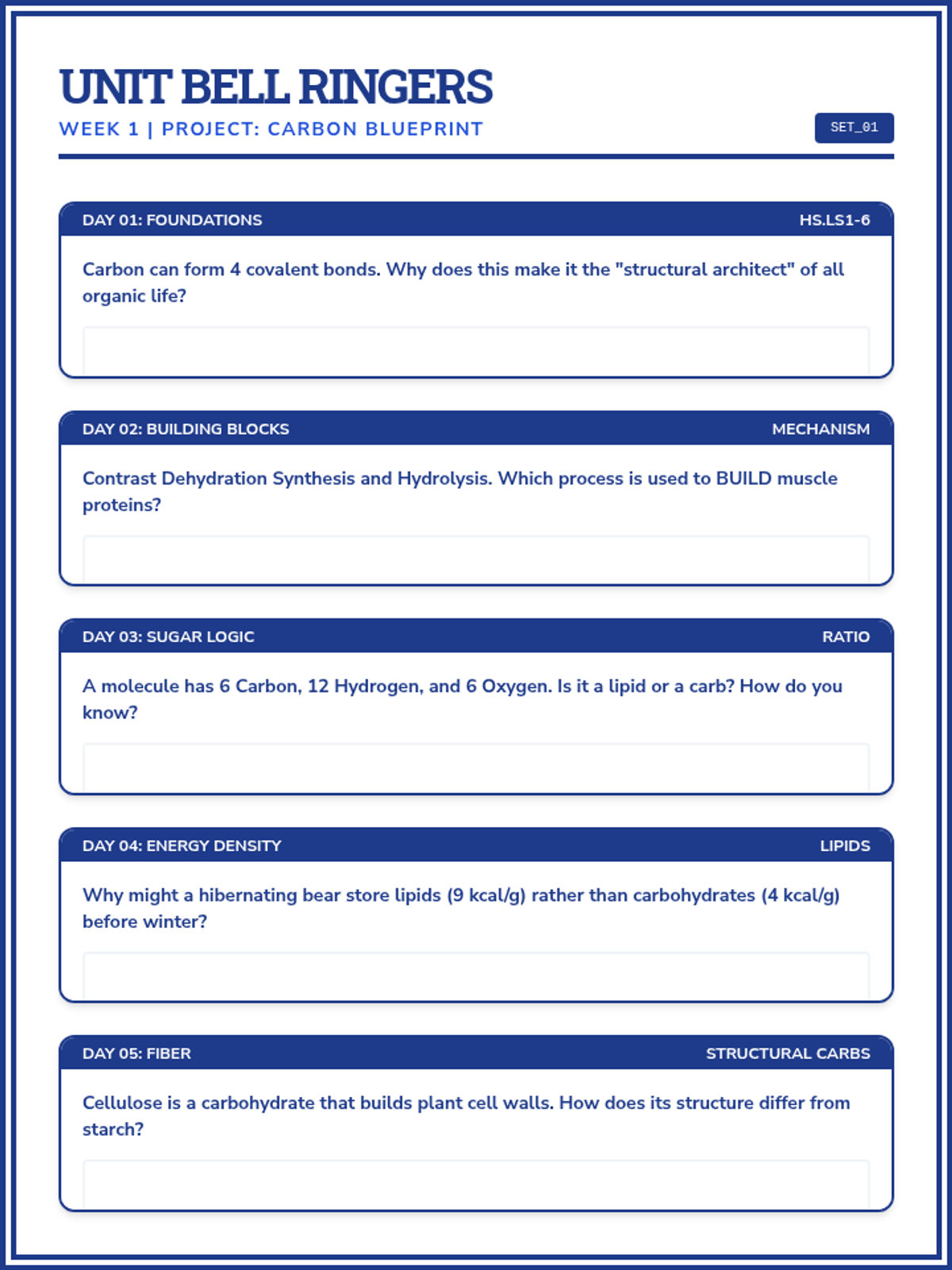
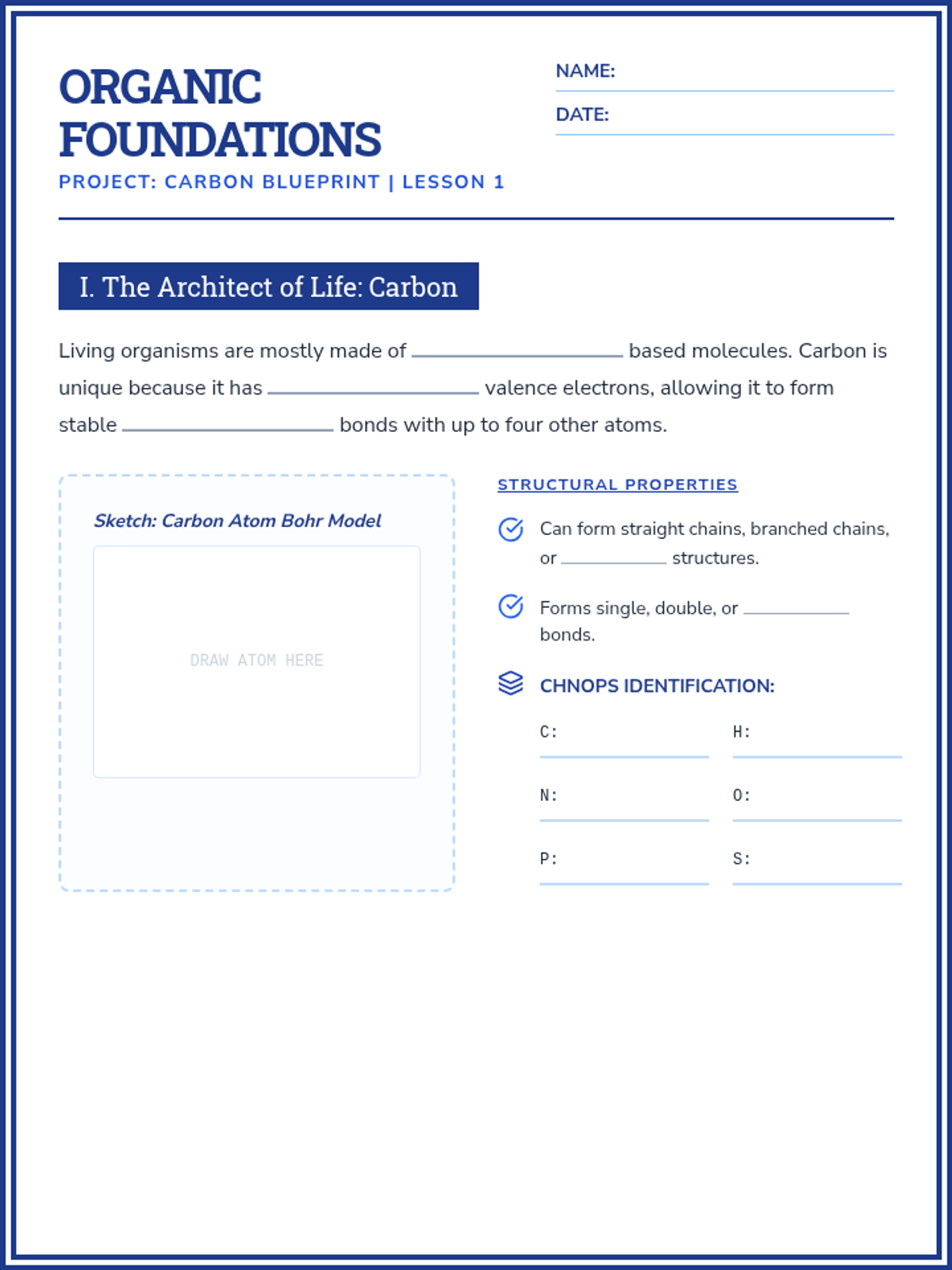
Students explore the unique properties of carbon and how simple sugar molecules provide the building blocks for complex organic molecules, focusing on HS.LS1-6.
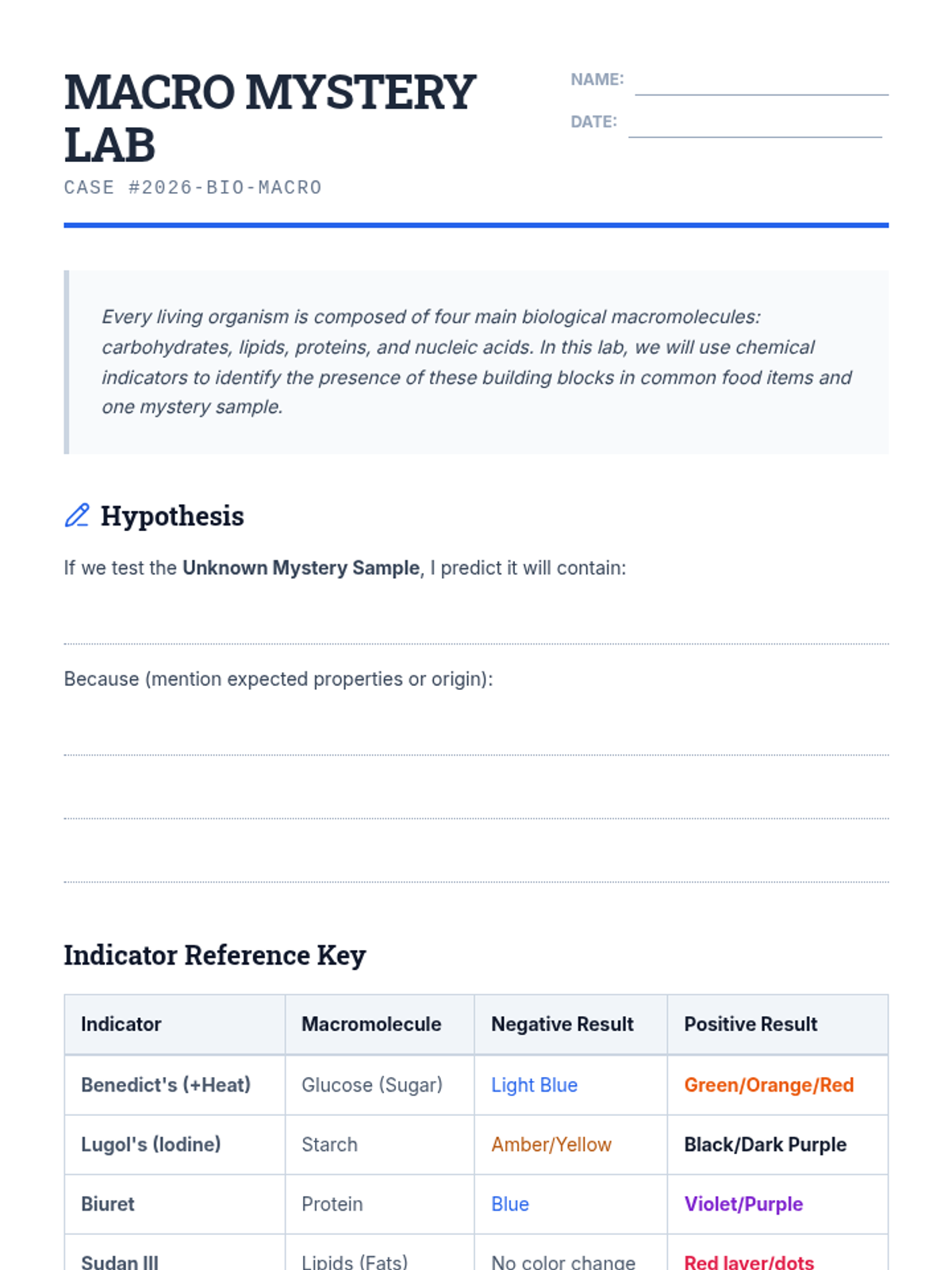
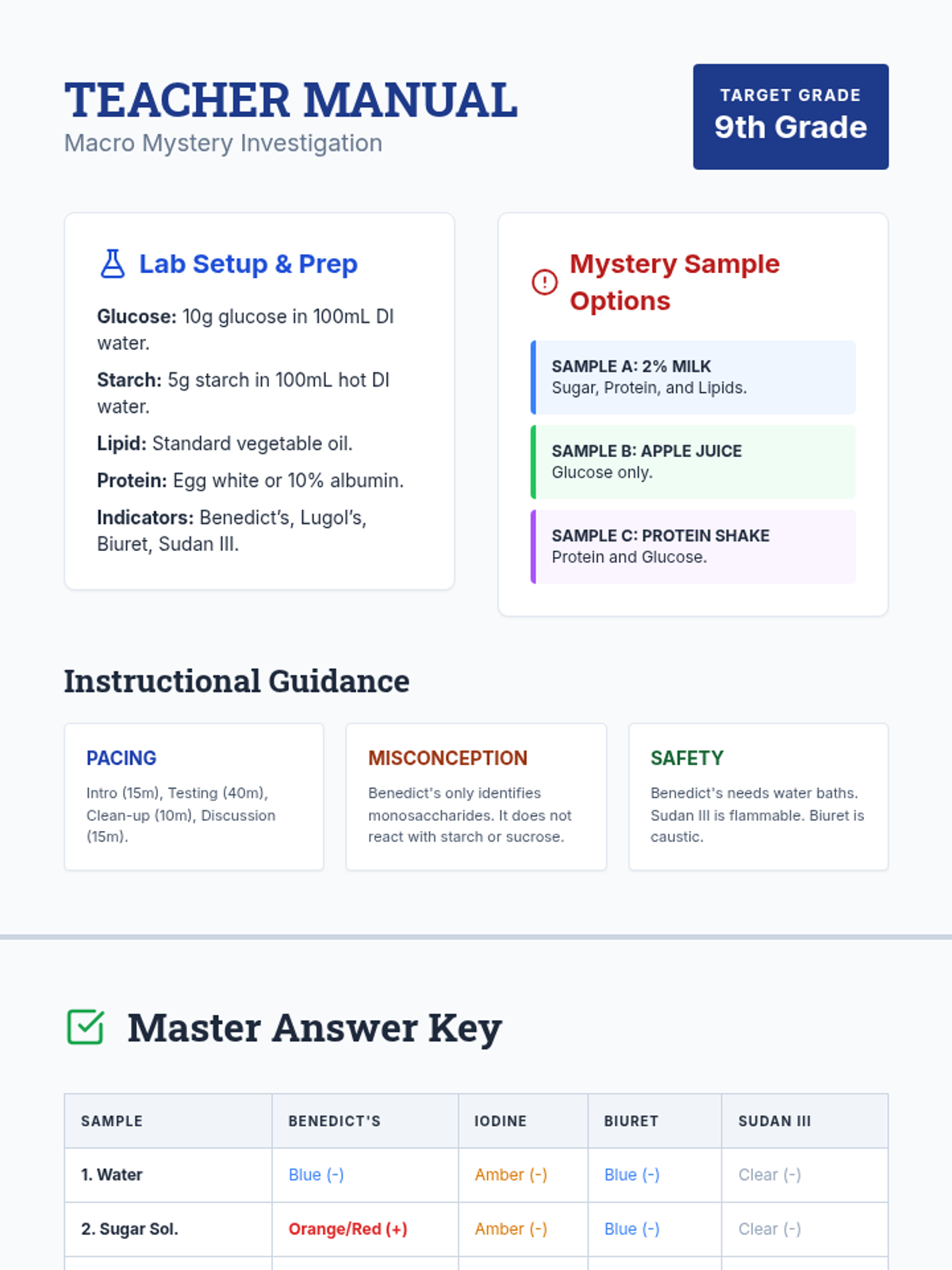
Students act as molecular detectives to identify the presence of carbohydrates, proteins, and lipids in various food samples using chemical indicators.