A practice-focused lesson on identifying and creating equivalent fractions using multiplication and division strategies without visual aids.
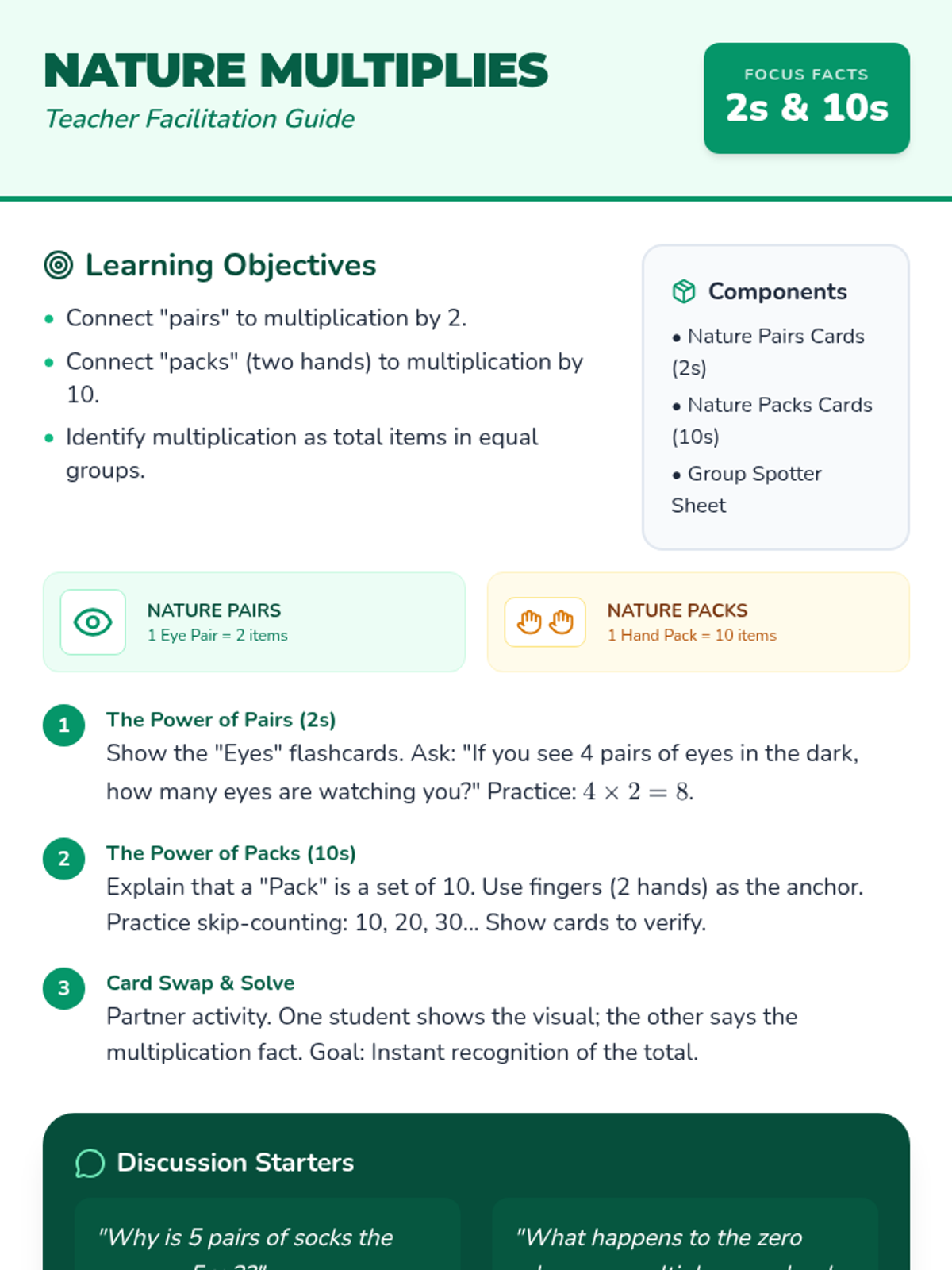
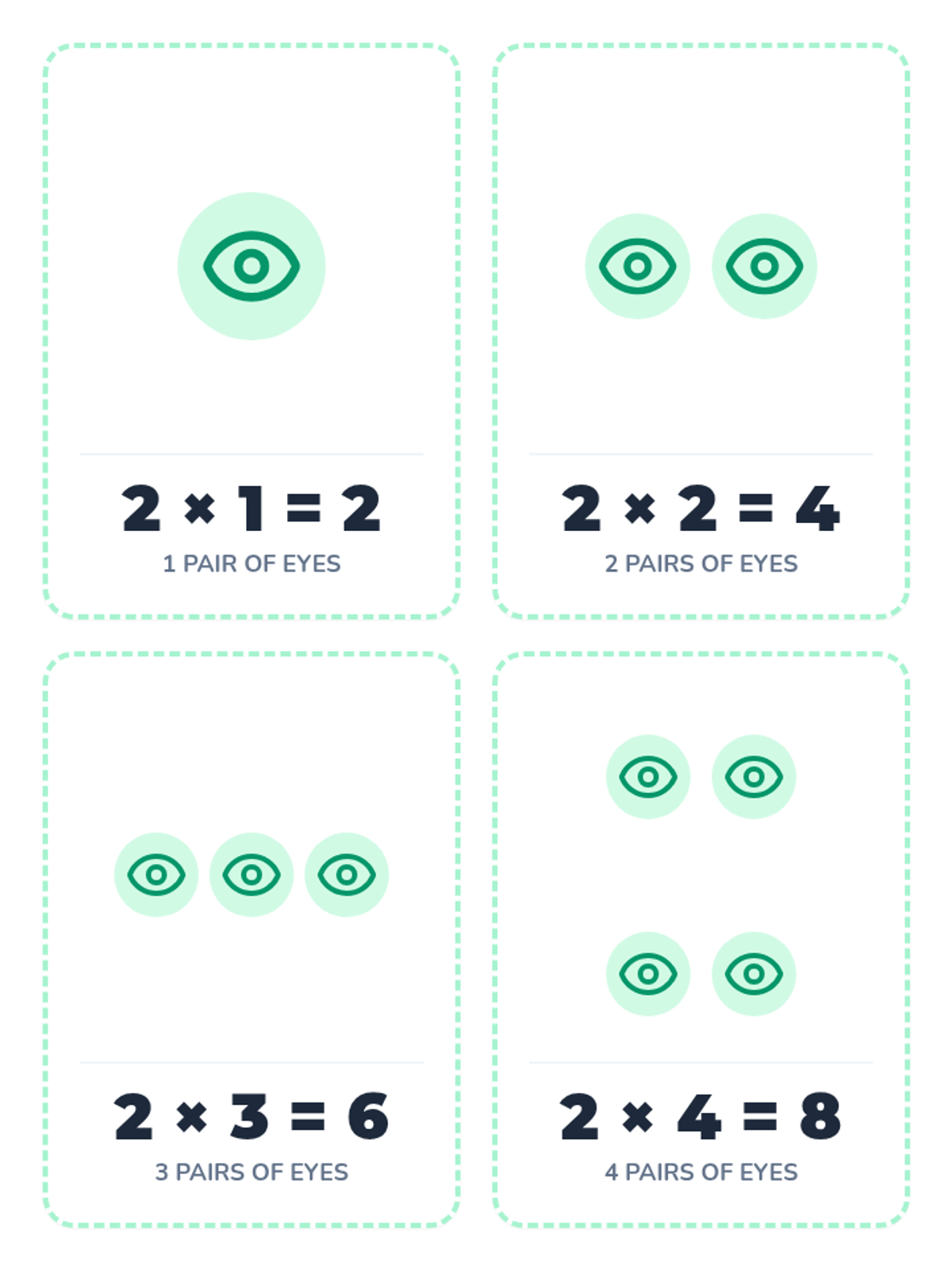
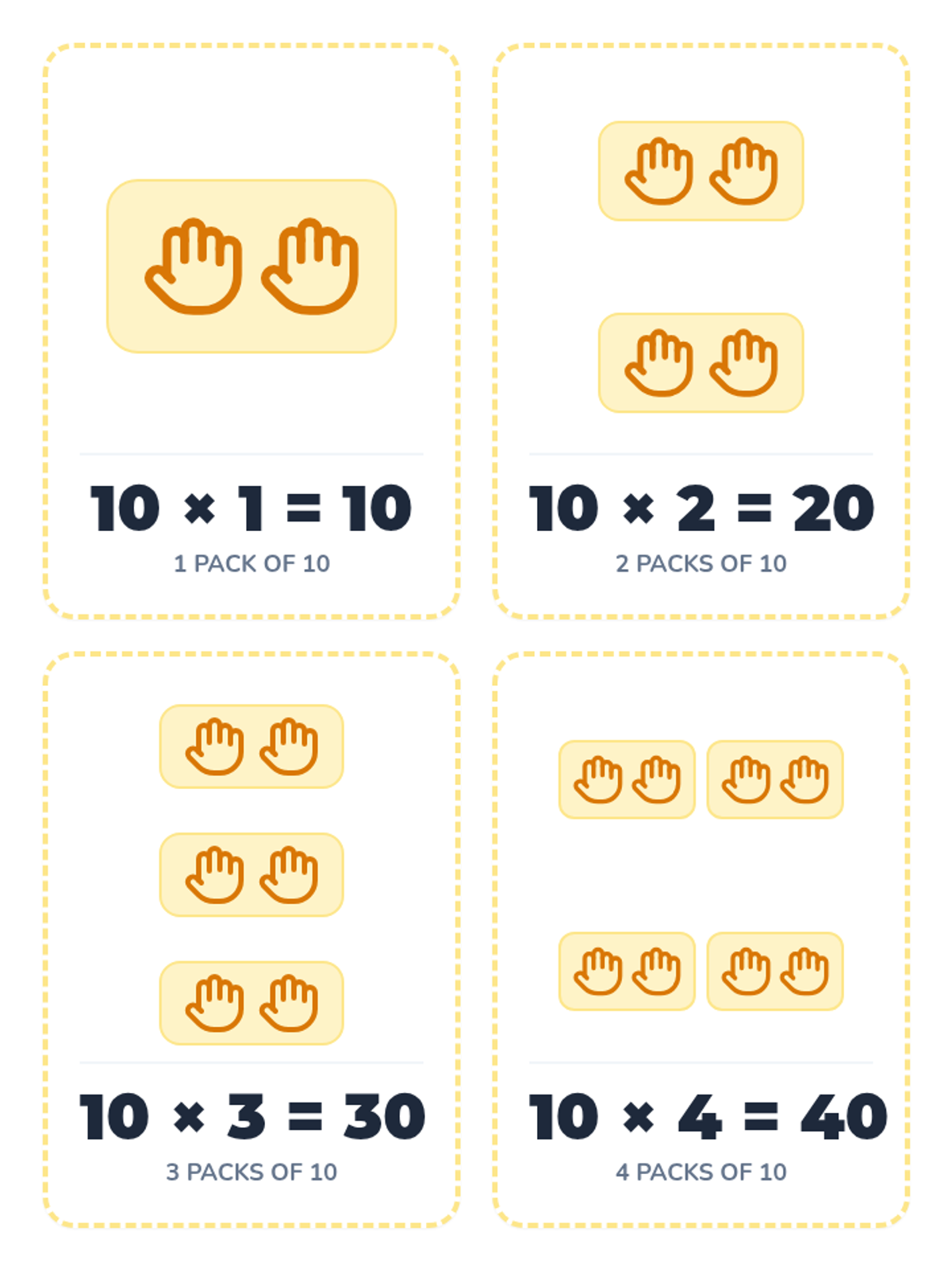
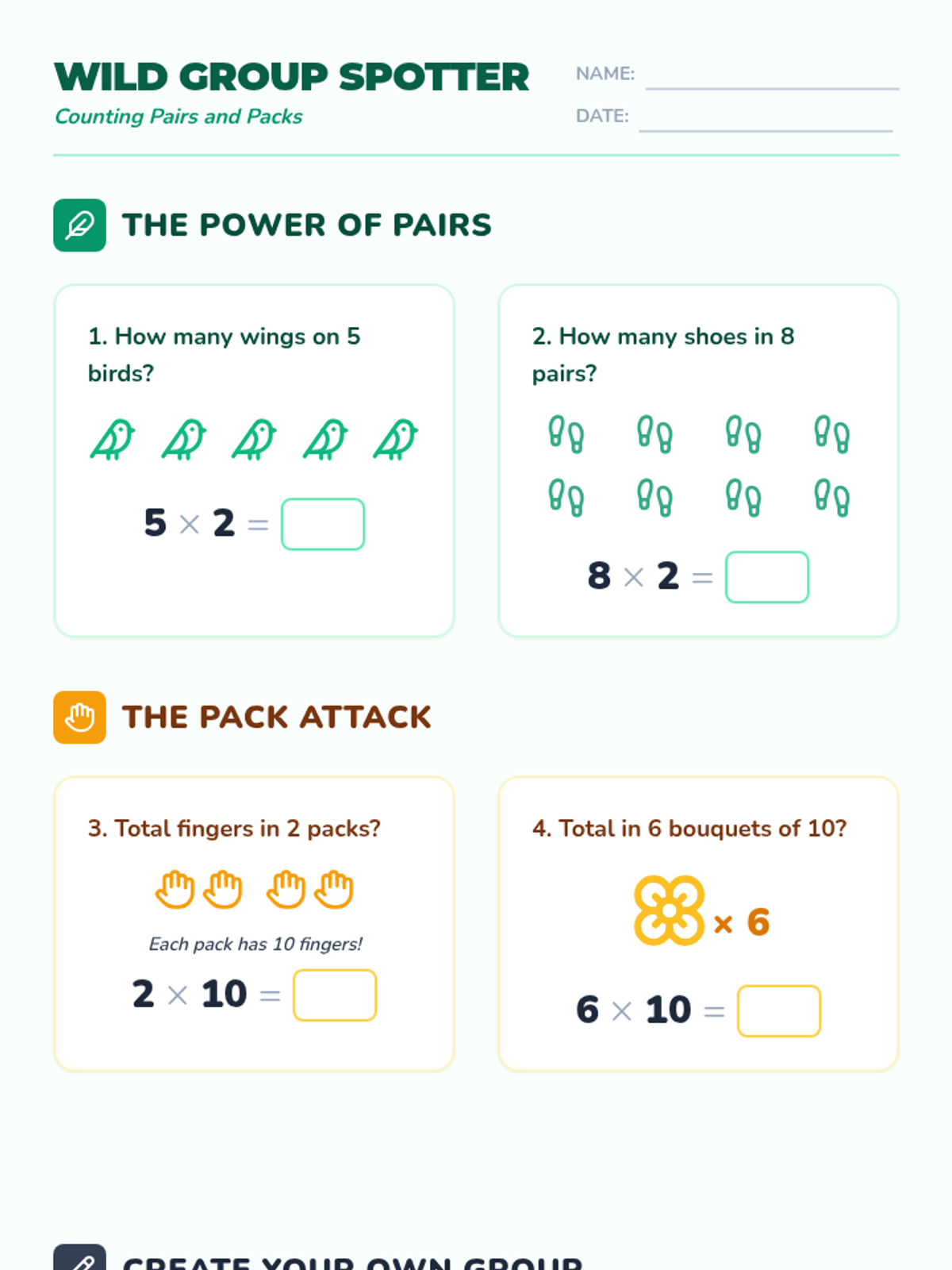
A foundation-level lesson introducing multiplication as equal groups, focusing on the numbers 2 and 10 through visual aids and hands-on flashcard practice.
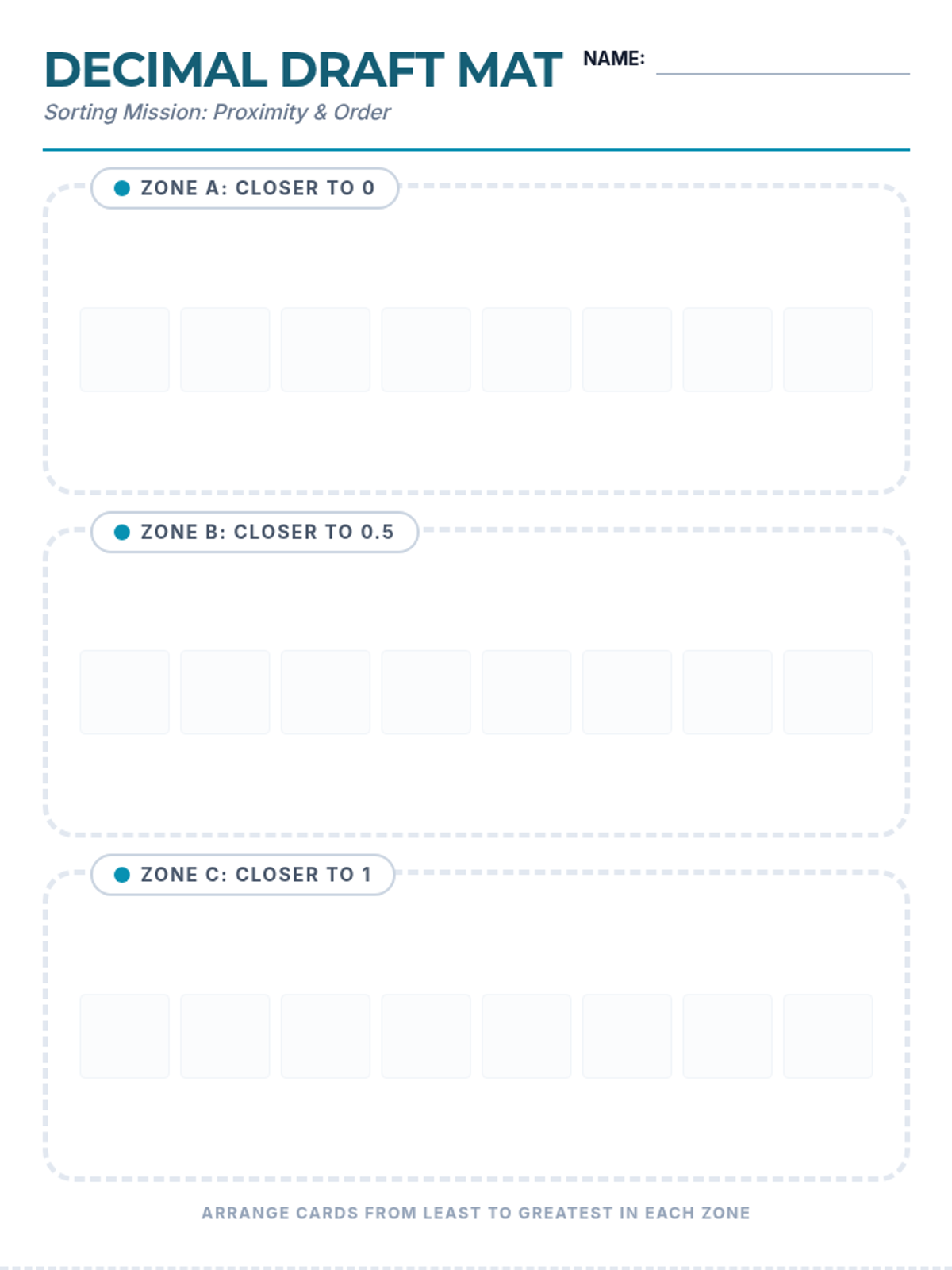
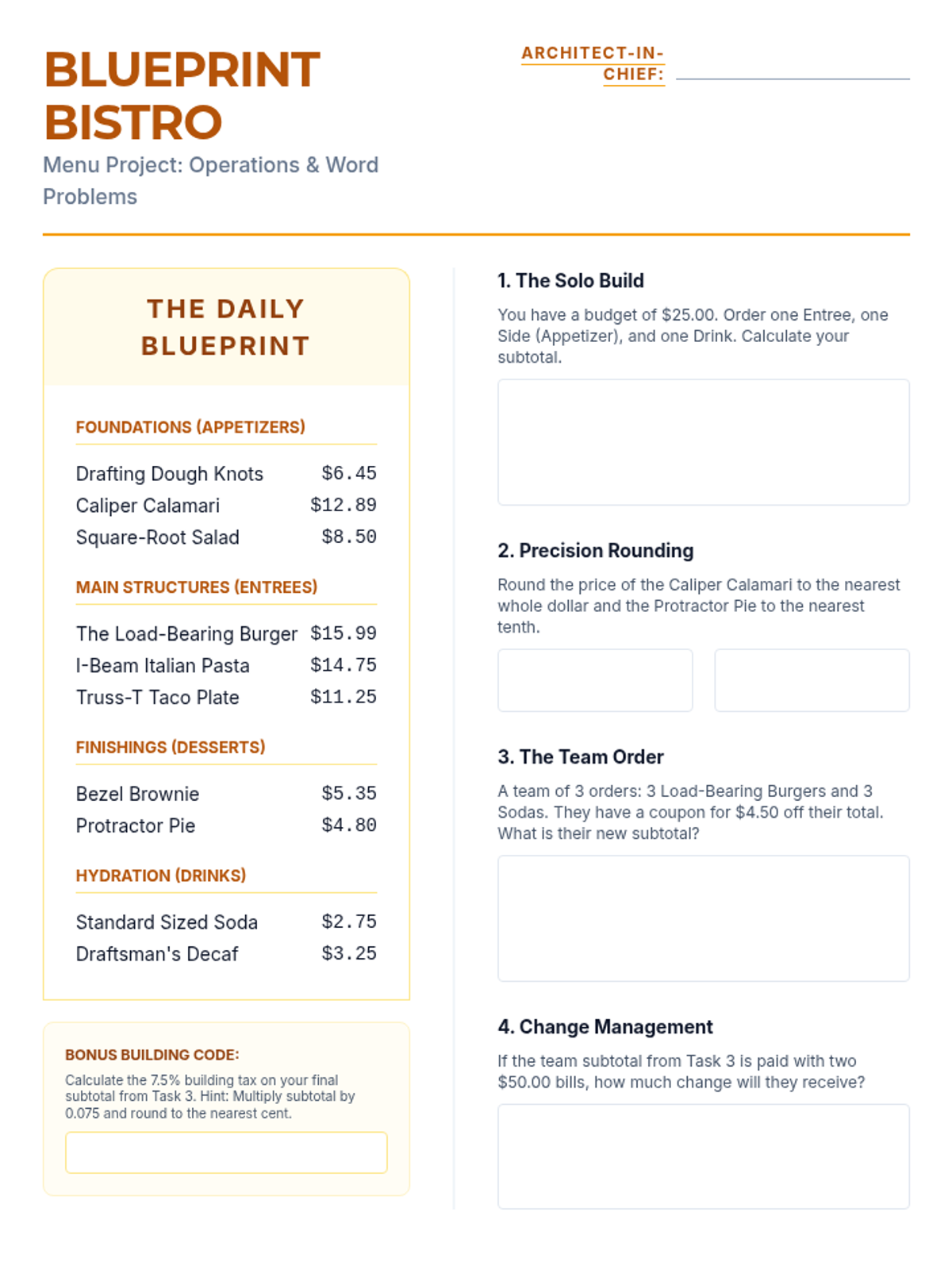
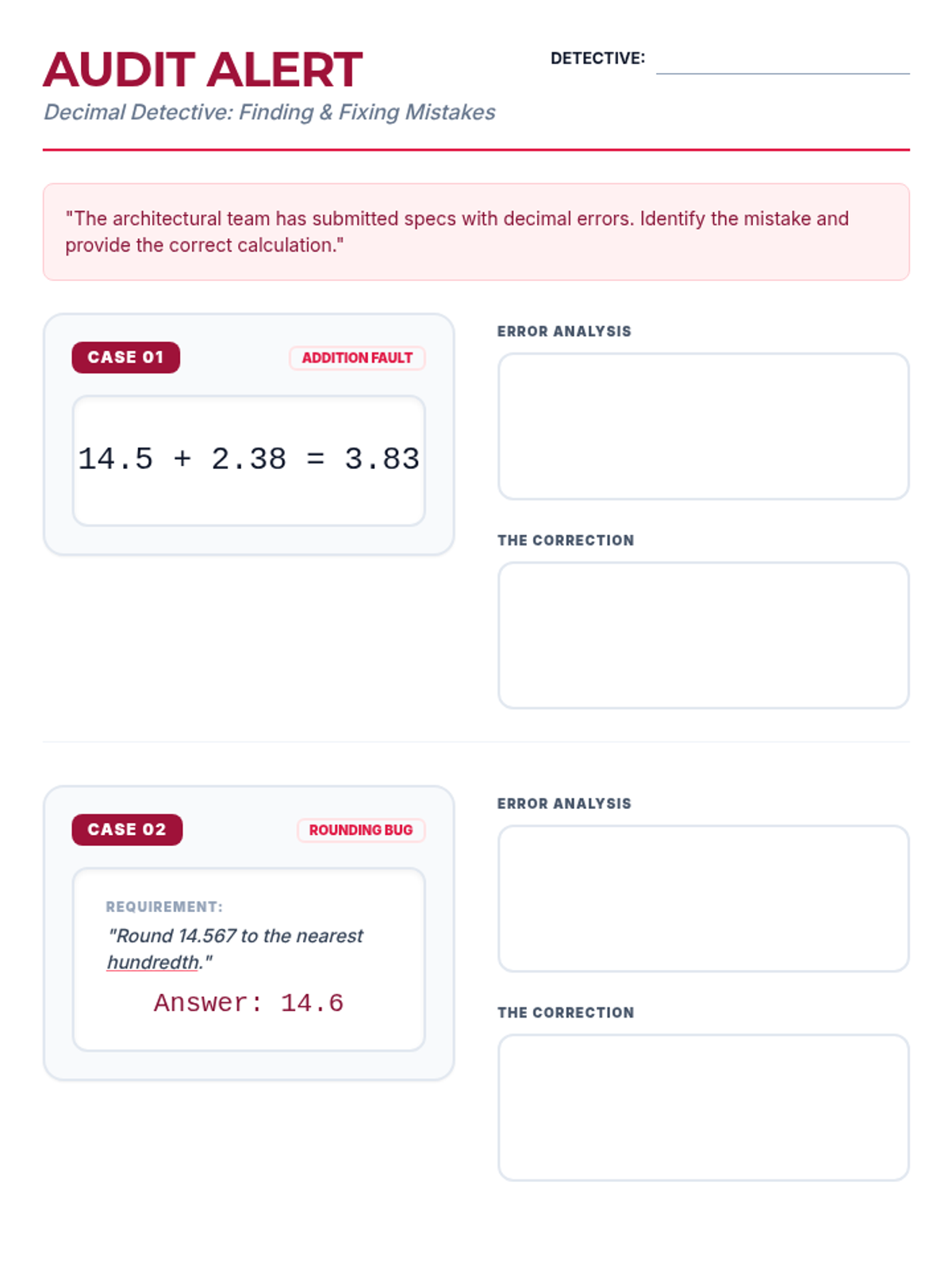
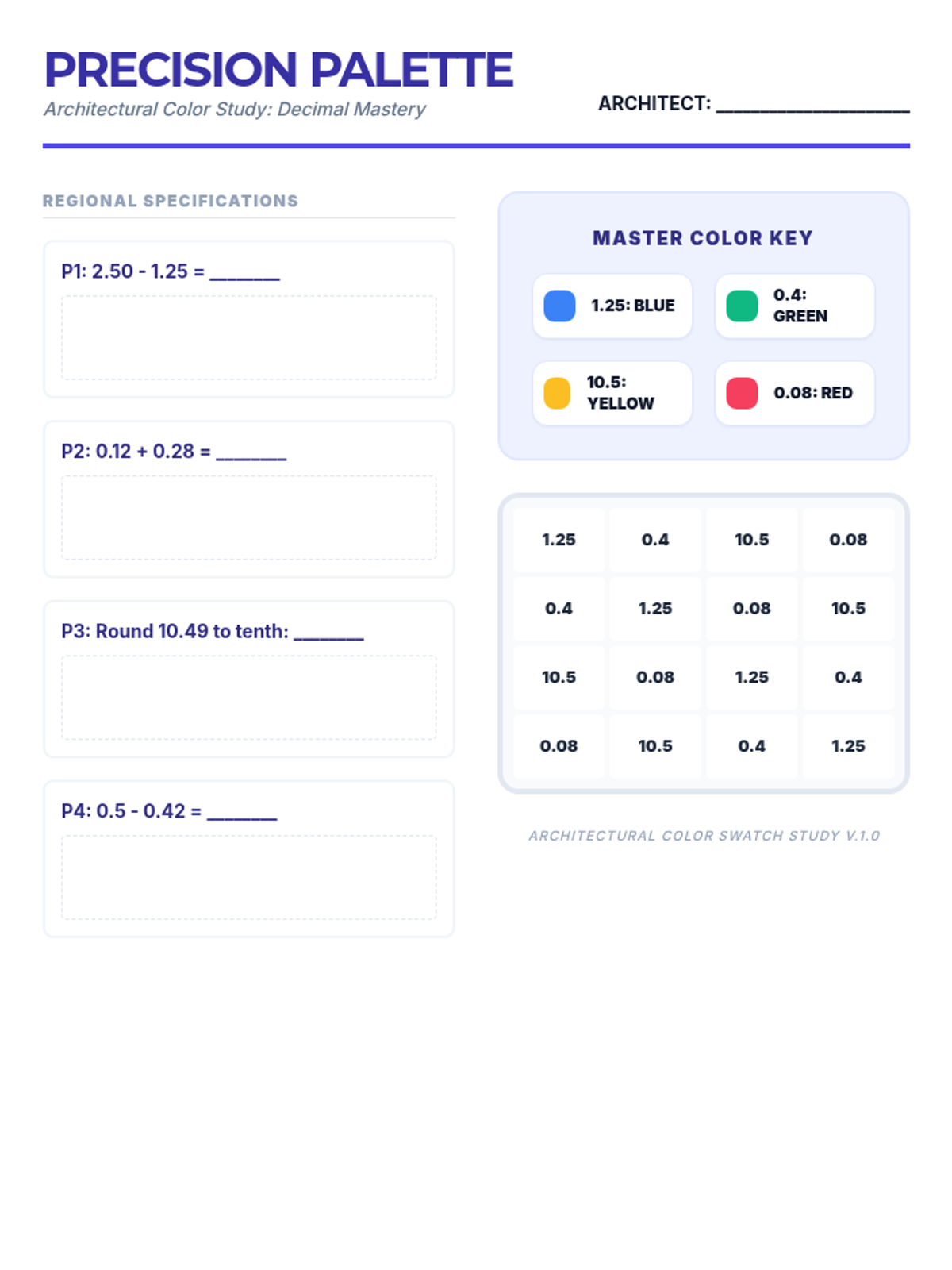
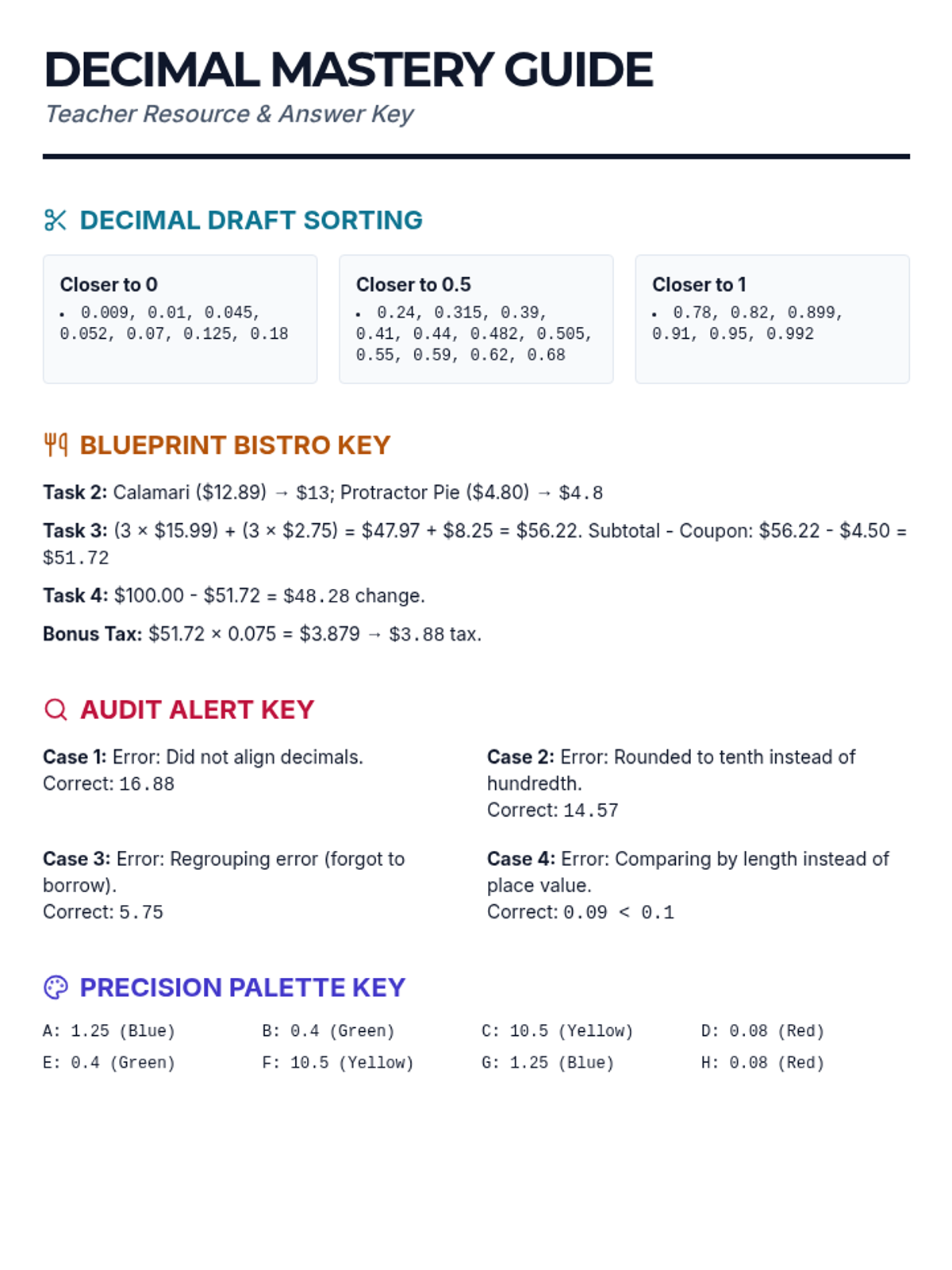
A collection of four diverse decimal practice activities covering addition, subtraction, comparison, rounding, and word problems for 7th-grade math students.
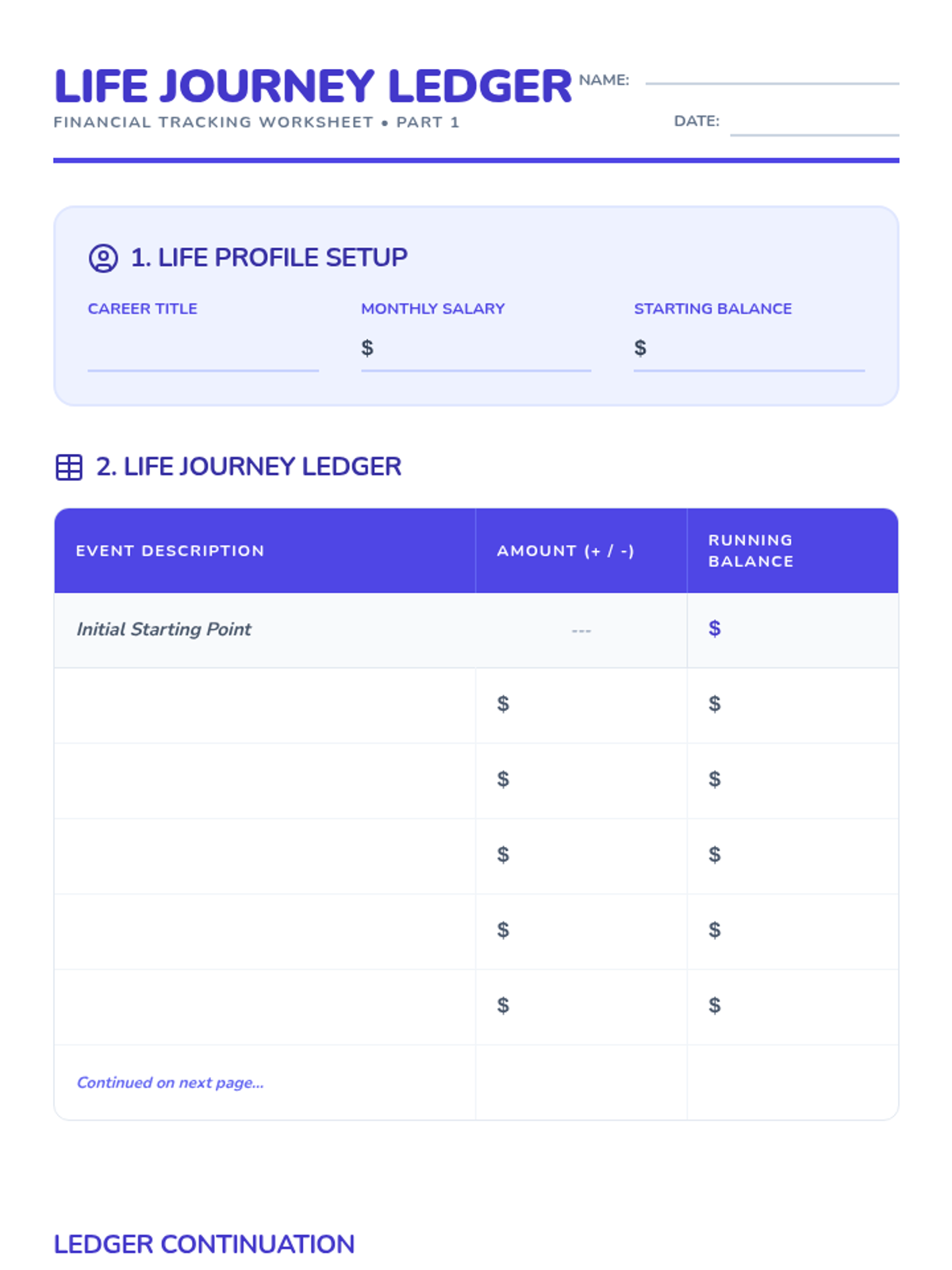
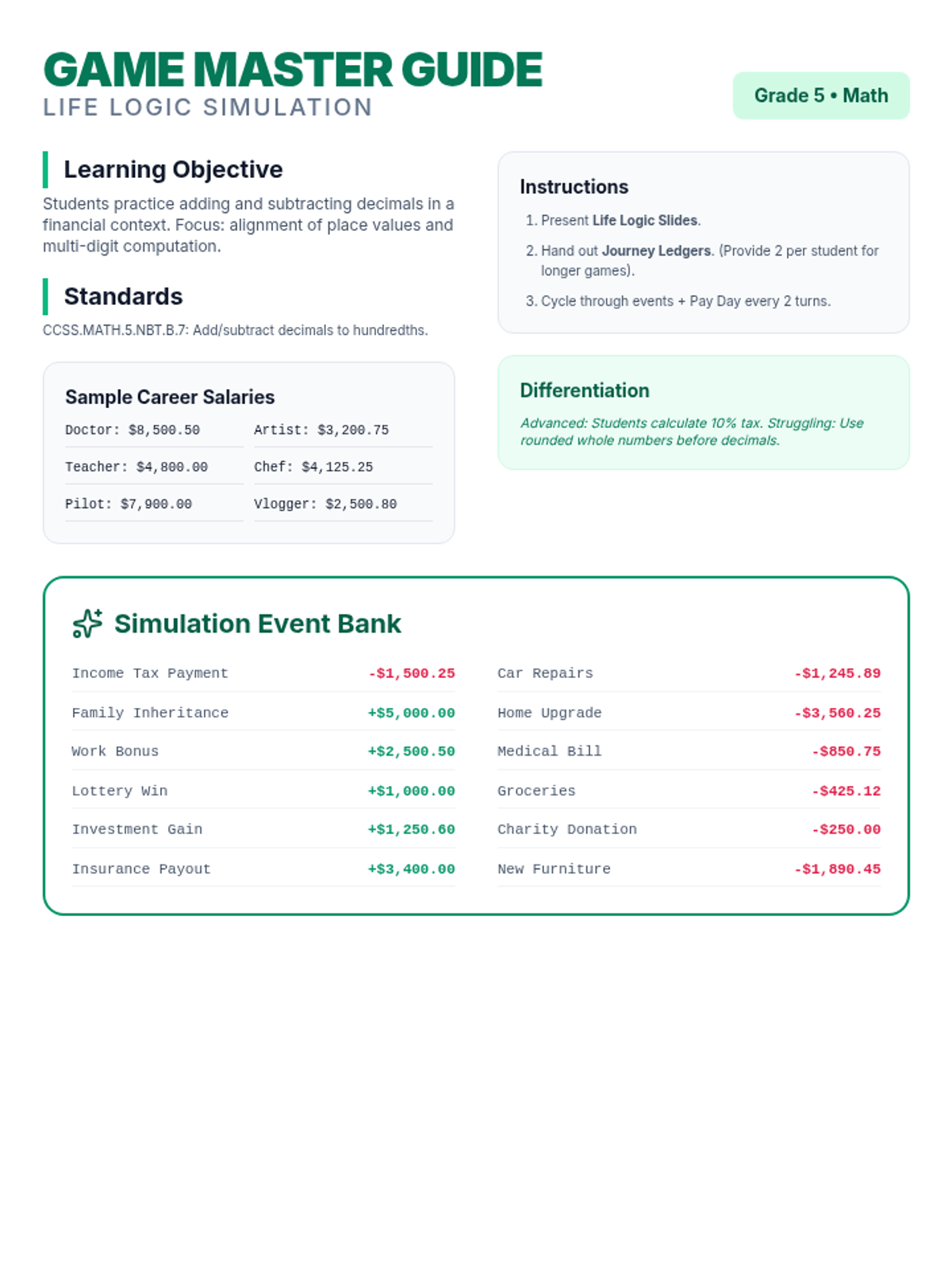
A comprehensive introduction to the classic board game 'Life', focusing on financial literacy and multi-digit decimal operations. Students learn the game mechanics and prepare for a project where they simulate their own financial journey.
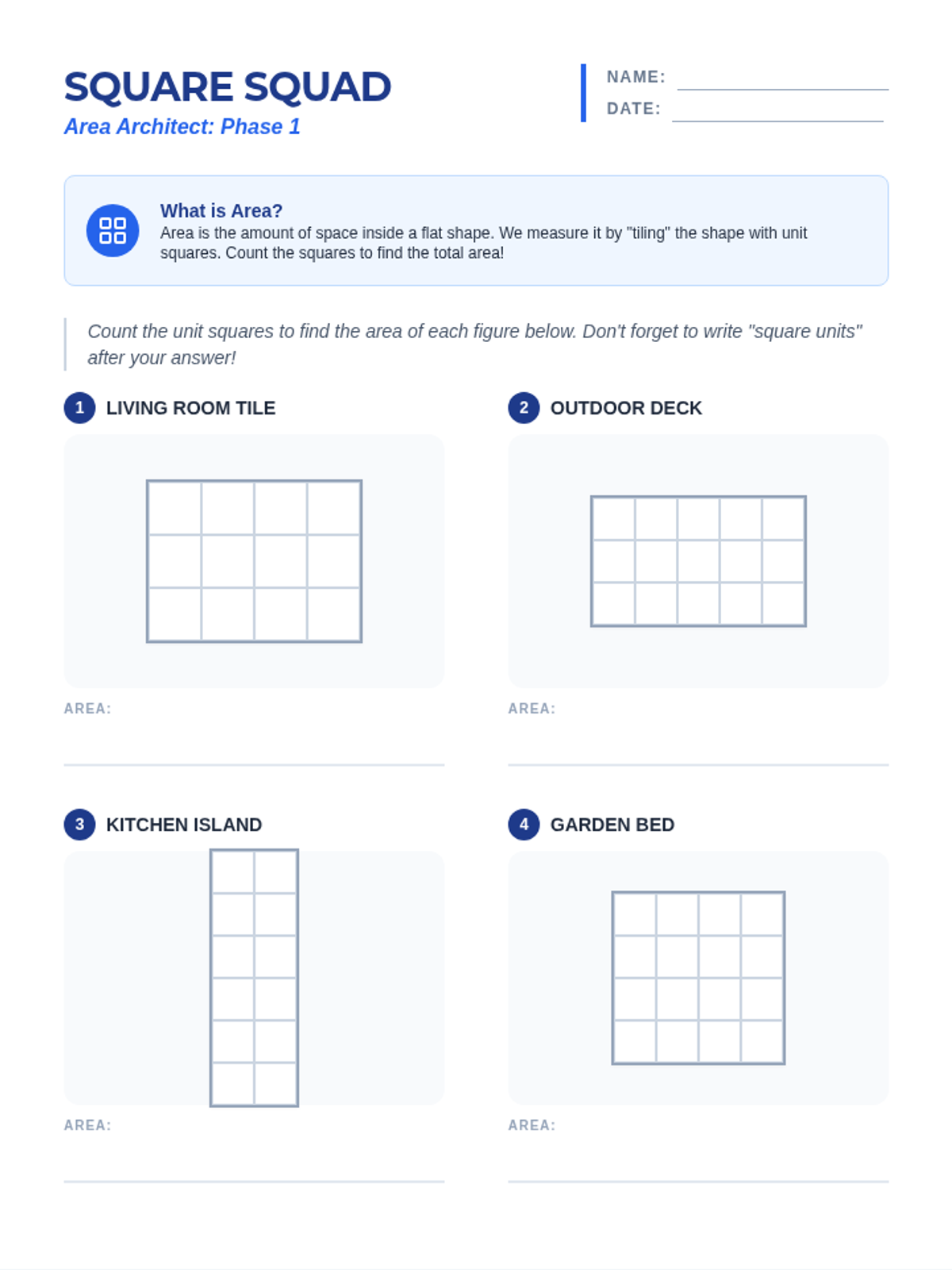
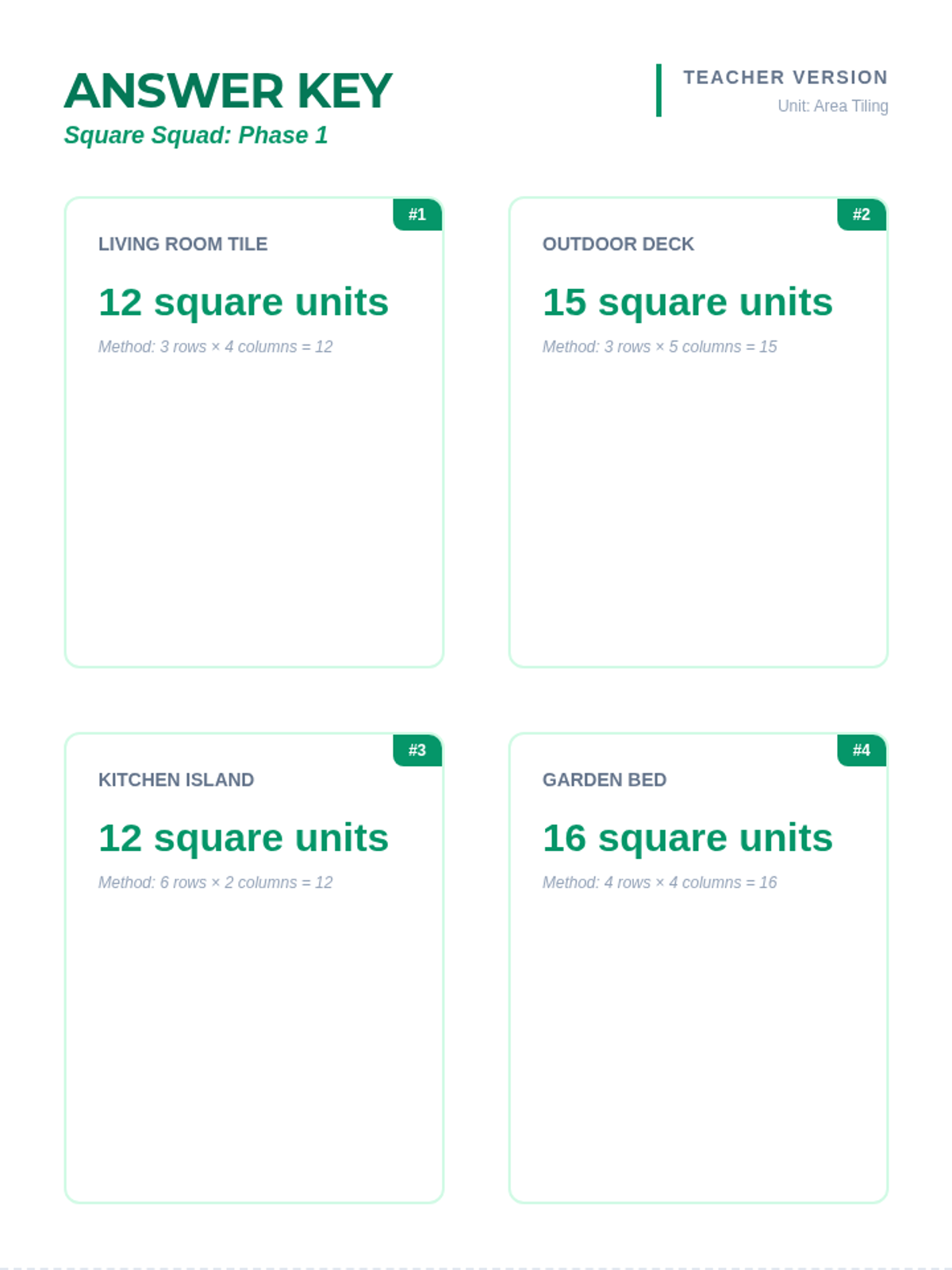
A hands-on lesson for 3rd graders to understand area by tiling figures with unit squares, moving from counting to understanding the concept of square units.
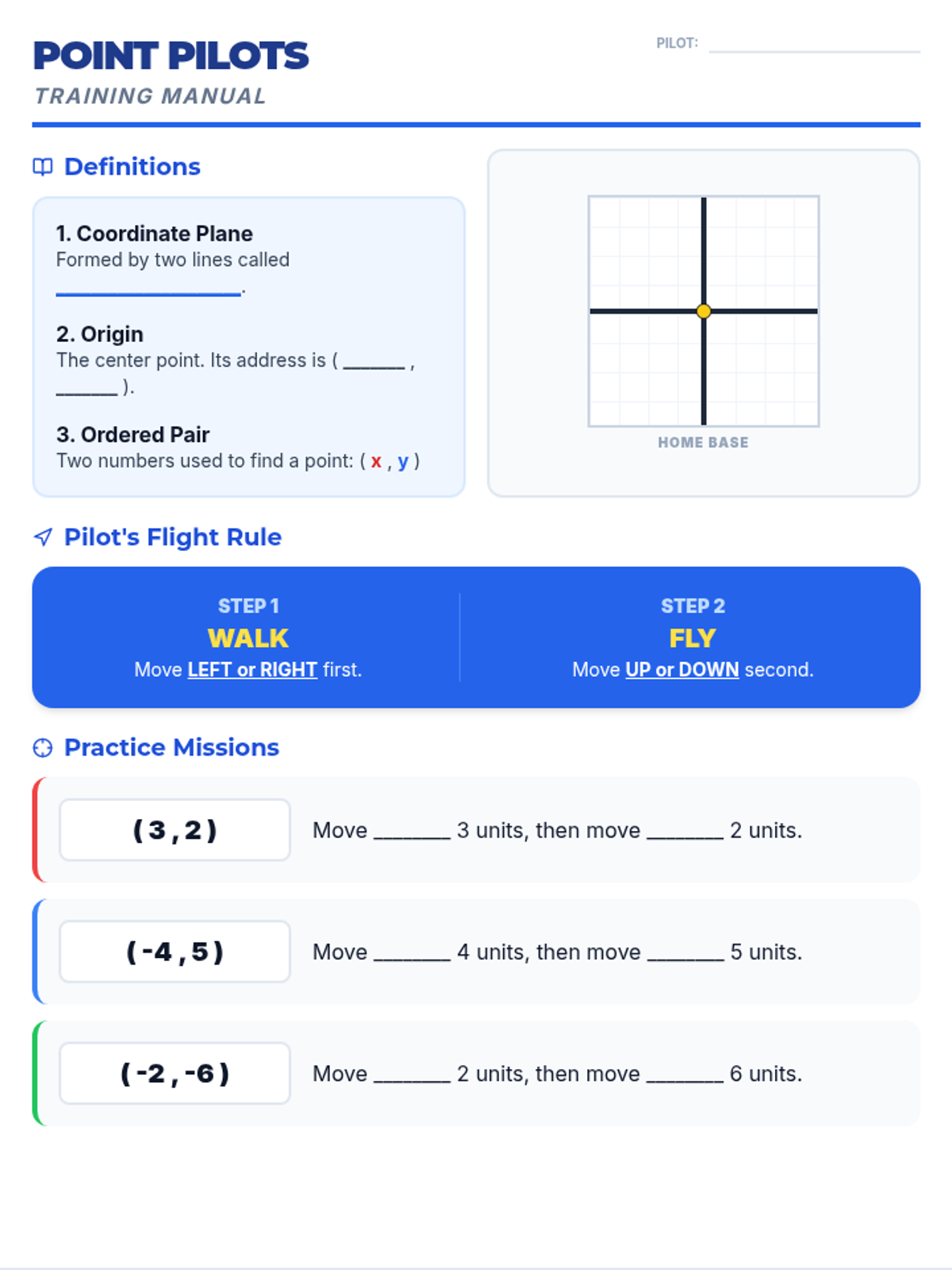
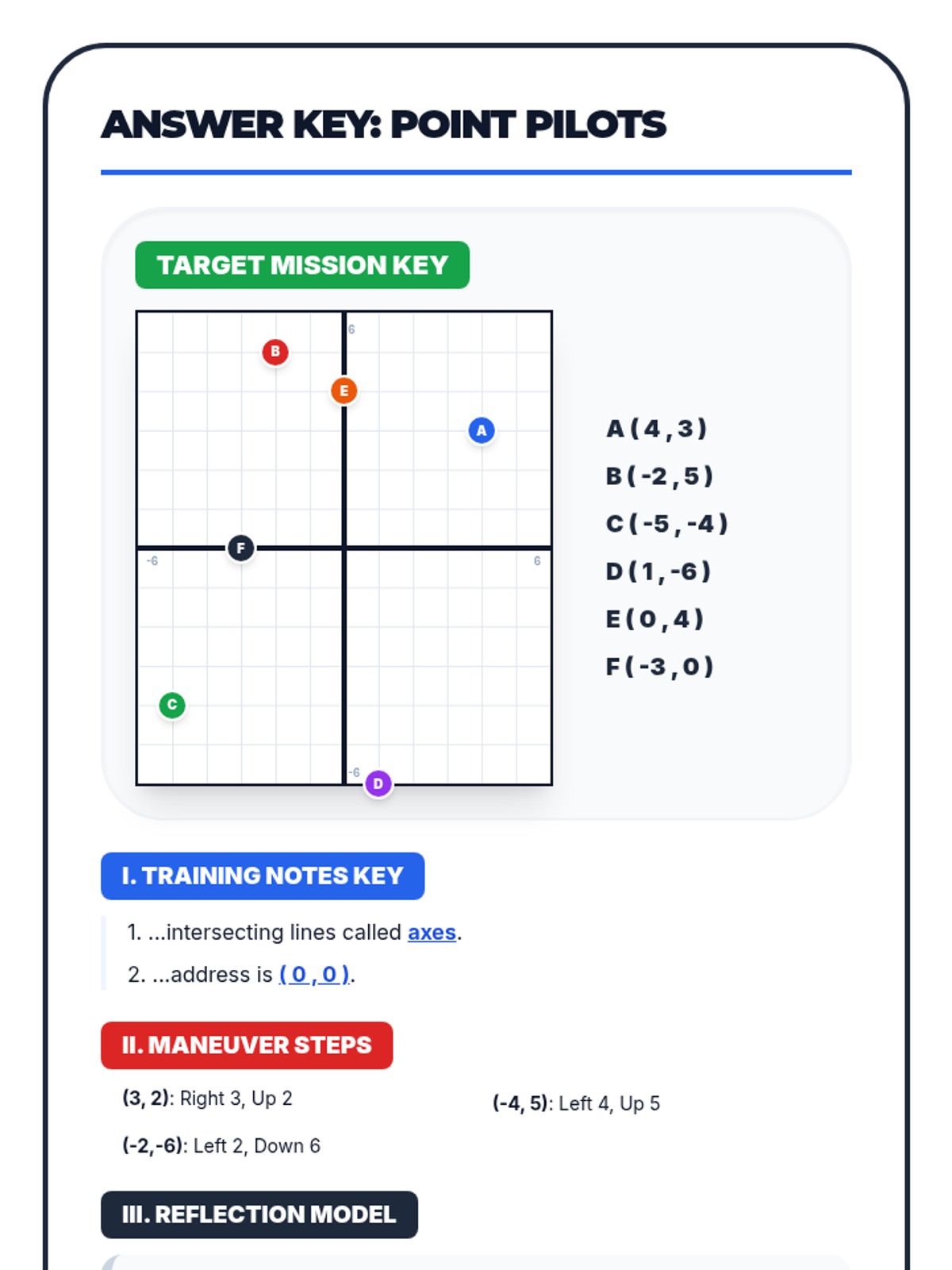
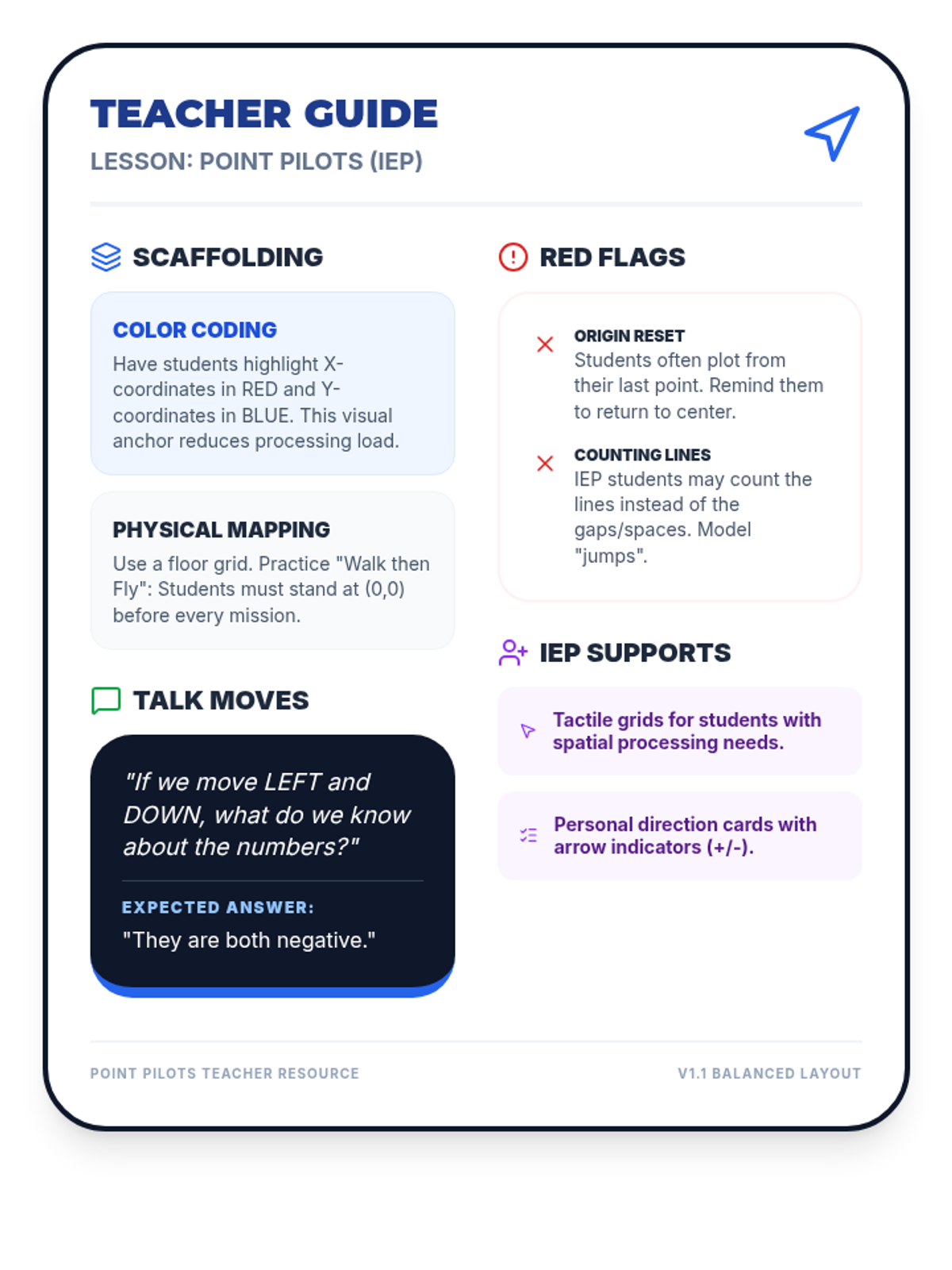
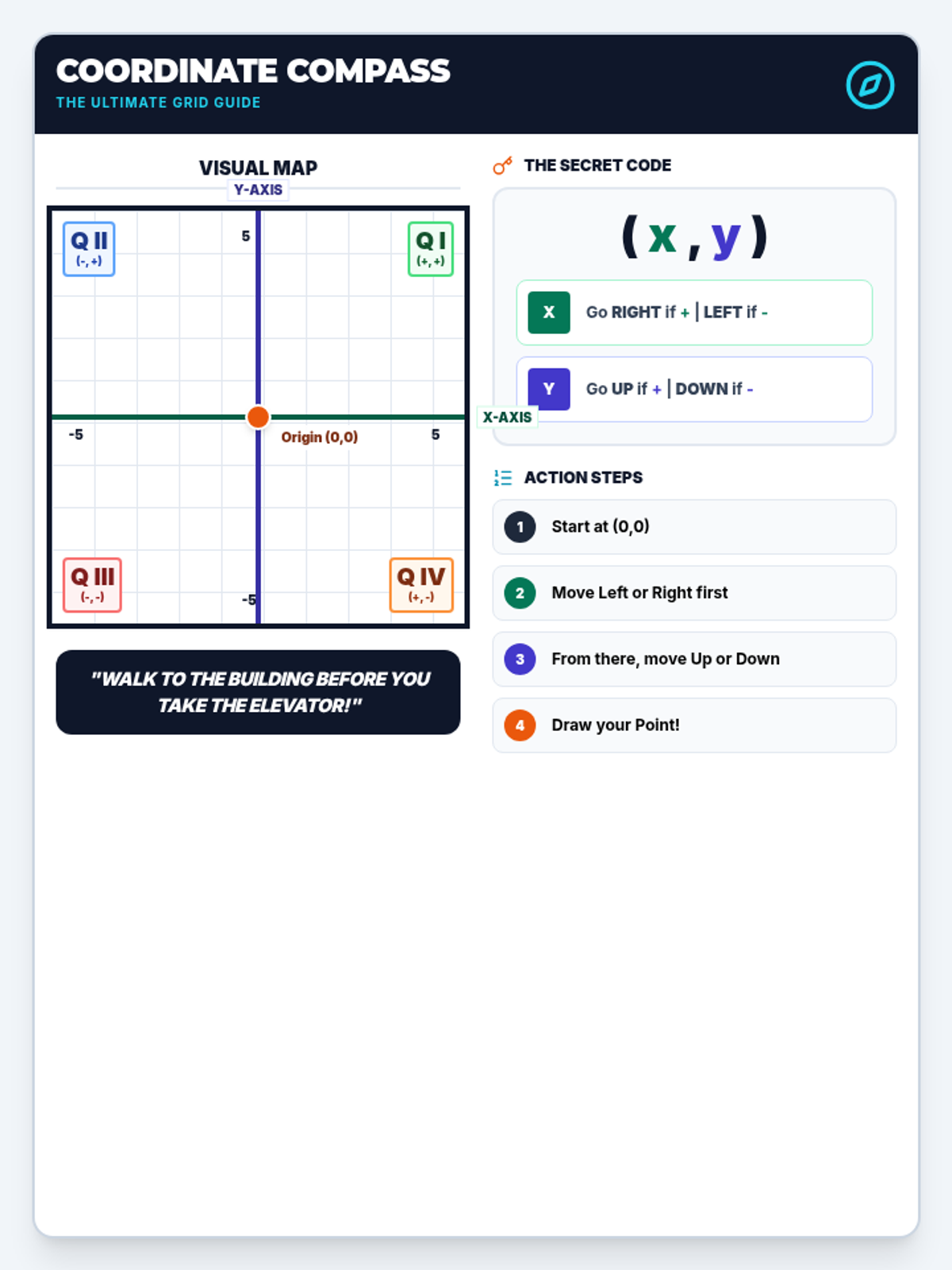
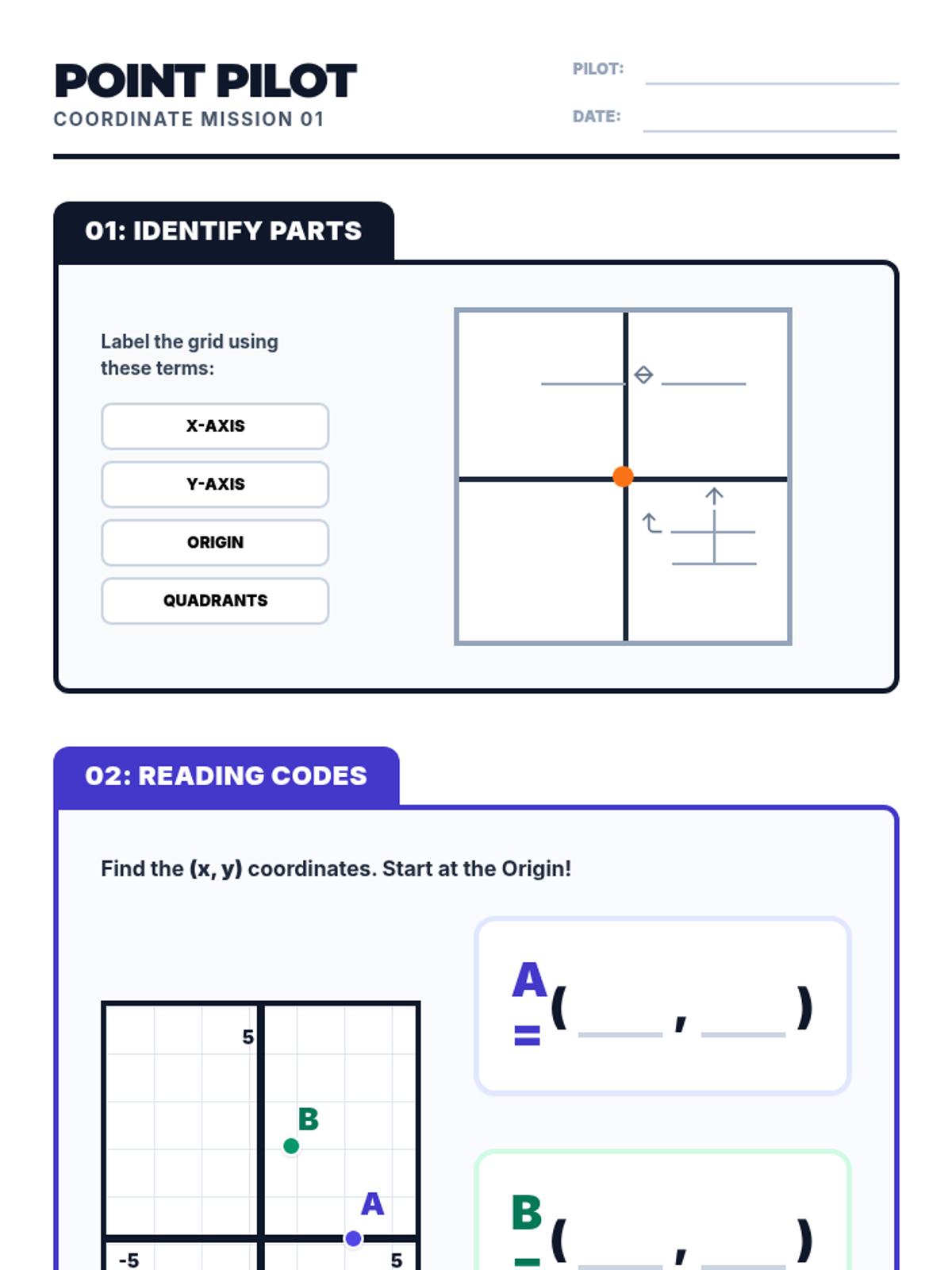
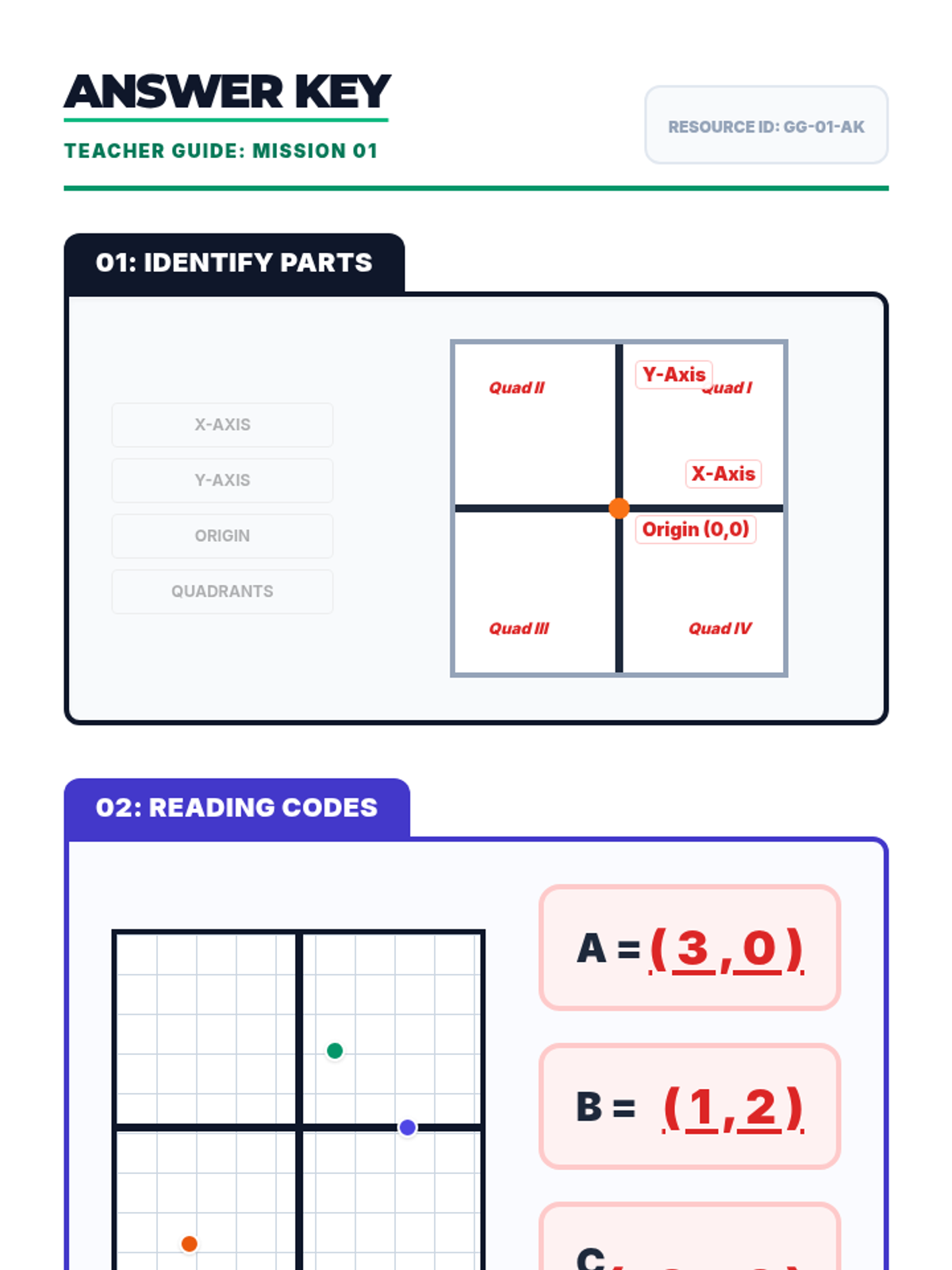
A scaffolded introduction to the four-quadrant coordinate plane, using a navigation theme to help students master plotting points with visual aids and step-by-step guides.
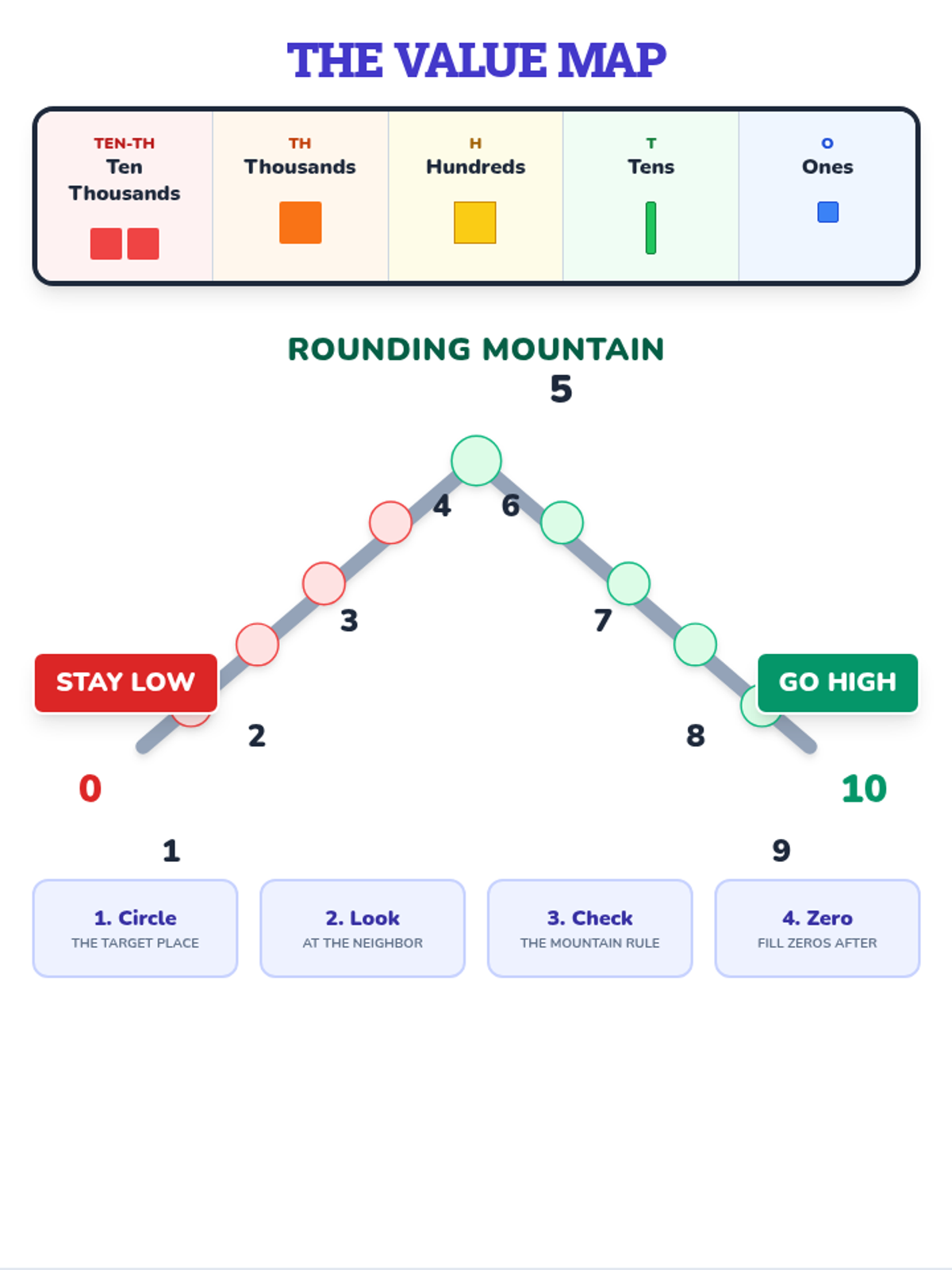
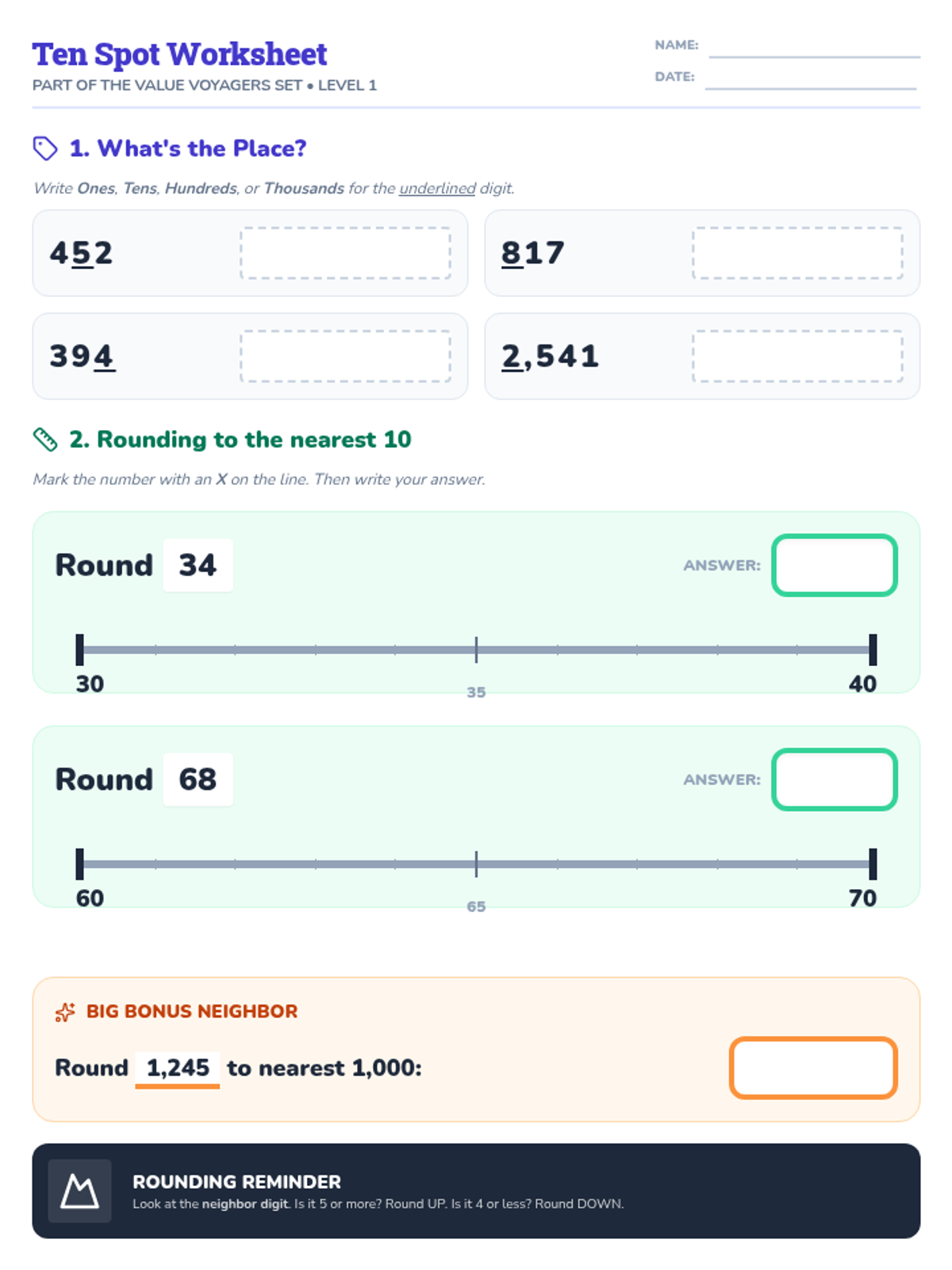
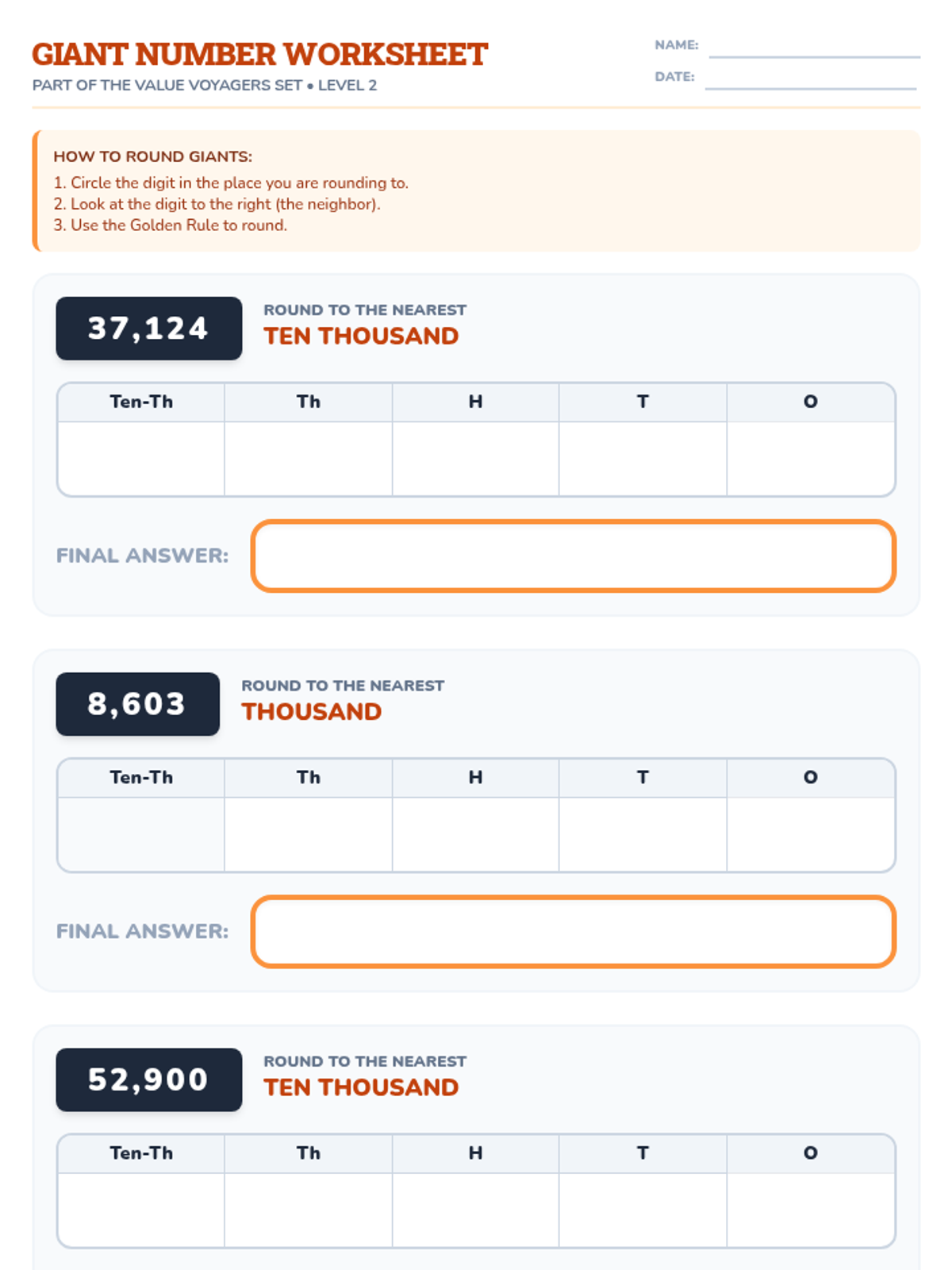
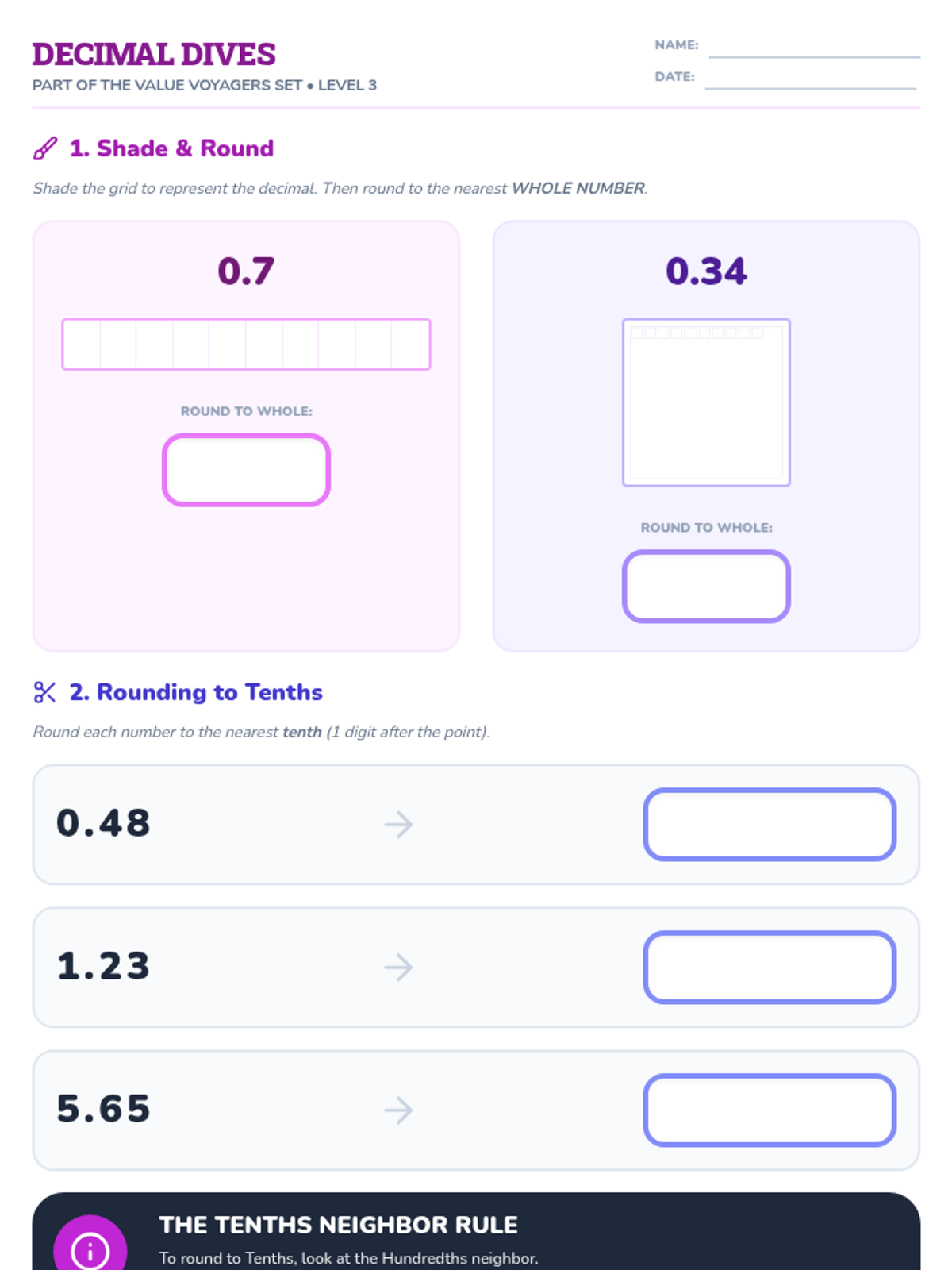
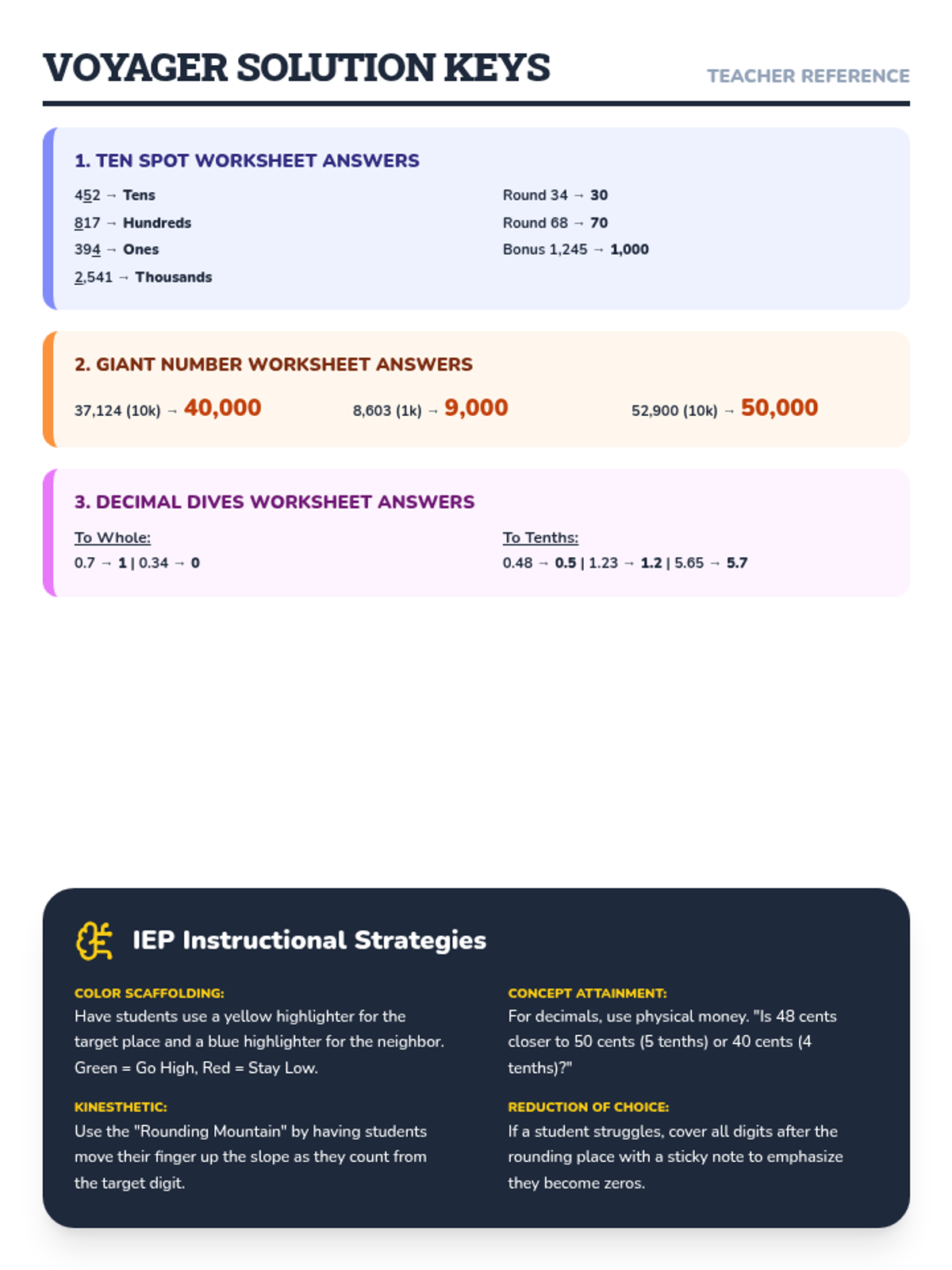
A comprehensive guide to understanding place value from single digits to ten-thousands and decimals, featuring visual scaffolding for rounding.
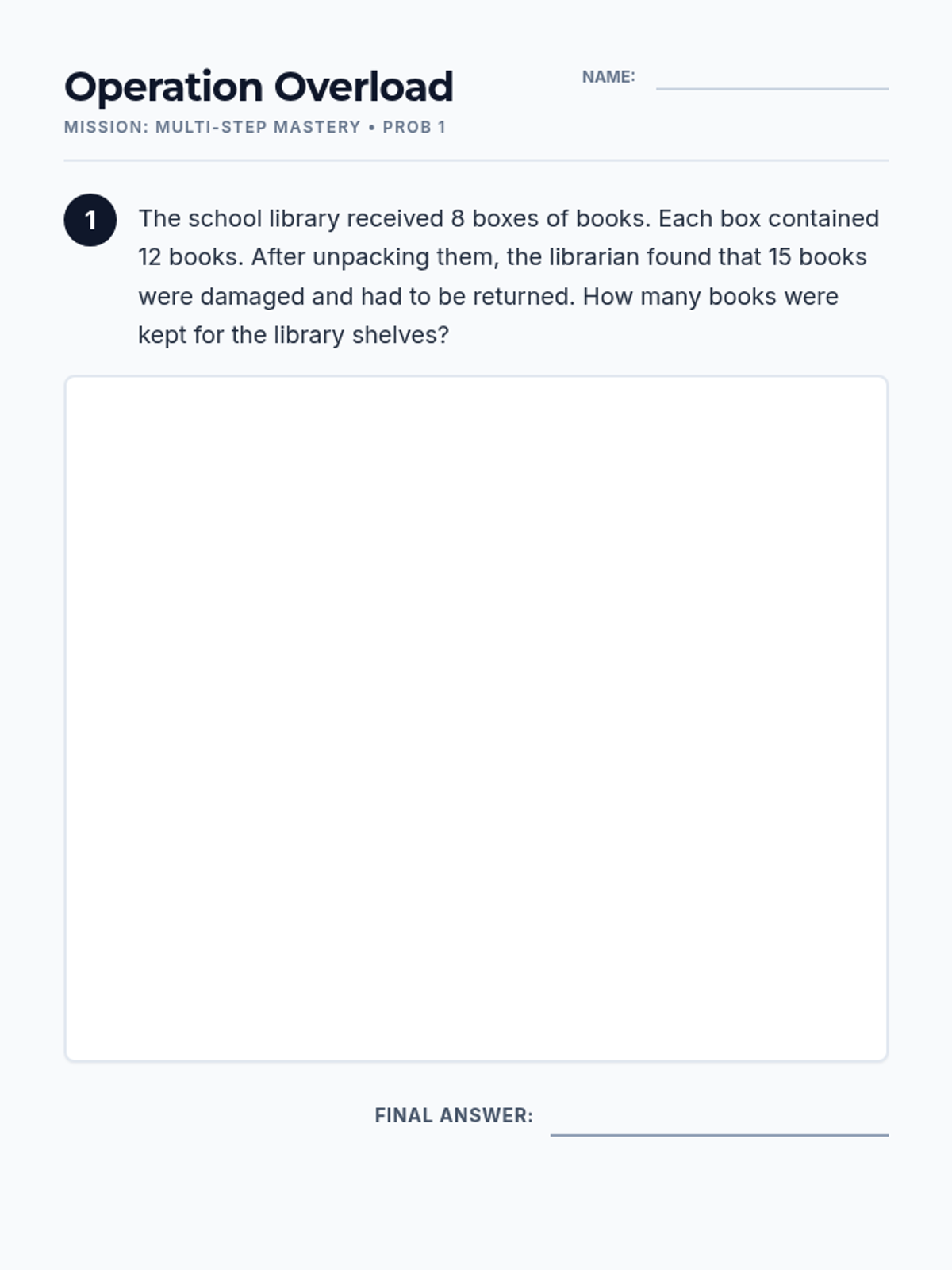
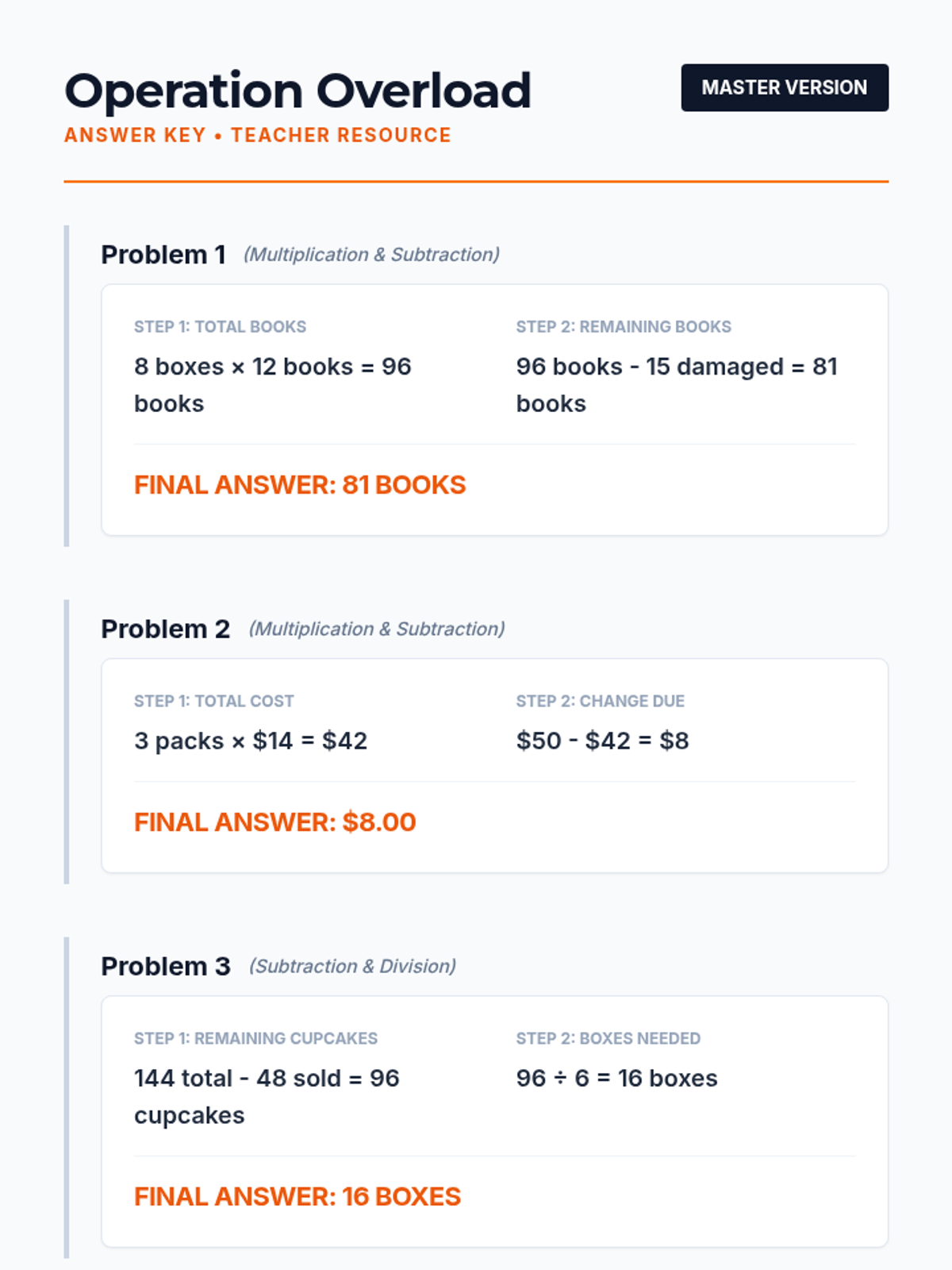
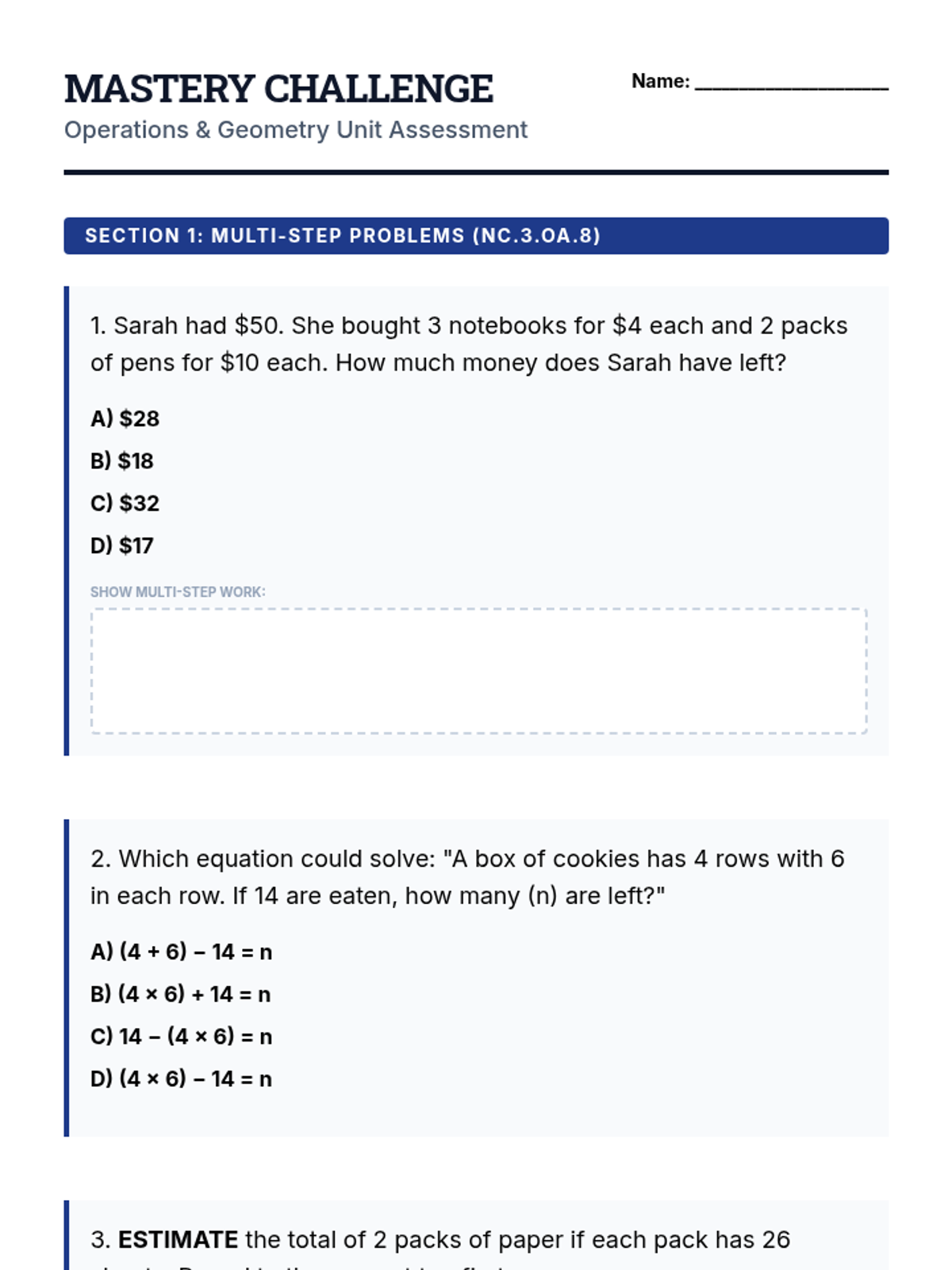
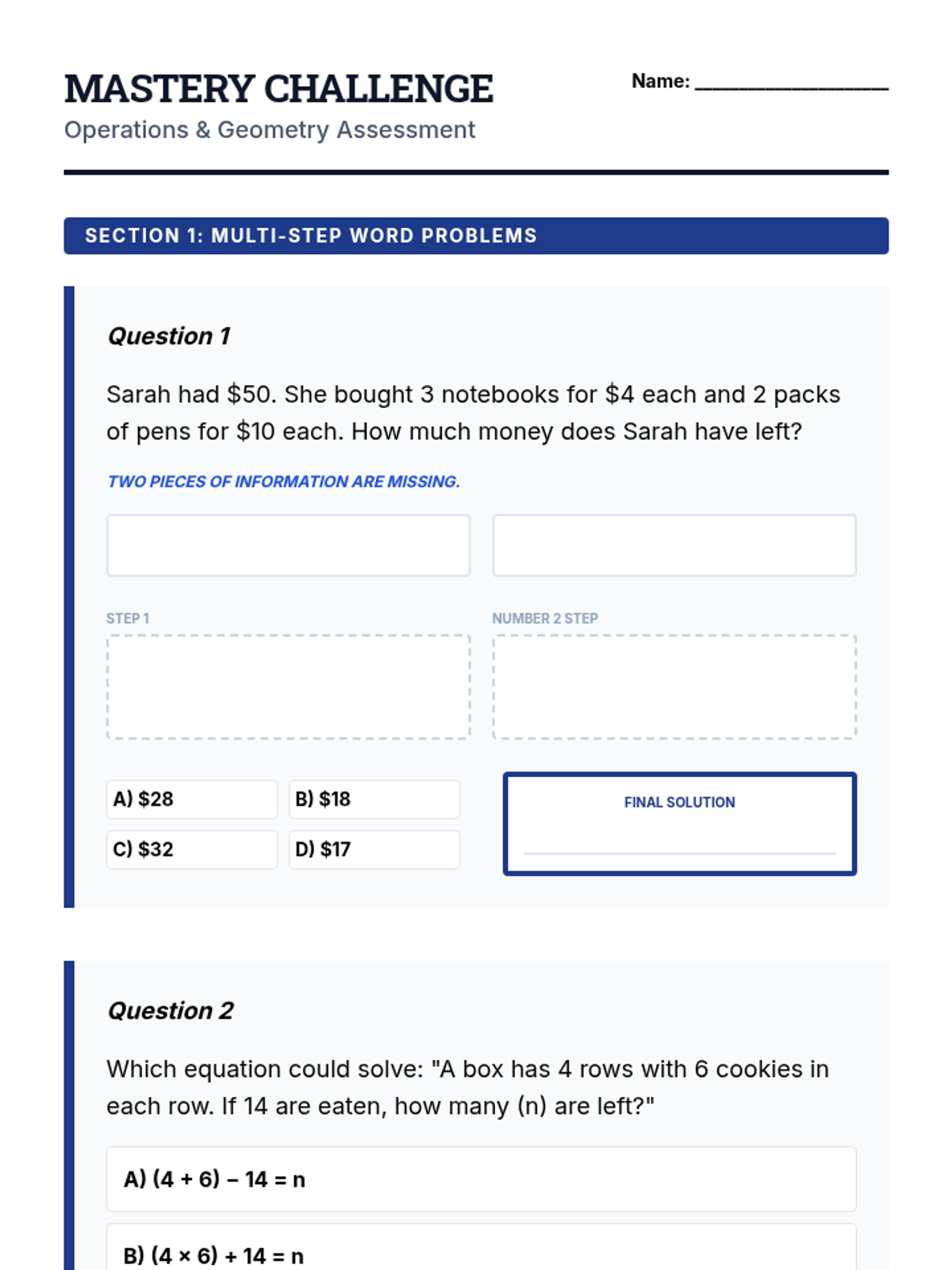
A collection of multi-step word problems involving addition, subtraction, multiplication, and division to challenge student logic and calculation skills.
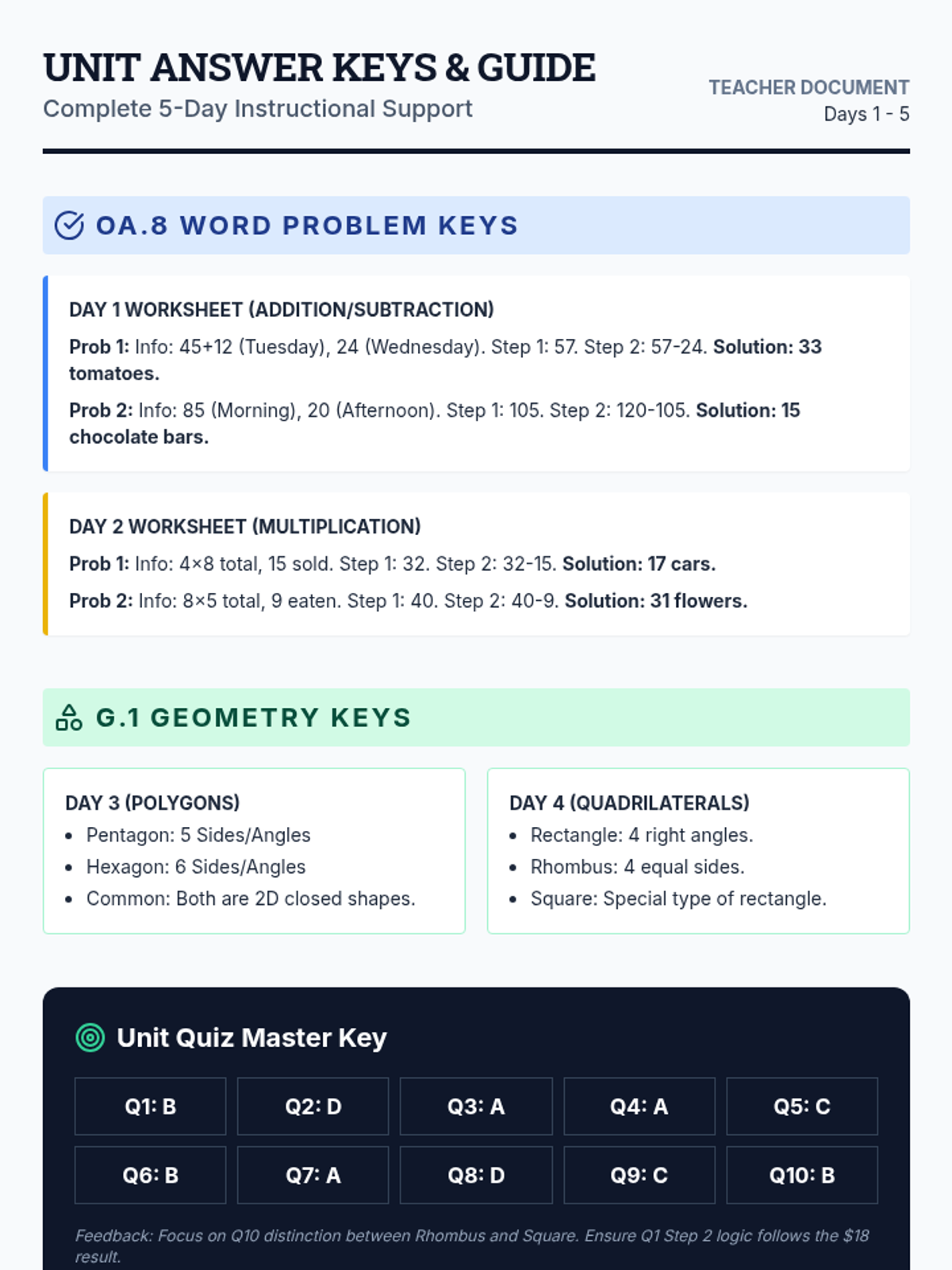
Master resources for the Unit, including the comprehensive 5-day slide deck and the unit-wide answer key guide.
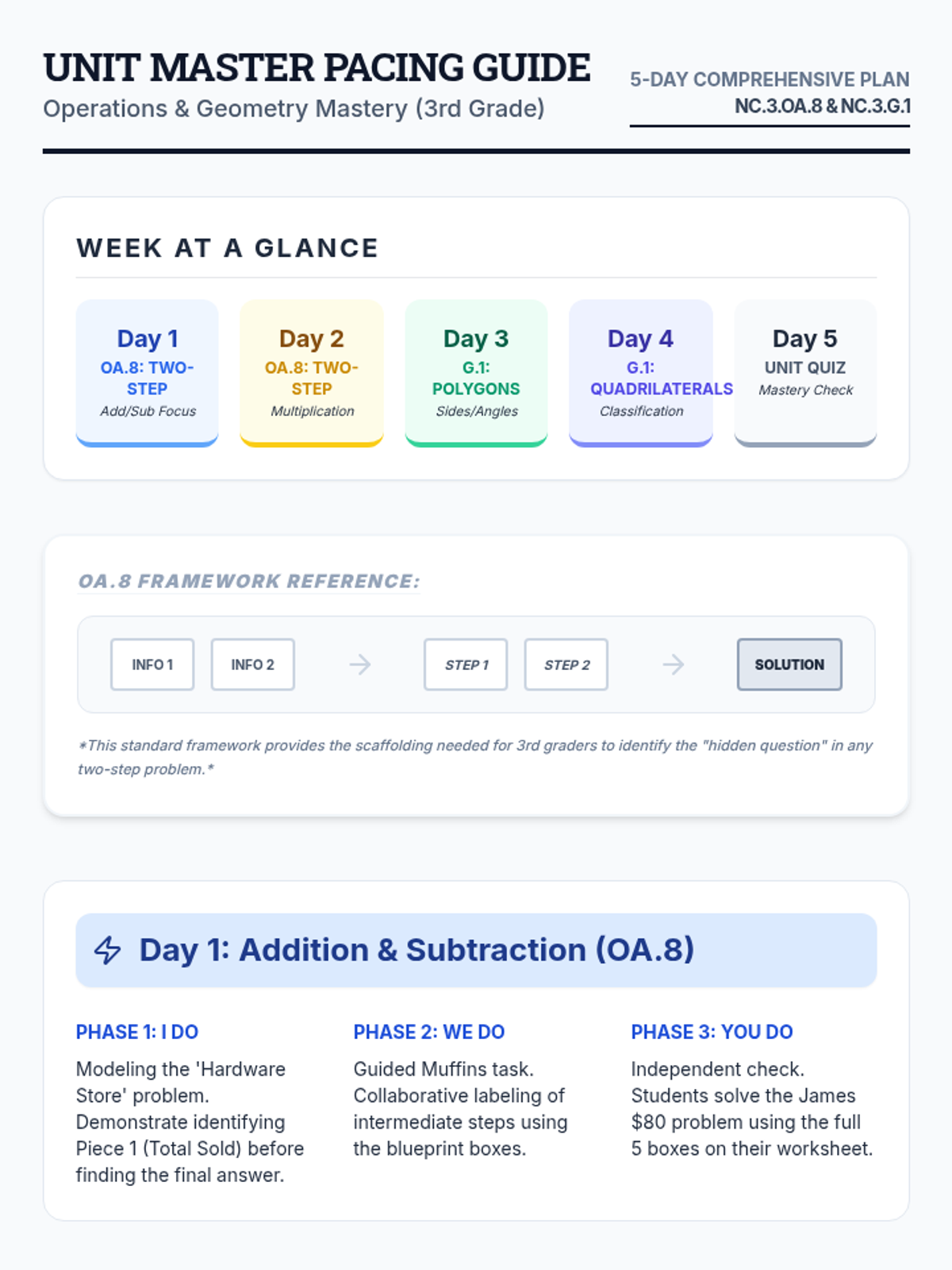
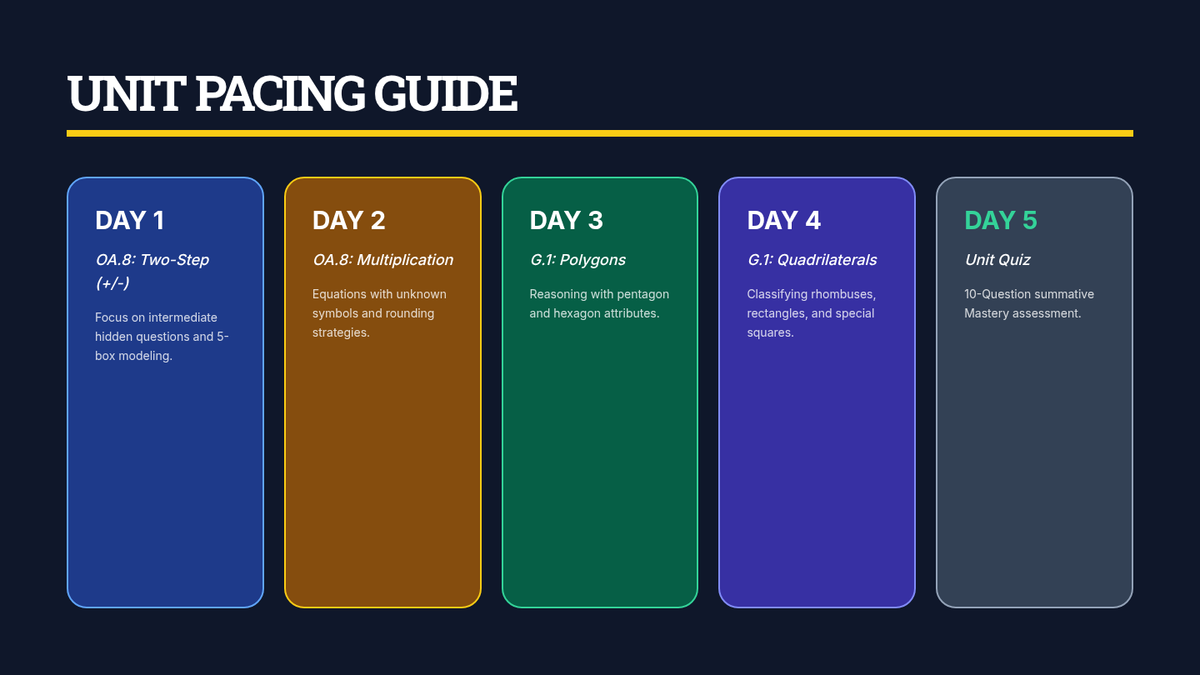
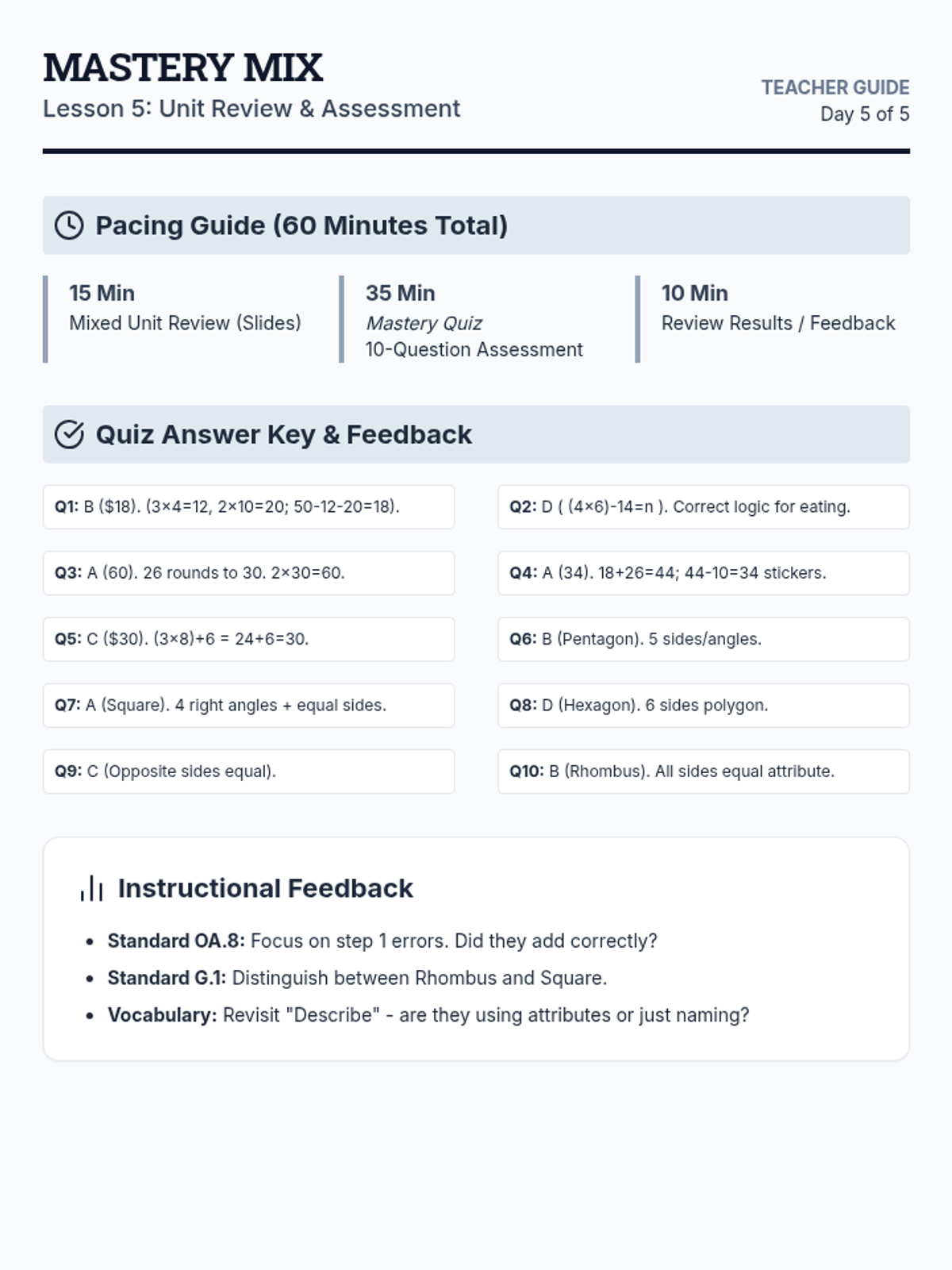
A comprehensive review of two-step word problems and geometry attributes followed by a 10-question EOG-style summative assessment.
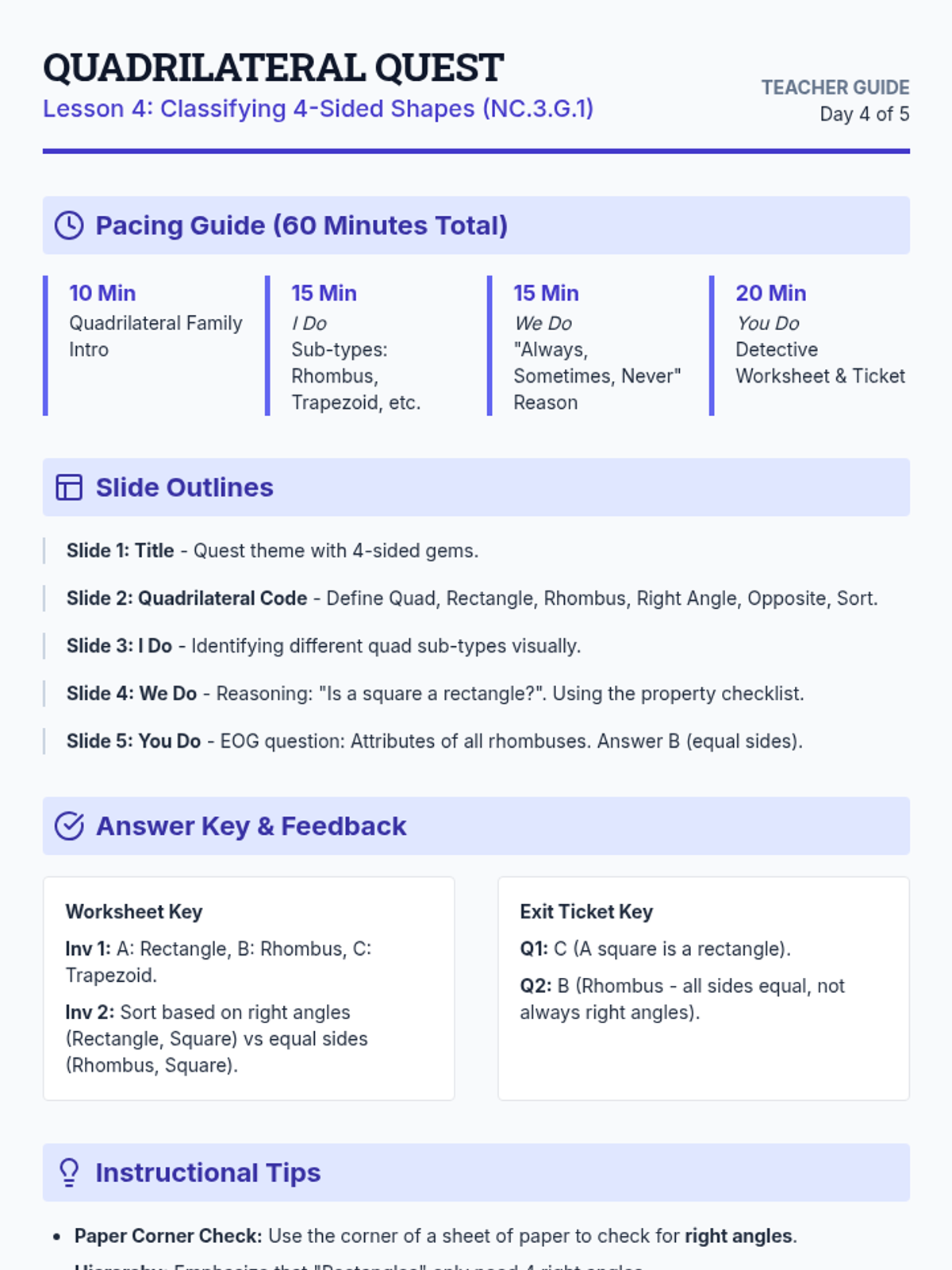
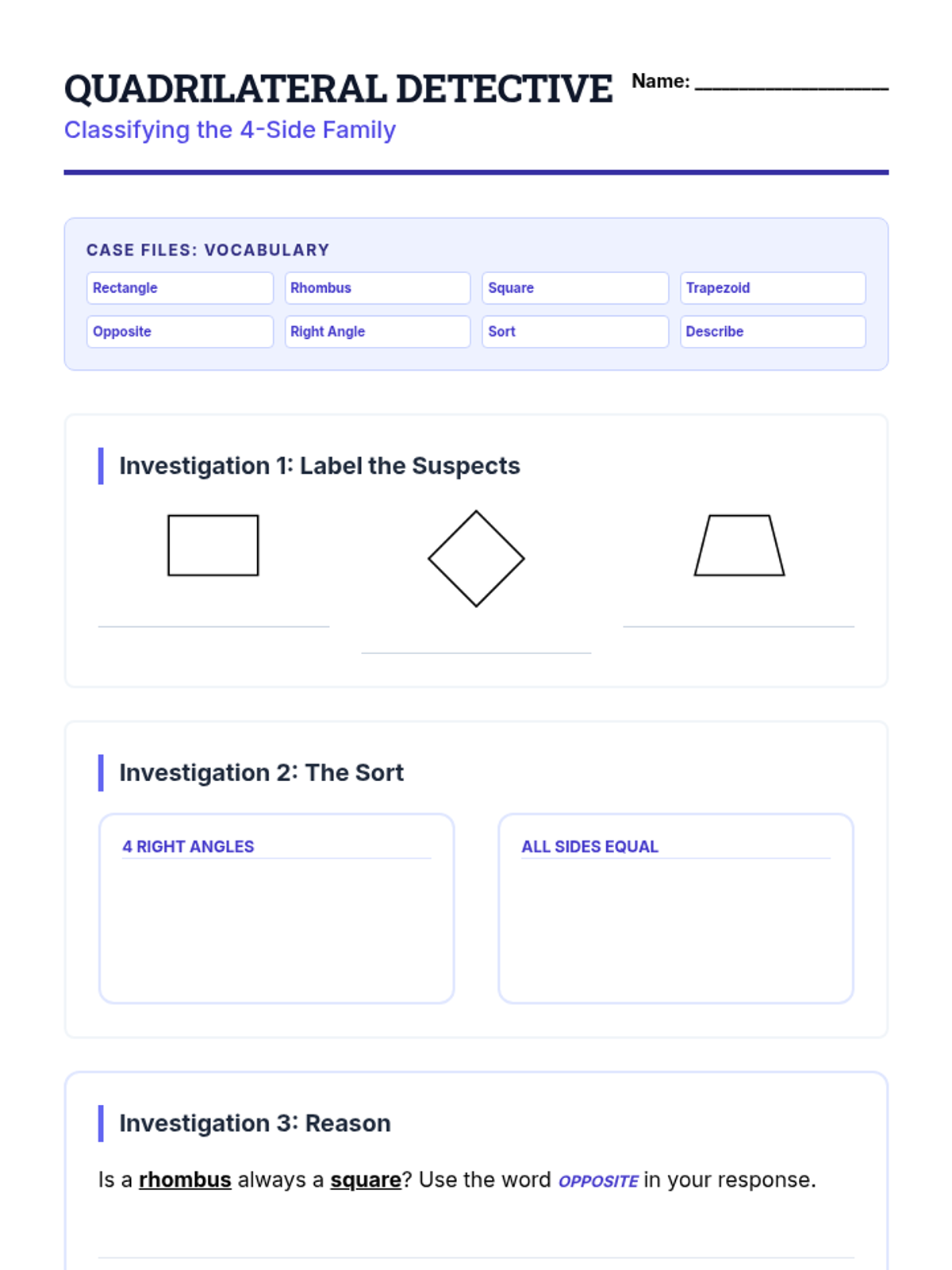
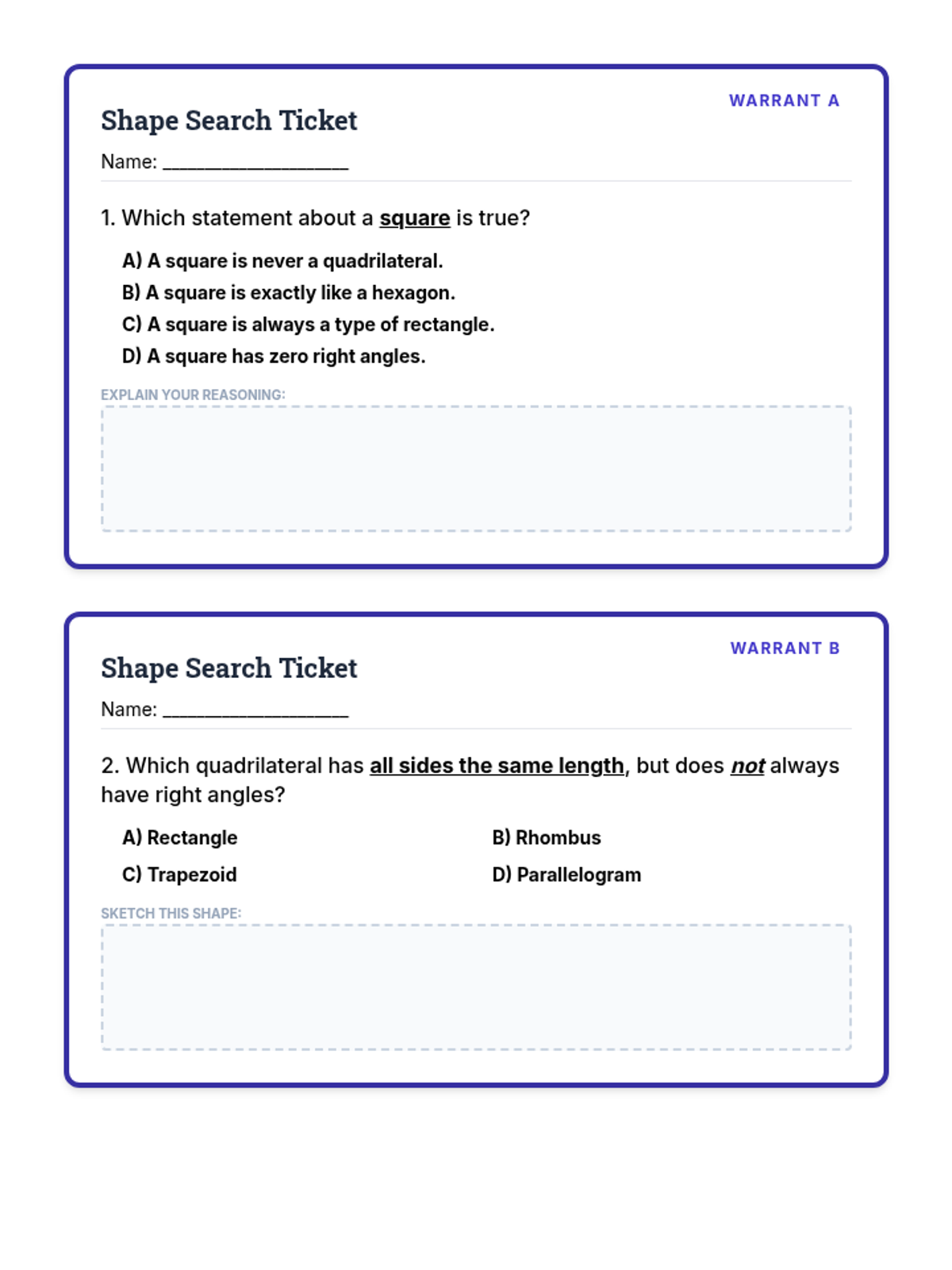
In-depth study of quadrilaterals, including rhombuses, rectangles, squares, parallelograms, and trapezoids, through attribute classification.
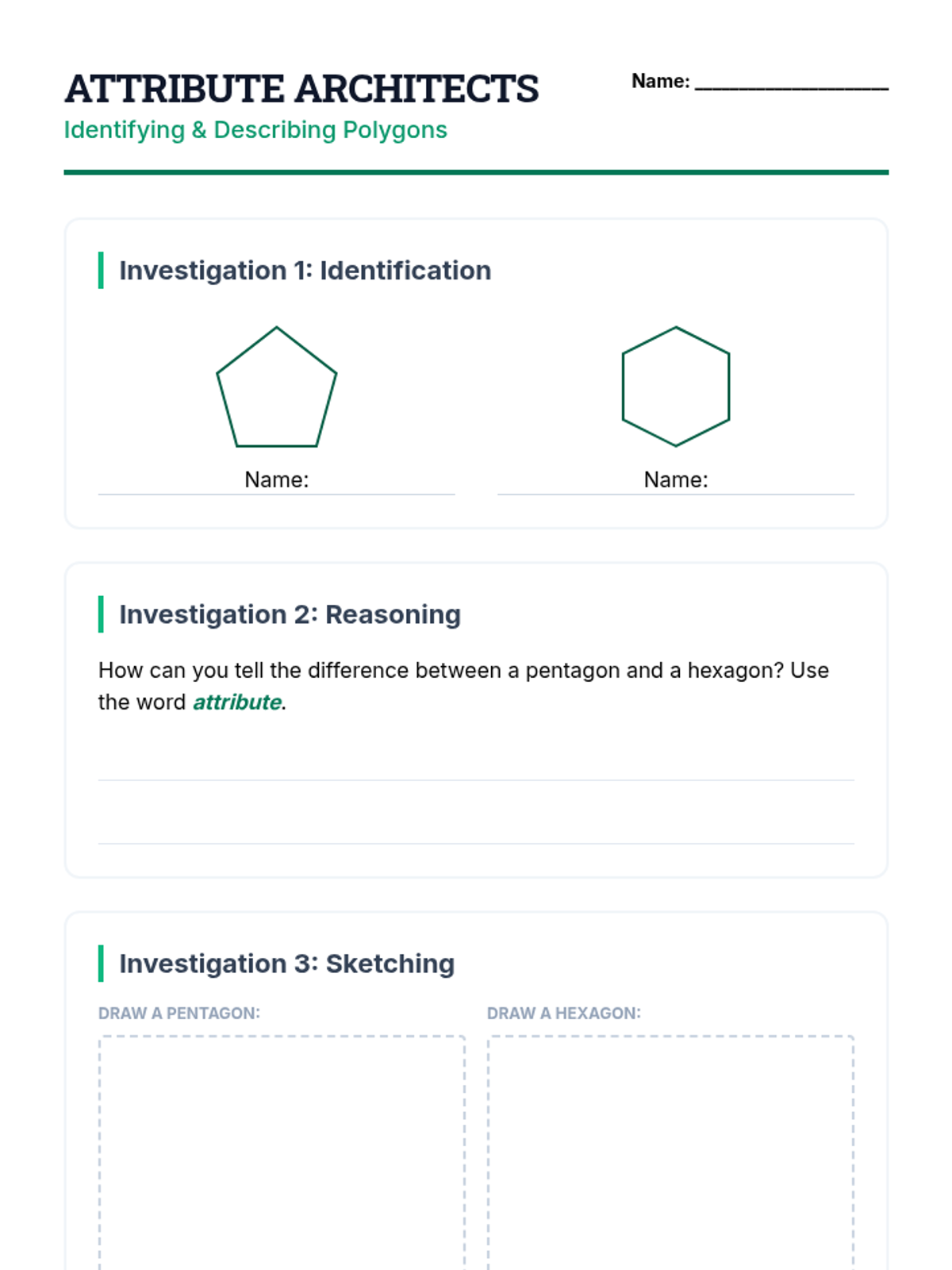
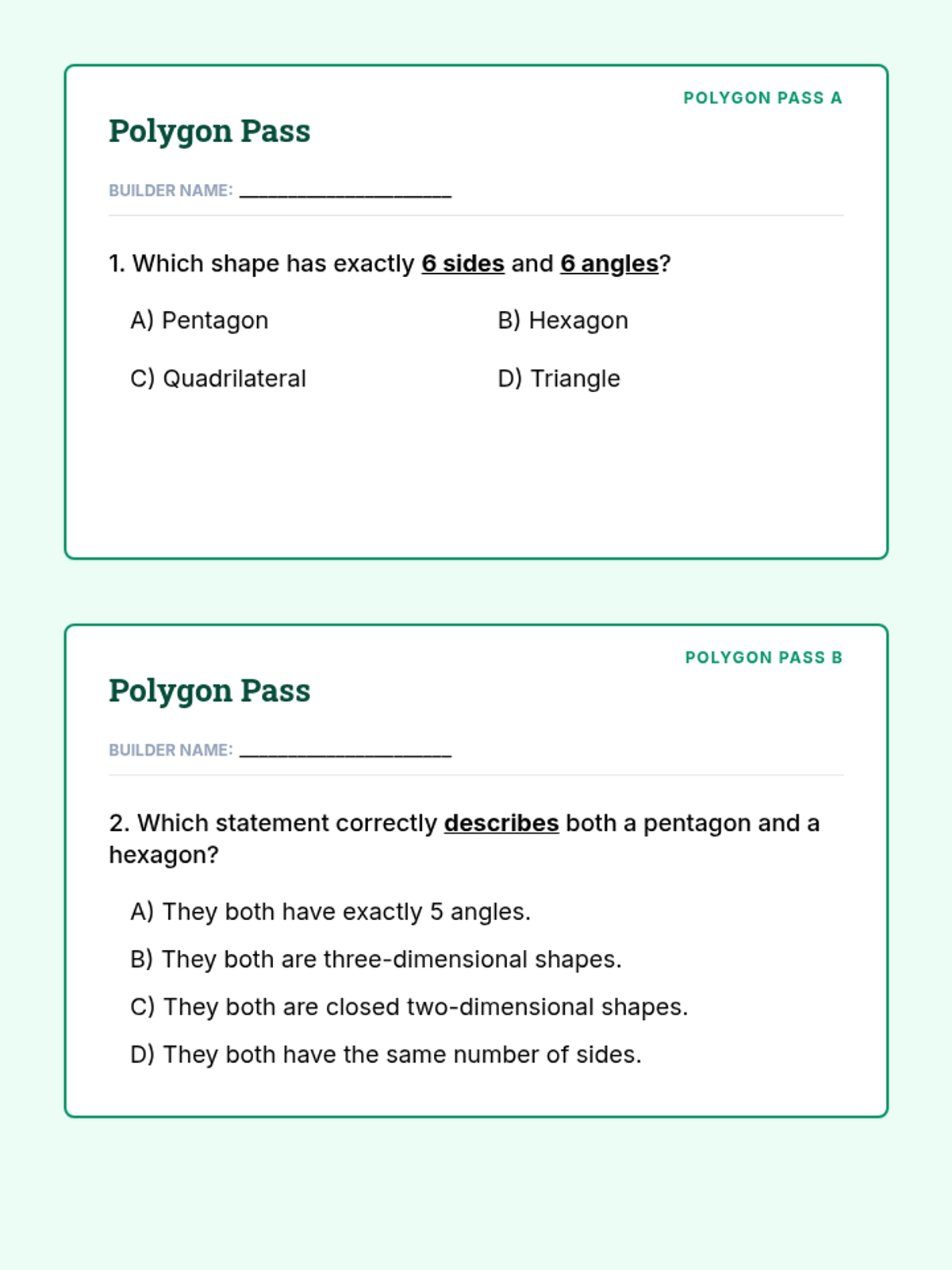
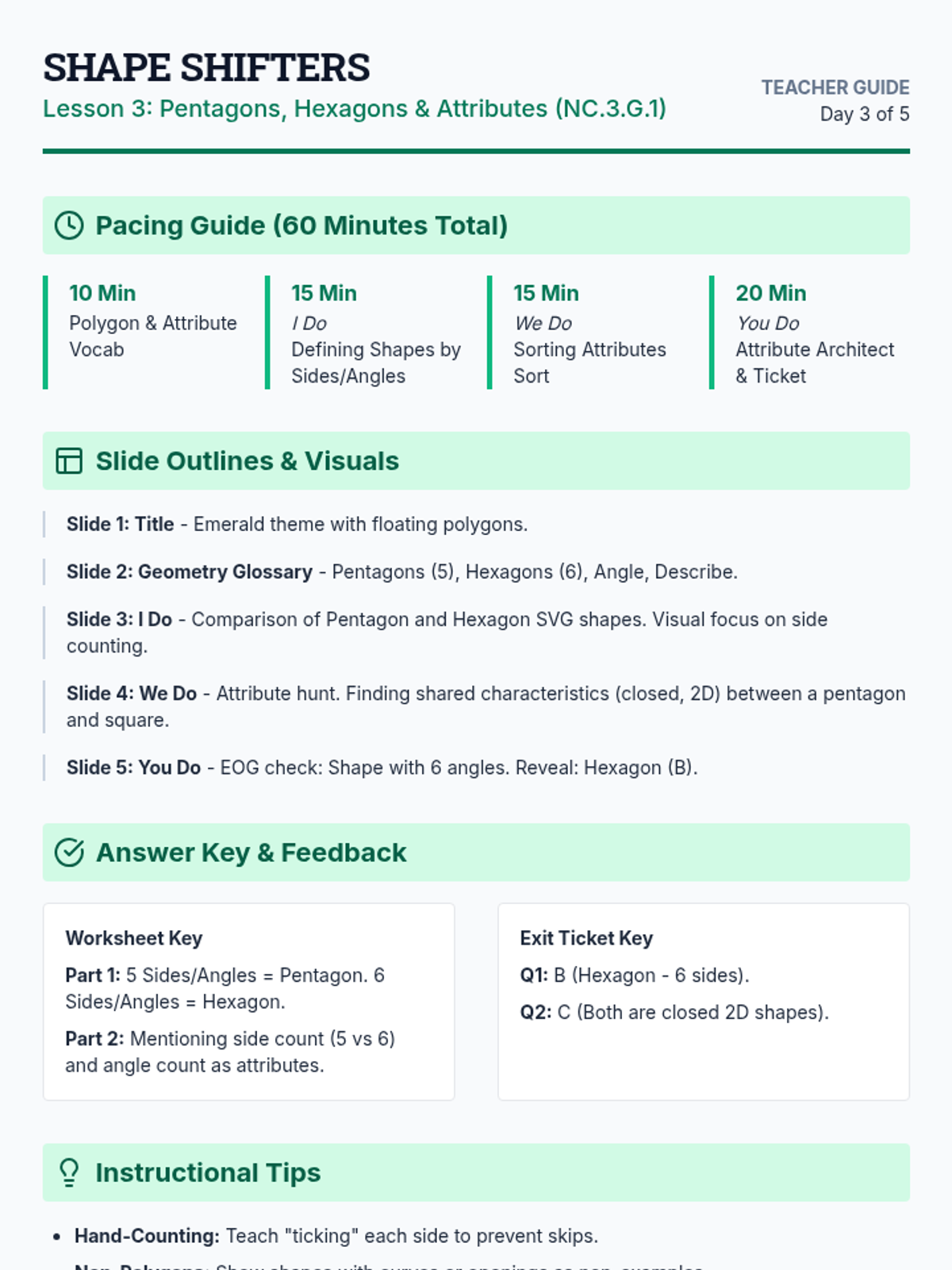
Exploring two-dimensional shapes, specifically pentagons and hexagons, while focusing on identifying attributes and reasoning about polygons.
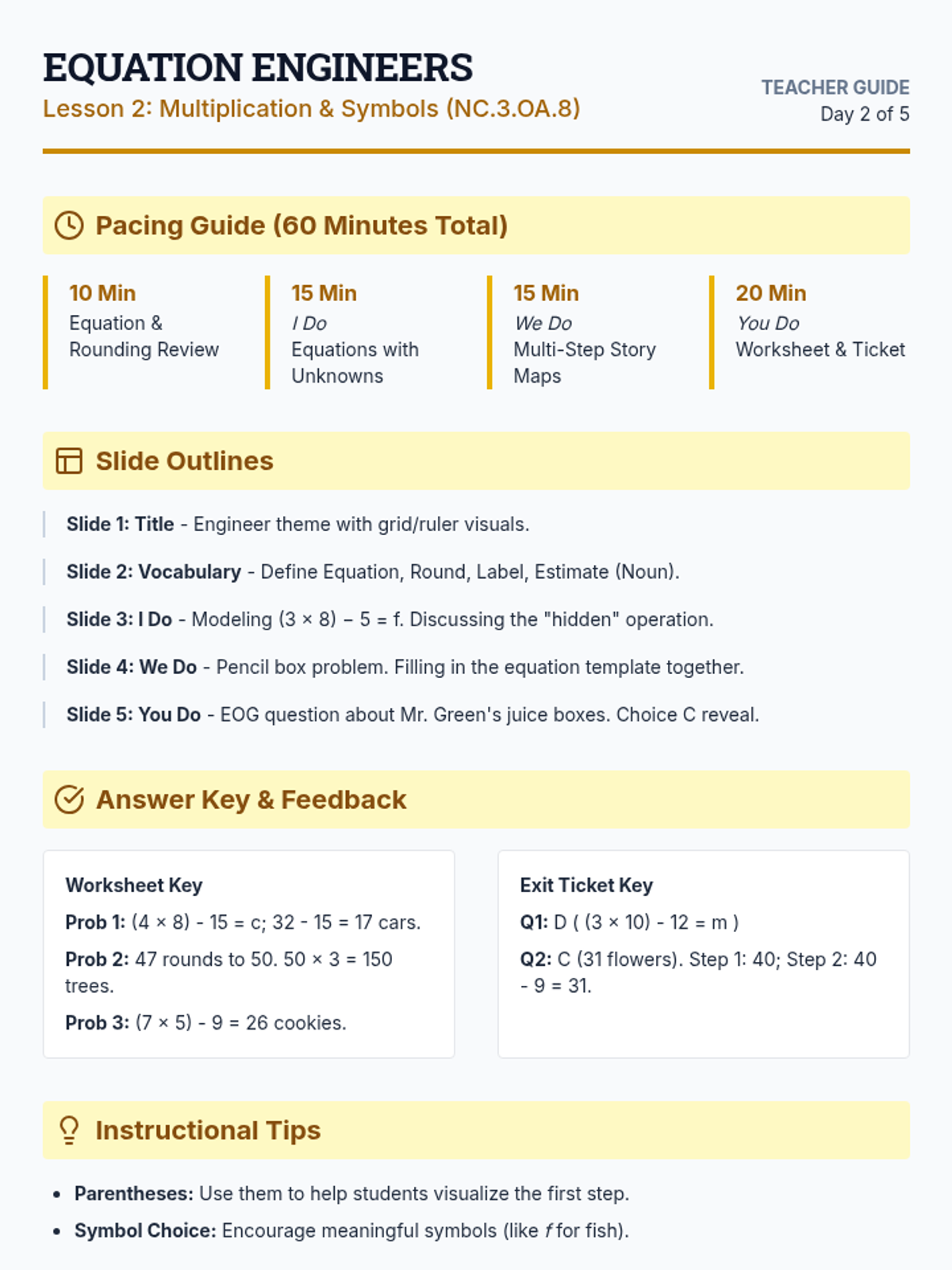
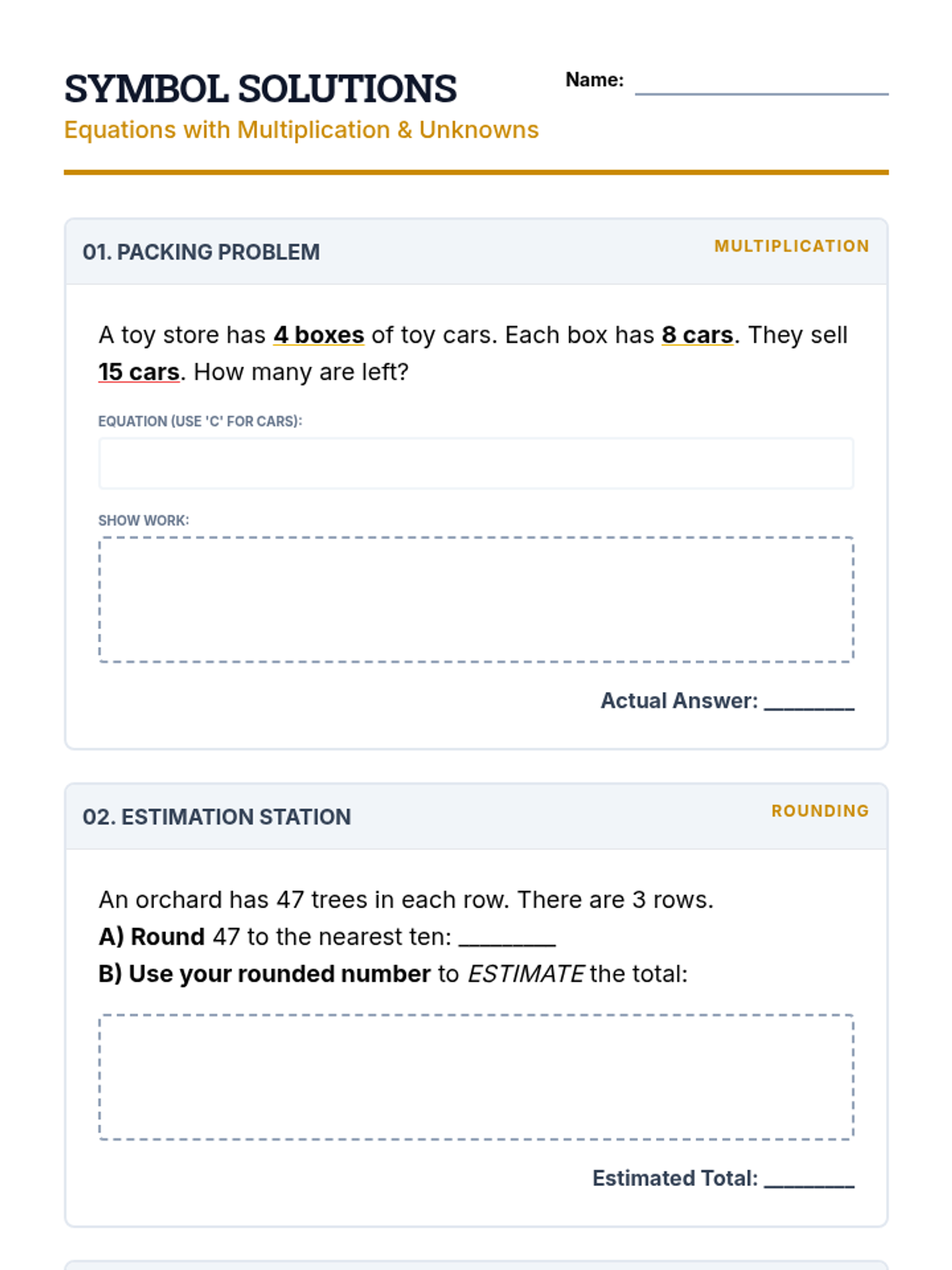
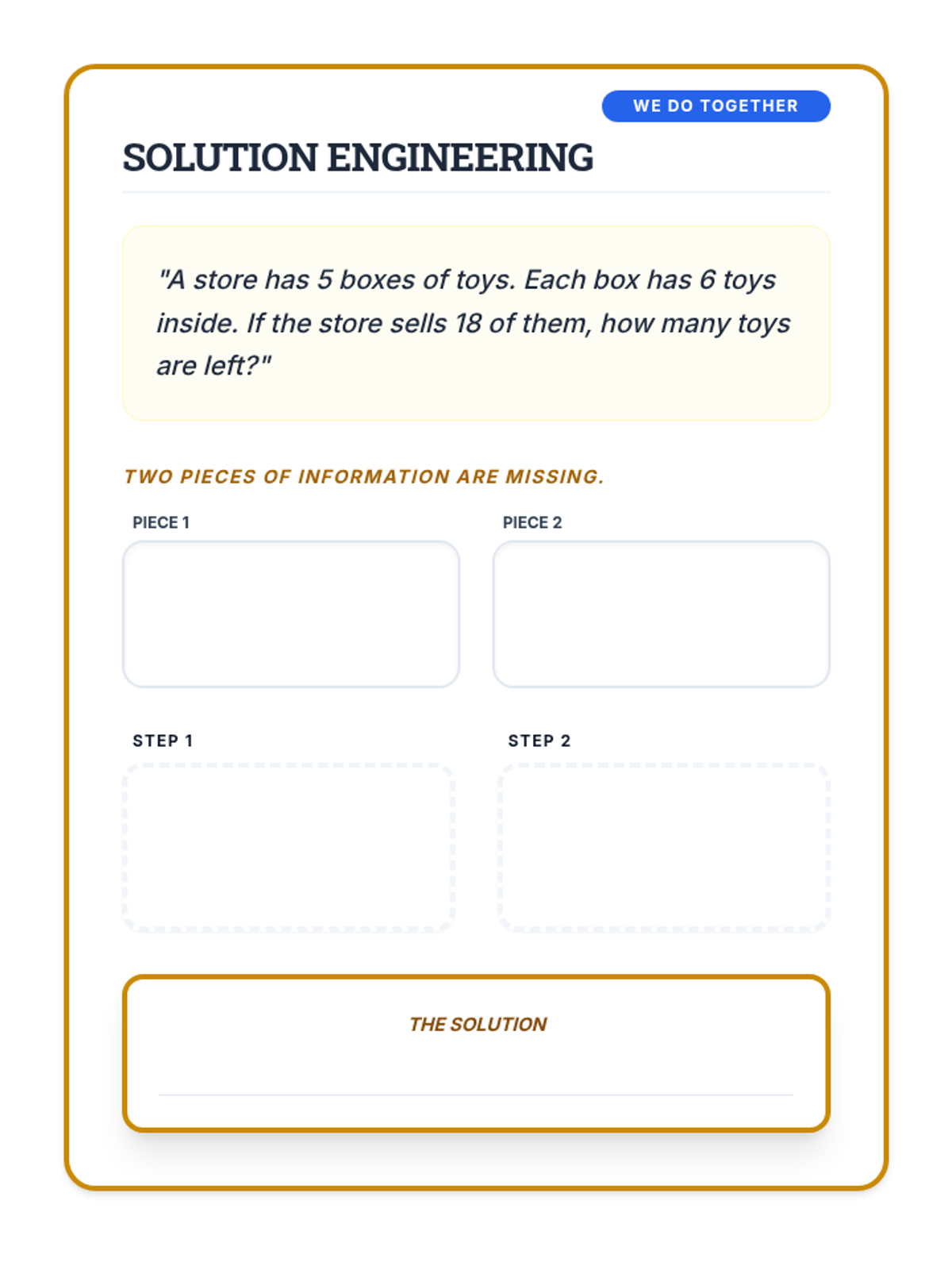
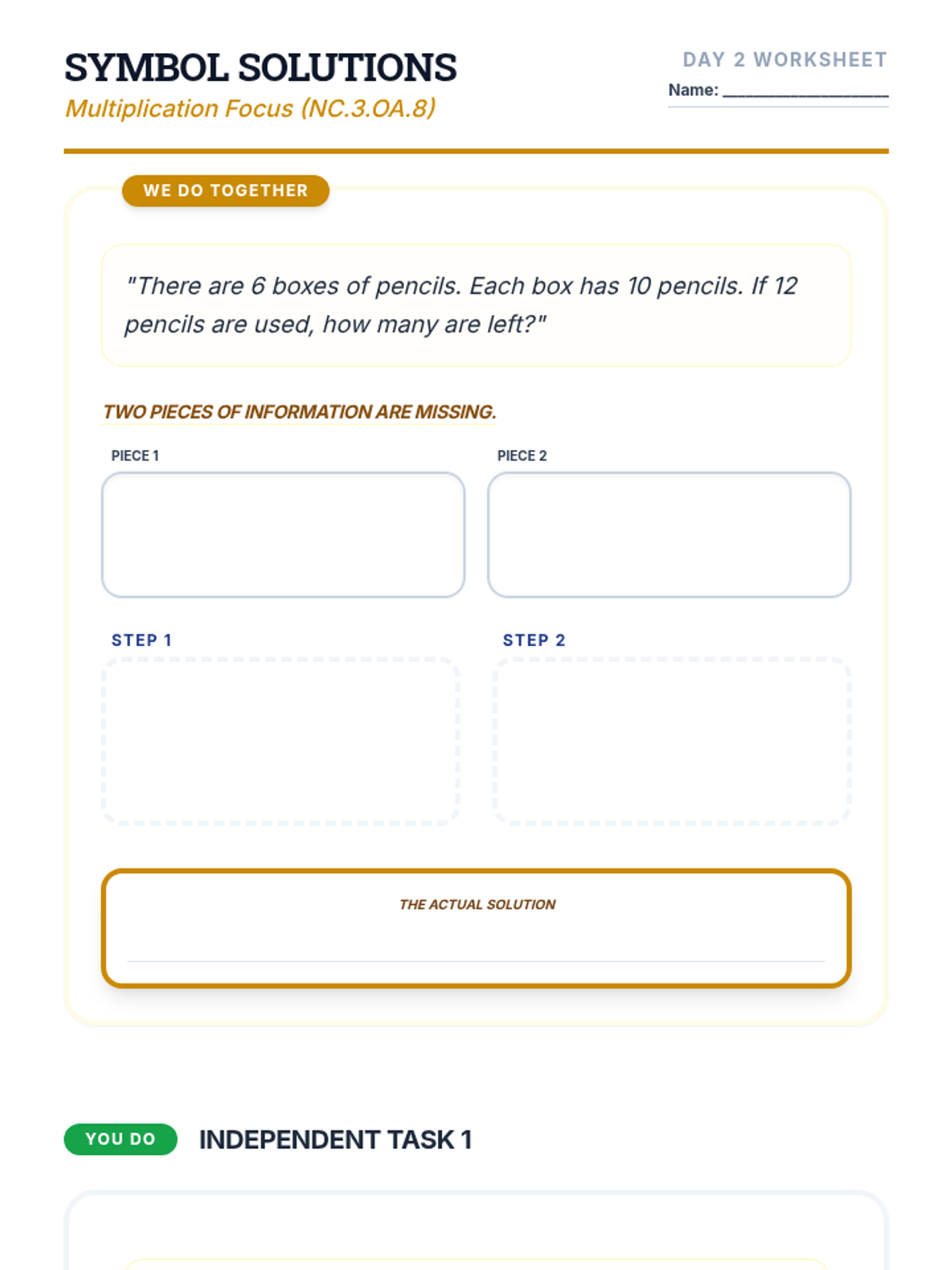
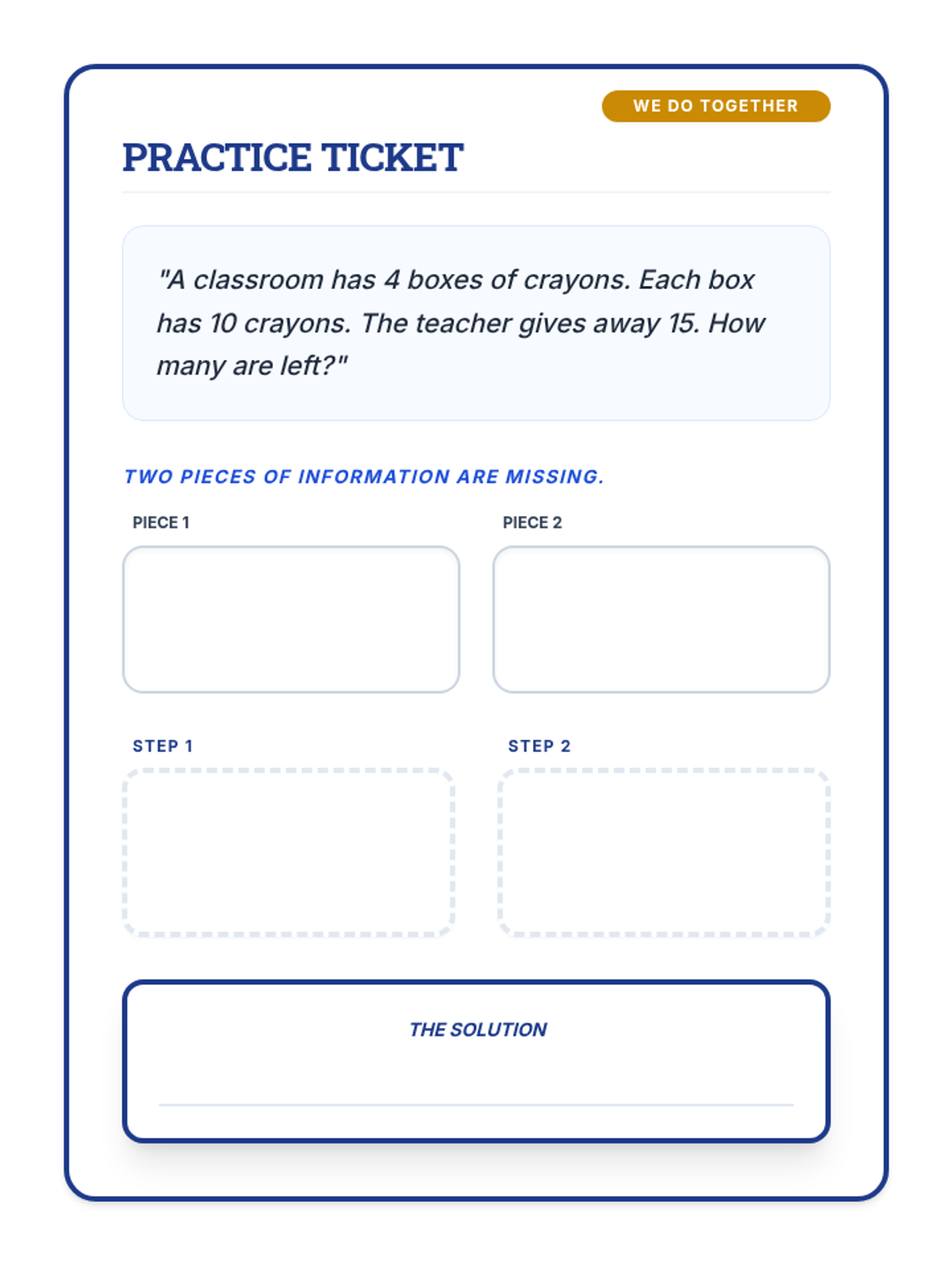
Solving two-step word problems involving multiplication and representating problems with equations and symbols for unknowns.
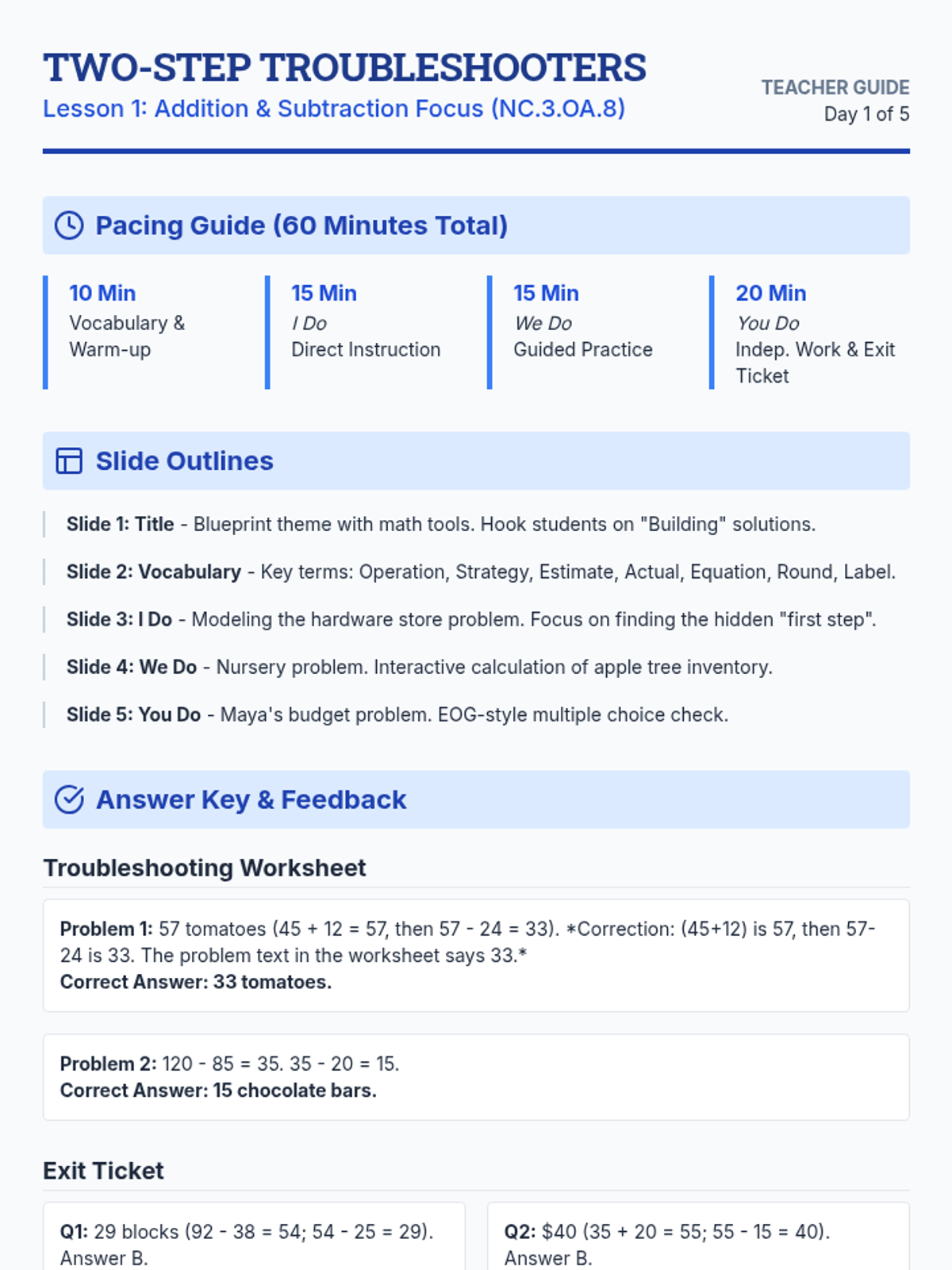
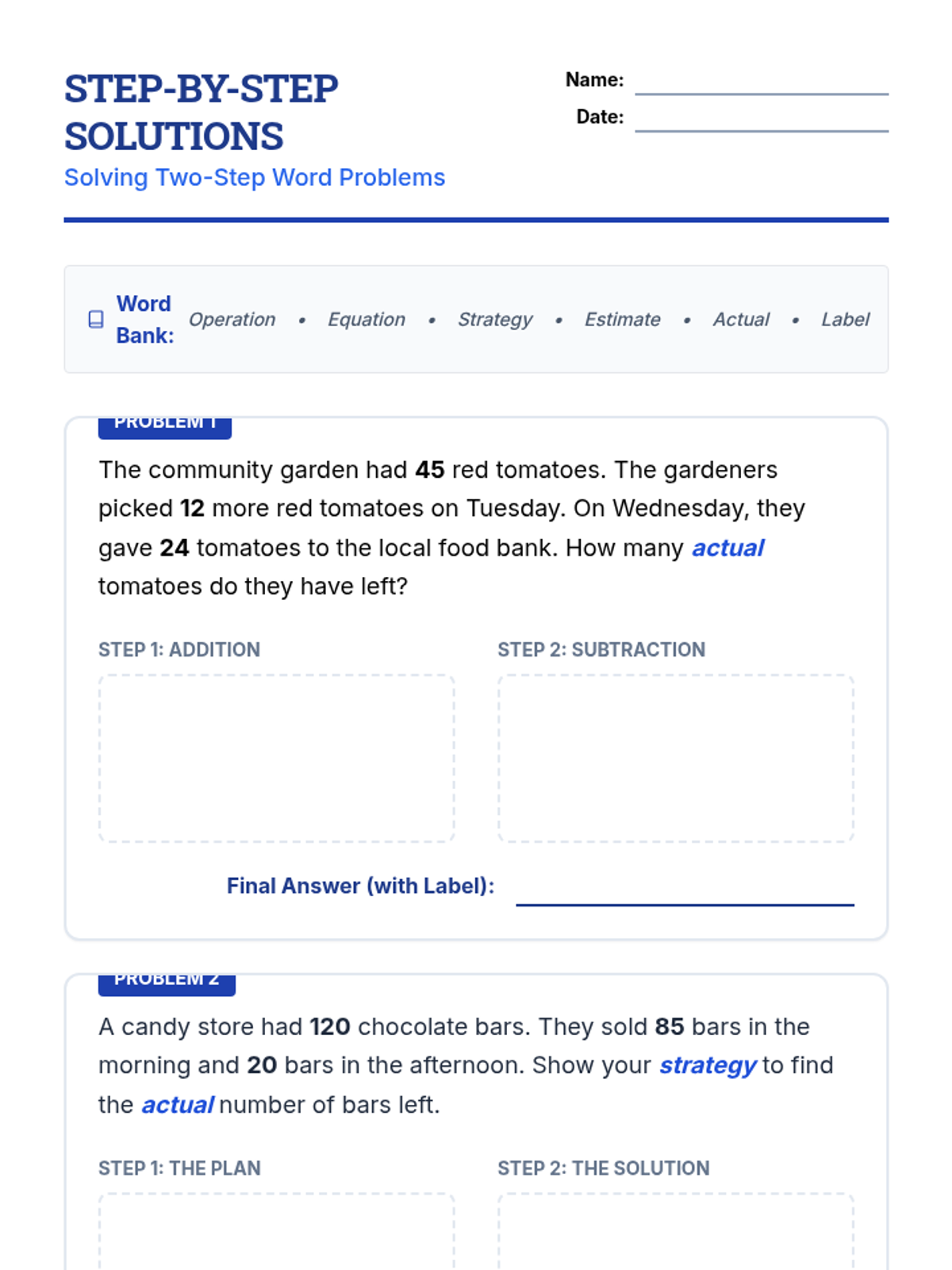
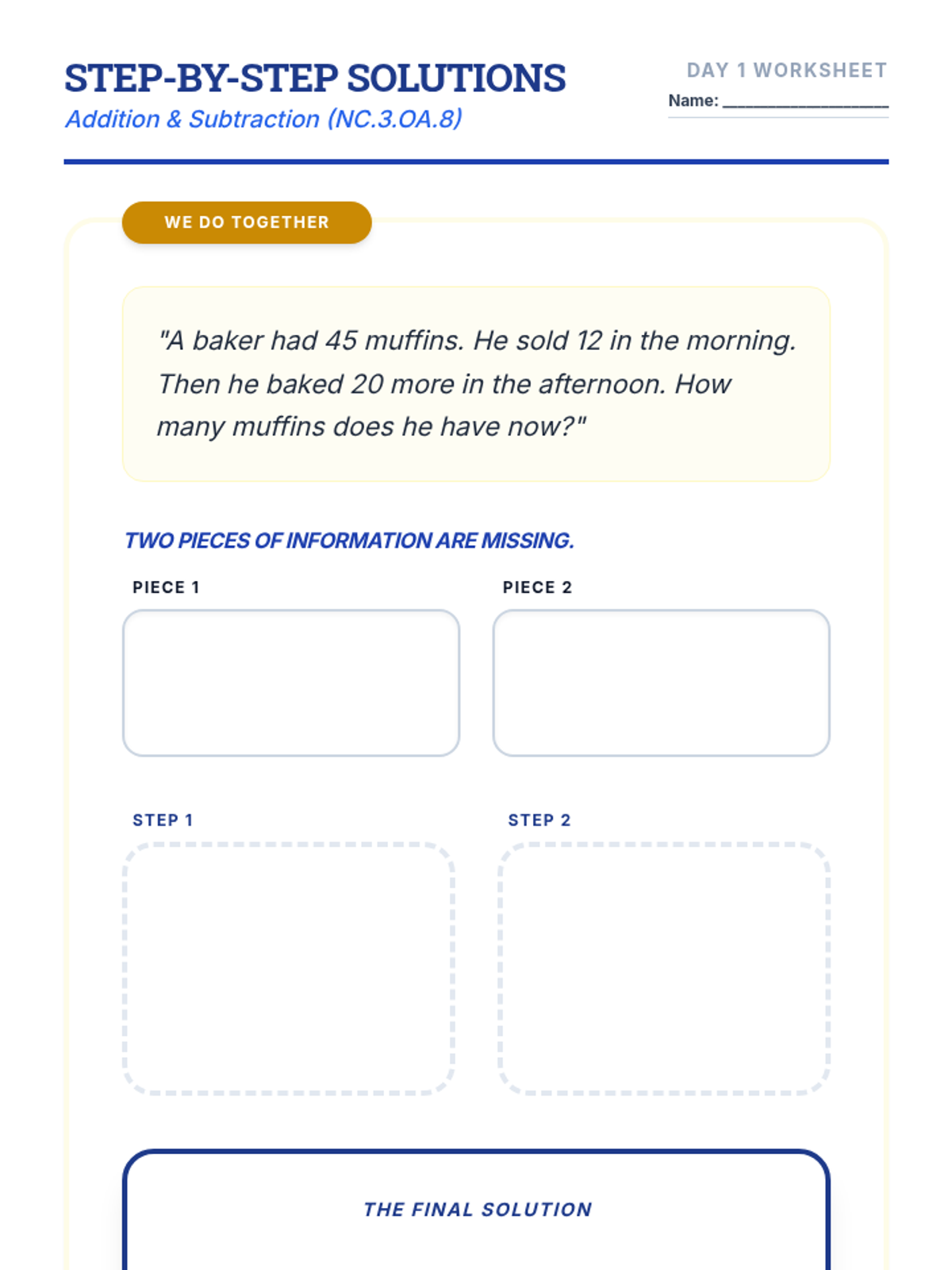
Introduction to solving two-step word problems using addition and subtraction. Focuses on identifying the operations and using estimation strategies.
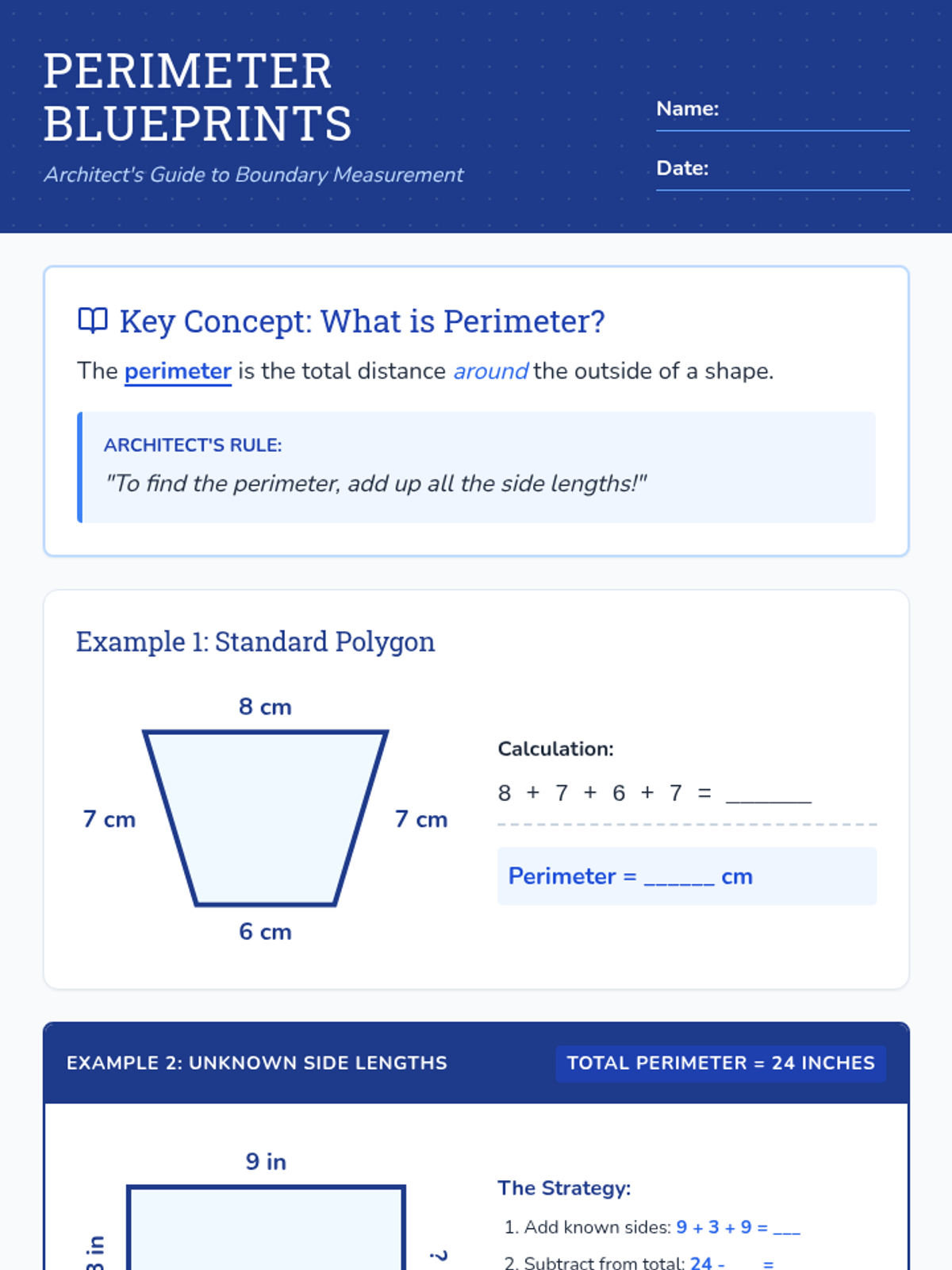
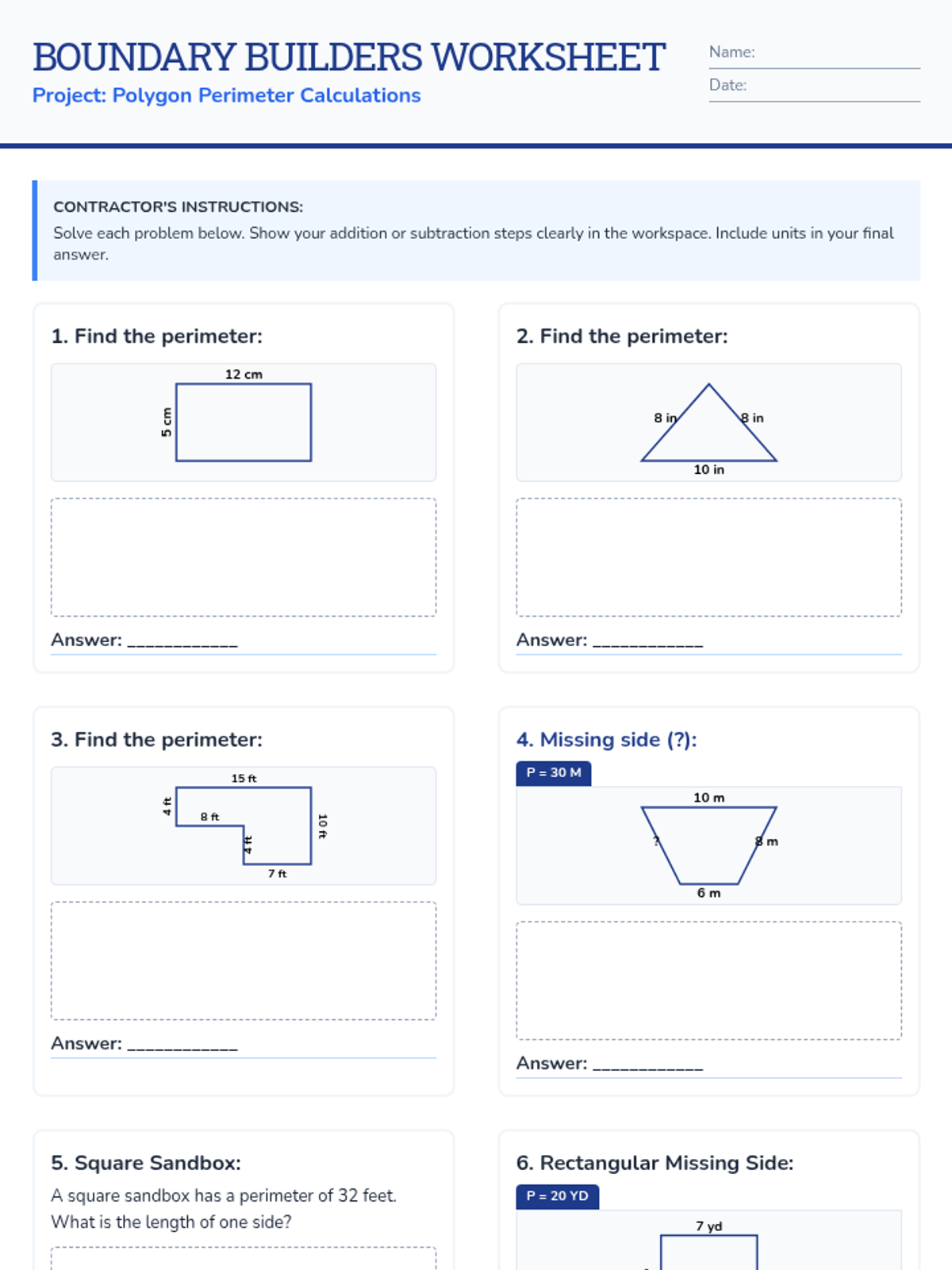
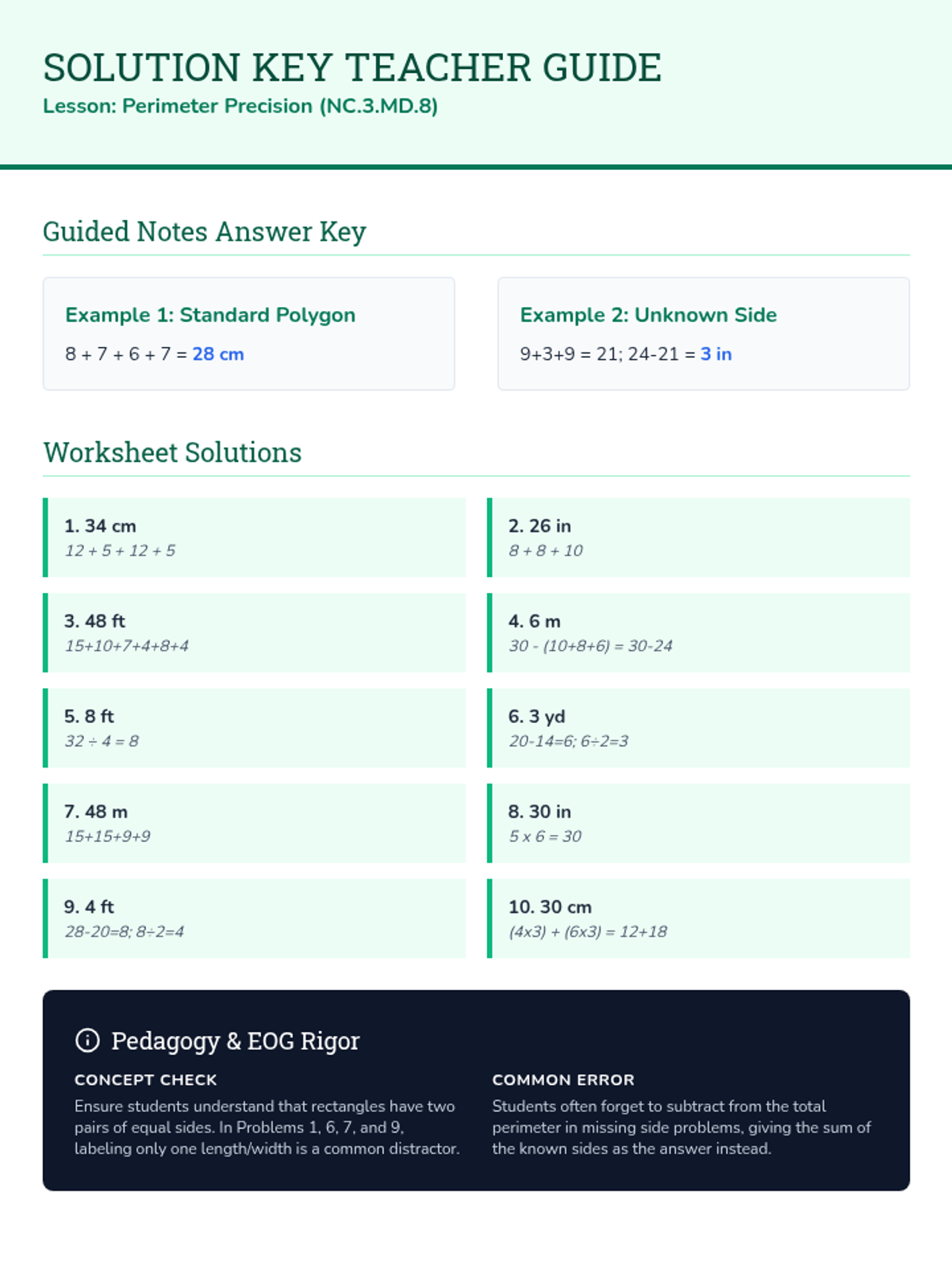
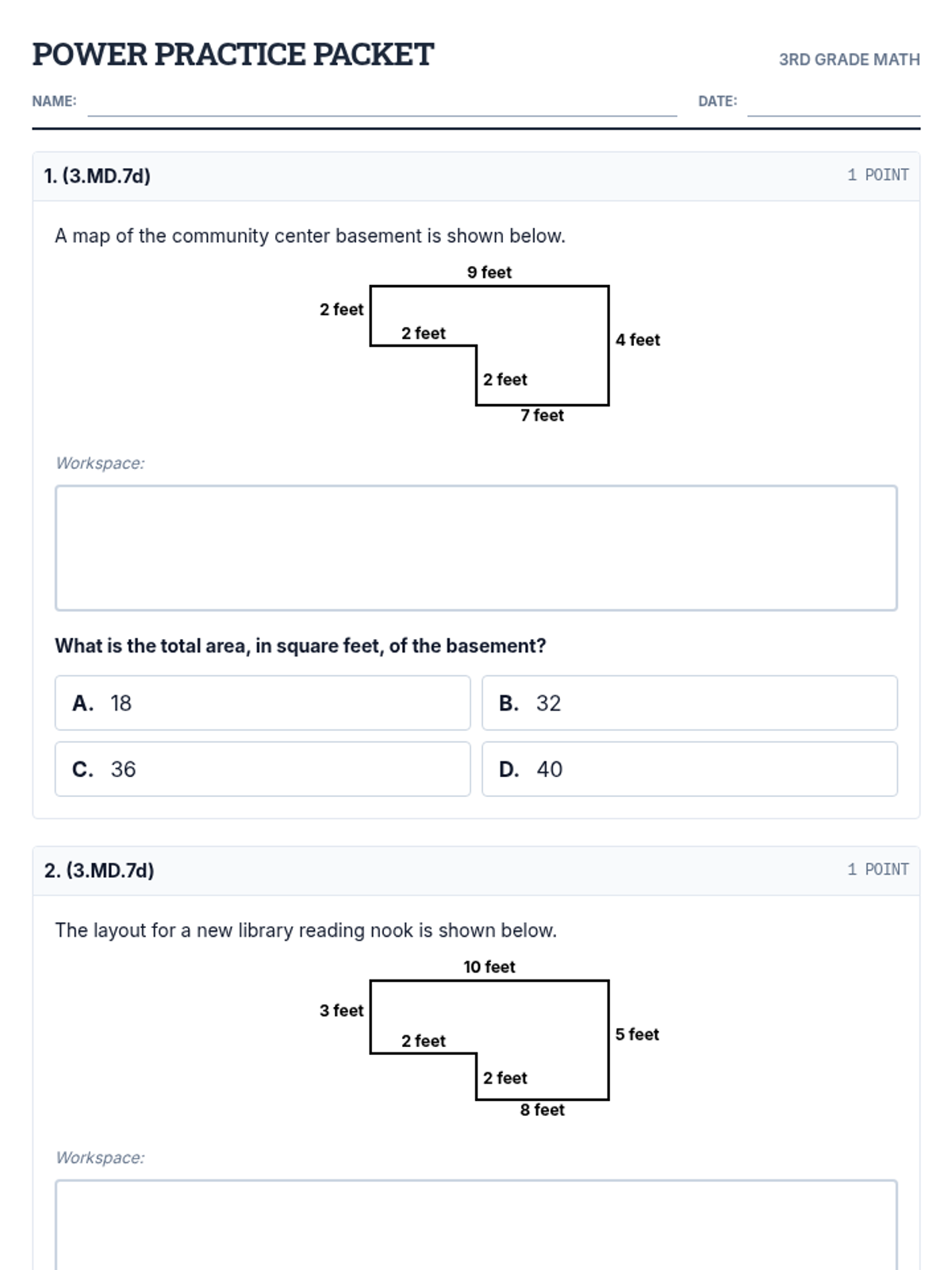
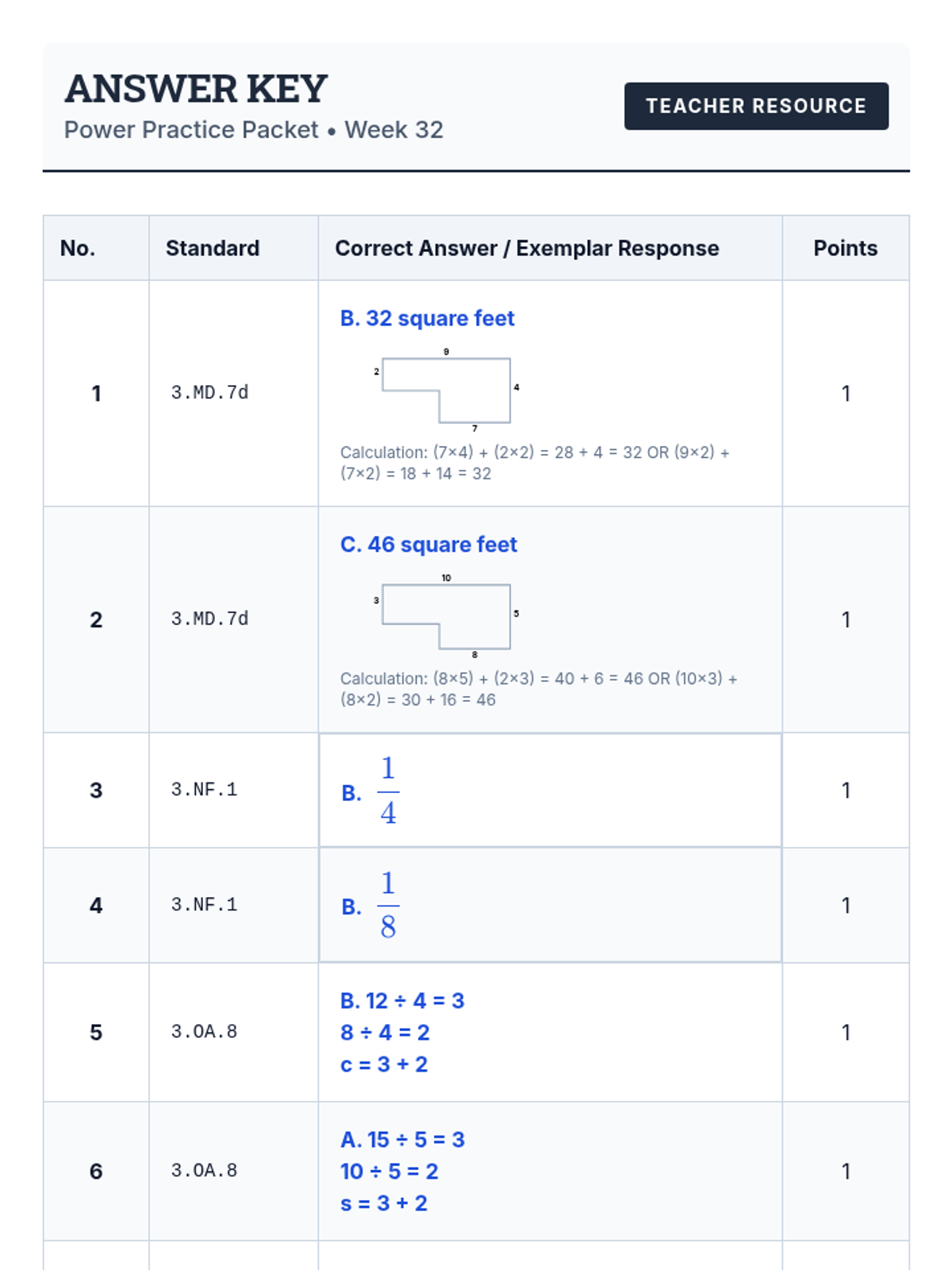
A comprehensive lesson on finding the perimeter of polygons and determining unknown side lengths when given the total perimeter, modeled after NC.3.MD.8 standards.
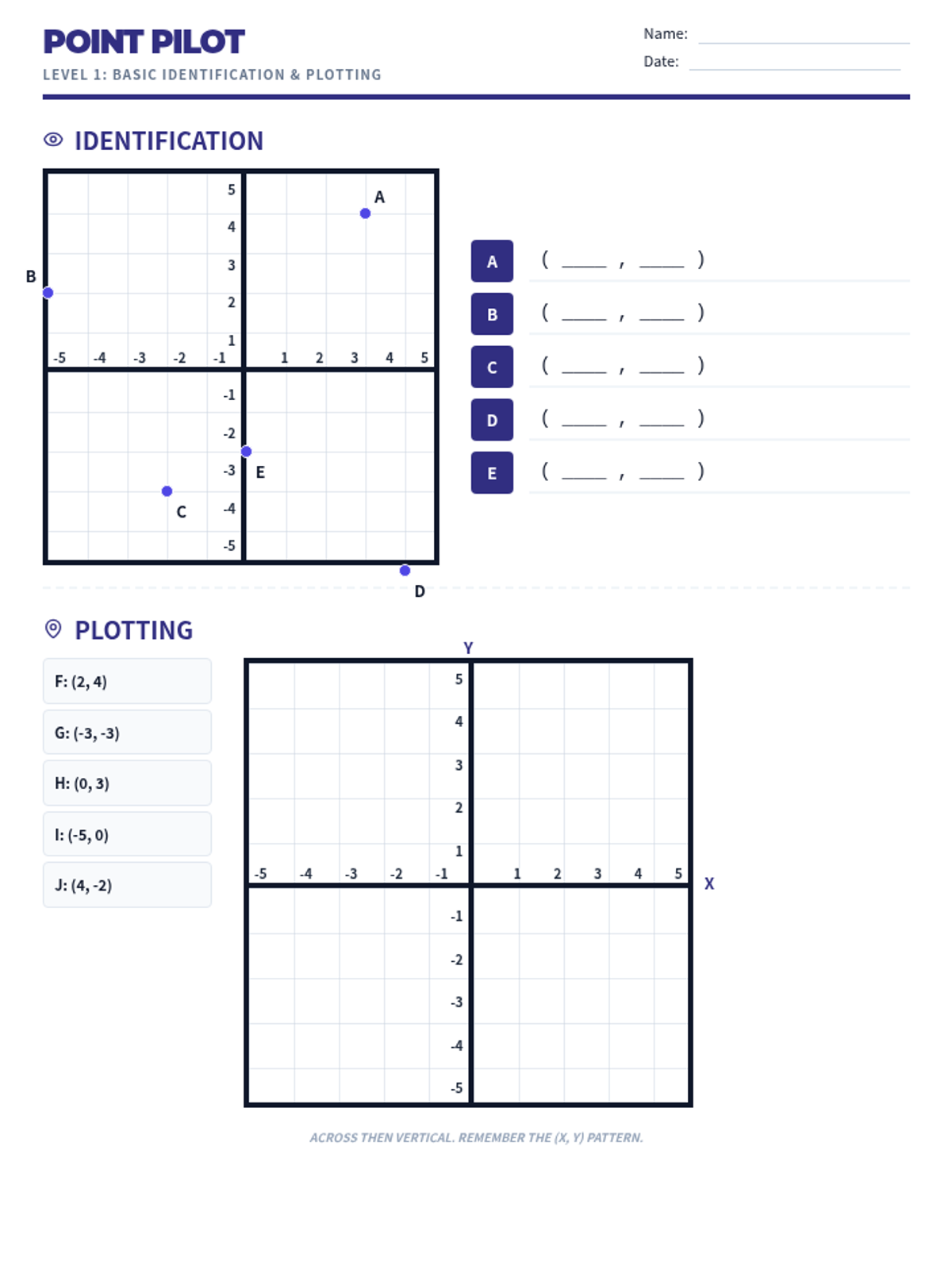
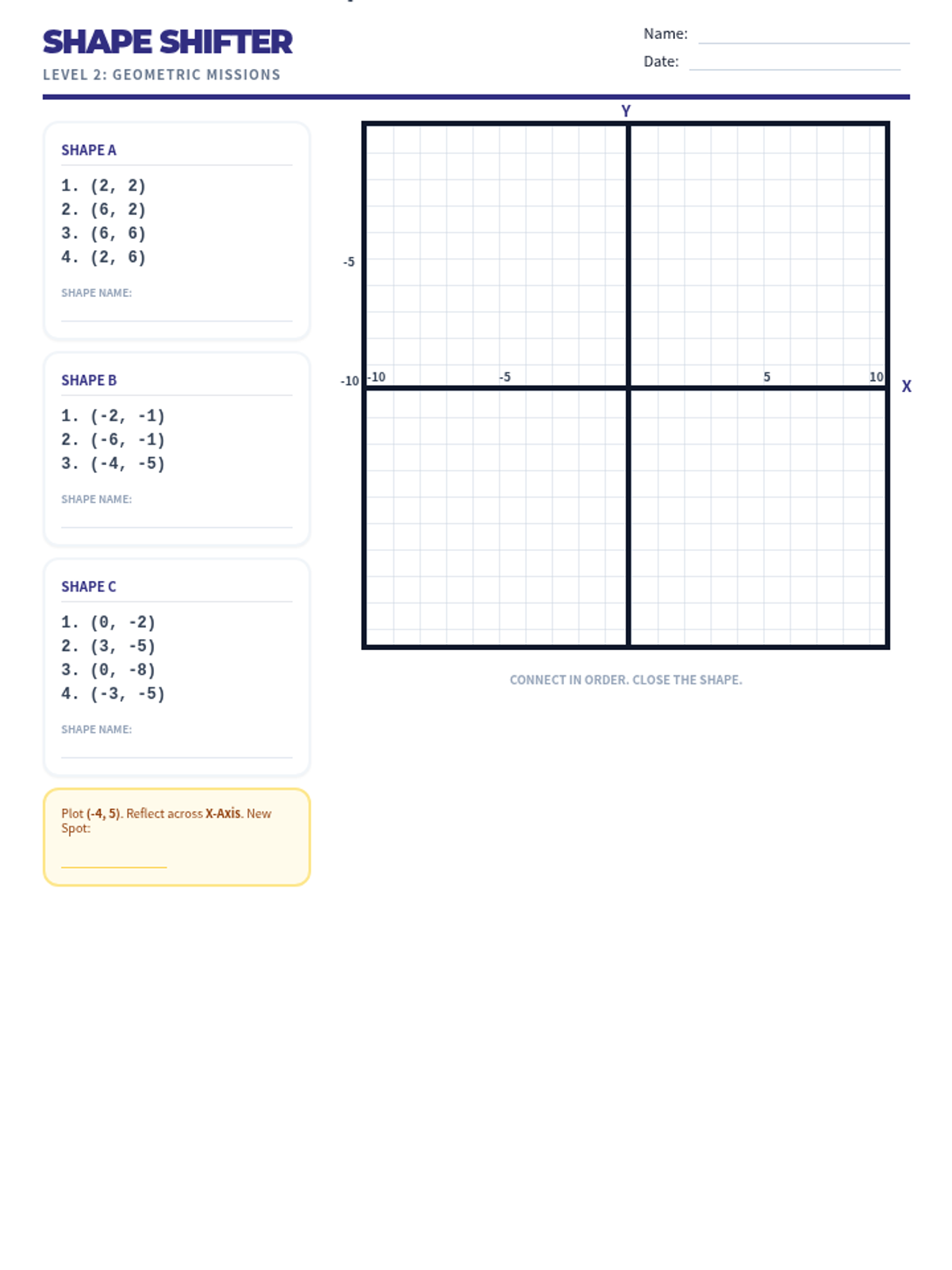
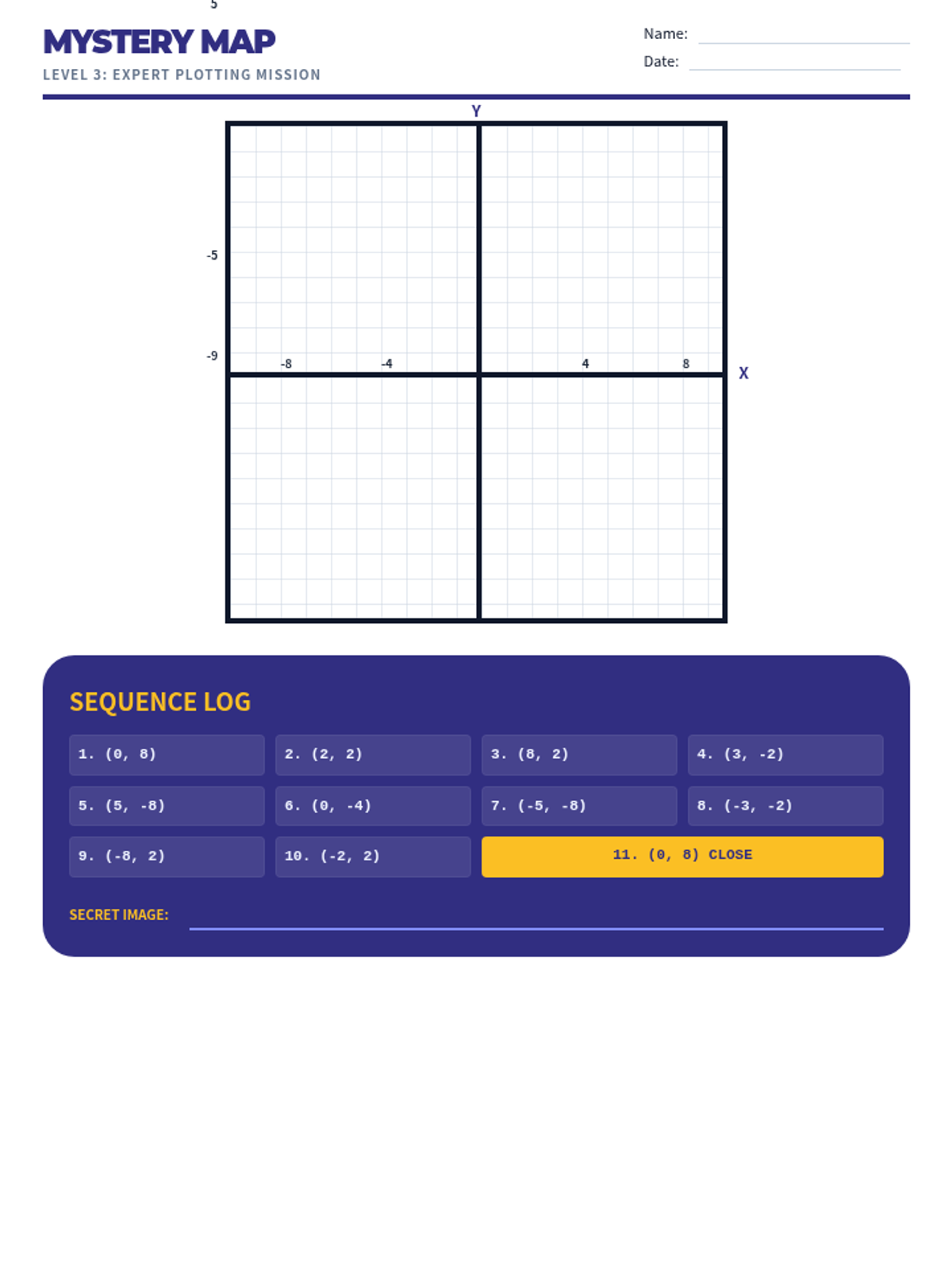
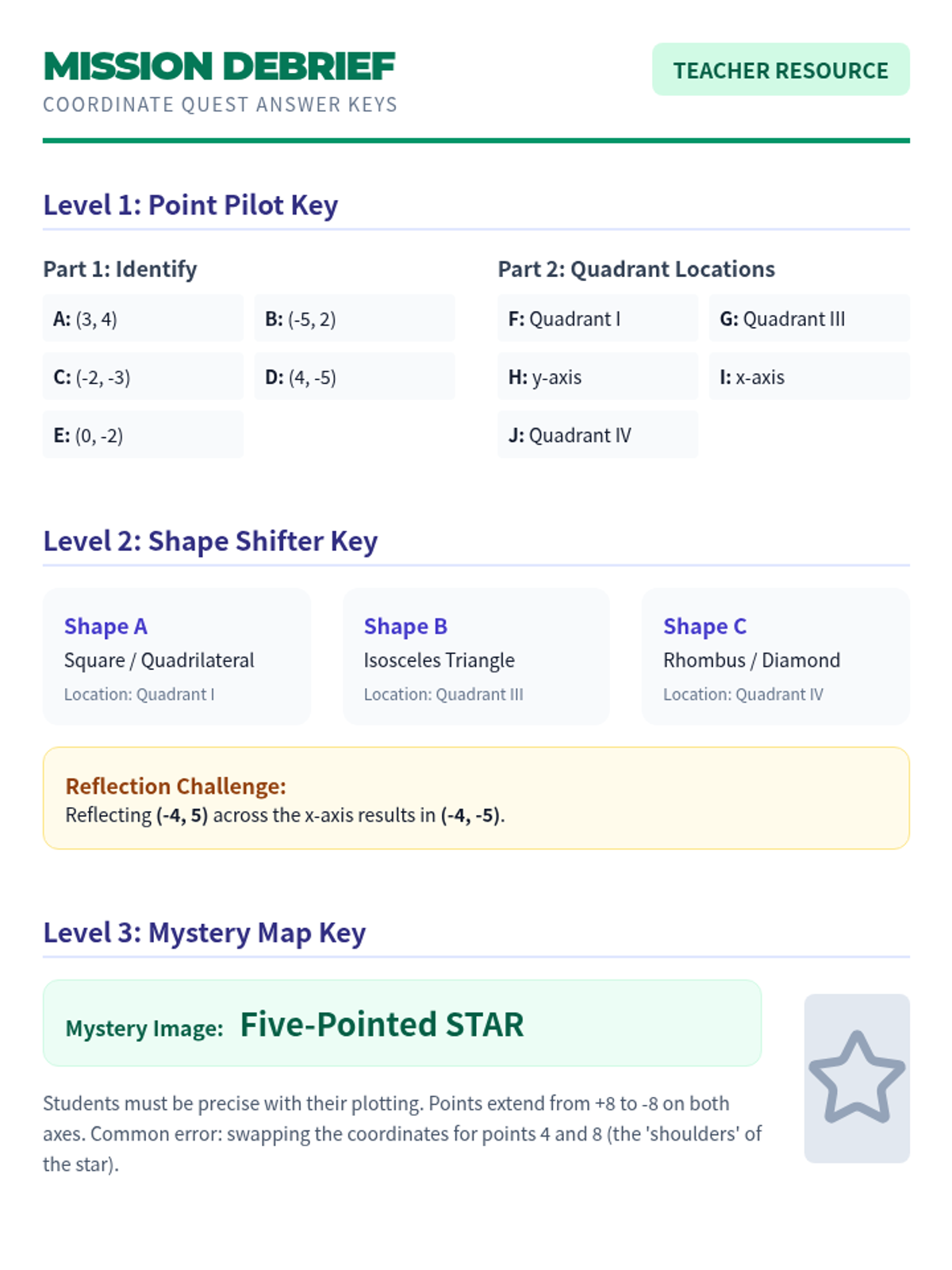
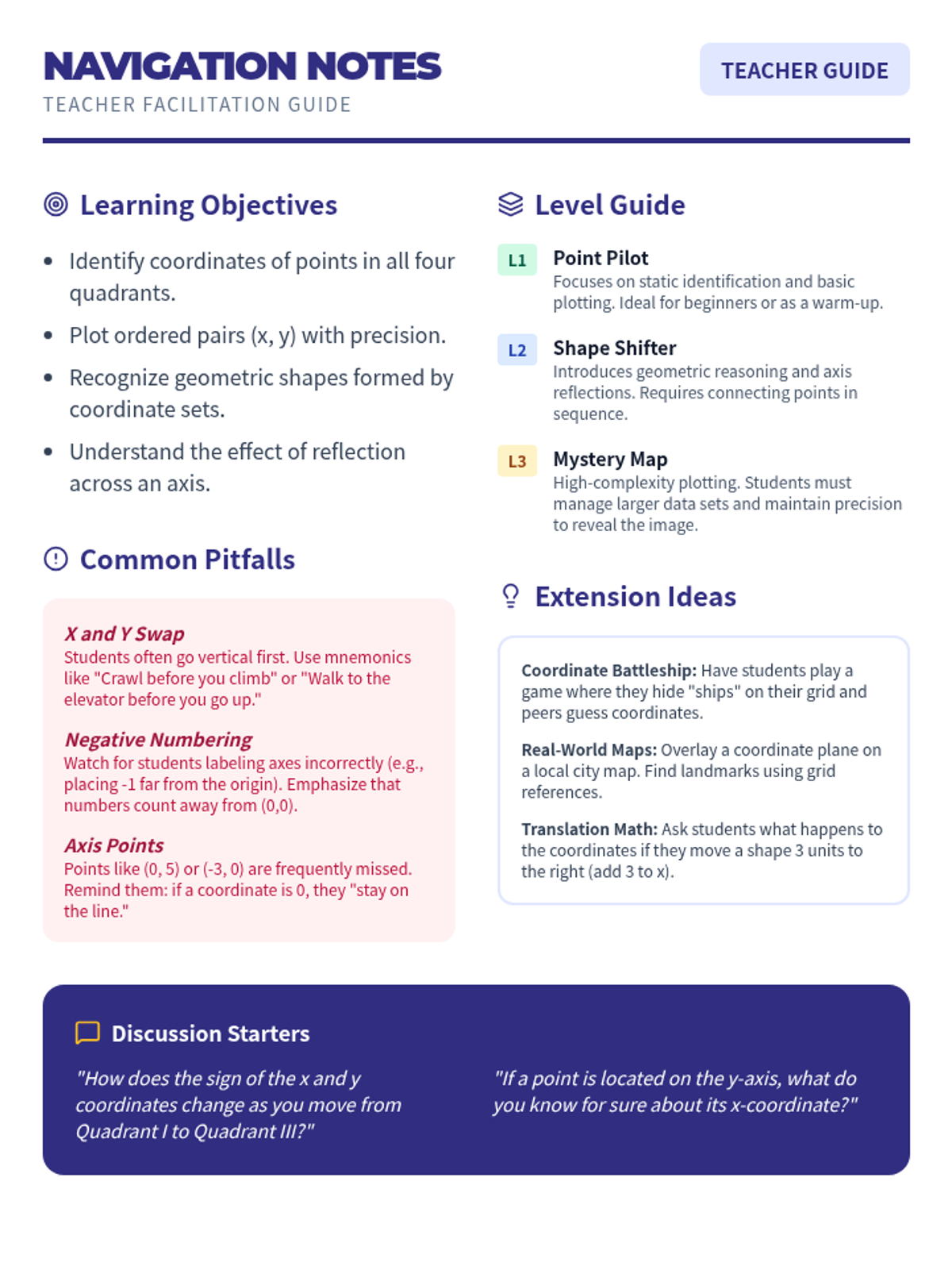
A comprehensive lesson on plotting points across all four quadrants of the coordinate plane, progressing from basic identification to complex shape creation.
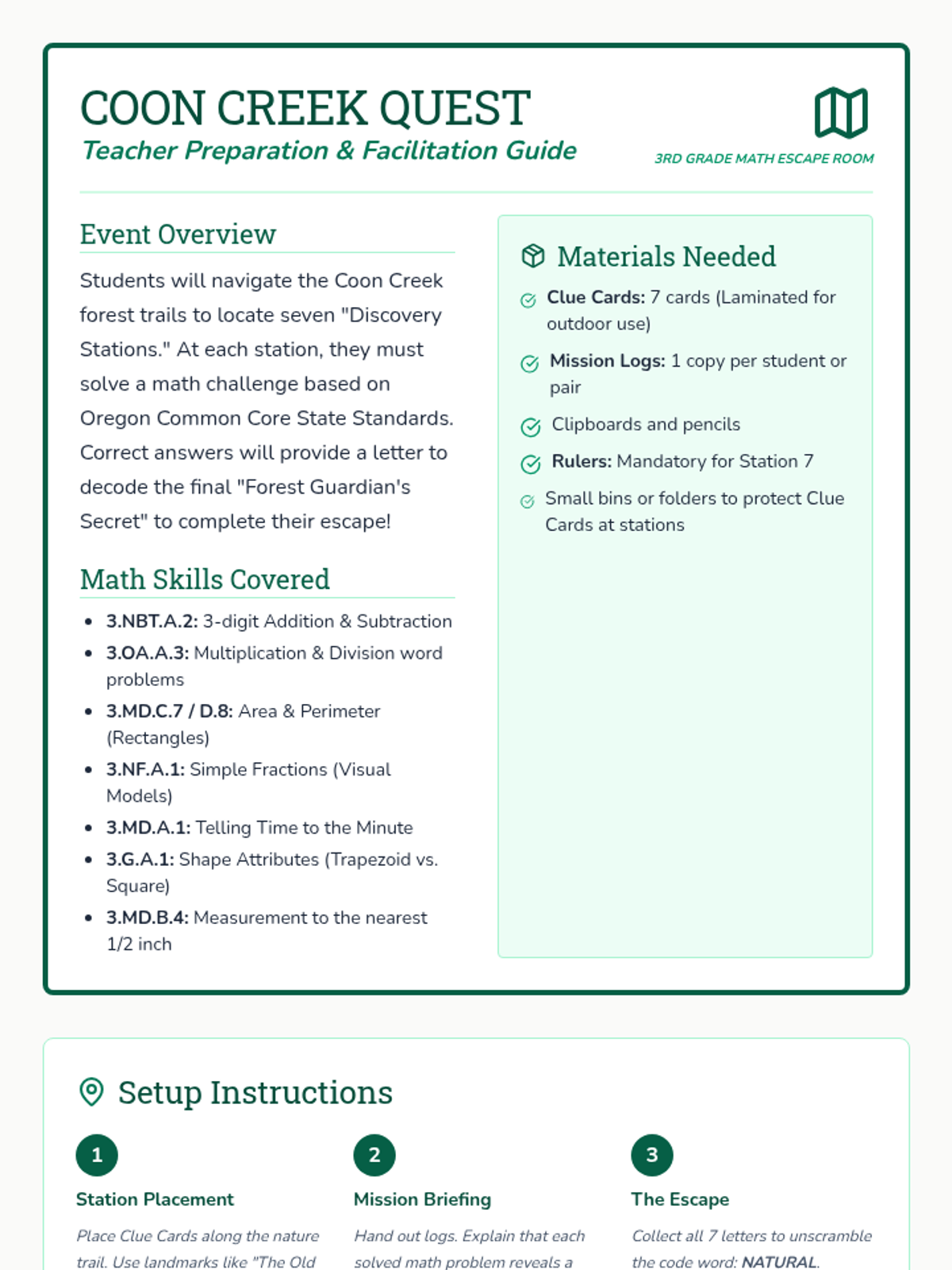
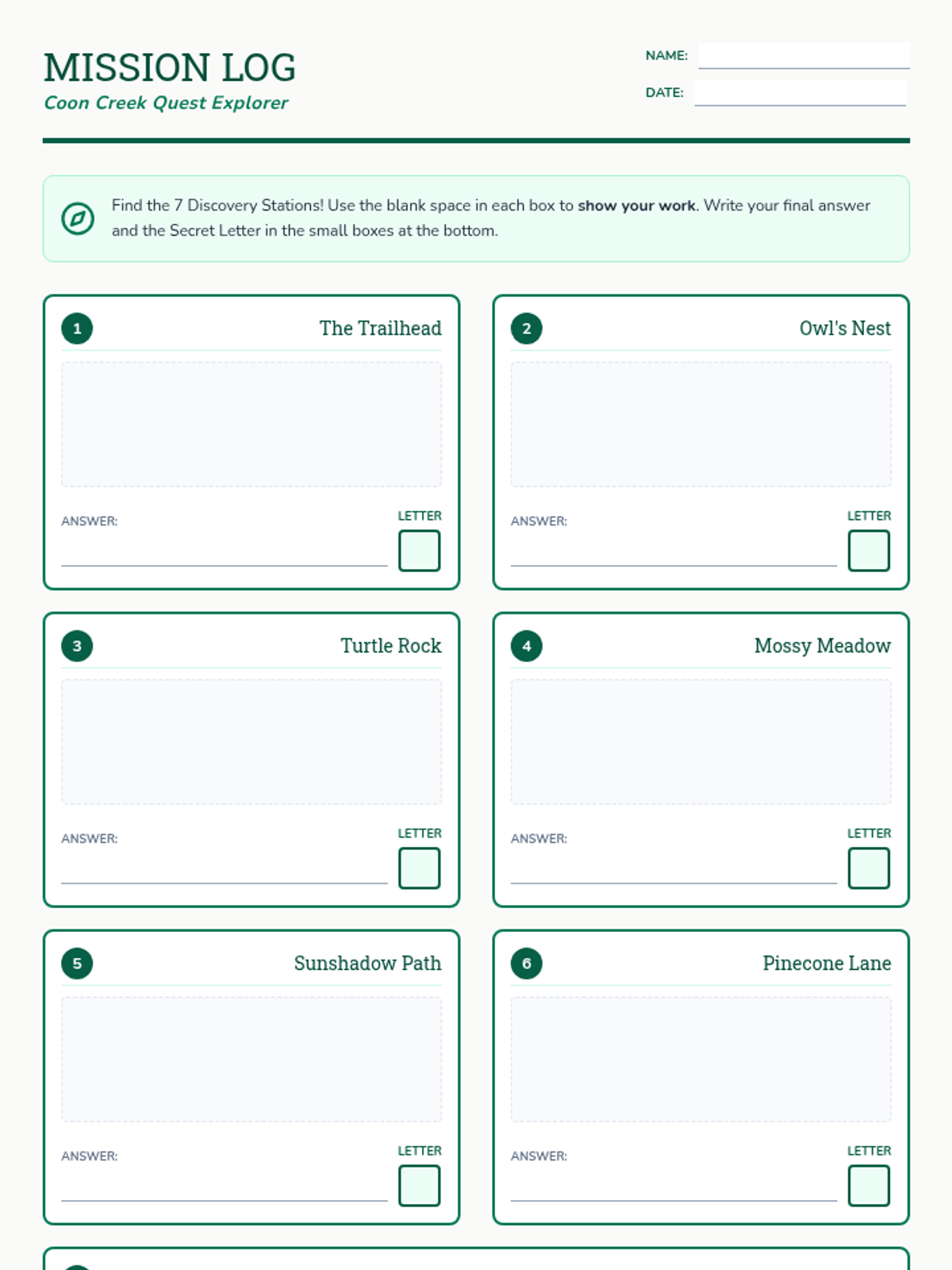
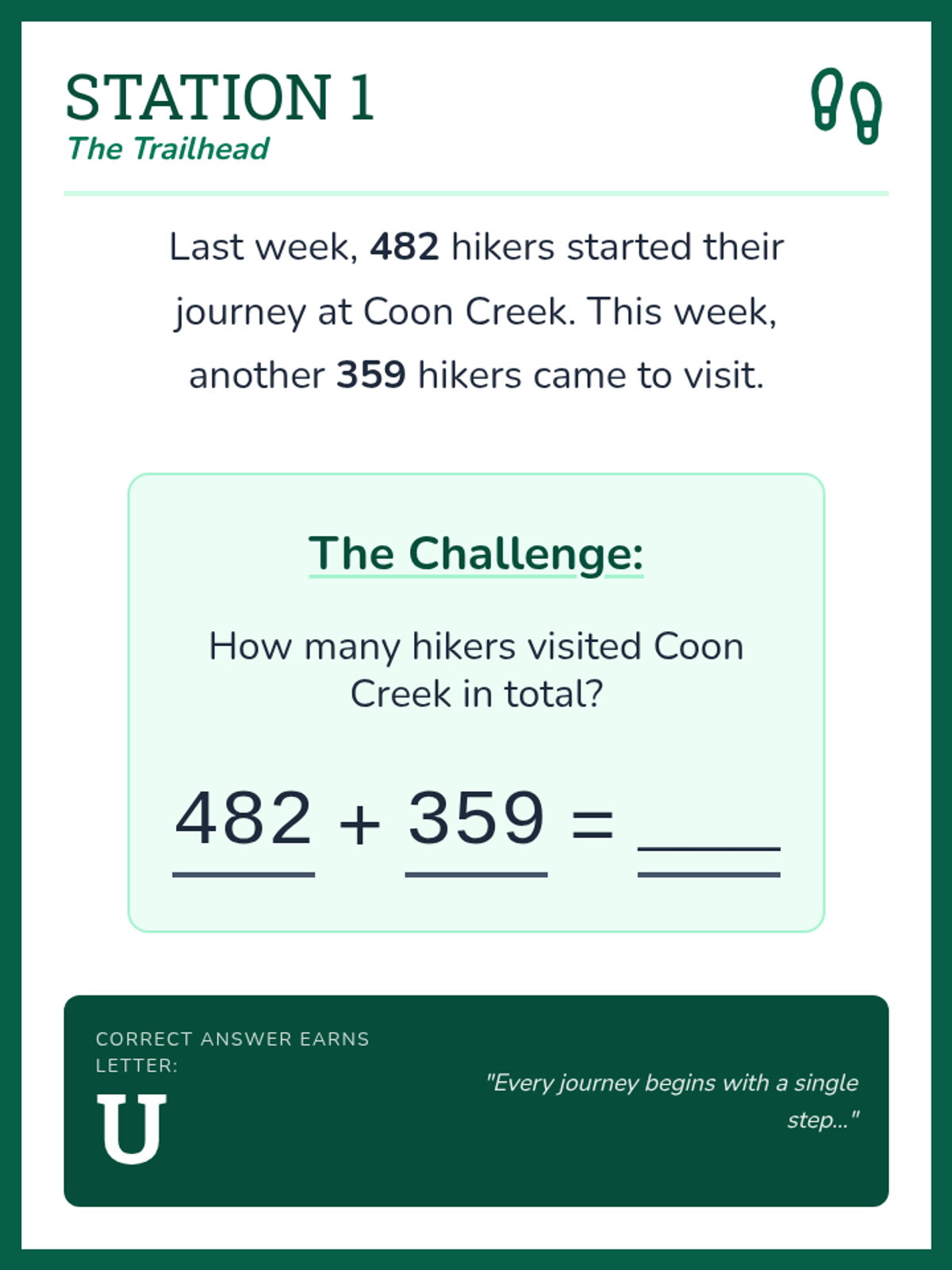
An outdoor math escape room set in the Coon Creek forest, reviewing 3rd-grade math standards including addition/subtraction, multiplication/division, area/perimeter, fractions, time, shapes, and measurement.
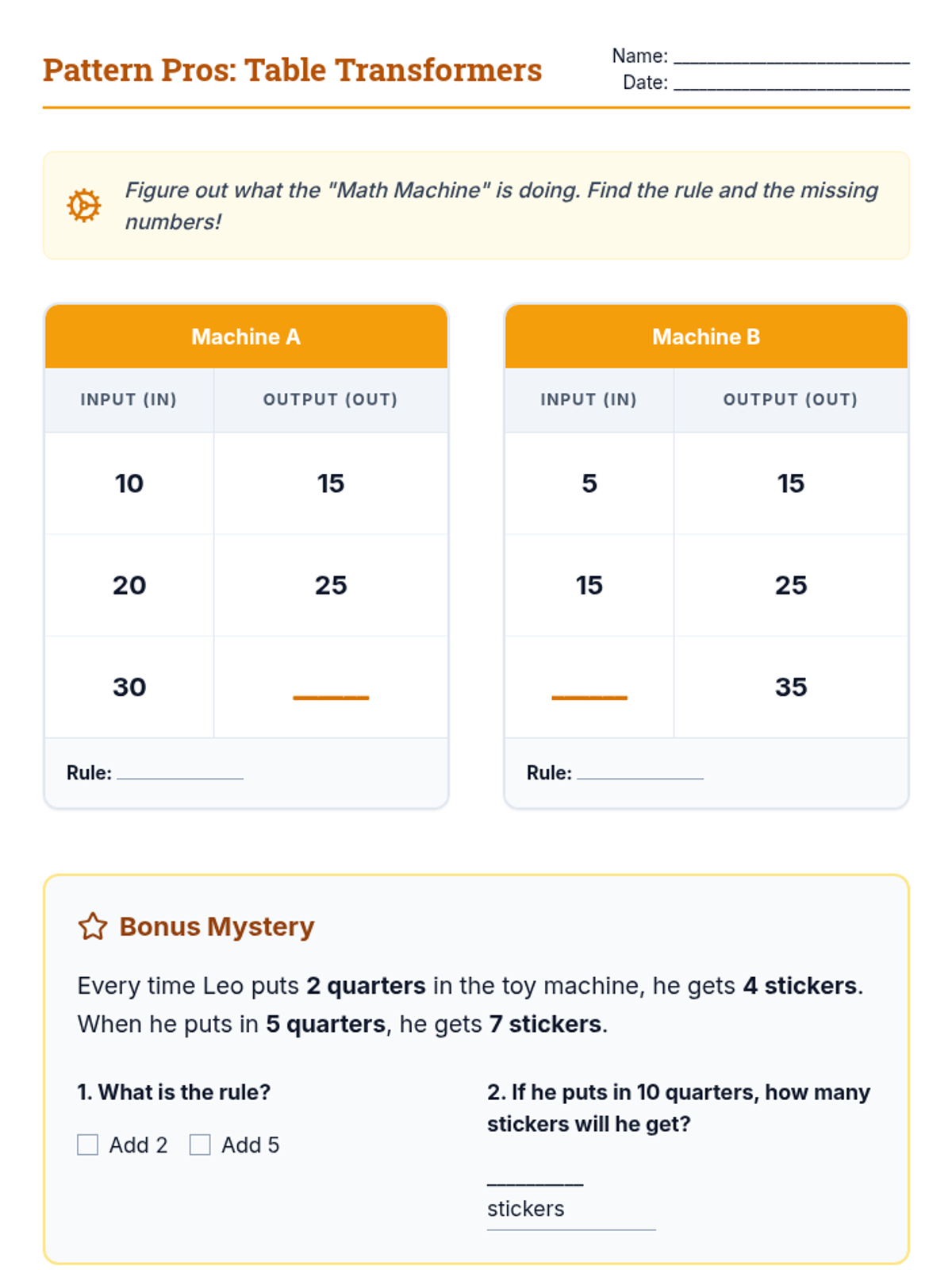
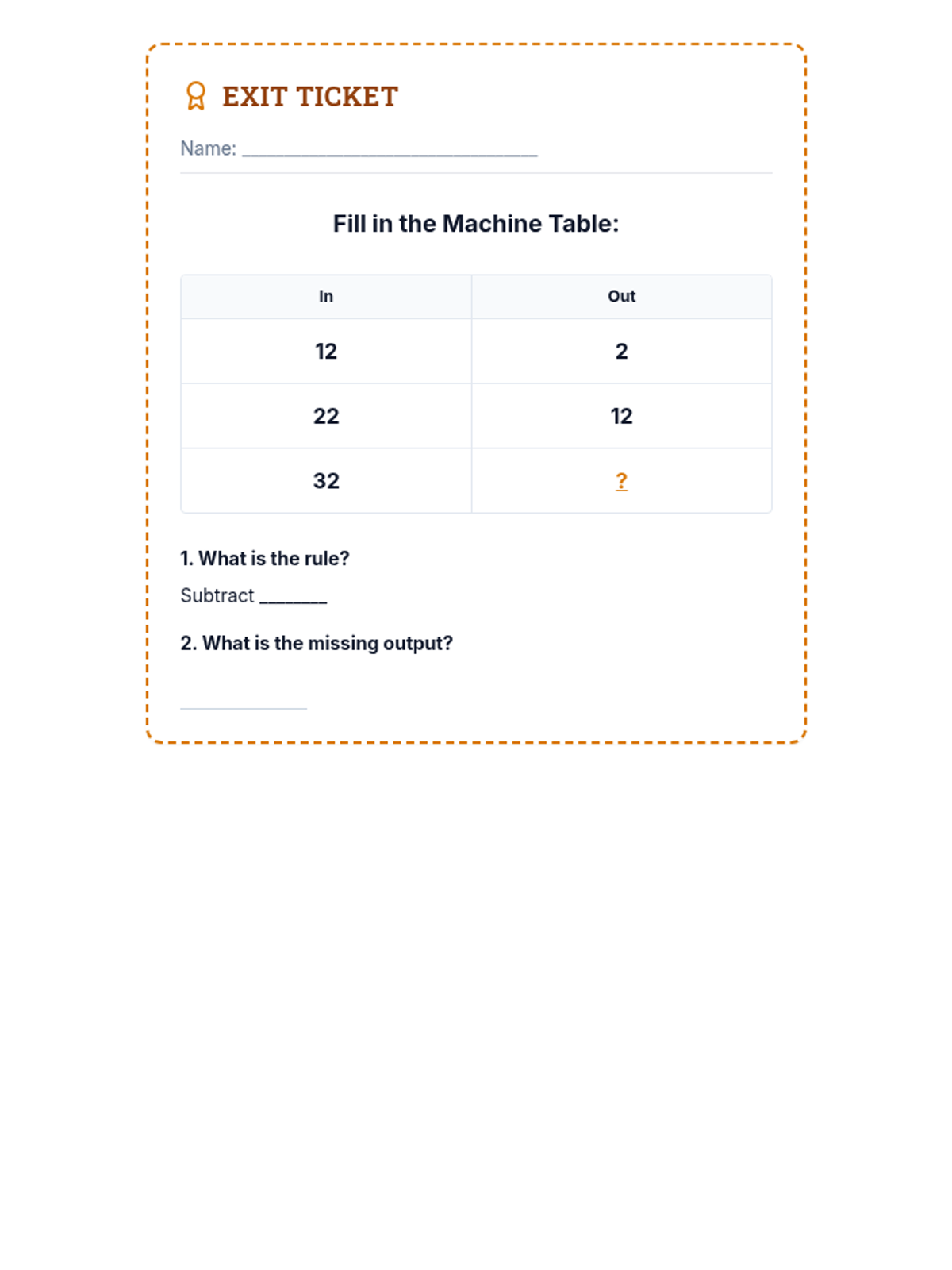
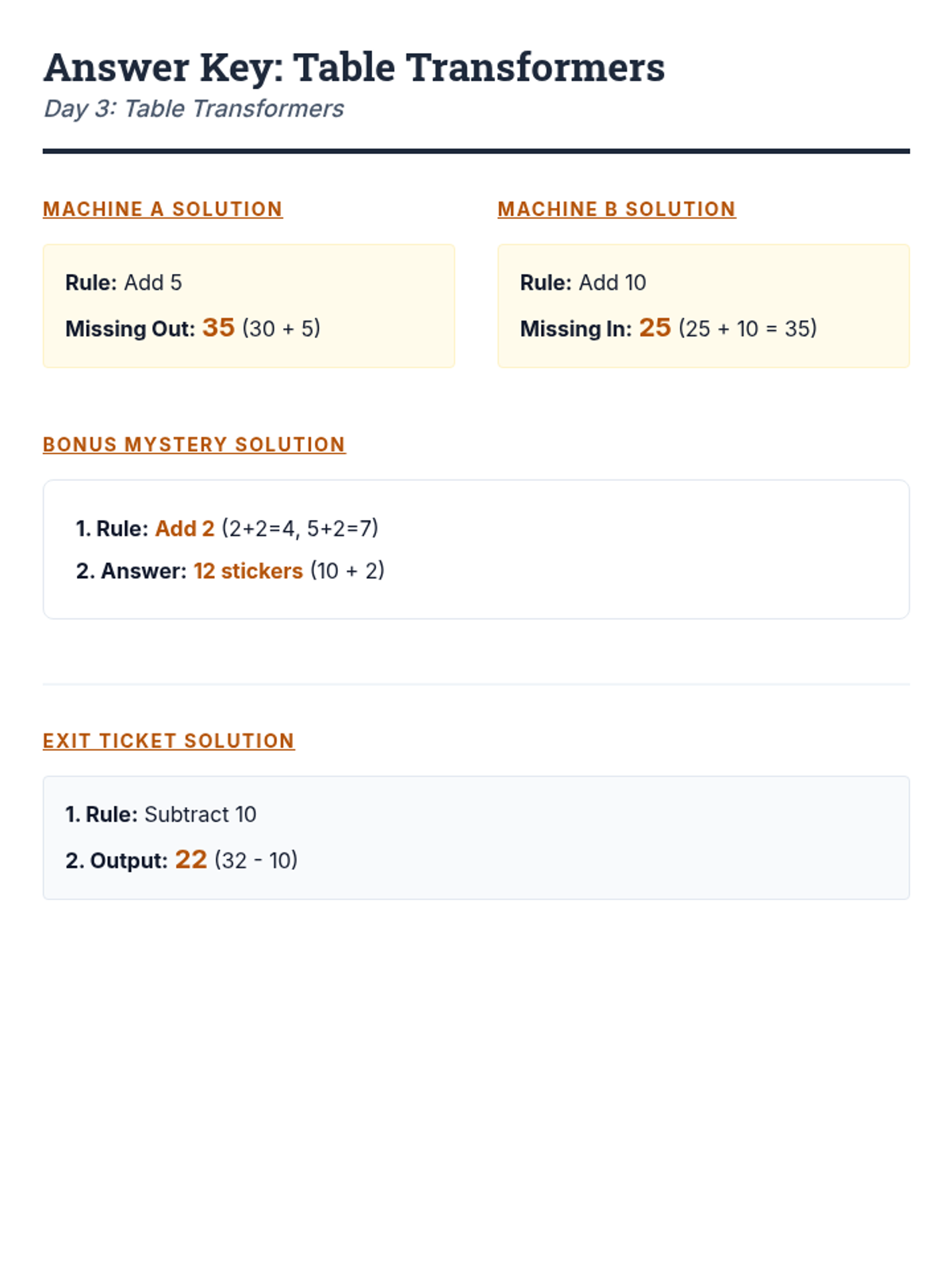
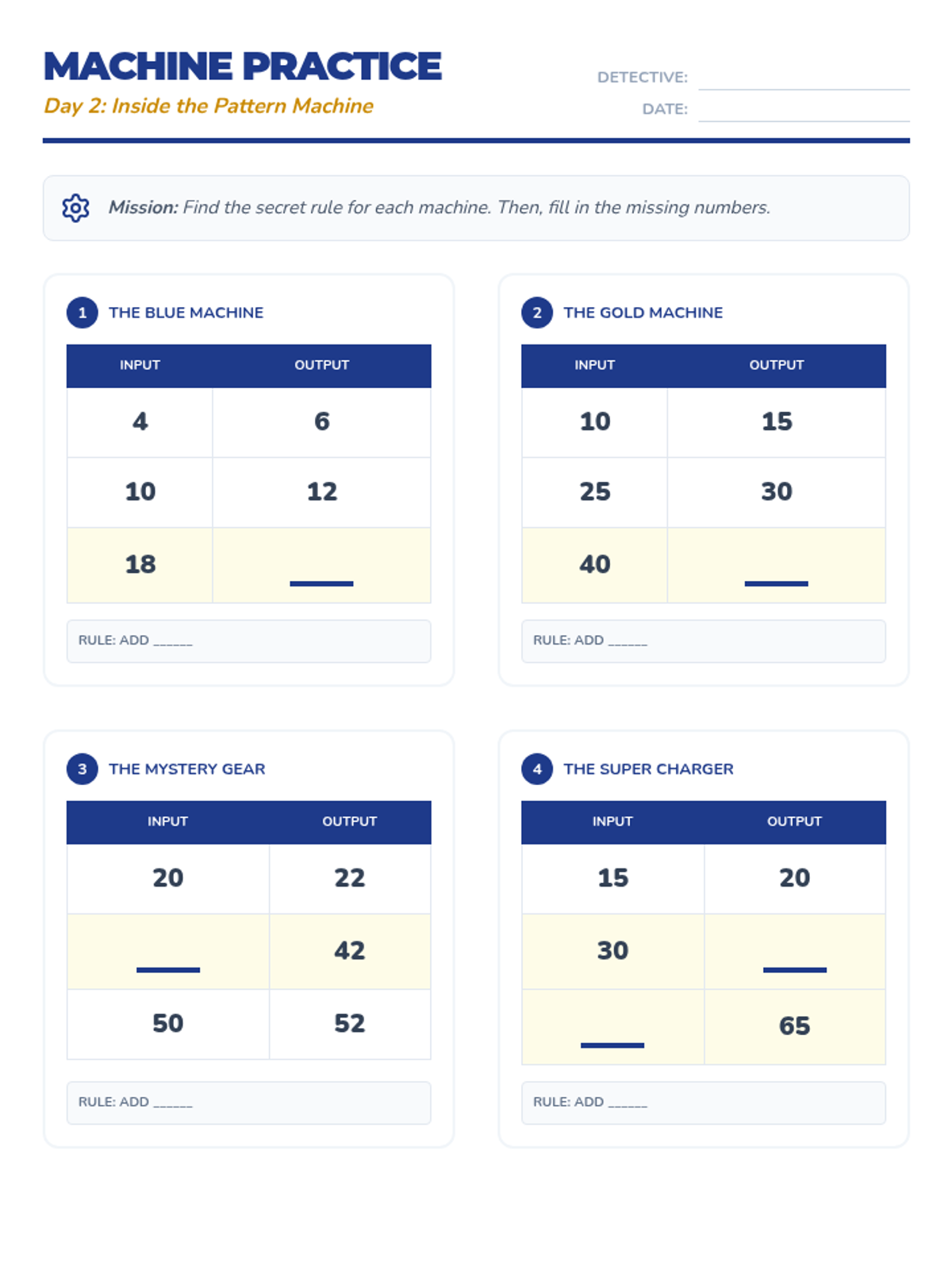
Students analyze input-output tables to identify constant addition or subtraction rules and apply those rules to find missing values.
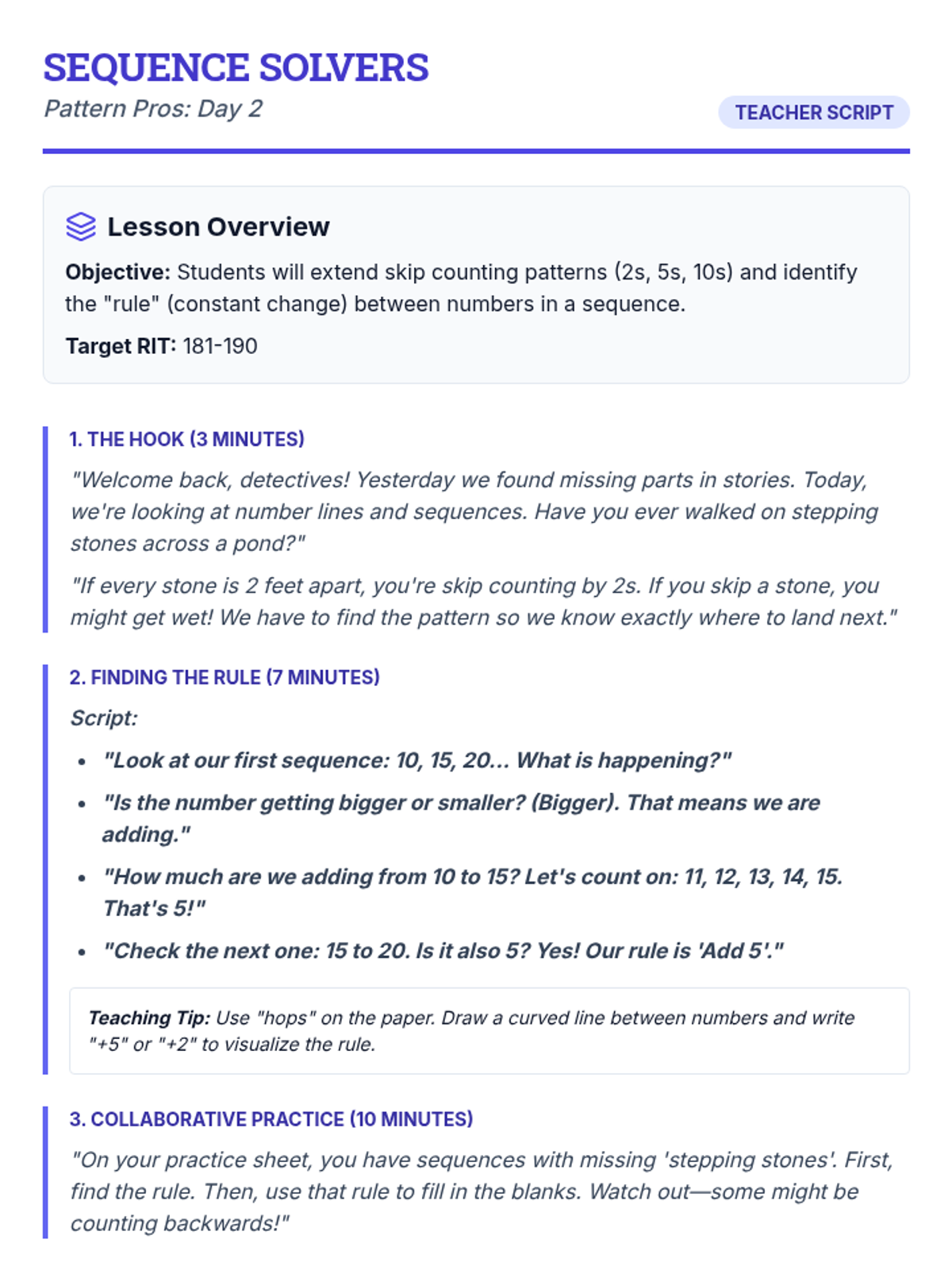
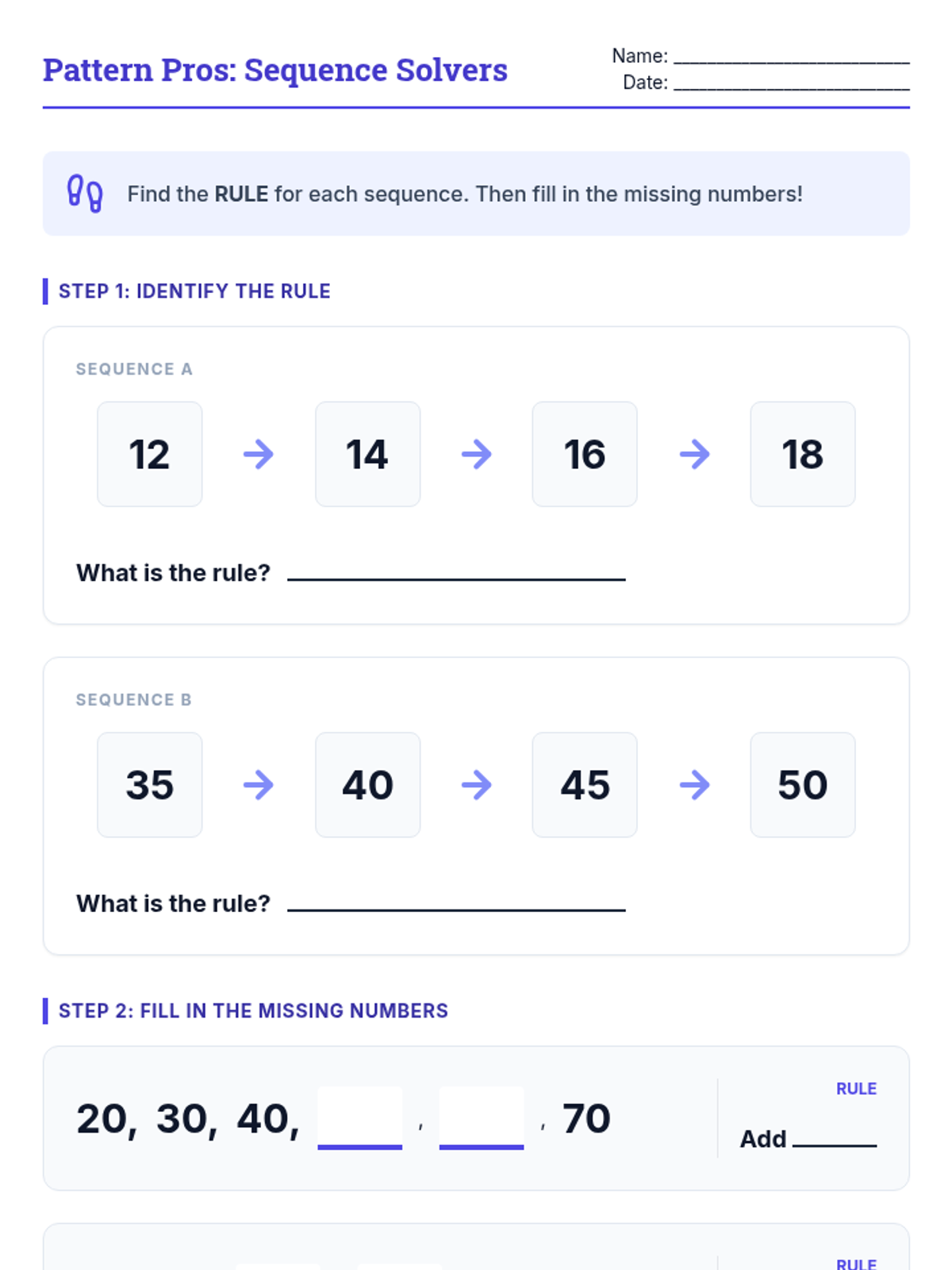
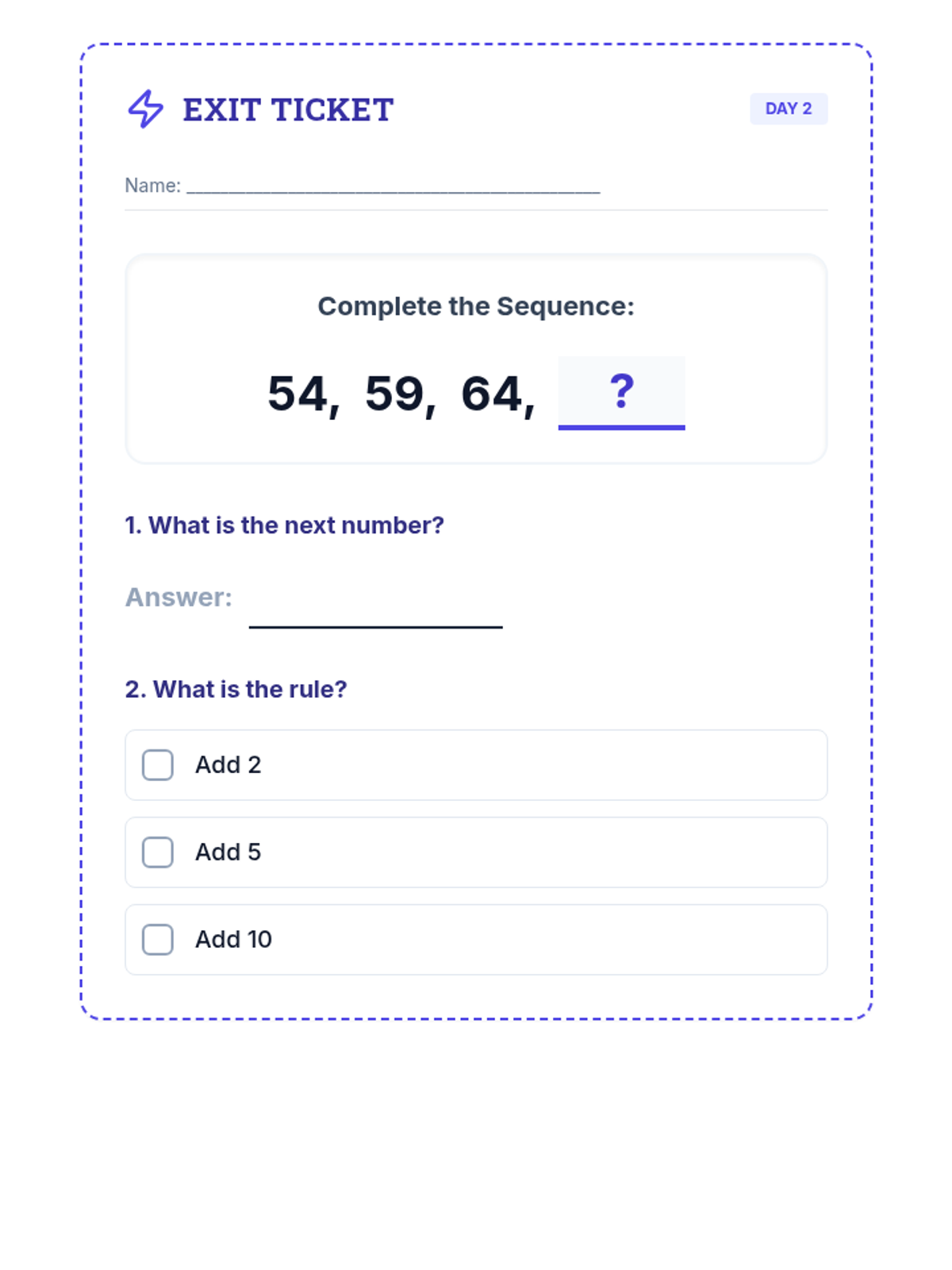
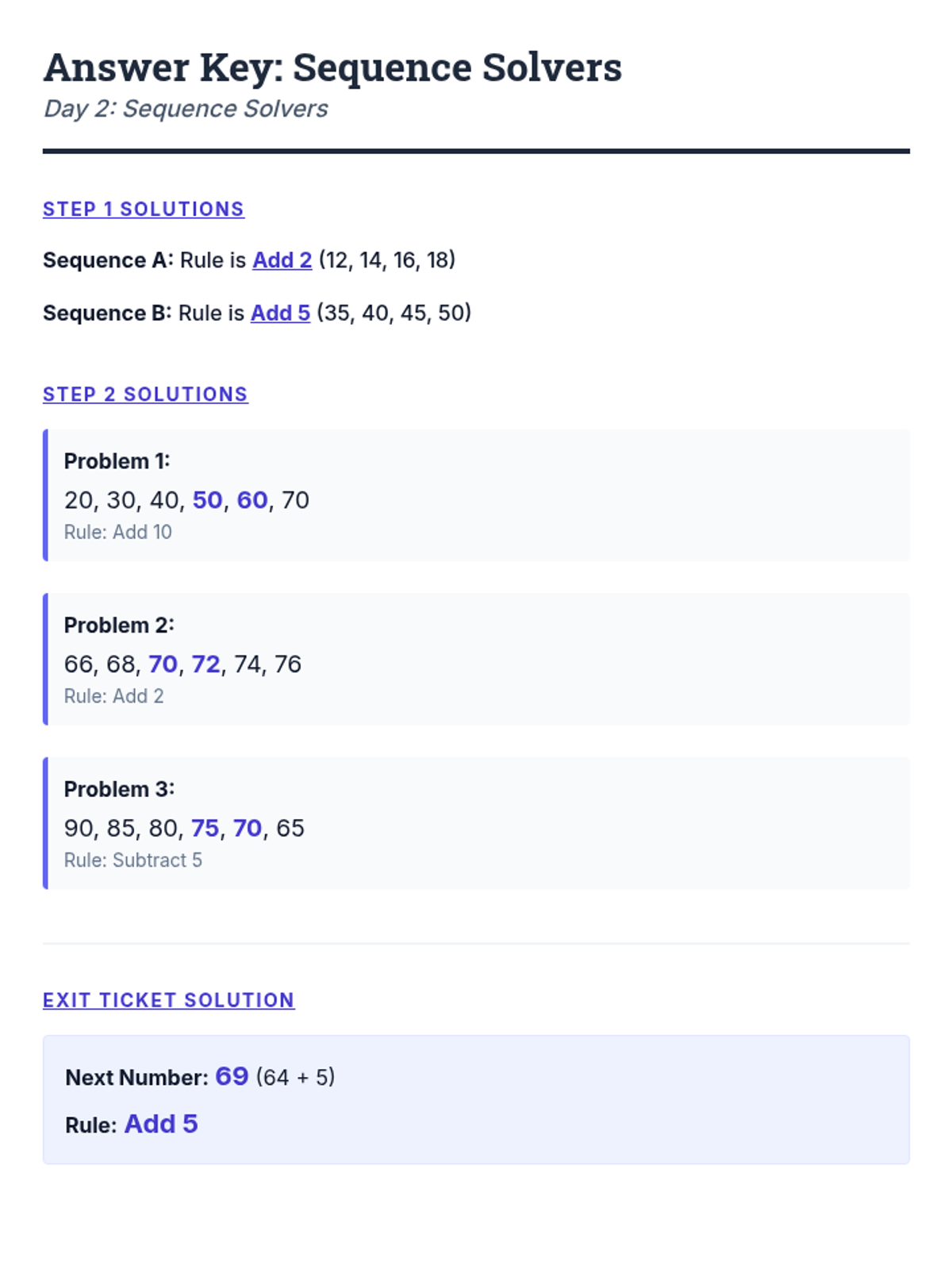
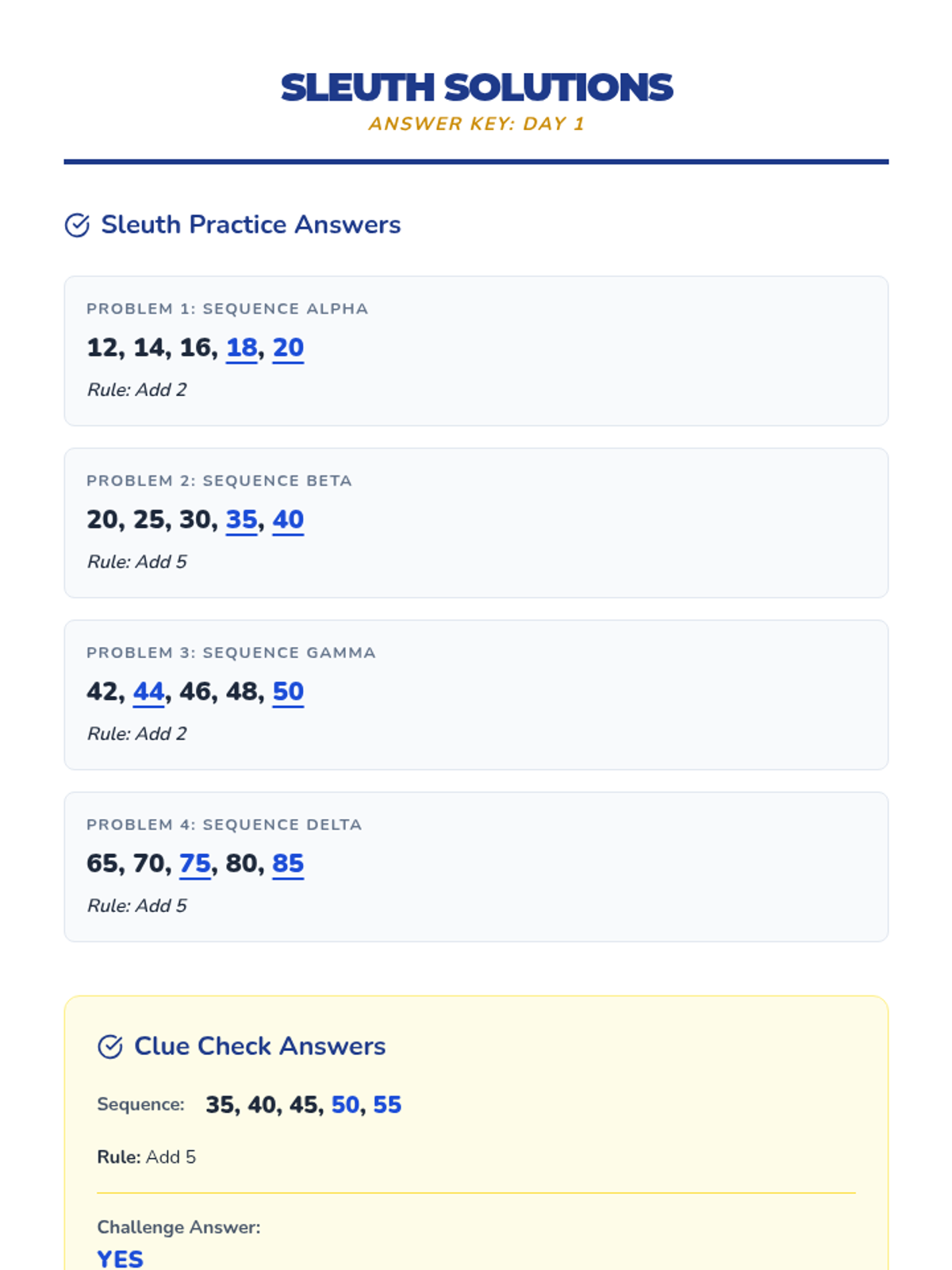
Students identify and extend skip counting patterns by 2s, 5s, and 10s, and practice finding the underlying rule for various number sequences.
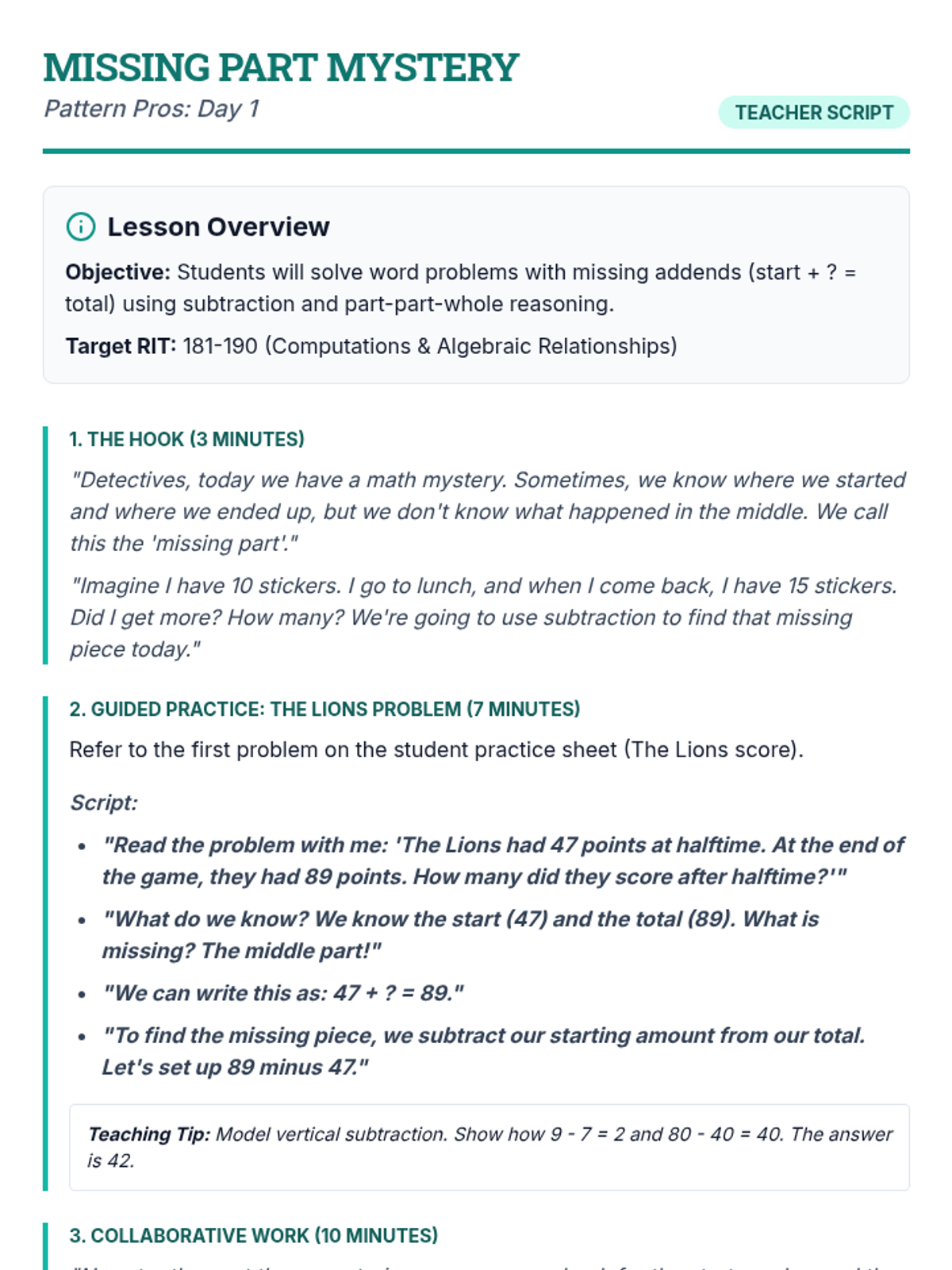
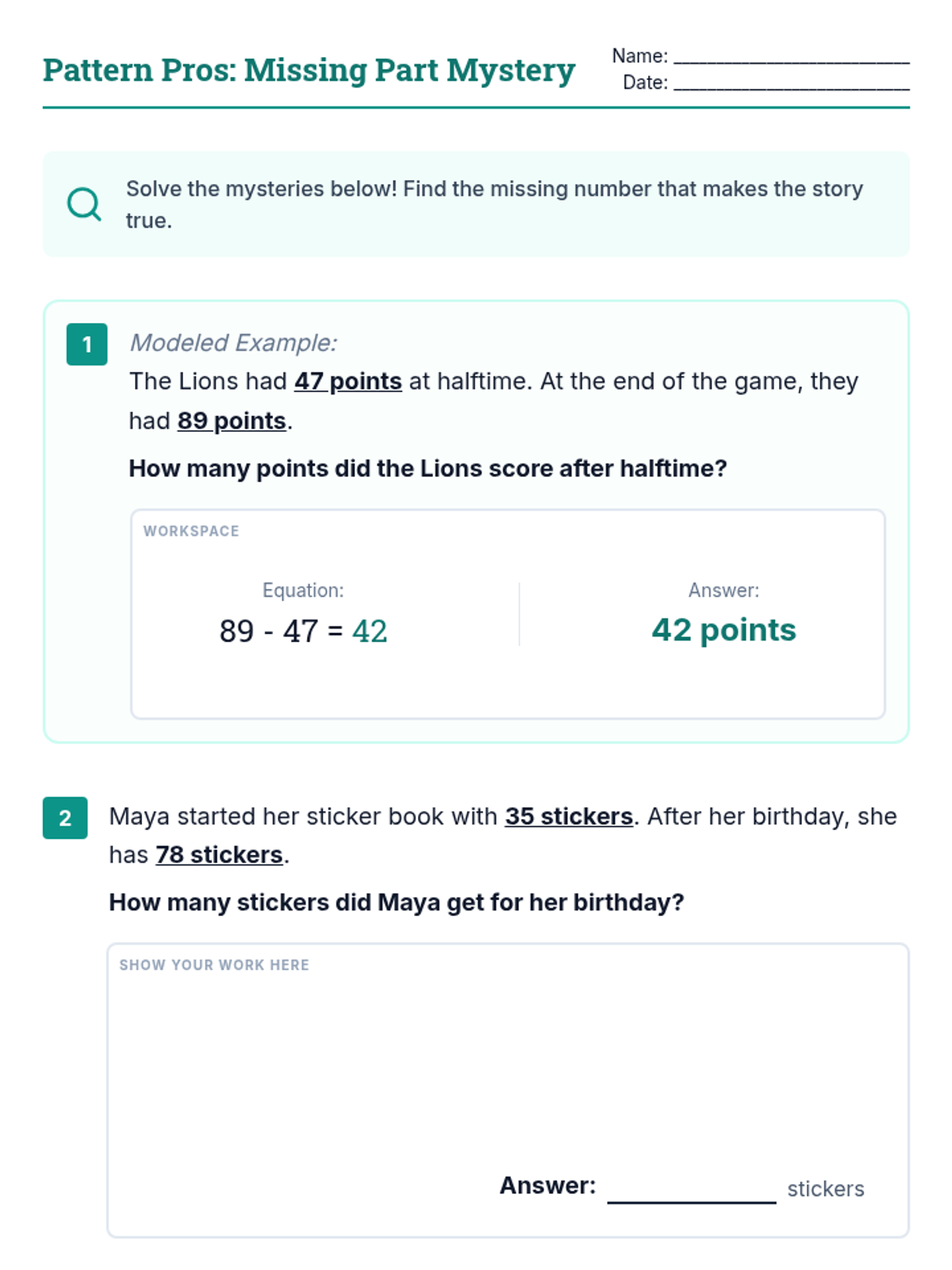
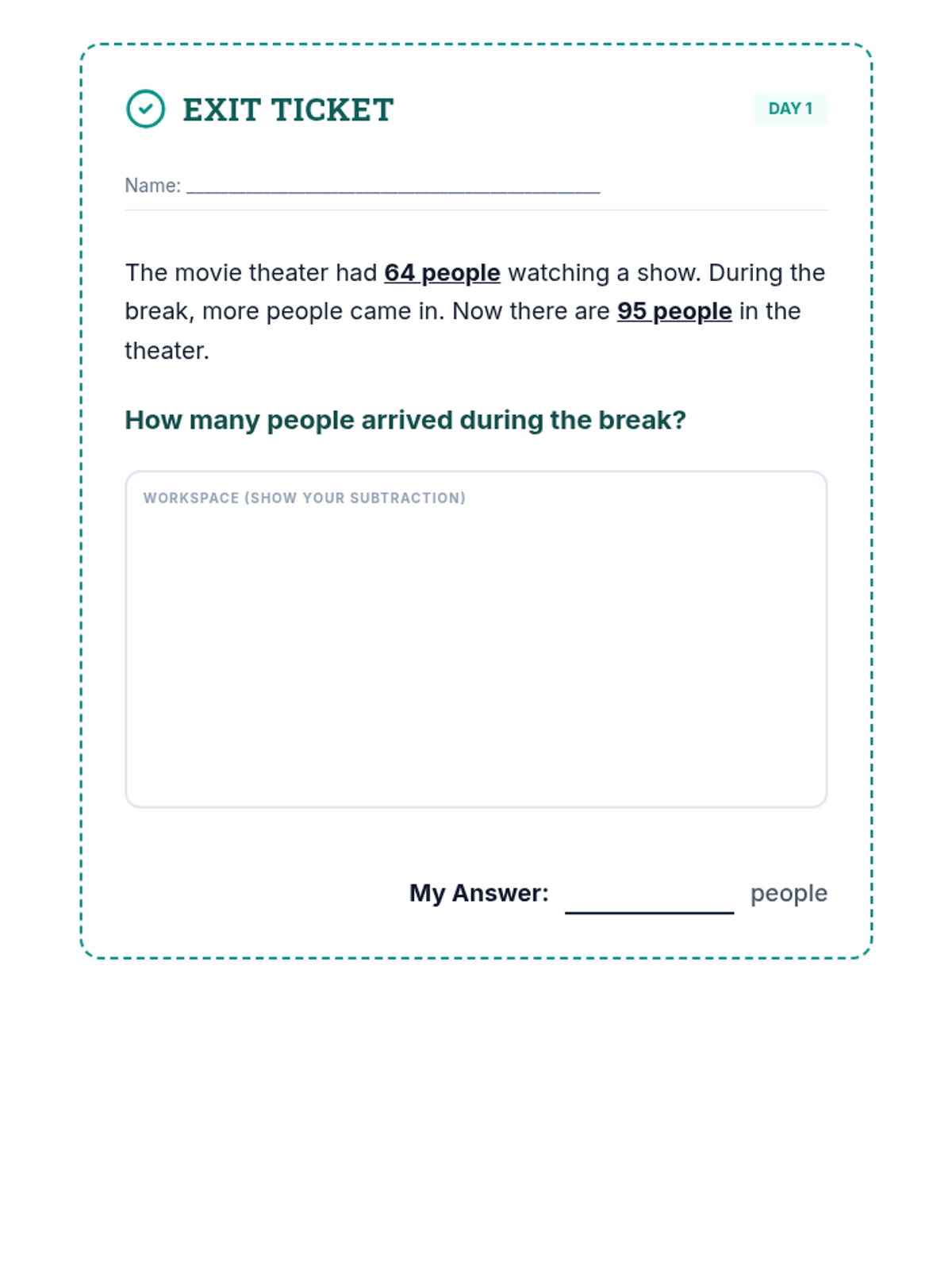
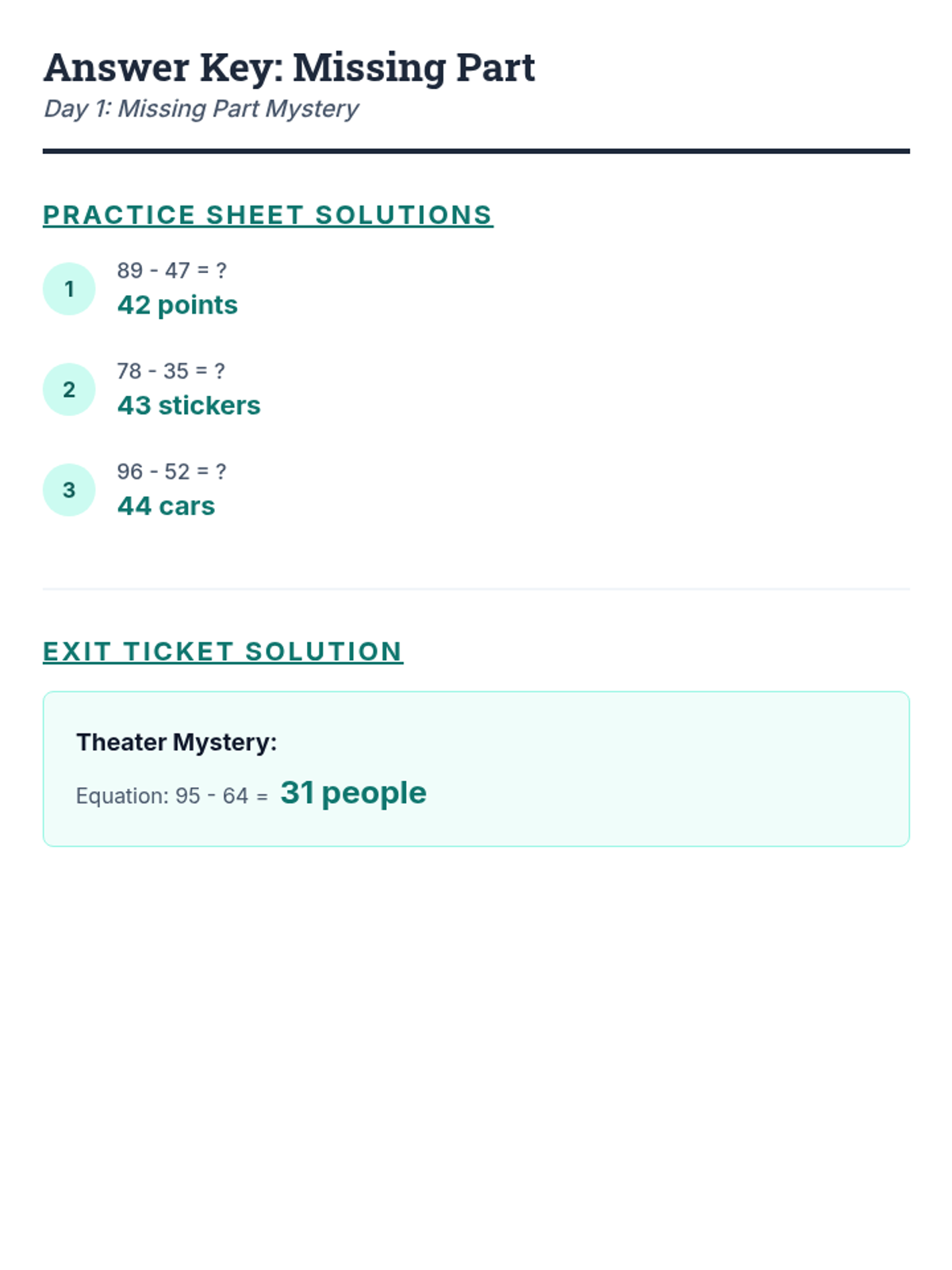
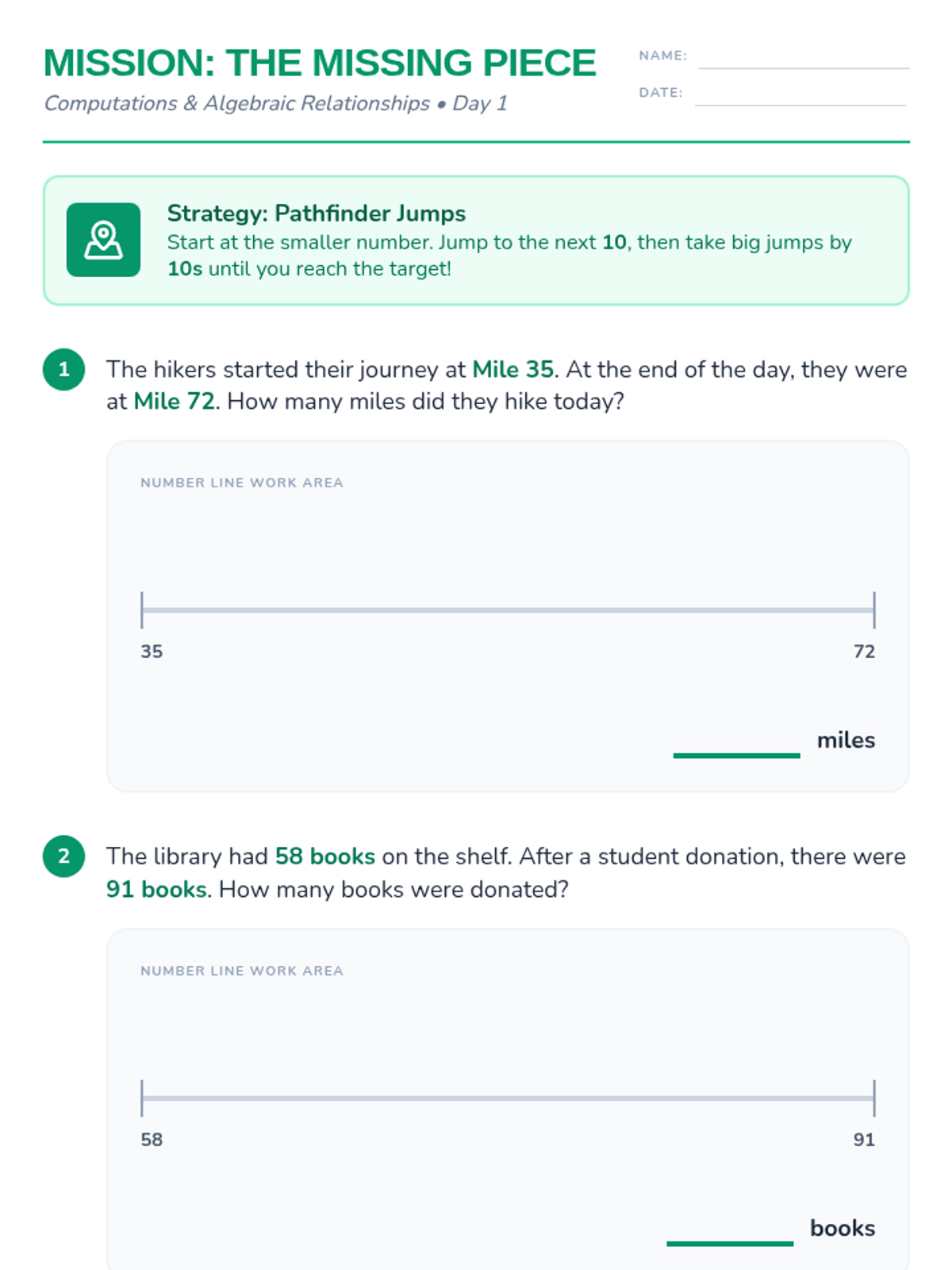
Students solve missing addend word problems within 100, focusing on finding the 'change' in a story context using subtraction strategies.
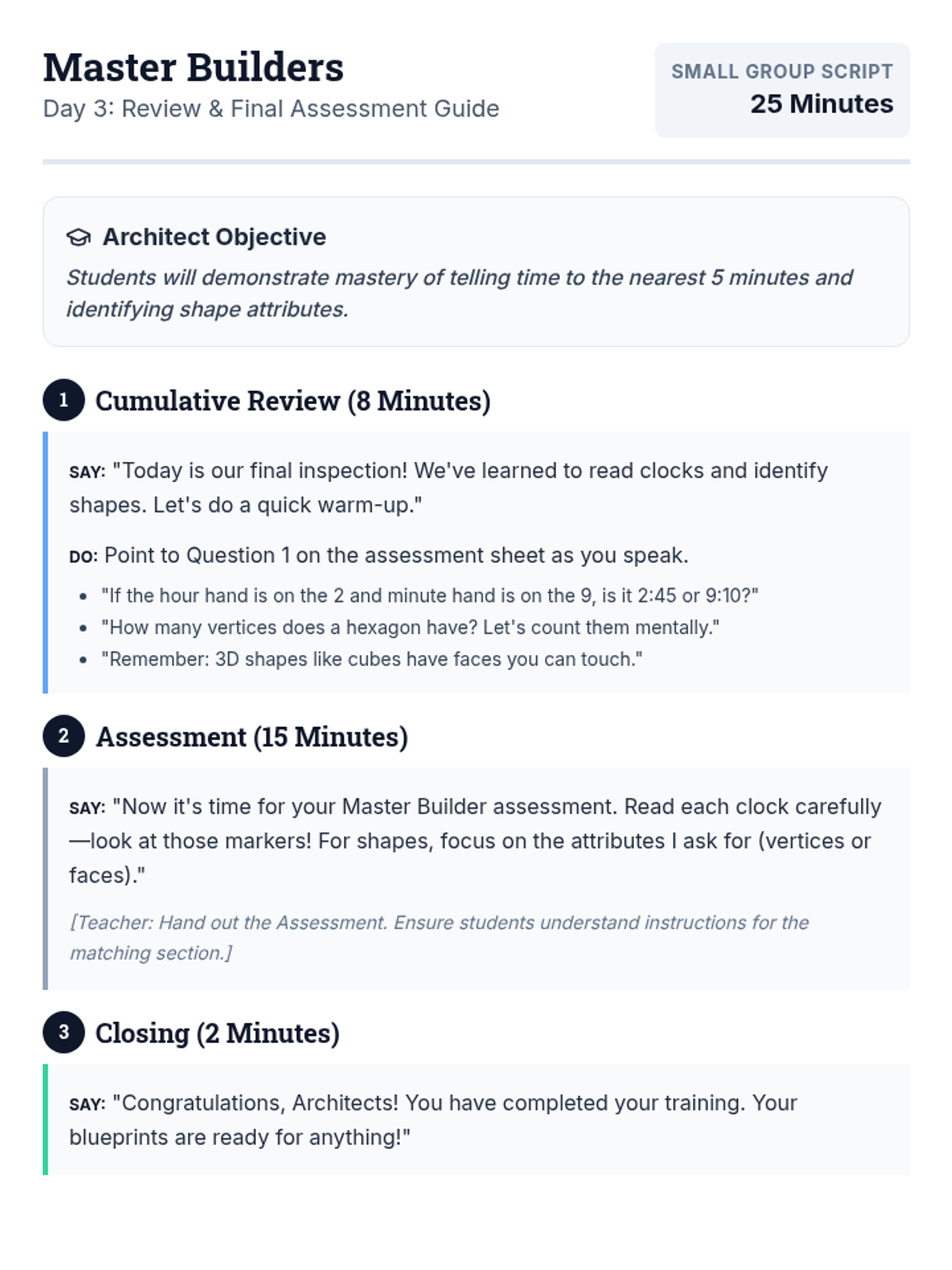
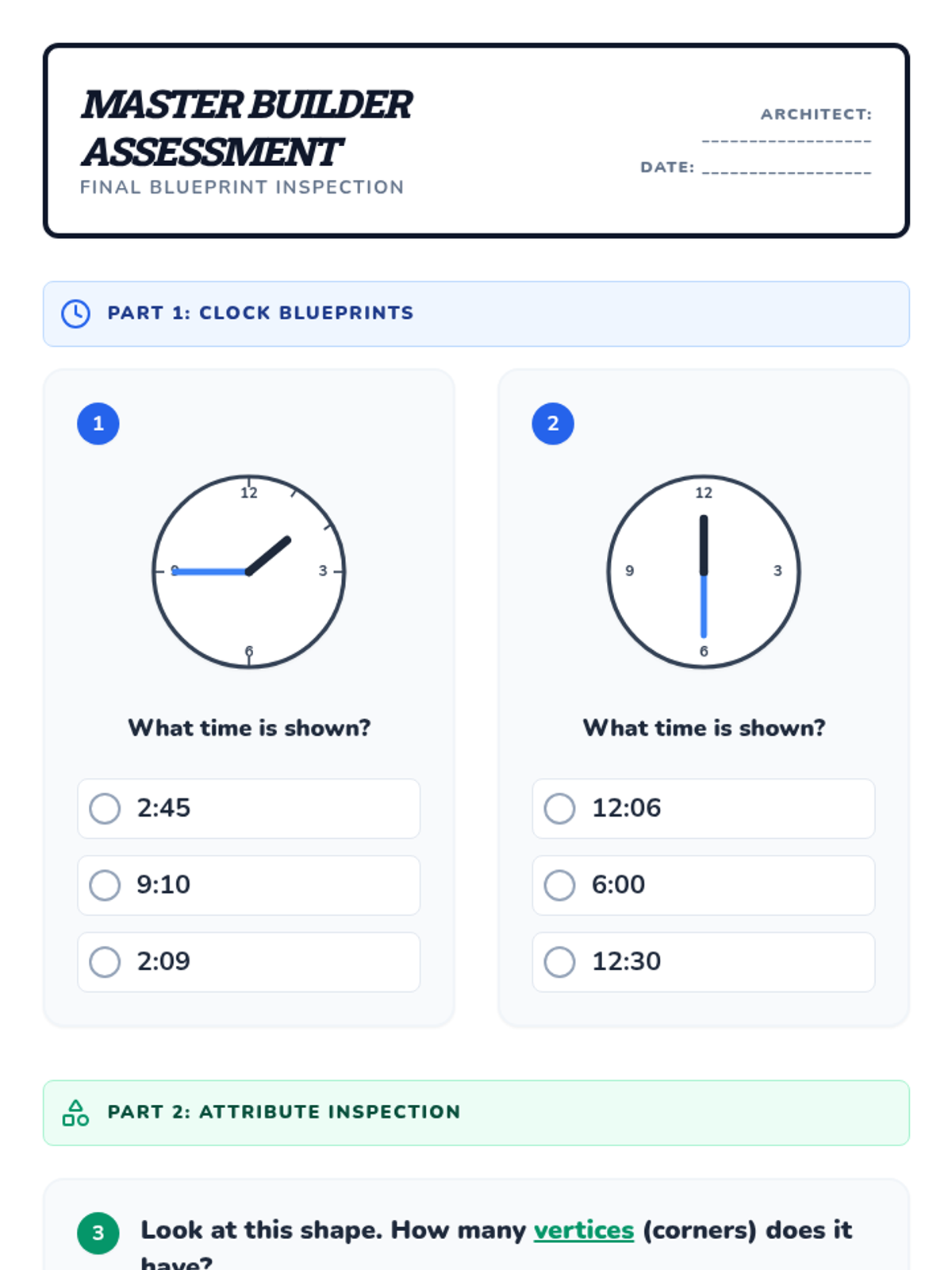
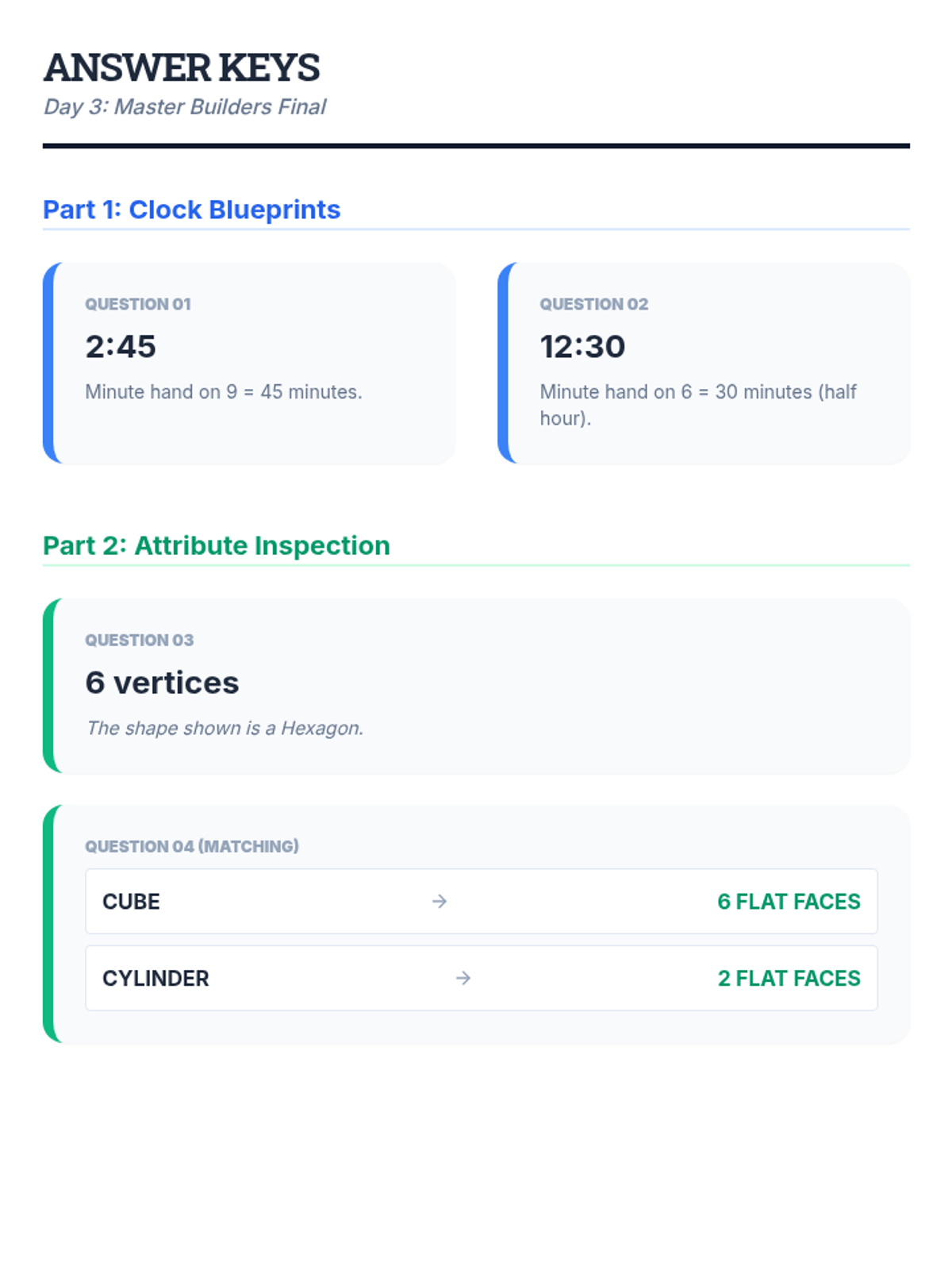
A cumulative review of time and shape attributes followed by a formal assessment to track student growth toward RIT 180 goals.
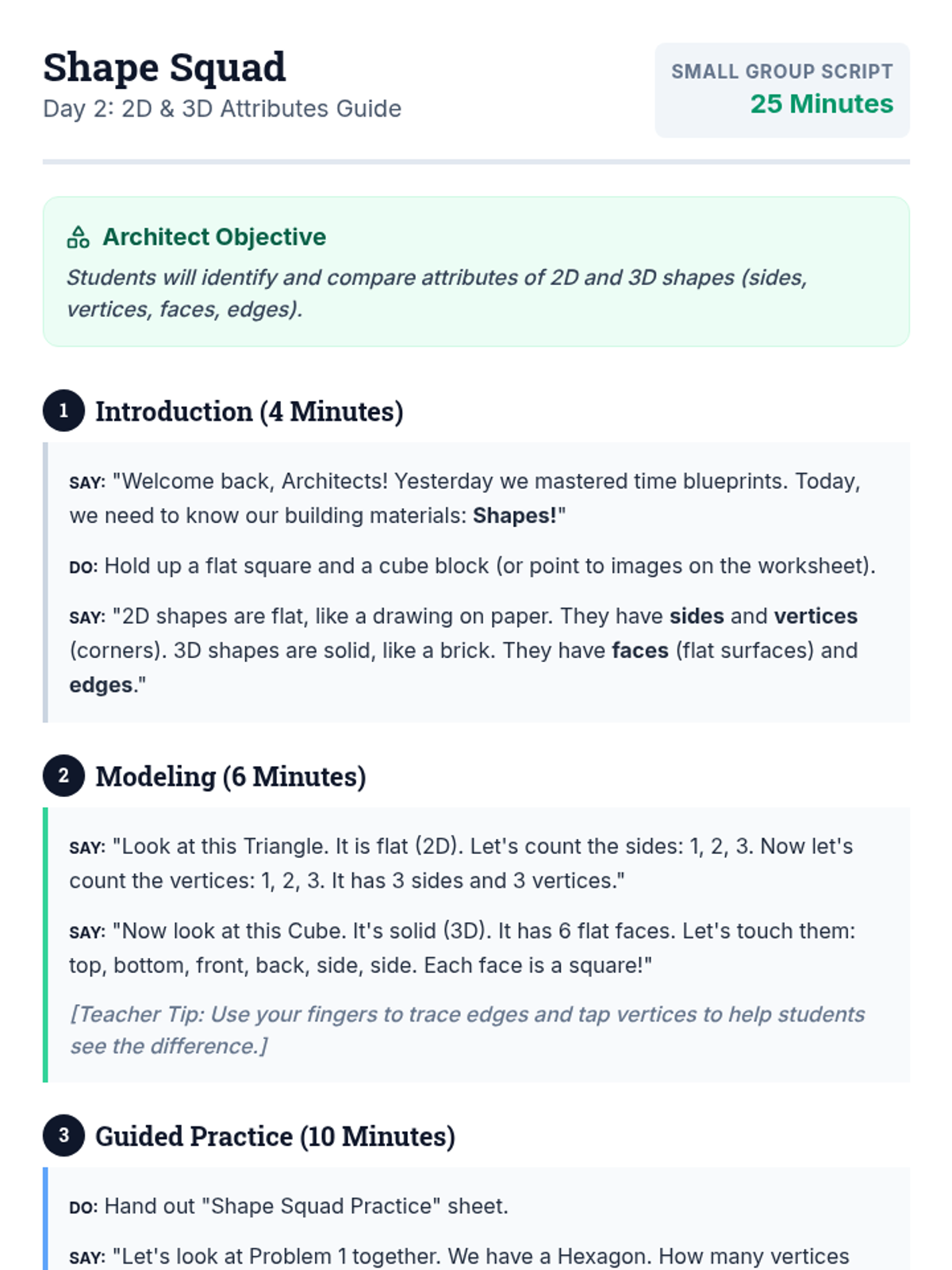
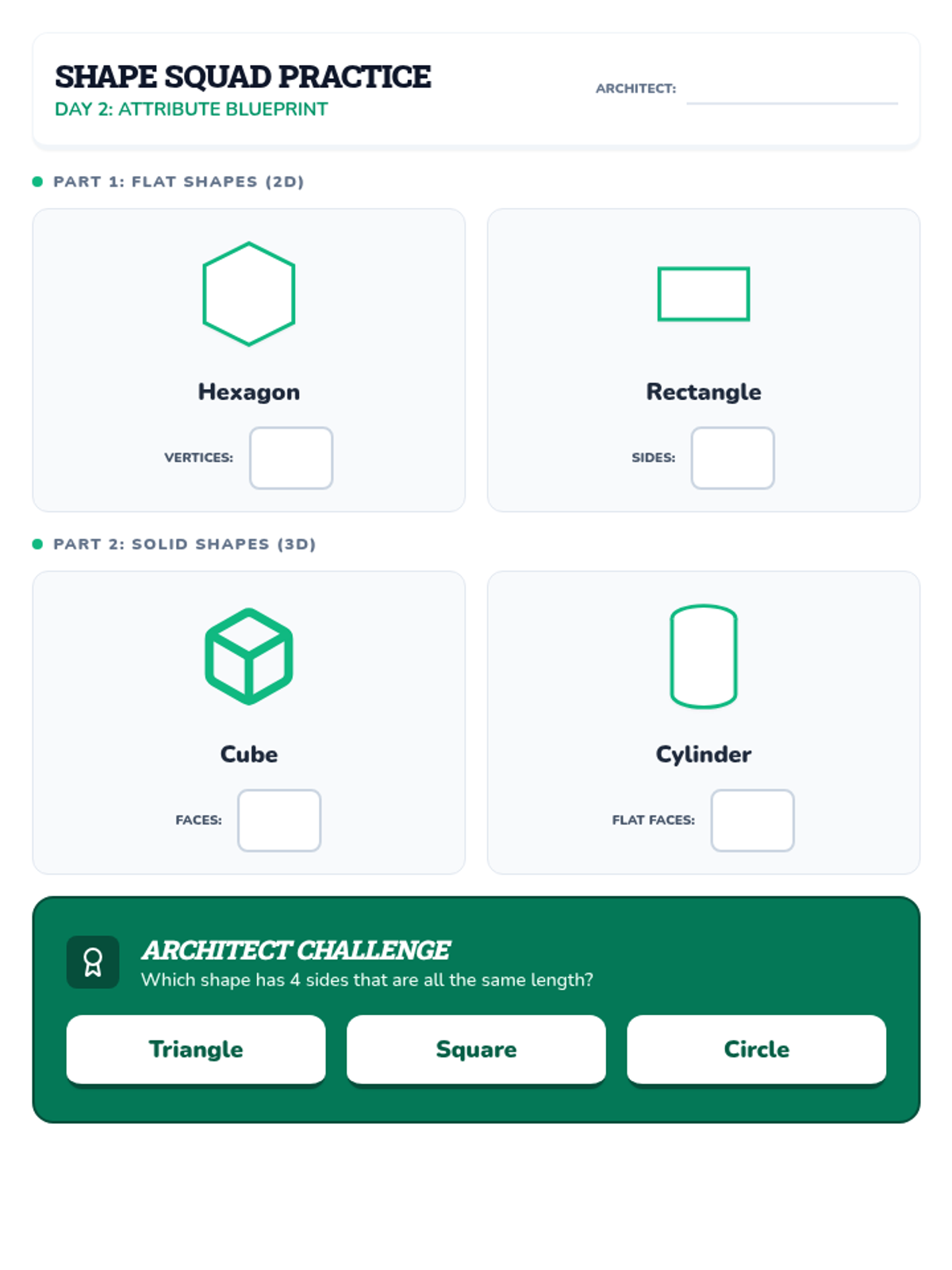
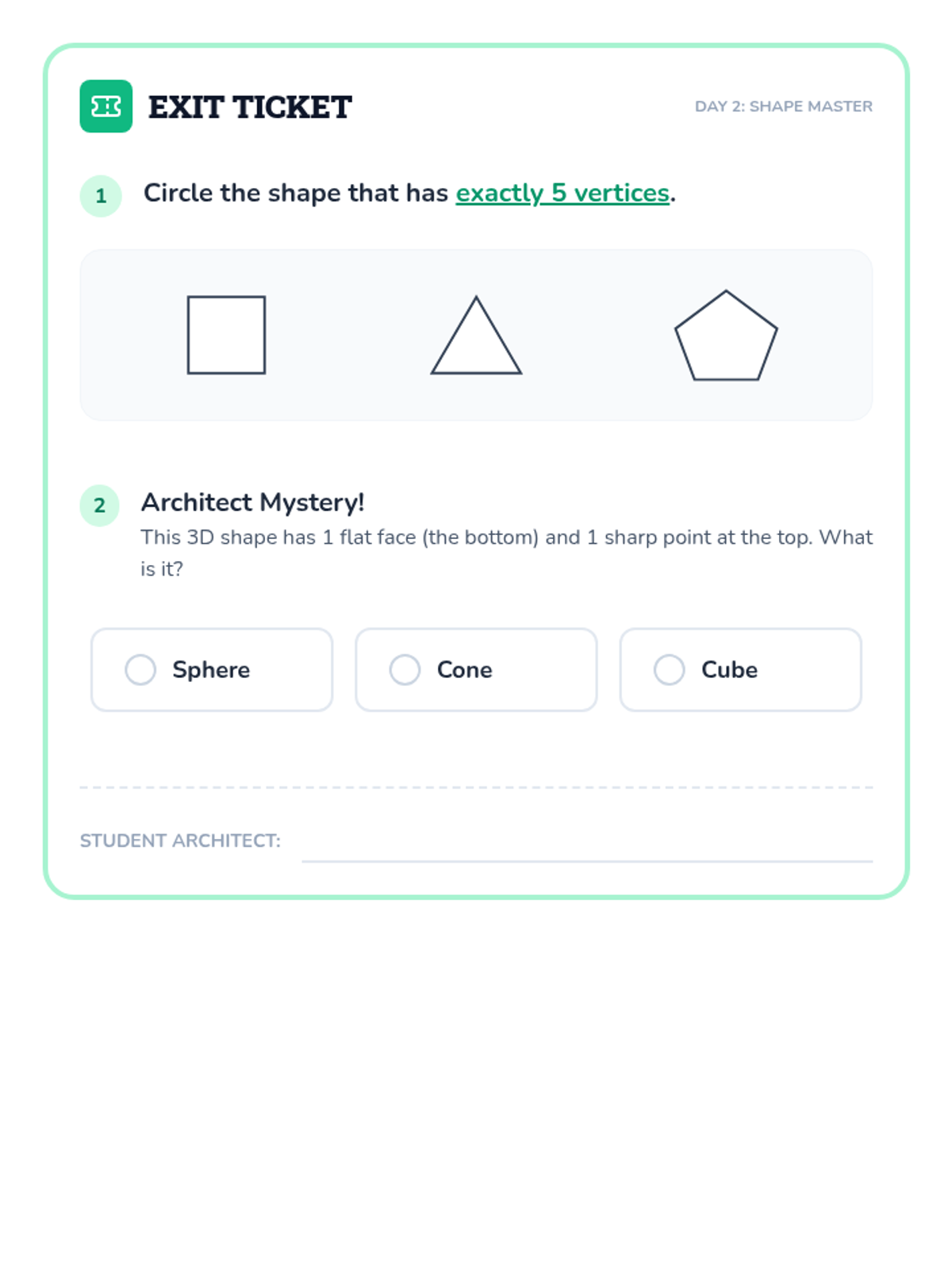
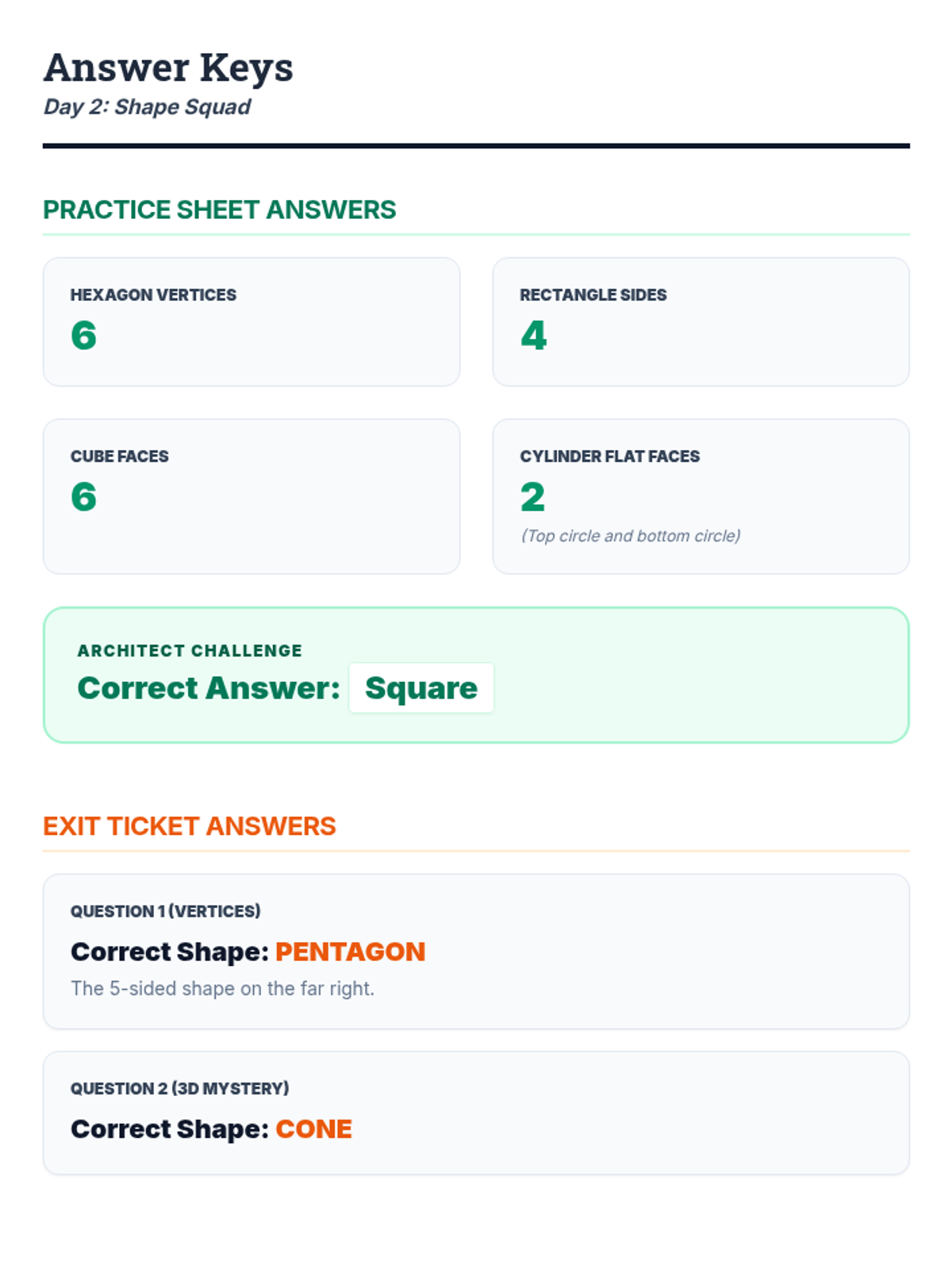
Identifying and describing defining attributes of 2D and 3D shapes, including sides, vertices, faces, and edges.
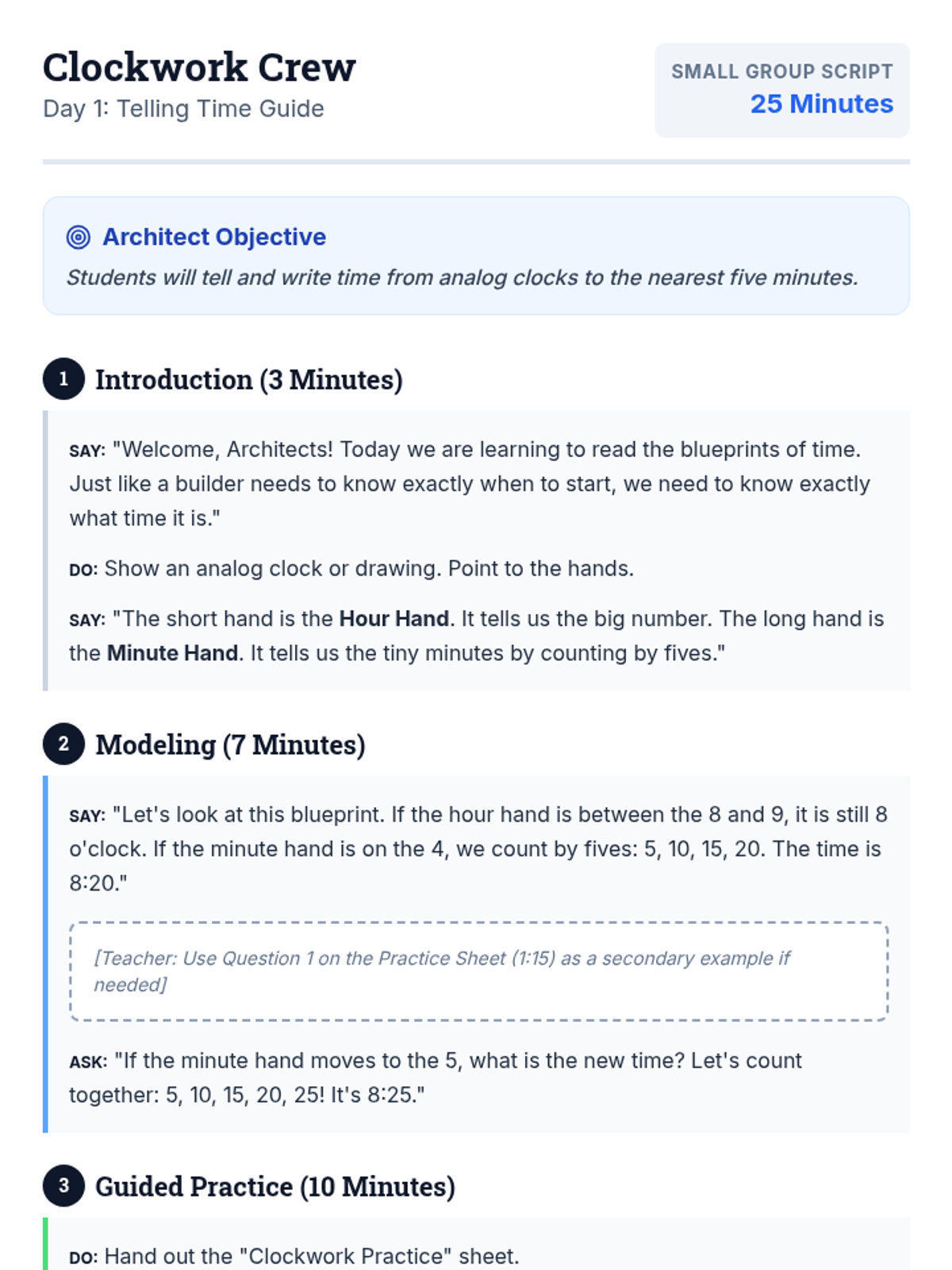
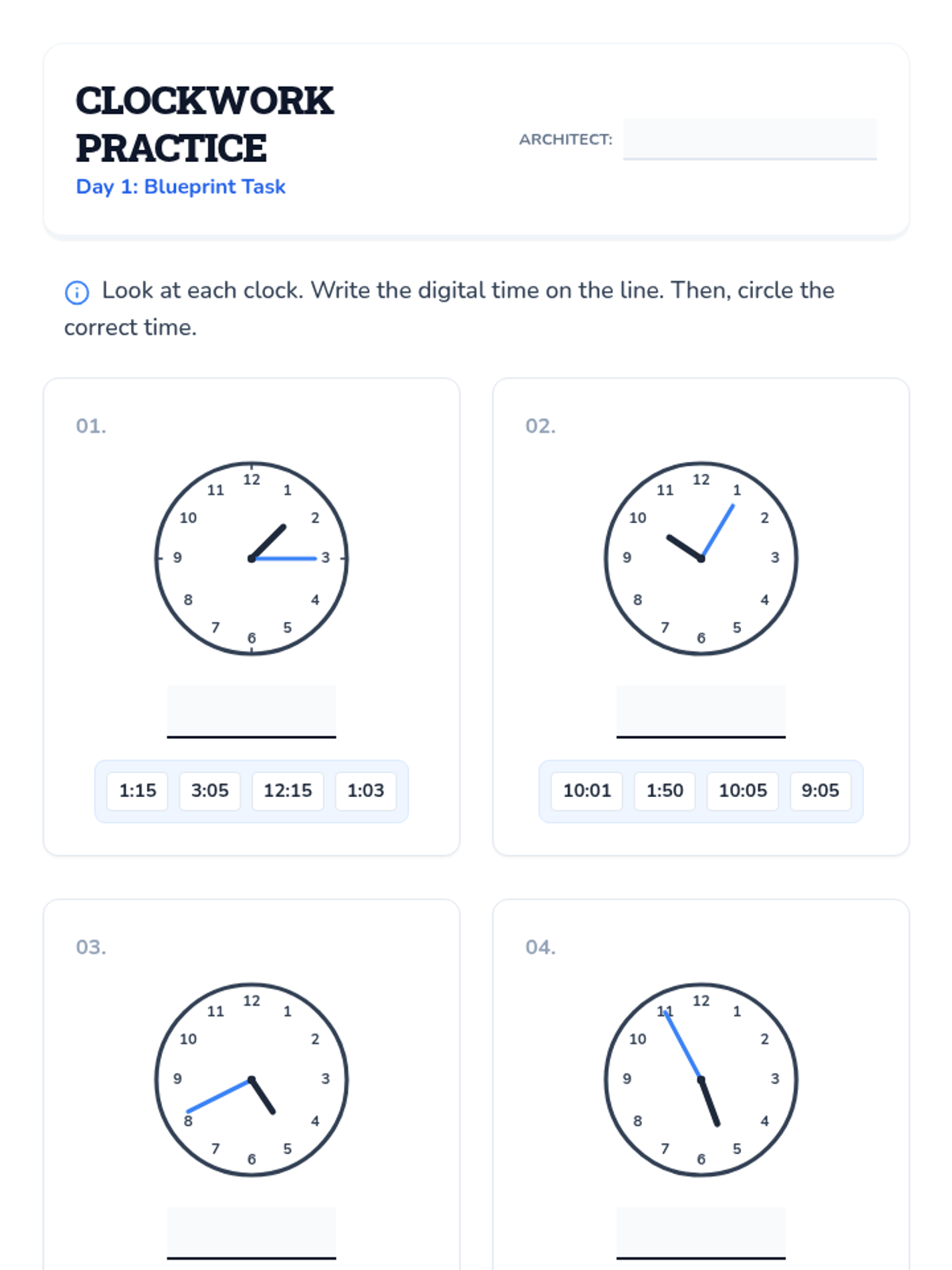
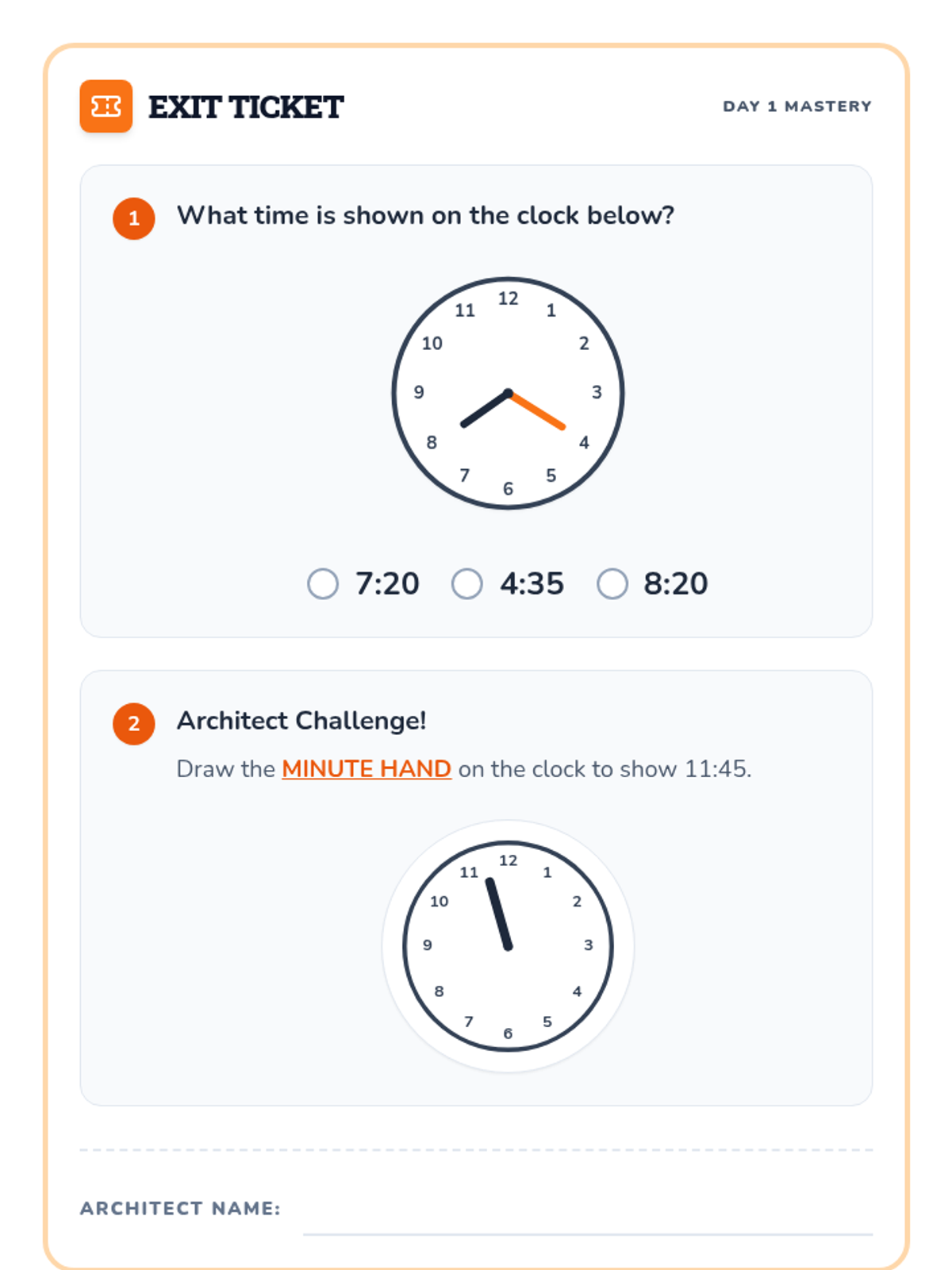
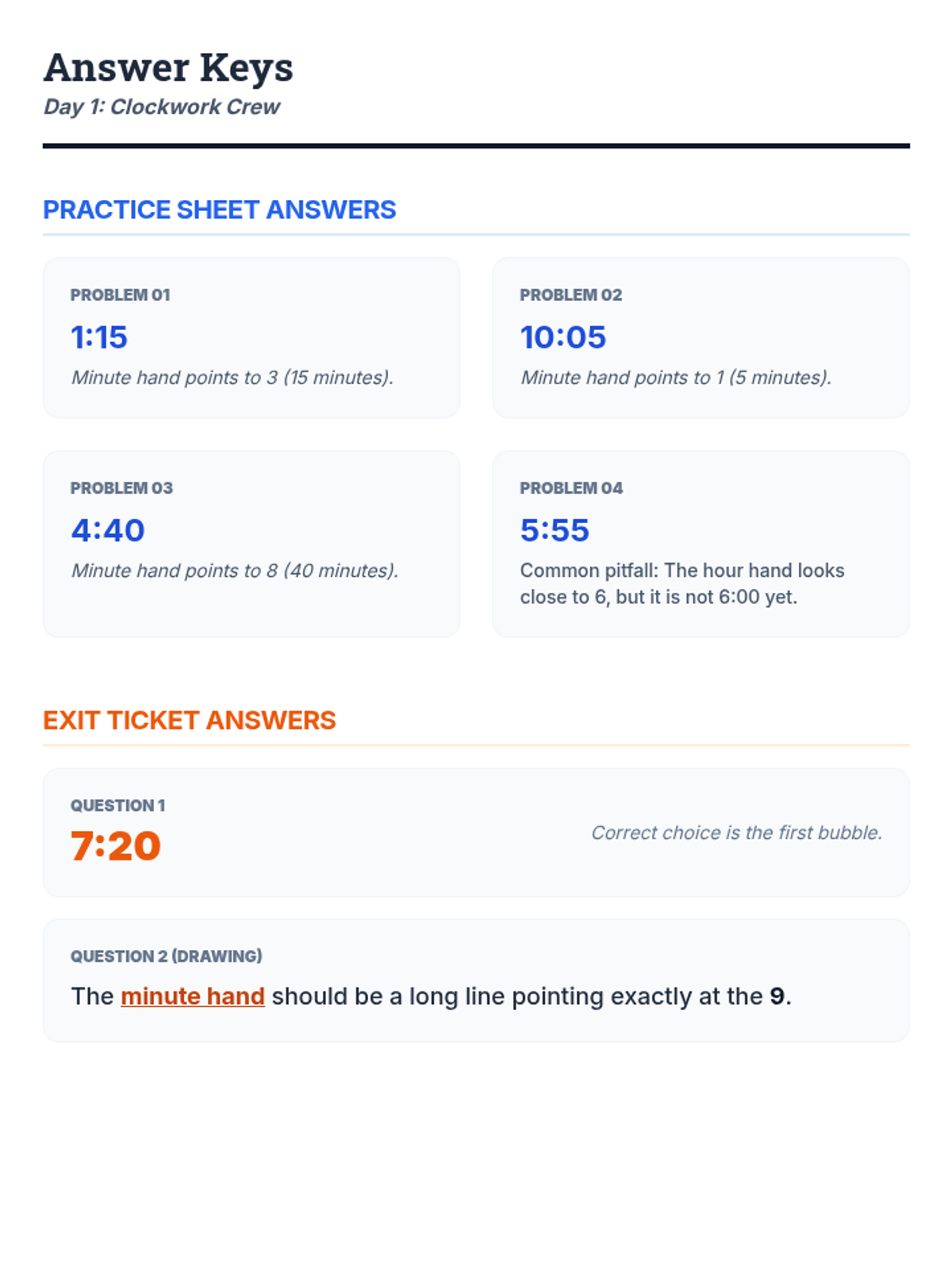
Mastering telling time to the nearest 5 minutes on an analog clock through guided practice and independent application.
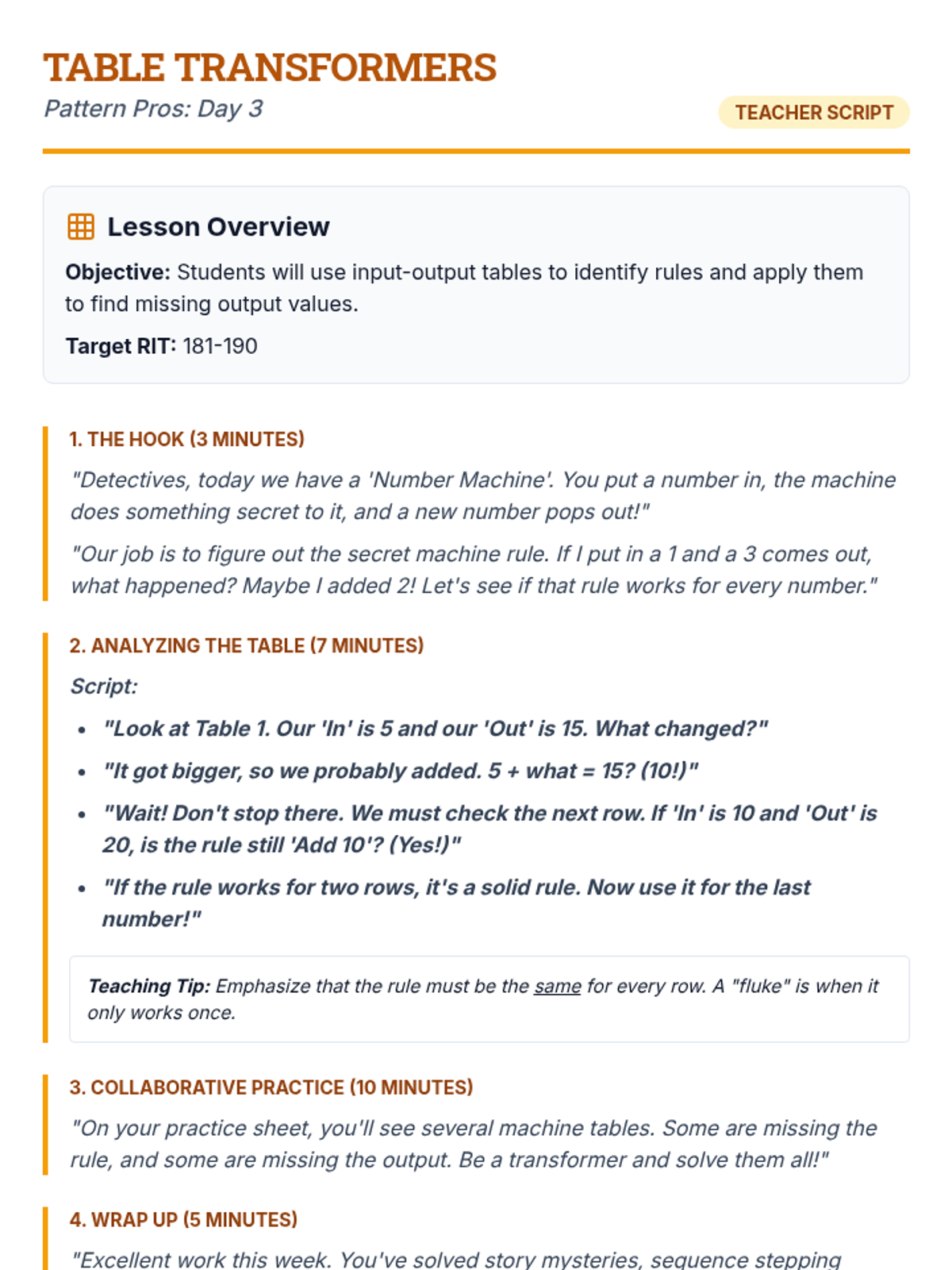
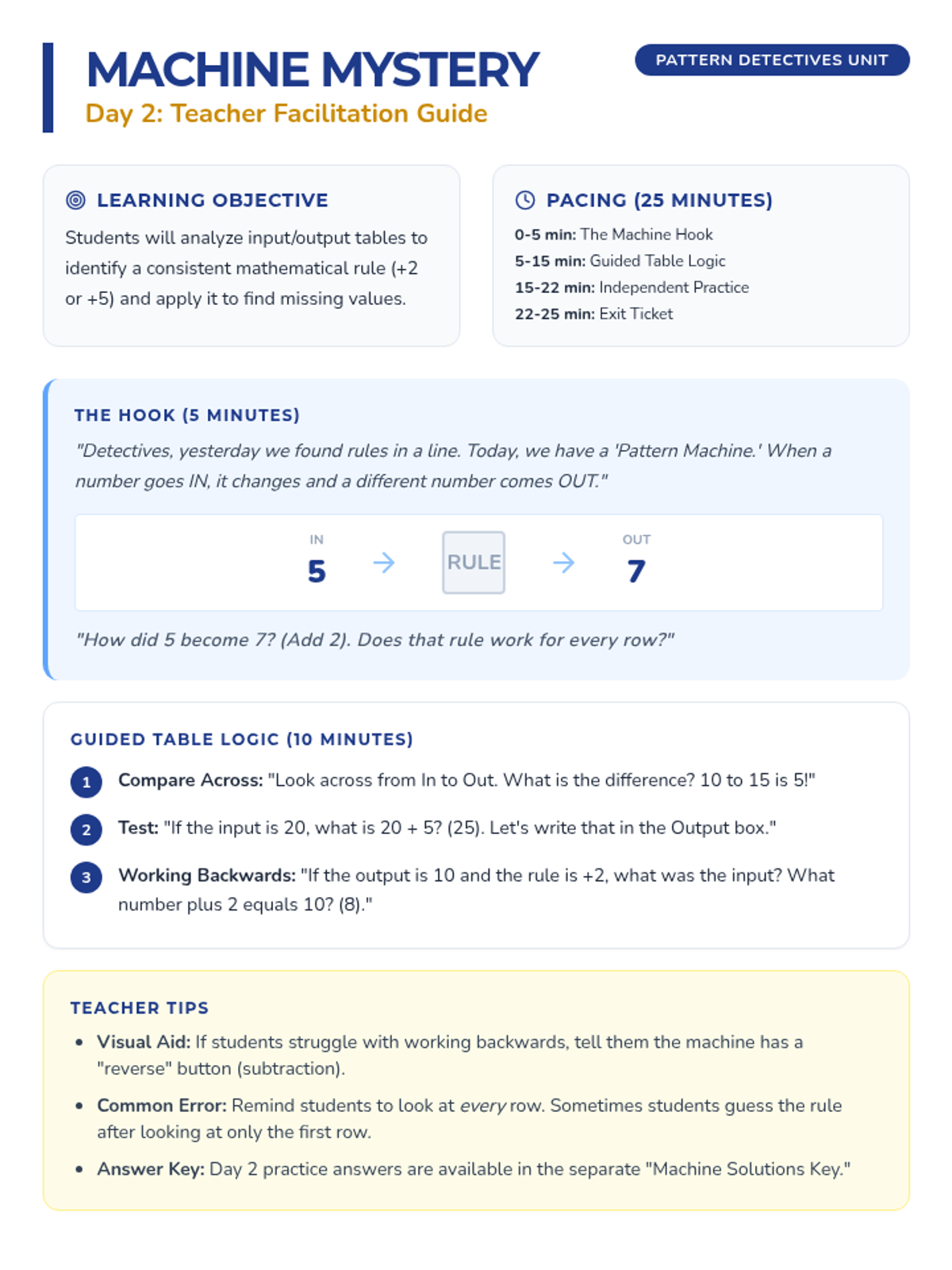
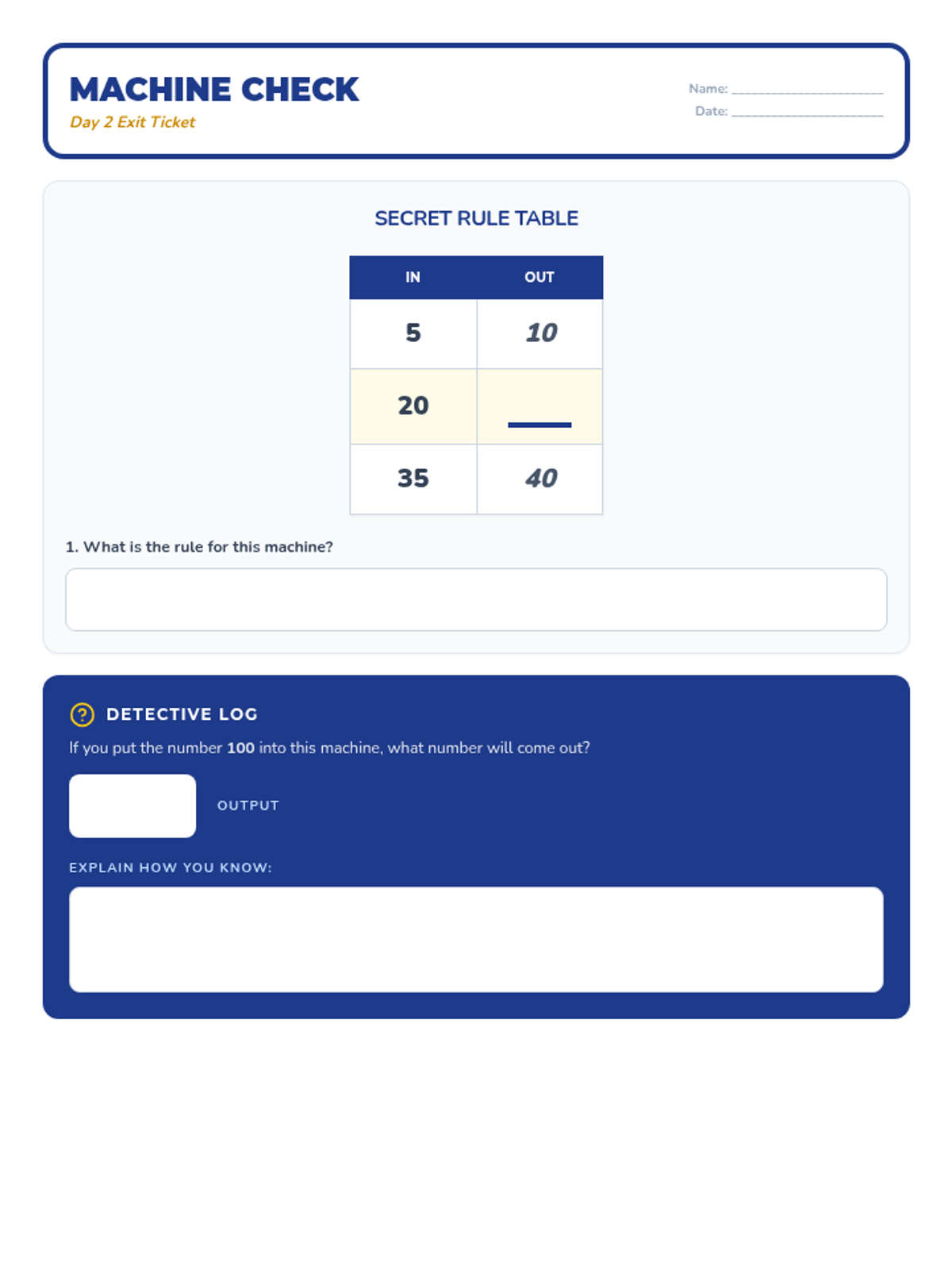
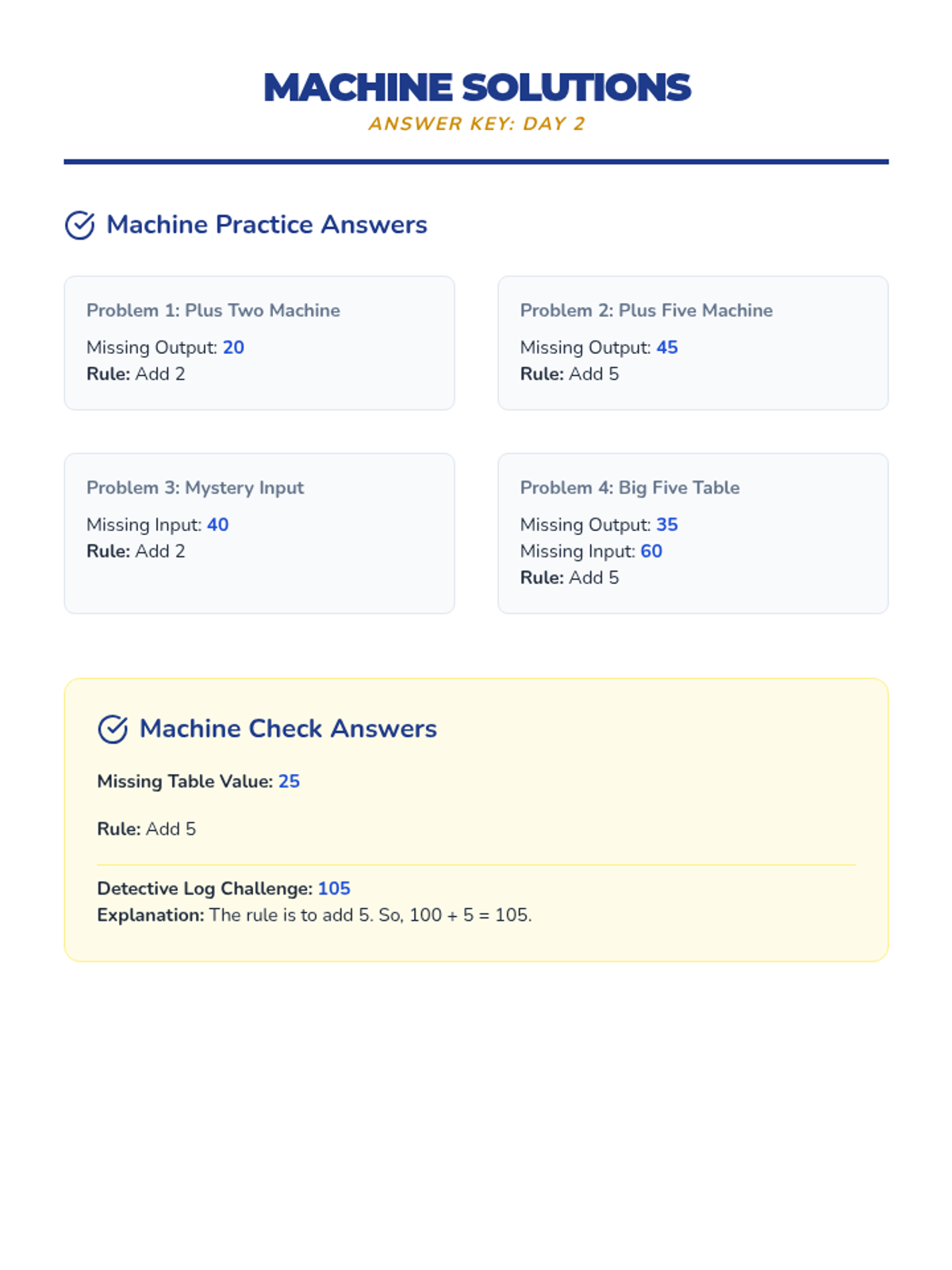
Introduces input/output tables as 'pattern machines,' teaching students to identify the operational rule and apply it to find missing values.
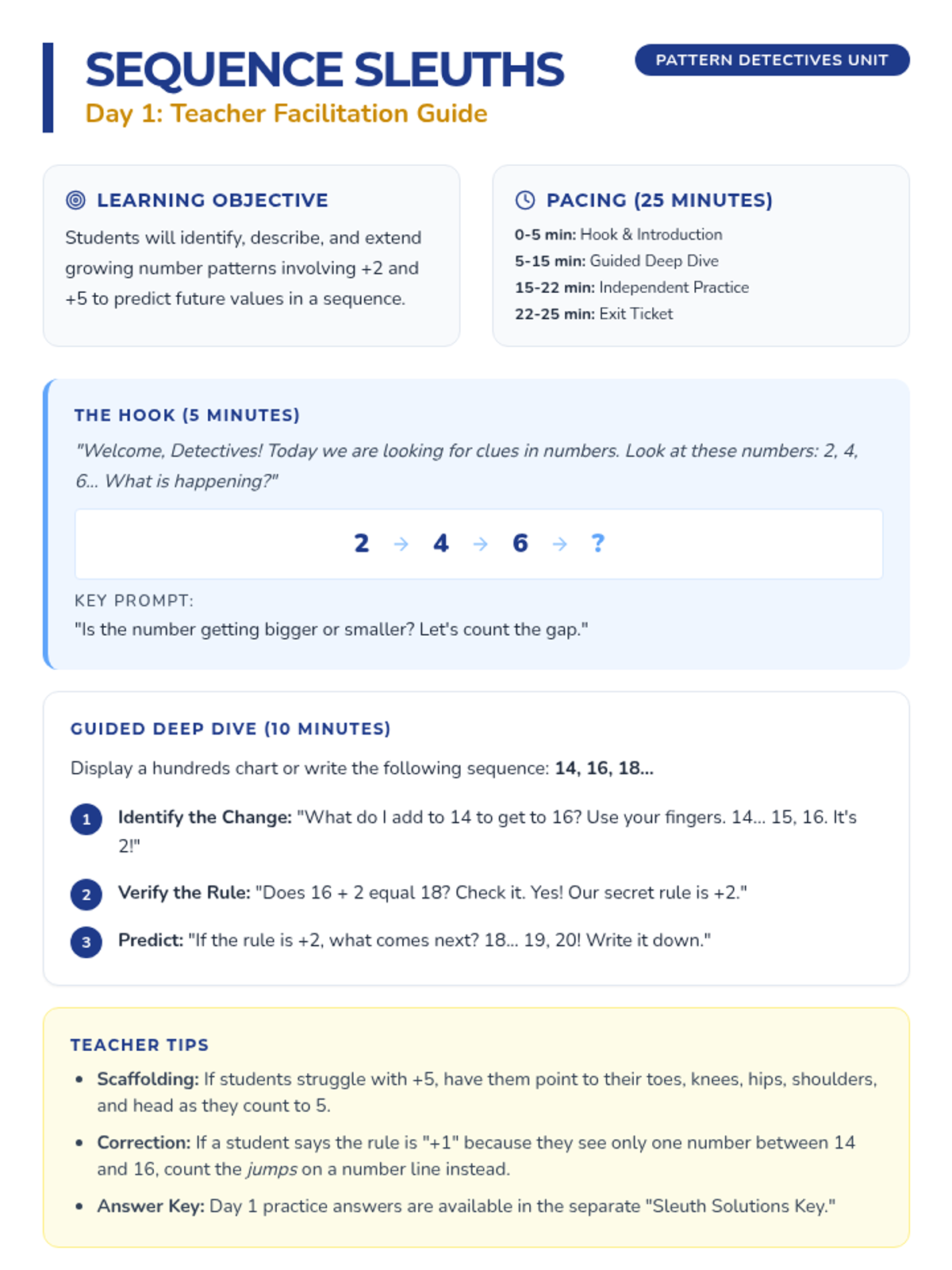
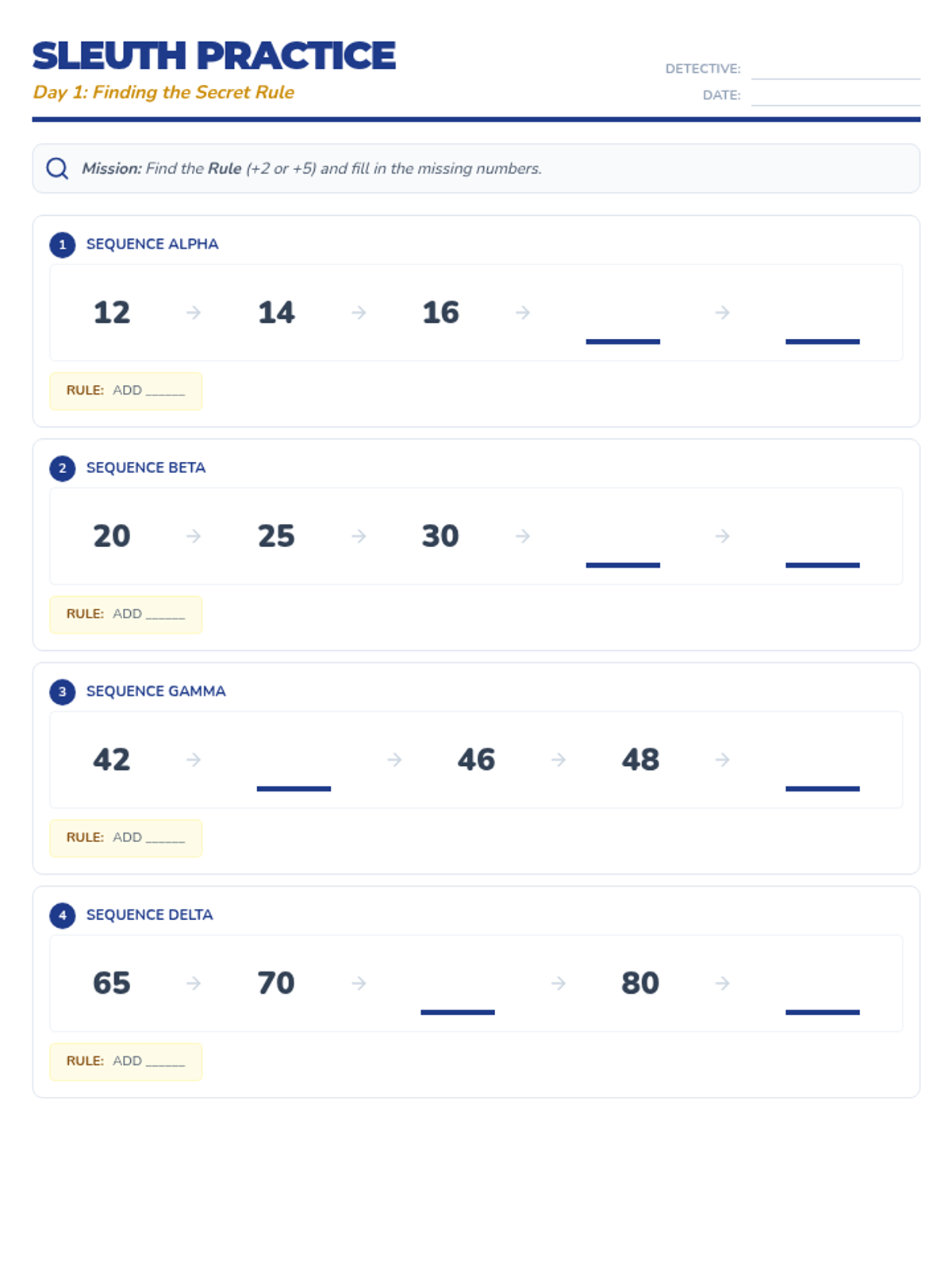
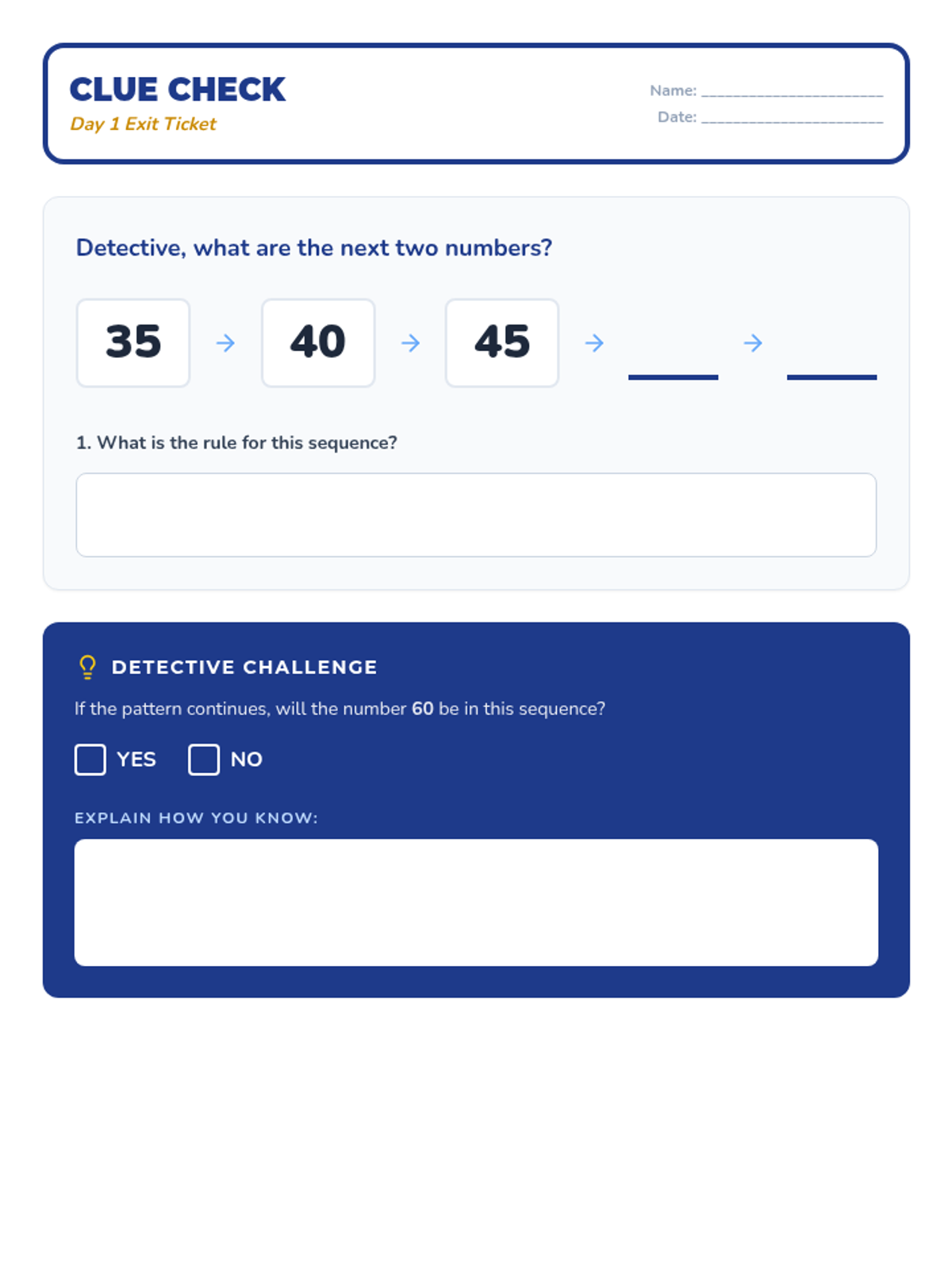
Focuses on identifying and extending growing number patterns, specifically rules involving adding 2 and 5, to build foundational algebraic thinking.
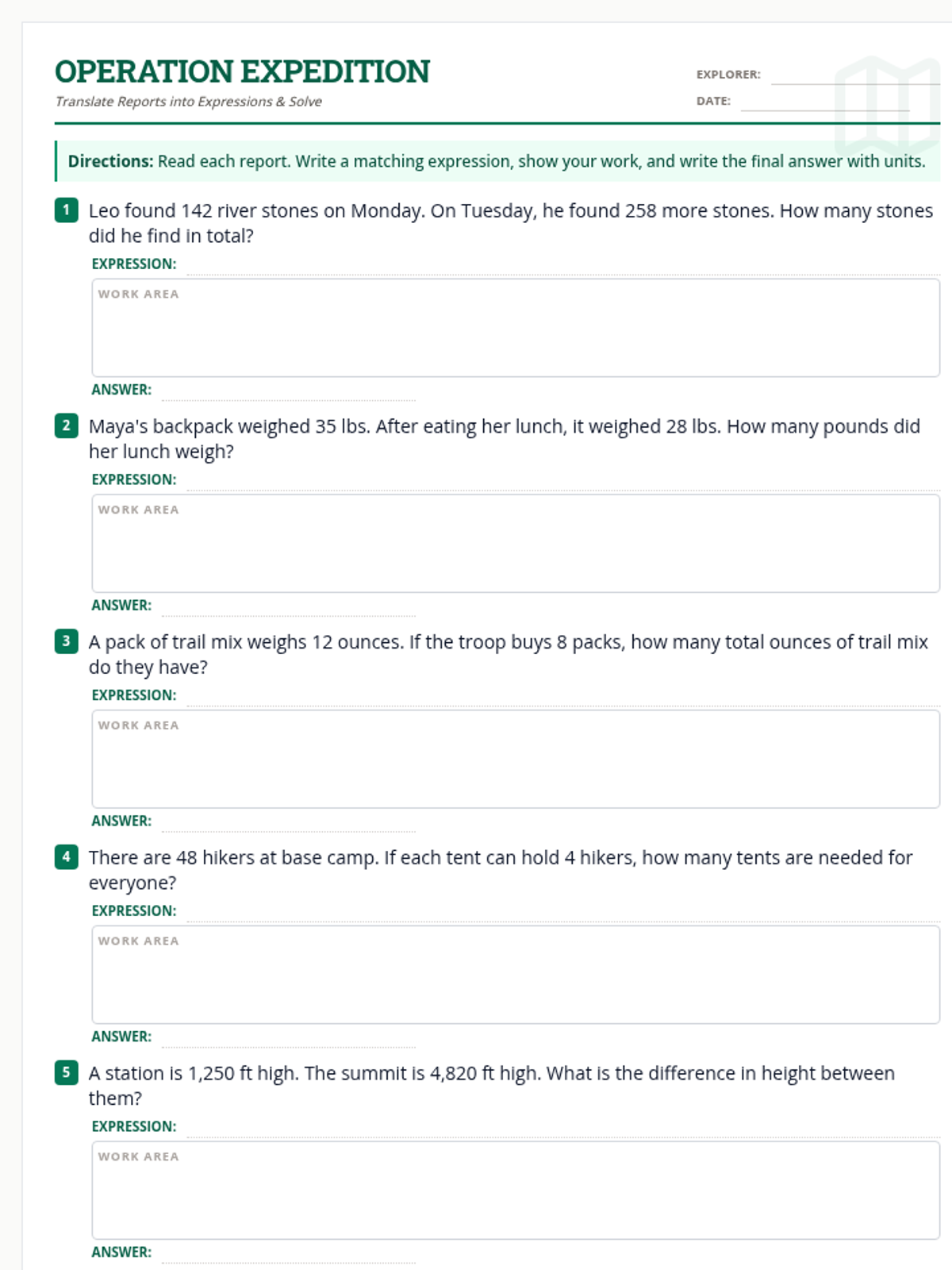
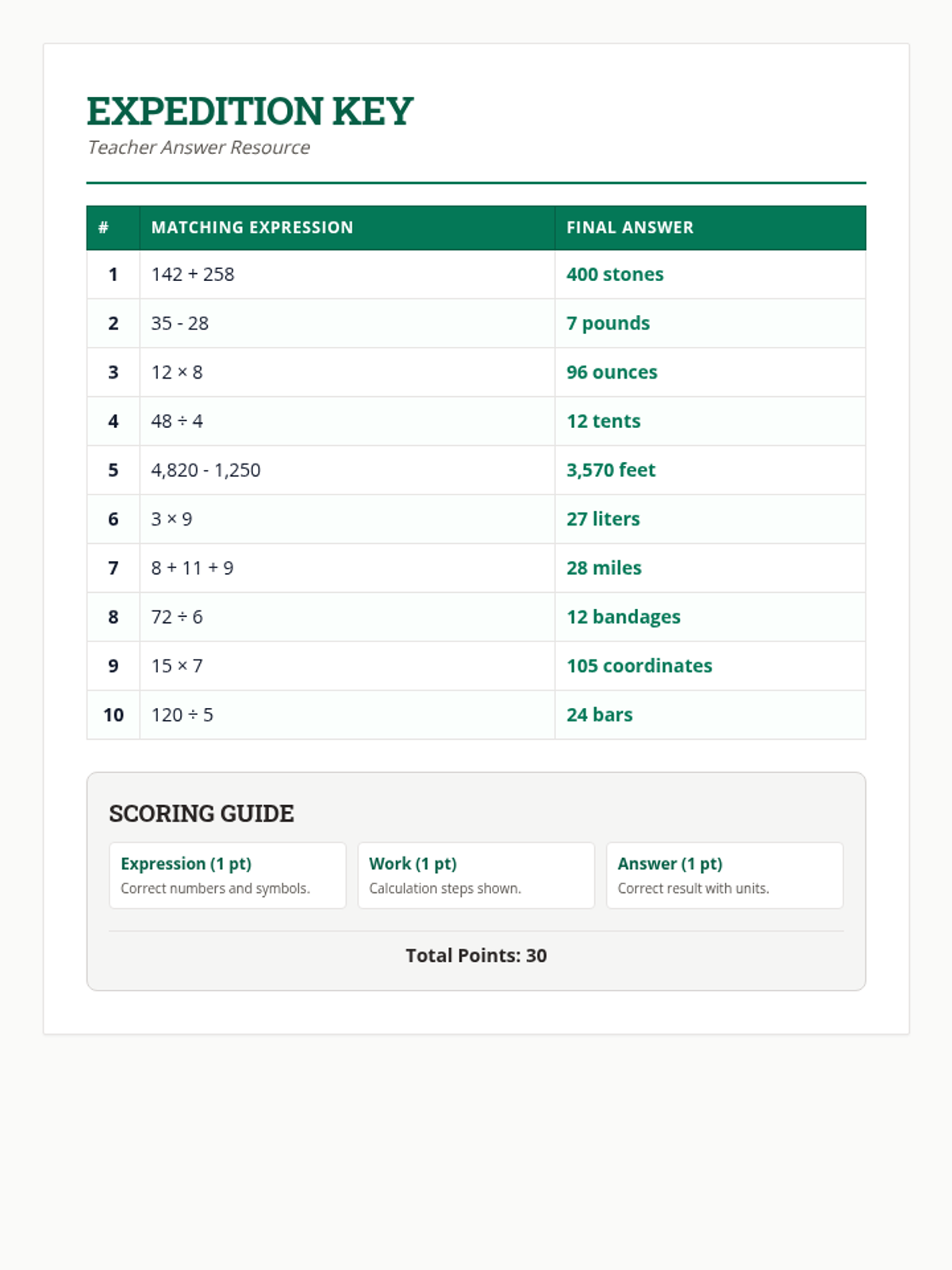
A fourth-grade math lesson focused on translating real-world adventure scenarios into numerical expressions using addition, subtraction, multiplication, and division. Students practice identifying key operations and solving multi-digit problems.
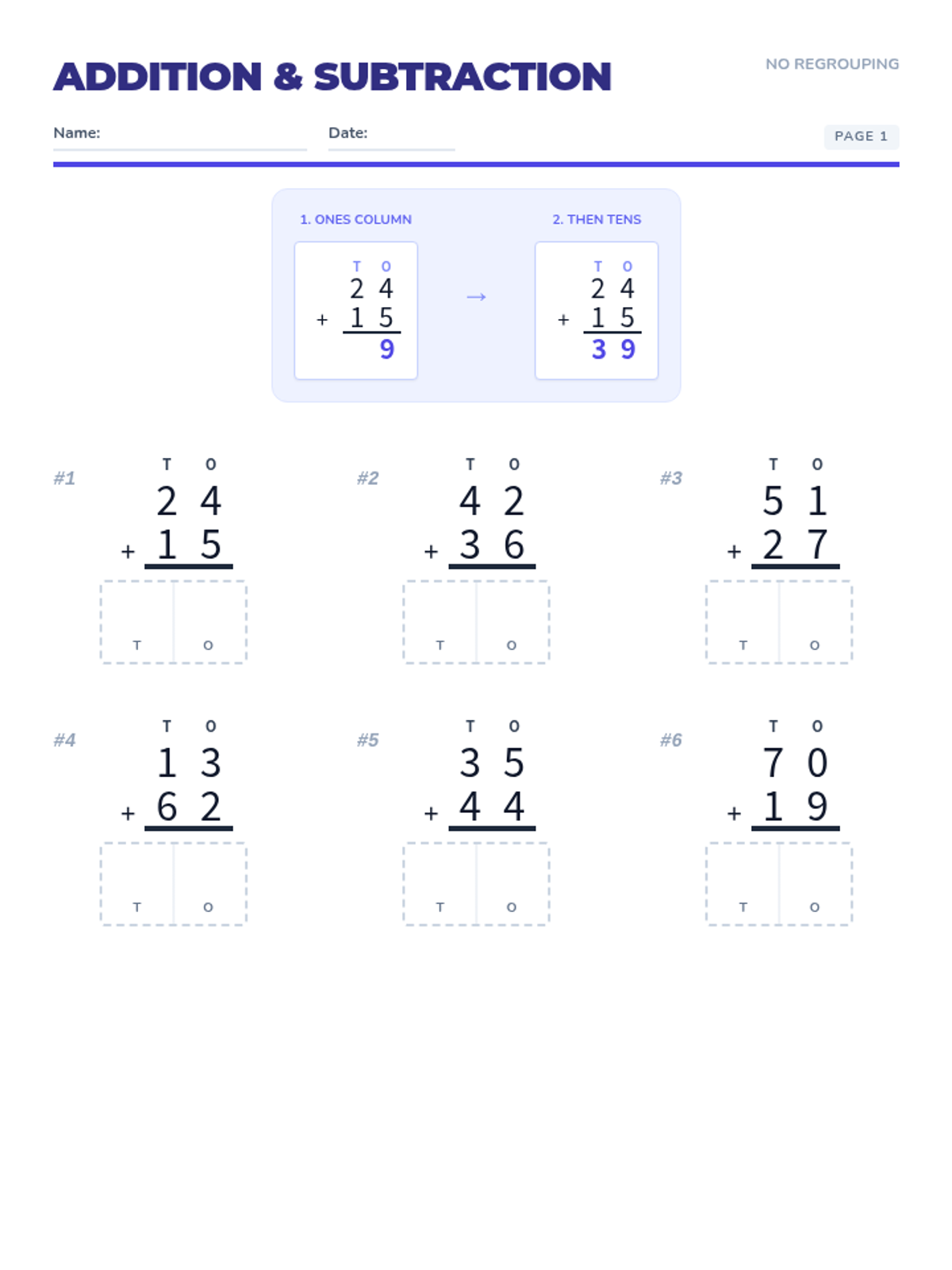
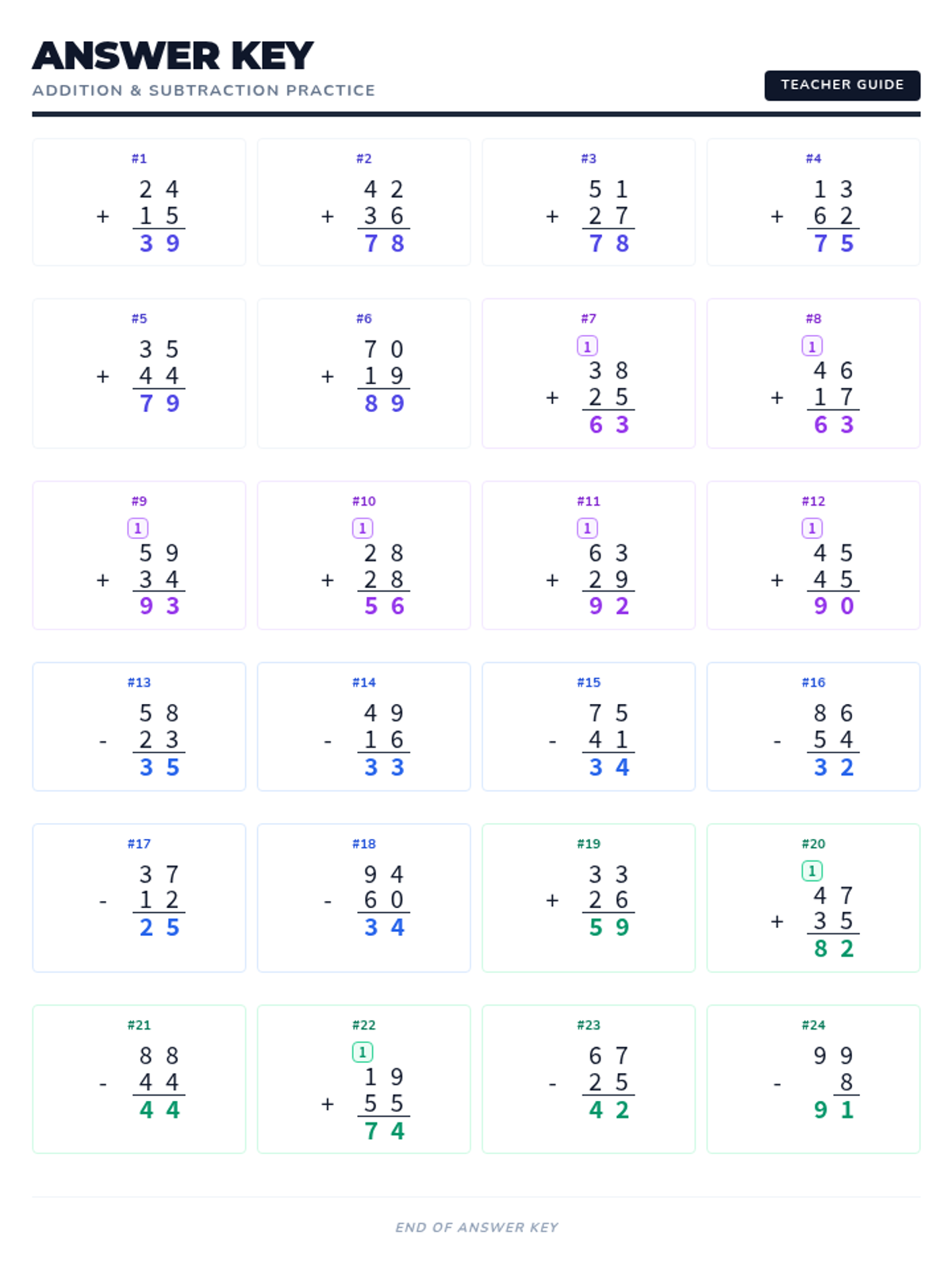
A comprehensive 2-digit addition and subtraction practice packet with a cosmic space theme, covering regrouping in addition and subtraction without borrowing.
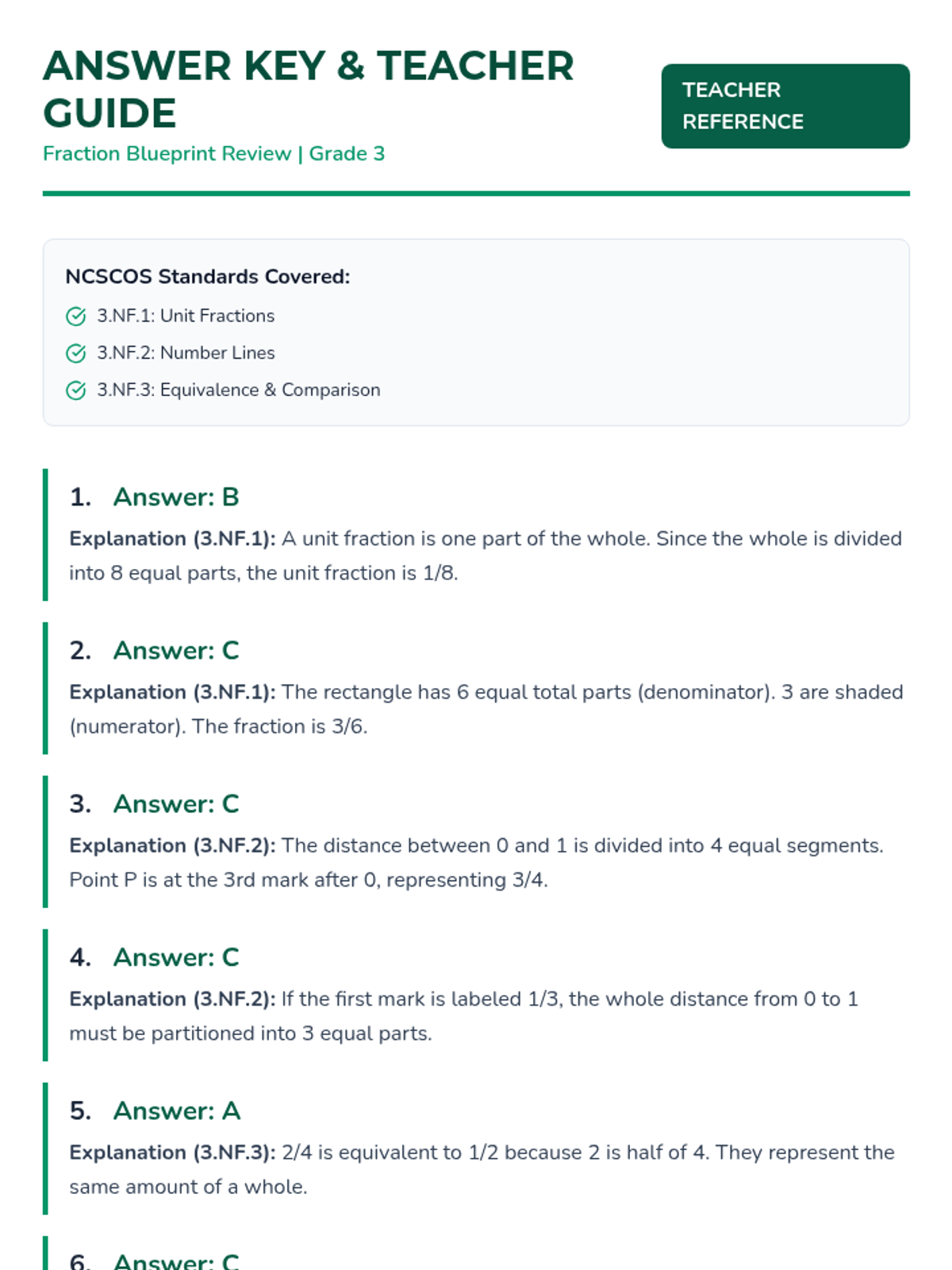
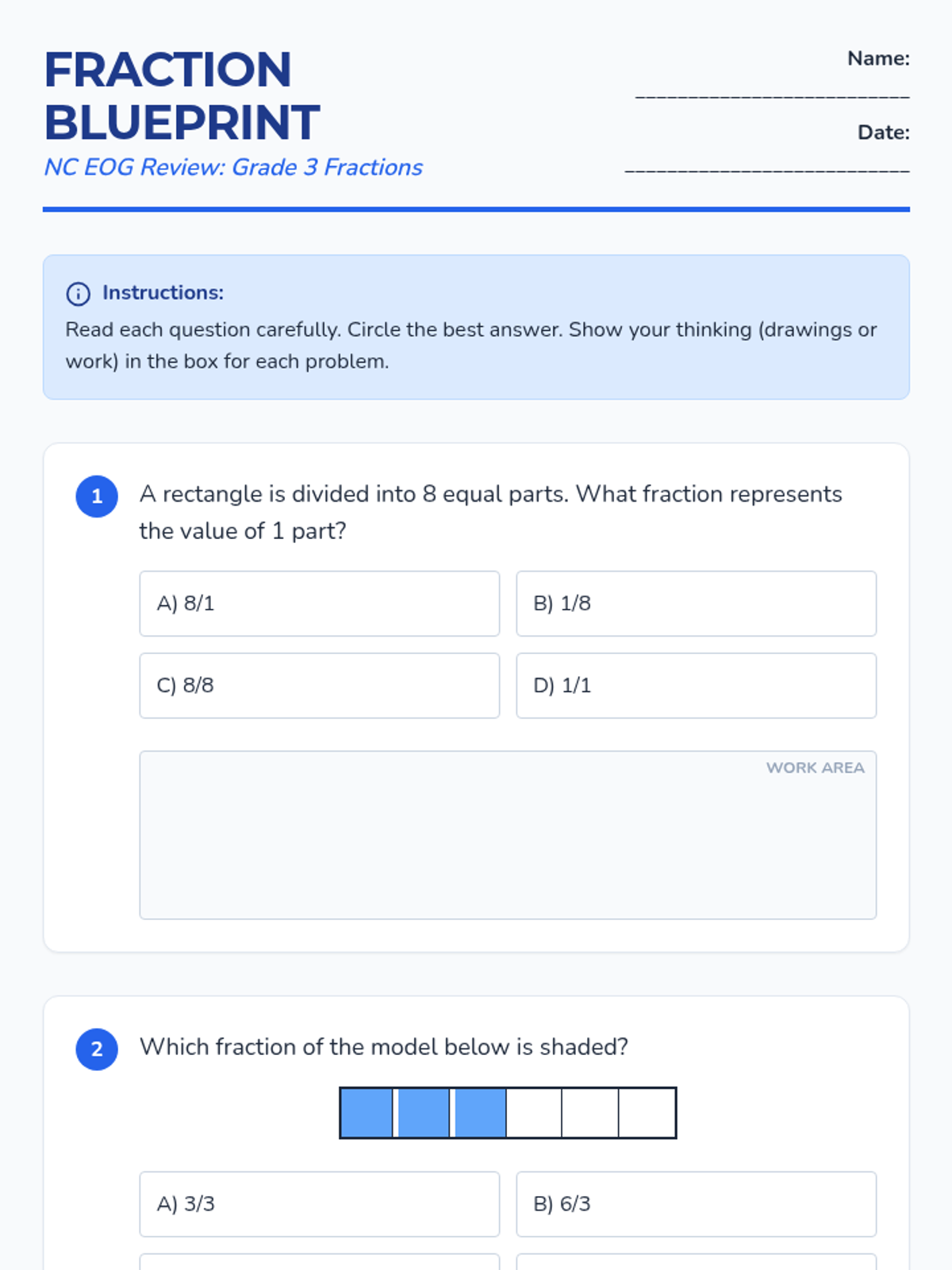
A comprehensive review of 3rd Grade North Carolina Standard Course of Study (NCSCOS) fraction standards, featuring EOG-style questions covering partitioning, number lines, and equivalence.
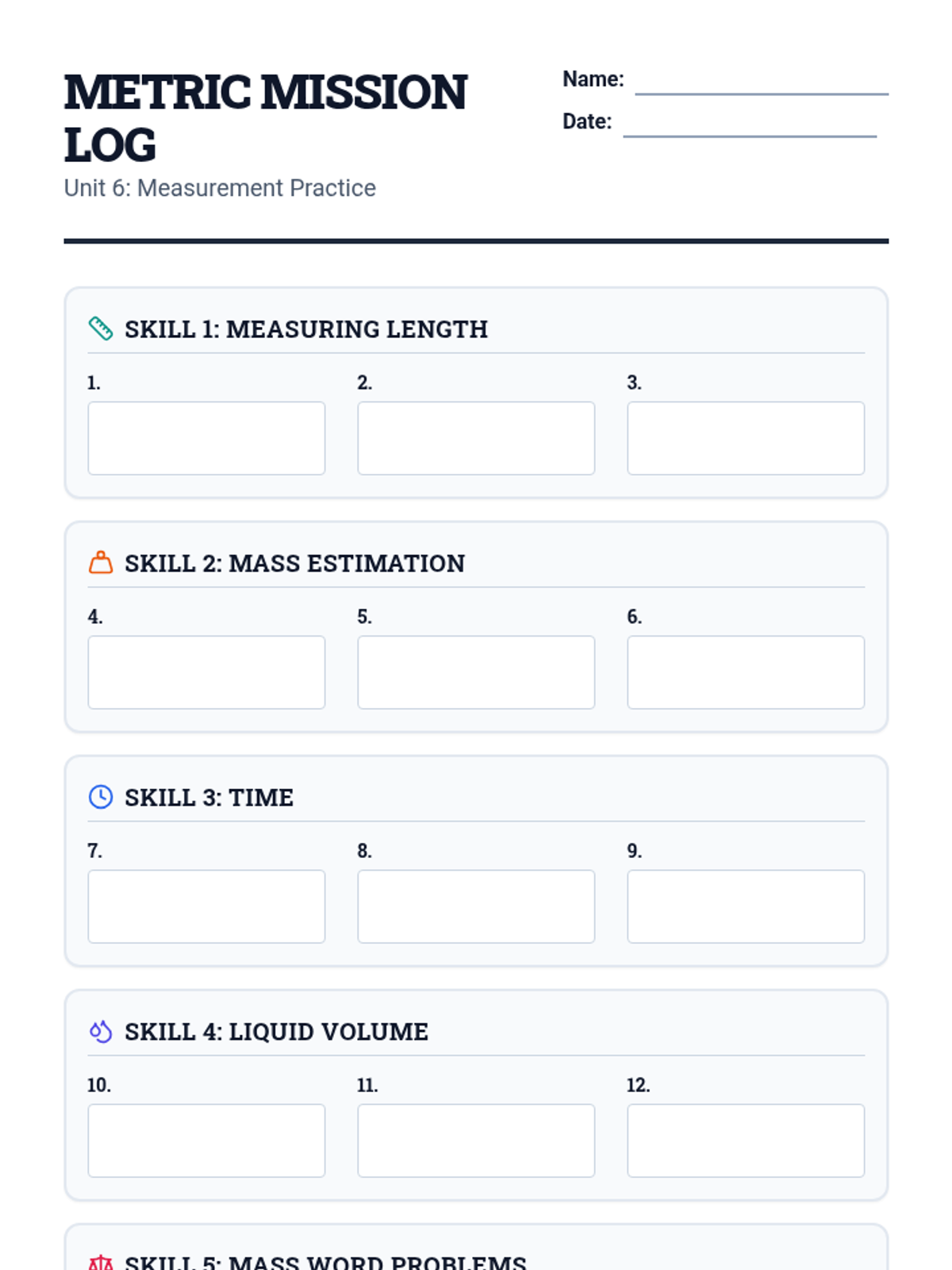
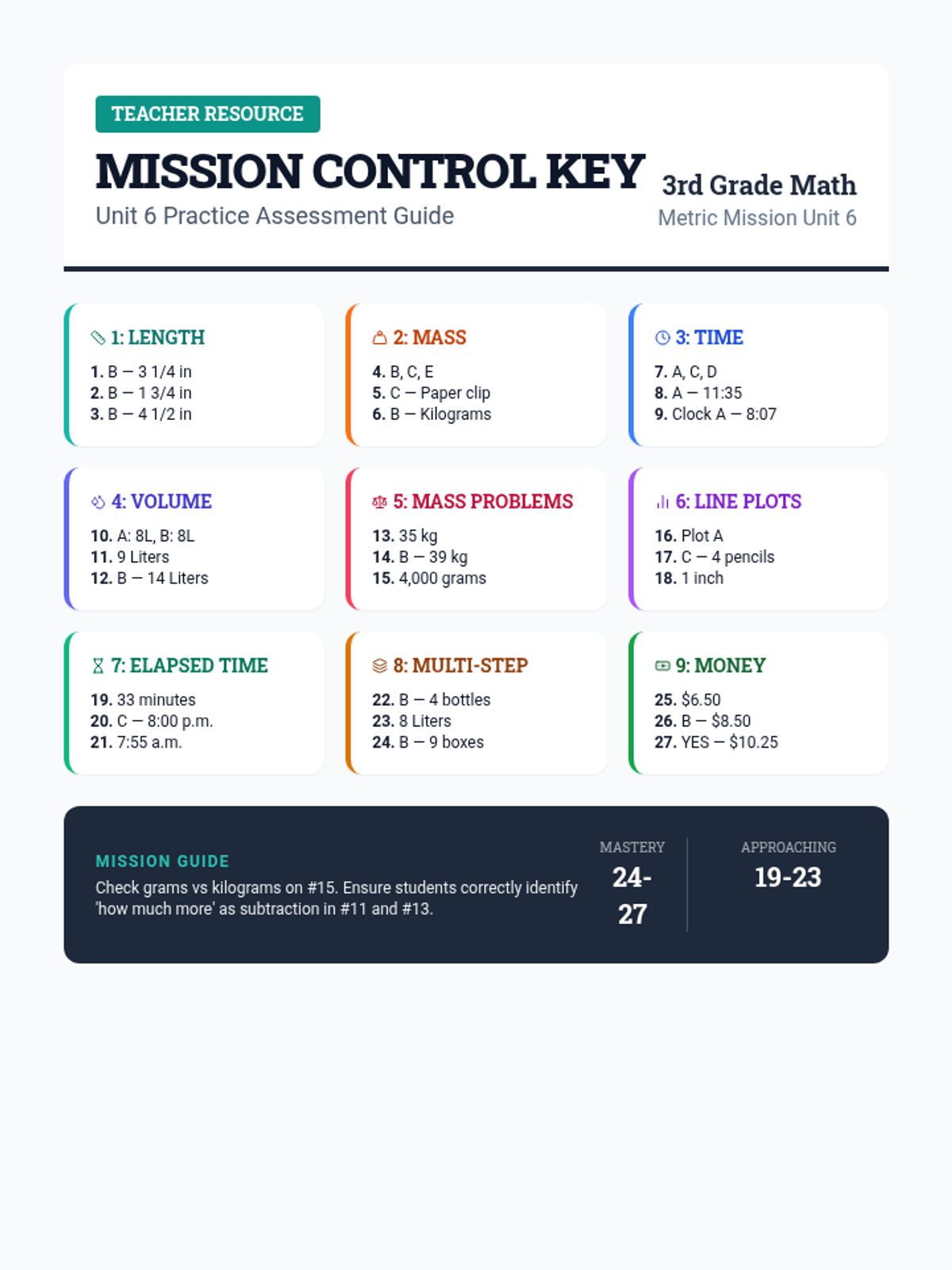
A comprehensive practice lesson covering 3rd-grade measurement standards including length to the quarter-inch, mass estimation, liquid volume, time, and multi-step word problems. Students engage with a variety of practice problems designed to mirror unit assessment items.
A focused practice session where students work through two variations of five core mathematical problems to solidify their understanding of measurement, data, and number operations.
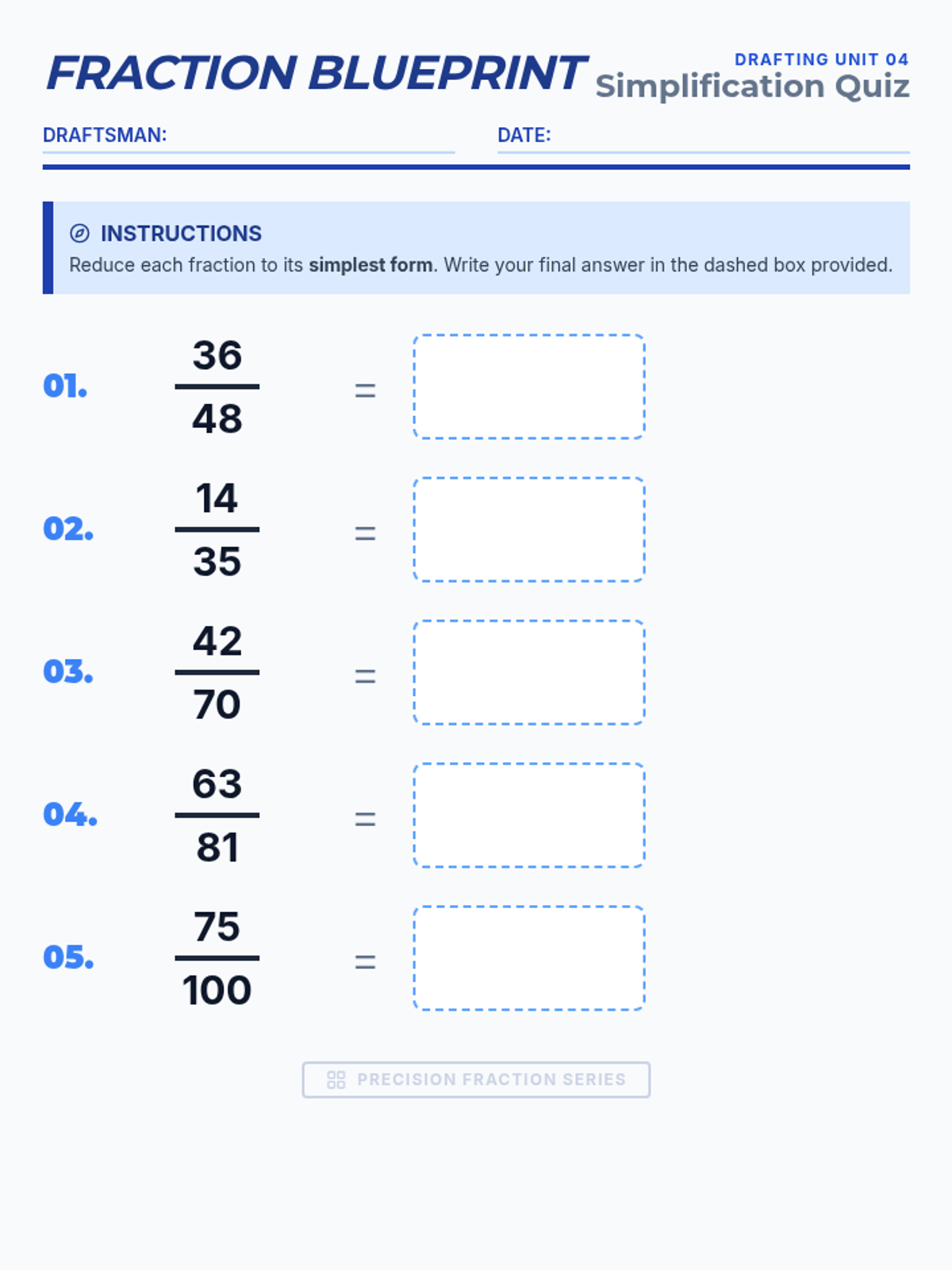
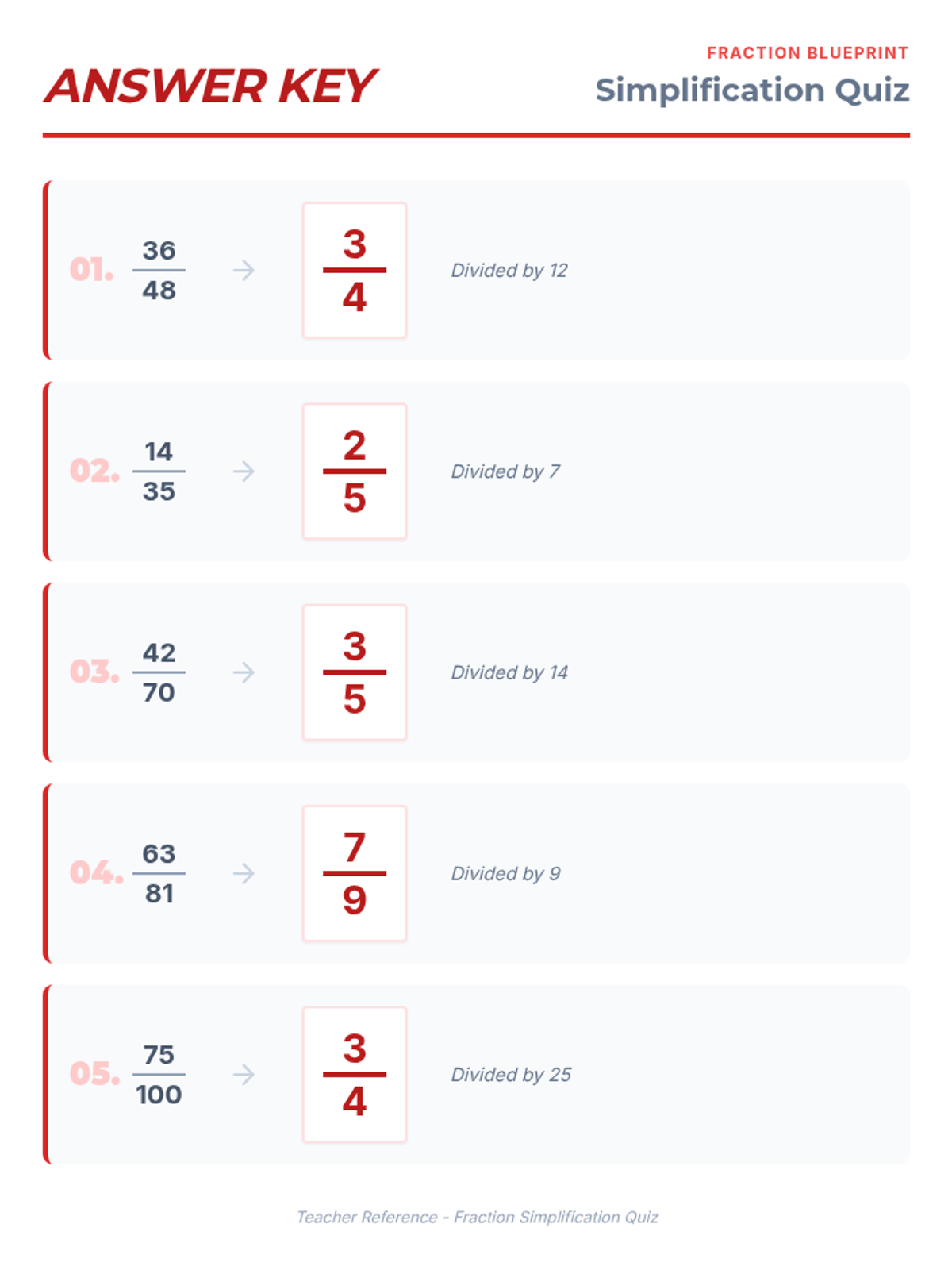
A quick assessment focusing on simplifying fractions with numerators and denominators up to 100 into their simplest form.
A scaffolded introduction to the four-quadrant coordinate plane, designed for students needing extra support. It covers identifying the axes and origin, understanding quadrants, and step-by-step plotting of points.
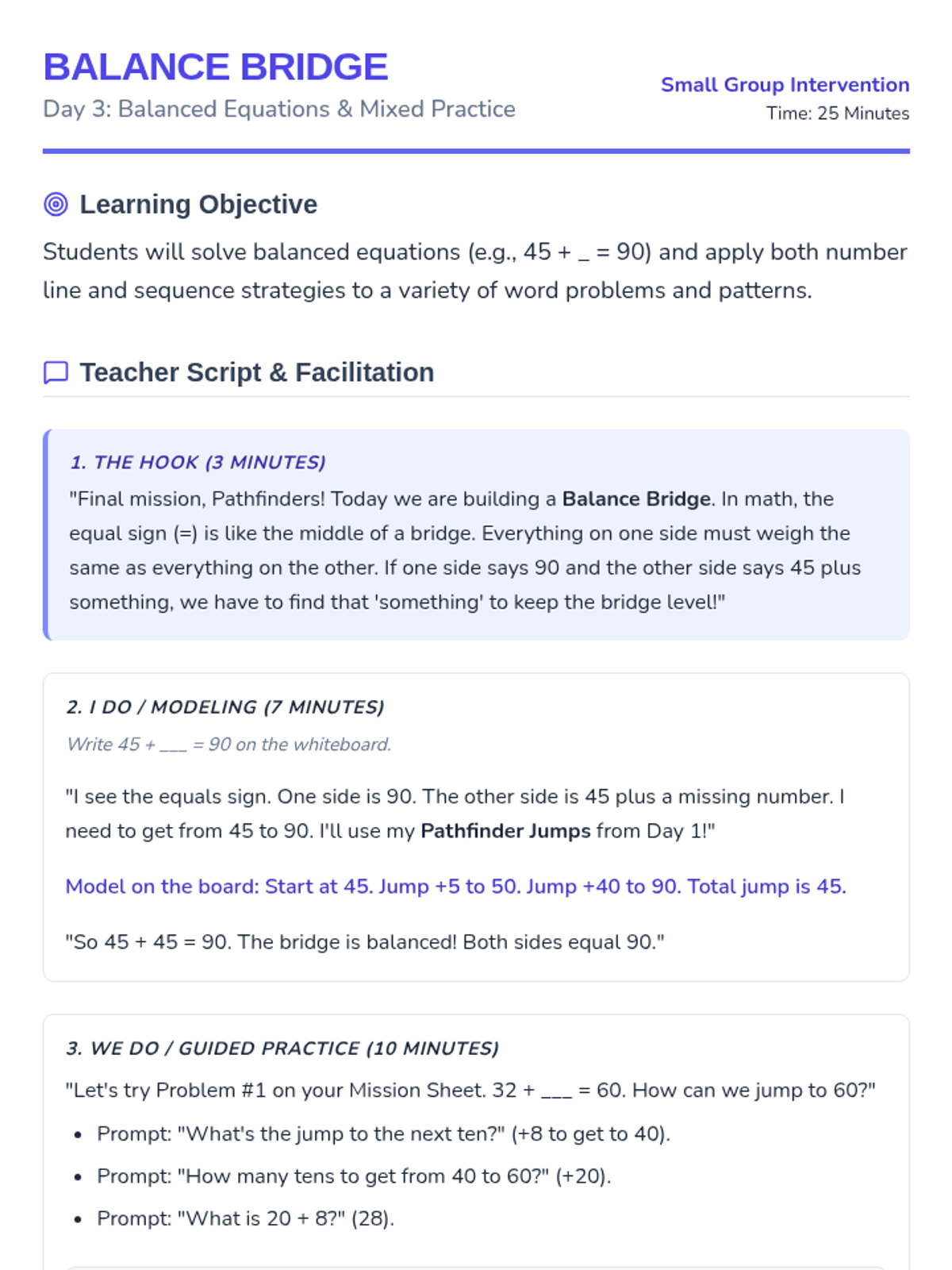
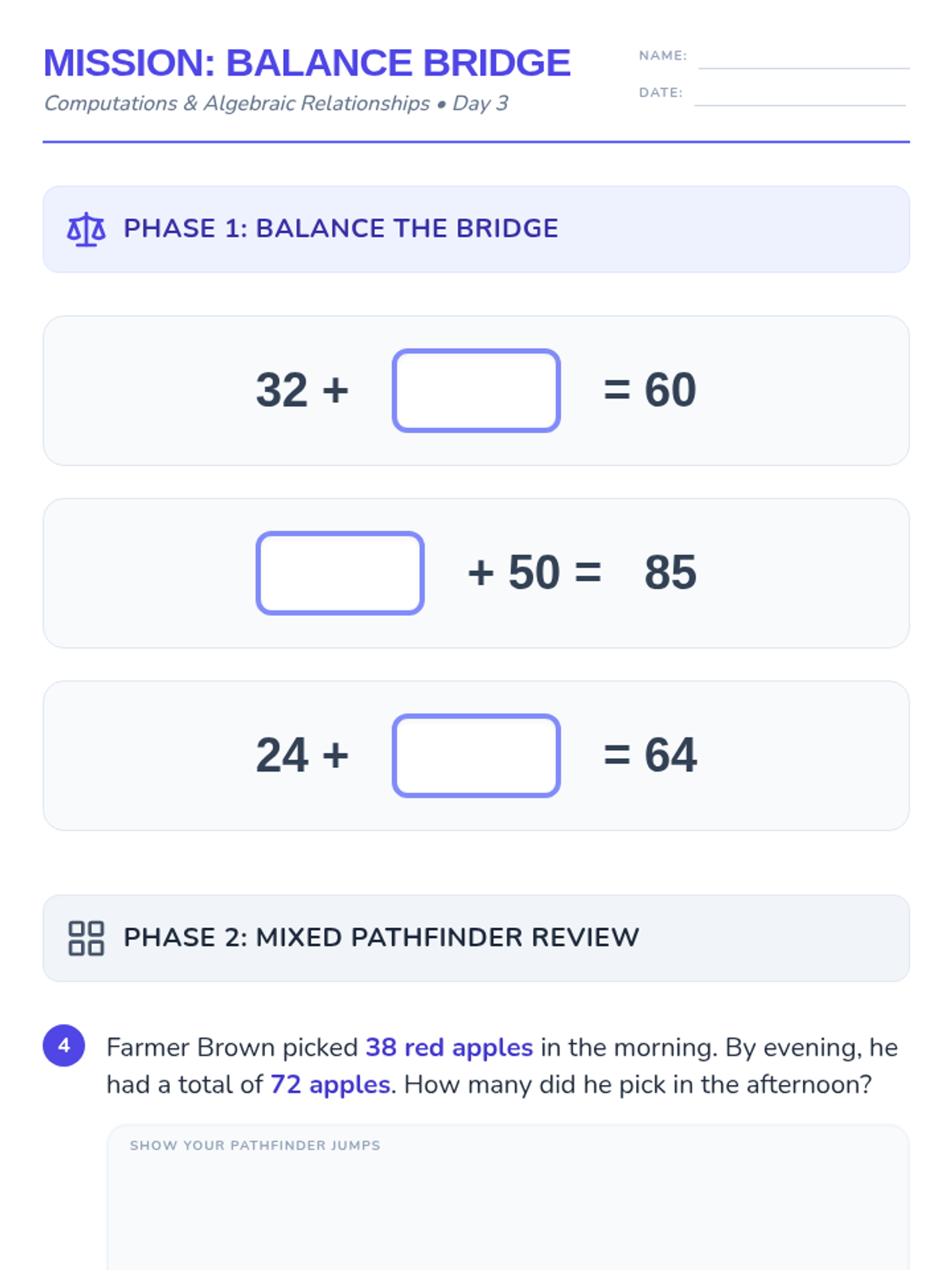
Introduces balanced equations and a cumulative review of word problems and sequences. Students will use their knowledge of part-part-whole relationships to solve equations like 45 + _ = 90.
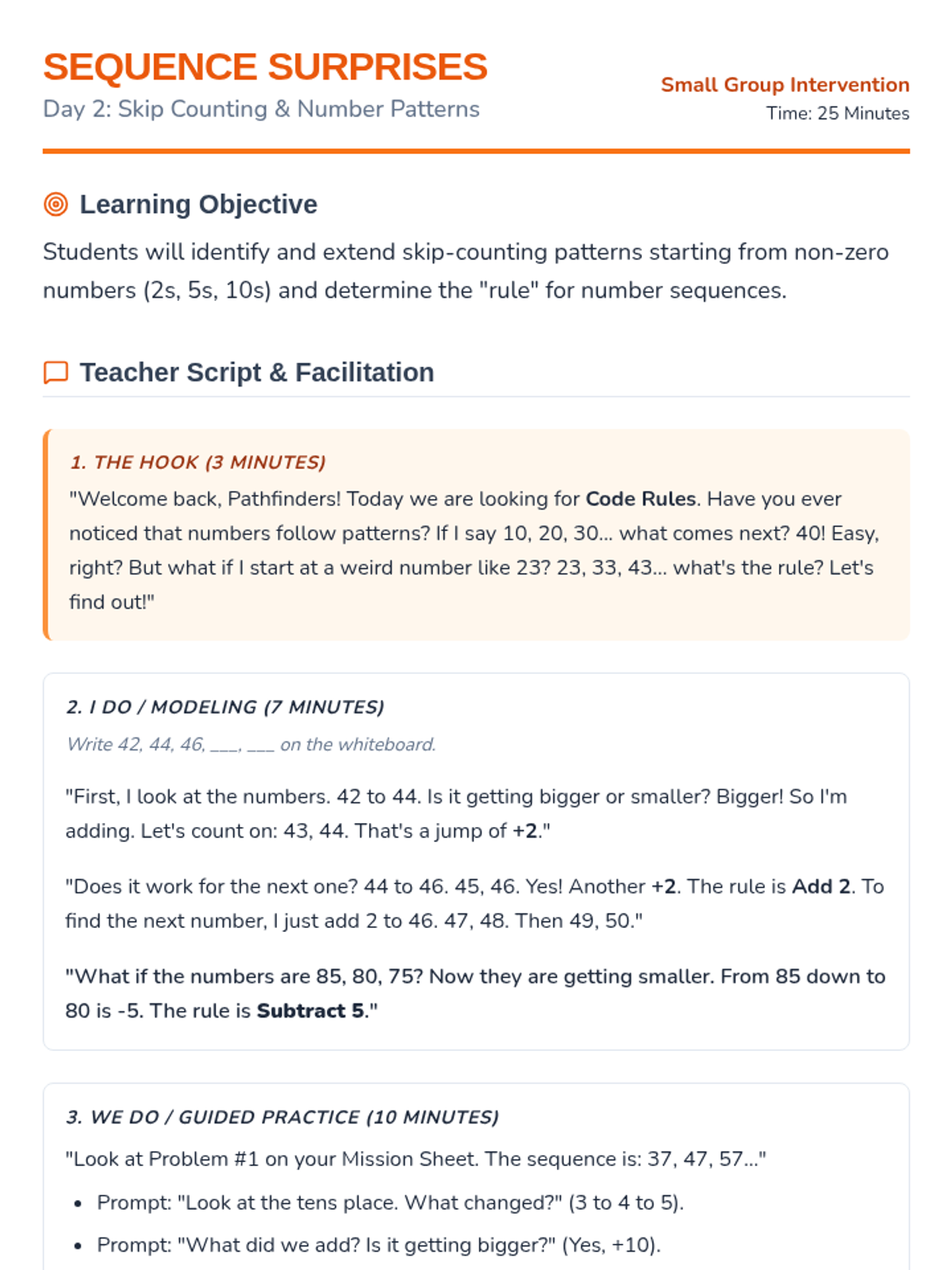
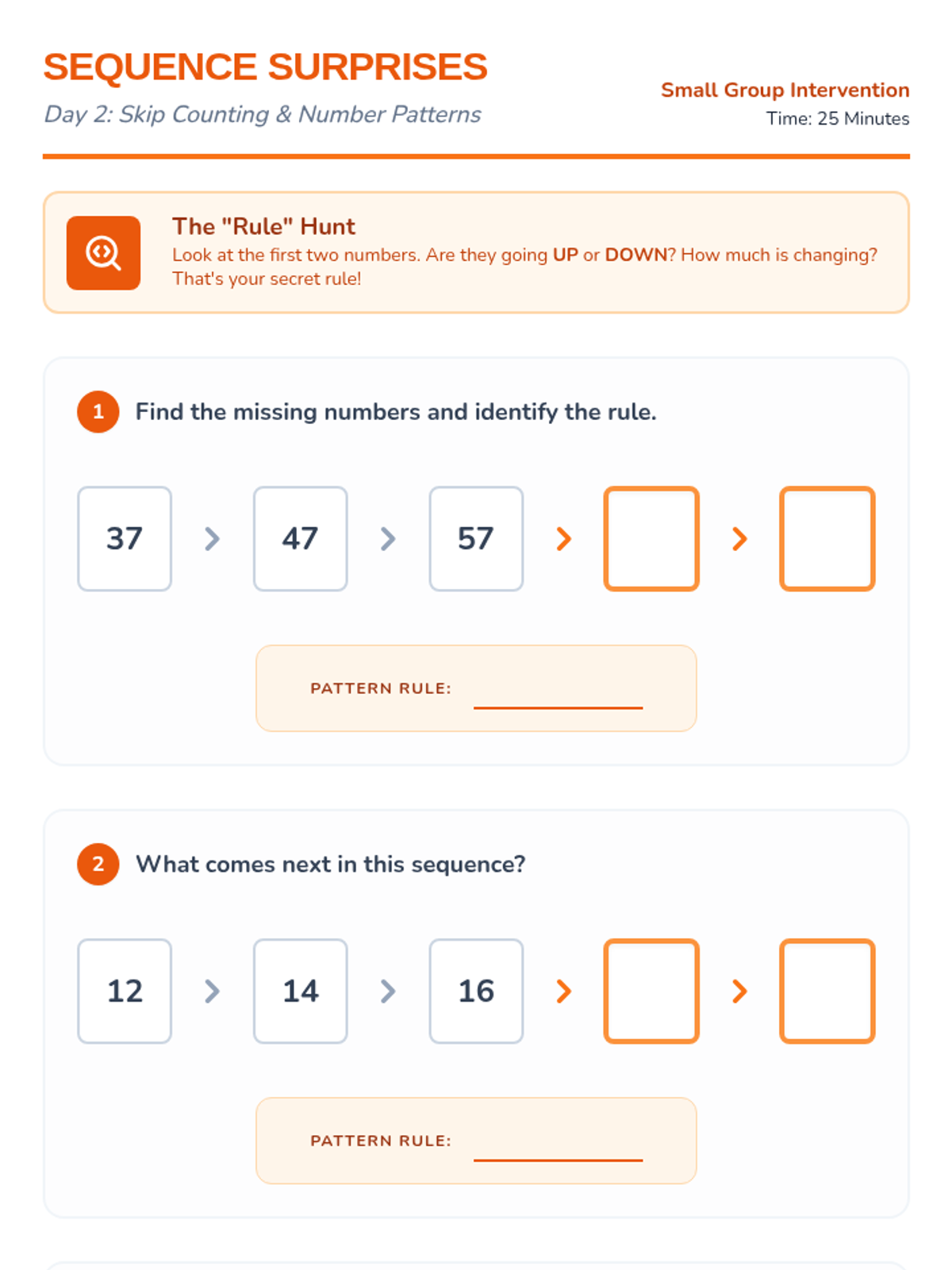
Teaches students to identify and extend number patterns and skip-counting sequences starting from various numbers. Students will learn to determine the 'rule' of a pattern to predict future values.
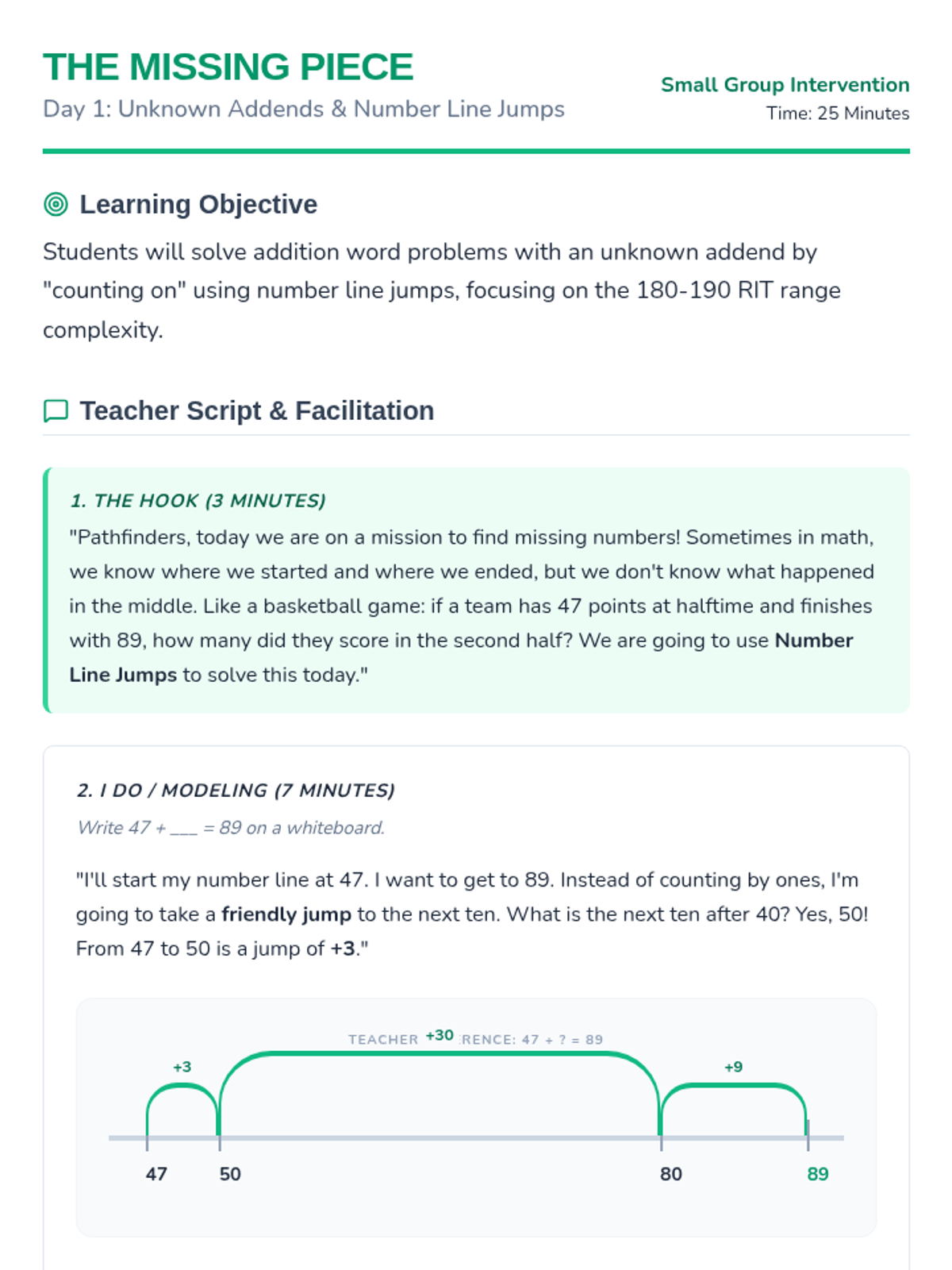
Focuses on finding missing addends in word problems using the 'counting on' strategy and number line jumps. Students will analyze scenarios similar to NWEA assessment items to bridge the 170-190 RIT range.
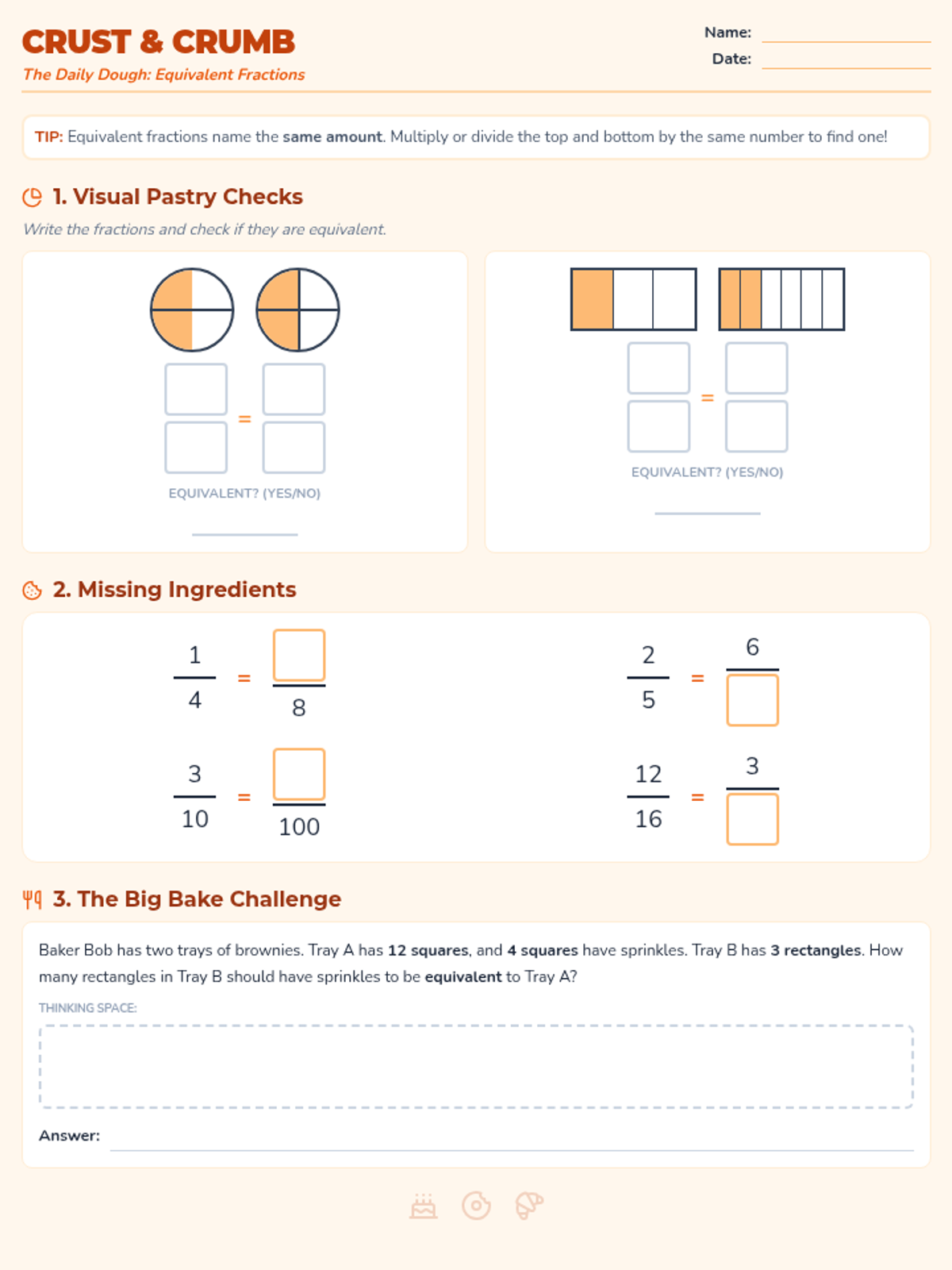
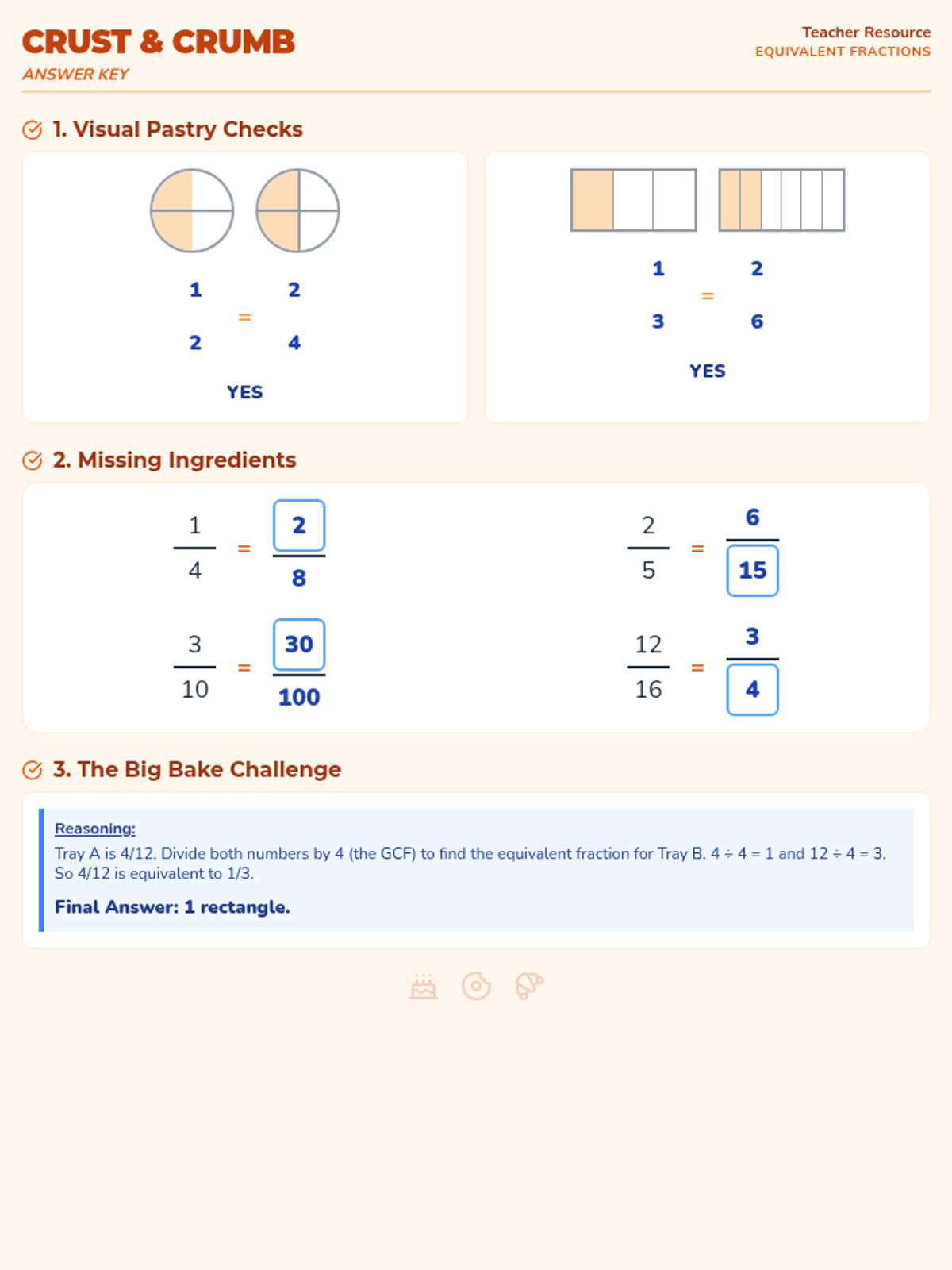
A focused lesson on identifying and generating equivalent fractions using visual models and multiplication strategies, themed around a bustling neighborhood bakery.