A series of high-rigor practice questions covering key eras of US History from the Gilded Age through the Great Depression, designed to mirror the STAAR assessment format.
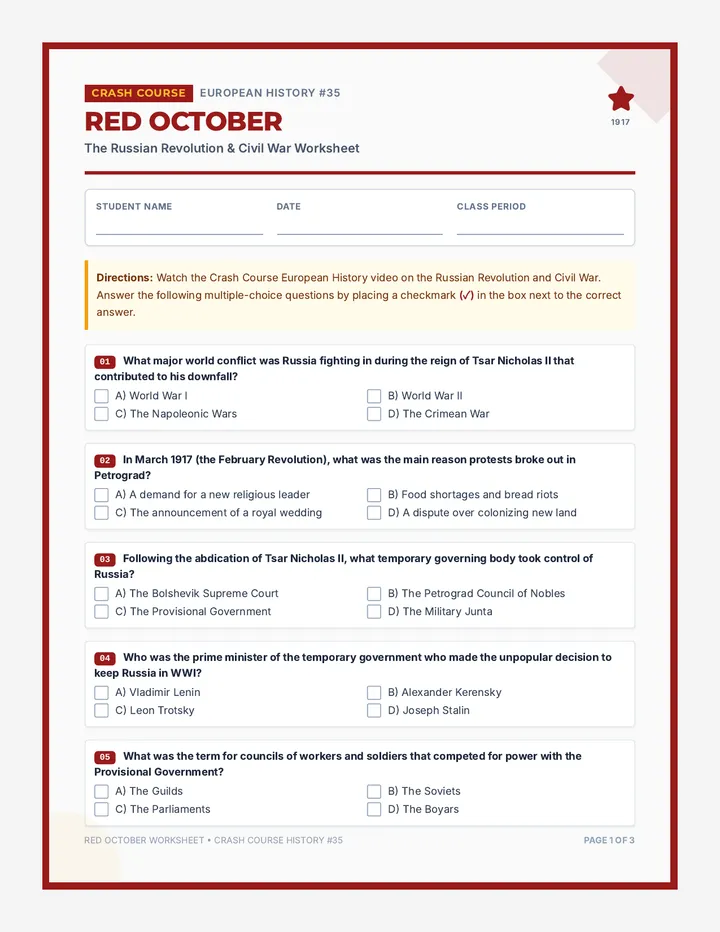
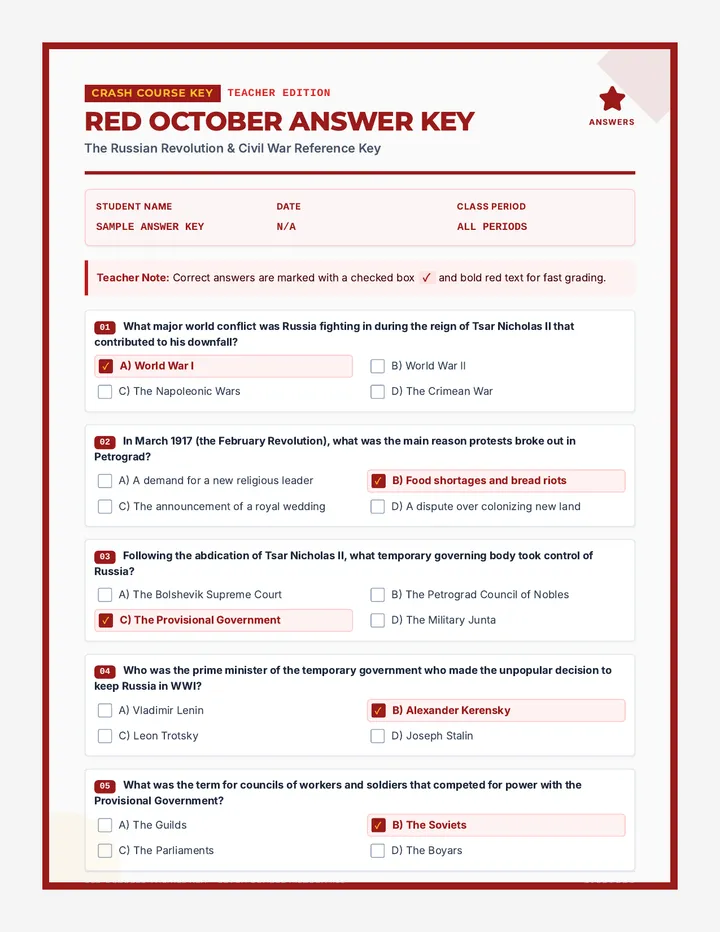
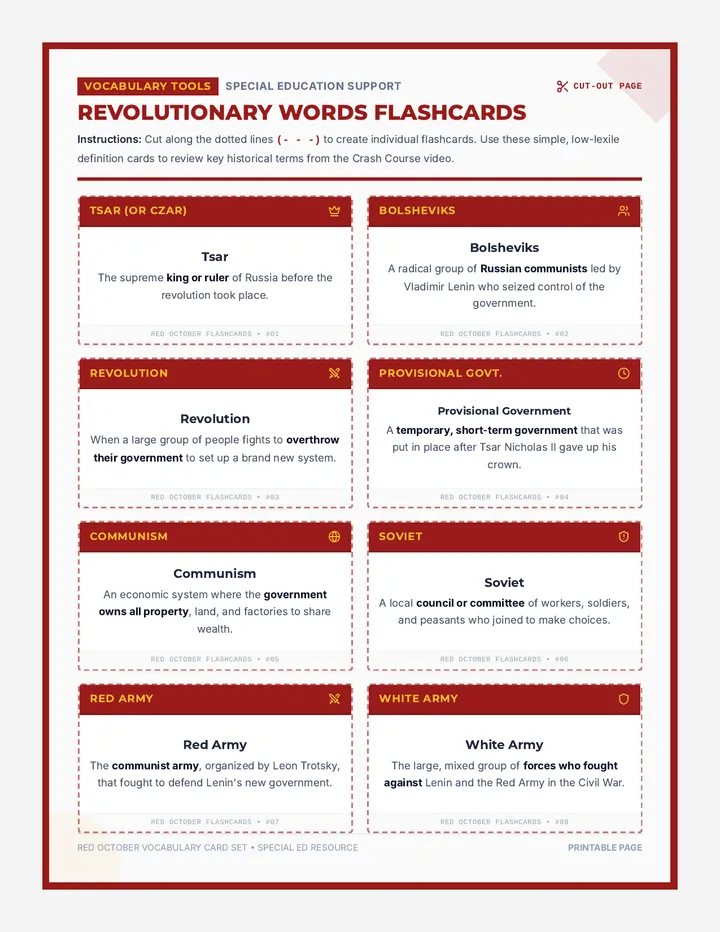
A comprehensive history sequence focusing on 20th-century communist revolutions in Russia and China. This sequence uses Crash Course videos, detailed worksheets, complete answer keys, and accessible vocabulary flashcards to explore the collapse of old empires and the rise of communist states.
An introductory lesson exploring the immigrant experience and systemic barriers through Suli Breaks' spoken word poem 'Fences'. Students engage in a structured movement and discourse activity to analyze literal and metaphorical barriers, connecting themes to their own lived experiences.
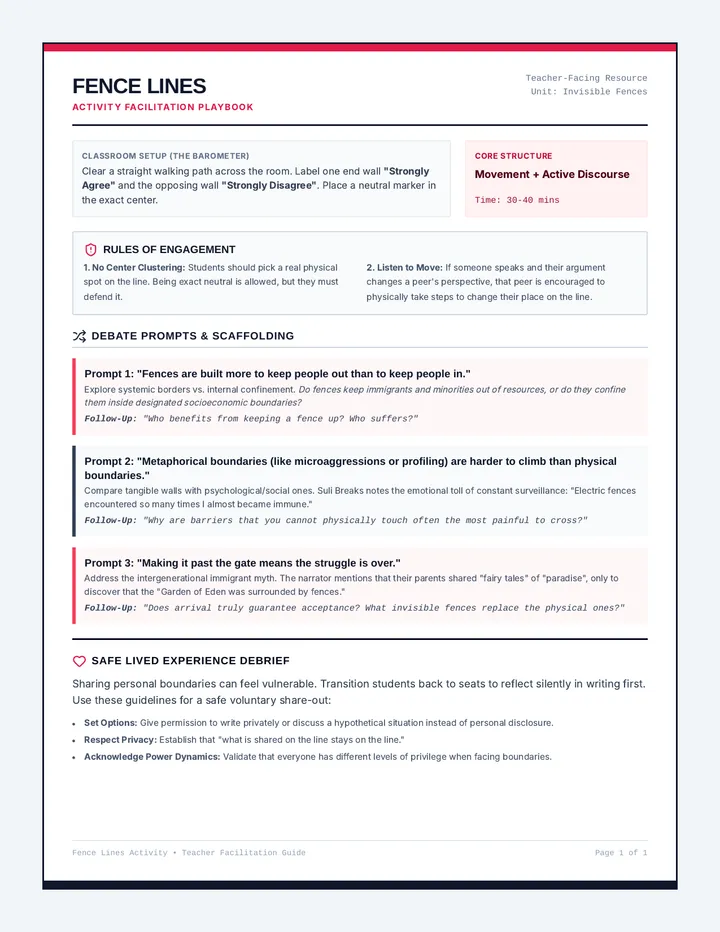
A 1-page teacher facilitation guide for the 'Fence Lines' movement and discourse activity. Provides structured guidelines for setting up the classroom barometer, lesson pacing, specific debate prompts, discussion scaffolds, and guidelines for managing sensitive personal reflections with care.
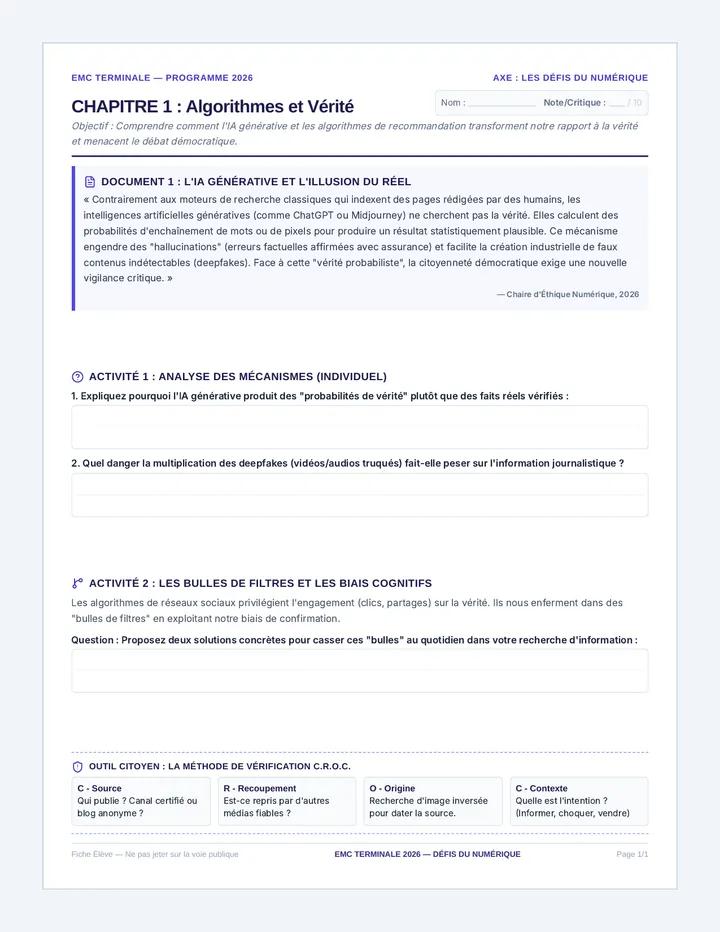
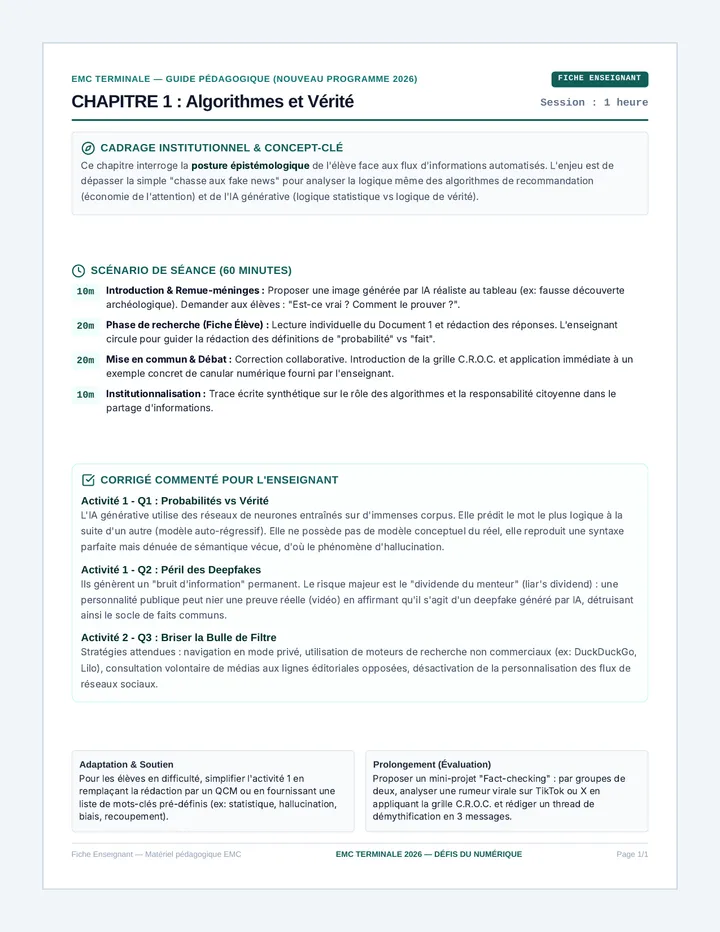
Une séquence complète d'activités clés en main d'Éducation Morale et Civique (EMC) pour la classe de Terminale, conforme au nouveau programme 2026. Elle se concentre sur les défis du numérique : intelligence artificielle, désinformation, espace public numérique et souveraineté technologique.
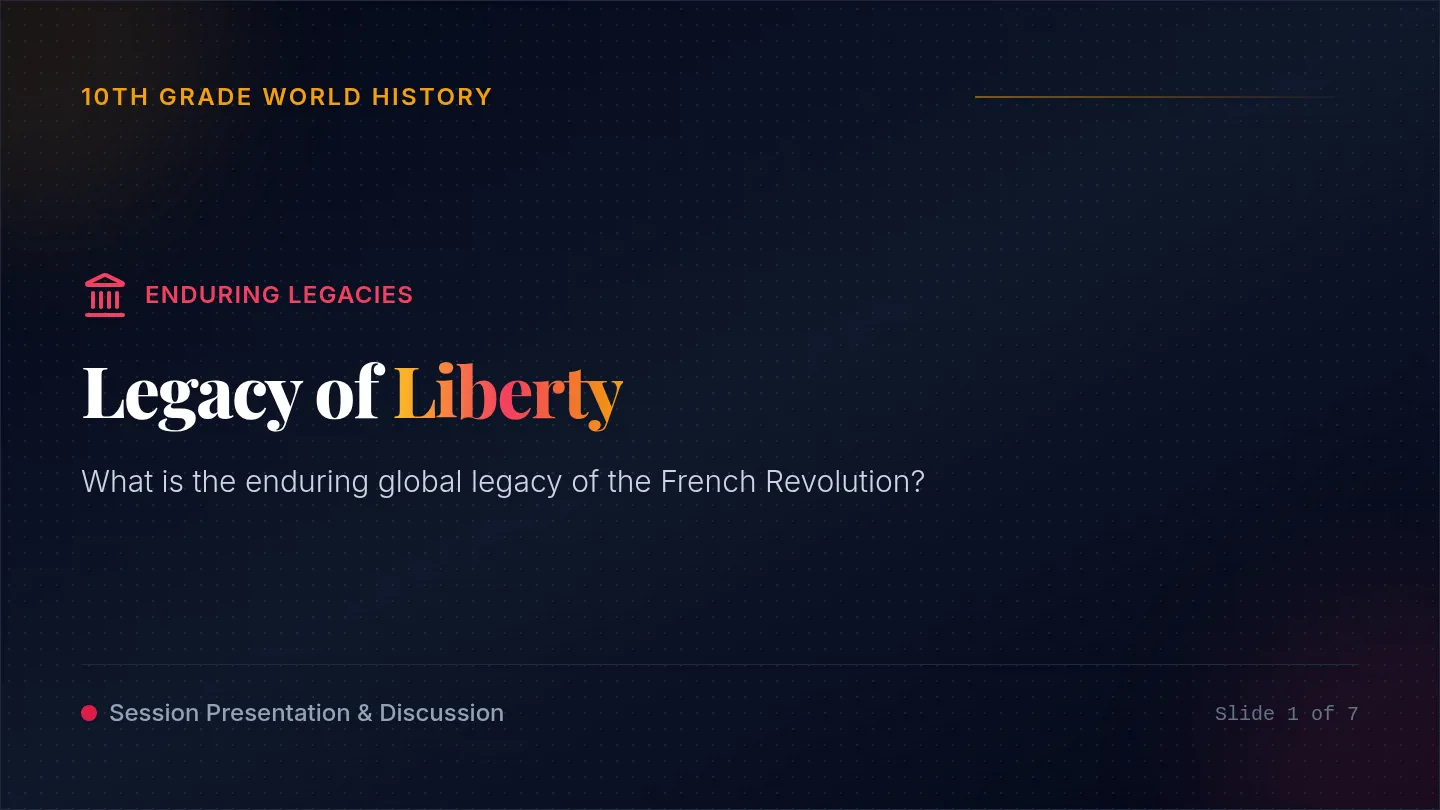
A comprehensive history lesson for 10th-grade students examining the global and modern legacies of the French Revolution. It features interactive slides and a highly organized graphic organizer that covers the end of the revolution, global democratic movements, and modern government statistics.
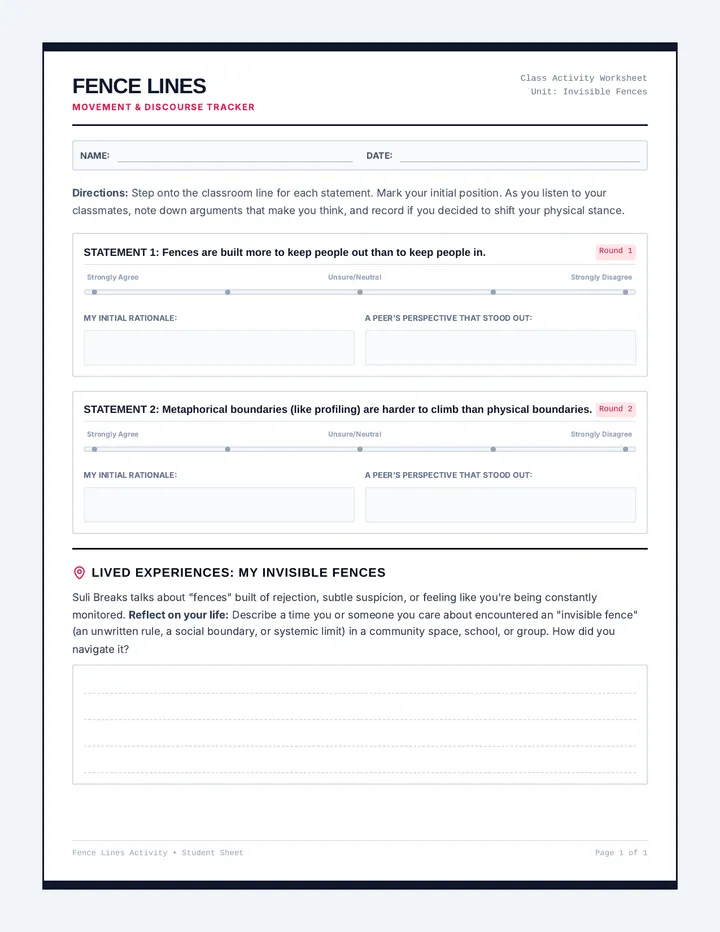
A 1-page student-facing tracker and reflection sheet for the 'Fence Lines' physical barometer activity. Includes visual scaling sliders for each movement prompt, spaces to record peer arguments, and a deep-dive writing area for real-world personal connections.
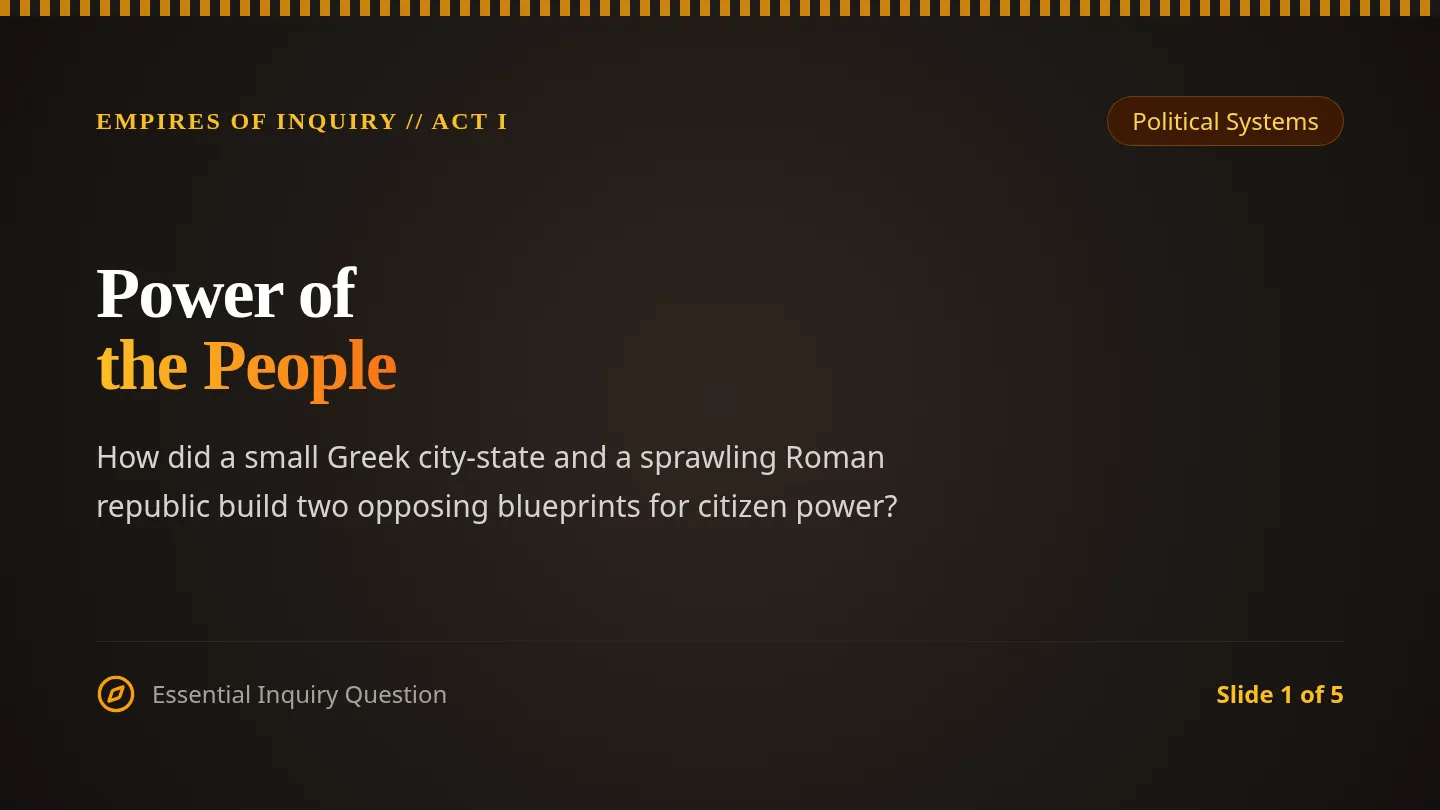
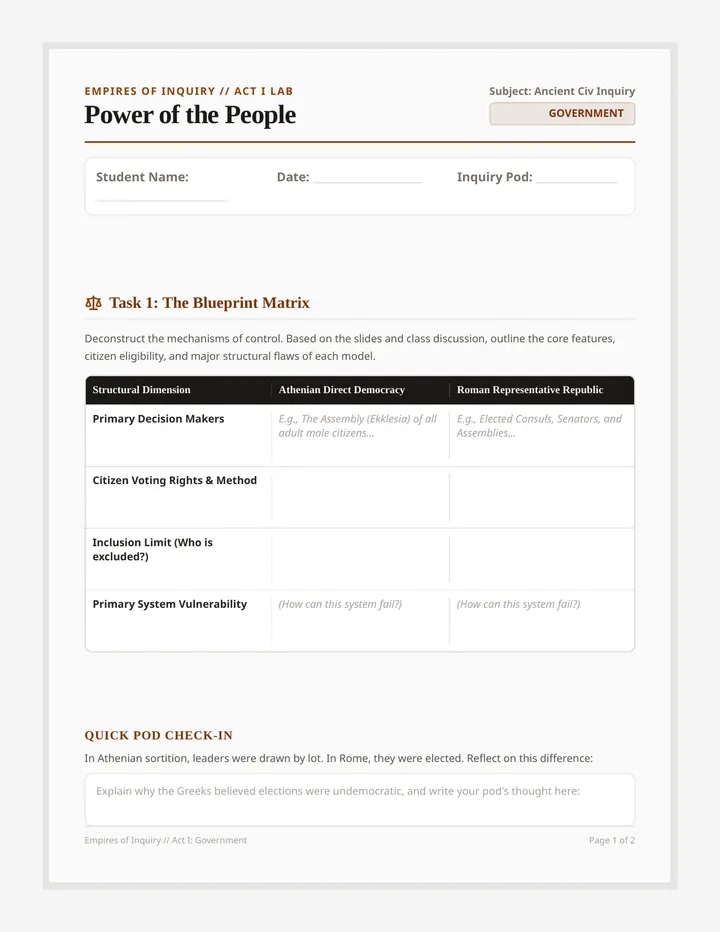
An inquiry-driven social studies sequence investigating Ancient Greece and Rome across four core pillars: government, philosophy, trade, and engineering. Students engage with primary sources, architectural achievements, and ethical dilemmas to construct arguments about classical legacies.
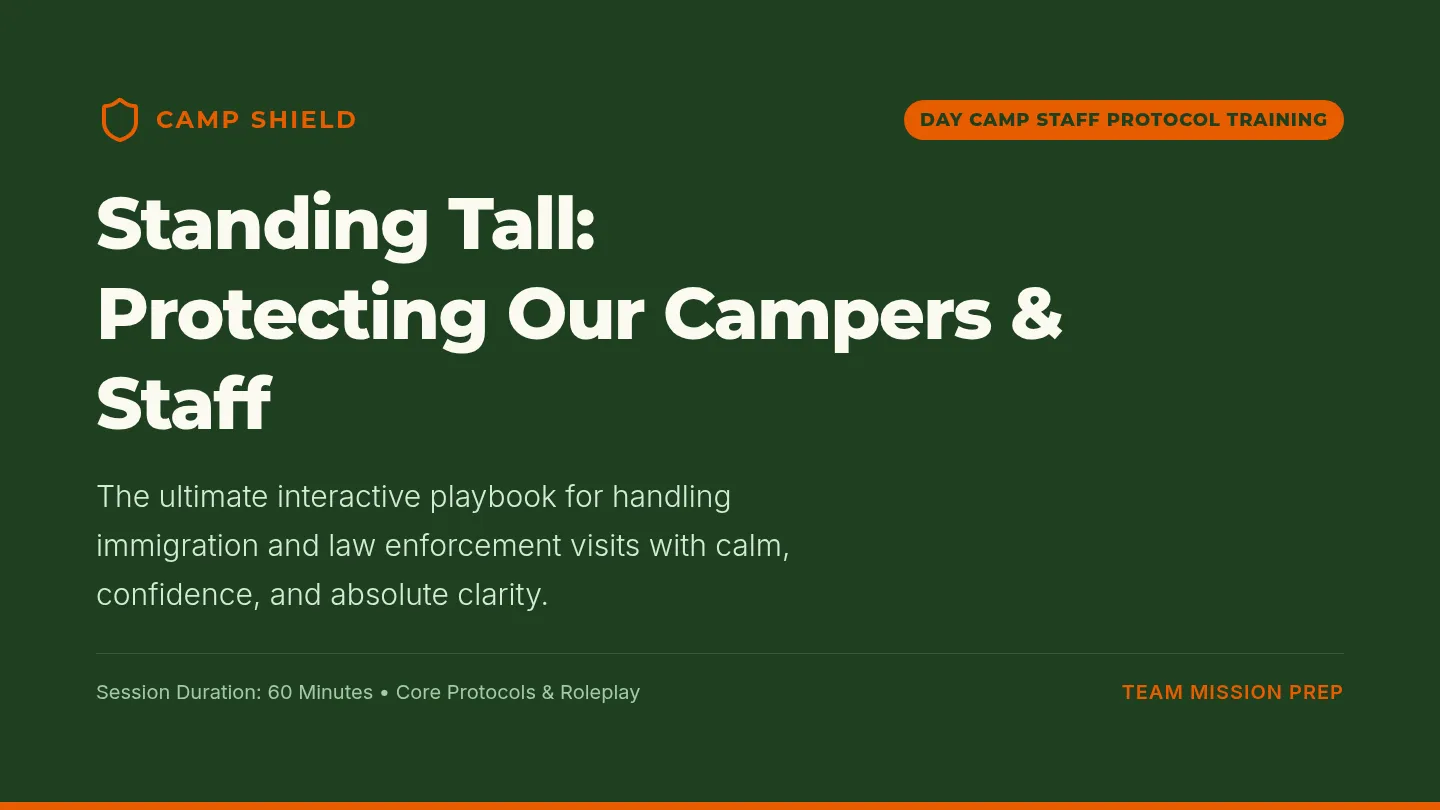
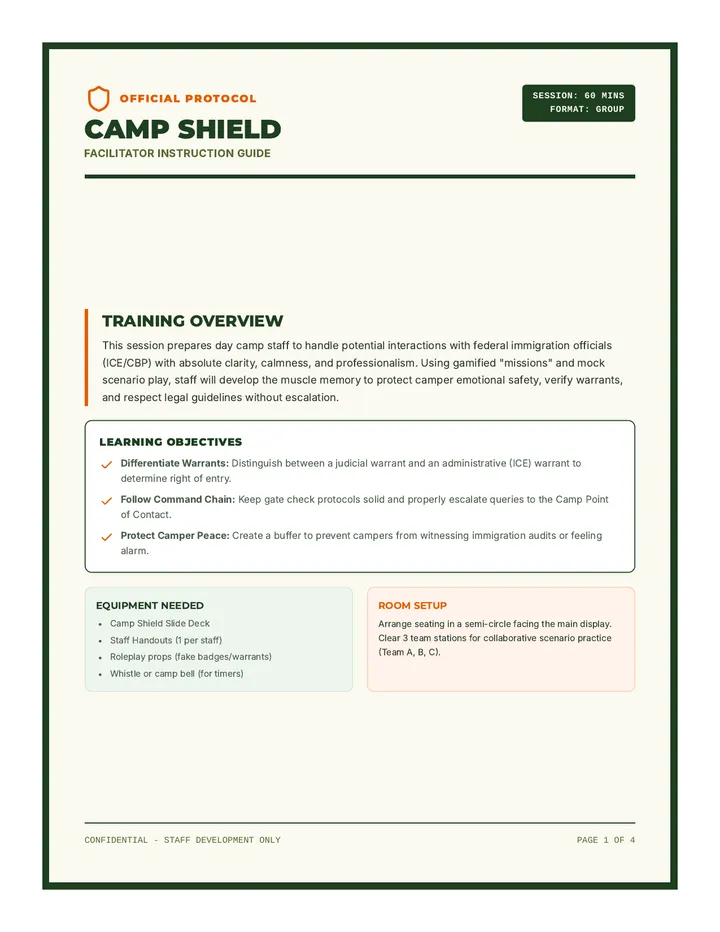
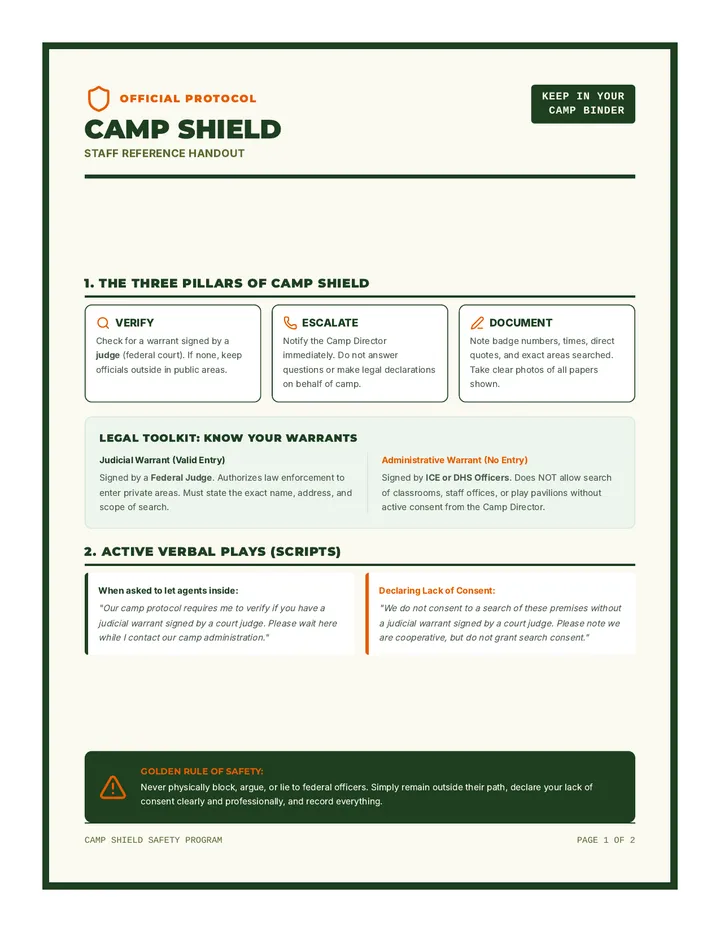
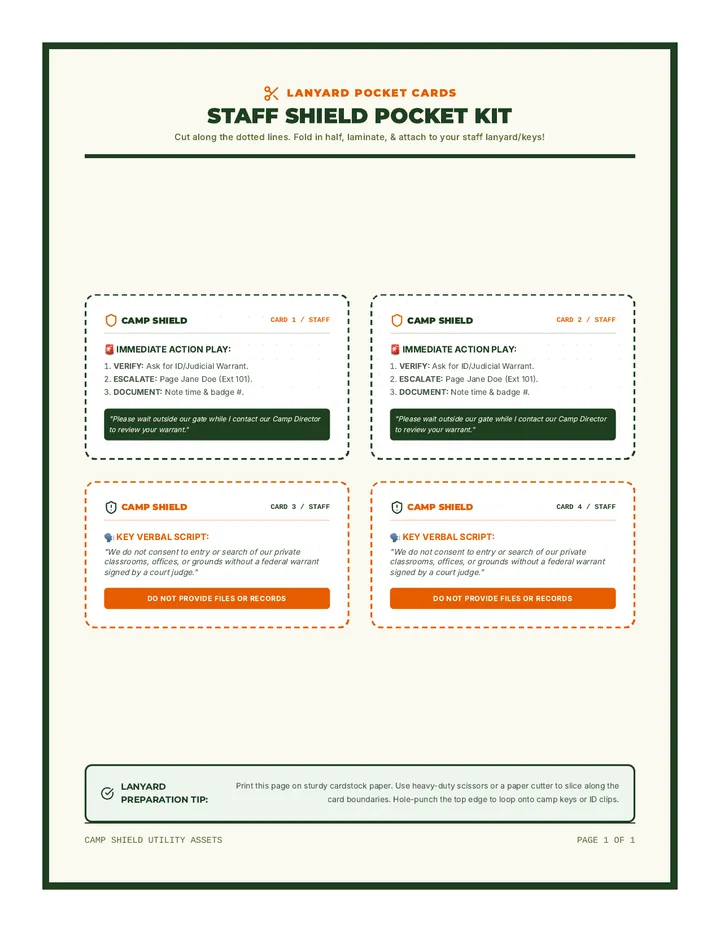
A comprehensive, scenario-based training lesson to prepare camp staff on safety, communication, and legal protocols if ICE or immigration officials arrive at camp. Equips staff with actionable toolkits, step-by-step guides, and interactive roleplay scenarios.
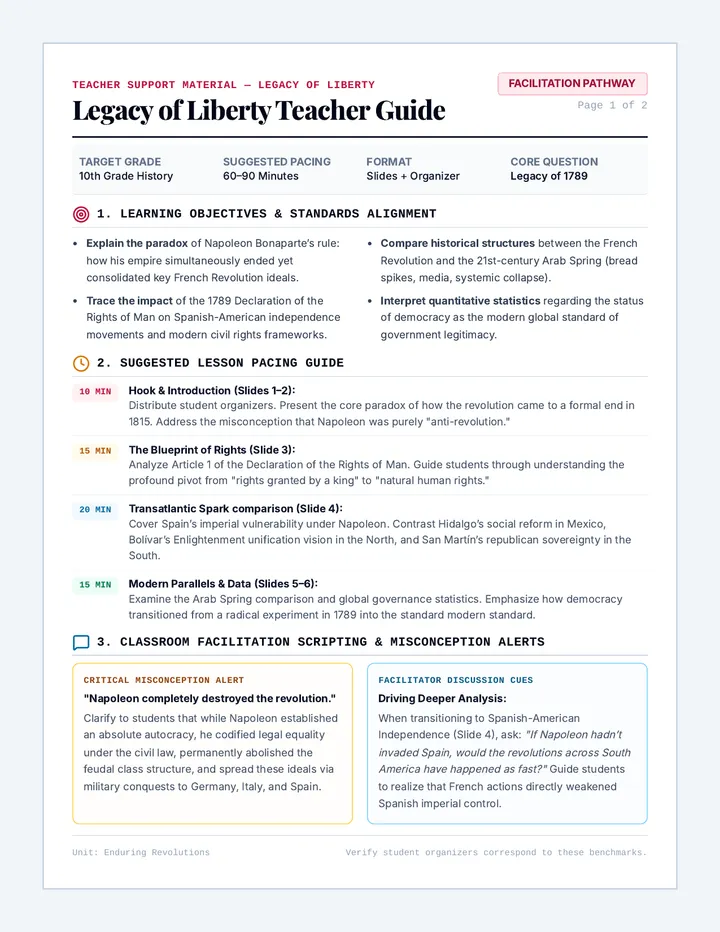
An exhaustive, 2-page teacher-facing facilitation guide and answer key for the 'Legacy of Liberty' lesson. It provides lesson pacing, classroom discussion scripts, troubleshooting for common misconceptions, and detailed exemplar answers for every section of the student graphic organizer.
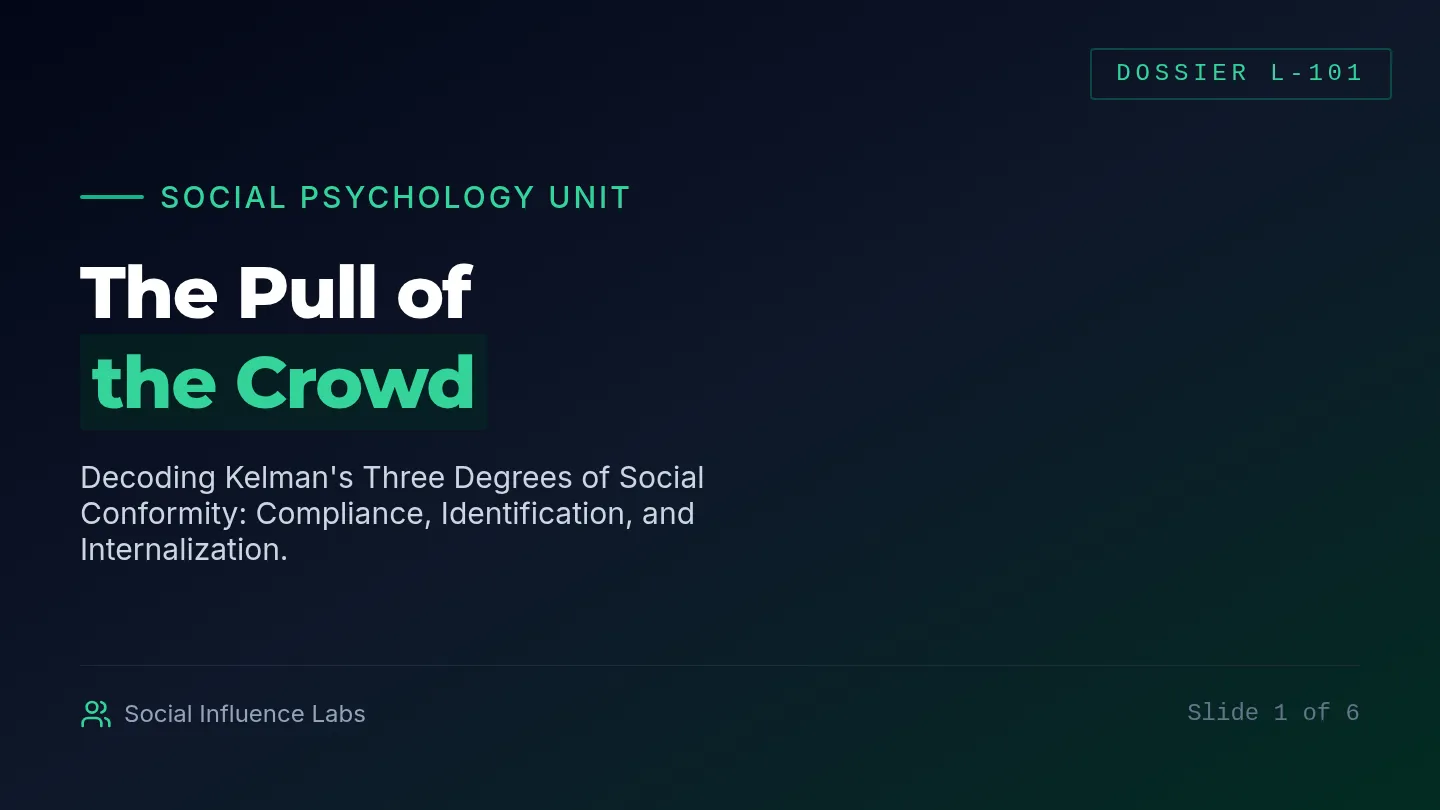
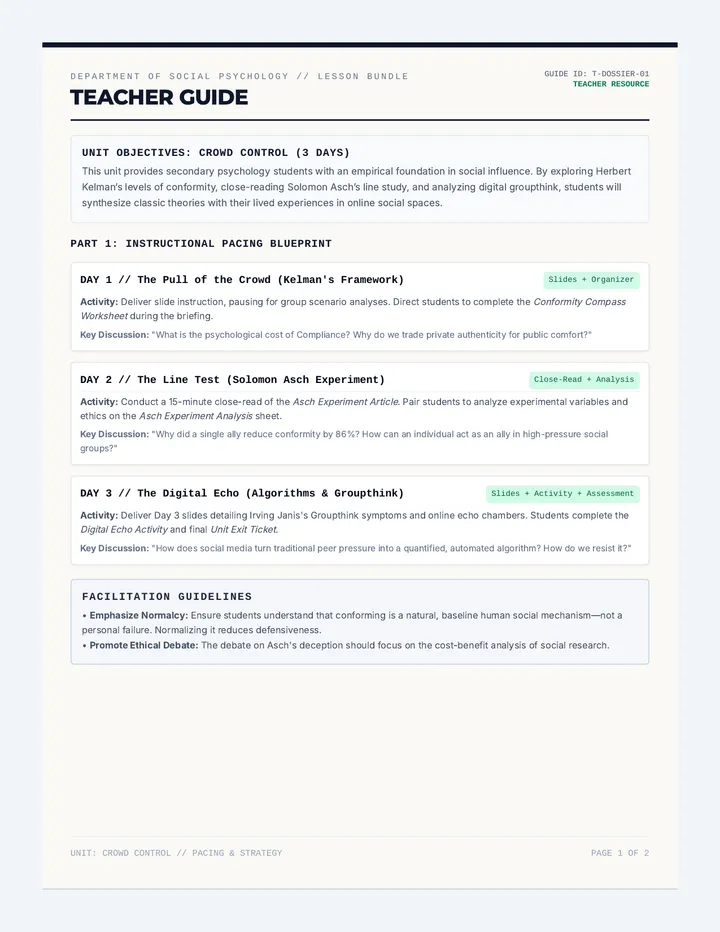
A three-day social psychology sequence exploring conformity, groupthink, and social influence. Students analyze foundational experiments, compare compliance versus internalization, and dissect modern digital peer pressure and media dynamics.
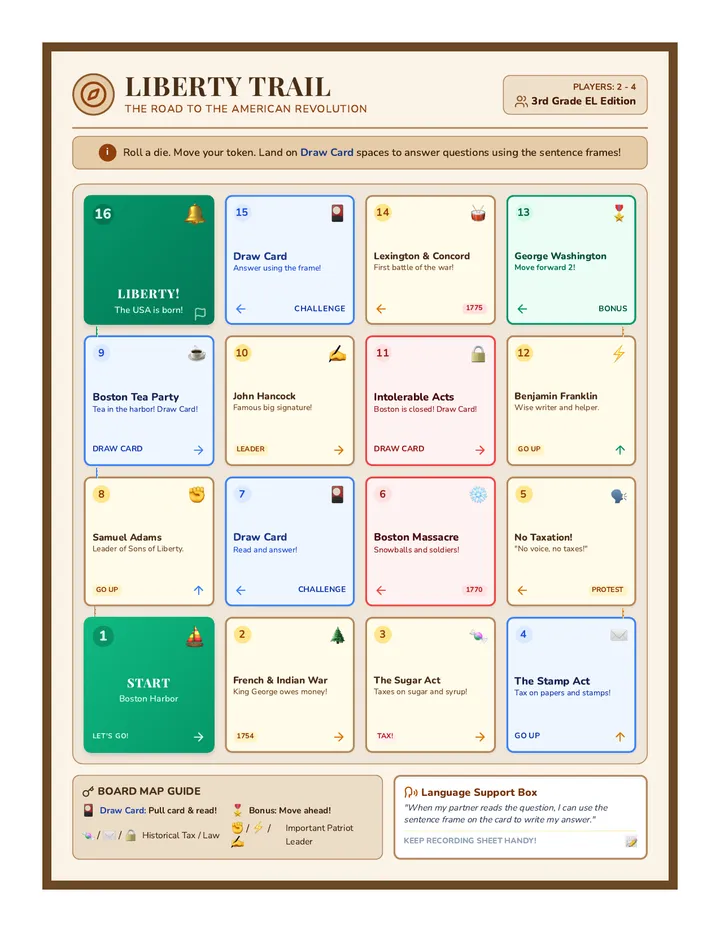
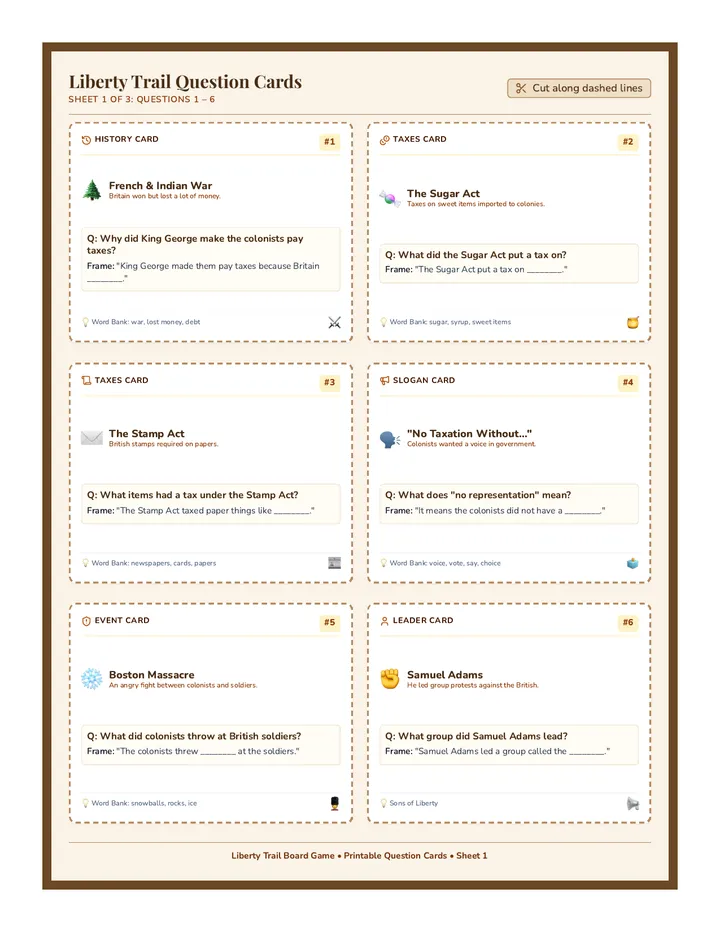
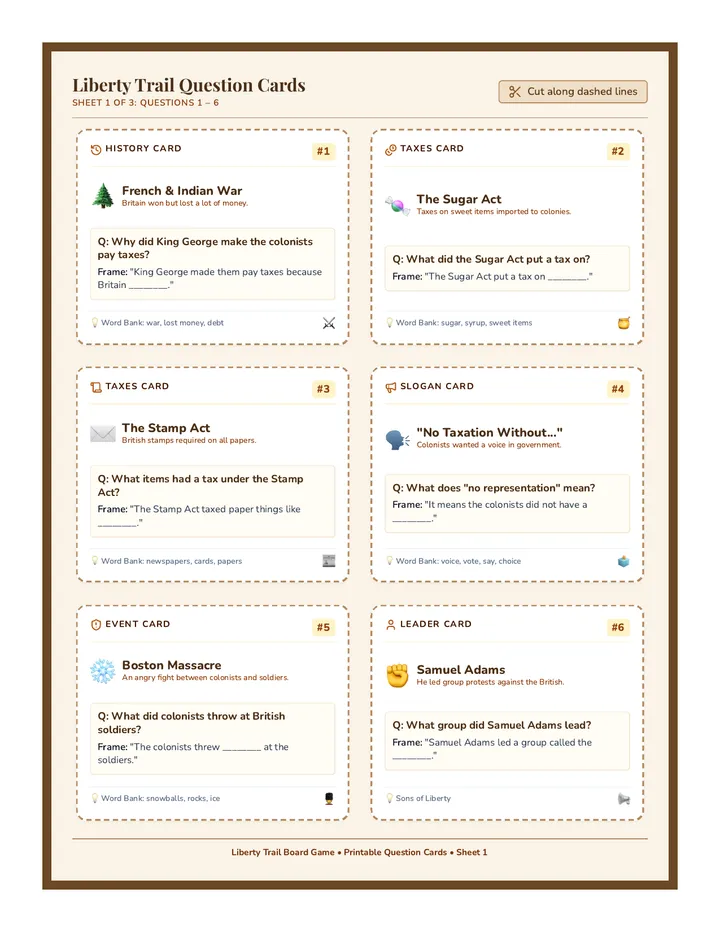
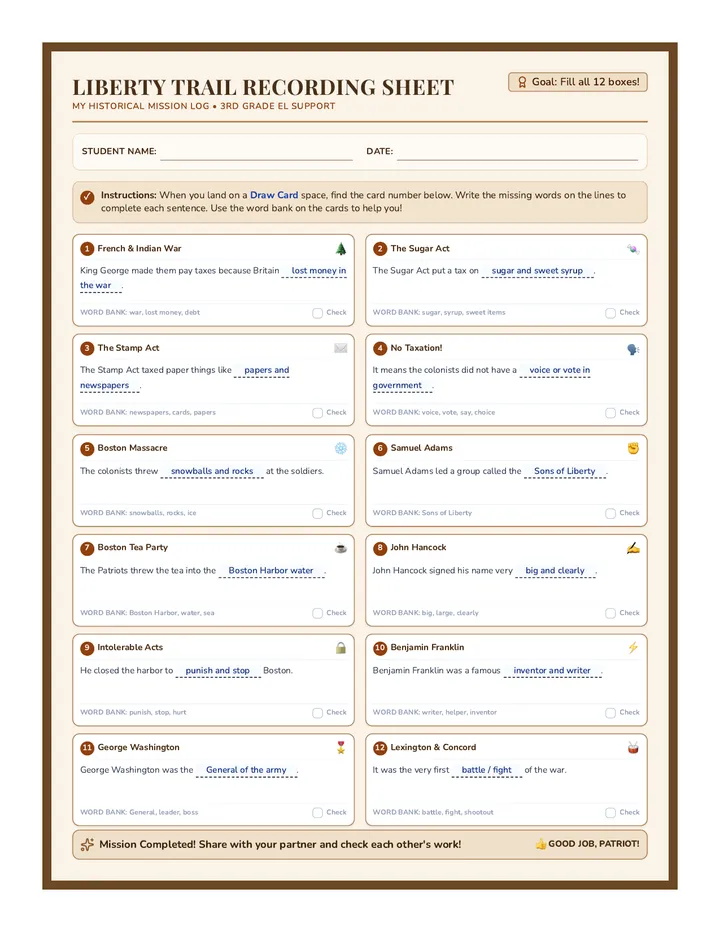
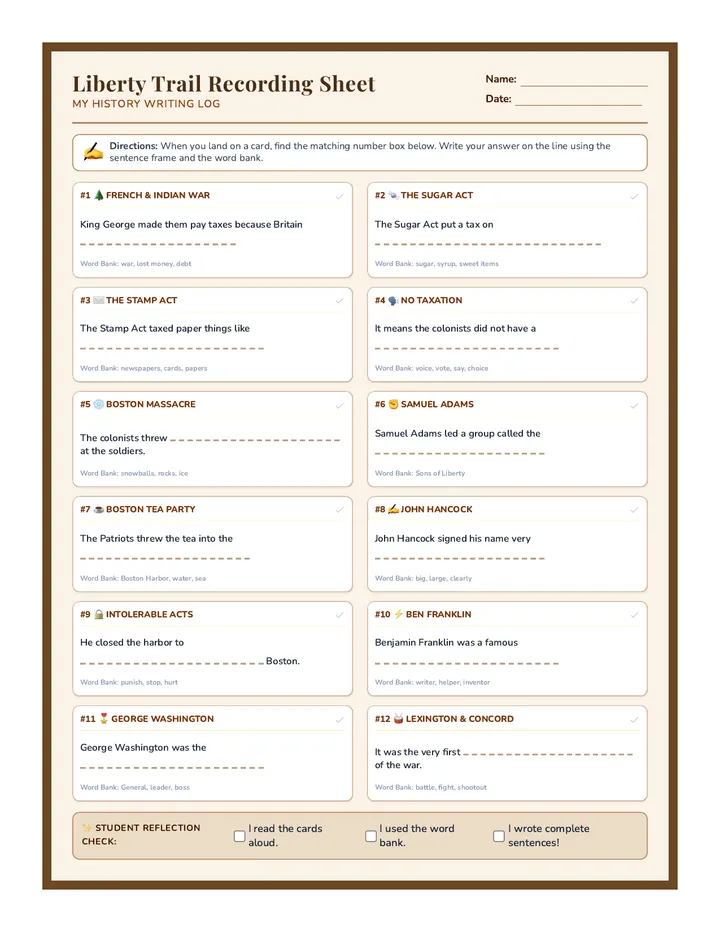
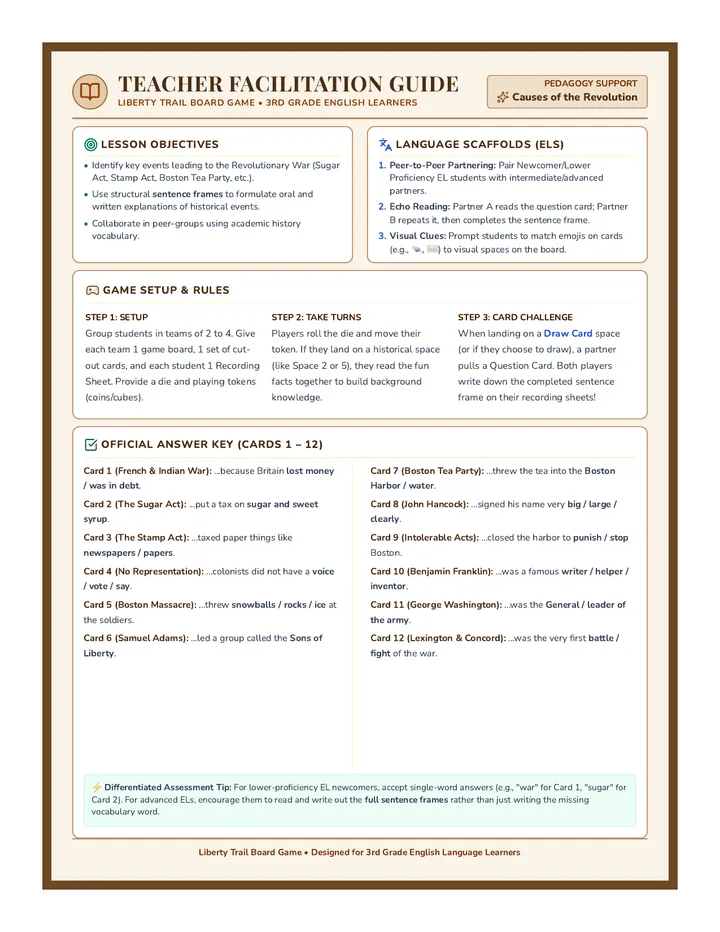
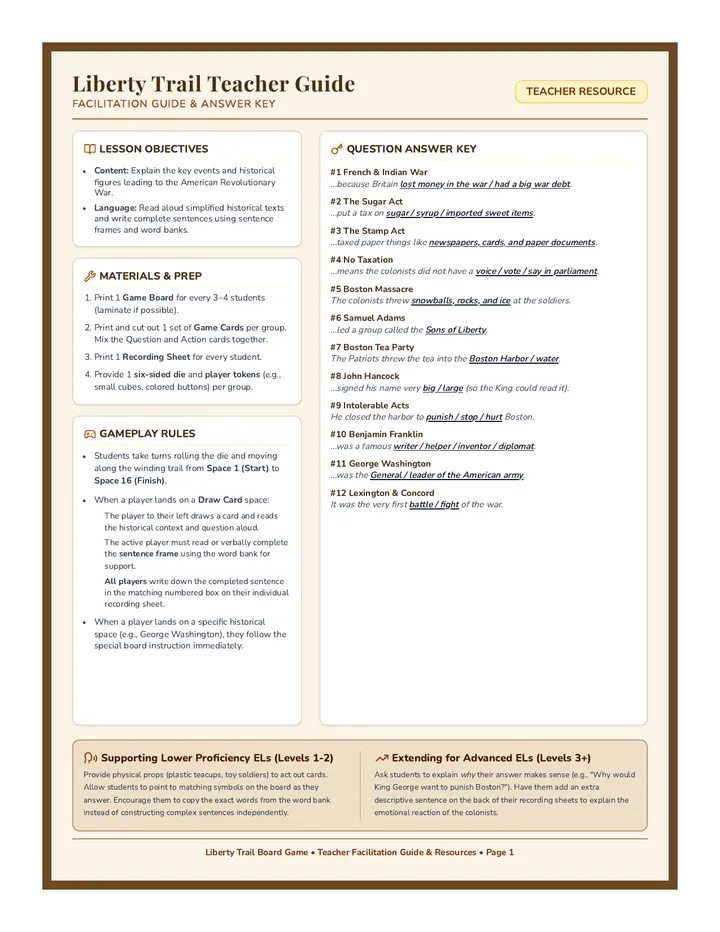
A complete educational board game package designed for 3rd-grade English Language learners (ELs) studying the causes of the American Revolutionary War. Features simplified text, visual supports, and sentence frames to assist language production.
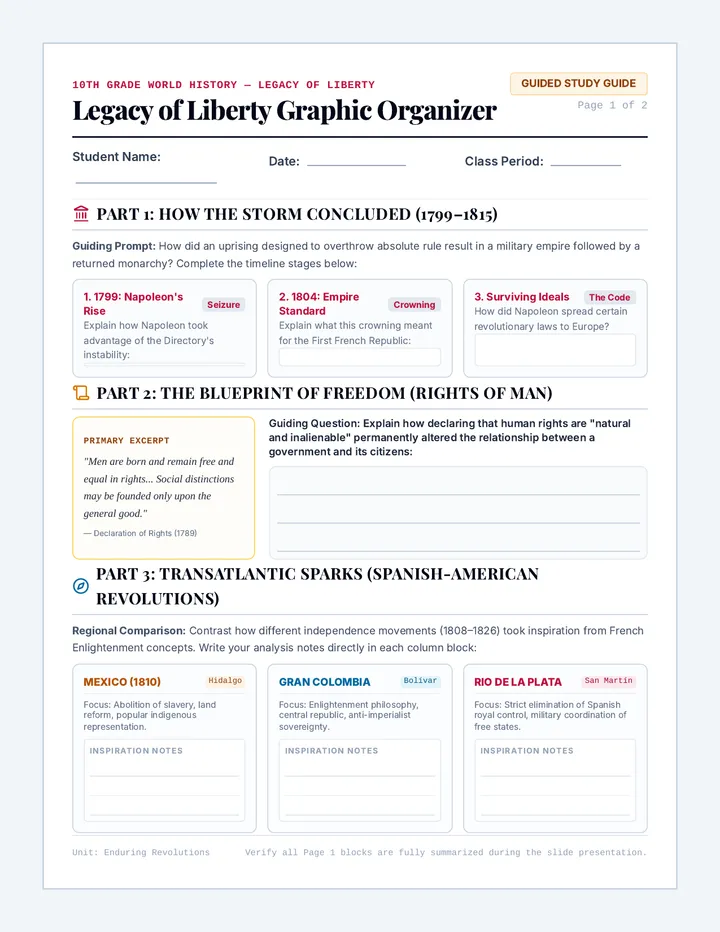
A highly structured, 2-page student graphic organizer and guided note sheet aligned with the 'Legacy of Liberty' slide presentation. It utilizes structured tables, comparative analysis webs, modern data visualization response zones, and open-ended synthesis prompts.