Students practice auditory discrimination by identifying facts and story elements using props in a 'Fact Detective' game.
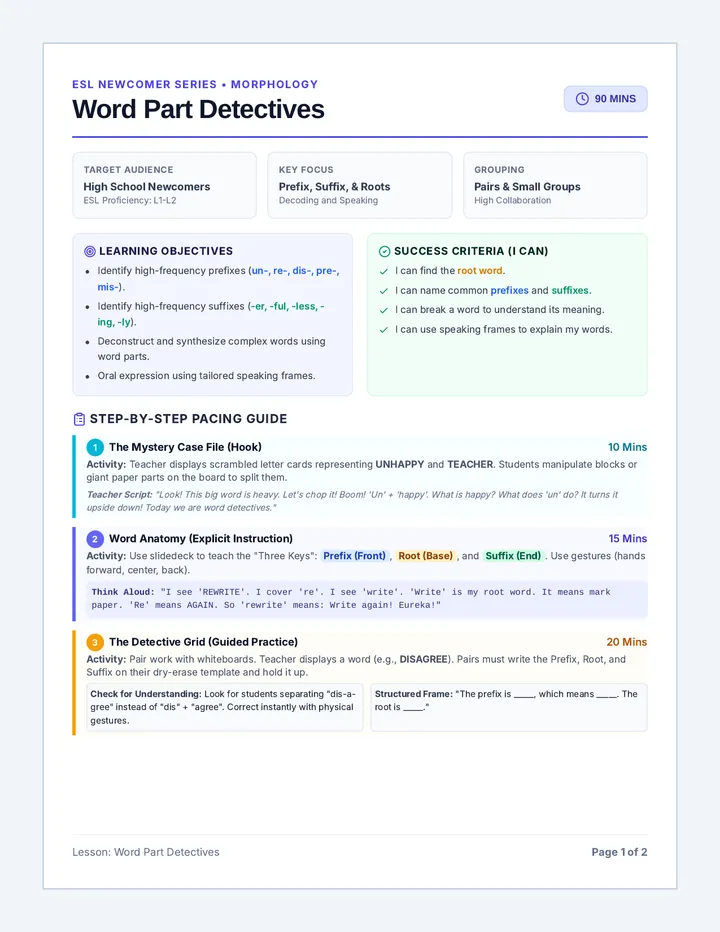
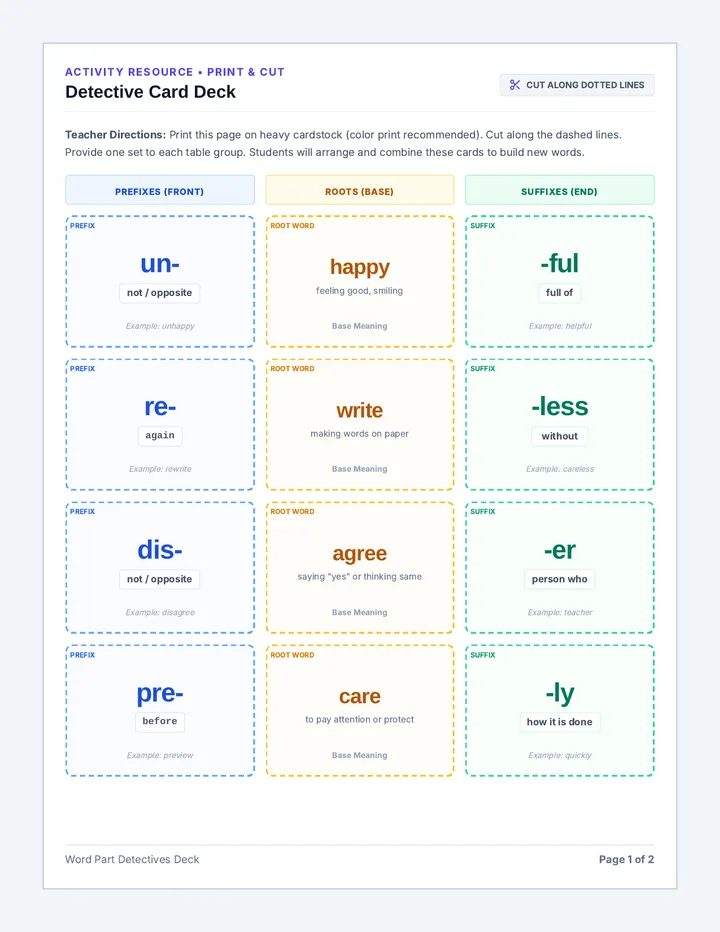
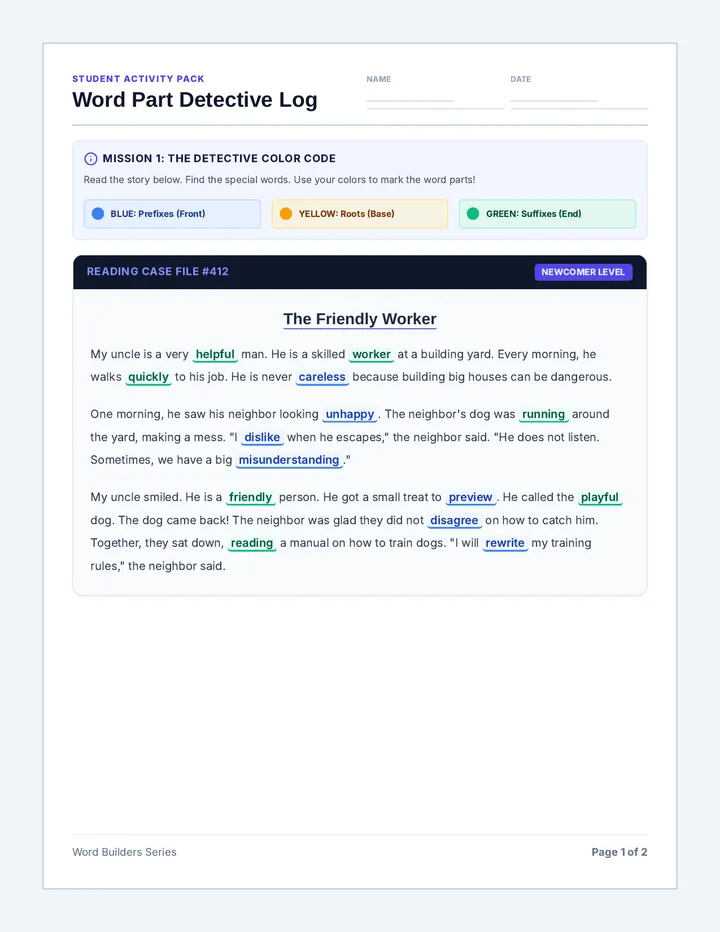
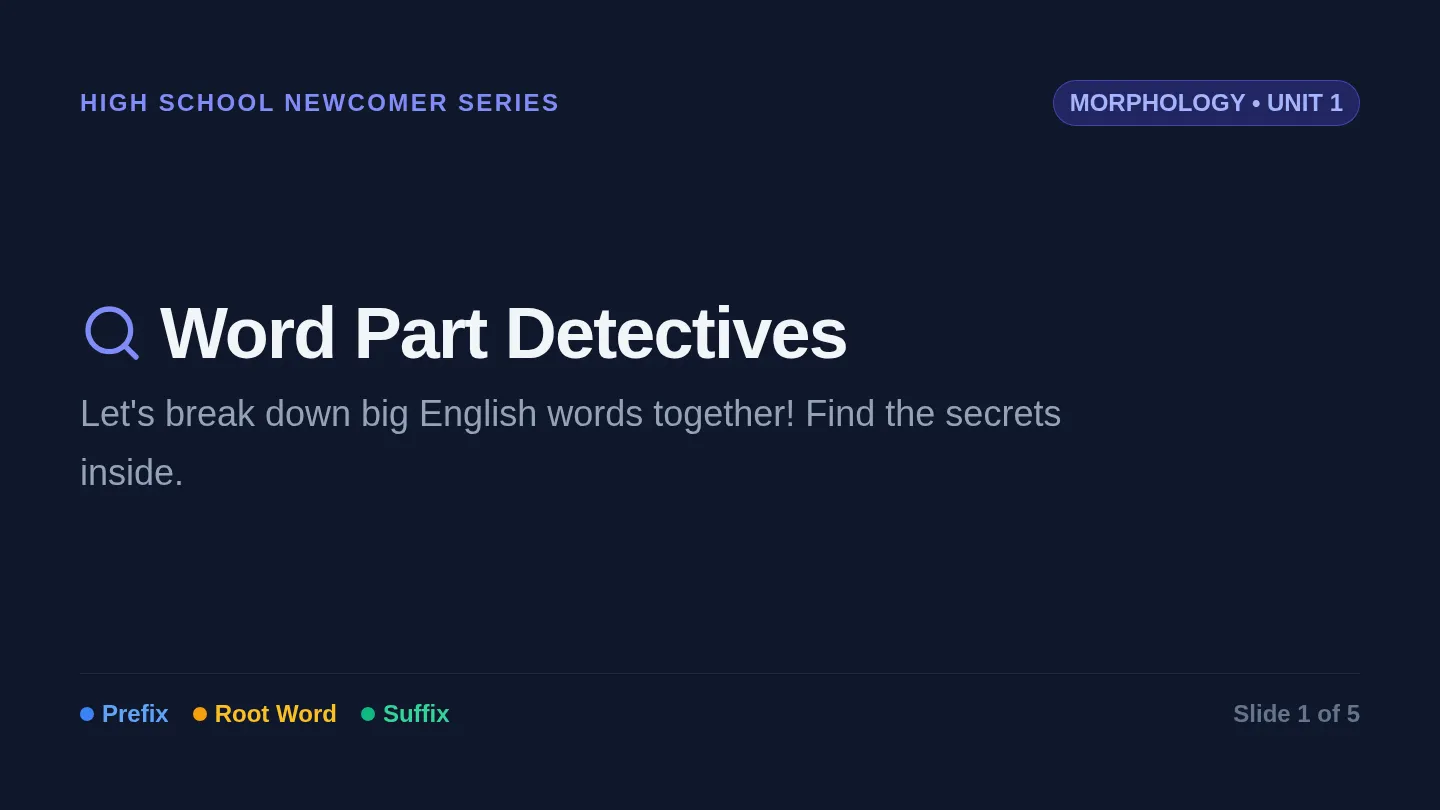
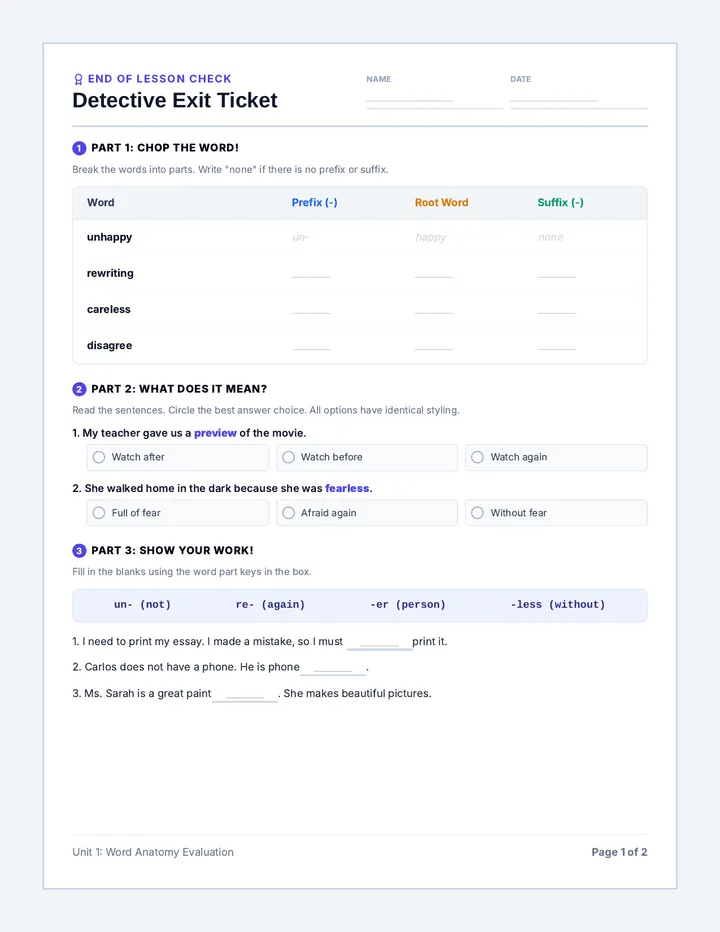
A dynamic 90-minute lesson where newcomers learn to identify root words, prefixes, and suffixes. Through color-coded physical cards, collaborative games, and visual anchor charts, students practice decoding unfamiliar words and speaking with structured sentence frames.
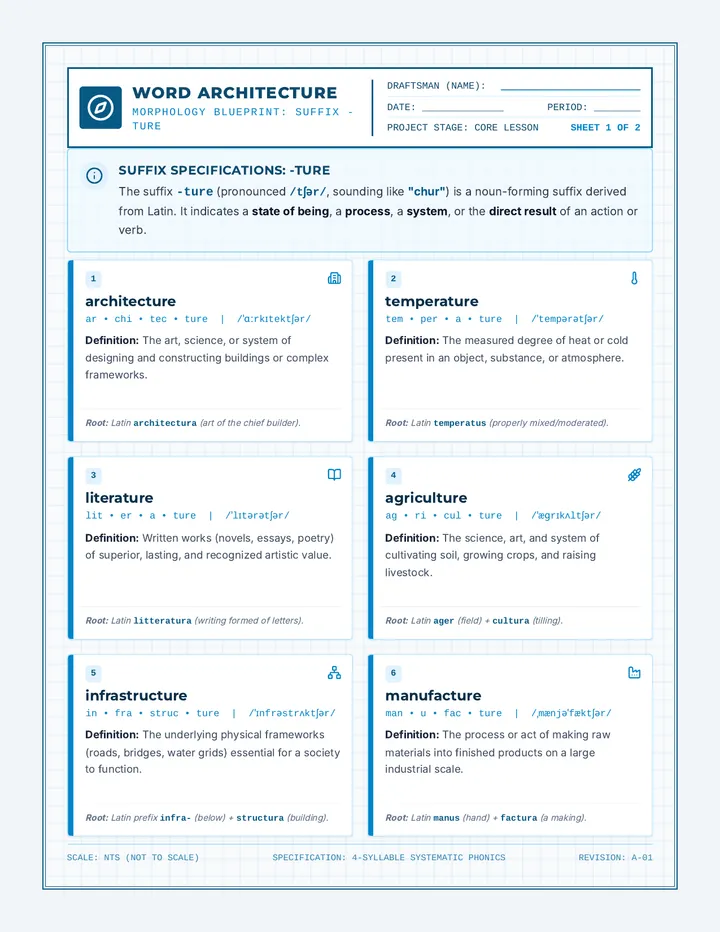
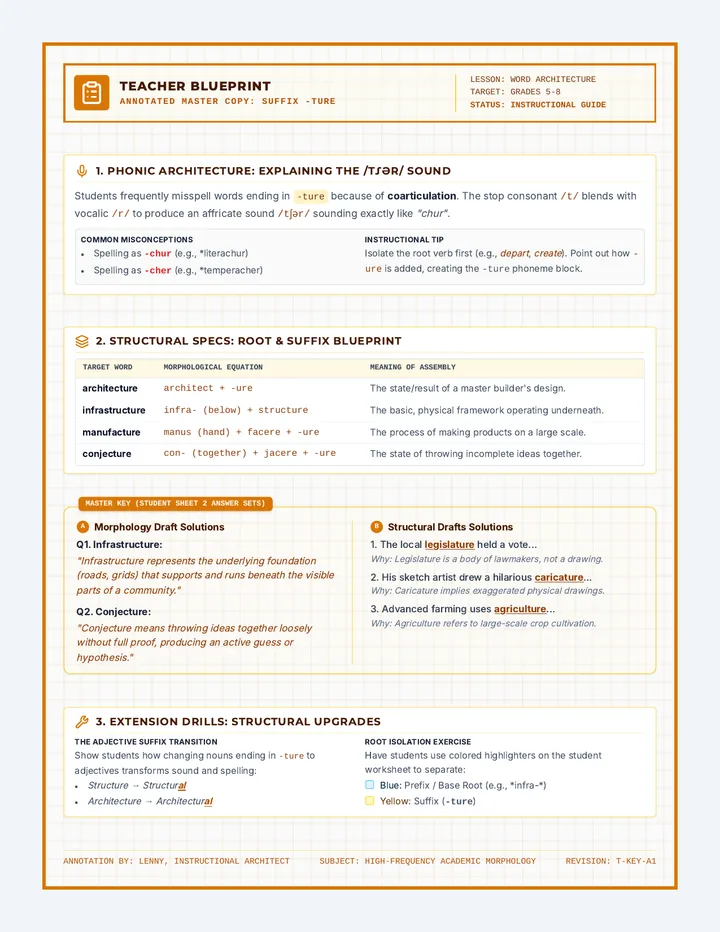
A middle school vocabulary lesson exploring 3-to-4 syllable academic words ending in the suffix -ture. Students examine pronunciation, morphological structure, definitions, and applications through a technical drafting/blueprint theme.
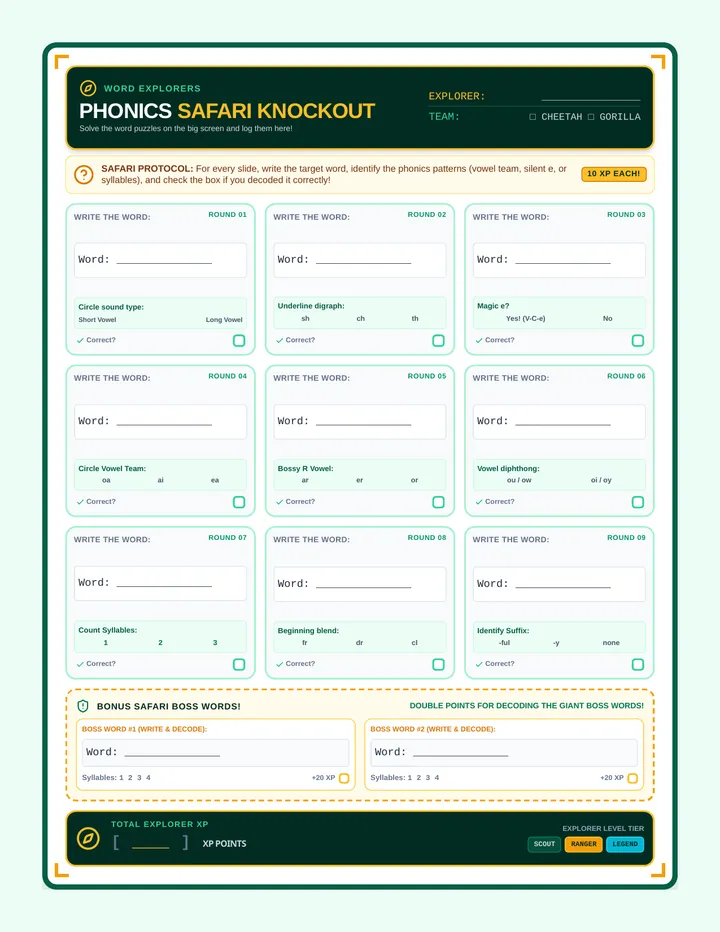
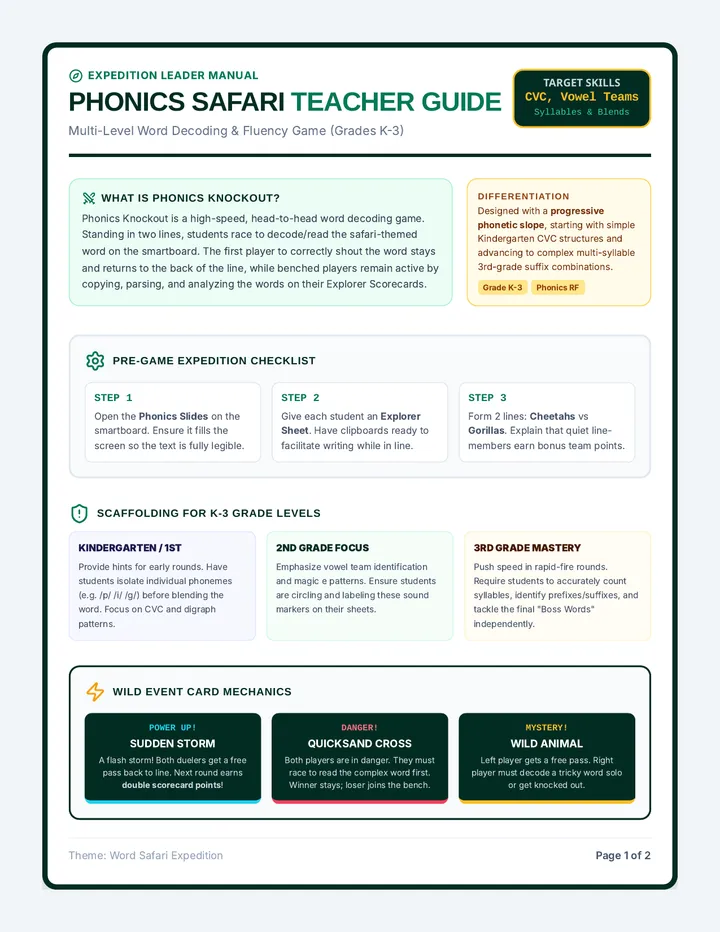
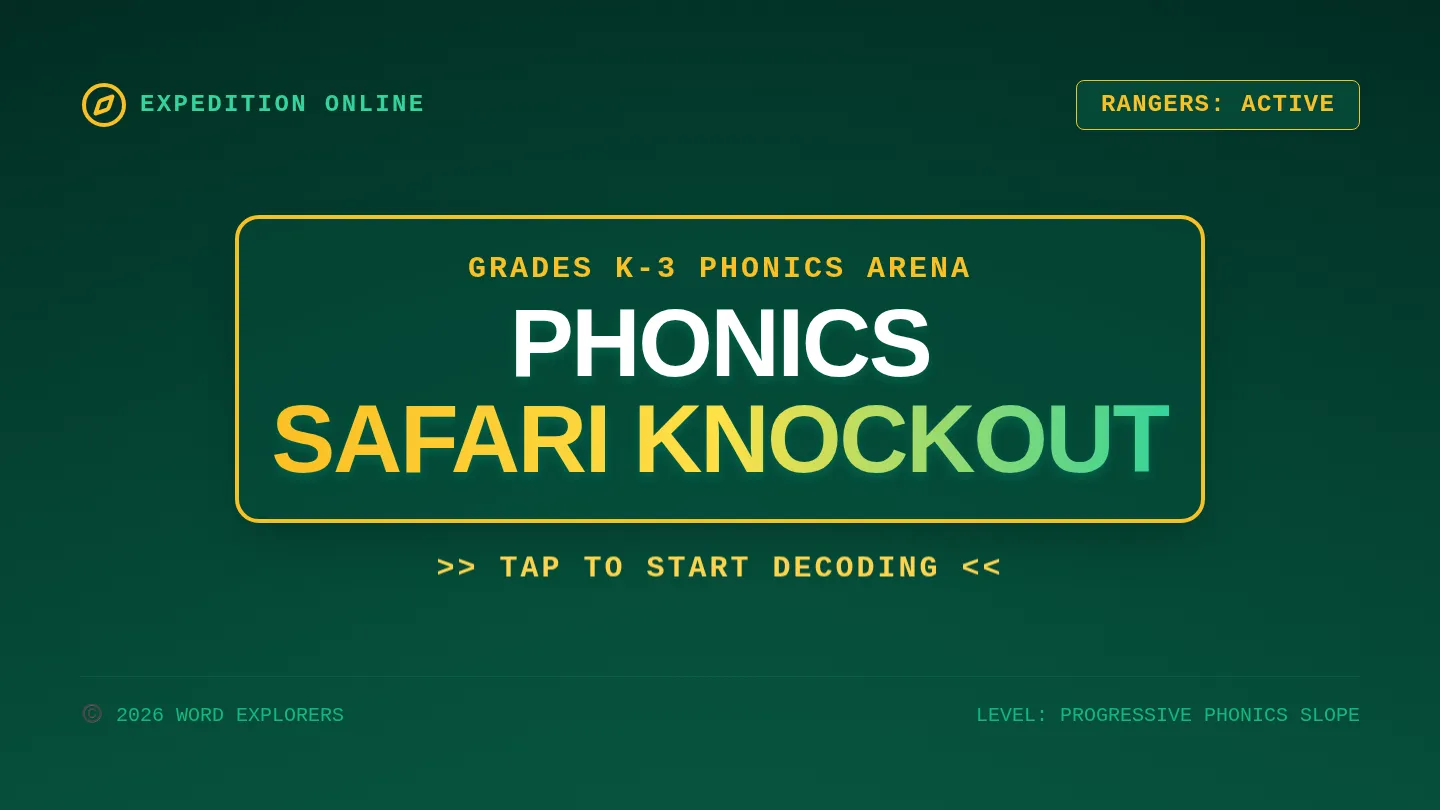
A high-energy, wild safari-themed classroom game for K-3 students focusing on key phonics skills including CVC words, silent 'e', vowel teams, and multi-syllable decoding. This lesson includes a widescreen smartboard presentation, a teacher facilitation guide with word keys, and an active-participation student tracker sheet.
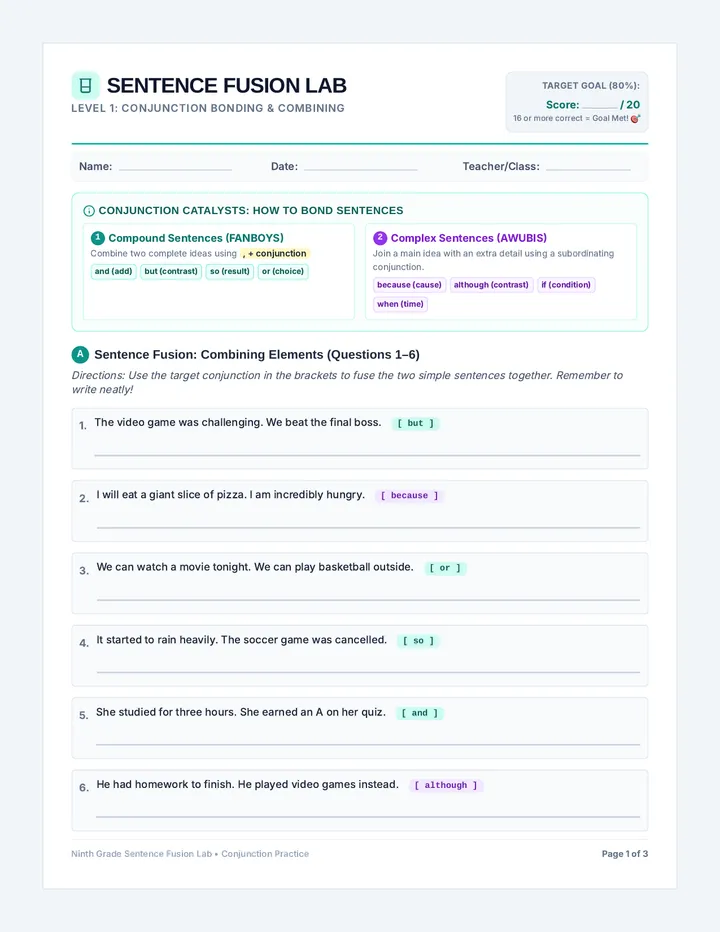
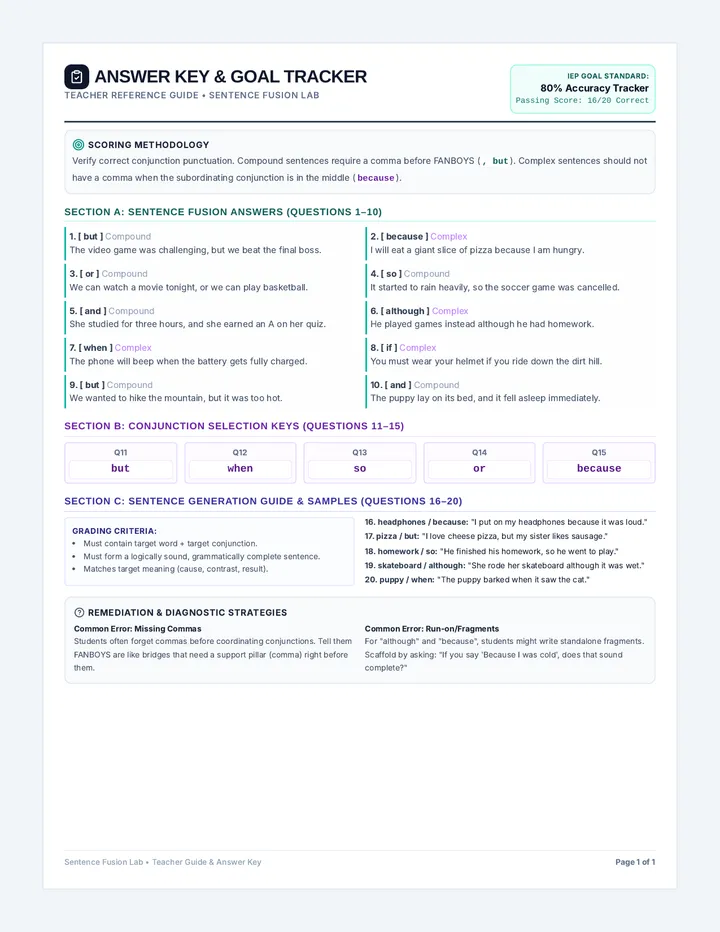
A highly scaffolded grammar and sentence-combining lesson designed for 9th-grade special education. Students learn to use coordinating and subordinating conjunctions to combine and generate compound and complex sentences.
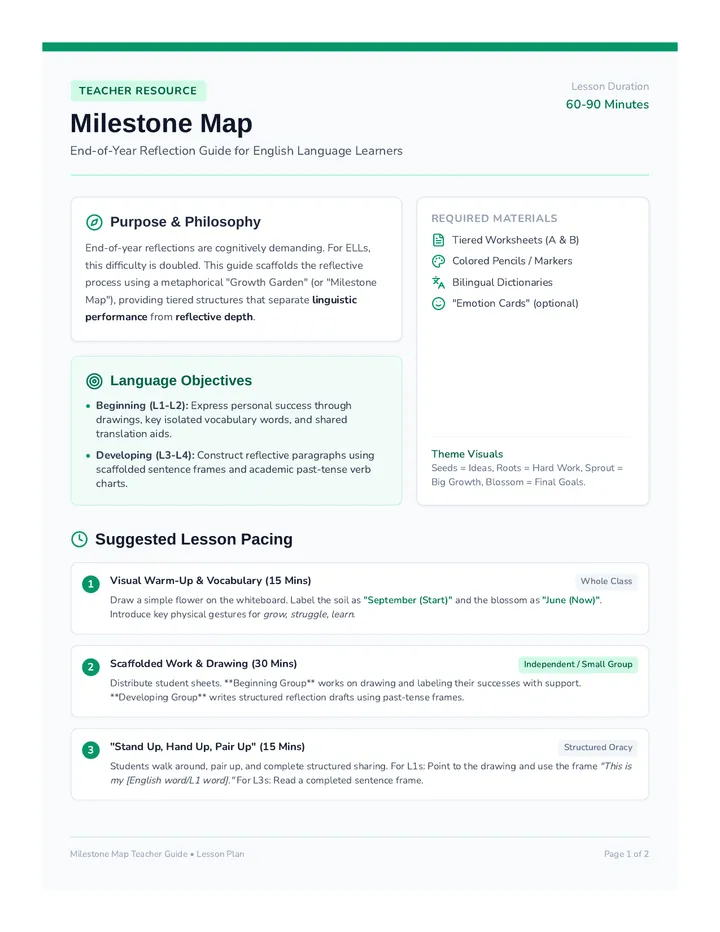
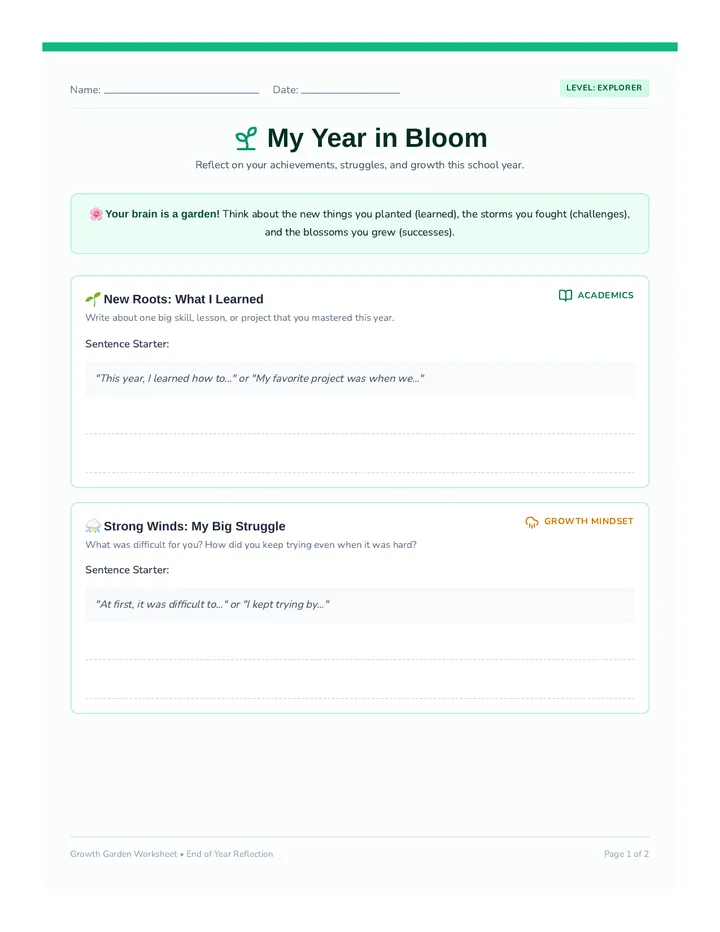
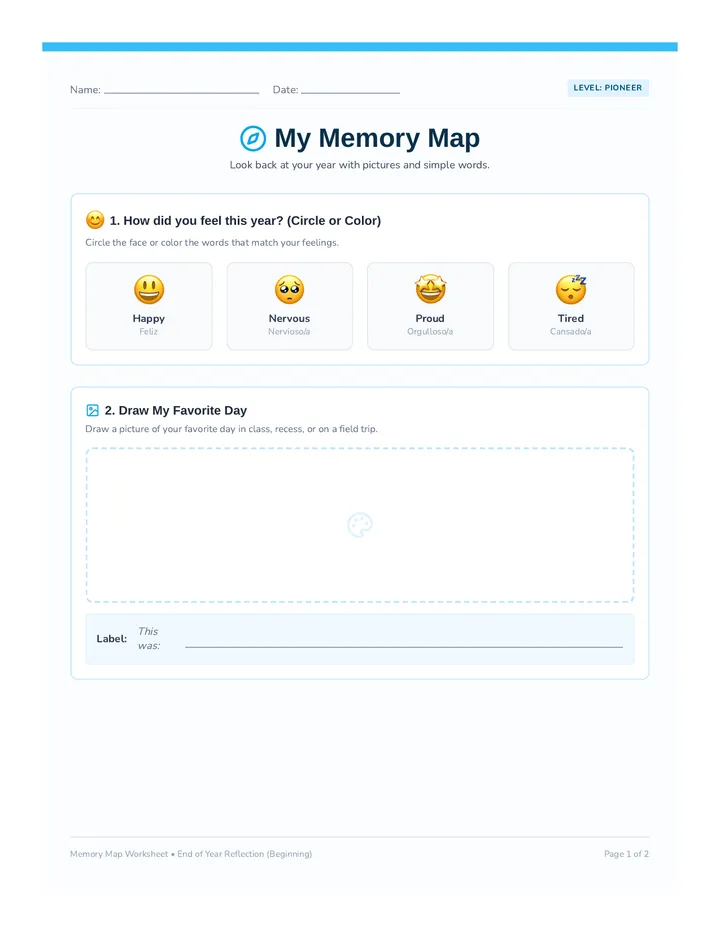
An end-of-year reflection lesson designed specifically for English Language Learners, featuring tiered worksheets for Beginning/Entering and Developing/Expanding levels, supported by a detailed facilitator guide.
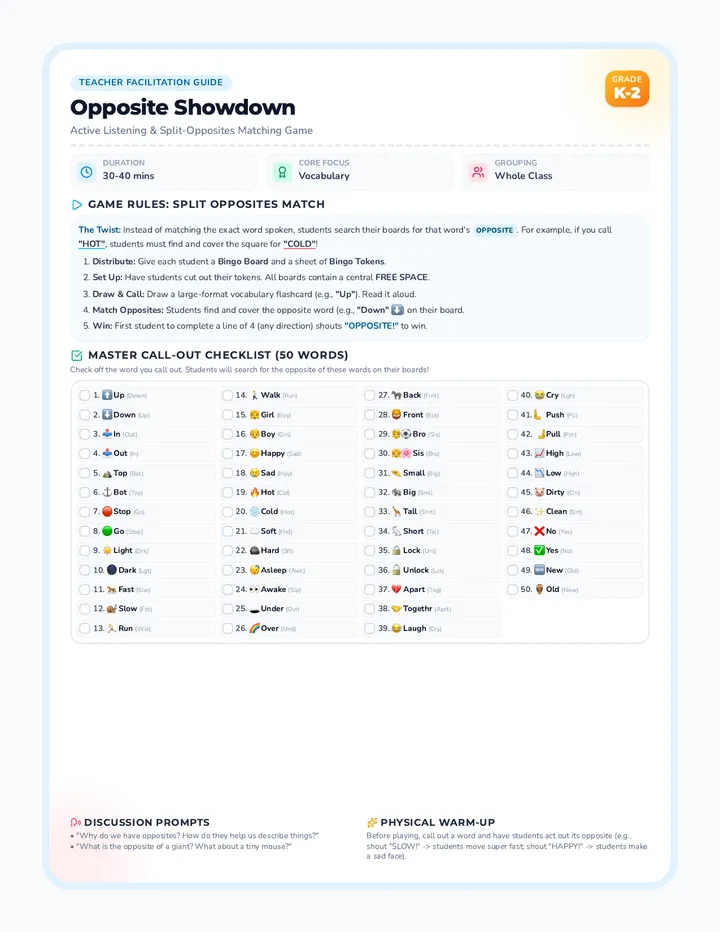
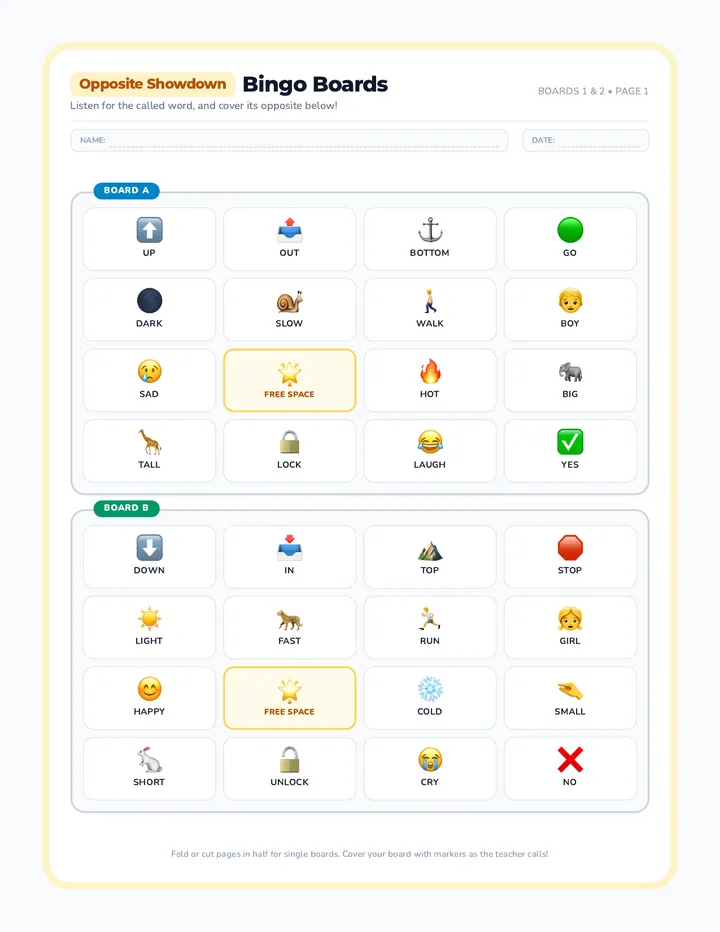
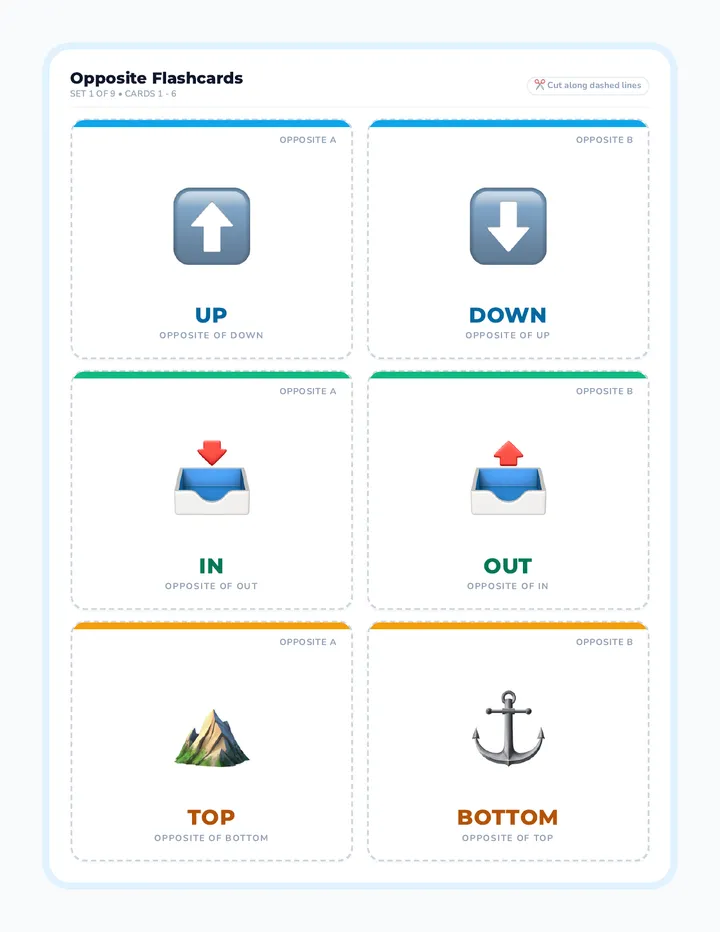
An interactive lesson package centered on teaching opposites through 'Split Opposites Matching' Bingo, featuring illustrated playing boards, large-format vocabulary cards, and a comprehensive activity guide.
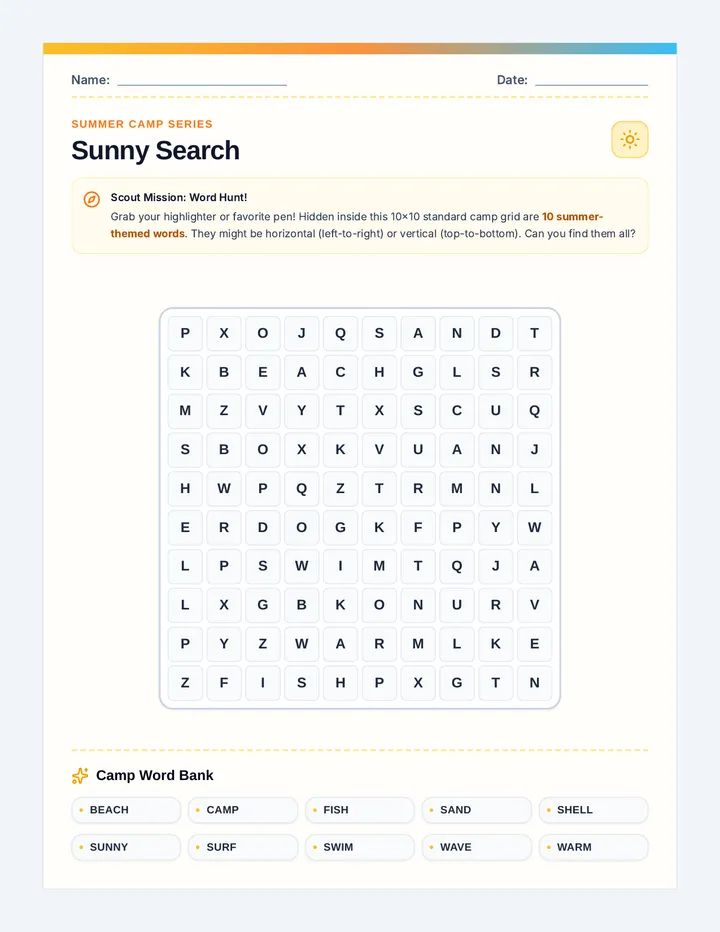
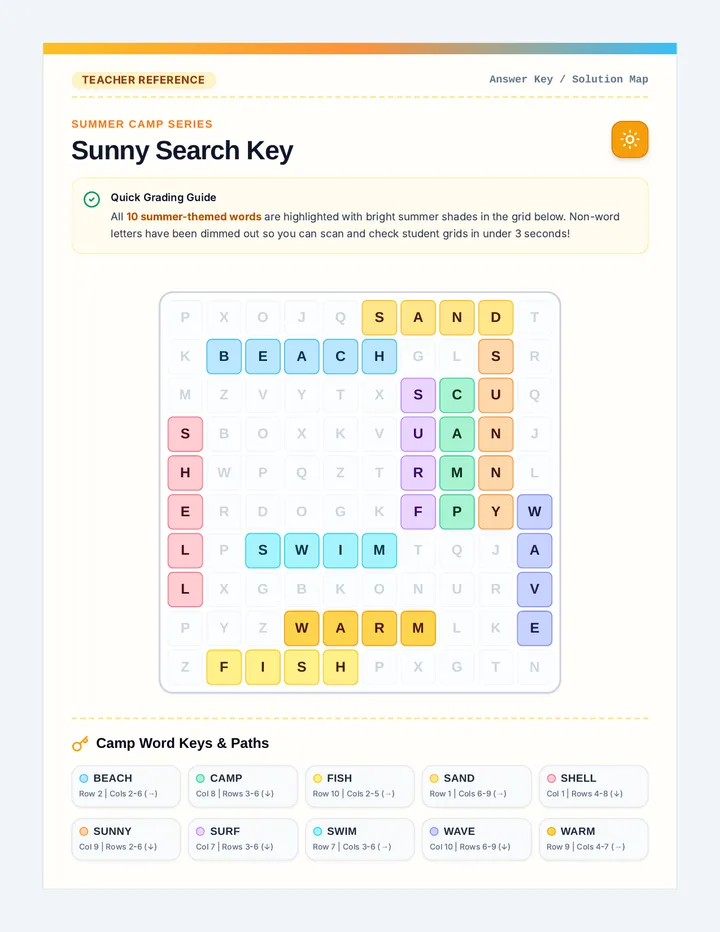
A fun, summer-themed word search lesson designed for standard grid gameplay with high-contrast elements suitable for highlight strips. Includes a clean 10x10 word search and a corresponding teacher answer key.
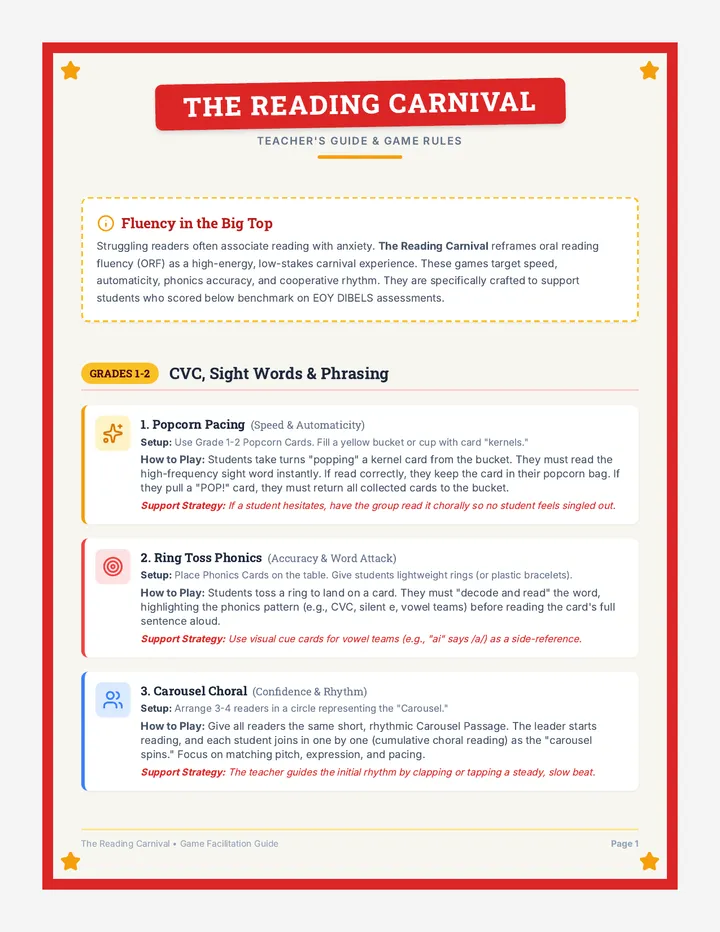
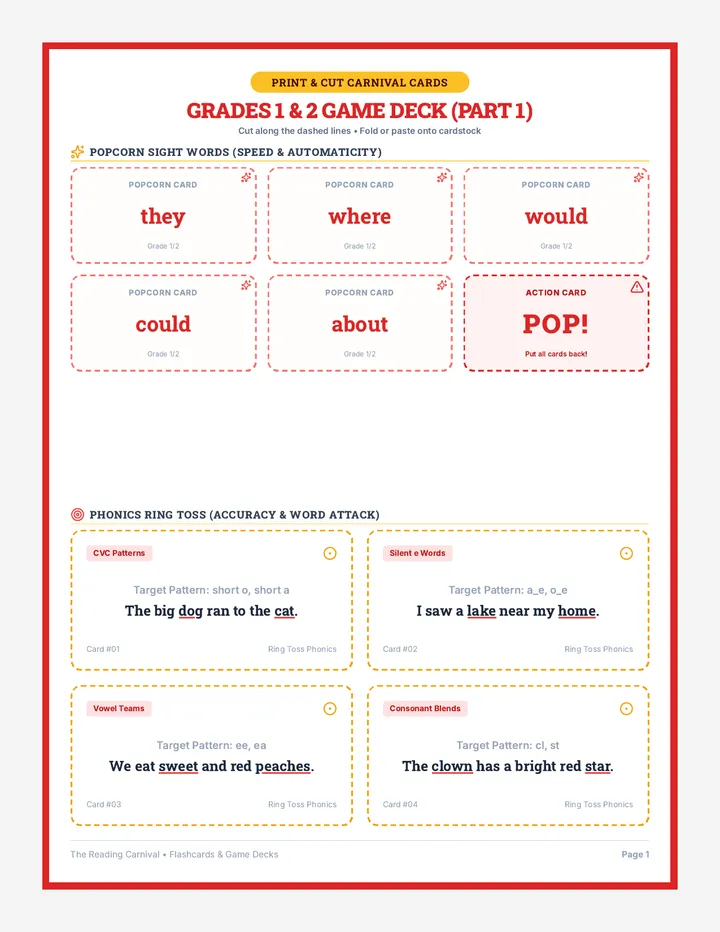
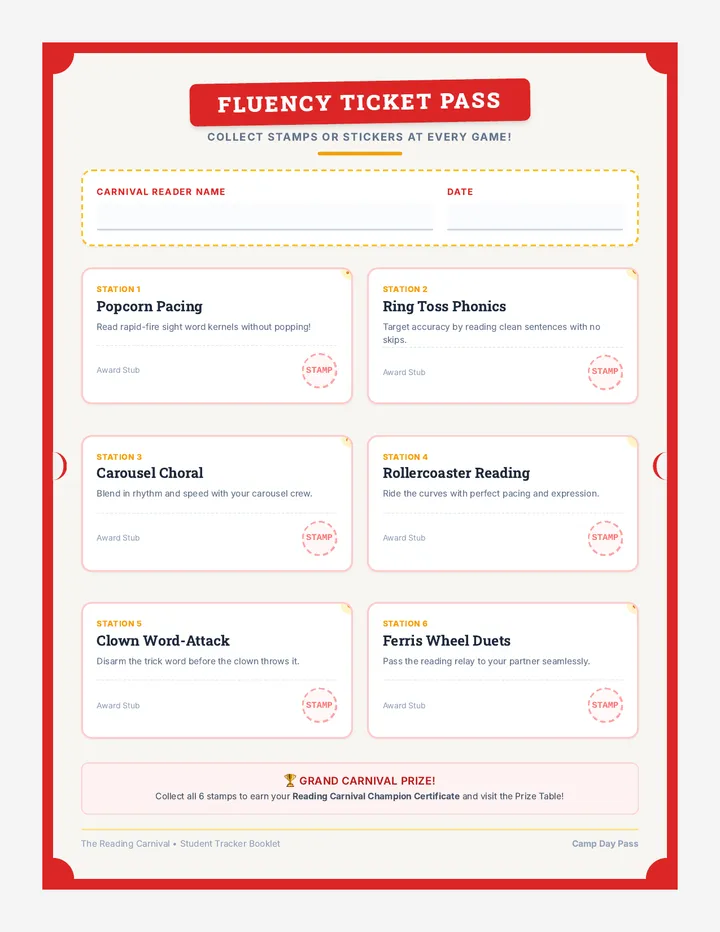
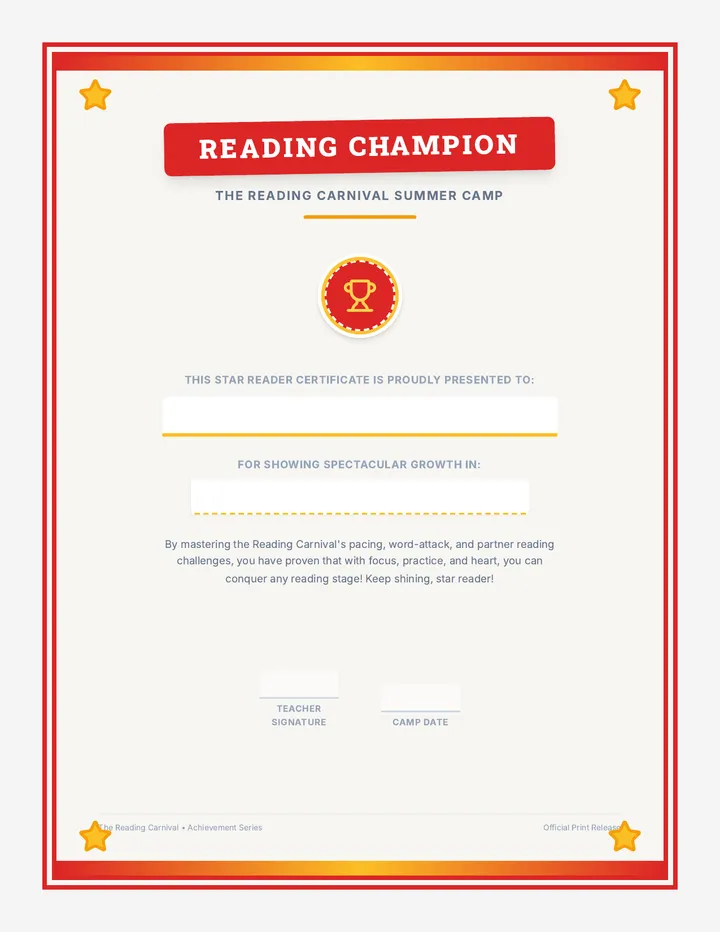
A comprehensive oral reading fluency bundle themed around 'The Reading Carnival'. It includes game guides, differentiated reading cards, progress trackers, and achievement awards designed specifically for struggling 1st-4th grade readers to build speed, accuracy, and confidence in a high-energy summer camp environment.
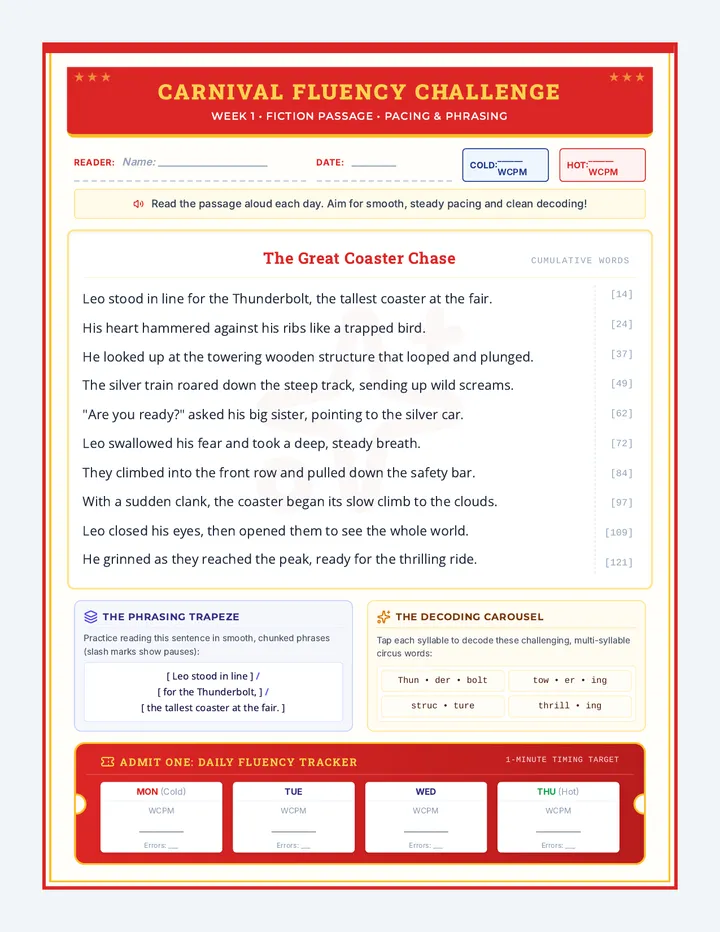
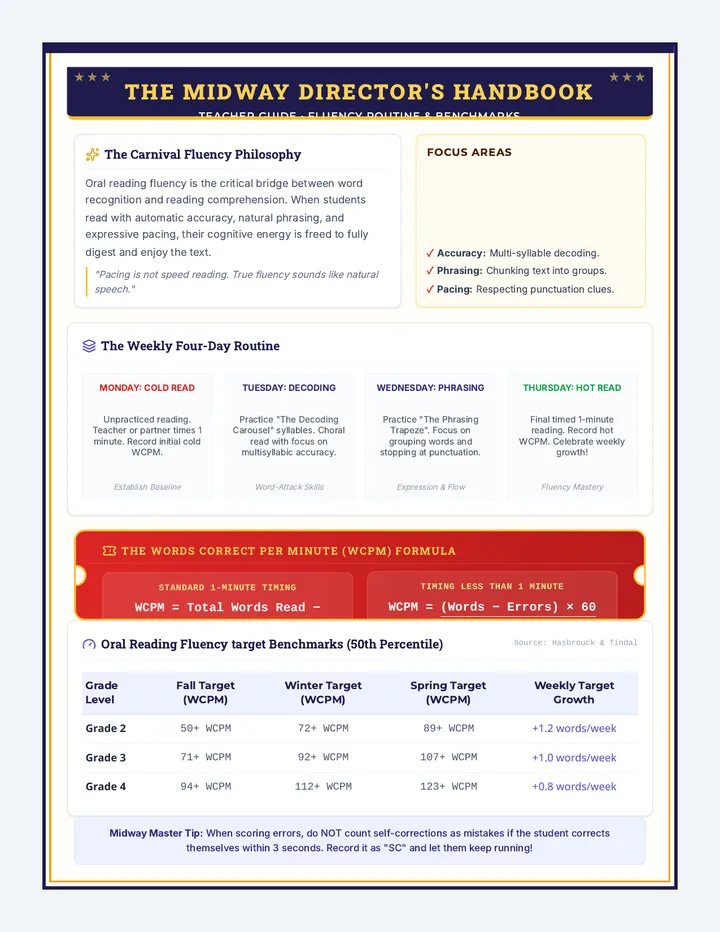
A weekly oral reading fluency program themed around a vintage carnival. It focuses on pacing, phrasing, and decoding multi-syllable words through engaging fiction and non-fiction passages with built-in trackers.
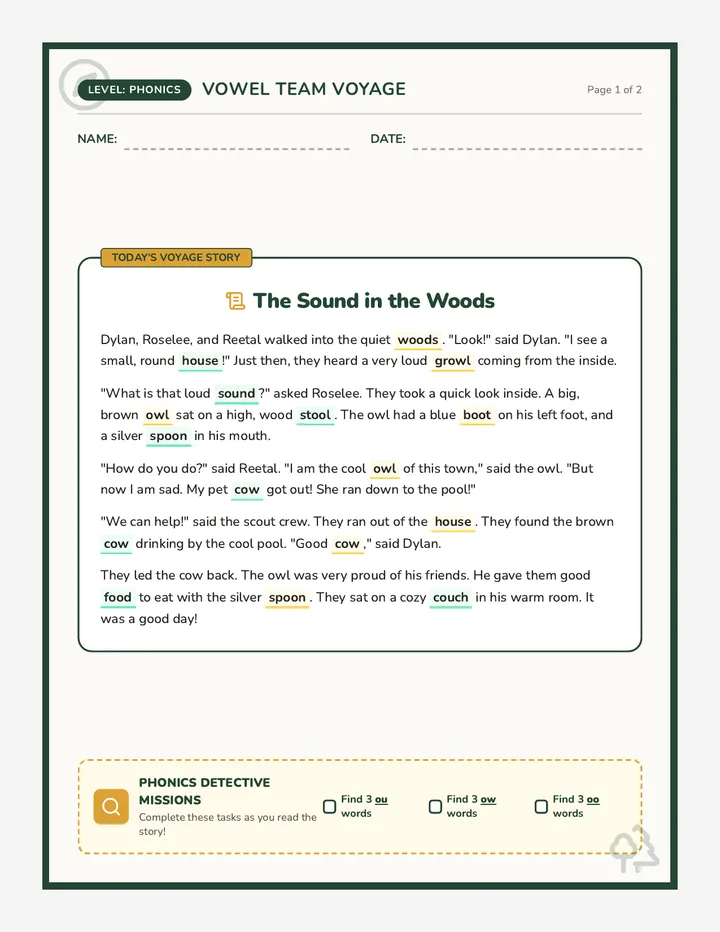
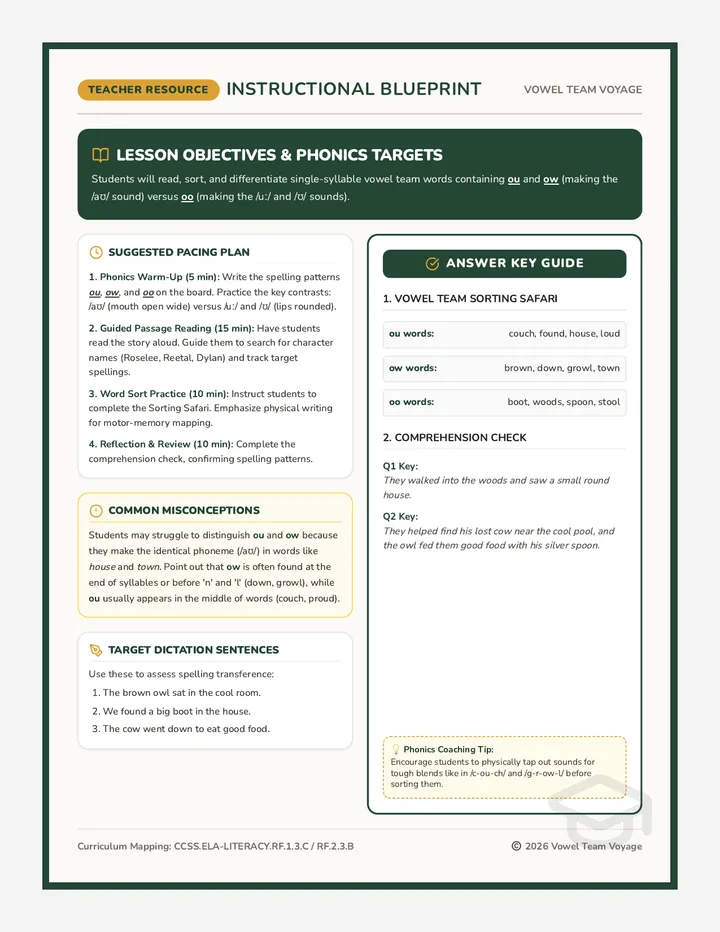
A targeted phonics lesson focused on contrasting single-syllable words containing 'ou', 'ow', and 'oo' vowel teams. Students read an engaging phonics story featuring Roselee, Reetal, and Dylan, and complete structured word-sorting and reading comprehension exercises.
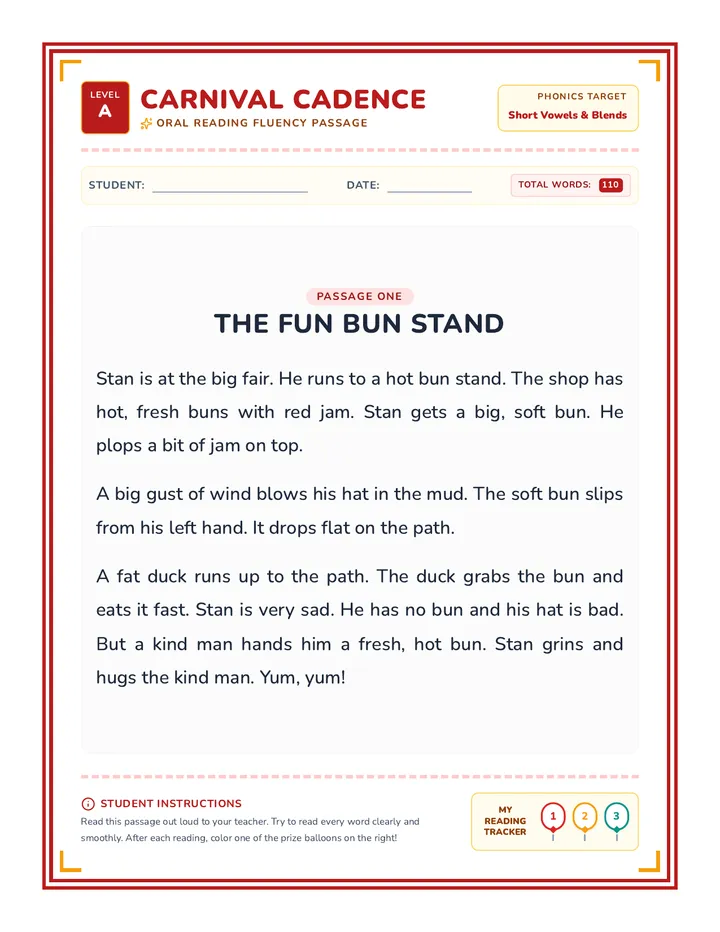
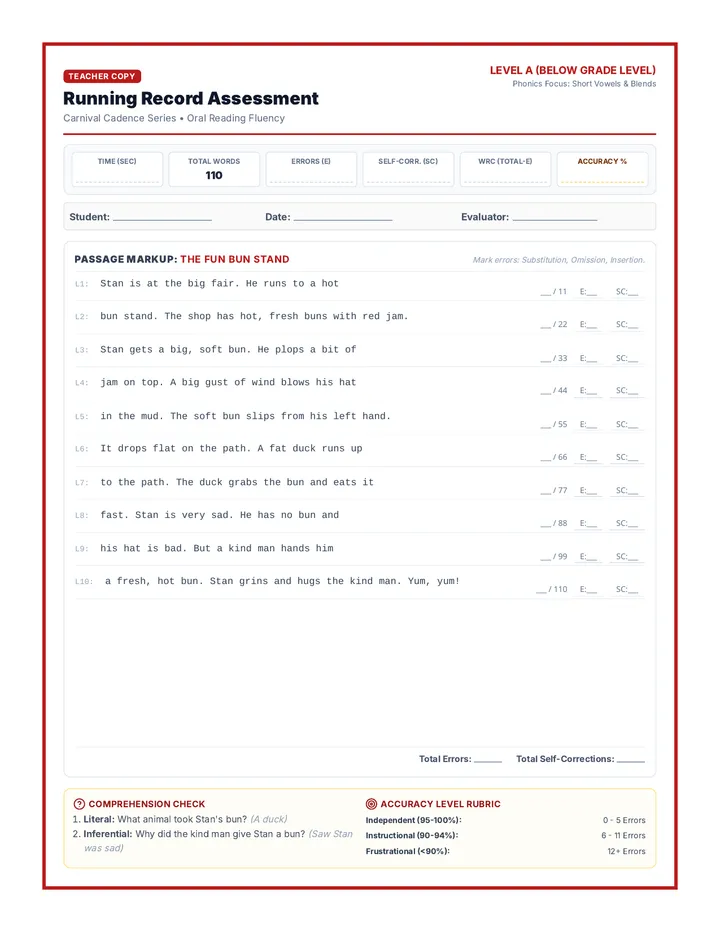
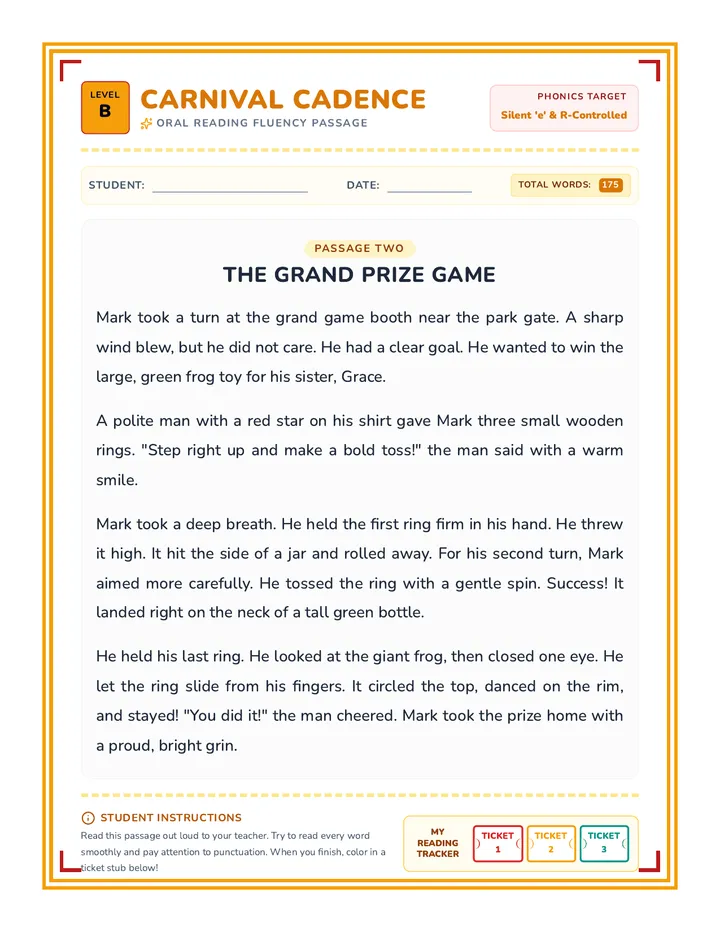
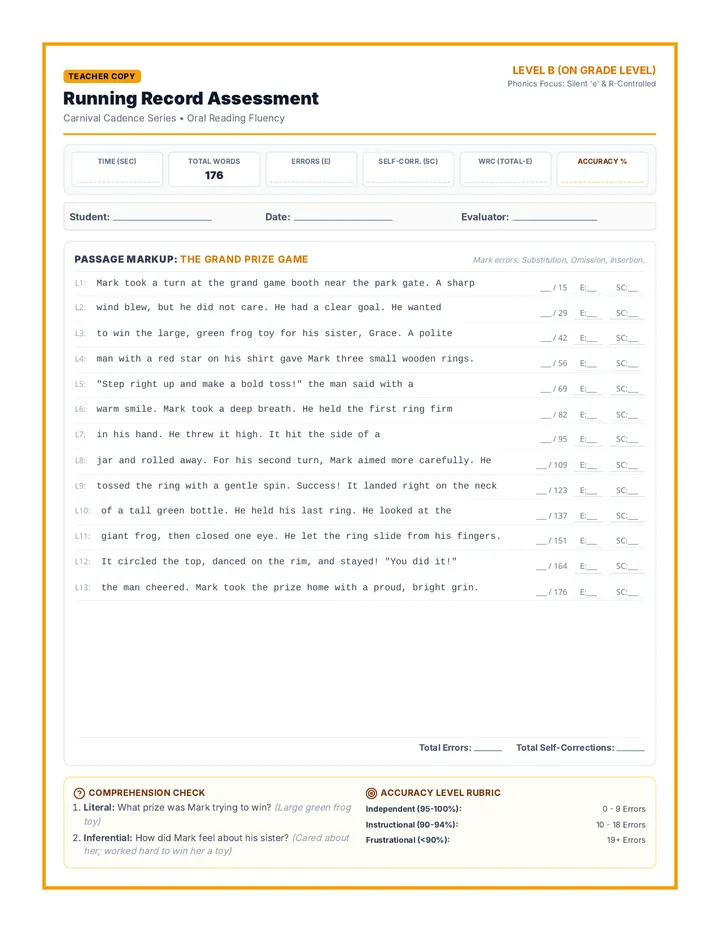
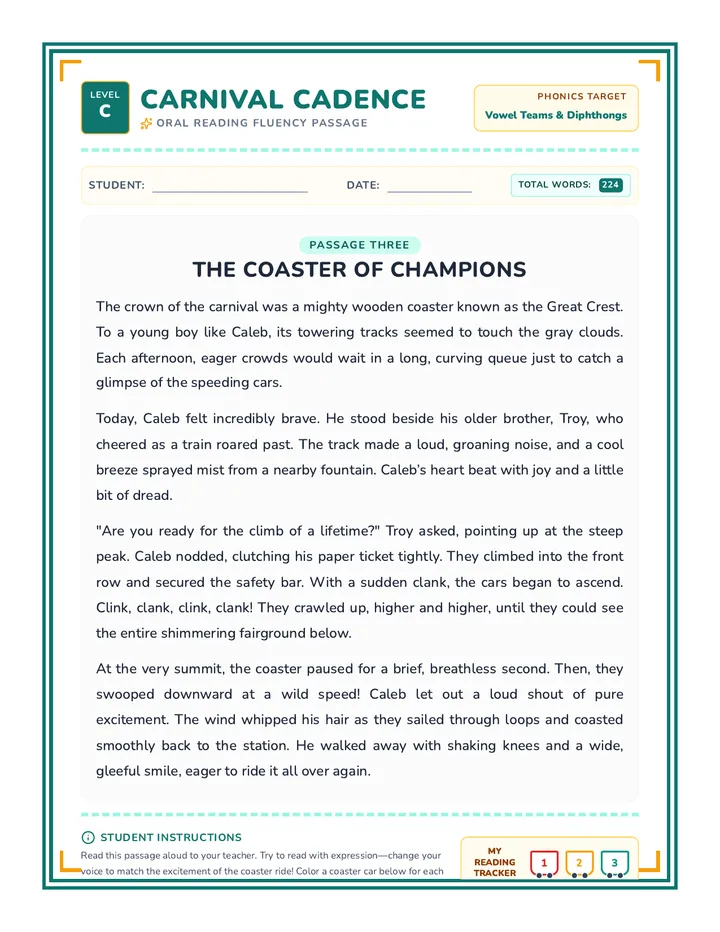
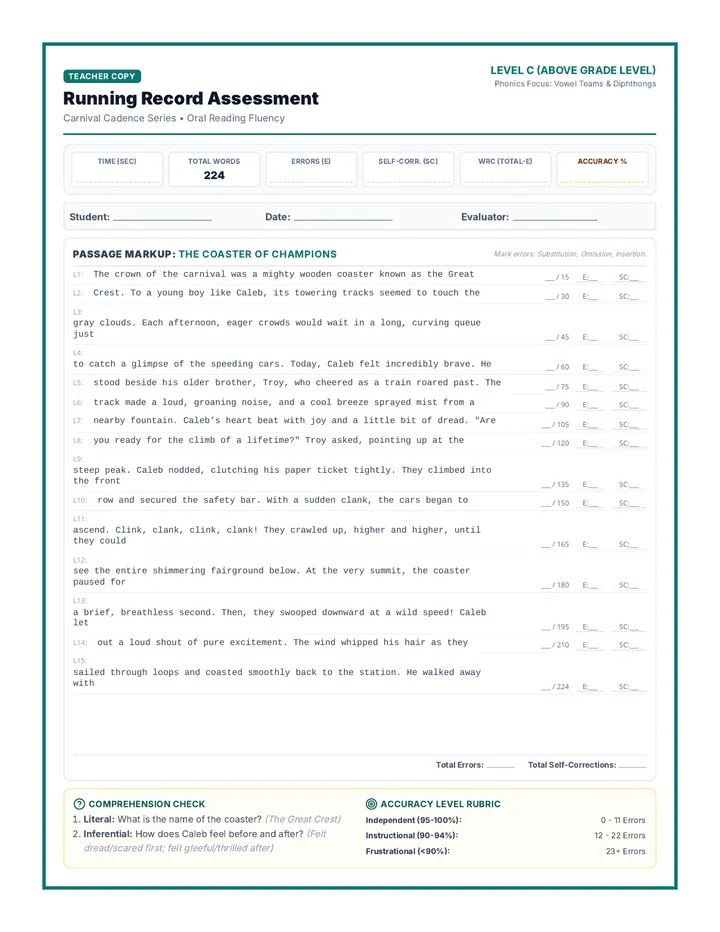
Differentiated carnival-themed reading passages and matching teacher running record forms designed to boost oral reading fluency and target specific phonics patterns.
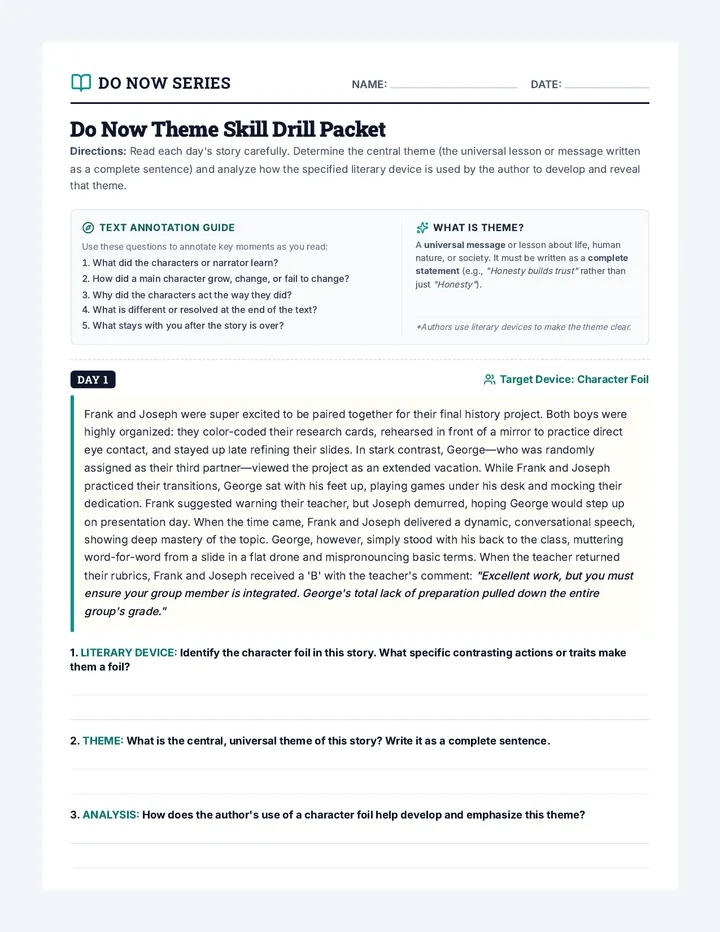
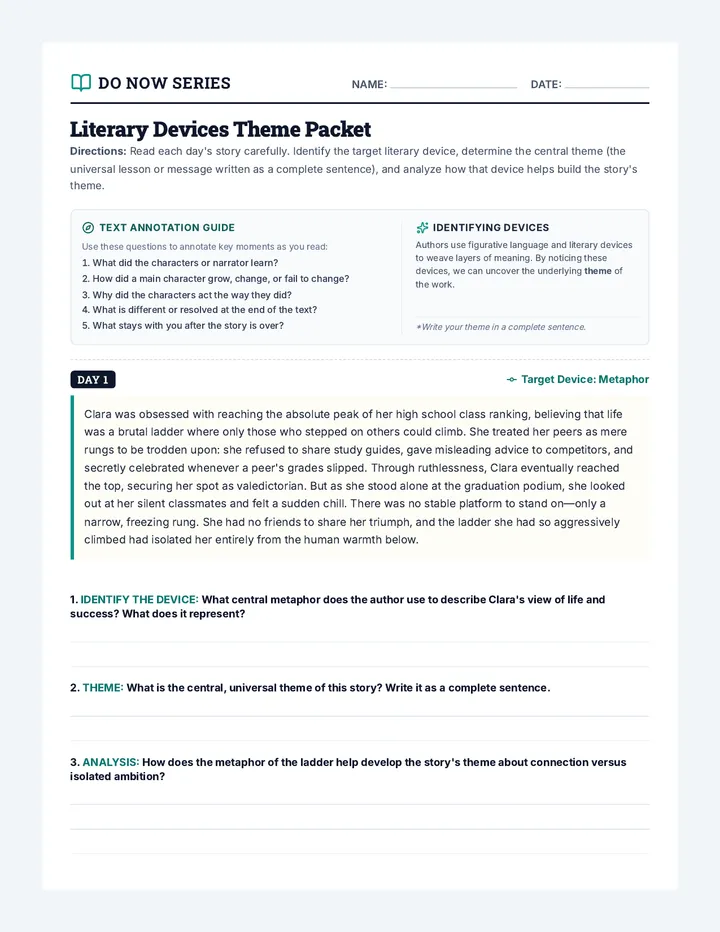
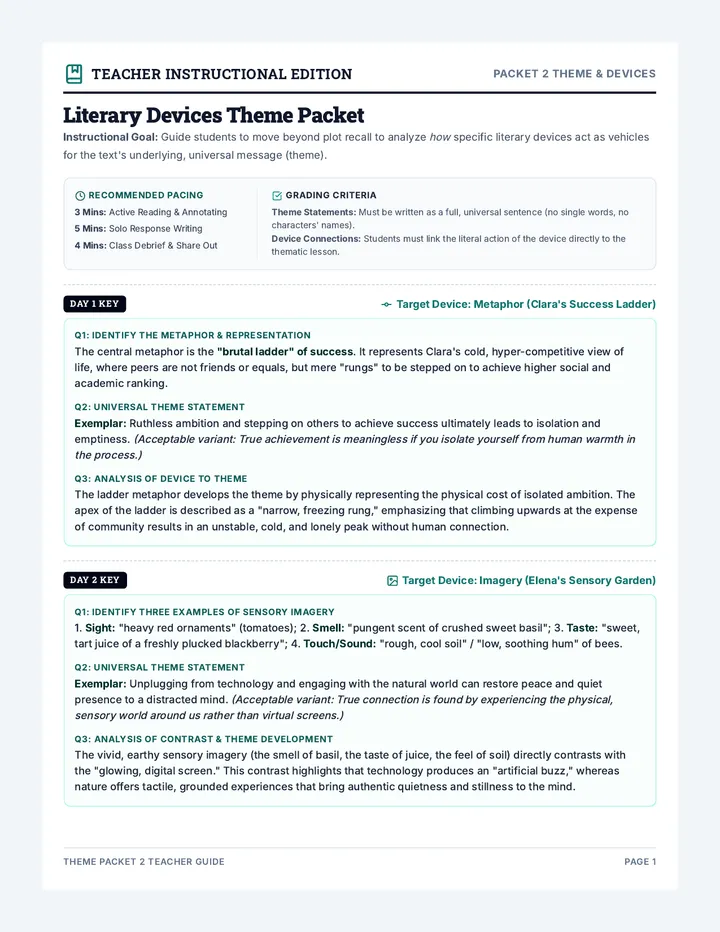
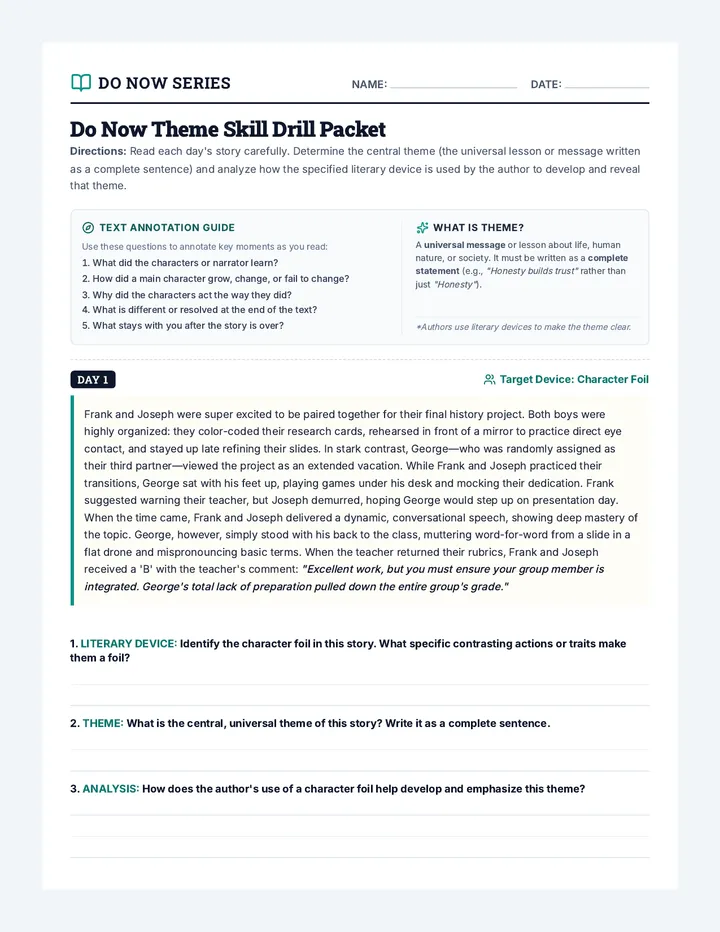
A cohesive lesson and drill series designed to help students master the connection between explicit literary devices and the central themes of literary texts.
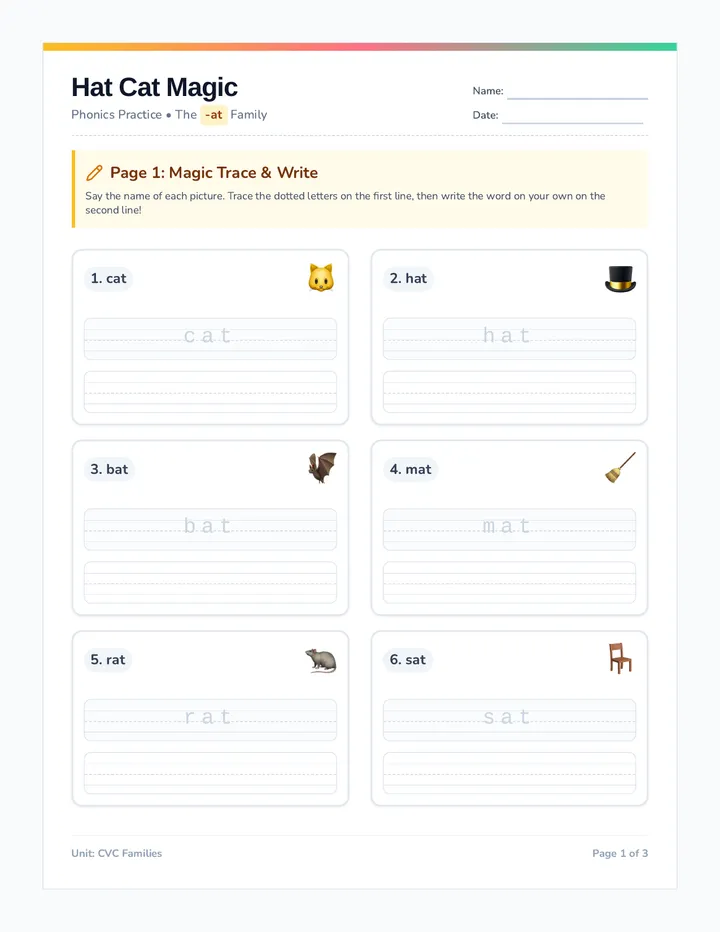
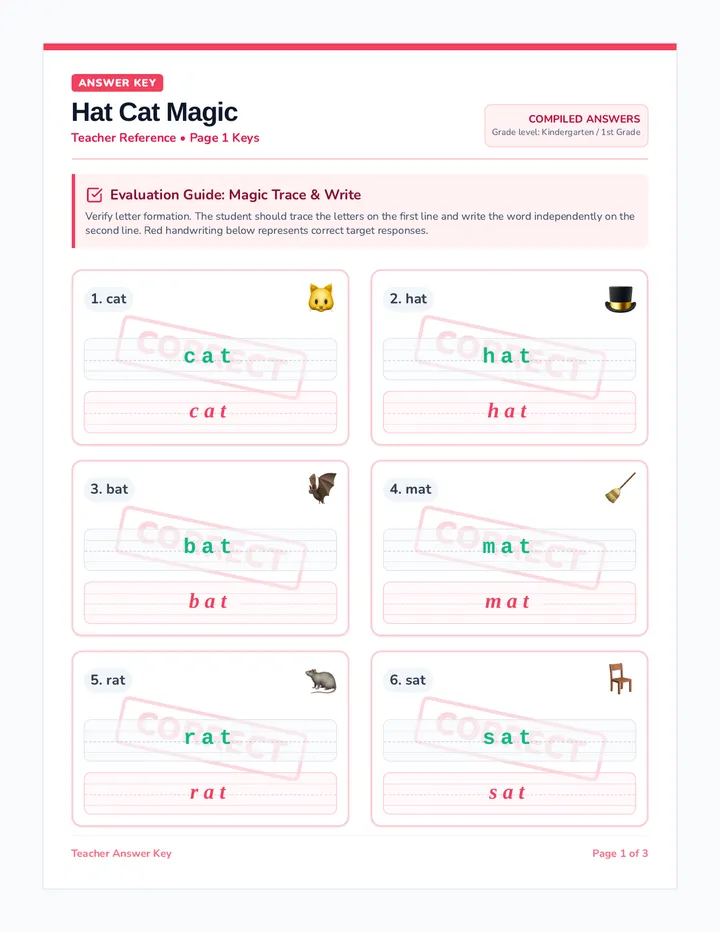
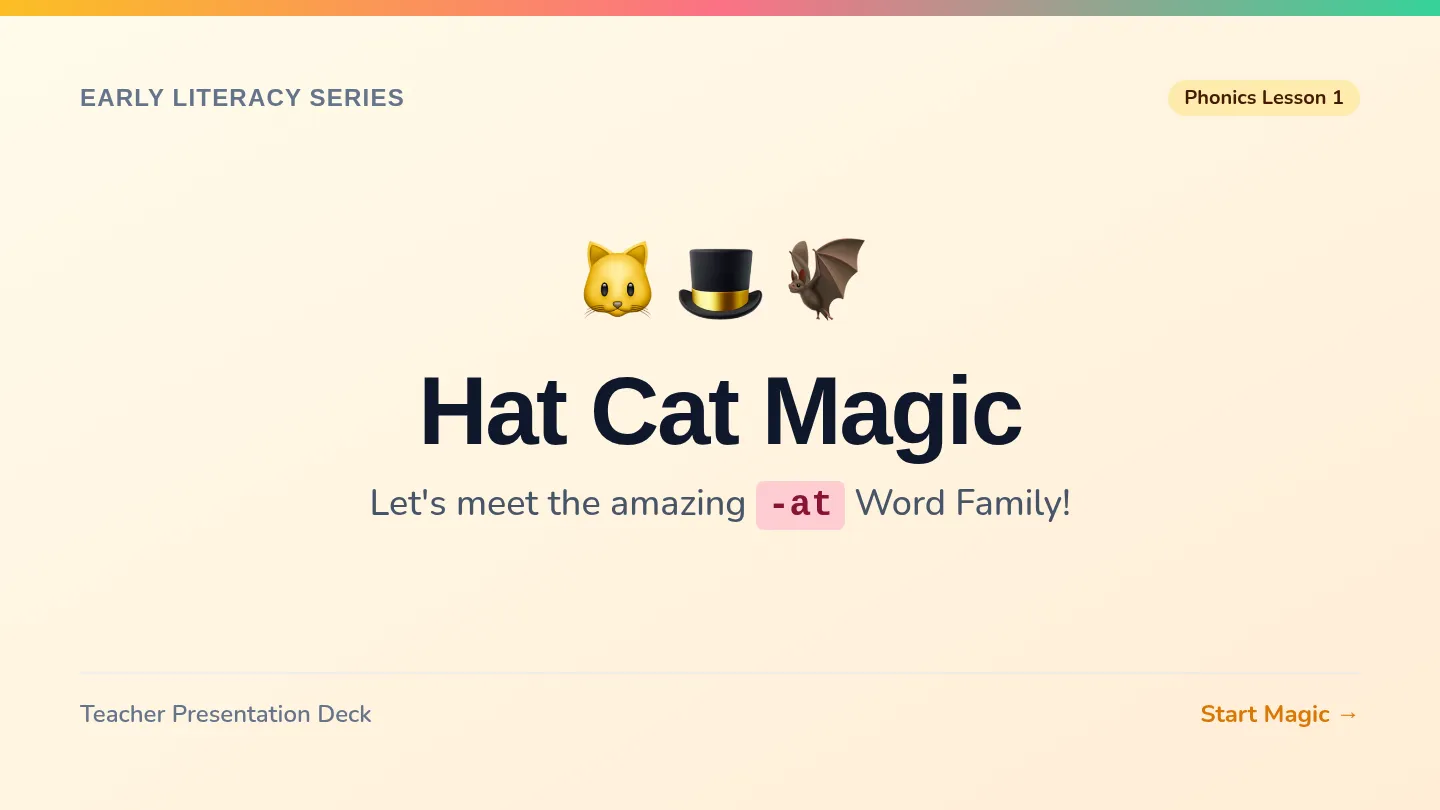
A foundational phonics lesson focusing on the -at word family. Students practice letter tracing, fine motor sorting, and decodable sentence reading to build early reading fluency.
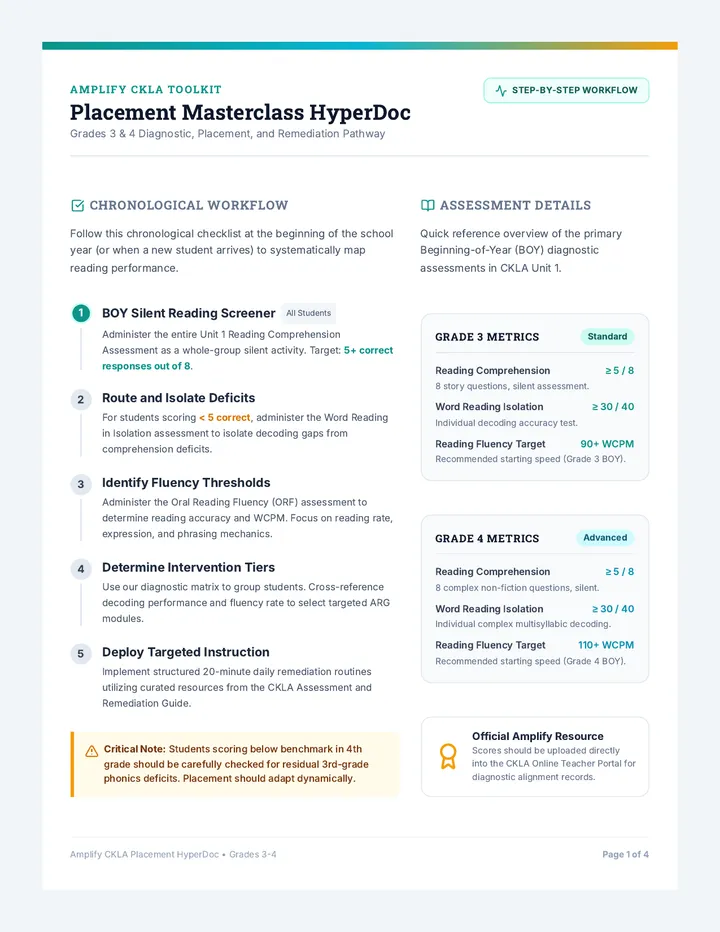
A specialized lesson designed for third and fourth-grade educators to master the CKLA placement, diagnostic, and remediation pathways. This lesson contains professional guides, visual flowcharts, and student grouping trackers to streamline the intervention process.
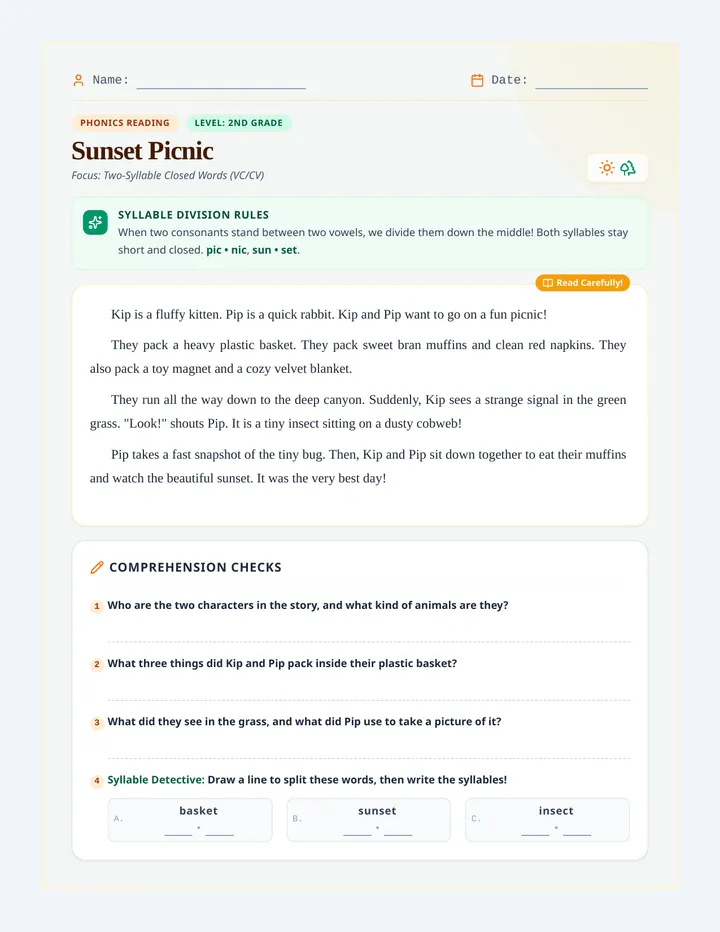
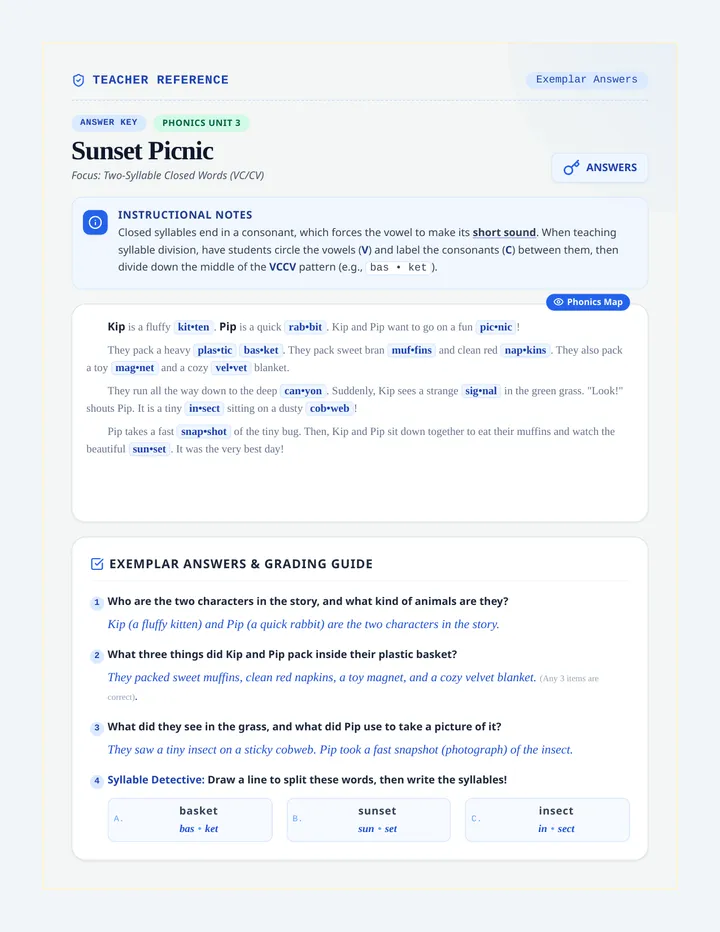
A primary phonics lesson focusing on decoding and understanding two-syllable words with closed syllables. Students practice syllable division, read a decodable story, and answer reading comprehension questions.
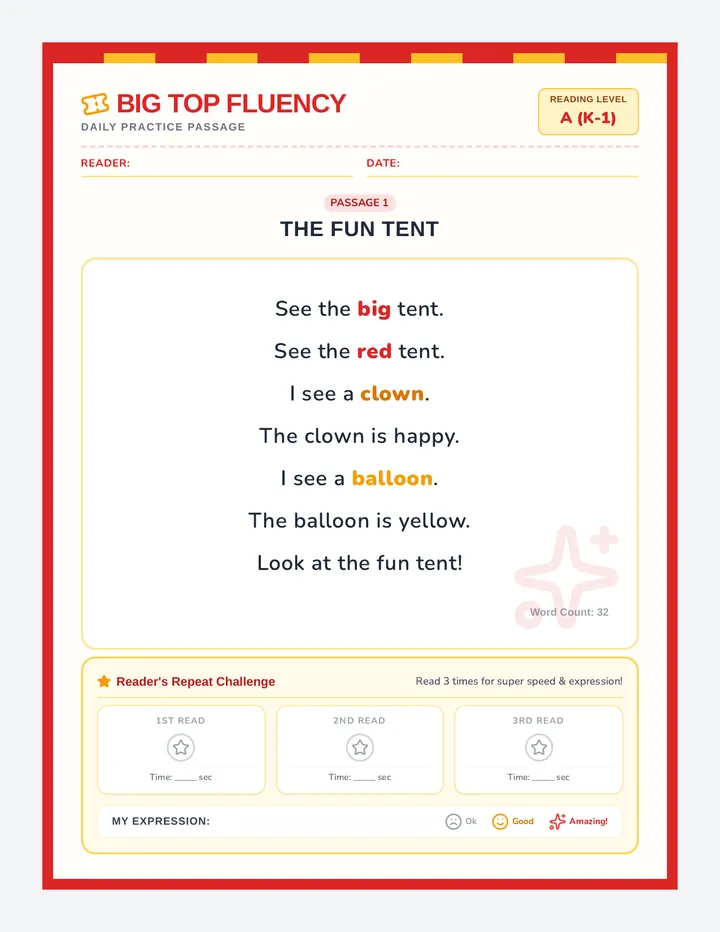
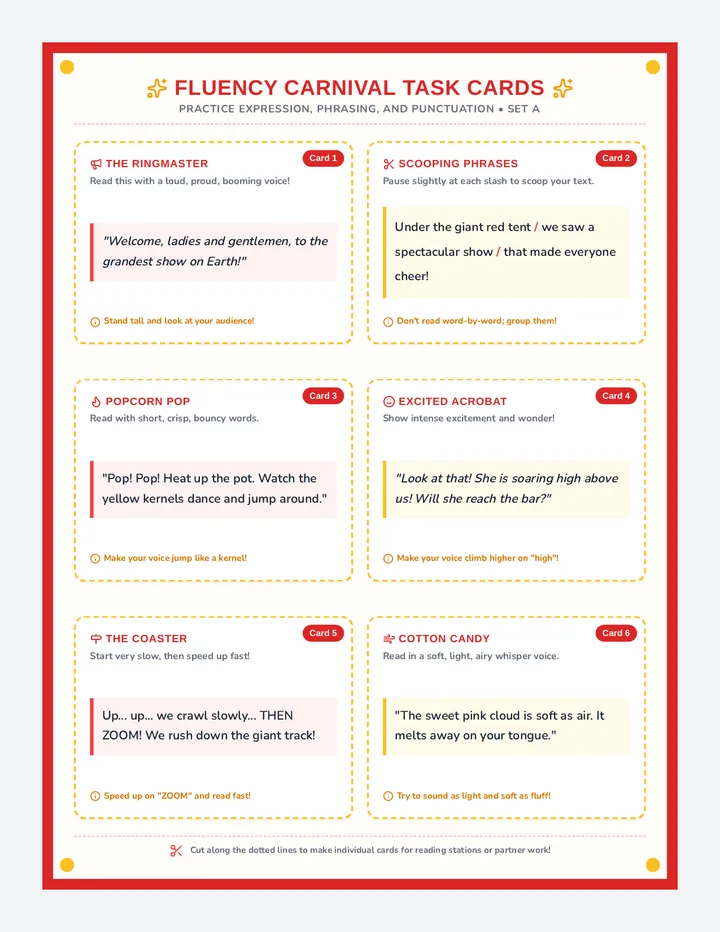
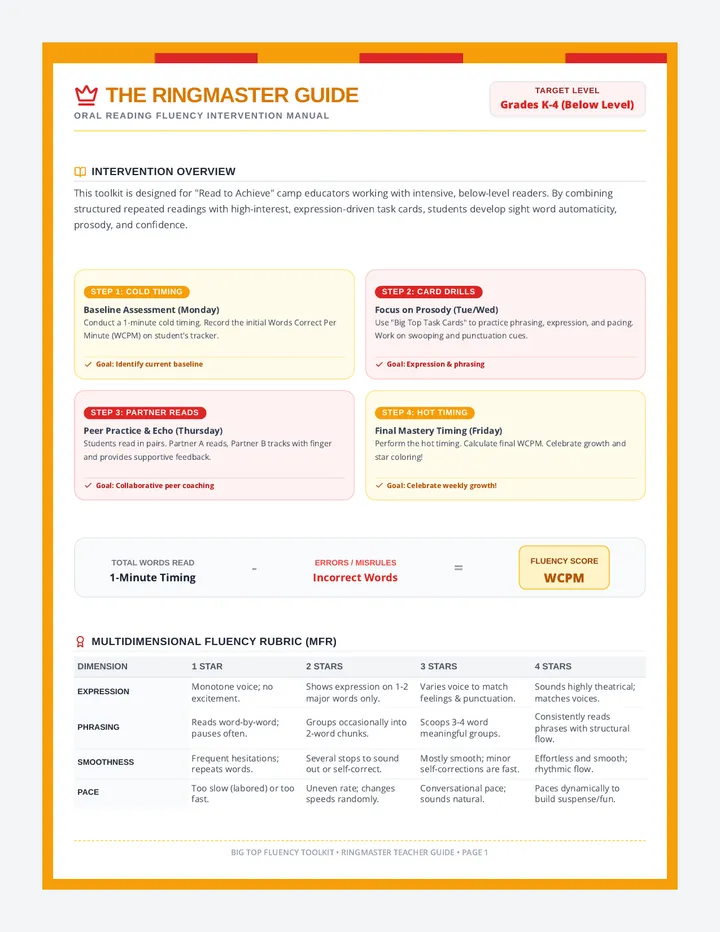
A carnival-themed oral reading fluency toolkit designed for Read to Achieve summer camps. Features differentiated reading passages (levels K-3) with repeated reading trackers, expression-focused task cards, and a teacher scoring and implementation guide.
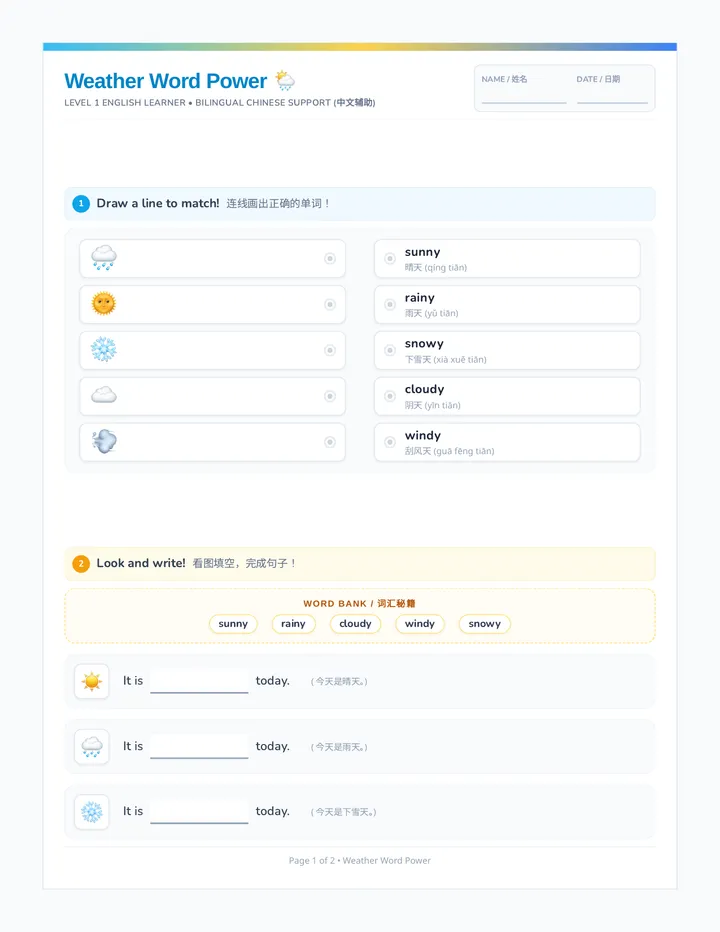
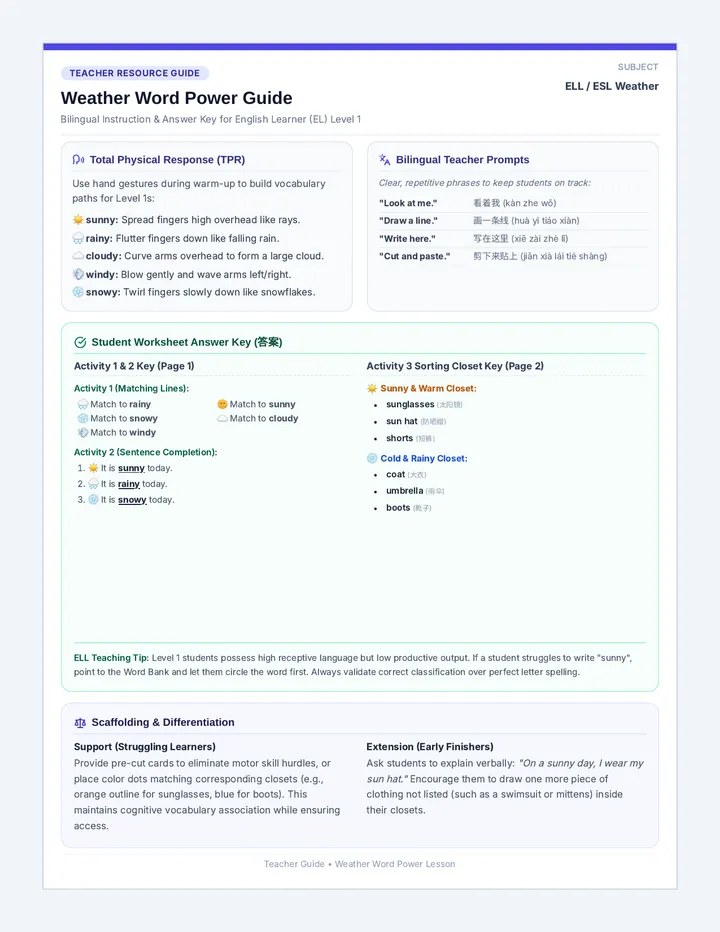
A beginner-friendly English language learning lesson focused on basic weather vocabulary and corresponding clothing items, specifically designed with bilingual Chinese-English support for Level 1 English learners.
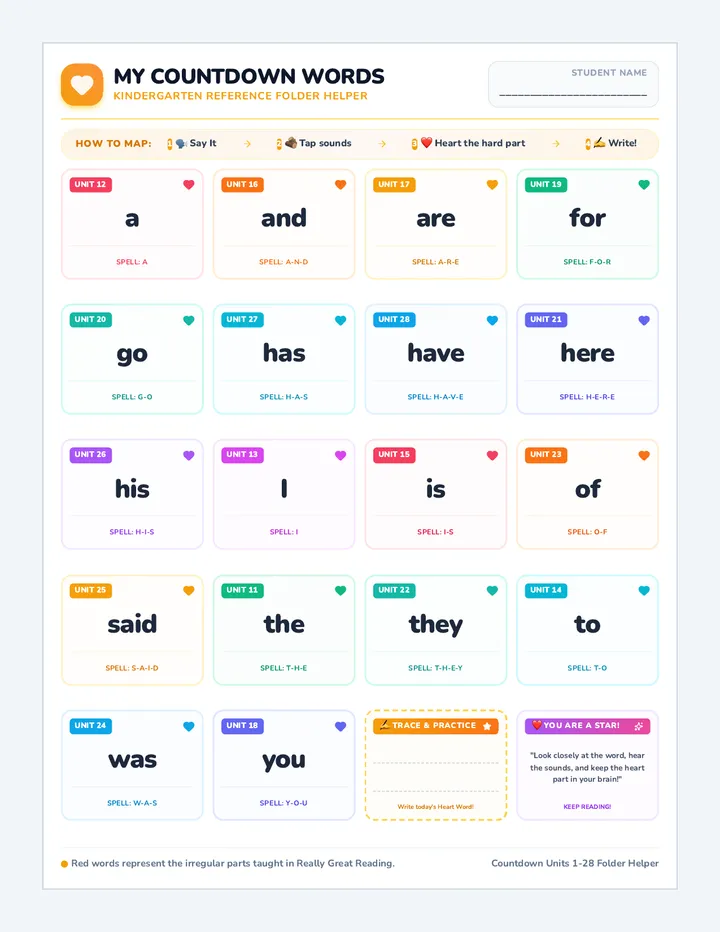
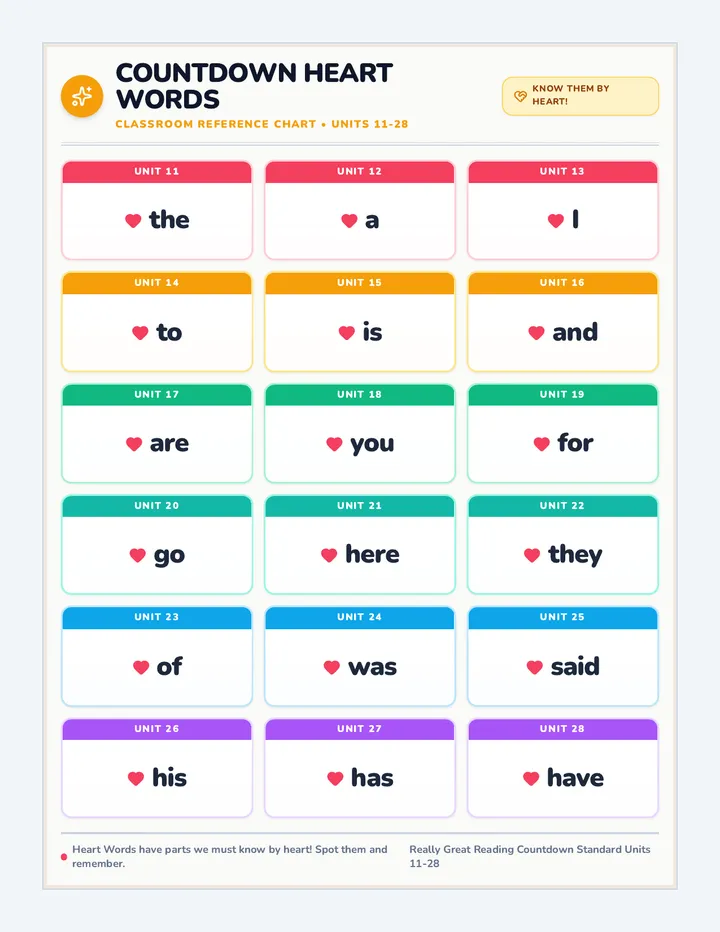
A complete pair of reference helpers for the kindergarten Countdown curriculum (Units 1-28), featuring a student folder reference helper and a colorful classroom anchor chart organized by unit.
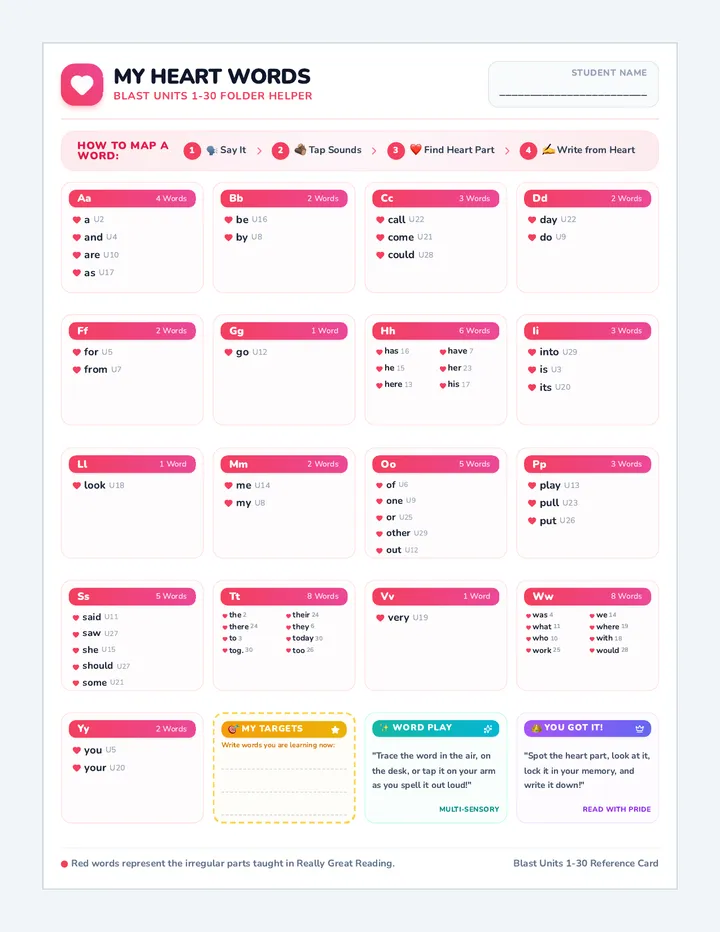
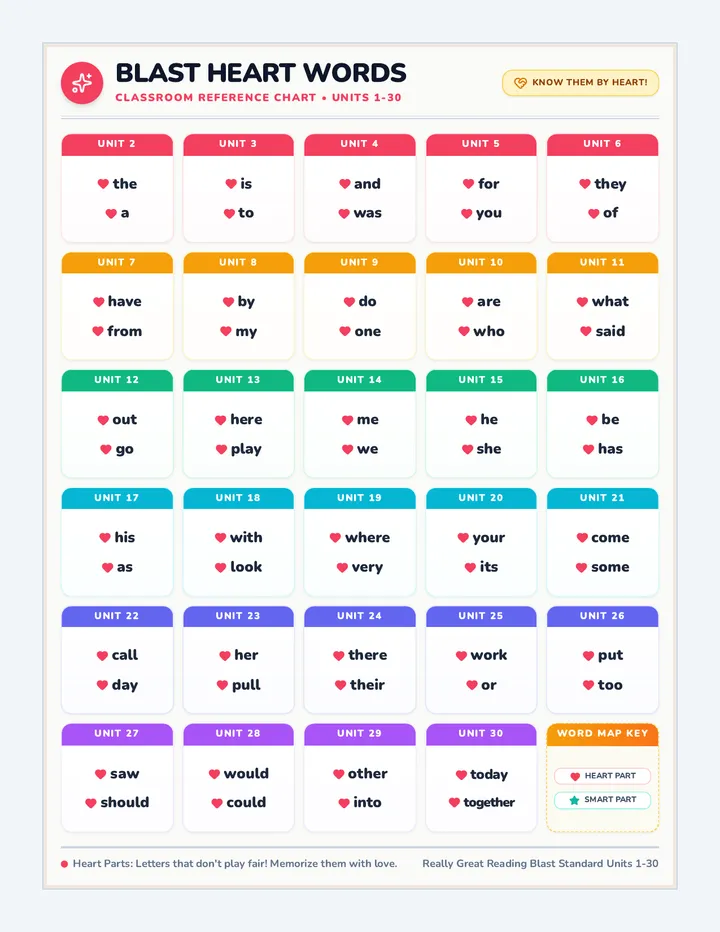
A comprehensive pair of reference materials featuring all Really Great Reading Blast Heart Words for Units 1-30. Includes a compact student folder reference helper and a colorful classroom anchor chart organized by unit.
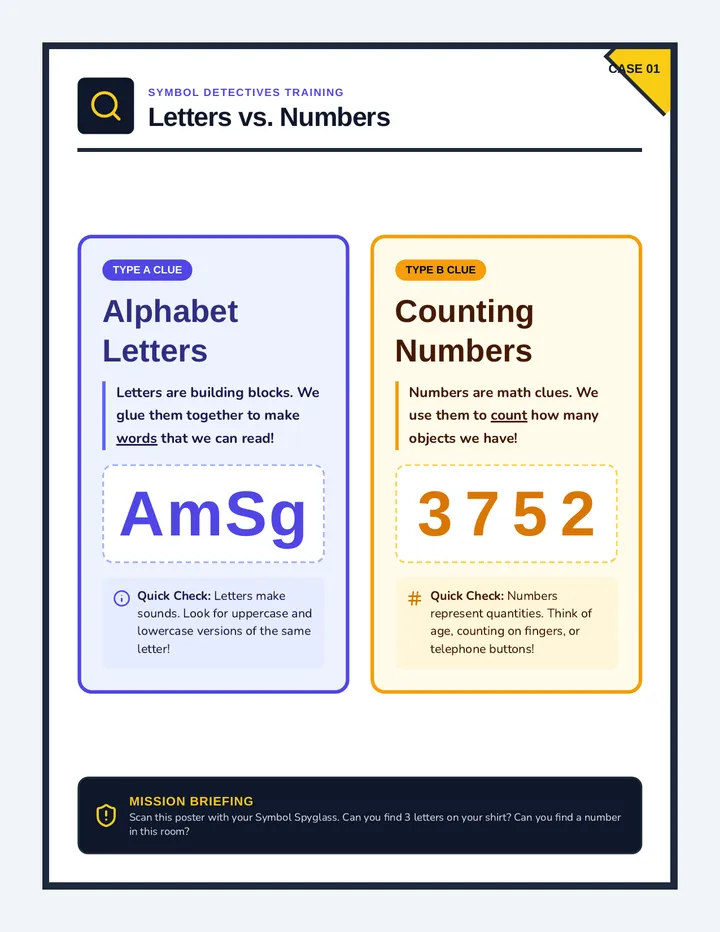
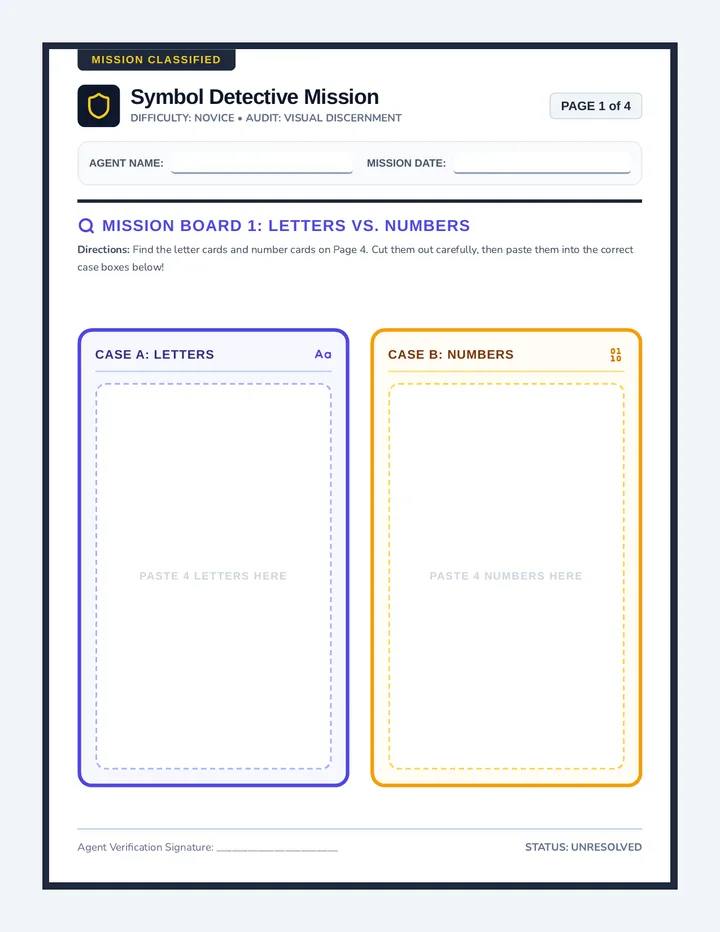
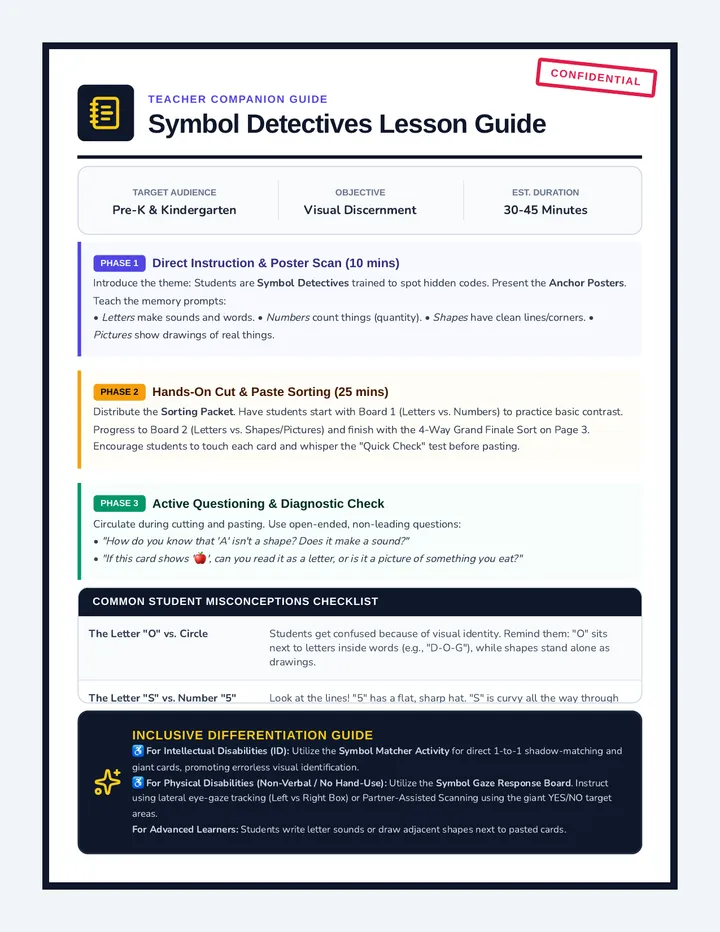
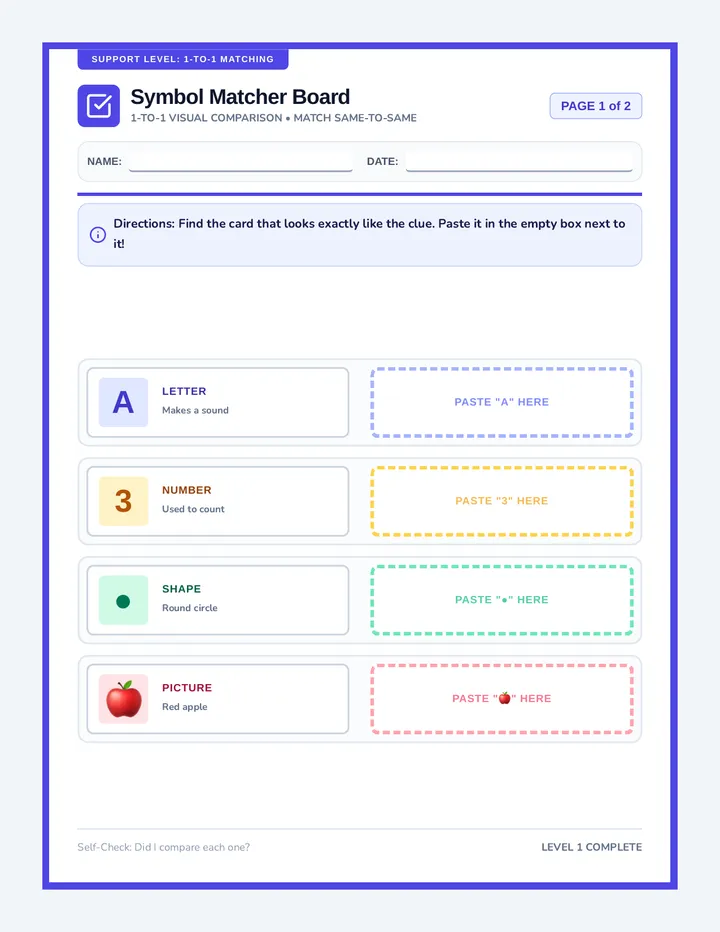
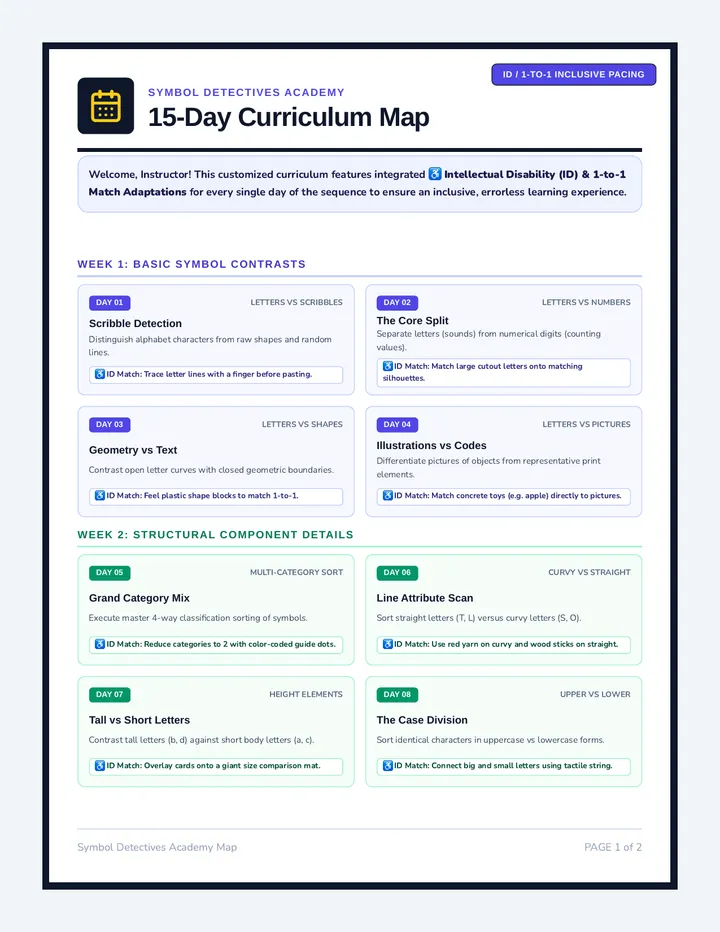
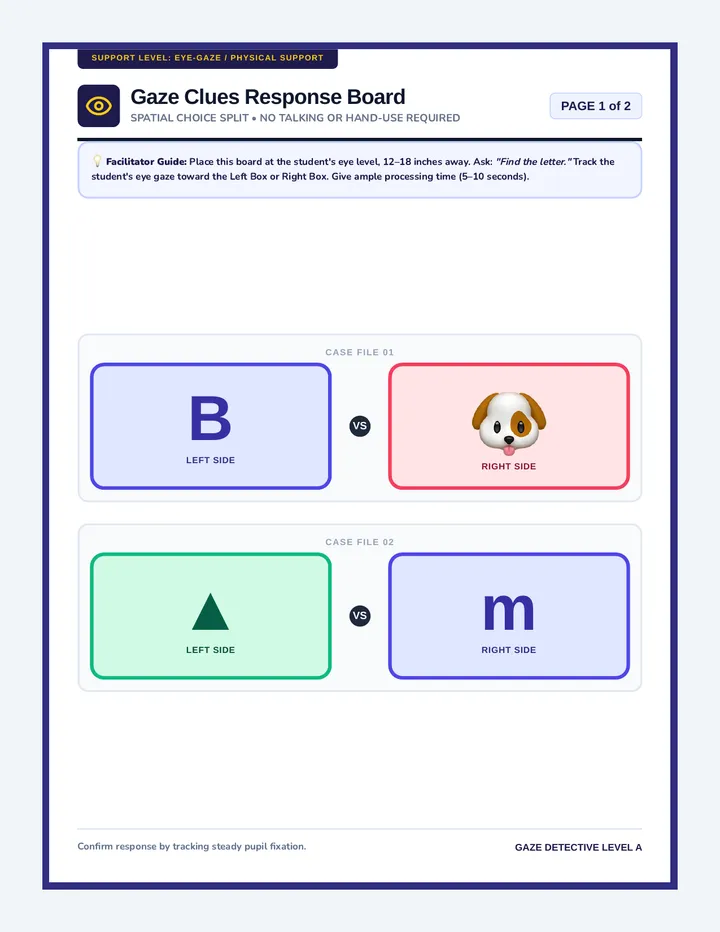
A foundational visual discernment lesson helping early learners distinguish alphabet letters from numbers, shapes, and environmental pictures through anchor charts, guided group games, and hands-on cut-and-paste sorting activities.
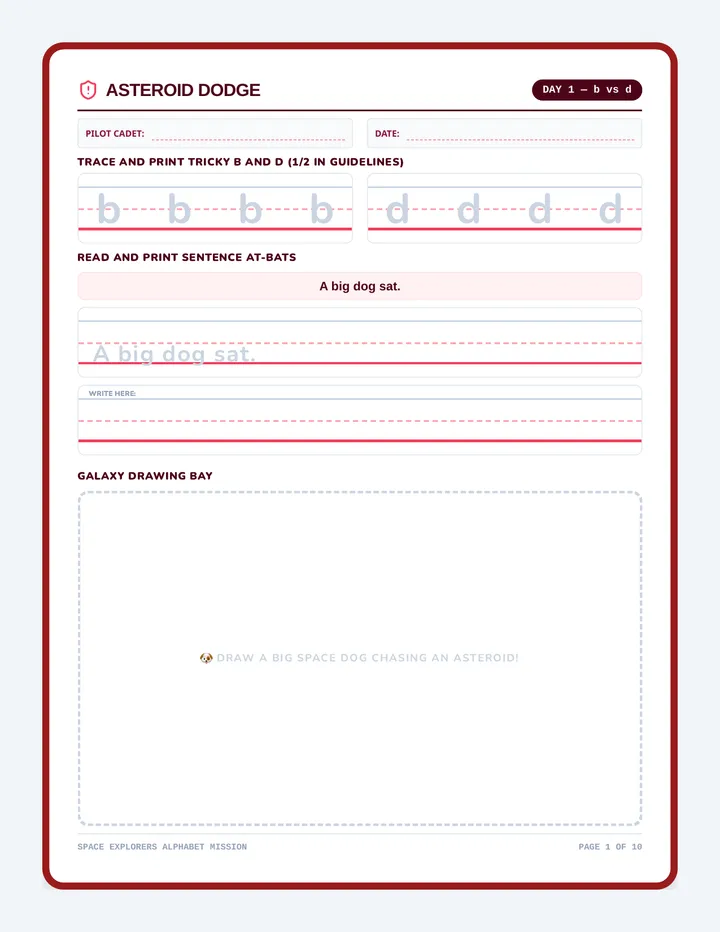
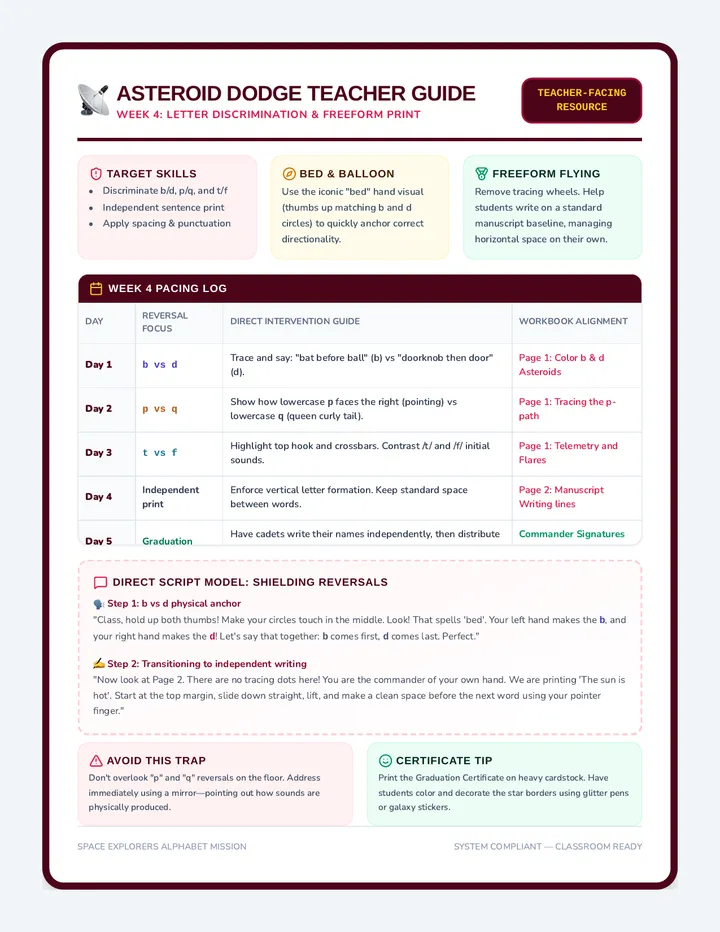
Week 4 targets commonly confused letters (b/d, p/q, t/f) through space-themed discrimination games, and transitions students to freeform independent handwriting.
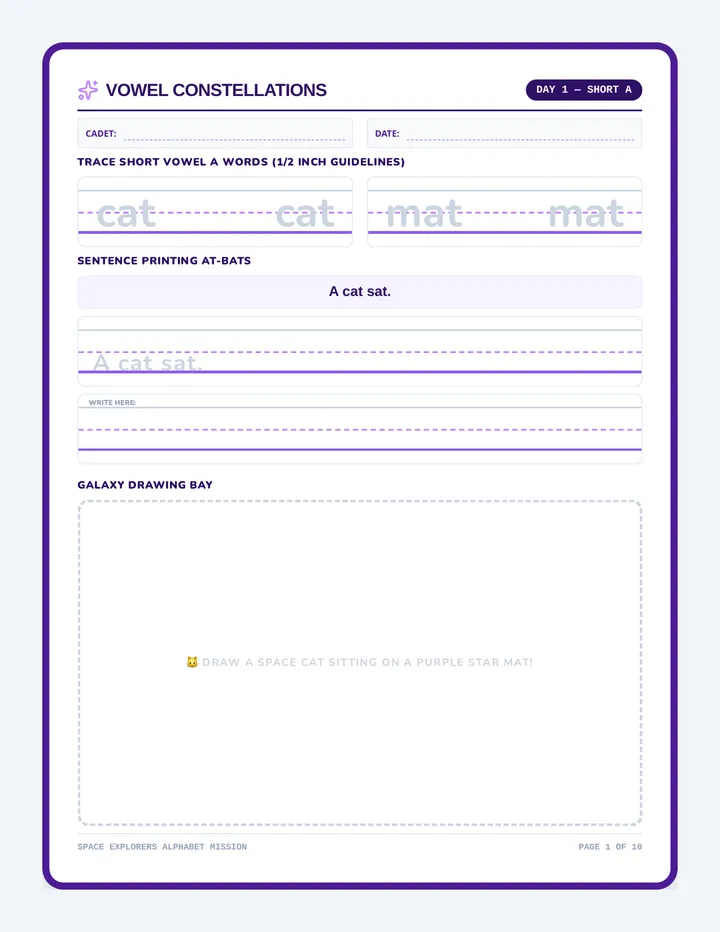
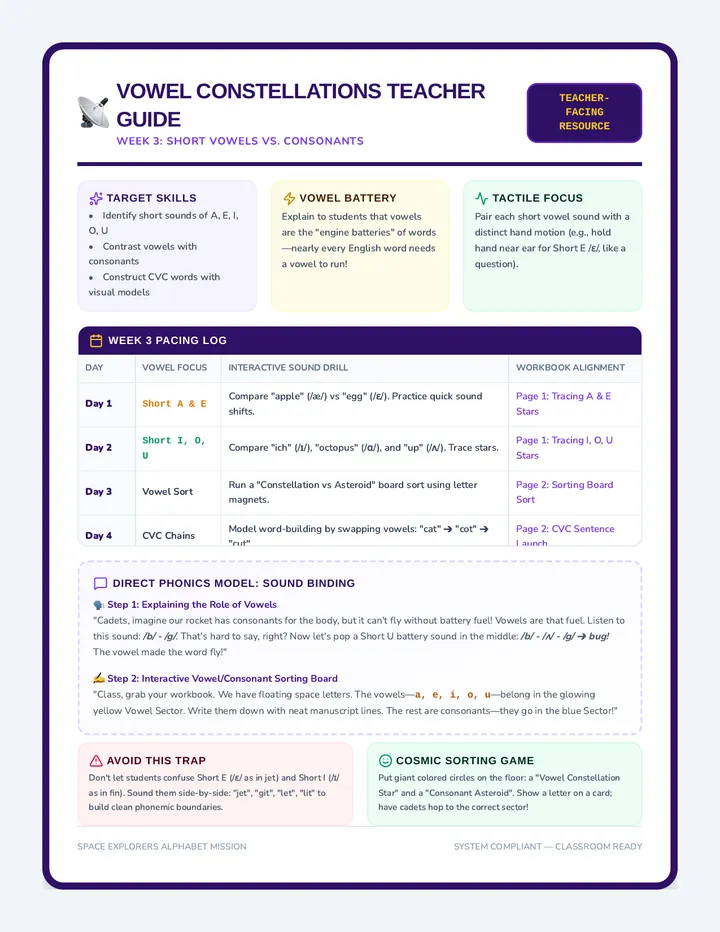
Week 3 explores the distinct roles of vowels and consonants, teaching short vowel sounds, star-themed sorting, and simple consonant-vowel-consonant (CVC) blending.
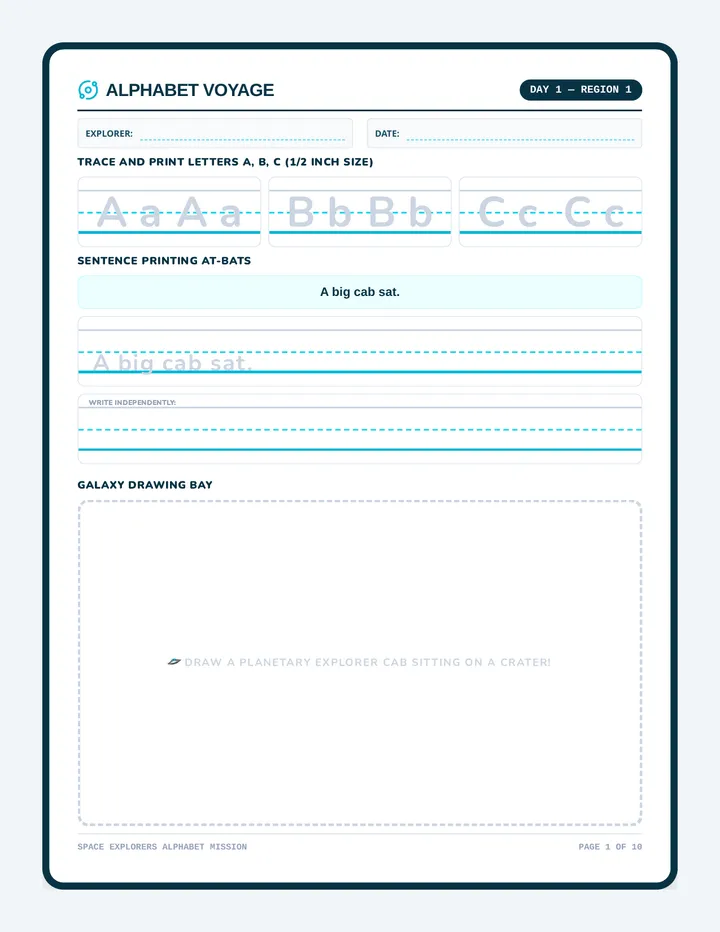
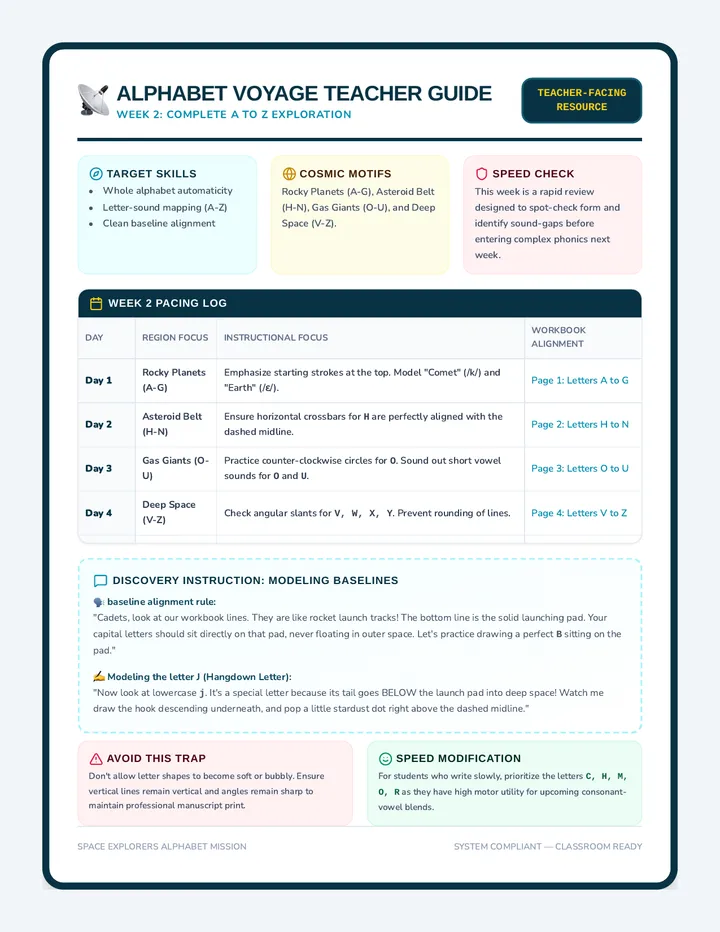
Week 2 covers a rapid, comprehensive overview of the entire alphabet (A to Z) with clean manuscript printing, letter-sound association, and simple visual representations.
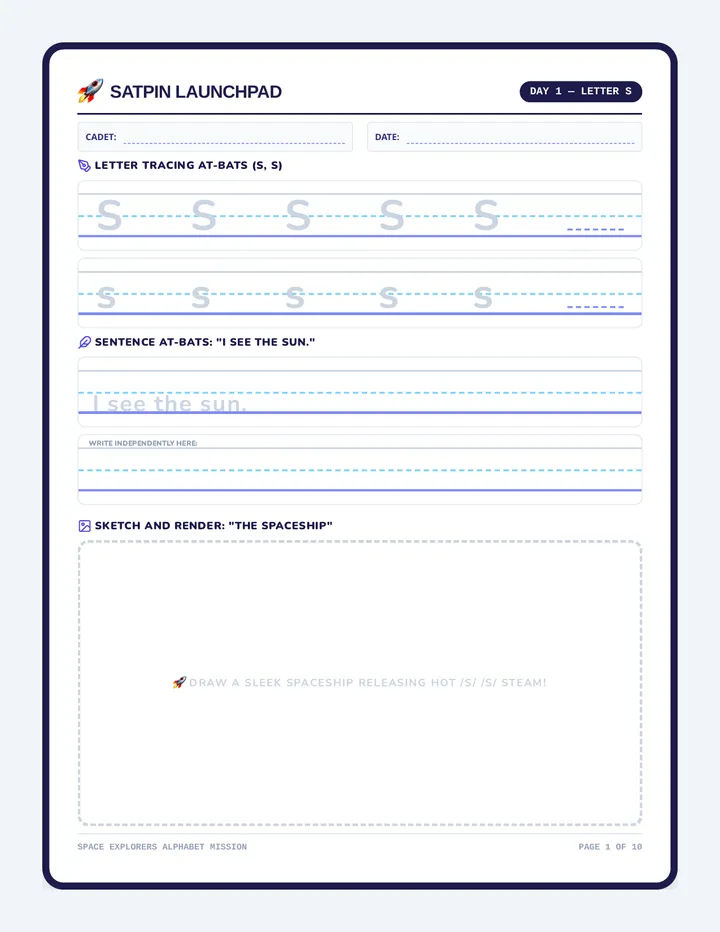
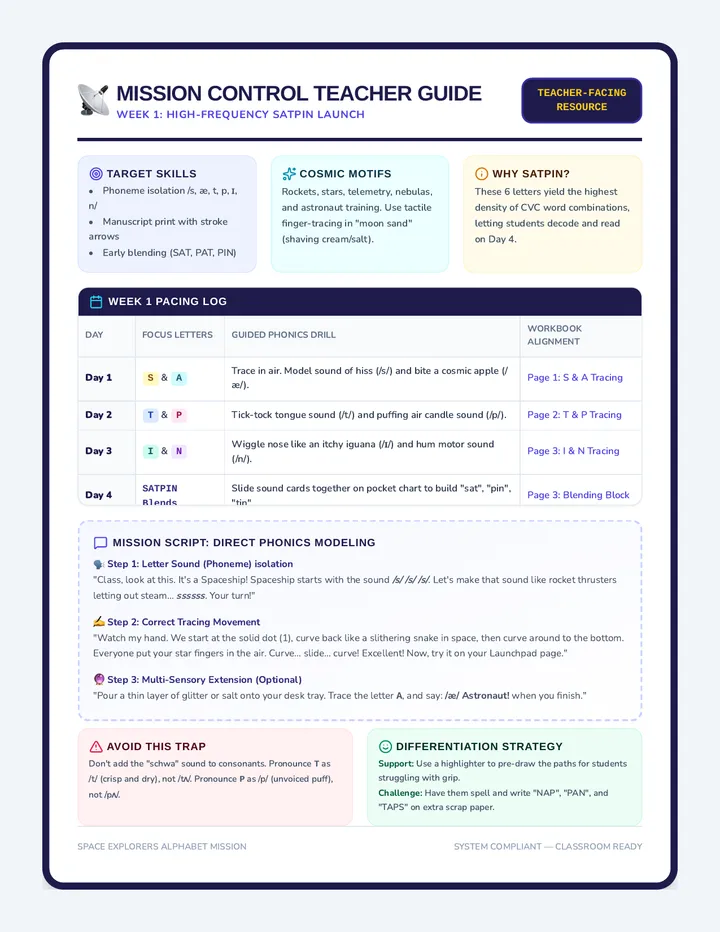
Week 1 focuses on high-frequency SATPIN letters (S, A, T, P, I, N) to quickly build and read simple words. Includes handwriting tracing with numbered stroke arrows and early phonics blends.
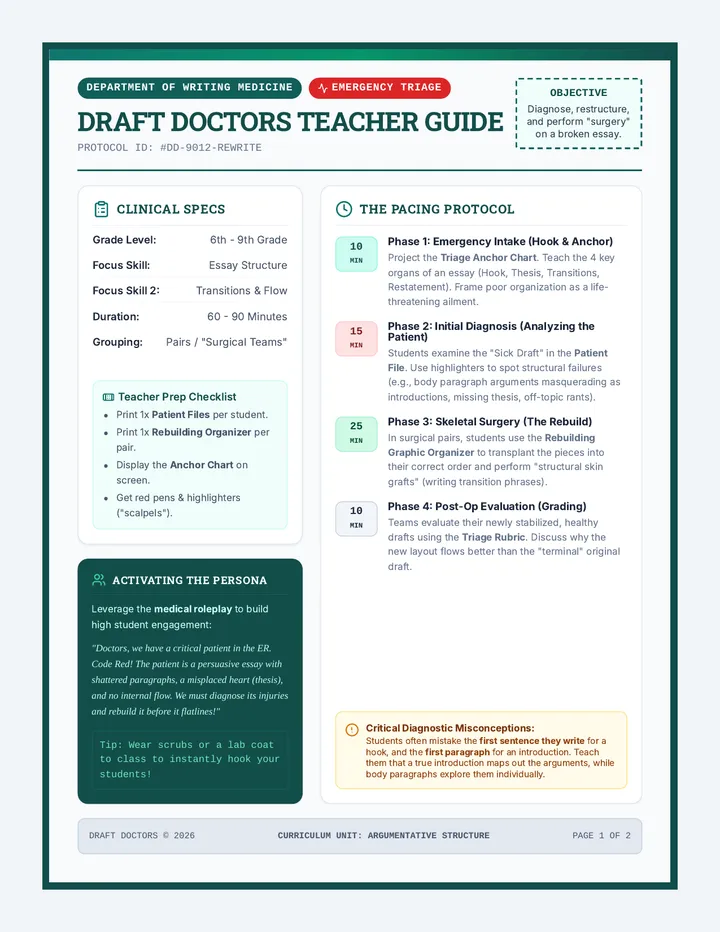
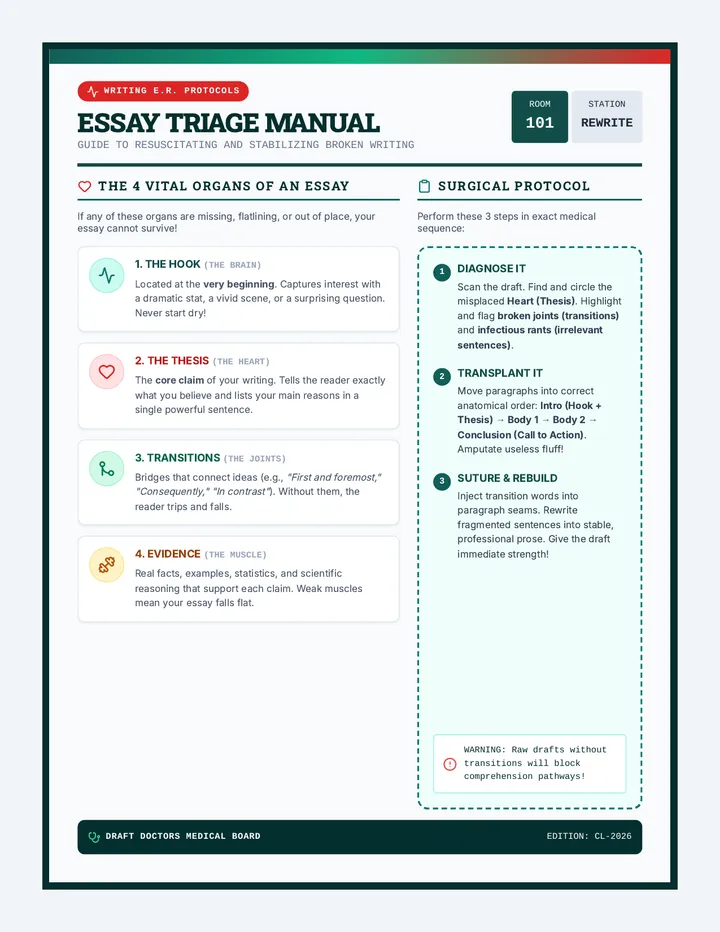
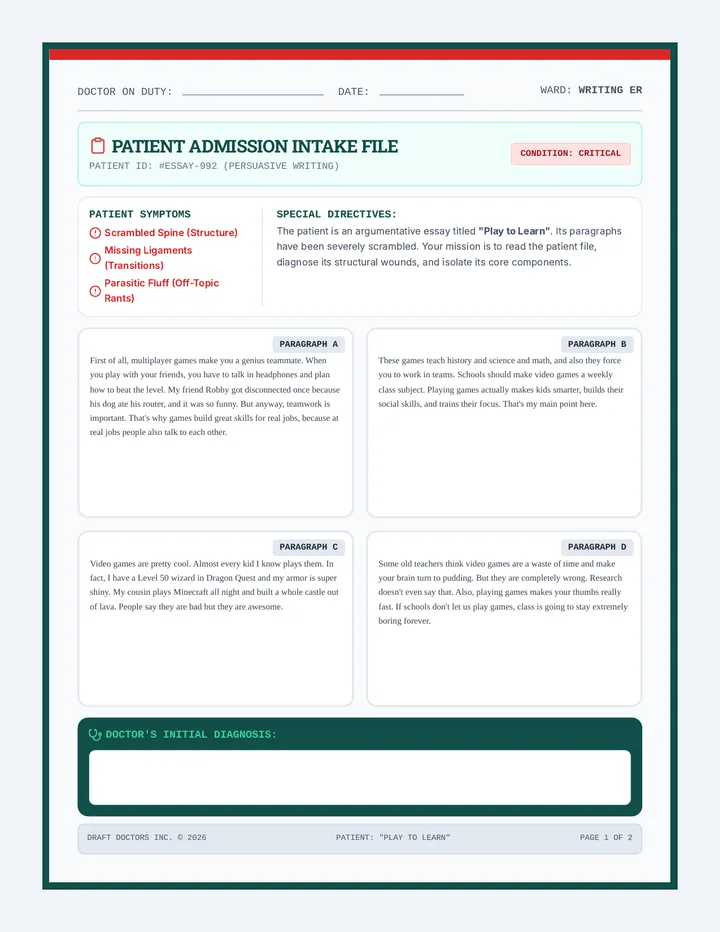
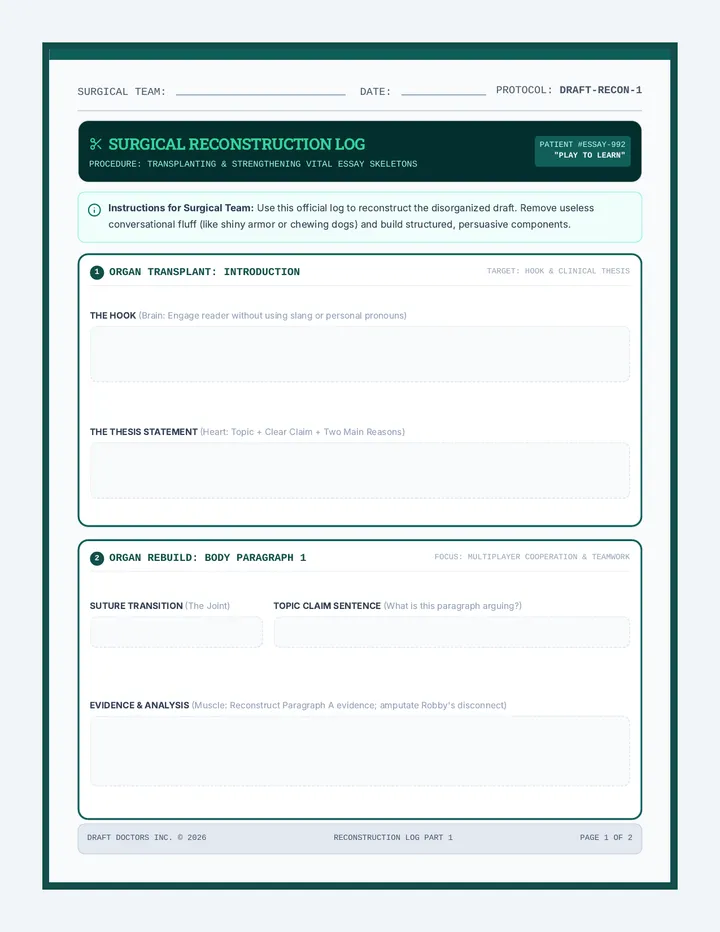
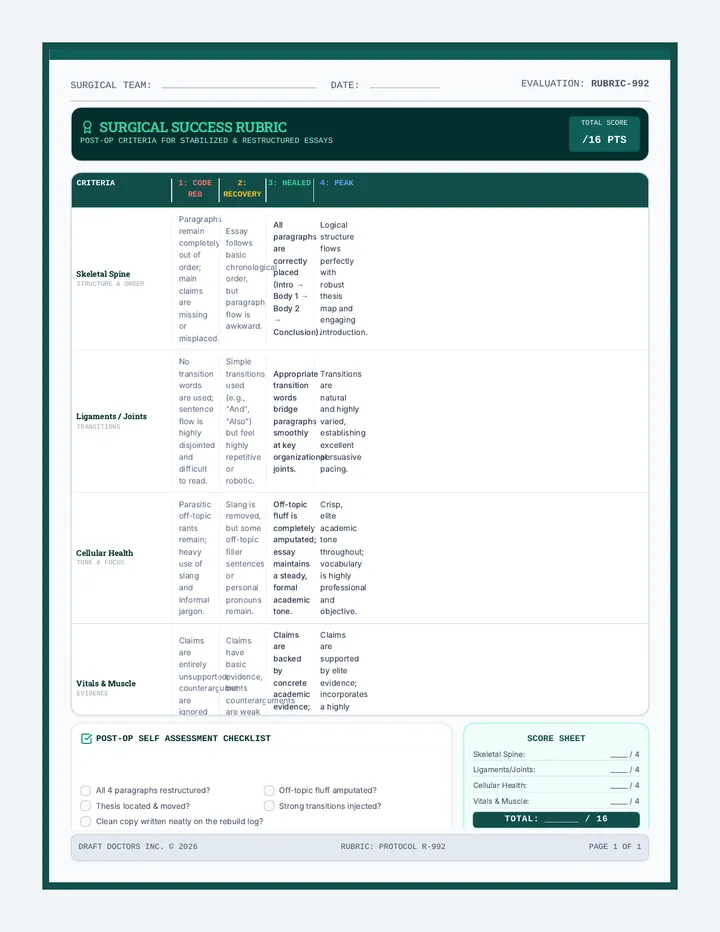
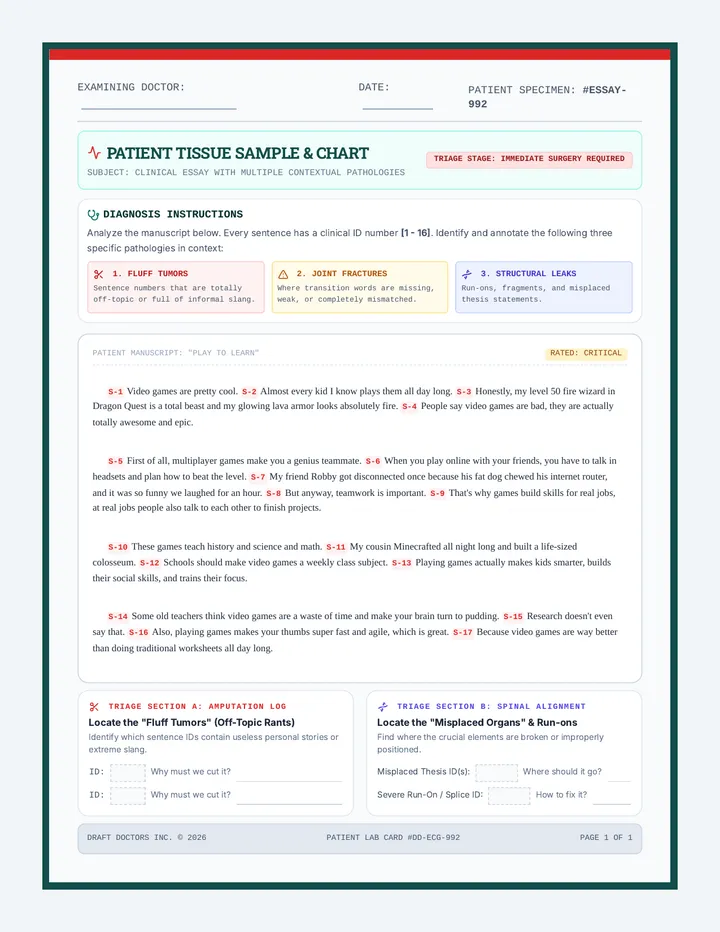
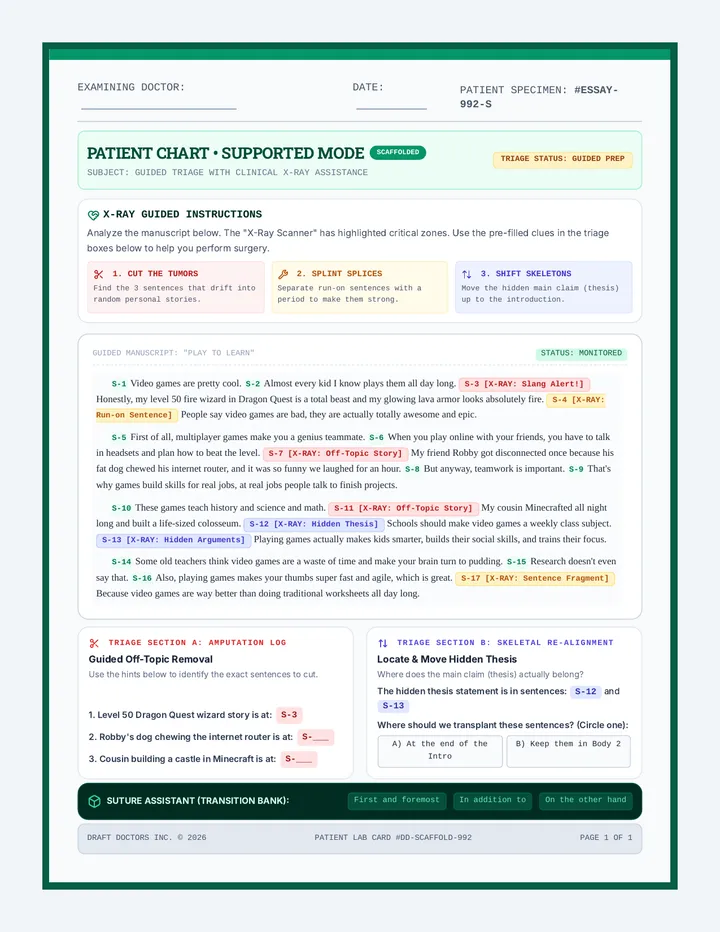
An immersive, medical-themed lesson where students act as 'Draft Doctors' to diagnose, triage, and perform surgery on a poorly organized, weak persuasive essay. Students learn paragraph structure, logical flow, and transition-building through a structured, clinical approach.
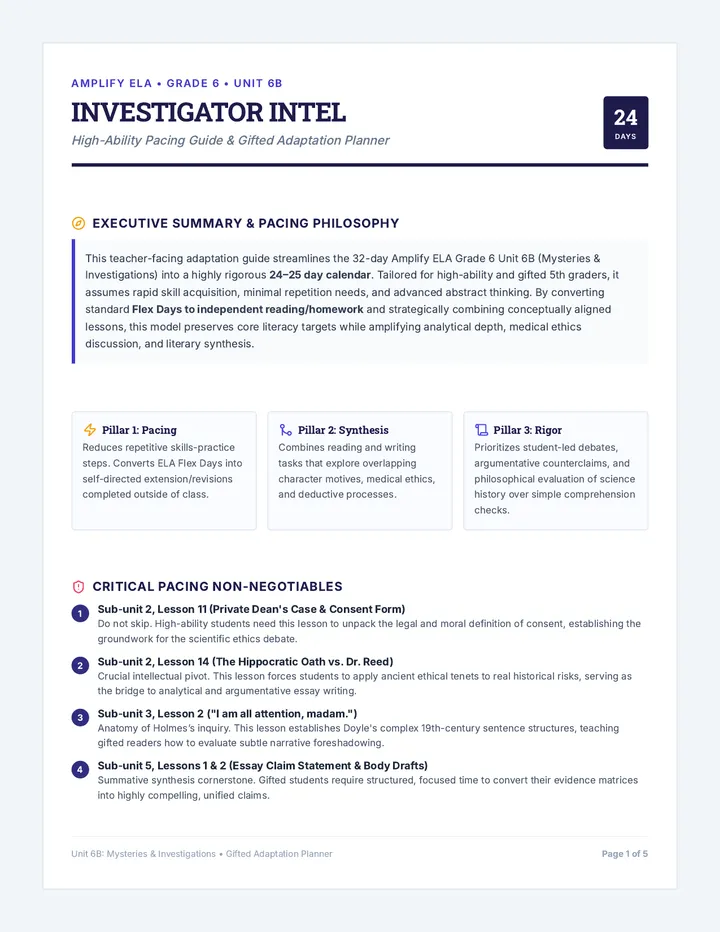
A highly condensed and academically rigorous pacing plan and gifted student adaptation guide for Amplify ELA Grade 6 Unit 6B. It compresses the 32 original lessons into a streamlined 24-25 day calendar designed specifically for high-ability fifth graders.
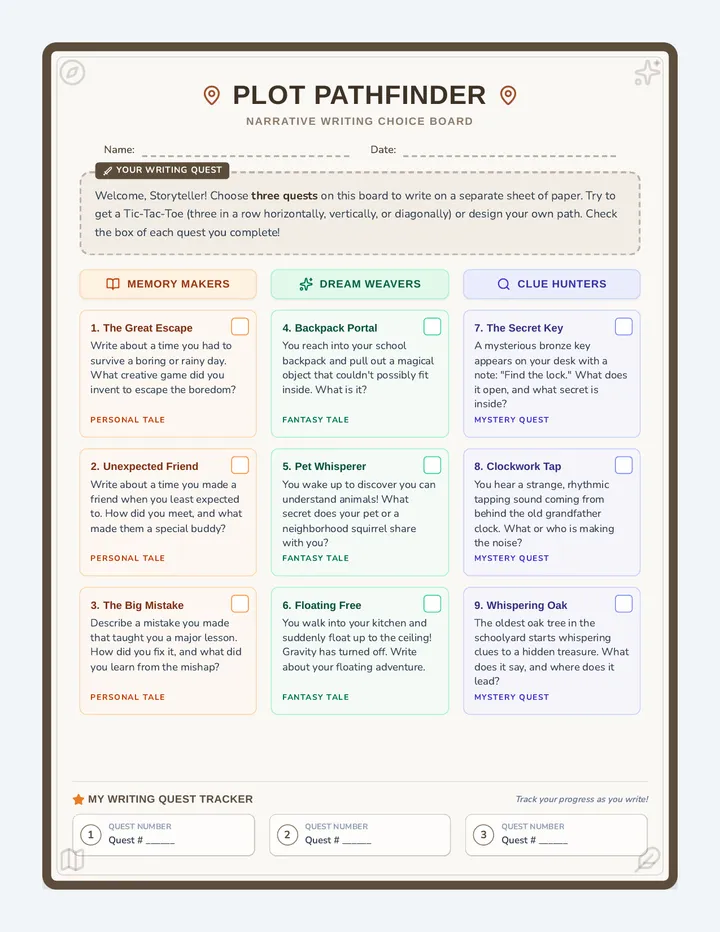
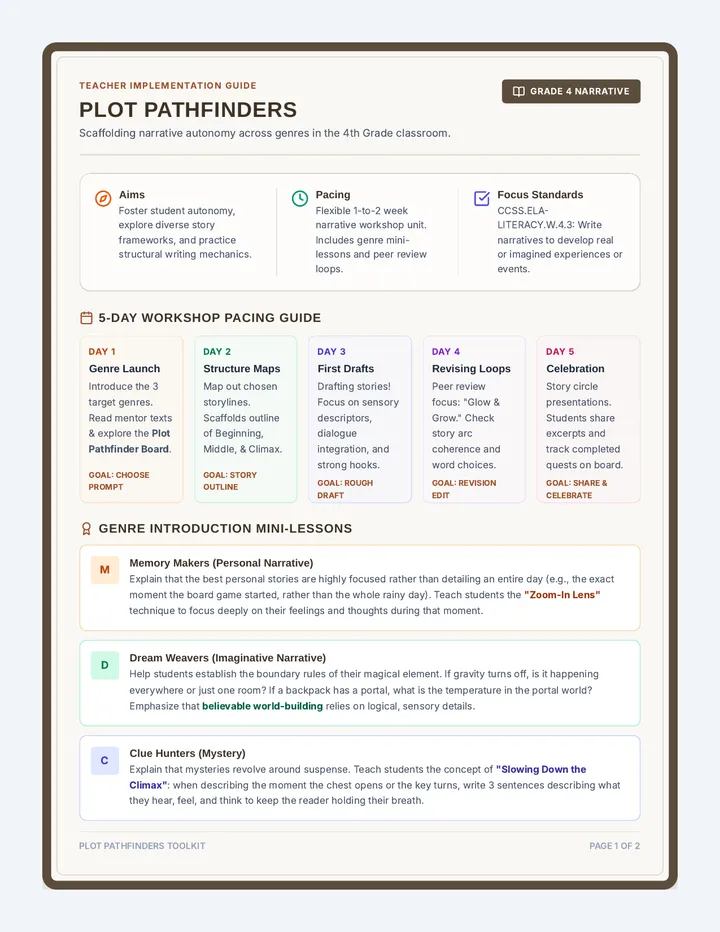
A narrative writing toolkit designed to spark creative thinking and narrative structure for fourth-grade students, featuring an engaging genre-based choice board and teacher implementation guide.
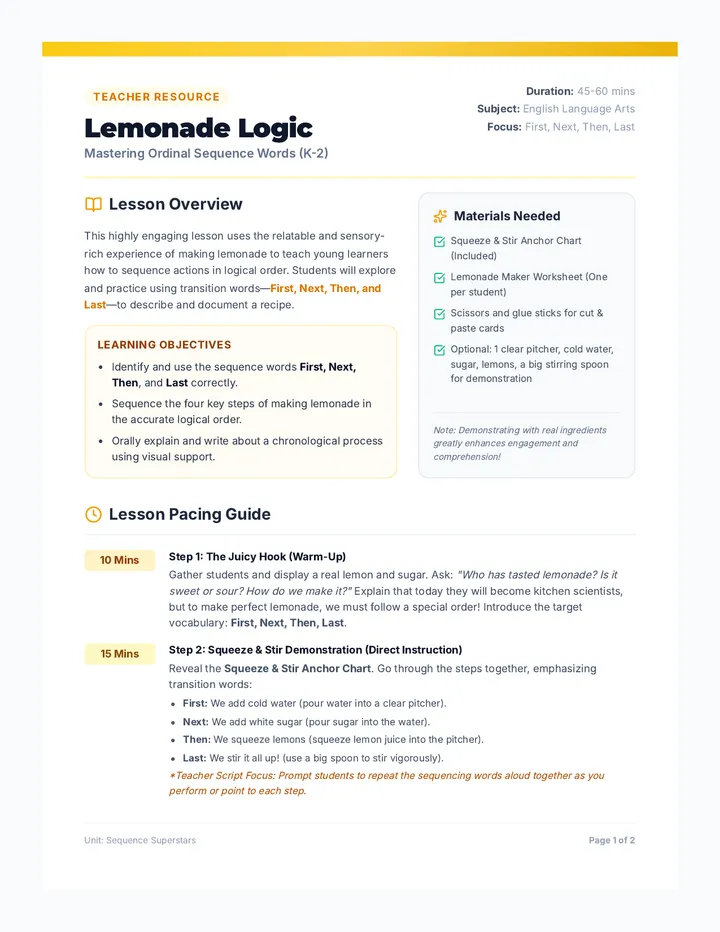
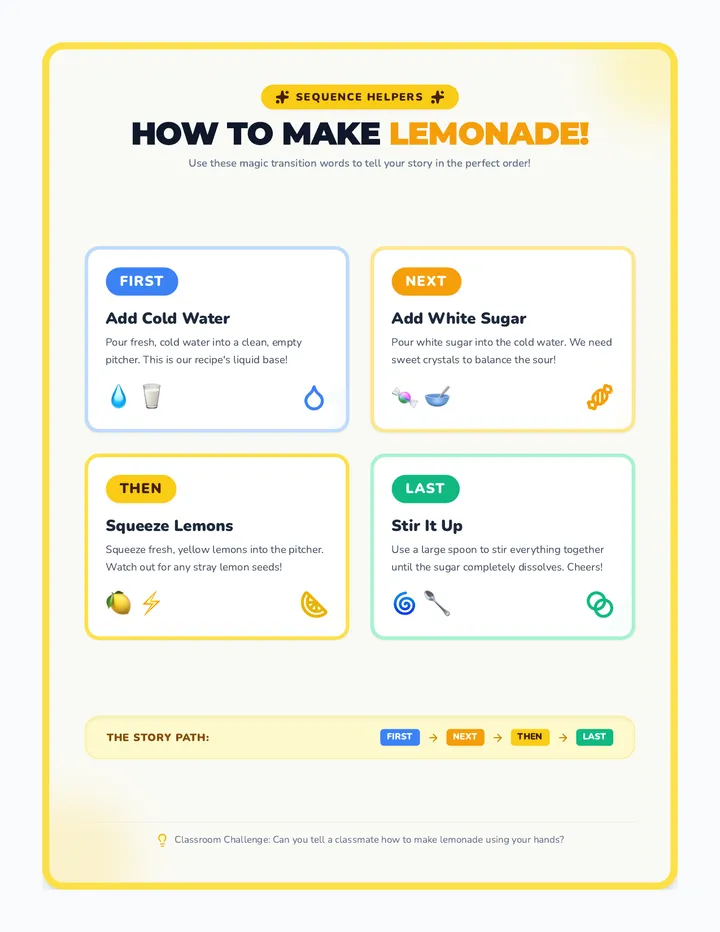
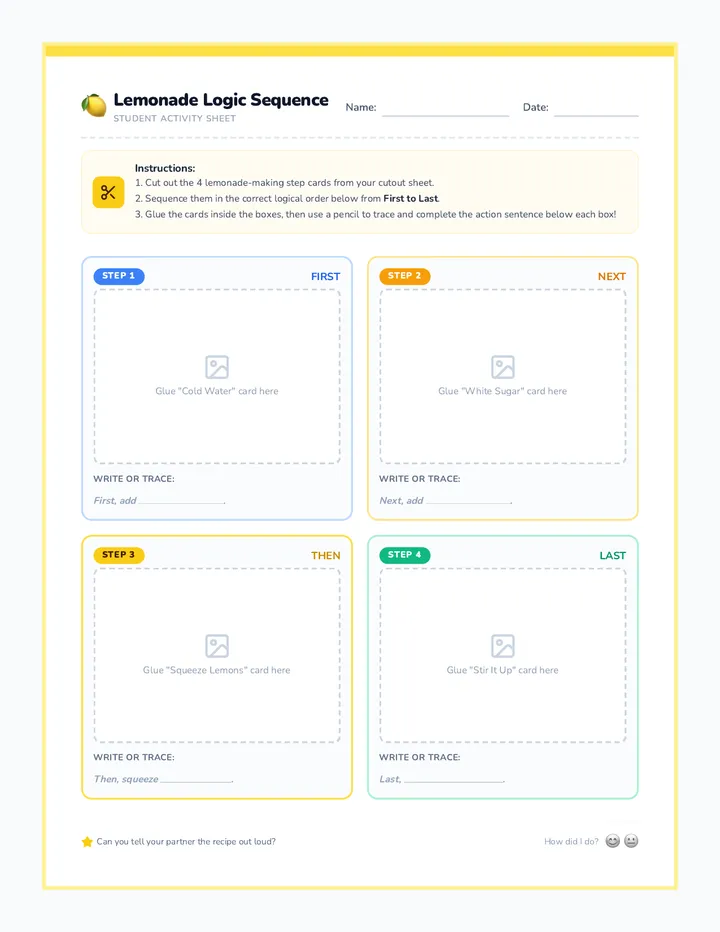
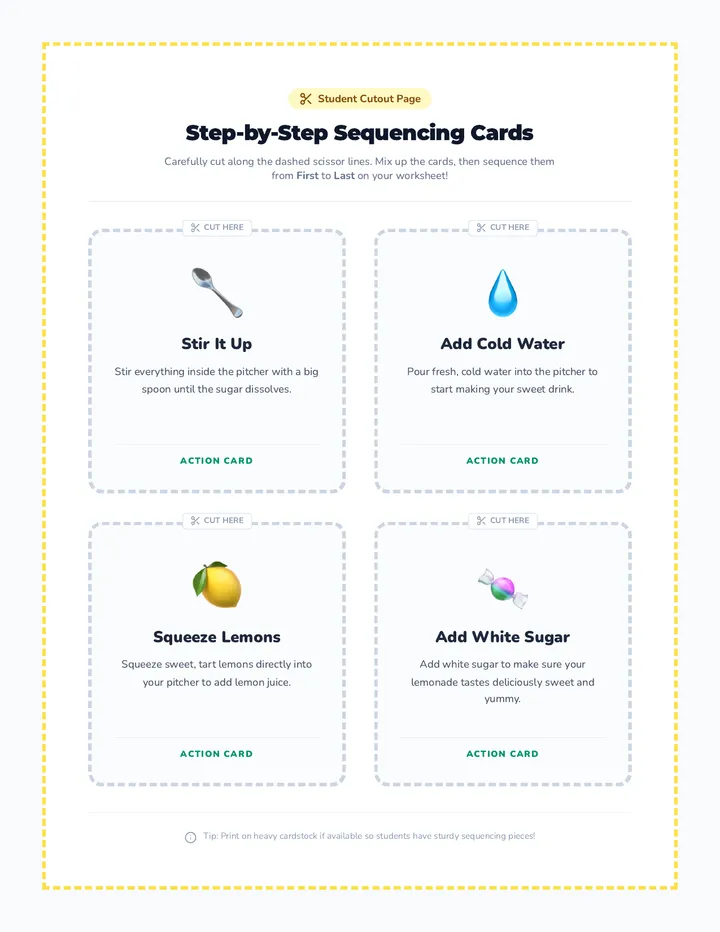
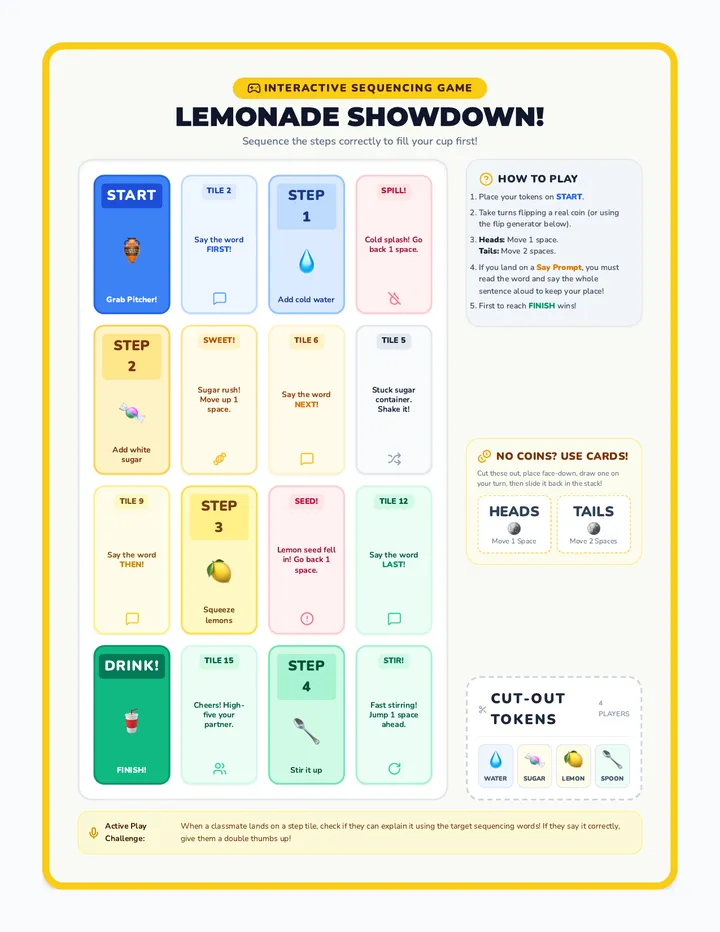
A hands-on, sequential learning experience where students master ordinal transition words (first, next, then, last) through the engaging process of making lemonade. This bundle includes a comprehensive teacher guide, a colorful anchor chart, and an interactive student worksheet.
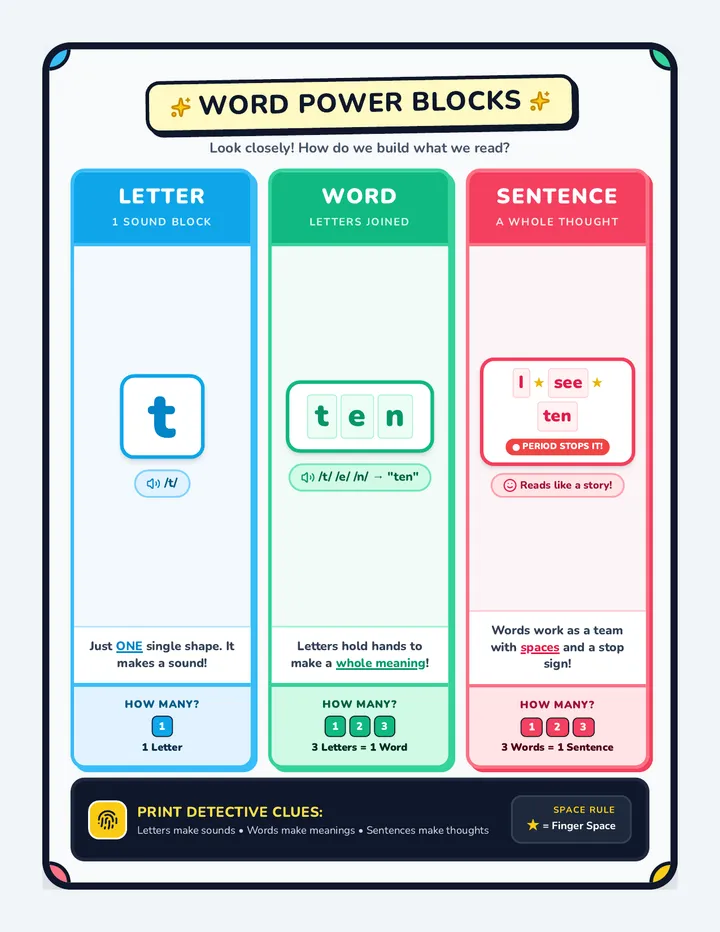
A foundational print-awareness lesson introducing kindergarteners to the core building blocks of reading: individual letters, complete words, and full sentences.
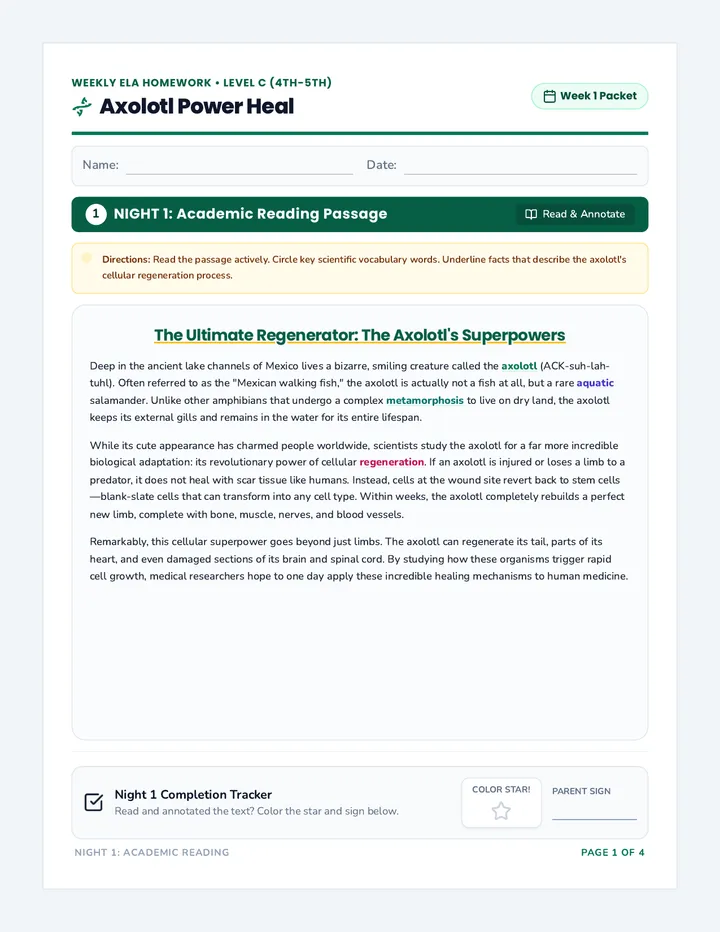
A 4th-5th grade weekly ELA homework packet focused on the axolotl and its incredible cellular regeneration abilities. Includes a challenging multi-paragraph informational text, root word/context-clue vocabulary work, a structural vs. behavioral adaptation sorting activity, and complex multiple-choice and short-answer questions with supportive sentence frames.
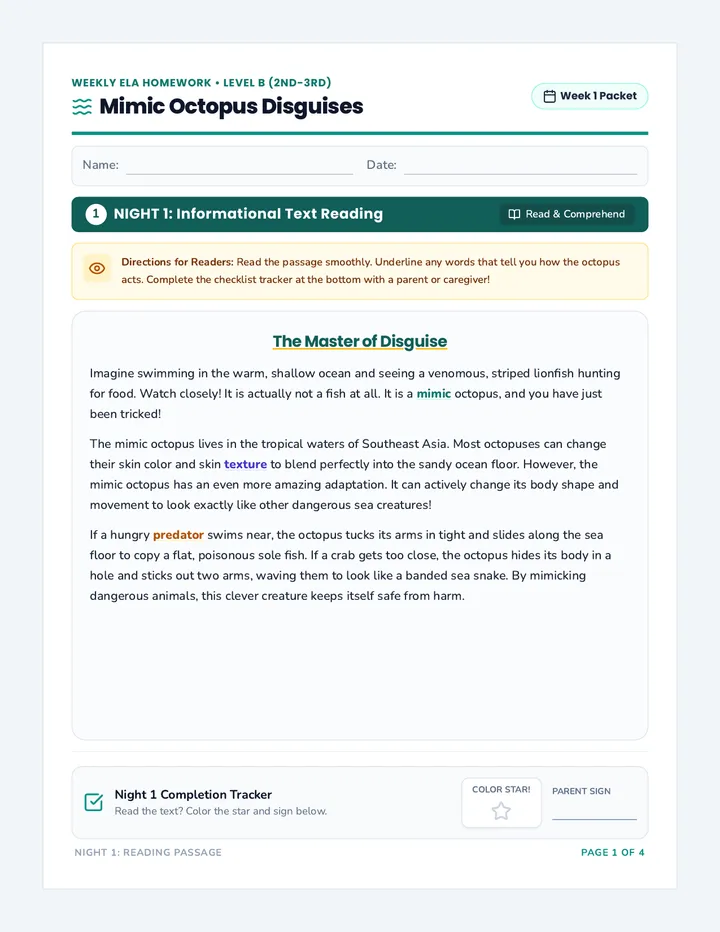
A 2nd-3rd grade weekly ELA homework packet centering on the mimic octopus, an animal that takes the form of other sea creatures to survive. Contains a multi-paragraph reading passage, context-clue vocabulary exercises, a visual disguise planning activity, and multiple-choice and short-answer comprehension questions with sentence-starter frames.
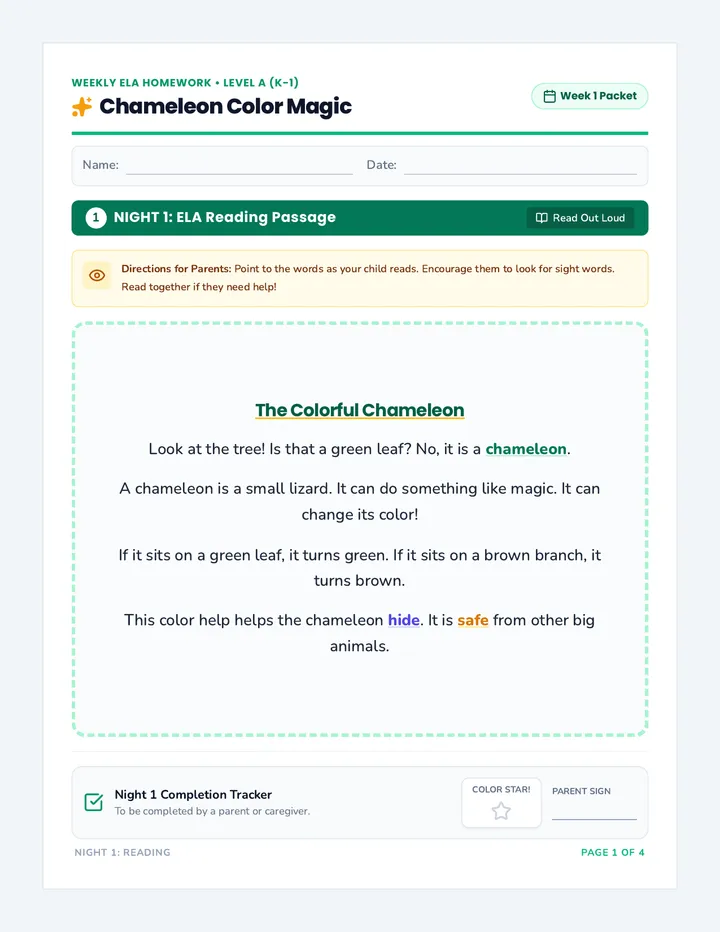
A K-1 weekly ELA homework packet featuring a short, high-interest reading passage about the chameleon's color-changing ability. Includes heavily supported vocabulary matching, visual drawing and labeling activities, simple comprehension questions with complete sentence starters, and an easy-to-use checklist tracker.
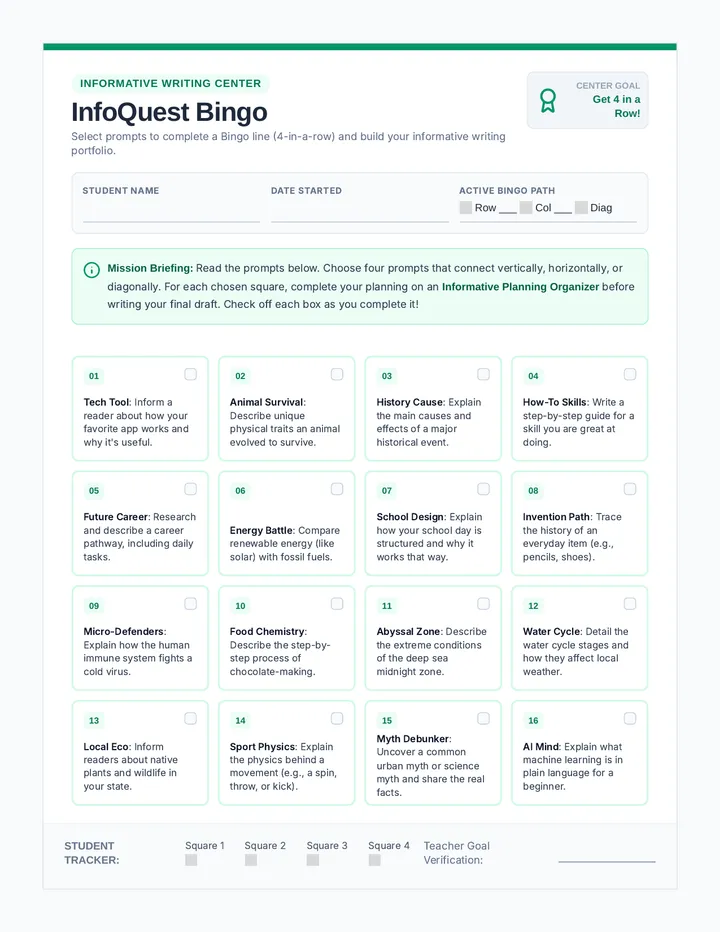
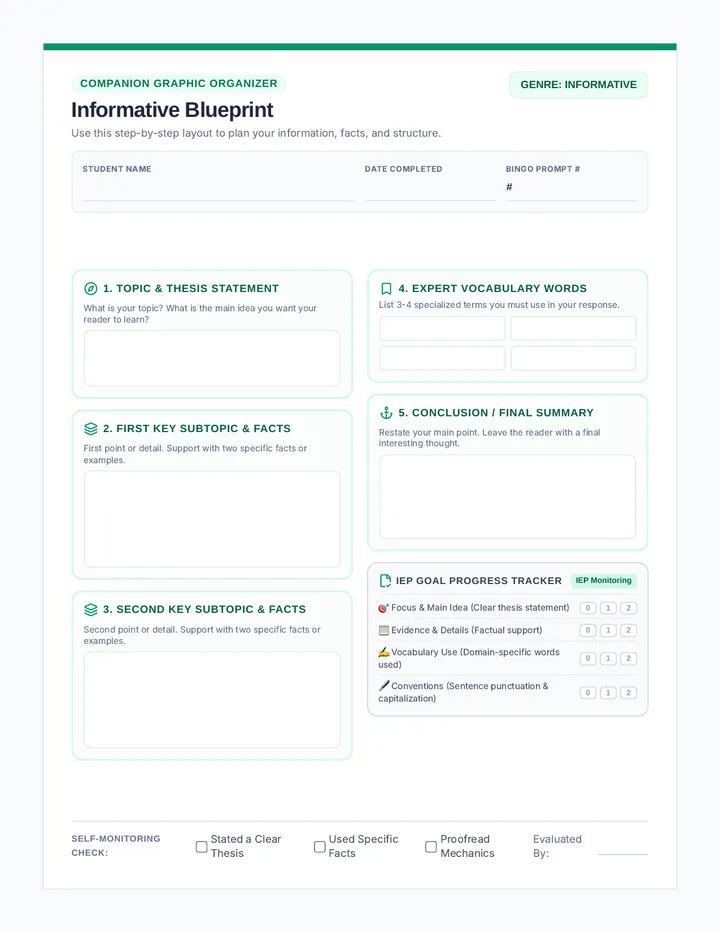
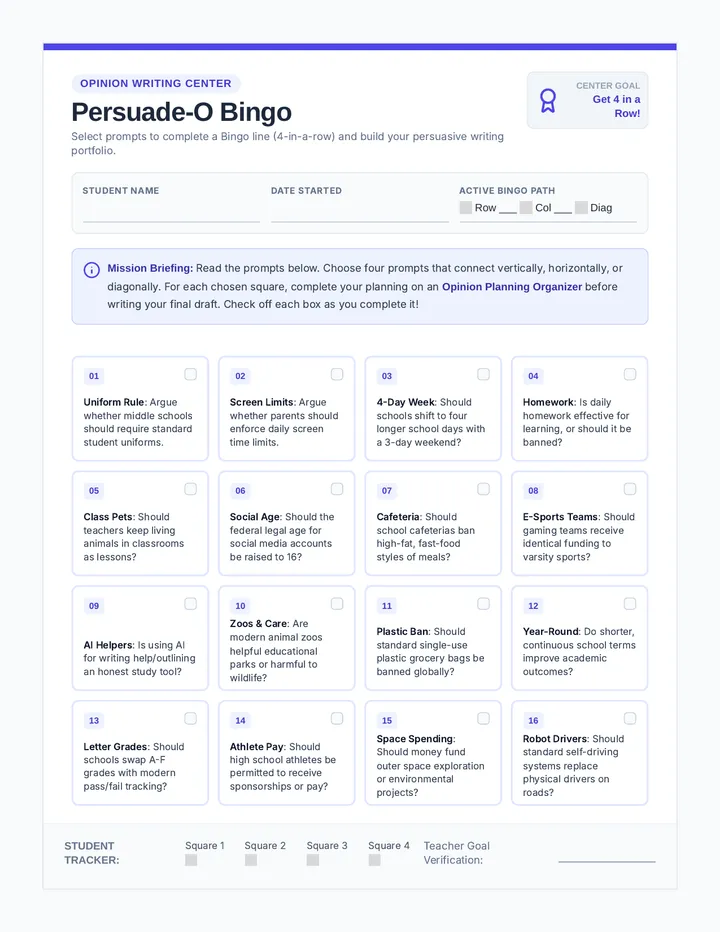
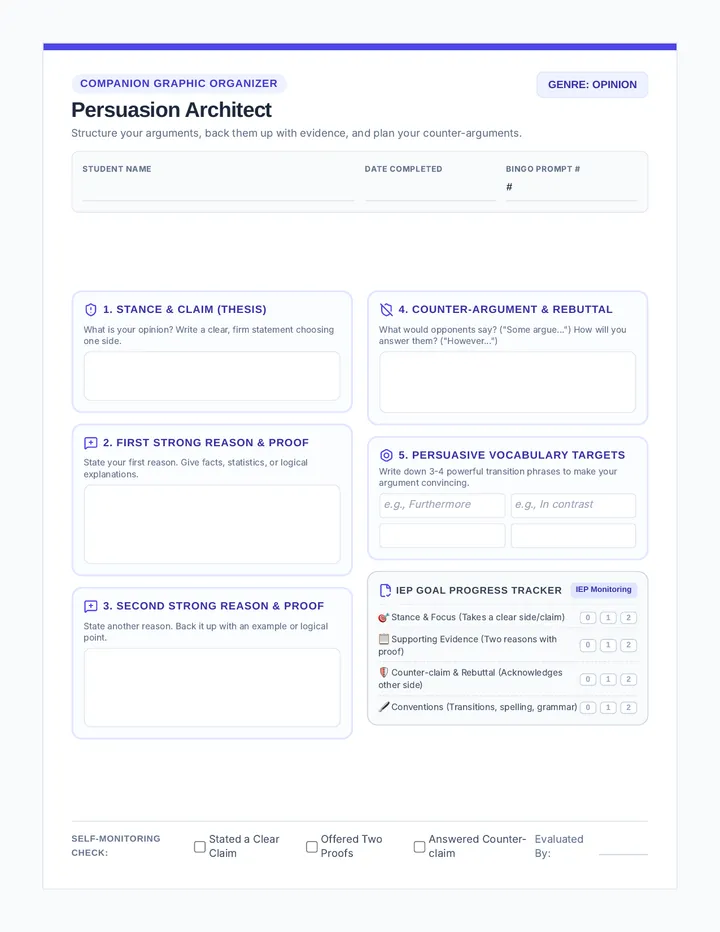
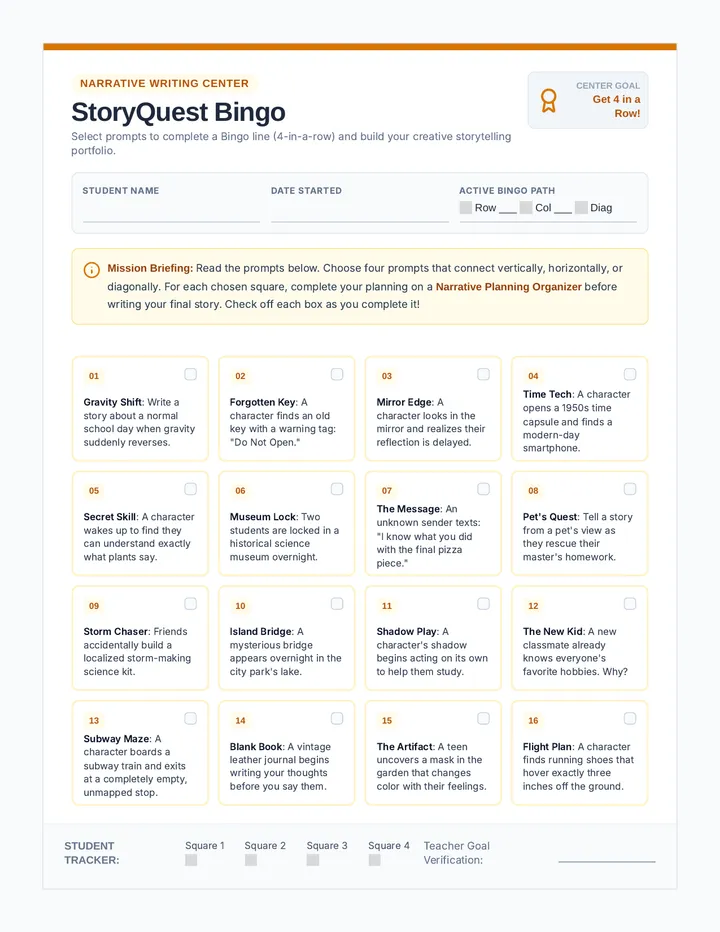
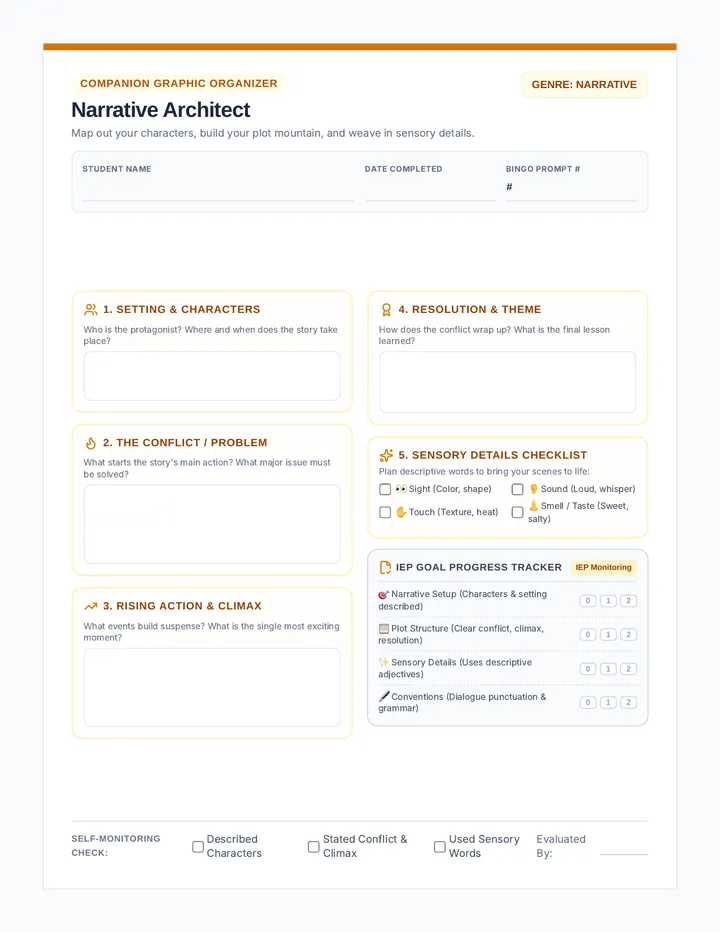
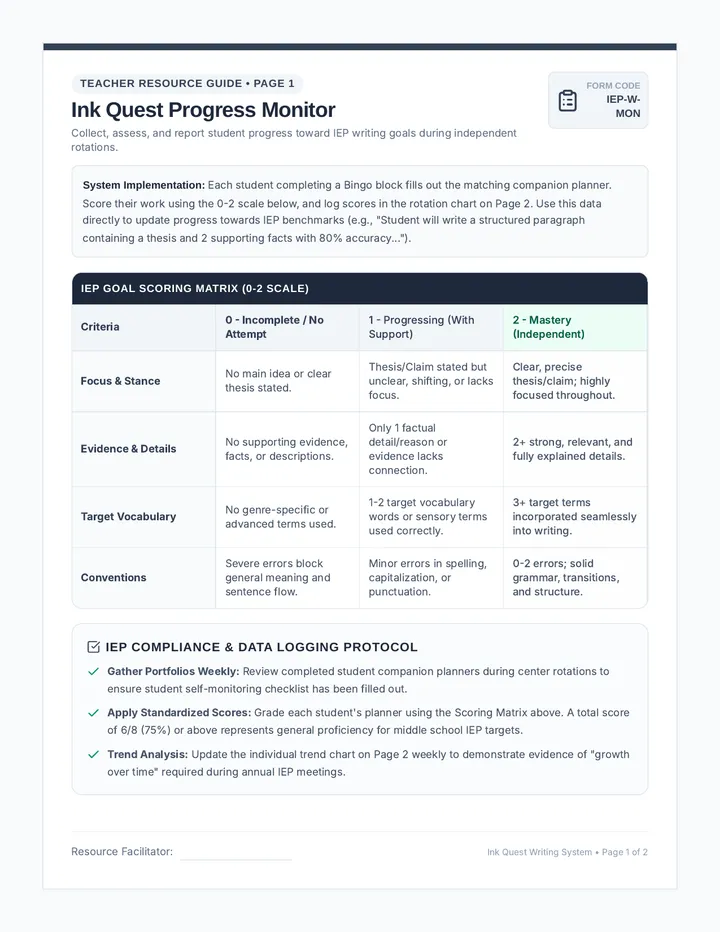
An independent writing center system using Bingo choice boards and highly supportive graphic organizers. Designed for middle school rotations with embedded progress monitoring for IEP goals.
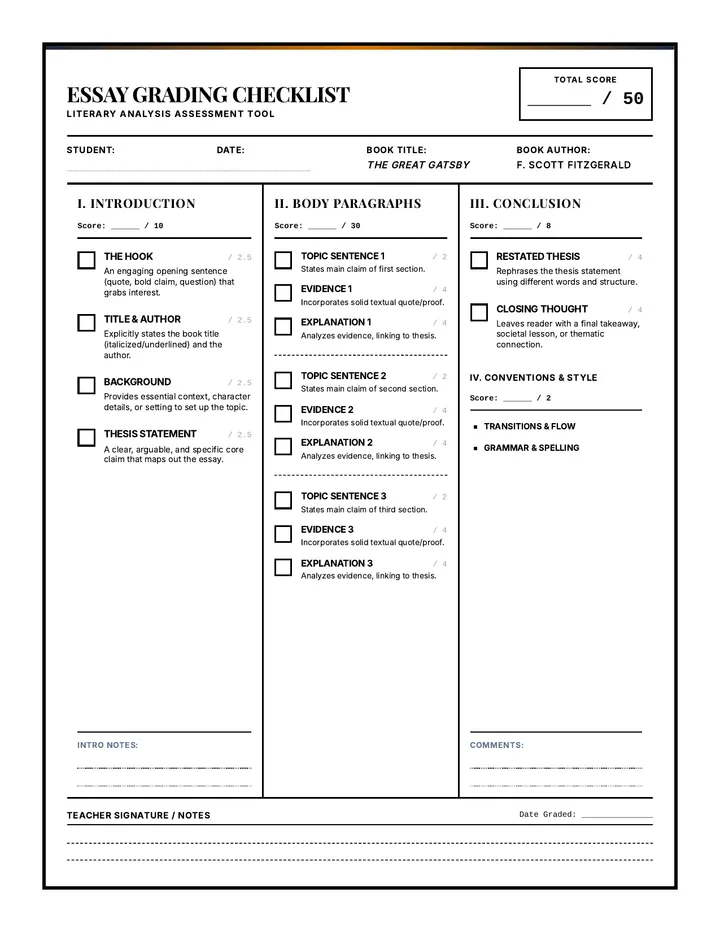
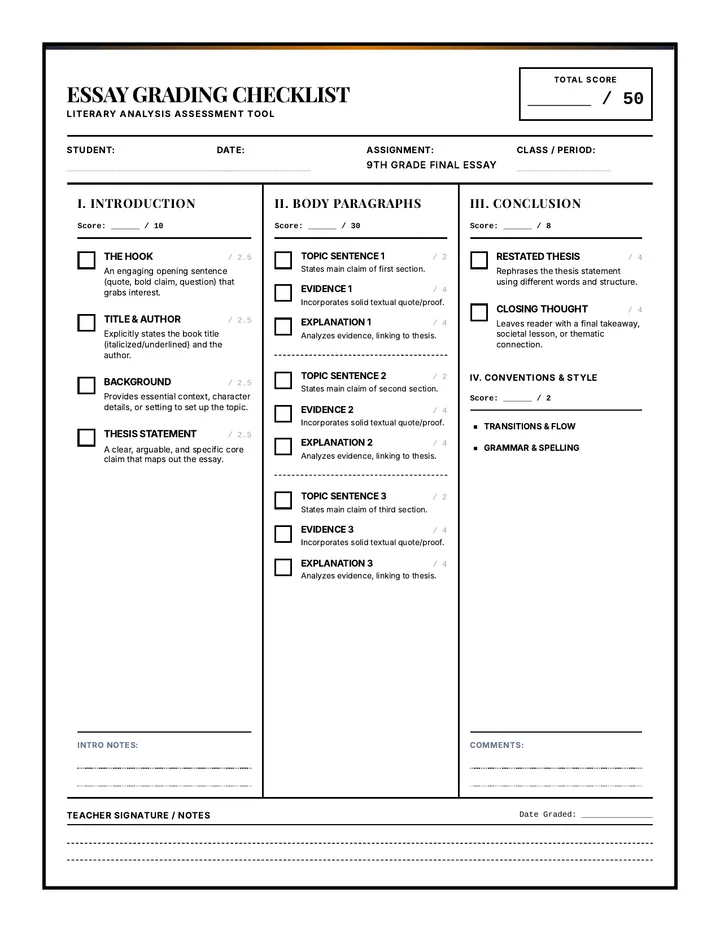
A lesson dedicated to the assessment and grading of literary essays, featuring a structured grading rubric and feedback checklist.
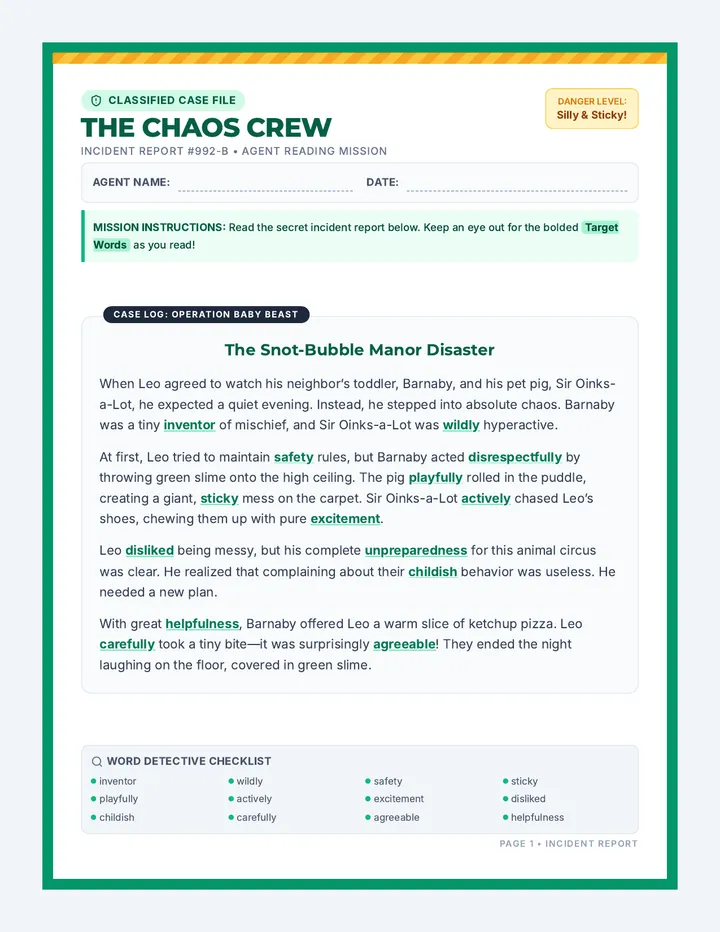
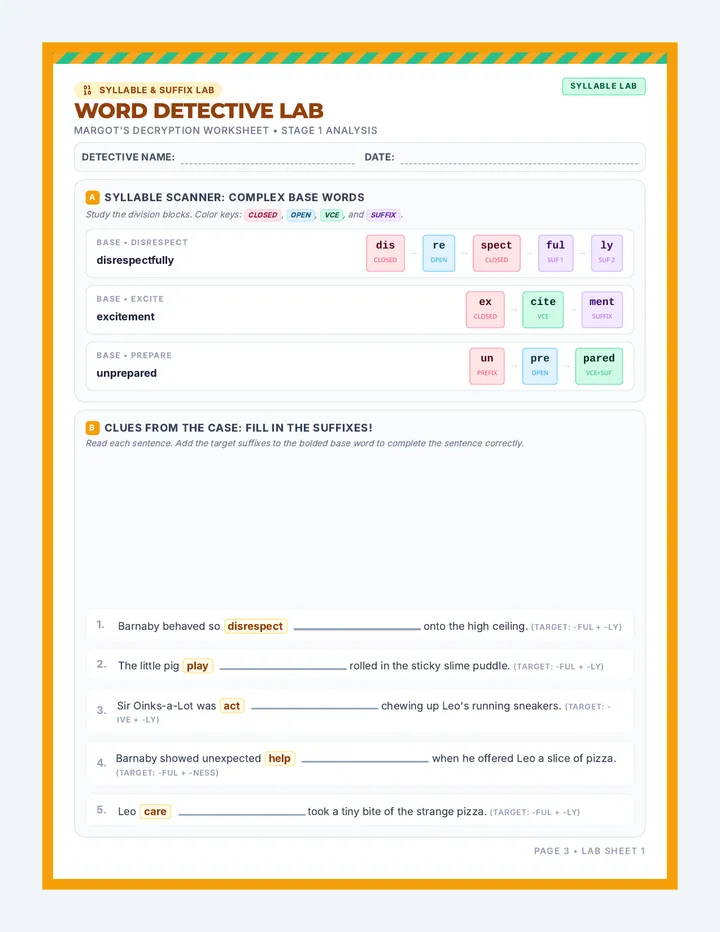
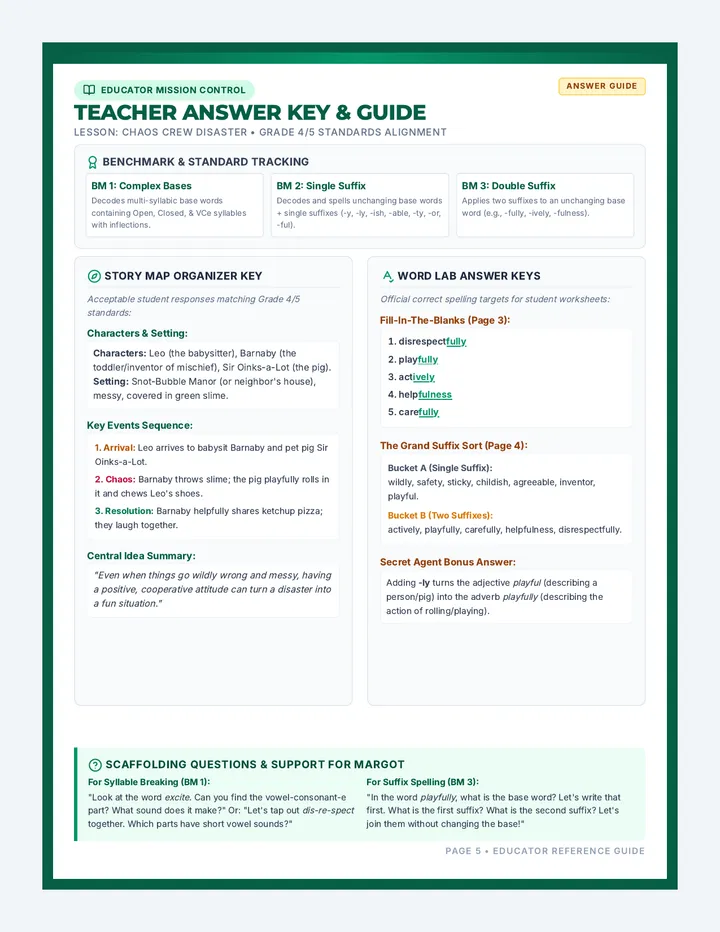
An interactive, silly reading adventure and spelling toolkit focused on multi-syllabic words, complex base words, and multi-suffix combinations for 4th/5th grade standards.
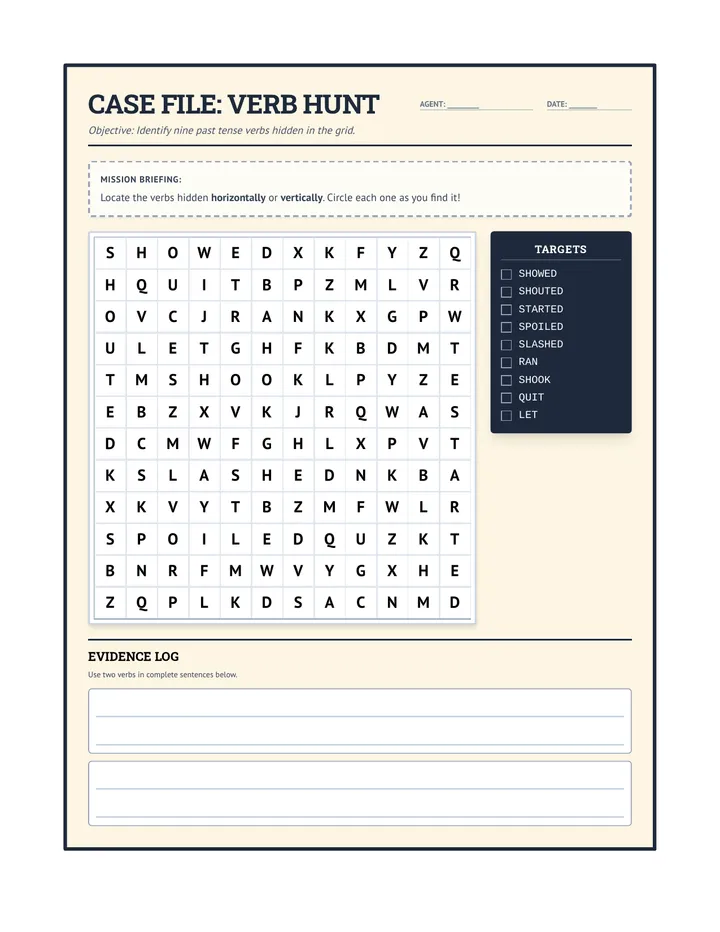
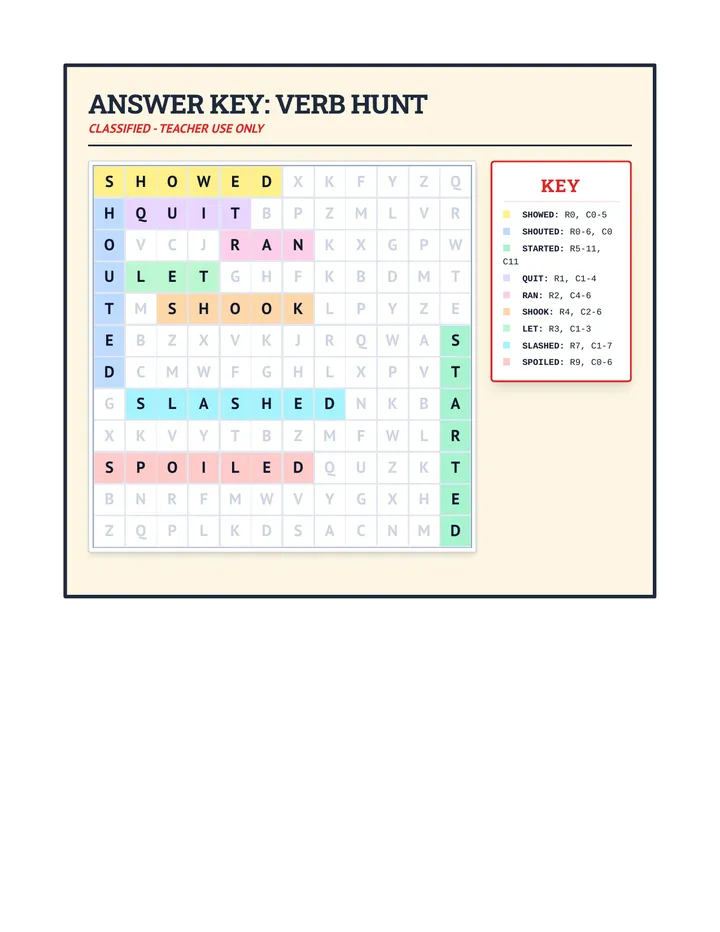
A lesson focused on identifying and using past tense verbs through a detective-themed word search and sentence construction activity.
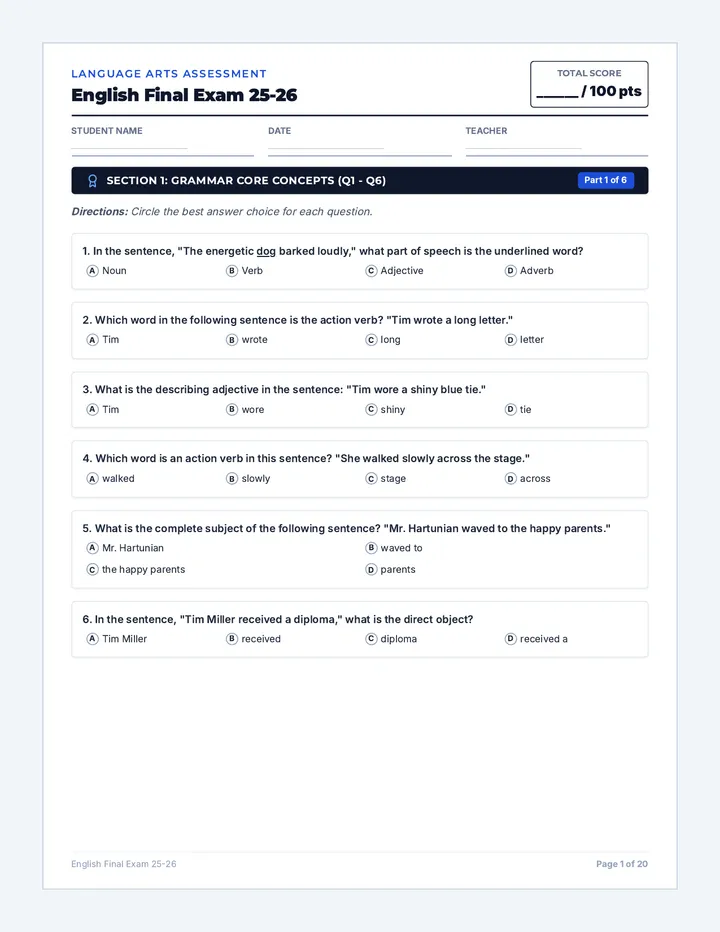
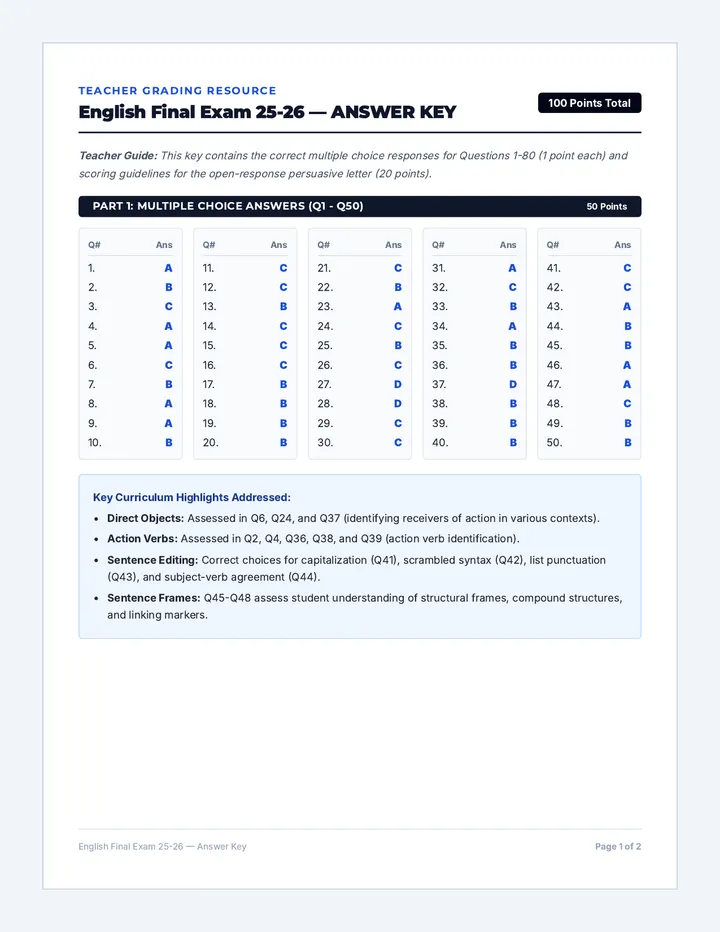
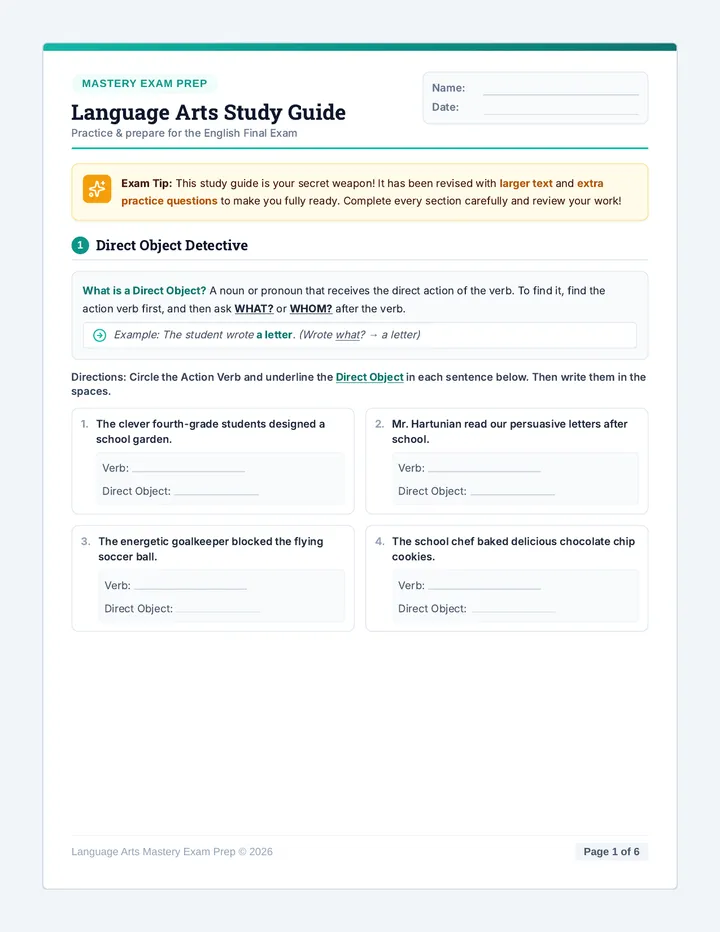
A comprehensive final examination for fourth-grade reading and grammar skills, testing direct objects, sentence editing, structural sentence framing, comprehension, comparison and contrast, and persuasive letter writing.