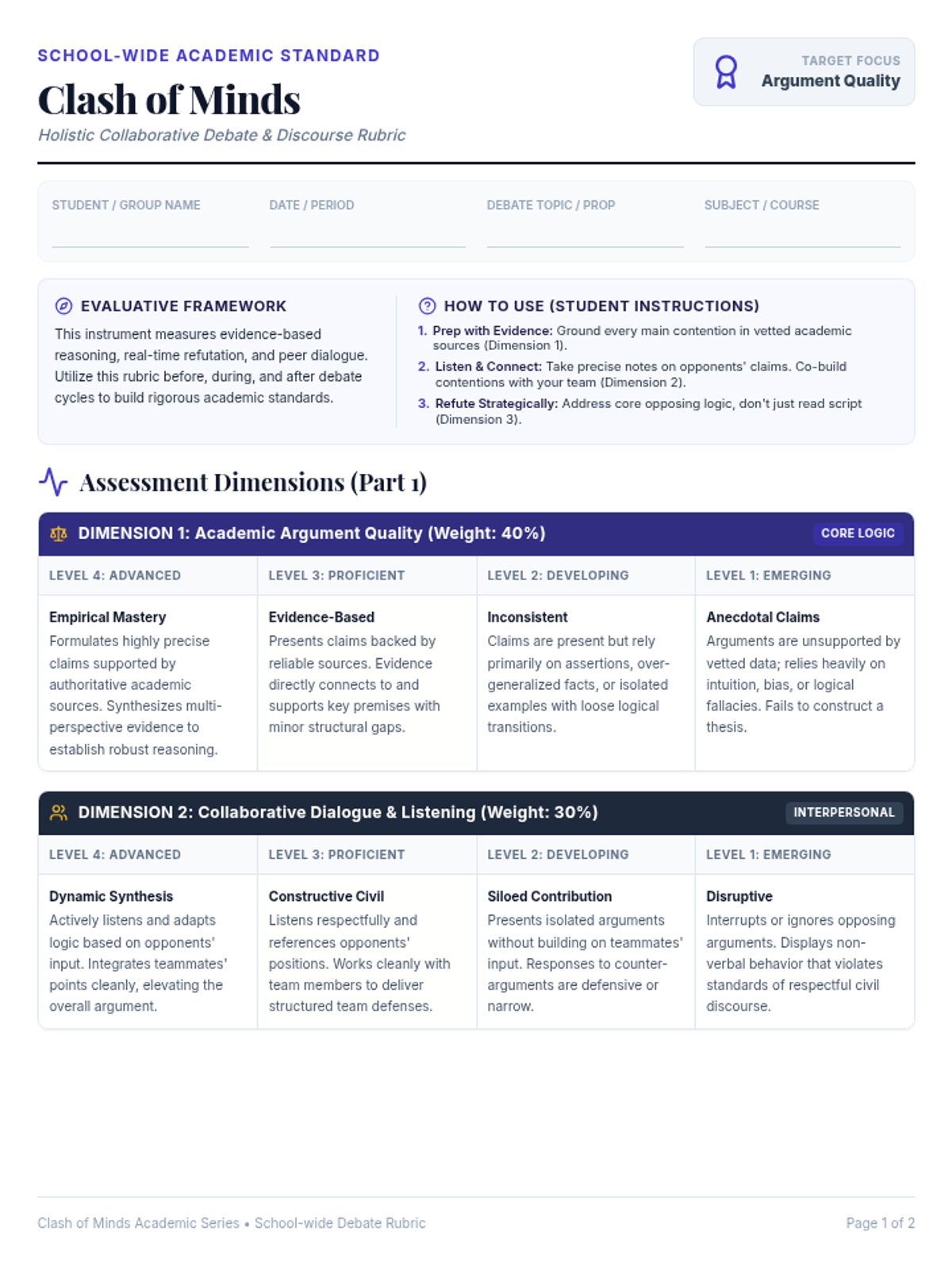
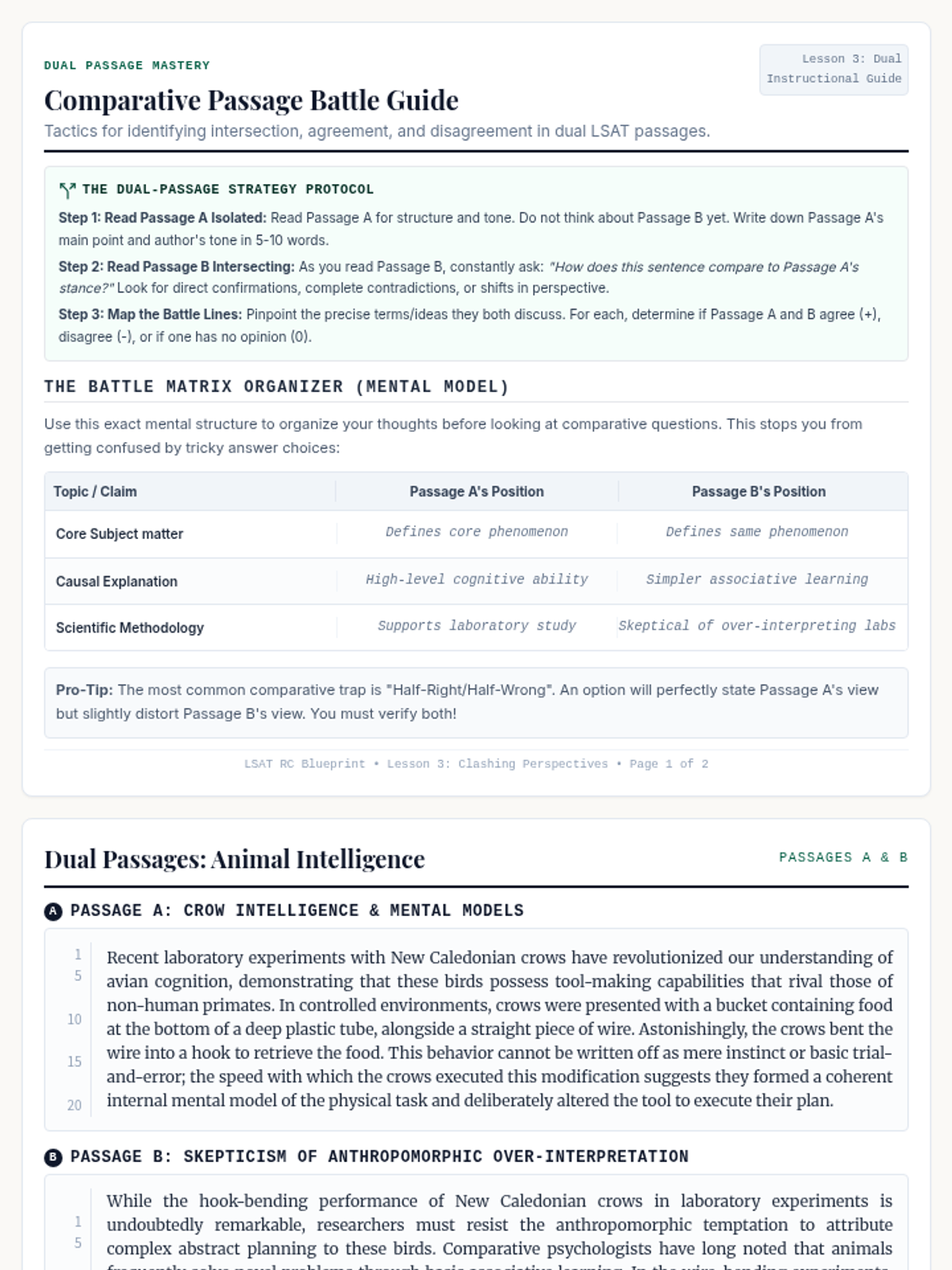
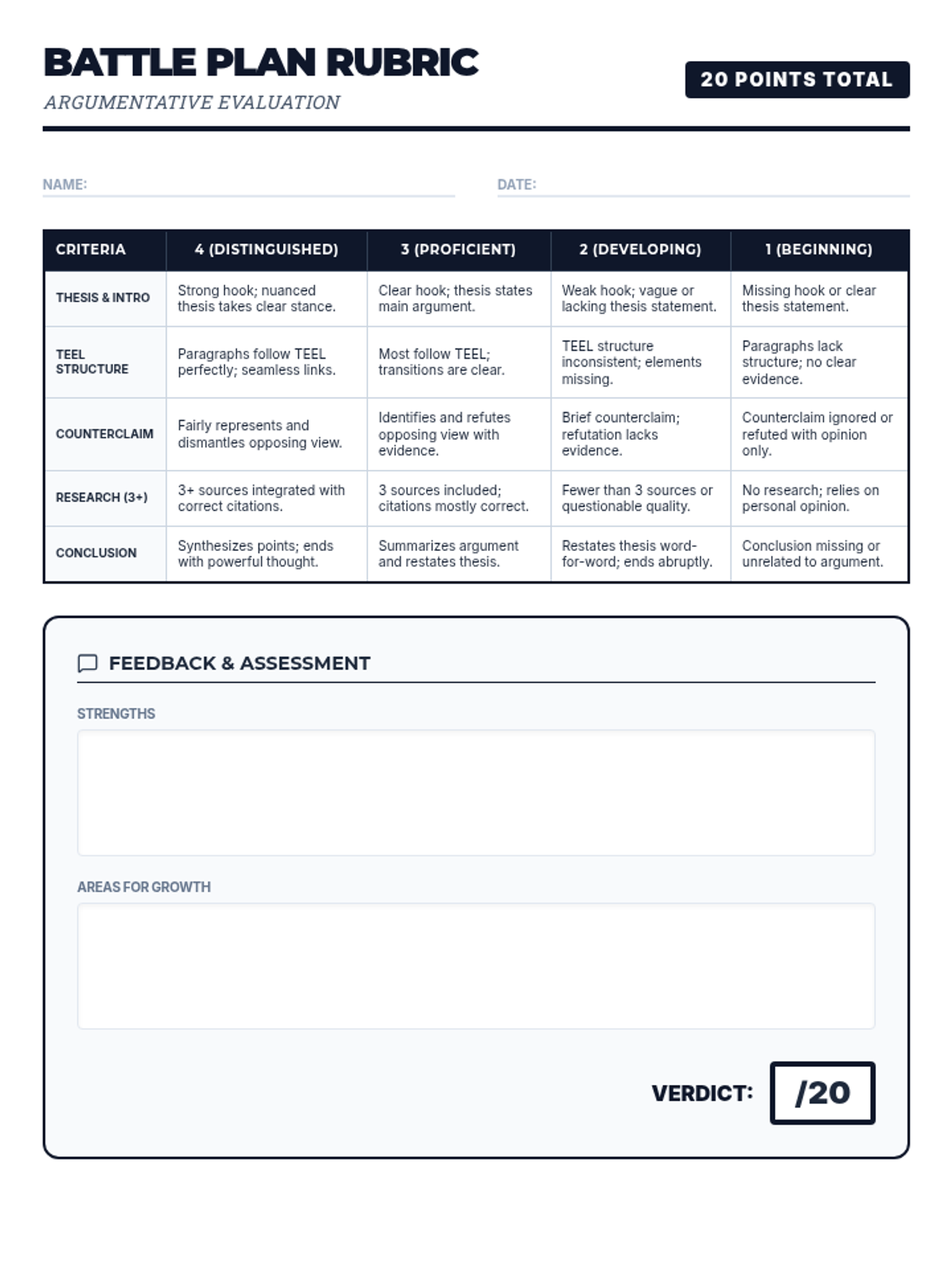
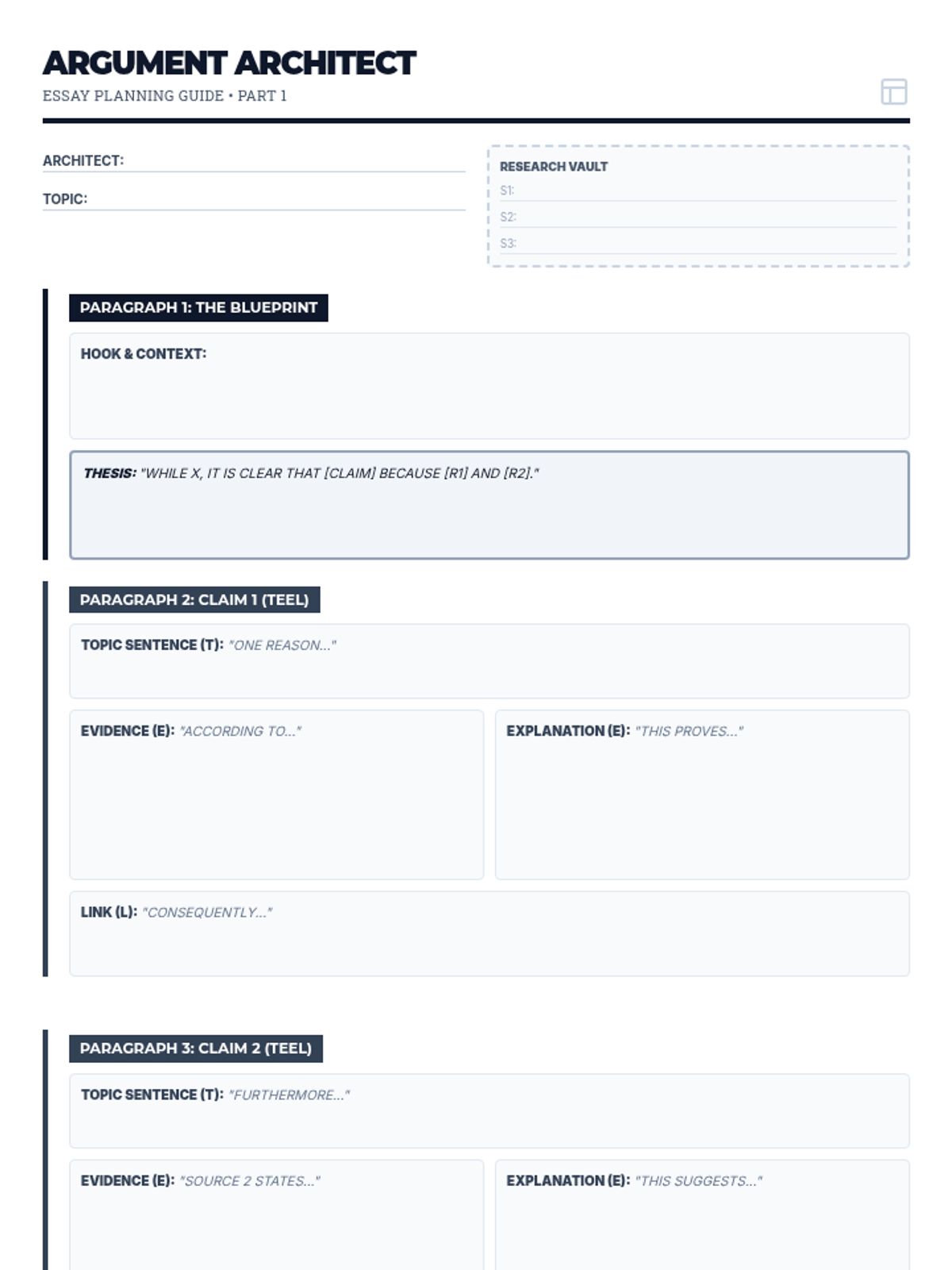
Students explore the normative dimension of refutation, learning to argue that a perceived bad impact is actually beneficial. The lesson emphasizes ethical risk management and bold value re-evaluations.
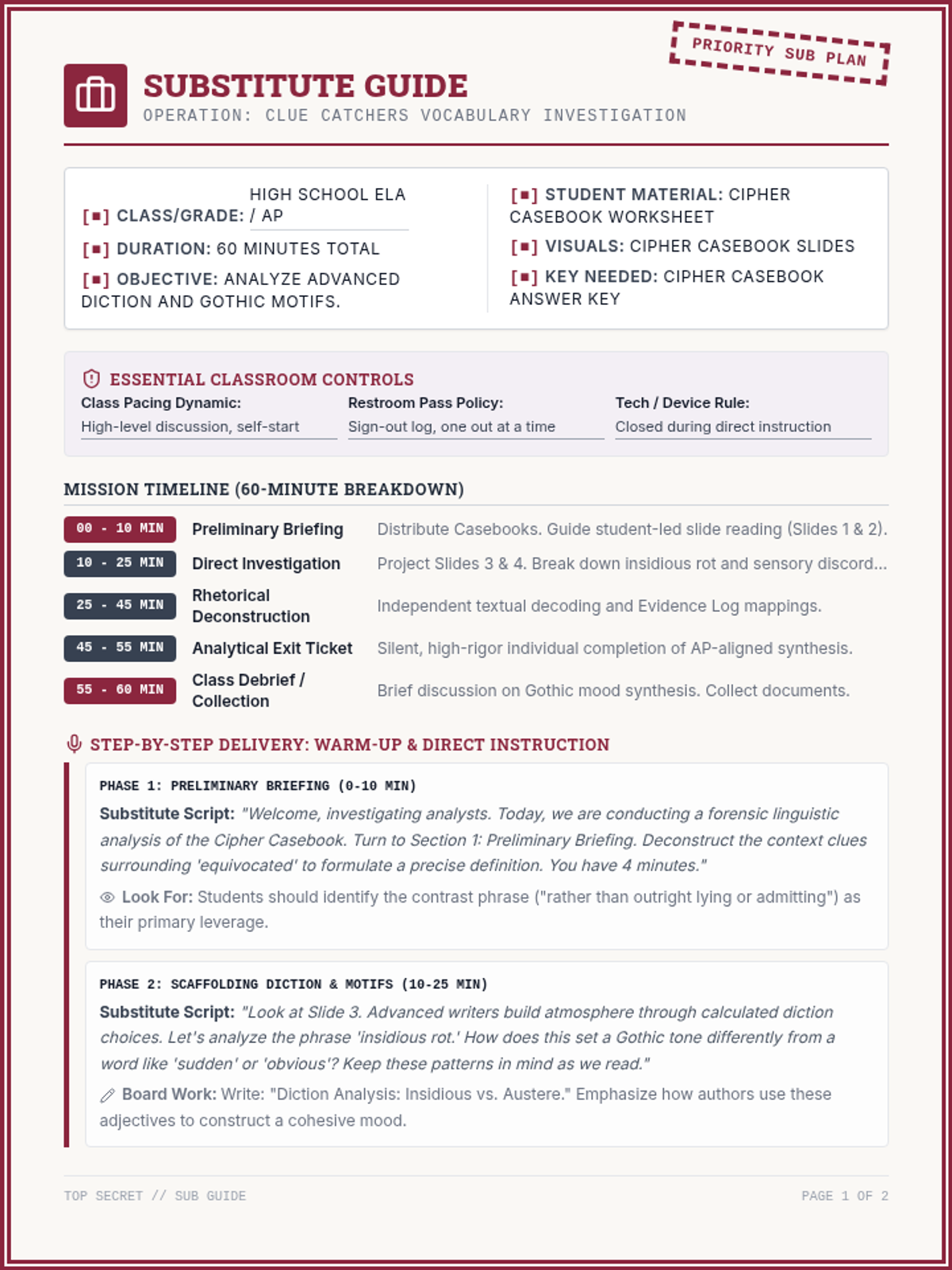
A deep dive into Edgar Allan Poe's 'The Tell-Tale Heart', focusing on the mechanics of suspense, the psychology of the unreliable narrator, and the sharp edge of gothic irony.
Analyze themes, character development, and figurative language in literary excerpts to prepare for the literature portion of the TSIA.
Develop the ability to read between the lines and understand why an author wrote a text, moving beyond the literal.
Master the art of using context clues to define unfamiliar words, essential for tackling complex TSIA passages.
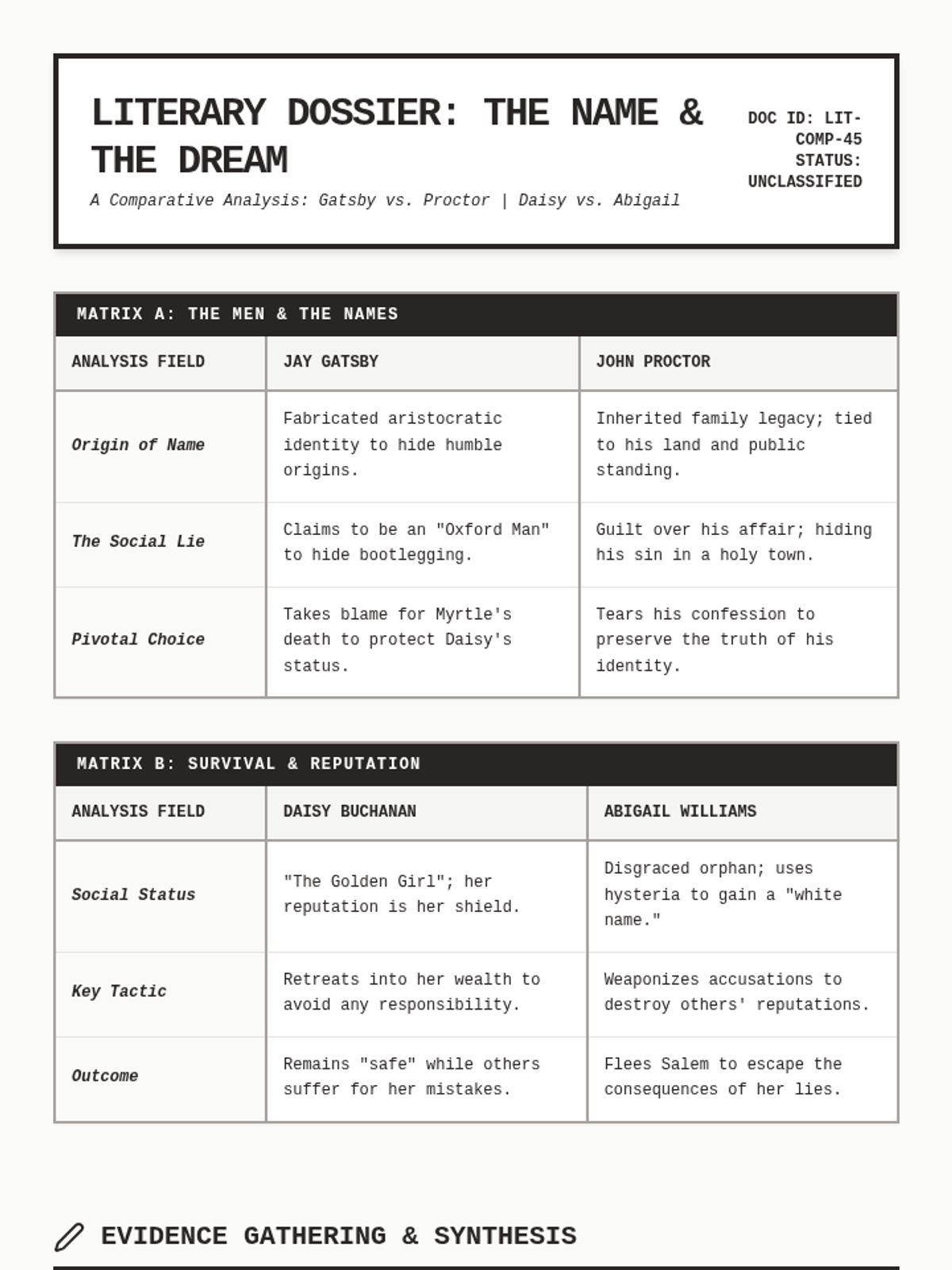
Learn to identify the central point of a passage and distinguish it from supporting details, a fundamental skill for the TSIA.
A comprehensive lesson covering TSIA2 grammar standards, including sentence structure, punctuation, agreement, and logical diction. Includes instructional slides, a 20-question practice exam, and a detailed explanation key.
Students analyze the climax of Section I, where Gregor is revealed to his family and the Chief Clerk. They will focus on the father's aggressive reaction and the symbolism of the final push back into the room.
Students examine the breakdown of communication between Gregor and his family. They will analyze the symbolism of Gregor's changing voice and use affixes to decode complex words.
Students analyze Gregor's professional life and his feelings of alienation. They will focus on characterization and the arrival of the Chief Clerk, exploring how Gregor's identity is tied to his labor.
Students explore the opening of the novella, focusing on Gregor's physical transformation and his initial internal reaction. They will practice using context clues and the IDEAS method to define difficult vocabulary.
Students explore the theme of alienation and the role of family debt in Kafka's life and work. They will practice identifying these themes in short text excerpts and learn how to use the RACE format with transition words.
Students are introduced to the concepts of magical realism and the term "Kafkaesque." They will learn how Kafka blends ordinary reality with impossible, nightmare-like situations to create a unique literary style.
Students examine the historical and social context of Prague in the late 1800s. They will explore how Kafka's identity as a German-speaking Jew in a Czech city contributed to the themes of isolation in his writing.
Students read a simplified biography of Franz Kafka to understand the author's background, his difficult relationship with his father, and his "double life" as an office worker and a writer.
The culminating event: a class-wide slam competition with audience judges, followed by a written reflection on the journey of voice.
Coaching sessions focused on eye contact, stage presence, and vocal dynamics to prepare students for the final poetry slam.
Guiding students through the process of choosing a personal topic, finding their unique voice, and drafting a 3-minute slam poem using the techniques learned.
Focusing on the literary and performance techniques that give slam poetry its rhythm, including internal rhyme, repetition, and the 'beat' of the spoken word.
Introducing the history and impact of spoken word poetry, focusing on how voice and identity shape modern performance art.
The final week of drills providing high-rigor mixed practice to simulate the full range of the TSIA2 Writing section.
The third week of drills introducing more nuanced grammar rules and mixed practice scenarios.
The second week of drills focusing on organizational flow and complex sentence combining techniques.
The first week of TSIA2 preparation focusing on the fundamental rules of punctuation, grammar, and sentence structure through daily three-question drills.
A literary analysis comparing the internal struggles and moral dilemmas of Hamlet and Jean Valjean through their iconic soliloquies.
An introductory lesson covering the historical and biographical context of John Steinbeck's *Of Mice and Men*, focusing on the Great Depression, the Dust Bowl, and the lives of migrant workers.
A comprehensive assessment suite for F. Scott Fitzgerald's The Great Gatsby, featuring chapter-by-chapter comprehension questions and a detailed answer key.
Students will learn the essential components of a Public Service Announcement, focusing on persuasive techniques and crafting a compelling call to action to drive social change.
An introductory lesson designed to spark curiosity about Christopher McCandless's journey from South Dakota to Alaska, focusing on the geographical landmarks and the spirit of adventure in "Into the Wild".
Students analyze how Kafka uses the Chief Clerk's arrival to explore the theme of authority and the dehumanizing nature of debt and labor.
Students master the use of commas with dialogue tags to punctuate the tense conversation between Gregor, his family, and the Chief Clerk.
Students analyze the arrival of the Chief Clerk and Gregor's deteriorating communication as the pressure to work intensifies.
Students learn to use commas to set off names in direct address, using dialogue from the family's attempts to communicate with Gregor.
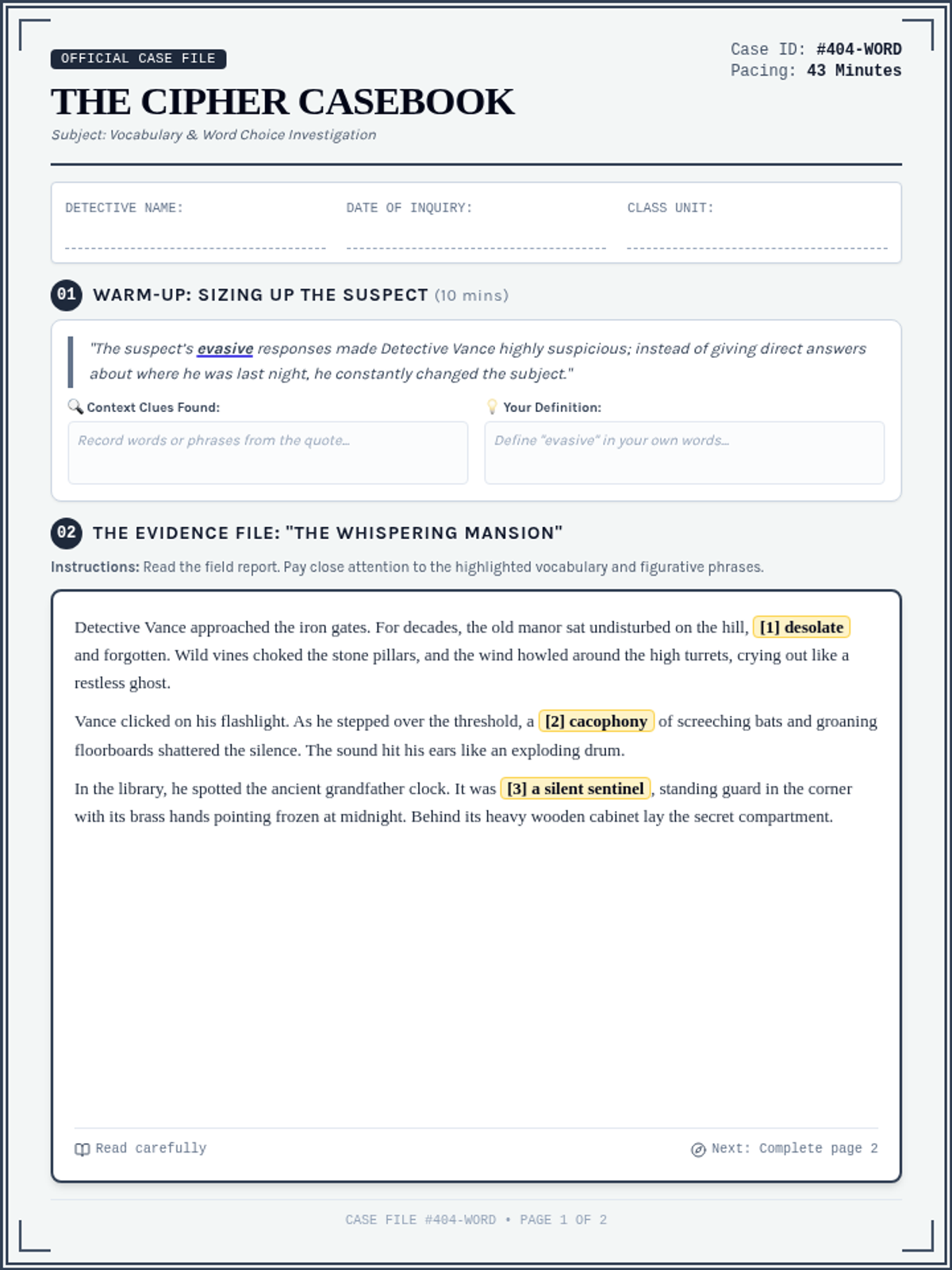
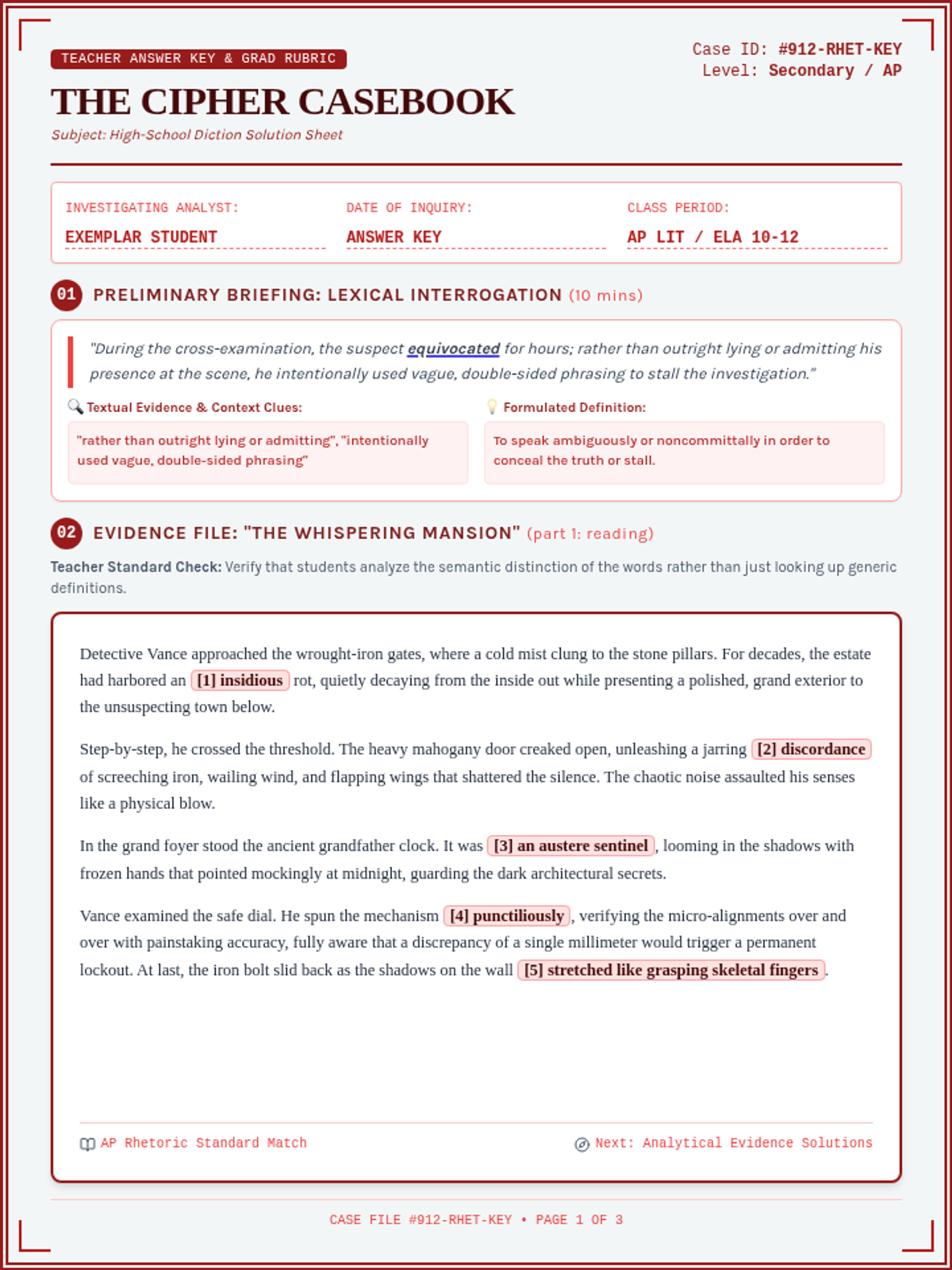
A comprehensive vocabulary building course designed to master fifteen sophisticated words through weekly deep-dives, context analysis, and creative application.
A deep dive into the genealogical and social structures of Shakespeare's most famous feuding families, focusing on character relationships and textual support.
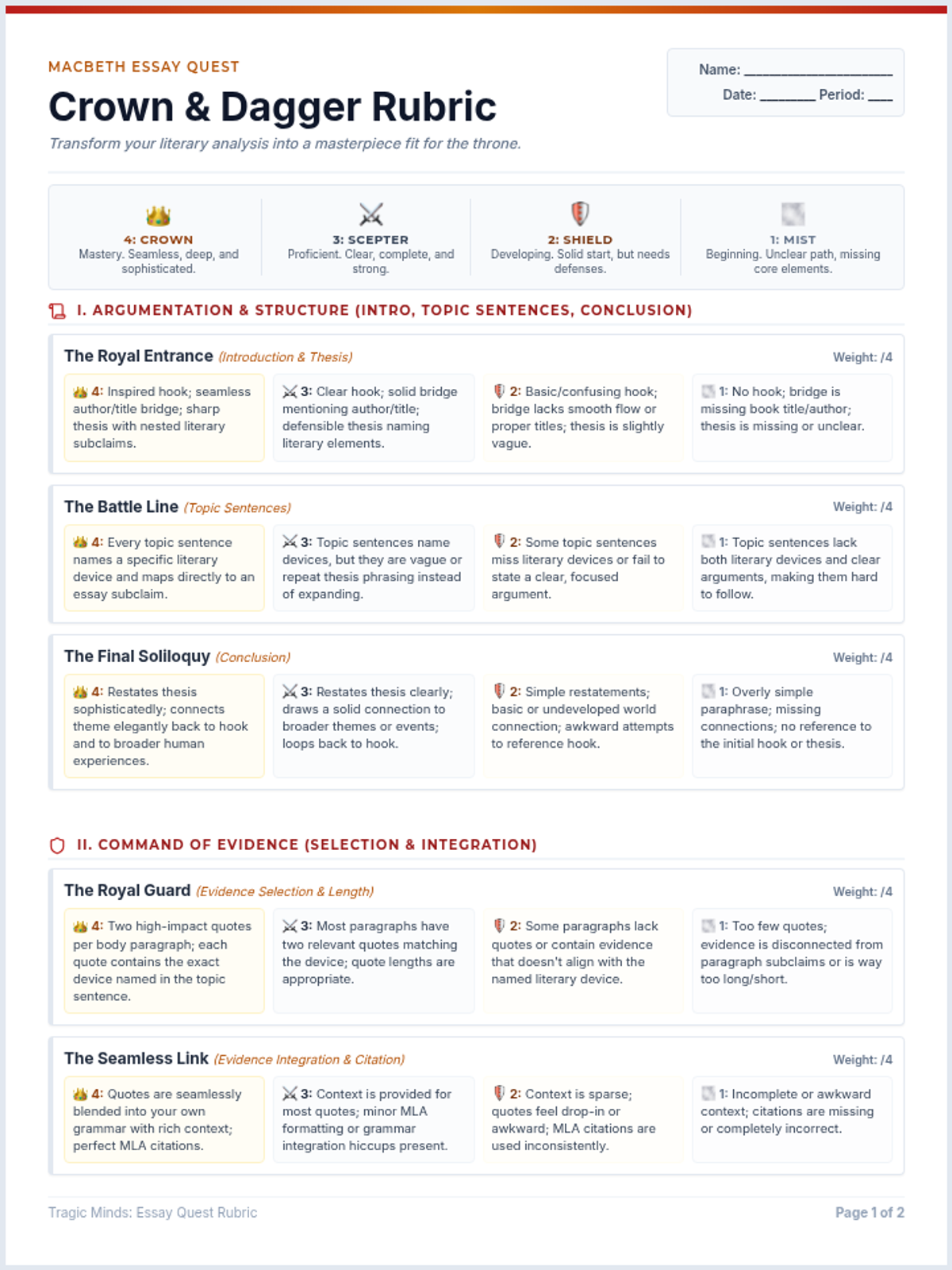
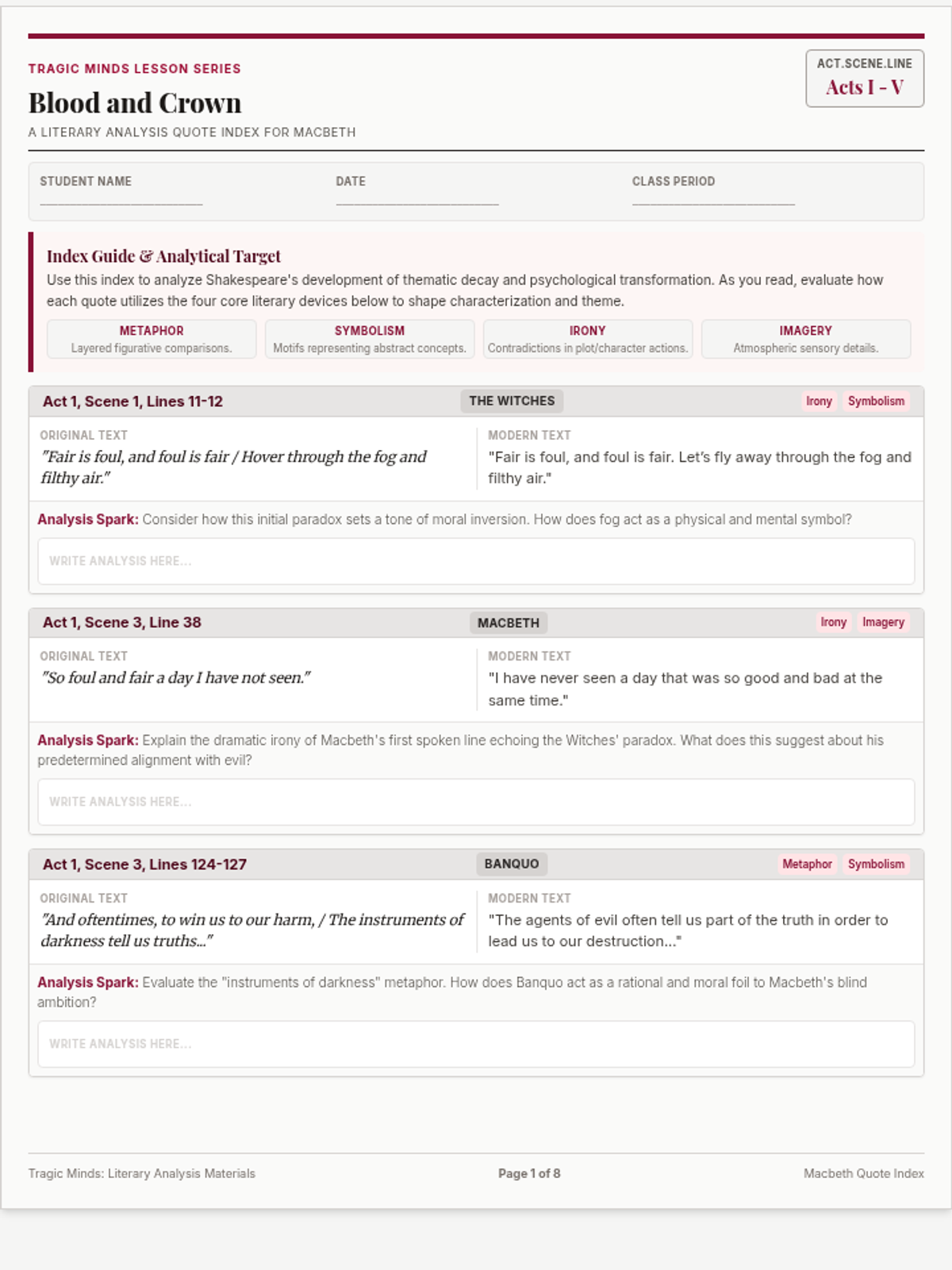
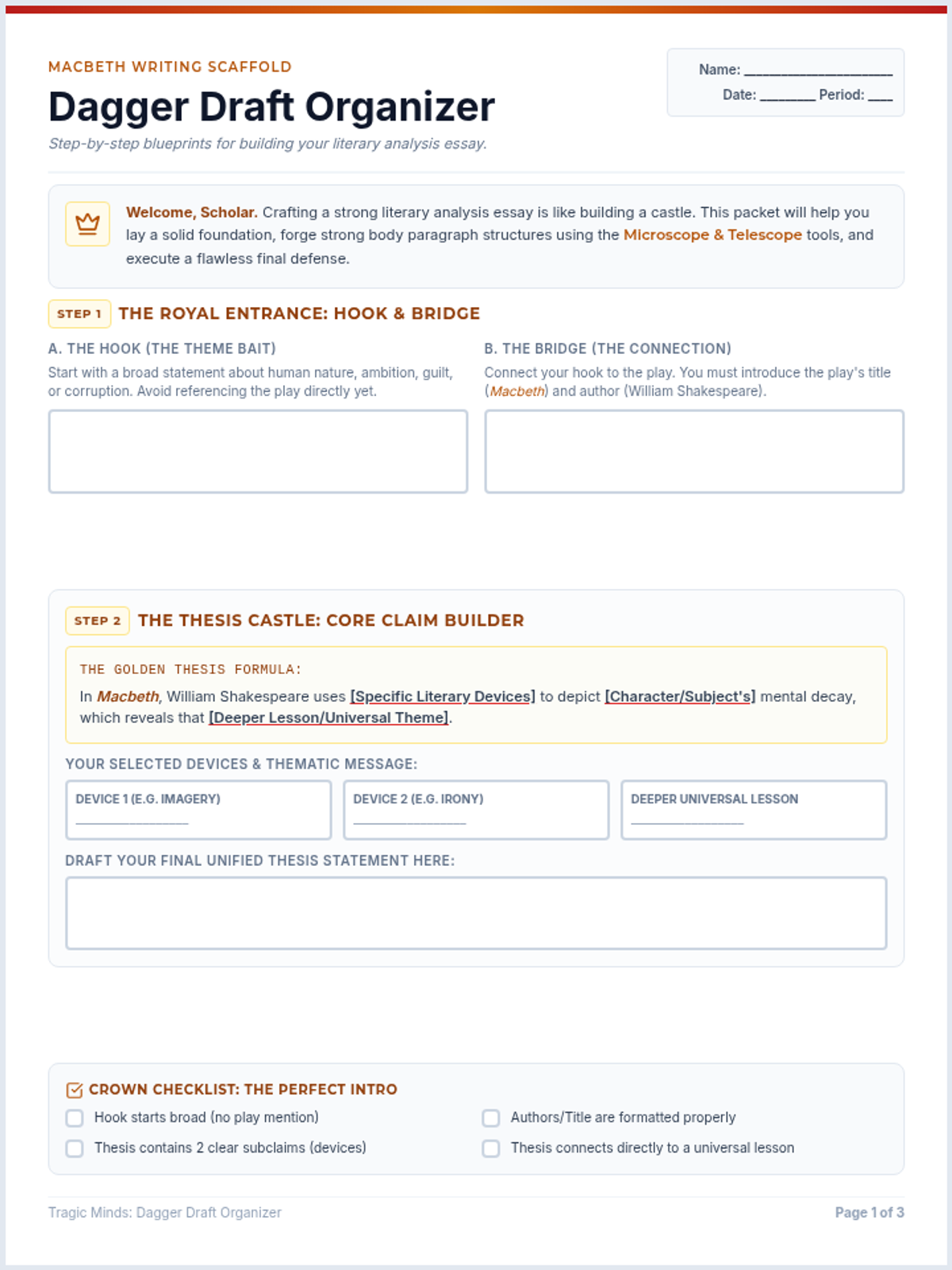
An introductory lesson on Shakespeare's Macbeth focusing on its lasting impact on language and modern adaptations, specifically Joel Coen's film.
A comprehensive prep lesson for the TSIA2 ELAR section, covering reading comprehension, text analysis, and sentence-level writing skills. Includes a high-impact review presentation and a full 30-question practice exam with answer key.