Students explore the fundamental purposes of cross-examination: clarification, commitment, and exposing fallacies. The lesson emphasizes the power dynamics of body language and pace, distinguishing between assertive and aggressive questioning.
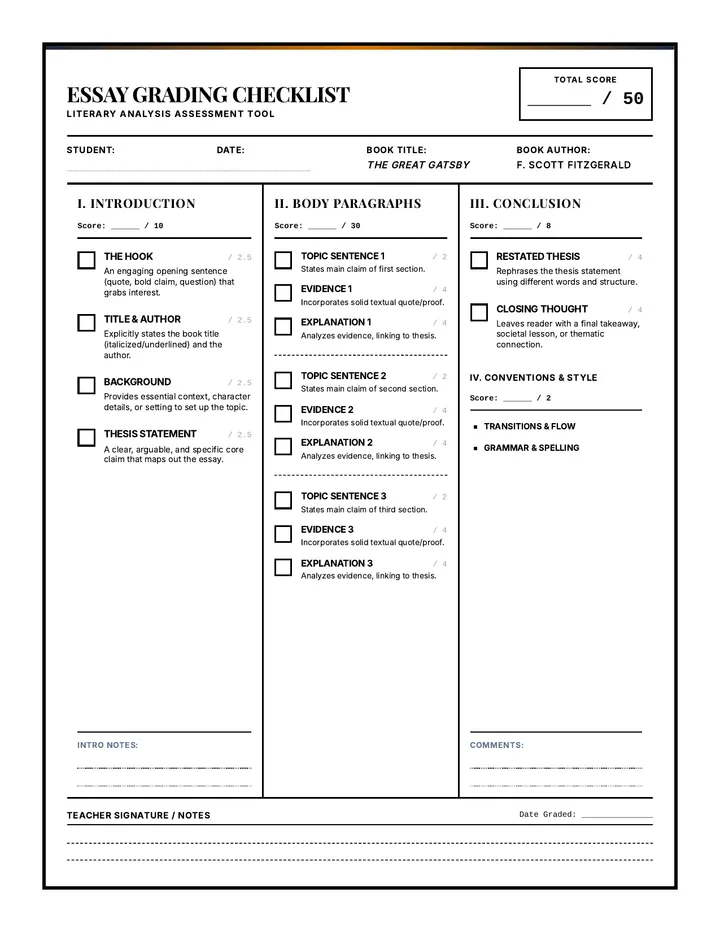
A lesson dedicated to the assessment and grading of literary essays, featuring a structured grading rubric and feedback checklist.
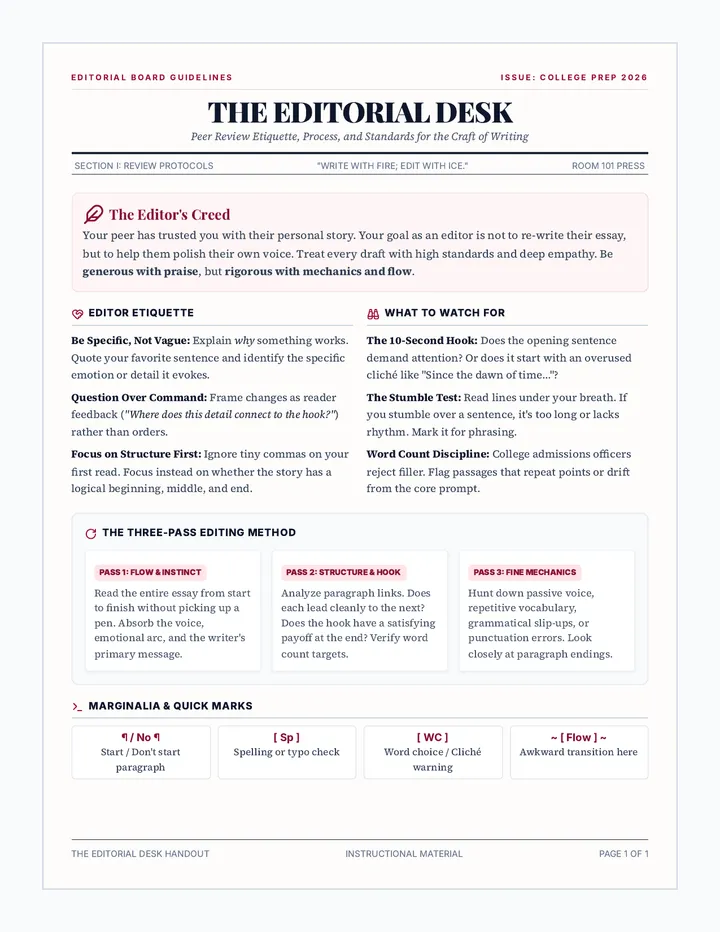
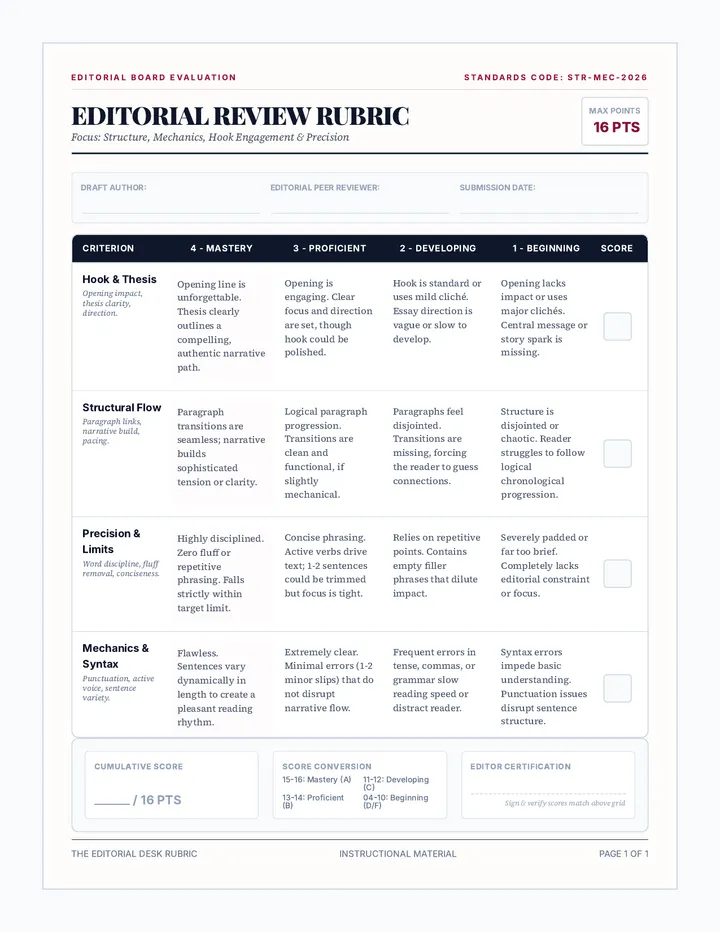
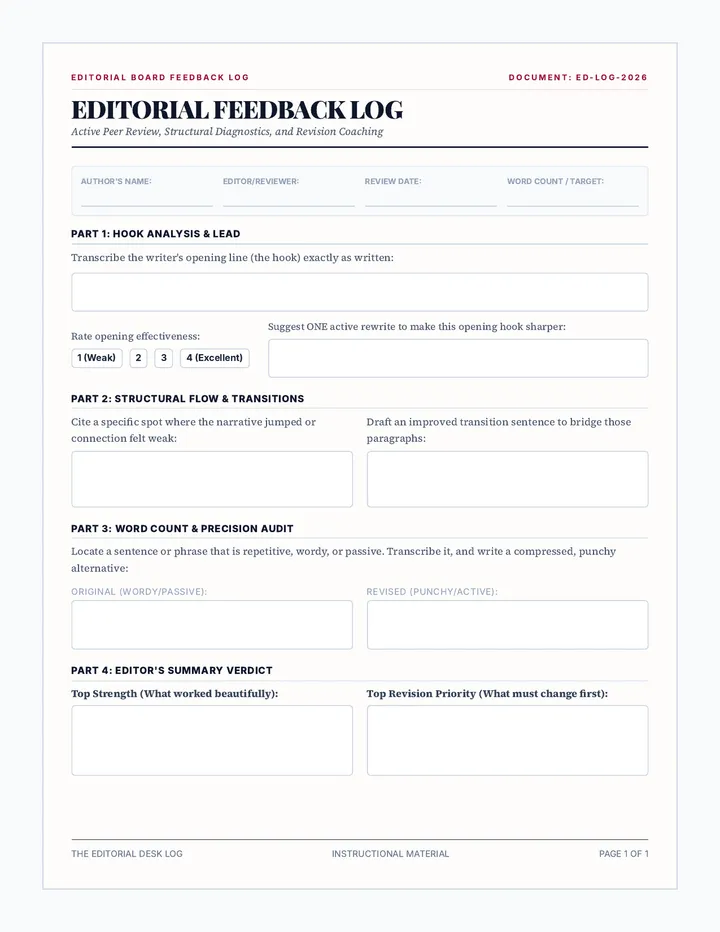
A college essay peer-review lesson focused on structure and mechanics, utilizing an 'Editorial Newsroom' theme. It includes feedback guidelines, a clear four-criterion rubric, and a reviewer response worksheet.
An English listening and speaking lesson where students analyze a crime news broadcast, practice using past simple and past continuous, and debate the ethics of citizen intervention.
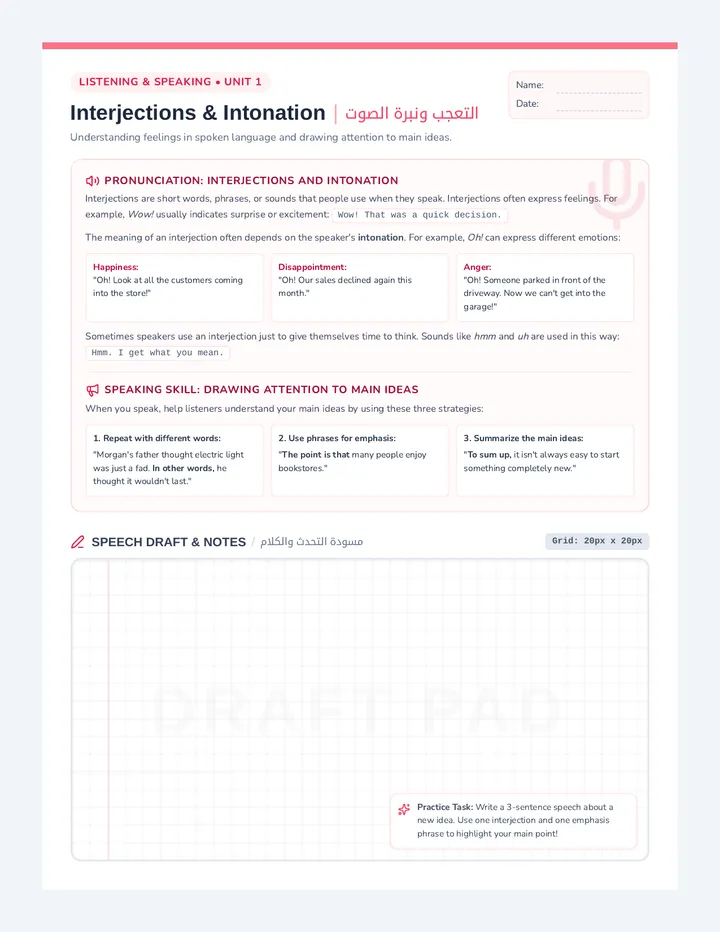
A premium, student-facing draft and rule booklet for English Listening and Speaking (L&S) across 8 core units of pronunciation and speech skills.
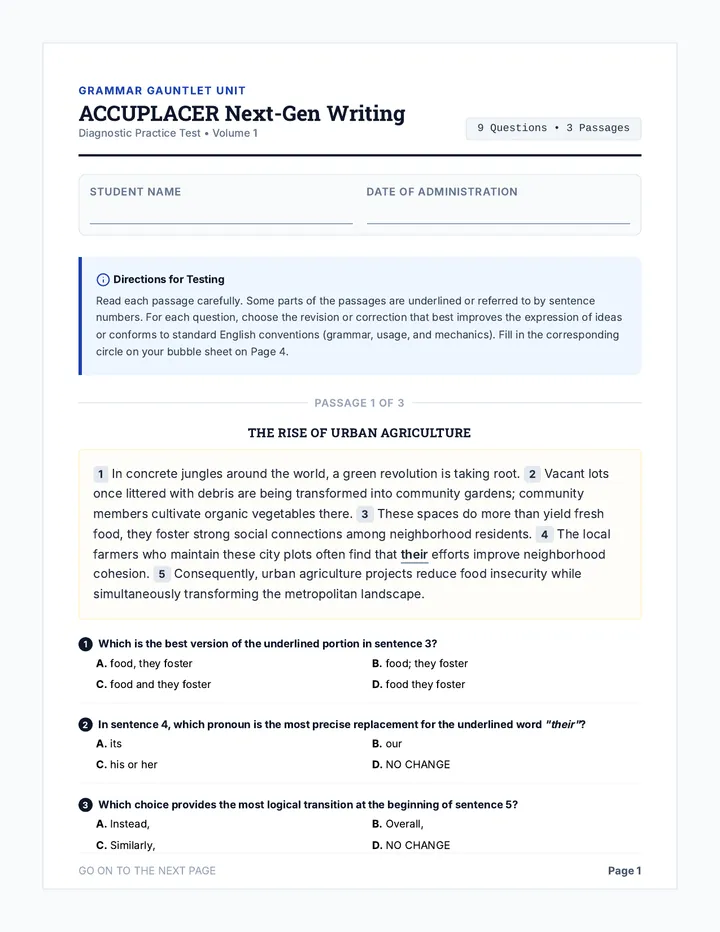
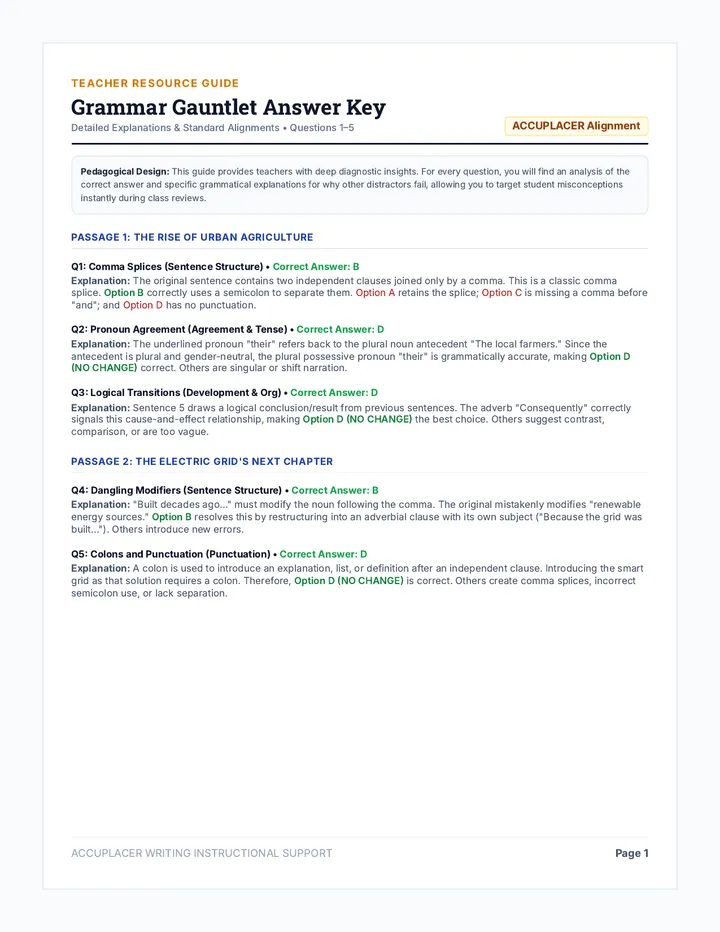
An intensive preparation unit designed to master the ACCUPLACER Next-Generation Writing section. Students practice identifying and correcting run-ons, pronoun-antecedent agreement, dangling modifiers, and structural organization using standard-aligned passages.
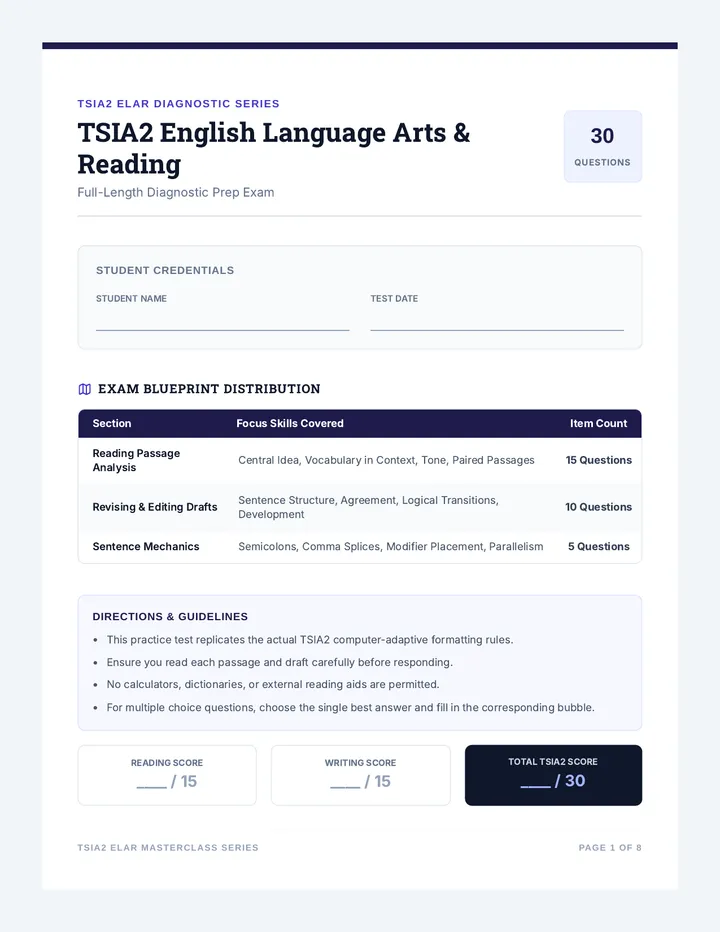
A comprehensive diagnostic prep package for the TSIA2 ELAR (English Language Arts and Reading) exam. It includes a full-length 30-question diagnostic practice test (15 reading, 15 revising & editing) mapped to TSIA2 blueprint distributions, a comprehensive teacher/student explanatory answer key, and a visual slide masterclass covering test blueprint strategies, error analysis, and targeted skill builders.
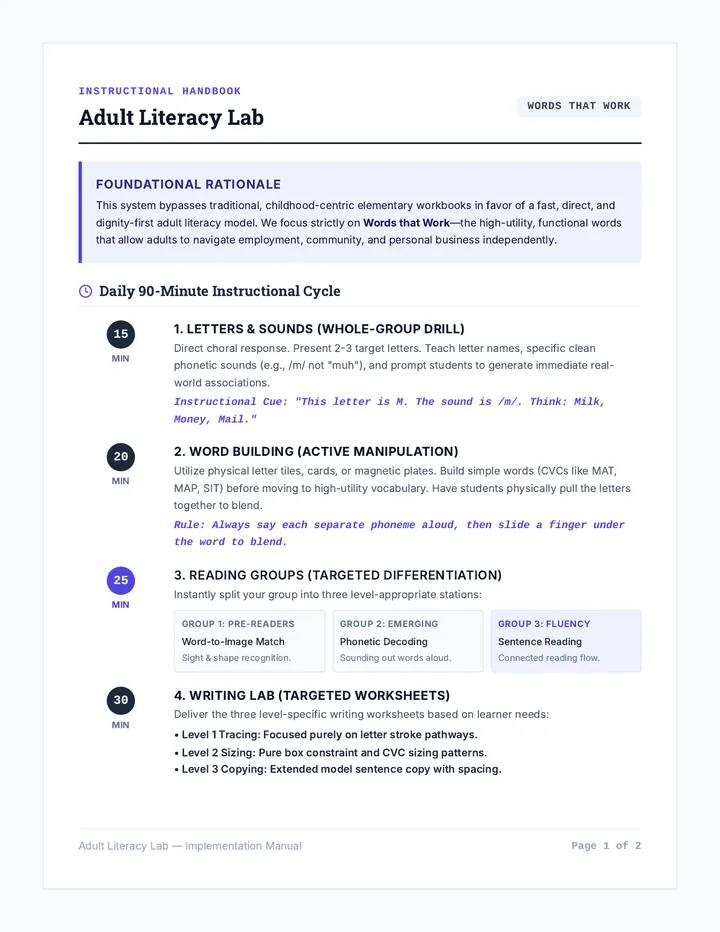
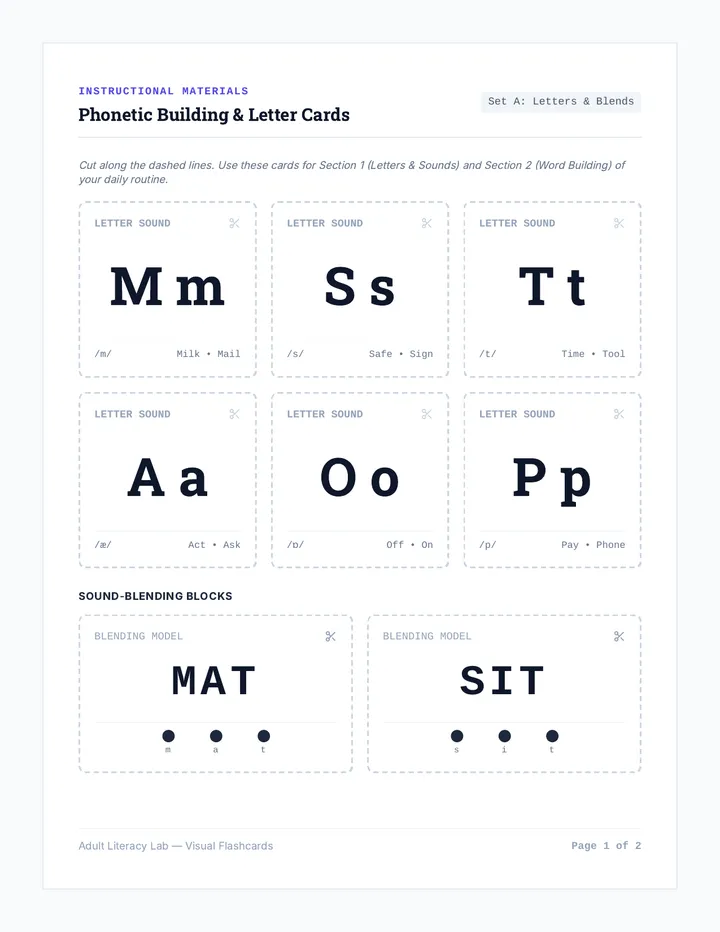
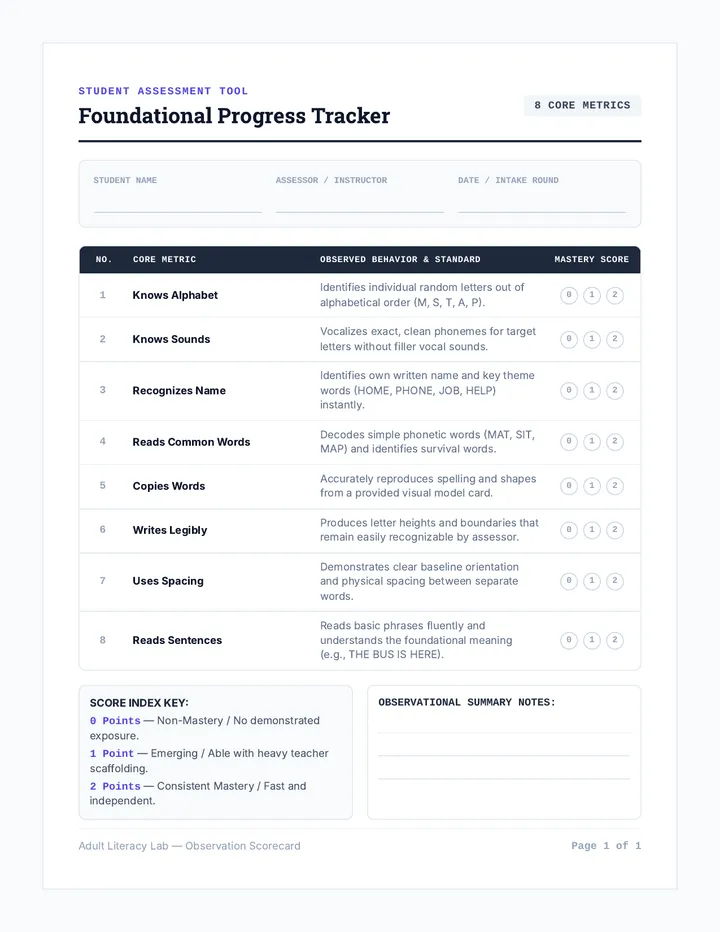
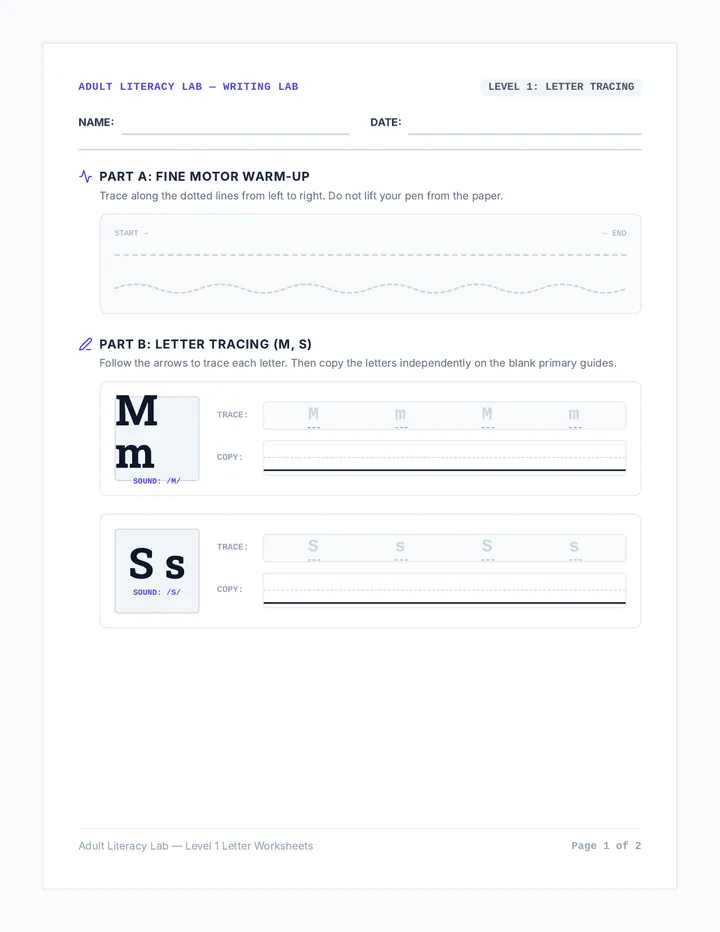
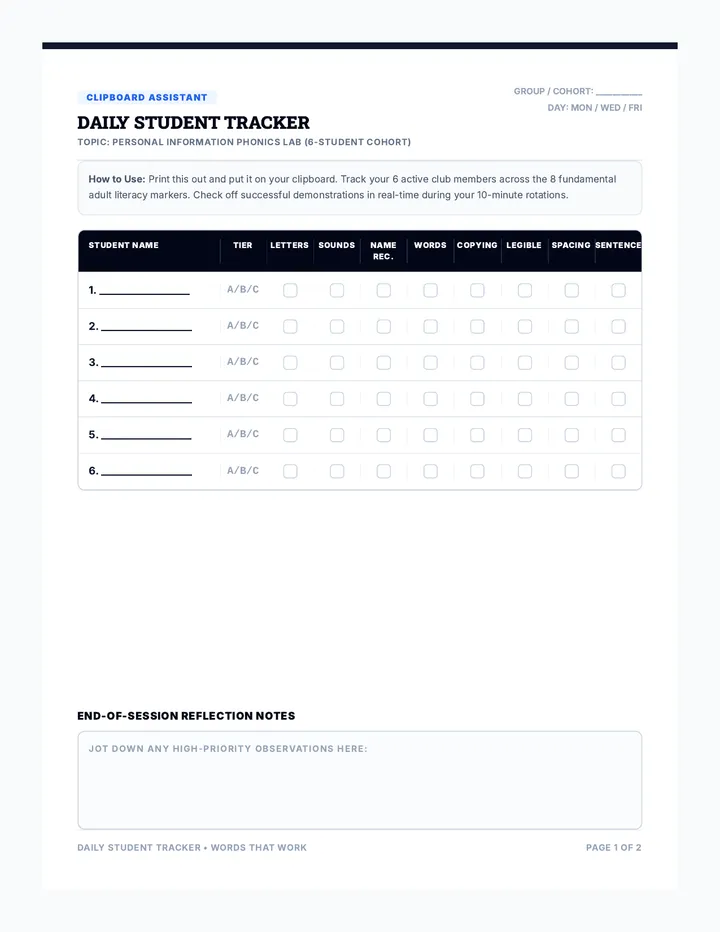
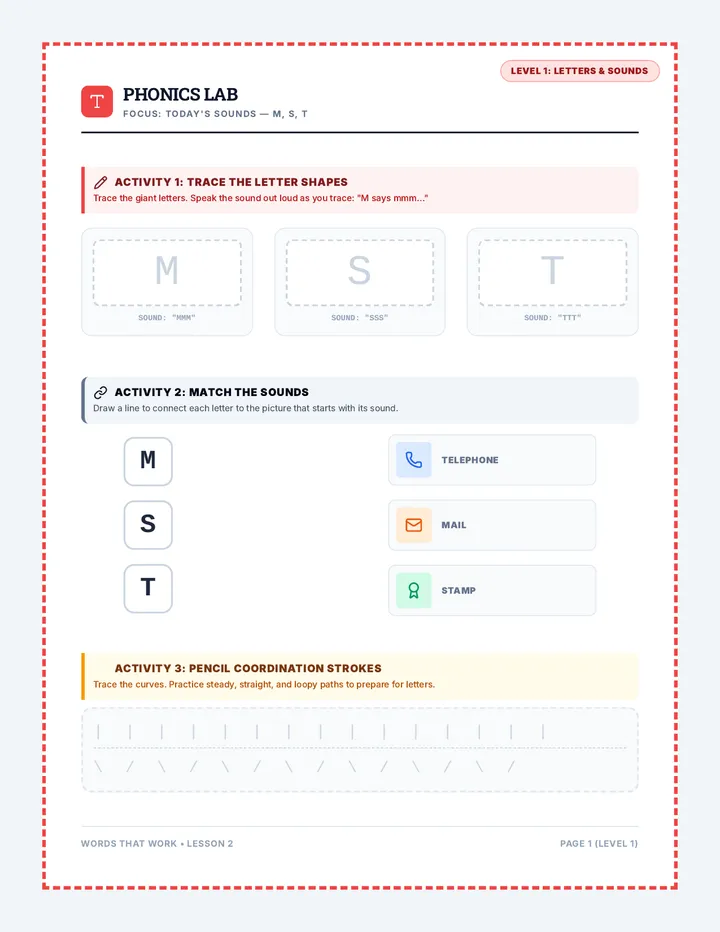
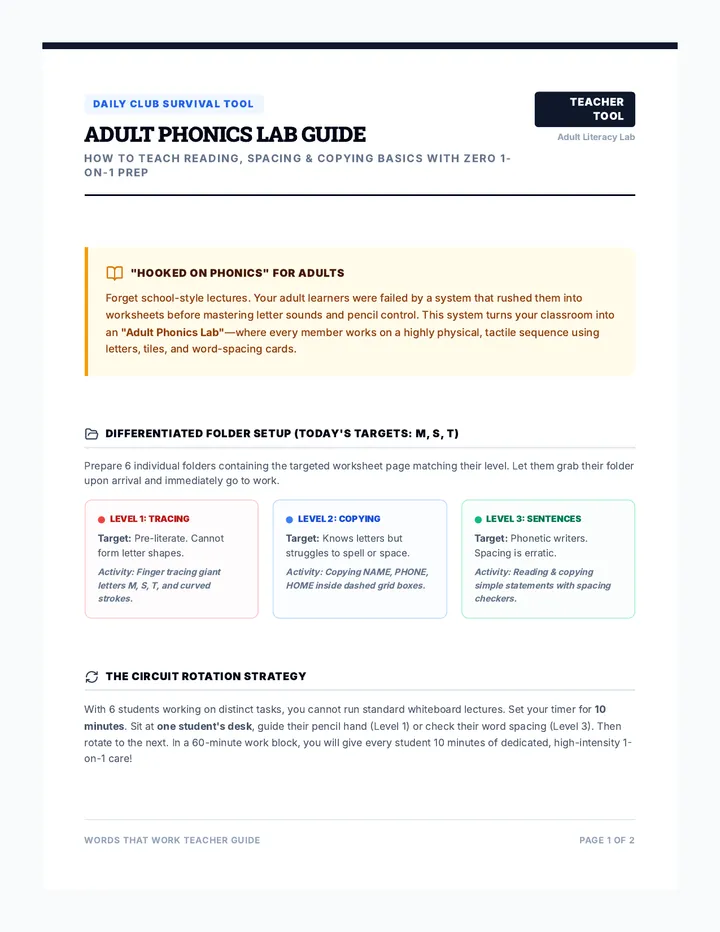
The core launch materials for the Adult Literacy Lab, providing instructors with the structural handbook, tracking rubrics, and high-contrast letter/word cards and writing strips required to deliver daily targeted literacy practice.
A high-energy, speech-conditioning lesson designed to eradicate vocalized pauses ('um', 'uh', 'like') through physical pacing drills and unscripted impromptu speaking challenges.
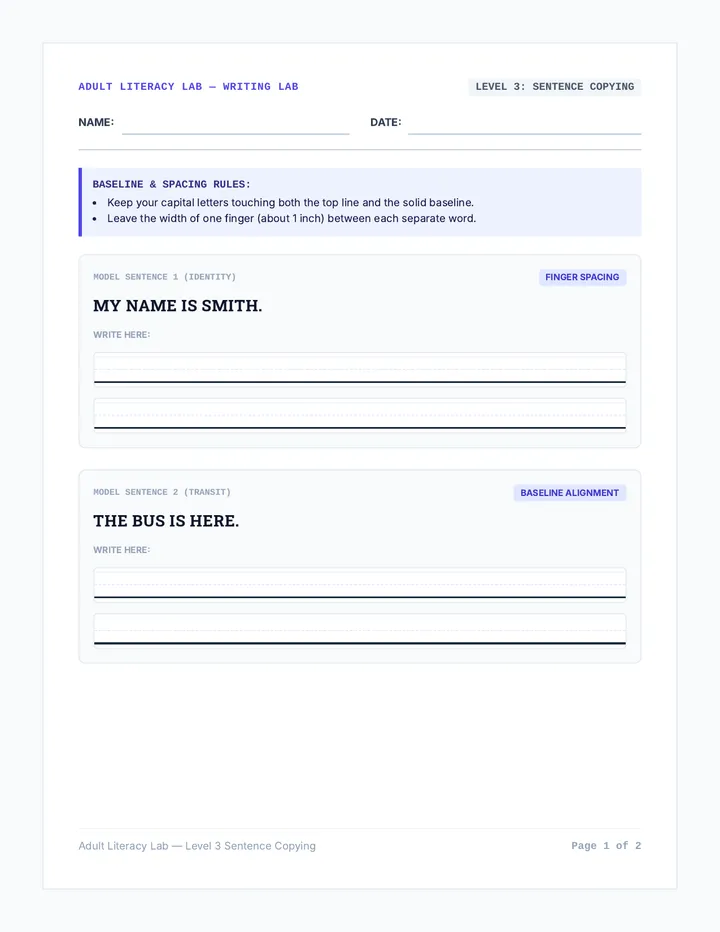
This lesson focuses on personal identification details like address, phone number, and birthdate, designed for multi-level adult literacy learners ranging from pre-literate to transitional writers.
A comprehensive literary analysis lesson focusing on connecting textual evidence directly back to a central idea. This lesson equips students with structured templates and a teacher guide to bridge the gap between quote dissection and thematic analysis.
A construction-themed lesson designed to master coordinating and subordinating conjunctions using visual cues, hands-on activities, and real-world daily life contexts.
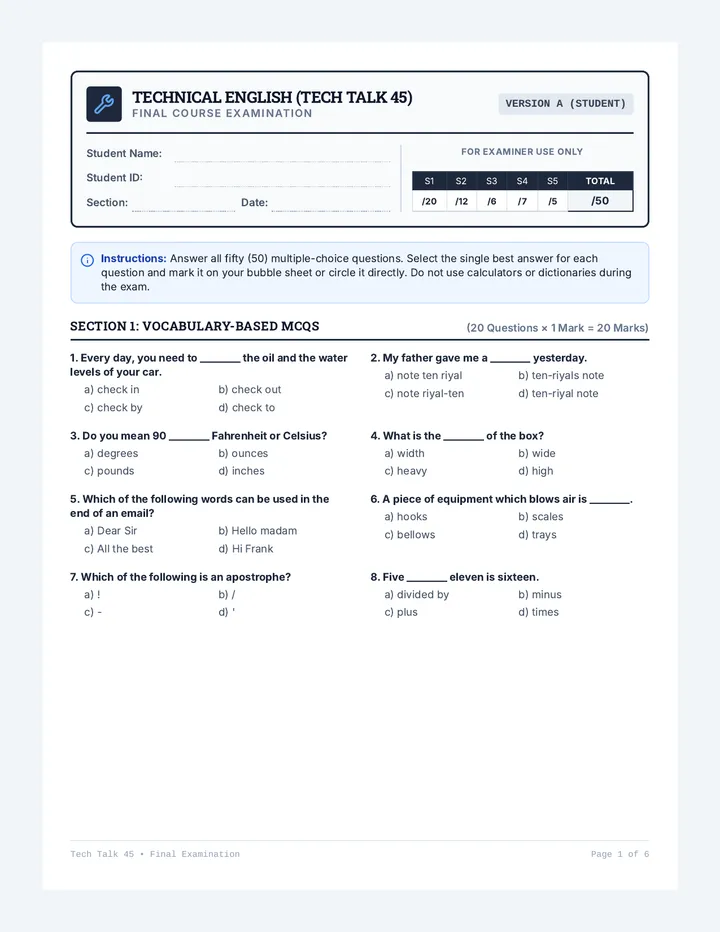
Technical English (Tech Talk 45) Final Examination lesson containing the comprehensive test without solutions.
A comprehensive lesson guiding university students through the design, implementation, and academic writing of a high-scoring 100-page final semester terminal thesis. It focuses heavily on deep learning, NLP, and socio-technical ethical frameworks.
A comprehensive college-level guide to mastering academic summary writing, focusing on active reading, identifying core claims, structured formatting, and maintaining objective academic tone.
A college-level writing lesson focusing on structural precision, thesis formulation, evidentiary mapping, and cohesive argumentation across a multi-paragraph academic essay.
A 60-minute ELA lesson focused on decoding rich vocabulary and figurative language using context clues in a detective-themed investigation.
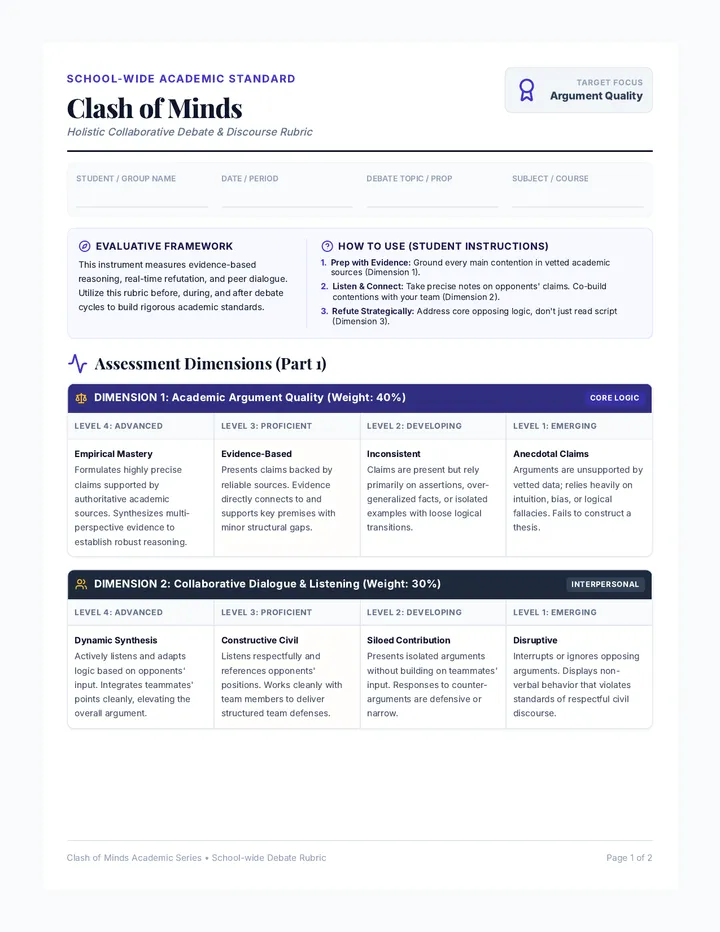
A foundational lesson containing frameworks and evaluative tools to support rigorous, evidence-based collaborative debate. It focuses on elevating academic argument quality, critical thinking, and respectful civil dialogue across different subjects and grade levels.
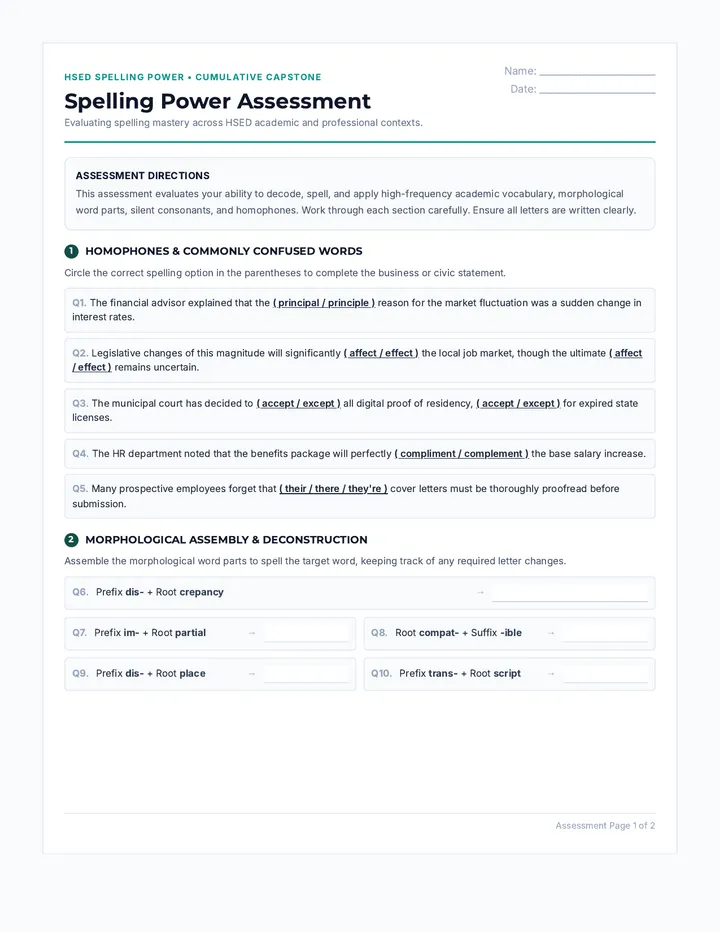
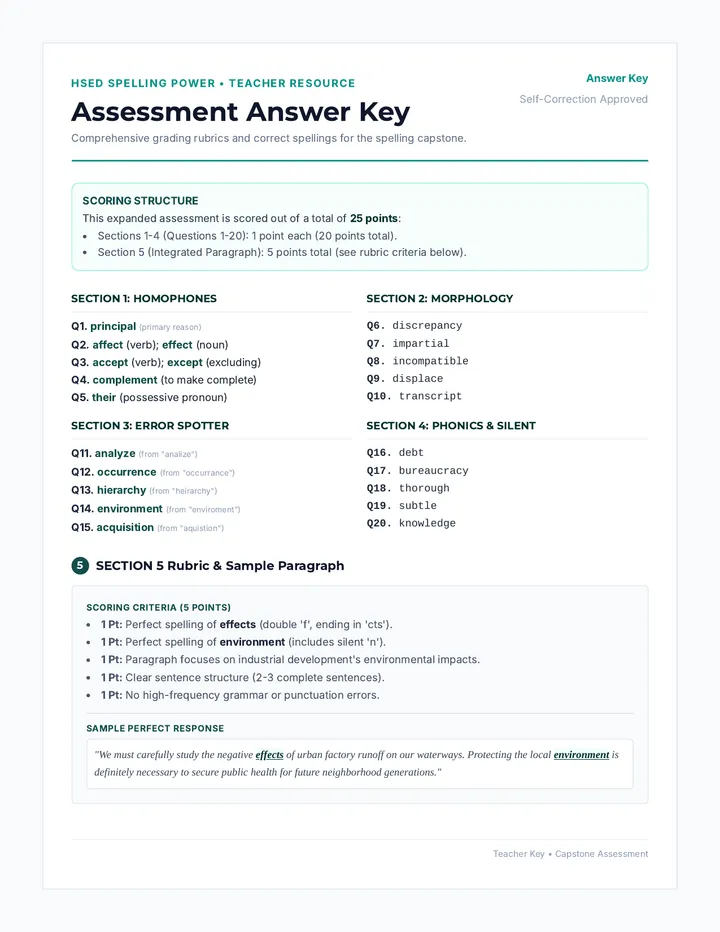
A cumulative final spelling assessment evaluating spelling proficiency across all four focus areas, designed to simulate high-stakes HSED language arts testing environments.
Unpacks silent letters (k, w, g, b) and complex vowel digraphs (ei, ie, ough) that present common spelling pitfalls on high-stakes secondary reading and writing assessments.
Targets tricky, high-frequency academic vocabulary words that frequently appear on HSED social studies, science, and language arts tests, emphasizing irregular spelling patterns.
Deconstructs word parts (prefixes, suffixes, and Latin/Greek roots) to empower adult learners to decode, spell, and understand complex academic and professional terminology.
Focuses on mastering common homophones and frequently confused words in adult workplace, financial, and academic contexts (e.g., affect/effect, principal/principle, accept/except).
An intensive analytical lesson focusing on Shakespeare's Macbeth, exploring the psychological decay of characters and the thematic significance of motif transformations across all five acts.
Tackles LSAT Comparative Reading (dual passages), systemizing how to identify points of intersection, agreement, disagreement, and overlapping logical frameworks.
Examines law-related passages, teaching students how to track legal theory developments, multiple viewpoints, and complex judicial arguments without getting lost in legal jargon.
Focuses on identifying the main point, tracking author tone, and mapping argument structure in complex humanities passages. Students learn to distinguish between background, evidence, and conclusions.
A comprehensive summative assessment and answer key for Amy Tan's The Joy Luck Club, focusing on character arcs, mother-daughter dynamics, and cultural symbolism.
An introductory lesson on rhetoric through Janet Boyd's "Murder! (Rhetorically Speaking)", where students explore how audience, context, and genre shape rhetorical choices.
This lesson analyzes Chapter 2 of Just Mercy, focusing on how Stevenson develops his argument about individual agency and the inciting of change through knowledge and hope.
An introductory lesson on Just Mercy by Bryan Stevenson, focusing on characterization, systemic injustice, and the power of hope in the Introduction and Chapter 1.