A high-energy, speech-conditioning lesson designed to eradicate vocalized pauses ('um', 'uh', 'like') through physical pacing drills and unscripted impromptu speaking challenges.
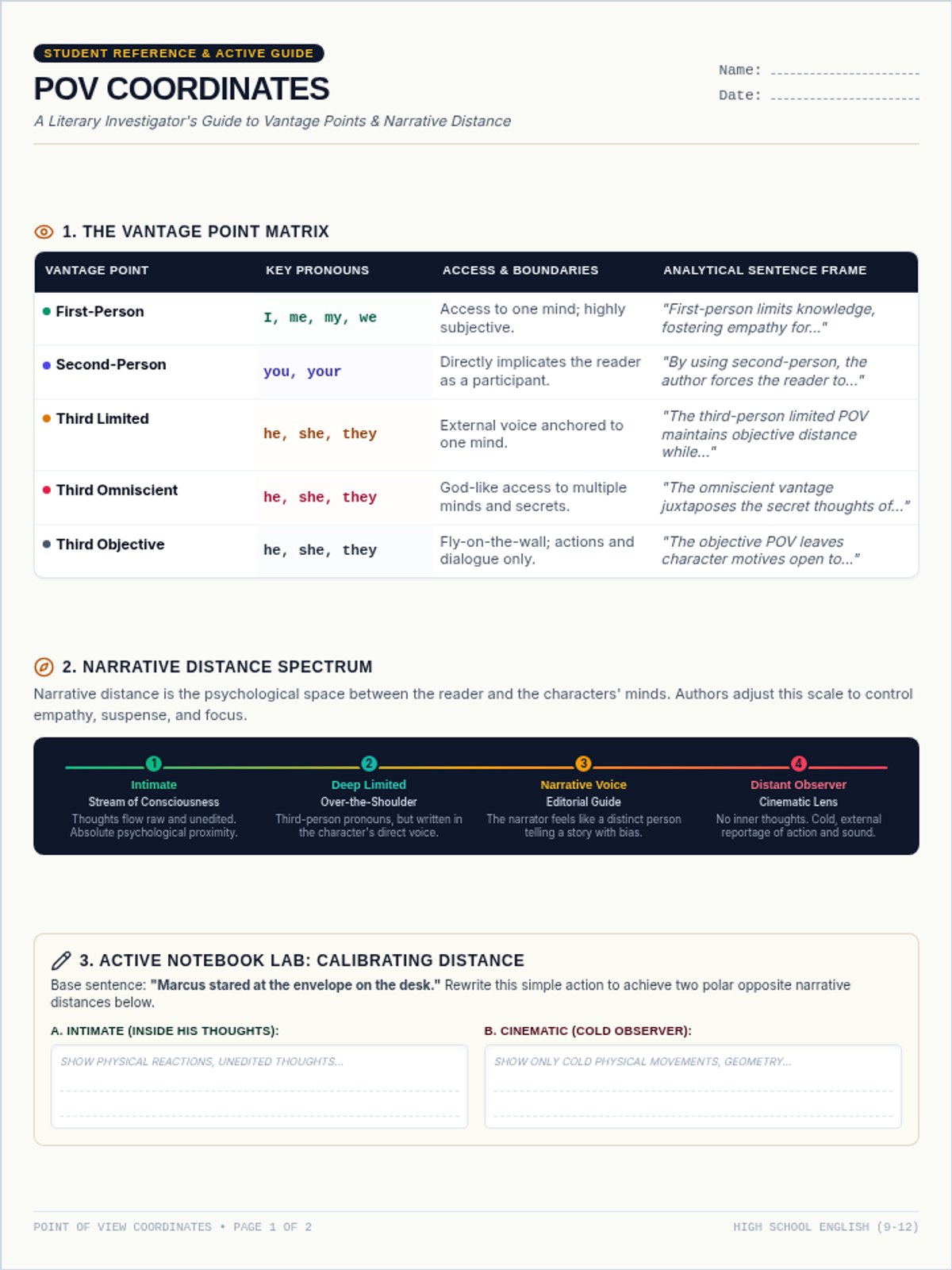
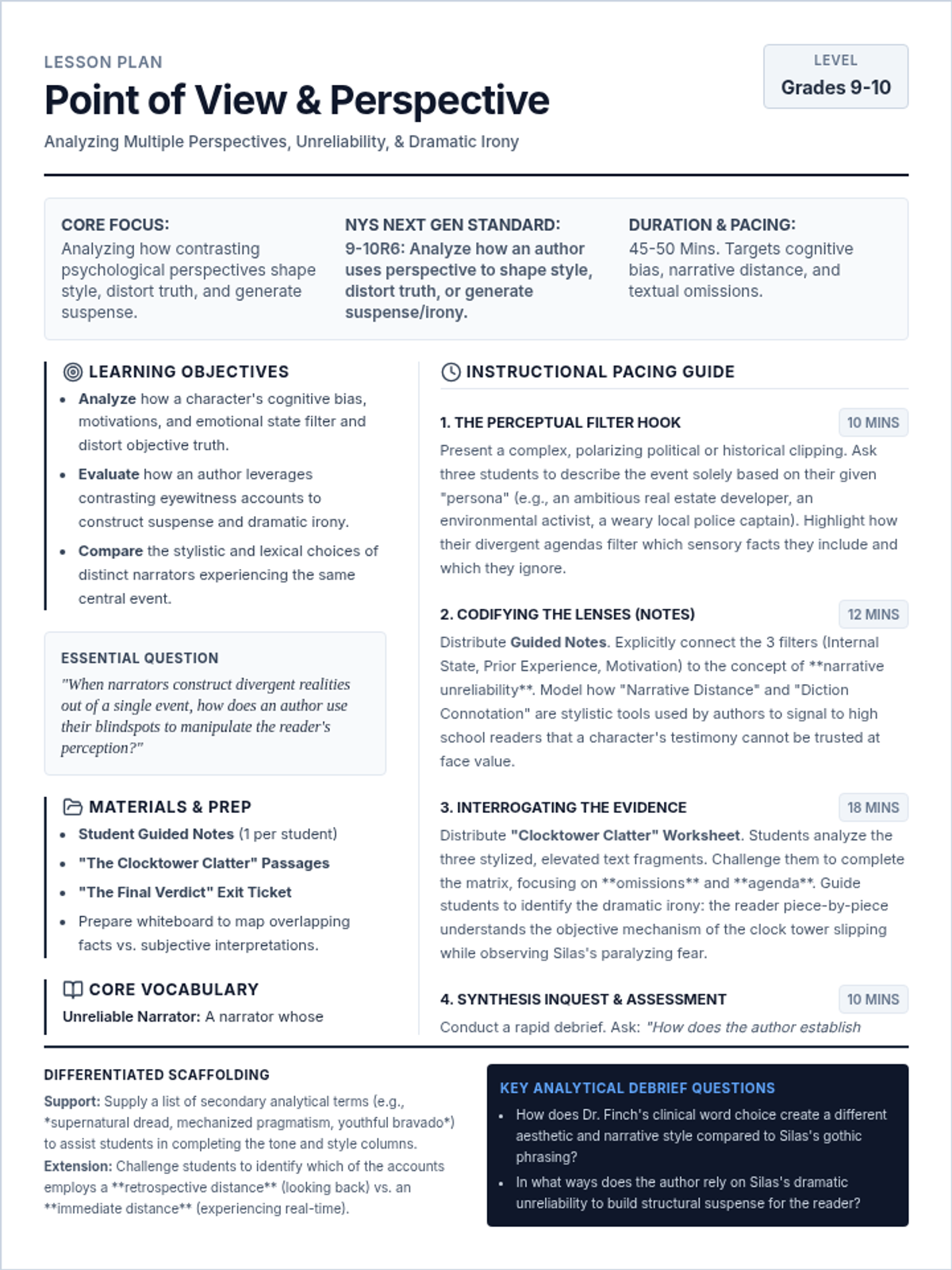
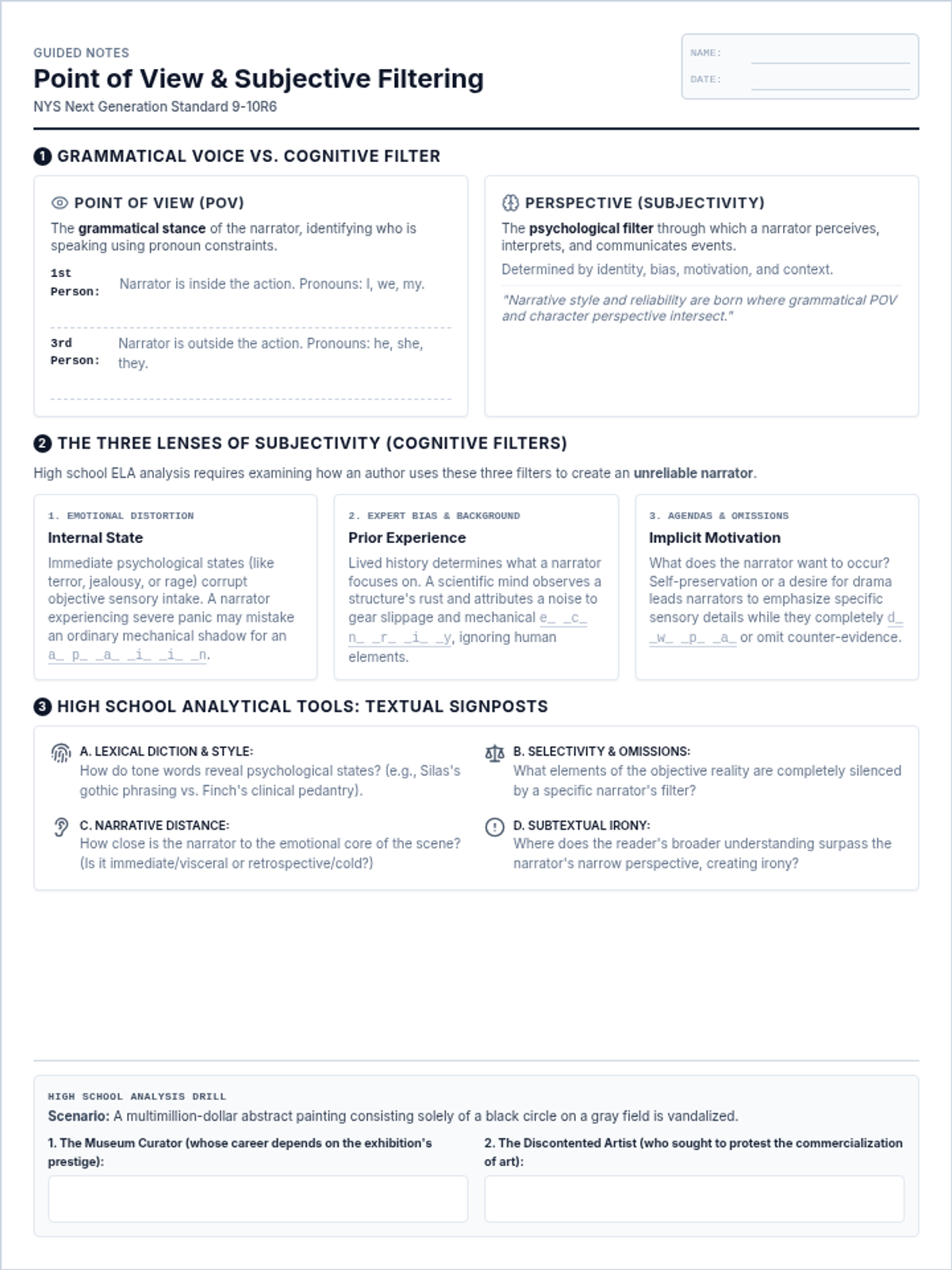
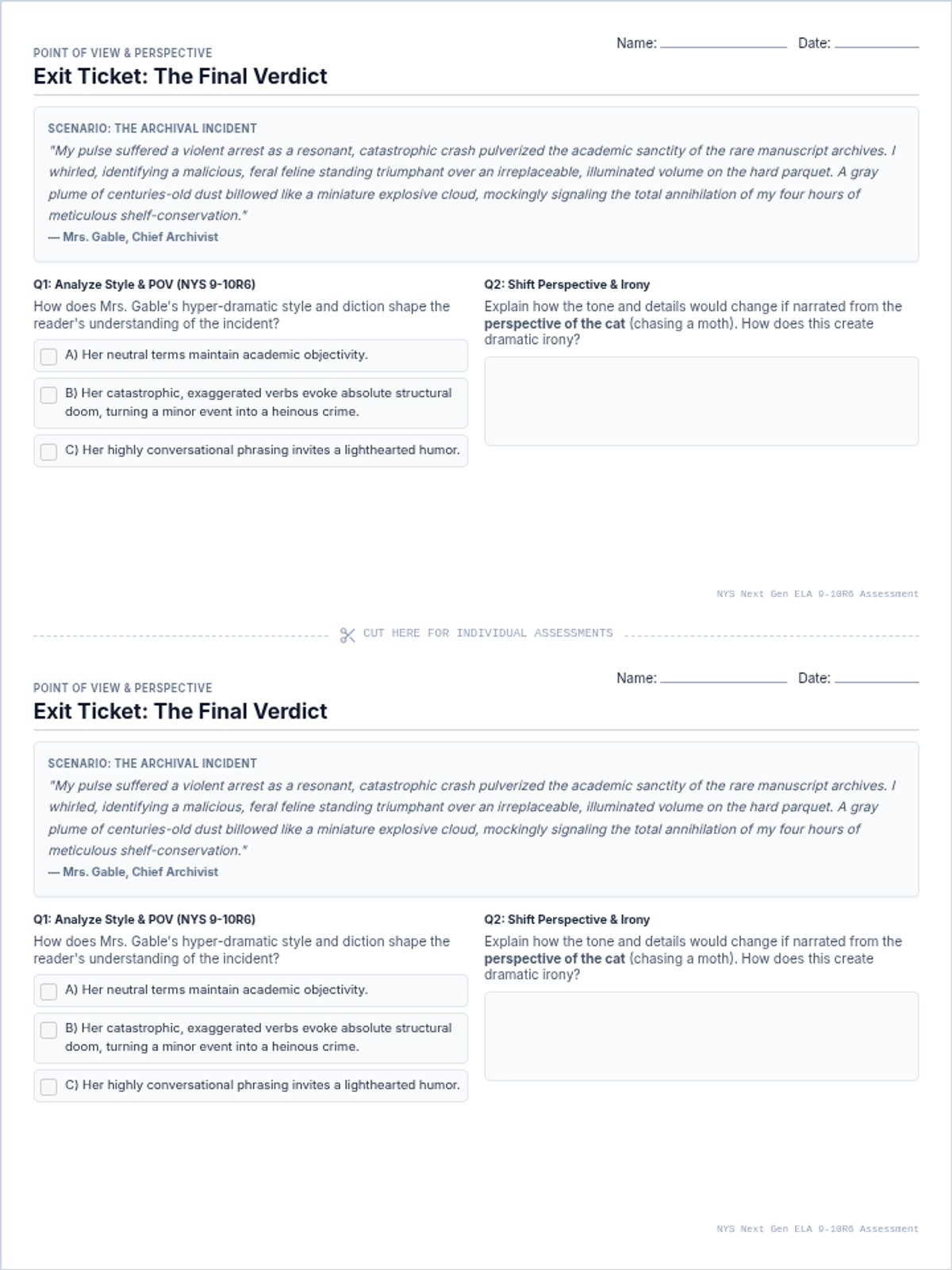
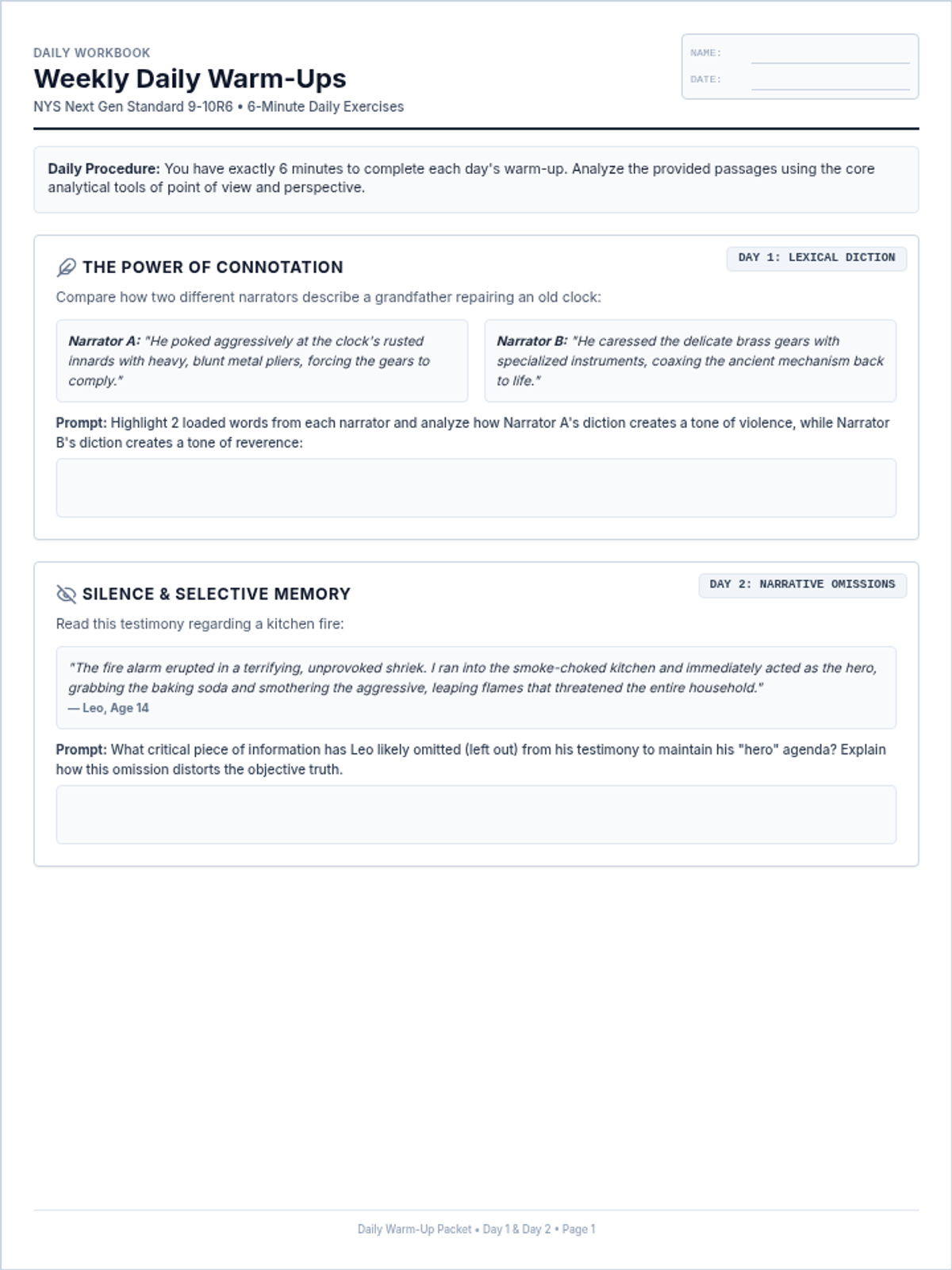
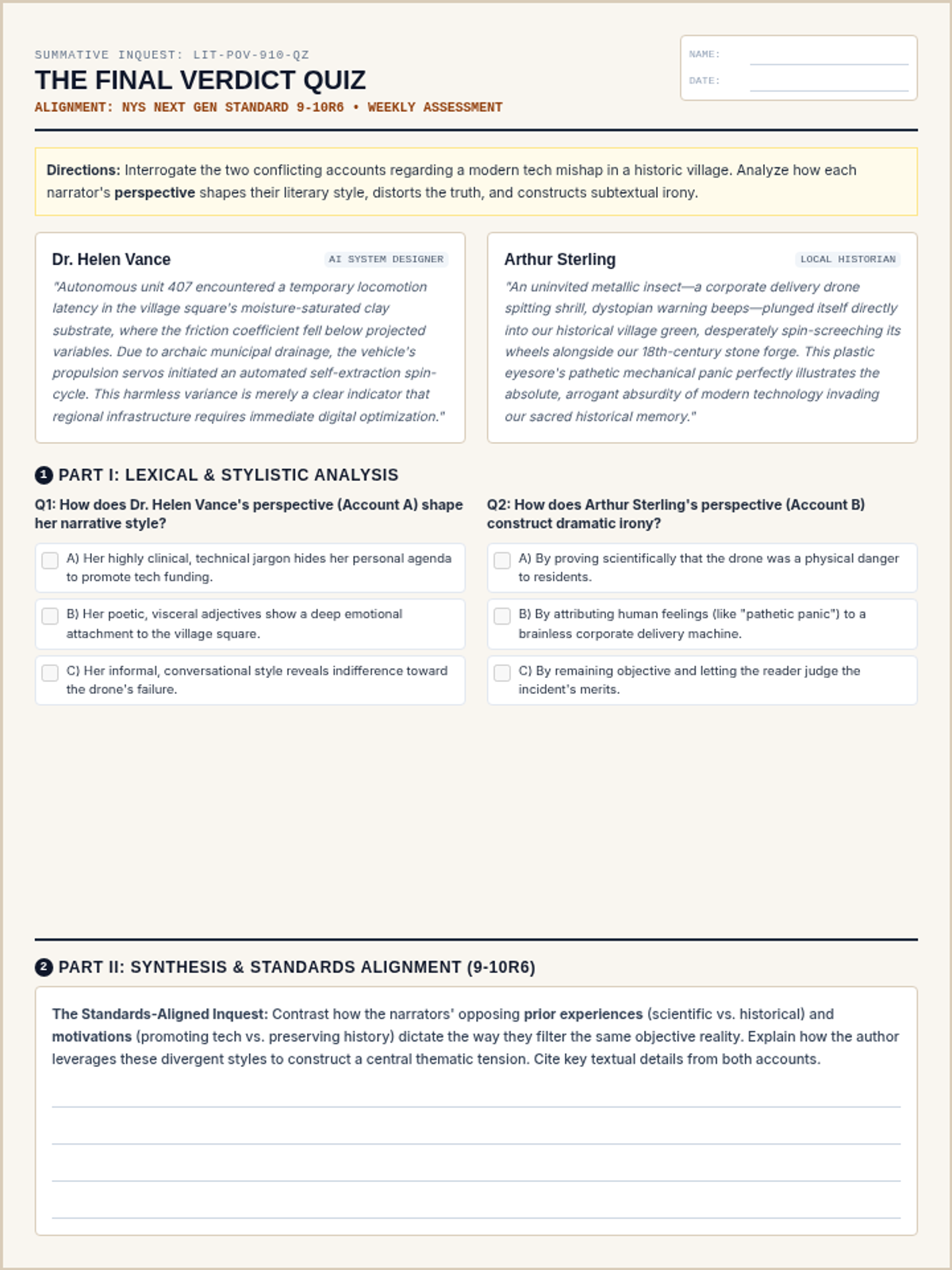
A high school literature and creative writing lesson focused on advanced point of view, narrative distance, perspective shifts, and unreliable narrators. Includes reference guides, analytical toolkits, and practice prompts.
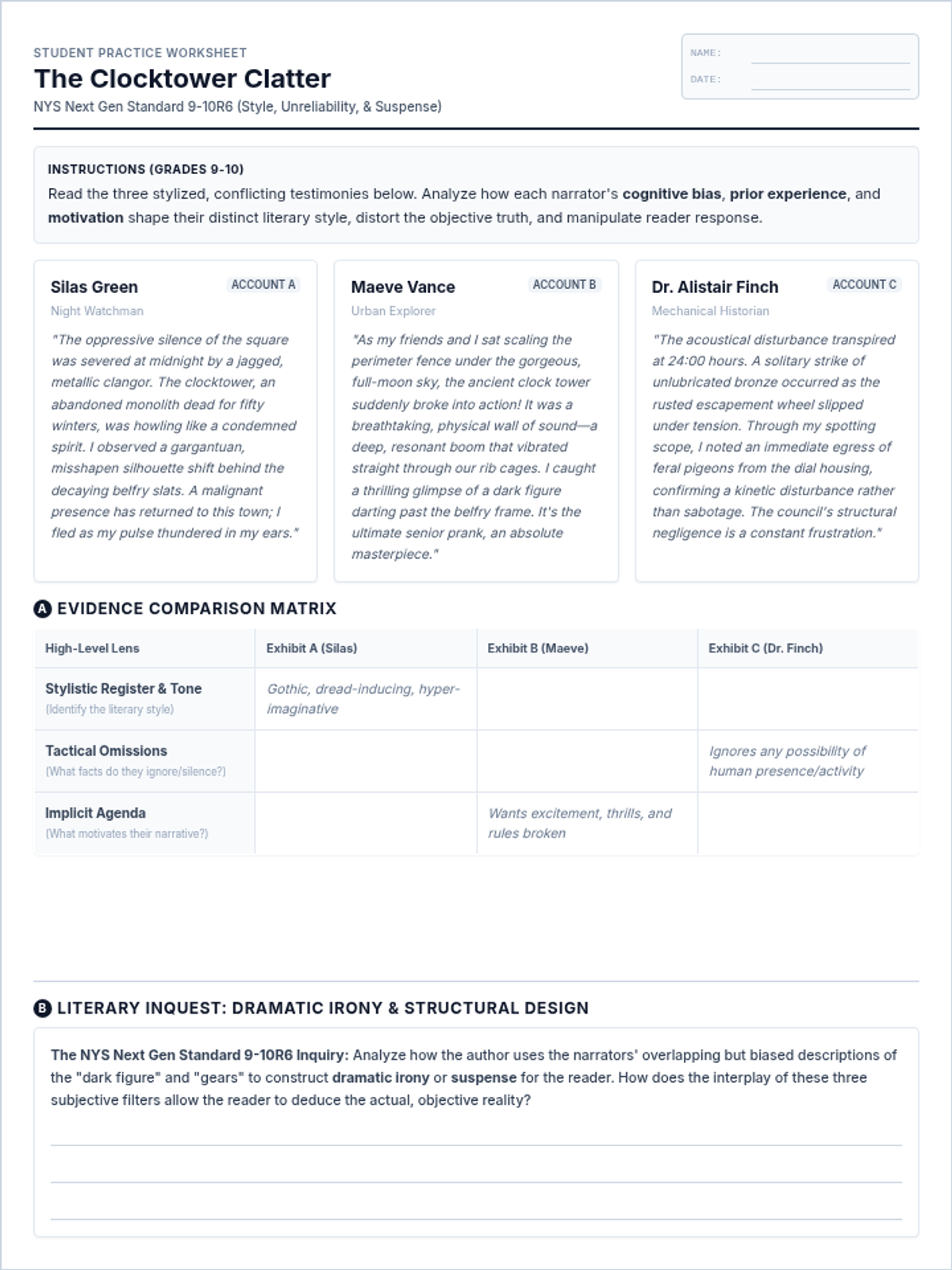
A literature lesson examining how different characters experience and narrate the exact same central event. Students analyze three contrasting accounts of a mysterious clocktower ringing to explore the impact of perspective on narrative truth, tone, and character motivation.
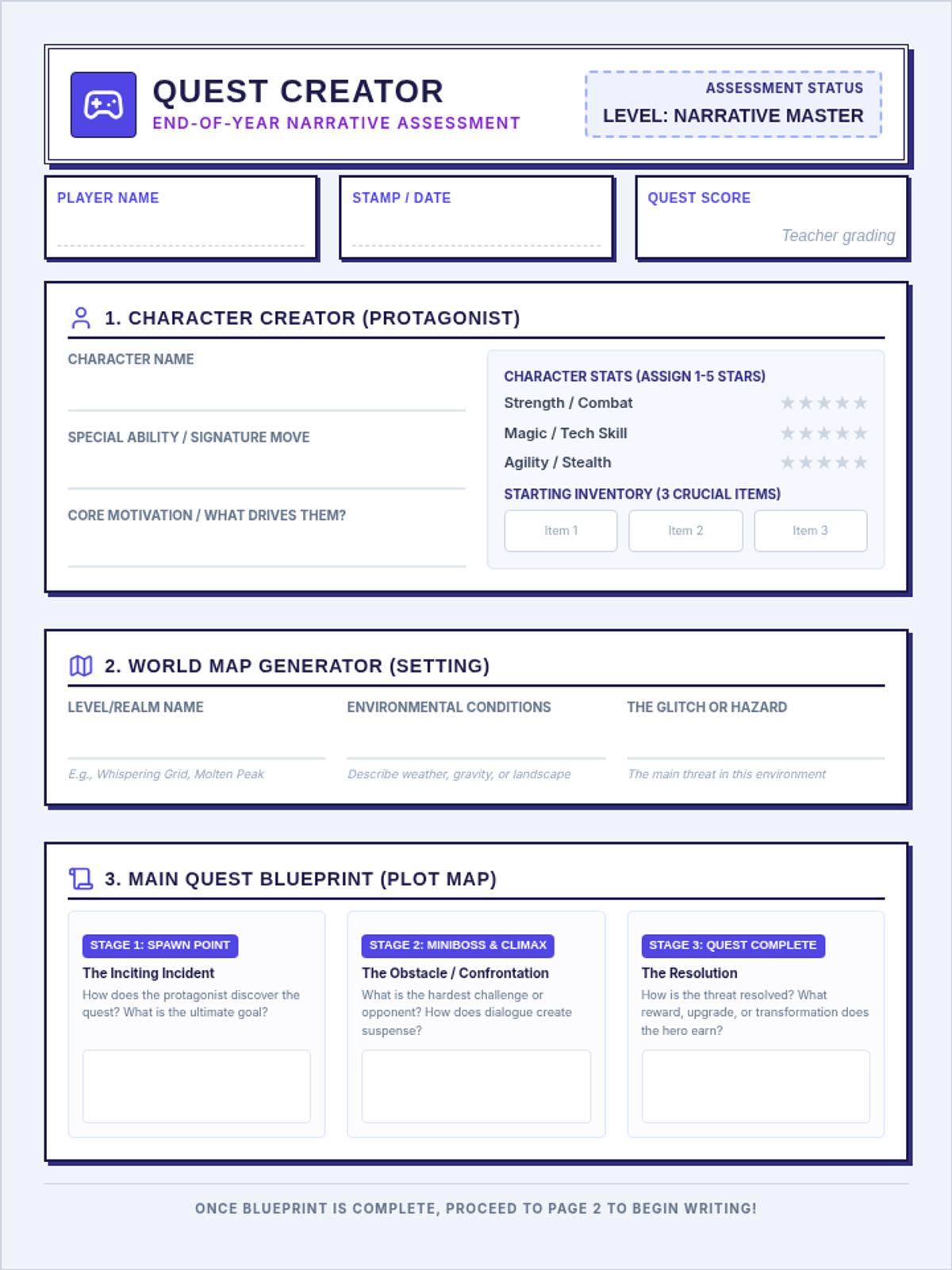
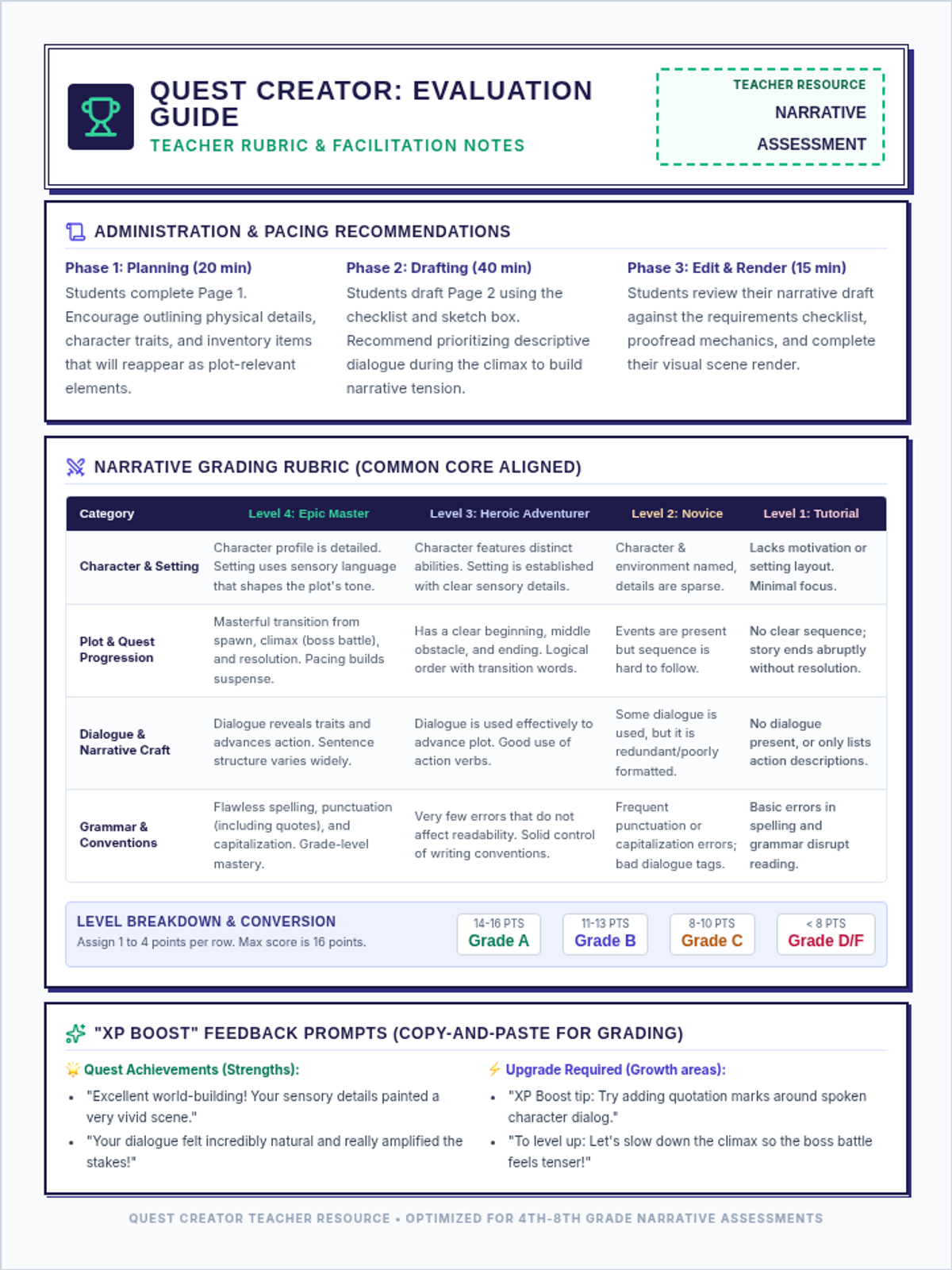
An end-of-year narrative writing assessment where students design their own video game character, setting, and quest, then write an engaging adventure story based on their creation.
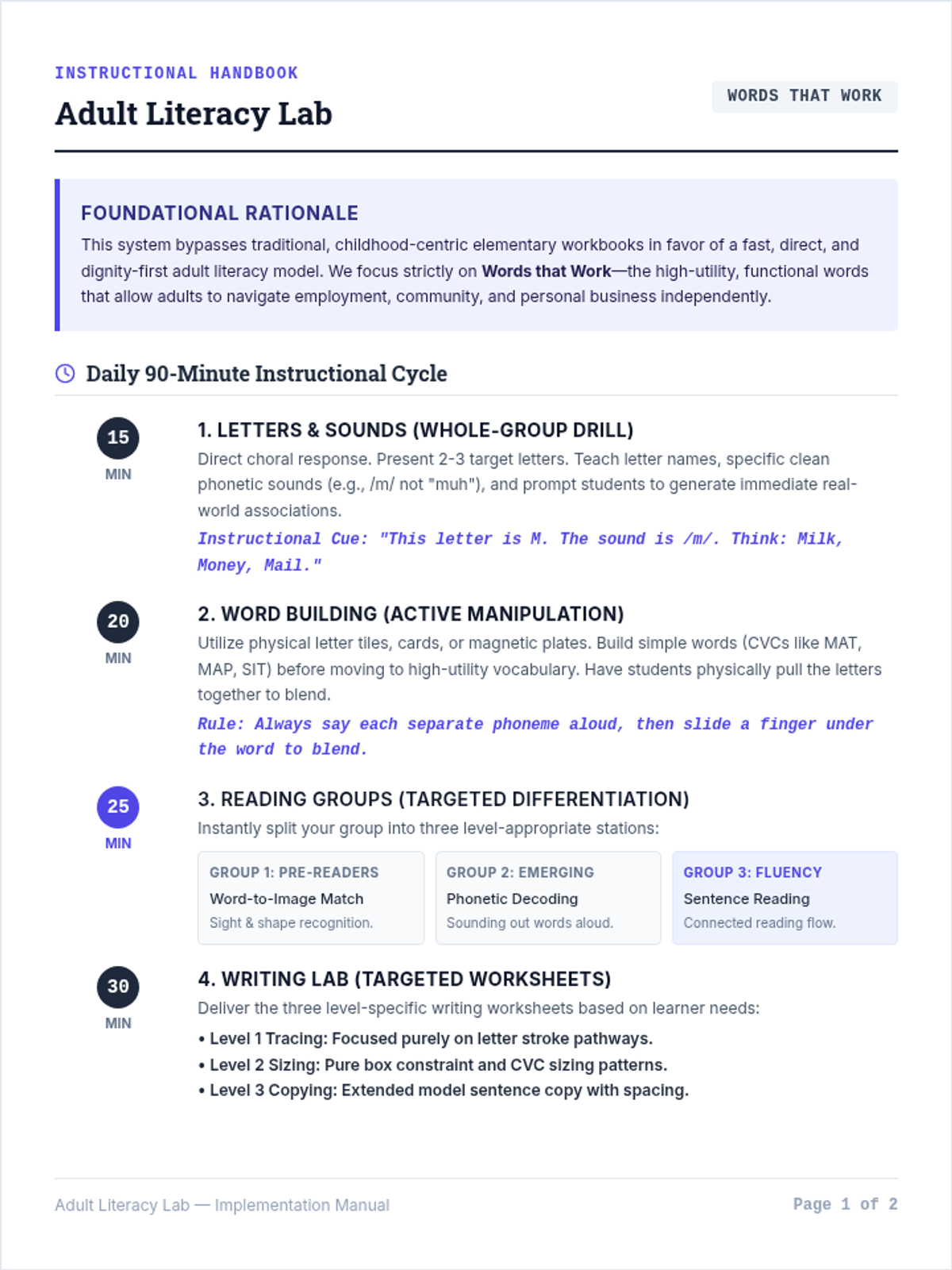
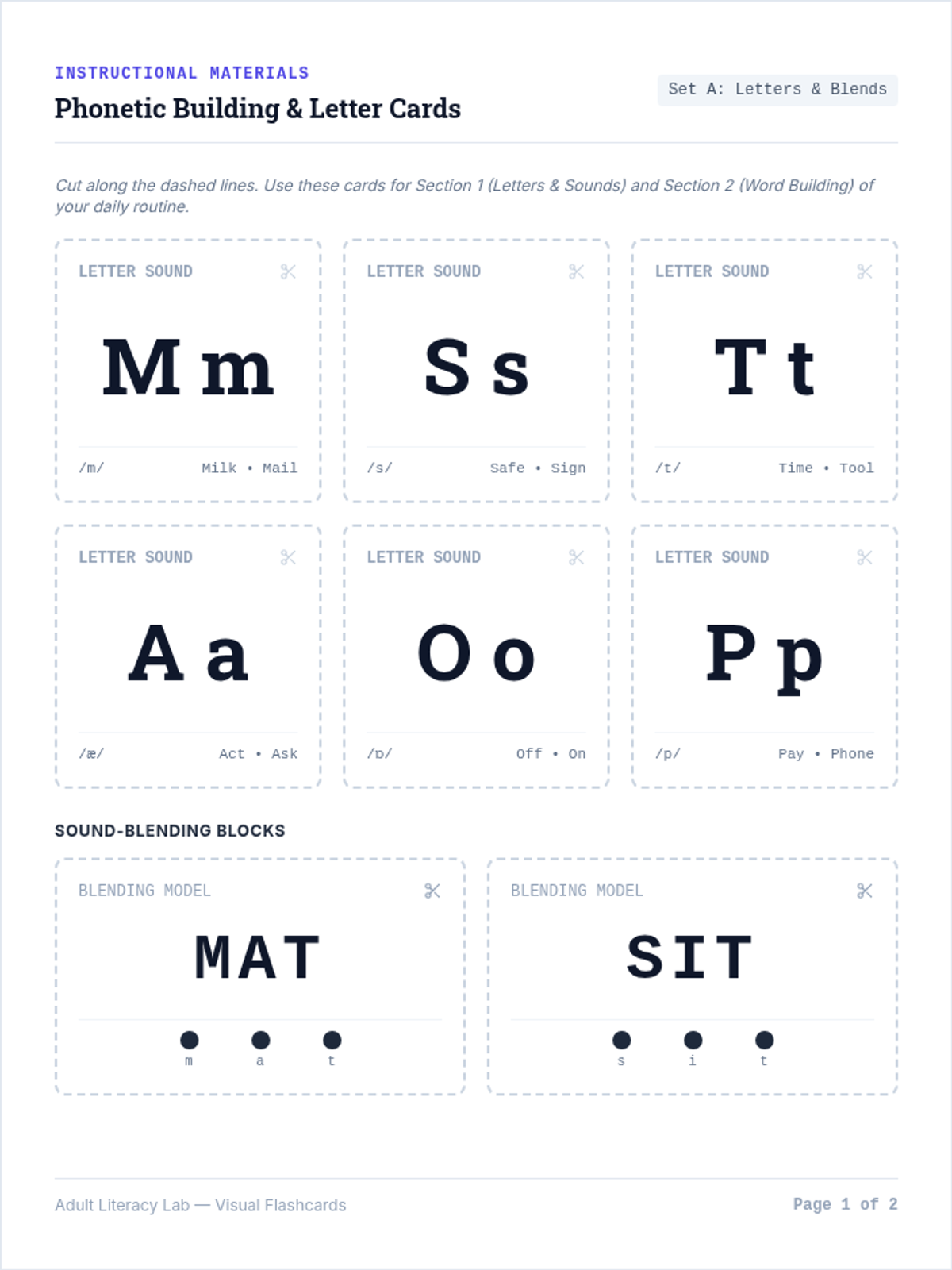
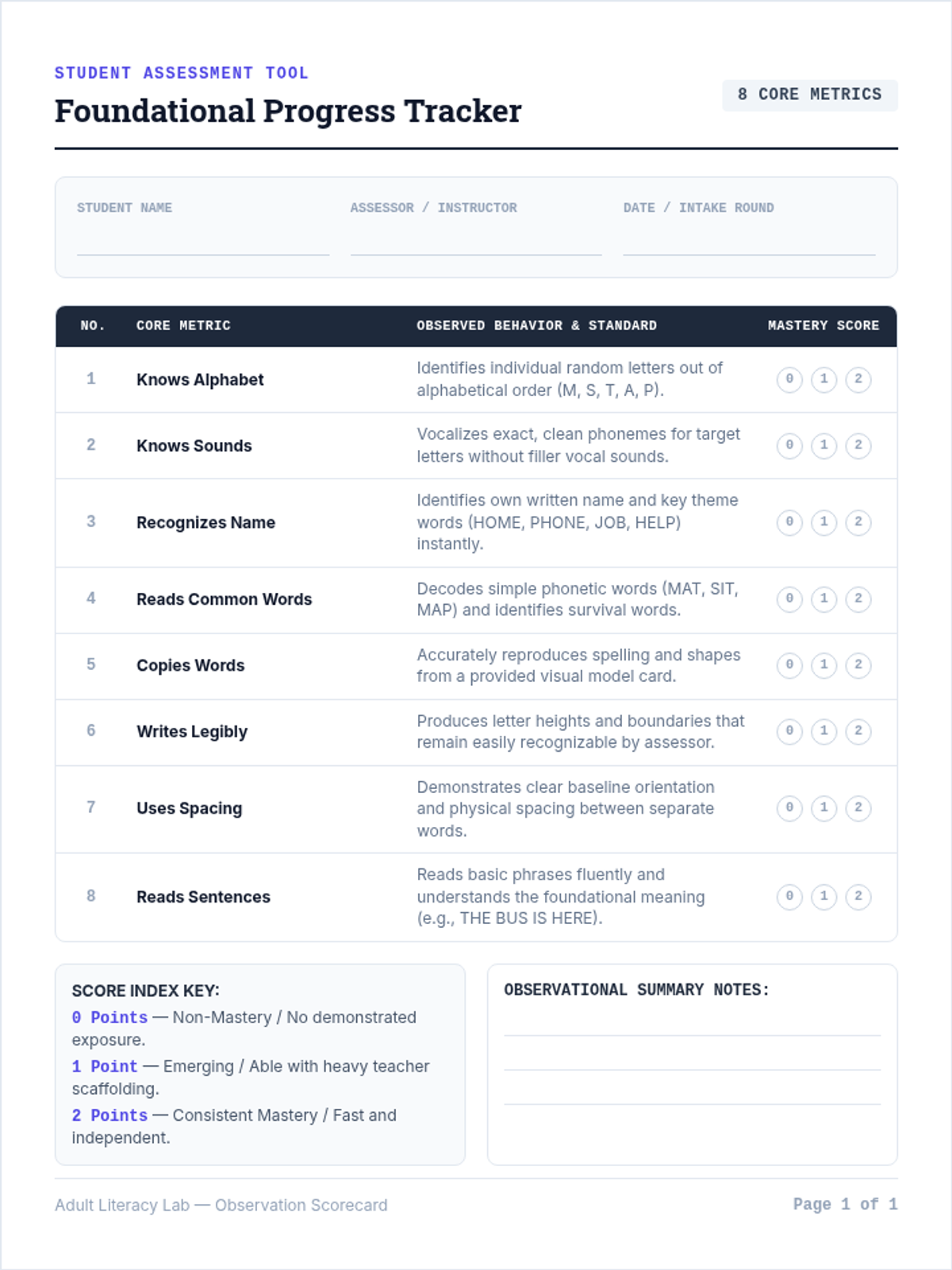
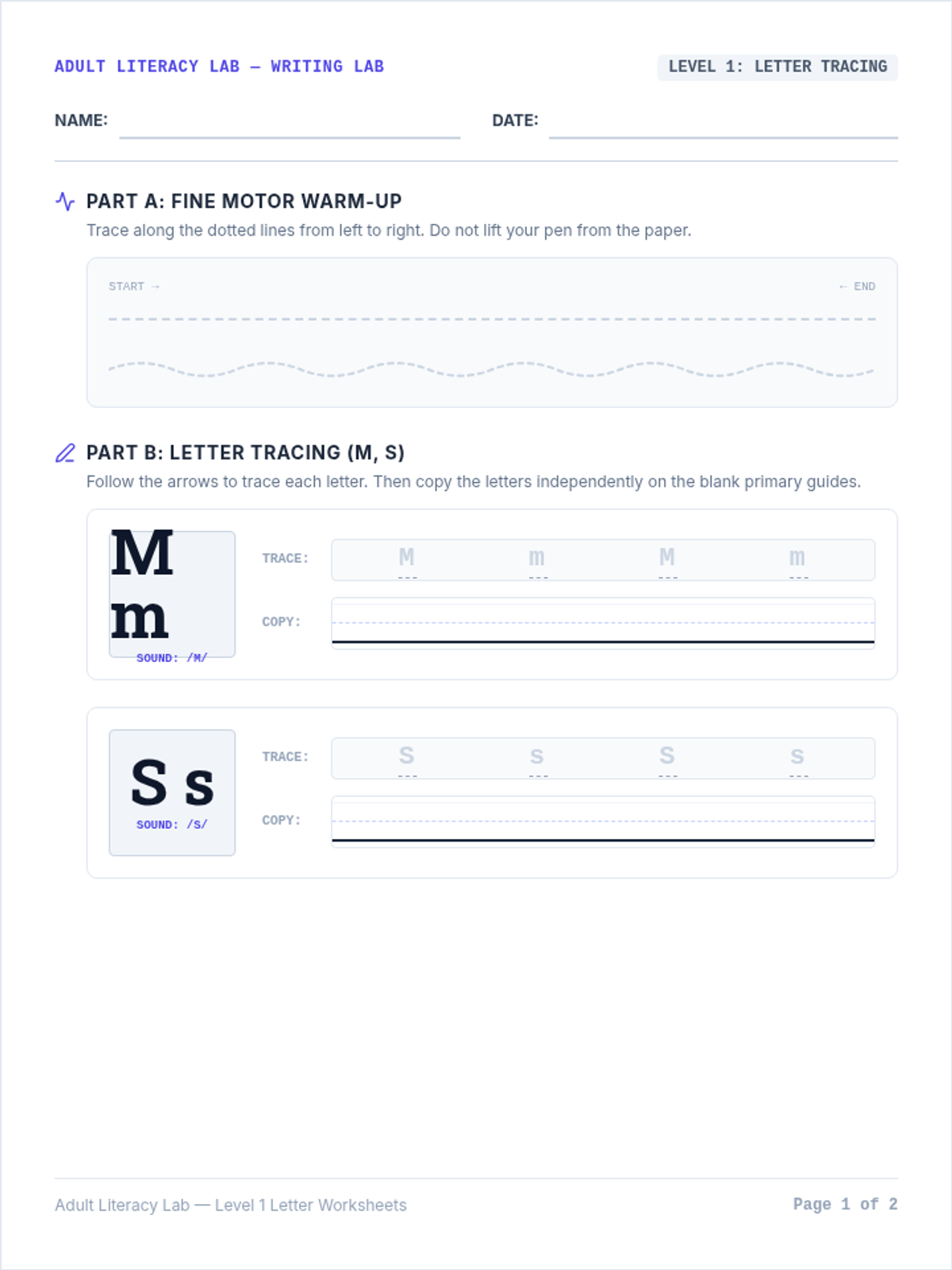
The core launch materials for the Adult Literacy Lab, providing instructors with the structural handbook, tracking rubrics, and high-contrast letter/word cards and writing strips required to deliver daily targeted literacy practice.
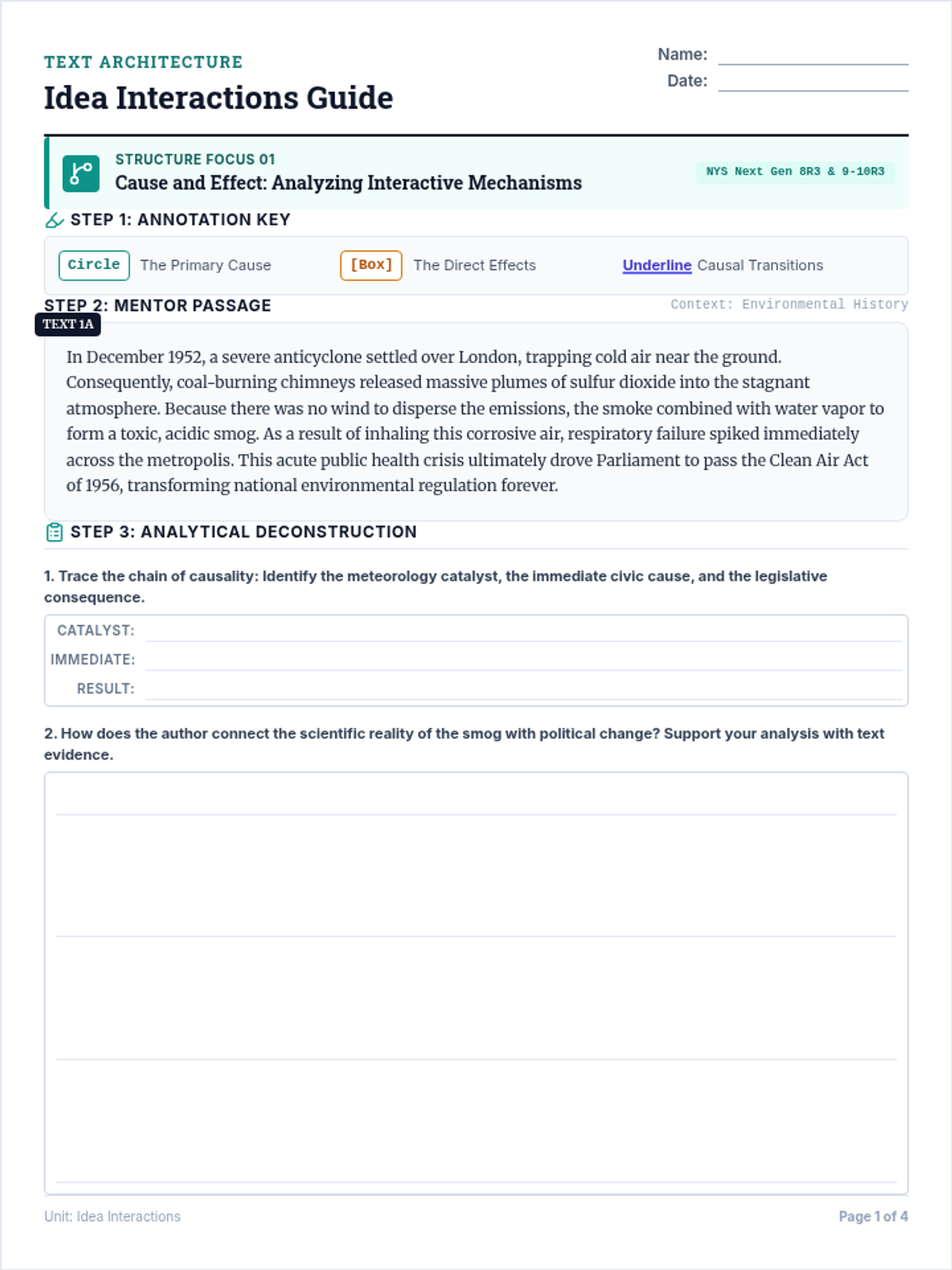
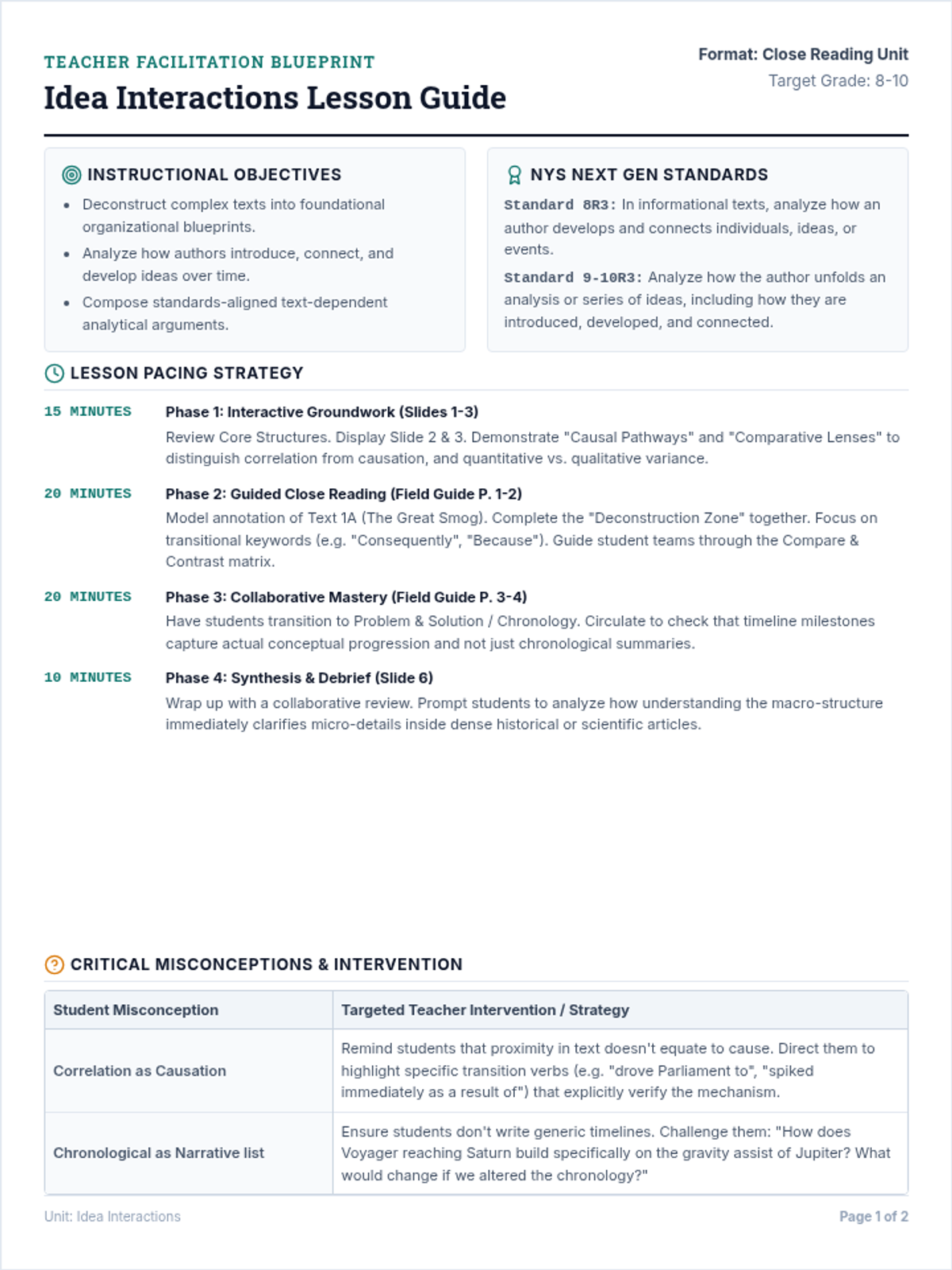
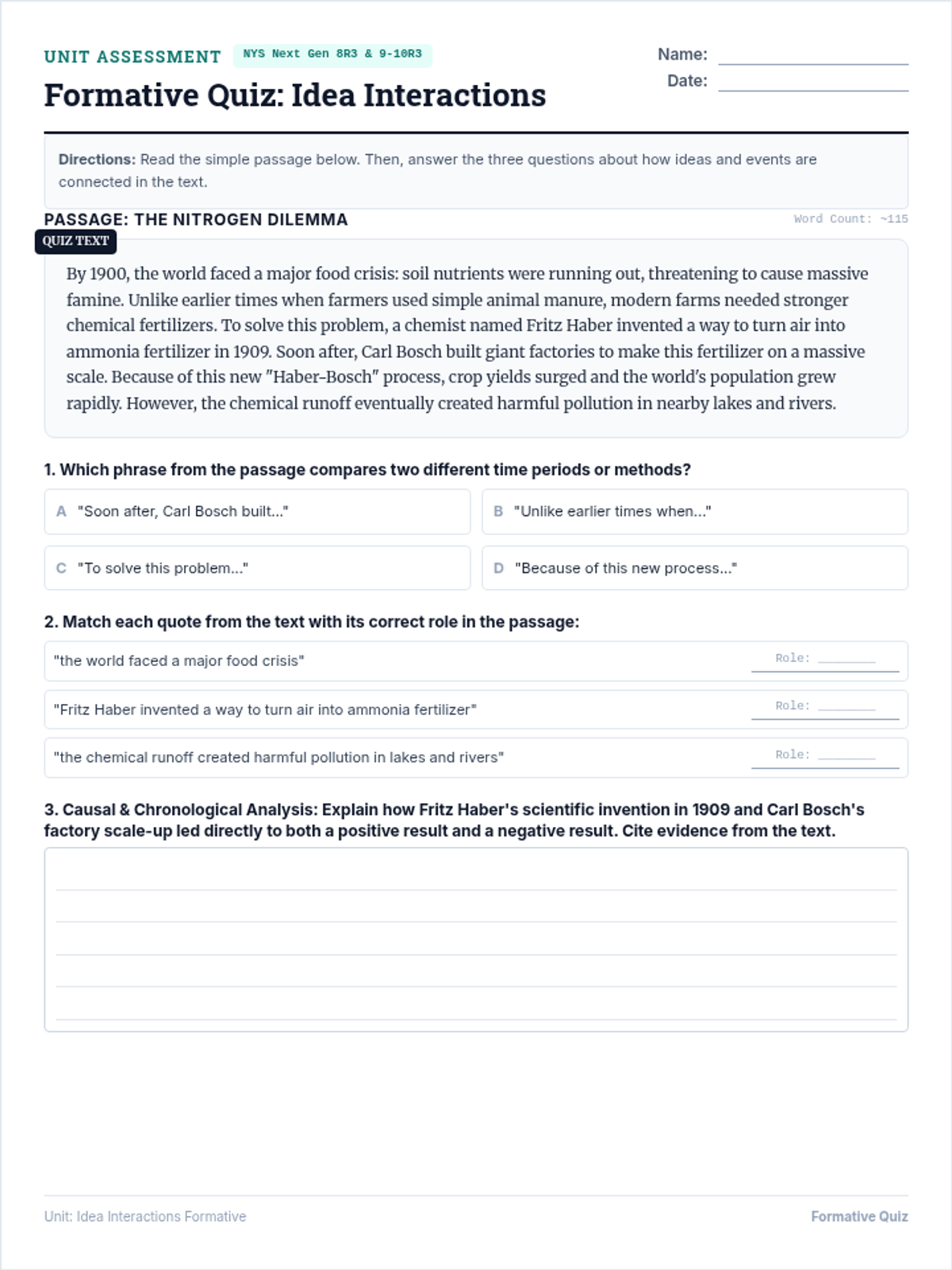
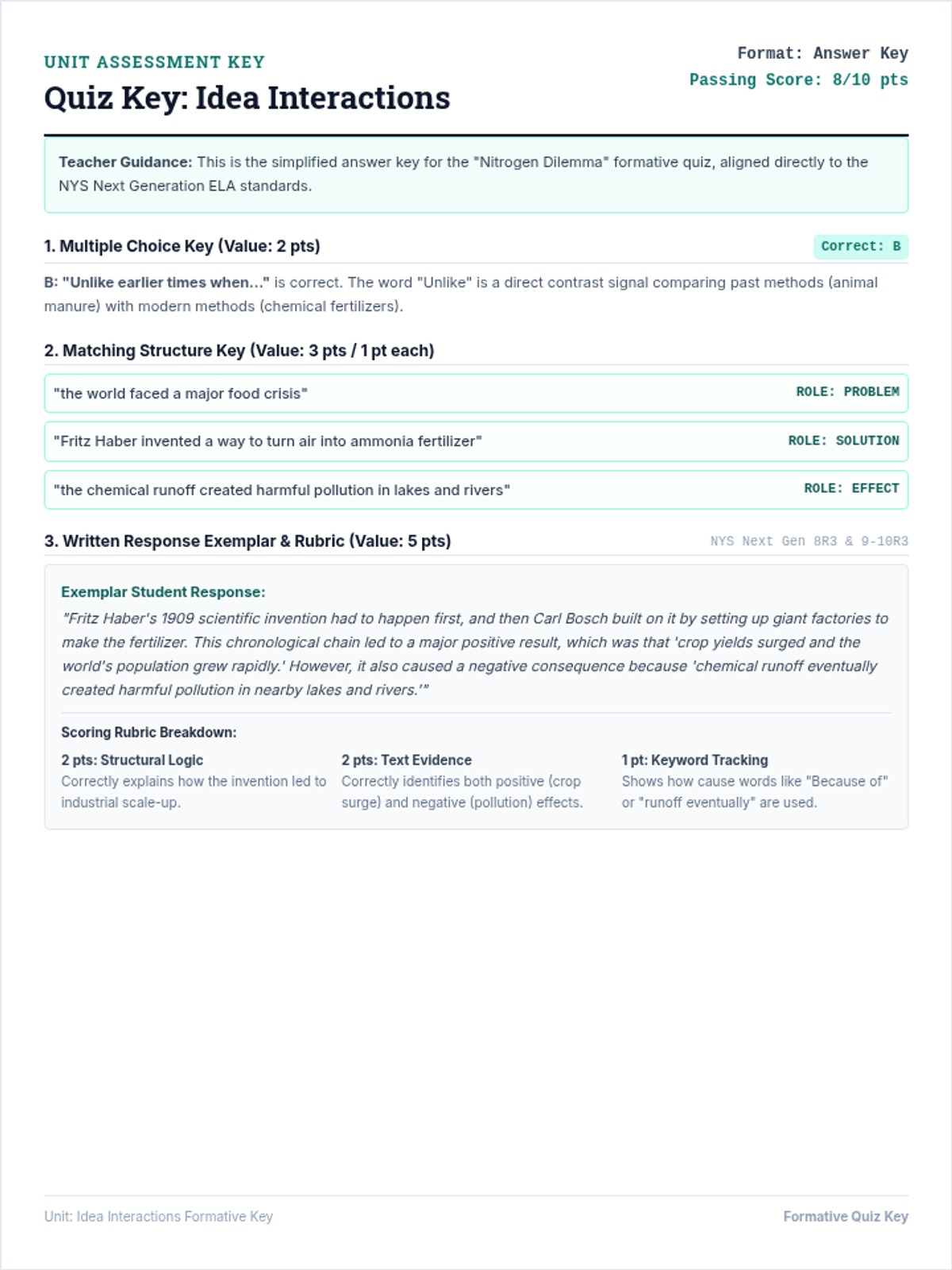
A rigorous, standards-aligned lesson focused on teaching students how ideas, events, and concepts interact in complex informational texts using four major organizational structures.
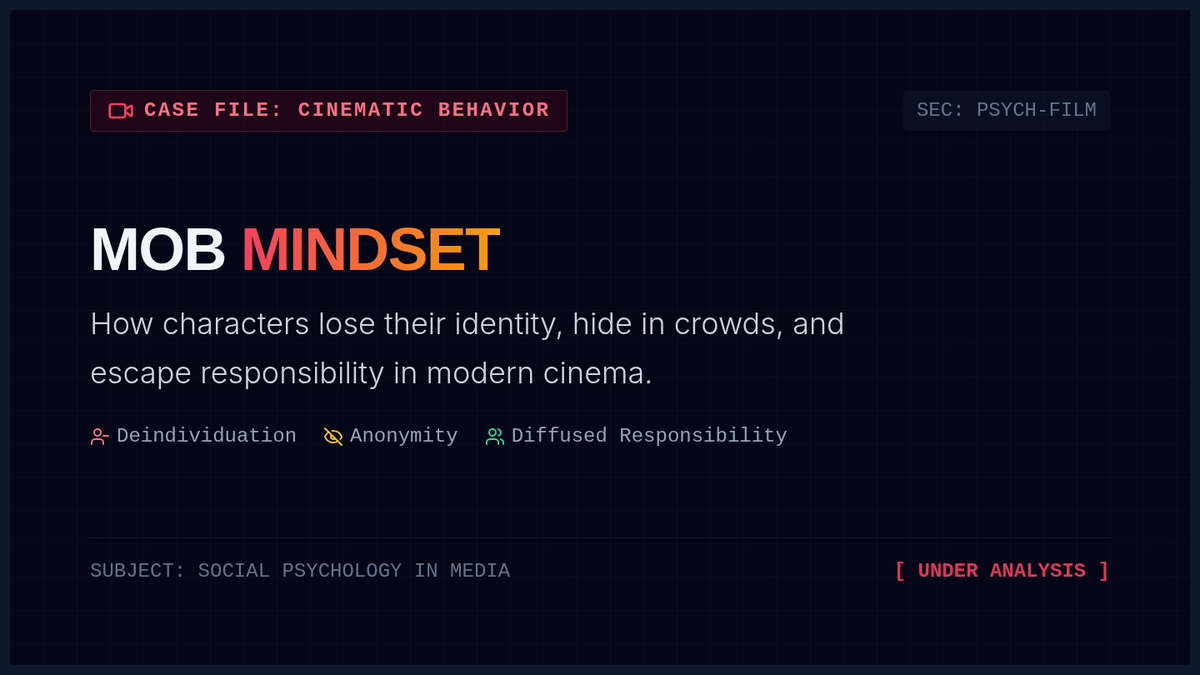
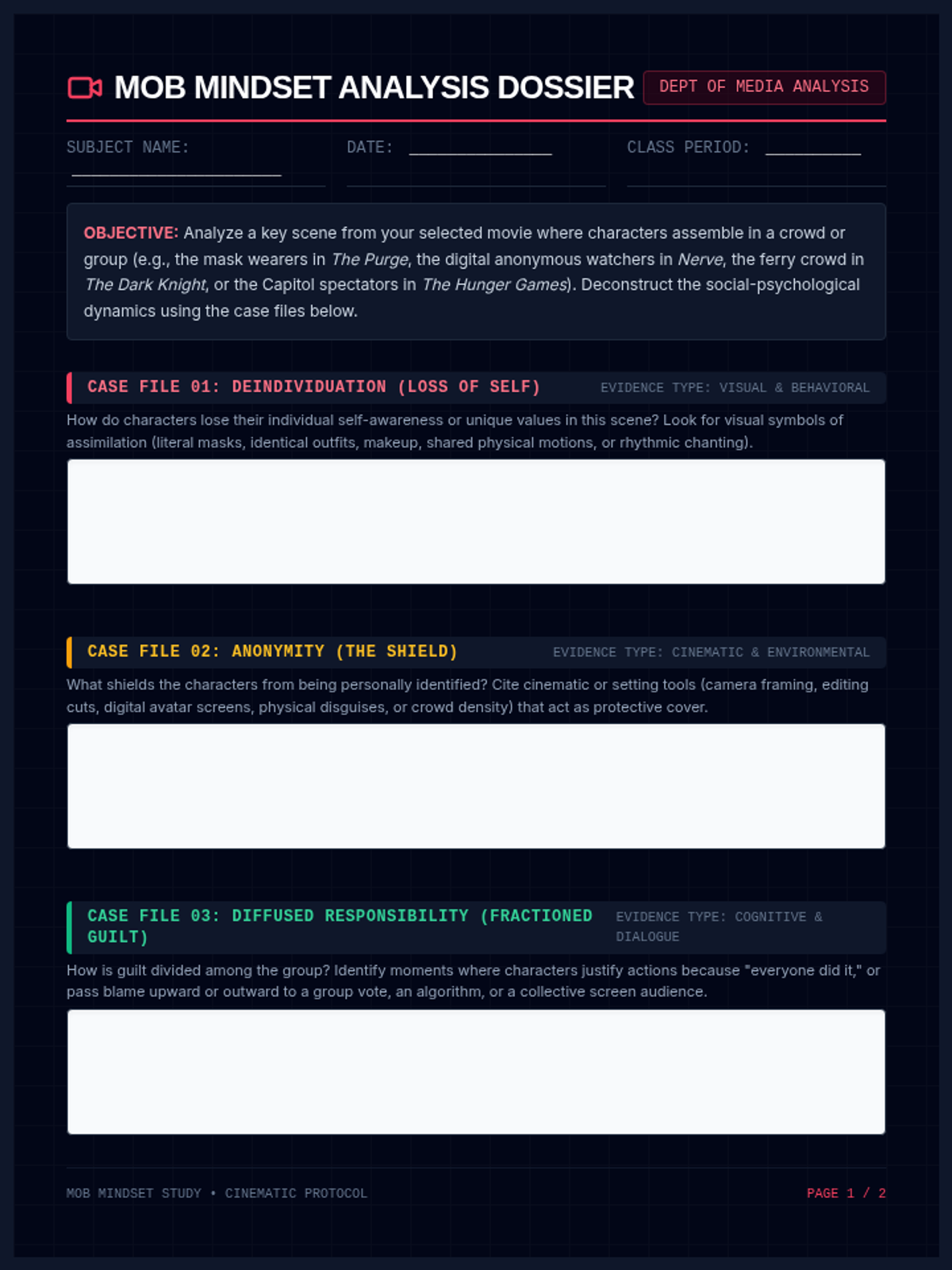
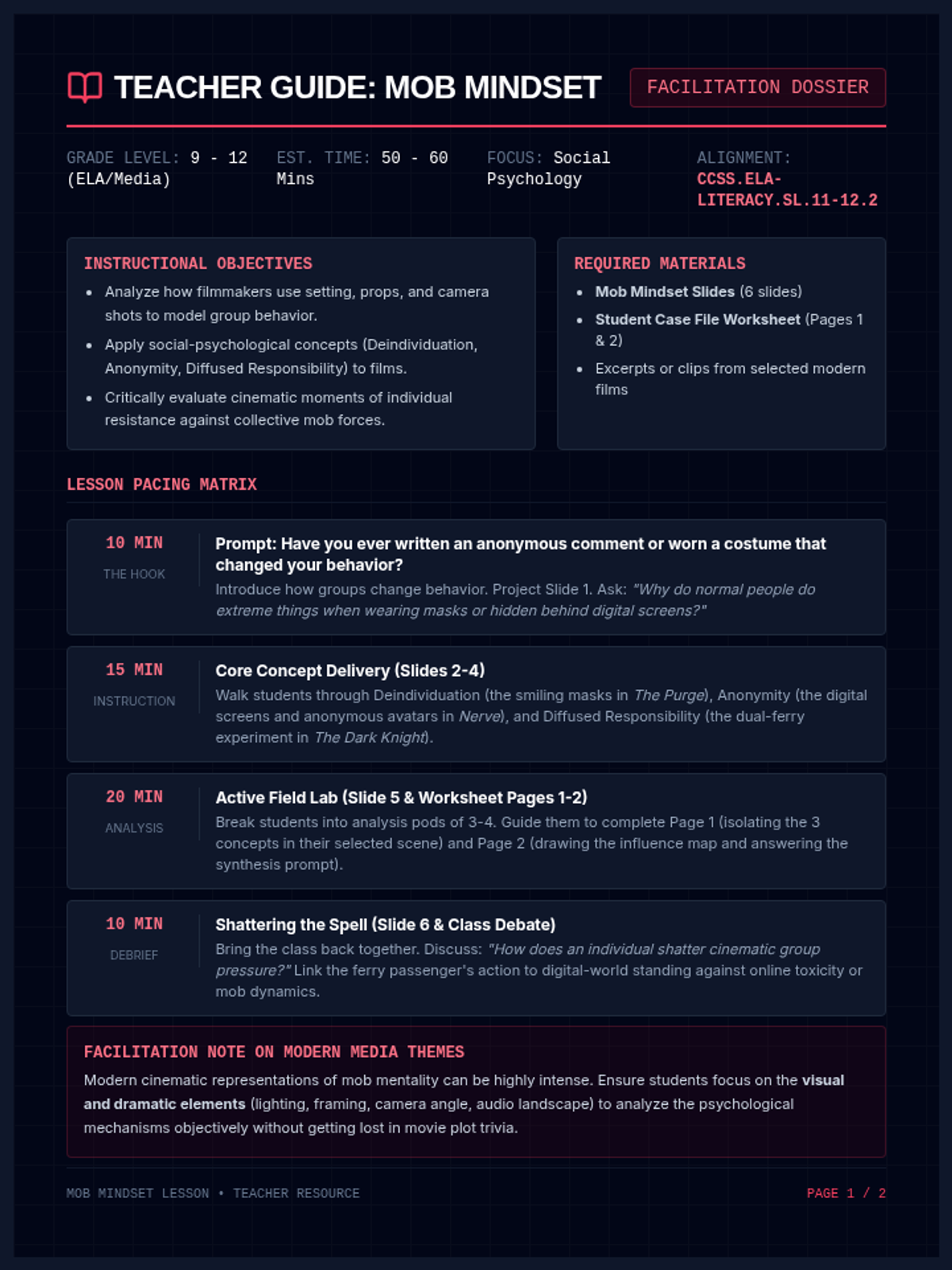
An analytical ELA lesson exploring the social psychology concepts of deindividuation, anonymity, and diffused responsibility in literature. Students examine how characters lose their individuality in groups, using classic literary texts to map the psychology of the mob.
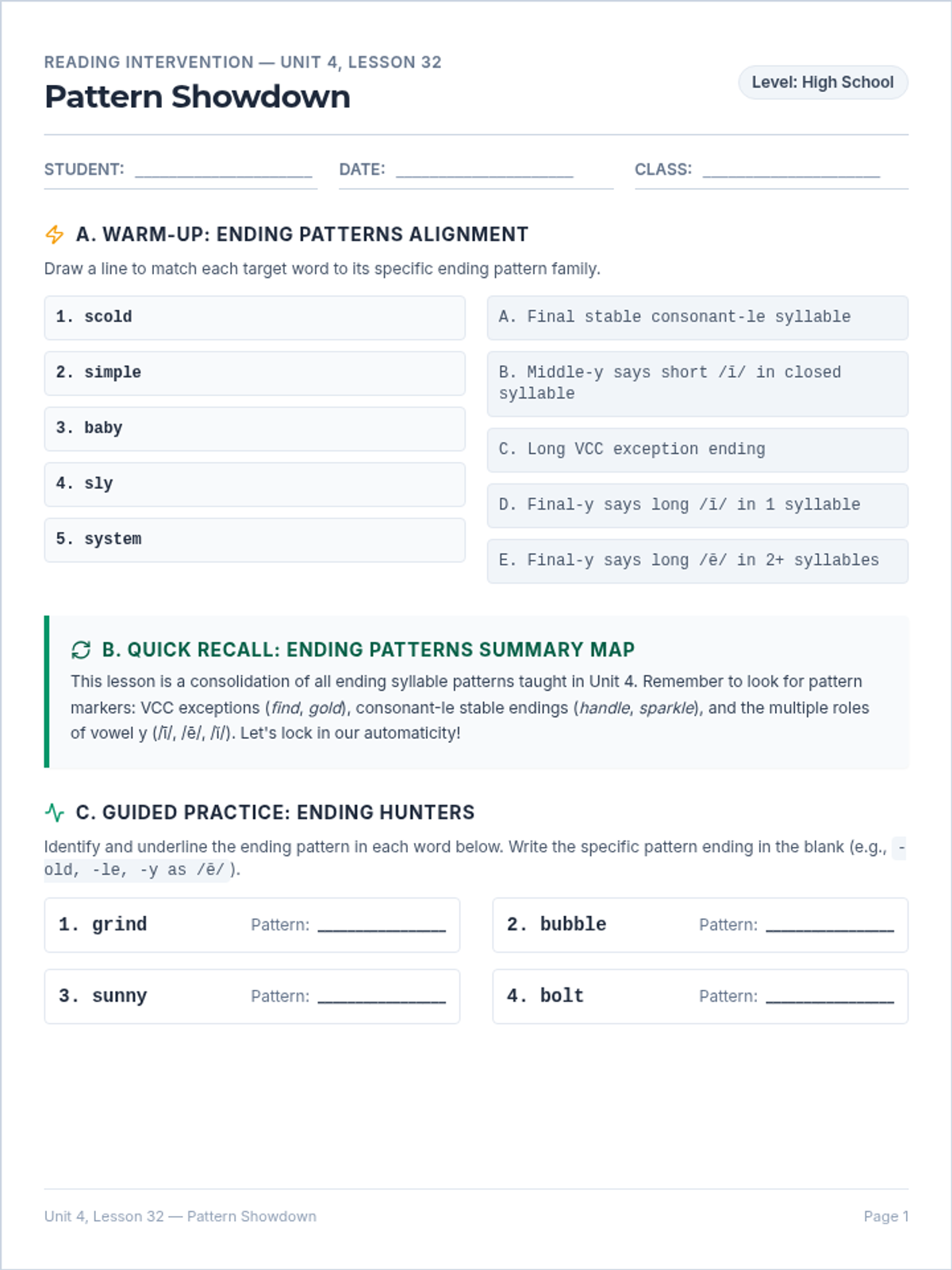
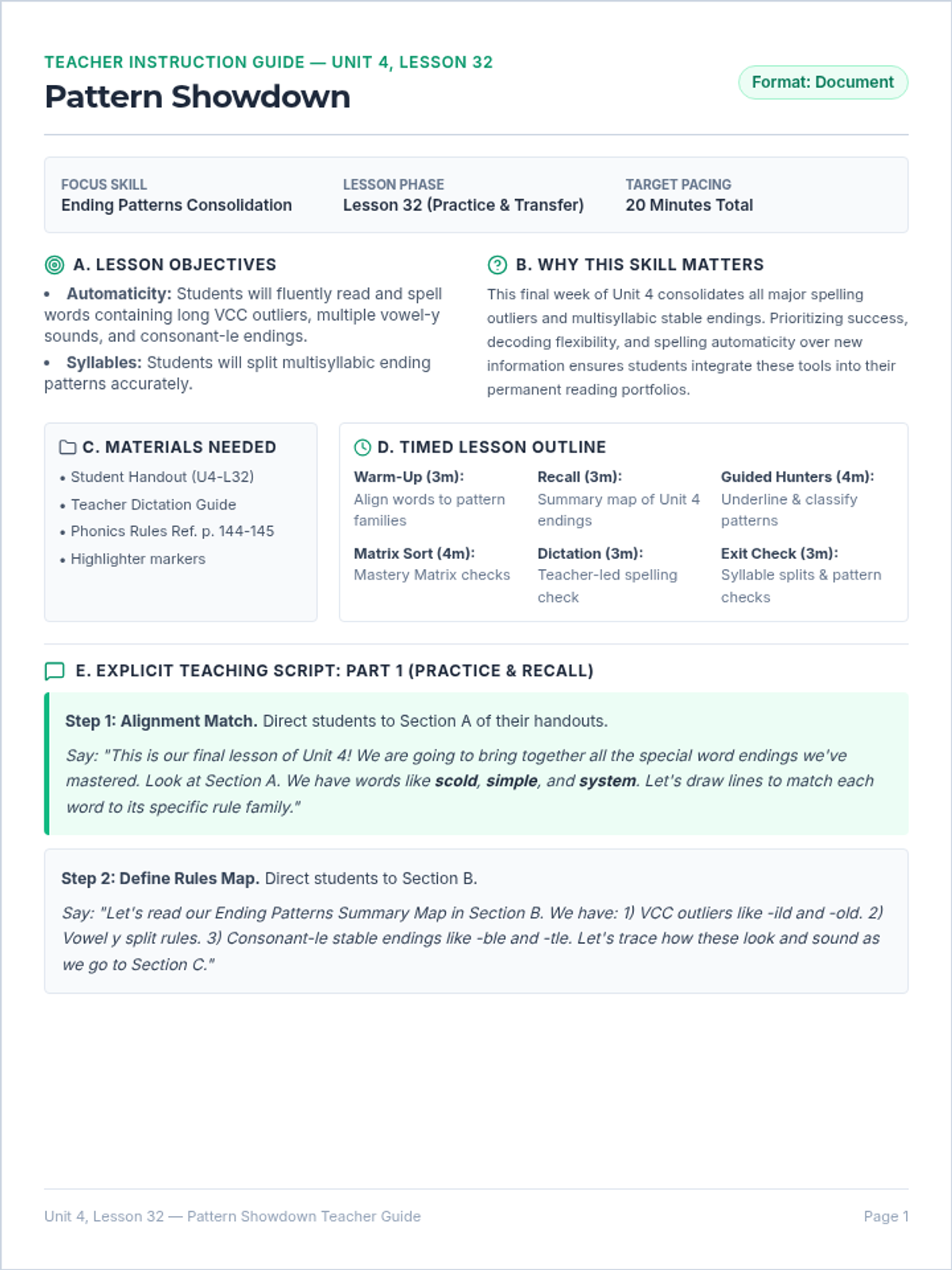
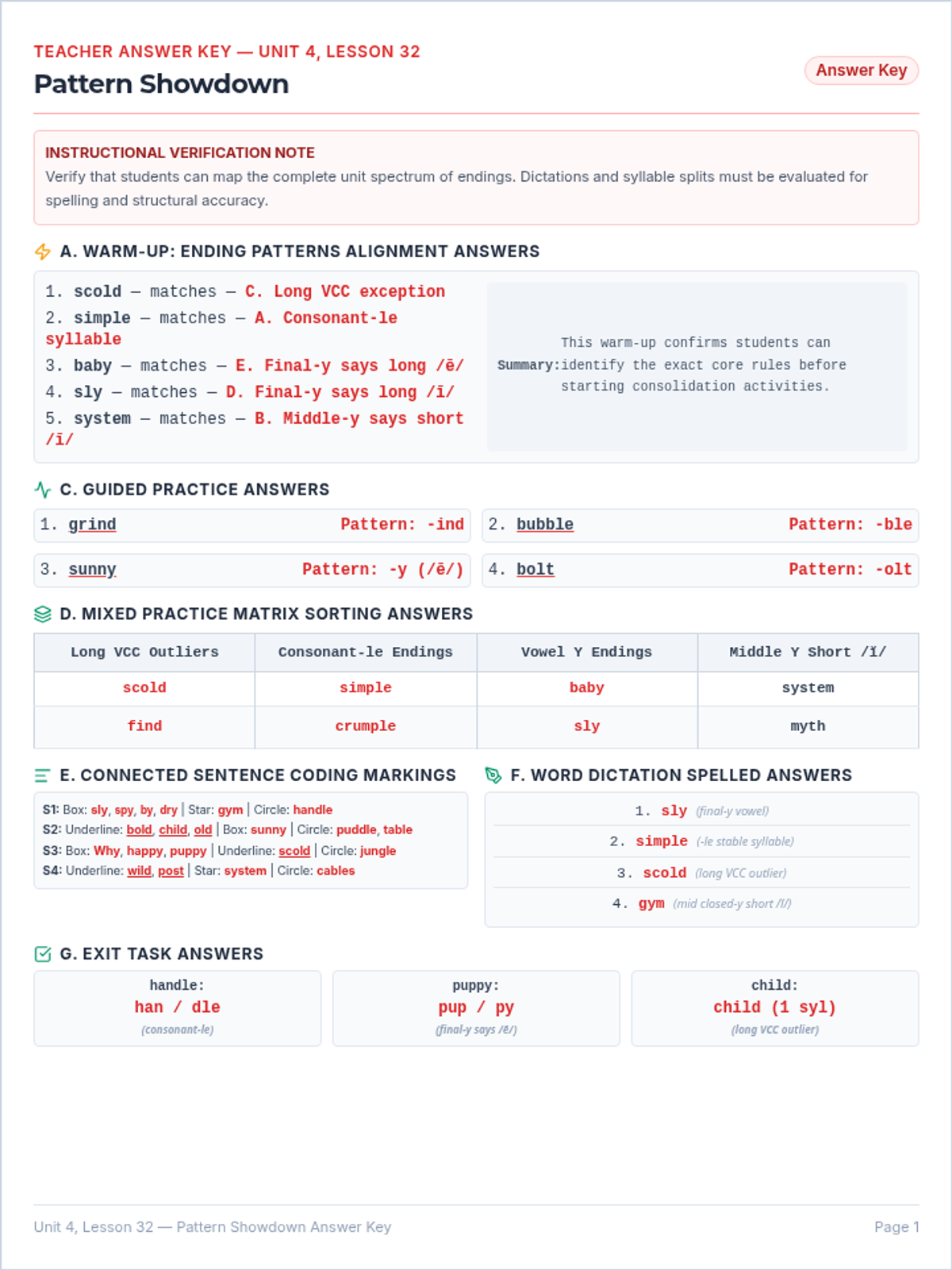
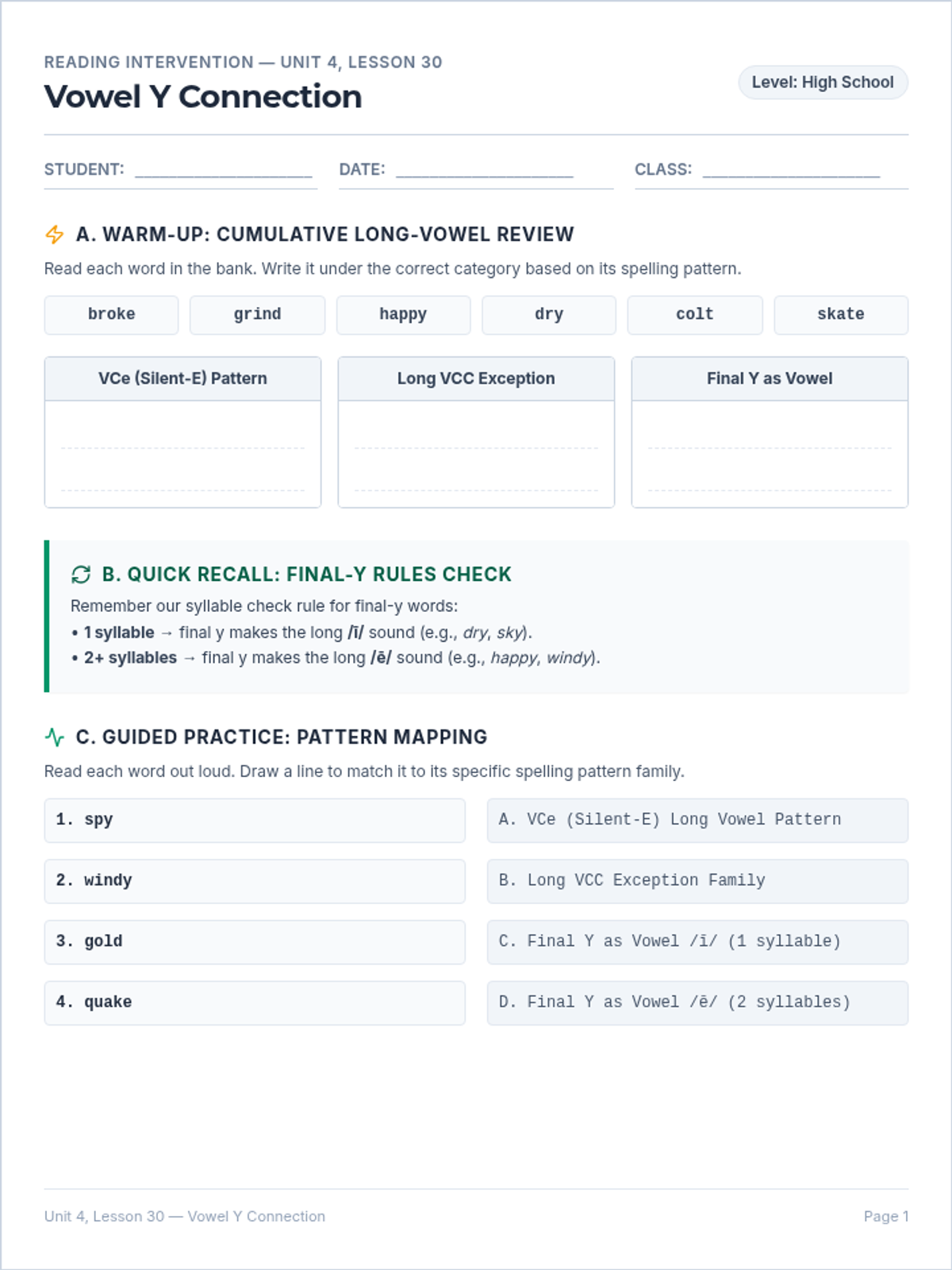
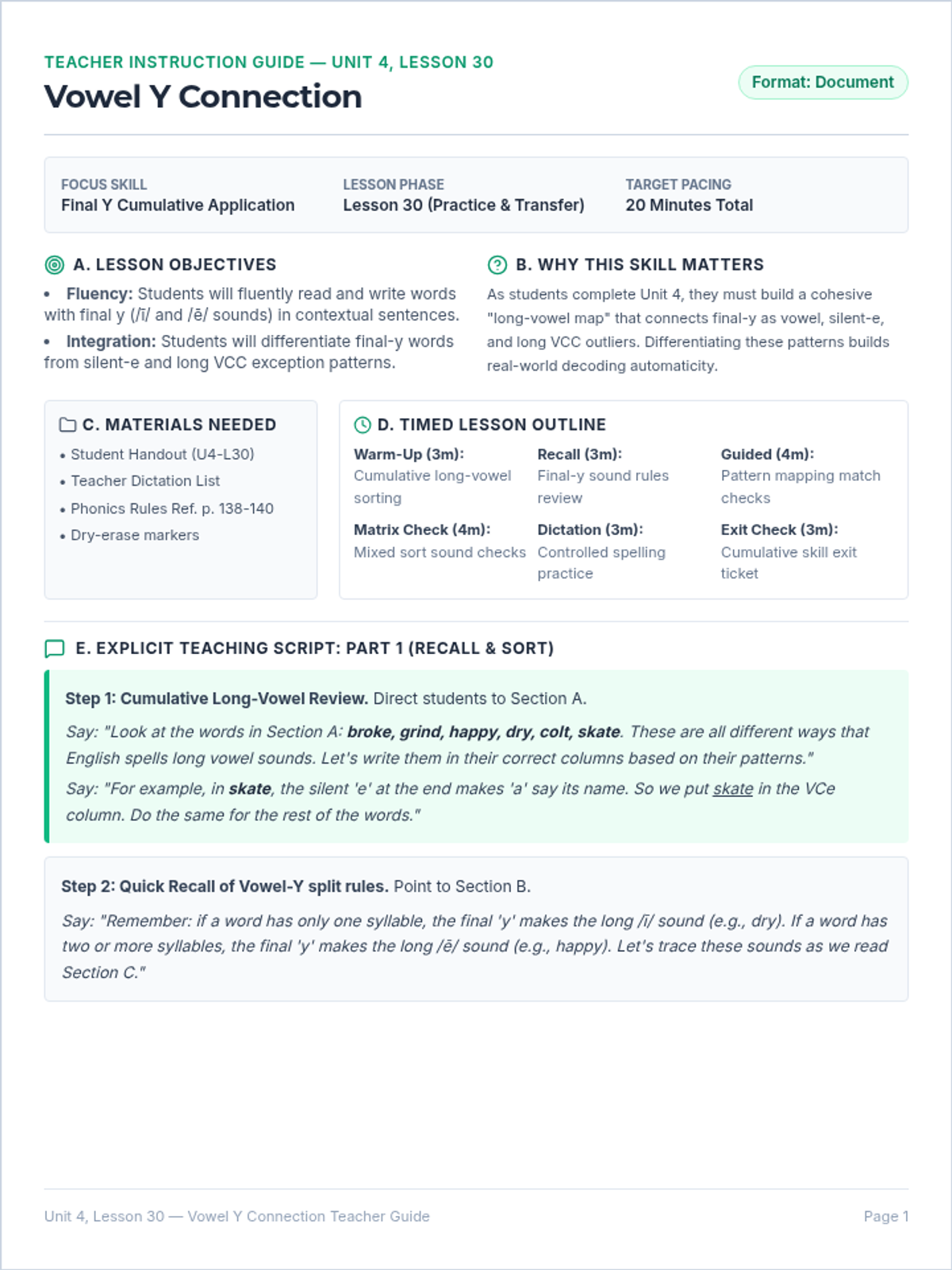
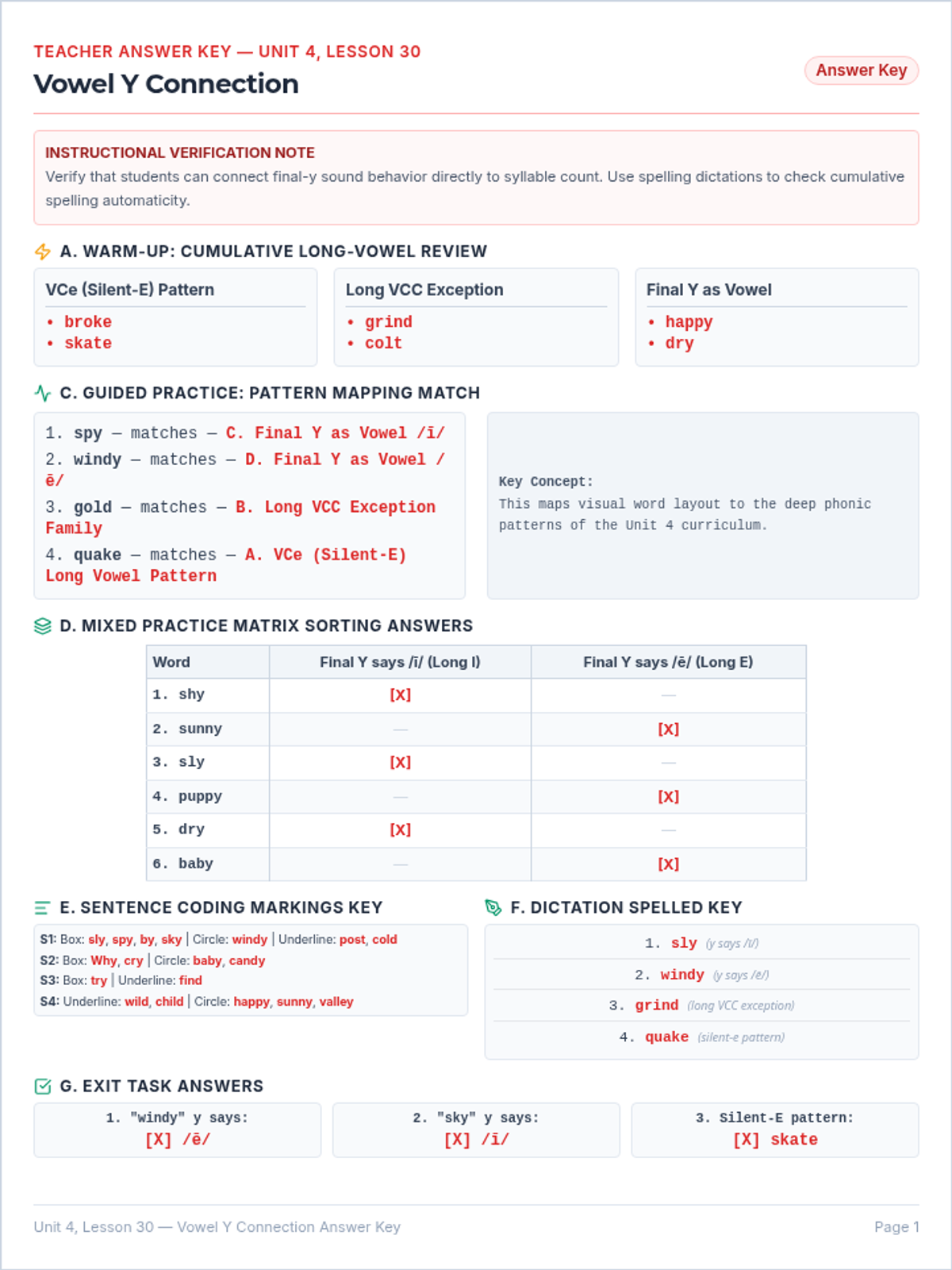
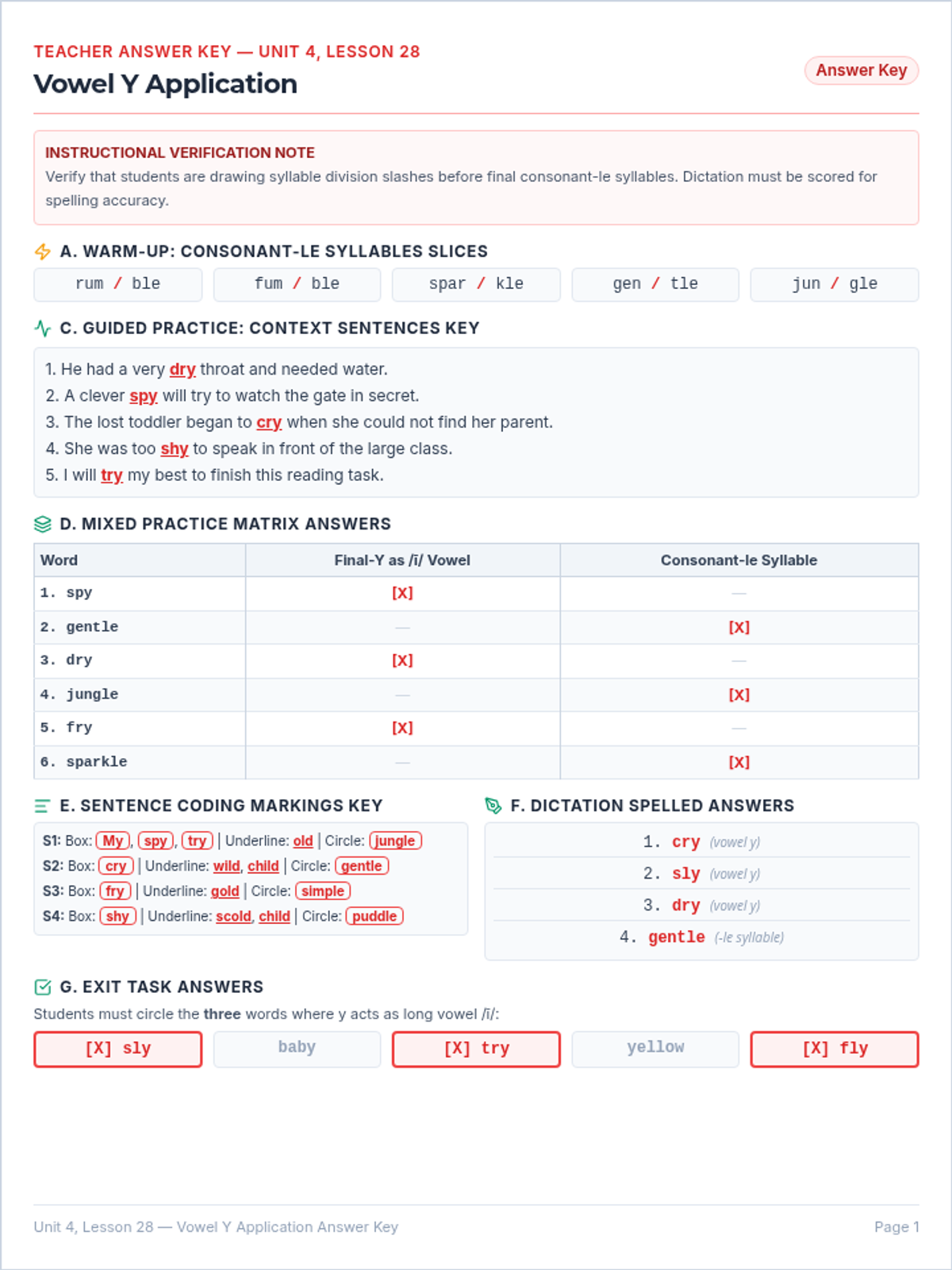
A highly cumulative practice-heavy reading intervention lesson consolidating long VCC exceptions, final y as vowel /ī/ and /ē/, and consonant-le stable ending syllables.
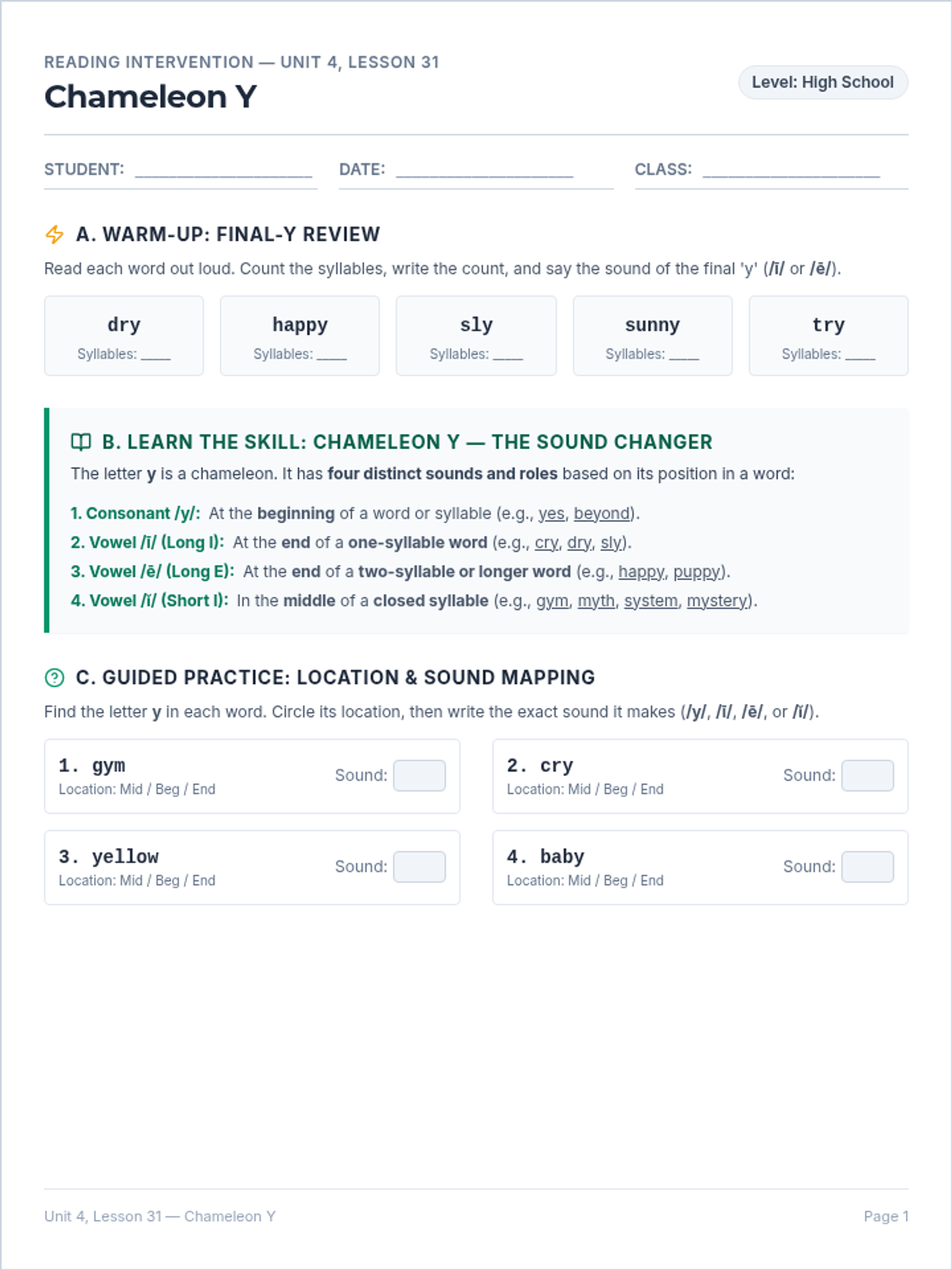
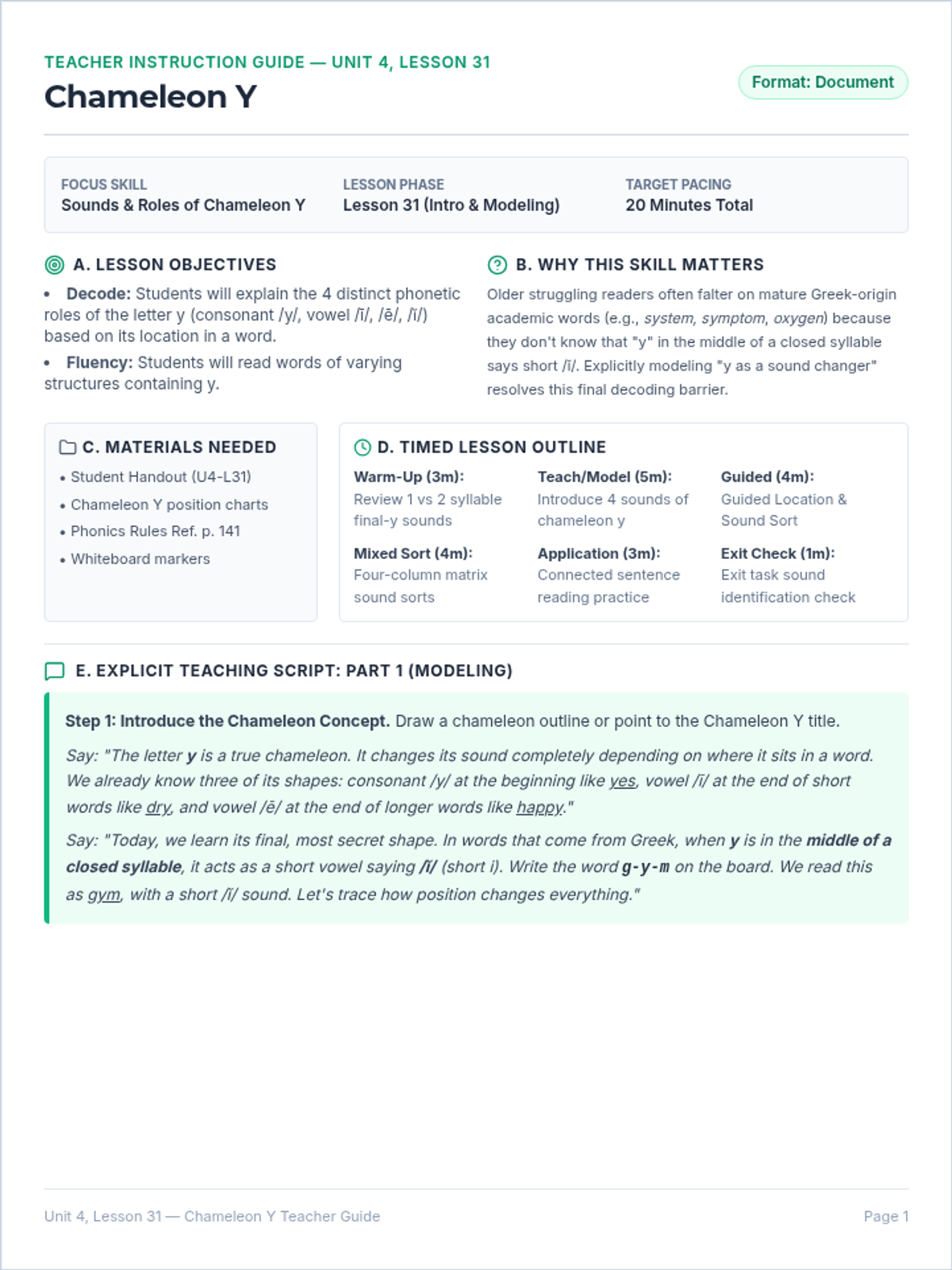
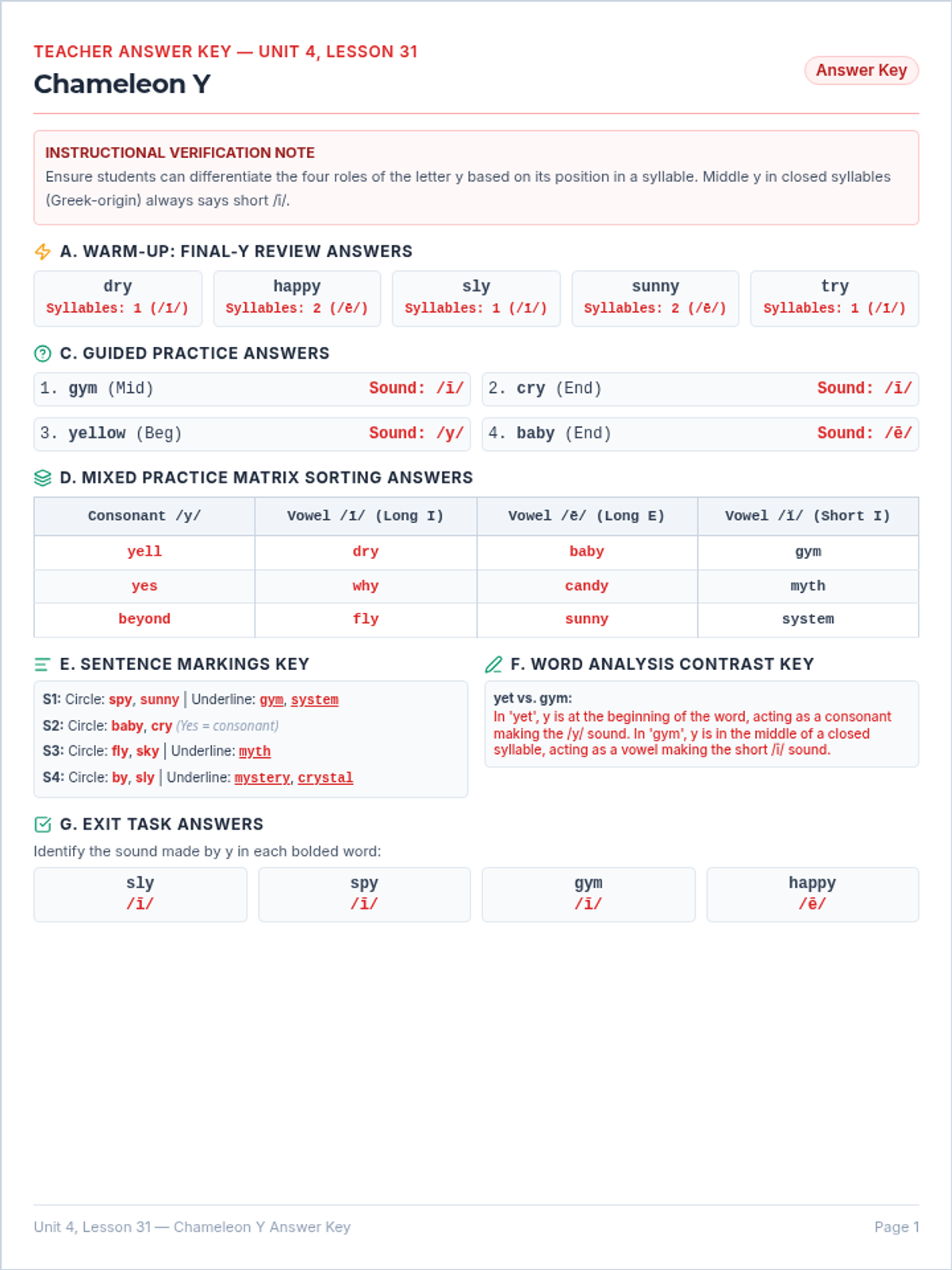
An intensive high school reading intervention lesson introducing the multiple sounds and roles of the letter y (consonant /y/, vowel /ī/, /ē/, and short /ĭ/ in closed syllables) with explicit modeling.
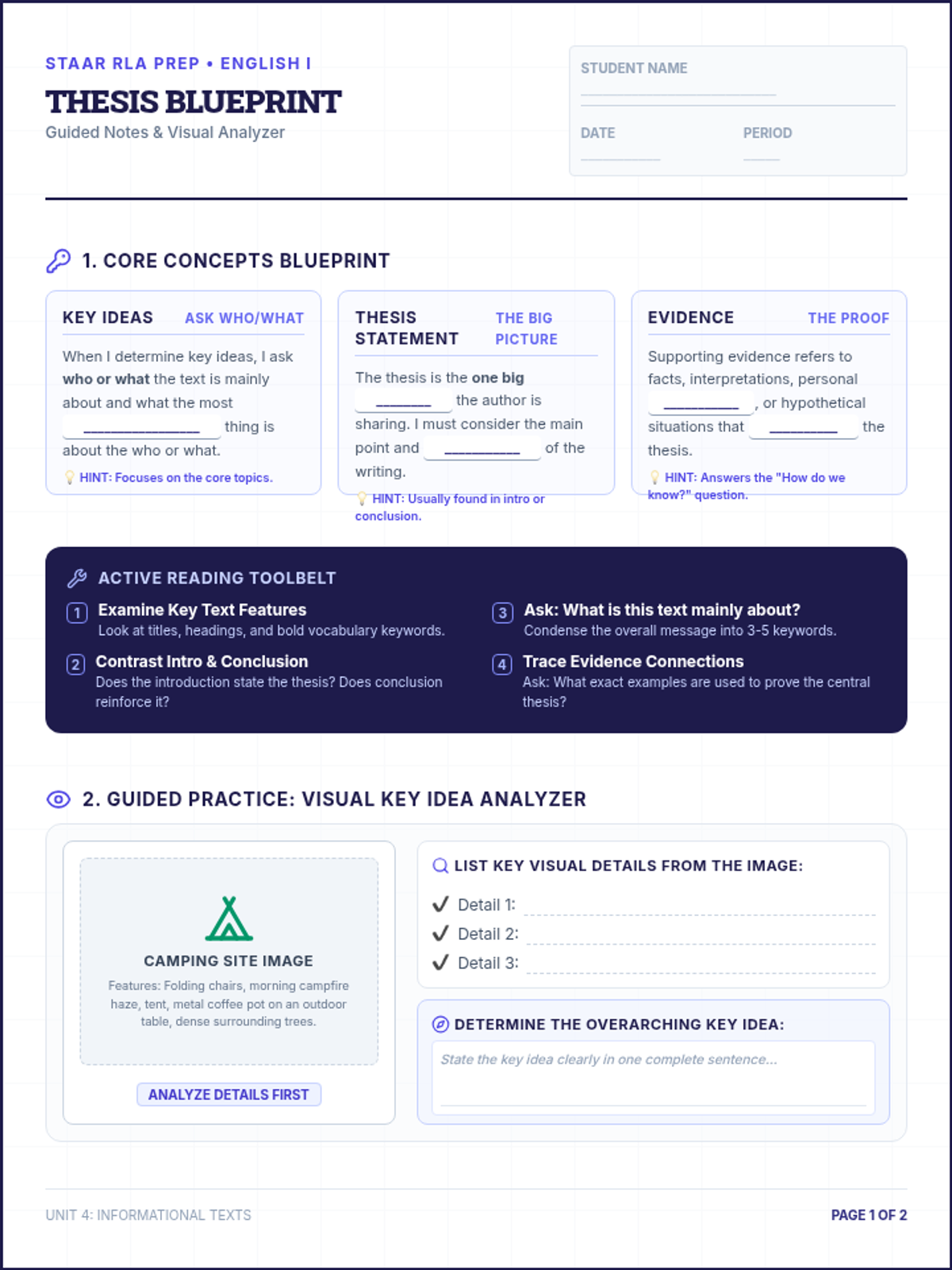
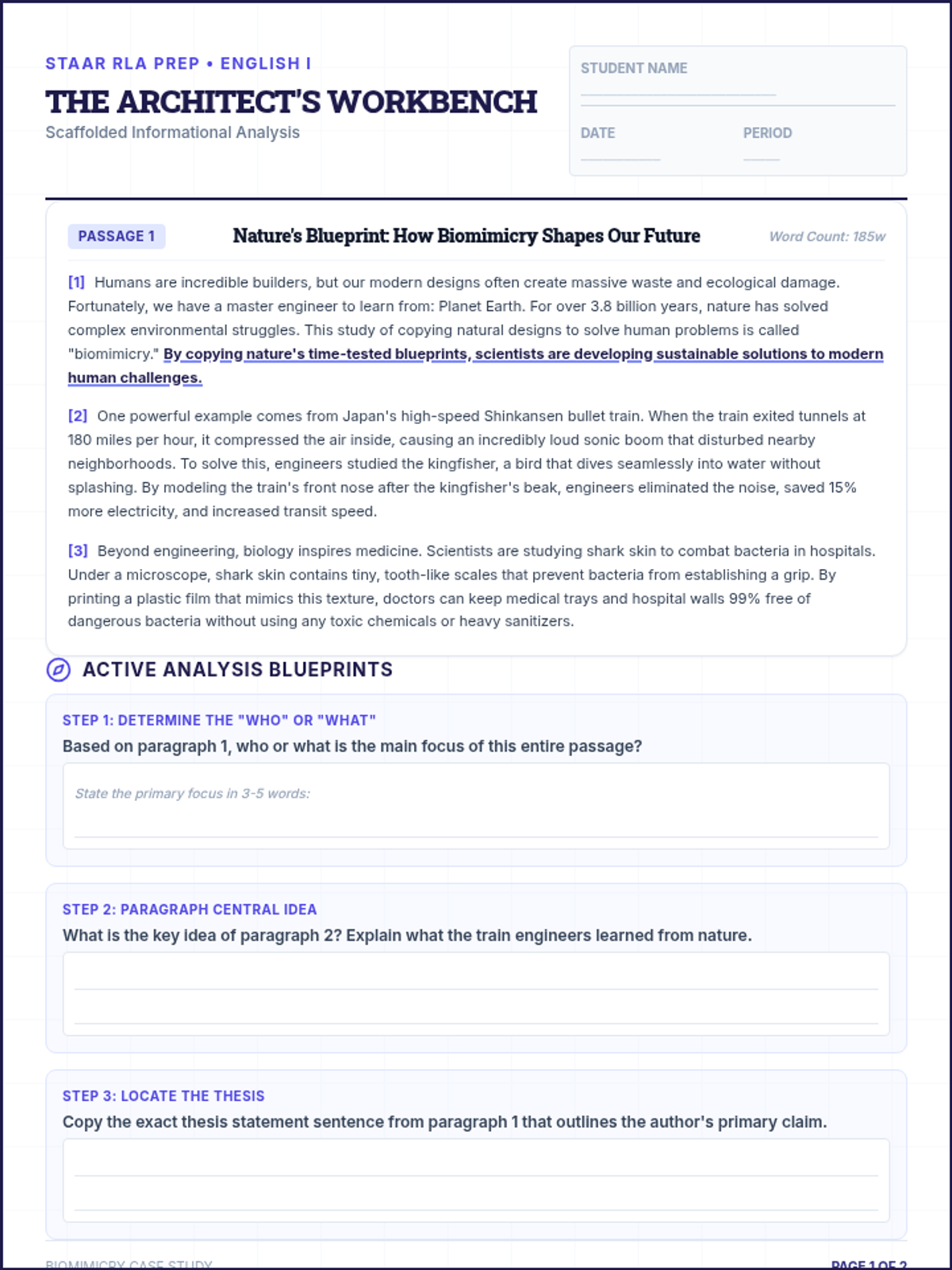
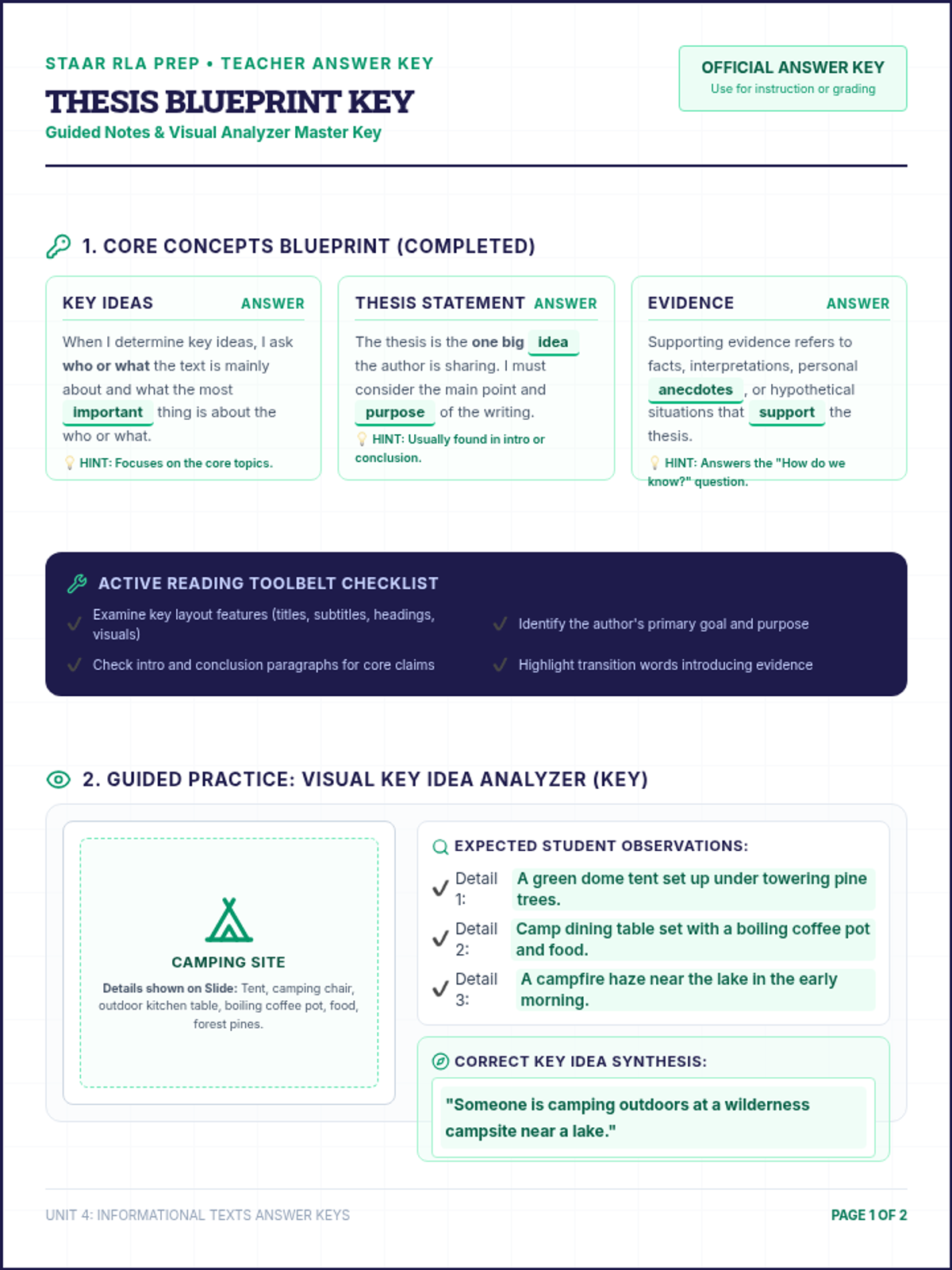
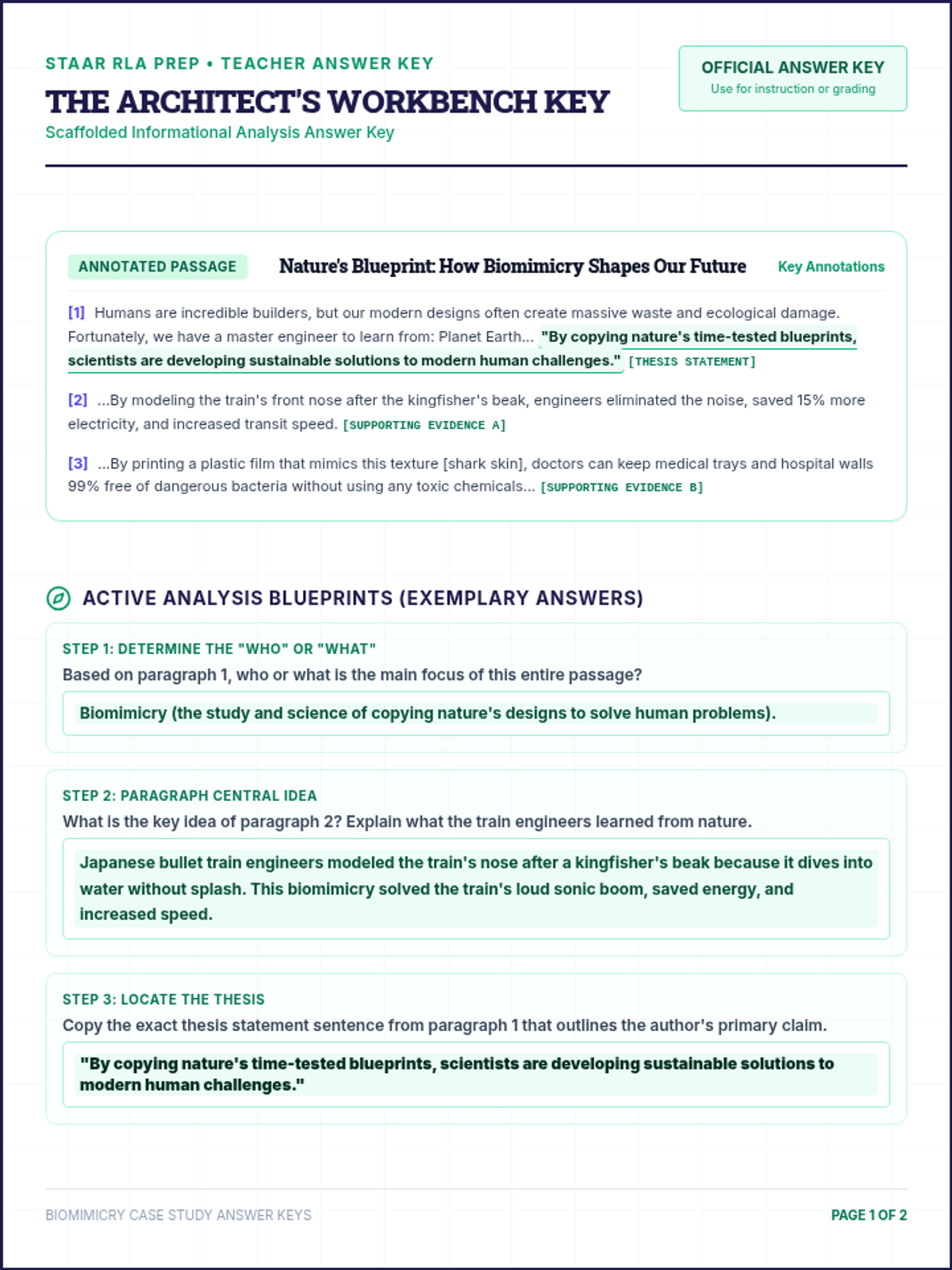
A high-impact STAAR preparation lesson focused on identifying main ideas, thesis statements, and supporting evidence in informational texts. Students analyze visual prompts, examine mentor texts, and apply scaffolded writing strategies to construct evidence-based responses.
A comprehensive practice-heavy reading intervention lesson applying final y vowel rules in connected text, combined with a mixed review of silent-e and long-VCC exceptions.
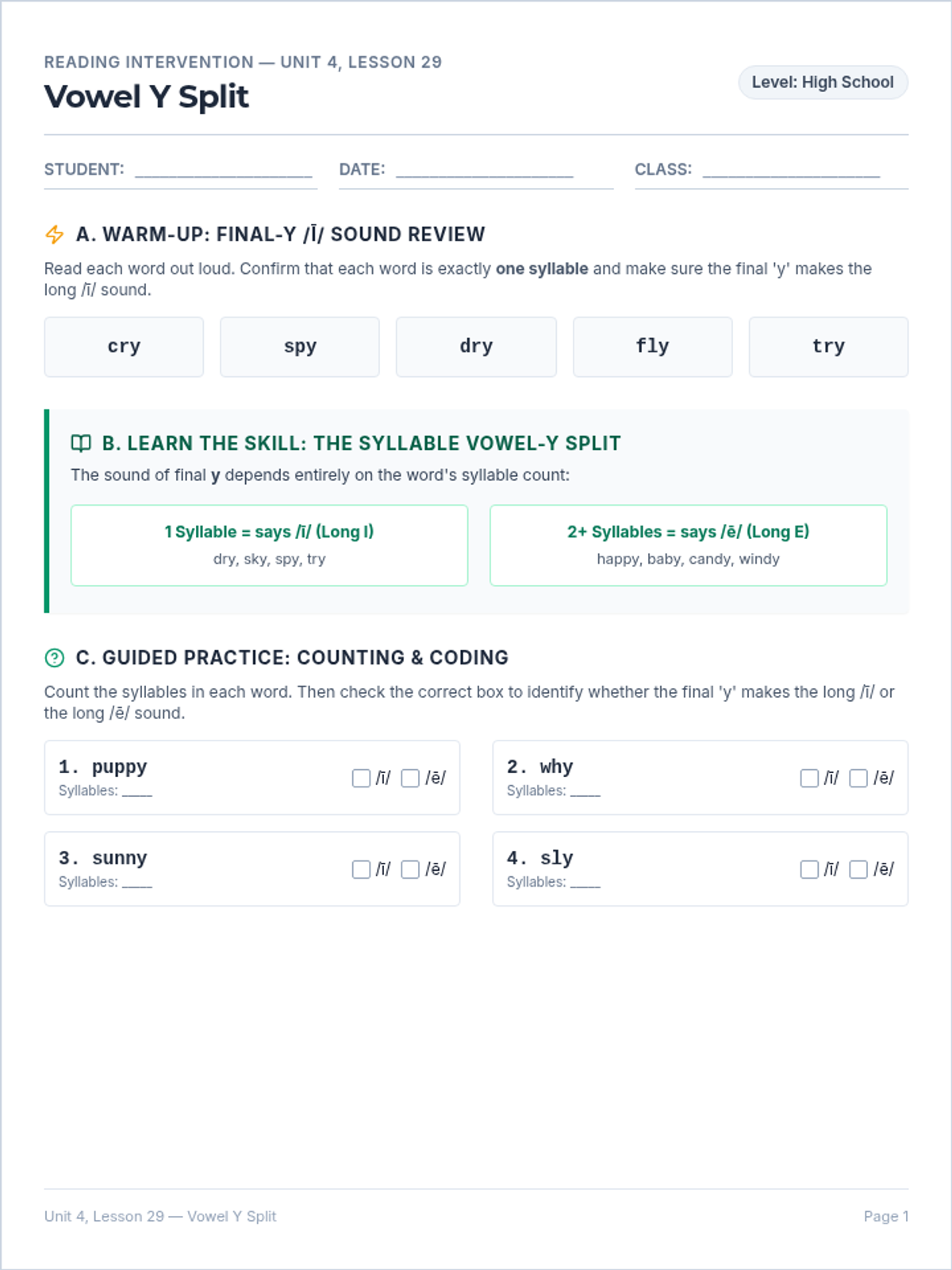
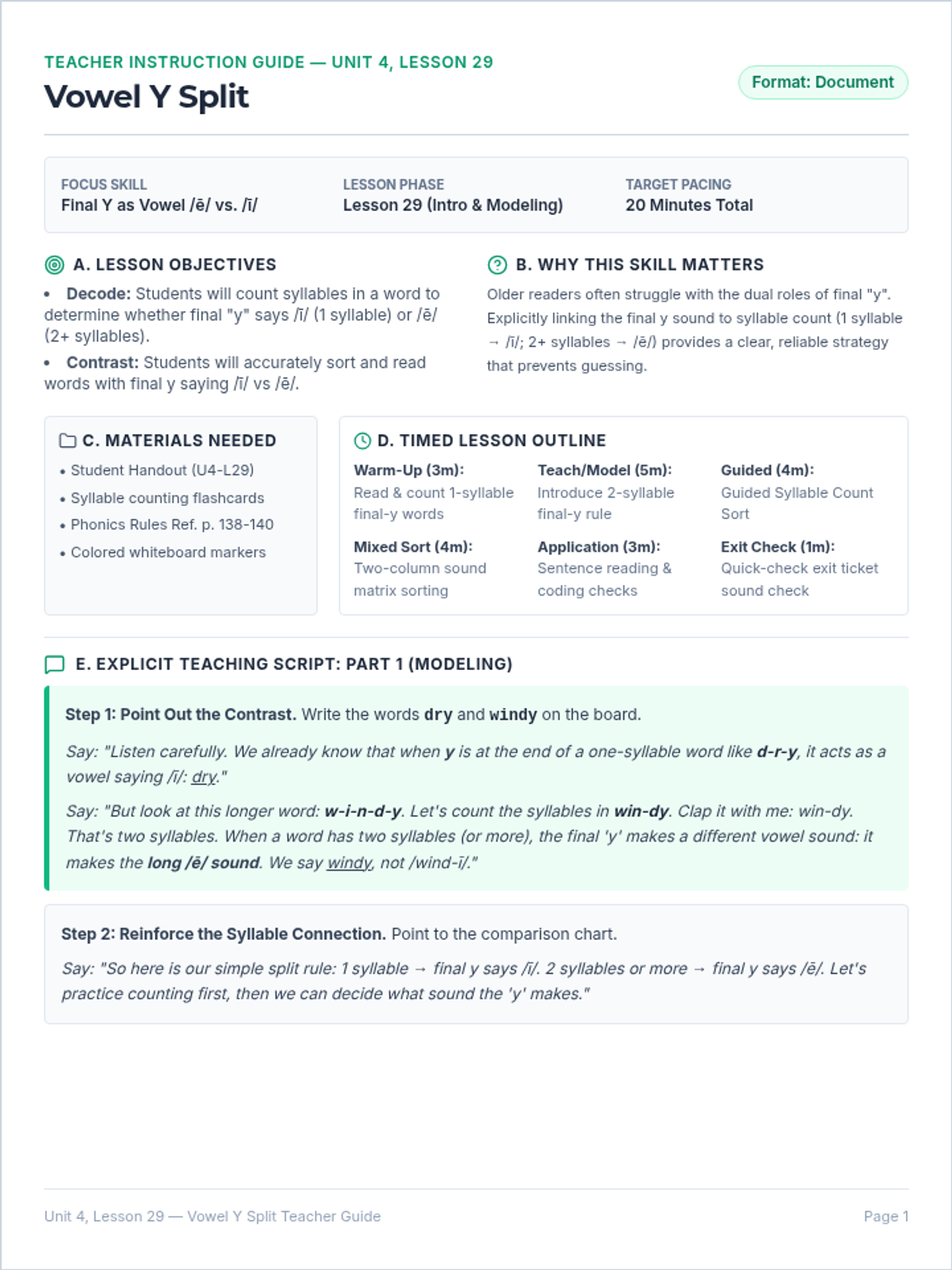
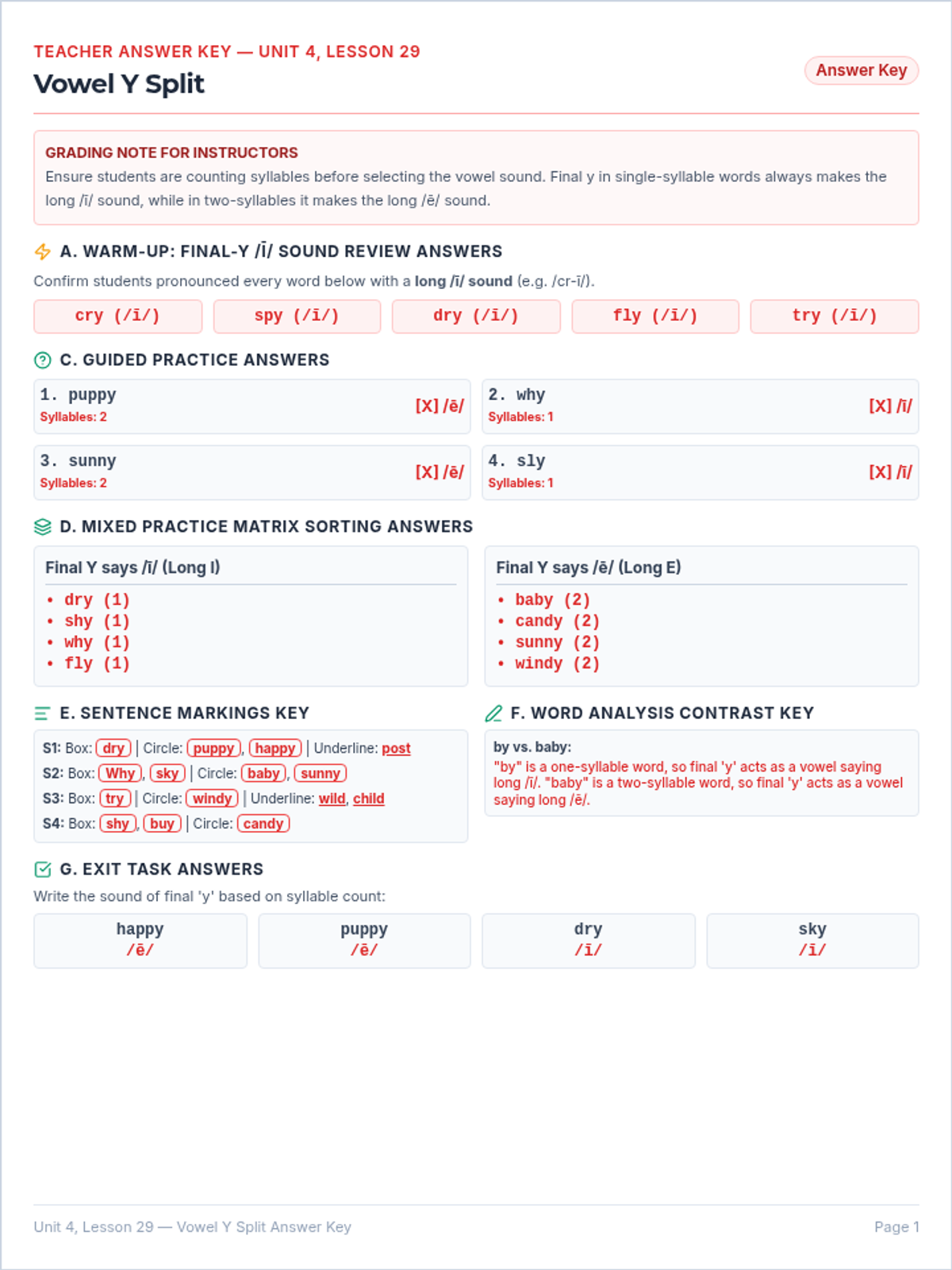
An intensive high school reading intervention lesson introducing final y as a long /ē/ vowel in two-syllable words, compared and contrasted with final y as a long /ī/ vowel in single-syllable words.
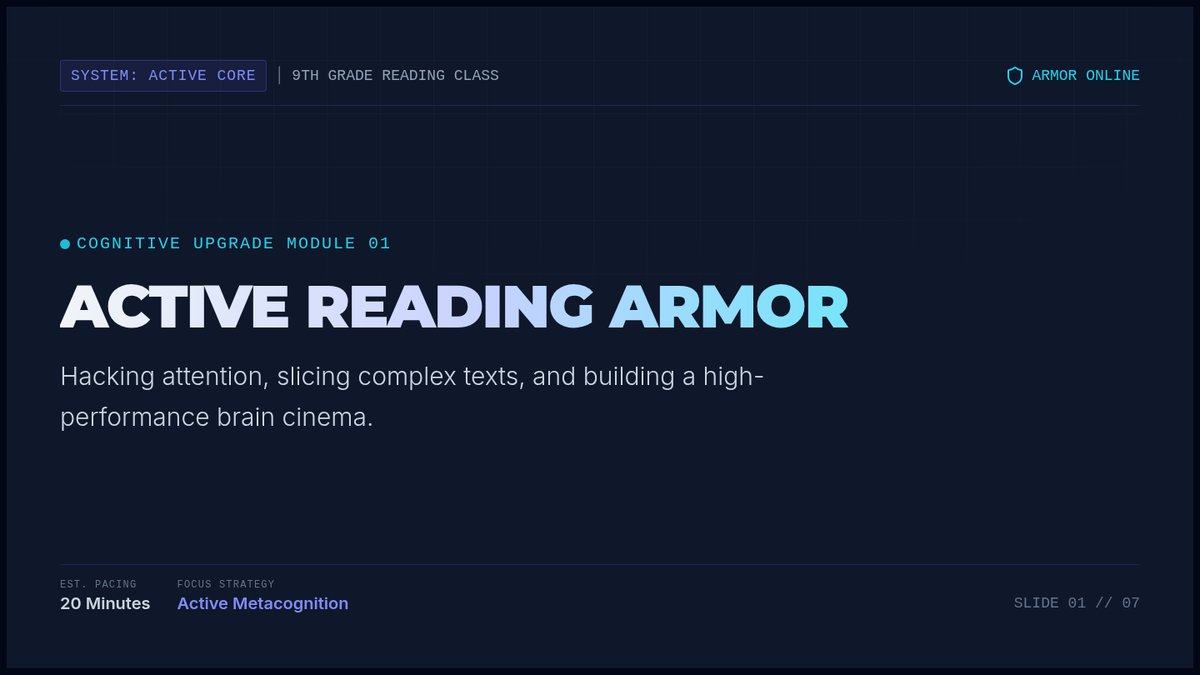
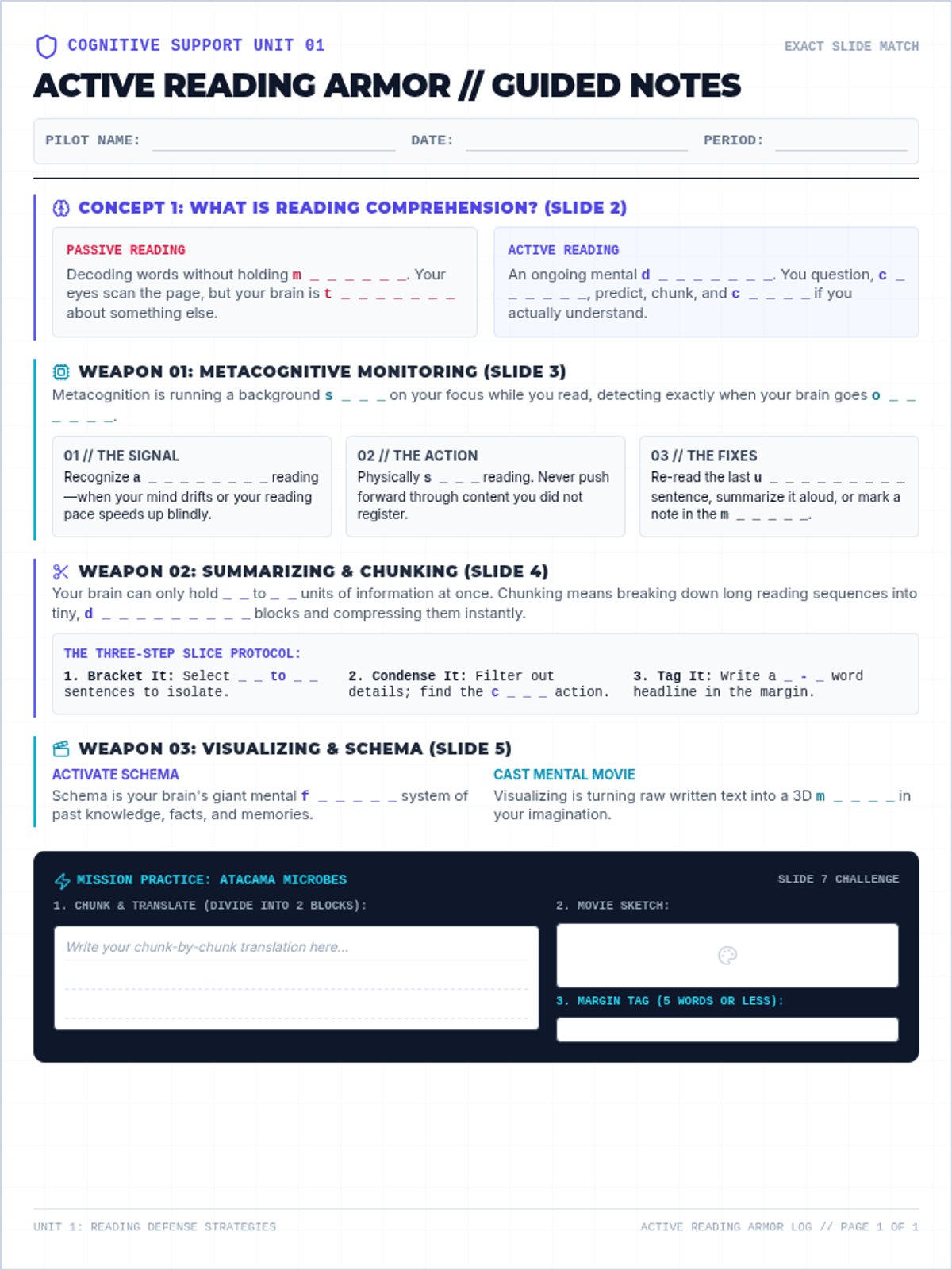
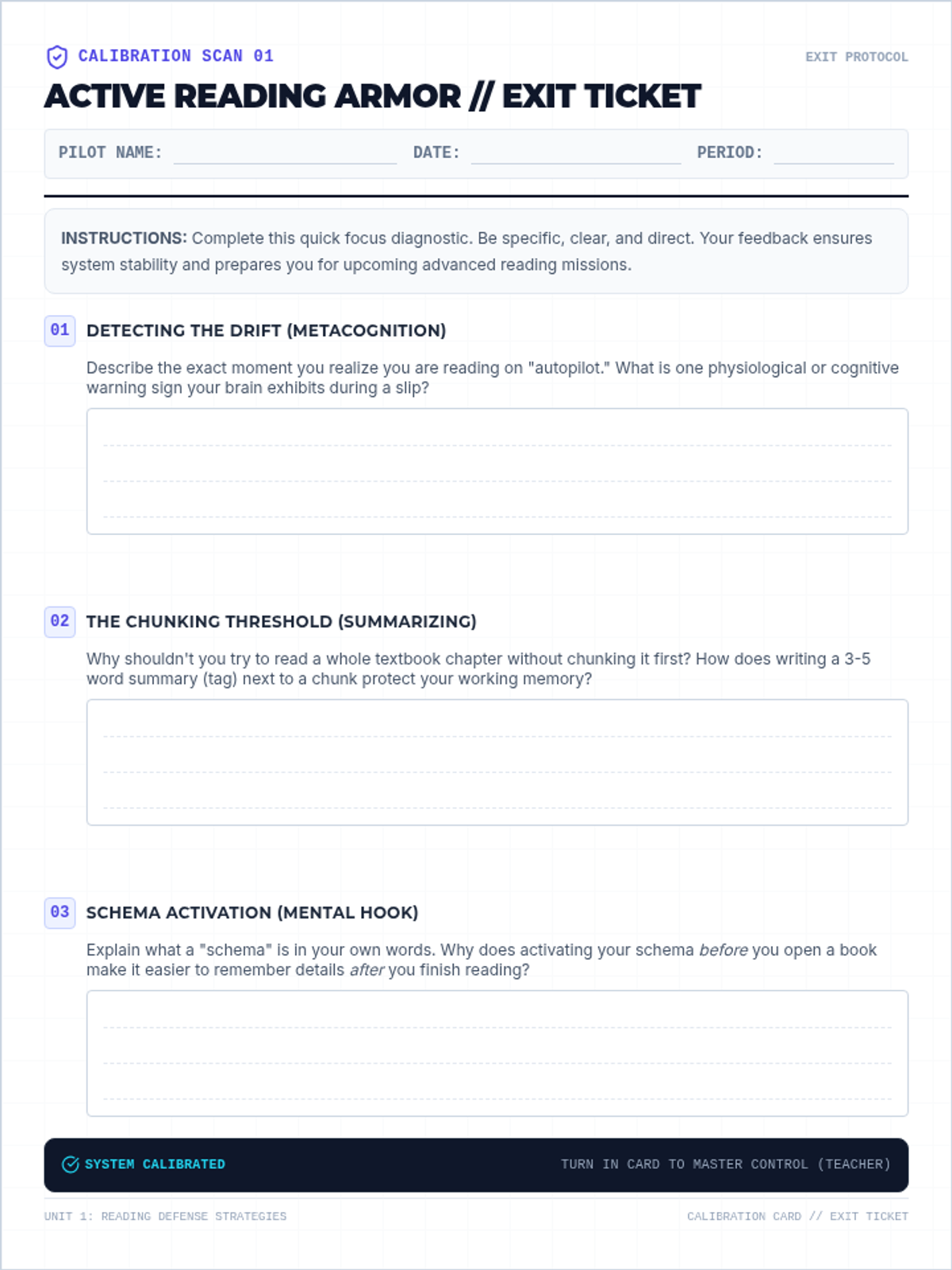
An engaging 9th-grade introduction to reading comprehension strategies, focusing on active metacognition, chunking, and visualization to transform passive reading into active text mastery.
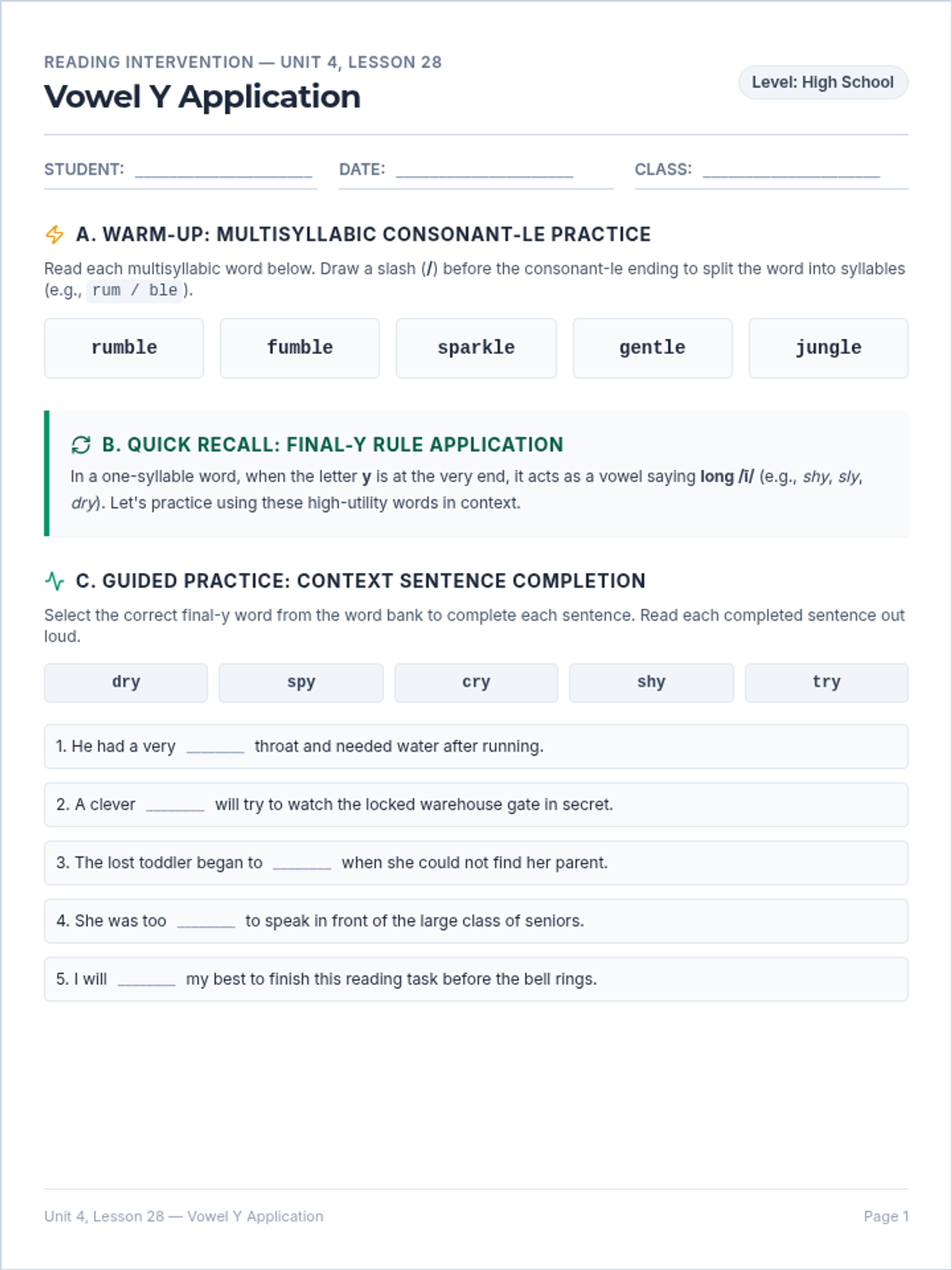
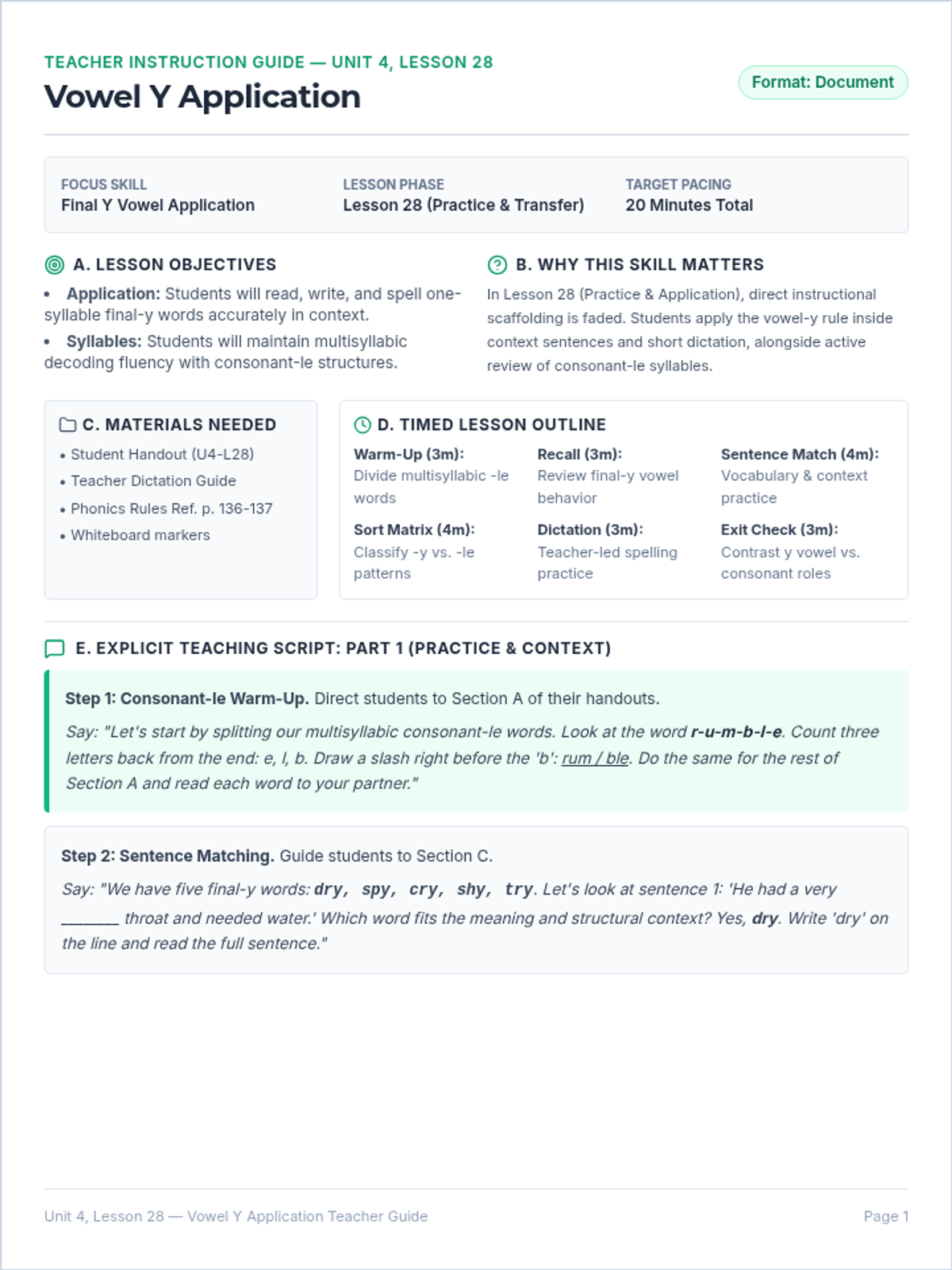
A practice-heavy high school reading intervention lesson applying final y as a long /ī/ vowel in one-syllable words, combined with consonant-le multisyllabic review.
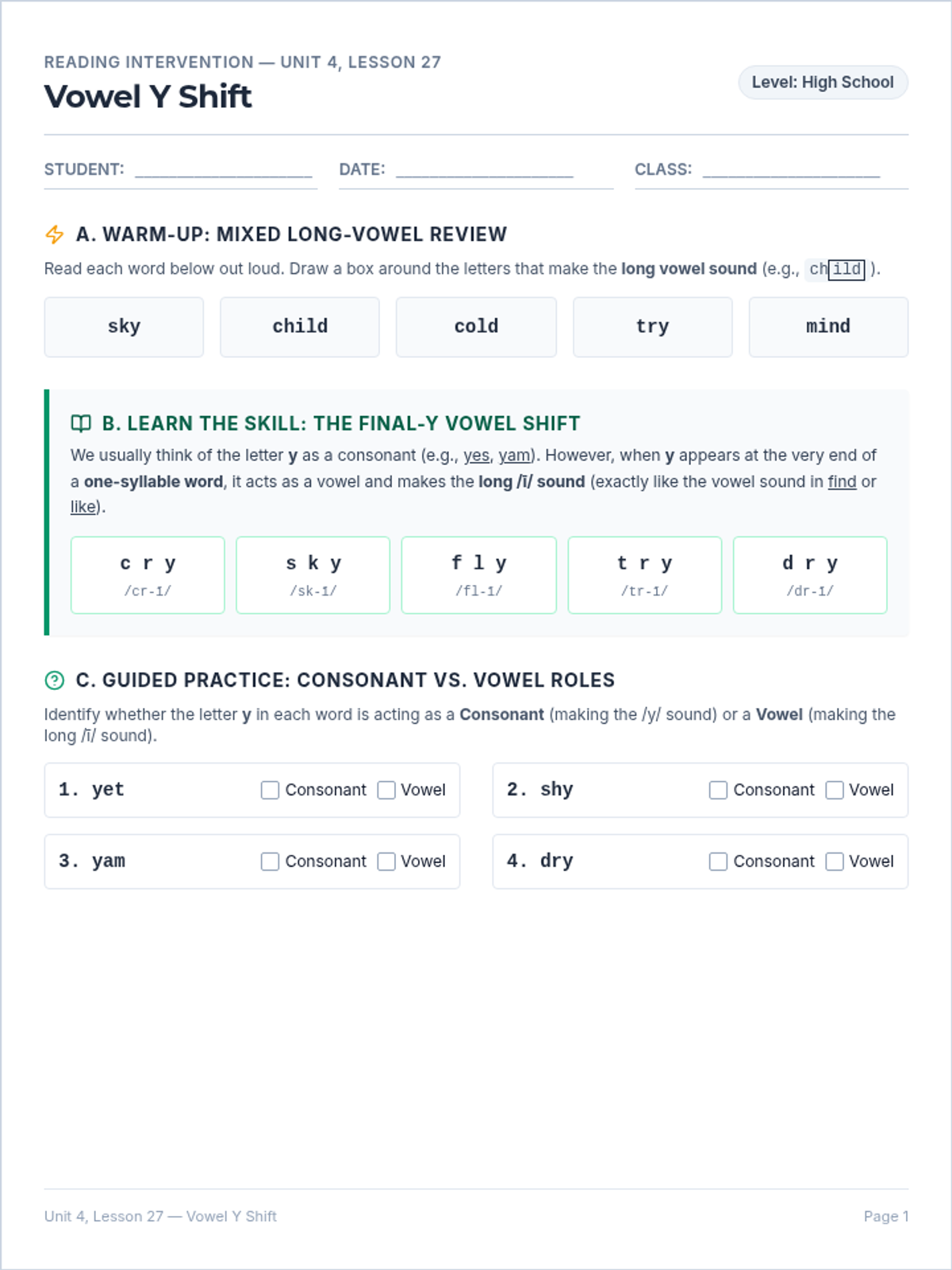
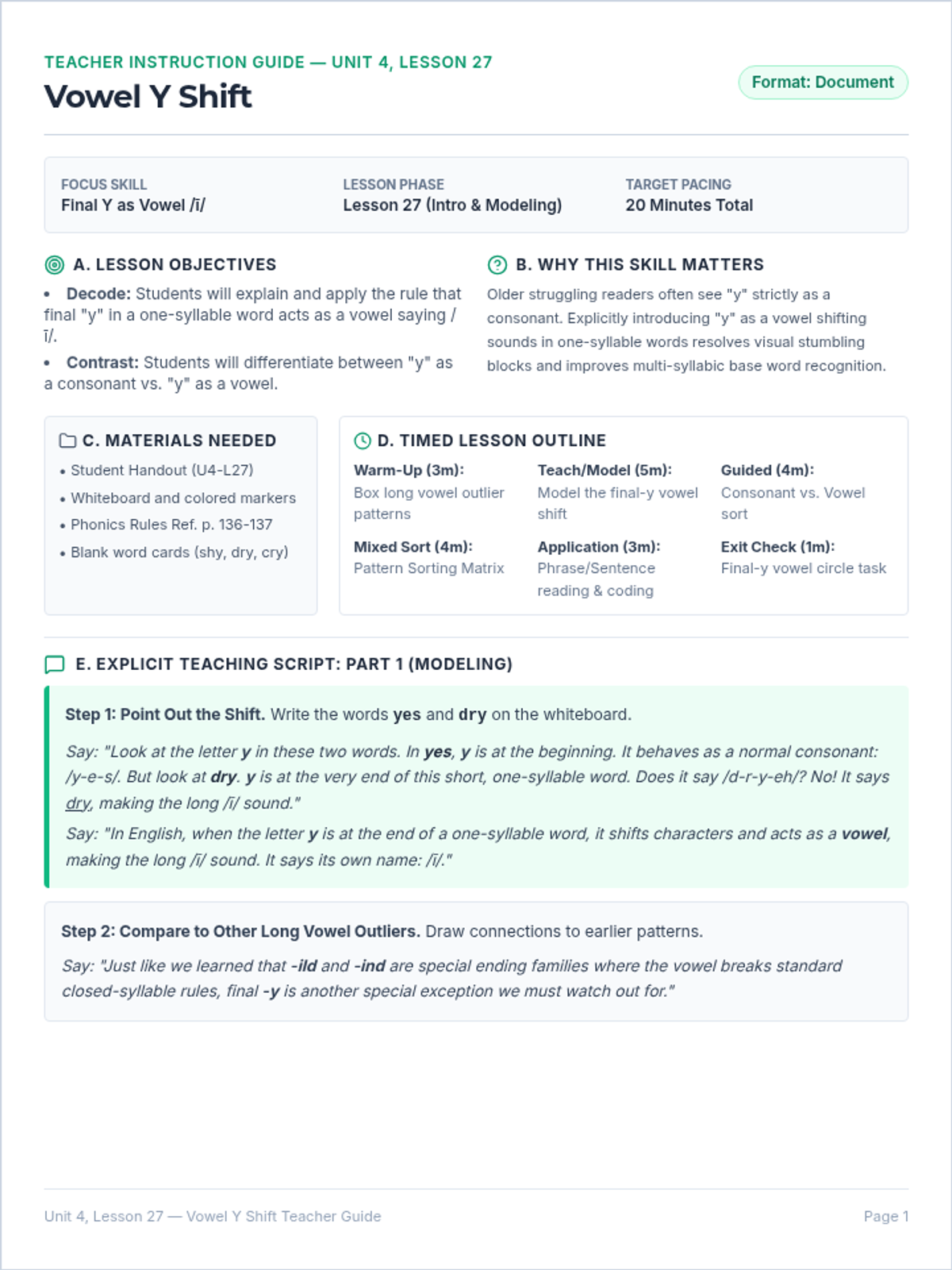
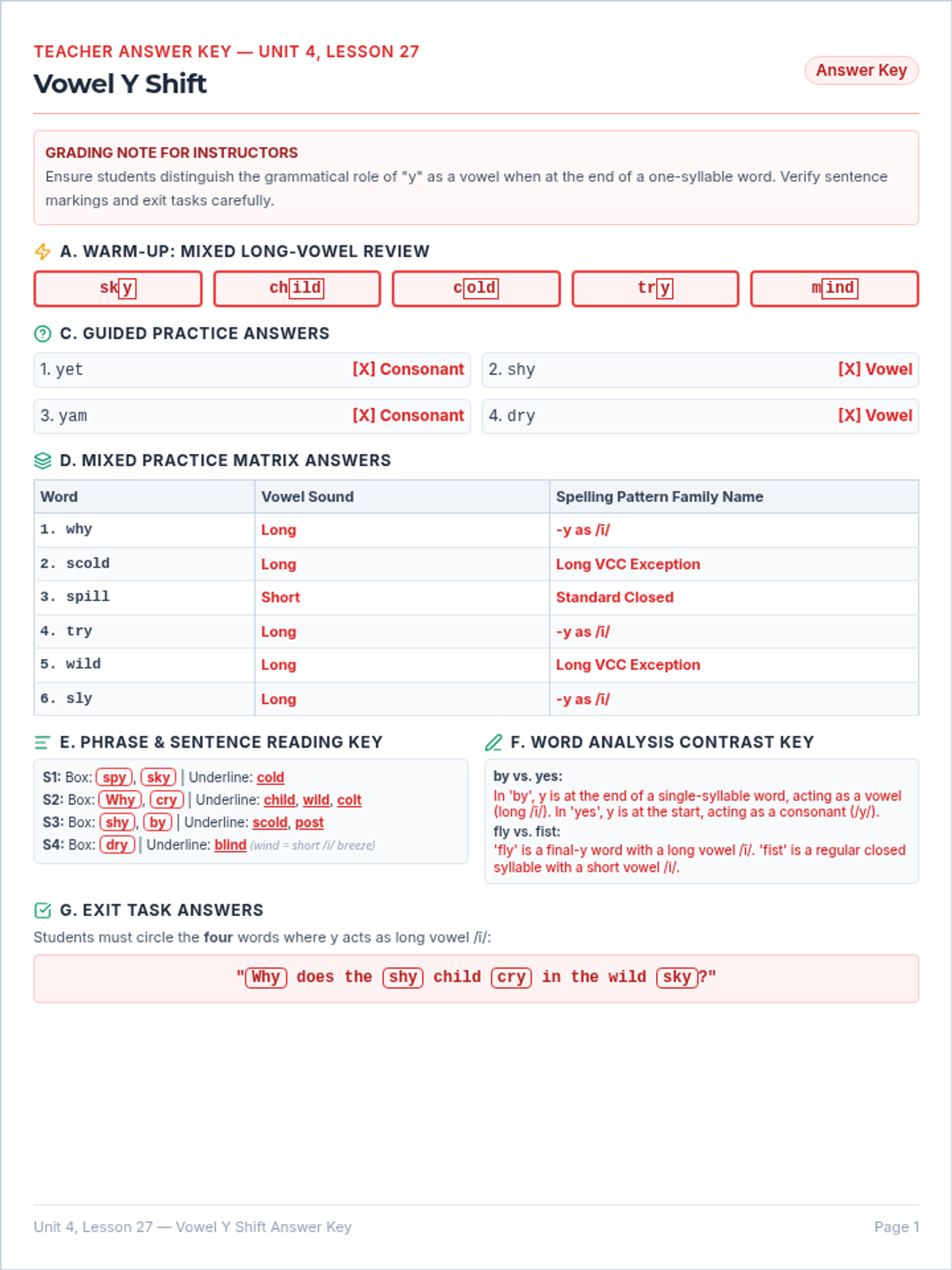
An intensive high school reading intervention lesson introducing final y as a long /ī/ vowel in one-syllable words, spiraling previous long VCC exceptions.
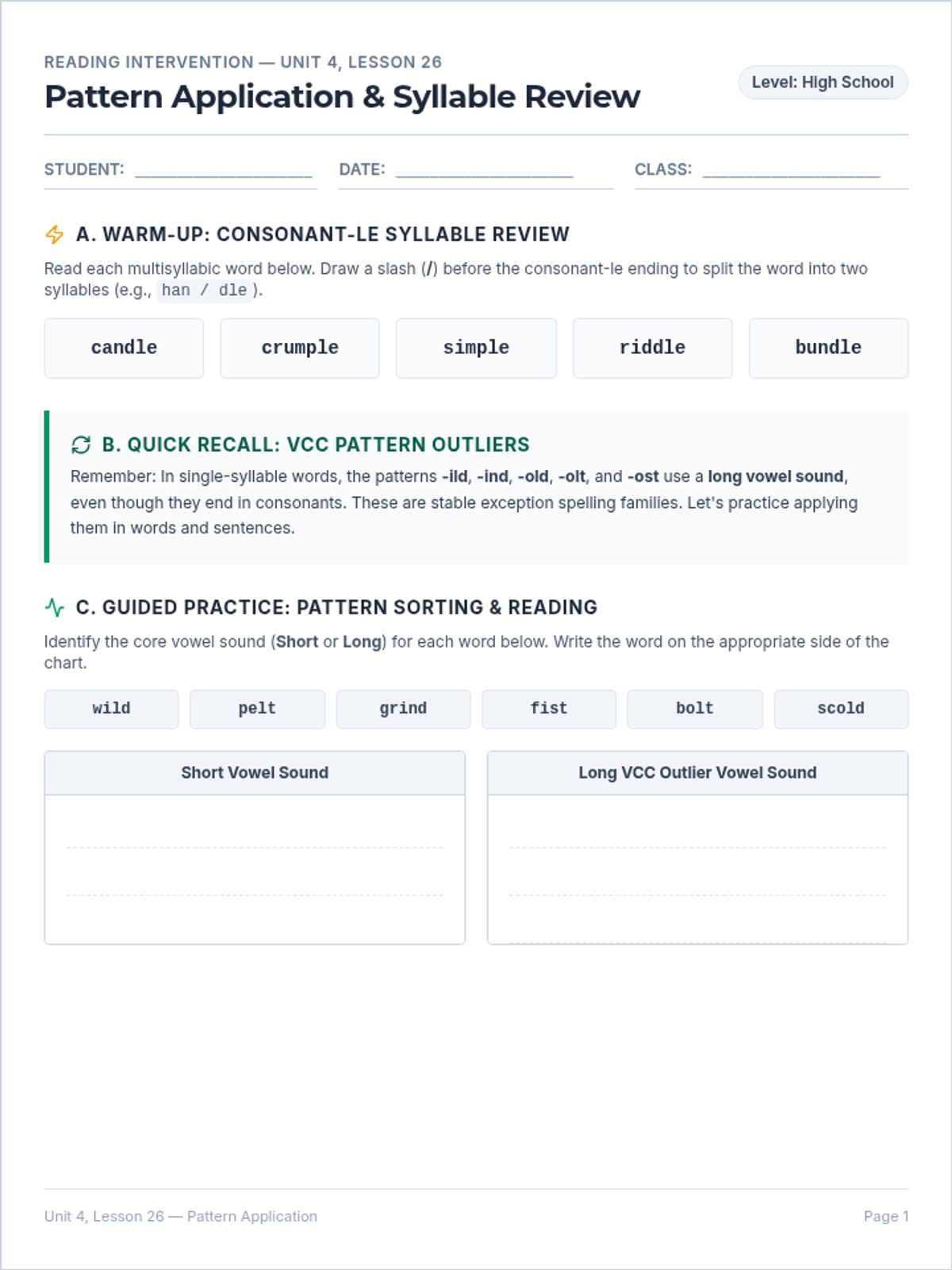
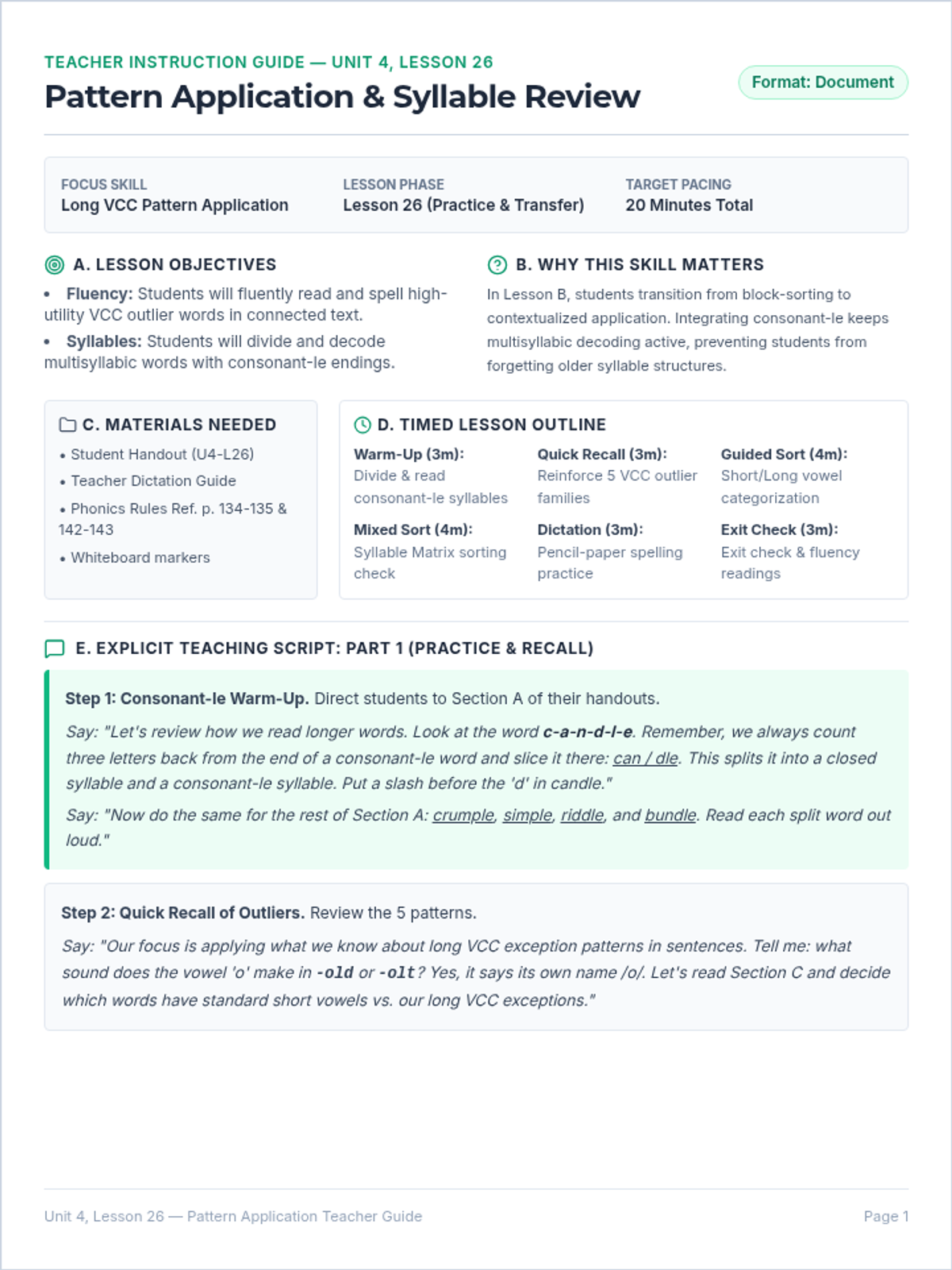
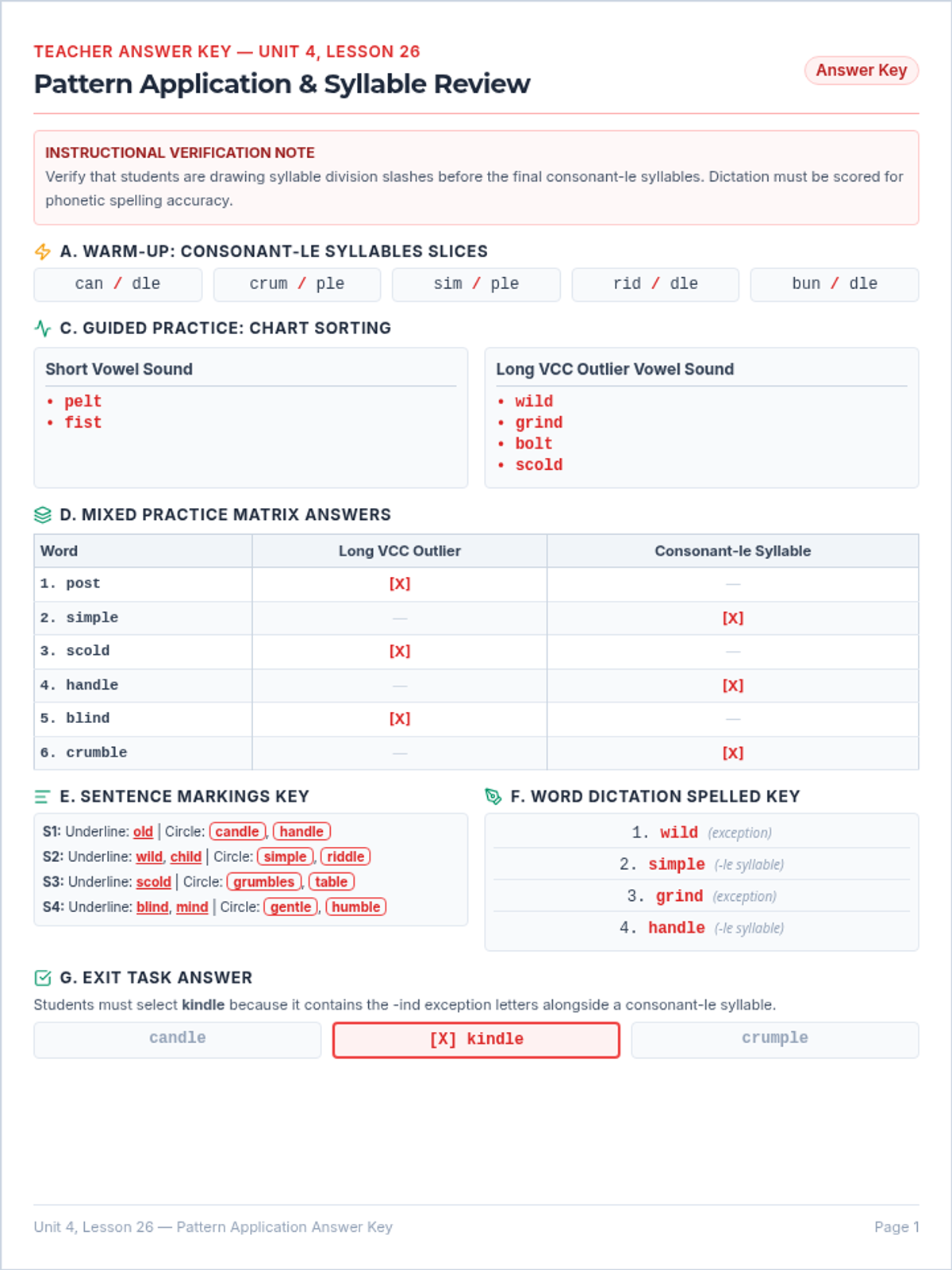
A practice-heavy high school reading intervention lesson applying long VCC vowel patterns in connected text, combined with multisyllabic decoding of consonant-le endings.
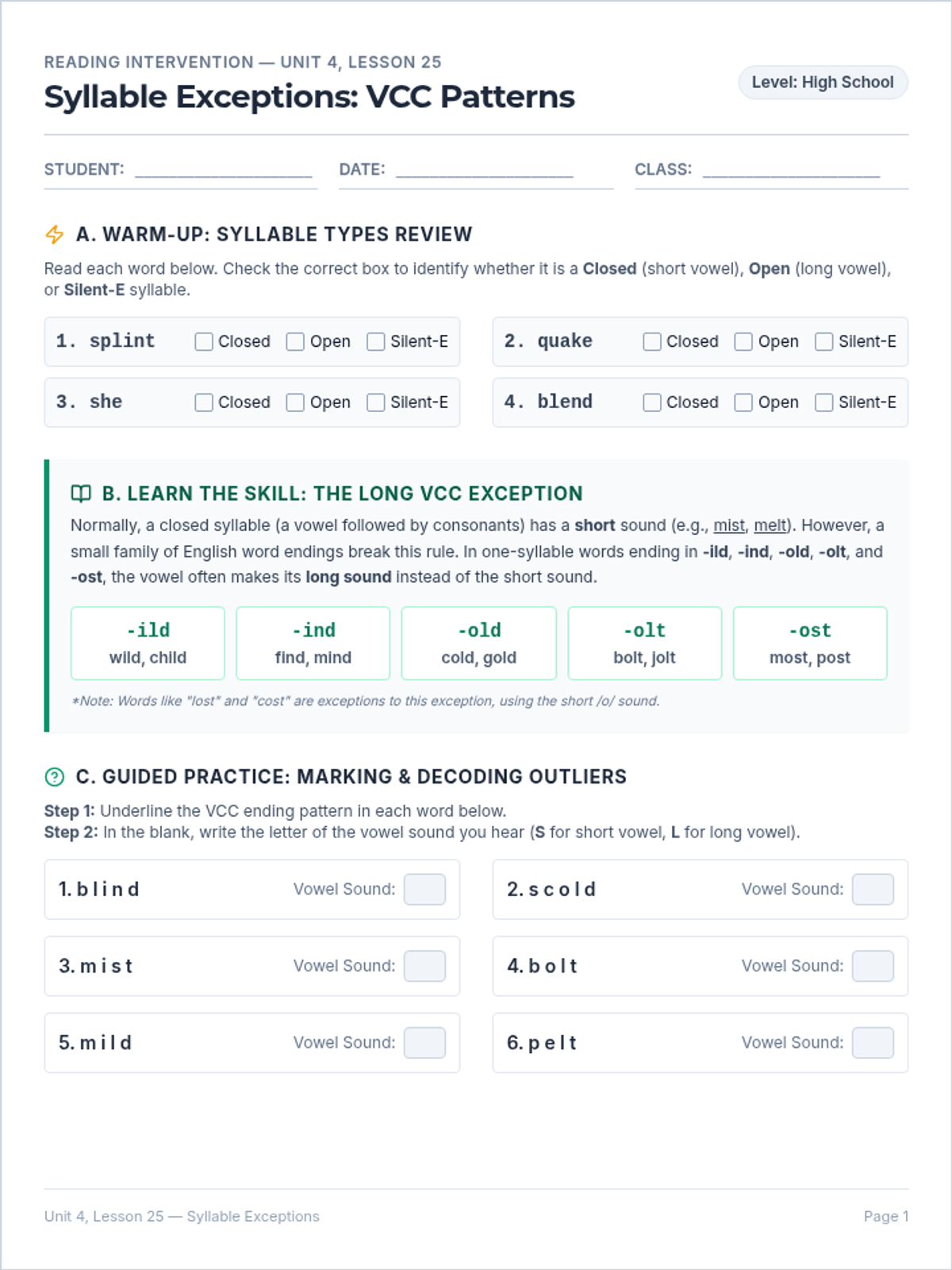
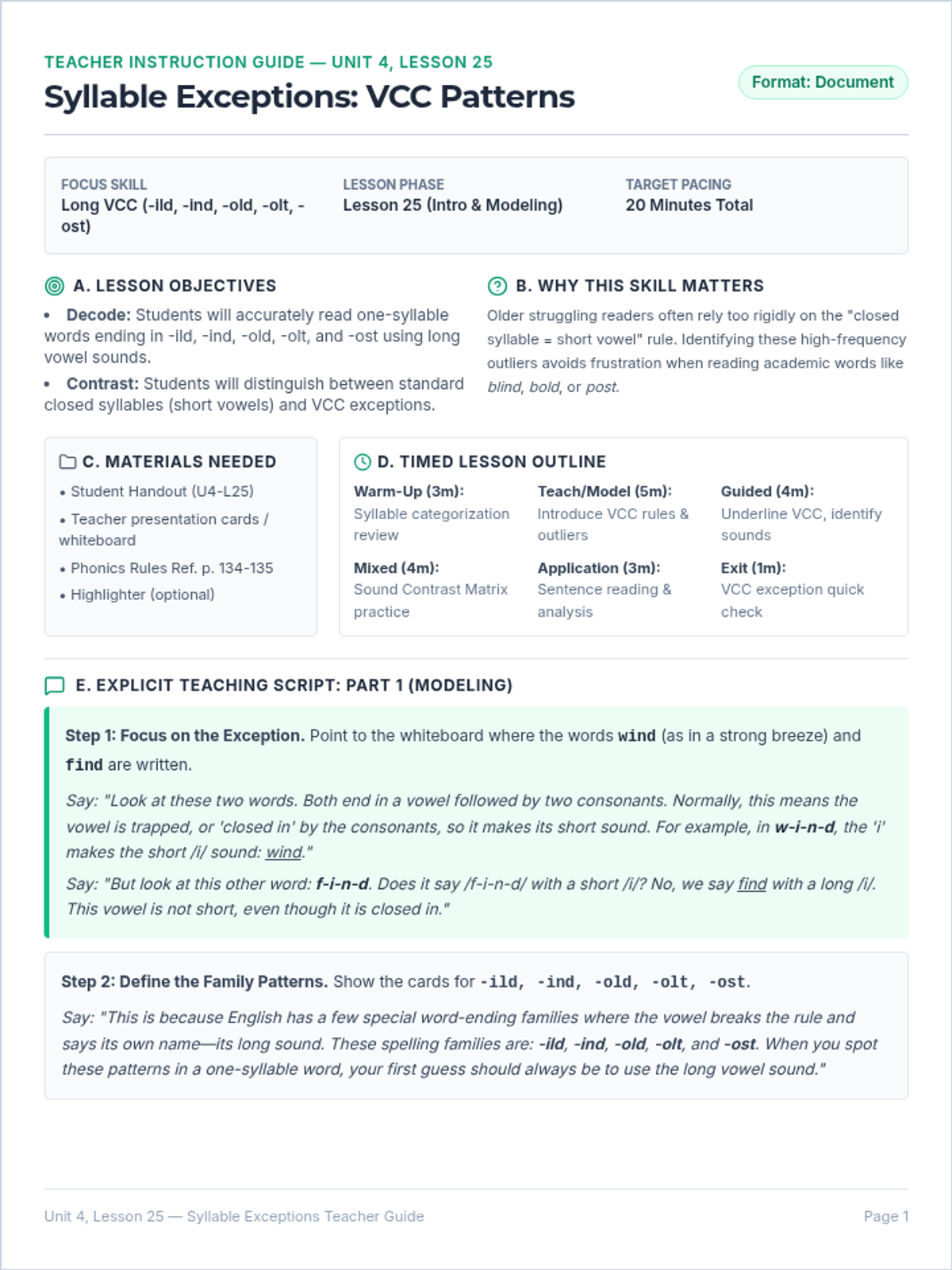
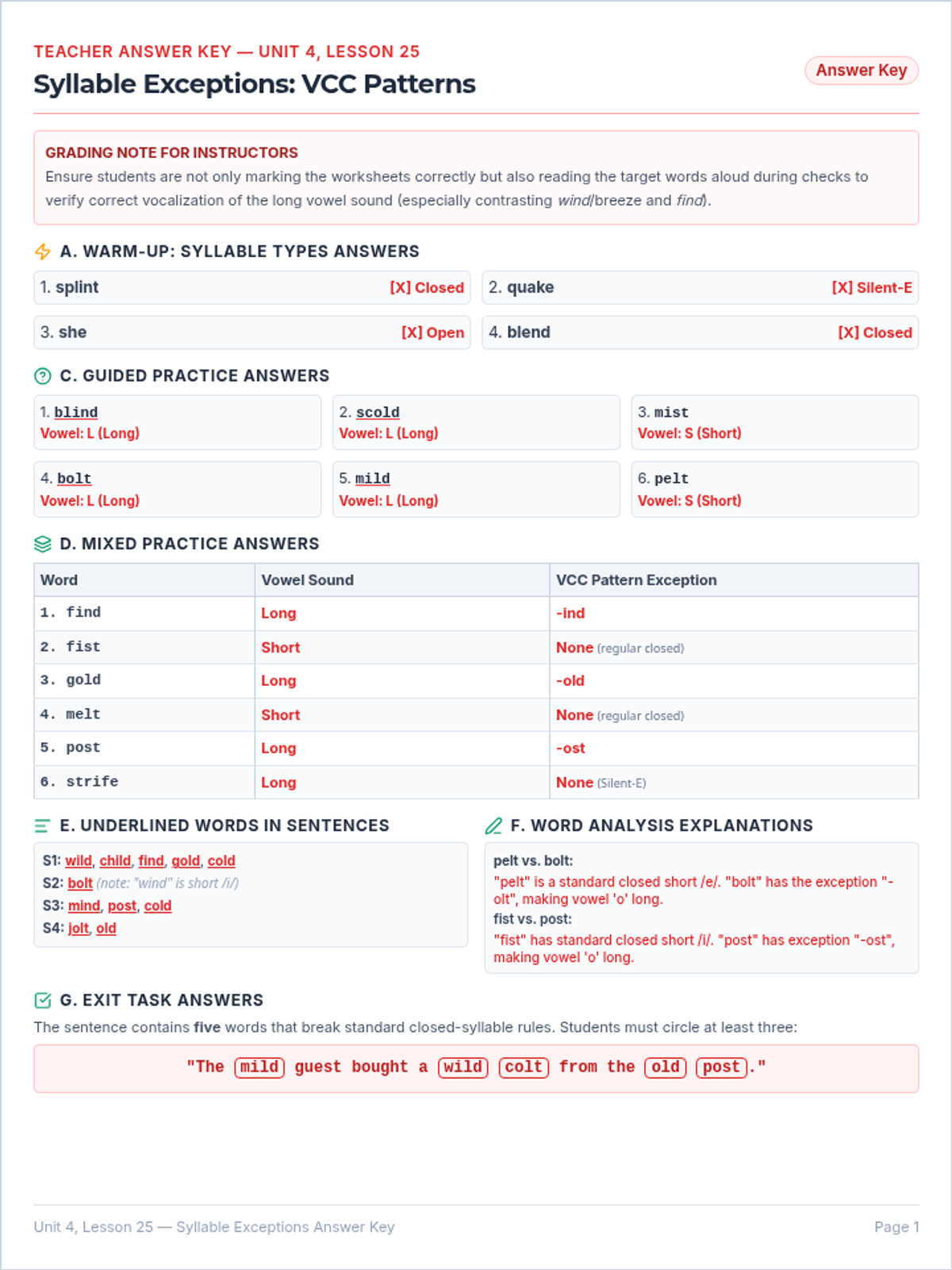
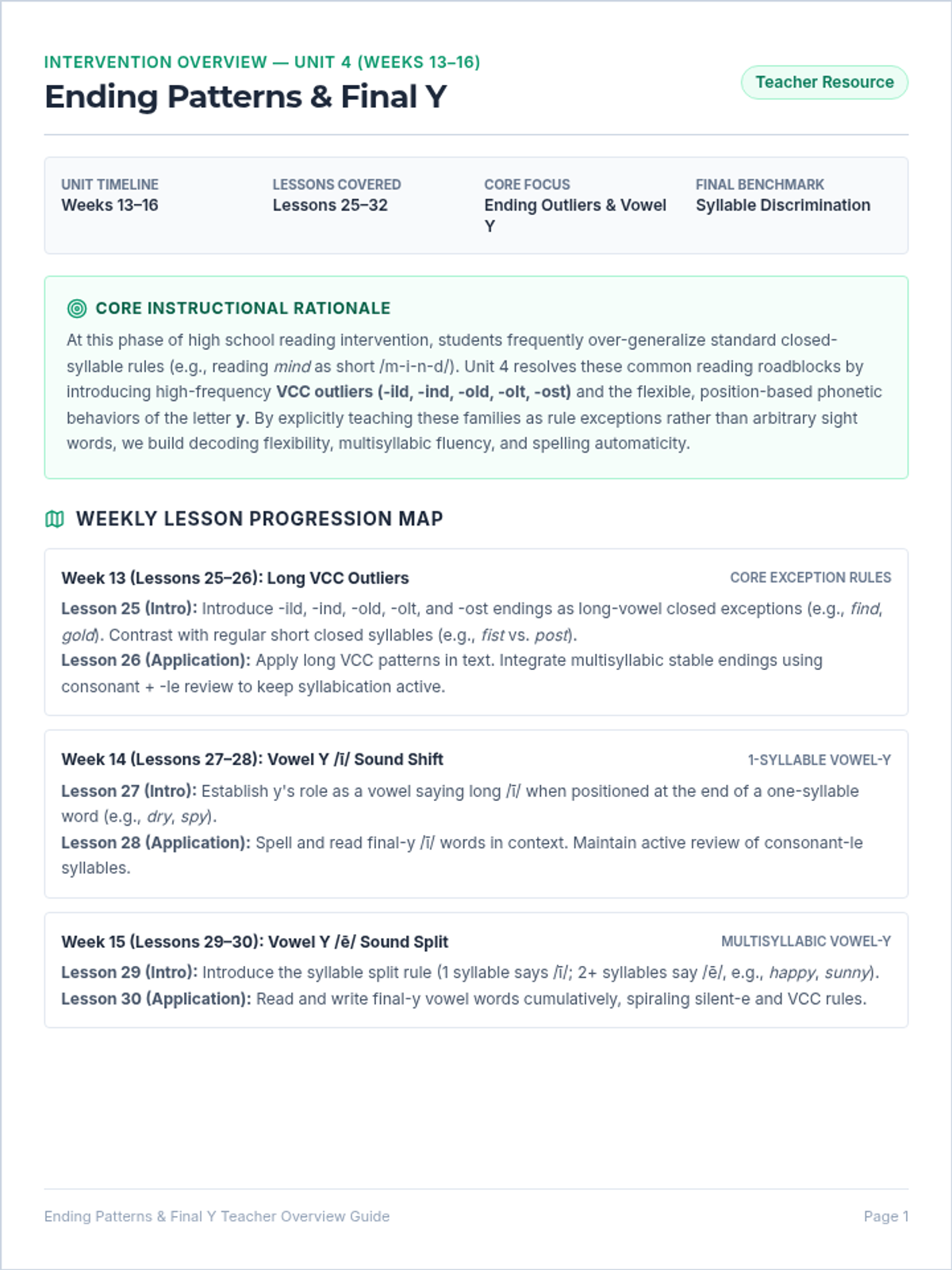
An intensive high school reading intervention lesson introducing long VCC vowel patterns (-ild, -ind, -old, -olt, -ost) as exceptions to standard closed syllable rules. It features scaffolded practice and explicit direct instruction.
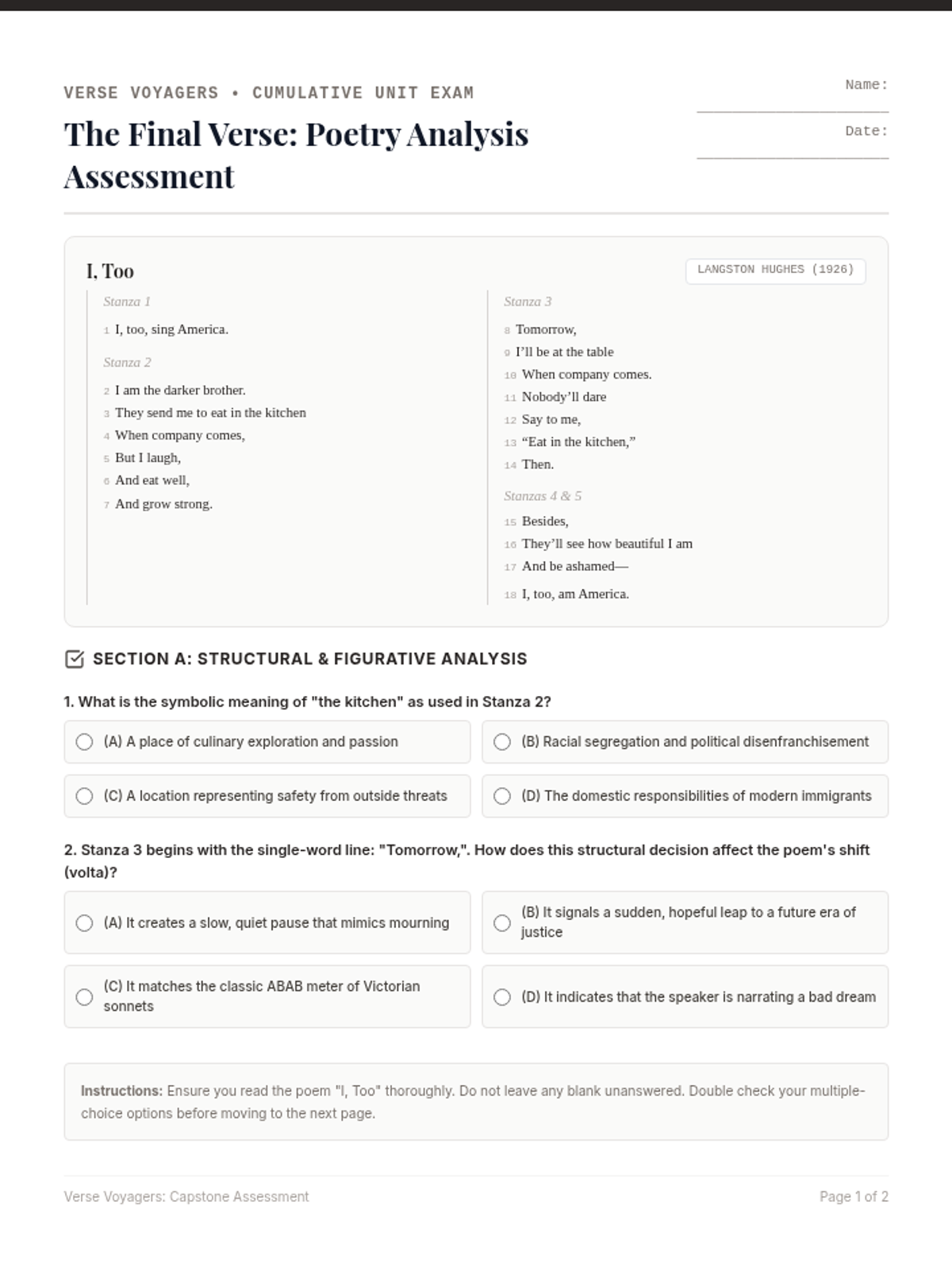
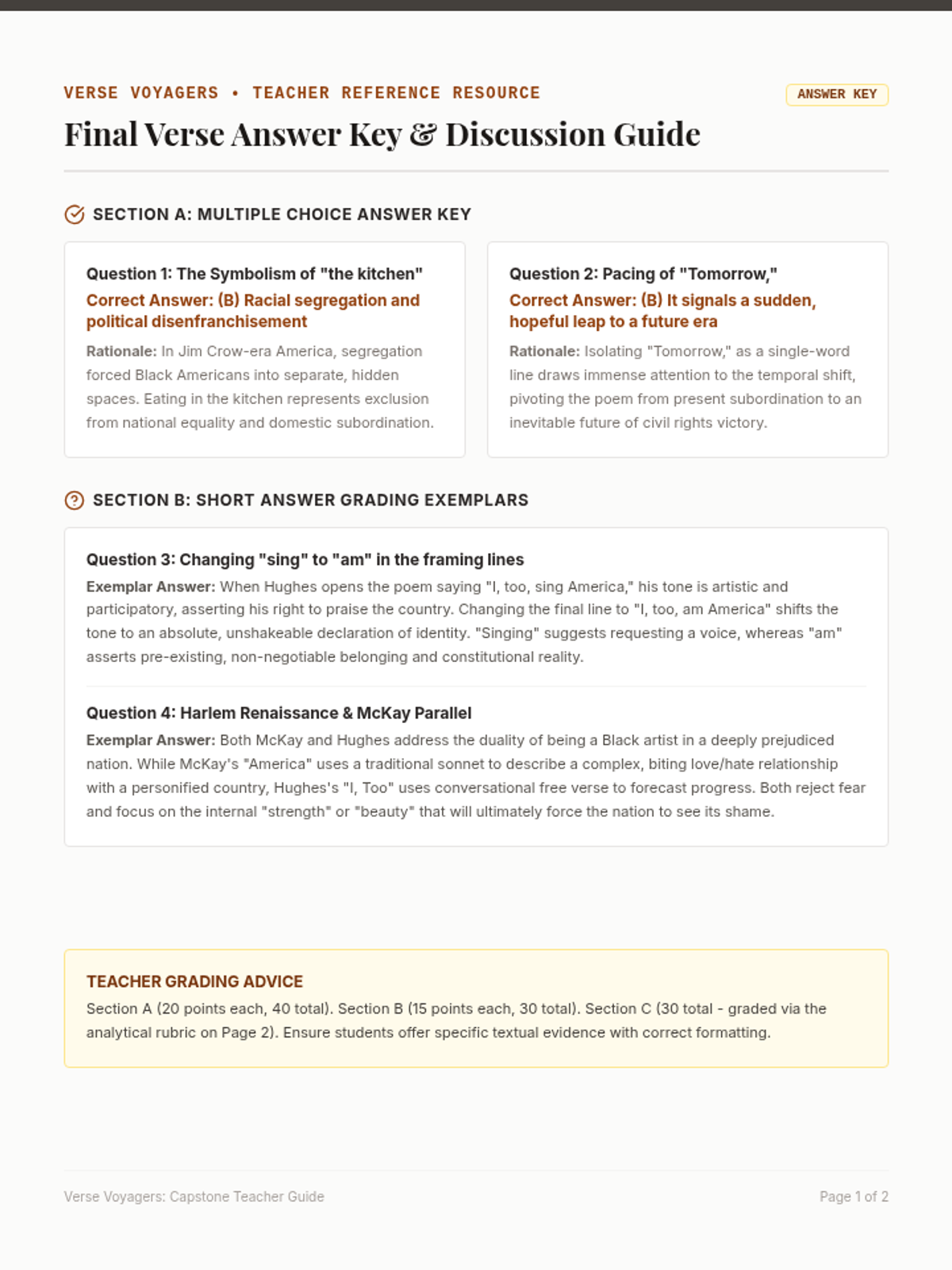
A comprehensive end-of-unit poetry analysis assessment consisting of text-dependent questions, a short-answer section on a fresh poem, and an analytical writing prompt with a standardized grading rubric.
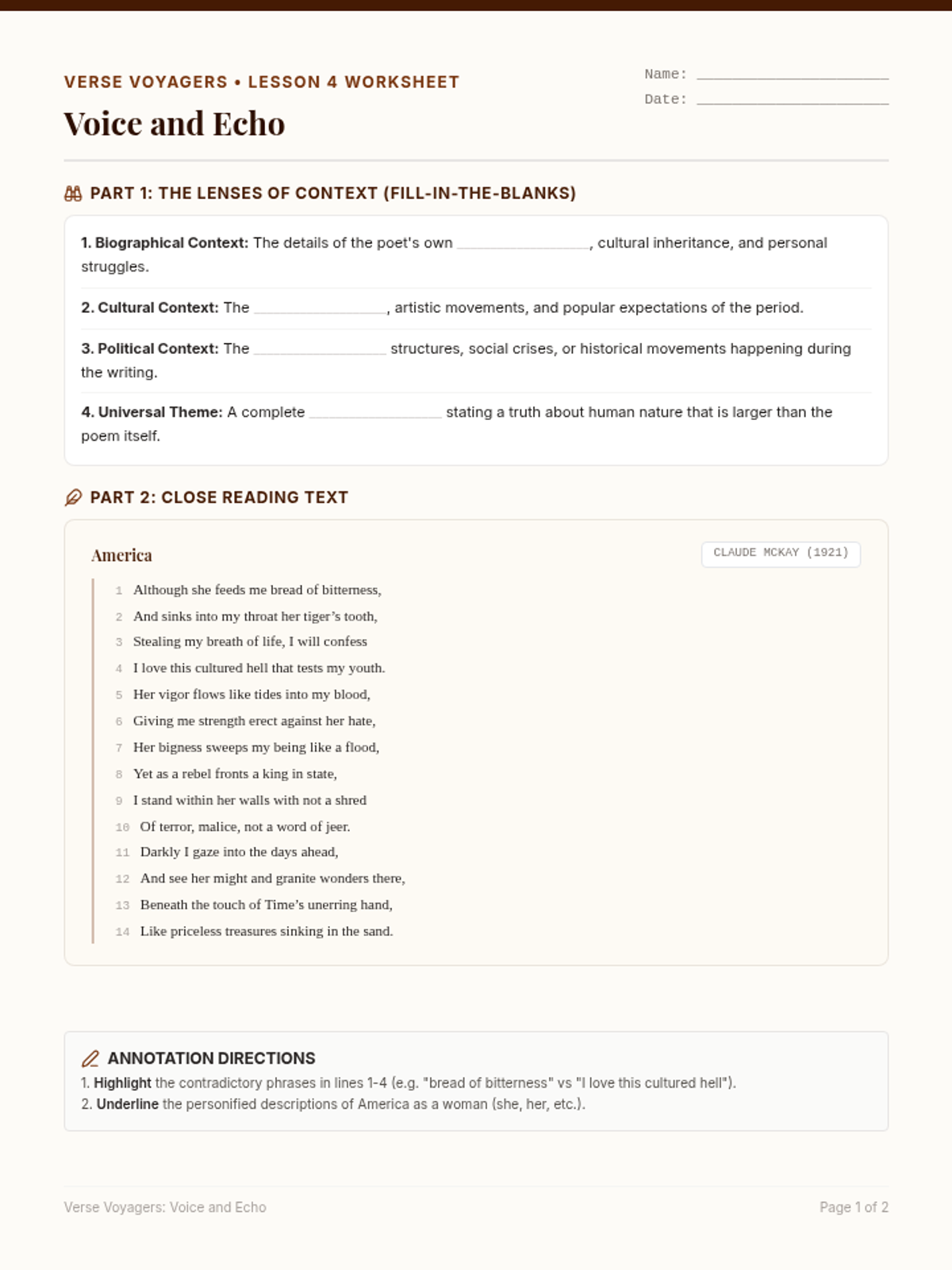
Students explore how historical era, biography, and cultural context shape a poem's themes and resonance. Includes instructional slides and an analytical guided notes organizer examining diverse voices in poetry.
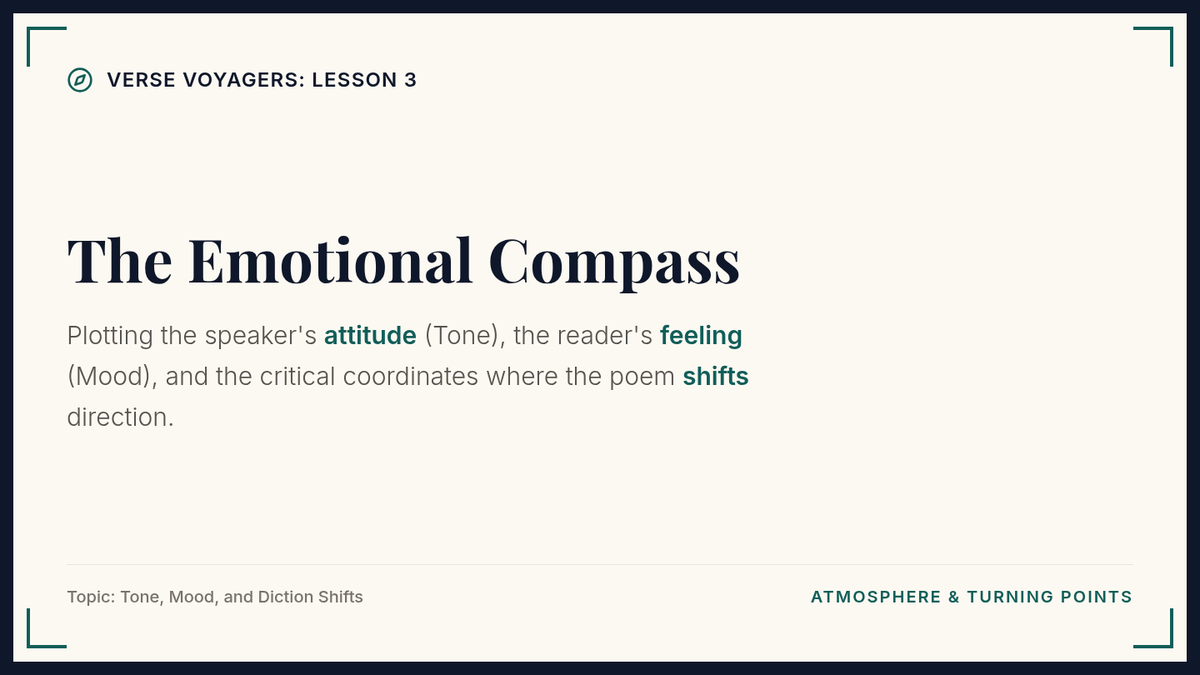
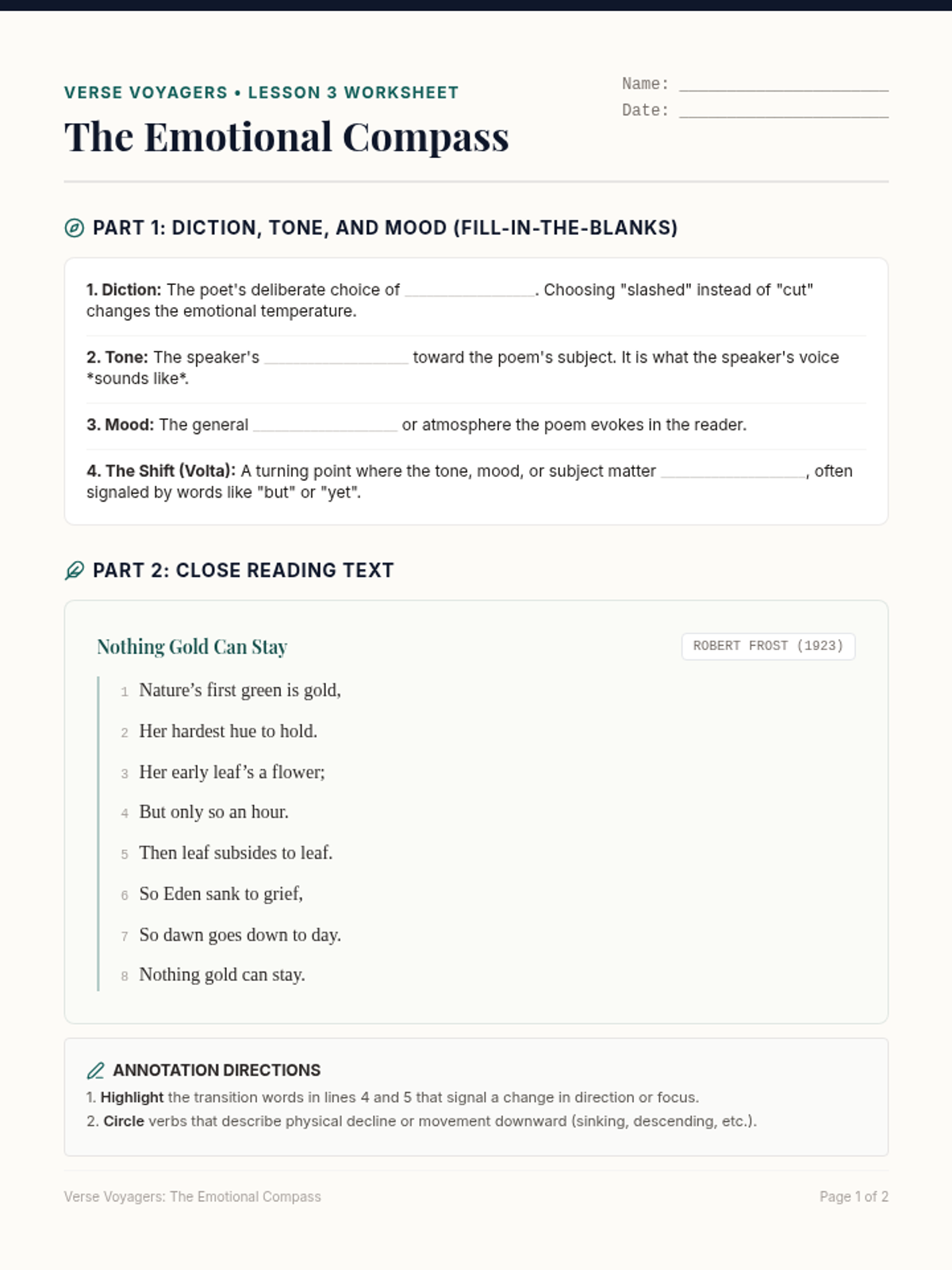
Students analyze how word choice (diction) establishes atmosphere (mood) and speaker attitude (tone), tracking the pivotal shifts where meaning transforms. Includes slides and a tracker-style close reading worksheet.
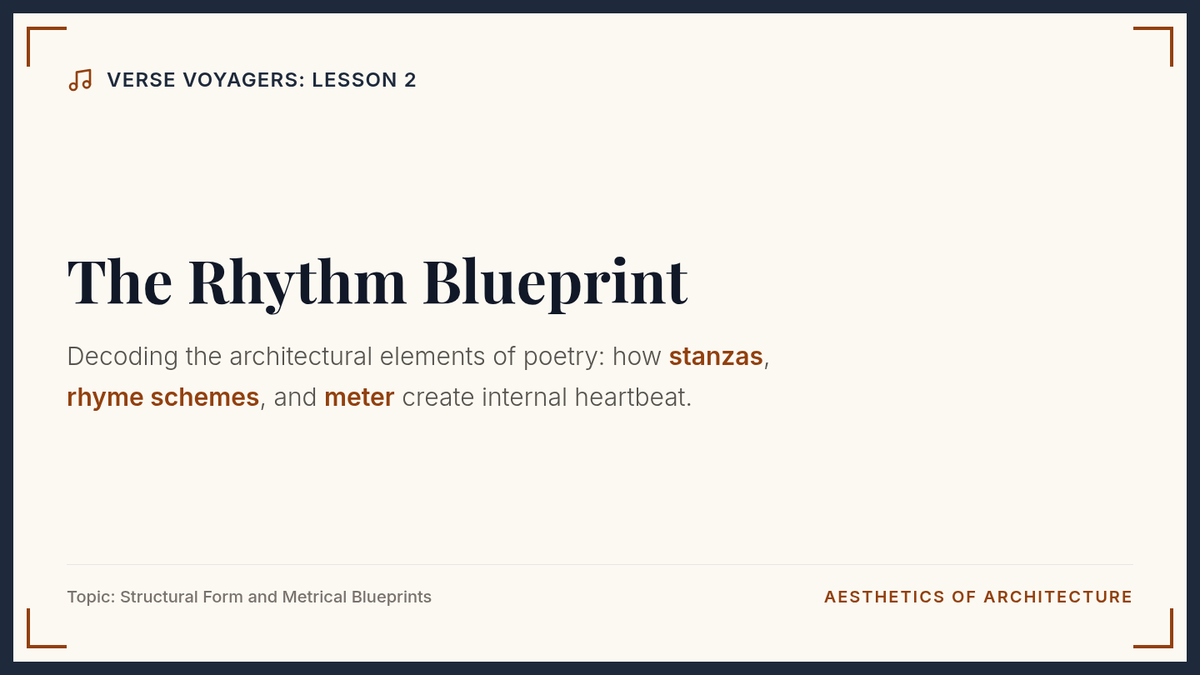
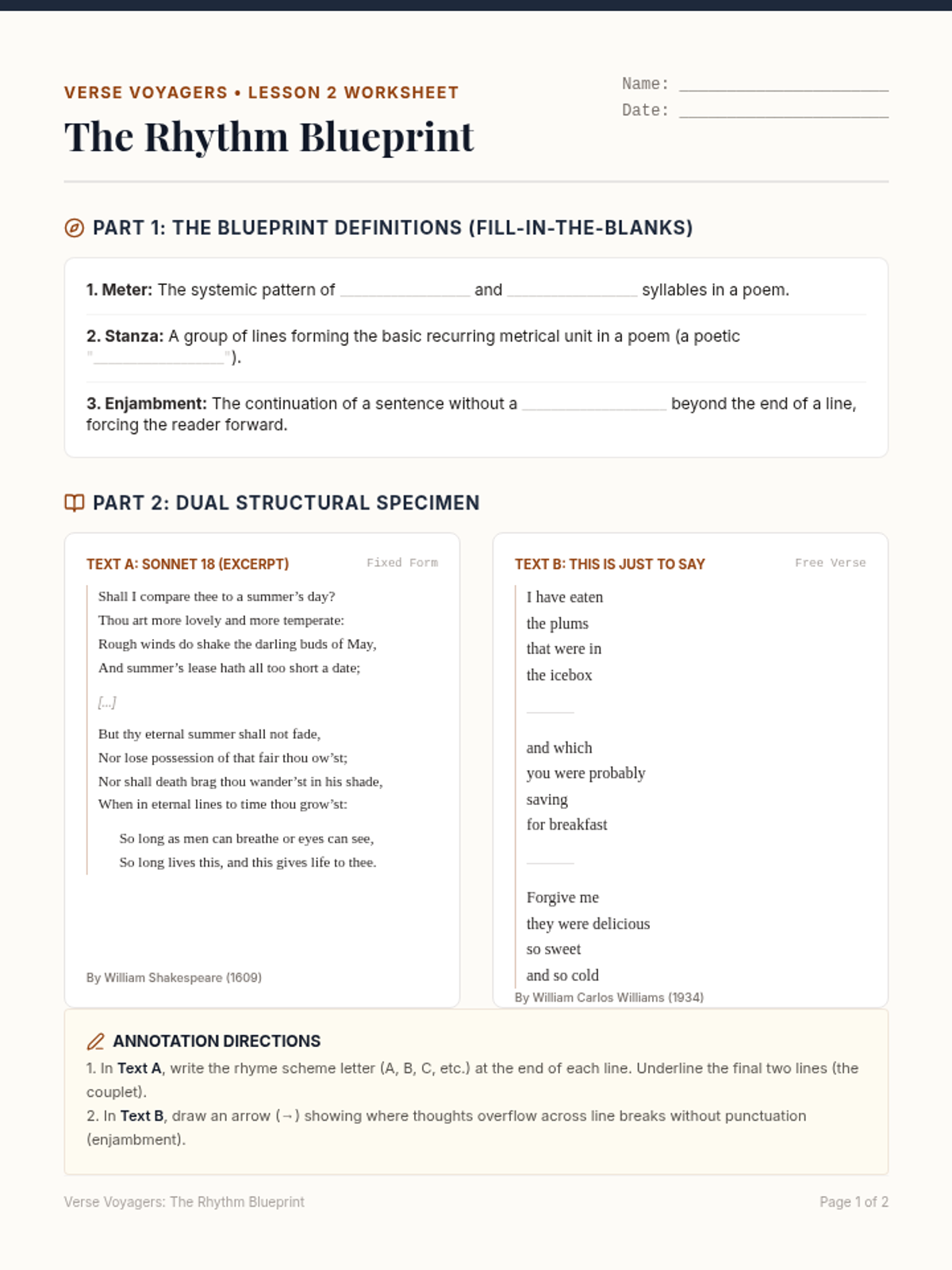
Students examine how line breaks, stanzas, rhyme schemes, and meter control pacing and highlight critical concepts. Includes instructional slides and a guided practice analyzing classic sonnet and free verse forms.
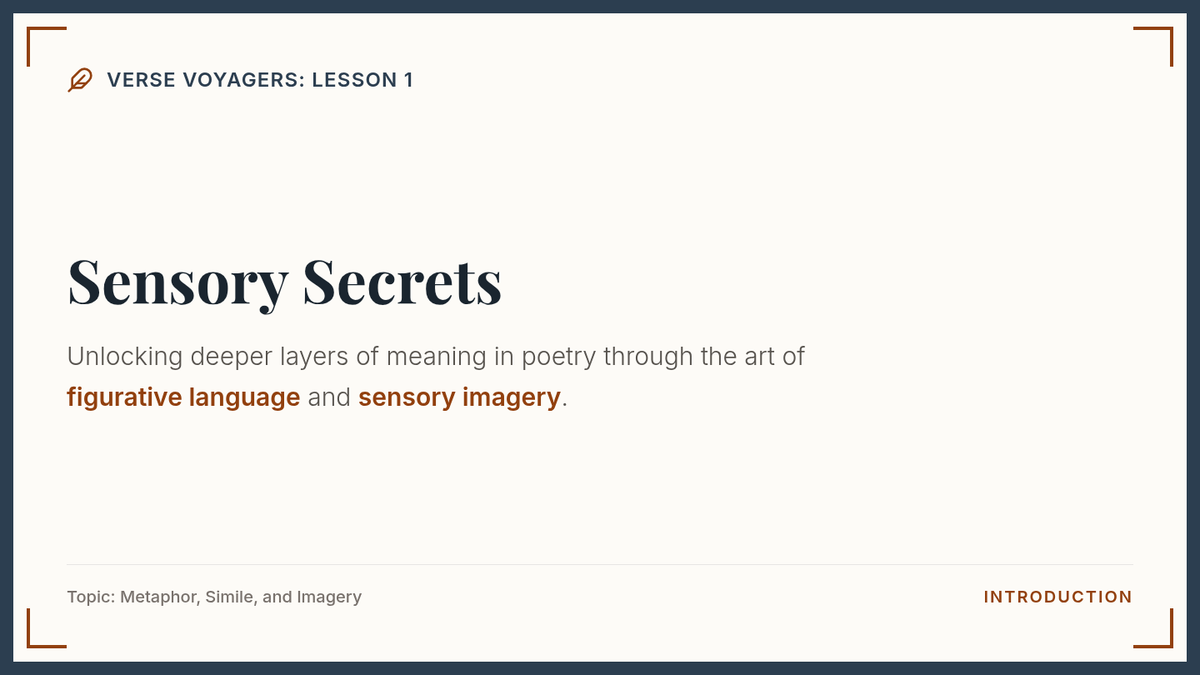
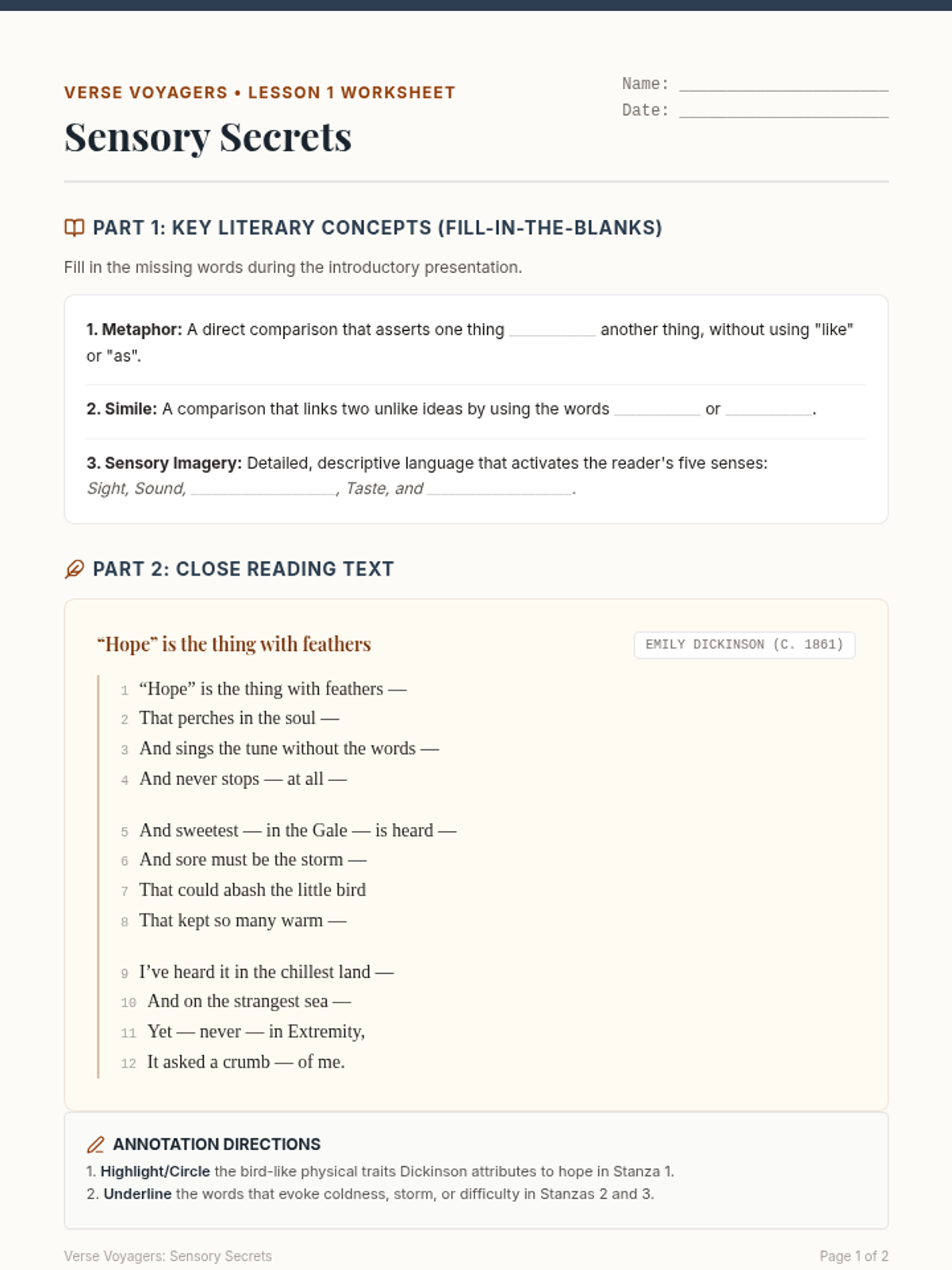
Students explore how poets use metaphors, similes, and rich sensory imagery to craft layers of meaning beyond the literal words. Includes instructional slides and a close reading guided worksheet analyzing Emily Dickinson's poetry.
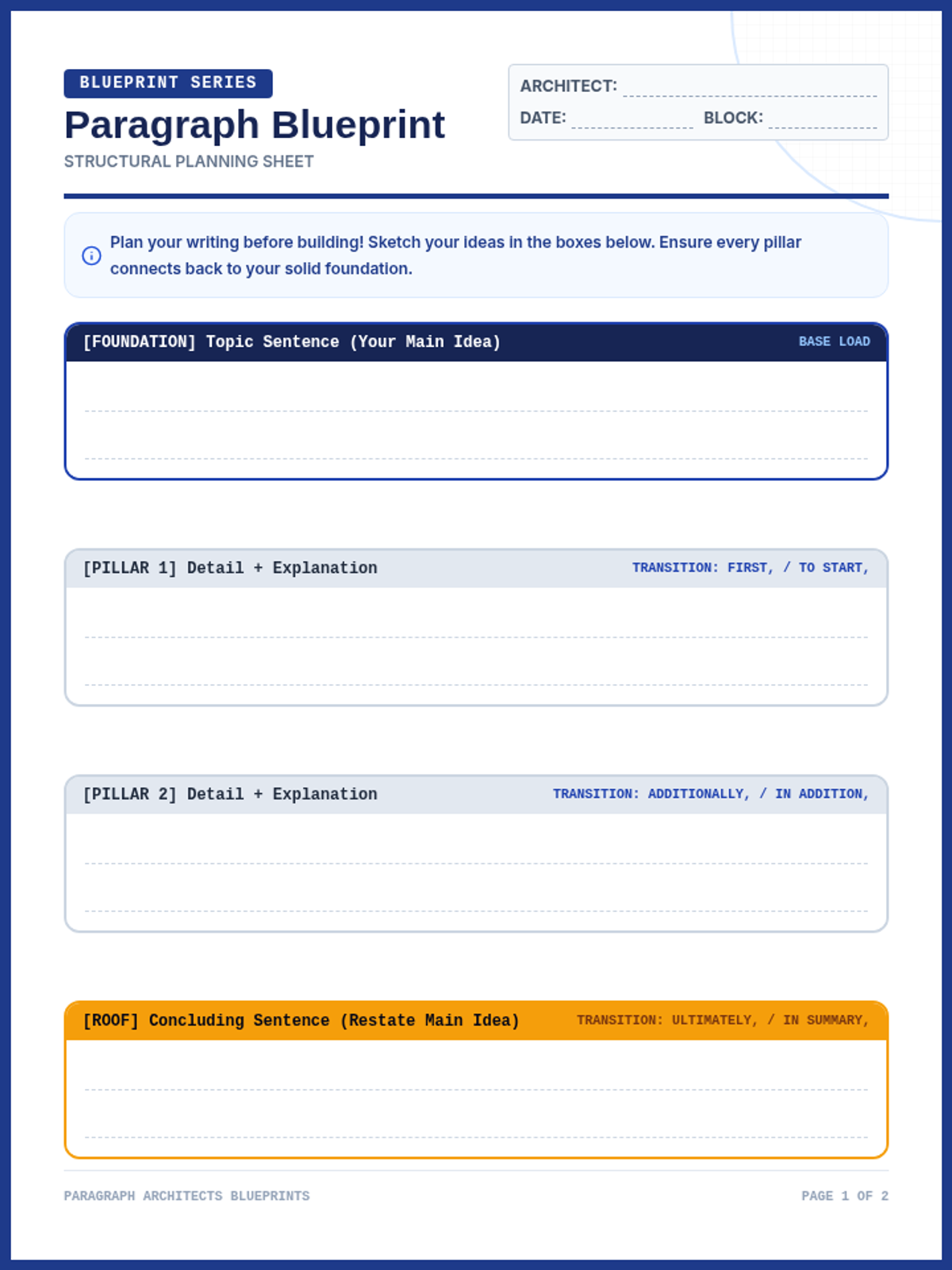
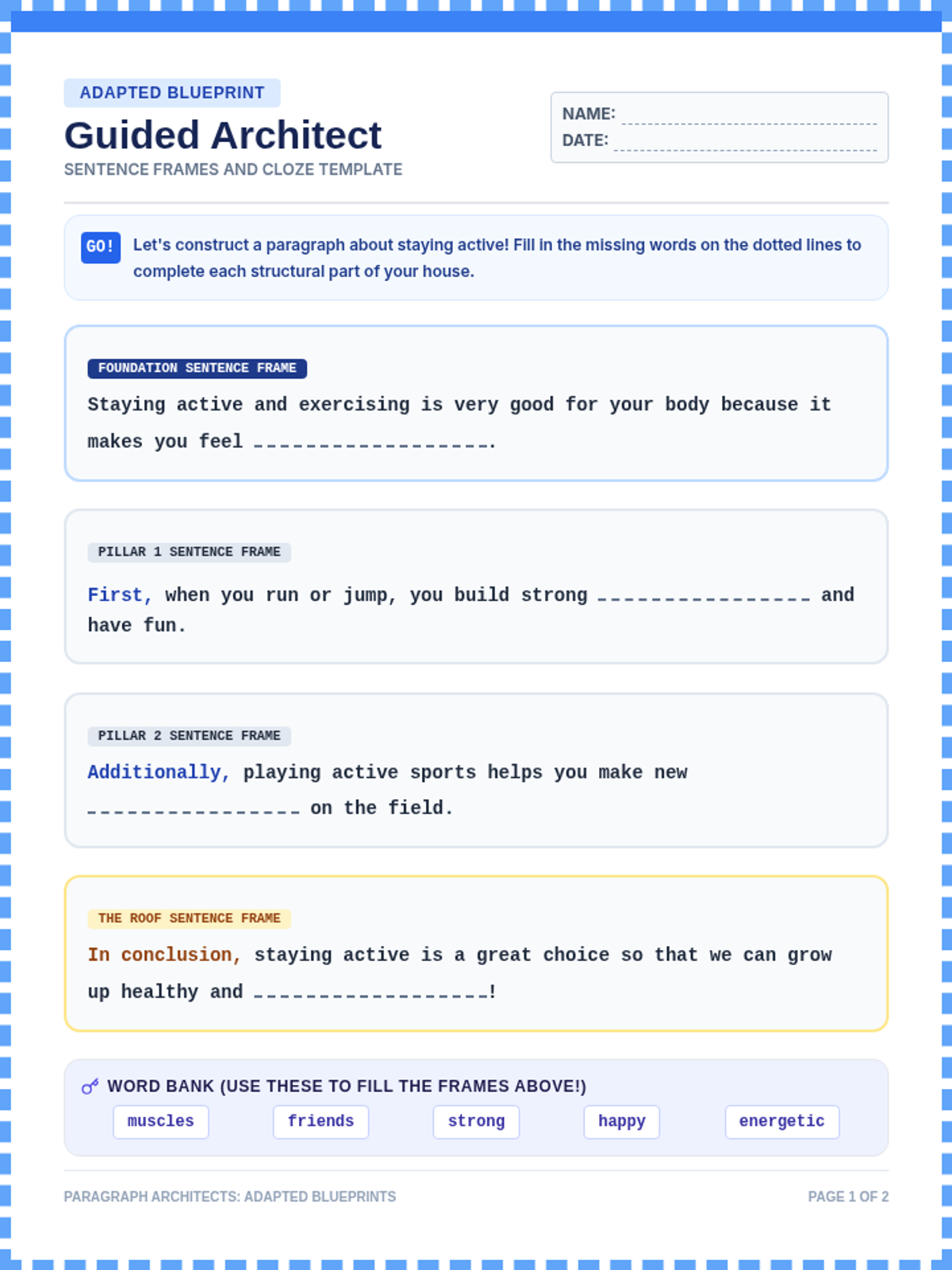
A structural writing lesson guiding students to build organized, cohesive paragraphs with topic sentences, concrete evidence, and transitions.
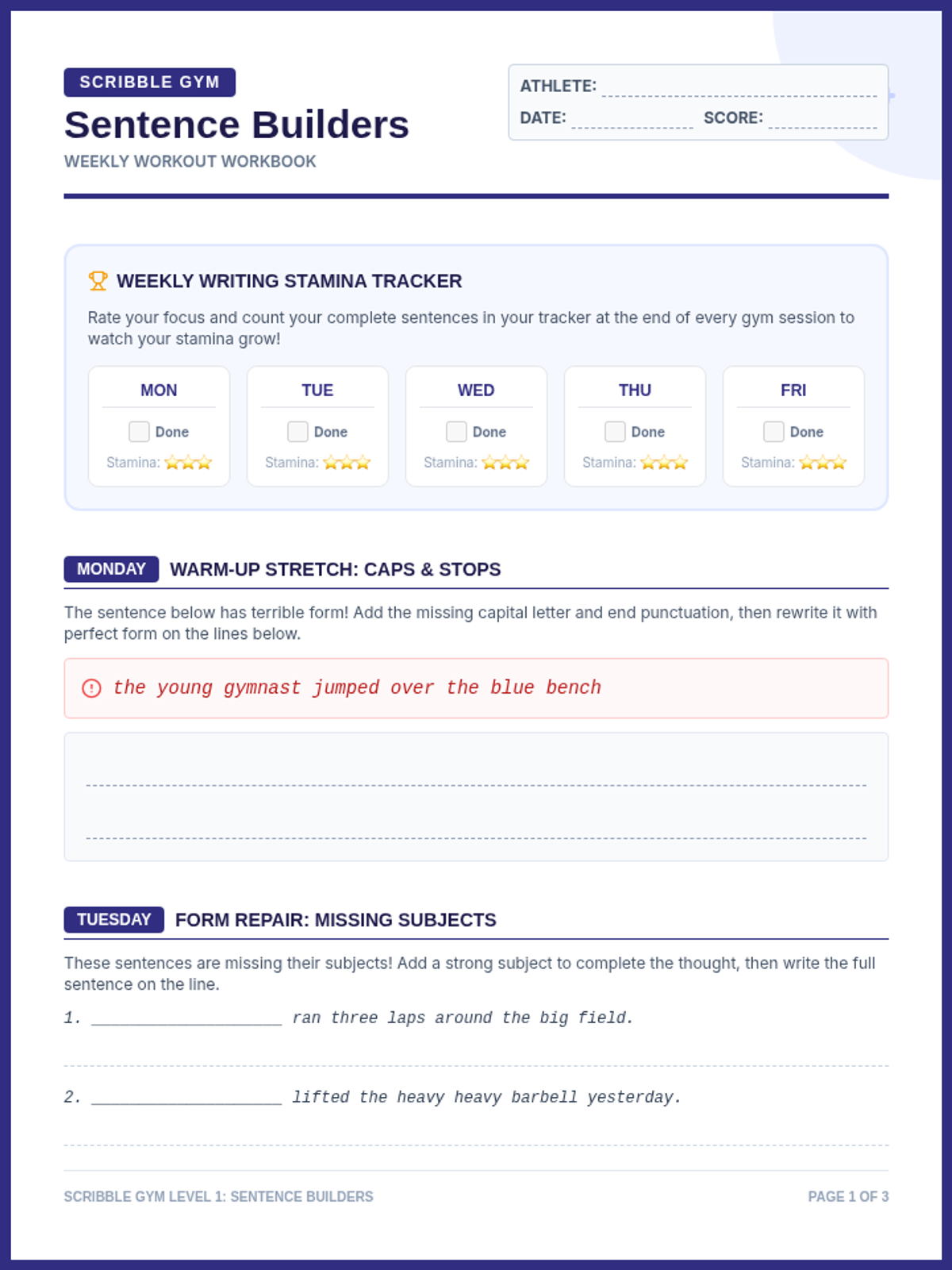
A foundational lesson focused on mastering capitalization, punctuation, and constructing complete simple and compound sentences.
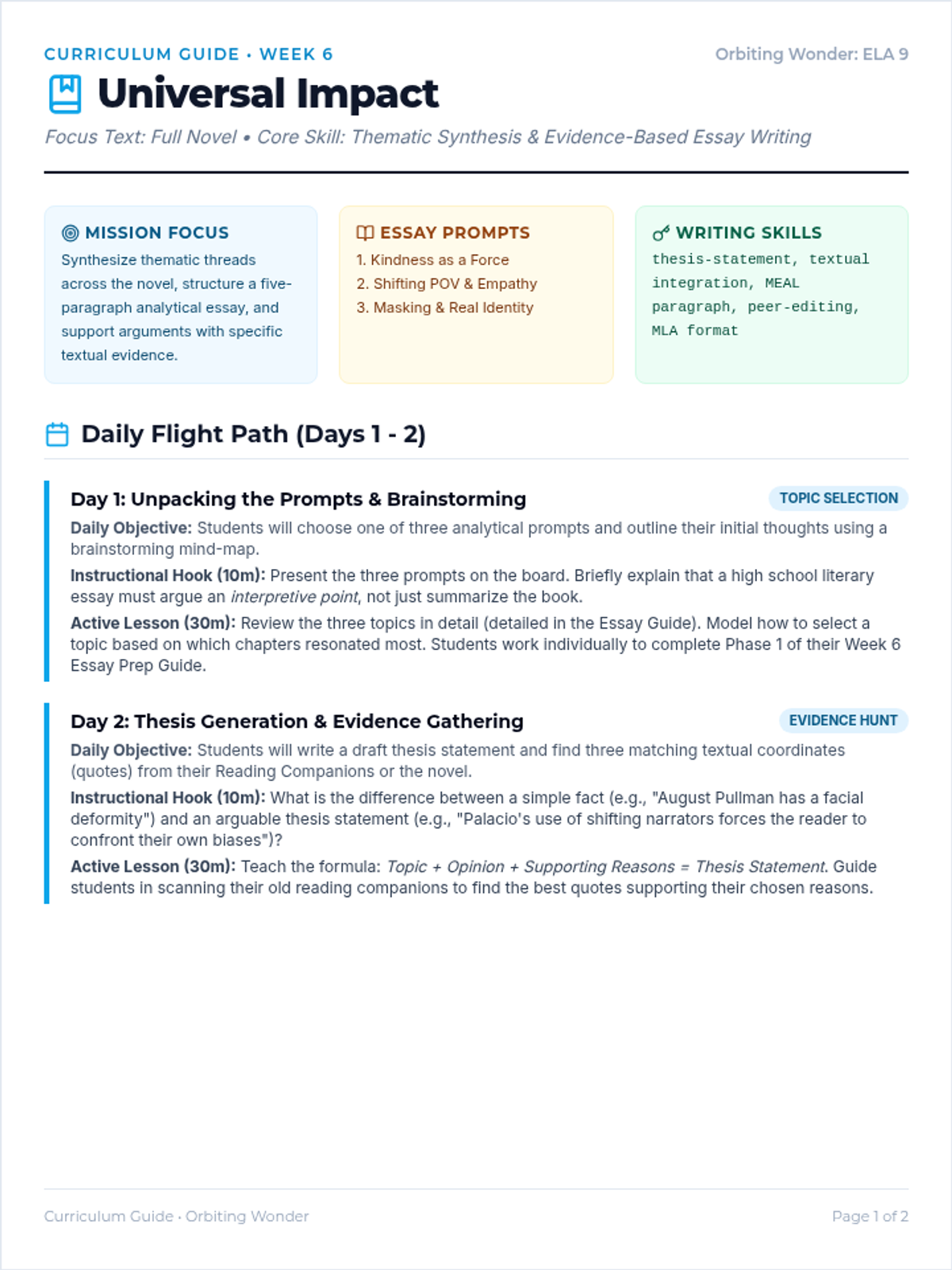
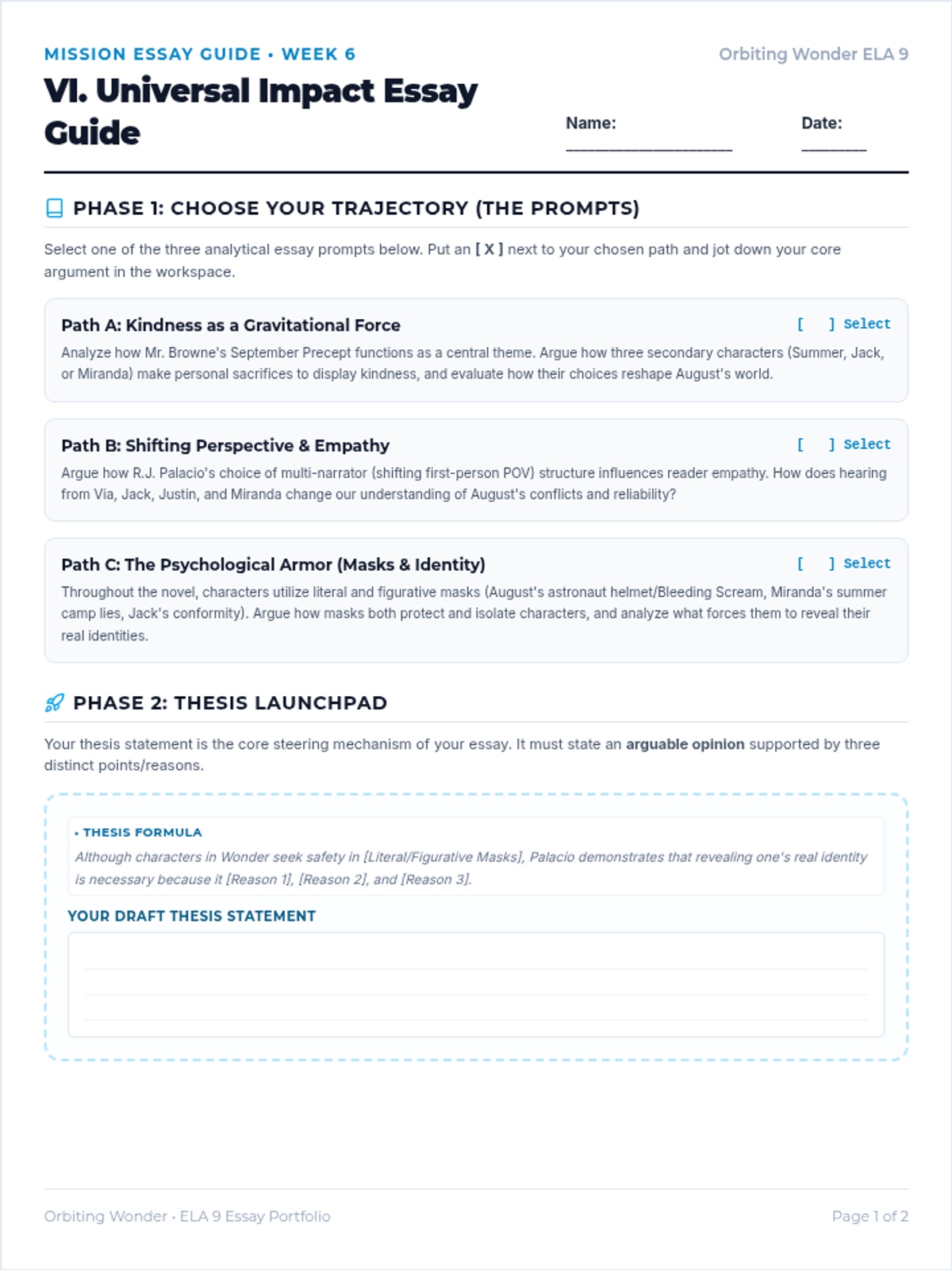
Focuses on the entire novel. Culminates in a thematic synthesis, drafting, revising, and presenting evidence-based literary analysis essays centered on the novel's core values: kindness, friendship, and identity.
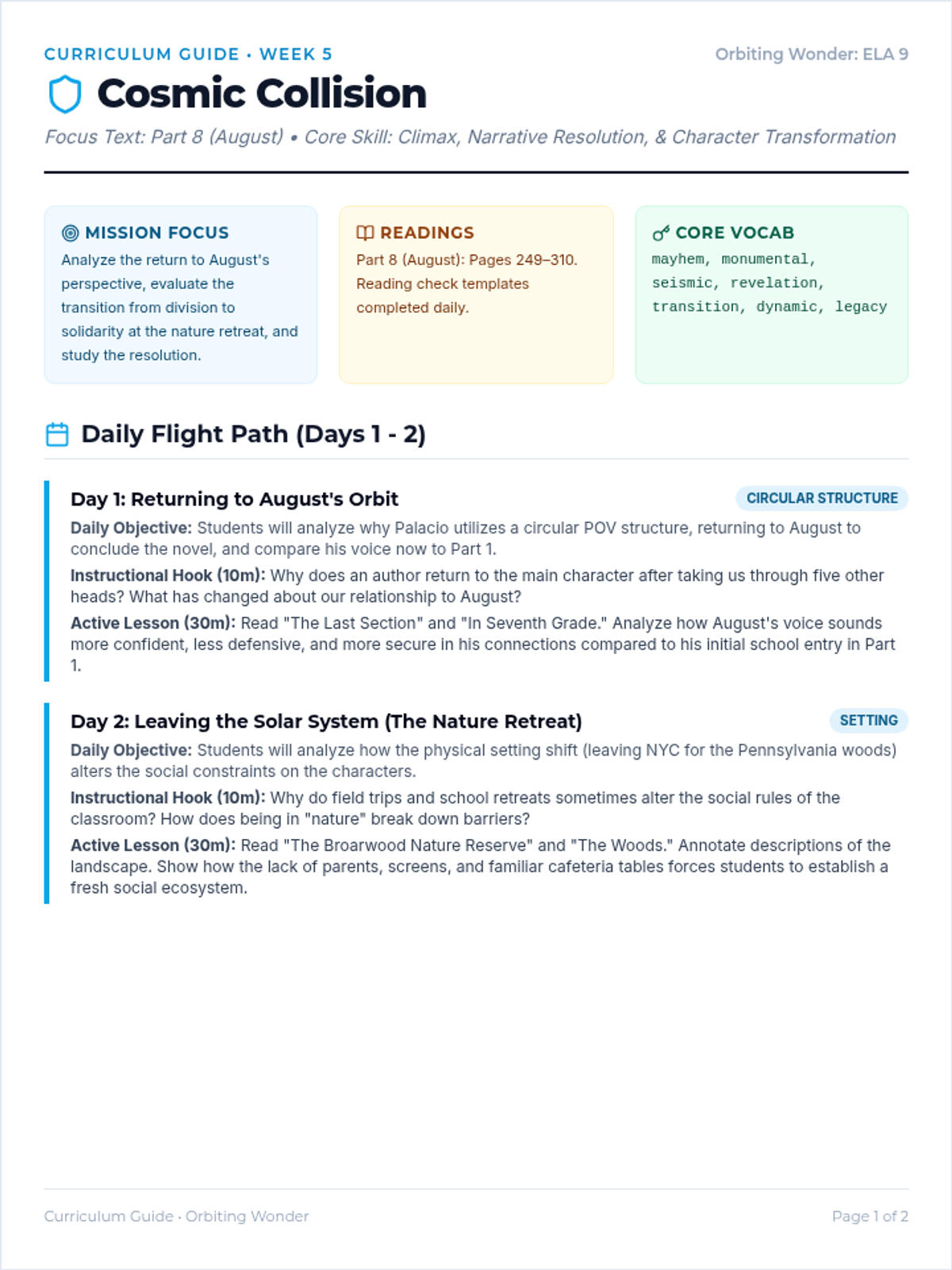
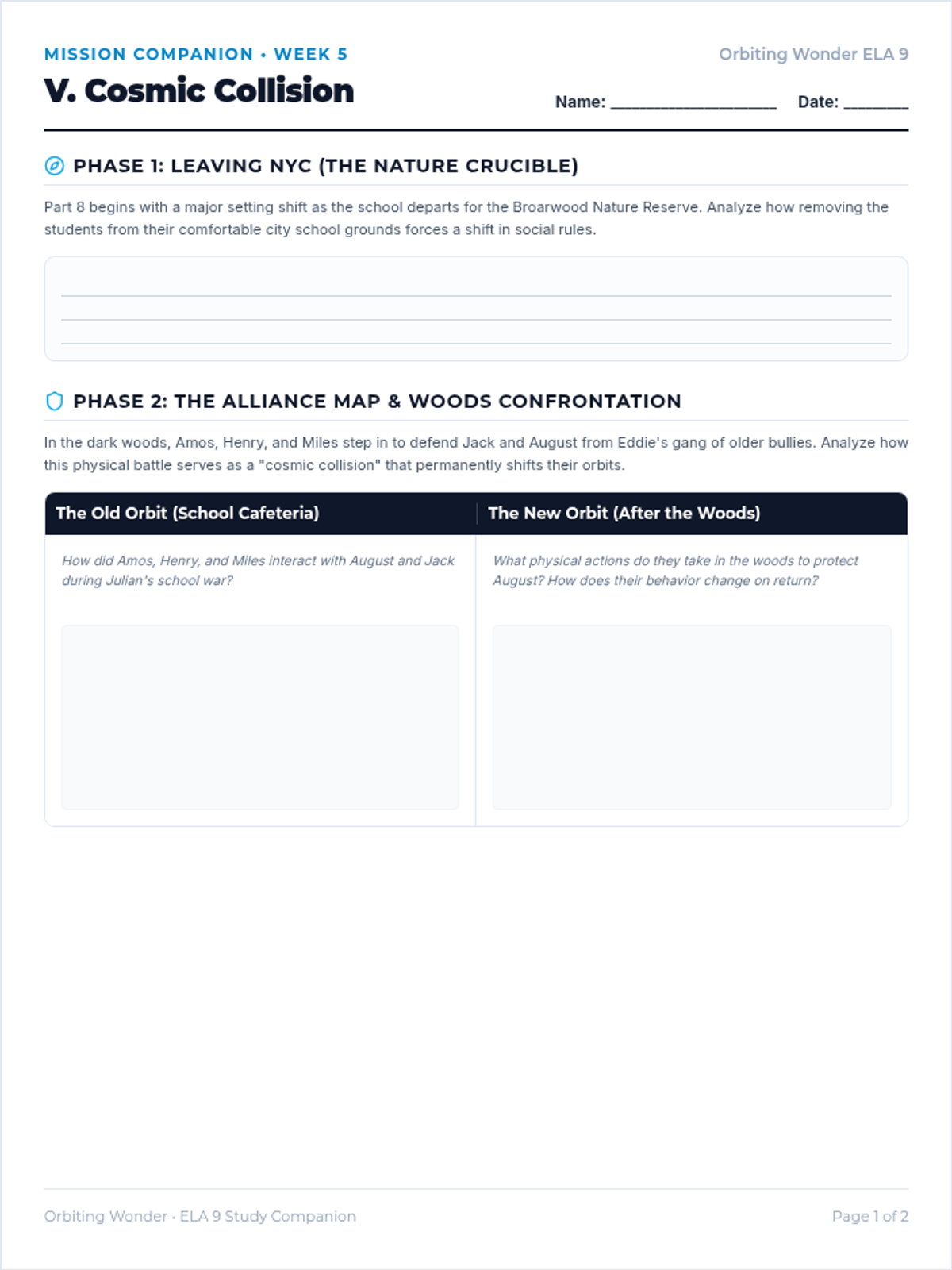
Focuses on Part 8 (August). Analyzes the resolution of primary conflicts, structural shifts, and the return to August's perspective. Students study character transformation, narrative closure, and prep for thematic synthesis.
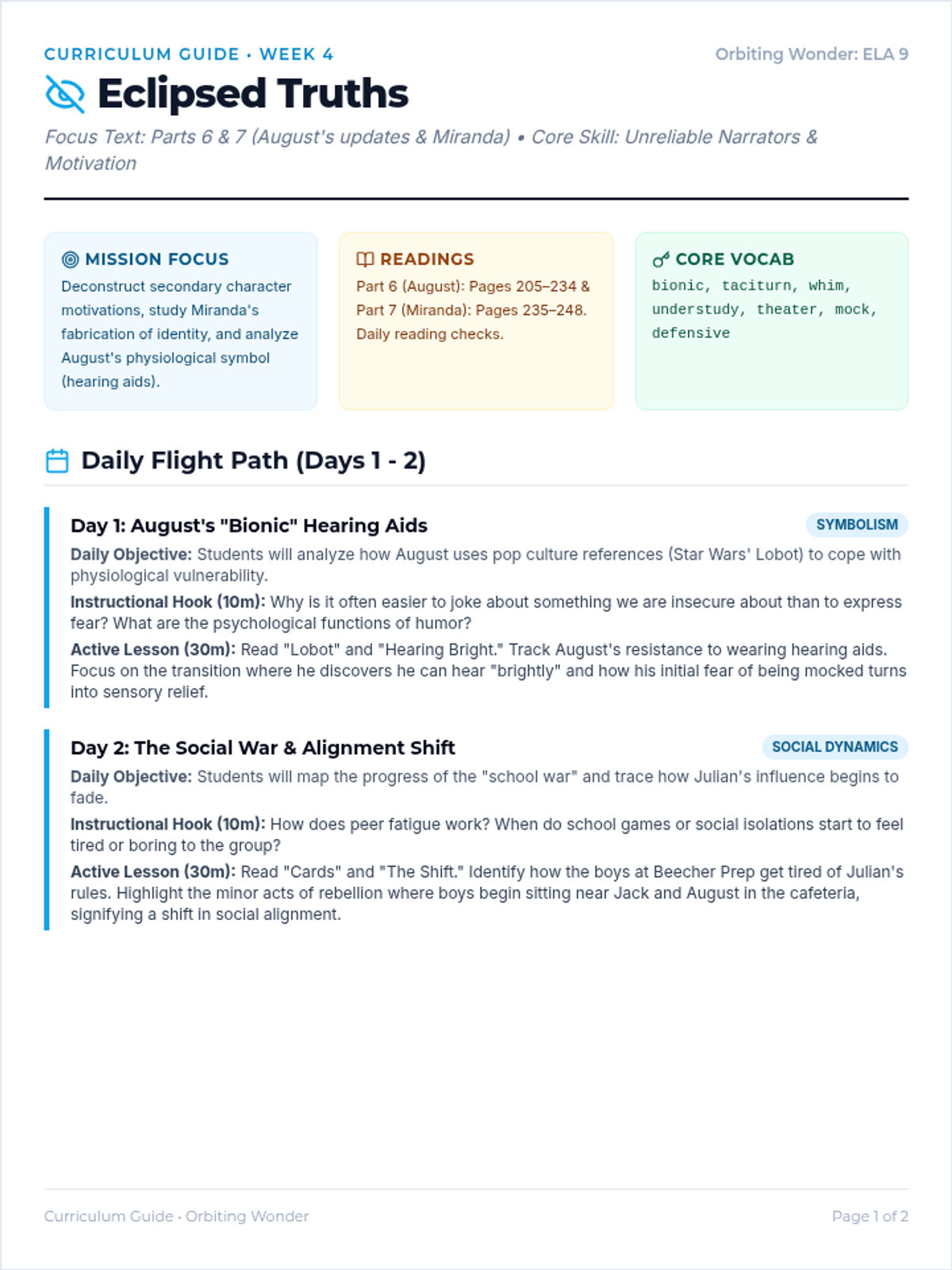
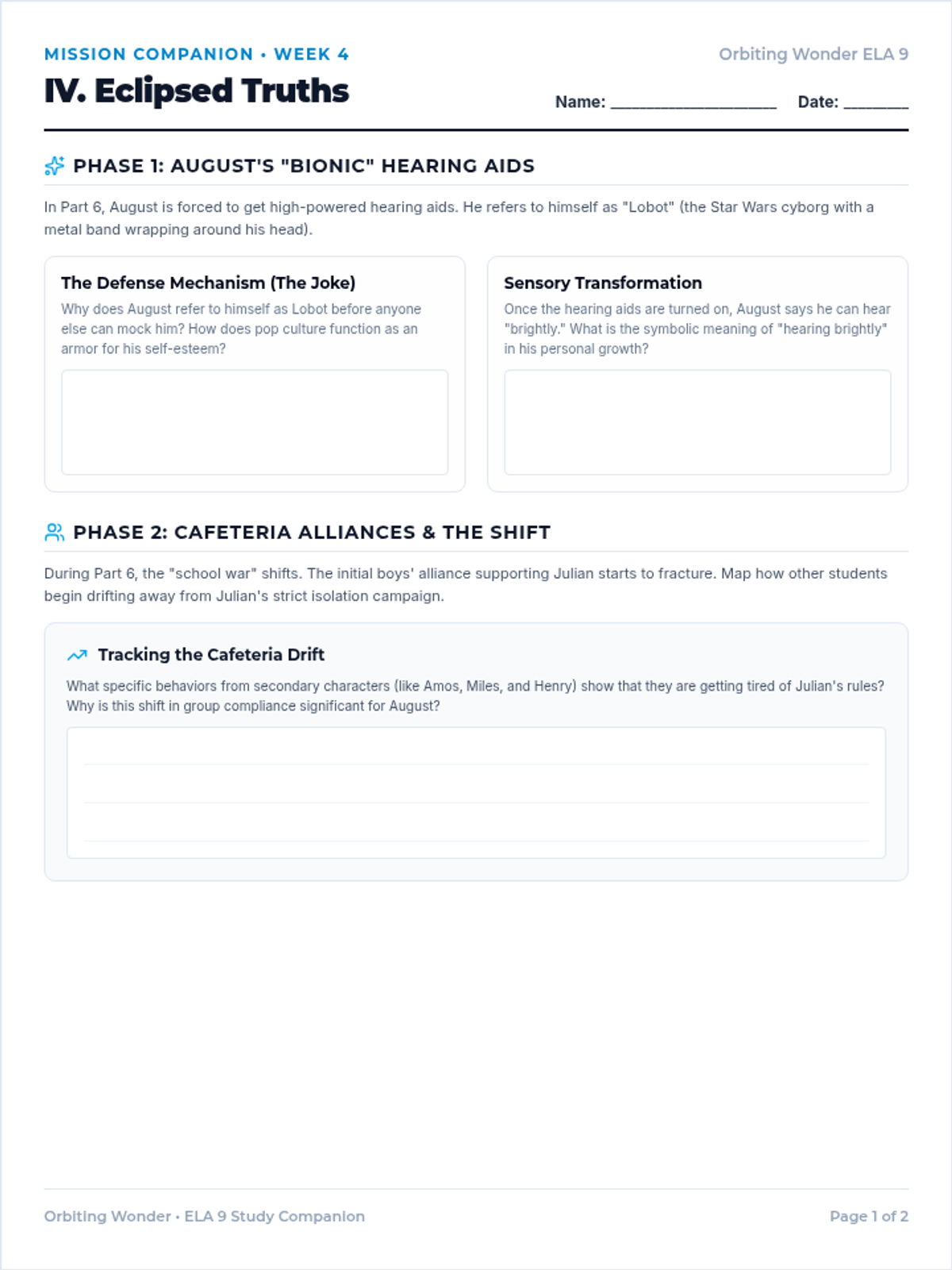
Focuses on Parts 6 & 7 (August's medical updates & Miranda). Examines motivations of secondary characters, the impact of secret keeping, and the concept of subjective reality versus absolute truth as friendships drift and realign.
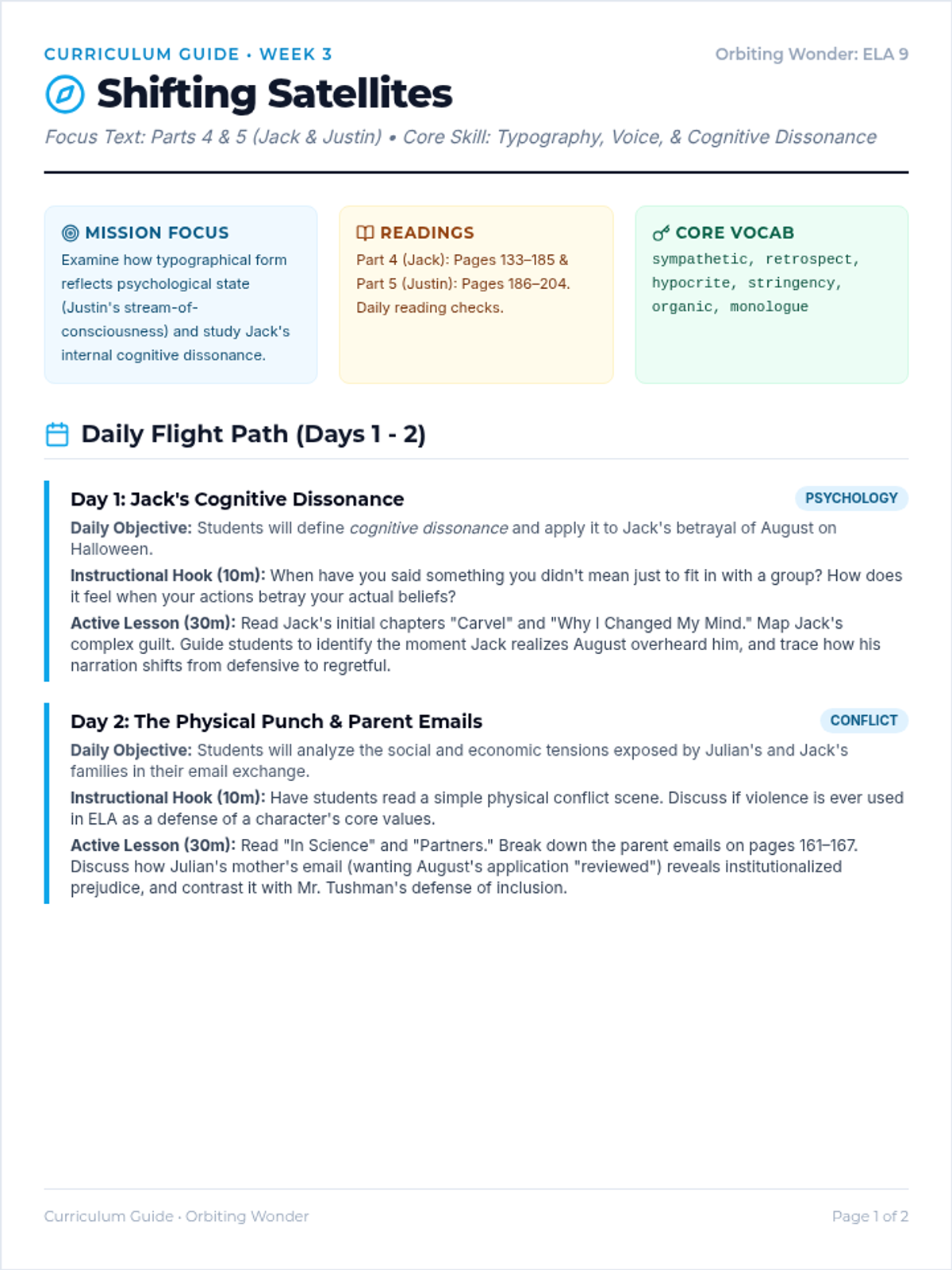
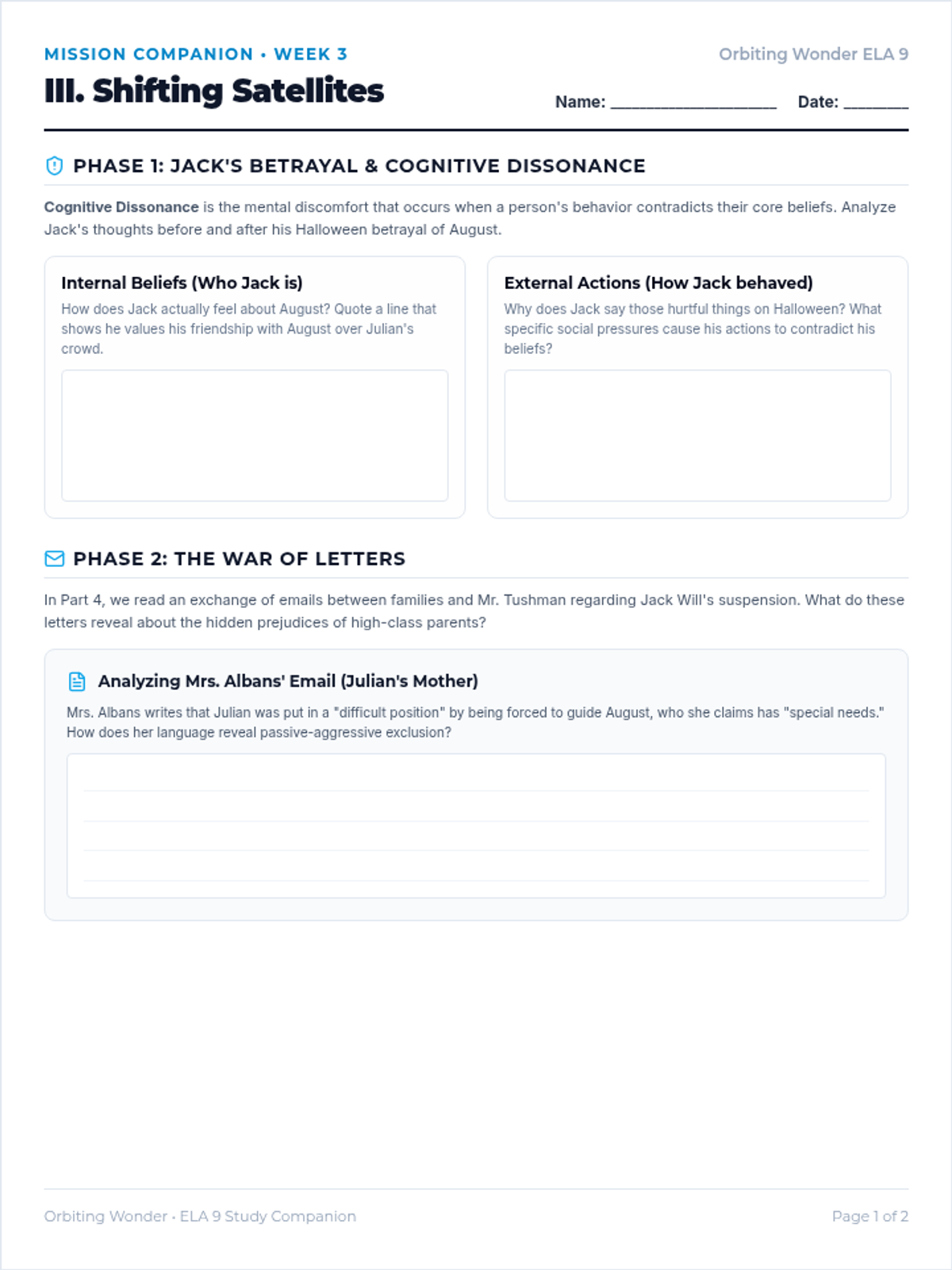
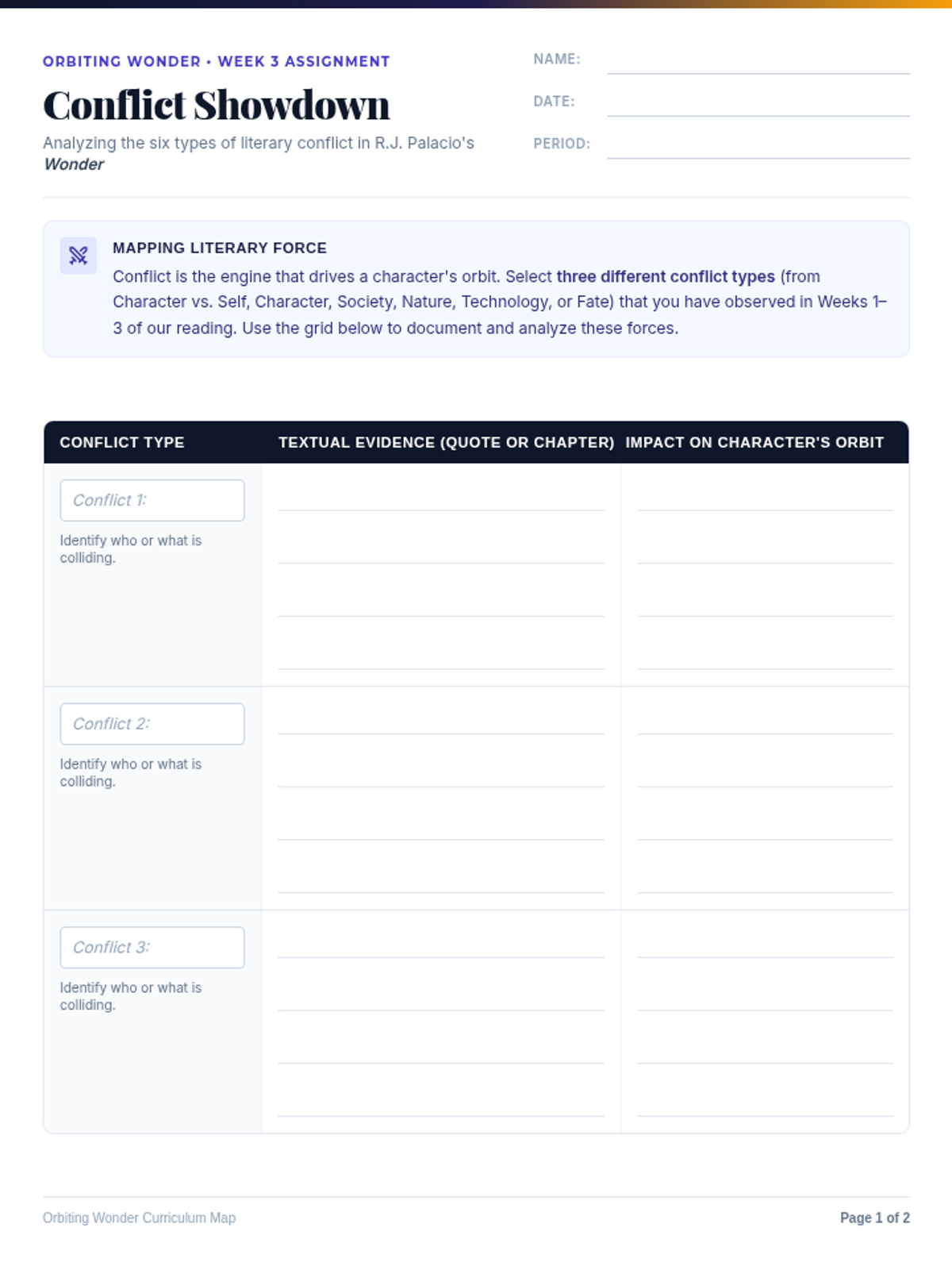
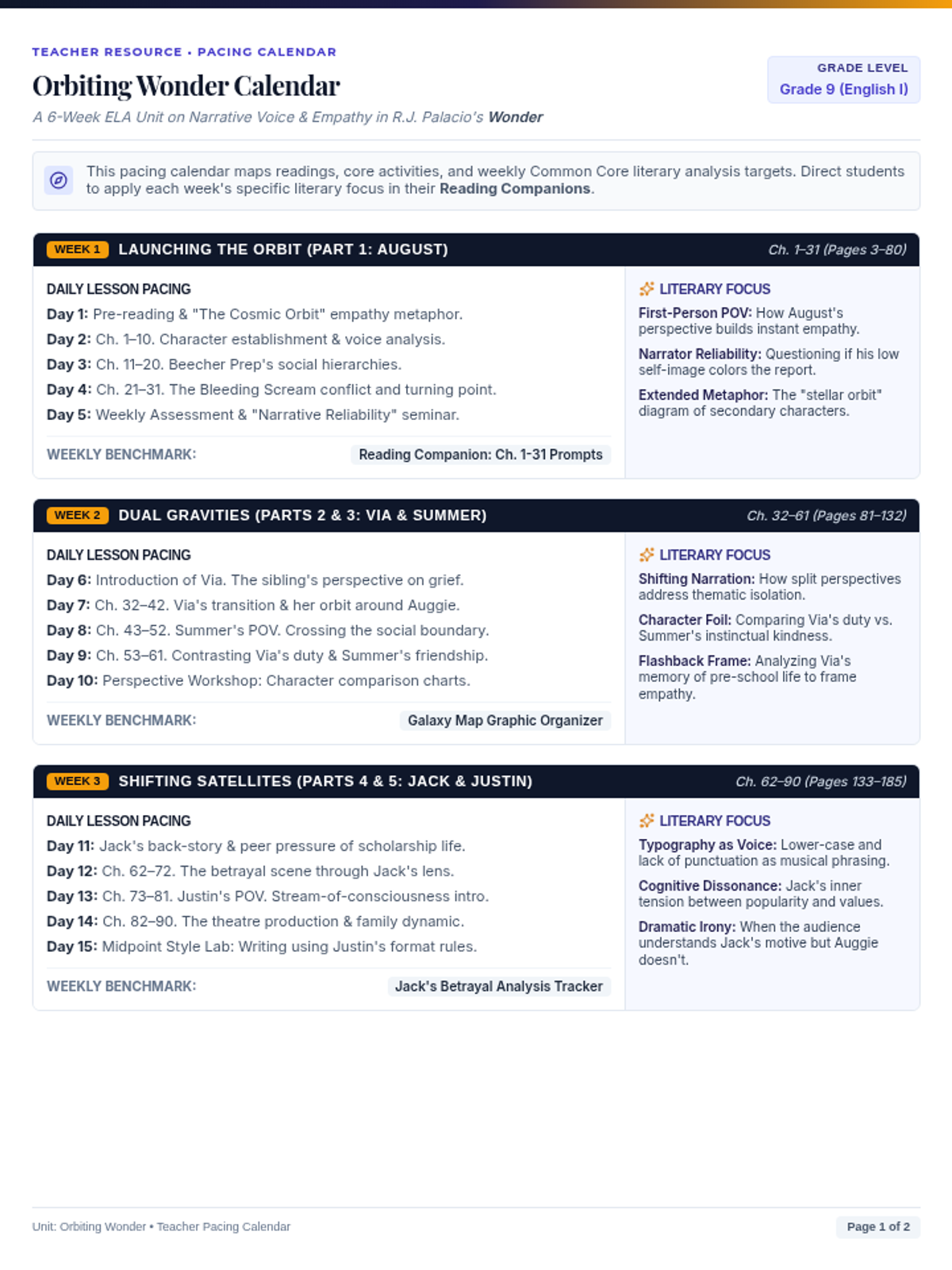
Focuses on Parts 4 & 5 (Jack & Justin). Explores typography as voice, socio-economic factors in peer pressure, and the courage required to stand up to social norms. Students compare Jack's cognitive dissonance with Justin's experimental stream-of-consciousness writing.
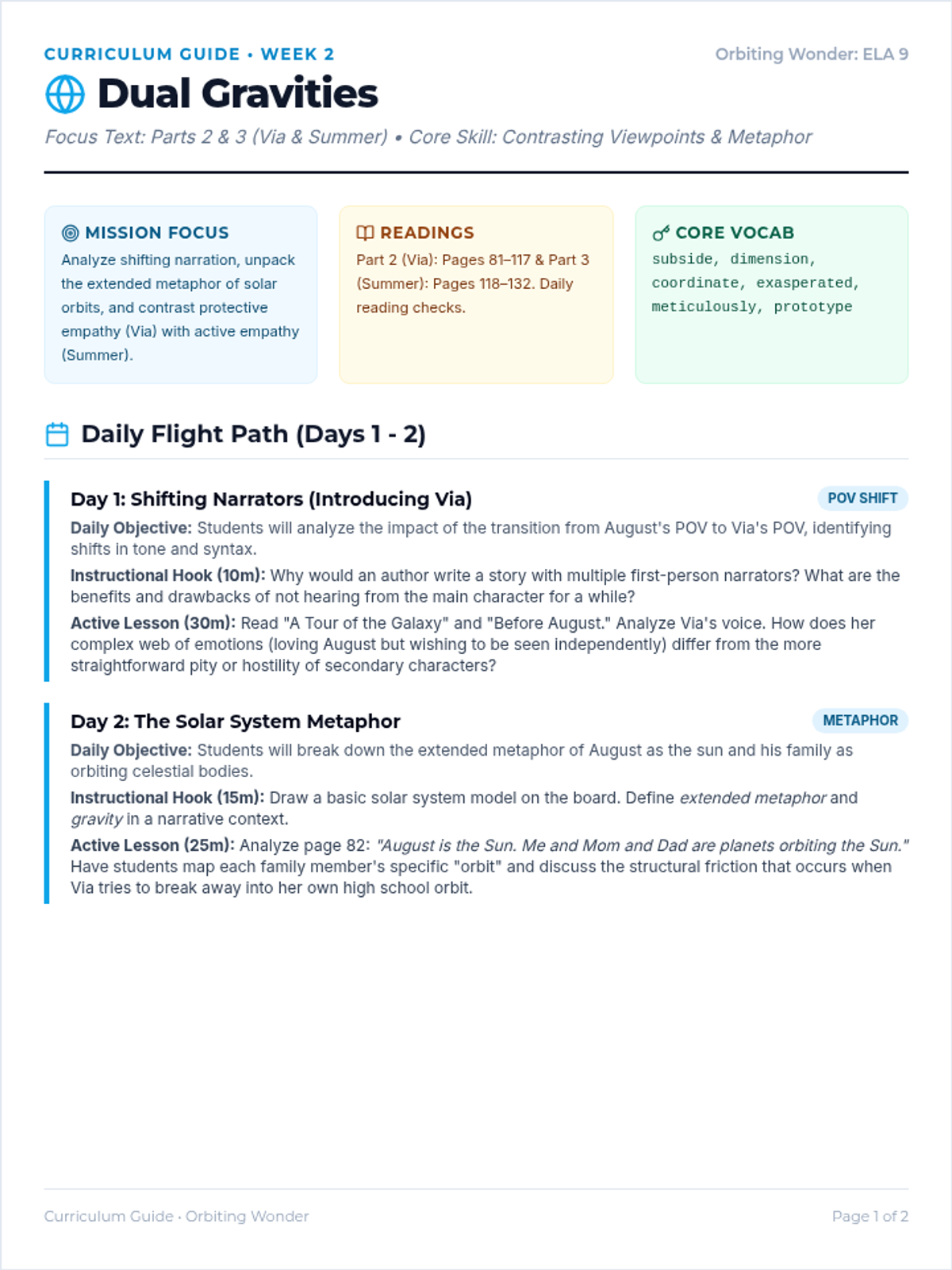
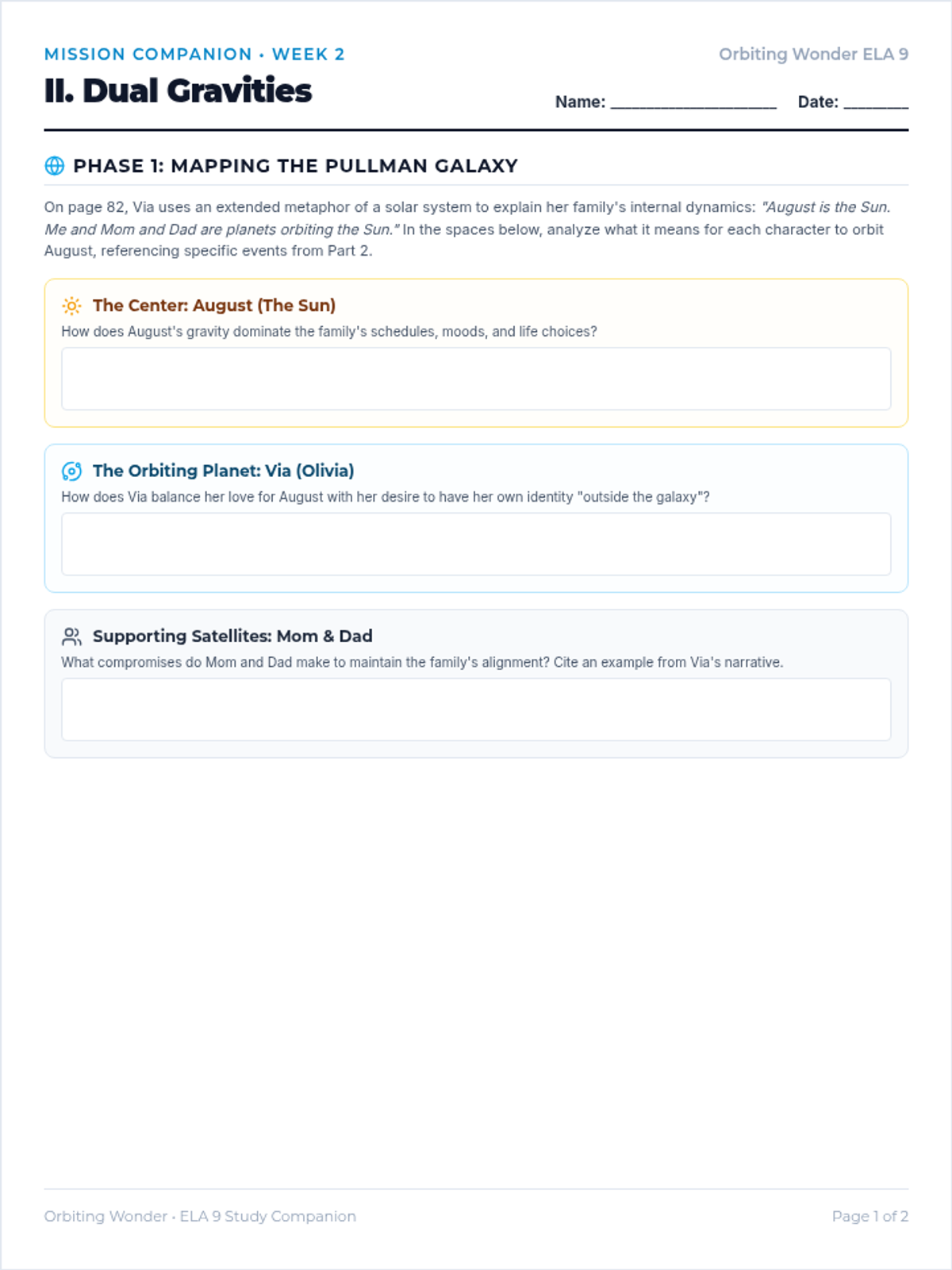
Focuses on Parts 2 & 3 (Via & Summer). Introduces the concept of shifting narration and contrasting viewpoints. Students examine how familial obligations, grief, and genuine friendship shape how other characters see August and how they see themselves.
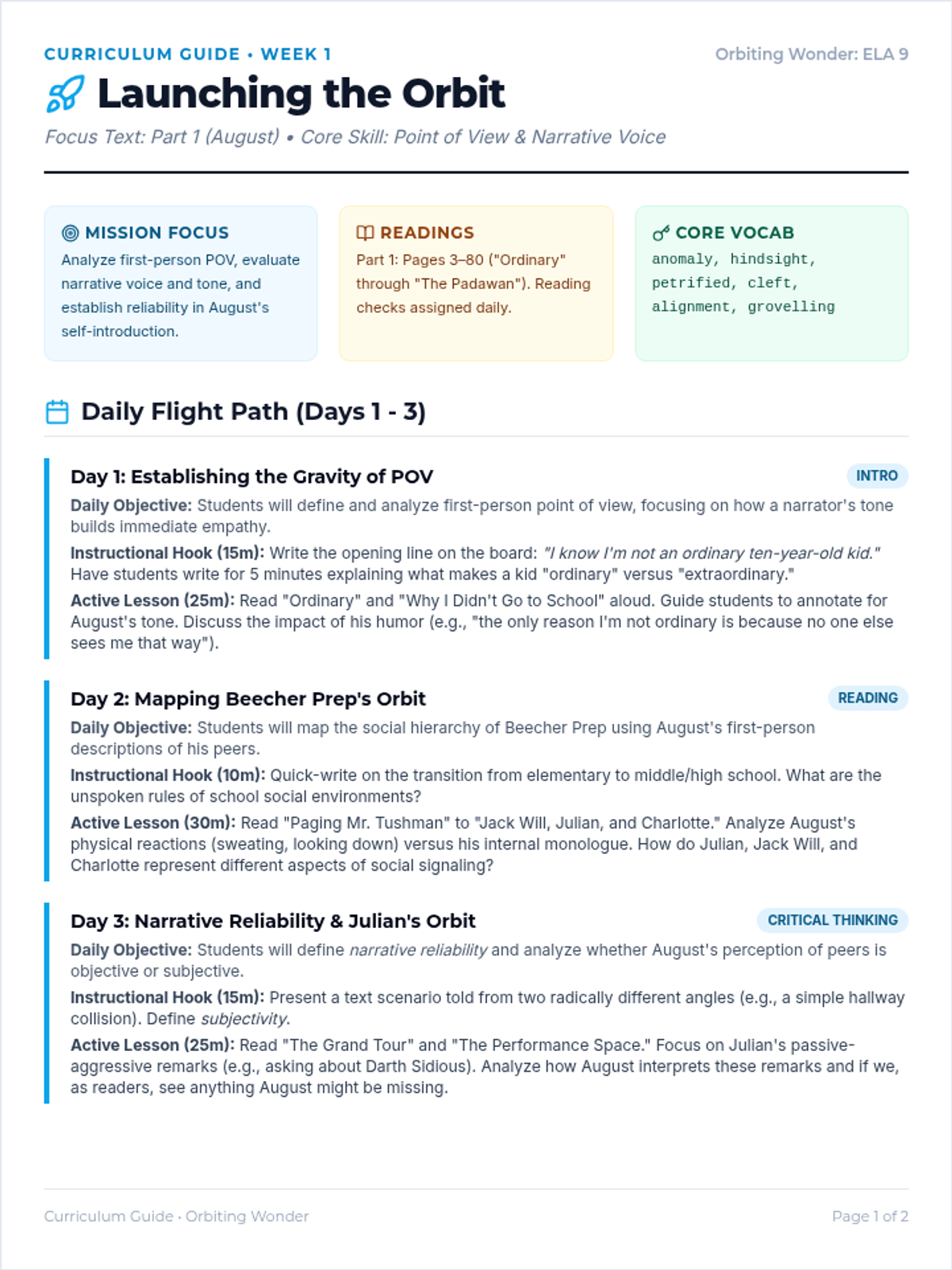
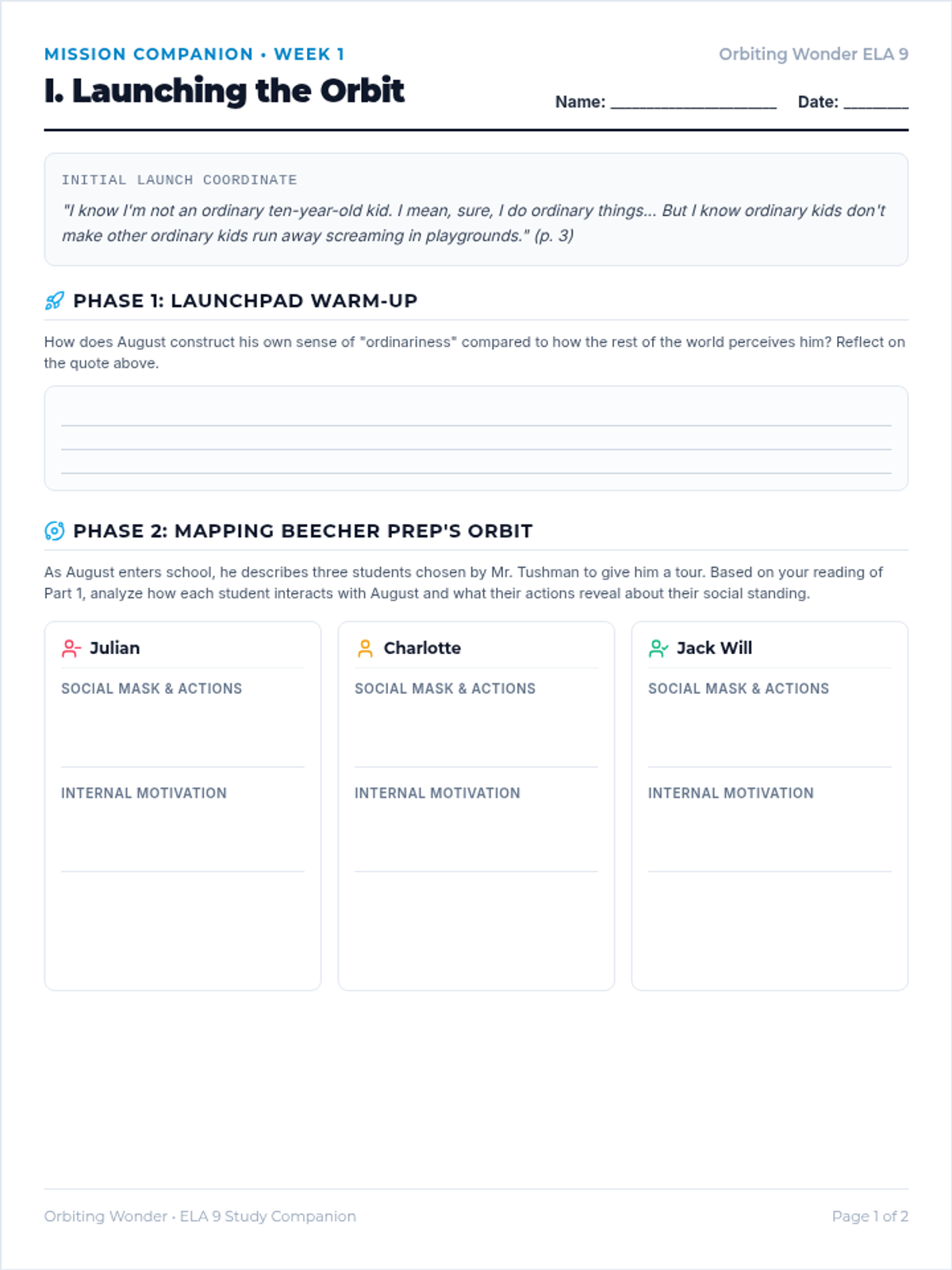
Focuses on Part 1 (August). Introduces the concept of first-person narration, character voice, and narrative reliability. Students analyze how August establishes his identity and how his perspective guides our initial understanding of Beecher Prep.
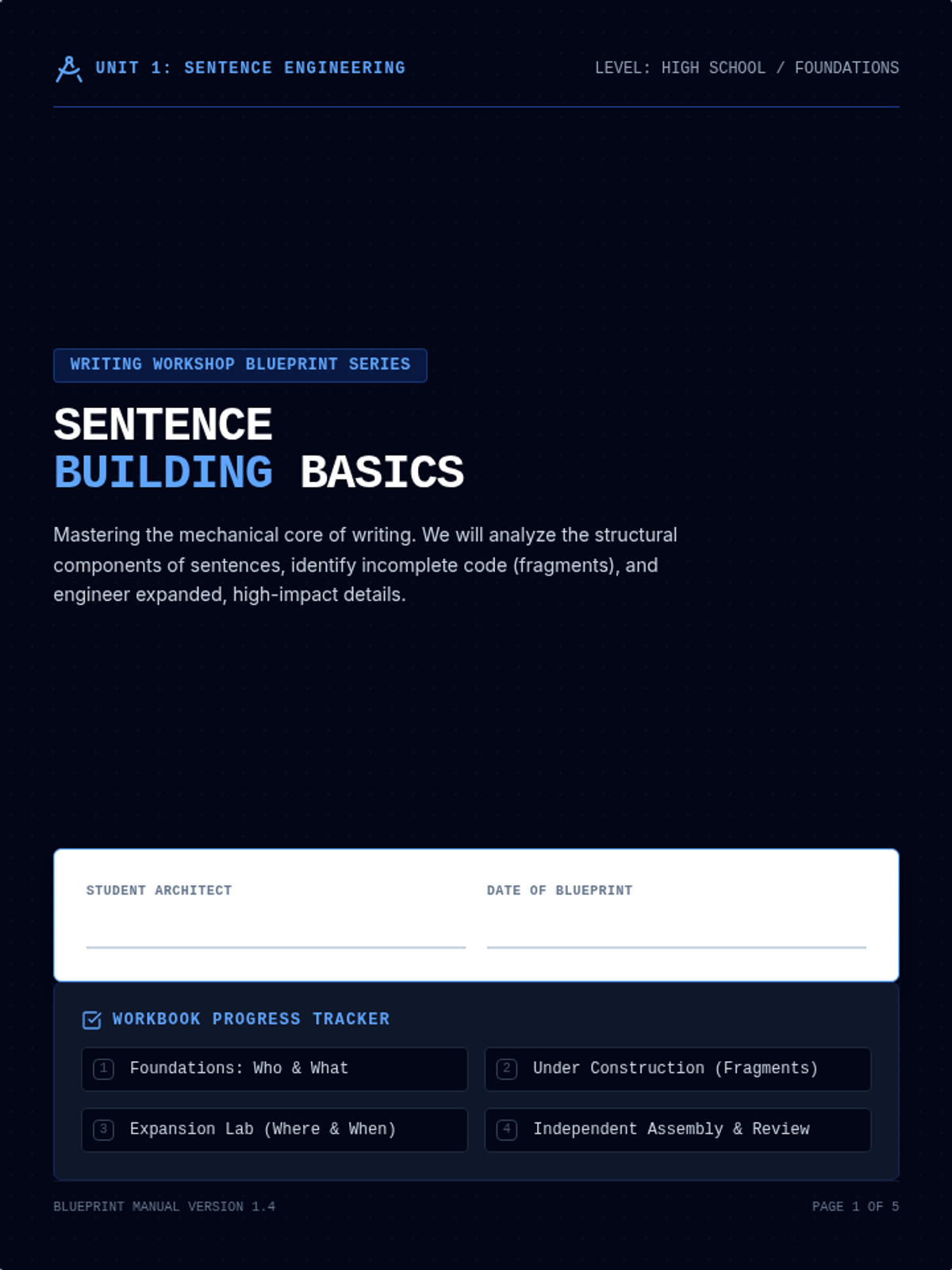
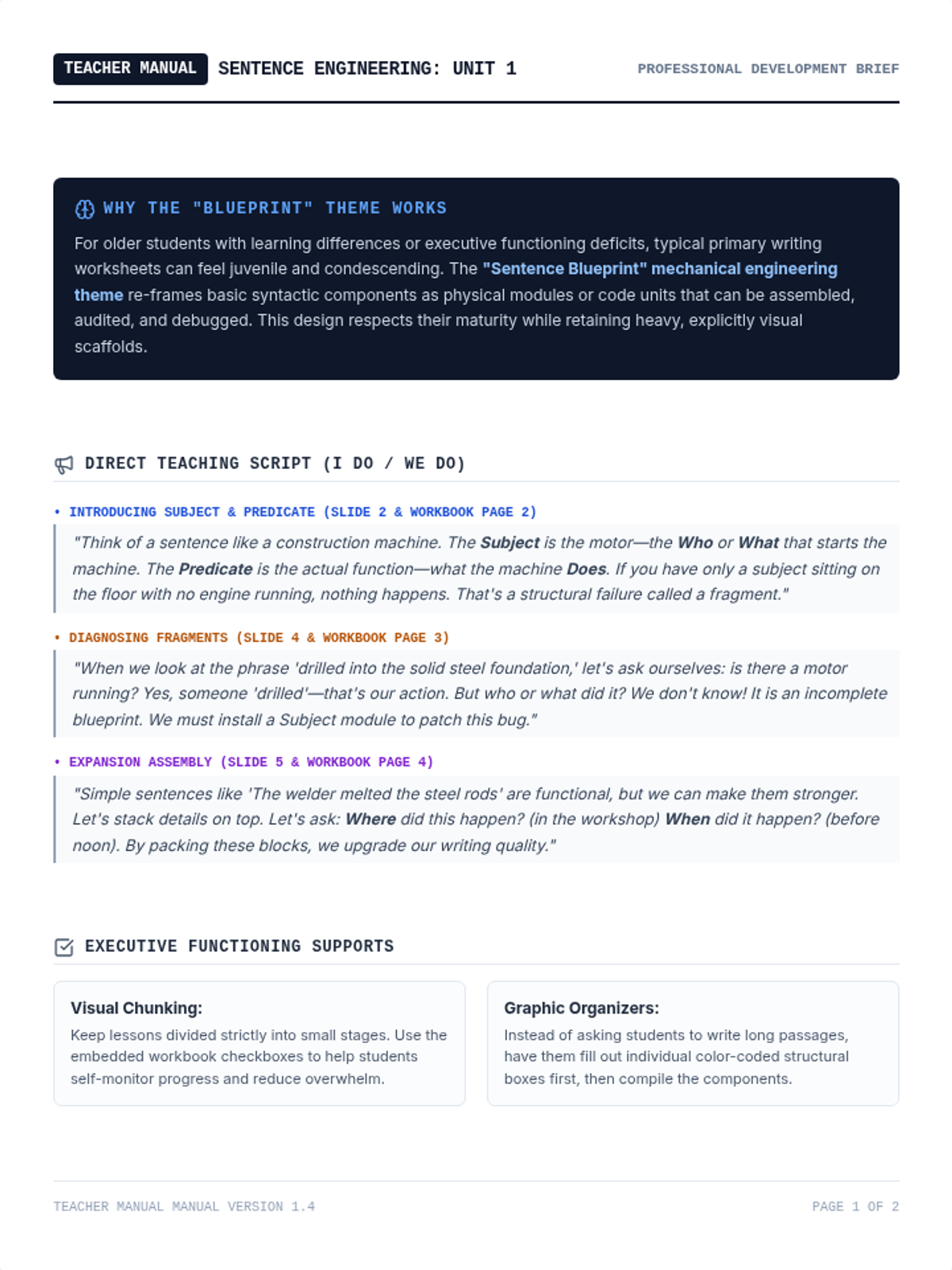
An explicit, highly scaffolded writing lesson focused on subject-predicate identification, fragment correction, and color-coded visual sentence expansion. Designed with age-respectful visual aids and structured executive functioning checklists for older students in substantially separate settings.
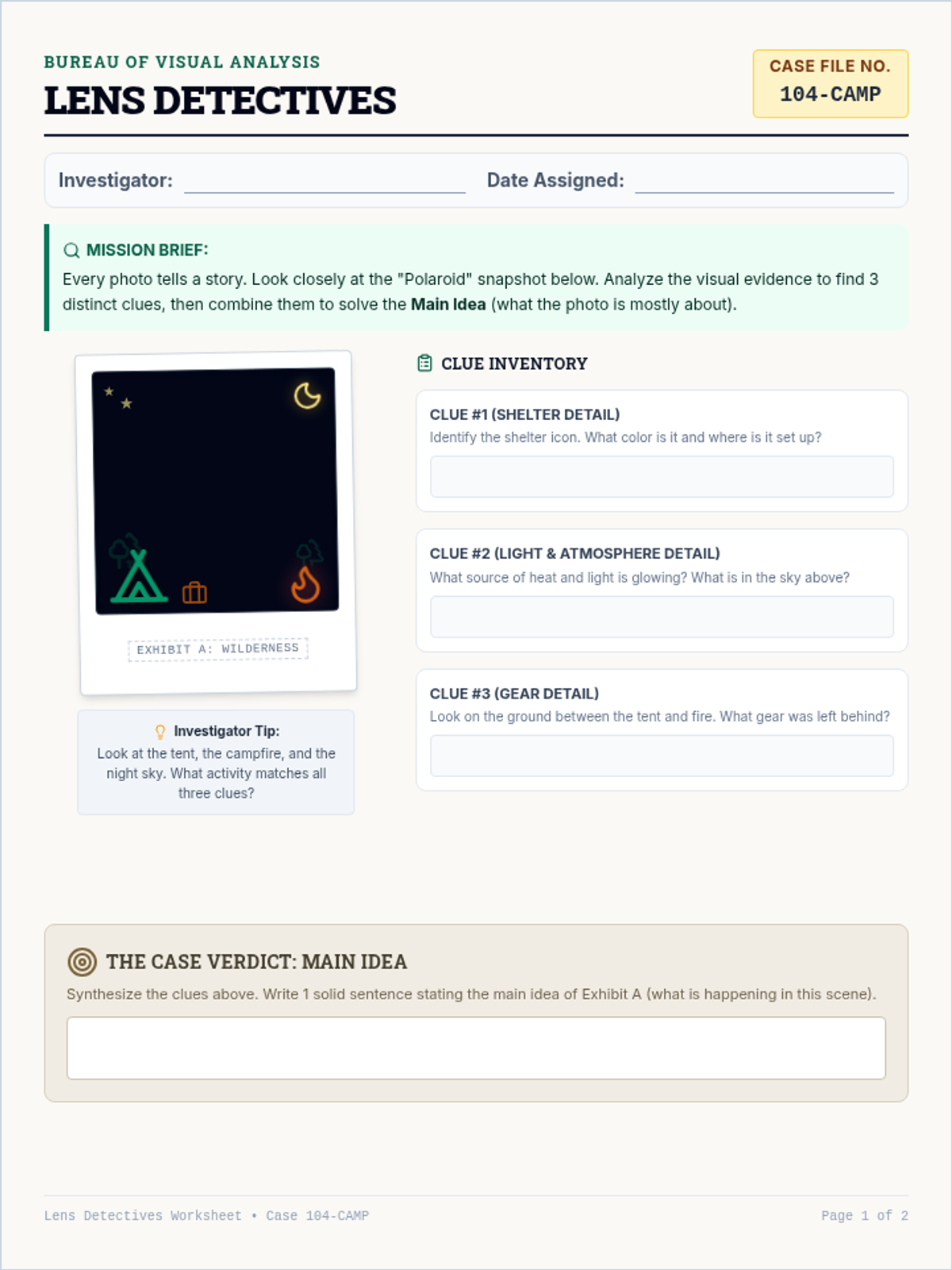
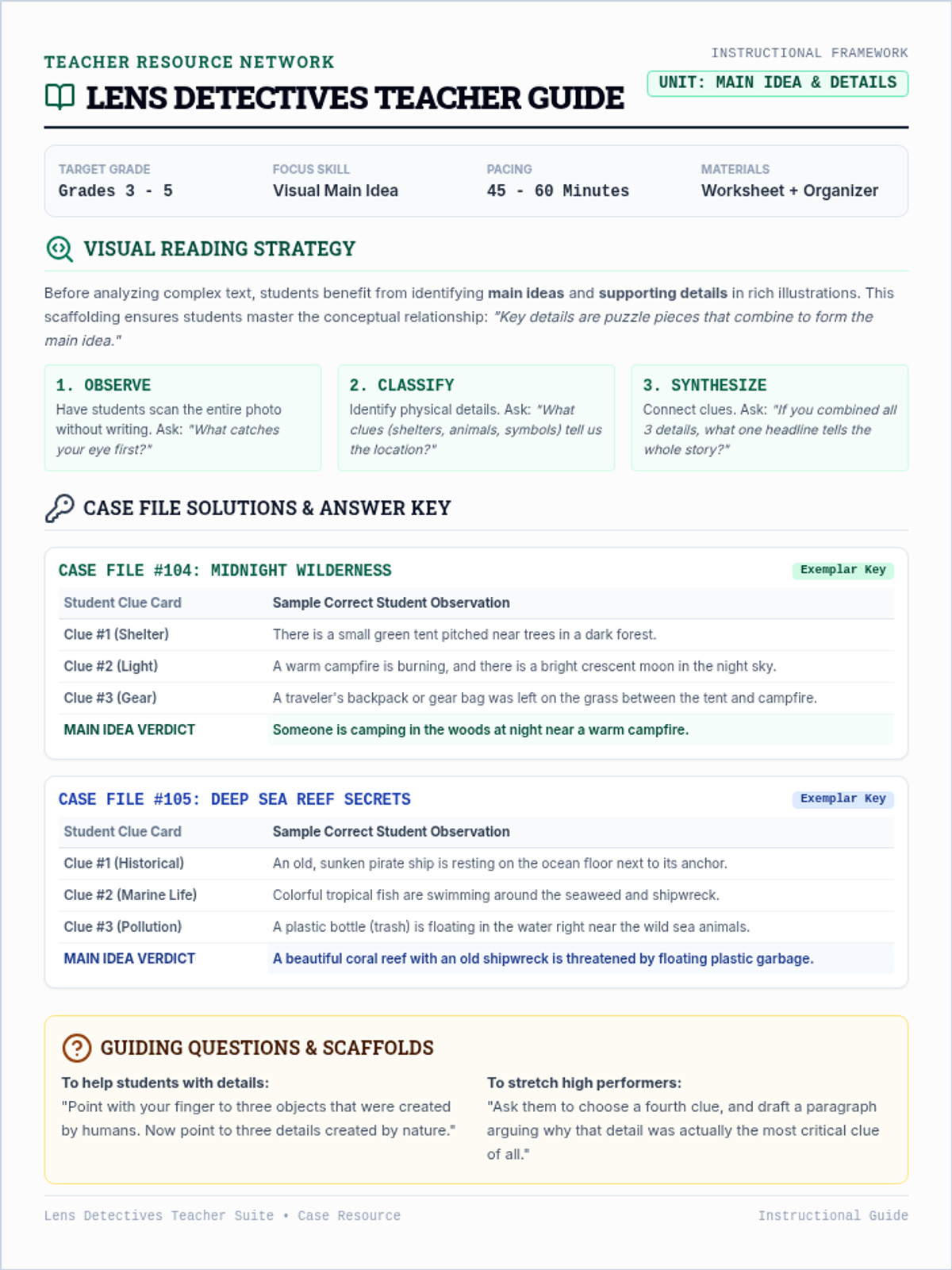
A structured resource pack focusing on Main Idea and Key Details. Students become 'Lens Detectives', analyzing highly detailed visual scenes (styled as polaroid photos) to gather clues, identify the central topic, and draft structured paragraphs using deductive writing scaffolds.
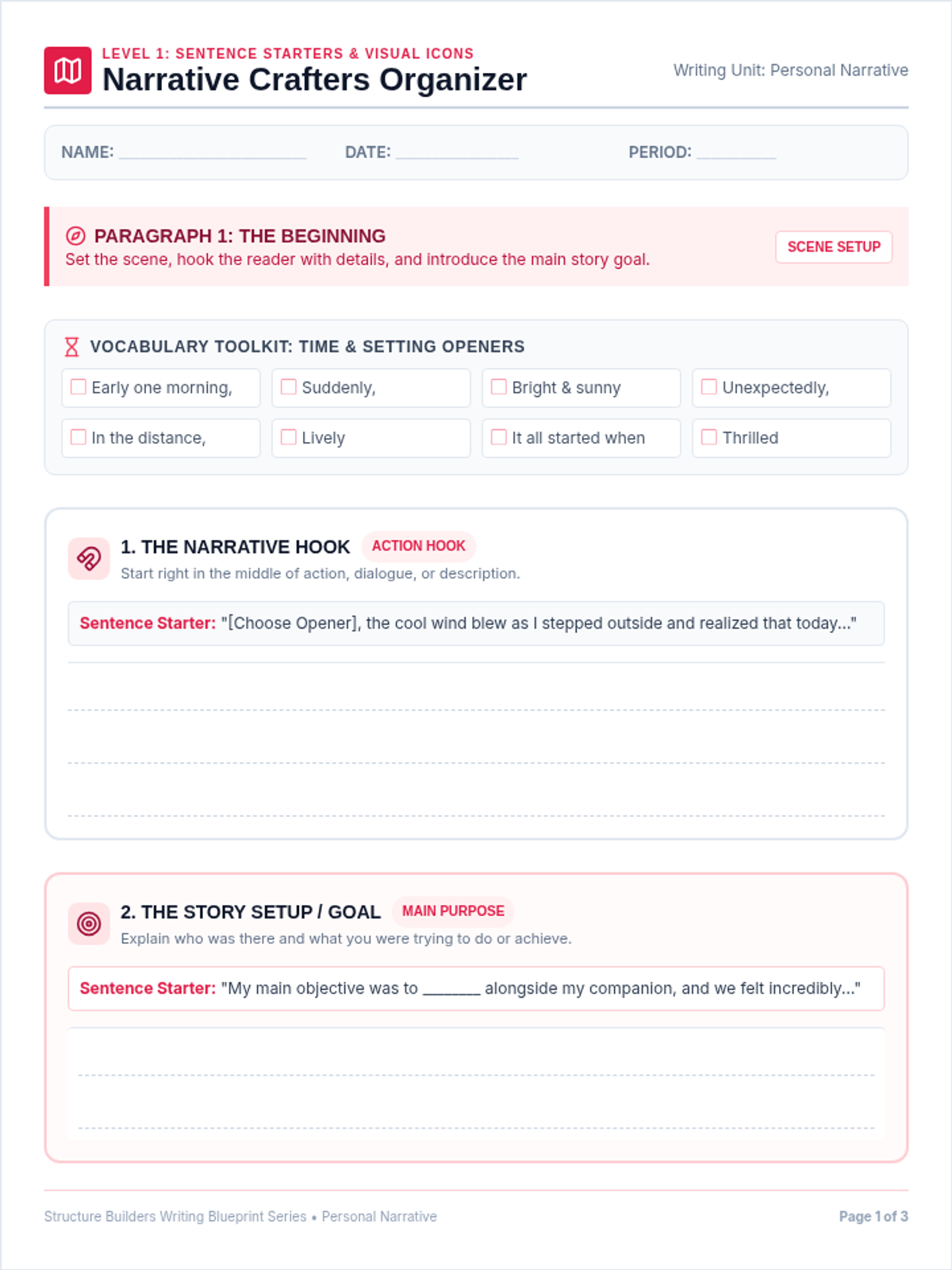
A structured approach to writing a three-paragraph personal narrative. Students develop a clear beginning, middle, and end, using sensory details, transition words, and self-assessment checklists.
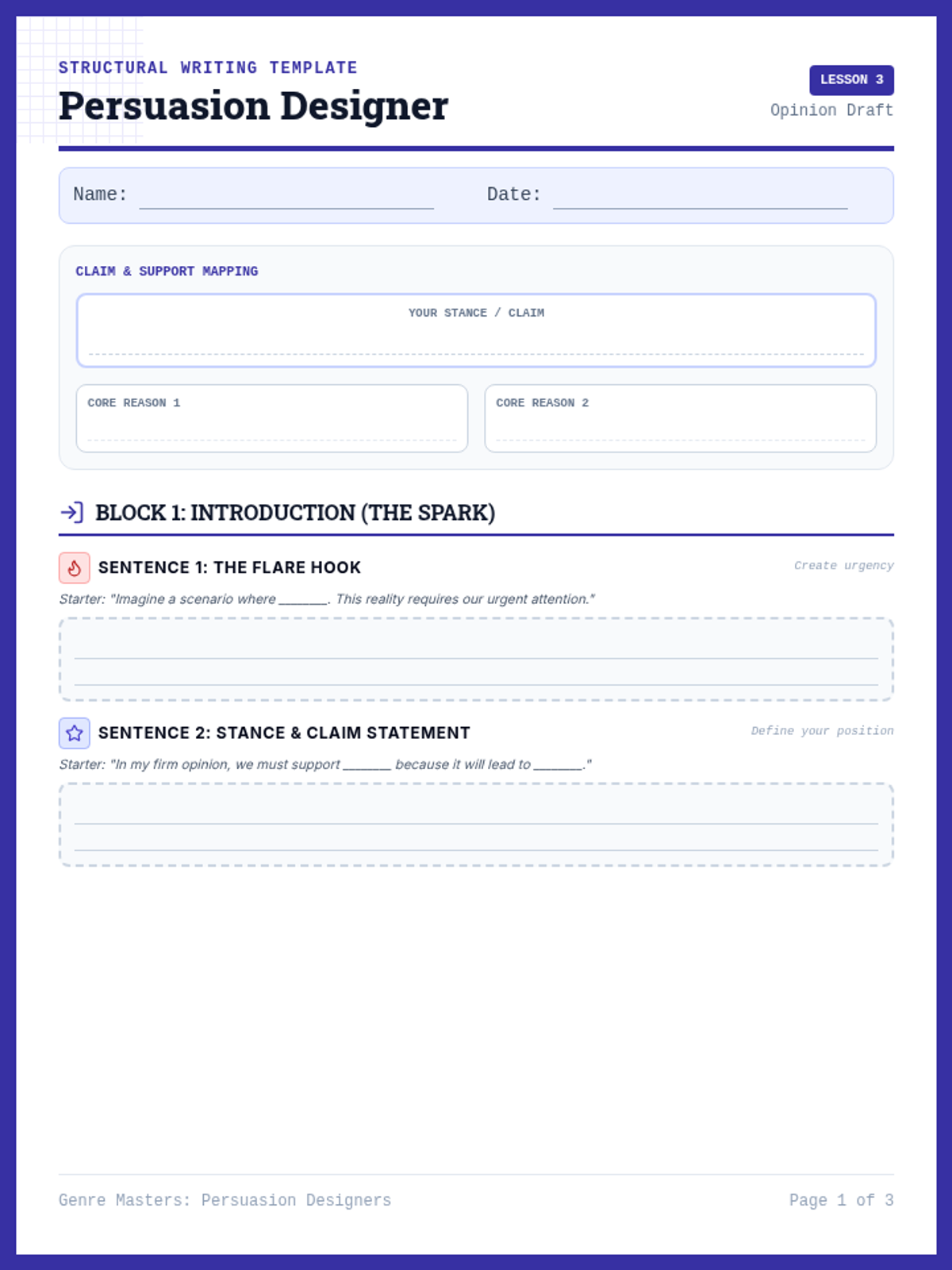
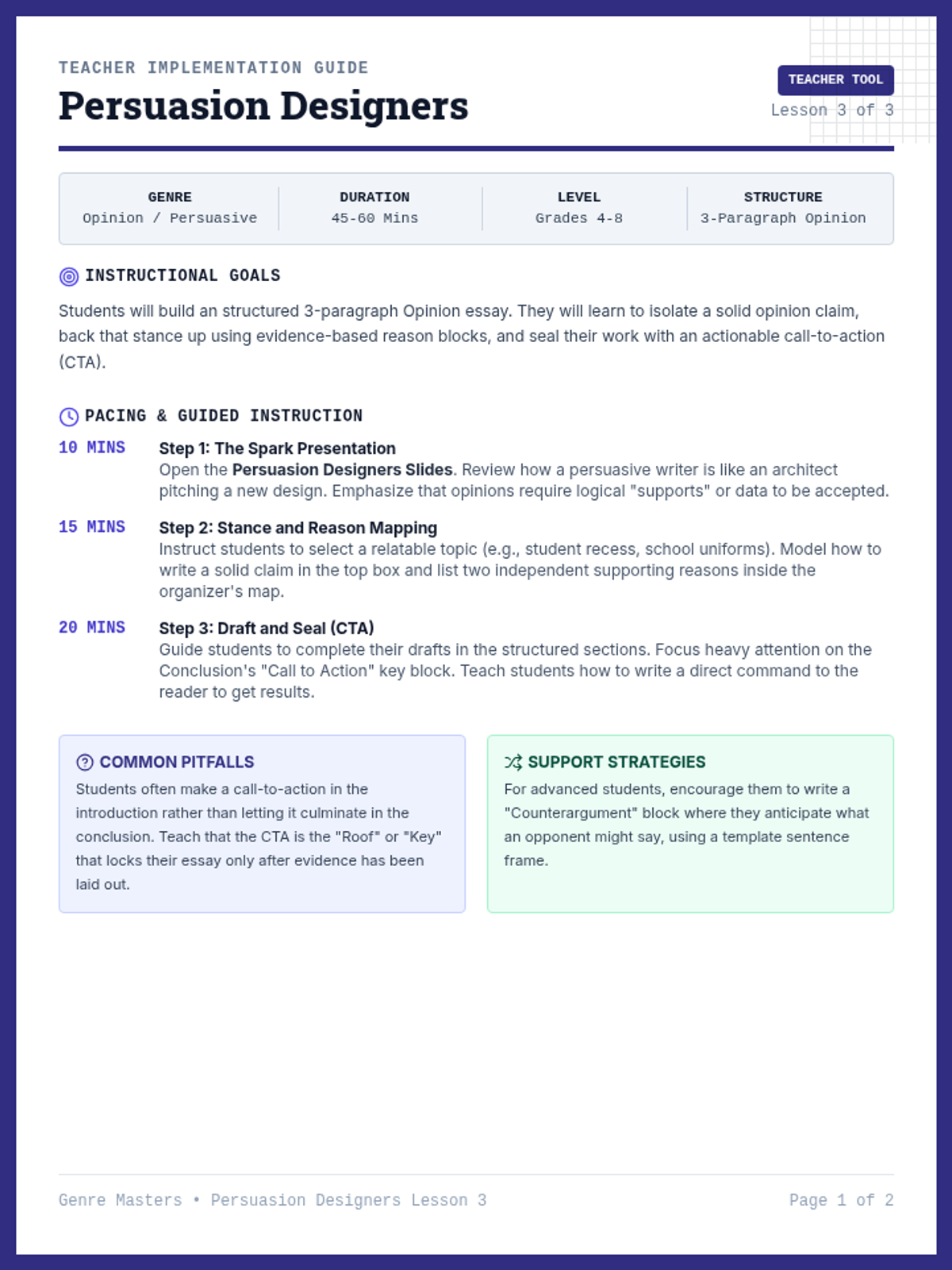
Students structure powerful opinions using a 3-paragraph template. They leverage strong emotional hooks, evidence-based reason body blocks, and persuasive call-to-action conclusions.
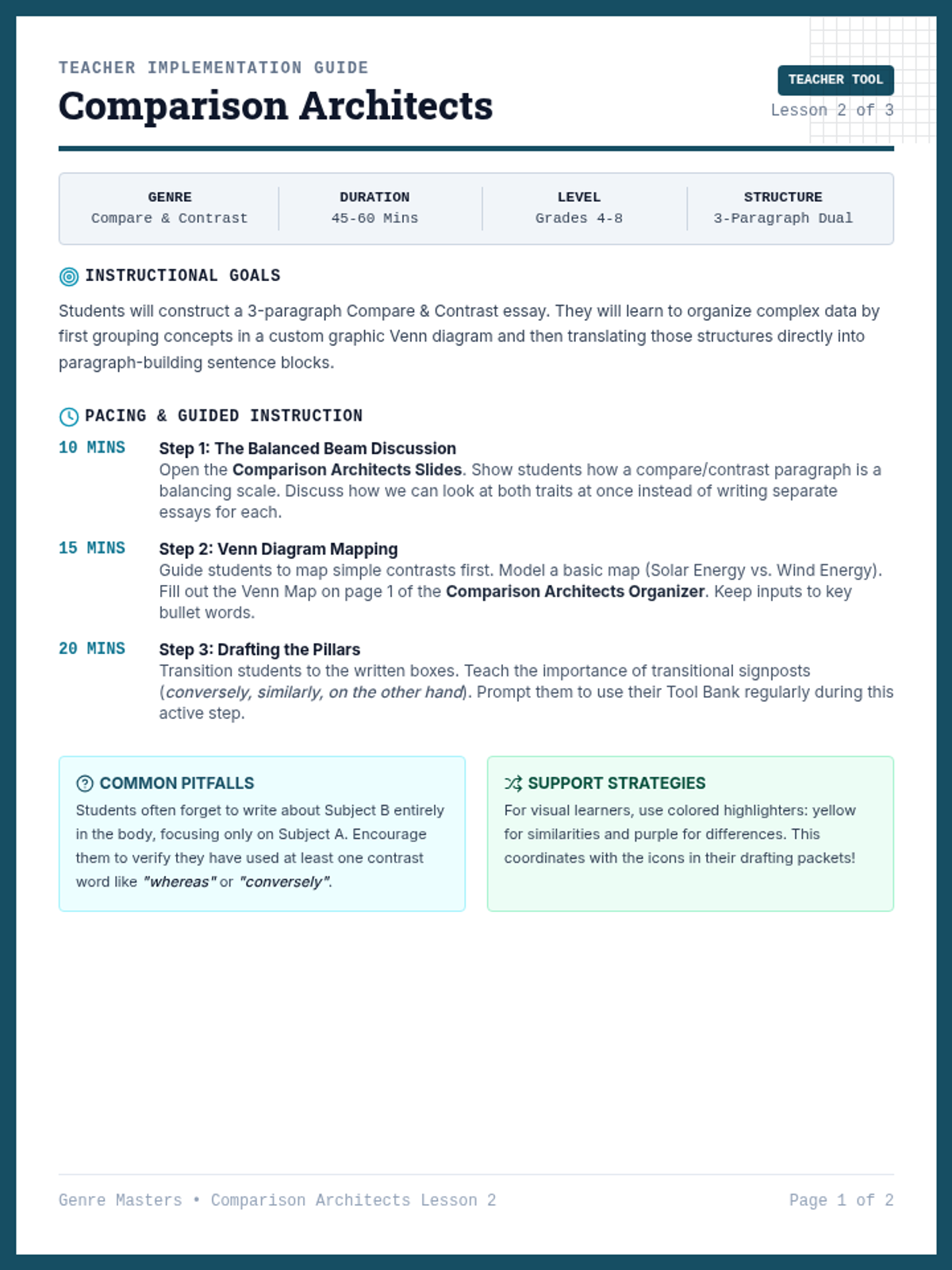
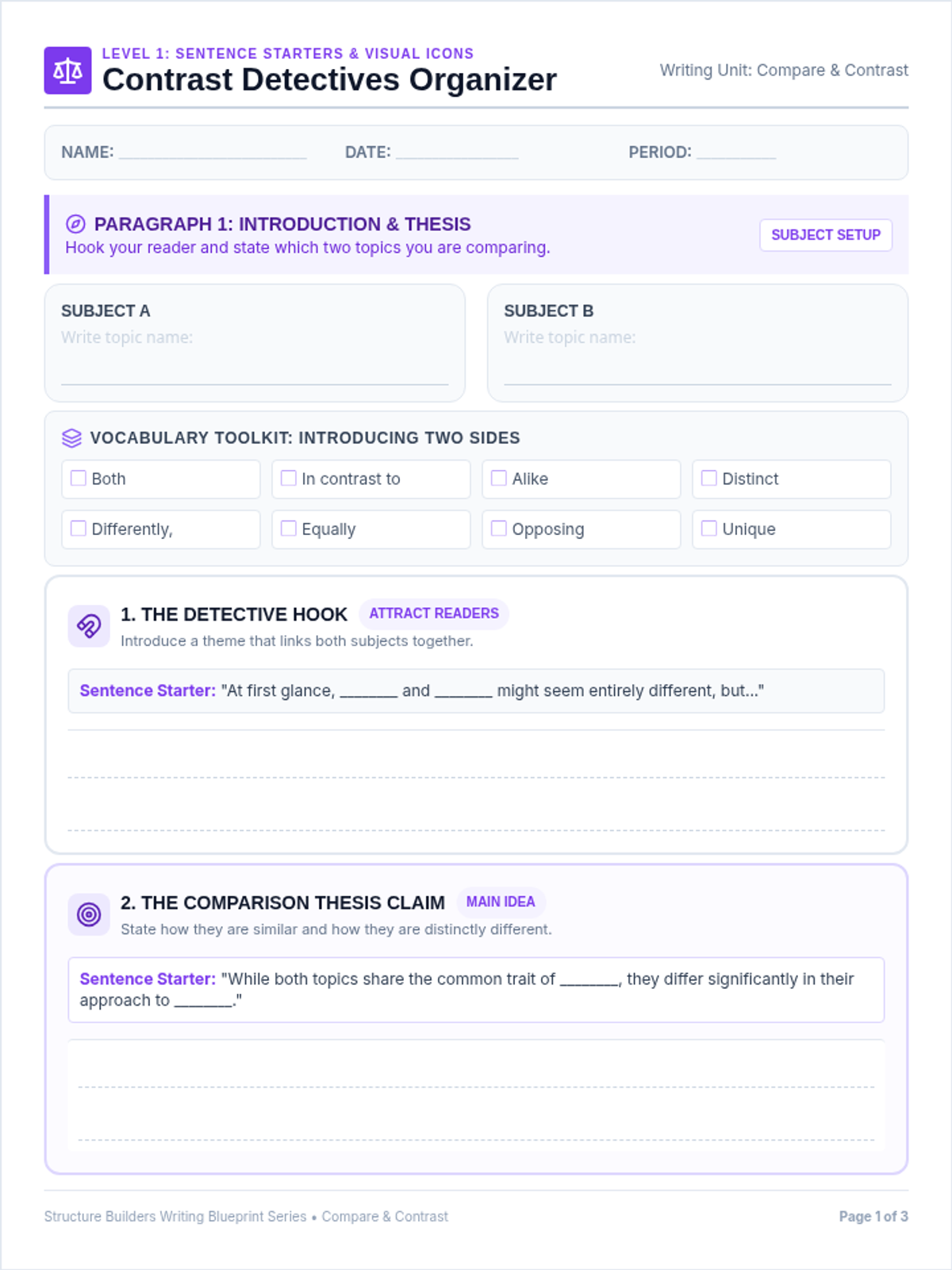
A step-by-step lesson for comparing and contrasting two topics in a three-paragraph format. Students utilize customized sentence frames, comparative word banks, and structured organizers with visual prompts.
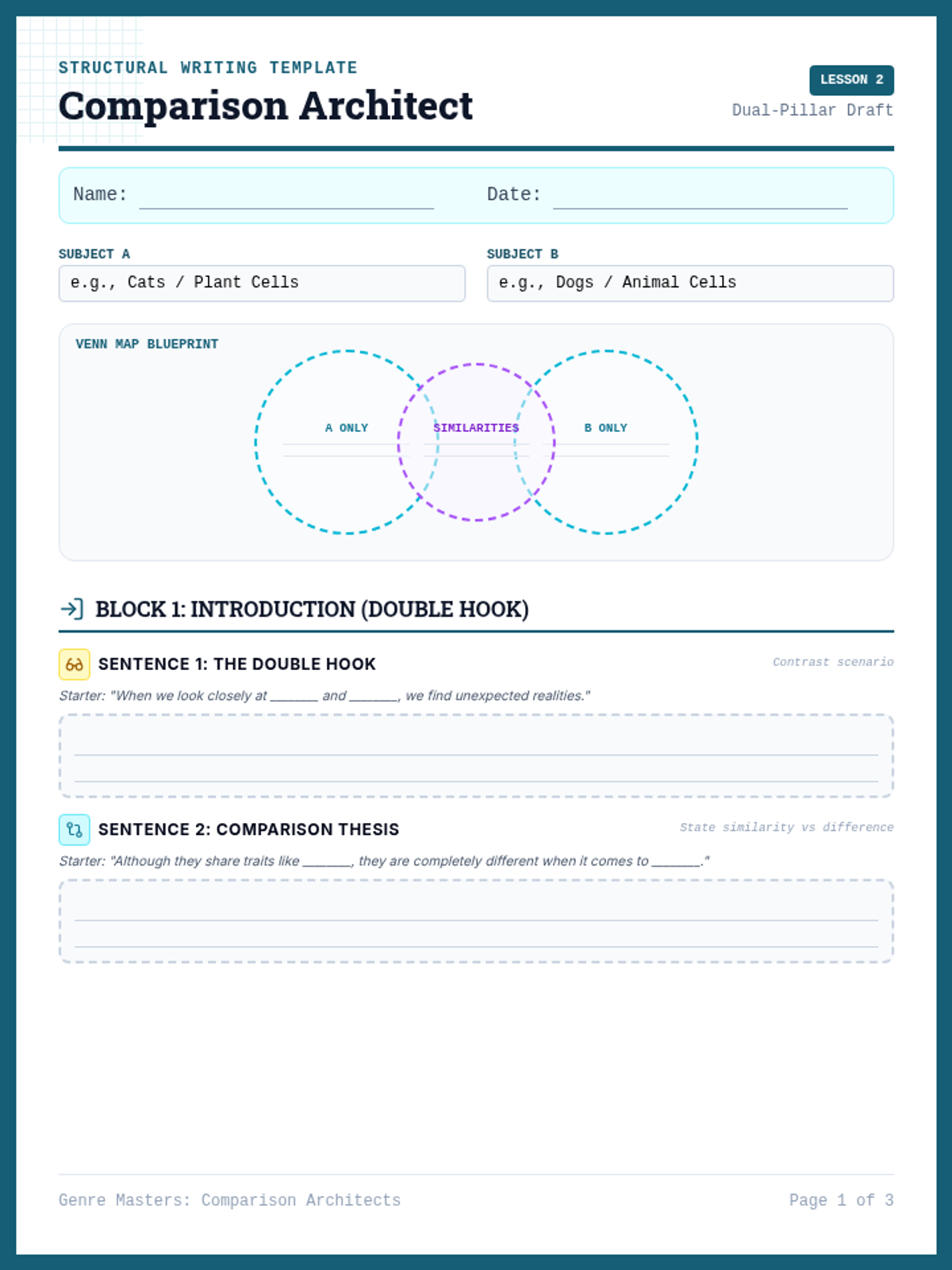
Students learn to contrast and compare two topics using a structured 3-paragraph format. A dual-column layout, custom Venn diagrams, and comparison word banks guide them through similarities and differences.
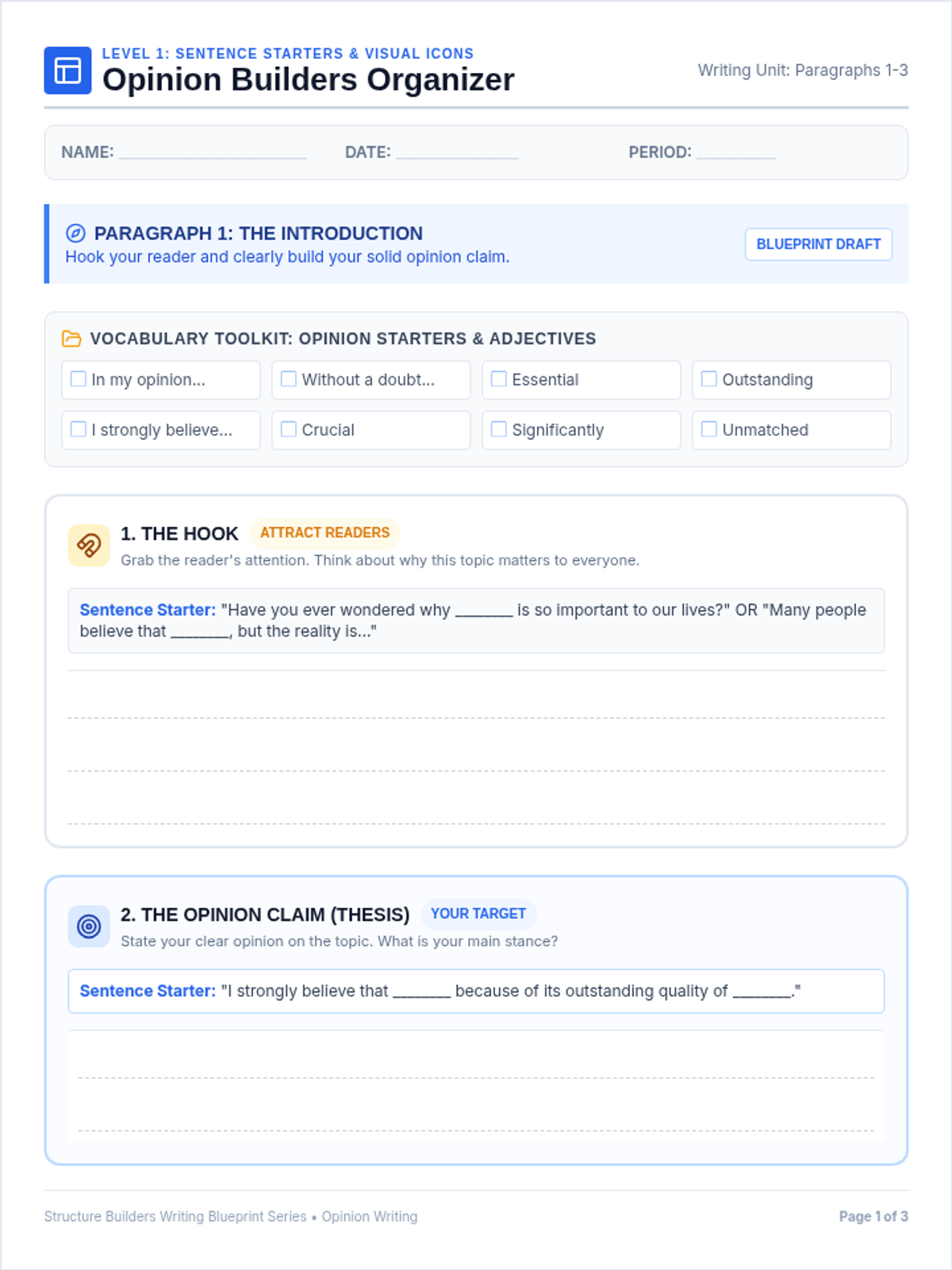
A guided lesson focusing on drafting a three-paragraph opinion essay. Students learn to express a clear claim, back it up with evidence, and write a strong concluding summary using custom sentence frames, interactive word banks, and visual icon prompts.
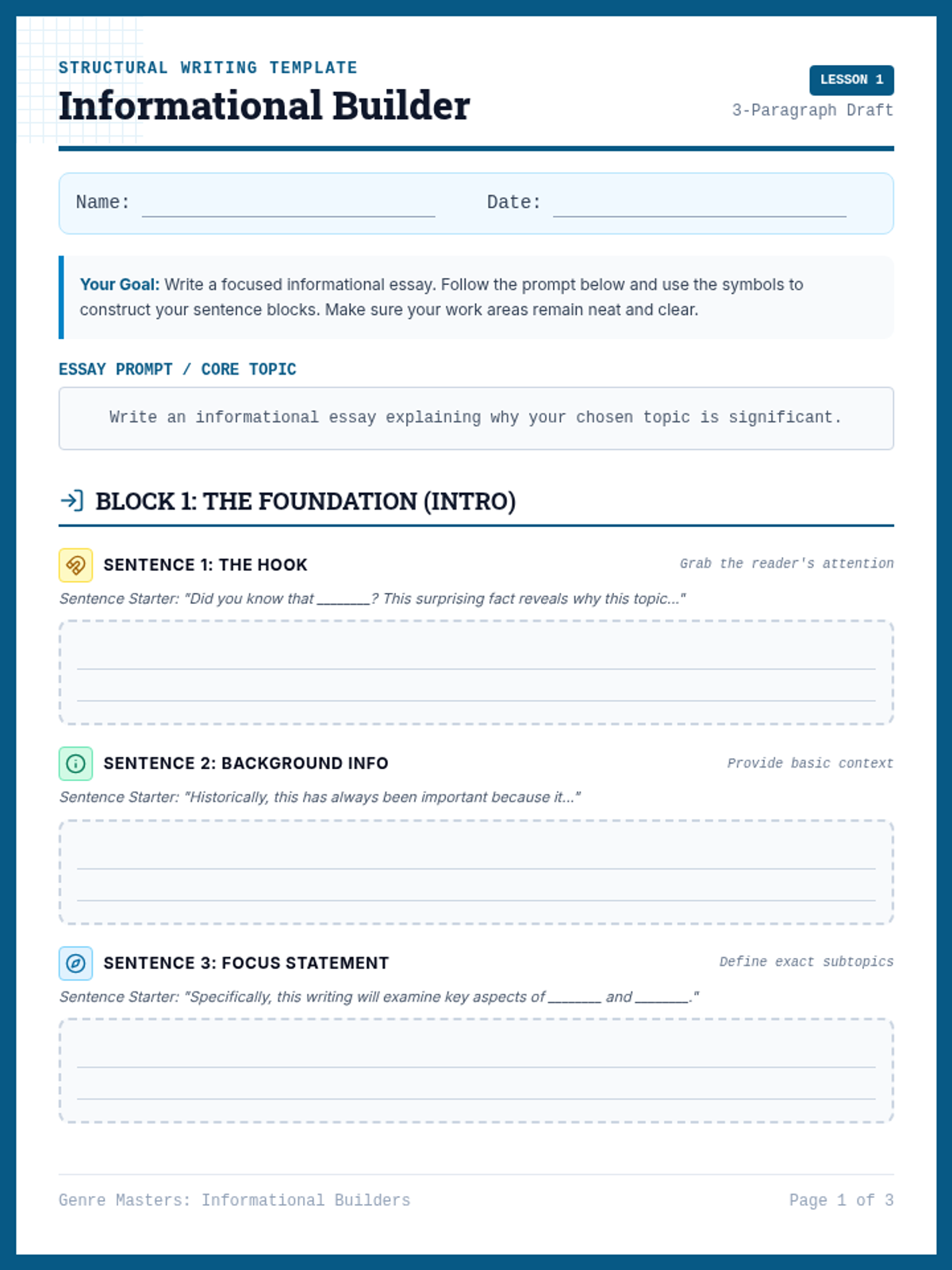
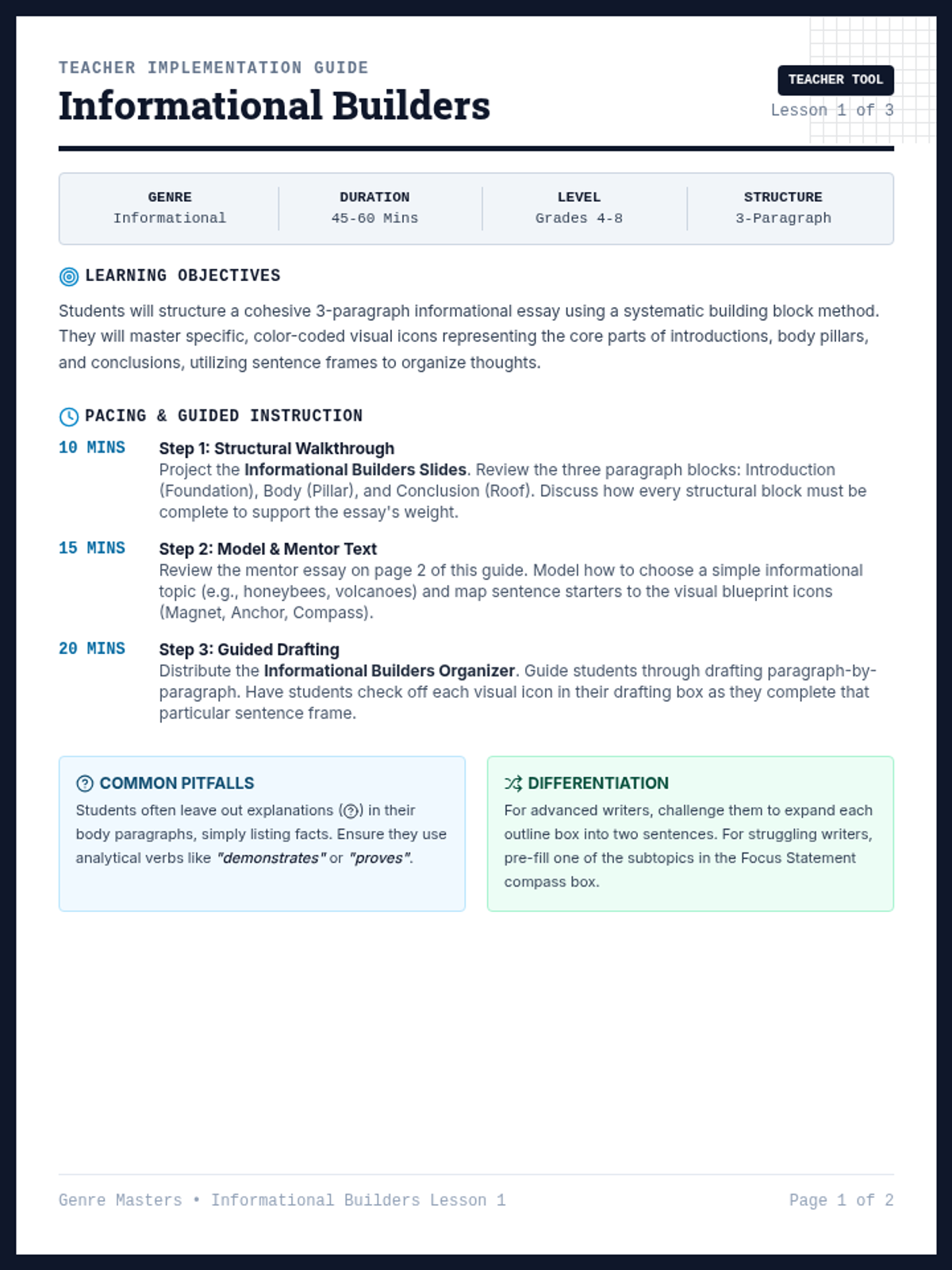
Students master the highly structured 3-paragraph informational essay. They use visual icons, word banks, and fill-in-the-blank sentence starters to build a rock-solid introduction, body, and conclusion paragraph.
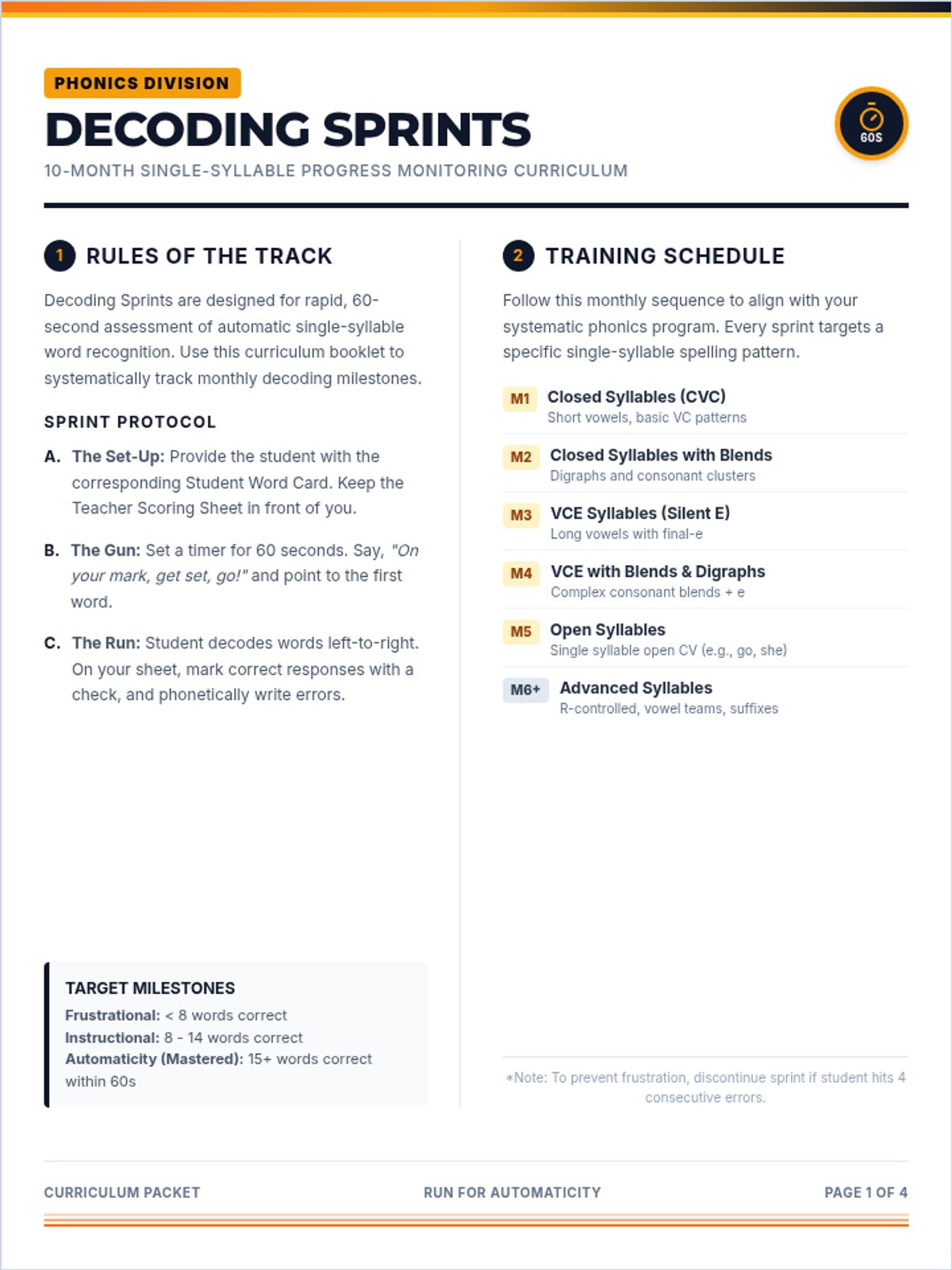
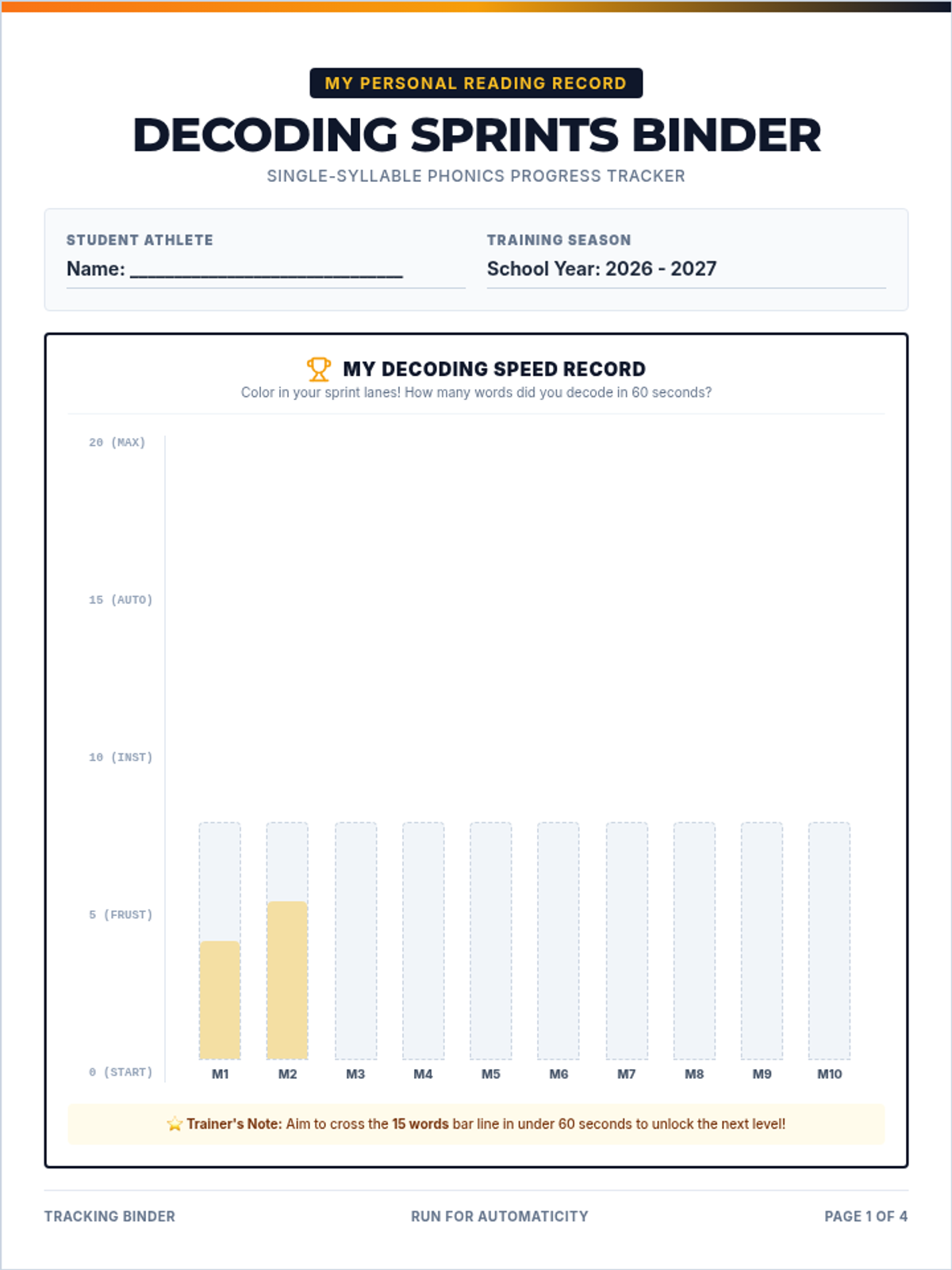
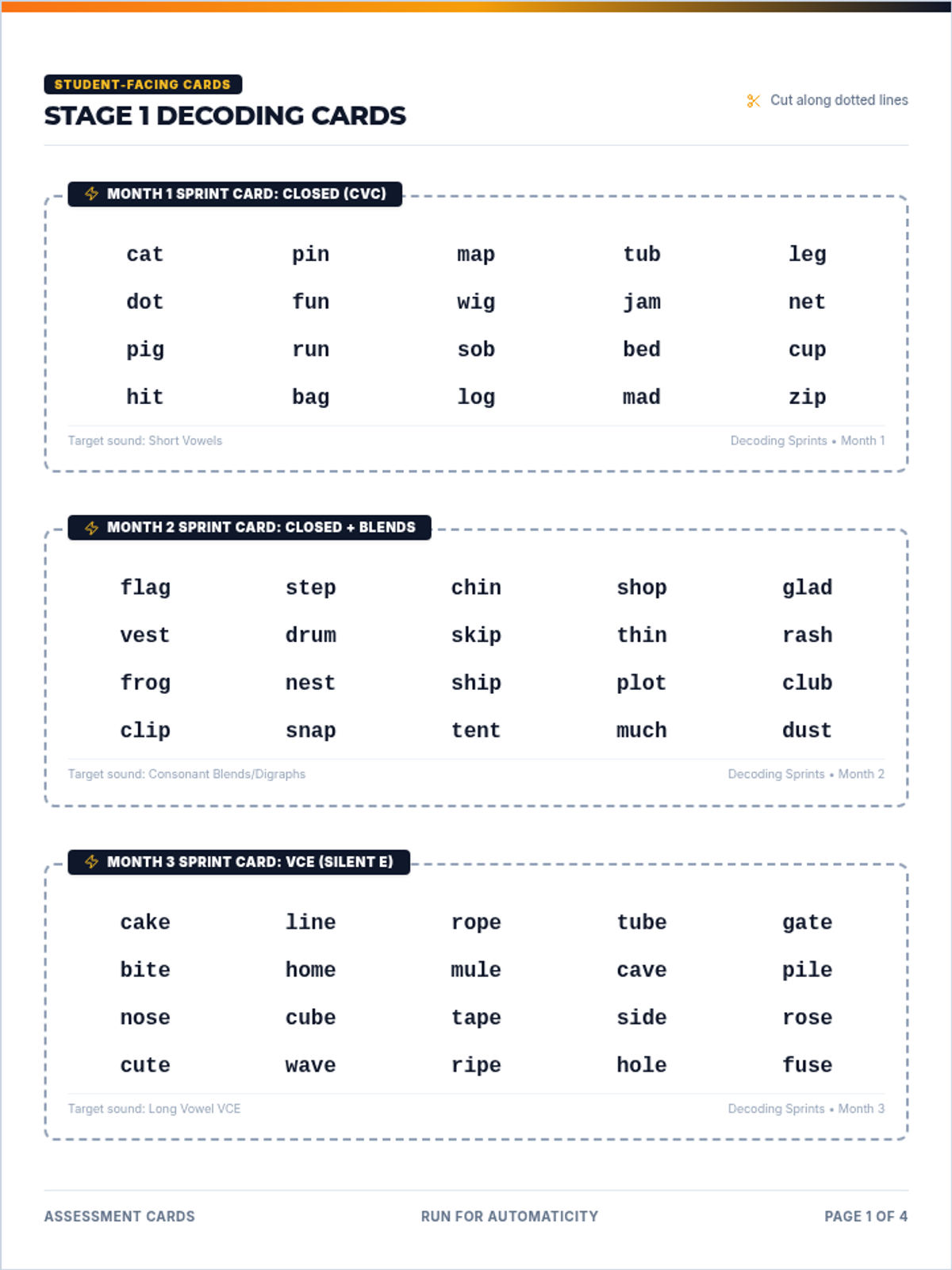
A comprehensive, 10-month progress-monitoring curriculum designed for rapid decoding trials. This lesson contains a student tracking binder, weekly assessment cards, and a complete curriculum booklet focusing on single-syllable phonics patterns.
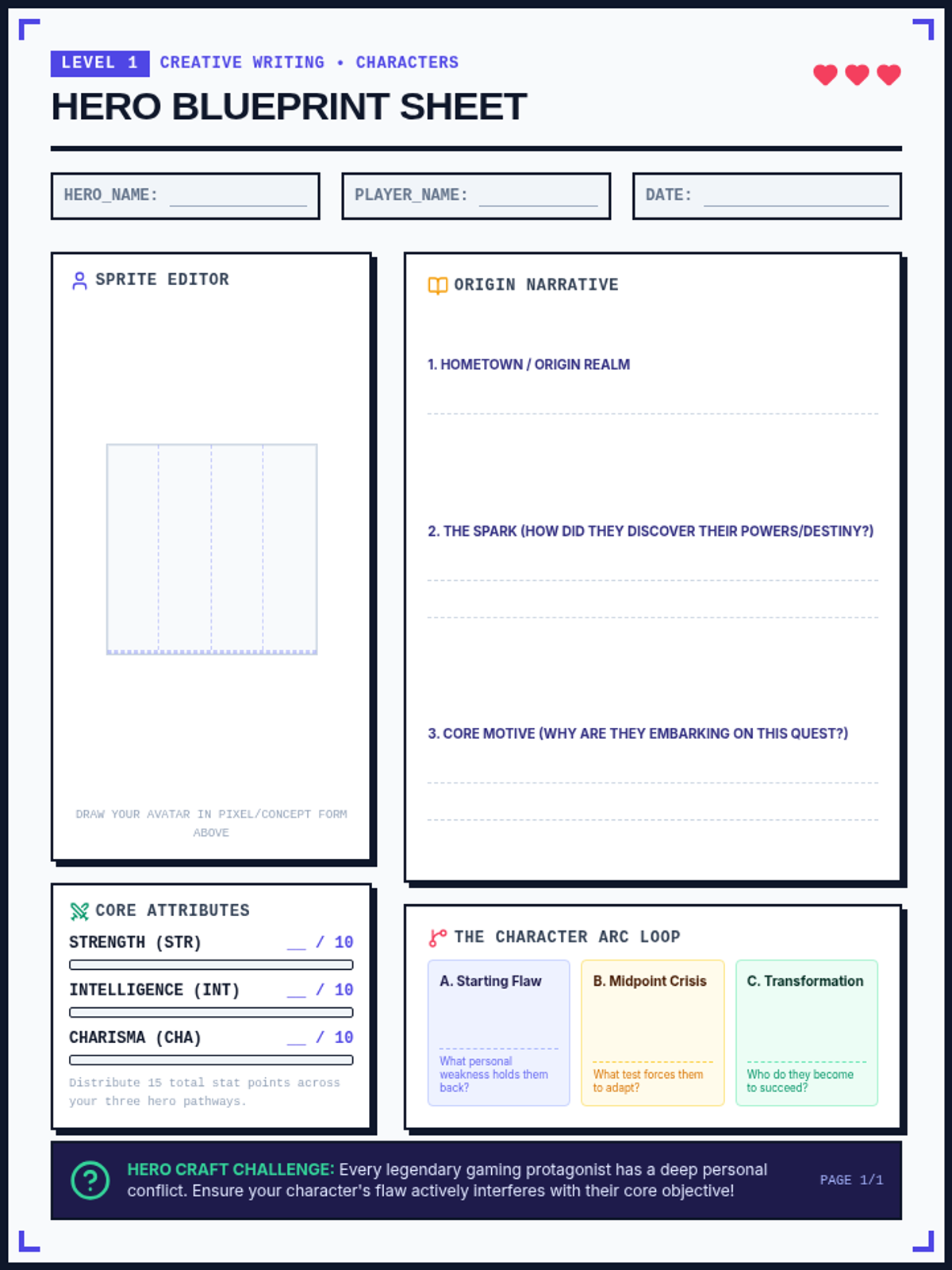
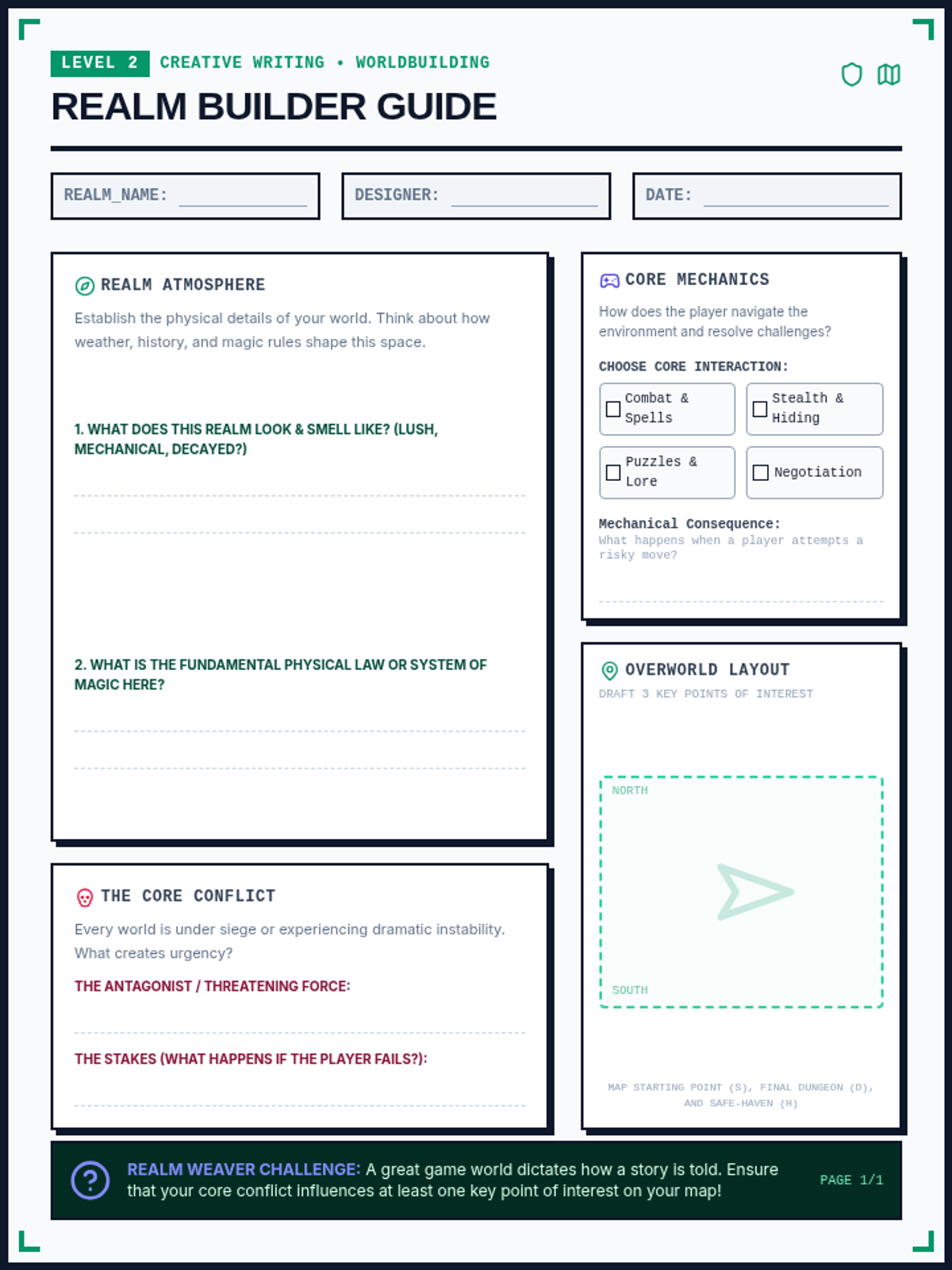
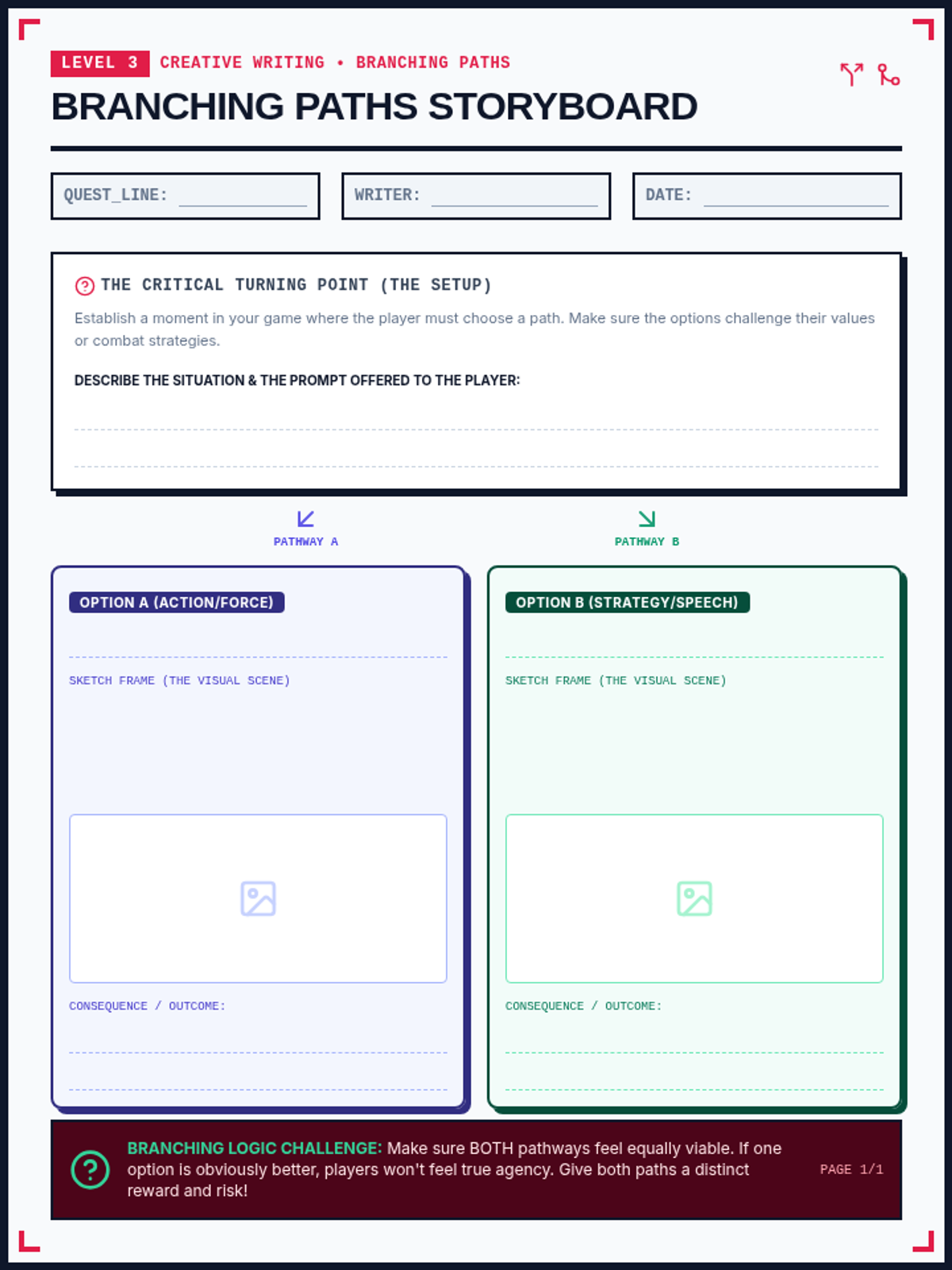
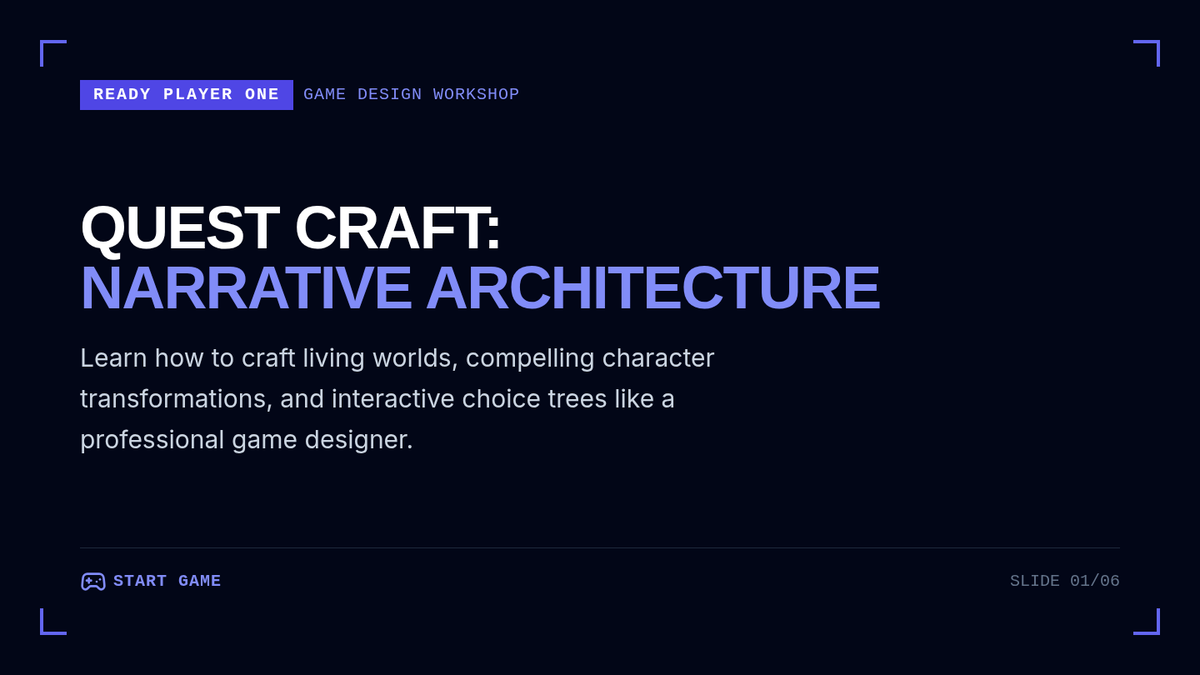
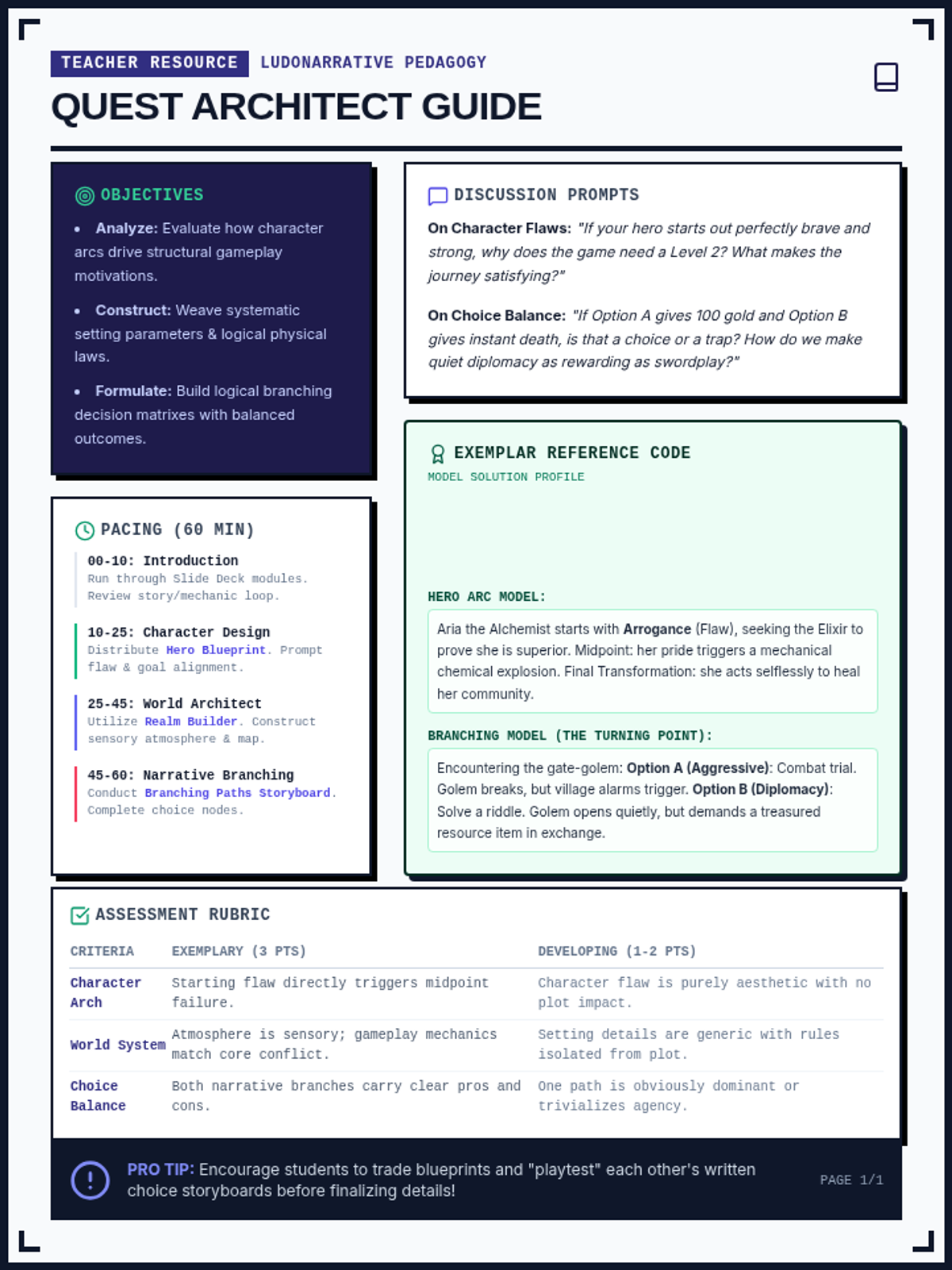
A comprehensive game design lesson focusing on creative writing and narrative architecture. Students learn how to build worlds, draft compelling character arcs, and design branching choice pathways through a series of structured worksheets, guided slides, and educator resources.
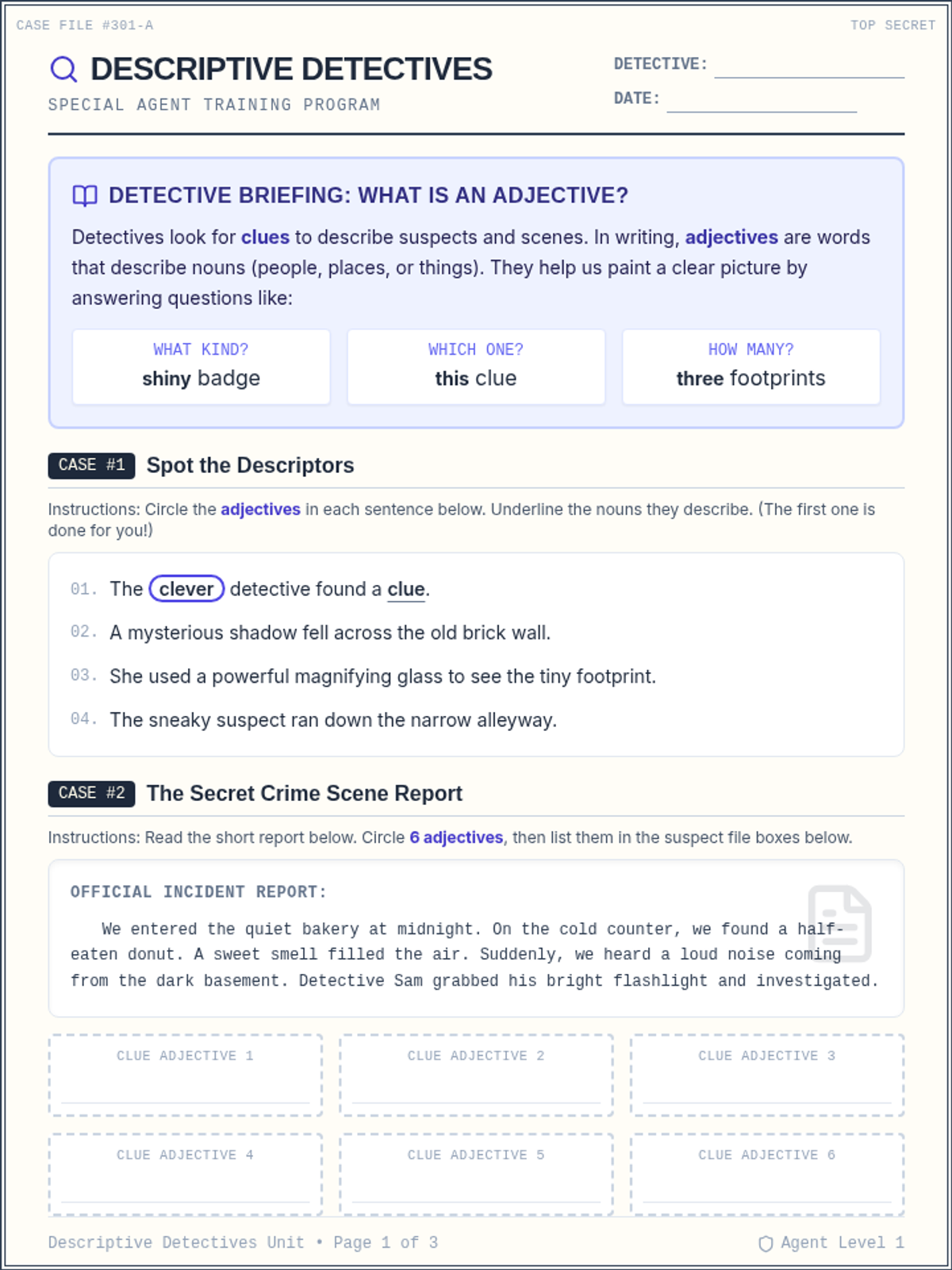
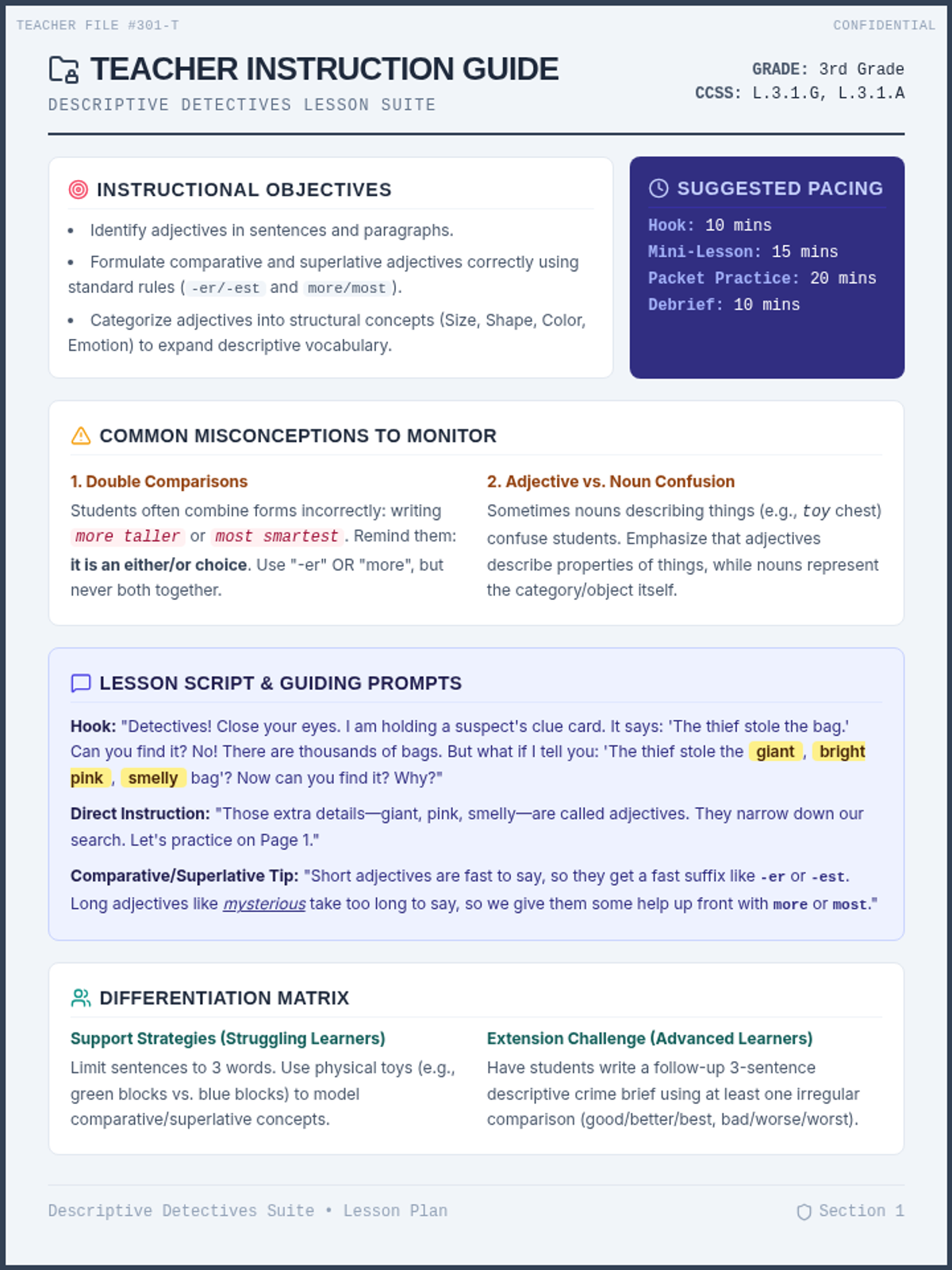
A comprehensive and engaging unit/lesson introducing 3rd graders to adjectives. Students act as 'Descriptive Detectives' to identify, compare, and categorize adjectives through a structured work packet and structured visual guide.
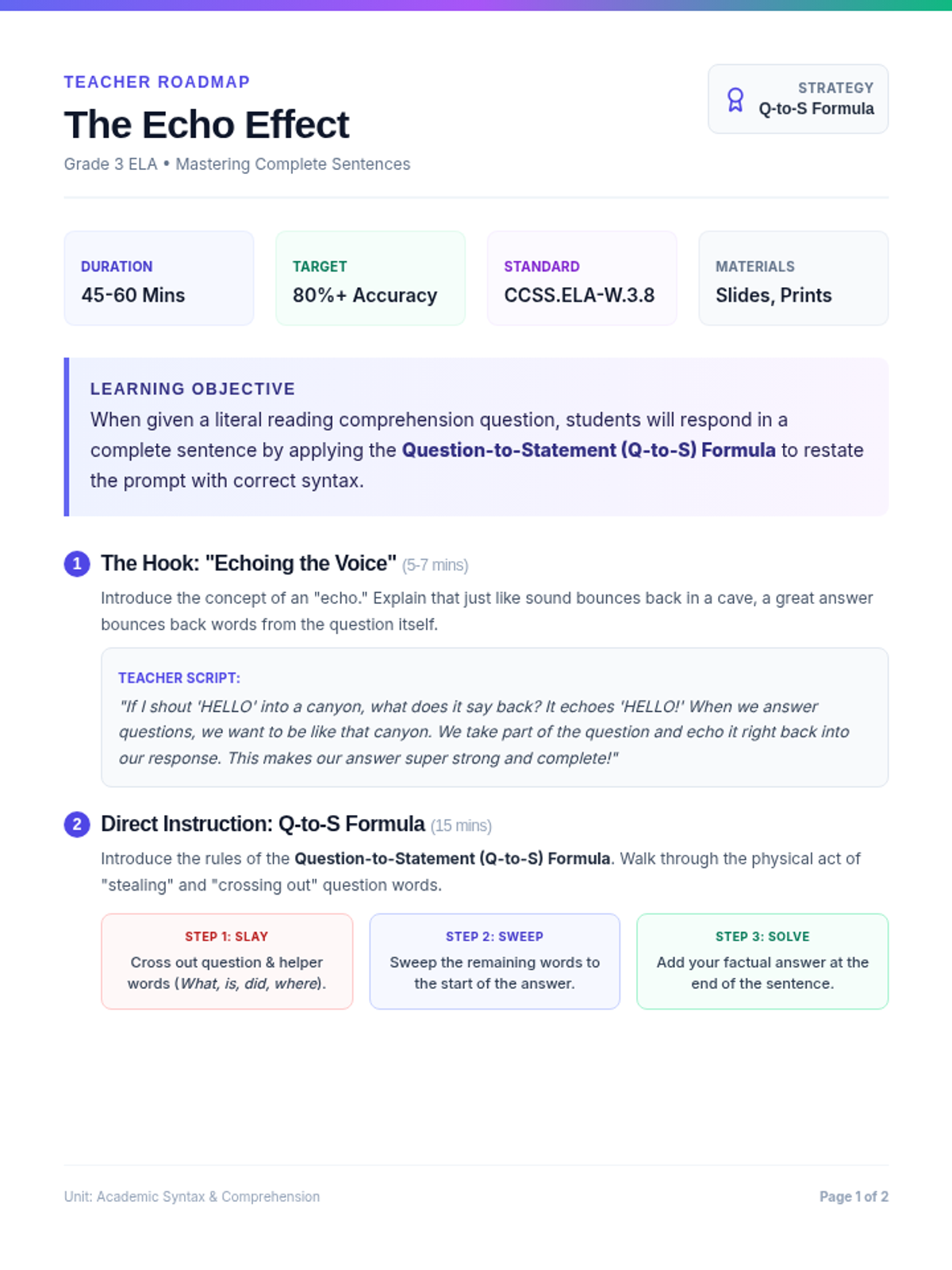
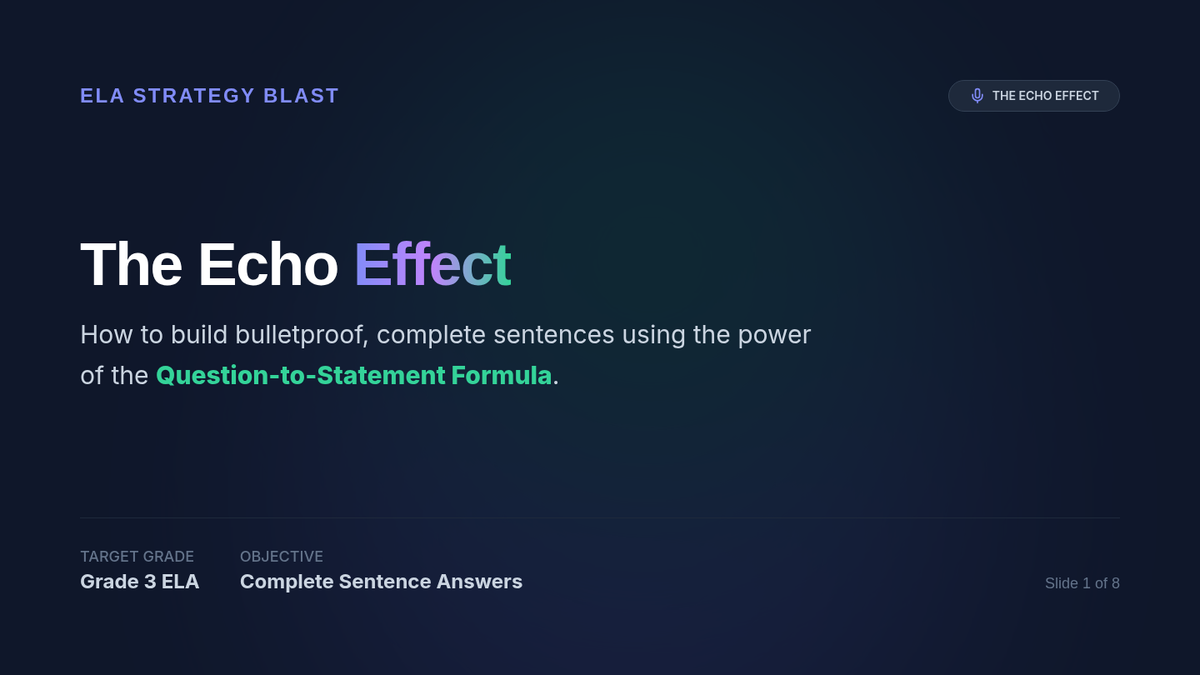
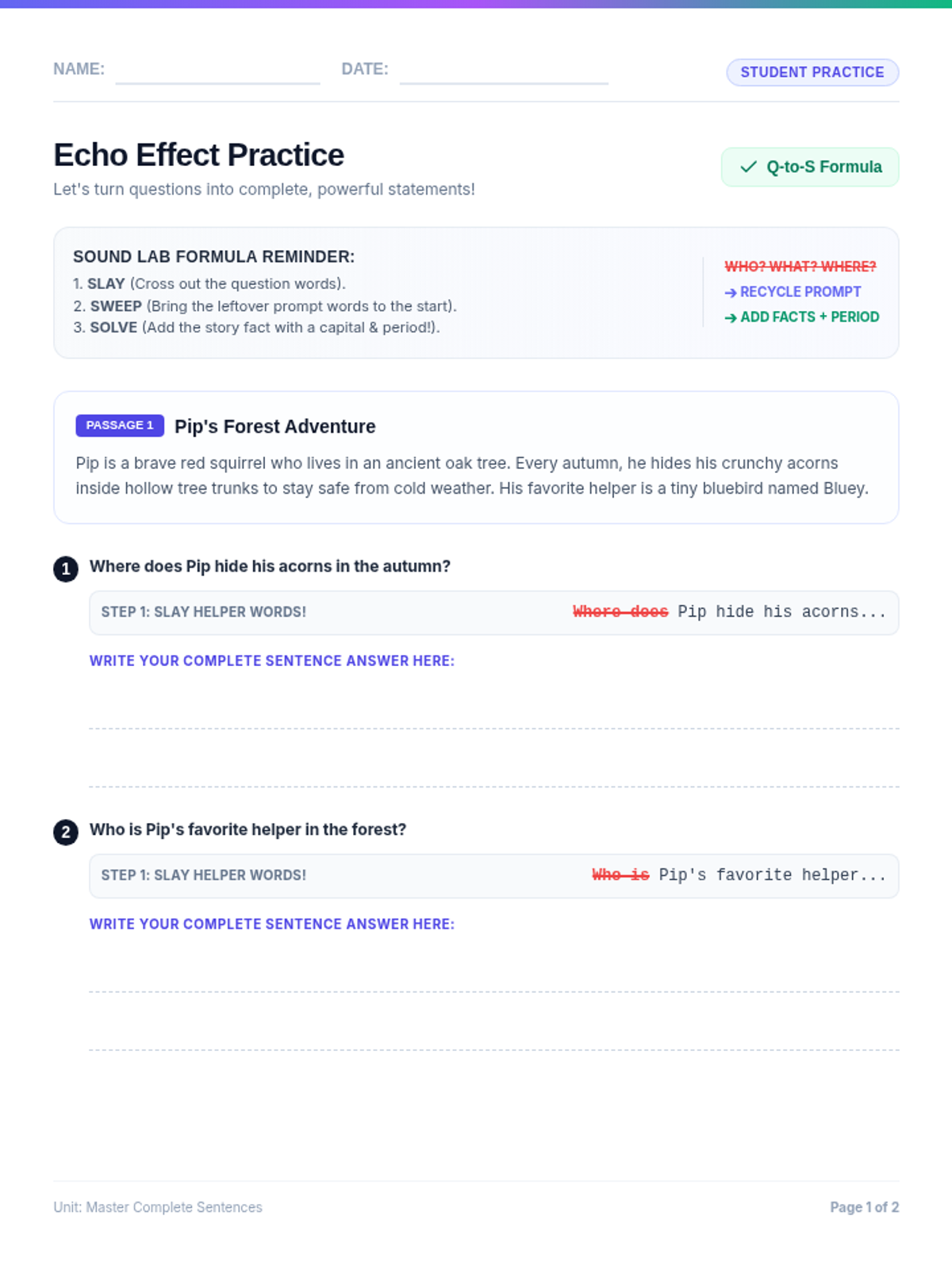
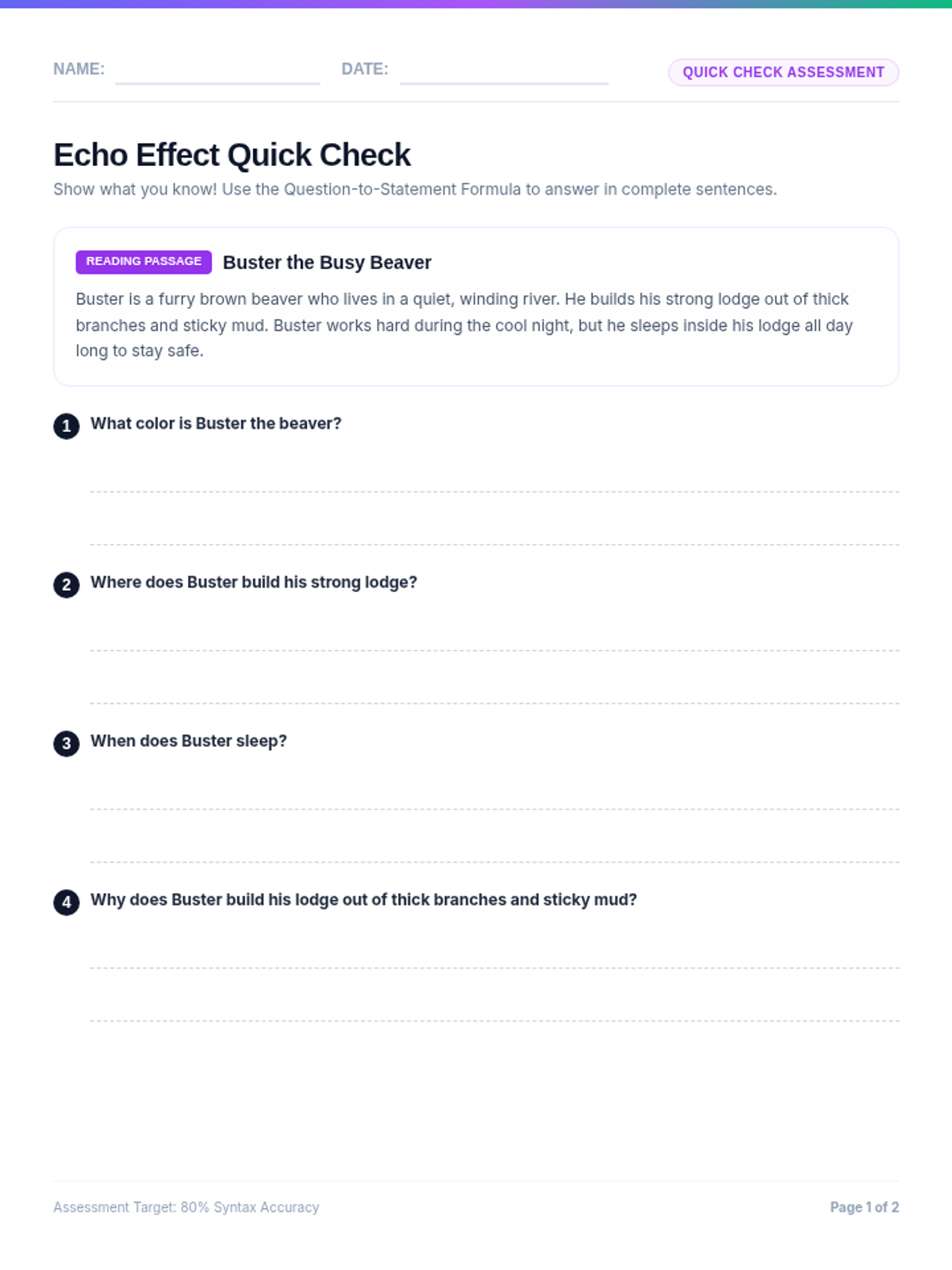
A complete third-grade ELA lesson designed to help students master answering literal comprehension questions in complete sentences. Features the 'Question-to-Statement Formula' to systematically teach students how to cross out question words, recycle the prompt, and formulate high-quality responses.
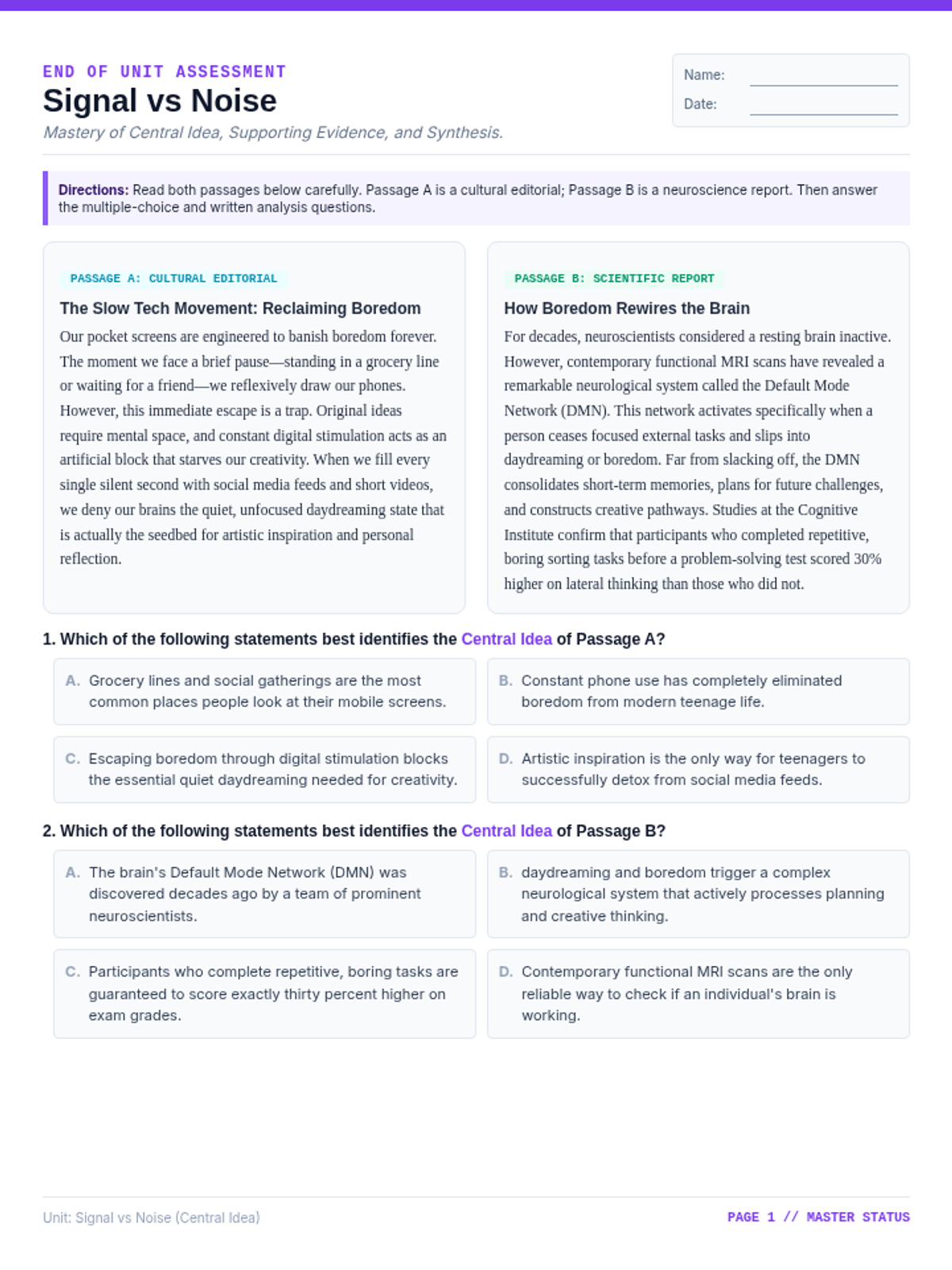
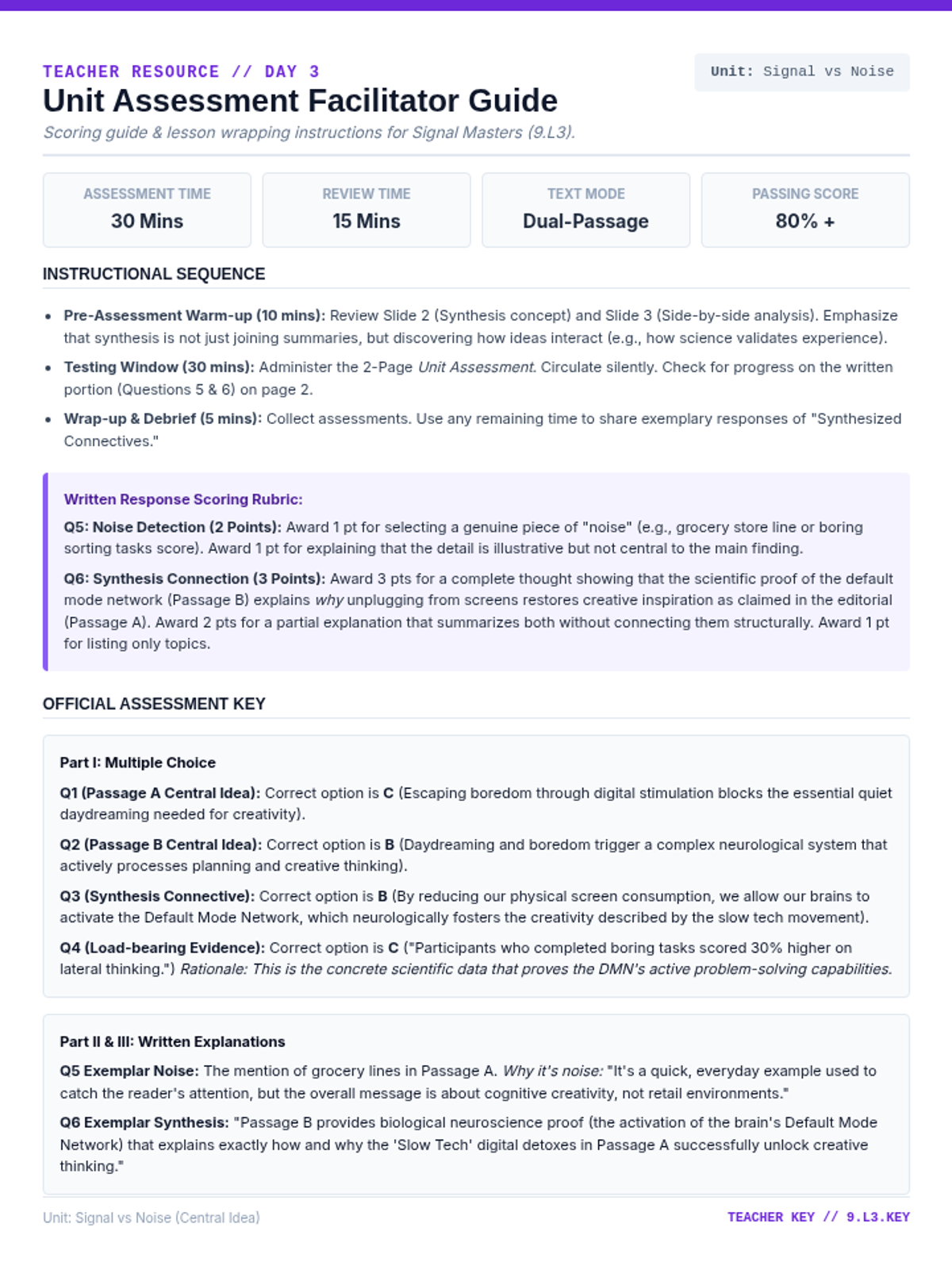
Day 3 of the Central Idea unit where students demonstrate mastery by synthesizing central ideas across pop culture and science texts, followed by a final unit assessment.
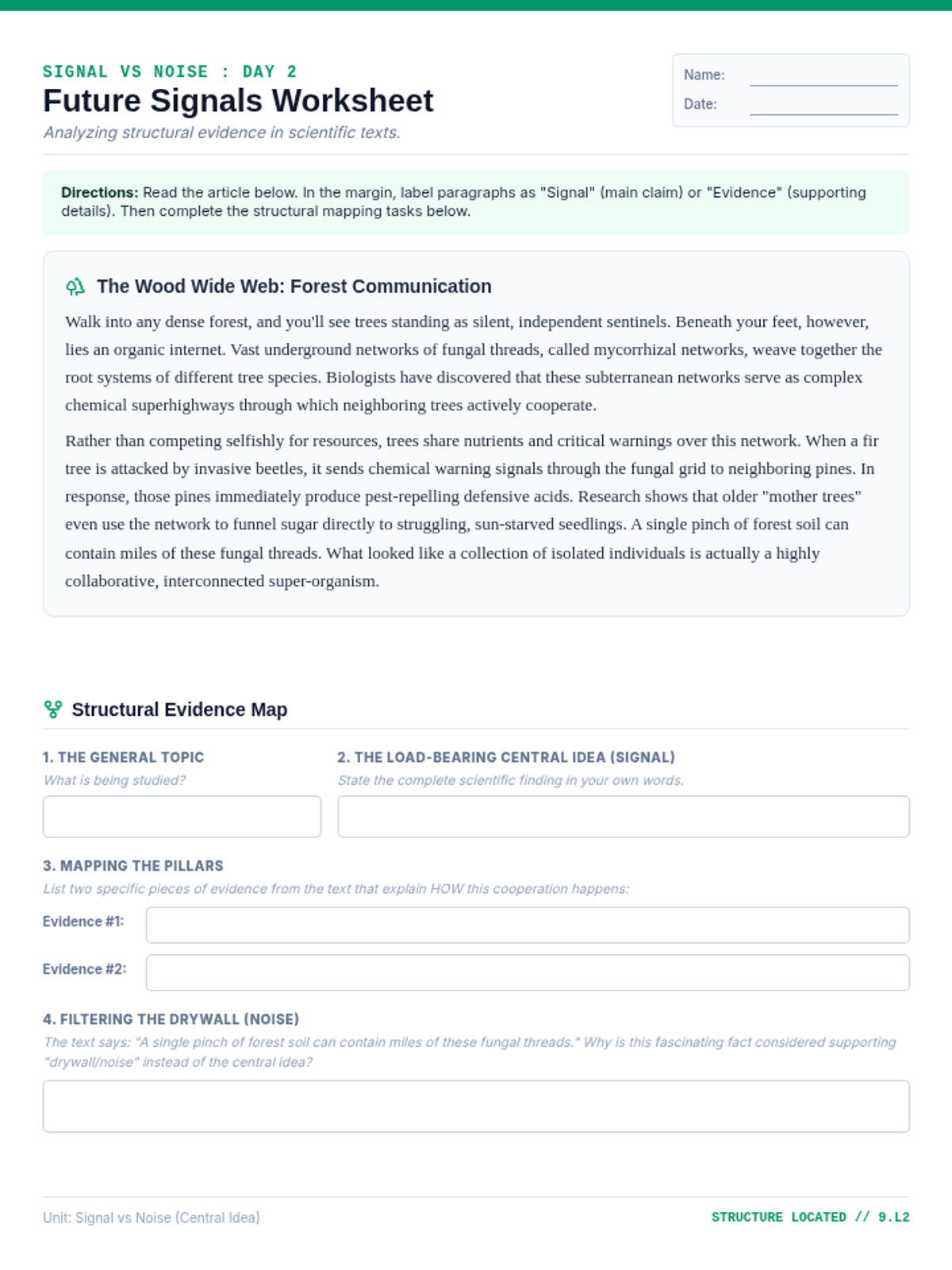
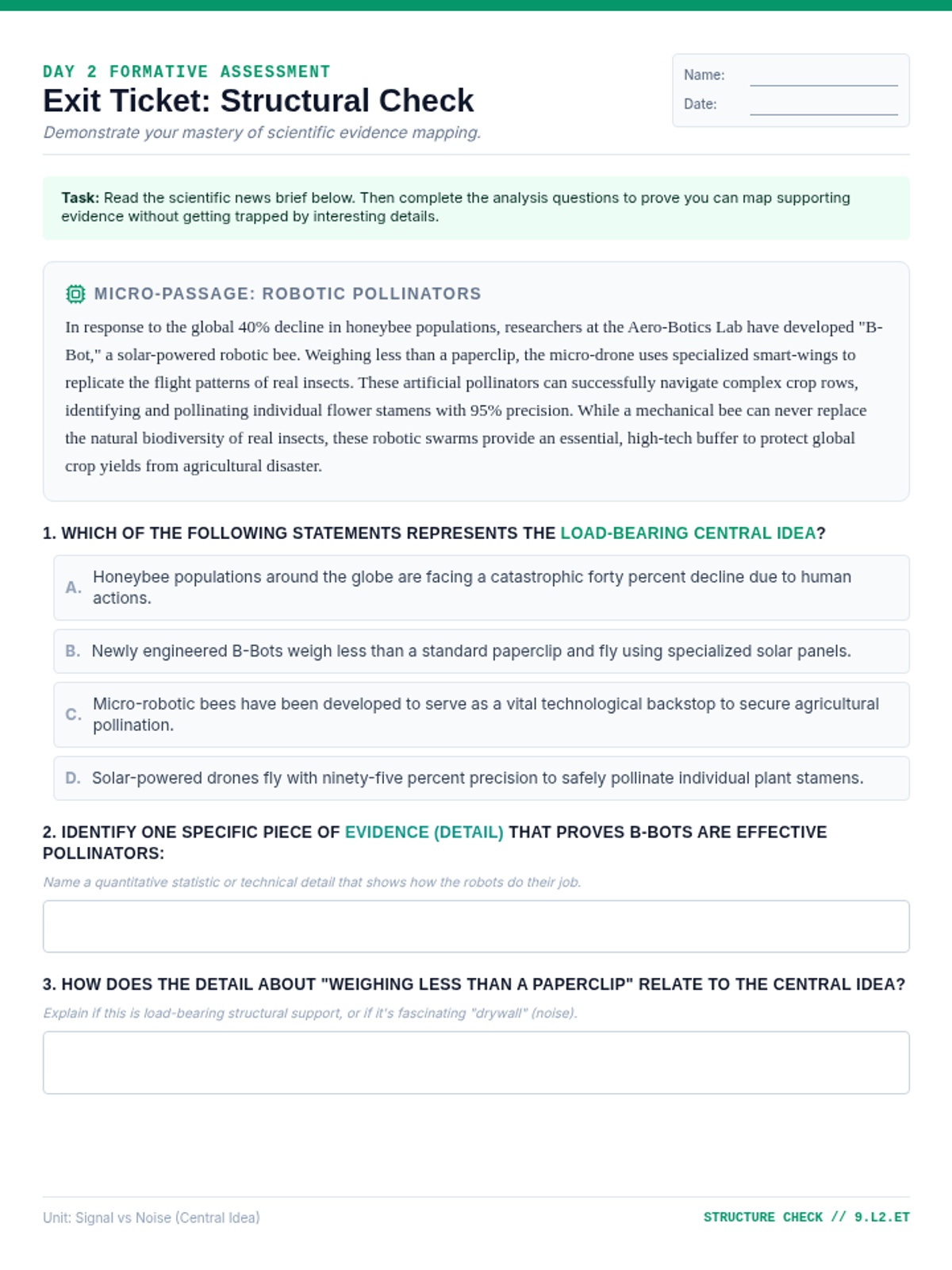
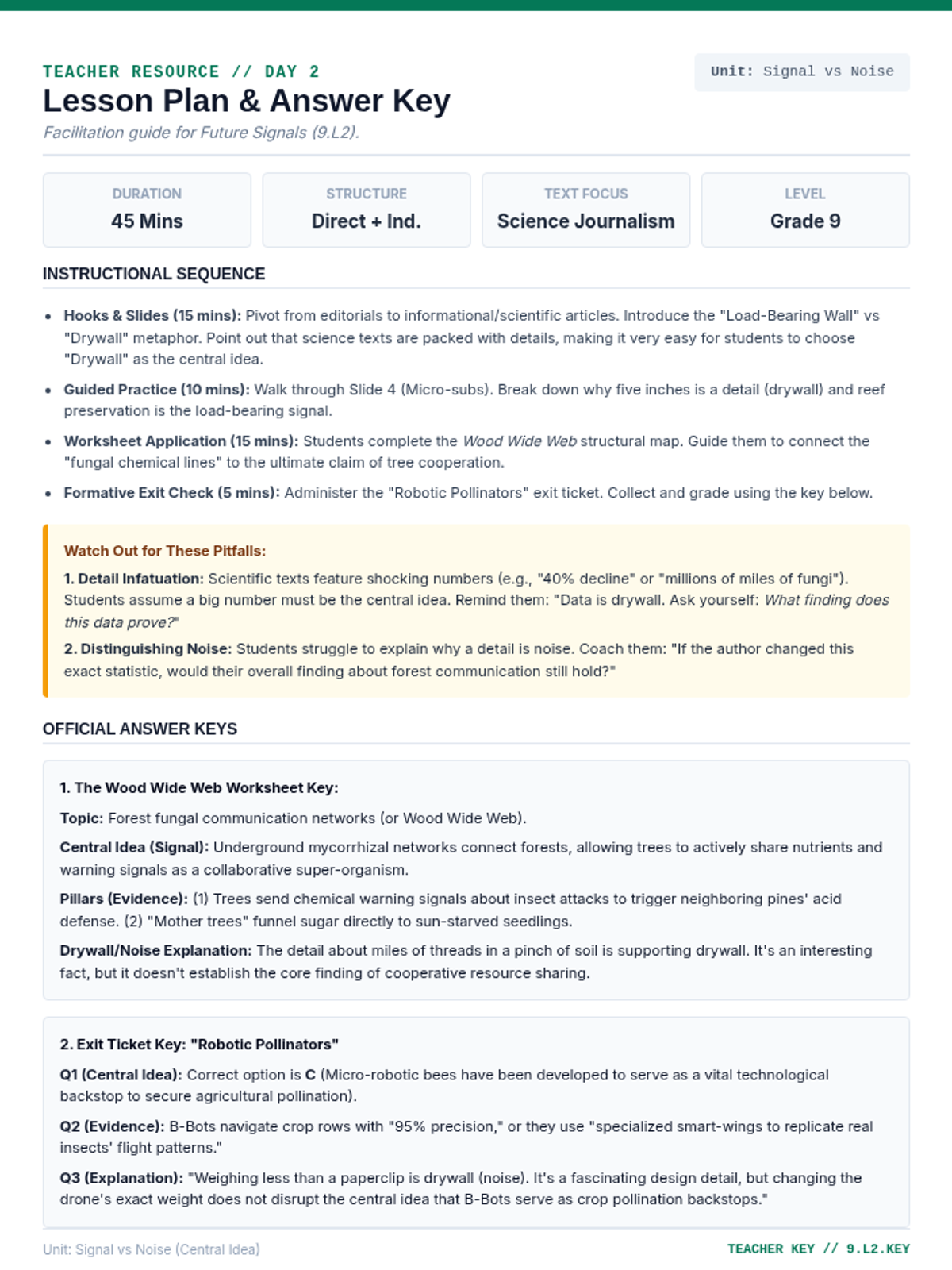
Day 2 of the Central Idea unit focusing on high-interest contemporary science and tech articles, teaching students to analyze how authors build central ideas through supporting evidence.
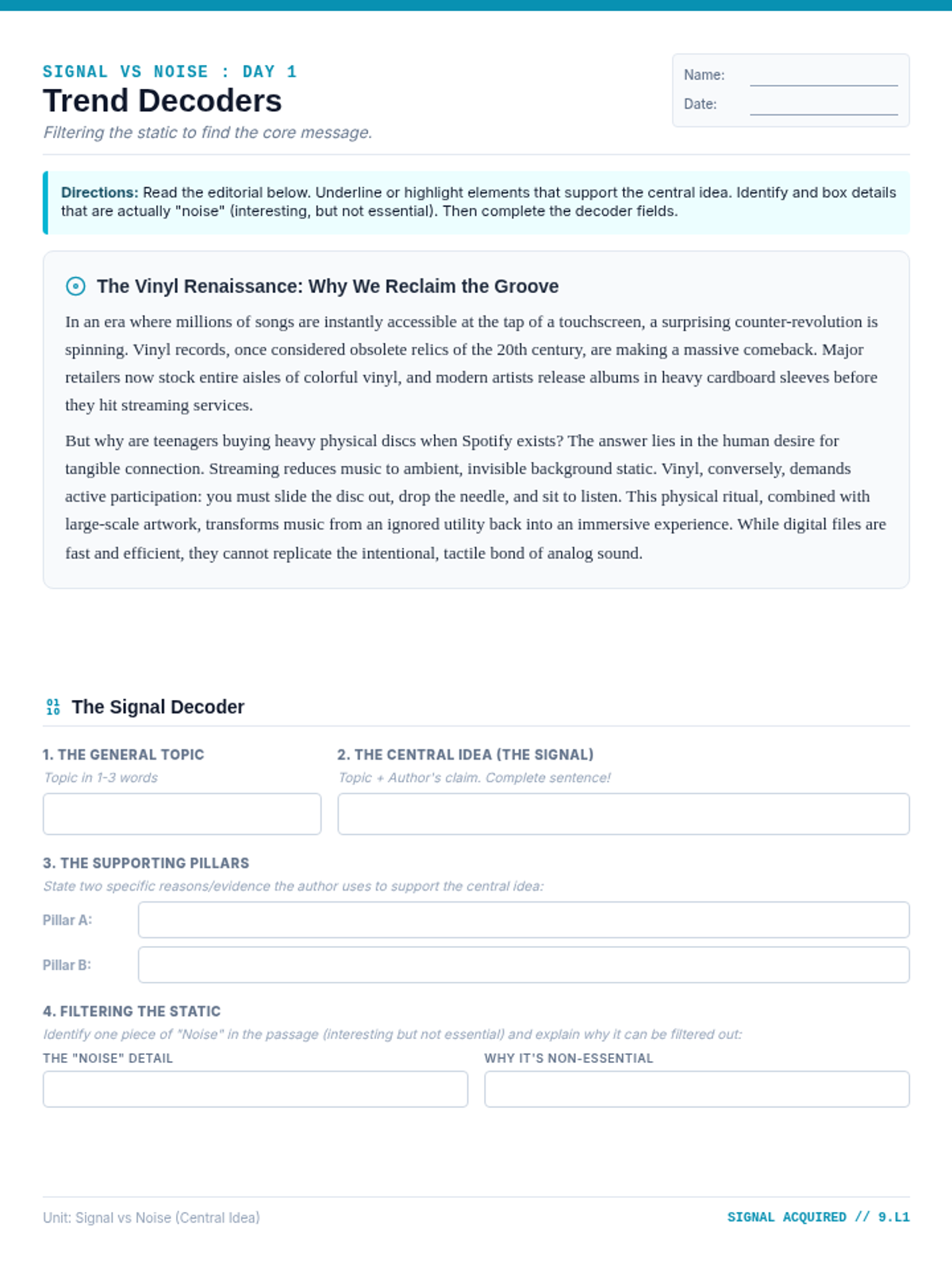
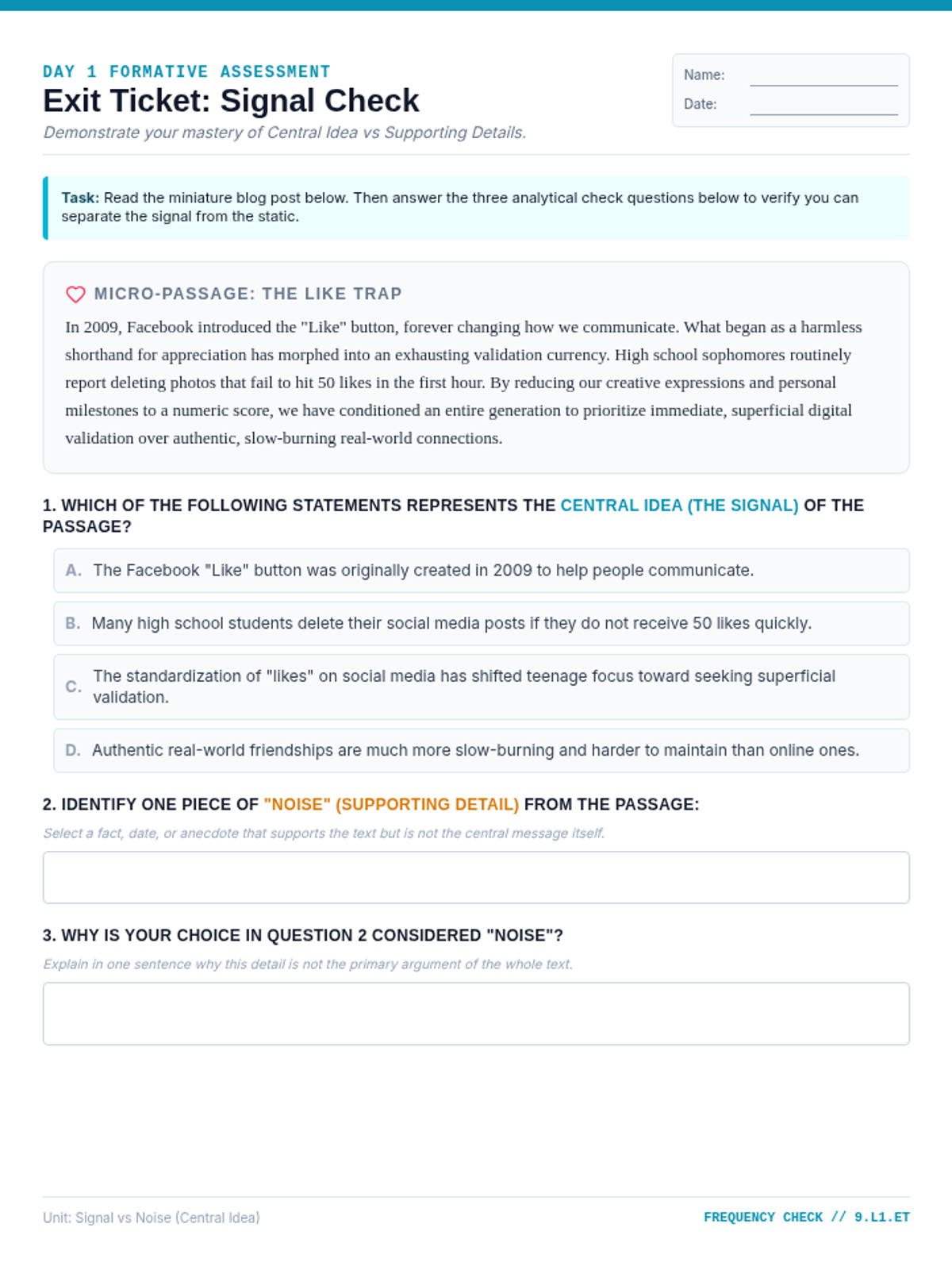
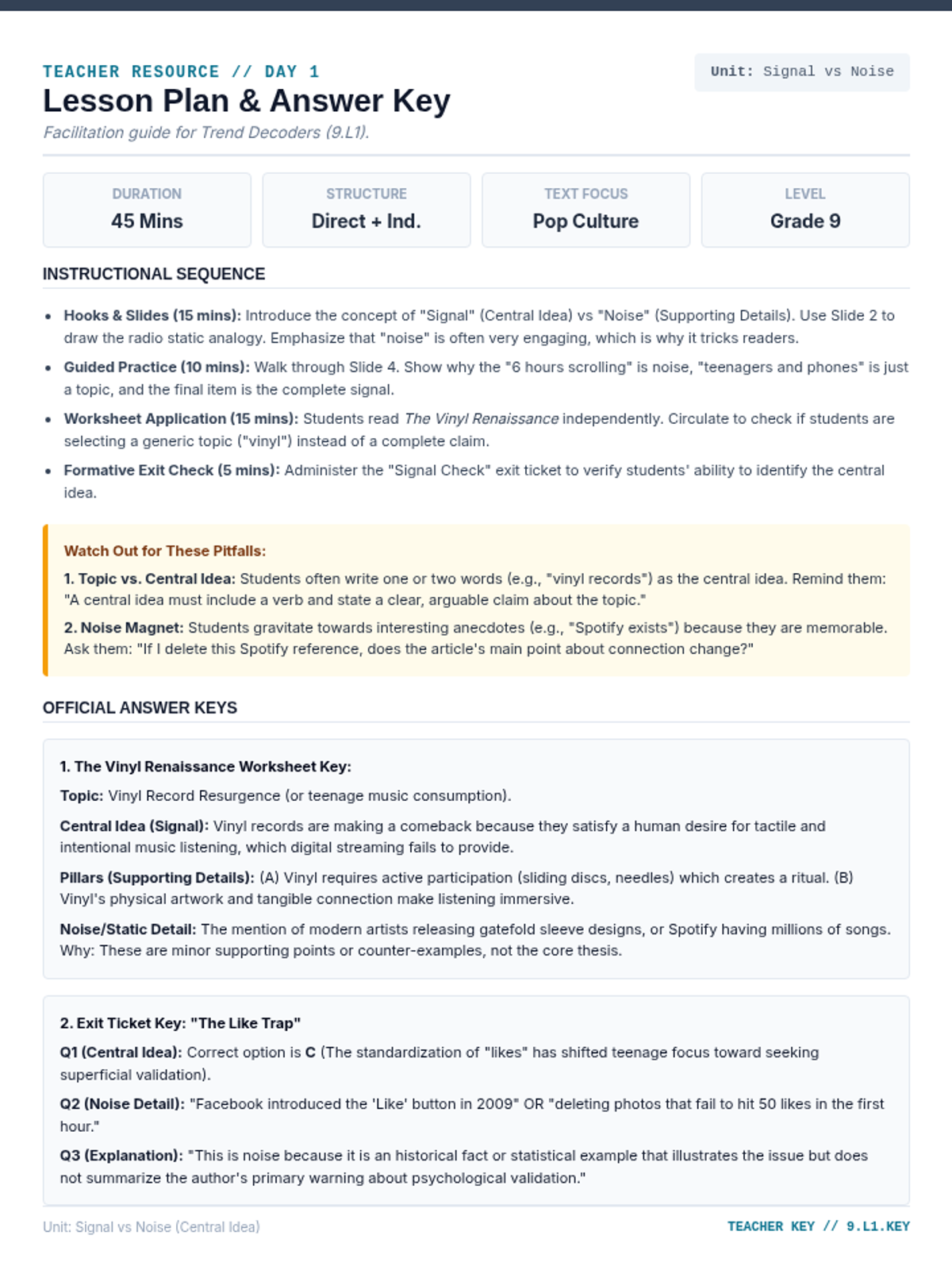
Day 1 of the Central Idea unit focusing on pop culture editorials, social media trends, and teaching students to filter supporting 'noise' to find the central 'signal'.
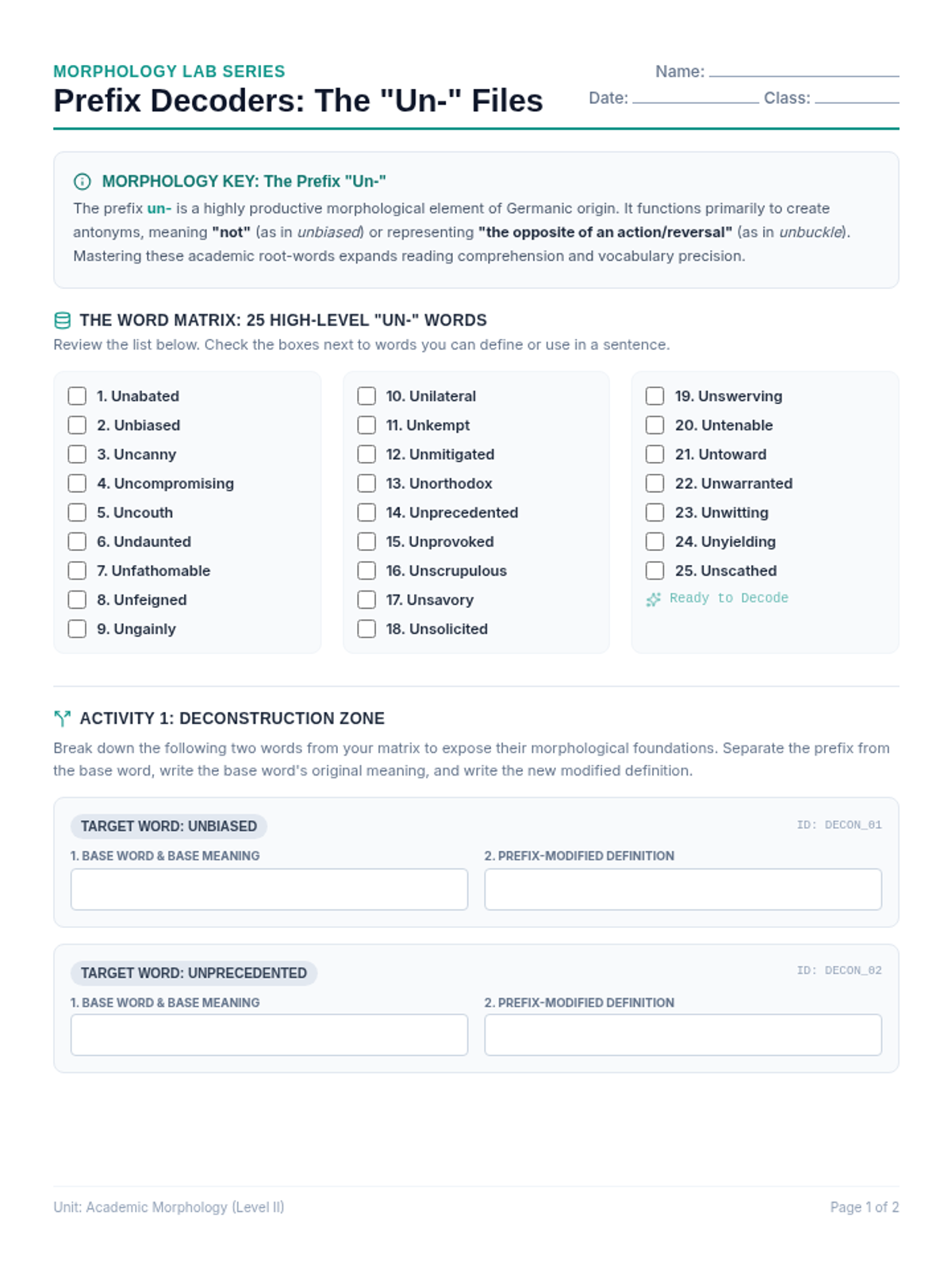
A comprehensive middle school morphology lesson focused on the prefix un-. Students master 25 high-level vocabulary words and practice deciphering complex context clues and structural word elements.
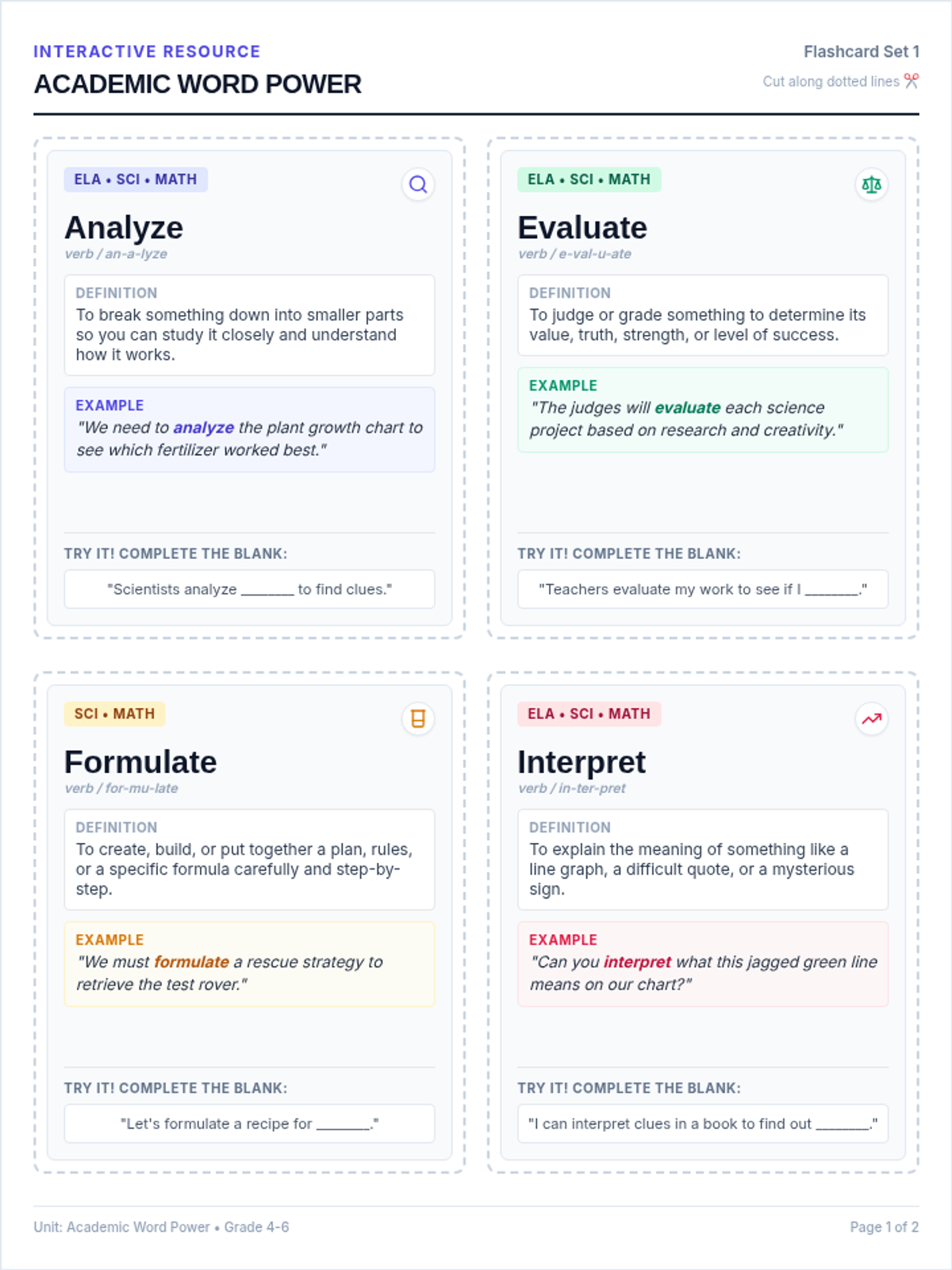
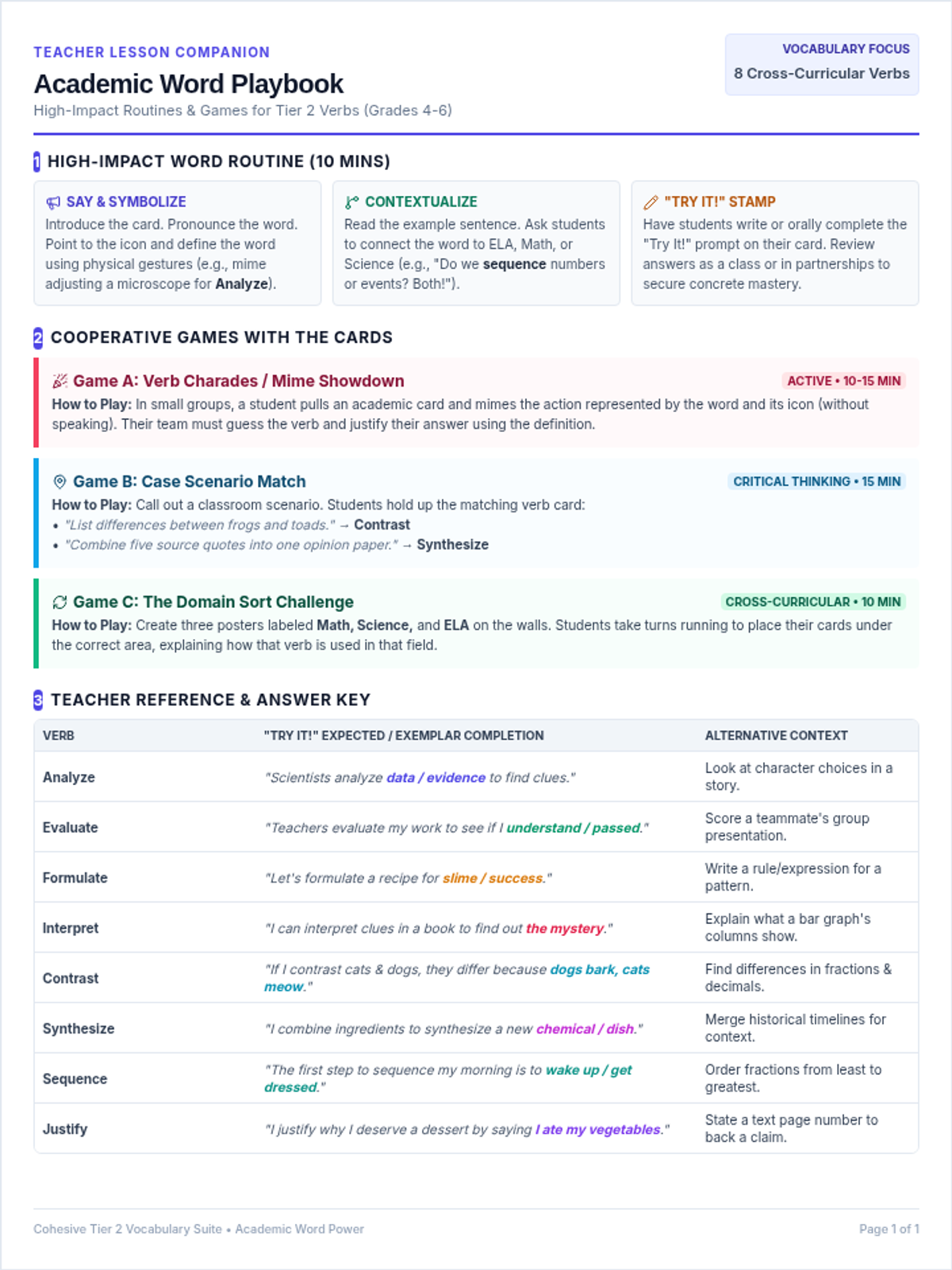
A high-impact Tier 2 vocabulary lesson teaching critical academic verbs used across ELA, Math, and Science, supported by simplified visual symbols.
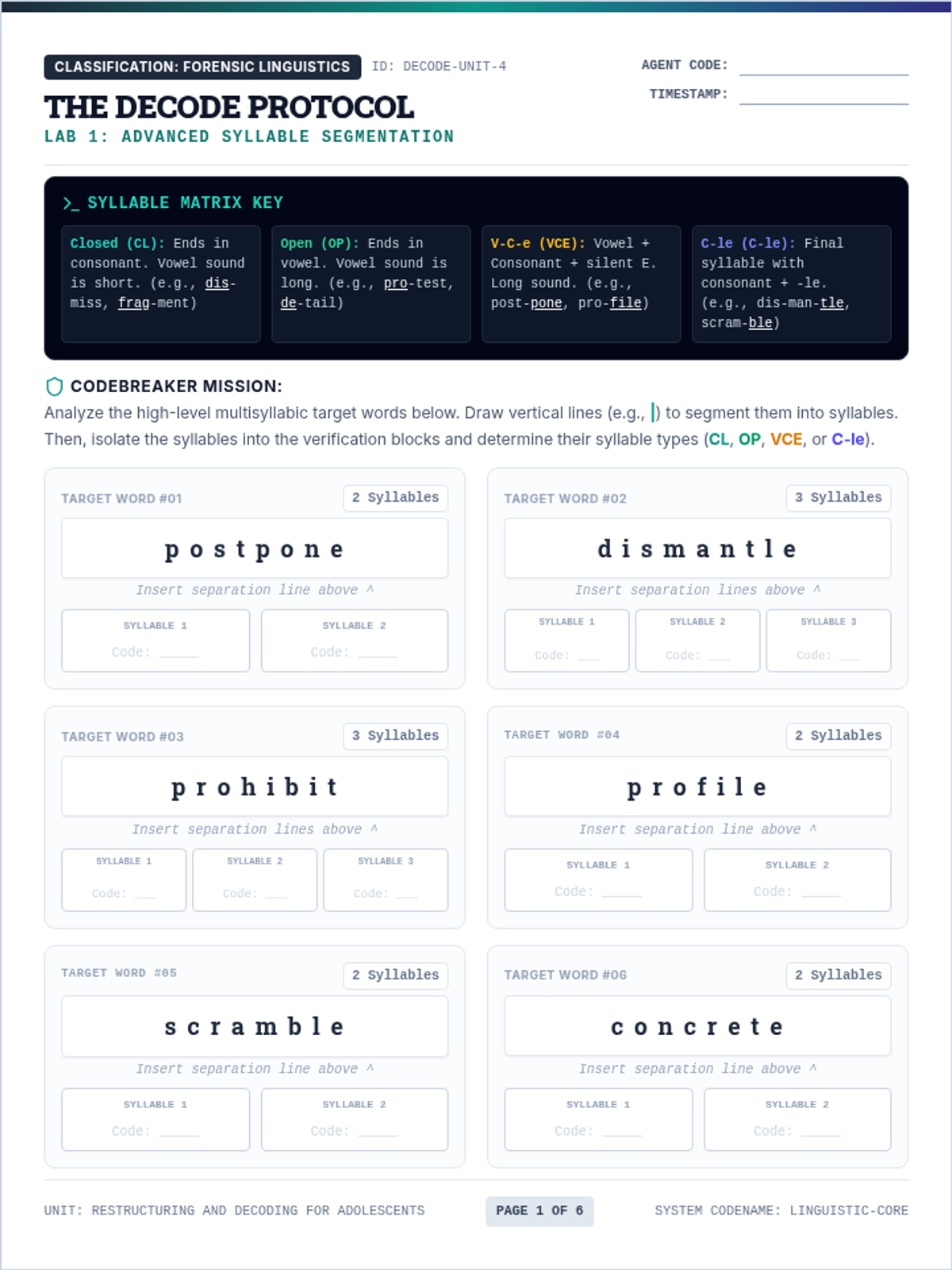
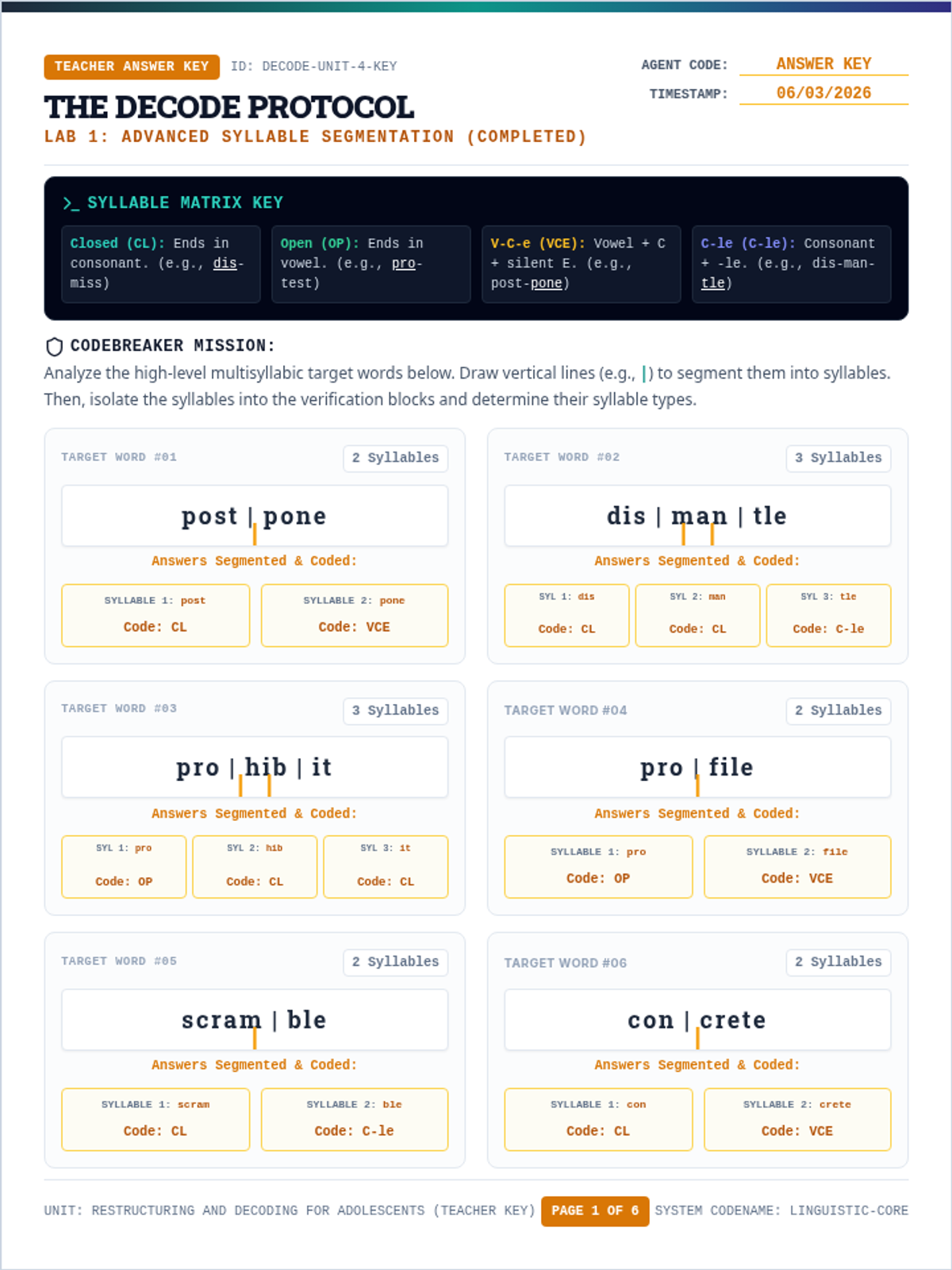
A comprehensive phonics and syllable review unit focusing on vowel teams, r-controlled vowels, syllable division, and affix-based word building. Includes a multi-page student review packet and a corresponding teacher answer key.
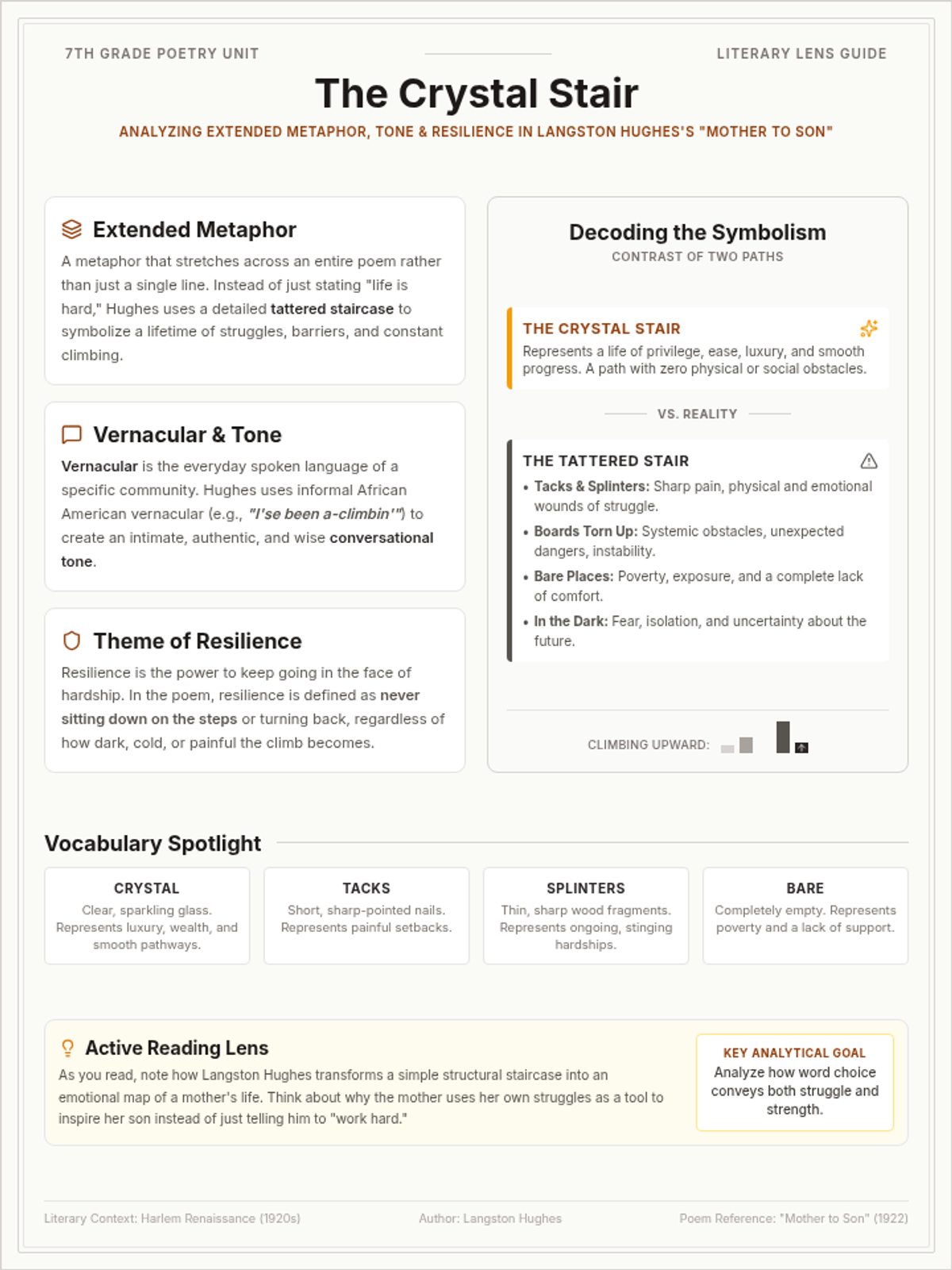
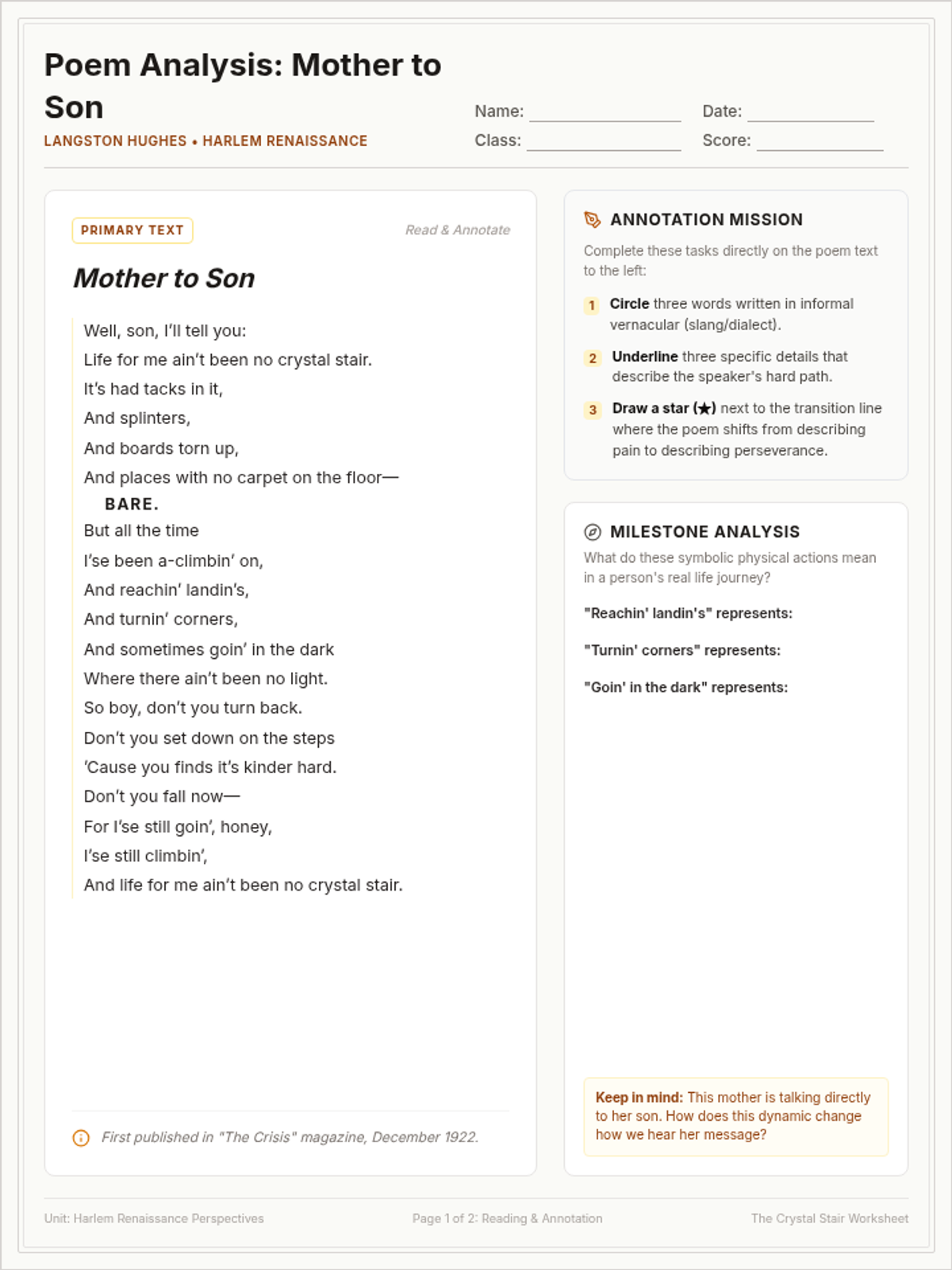
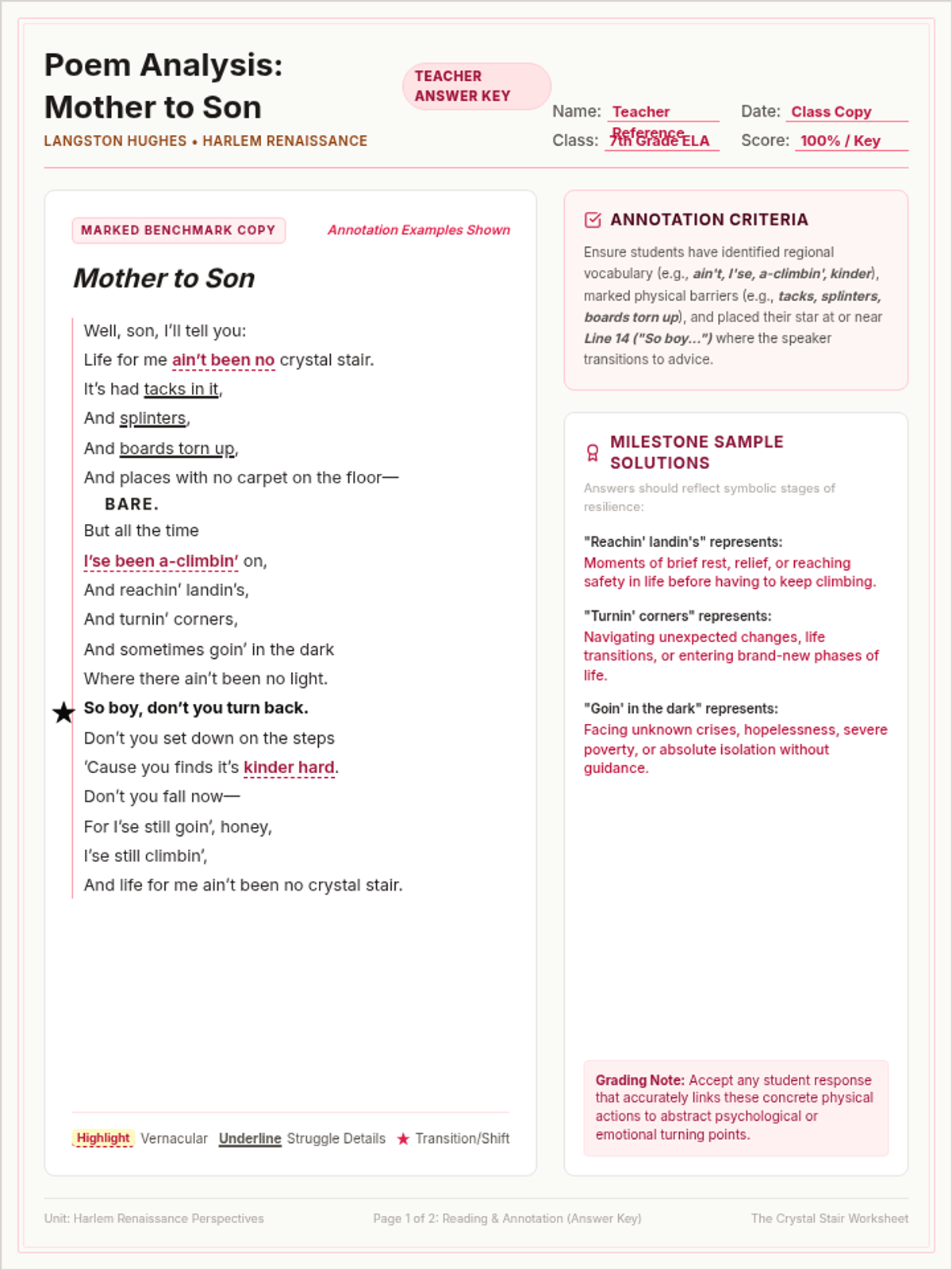
A comprehensive poetry analysis lesson exploring Langston Hughes's 'Mother to Son' with a focus on metaphor, resilience, and tone. Students will dissect the symbolic staircase and apply key themes to their understanding of historical and personal perseverance.
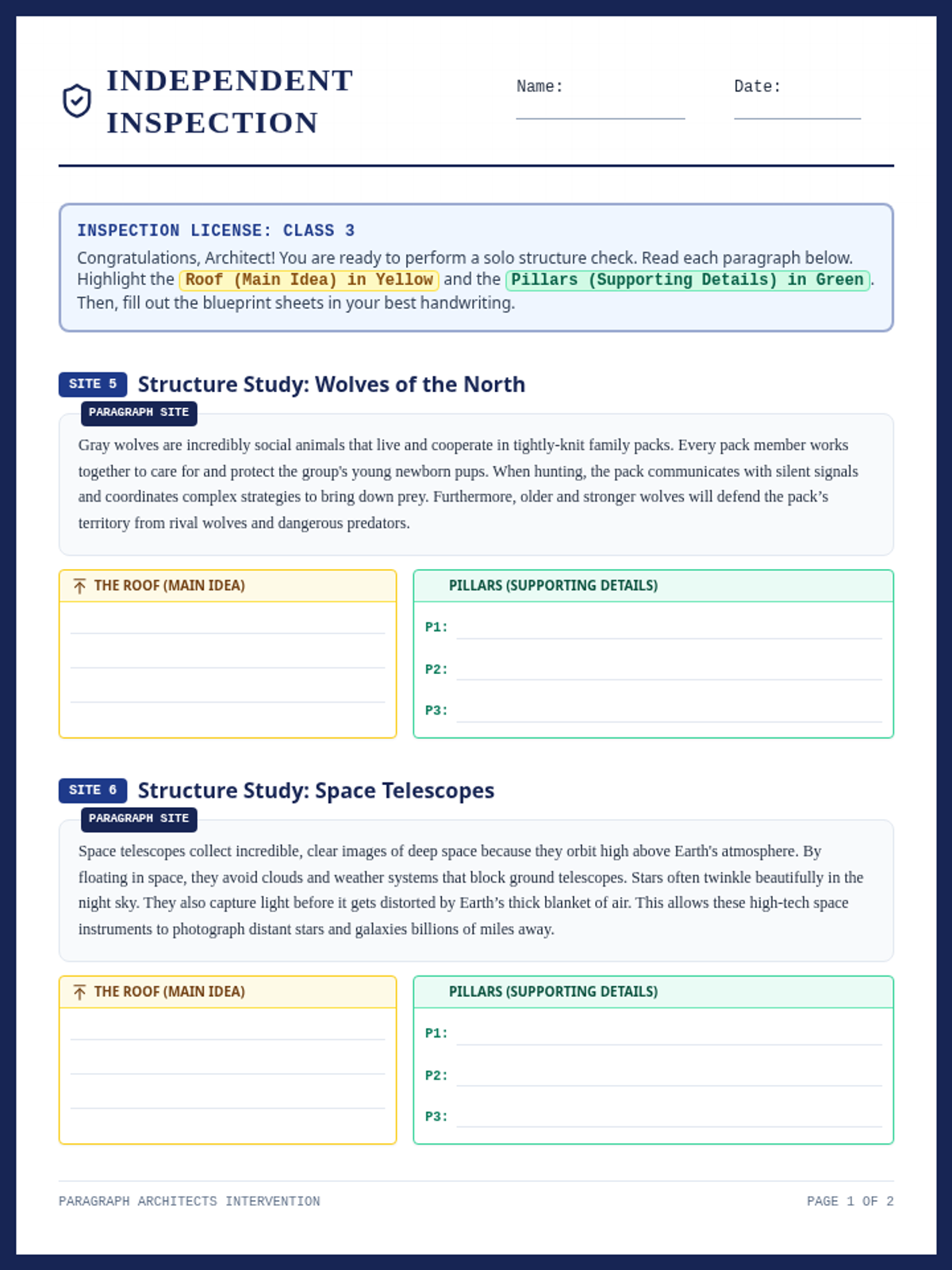
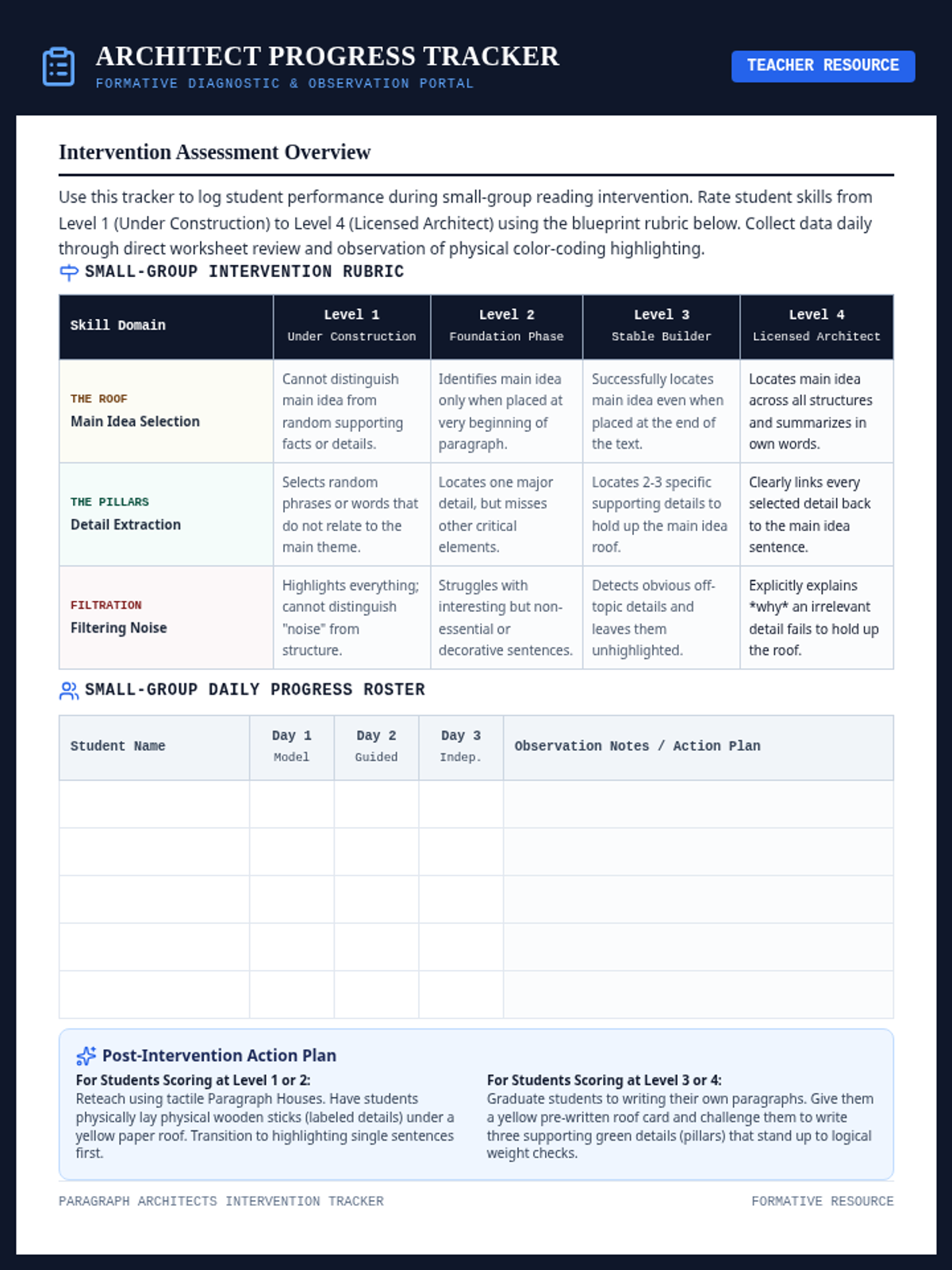
An explicit modeling lesson focusing on introducing the 'Roof' (Main Idea) and 'Pillars' (Supporting Details) concept. Students learn paragraph structure and watch live highlighting demonstrations.
Day 3 focuses on independent execution and performance monitoring. Students independently read, highlight, and analyze paragraph structures to demonstrate mastery, followed by a collaborative review.