A guided reading lesson exploring the solar system, focusing on scientific inquiry, planetary diversity, and the mechanics of Earth's orbit. Includes vocabulary focus on 'diverse' and 'dauntless' and a complete answer key for the student jot sheet.
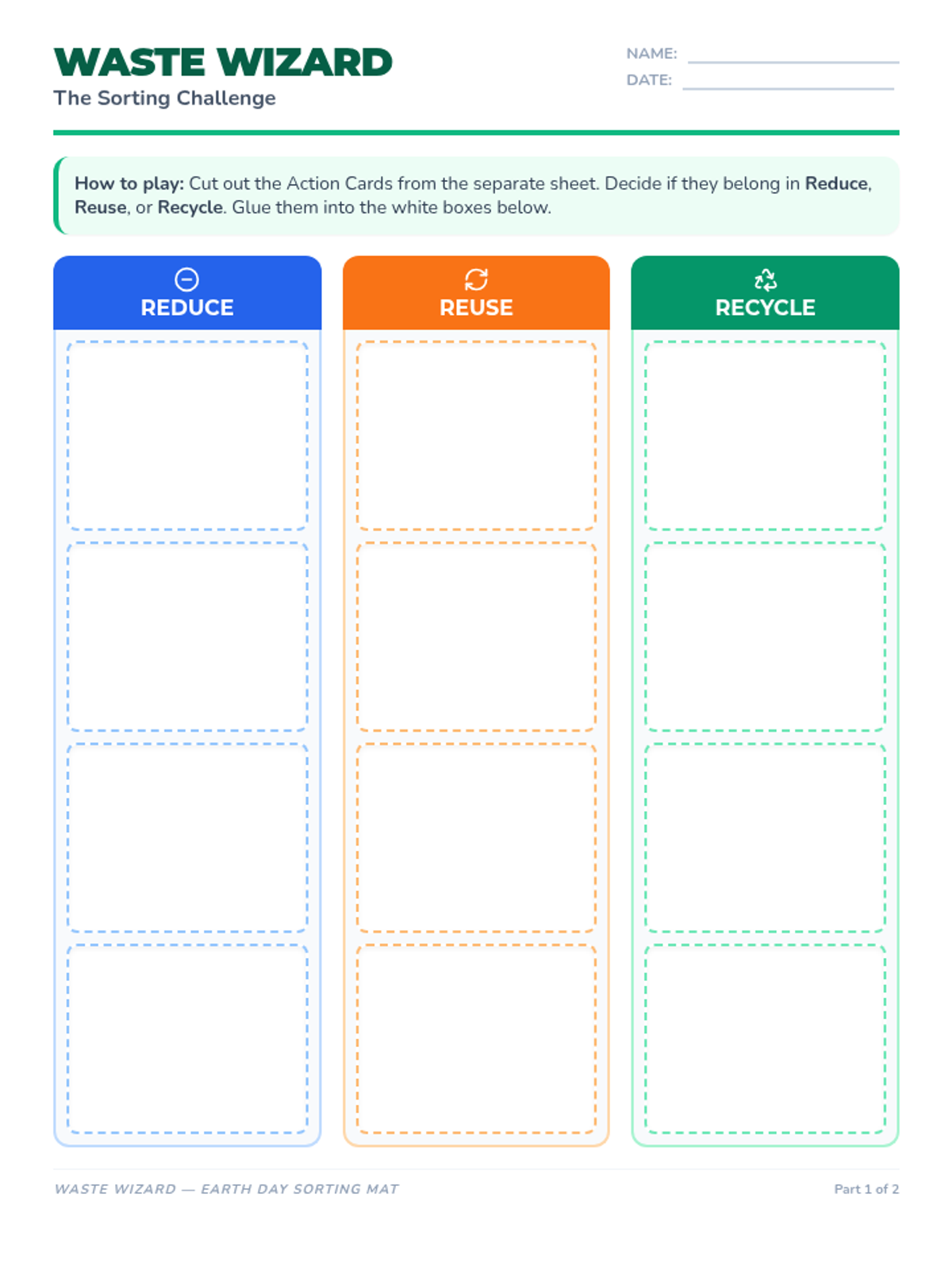
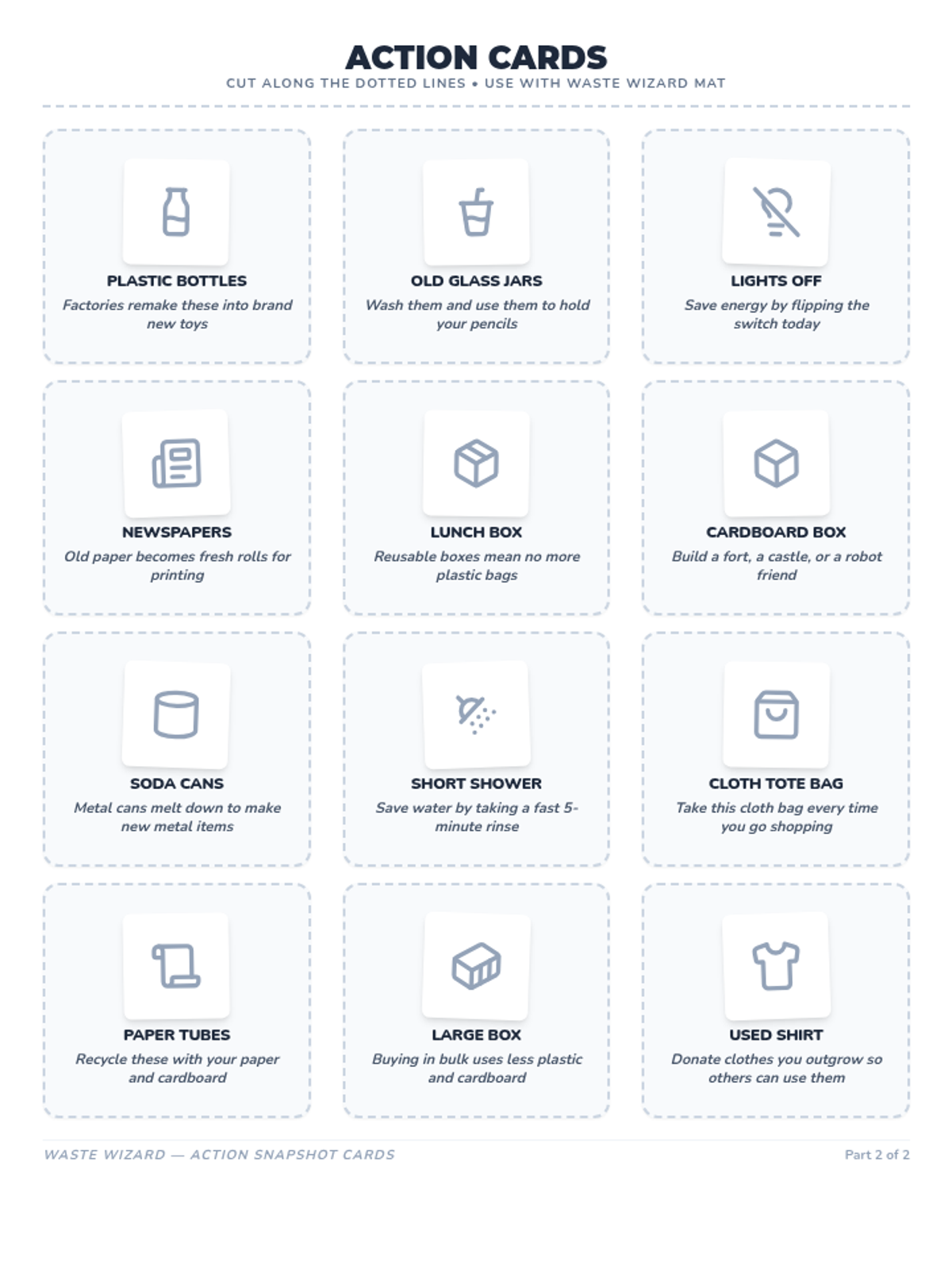
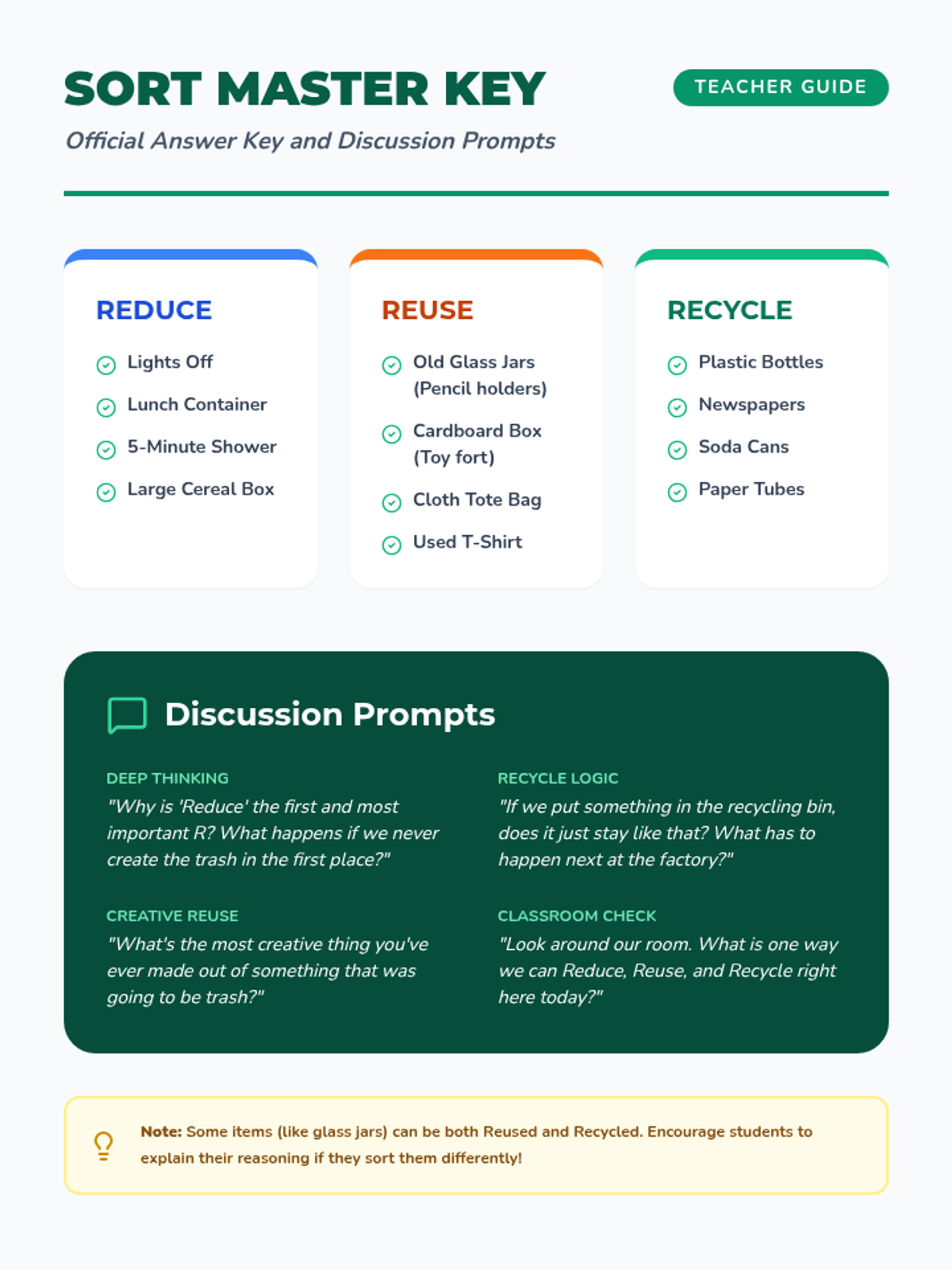
A hands-on lesson teaching students to differentiate between reducing, reusing, and recycling through visual identification and sorting.
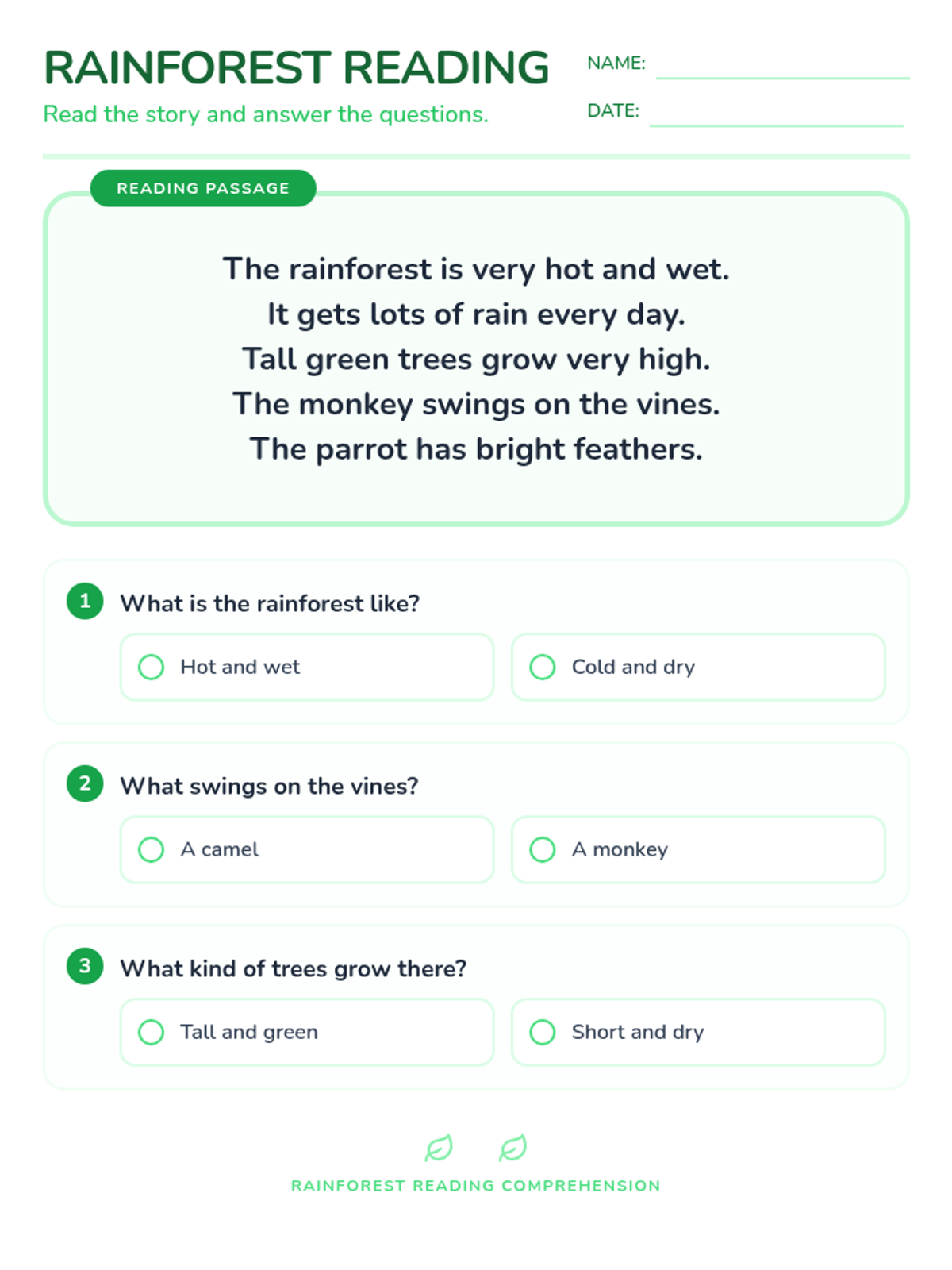
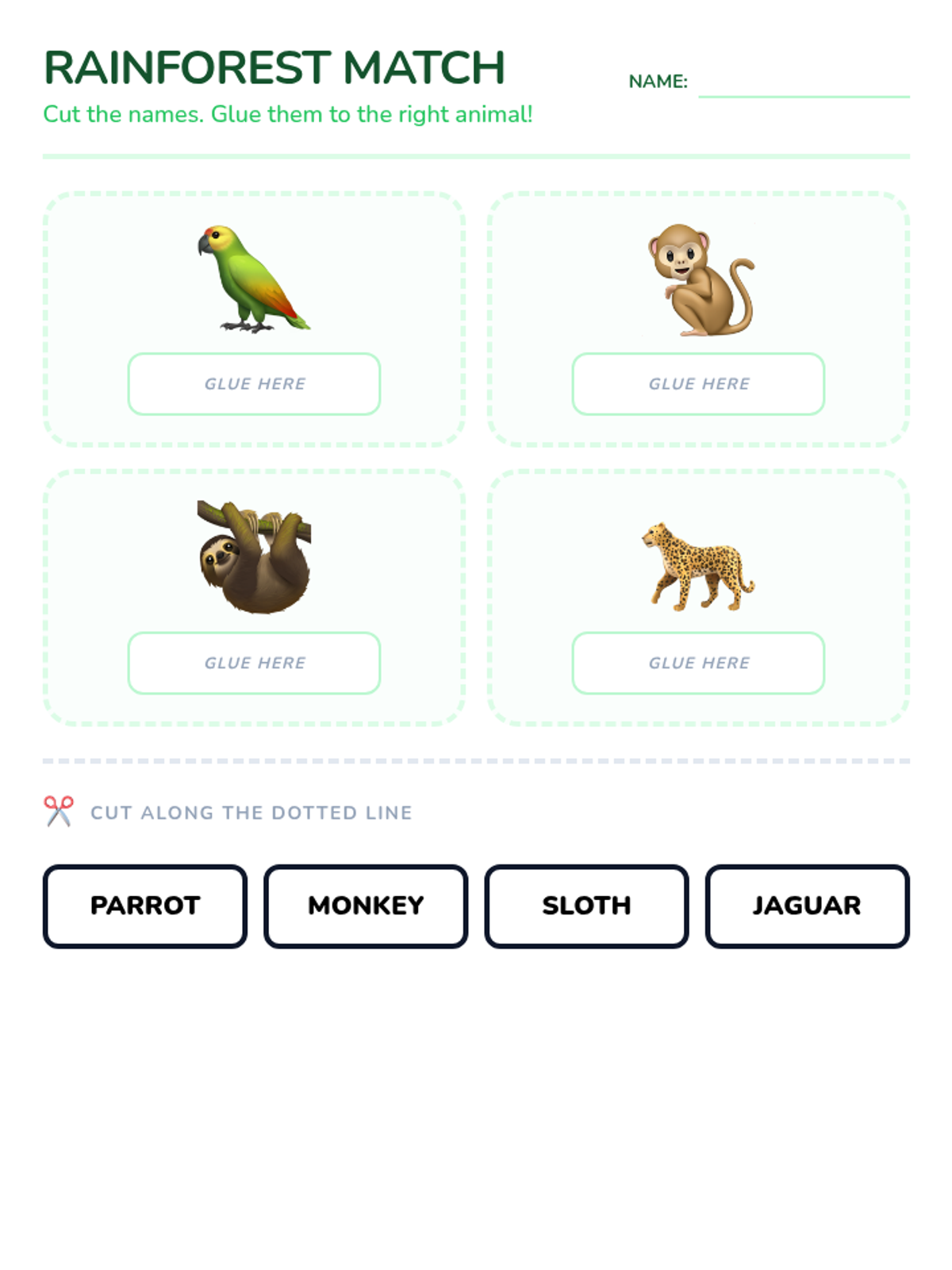
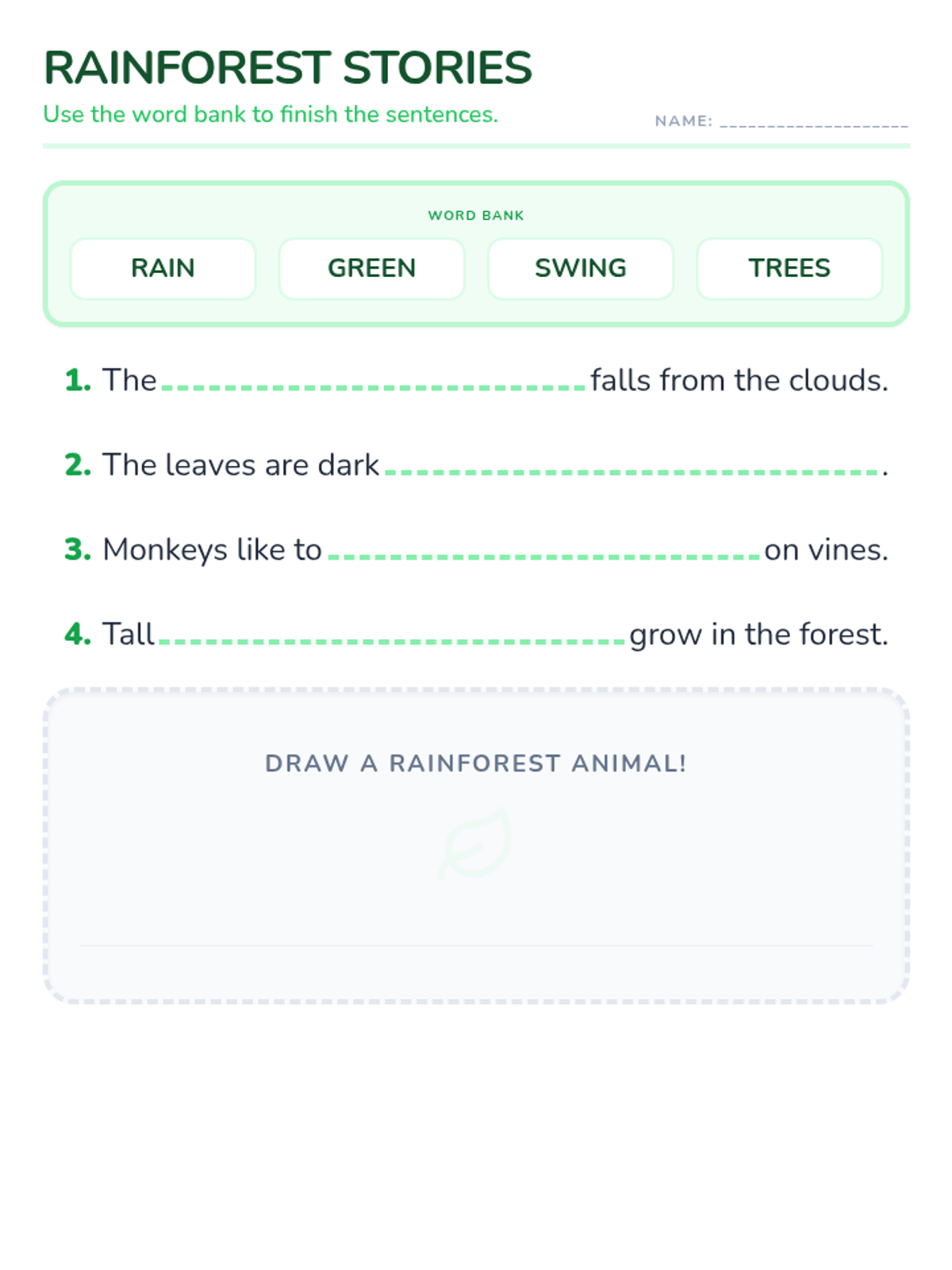
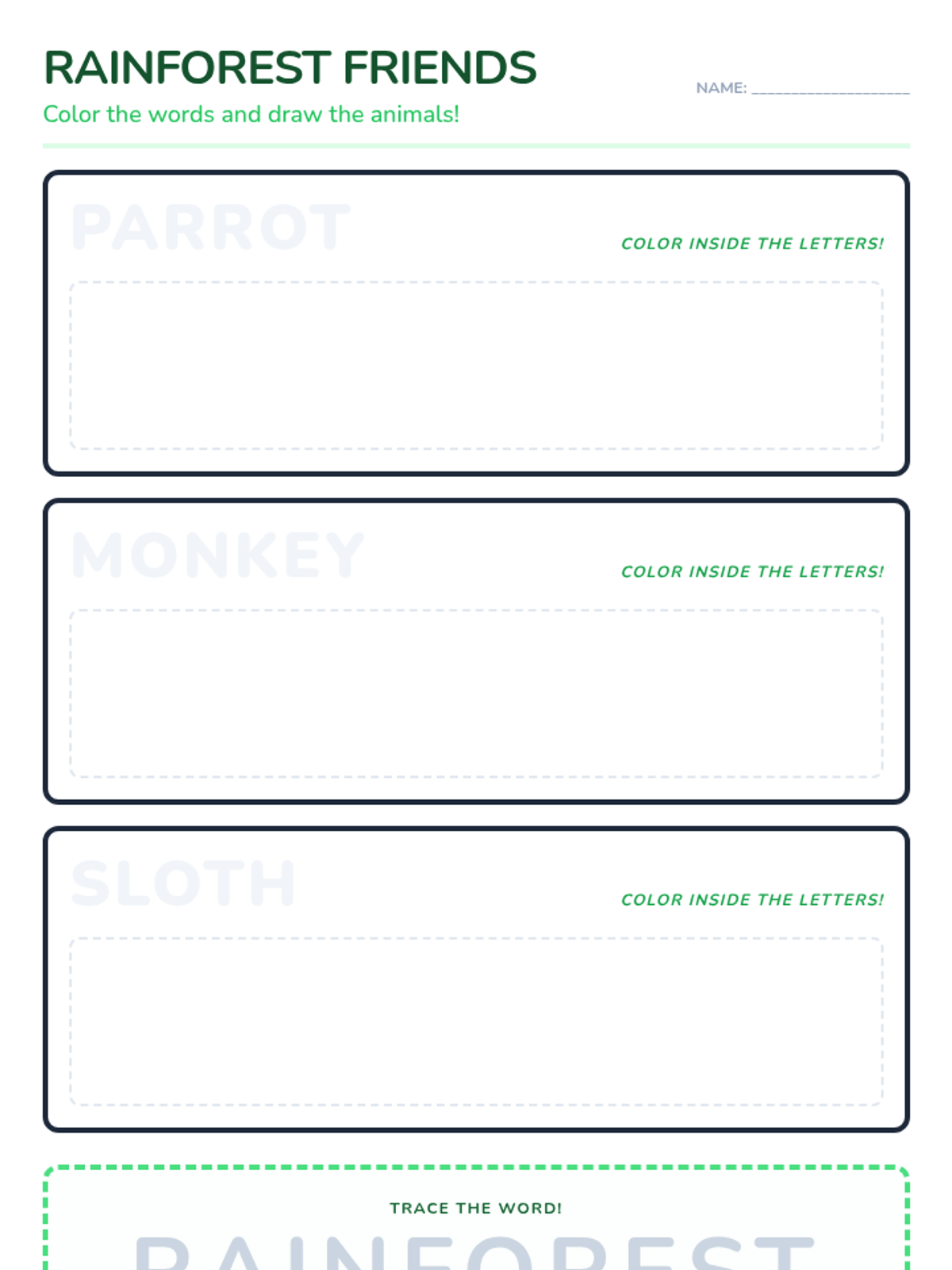
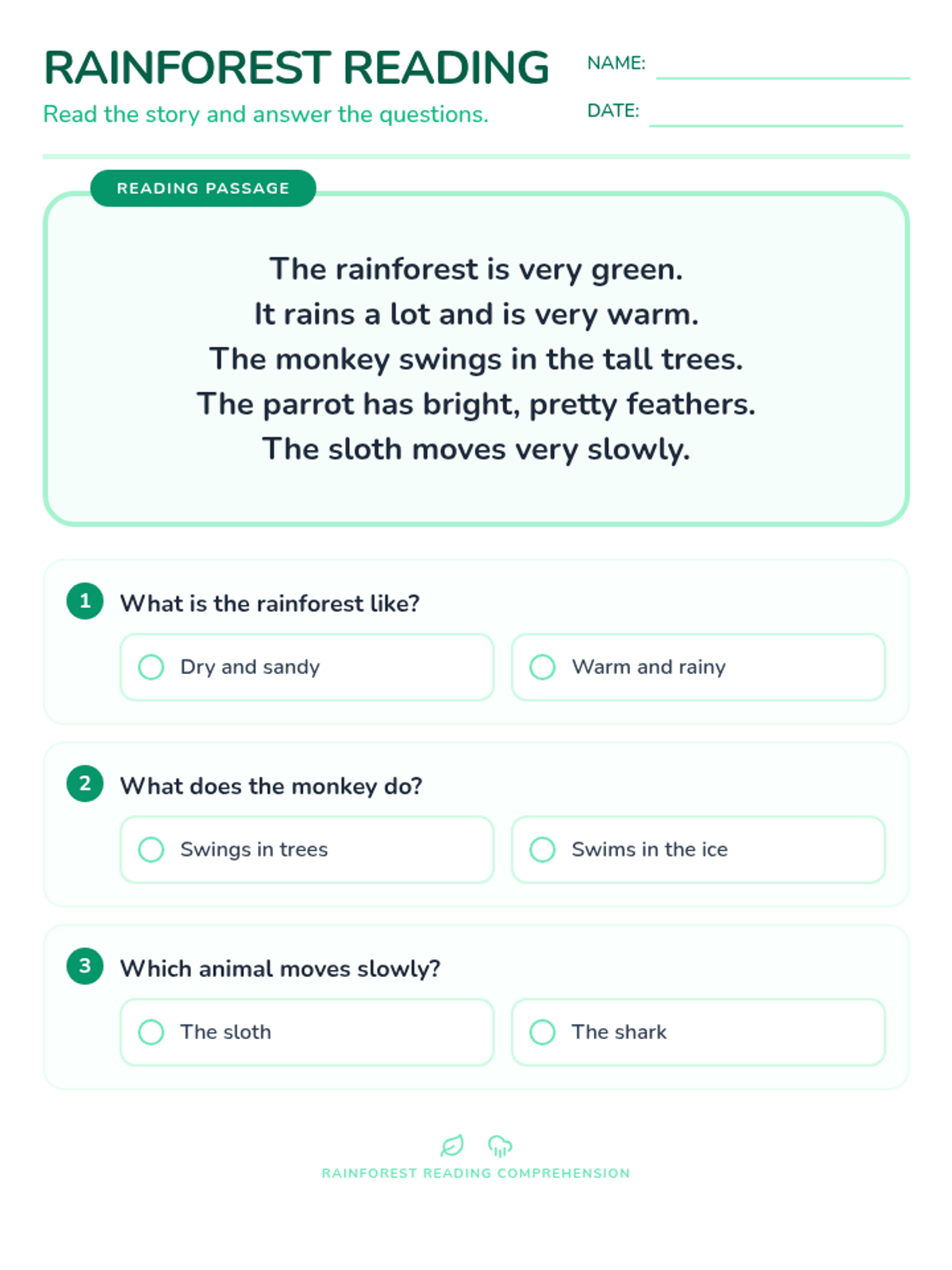
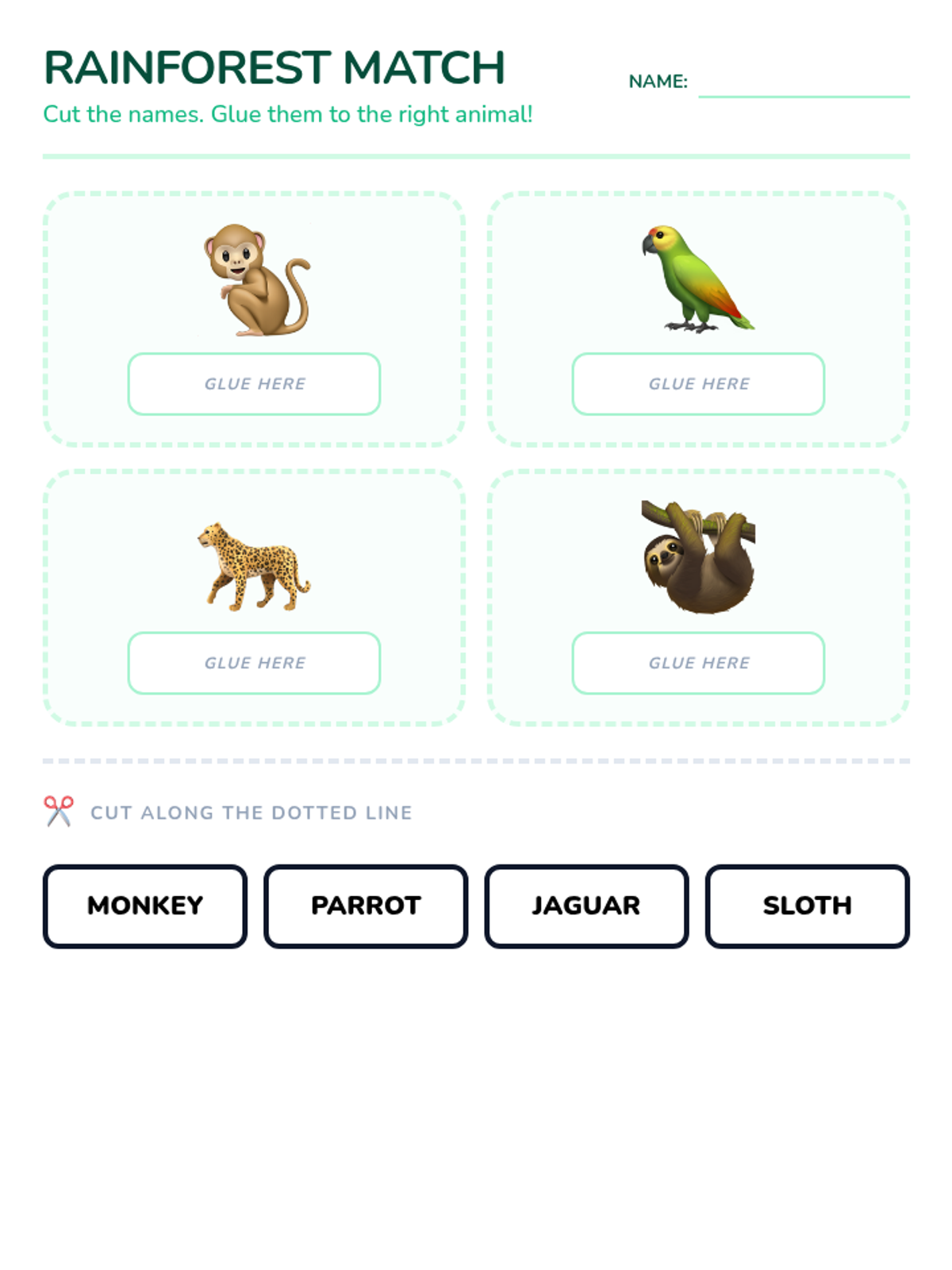
An exploration of the lush and rainy rainforest habitat, focusing on the layers of the forest and colorful animals like parrots and monkeys.
An exploration of the lush and rainy rainforest habitat, focusing on the layers of the forest and colorful animals like monkeys and parrots.
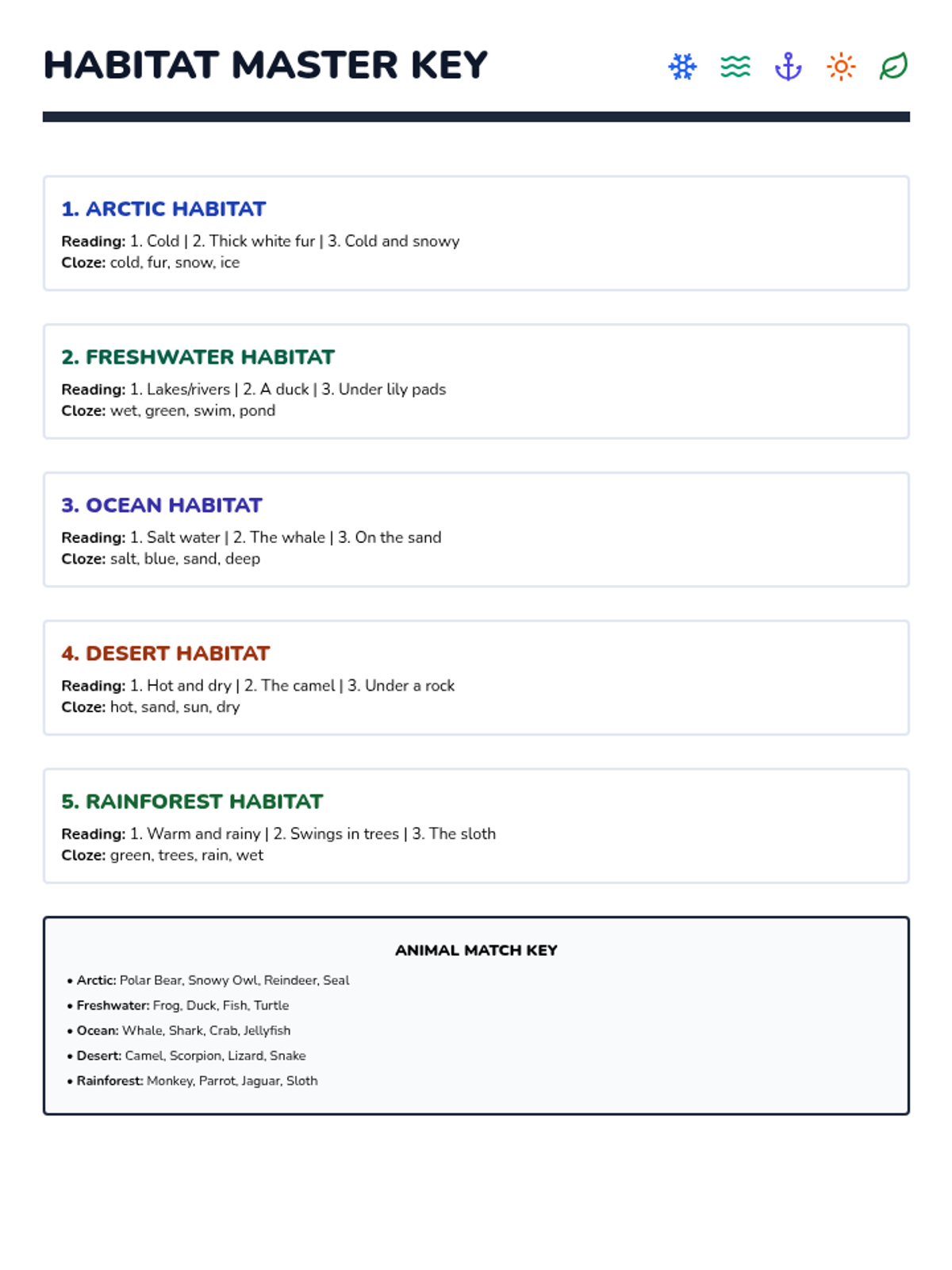
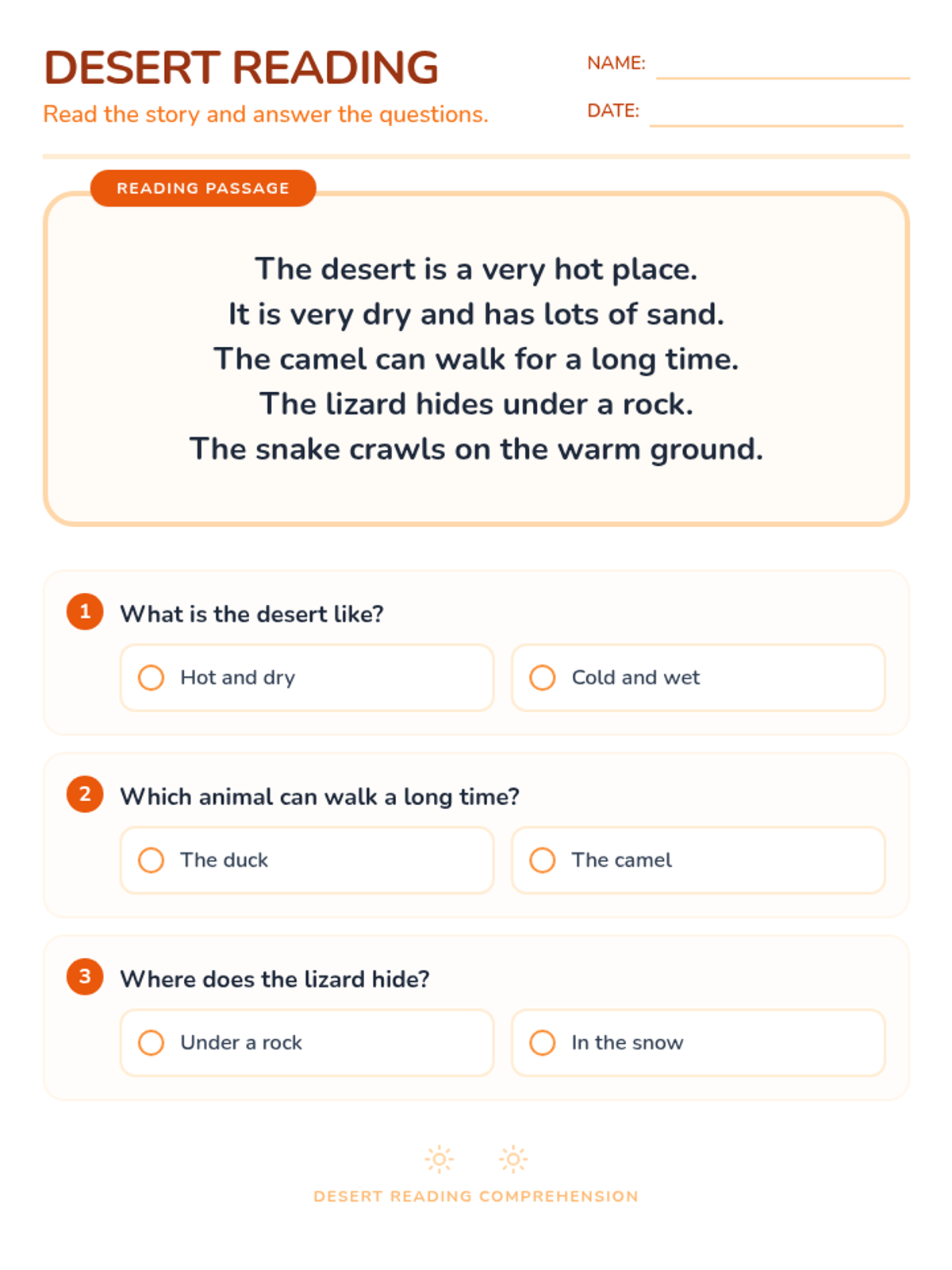
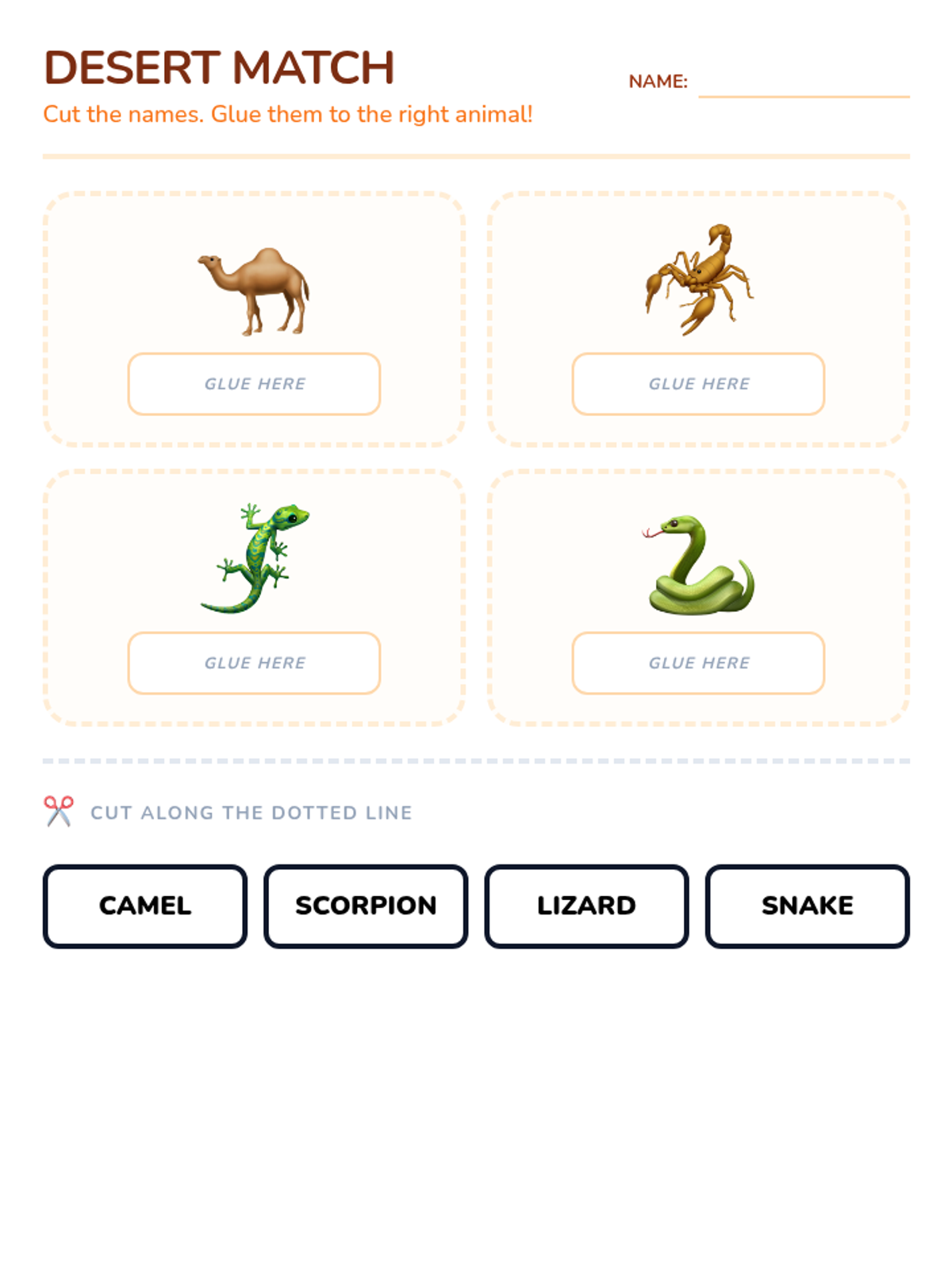
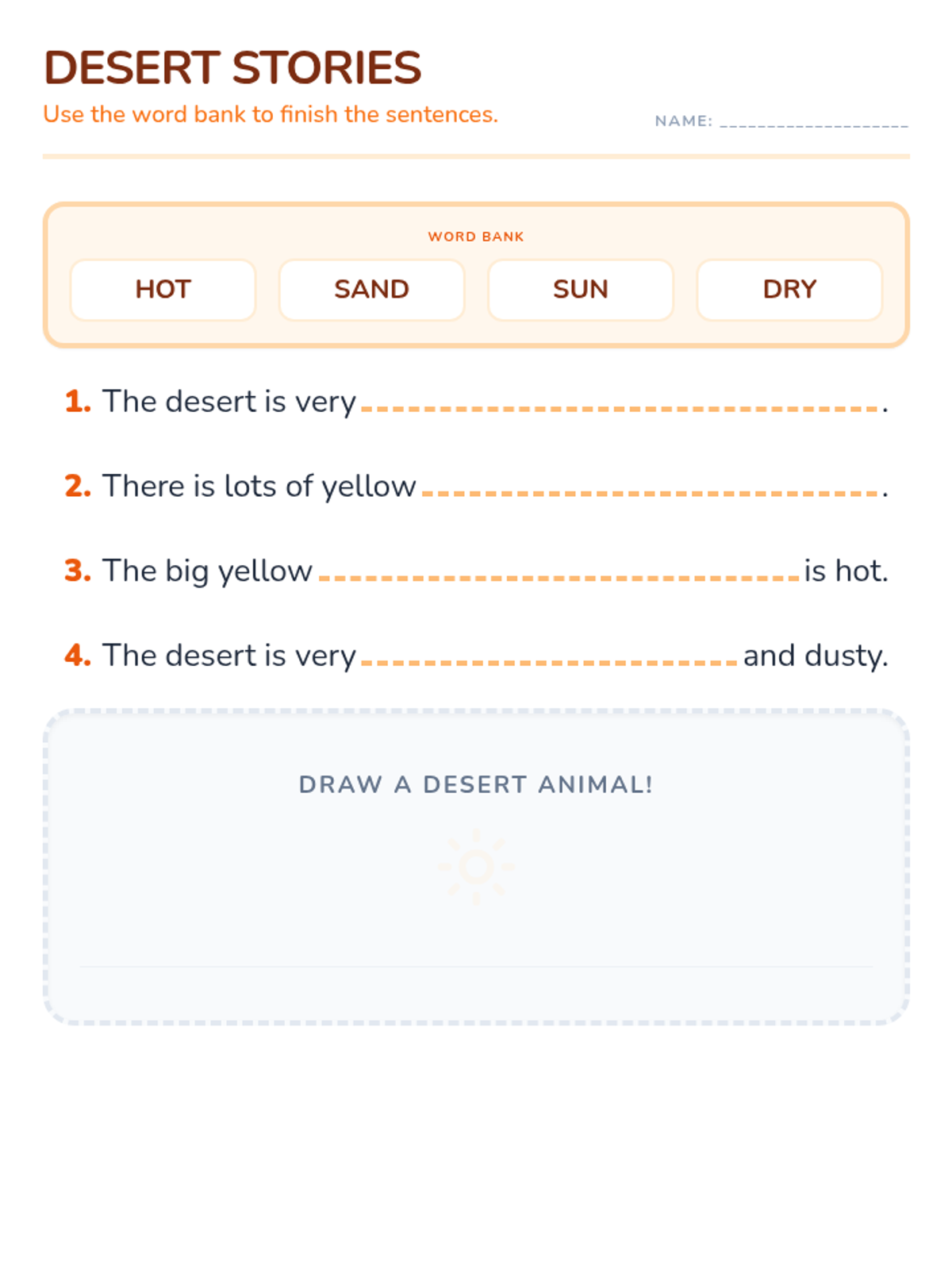
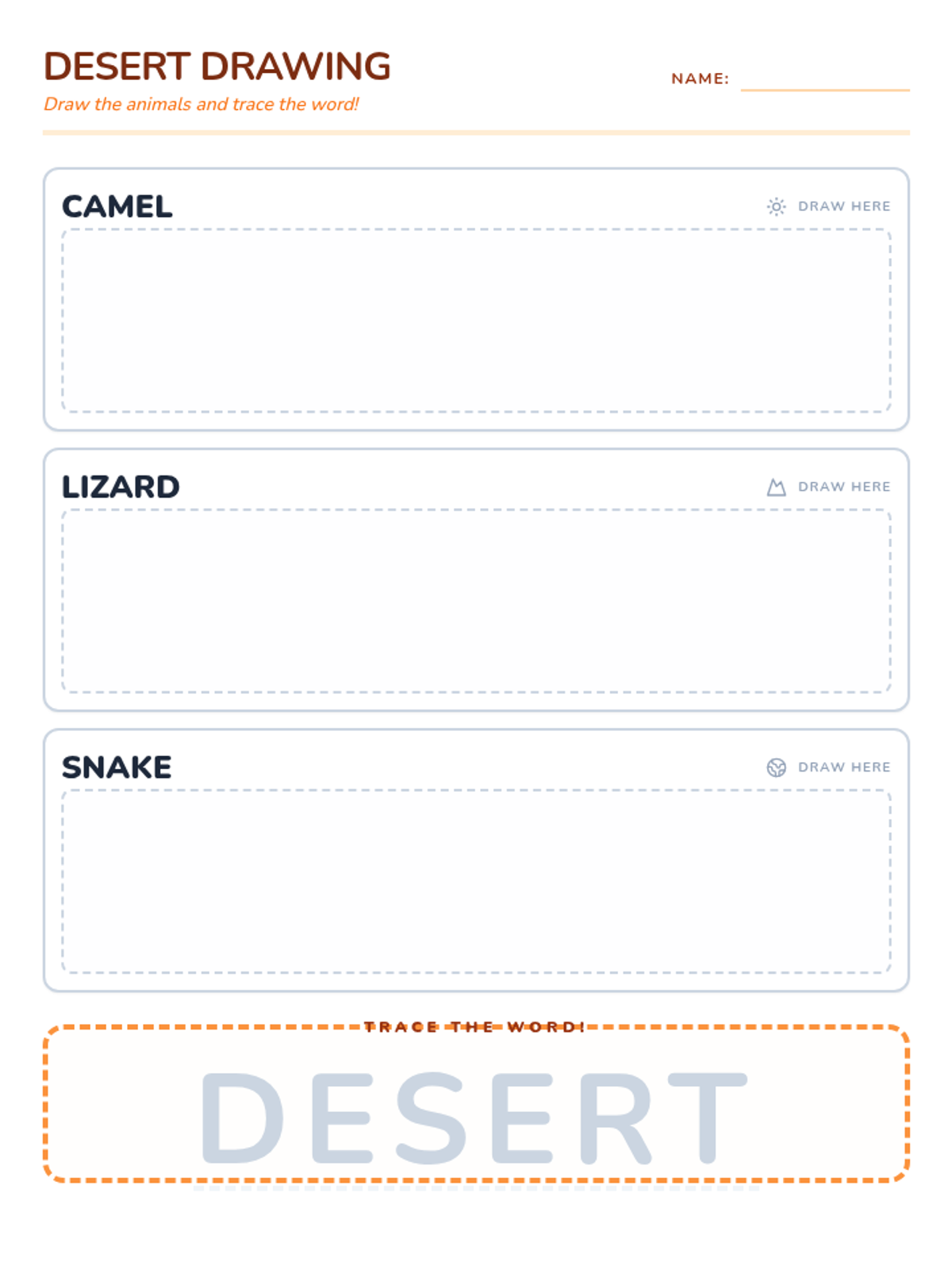
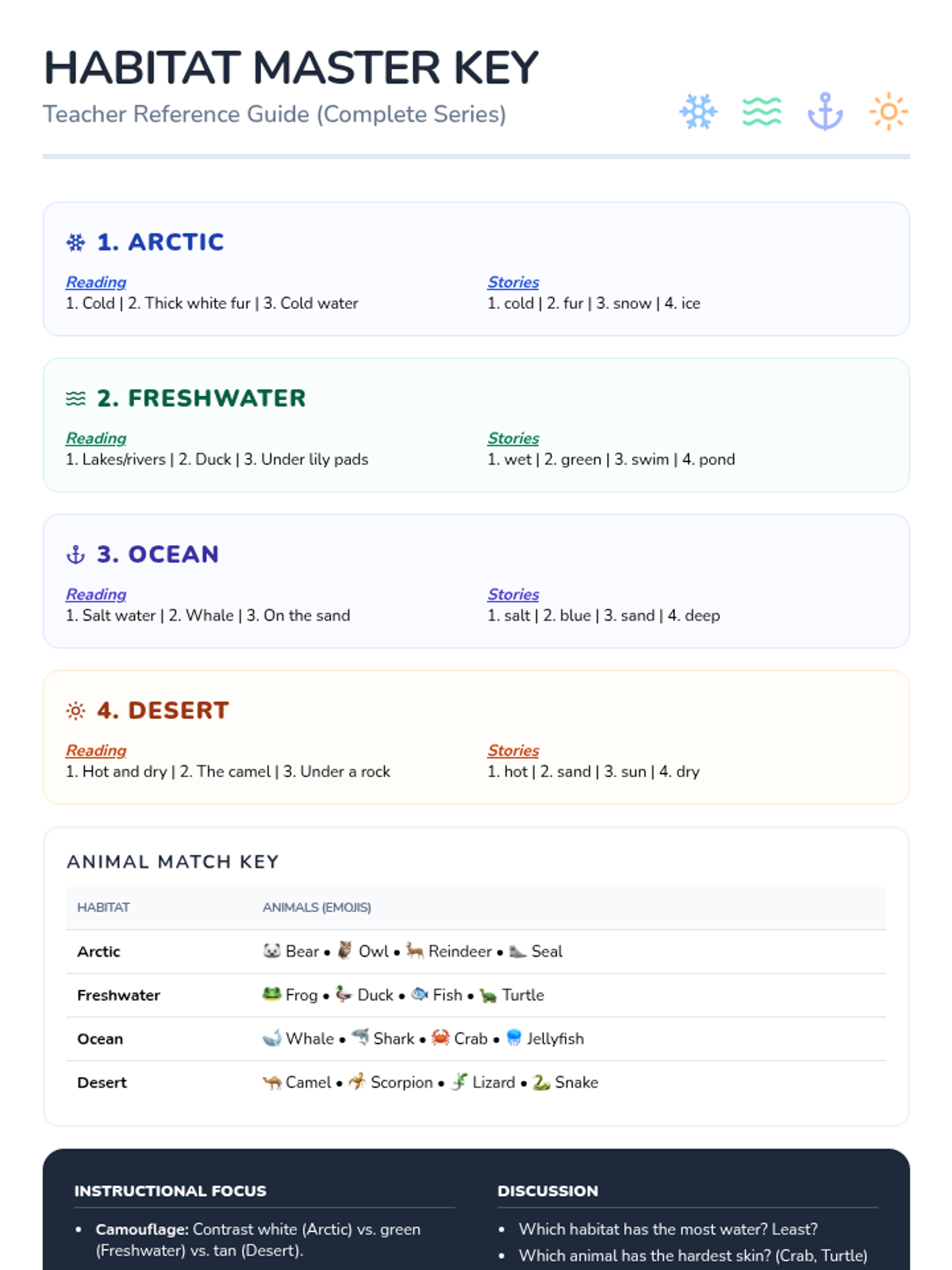
An exploration of the hot and dry desert habitat, focusing on how animals like camels and lizards survive with very little water.
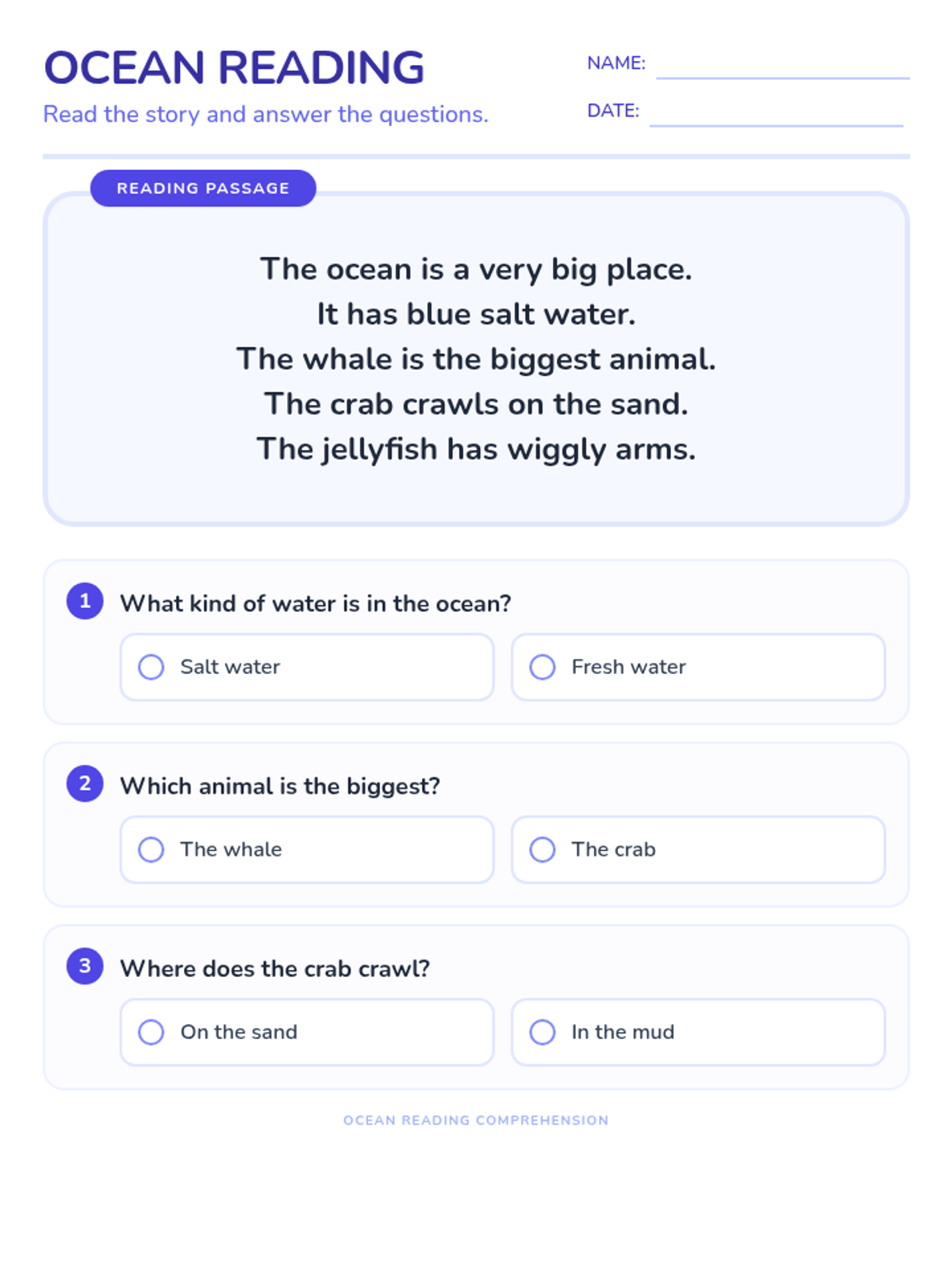
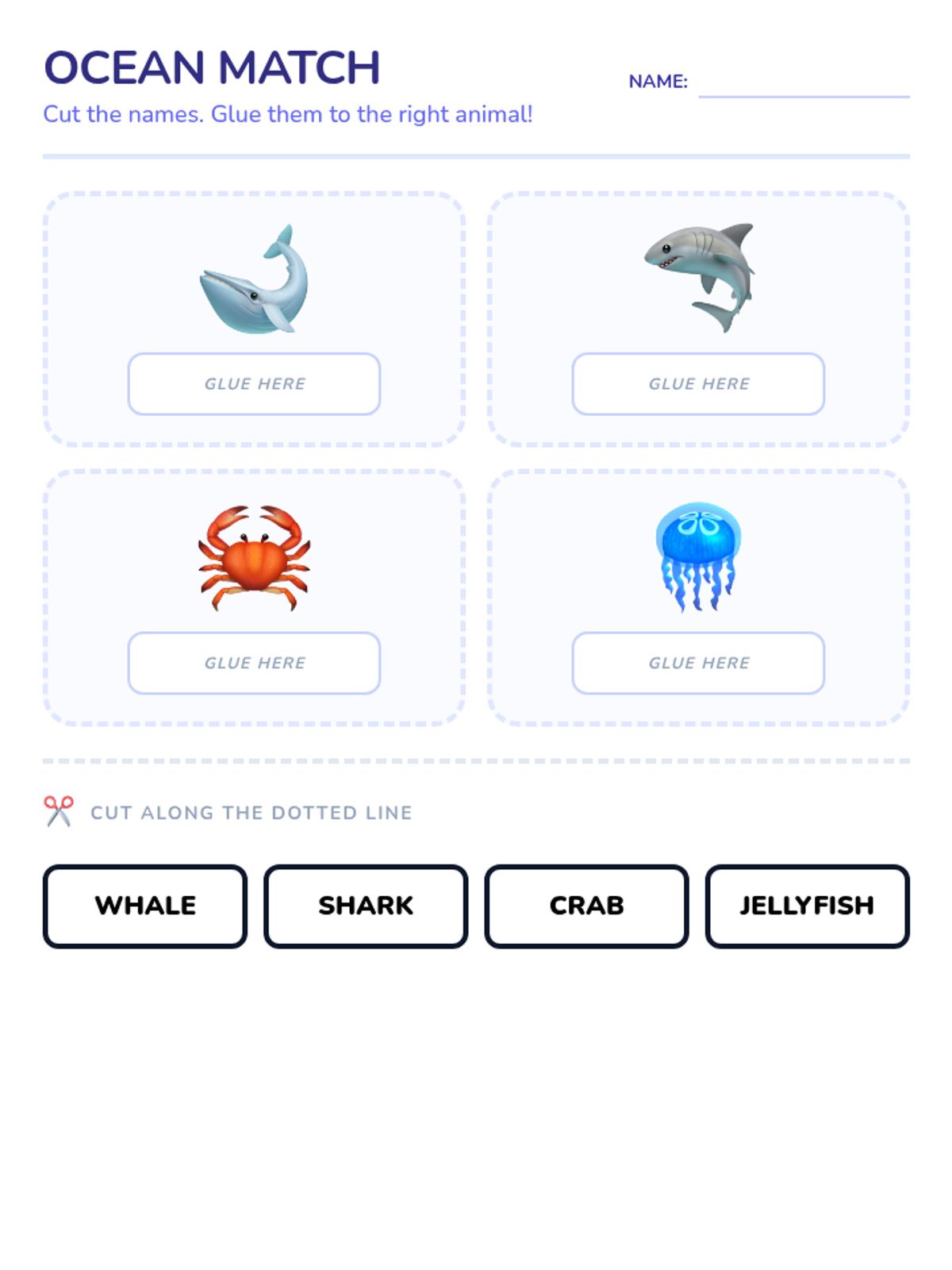
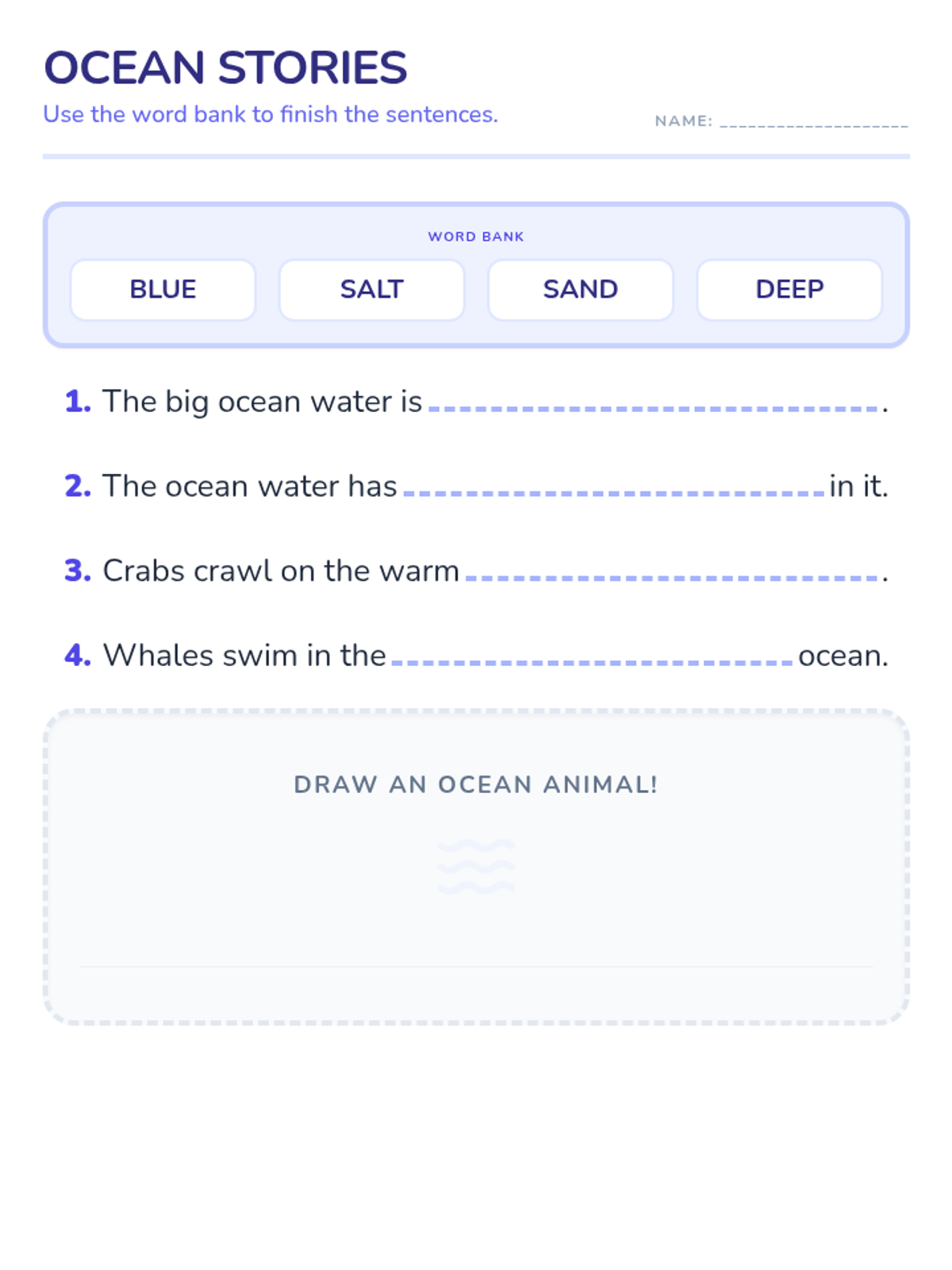
A captivating lesson for young explorers to discover the vast ocean habitat, focusing on salt water and amazing creatures like whales, sharks, and crabs.
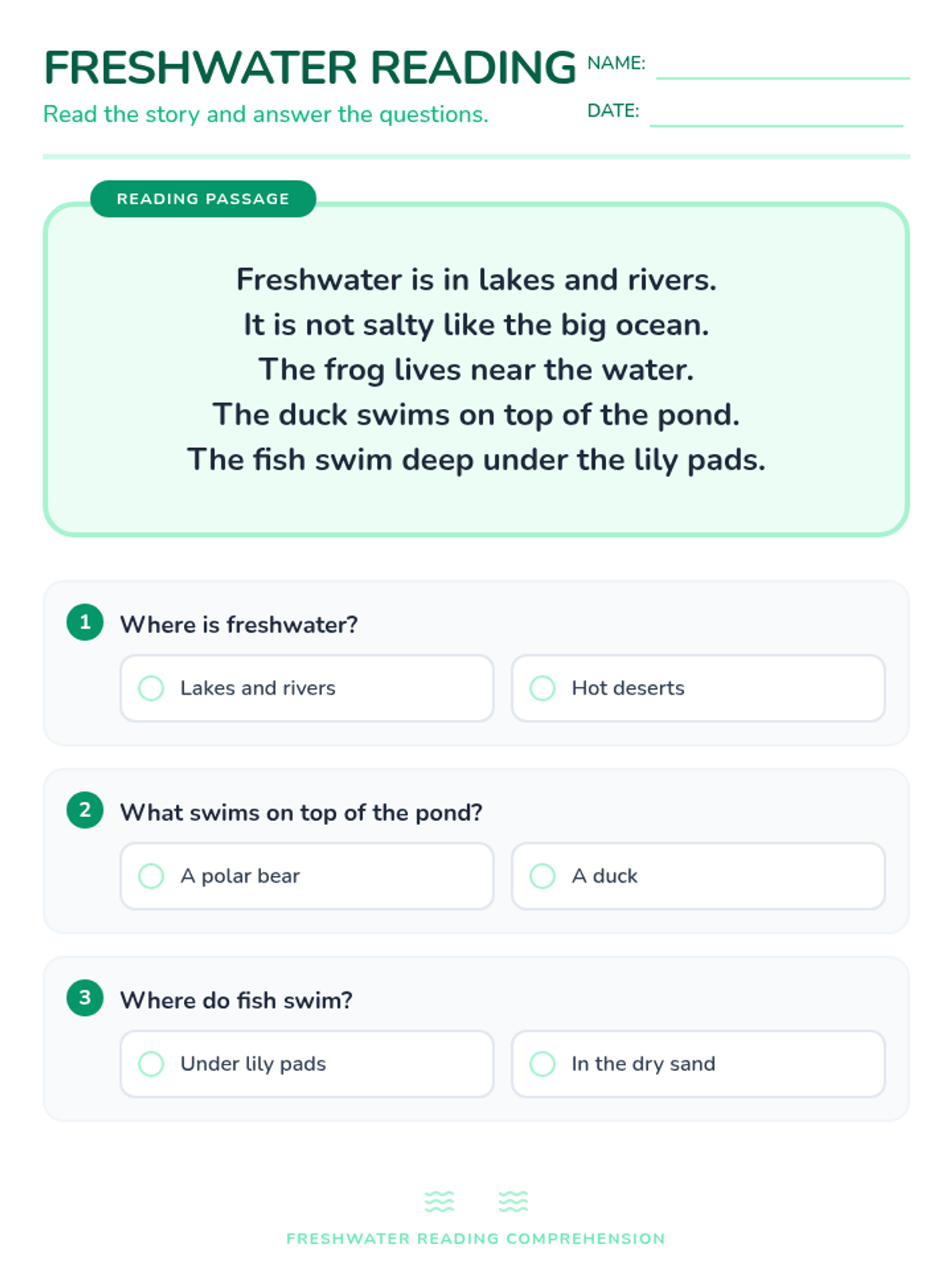
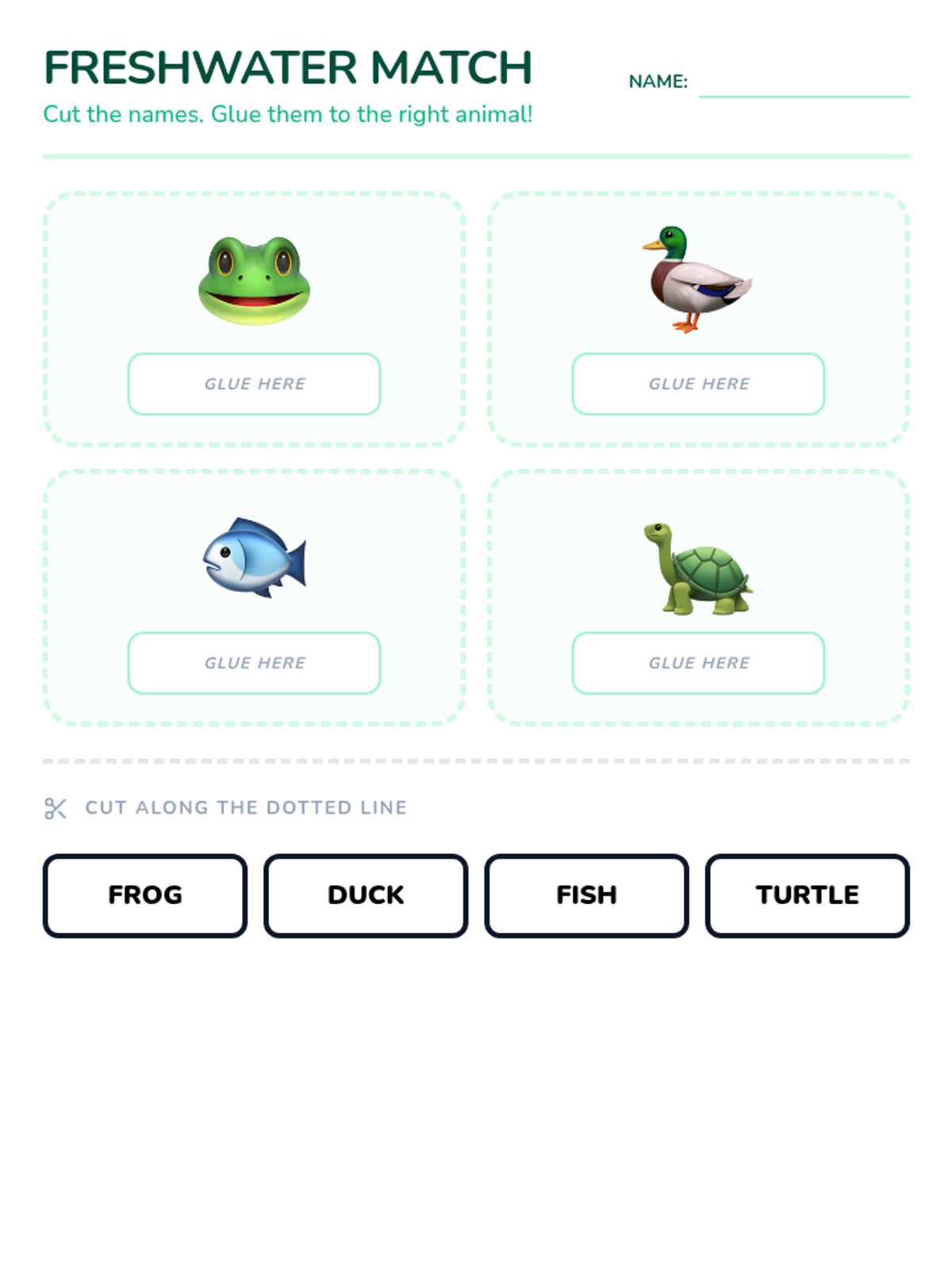
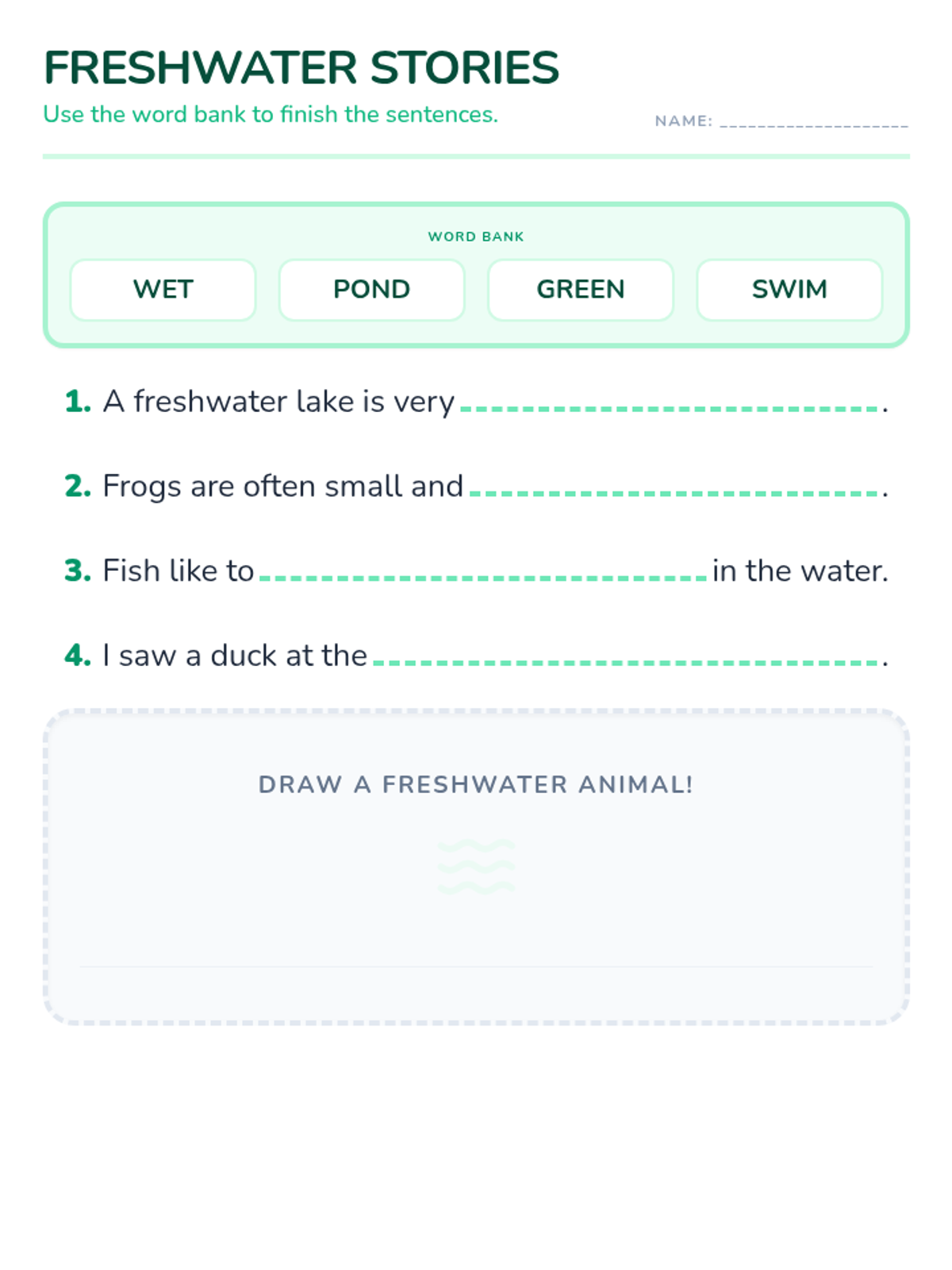
A foundational lesson for early elementary students exploring freshwater habitats like ponds and rivers, focusing on animals such as frogs, ducks, and fish.
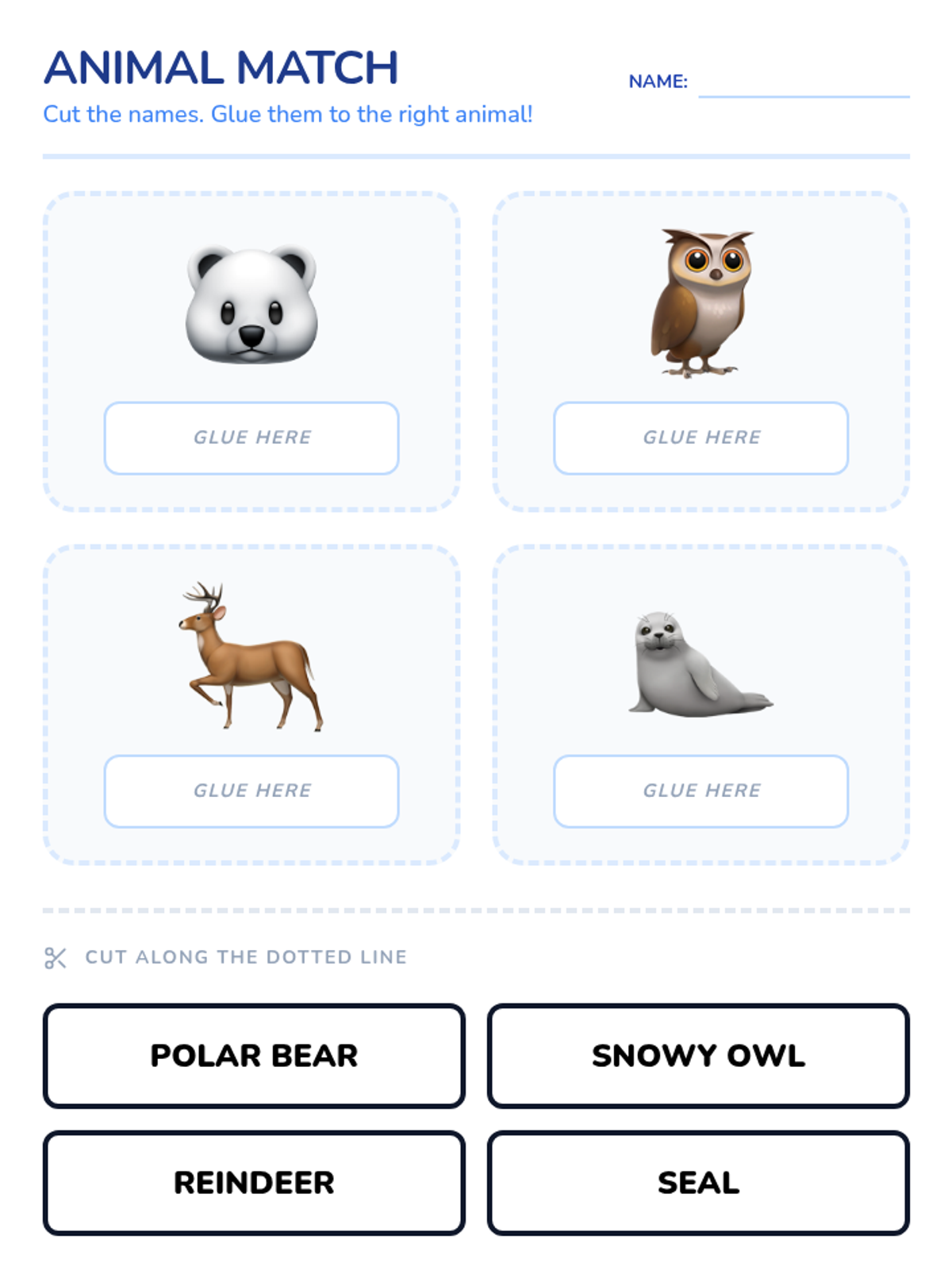
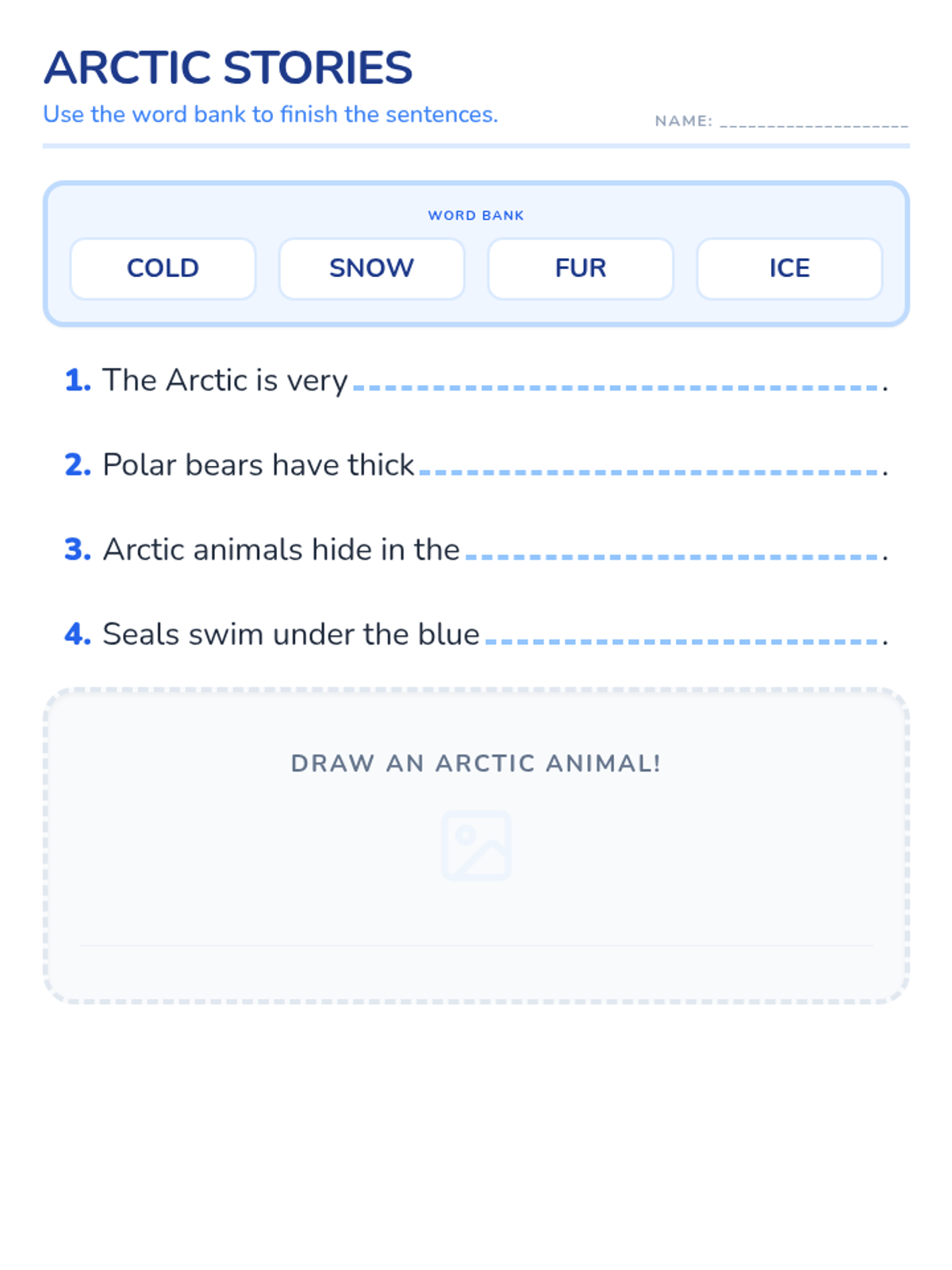
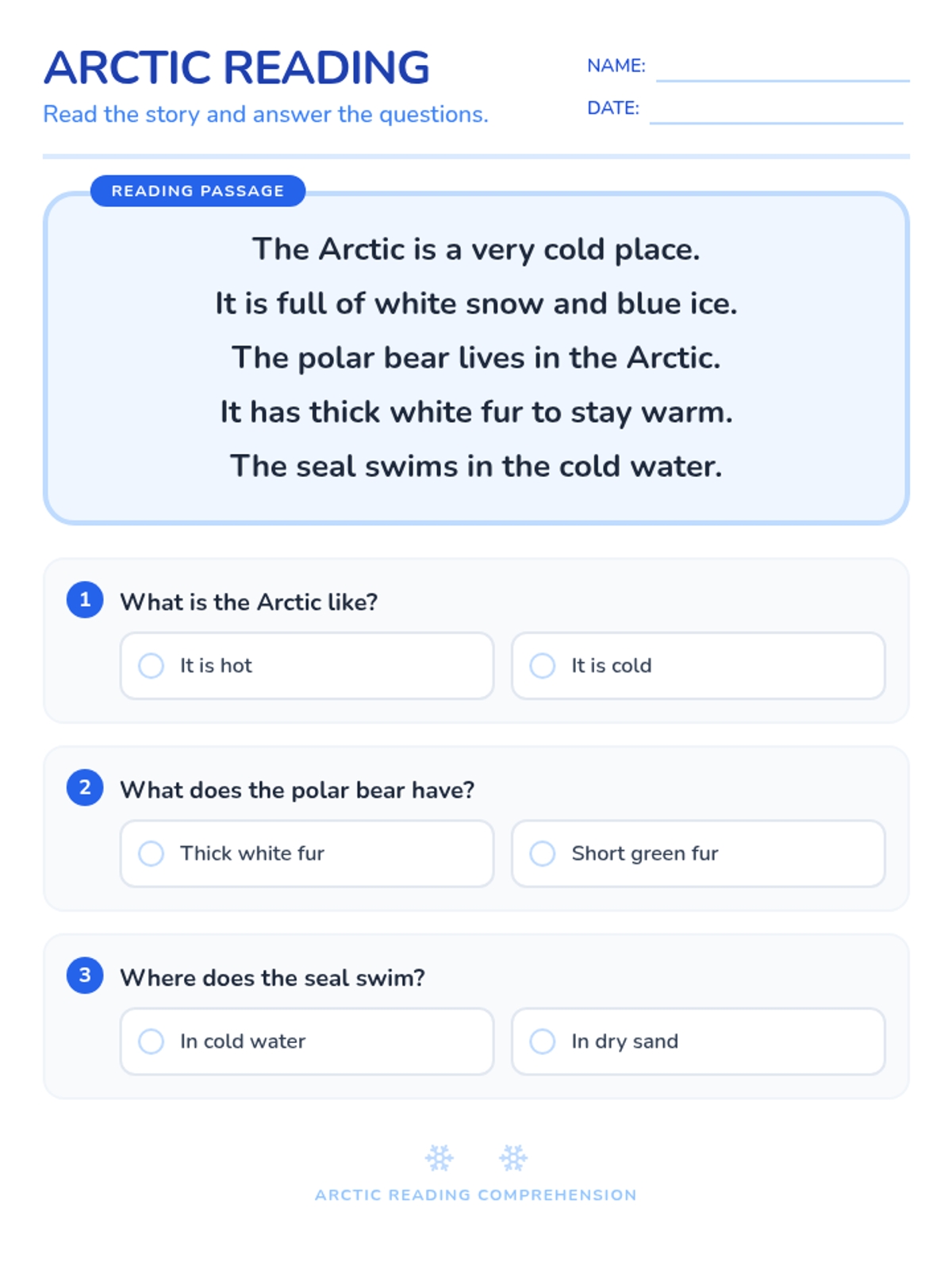
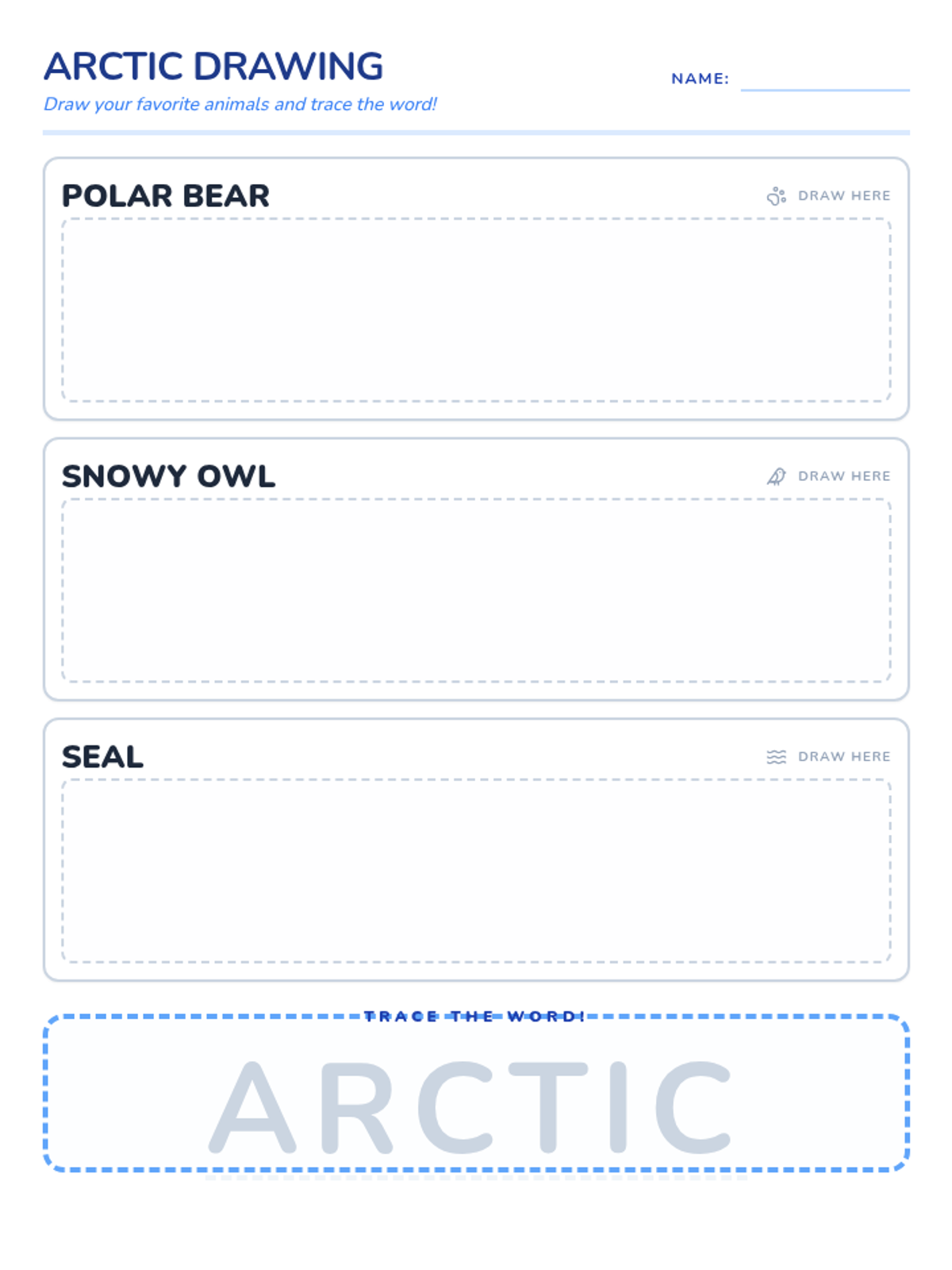
An introductory lesson for young learners about the Arctic habitat and the unique animals that call it home, focusing on adaptations like white fur and blubber.
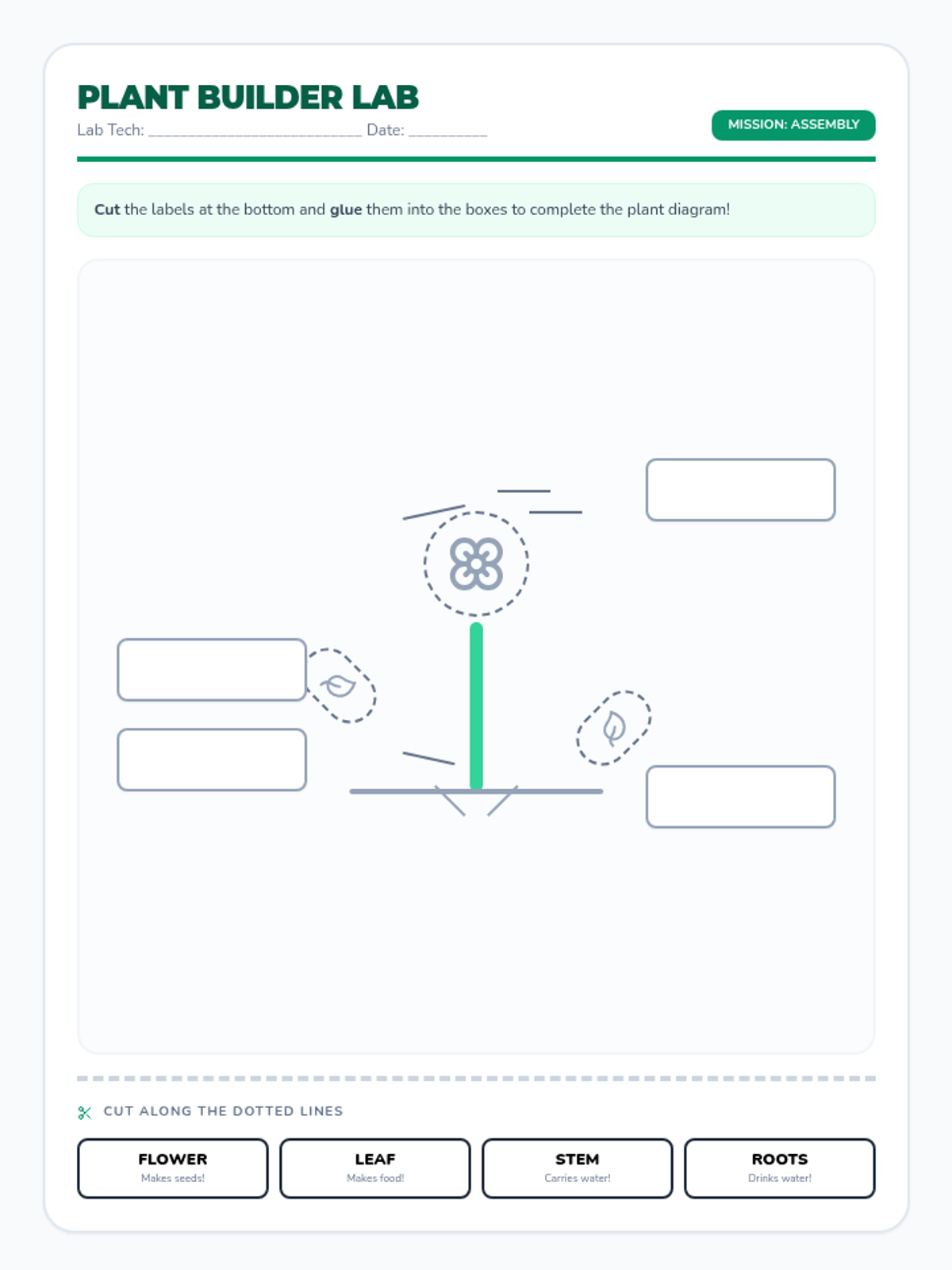
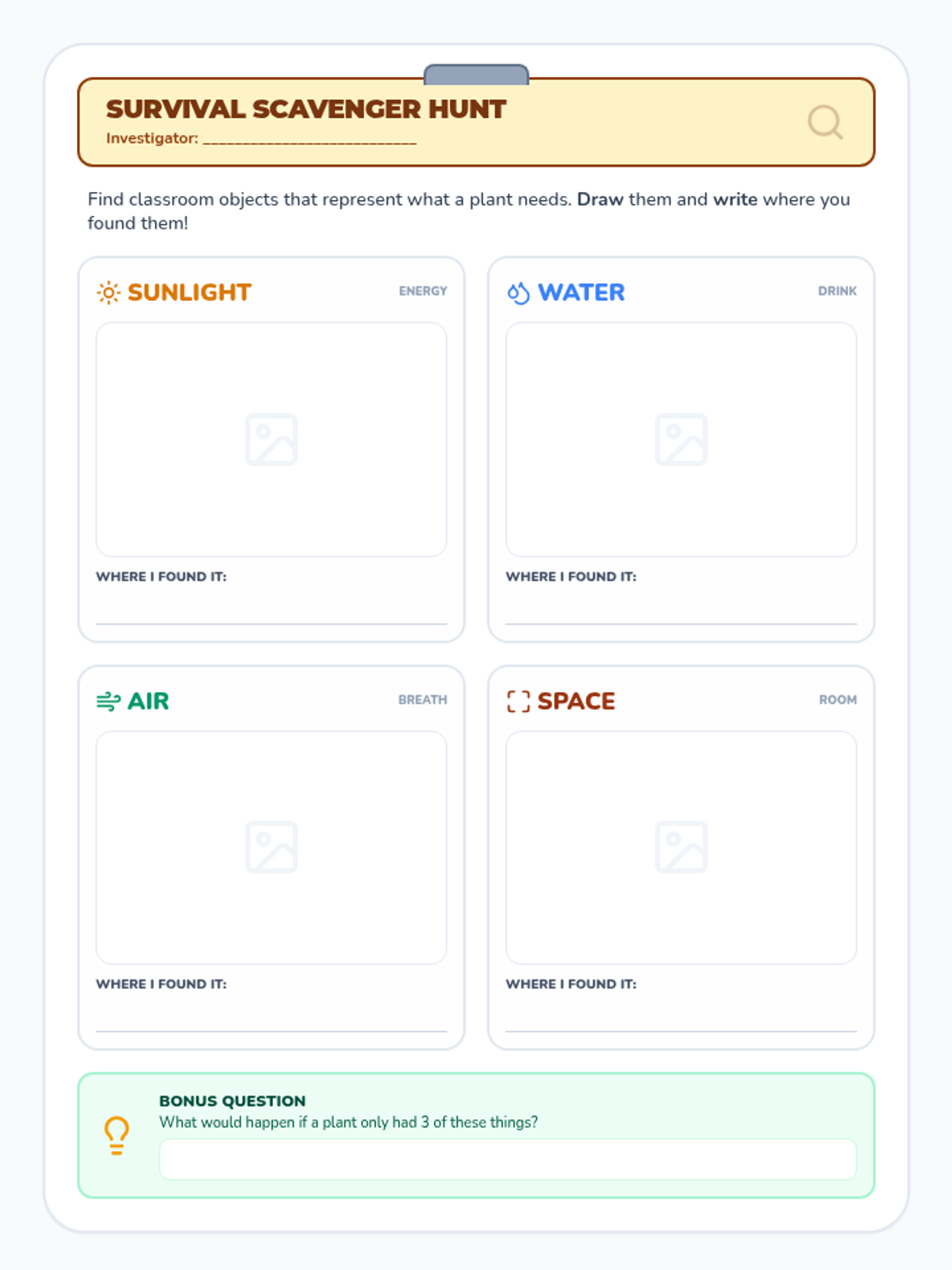
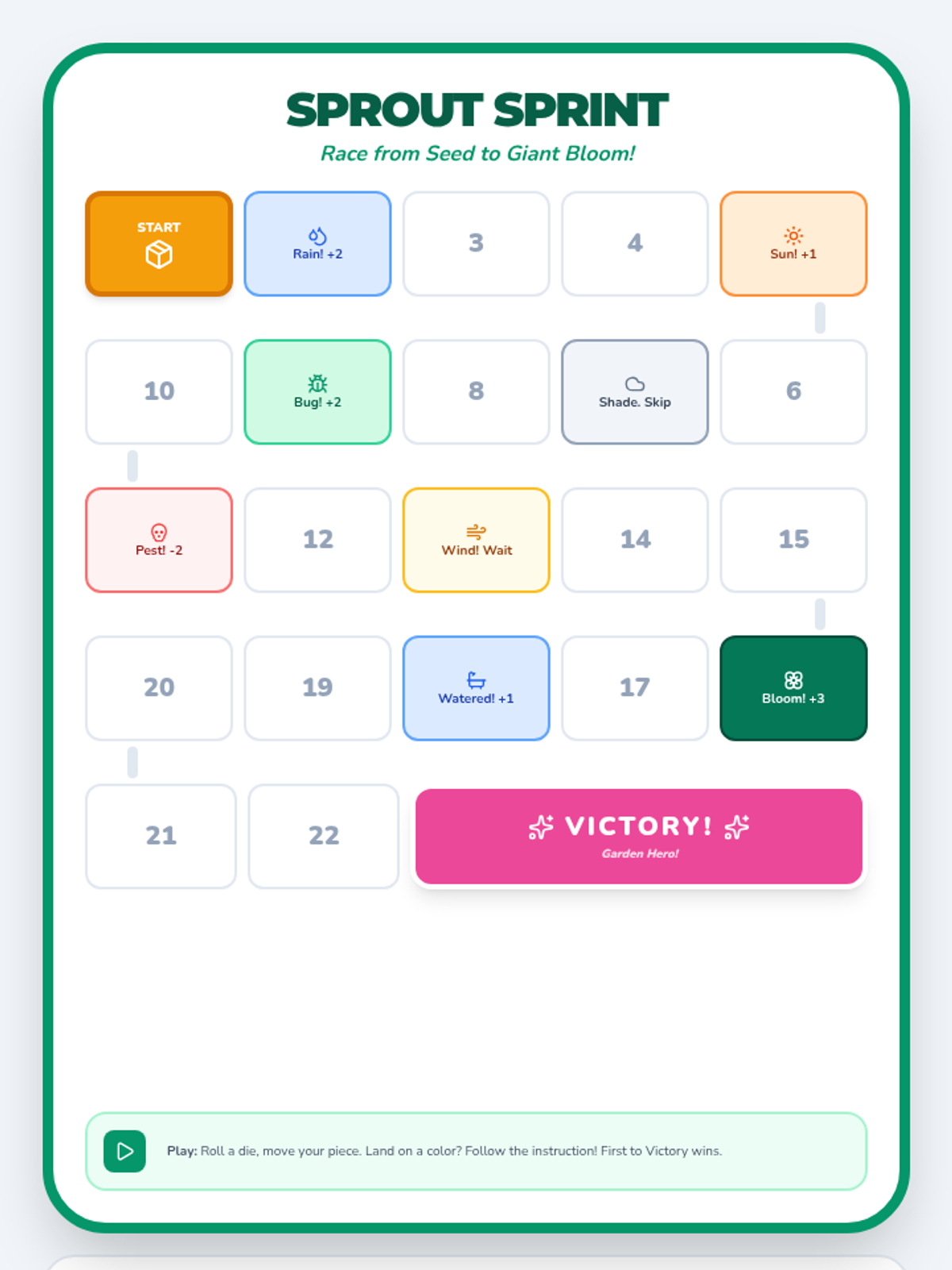
Students explore what plants need to survive and identify plant parts and their functions through hands-on activities and a classroom scavenger hunt.
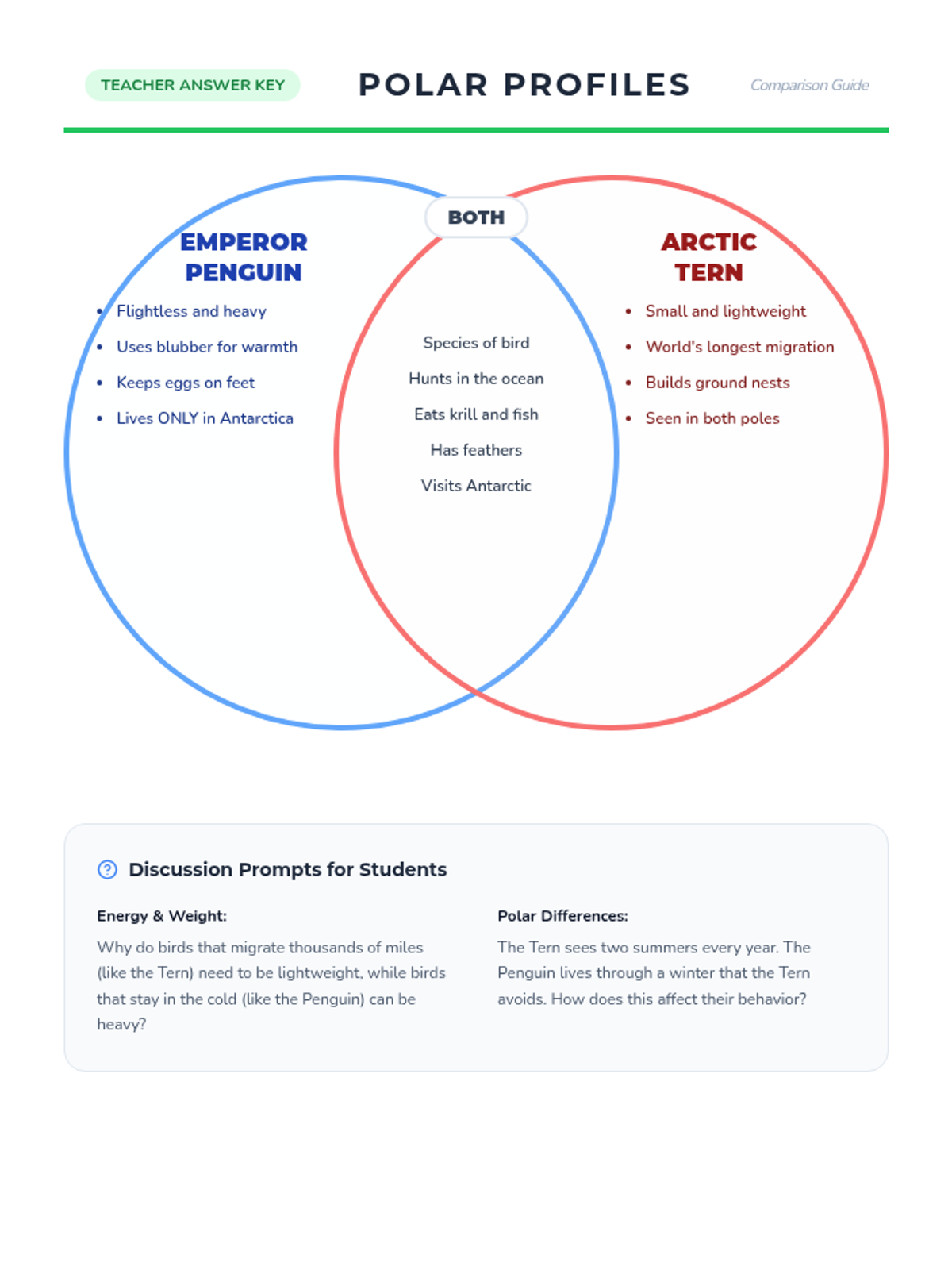
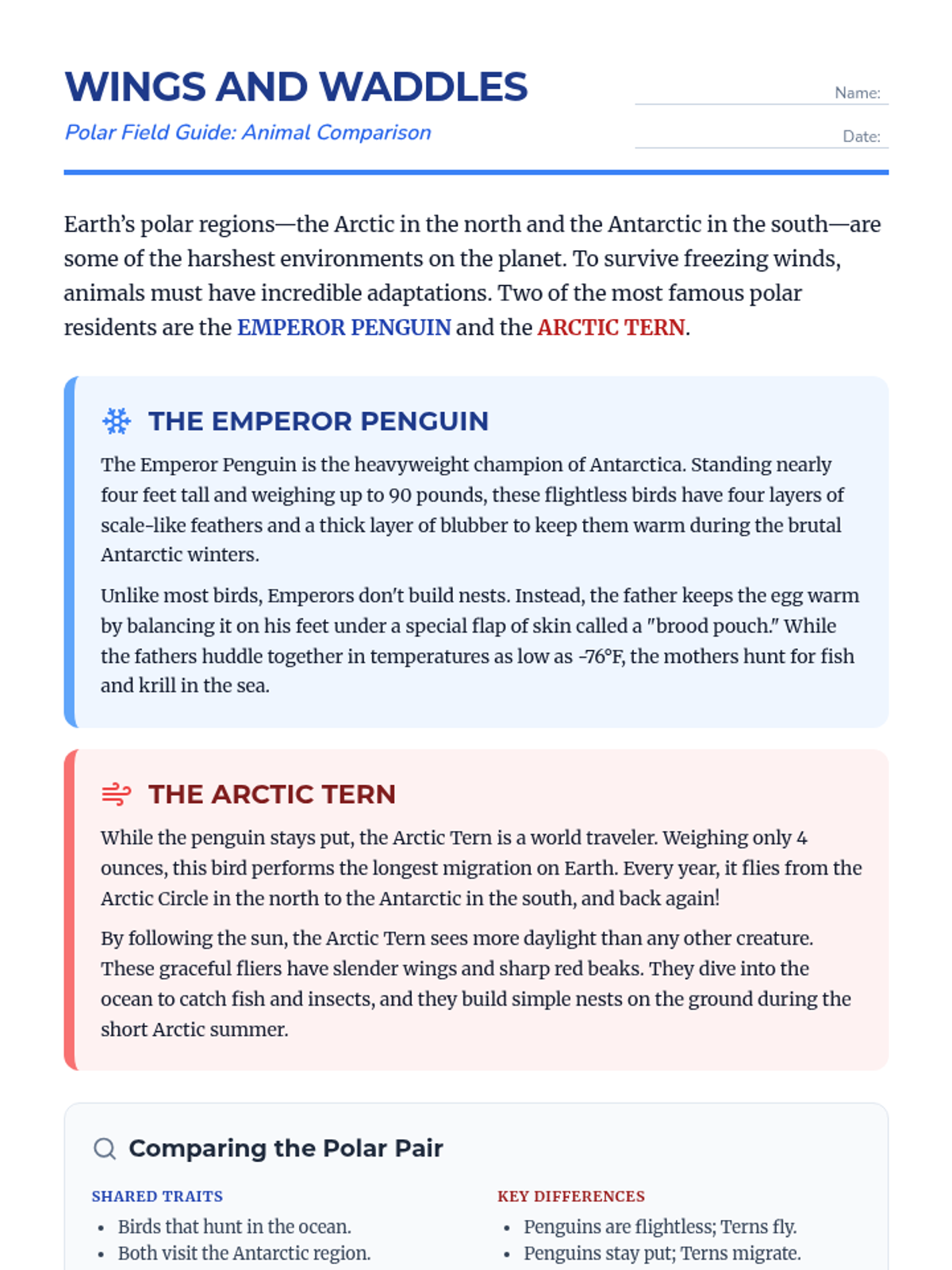
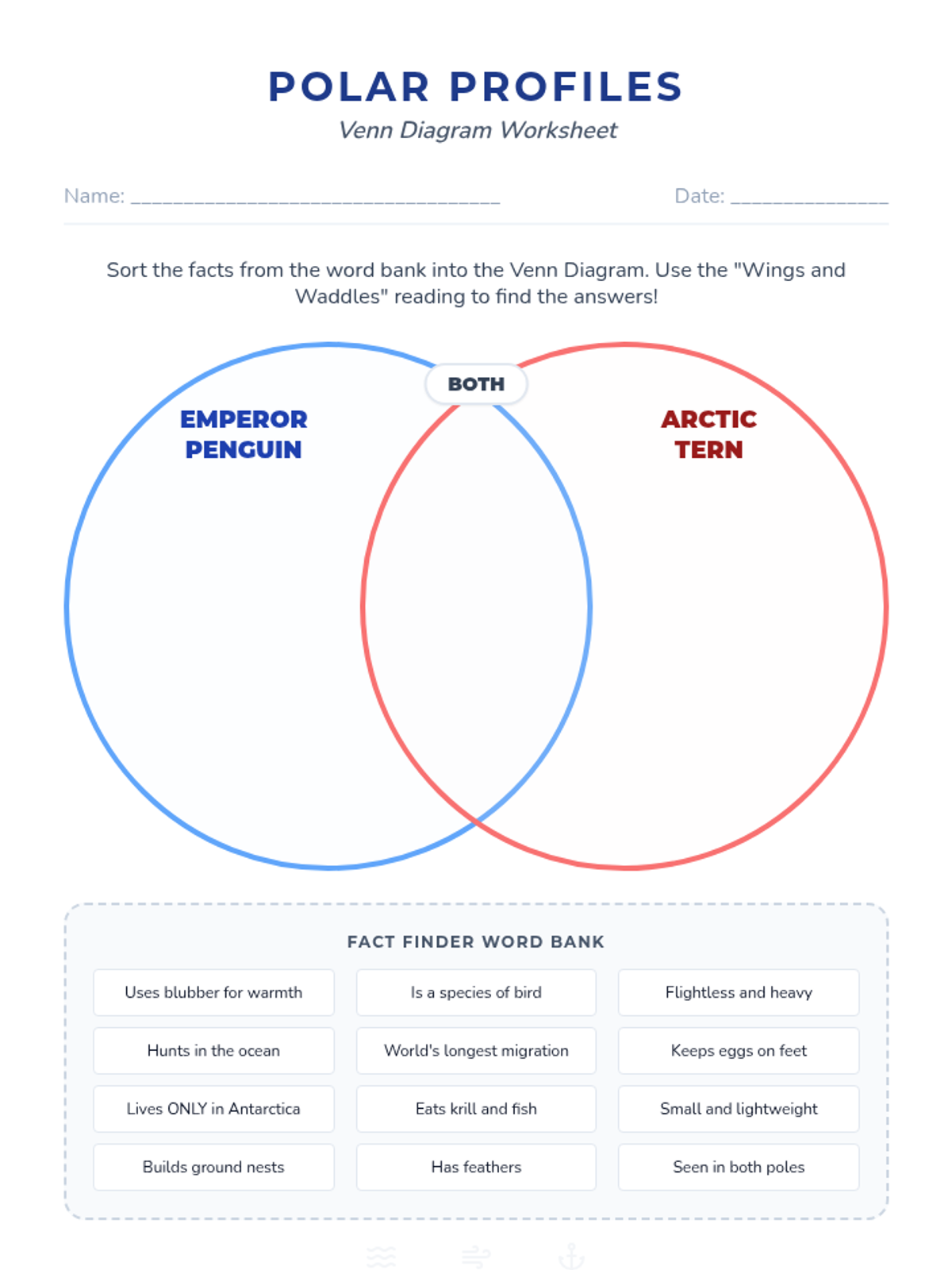
A lesson comparing and contrasting the Emperor Penguin and the Arctic Tern, focusing on their unique adaptations, habitats, and life cycles.
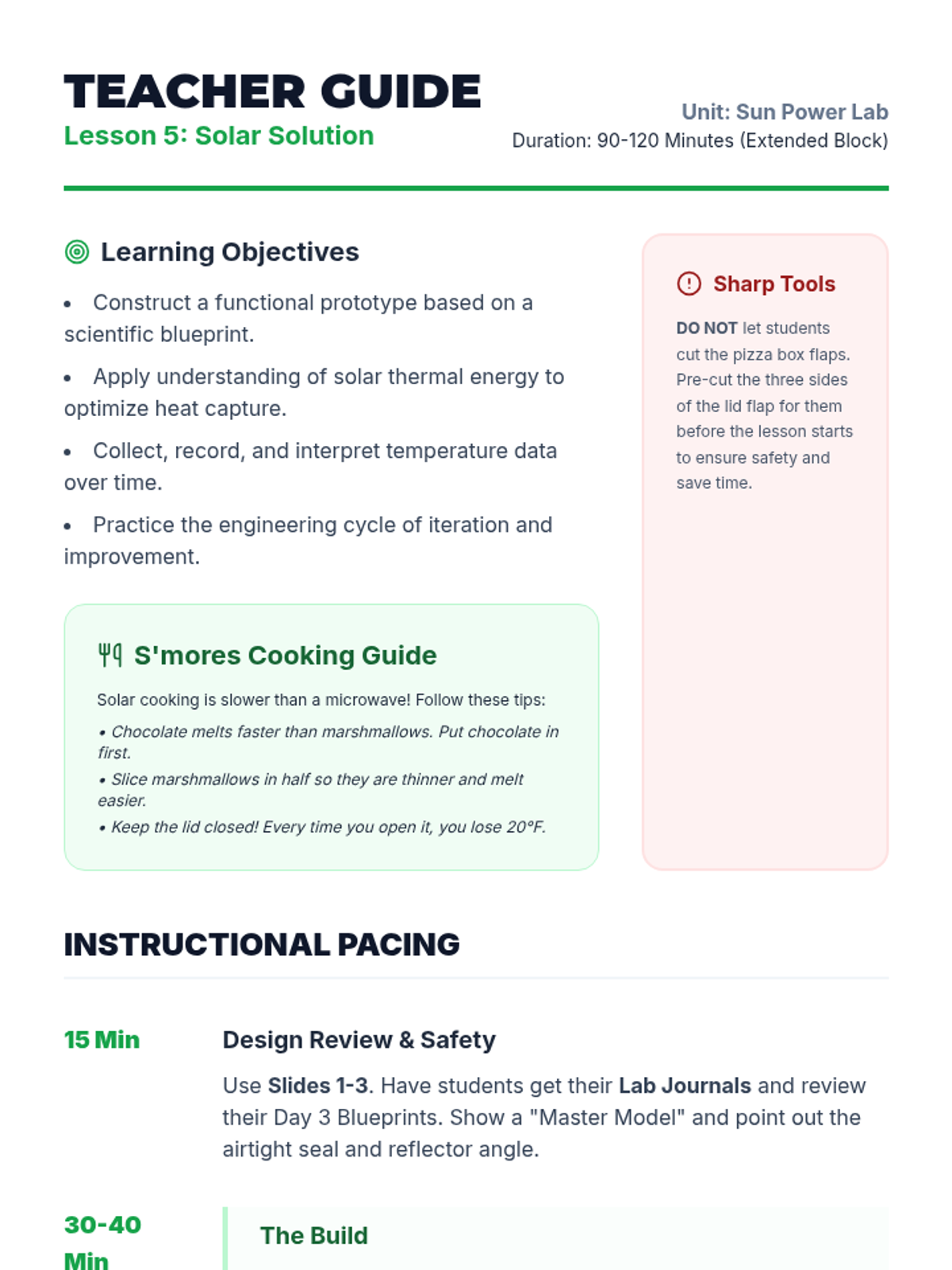
A culminating engineering challenge where students design, build, and test a solar-powered device.
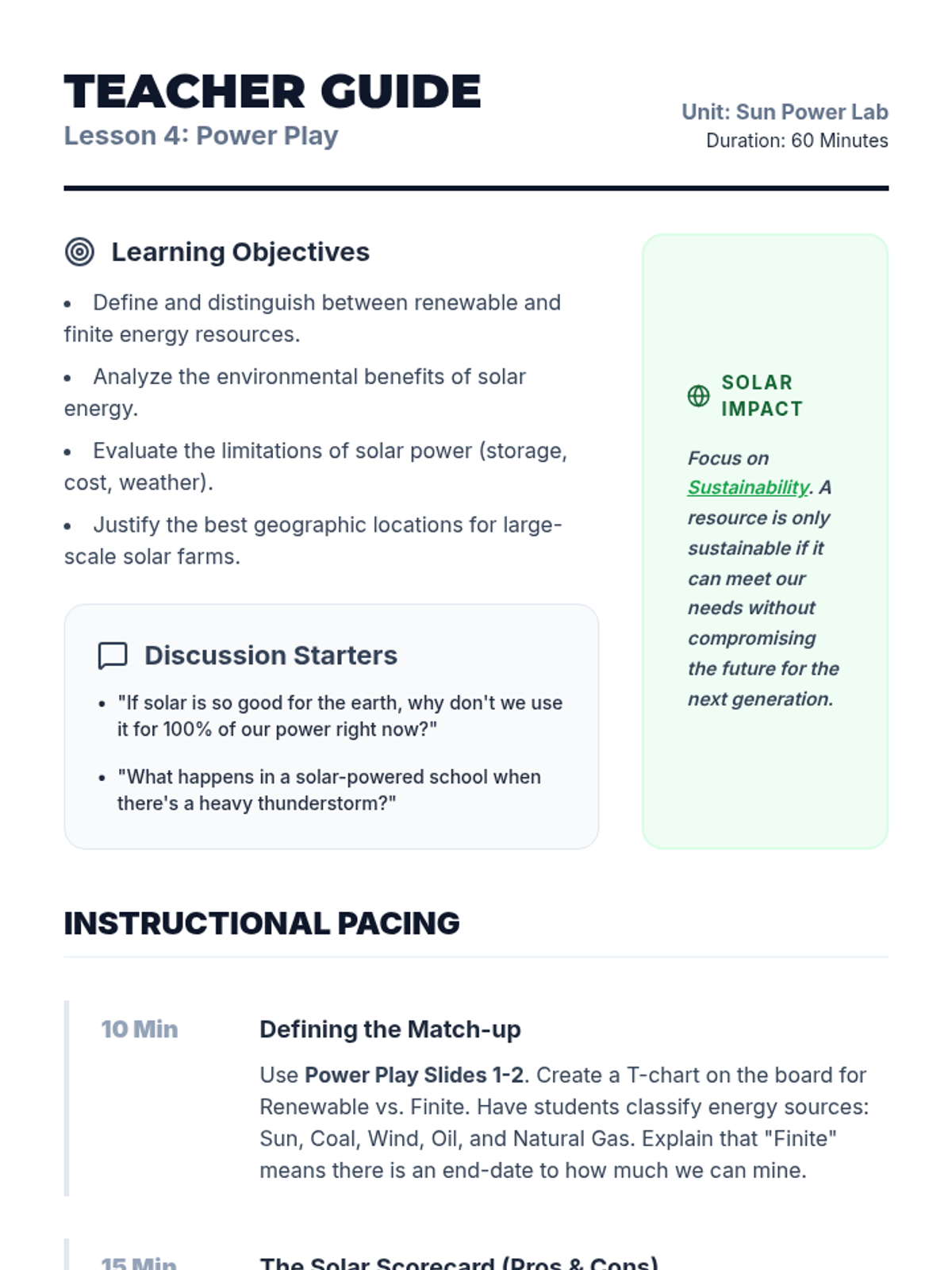
A critical look at the advantages and challenges of solar energy compared to non-renewable resources.
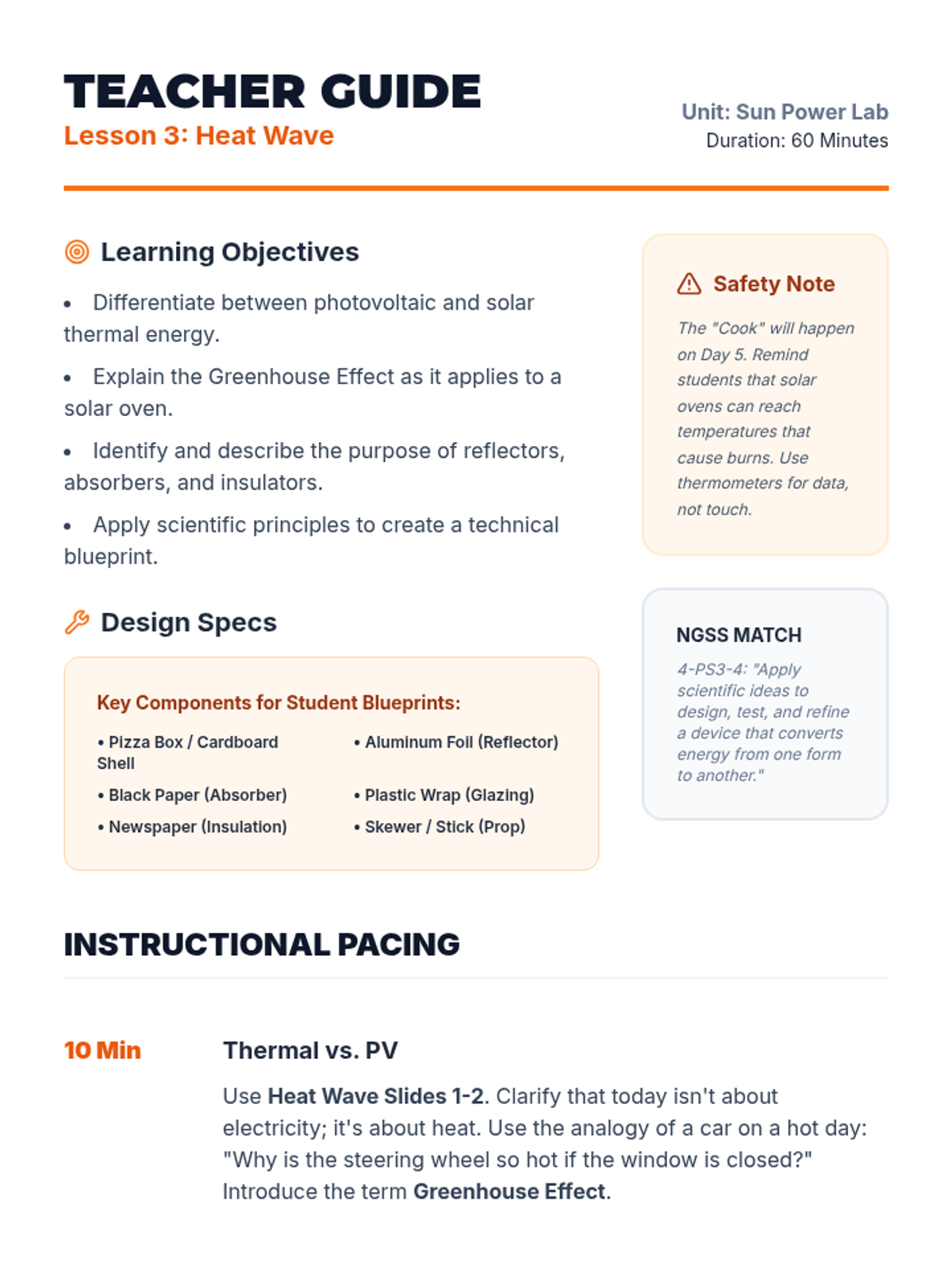
Investigates solar thermal energy and how we can use the Sun's heat for cooking and heating water.
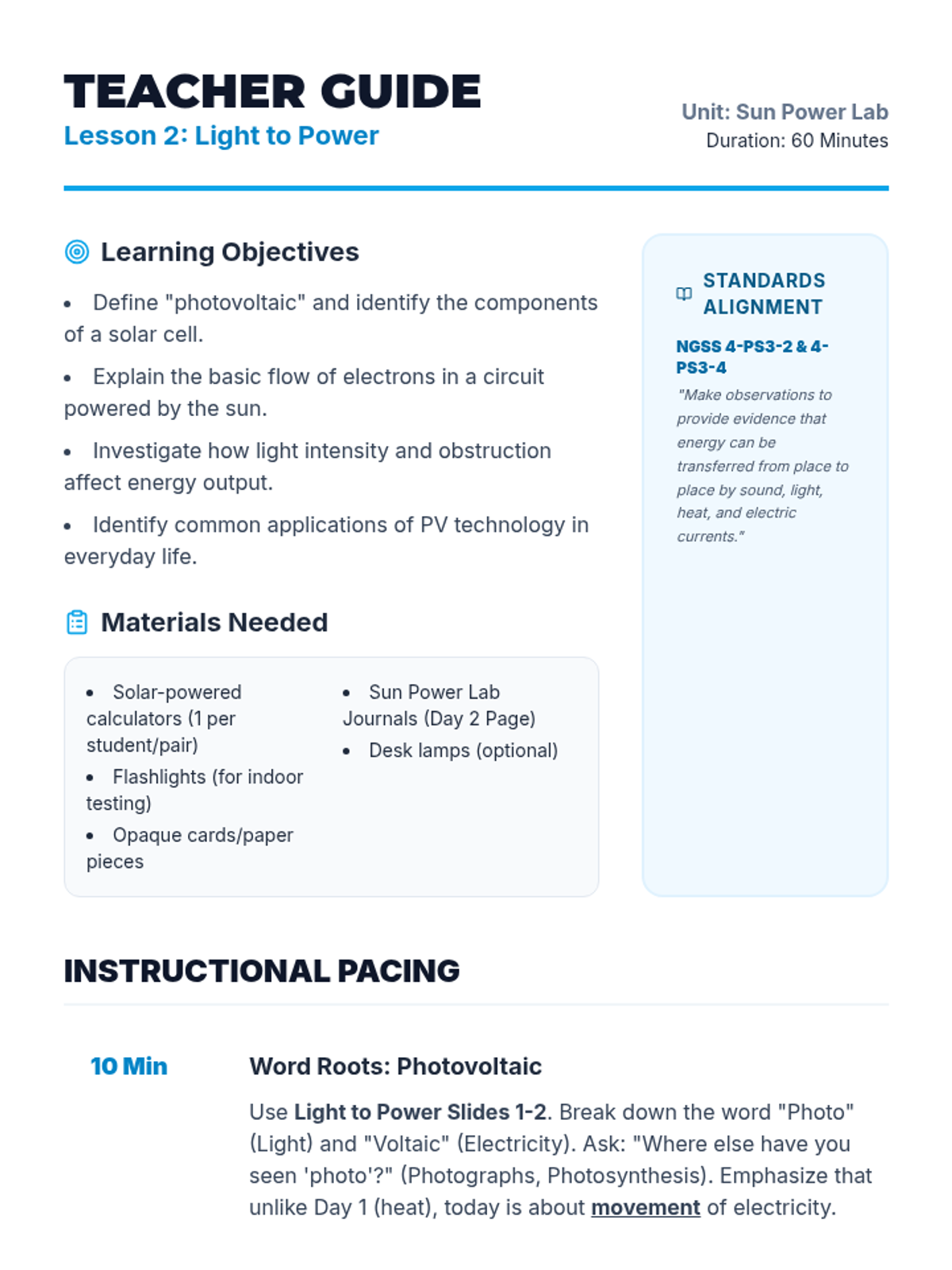
Explores the science of photovoltaic cells and how sunlight is converted directly into electricity.
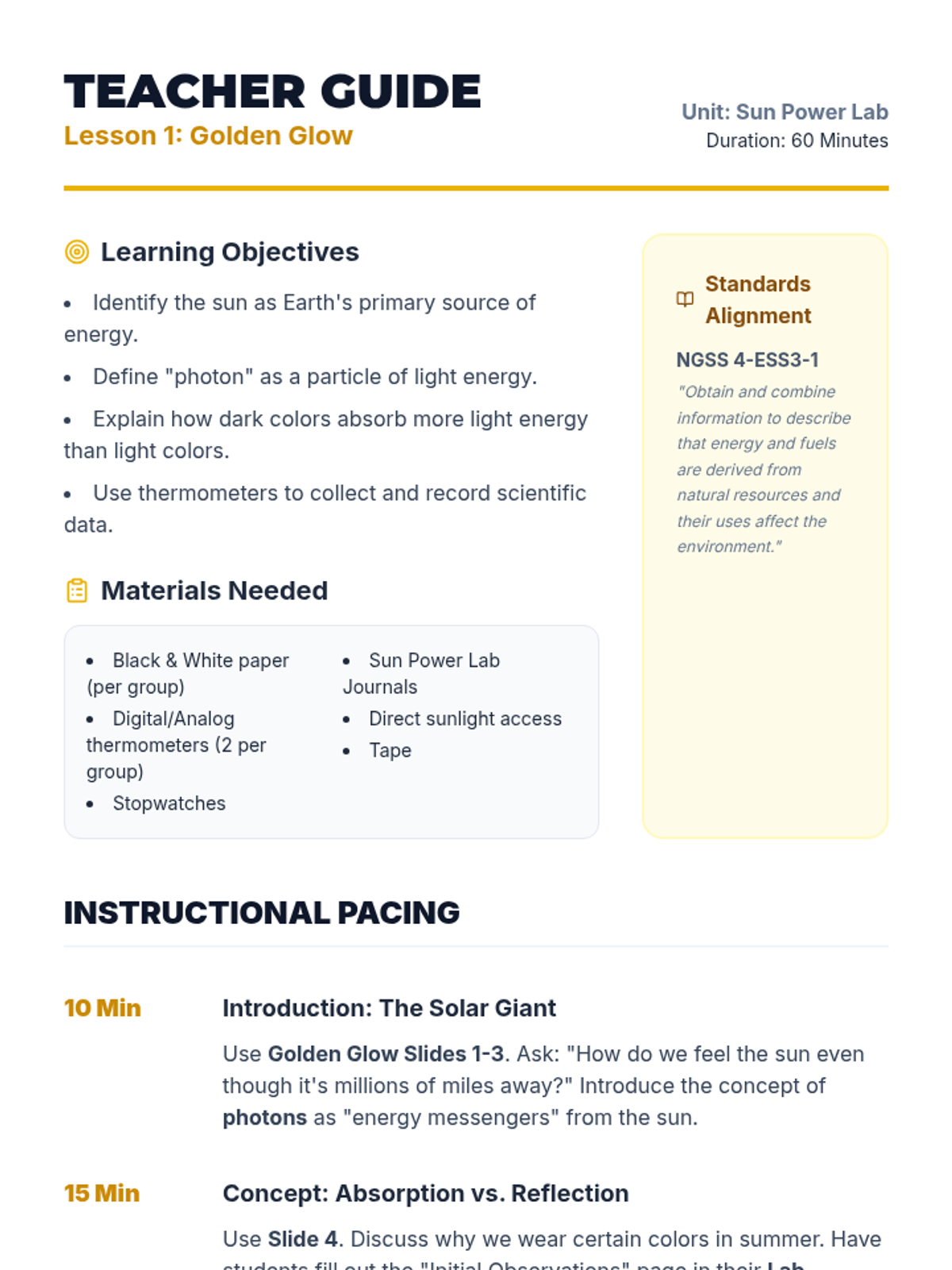
An introduction to the Sun as our primary energy source, exploring light energy and how different materials absorb solar radiation.
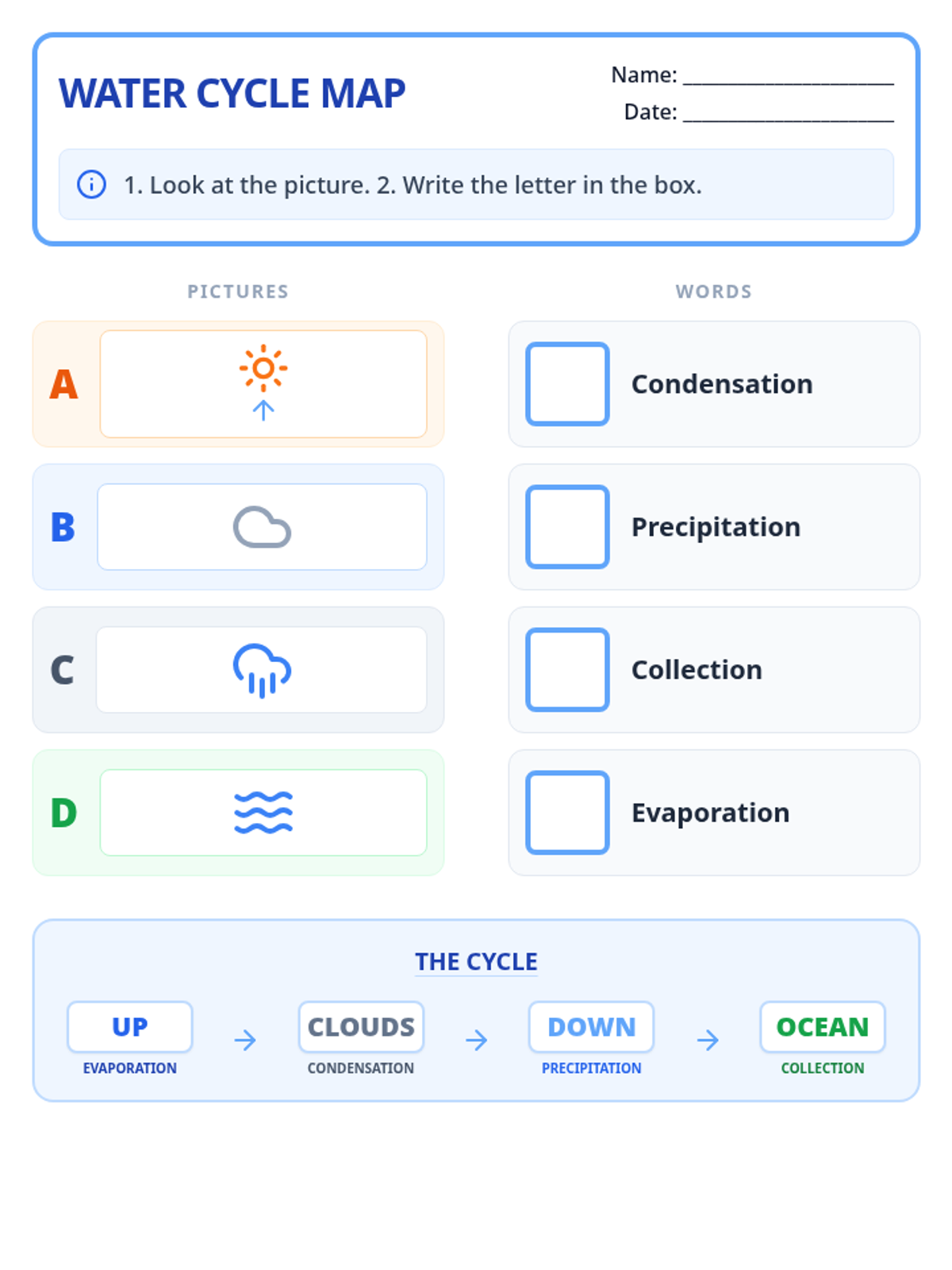
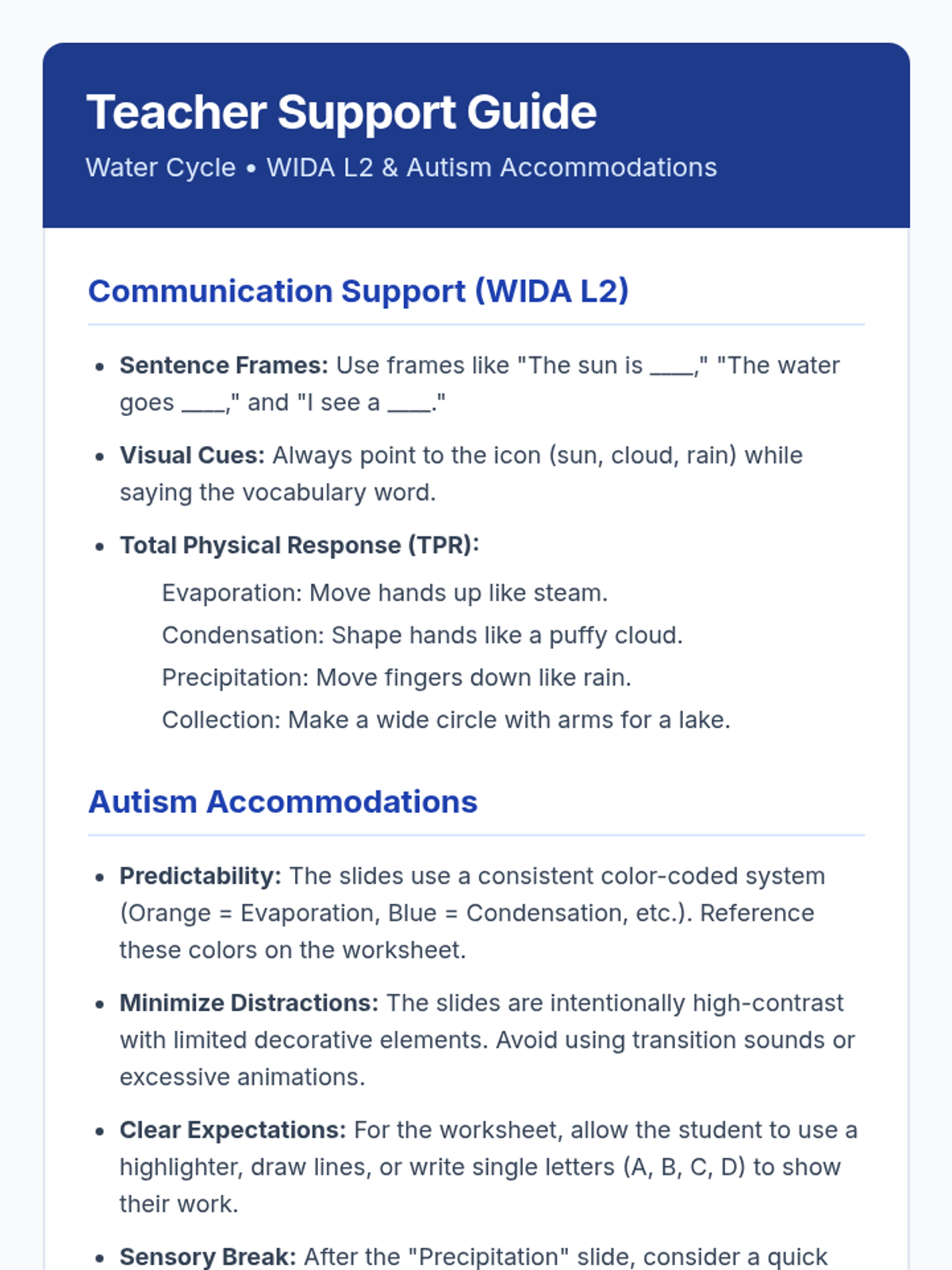
An introductory lesson on the water cycle specifically designed for 3rd-grade students with WIDA Level 2 English proficiency and autism. It focuses on clear visuals, simplified language, and predictable structures to explain how water moves through the environment.
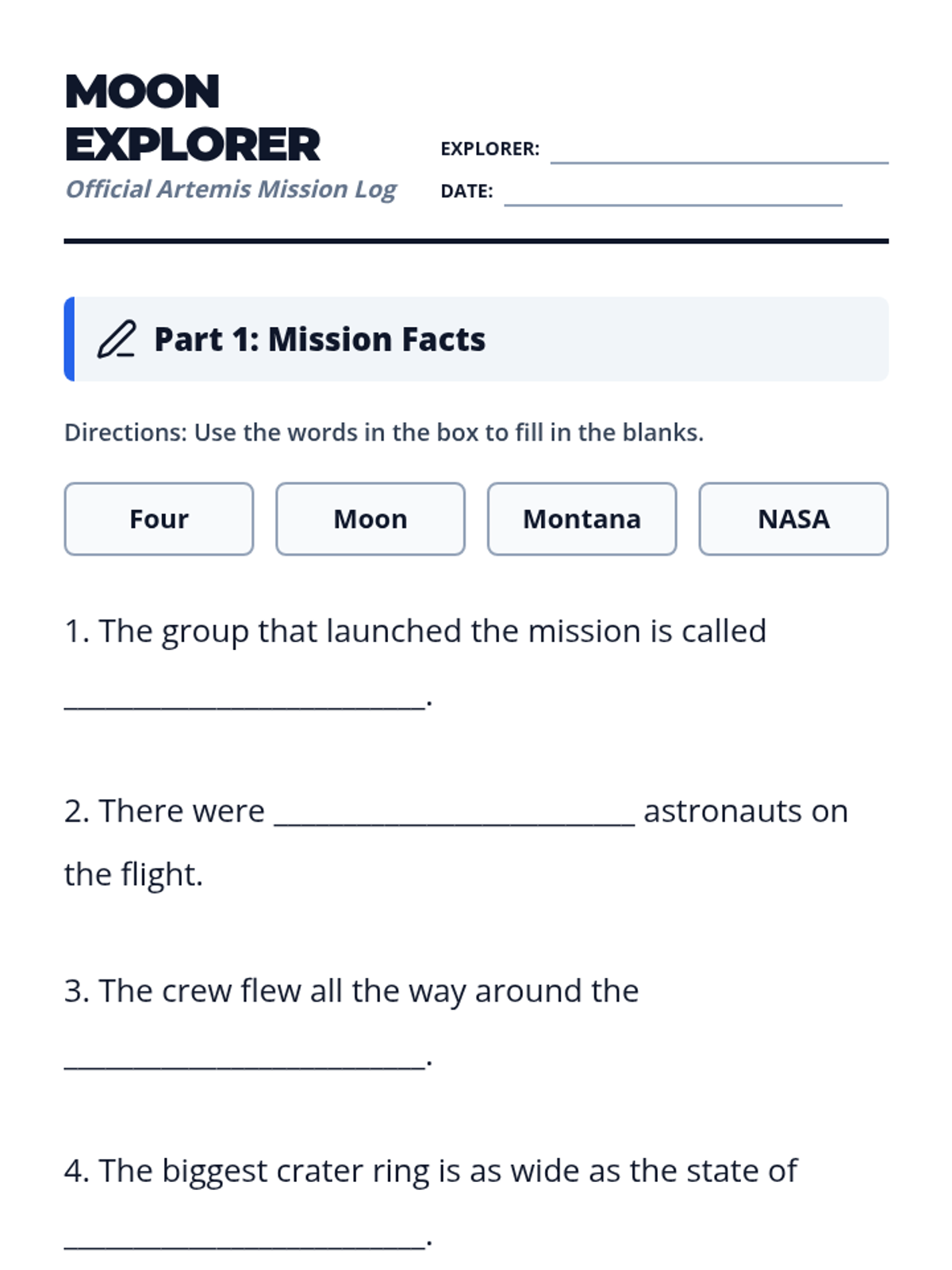
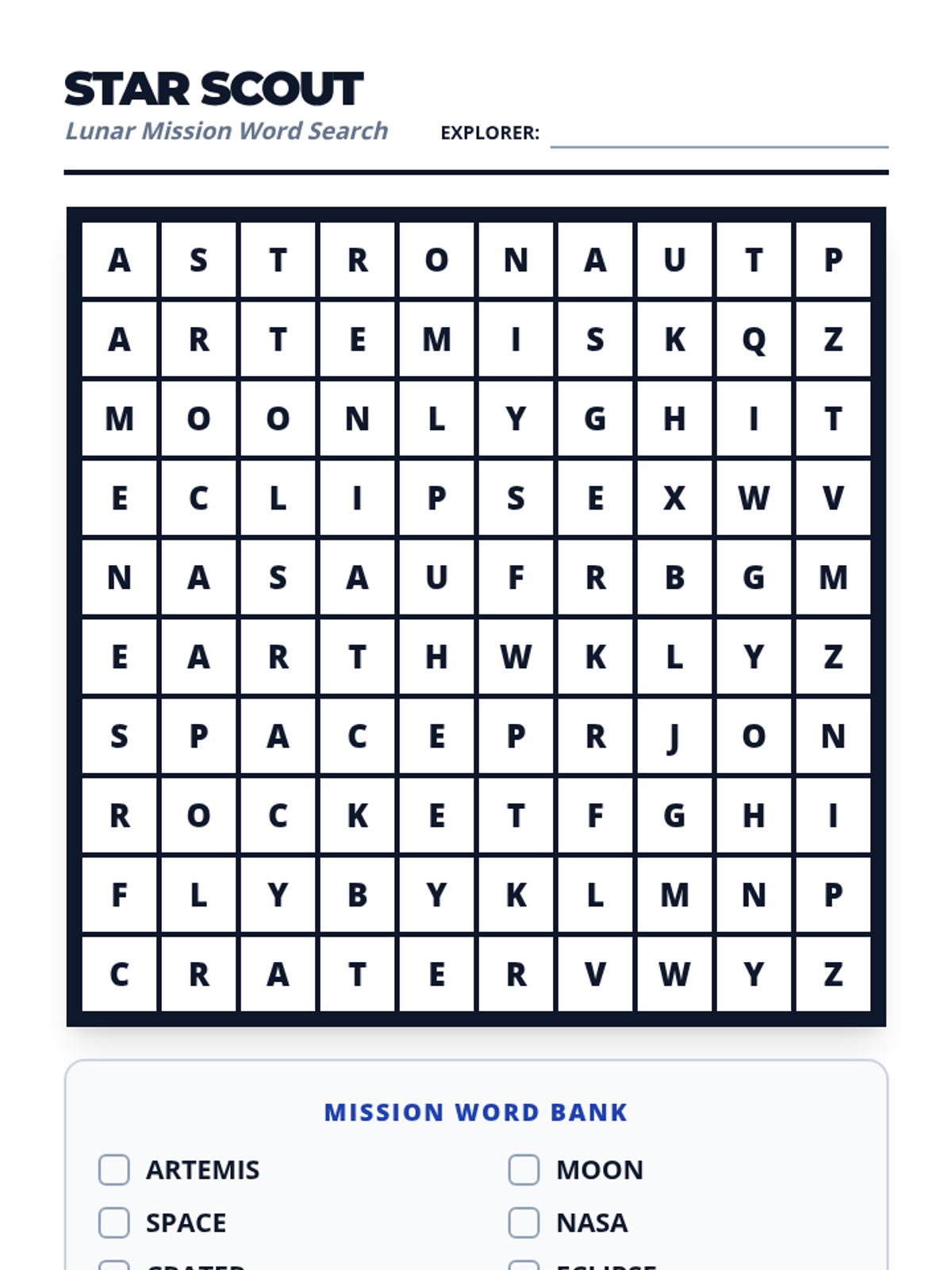
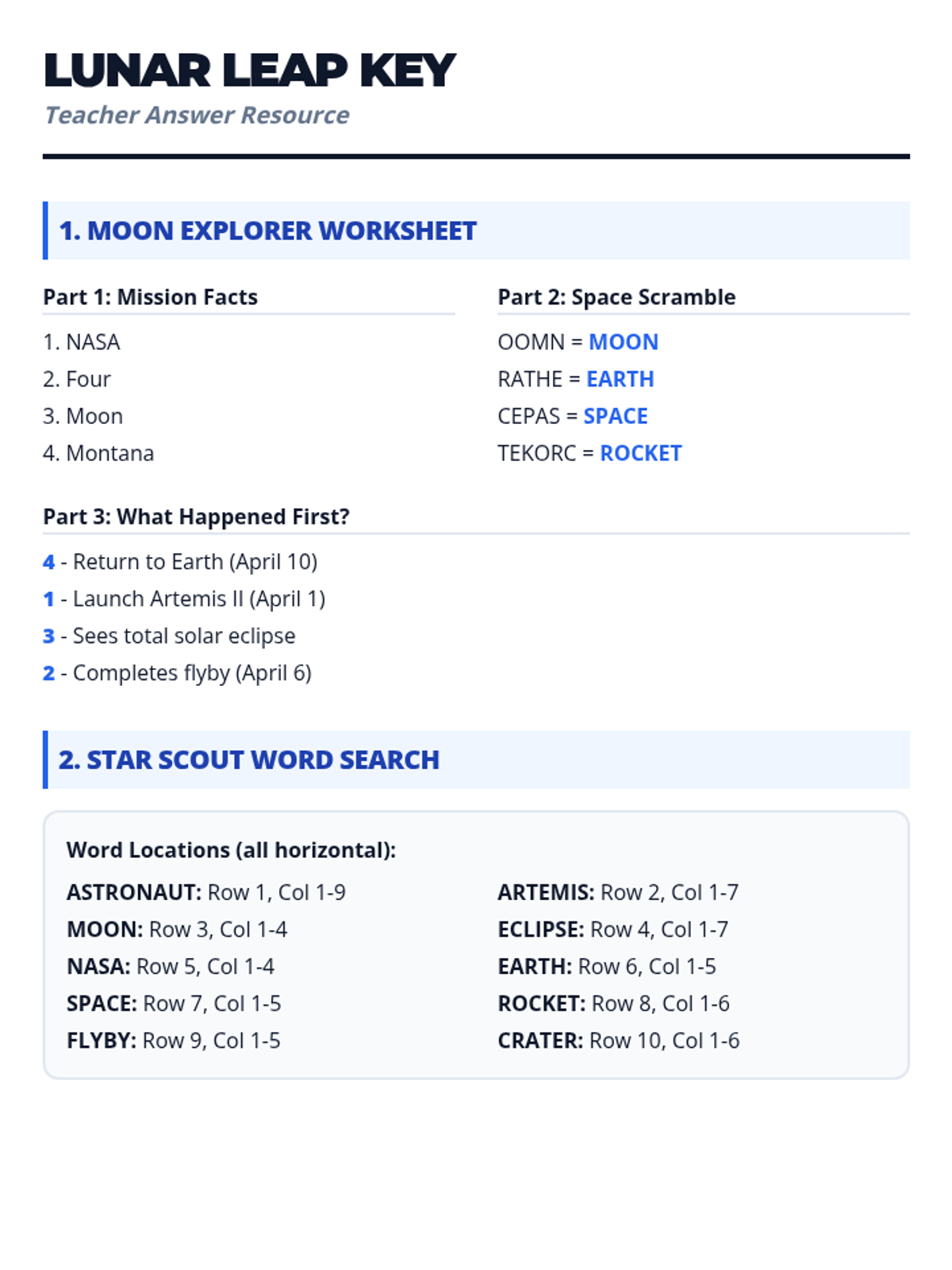
A lesson about the Artemis II moon mission, designed for 8th-grade students working at a 3rd-grade reading level. Includes a visual presentation, a mission log worksheet with sequencing and word scrambles, and a space-themed word search.
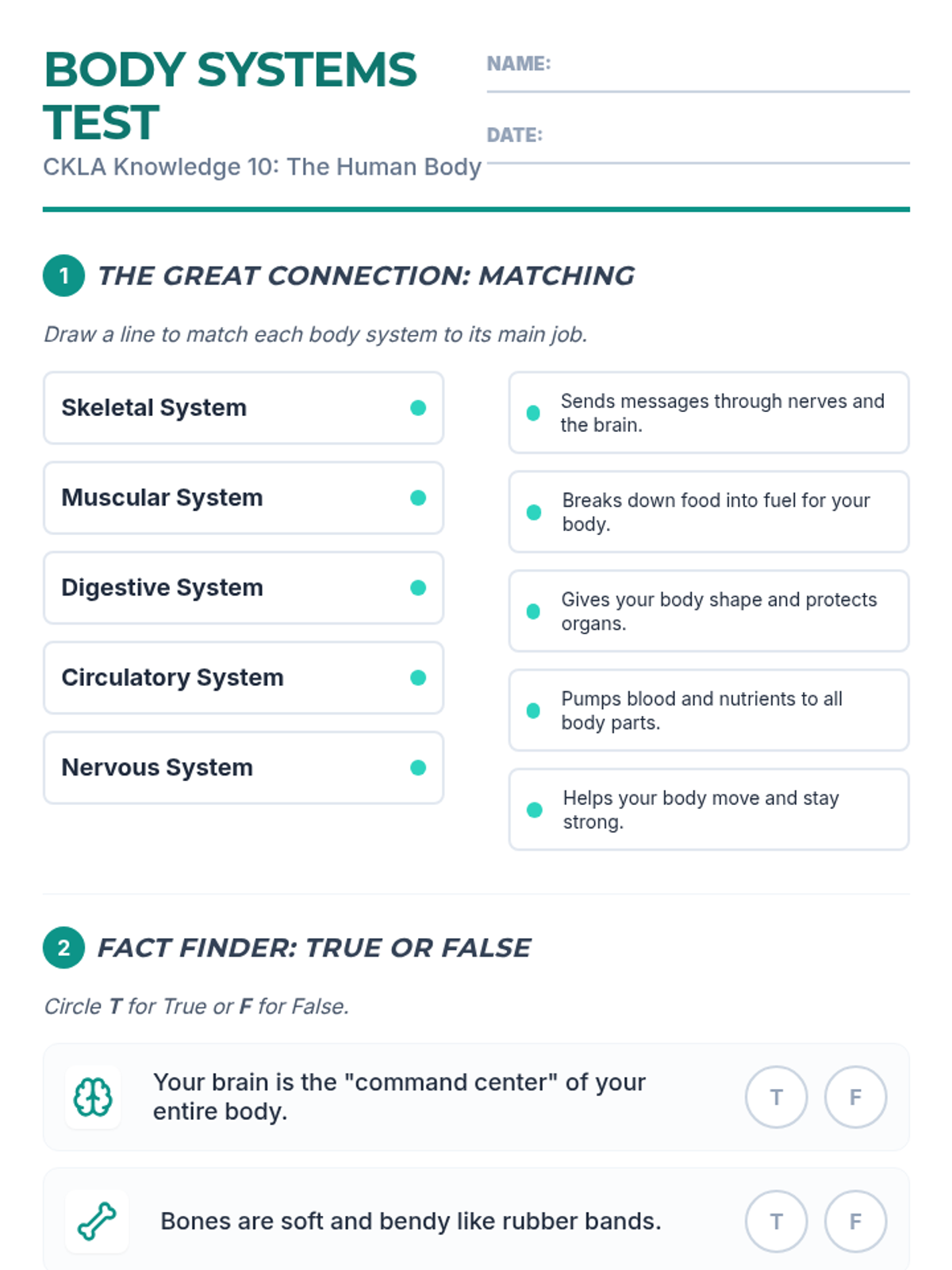
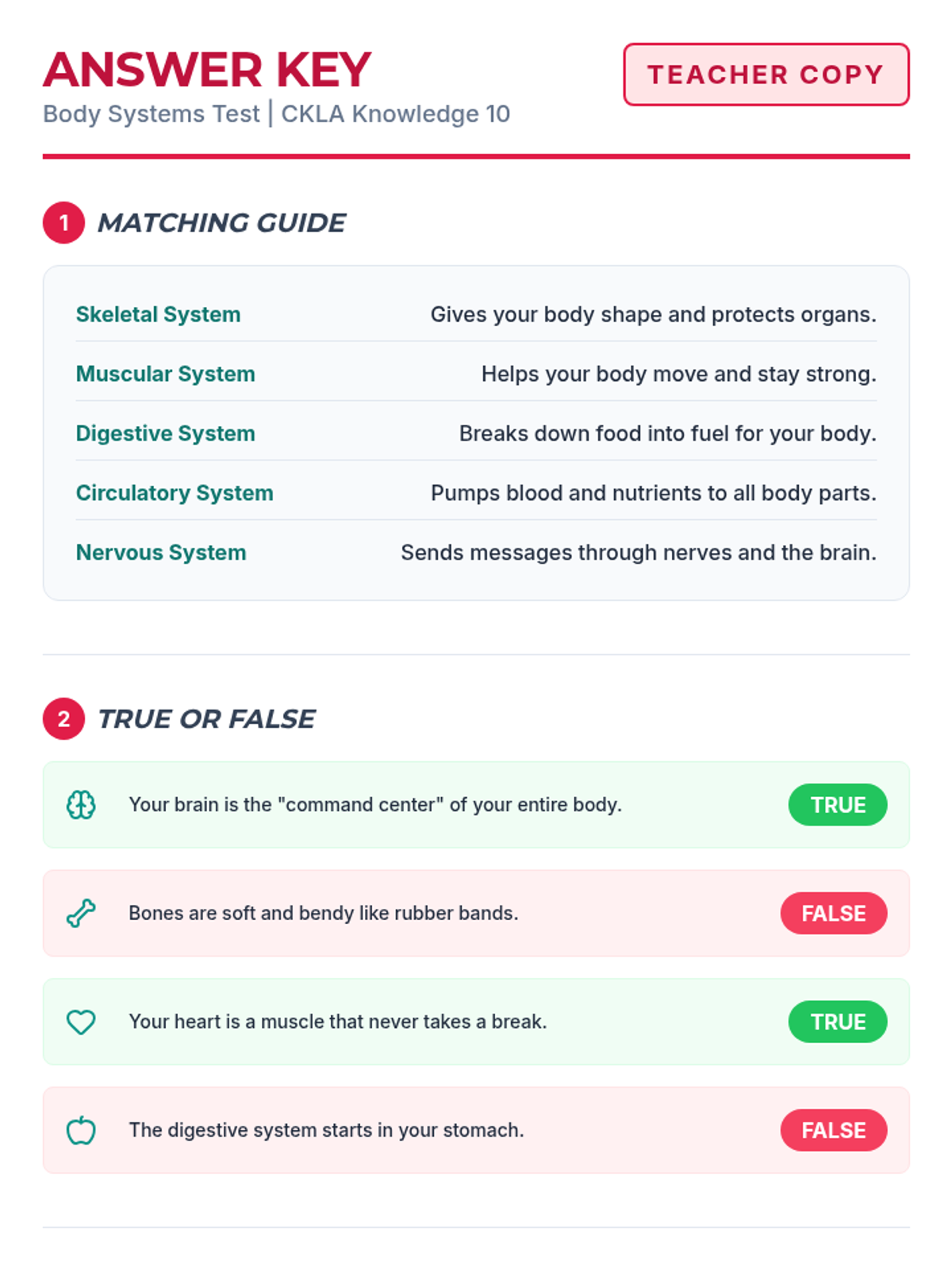
A comprehensive assessment and review for the Grade 2 CKLA unit on the human body, focusing on the five major body systems, nutrition, and overall health.
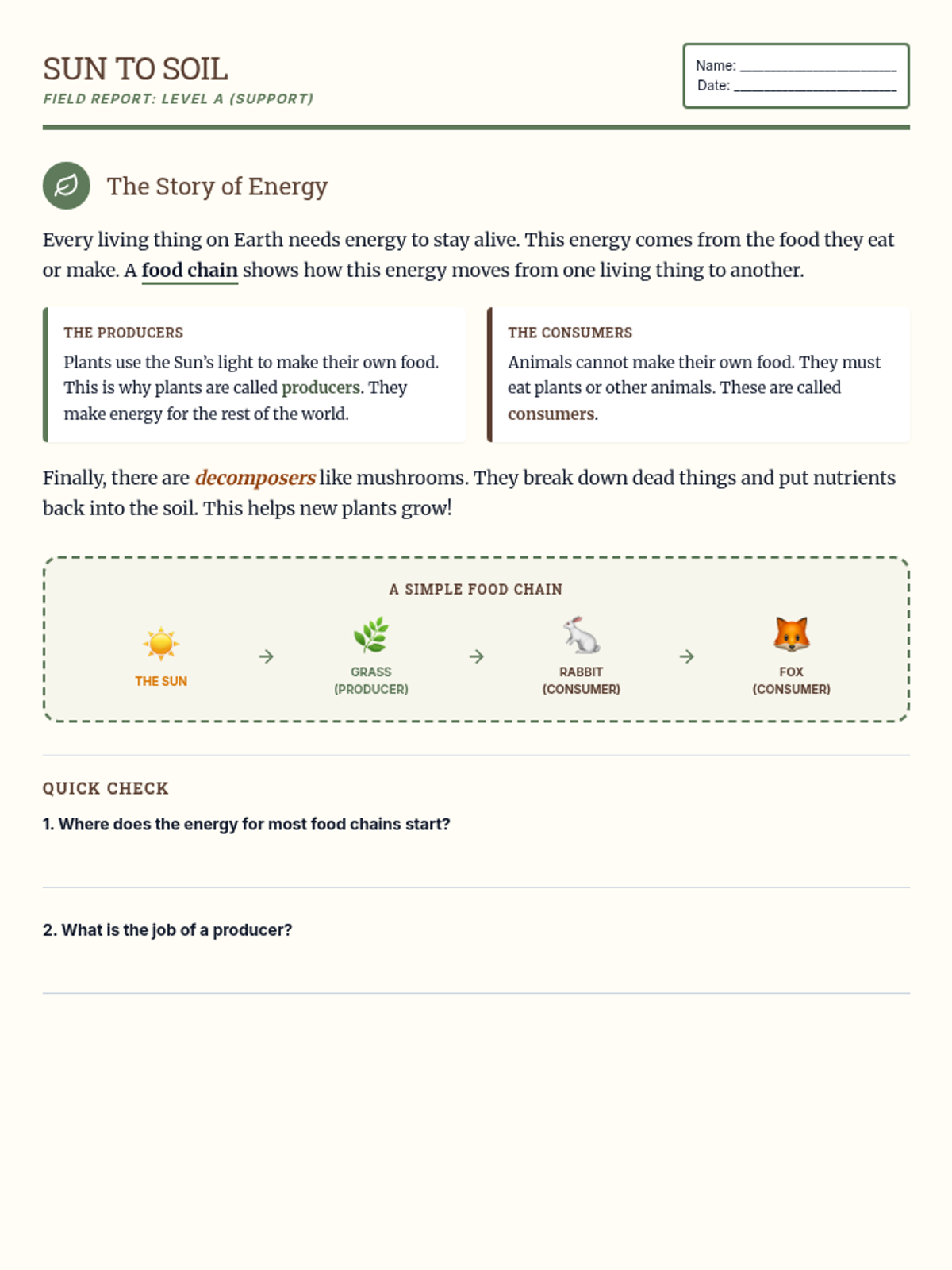
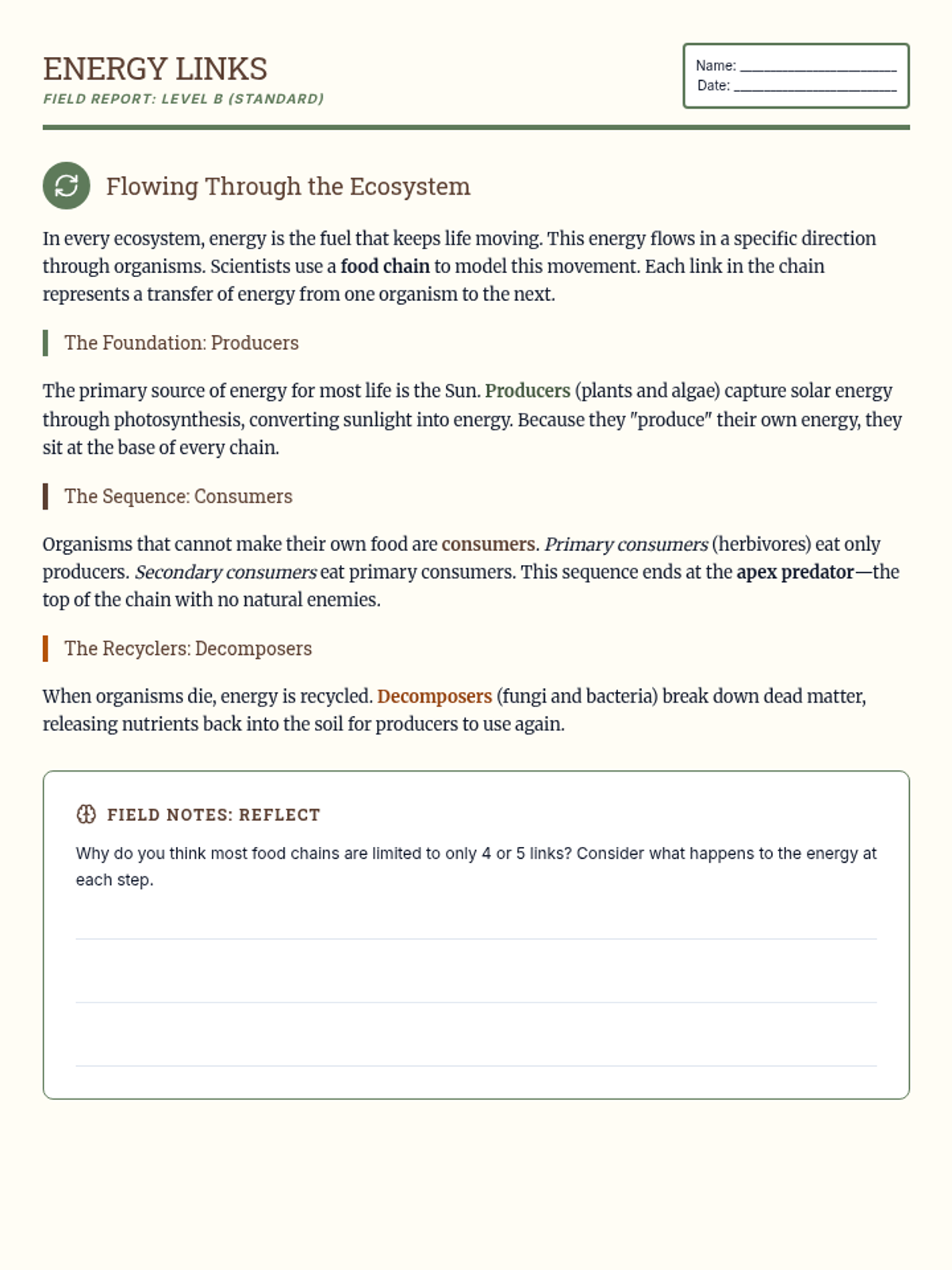
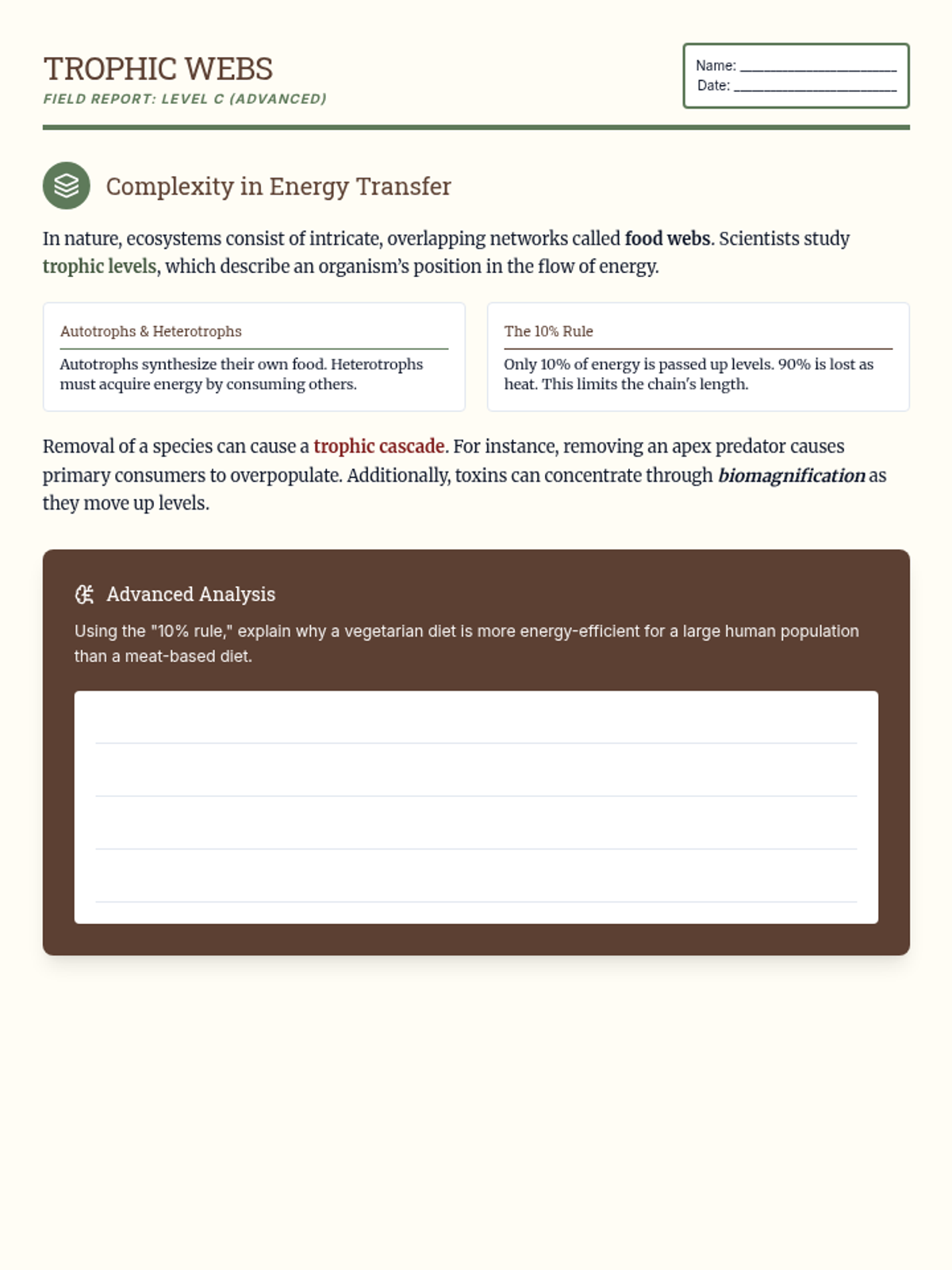
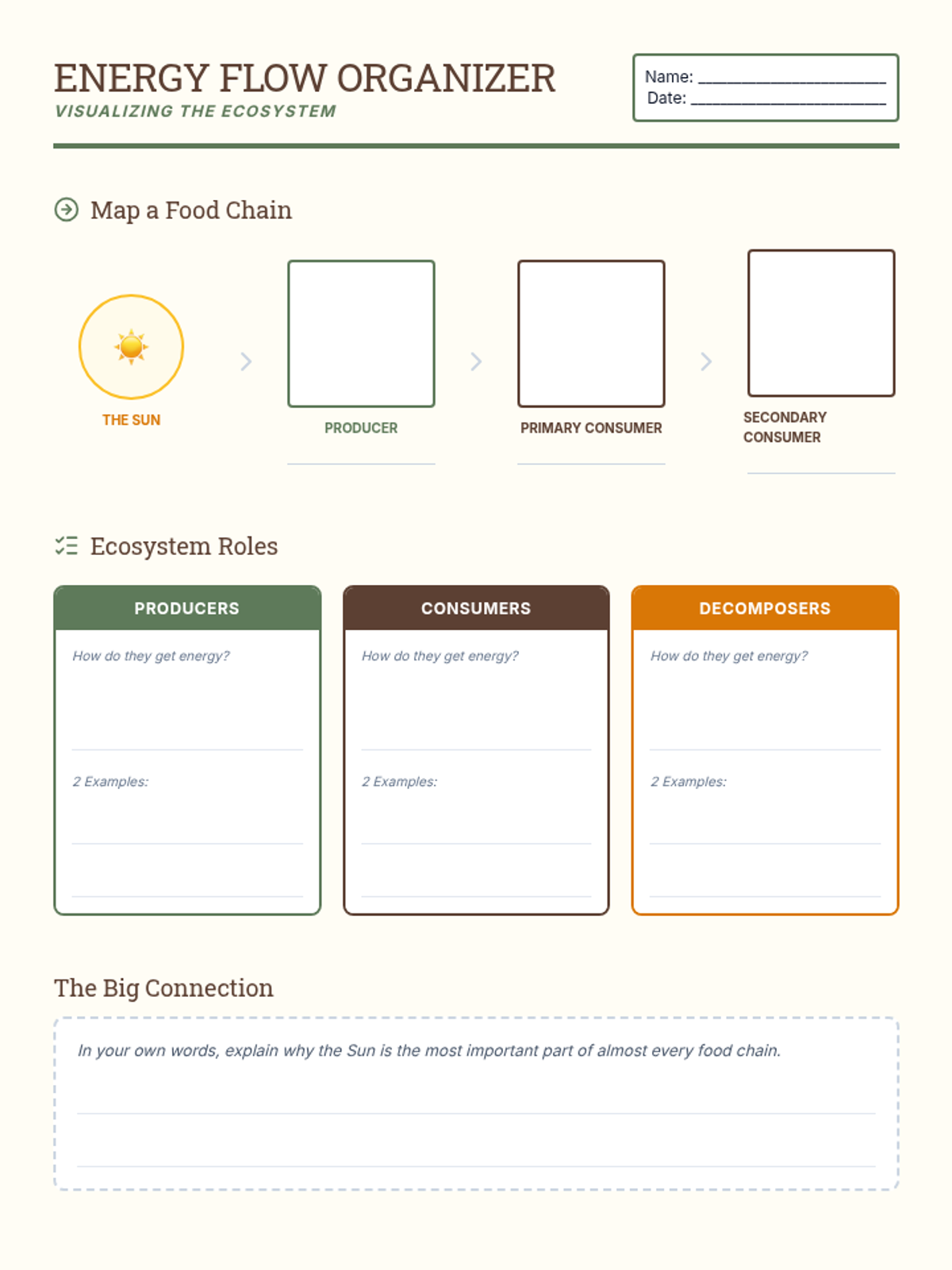
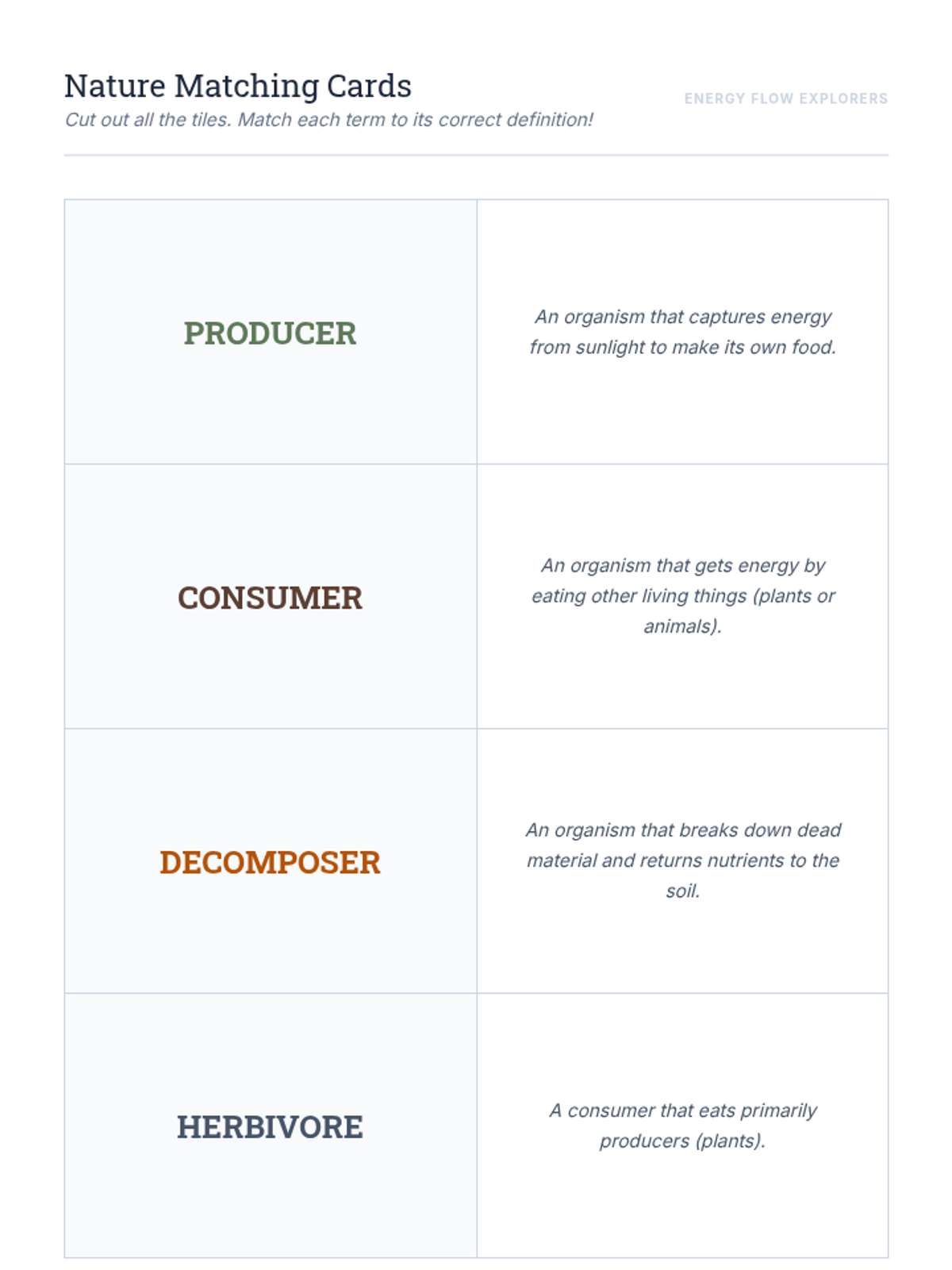
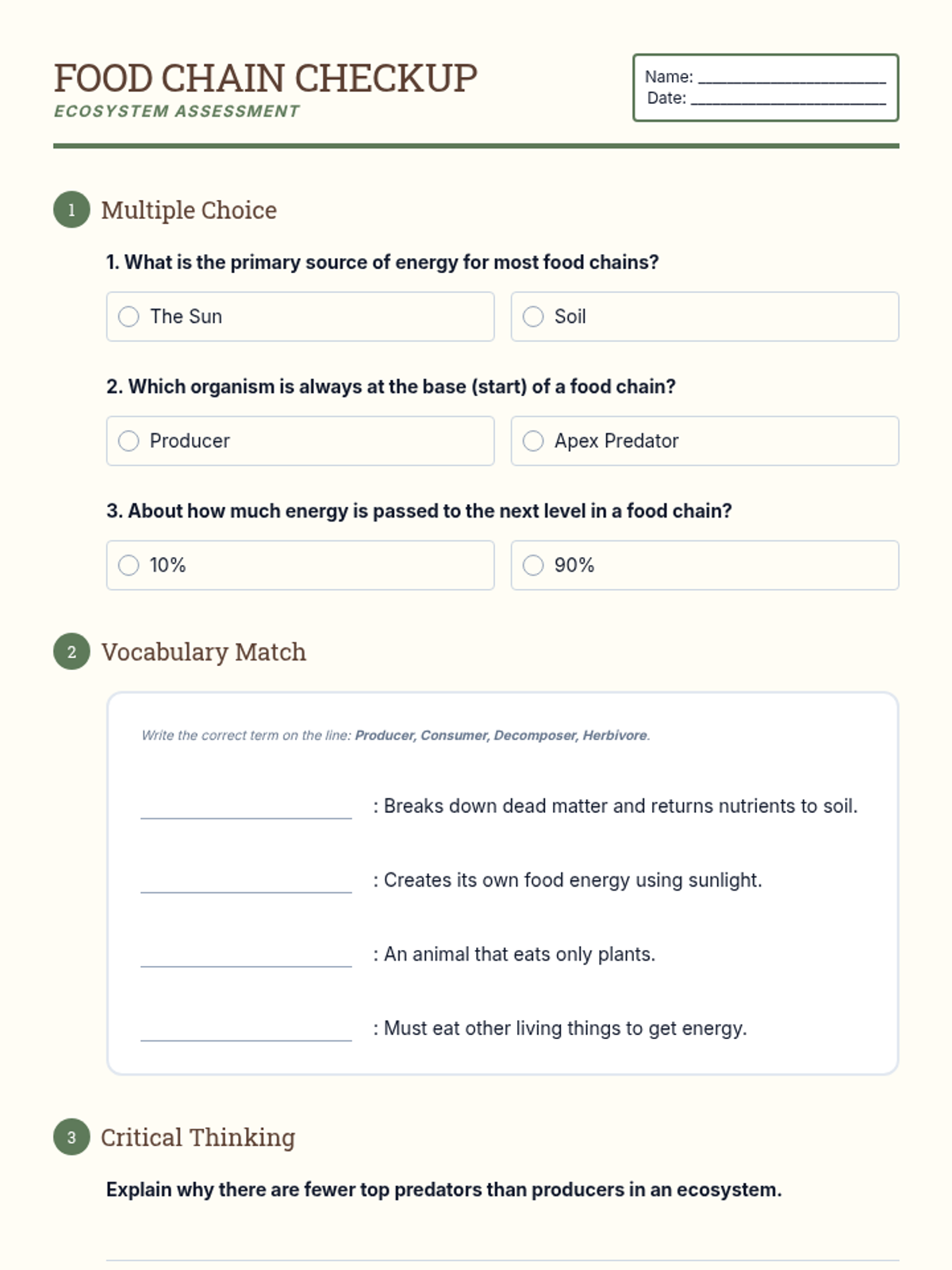
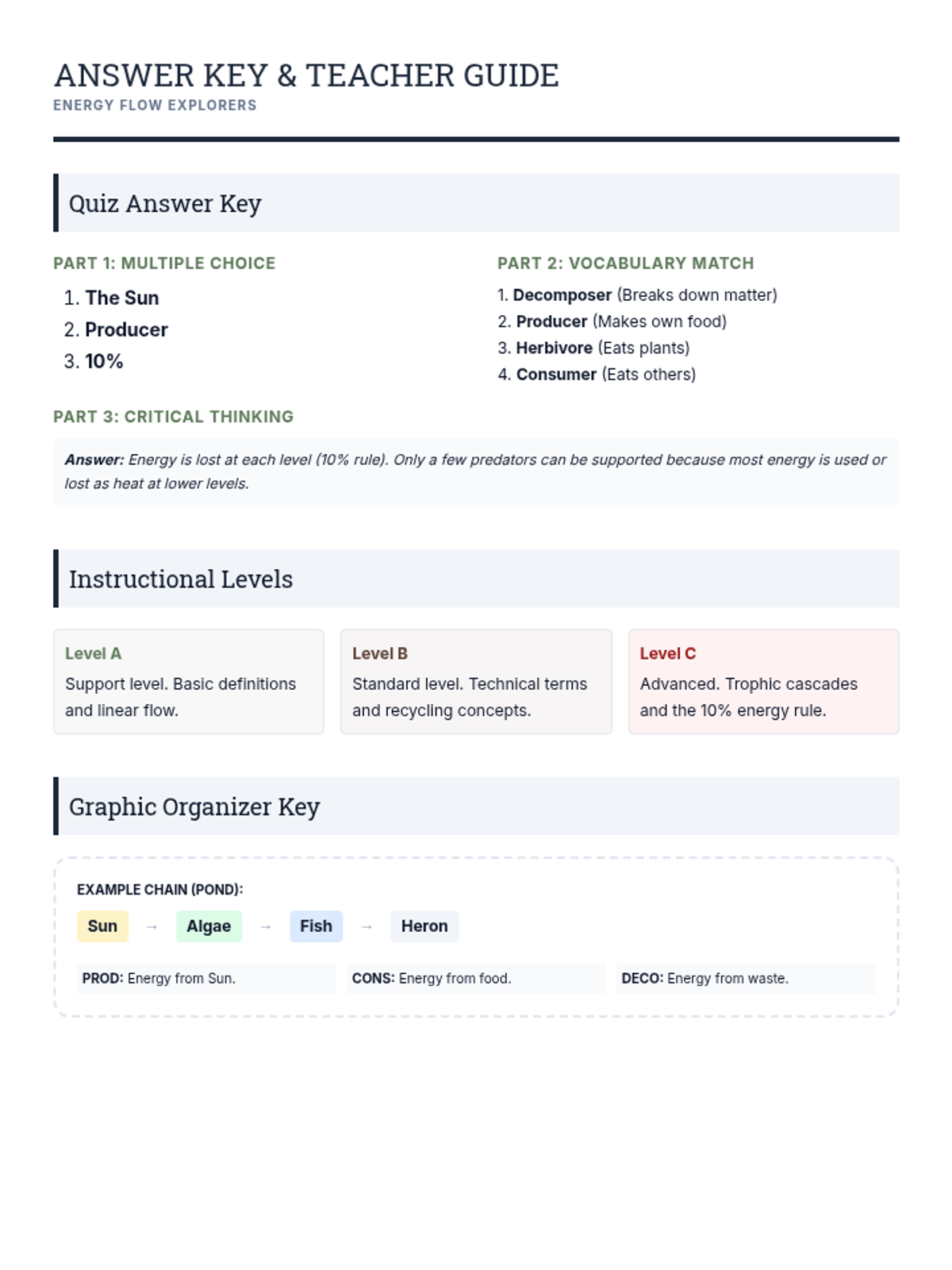
A comprehensive lesson on food chains, producers, and consumers, featuring differentiated reading passages, graphic organizers, and assessments designed for 5th-grade learners at various levels.
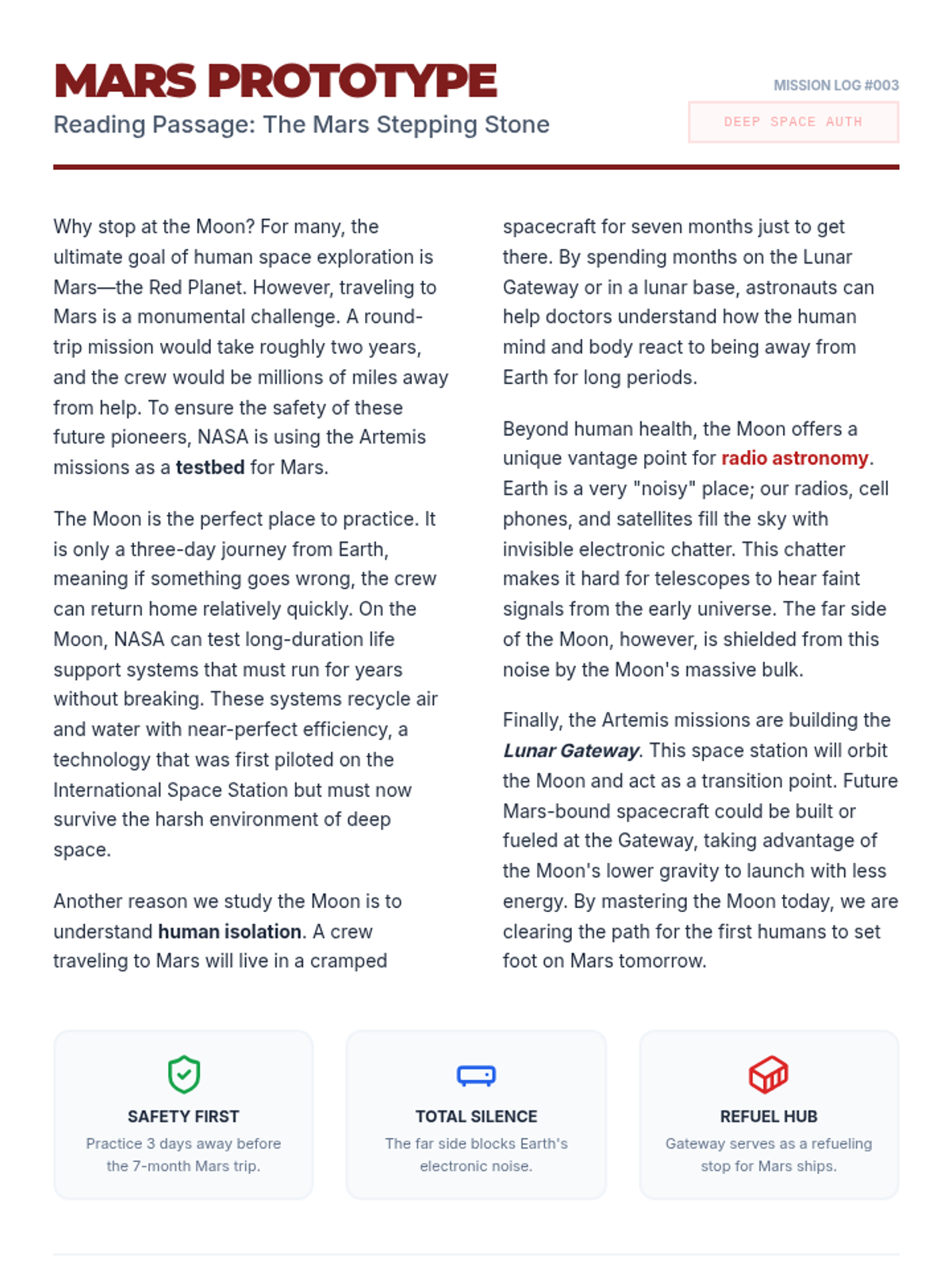
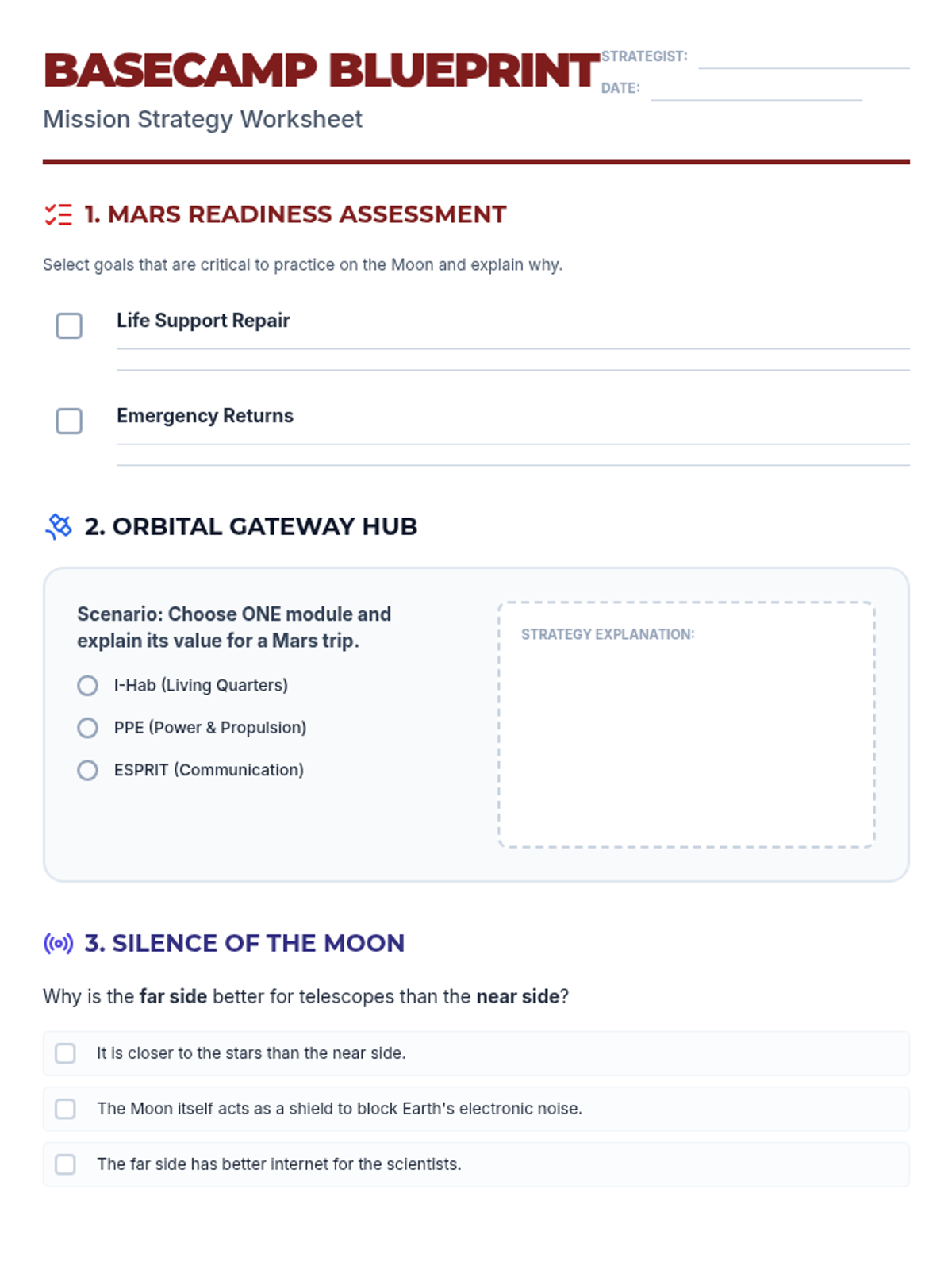
Explores the Moon's role as a testing ground for Mars exploration and a unique platform for deep space astronomy, focusing on the Gateway station and long-duration missions.
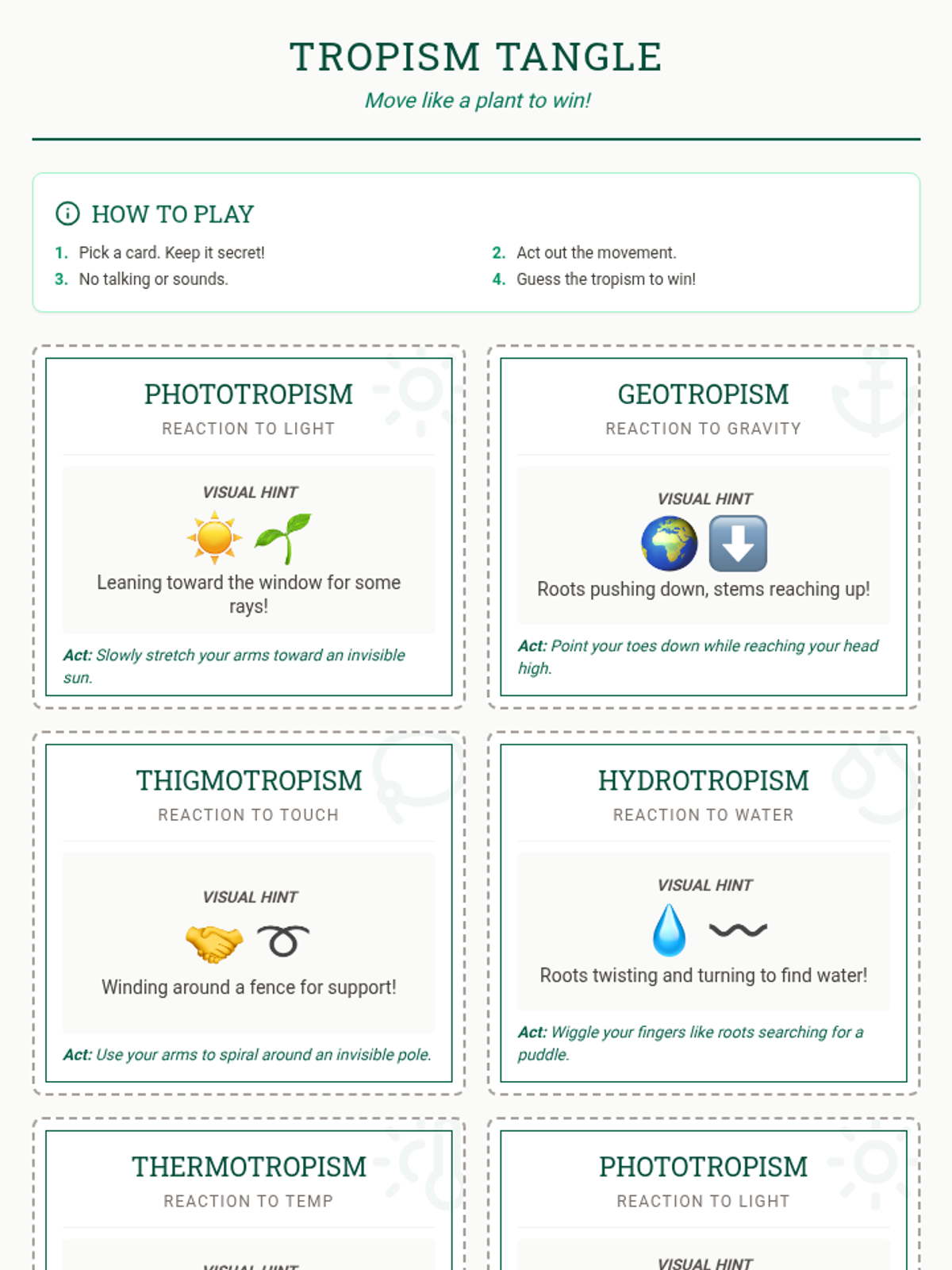
A fun, active lesson exploring how plants respond to their environment through various tropisms. Students will use movement and physical acting to demonstrate complex biological concepts.
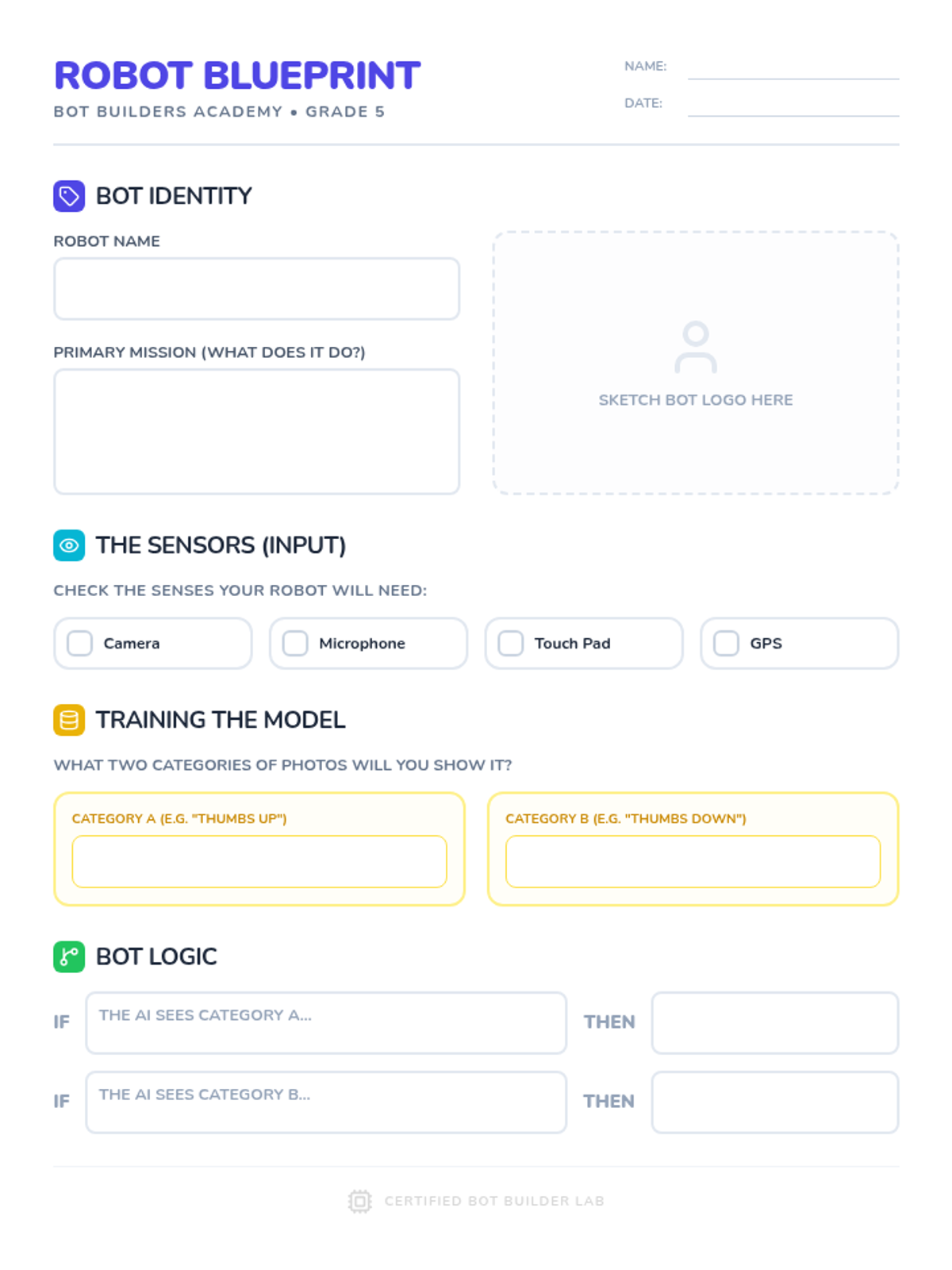
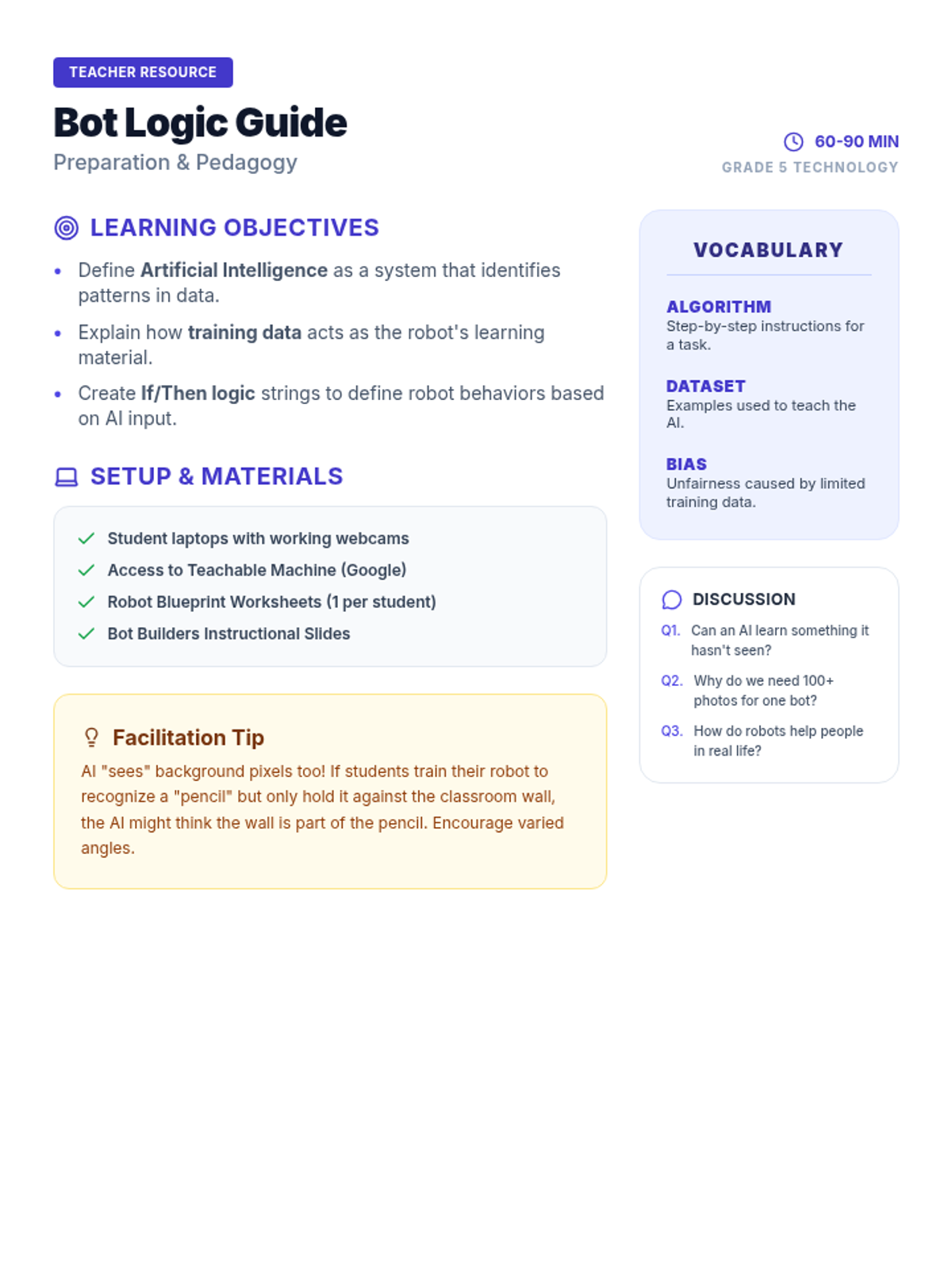
Students explore the world of artificial intelligence and robotics, learning how to design and "train" a virtual robot using online tools. They will understand the relationship between hardware, software, and data training.
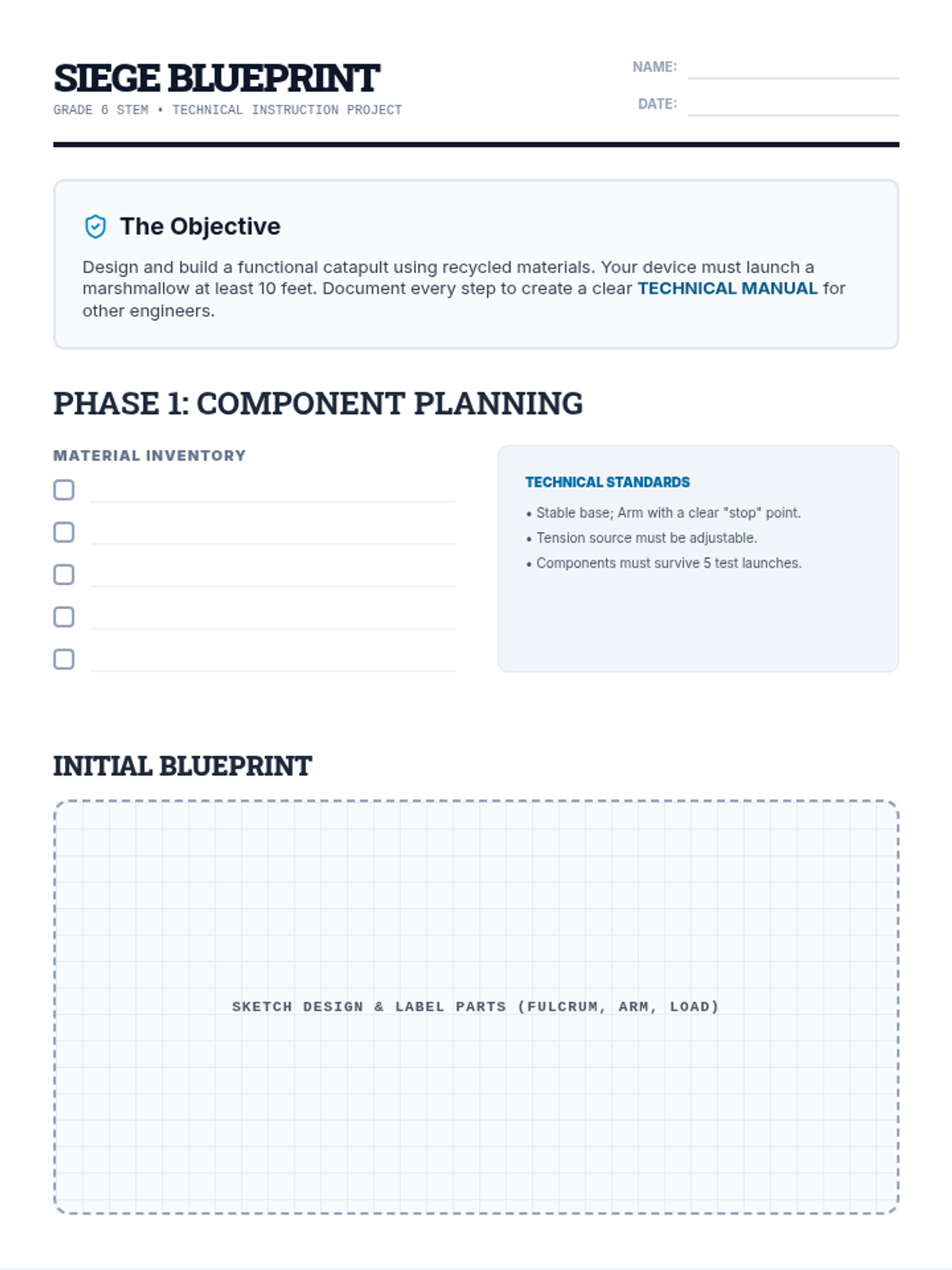
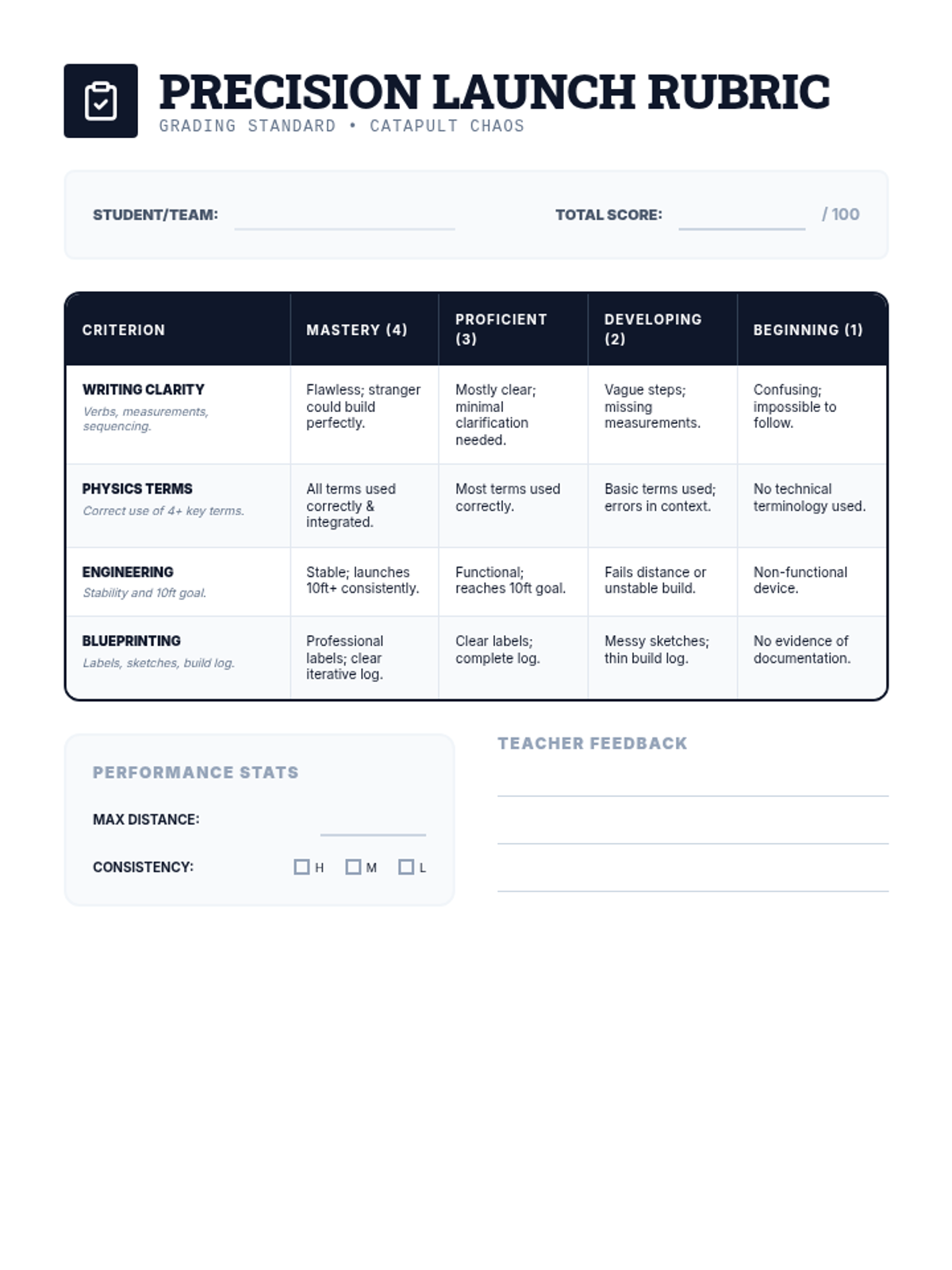
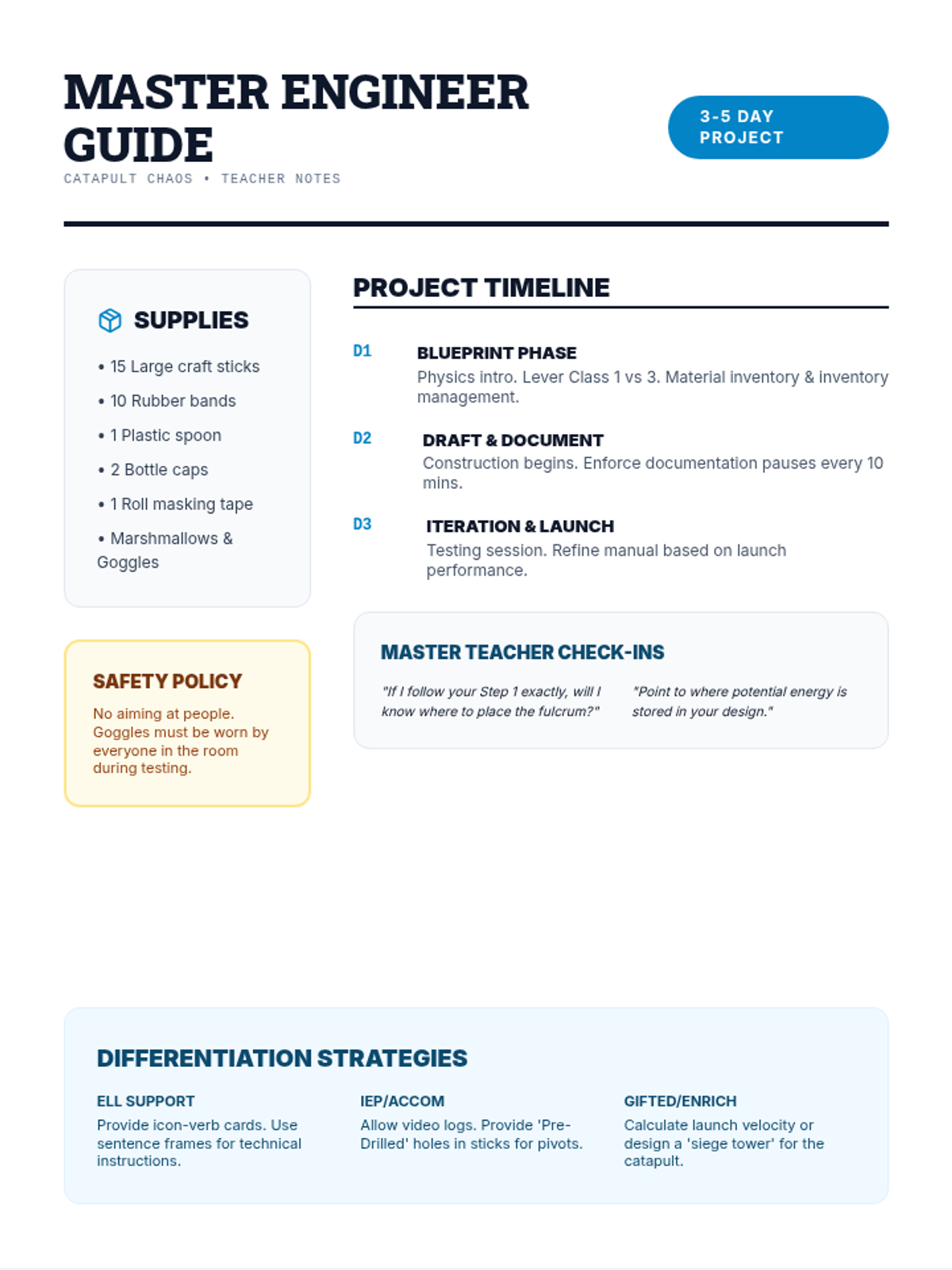
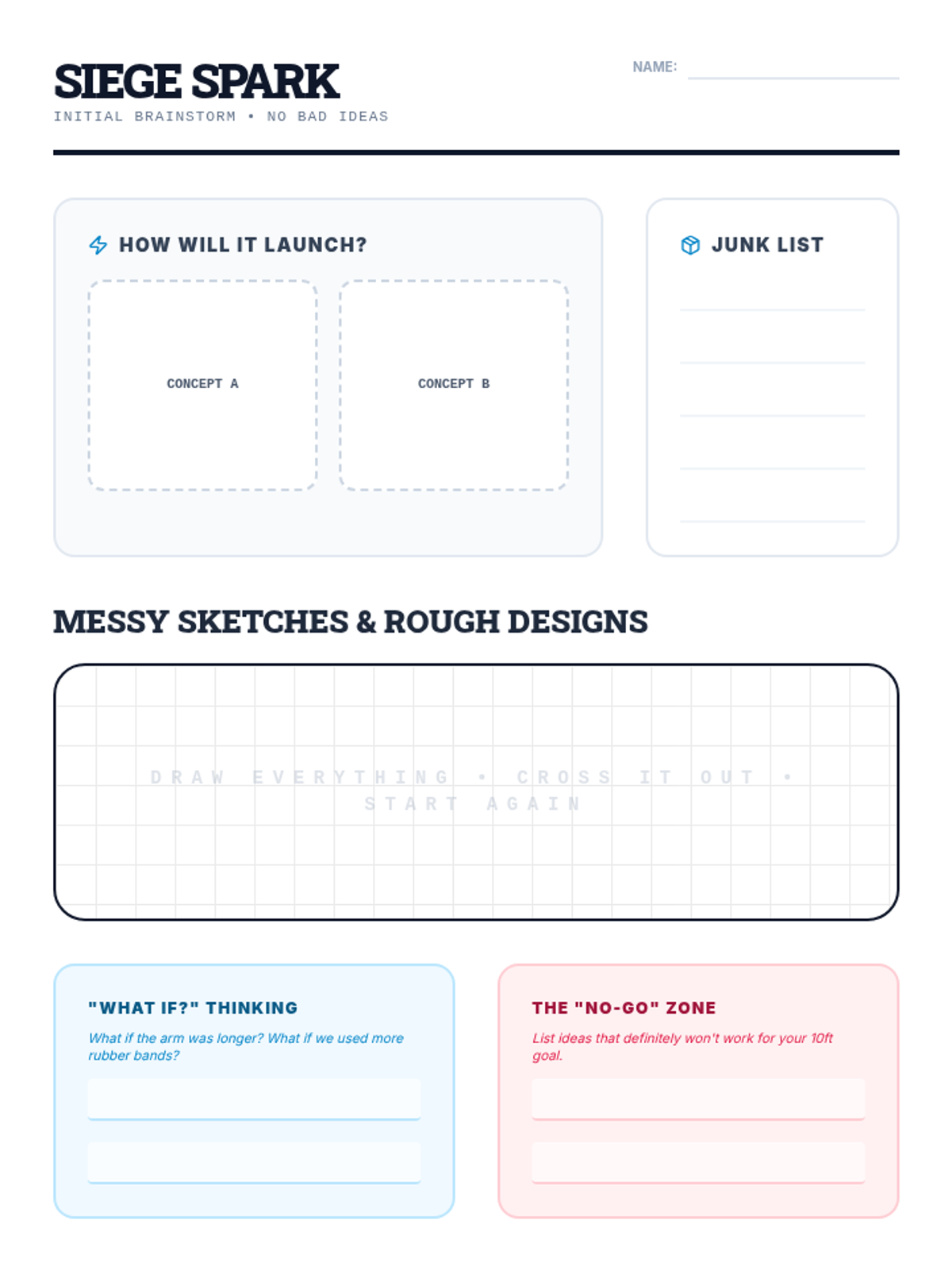
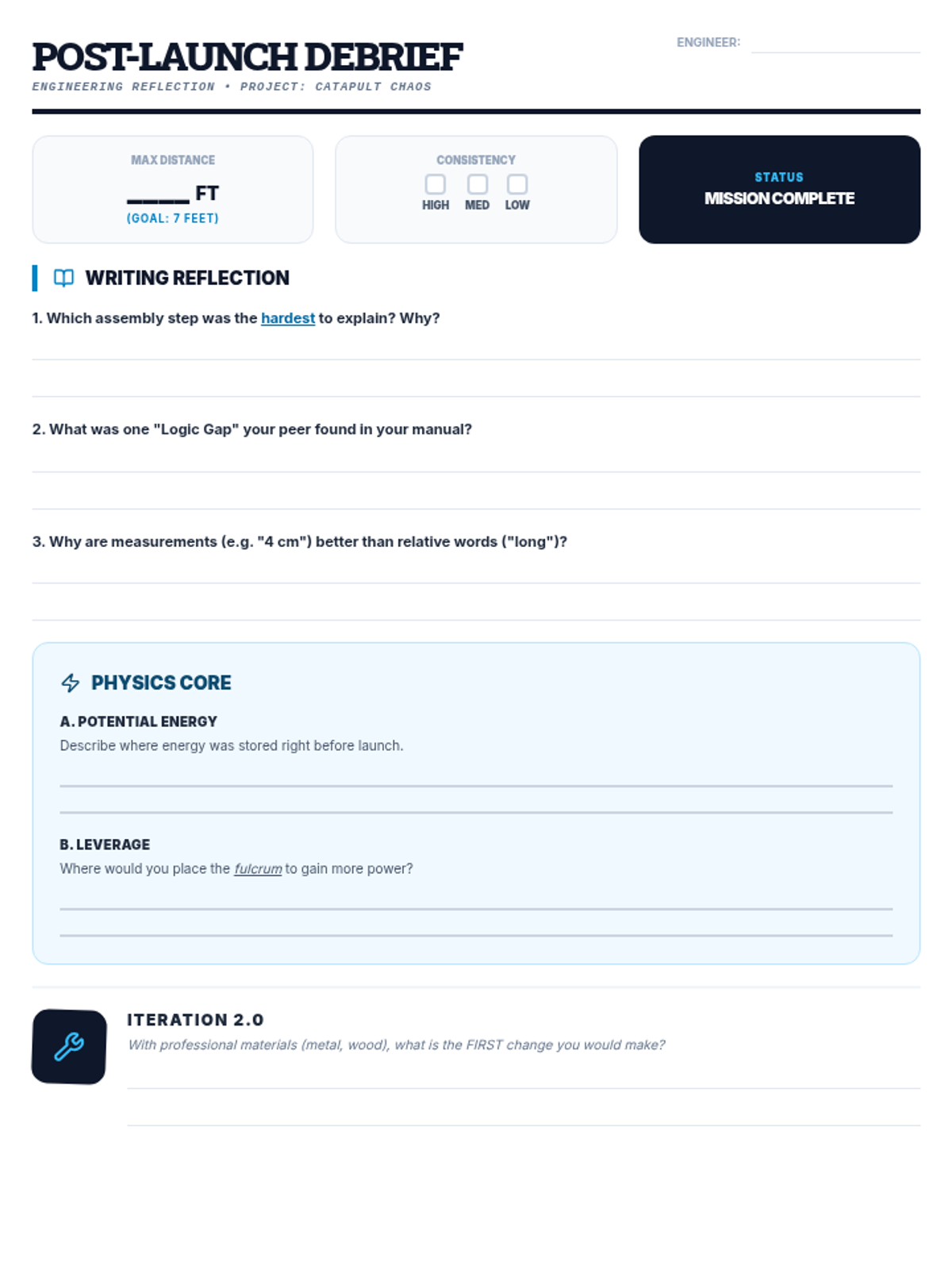
A hands-on STEM project where students design, build, and test catapults while mastering the art of technical instruction writing. Students will apply physics concepts and the engineering design process to create a functional siege engine and document its construction with precision.
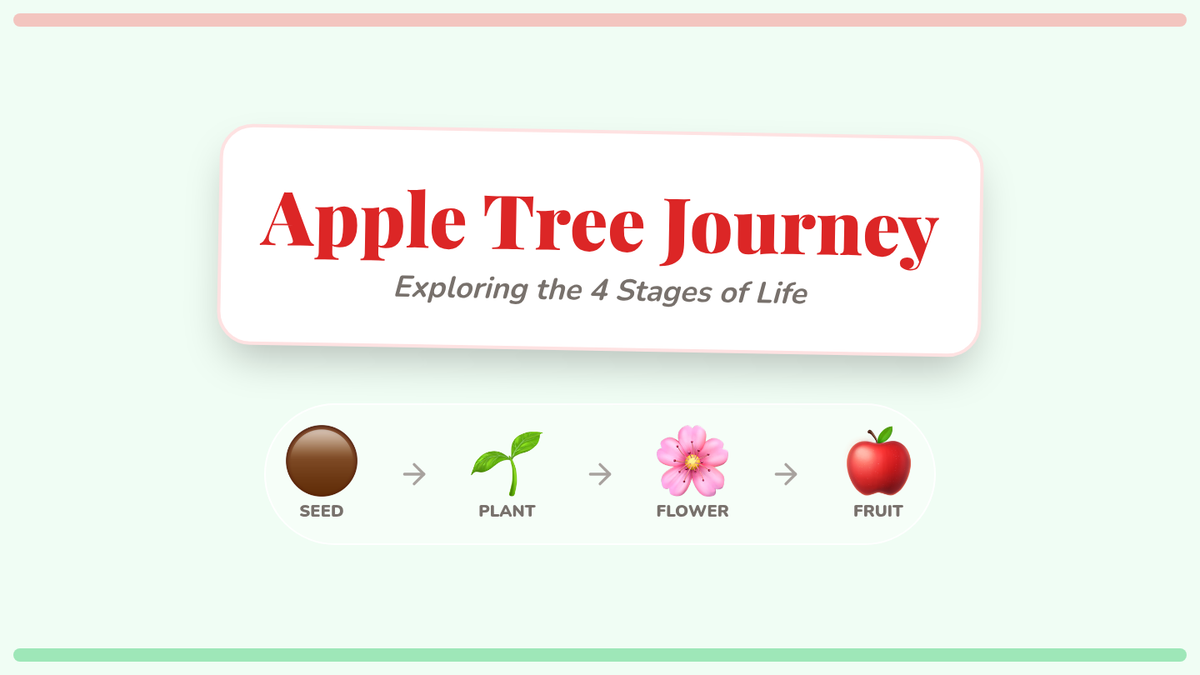
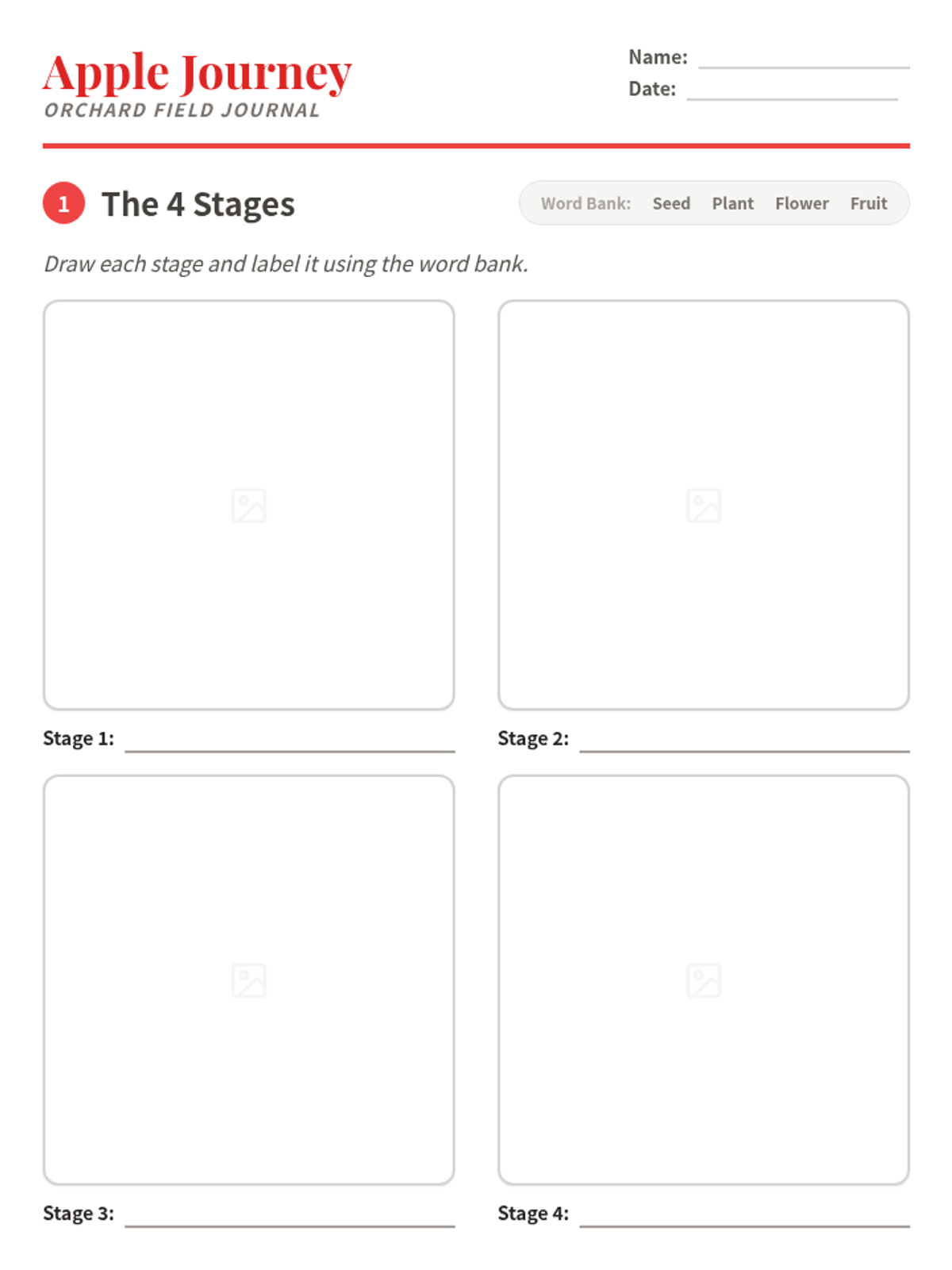
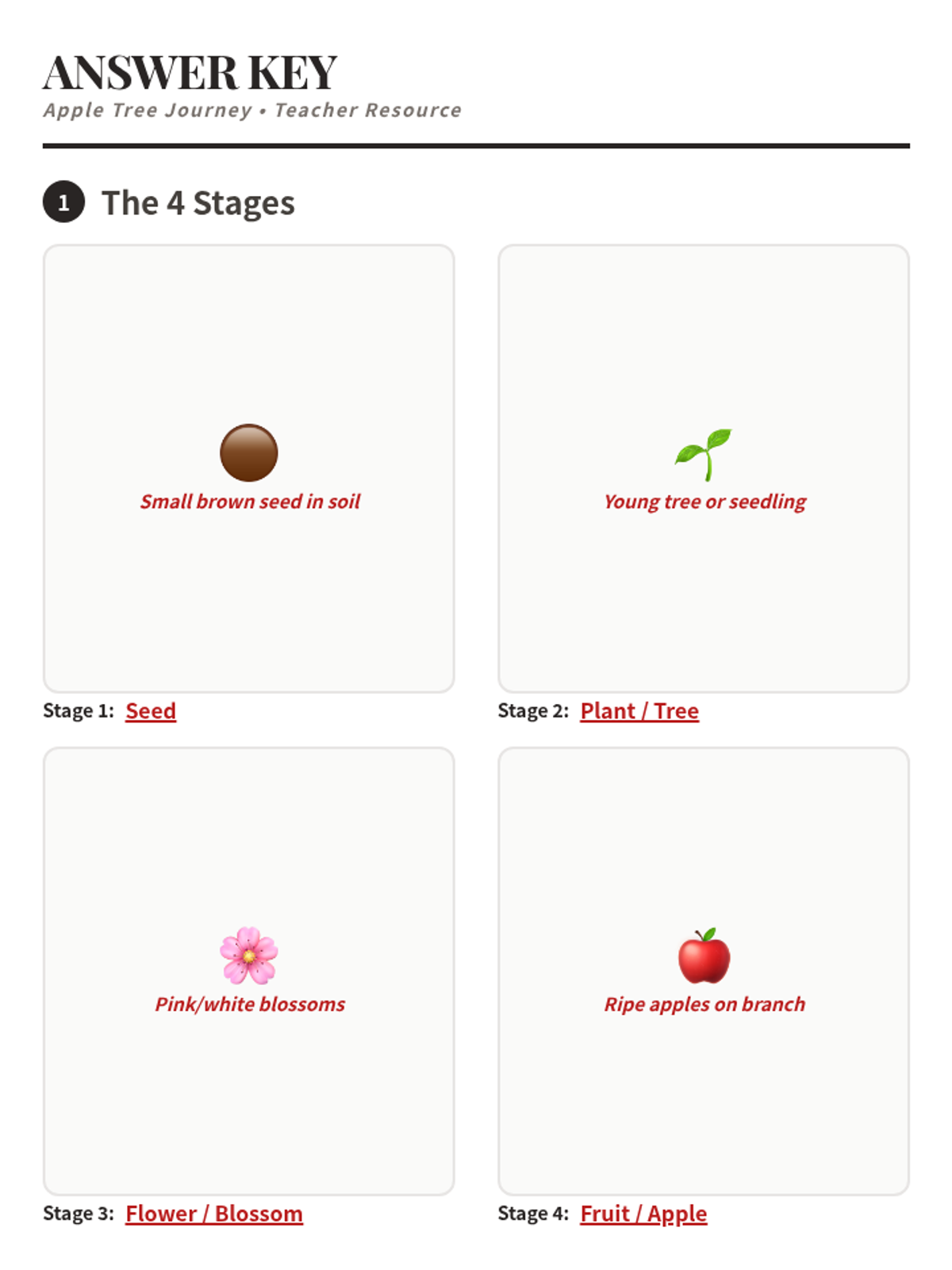
An exploration of the four life cycle stages of an apple tree: seed, plant (seedling/tree), flower, and fruit, specifically designed for 2nd-grade students.
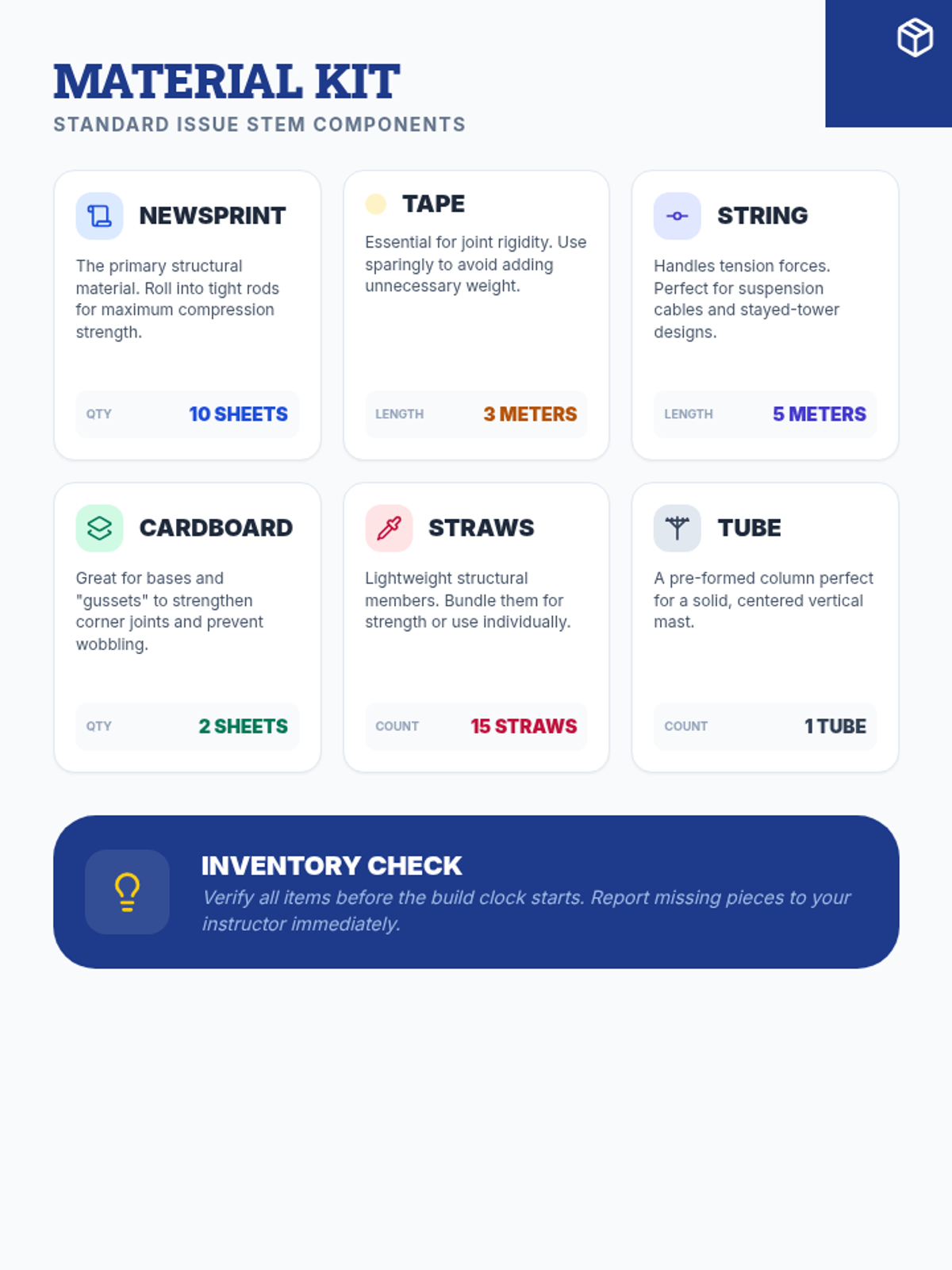
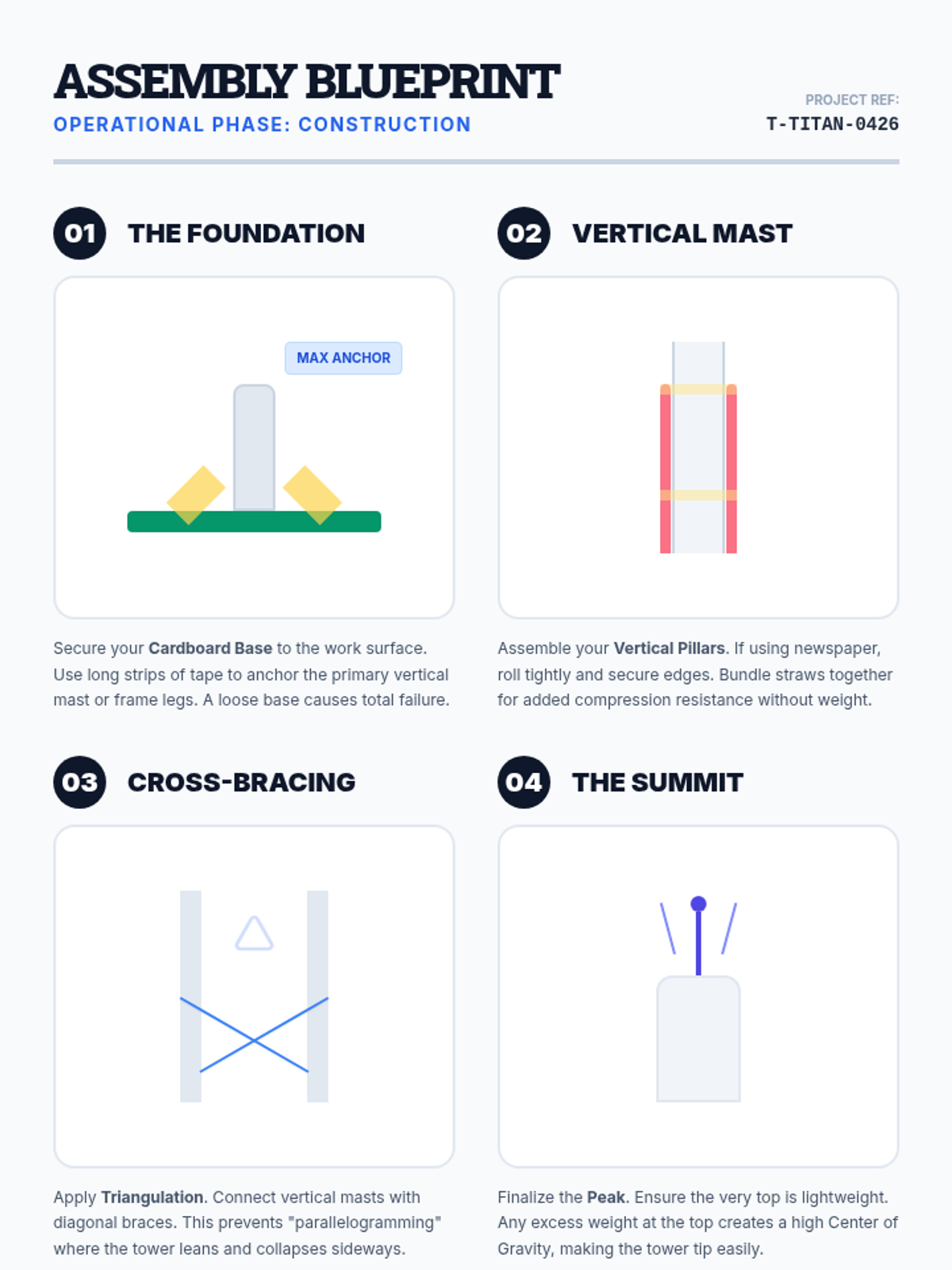
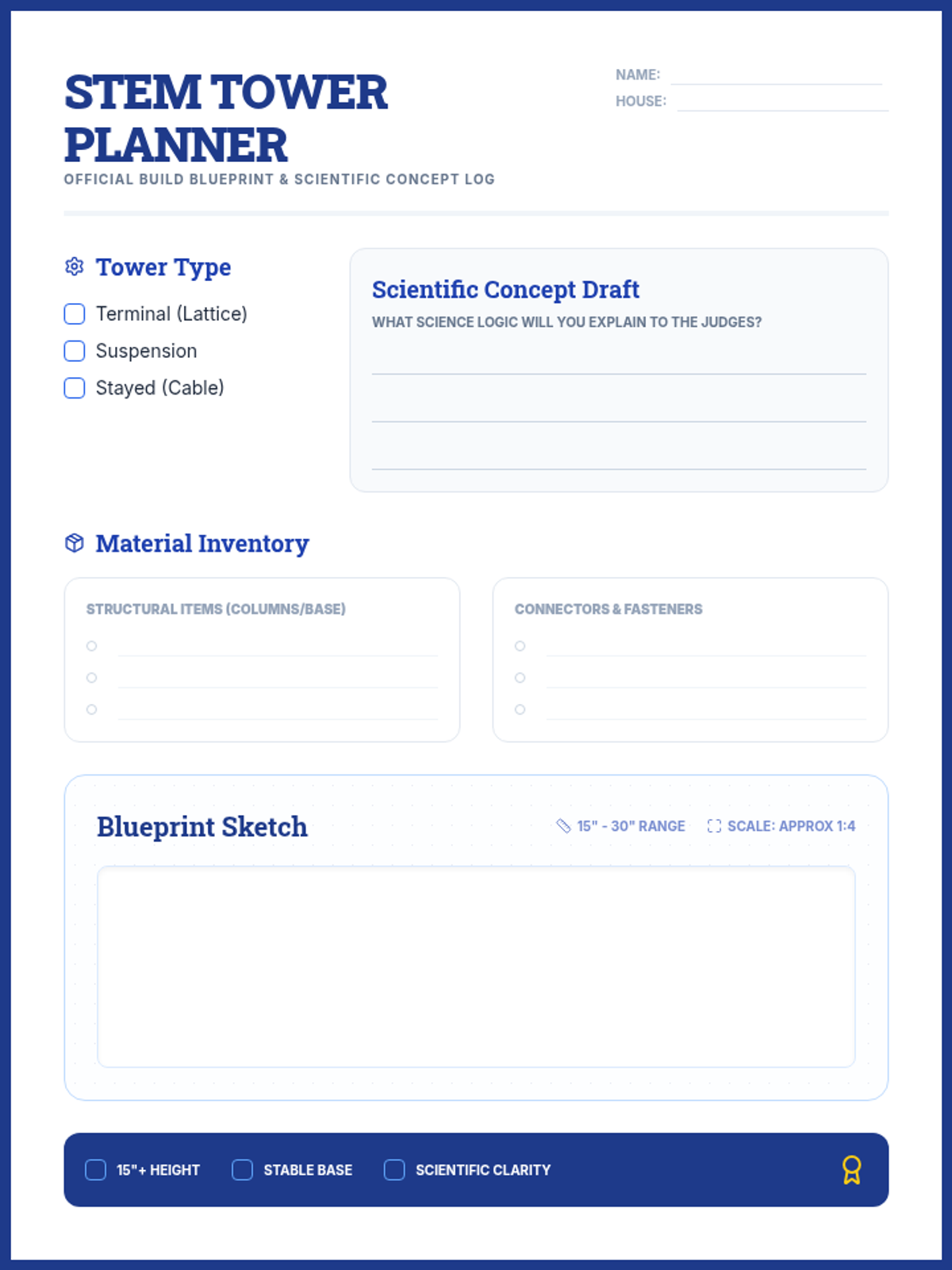
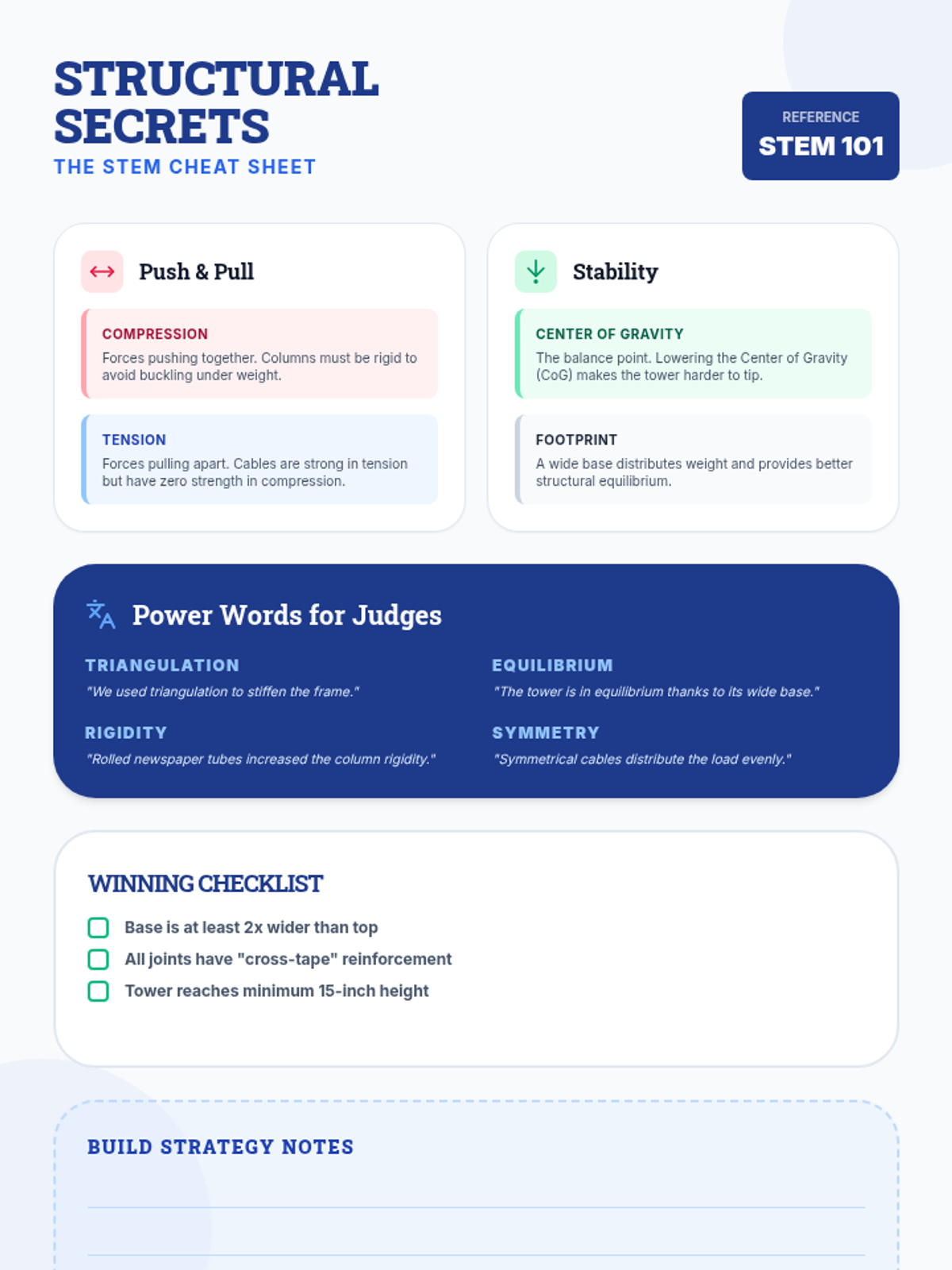
A comprehensive guide for students participating in a STEM tower building challenge, focusing on structural engineering, recycled material innovation, and scientific explanation.
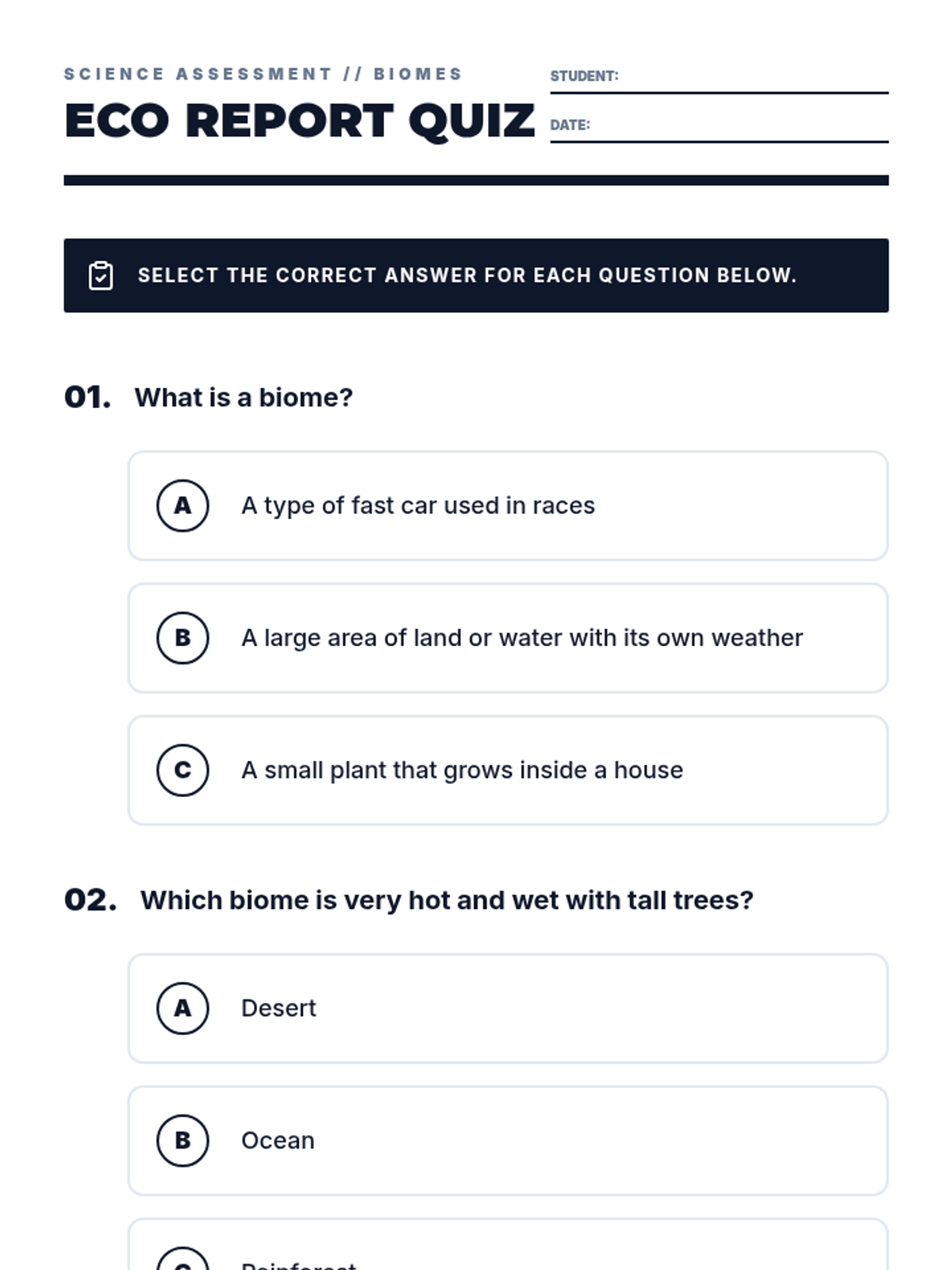
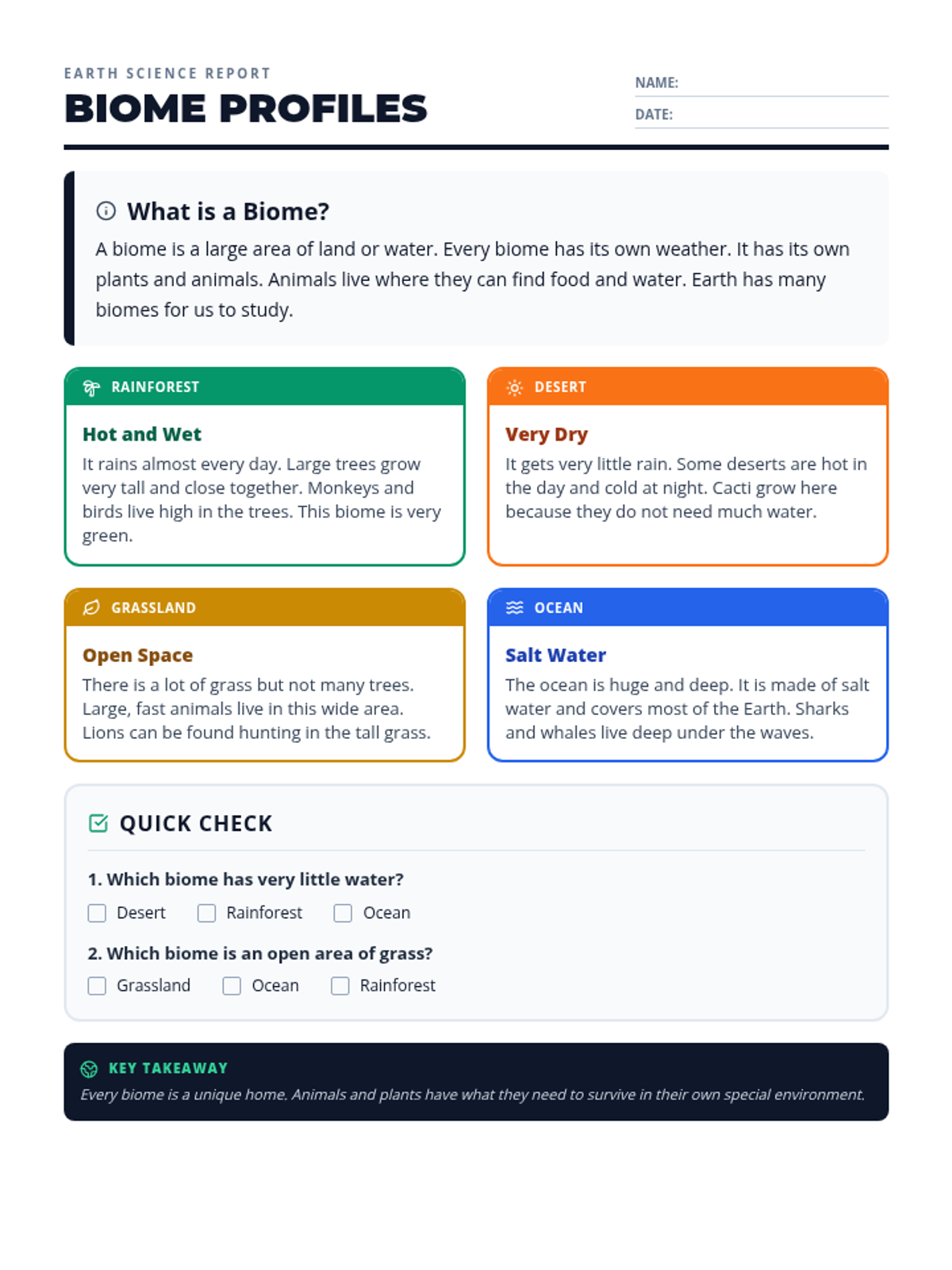
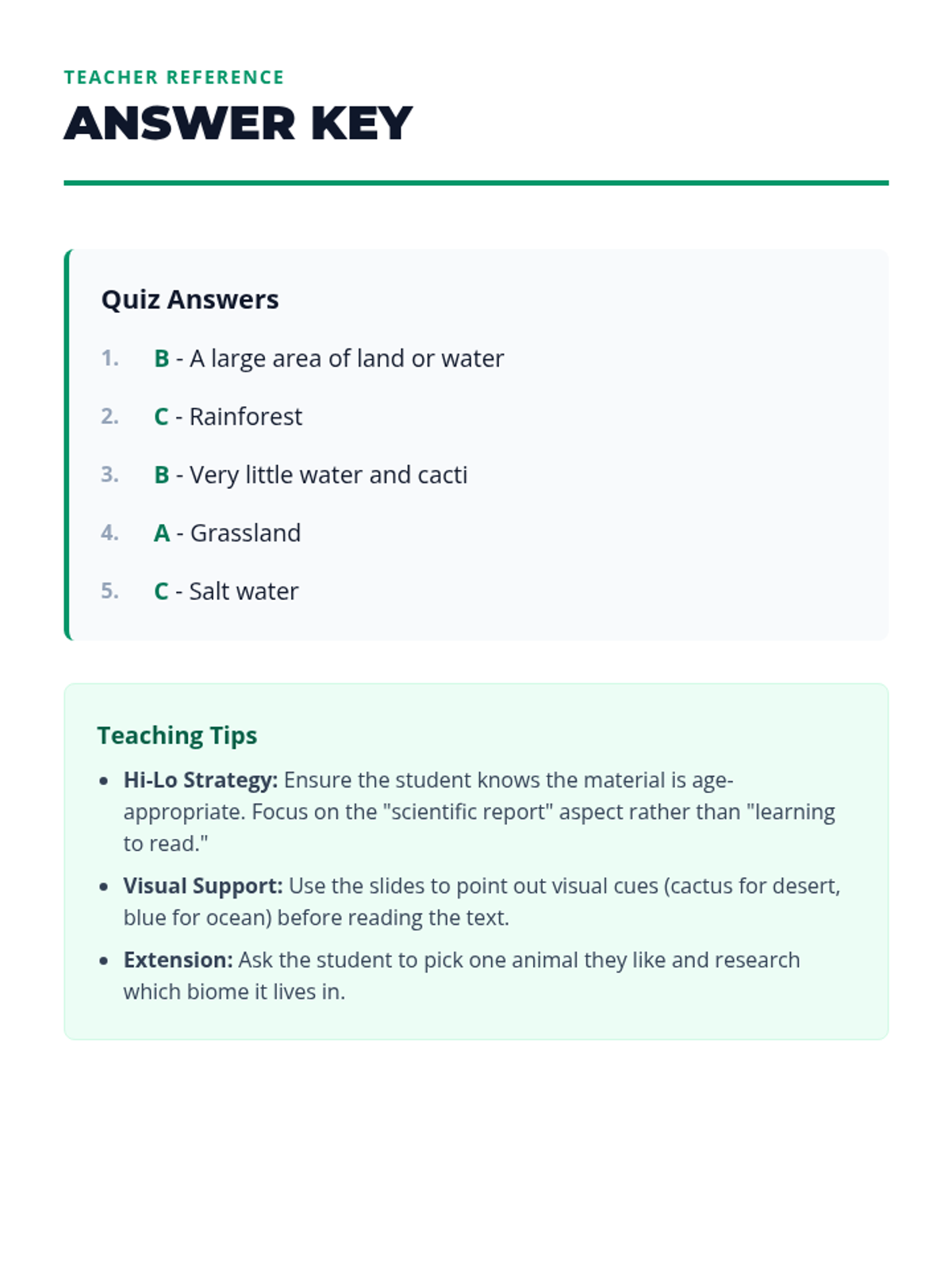
A lesson introducing four major biomes (Rainforest, Desert, Grassland, and Ocean) designed for high-interest, low-readability (Hi-Lo) instruction. This lesson bridges 2nd-grade reading levels with content suitable for a 14-year-old student.
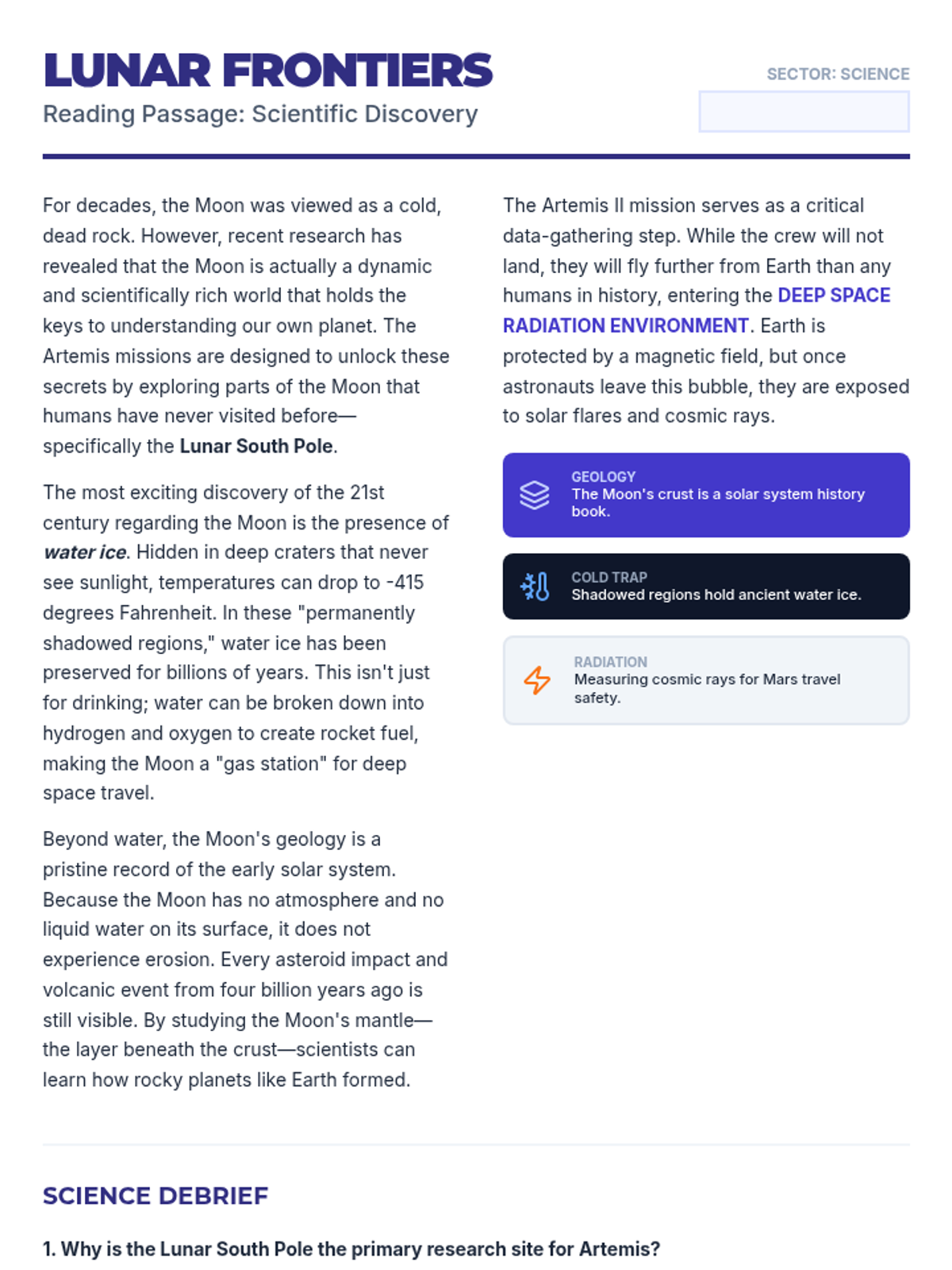
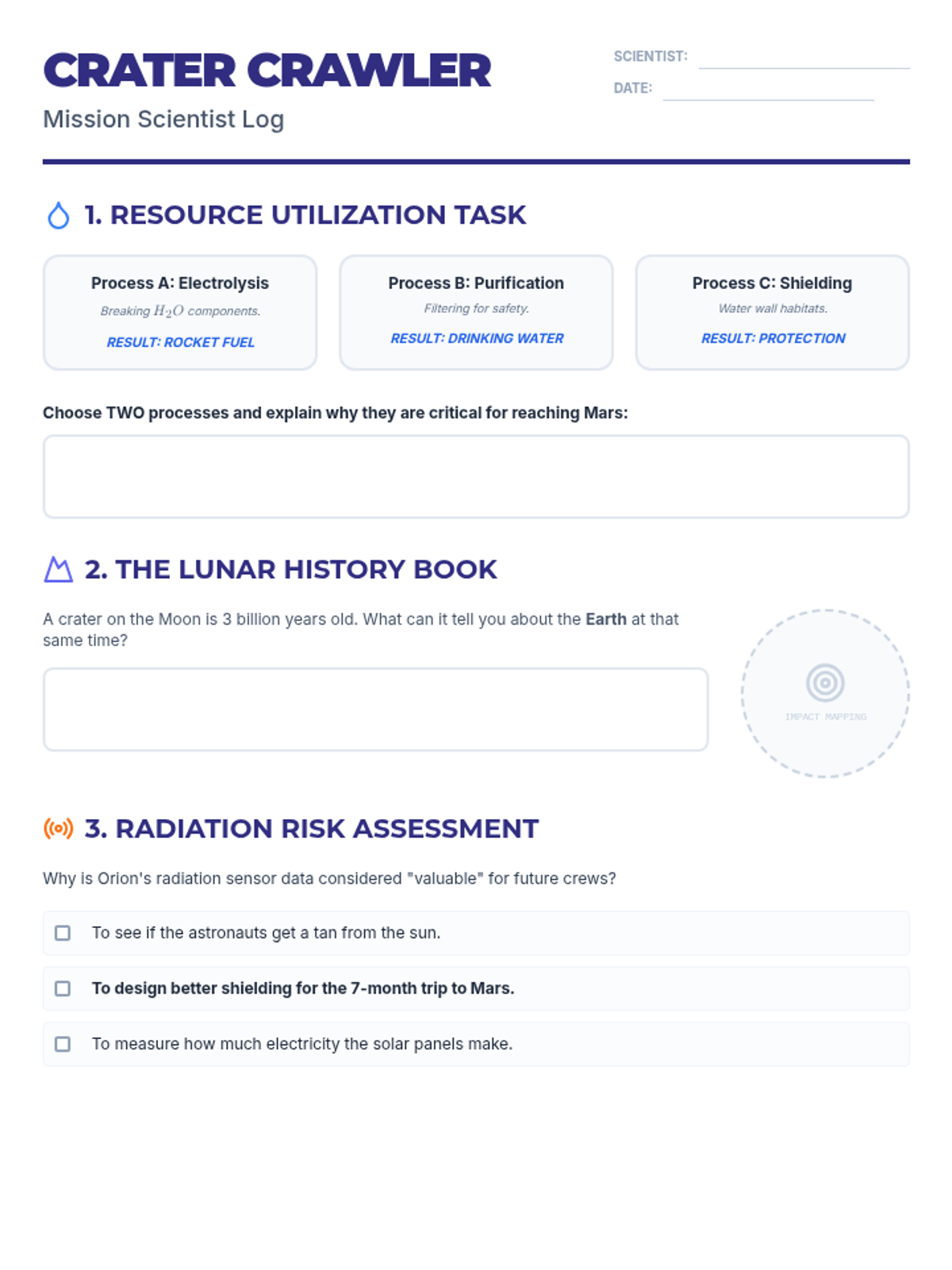
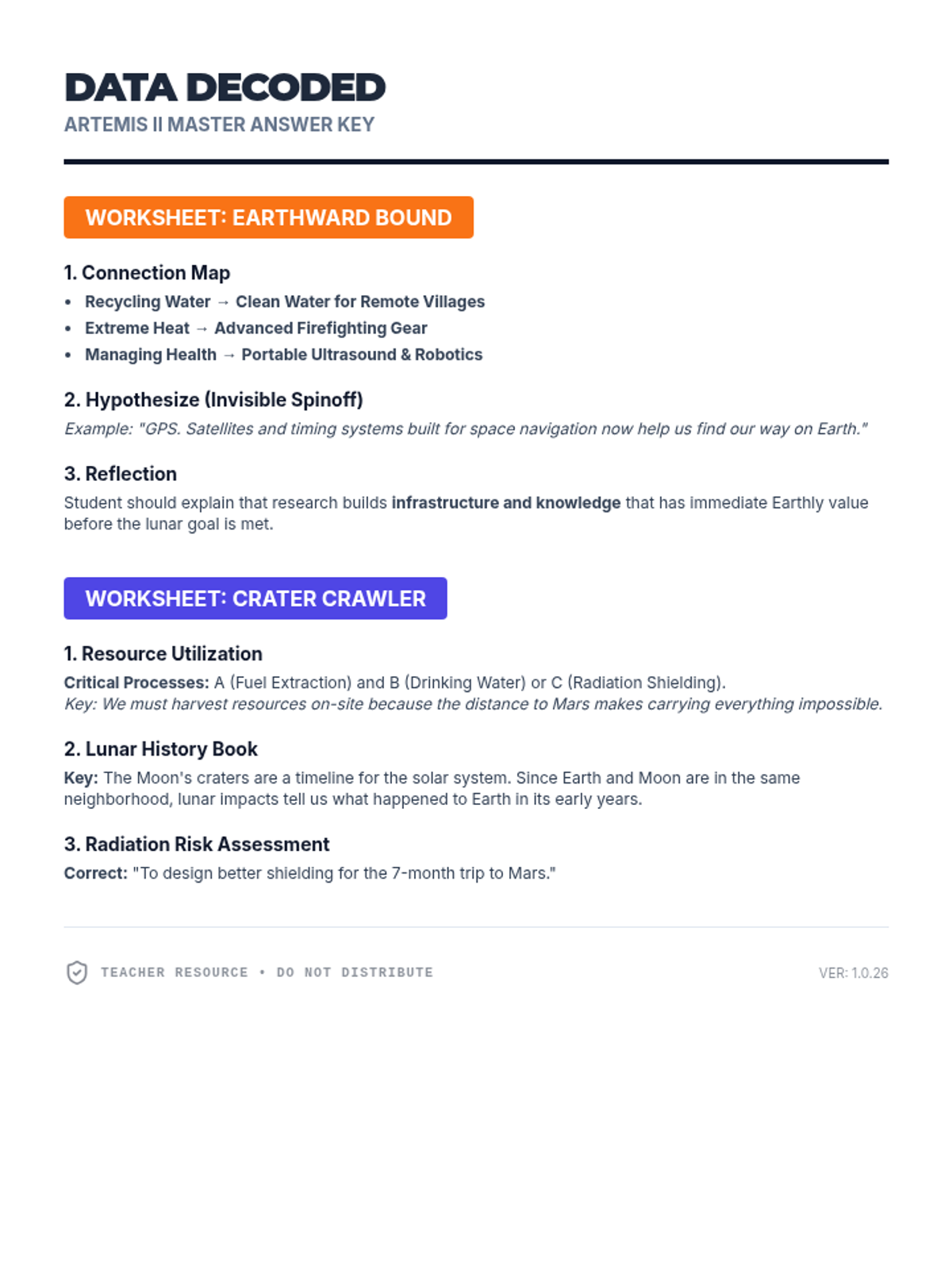
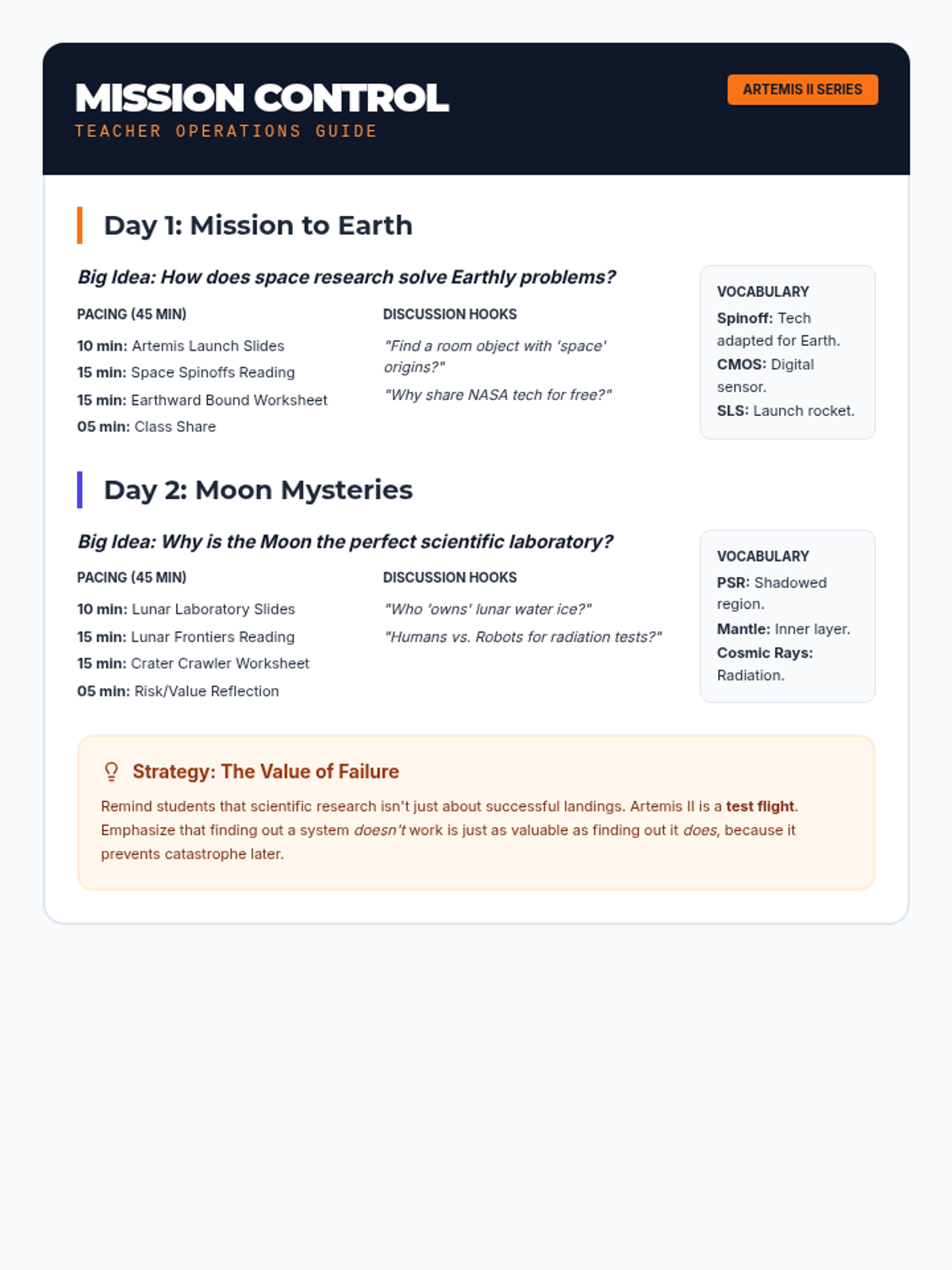
Explores the scientific goals of the Artemis missions, including lunar geology, the search for water ice, and using the Moon as a stepping stone for deep space exploration.
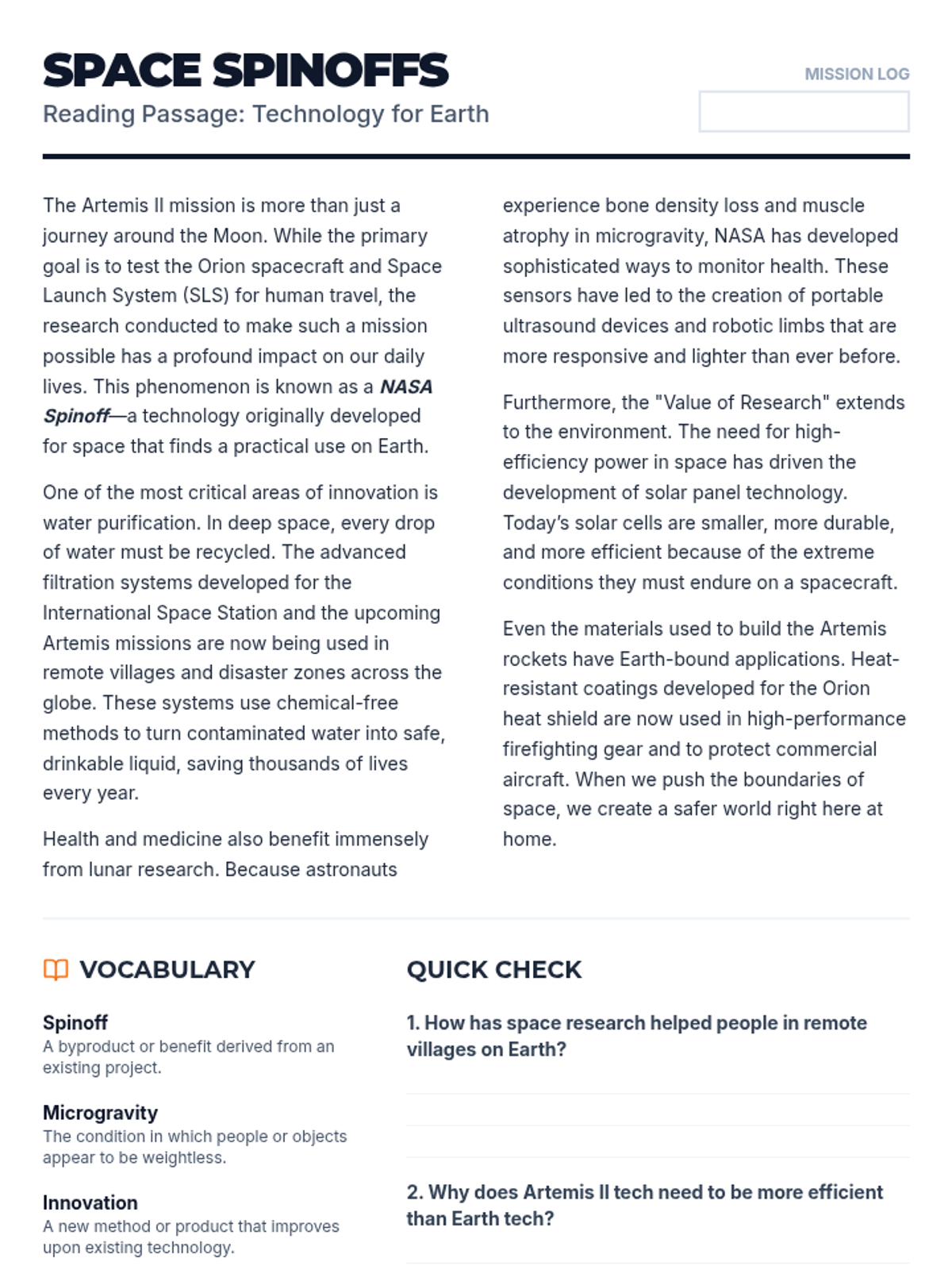
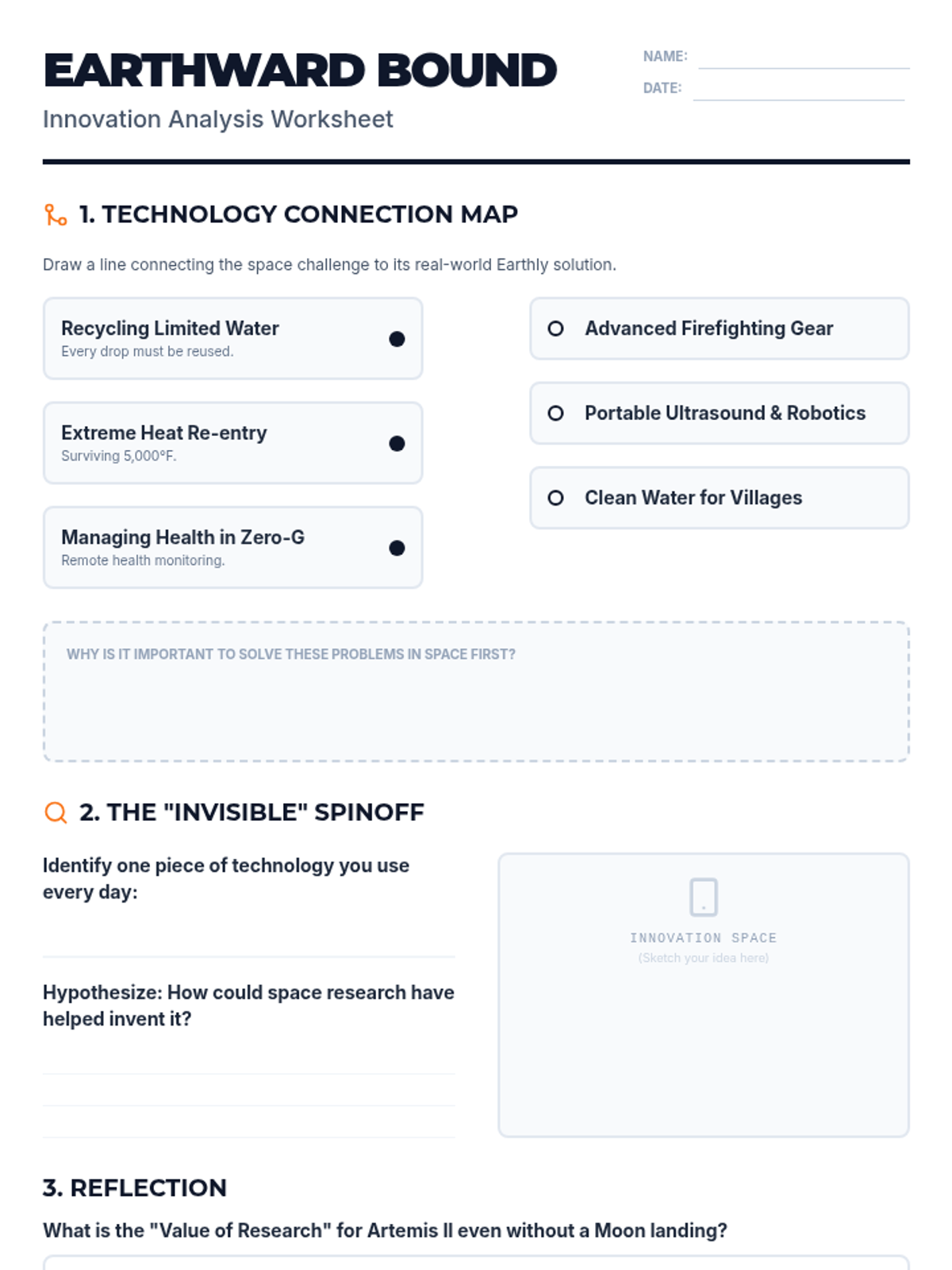
Focuses on the Artemis II mission's role in driving technological advancements that benefit life on Earth, from water purification to advanced materials.
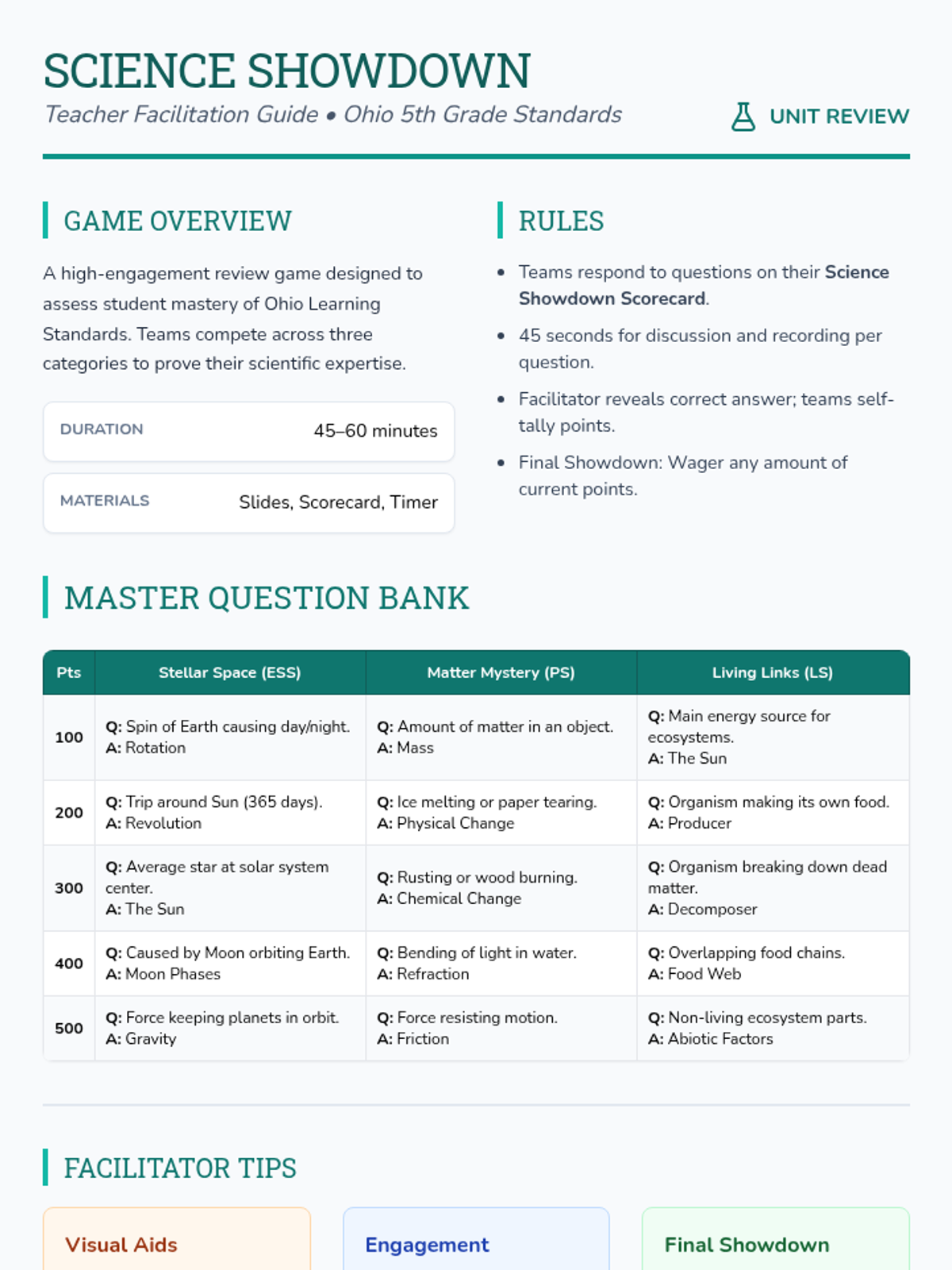
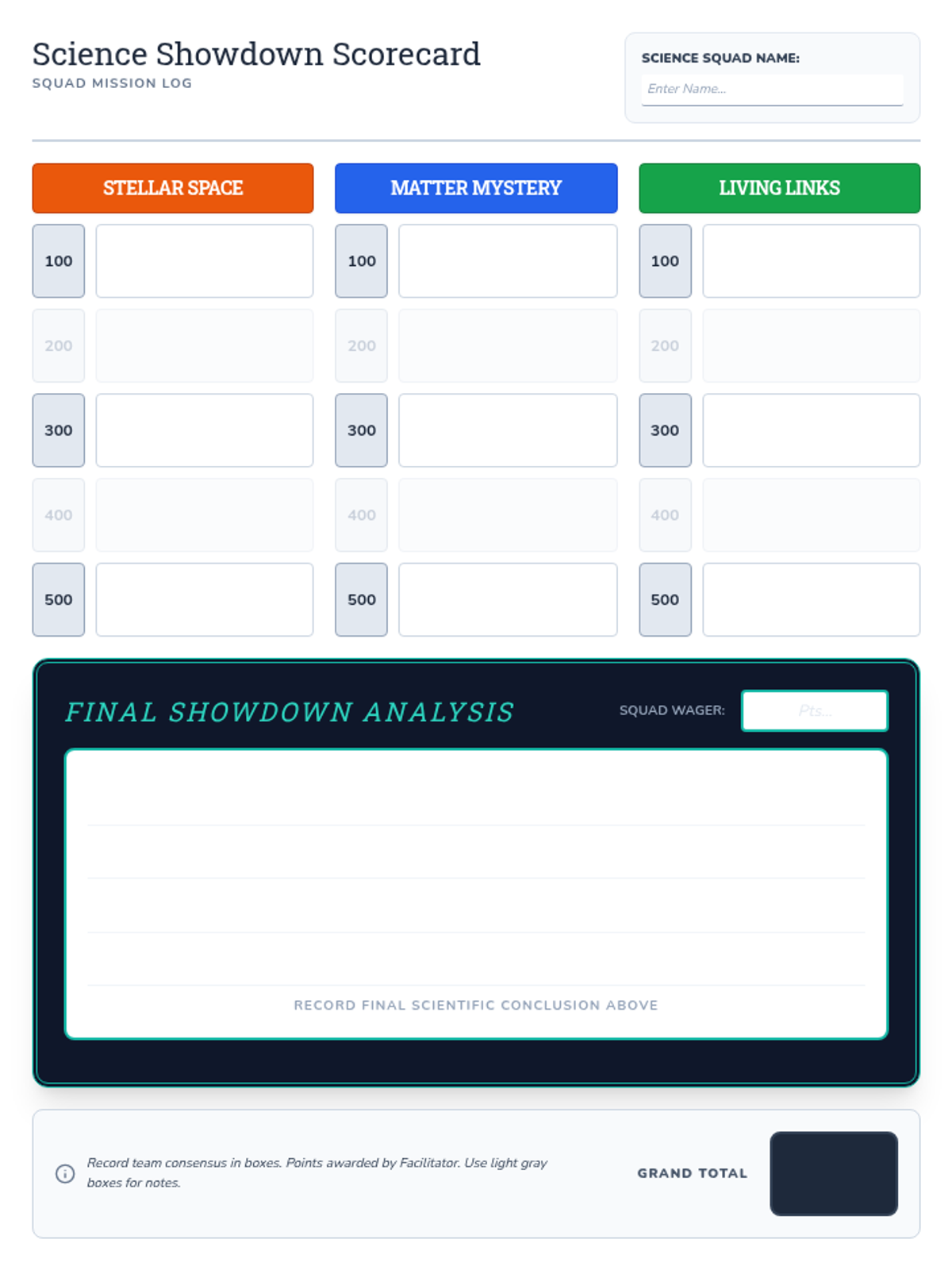
A comprehensive review game covering the Ohio 5th Grade Science Standards, including Earth and Space Science, Physical Science, and Life Science. Students compete in teams to answer curriculum-aligned questions in a high-energy classroom setting.
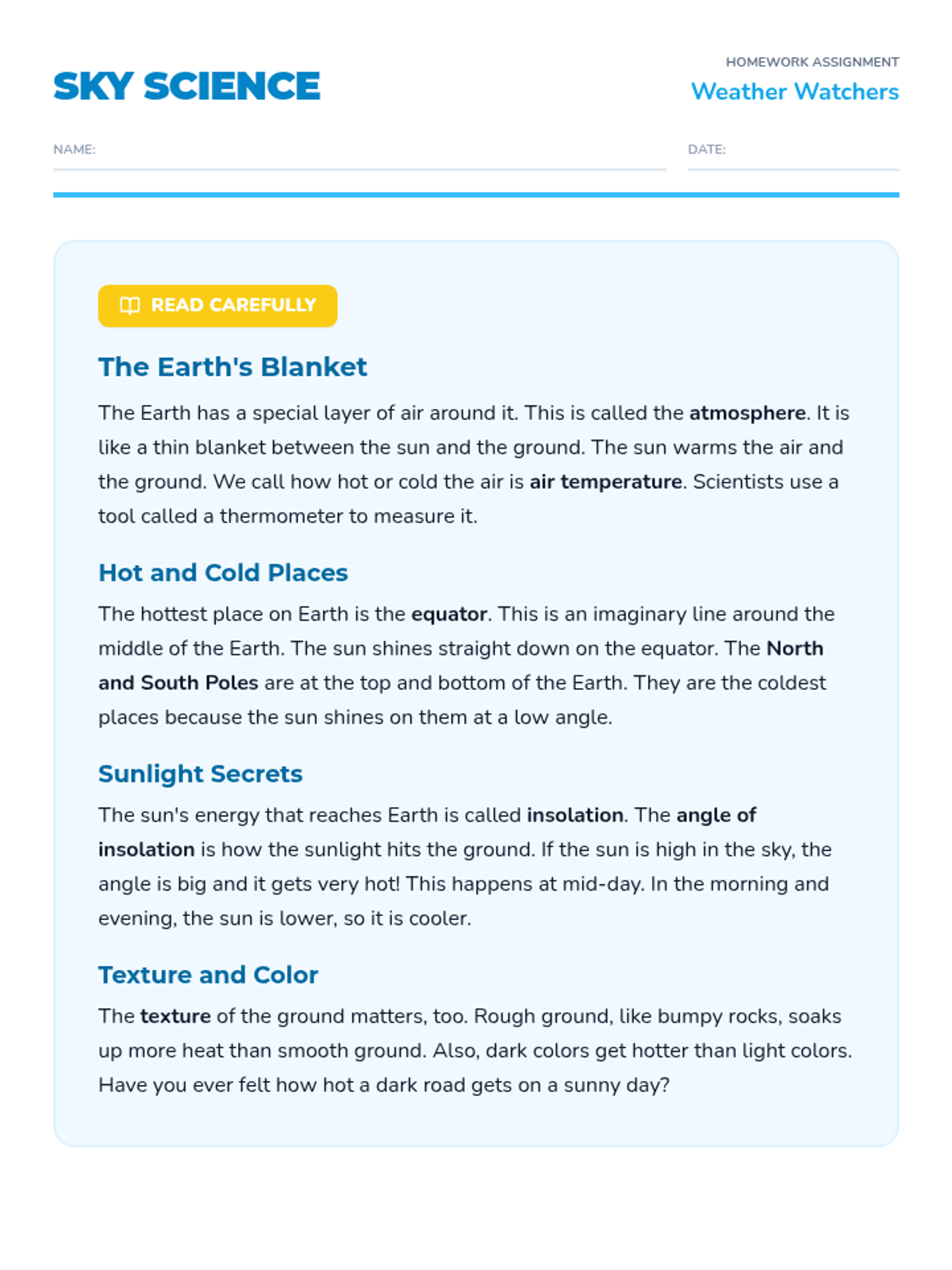
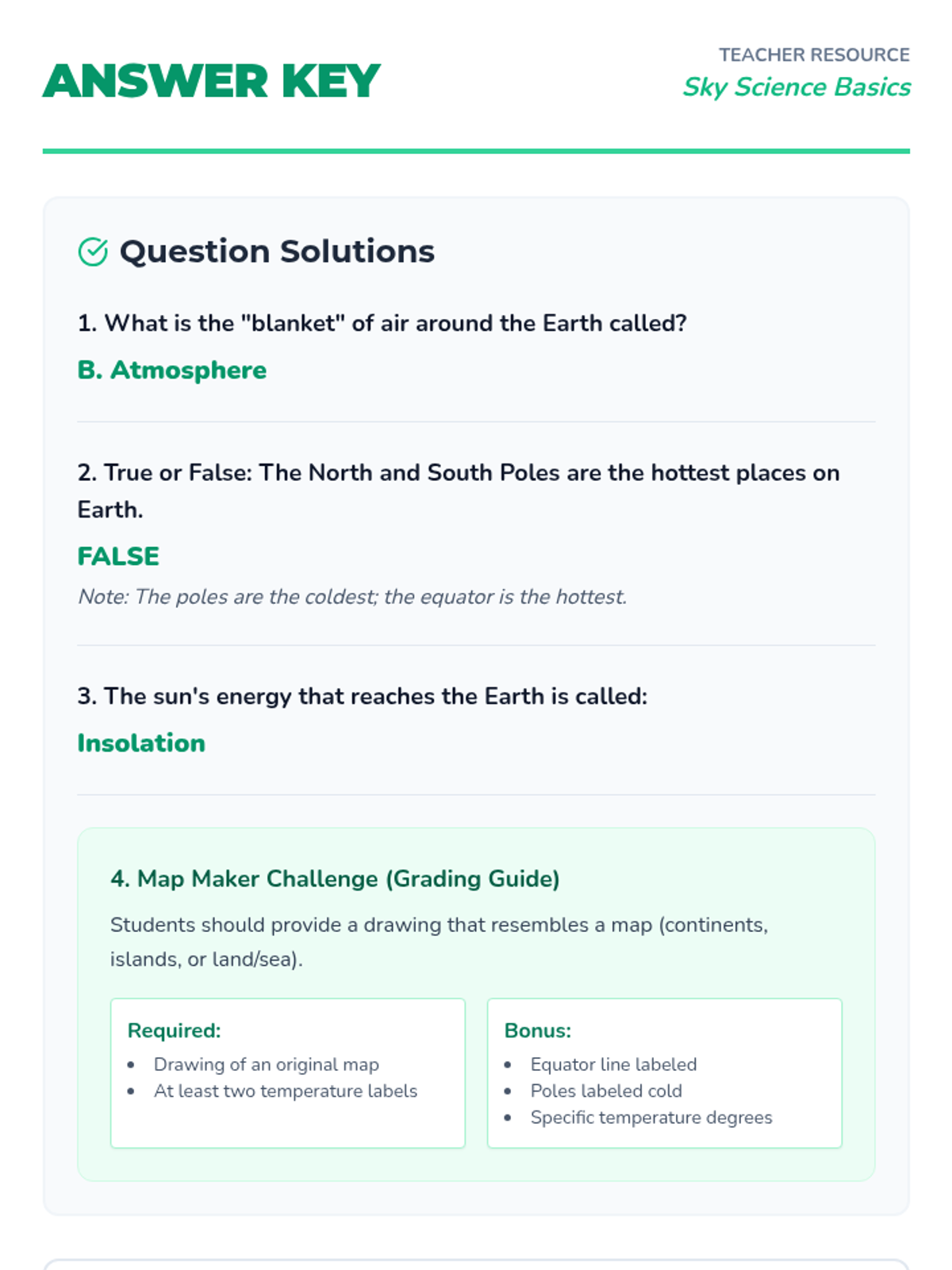
An introductory lesson on the Earth's atmosphere and how air temperature changes due to factors like location, texture, and color, adapted for 2nd-grade readers.
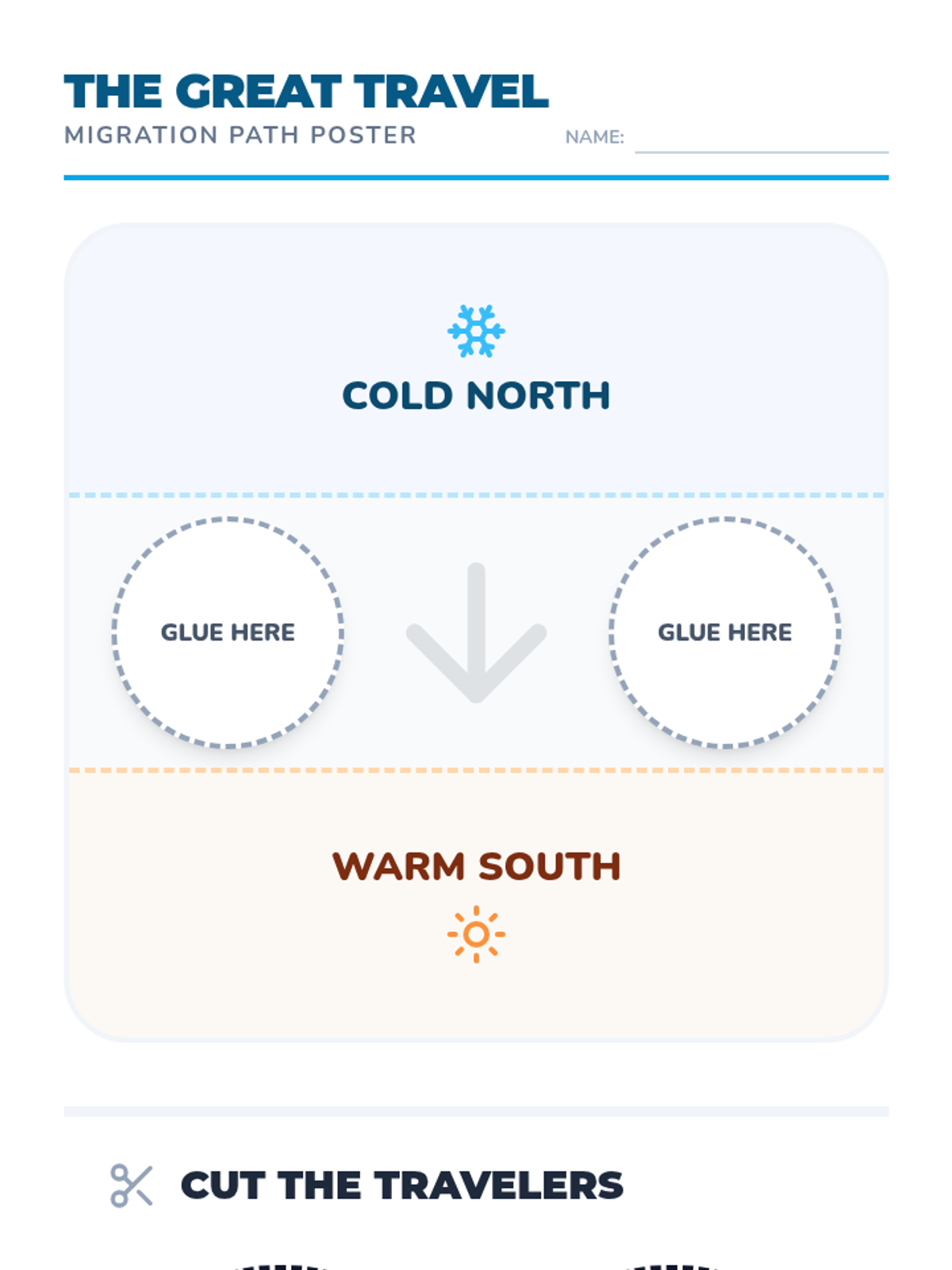
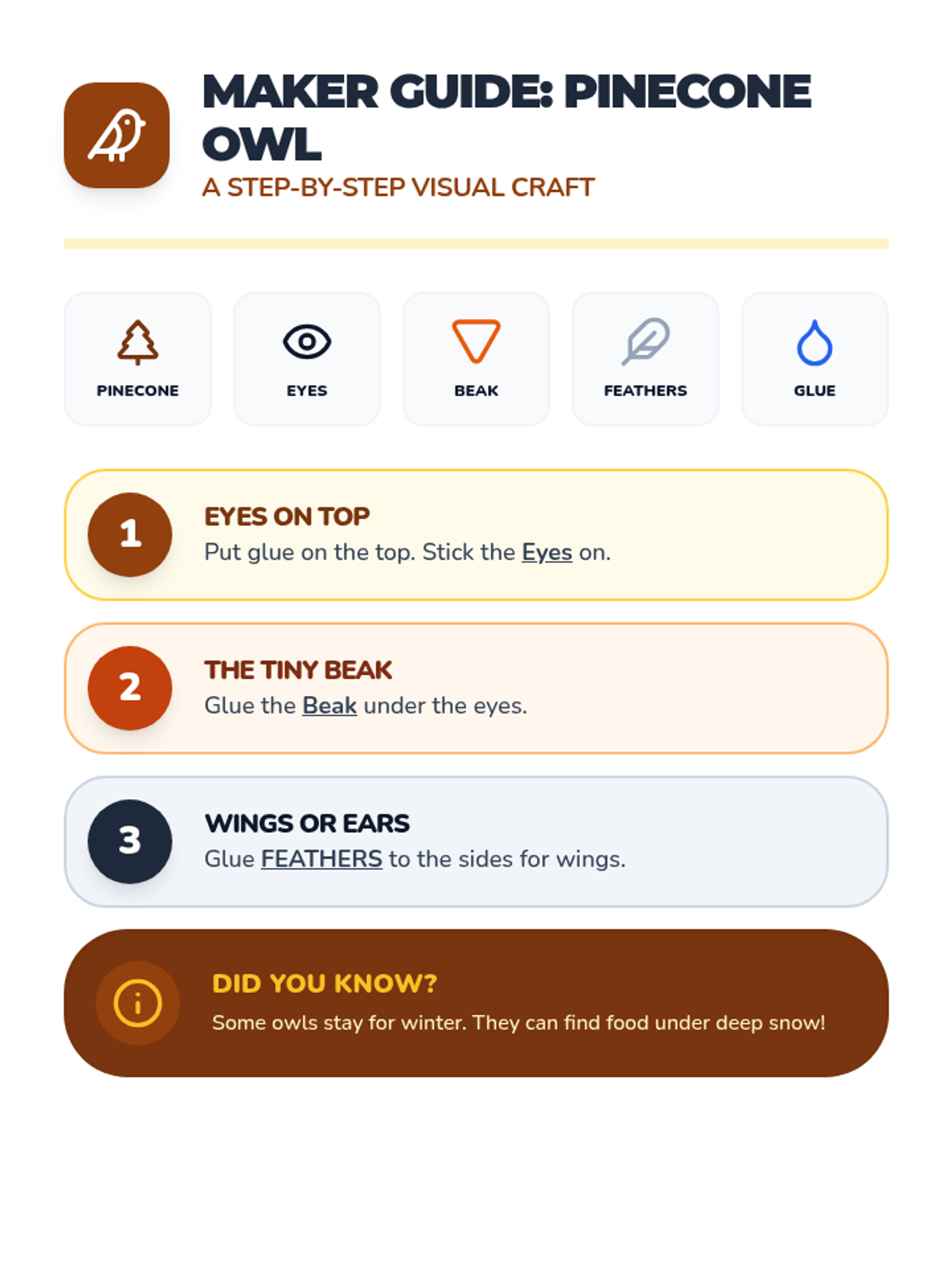
Investigate how animals prepare for winter with a migration map poster and a pinecone animal craft.
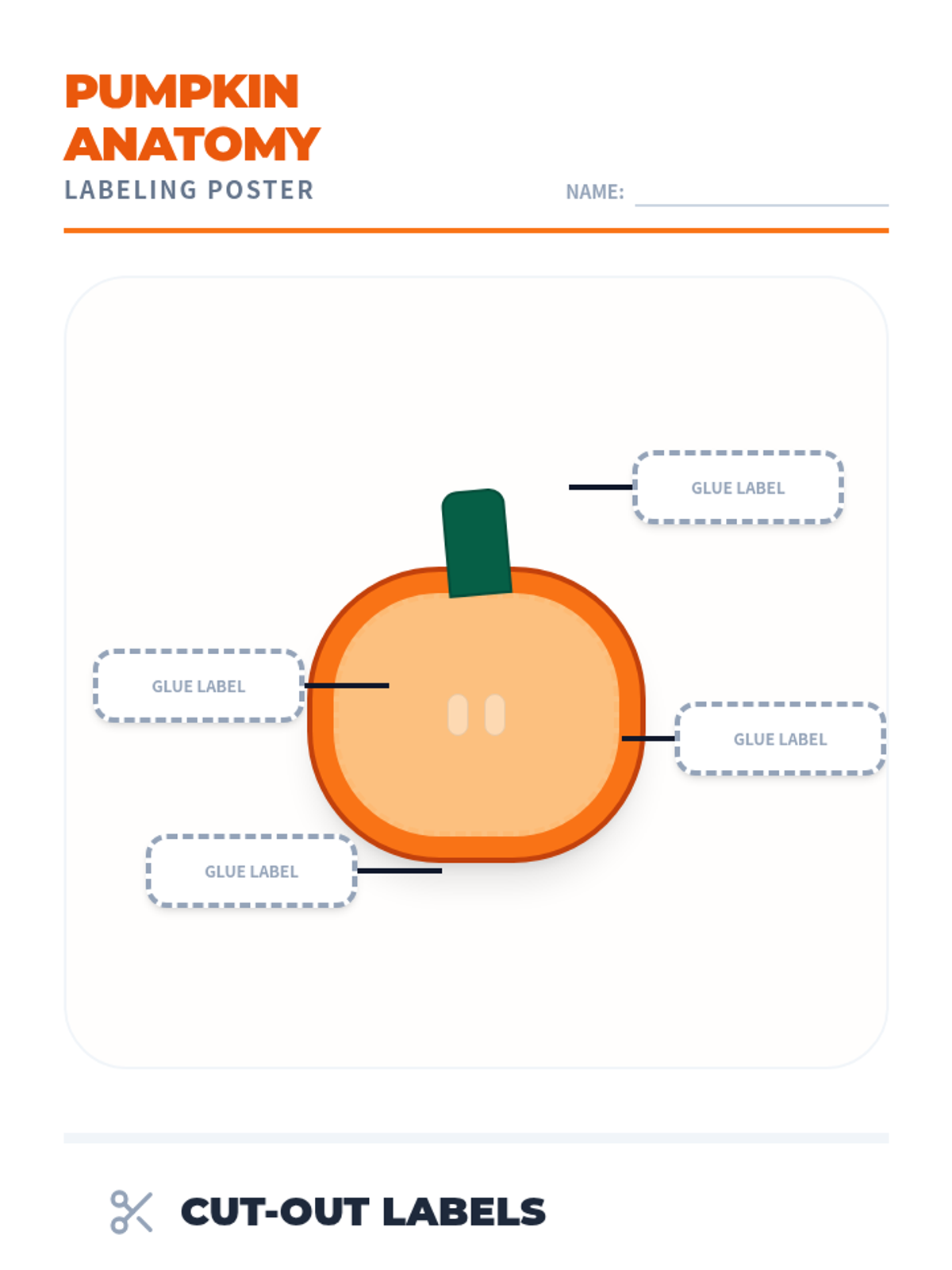
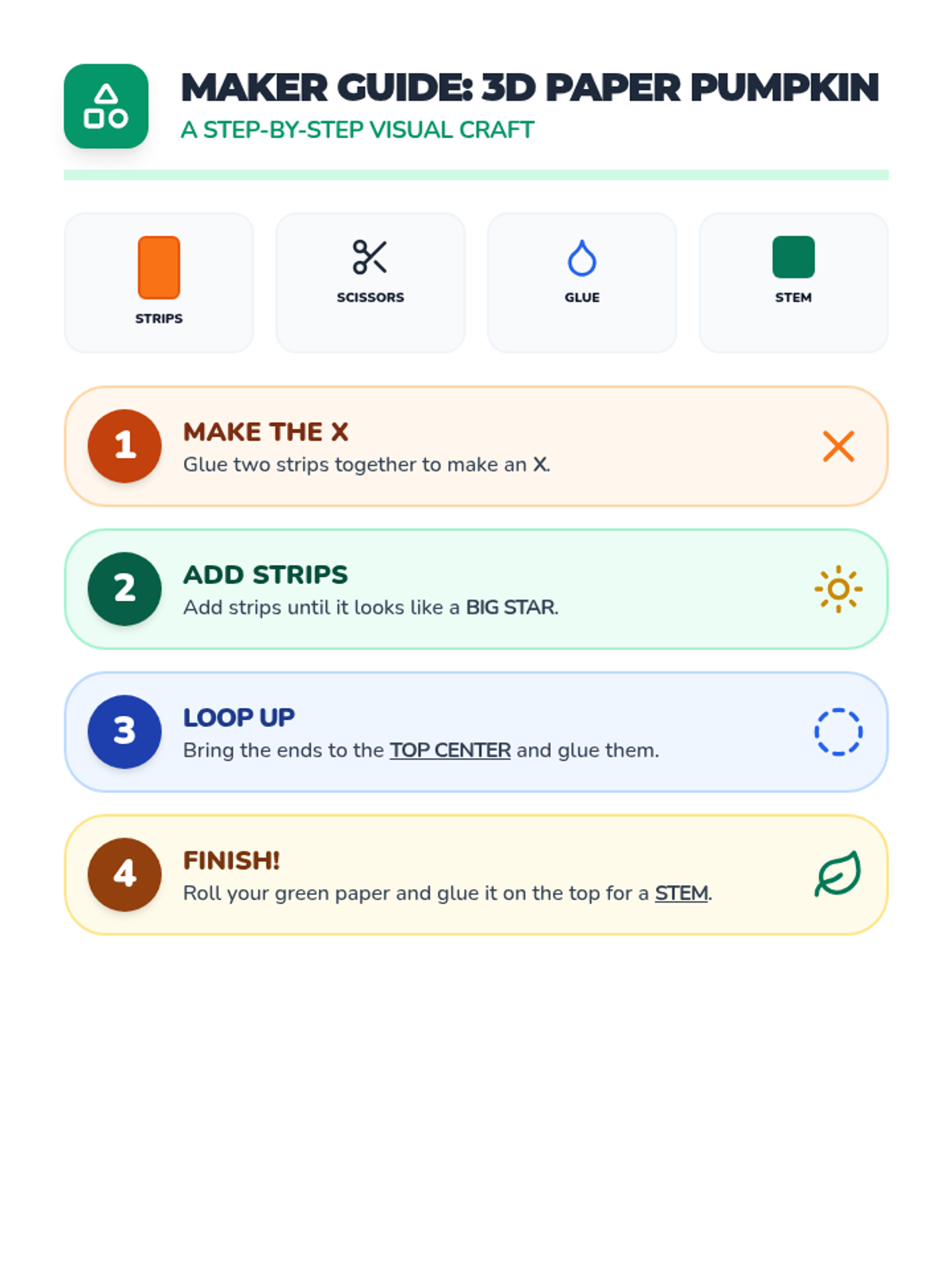
Learn about pumpkin growth and anatomy by creating a geometric pumpkin poster and a 3D paper pumpkin craft.