A hands-on lesson teaching students to differentiate between reducing, reusing, and recycling through visual identification and sorting.
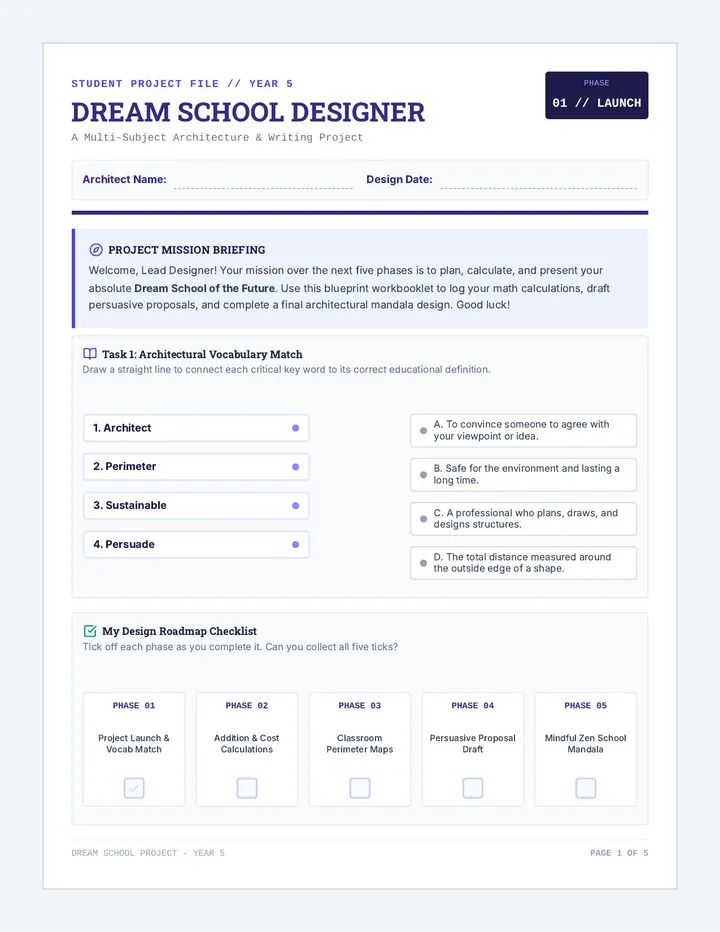
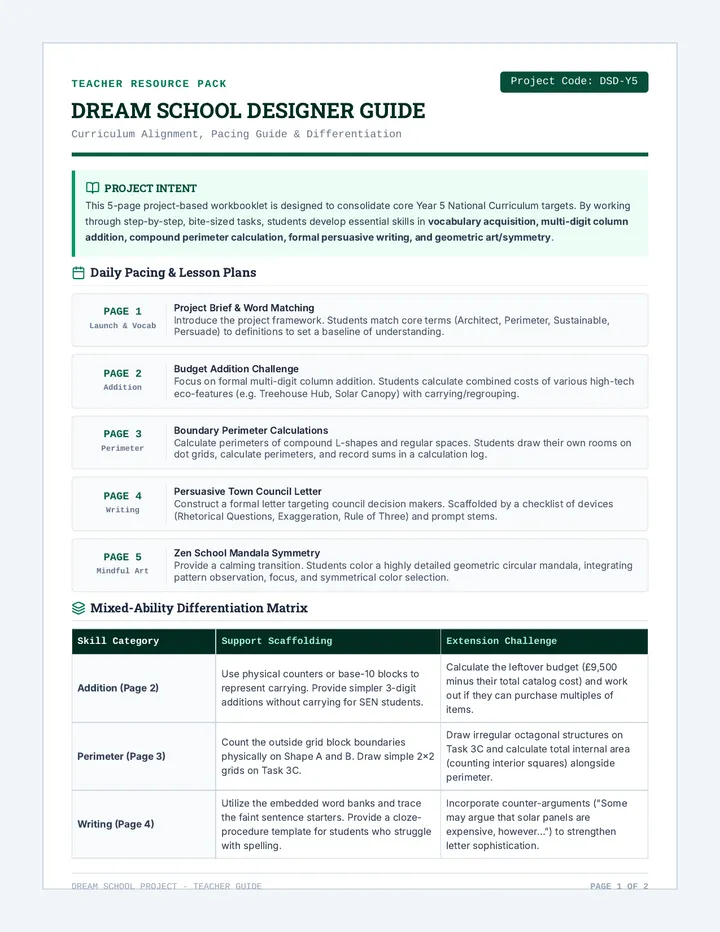
A project-based workbooklet and guide where Year 5 students design their ultimate future school. The project is broken down into structured, bite-sized daily steps integrating English, Maths, Science, Geography, and Art.
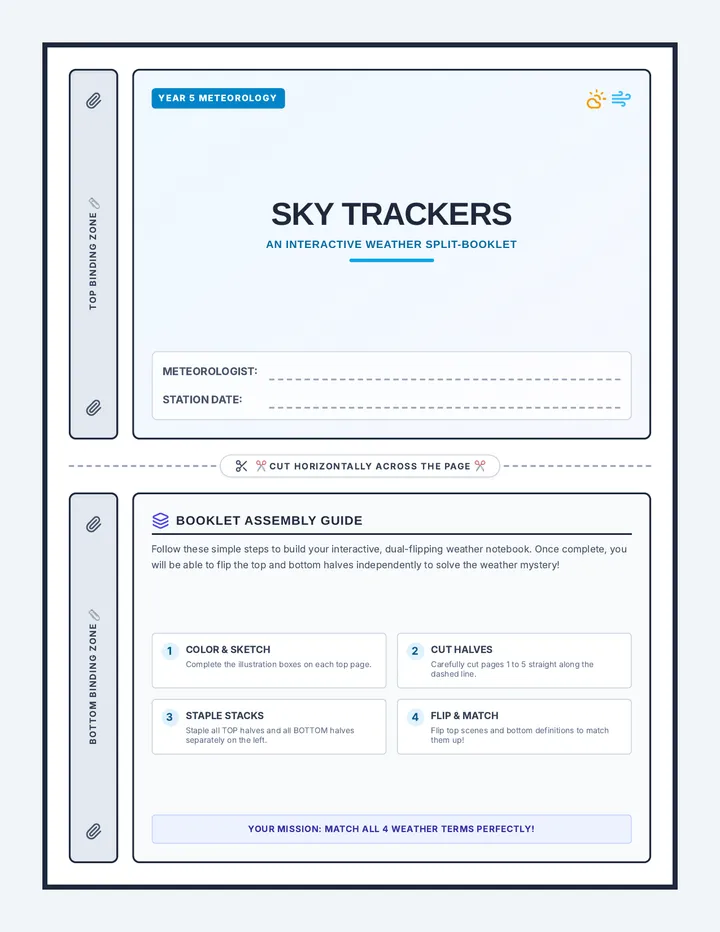
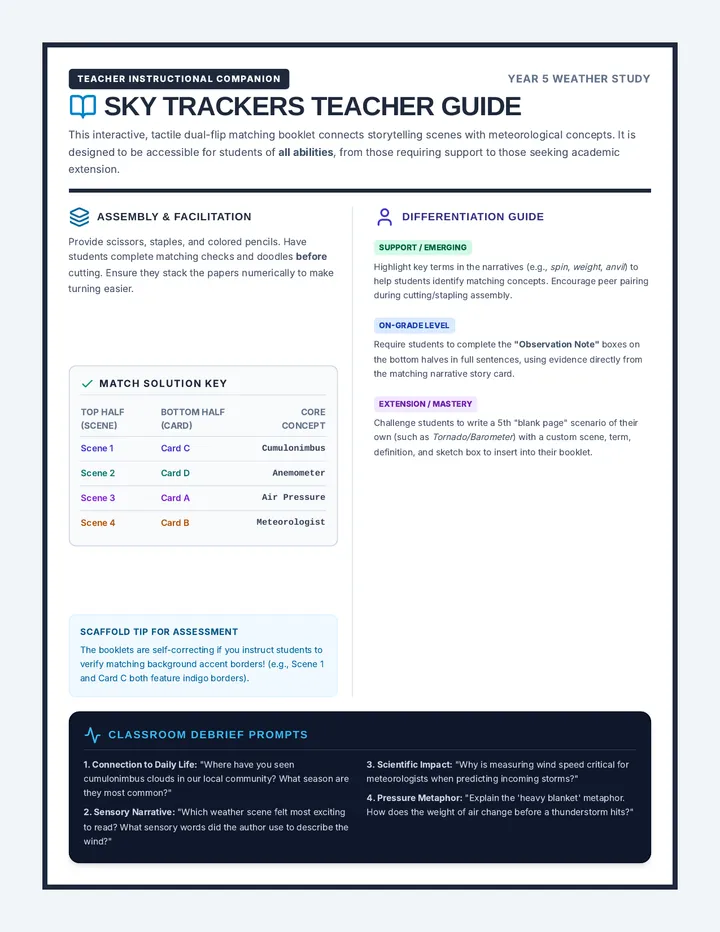
An interactive meteorological study where students construct and solve a dual-flip split booklet to match descriptive weather narratives with scientific terms and definitions.
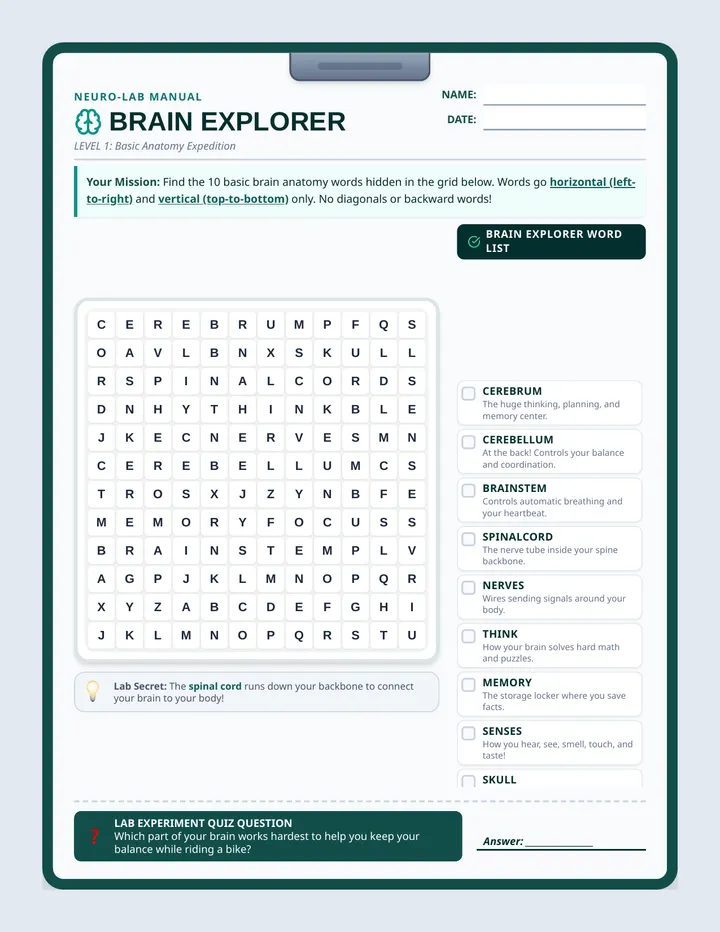
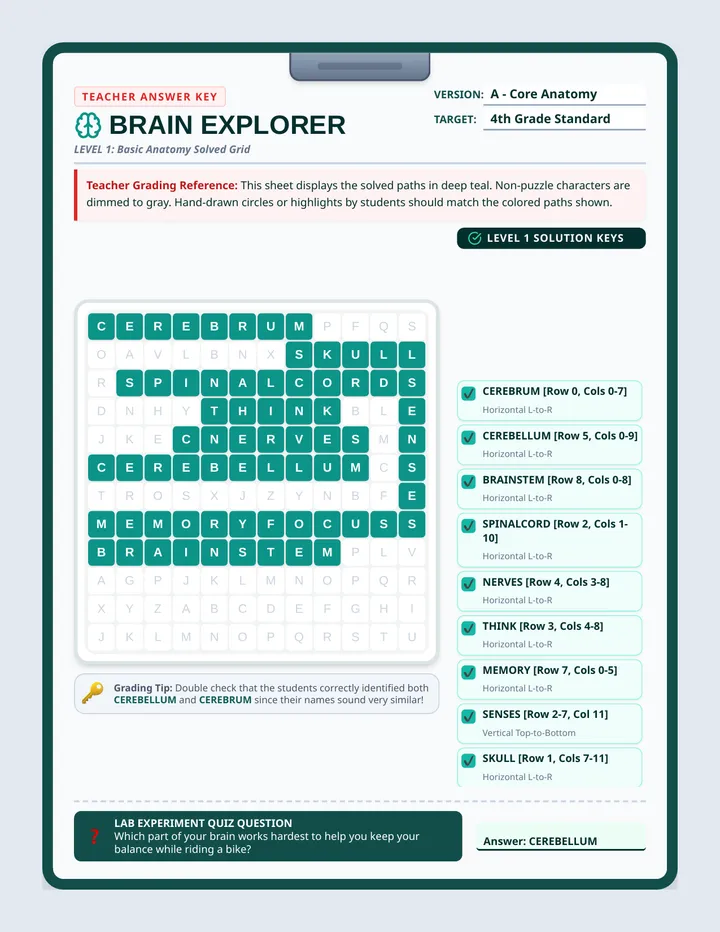
A collection of differentiated word search puzzles focusing on basic brain anatomy, vocabulary, and functions for fourth-grade students. Includes beginner and advanced levels with matching answer keys.
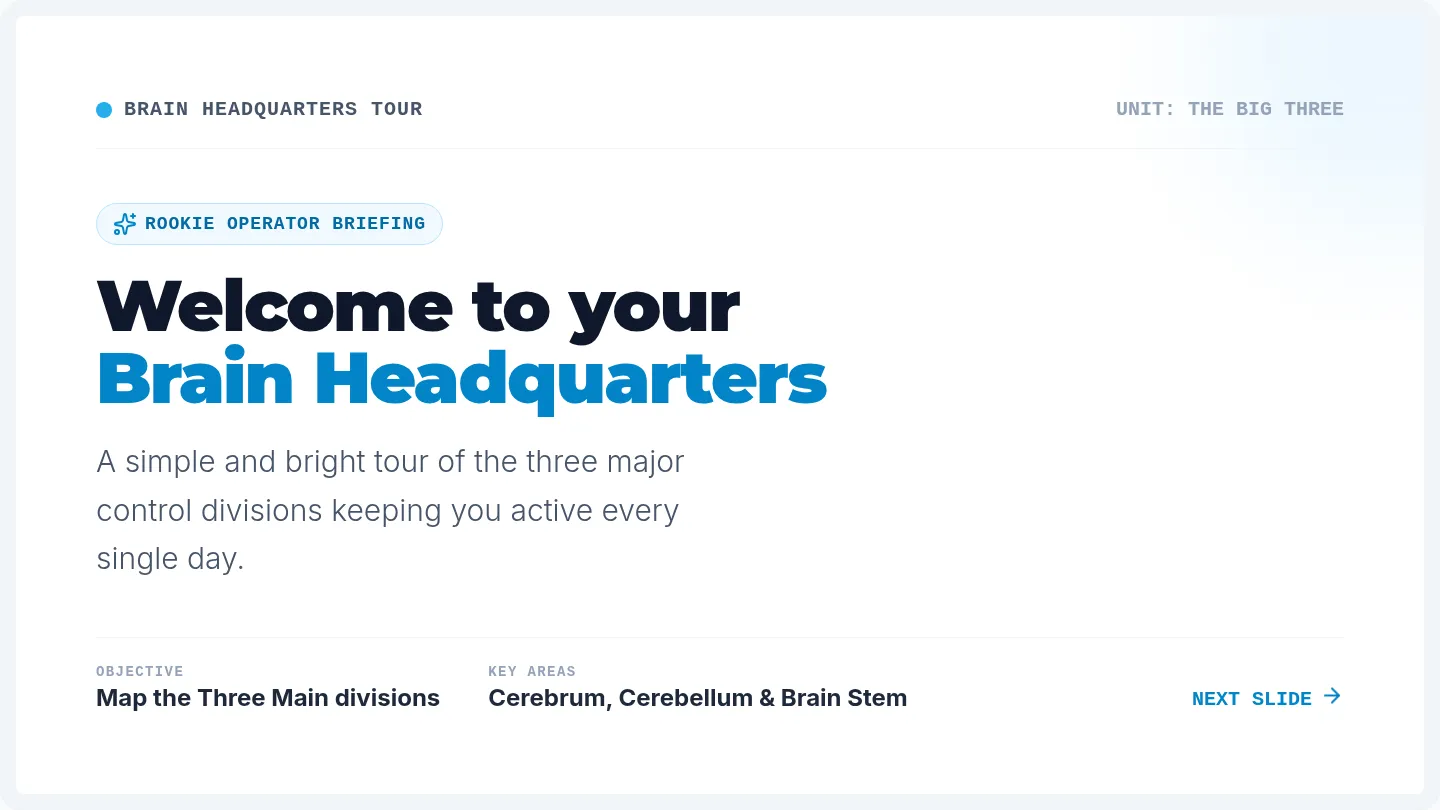
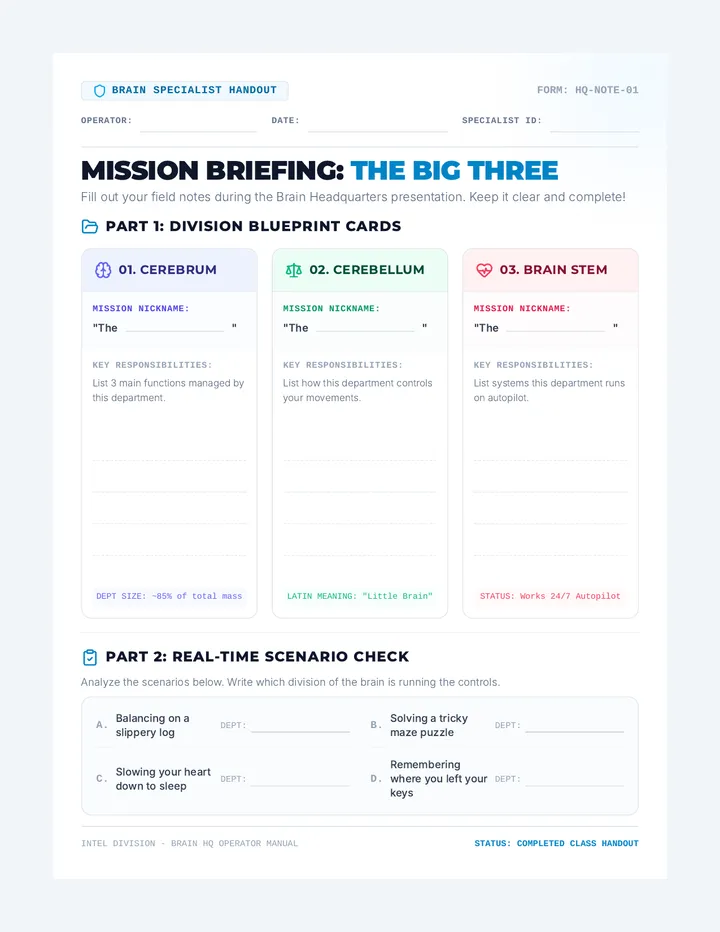
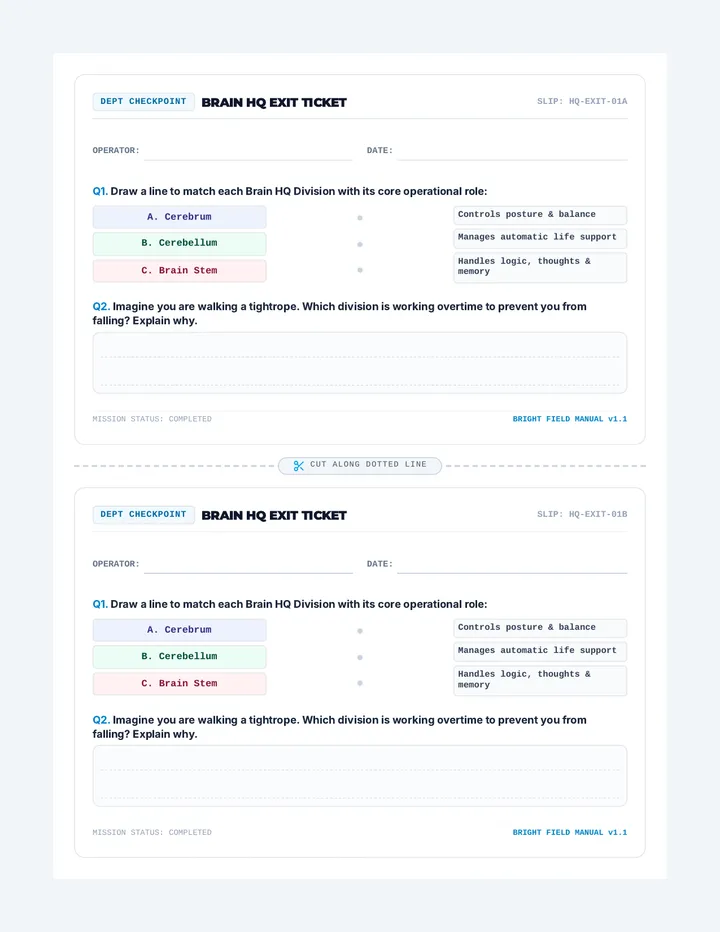
An interactive lesson introducing elementary or middle school students to the three major divisions of the brain: the Cerebrum, Cerebellum, and Brain Stem.
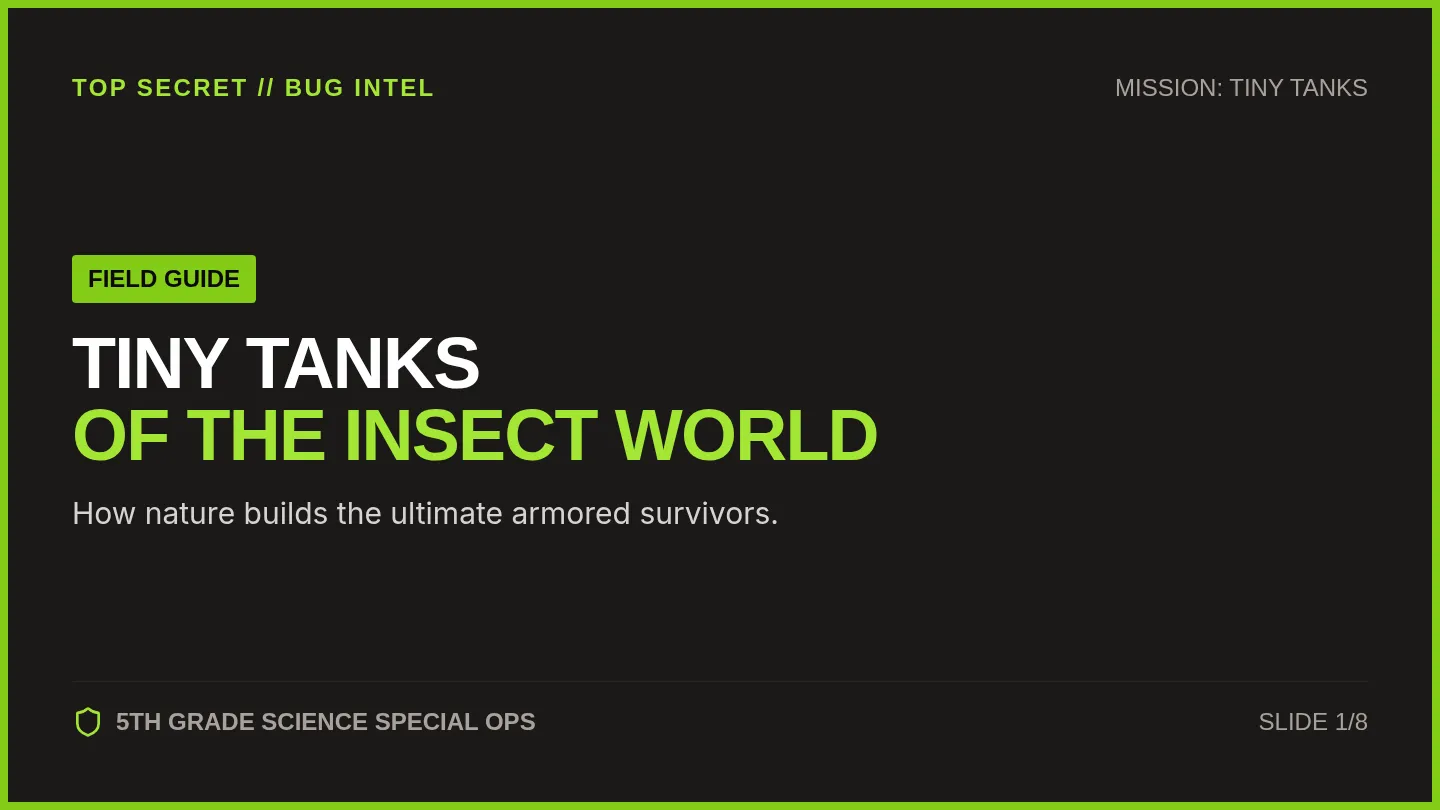
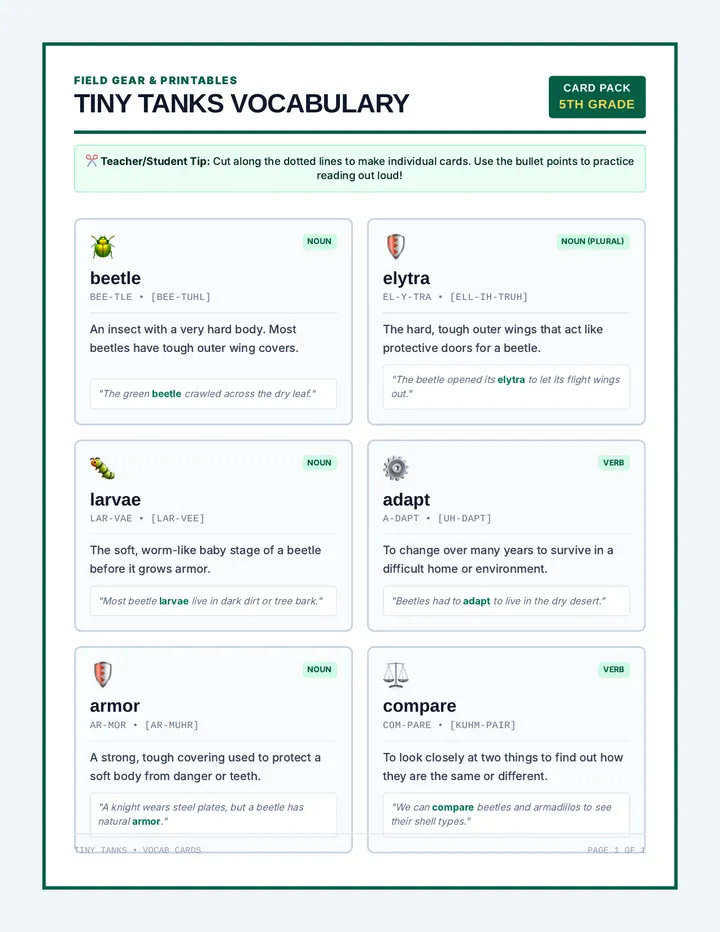
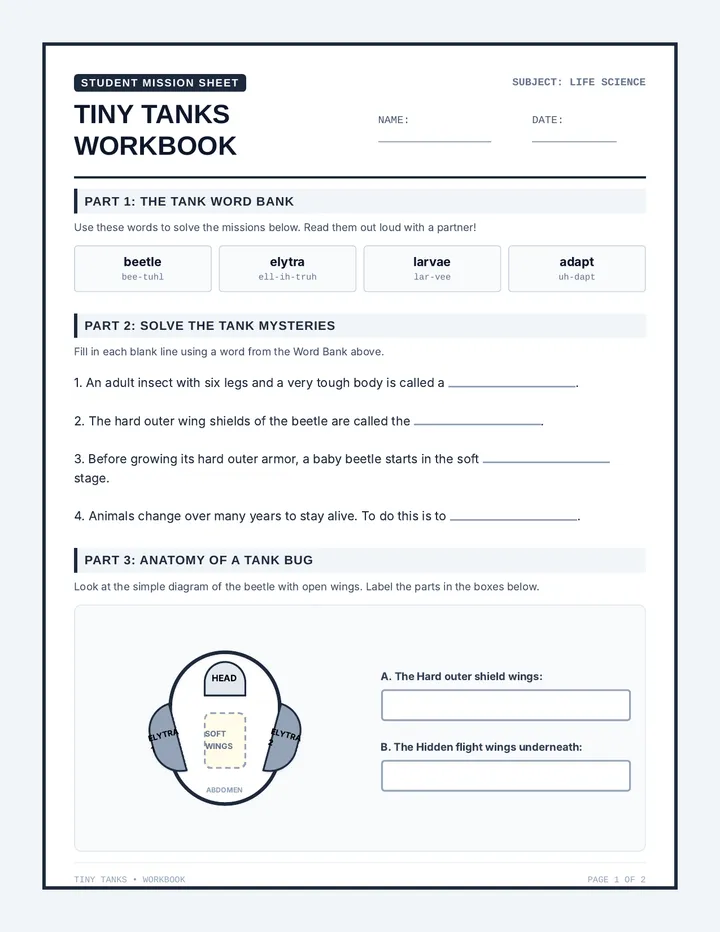
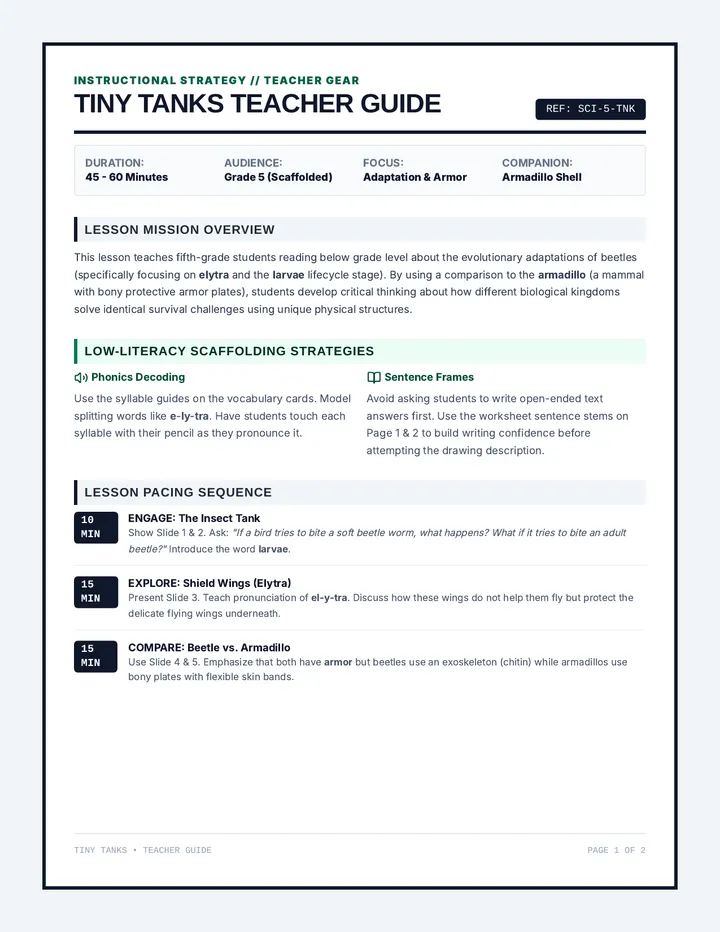
An engaging, highly visual science lesson exploring beetles as the armored tanks of the insect world, designed specifically for fifth-grade students reading below grade level. Students learn about elytra, beetle adaptation, and compare insect armor to that of the armadillo through scaffolded activities.
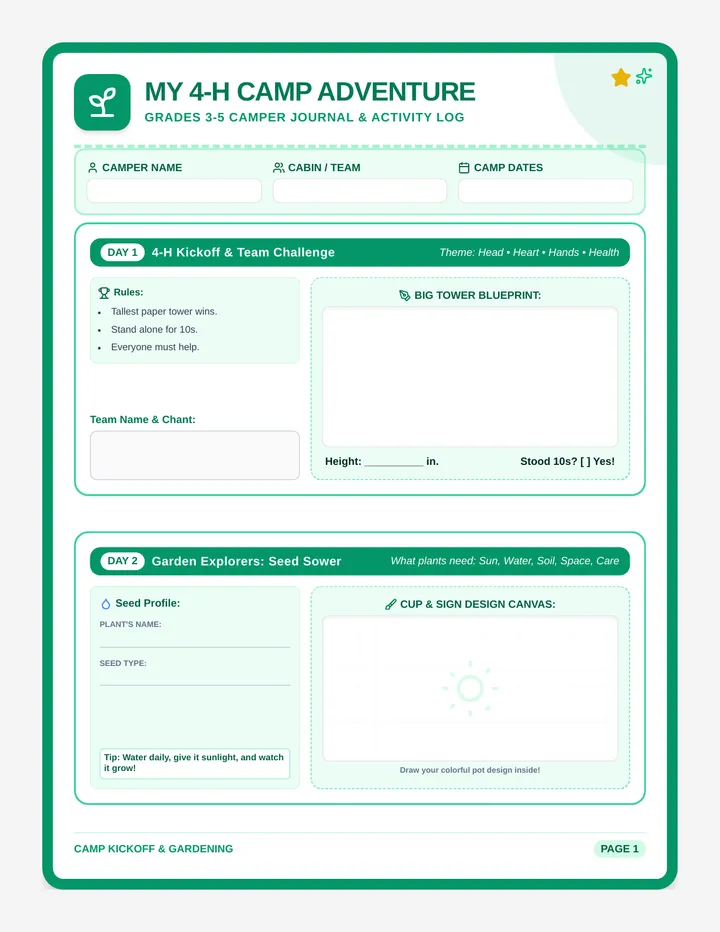
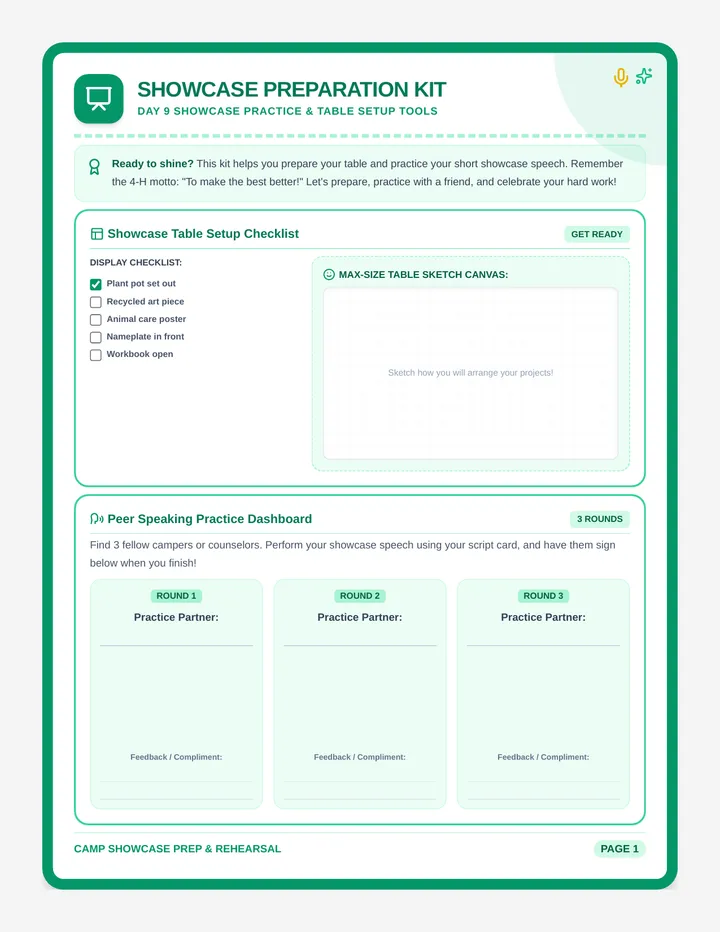
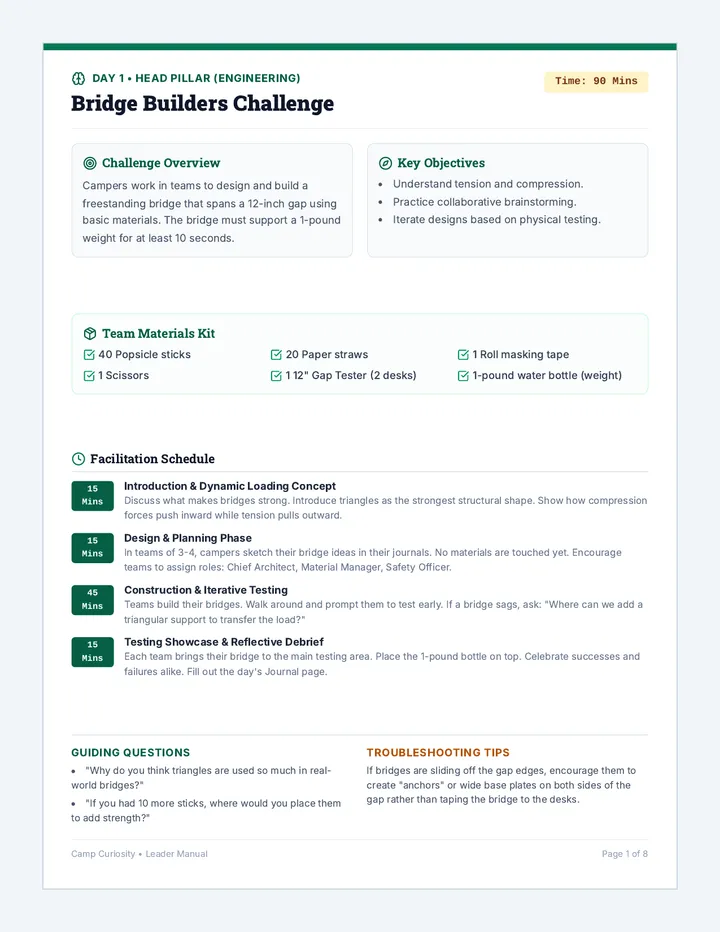
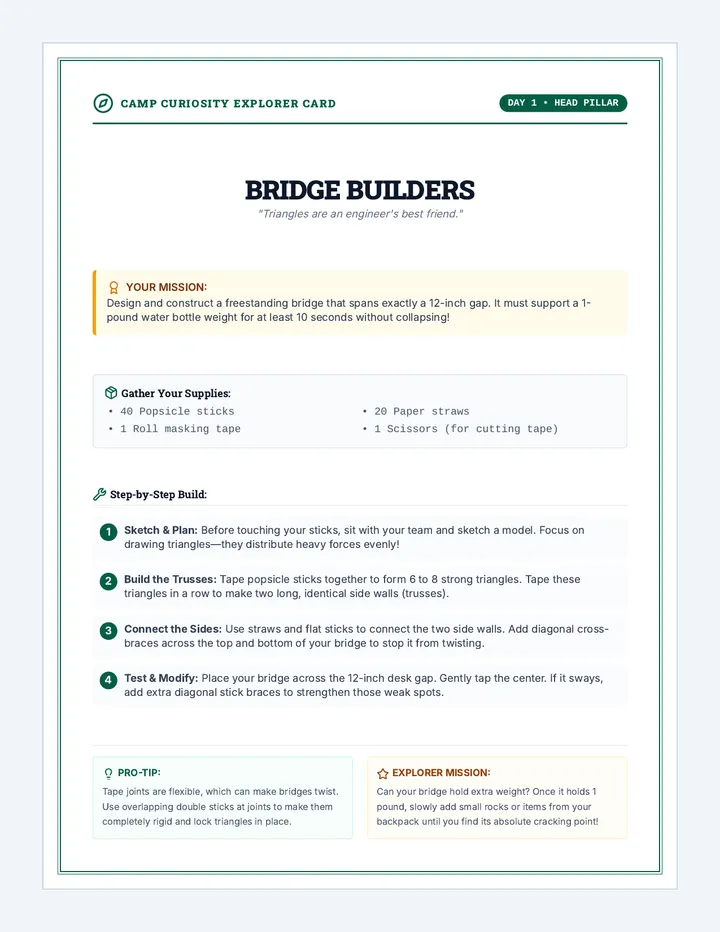
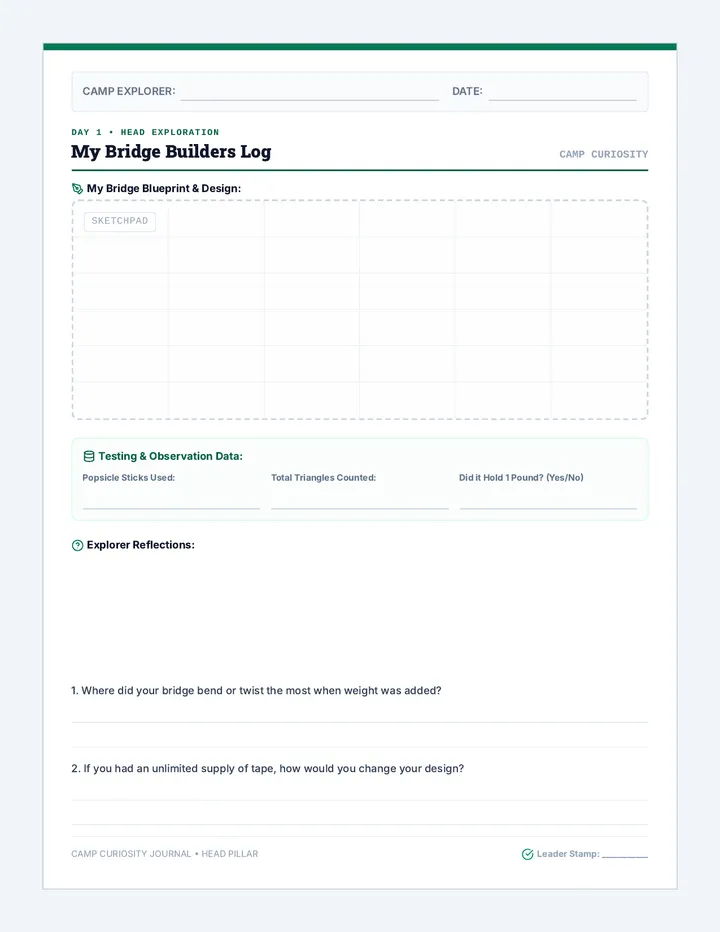
An engaging, hands-on summer camp series for grades 3-5 focusing on teamwork, STEM, gardening, healthy living, and creative problem-solving. This lesson includes a comprehensive multi-day student workbook and a showcase presentation preparation kit.
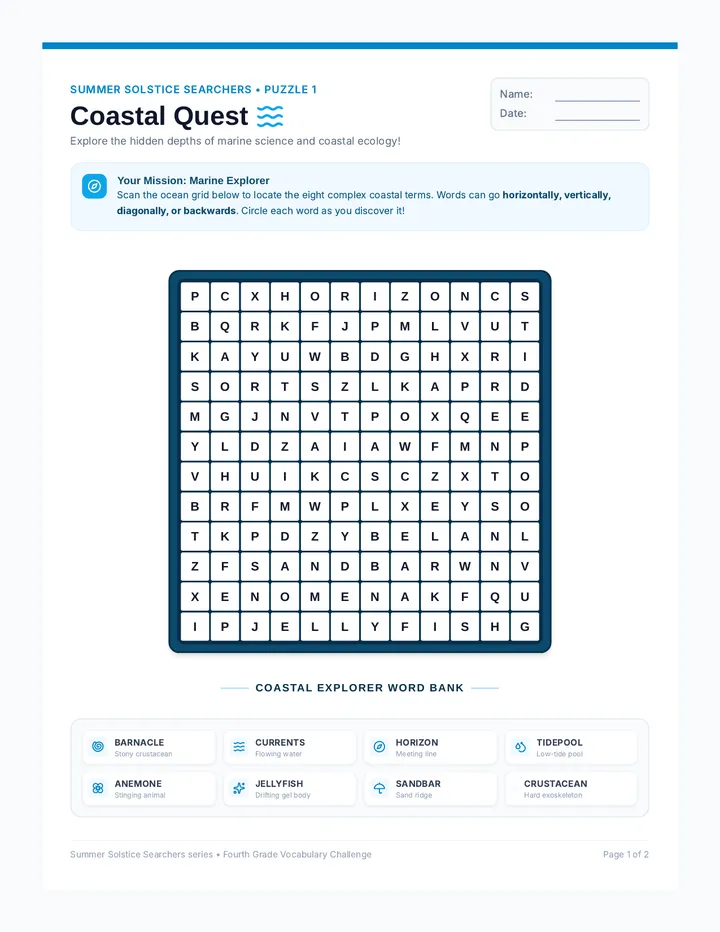
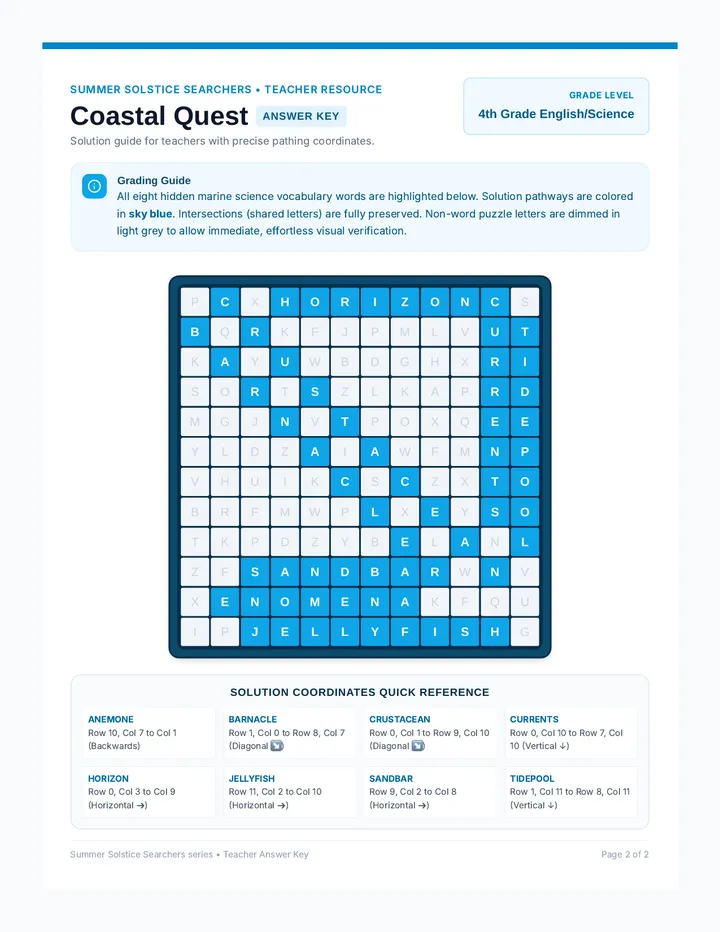
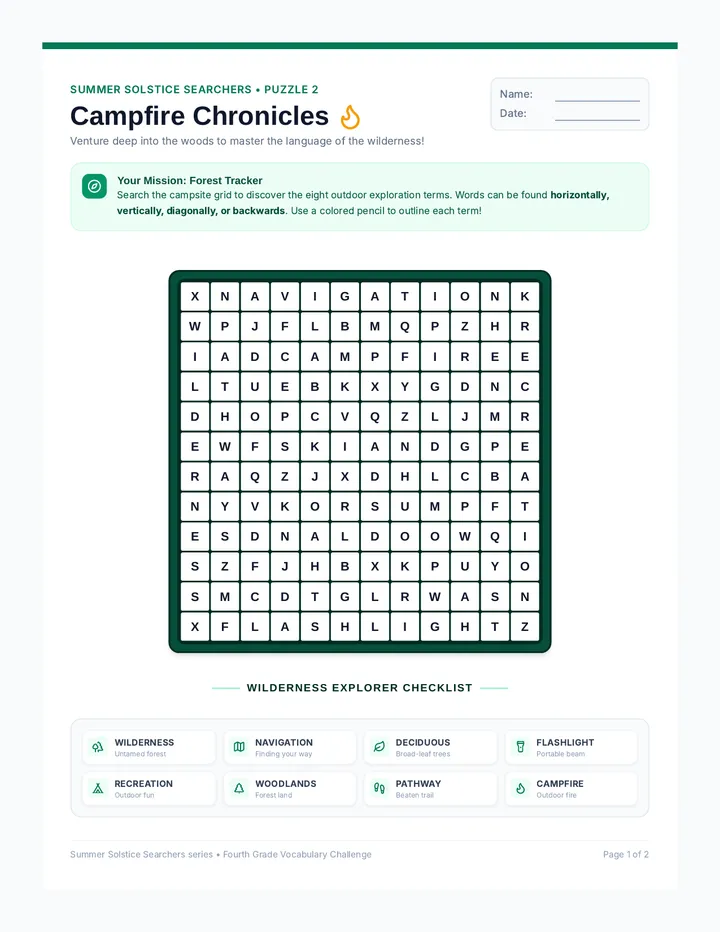
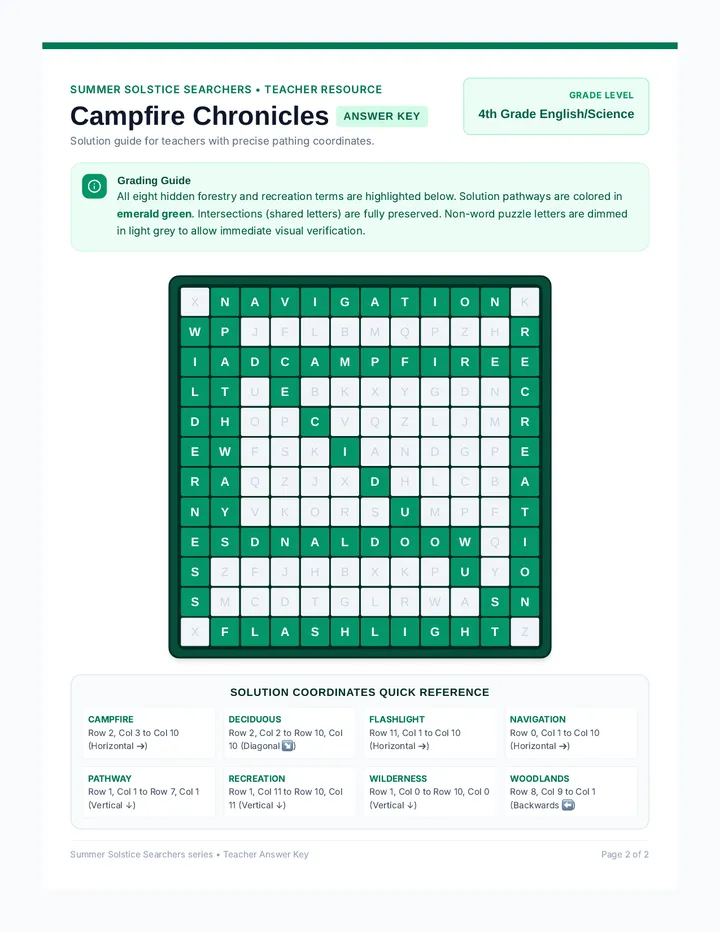
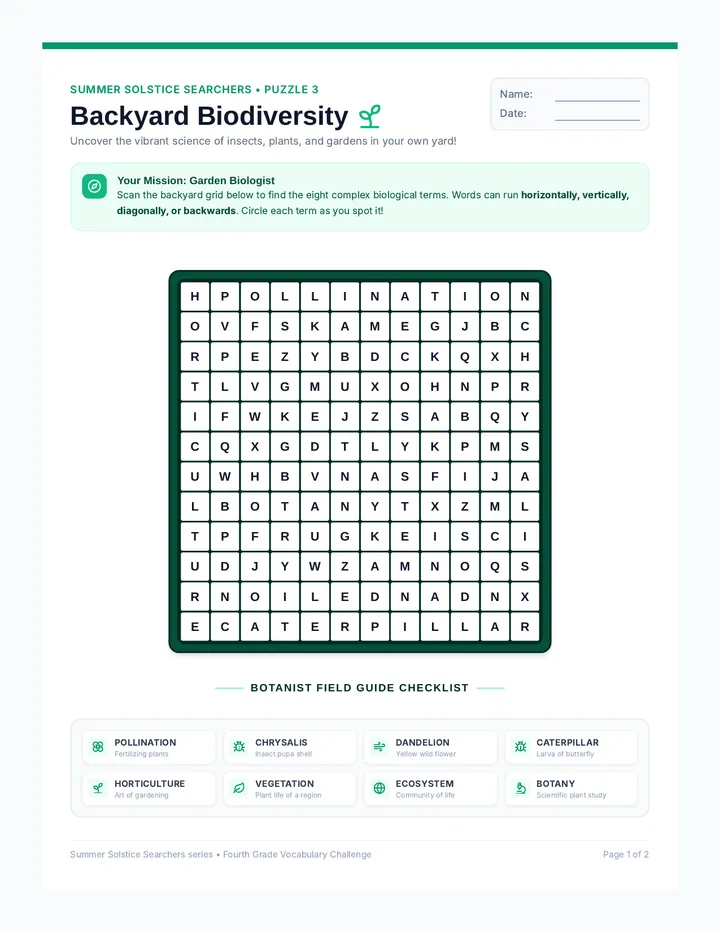
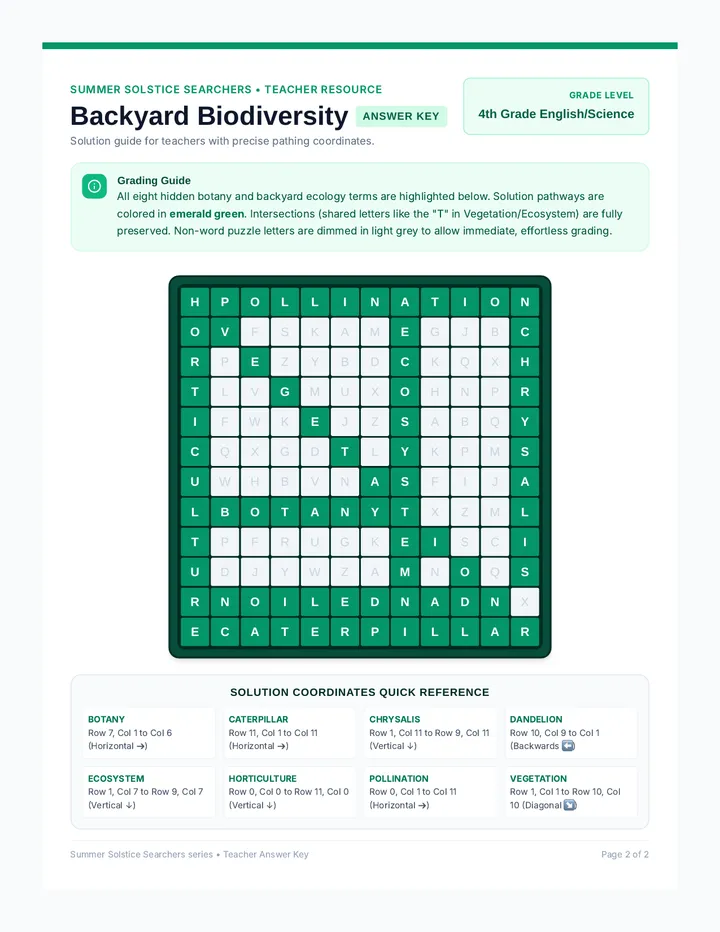
A collection of themed word search puzzles designed for fourth graders, featuring slightly complex summer-themed vocabulary, visual word banks with icons, and complete answer keys.
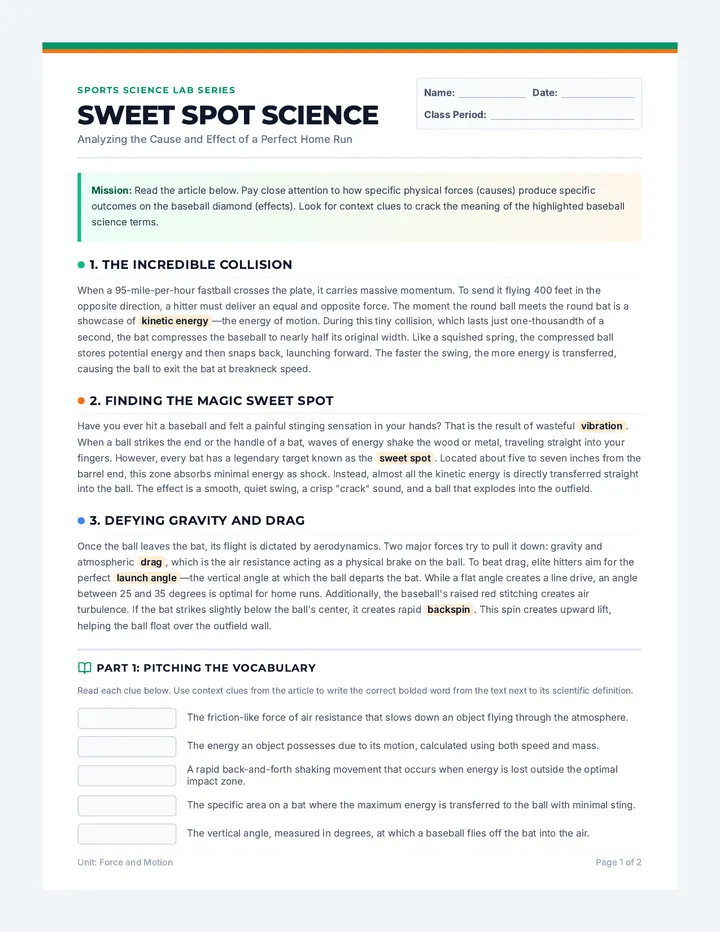
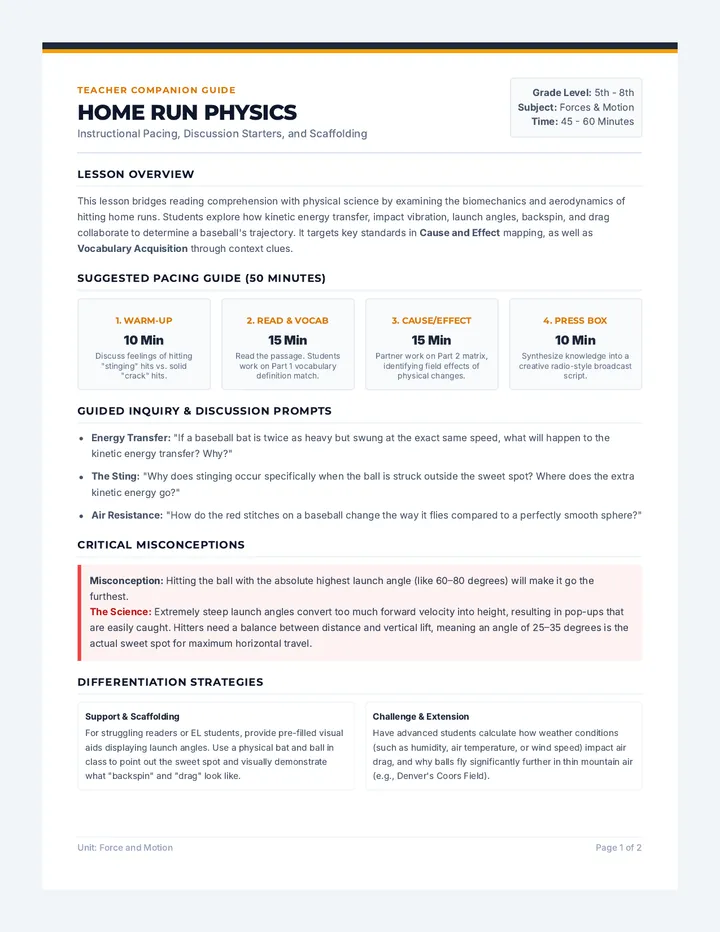
A lesson focused on the physics of hitting a home run in baseball. Students explore cause-and-effect relationships and vocabulary context clues through a reading passage, followed by comprehension questions and a creative writing prompt.
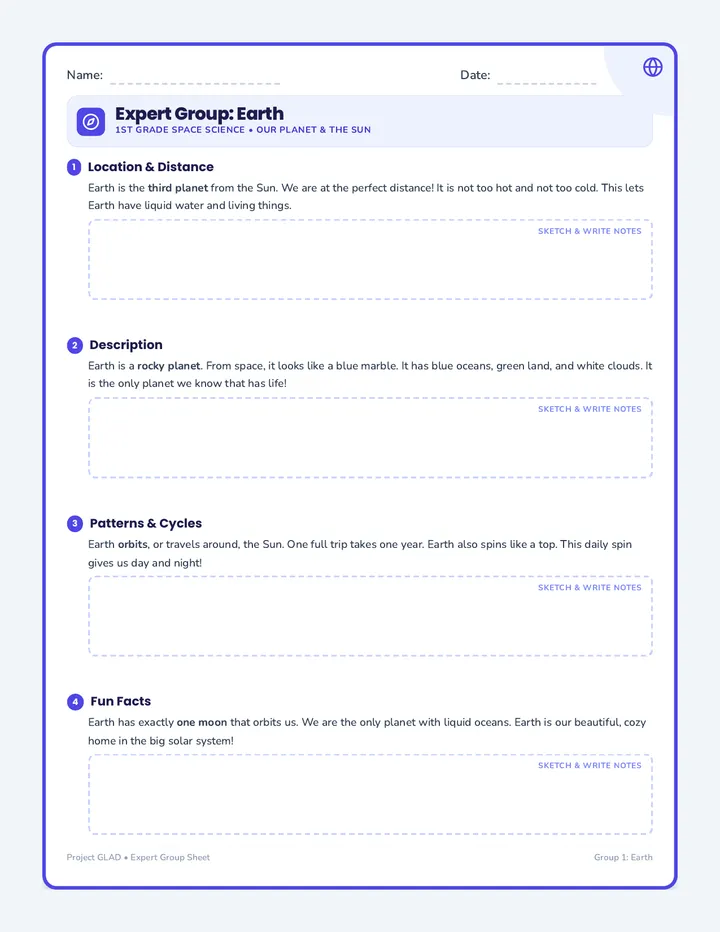
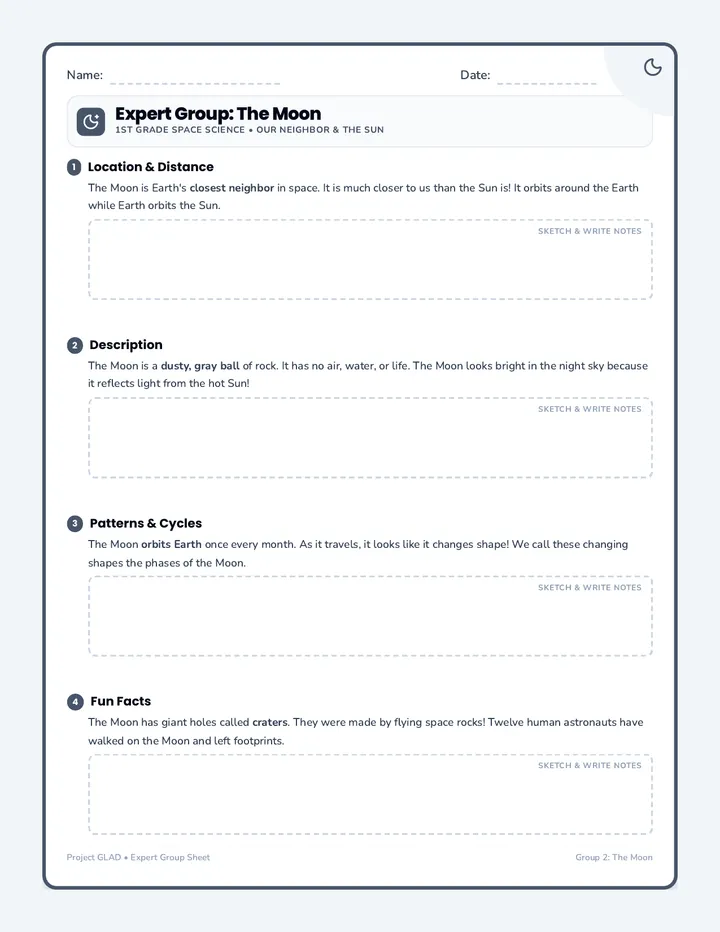
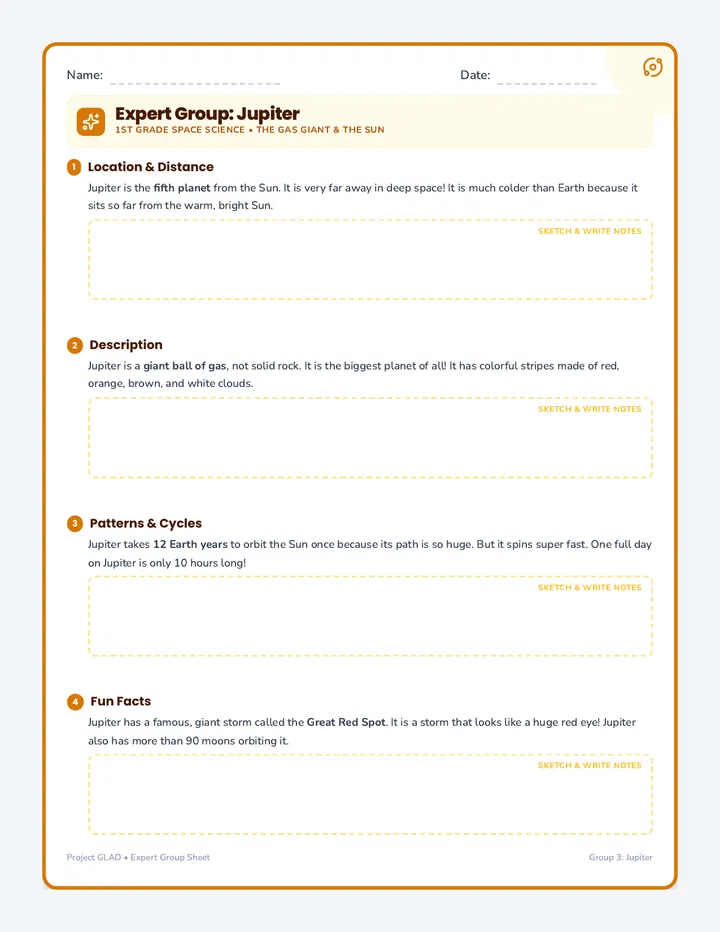
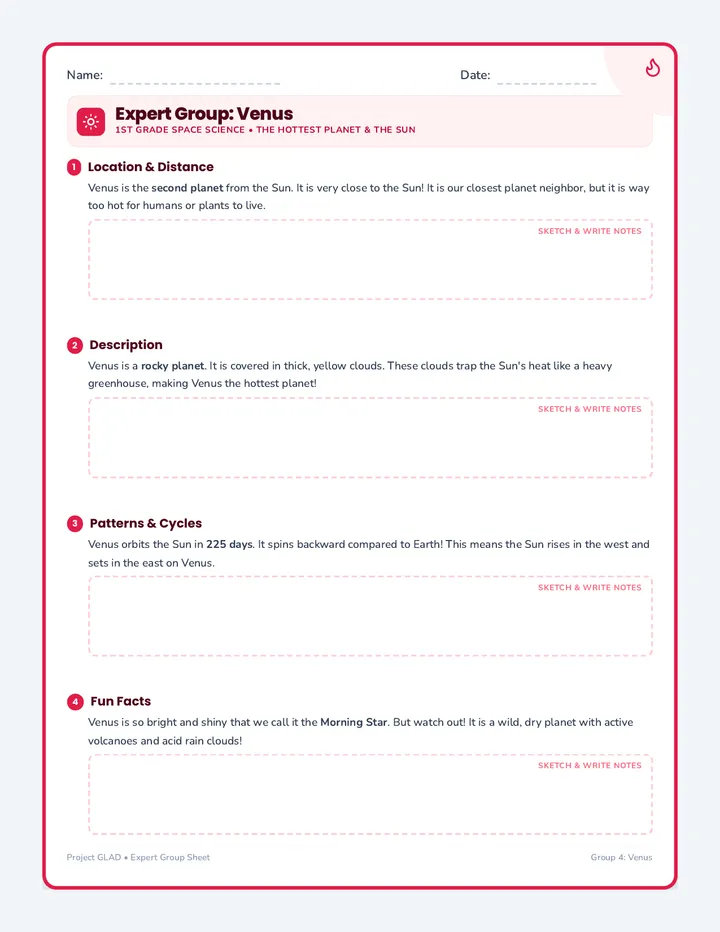
A 1st-grade science unit where students work in expert groups to explore Earth, the Moon, Jupiter, and Venus in relation to the Sun. Each group reads specialized text and sketches key observations to build collaborative knowledge.
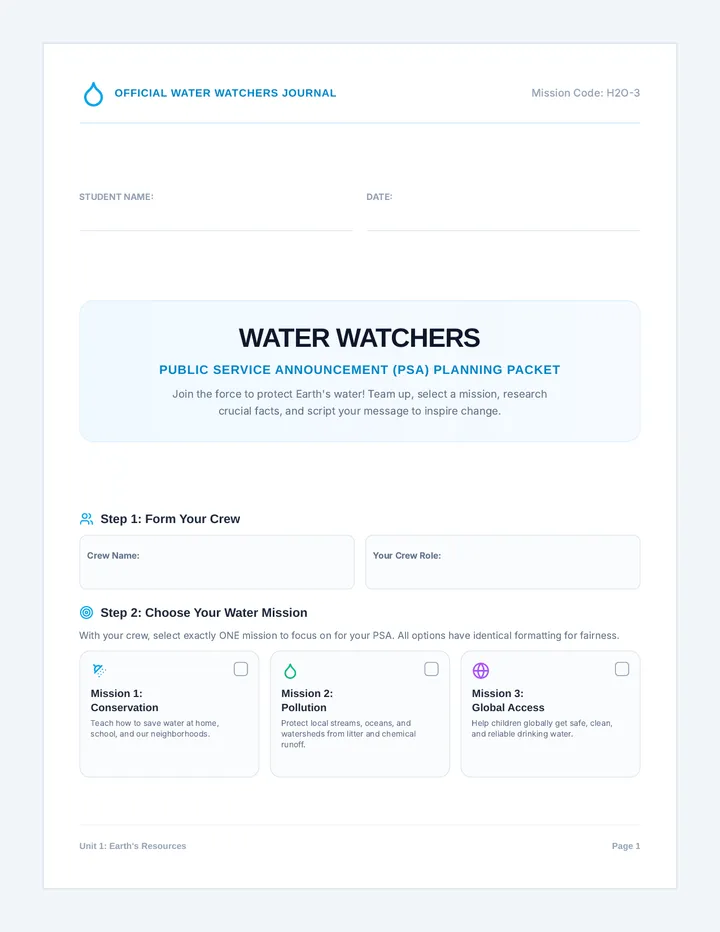
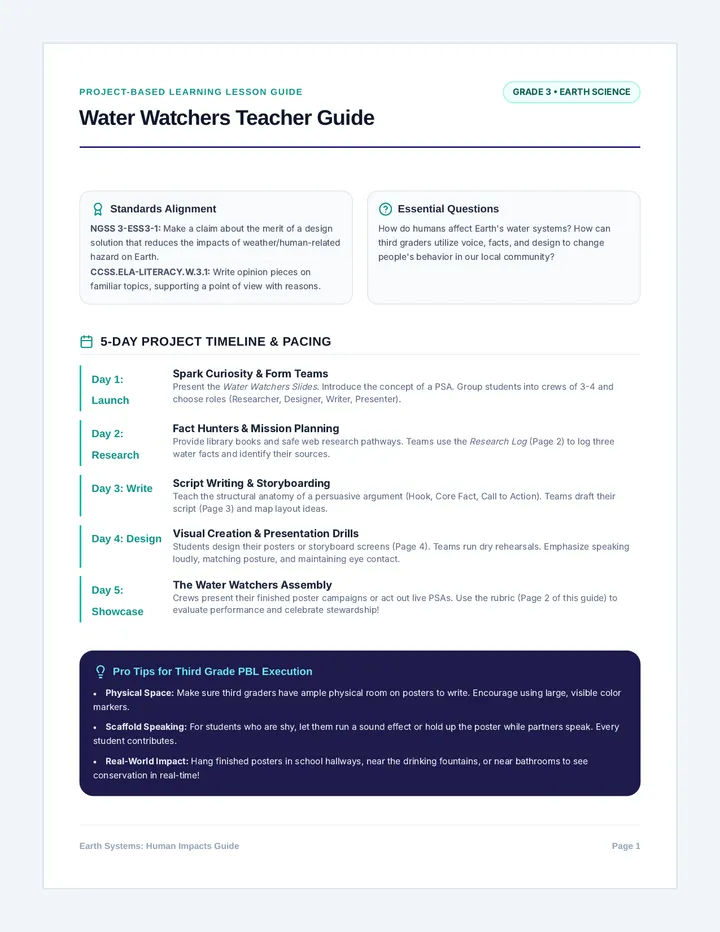
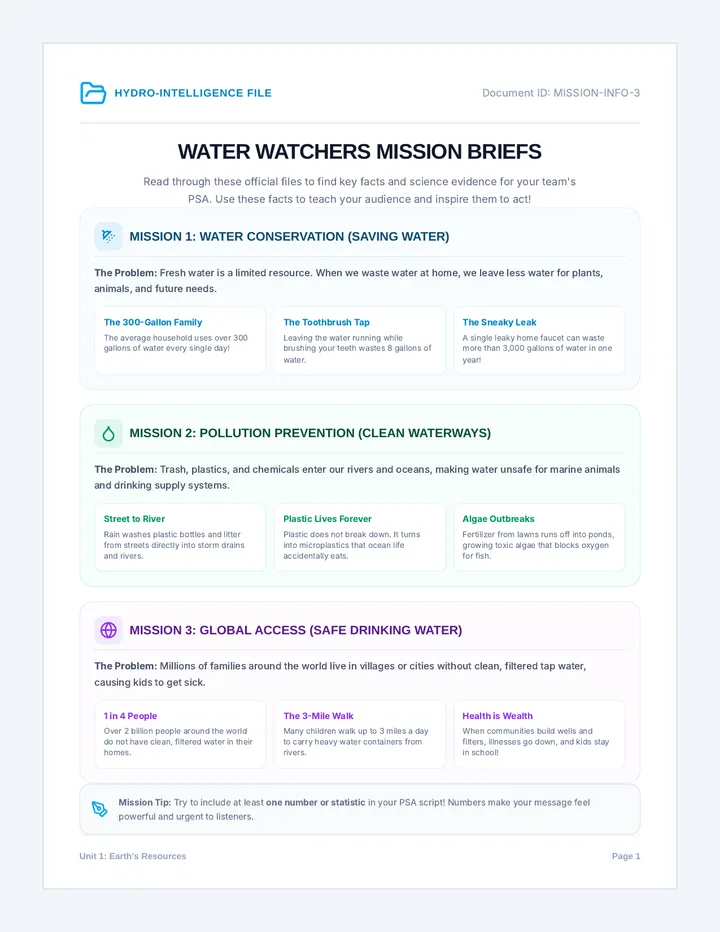
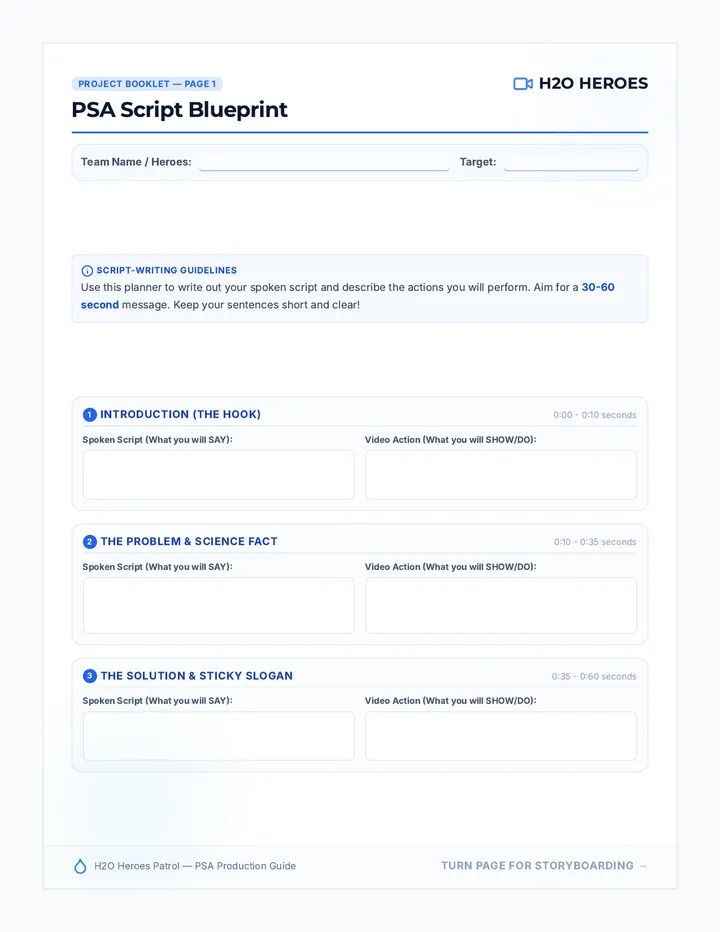
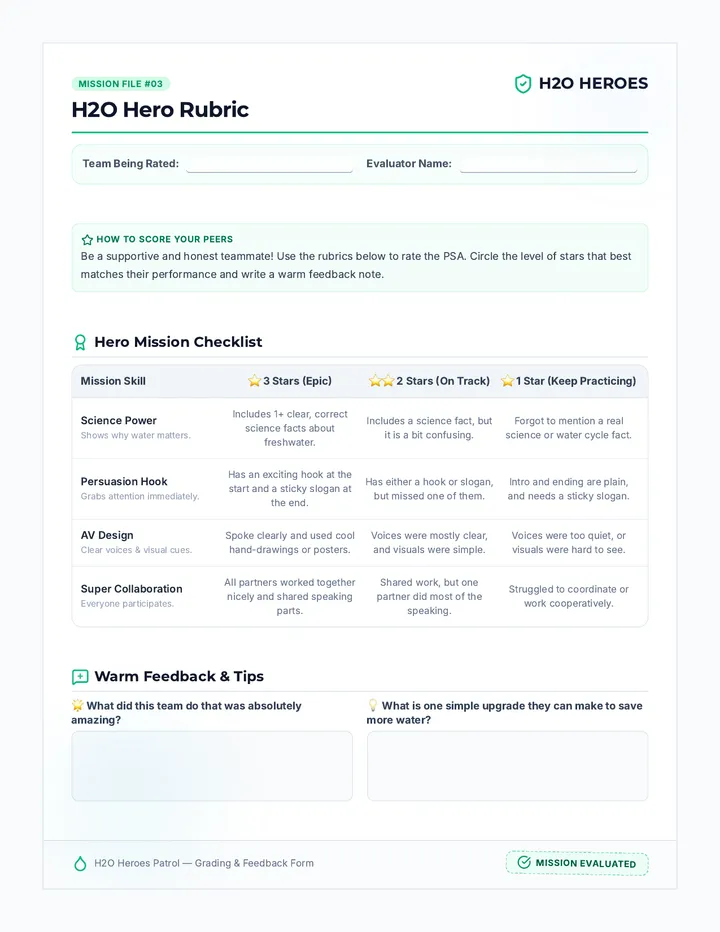
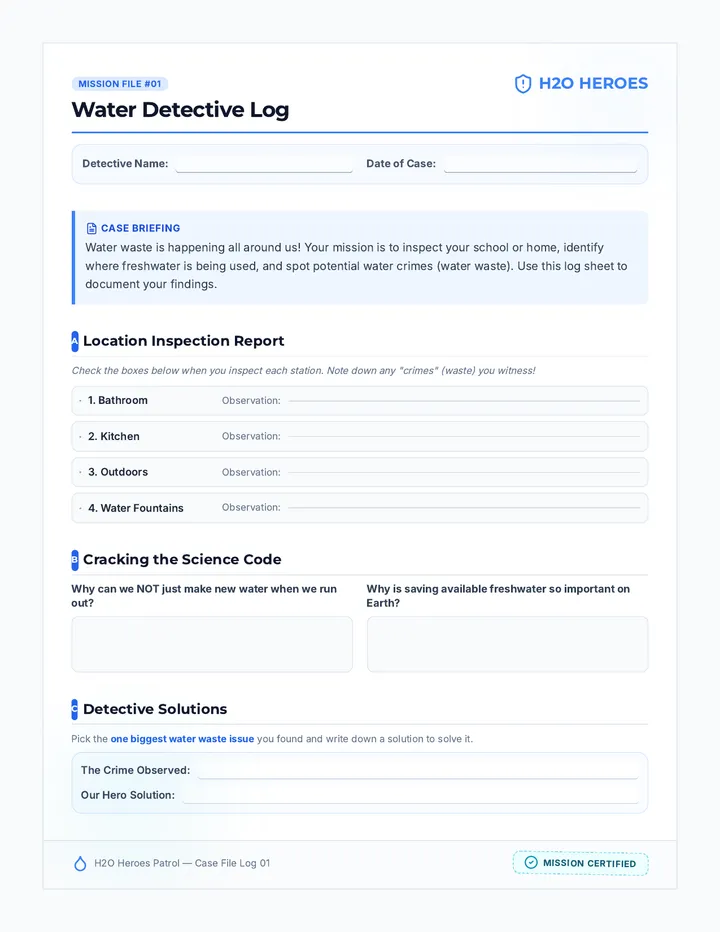
A third-grade project-based learning lesson where students learn about Public Service Announcements (PSAs) and collaborate to create their own media campaign focusing on water conservation, pollution prevention, or global clean water access. Includes an introductory slide deck, student planning packet, and a comprehensive teacher guide with rubrics.
Students collaborate in teams to script, storyboard, and edit their water conservation PSA, which they will then present to make a difference in their community.
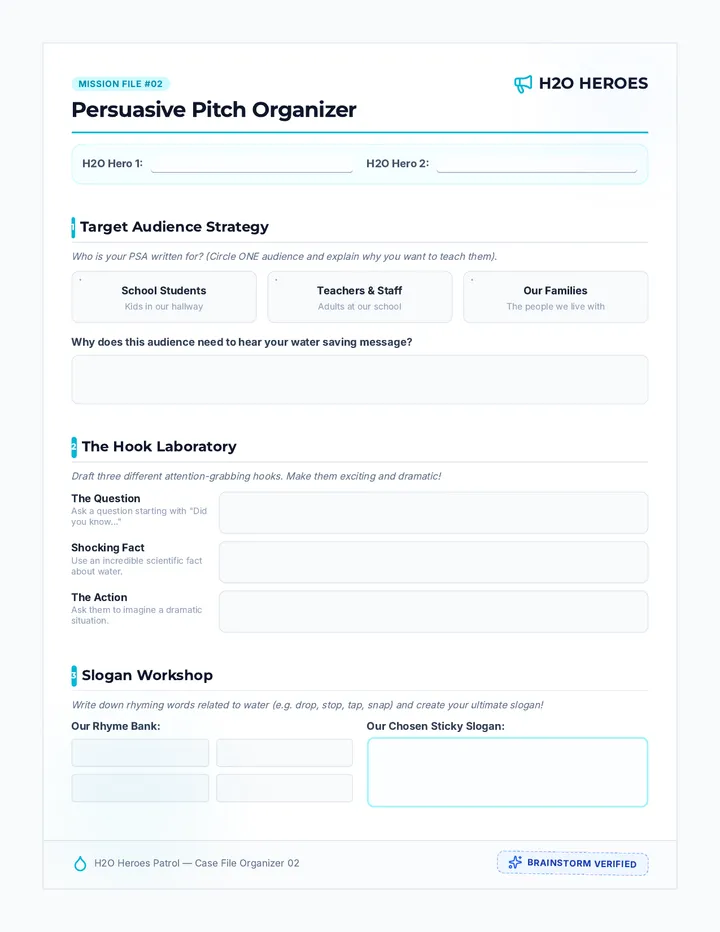
Students learn the elements of persuasive communication, including target audience, emotional appeal, memorable slogans, and engaging hooks, laying the groundwork for their PSA scripts.
Students explore the distribution of water on Earth, discover how little freshwater is accessible for human use, and learn the science of why water conservation is critical.
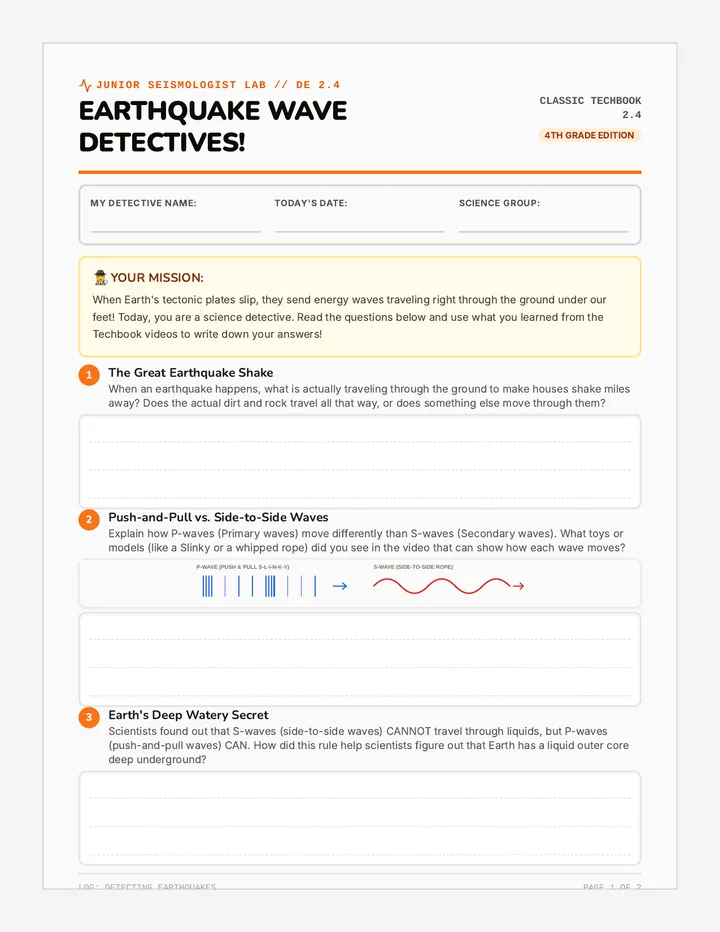
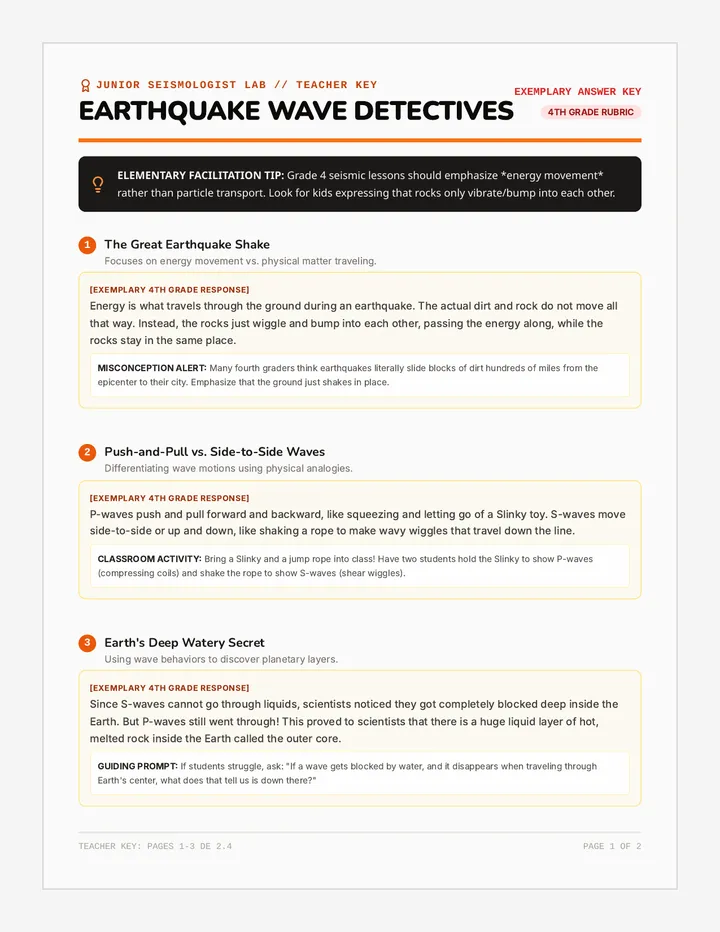
This lesson covers the fundamentals of seismic energy, comparing P-waves and S-waves, analyzing seismograph readouts, and exploring how scientists decode the Earth's interior structure.
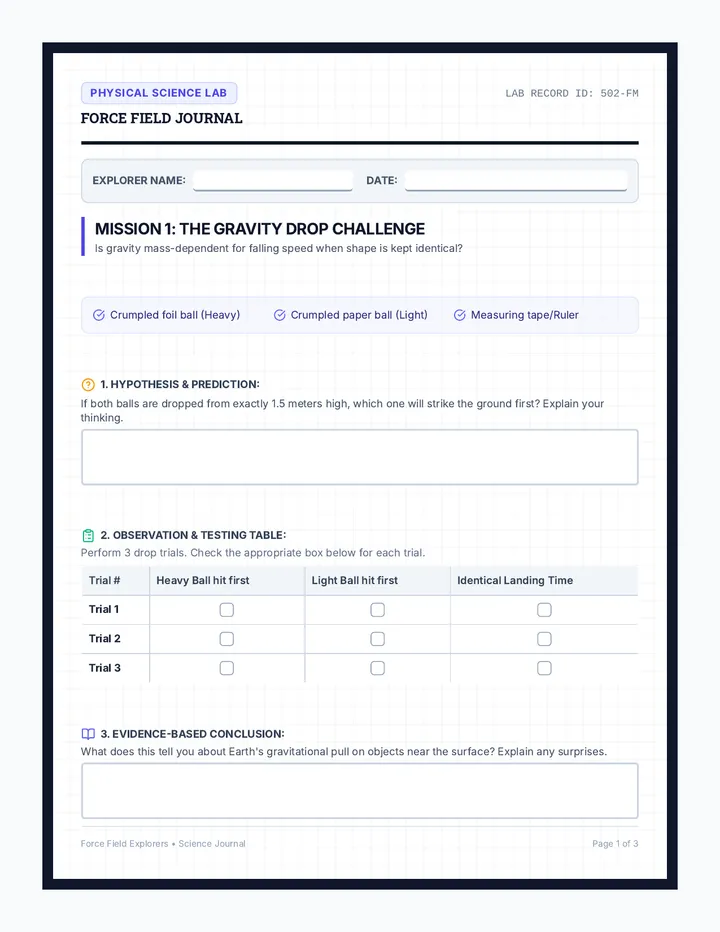
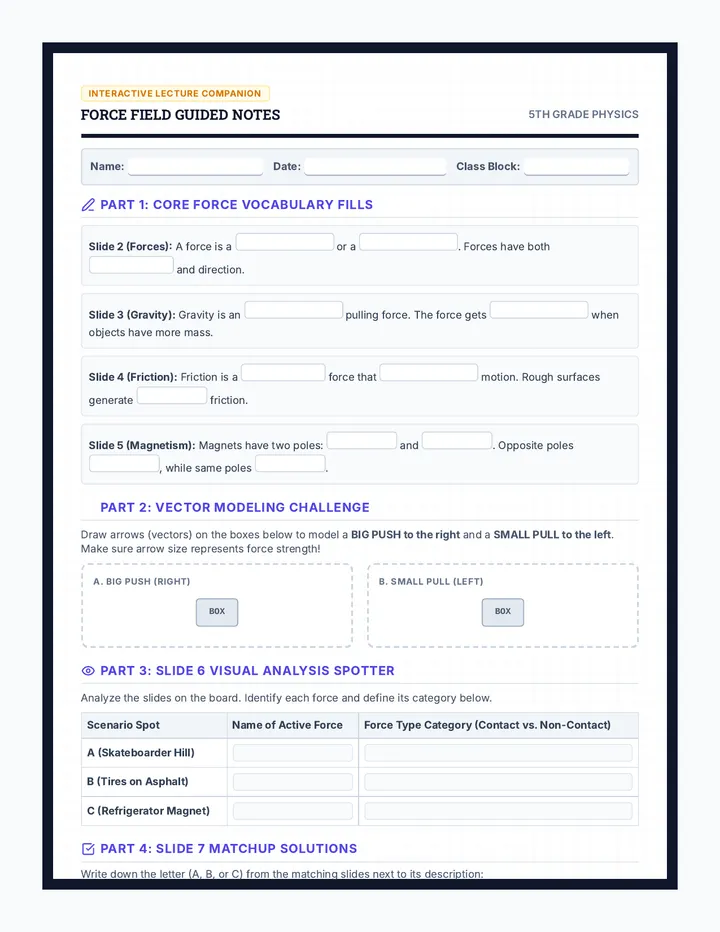
An active, inquiry-driven introduction to forces, gravity, friction, and magnetism. Students explore concepts through a slide deck, guided notes, hands-on inquiry journals with data graphing, independent scenario practices, and a differentiated choice board.
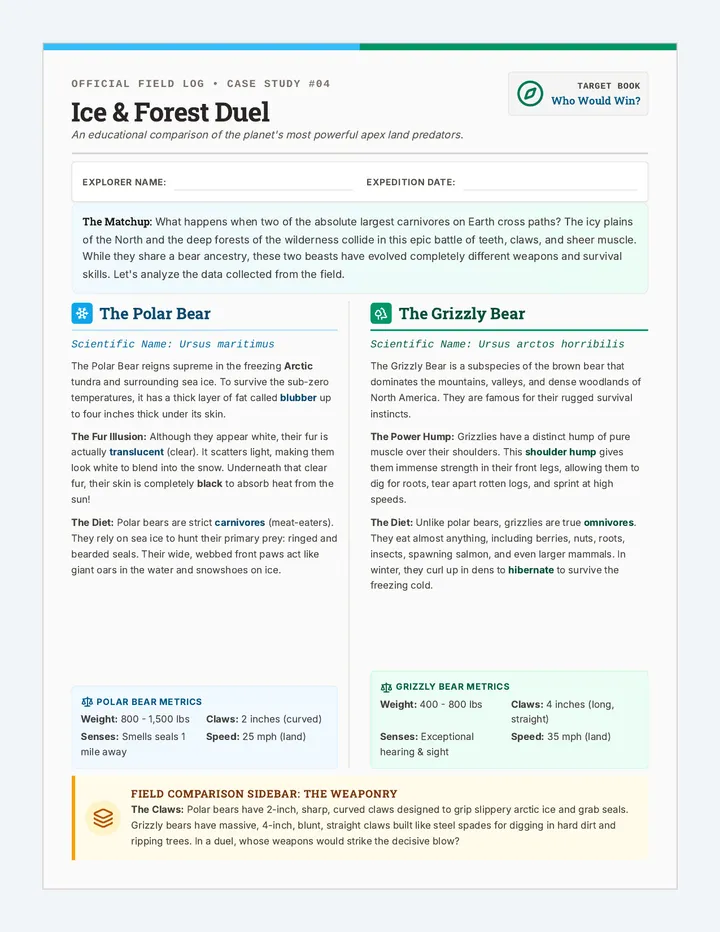
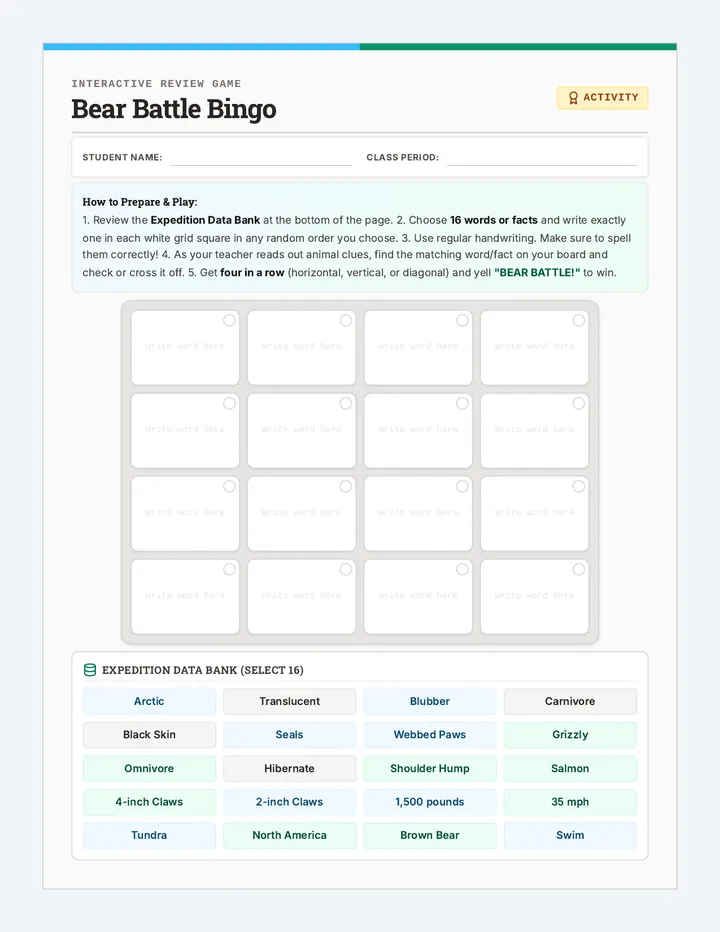
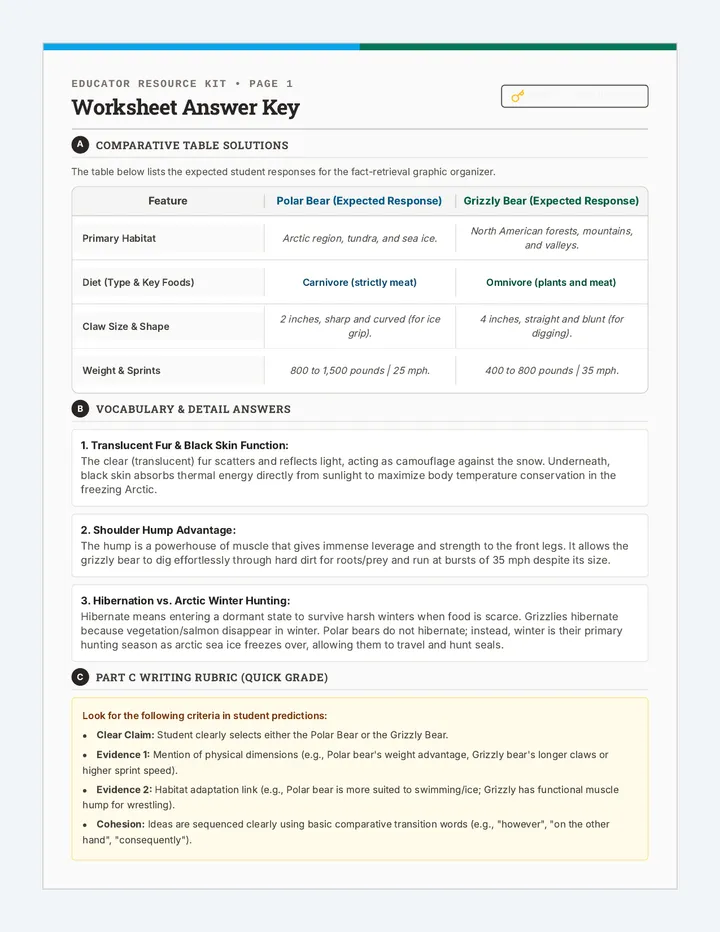
A thrilling comparison lesson focused on polar bears and grizzly bears. Students read a themed comparison passage, complete fact-retrieval questions, and play a write-in bingo review game based on the book 'Who Would Win? Polar Bear vs. Grizzly Bear'.
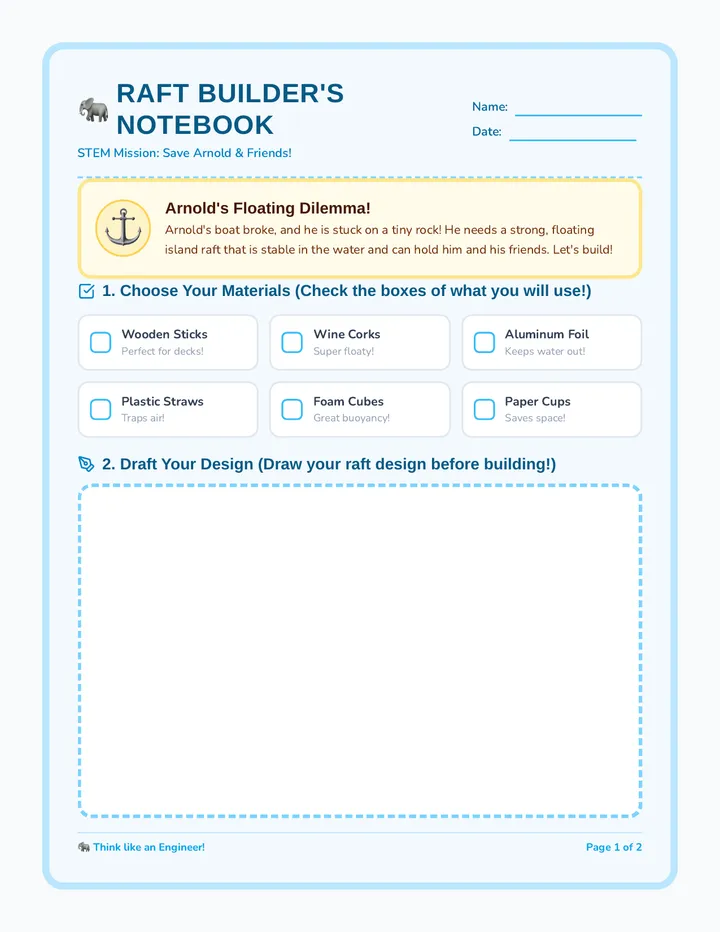
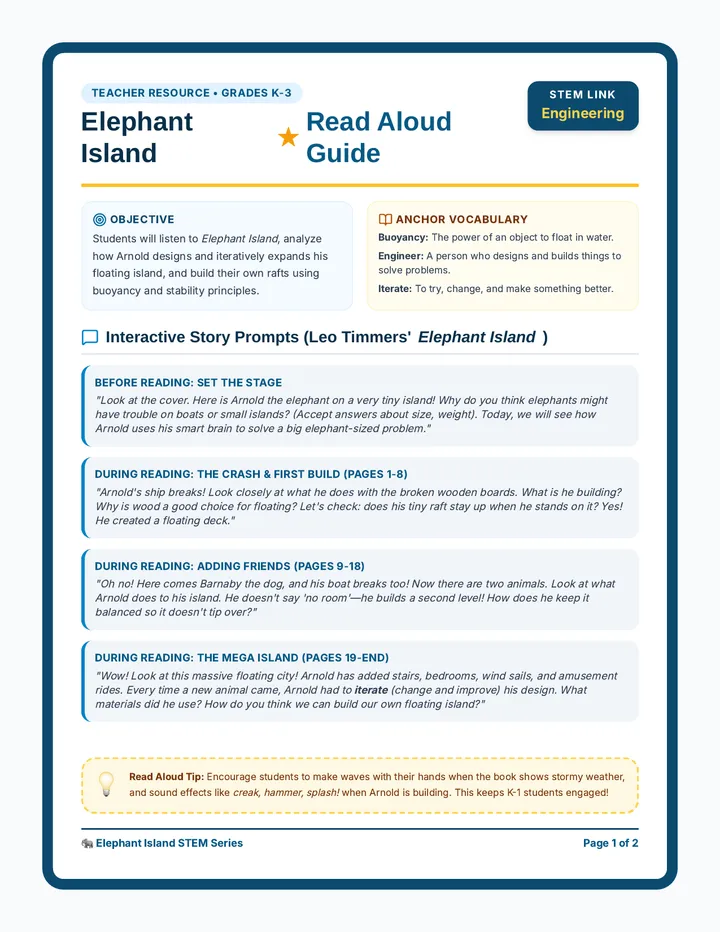
An interactive STEM challenge and read-aloud experience based on Leo Timmers' 'Elephant Island'. Students design and build floating island rafts to rescue Arnold and his friends.
The complete 8-day camp program containing the comprehensive Teacher Manual, printable Challenge Task Cards, and the daily Student Camp Journal.
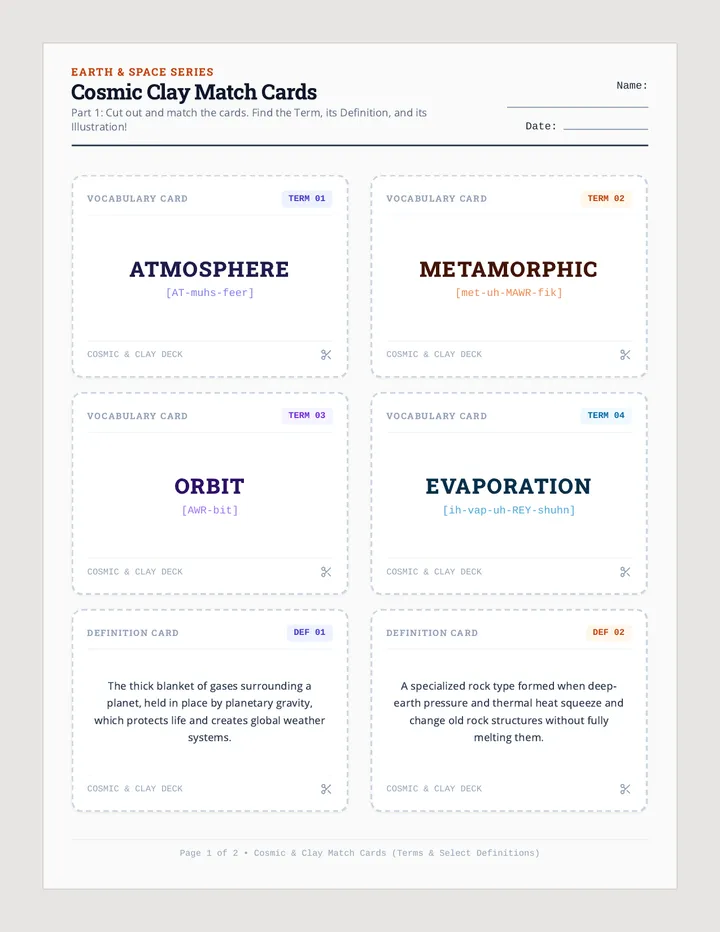
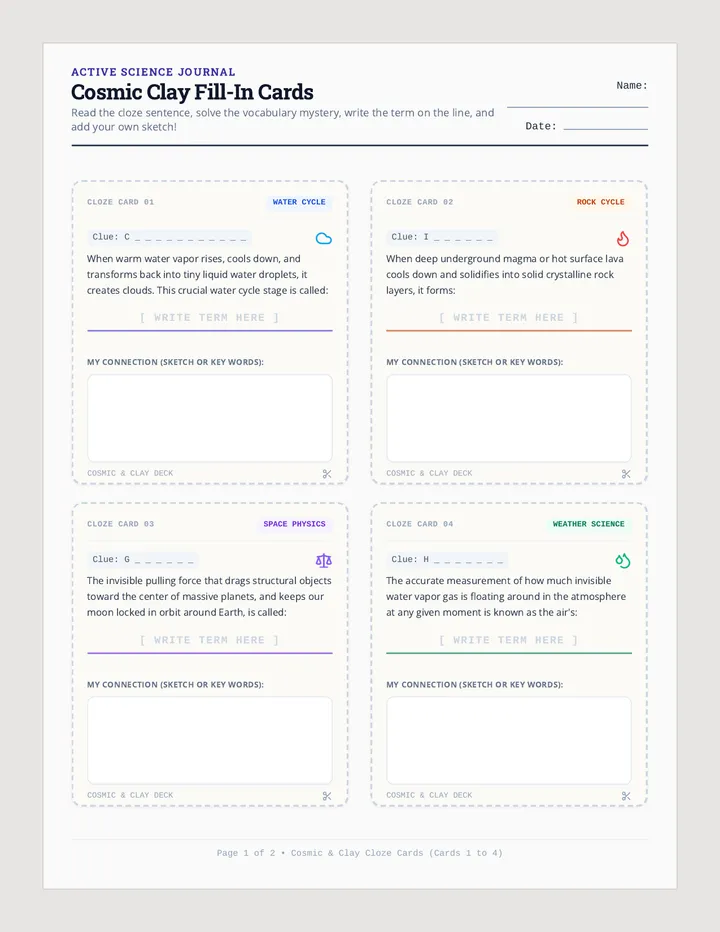
An interactive vocabulary lesson on Earth and Space Science, featuring visual matching card decks and tactile fill-in-the-blank cloze activities covering rocks, weather, water cycles, and space.
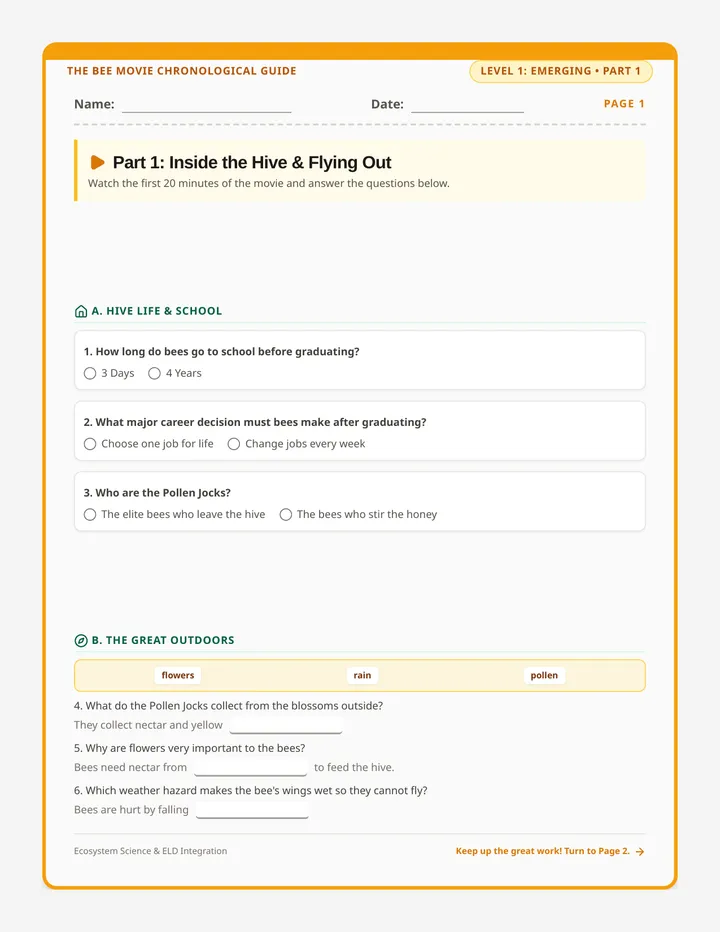
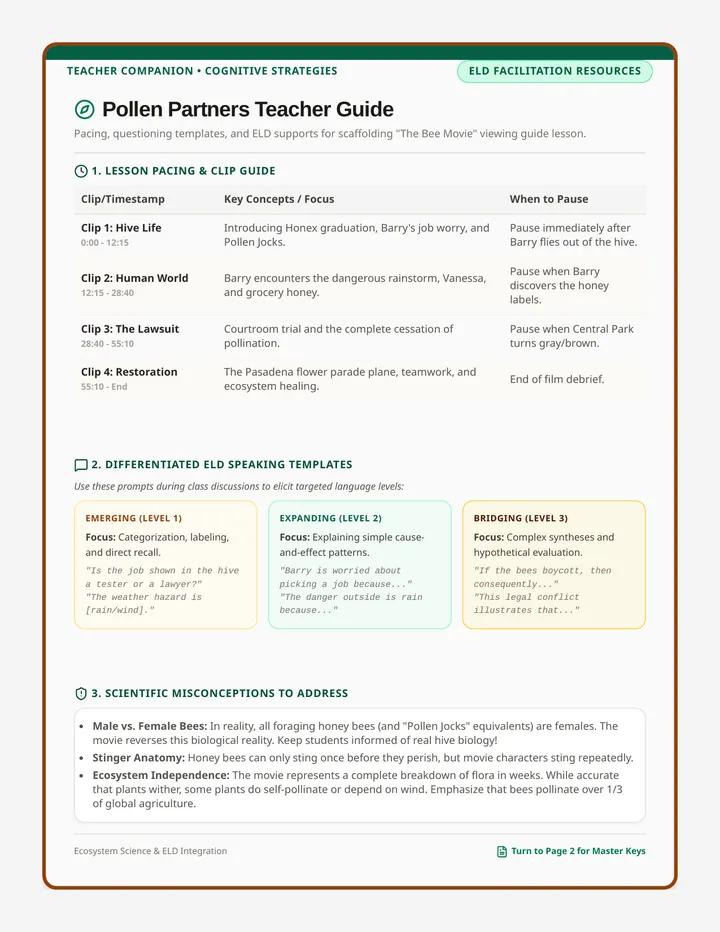
A 5th-grade viewing guide lesson centered around the ecological themes of The Bee Movie. This lesson provides tiered scaffolds (Emerging, Expanding, and Bridging) to support English Language Learners in analyzing pollination, human-bee interaction, and environmental responsibility.
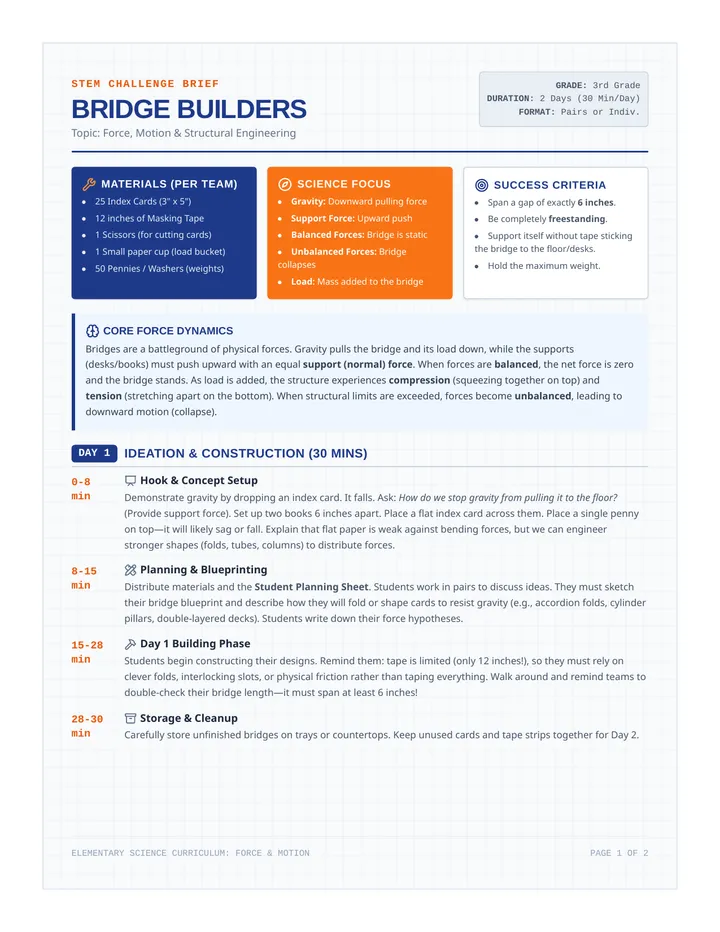
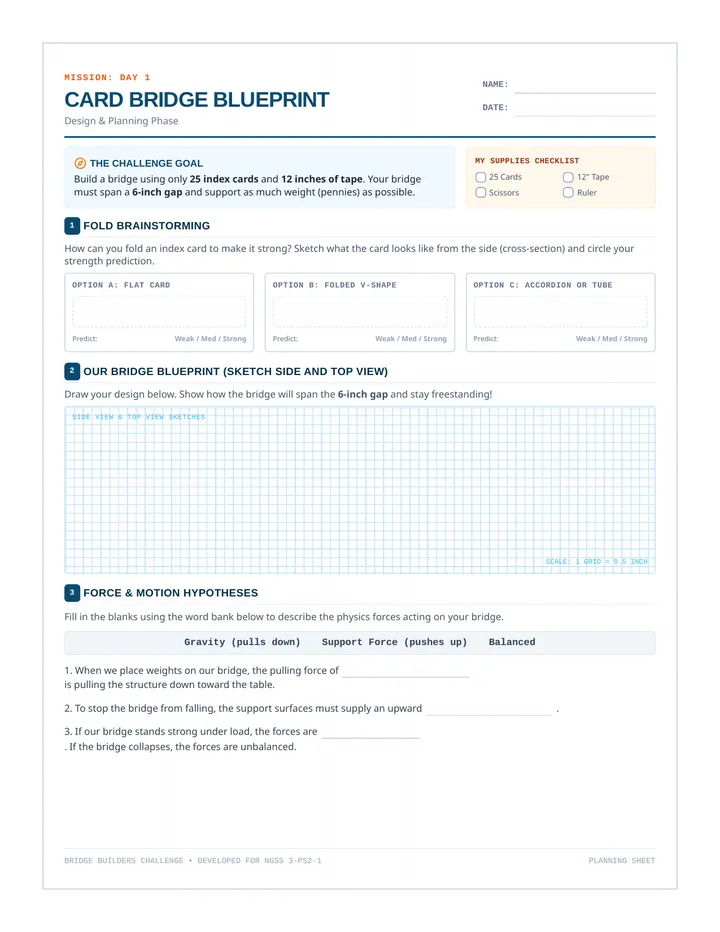
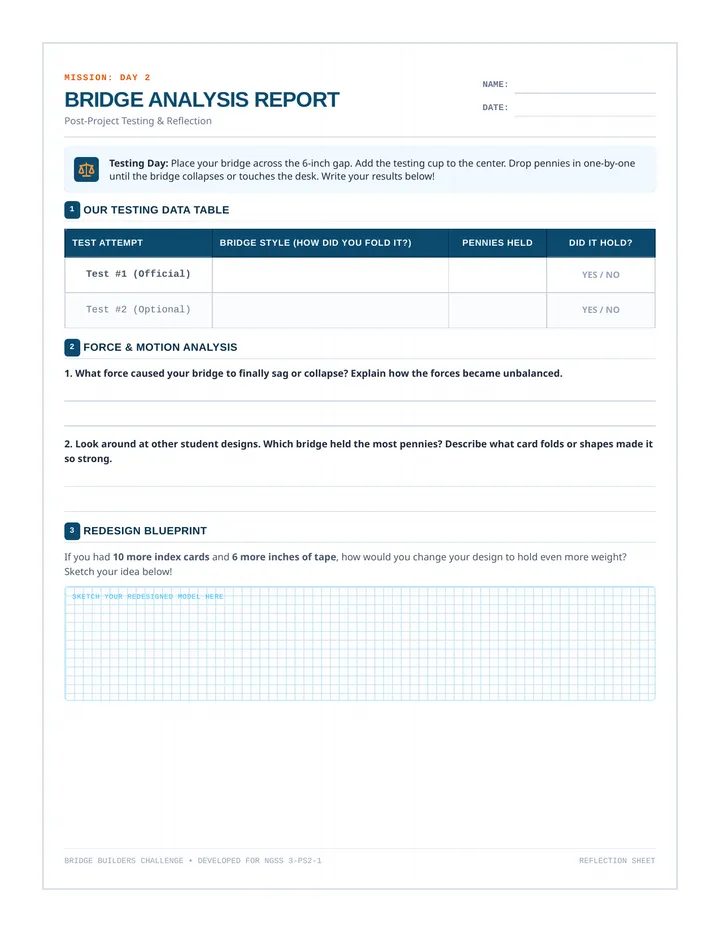
A 2-day hands-on STEM engineering challenge where 3rd-grade students design, build, and test index card bridges to explore balanced and unbalanced forces, gravity, and load-bearing structures.
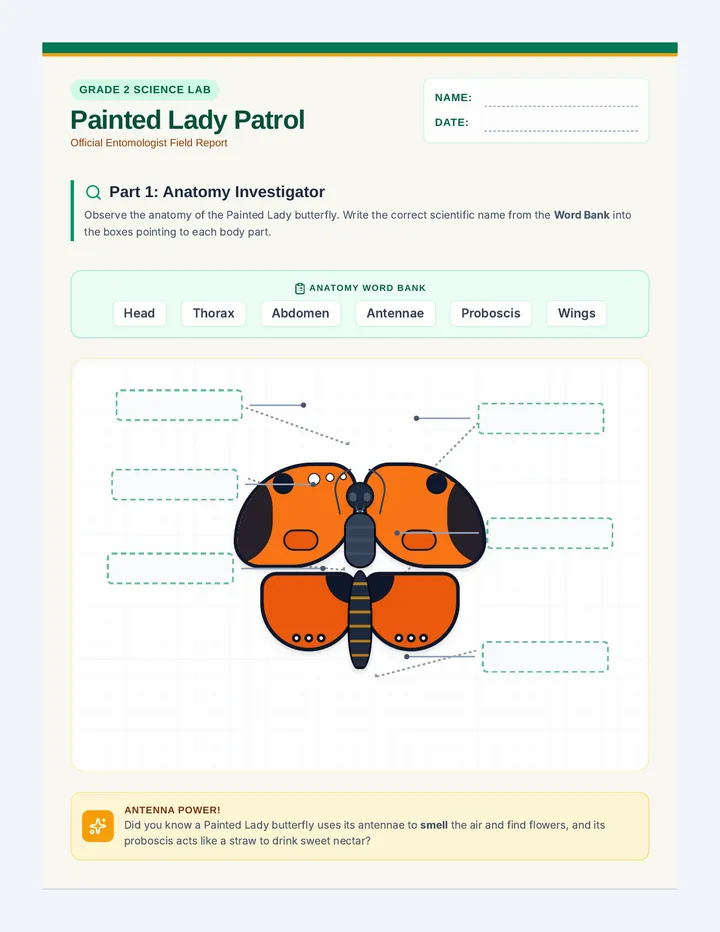
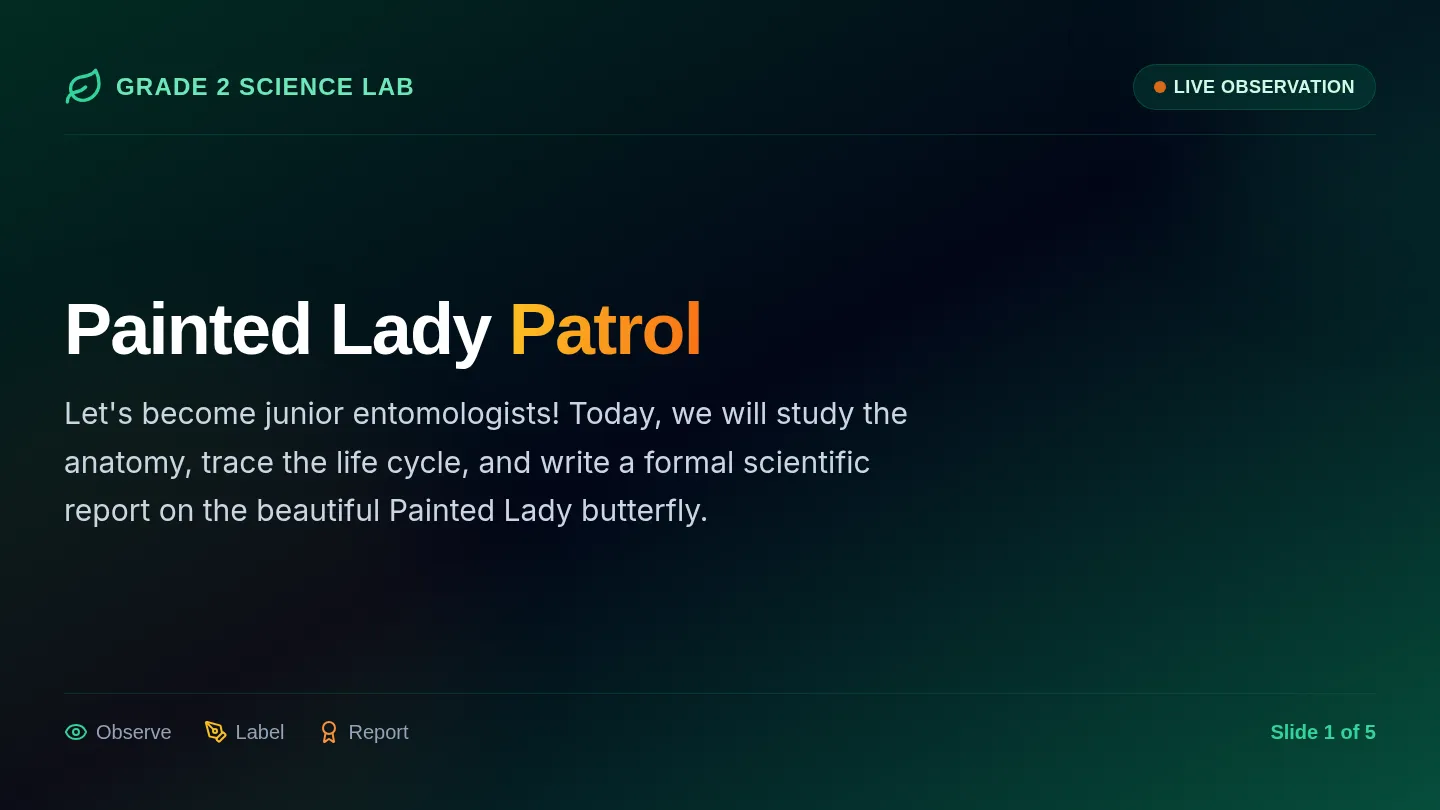
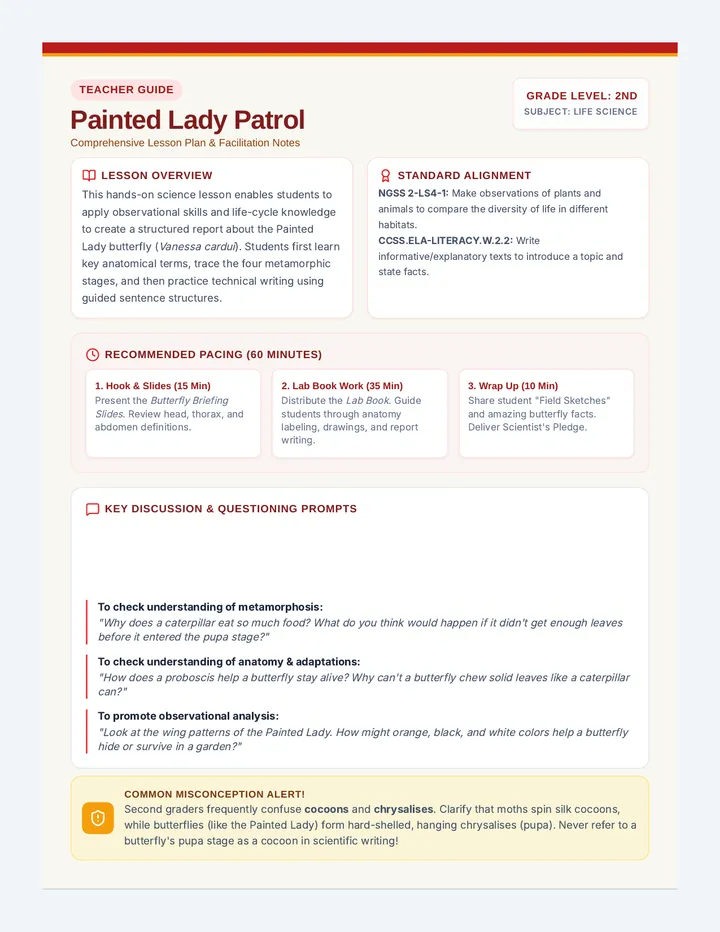
A hands-on 2nd-grade science unit where students study the Painted Lady butterfly's anatomy, trace its life cycle, and compile their findings into a guided research report. Includes interactive visual slides, a multi-page student lab book, and a detailed teacher facilitation guide with grading rubrics and answer keys.
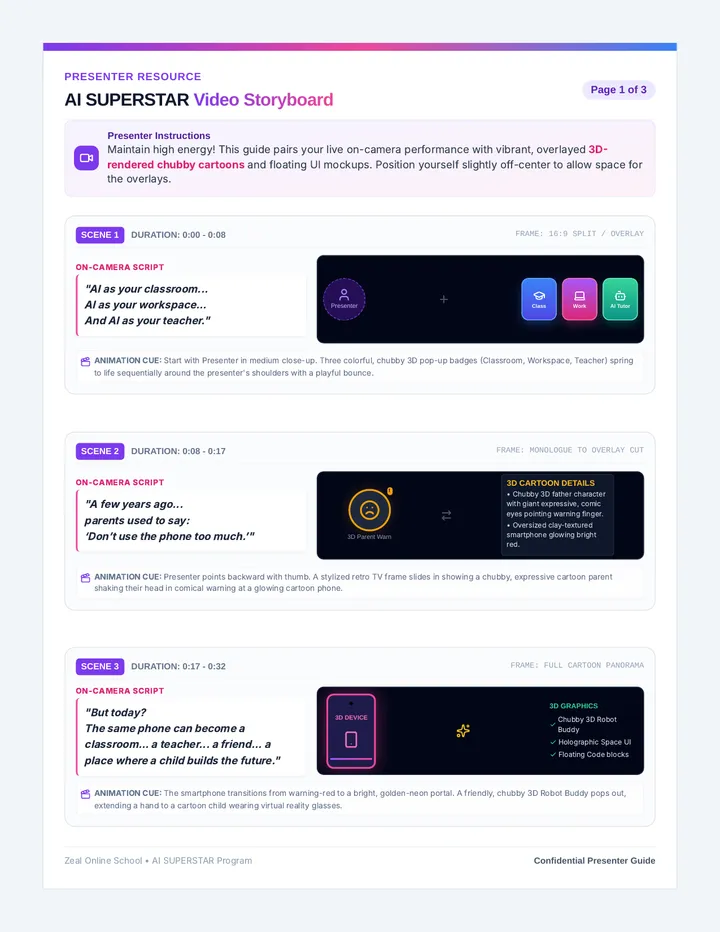
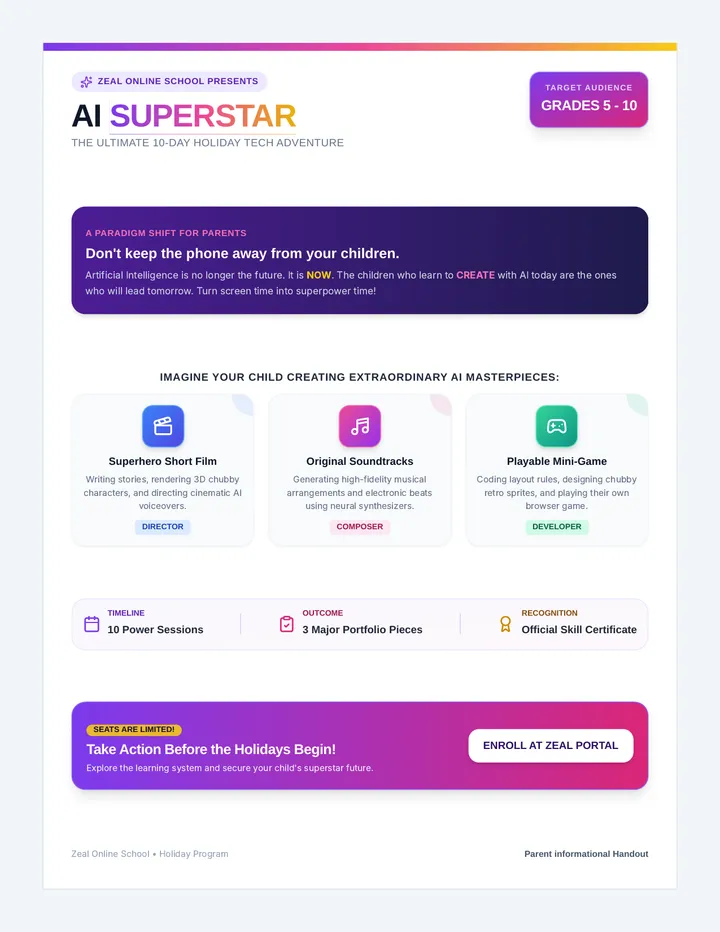
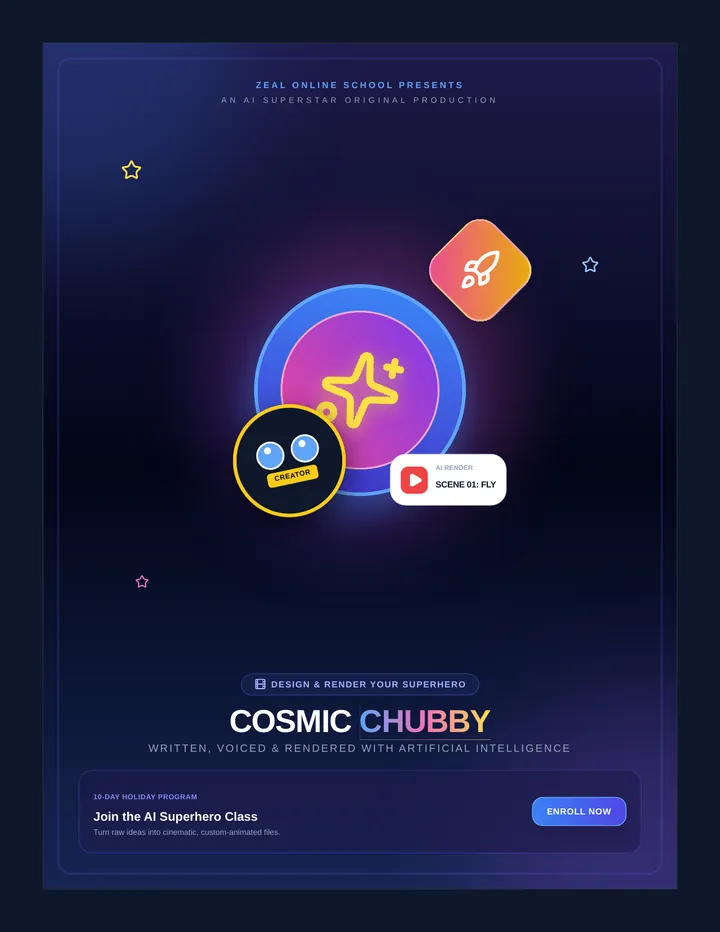
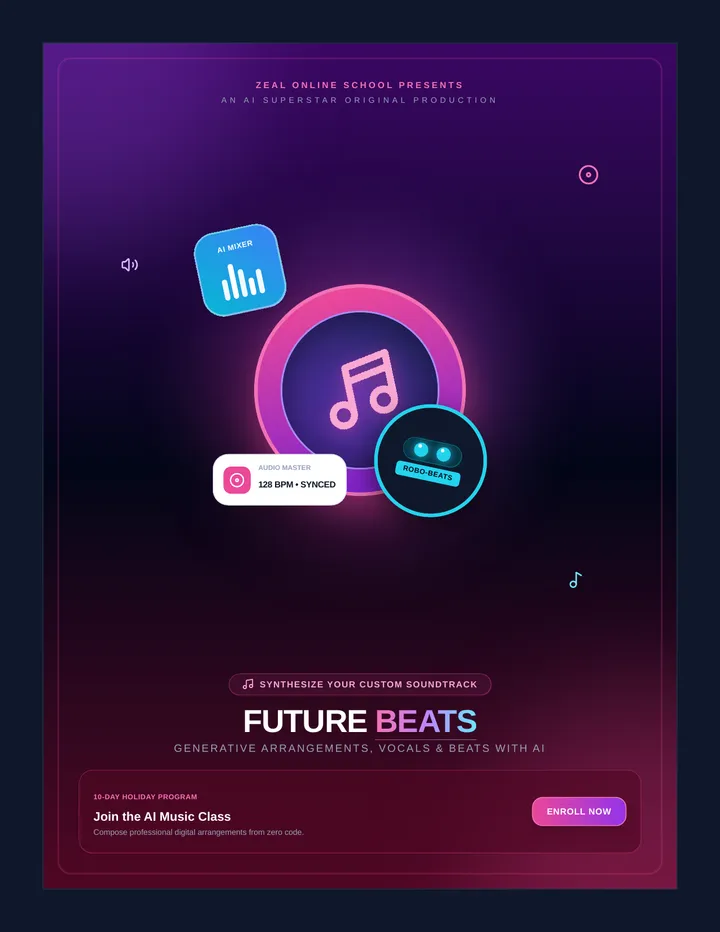
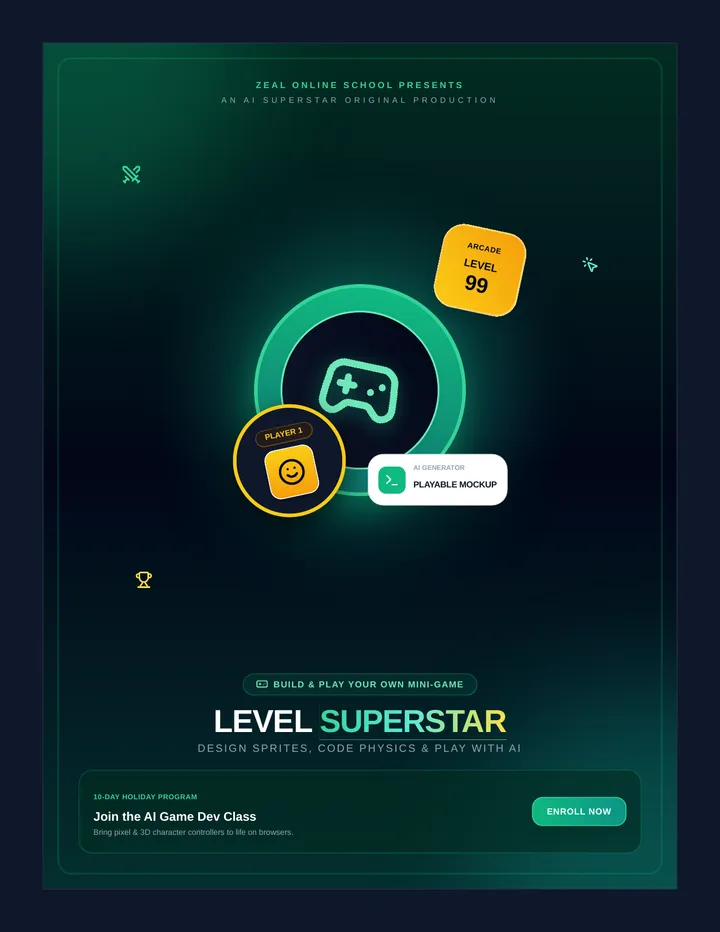
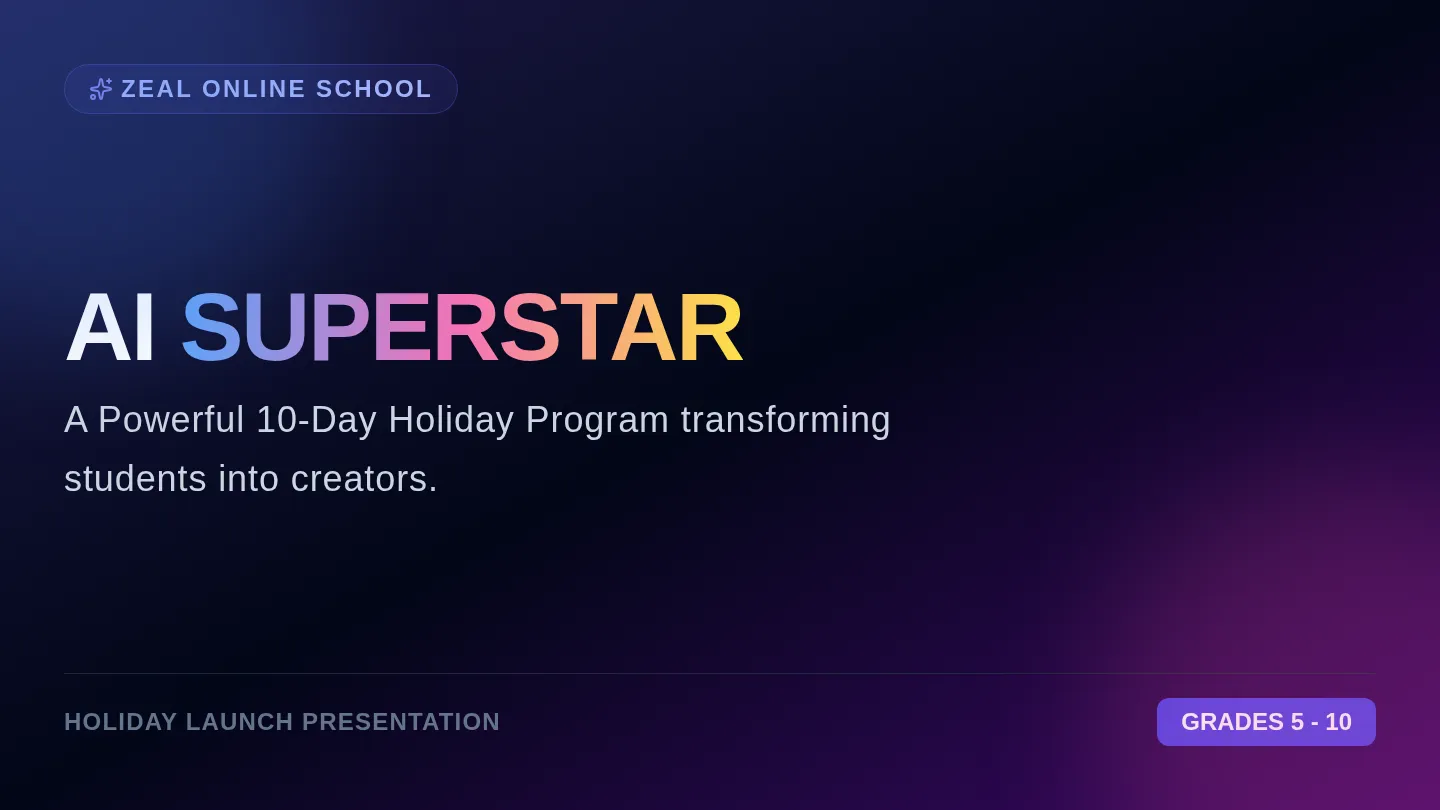
A promotional and planning resource bundle for Zeal Online School's 'AI Superstar' program. Includes a highly descriptive scene-by-scene video storyboard guide for the presenter and a vibrant promotional flyer and informational packet for parents.
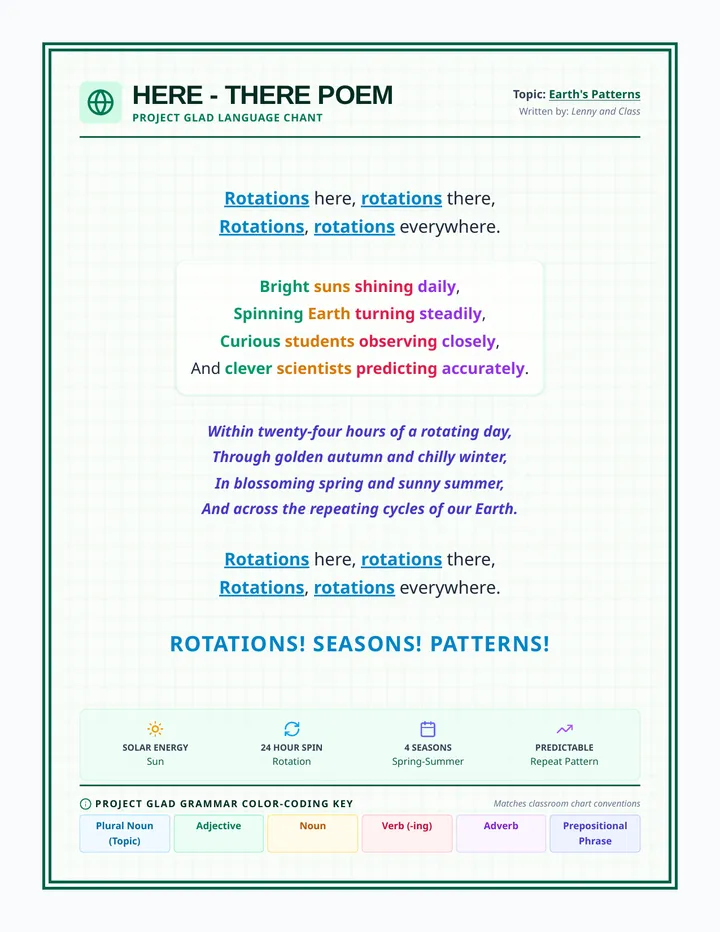
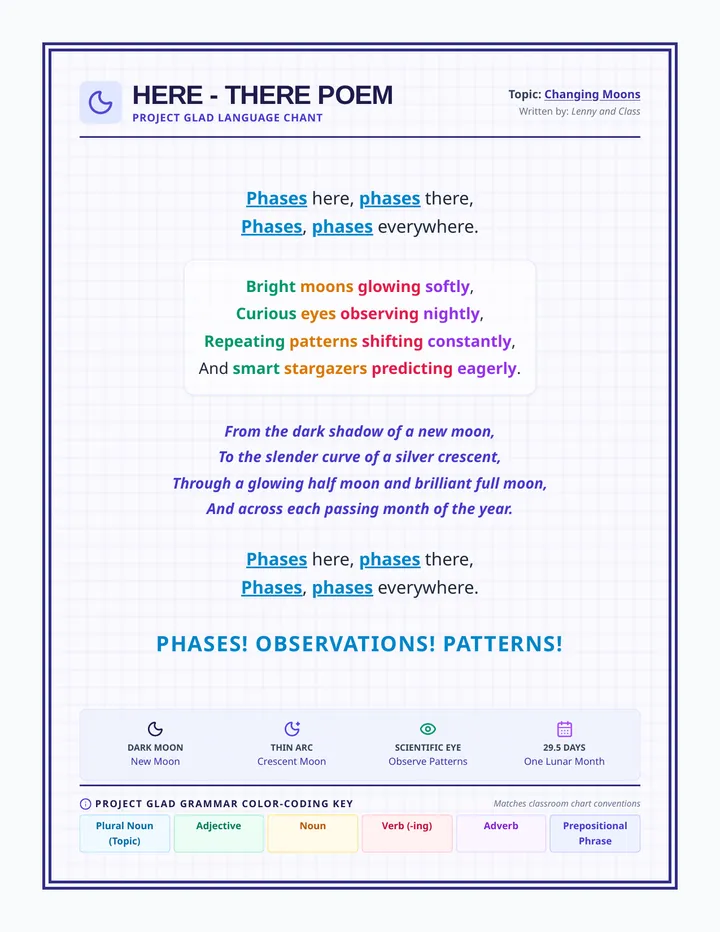
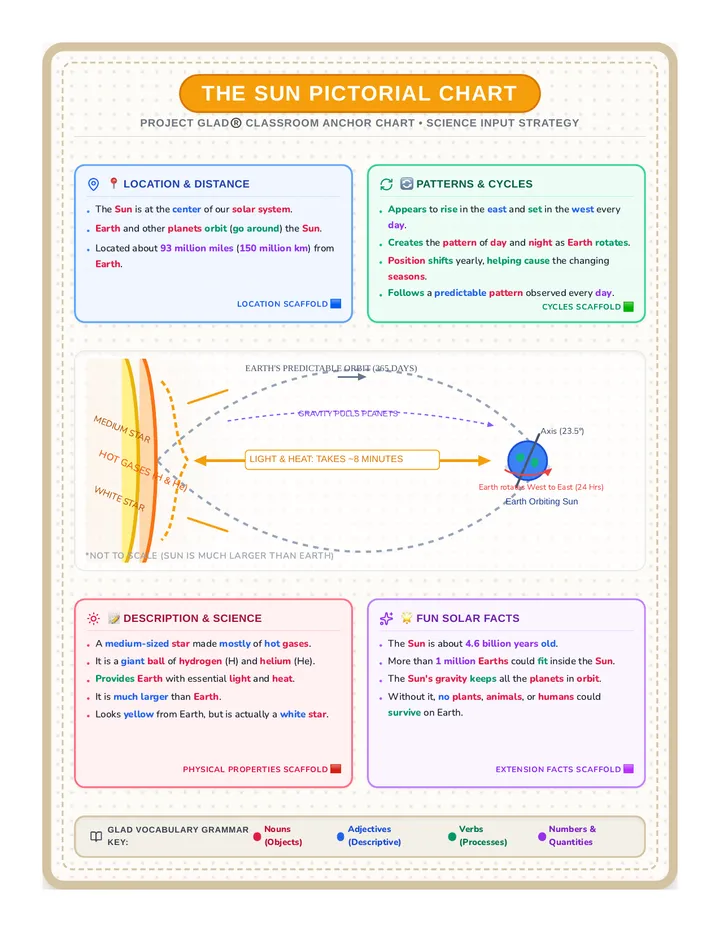
A set of beautifully color-coded GLAD (Guided Language Acquisition Design) Here/There chants that introduce students to repeating solar and lunar cycles. Includes classroom-ready anchor chart posters for rotating Earth patterns and changing moon phases.
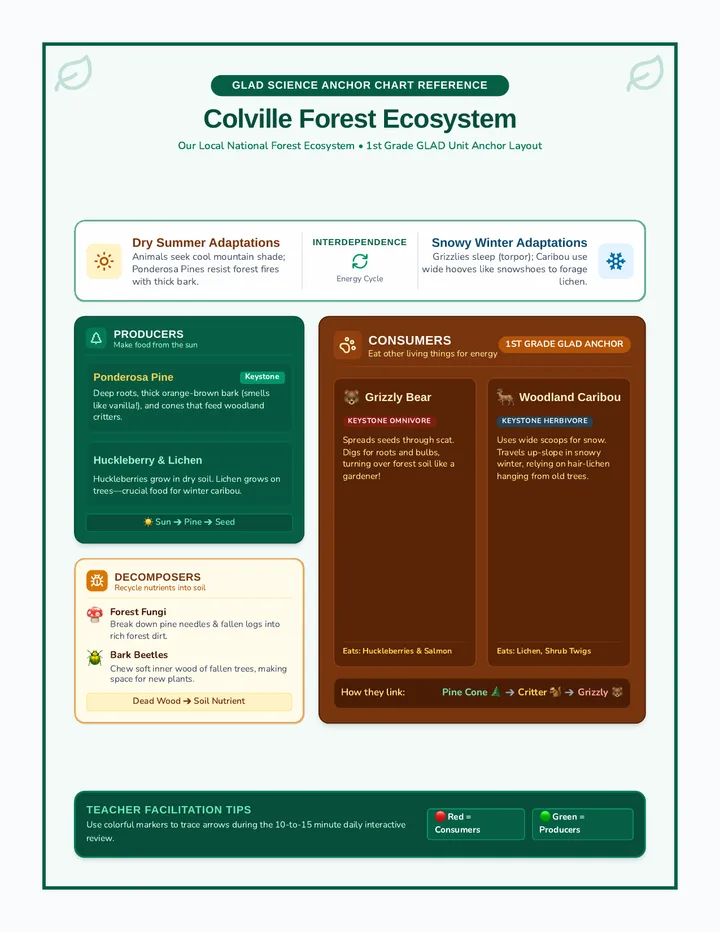
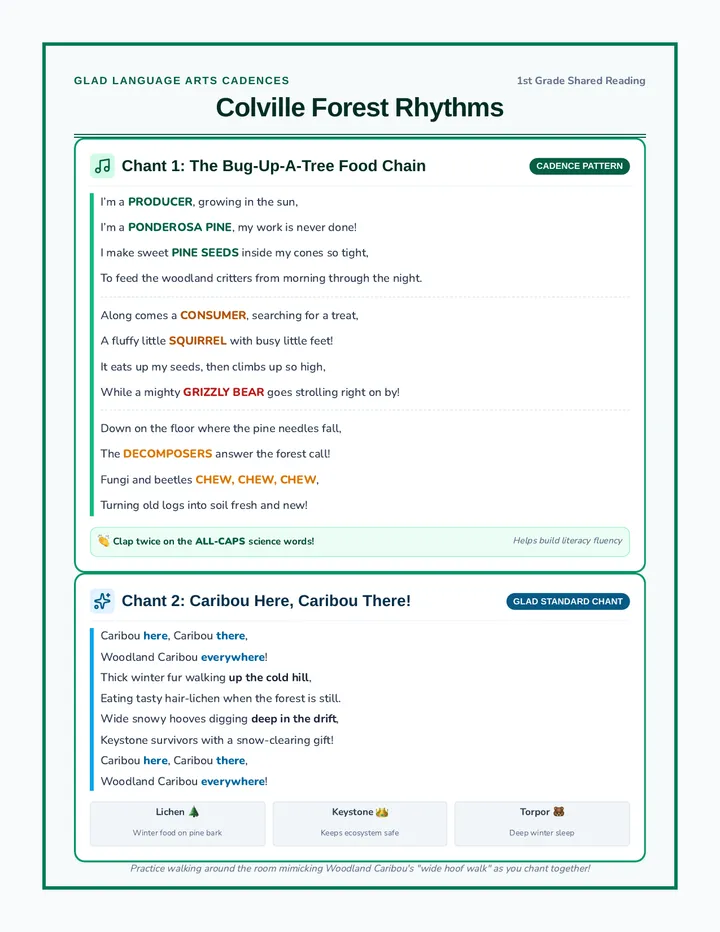
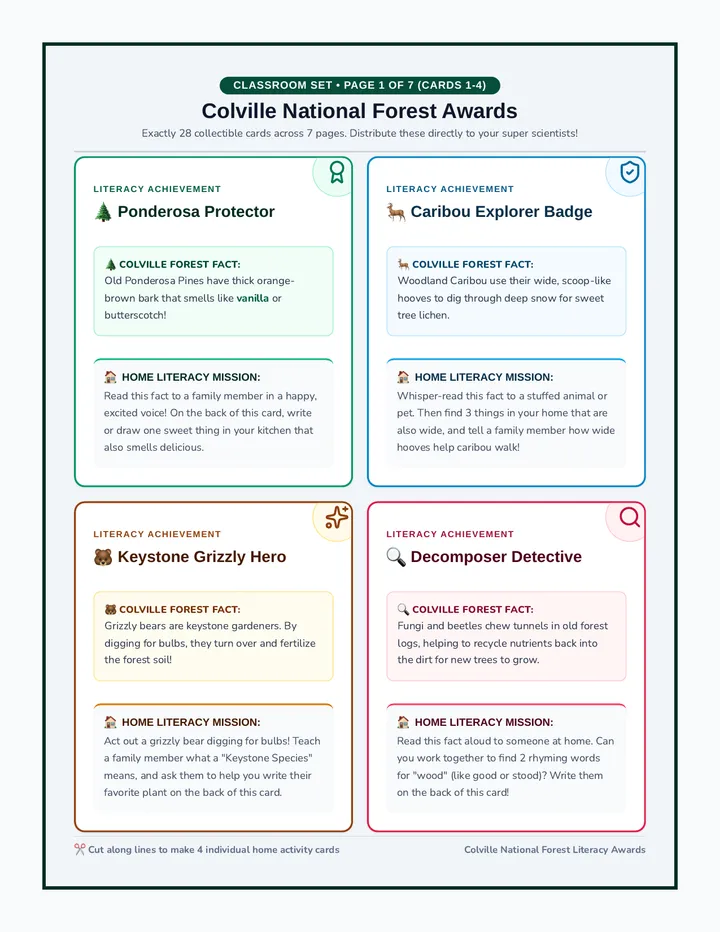
An interactive unit lesson plan implementing Guided Language Acquisition Design (GLAD) strategies to teach 1st graders about the Colville National Forest ecosystem. Students interact with pictorial charts, chant high-frequency science vocabulary, and earn literacy awards detailing local keystone species, food webs, and seasonal changes.
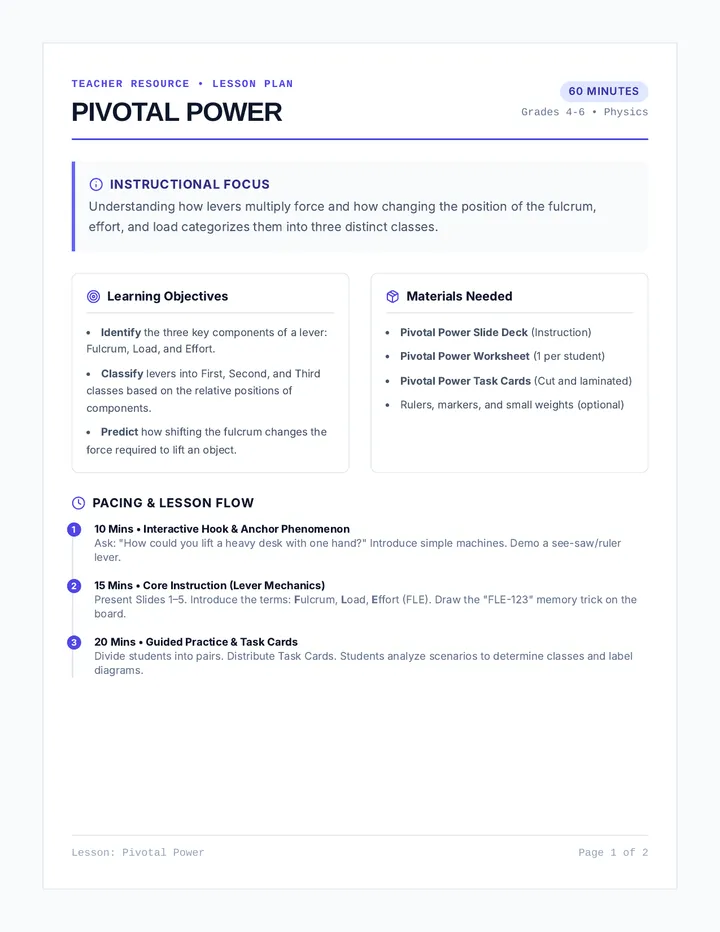
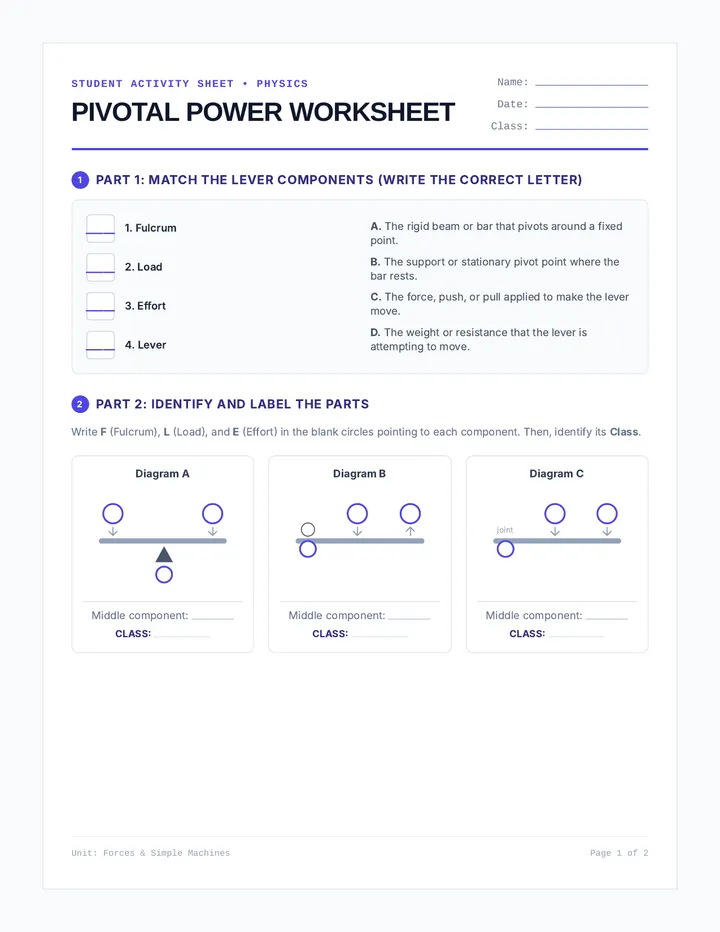
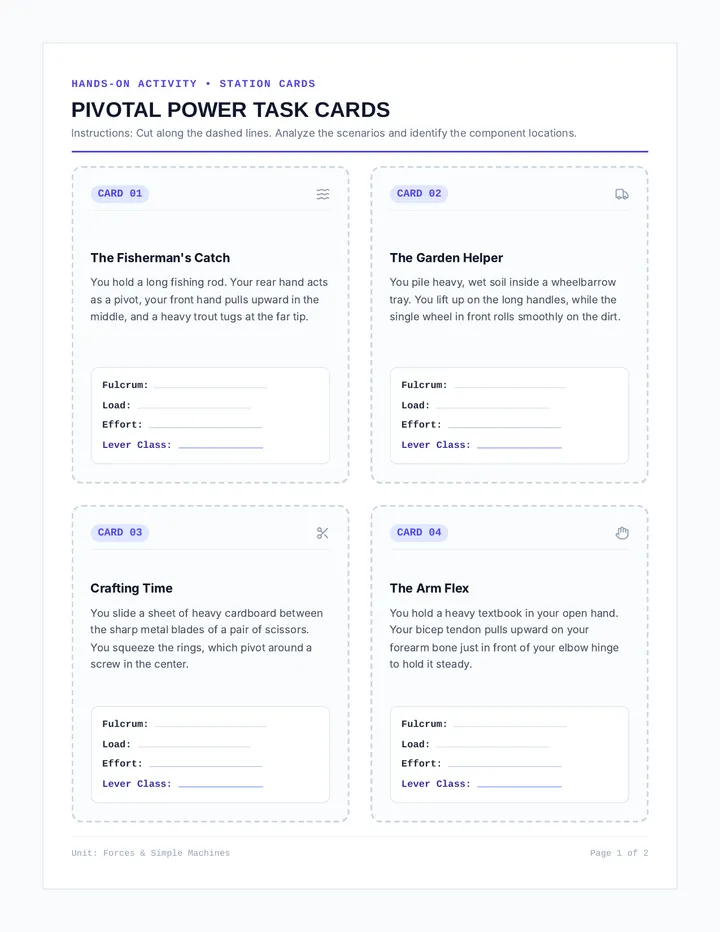
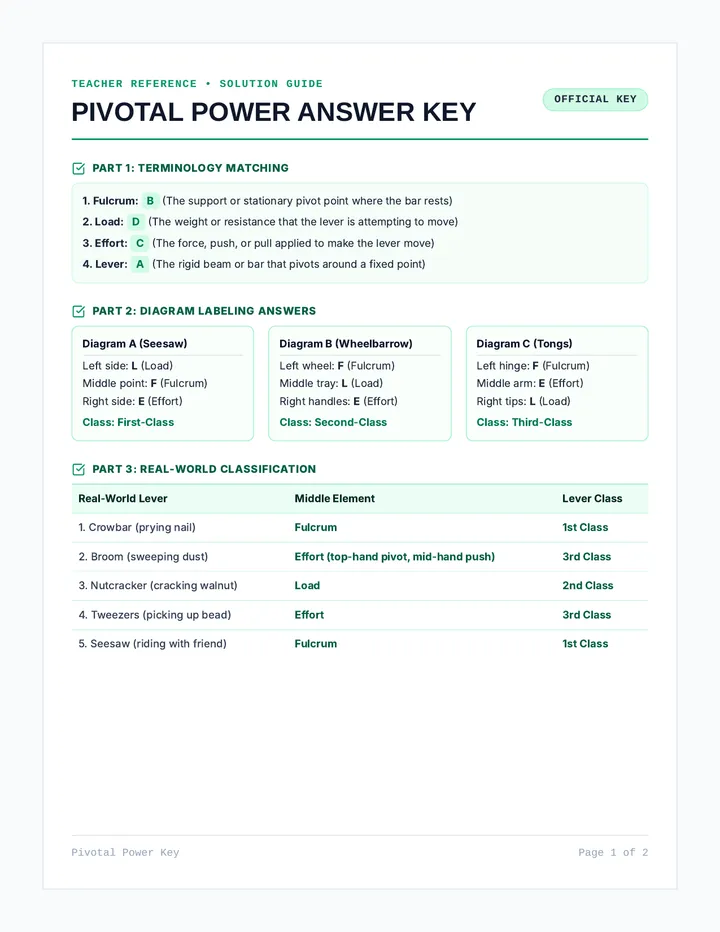
A dynamic science lesson on simple machines focusing on levers and fulcrums. Students explore the three classes of levers through hands-on scenarios, visual models, and interactive challenges.
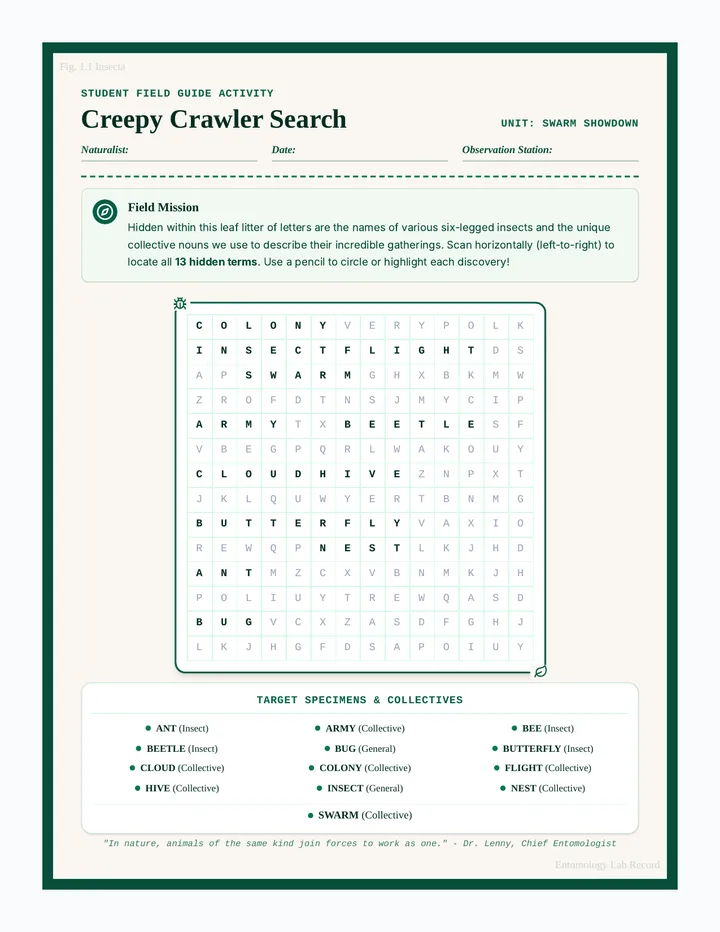
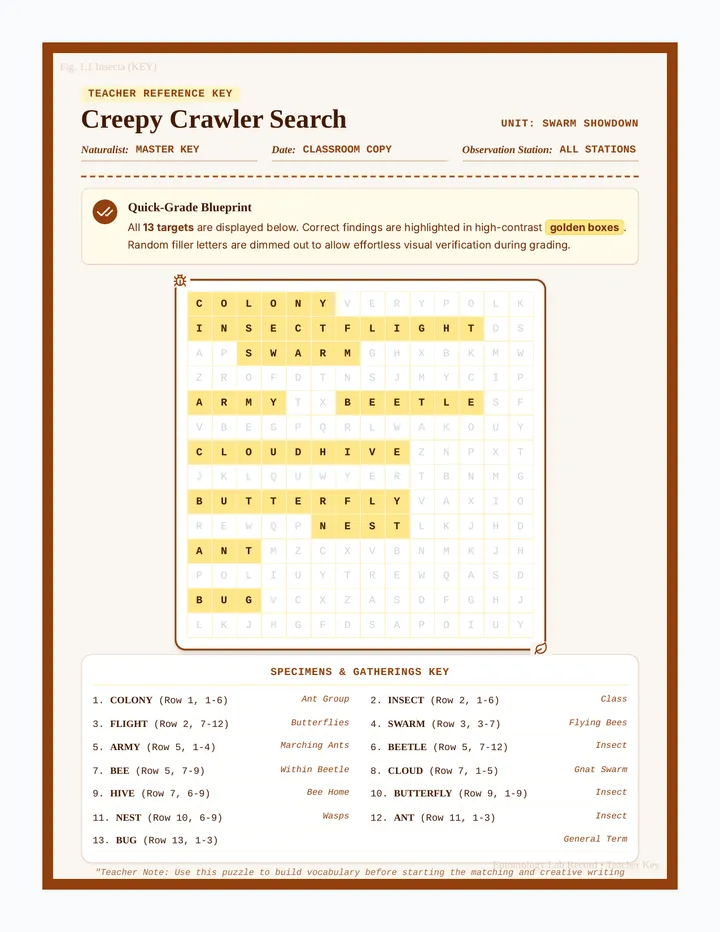
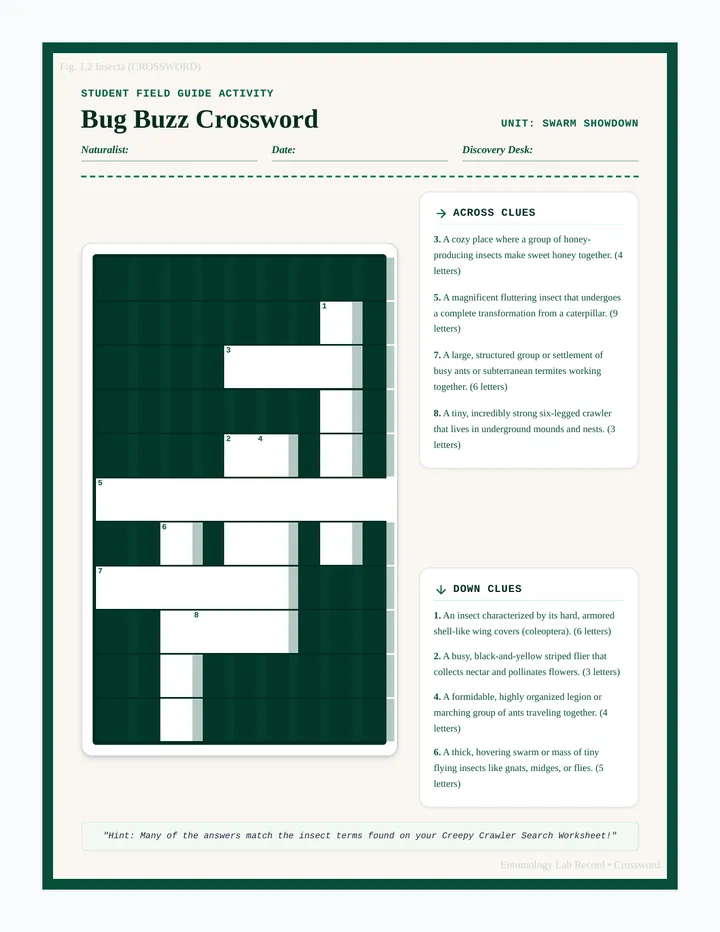
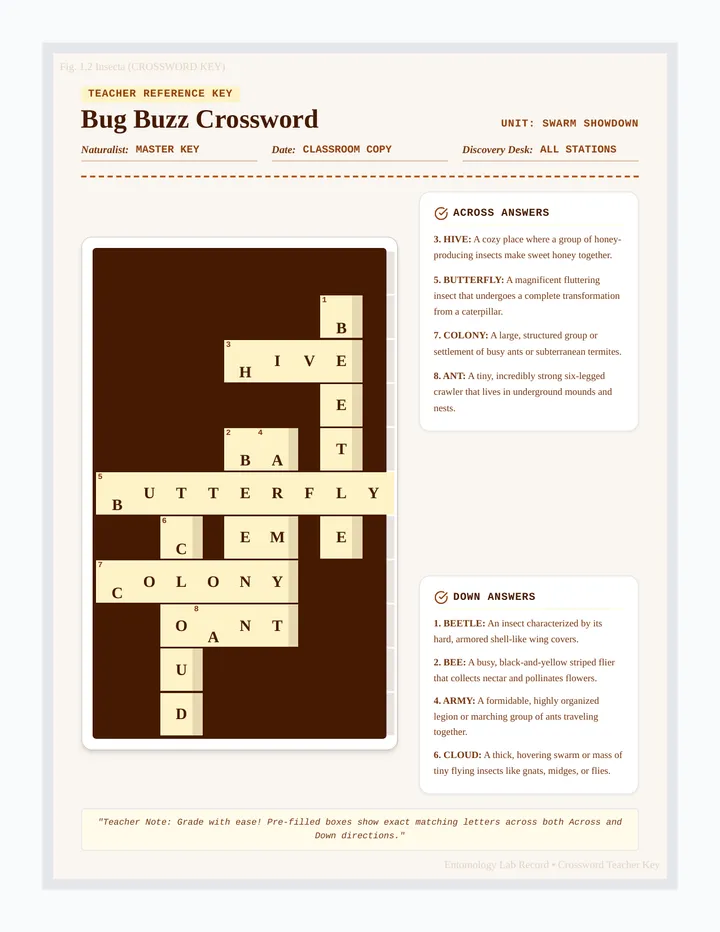
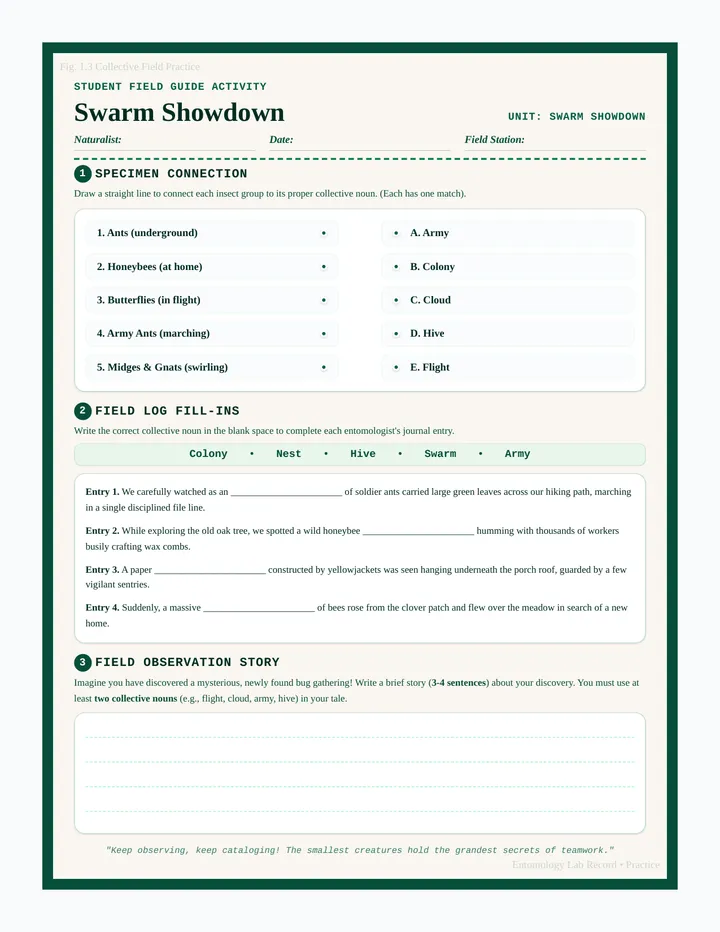
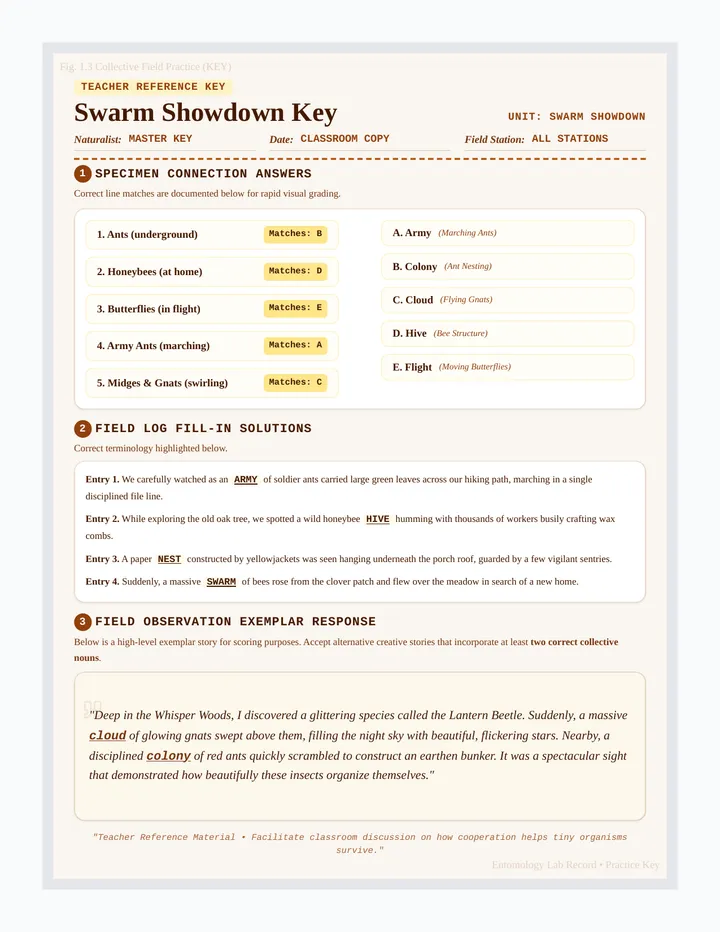
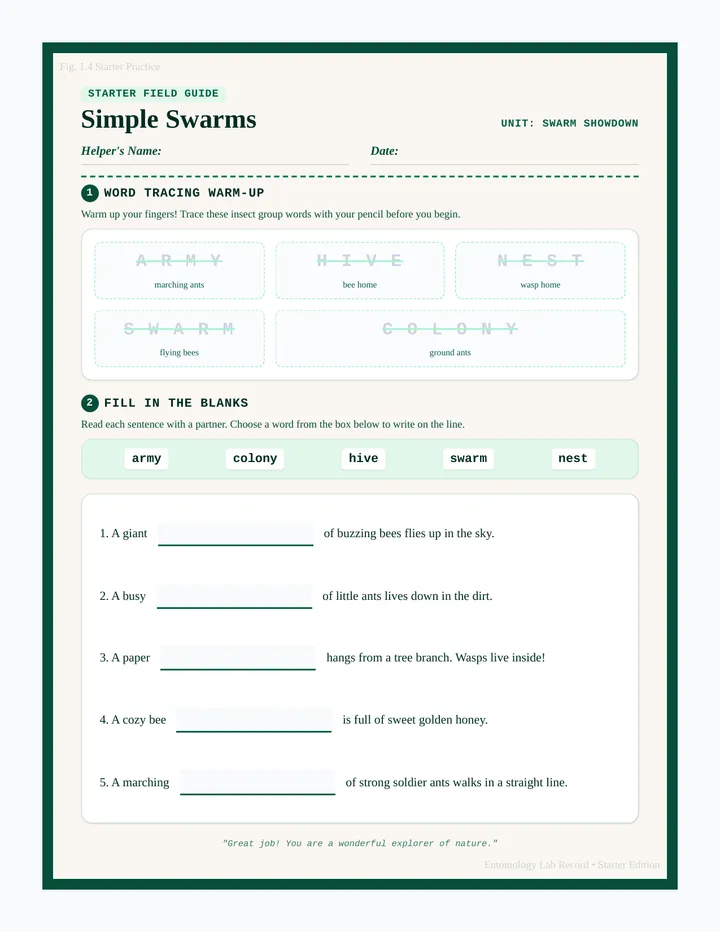
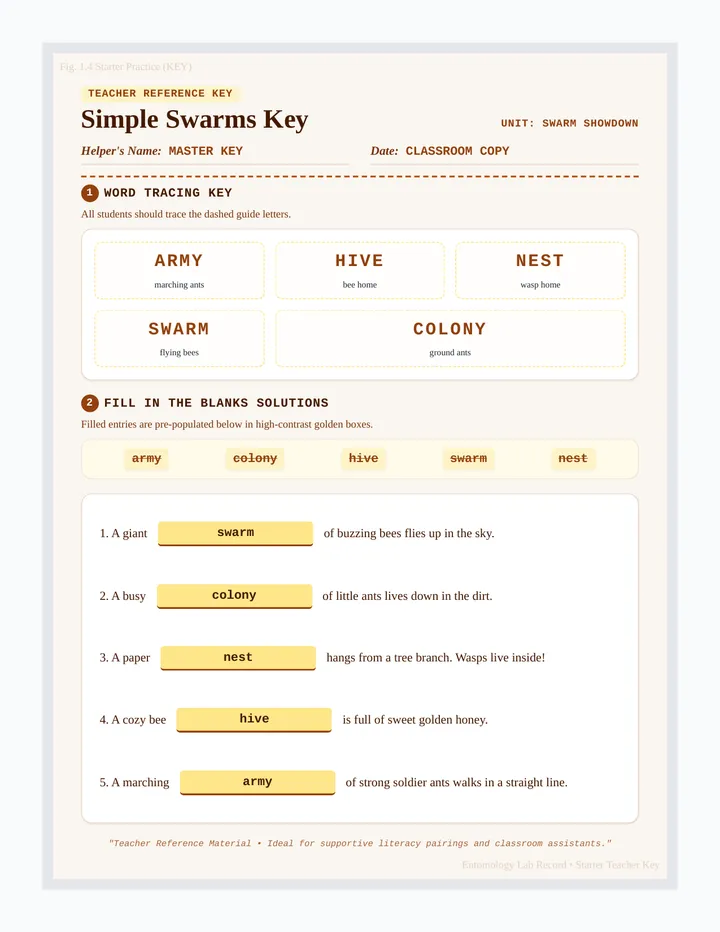
An engaging lesson on insect collective nouns and terminology, featuring a word search, crossword, and hands-on matching and writing activities exploring how bugs gather in groups.
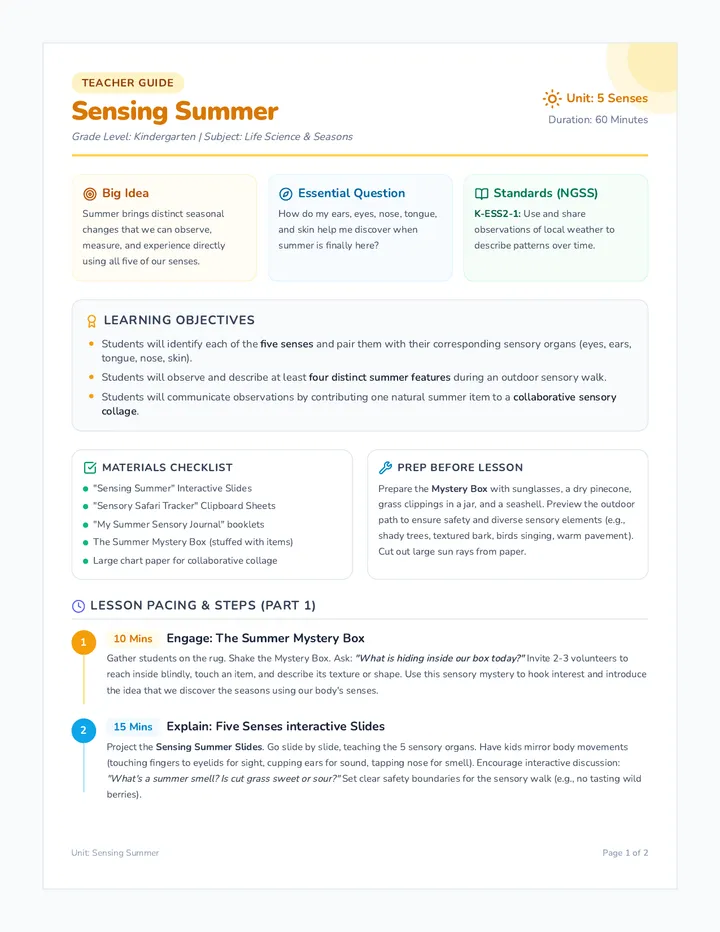
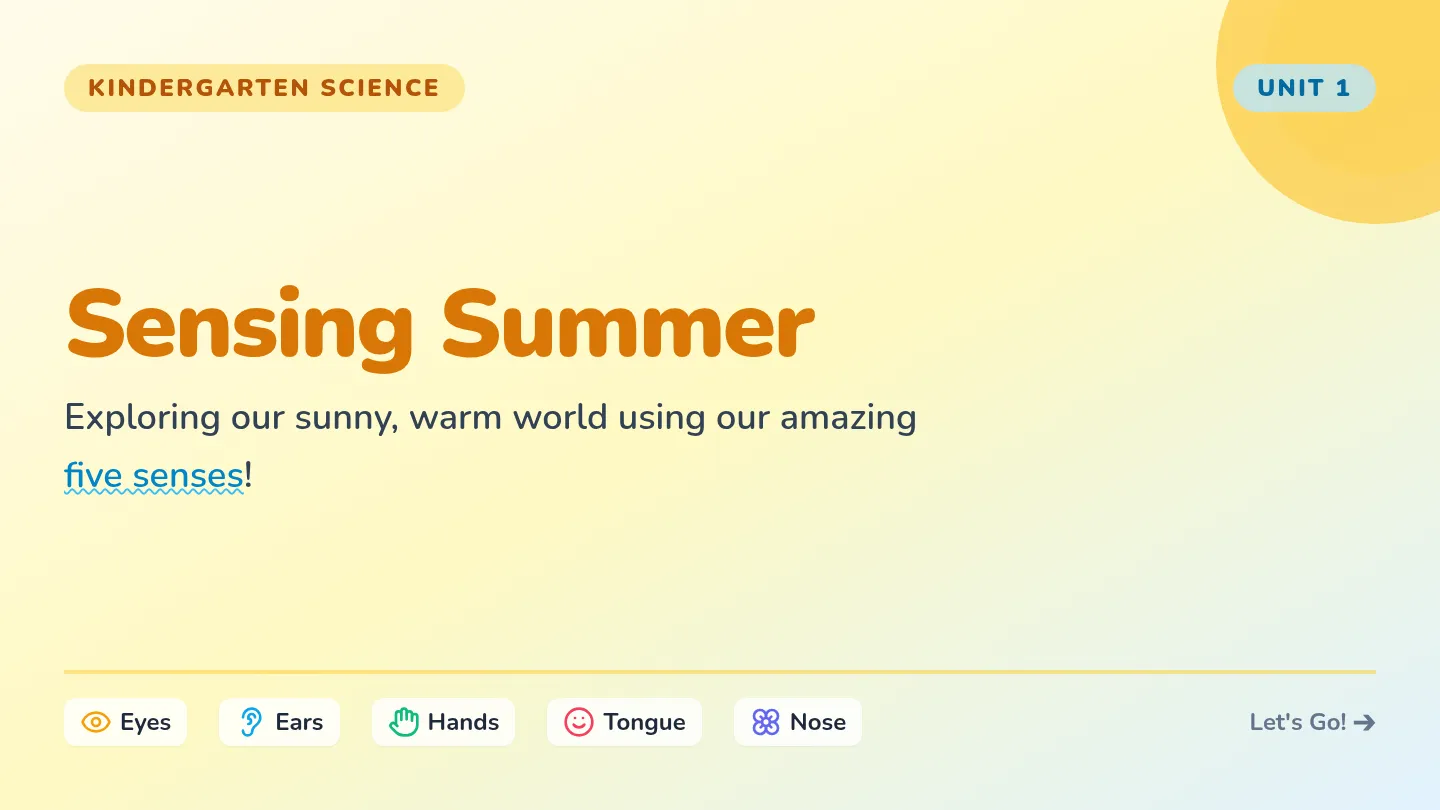
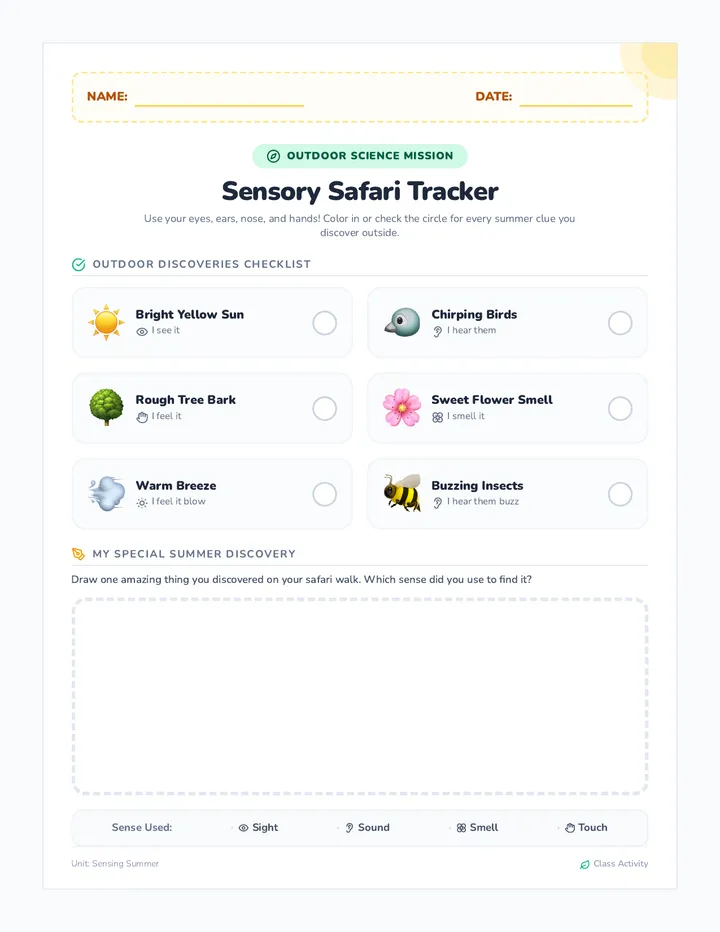
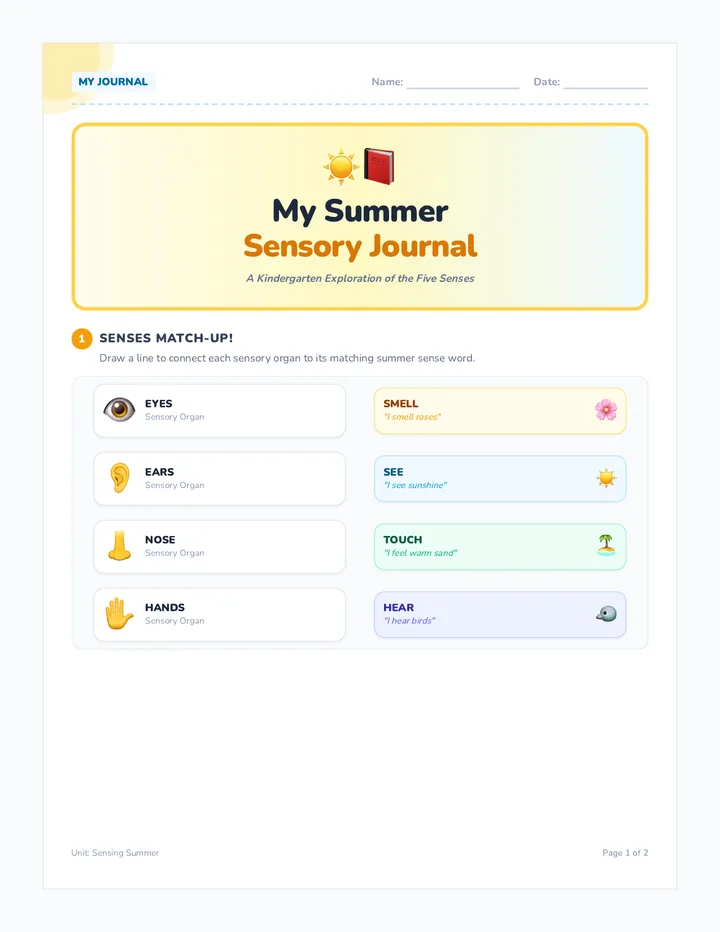
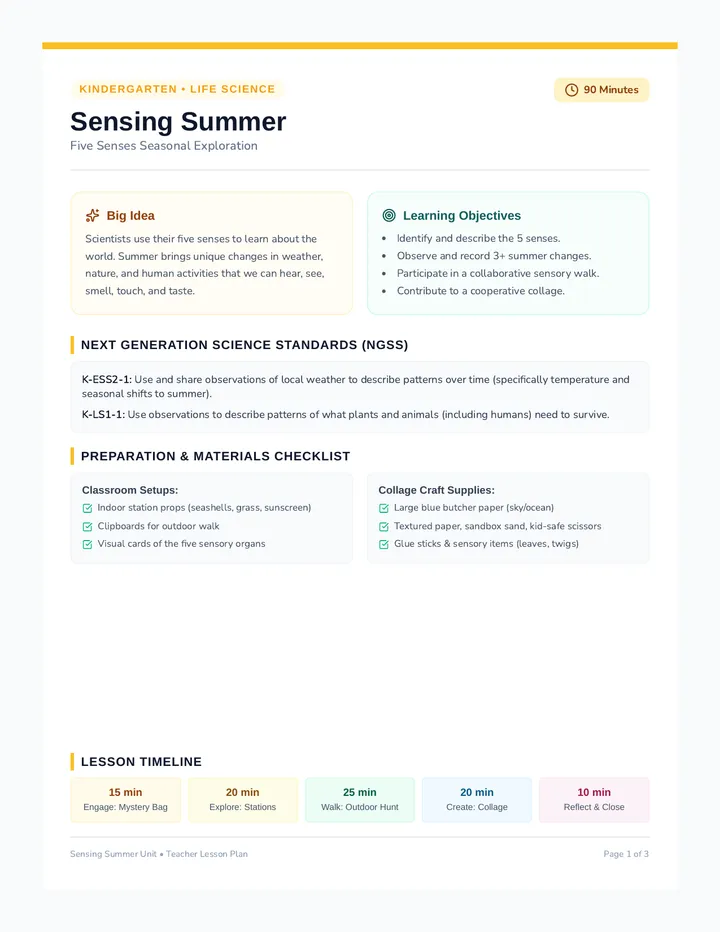
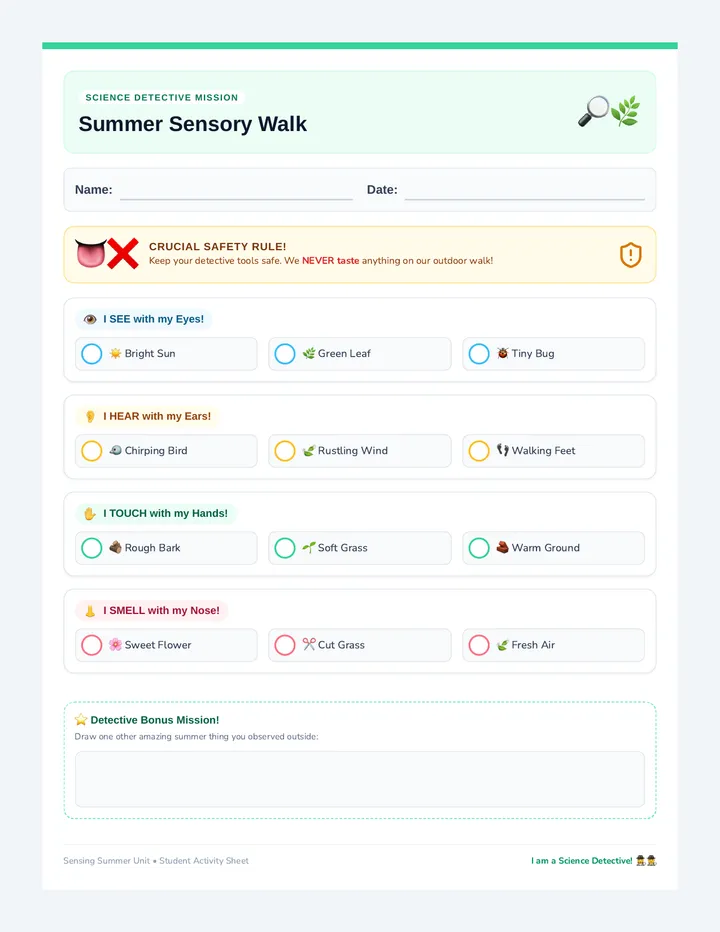
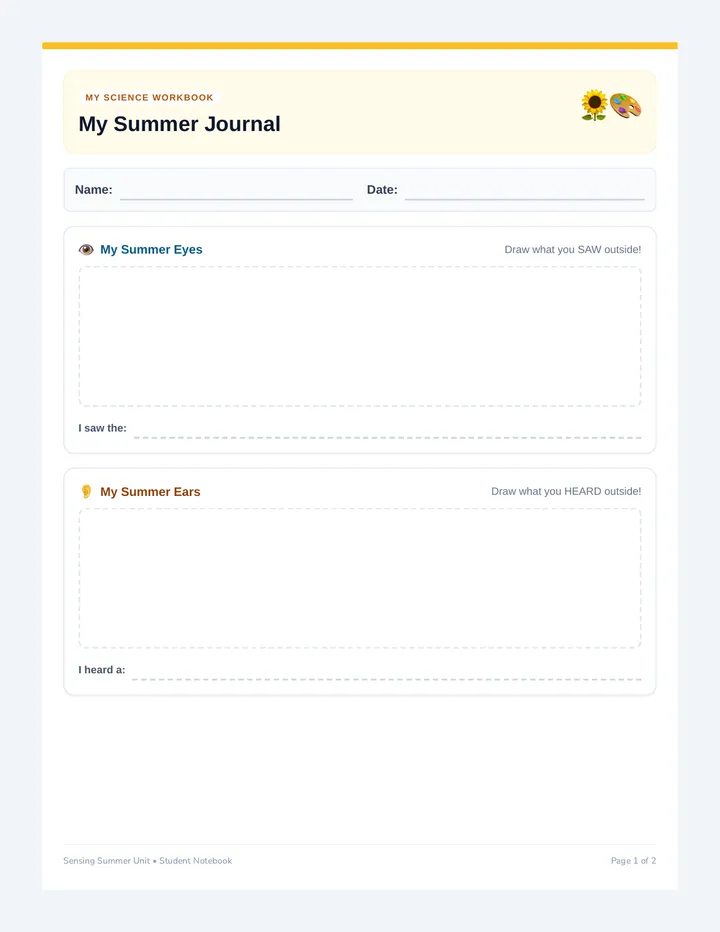
A comprehensive kindergarten science lesson where students explore summer using their five senses. The lesson includes a teacher guide, interactive slides, an outdoor sensory walk checklist, and a reflective sensory journal.
An interactive sensory science lesson where kindergarteners explore the seasonal changes of summer using their five senses through classroom discovery, an outdoor sensory walk, and journal reflections.
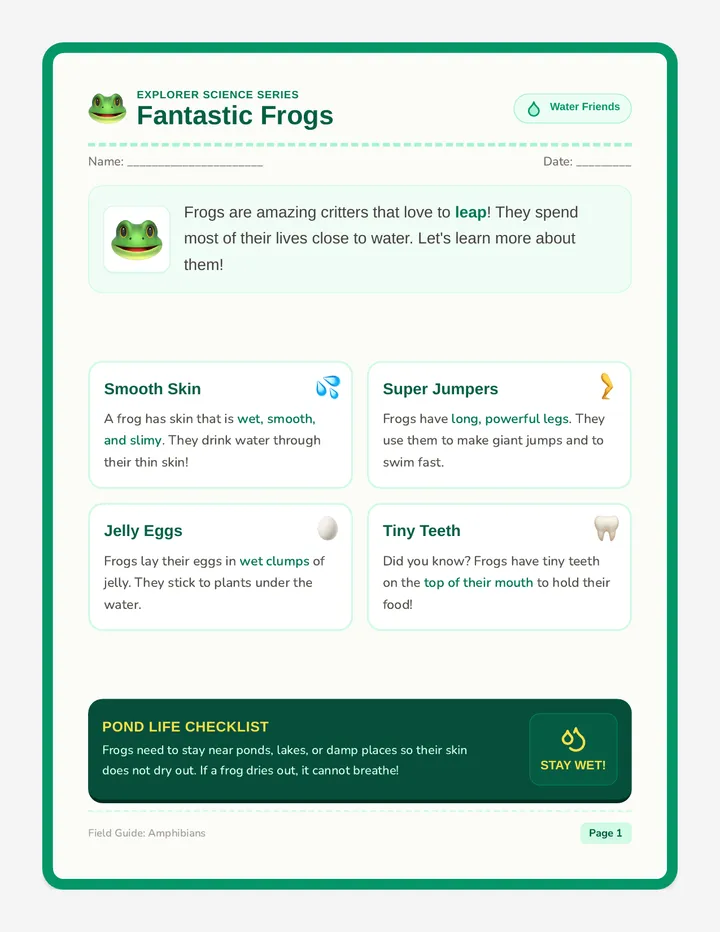
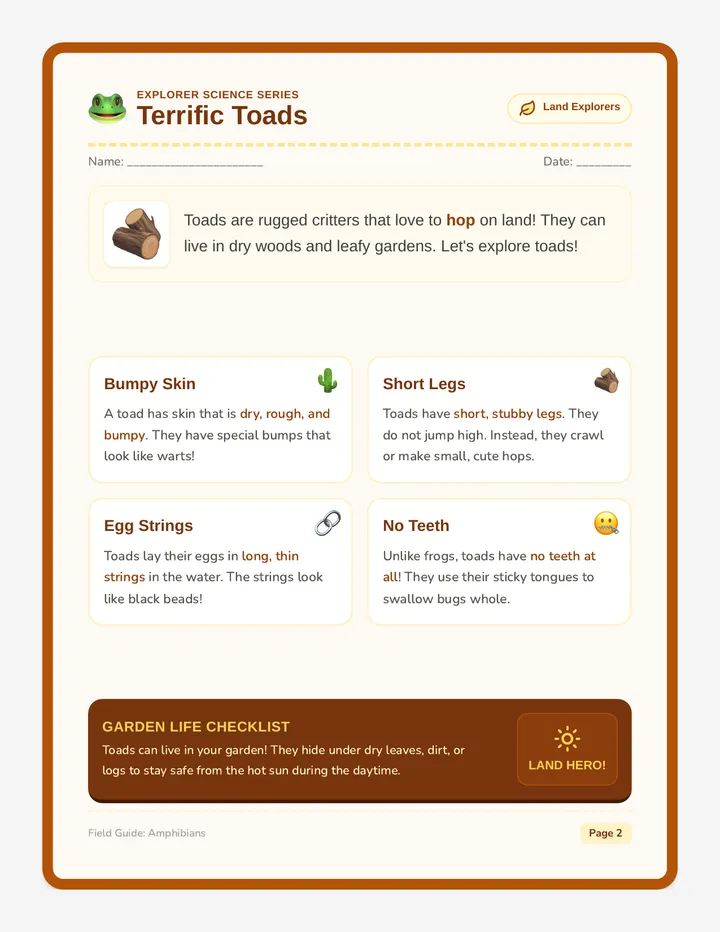
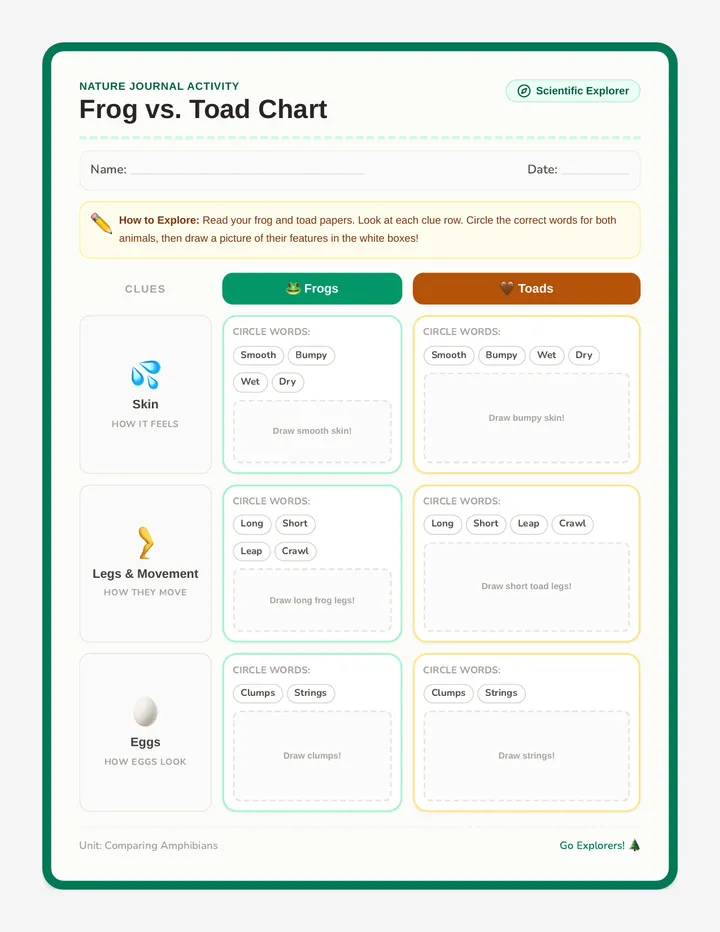
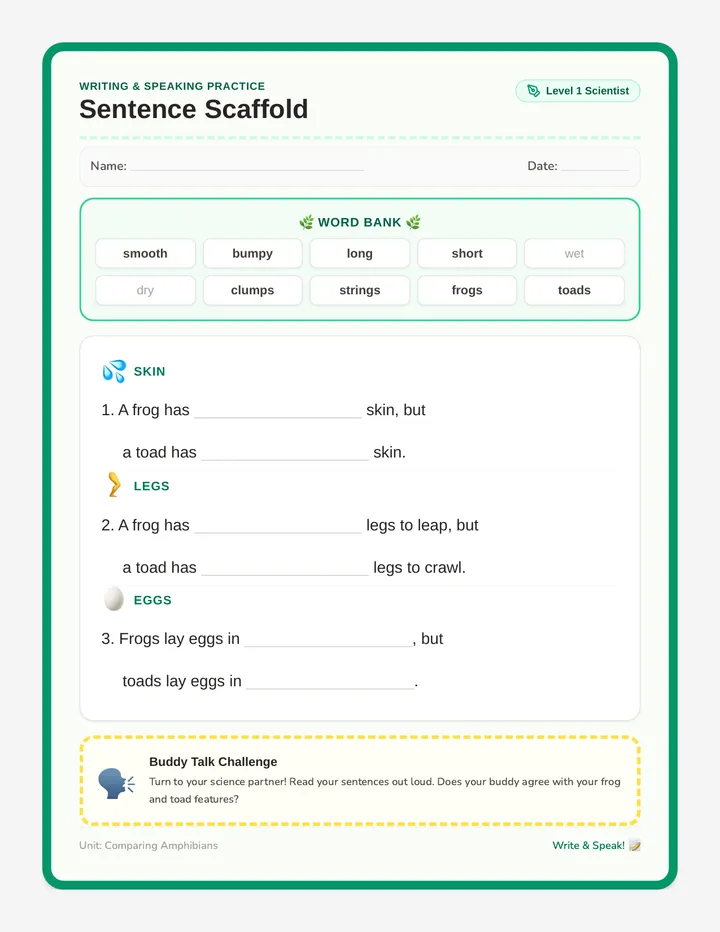
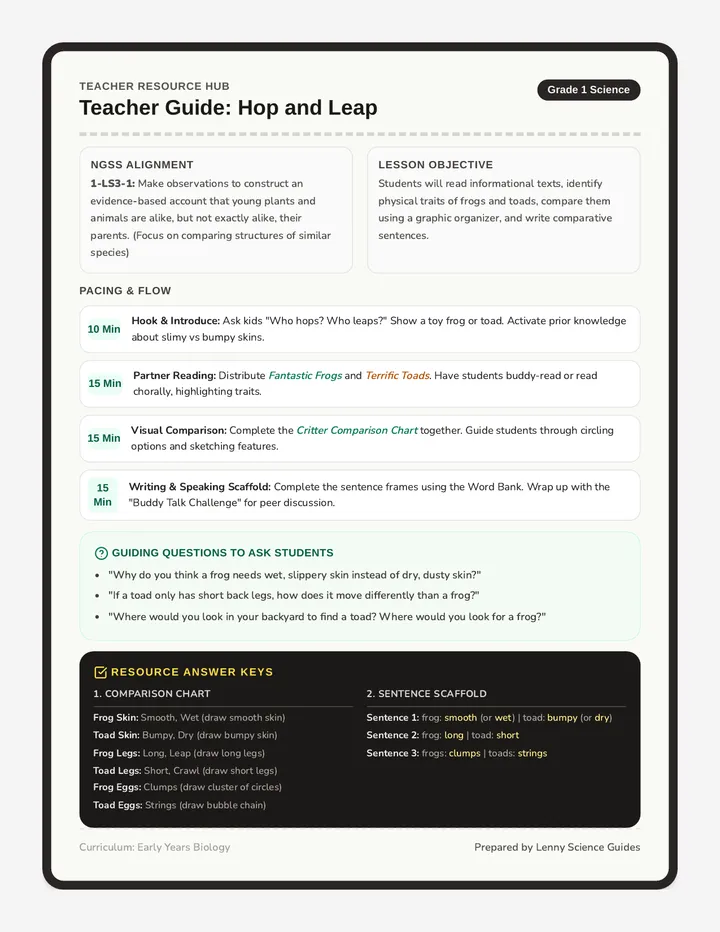
A first-grade science lesson comparing the observable physical and behavioral features of frogs and toads. Includes dual illustrated reading passages, a picture-supported graphic organizer, a sentence-frame writing scaffold, and a teacher facilitation guide.
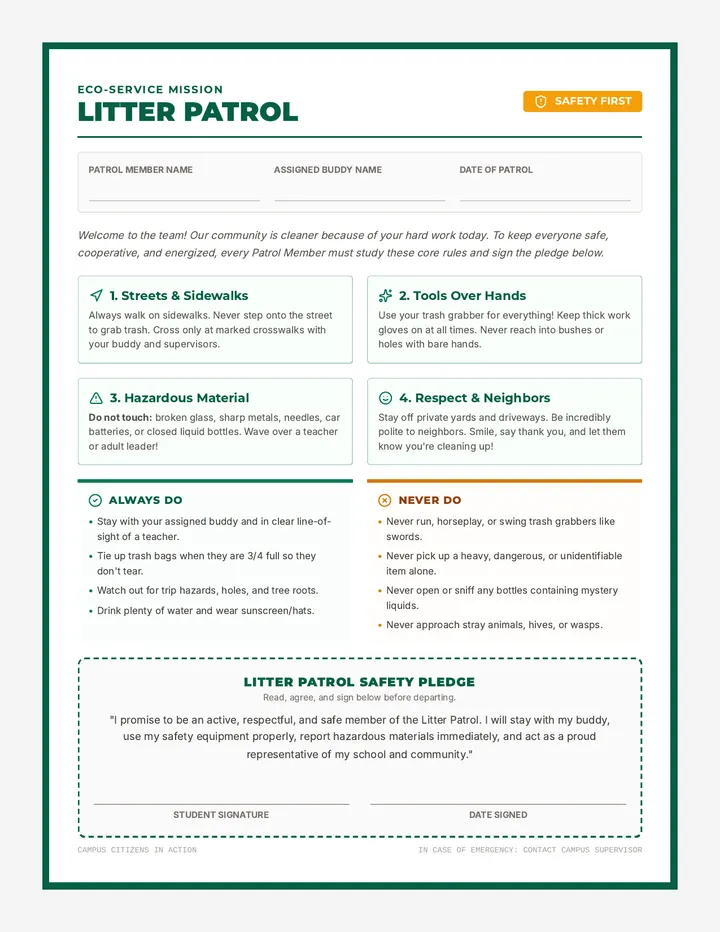
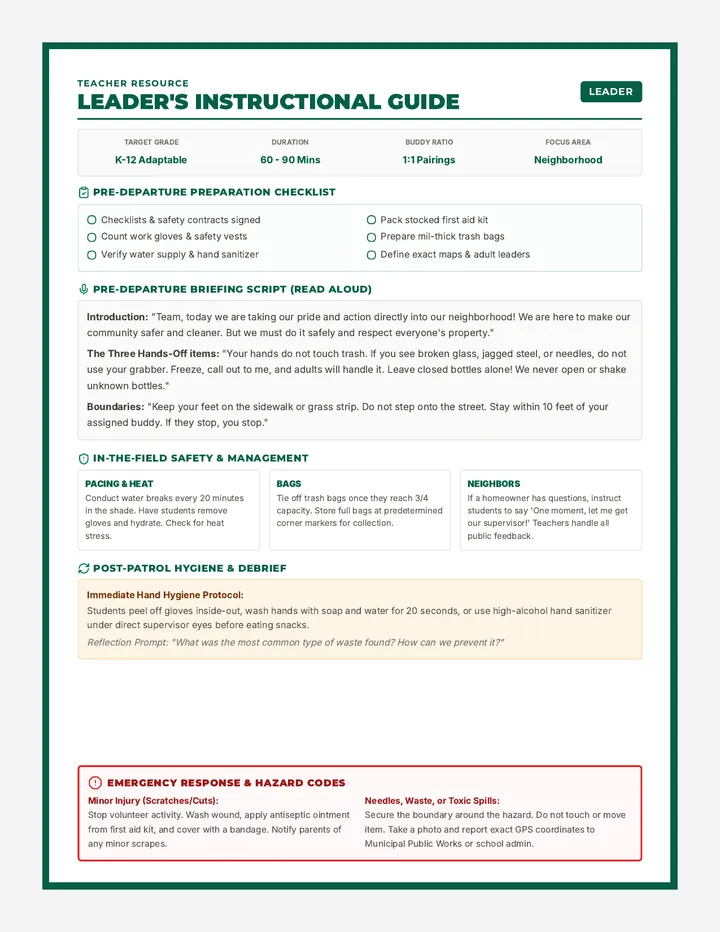
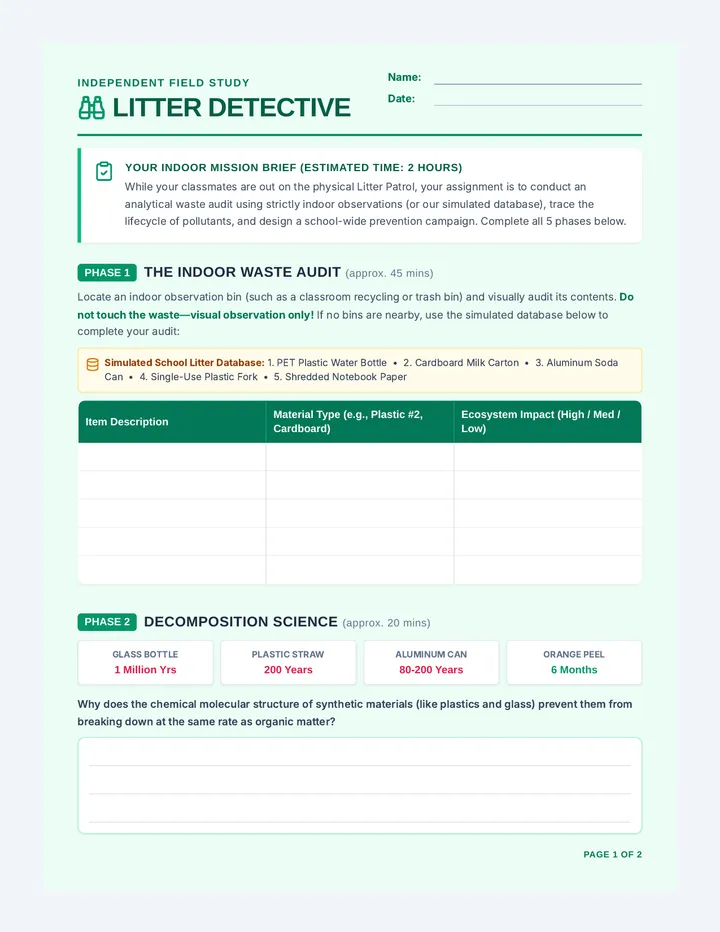
A comprehensive safety and preparation kit for students and teachers participating in a neighborhood trash pick-up community service project. It includes safety slides, a student contract and checklist, and a detailed teacher instruction guide.