Students will investigate the Earth's rotation on its axis to explain the day/night cycle and the apparent motion of the sun, distinguishing these daily patterns from seasonal changes.
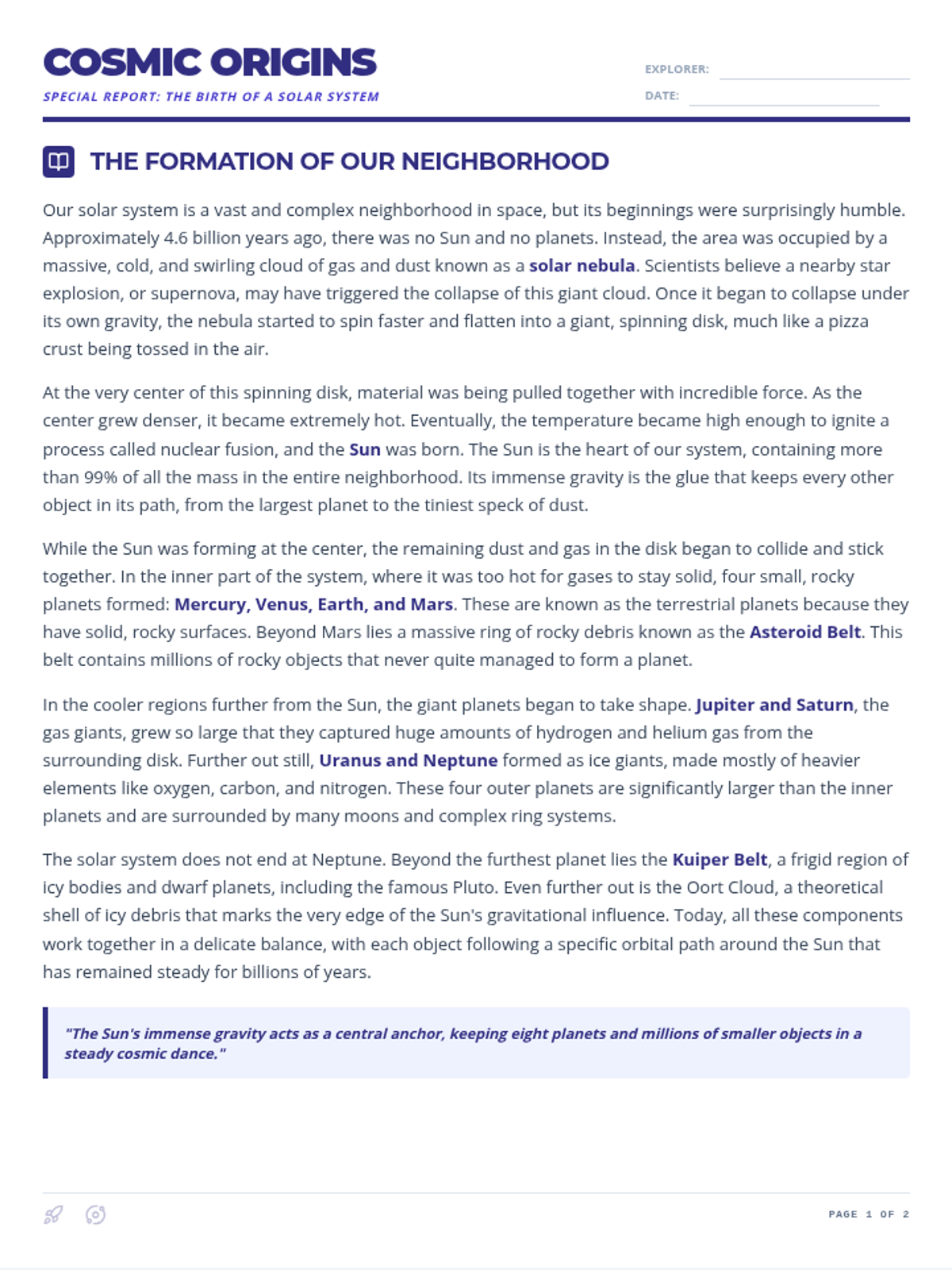
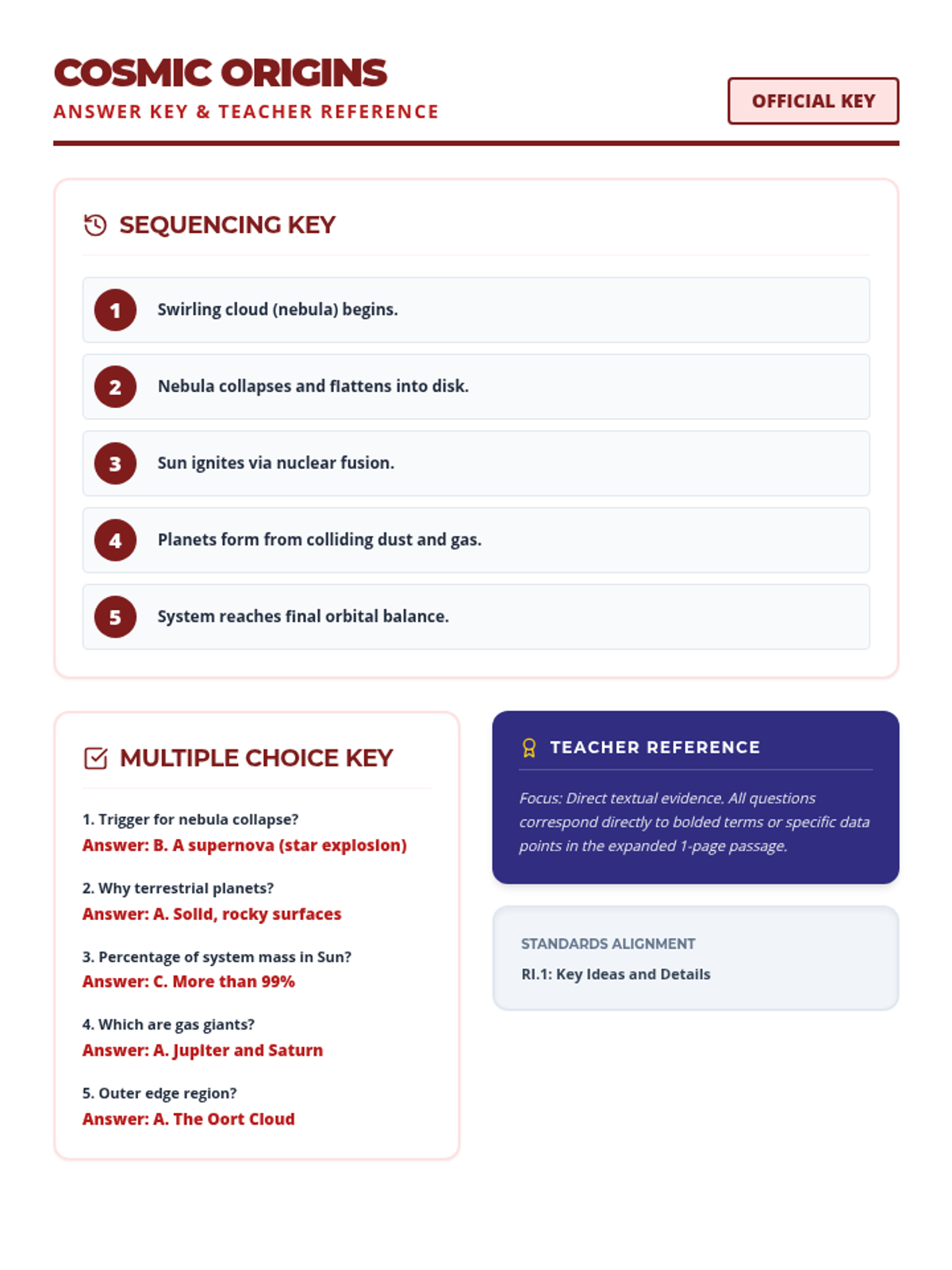
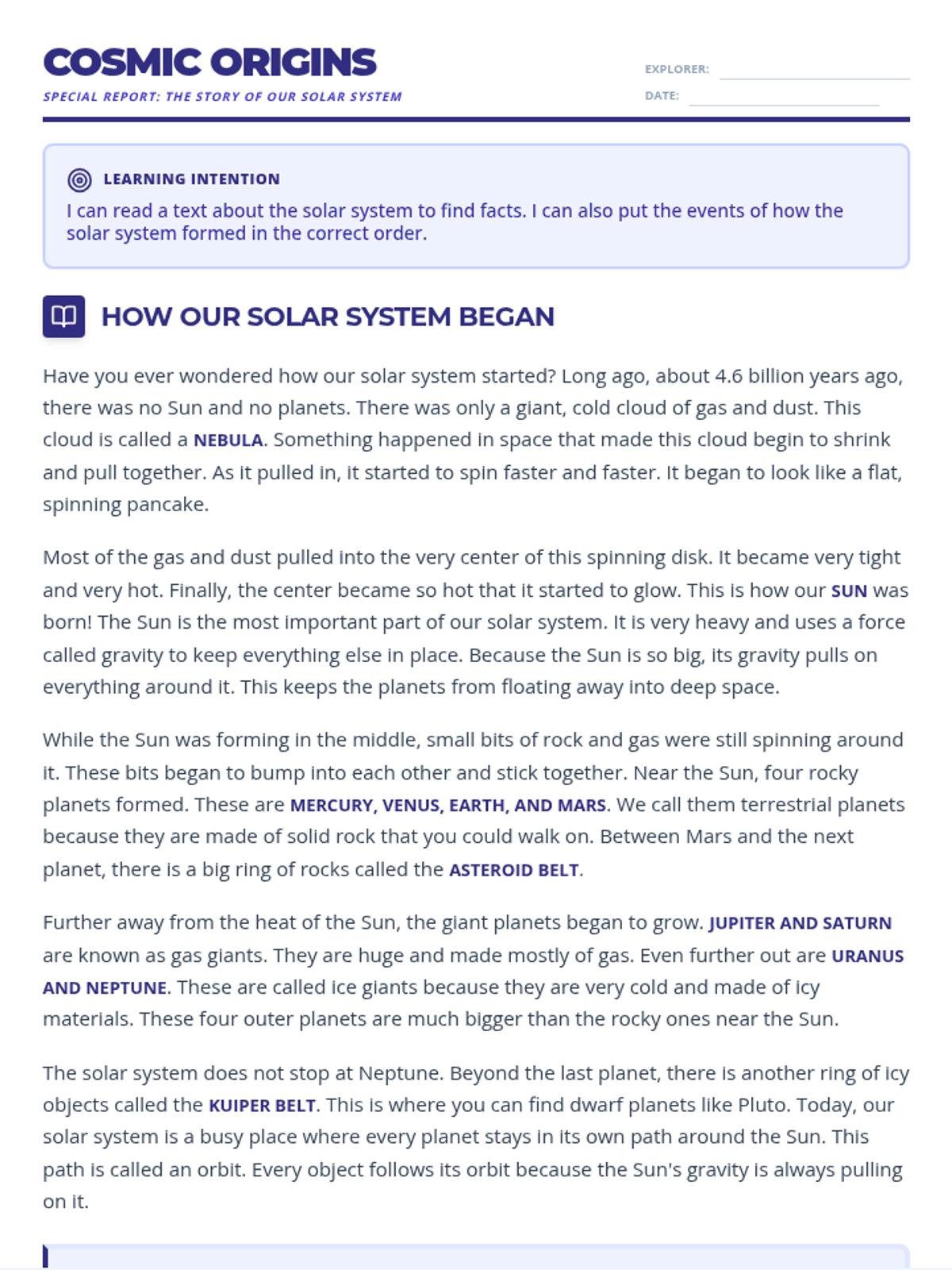
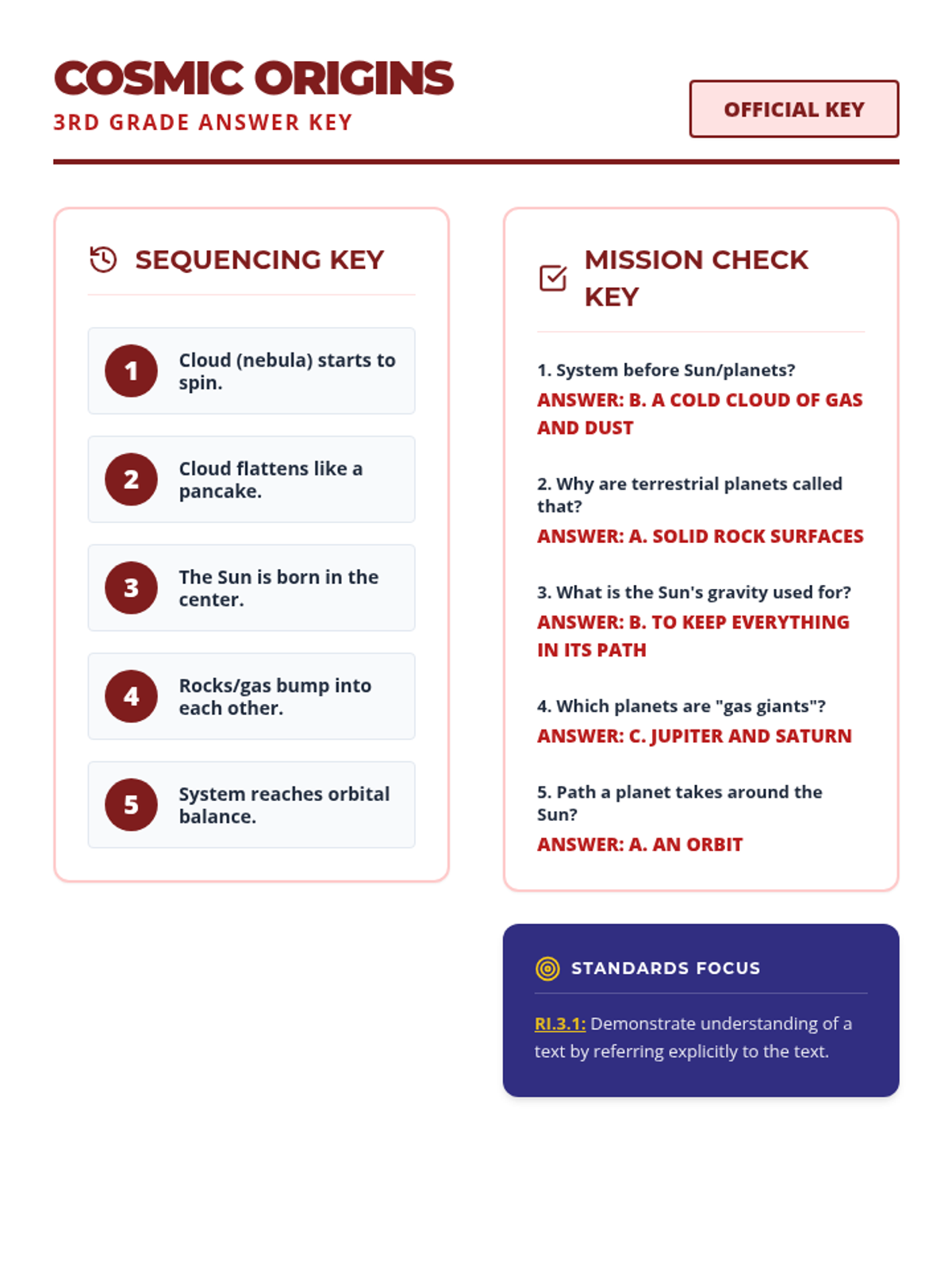
A lesson exploring the components of our solar system, focusing on reading comprehension, sequencing, and identifying key details from informational text.
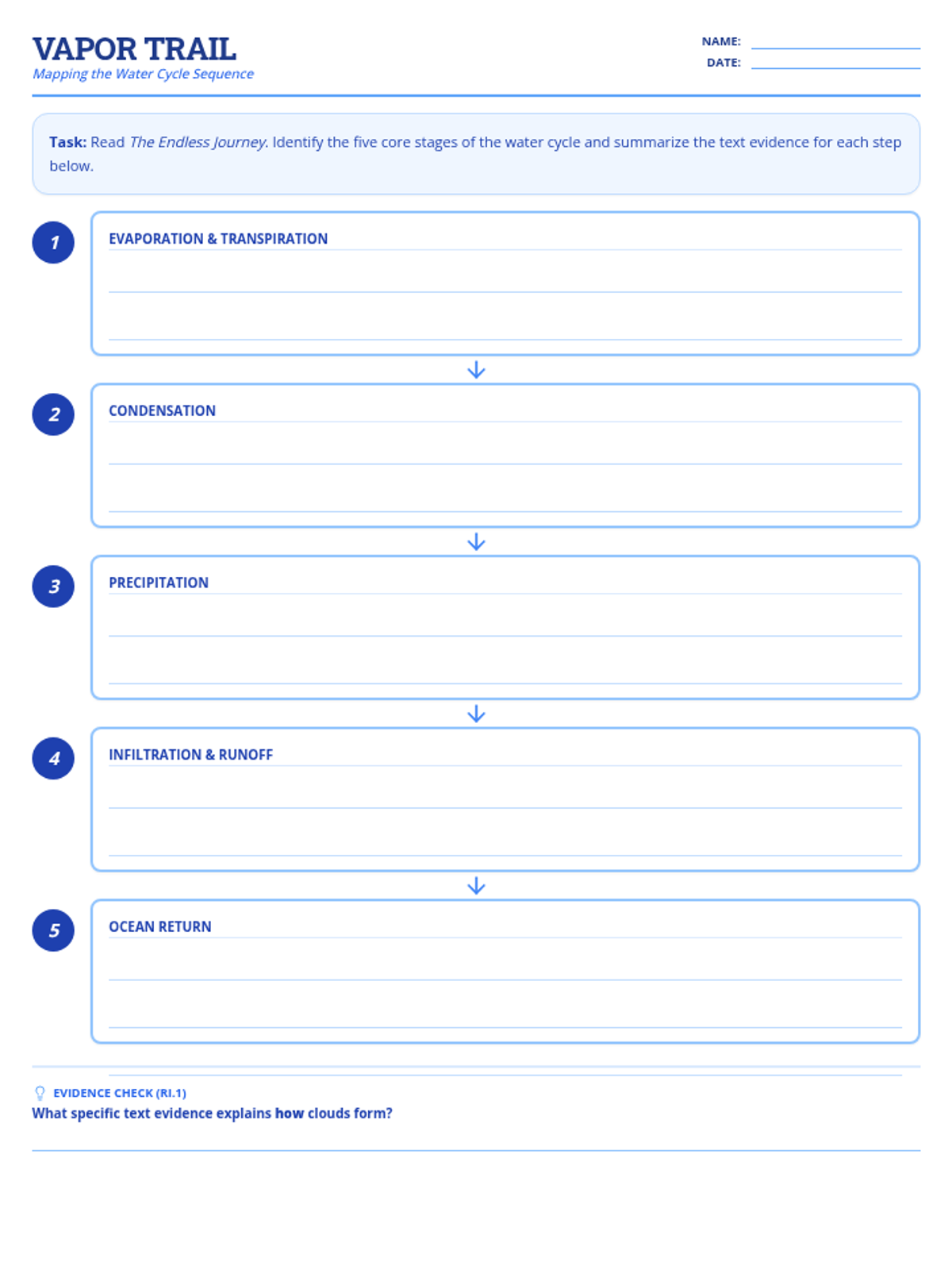
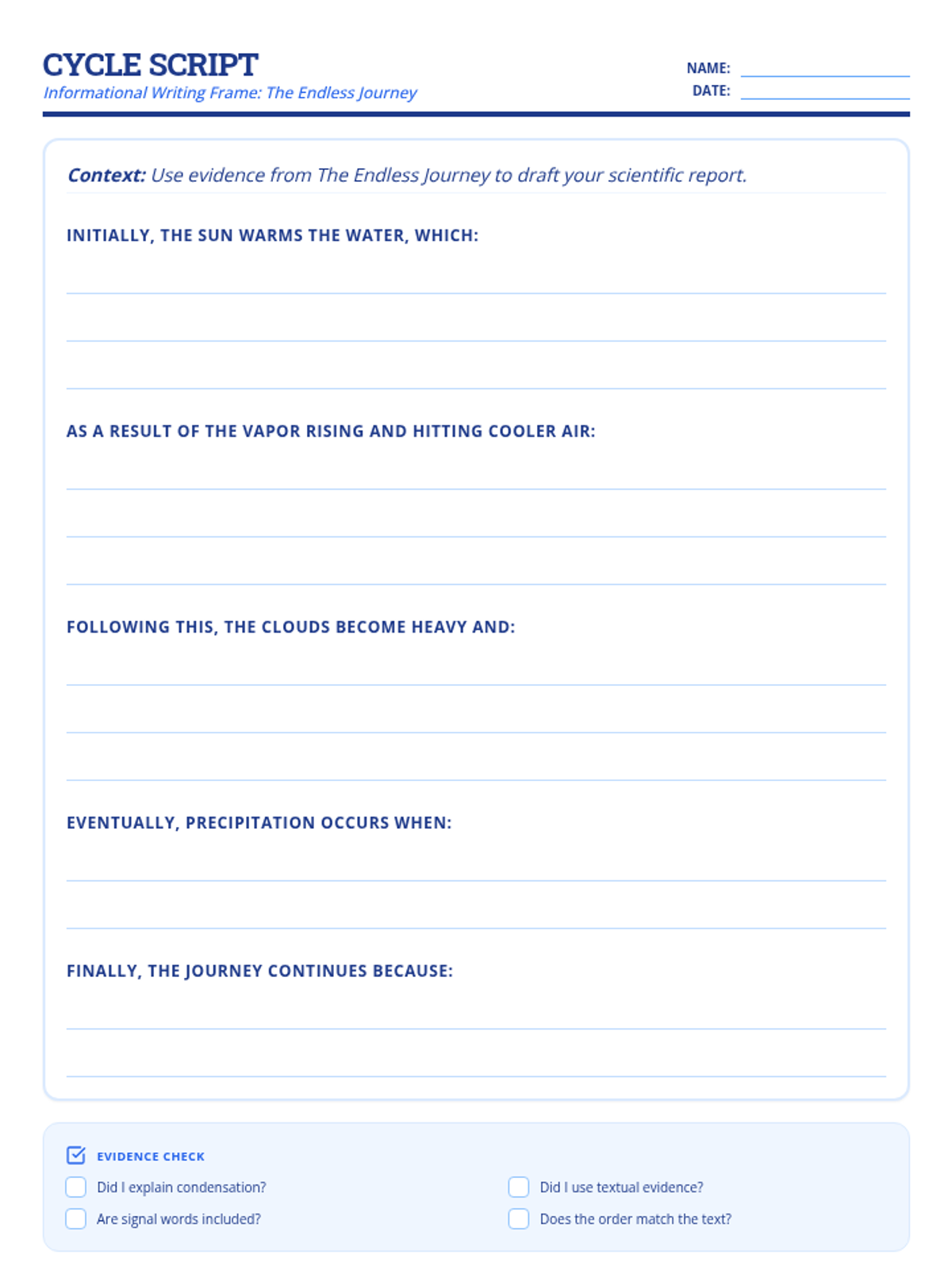
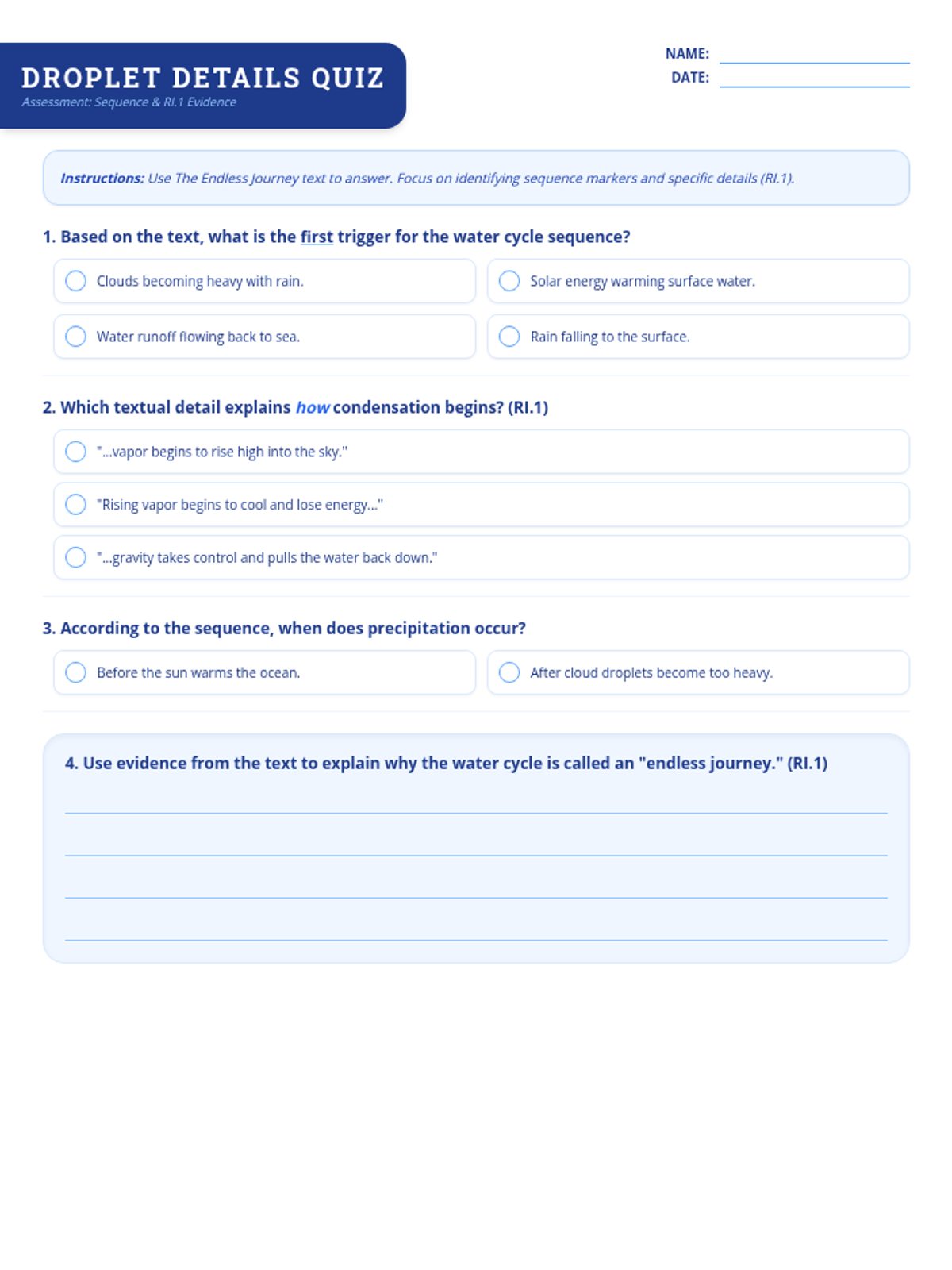
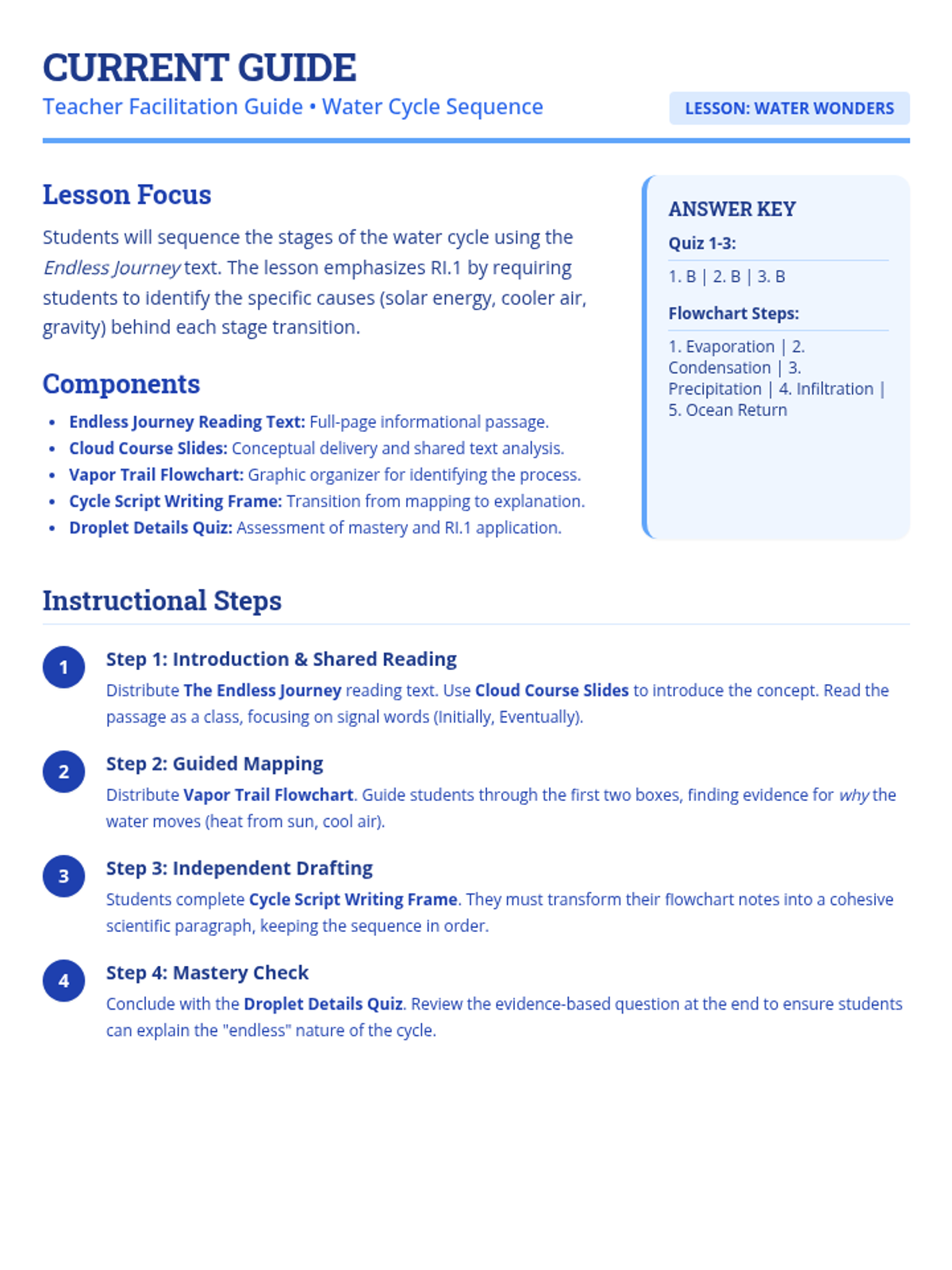
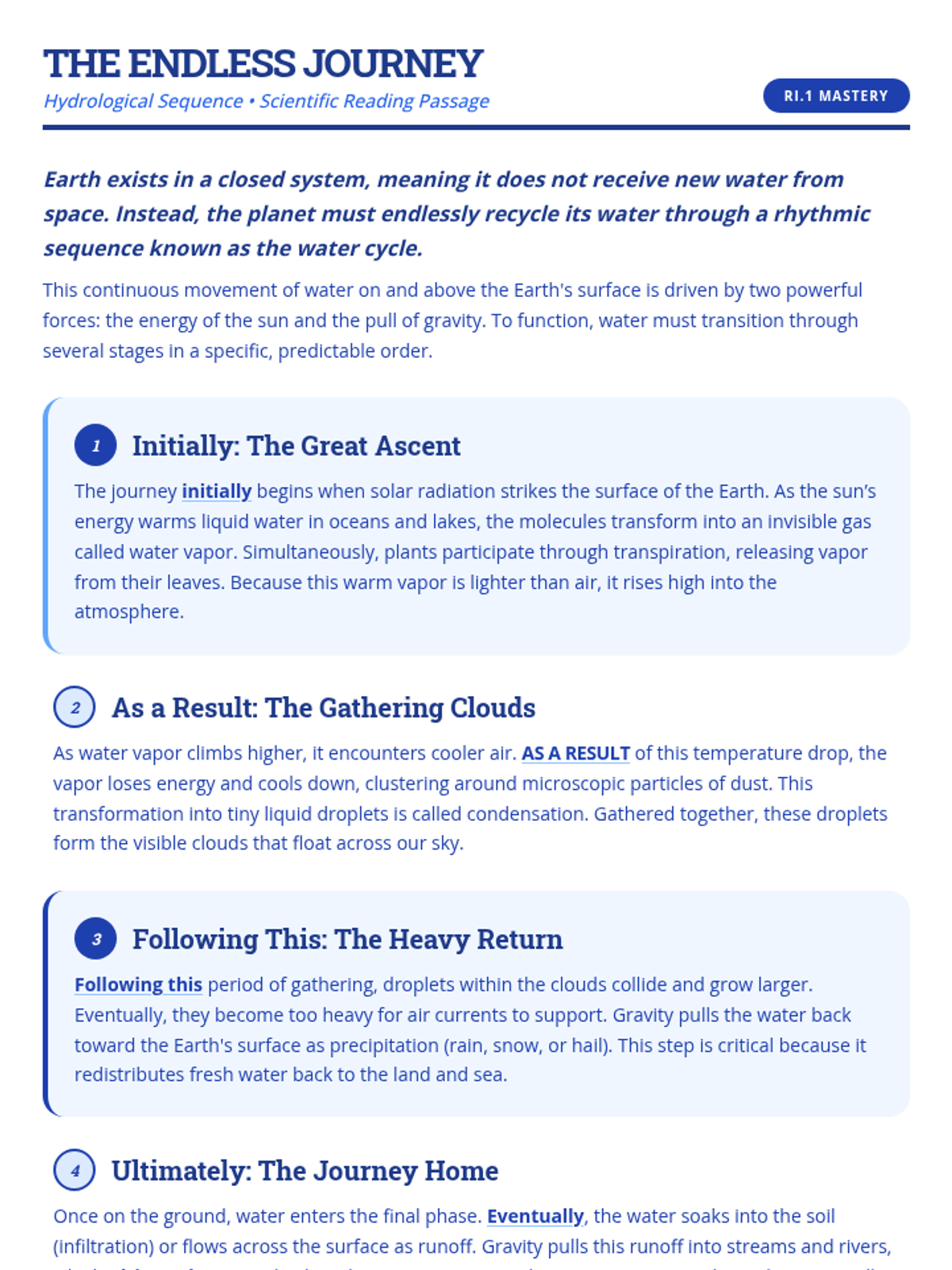
This lesson focuses on sequencing the phases of the water cycle. Students will read an informational text describing the journey of water, identify temporal markers, and use textual evidence to explain the transition between stages.
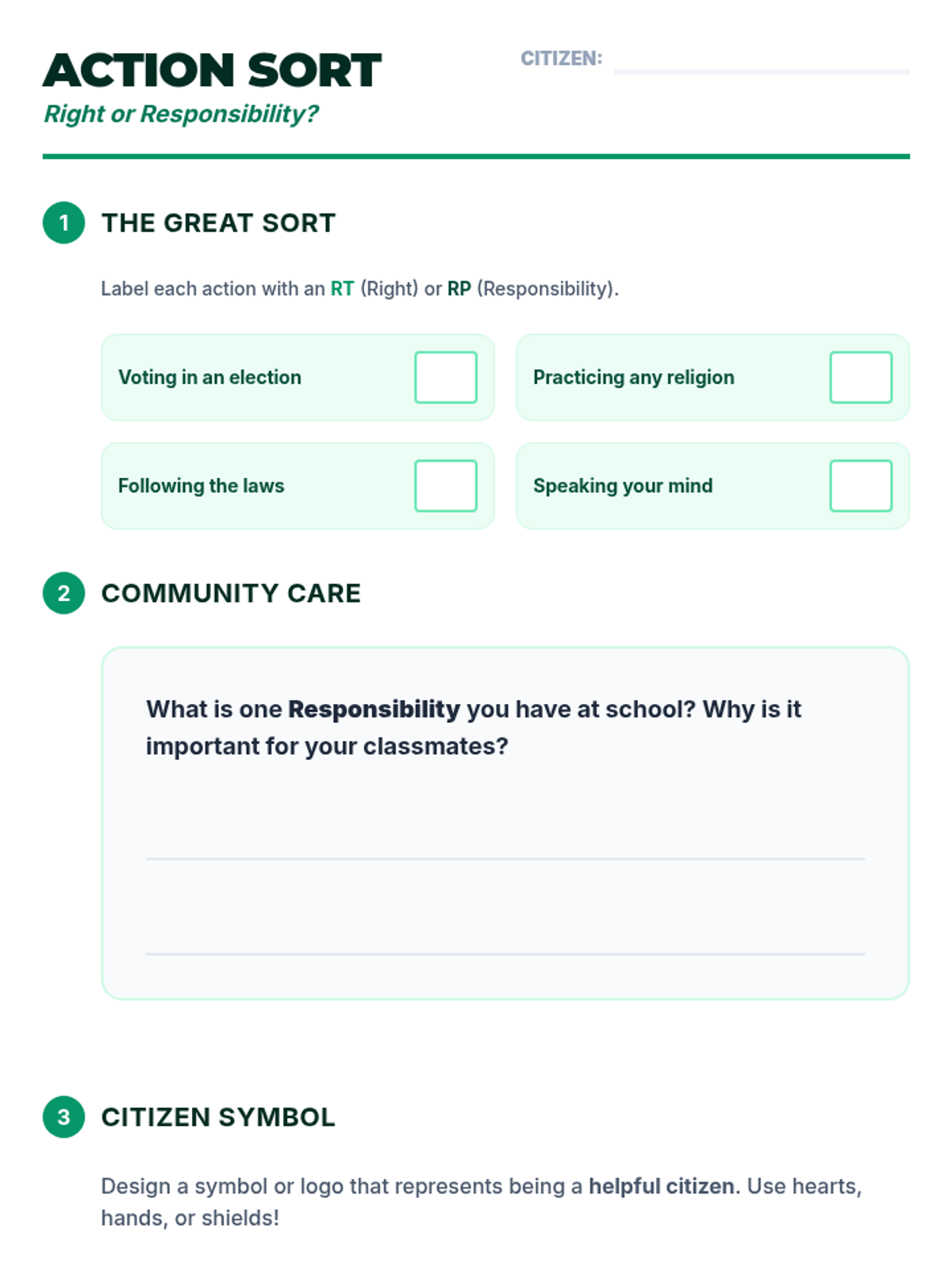
Analyze the distinction between the rights granted to citizens and the responsibilities they hold within a community.
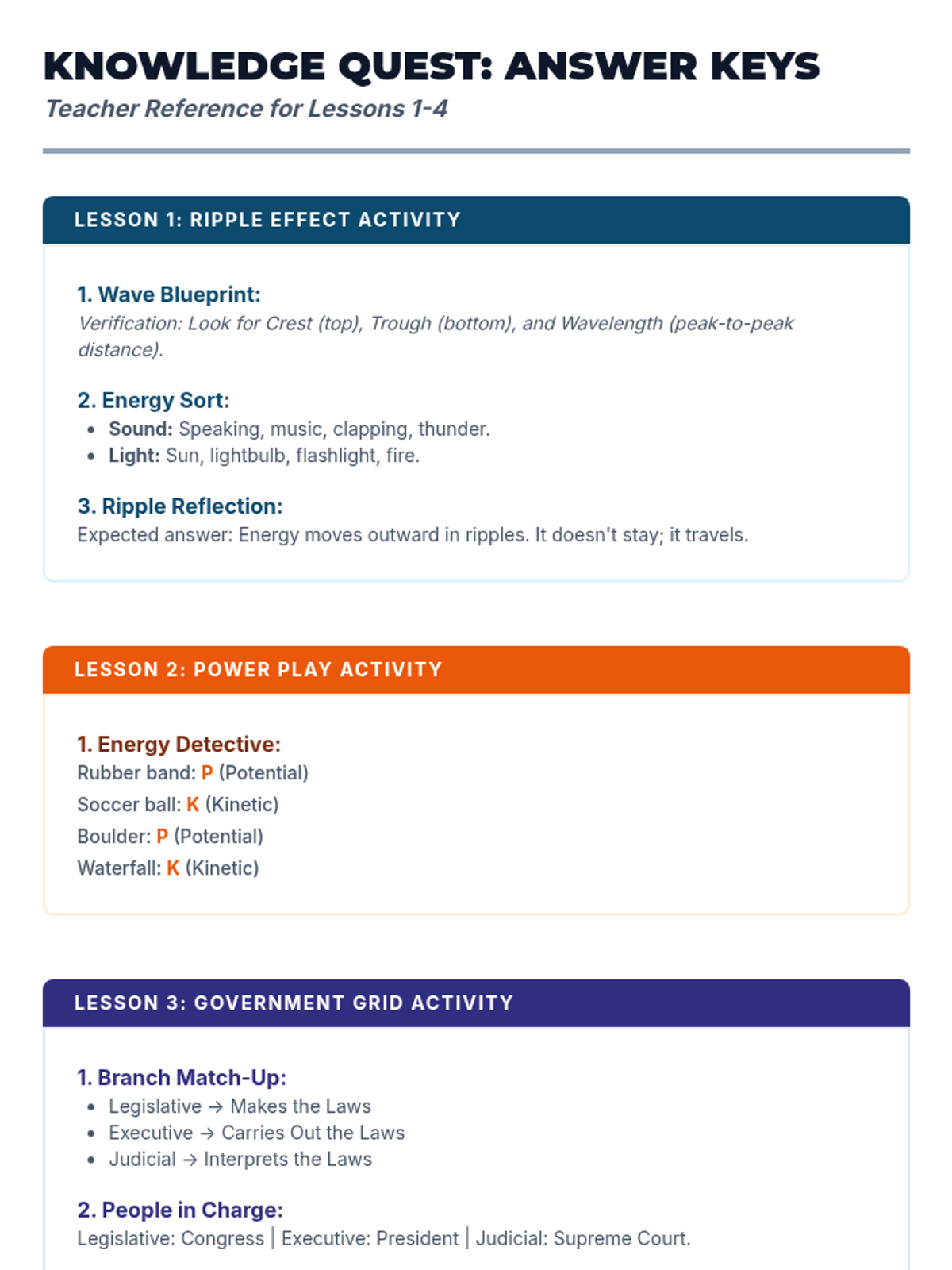
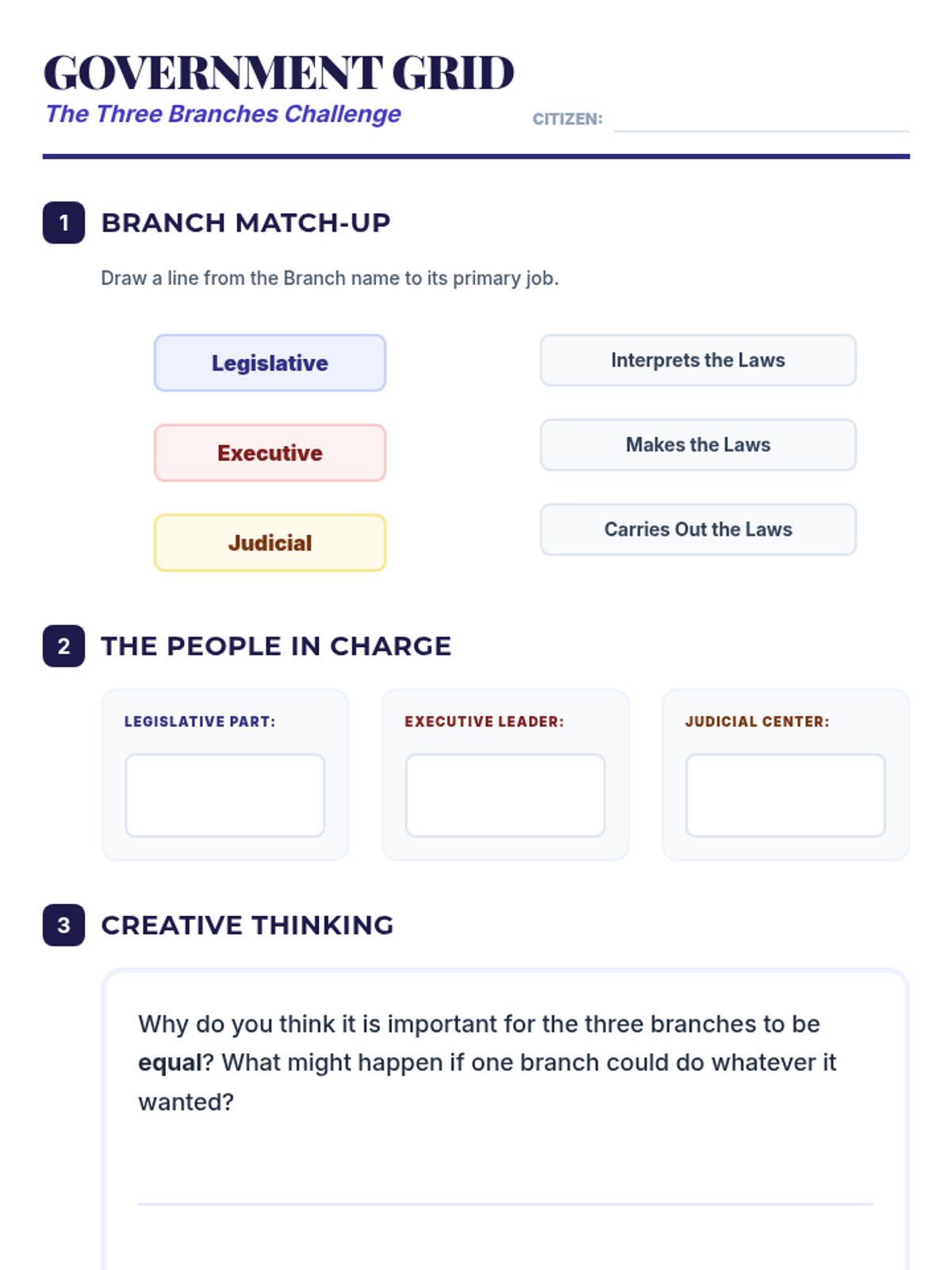
Explore the structure of the U.S. government, focusing on the roles and responsibilities of the Legislative, Executive, and Judicial branches.
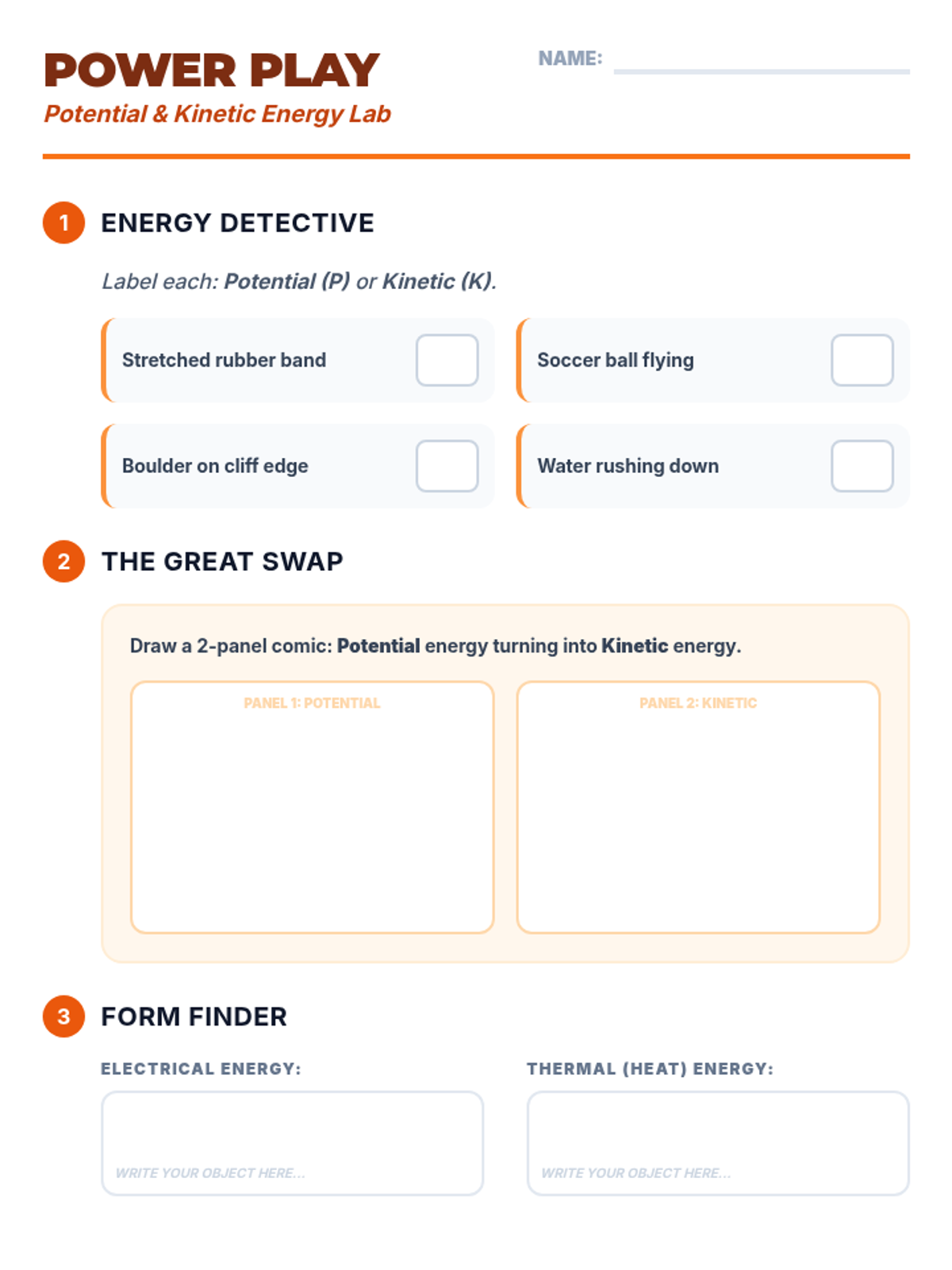
Investigate the different forms of energy and the transition between potential and kinetic energy through real-world examples.
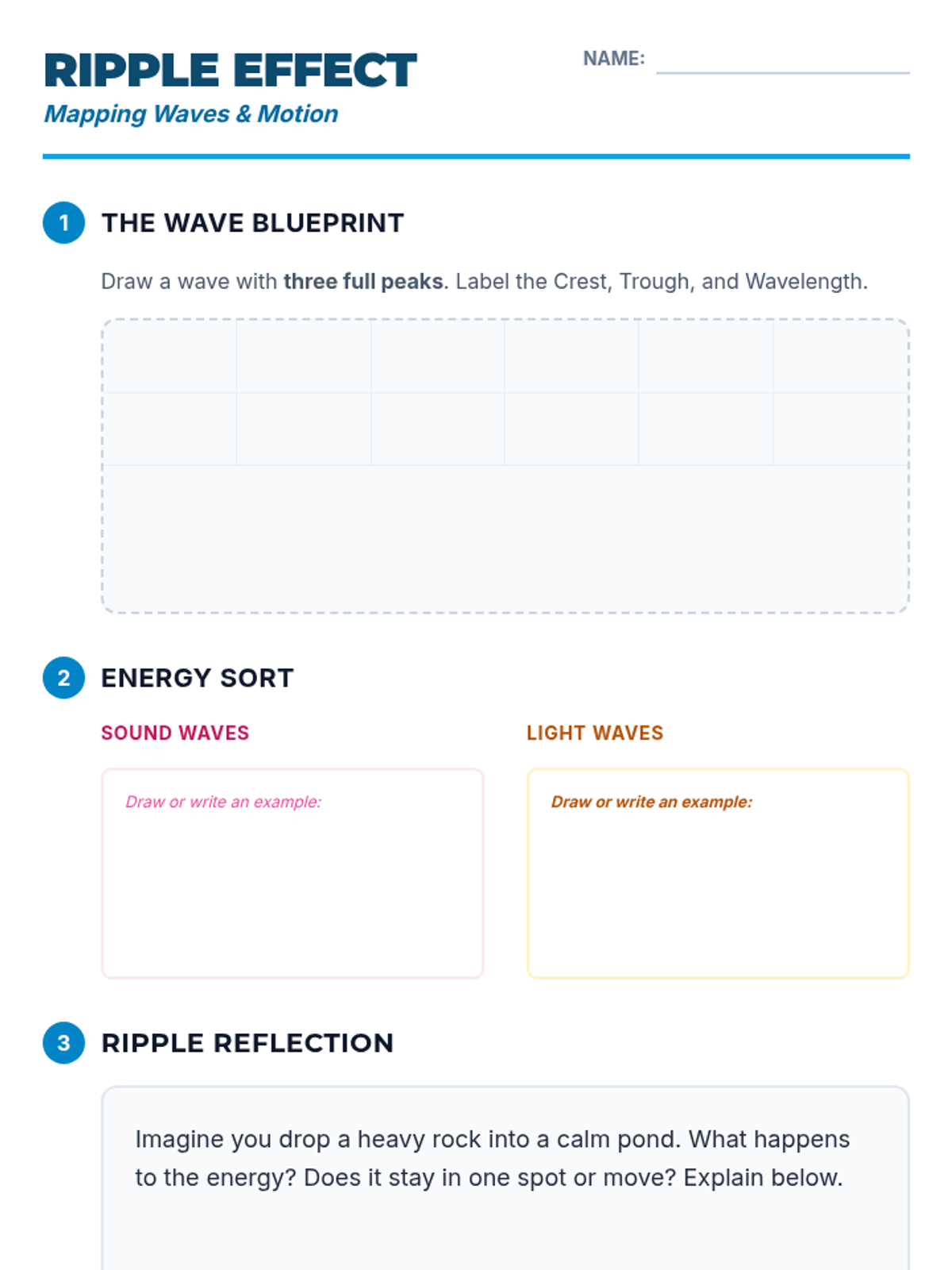
Discover how energy travels through waves, exploring sound, light, and water ripples through visual observations and hands-on mapping.
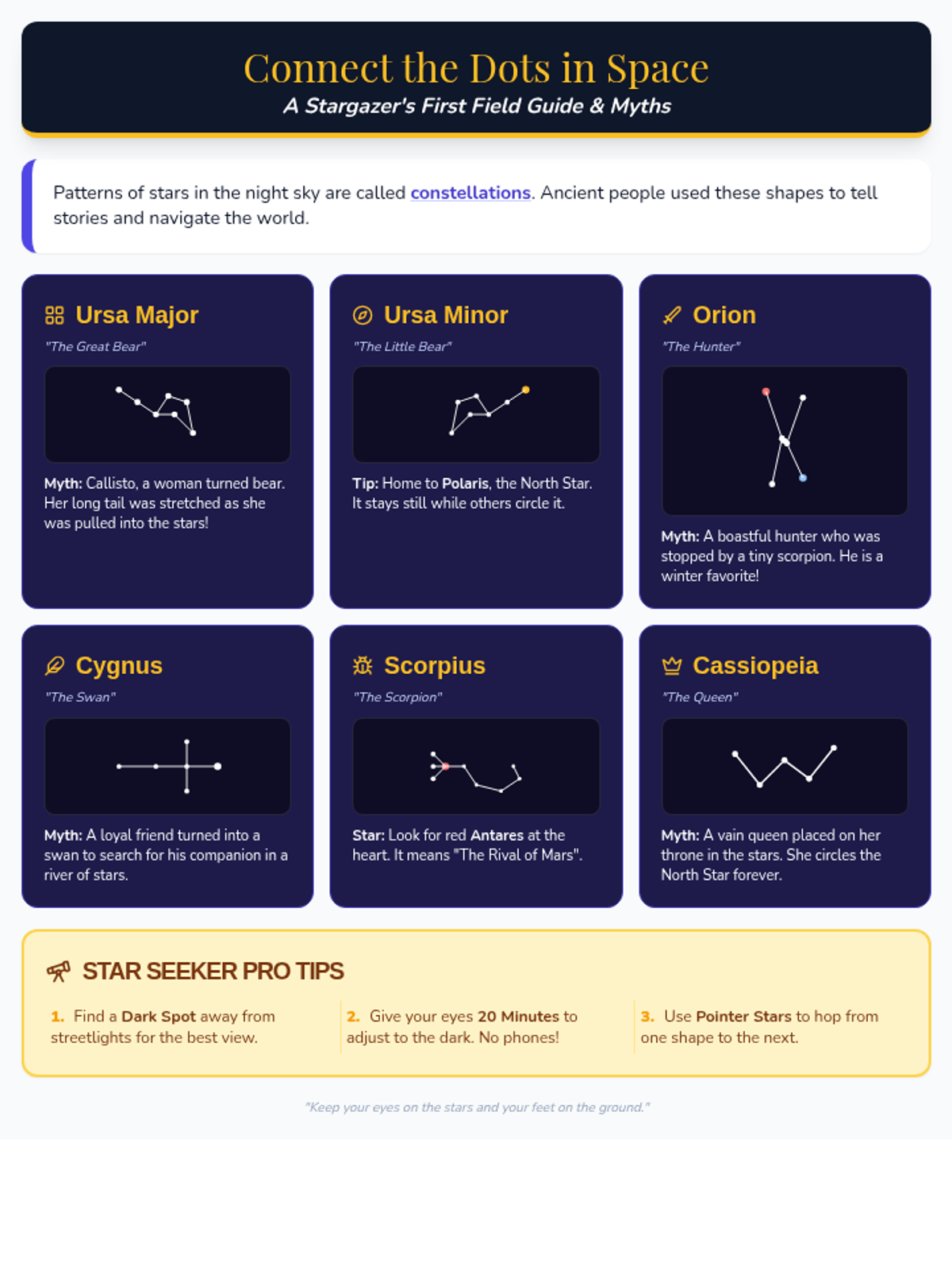
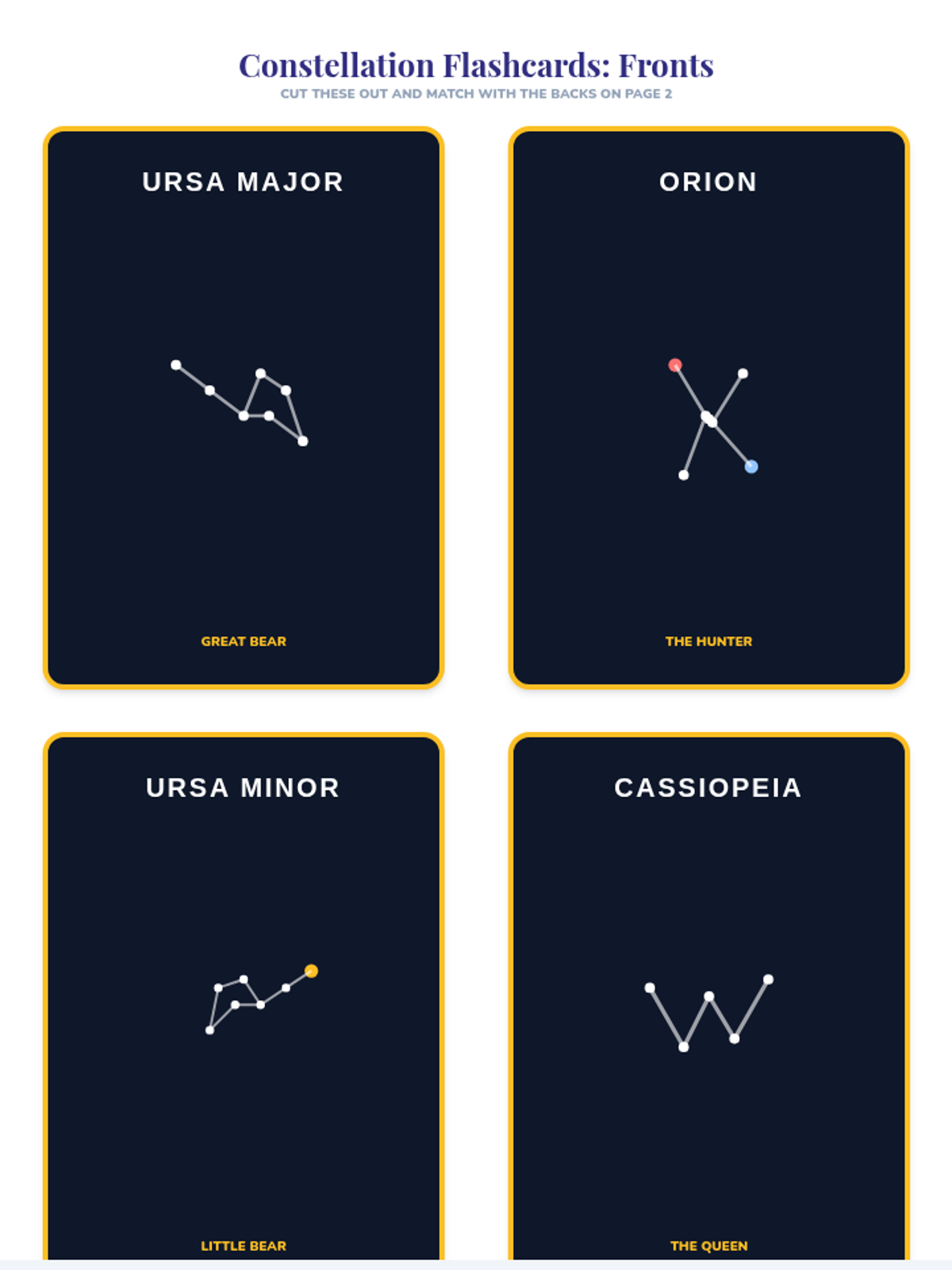
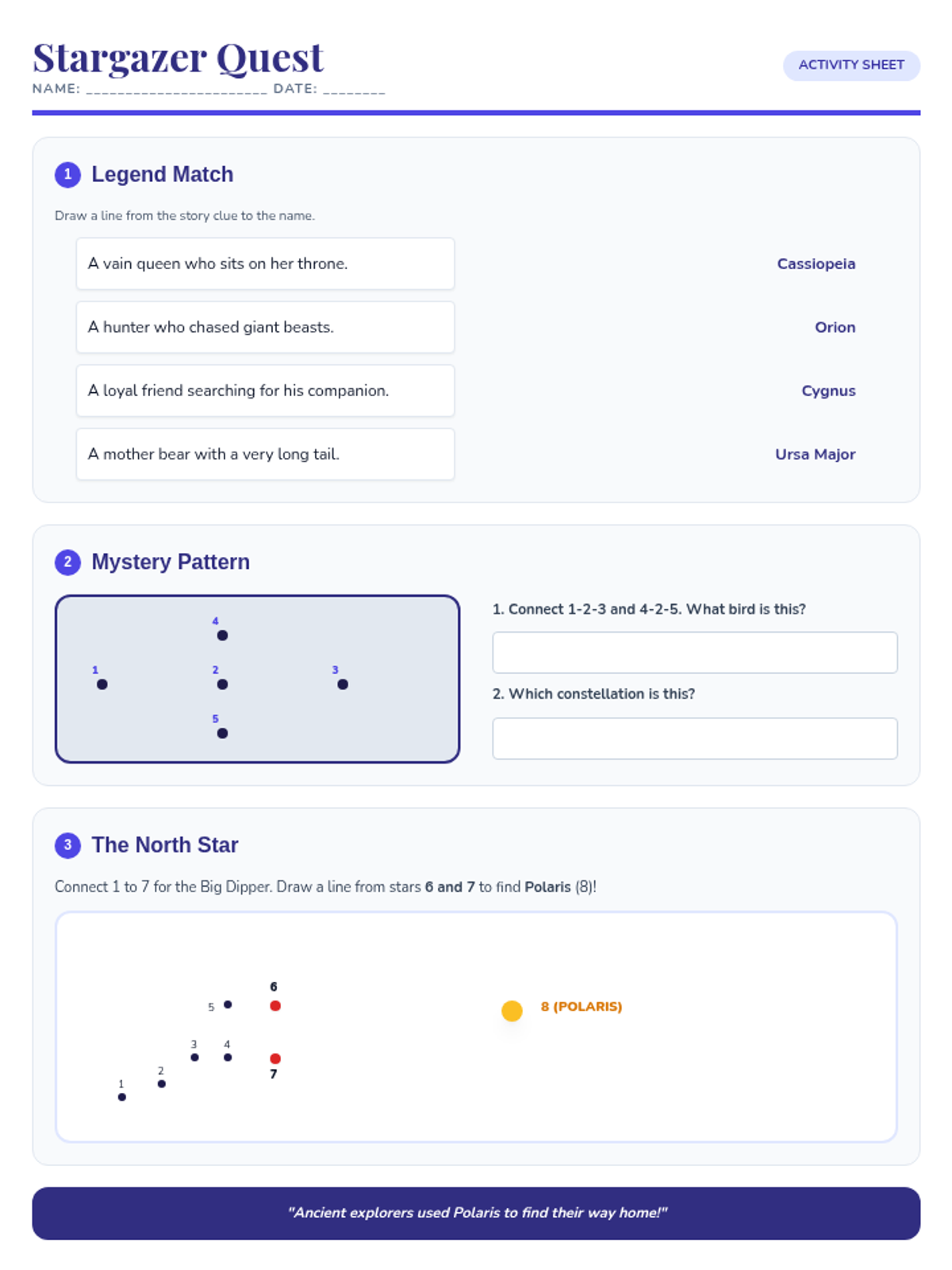
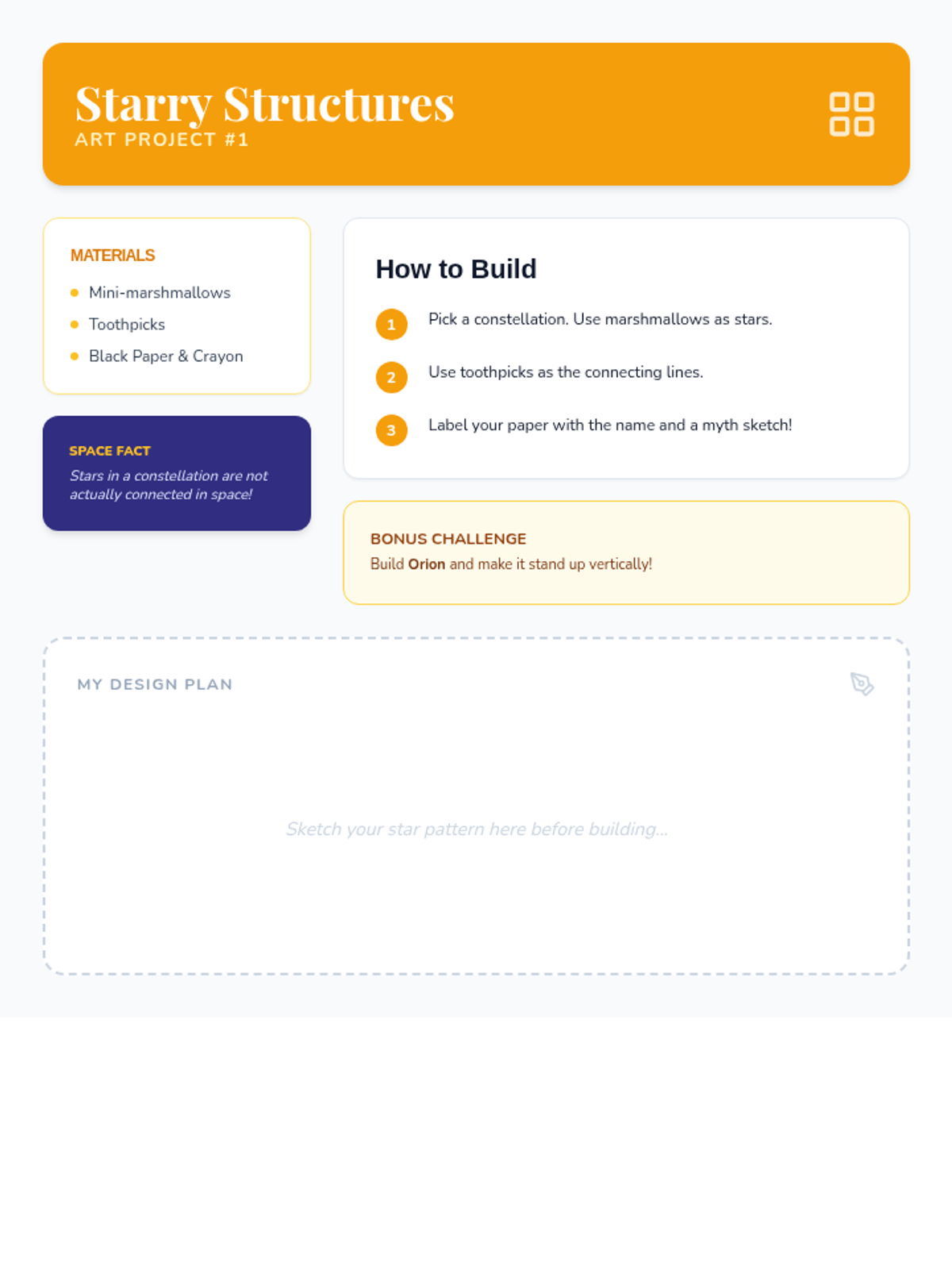
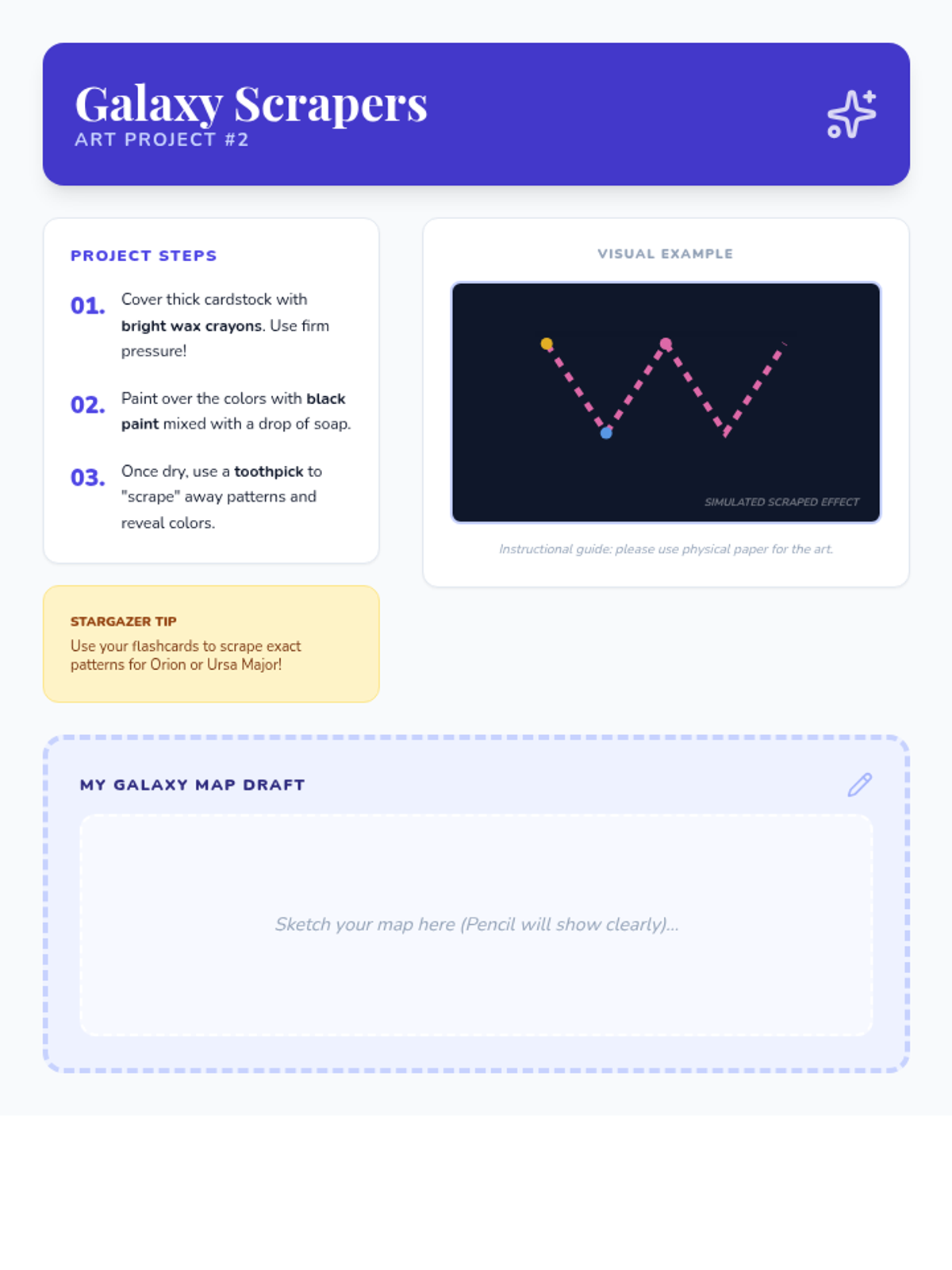
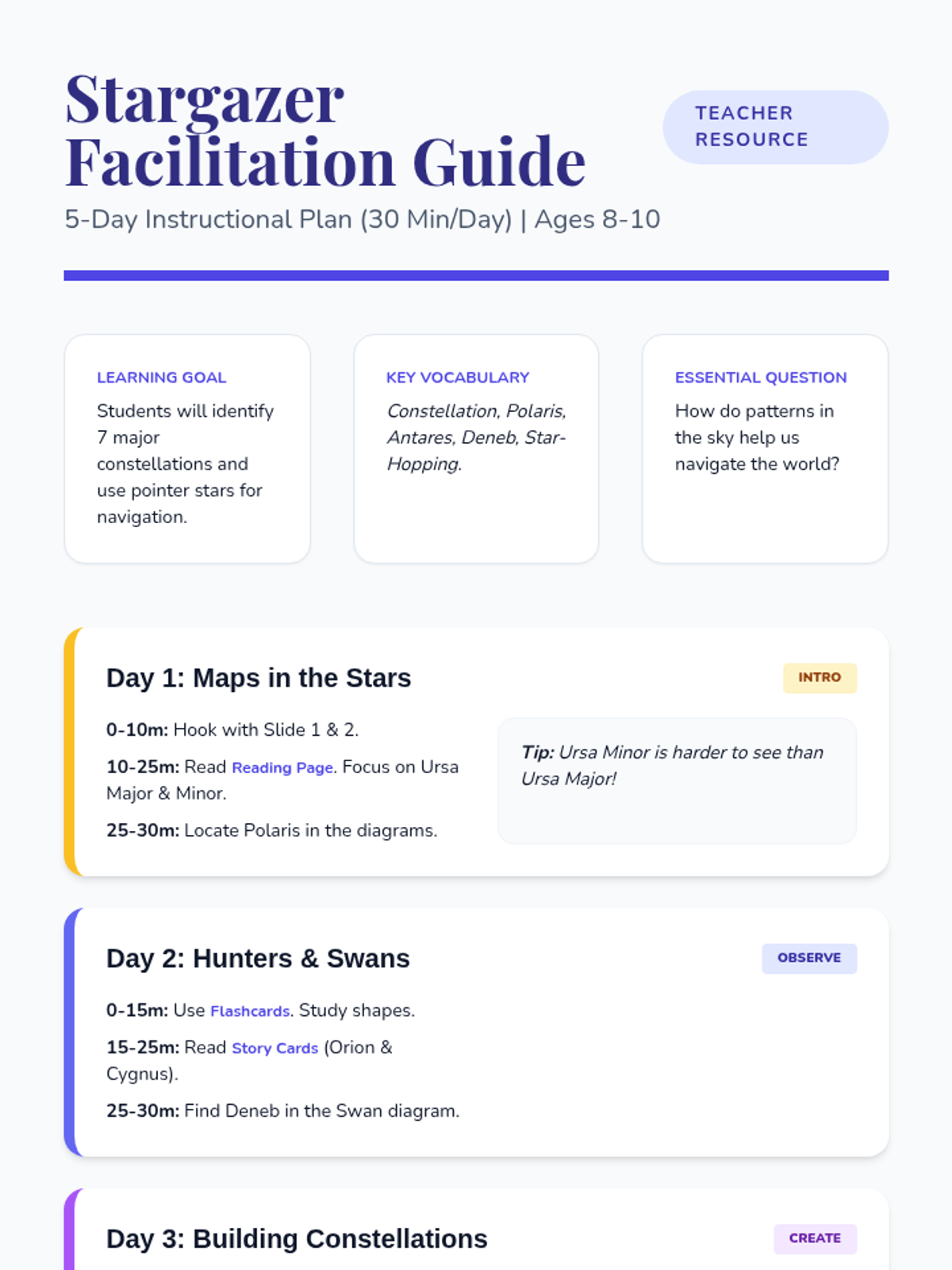
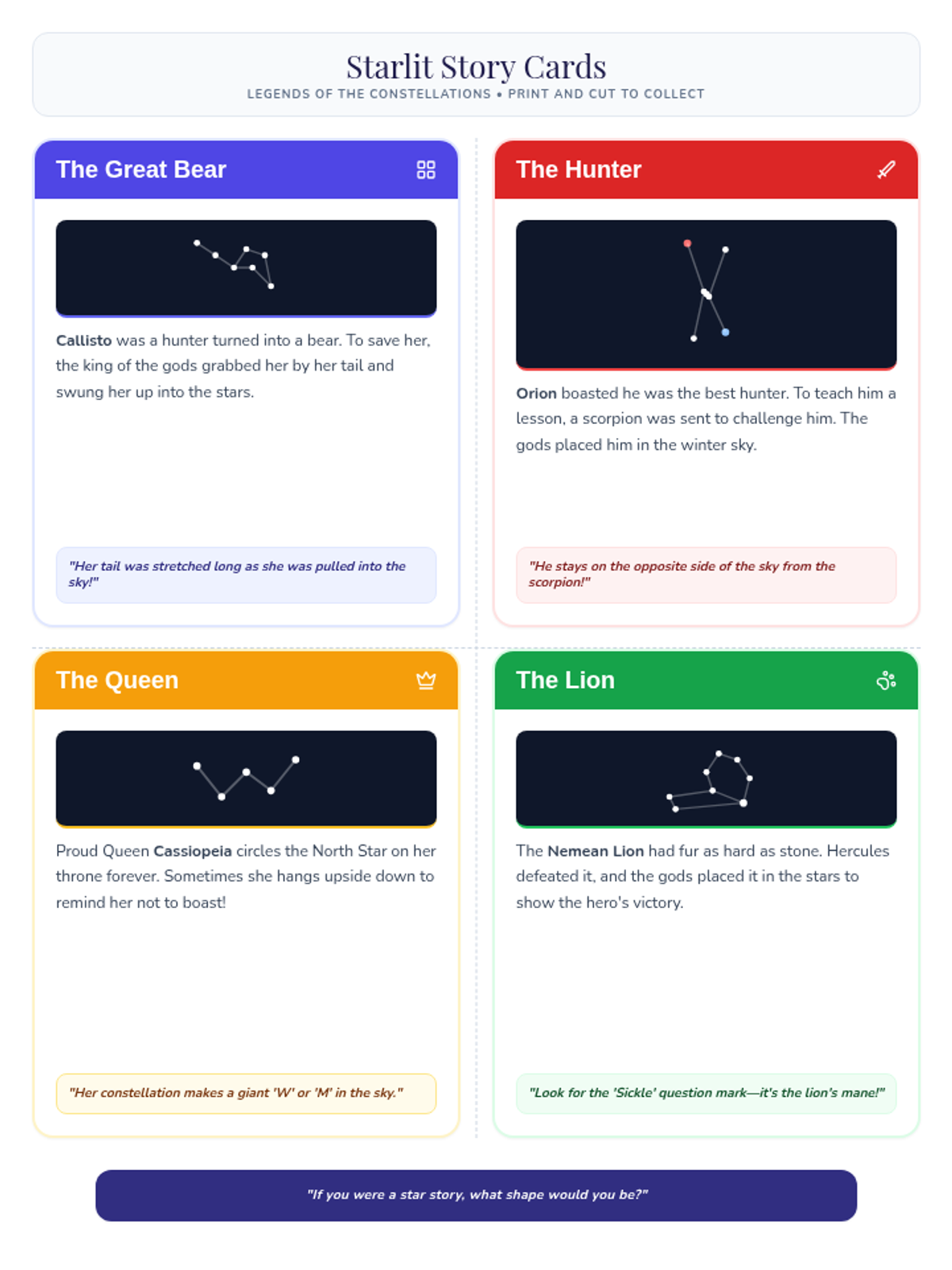
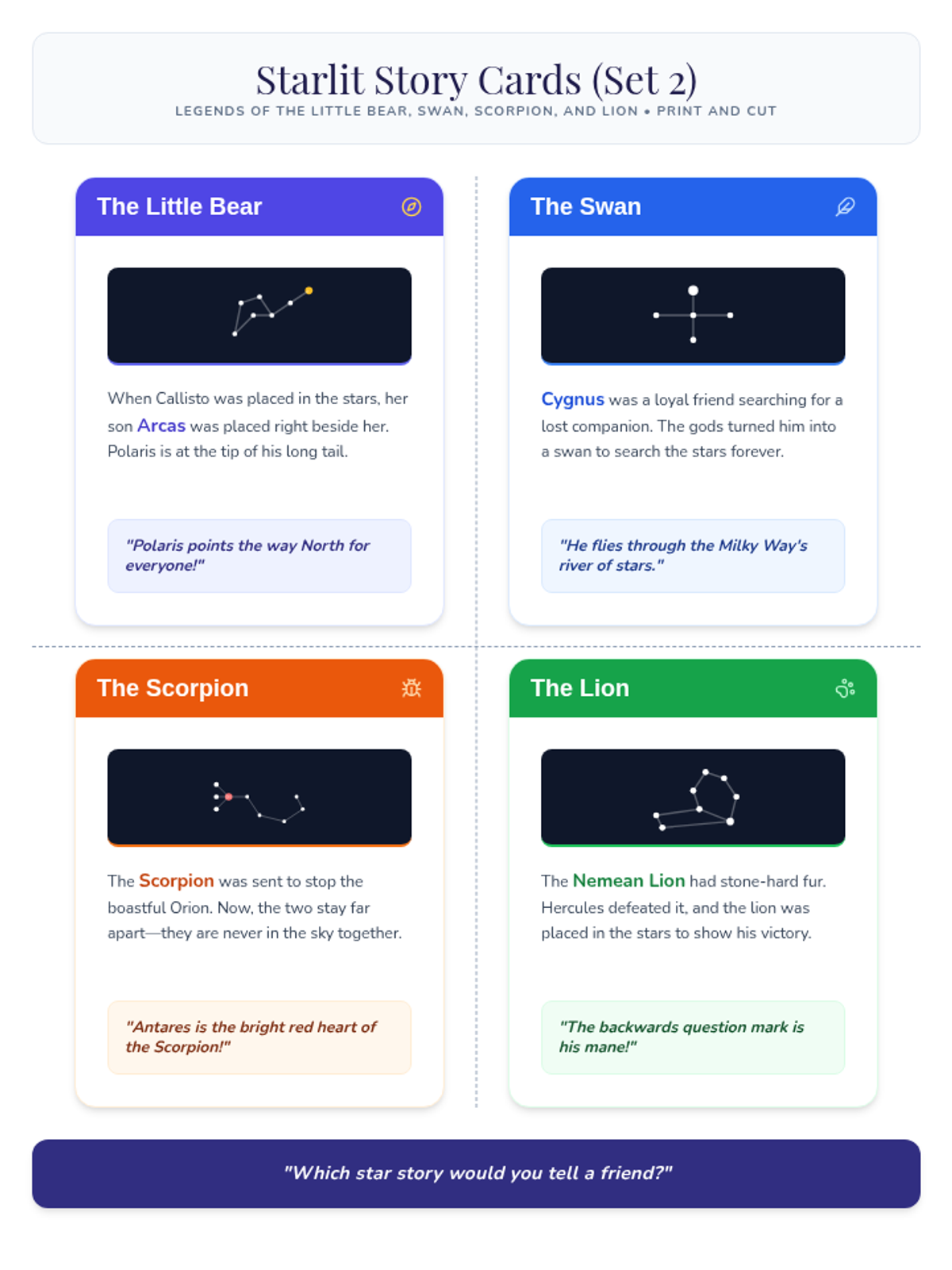
A week-long exploration of the night sky, teaching students how to identify major constellations using patterns and pointer stars. Students will combine scientific observation with creative art projects.
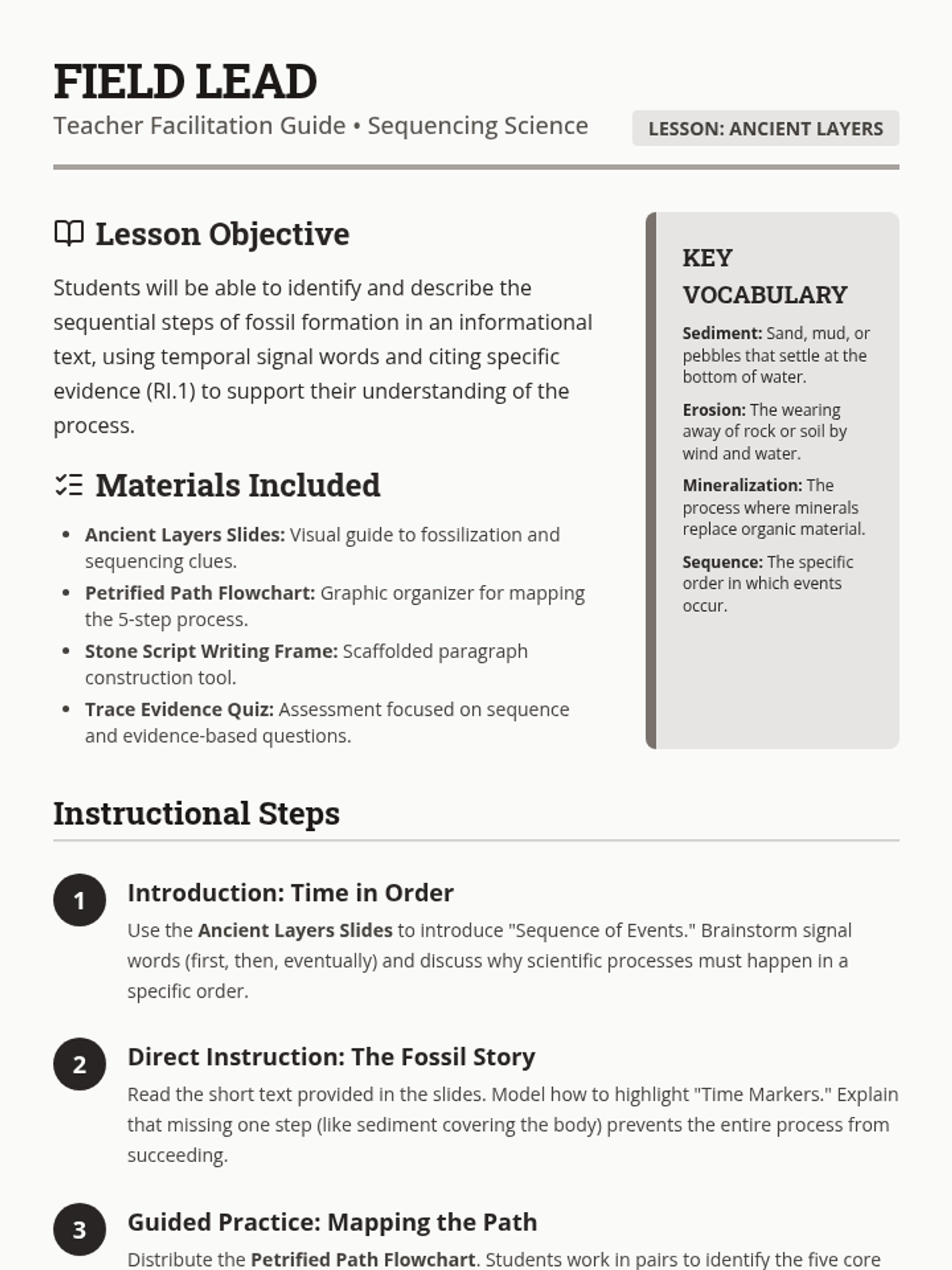
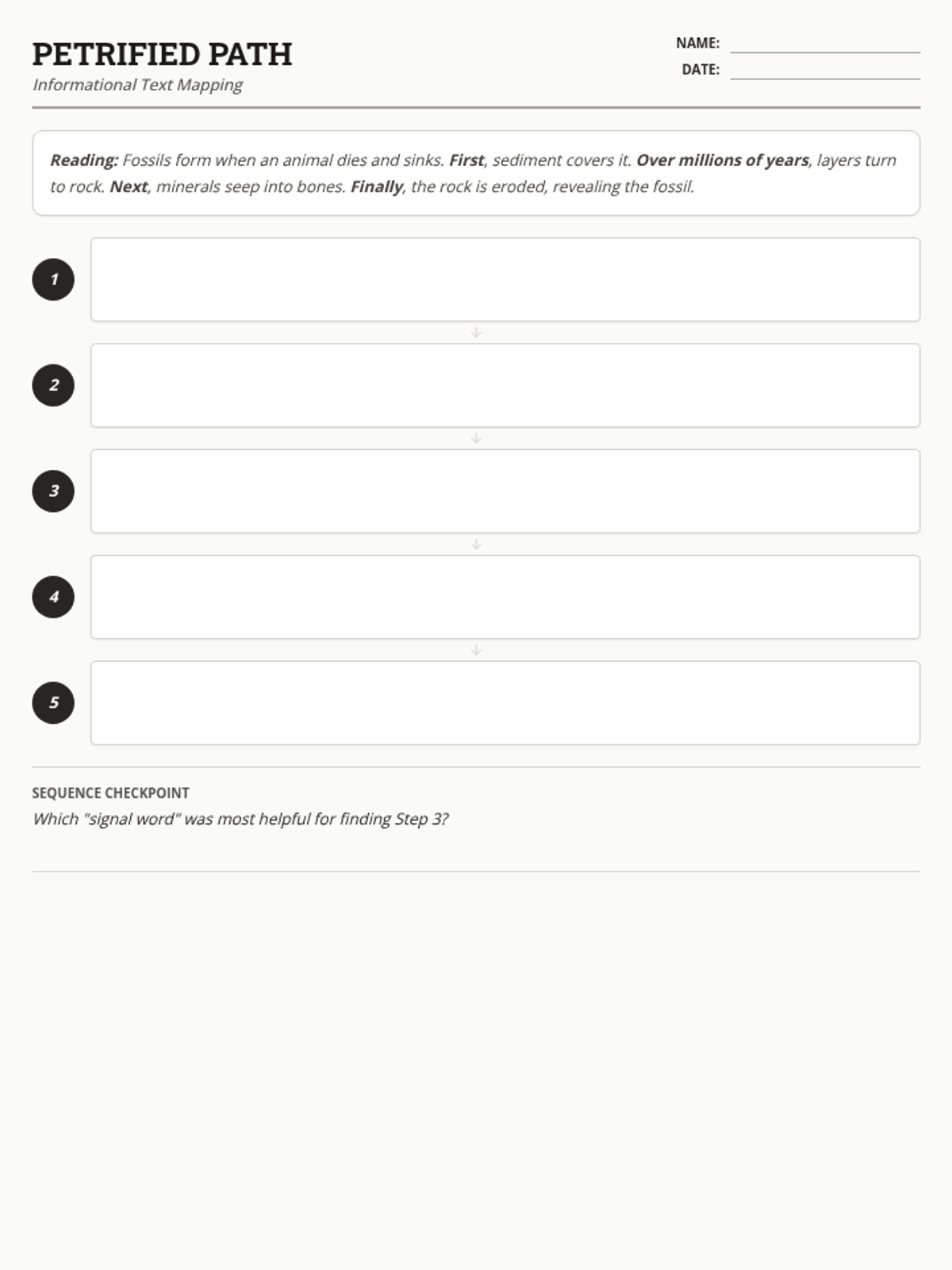
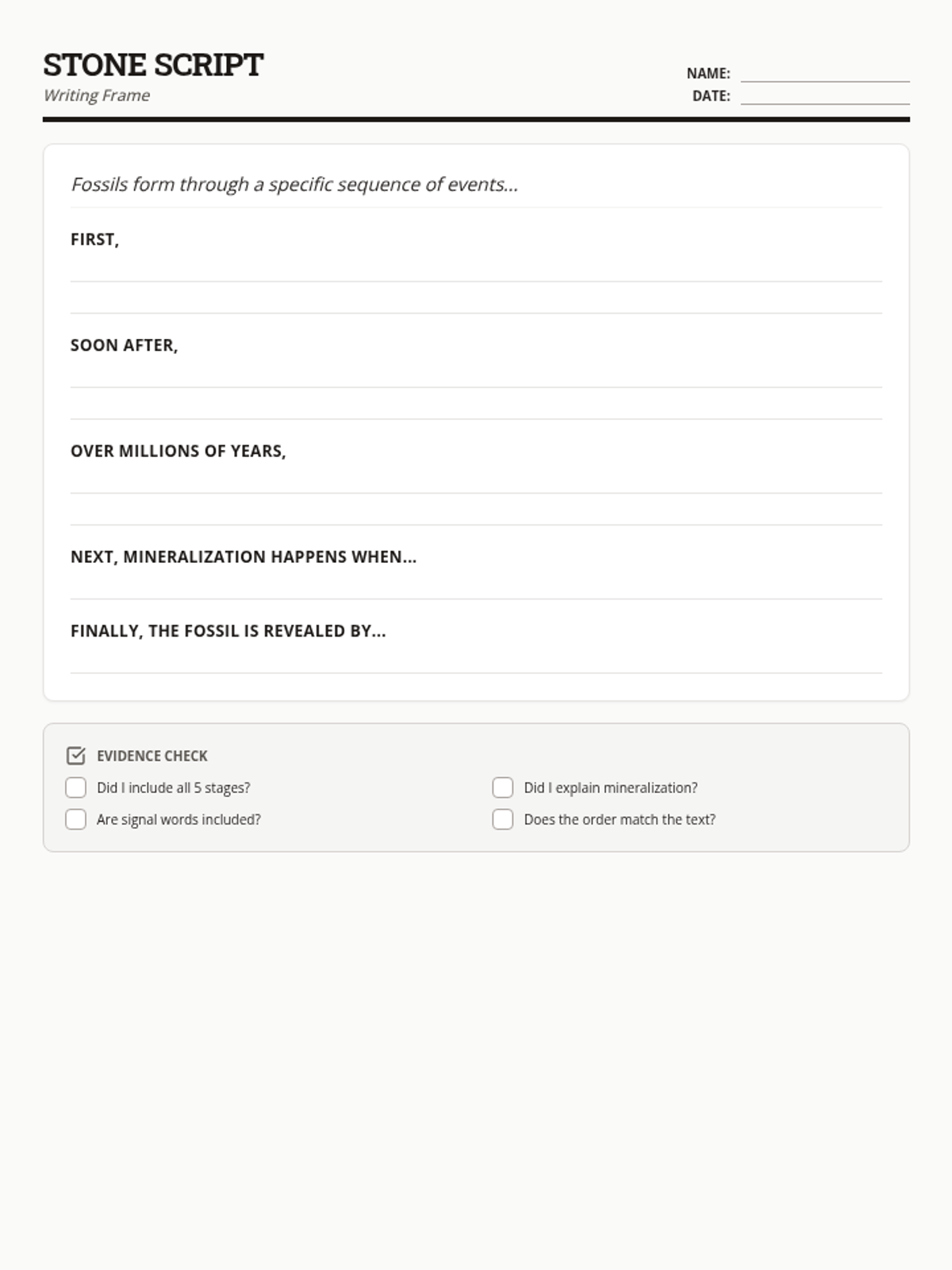
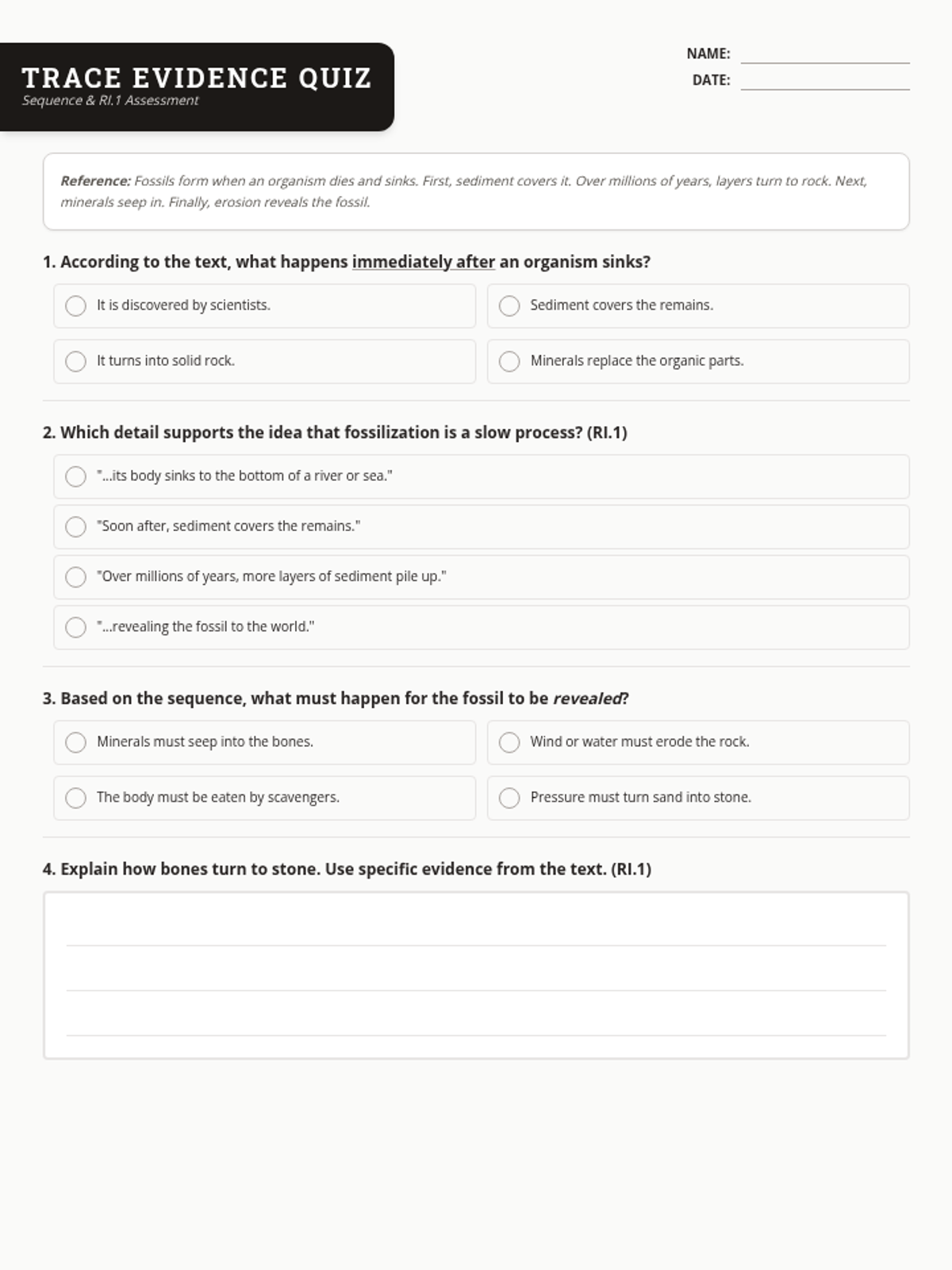
A science-focused lesson on sequencing informational text through the lens of fossil formation. Students will learn to identify temporal clues and map out complex natural processes.
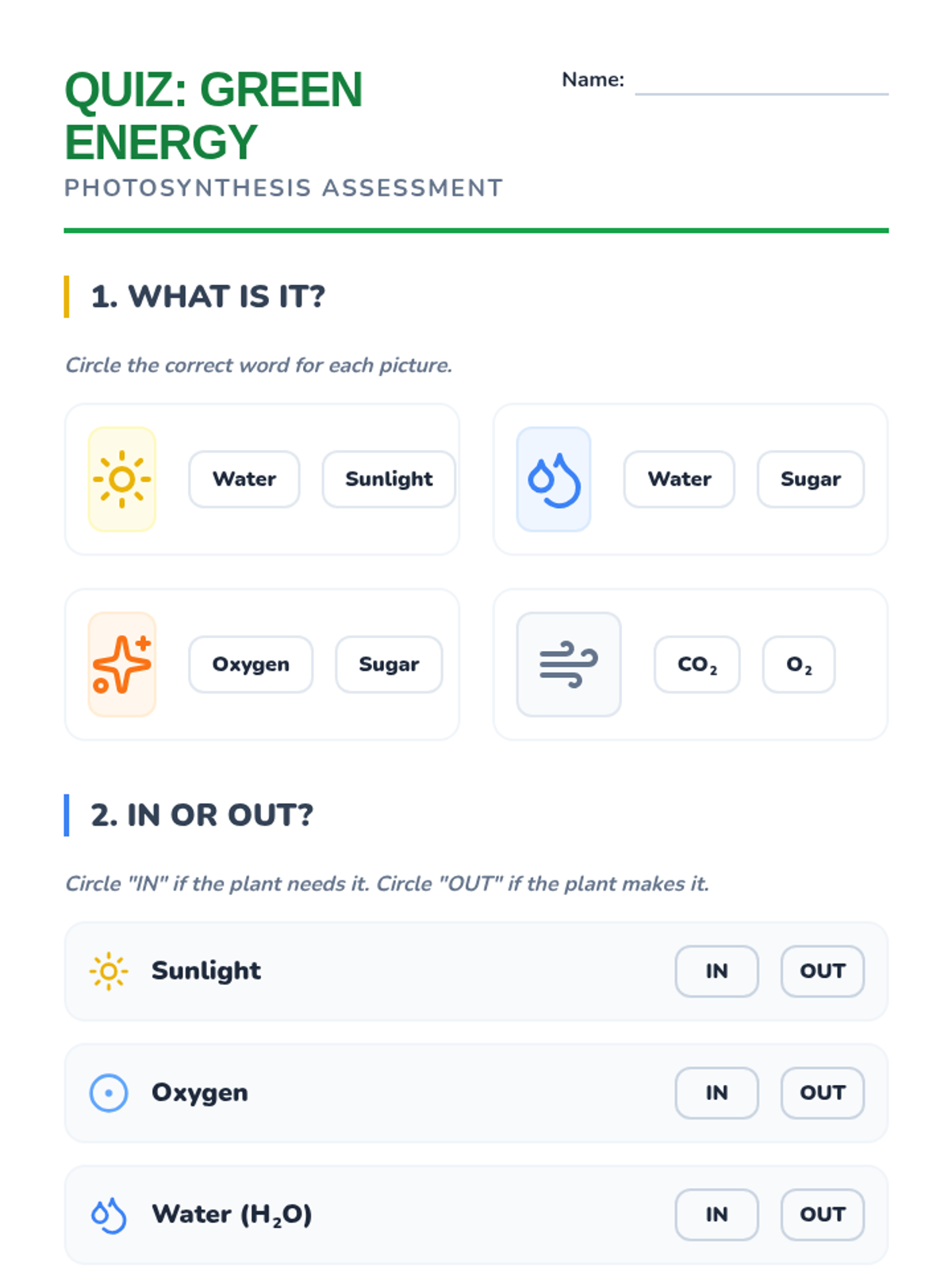
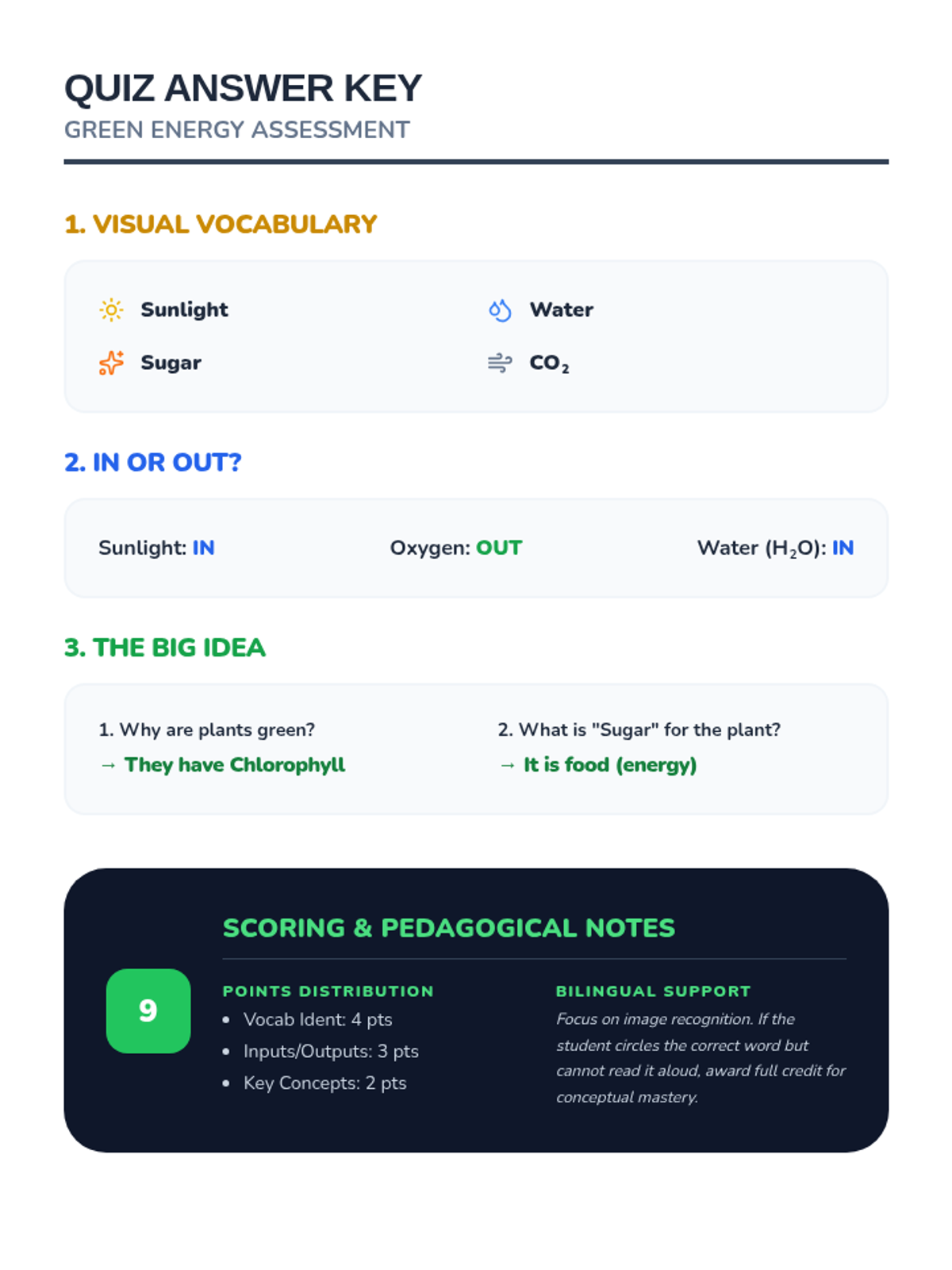
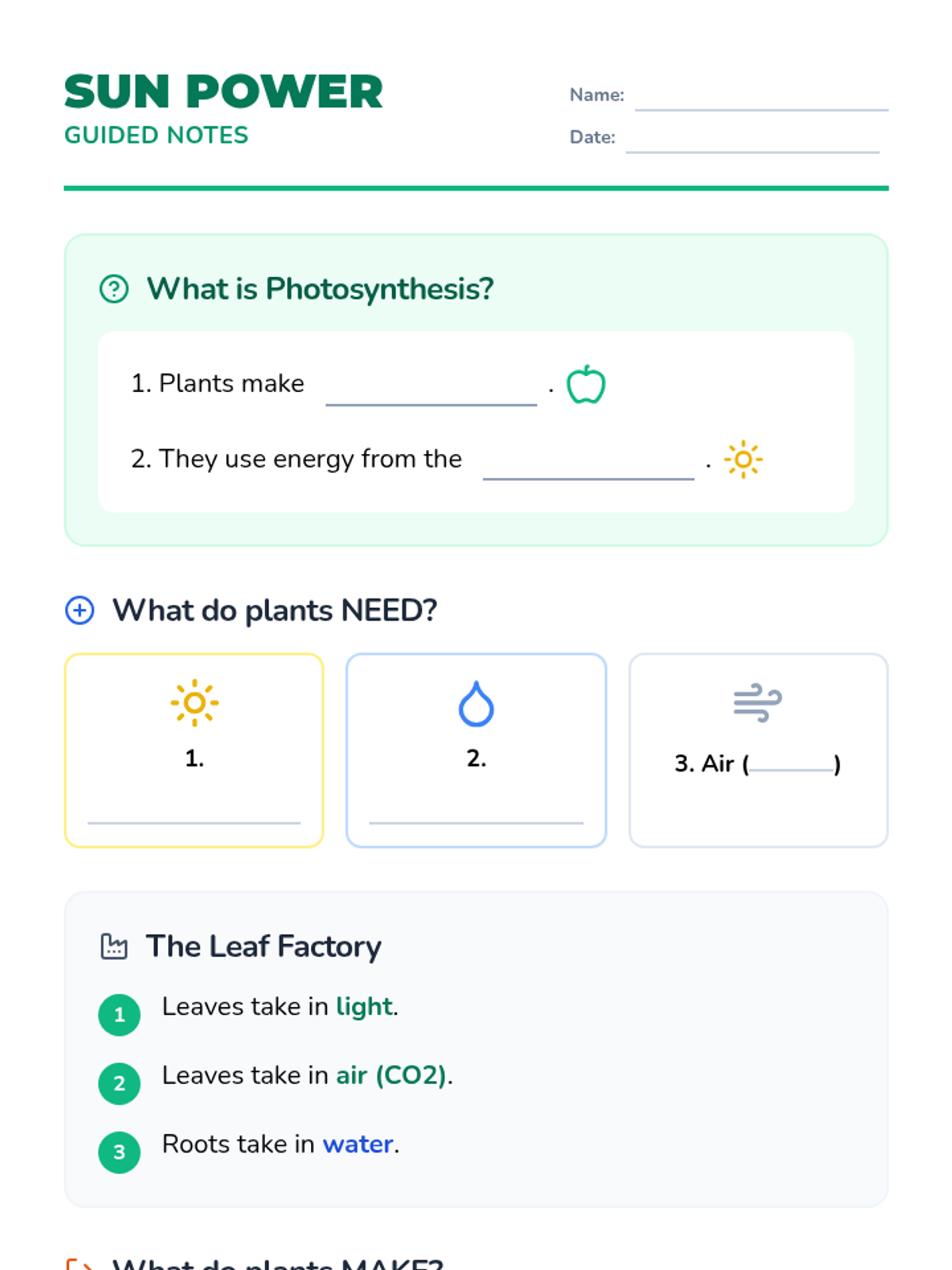
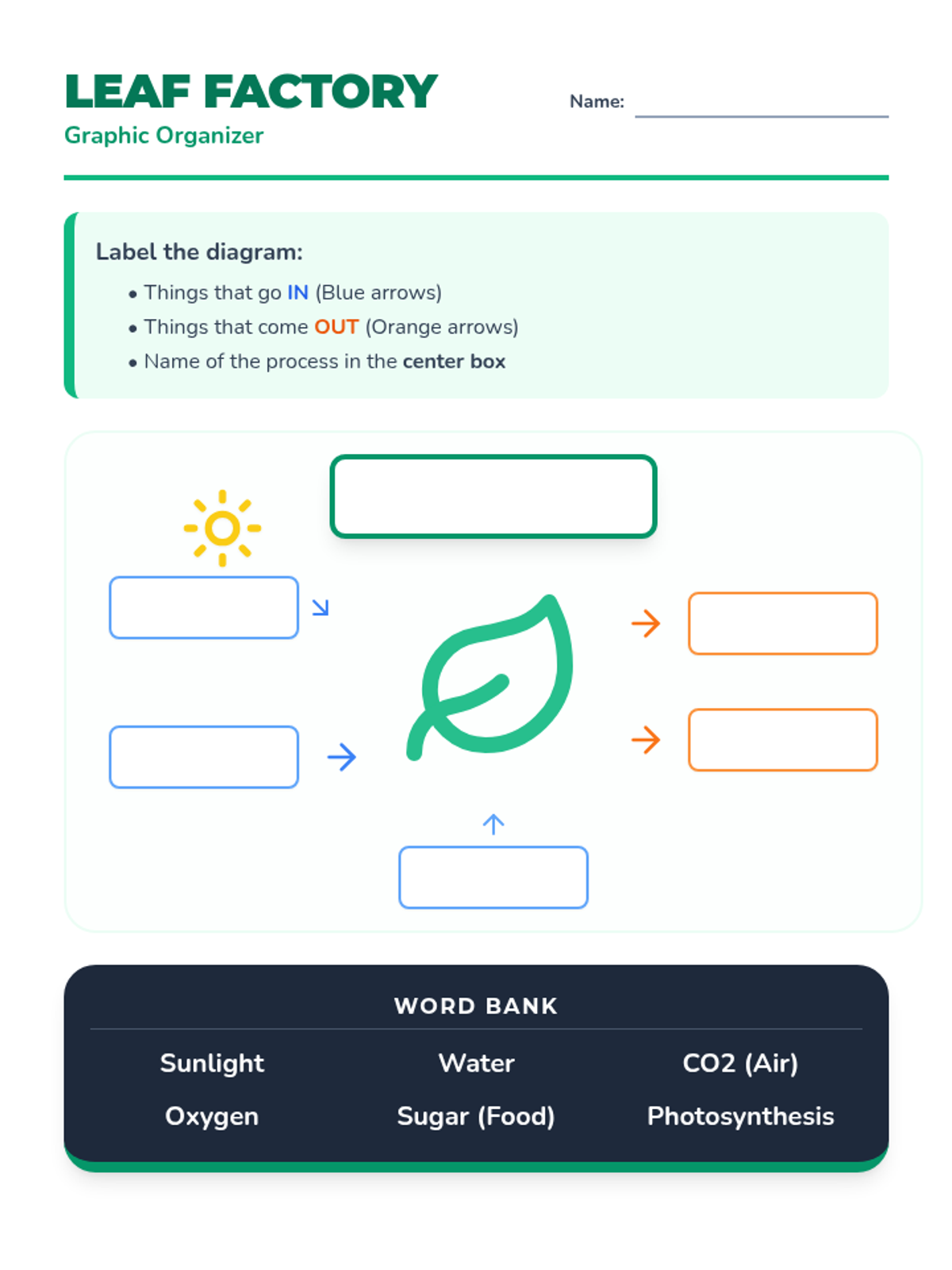
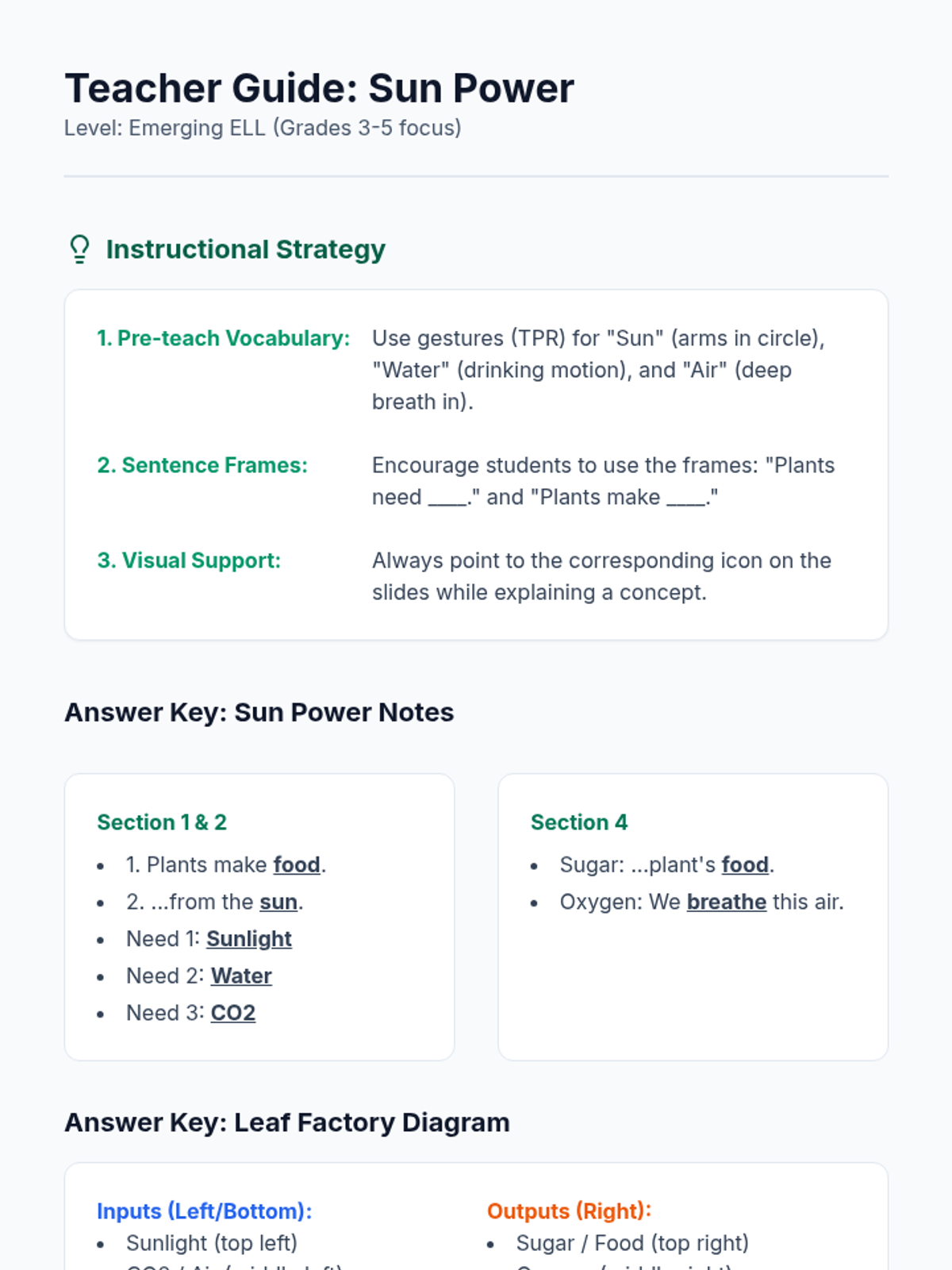
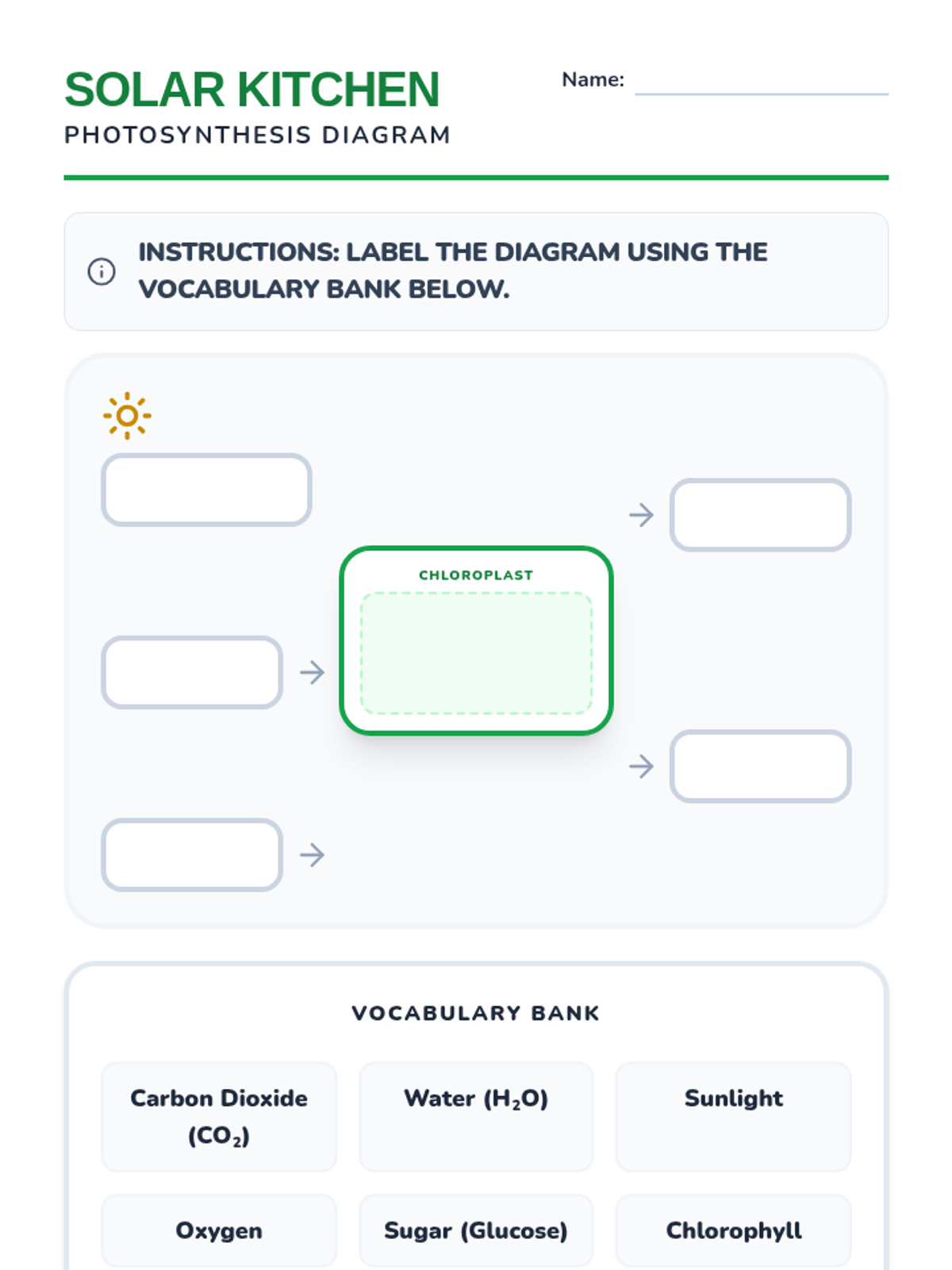
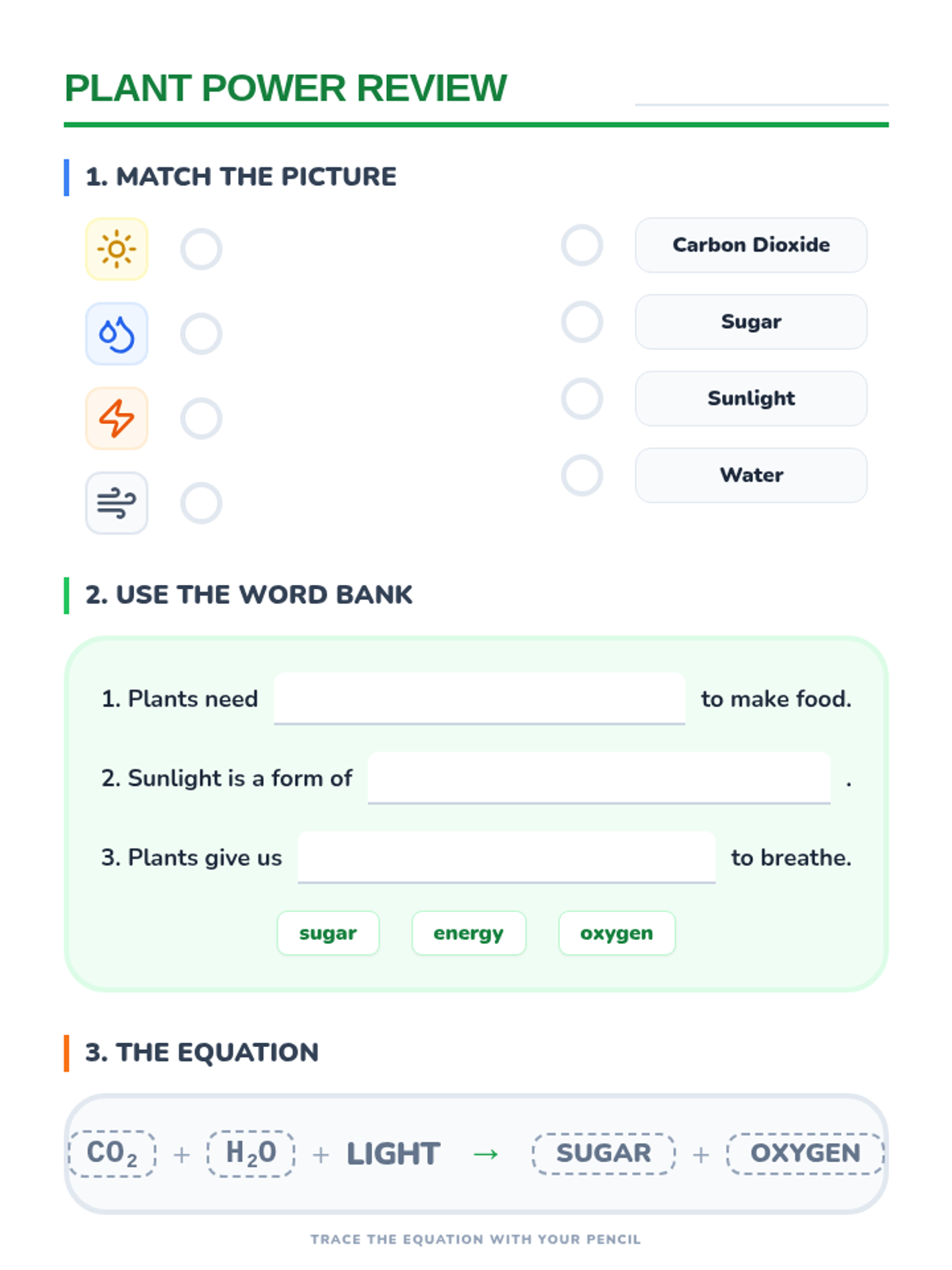
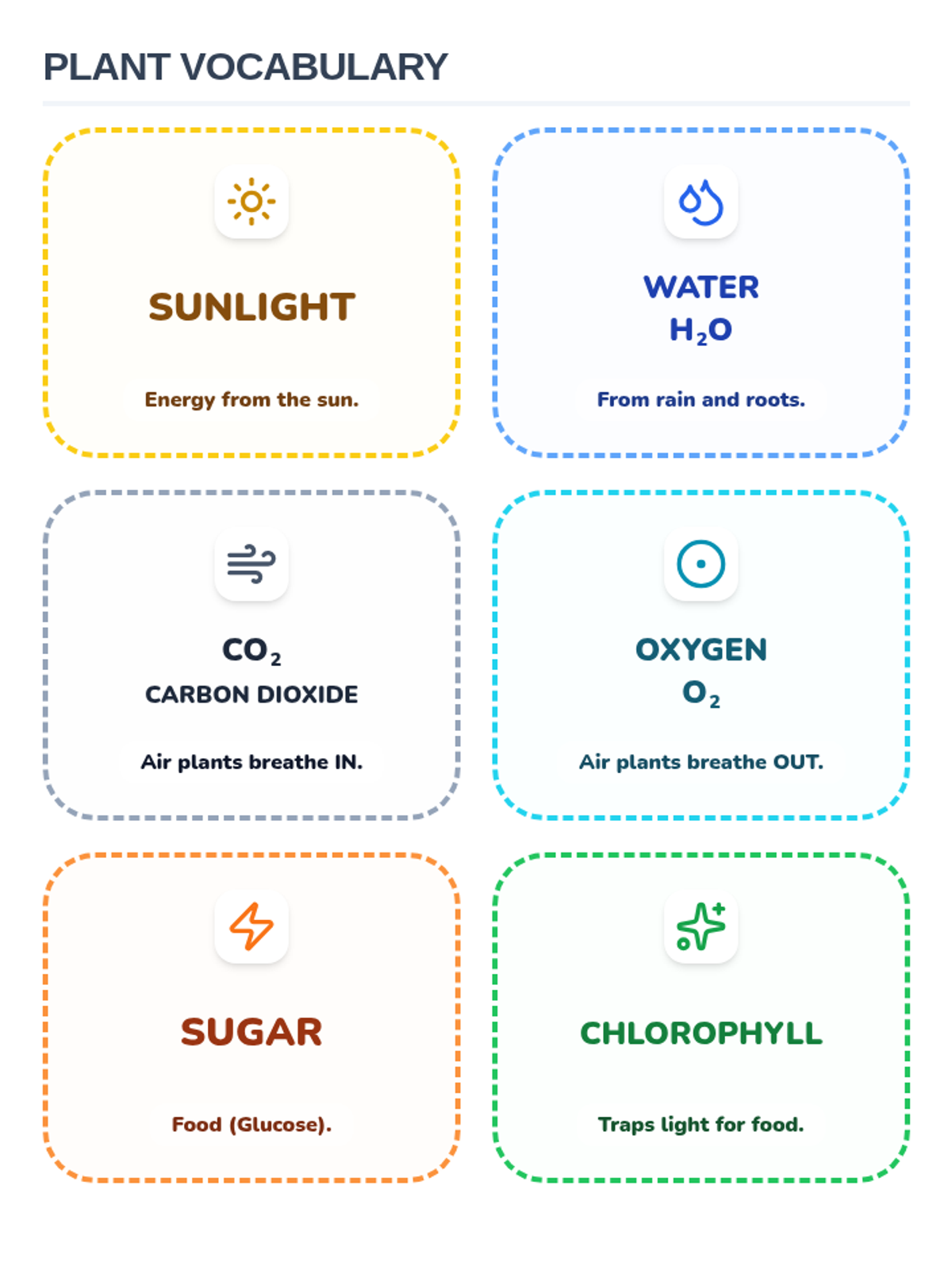
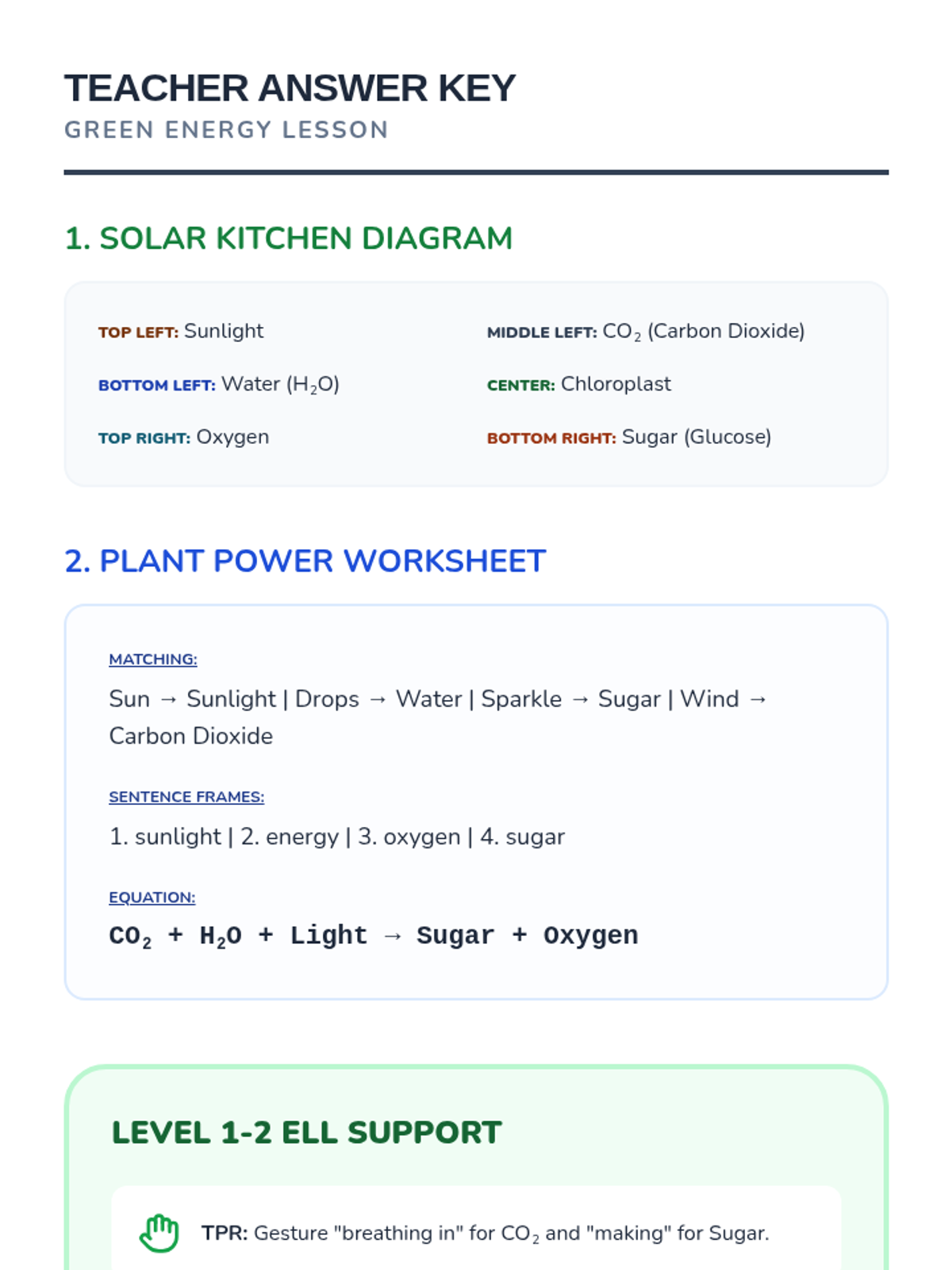
A visual-heavy lesson introducing the photosynthesis equation and basic inputs/outputs, specifically designed for emerging level bilingual students (ELLs). The lesson uses a 'Solar Kitchen' metaphor to simplify complex biological processes.
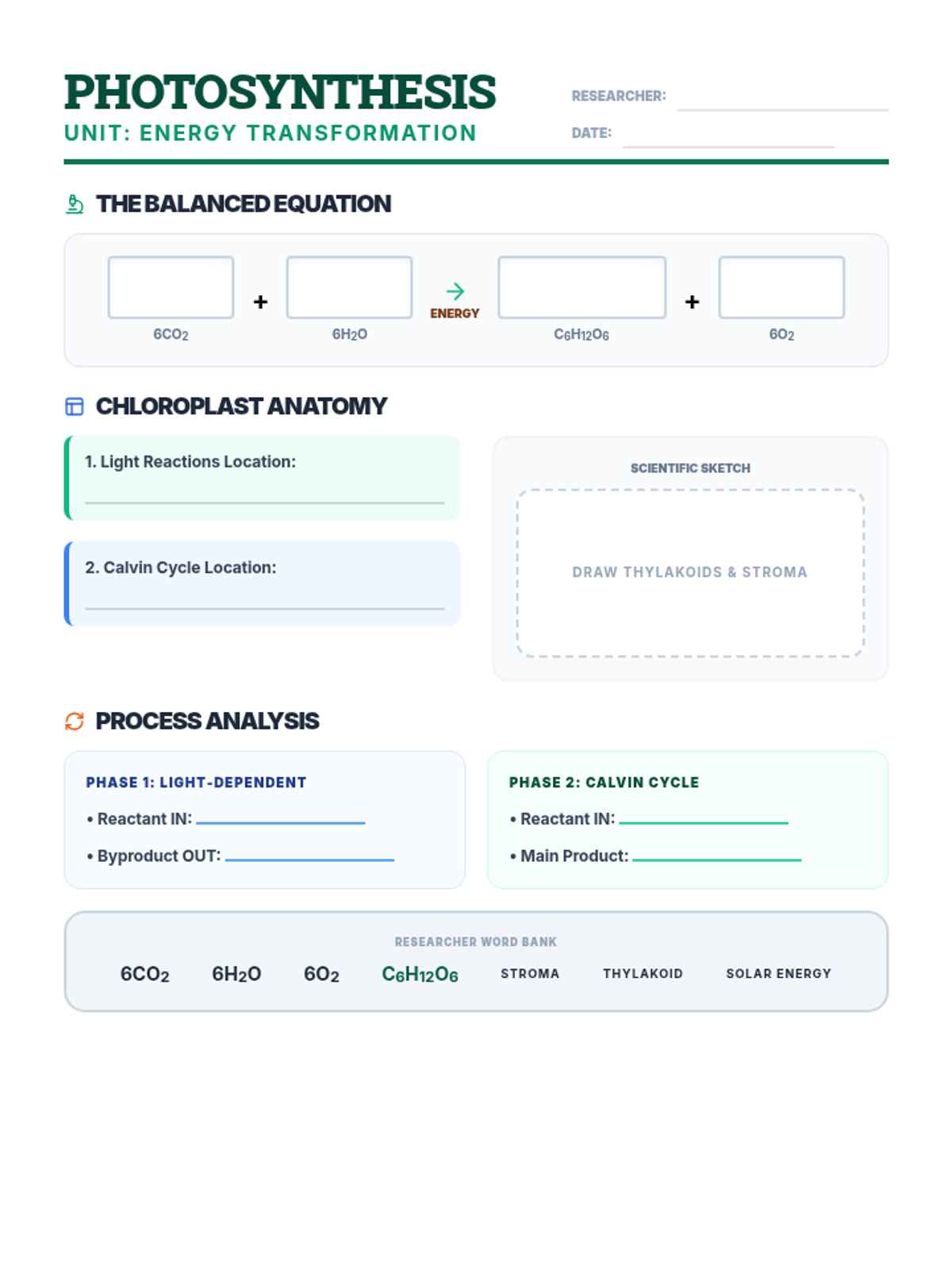
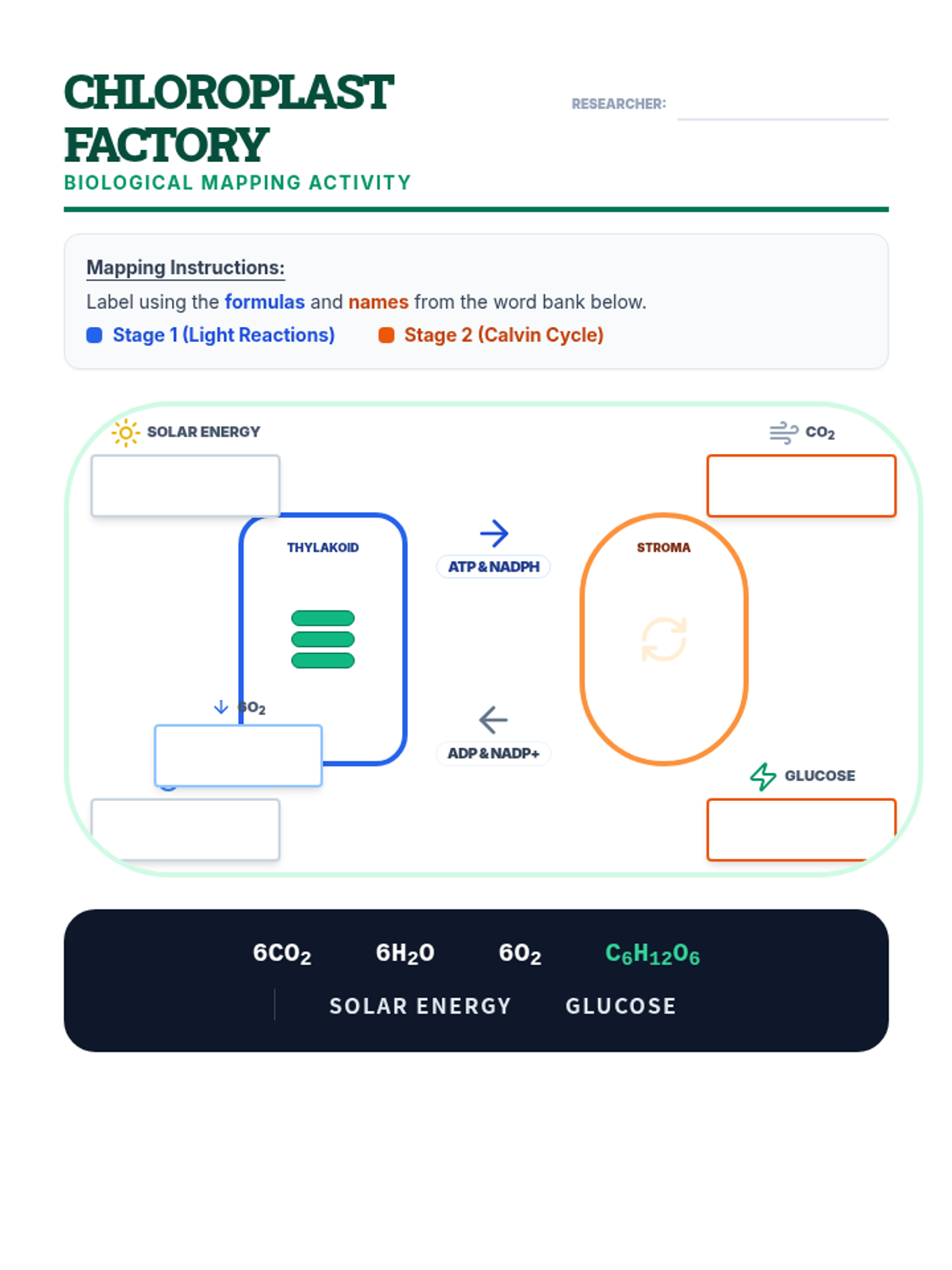
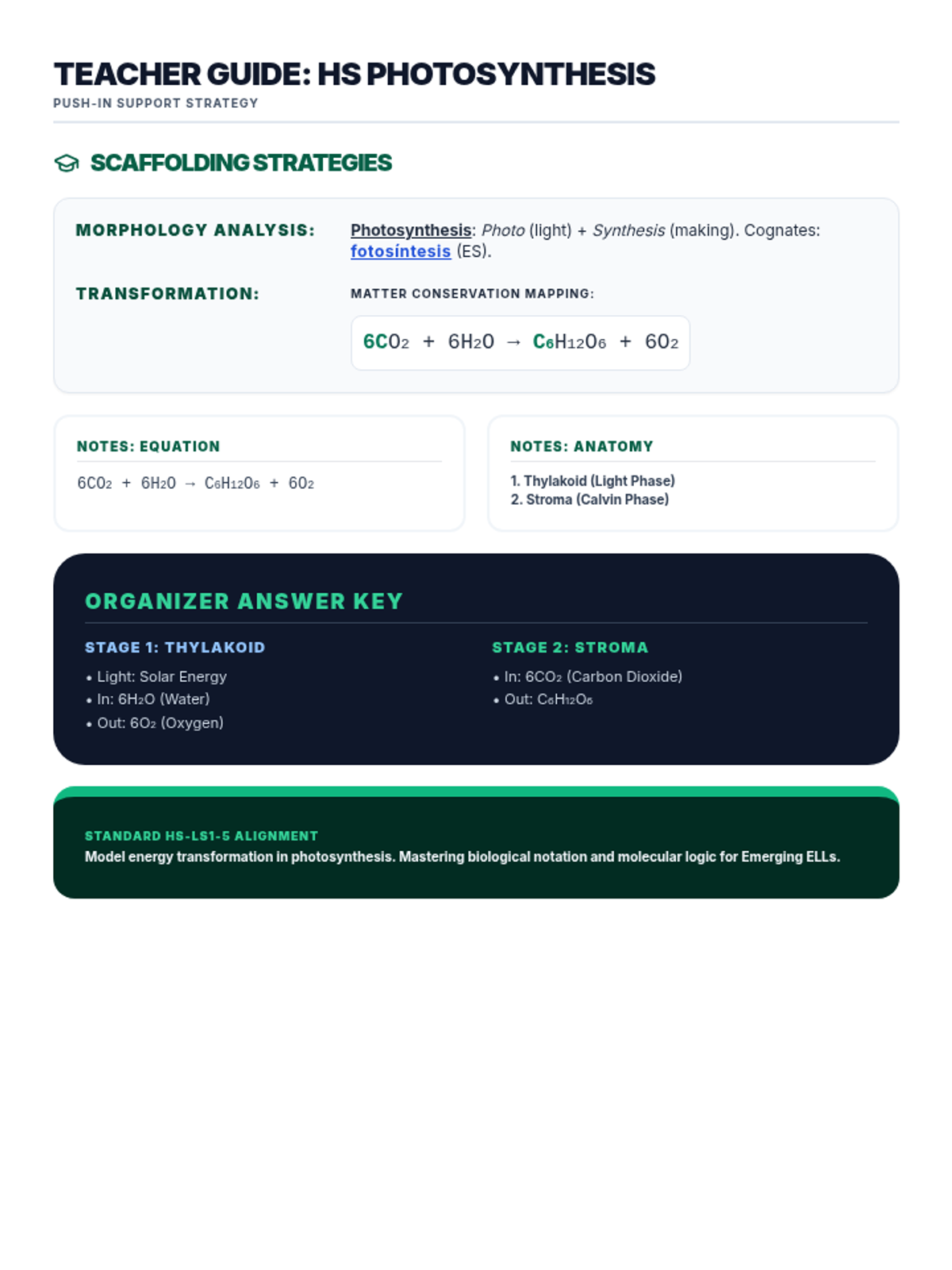
A high school-level introduction to photosynthesis for Emerging ELL students, focusing on chloroplast structure, the chemical equation, and the two stages of the process (Light-Dependent and Calvin Cycle) with linguistic scaffolding.
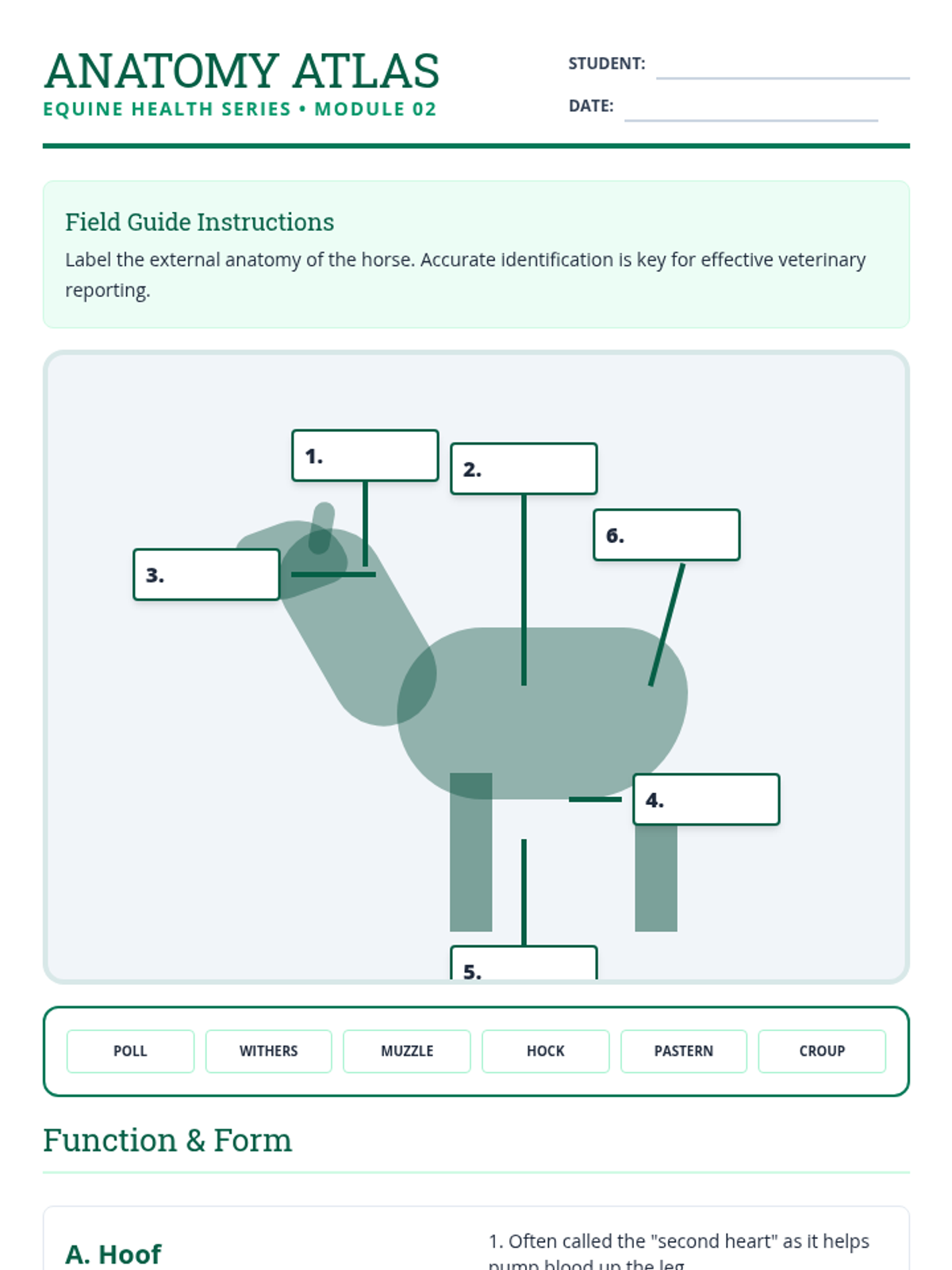
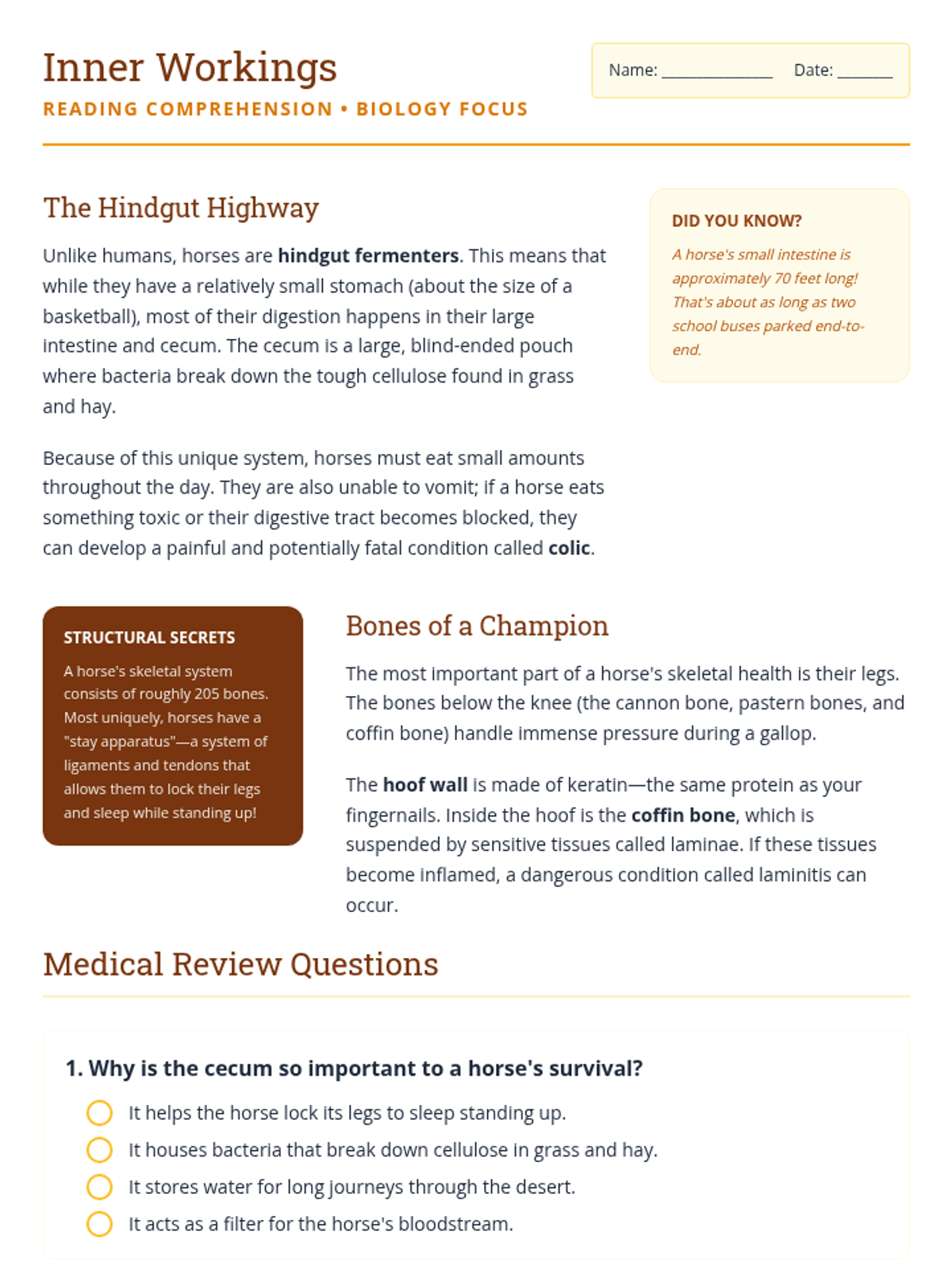
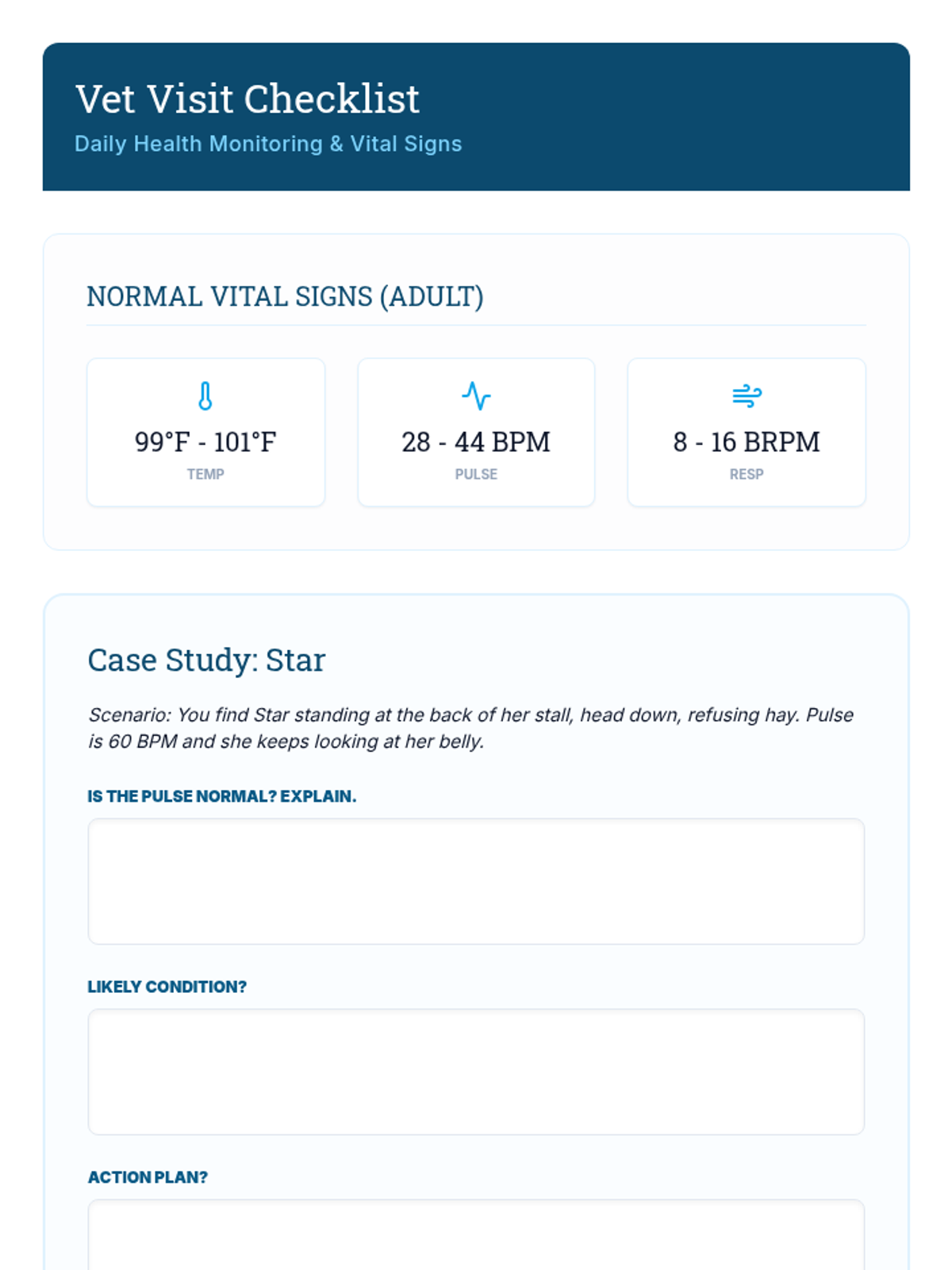
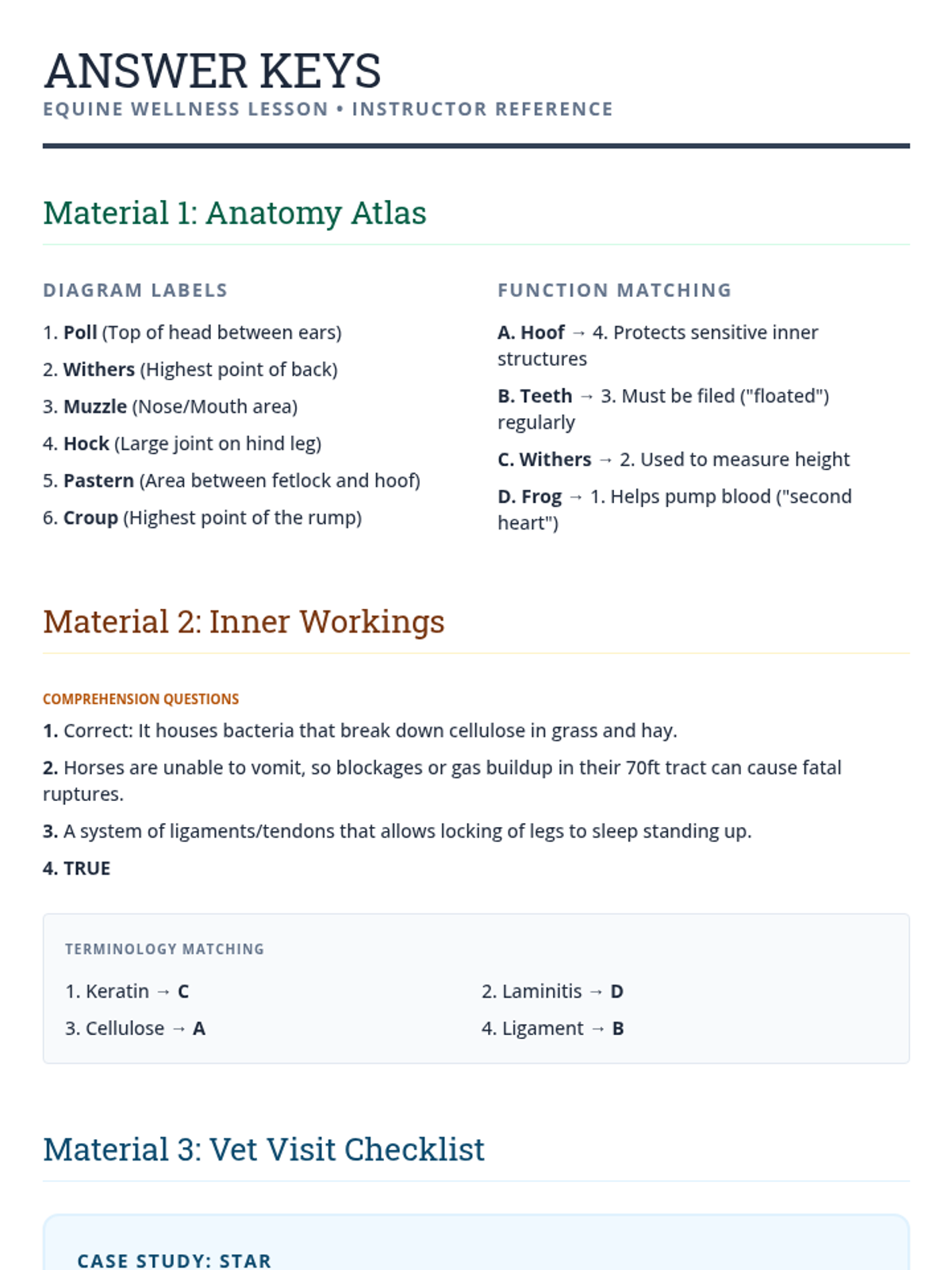
An in-depth look at horse anatomy, vital signs, and health maintenance for aspiring equestrians and young veterinarians.
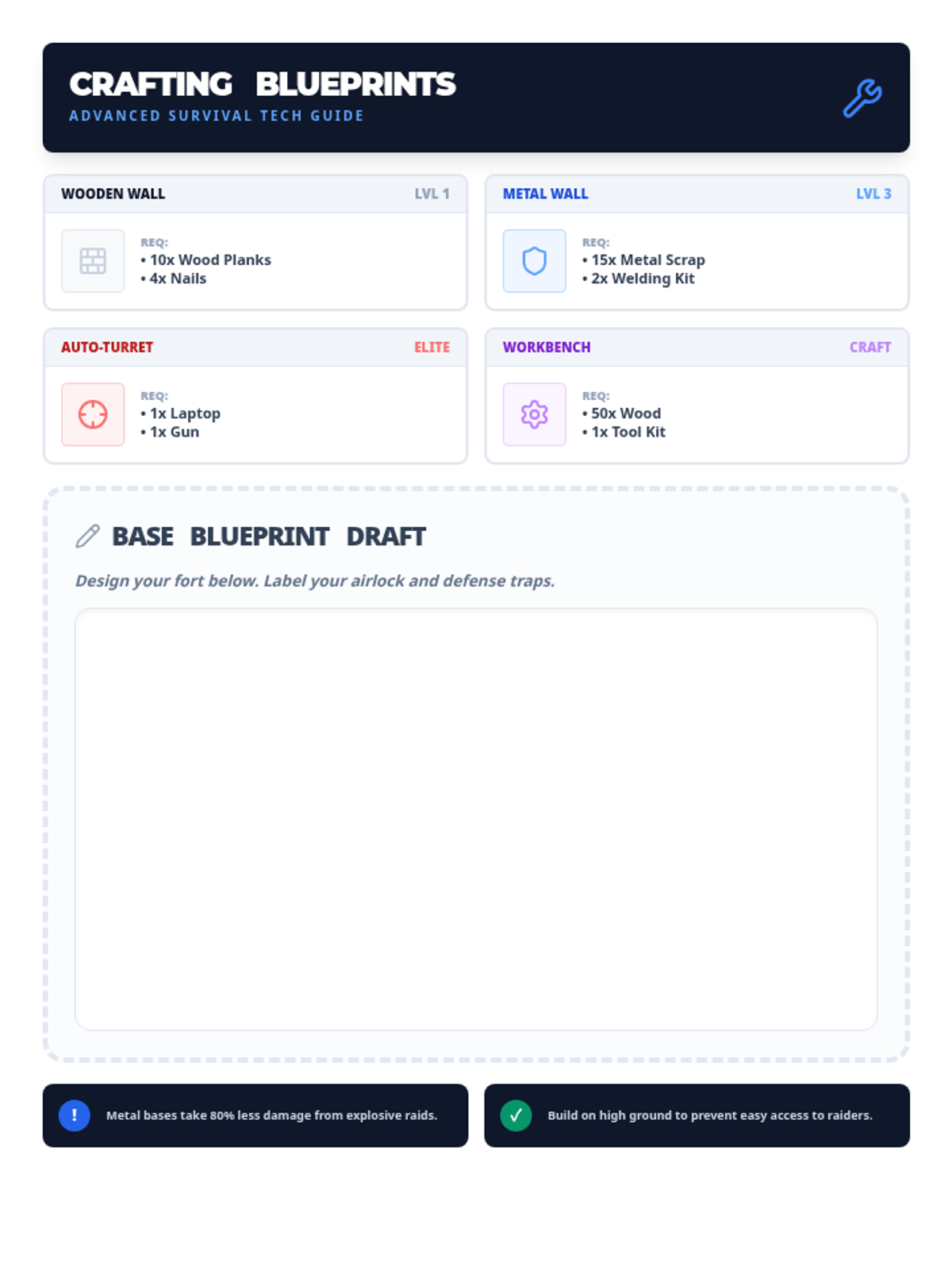
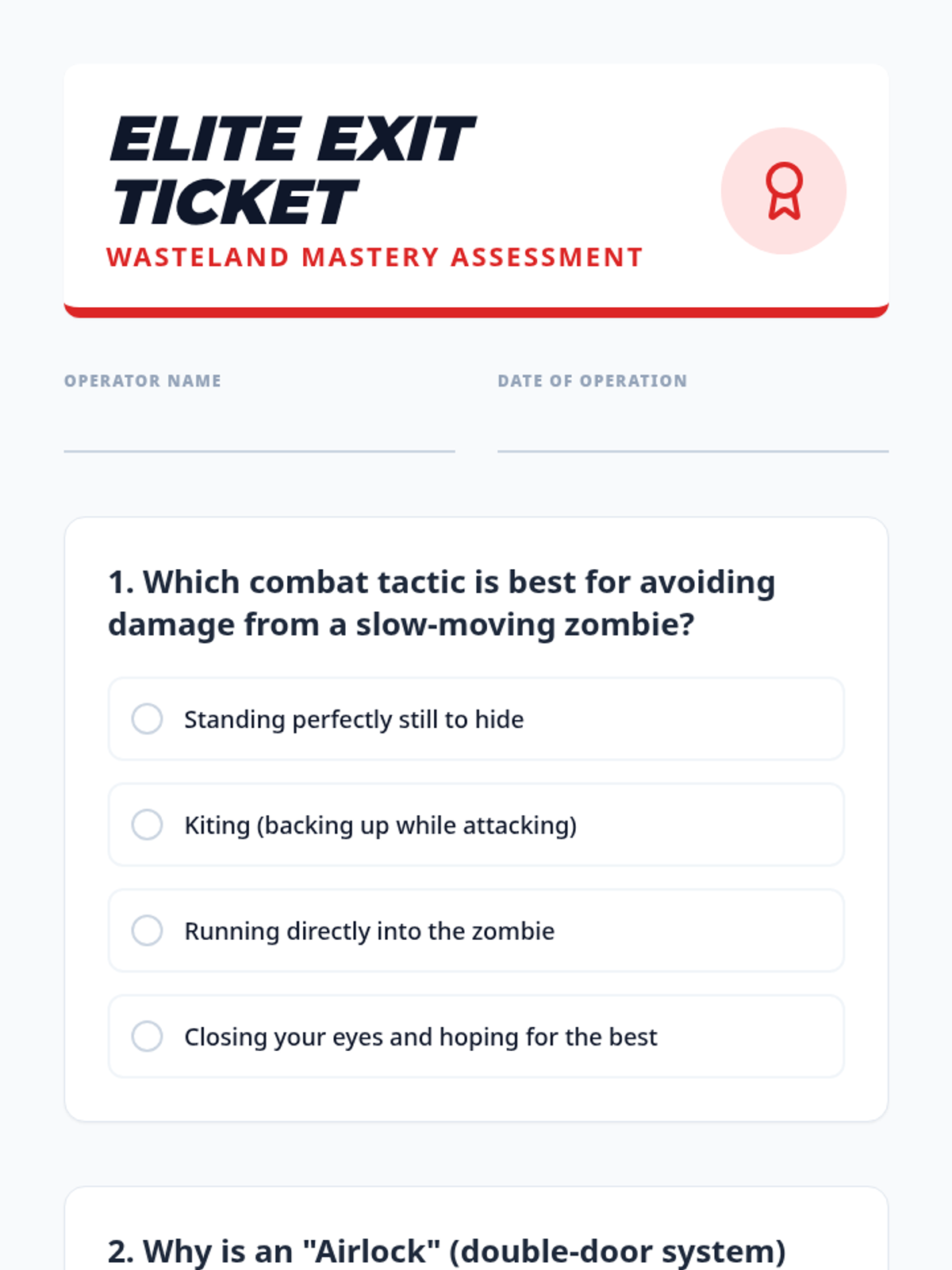
Moving beyond mere survival, this lesson covers weapons, combat strategies against various enemies, and the intricacies of building a secure base. Perfect for players ready to dominate the wasteland.
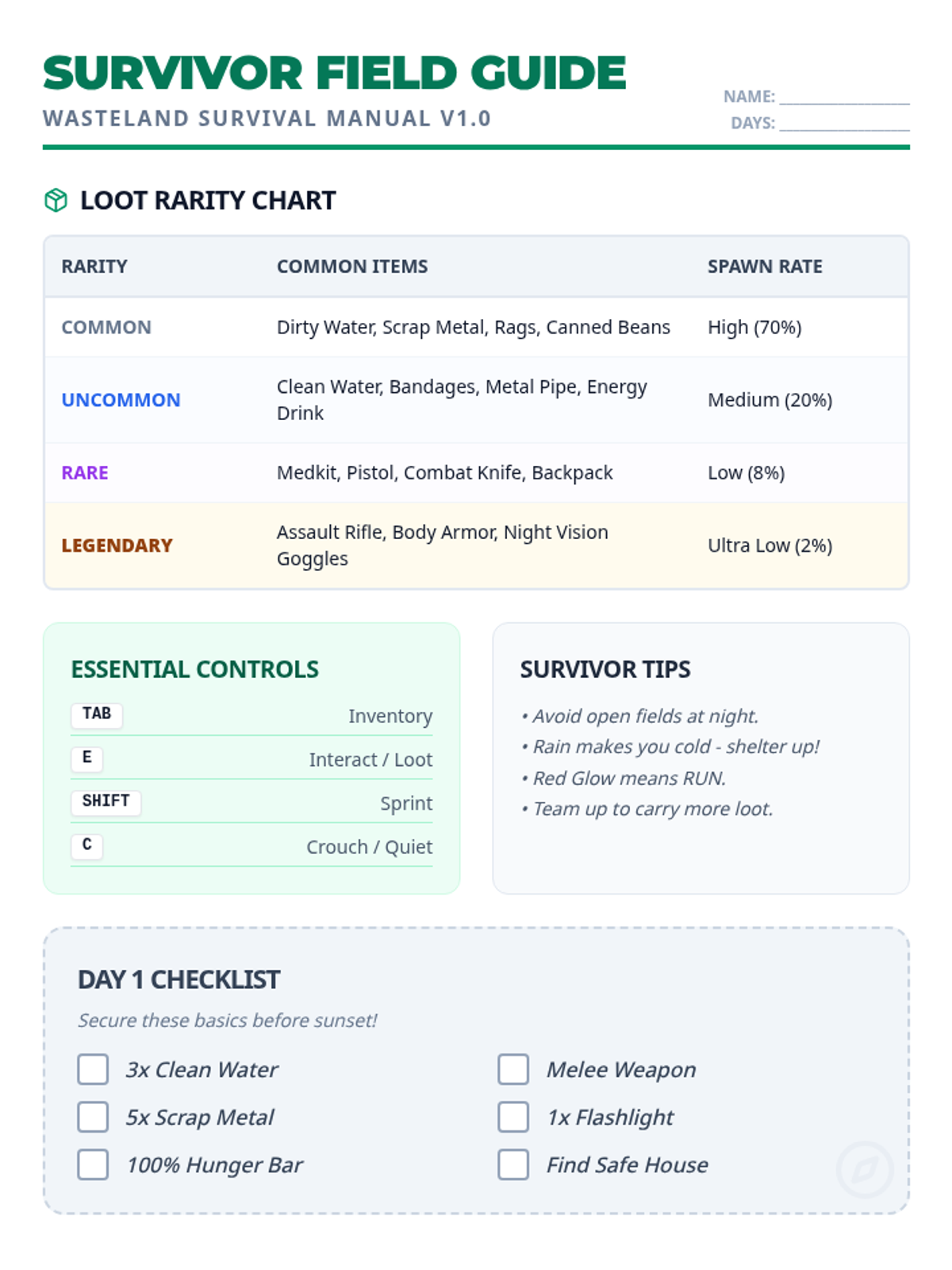
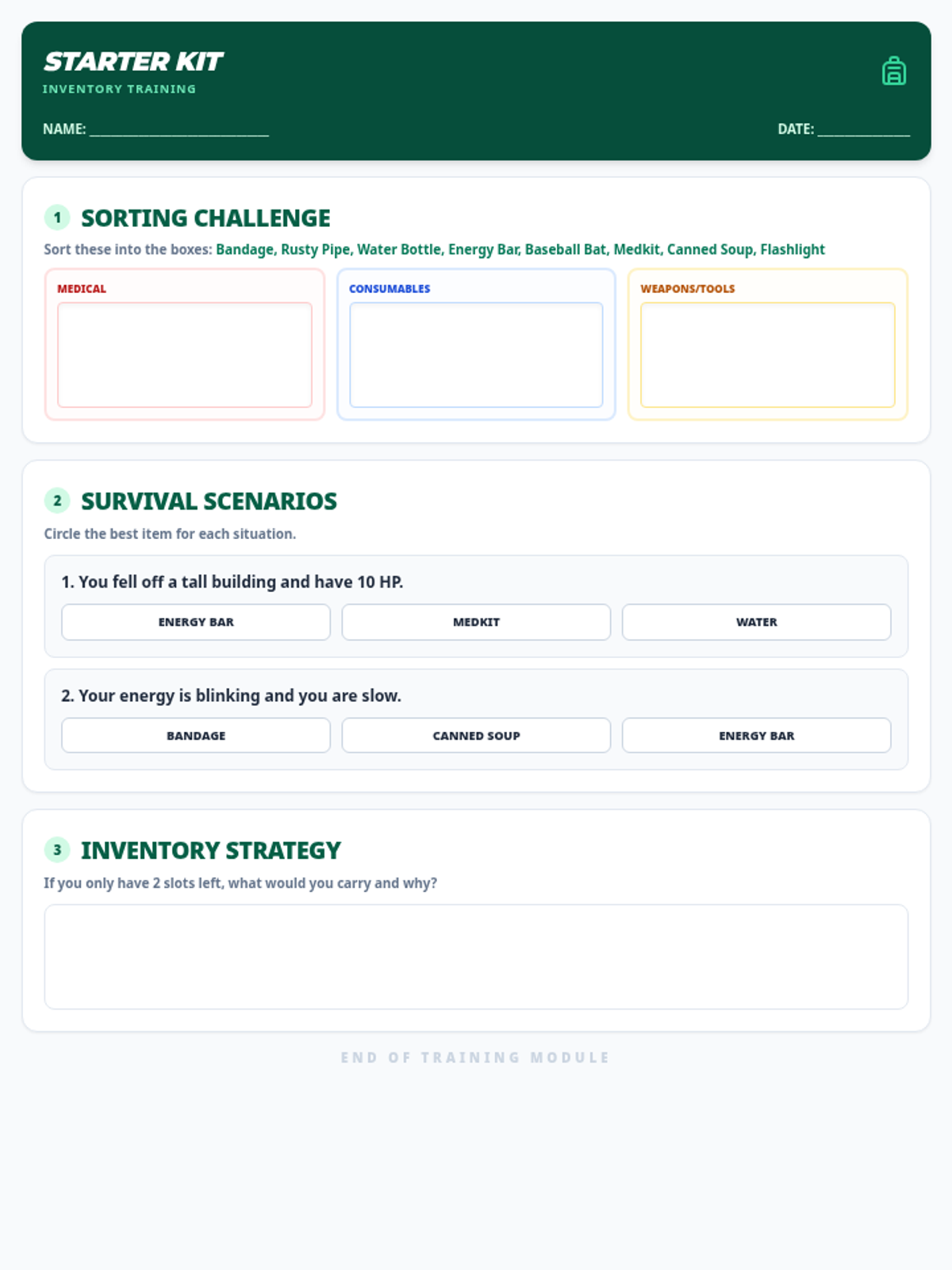
The foundation of any Forsaken player's journey, focusing on UI navigation, essential survival stats, and the first day of gameplay. Students will learn how to scavenge for resources and keep their character alive.
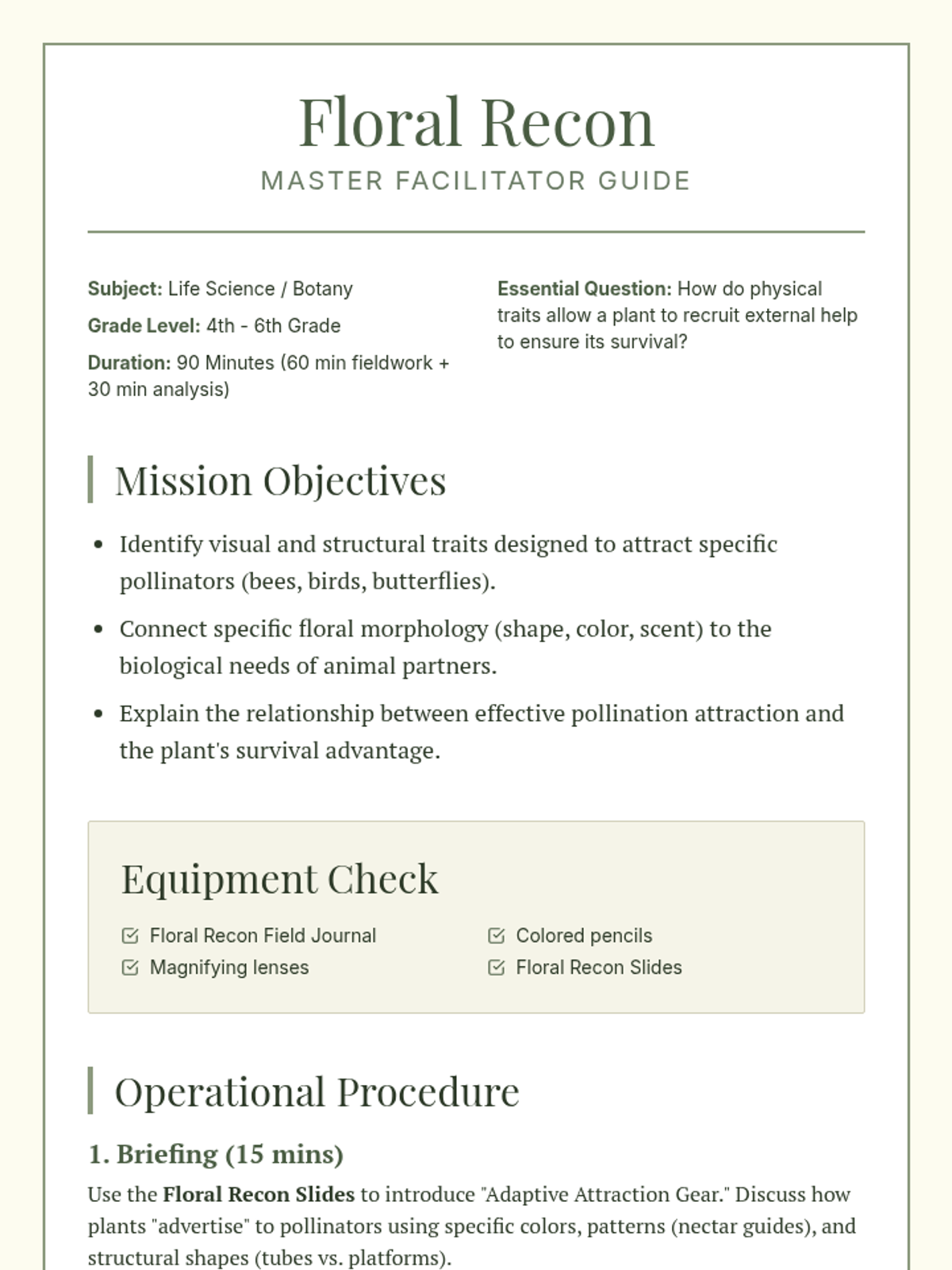
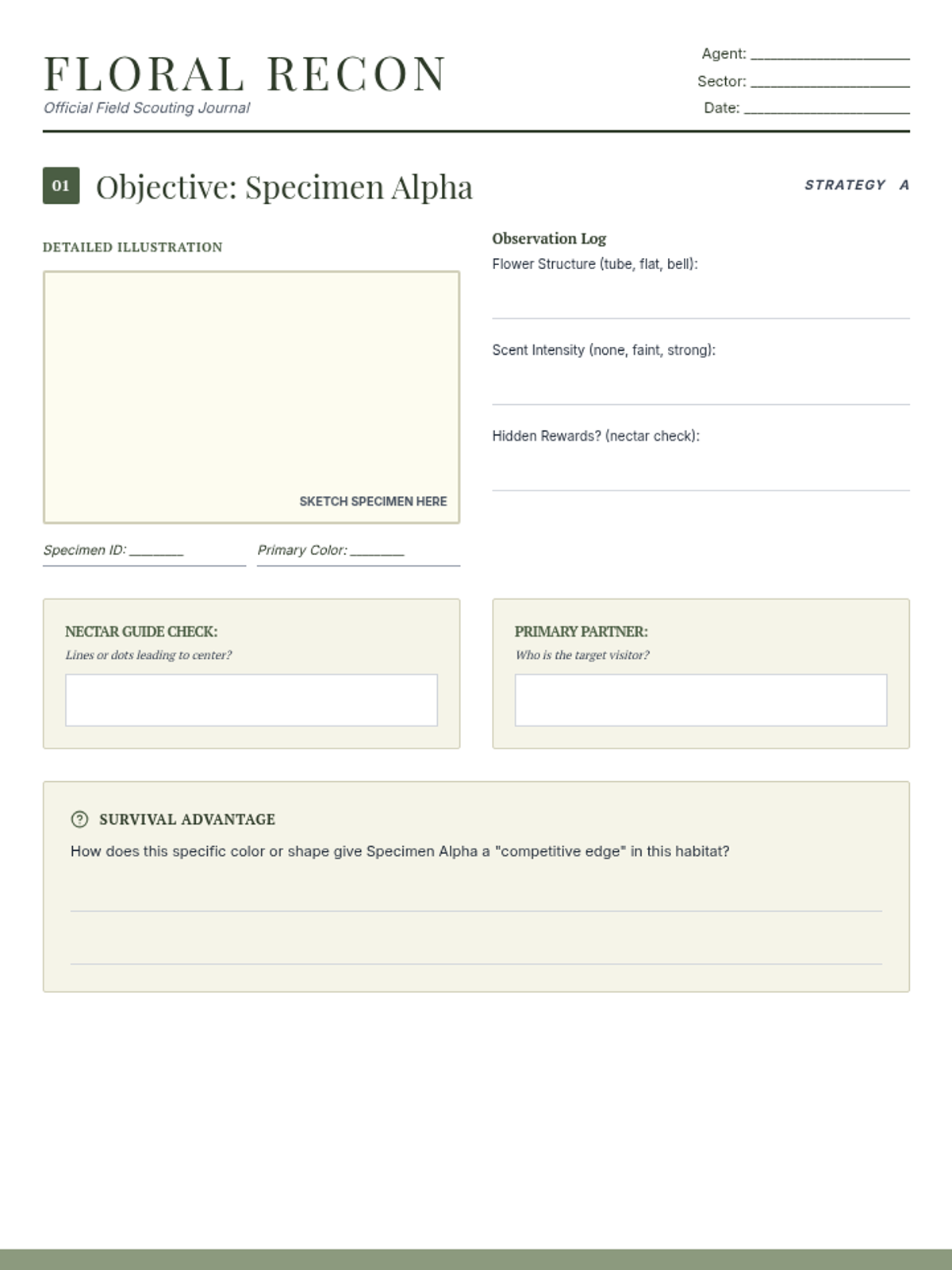
An inquiry-based lesson where students act as botanical scouts, collecting flowering specimens to analyze how traits like color, scent, and structure aid in attracting specific pollinators for species survival.
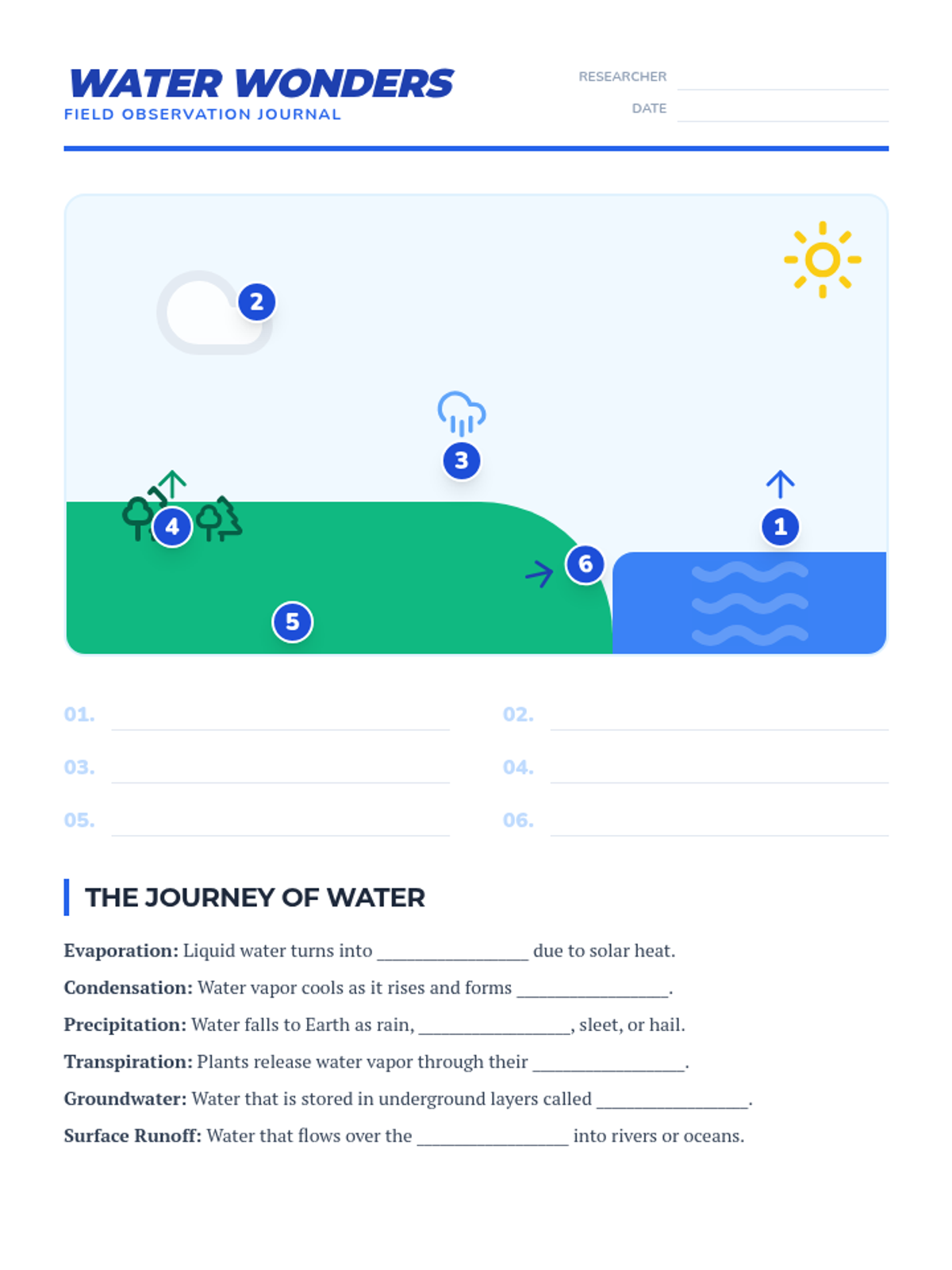
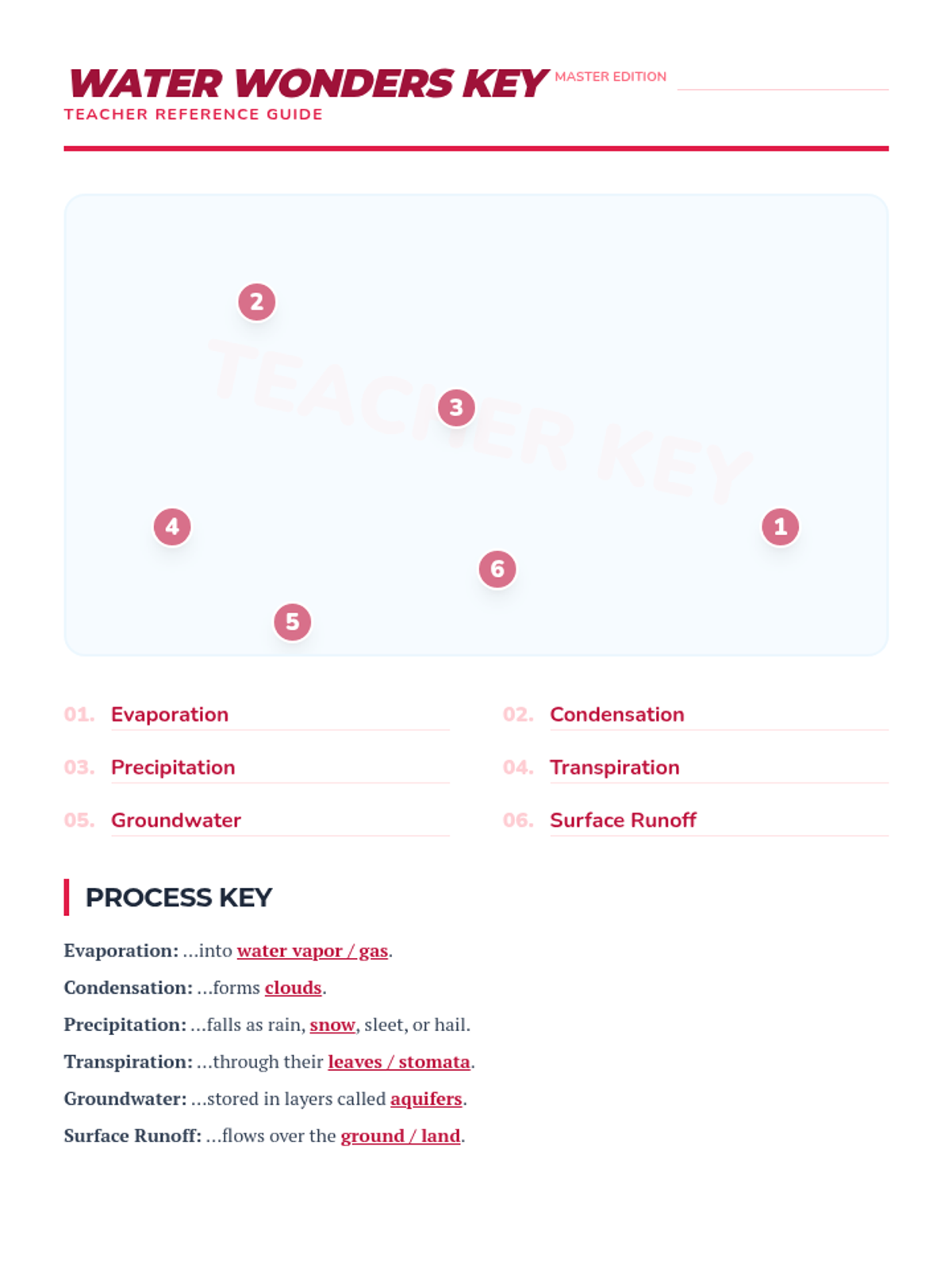
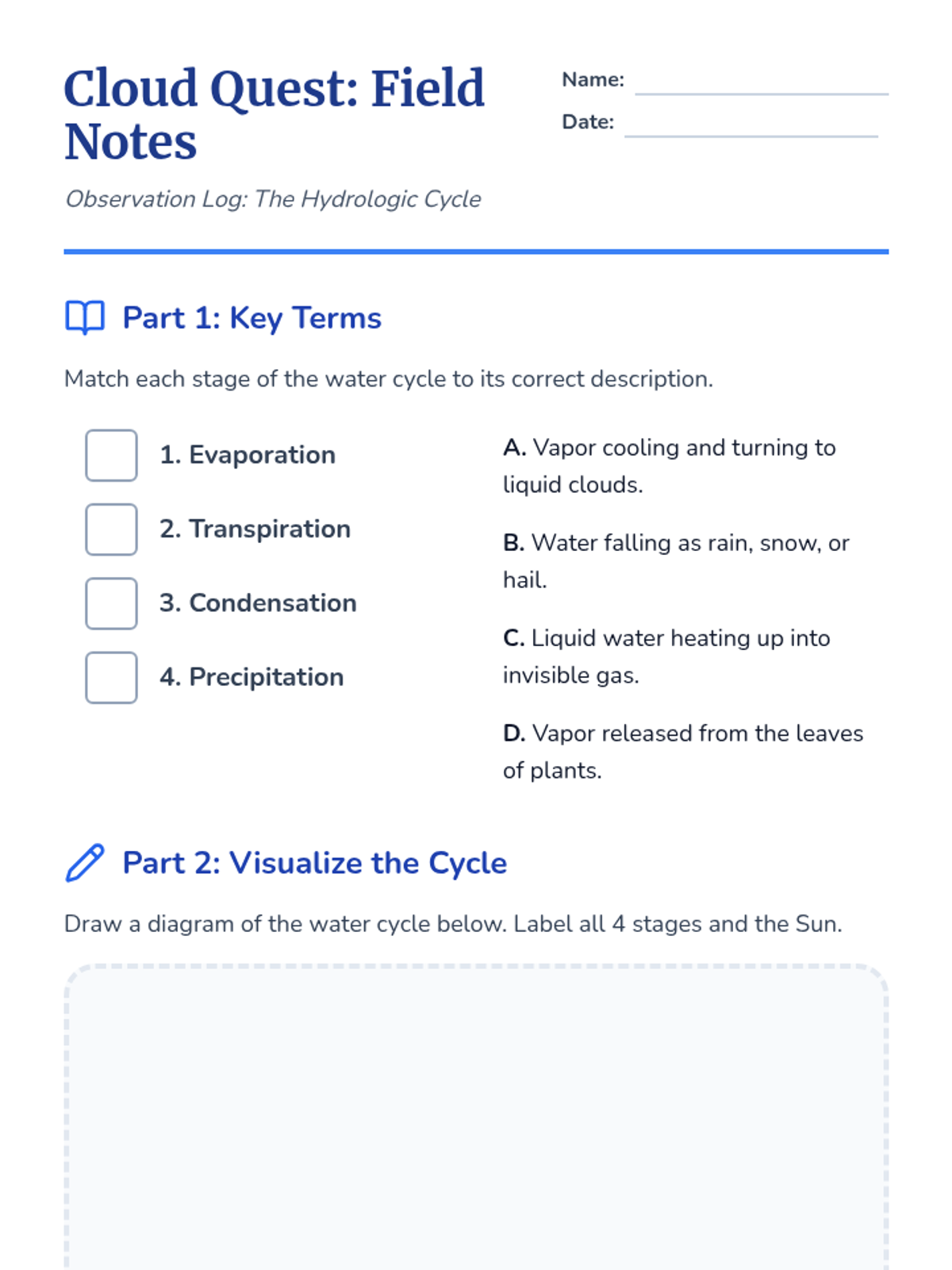
An interactive guided notes packet exploring the movement of water through Earth's systems, featuring a detailed diagram and critical thinking questions.
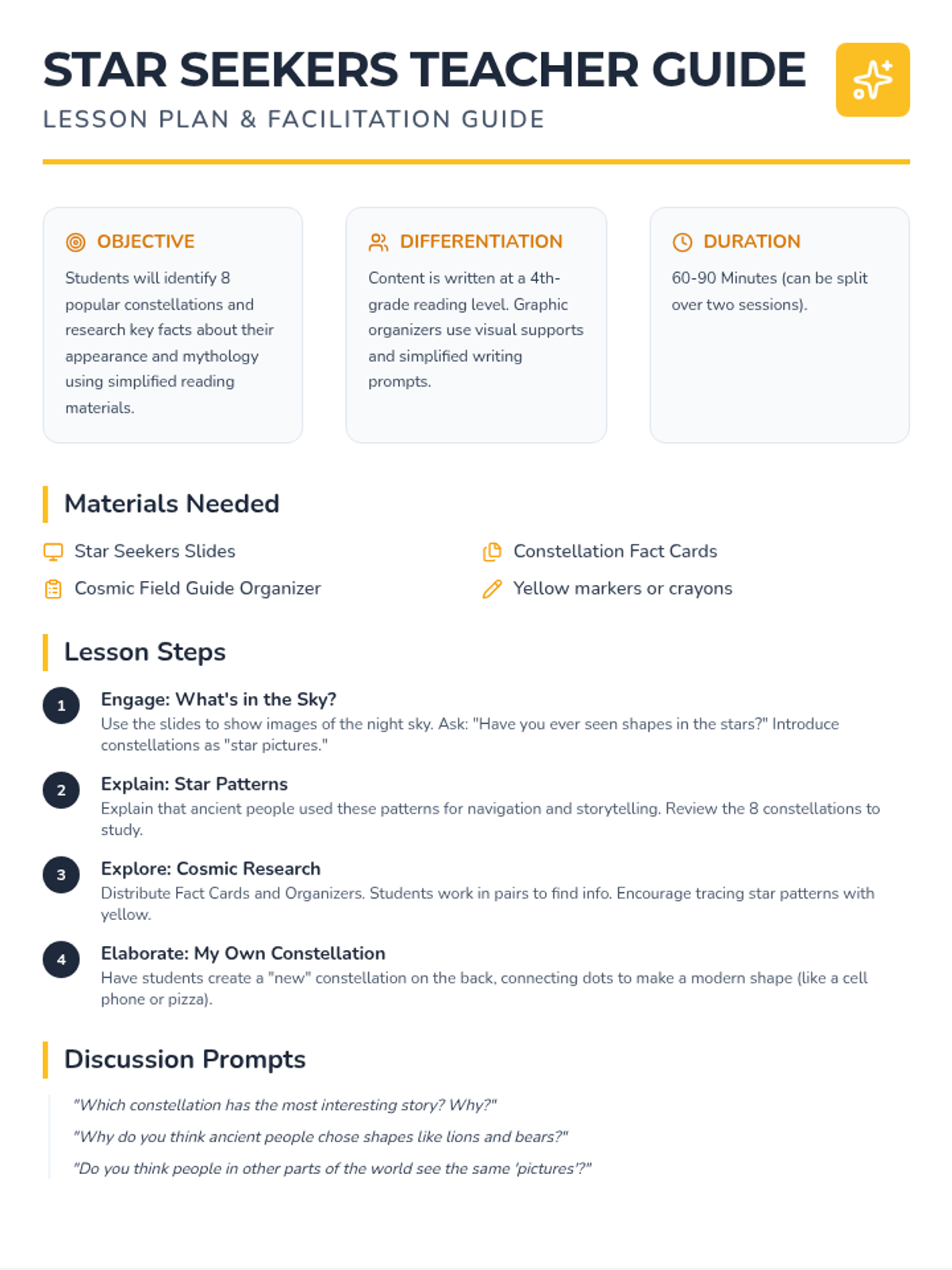
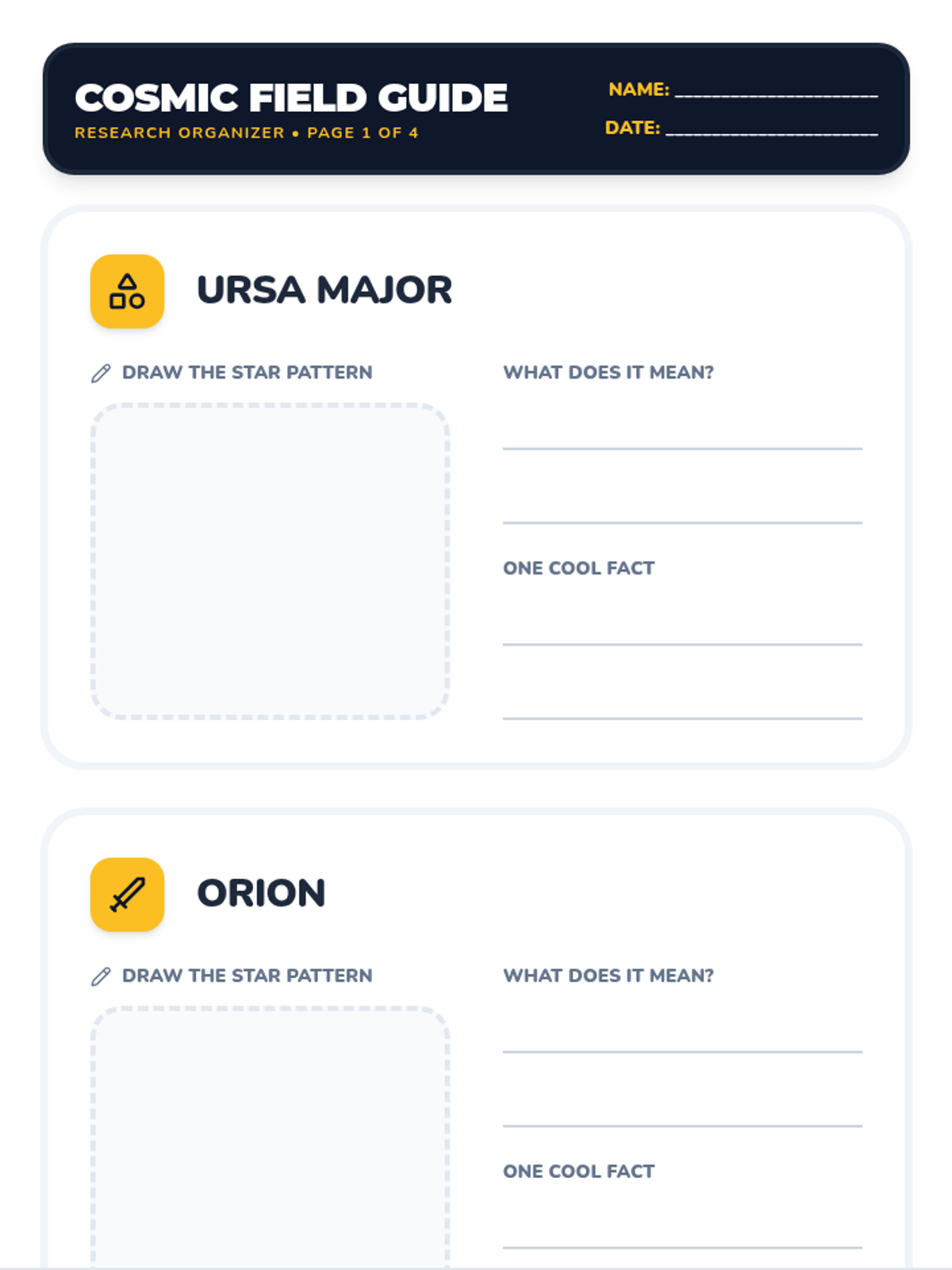
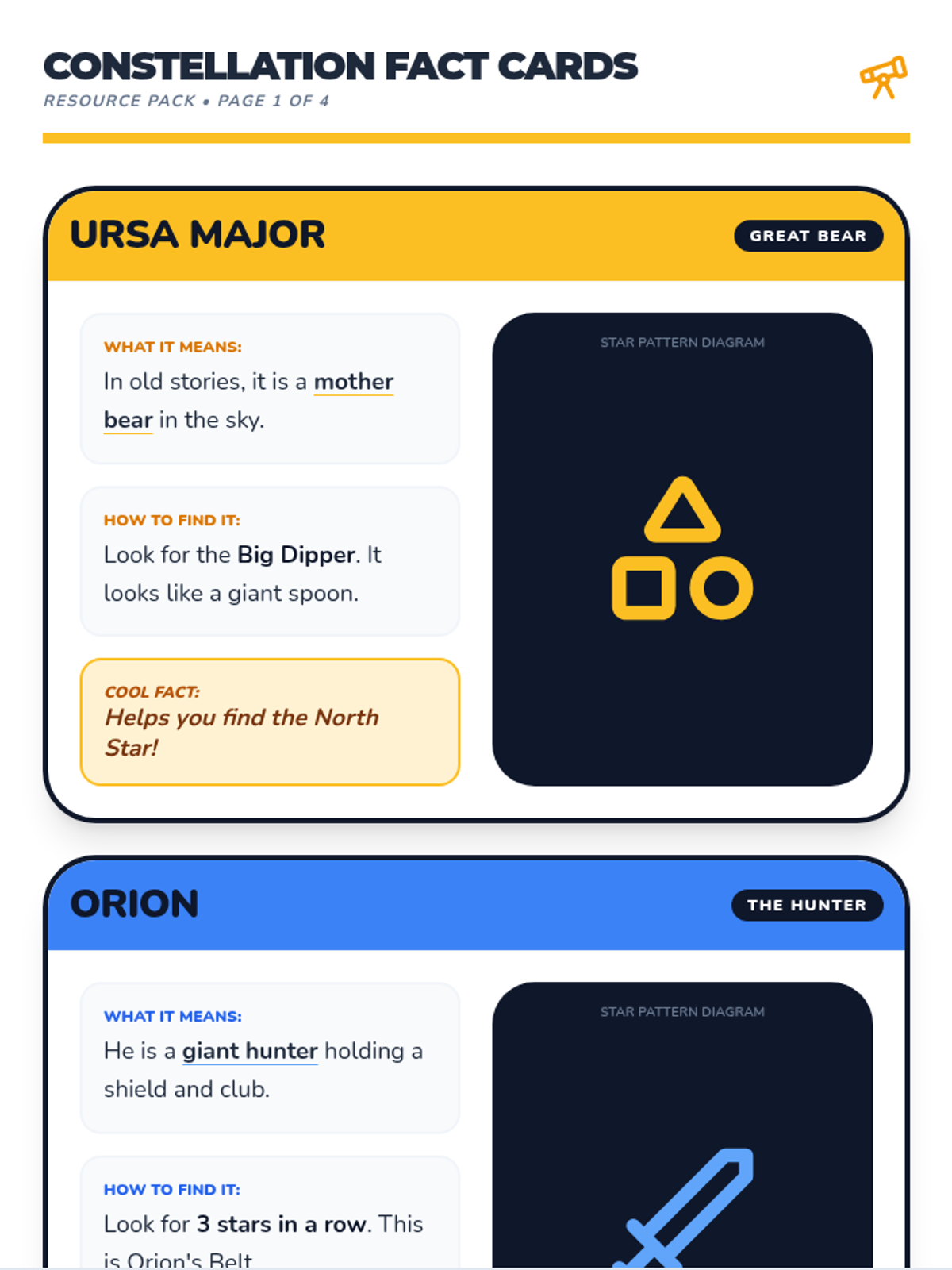
A lesson for students to research eight popular constellations using simplified fact cards and a graphic organizer. Designed for 7th-grade students working at a 4th-grade skill level.
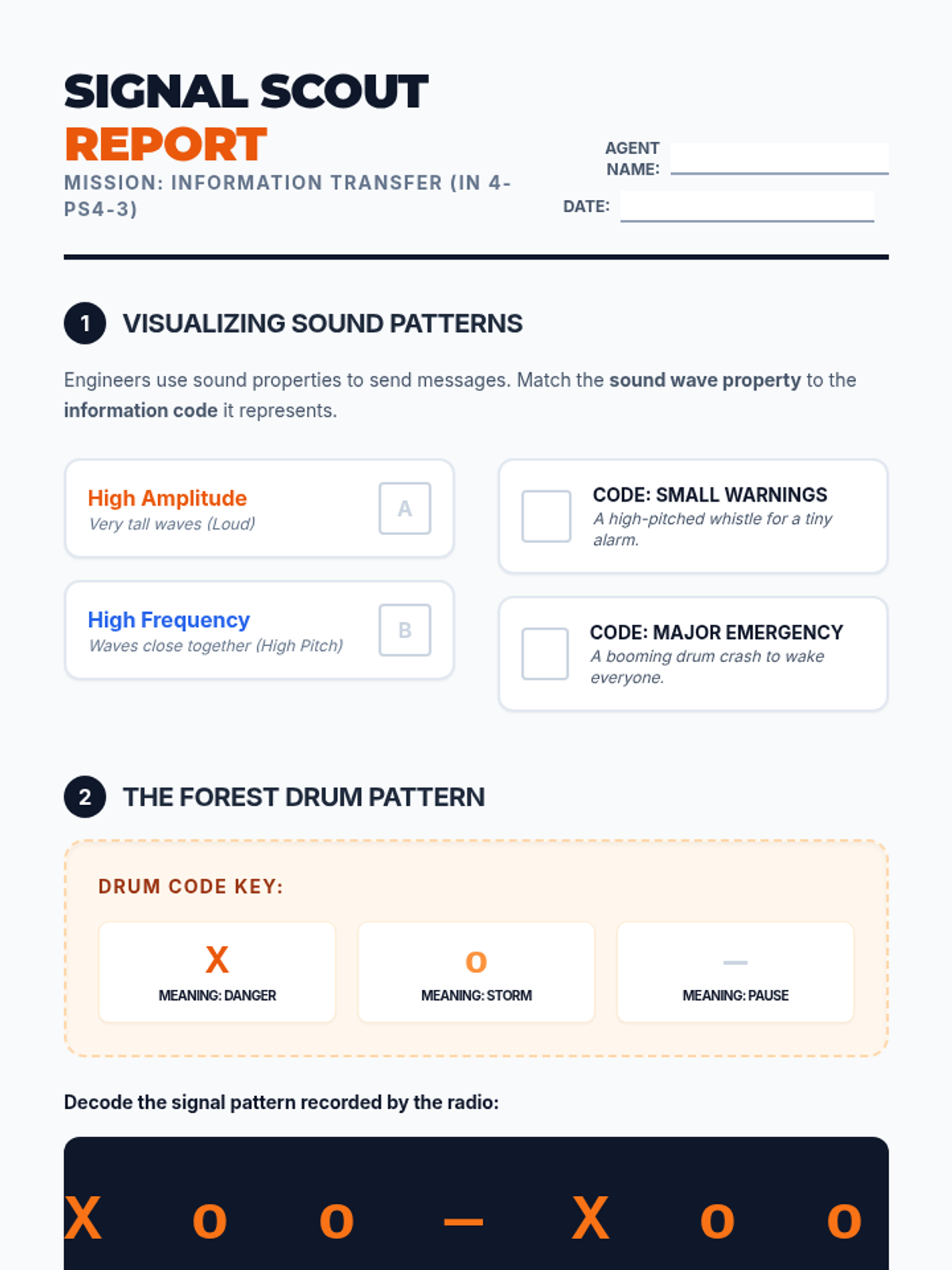
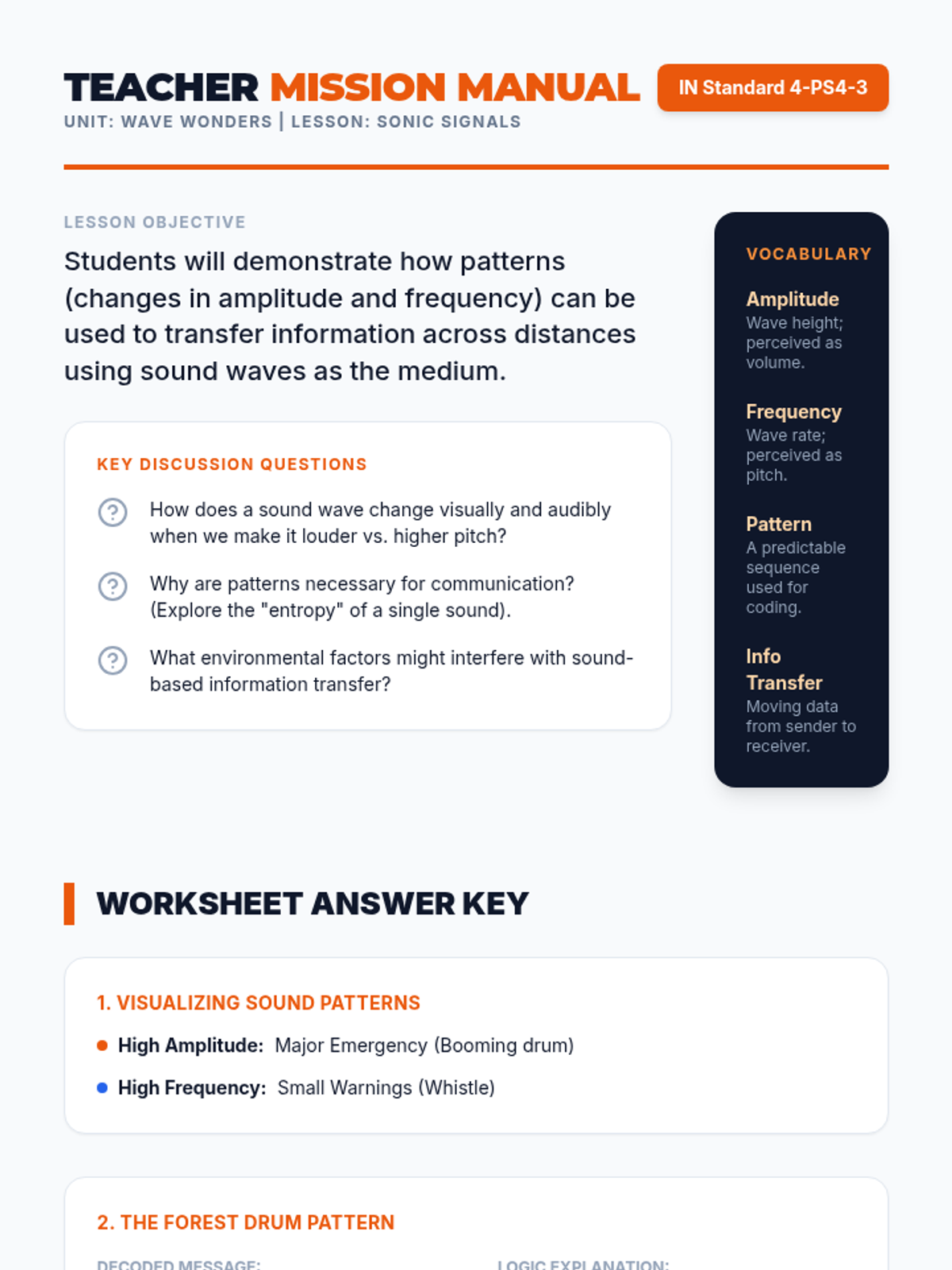
A hands-on lesson exploring how sound waves carry patterns to transfer information over distances, aligned with Indiana 4-PS4-3. Students will learn the basics of sound properties and then design their own sonic codes.
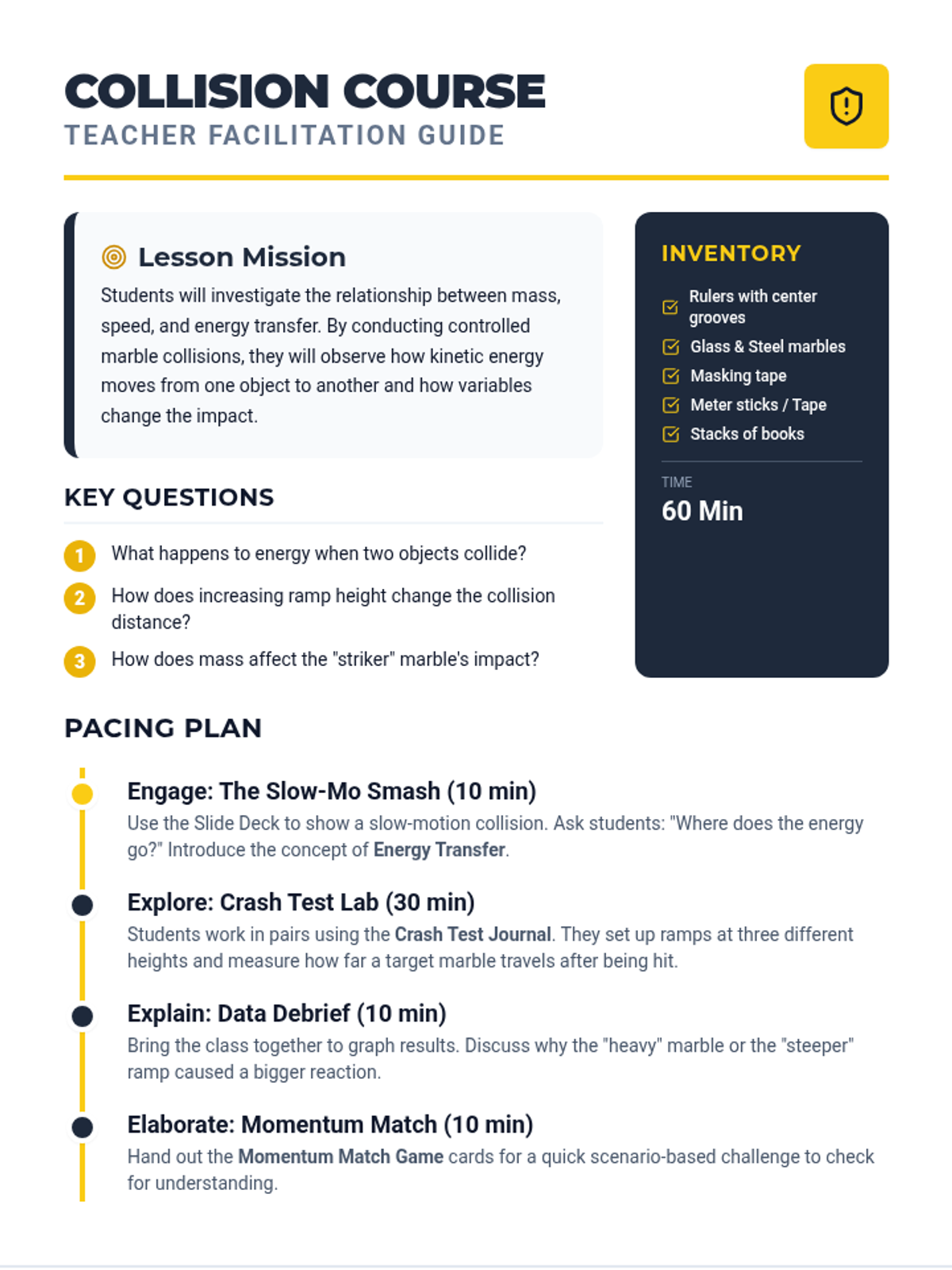
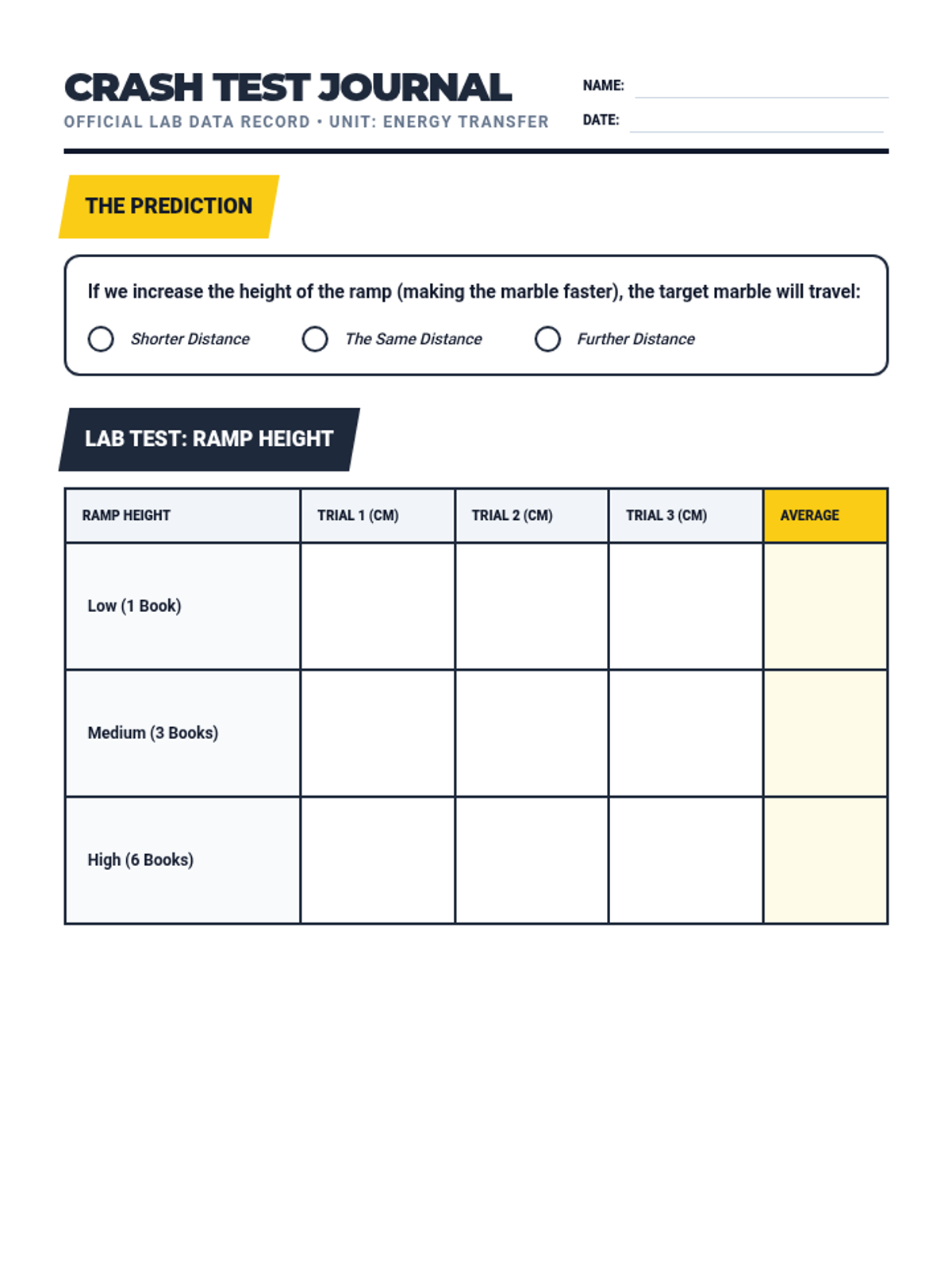
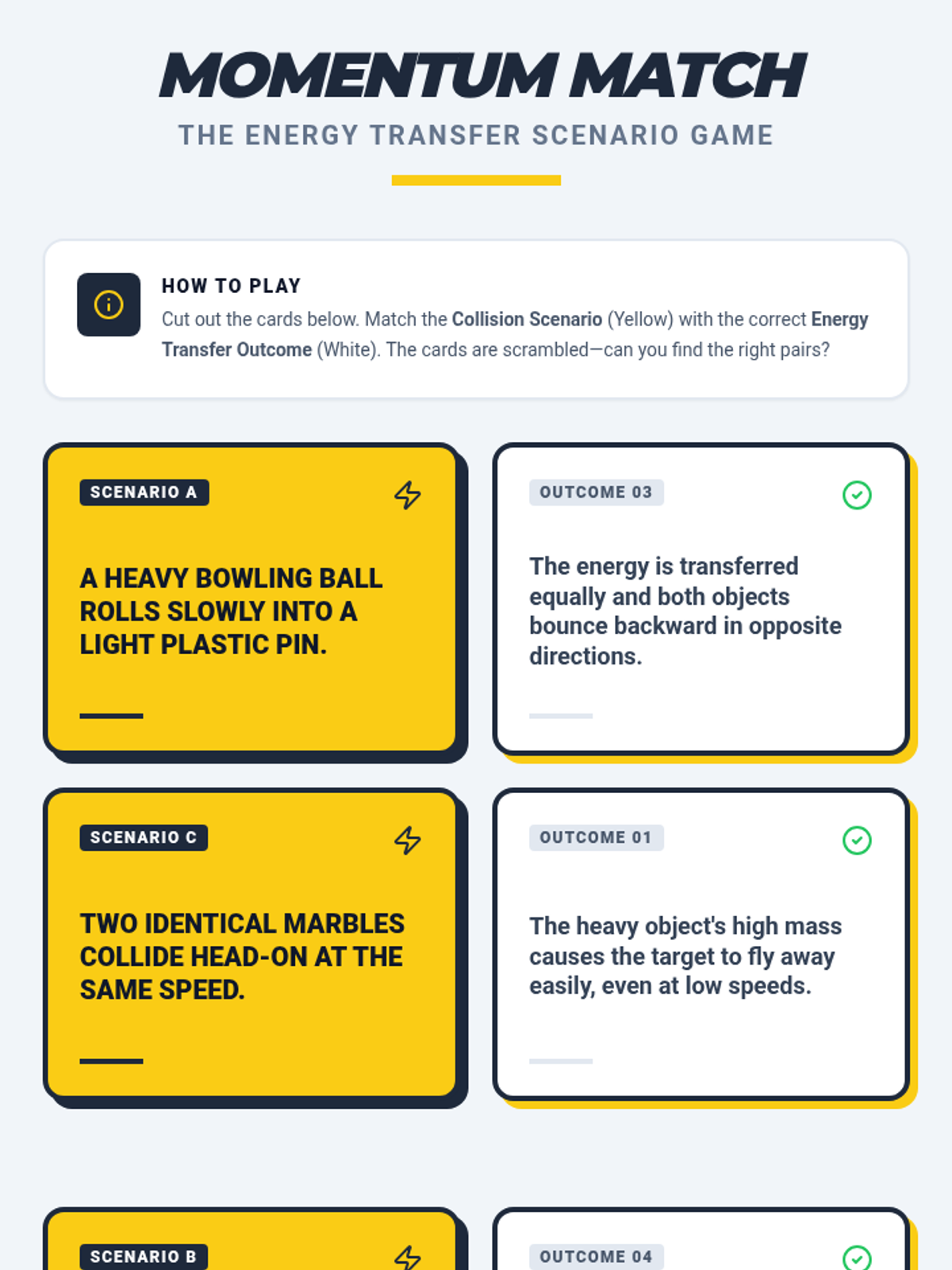
A high-energy physics lesson where students use marbles to explore how mass and speed affect energy transfer during collisions. Includes a guided lab, instructional slides, and a scenario-based matching game.
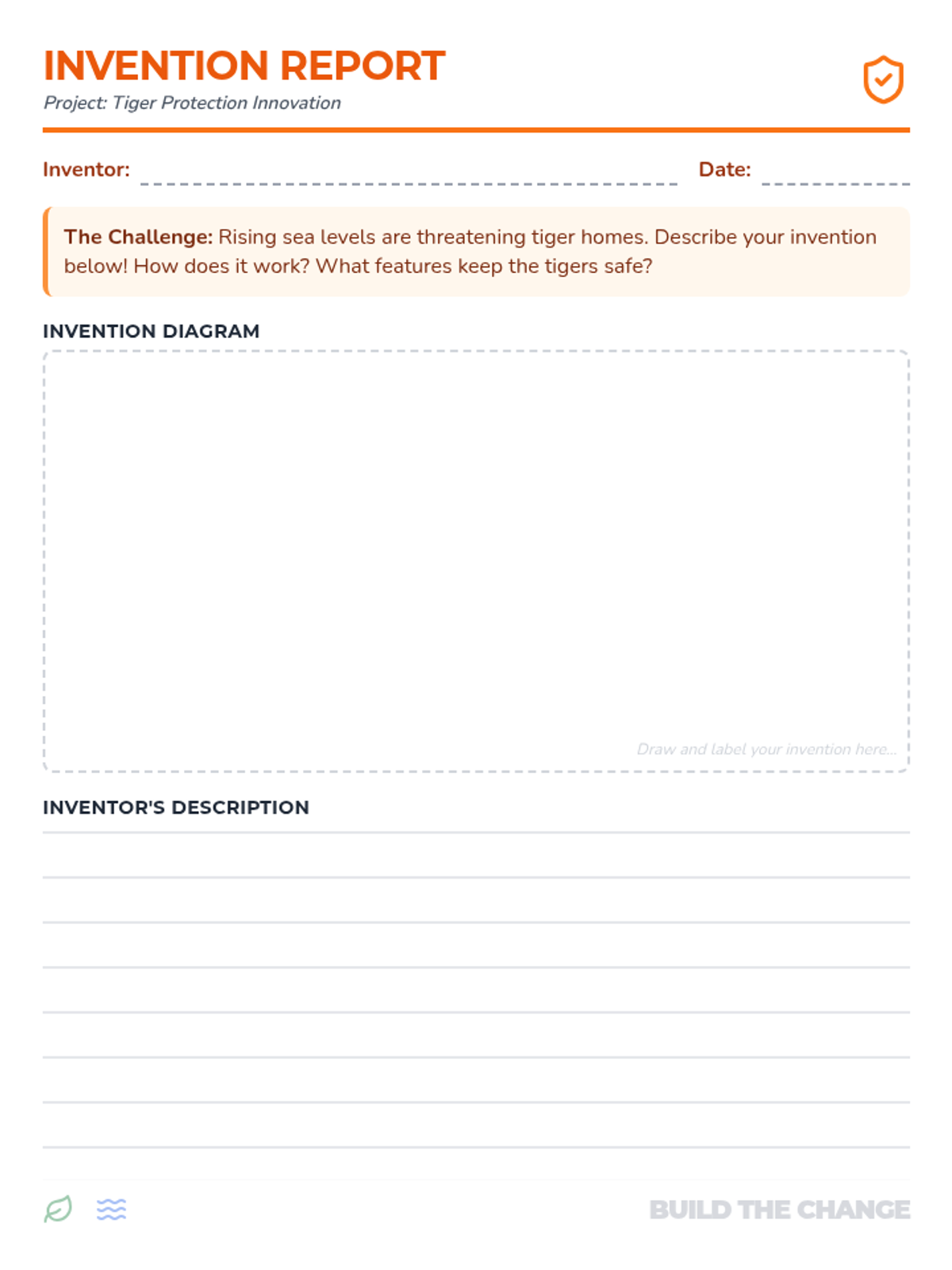
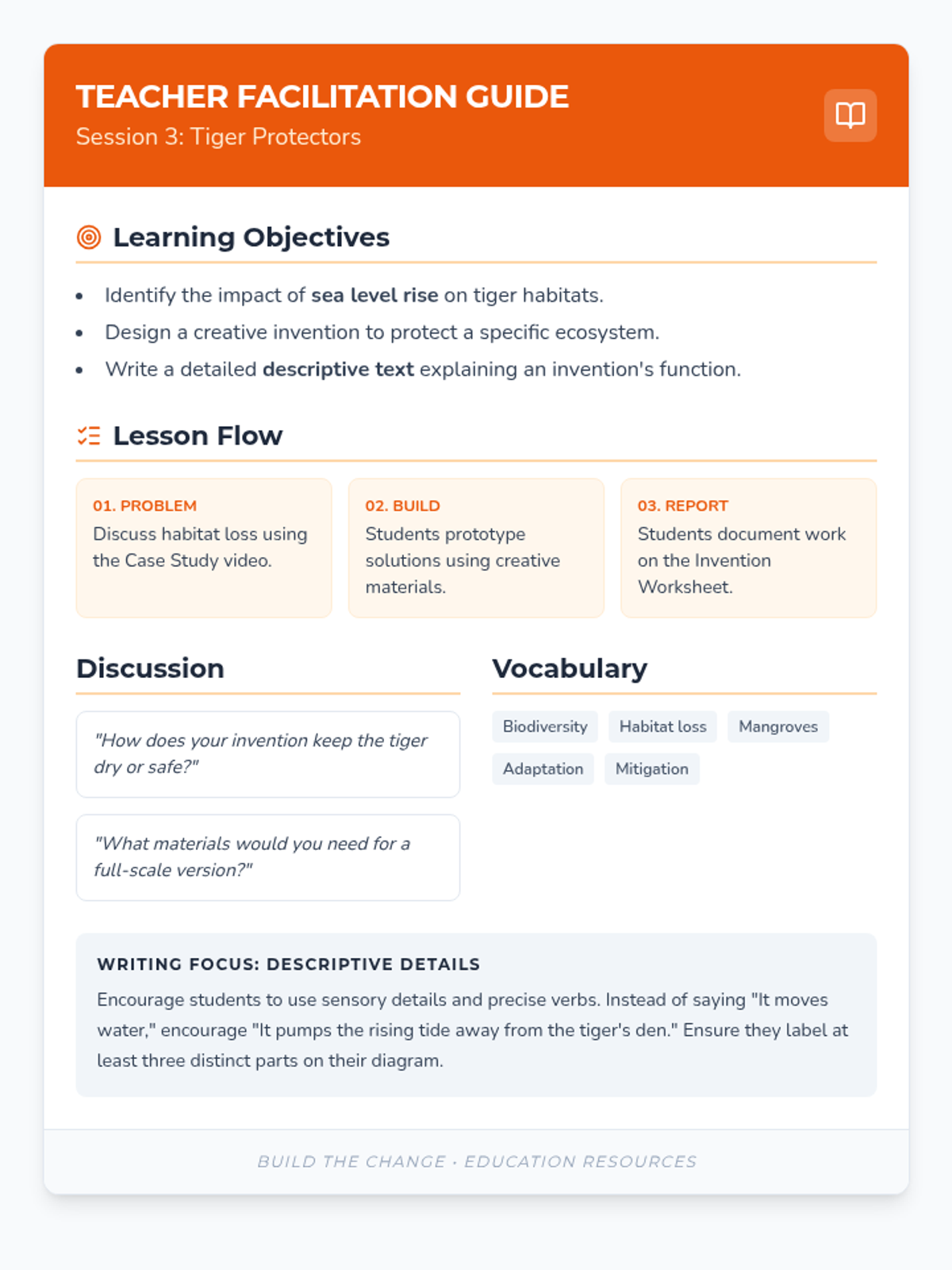
In this session, students learn about the impact of sea-level rise on tiger habitats and design creative solutions to protect them. This lesson encourages empathetic engineering and descriptive writing.
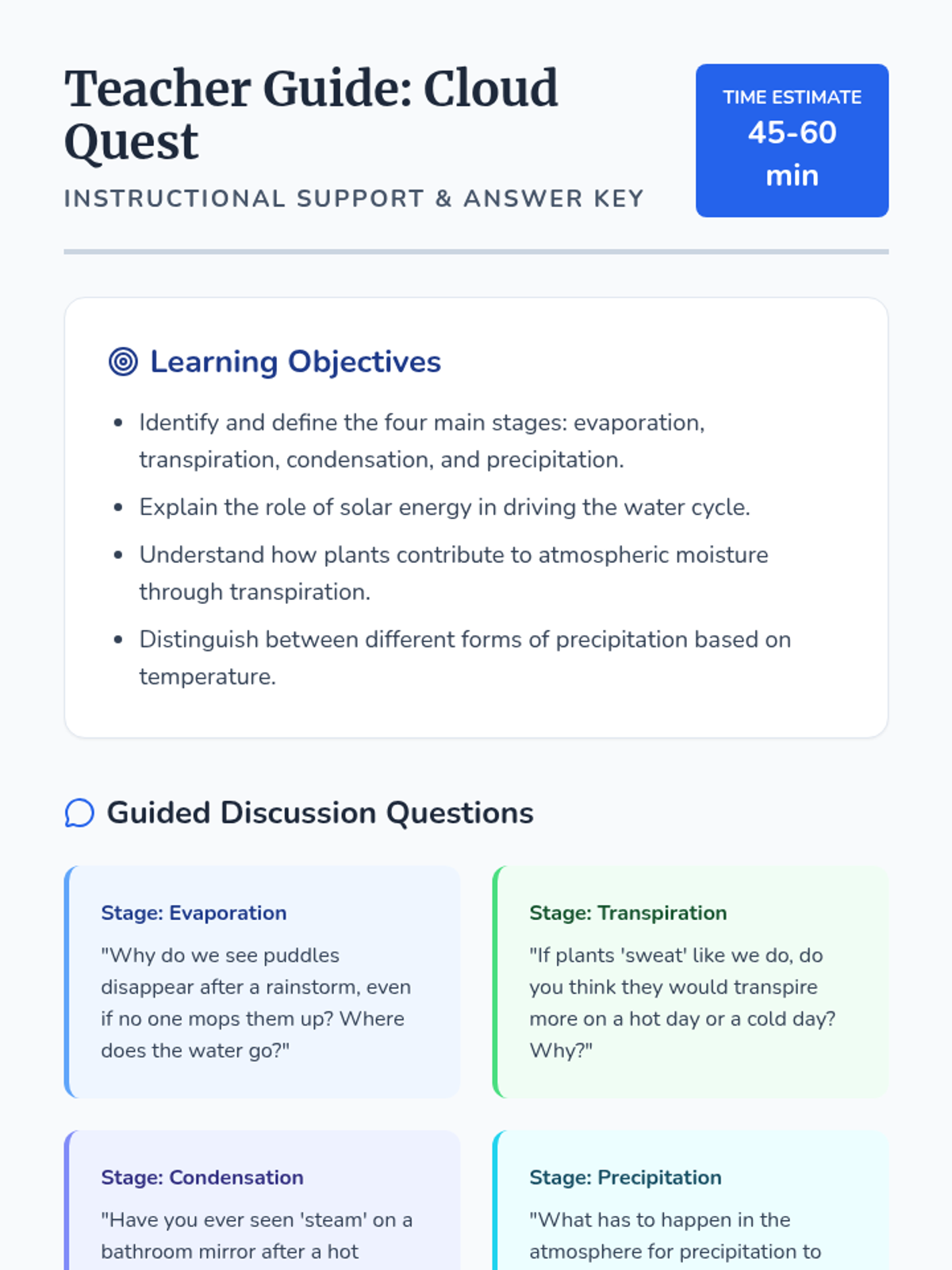
An in-depth exploration of the Earth's water cycle, focusing on the movement of water through evaporation, transpiration, condensation, and precipitation. Students will discover how solar energy drives this continuous process and sustains life on Earth.
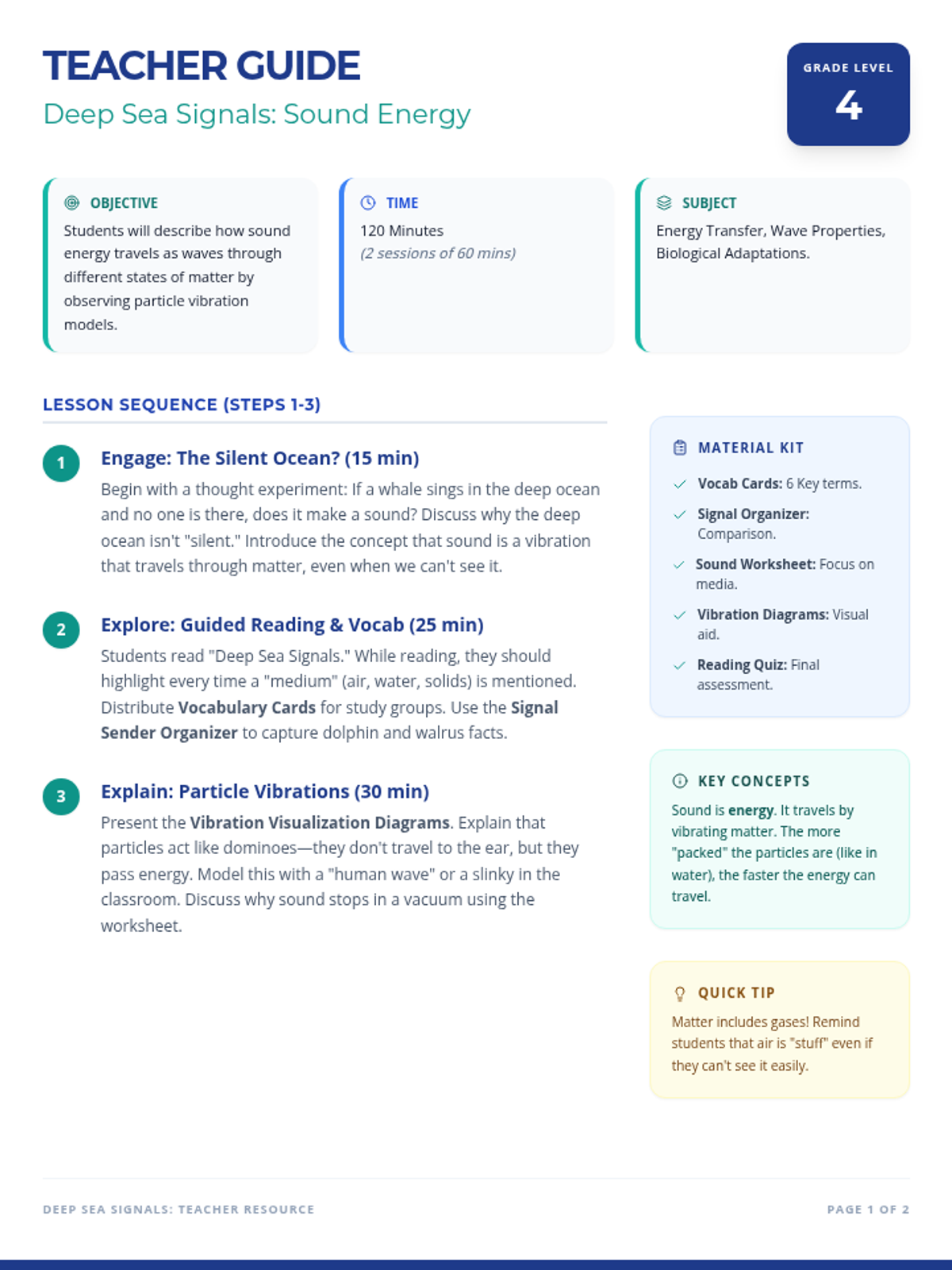
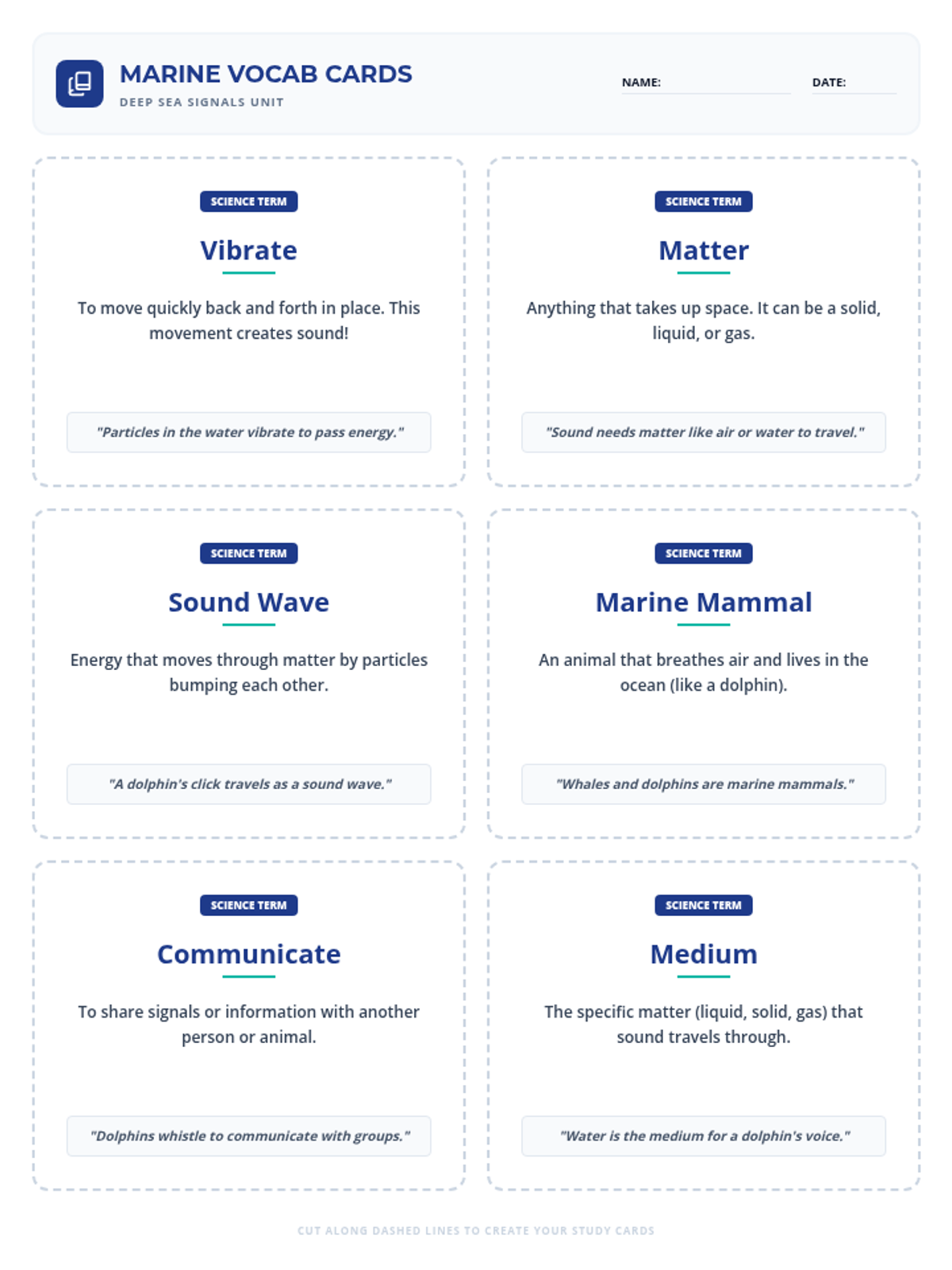
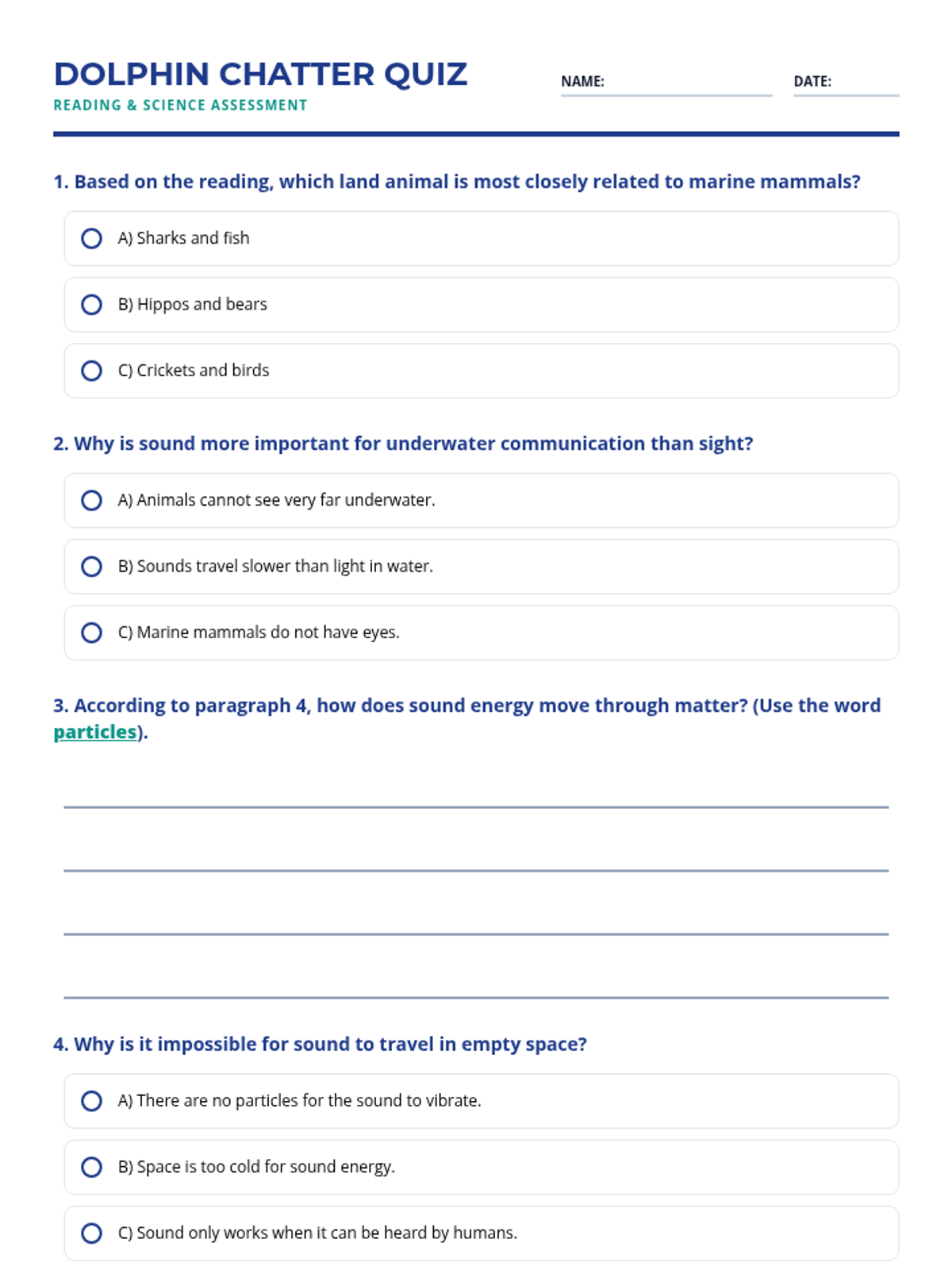
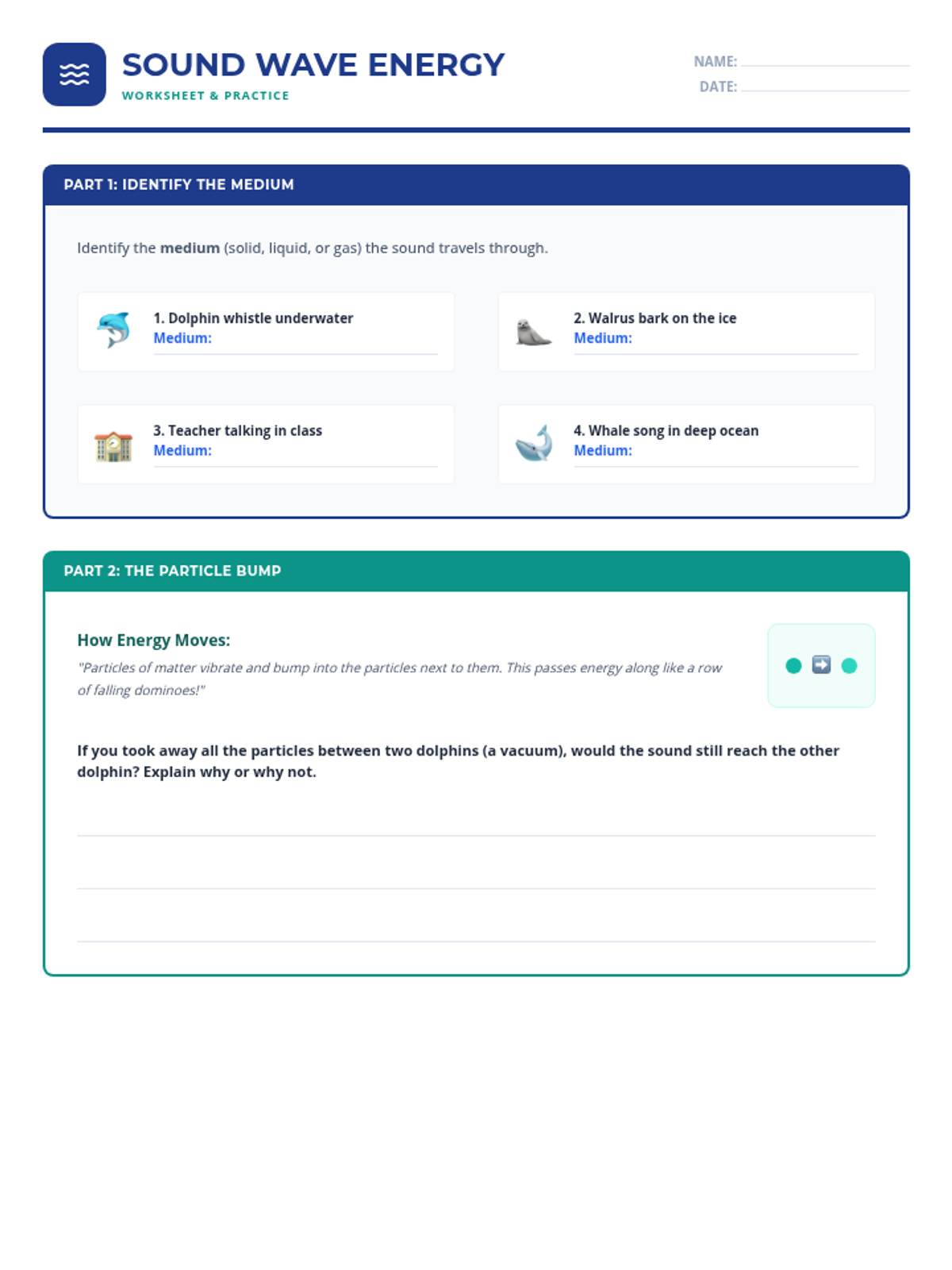
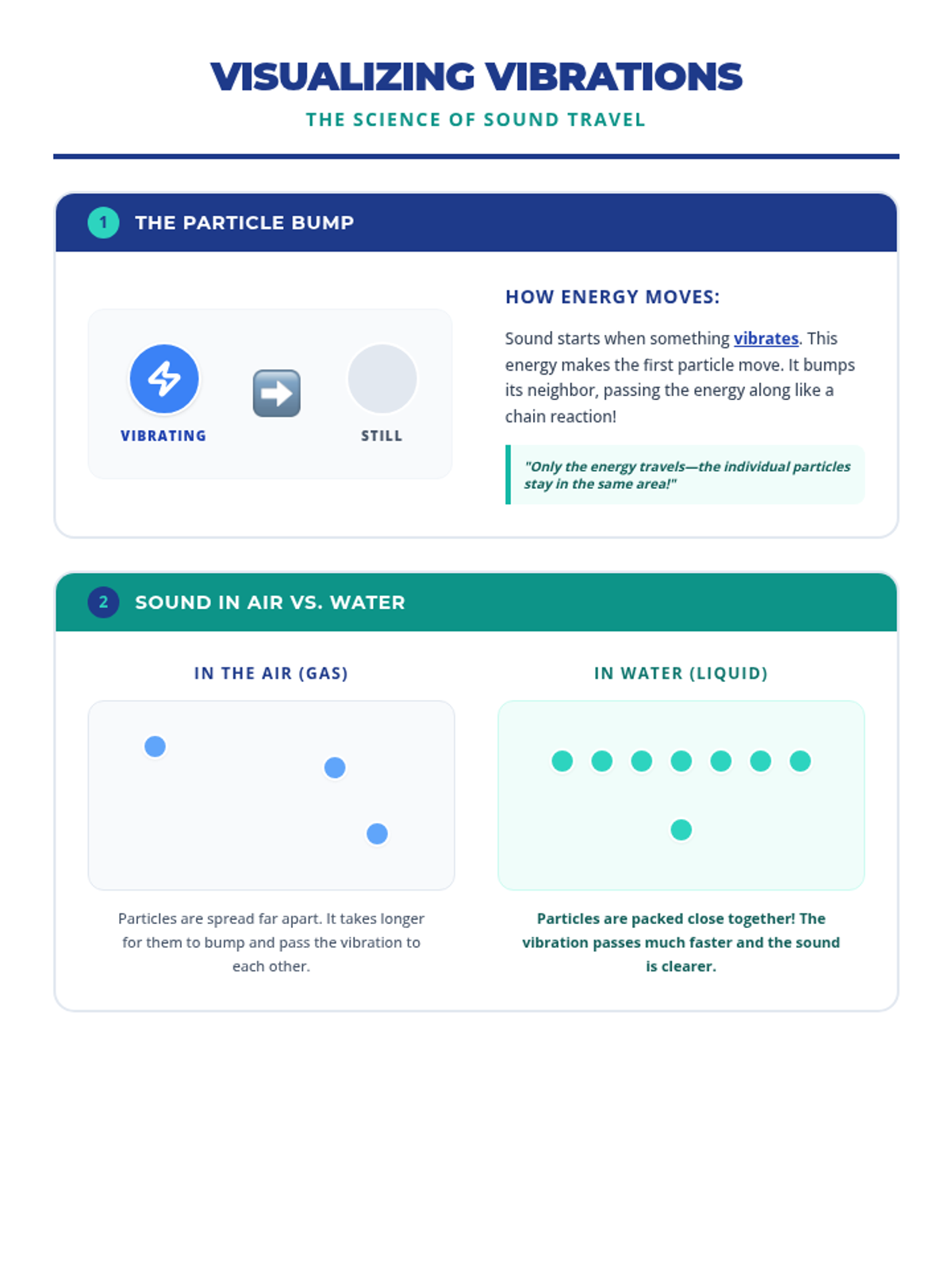
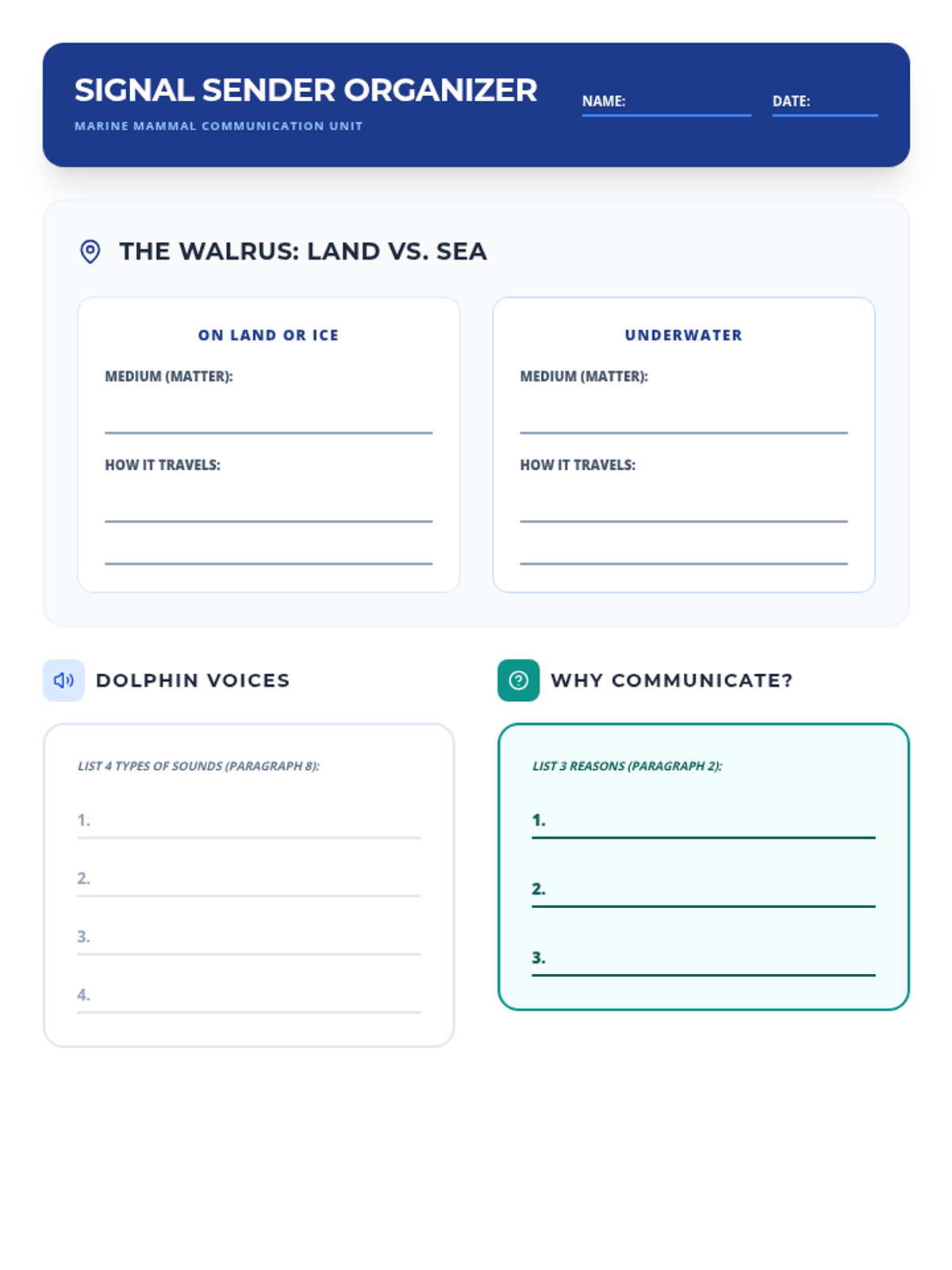
A comprehensive lesson exploring how sound energy travels through different states of matter, using the communication methods of marine mammals as a primary case study. Students will conduct experiments to visualize vibrations and analyze how dolphins use sound waves to survive.
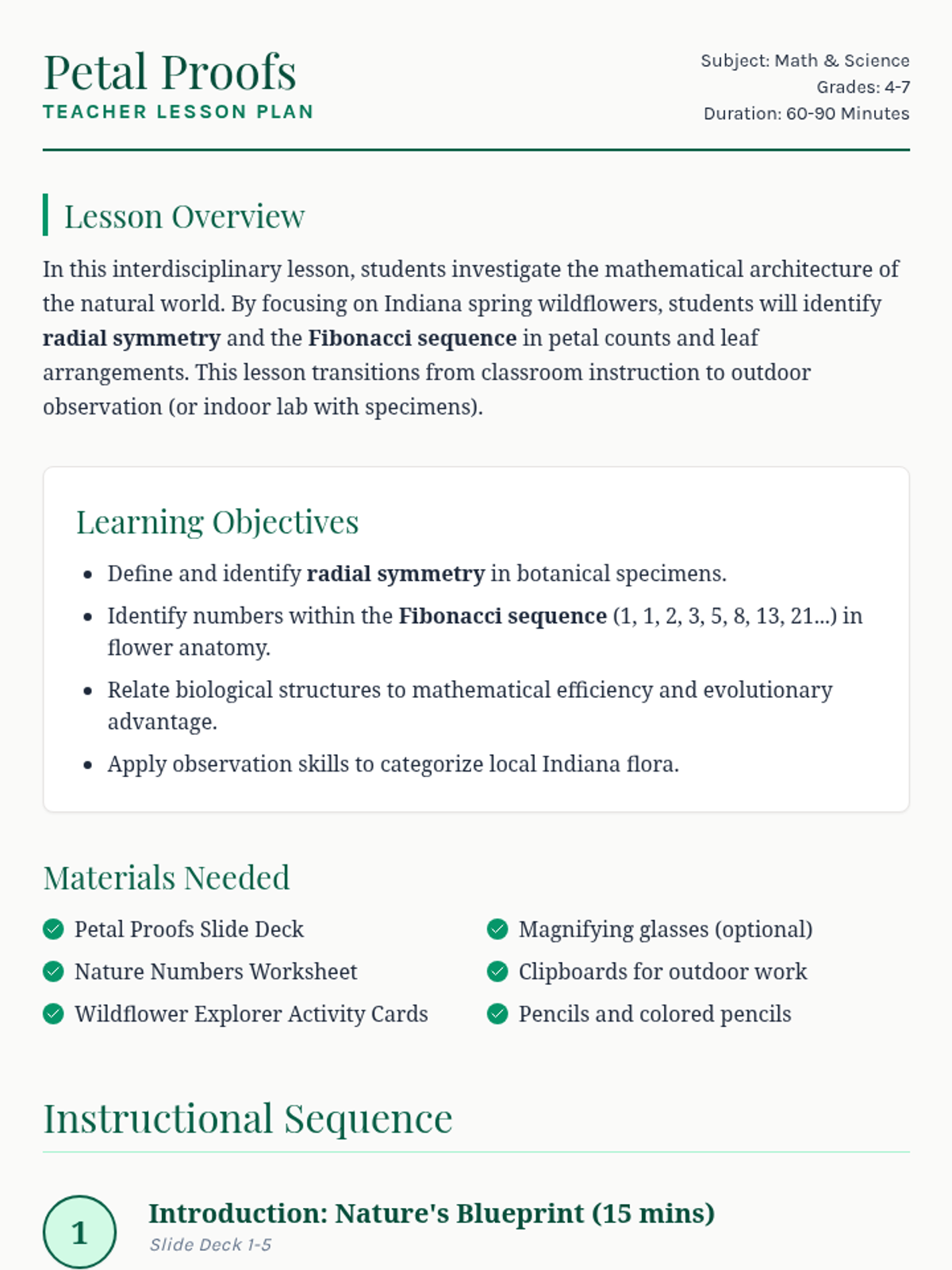
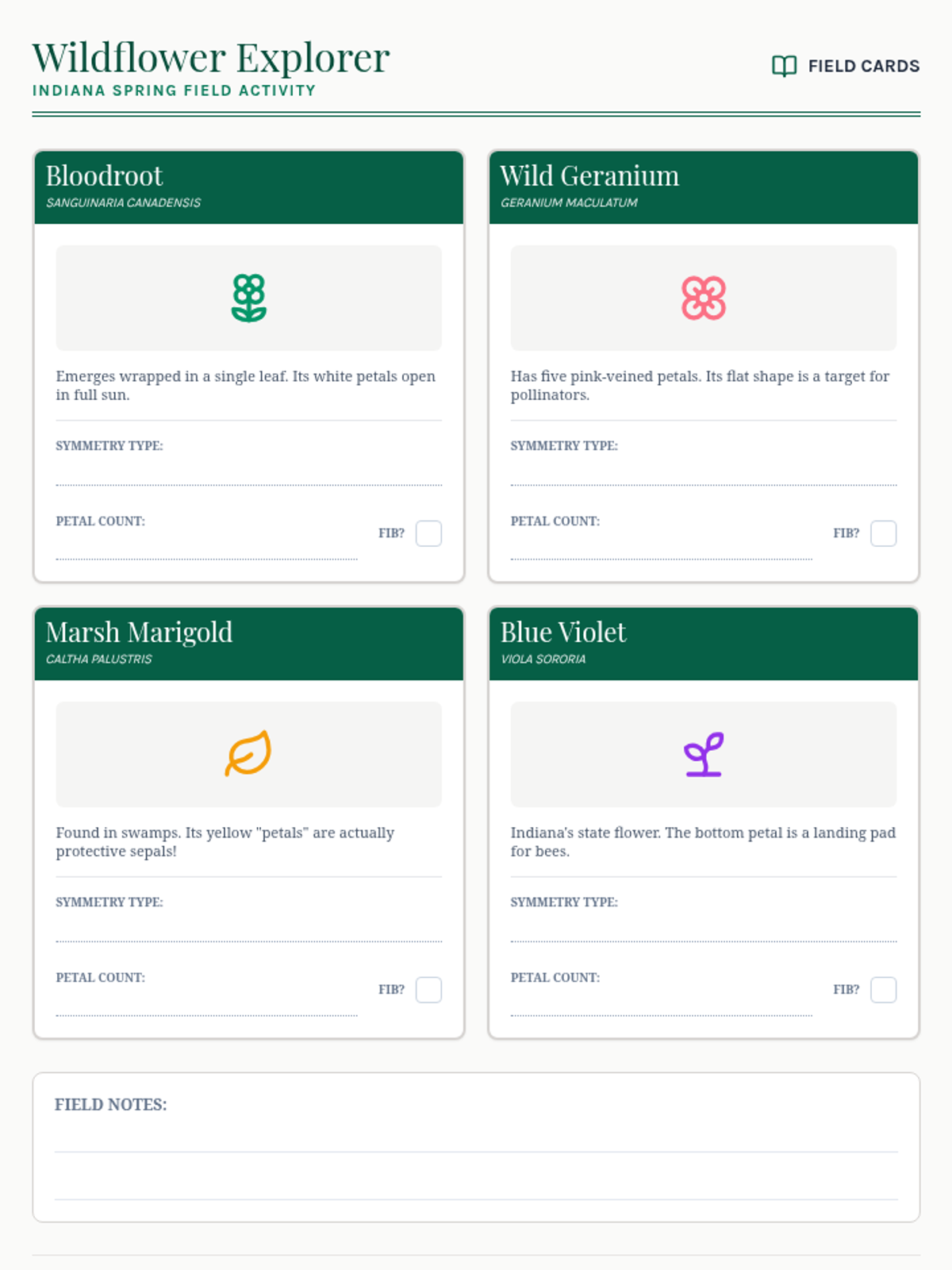
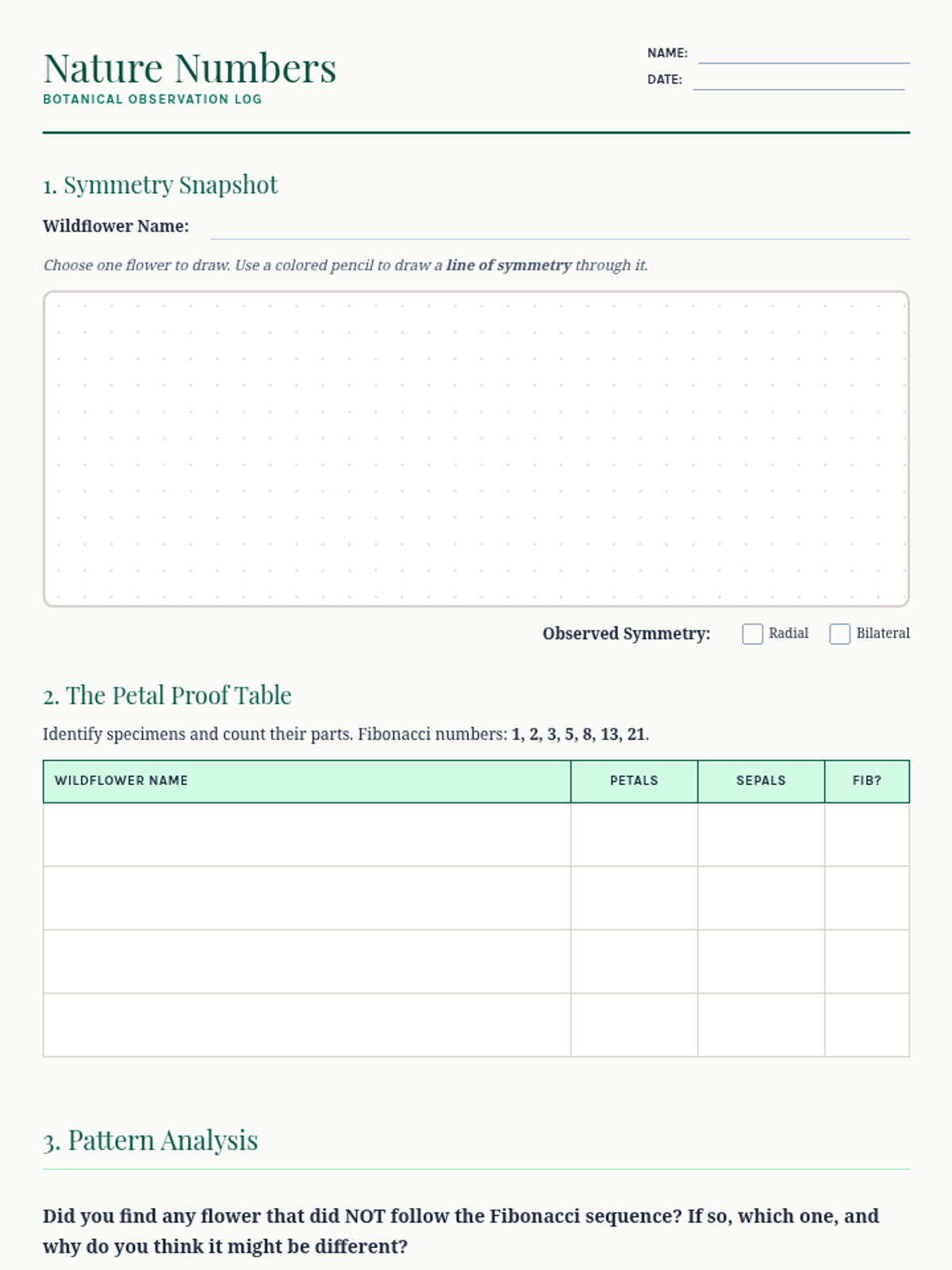
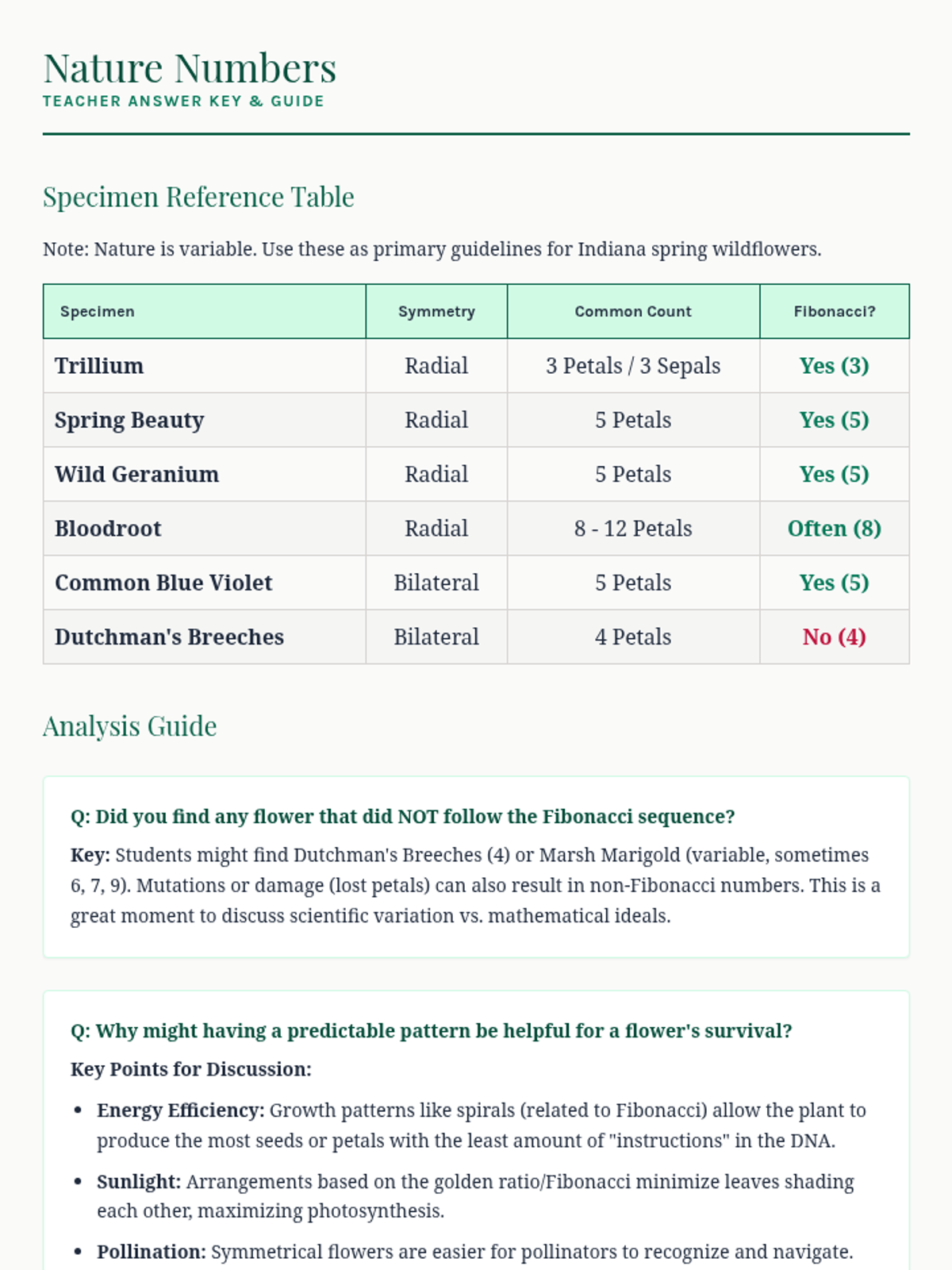
Students explore the intersection of biology and mathematics by identifying Fibonacci sequences and radial symmetry in Indiana spring wildflowers. This hands-on lesson bridges natural observation with numerical patterns.
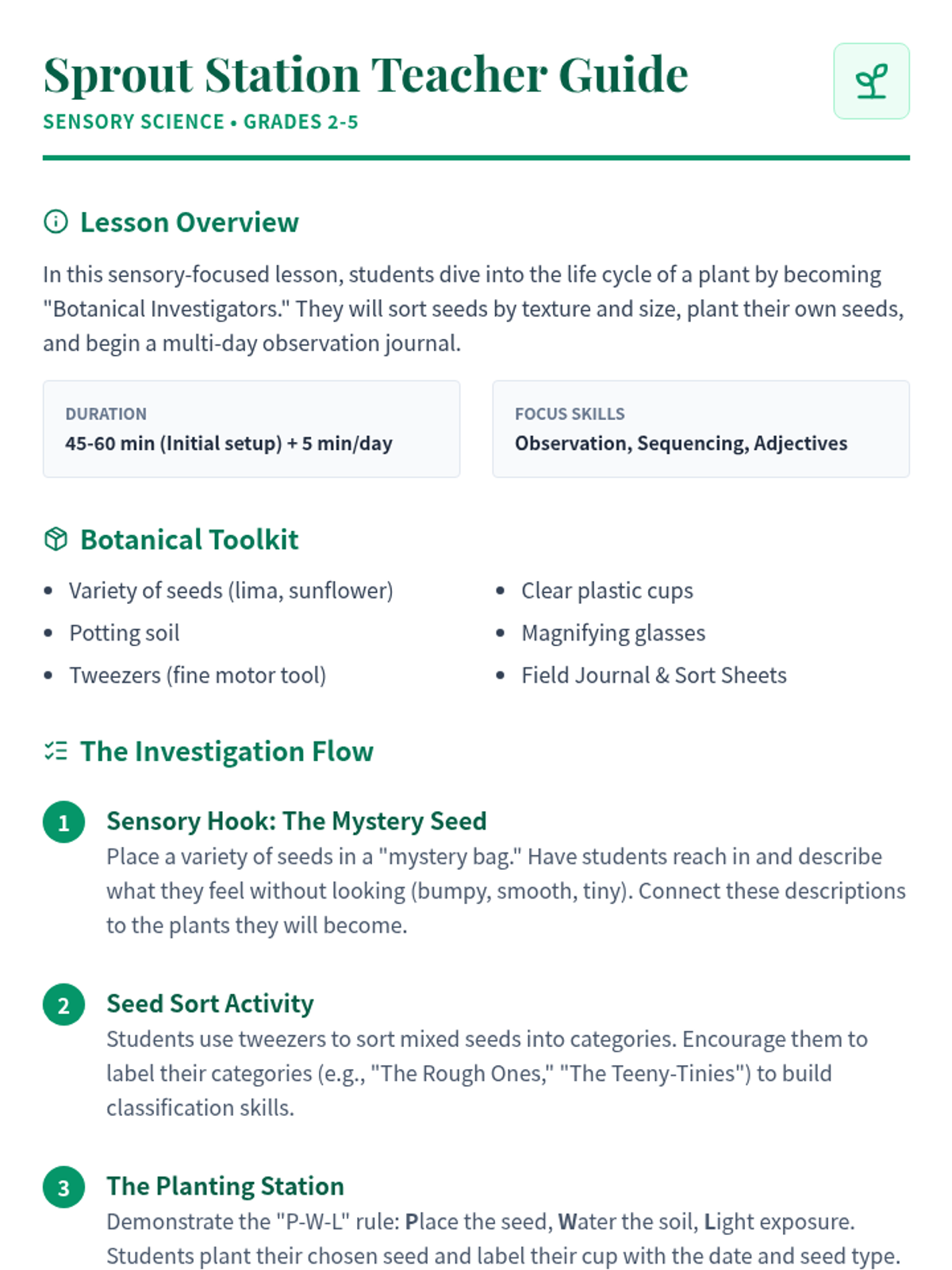
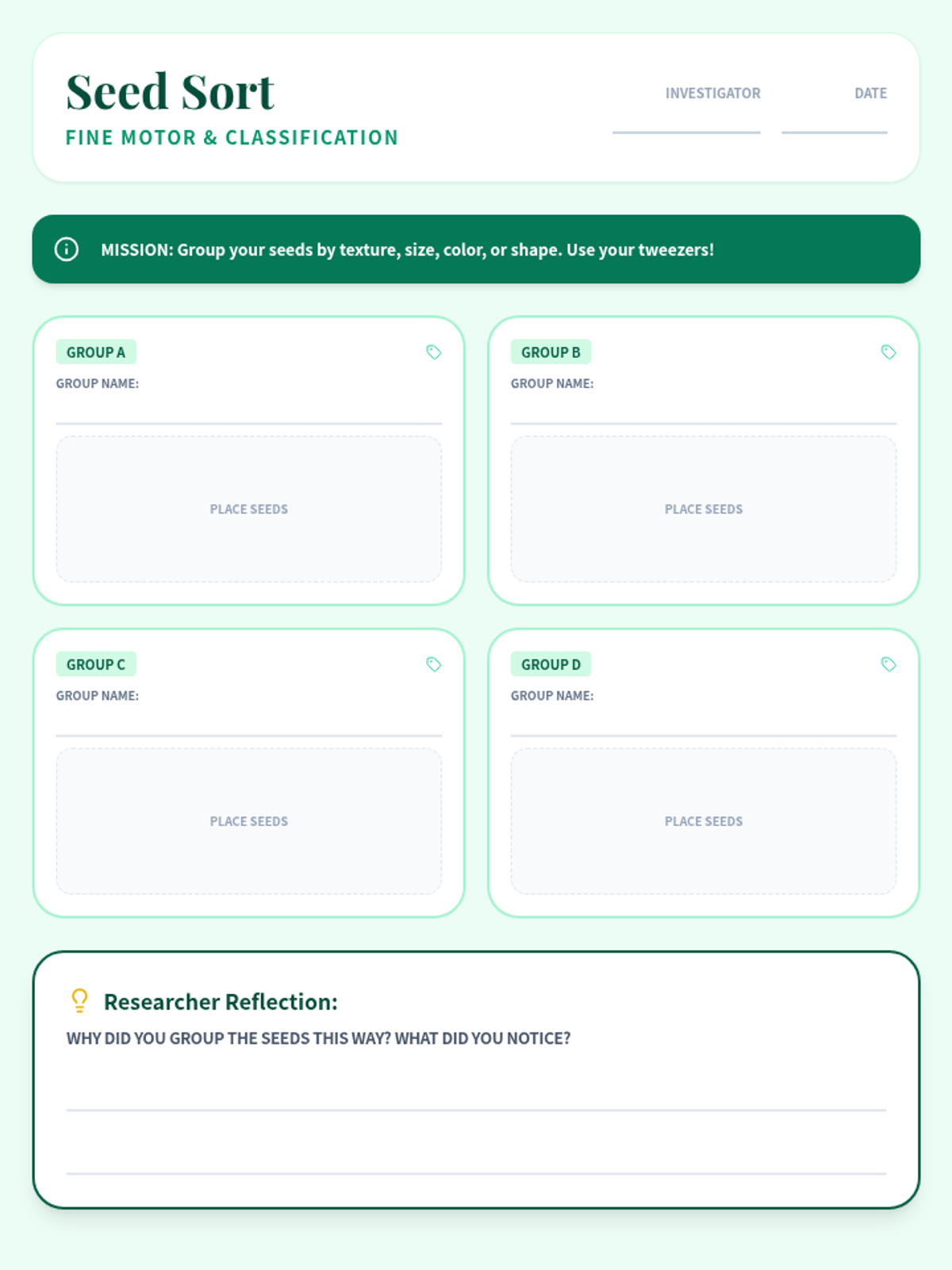
A sensory-based science exploration of plant life cycles where students plant seeds, record observations, and develop descriptive language skills.
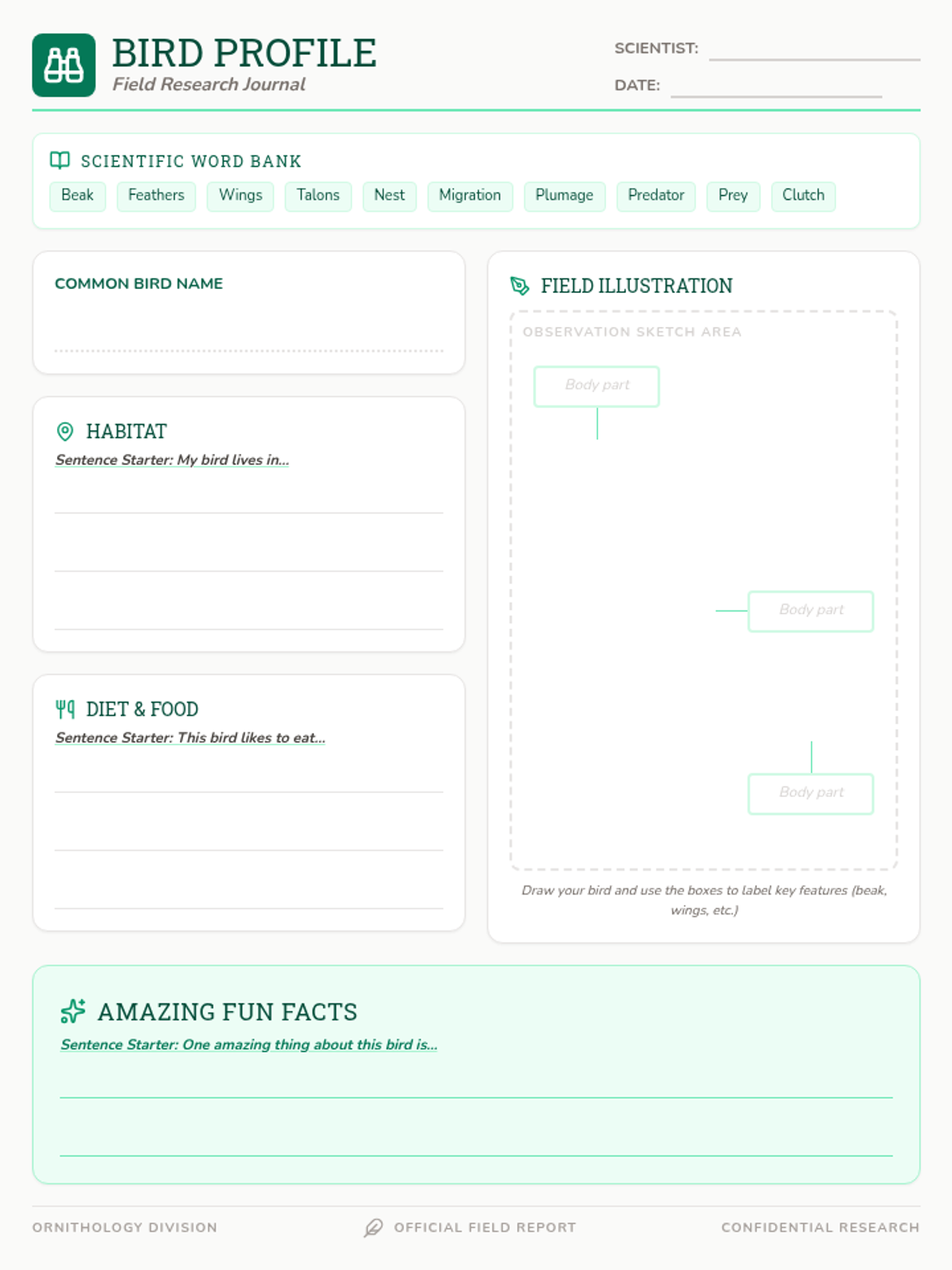
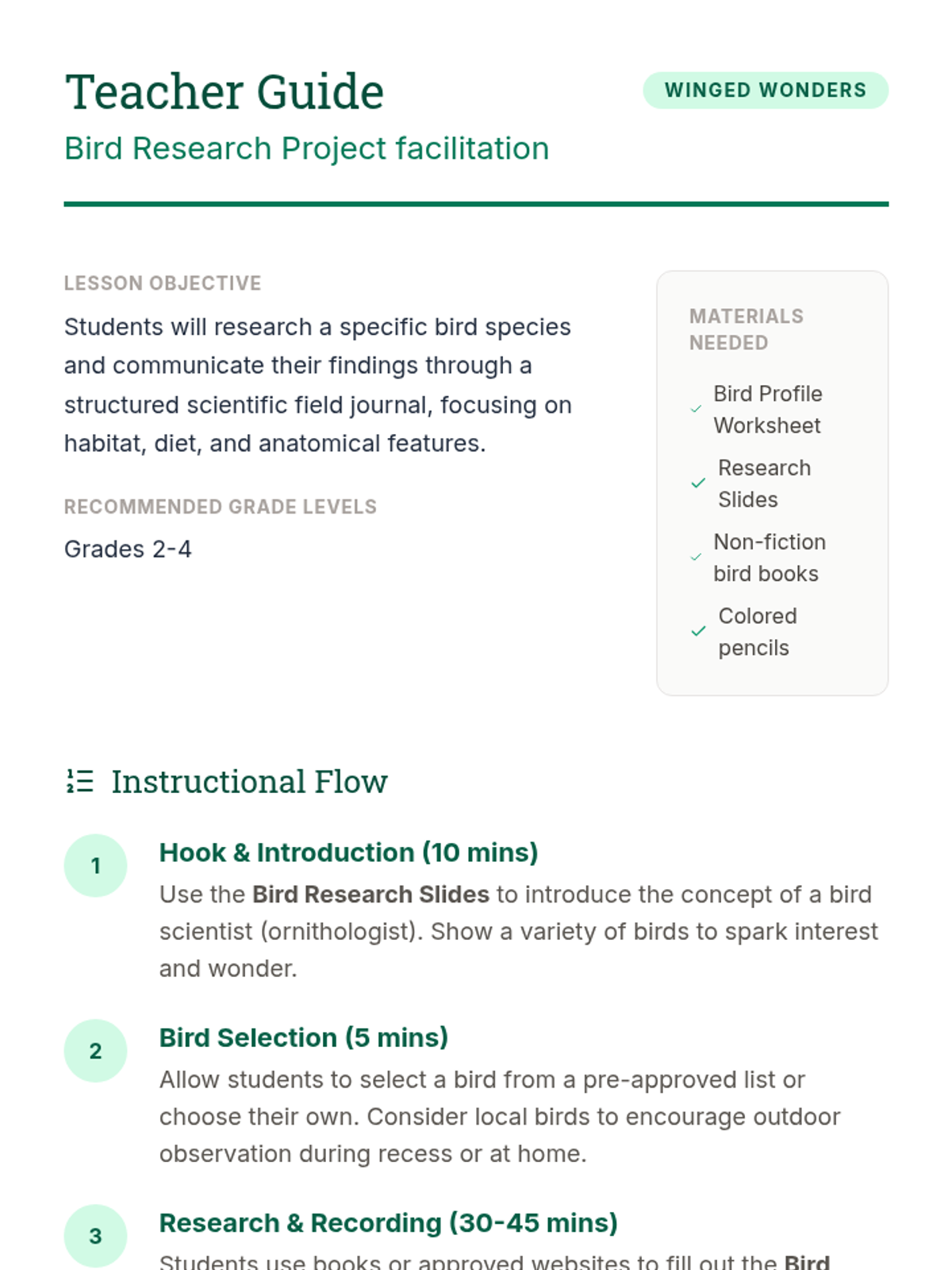
A research-based lesson where students choose a bird species to investigate, focusing on habitat, diet, and unique characteristics through a field guide approach.
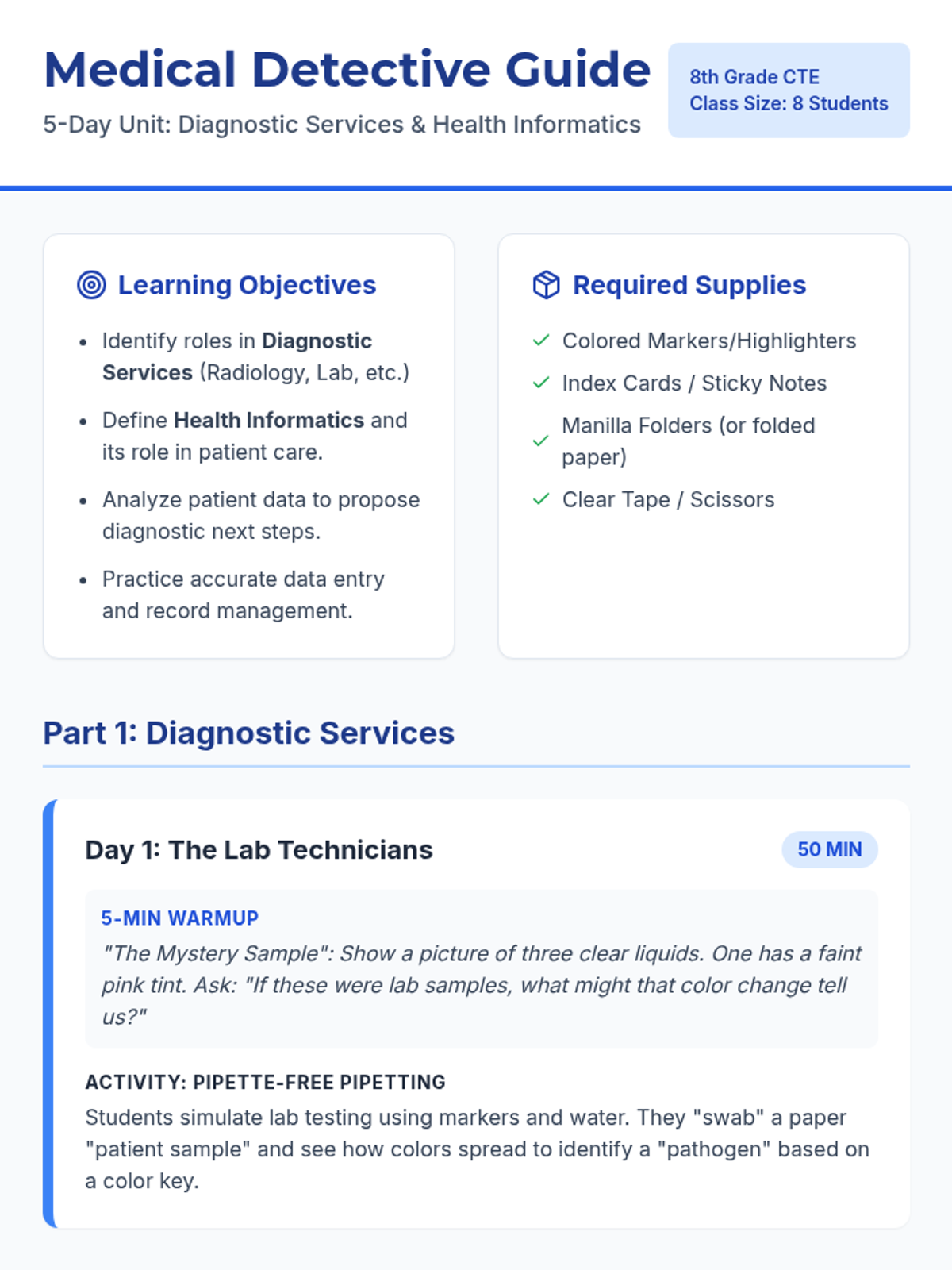
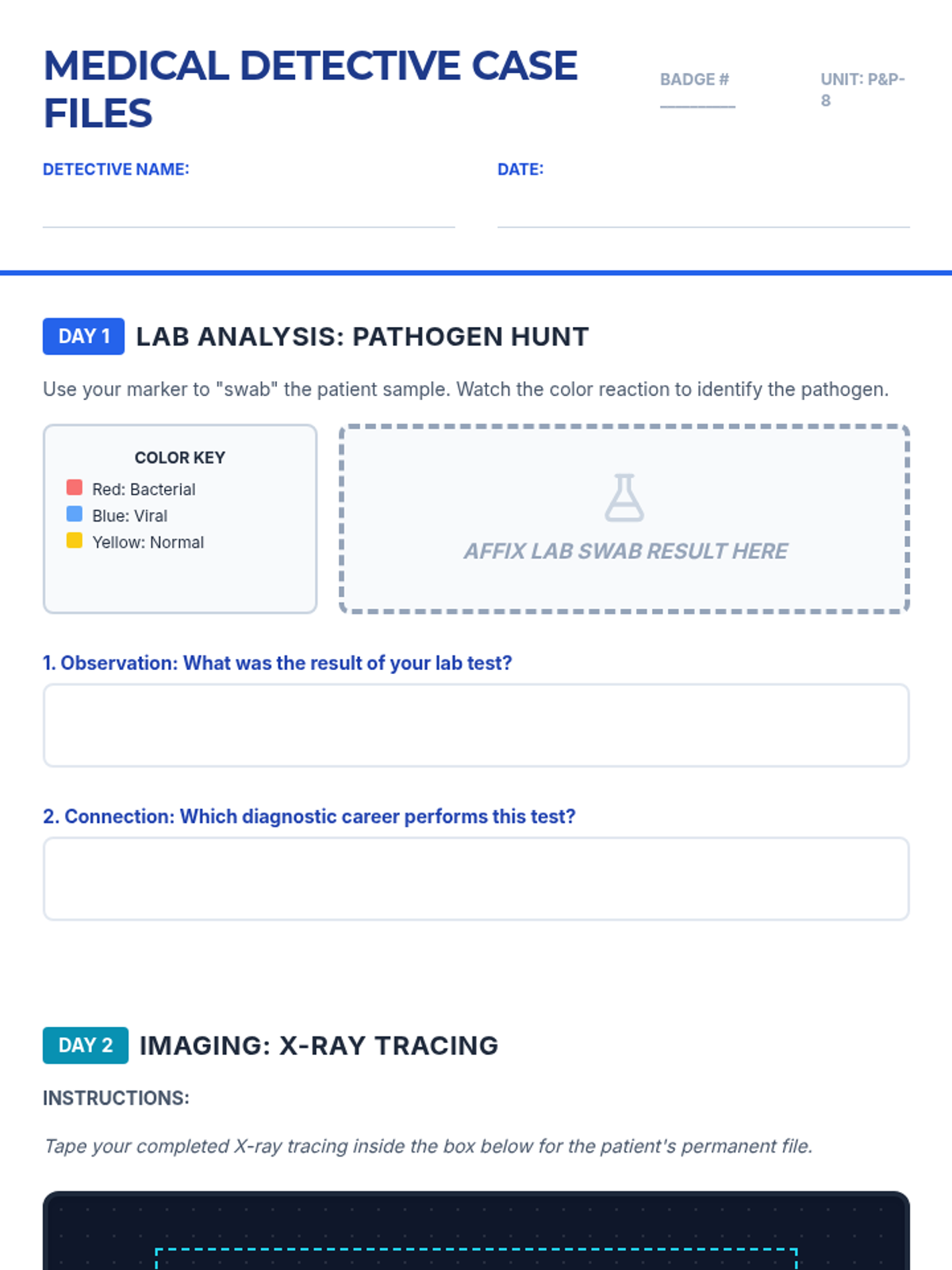
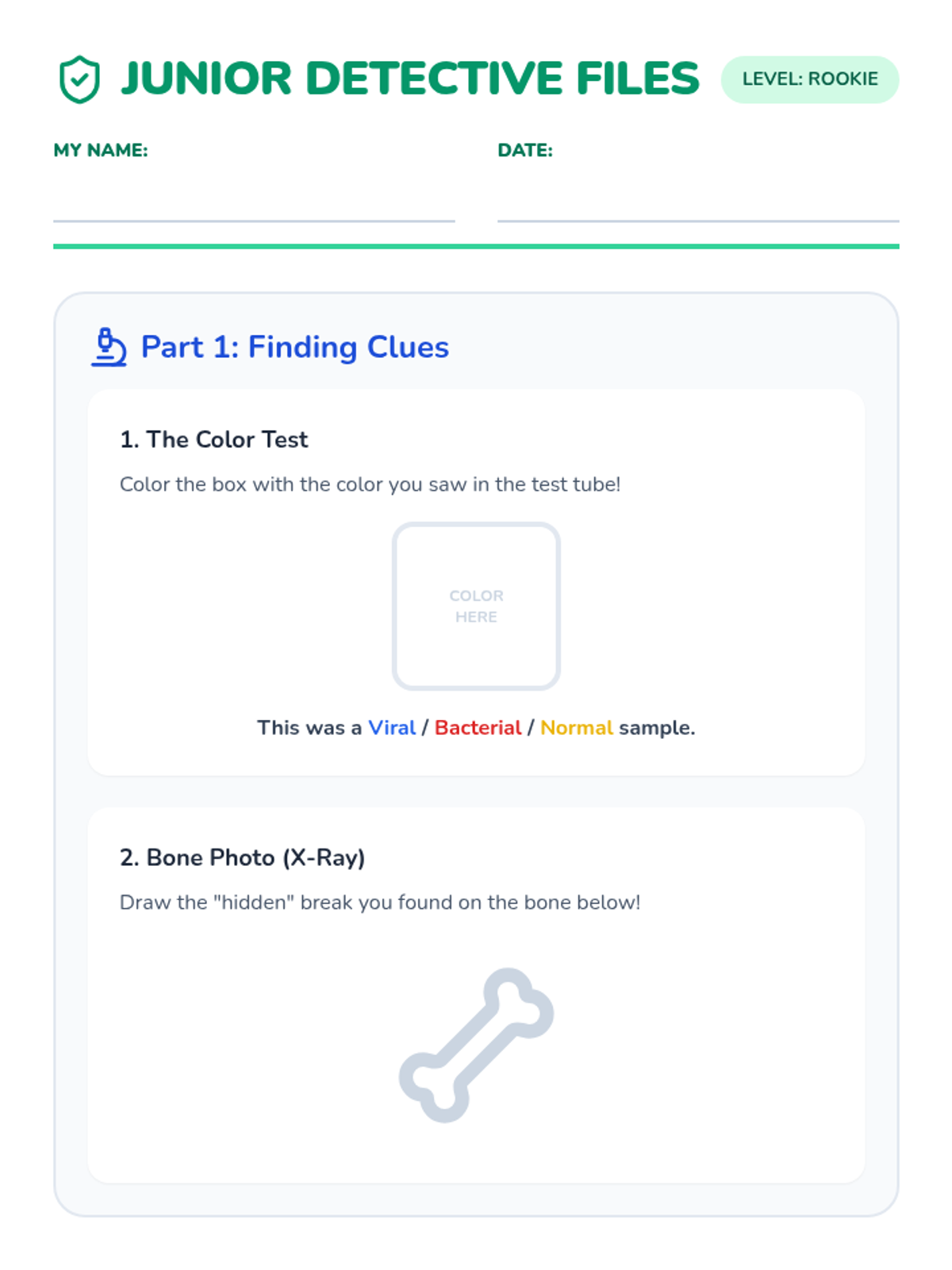
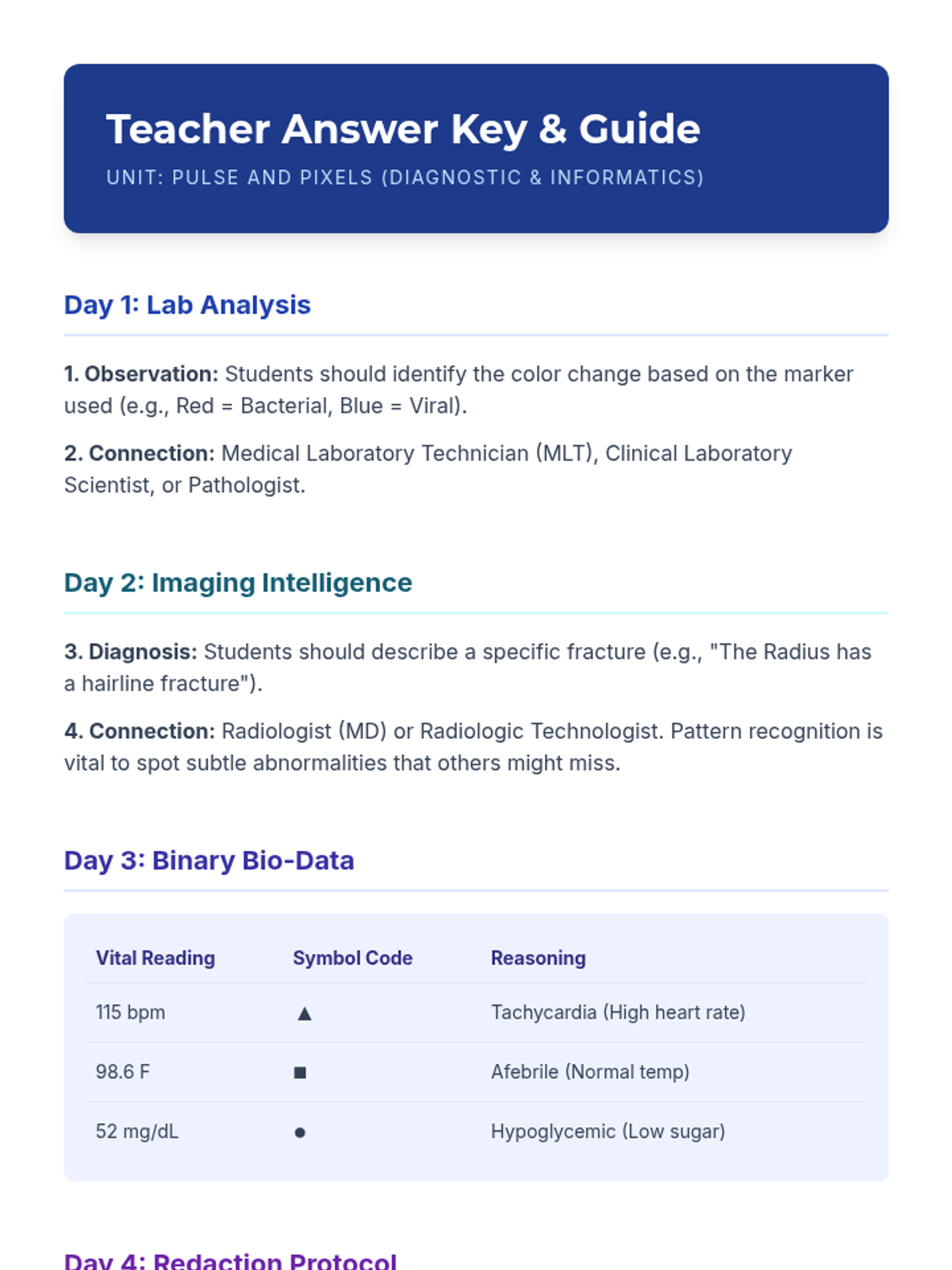
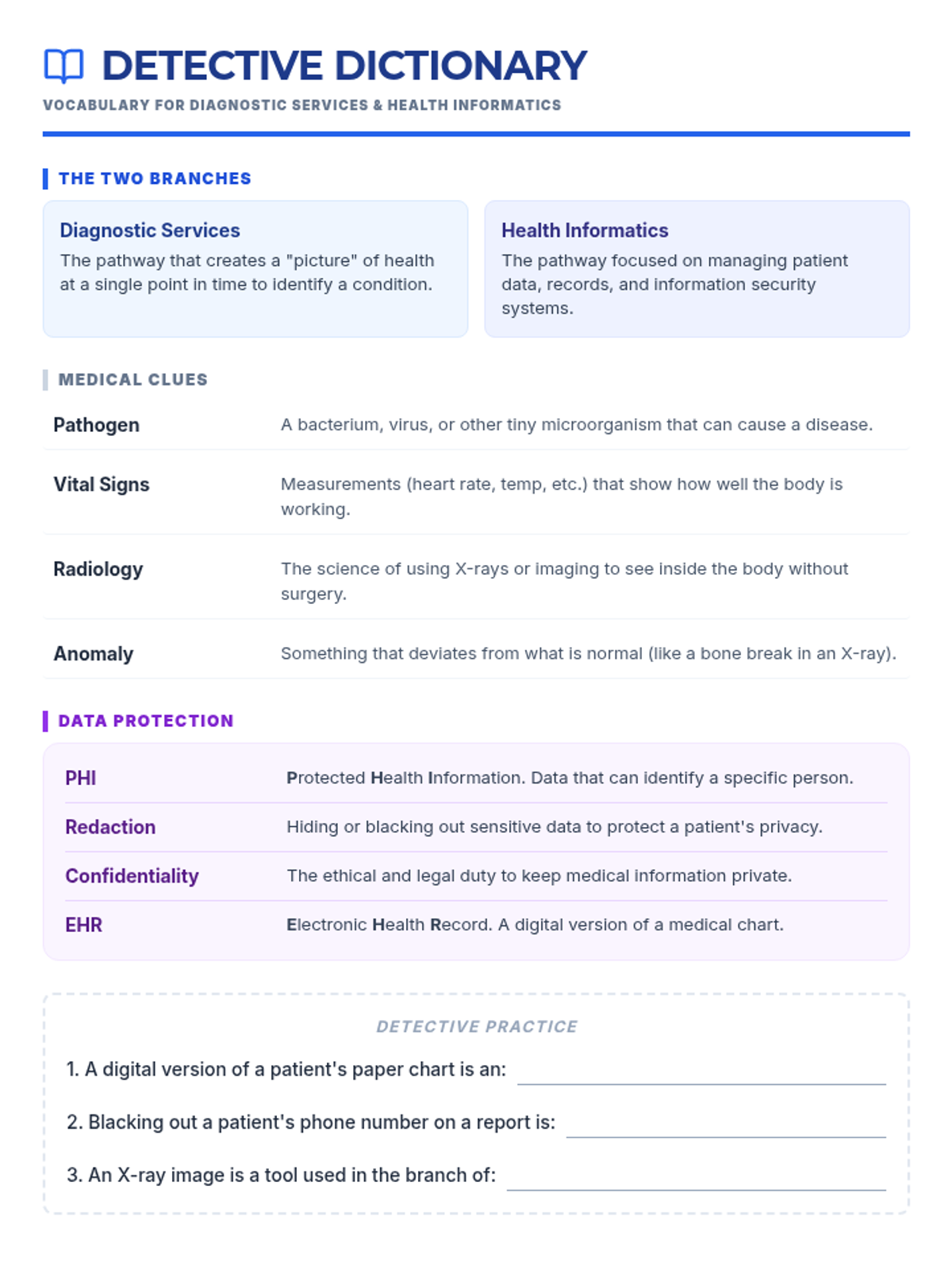
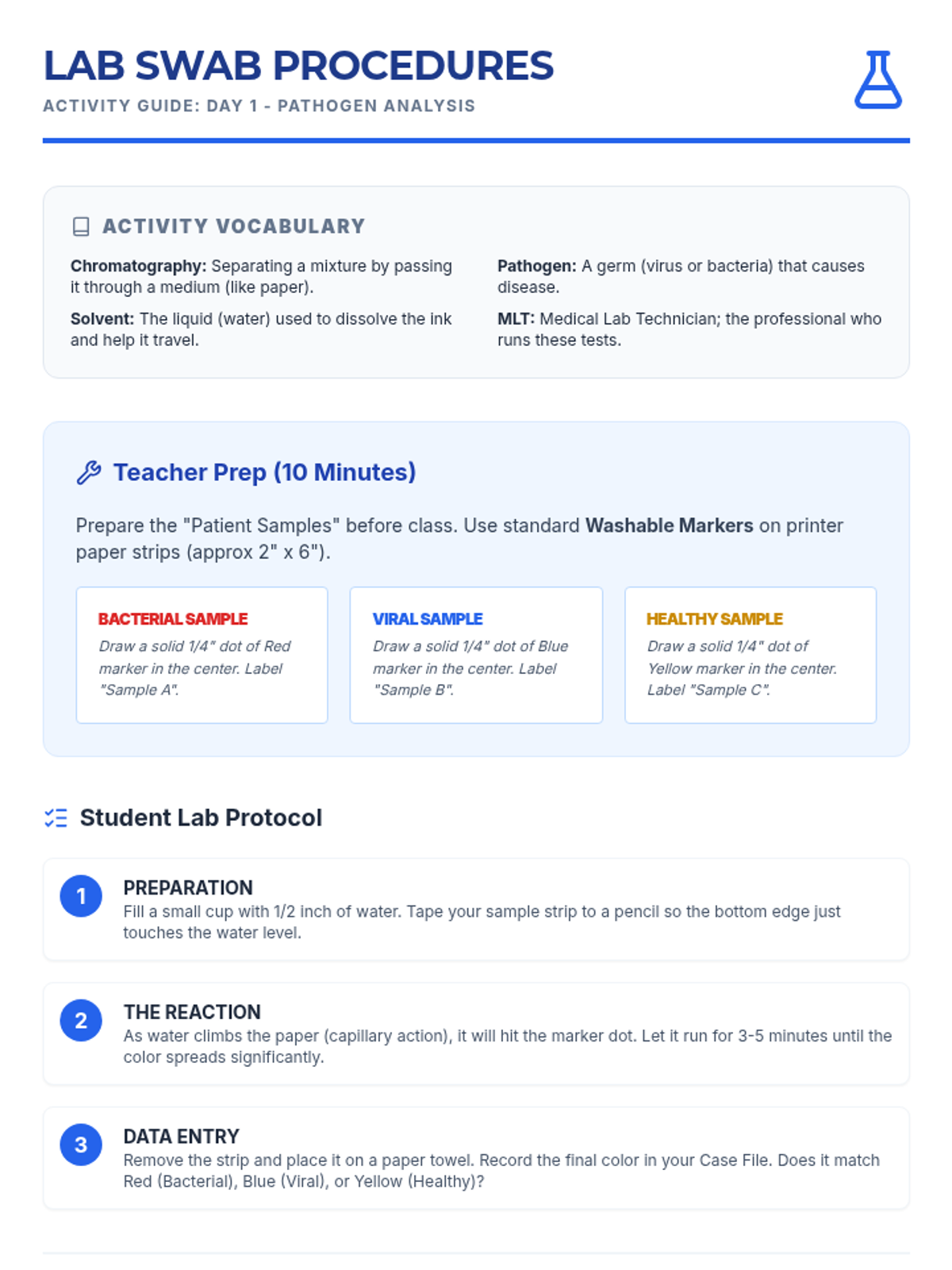
A 5-day unit introducing diagnostic services and health informatics through hands-on simulations using standard school supplies.
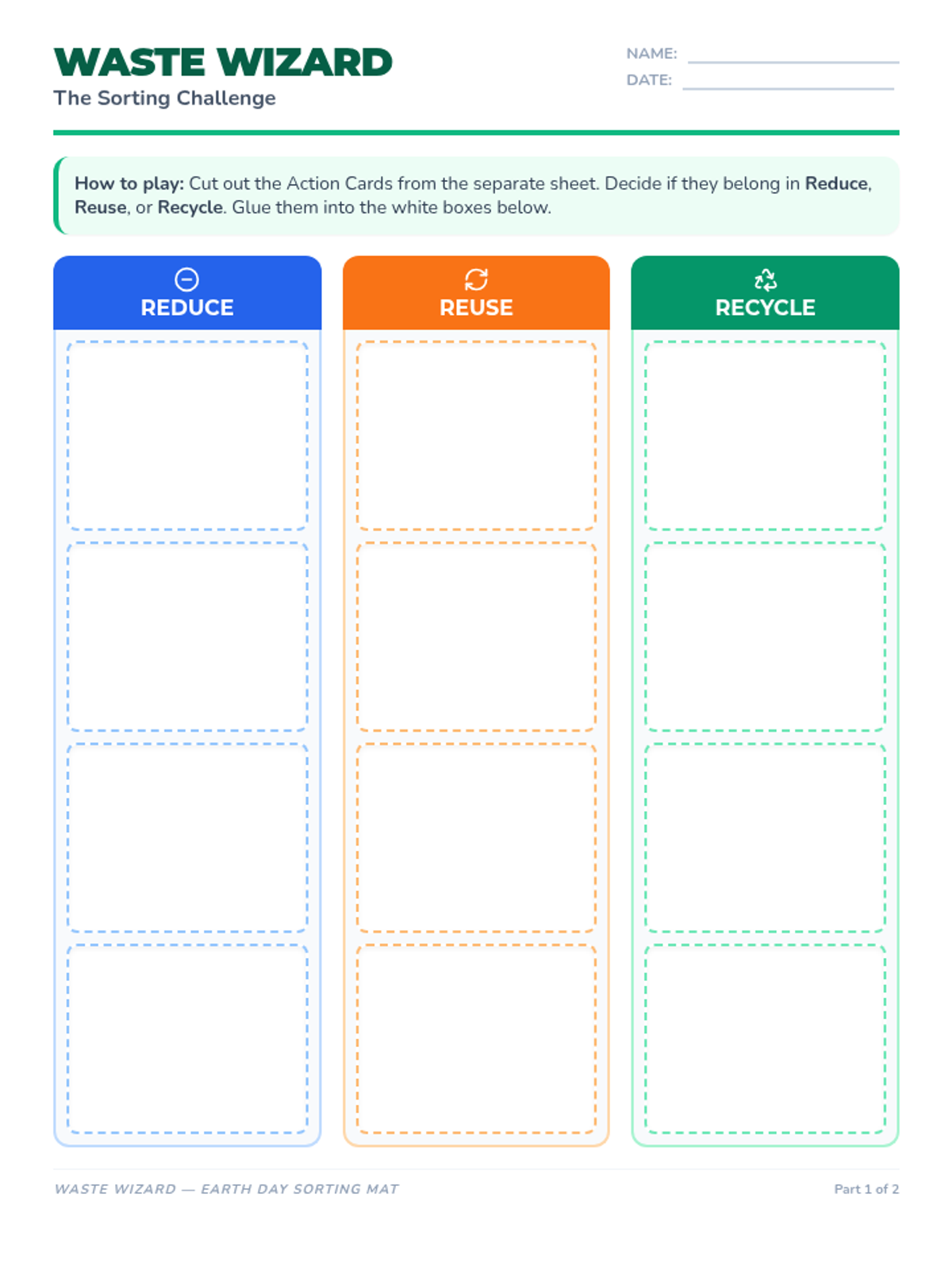
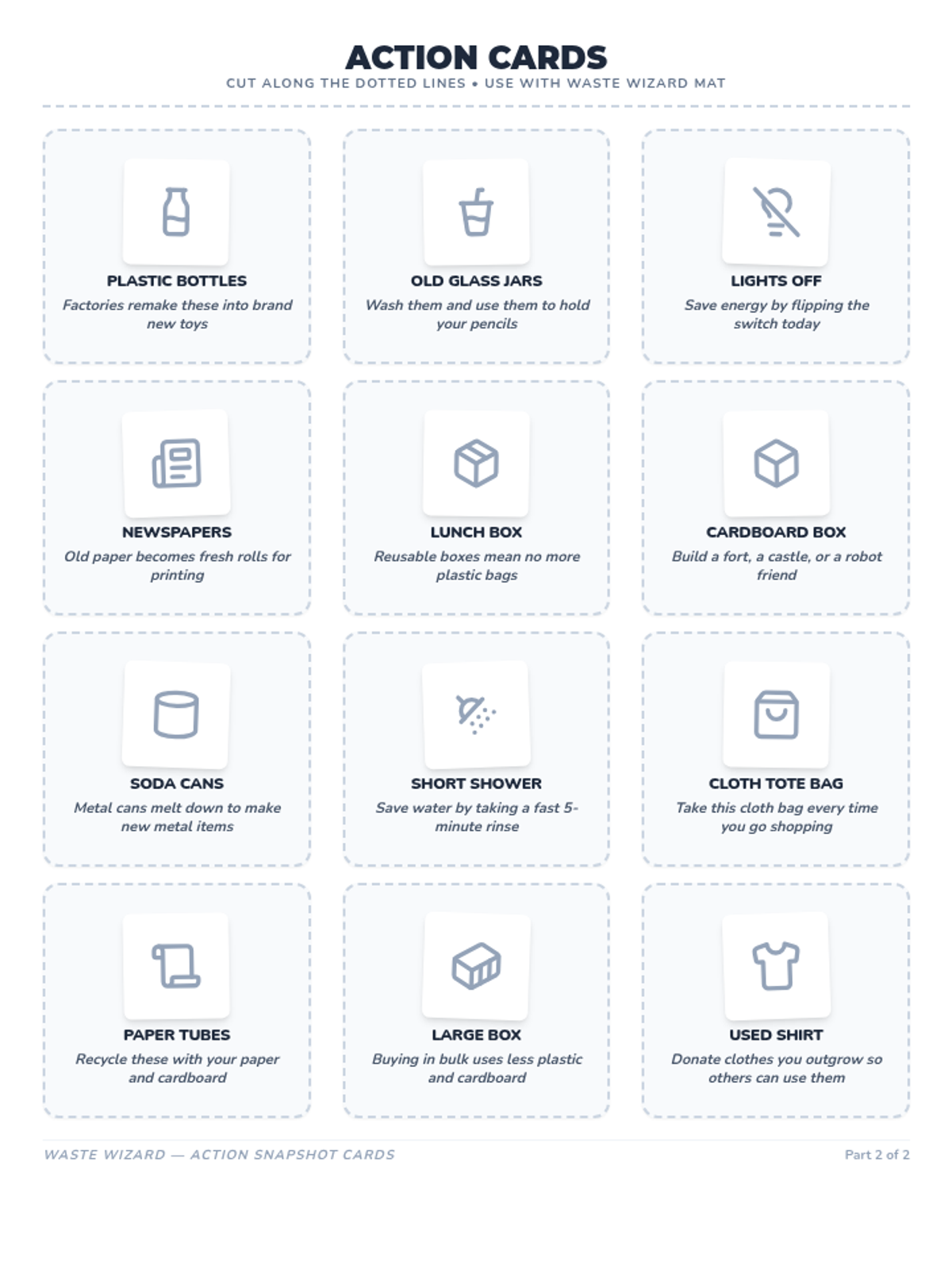
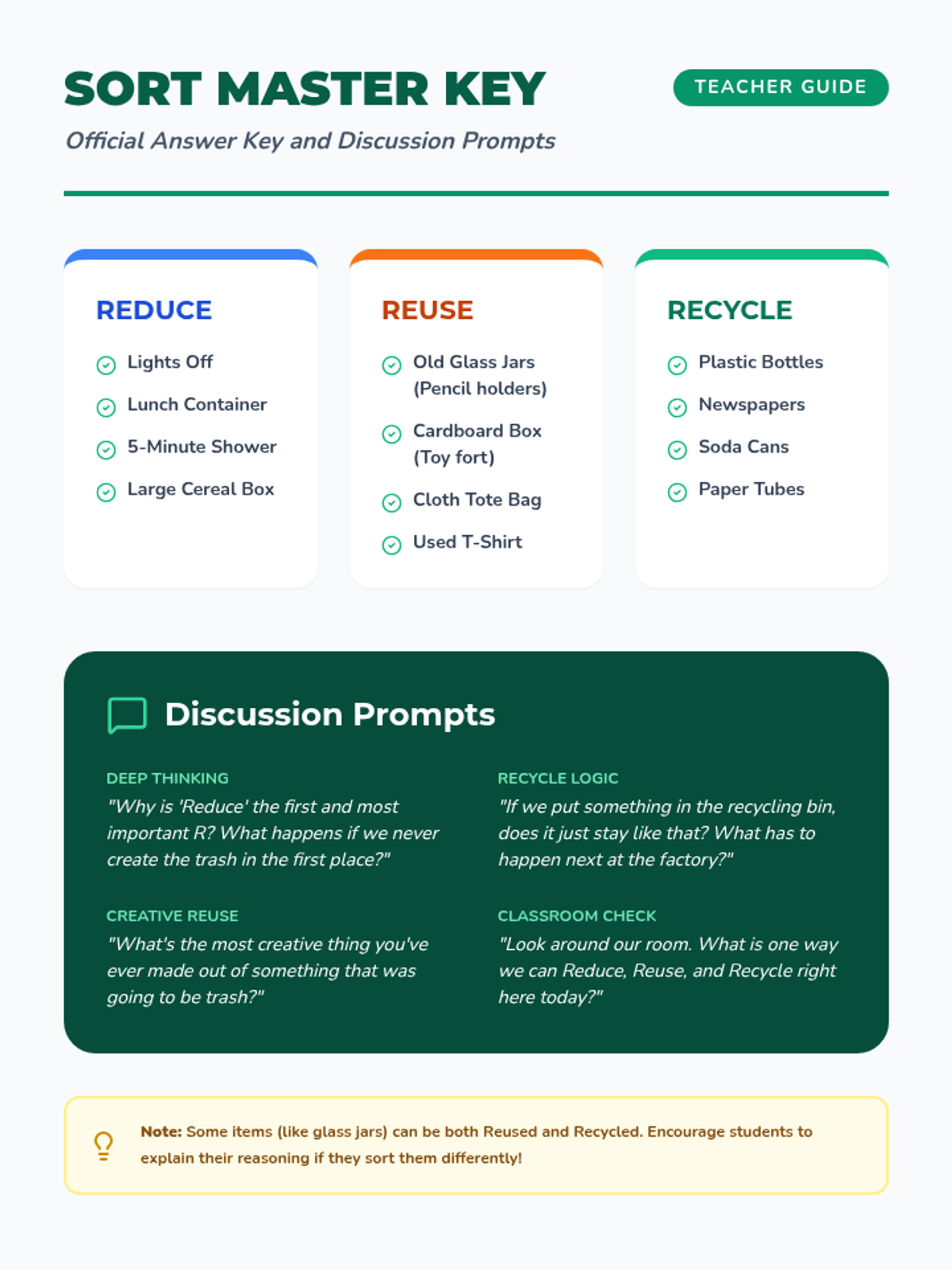
A hands-on lesson teaching students to differentiate between reducing, reusing, and recycling through visual identification and sorting.
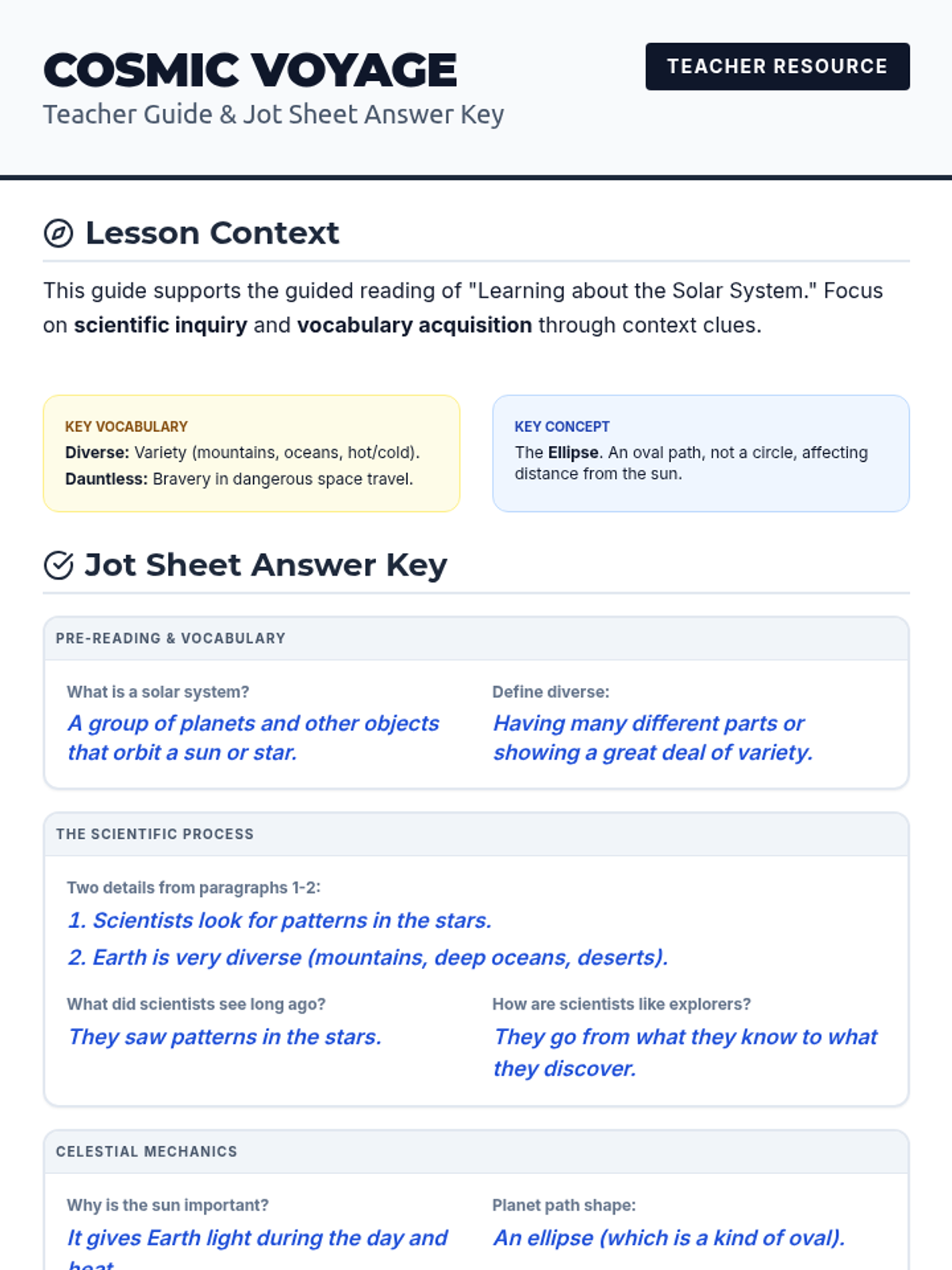
A guided reading lesson exploring the solar system, focusing on scientific inquiry, planetary diversity, and the mechanics of Earth's orbit. Includes vocabulary focus on 'diverse' and 'dauntless' and a complete answer key for the student jot sheet.
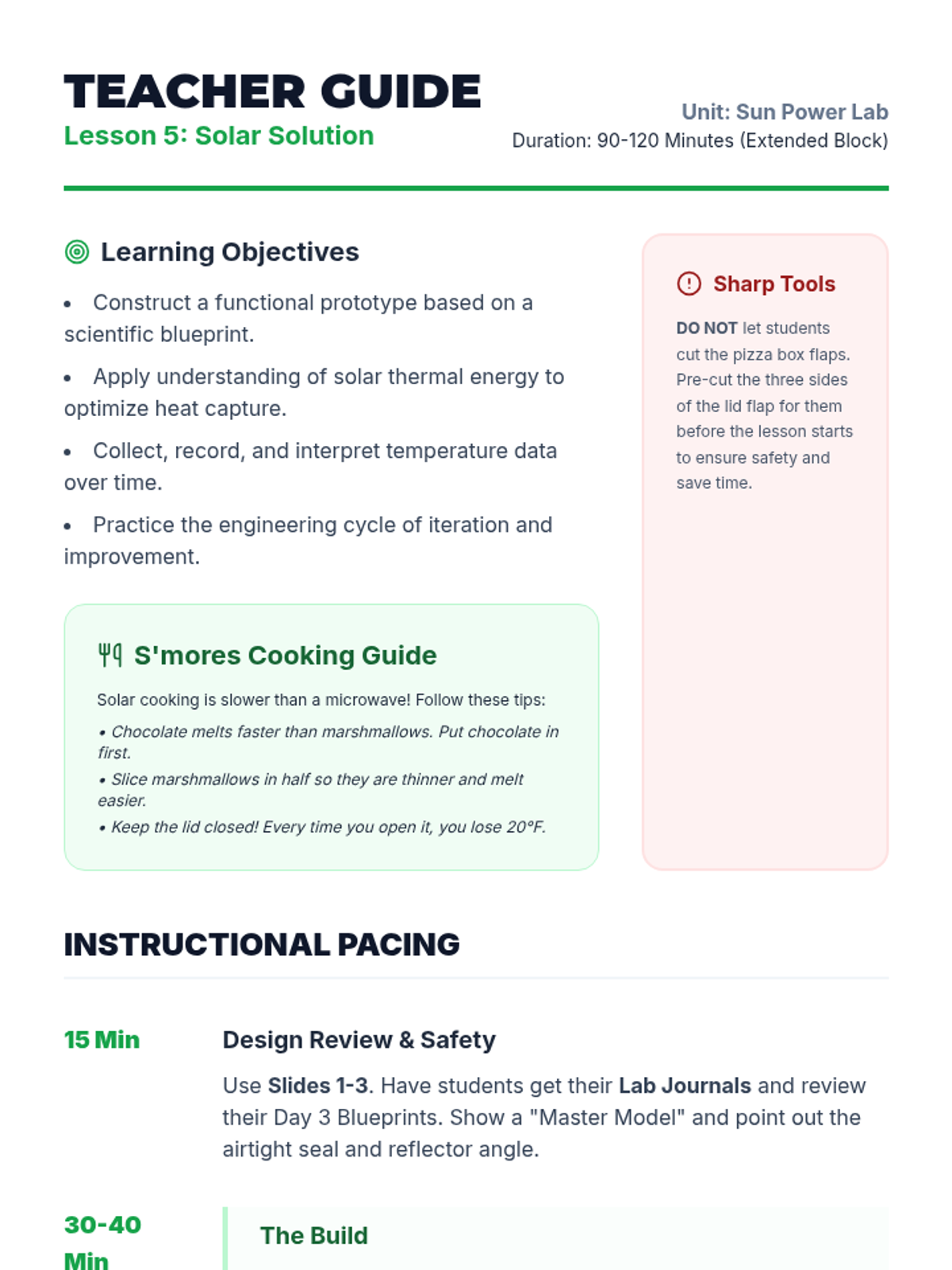
A culminating engineering challenge where students design, build, and test a solar-powered device.
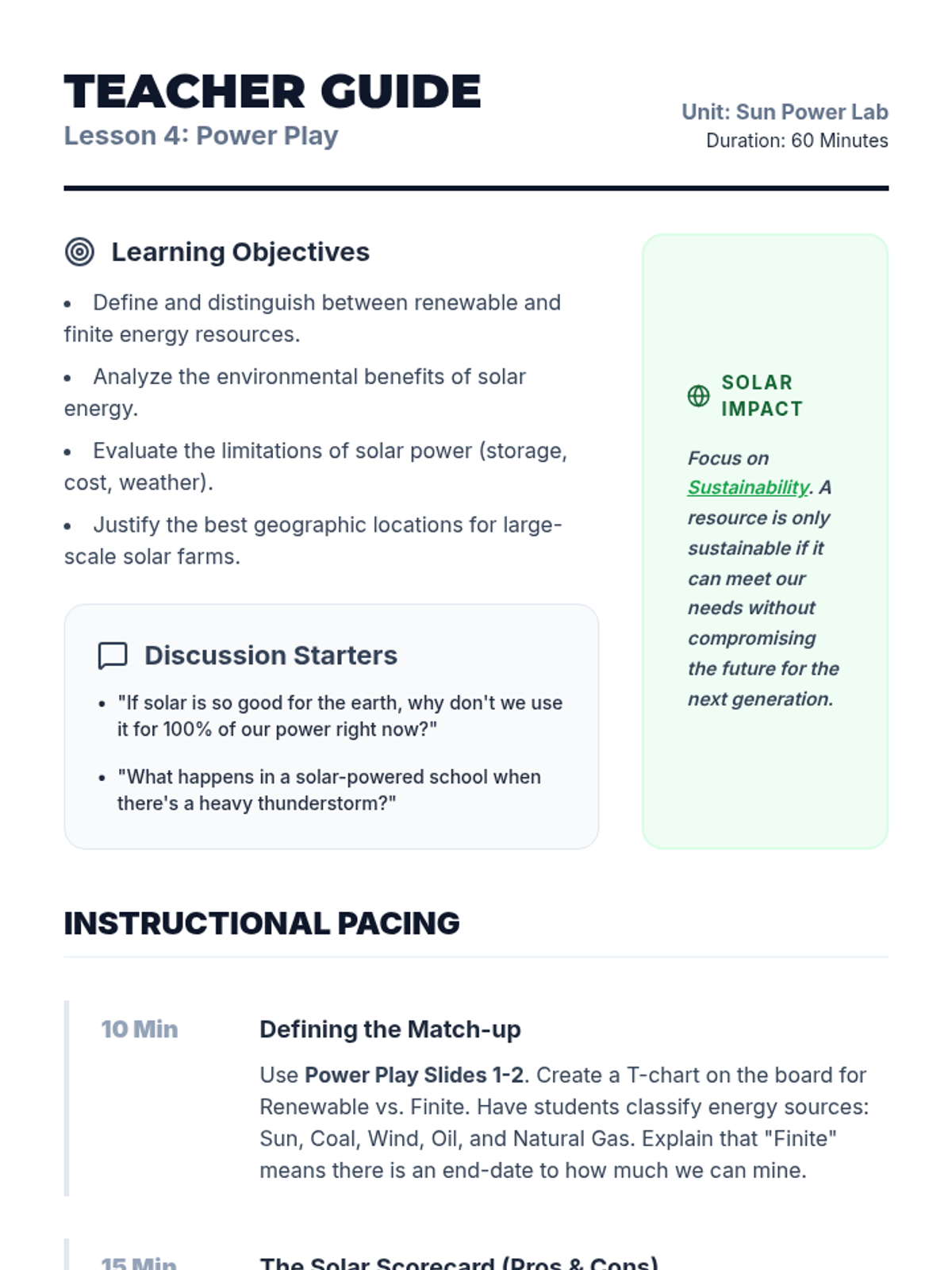
A critical look at the advantages and challenges of solar energy compared to non-renewable resources.
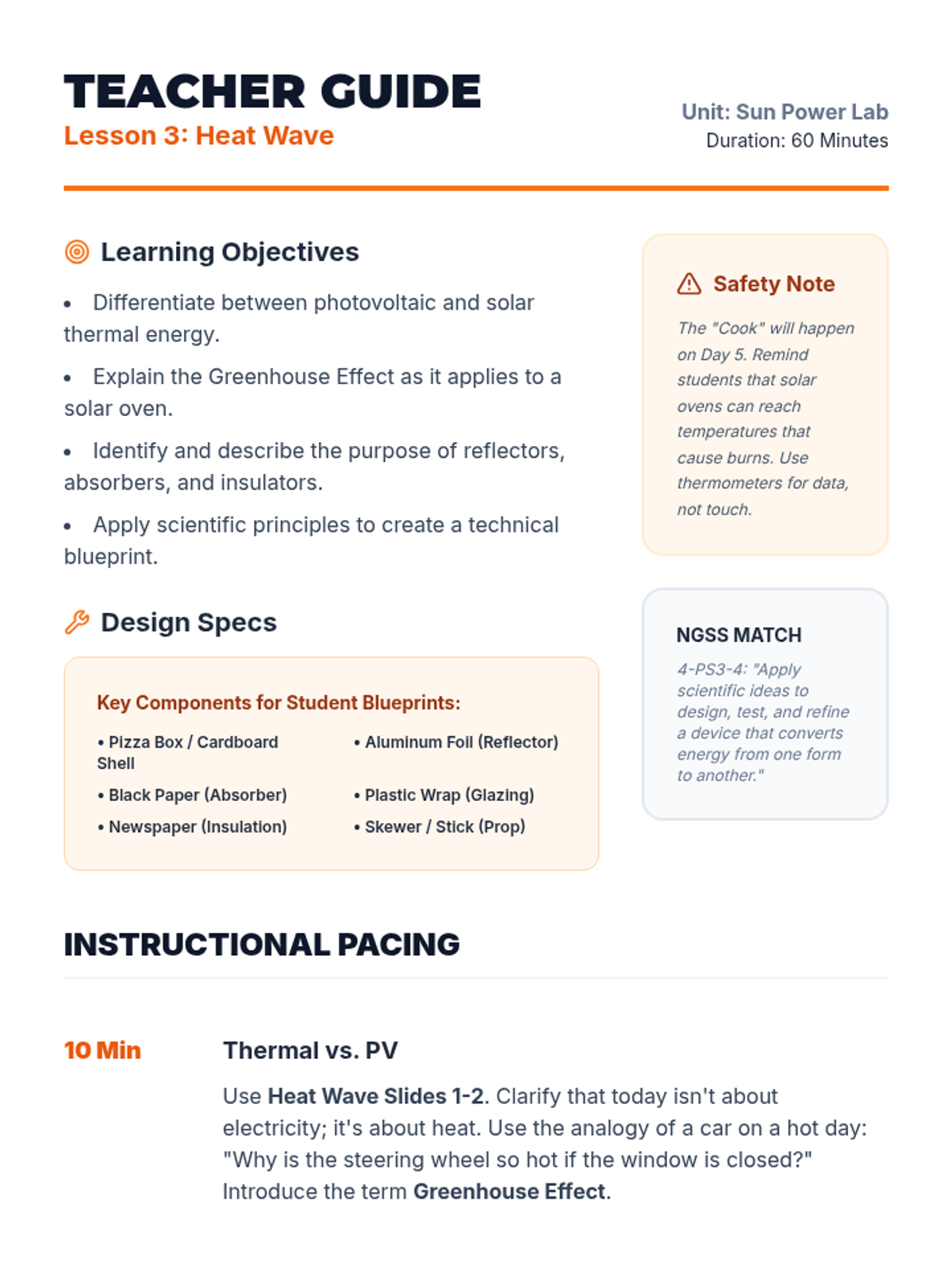
Investigates solar thermal energy and how we can use the Sun's heat for cooking and heating water.
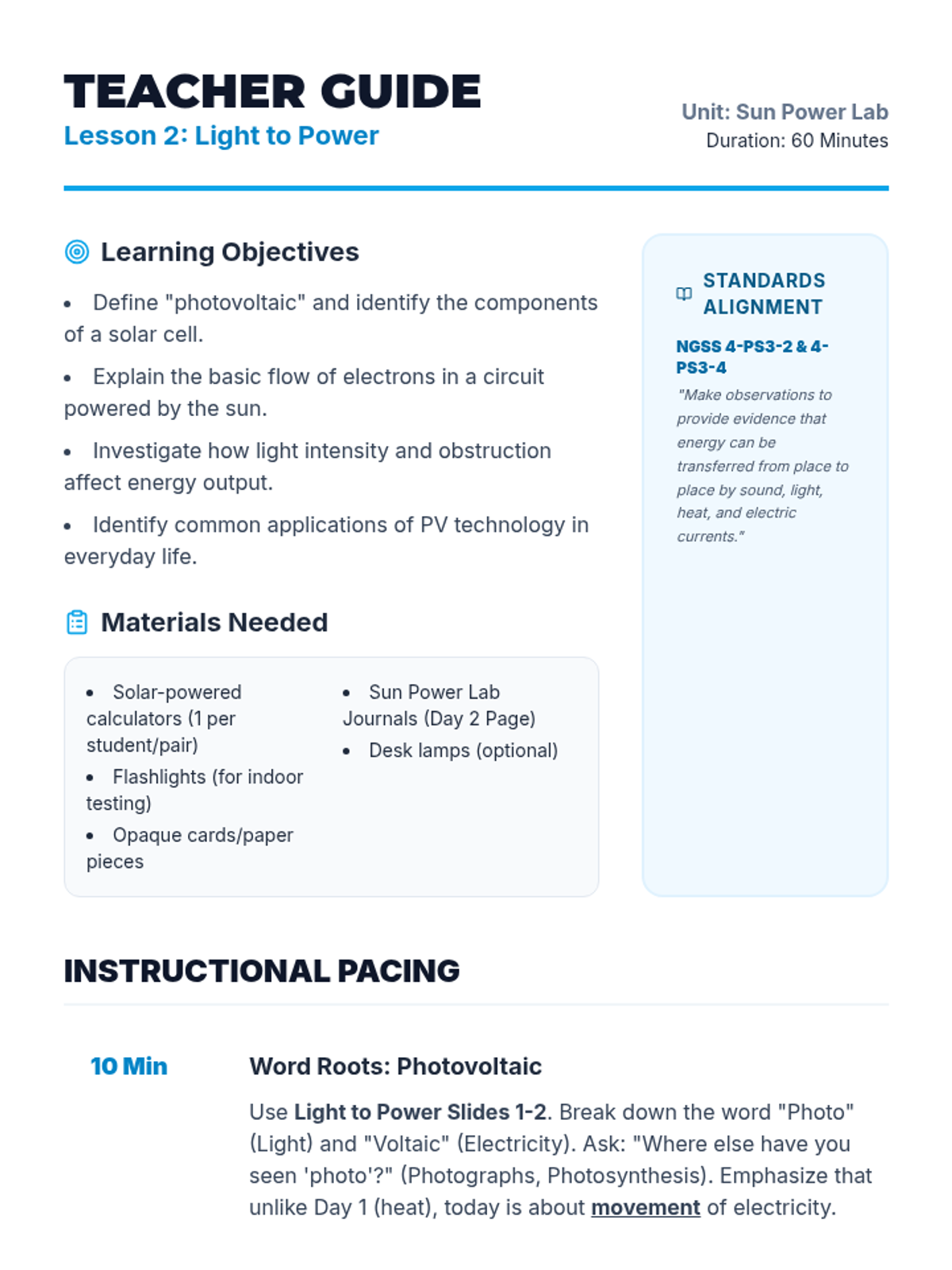
Explores the science of photovoltaic cells and how sunlight is converted directly into electricity.
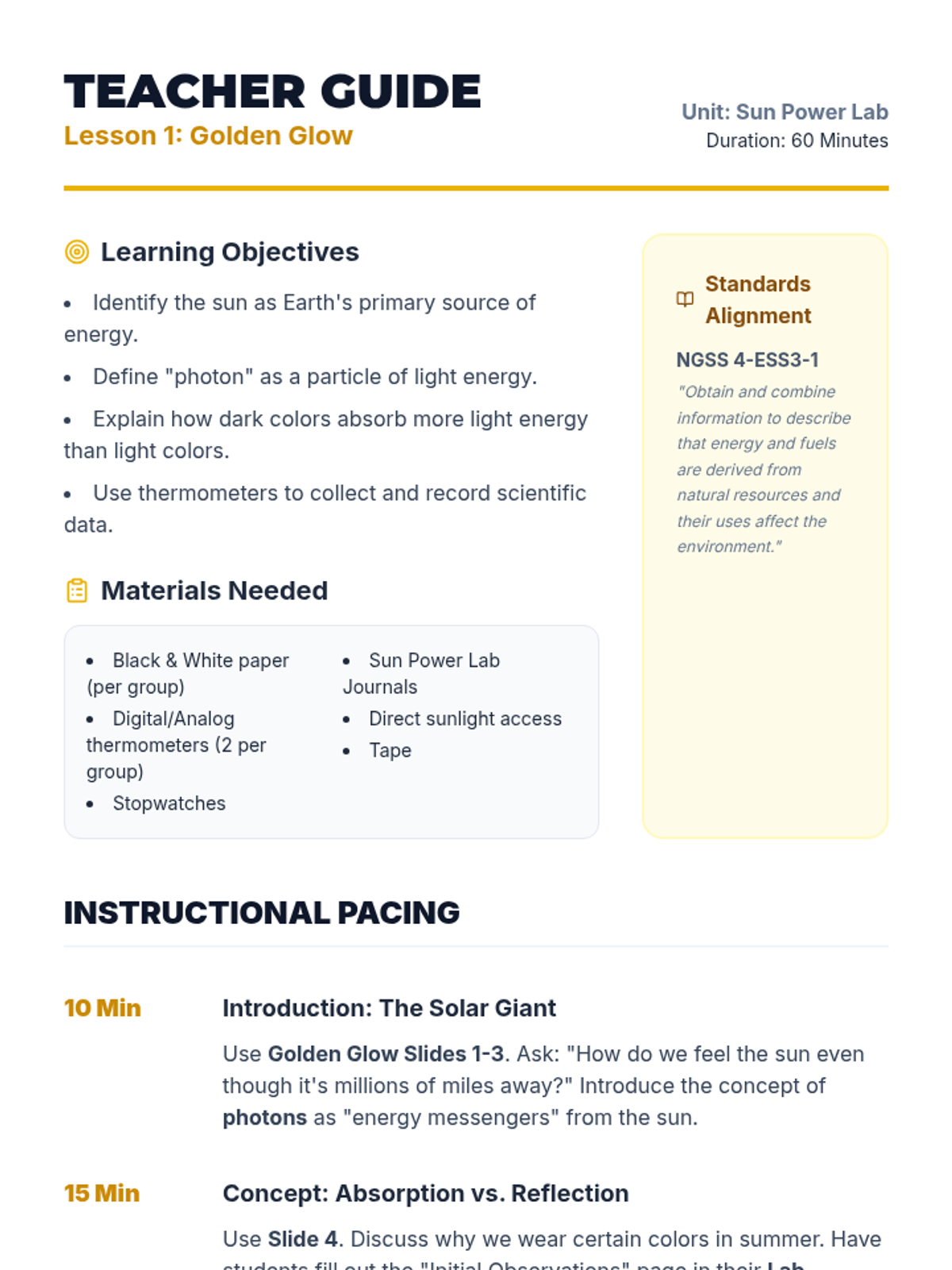
An introduction to the Sun as our primary energy source, exploring light energy and how different materials absorb solar radiation.