A high-energy physics lesson where students use marbles to explore how mass and speed affect energy transfer during collisions. Includes a guided lab, instructional slides, and a scenario-based matching game.
An inquiry-based lesson where students act as botanical scouts, collecting flowering specimens to analyze how traits like color, scent, and structure aid in attracting specific pollinators for species survival.
A self-contained, high-engagement "Secret Agent" themed review mission for Day 4 (the day before the STAAR exam), designed for independent work.
A quick review lesson exploring the mechanics of runoff and groundwater, specifically focusing on how human activities lead to water pollution and environmental impact.
Concludes the review with heredity problems and a comprehensive vocabulary blitz to ensure students are ready for the STAAR exam.
Dives into the complexities of mutation scenarios and the mechanics of meiosis, helping students navigate tricky genetic questions.
Focuses on mastering cell transport mechanisms and the logic of experimental design and data analysis with a focus on STAAR elimination tactics.
A deep dive into the mechanics, physics, and design principles of Geometry Dash, focusing on how 'tech' drives gameplay and level creation.
An interactive guided notes packet exploring the movement of water through Earth's systems, featuring a detailed diagram and critical thinking questions.
An introductory lesson on physical and chemical changes for 5th grade, focusing on identifying signs of change and understanding how matter transforms.
A comprehensive lab manual covering water filtration, energy efficiency, genetics, and ecosystem dynamics through hands-on projects and real-world audits.
A comprehensive ISA practice session covering key 5th-grade science standards, including Earth's systems, matter, energy flow, and space. Students will engage with multiple-choice questions, open-ended analysis, and data-driven graphing tasks.
A comprehensive ISA (Illinois Science Assessment) prep lesson for 5th grade, covering Physical, Earth/Space, and Life sciences through multiple-choice questions, data analysis, and CER writing.
A lesson for students to research eight popular constellations using simplified fact cards and a graphic organizer. Designed for 7th-grade students working at a 4th-grade skill level.
A hands-on lesson exploring how sound waves carry patterns to transfer information over distances, aligned with Indiana 4-PS4-3. Students will learn the basics of sound properties and then design their own sonic codes.
An interdisciplinary exploration of medieval siege engines, combining the physics of levers, torque, and potential energy with the historical impact of engineering on territorial warfare. Students analyze how the trebuchet revolutionized medieval combat through mathematical precision.
In this session, students learn about the impact of sea-level rise on tiger habitats and design creative solutions to protect them. This lesson encourages empathetic engineering and descriptive writing.
An in-depth exploration of the Earth's water cycle, focusing on the movement of water through evaporation, transpiration, condensation, and precipitation. Students will discover how solar energy drives this continuous process and sustains life on Earth.
A comprehensive lesson exploring how sound energy travels through different states of matter, using the communication methods of marine mammals as a primary case study. Students will conduct experiments to visualize vibrations and analyze how dolphins use sound waves to survive.
In this forensic-themed environmental science lesson, students take on the role of 'Carbon Detectives' to investigate the atmospheric impact of daily human activities. They will calculate footprints, analyze evidence from data sets, and draft 'mitigation dossiers' to reduce emissions in their local community.
Students explore the intersection of biology and mathematics by identifying Fibonacci sequences and radial symmetry in Indiana spring wildflowers. This hands-on lesson bridges natural observation with numerical patterns.
A sensory-based science exploration of plant life cycles where students plant seeds, record observations, and develop descriptive language skills.
A research-based lesson where students choose a bird species to investigate, focusing on habitat, diet, and unique characteristics through a field guide approach.
A 5-day unit introducing diagnostic services and health informatics through hands-on simulations using standard school supplies.
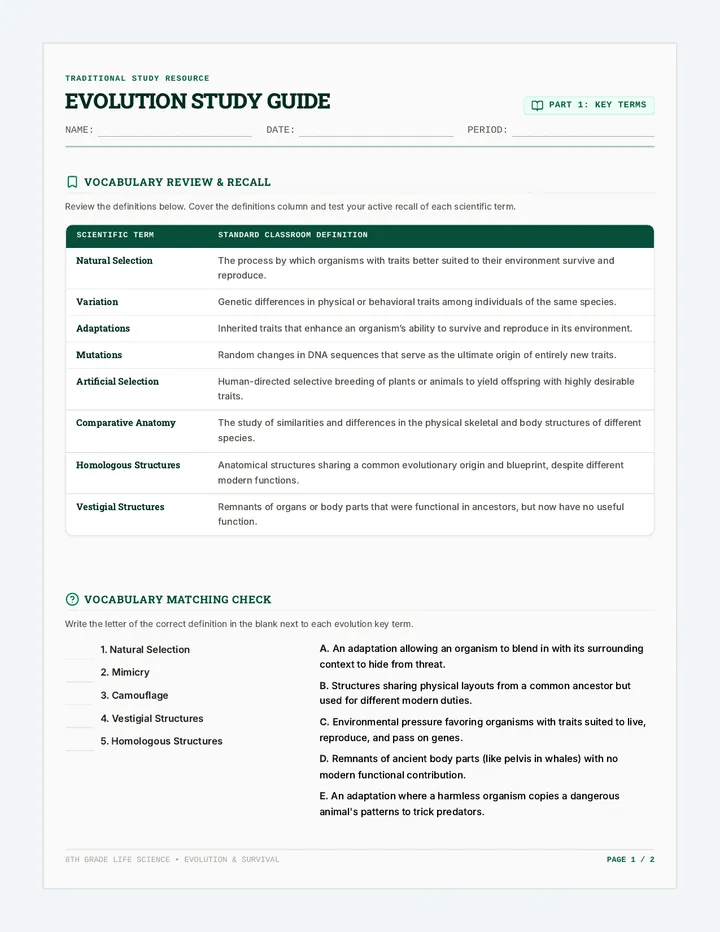
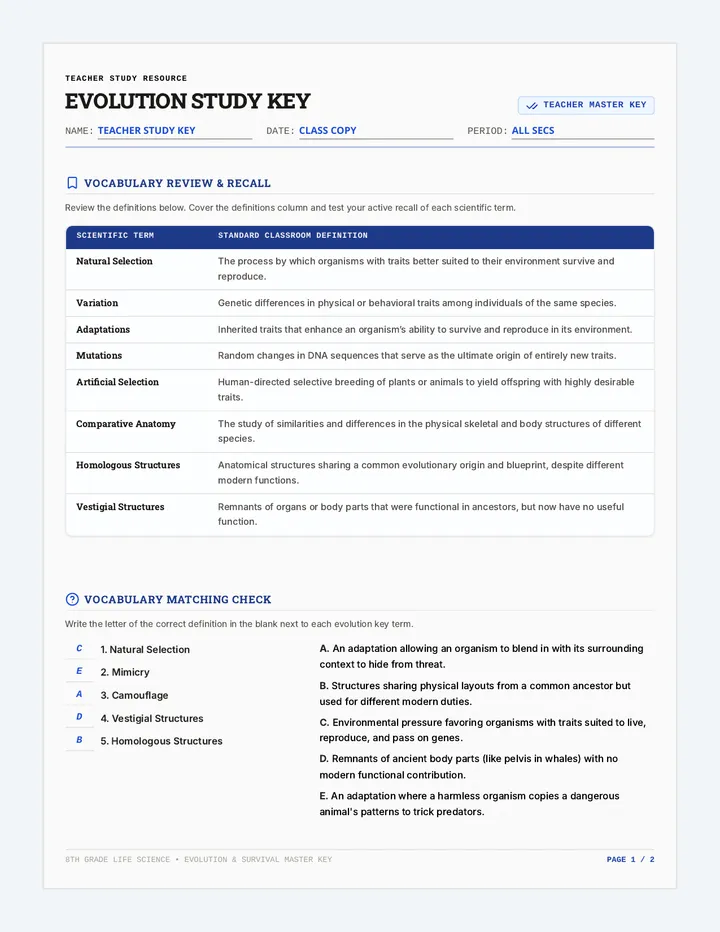
A lesson exploring the four major biogeochemical cycles (water, carbon, nitrogen, and phosphorus) through visual diagrams and key term identification.
A comprehensive review of the major biogeochemical cycles: water, carbon, nitrogen, and phosphorus. Students will explore how matter moves through Earth's spheres and synthesize their knowledge in a field journal synopsis.
A lesson exploring Earth's primary resources (air, water, soil, energy), the impact of population growth on demand, and strategies for conservation and efficient management.
A comprehensive introduction to chemical changes for 6th graders, focusing on the five main indicators of a chemical reaction and how they differ from physical changes. Students will explore evidence like gas production, temperature shifts, and precipitate formation through visual aids and hands-on investigation.
A set of accessible worksheets about the NASA Artemis II mission, specifically designed for middle schoolers reading at a primary level. Includes visual vocabulary, comprehension questions, and a sequencing activity.
This lesson explores the physical principles of buoyant force, focusing on Archimedes' Principle and the specific factors that determine the magnitude of upward force in a fluid. Students will distinguish between variables that affect buoyancy and those that do not, such as depth and object density.