Students refine their world-building by comparing elements using comparative and superlative adjectives. They write sentences establishing the 'most,' 'best,' or 'worst' aspects of their fictional world.

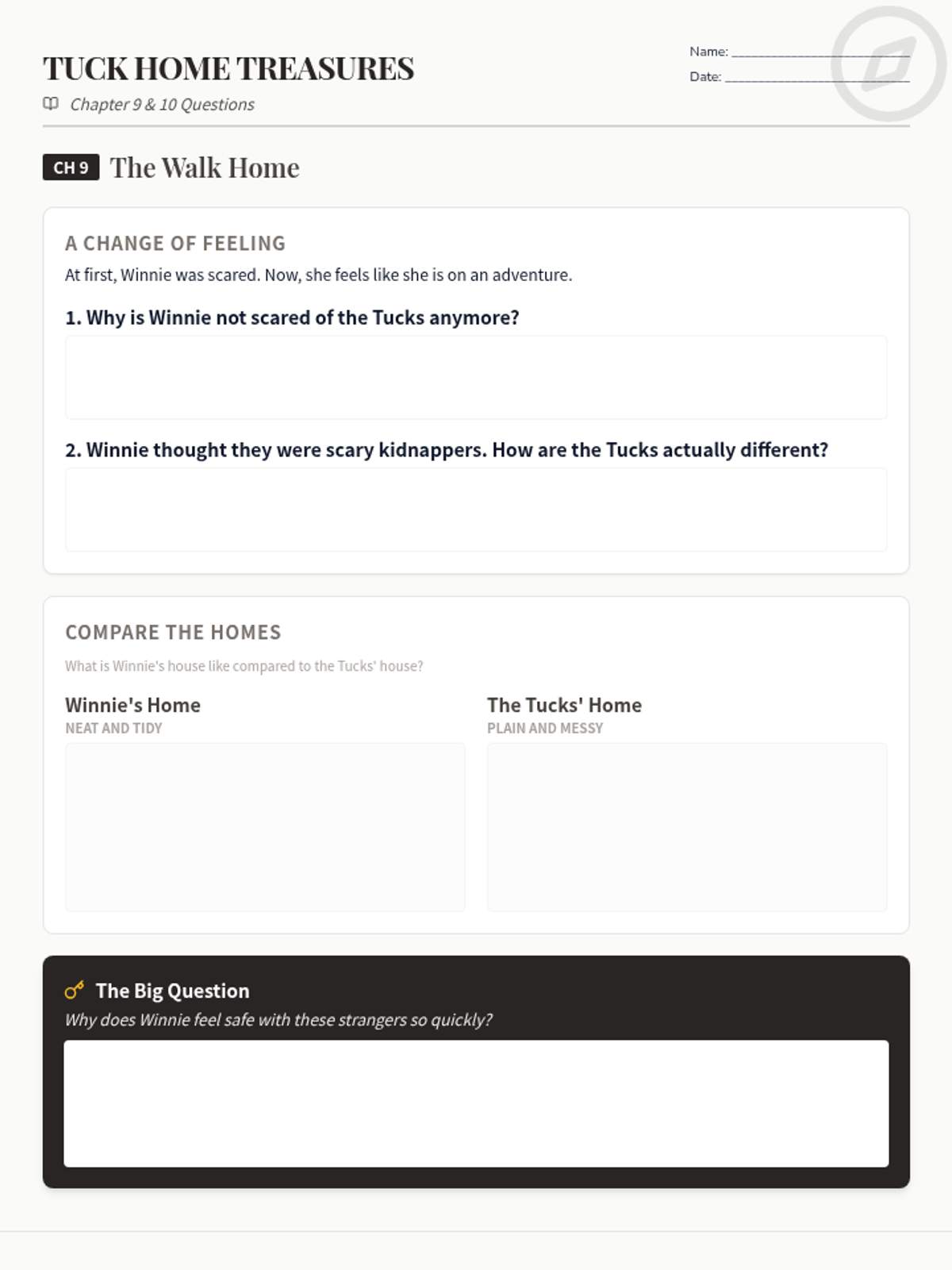
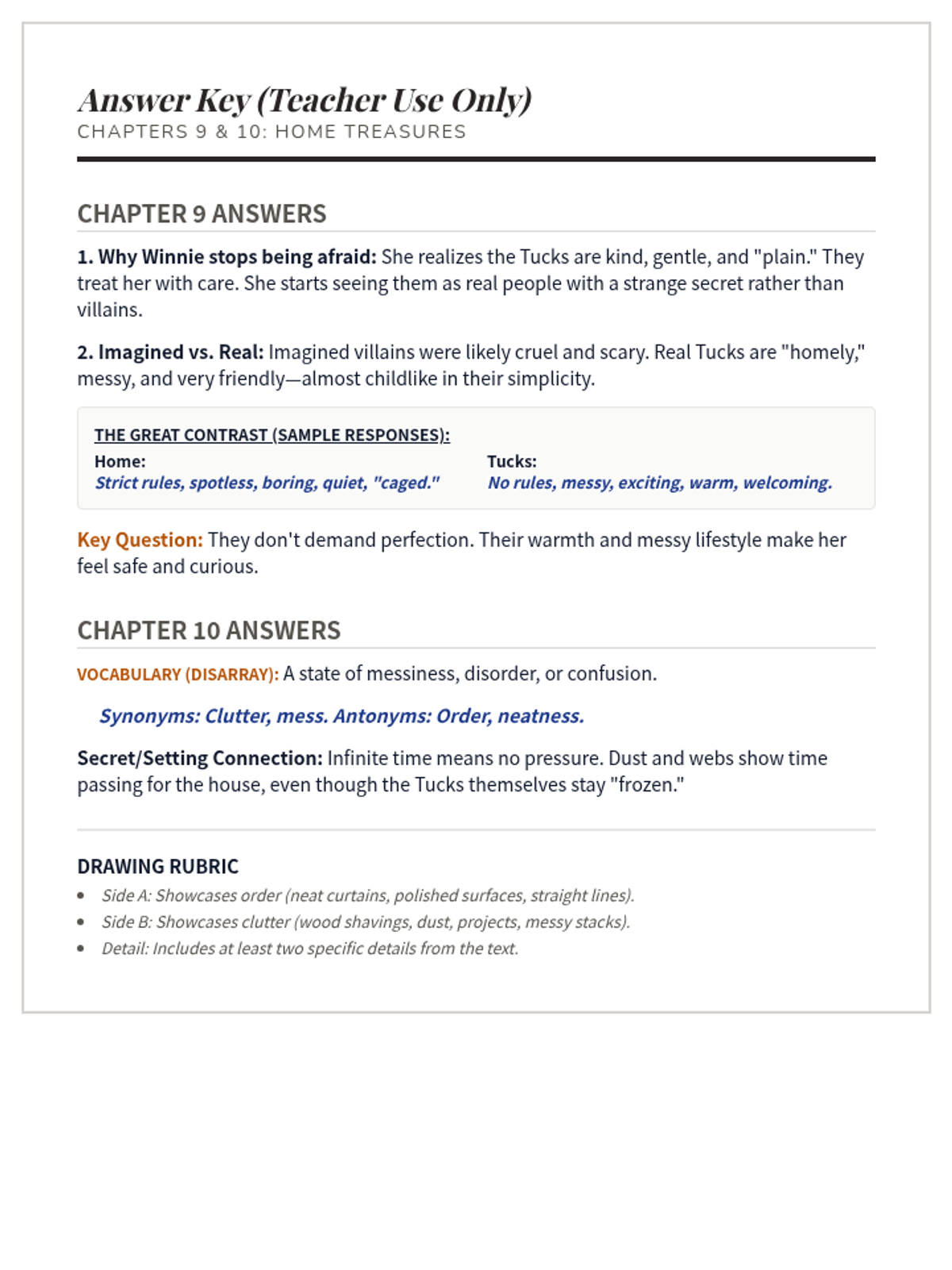
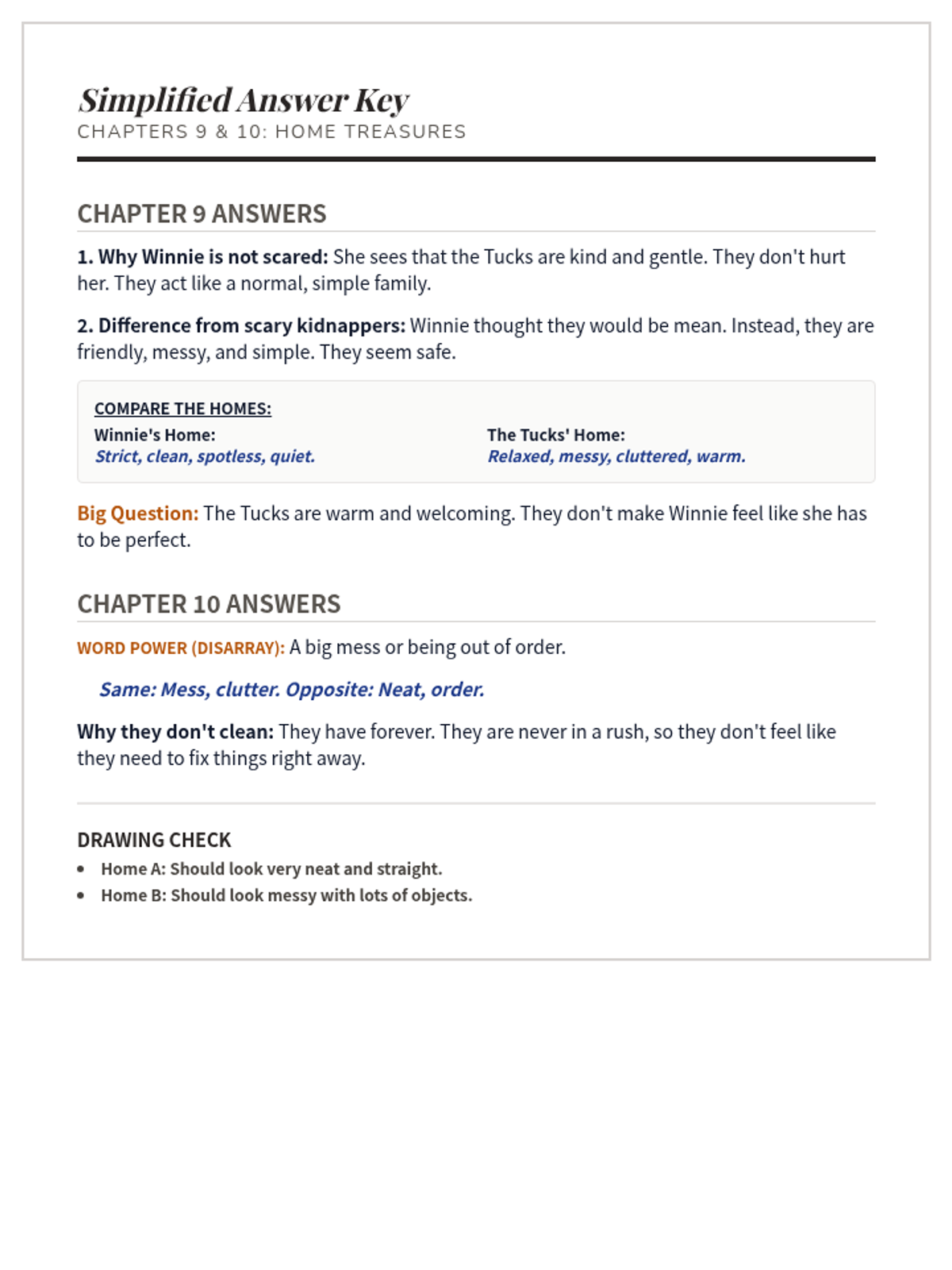
A deep dive into Chapters 9 and 10 of Tuck Everlasting, focusing on setting contrast, character development, and the vocabulary word 'disarray'.
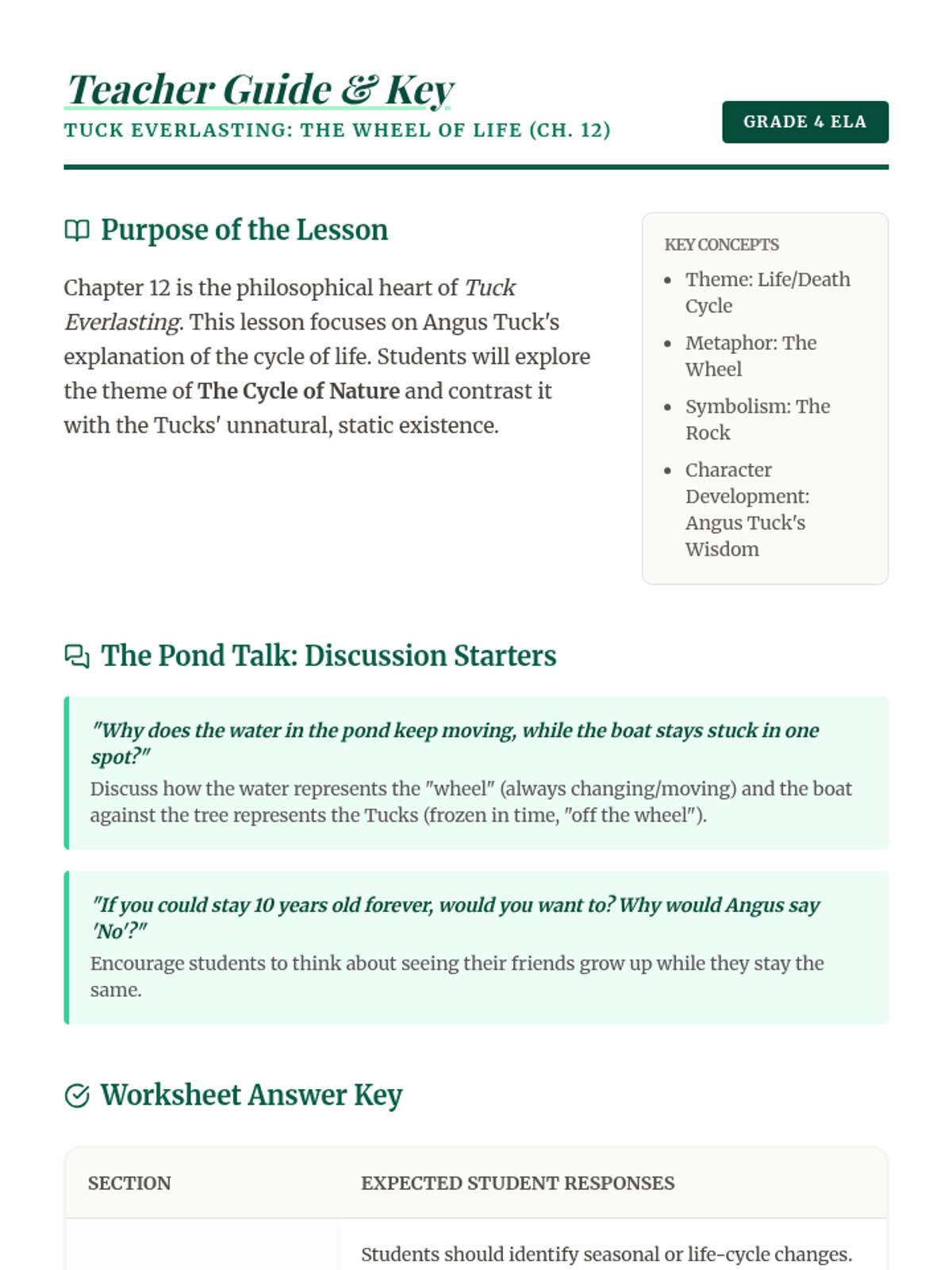
A deep dive into Chapter 12 of Tuck Everlasting, focusing on the metaphor of the Wheel of Life and the importance of the natural cycle of change.
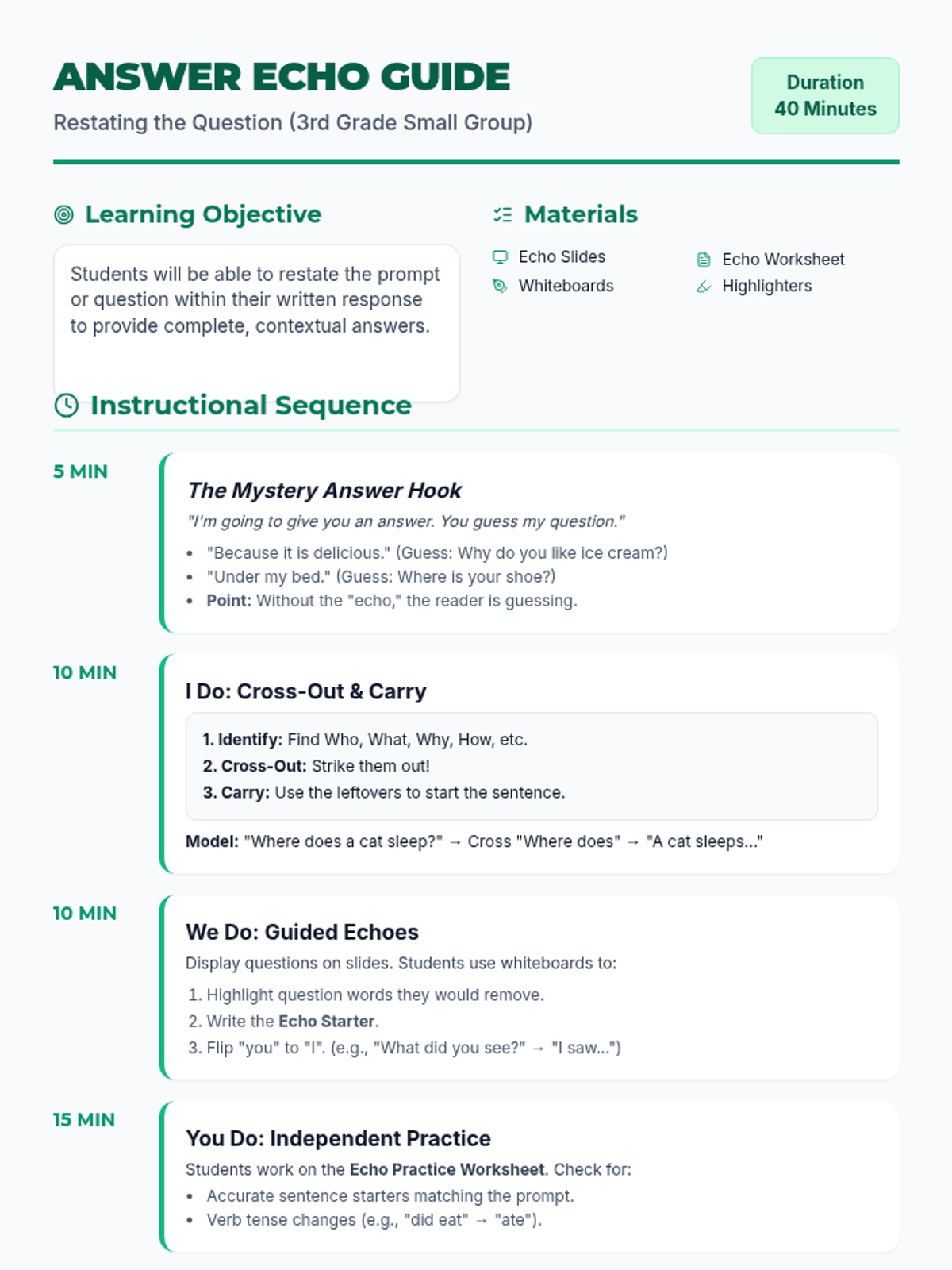
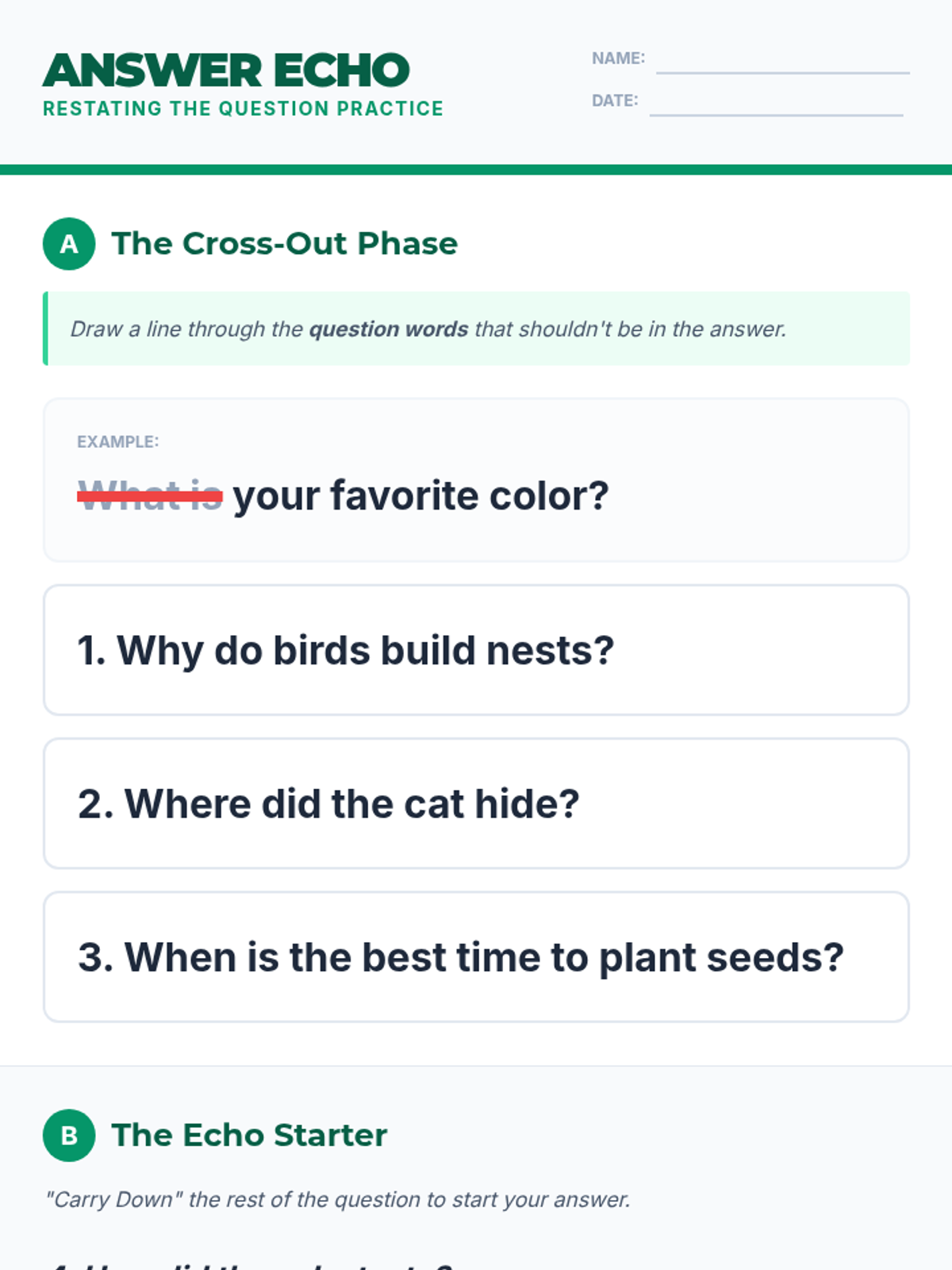
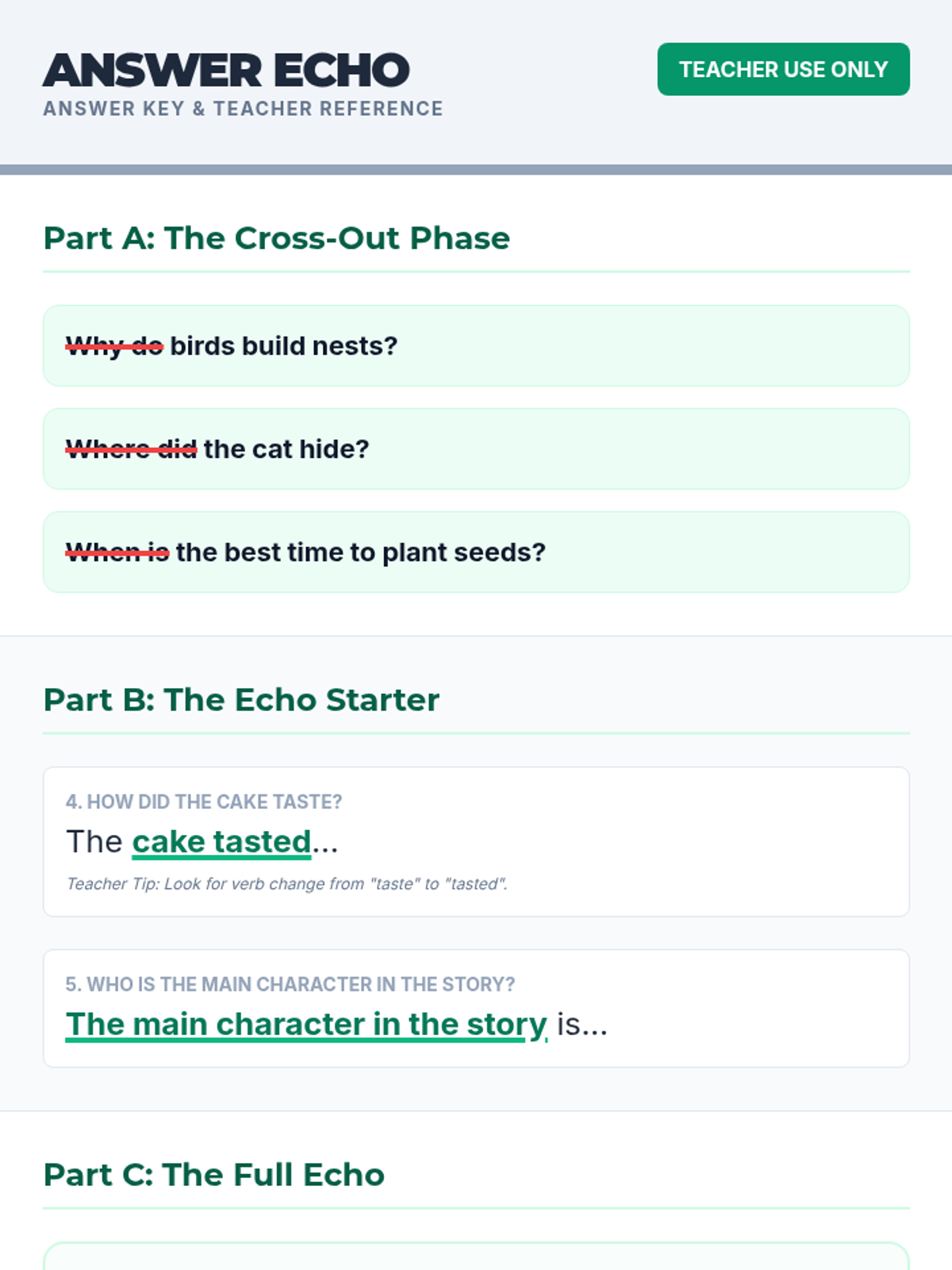
A 40-minute focused lesson on restating the question when writing, using the 'Echo' method to help students provide complete, contextual answers.
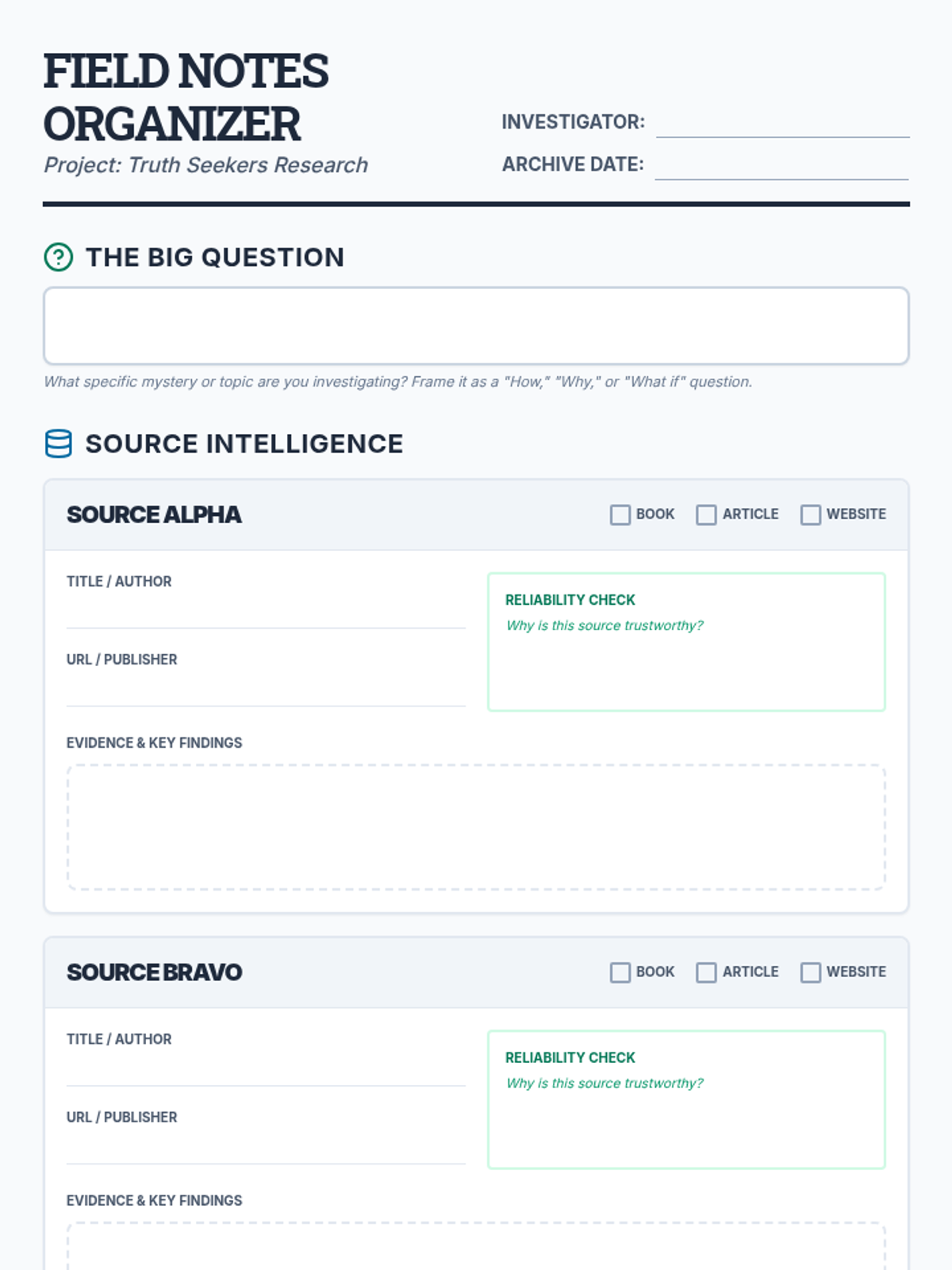
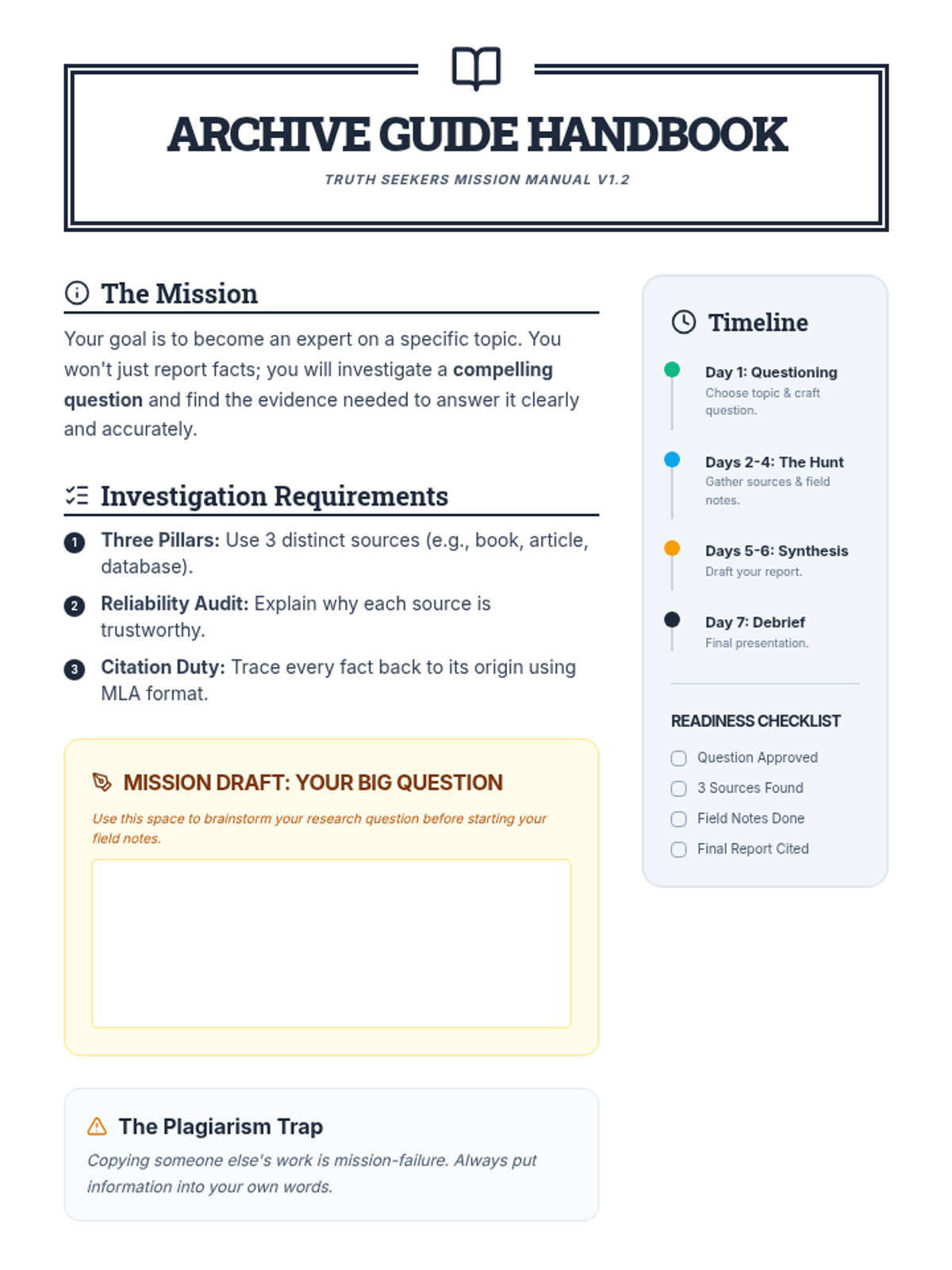
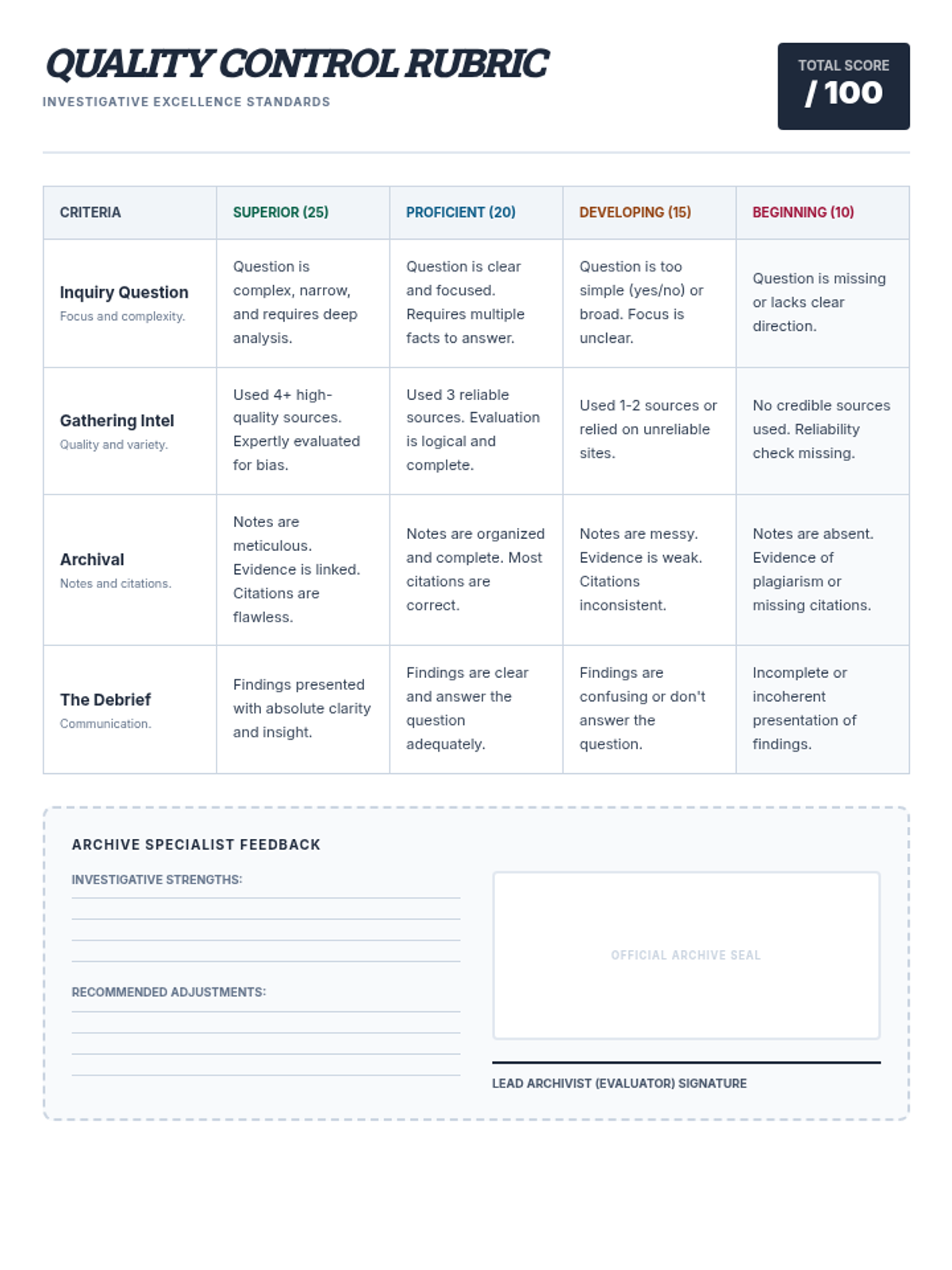
A comprehensive research project framework for 6th graders, guiding them through the process of inquiry, source evaluation, and information organization using an archivist-themed aesthetic.
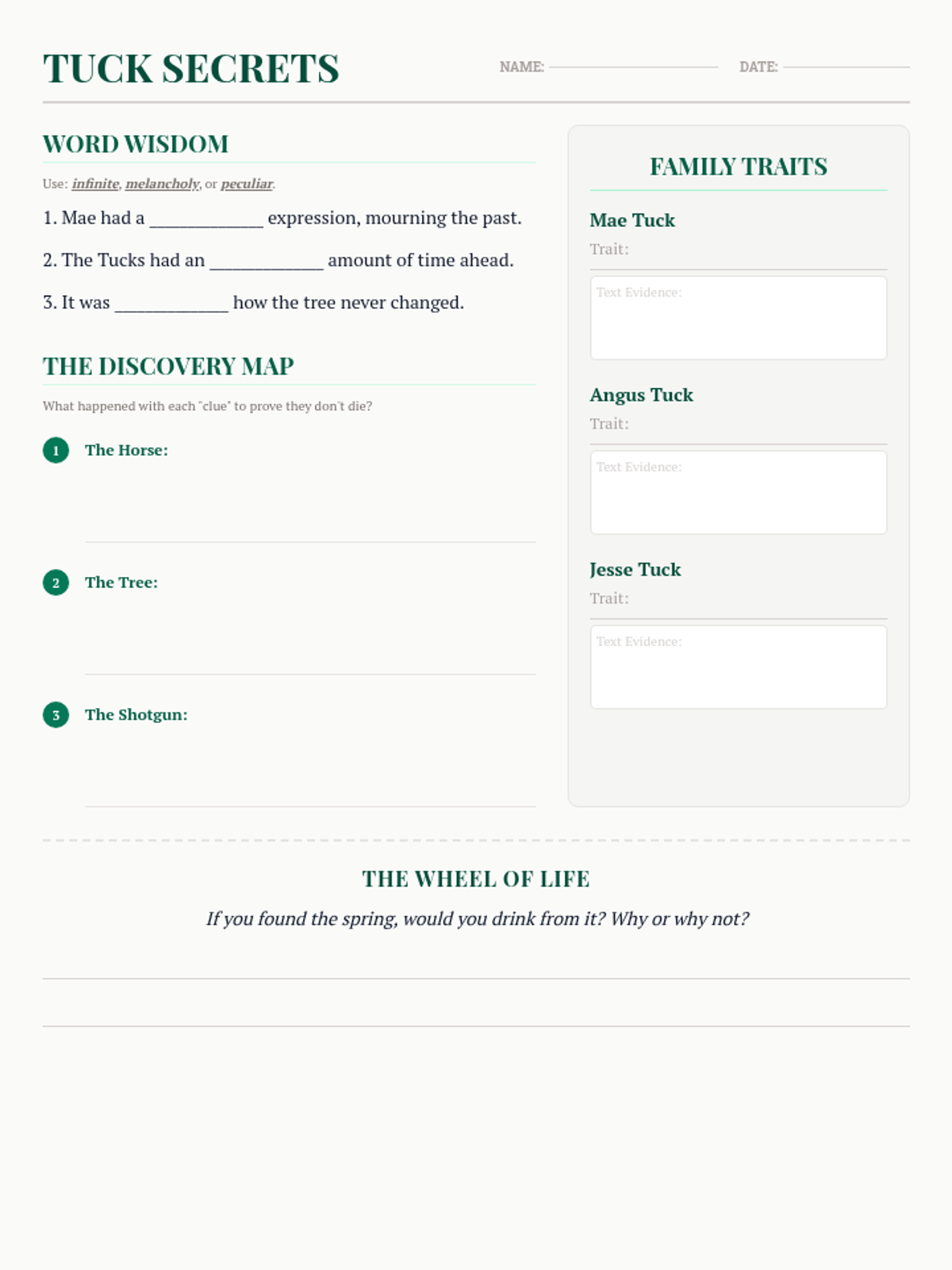
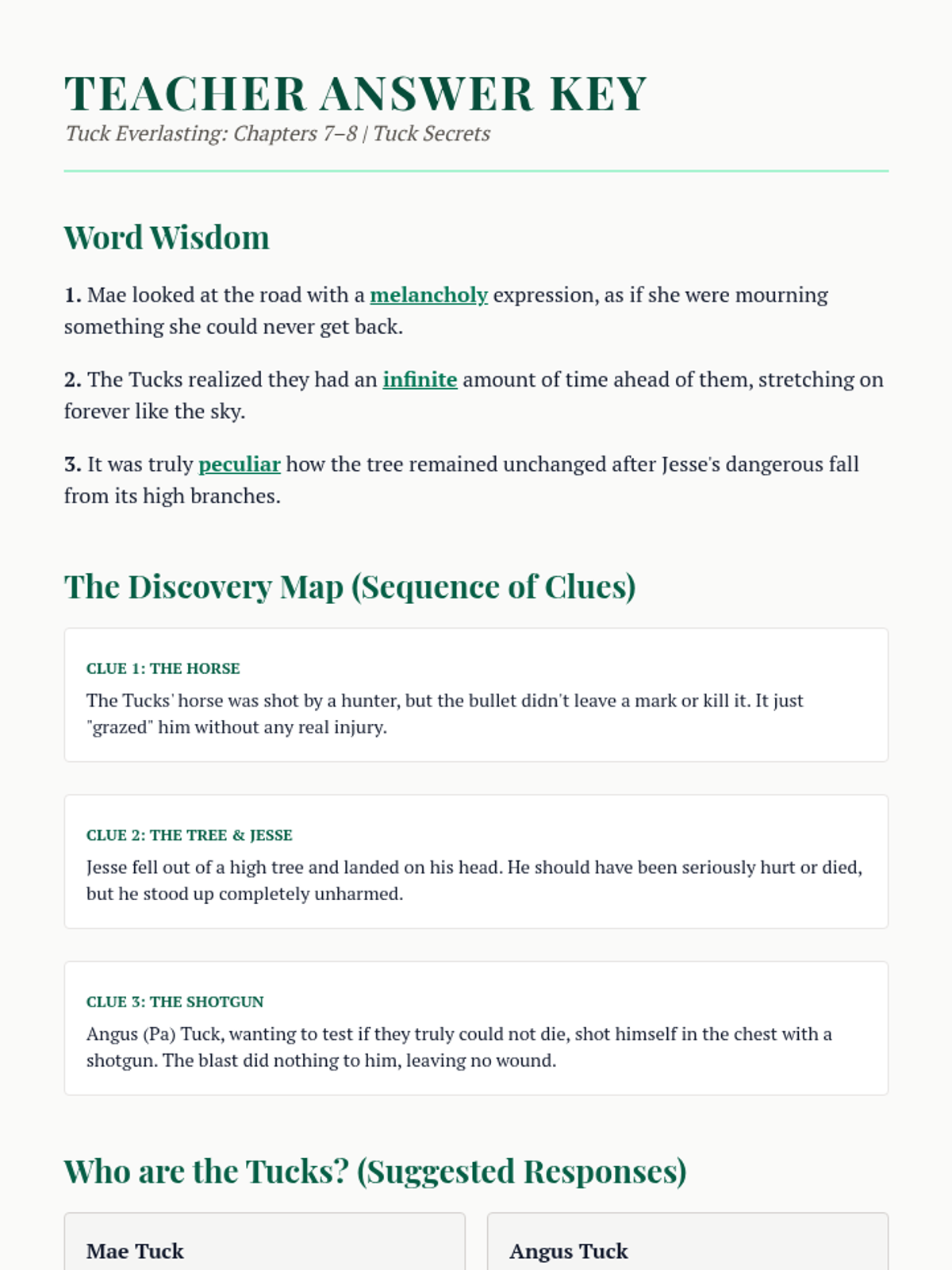
A lesson focused on analyzing the Tucks' revelation of their immortality in Chapters 7-8 of Tuck Everlasting, focusing on sequence of events and character traits.
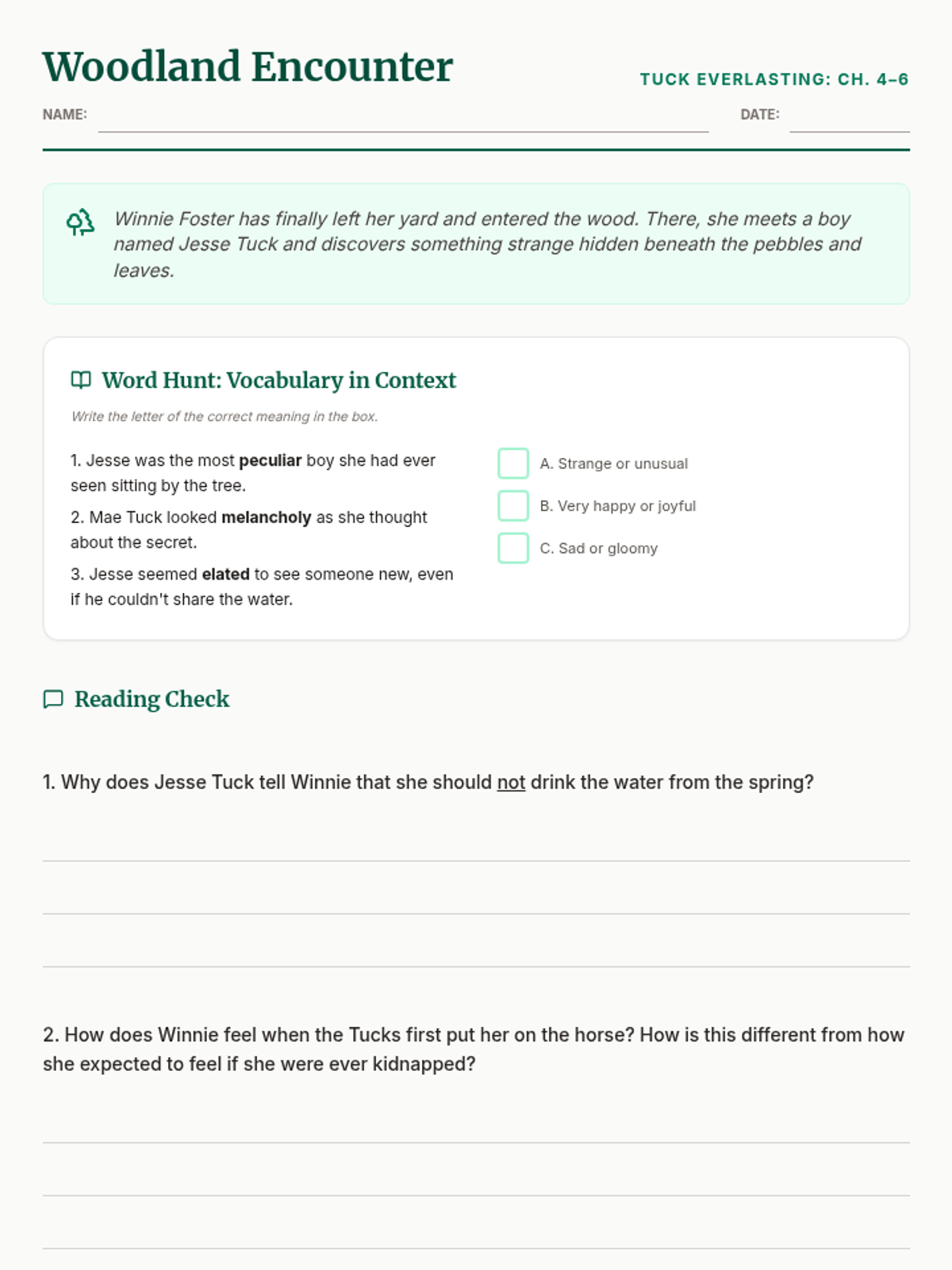
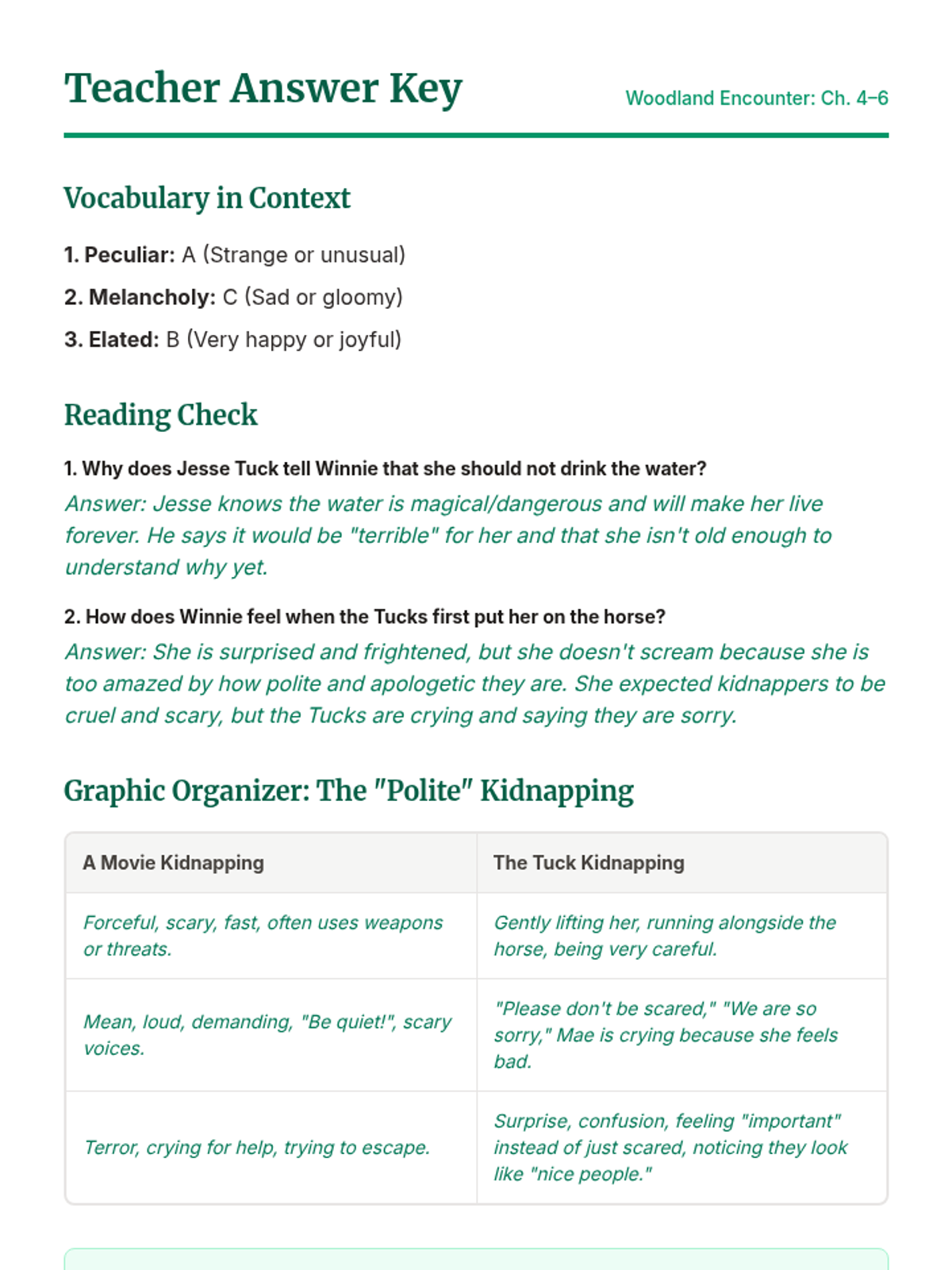
A lesson exploring chapters 4-6 of Tuck Everlasting, focusing on Winnie Foster's first encounter with the Tucks and the unique nature of her 'kidnapping'. Students analyze character motivations and use graphic organizers to compare the Tucks to traditional movie tropes.
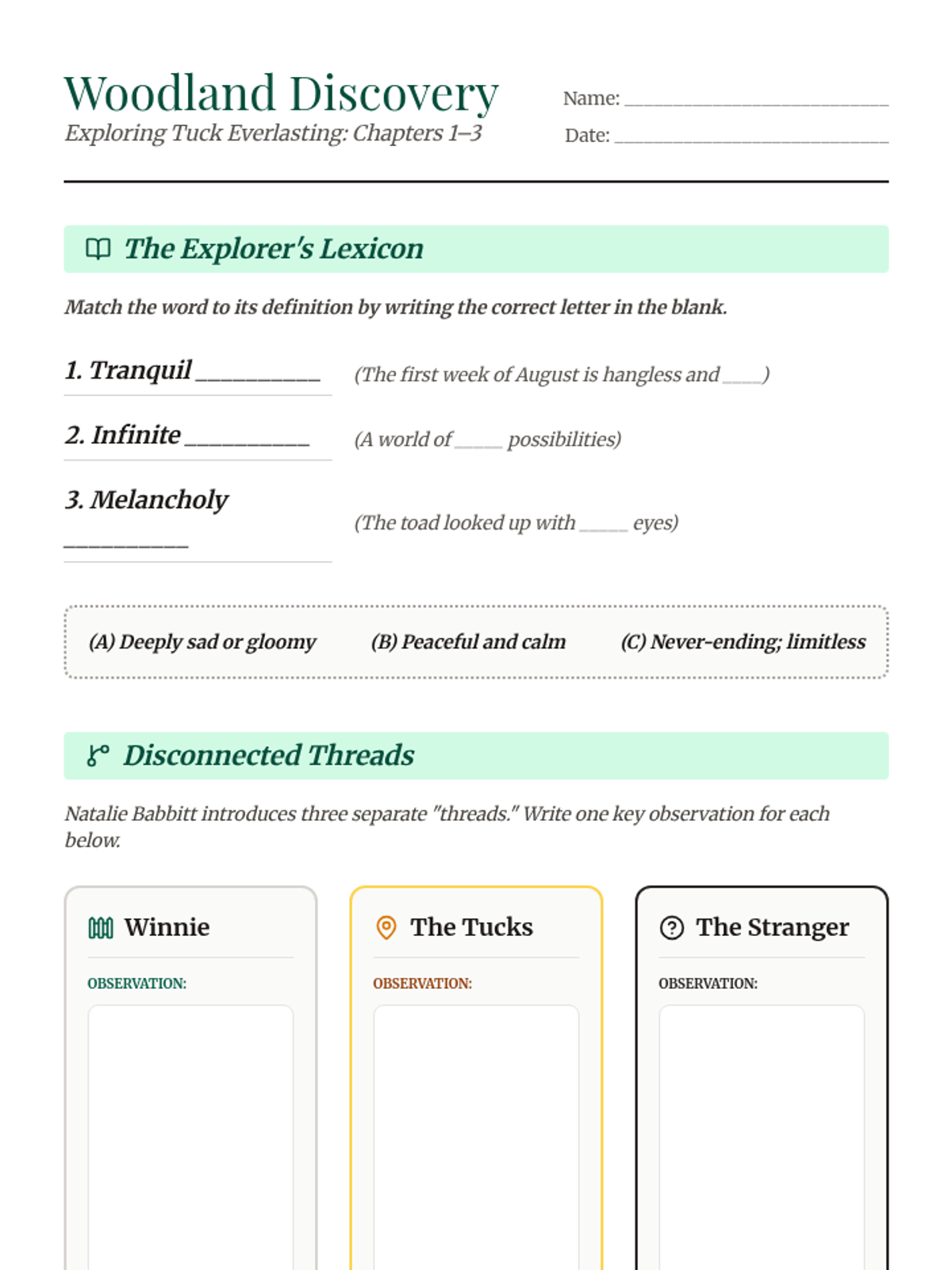
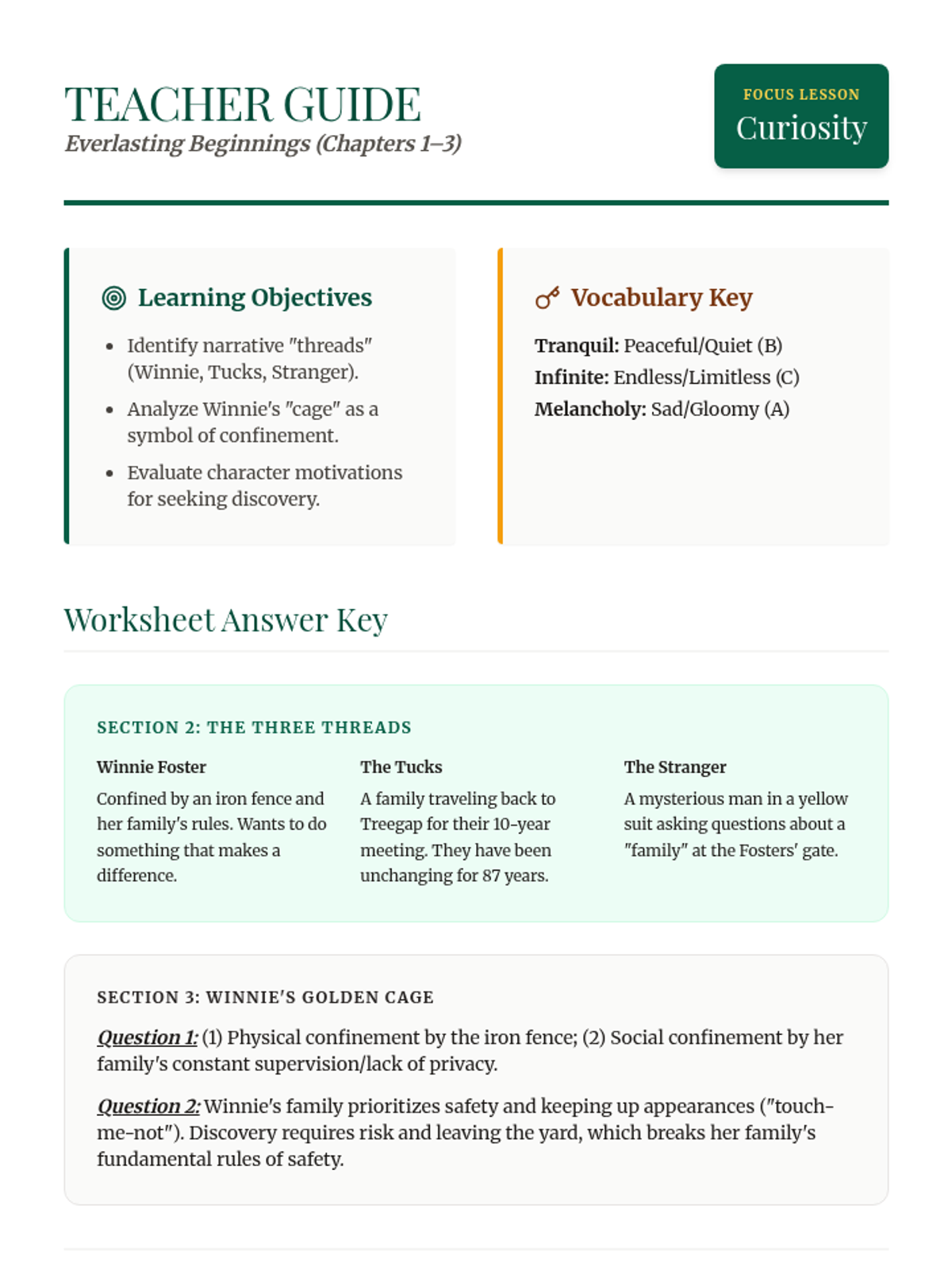
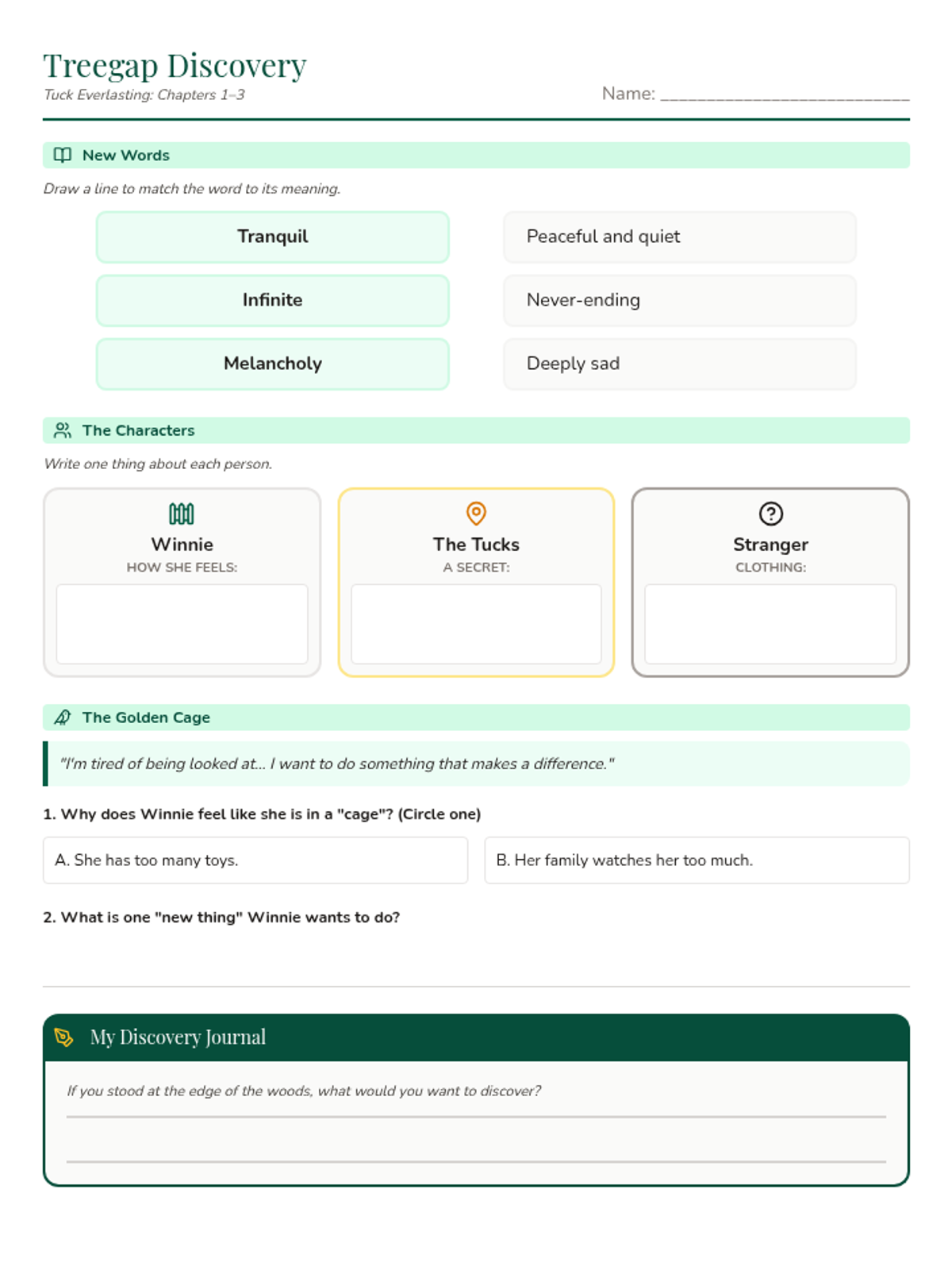
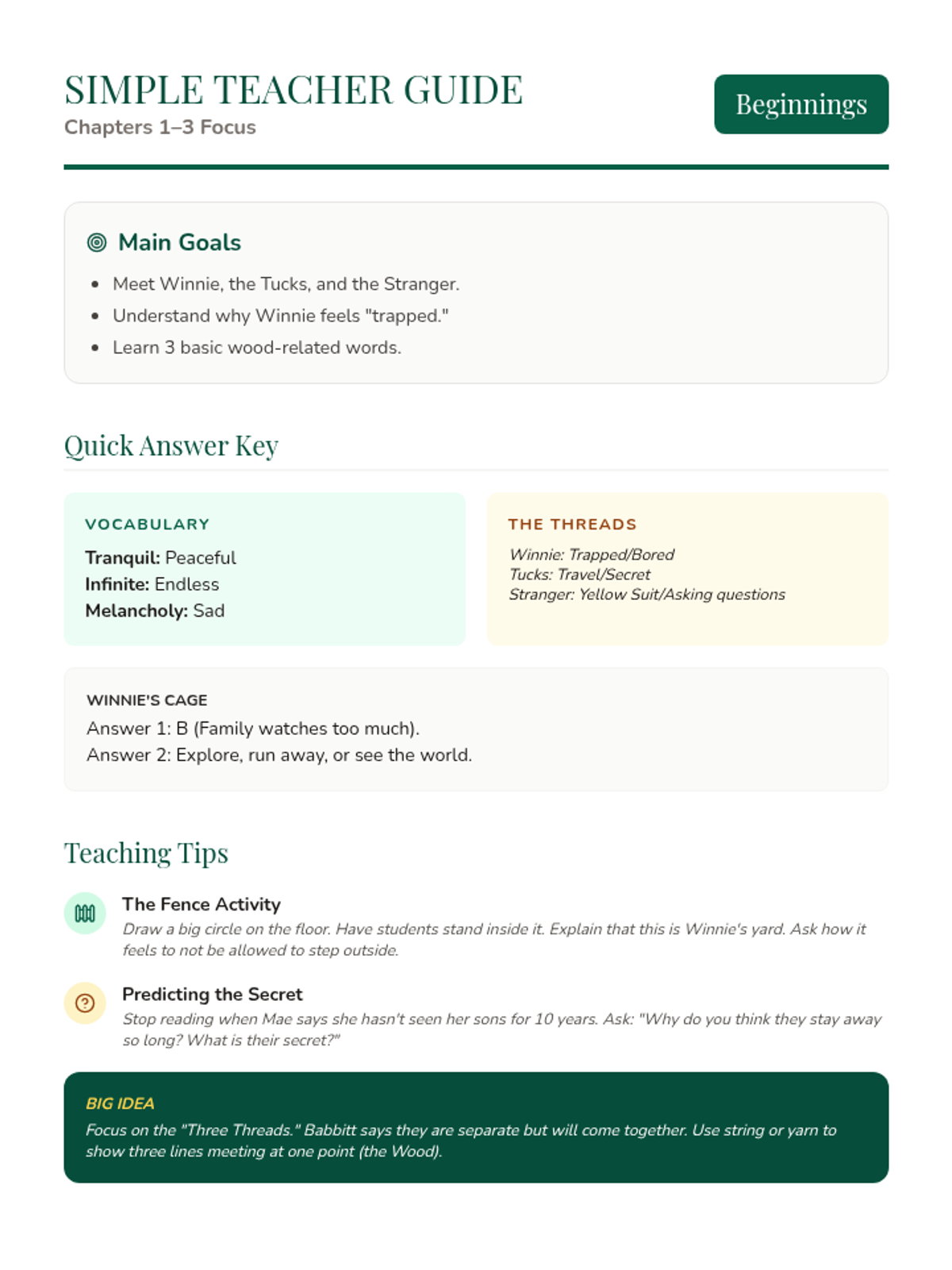
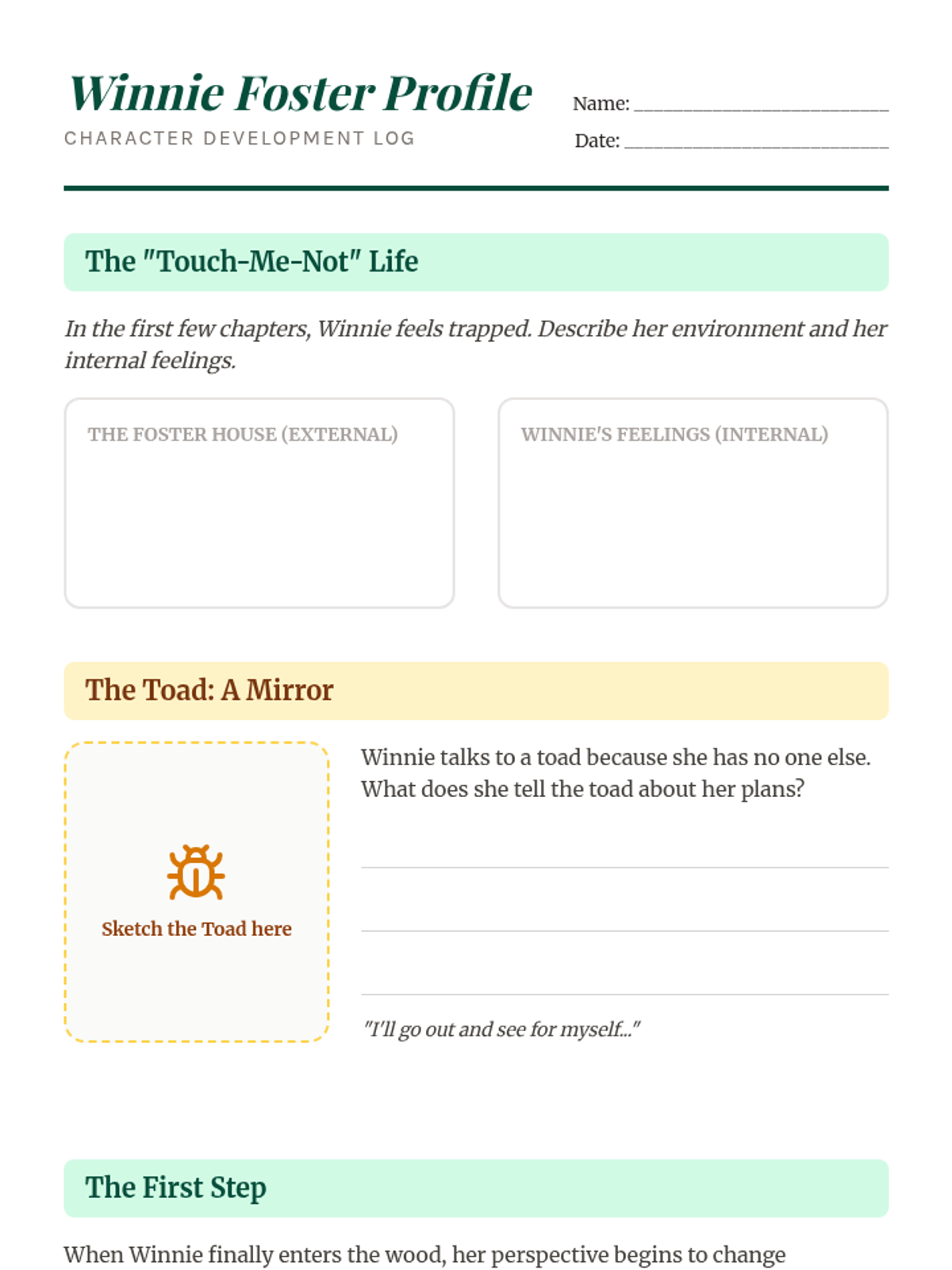
An introductory exploration of the first three chapters of Natalie Babbitt's *Tuck Everlasting*, focusing on character introductions, the theme of discovery, and the metaphor of Winnie Foster's 'cage'.
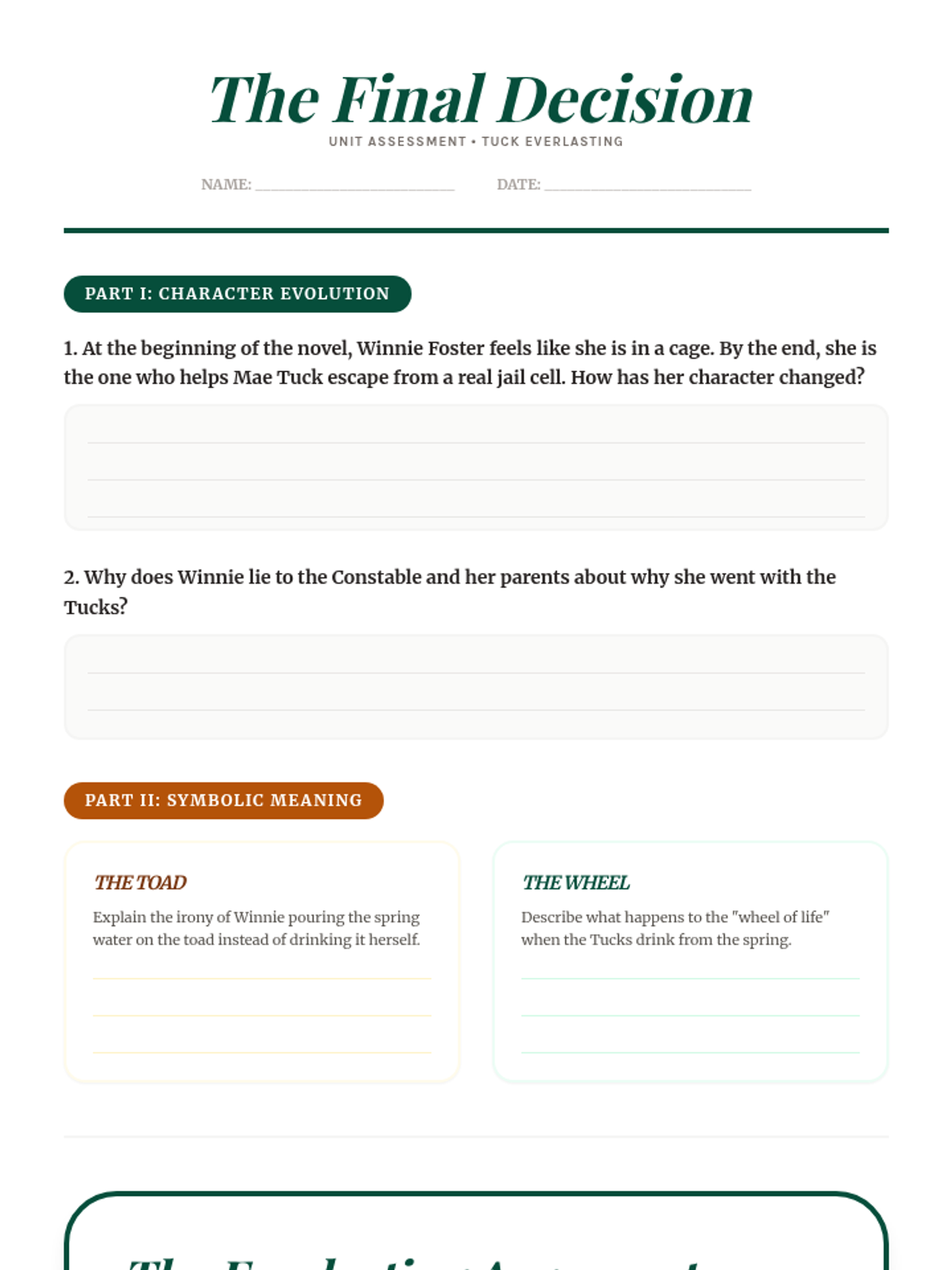
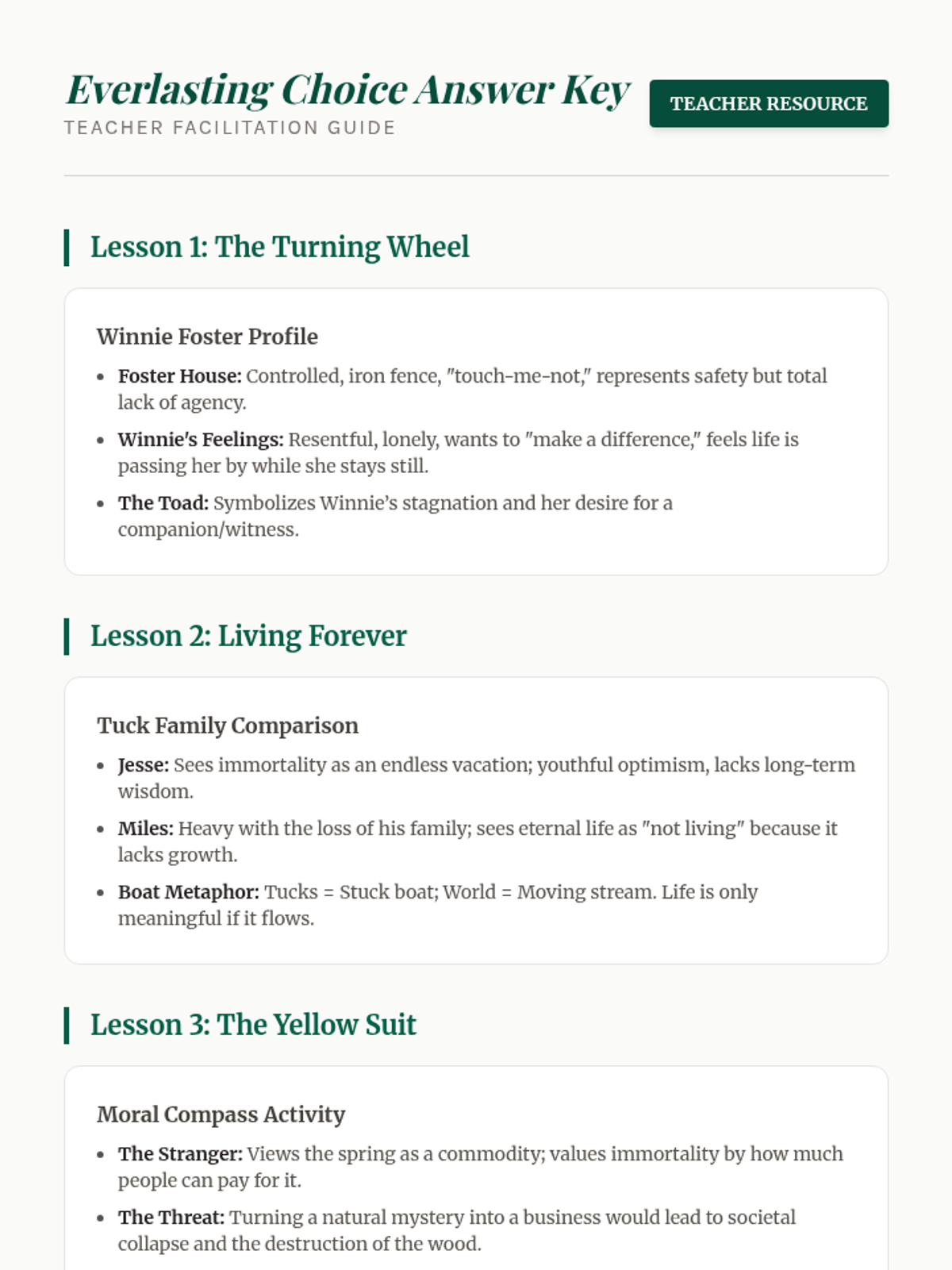
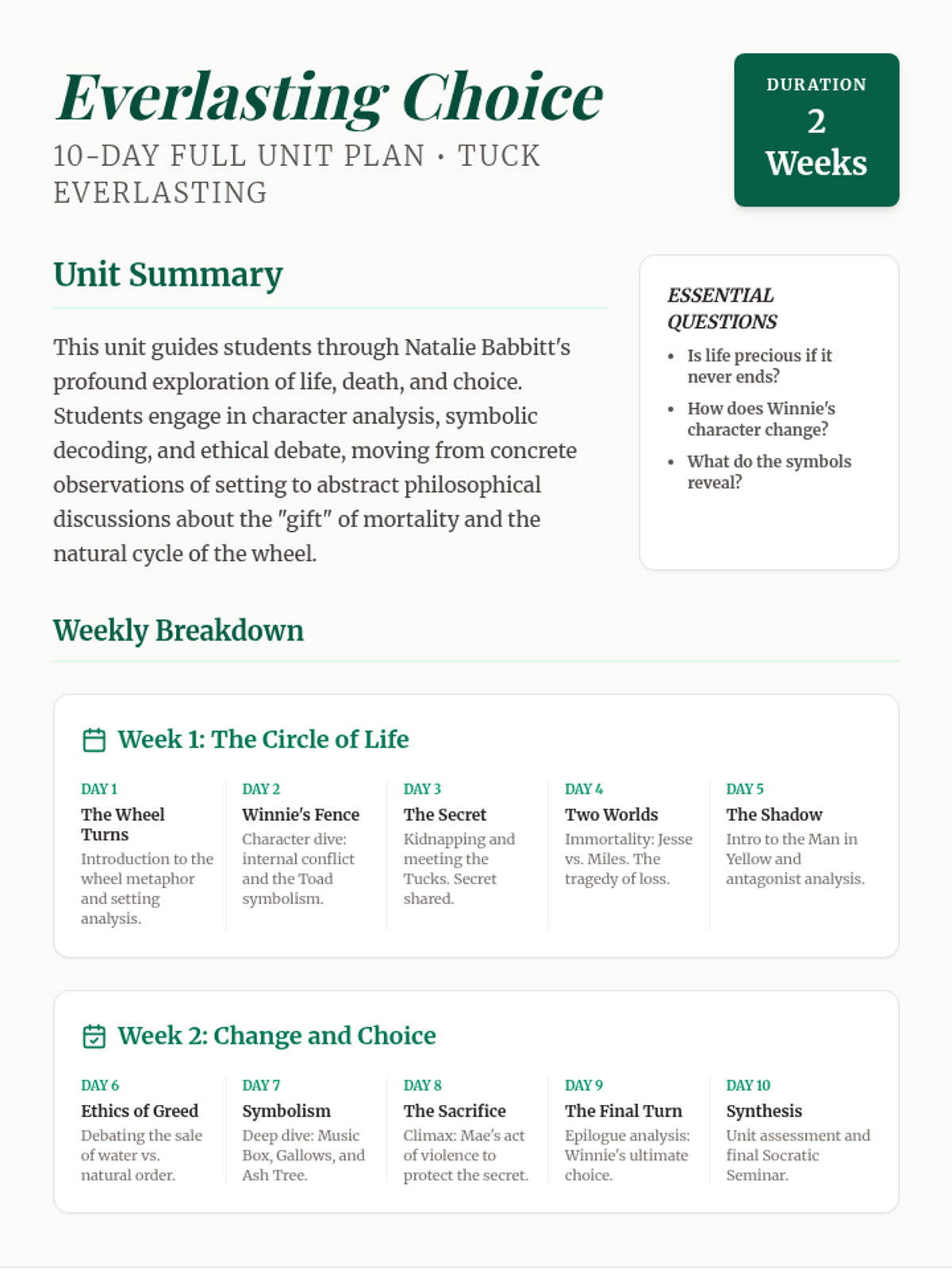
Culminates in the analysis of the novel's resolution and Winnie's ultimate choice regarding the spring water.
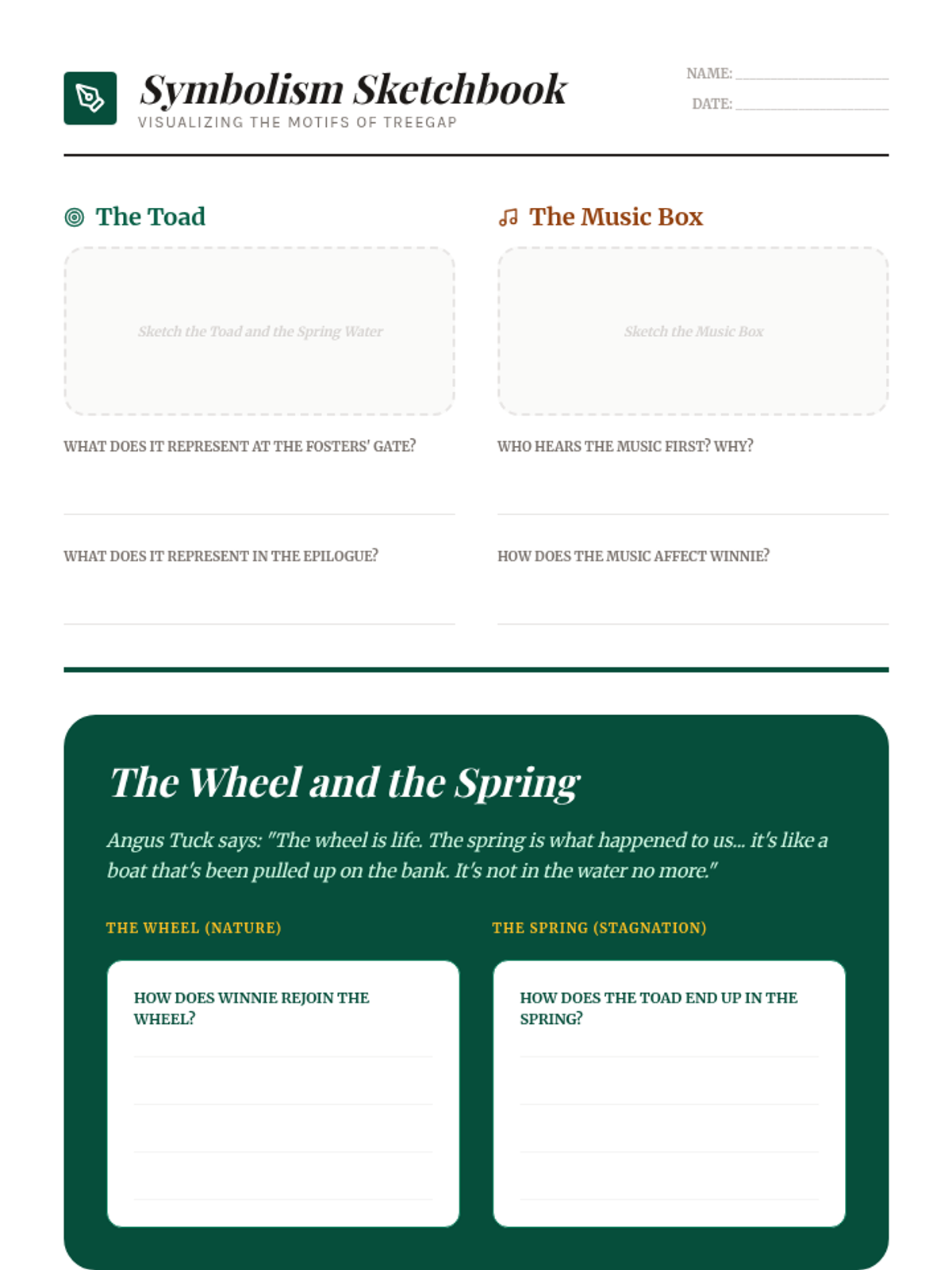
Decodes the major symbols of the novel, including the toad, the spring, and the music box, and their connection to the characters.
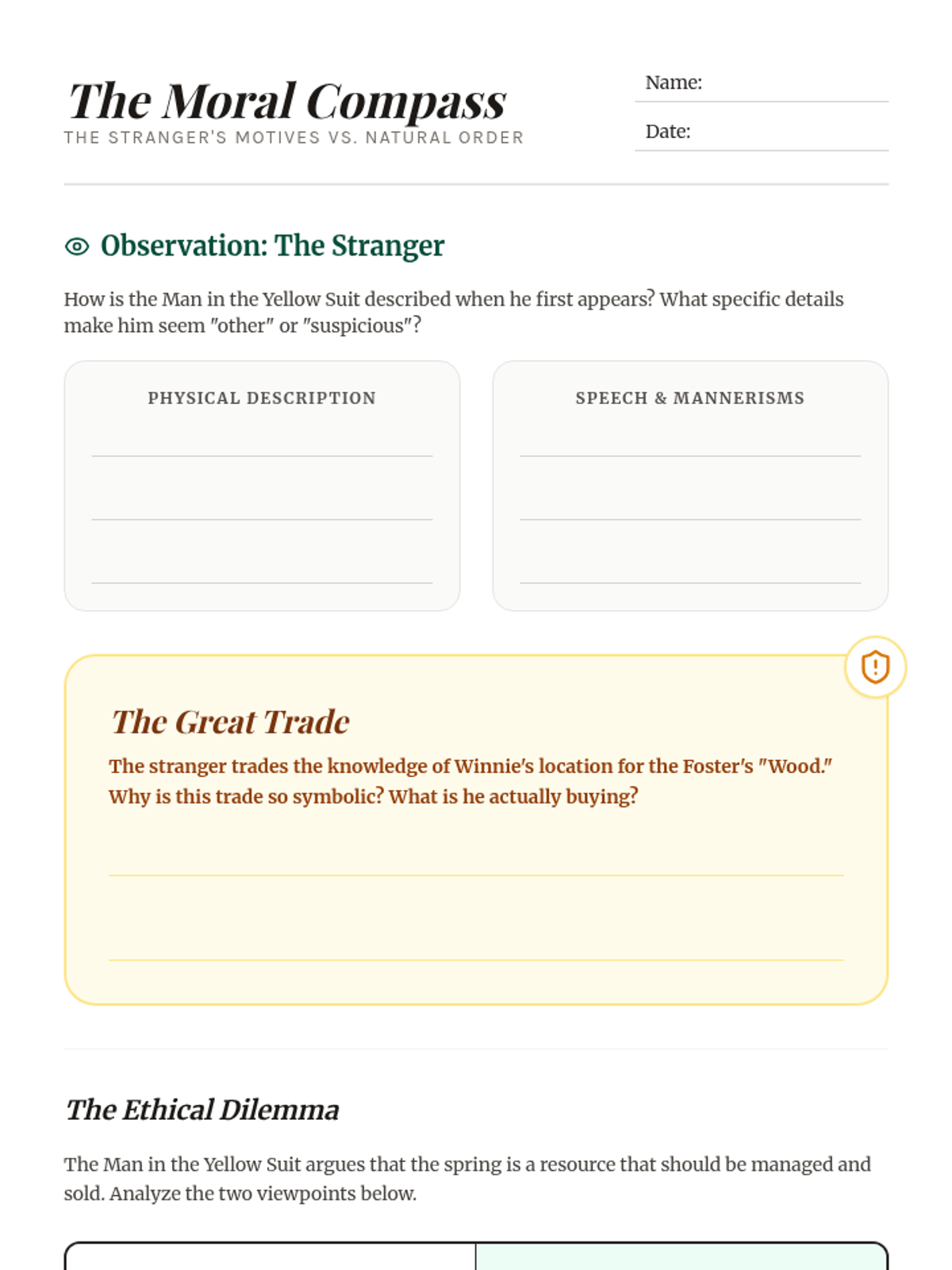
Analyzes the Man in the Yellow Suit as a foil to the Tucks, focusing on themes of greed versus the natural order.
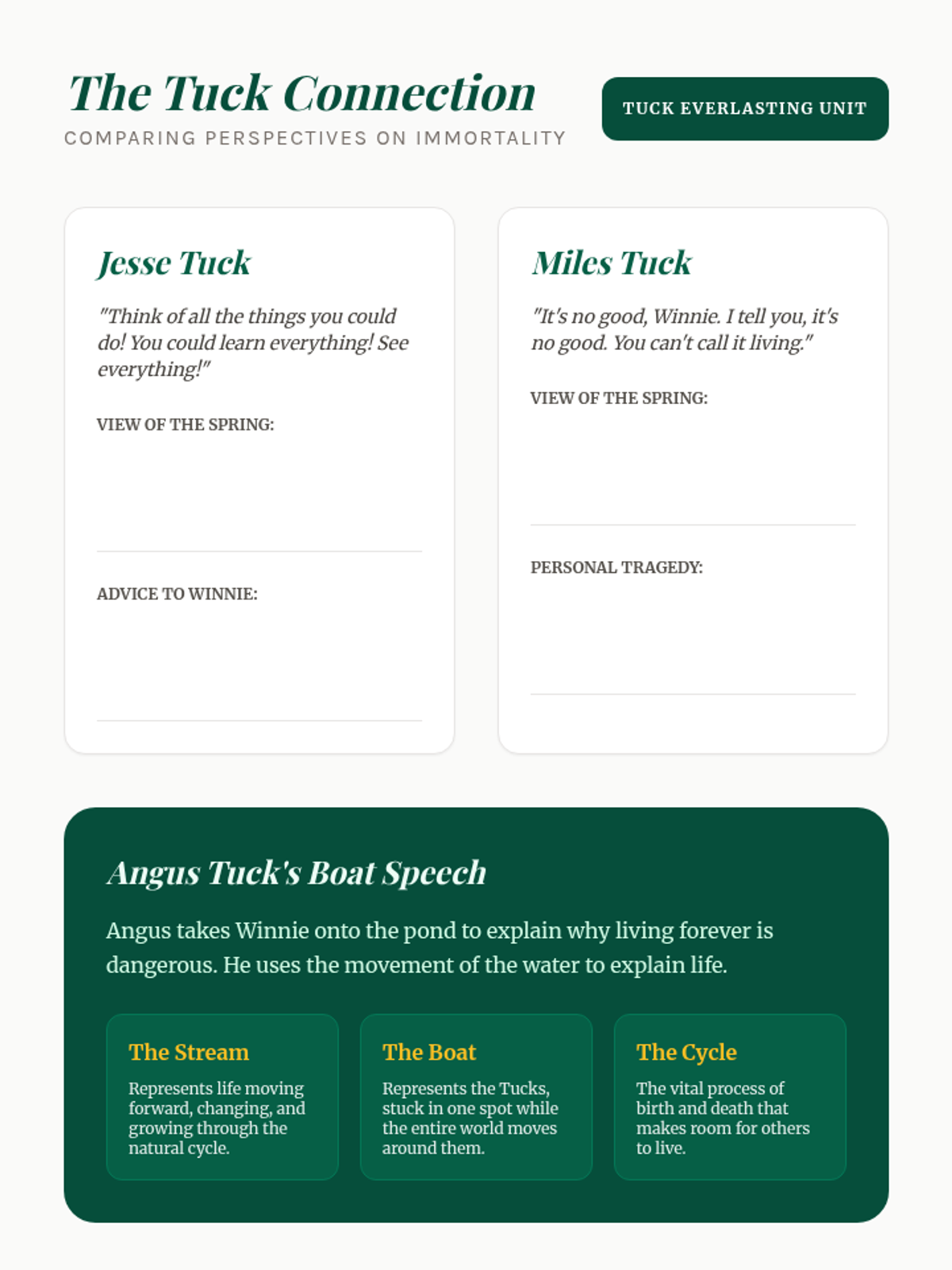
Explores the Tucks' unique perspective on immortality and how Winnie's world expands when she learns their secret.
Introduces the central metaphor of the wheel, the setting of Treegap, and the character of Winnie Foster as she contemplates her first flight from home.
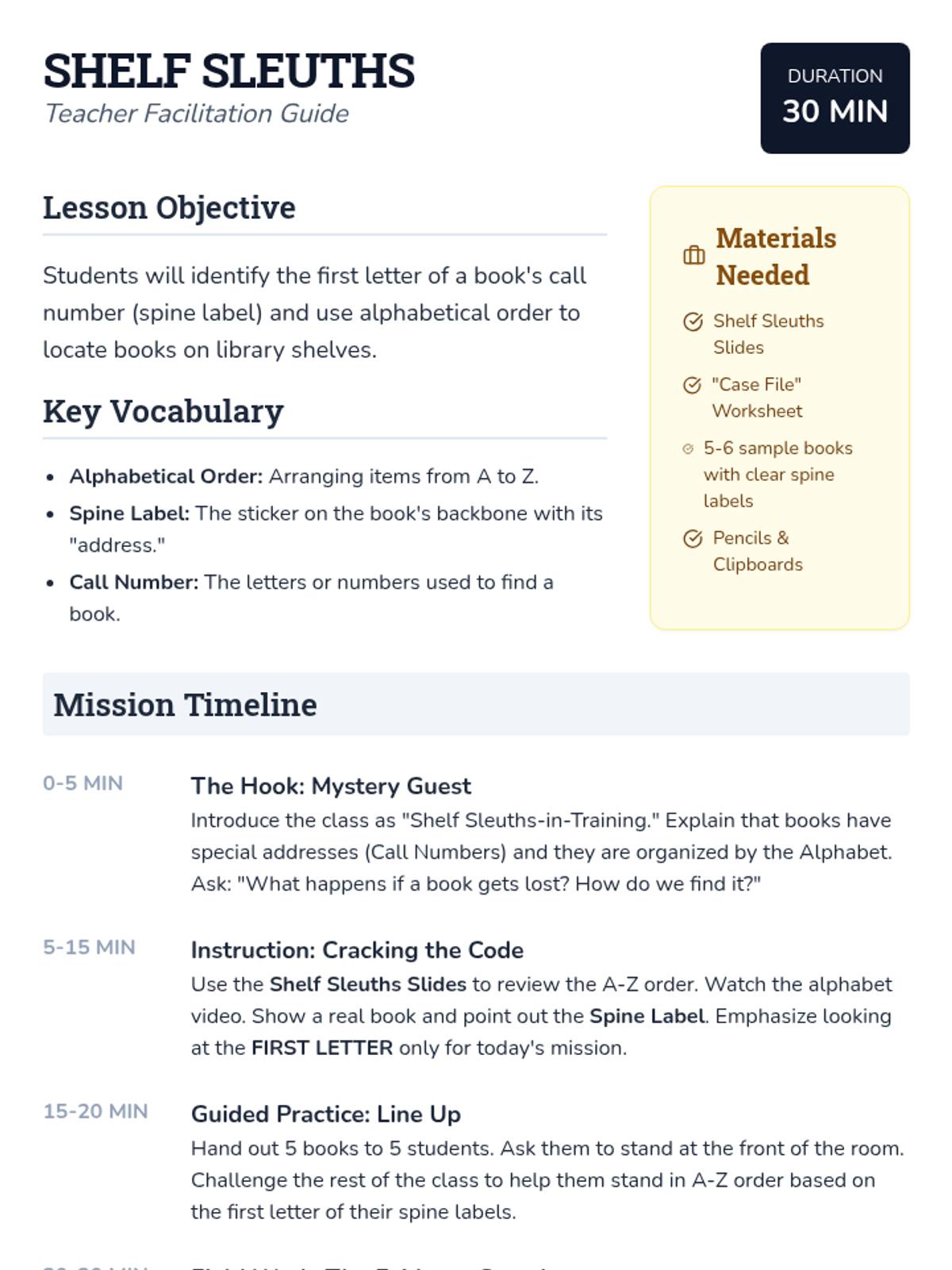
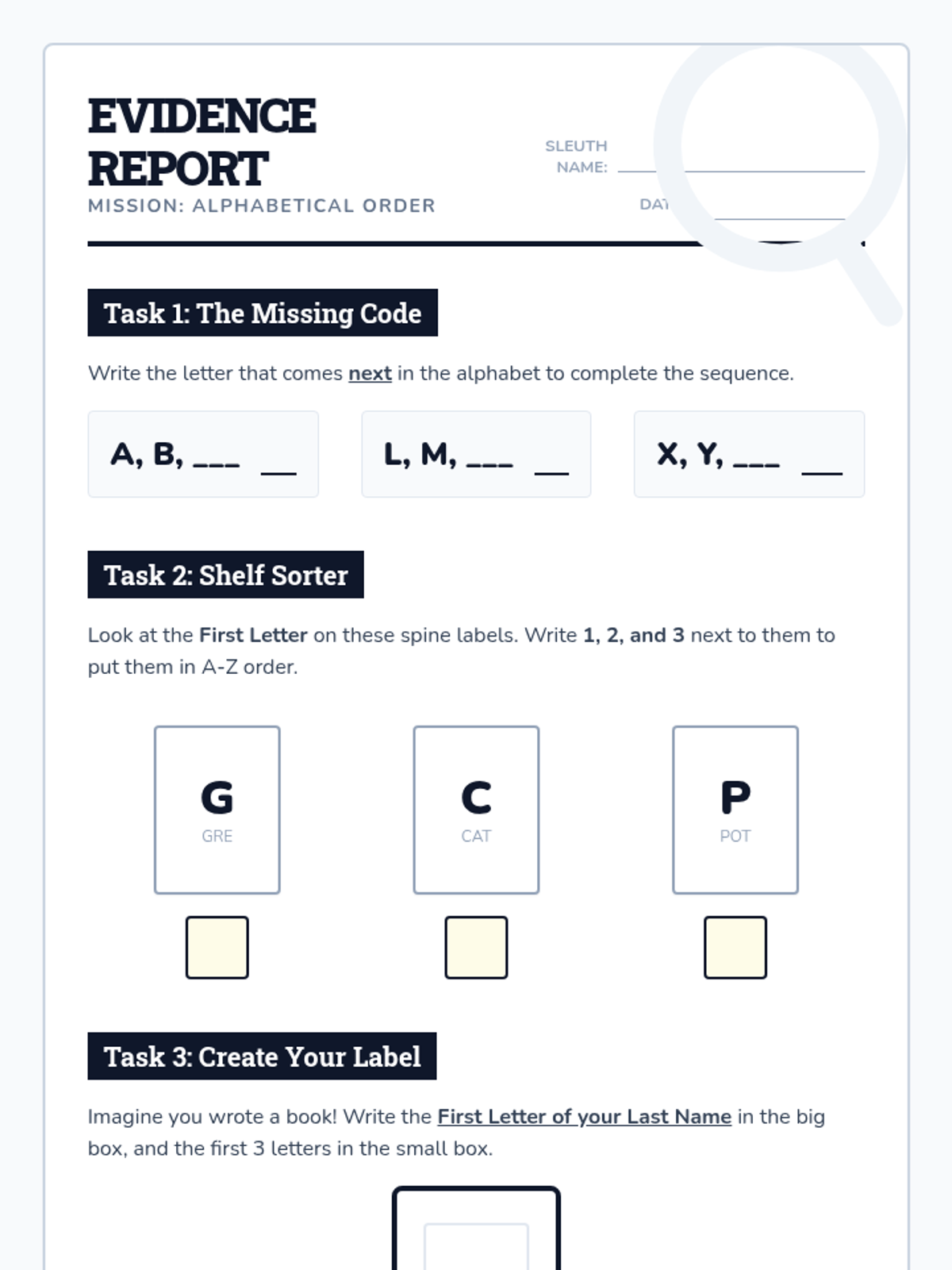
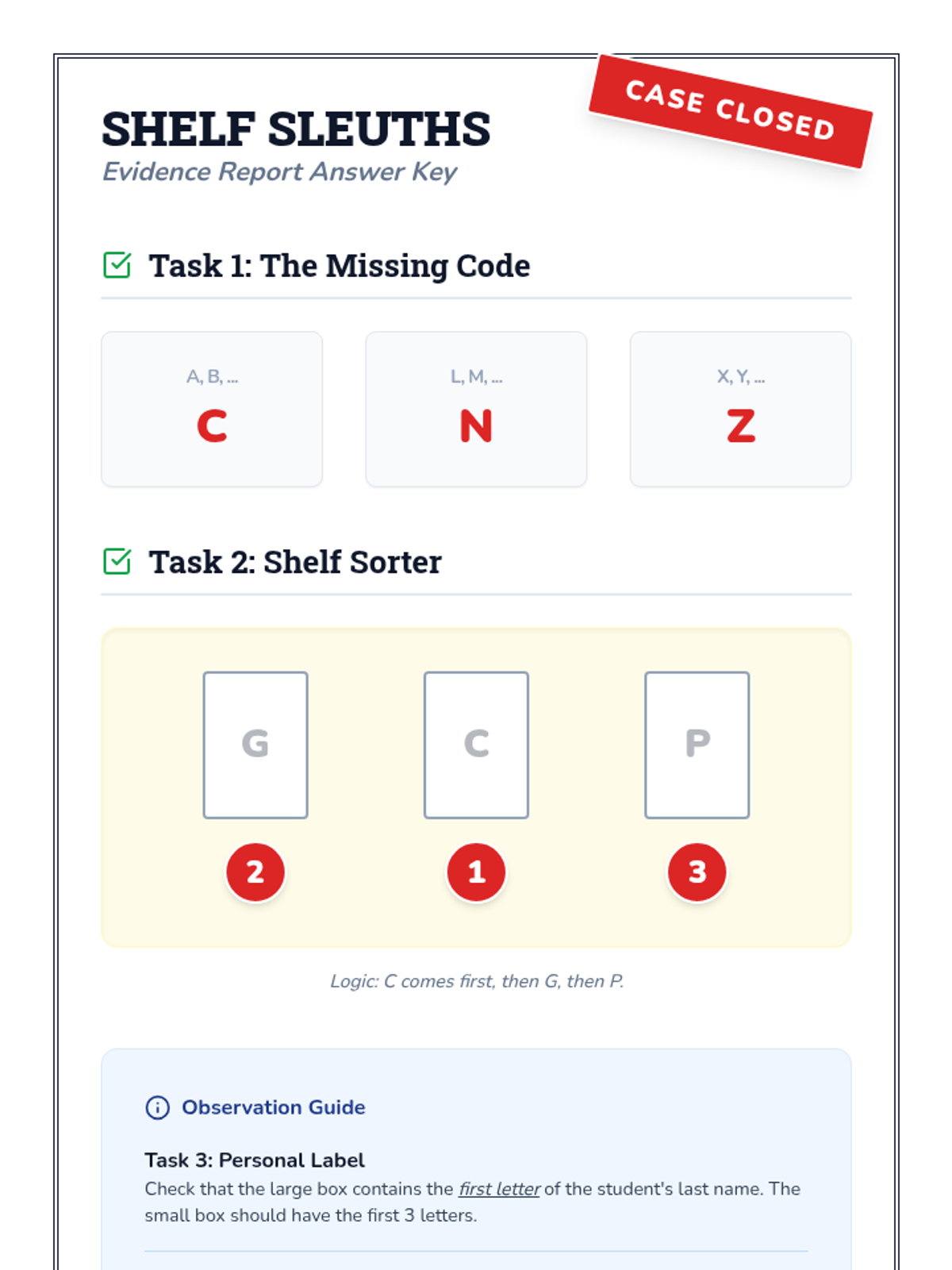
A 30-minute introductory lesson for 1st-3rd graders on alphabetical order (first letter) in a library setting, focusing on finding books by call number.
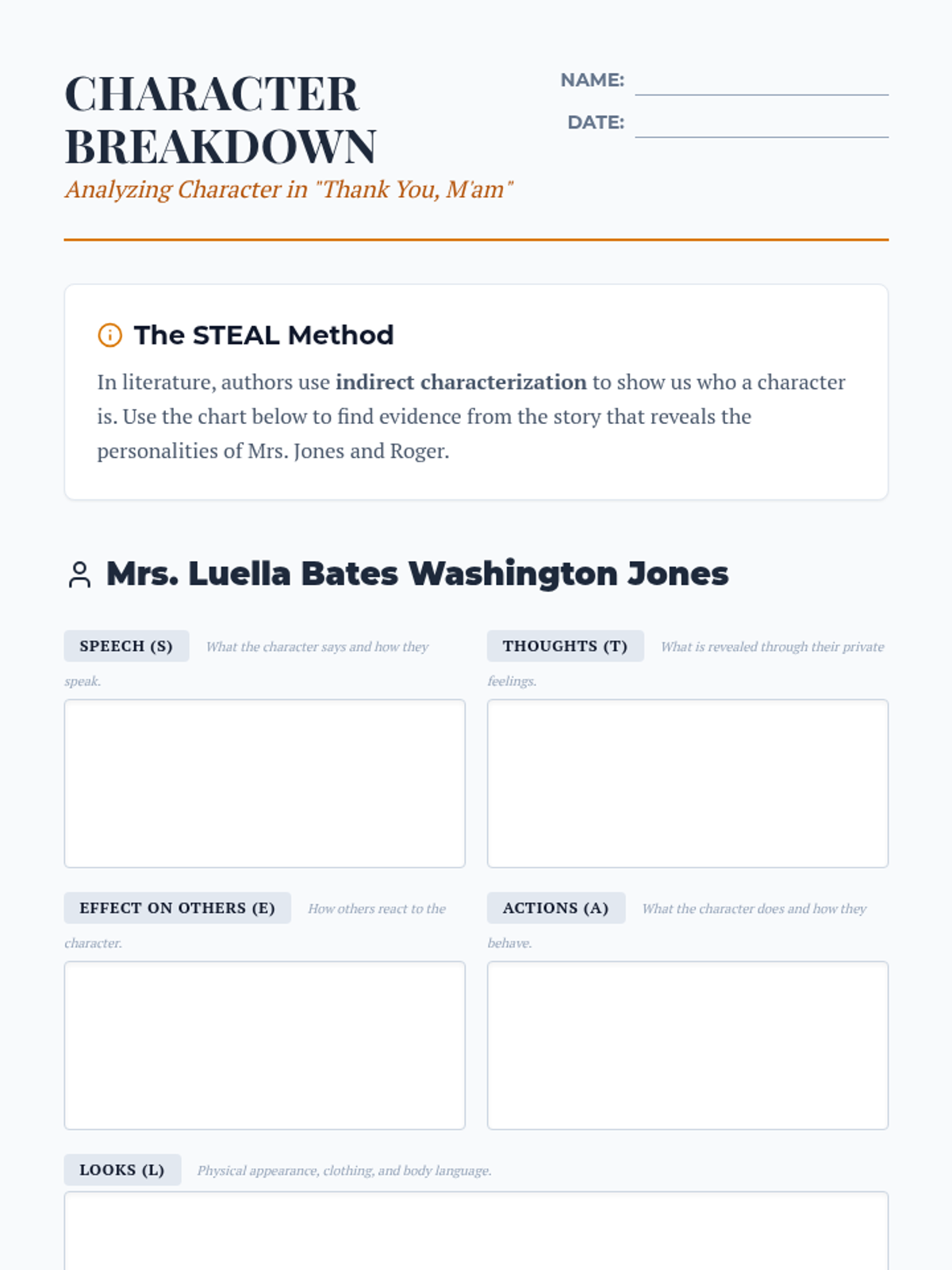
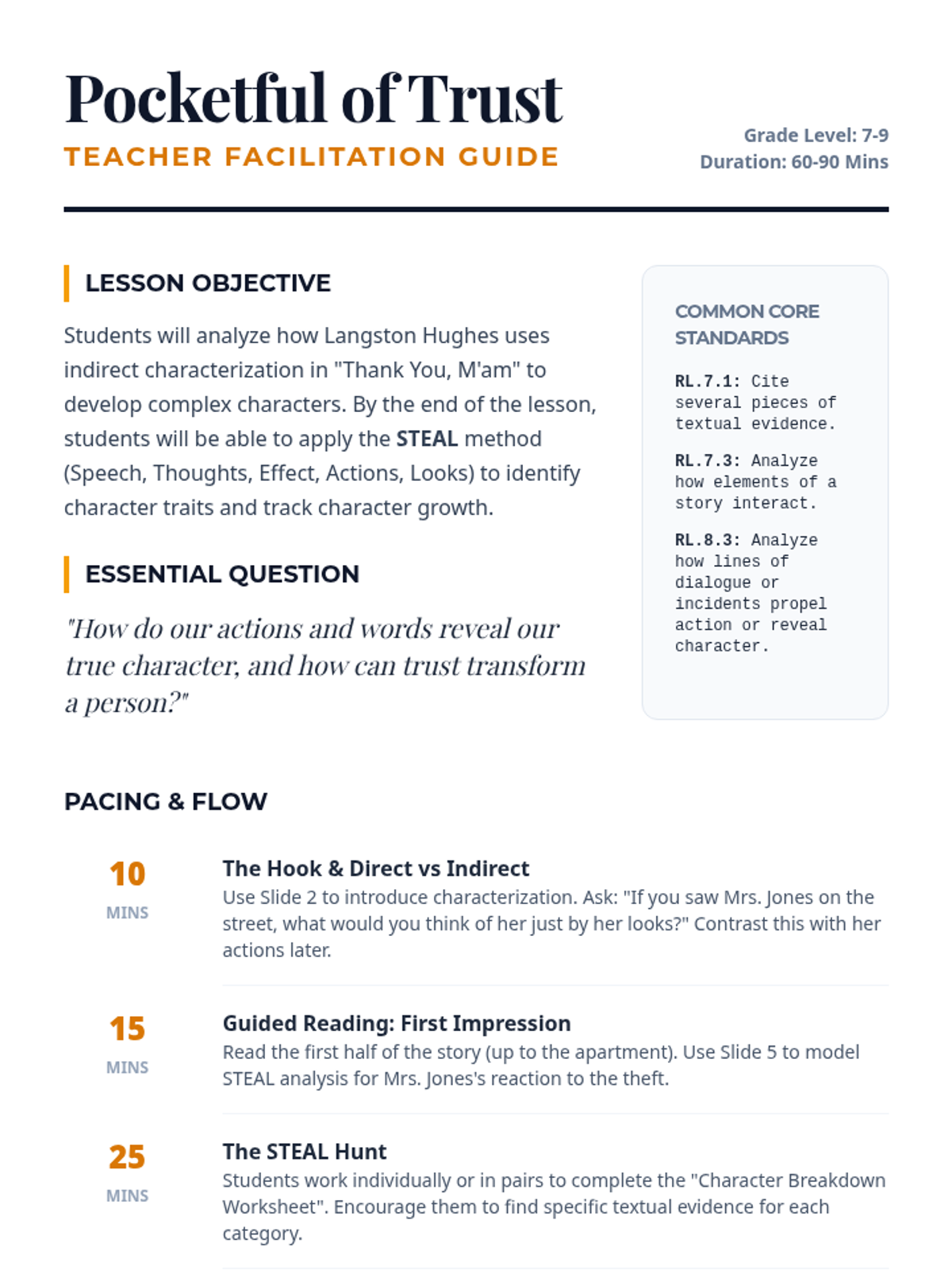
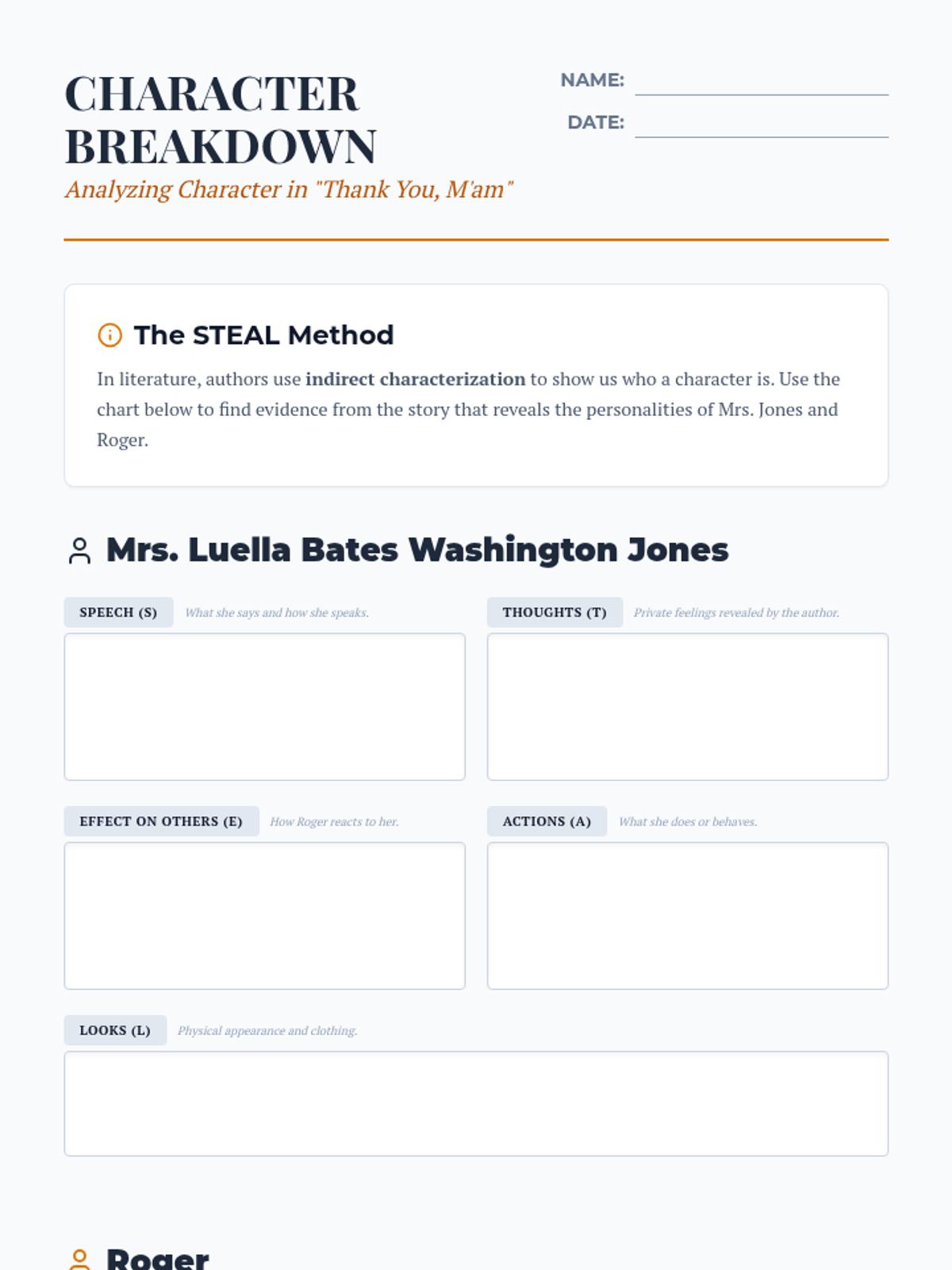
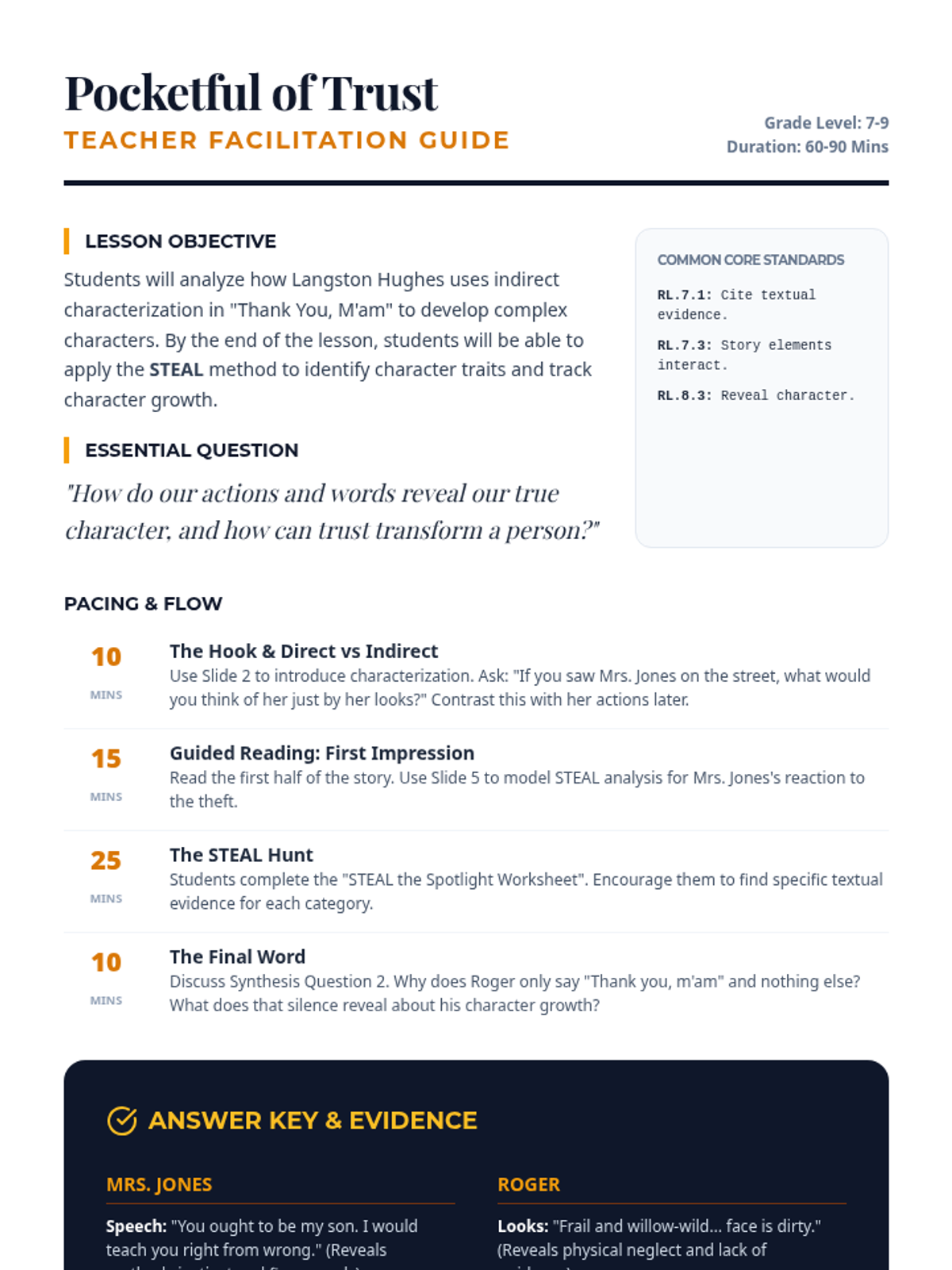
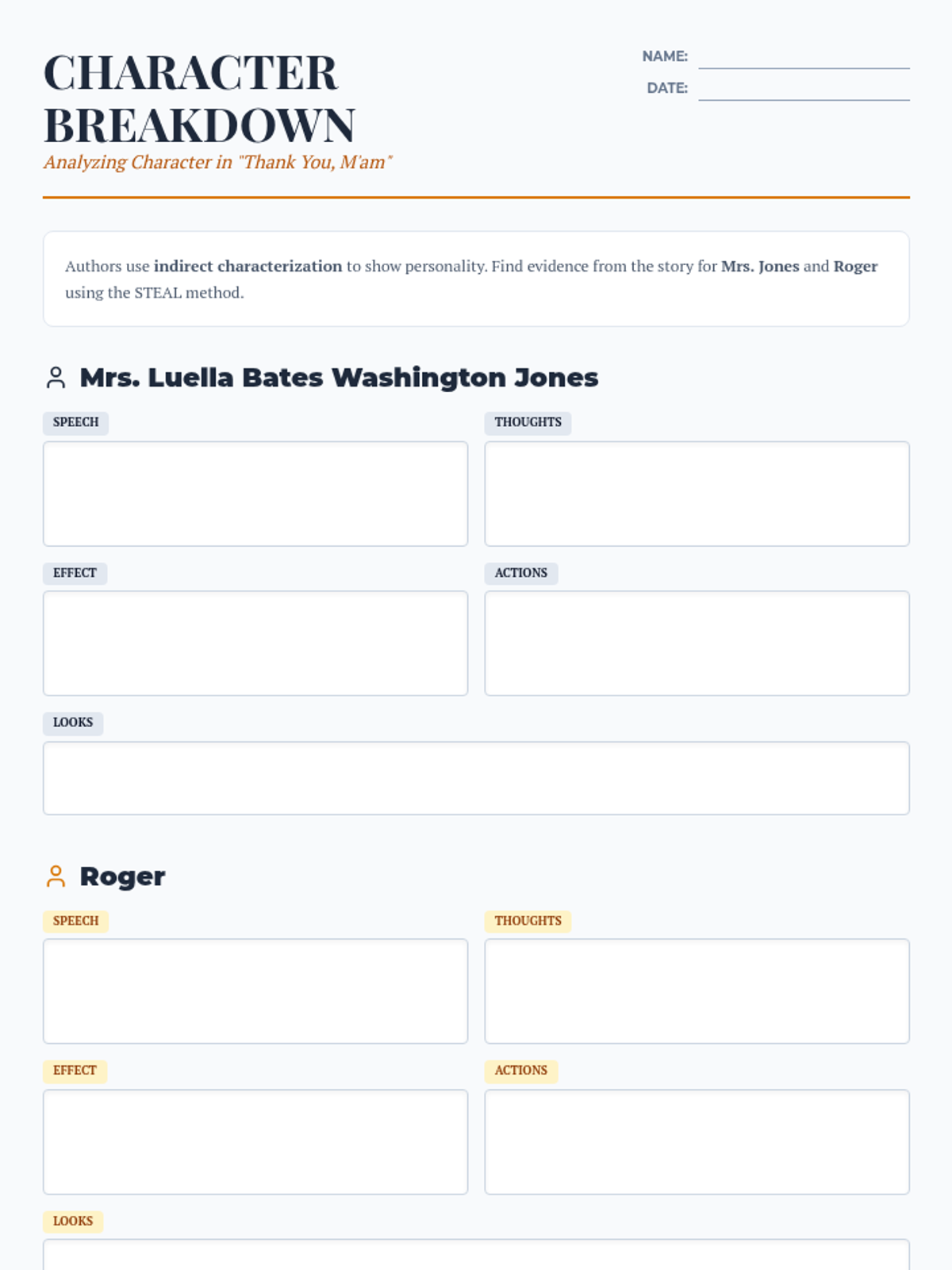
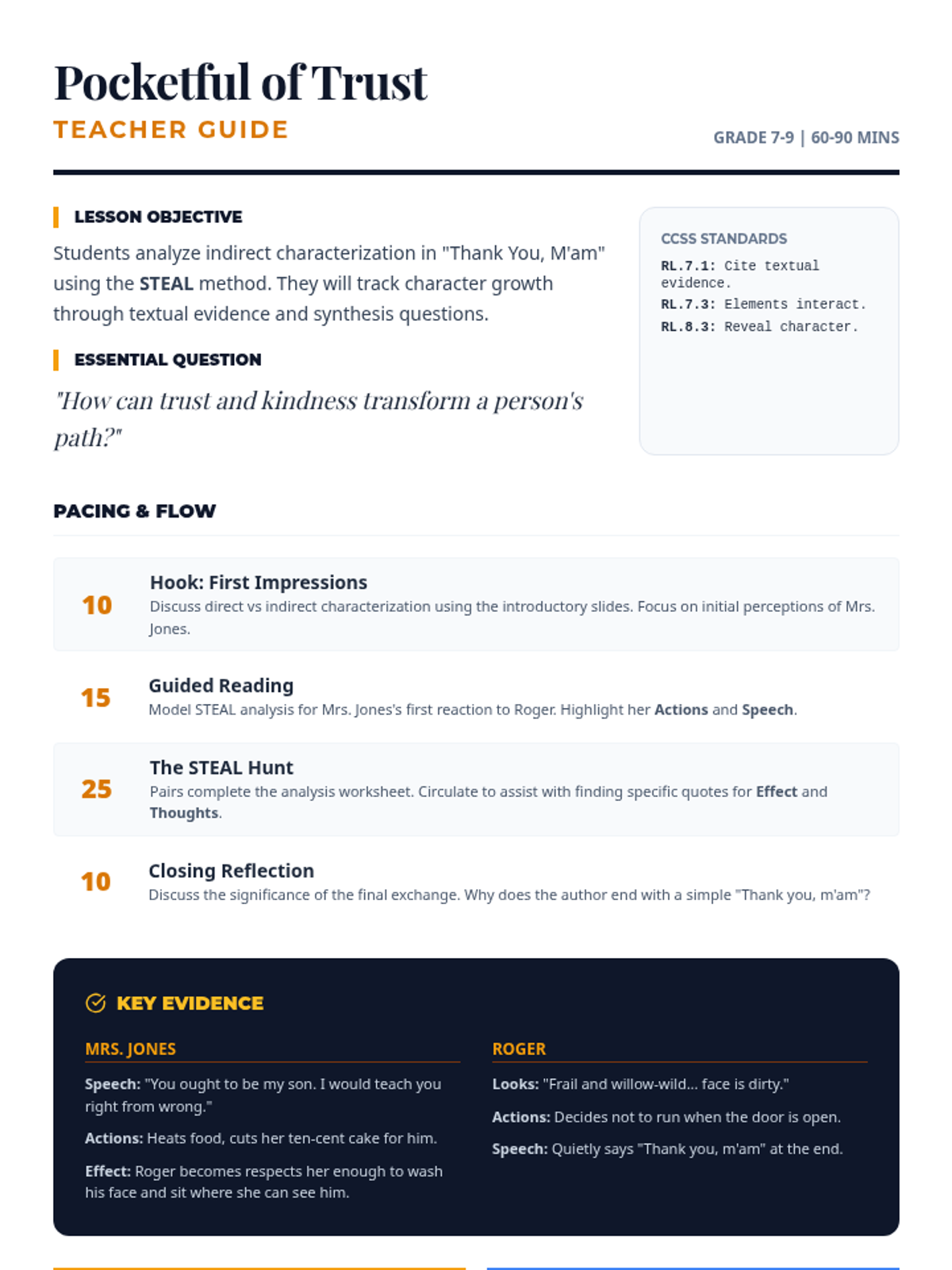
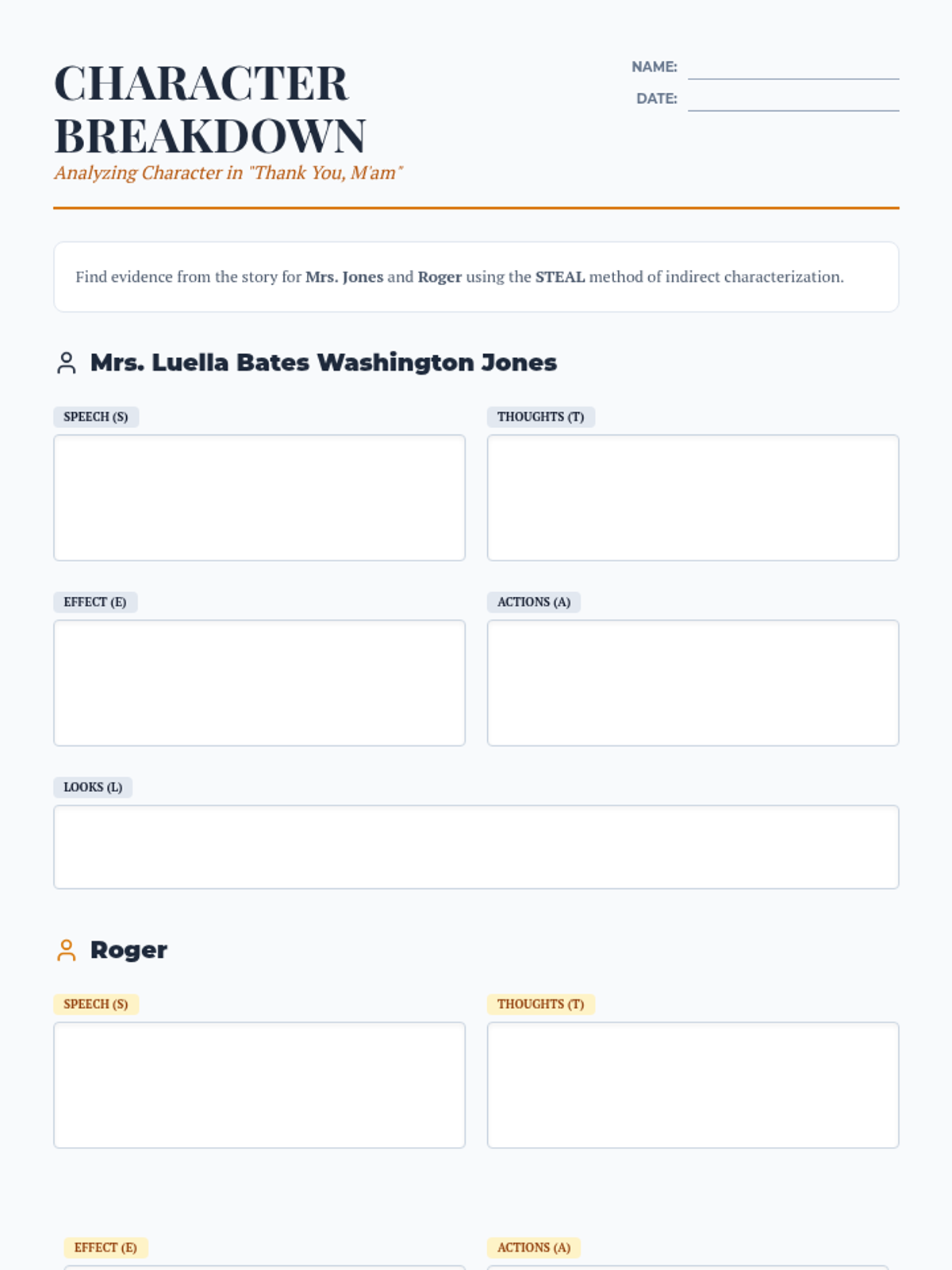
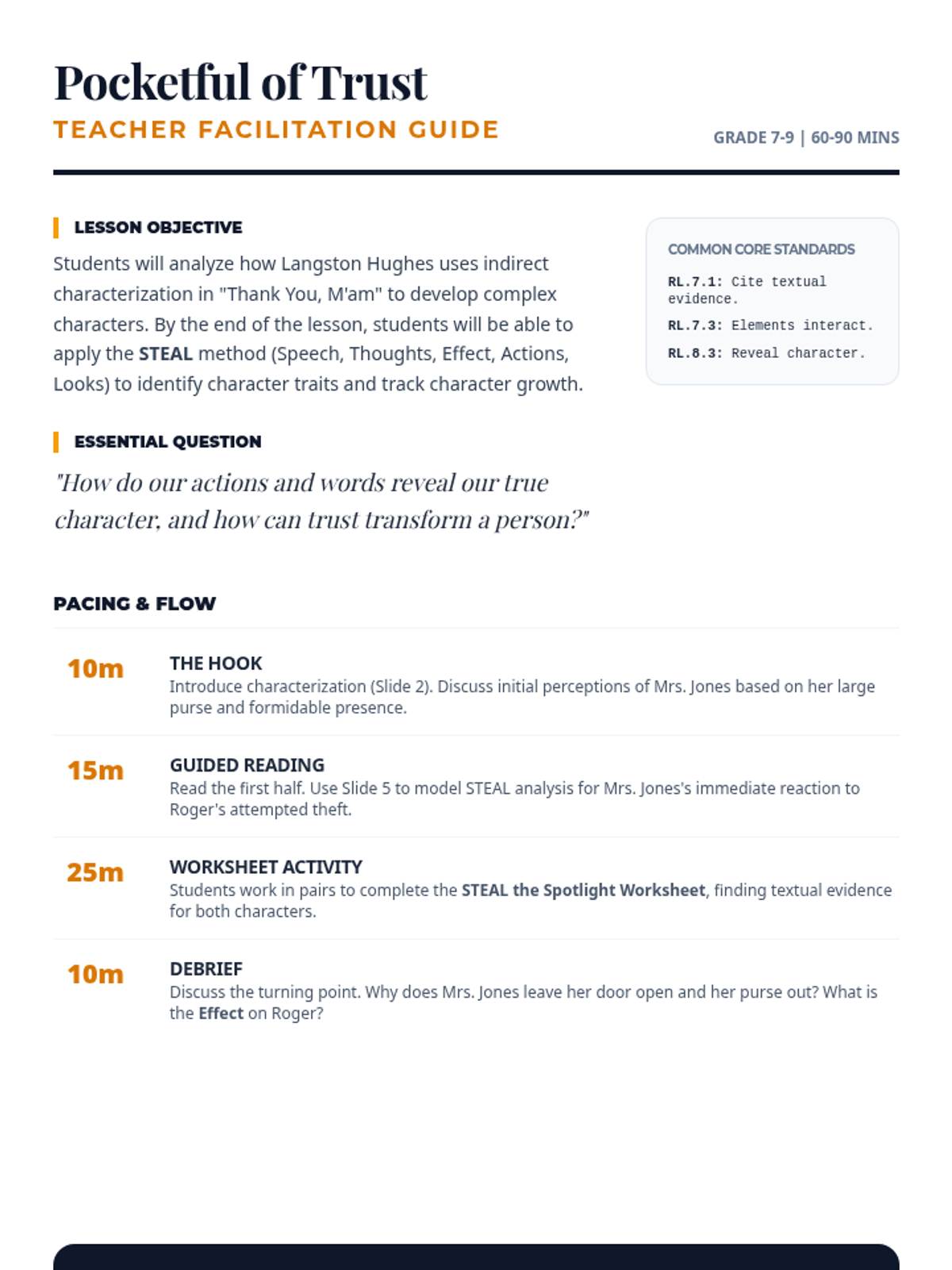
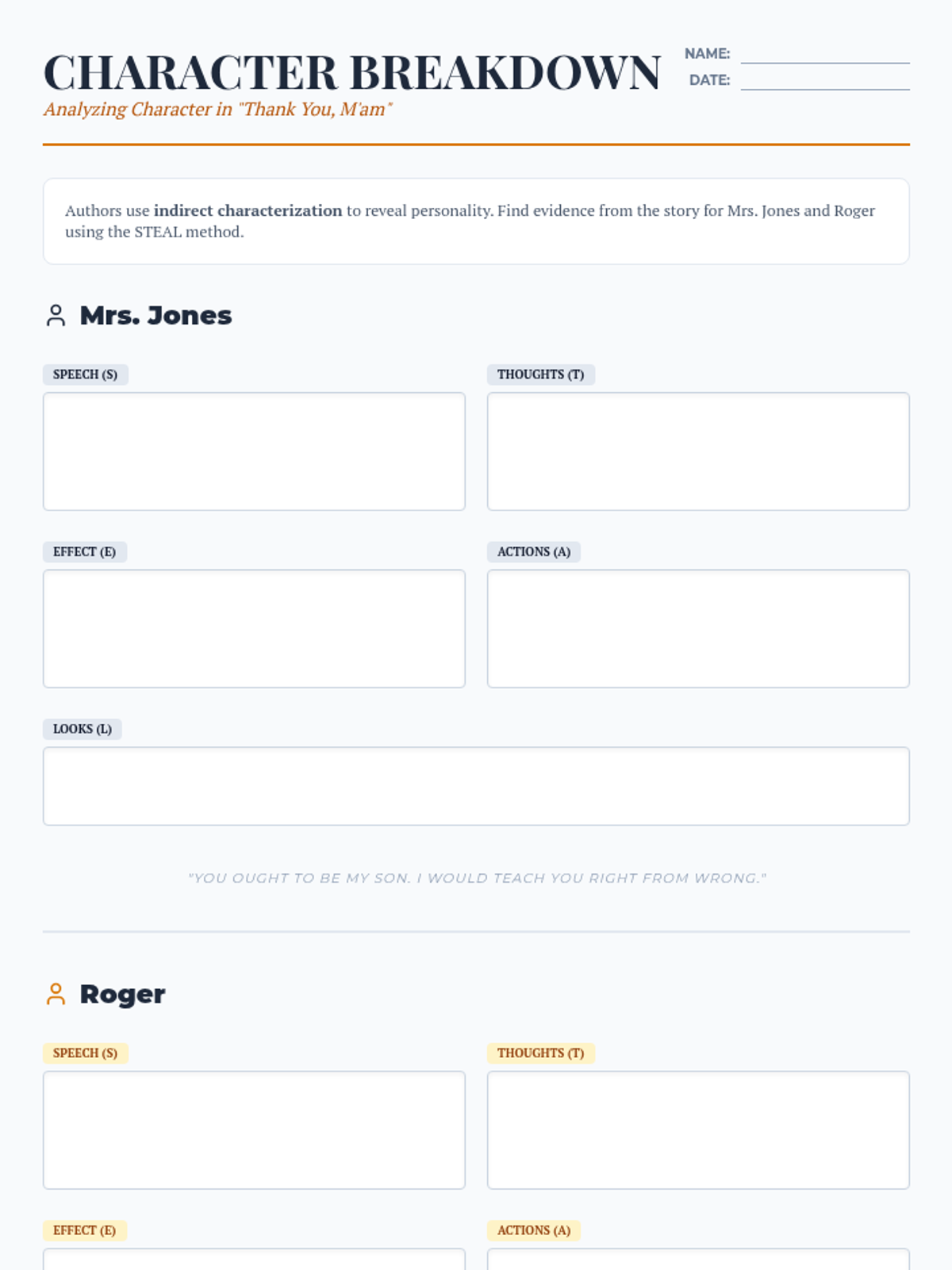
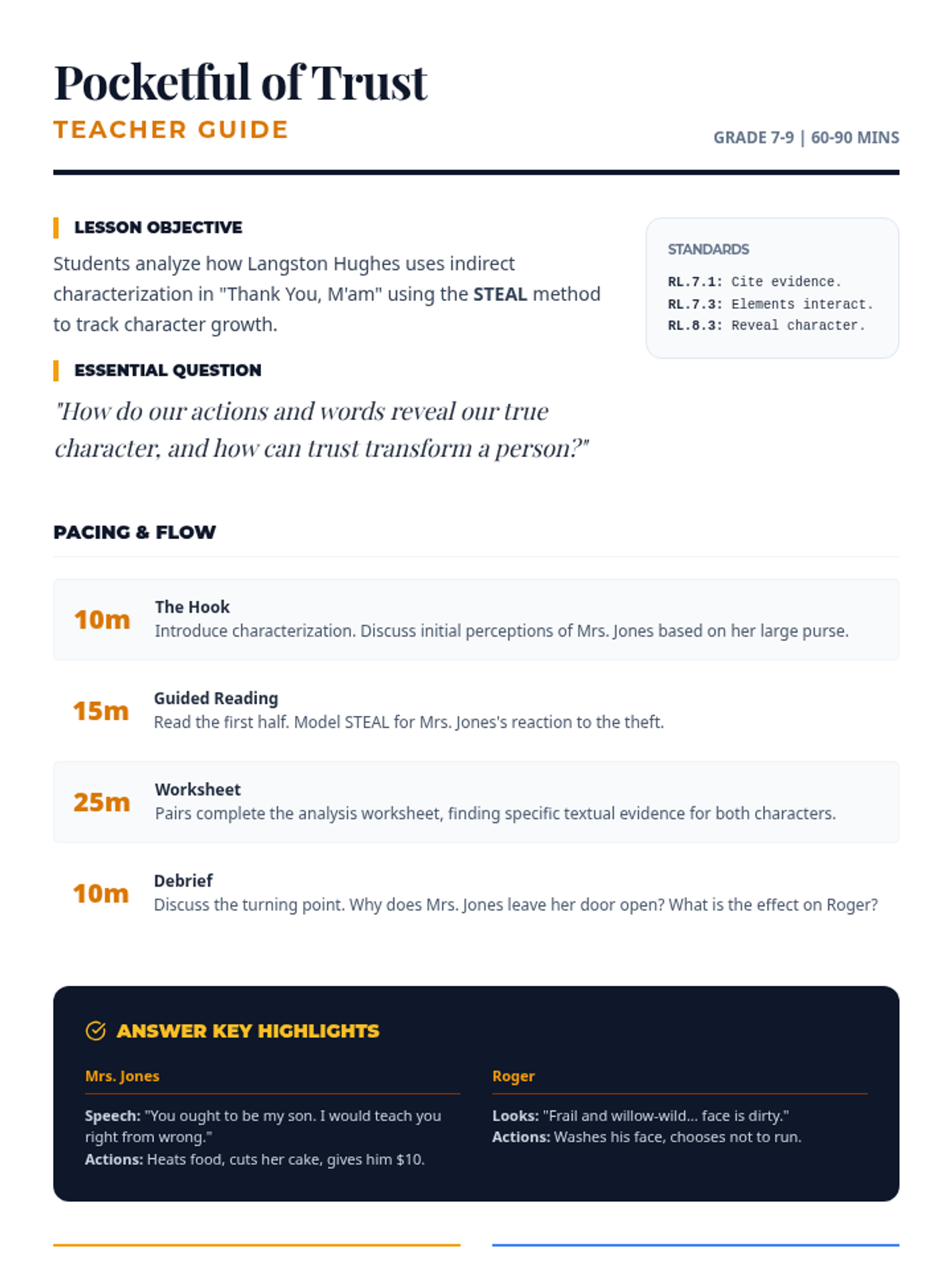
A lesson exploring characterization in Langston Hughes's 'Thank You, M'am' using the STEAL method to analyze the complexity of Mrs. Jones and Roger.
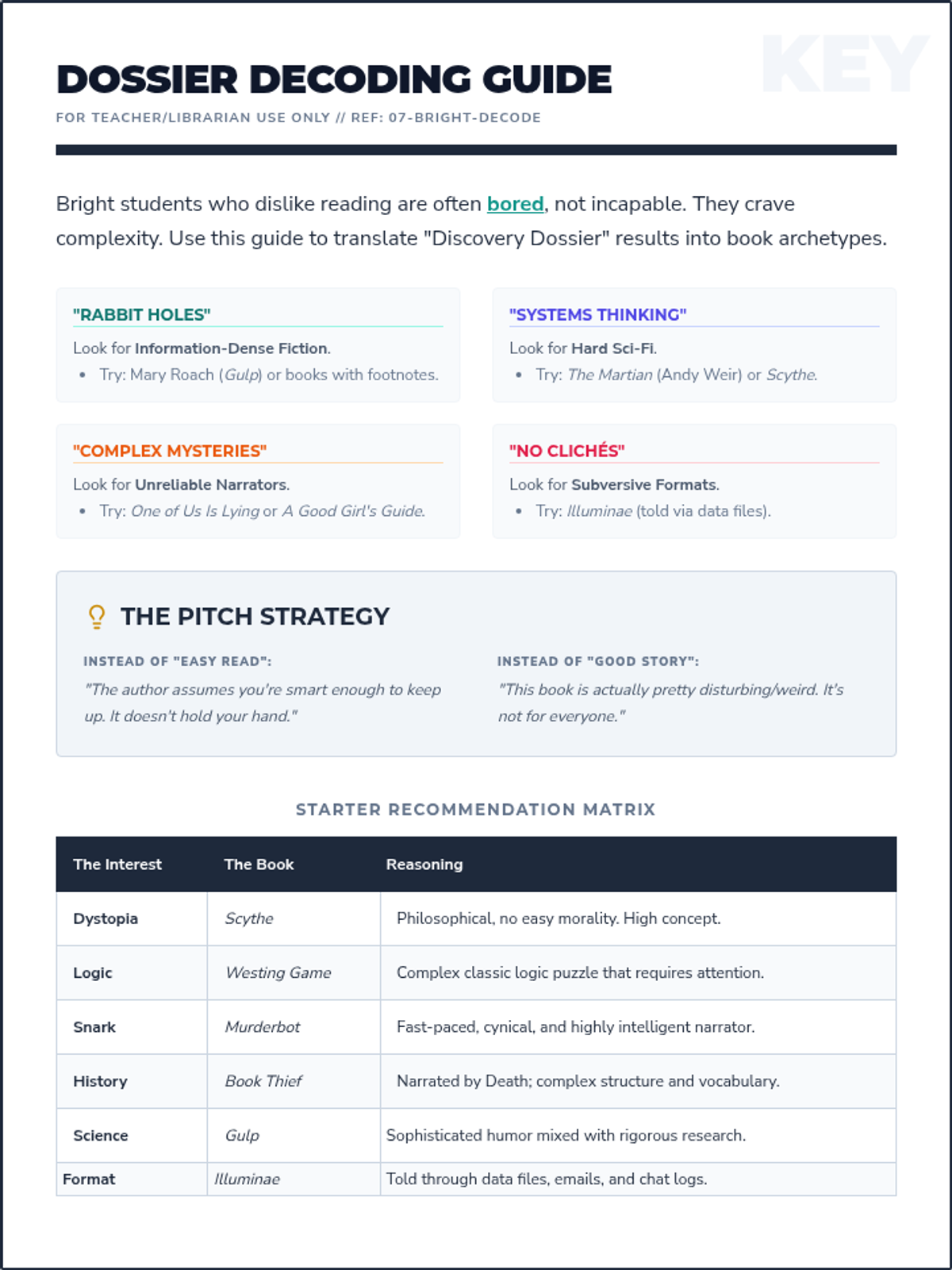
A comprehensive diagnostic toolset designed for a bright, disengaged 7th-grade reader to uncover hidden interests and media preferences that can be translated into book recommendations.
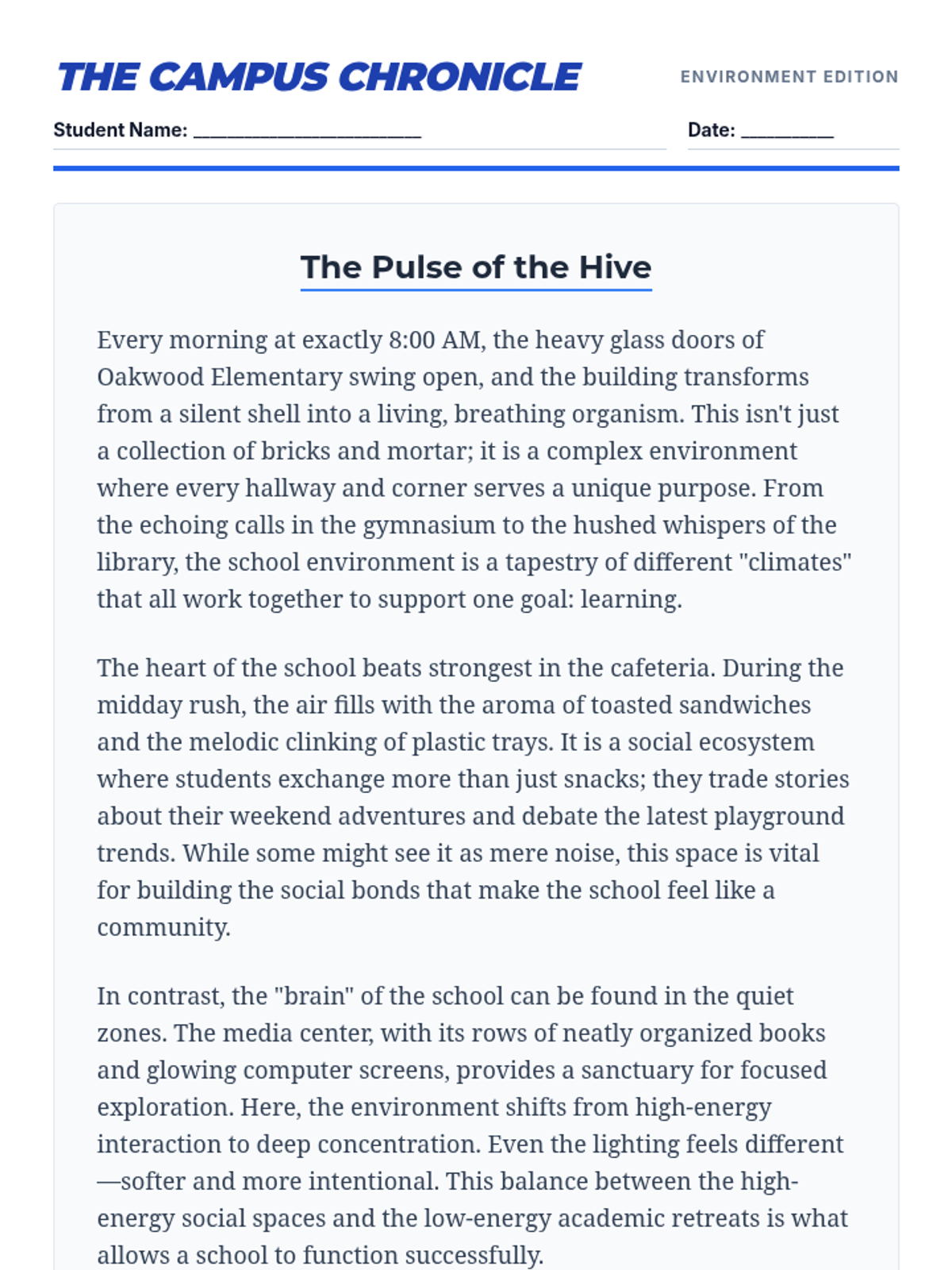
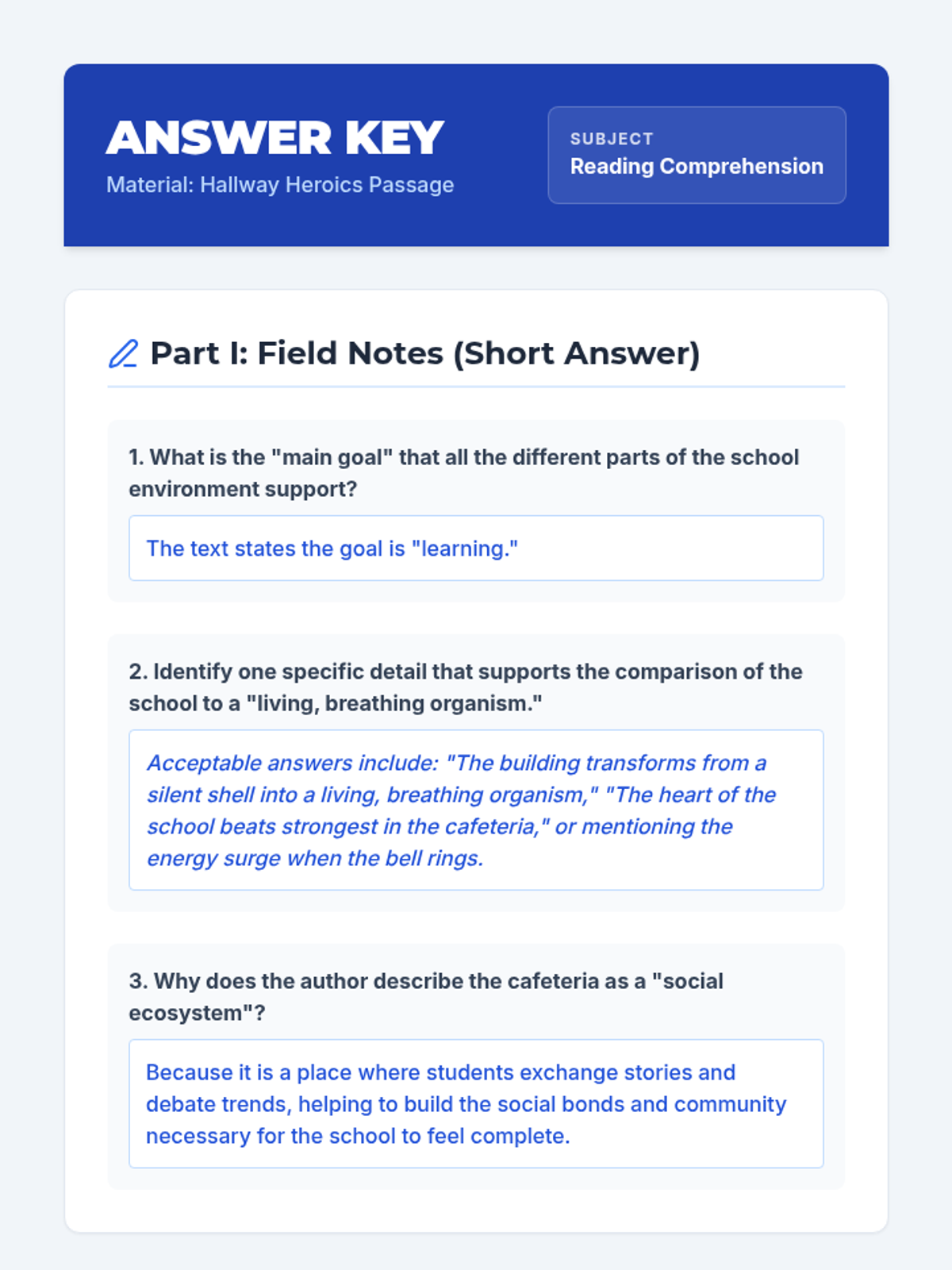
A lesson focused on identifying main ideas and supporting details within a familiar setting: the school environment. Students analyze a descriptive passage to understand how different school spaces contribute to a community.
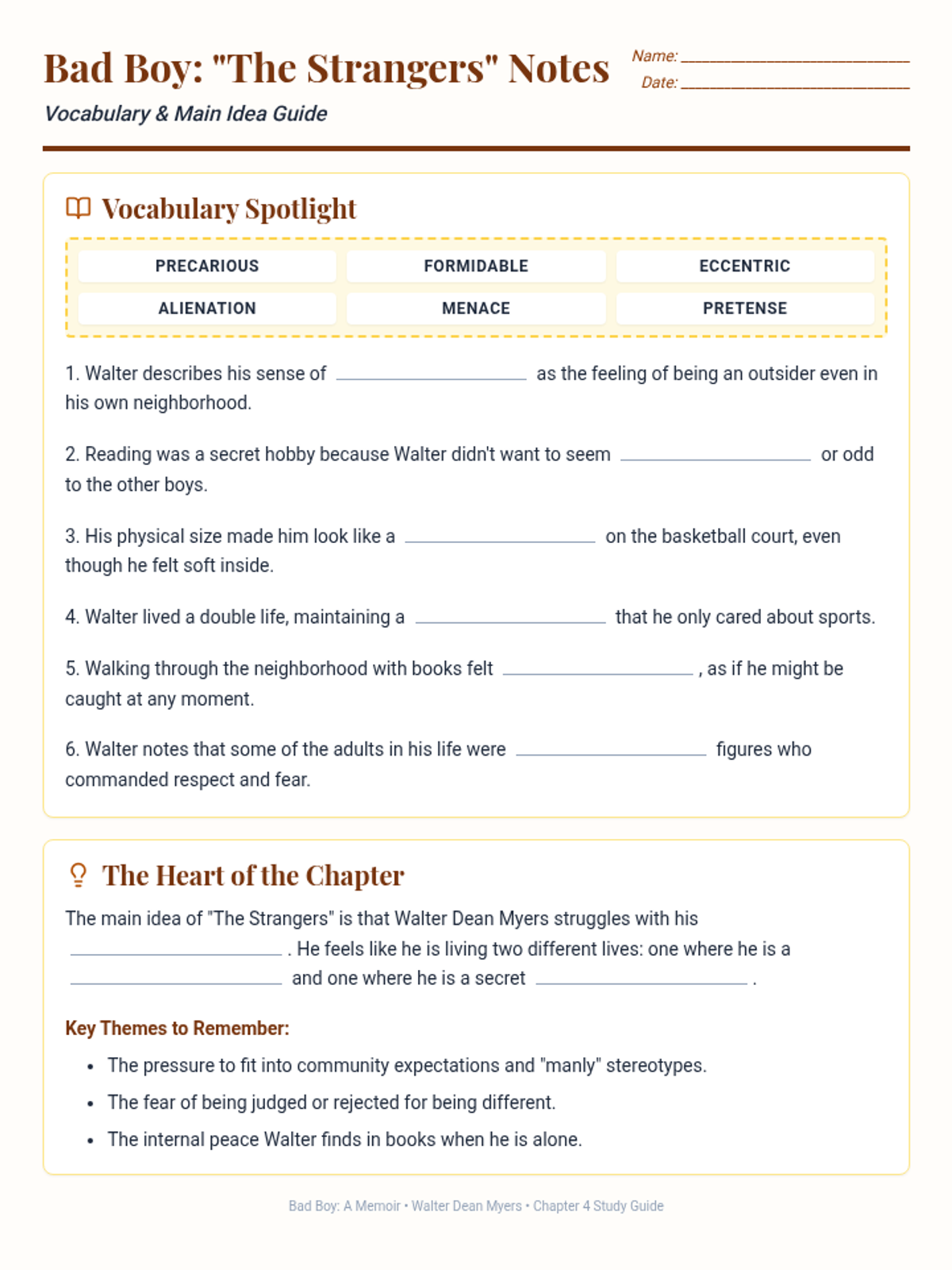
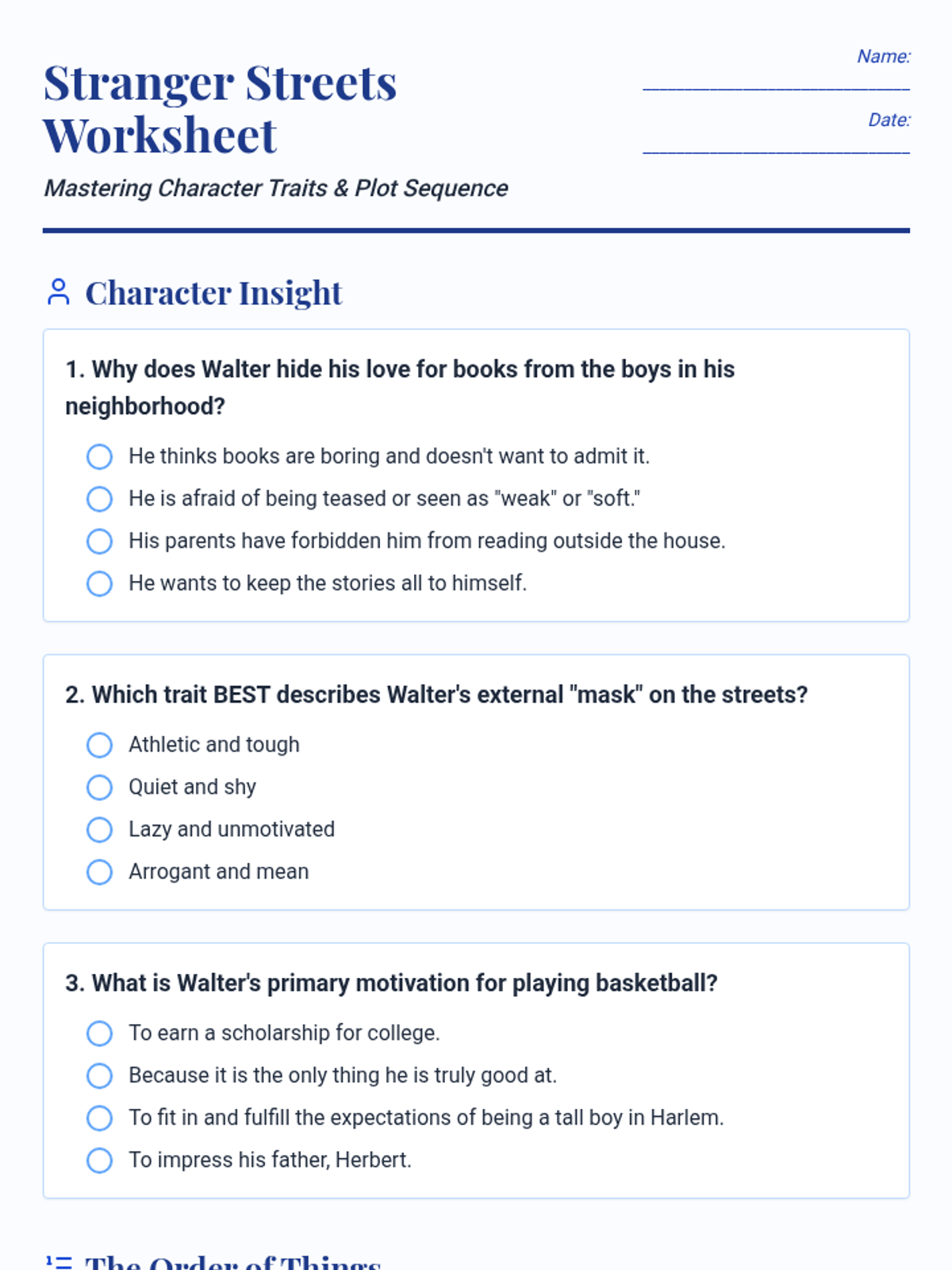
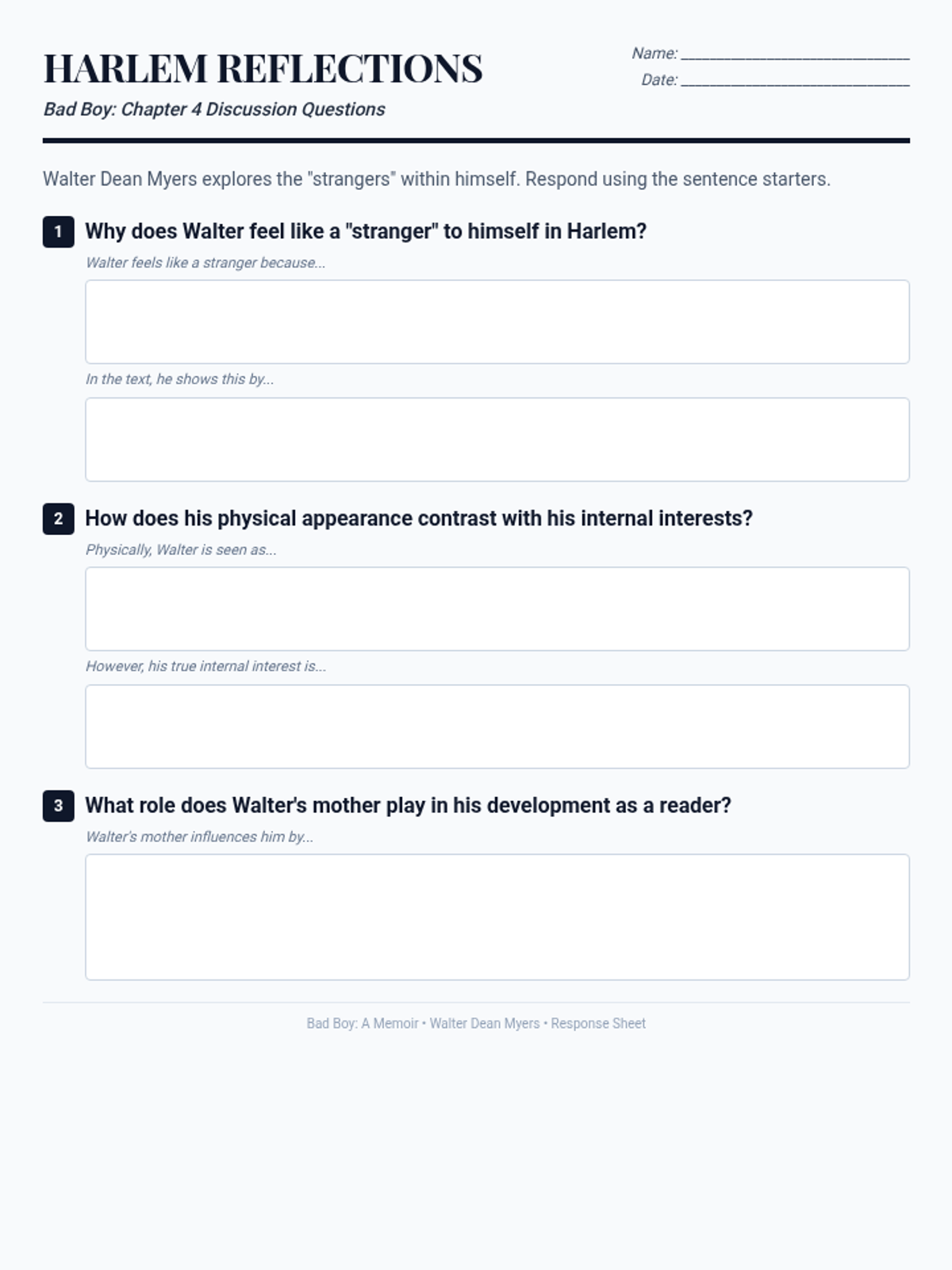
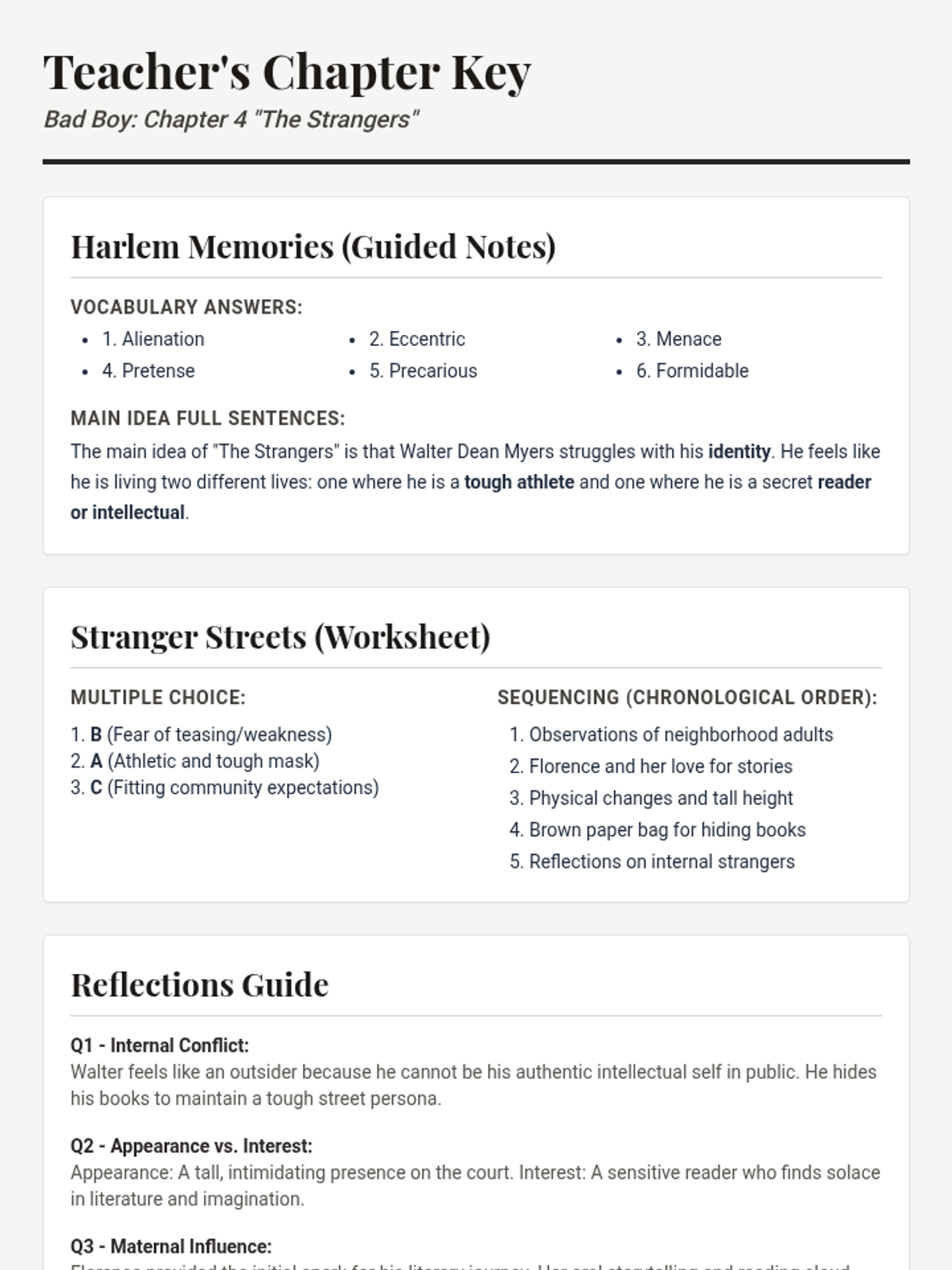
An in-depth look at Chapter 4: 'The Strangers' from Walter Dean Myers' memoir, focusing on identity, hidden passions, and the feeling of alienation.
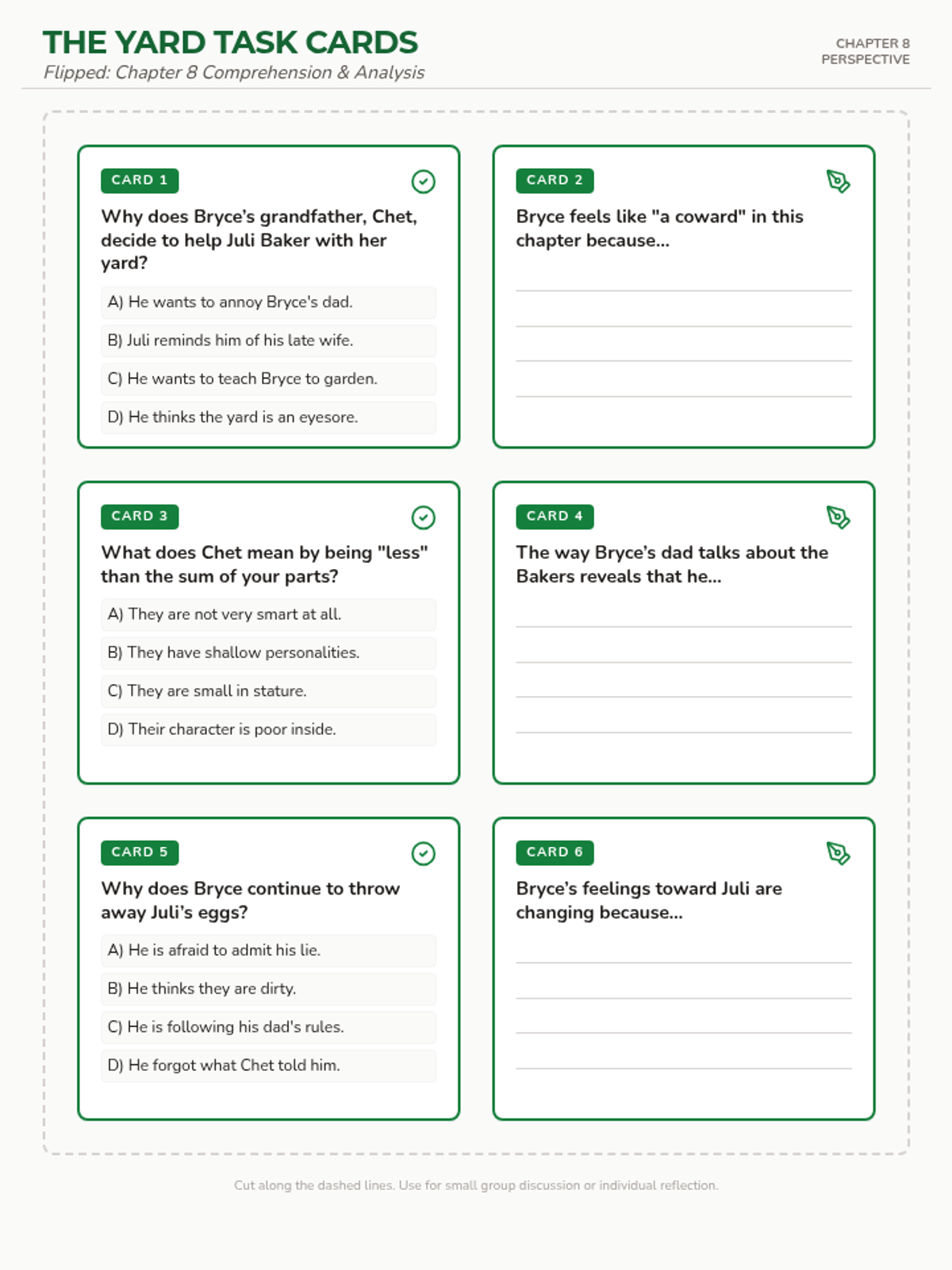
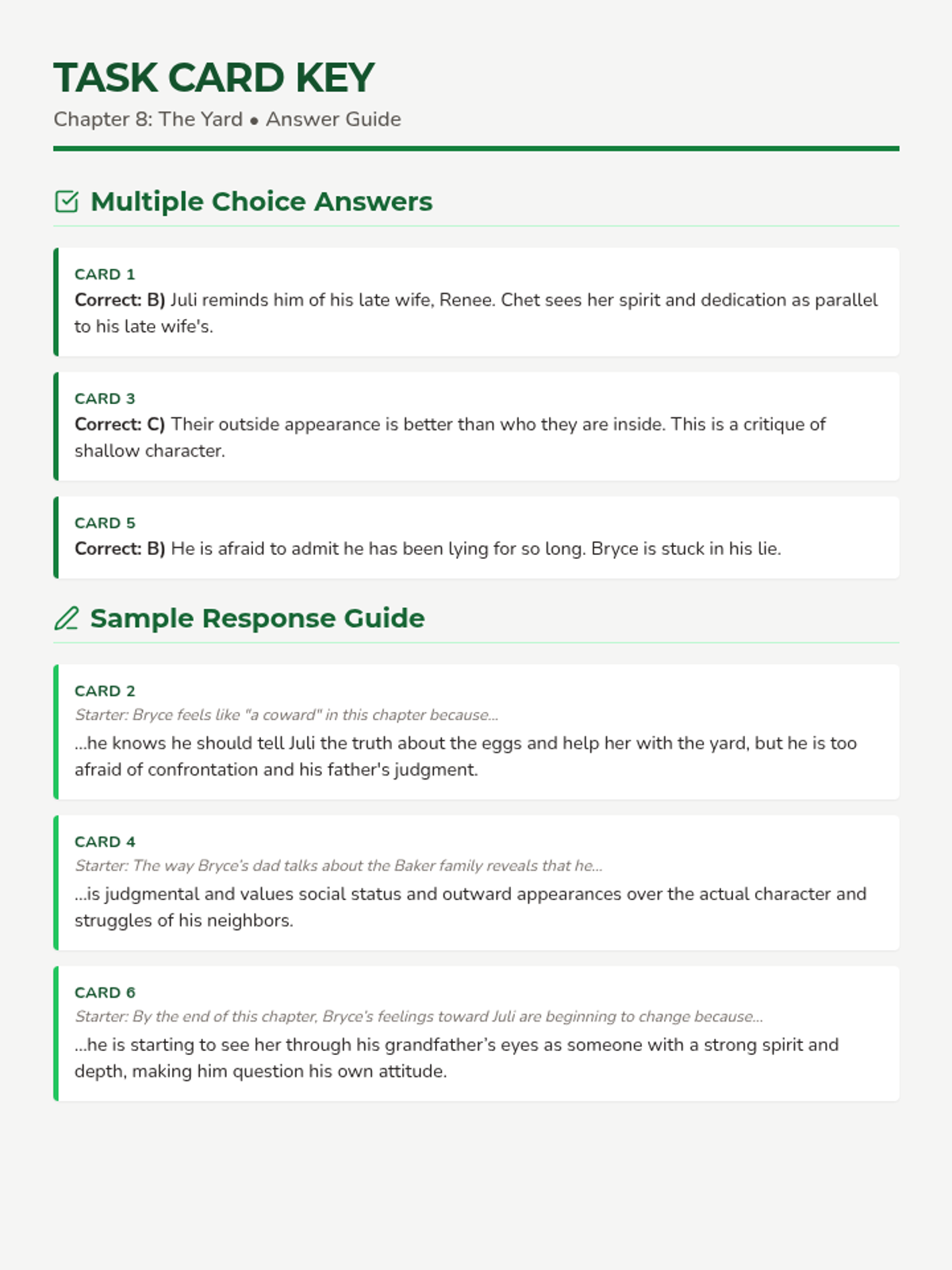
A focused analysis of Chapter 8 from Flipped, exploring Bryce's internal conflict and his grandfather's growing bond with Juli through the lens of character perspective and thematic growth.