Synthesizing affixes and roots to coin new names for inventions, followed by peer review for accuracy.
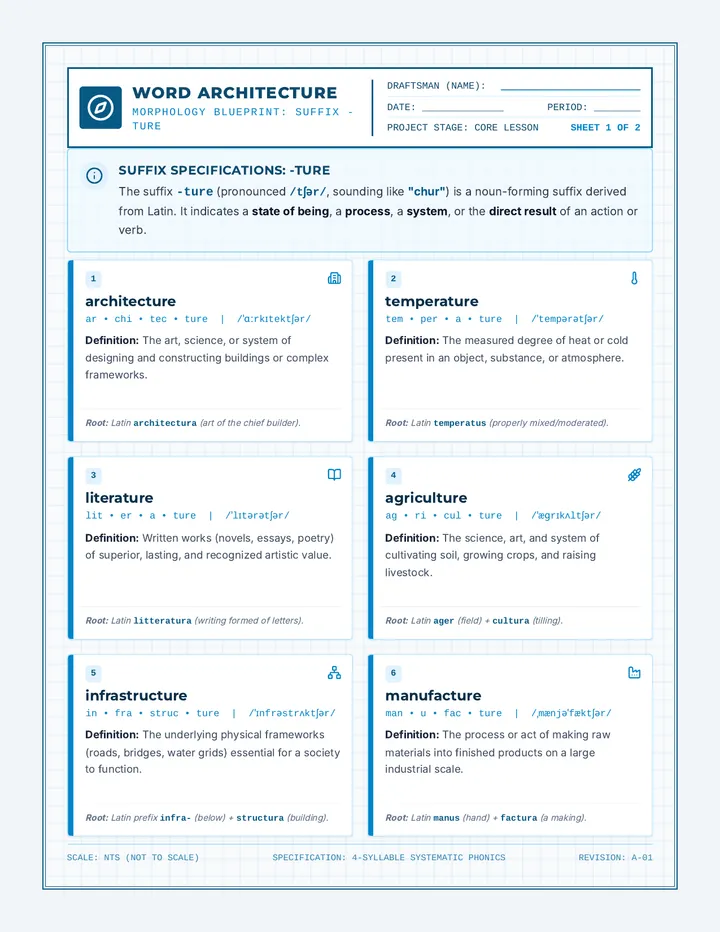
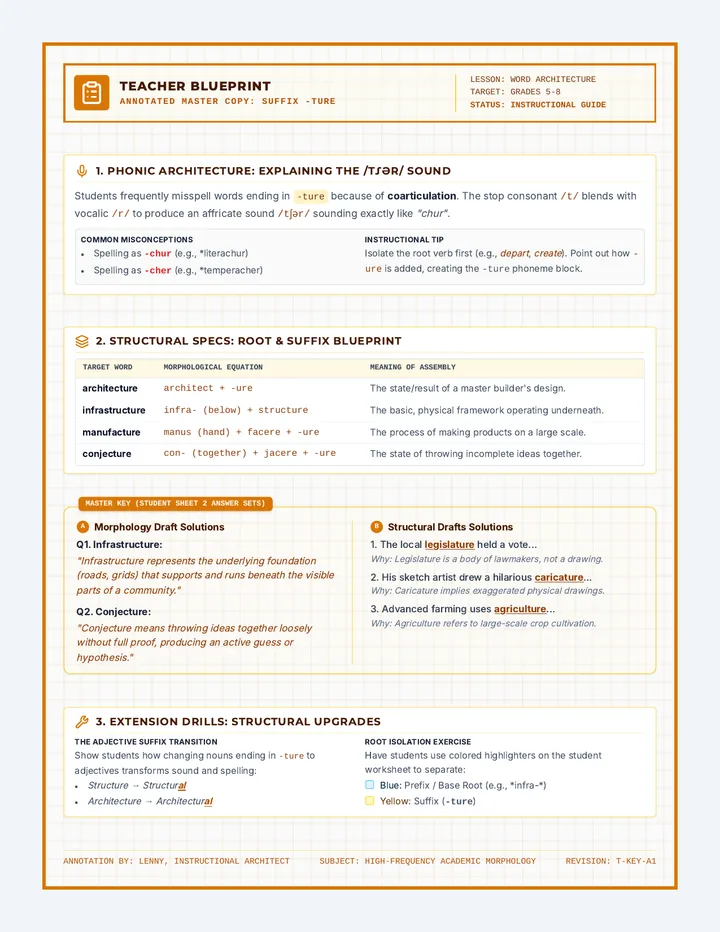
A middle school vocabulary lesson exploring 3-to-4 syllable academic words ending in the suffix -ture. Students examine pronunciation, morphological structure, definitions, and applications through a technical drafting/blueprint theme.
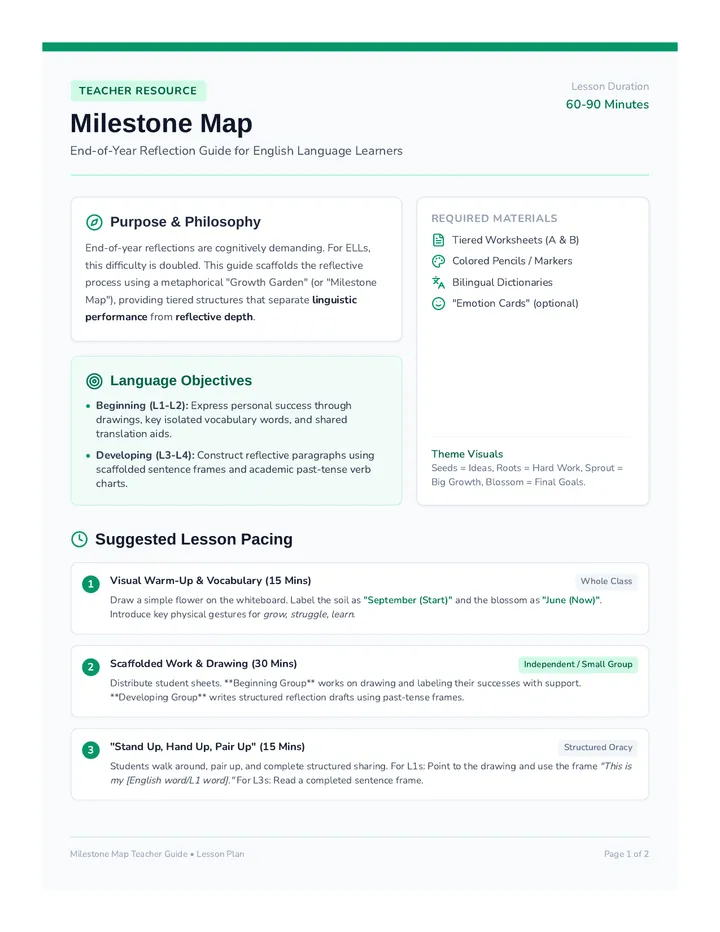
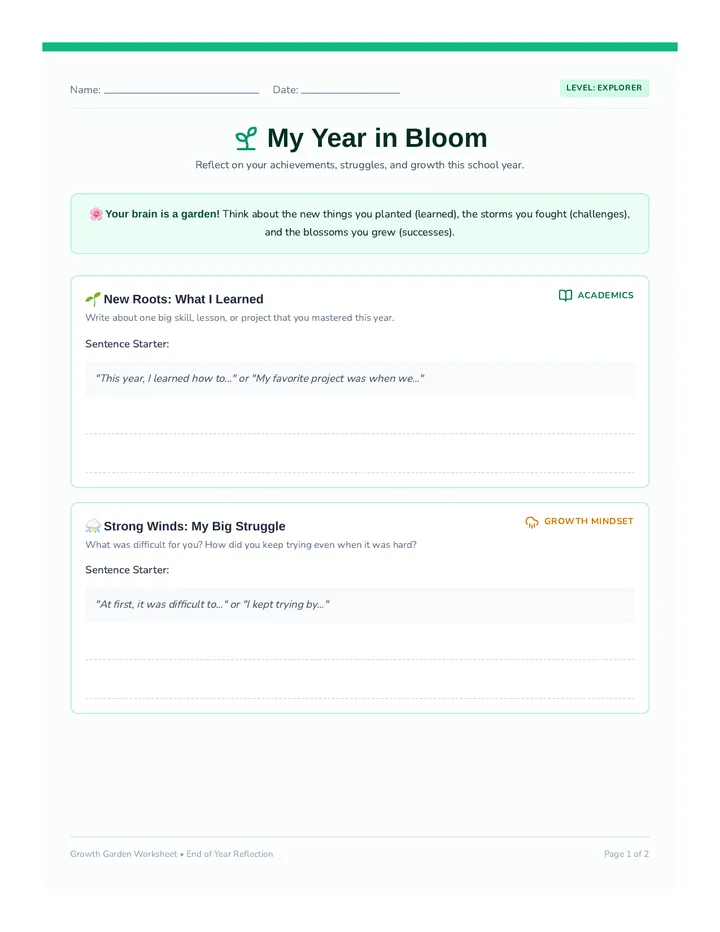
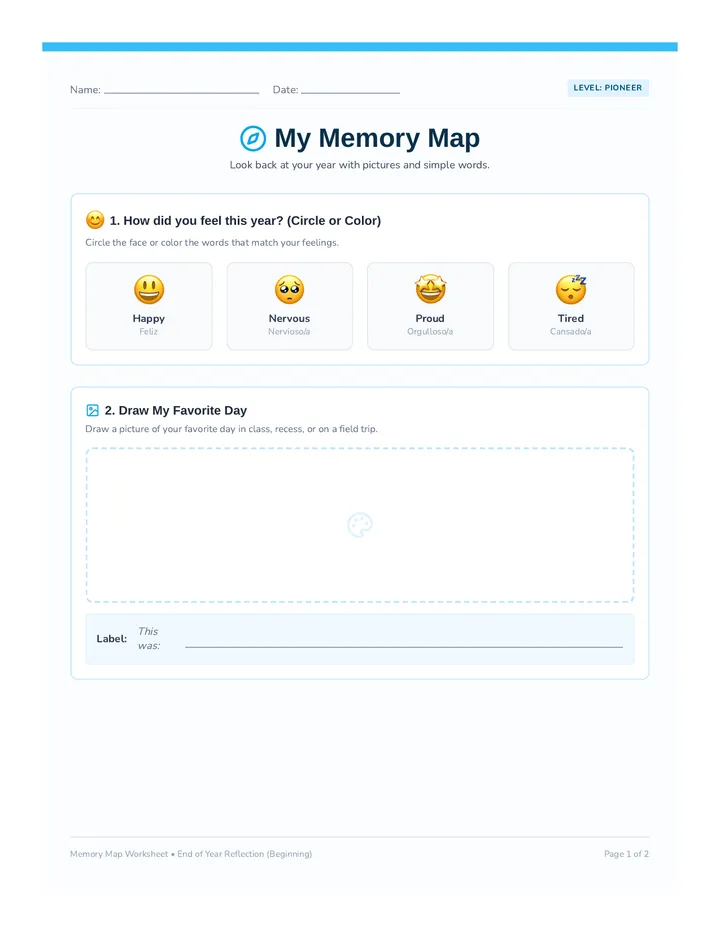
An end-of-year reflection lesson designed specifically for English Language Learners, featuring tiered worksheets for Beginning/Entering and Developing/Expanding levels, supported by a detailed facilitator guide.
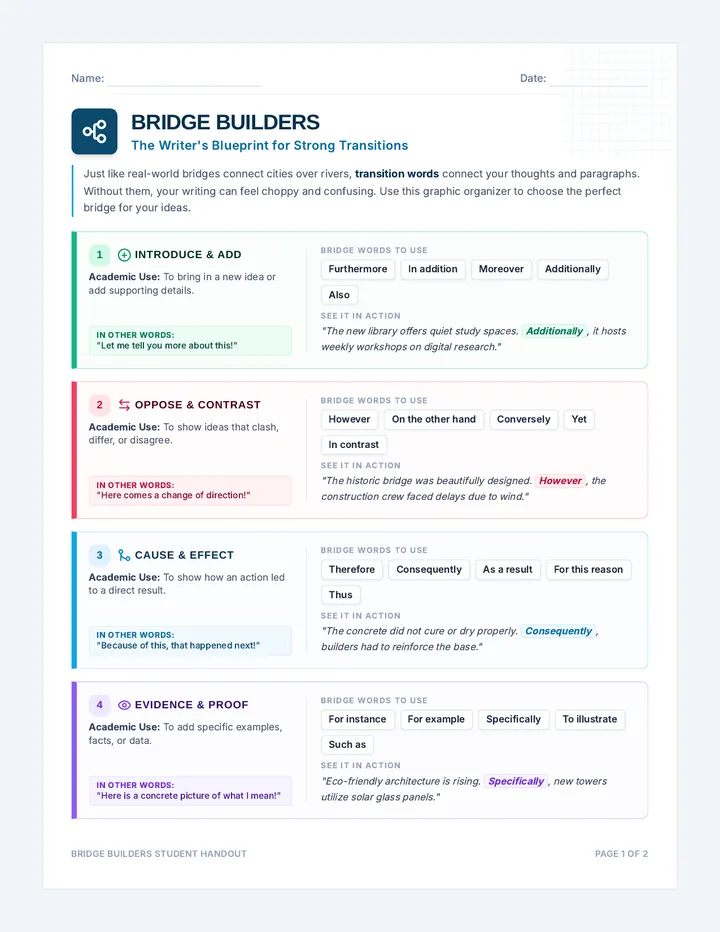
A comprehensive lesson focused on understanding and applying transition words to build logical, smooth connections between ideas in writing.
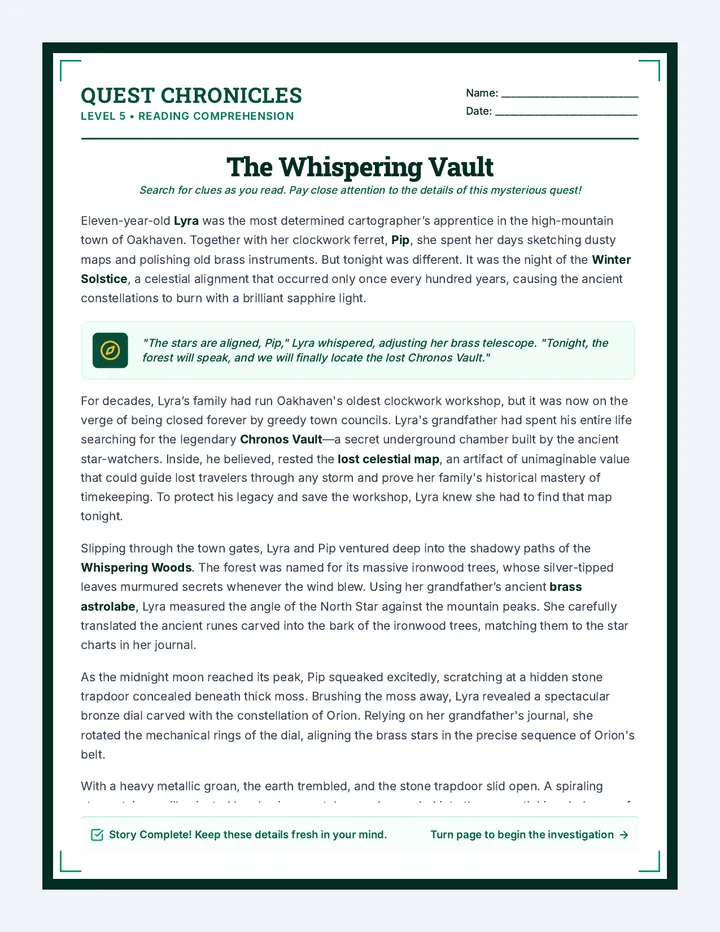
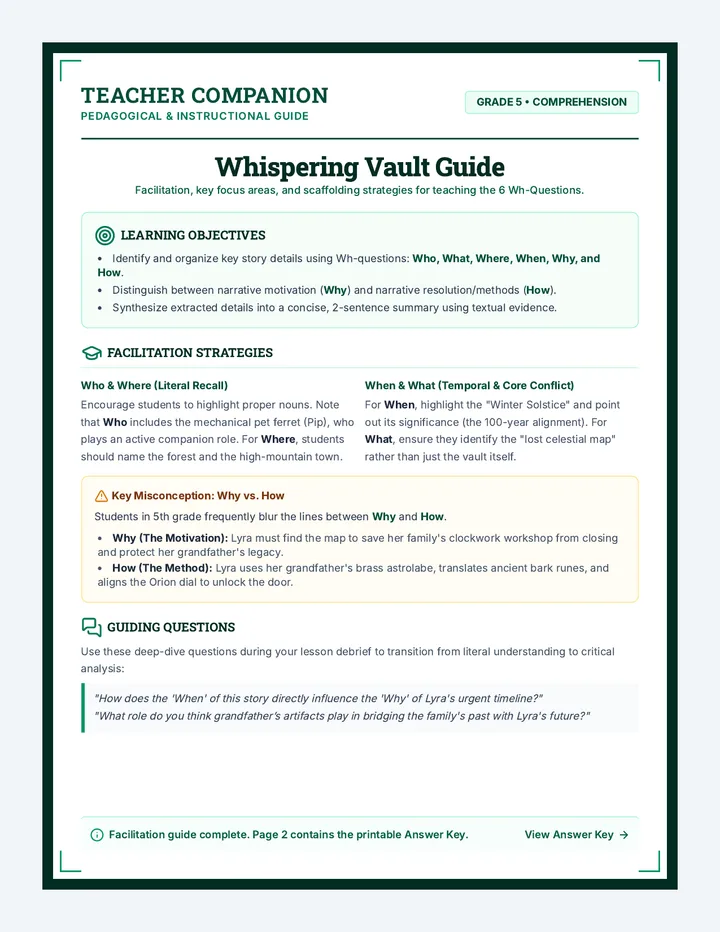
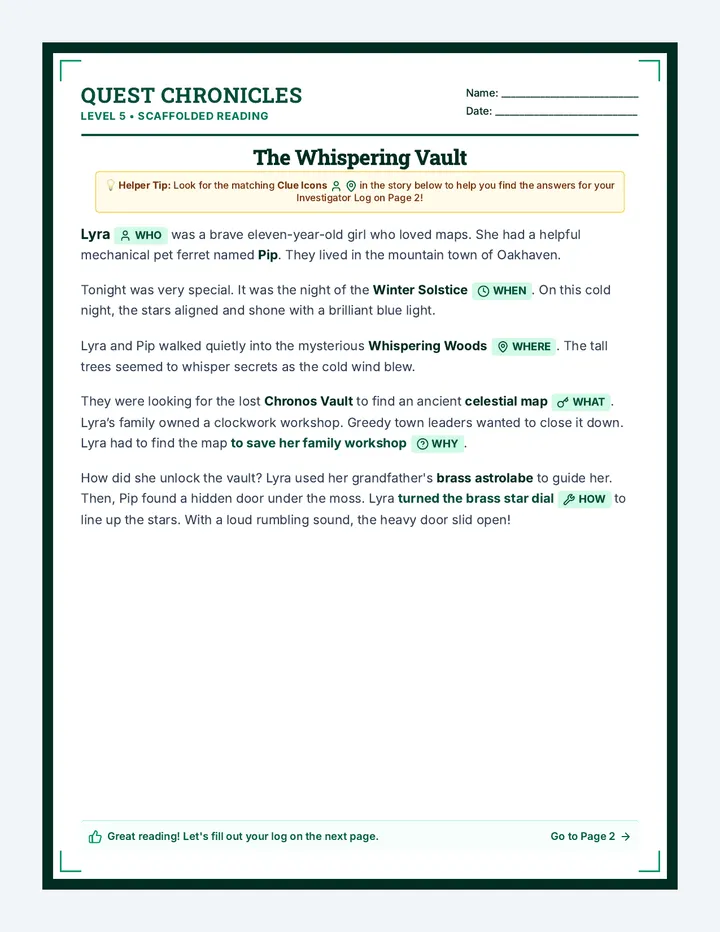
A 5th-grade comprehension lesson focused on identifying key story elements using Wh-questions (Who, What, Where, When, Why, How) within an engaging fantasy-adventure narrative.
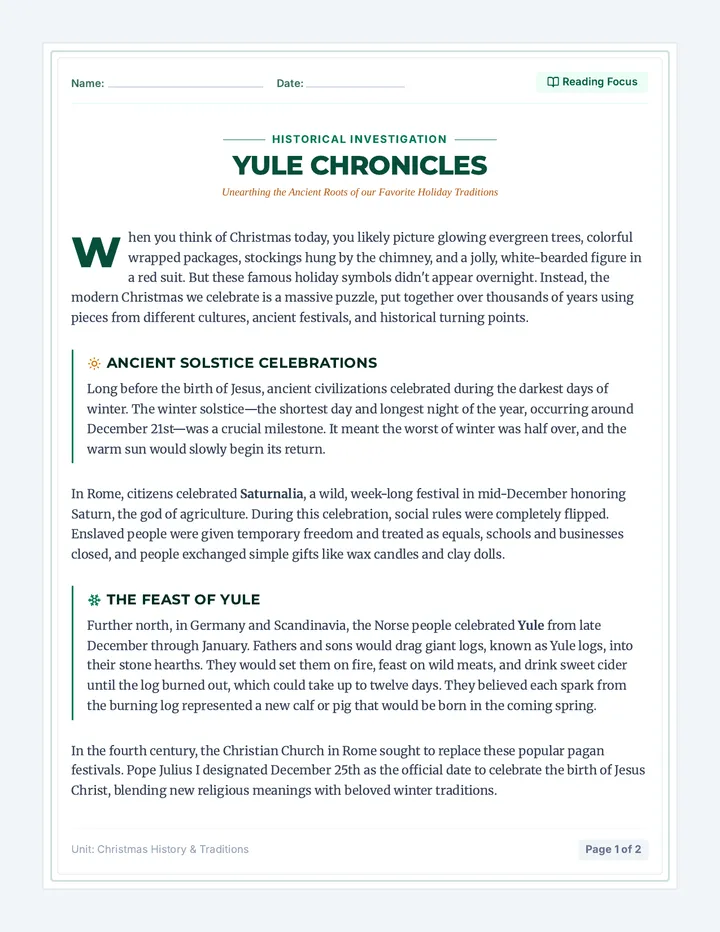
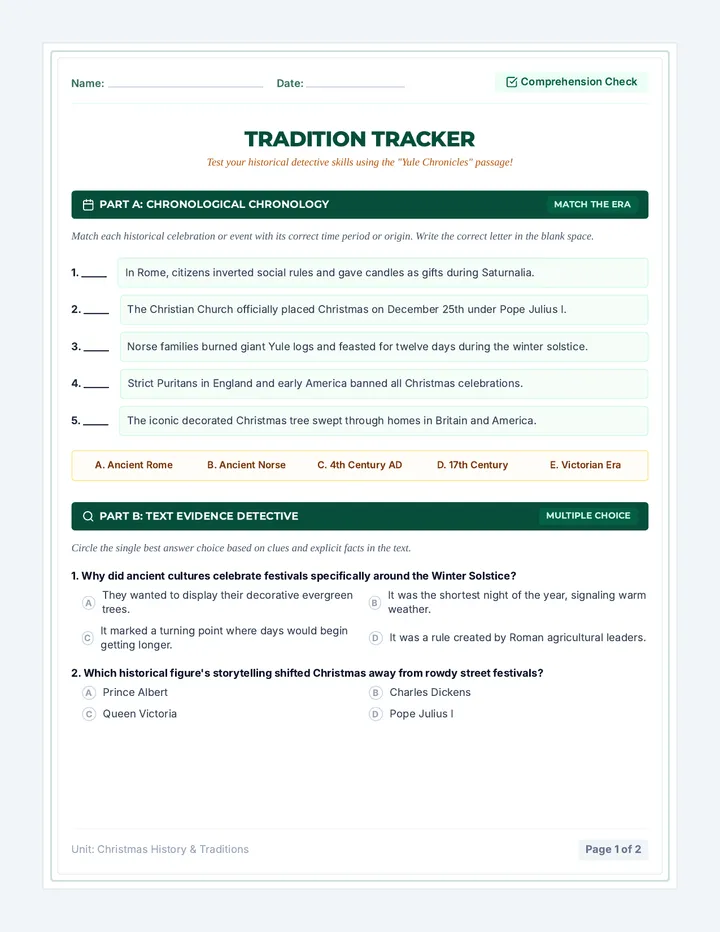
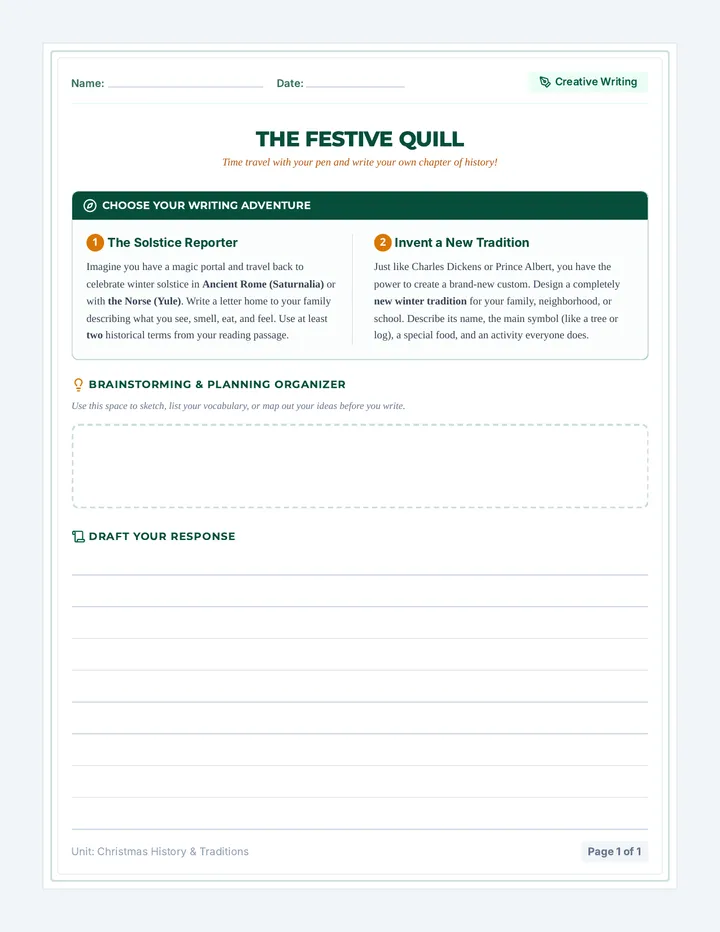
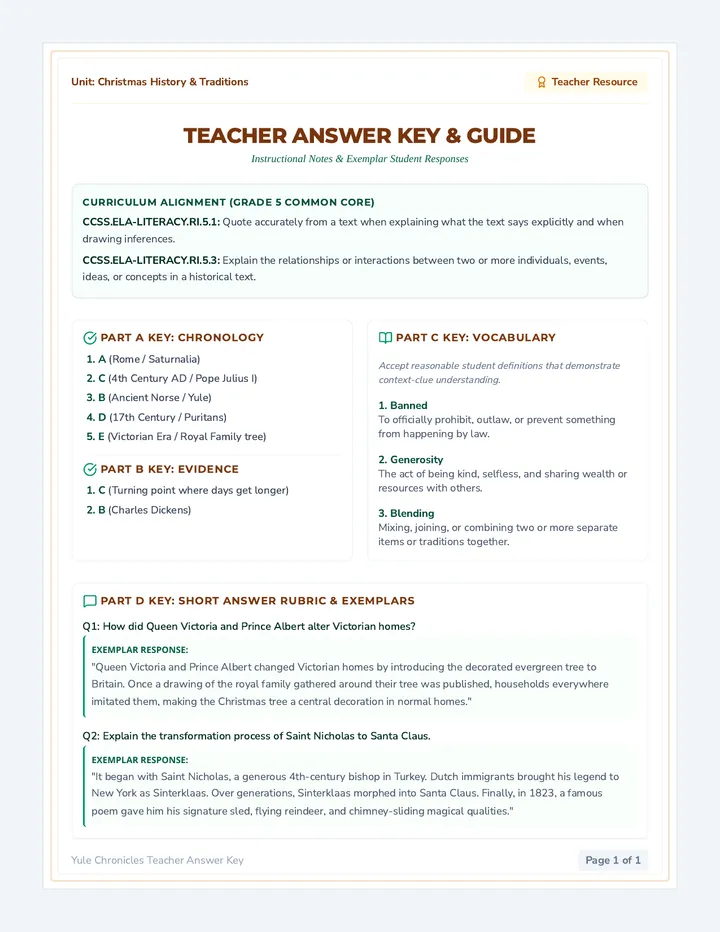
A comprehensive 5th-grade ELA lesson exploring the historical roots, evolution, and cultural symbols of modern Christmas traditions. It includes a historical reading passage, comprehension and vocabulary worksheets, and a creative writing extension.
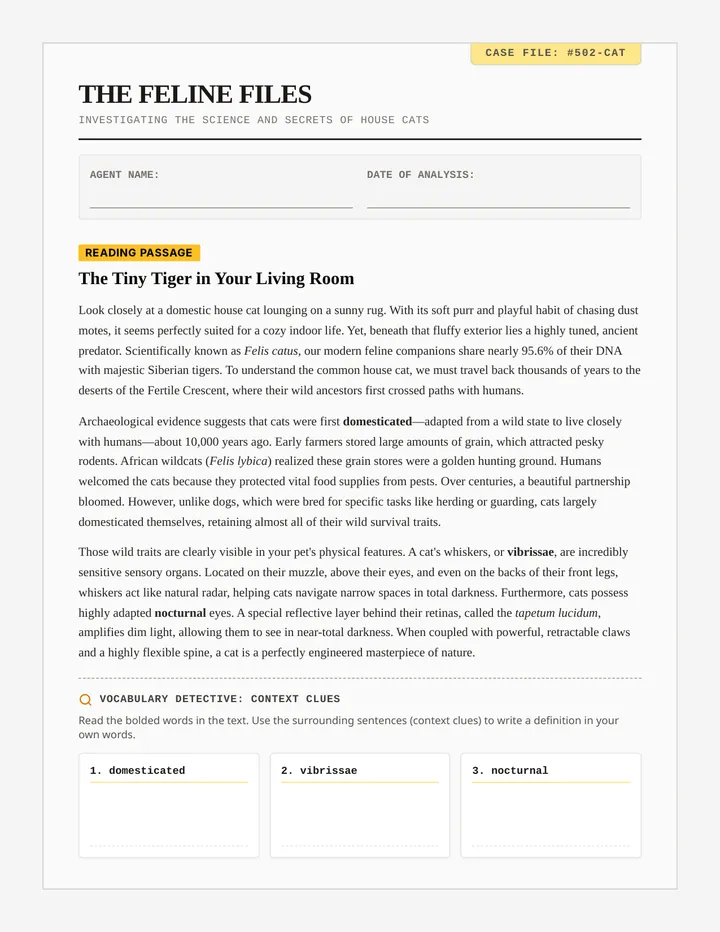
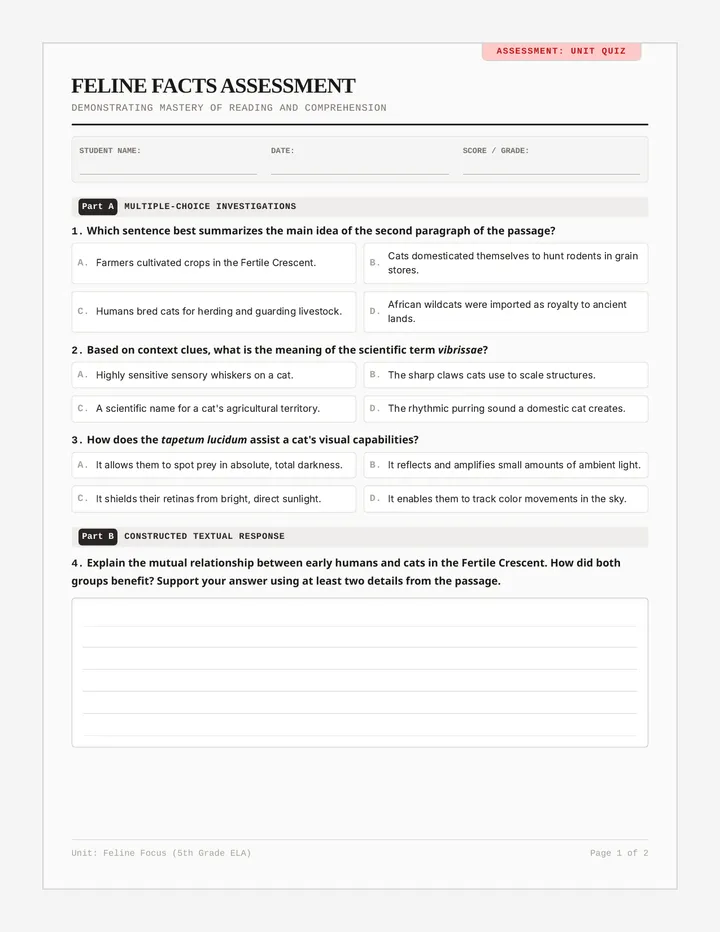
A comprehensive 5th-grade ELA lesson exploring the fascinating world of cats. Students read a rich non-fiction passage comparing domestic cats to their wild ancestors, analyze key vocabulary using context clues, identify main ideas, and distinguish feline facts from myths.
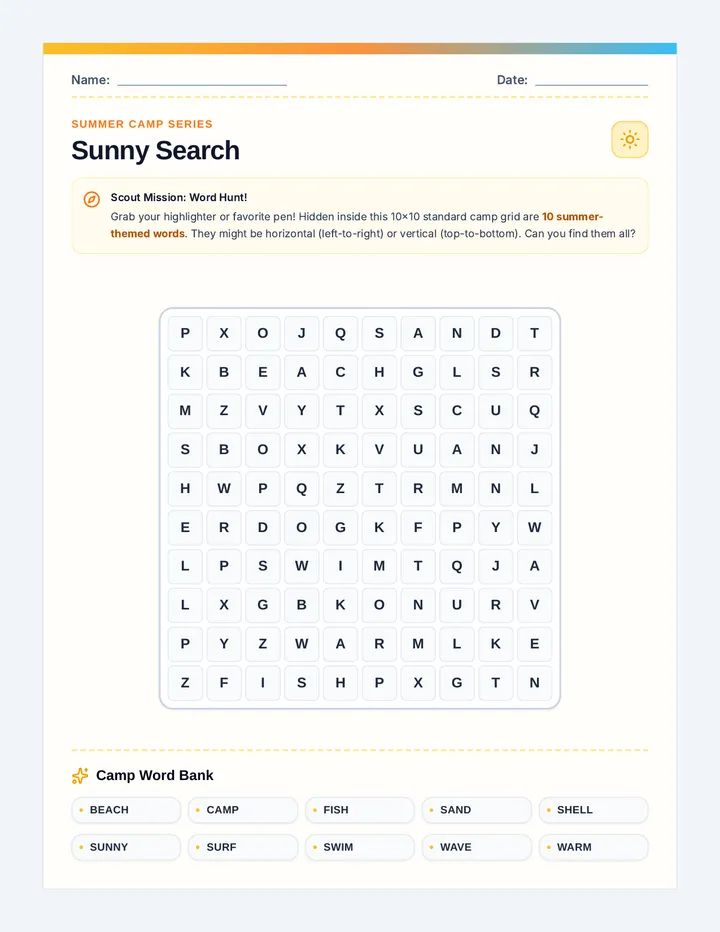
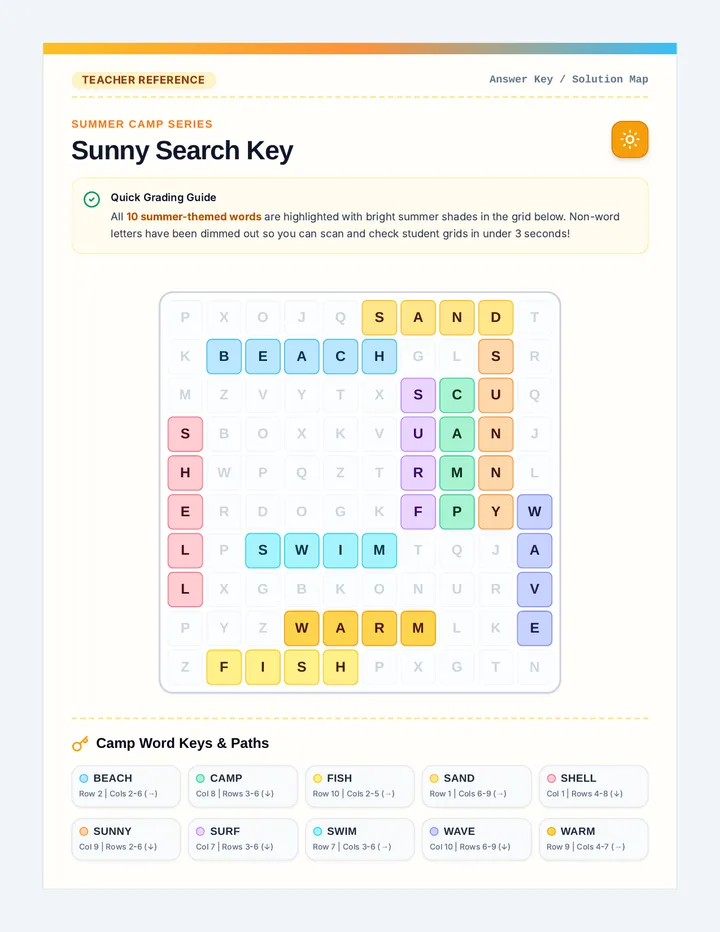
A fun, summer-themed word search lesson designed for standard grid gameplay with high-contrast elements suitable for highlight strips. Includes a clean 10x10 word search and a corresponding teacher answer key.
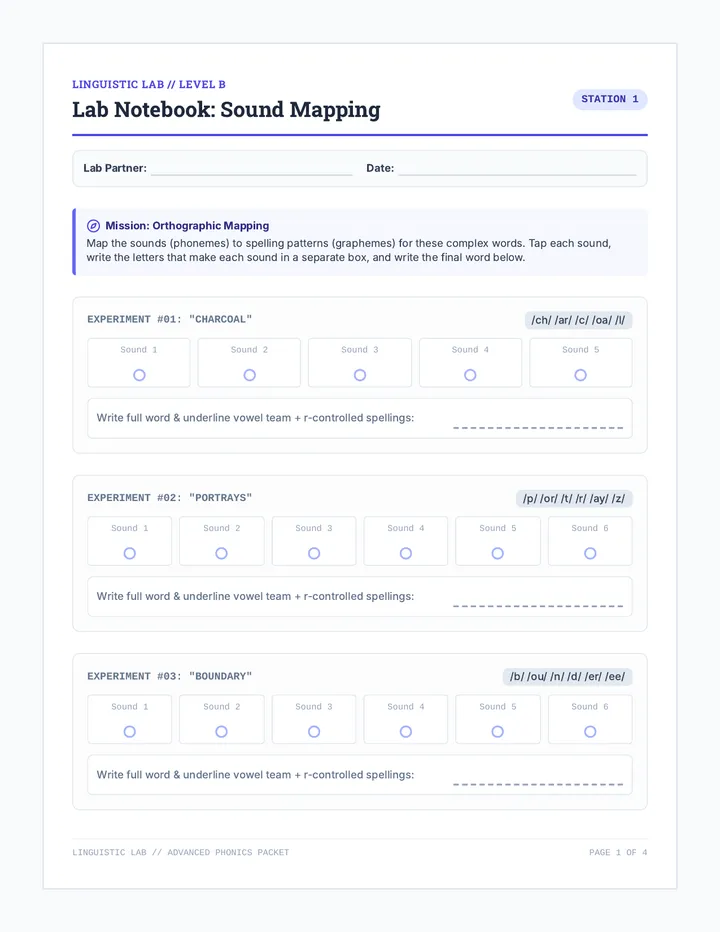
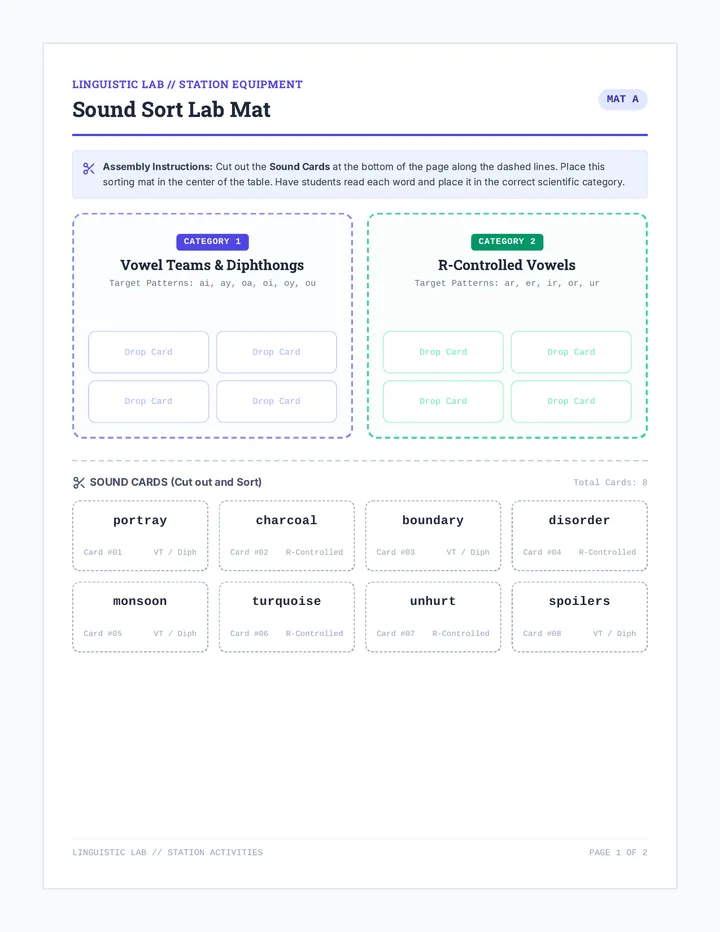
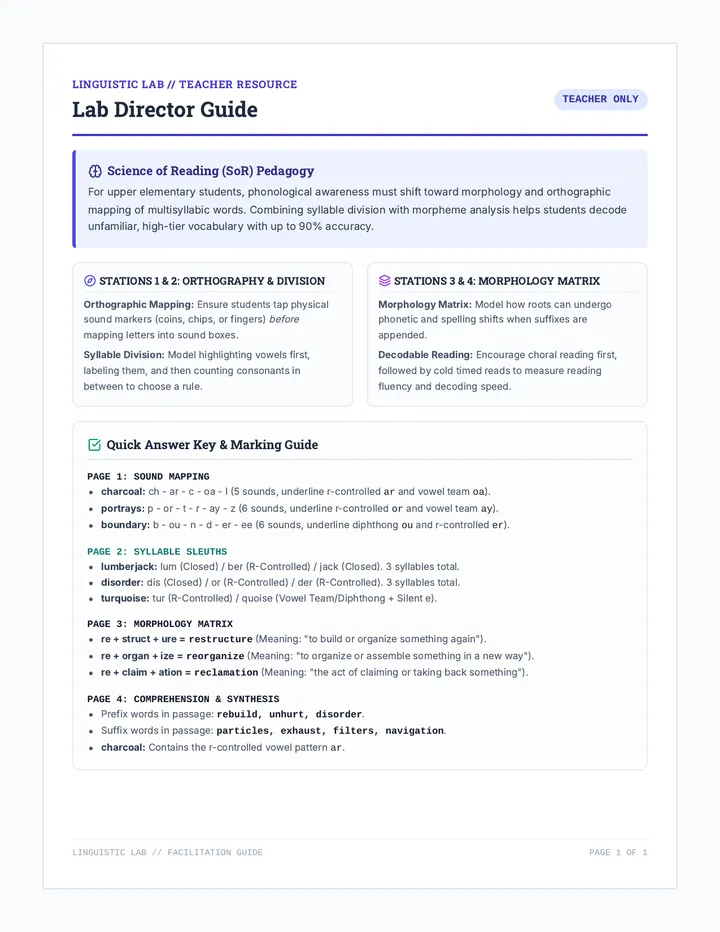
An interactive, Science of Reading-aligned phonics and morphology program for upper elementary students. It features multi-sensory station activities, orthographic mapping, syllable division practice, and morphological decoding tools.
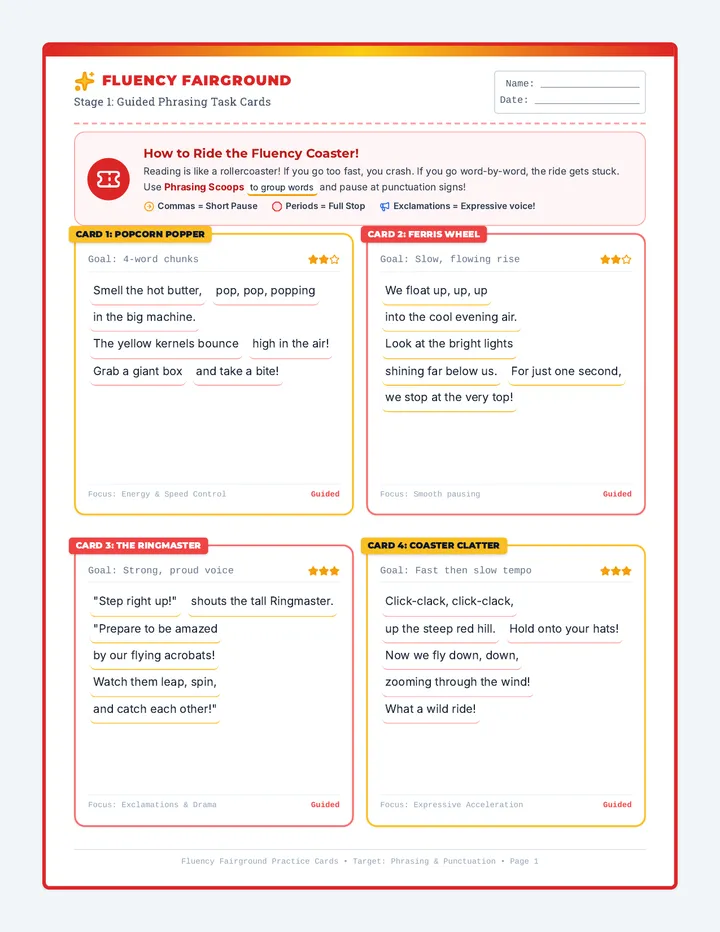
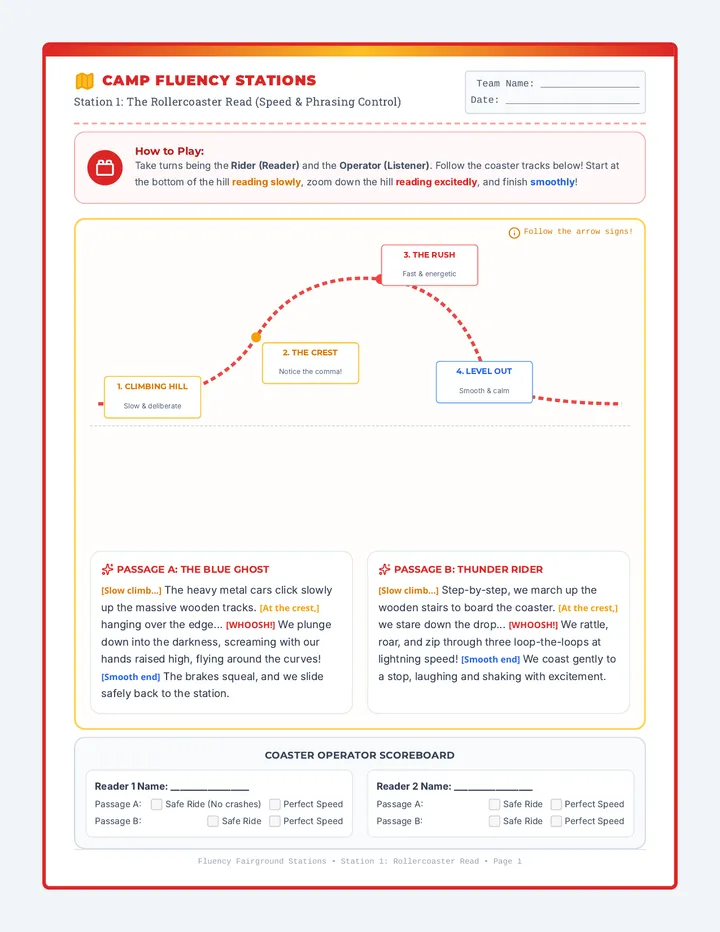
A high-energy, carnival-themed literacy package designed to boost oral reading fluency with a focus on phrasing and punctuation. Features print-and-cut phrasing task cards, partner-based carnival games, and a dramatic Reader's Theater script set under the Big Top.
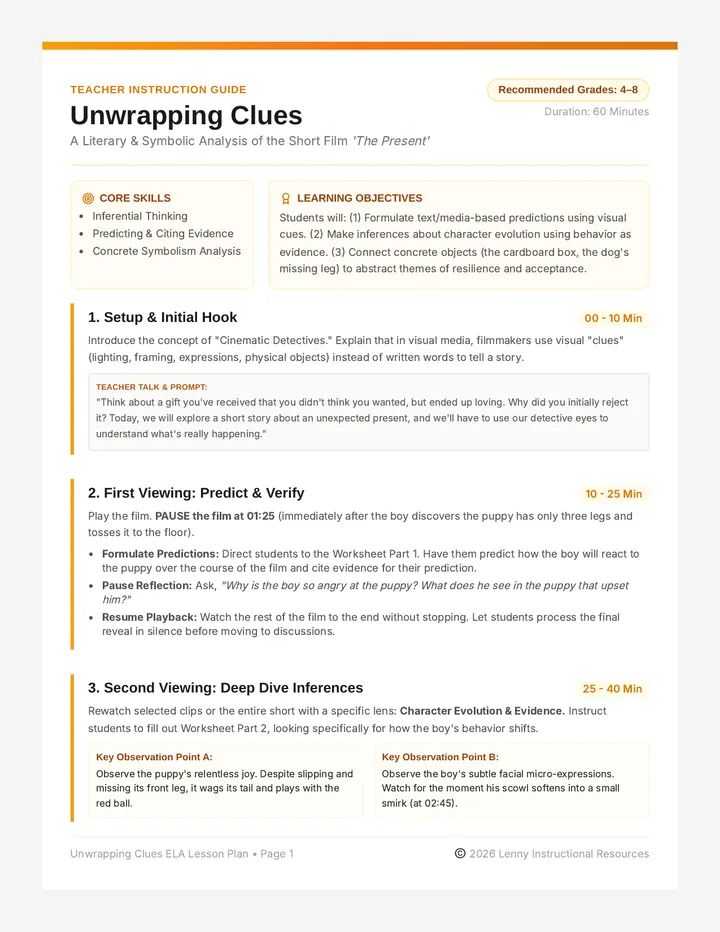
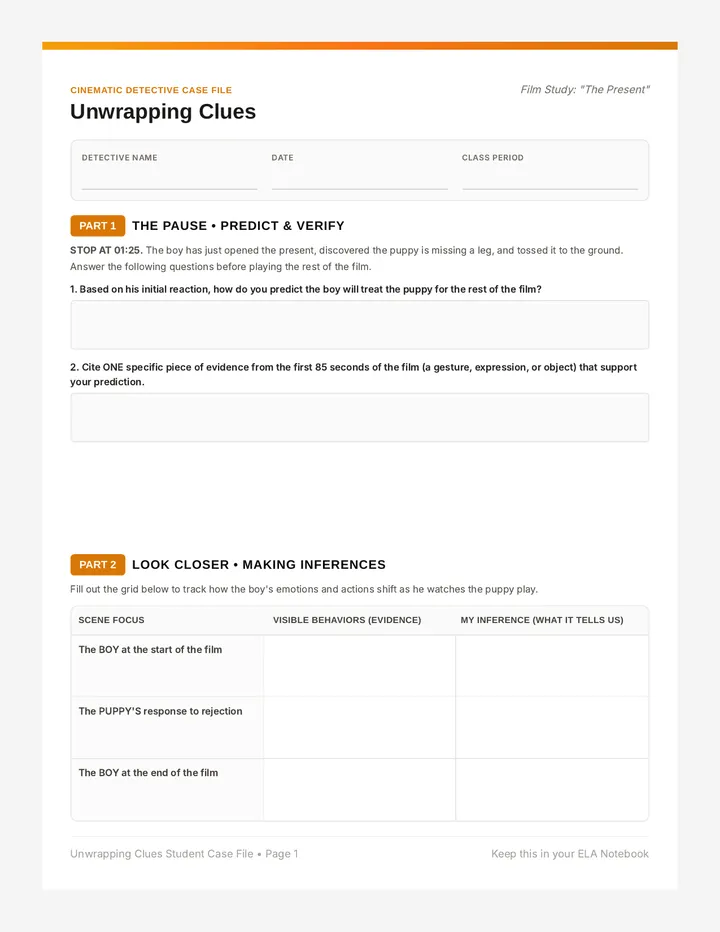
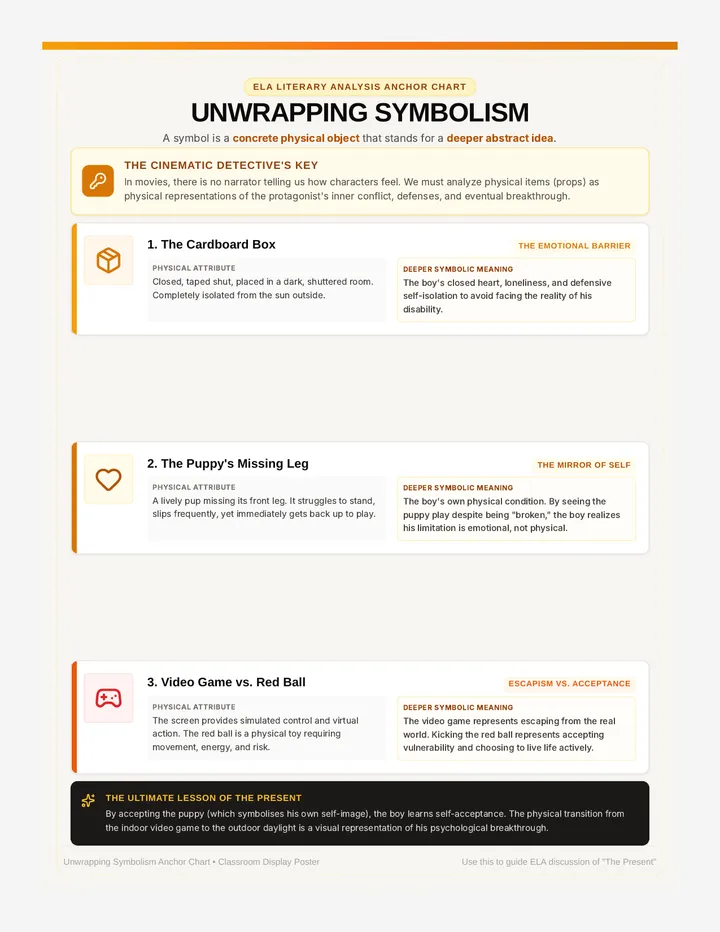
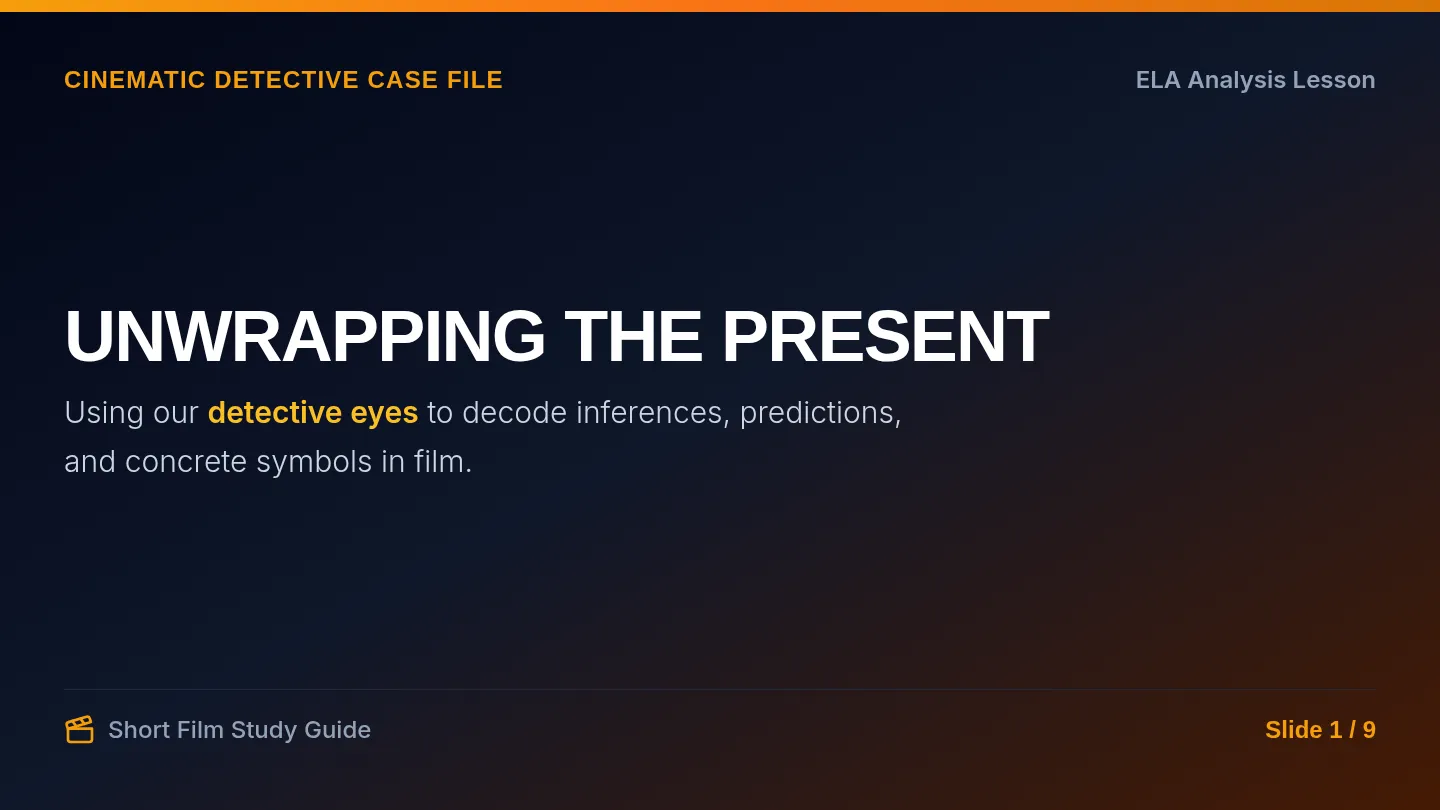
A comprehensive 60-minute ELA lesson focused on the animated short film 'The Present'. Students explore core reading skills—inferential thinking, prediction, citing evidence, and concrete symbolism—by analyzing the boy, the box, the dog, and the final reveal.
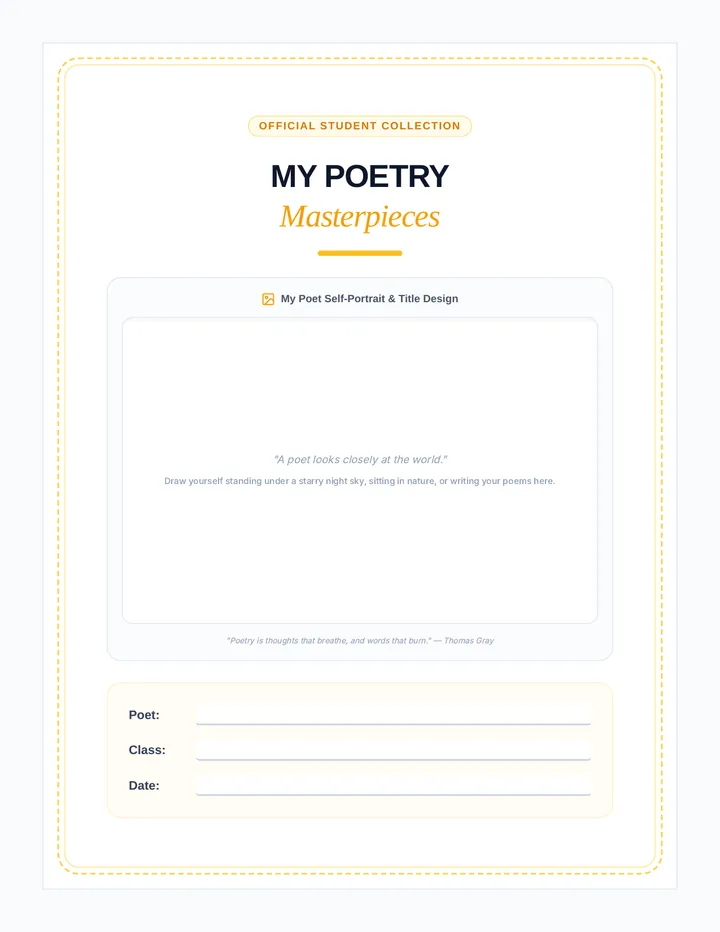
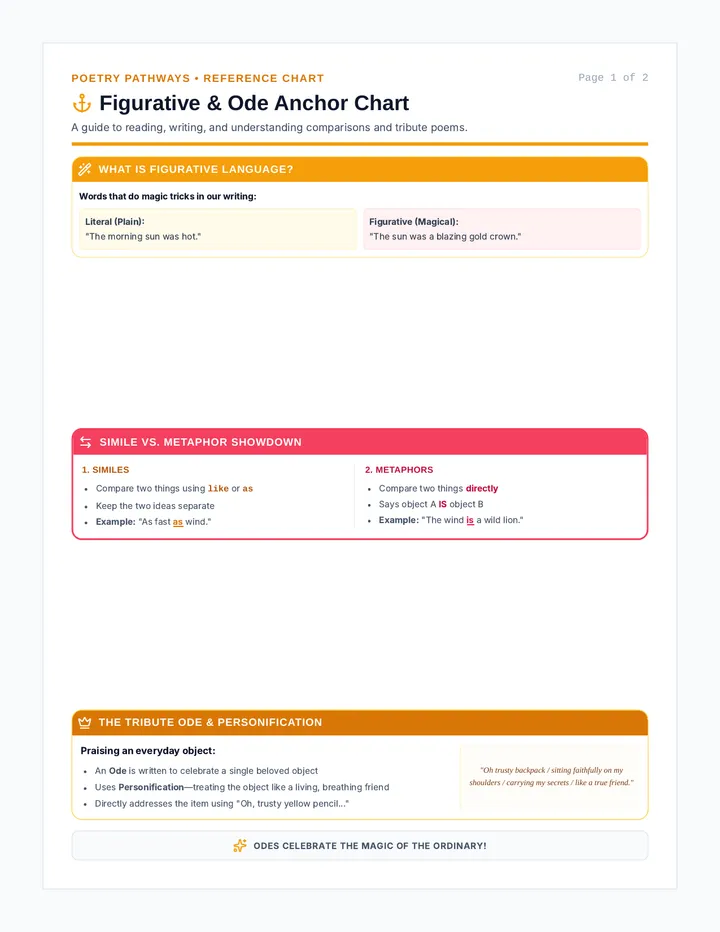
Focuses on using Metaphors and Similes to create powerful figurative imagery. Includes a final "My Poetry Masterpieces" portfolio cover and peer celebration review pages.
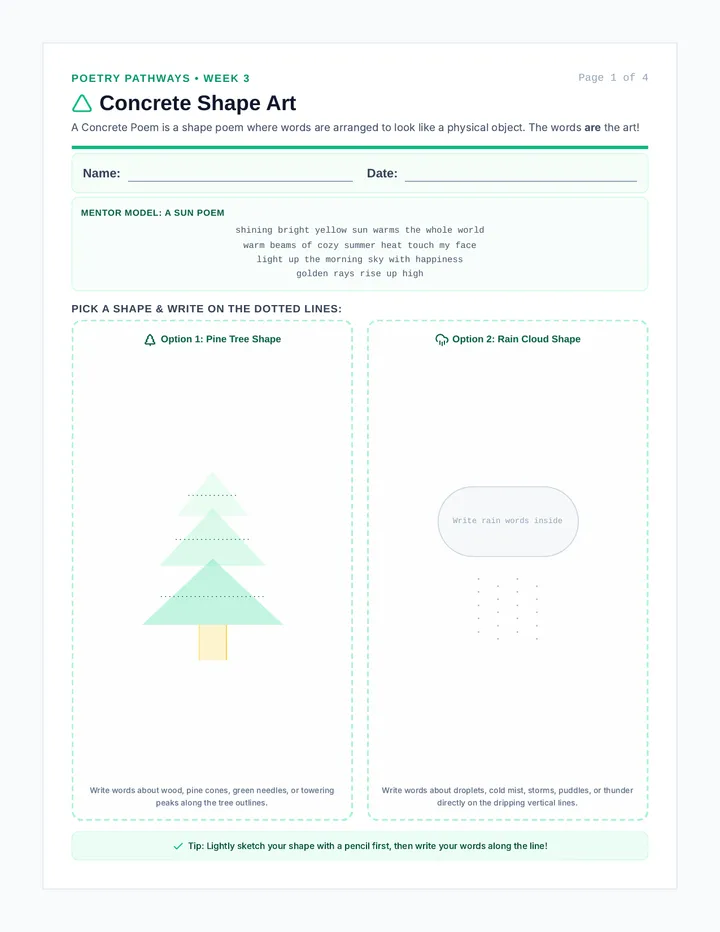
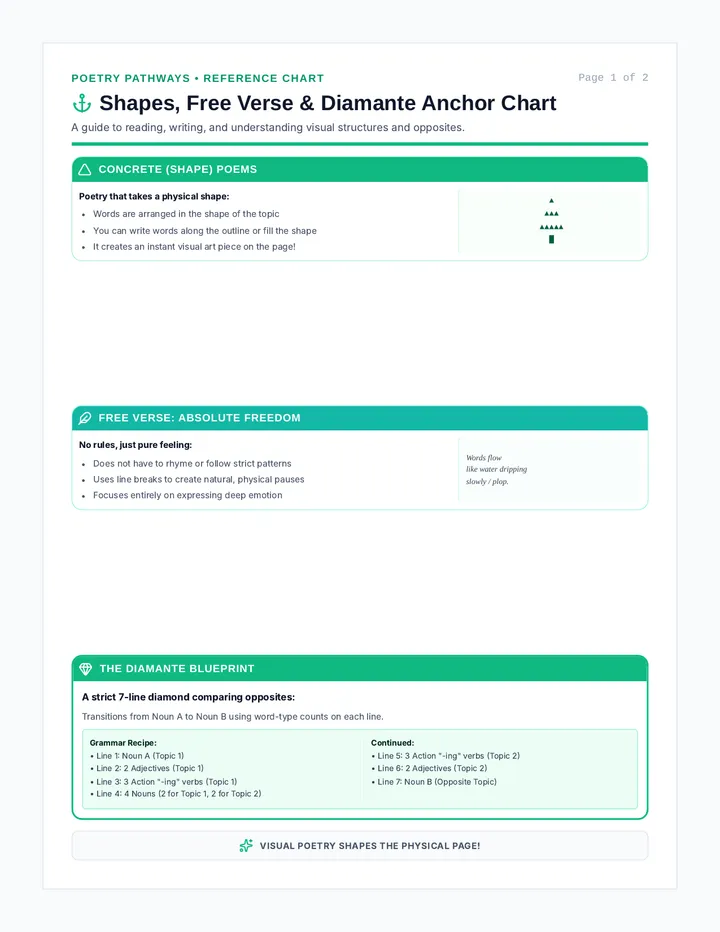
Focuses on shape, movement, and visual arrangement with Concrete (Shape) Poems and Free Verse. Provides scaffolded outline guides, word maps, and sensory feeling prompts.
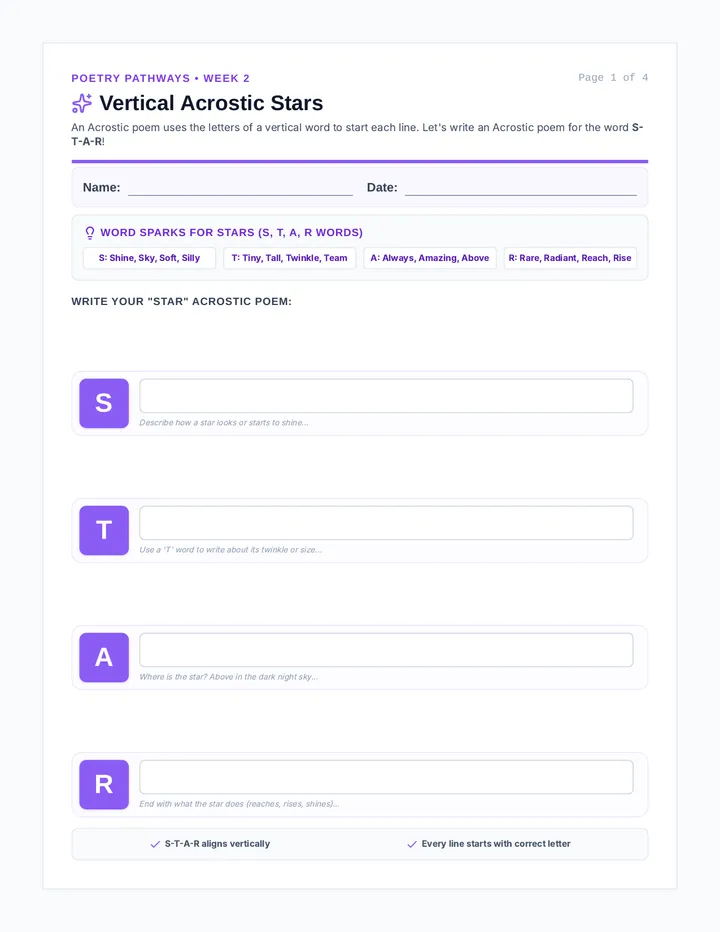
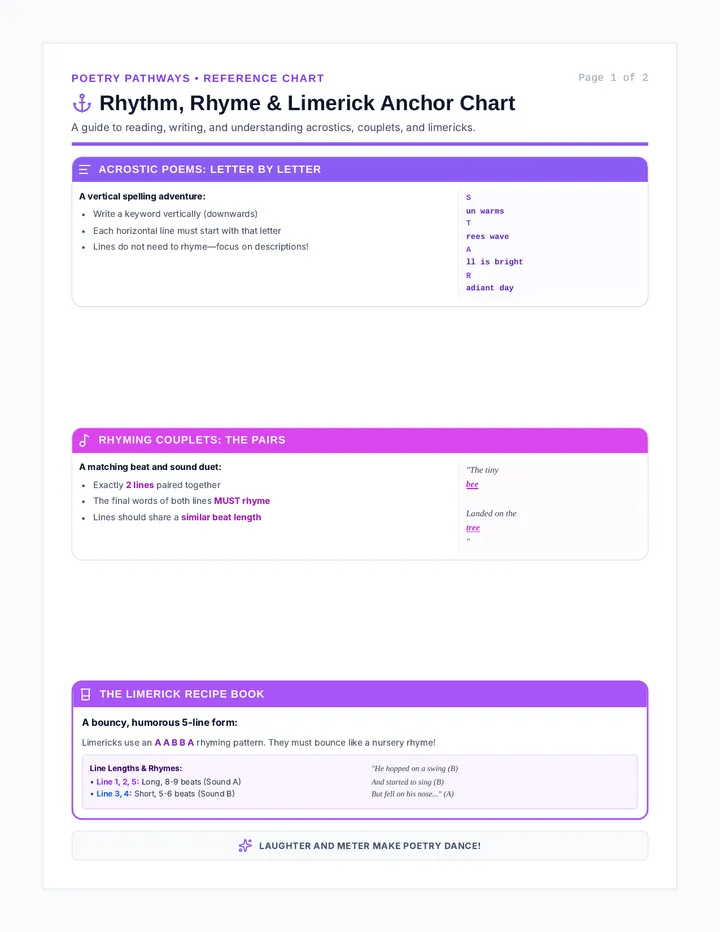
Focuses on structure, rhythm, and sound through Acrostic Poems and Rhyming Couplets. Offers step-by-step graphic templates, letter grids, rhyming dictionaries, and syllable beat counters.
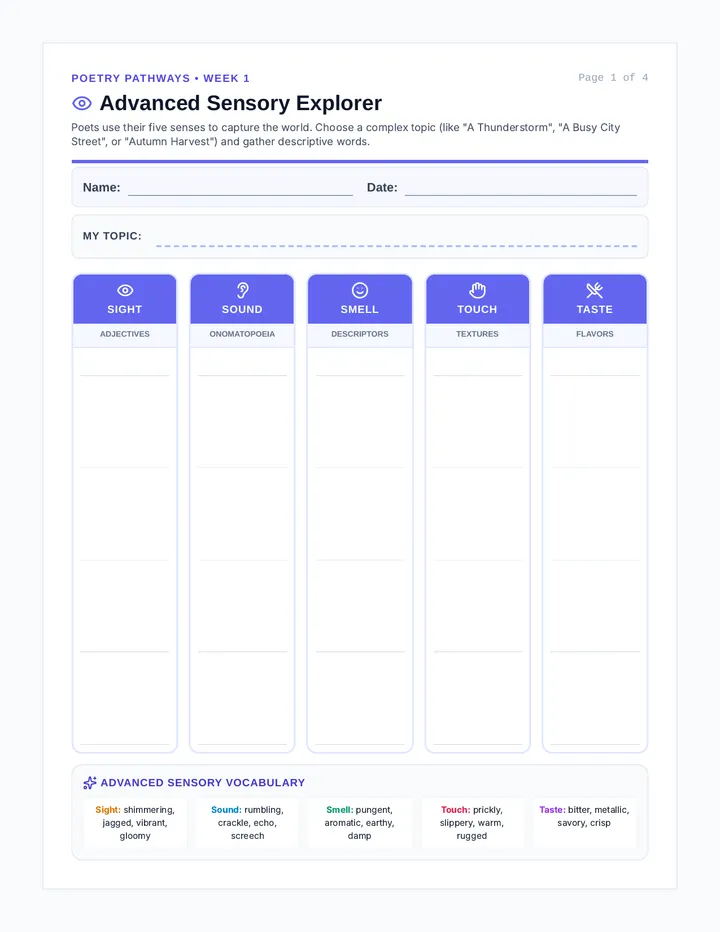
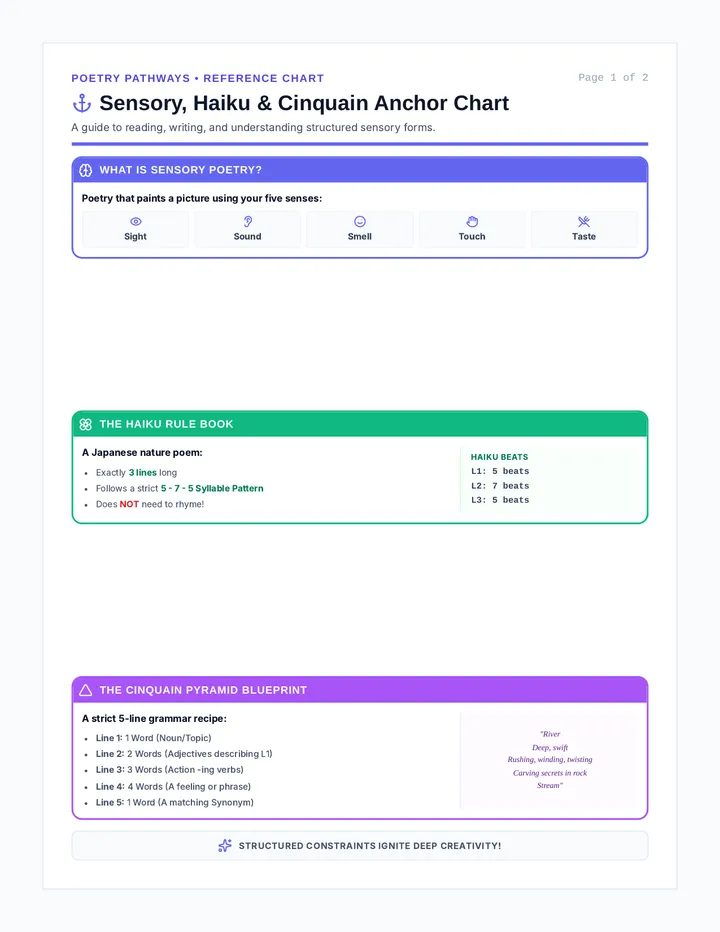
Focuses on Sensory and Color Poetry (Haiku and Color Poems). Students explore imagery using their five senses, utilizing highly visual sensory organizers, word banks, and syllable counters.
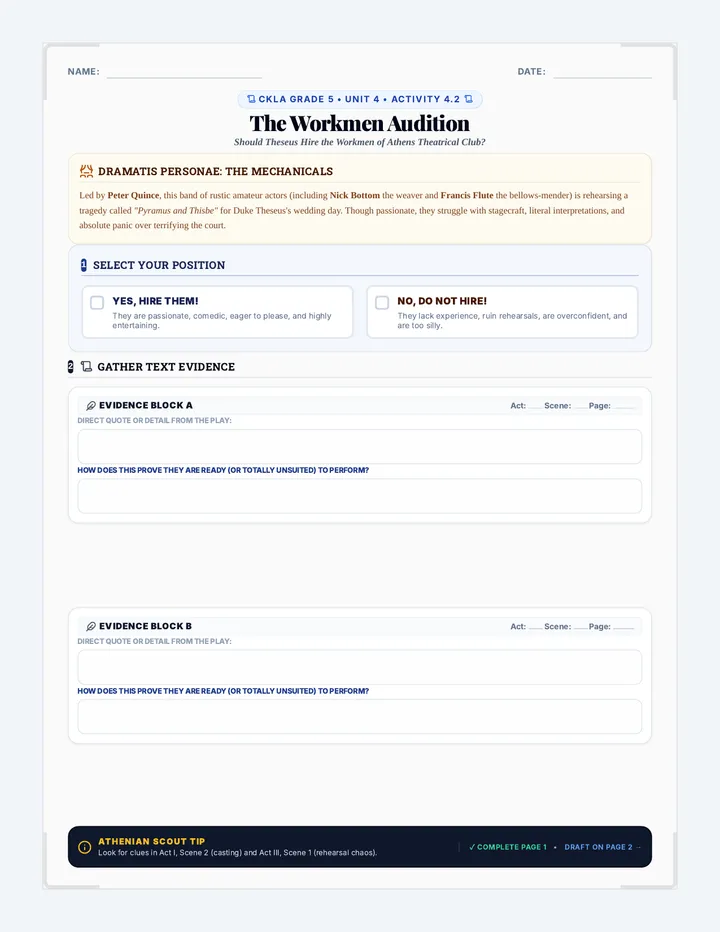
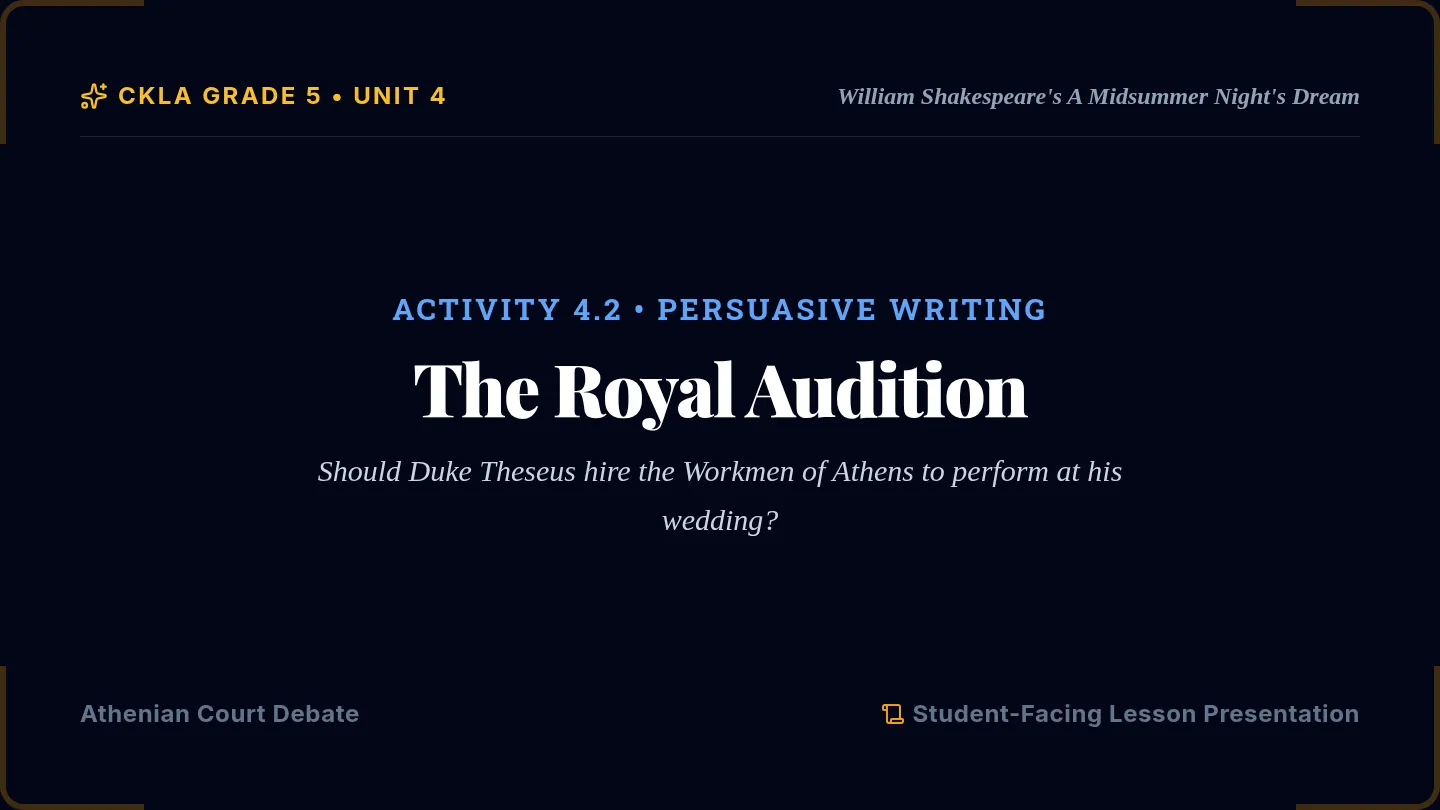
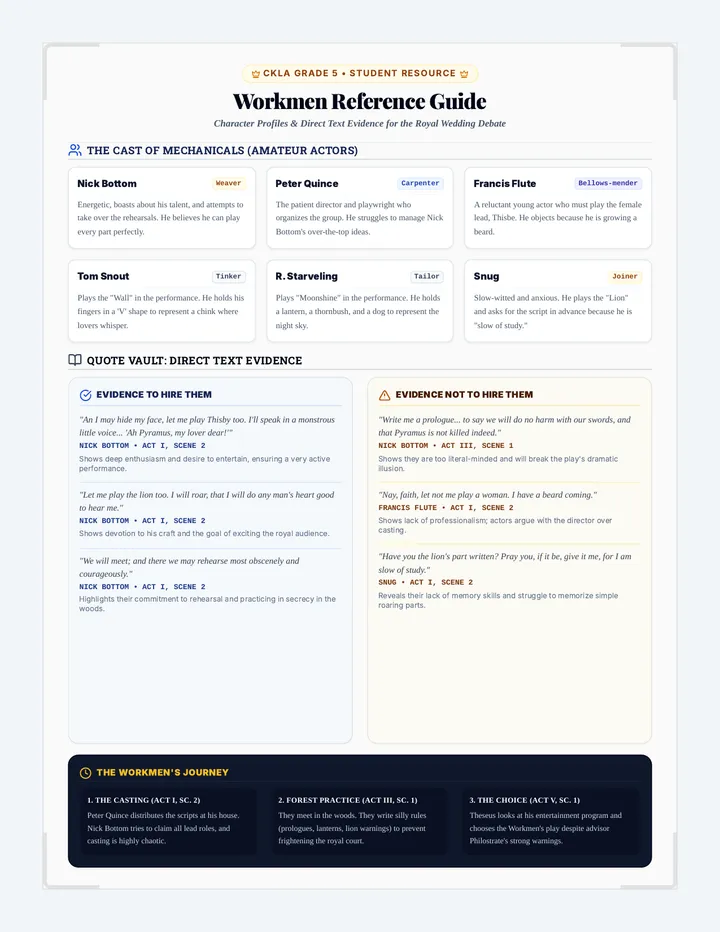
A comprehensive writing lesson centered around the CKLA Grade 5 persuasive prompt: 'Should Theseus hire the Workmen of Athens Theatrical Club?' Students gather text evidence about the mechanicals' theatrical abilities, weigh their strengths and weaknesses, and draft a structured persuasive paragraph.
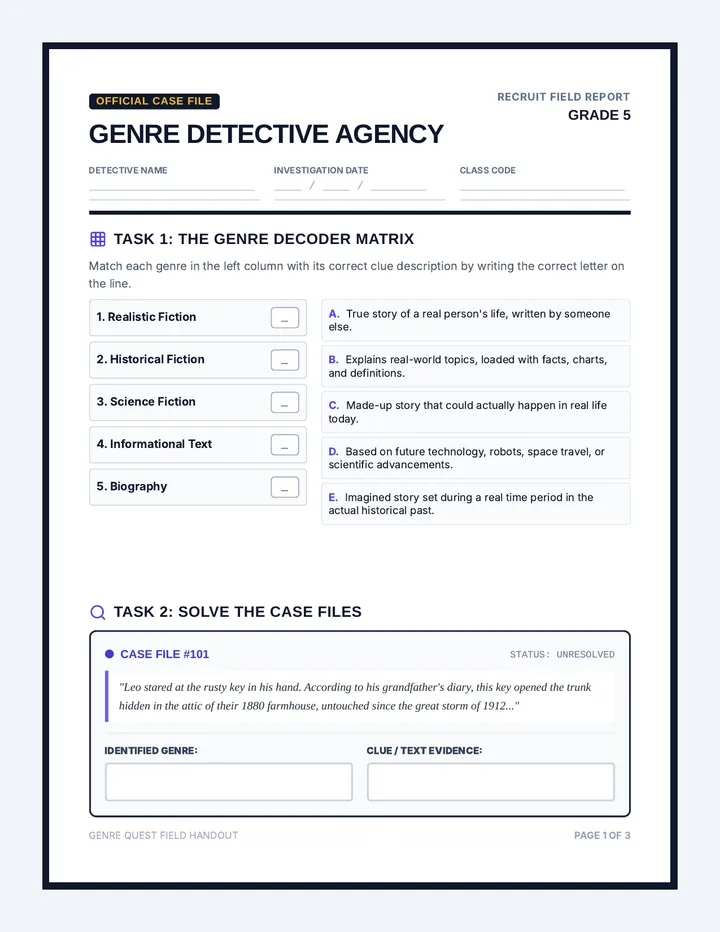
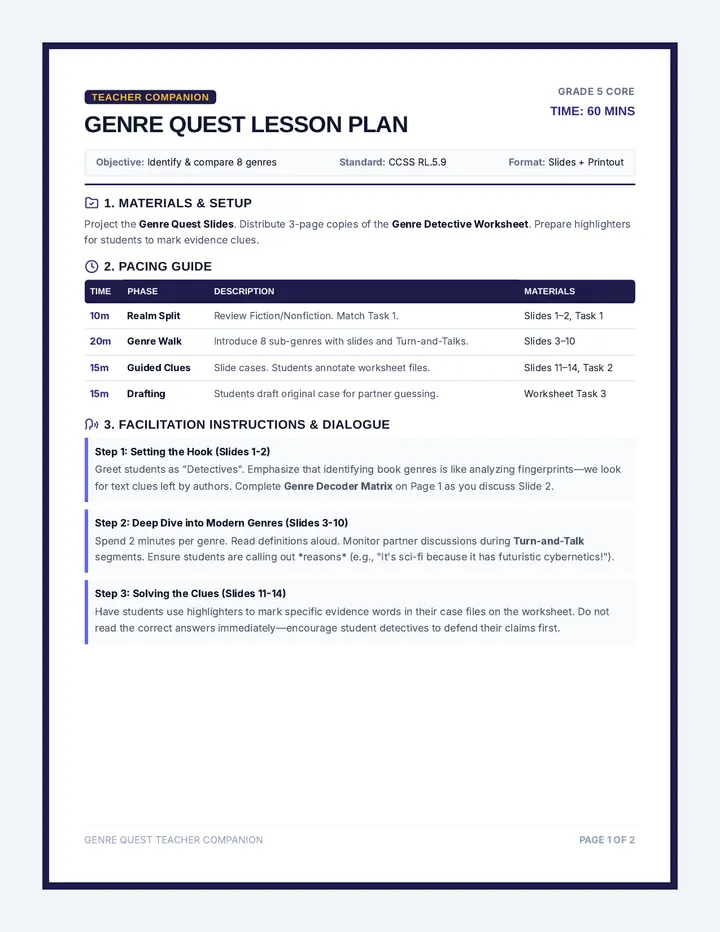
A comprehensive lesson designed for 5th-grade students to identify and distinguish between key literary genres, including fiction and nonfiction basics, and a modern mix of fantasy, science fiction, mystery, and adventure.