Students embark on a classroom scavenger hunt to identify circles, squares, rectangles, and triangles in their immediate environment.
No materials in this lesson yet.
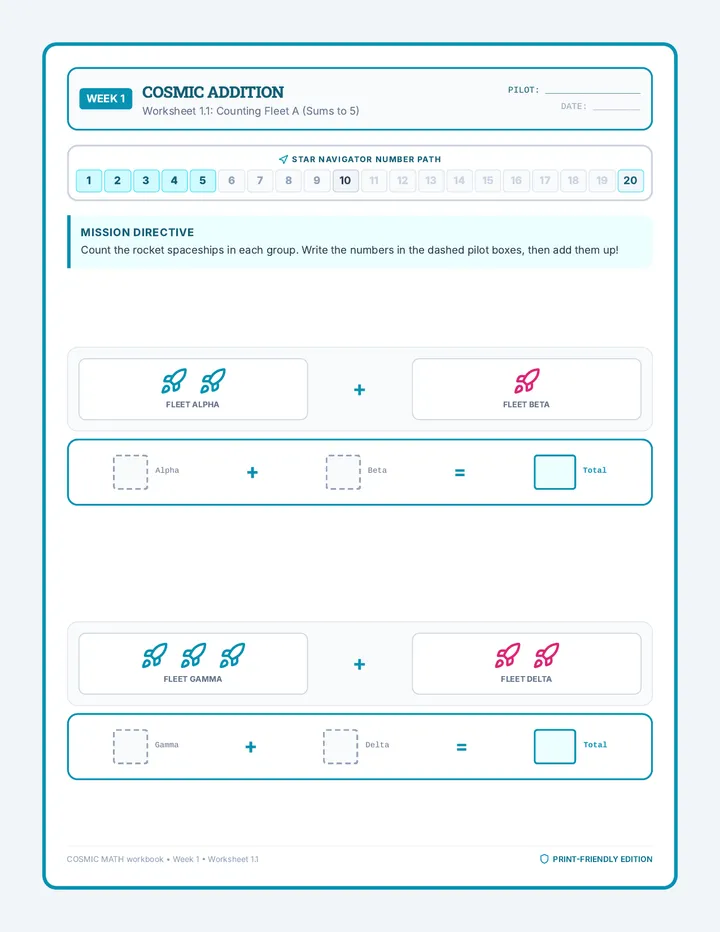
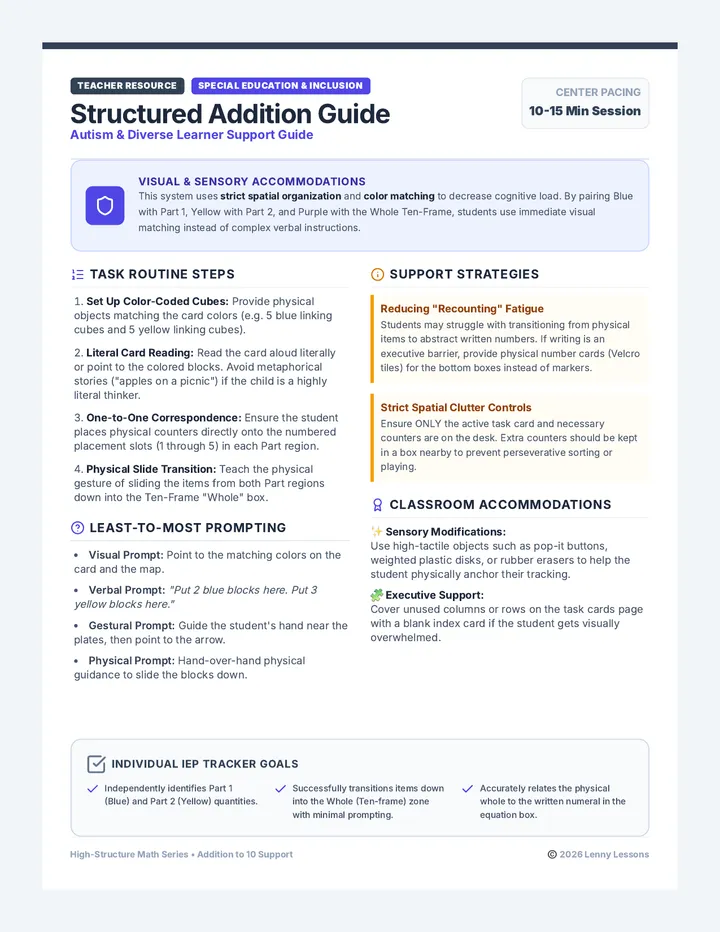
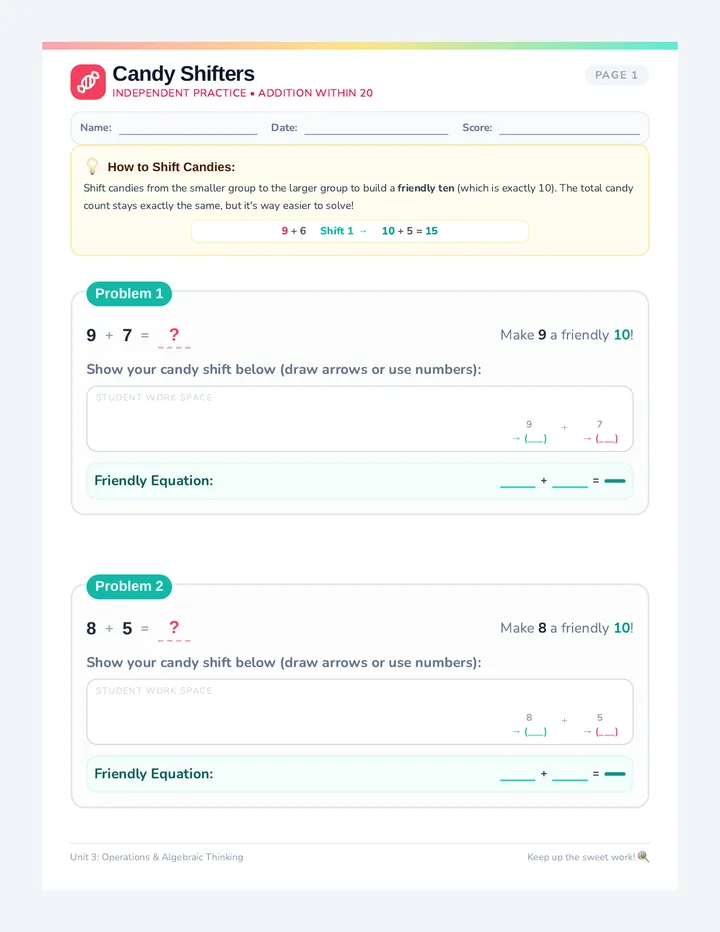
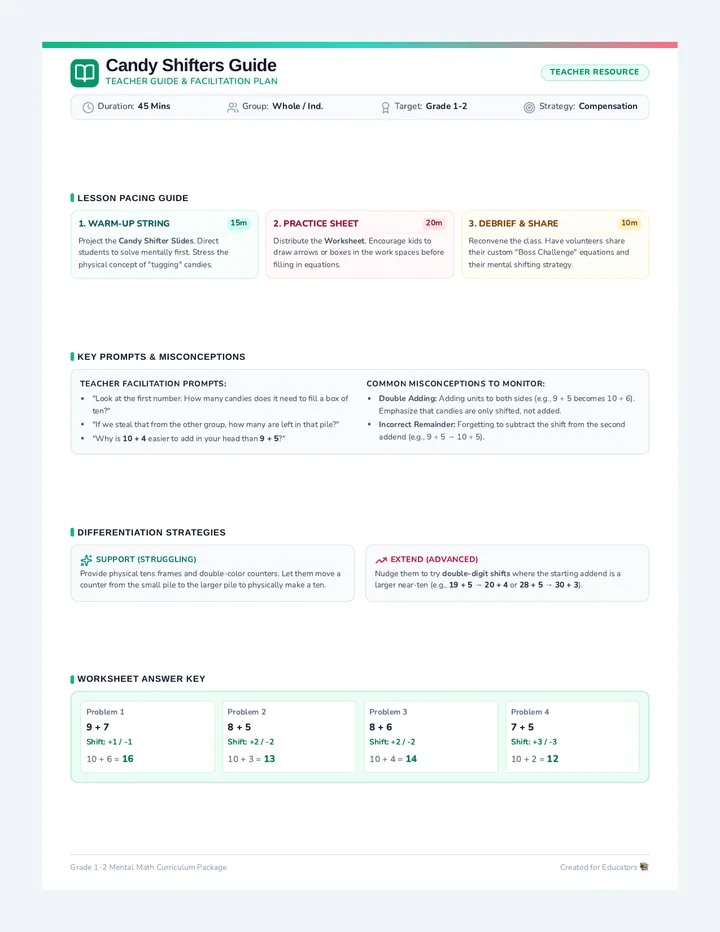
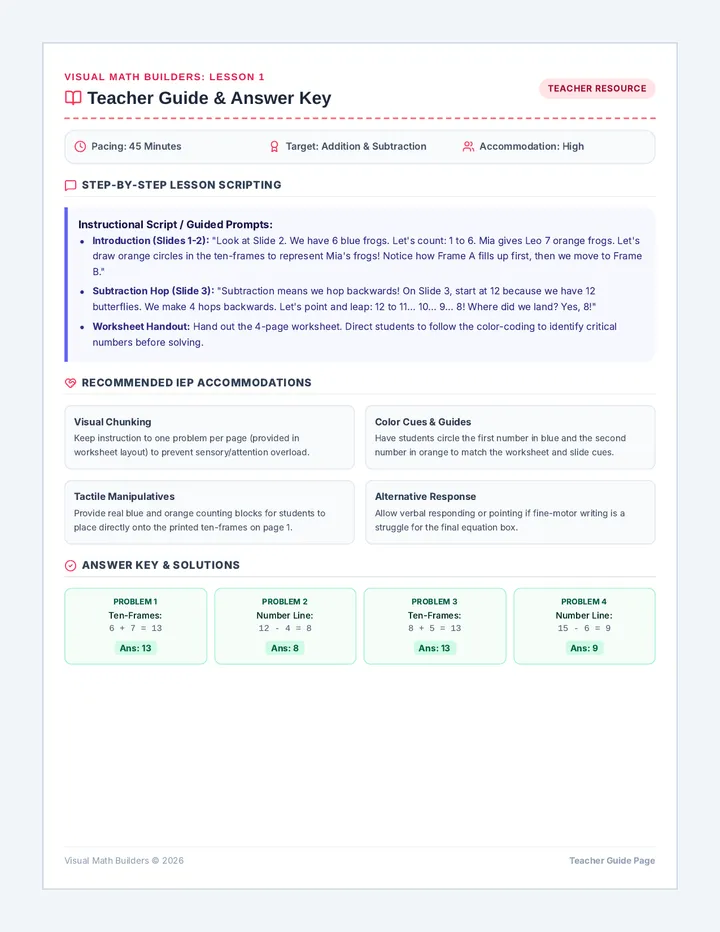
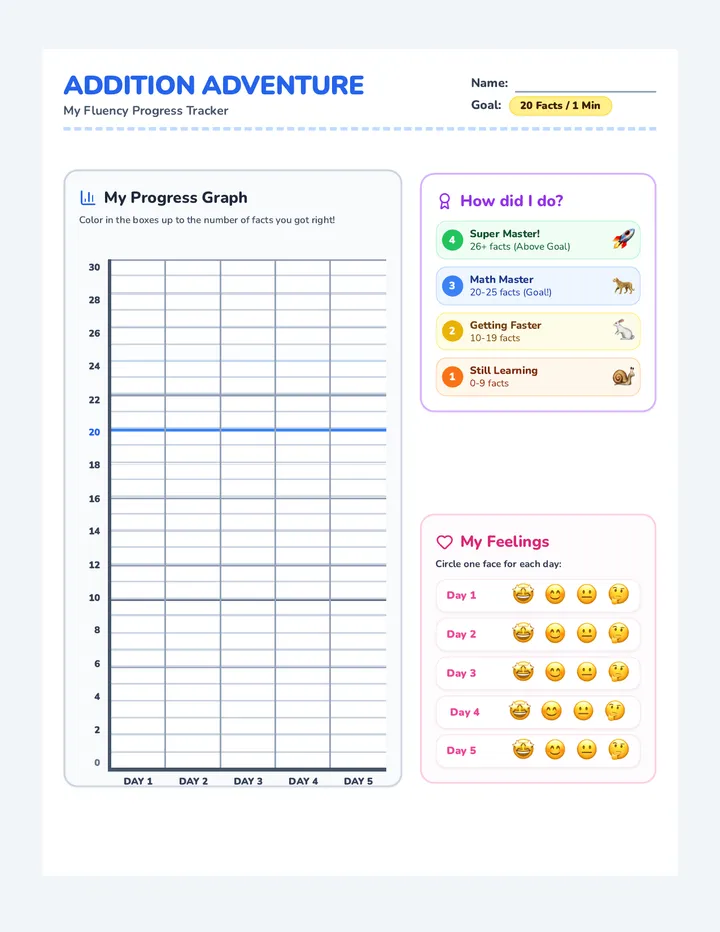
This lesson introduces addition within 20 through the 'Make Ten' strategy and Number Bonds. Students progress from using physical counters to visual ten frames and finally to abstract equations.
A comprehensive introduction to 3D geometric shapes including cubes, spheres, rectangular prisms, cones, pyramids, and cylinders. Students will learn to identify these shapes, count their attributes (faces, edges, vertices), and find them in the real world.
A fun, monster-themed lesson focused on identifying and naming numbers 1-20 through a hands-on 'Roll and Cover' game. Students practice subitizing and number recognition in a playful, low-stakes environment.
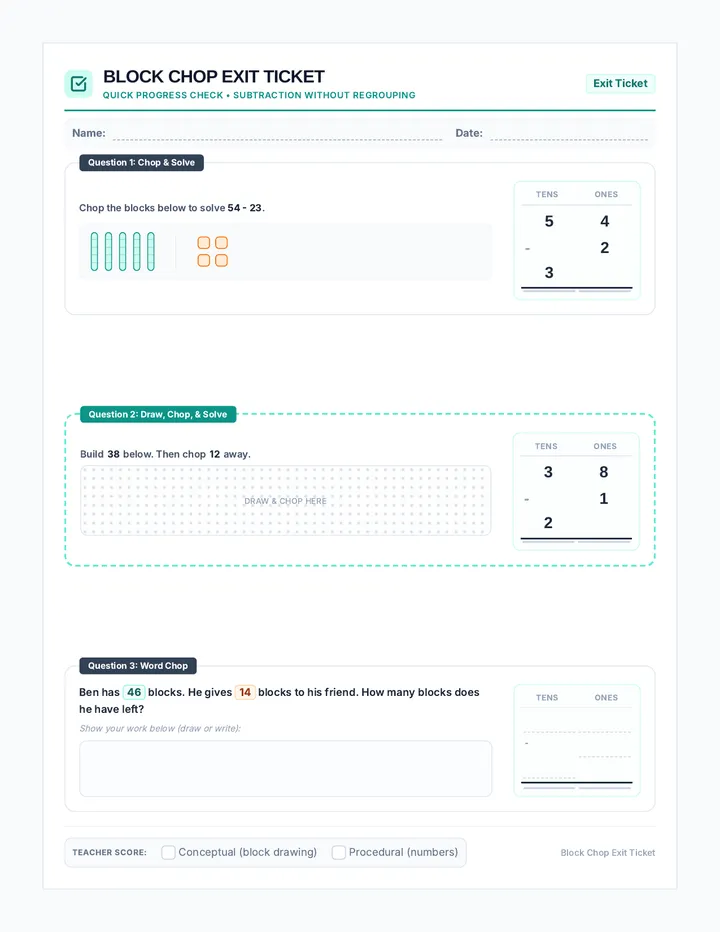
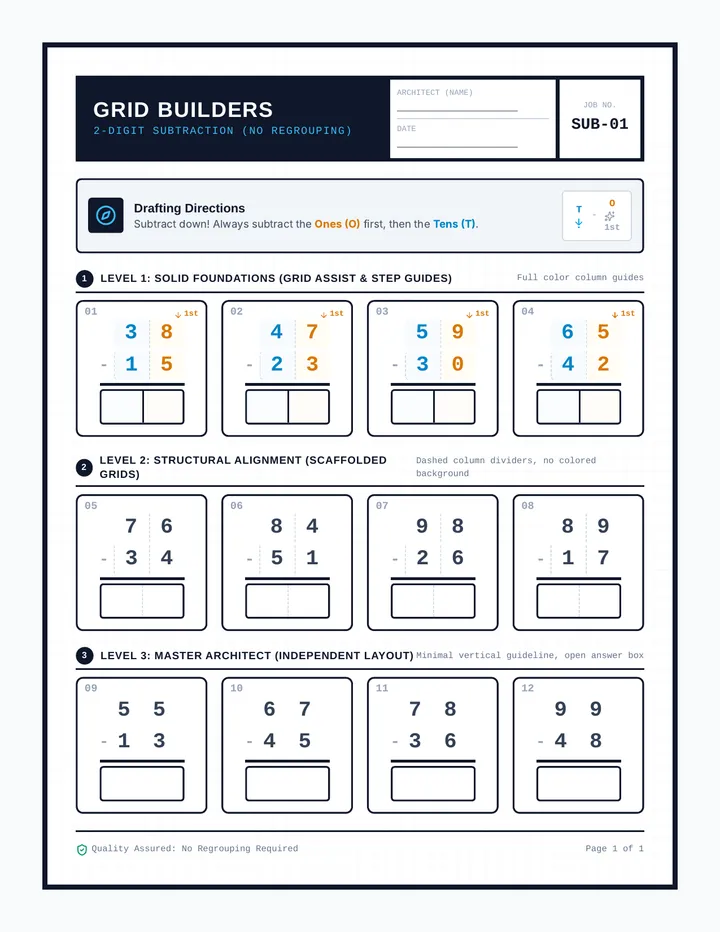
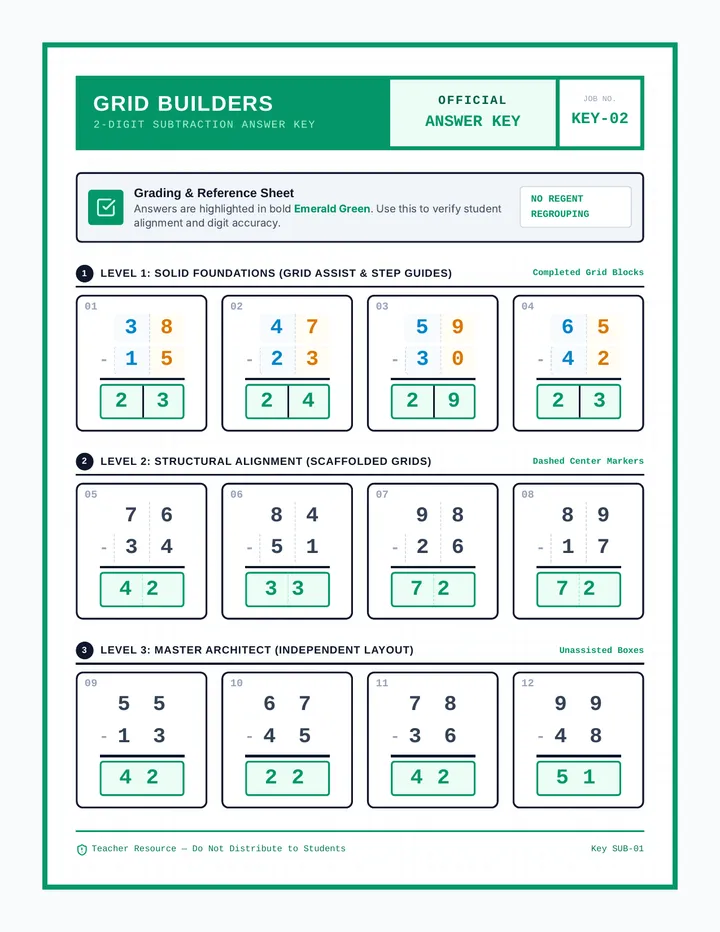
A comprehensive math review lesson designed to reinforce key elementary math skills including logical ordering, 2-digit subtraction, geometric attributes, and equal parts/fractions. This lesson uses a repeated "at-bat" structure to build mastery through multiple variations of the same problem format.
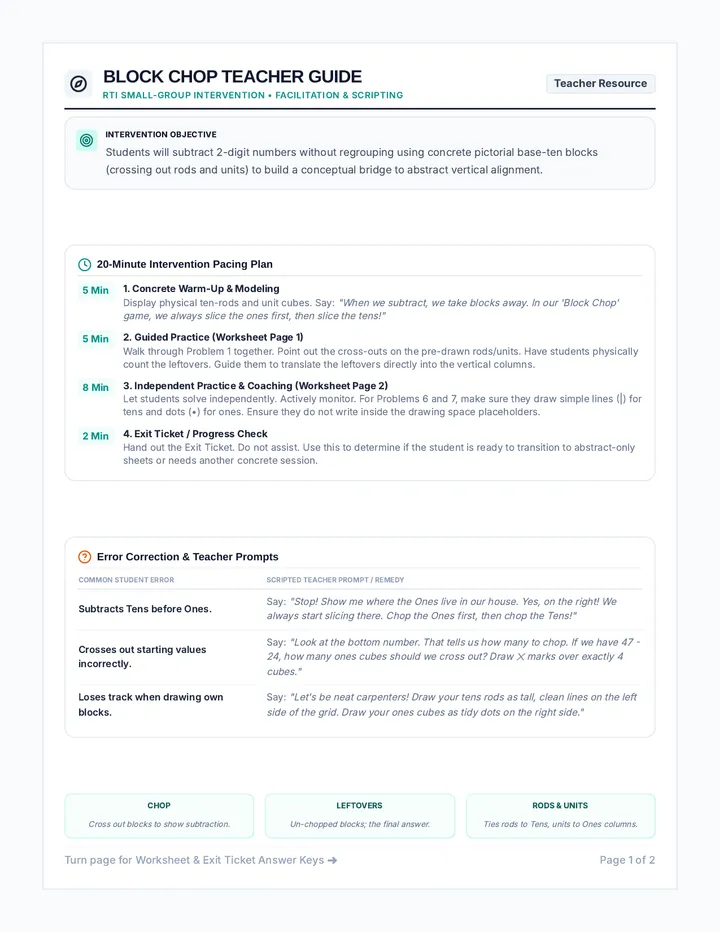
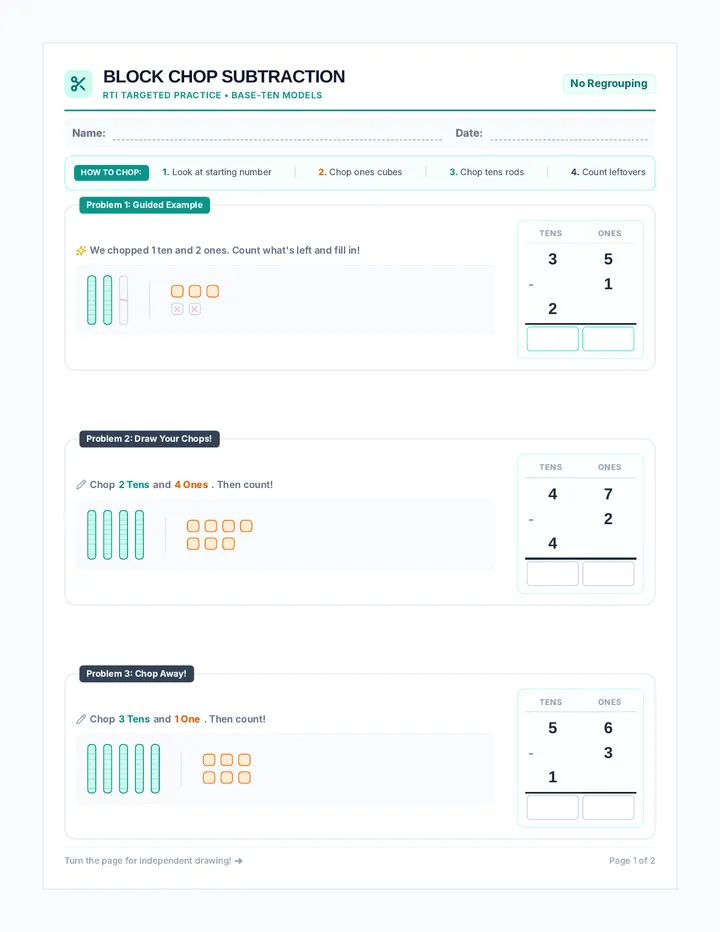
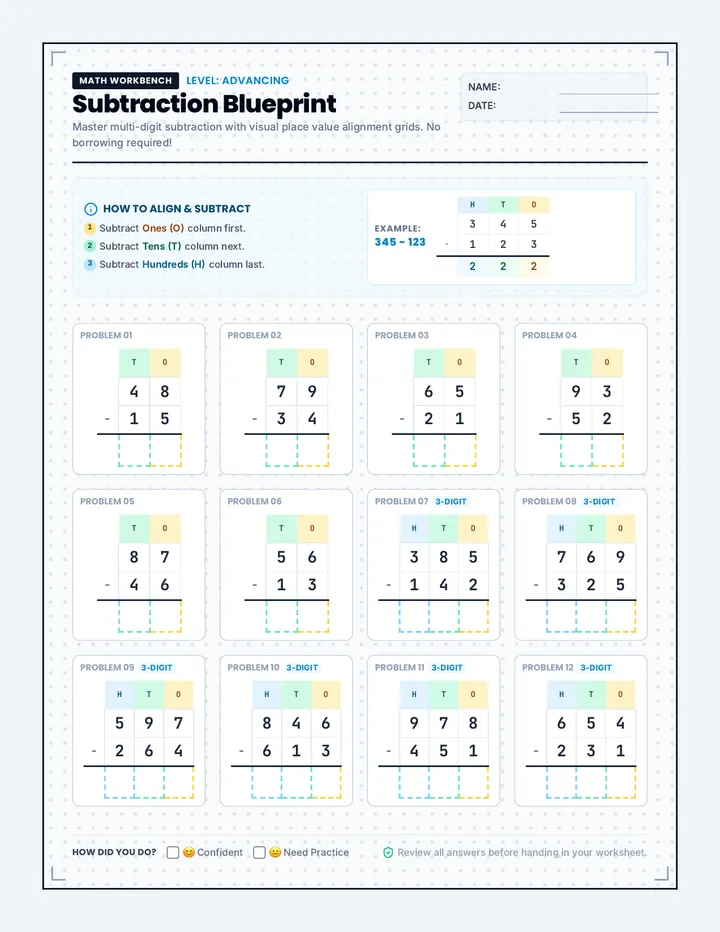
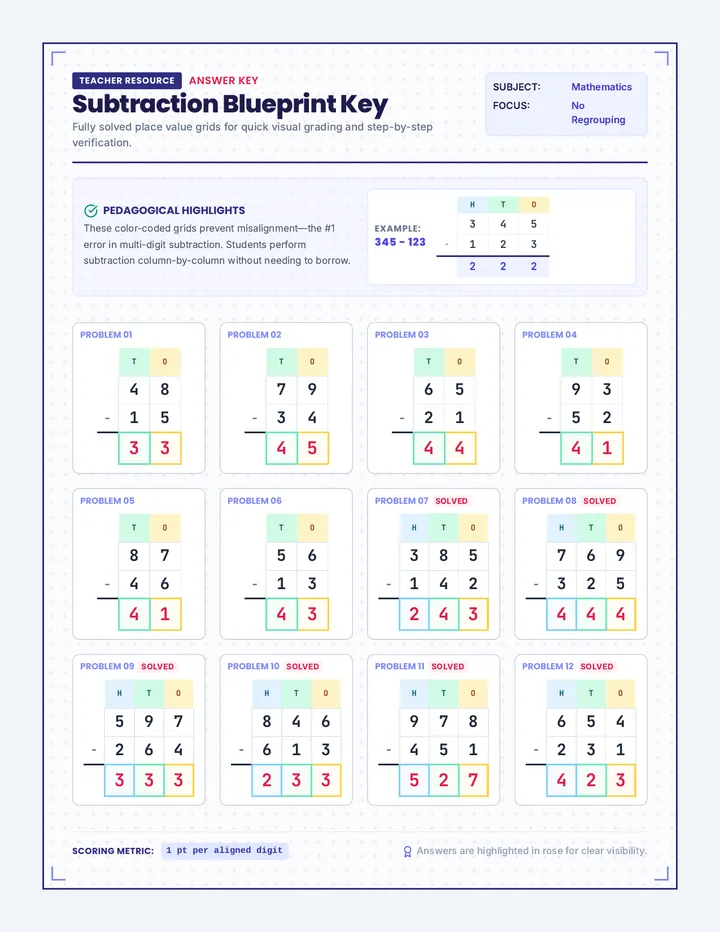
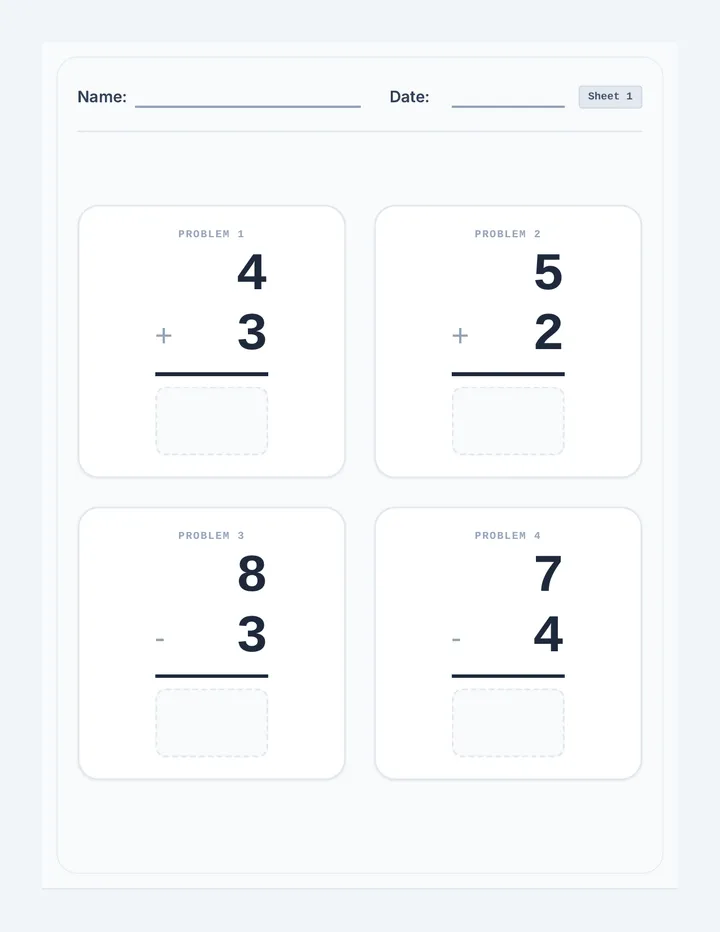
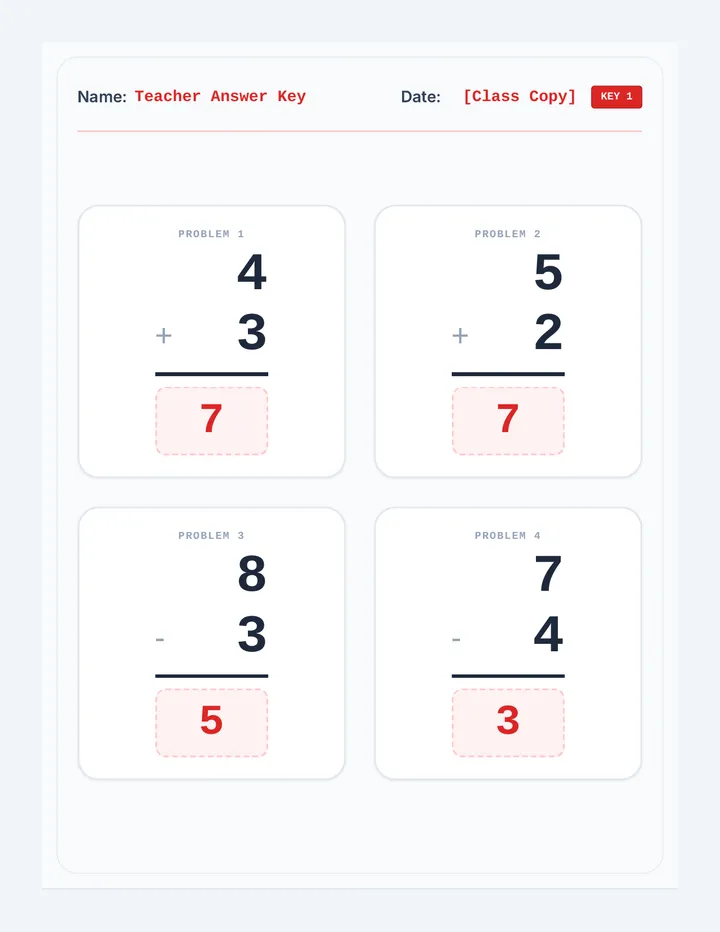
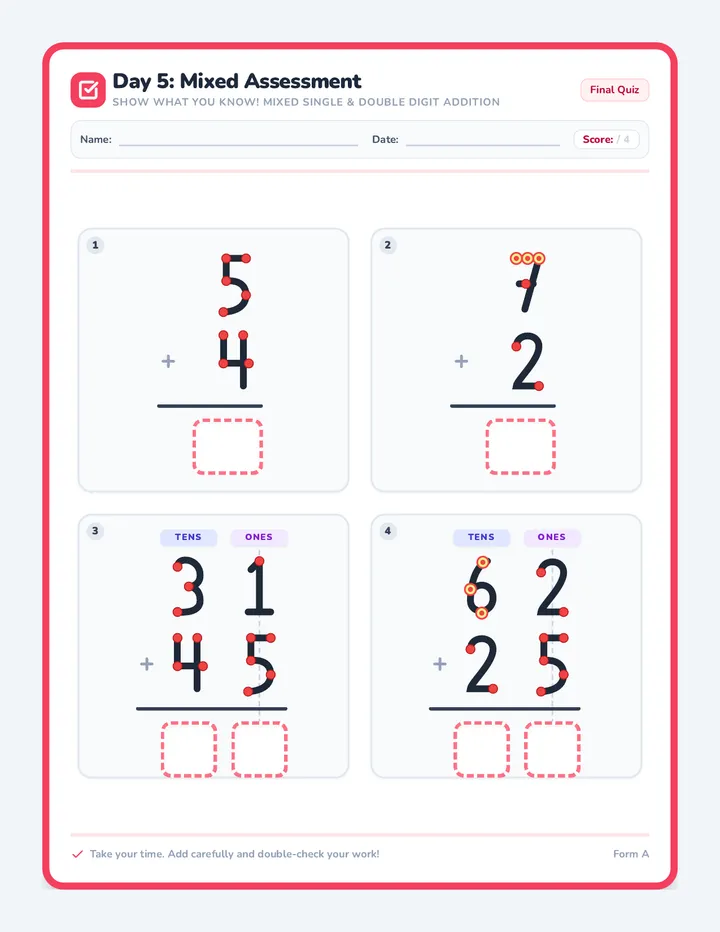
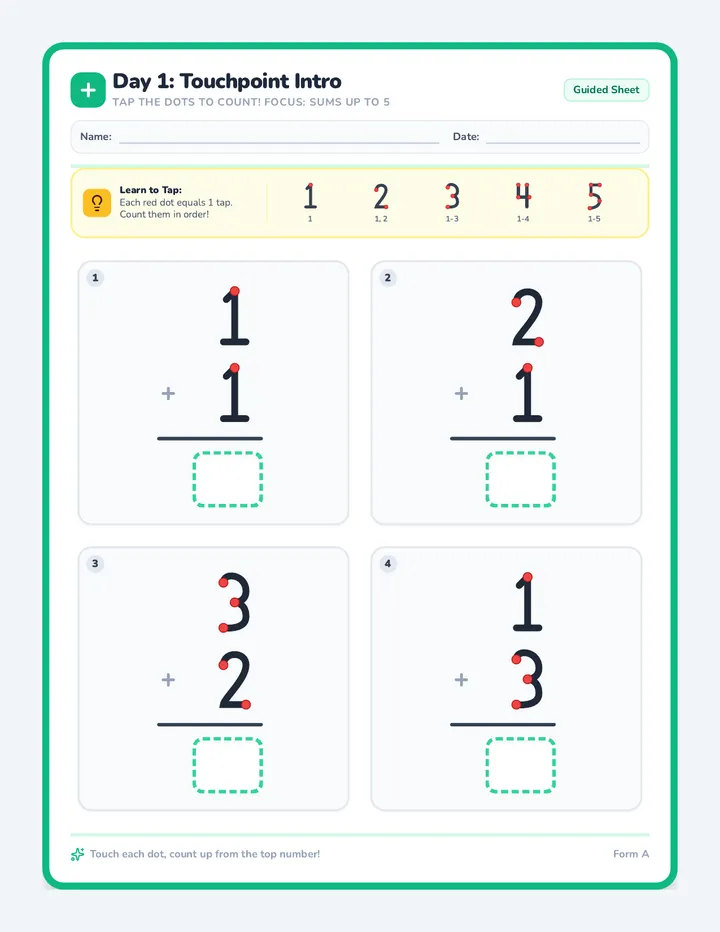
A math review packet focusing on basic addition, subtraction, number combinations, and visual representation of groups, including a student worksheet and an answer key.
A 3-day lesson series covering the partitioning of circles and rectangles into equal shares (halves and fourths/quarters) through baking.
A focused lesson on identifying missing addends within 20 using number bond visual representations to build algebraic thinking and fluency.
A magical math lesson where students count, sort, and graph different types of ponies to practice data representation and comparison skills.
A cumulative review of 2D/3D shapes, positional words, and measurement comparisons to assess mastery.
Students identify 3D shapes (cube, sphere, cone, cylinder) and compare objects based on size and length.
Students identify 2D shapes (circle, square, triangle, rectangle) and use positional language (over, under, beside) to describe location.
Students analyze input-output tables to identify constant addition or subtraction rules and apply those rules to find missing values.
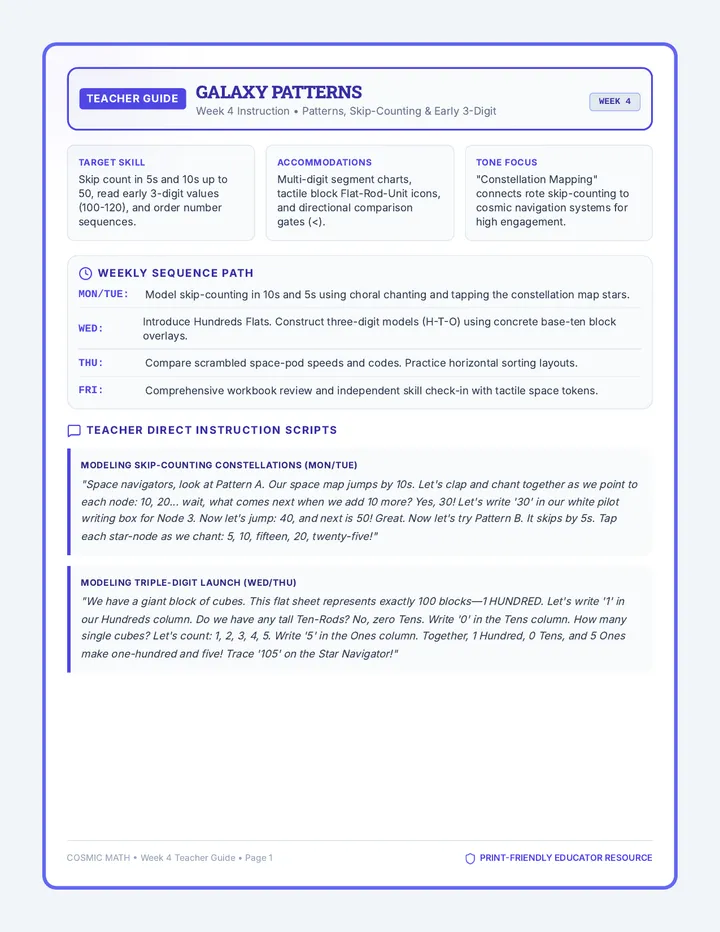
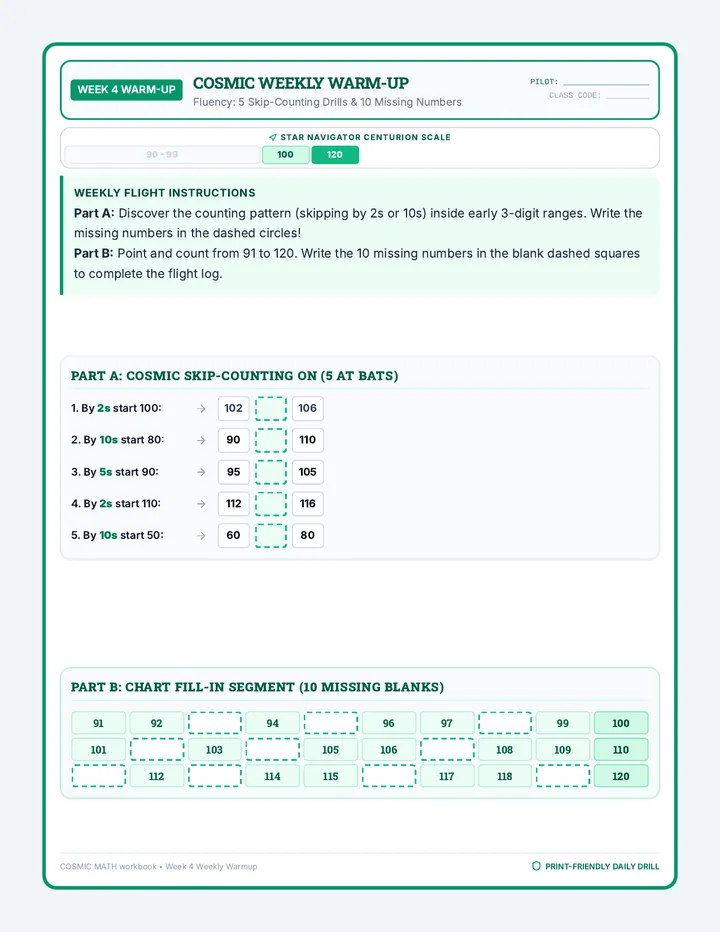
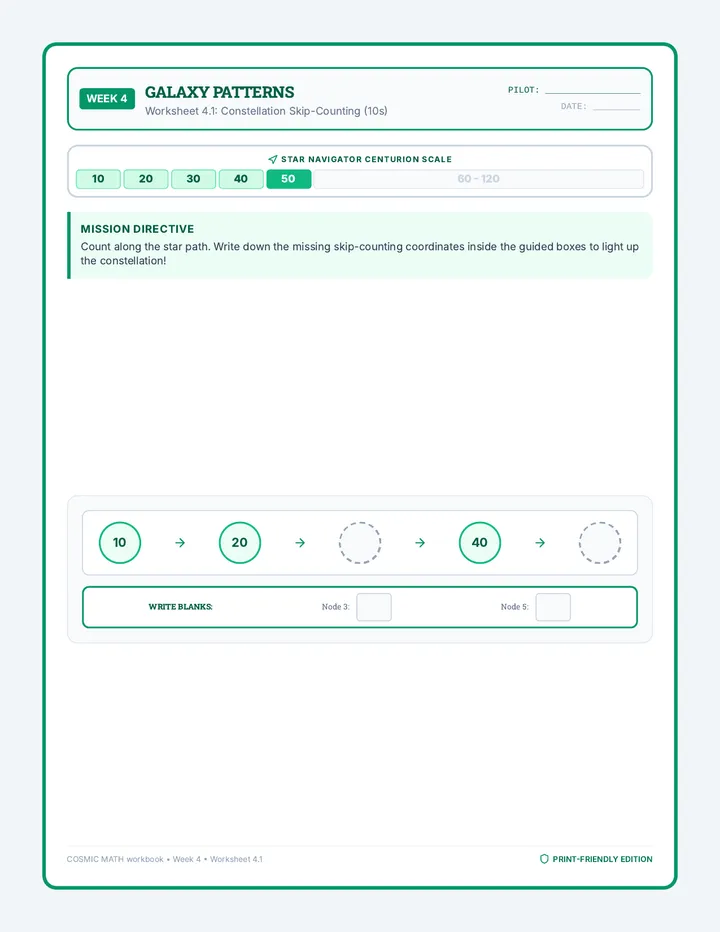
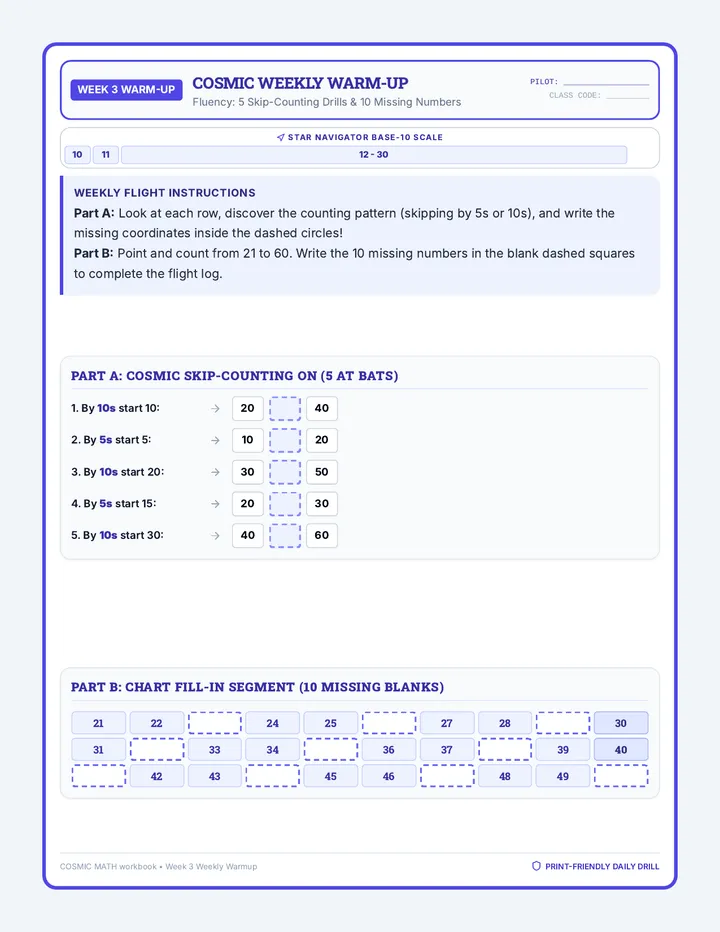
Students identify and extend skip counting patterns by 2s, 5s, and 10s, and practice finding the underlying rule for various number sequences.
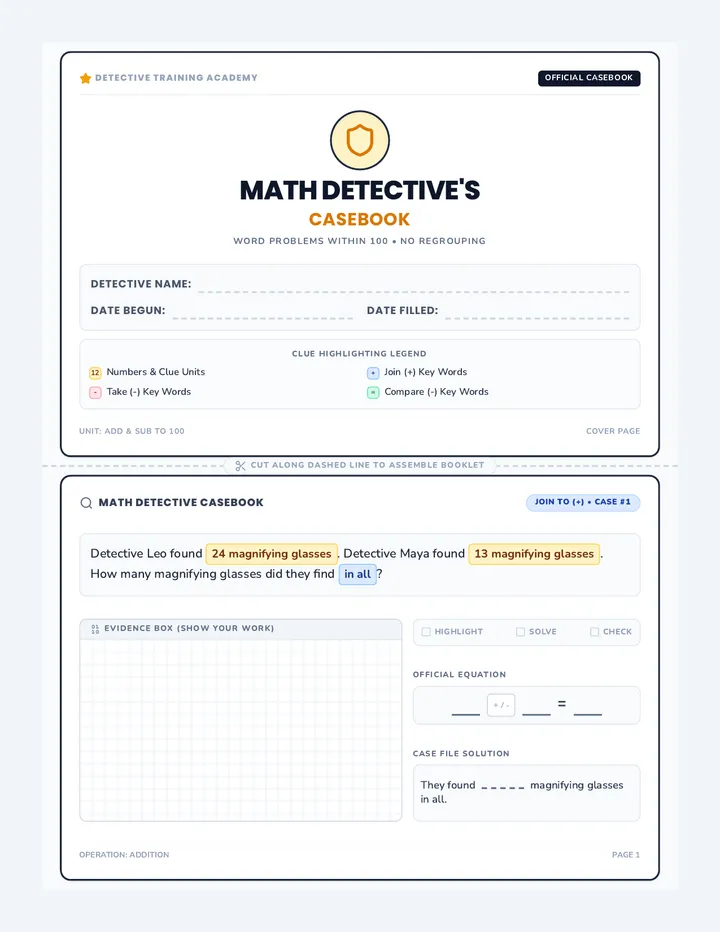
Students solve missing addend word problems within 100, focusing on finding the 'change' in a story context using subtraction strategies.
Students apply their knowledge to mixed word problems and real-world money scenarios within 20, demonstrating mastery of result unknown and comparison types.
Students solve comparison word problems to find 'how many more' or 'how many fewer' using visual models.
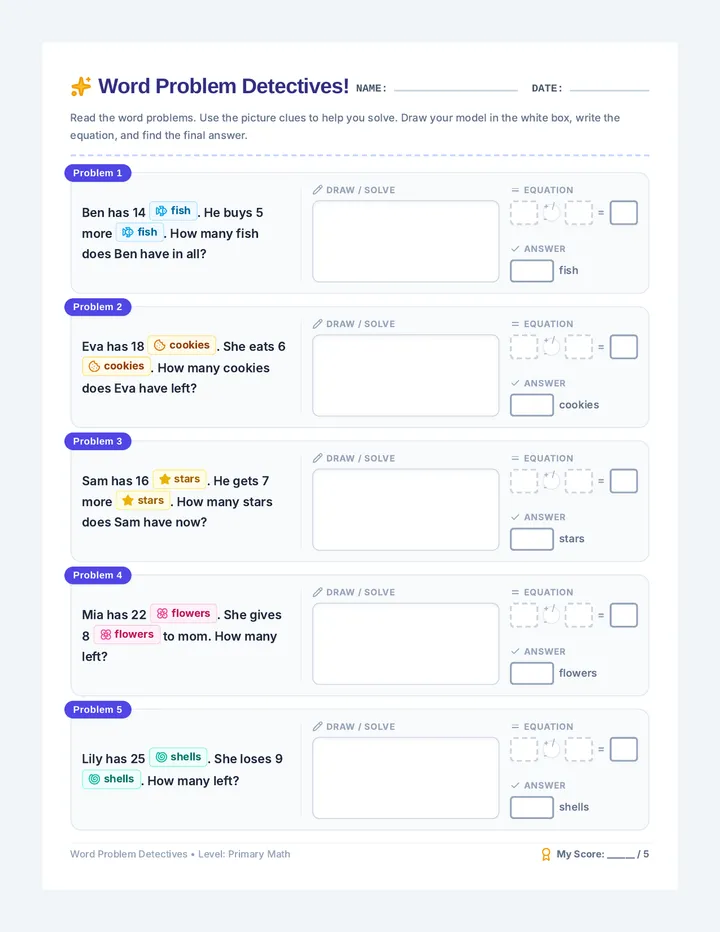
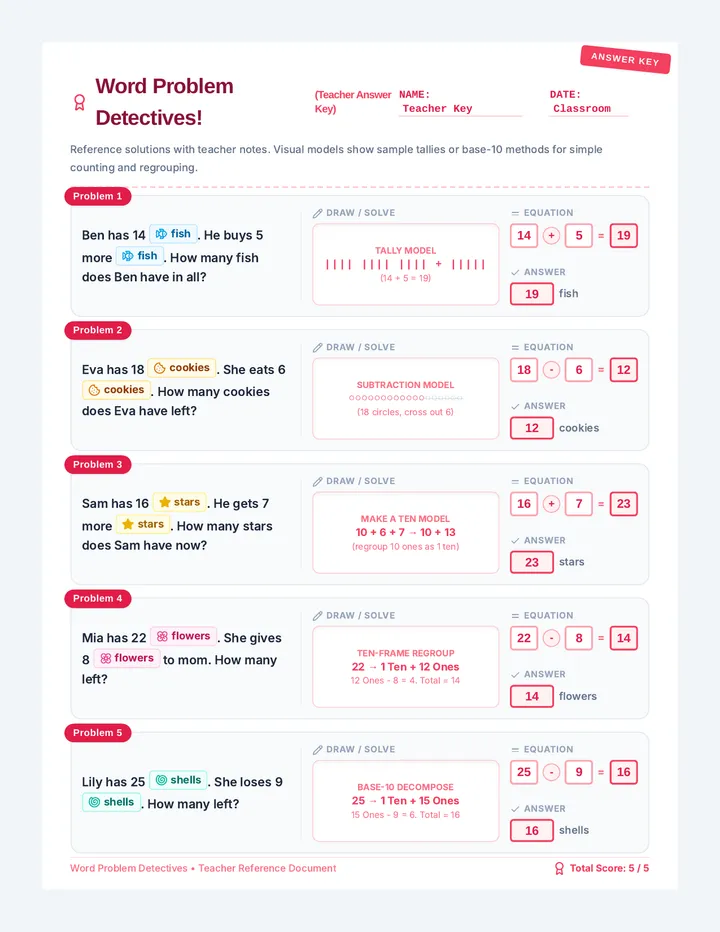
Students solve result unknown addition and subtraction word problems within 20 using strategies like drawing and number lines.
Integrates all previous word problem types (start-unknown, compare, and mix) using simple bar graphs.
Focuses on comparison word problems (more than/fewer than) and mixed operations using picture graphs.
Focuses on solving start-unknown subtraction and missing addend addition problems using tally mark data.
Students analyze bar graphs representing money values (pennies and nickels) and solve one-step word problems. This lesson integrates money counting with data interpretation to reach higher RIT band objectives.