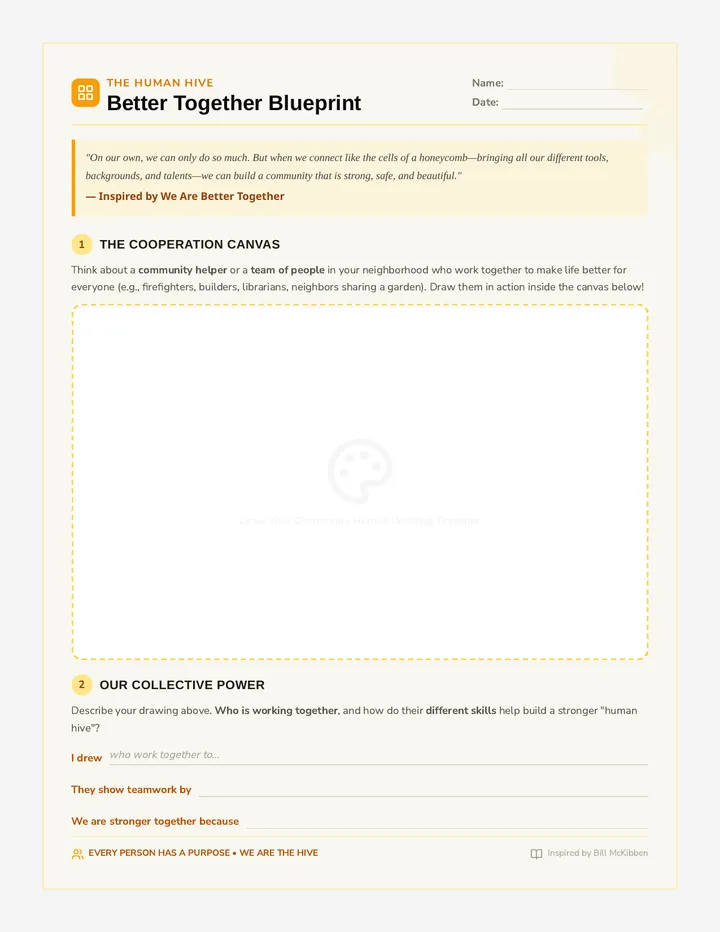
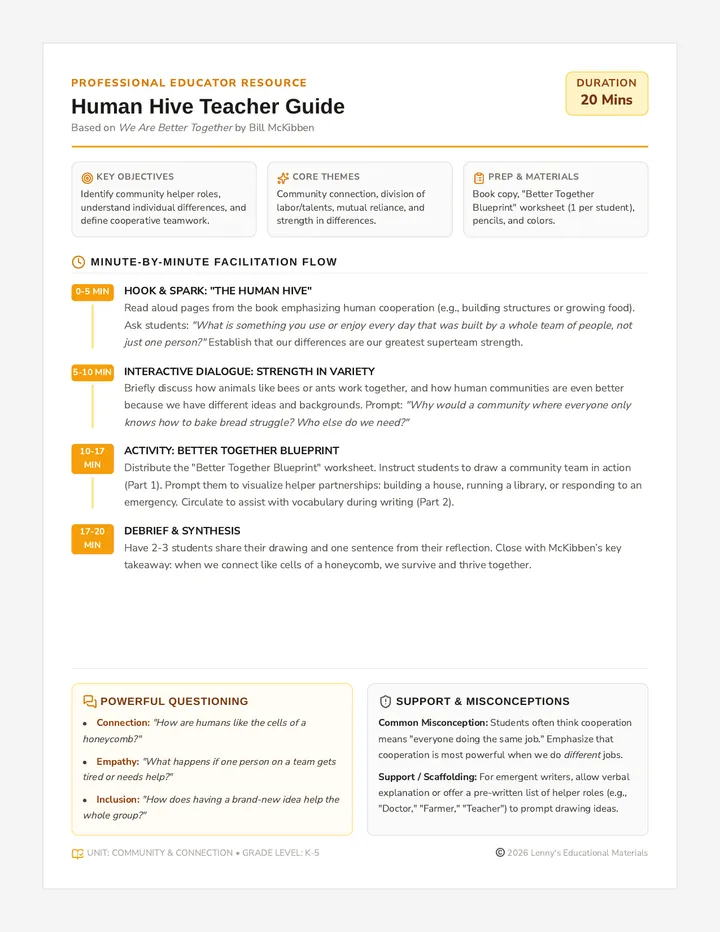
A restorative circle lesson for 3rd graders to explore citizenship, responsibility, and empathy within their classroom and community.
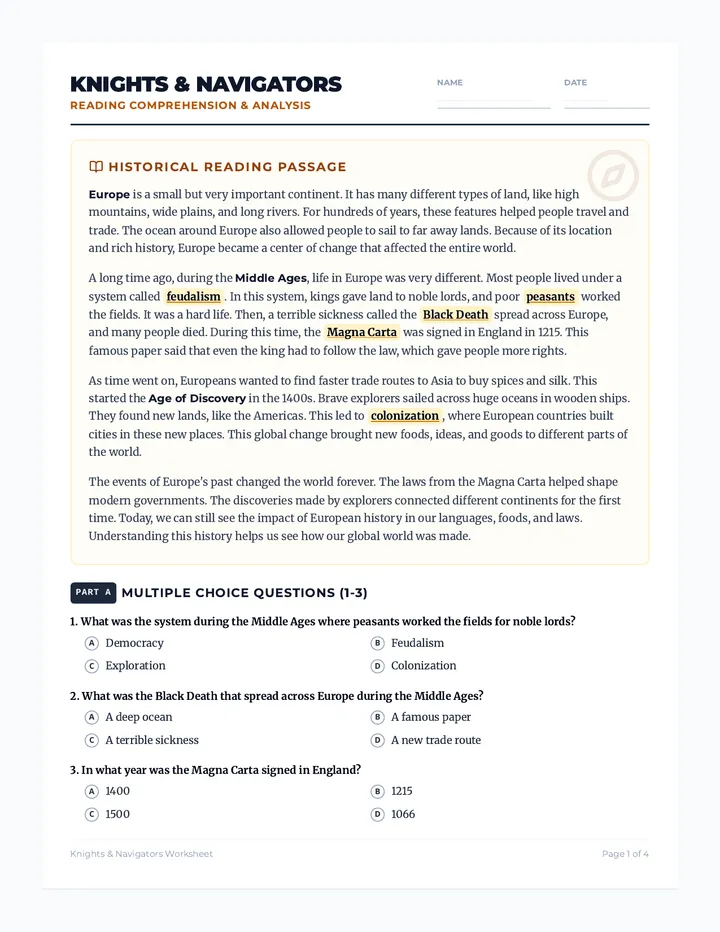
A lesson focused on the key European explorers who reached North America, their motivations, and their discoveries.
A lesson exploring the cultural and environmental adaptations of Native American tribes across four key regions: Arctic, Northeast, Southeast, and Plateau.
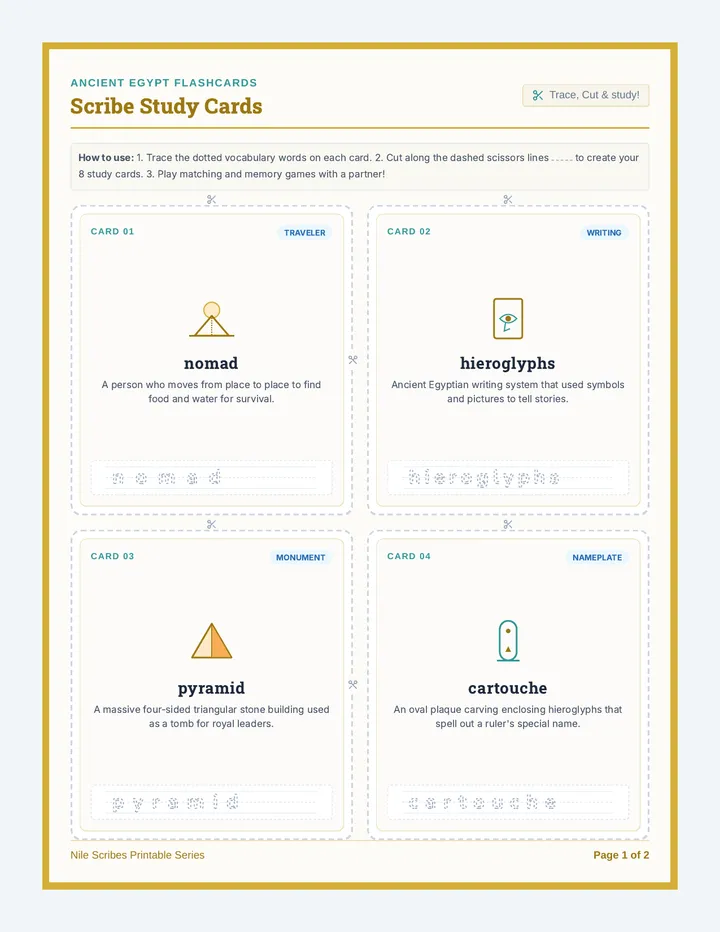
Master the essential terminology of Ancient Rome through visual and descriptive flashcards.
Solve complex multiplication word problems using multiple strategies including arrays and area models.
Track and reflect on daily reading progress with differentiated logs for various ability levels.
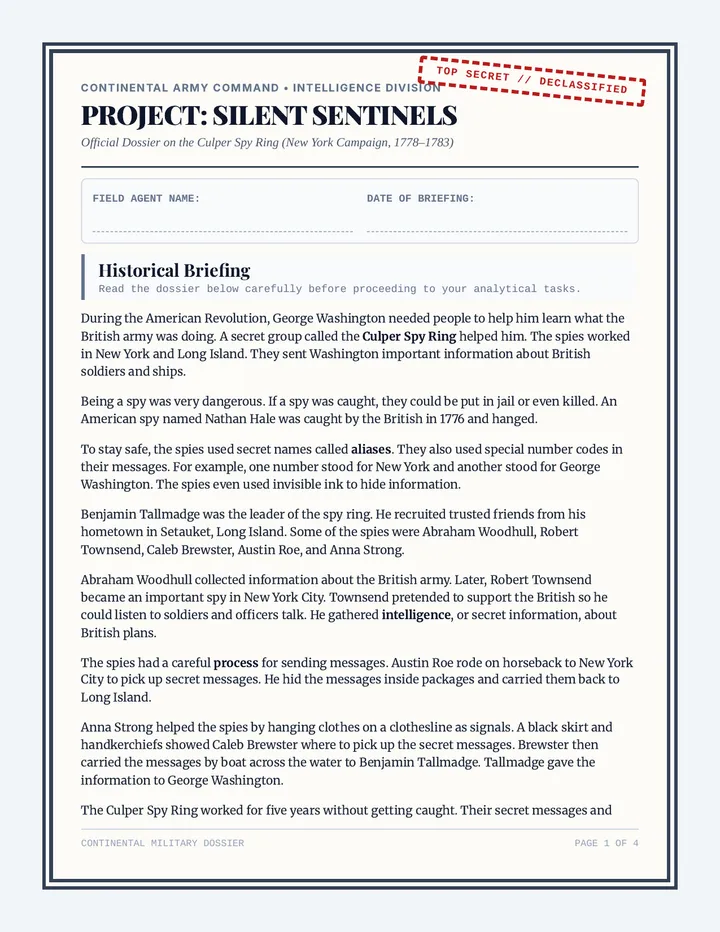
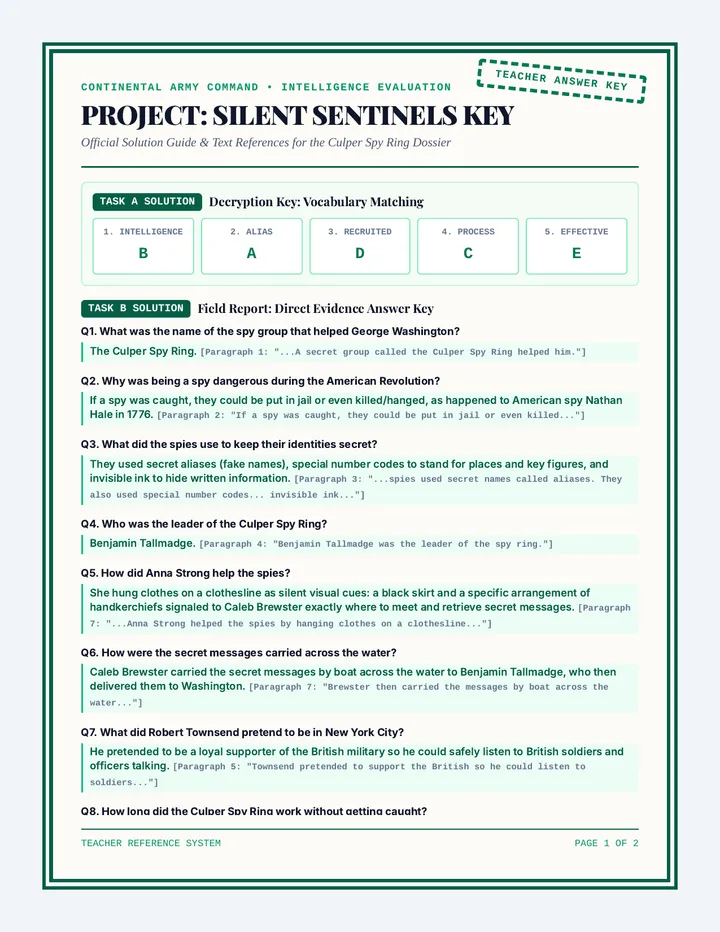
Analyze the key figures, events, and documents of the American Civil Rights Movement.
Explore how plants transform sunlight into energy through the process of photosynthesis.
A deep dive into Ancient Rome covering geography, daily life, government, and lasting contributions tailored for 3rd grade Virginia SOLs. Students explore the physical environment of the Mediterranean and how Romans adapted to their surroundings through engineering and trade.
A captivating introduction to Ancient Rome for 3rd graders, covering daily life, engineering marvels, and the legacy of the empire through visual exploration and hands-on activities.
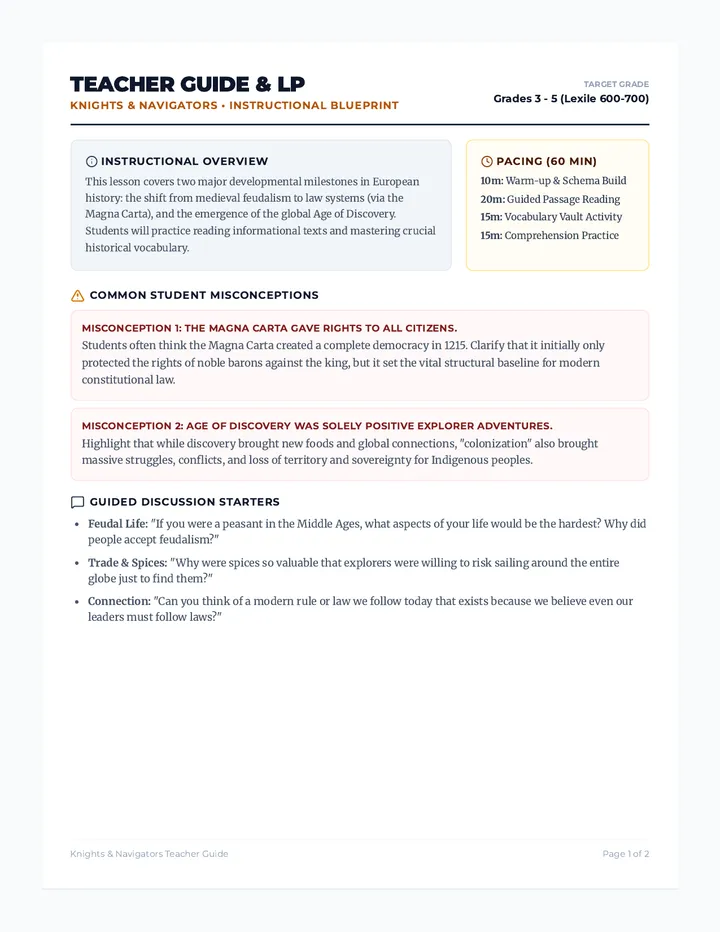
A 30-45 minute lesson exploring both the religious origins and secular traditions of Easter, including a social story for behavioral expectations and a symbol-matching activity.
A lesson investigating the political instability that led to the Fall of Rome, featuring differentiated evidence files for diverse reading levels. Students work collaboratively to diagnose the empire's 'political sickness.'
A project-based lesson where 3rd-grade students explore the physical characteristics of mountains, wetlands, plains, and deserts through a variety of creative choices.
An introductory lesson covering the Introduction and Chapter 1 of 'What Was the Great Chicago Fire?' focusing on the conditions that made Chicago a 'city of wood' and the start of the blaze.
A comprehensive introduction to the three branches of the U.S. government, focusing on the roles and responsibilities of the Legislative, Executive, and Judicial branches.
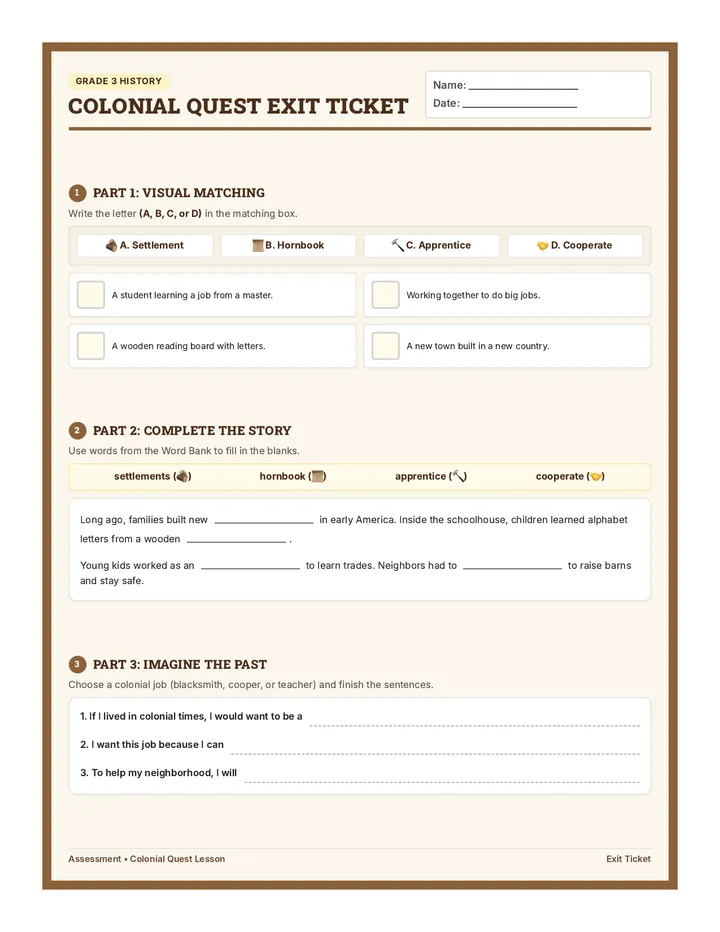
A comprehensive lesson on the colonial bread-making process, featuring the roles of millers and bakers, bartering practices, and sequencing the steps from grain to loaf.
A quick visual identification activity where students recognize the seven continents by their silhouettes alone.
A beginner's guide to the history, symbols, and values of Freemasonry, designed to help students understand its origins as a builders' guild and its modern focus on character and community service.
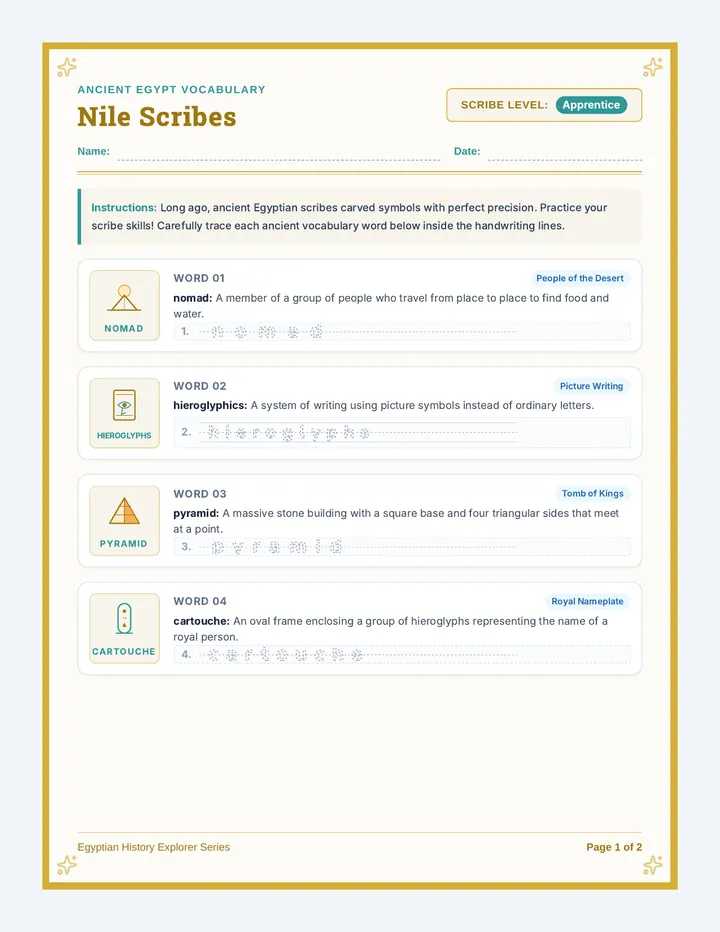
An introduction to the social structure and daily life of ancient Egyptians, focusing on pharaohs, workers, and travel on the Nile.
Trace the migration journey southward to South America and understand the timeline of early human arrival. Objectives: Map the migration route from North to South America; Identify the timeline (25,000-14,000 years ago).
Examine the Coastal Route theory and the archaeological evidence that suggests an alternative or additional migration route. Objectives: Describe the Coastal Route theory; Explain why boats and sea resources (kelp highway) were important.
Investigate archaeological evidence to understand why early humans followed herds across Beringia. Objectives: Explain why early humans followed mammoths; Identify artifacts (spear points) as evidence of migration.
Explore how the Ice Age created a land bridge (Beringia) that allowed the first humans to migrate to the Americas. Objectives: Explain how lower sea levels created a land bridge; Identify Beringia on a map.
An introductory lesson for 3rd graders to understand what history is, why it matters, and the different types of social scientists who study the past.
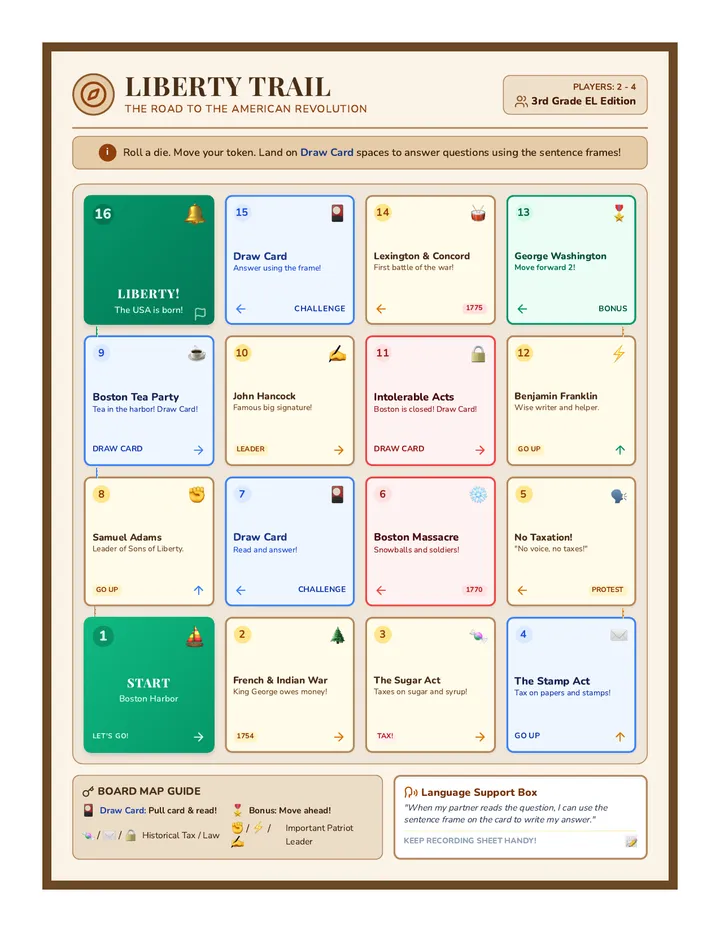
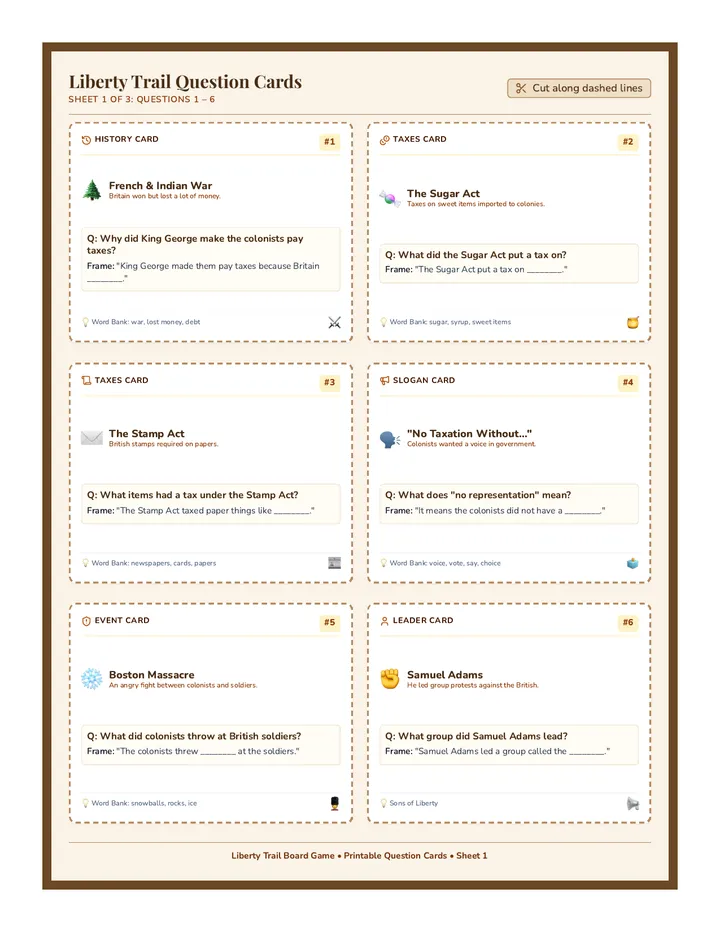
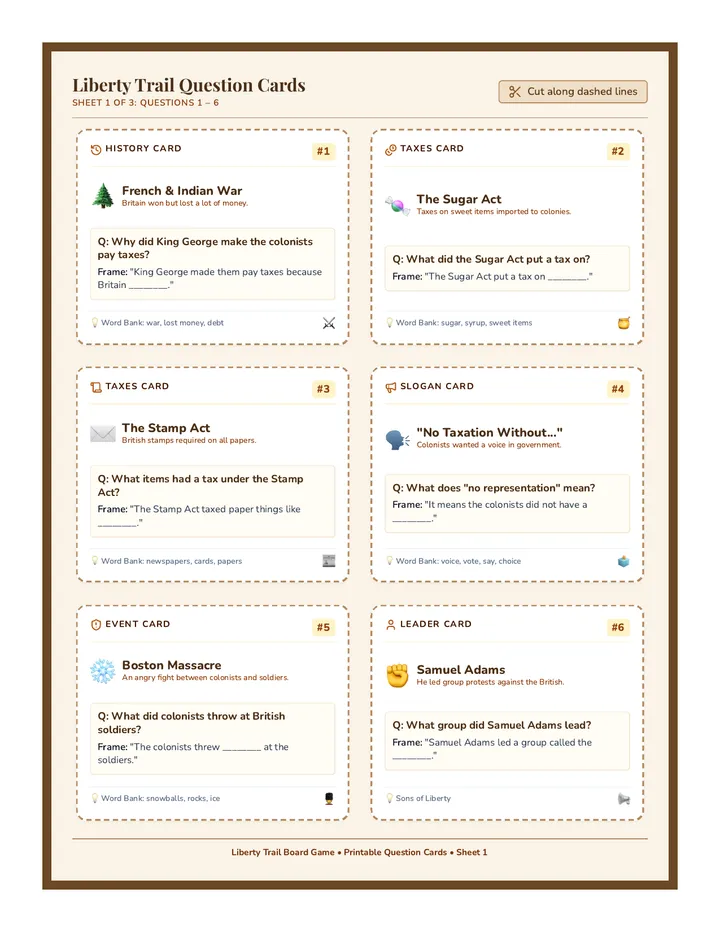
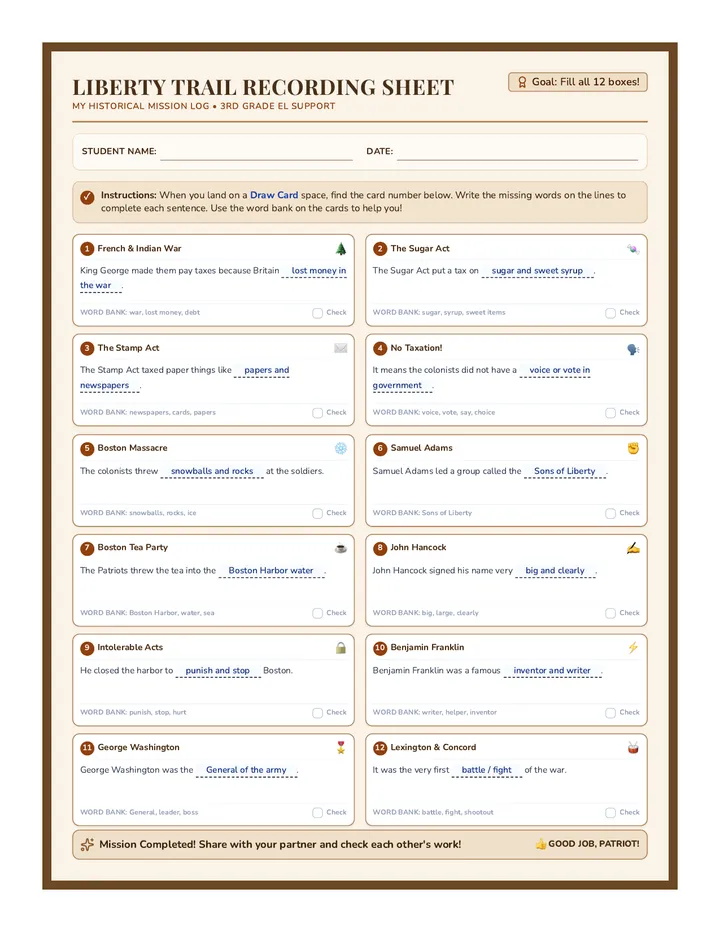
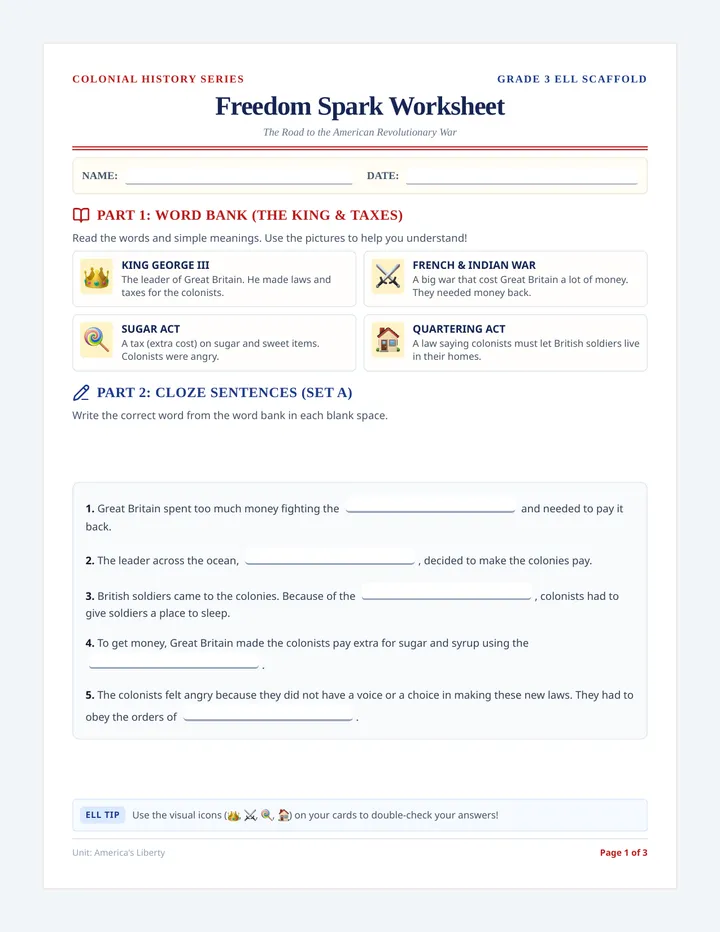
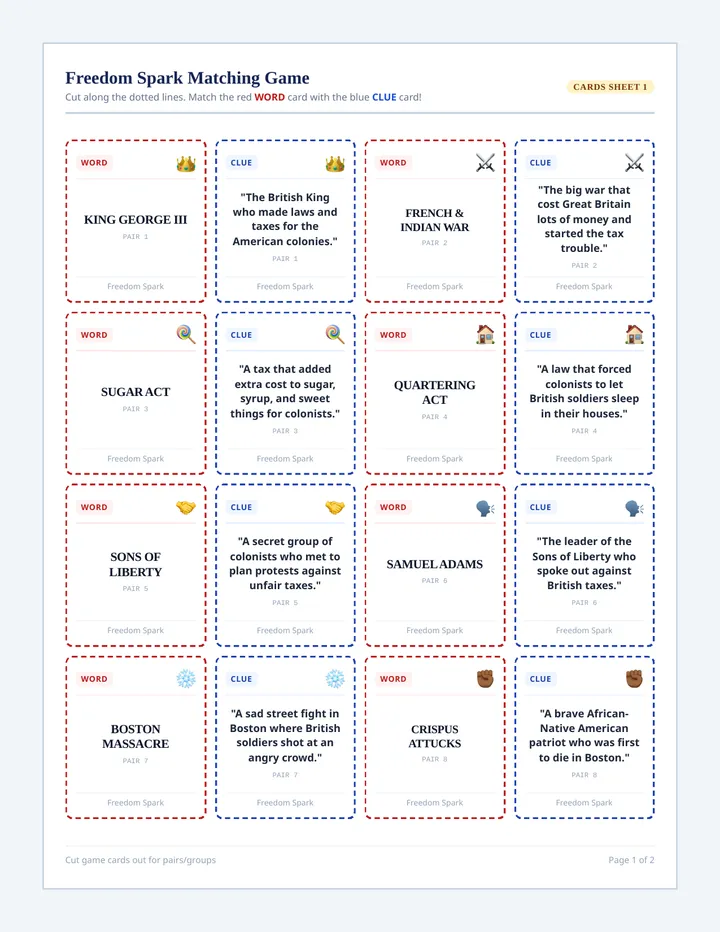
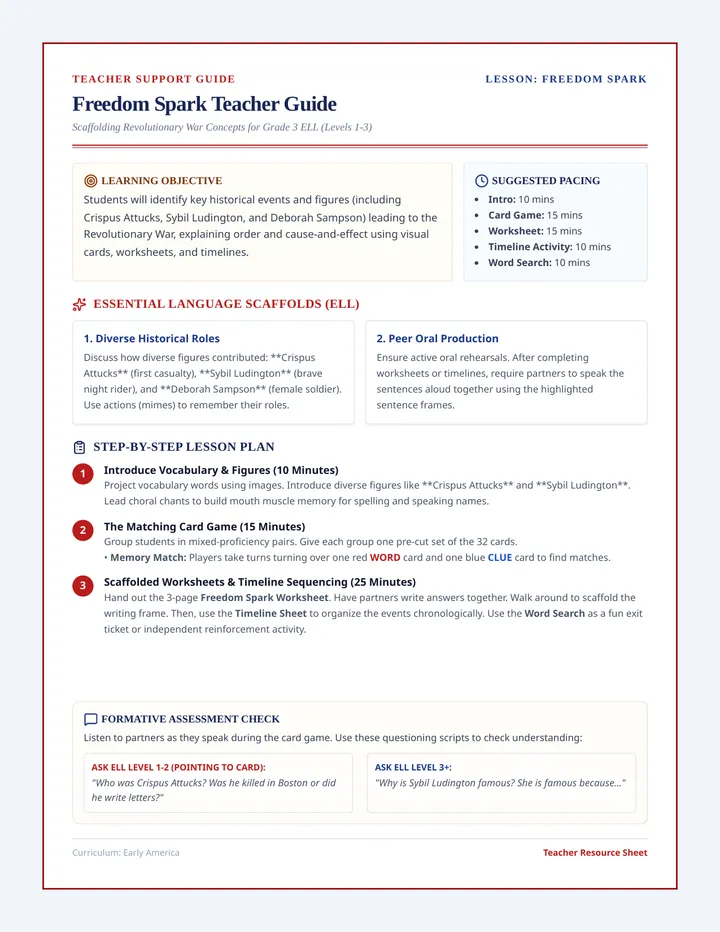
A vocabulary lesson focusing on key terms related to the American Revolution, featuring kid-friendly definitions, syllable breakdowns, and interactive review activities.
An adapted lesson exploring the Latin American struggle for independence from Spanish colonial rule, featuring simplified text and visual supports for diverse learners.
A look at the modern-day Southwest, including its major cities, diverse population, and current economic drivers like tourism, energy, and aerospace.
A hands-on lesson comparing the historic ways of life of the Southwest's original inhabitants with the modern lives of people living in the region today.
An exploration of the Apache and Comanche tribes, their nomadic lifestyles, warrior traditions, and their adaptation to the horse culture on the plains.
A study of the Pueblo and Navajo tribes, focusing on their unique cultures, traditional homes (pueblos and hogans), and artistic traditions like weaving and pottery.
An introduction to the geography and climate of the four Southwestern states: Arizona, New Mexico, Texas, and Oklahoma. Students will learn about deserts, mountains, and plains.
A look at modern life in the Midwest, including major cities, cultural contributions, and a final unit review.
Learning about the Ojibwe (Chippewa) people, their connection to the Great Lakes and woodlands, and their enduring traditions.
Exploring the history and cultures of the Sioux and Mandan nations, focusing on their adaptation to the Great Plains.
Investigating the climate of the Midwest and how it directly influences major industries like agriculture and manufacturing.
An introduction to the 12 states of the Midwest, their locations, and key geographic features like the Great Lakes and the Great Plains.
A culminating review and hands-on project day where students synthesize their learning about the Southeast.
Examine the vibrant modern-day traditions, music, food, and culture of the Southeastern US.
Learn about the heritage and resilience of the Creek (Muscogee) and Seminole tribes.
Discover the history and culture of the Powhatan Chiefdom and the Cherokee Nation.
Explore the geography, climate, and states of the Southeast region using map skills and weather analysis.