Students investigate the suprachiasmatic nucleus and melatonin's role in the sleep-wake cycle, analyzing how disruptions like jet lag affect performance and designing a self-tracking protocol.
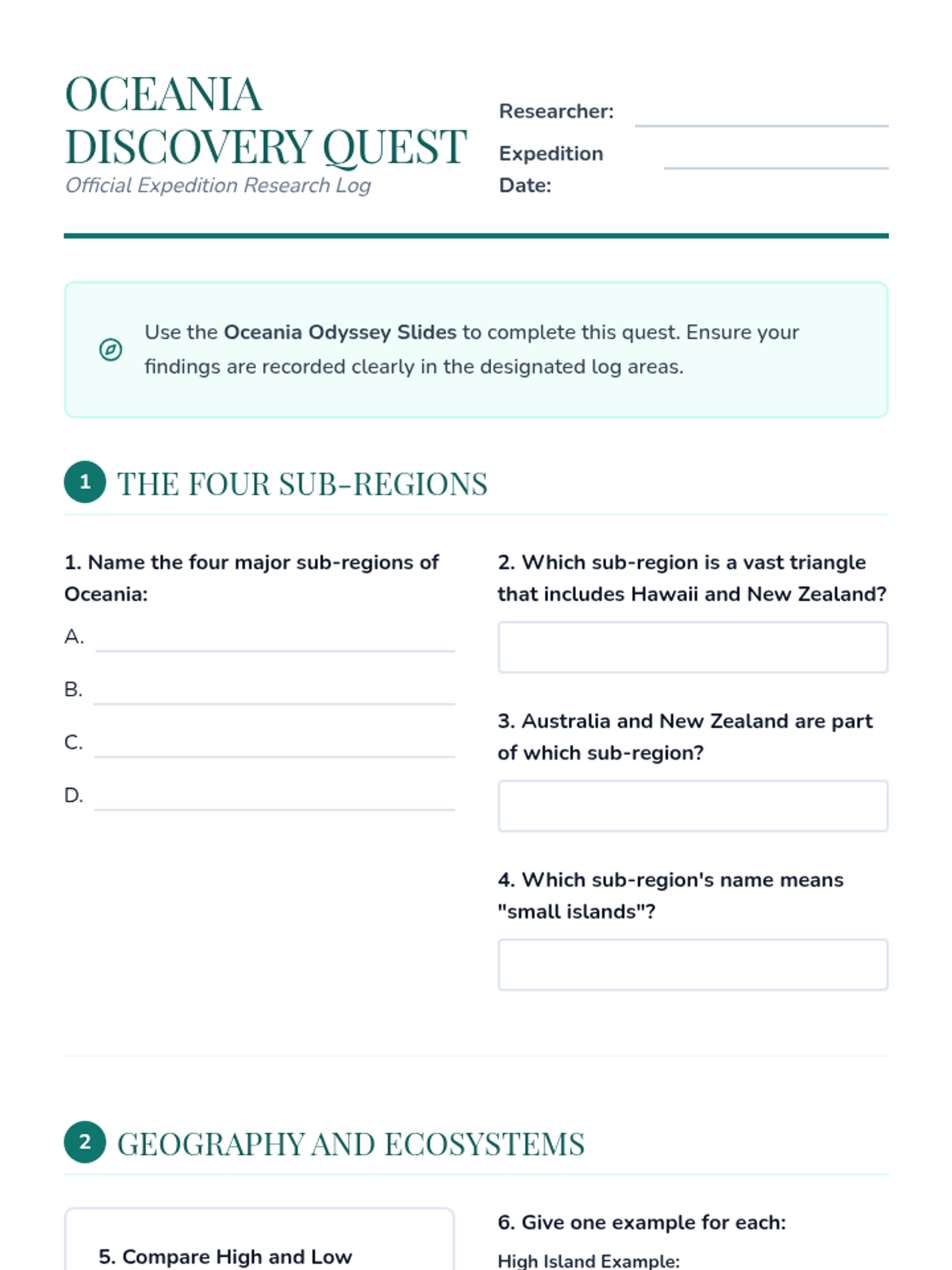
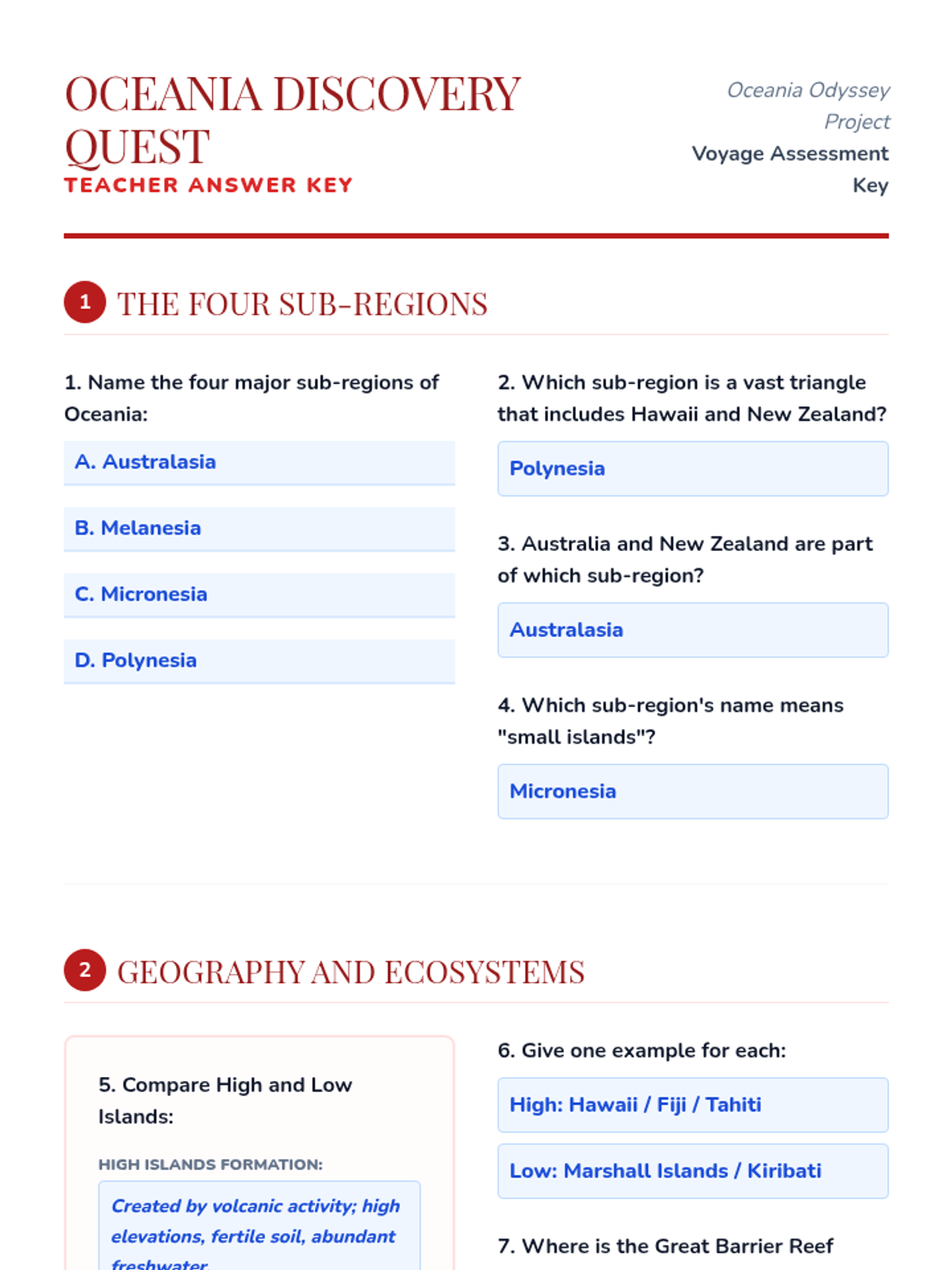
A comprehensive project exploring the Oceania region through its geography, history, and modern environmental challenges. Students use a detailed slide deck to complete a 20-question discovery quest.
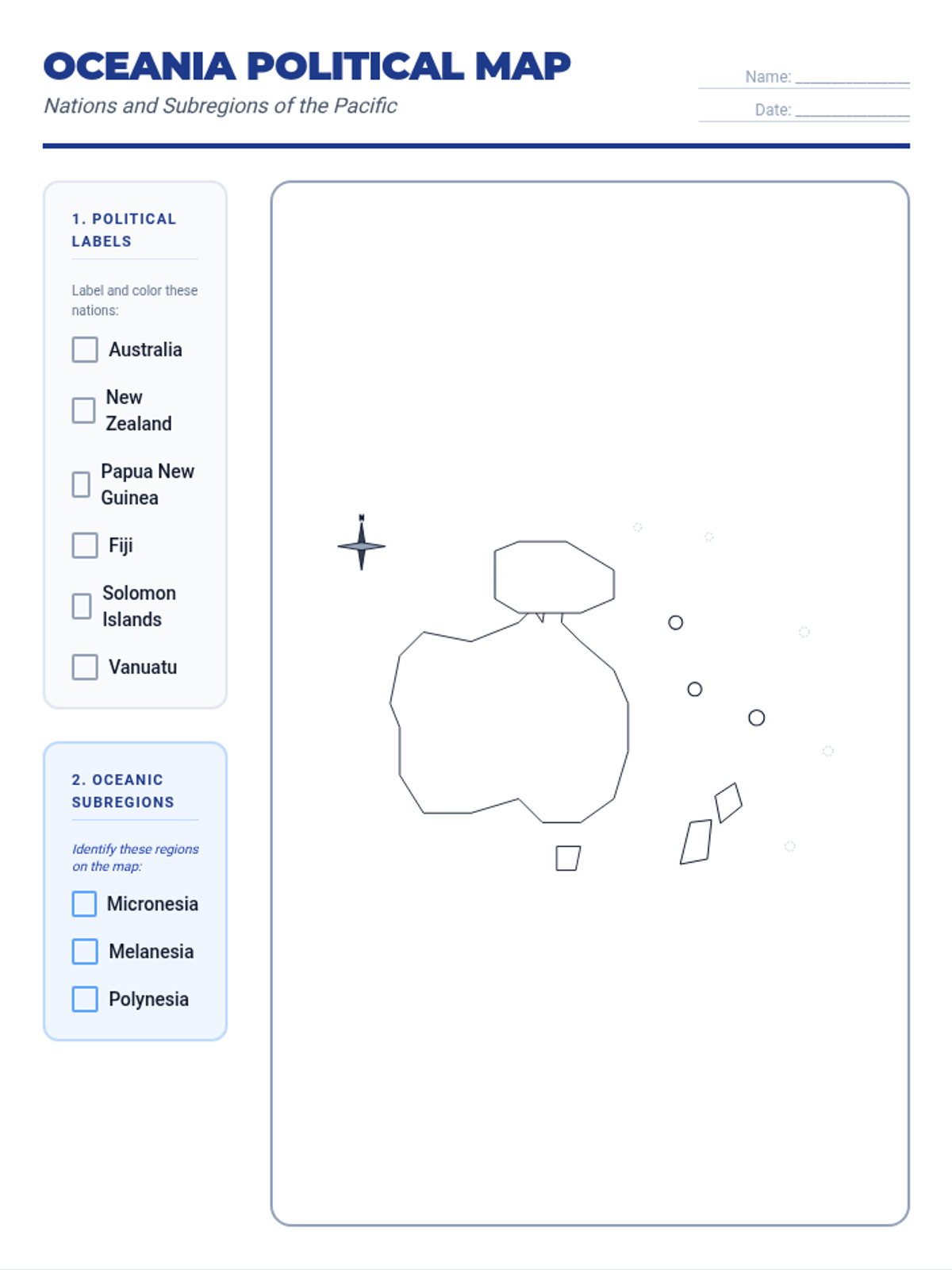
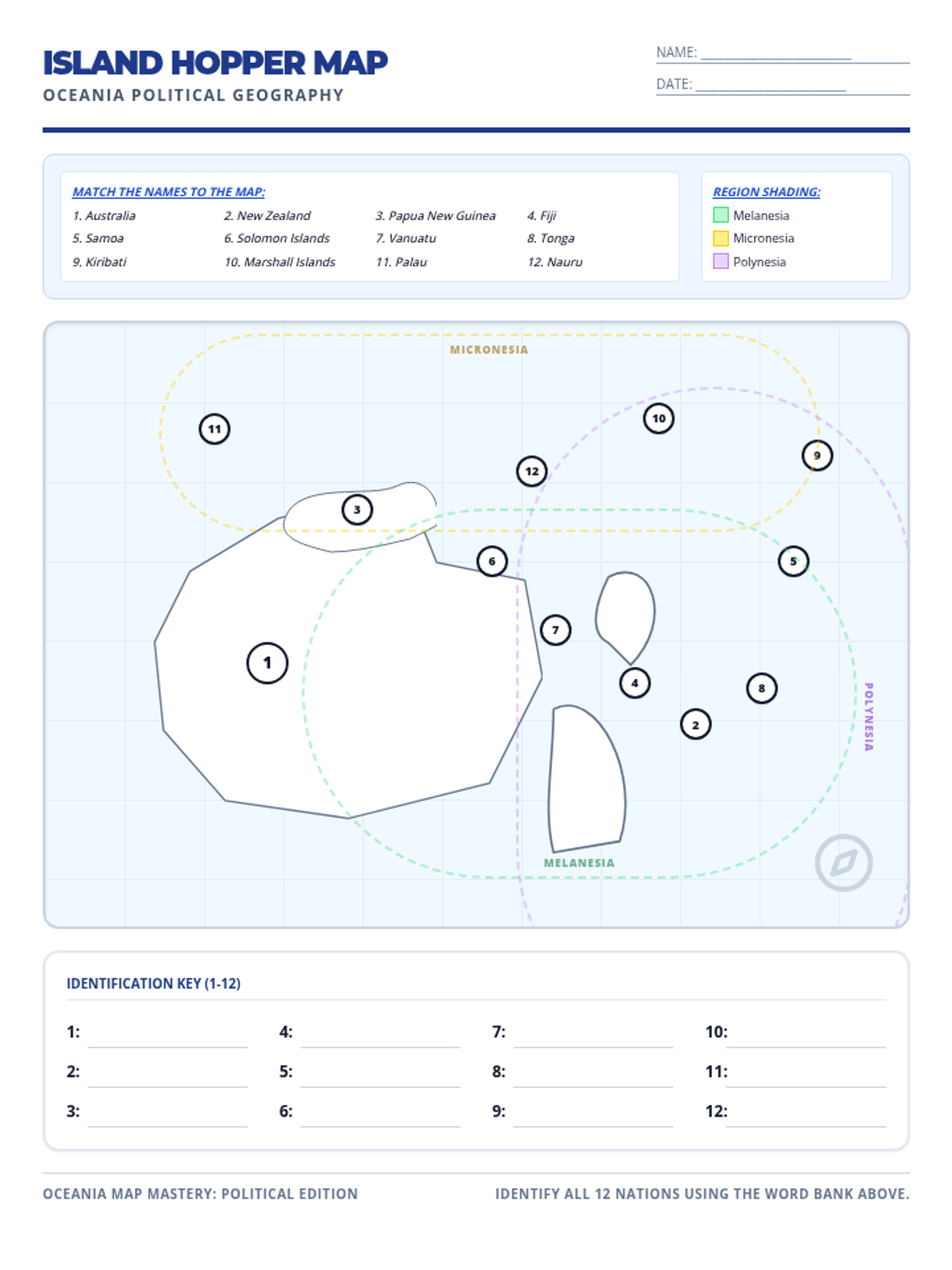
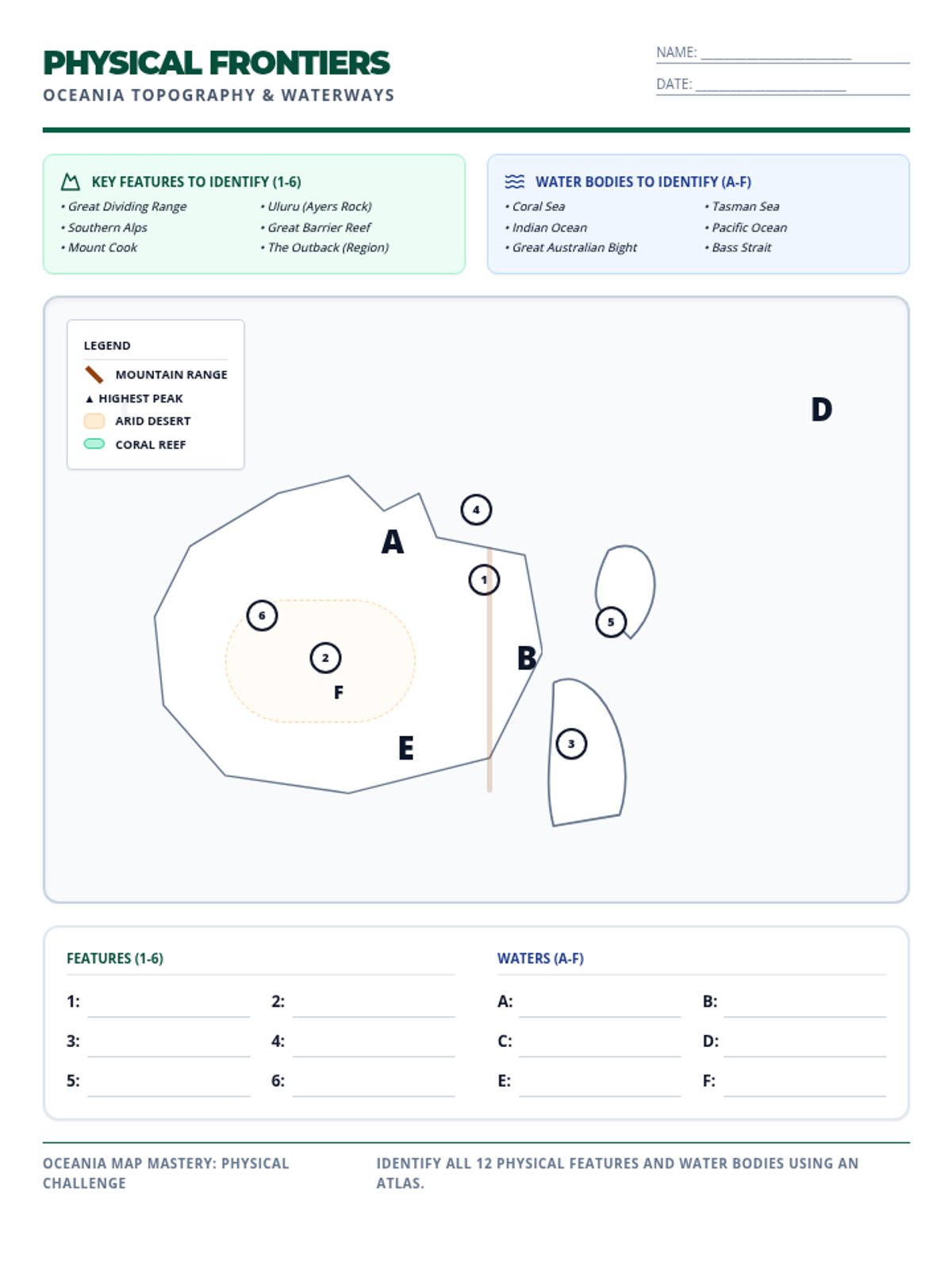
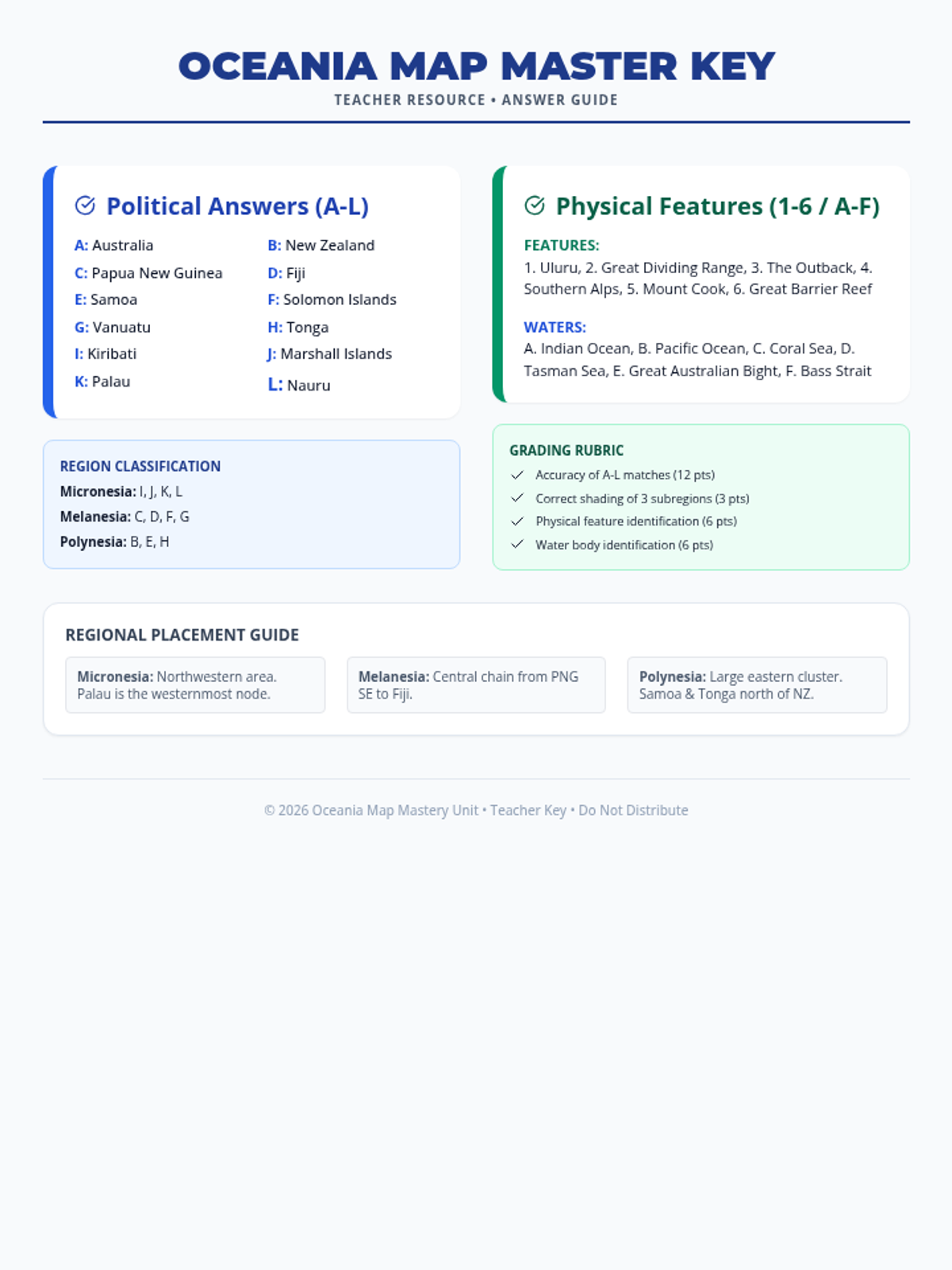
A hands-on cartography lesson where students explore the political boundaries and physical geography of Oceania through labeling and coloring.
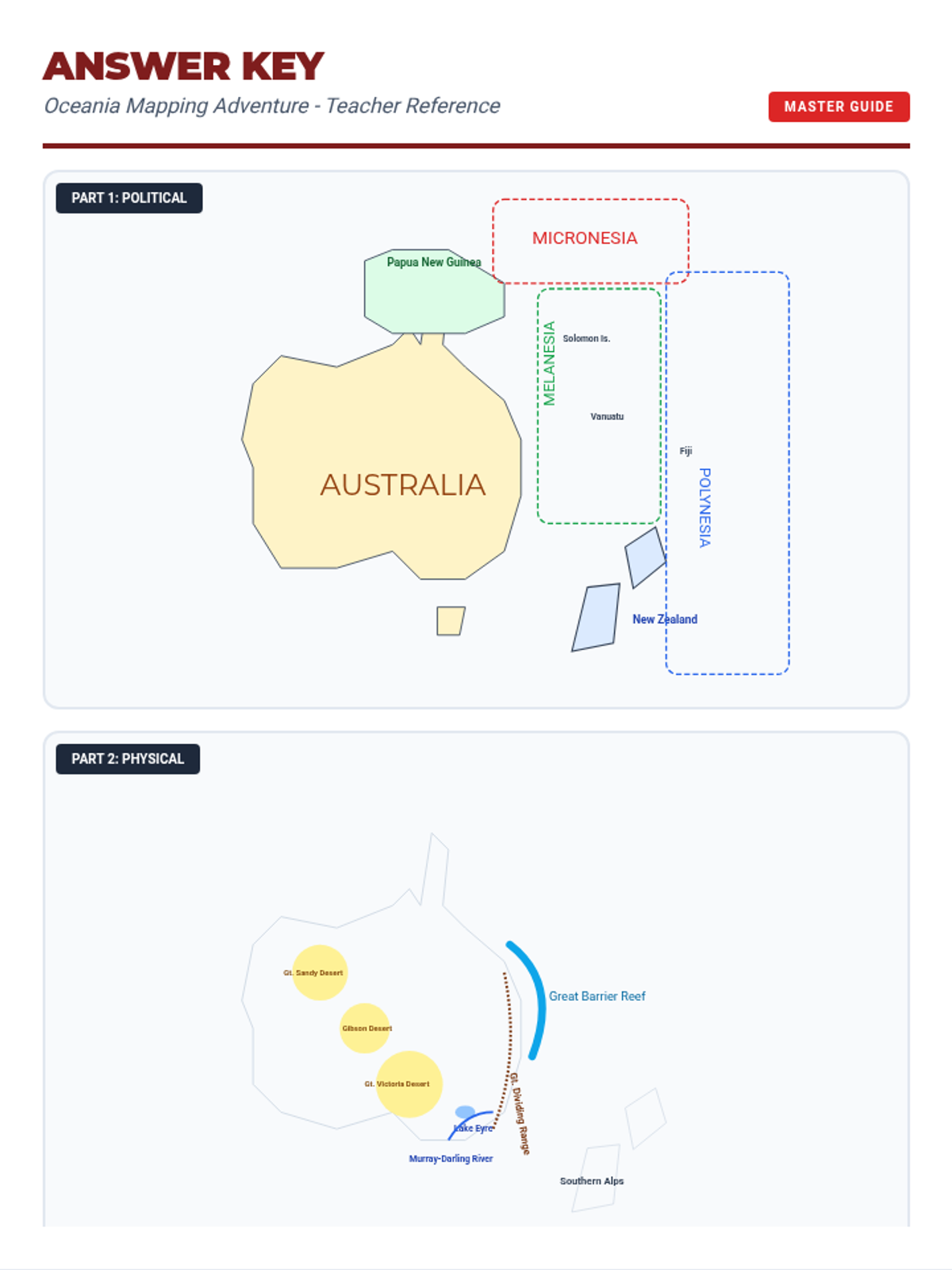
A comprehensive mapping unit focused on the geography of Oceania. Students identify and label major subregions, island nations, and significant physical features across the Pacific.
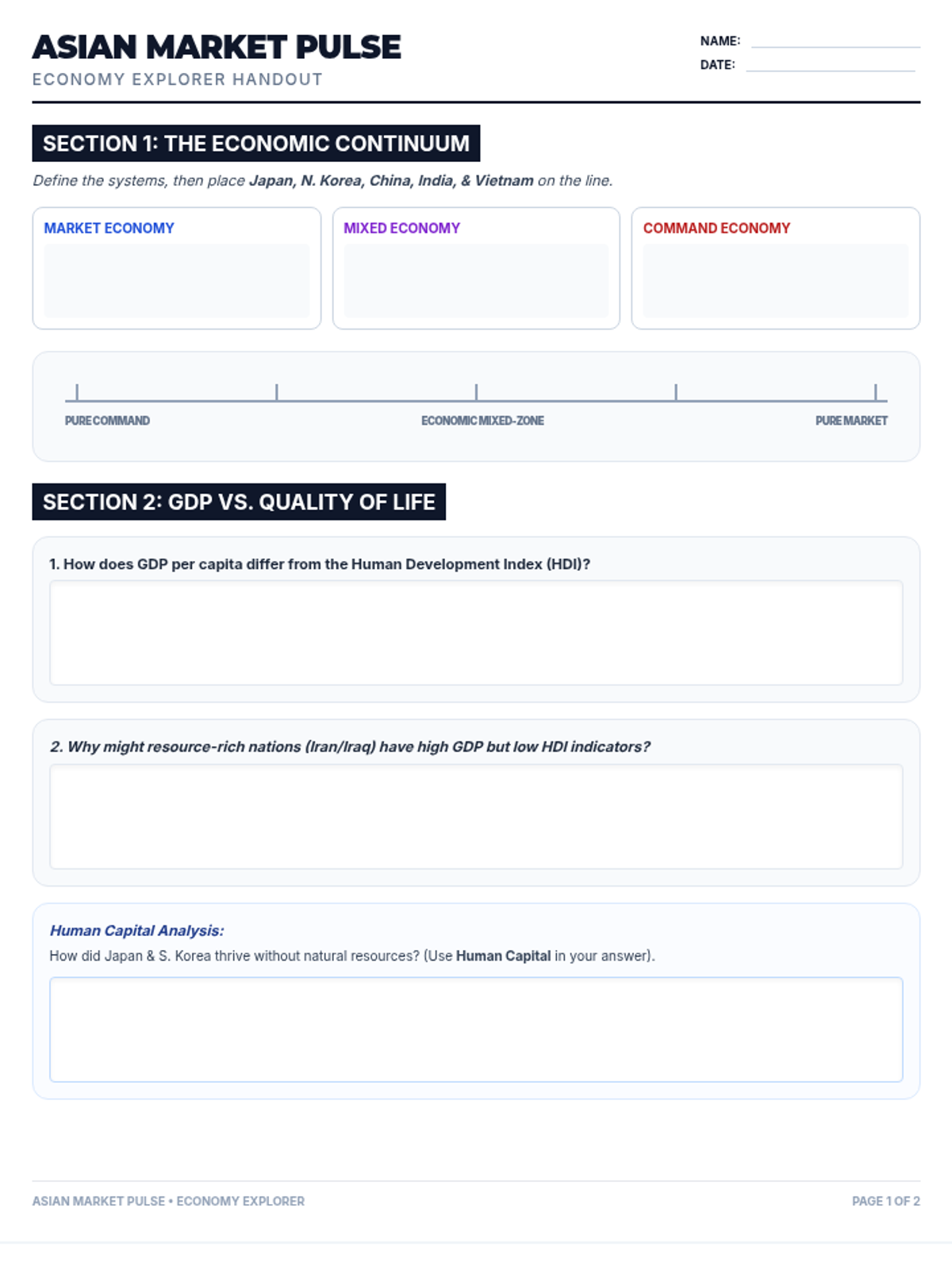
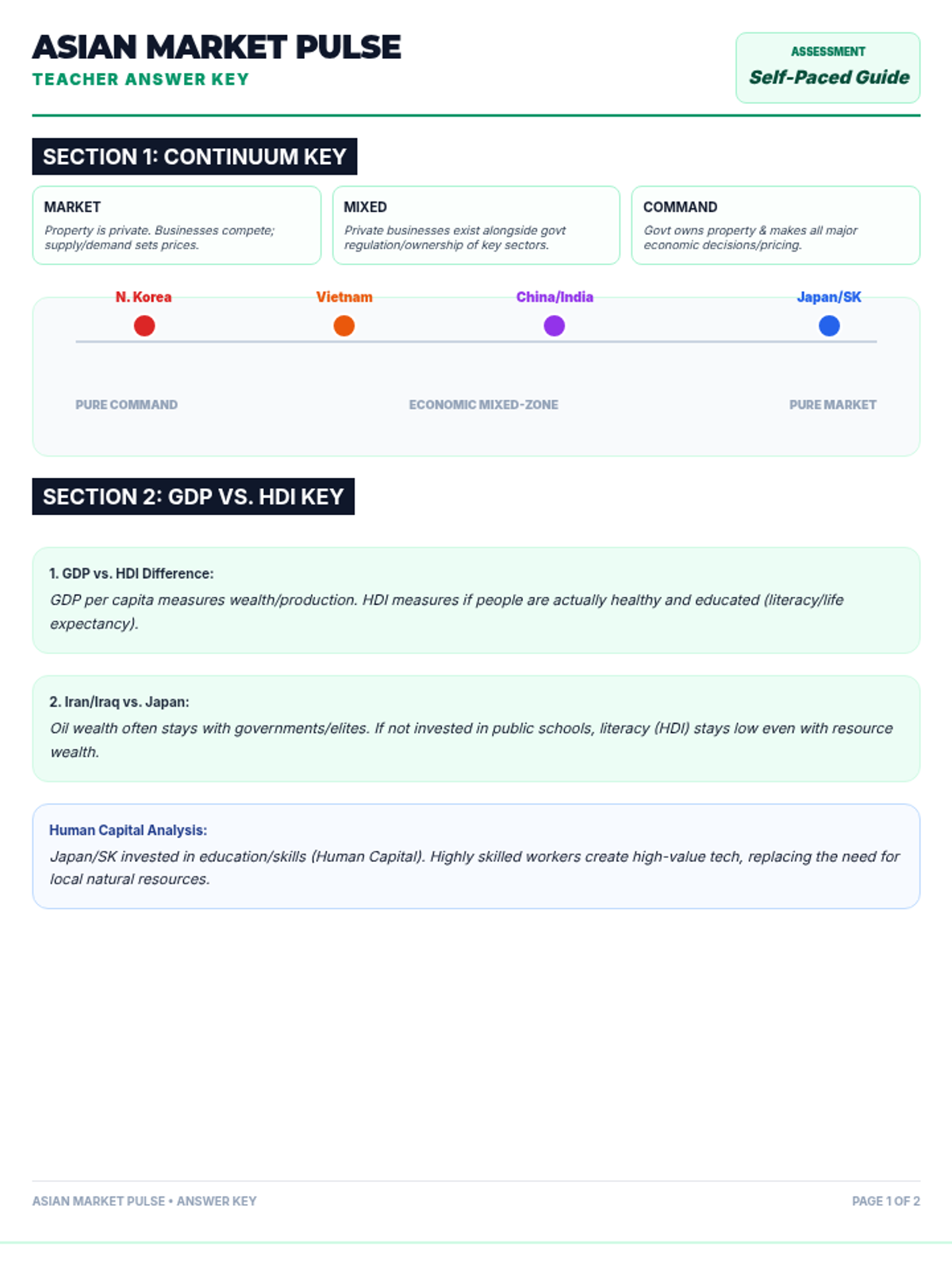
A self-paced study guide exploring the diverse economic landscapes of Asia, focusing on the relationship between economic systems, GDP, and quality of life across major nations.
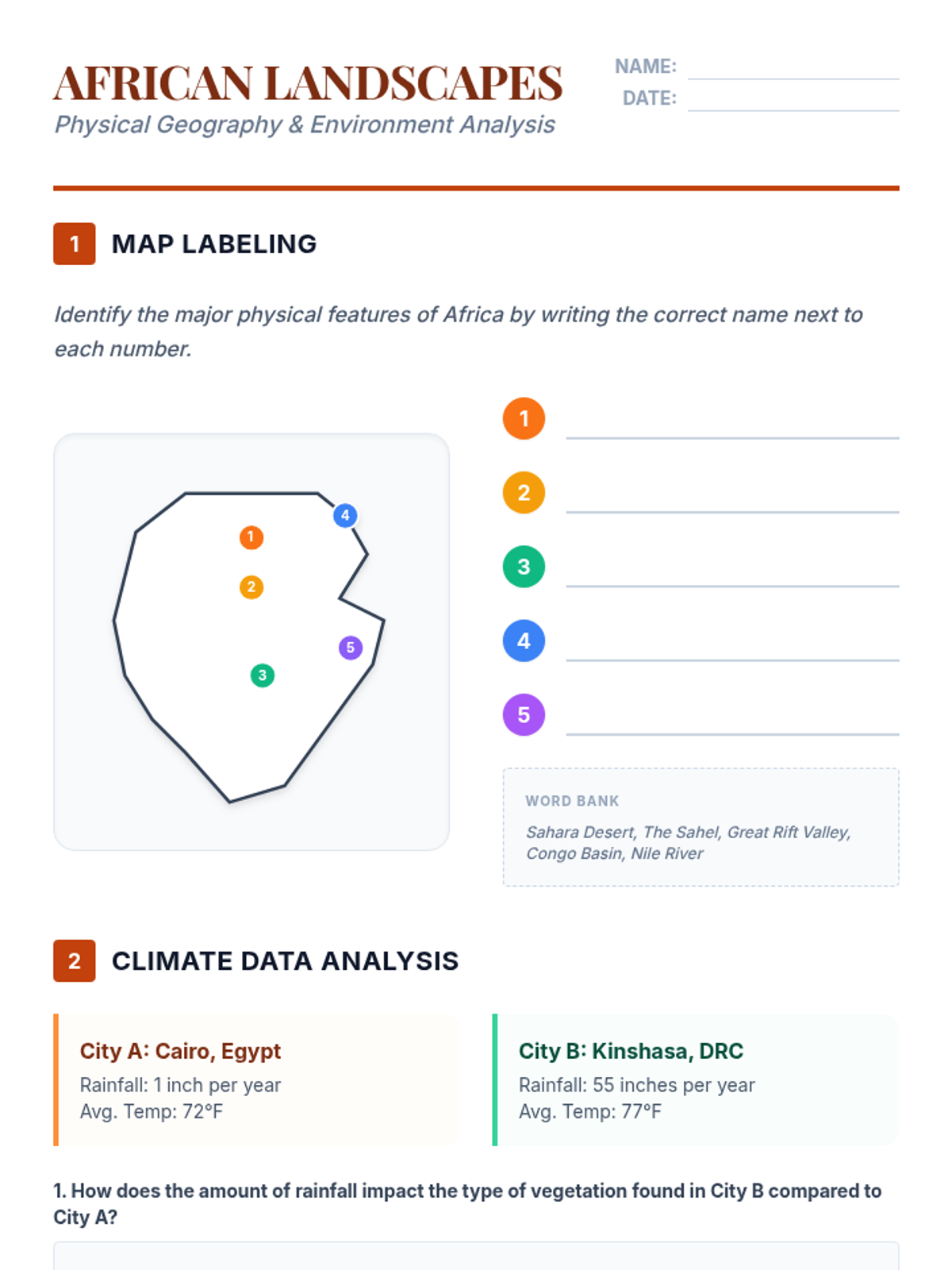
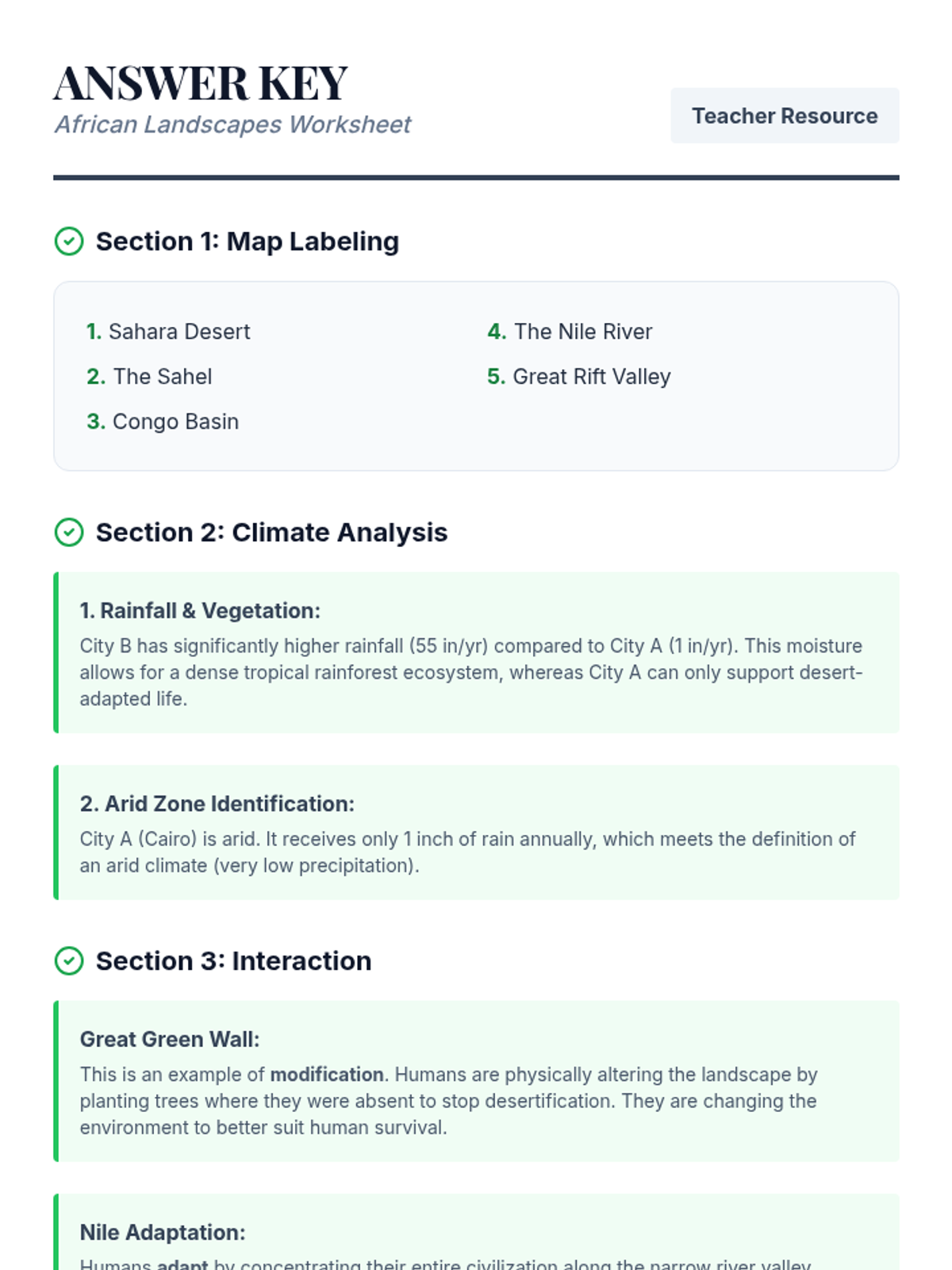
This lesson explores the diverse physical regions of Africa, including the Sahara, the Sahel, and Sub-Saharan landscapes, focusing on climate patterns and the relationship between humans and their environment.
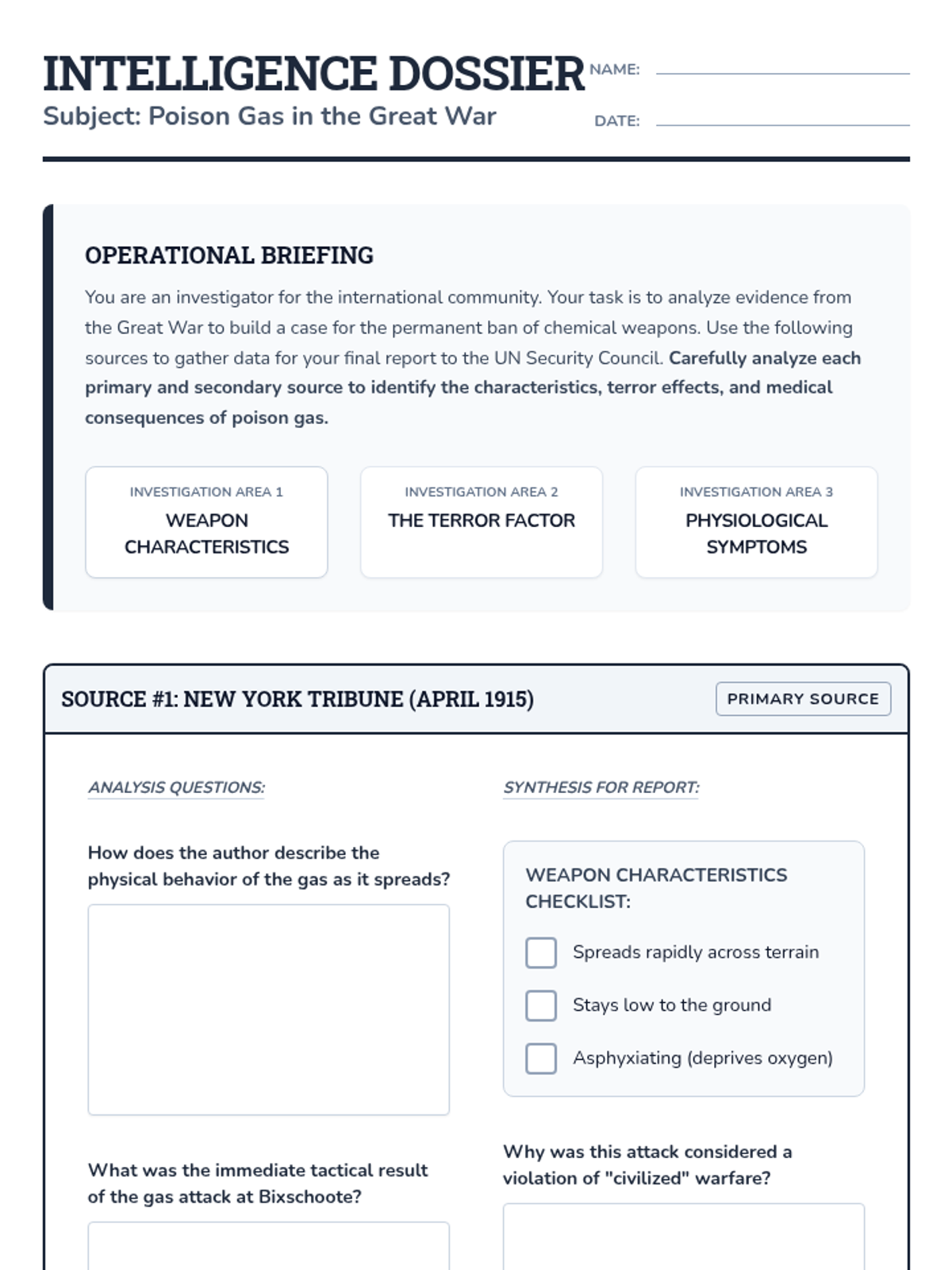
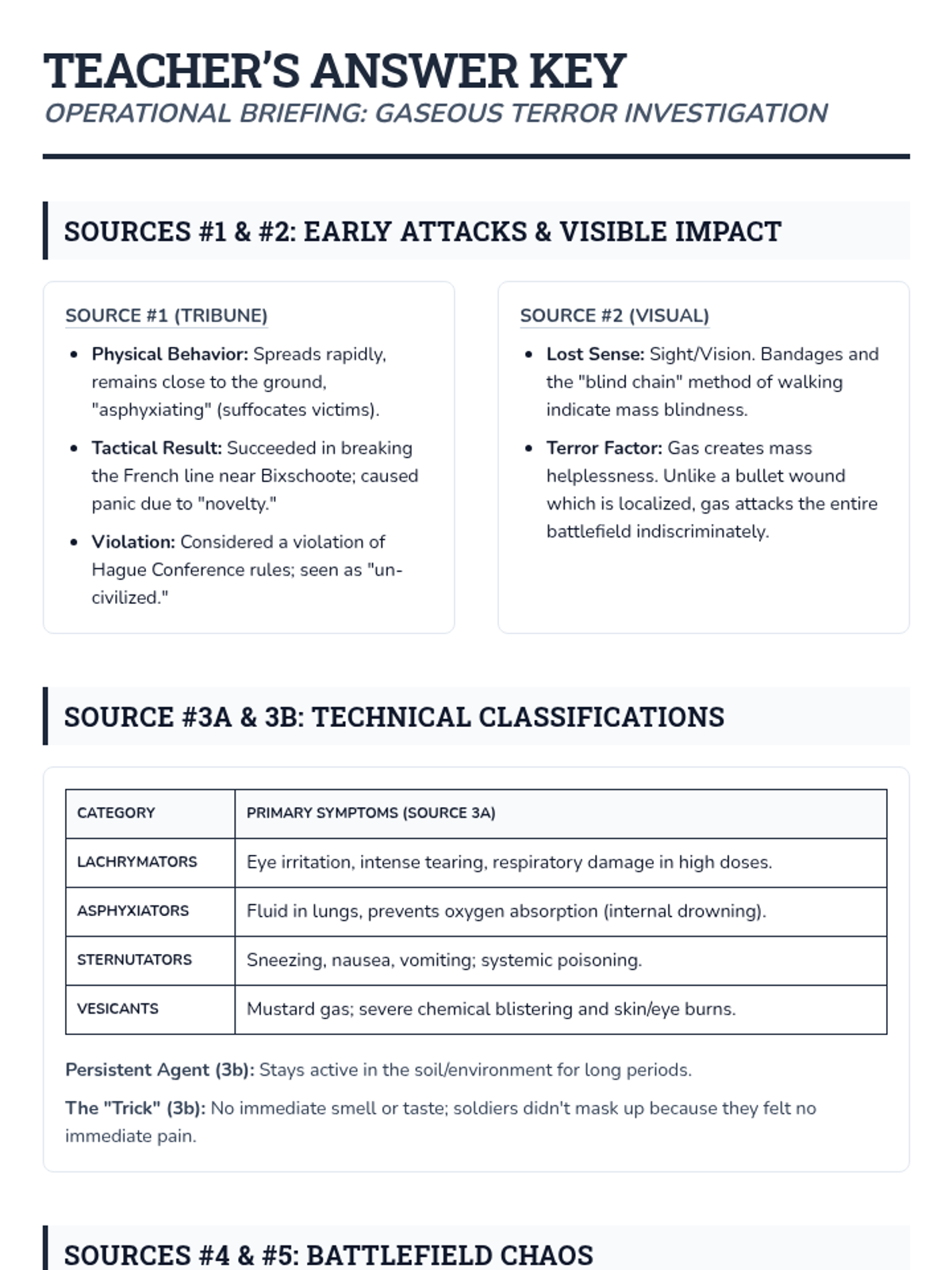
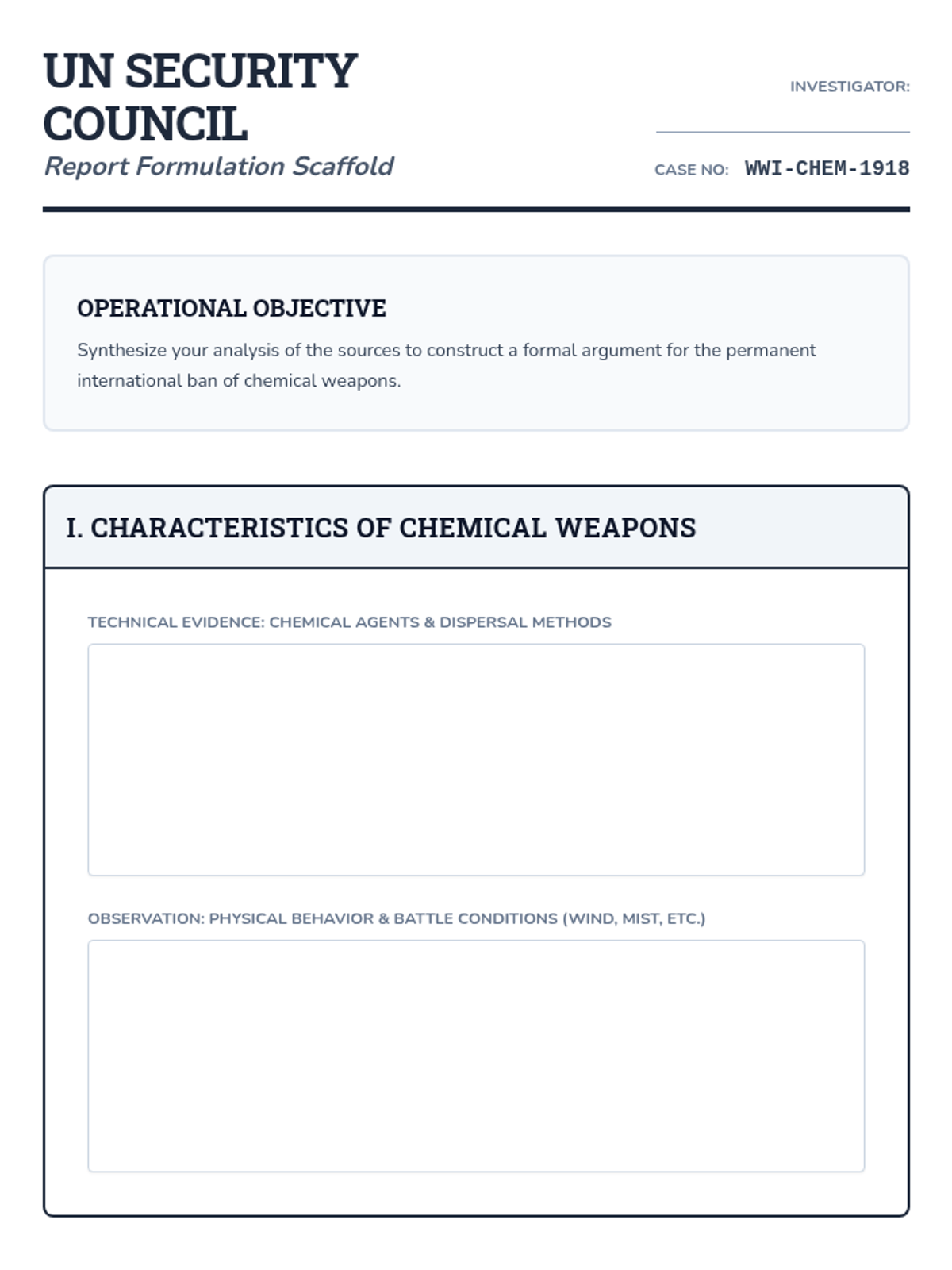
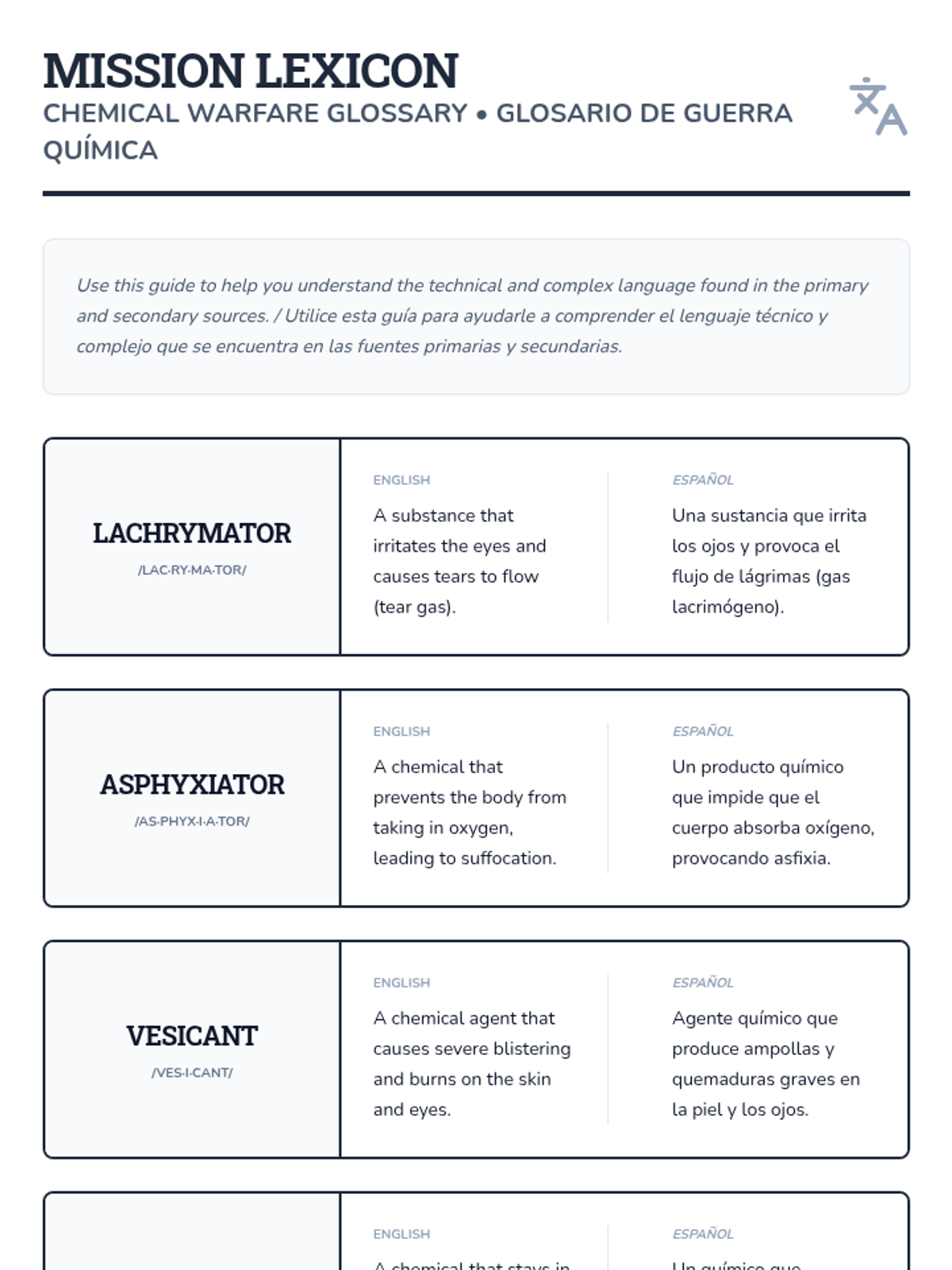
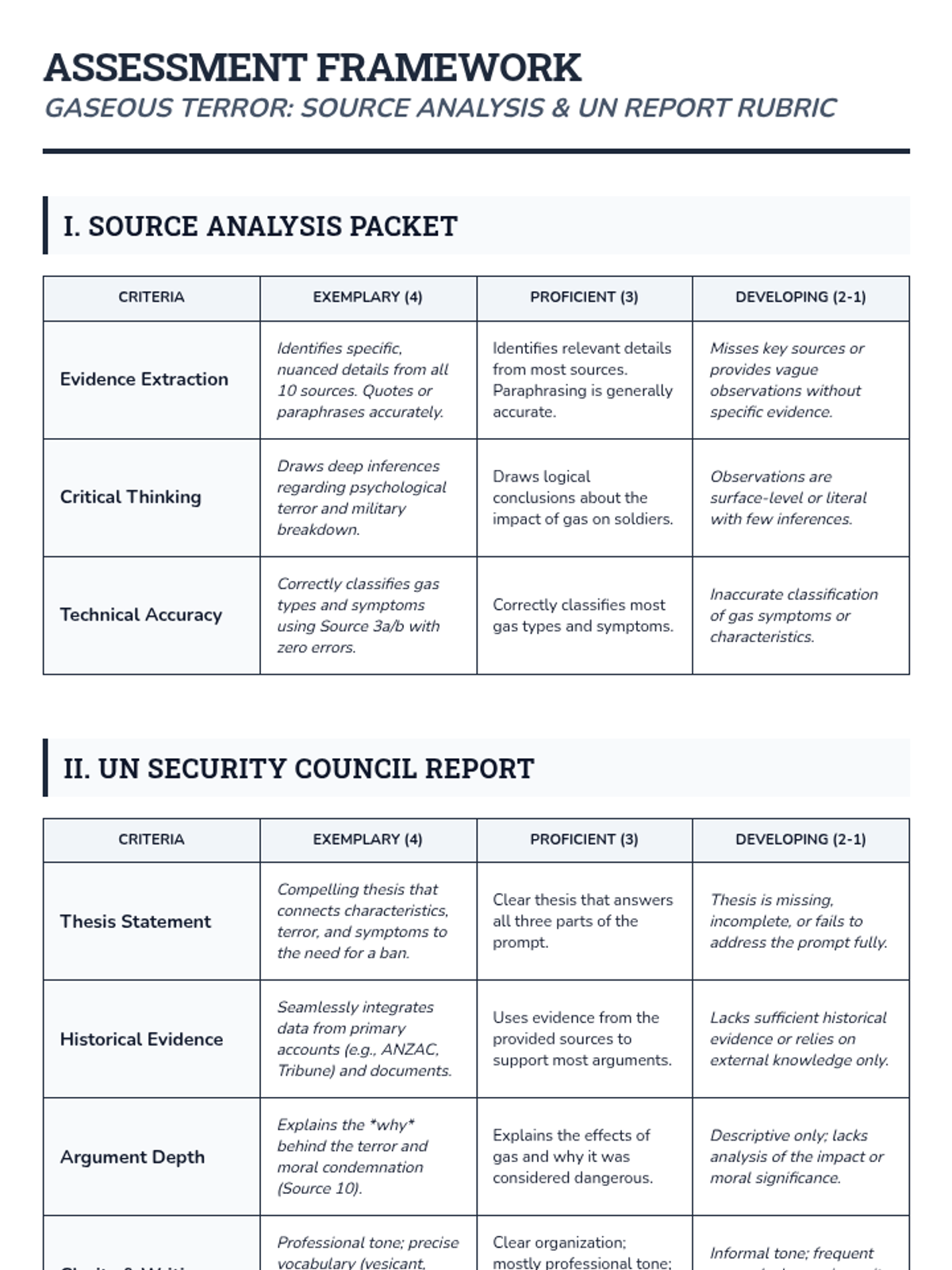
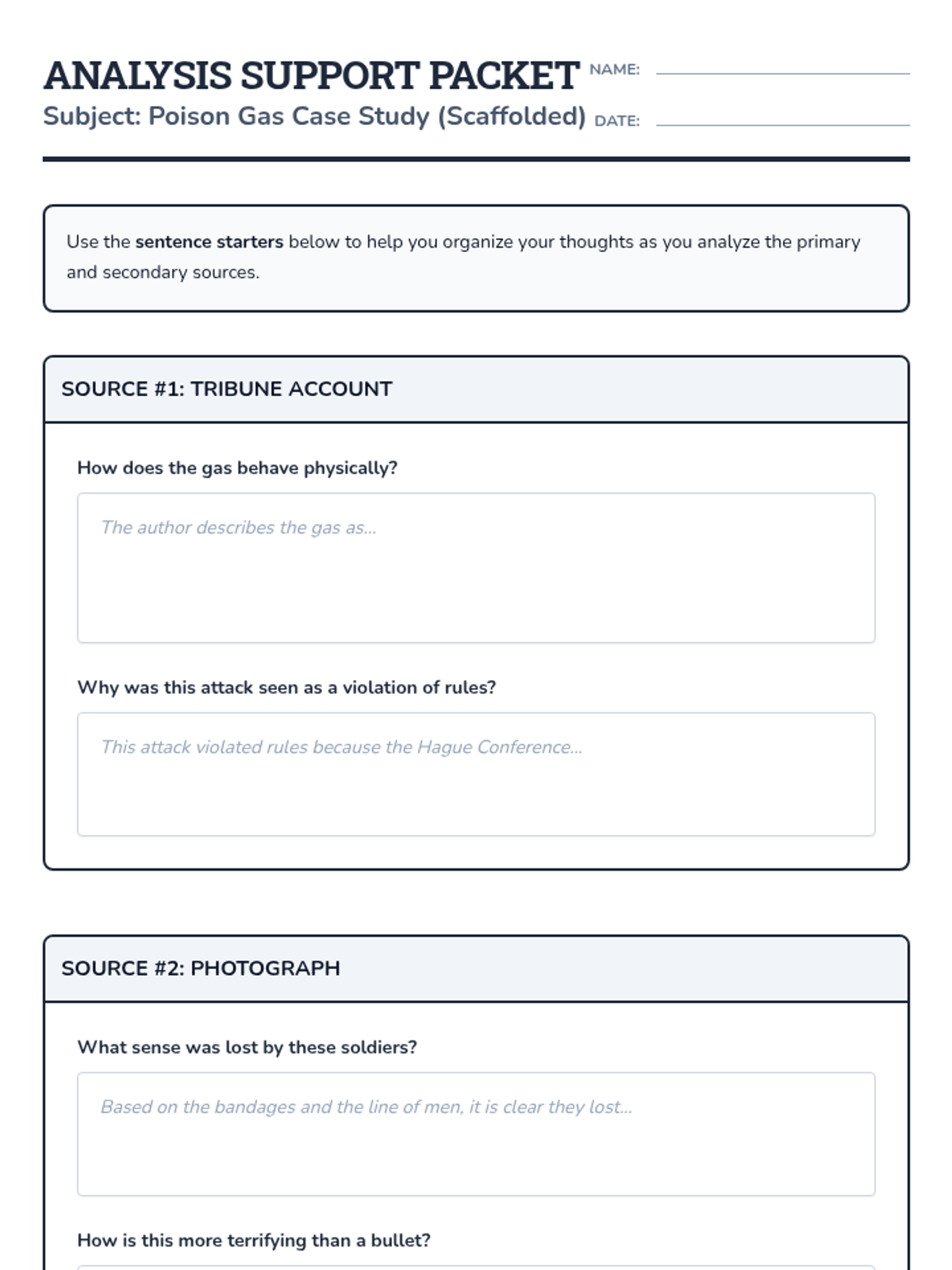
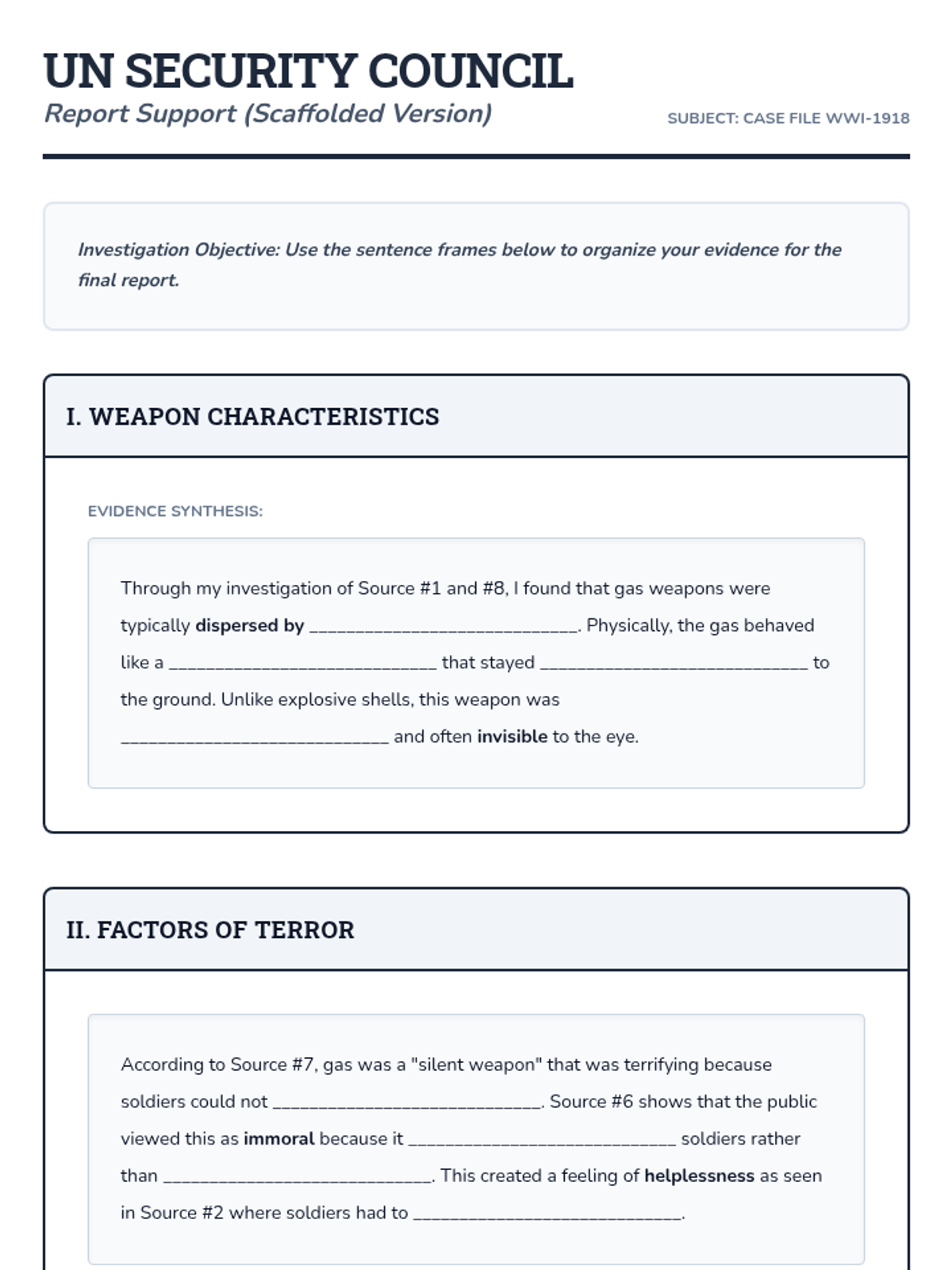
A comprehensive investigation into the use of chemical weapons during WWI, focusing on the tactical, psychological, and physiological impacts of poison gas. Students analyze multiple primary and secondary sources to construct a formal report on the horrors of gas warfare and the subsequent international efforts to ban it.
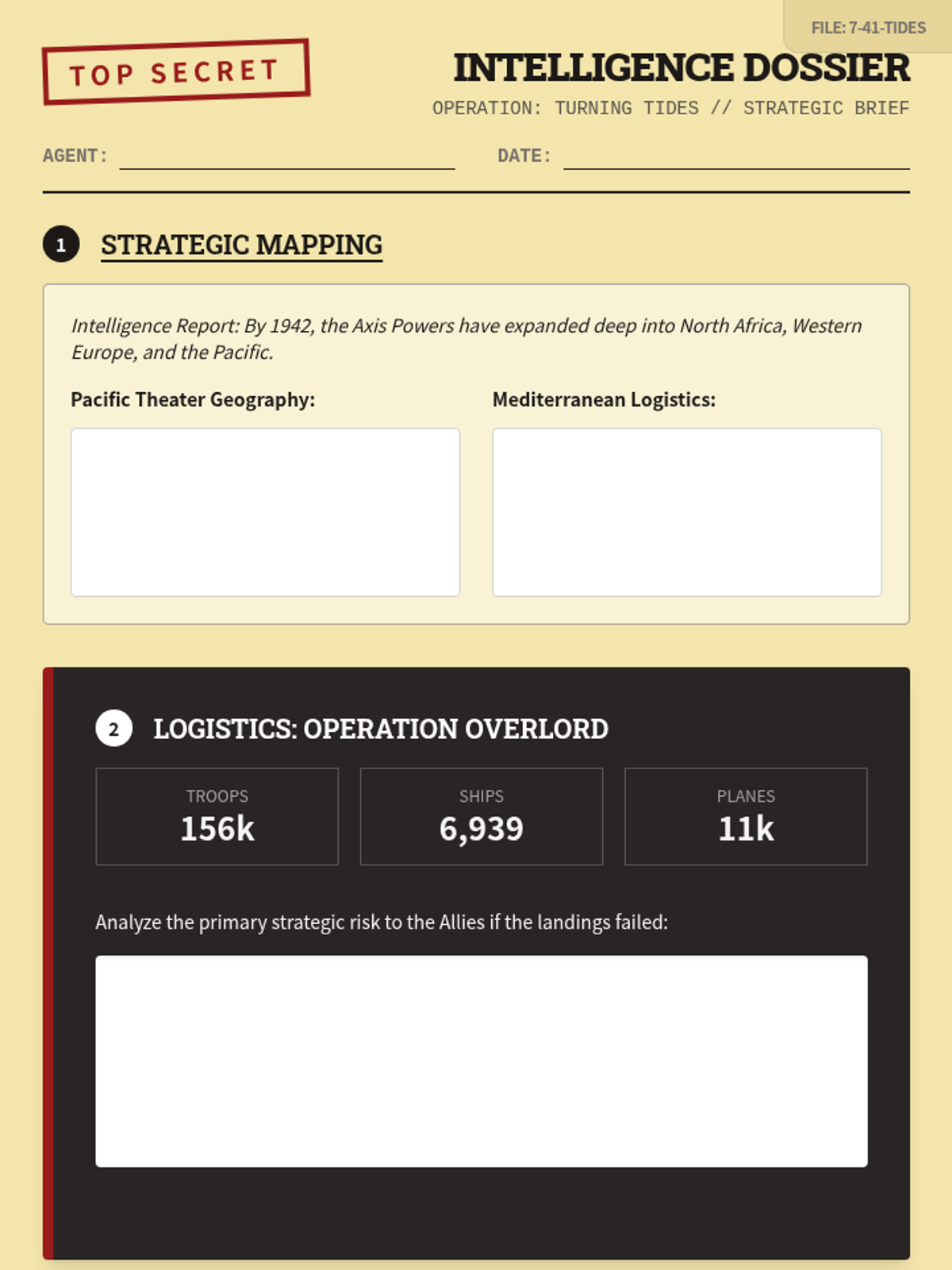
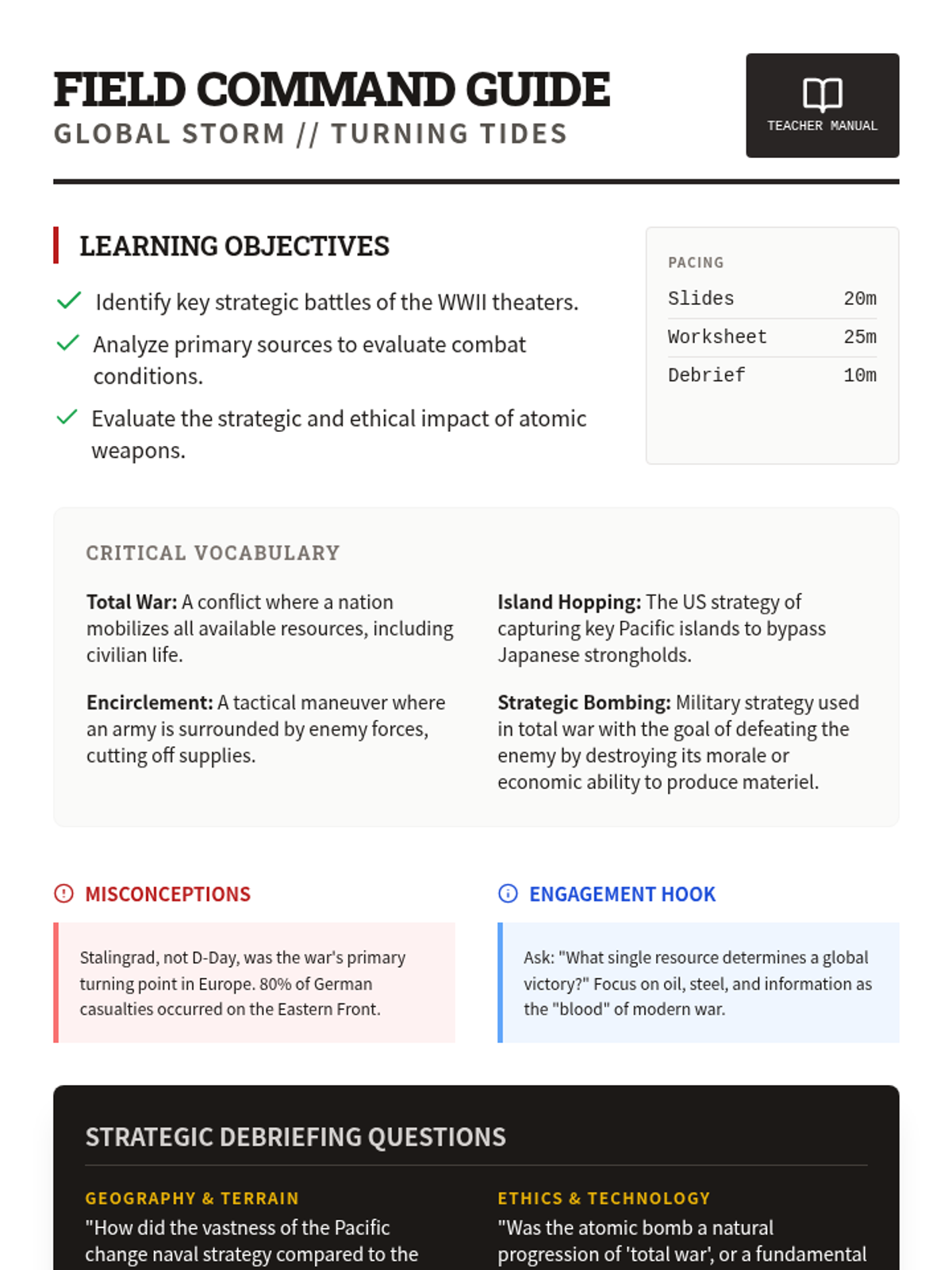
Focuses on the critical turning points of World War II, exploring the strategic shifts and human stories that defined the conflict's outcome.
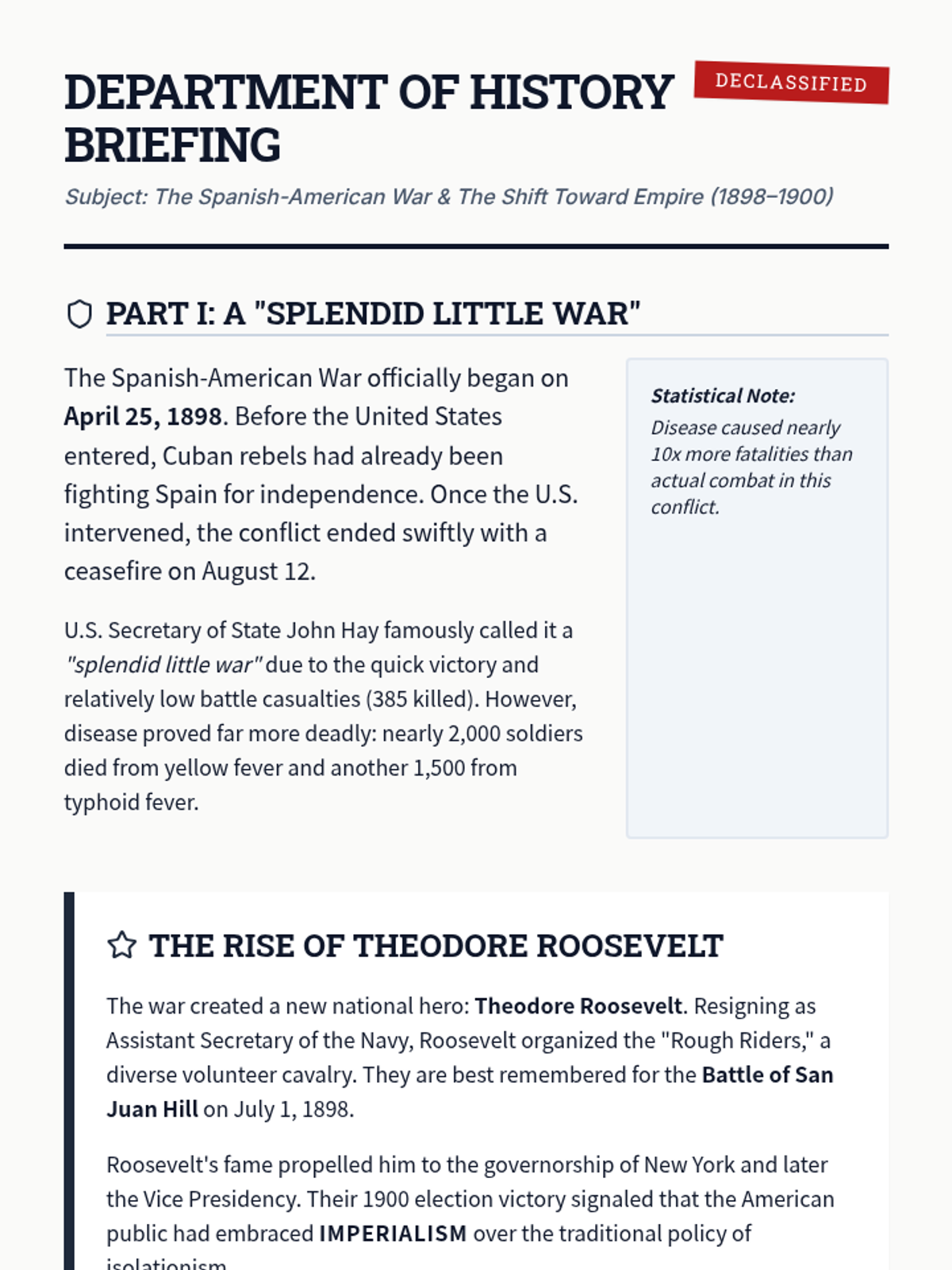
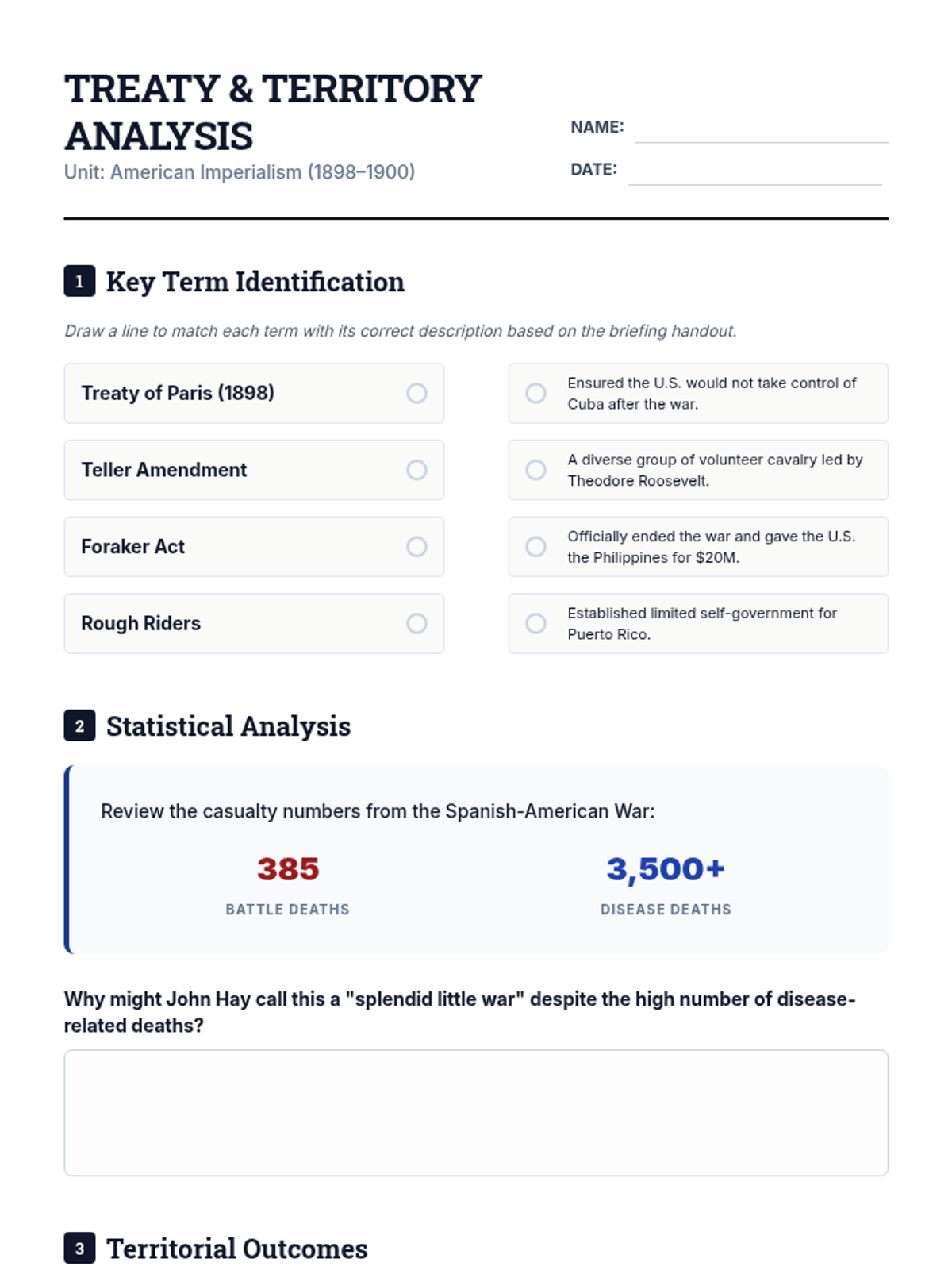
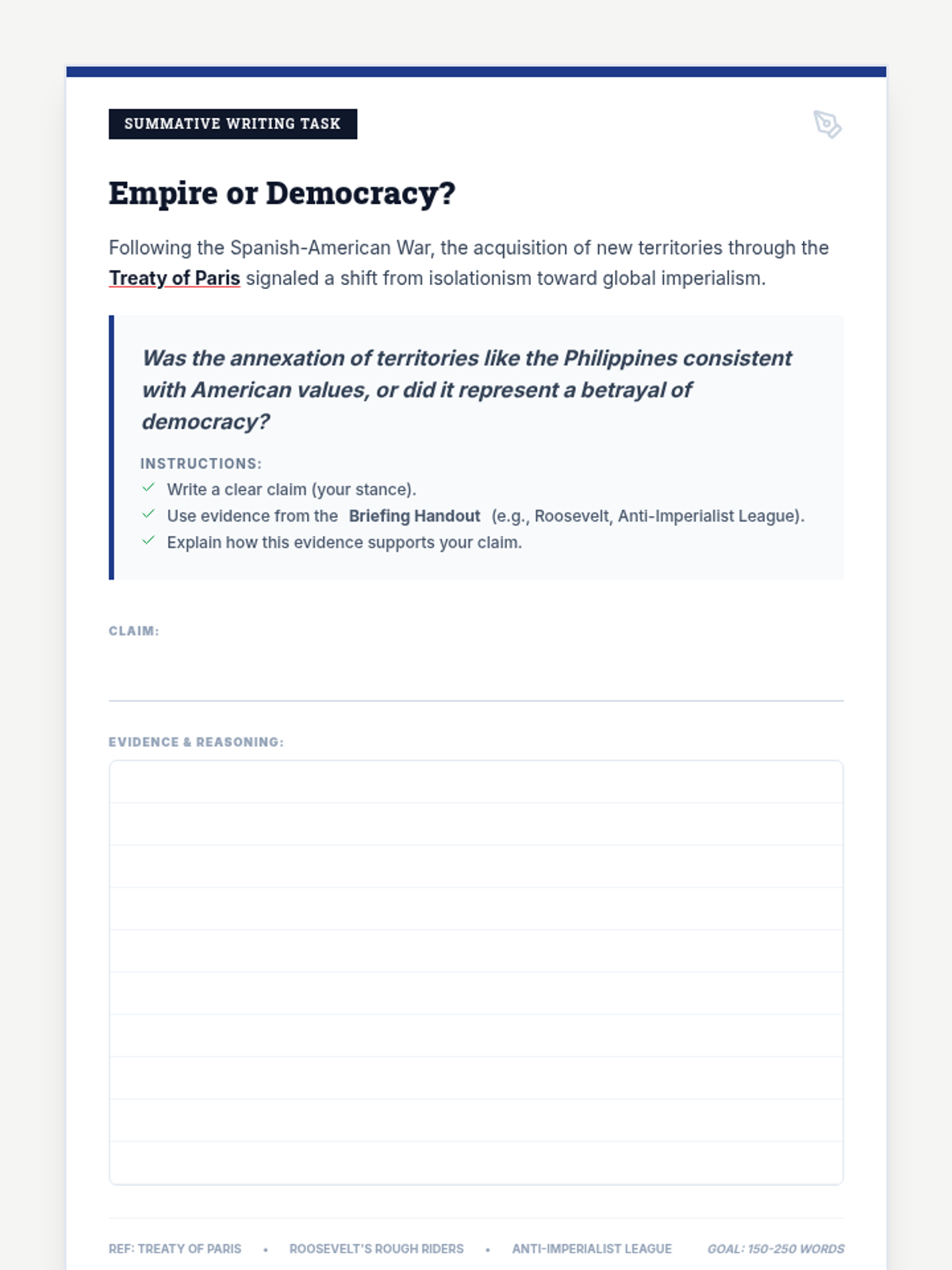
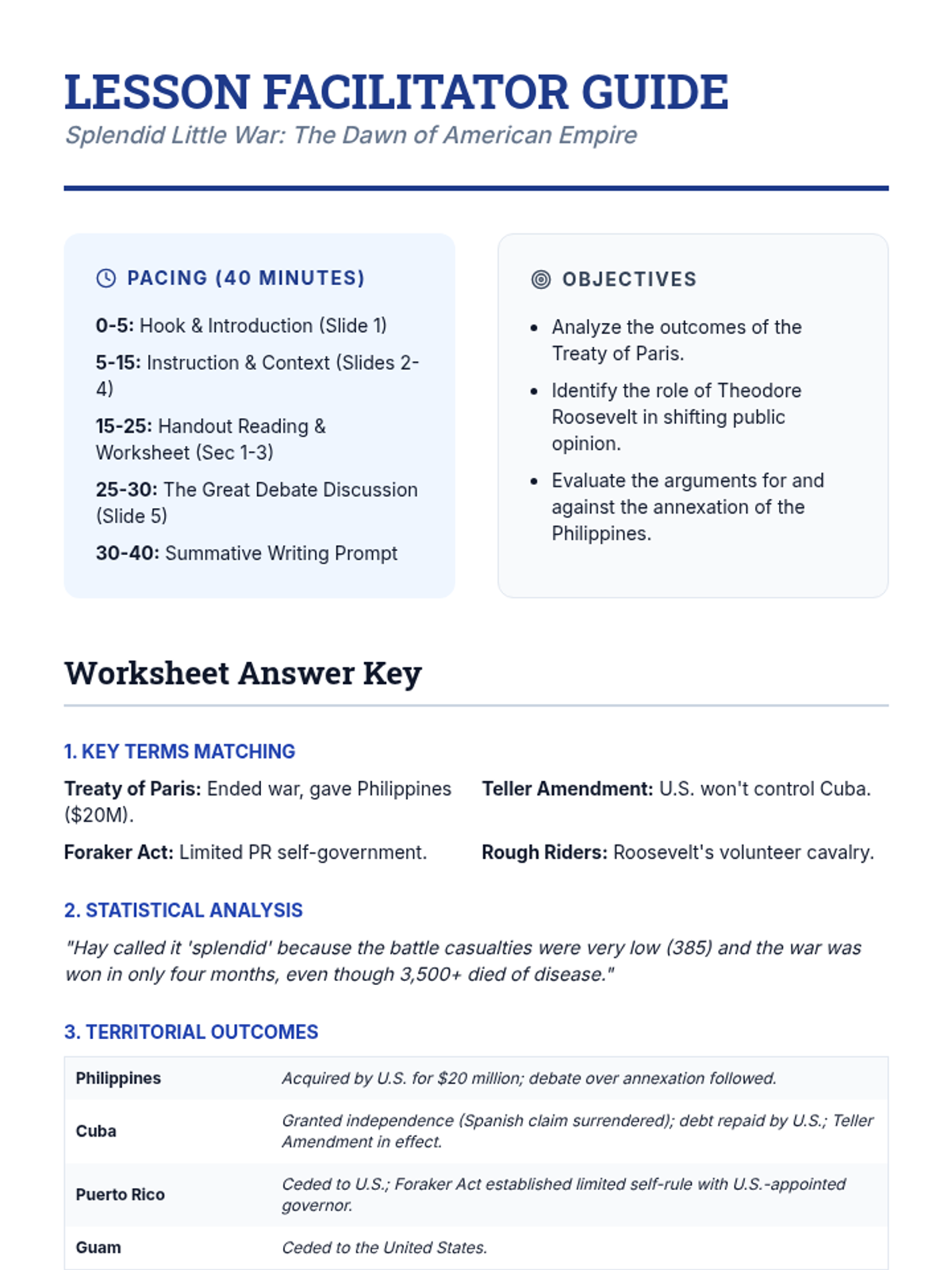
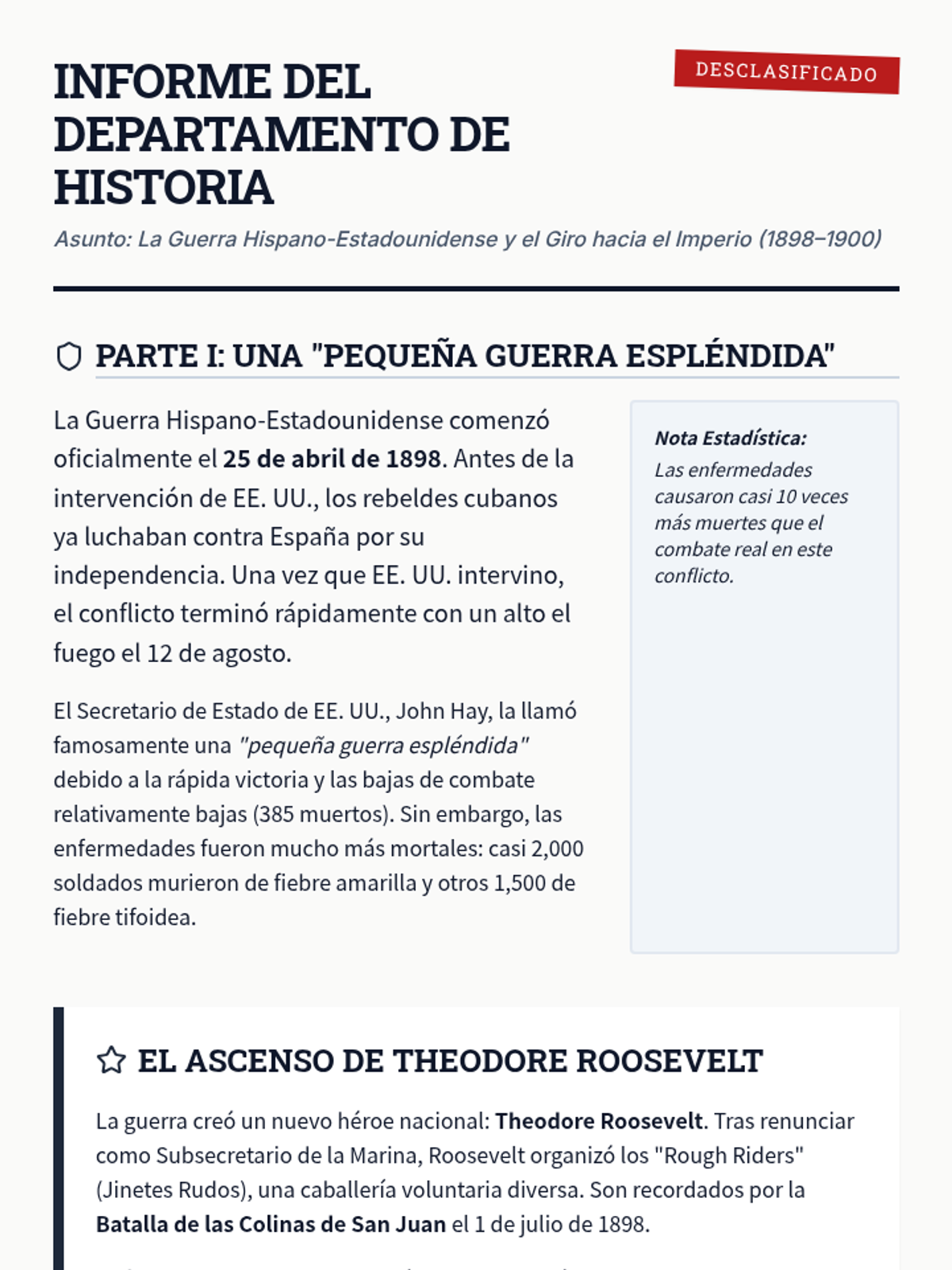
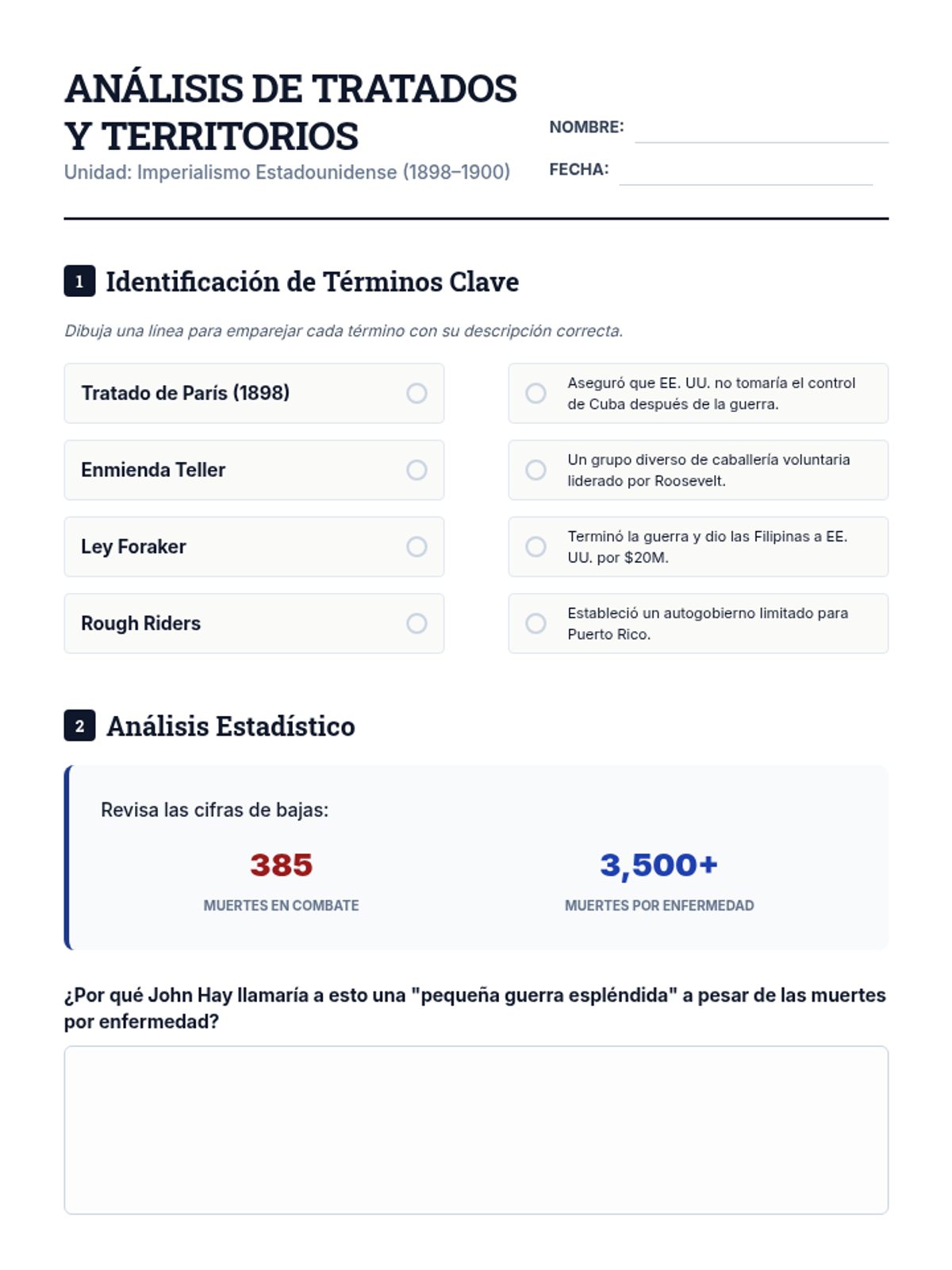
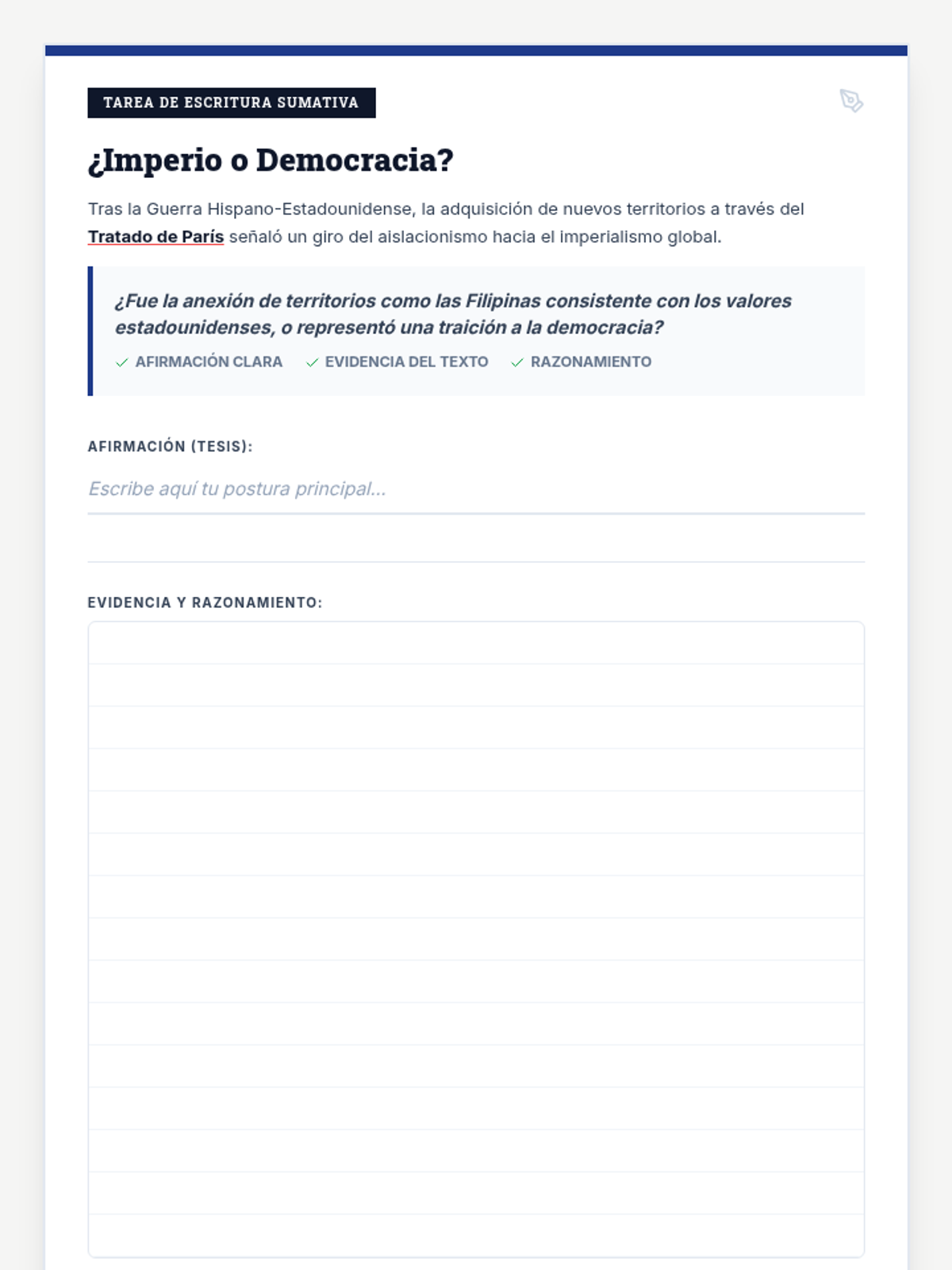
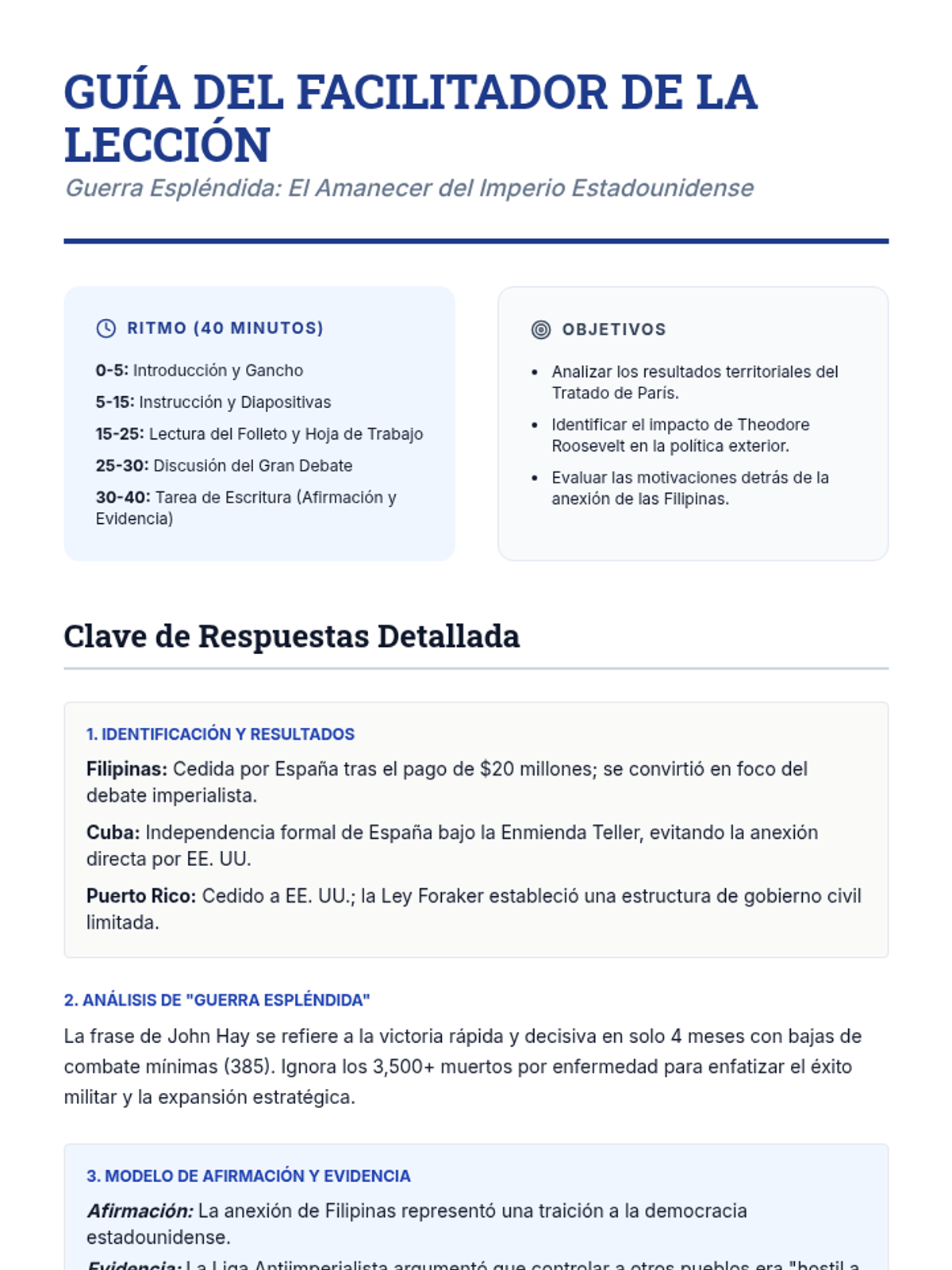
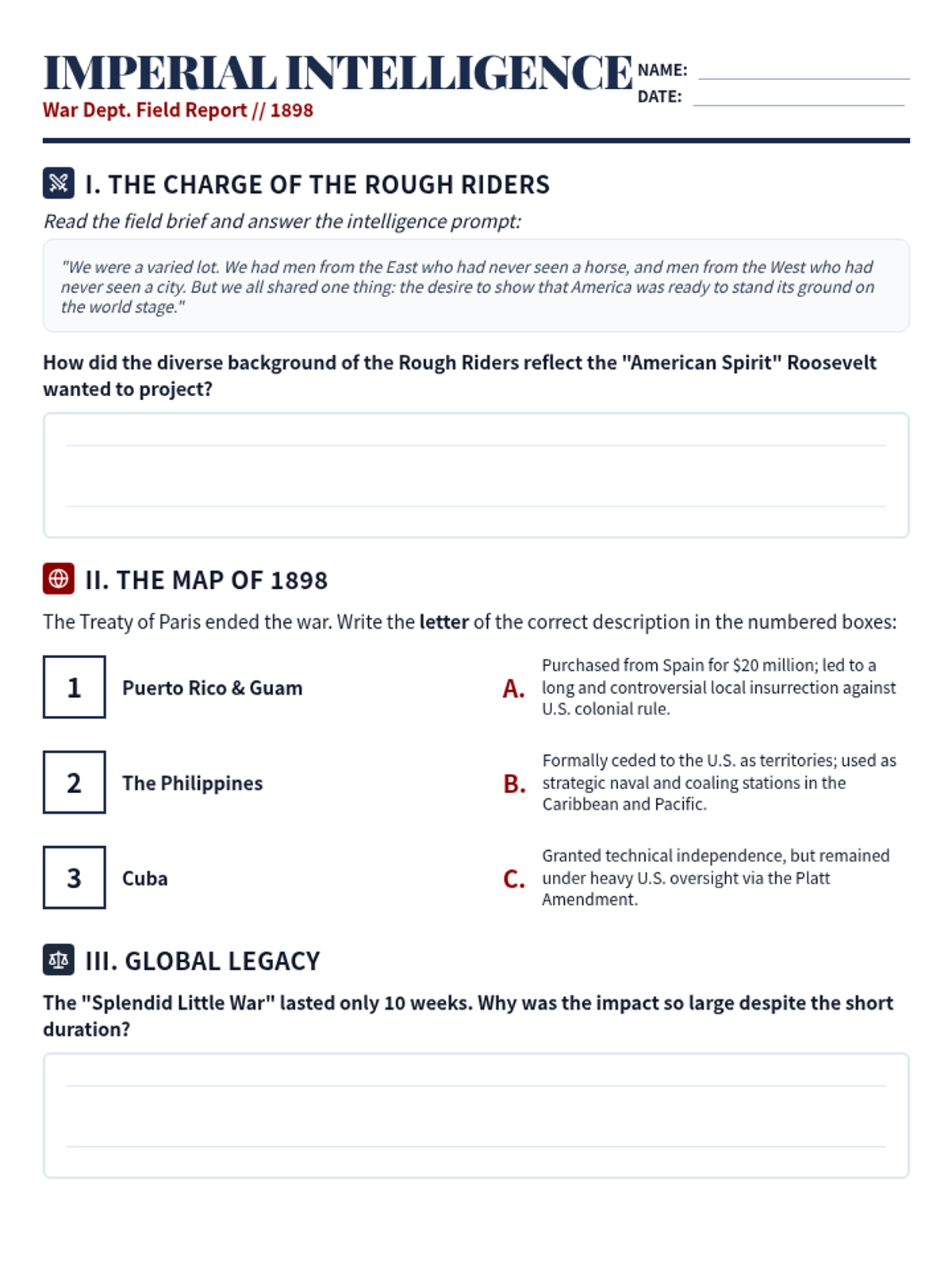
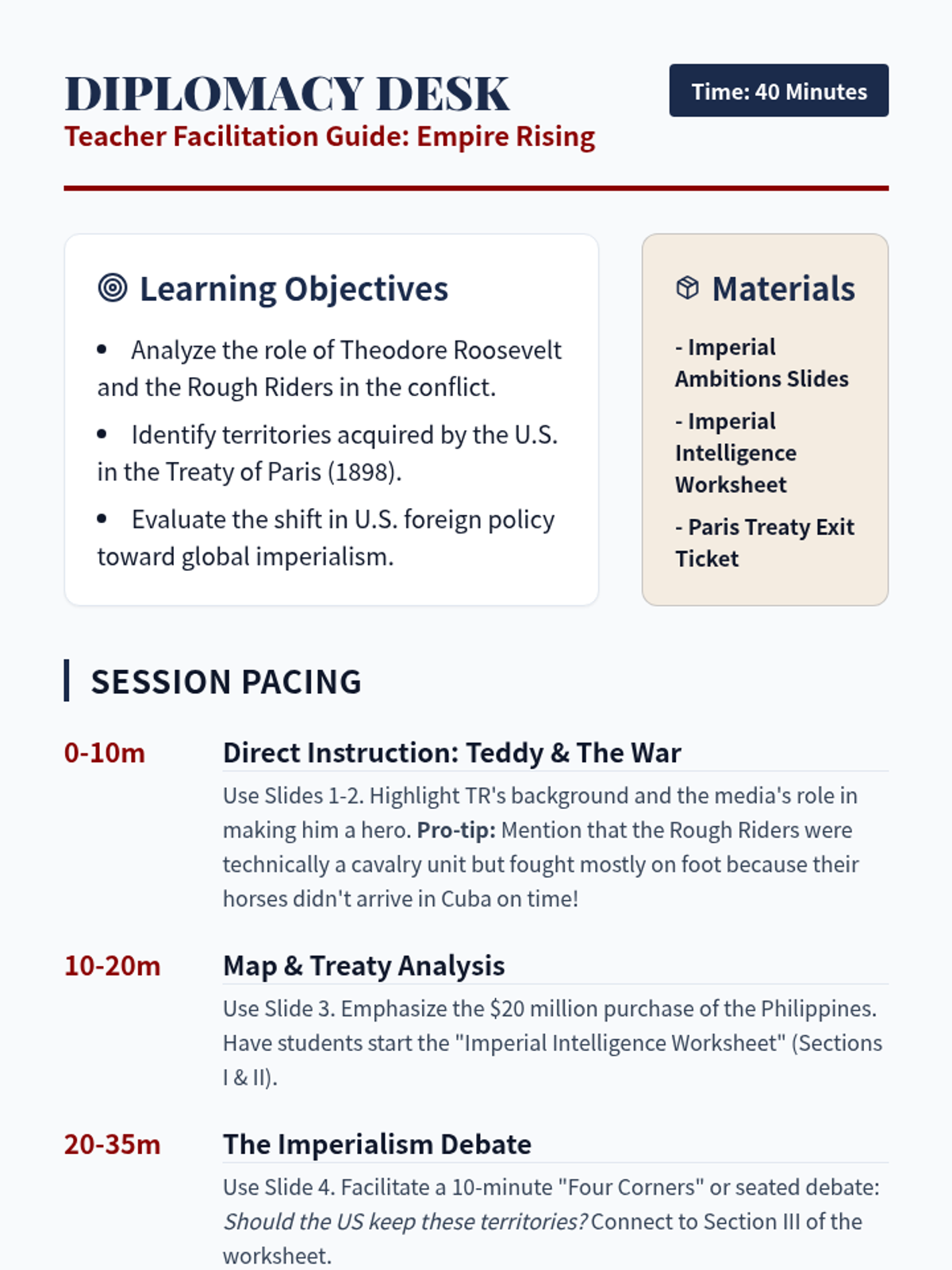
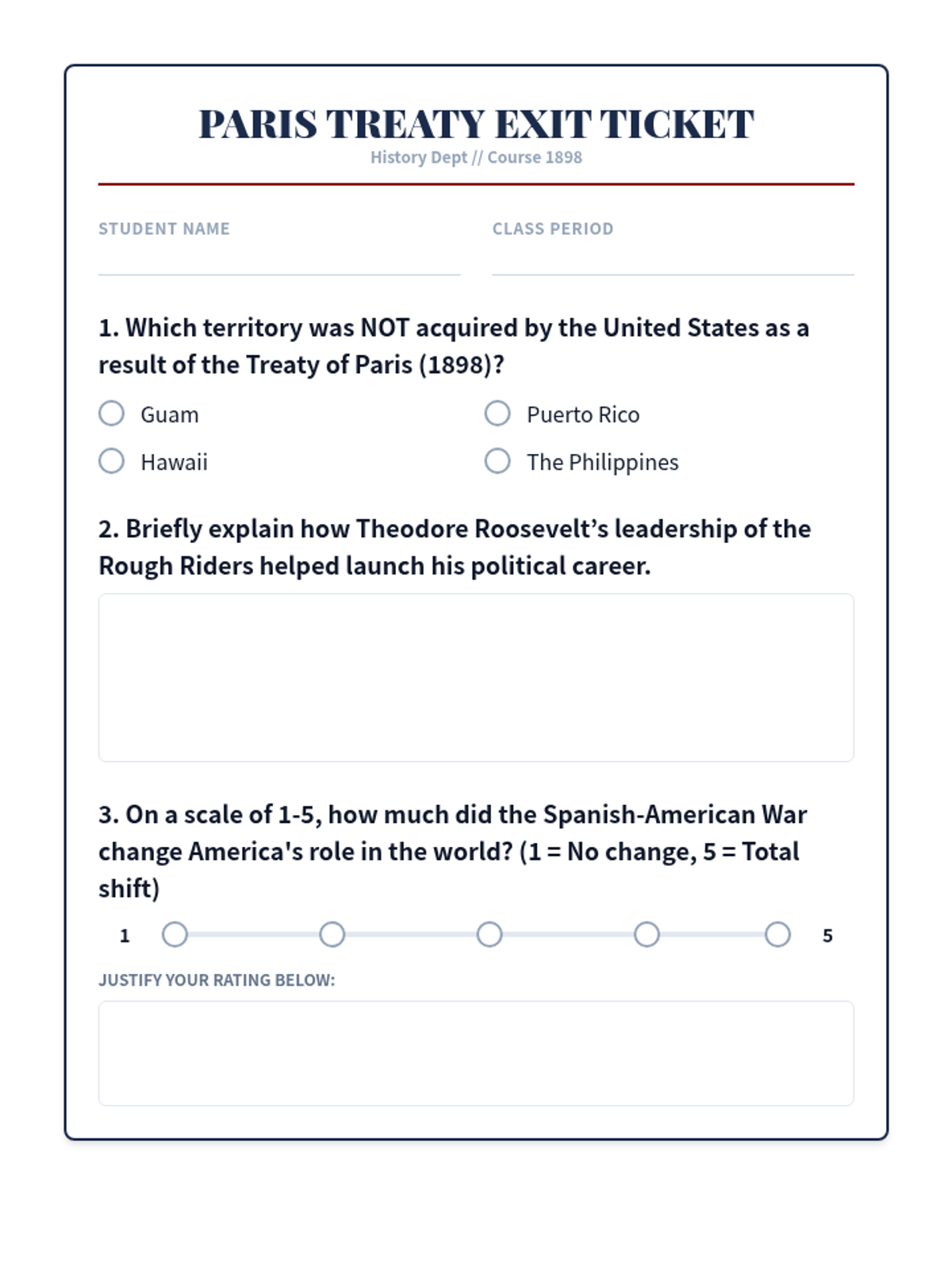
This lesson explores the Spanish-American War, focusing on Theodore Roosevelt's rise, the Treaty of Paris, and the United States' transition from isolationism to an imperial power. Students will analyze the motives and arguments surrounding the annexation of the Philippines and other territories.
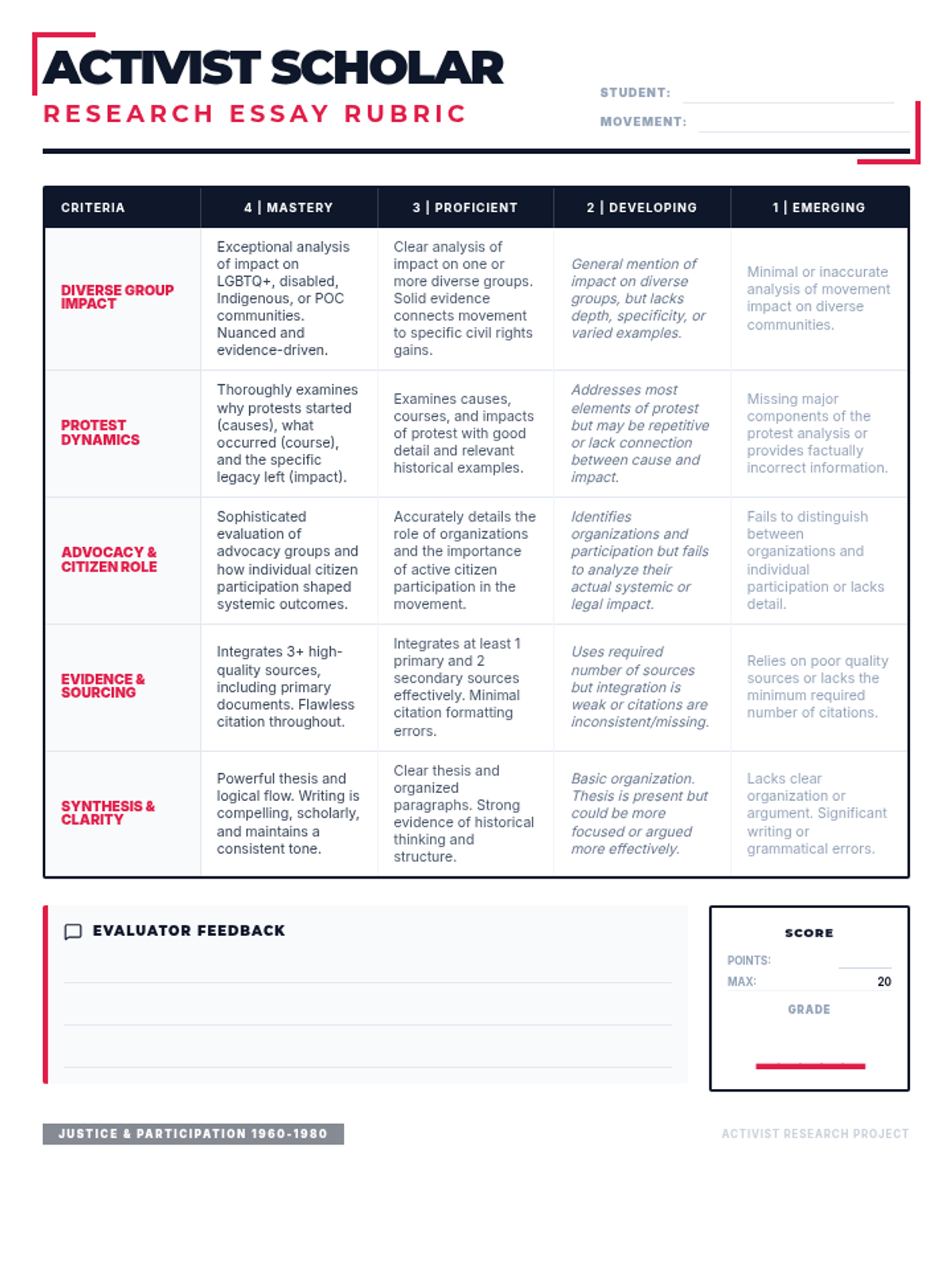
A comprehensive research project exploring the 1960s-80s social movements, focusing on the roles of protest, advocacy, and citizen participation in shaping civil rights for diverse communities.
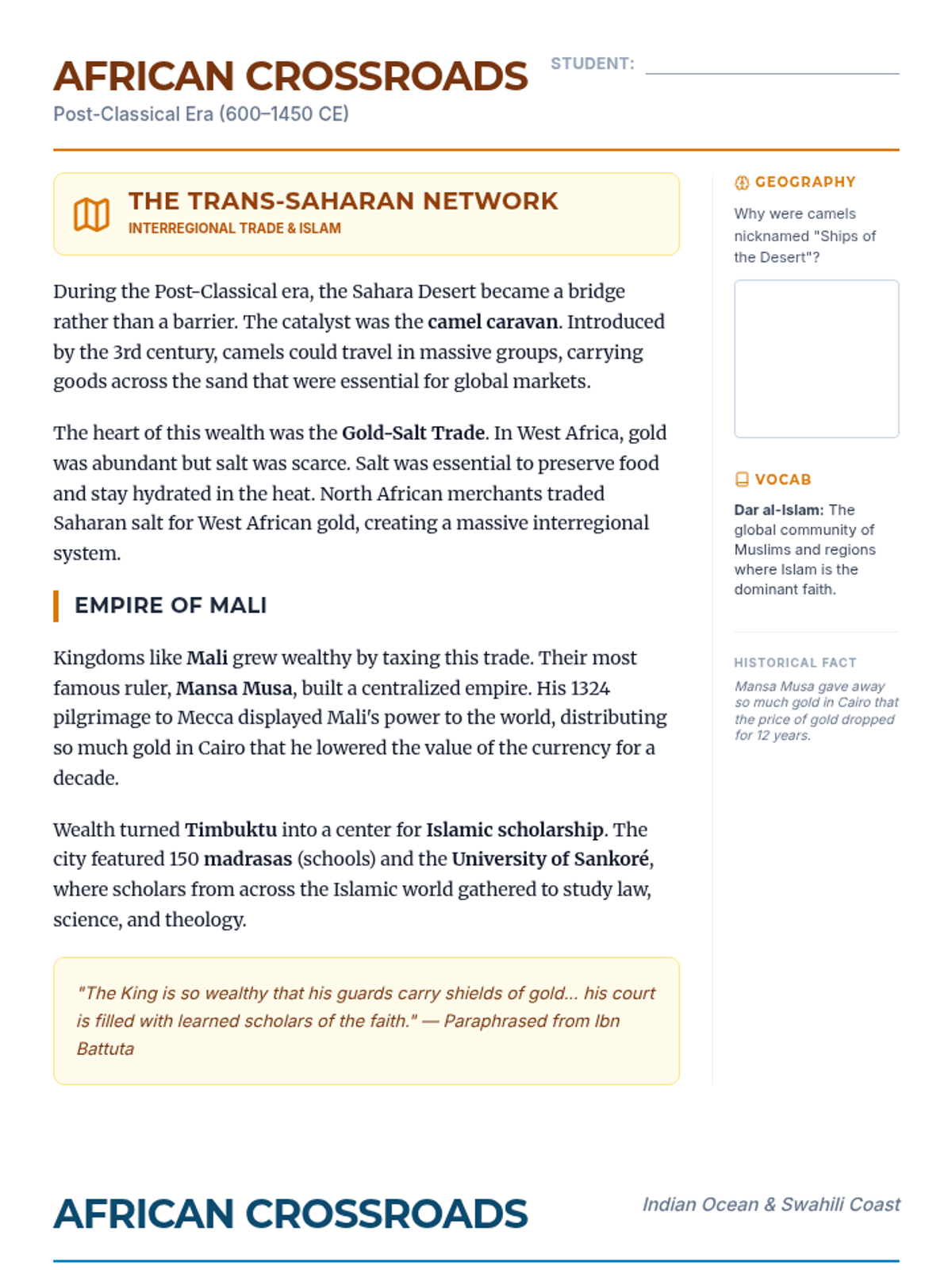
A comprehensive recovery lesson for 9th-grade students to master the political, economic, and cultural developments of Post-Classical Africa through independent reading, visual analysis, and video viewing.
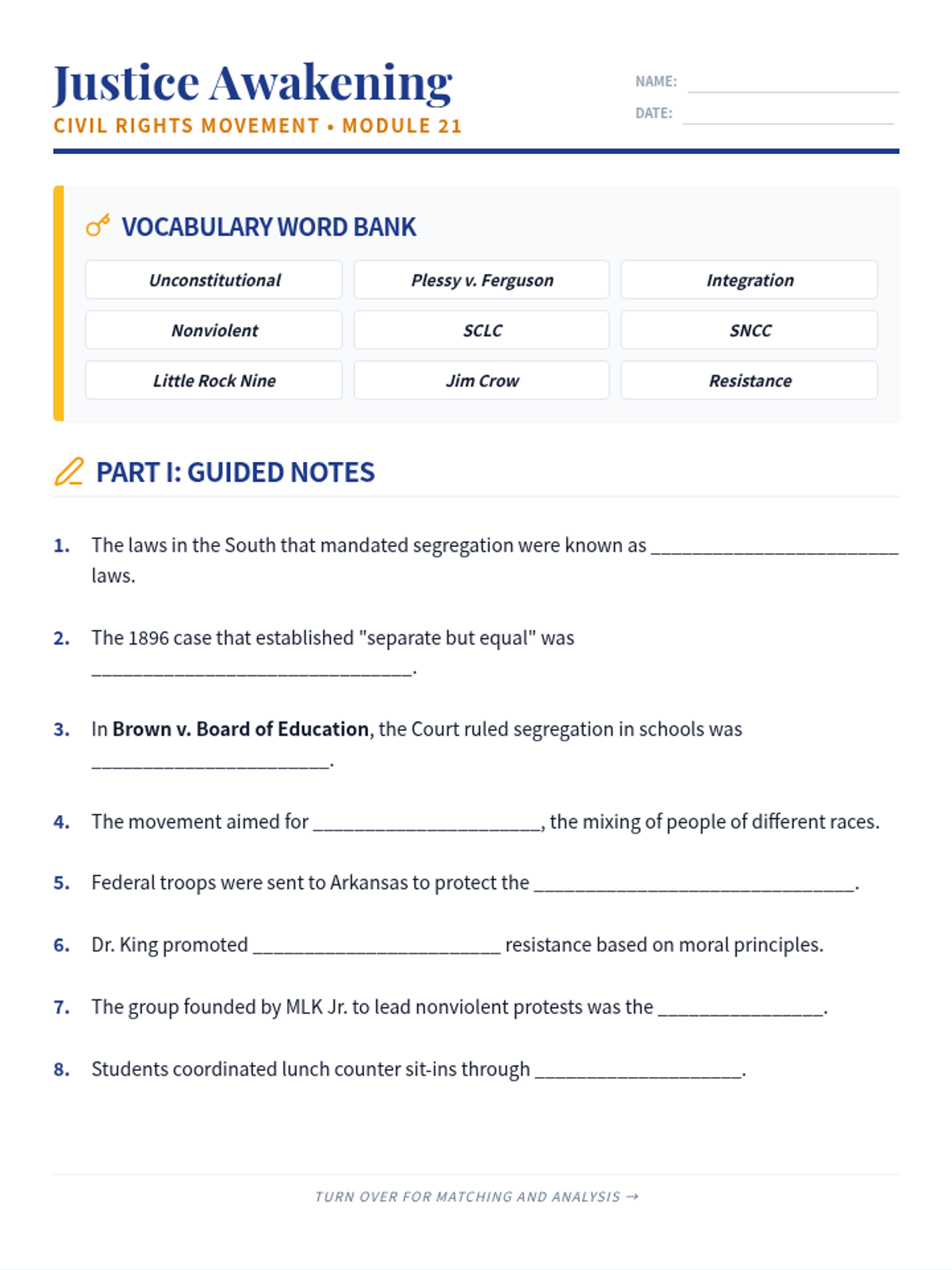
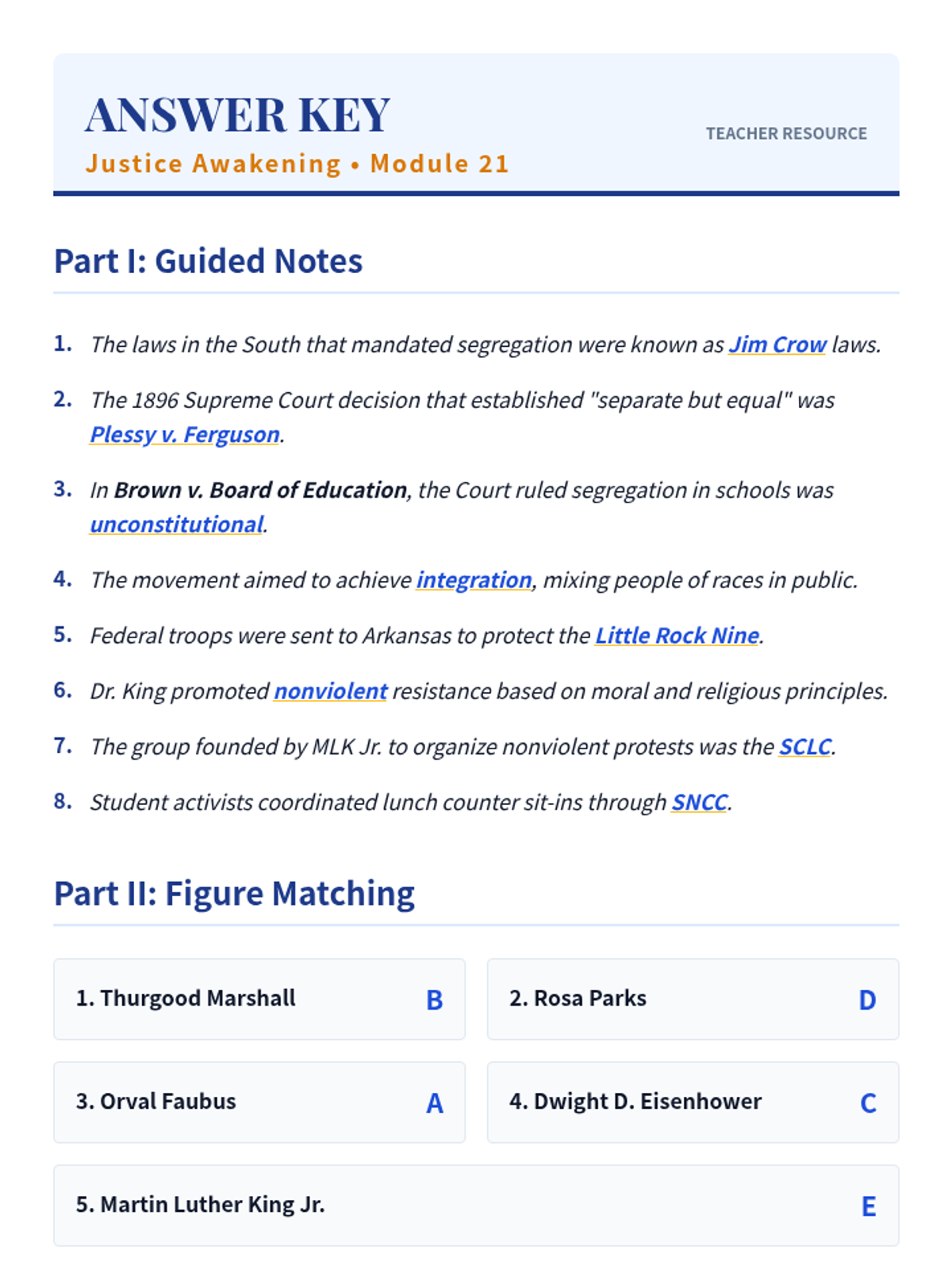
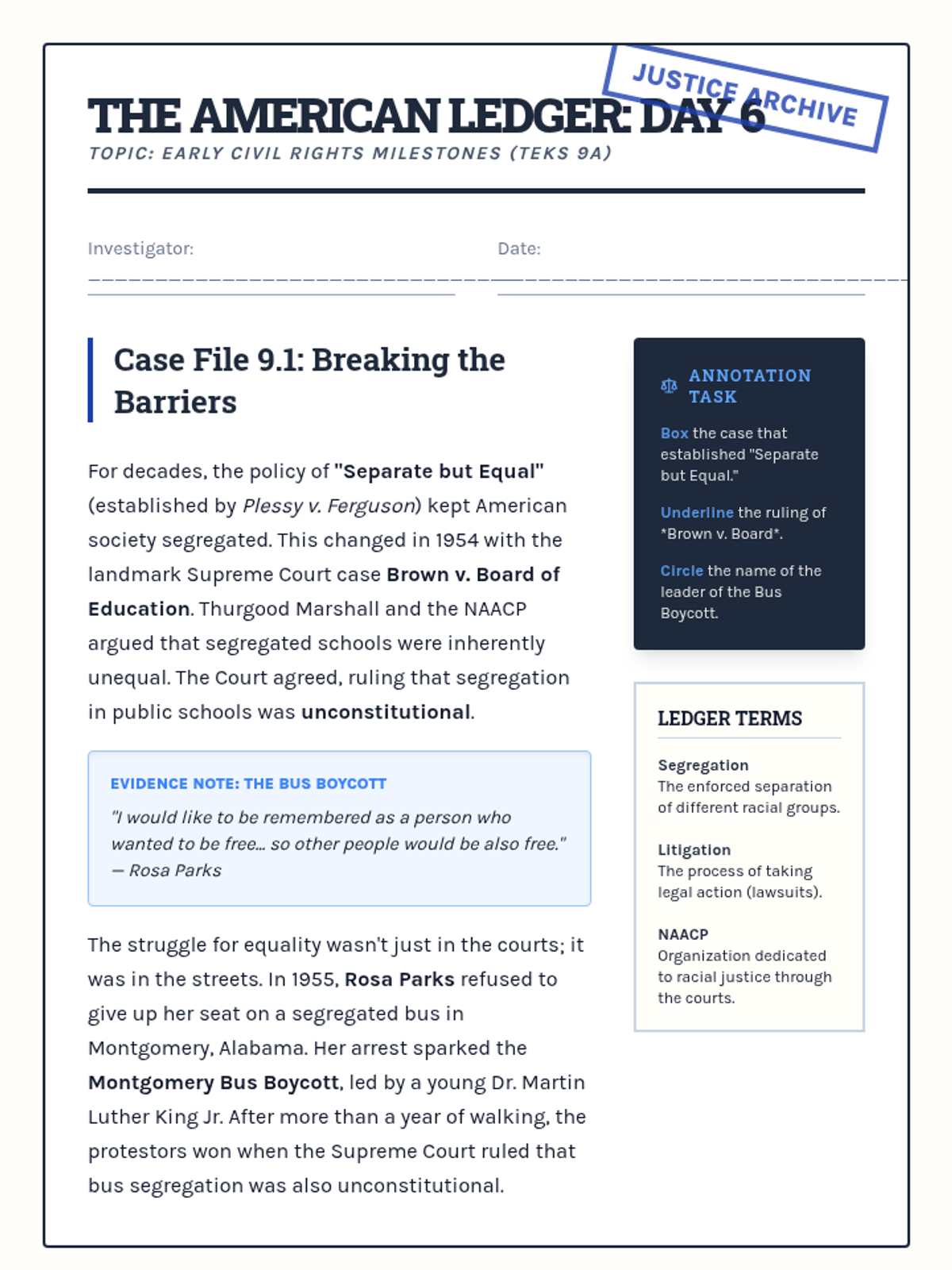
This lesson explores the pivotal events and figures of the early Civil Rights Movement during the 1950s, aligned with HMH Module 21. Students will analyze the legal battles against segregation and the rise of grassroots activism.
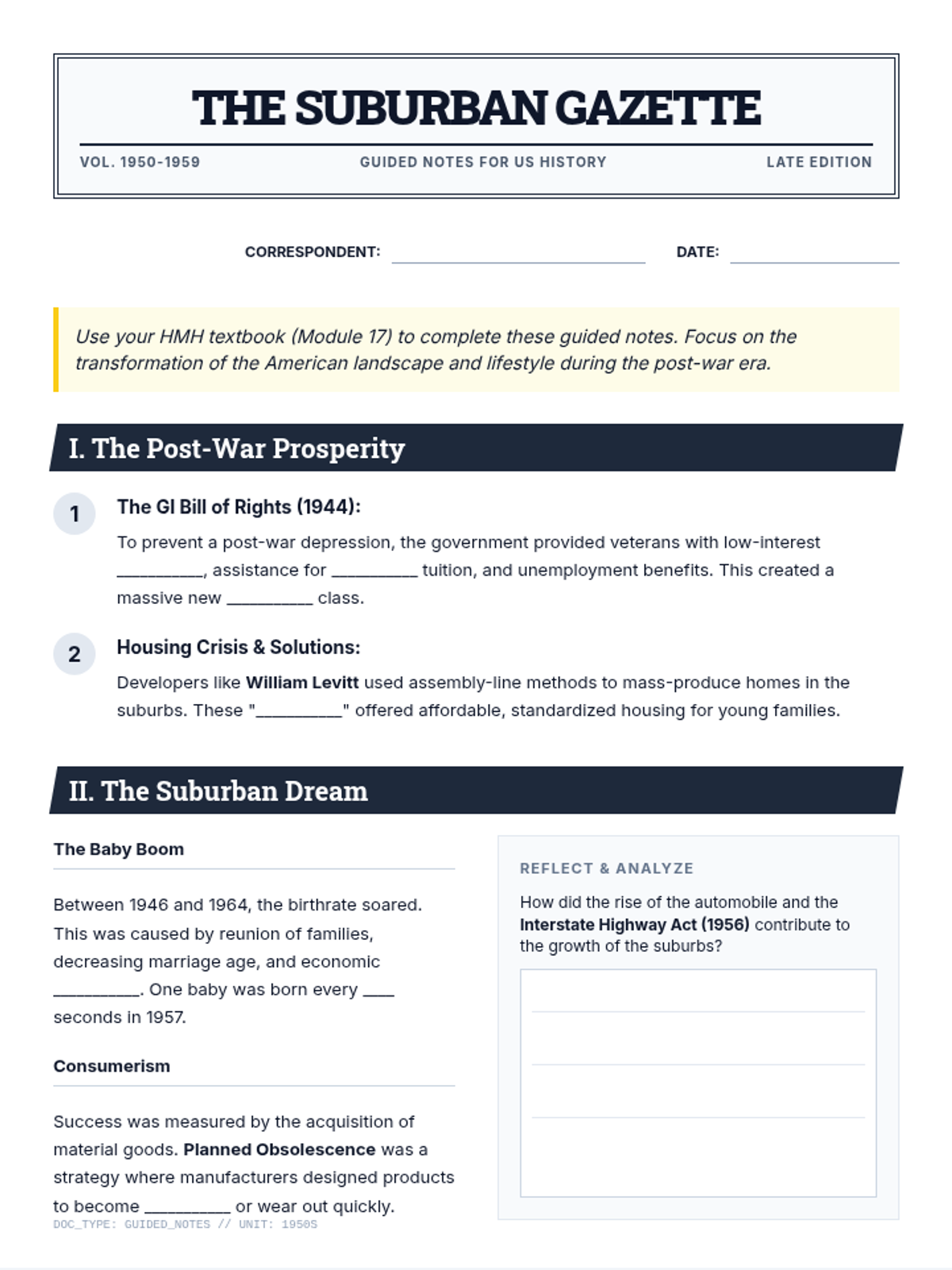
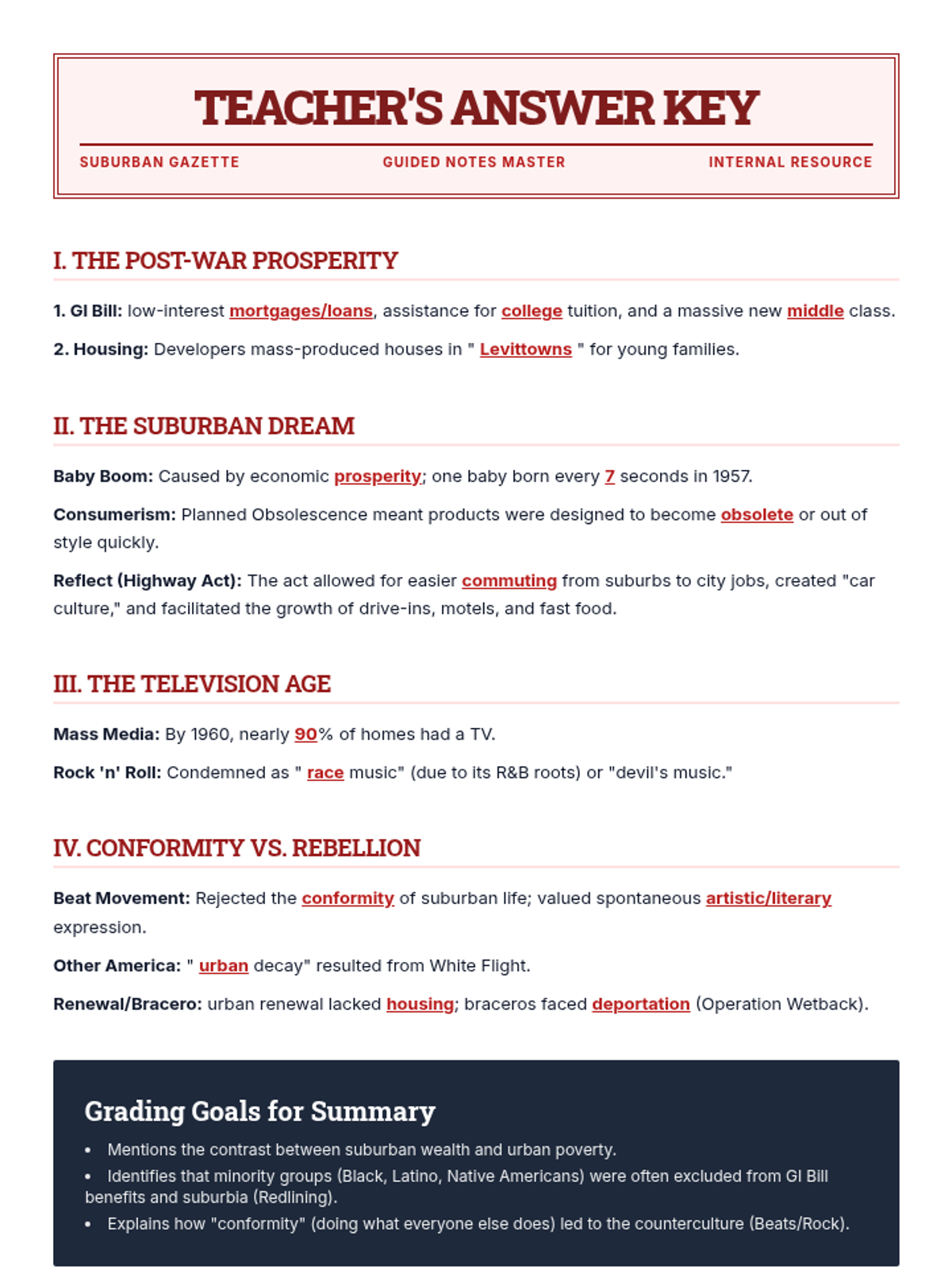
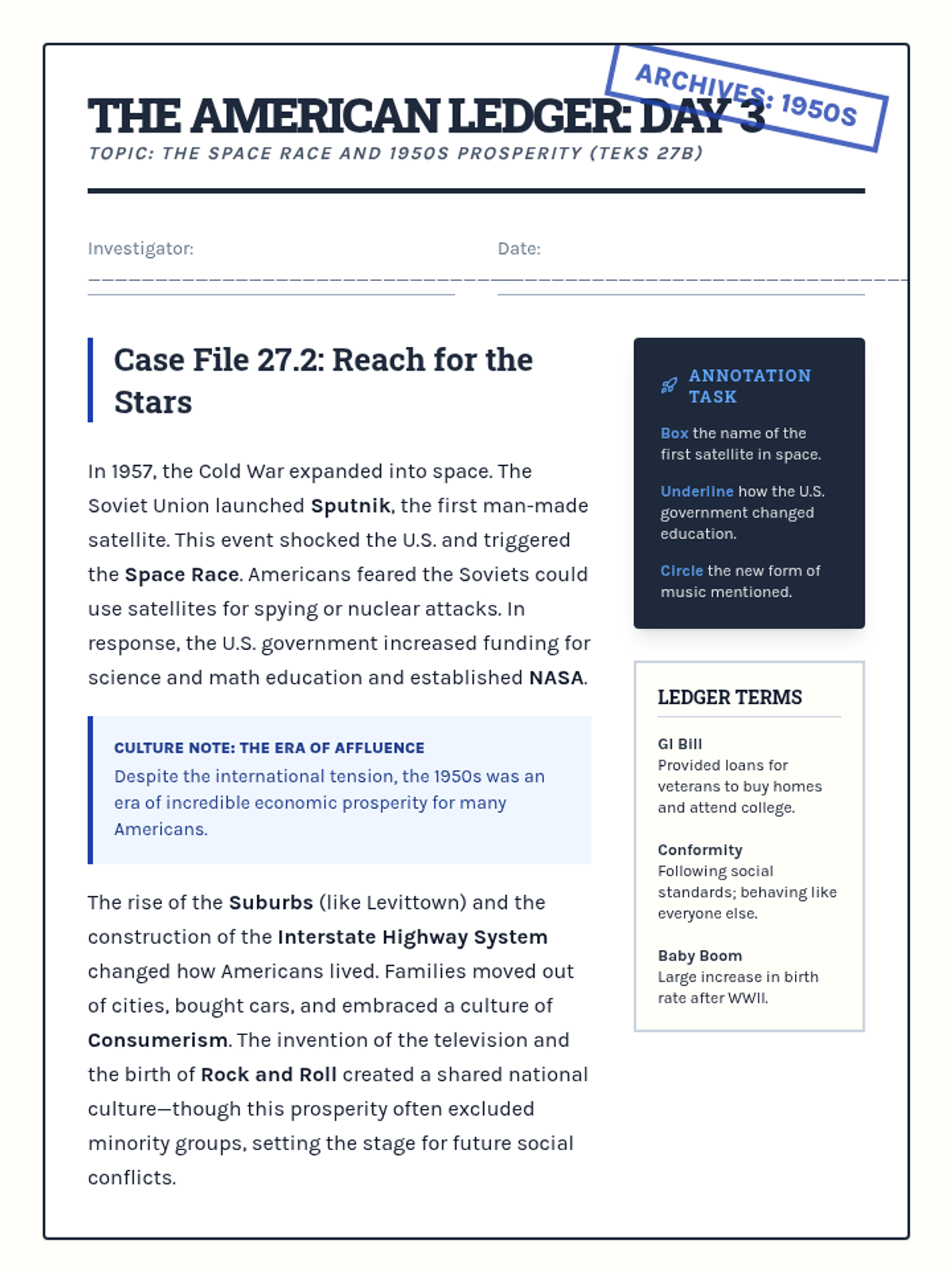
An overview of the domestic life, economic prosperity, and cultural shifts of the 1950s. This lesson covers the GI Bill, the rise of suburbia, the baby boom, and the tension between conformity and the emerging counterculture.
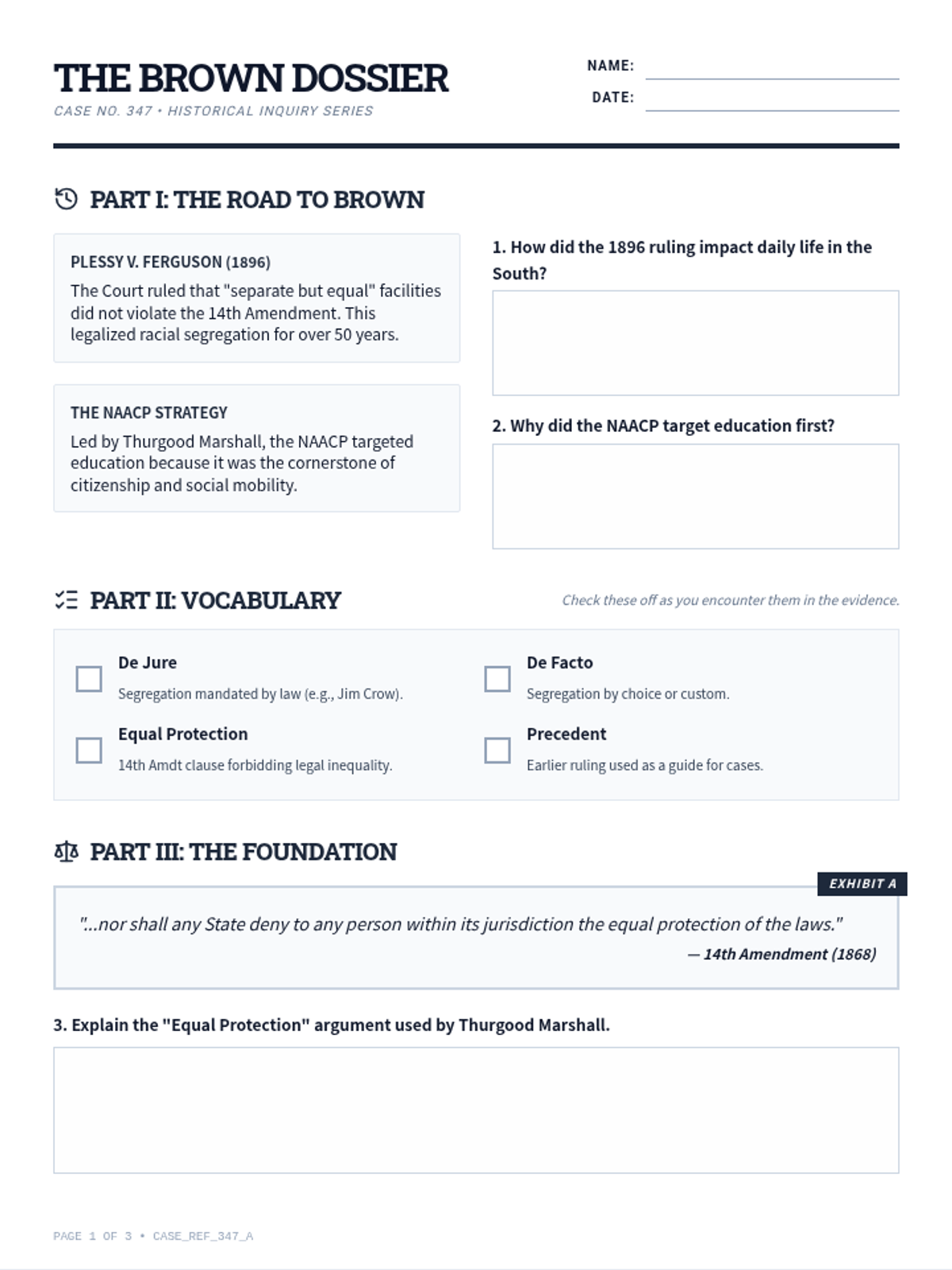
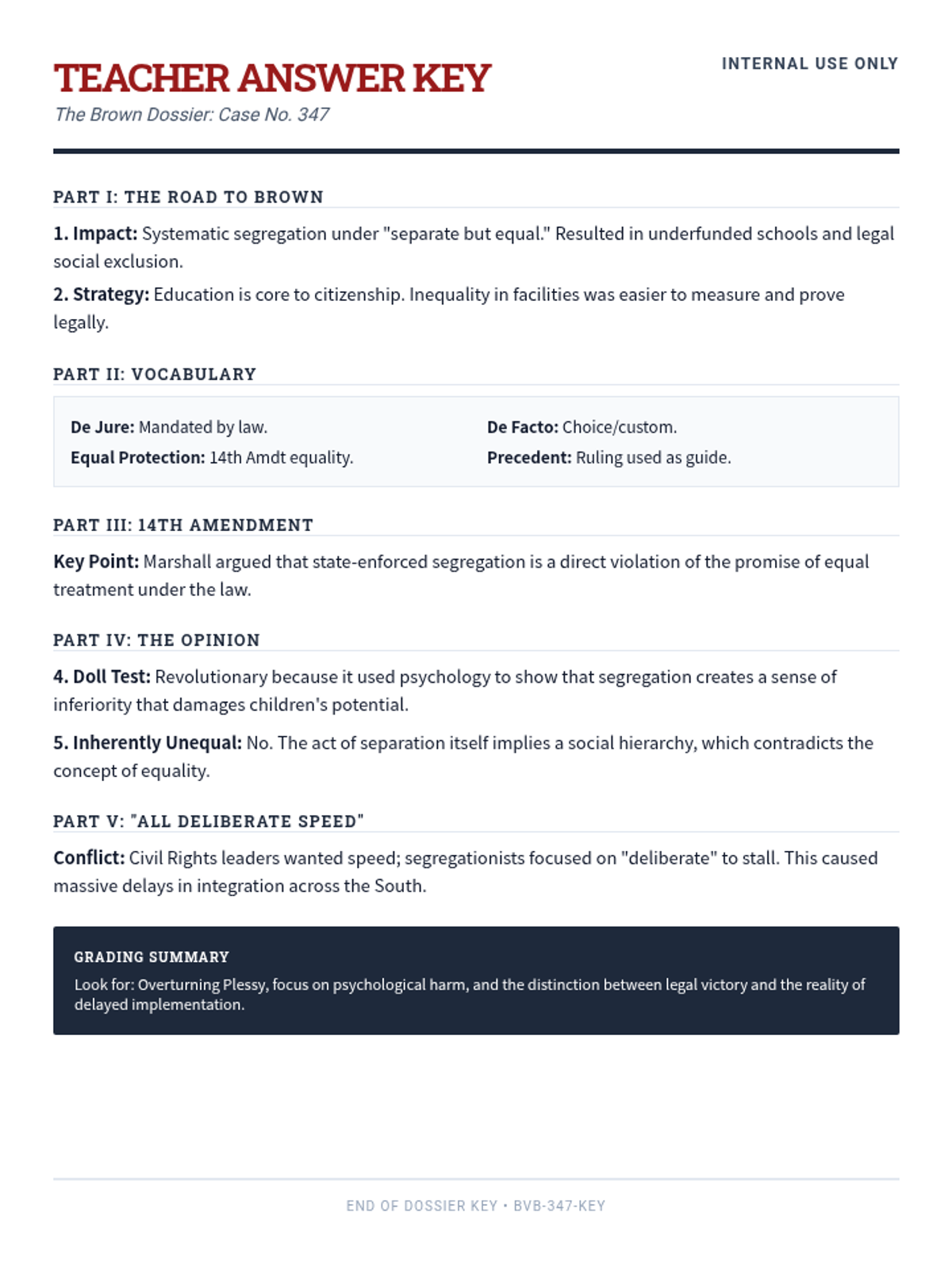
A comprehensive lesson exploring the historical context, legal arguments, and social impact of the Brown v. Board of Education Supreme Court decision. Students analyze the transition from Plessy v. Ferguson to the civil rights era through primary source excerpts and critical thinking questions.
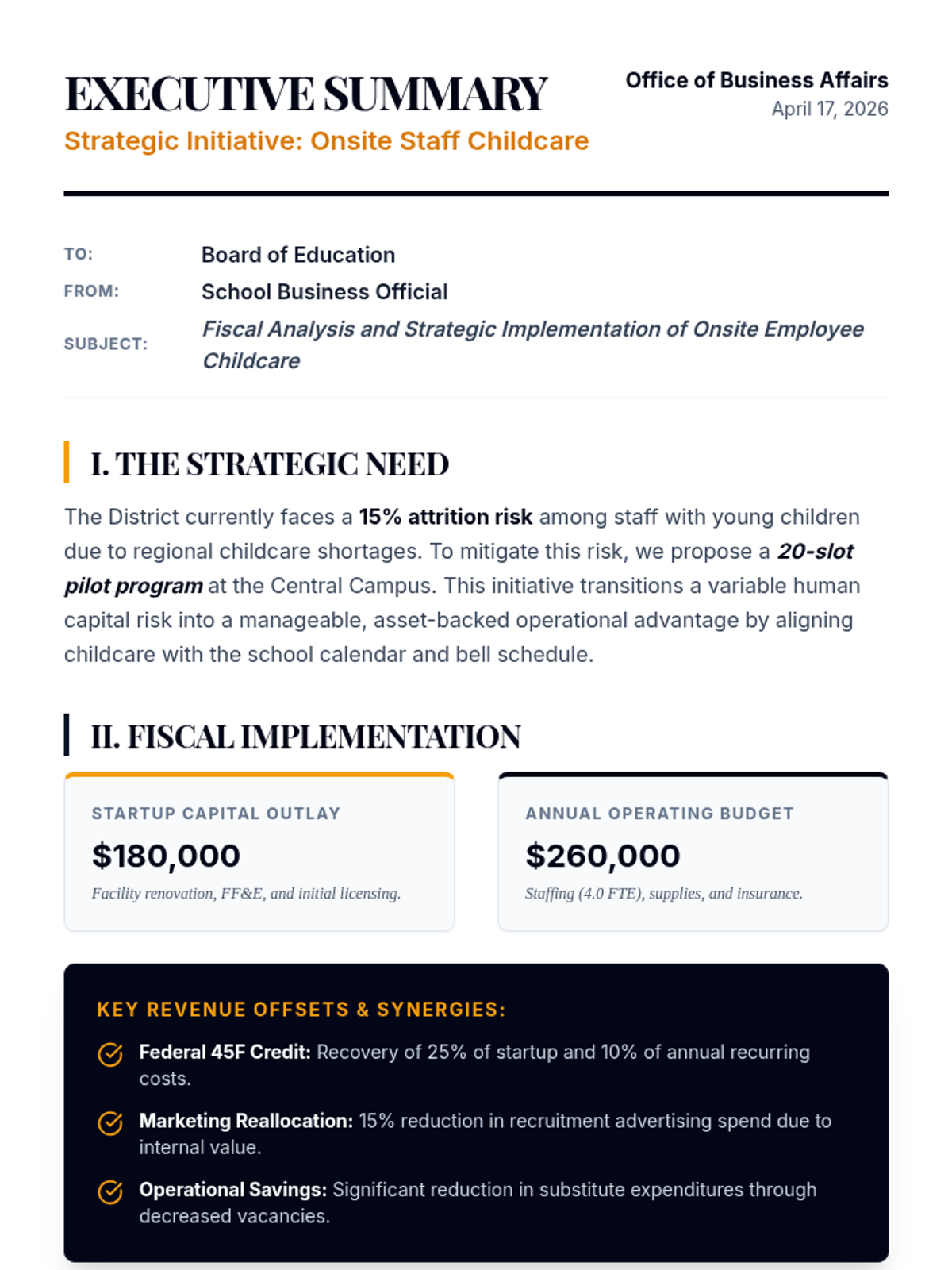
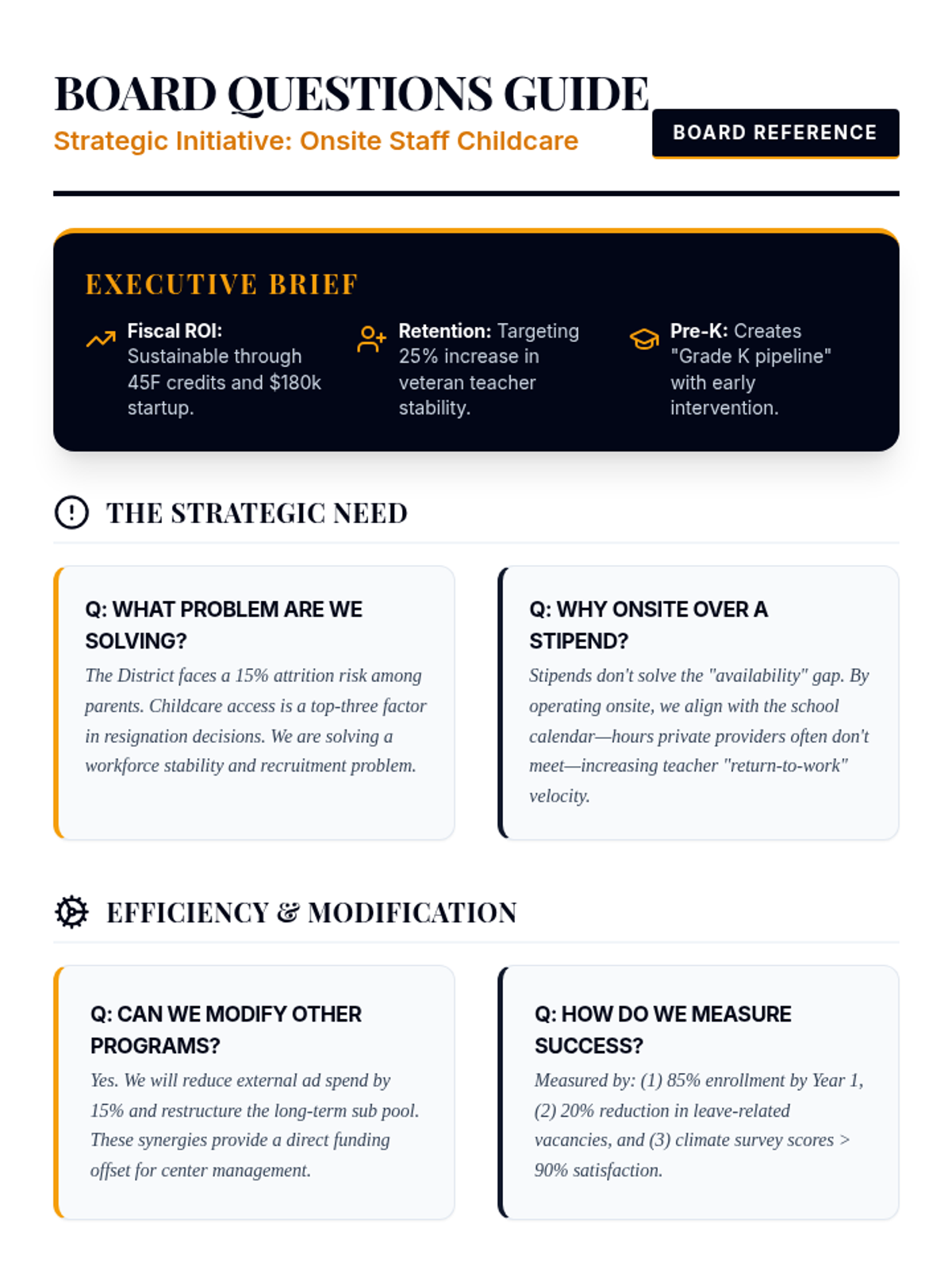
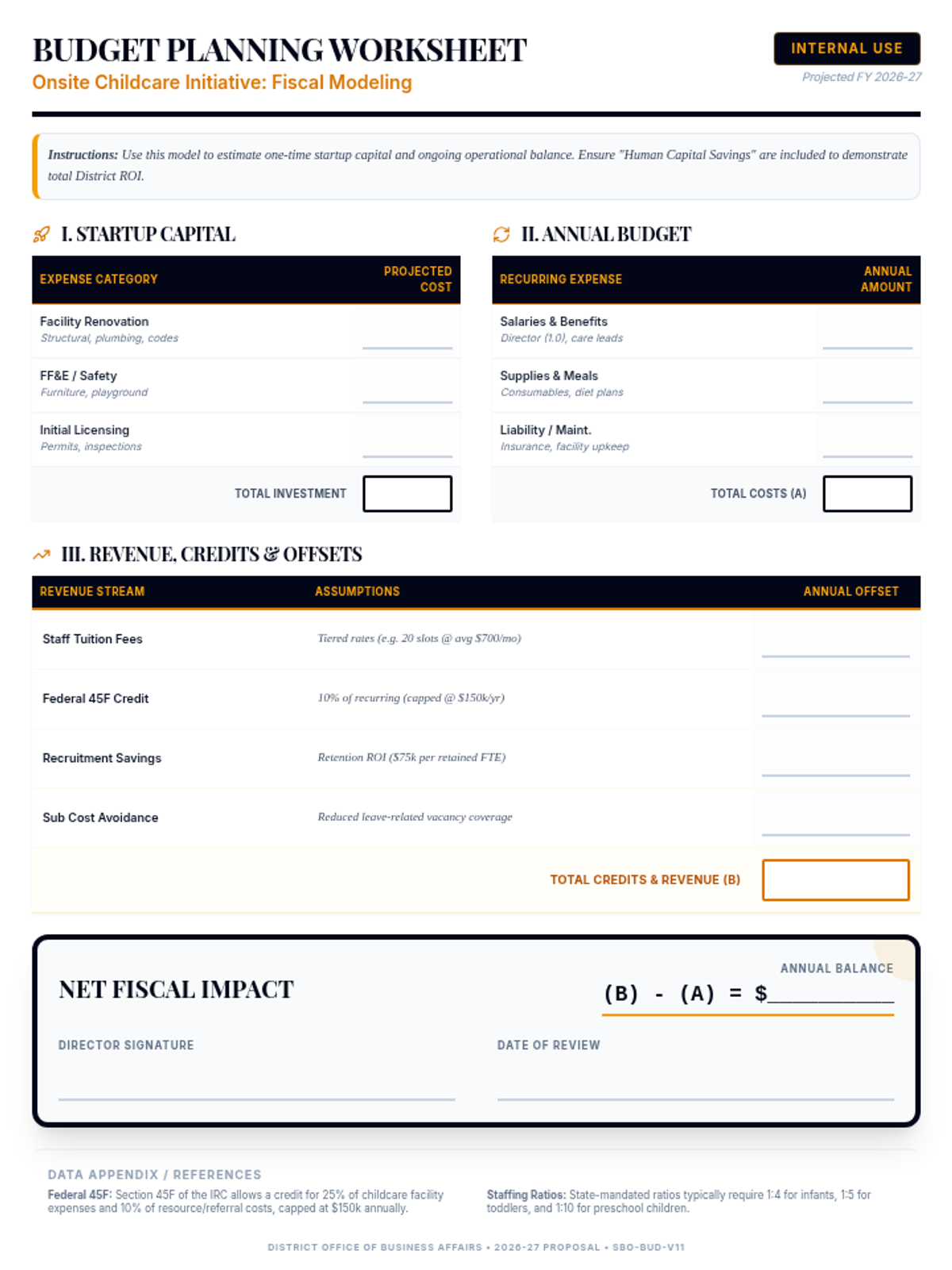
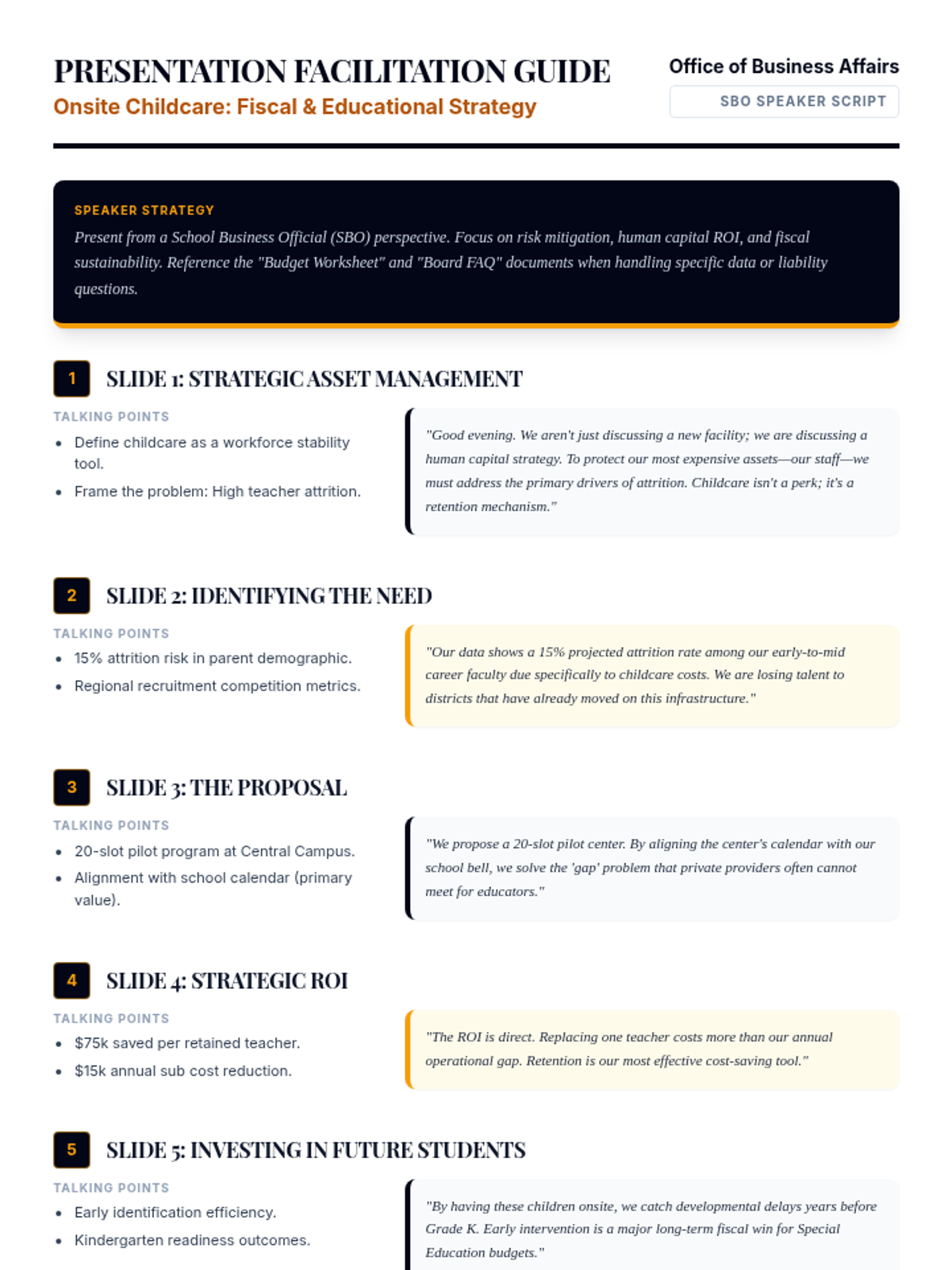
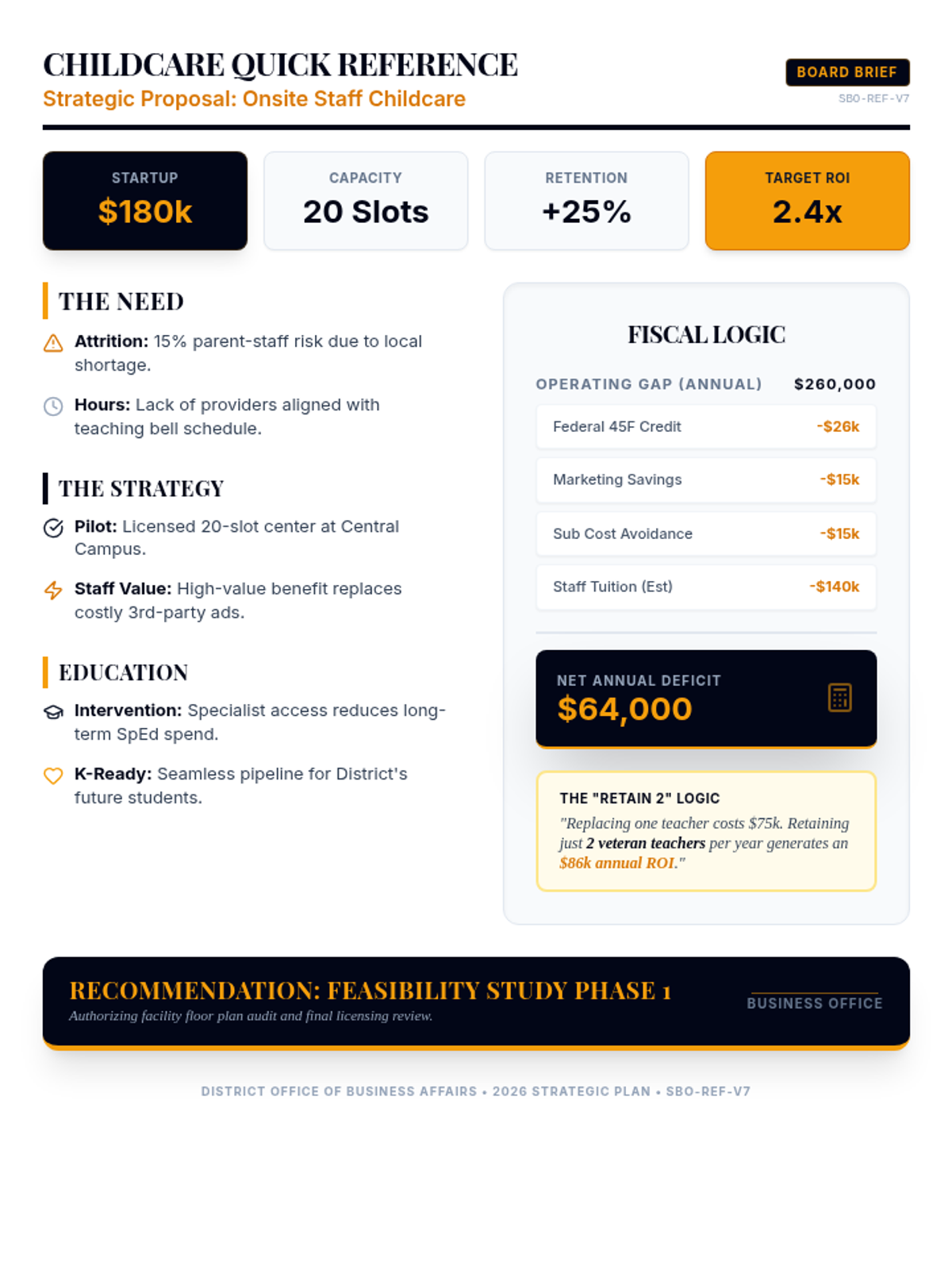
A comprehensive proposal for the Board of Education evaluating the fiscal and educational impact of implementing onsite childcare for district staff.
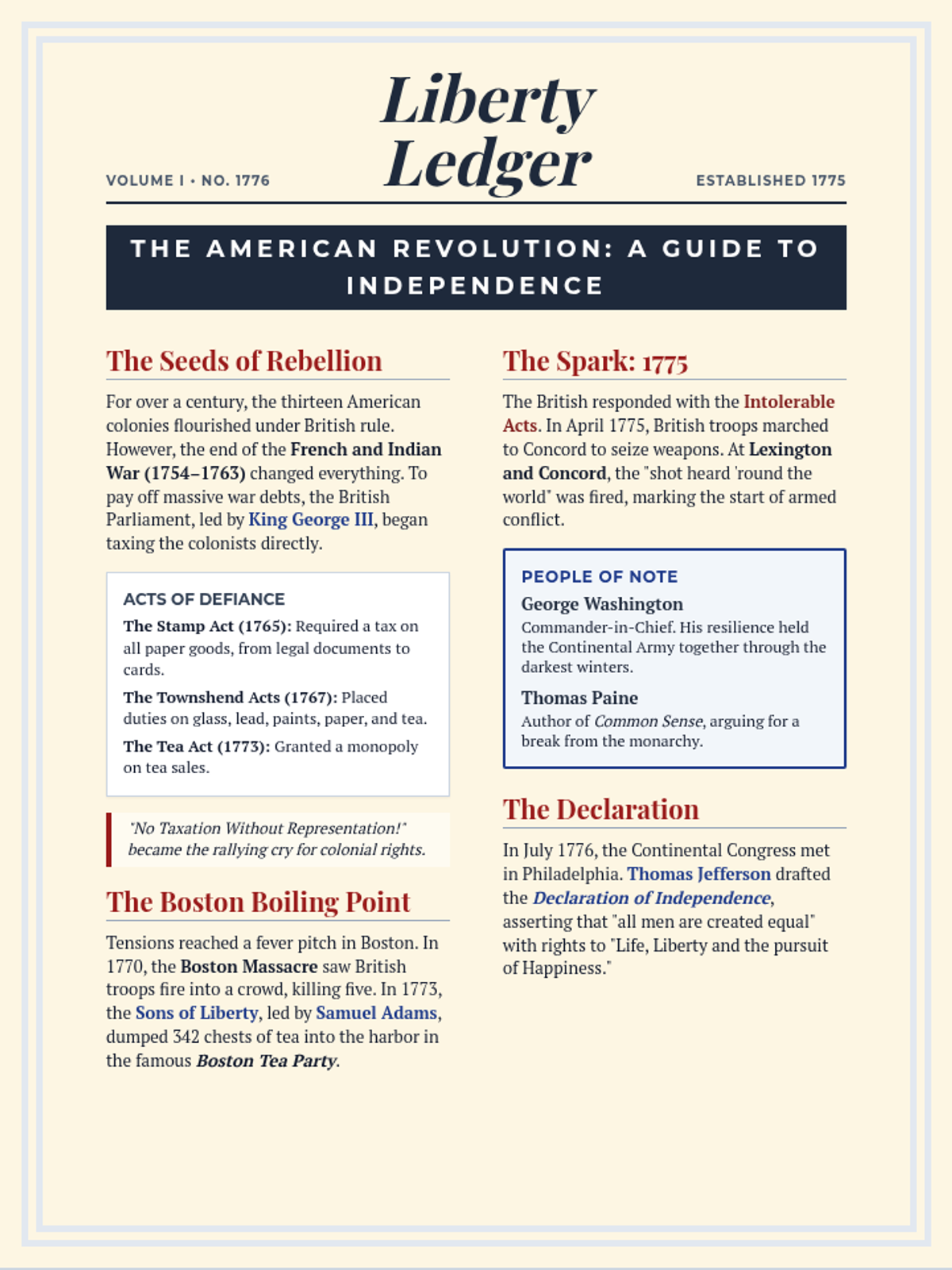
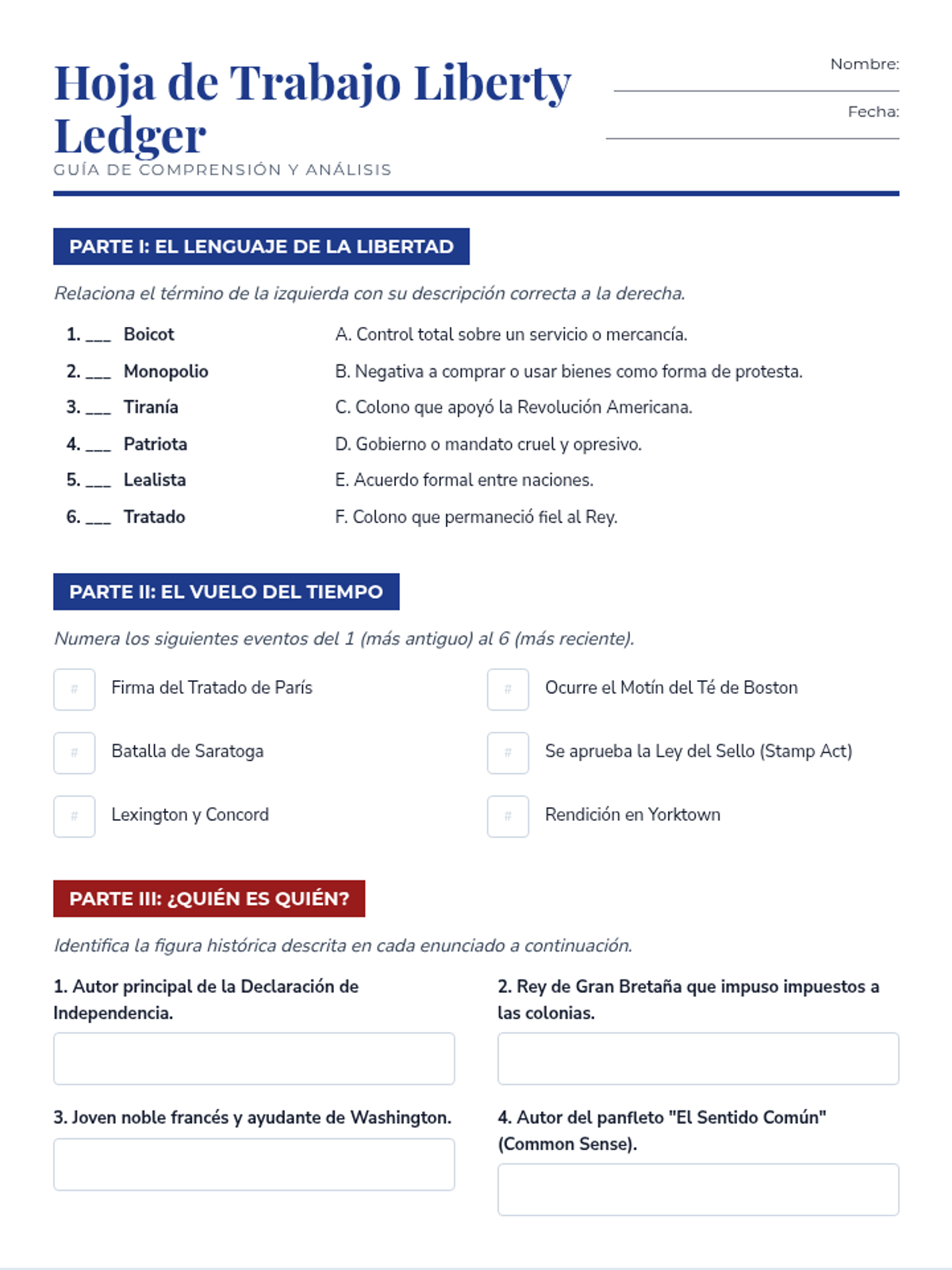
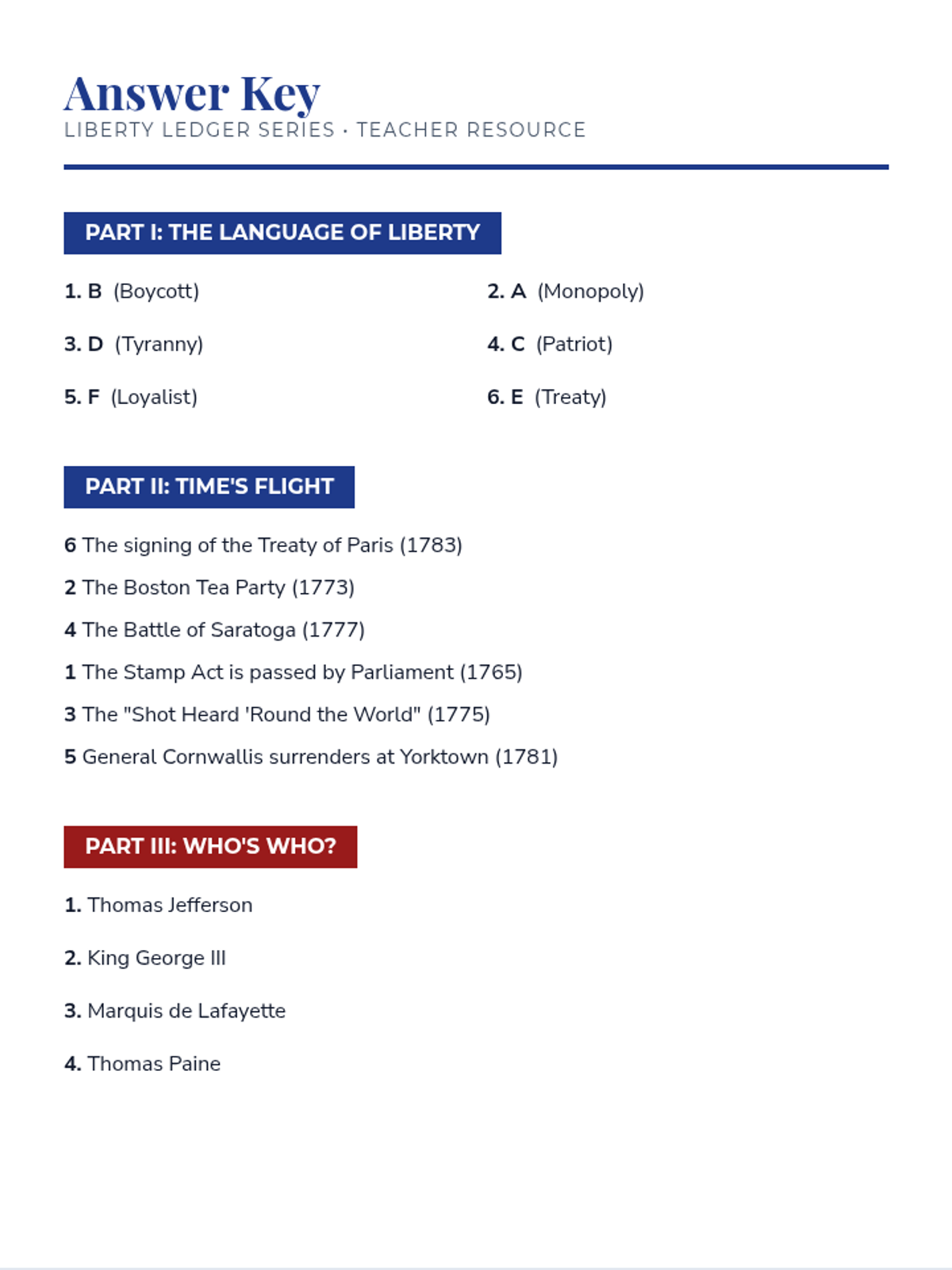
An in-depth look at the causes, key figures, and pivotal moments of the American Revolutionary War through reading and analysis.
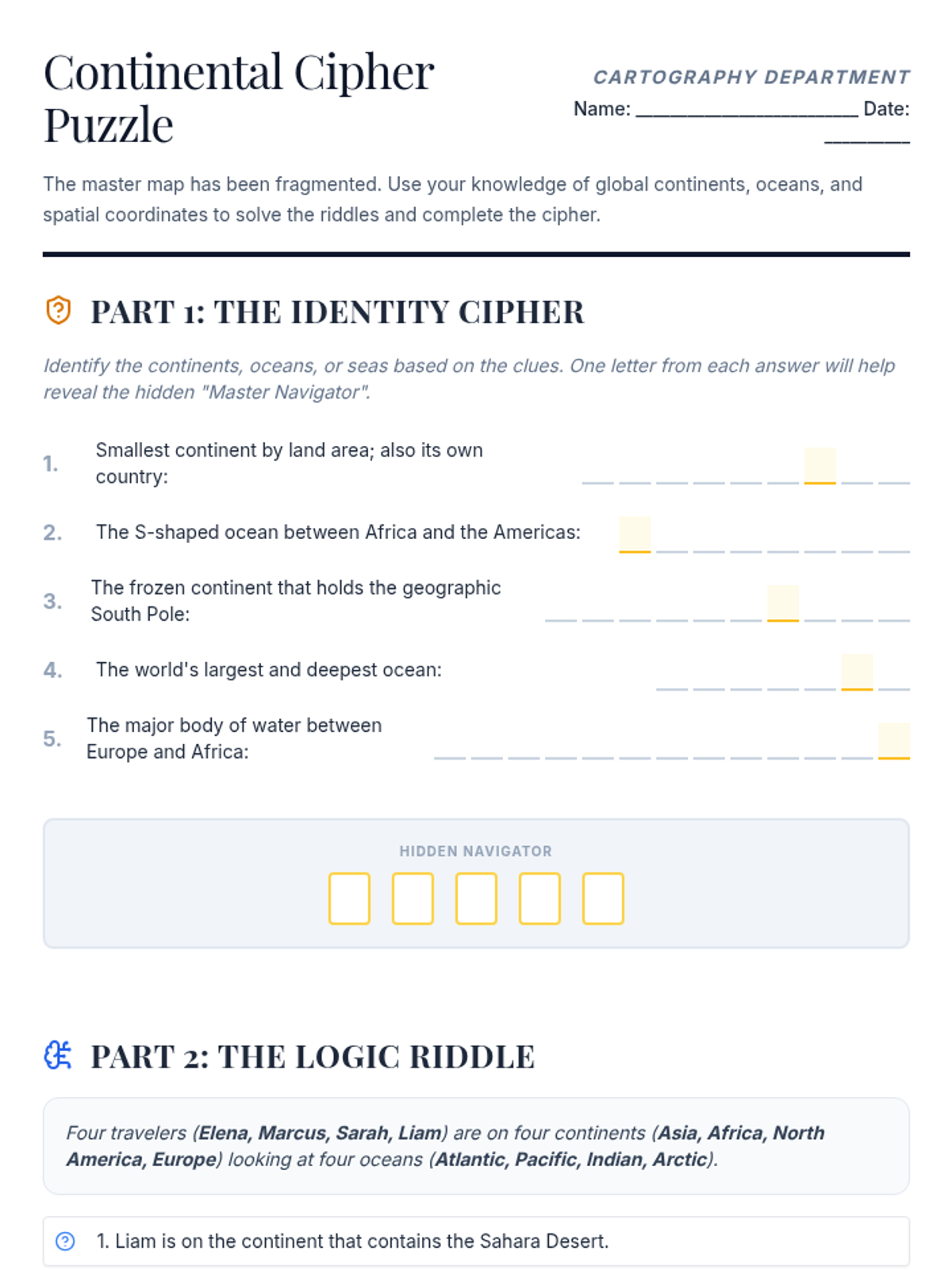
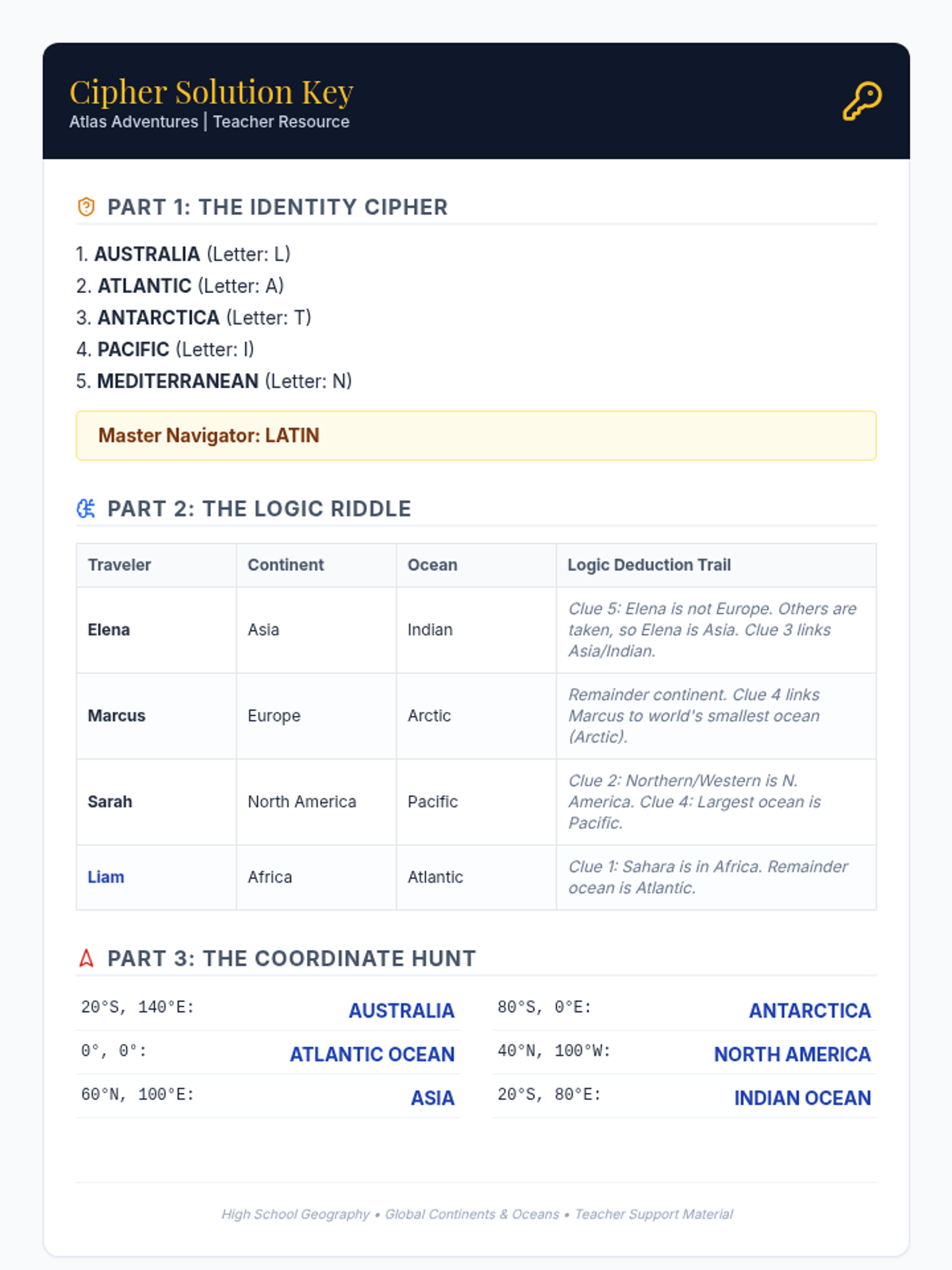
An advanced exploration of global physical geography, focusing on the unique tectonic, climatic, and bathymetric features of the world's continents and oceans. Students will synthesize geographic data to solve complex spatial puzzles.
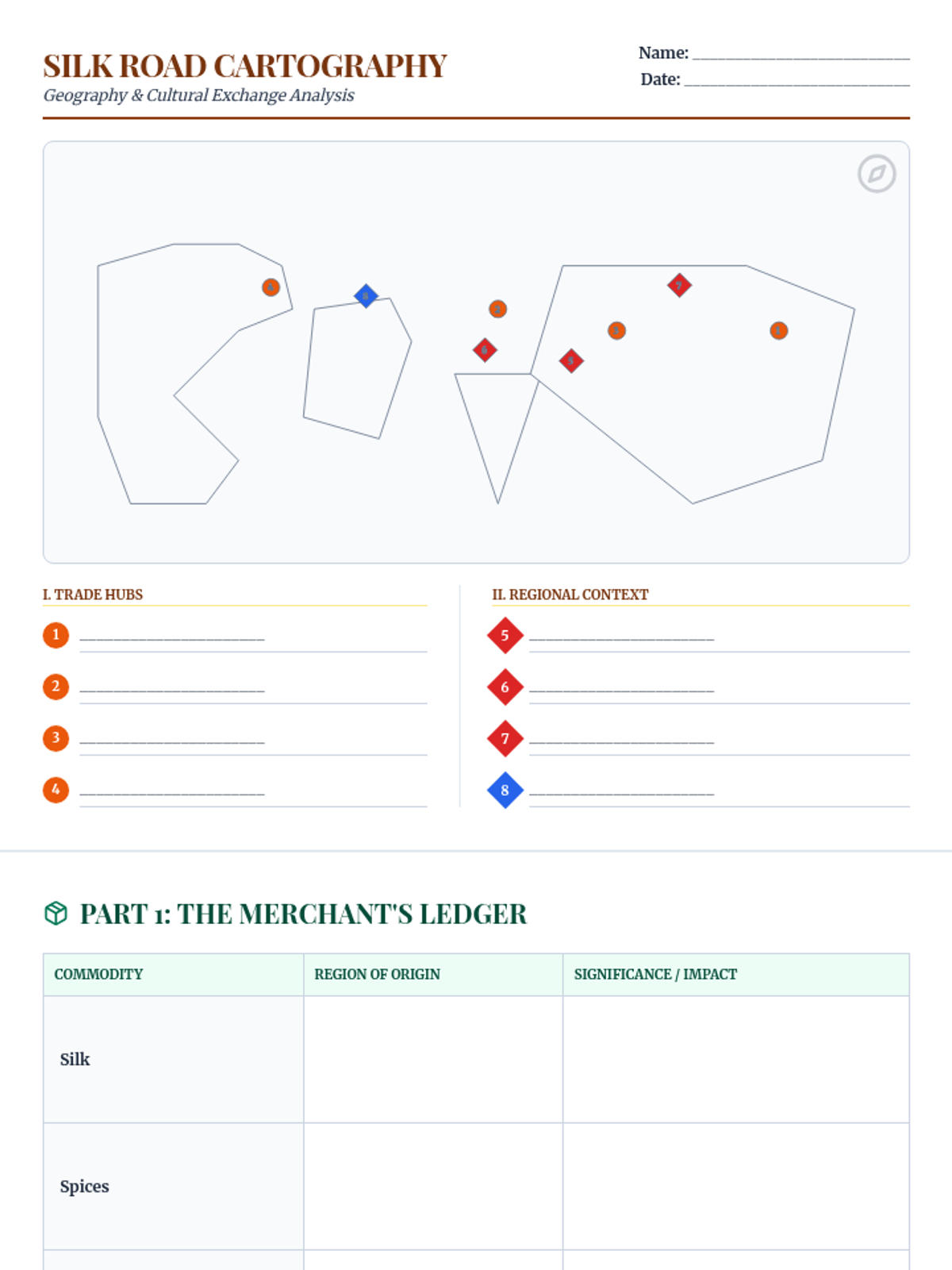
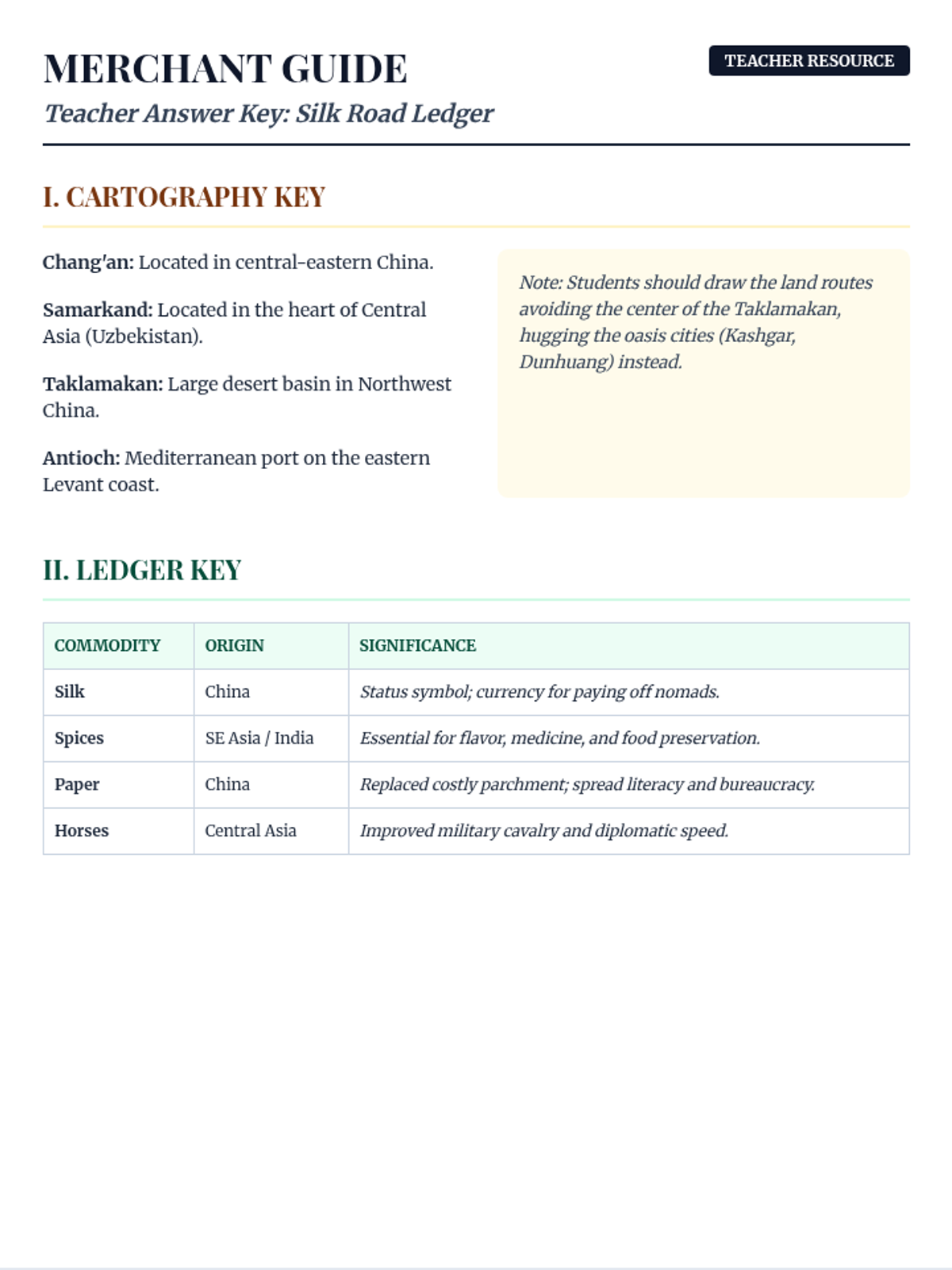
A comprehensive lesson on the Silk Road, focusing on geography, the exchange of goods and ideas, and the impact of trans-continental trade on High School World History students.
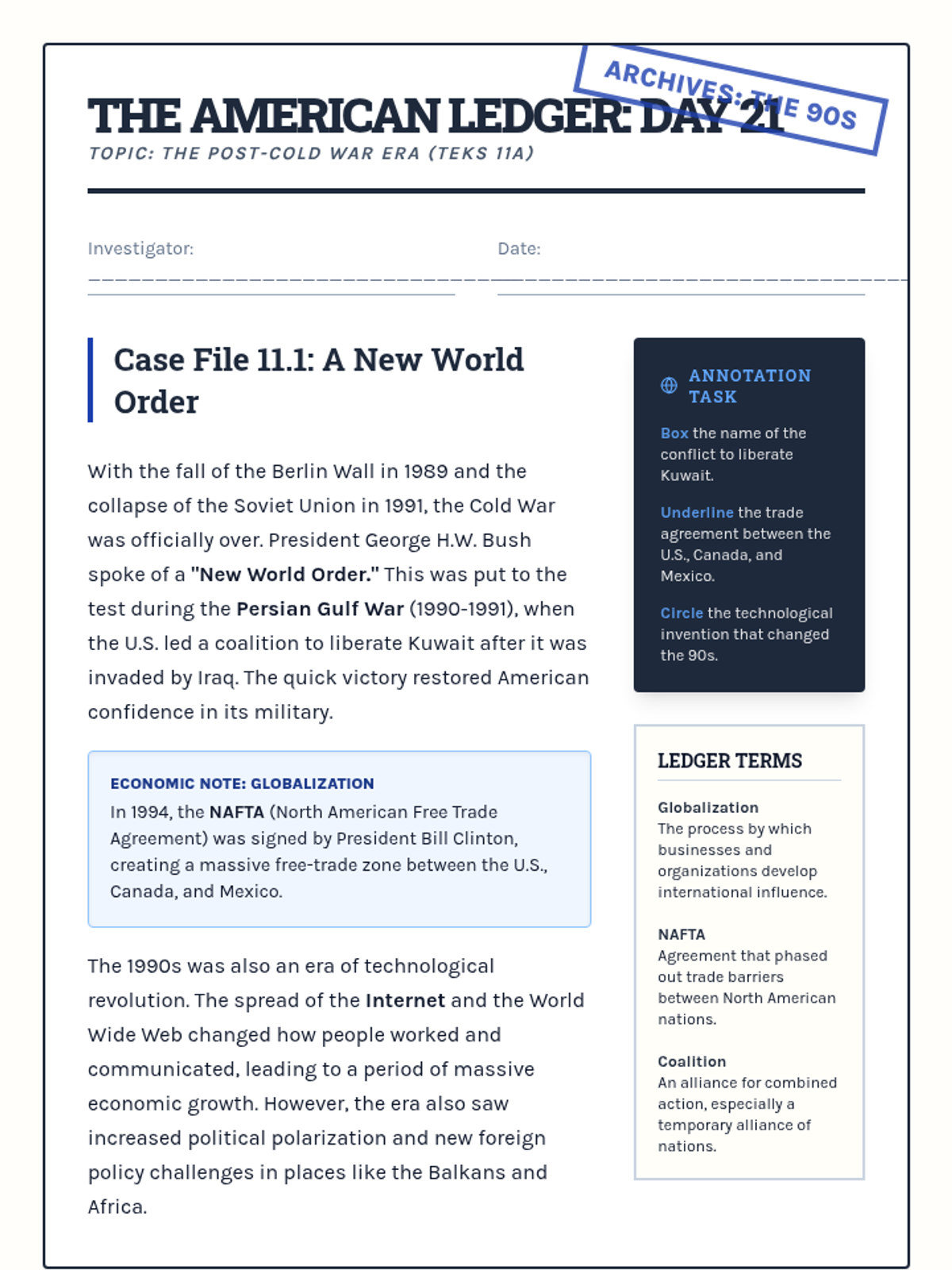
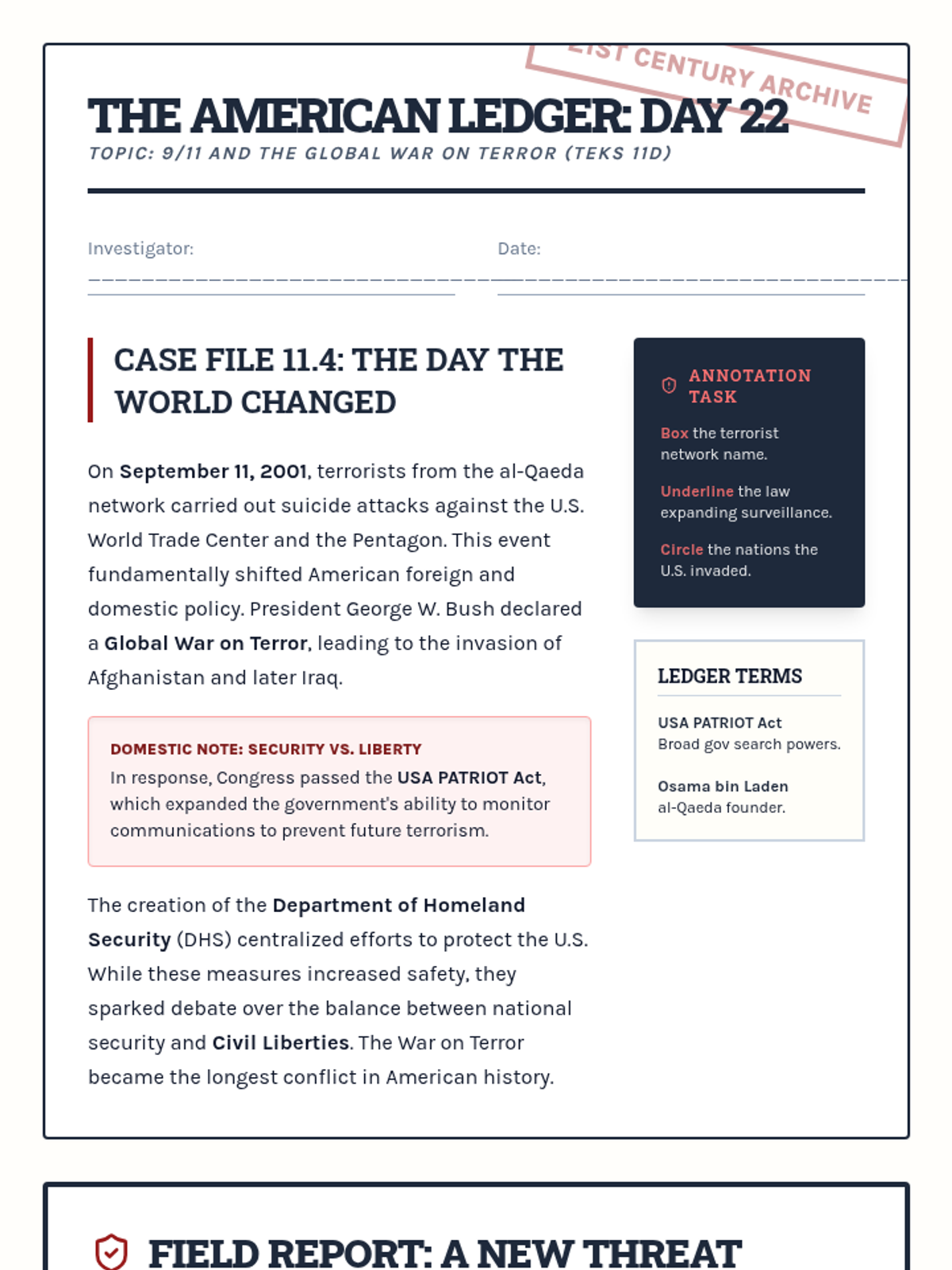
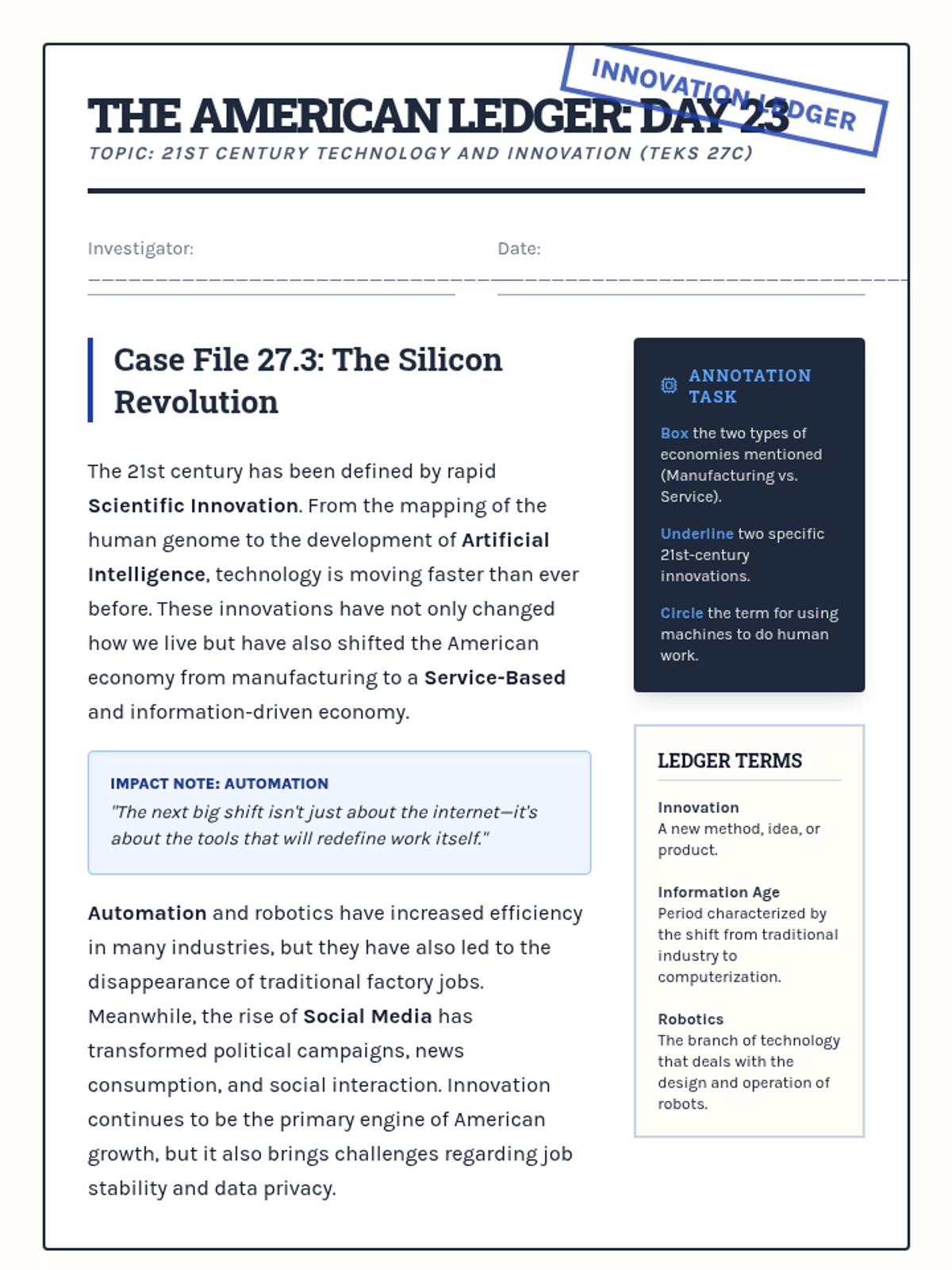
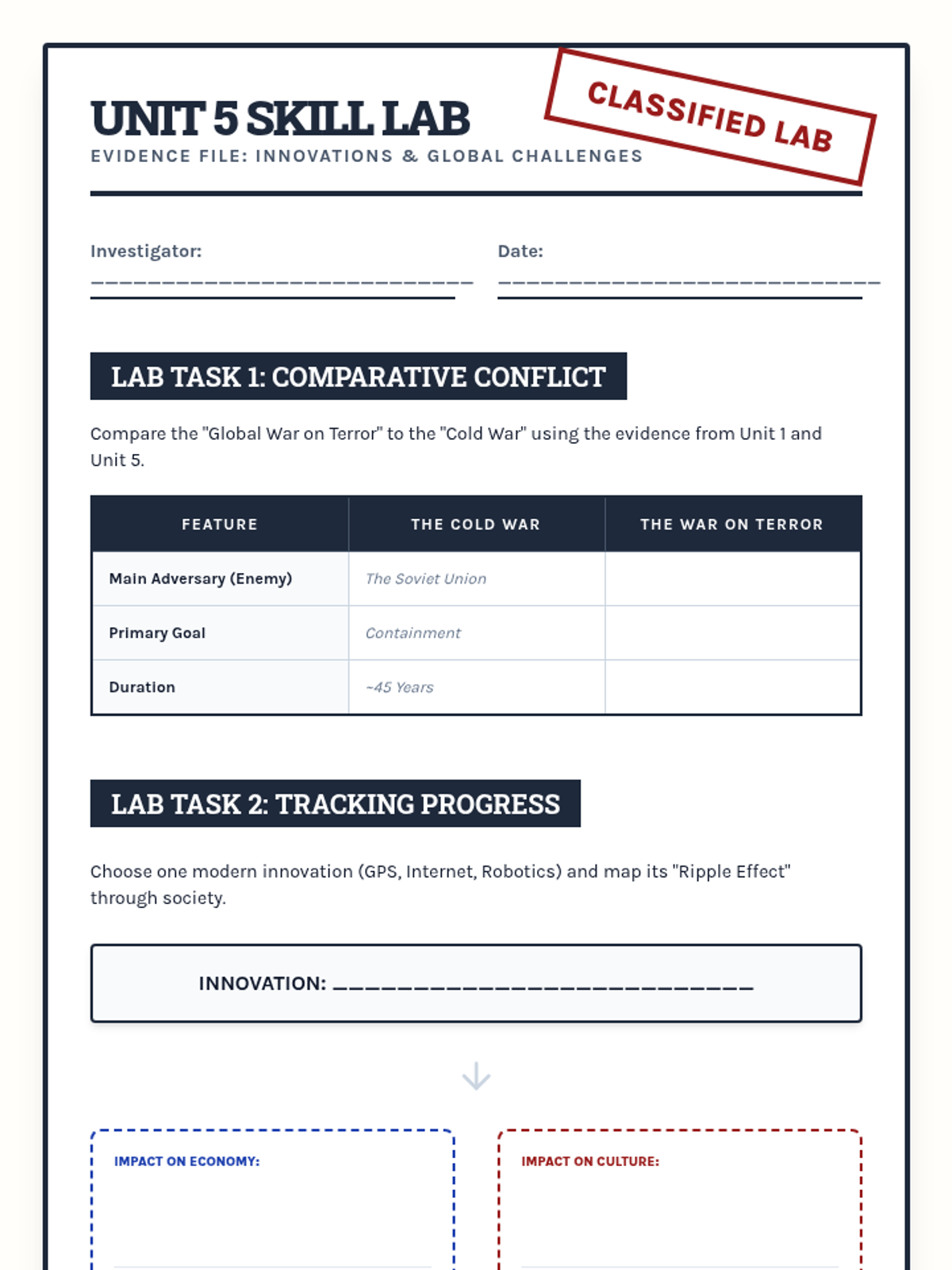
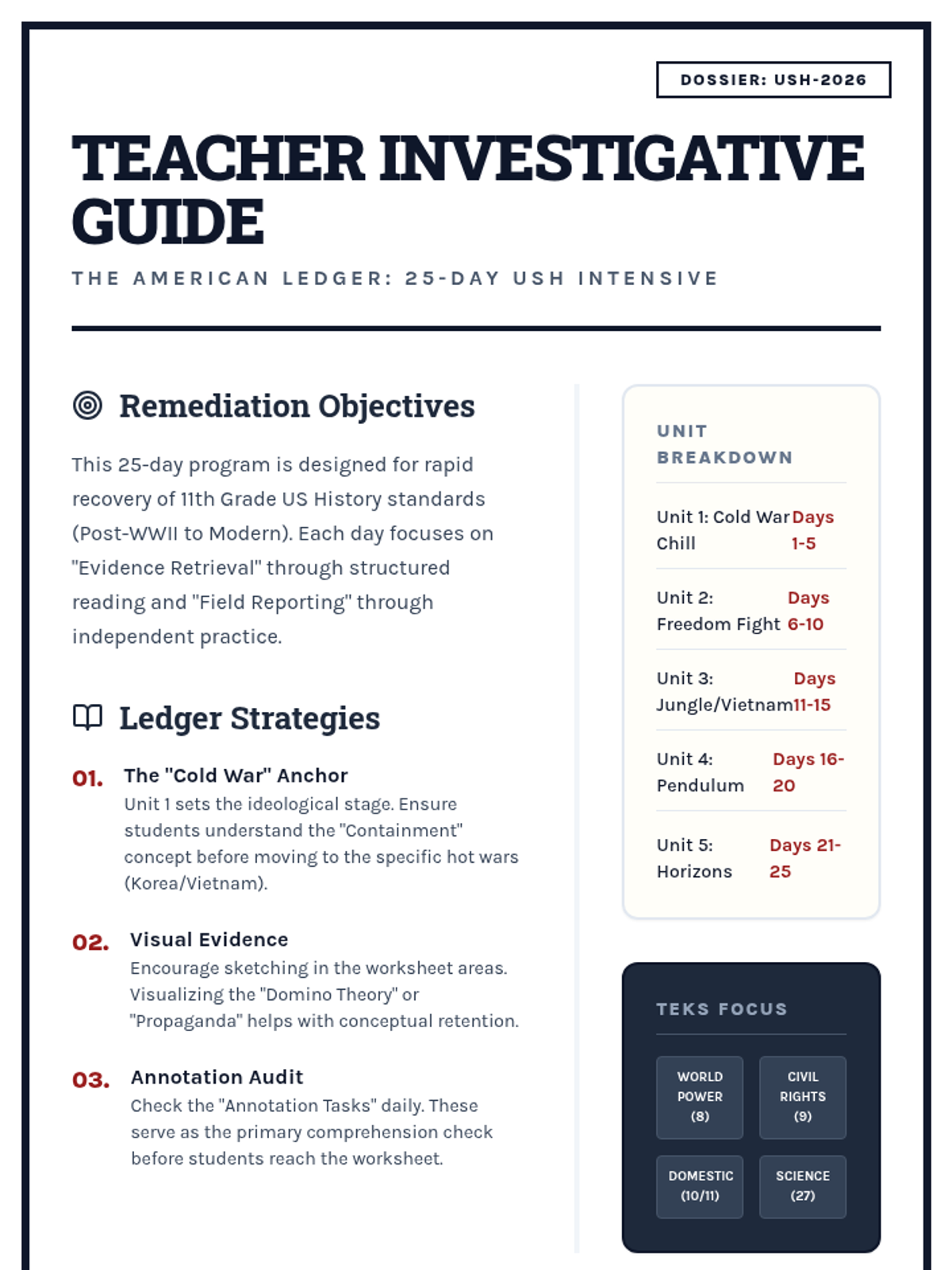
Examines the post-Cold War era, 9/11, the War on Terror, and the impact of technology in the 21st century. Includes TEKS 11A, 11D, and 27C.
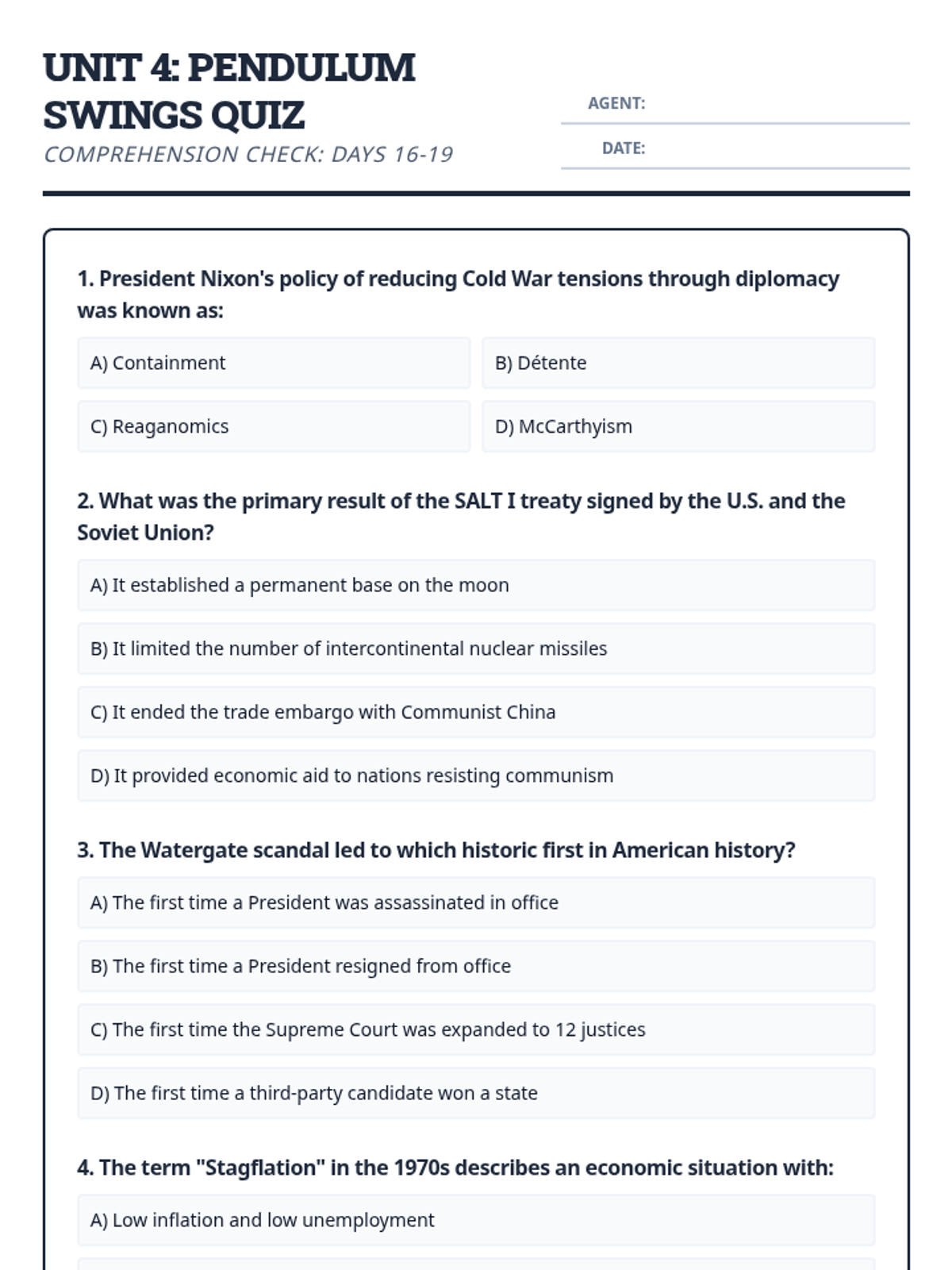
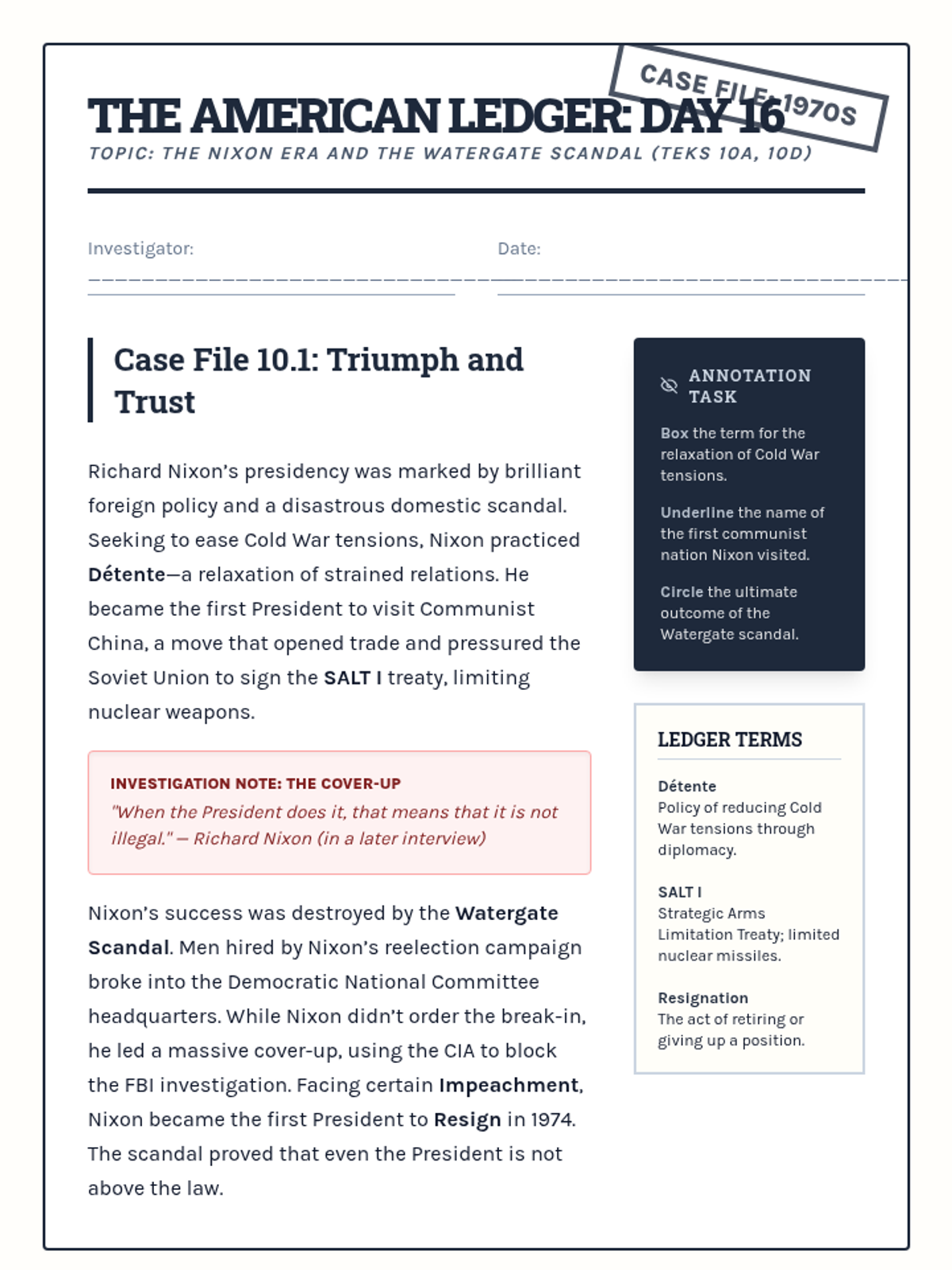
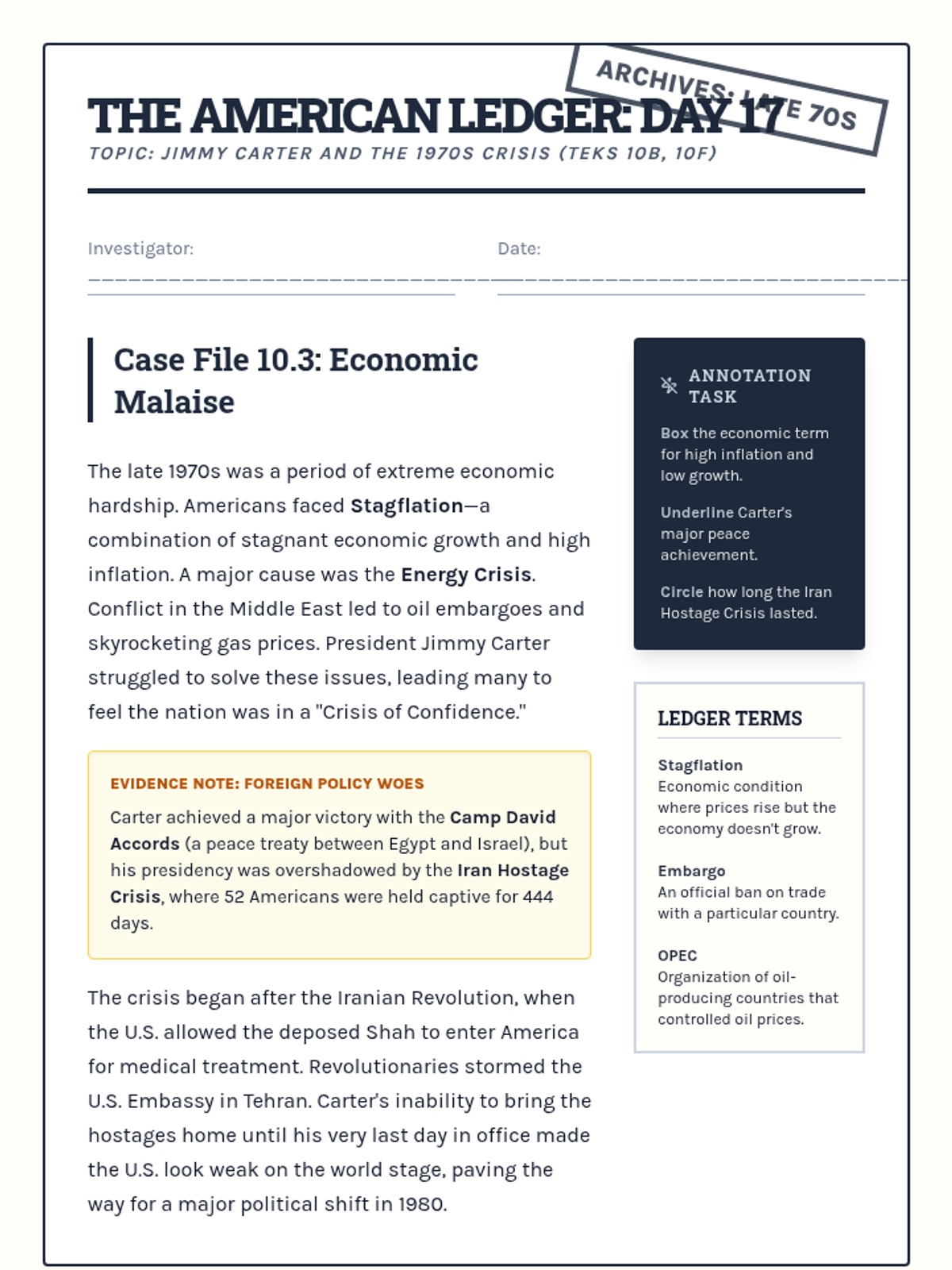
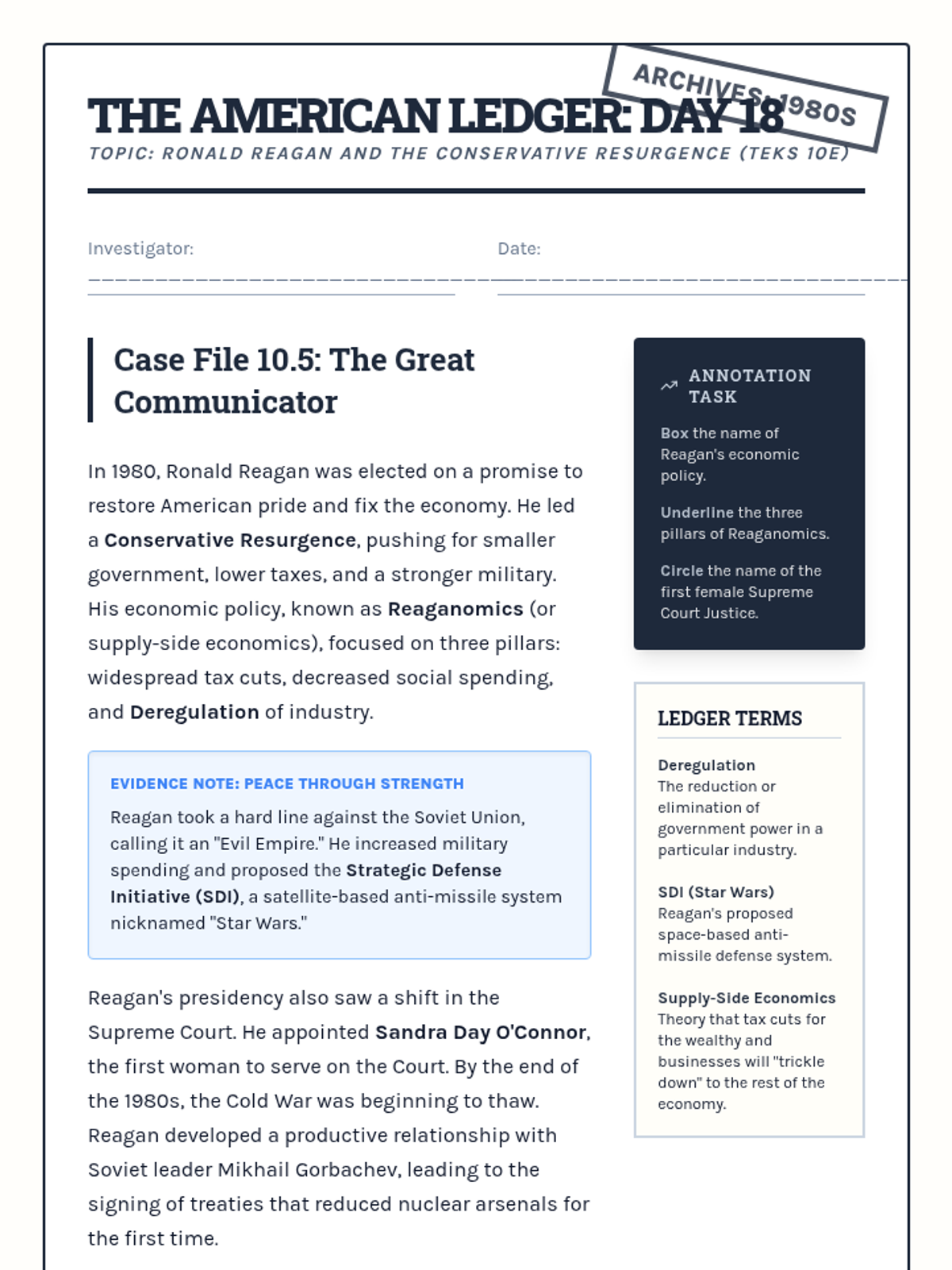
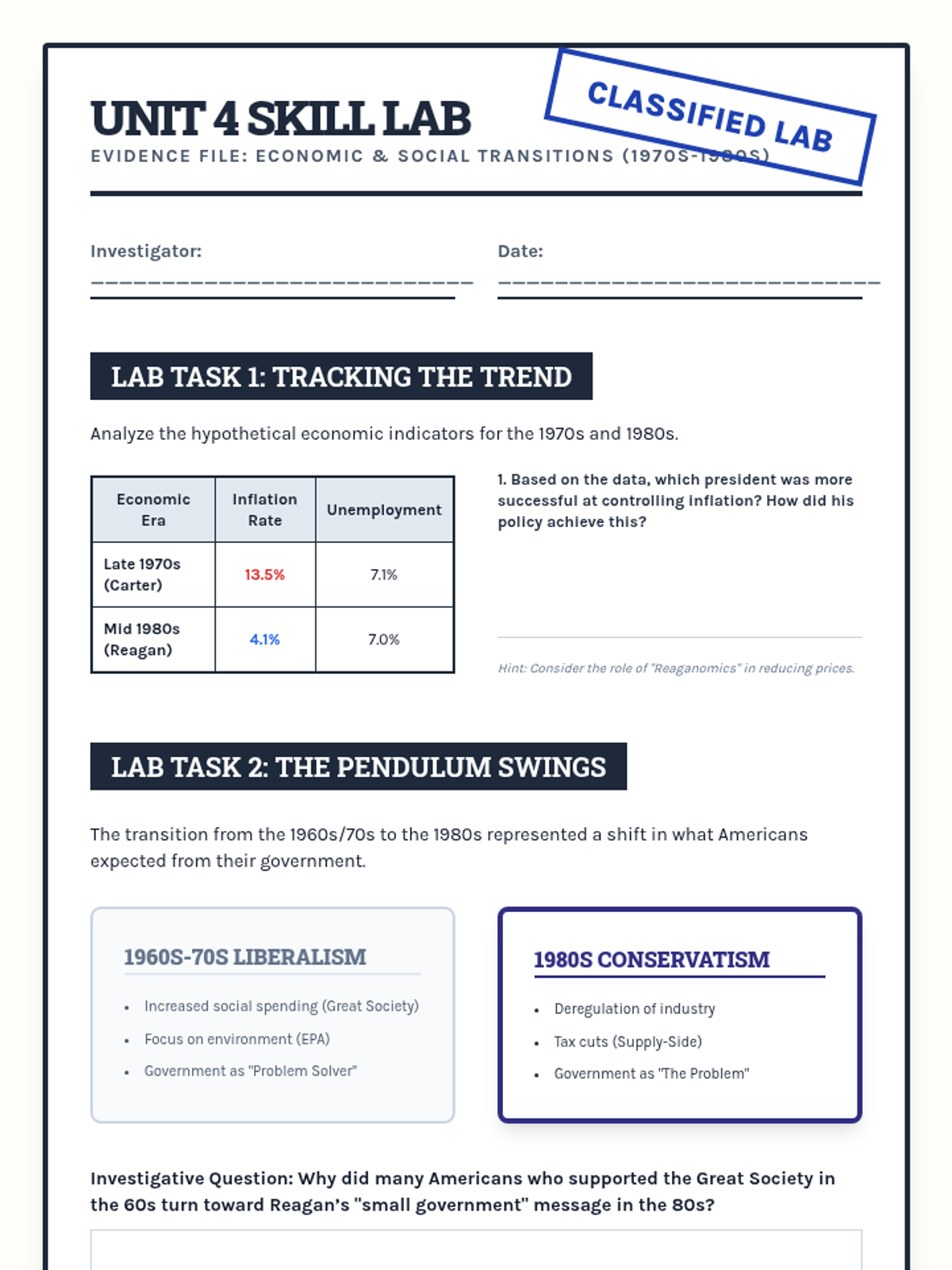
Covers the transition from the Nixon era through the Reagan revolution, focusing on economic shifts and the end of the Cold War. Includes TEKS 10A, 10B, and 10E.
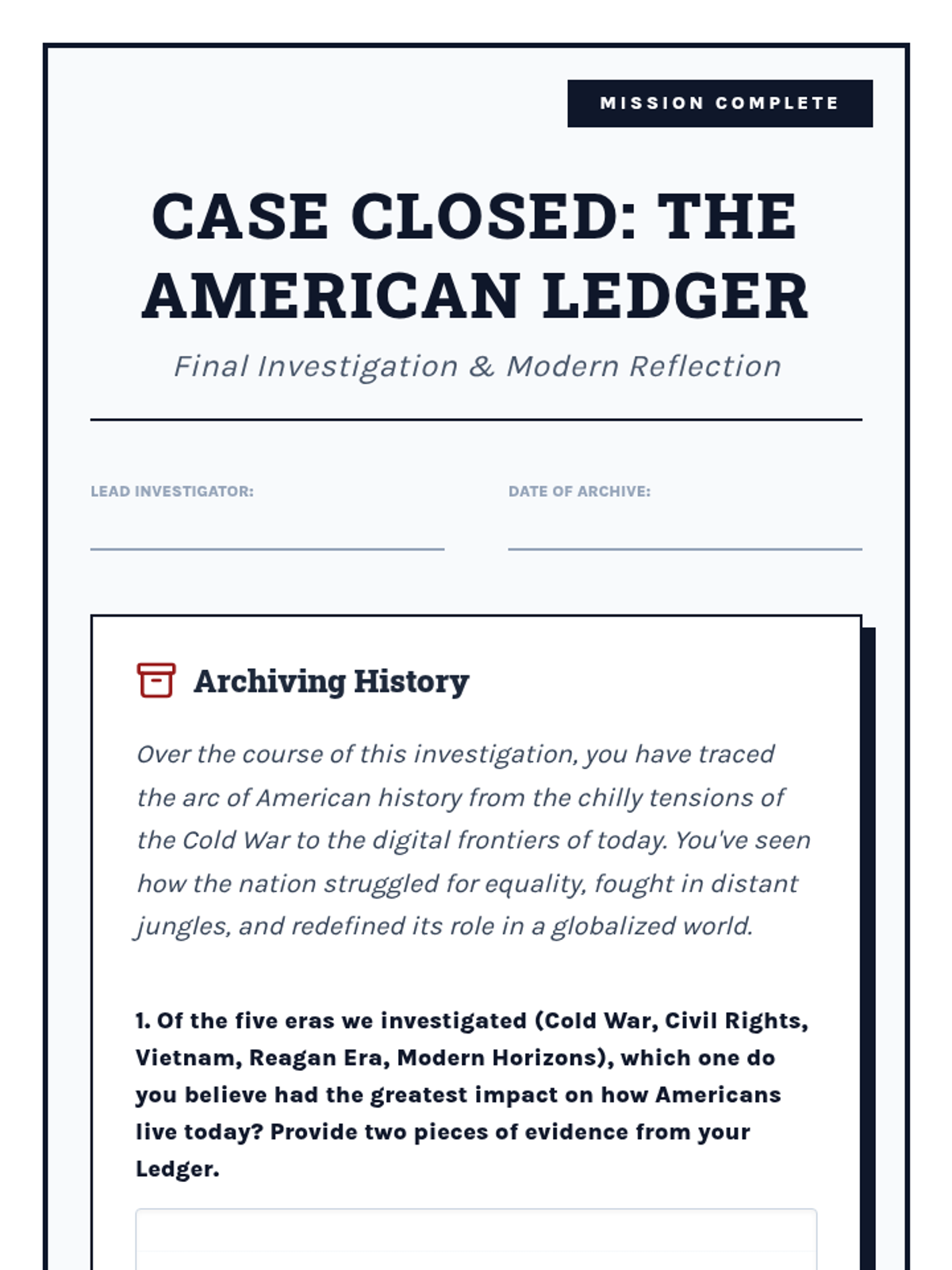
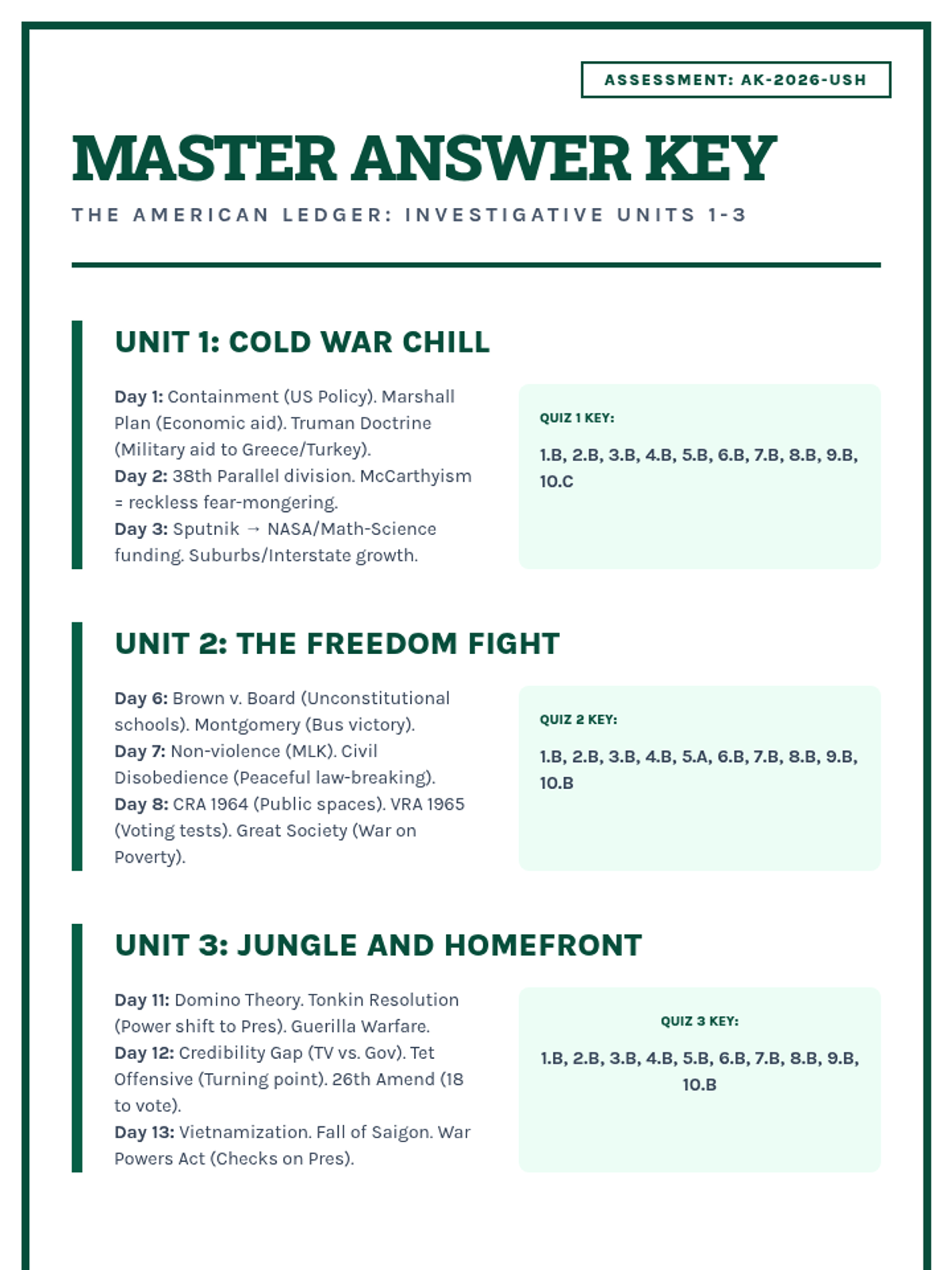
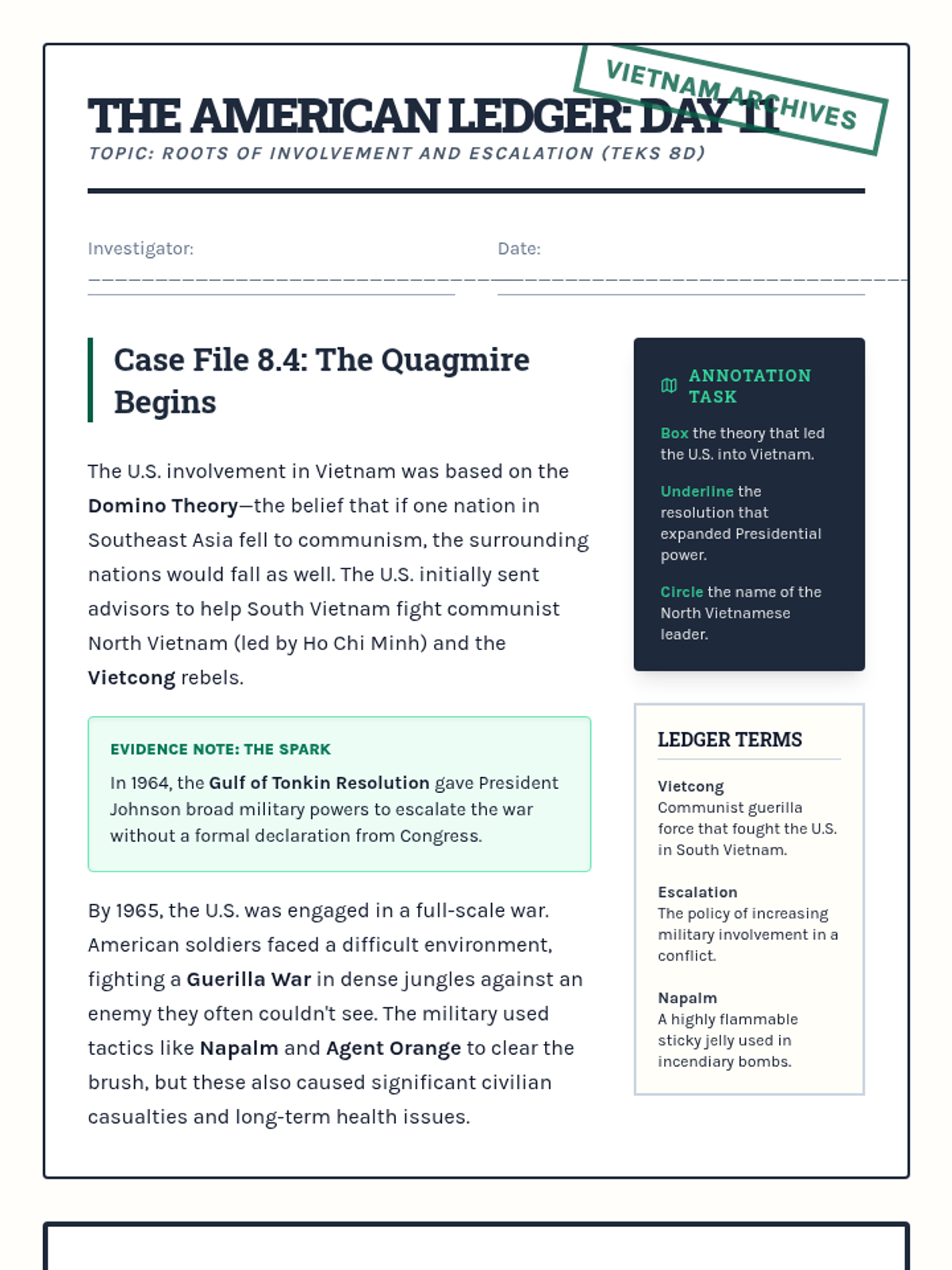
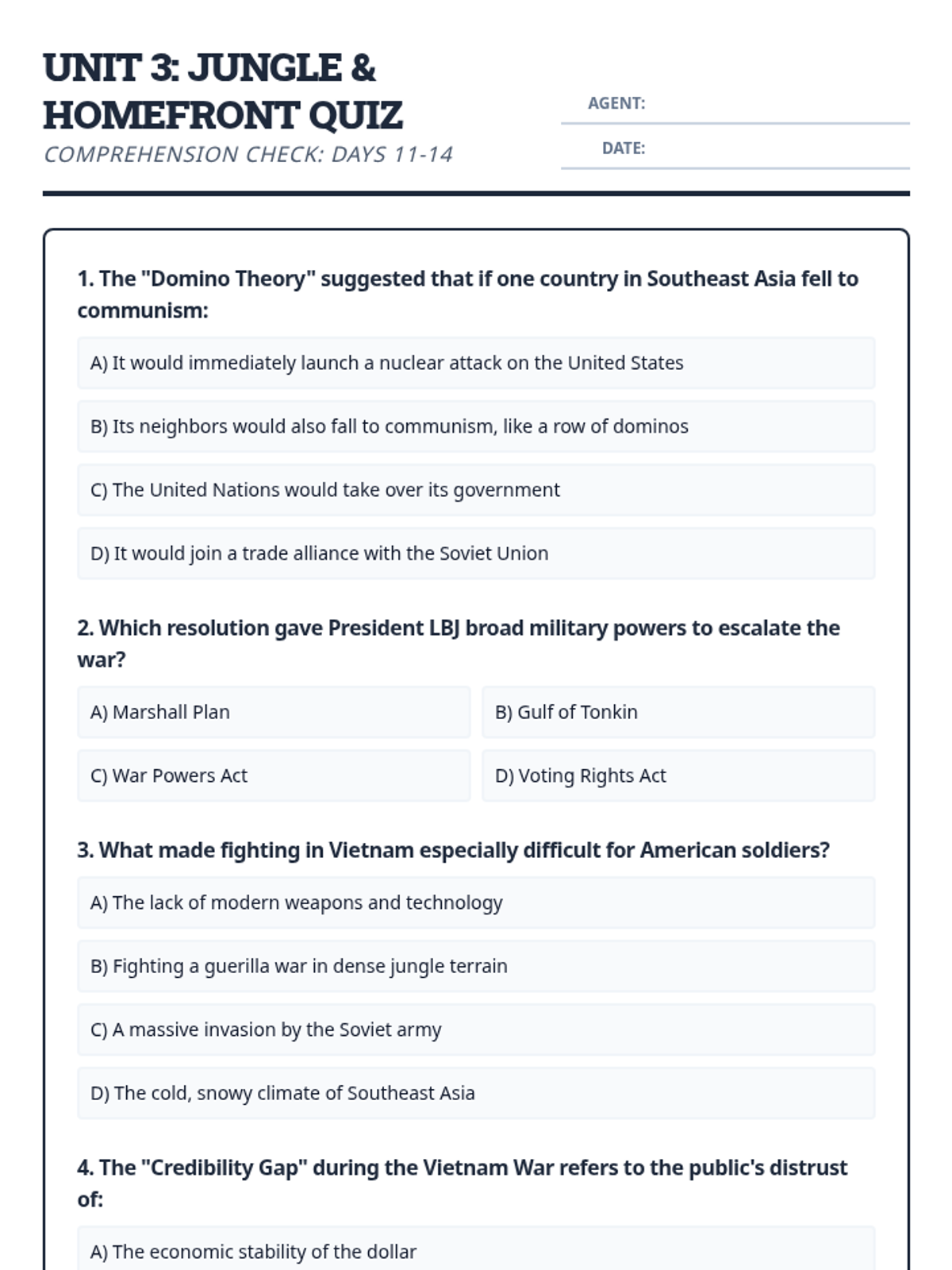
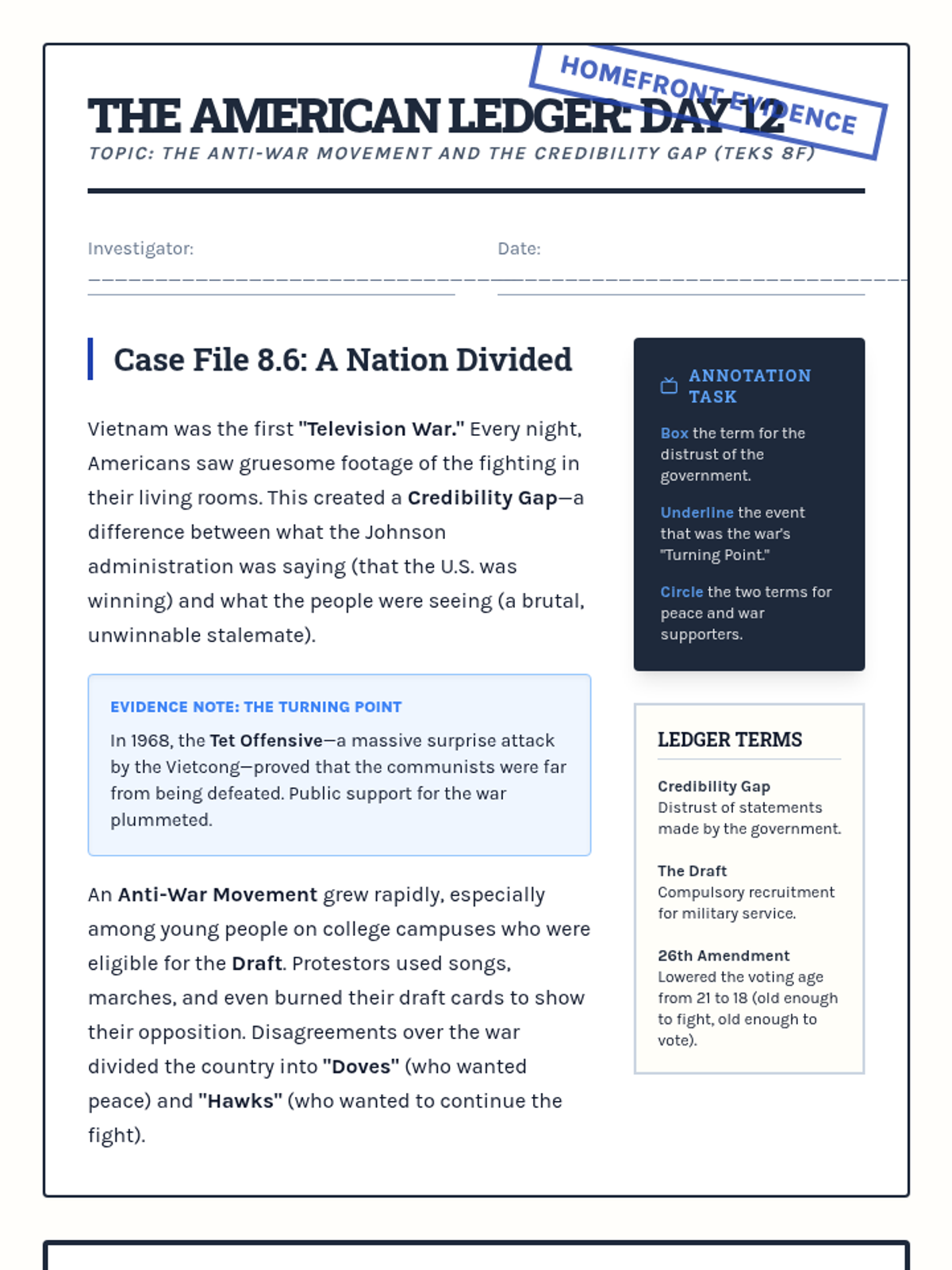
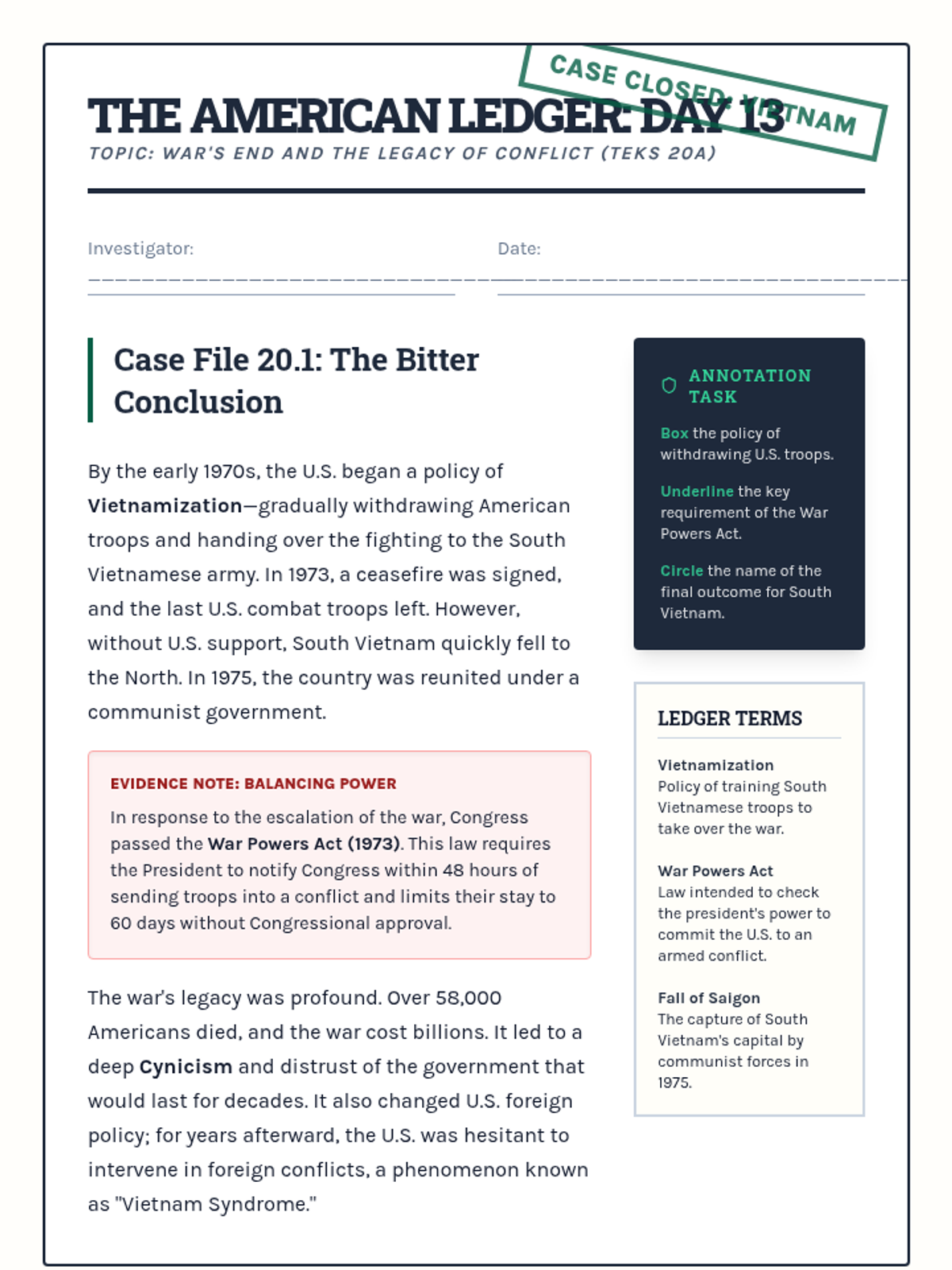
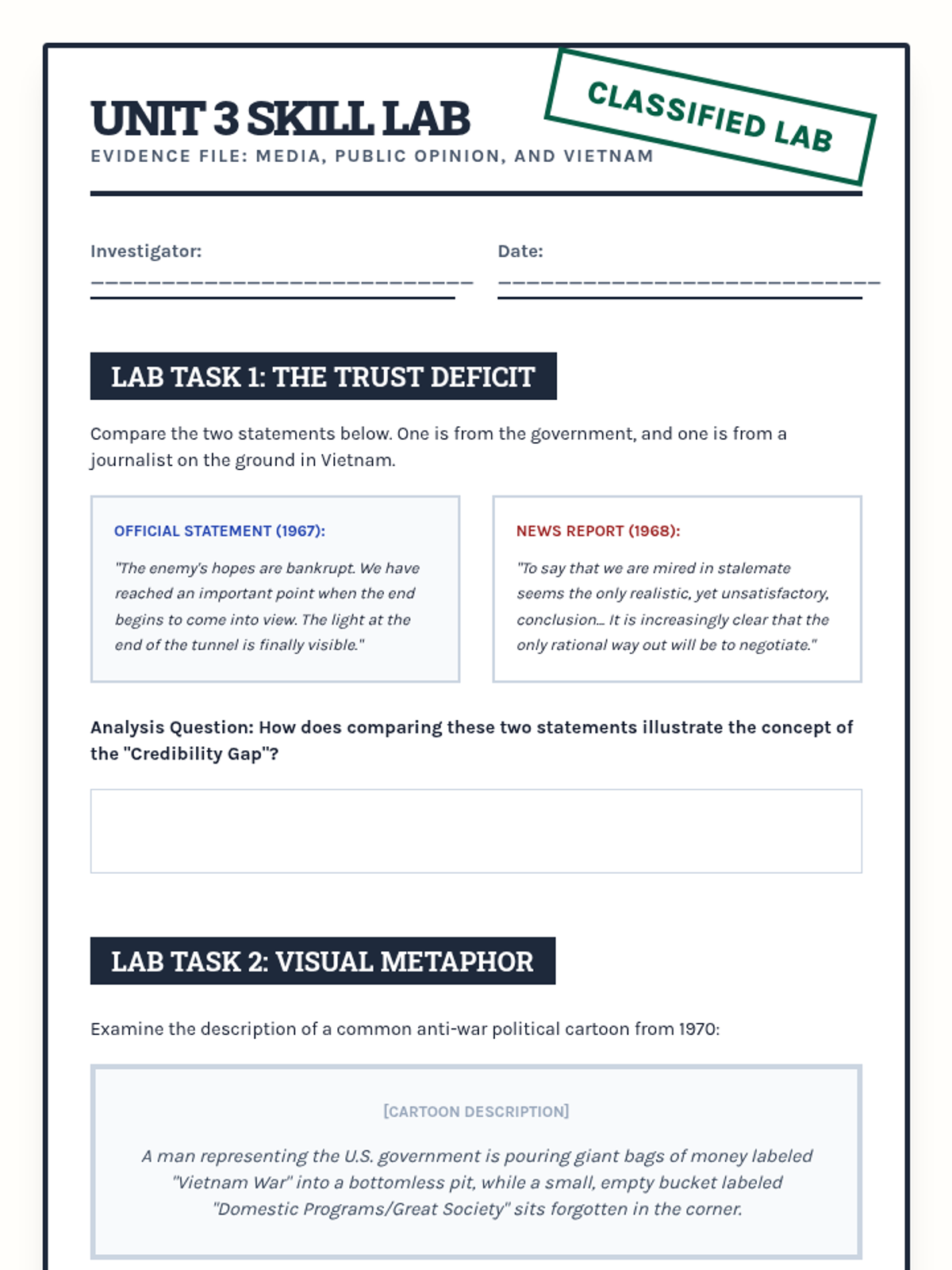
Explores the causes and effects of the Vietnam War, the anti-war movement, and the cultural shifts of the 1960s. Includes TEKS 8D, 8F, and 20A.
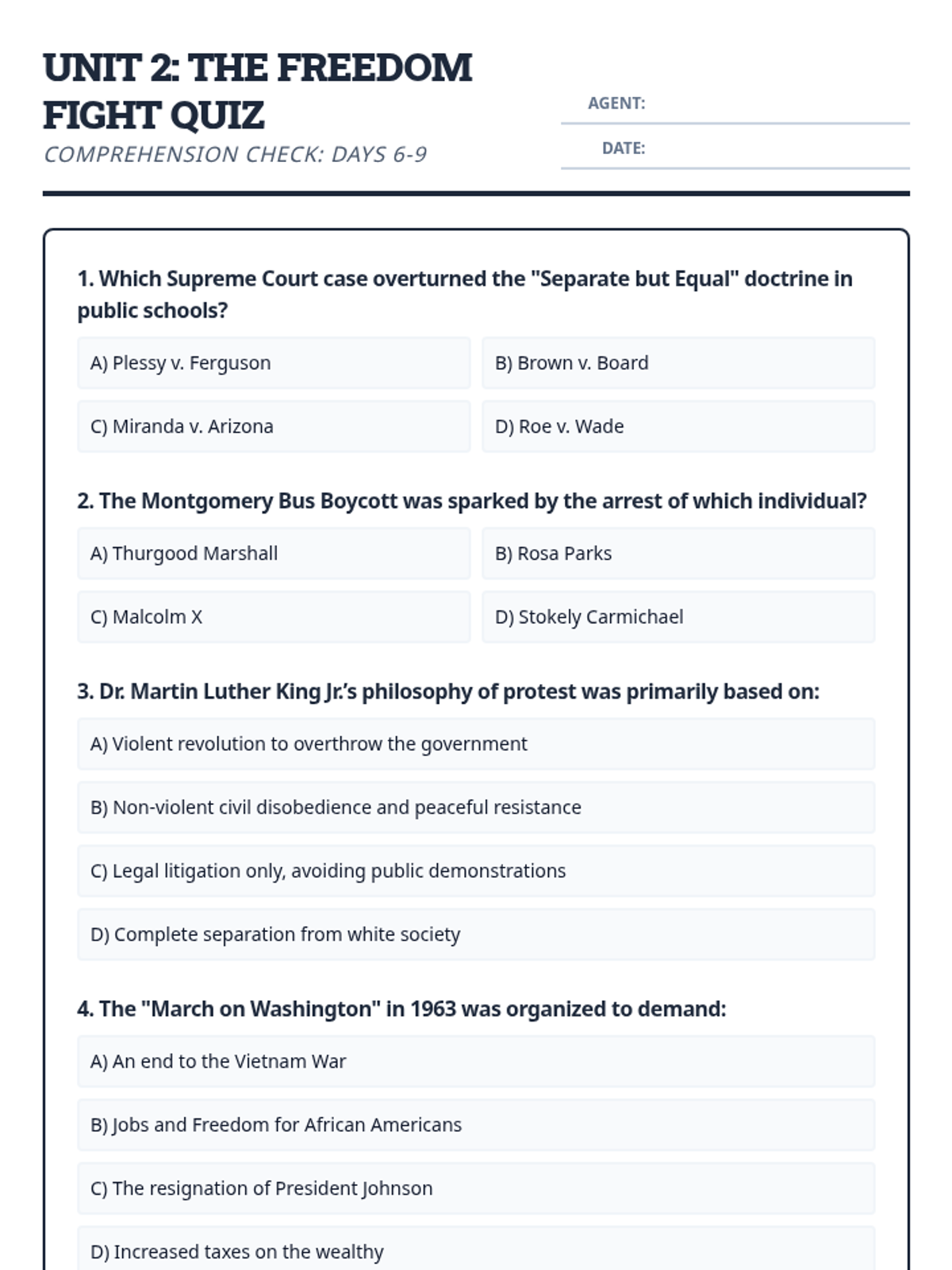
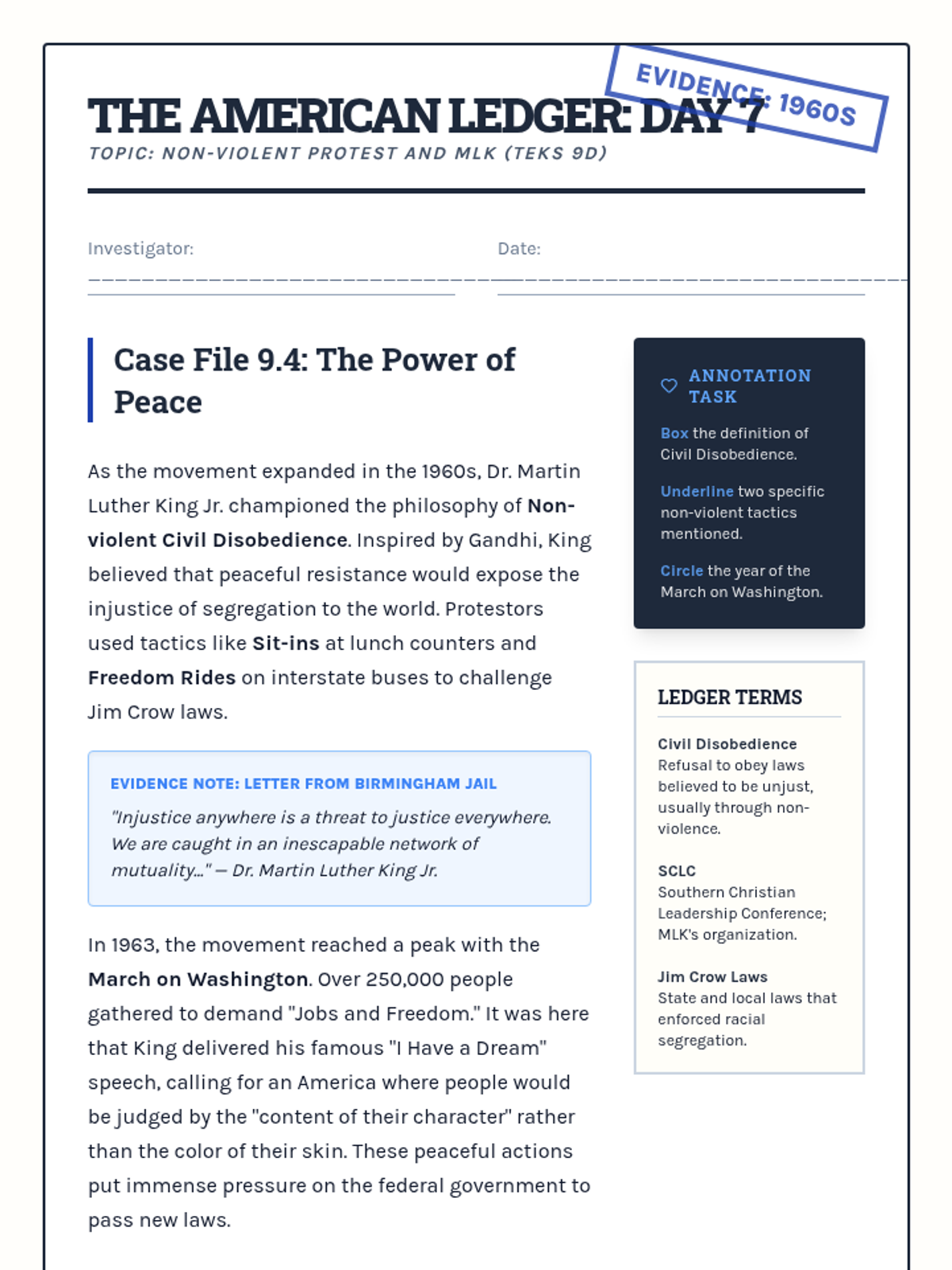
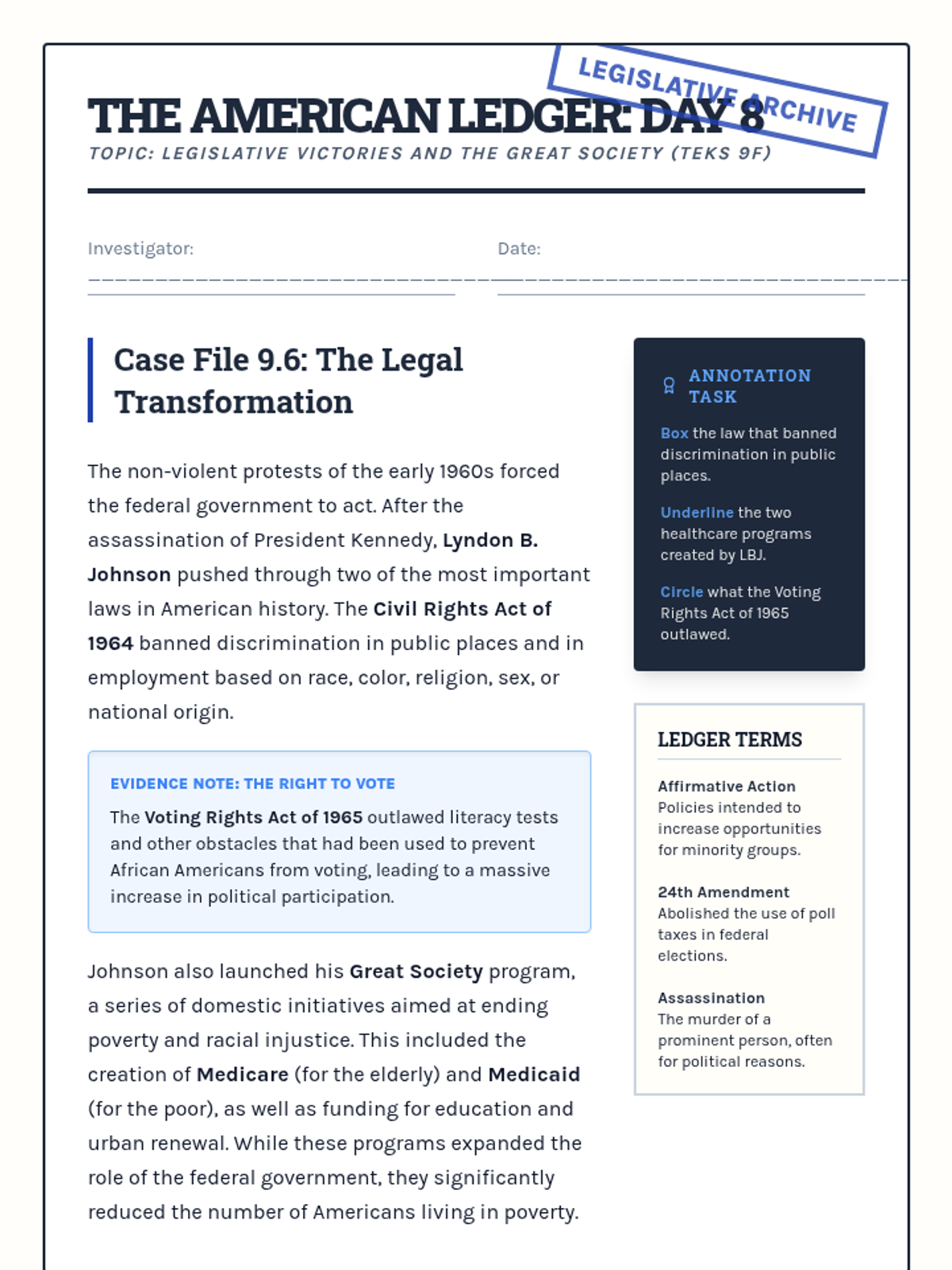
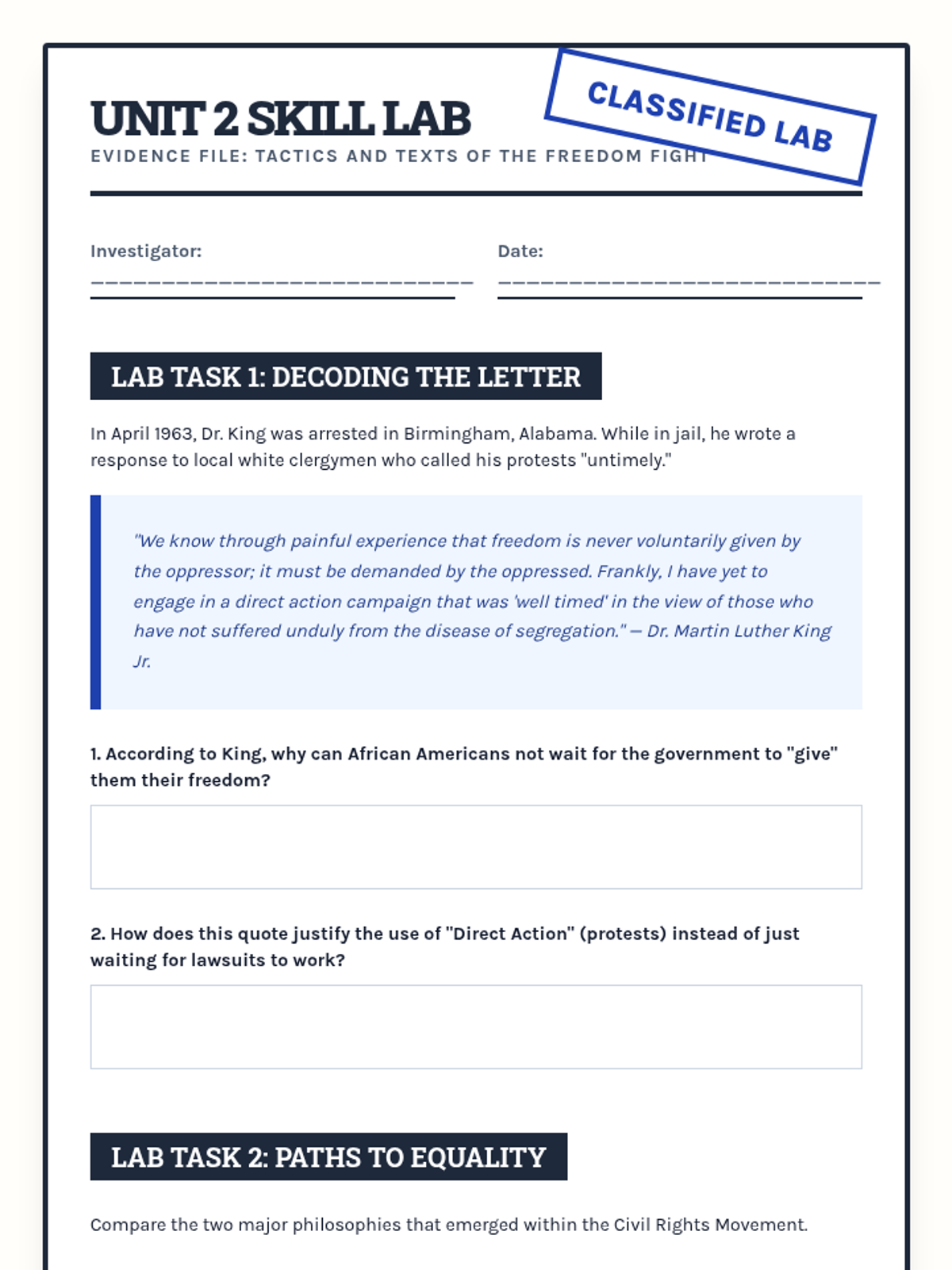
Examines the struggle for equality, from Brown v. Board to the legislative victories of the 1960s. Includes TEKS 9A, 9D, and 9F.
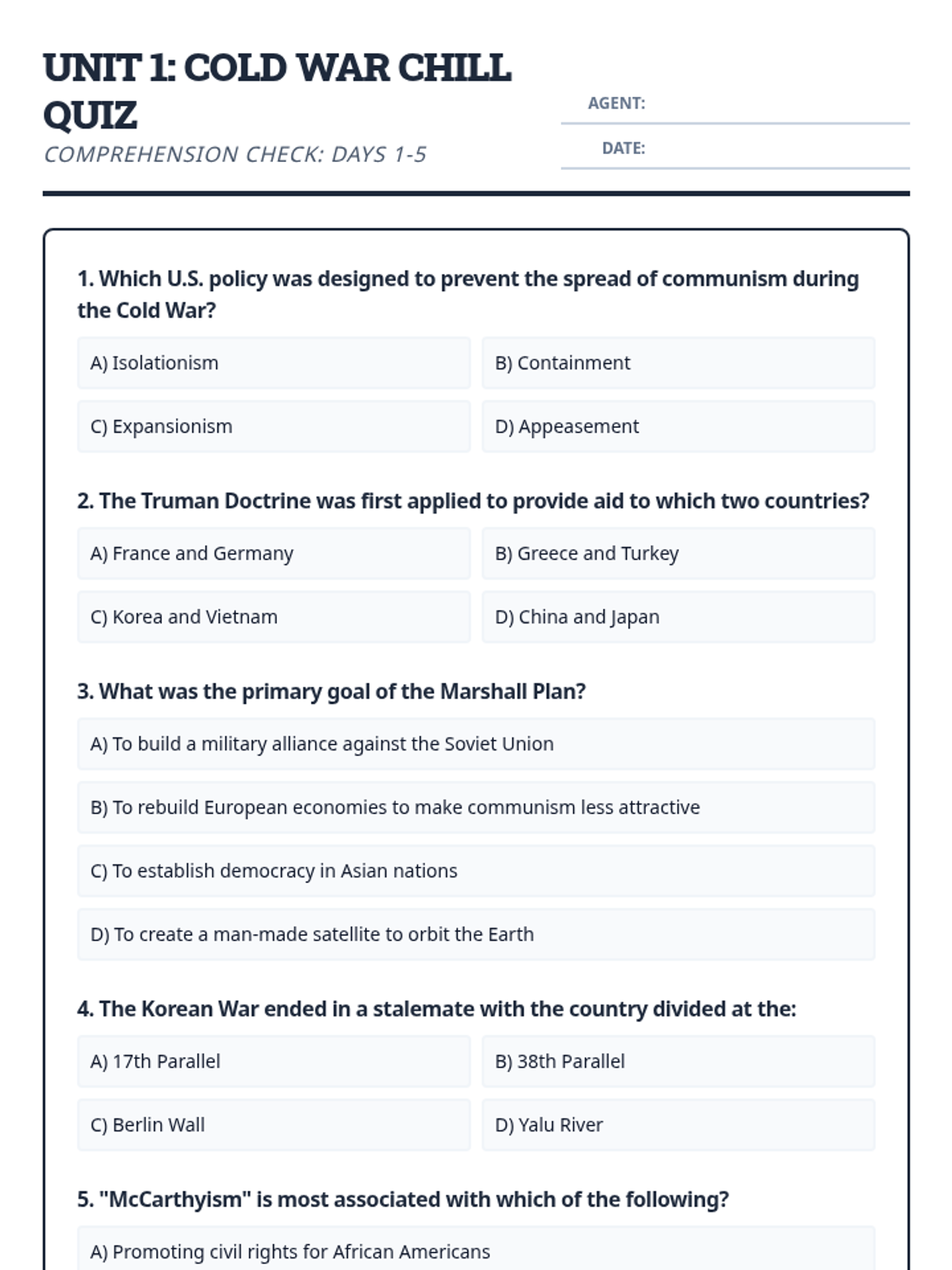
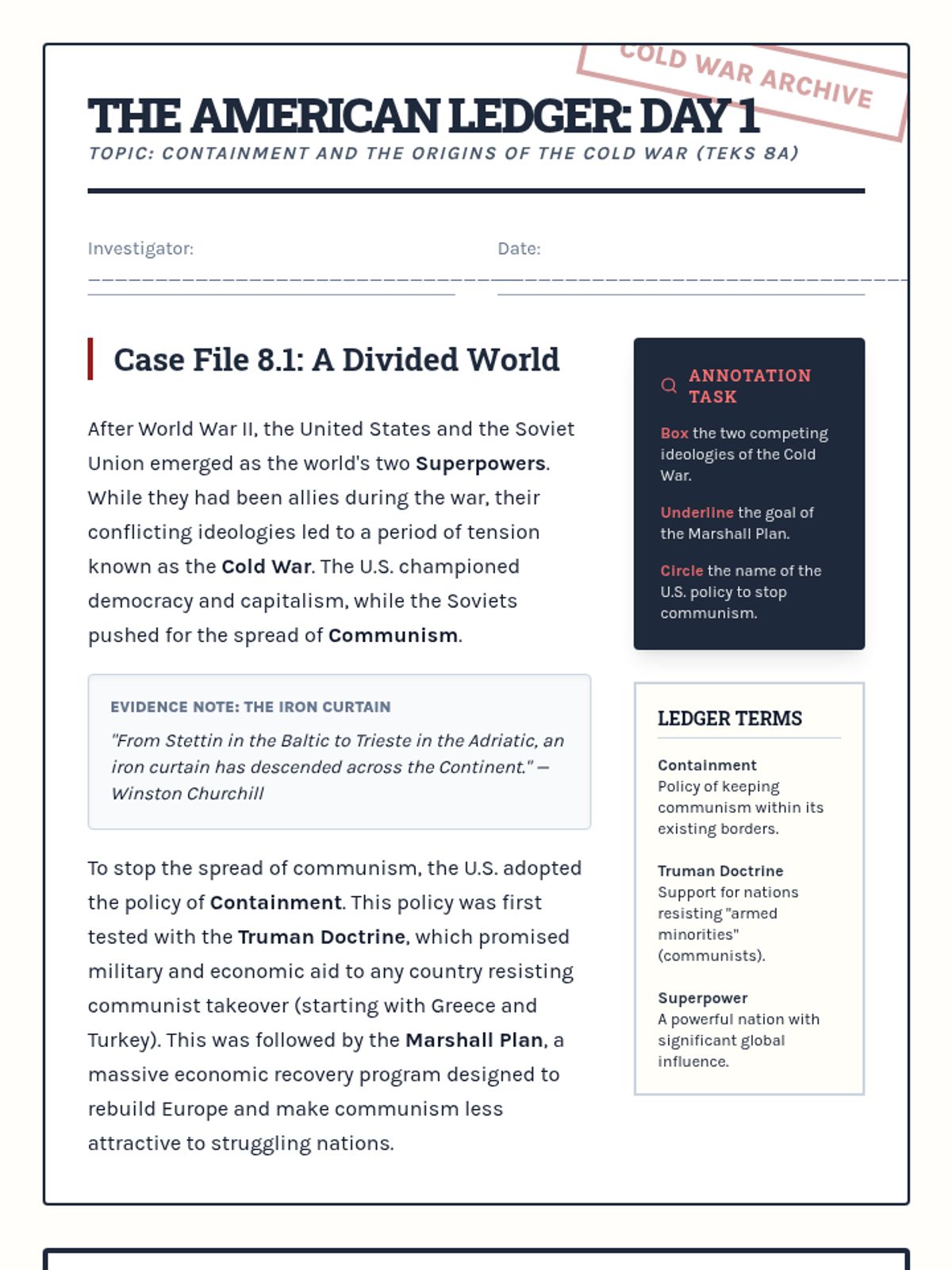
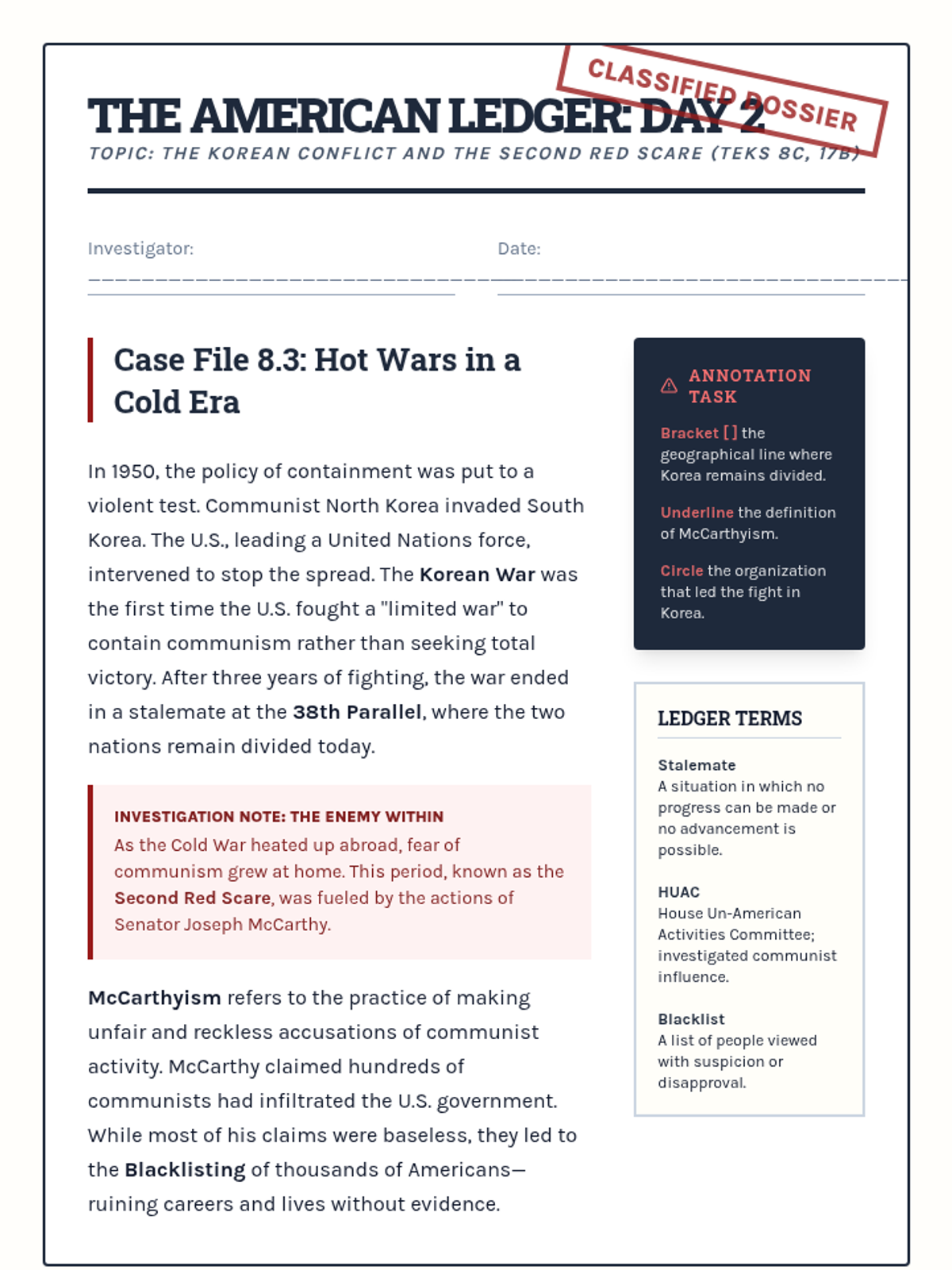
Covers the origins of the Cold War, containment policy, the Korean War, and the cultural landscape of the 1950s. Includes TEKS 8A, 8C, and 17B.
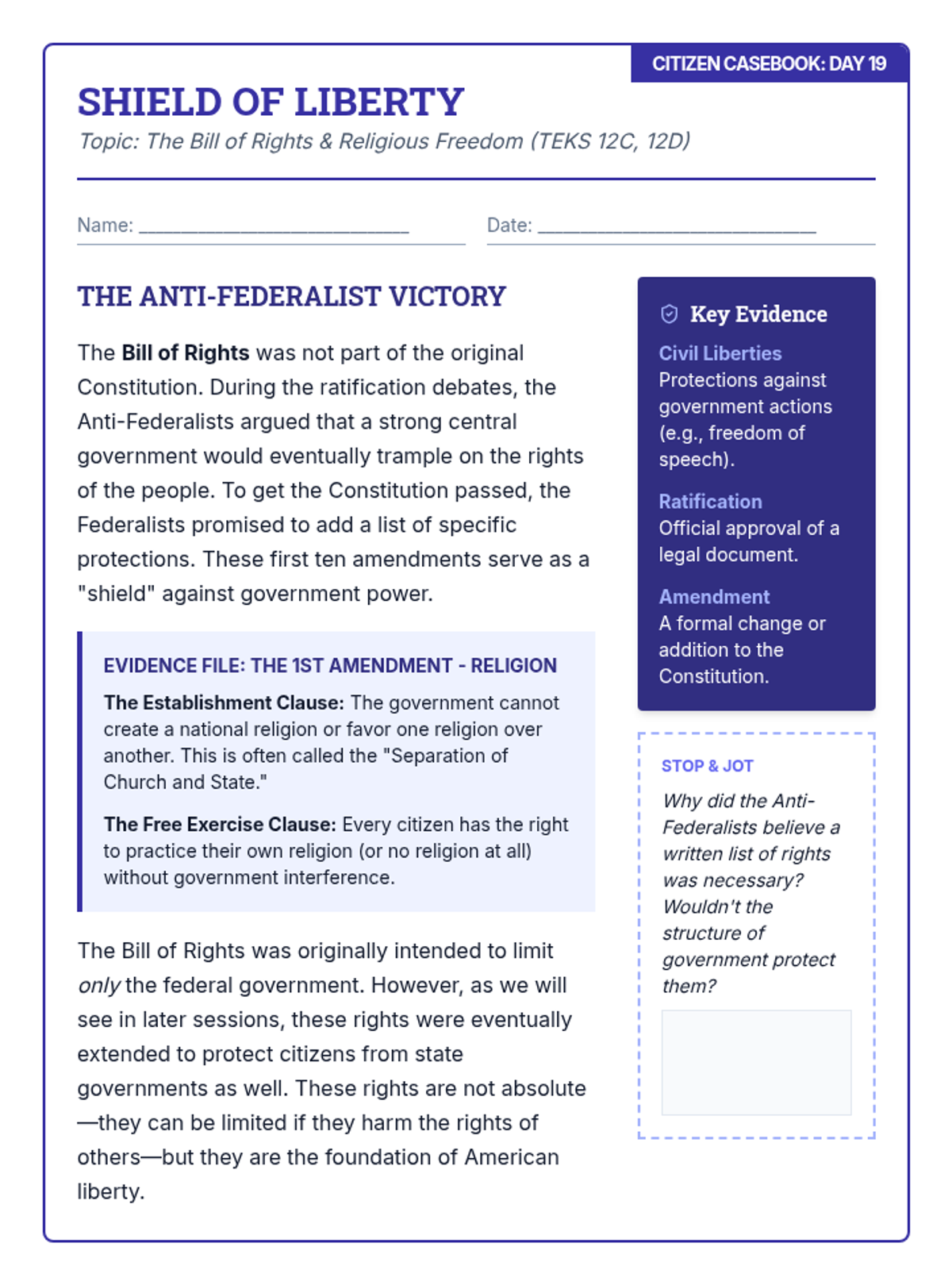
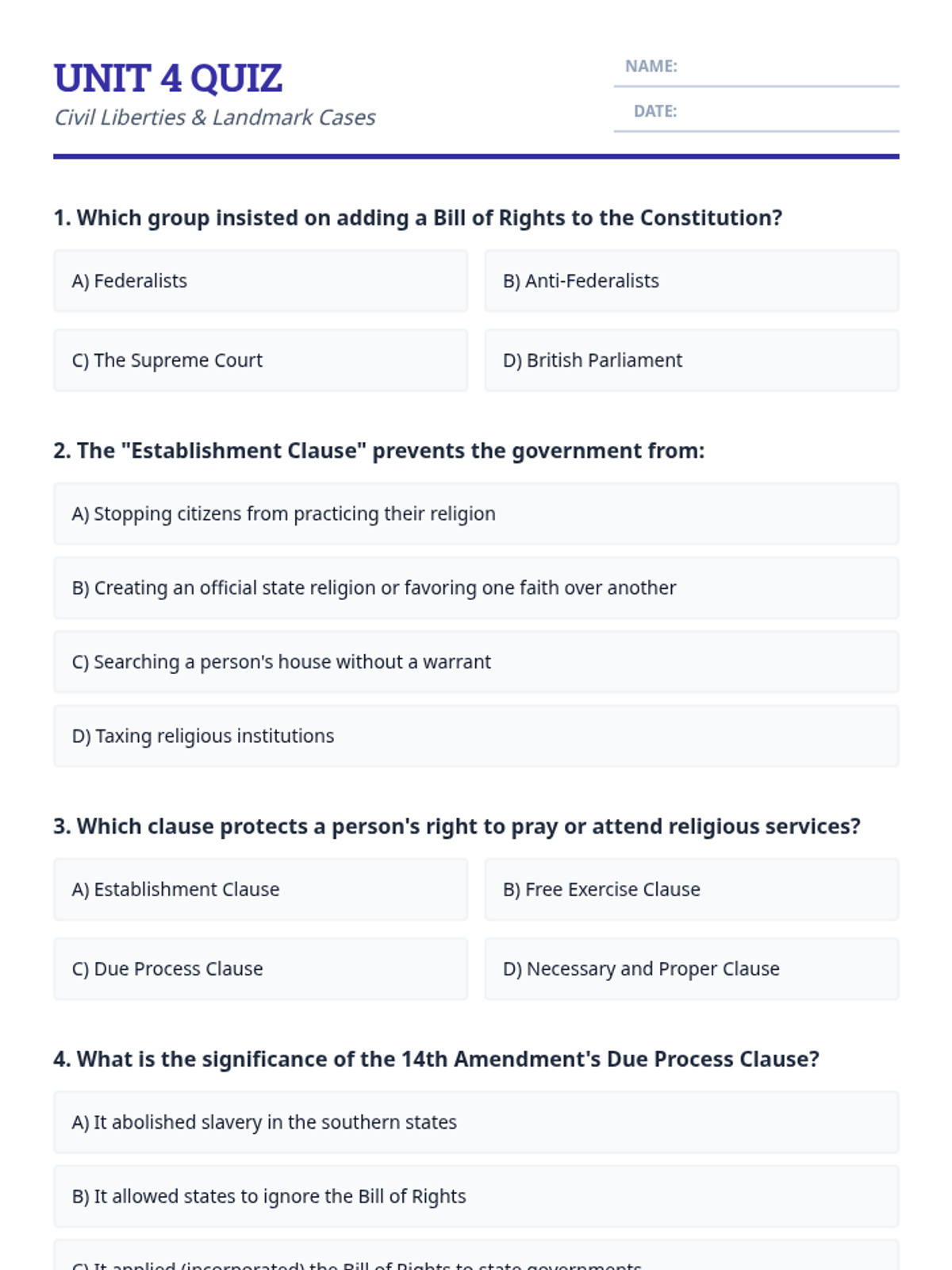
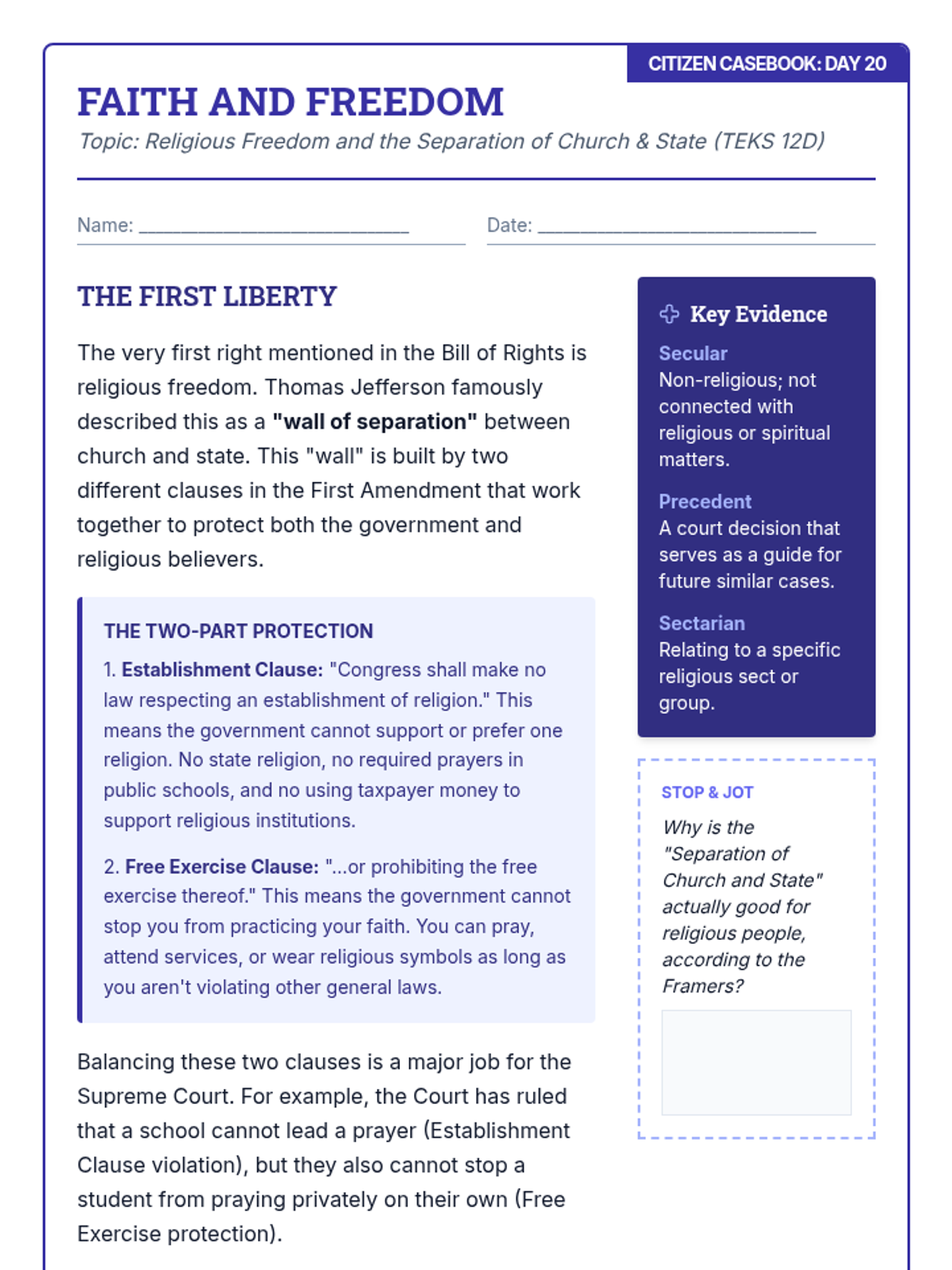
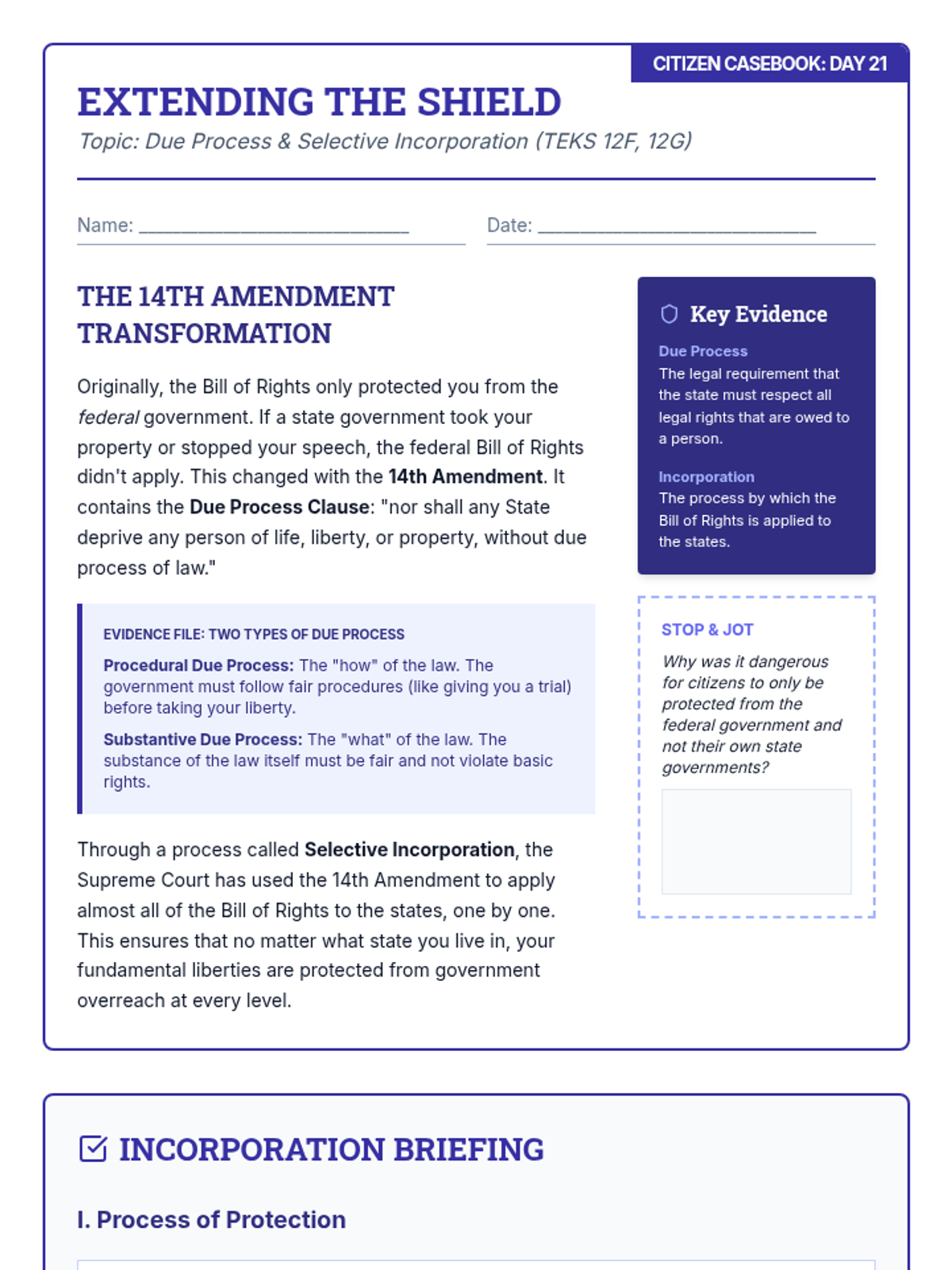
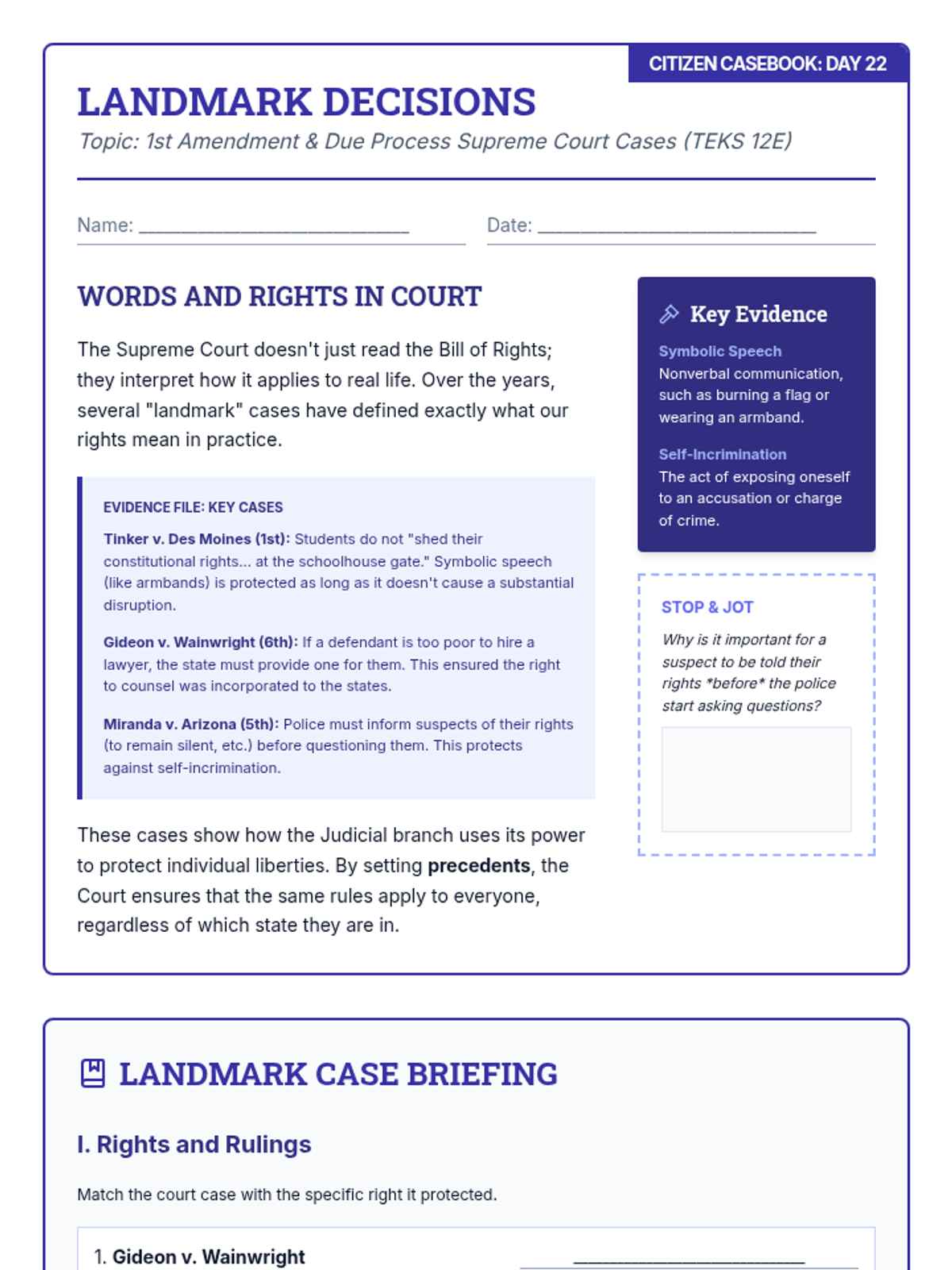
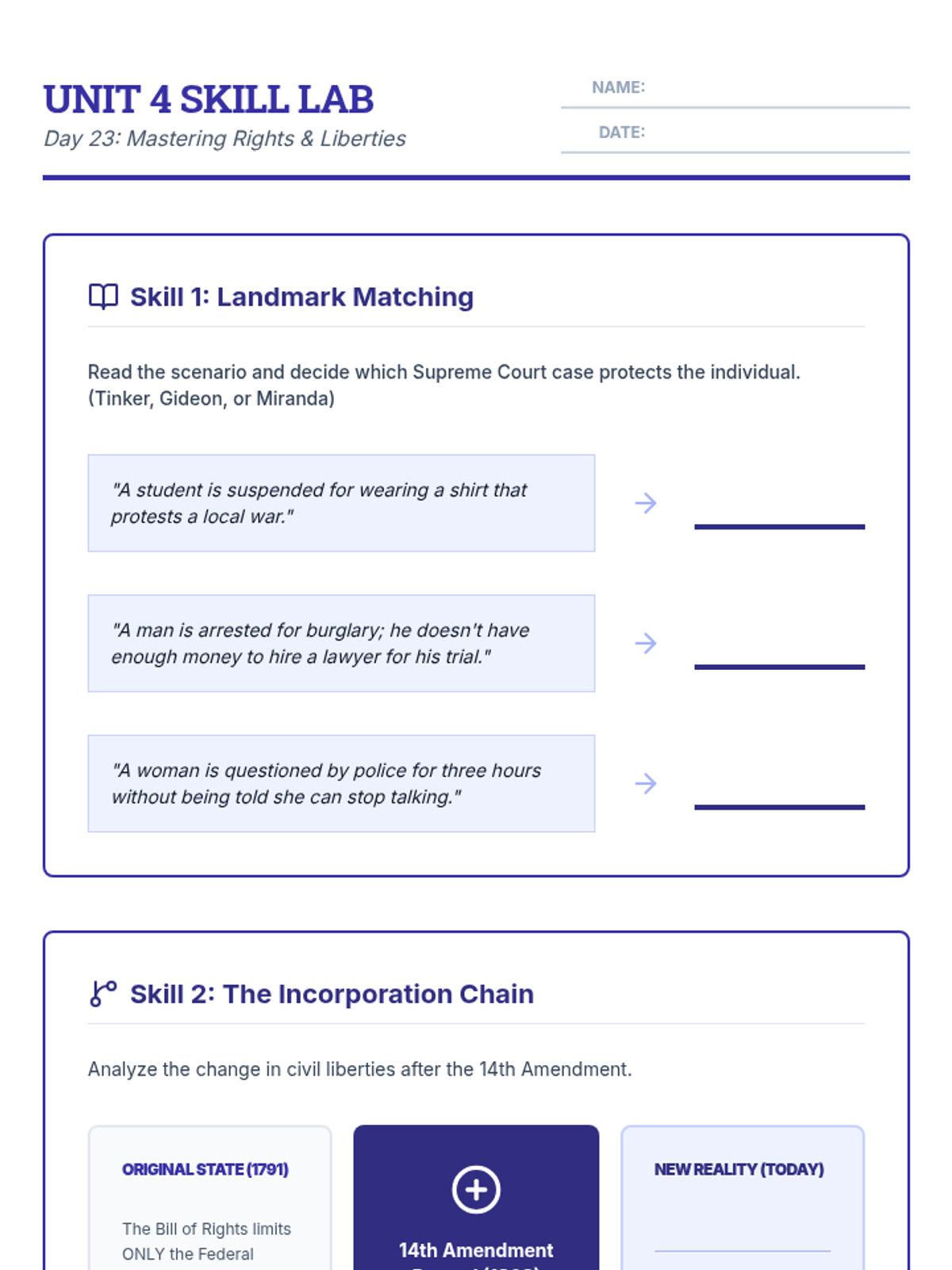
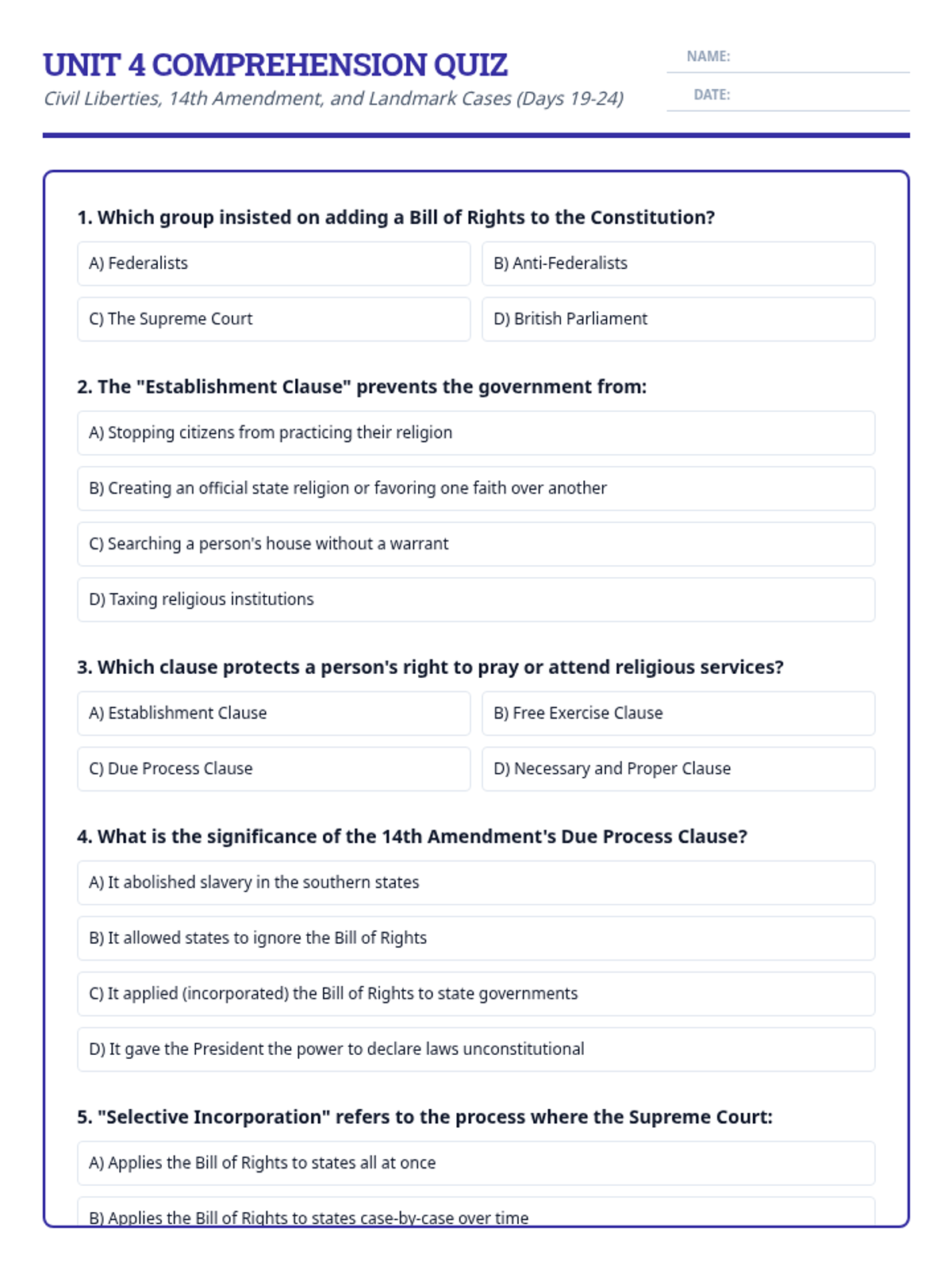
Examines individual rights, religious freedom, landmark Supreme Court cases, and the impact of the 14th Amendment on state government. Now Days 19-24.
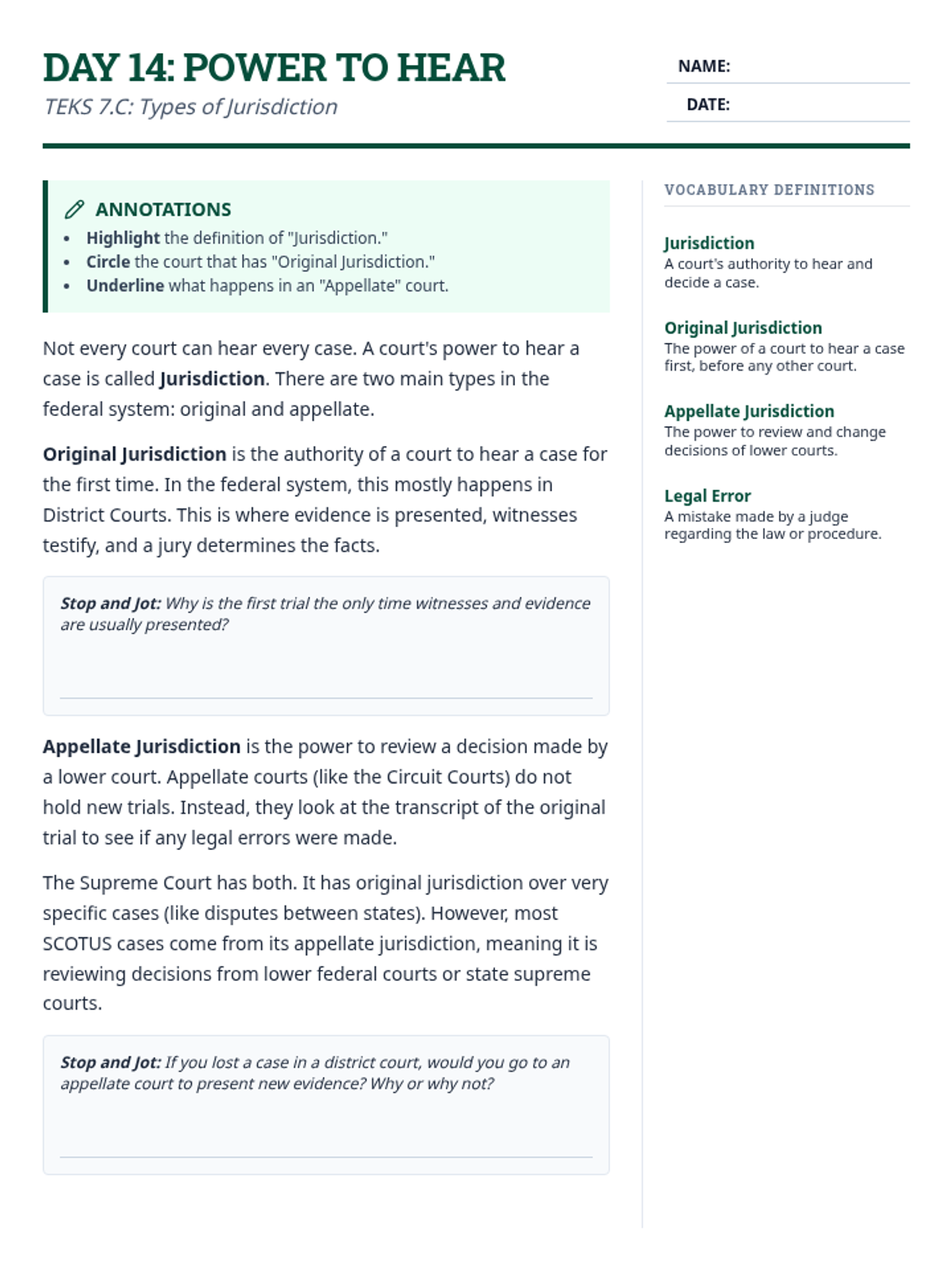
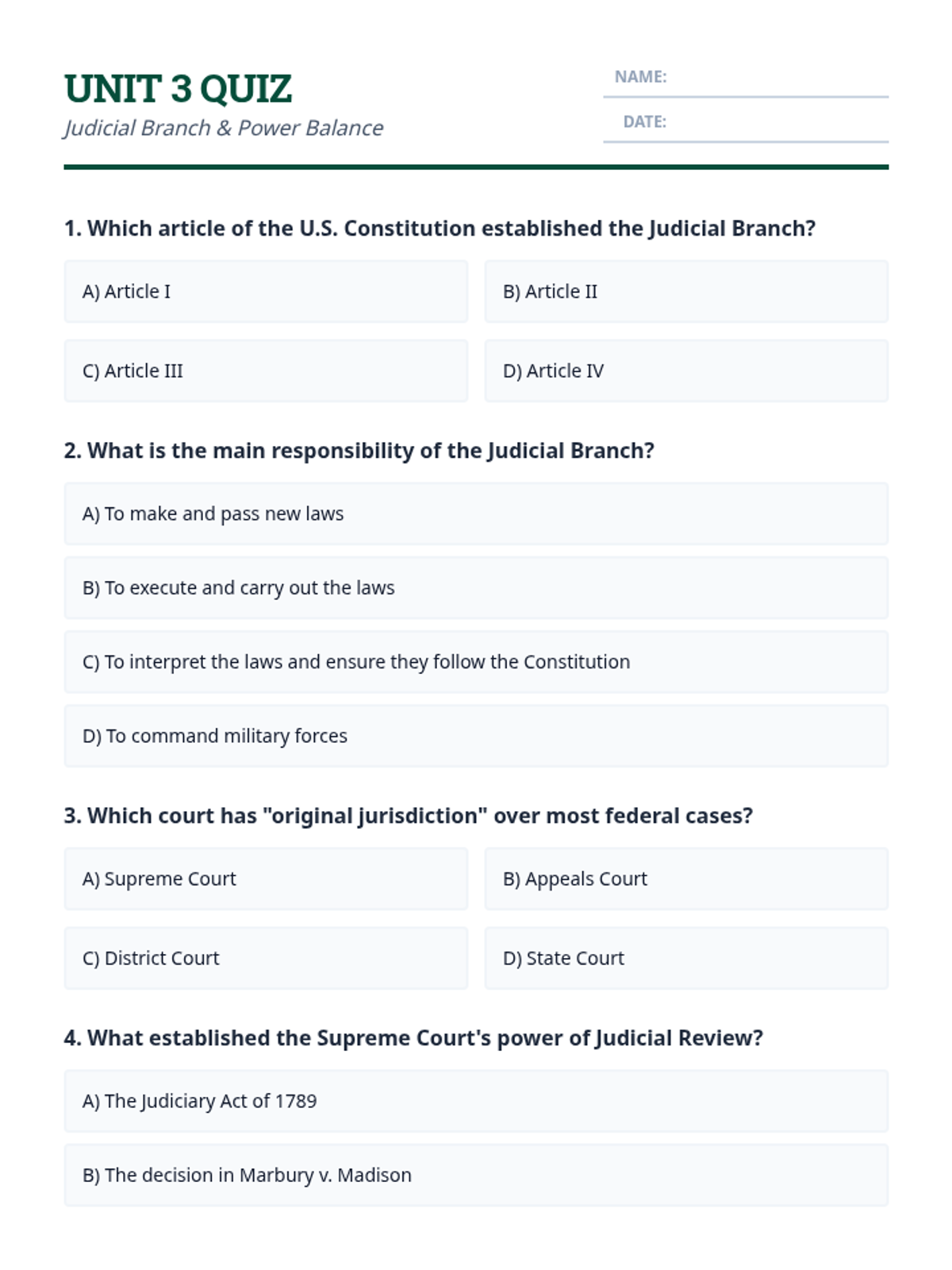
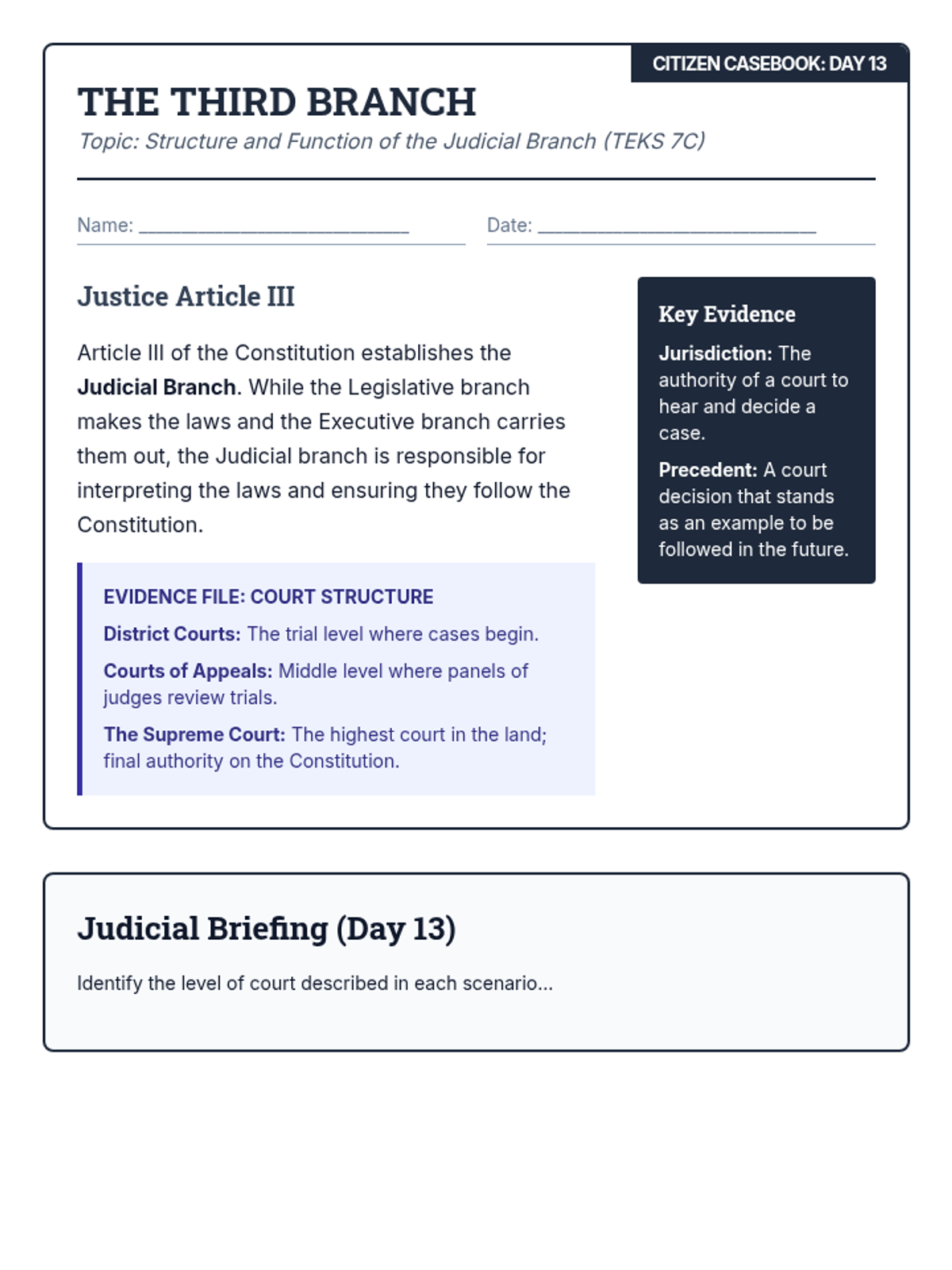
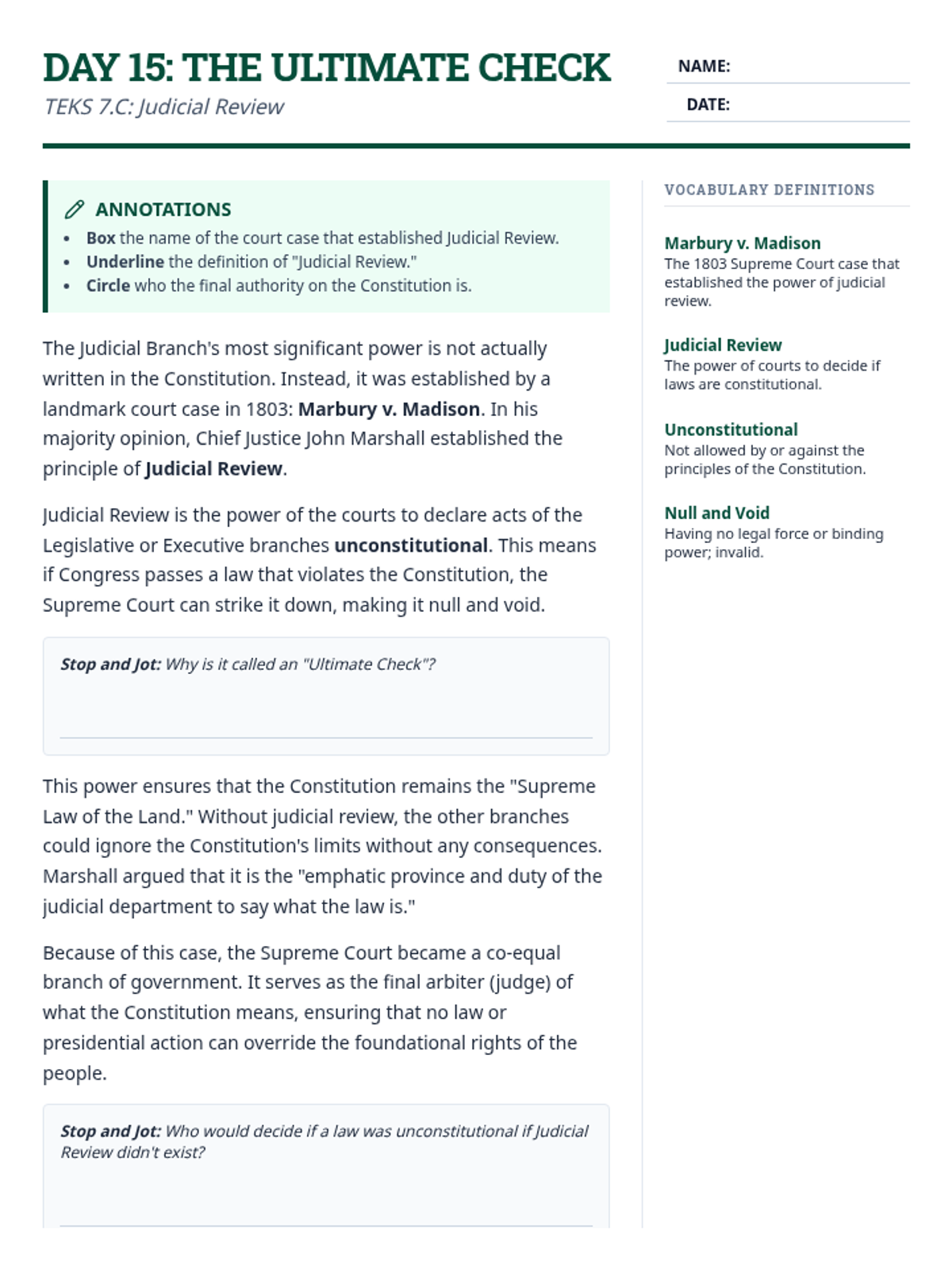
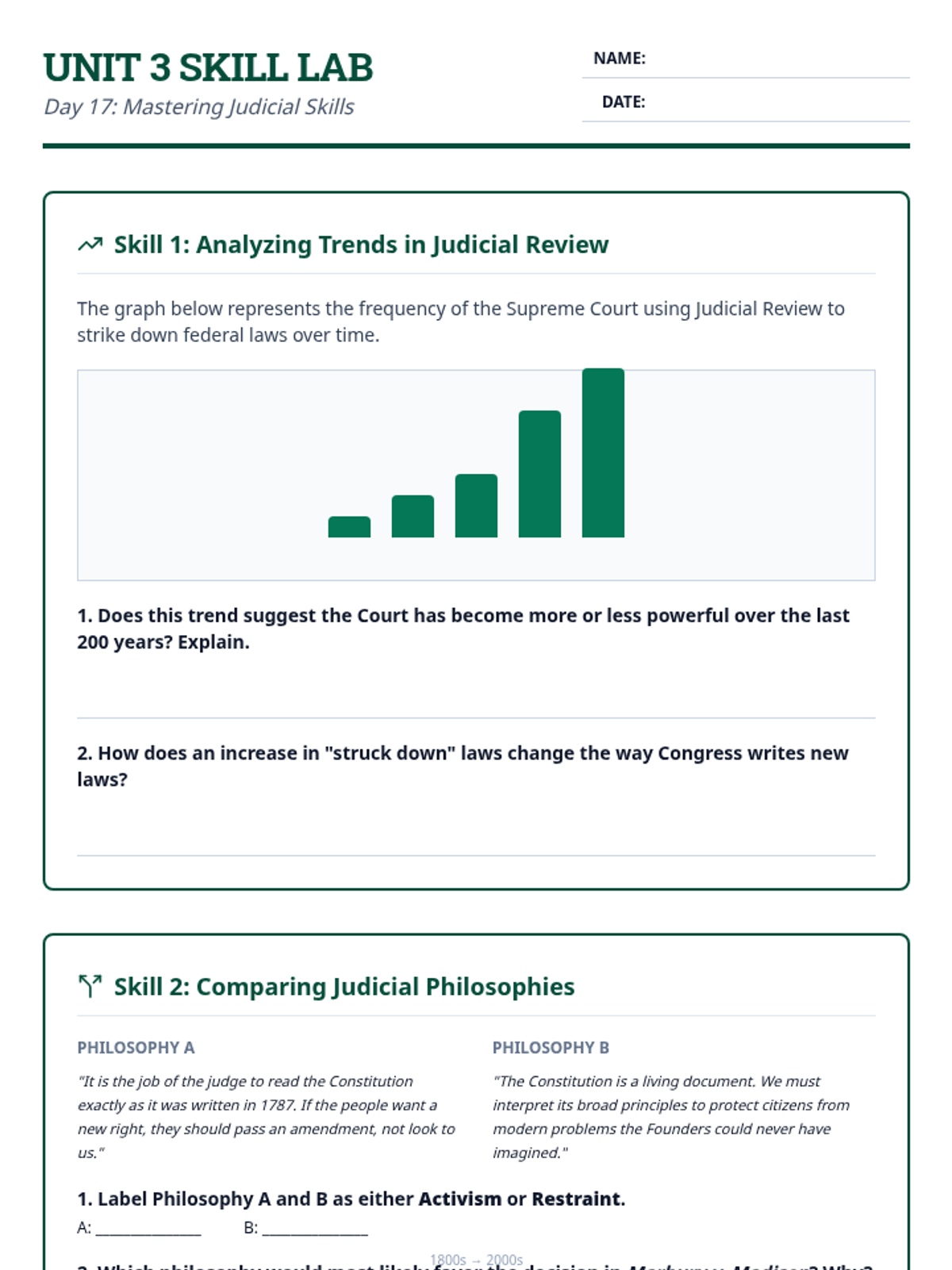
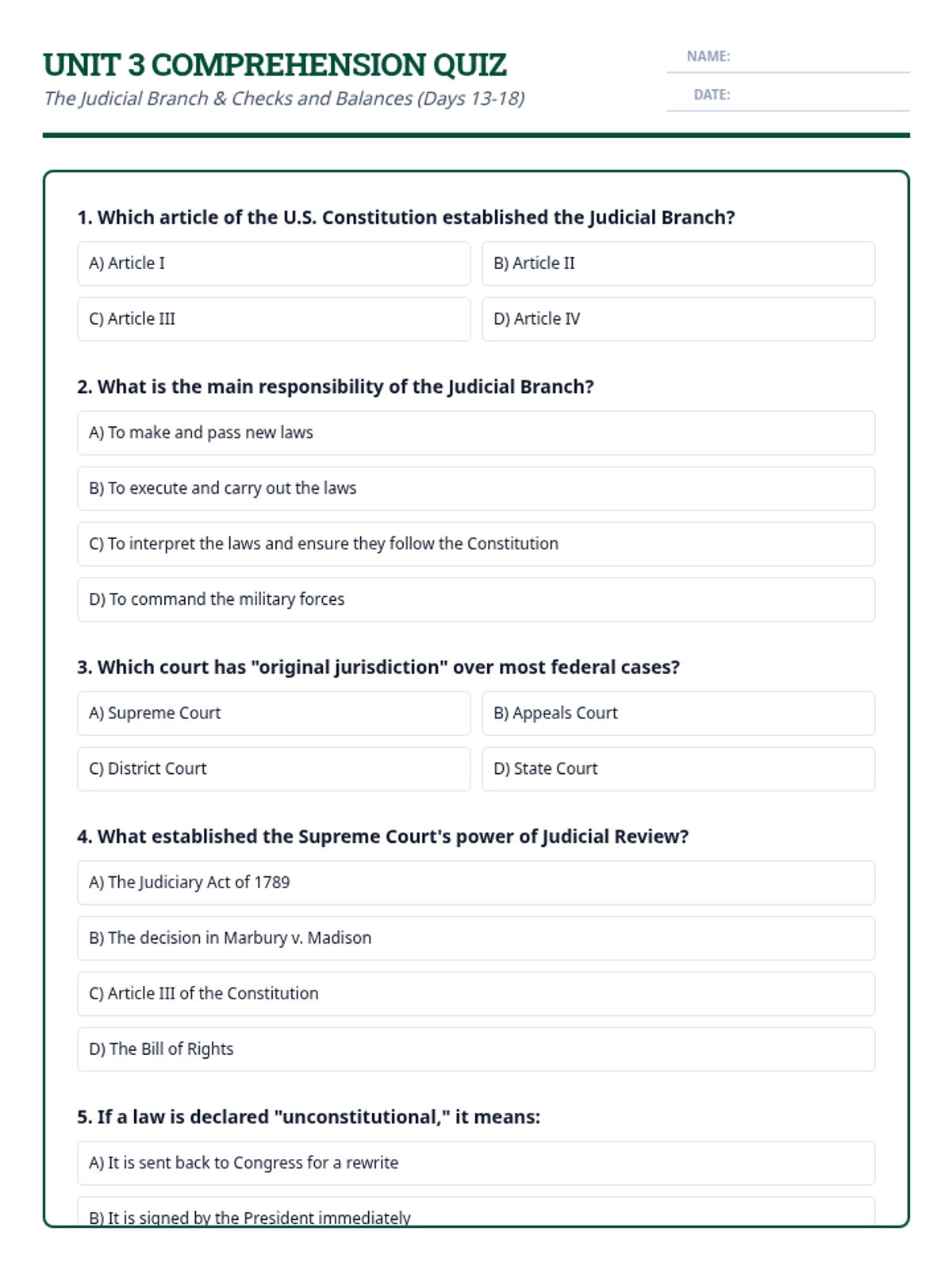
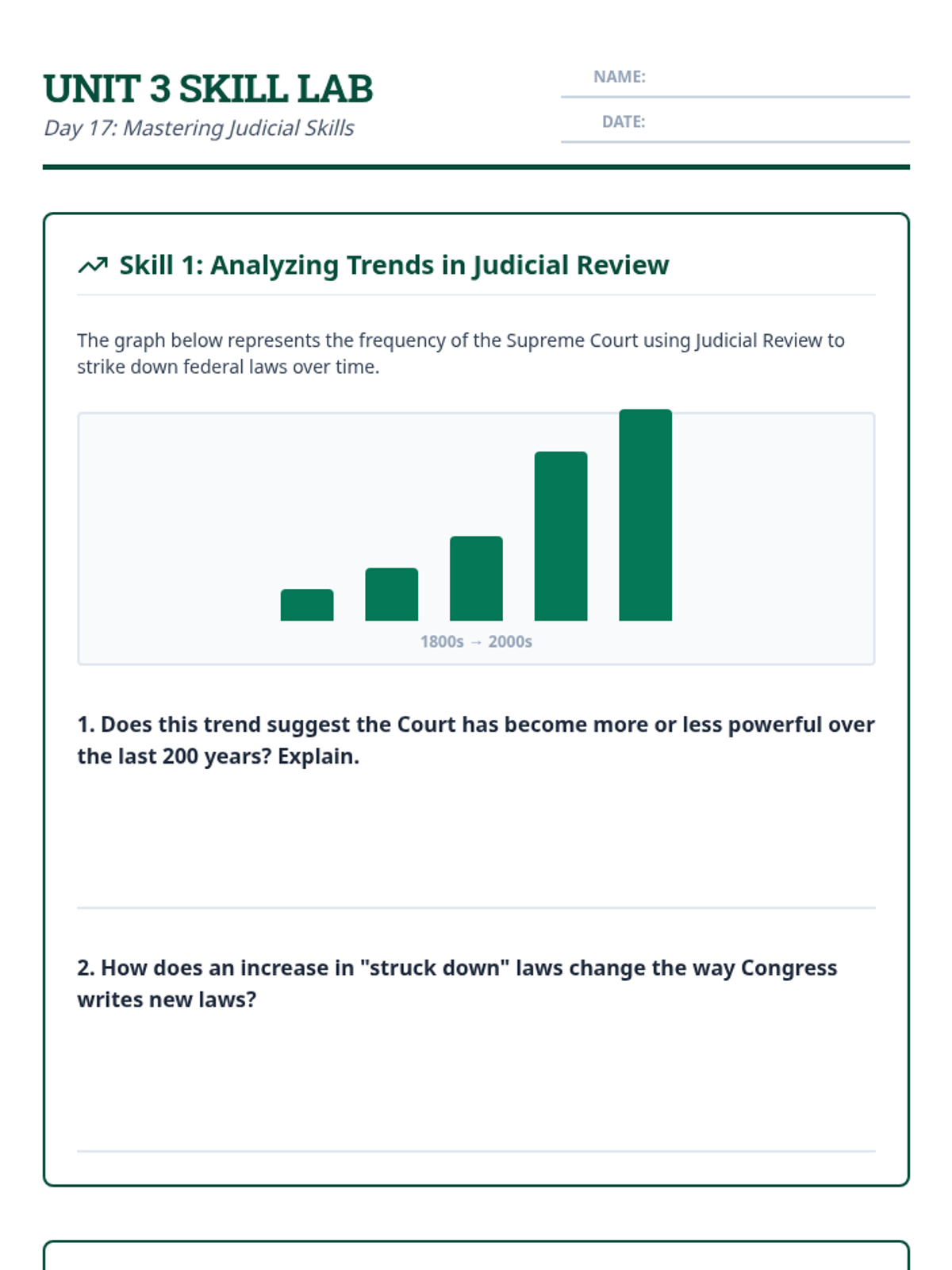
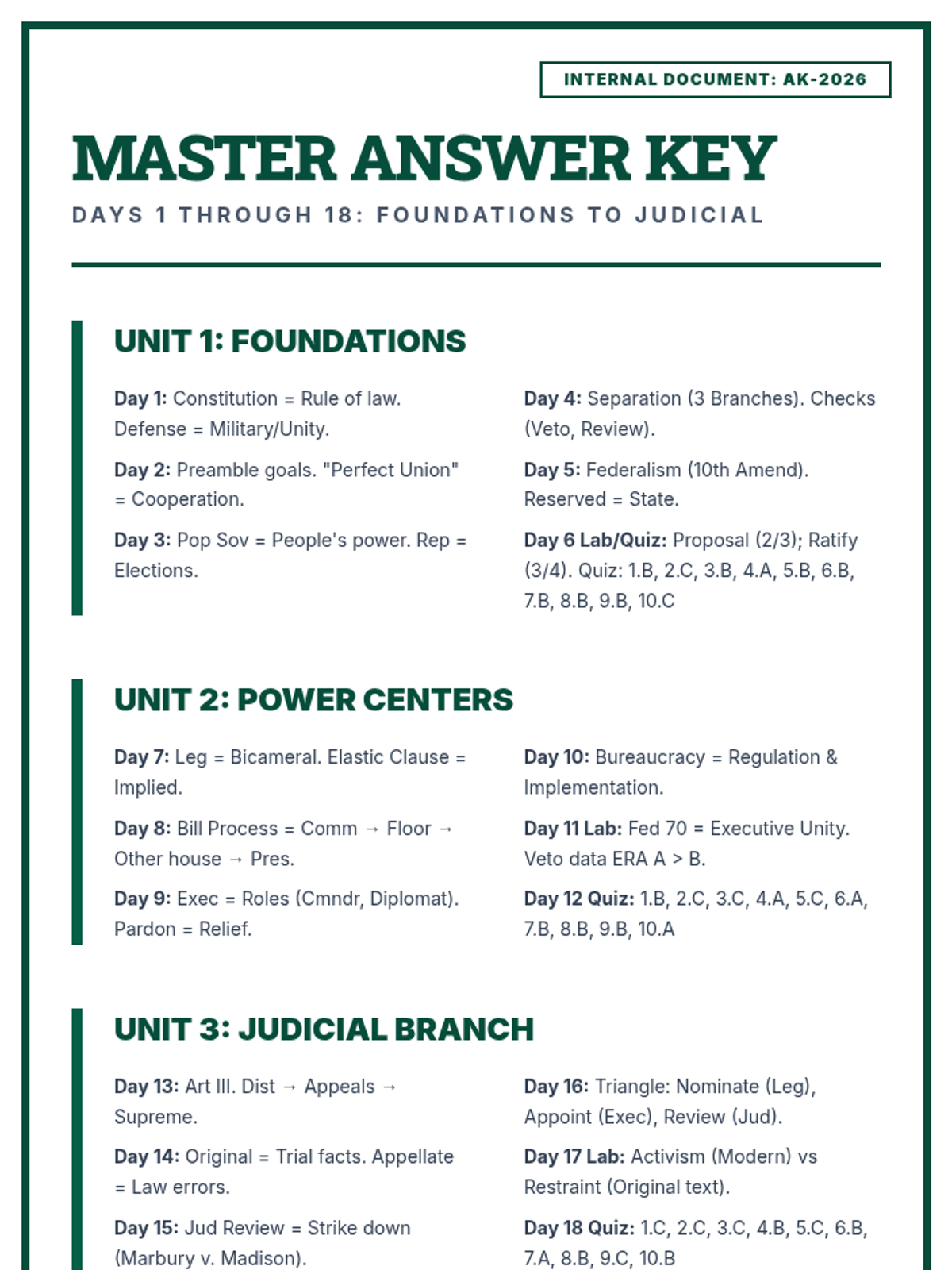
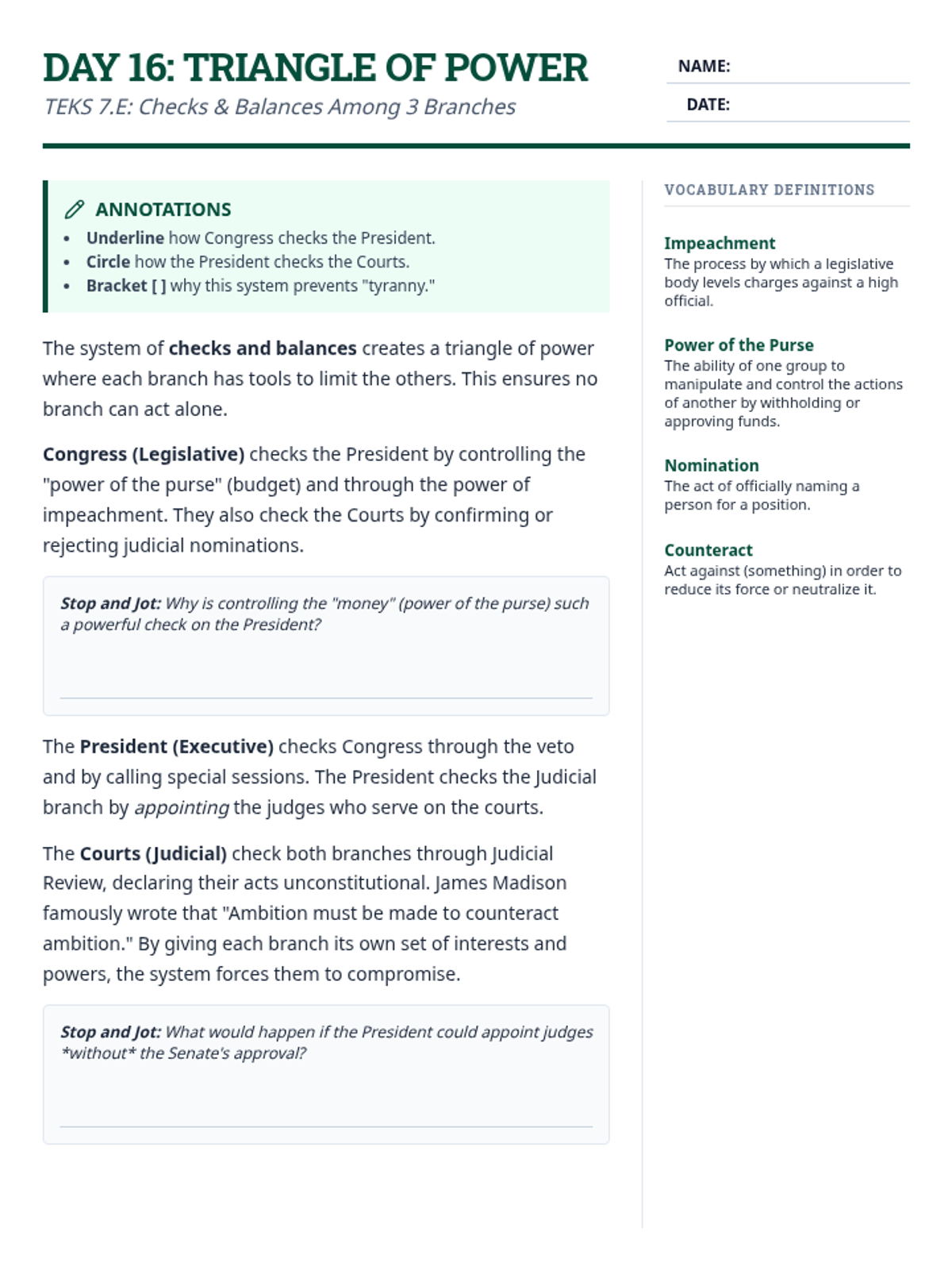
Explores the structure of the federal government with a focus on the Judicial branch, judicial review, and the system of checks and balances. Now Days 13-18.
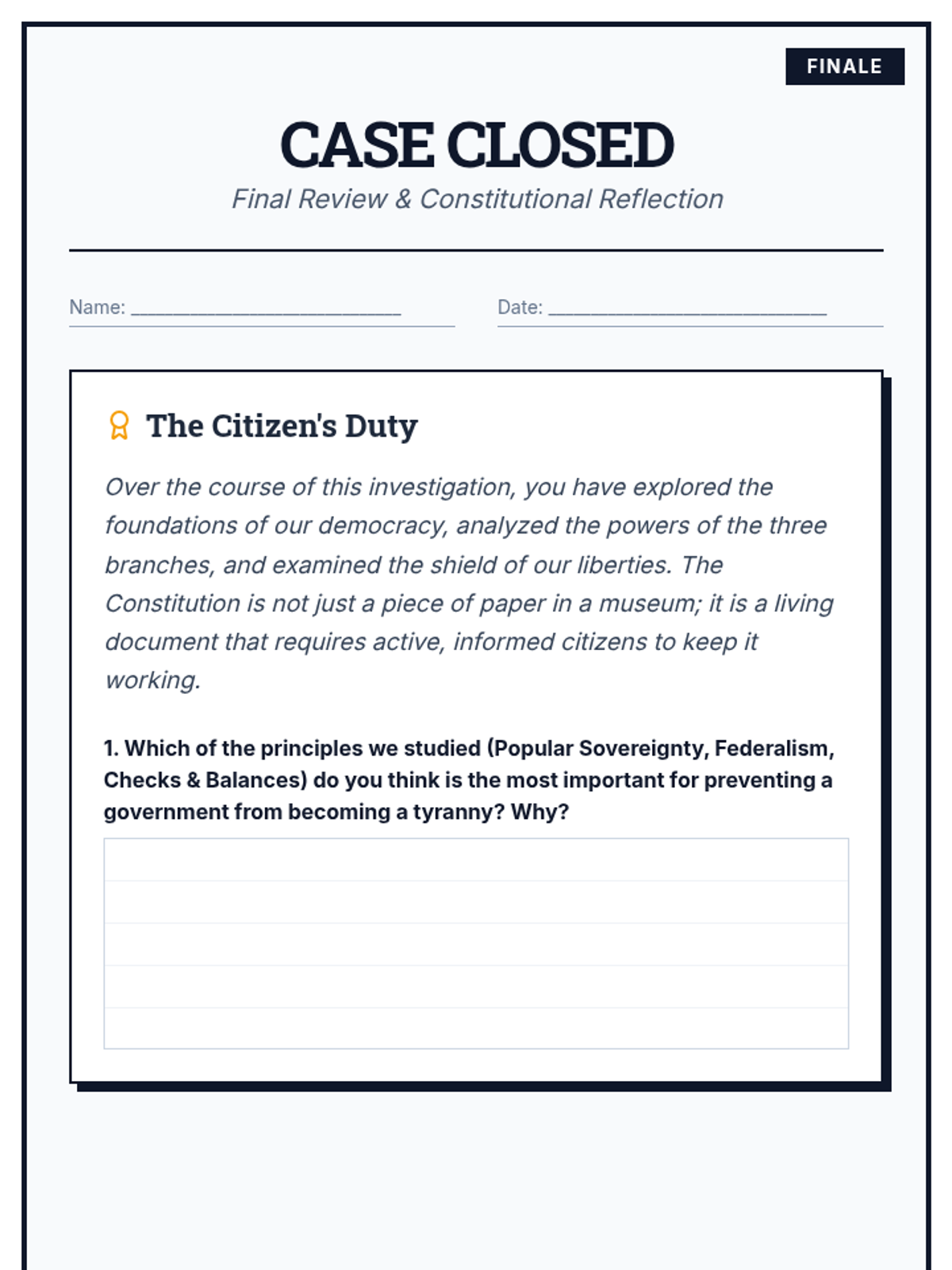
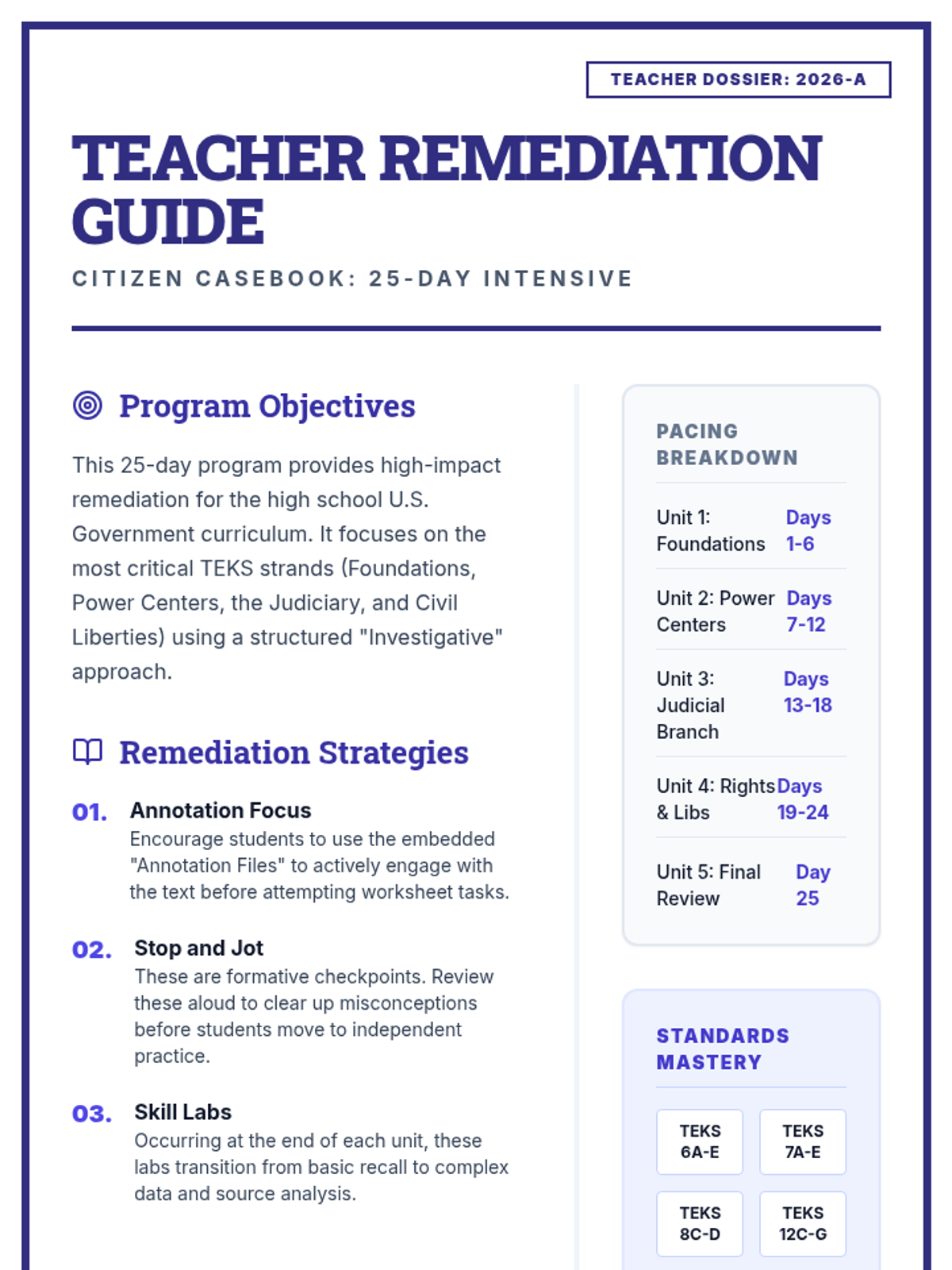
The final day of the 25-day remediation program, featuring a comprehensive review of all constitutional concepts and a final reflection on civil liberties.
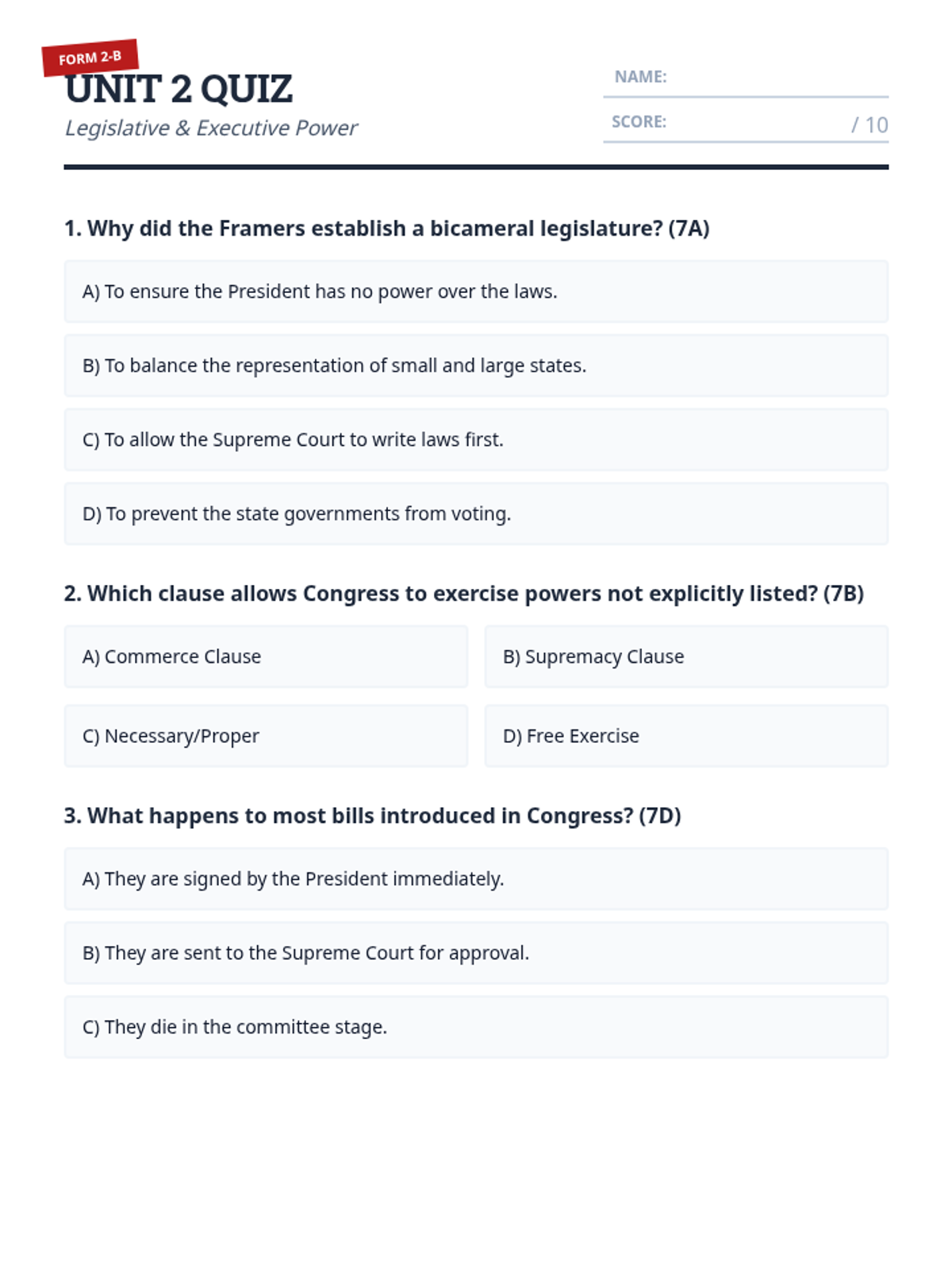
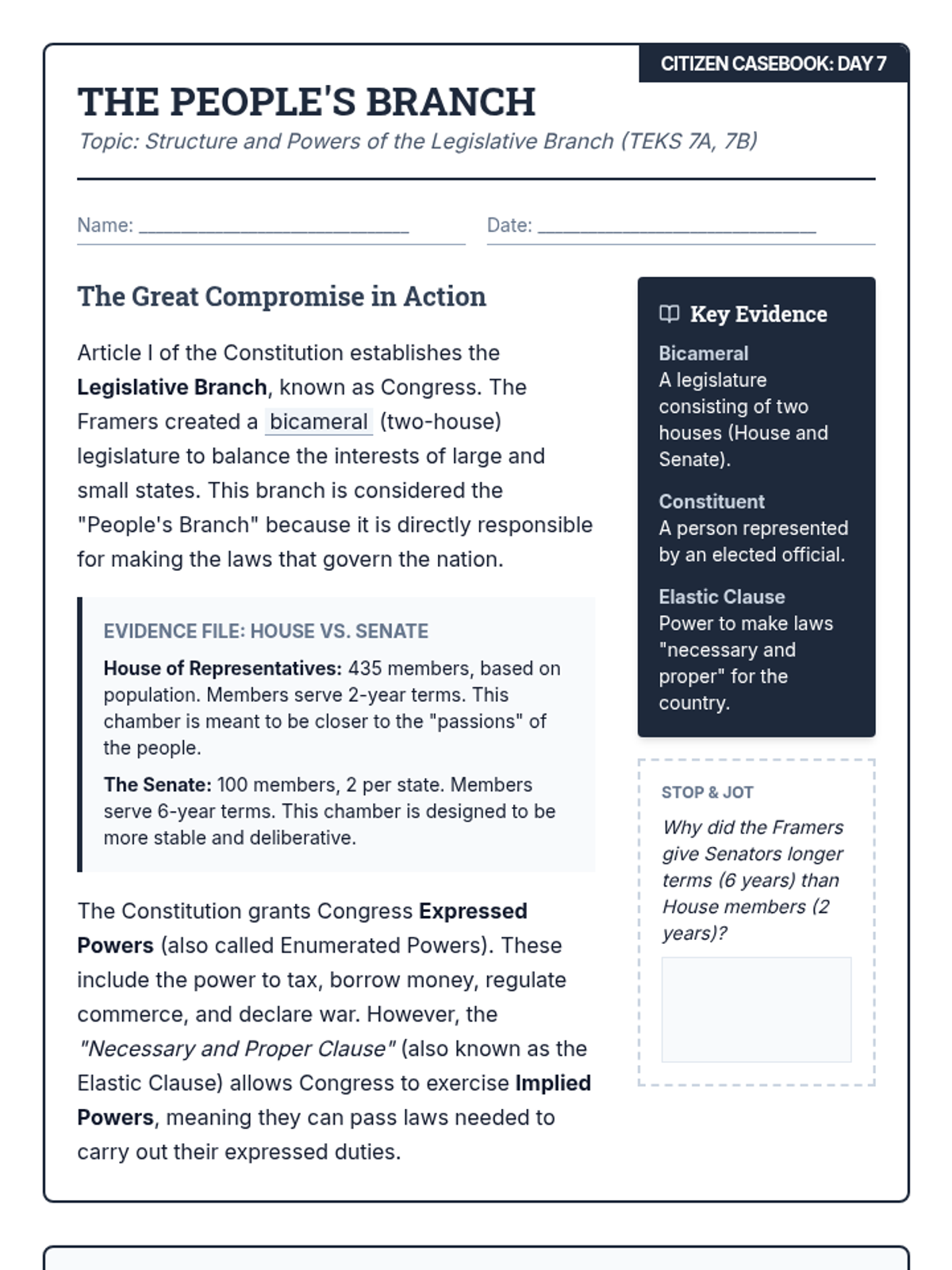
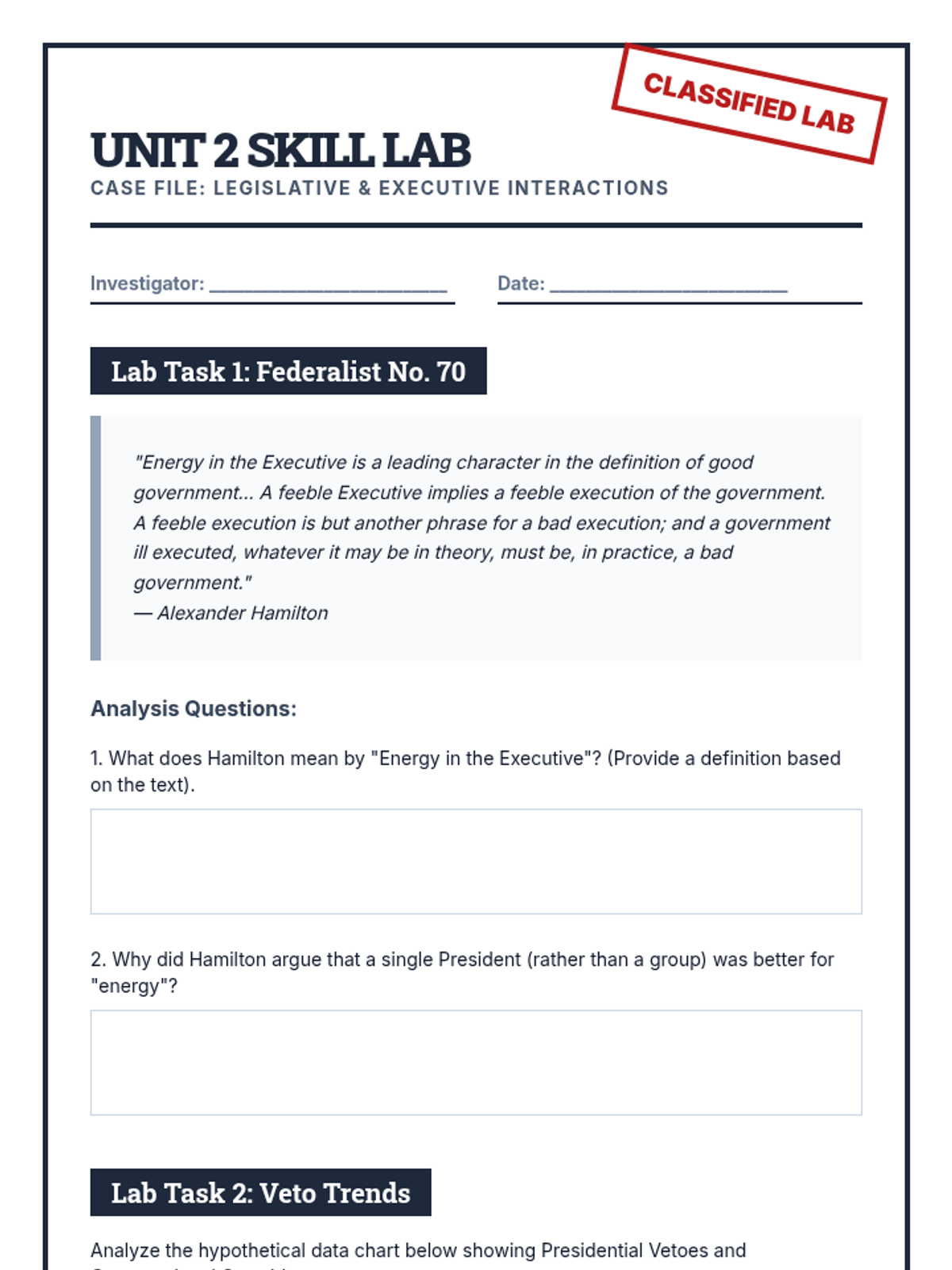
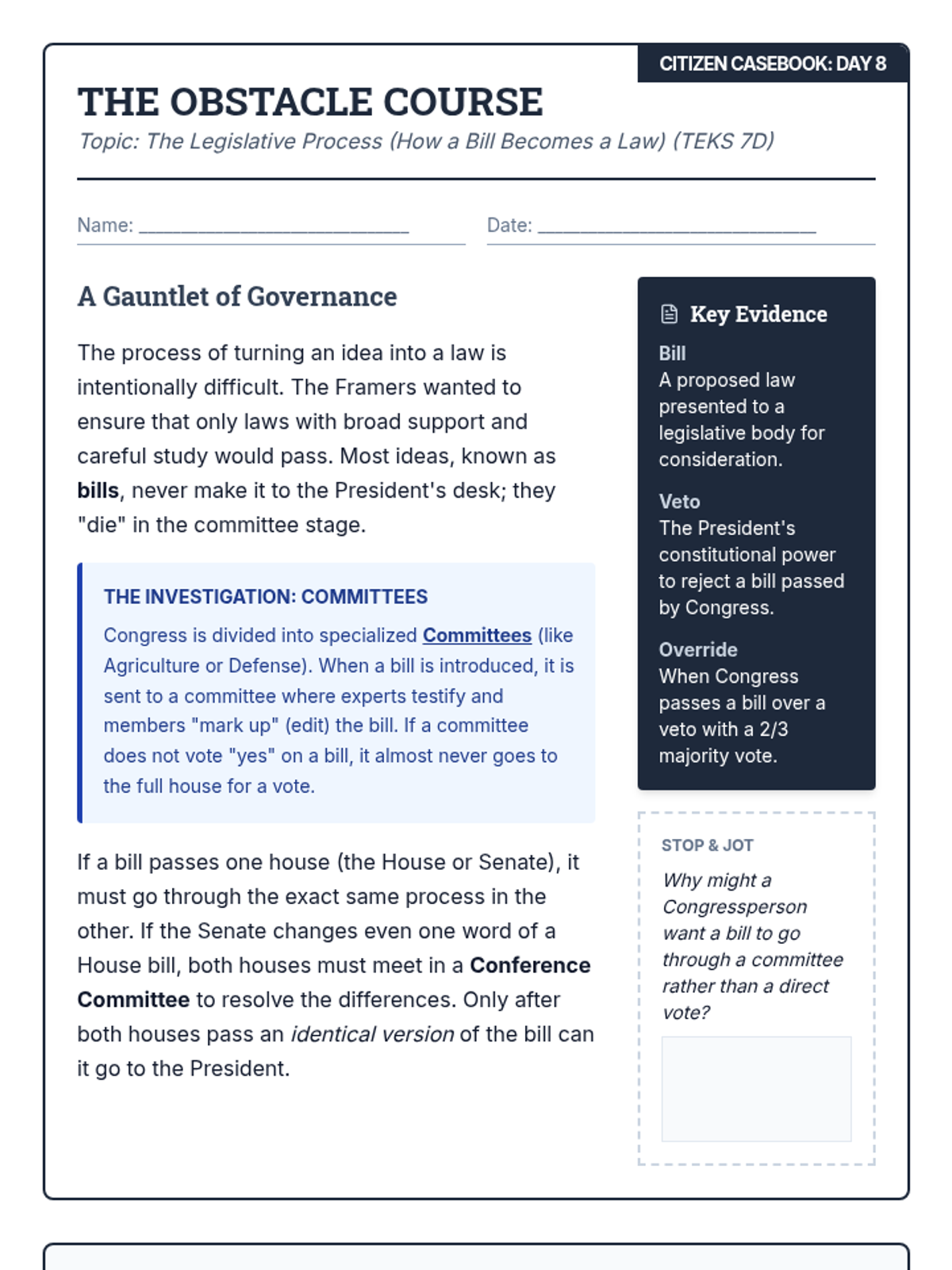
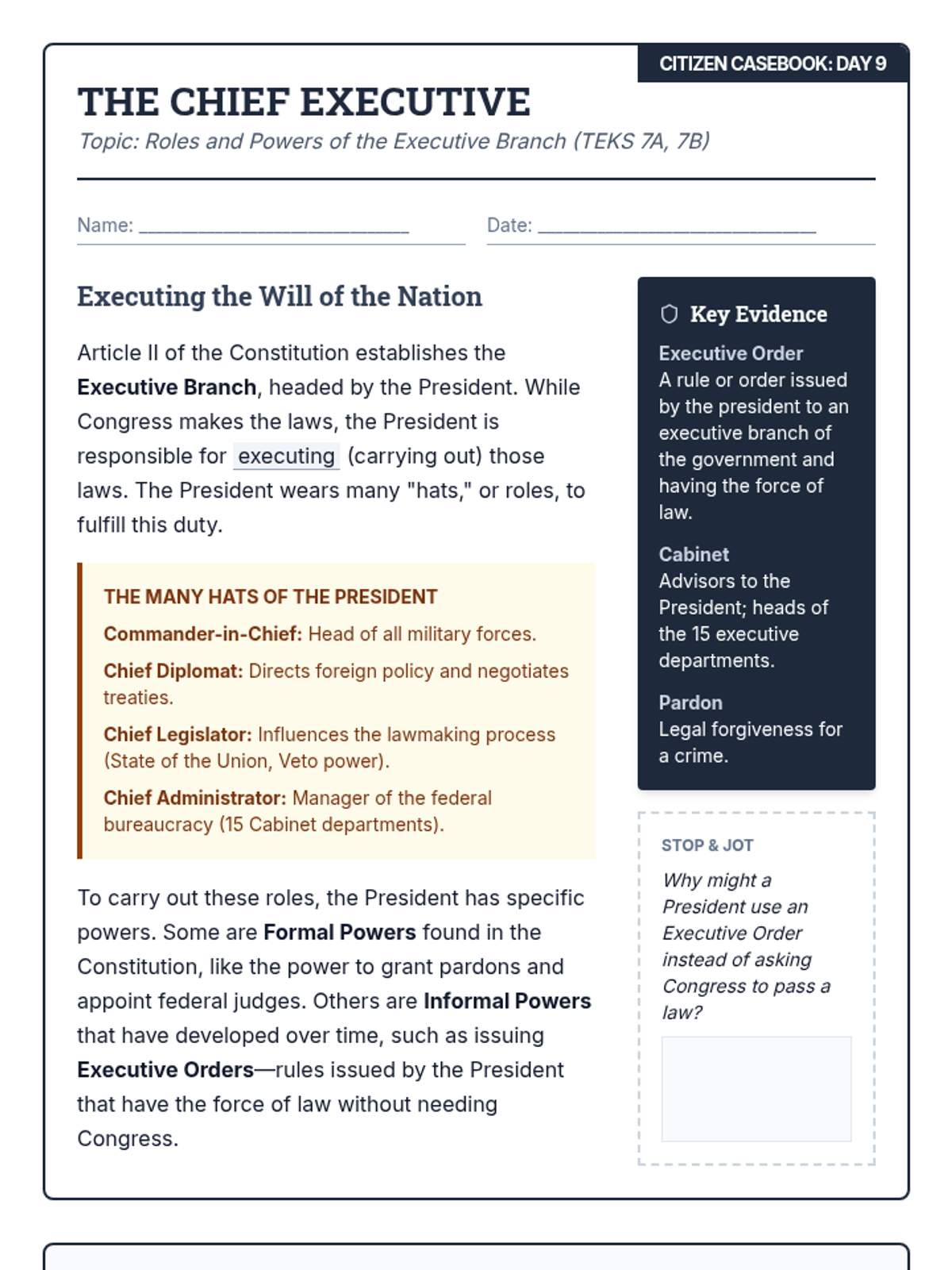
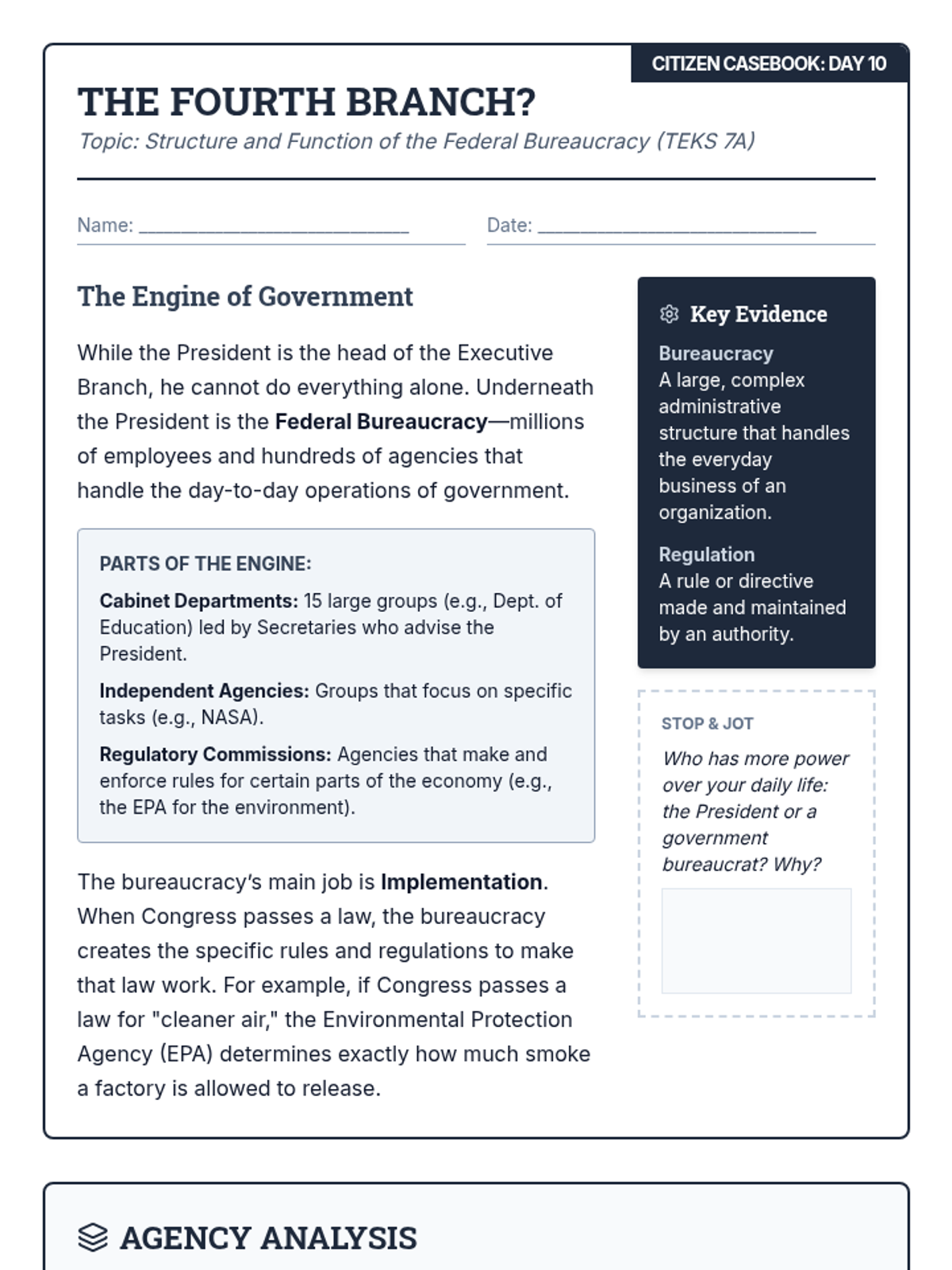
Focuses on the Legislative and Executive branches, covering Article I and Article II of the Constitution, the legislative process, and the role of the bureaucracy.
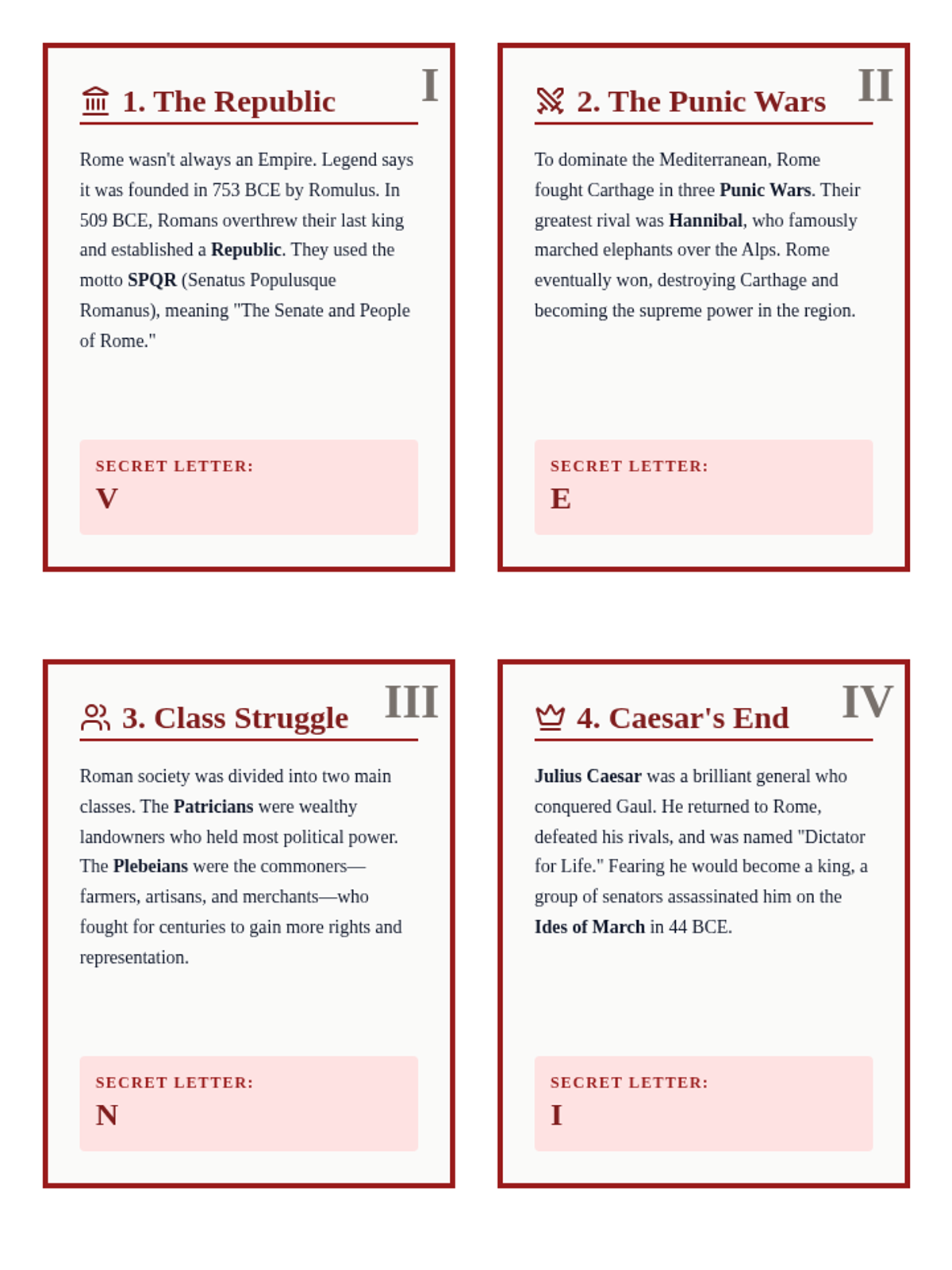
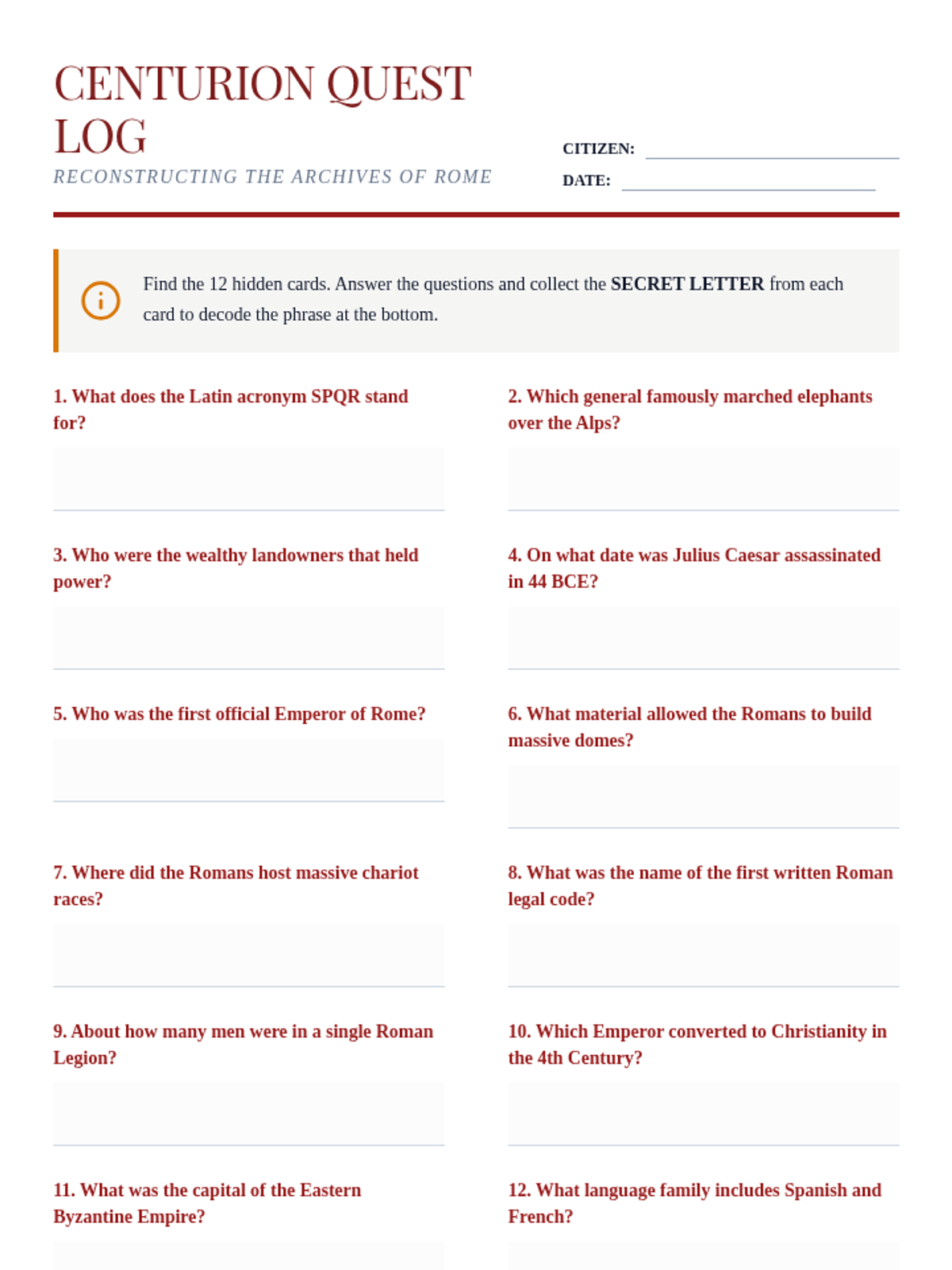
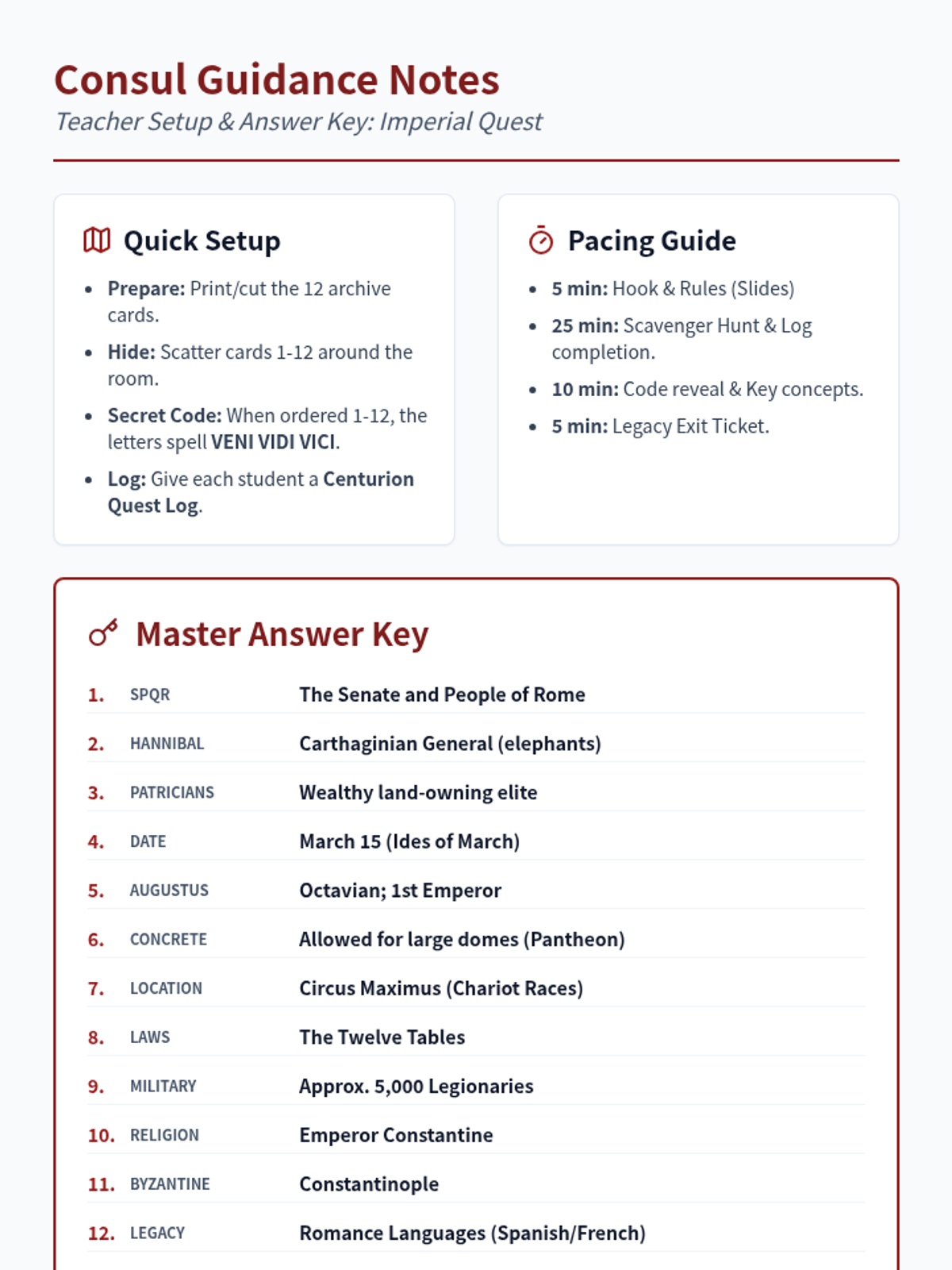
A high-energy classroom scavenger hunt where students uncover the political, social, and architectural secrets of the Roman Empire using hidden information cards.
A high-impact 40-minute exploration of the Spanish-American War, focusing on the rise of Teddy Roosevelt, the Treaty of Paris, and the emergence of the United States as a global power.
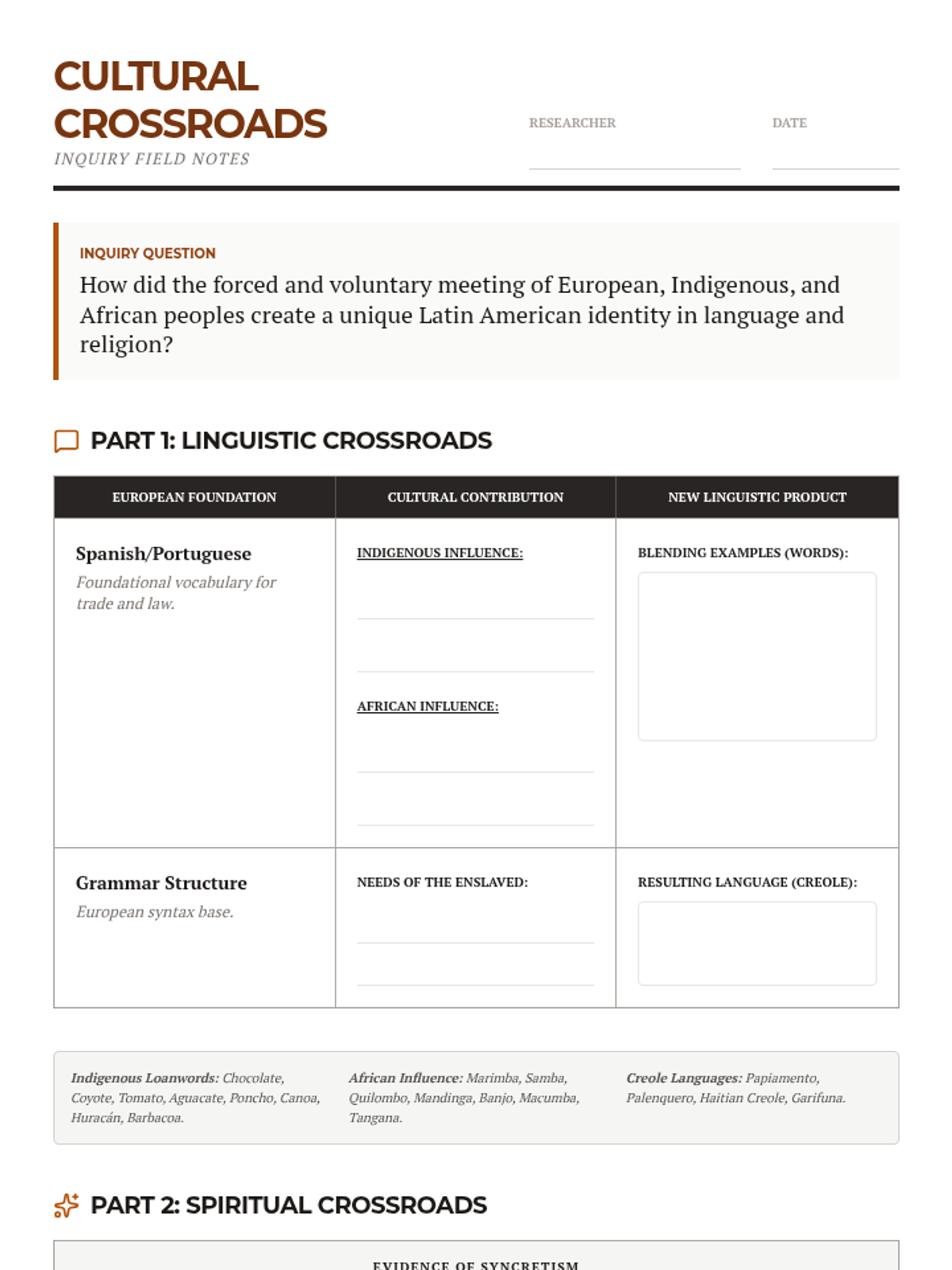
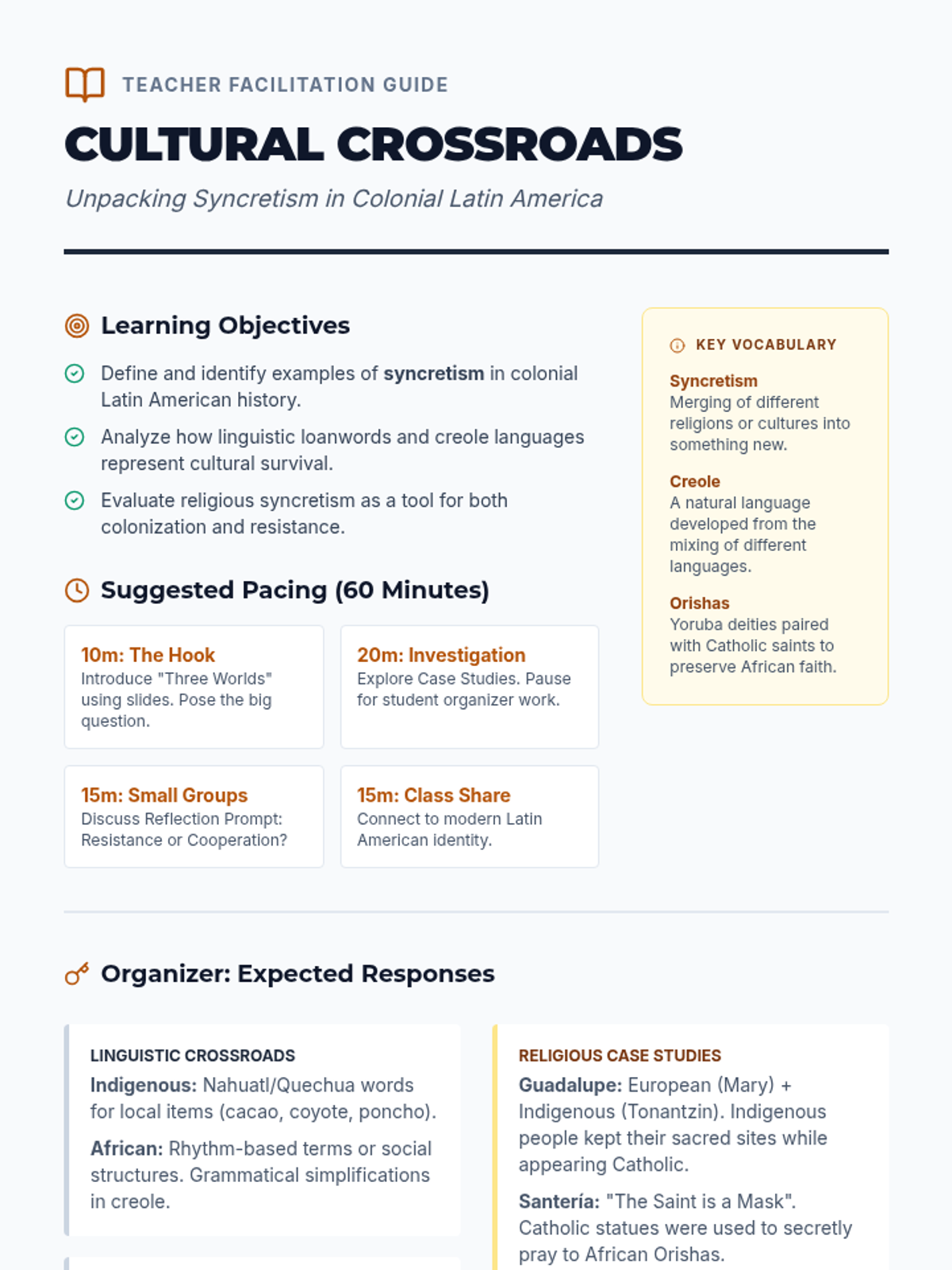
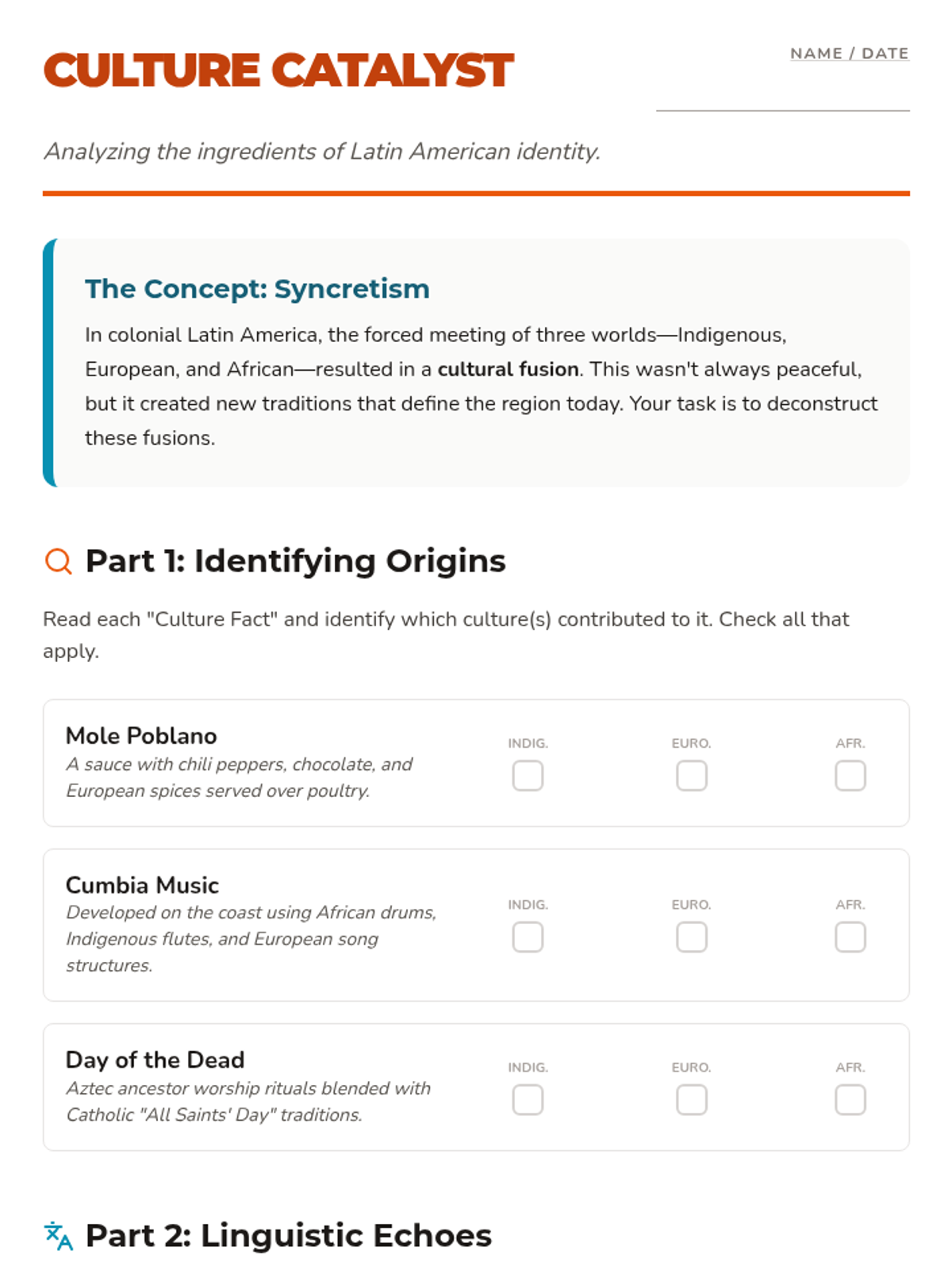
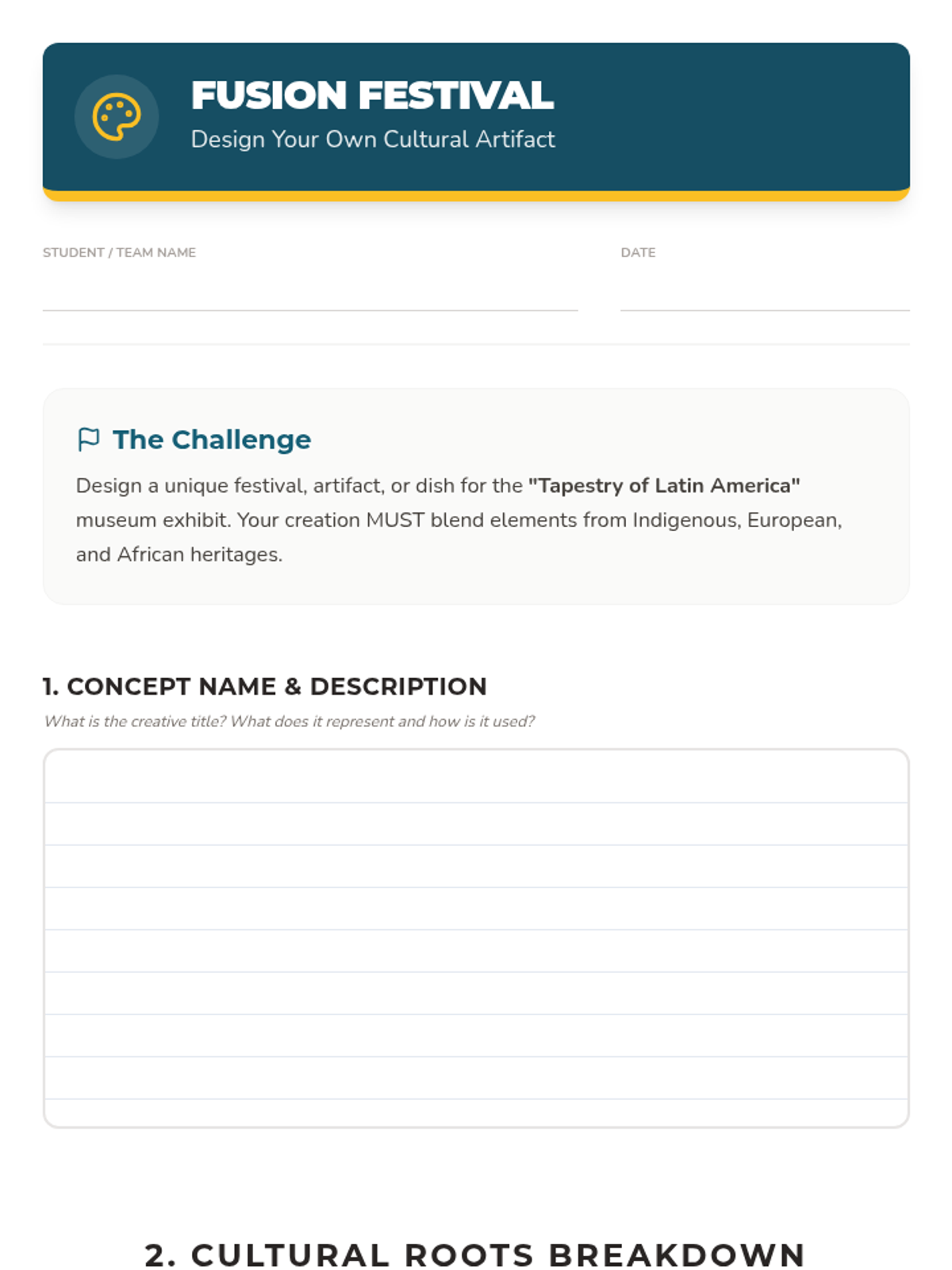
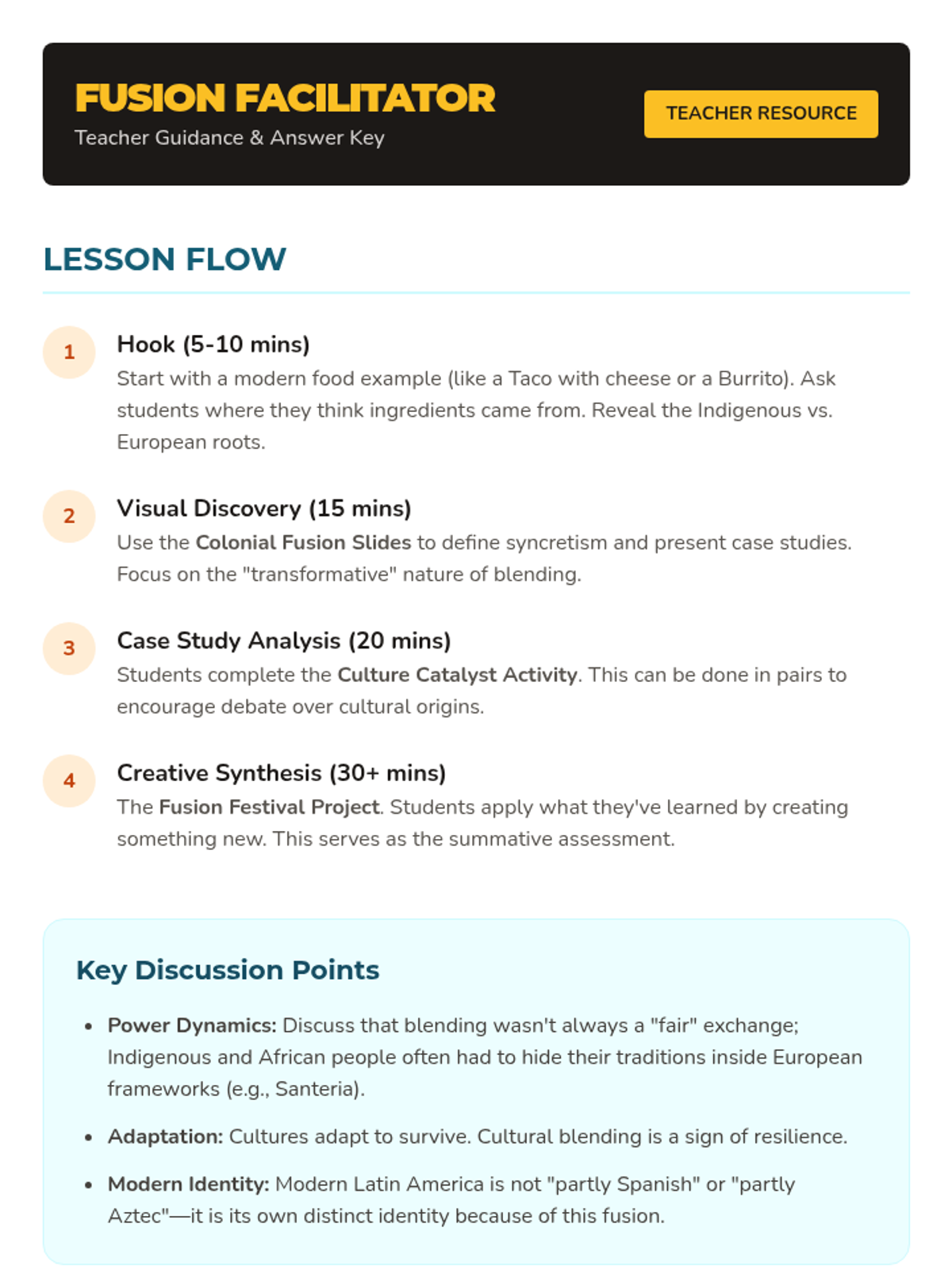
An inquiry-based lesson exploring the cultural syncretism of European, Indigenous, and African influences in colonial Latin America, with a focus on language and religion.
Students explore the complex cultural blending in colonial Latin America, examining how European, African, and Indigenous traditions merged to create unique modern identities.
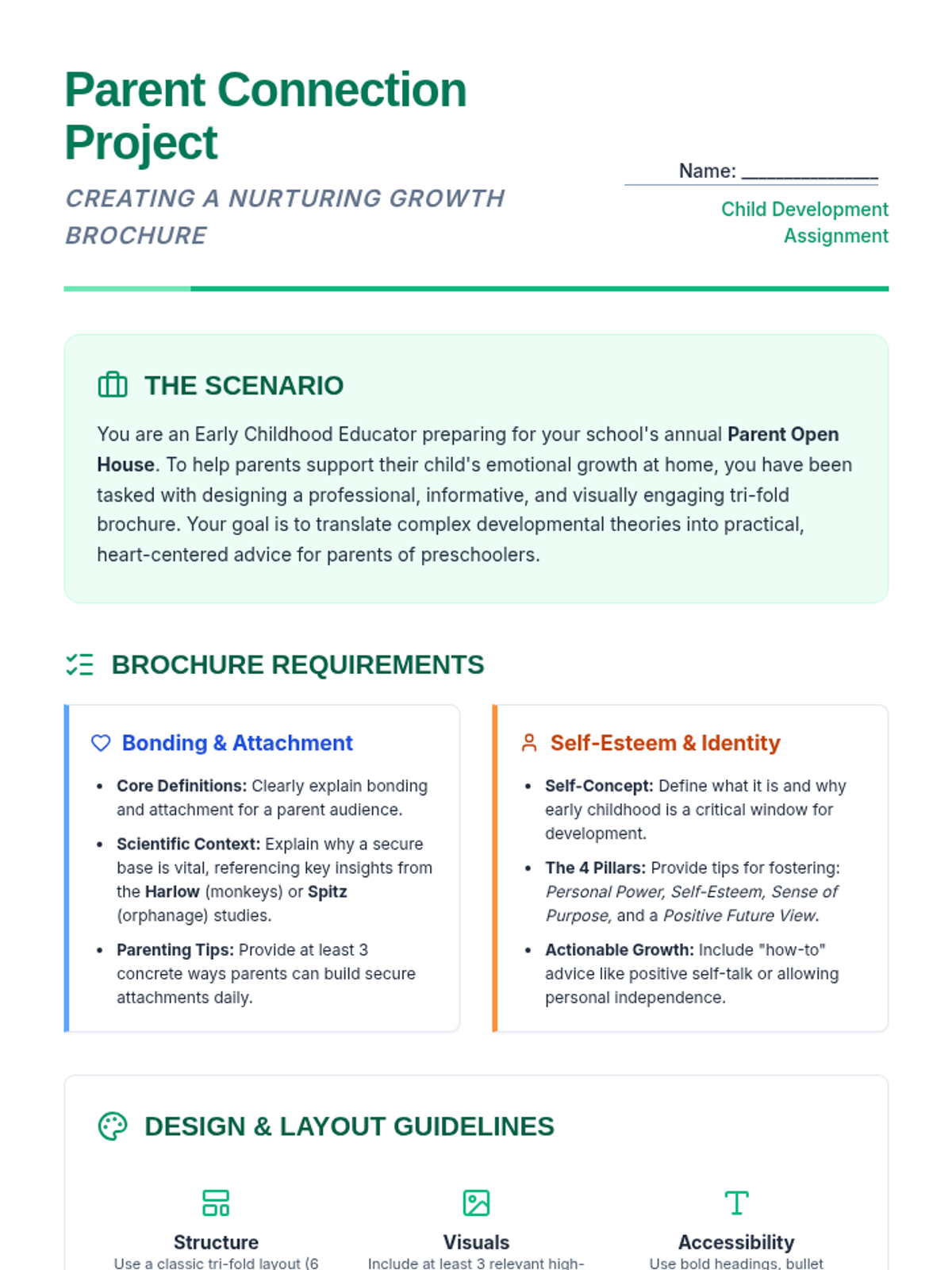
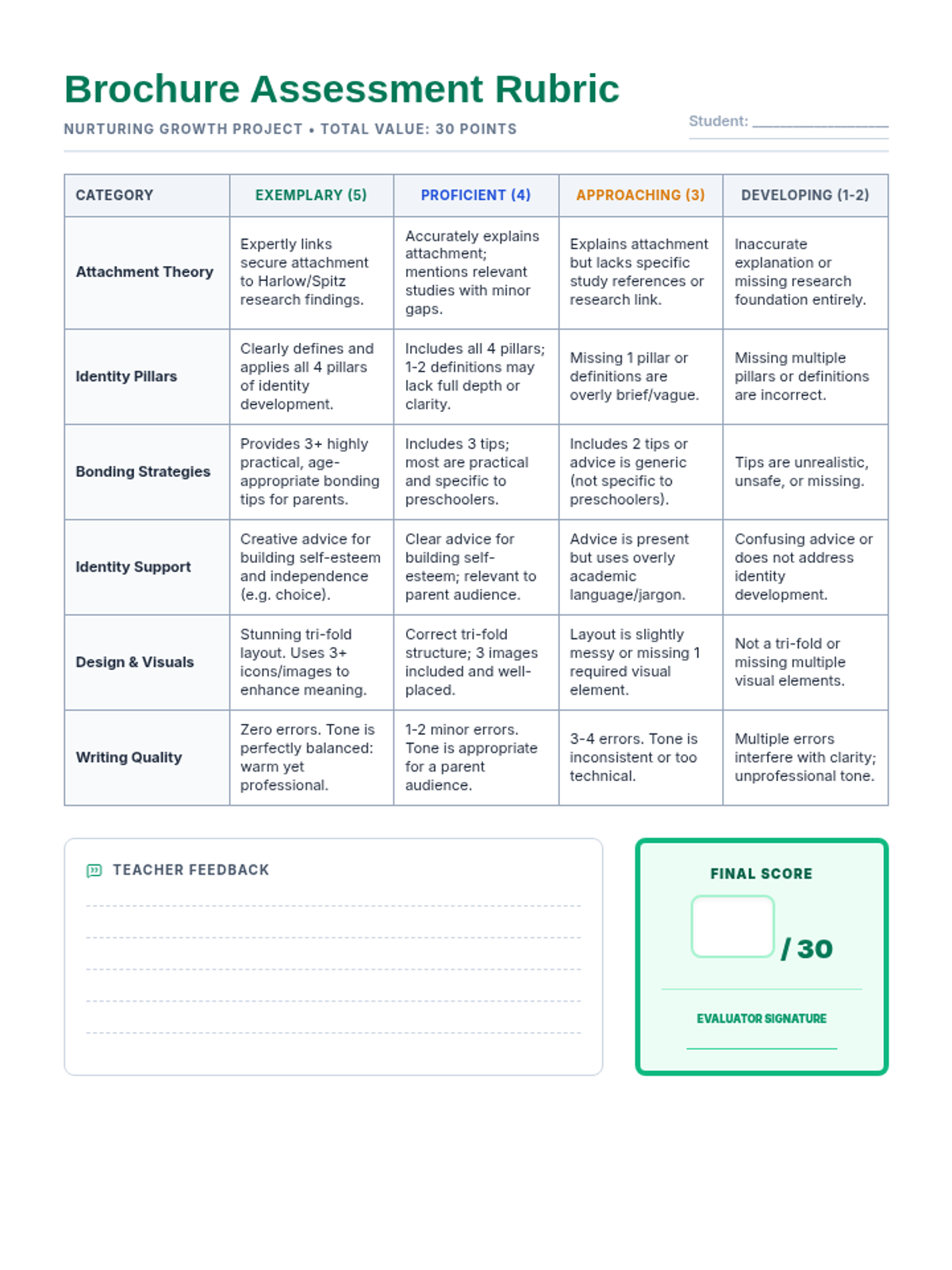
Students will apply their knowledge of bonding, attachment, and child development to create an informative brochure for parents of preschoolers.
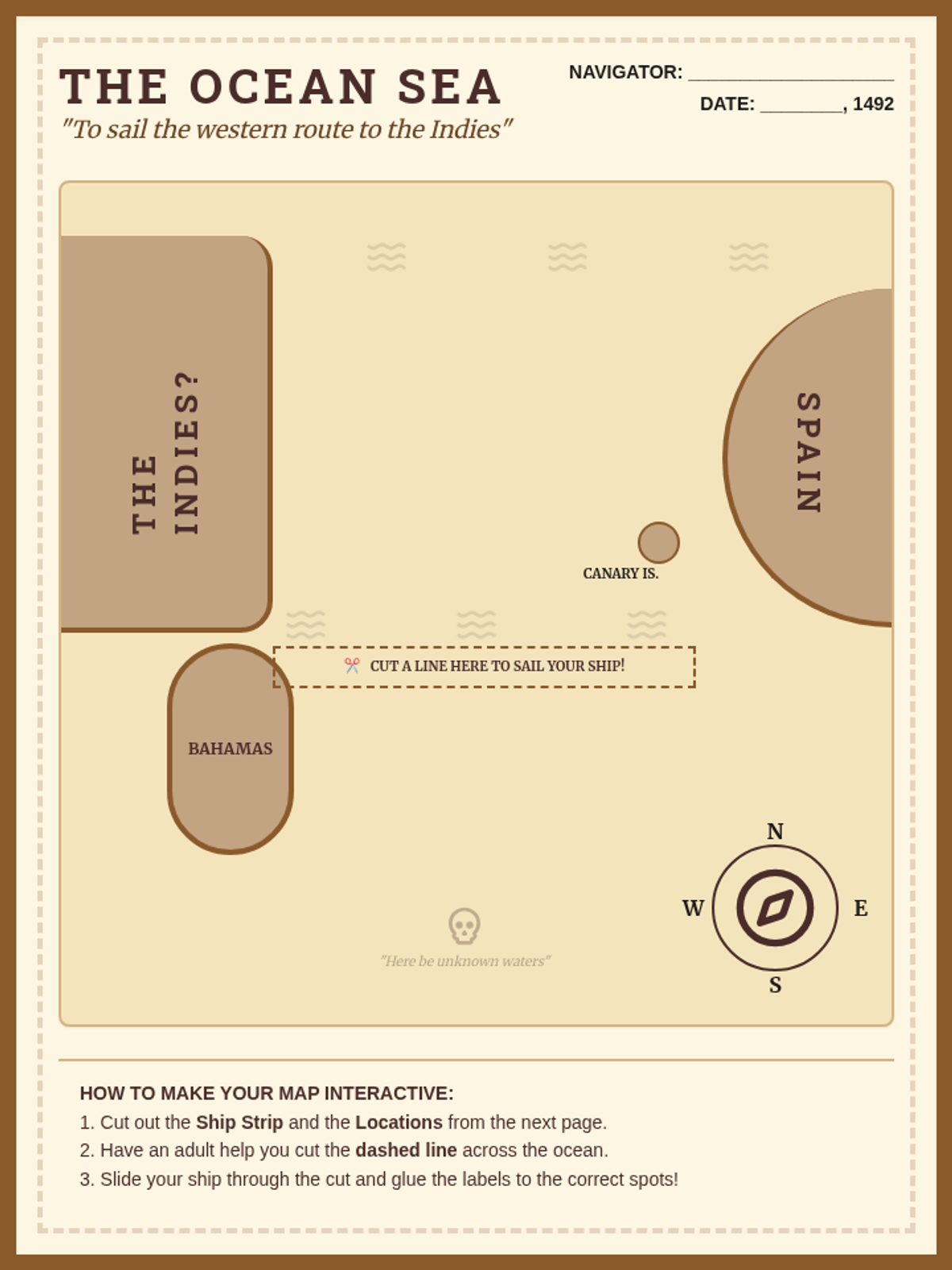
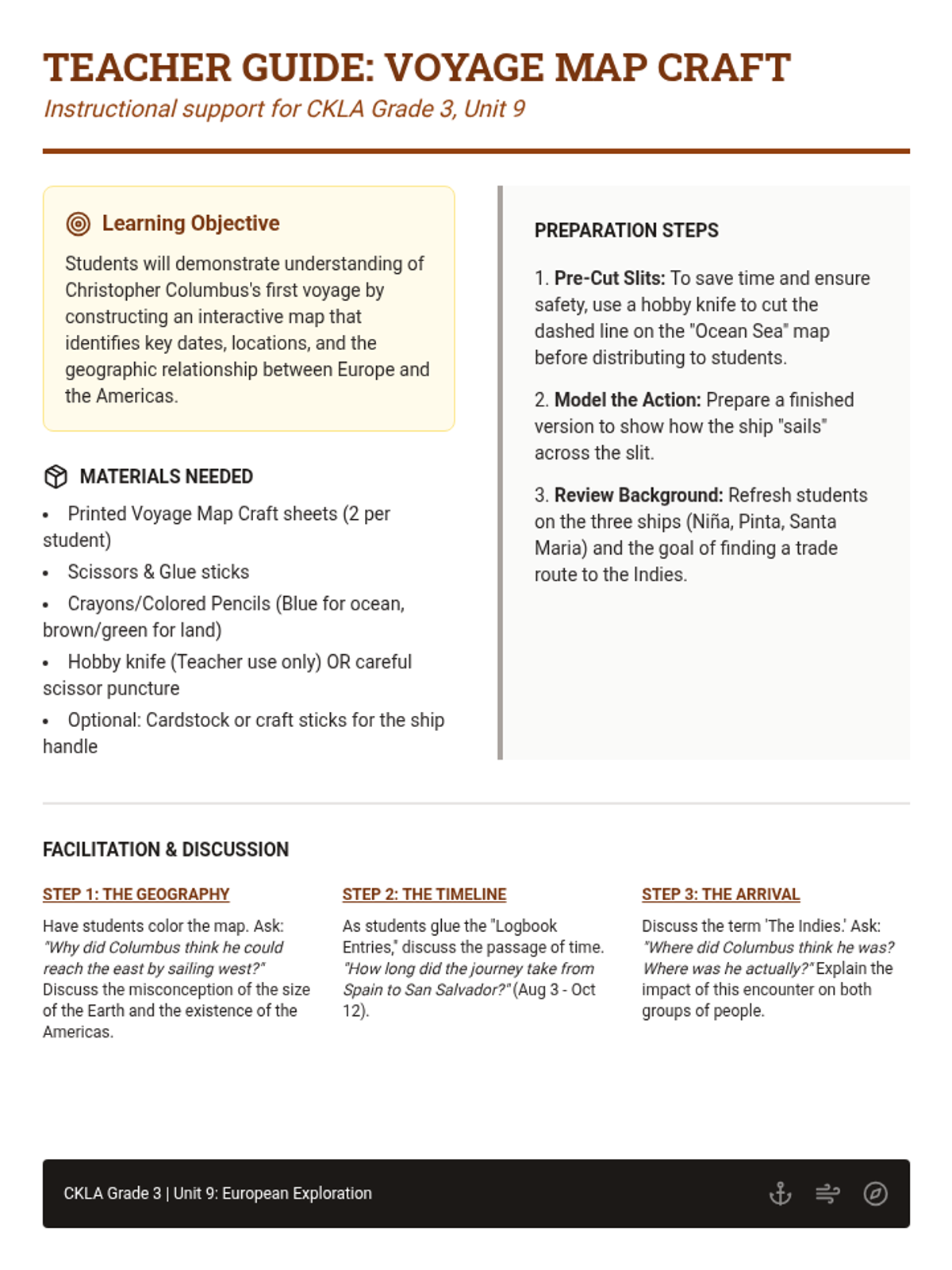
A hands-on crafting lesson where students build an interactive map of Christopher Columbus's first voyage to the Americas. This lesson reinforces CKLA Grade 3 Unit 9 concepts including the motivations for exploration and the geography of the Atlantic crossing.
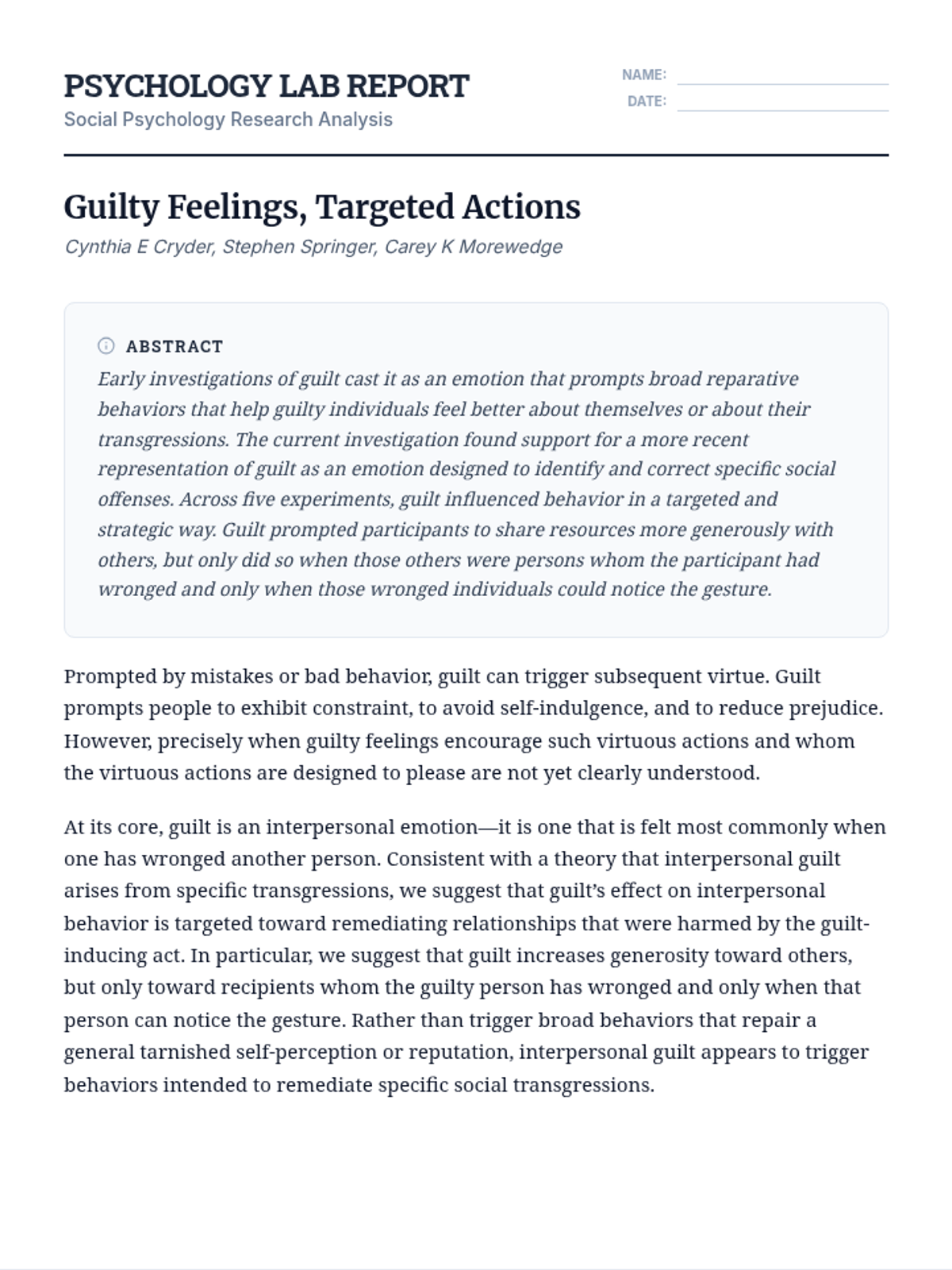
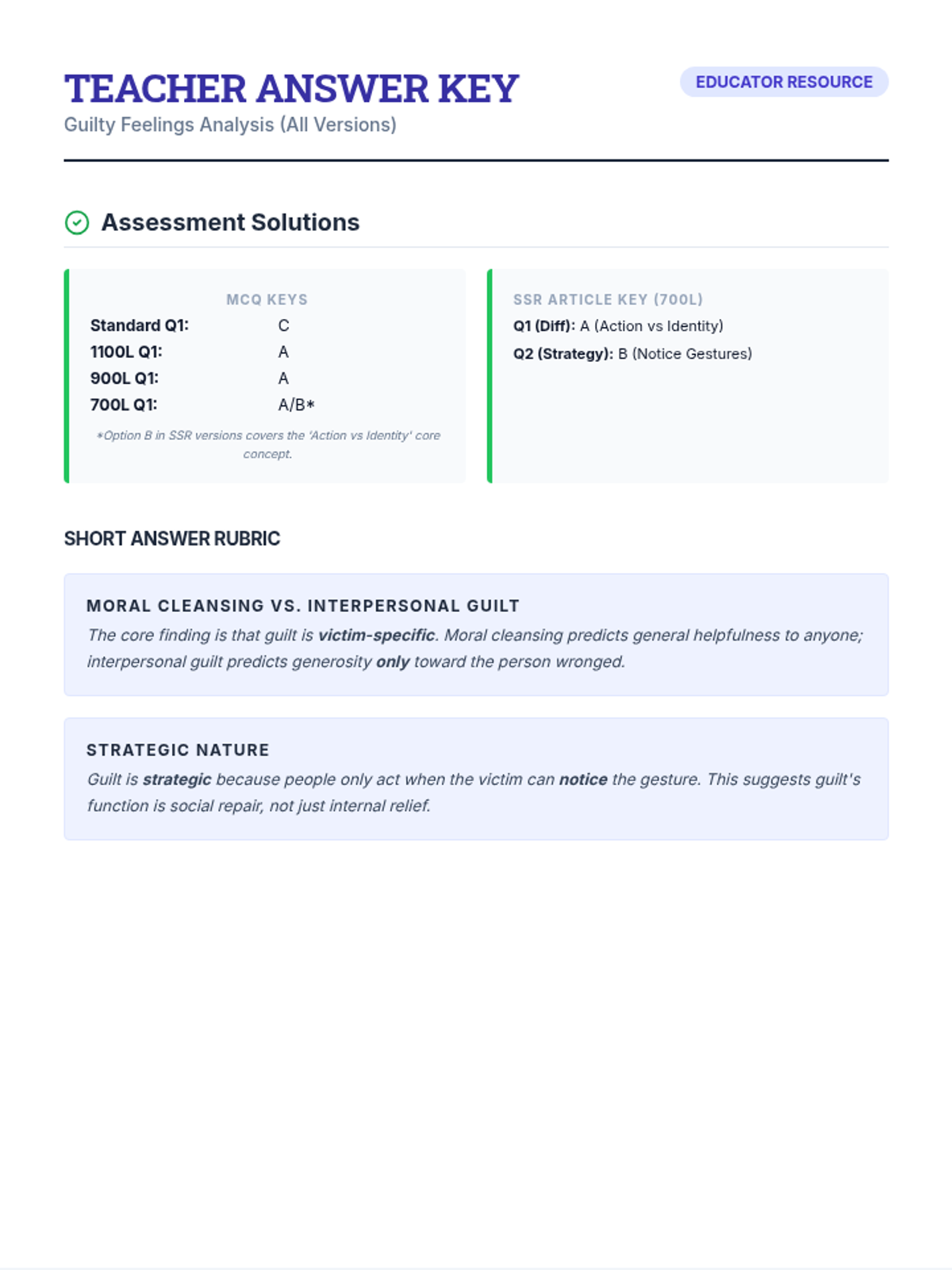
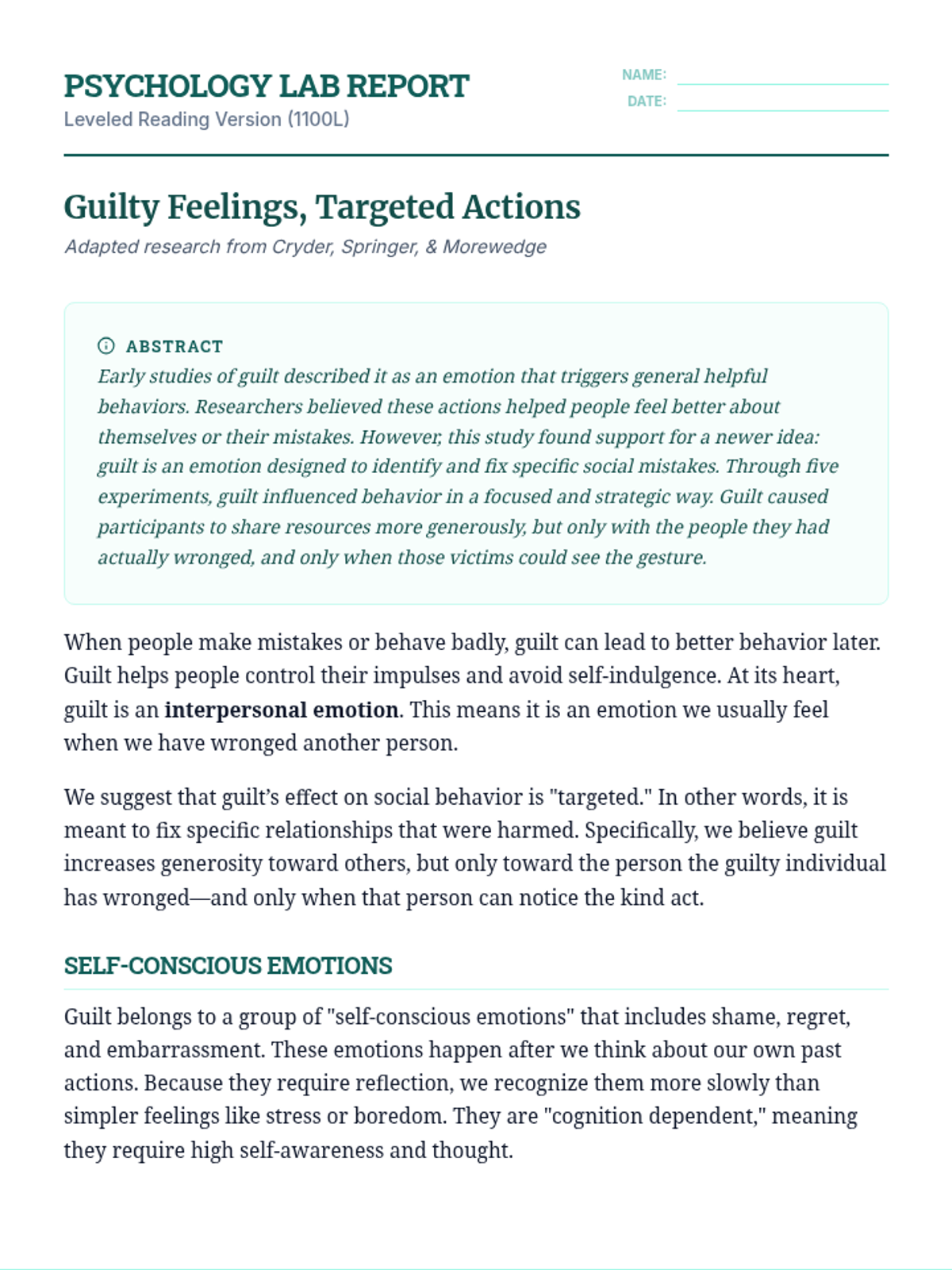
A deep dive into social psychology research exploring how guilt functions as a targeted social mechanism rather than a broad emotional state. Students will analyze academic text, define complex vocabulary, and evaluate the specific behavioral consequences of guilt.
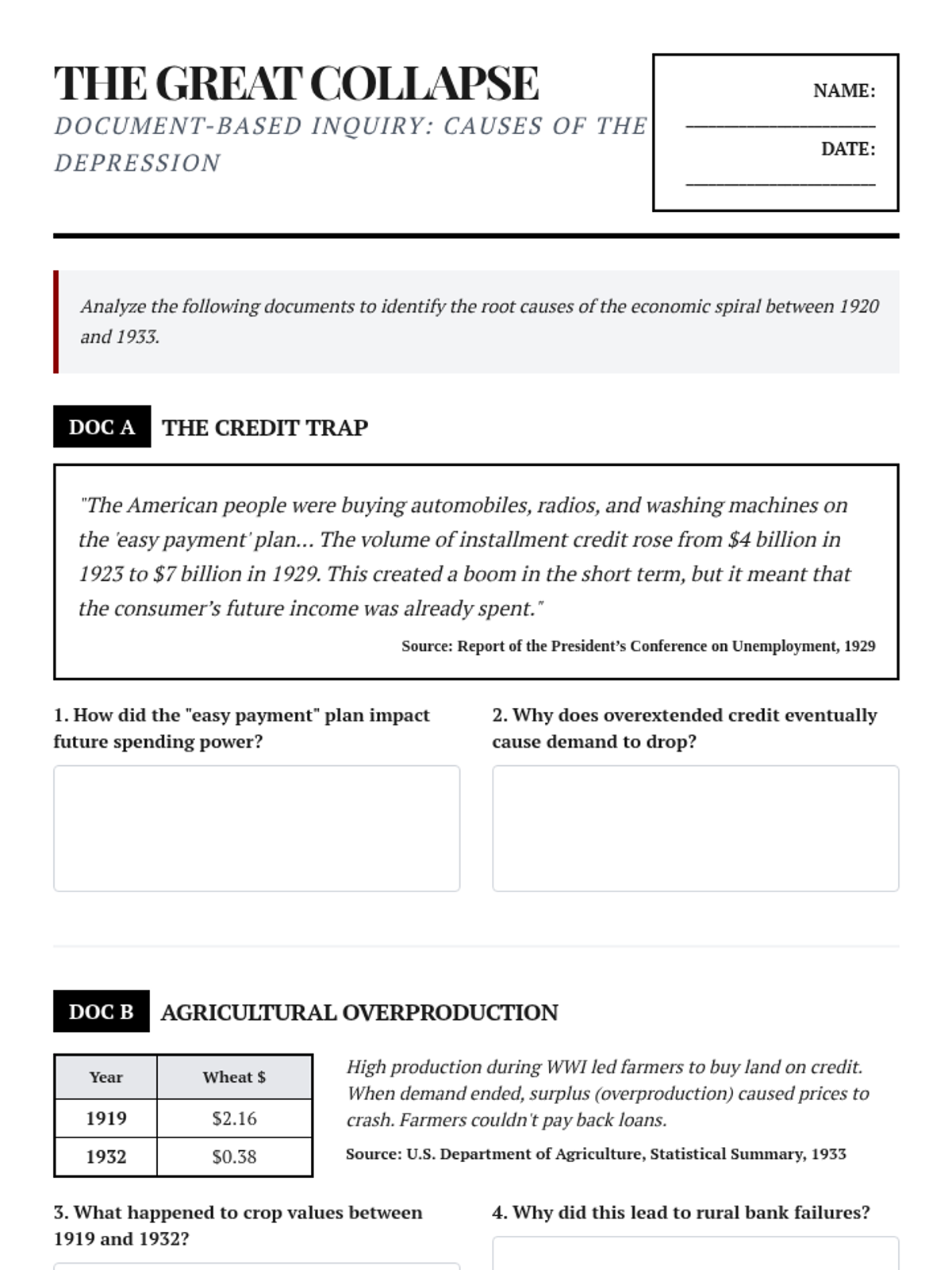
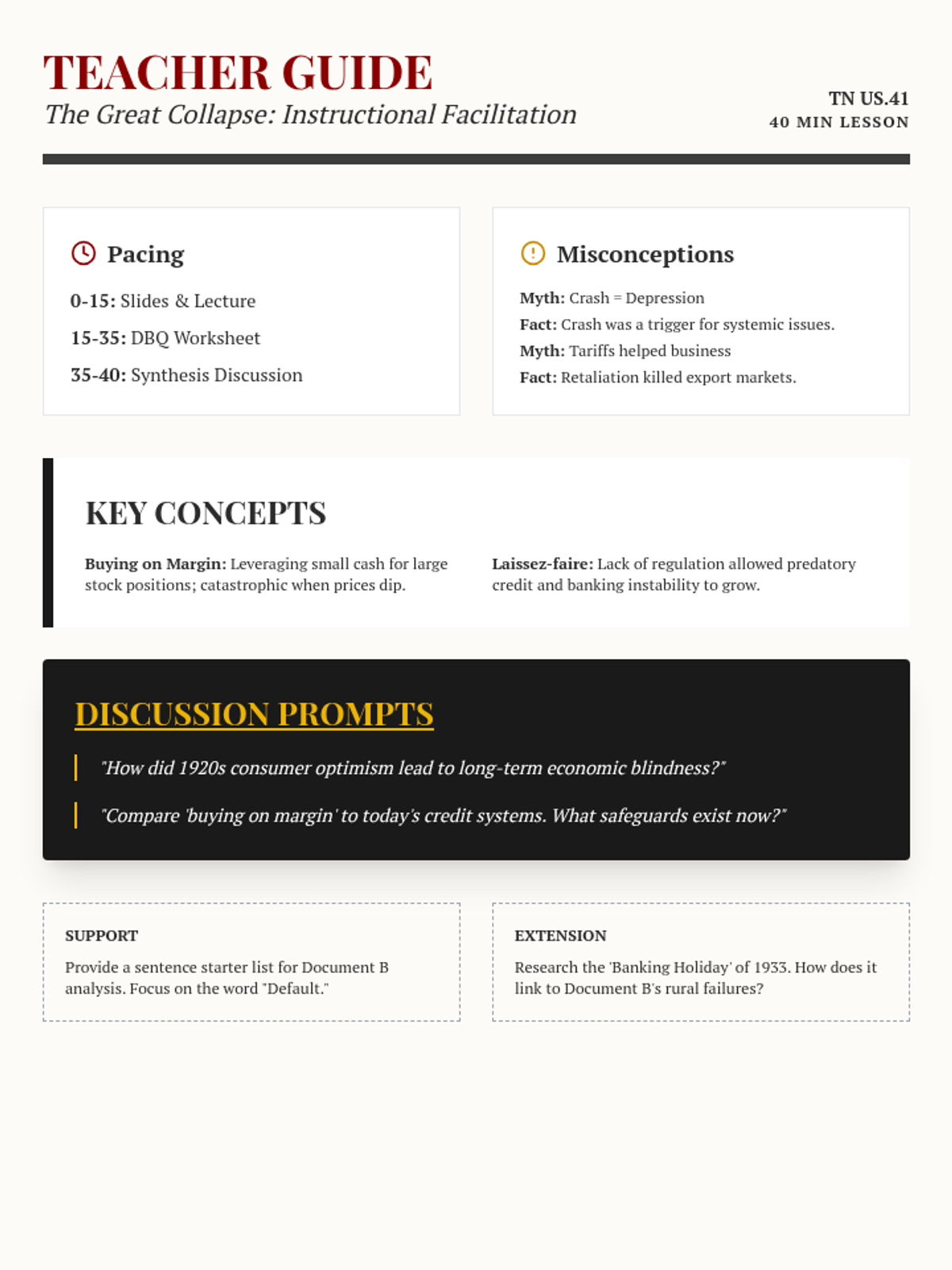
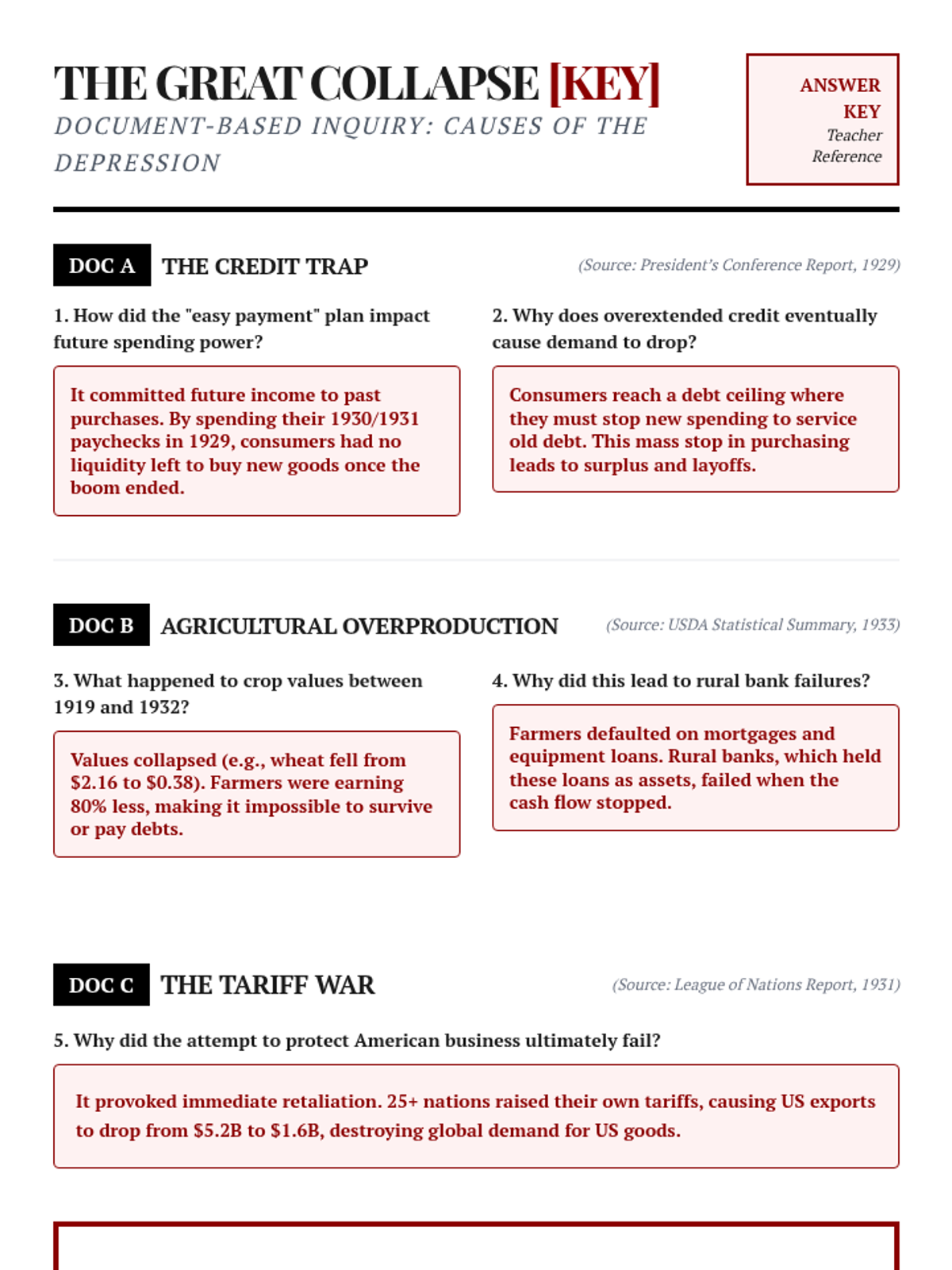
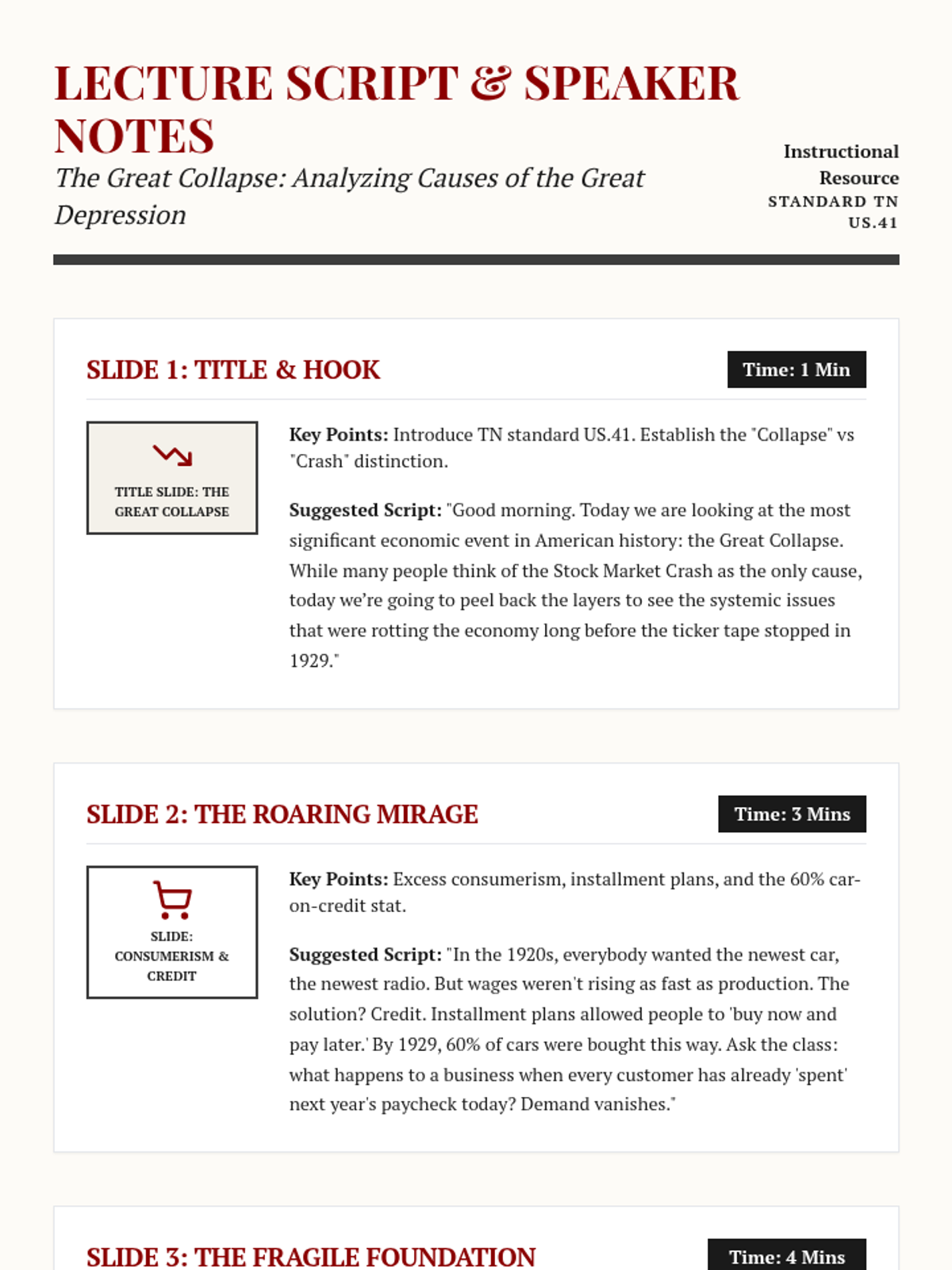
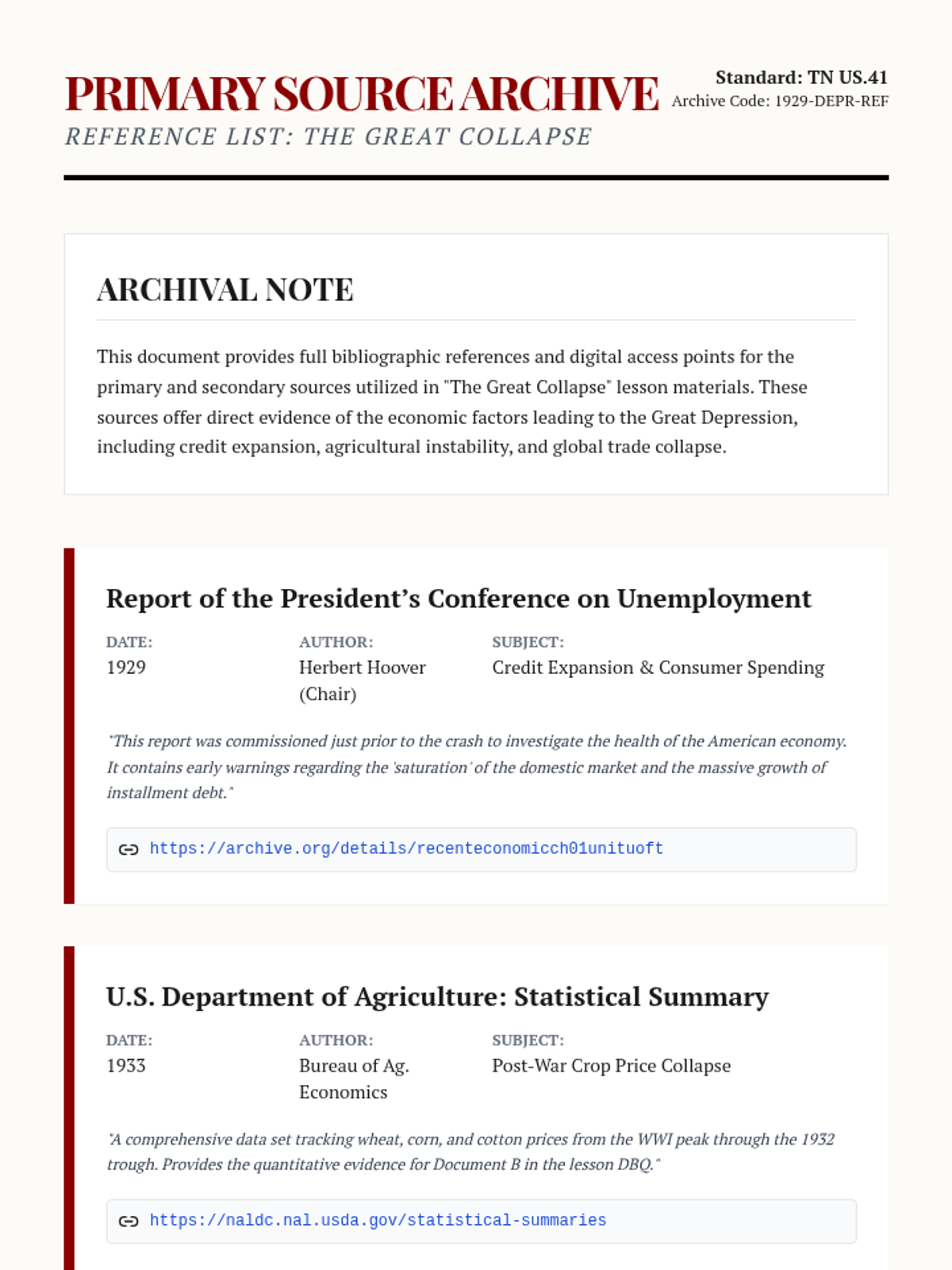
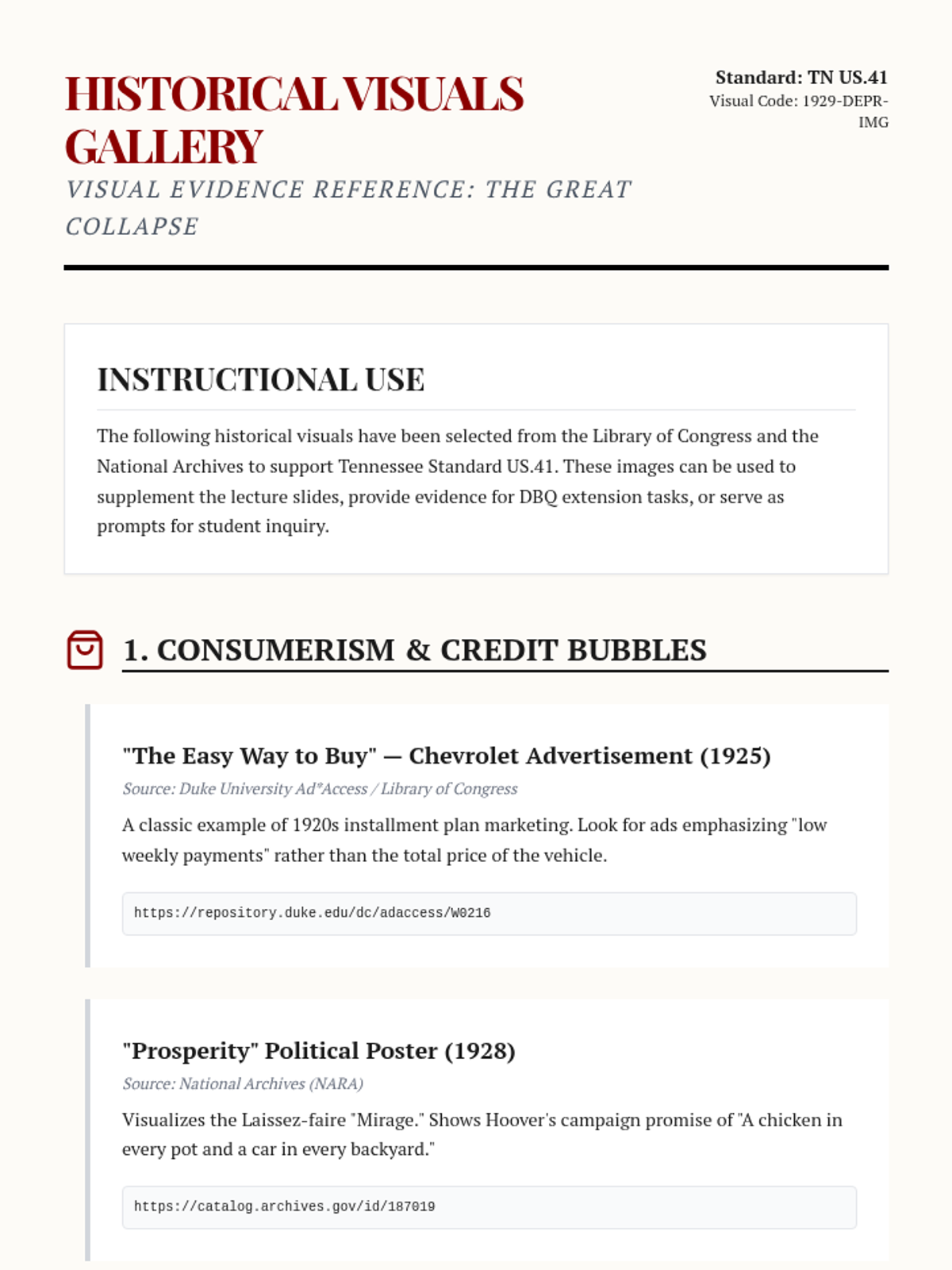
This lesson analyzes the complex economic and political causes of the Great Depression in the United States, covering the transition from the 'Roaring Twenties' to the 1929 stock market crash and subsequent economic spiral. Students will examine key factors like credit expansion, overproduction, and government policy.
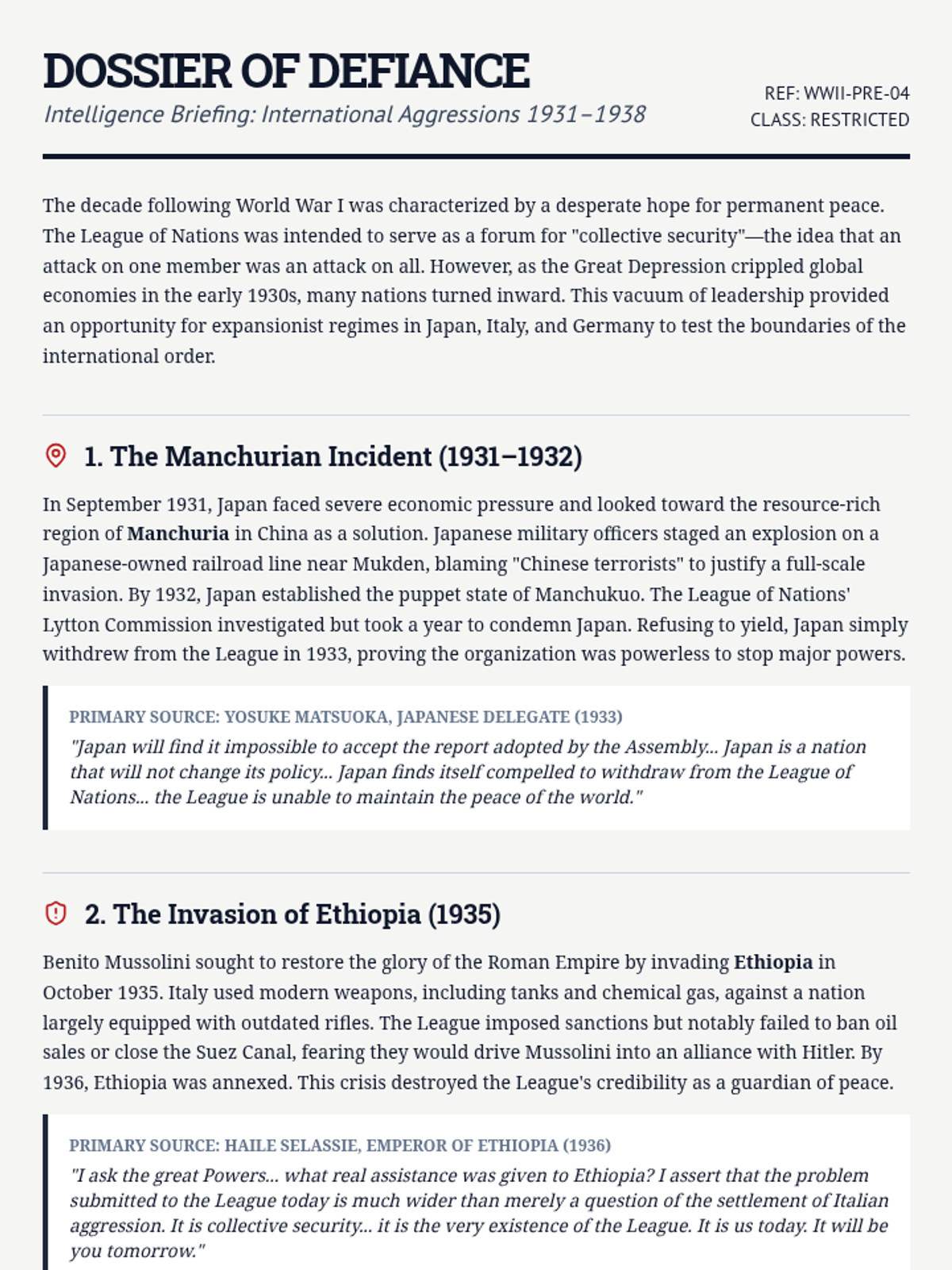
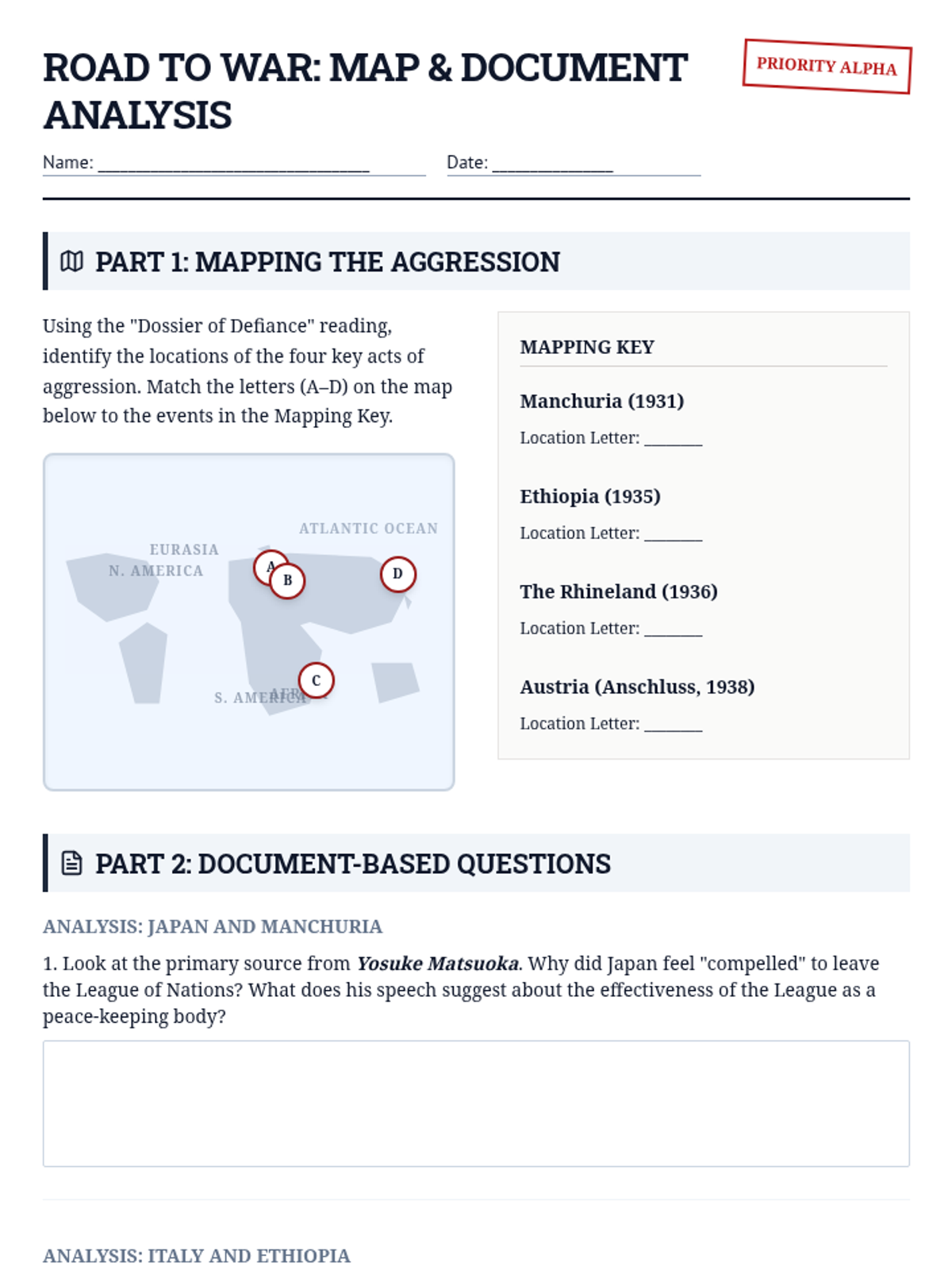
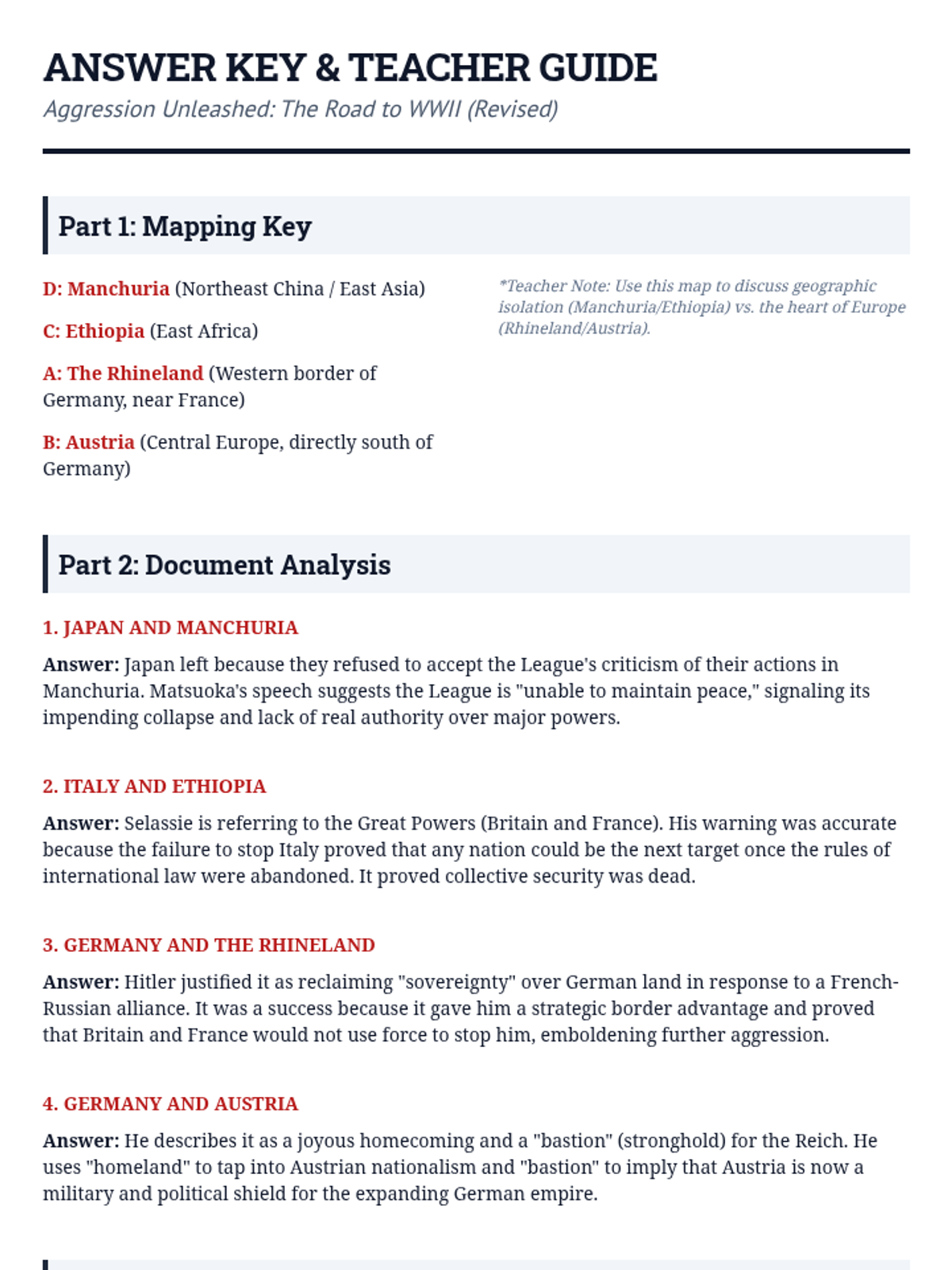
This lesson examines four key acts of international aggression: the Japanese invasion of Manchuria, the Italian invasion of Ethiopia, the remilitarization of the Rhineland, and the Anschluss of Austria.
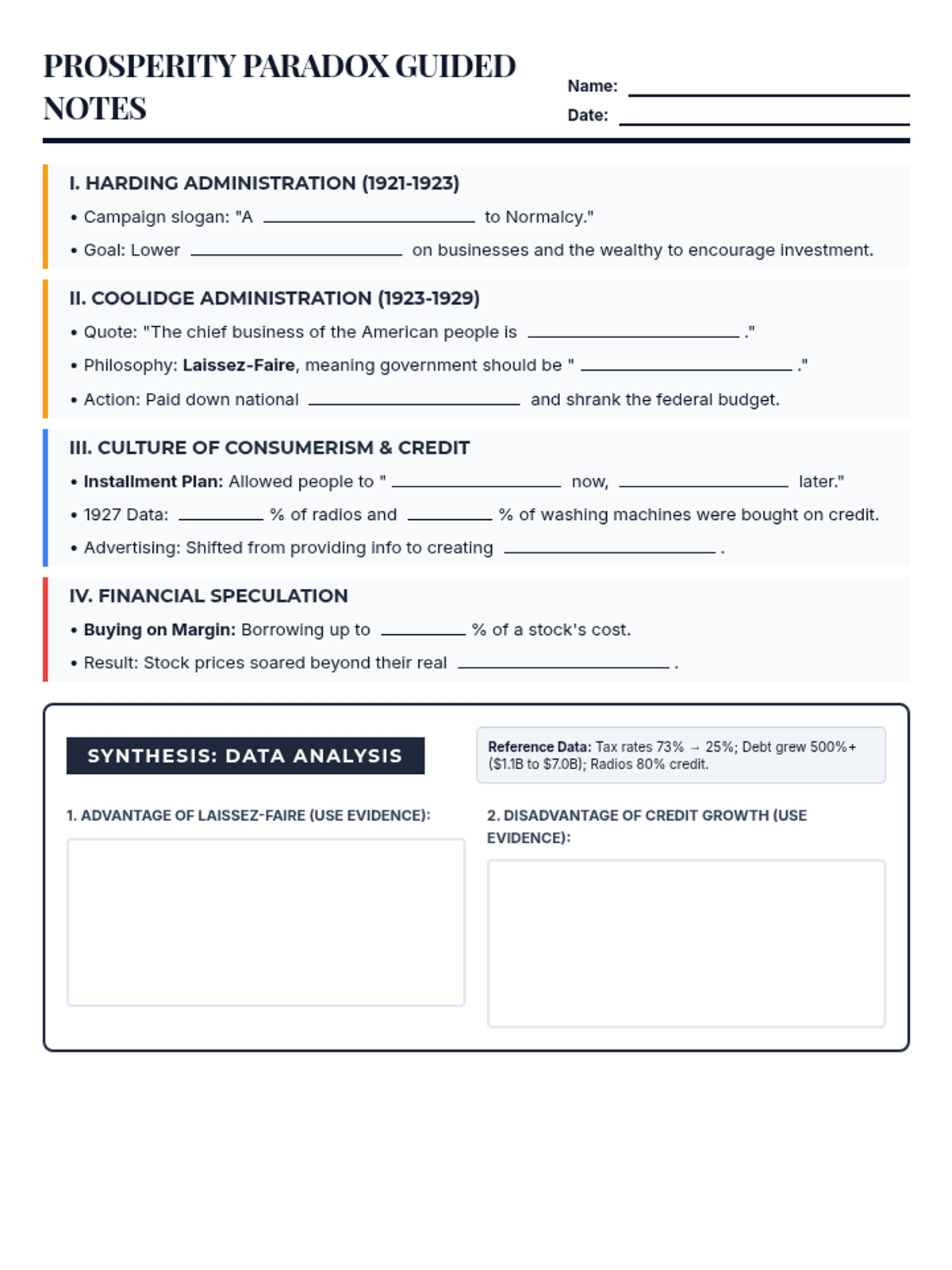
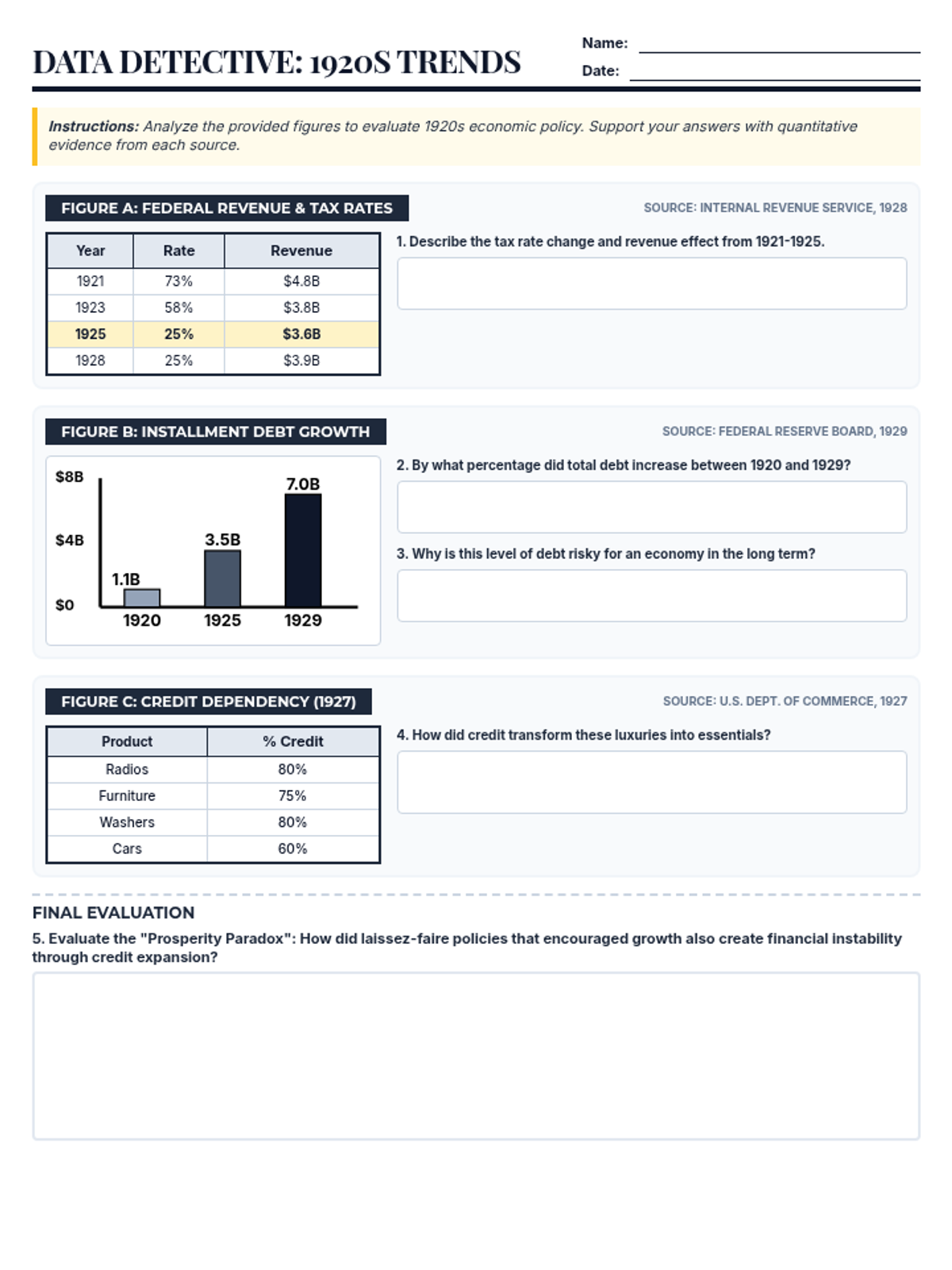
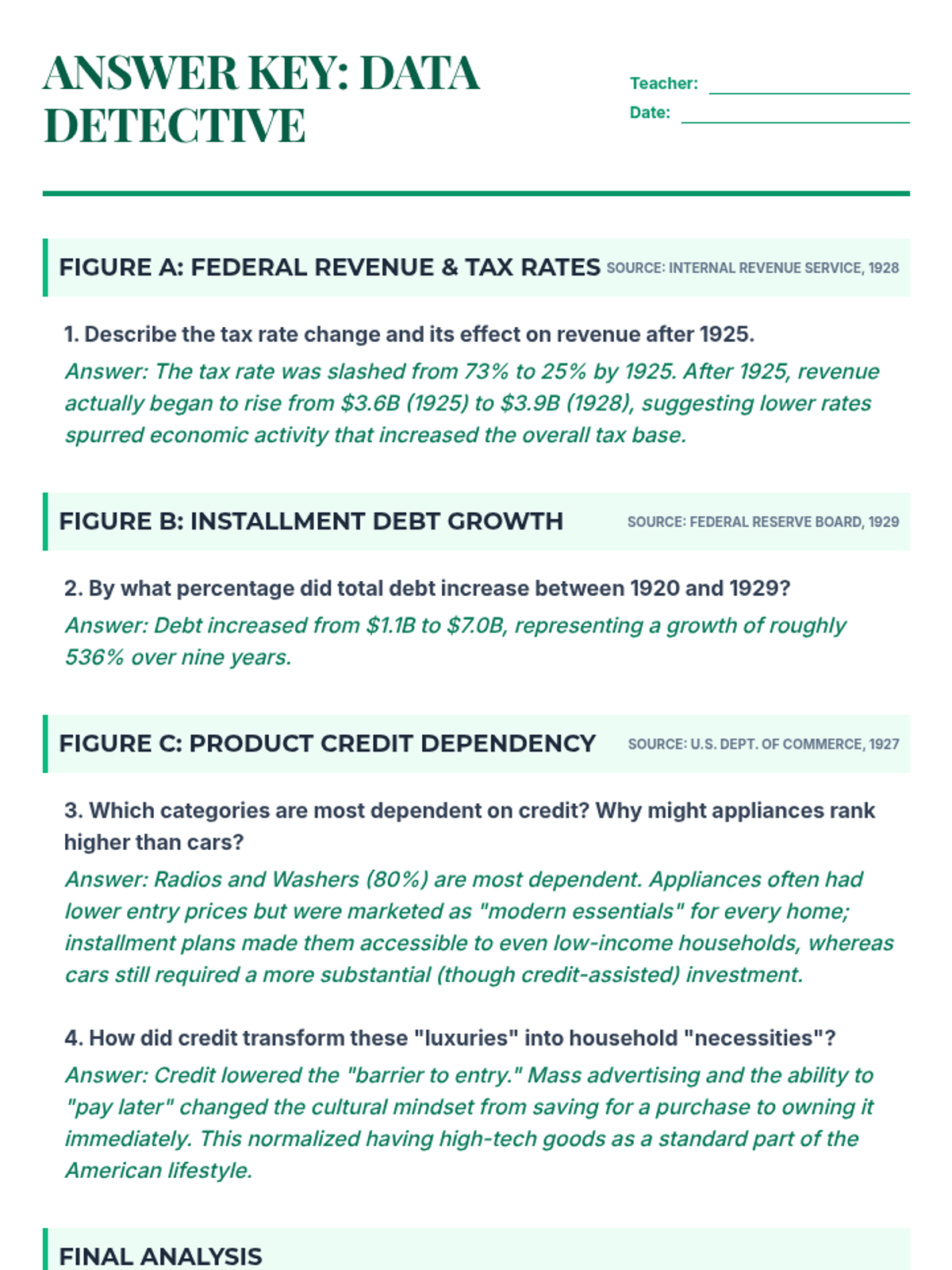
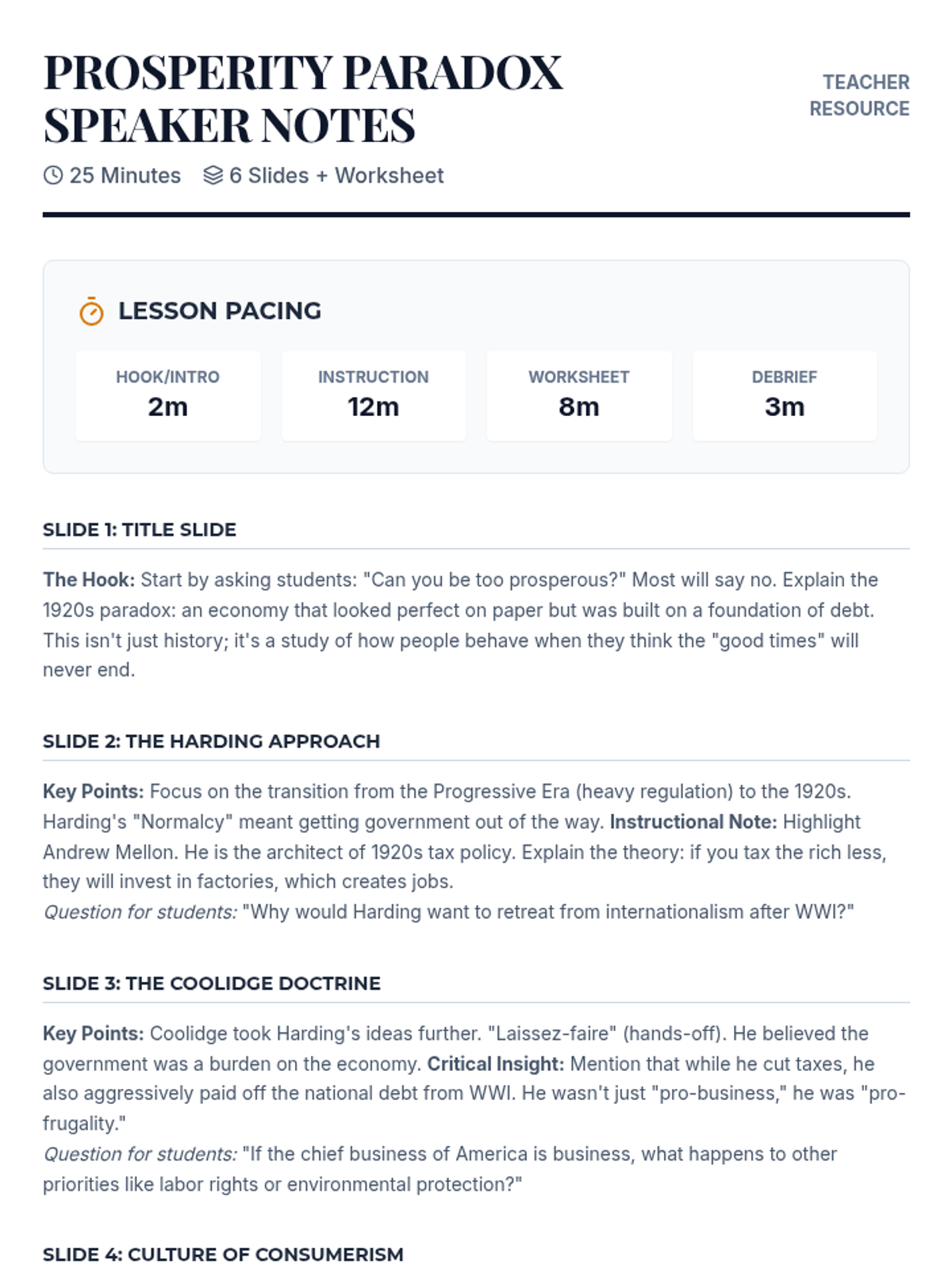
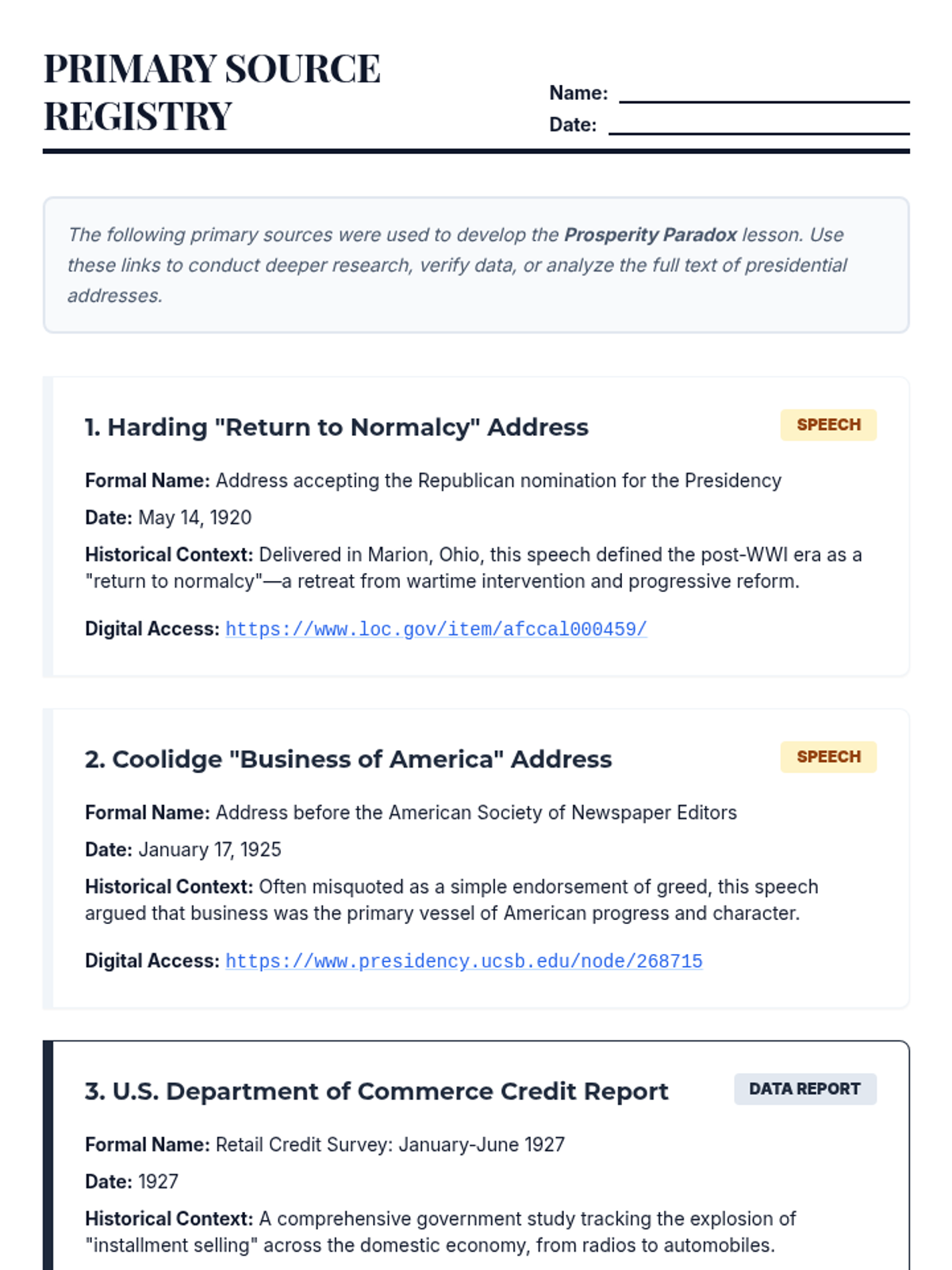
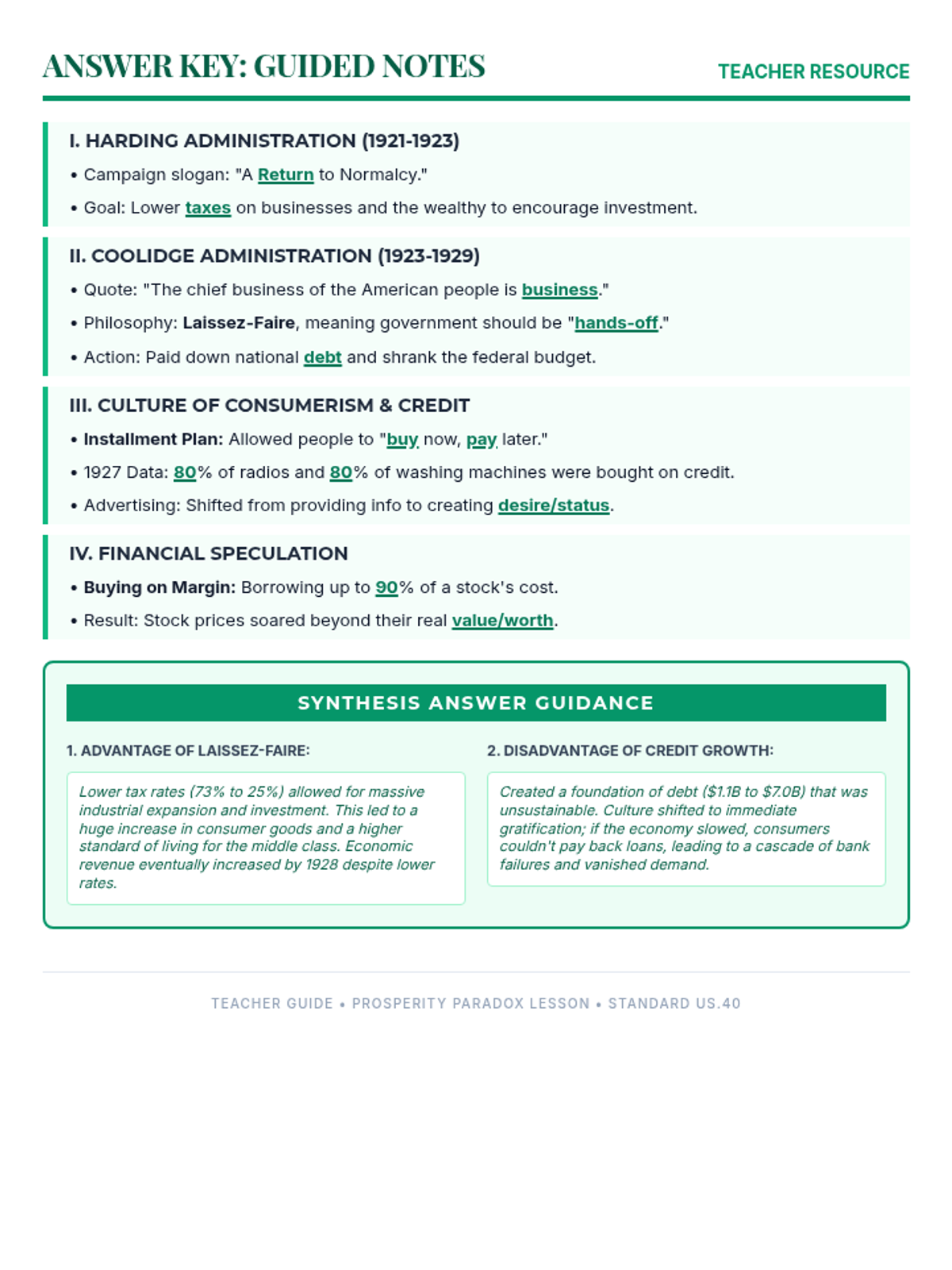
A focused 25-minute exploration of the economic policies of Harding and Coolidge, examining the rise of consumerism and credit, and practicing the interpretation of economic data from the 1920s.
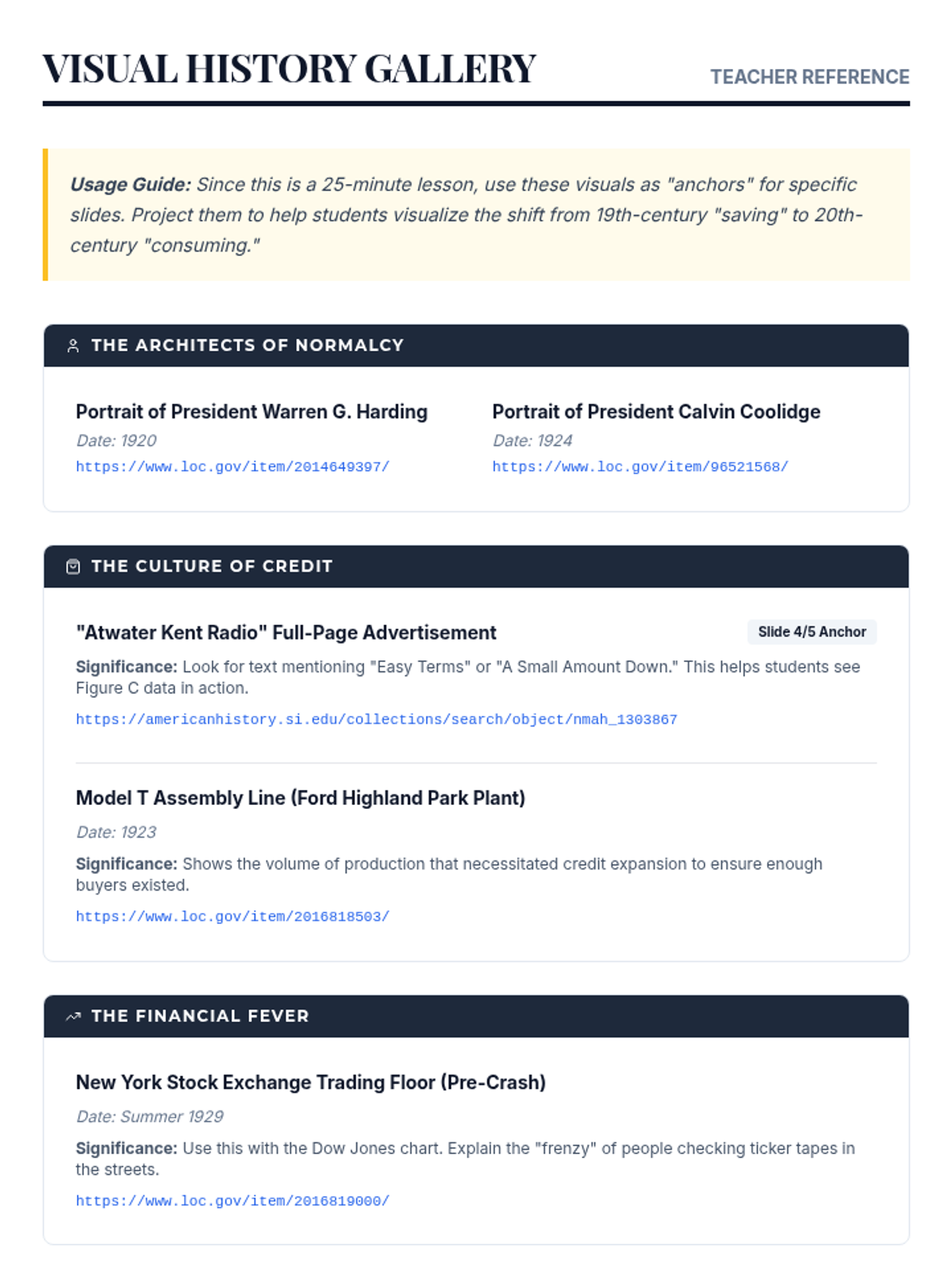
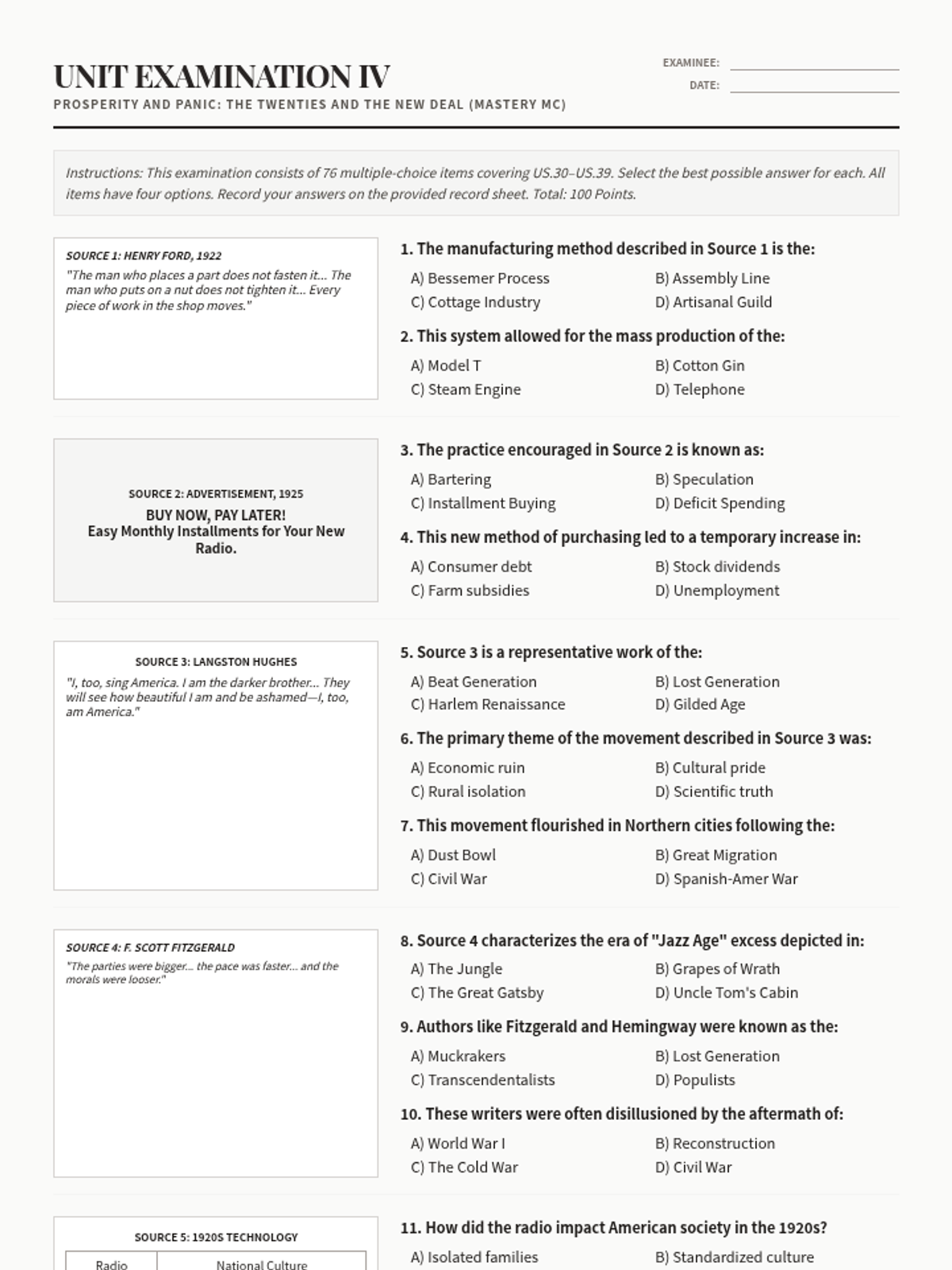
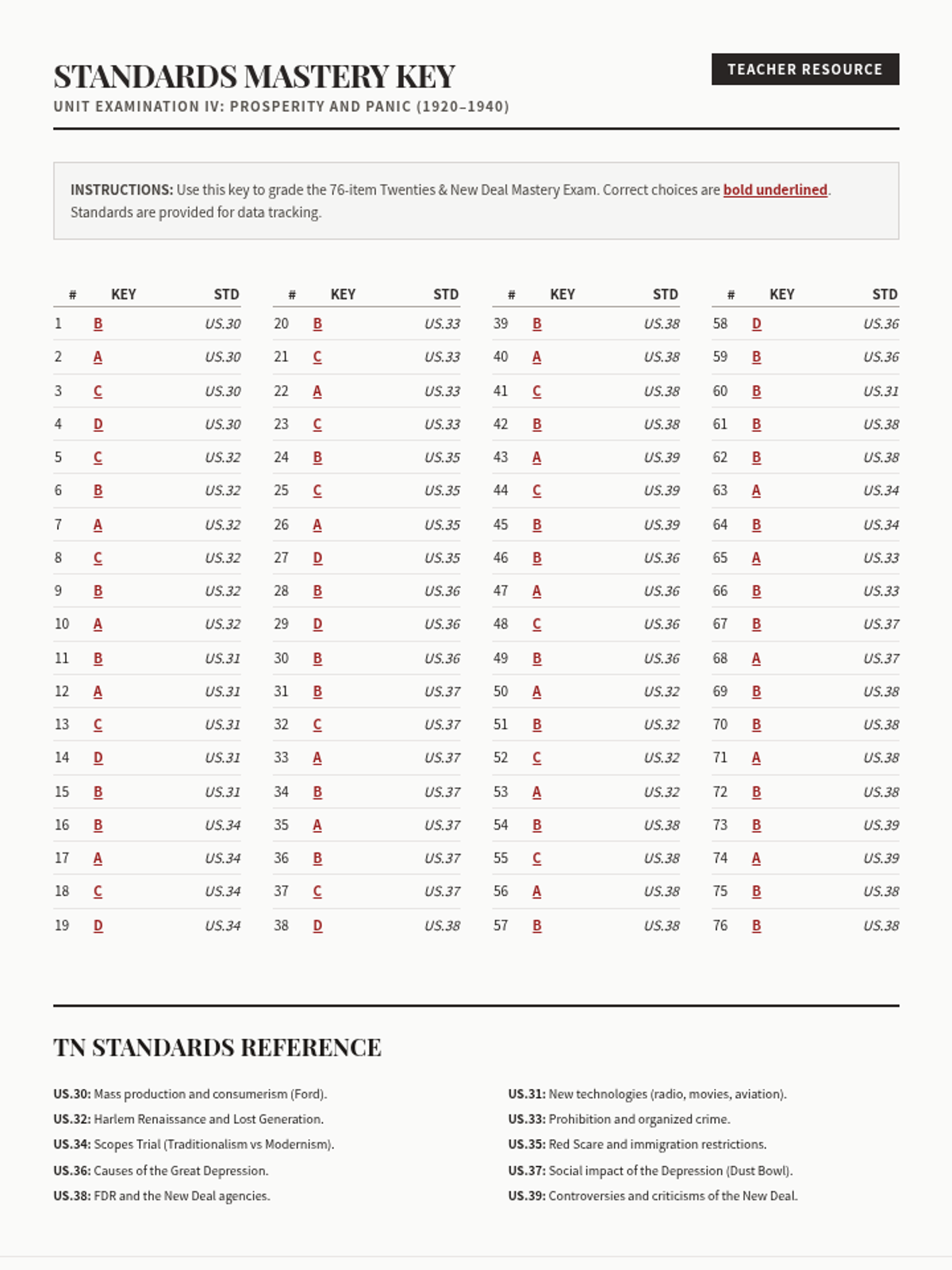
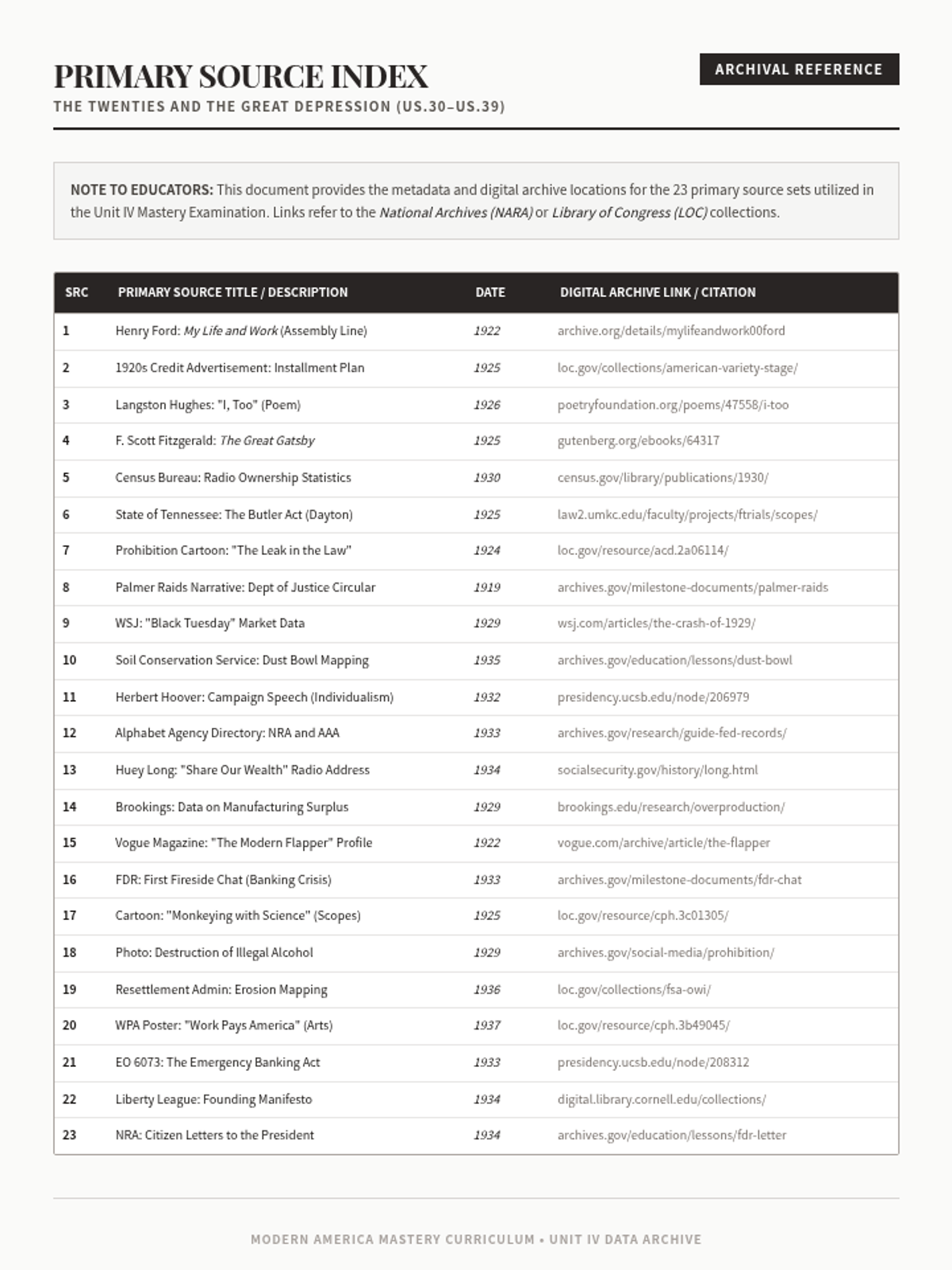
A comprehensive assessment module covering the Roaring Twenties, the Great Depression, and the New Deal (US.30-US.39). Features a 76-question stimulus-based exam, a corresponding standards key, and a detailed primary source index.
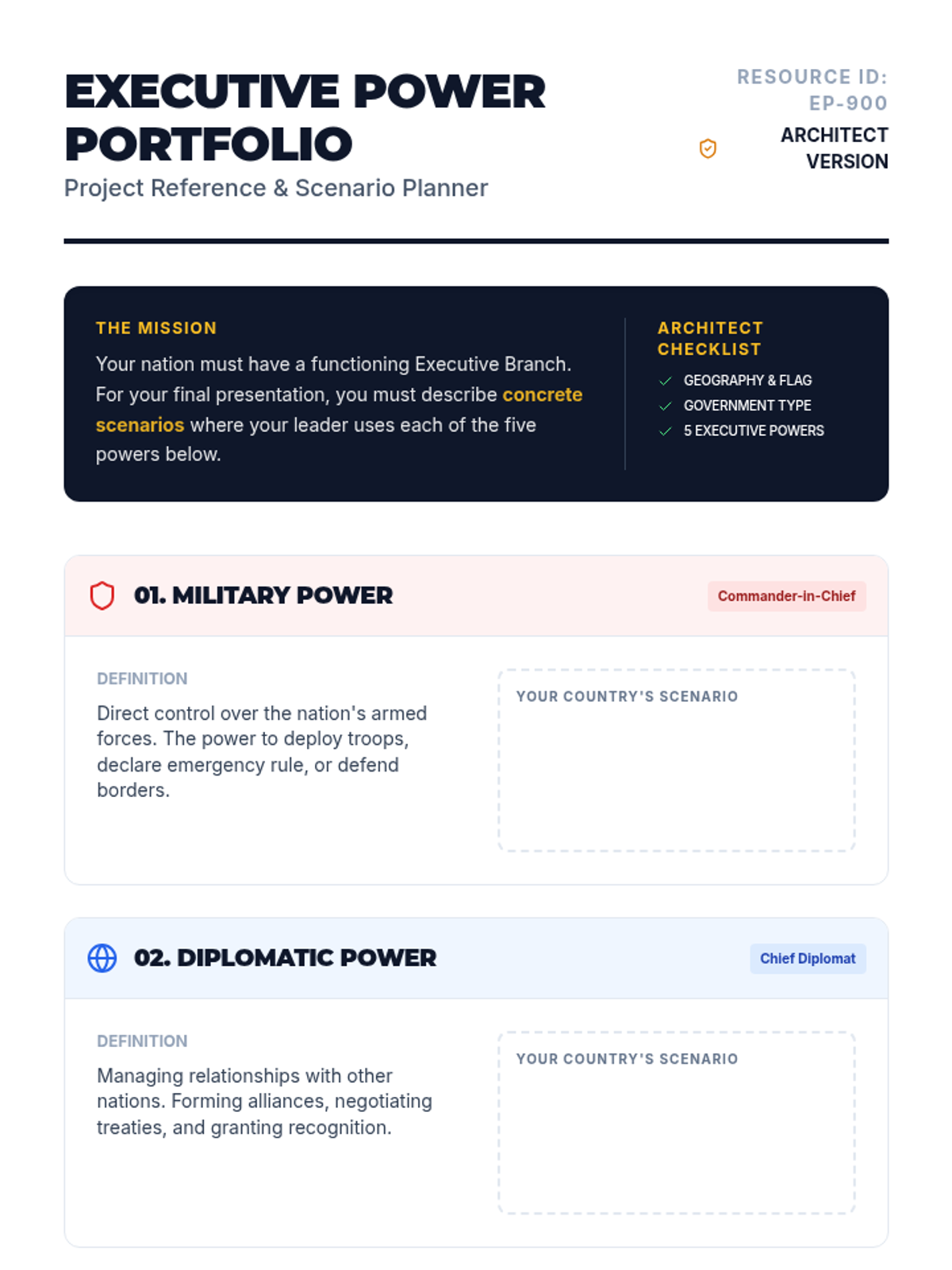
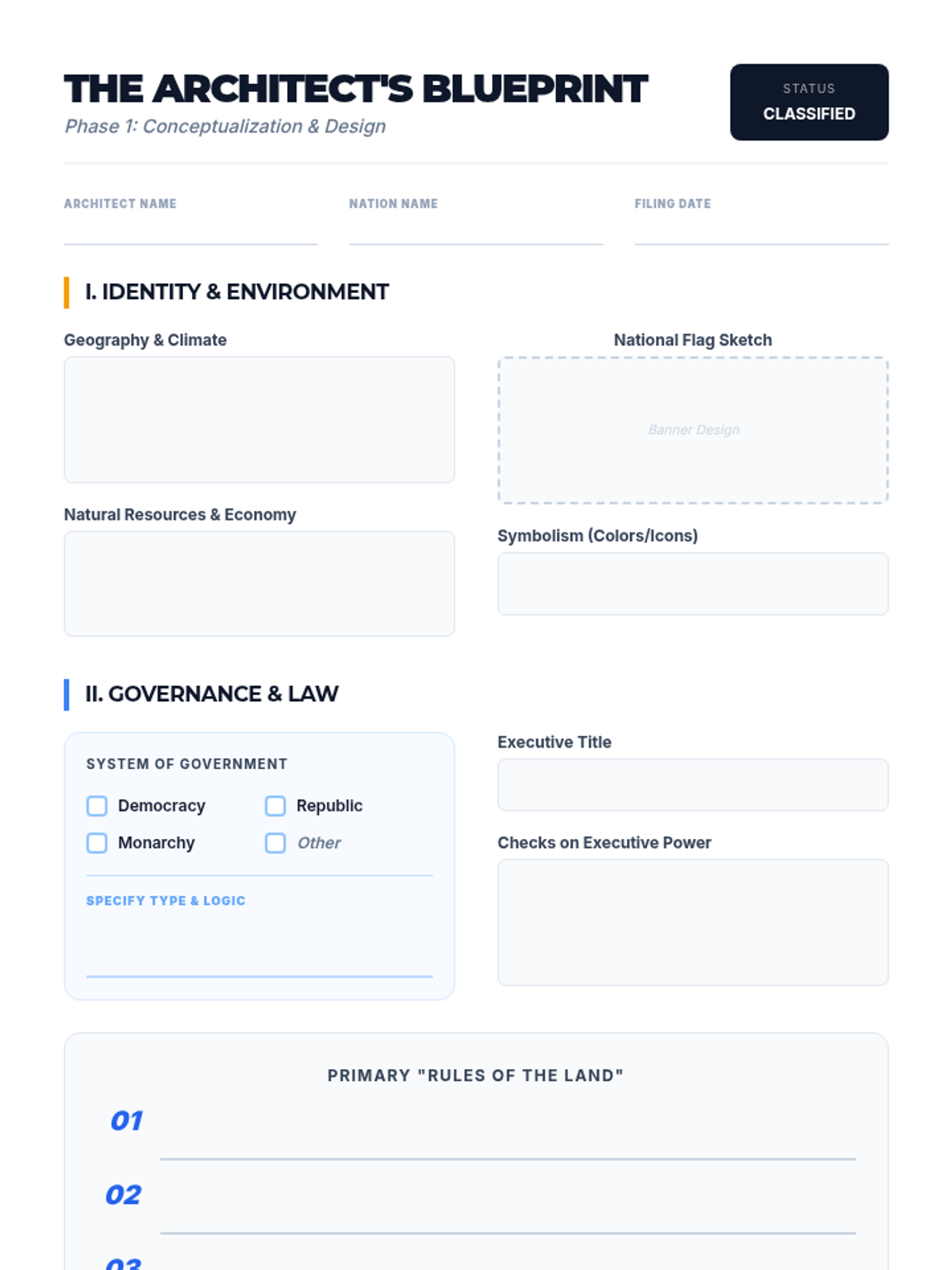
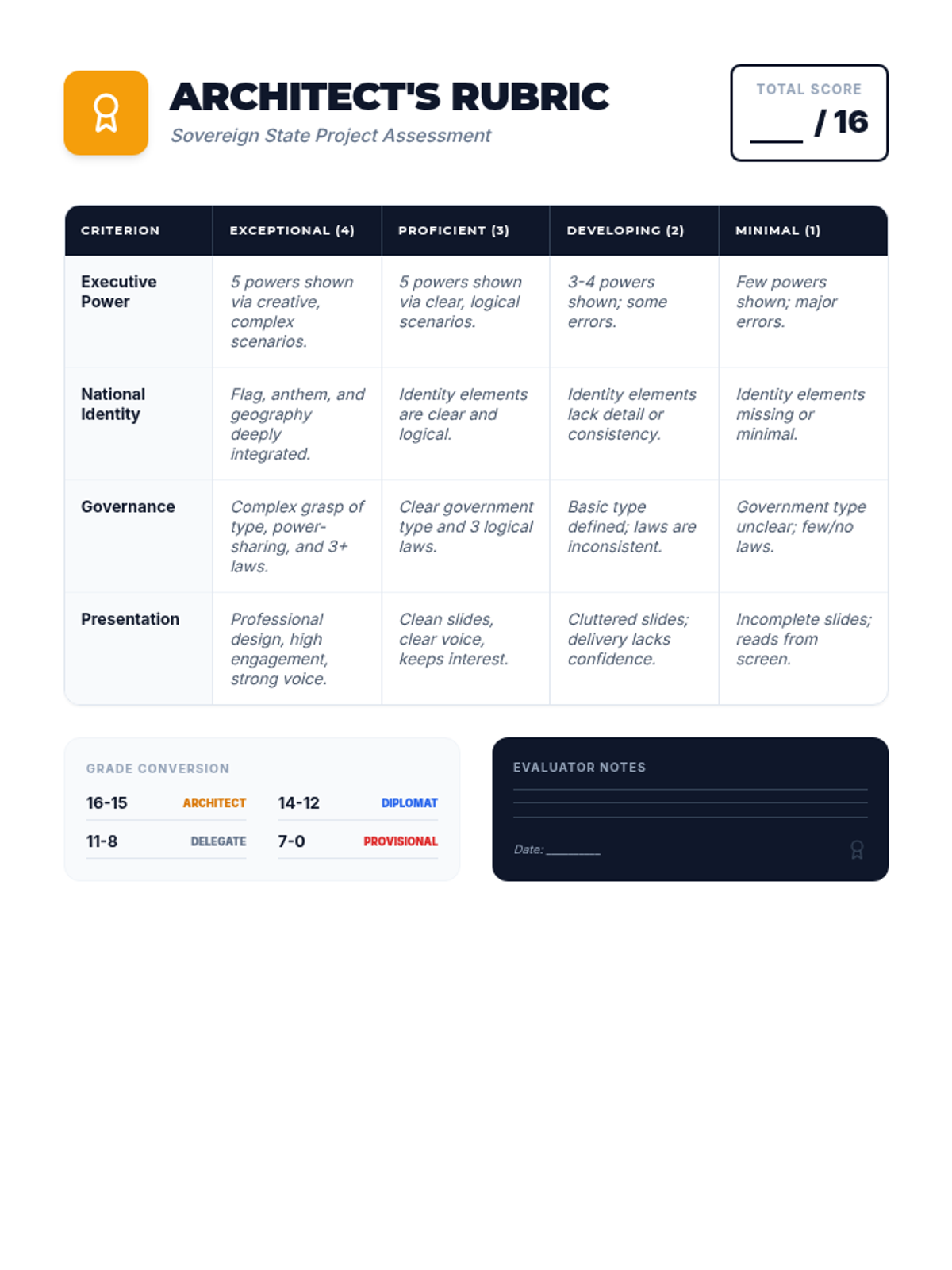
A multi-day final project lesson where students conceptualize, design, and present a new nation, specifically focusing on the application of executive powers.
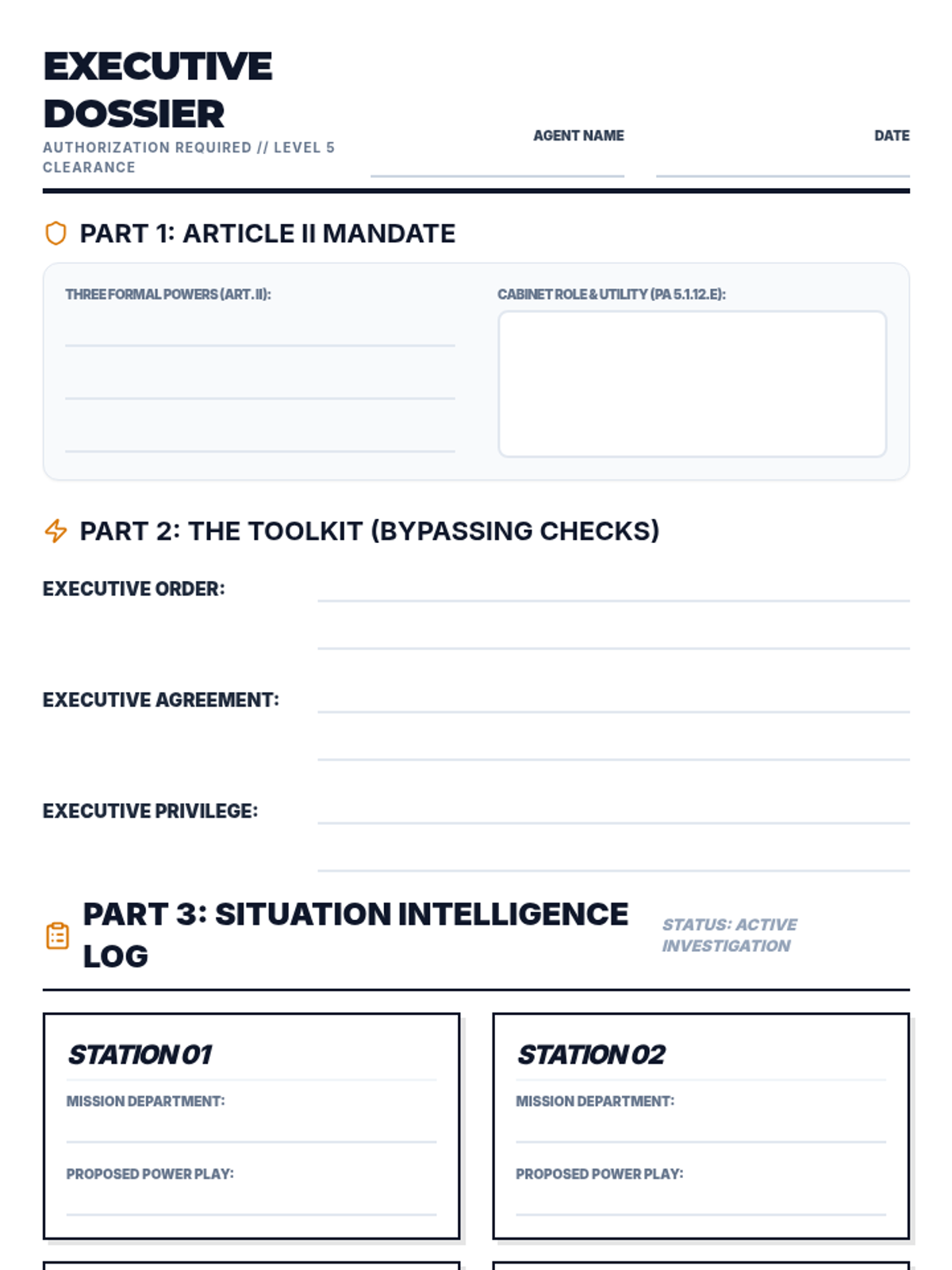
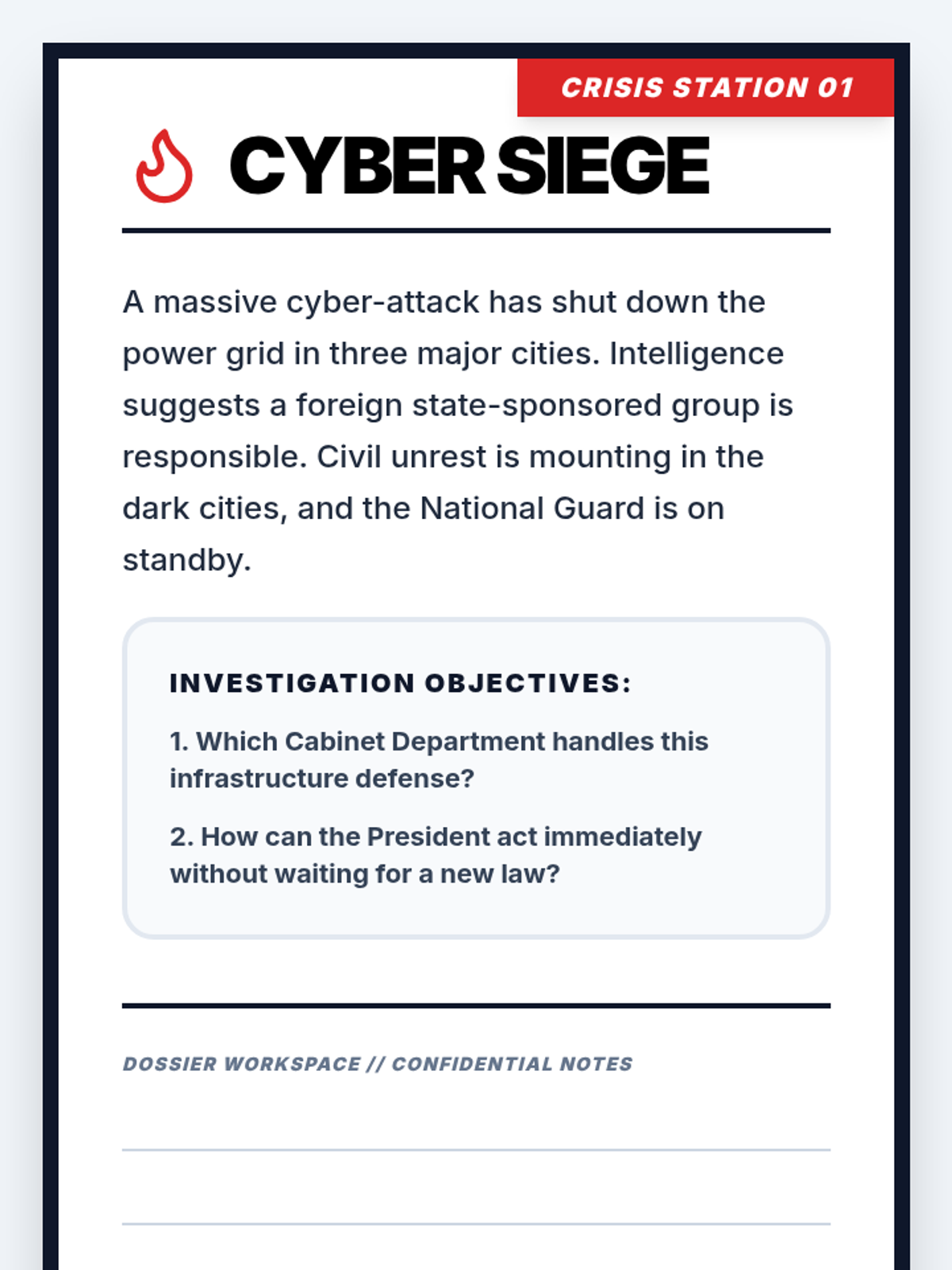
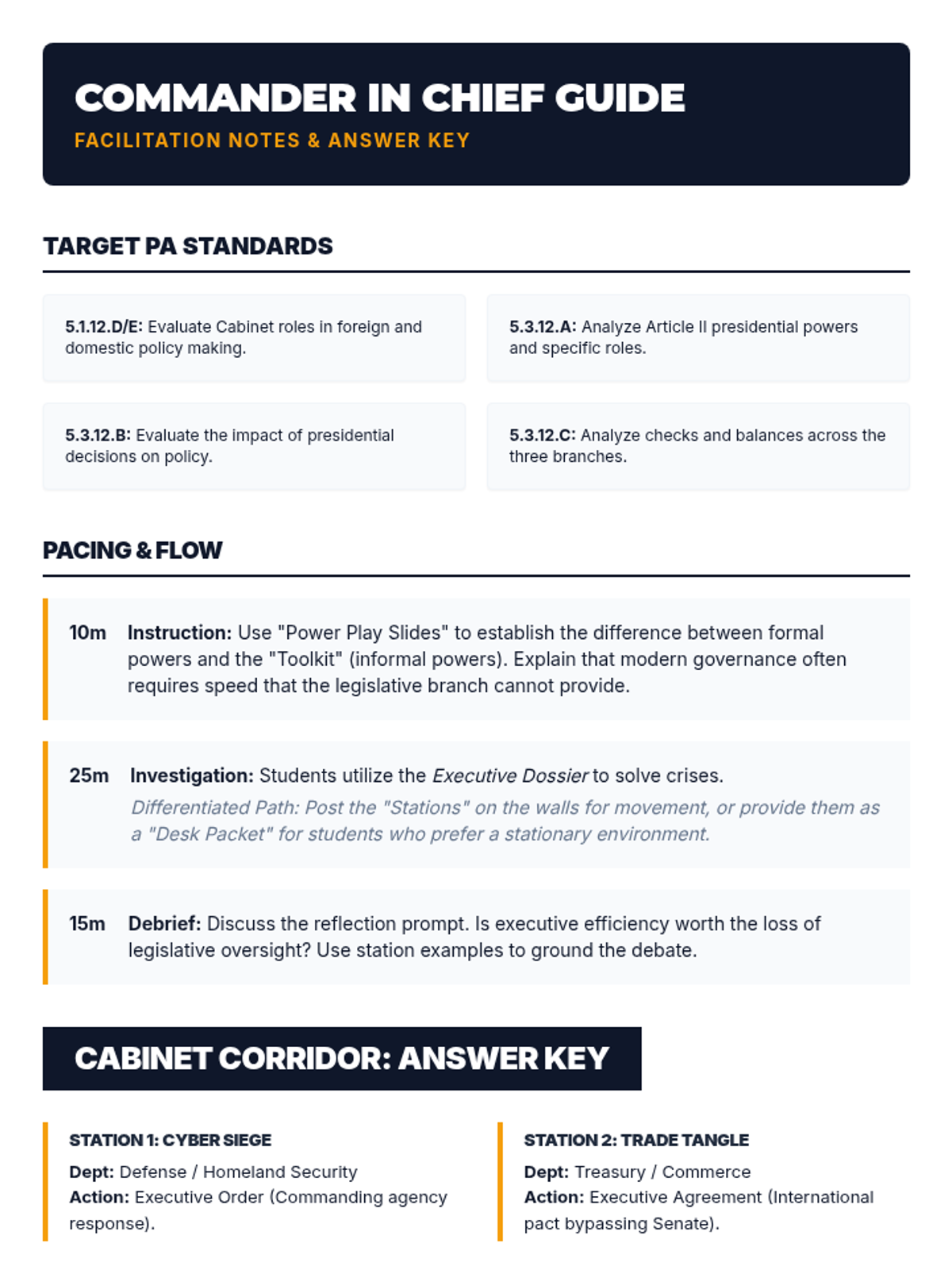
A comprehensive lesson on the Executive Branch focusing on Article II powers, the Cabinet's role, and the strategic use of executive actions to navigate checks and balances. Includes a flexible movement-based activity suitable for all energy levels.
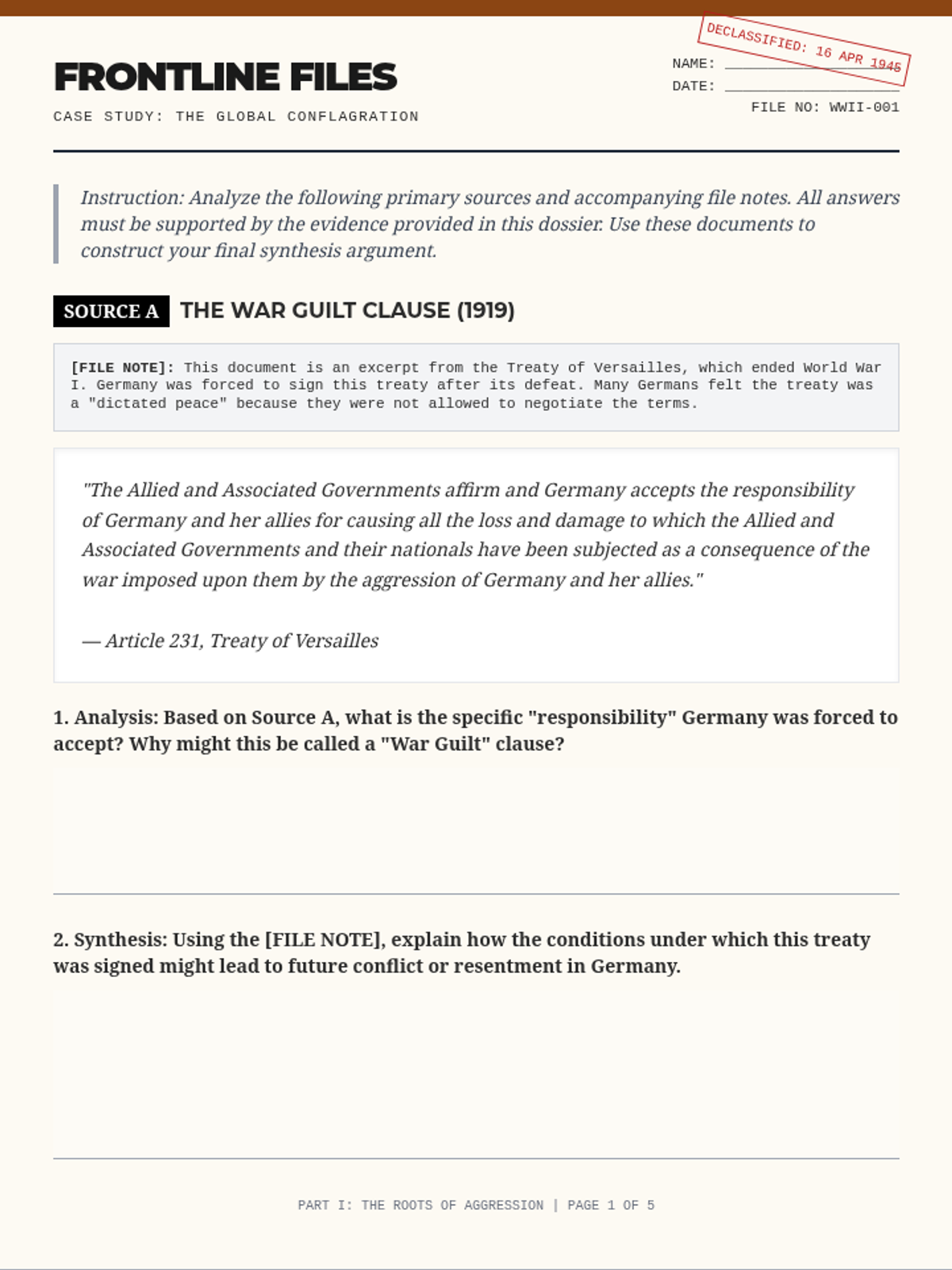
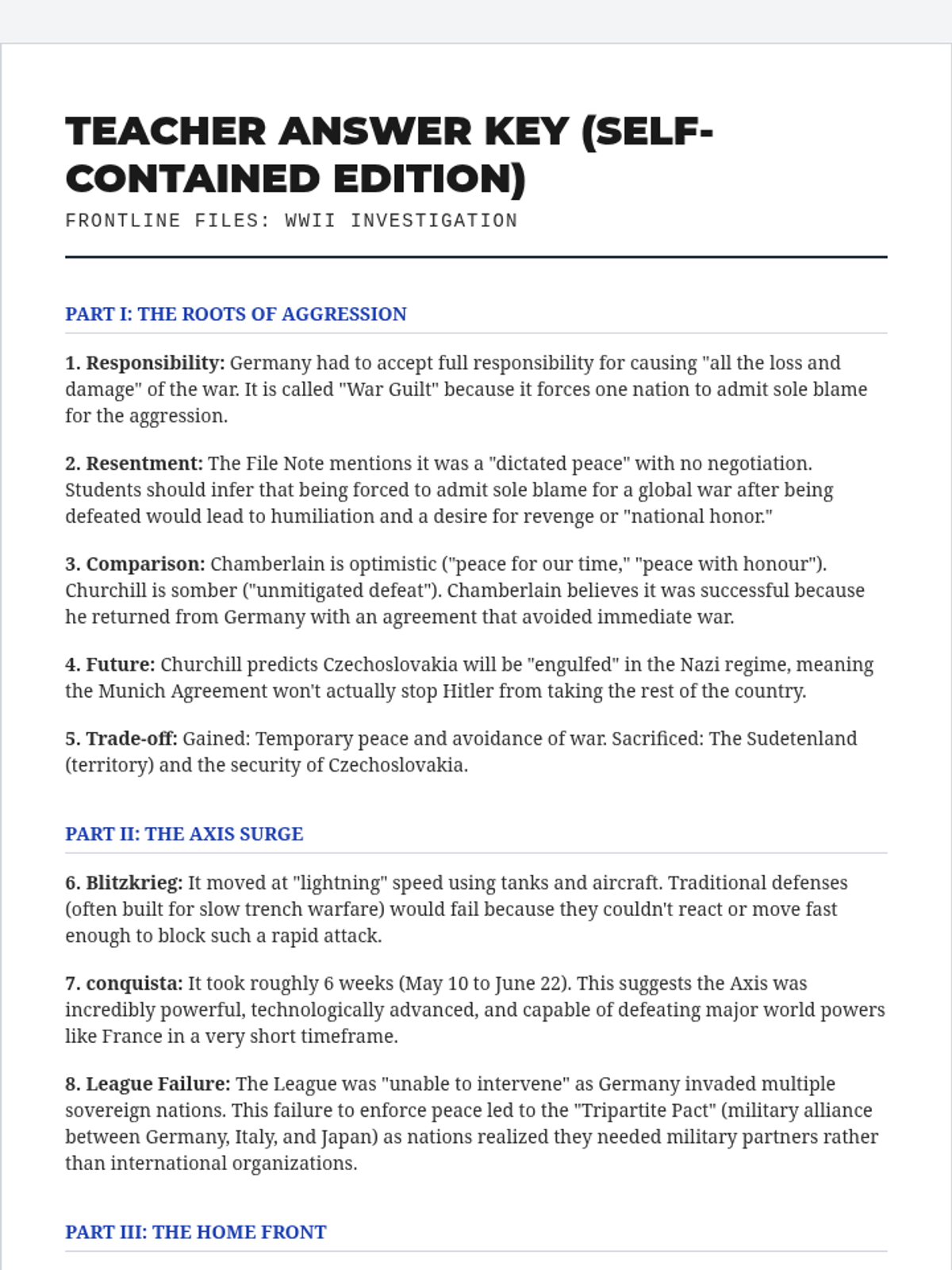
A primary source-based investigation into the causes of WWII, early Axis expansion, and the shifting social dynamics of the Home Front, focusing on women's contributions.
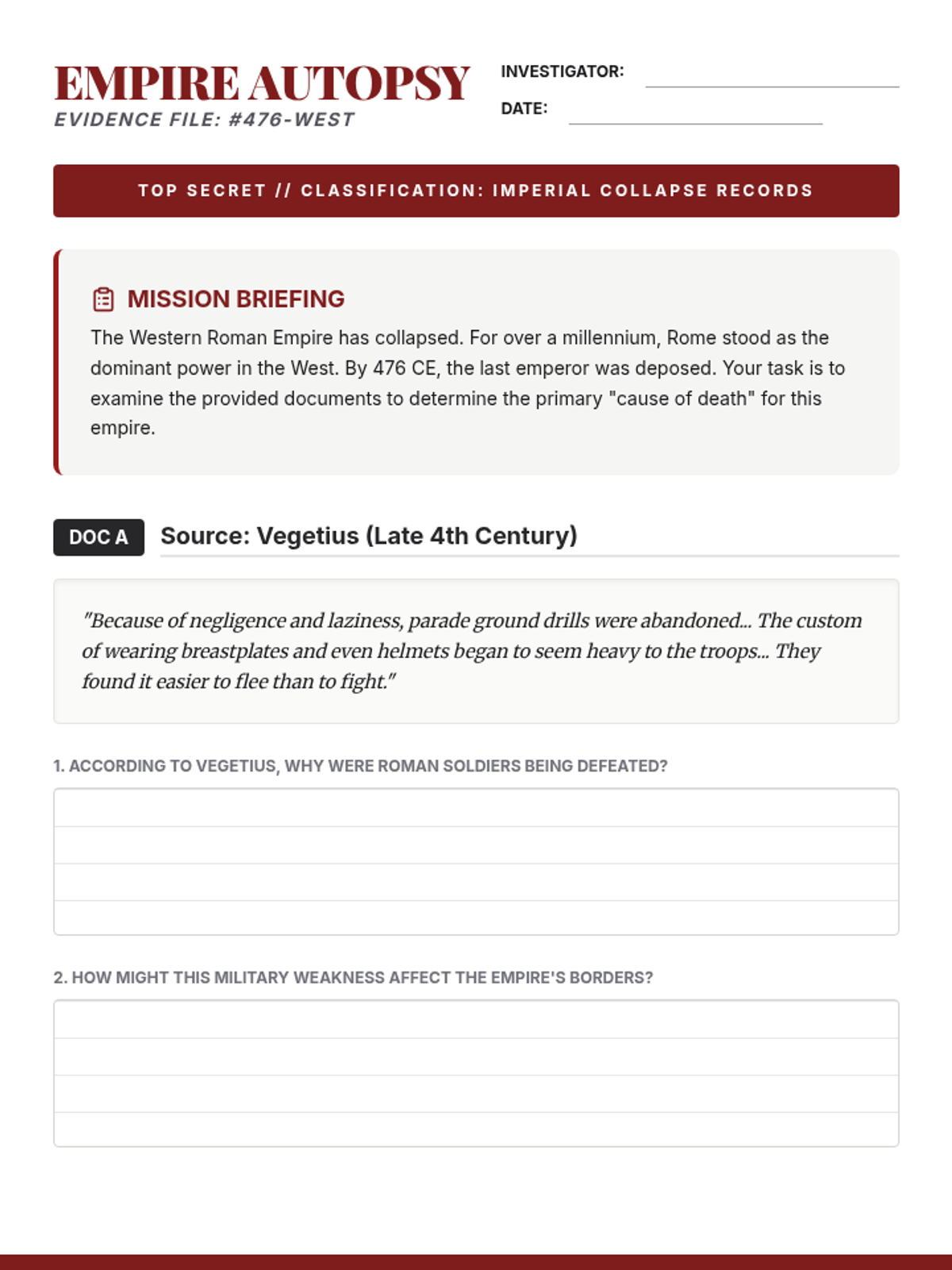
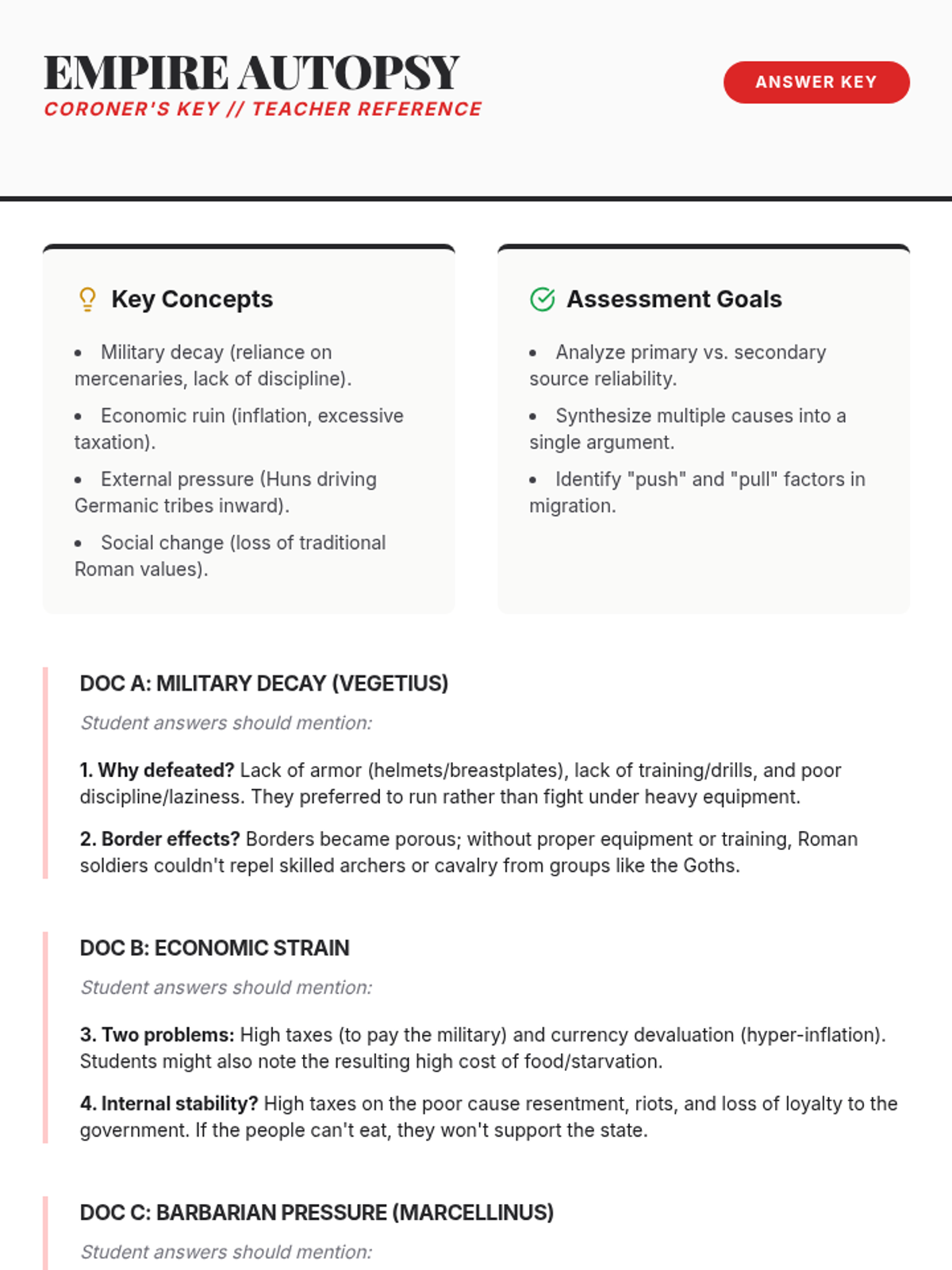
Students analyze primary and secondary sources to determine the primary causes of the Western Roman Empire's collapse in 476 CE.
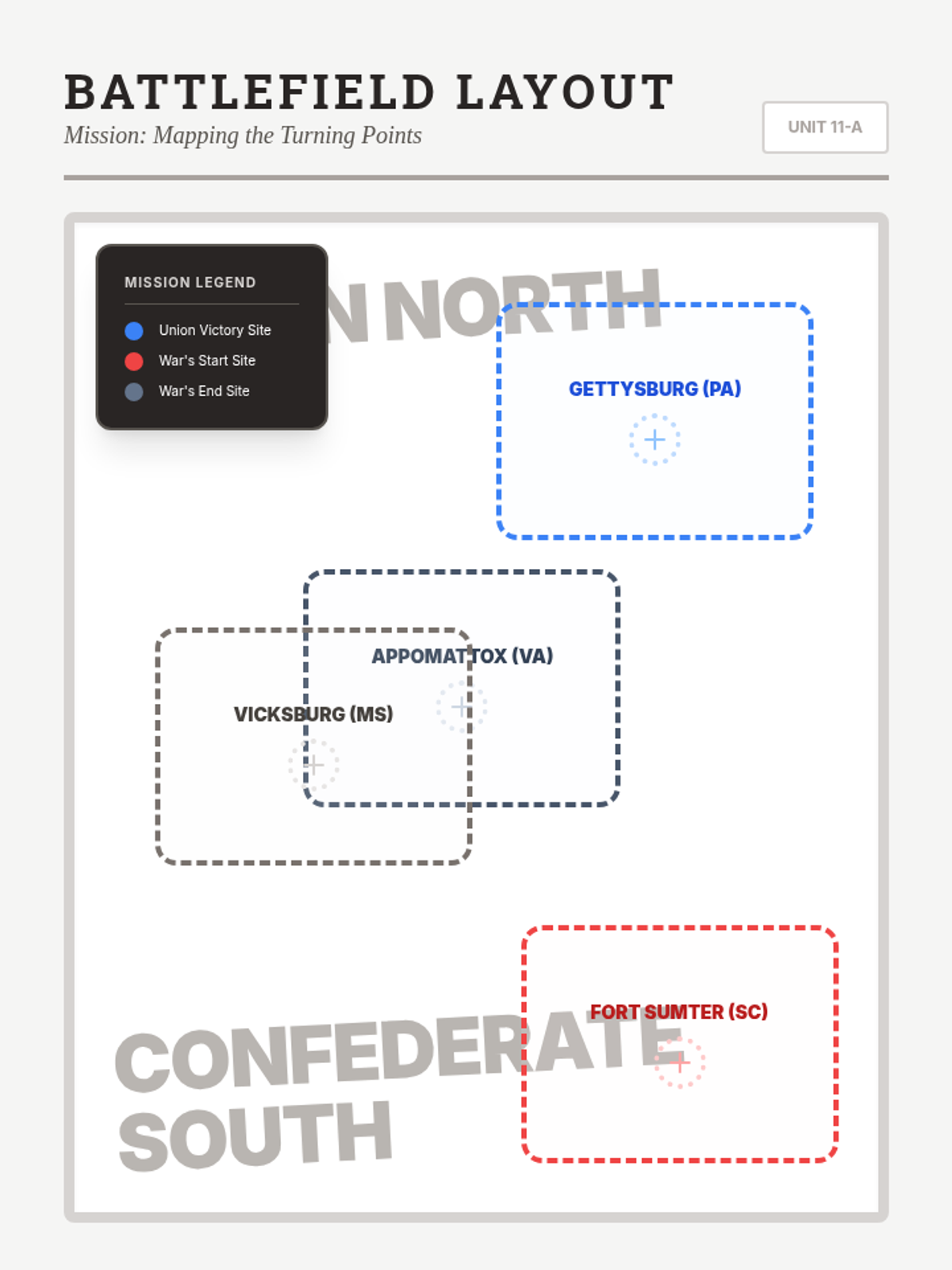
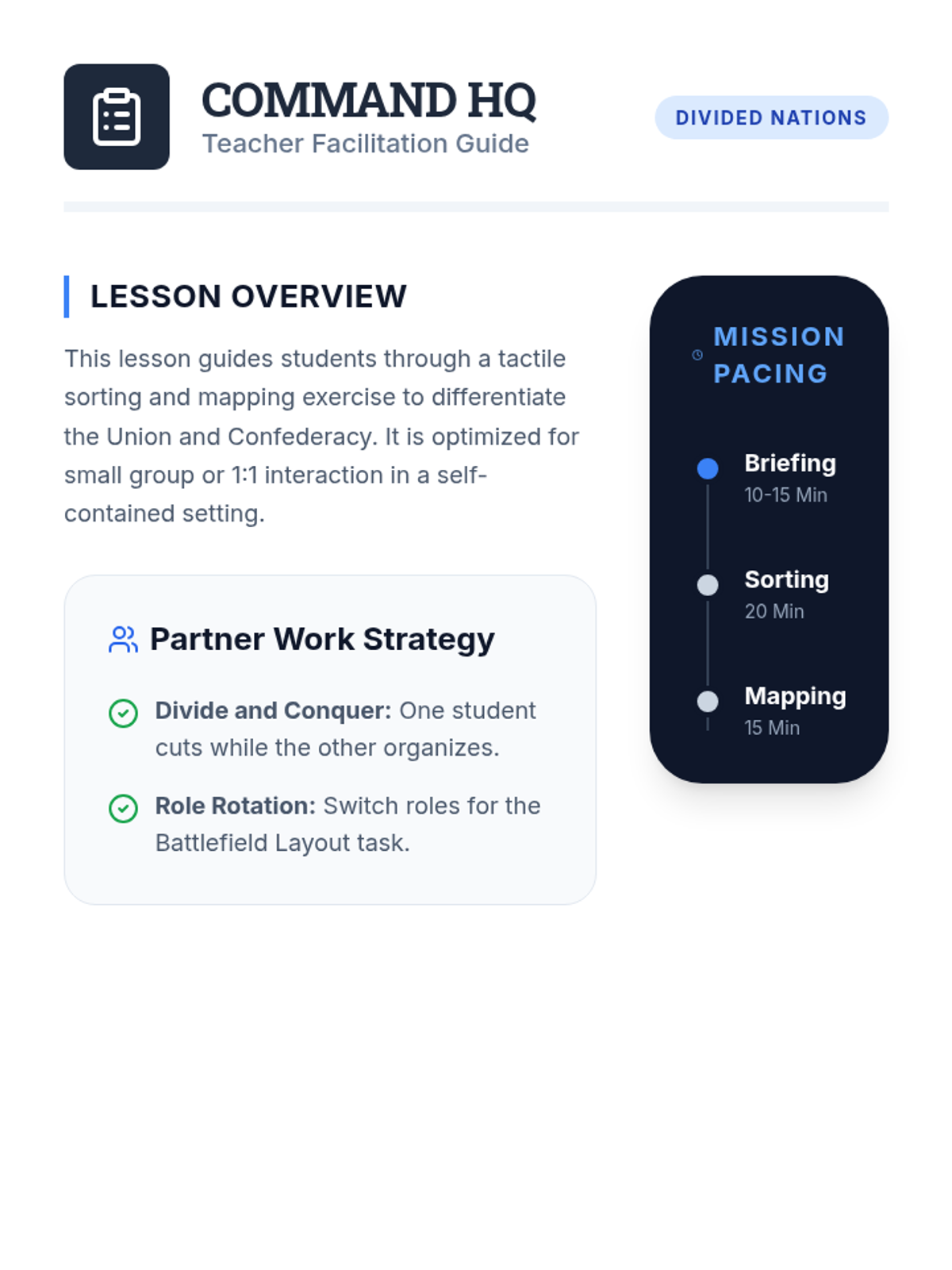
A hands-on exploration of the American Civil War, focusing on the differences between the Union and the Confederacy through sorting and map assembly tasks designed for a self-contained classroom.
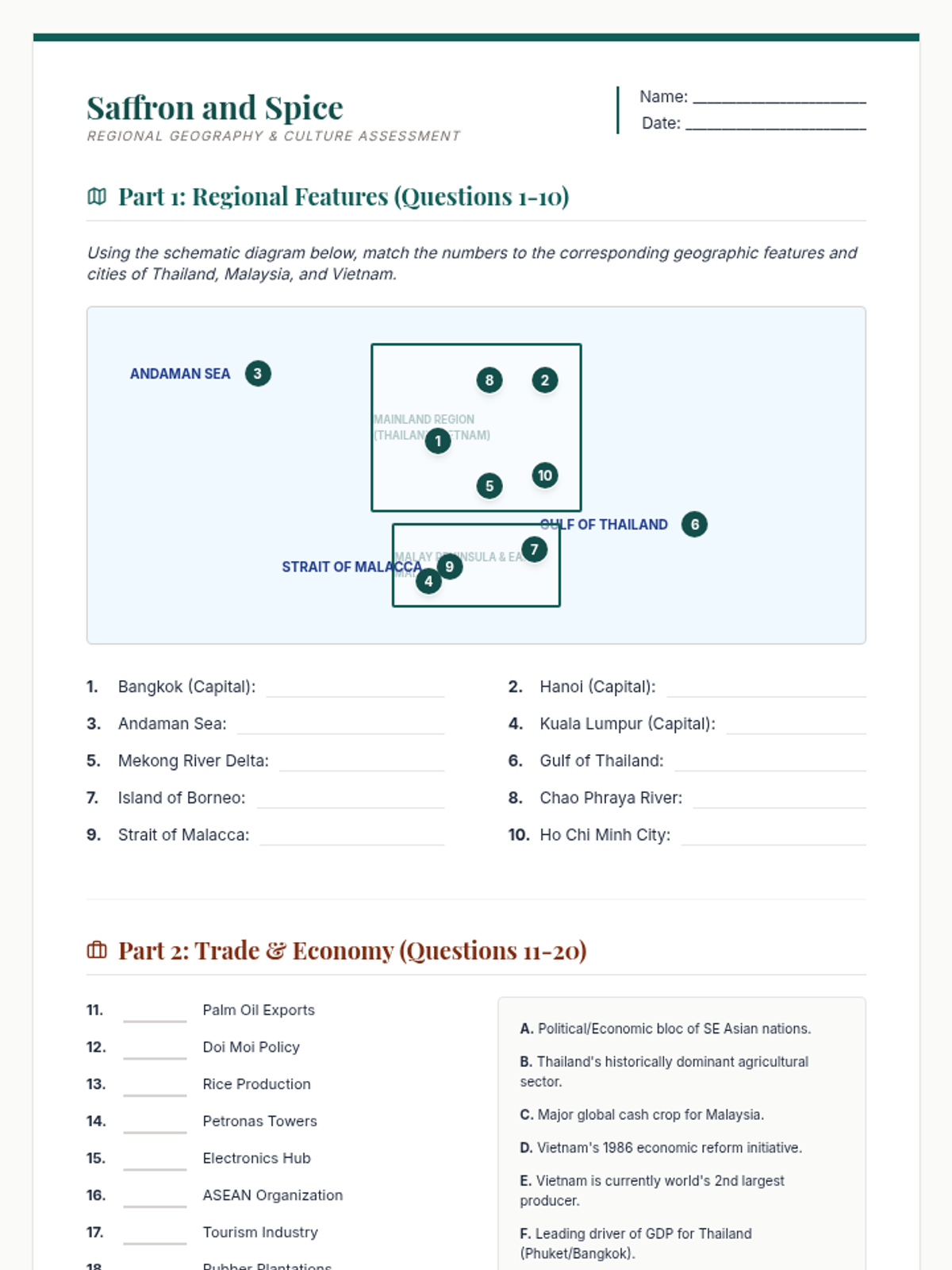
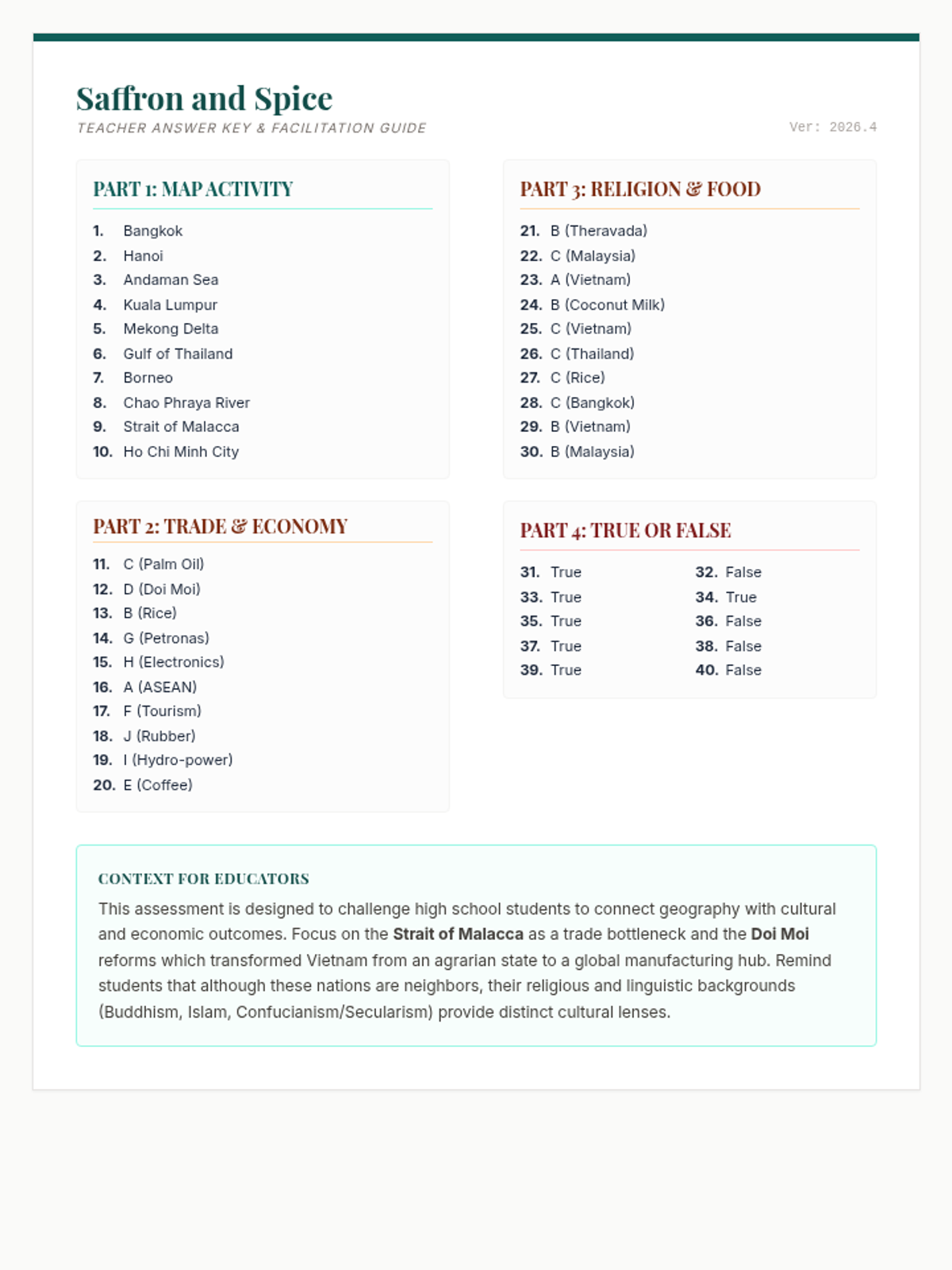
A comprehensive exploration of the geography, culture, and economy of Thailand, Malaysia, and Vietnam, focusing on their unique religious landscapes, culinary traditions, and roles in global trade.
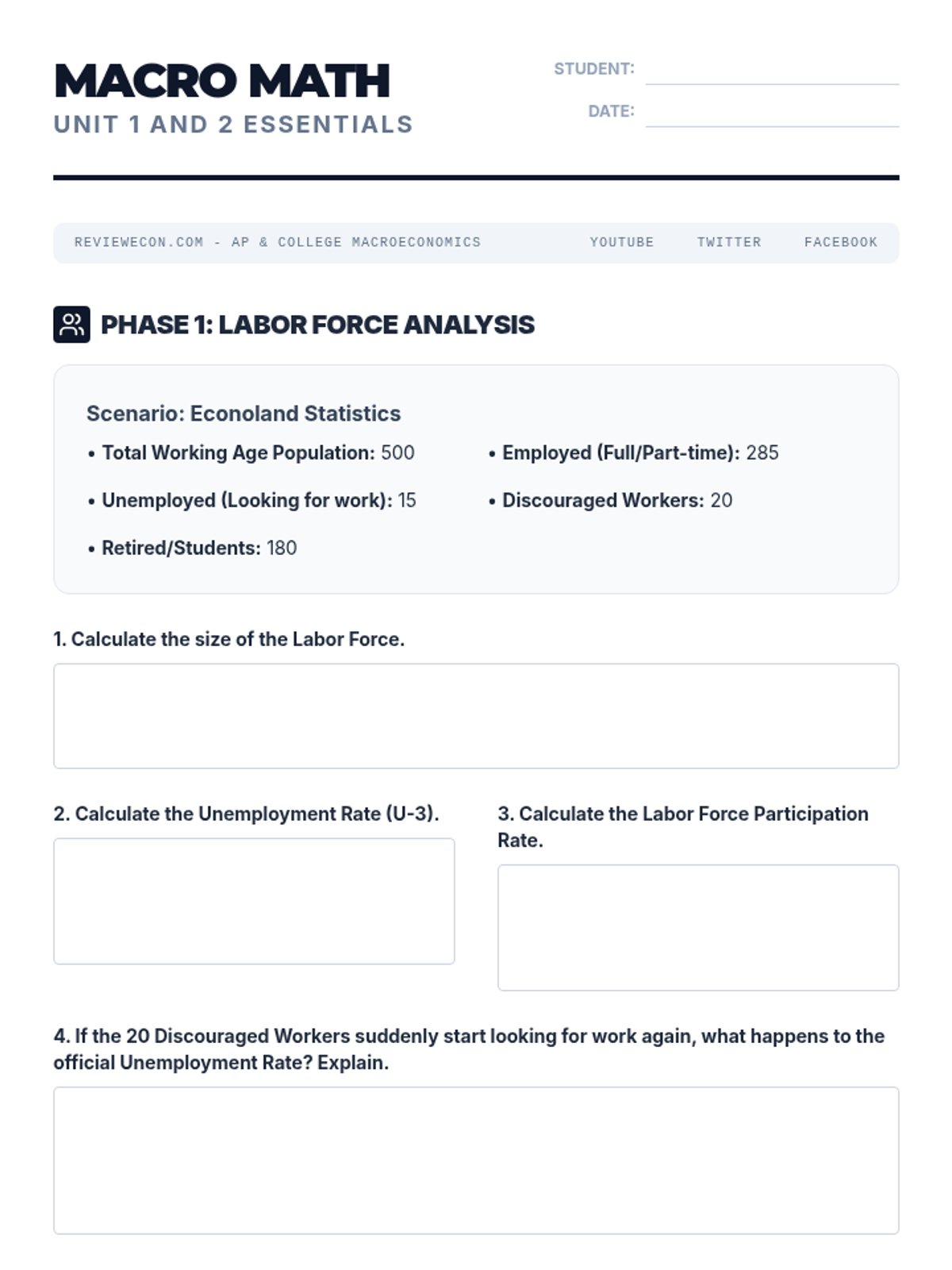
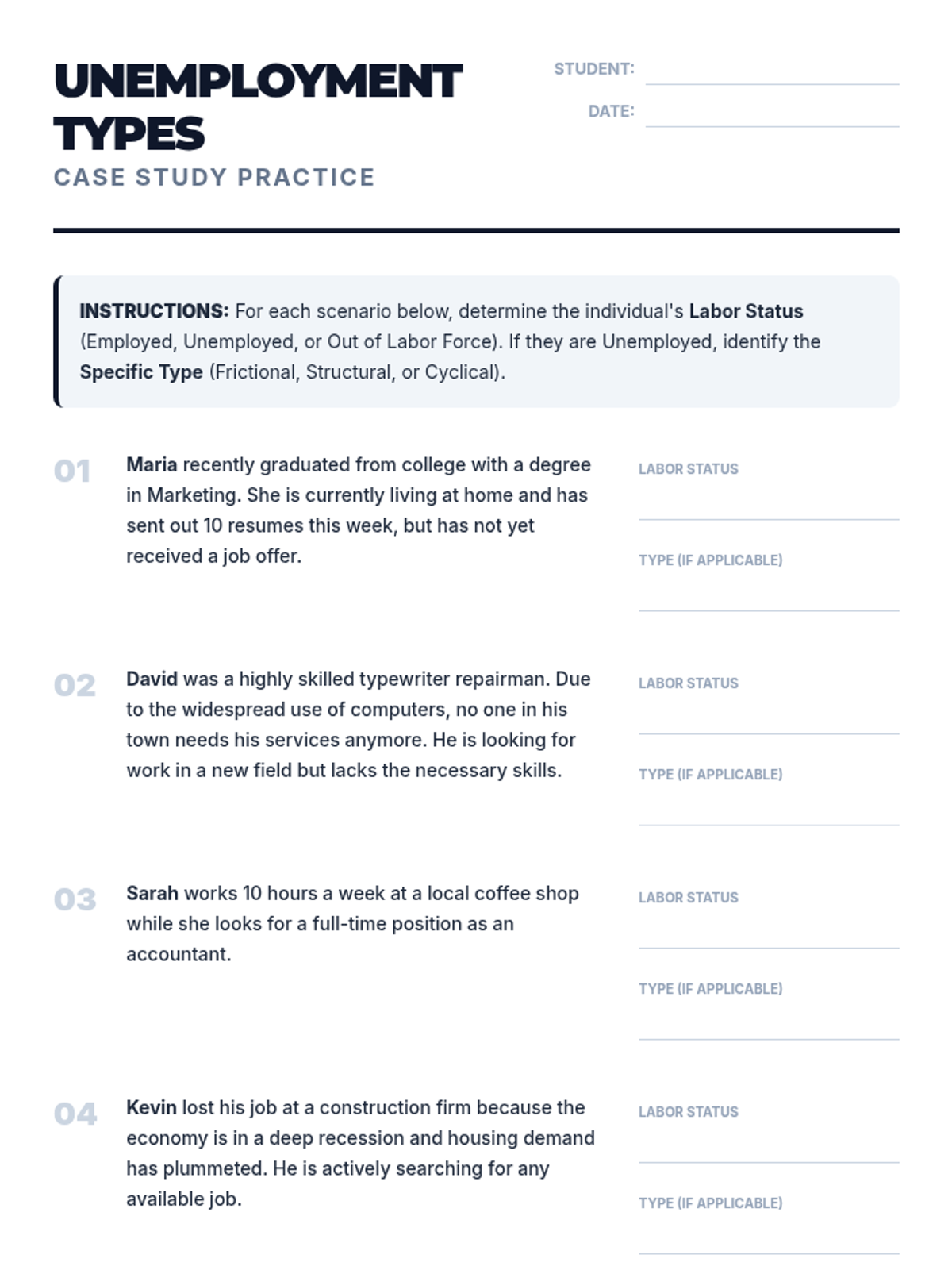
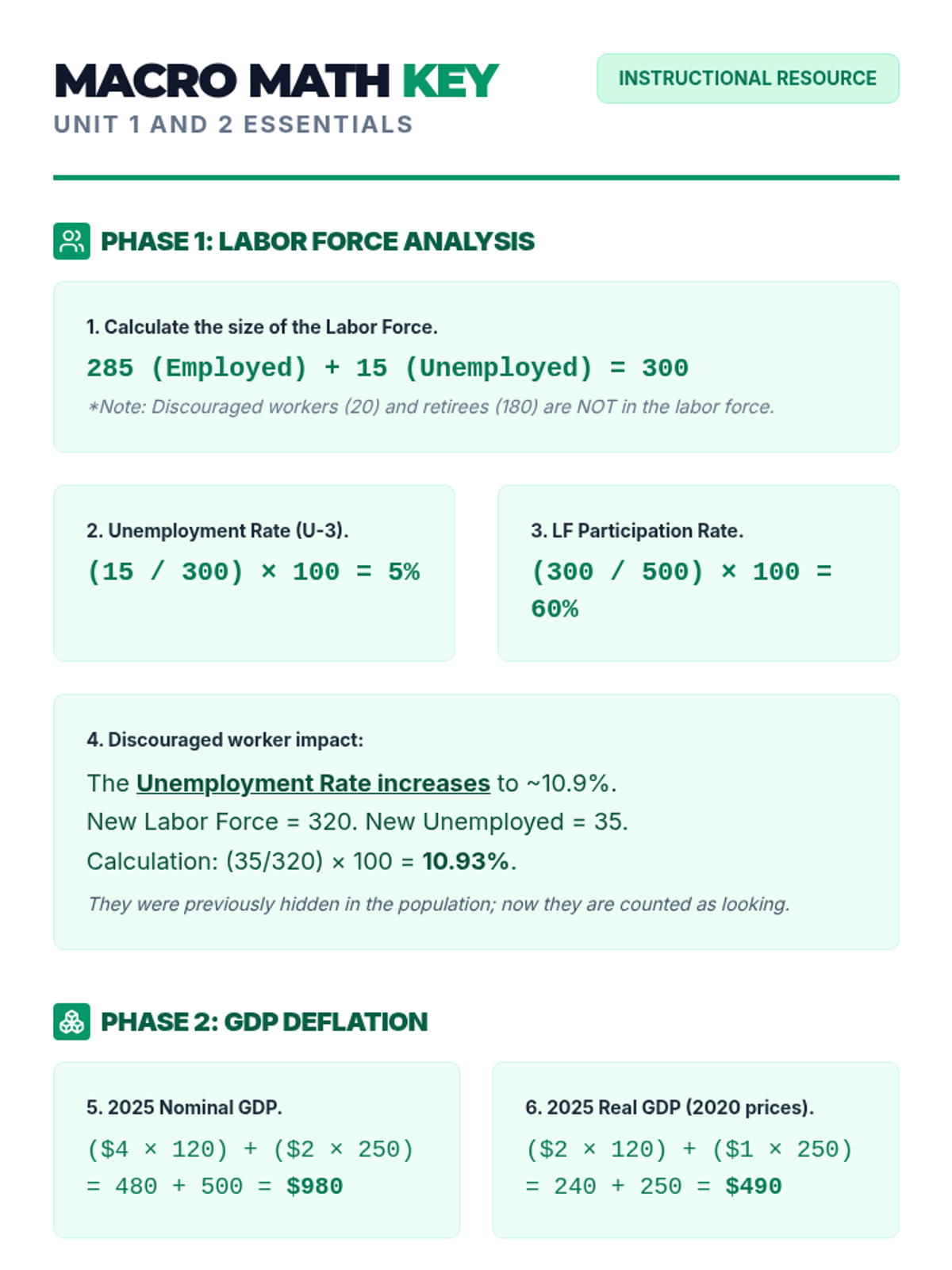
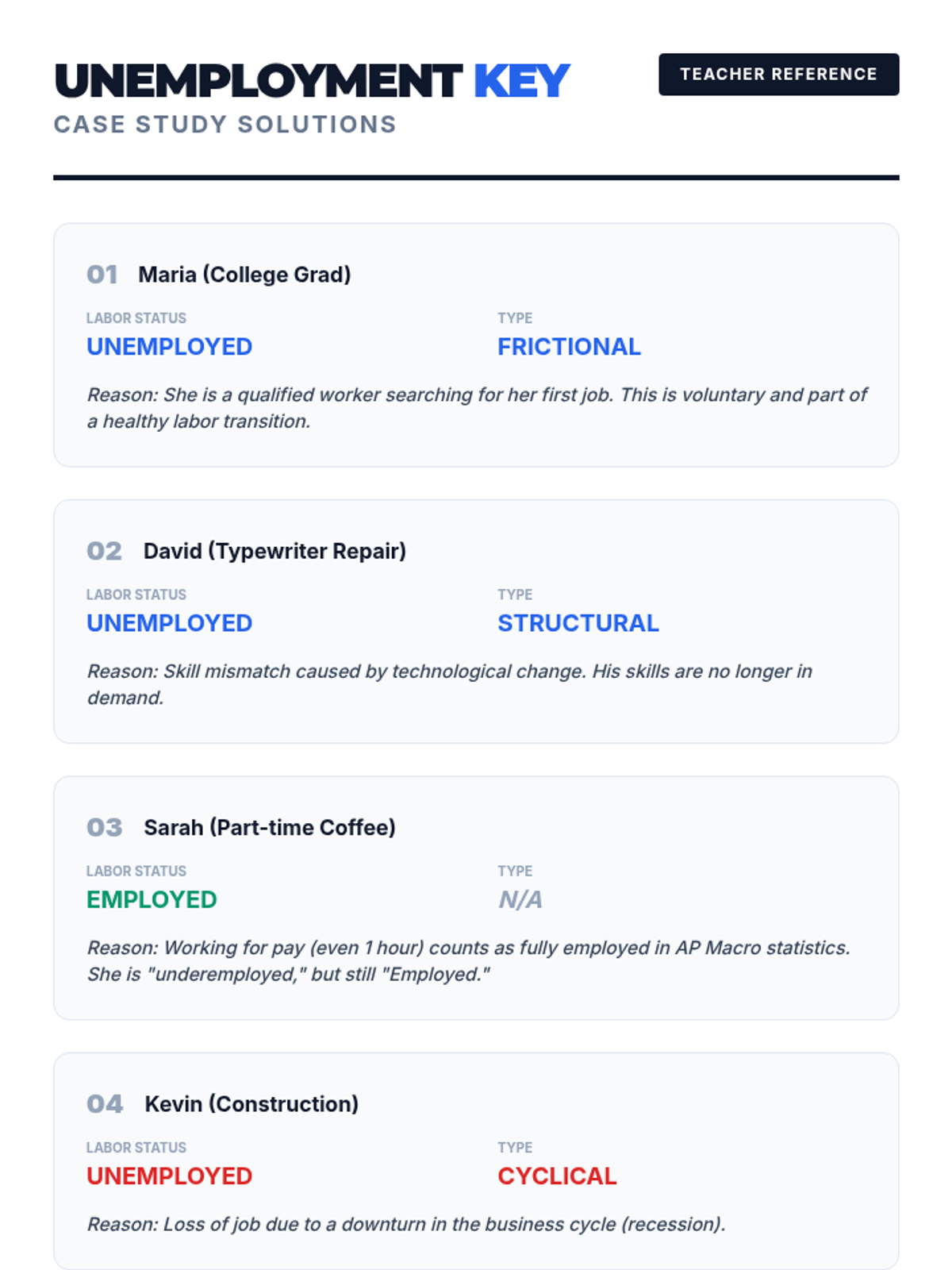
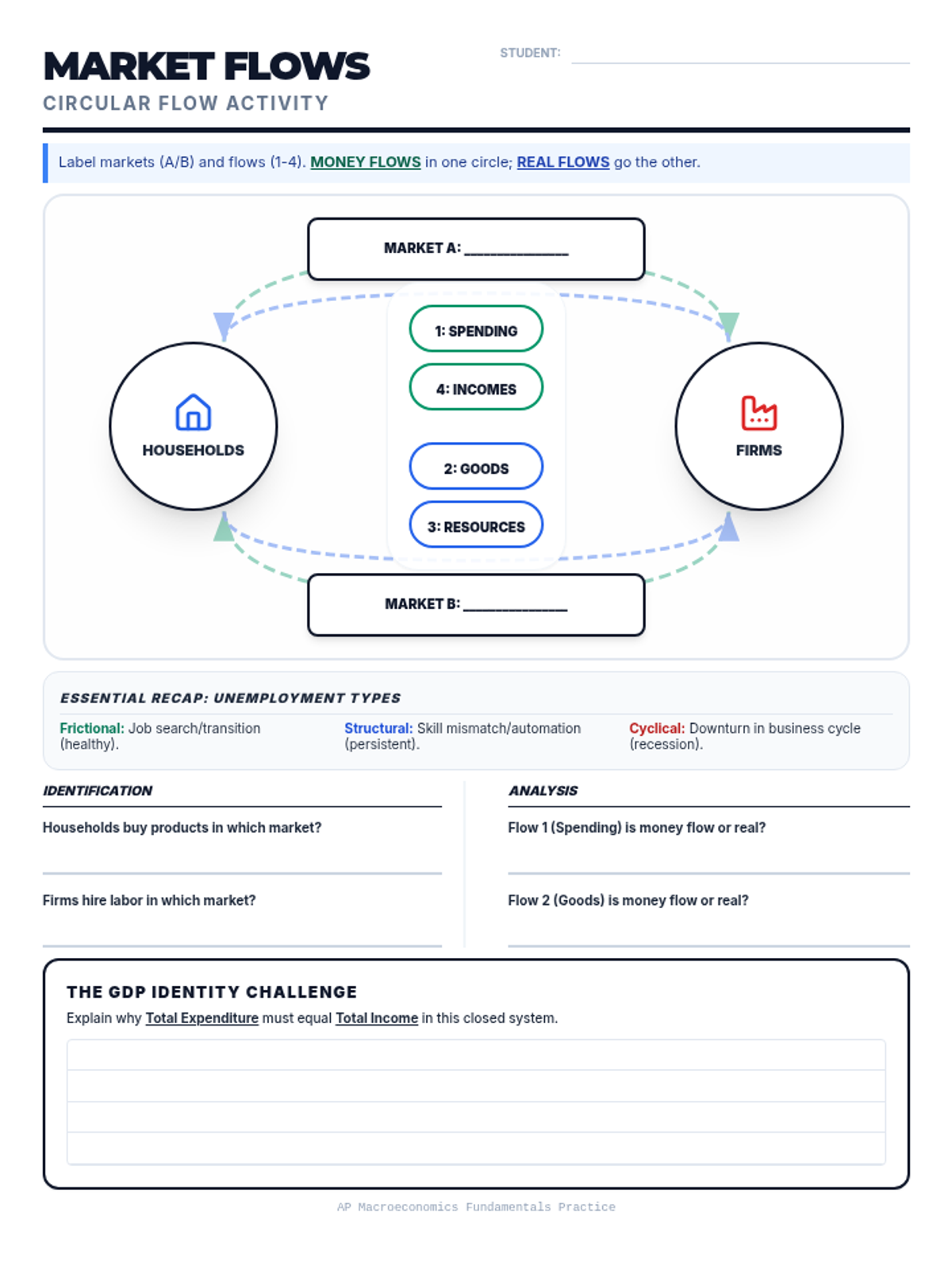
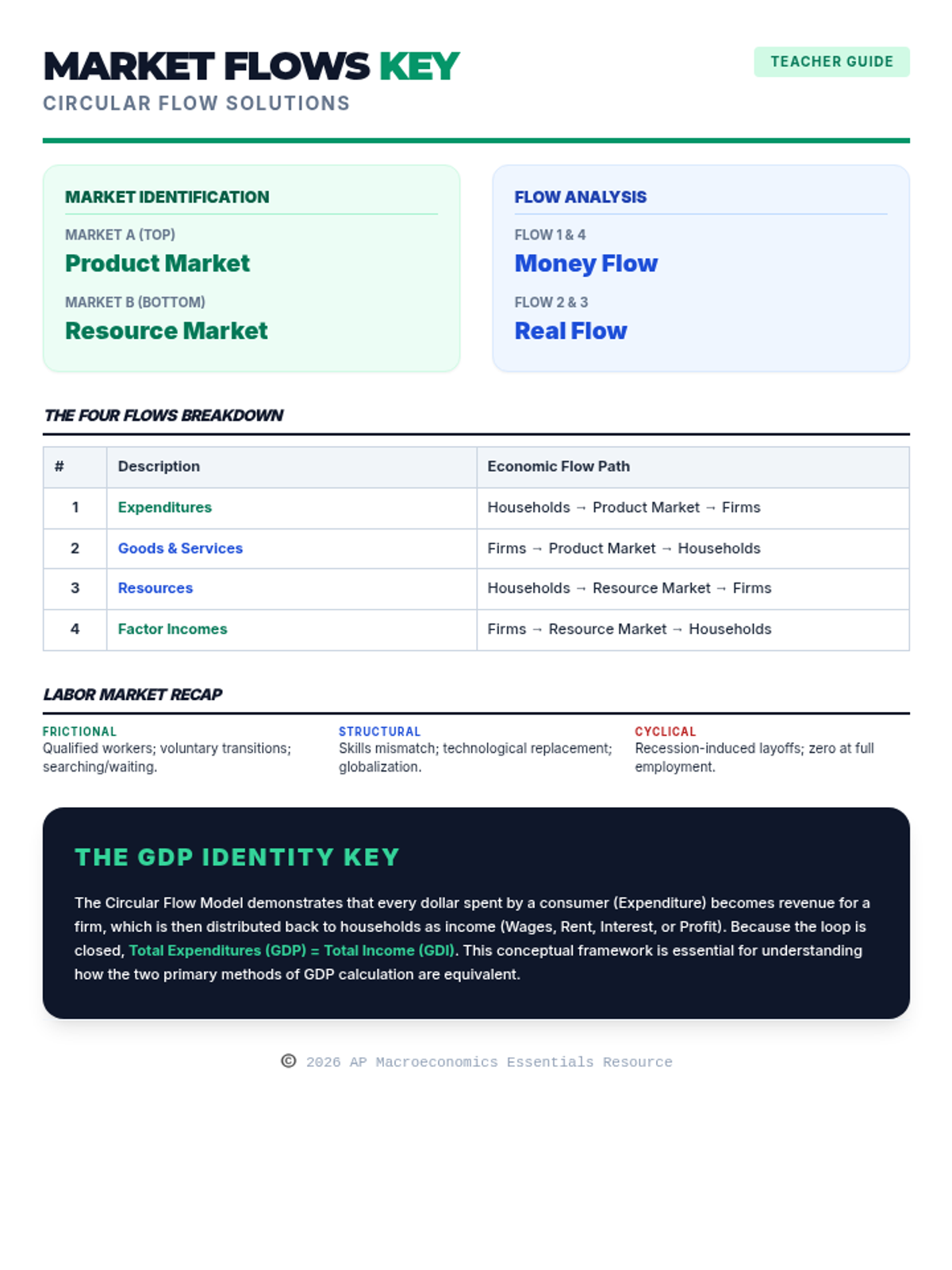
This lesson covers the fundamental building blocks of Units 1 and 2 for AP Economics, including the Production Possibilities Curve, Comparative Advantage, Supply and Demand, and basic macroeconomic indicators like CPI and GDP.
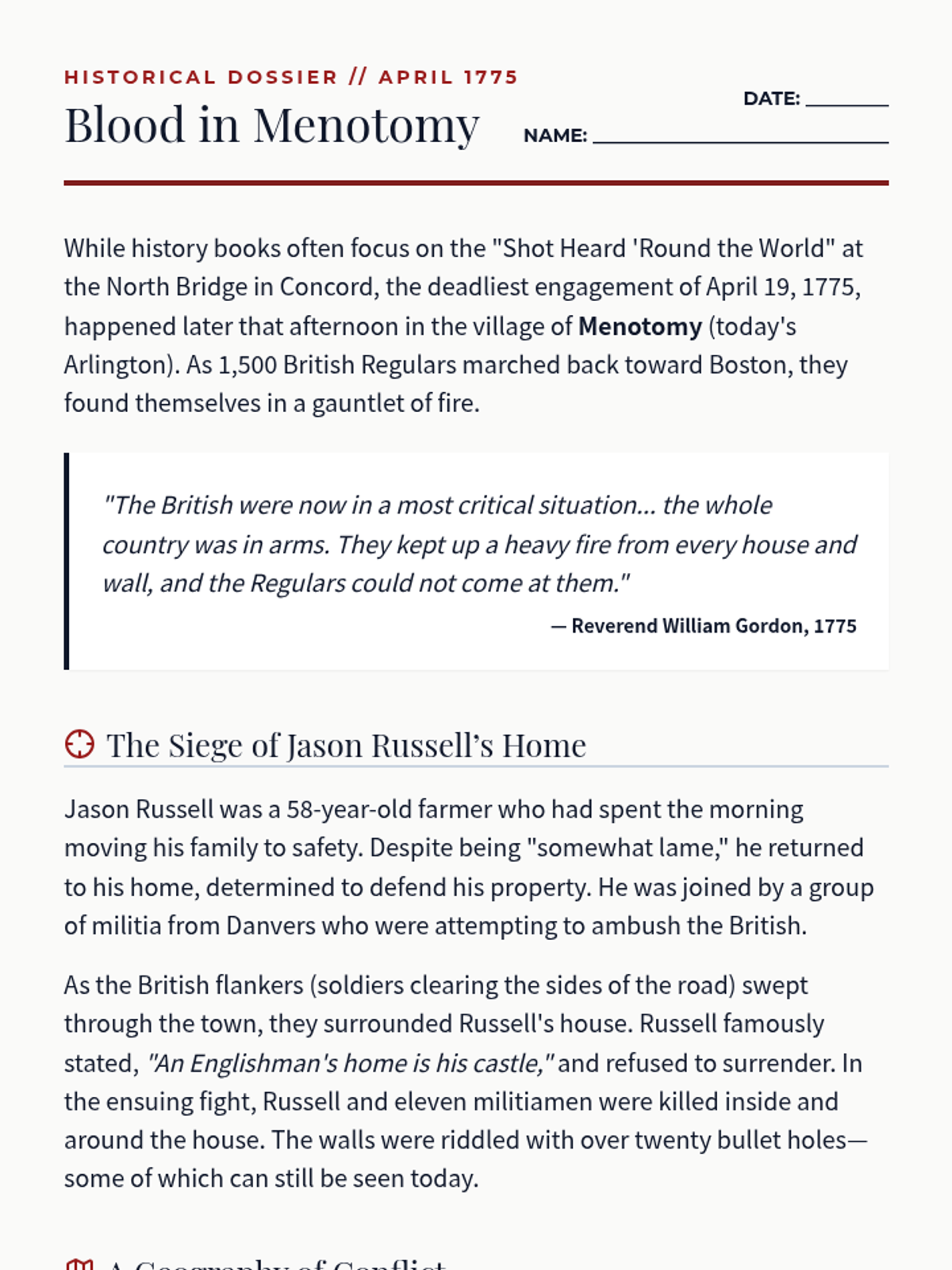
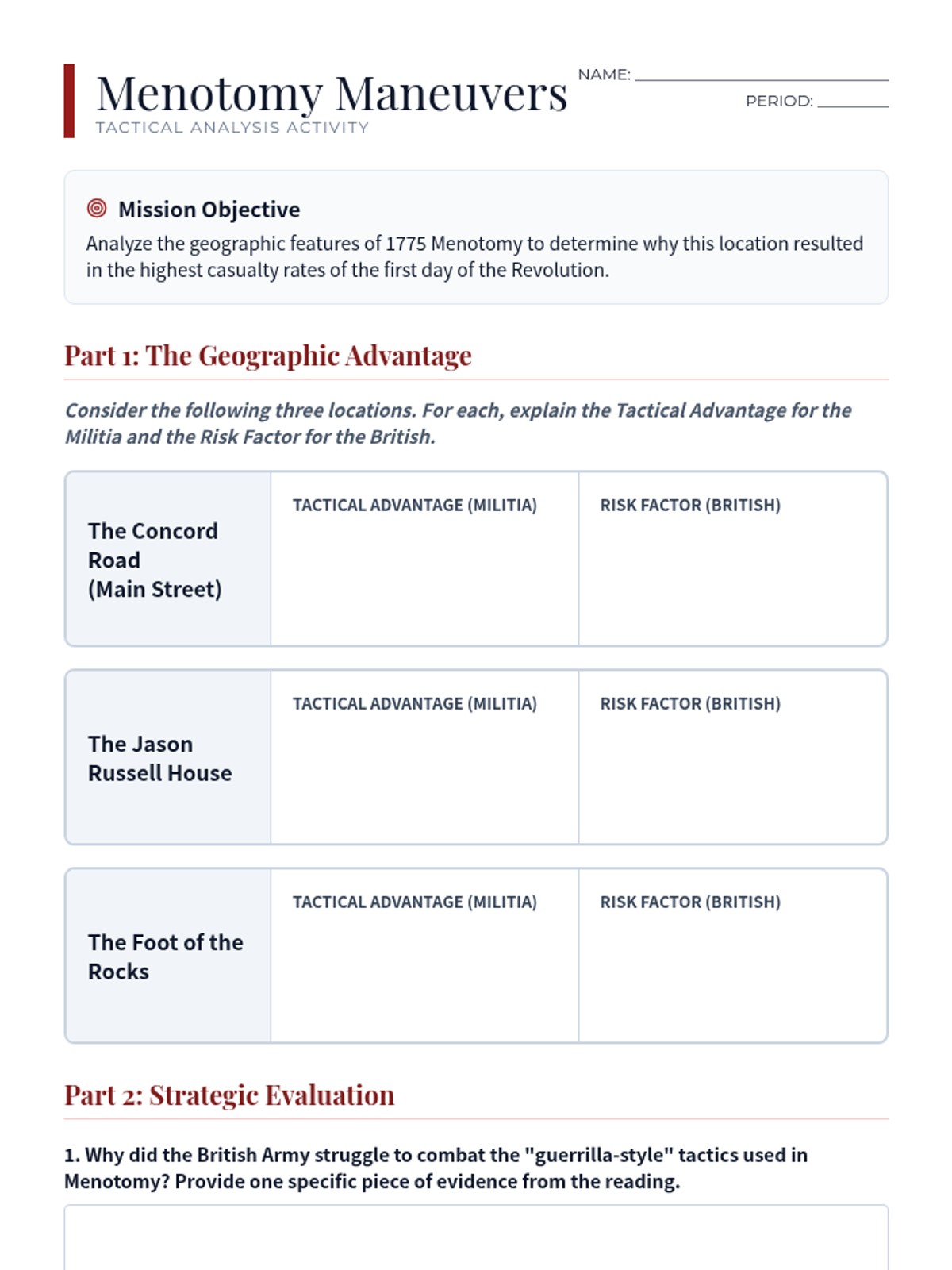
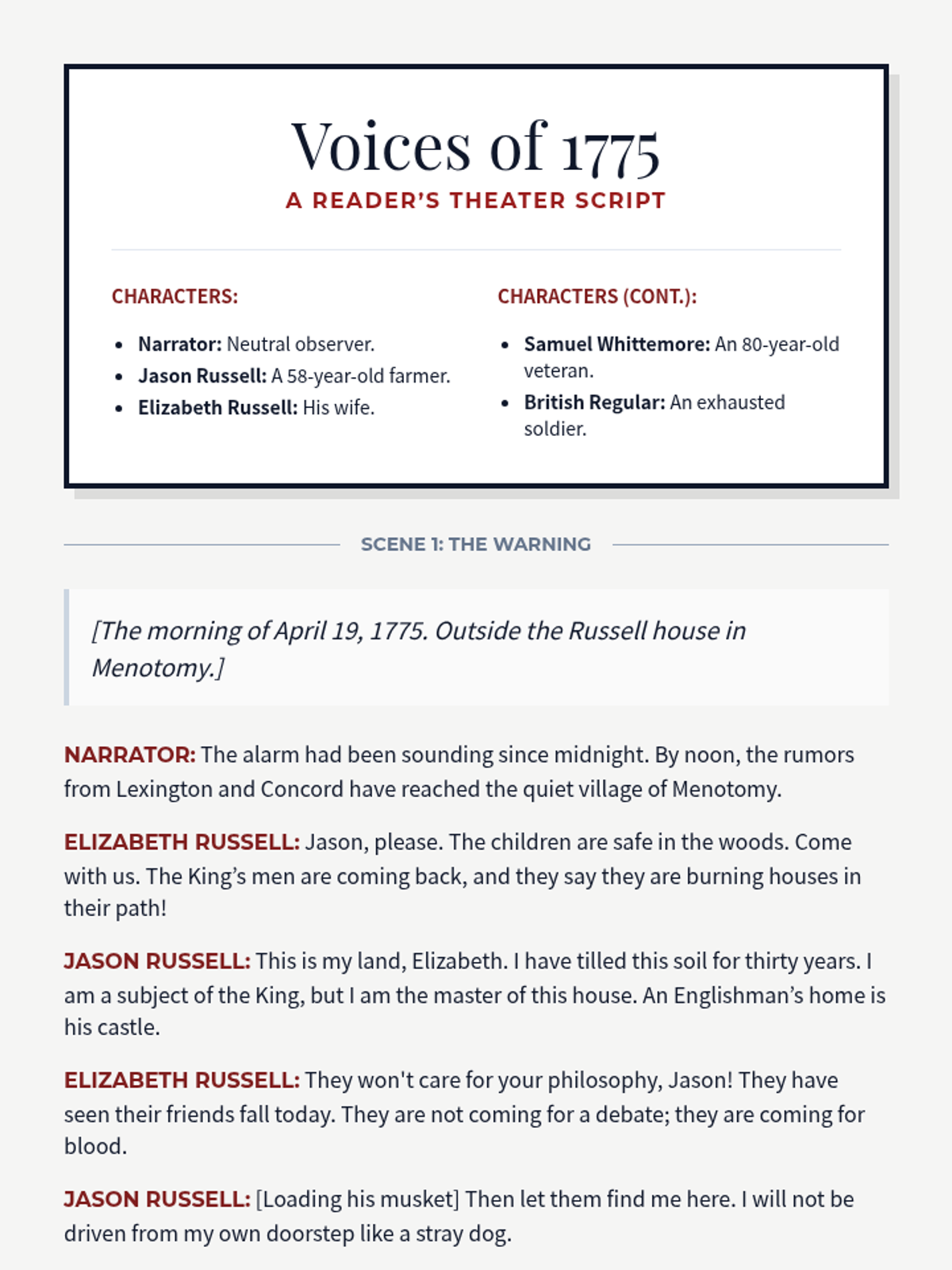
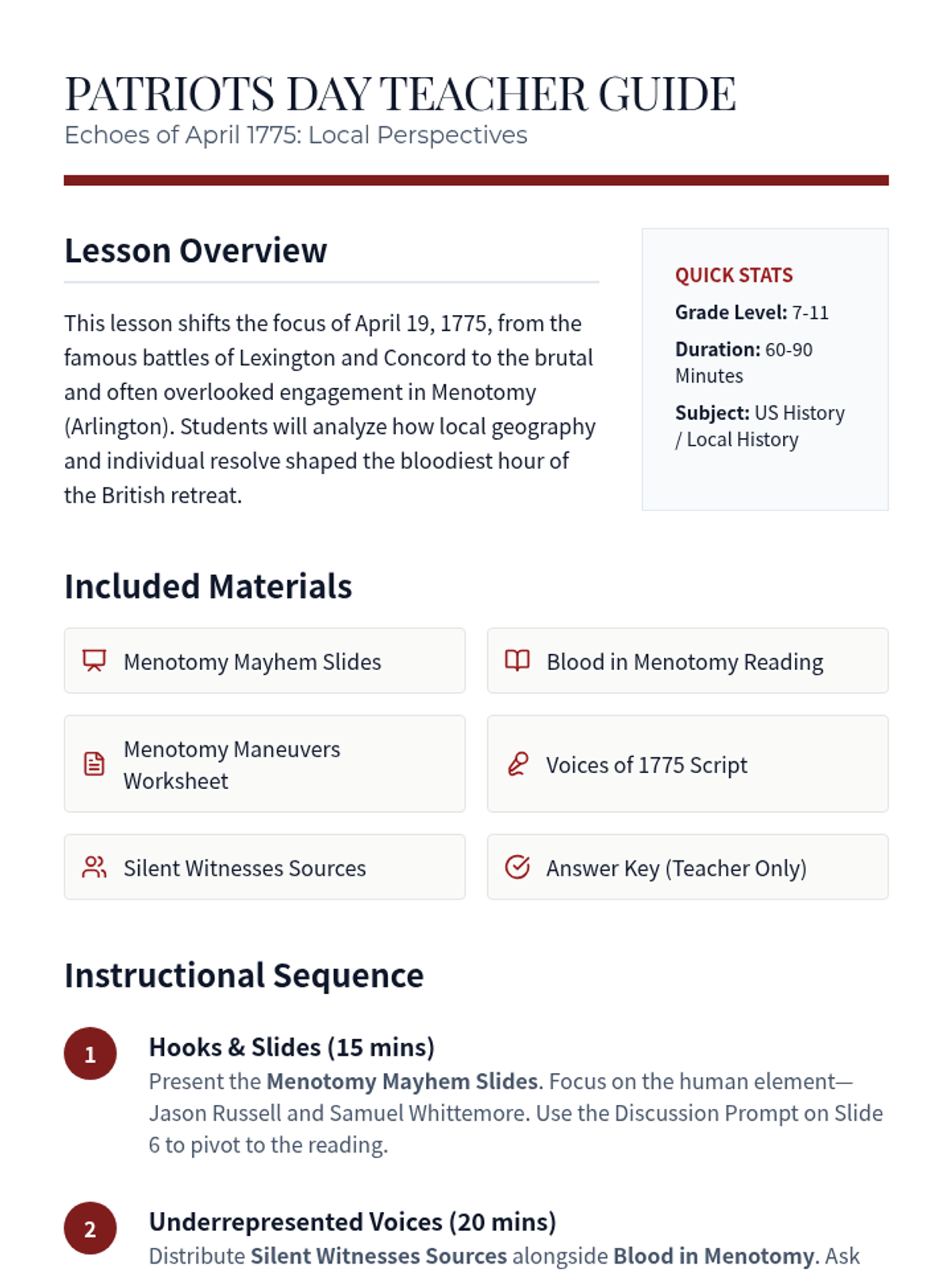
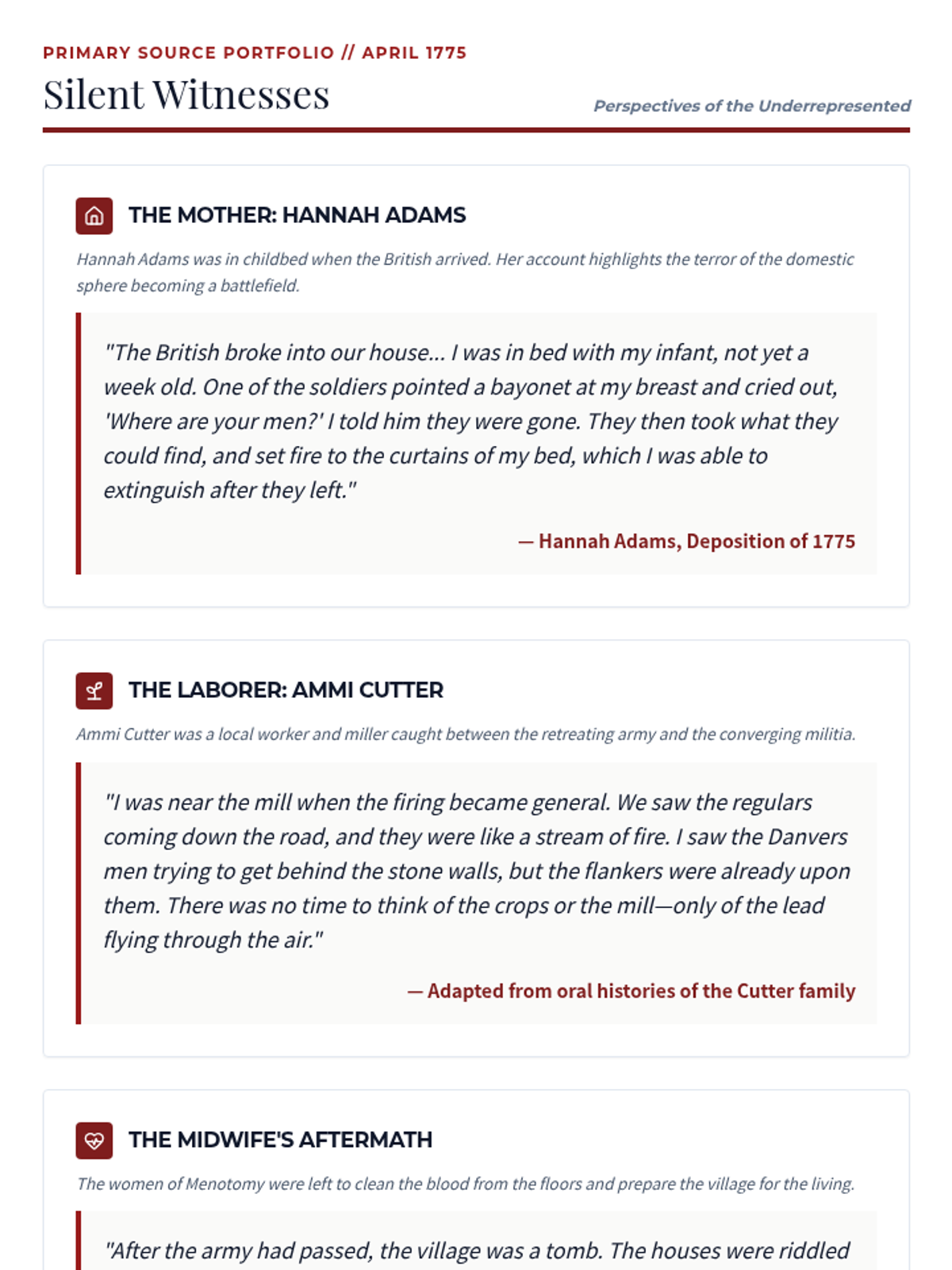
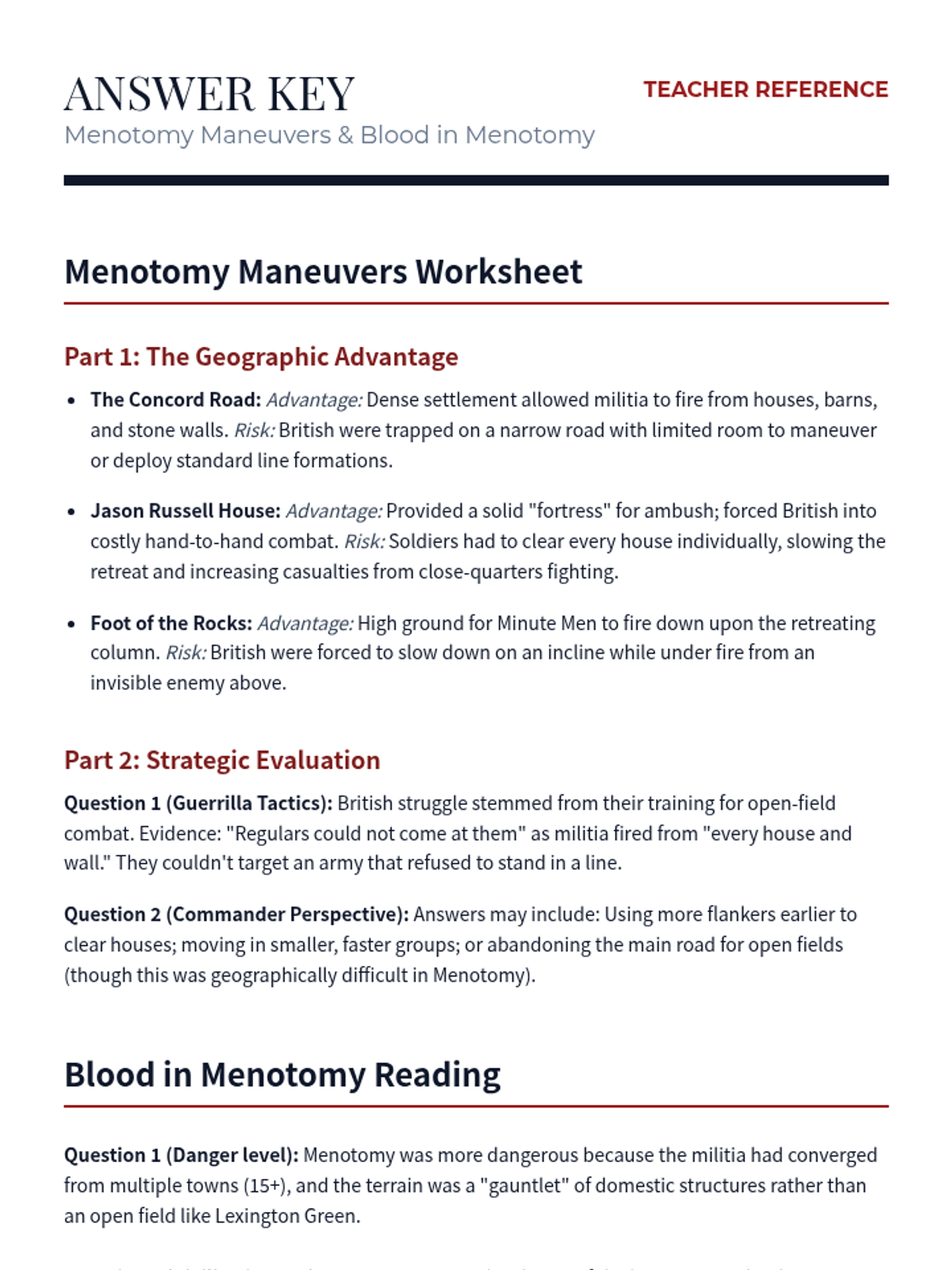
A middle and high school history lesson exploring the pivotal events of April 19, 1775, through the specific lens of Menotomy (modern-day Arlington). Students analyze local maps and primary source accounts to understand the geographic and human impact of the British retreat.
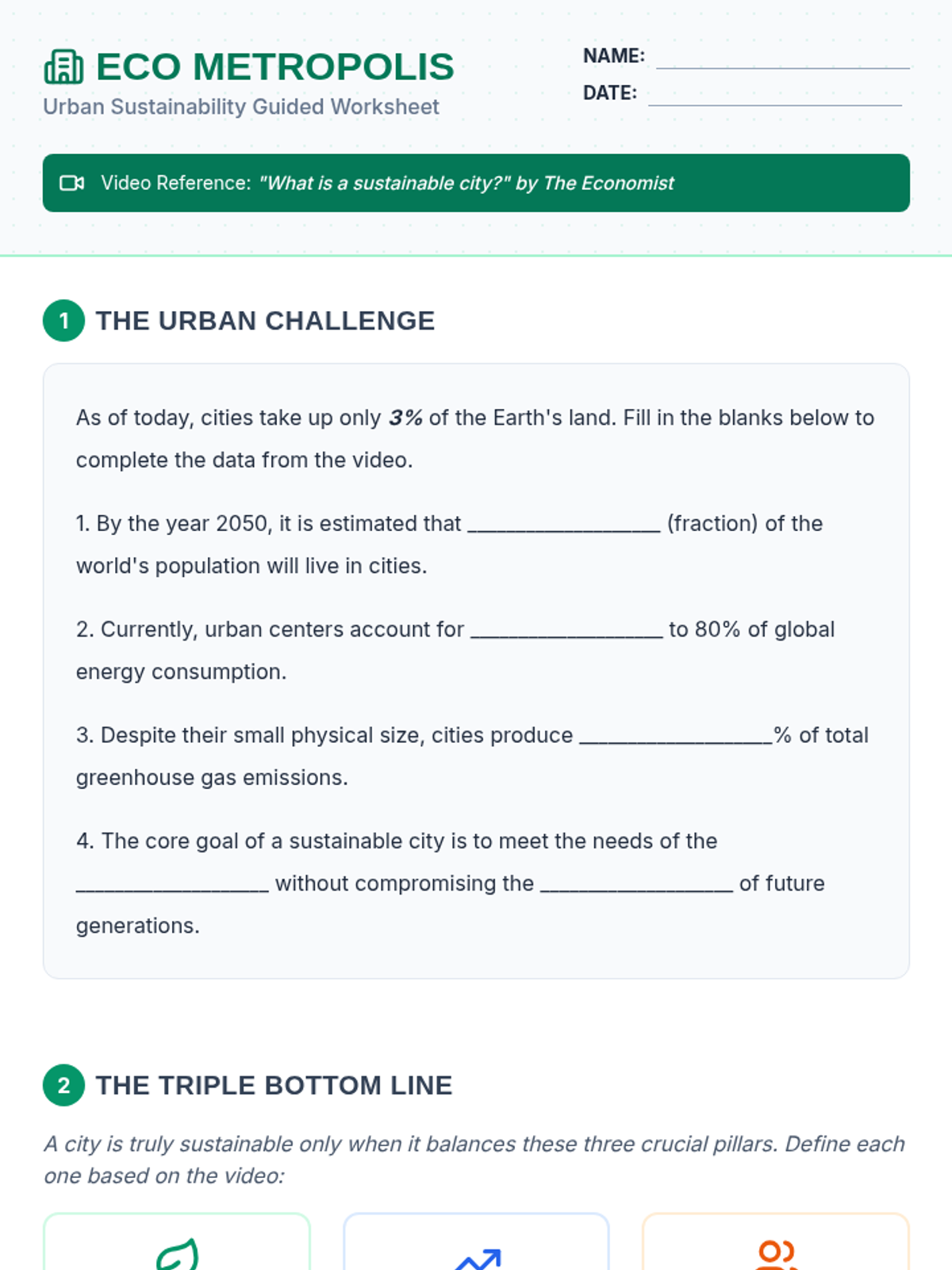
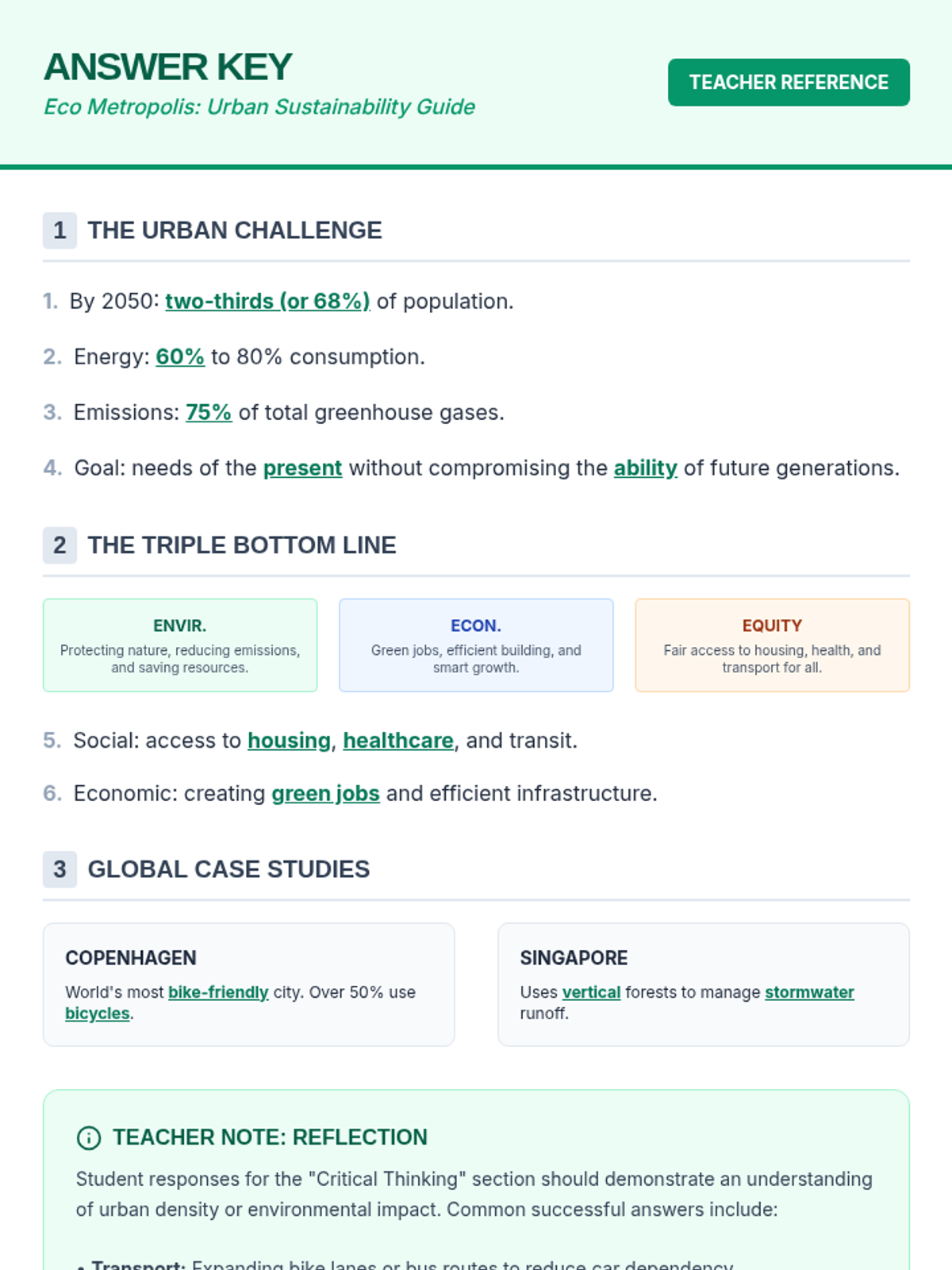
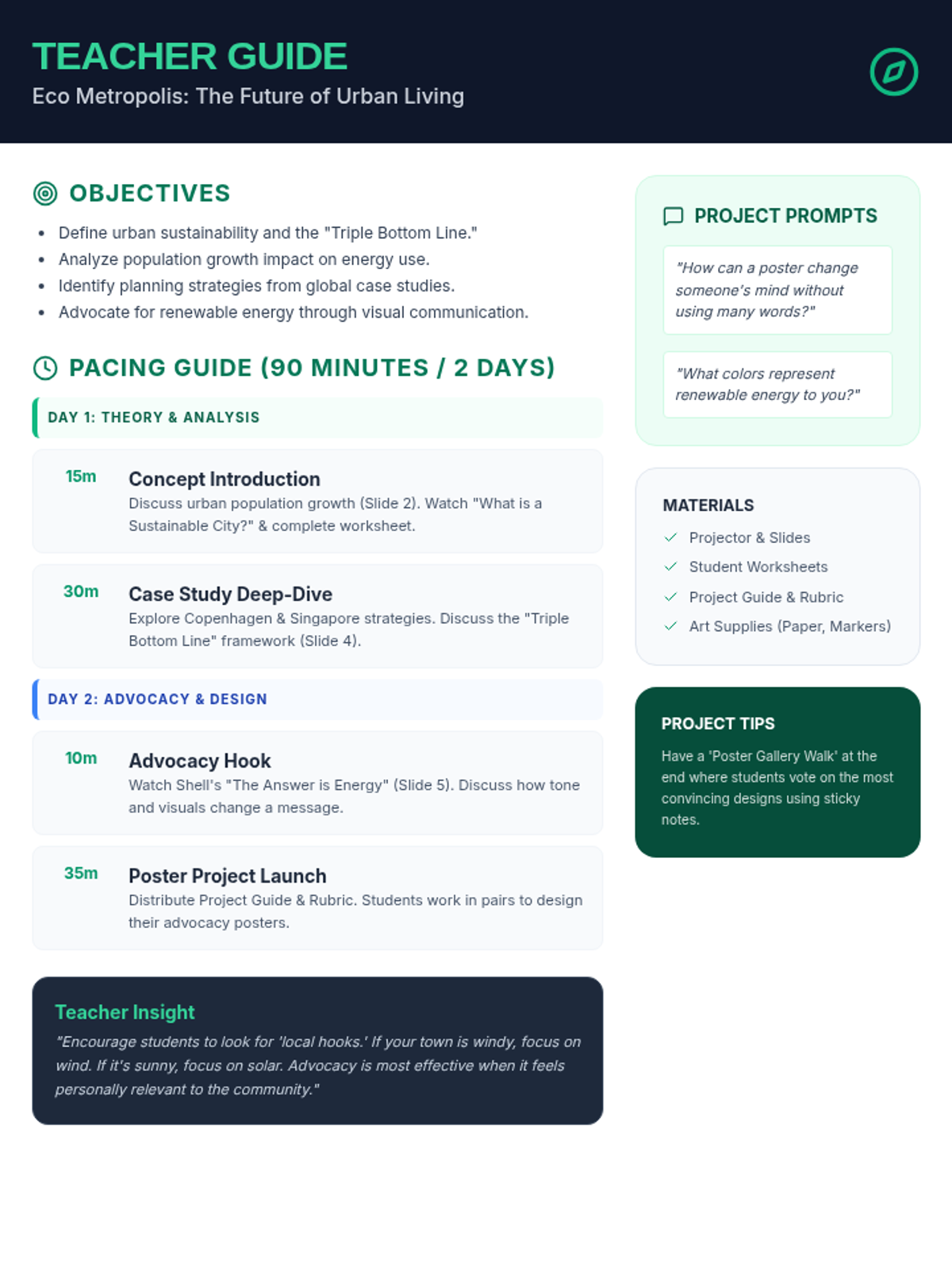
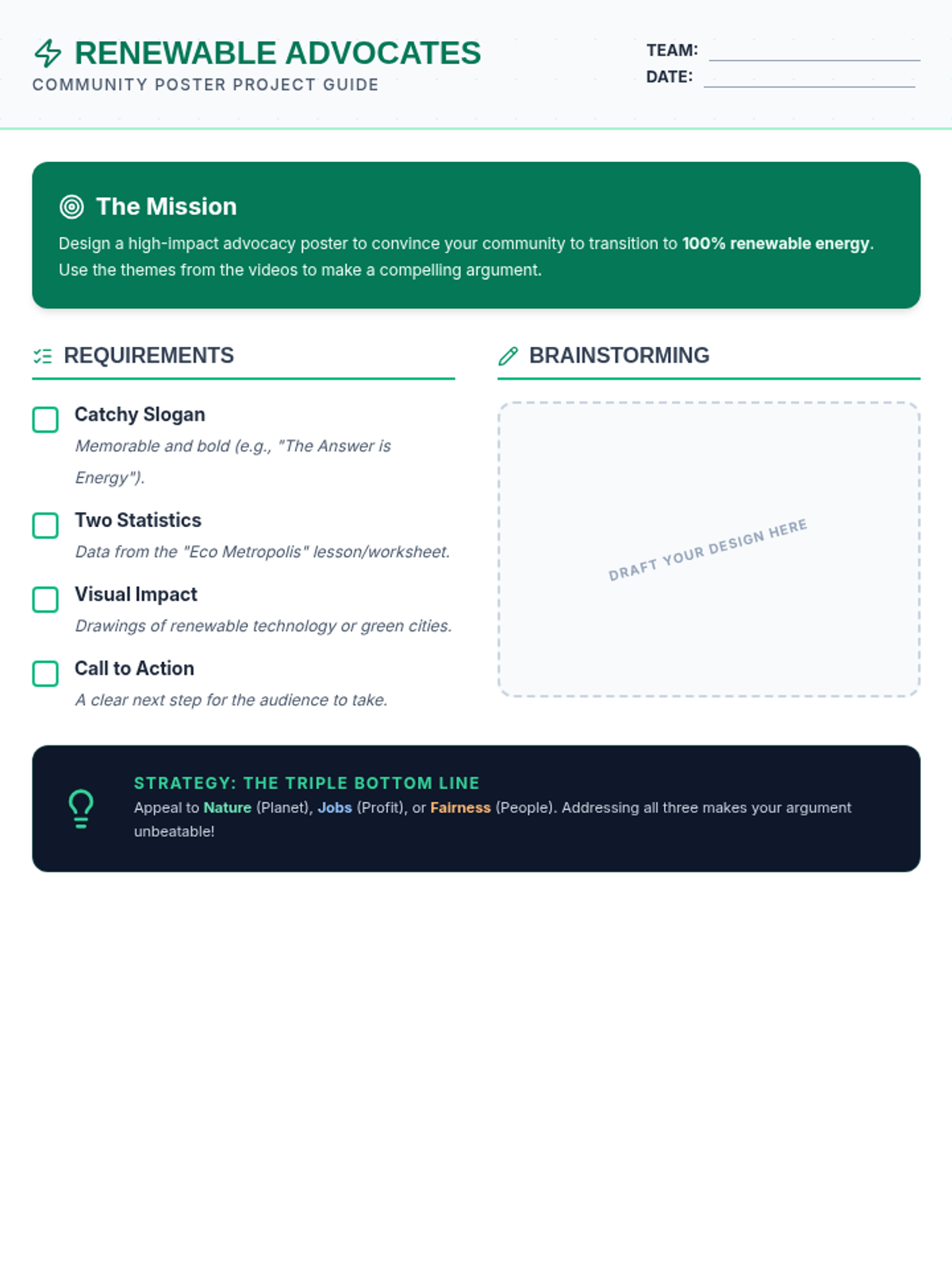
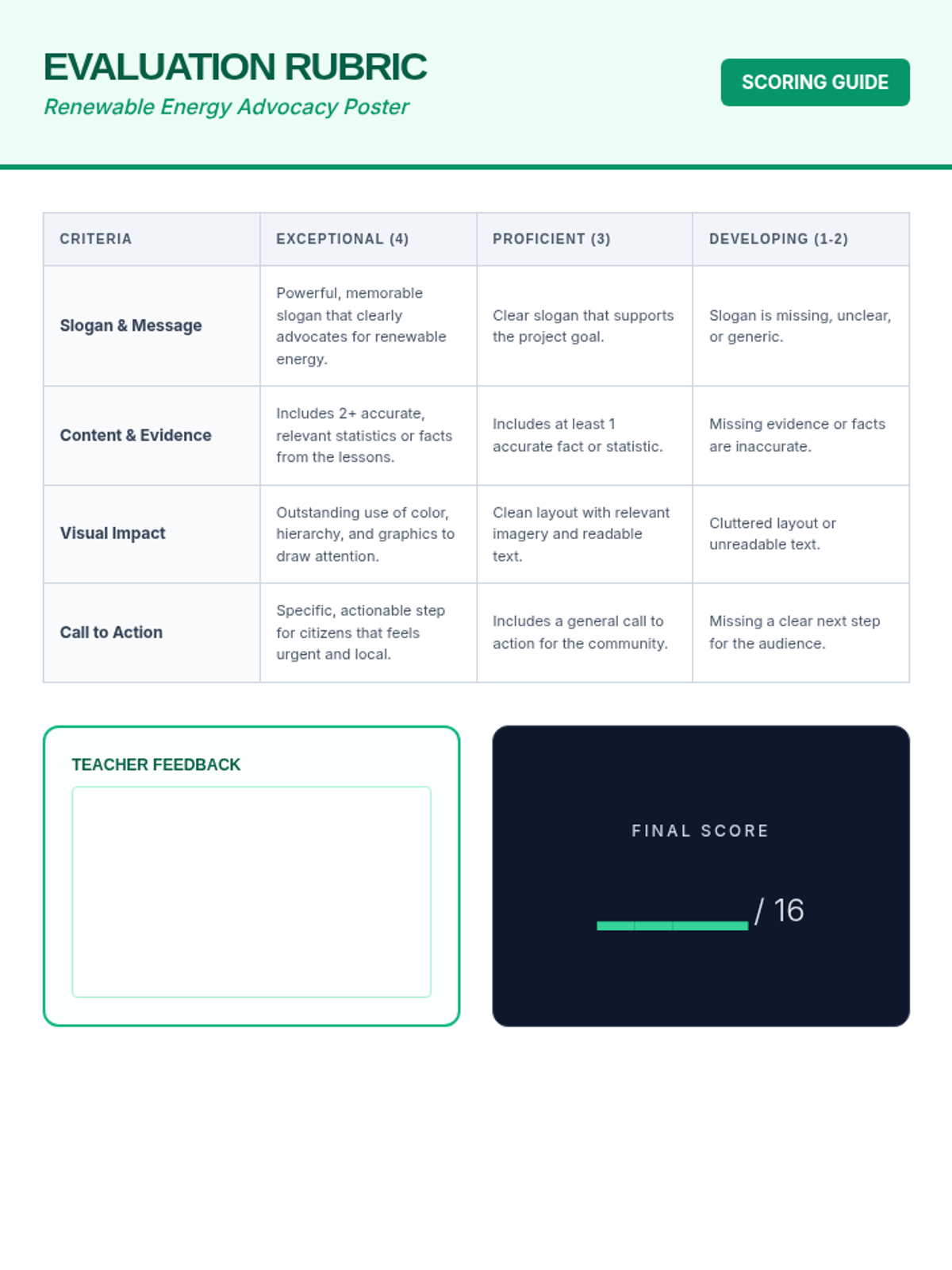
A comprehensive lesson exploring the concept of sustainable cities, focusing on urban planning strategies, resource management, and global case studies based on The Economist's sustainability analysis.