This lesson focuses on identifying chemical reactions through evidence like color change, gas production, and temperature shifts, while reinforcing the Law of Conservation of Mass in both physical and chemical changes.
A deep dive into comparing the complex life cycles of beetles, frogs, and birds through modeling and environmental impact analysis.
Investigates inherited traits and learned behaviors through functional tool design and behavioral modeling.
Students illustrate and compare the life cycles of beetles, crickets, and plants through architectural and growth-focused engineering.
Focuses on plant dependencies for pollination and seed dispersal, alongside the unique metamorphosis of frogs and butterflies.
Students explore the life cycles of birds, mammals, and fish through engineering challenges focused on protection and migration.
Students act as environmental engineers to solve a real-world ecosystem crisis (soil erosion) by building an "Abiotic Anchor" to protect biotic factors in a coastal habitat.
Students explore the delicate balance of ecosystem communities by engineering a "Population Mobile" that demonstrates how the removal of one species impacts the entire dependency web.
Focusing on plant responses to seasonal changes, students engineer a "Dormancy Deck"—a protective structure designed to help a plant model survive a simulated winter freeze.
Students investigate how temperature affects animal survival in the desert by engineering a "Cooling Cave" that uses physical environmental characteristics to reduce heat.
Students design and build a model aquatic habitat to observe and record interactions between living fish (models) and non-living components like water, rocks, and bubbles.
Students investigate how populations and communities of organisms are dependent on one another and their environment by engineering a "Dependency Web" that maintains stability during environmental changes.
Students examine the complex interactions between biotic and abiotic factors by engineering solutions to protect an ecosystem from environmental stressors.
Focusing on animal migration, hibernation, and plant dormancy, students engineer shelters that protect against temperature and precipitation changes.
Students investigate how environmental characteristics like rainfall support life by building models of environments and testing how they sustain plant and animal models.
Students explore the basic needs of living things and their interactions in a terrarium environment by engineering a "Mini-Home" that provides shelter and basic resources.
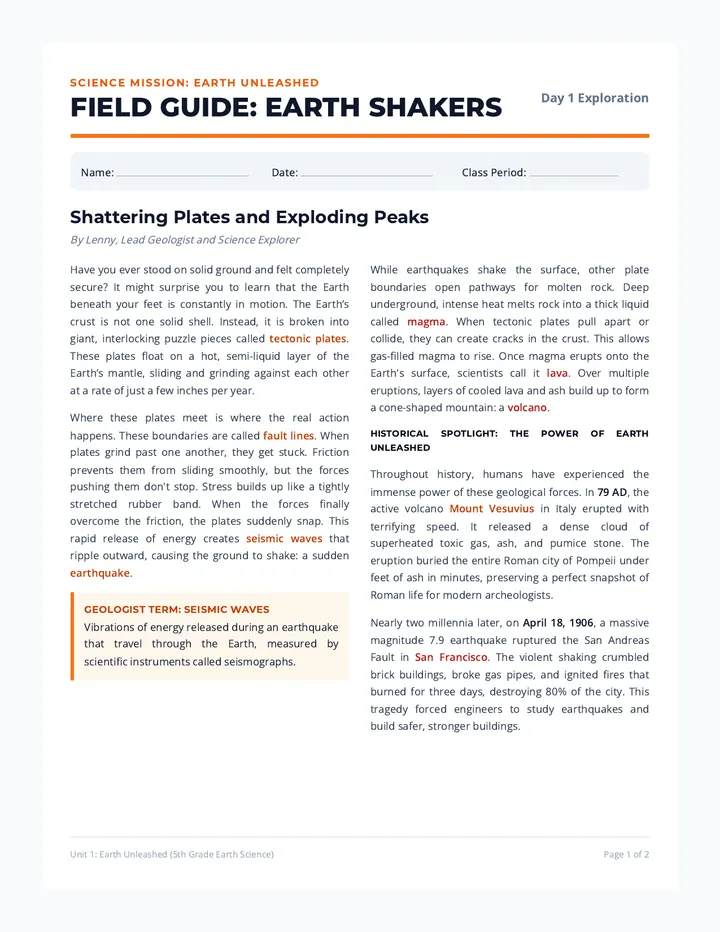
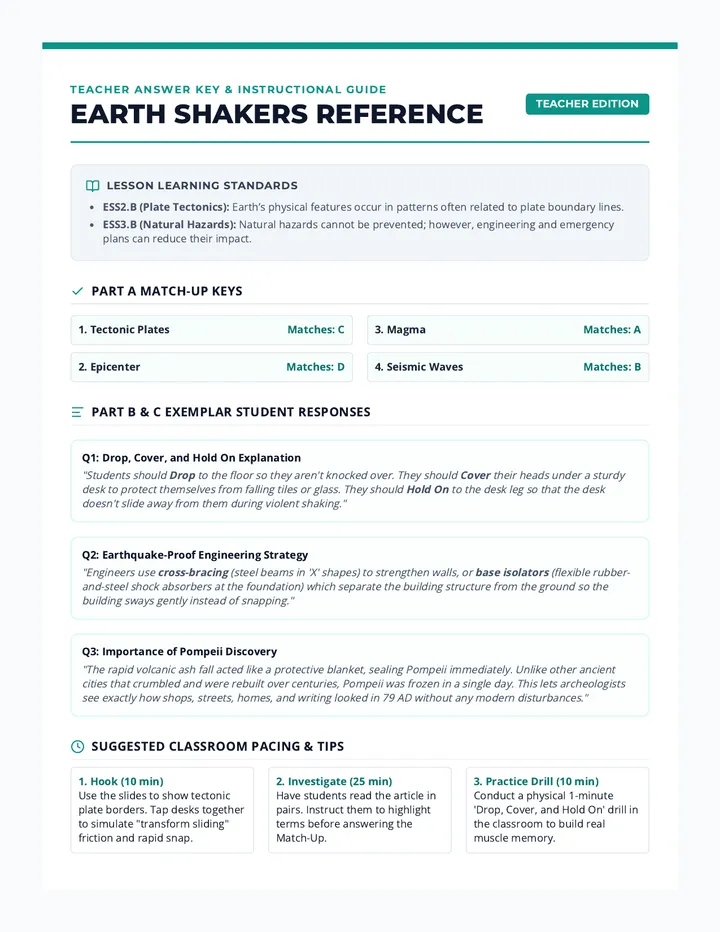
An introductory lesson on catastrophic natural events and the vocabulary used to describe them, focusing on geological and meteorological disasters.
Students research, plan, and construct a detailed 3D diorama of a specific ecosystem, focusing on the interactions between biotic and abiotic factors and the energy flow within their chosen environment.
As Environmental Restoration Specialists, students analyze the impact of changes like invasive species or drought on a food web and design data-driven solutions to protect energy flow.
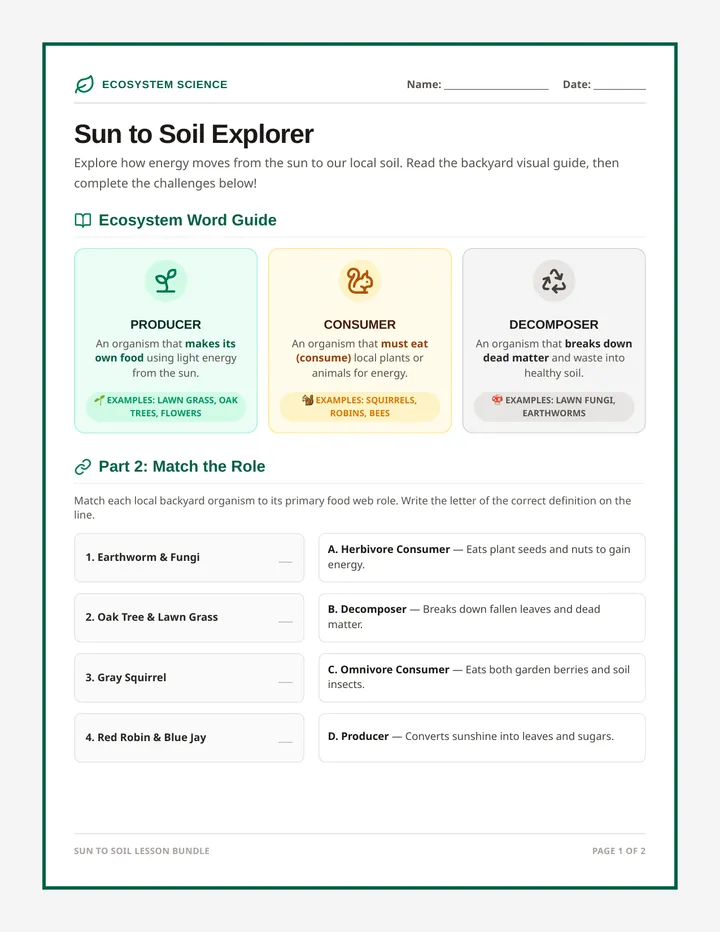
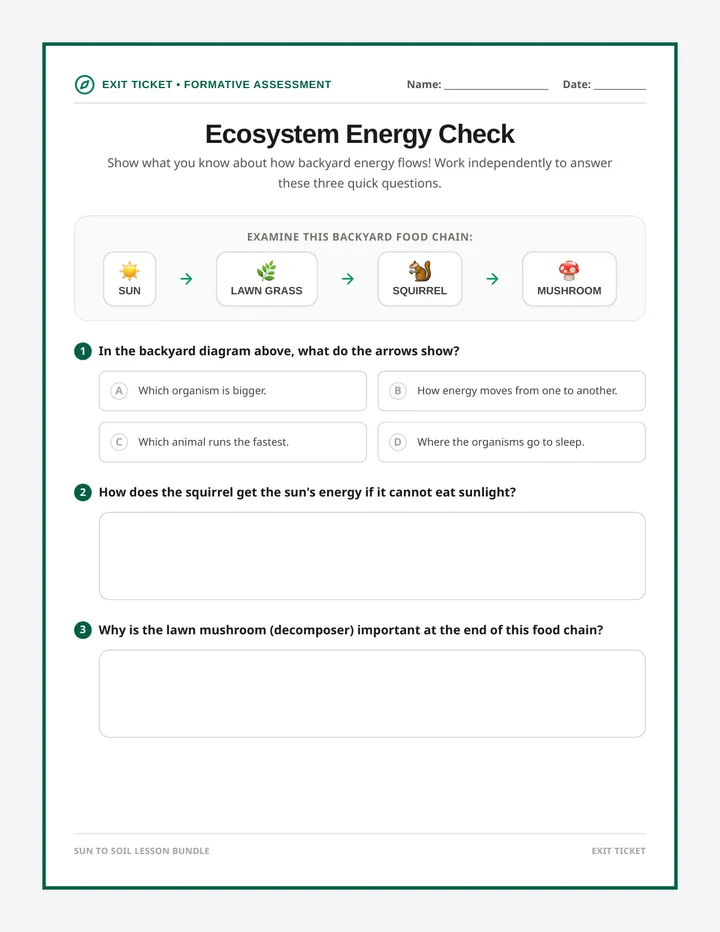
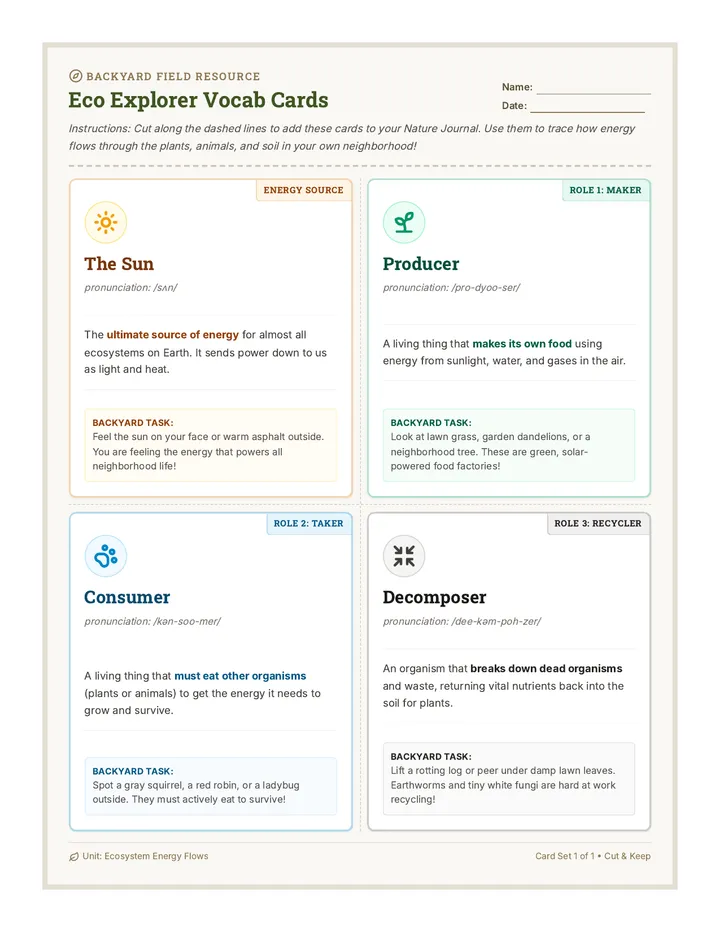
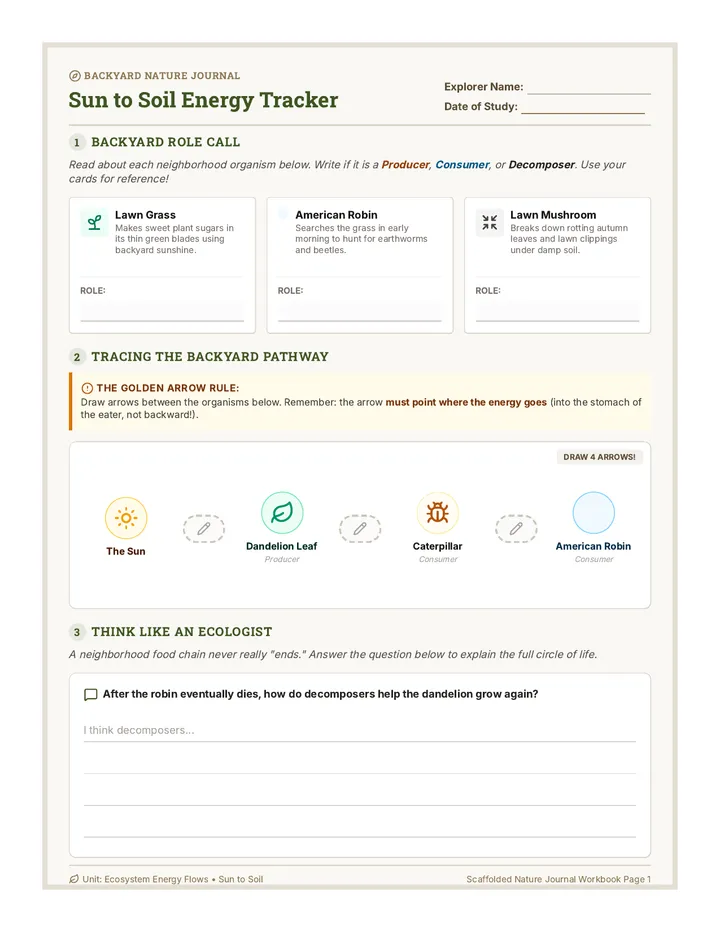
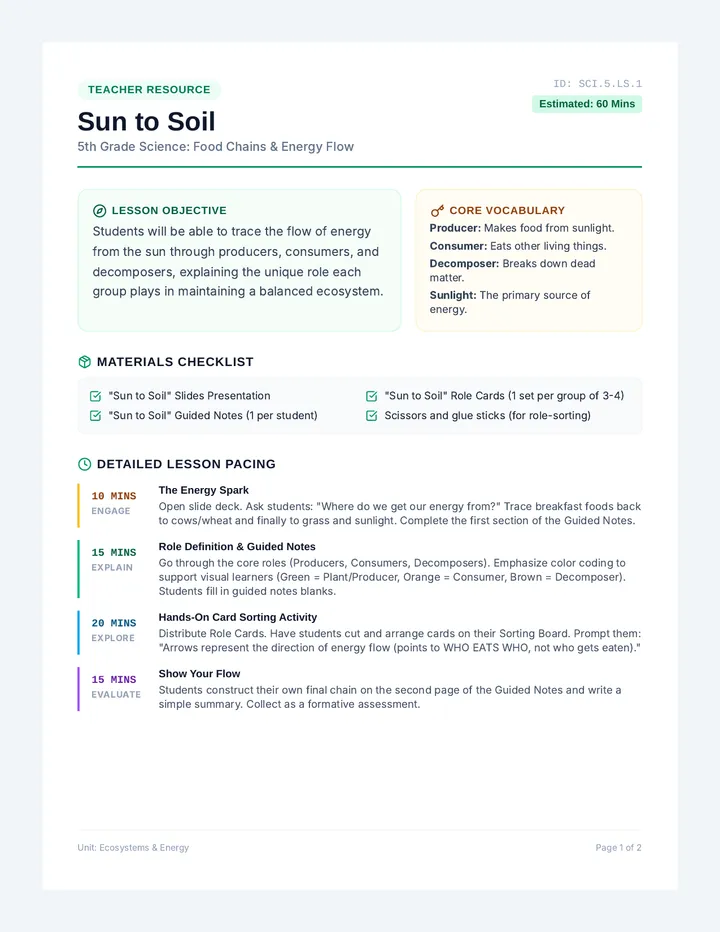
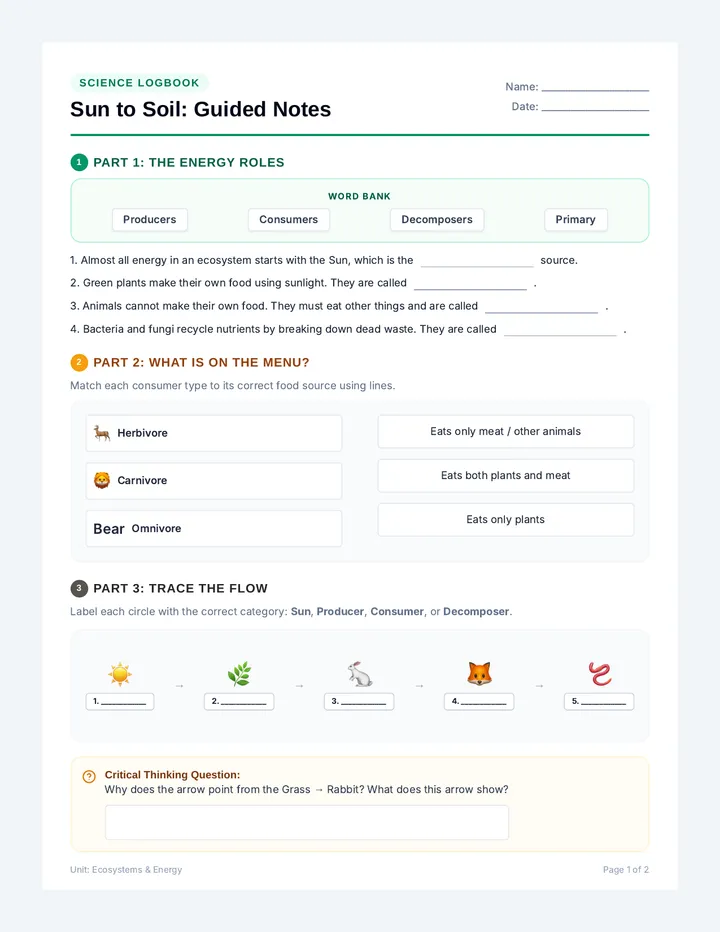
Students model the role of the Sun and decomposers as Energy Systems Engineers, mapping complex food webs with color-coded "Energy Lines" to show matter cycling.
Acting as Field Ecologists, students build cup-stack models of energy flow and test the stability of their ecosystems when key species like bees or frogs are removed.
Students step into the role of Animal Nutritionists to design "Dining Menus" that identify producers and consumers, demonstrating the dependency of animals on other living things.
Students will act as Wildlife Park Rangers to build and illustrate vertical paper food chains, identifying how living organisms depend on each other for survival.
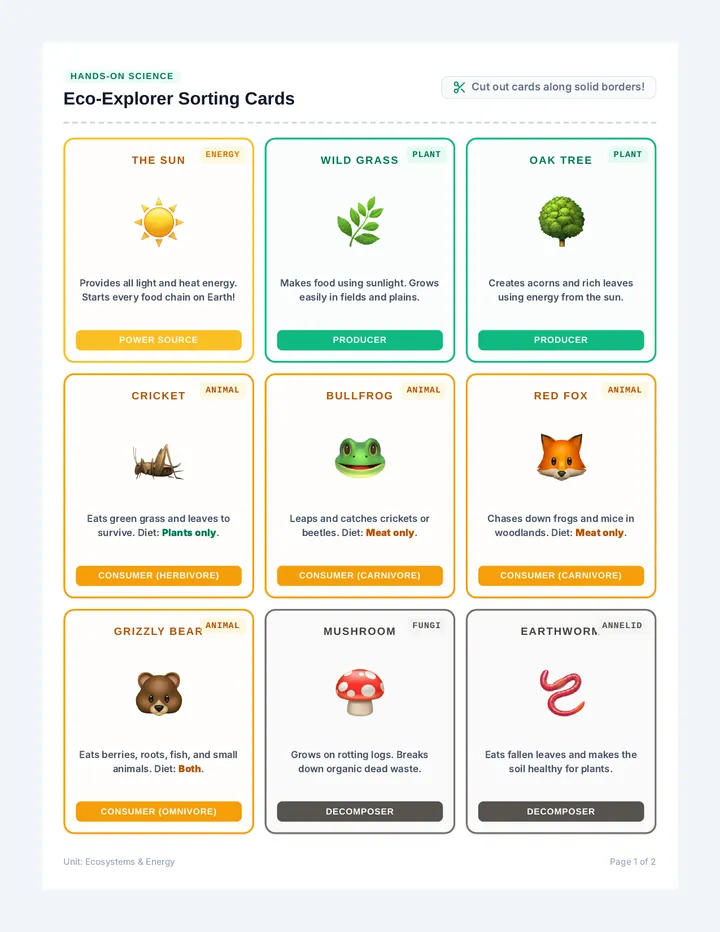
A set of printable note cards for students to research and illustrate different animals, focusing on habitat, diet, size, and interesting facts.
5th Grade students optimize their designs for efficiency, calculating load-to-weight ratios and managing material constraints. Focus on TEKS 5.11(A) and 5.13(A).
4th Grade students design structures to resist external forces like wind and gravity, applying their understanding of structural integrity. Focus on TEKS 4.11(A) and 4.13(B).
3rd Grade students investigate the strength of triangles and vertical stability to build the tallest tower possible. Focus on TEKS 3.11(A) and 3.13(B).
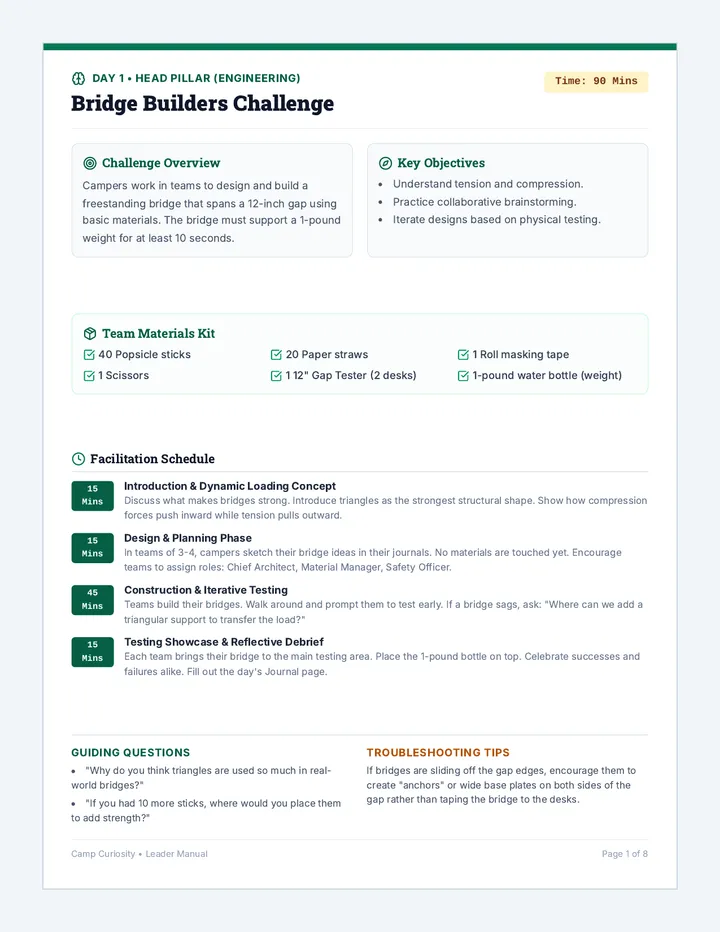
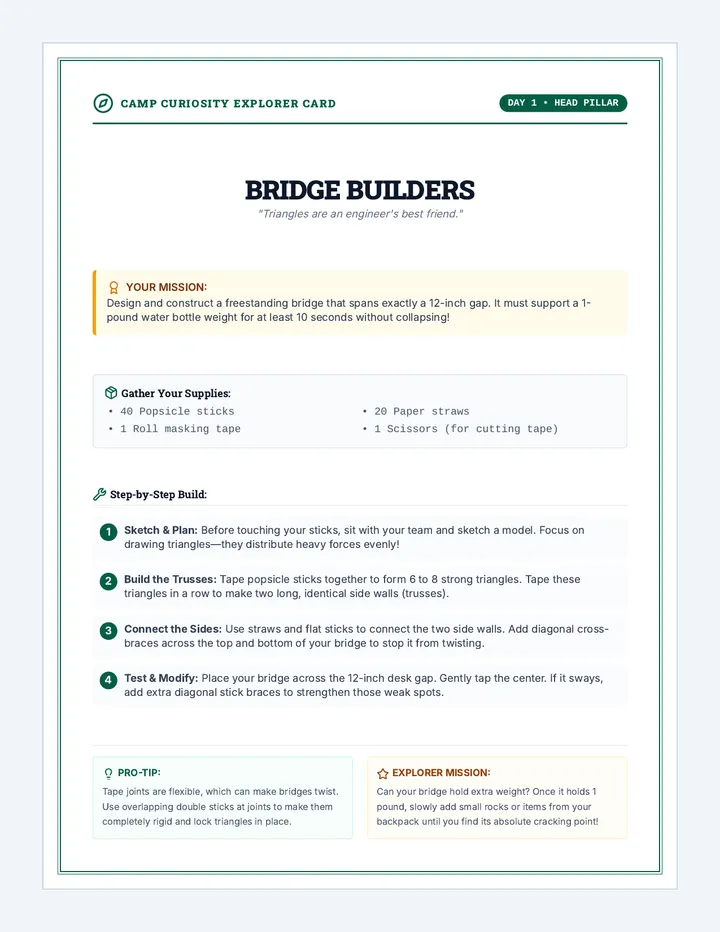
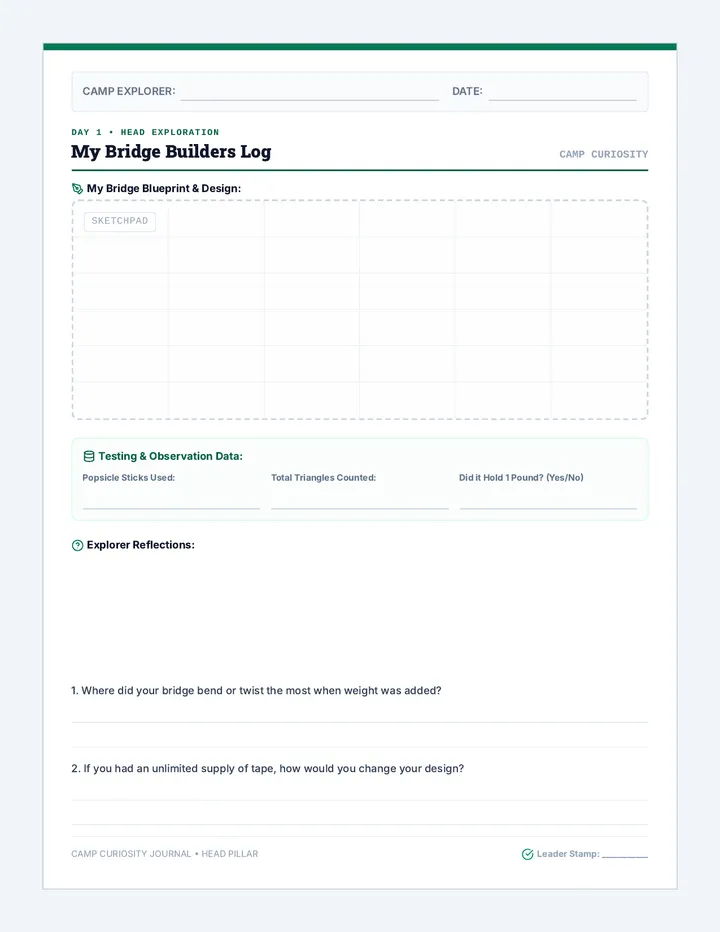
2nd Grade students apply knowledge of shapes to design a bridge that spans a gap, exploring concepts of pushes, pulls, and load distribution. Focus on TEKS 2.11(B) and 2.13(A).
1st Grade students explore how changing the shape of a material (paper) affects its physical properties and ability to support weight. Focus on TEKS 1.6(A) and 1.11(B).
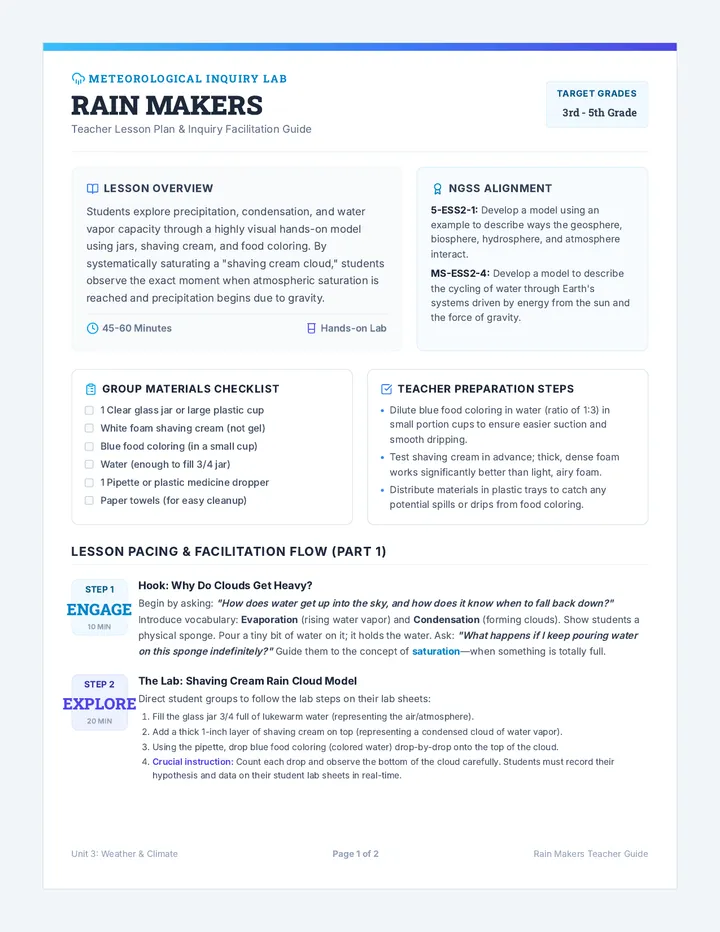
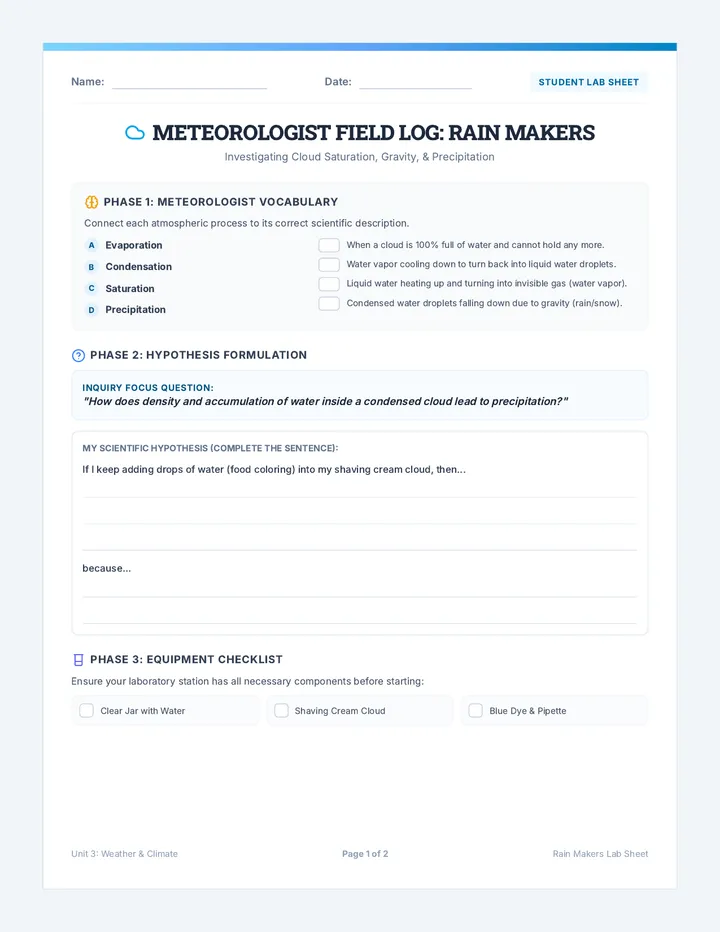
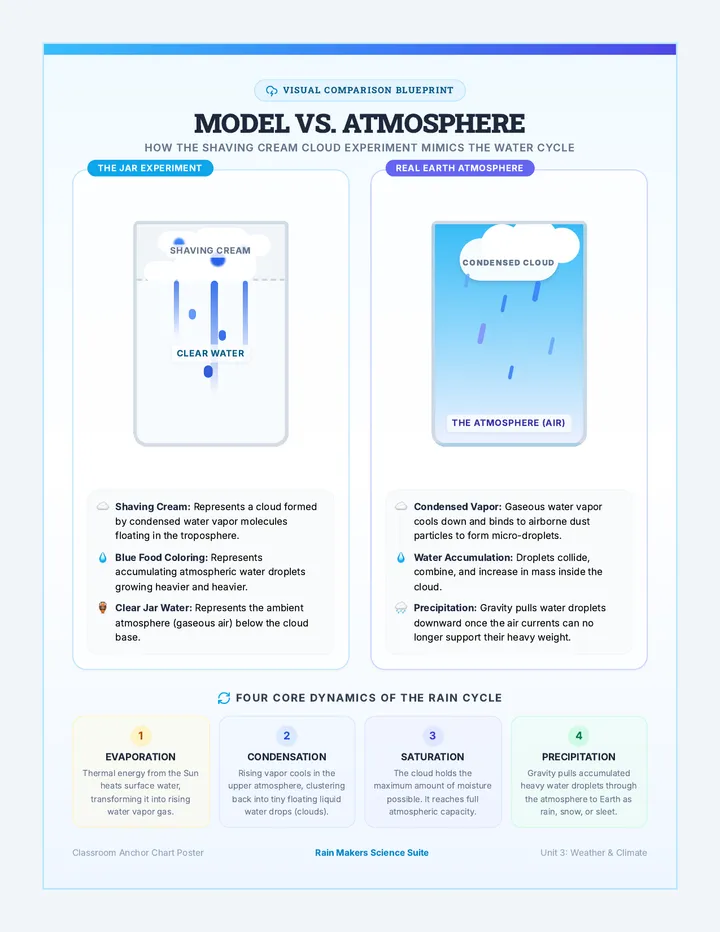
A comprehensive review of the water cycle for 5th-grade students, focusing on the roles of the sun, evaporation, condensation, precipitation, and collection within Earth's systems.
A comprehensive introduction to the pH scale, covering the characteristics of acids and bases, the logarithmic nature of the scale, and real-world applications across three differentiated levels (5th, 7th, and 9th grade).
A comprehensive makeup assessment covering Earth science topics including the water cycle, sedimentary rock formation, fossil fuels, natural resources, weather and climate, and the behavior of light.
An out-of-this-world assessment covering 4th and 5th grade science standards including life cycles, energy forms, and Earth systems.
Teams present their protection plans for the Nashoba Brook release site to a Zoo New England representative and community members. They refine their advocacy through peer critique, ensuring a safe future for their fostered turtles.
Students investigate specific human impacts on their local watershed, conducting research and 'Invisible Impact' experiments using Zoo New England partnership data to see how microscopic changes in the hydrosphere affect turtle physiology.
Students map the Nashoba Brook Watershed specifically in Acton, MA. They trace how invisible particles travel from local roads and schools to the turtle release site, linking Earth's spheres through the lens of conservation.
The project begins with a 'Driving Question' about the safety of Nashoba Brook in Acton. Students connect their foster turtles' habitat to the larger watershed and identify what they 'Need to Know' for a successful release.
A comprehensive assessment focused on the principles of waste management, specifically the 4 R's (Reduce, Reuse, Recycle, Refuse) and essential environmental vocabulary.
An extension lesson for a water filtration lab focusing on the chemical properties of water and the real-world impact of pollution on local ecosystems.