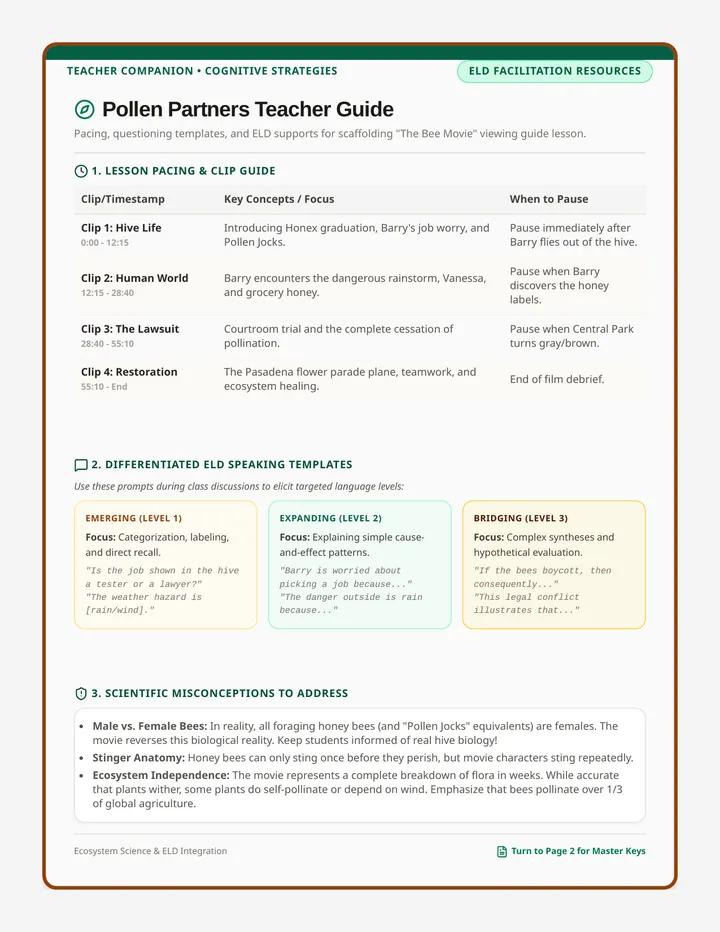
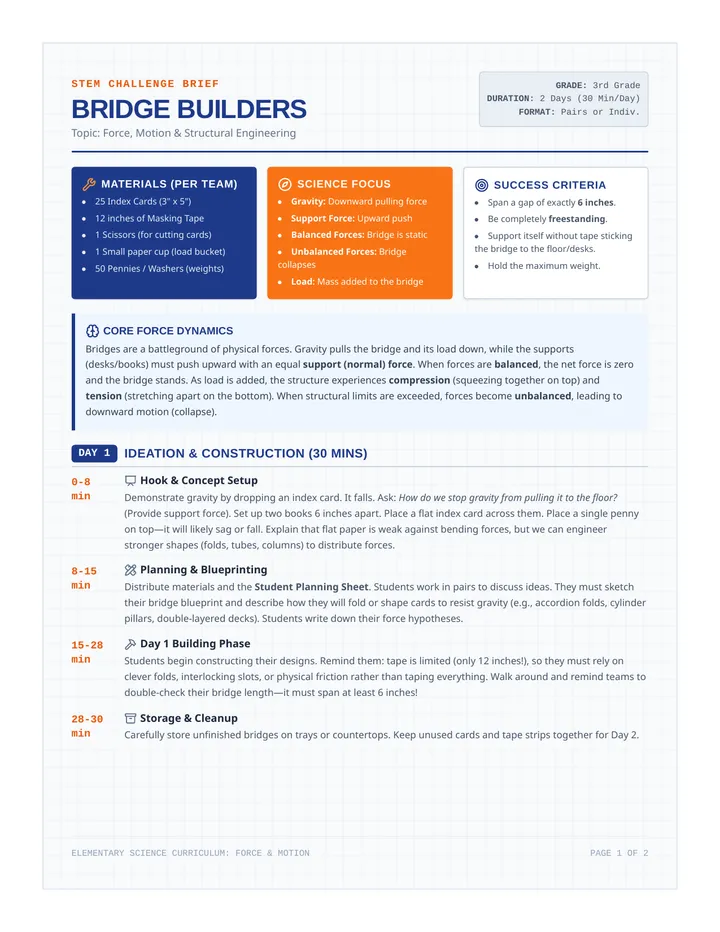
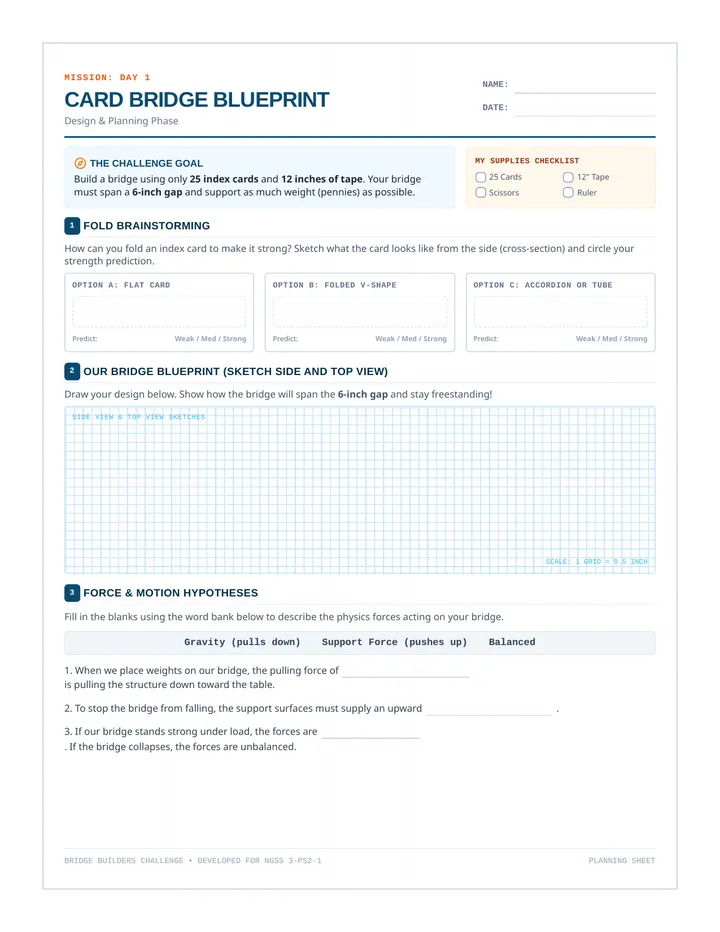
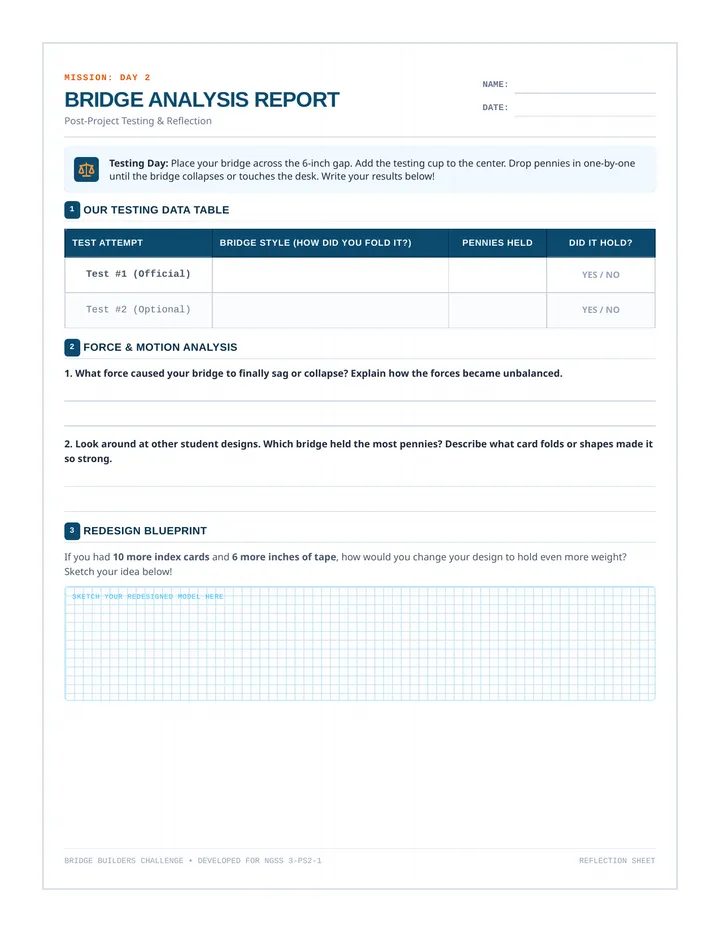
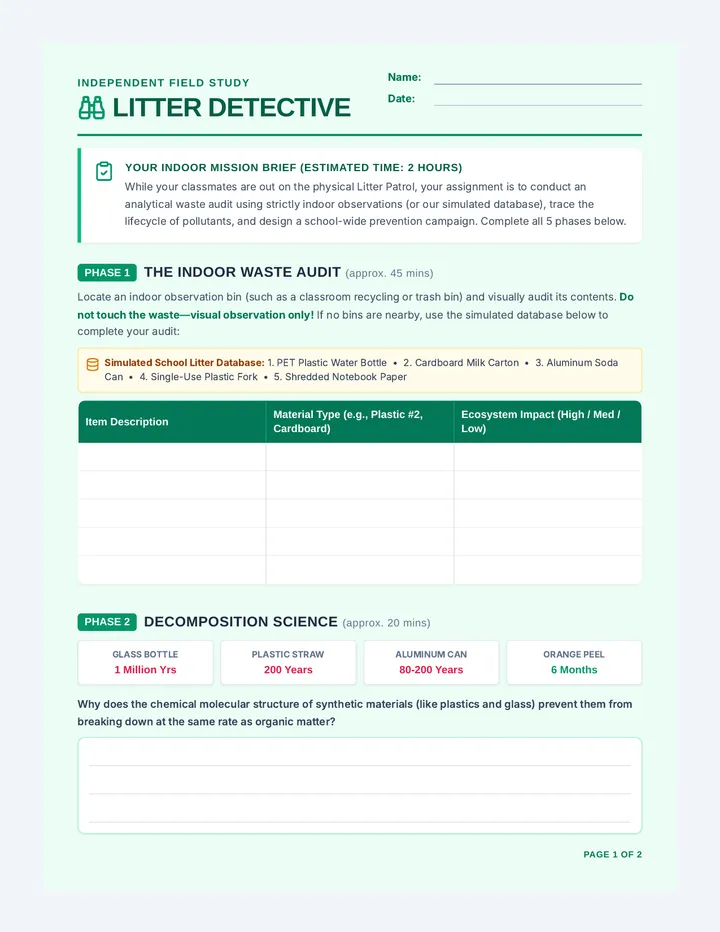
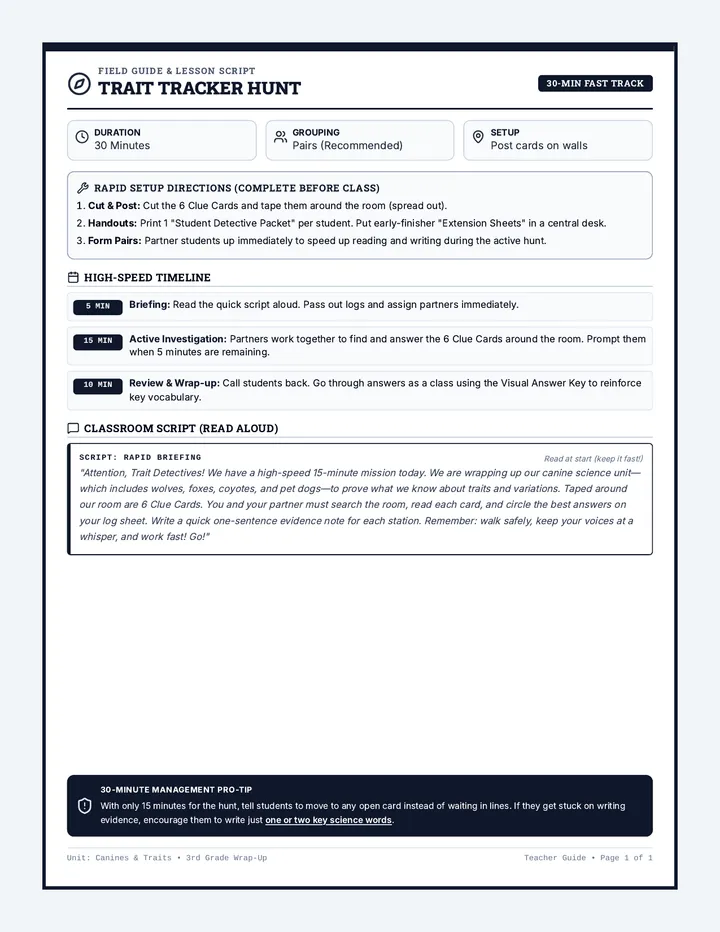
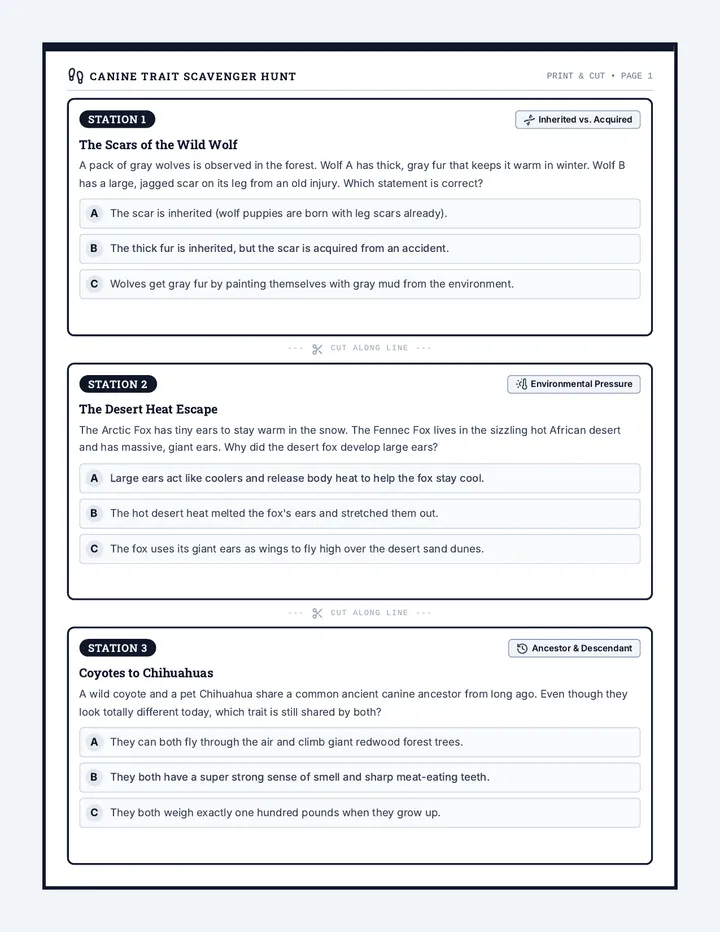
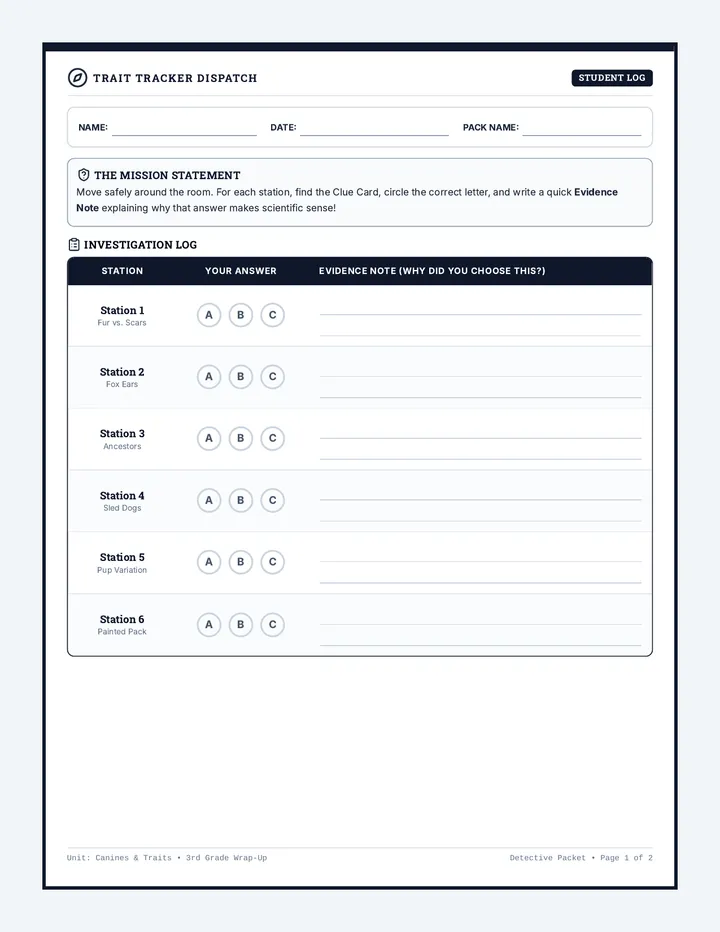
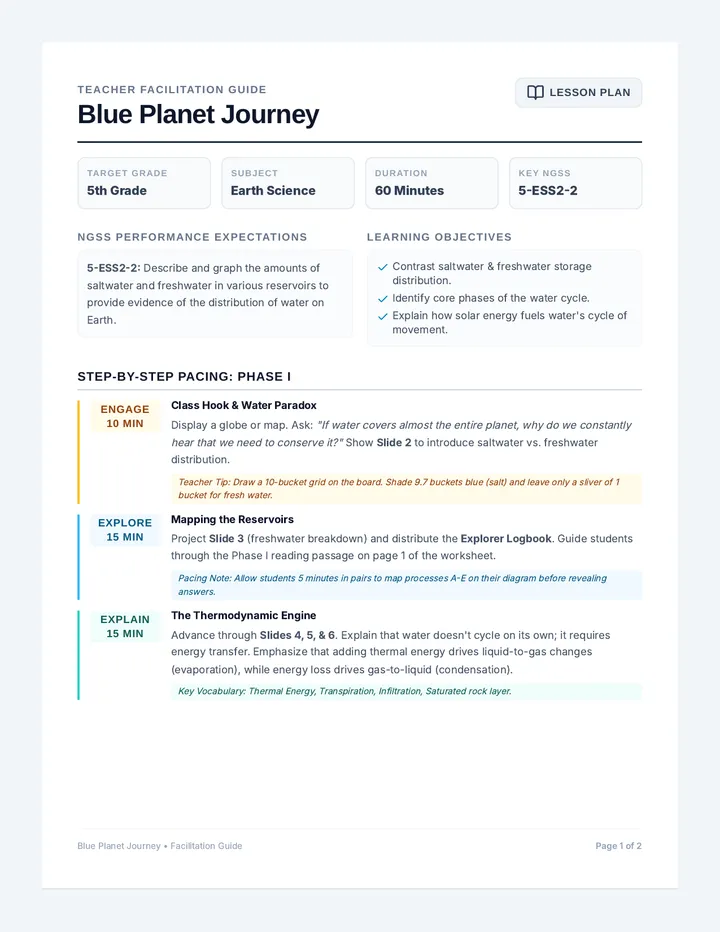
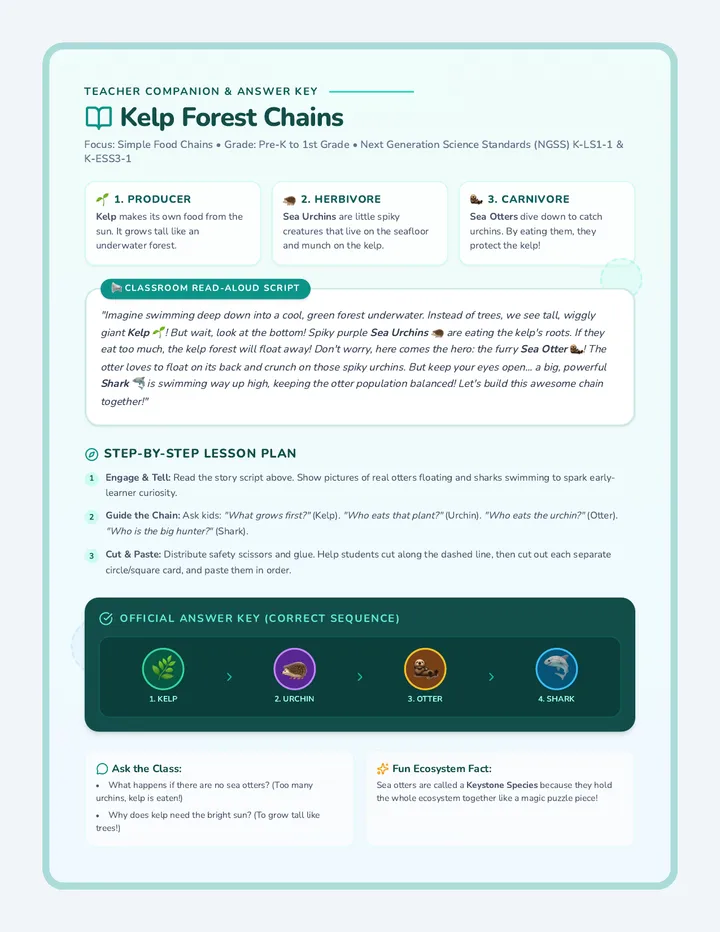
Linked Life Teacher Plan
An updated 30-minute STEM engineering lesson plan for 1st grade students, focusing on the structural balance and dependency of food chains, aligned with TEKS 1.12(C).
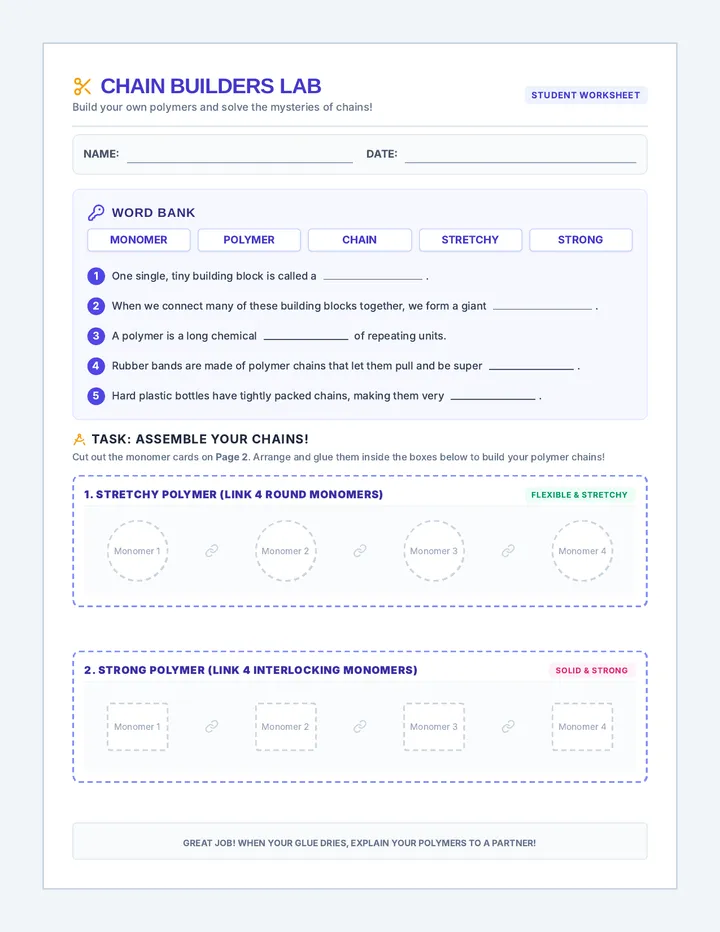
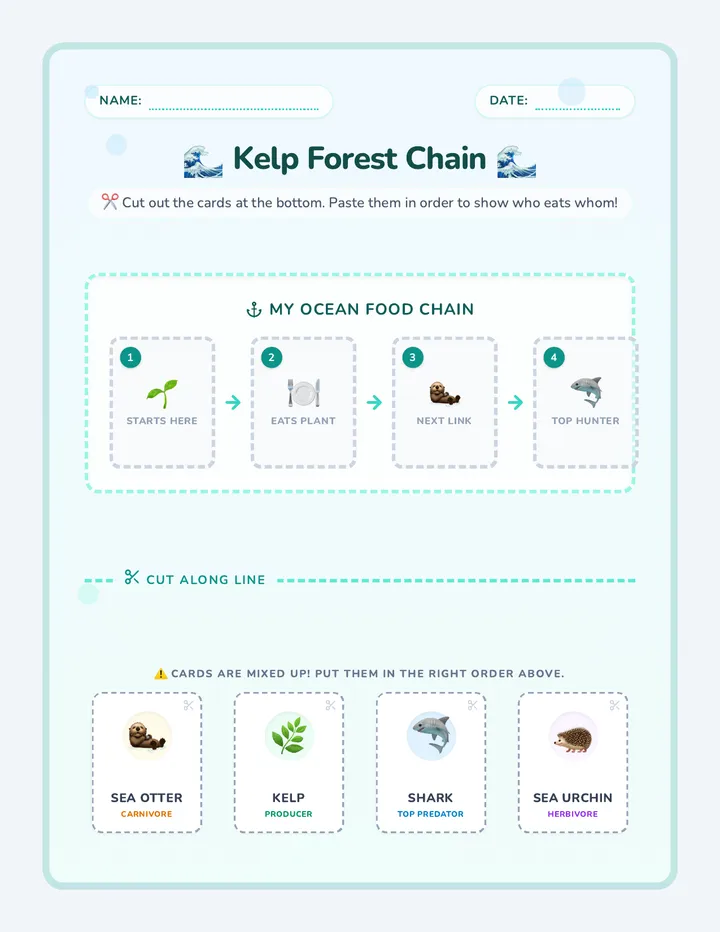
Linked Life Activity Worksheet
An updated 1st grade STEM engineering challenge worksheet where students design and test a balanced mobile food chain to understand dependency.
Linked Life Review Card
A STAAR-aligned review card for 1st grade students to assess their understanding of food chains and organism dependency.
Ranger Relay Bonus Activity
A bonus active learning activity for 1st graders where they role-play a food chain relay to reinforce dependency.
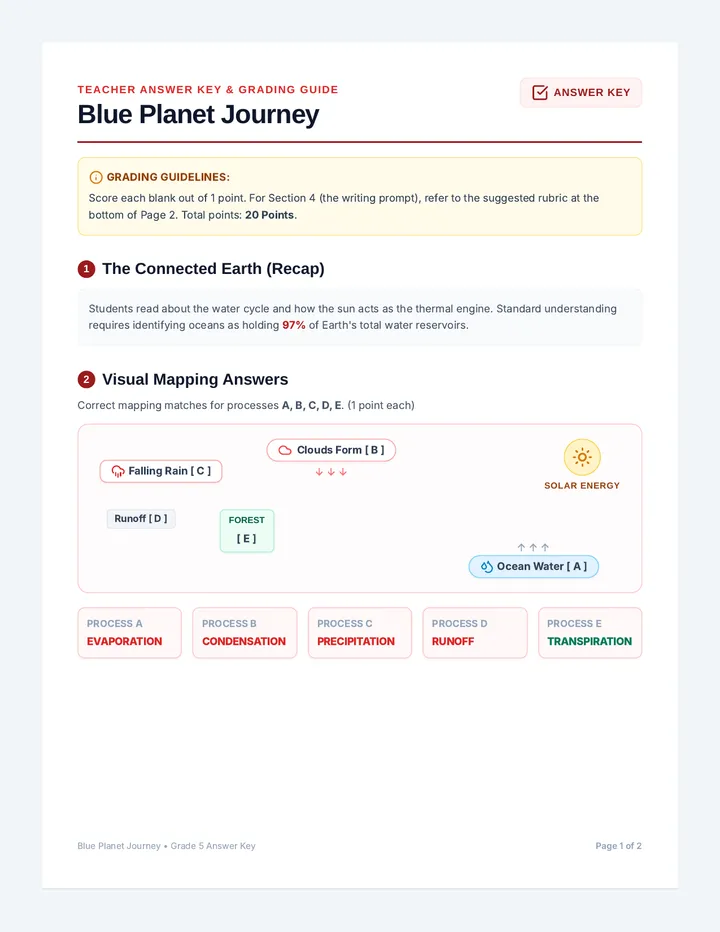
Linked Life Answer Key
An answer key for the 1st grade Linked Life lesson, covering the main activity, bonus activity, and review card.