Students role-play as cashiers, scanning items and counting them aloud to verify the total number of items purchased, reinforcing one-to-one correspondence.
A magical math lesson where students count, sort, and graph different types of ponies to practice data representation and comparison skills.
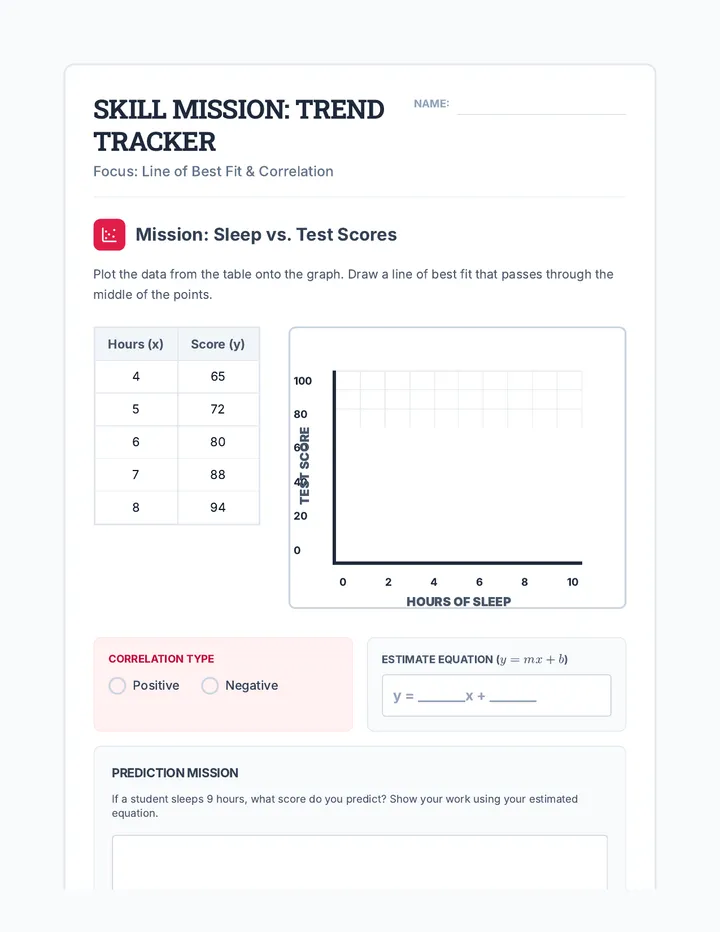
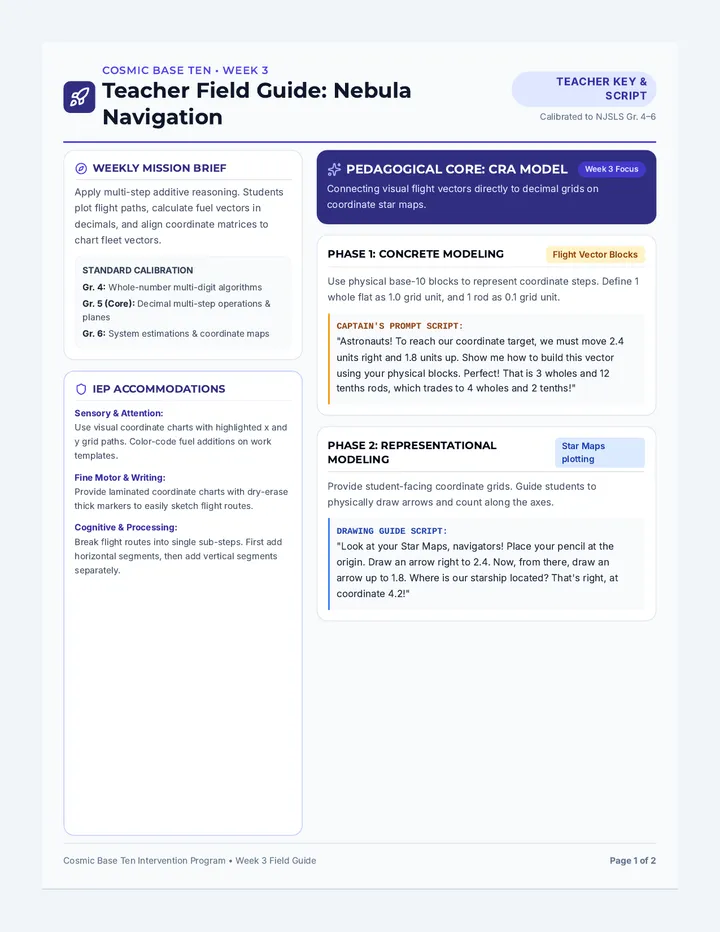
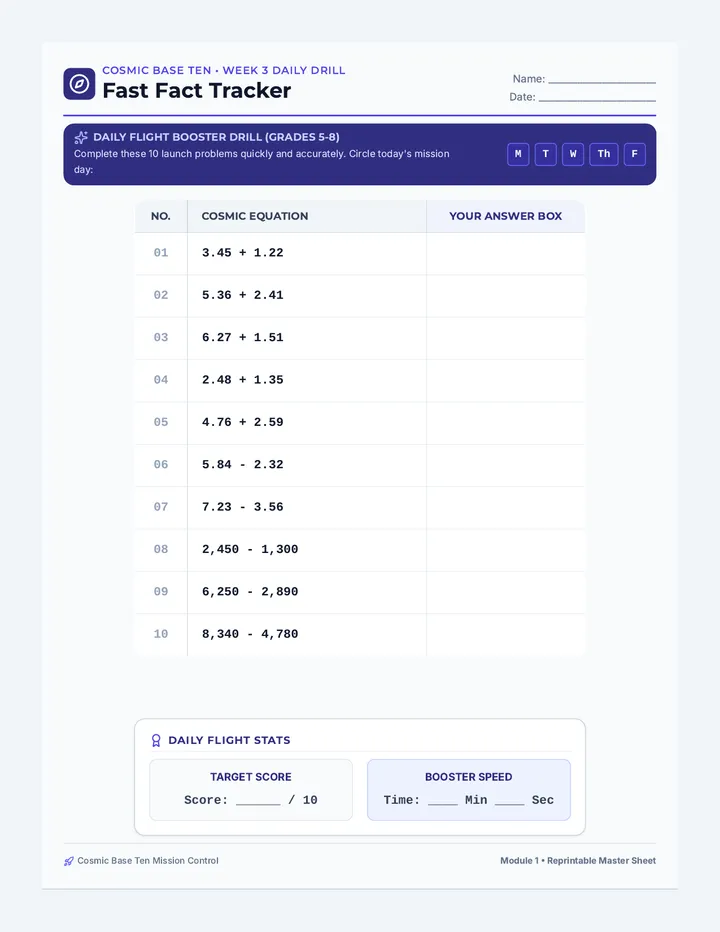
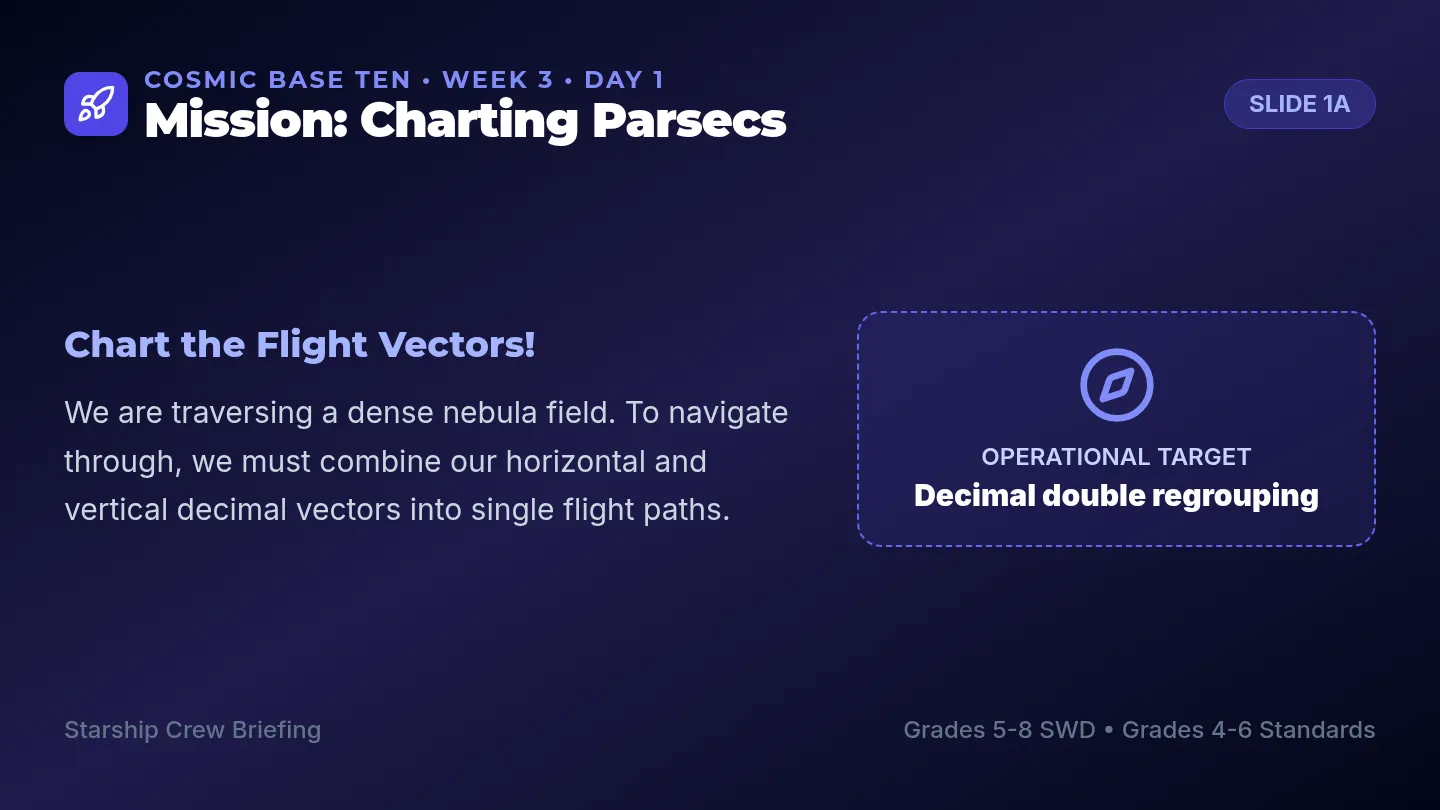
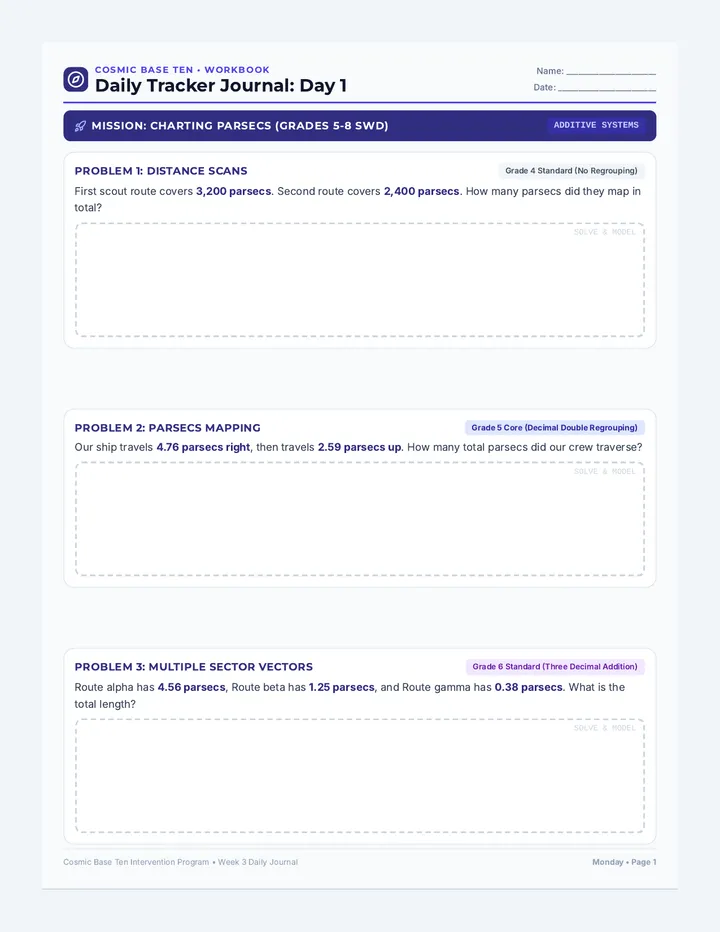
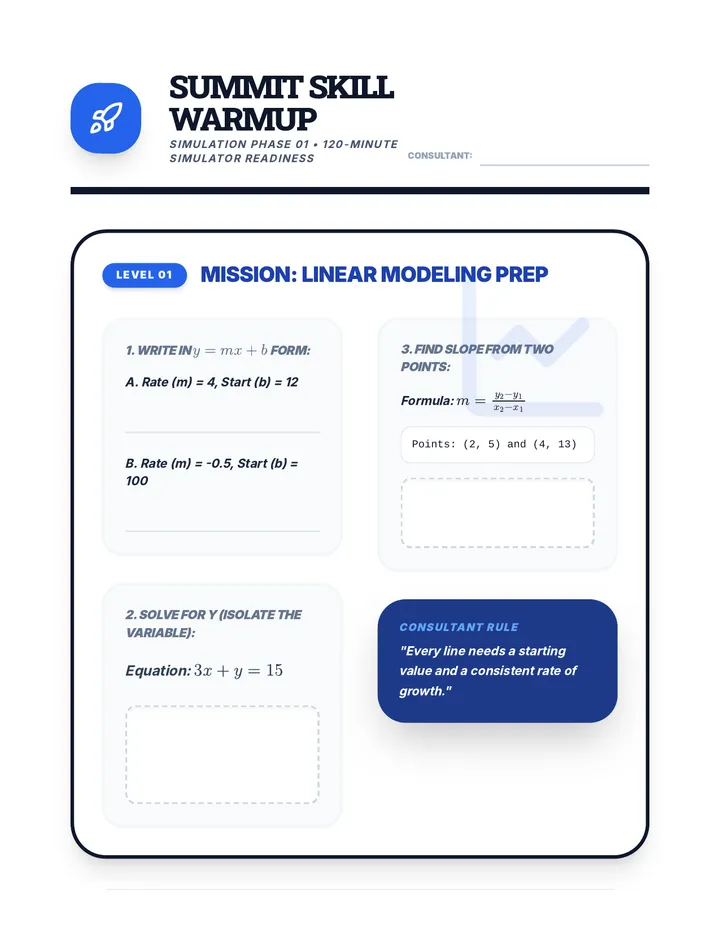
A scaffolded introduction to the four-quadrant coordinate plane, using a navigation theme to help students master plotting points with visual aids and step-by-step guides.
Students will explore the concepts of big, medium, and small by comparing various objects in the museum exhibits, promoting vocabulary development and visual discrimination.
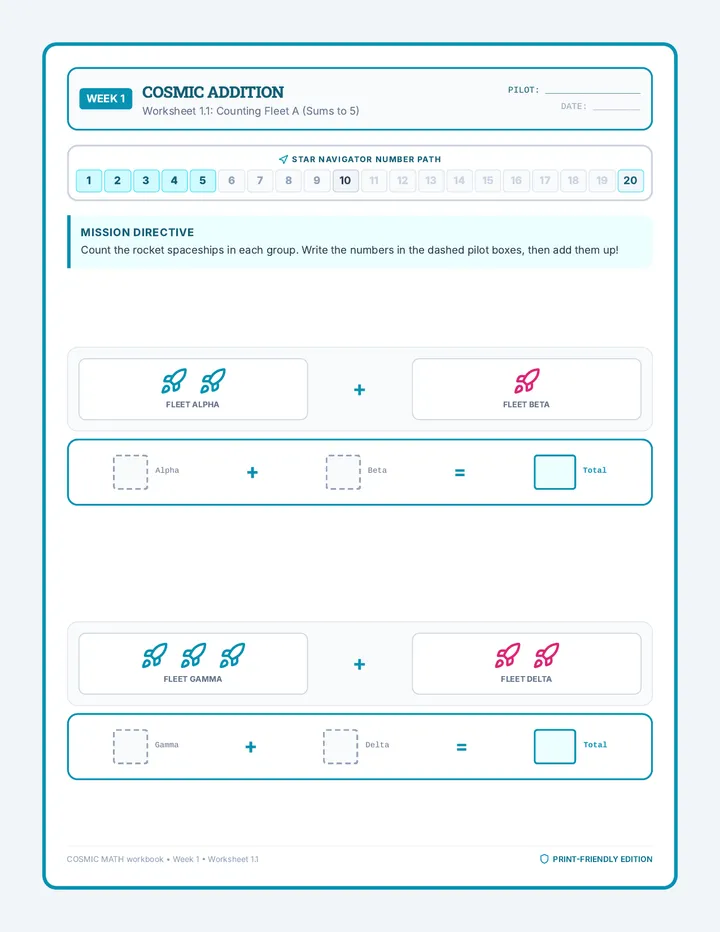
An introduction to simple addition by combining groups of museum objects, focusing on the concept of 'putting together' using visual aids and tactile play scenarios.
Students will practice identifying and counting numbers 1-10 using common items found in a play museum setting, such as grocery items, toy cars, and house windows.
A cumulative review of 2D/3D shapes, positional words, and measurement comparisons to assess mastery.
Students identify 3D shapes (cube, sphere, cone, cylinder) and compare objects based on size and length.
Students identify 2D shapes (circle, square, triangle, rectangle) and use positional language (over, under, beside) to describe location.
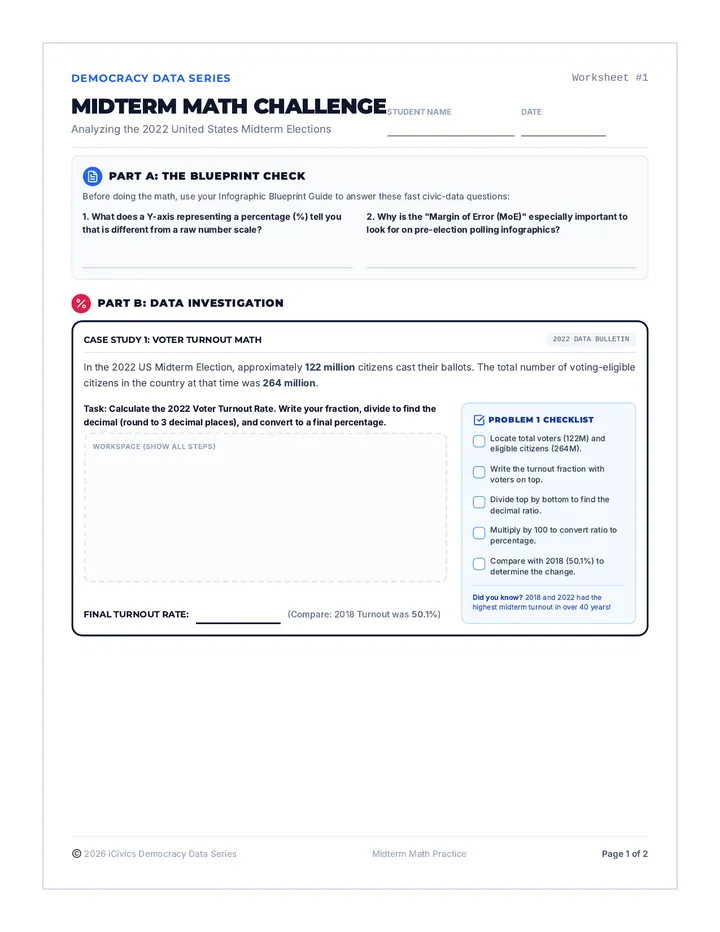
Students count sets of pennies and nickels and analyze data from bar graphs to solve comparison problems. Subtraction skills are reinforced through data-based word problems.
Students identify pennies, nickels, and dimes, sort objects into categories, and record data using tally charts. The lesson also introduces subtraction by counting back on a number line.
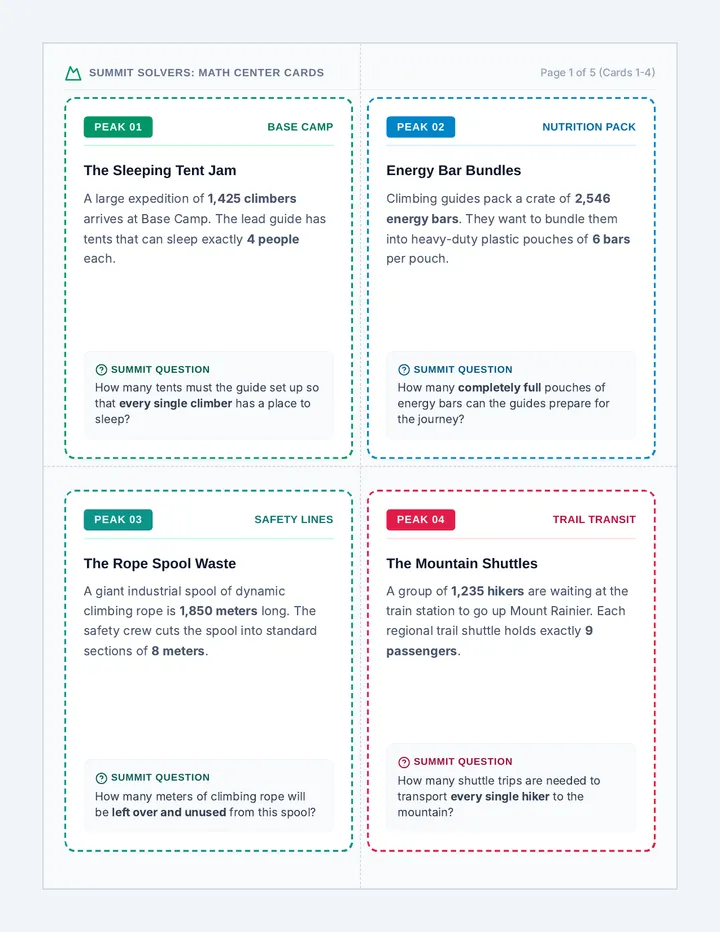
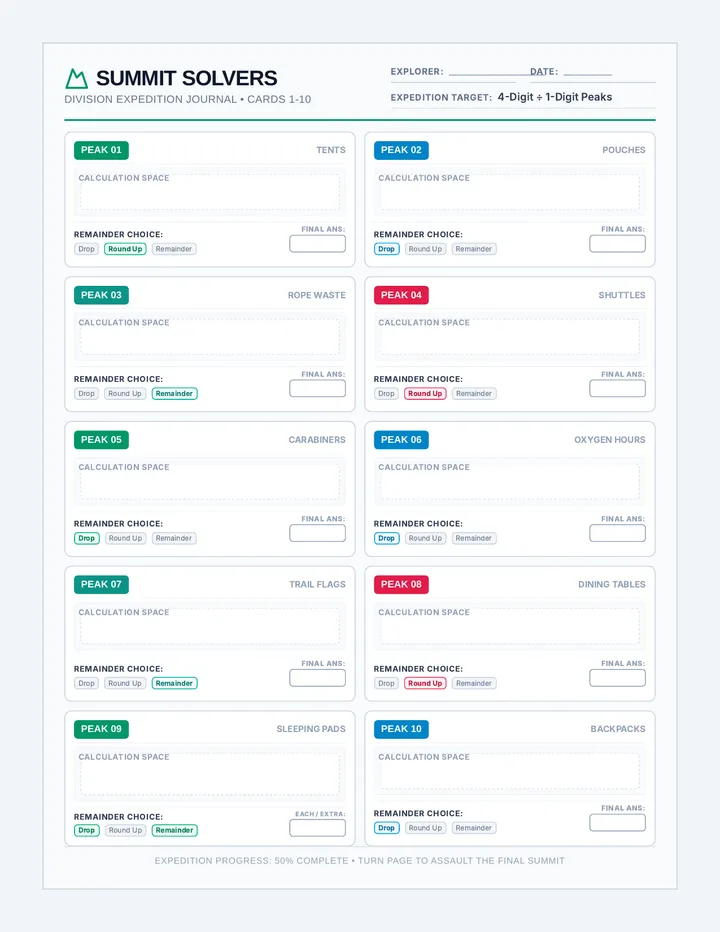
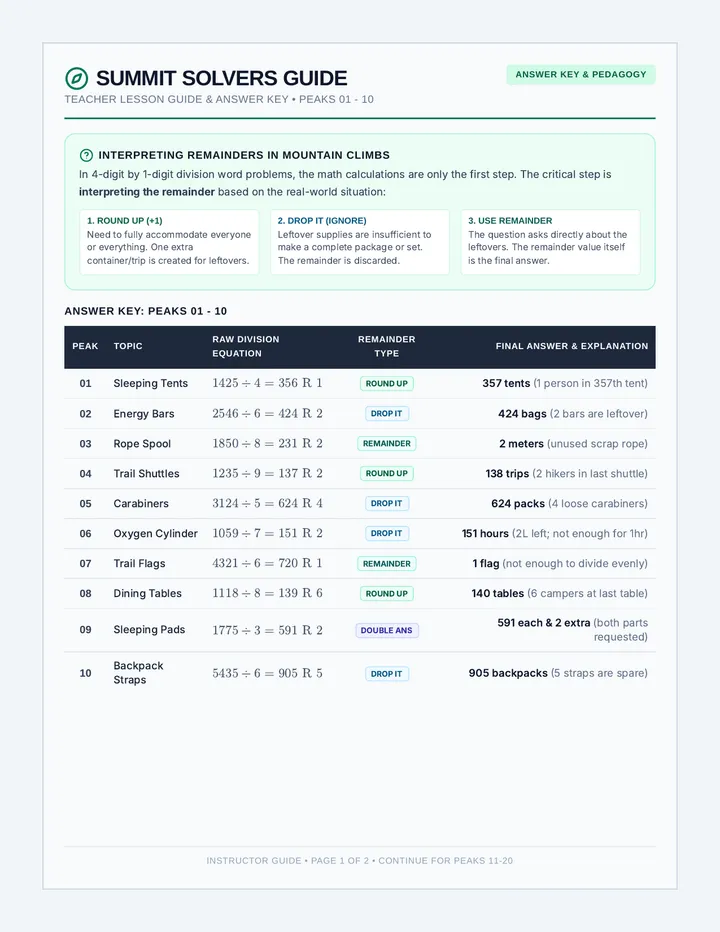
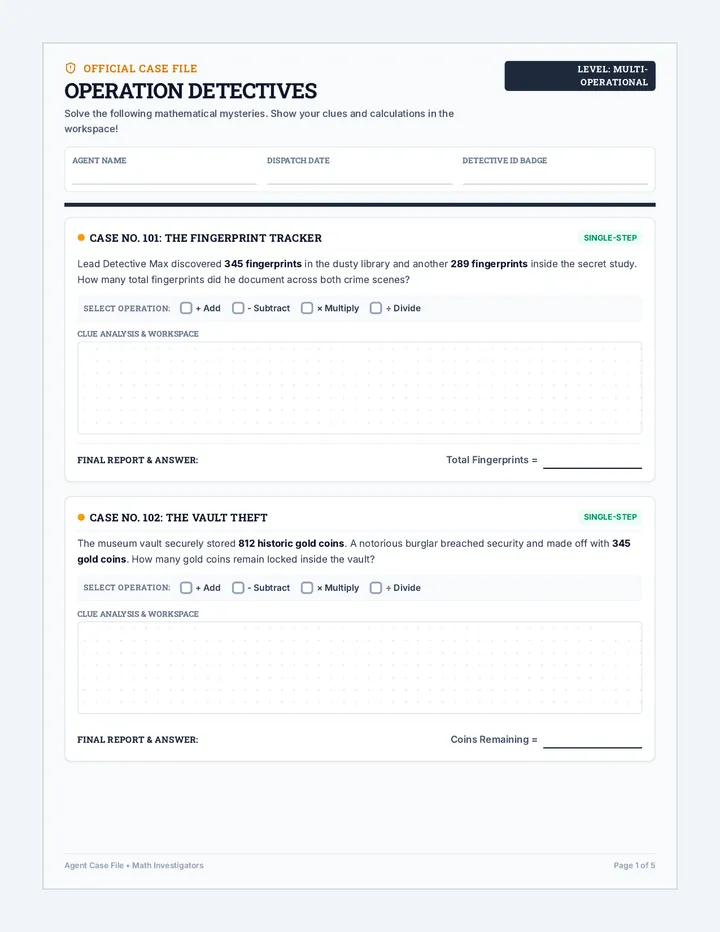
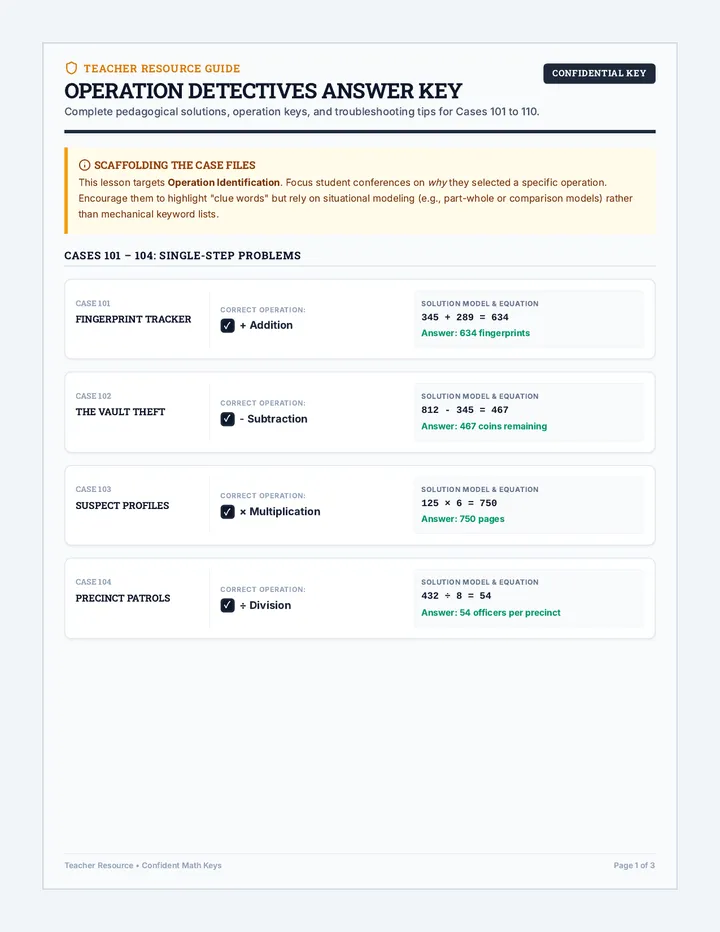
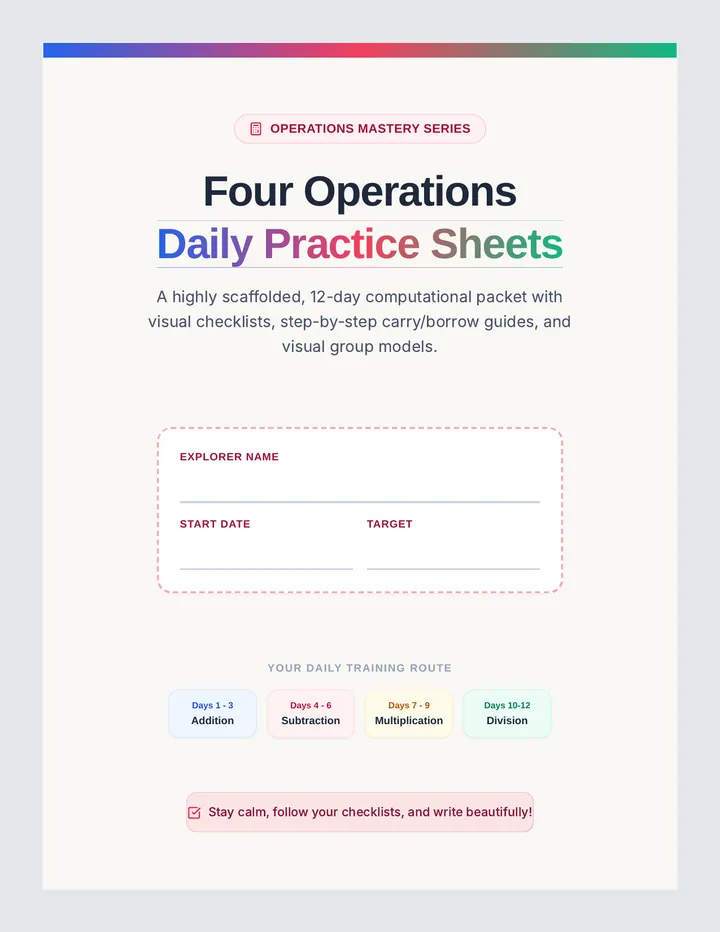
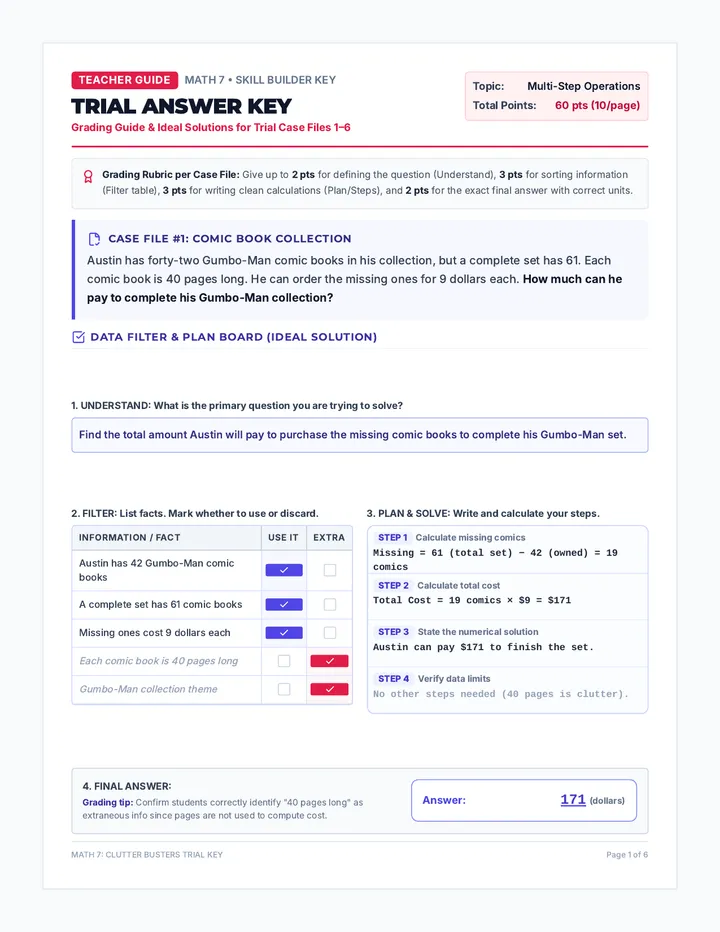
A fourth-grade math lesson focused on translating real-world adventure scenarios into numerical expressions using addition, subtraction, multiplication, and division. Students practice identifying key operations and solving multi-digit problems.
A comprehensive review of 3rd Grade North Carolina Standard Course of Study (NCSCOS) fraction standards, featuring EOG-style questions covering partitioning, number lines, and equivalence.
A collection of five varied practice pages designed for kindergarten students to master the number 12 through finding, writing, and drawing. Each page features a unique layout and theme to maintain engagement through repetition.
A quick assessment focusing on simplifying fractions with numerators and denominators up to 100 into their simplest form.
Focuses on bar graphs and comparing data. Students analyze categories and count collections of mixed coins.
Focuses on picture graphs and dimes. Students interpret data with 1:1 correspondence and count mixed coins.
Focuses on tally charts and pennies/nickels. Students learn to read tallies and identify coins to 'buy' items from the market.
A preschool-focused lesson based on 'Benny's Pennies' by Pat Brisson, targeting one-to-one correspondence and rhyming through hands-on play.
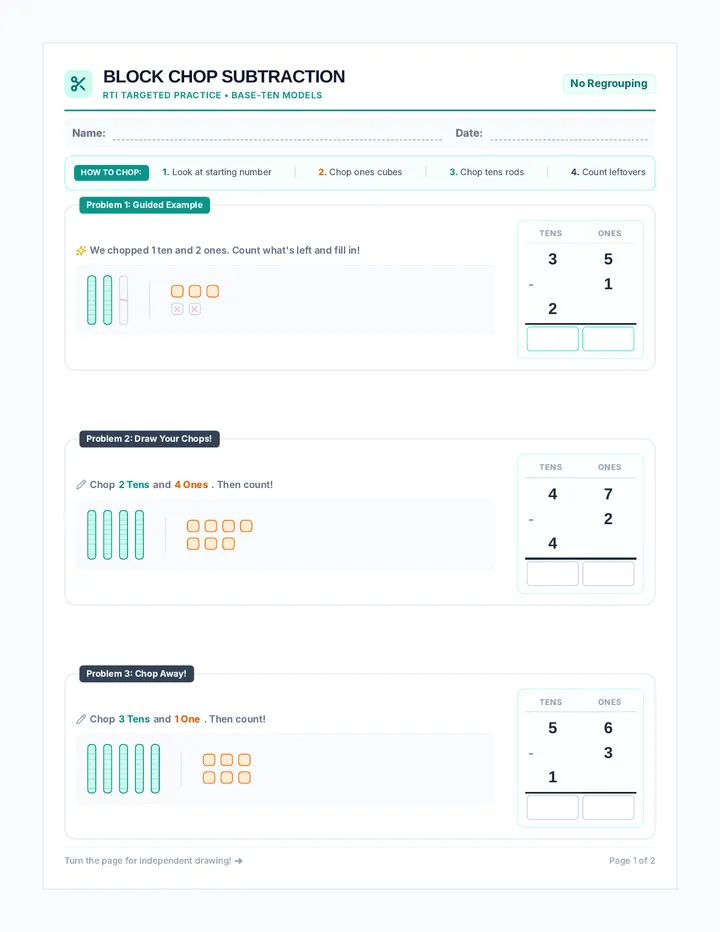
Challenges students to choose the correct operation (addition or subtraction) based on word problem context. Includes problems within 20 and uses ten-frames for modeling.
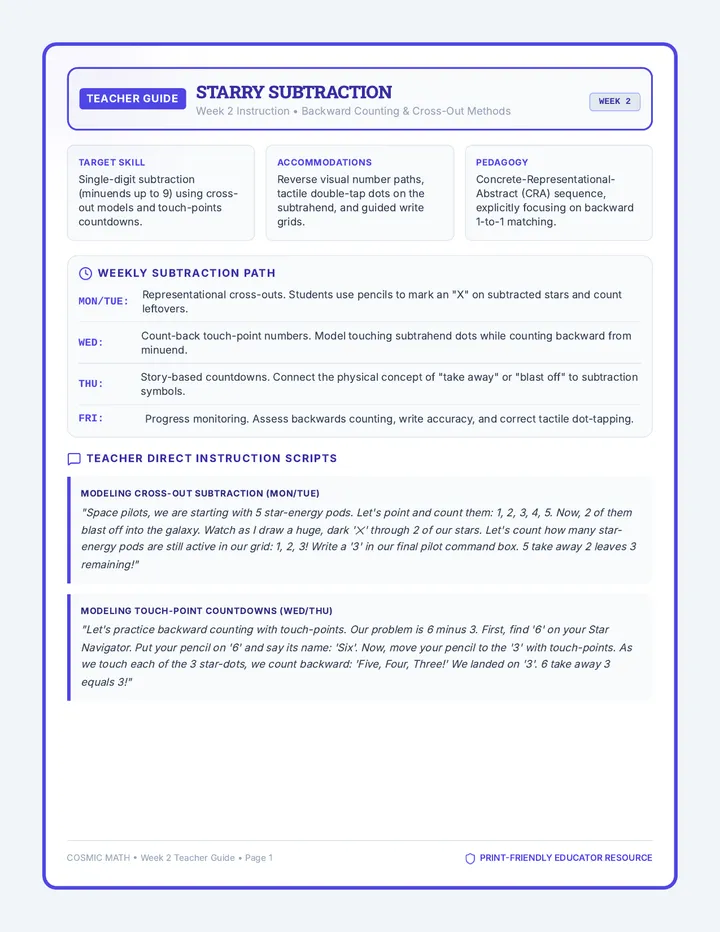
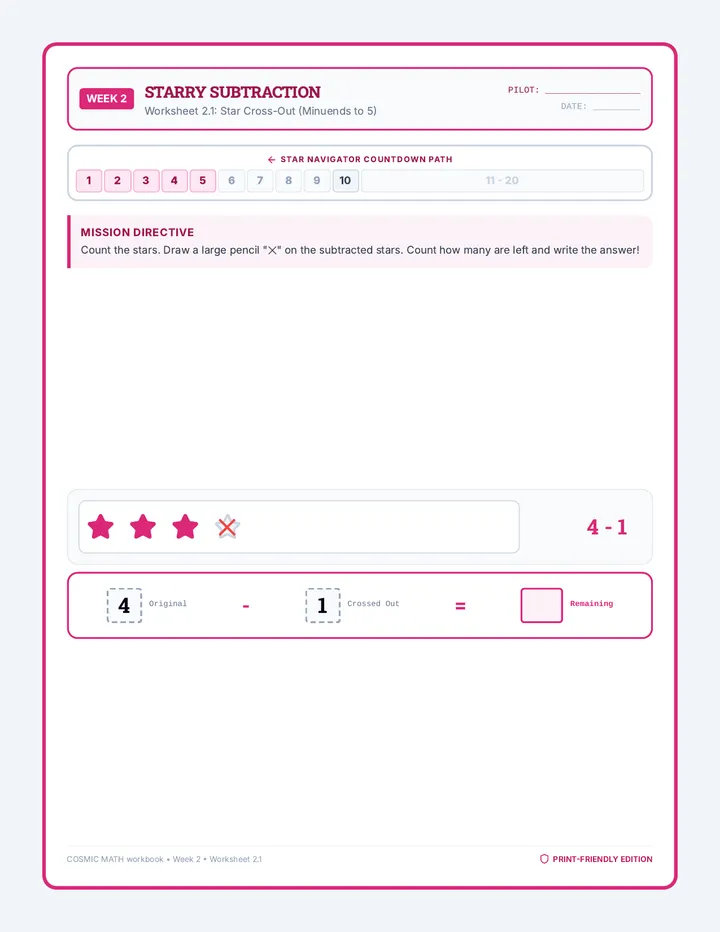
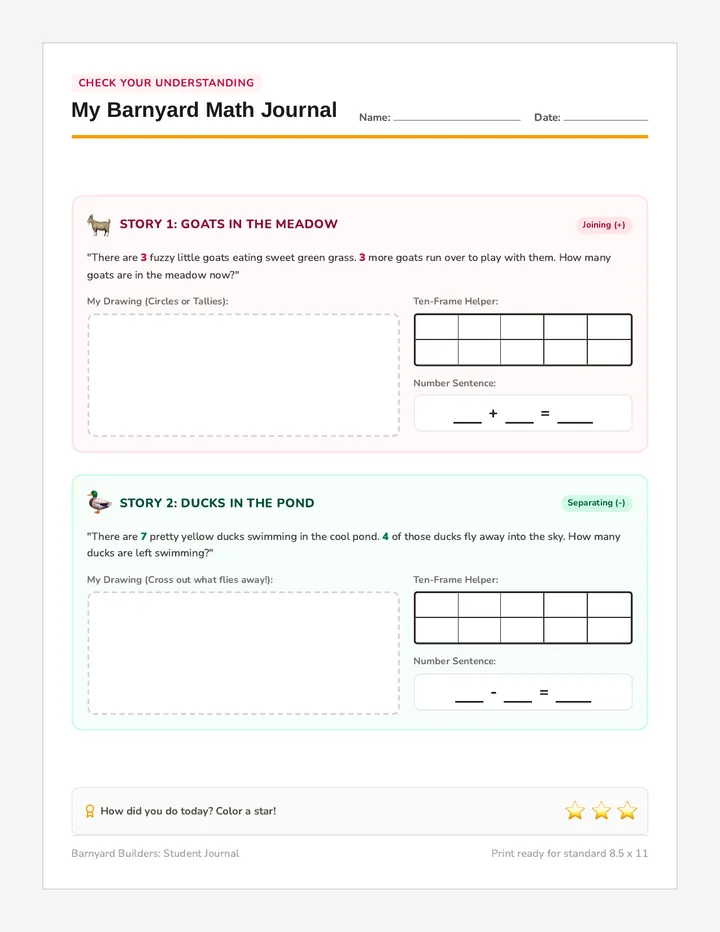
Focuses on subtraction word problems (separating) by marking 'X's on pre-drawn images. Students transition from visual crossing-out to writing subtraction number sentences.
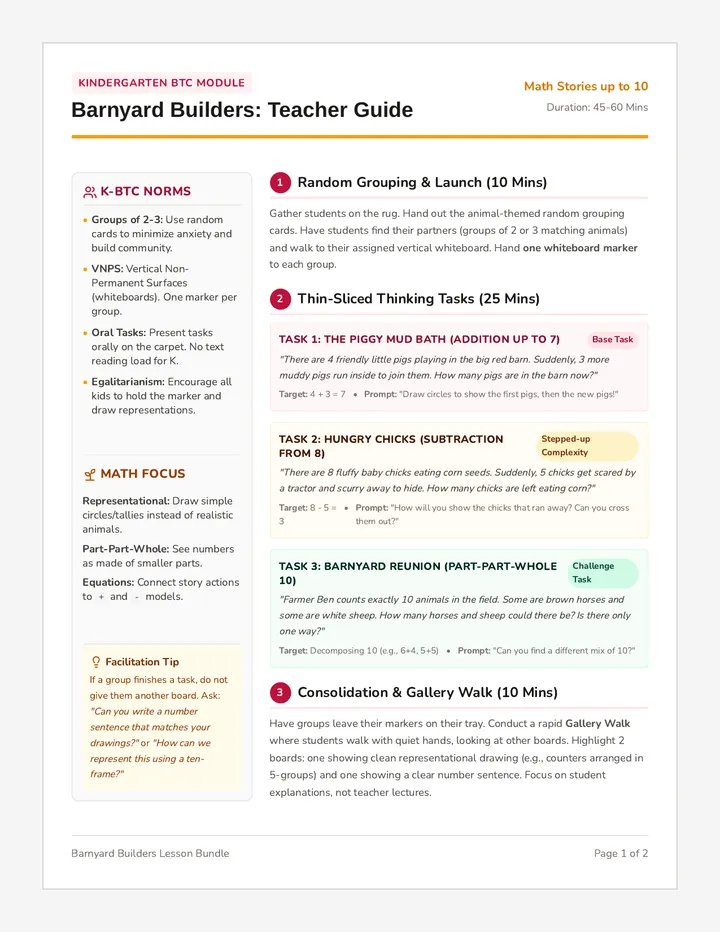
Focuses on addition word problems (joining) using farm-themed stories. Students practice drawing pictures and using ten-frames to represent addition equations.
Cette leçon porte sur la compréhension et la manipulation des nombres de 0 à 20 en utilisant les principes de la Conception Universelle de l'Apprentissage (CUA). Elle propose des parcours différenciés pour permettre à chaque élève de progresser à son rythme.
A numeracy lesson helping students distinguish the number 12 from 20 and 21 using place value visualization (one ten, two ones) and 'Architect' inspection strategies.
A visual math lesson focused on finding missing addends up to 20 using double ten frames and decomposition strategies. Students act as 'Number Architects' to fill gaps in blueprints.
A foundational lesson on the 4-quadrant coordinate plane, specifically designed for students with IEPs. Includes visual-heavy instruction on identifying and plotting ordered pairs using color-coded axes and step-by-step strategies.
Day 3 provides a comprehensive review of all measurement and geometry concepts from the week, culminating in a cumulative assessment.
Day 2 covers identifying 2D and 3D shapes by name and attributes, as well as mixed geometry concepts like relative position and composite shapes.
Day 1 focuses on calendar navigation (finding specific dates) and ordering objects by length, targeting foundational RIT 150-160 skills.
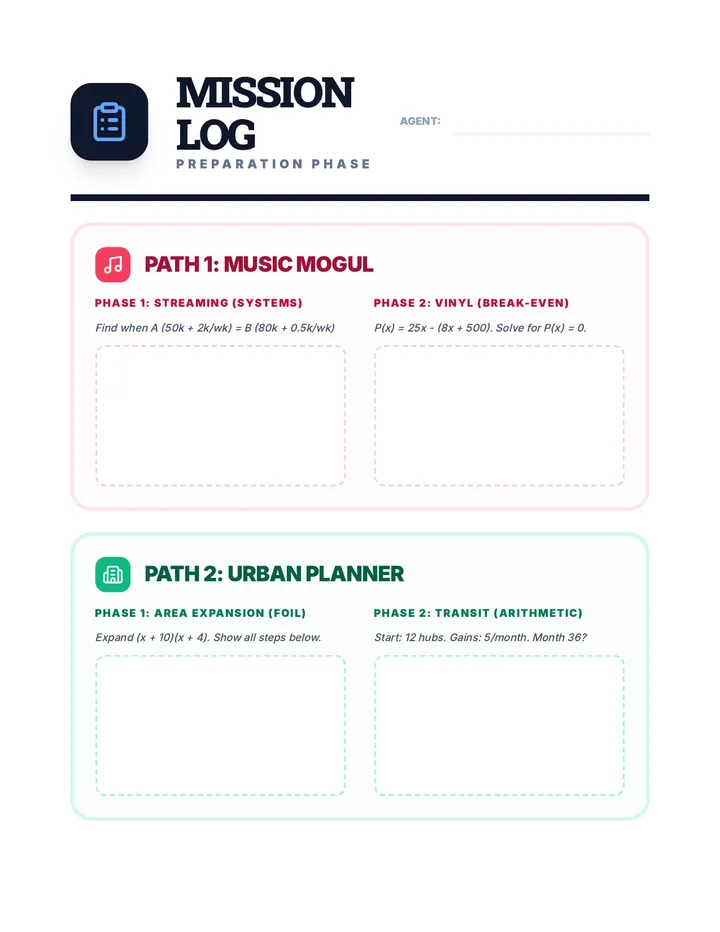
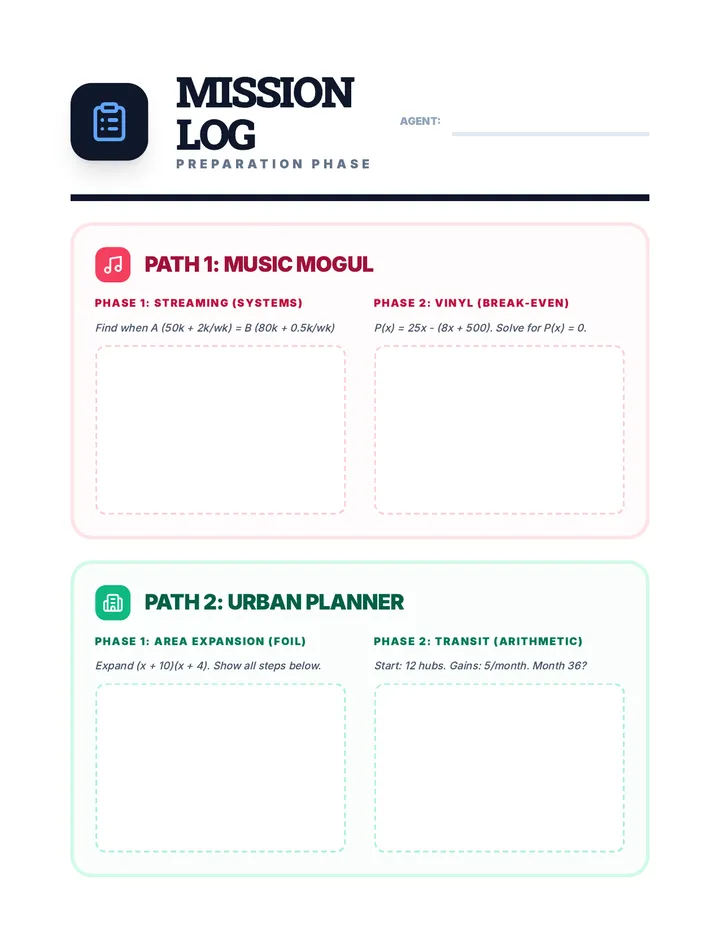
An expanded foundational math unit focusing on single-digit addition, coin identification, telling time to the hour, and number-quantity matching. This comprehensive packet includes multiple worksheets per skill for multi-day practice.
A foundational numeracy lesson where students use a telephone wire visual to explore and record combinations of numbers that sum to ten.