A 10-minute Tier 1 ELA lesson for 6th graders that integrates social-emotional learning with reading comprehension through text-to-self connections.
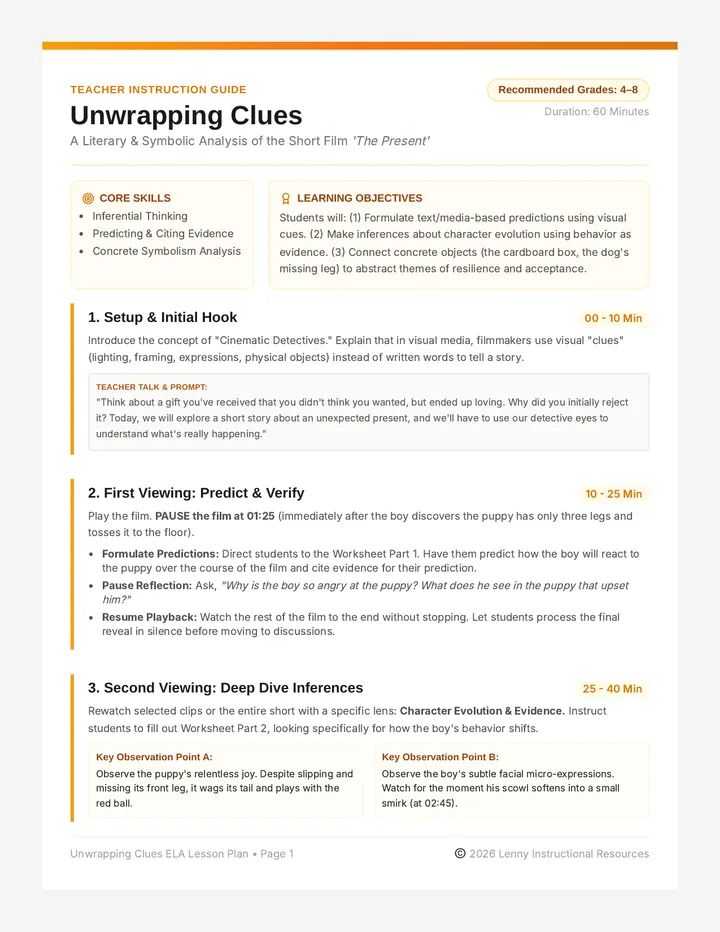
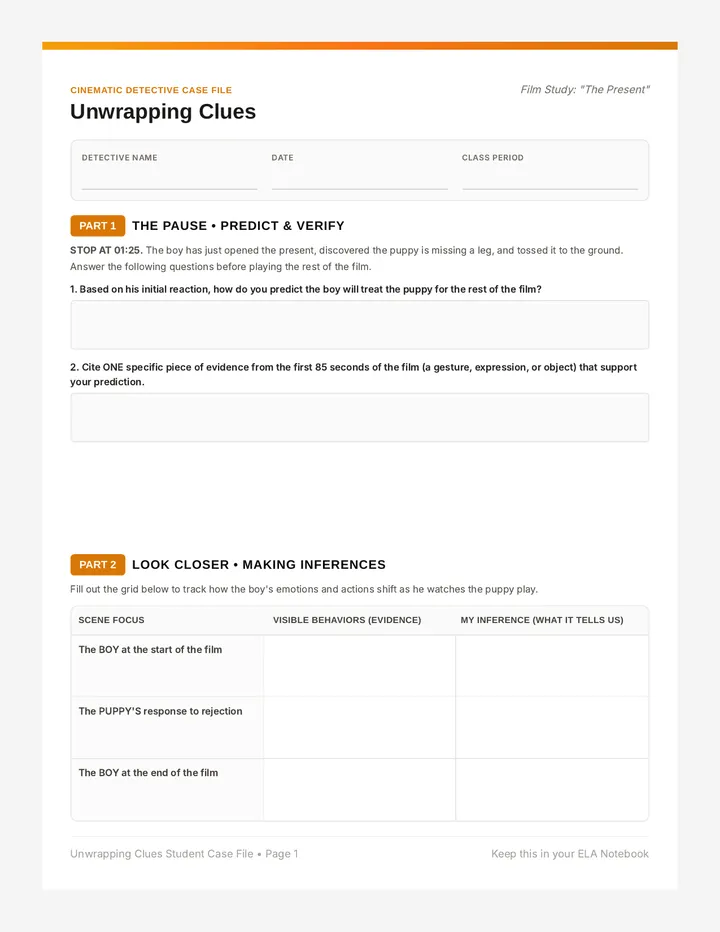
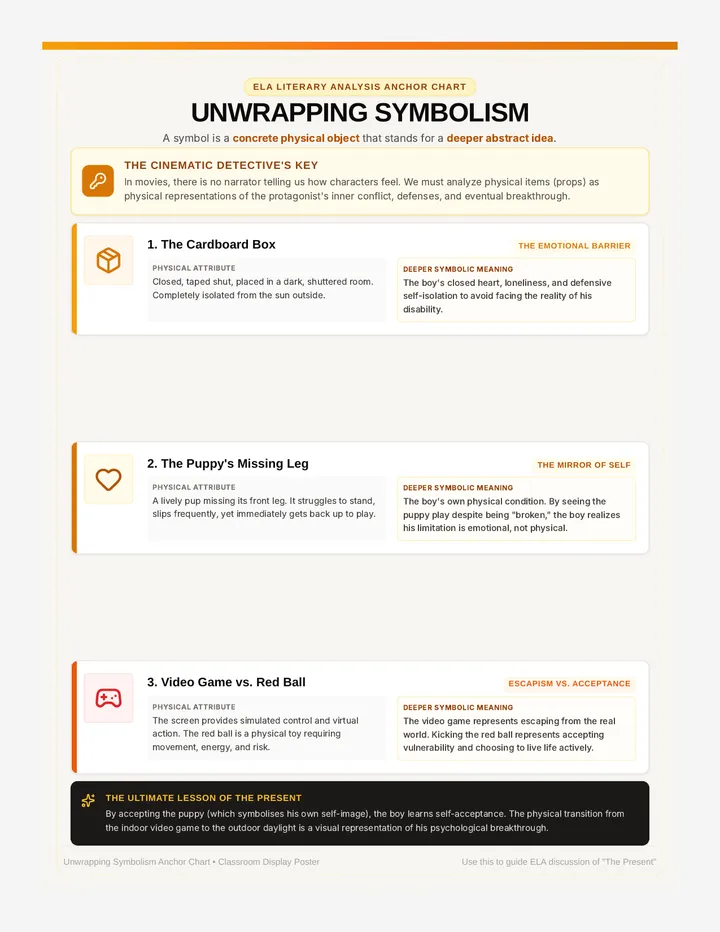
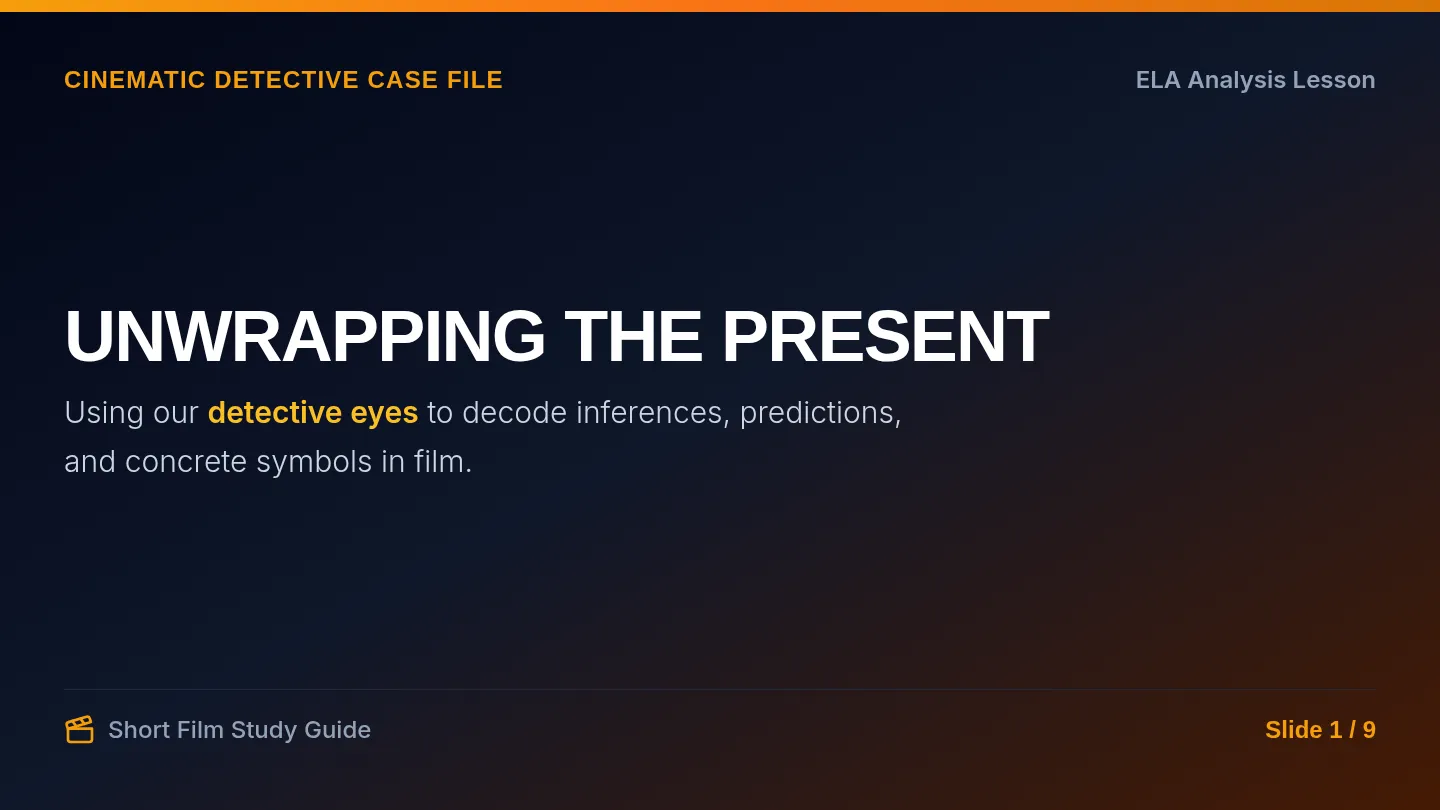
A comprehensive 60-minute ELA lesson focused on the animated short film 'The Present'. Students explore core reading skills—inferential thinking, prediction, citing evidence, and concrete symbolism—by analyzing the boy, the box, the dog, and the final reveal.
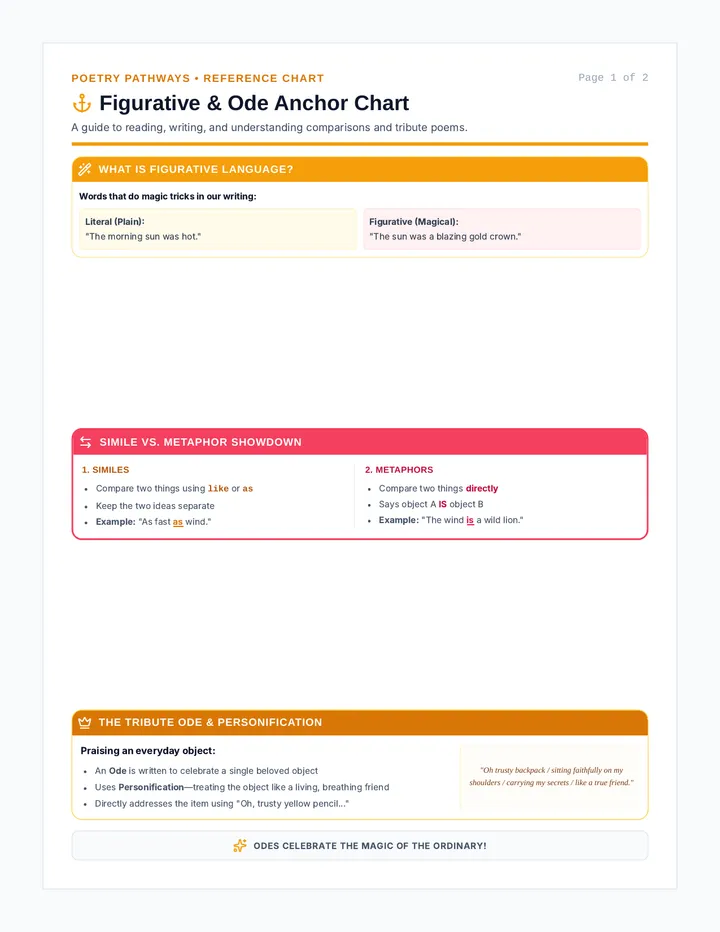
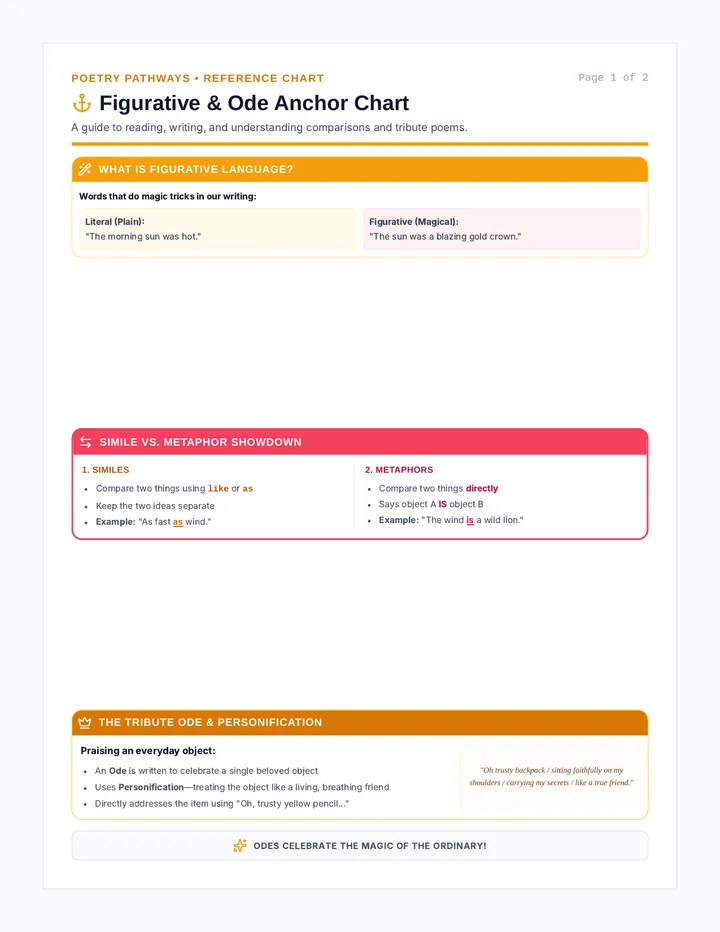
Focuses on using Metaphors and Similes to create powerful figurative imagery. Includes a final "My Poetry Masterpieces" portfolio cover and peer celebration review pages.
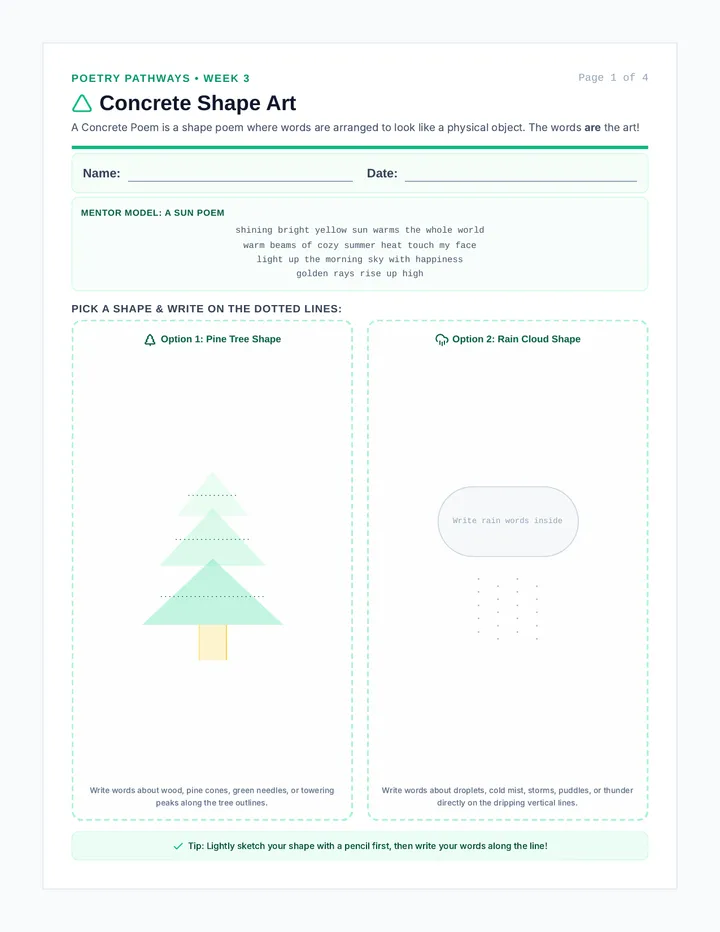
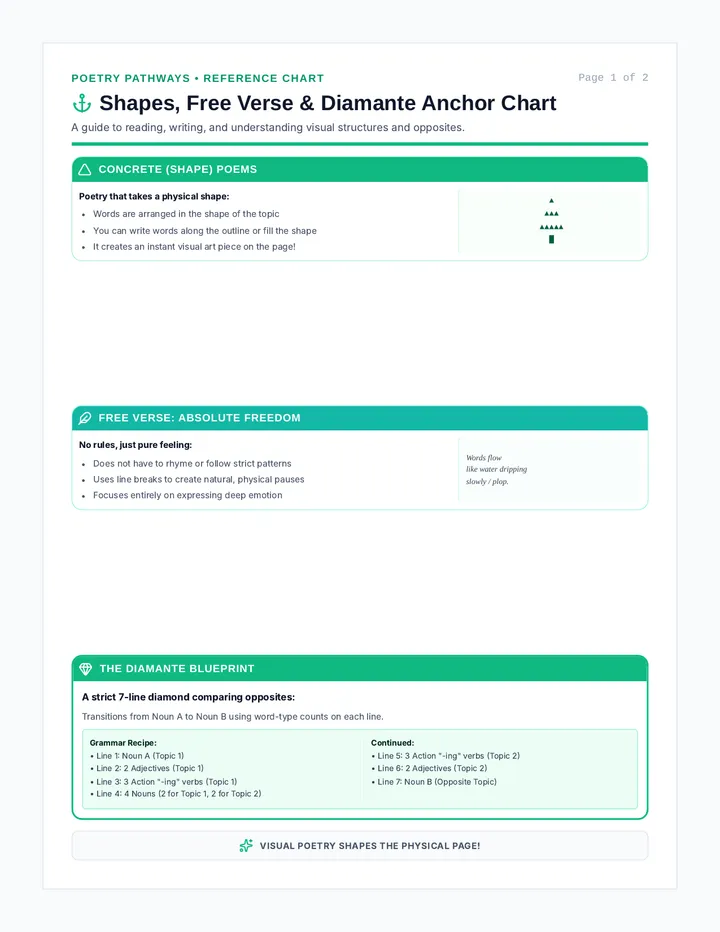
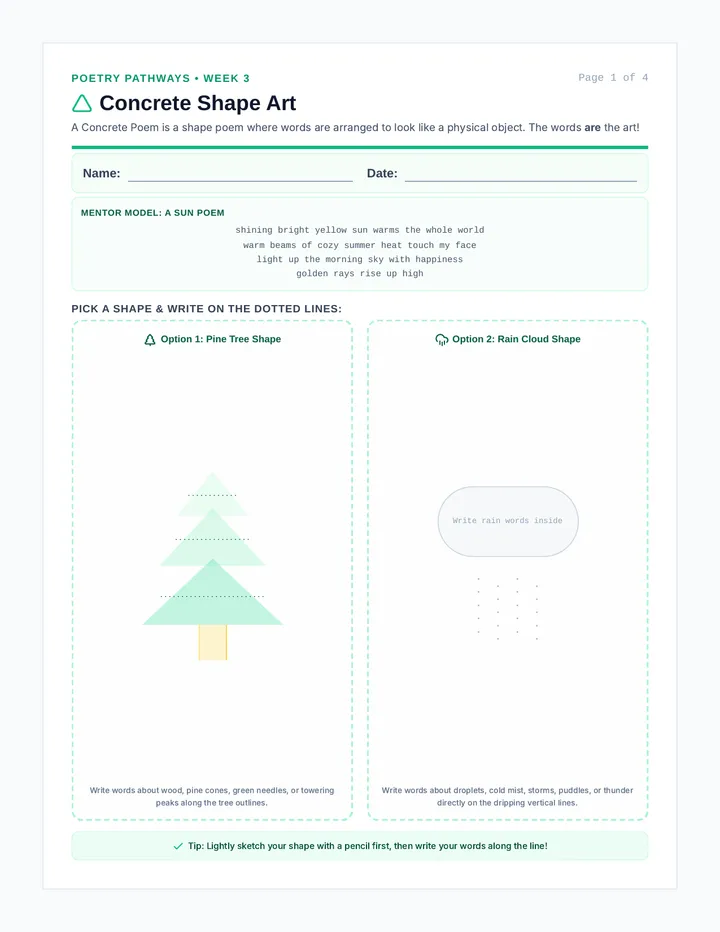
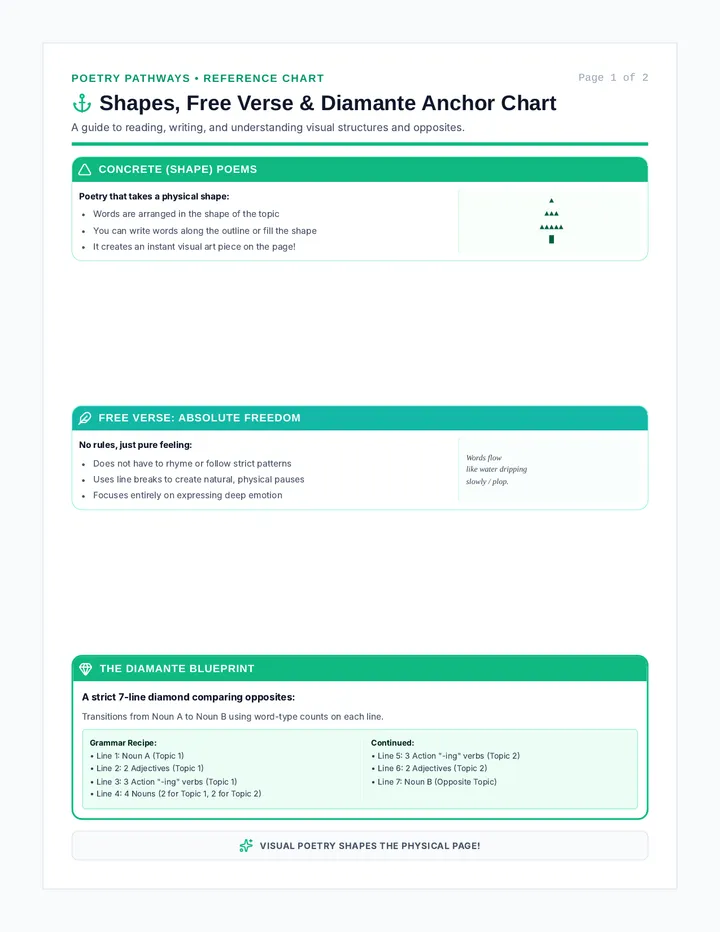
Focuses on shape, movement, and visual arrangement with Concrete (Shape) Poems and Free Verse. Provides scaffolded outline guides, word maps, and sensory feeling prompts.
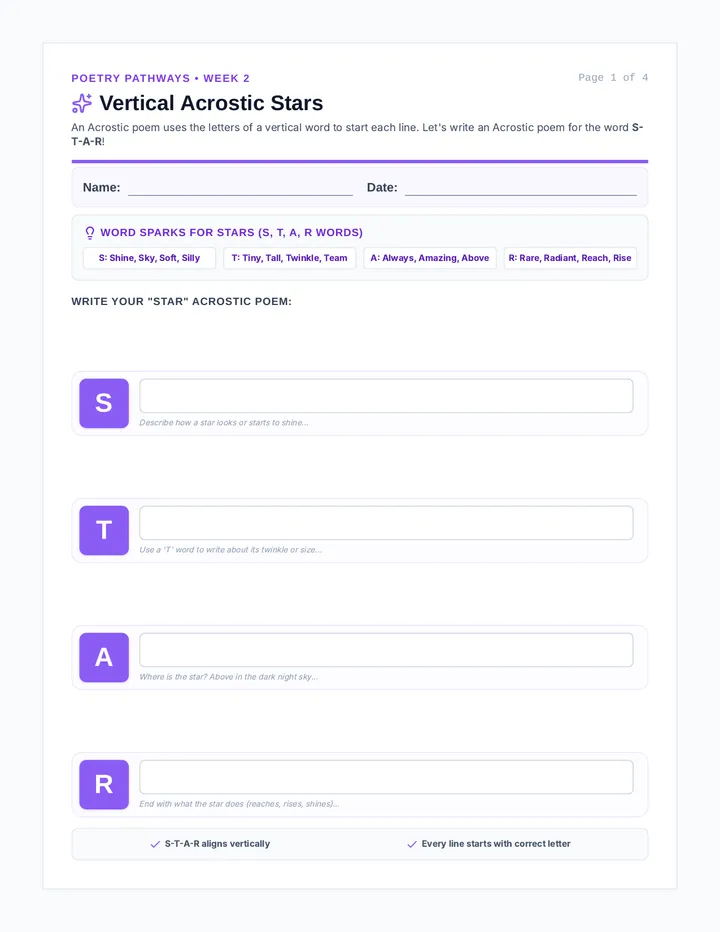
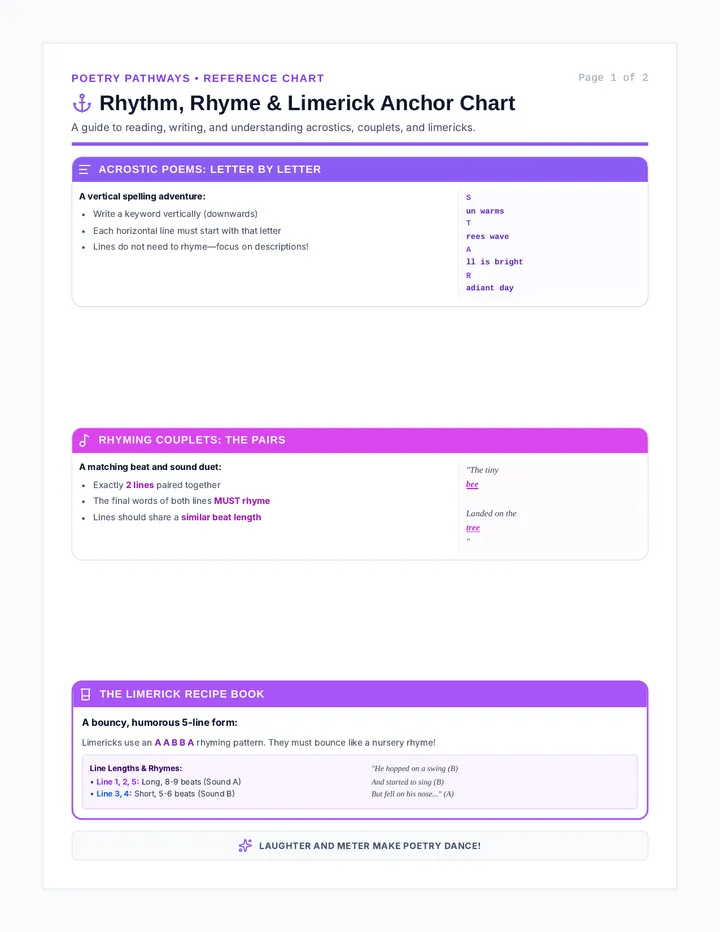
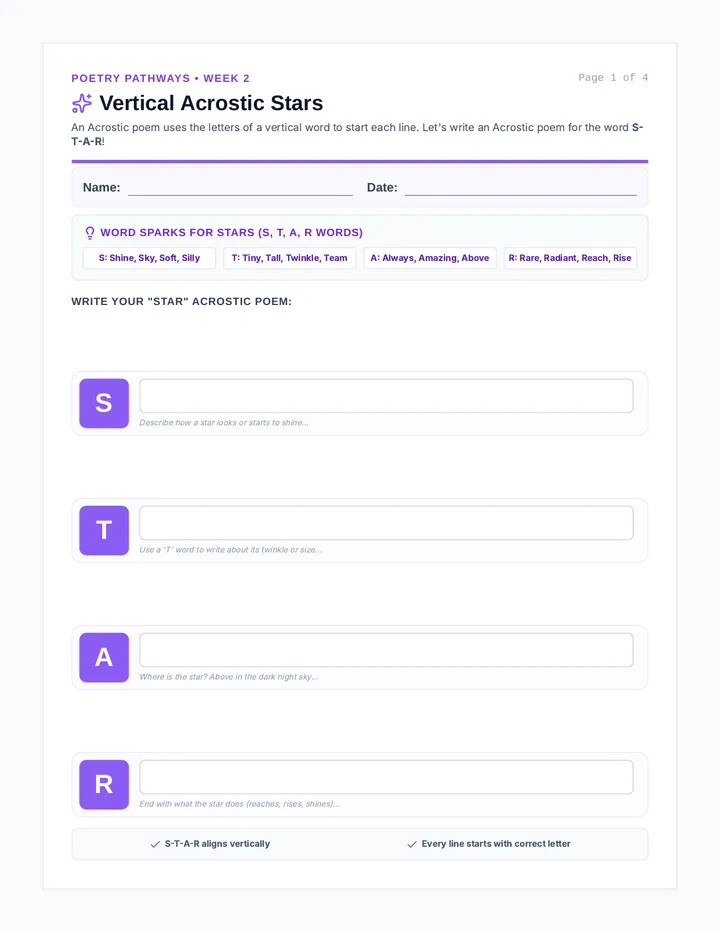
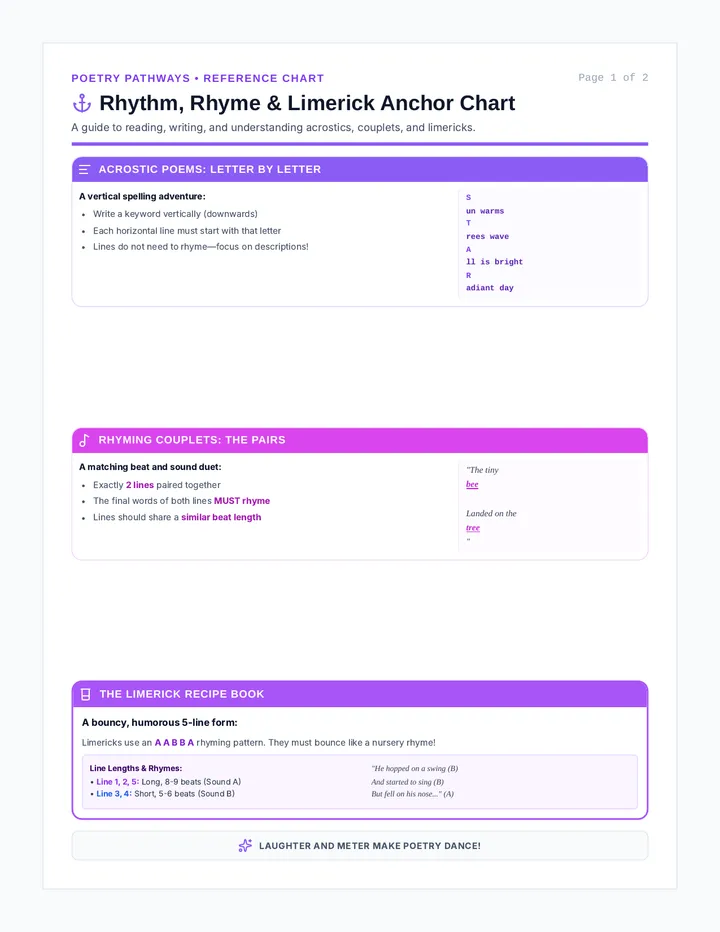
Focuses on structure, rhythm, and sound through Acrostic Poems and Rhyming Couplets. Offers step-by-step graphic templates, letter grids, rhyming dictionaries, and syllable beat counters.
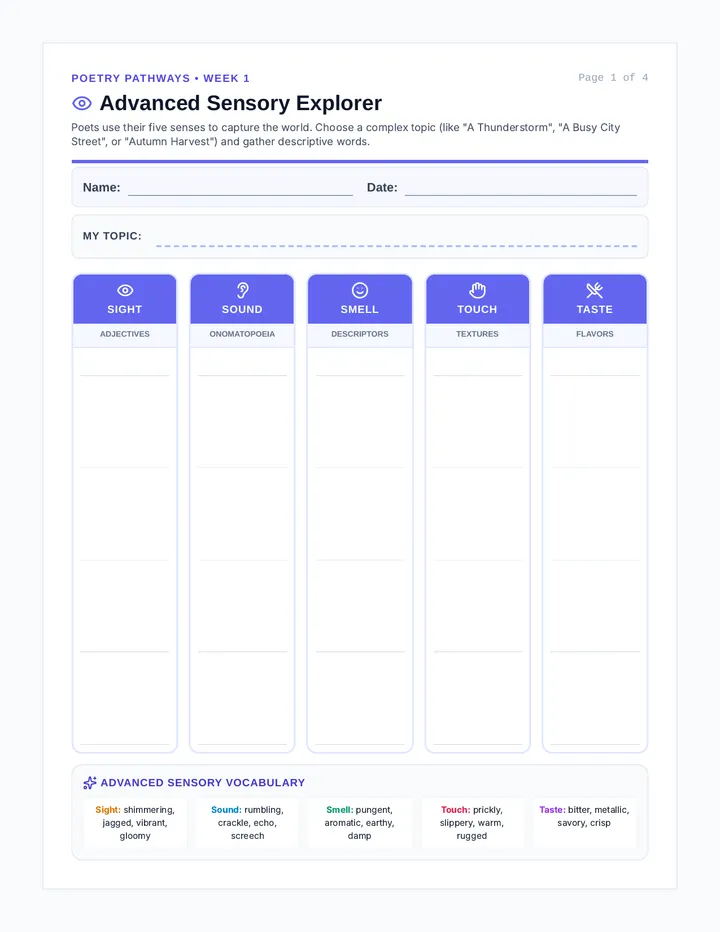
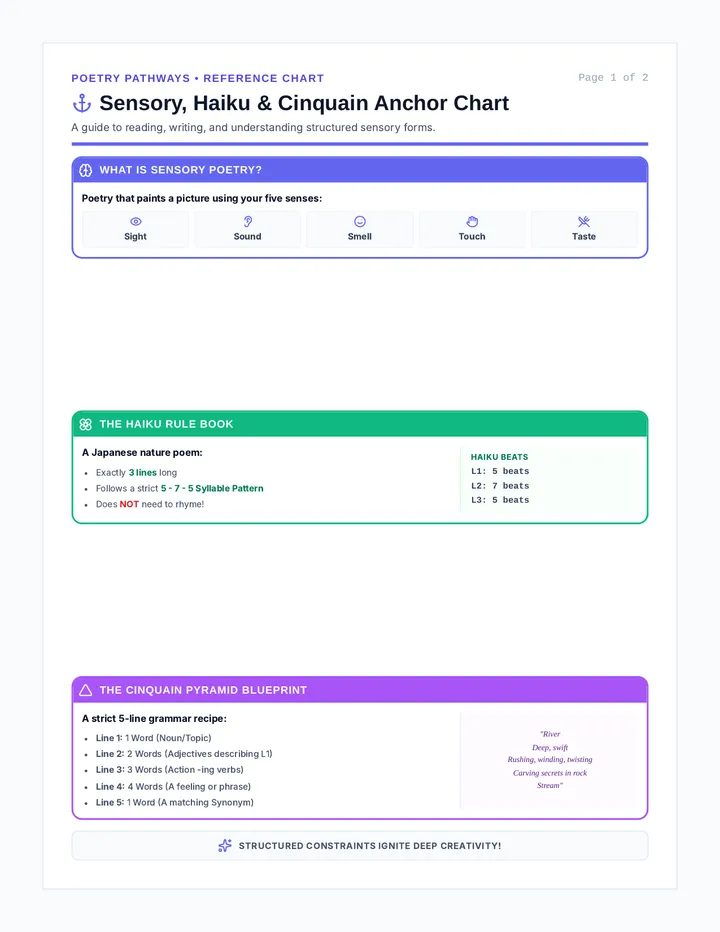
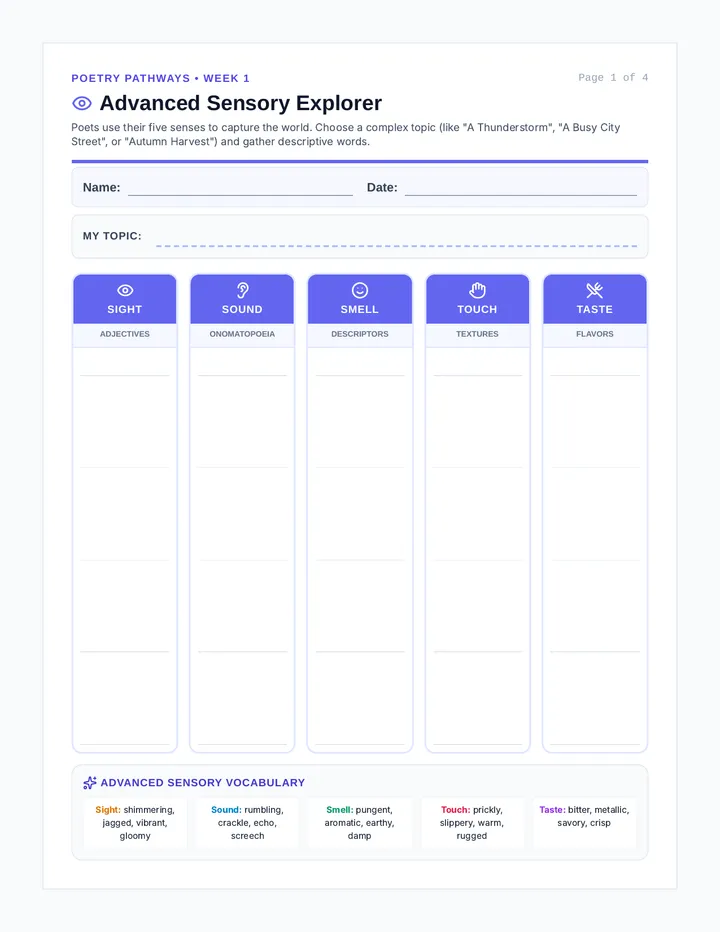
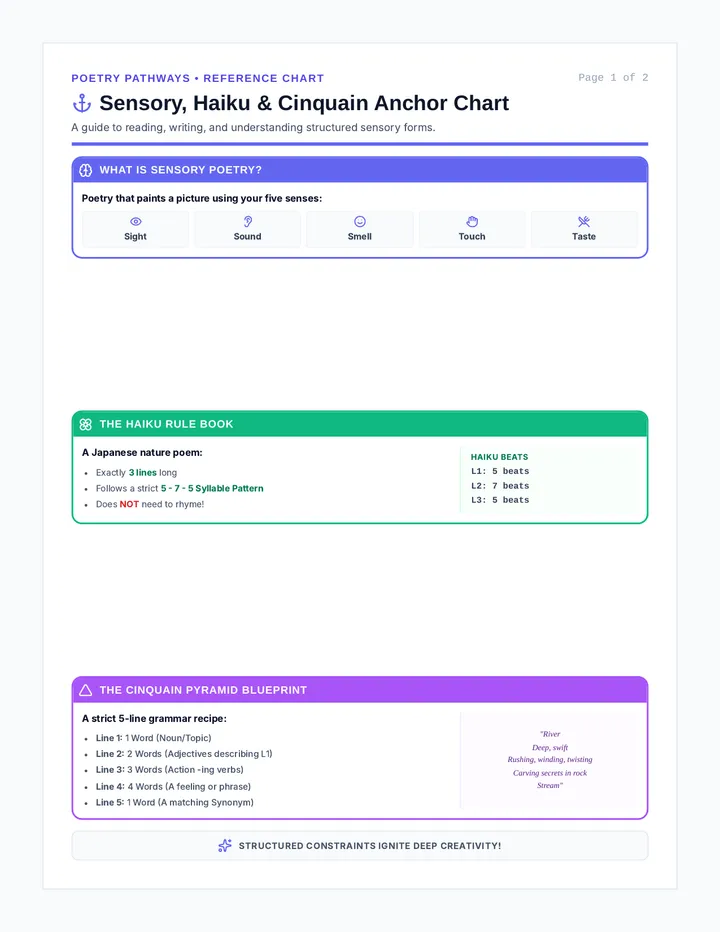
Focuses on Sensory and Color Poetry (Haiku and Color Poems). Students explore imagery using their five senses, utilizing highly visual sensory organizers, word banks, and syllable counters.
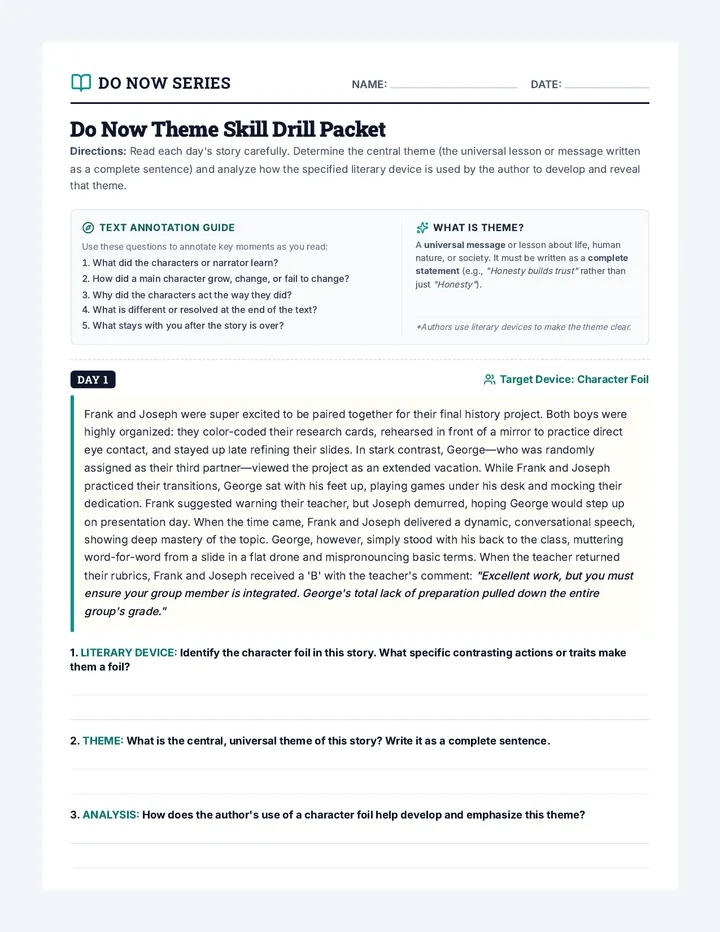
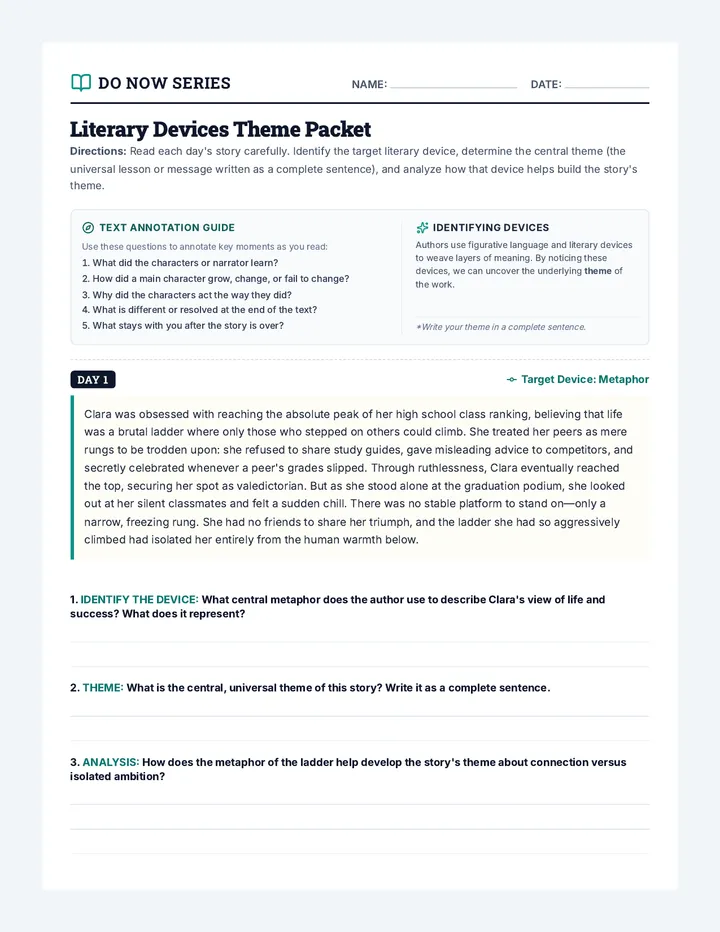
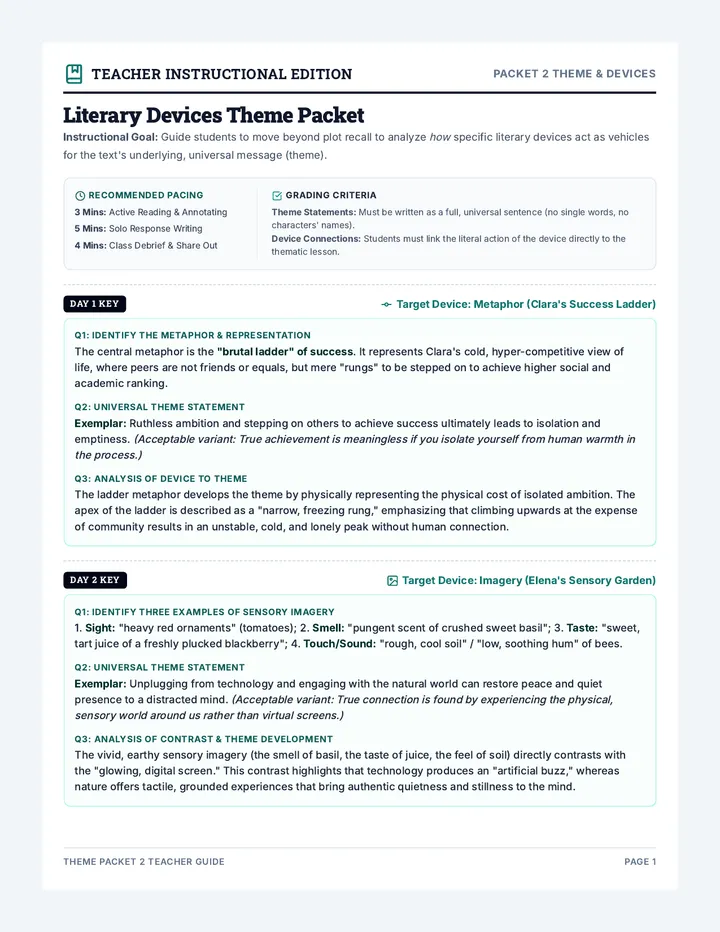
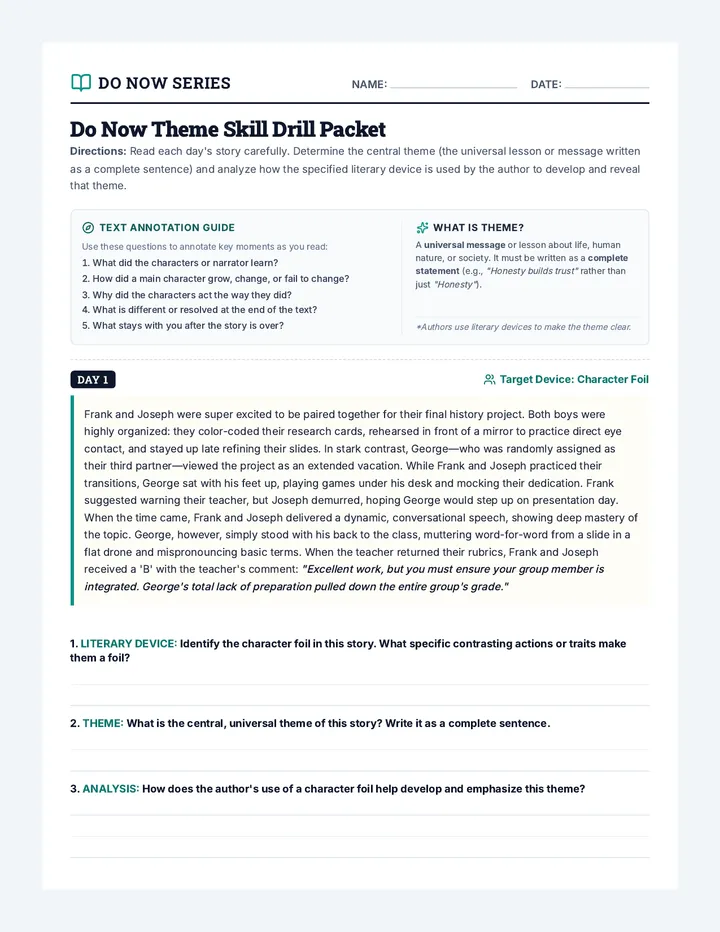
A cohesive lesson and drill series designed to help students master the connection between explicit literary devices and the central themes of literary texts.
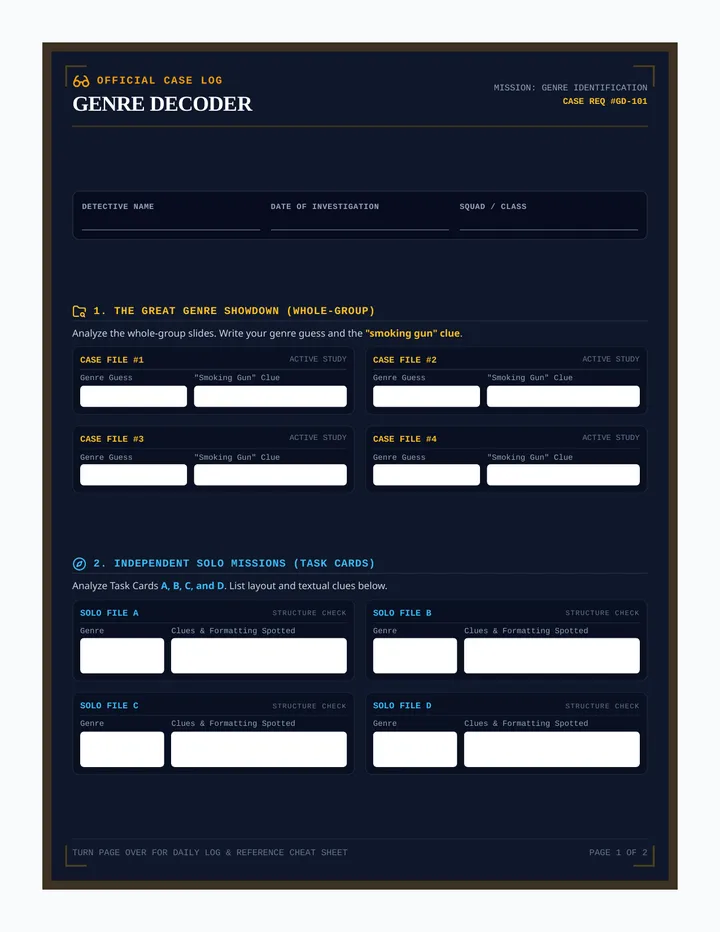
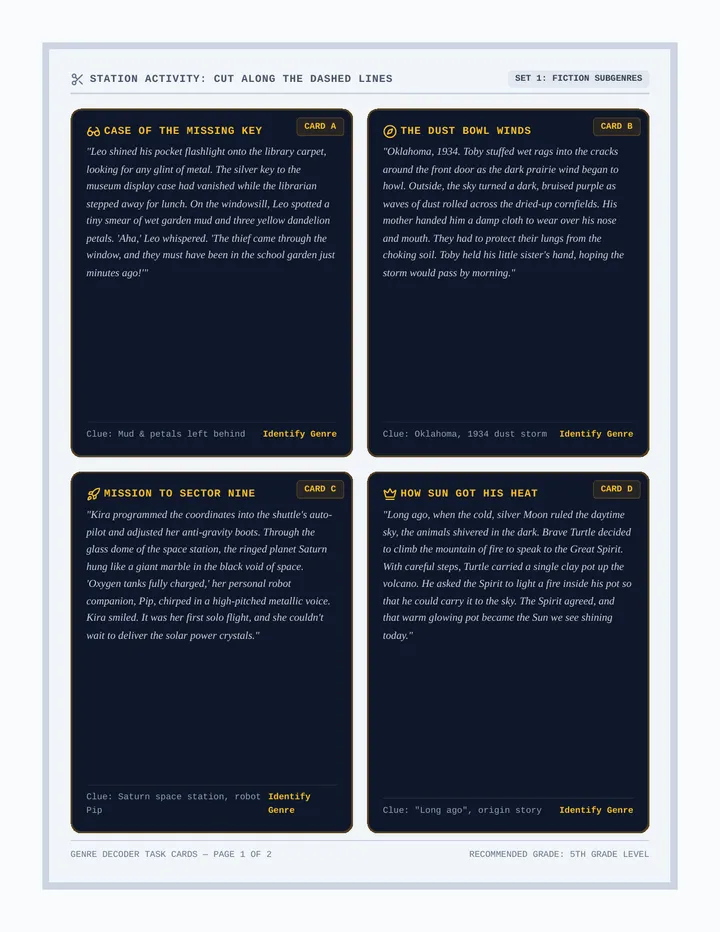
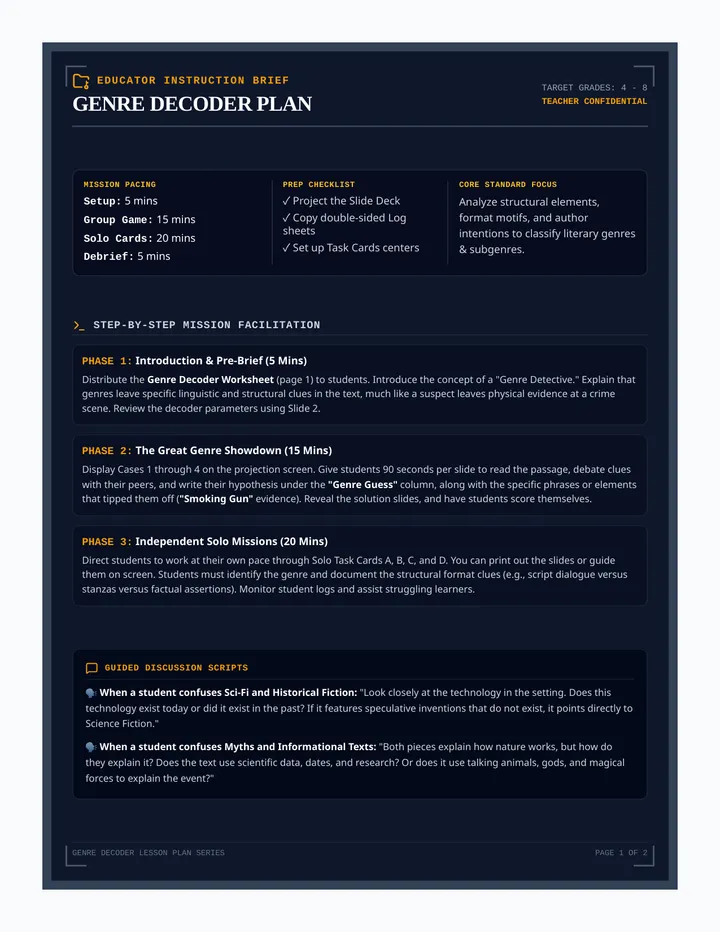
An interactive, gamified lesson where students become 'Genre Detectives' to identify fiction subgenres and mixed literature genres. Includes an interactive classroom presentation, a printable student recording sheet, and a comprehensive teacher guide with full answer keys.
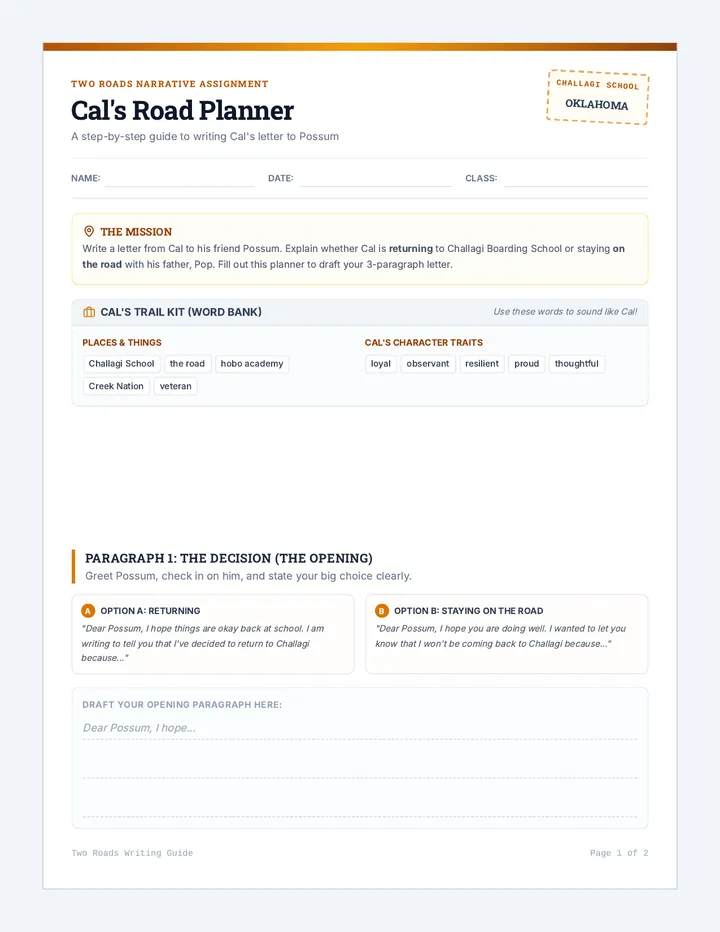
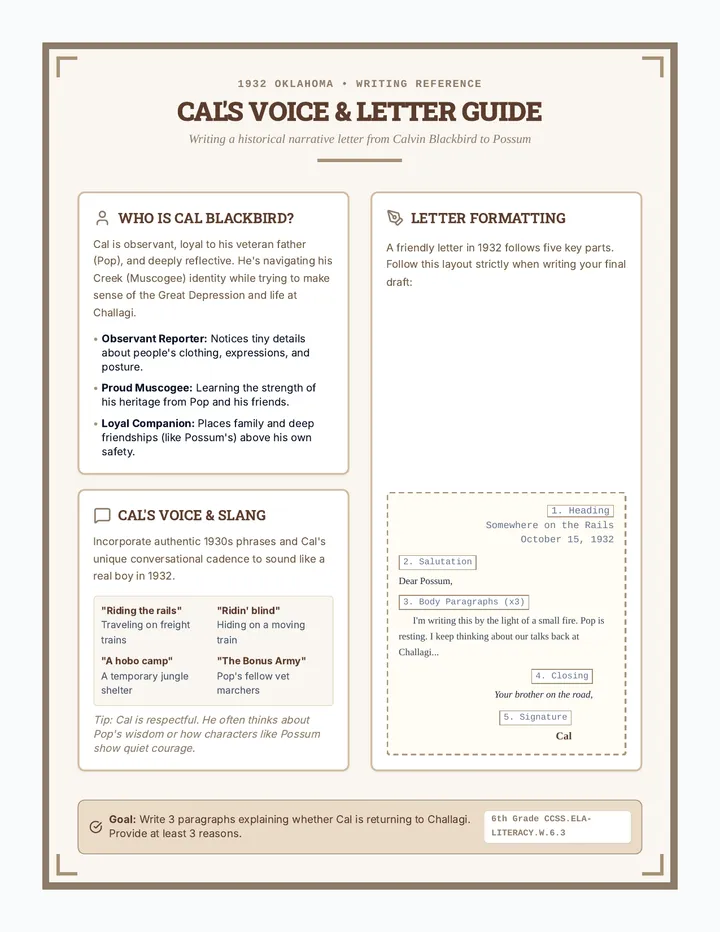
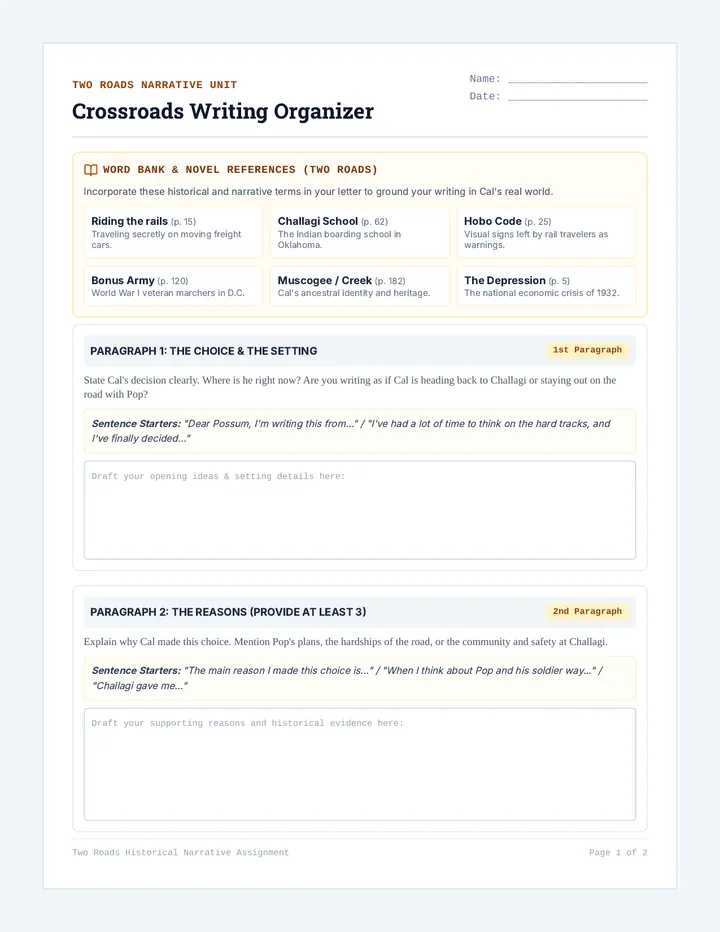
A planning and writing lesson centered around Joseph Bruchac's novel Two Roads, guiding students to write a structured narrative letter from Cal to Possum with differentiated scaffolding.
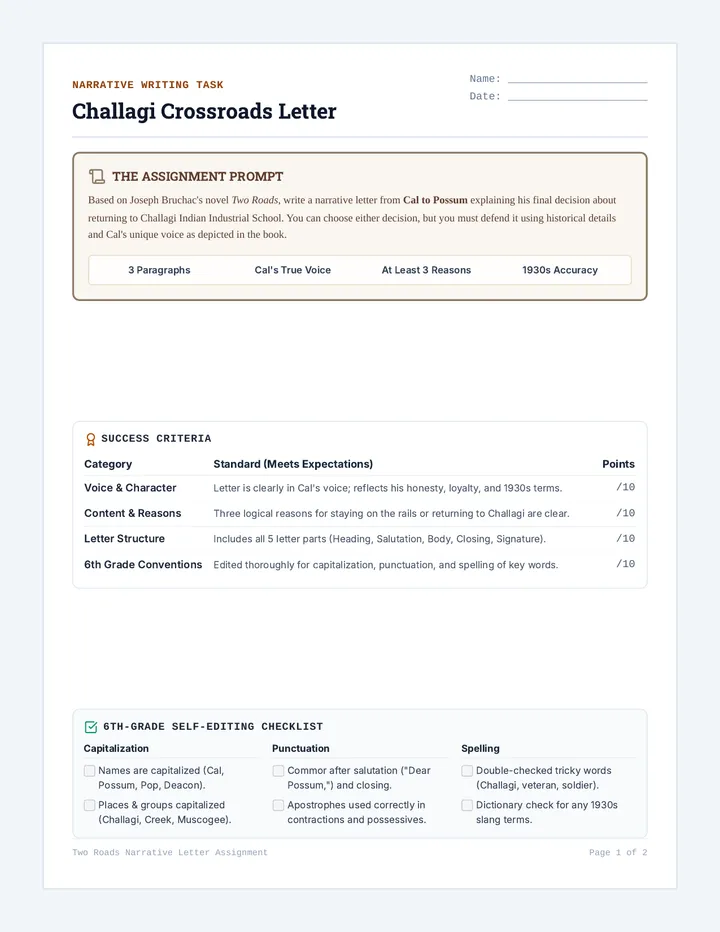
A narrative writing lesson based on Joseph Bruchac's novel *Two Roads*, where students write a three-paragraph letter from Cal to Possum detailing his decision about returning to Challagi Indian Industrial School. Includes an anchor chart, a graphic organizer, and a formal assignment sheet with editing support.
Students compile their four-sentence creative stories into a comic strip layout, add simple illustrations, and celebrate their storytelling accomplishments.
Students resolve their story's problem, writing their fourth sentence using "Then, ..." and selecting a happy resolution symbol.
Students introduce a simple conflict or surprise for their character, writing a sentence with "Suddenly..." and problem-based action icons.
Students choose a creative setting (such as outer space or a magic forest) and write a sentence using "They are in..." with visual setting prompt cards.
Students invent a fictional character (such as a superhero or friendly animal) and write a sentence describing them using "This is..." and physical descriptors with visual symbols.
Students present their informational posters to peers using verbal or non-verbal communication supports, celebrating their factual discoveries.
Students assemble their key fact, evidence sentence, and concluding statement into a coherent, illustrated informational poster.
Students conclude their informational piece by writing a third sentence that summarizes their topic using a "Now you know about..." sentence starter and visual symbols.
Students locate visual evidence or supporting clues (such as food or habitat icons) to back up their first key fact, writing a second sentence using "It has..." or "It lives..." frames.
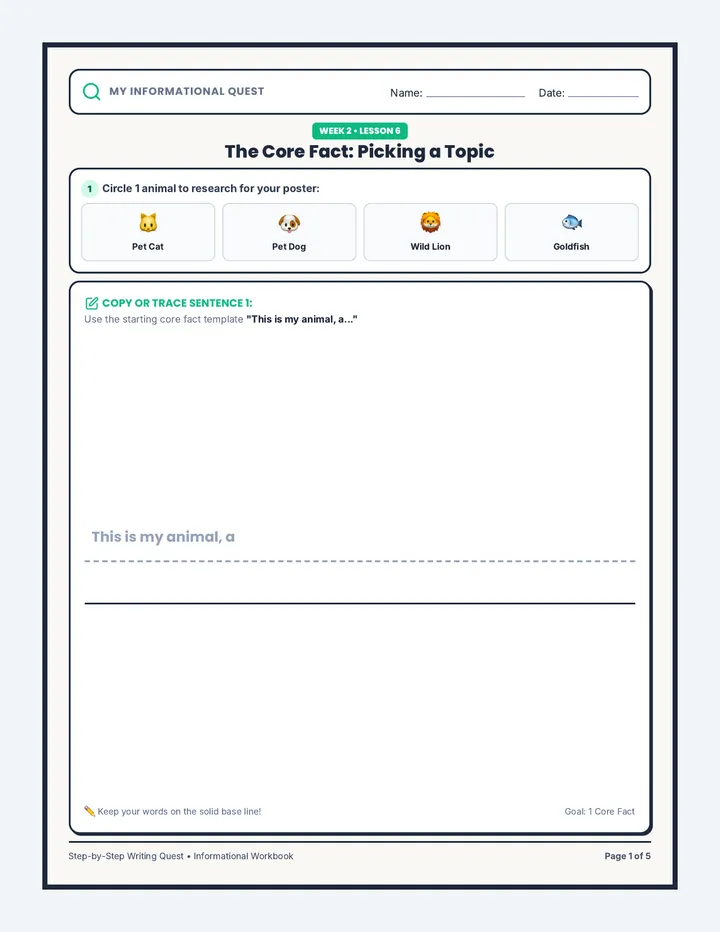
Students choose an informational topic (such as an animal or a local community job) and identify their first key fact using a visual matching organizer and "This is a..." sentence frame.
Students practice reading their three-sentence narratives to a peer or teacher, using visual communication boards as support, and celebrate their completed stories.
Students compile their first, middle, and ending sentences into a complete, logically sequenced three-sentence personal narrative, adding simple decorative illustrations.
Students conclude their personal narrative by writing about the final event using a "Last, I..." sentence starter, focusing on chronological closure and a simple emotion word.
Students continue their personal narrative by writing about the middle event using a "Next, I..." sentence starter and corresponding visual icons to show chronological order.
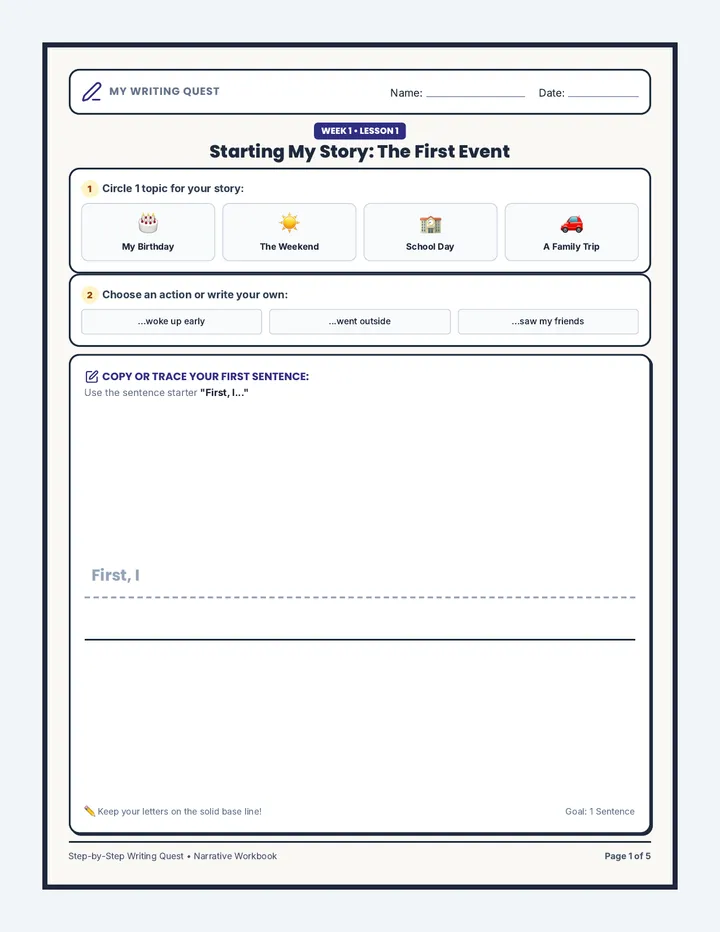
Students choose a personal topic (such as a favorite memory or weekend activity) and write their first complete sentence describing the first event using a "First, I..." sentence starter and visual picture cards.
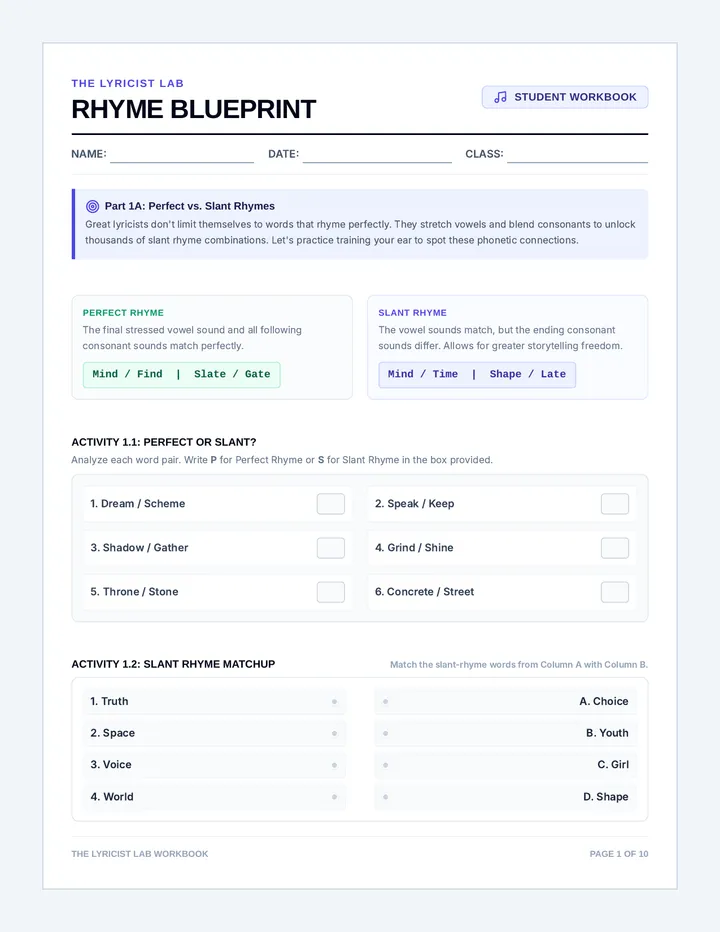
A comprehensive lesson that breaks down the structural, rhythmic, and poetic elements of hip-hop and rap lyrics. Students learn complex rhyming, flow cadence, figurative imagery, and wordplay, then plan and write a complete 16-bar verse using highly visual scaffolding.
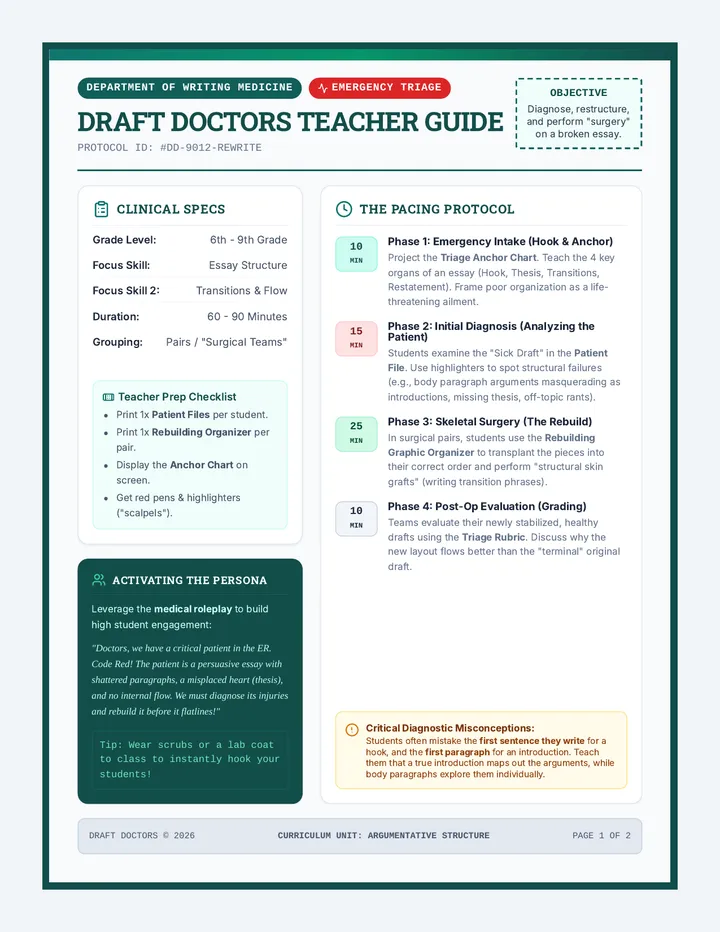
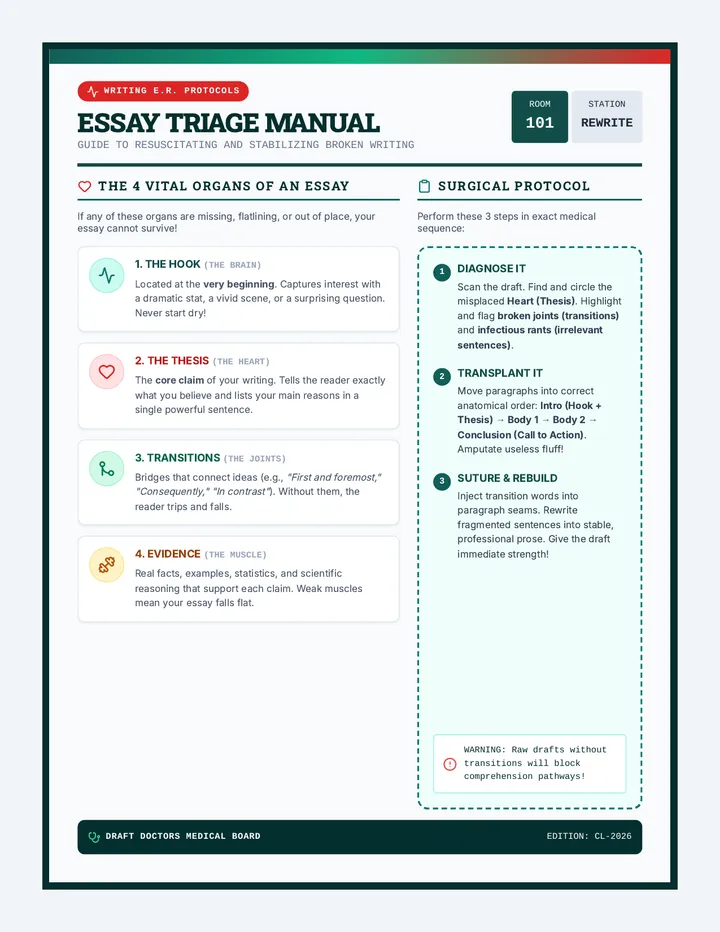
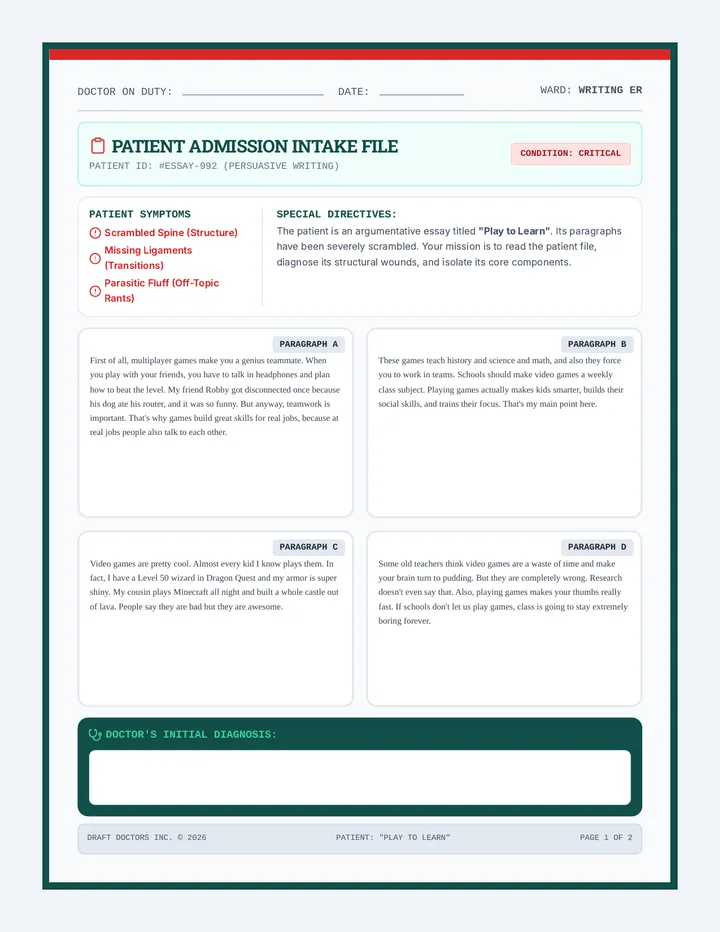
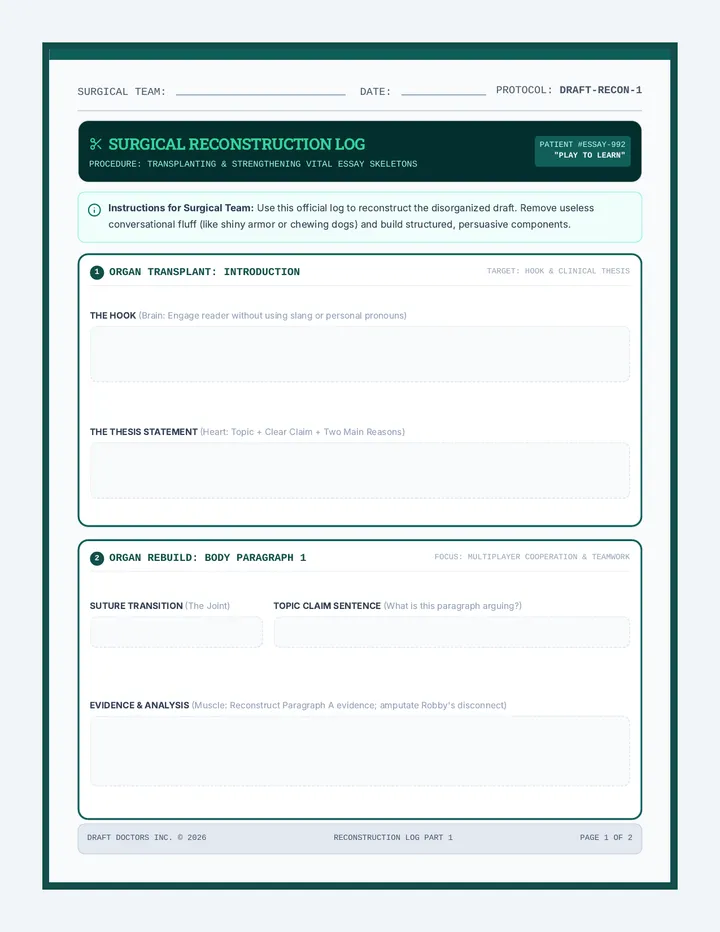
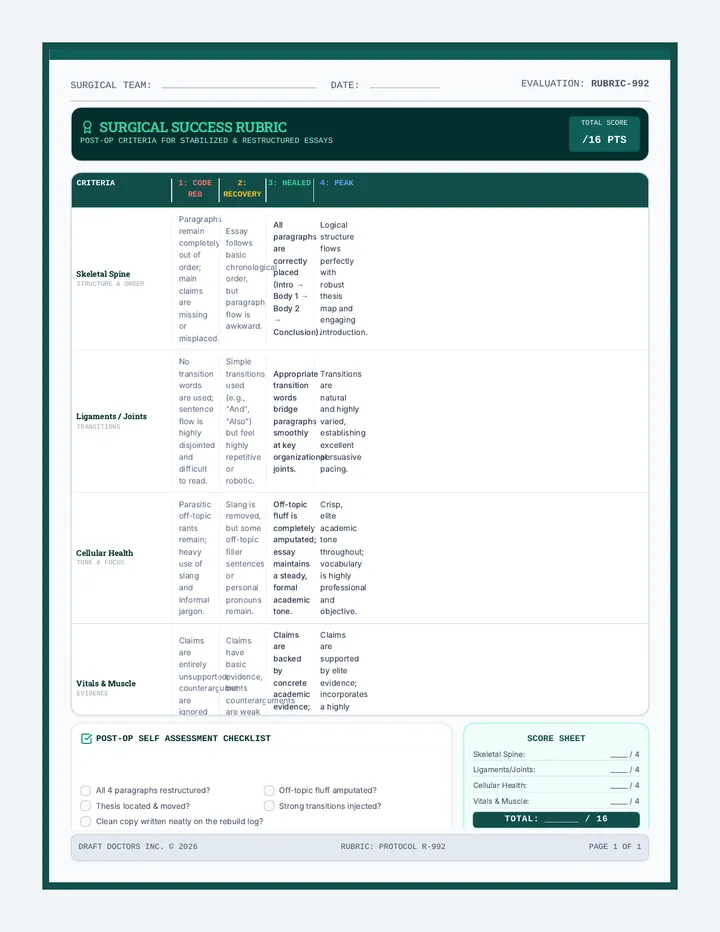
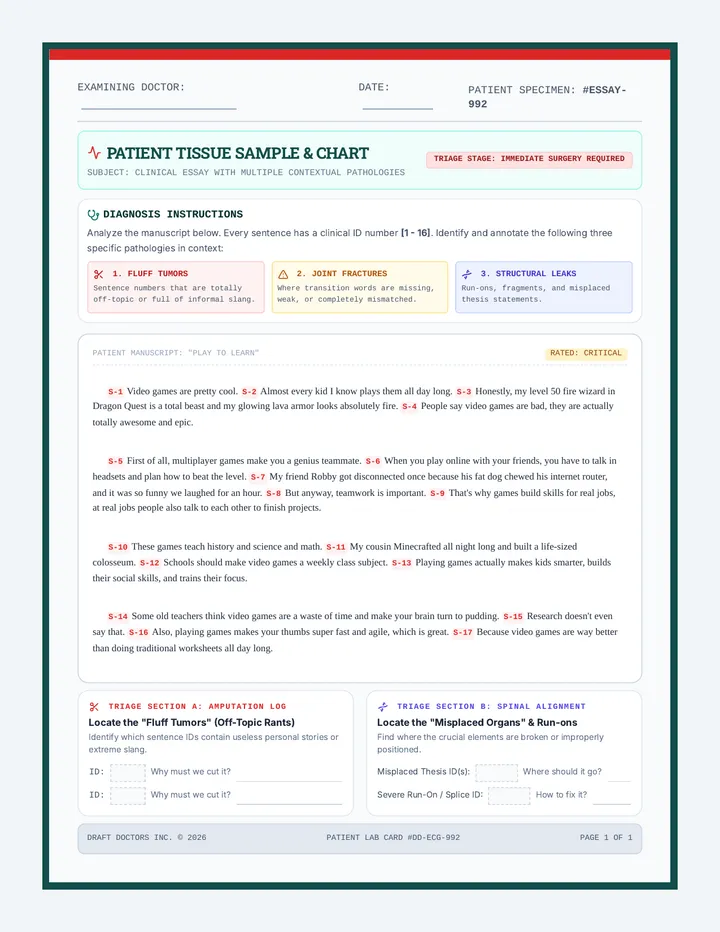
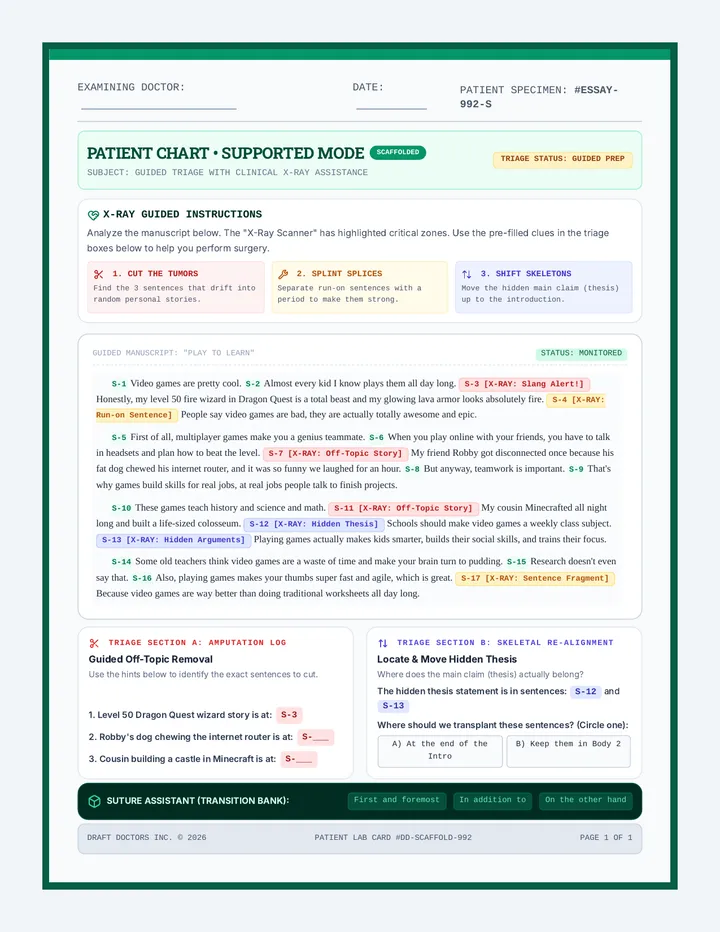
An immersive, medical-themed lesson where students act as 'Draft Doctors' to diagnose, triage, and perform surgery on a poorly organized, weak persuasive essay. Students learn paragraph structure, logical flow, and transition-building through a structured, clinical approach.
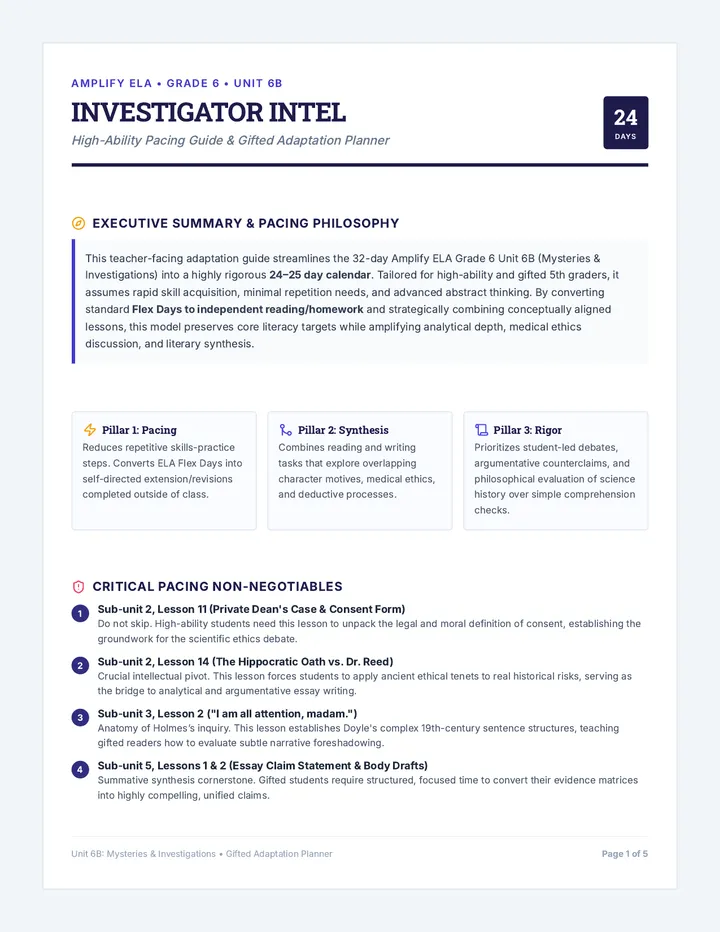
A highly condensed and academically rigorous pacing plan and gifted student adaptation guide for Amplify ELA Grade 6 Unit 6B. It compresses the 32 original lessons into a streamlined 24-25 day calendar designed specifically for high-ability fifth graders.
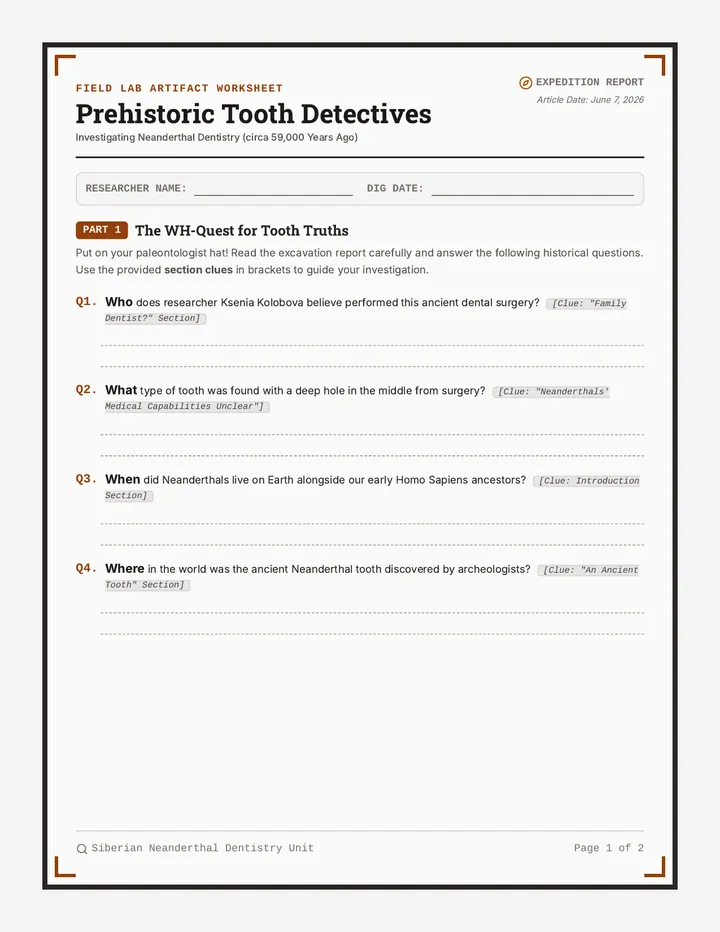
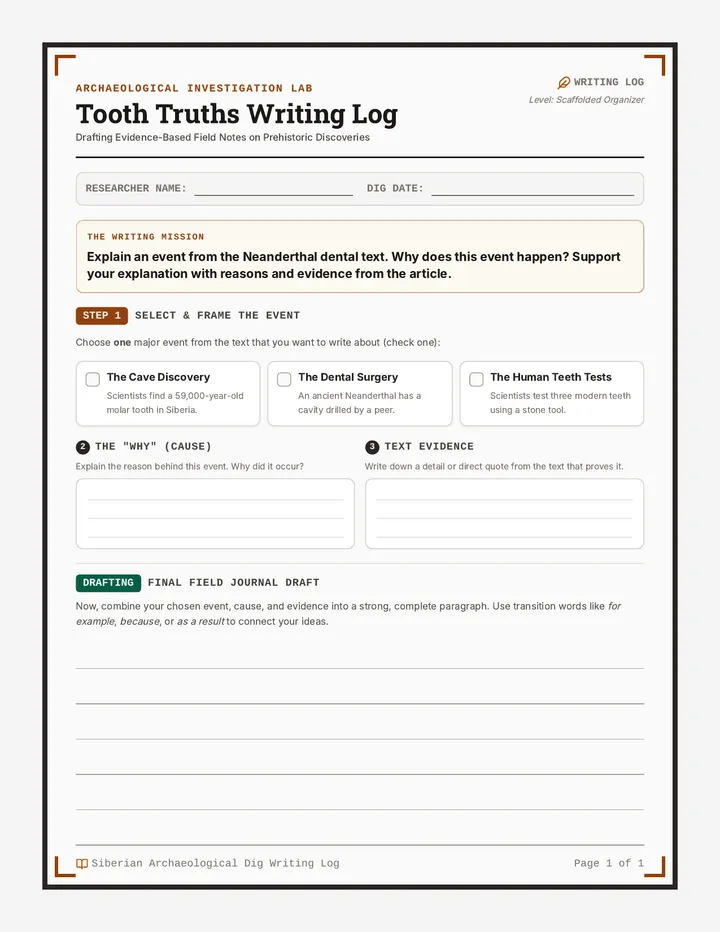
A comprehensive lesson where students explore the archaeological discovery of Neanderthal dentistry, utilizing reading comprehension worksheets and scaffolded writing prompts to analyze ancient human capabilities.
An explicit modeling lesson focusing on introducing the 'Roof' (Main Idea) and 'Pillars' (Supporting Details) concept. Students learn paragraph structure and watch live highlighting demonstrations.
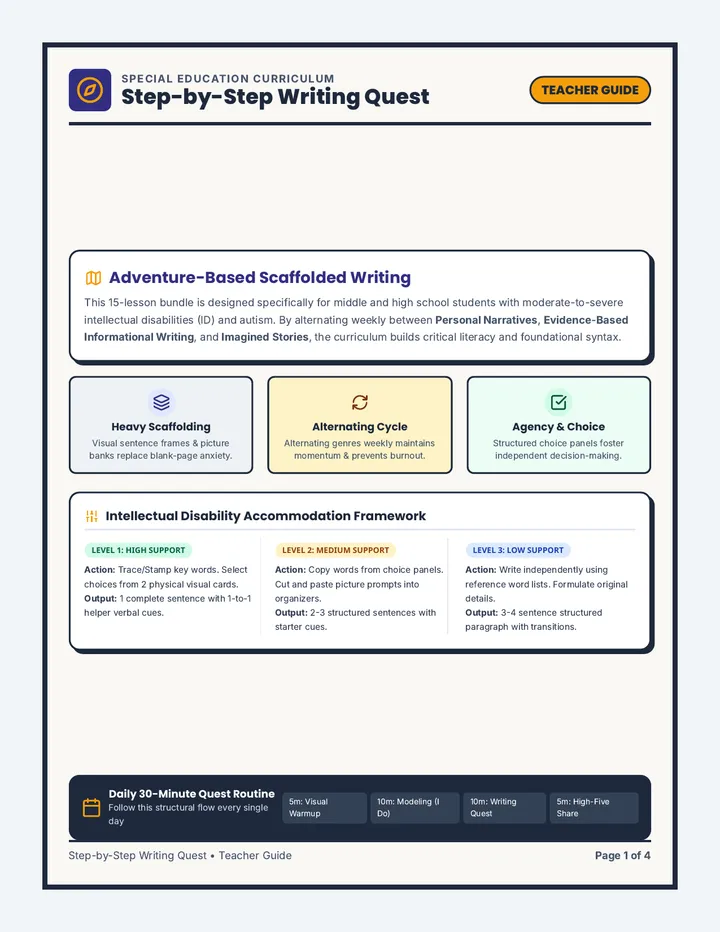
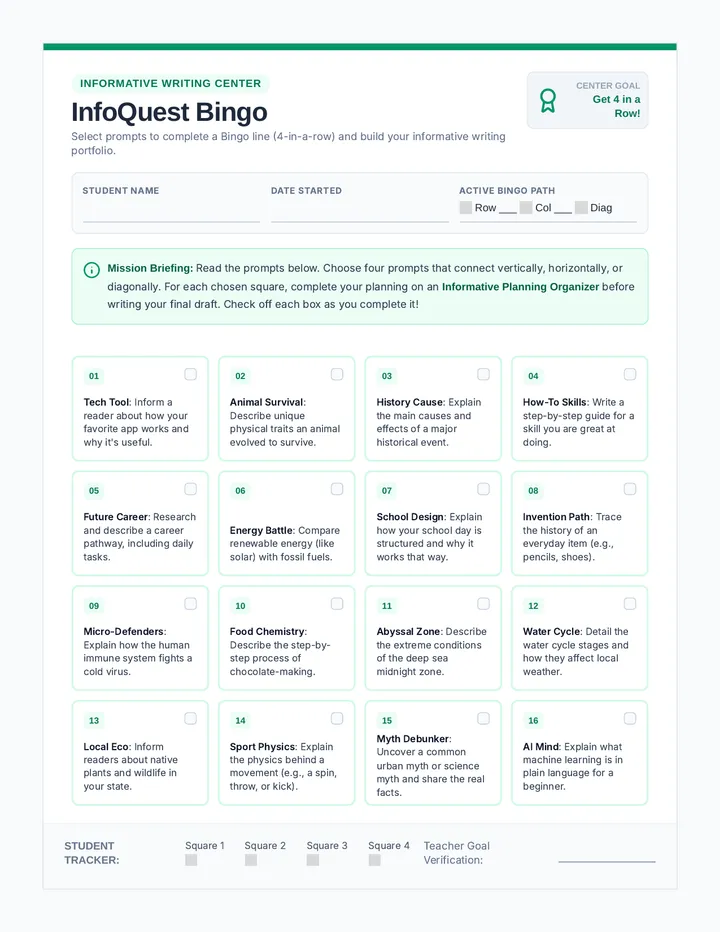
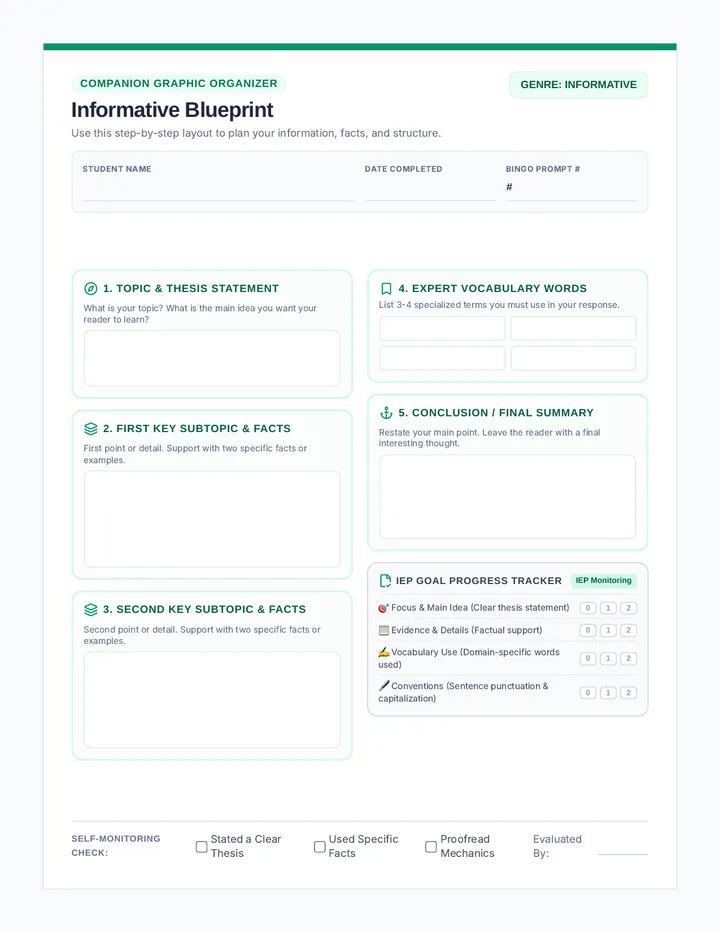
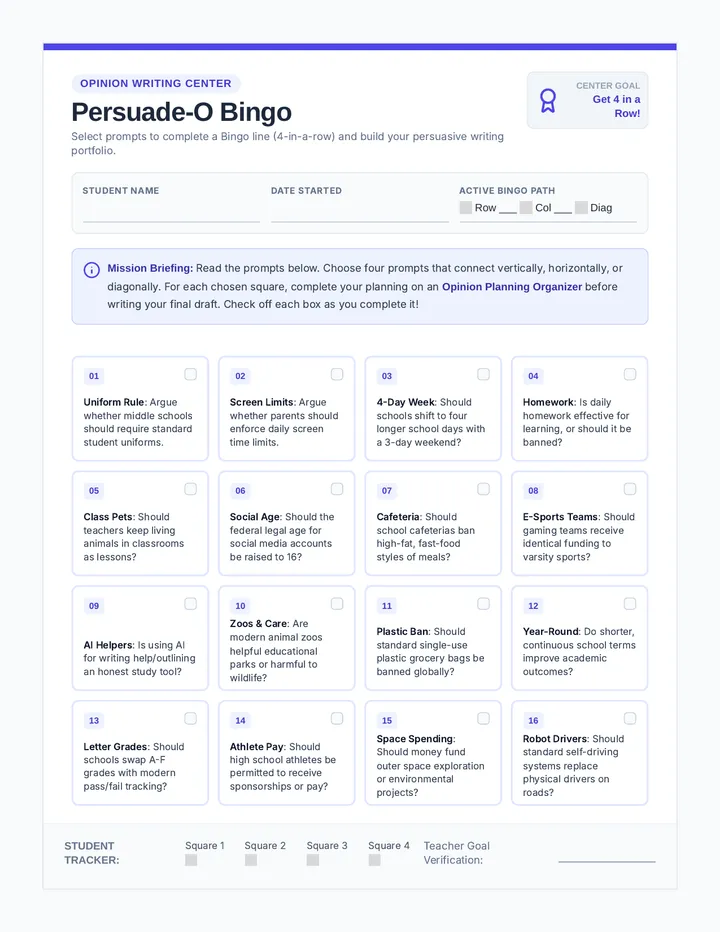
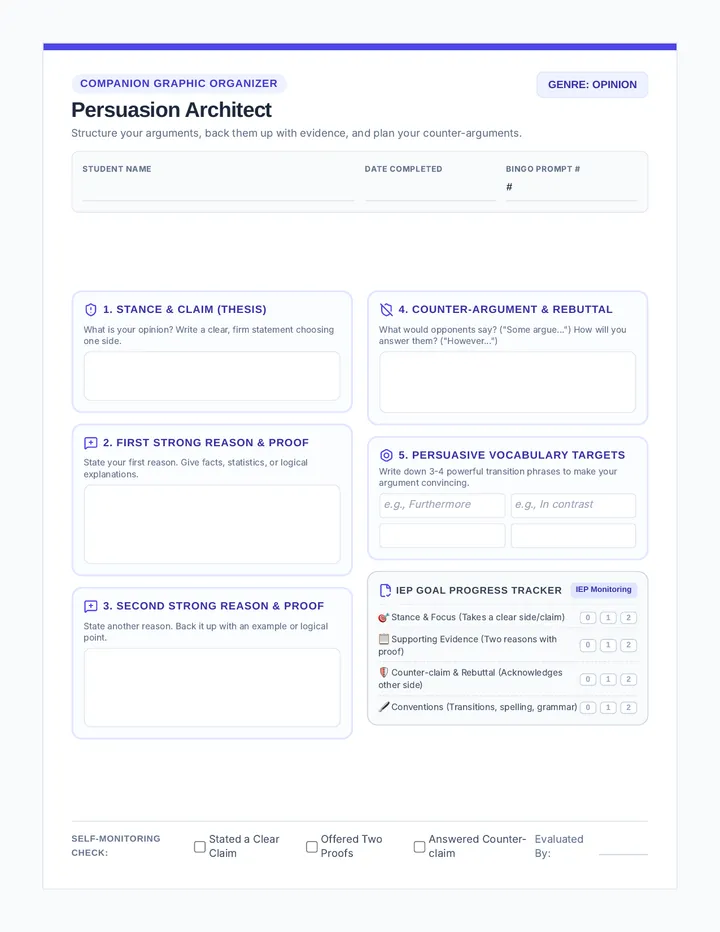
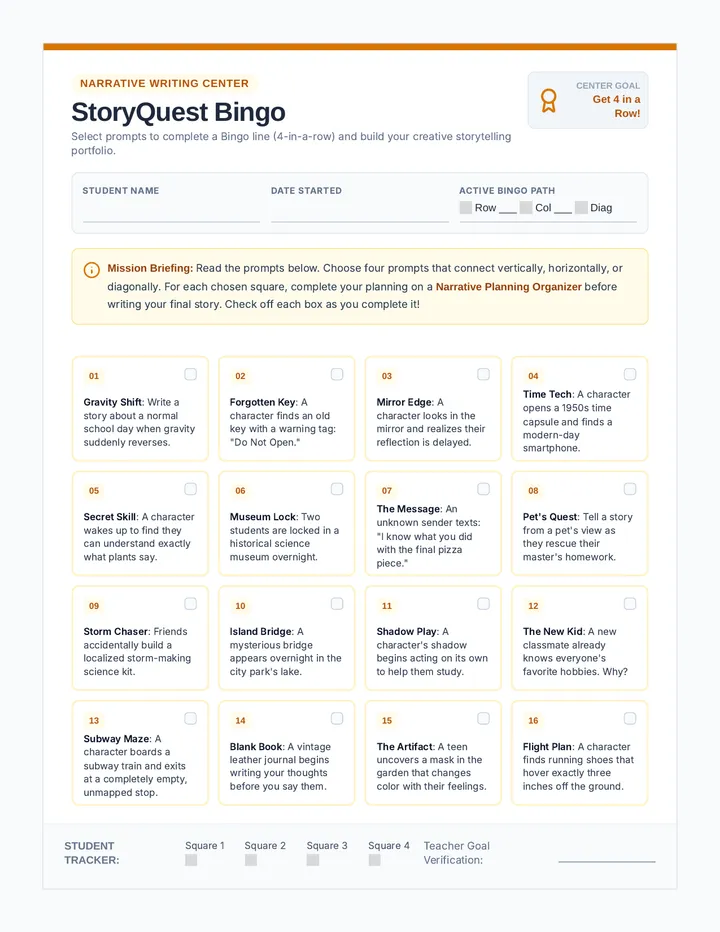
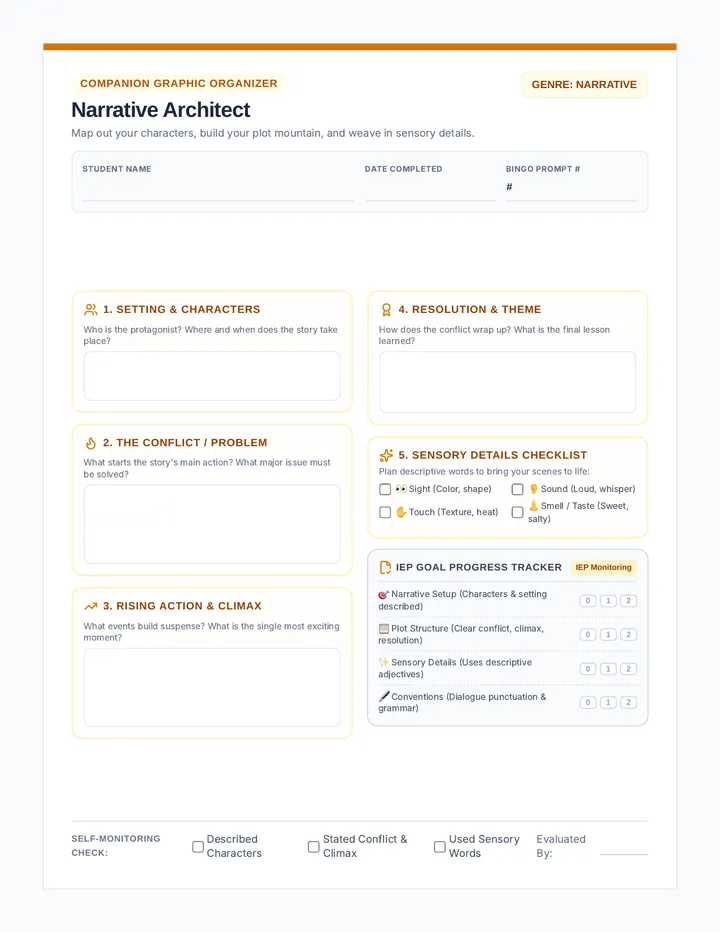
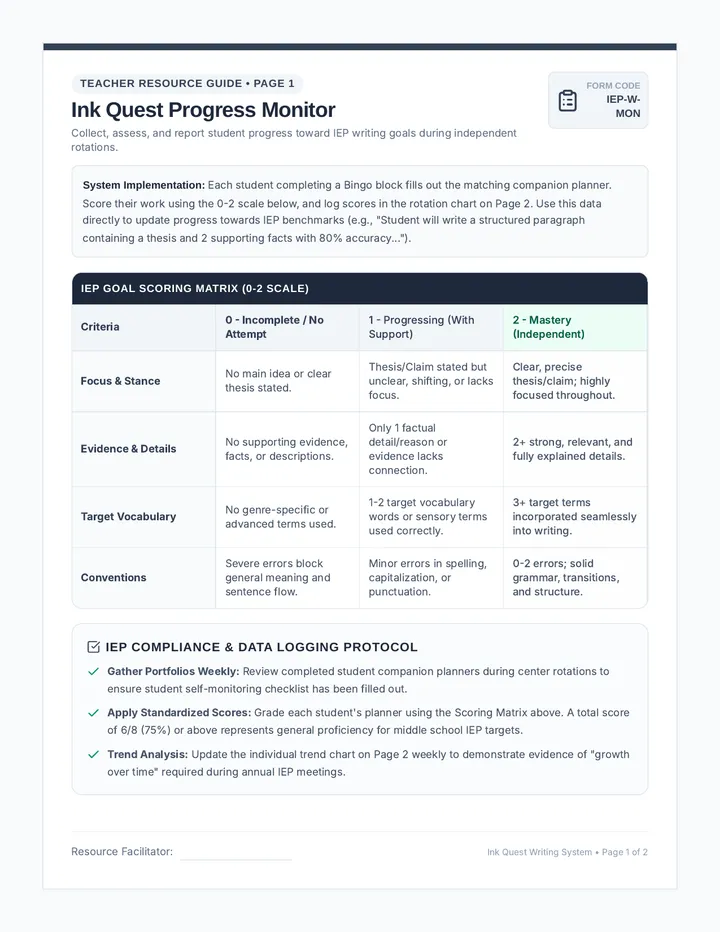
An independent writing center system using Bingo choice boards and highly supportive graphic organizers. Designed for middle school rotations with embedded progress monitoring for IEP goals.
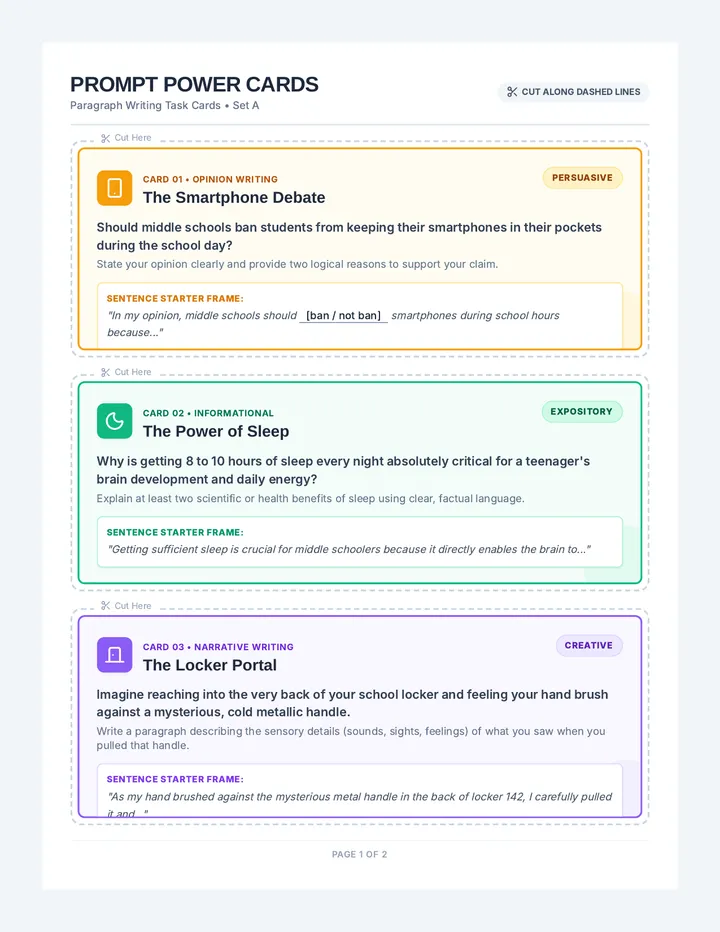
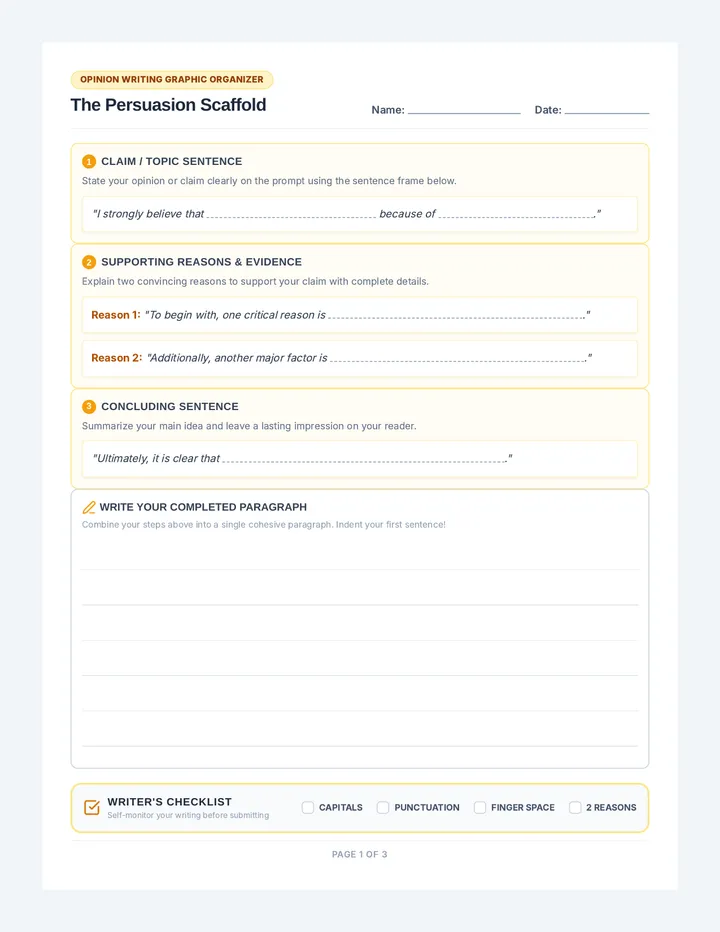
A comprehensive writing scaffold package for 6th and 7th graders, featuring genre-focused writing prompt task cards and structured graphic organizers to build strong single-paragraph responses.
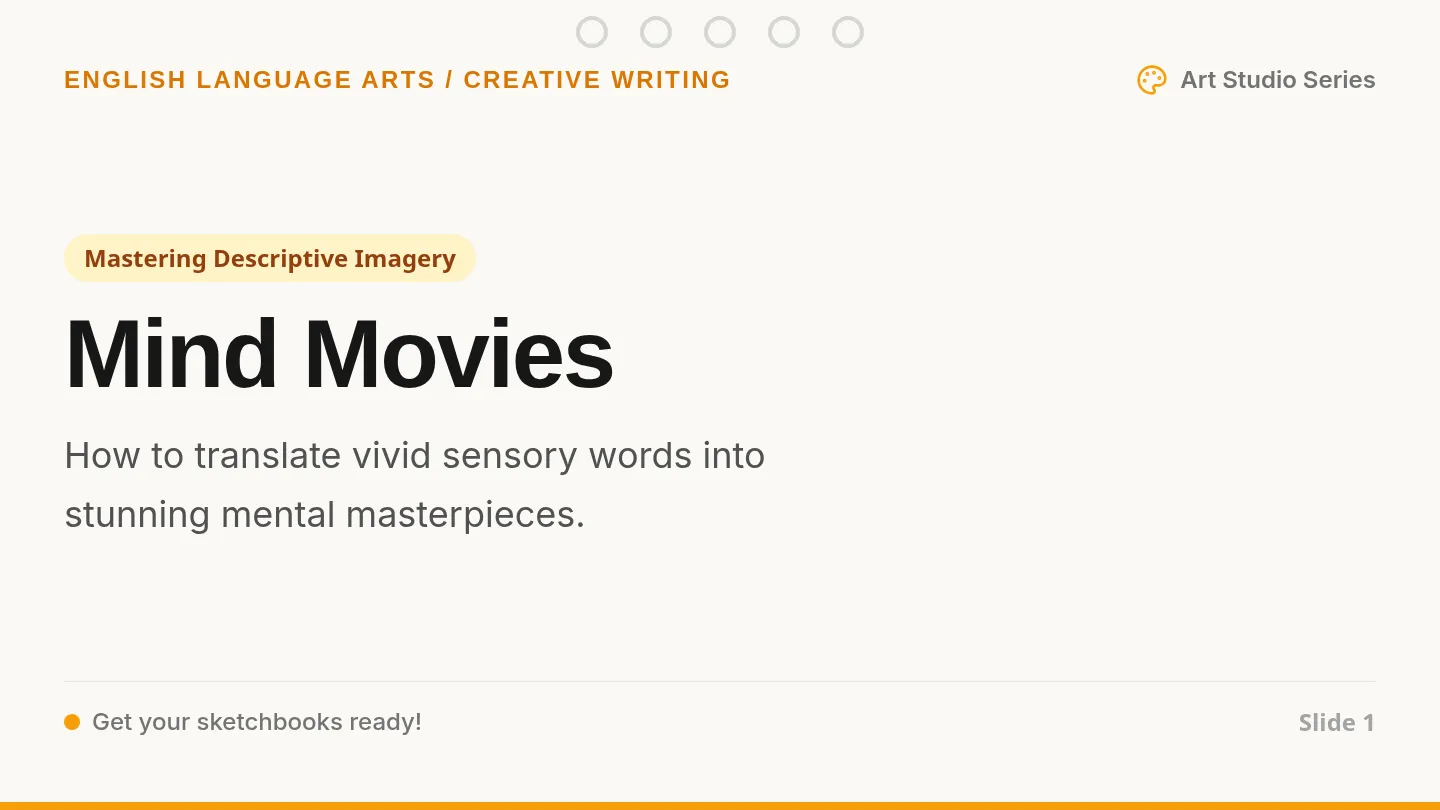
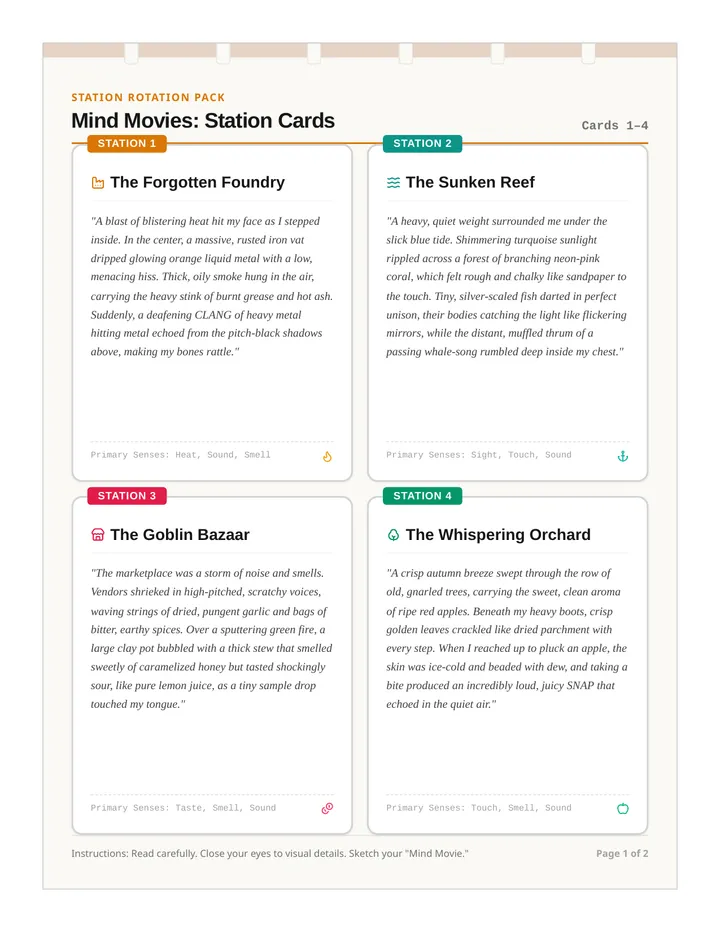
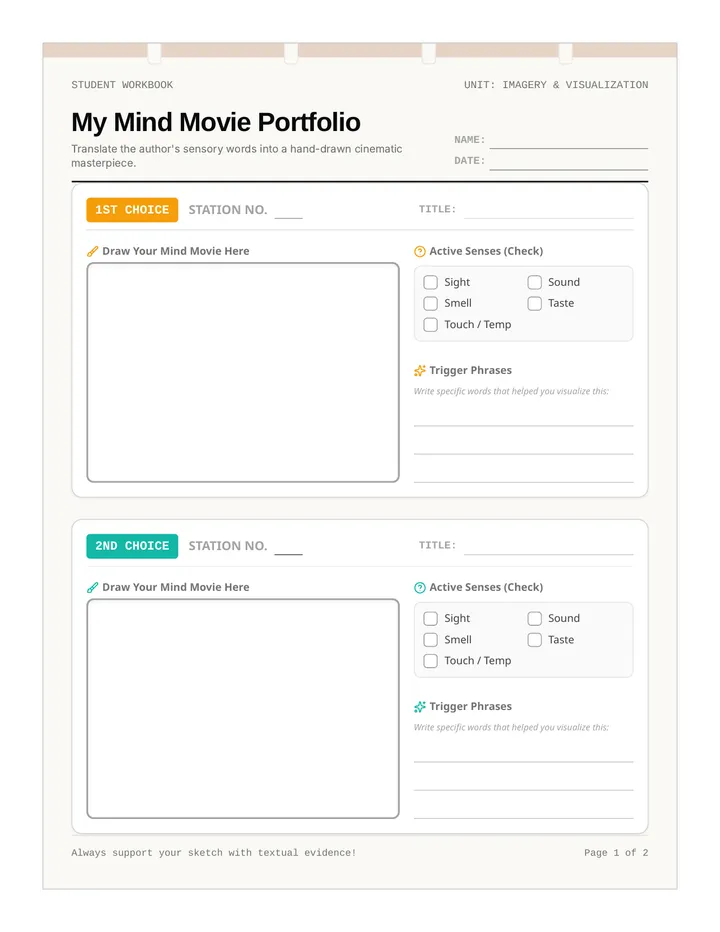
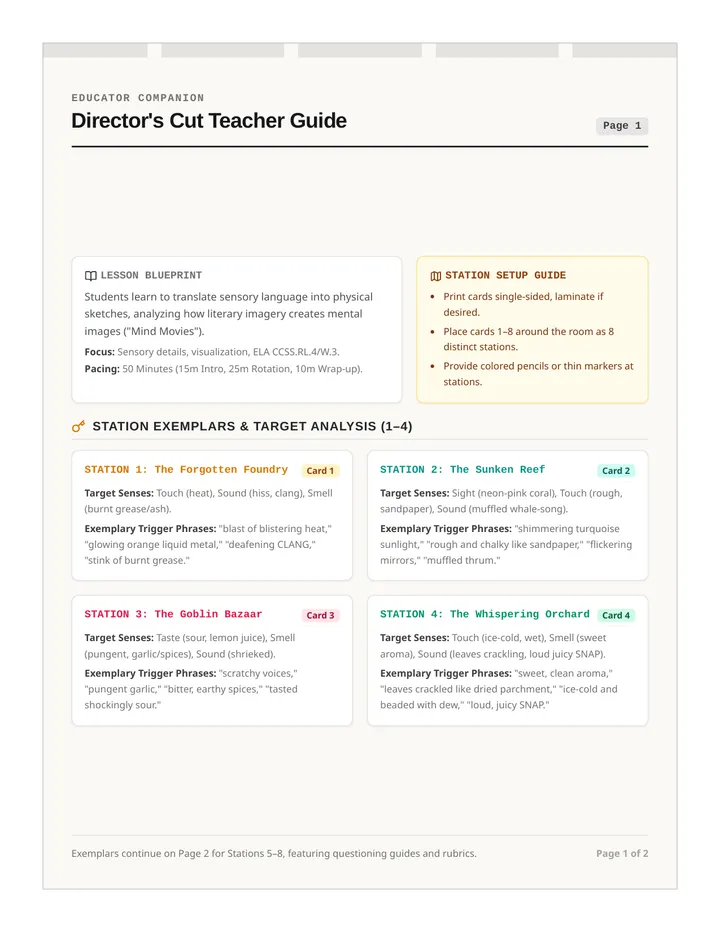
A dynamic lesson where students translate descriptive sensory details into vivid mental images. Students rotate through stations, reading sensory-rich paragraphs, sketching what they visualize, and identifying the imagery that triggered their imagination.