Students test if magnets can hold paperclips through various materials like paper, cardboard, plastic cups, and wooden desks to discover that magnetic fields can pass through non-magnetic objects.
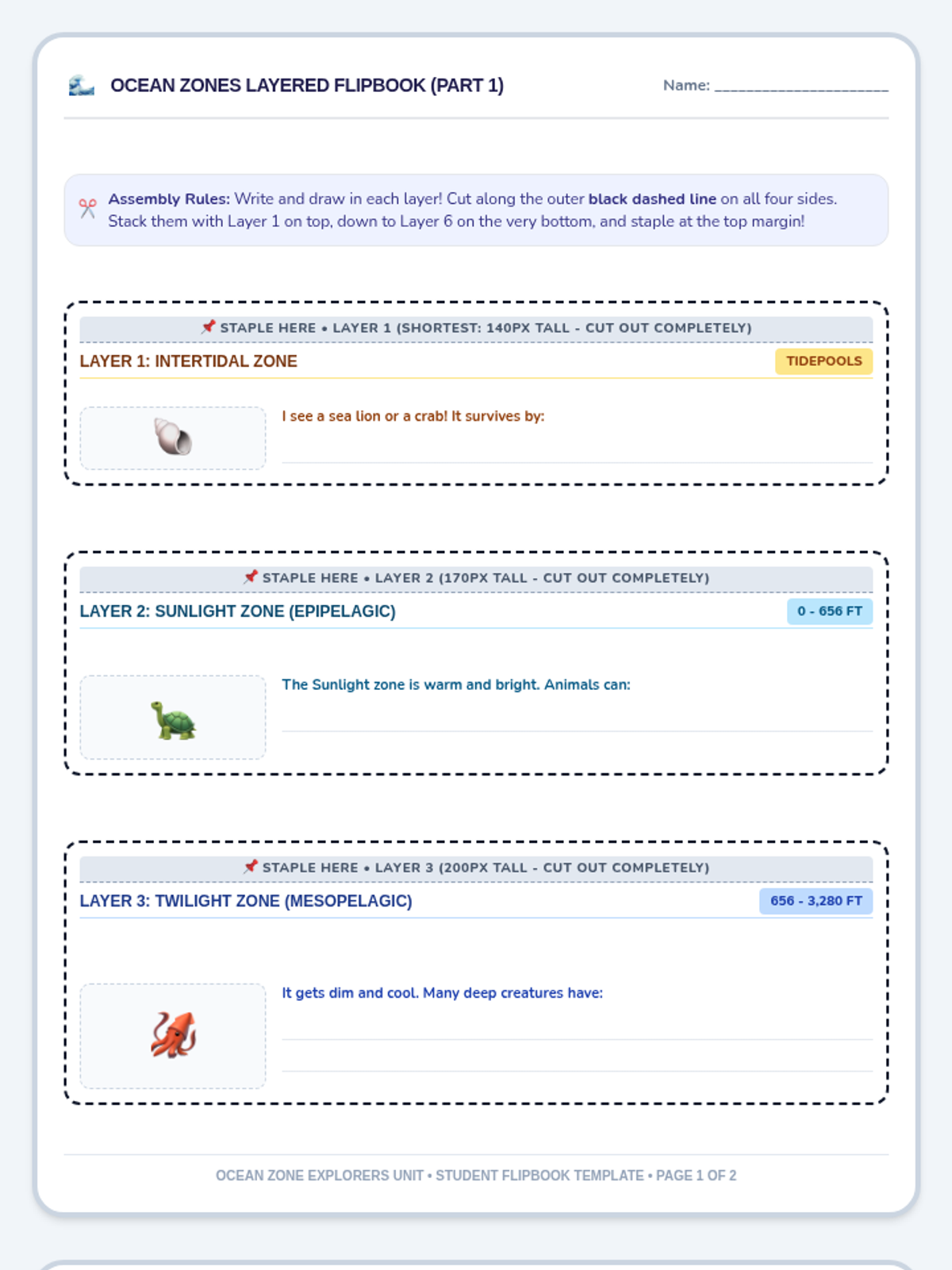
Express new expertise through a multi-page layered flipbook template and structured cooperative writing prompts.
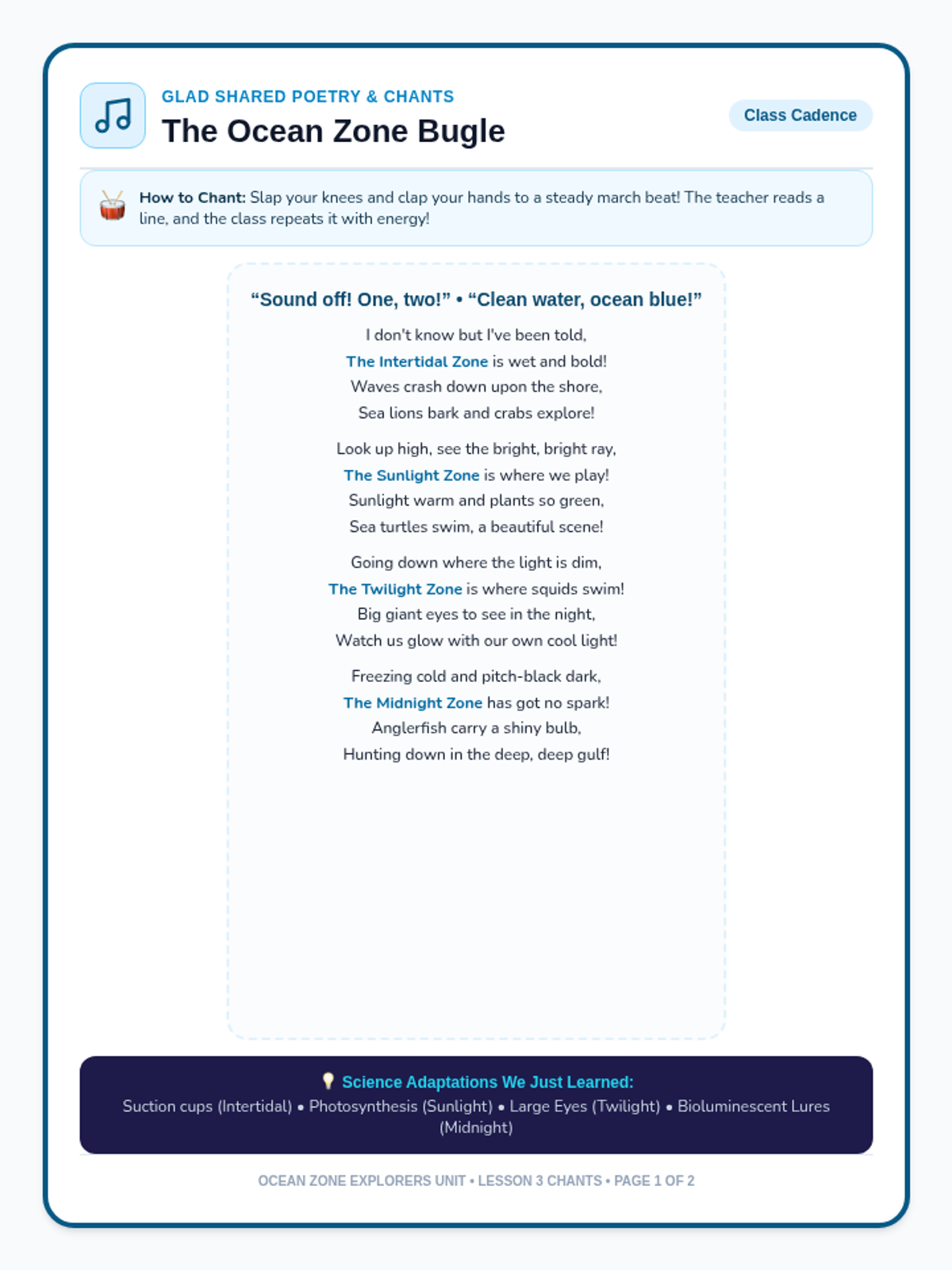
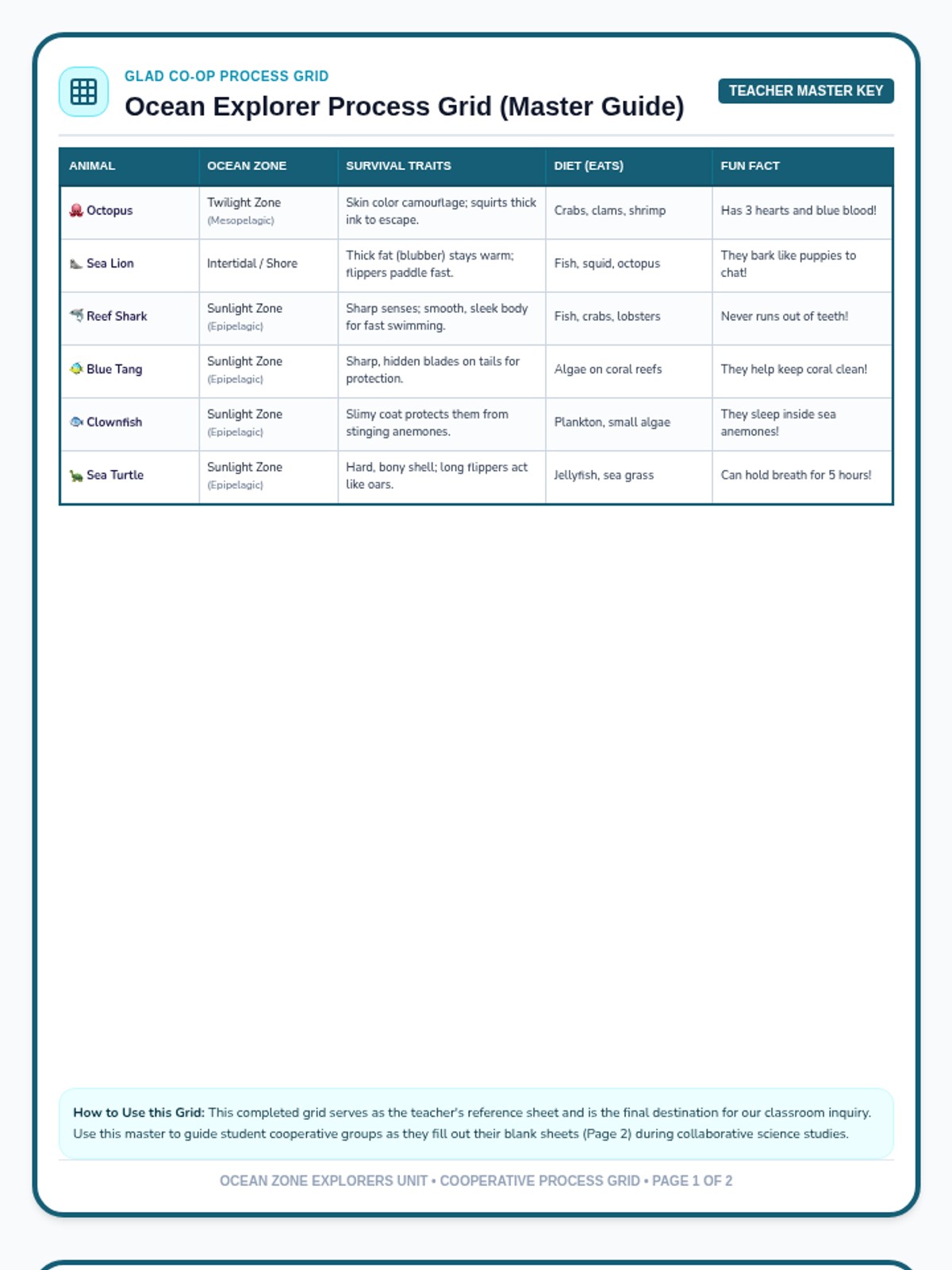
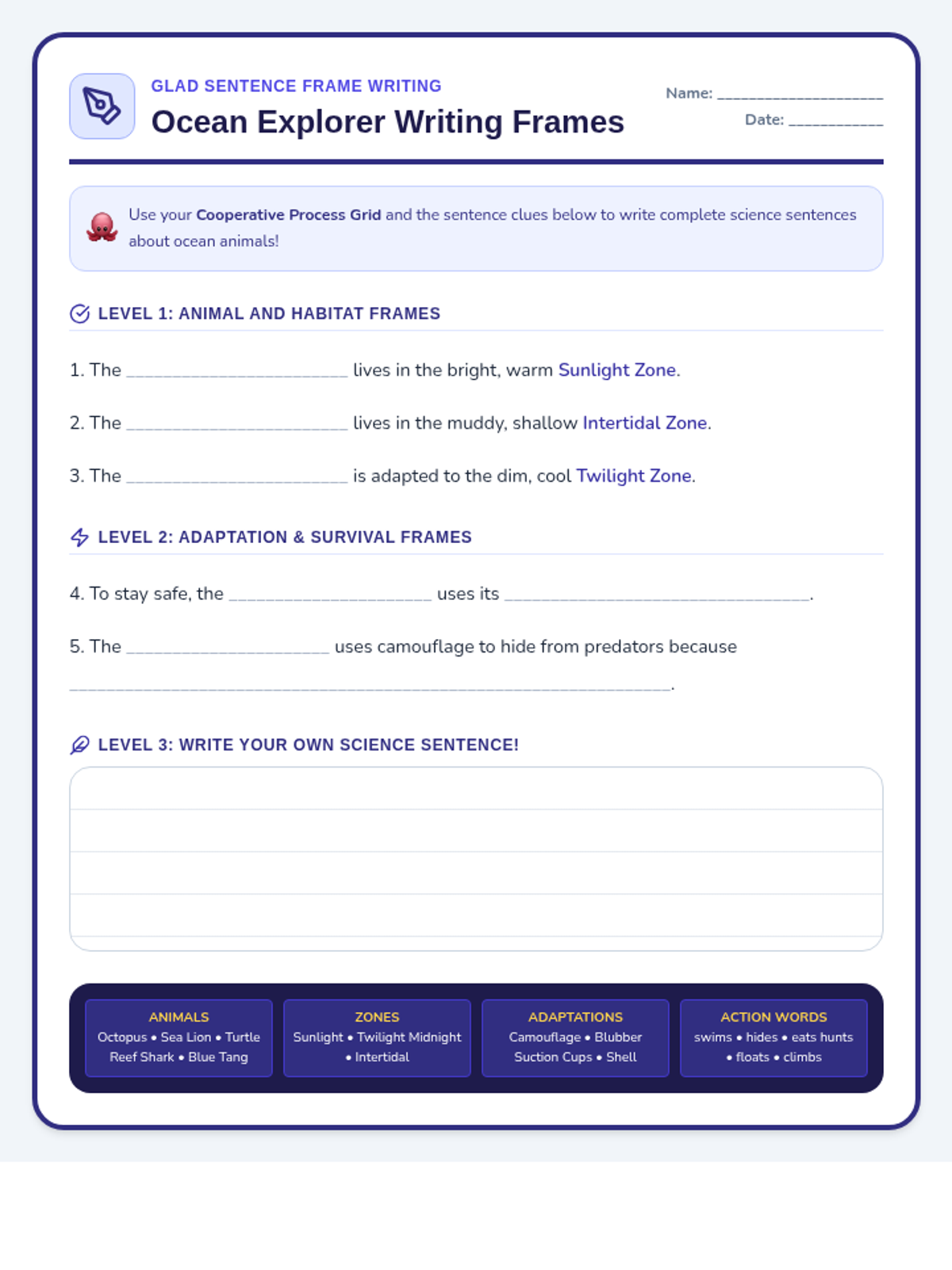
Sing and chant about ocean adaptations, fill out a collaborative Process Grid of focus animals, and use differentiated sentence frames for group writing.
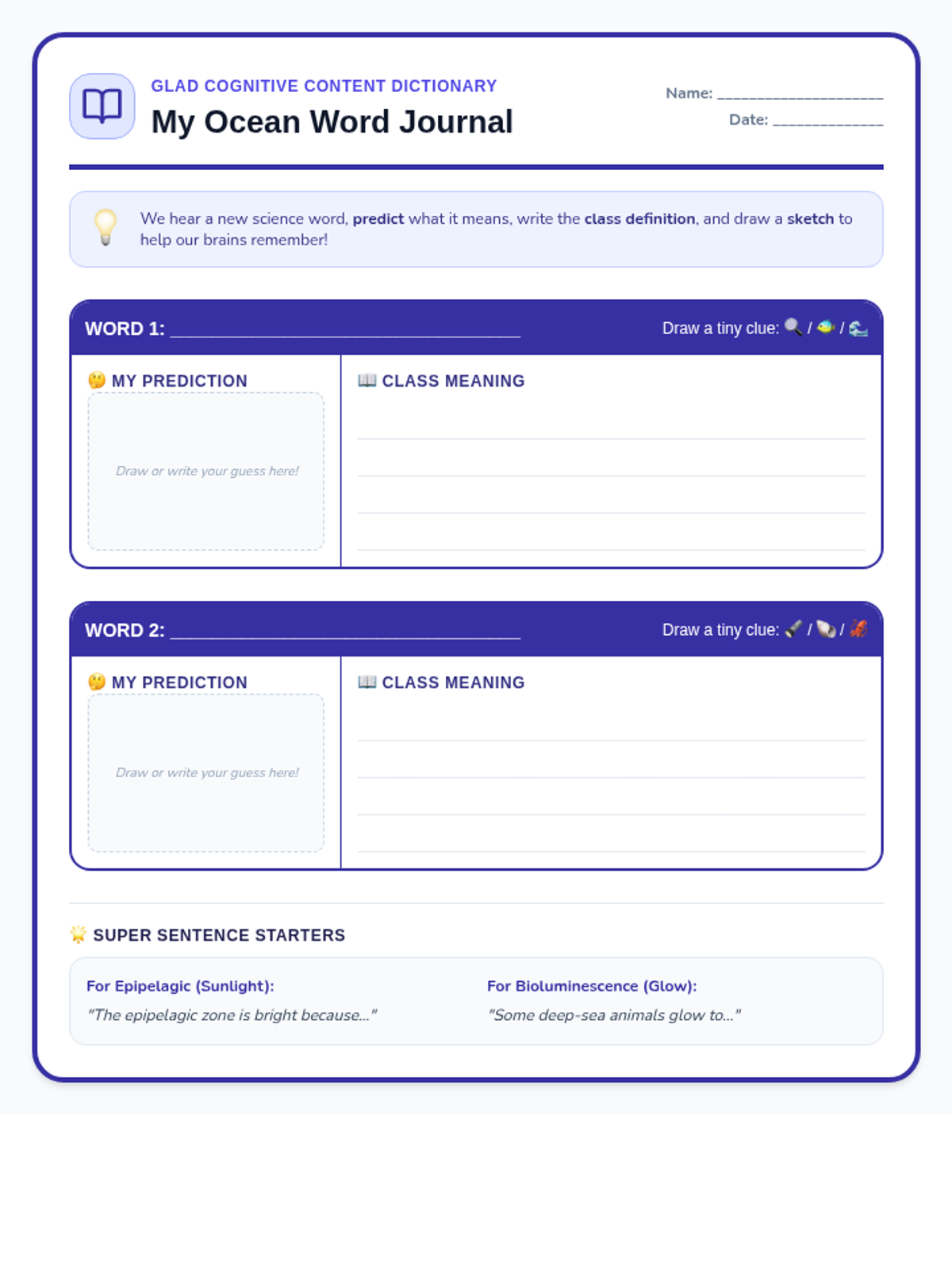
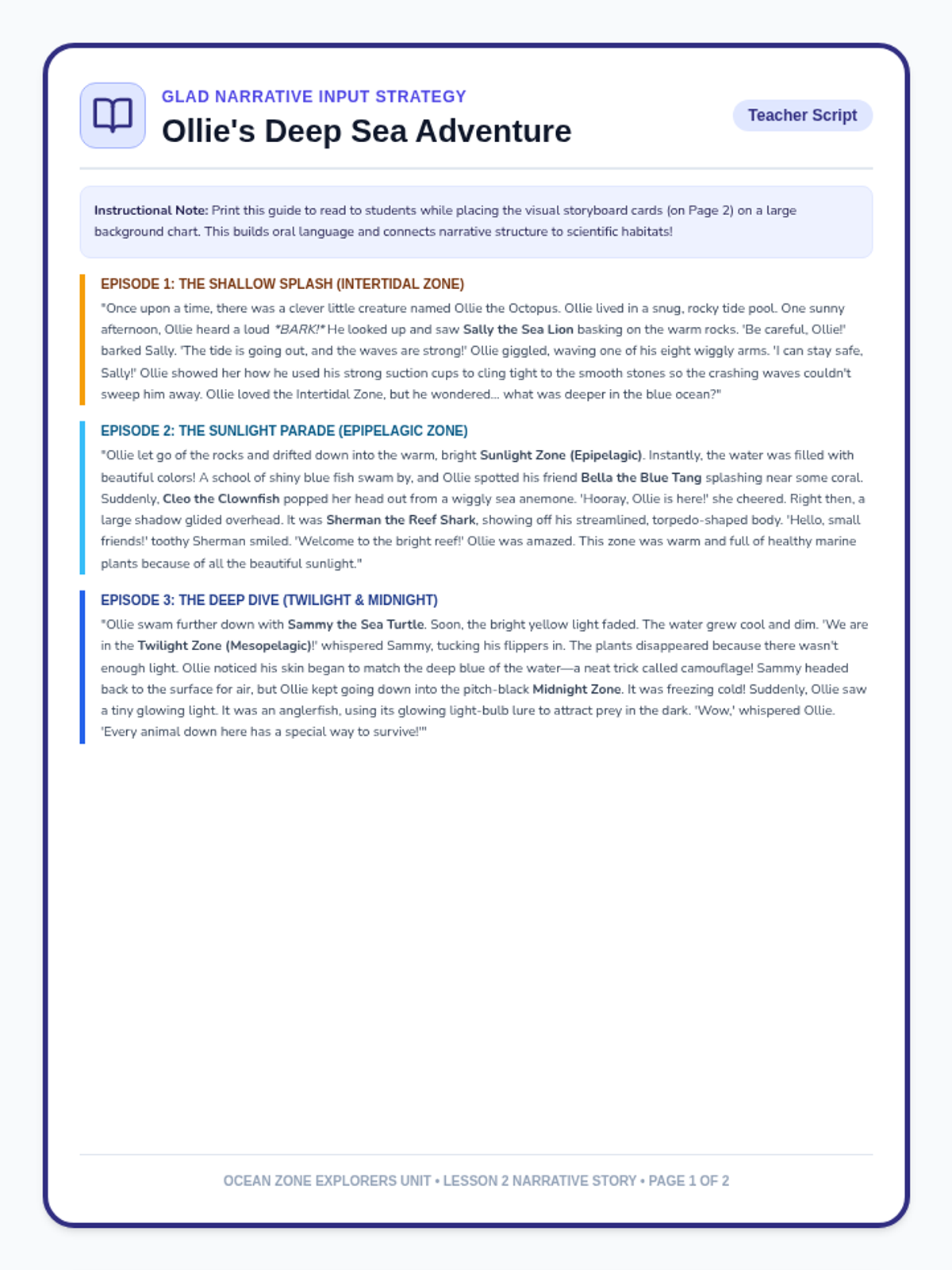
Build vocabulary and deep comprehension using a interactive Cognitive Content Dictionary (CCD) and the story of Ollie the Octopus's Deep Sea Adventure.
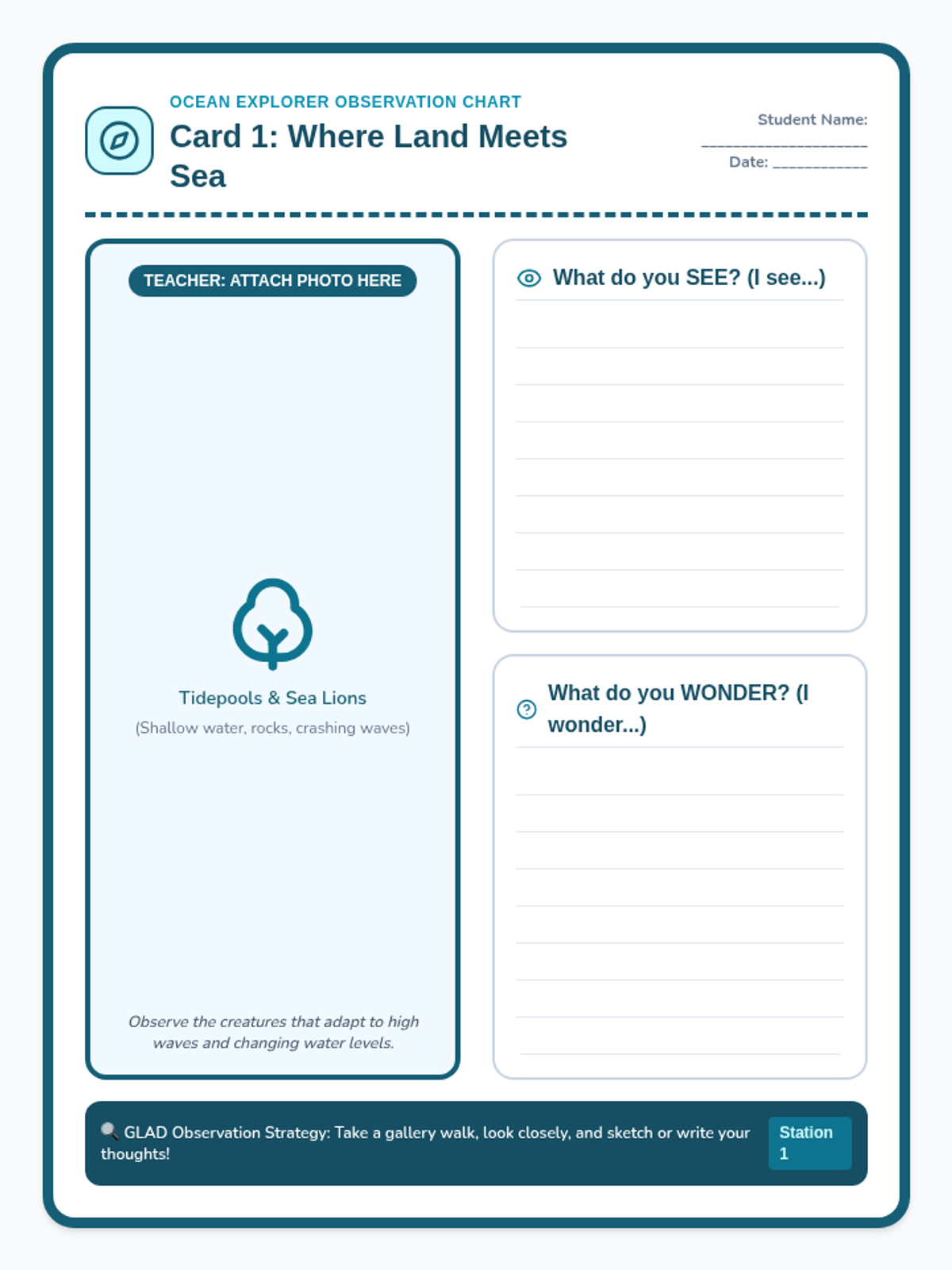
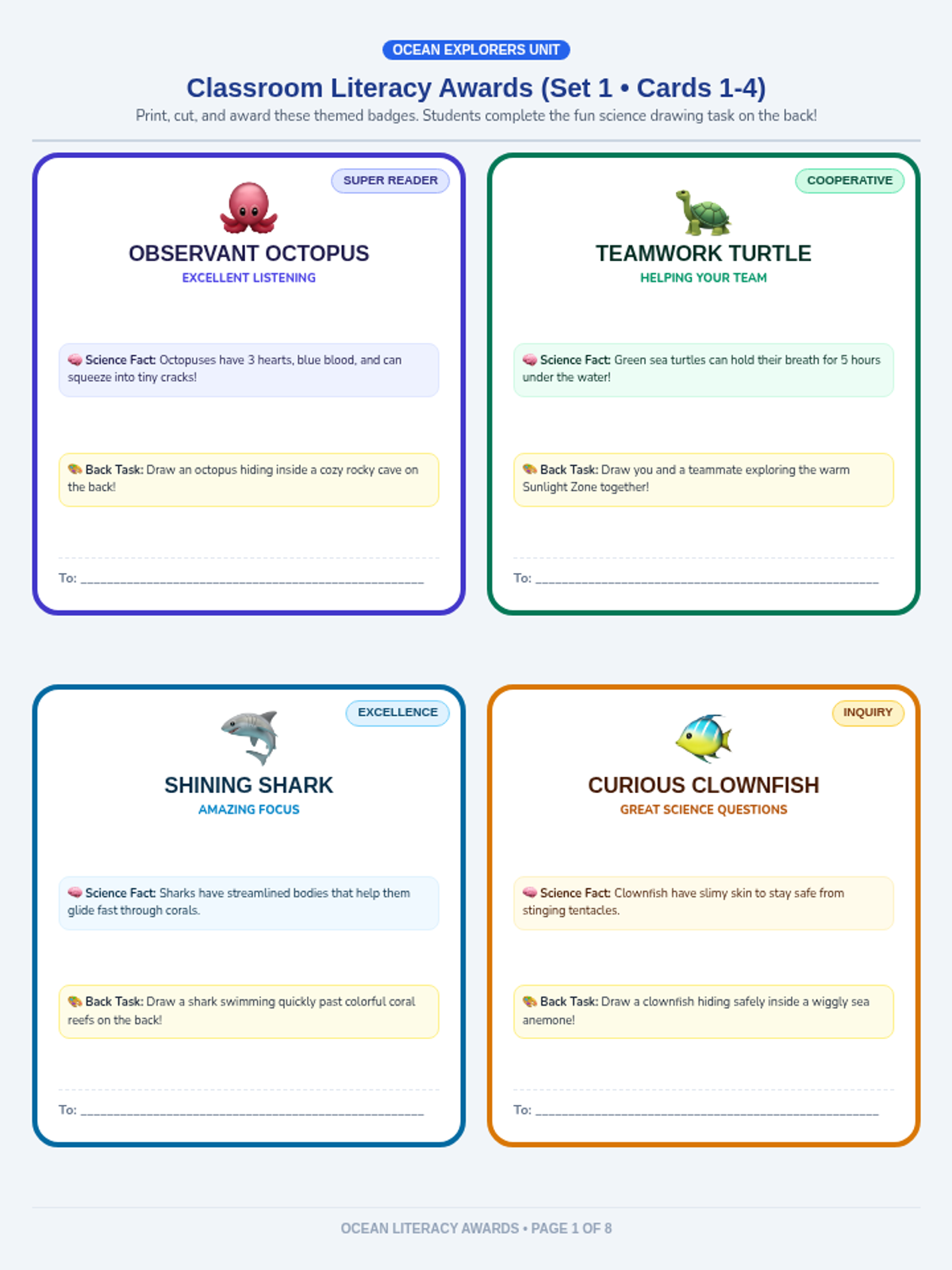
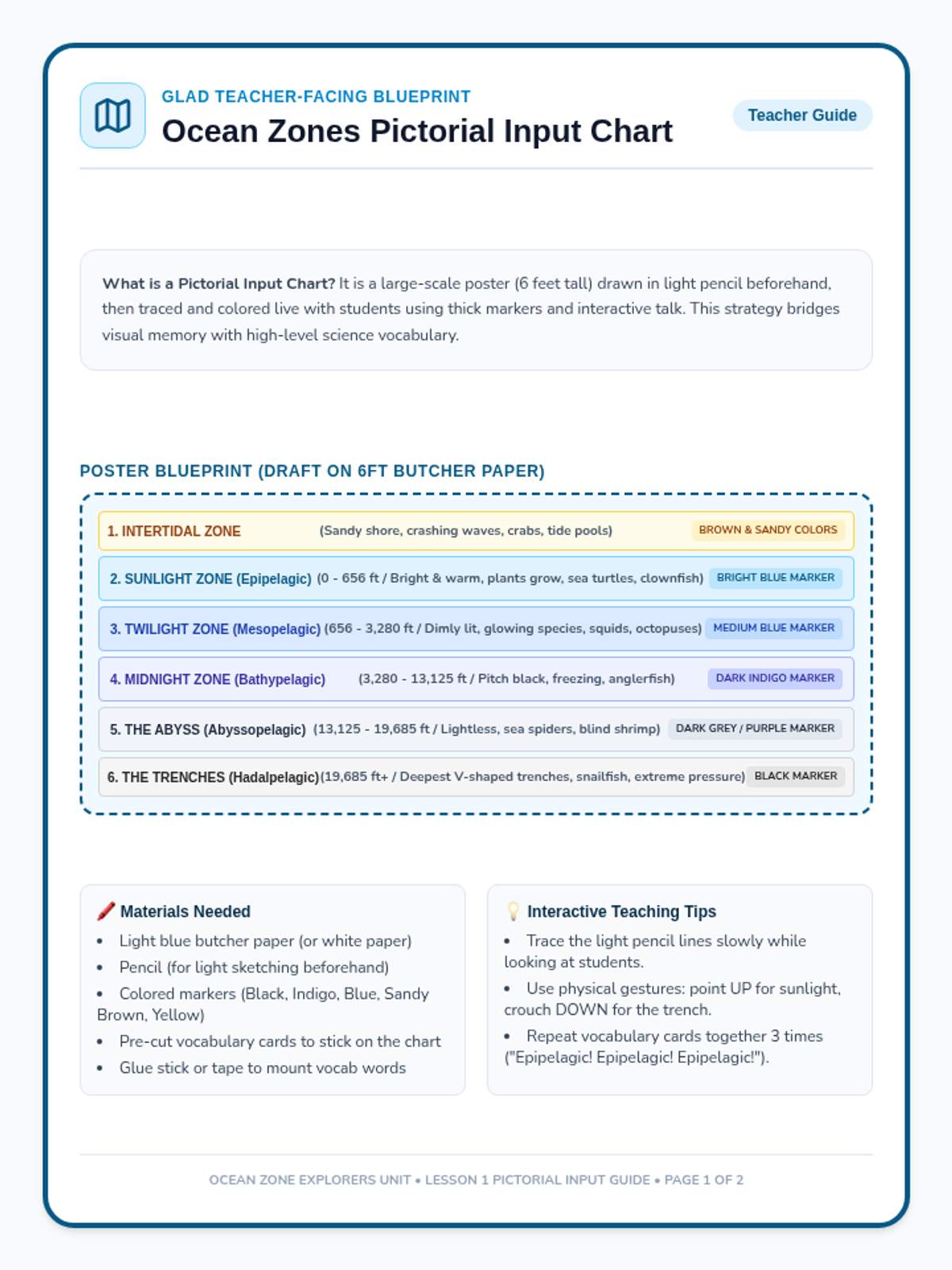
Spark curiosity with high-interest Observation Charts, positive-behavior Literacy Awards, and a large-scale visual blueprint for the multi-zone ocean chart.
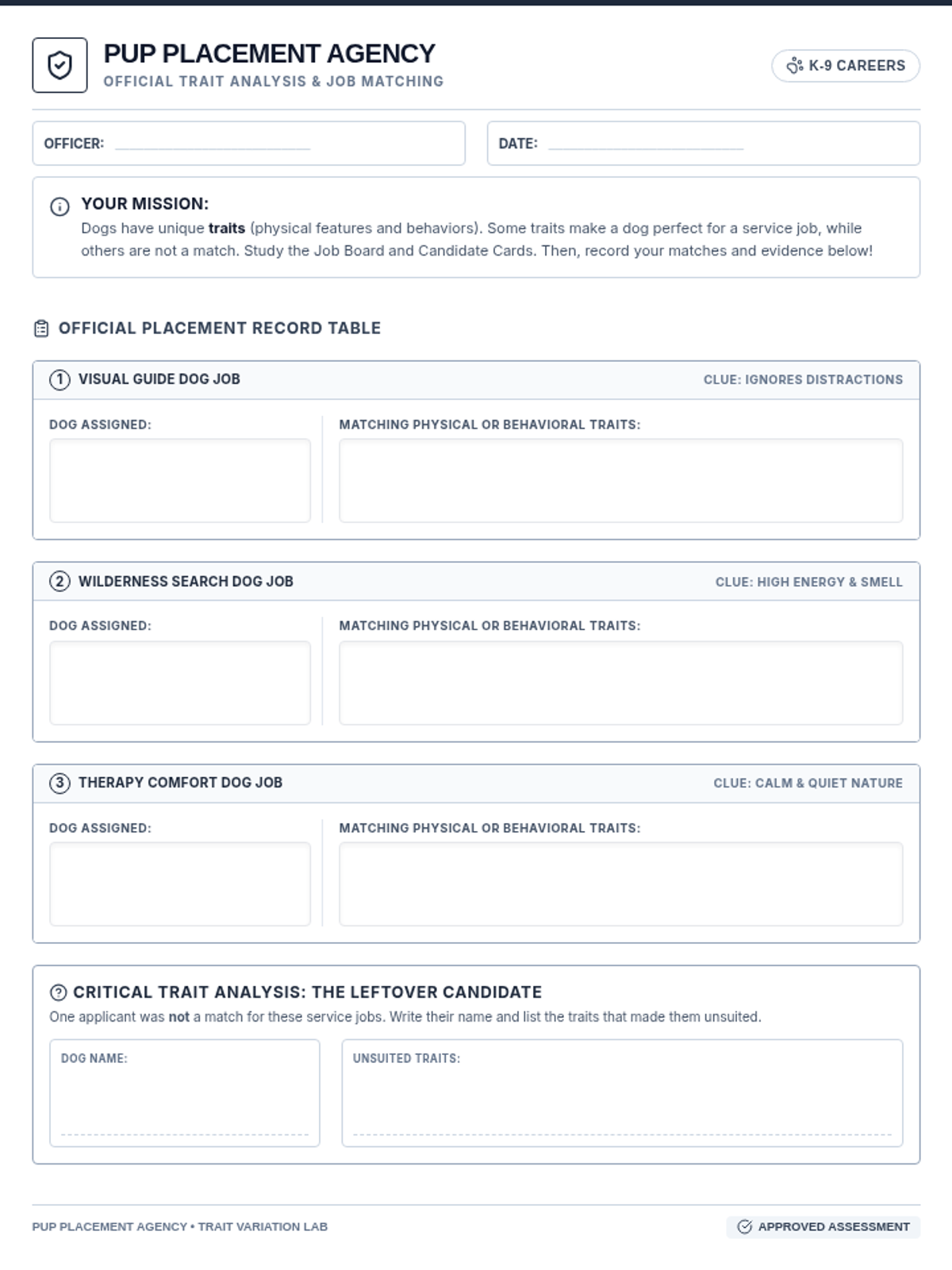
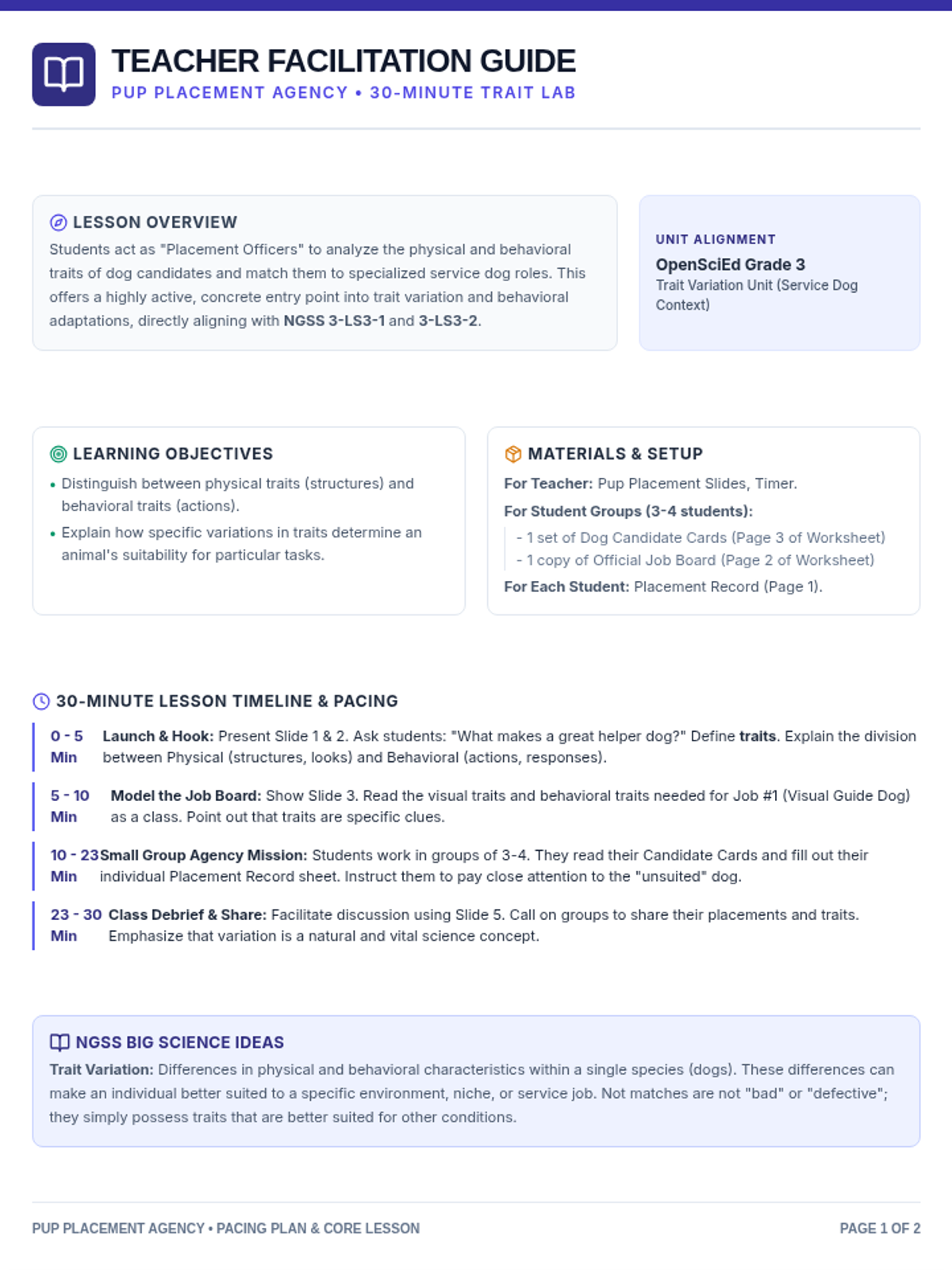
A highly differentiated 30-minute lesson where students act as 'Placement Officers' for the Pup Placement Agency. They analyze physical and behavioral traits of dog candidates and match them with appropriate service dog jobs, aligning with the OpenSciEd Grade 3 Trait Variation unit.
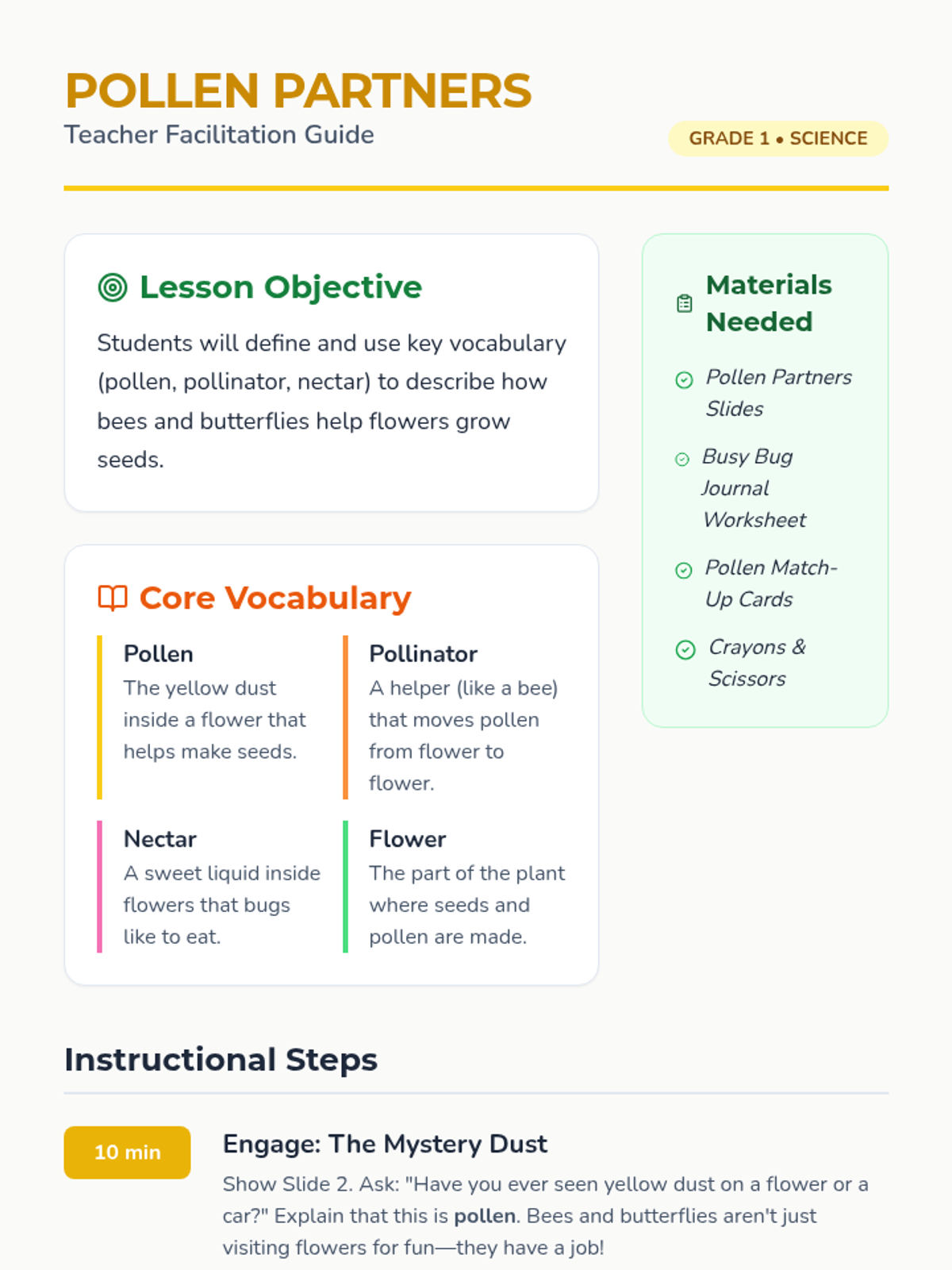
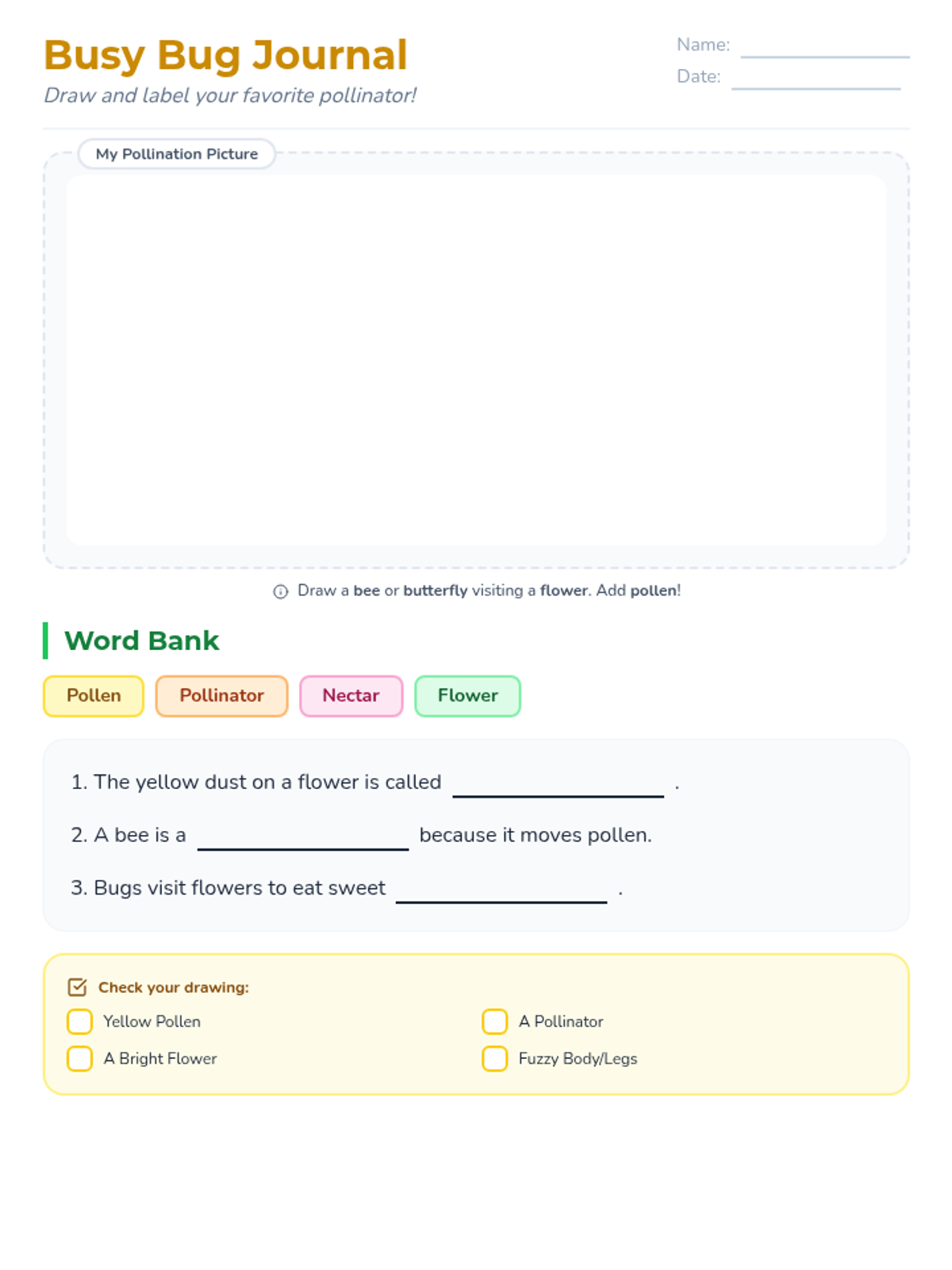
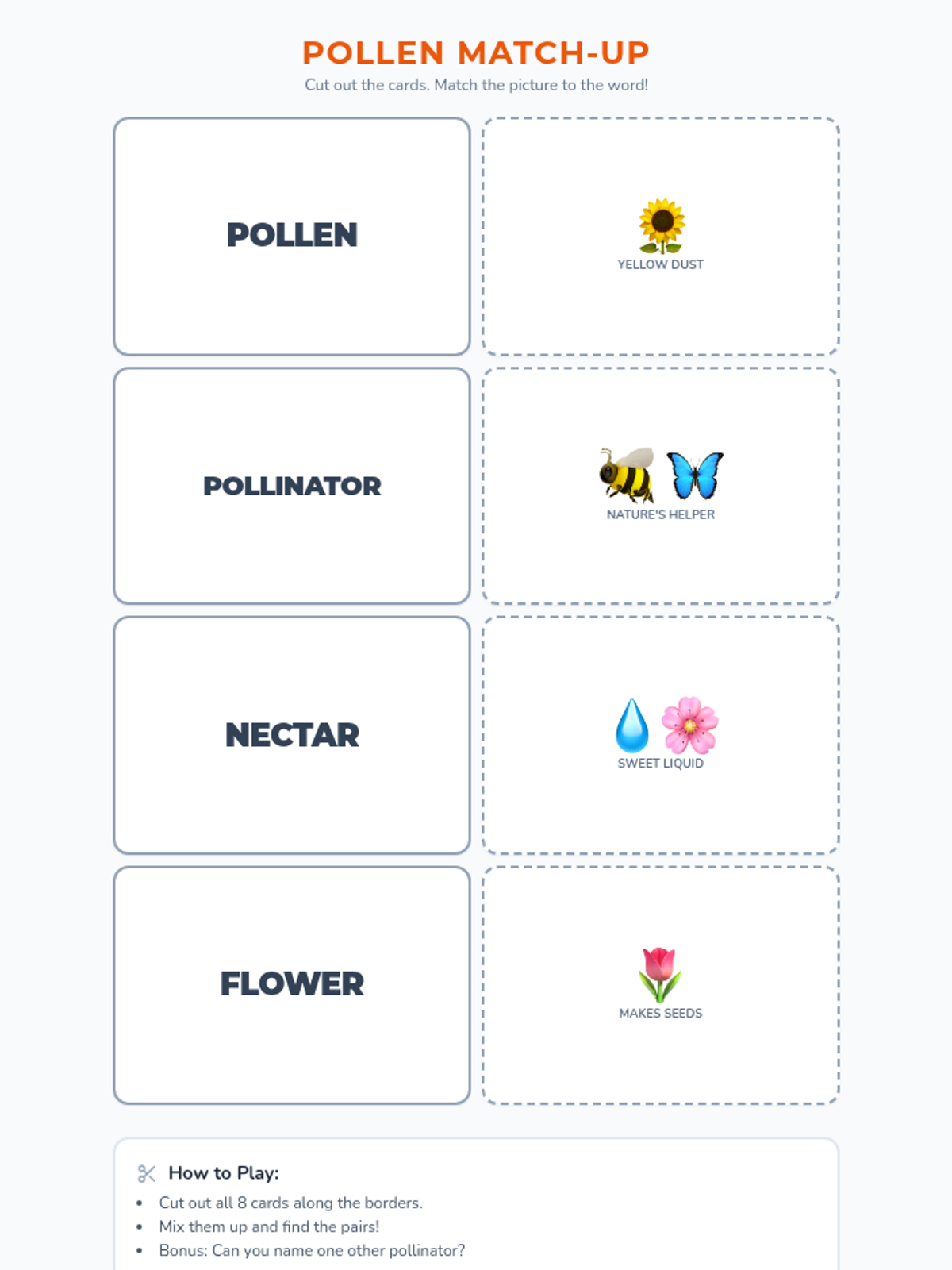
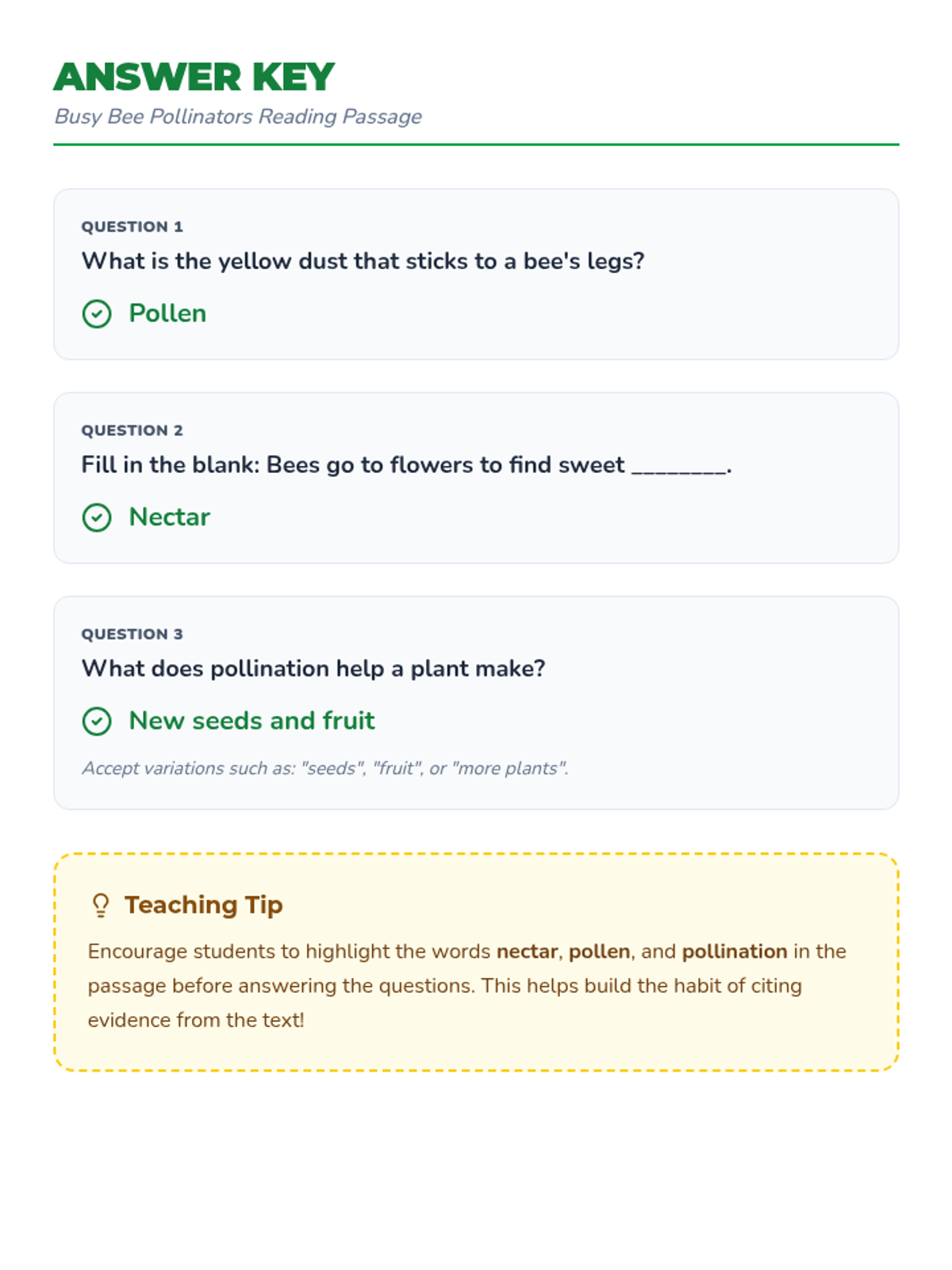
A hands-on follow-up lesson for first graders focusing on the vocabulary of pollination, specifically the roles of bees and butterflies as they move pollen between flowers.
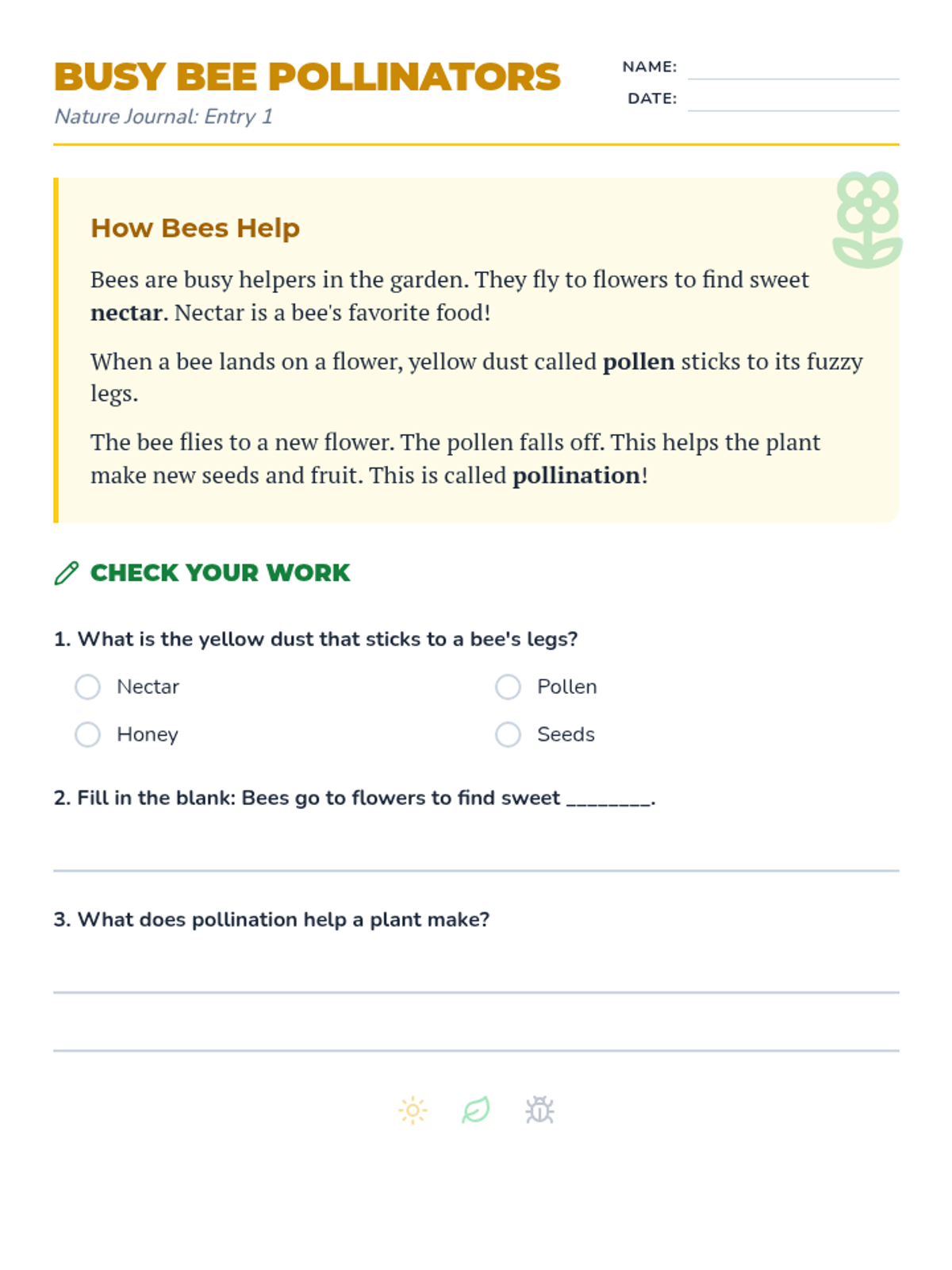
Students will learn how bees move pollen from flower to flower to help plants grow seeds and fruit.
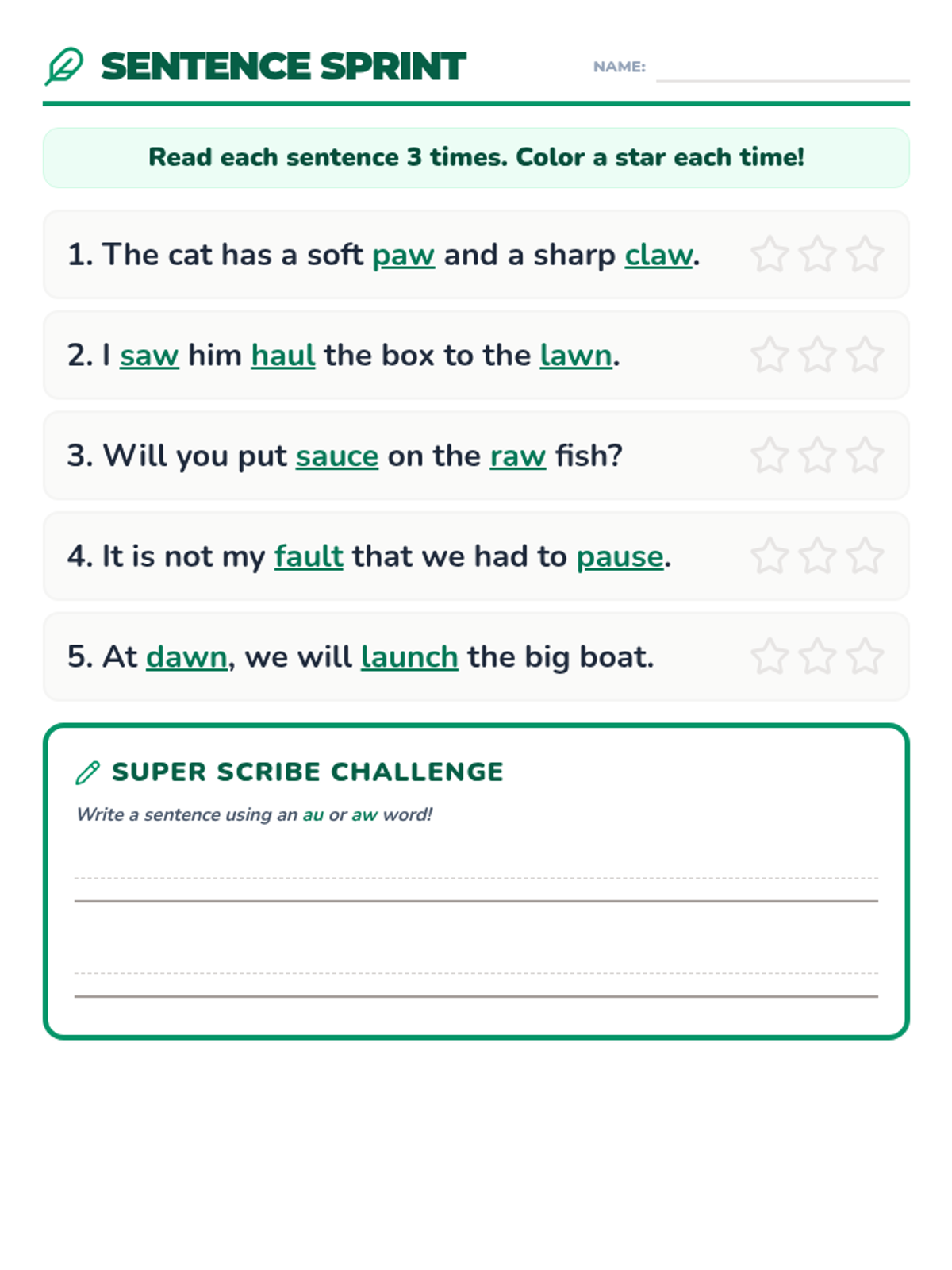
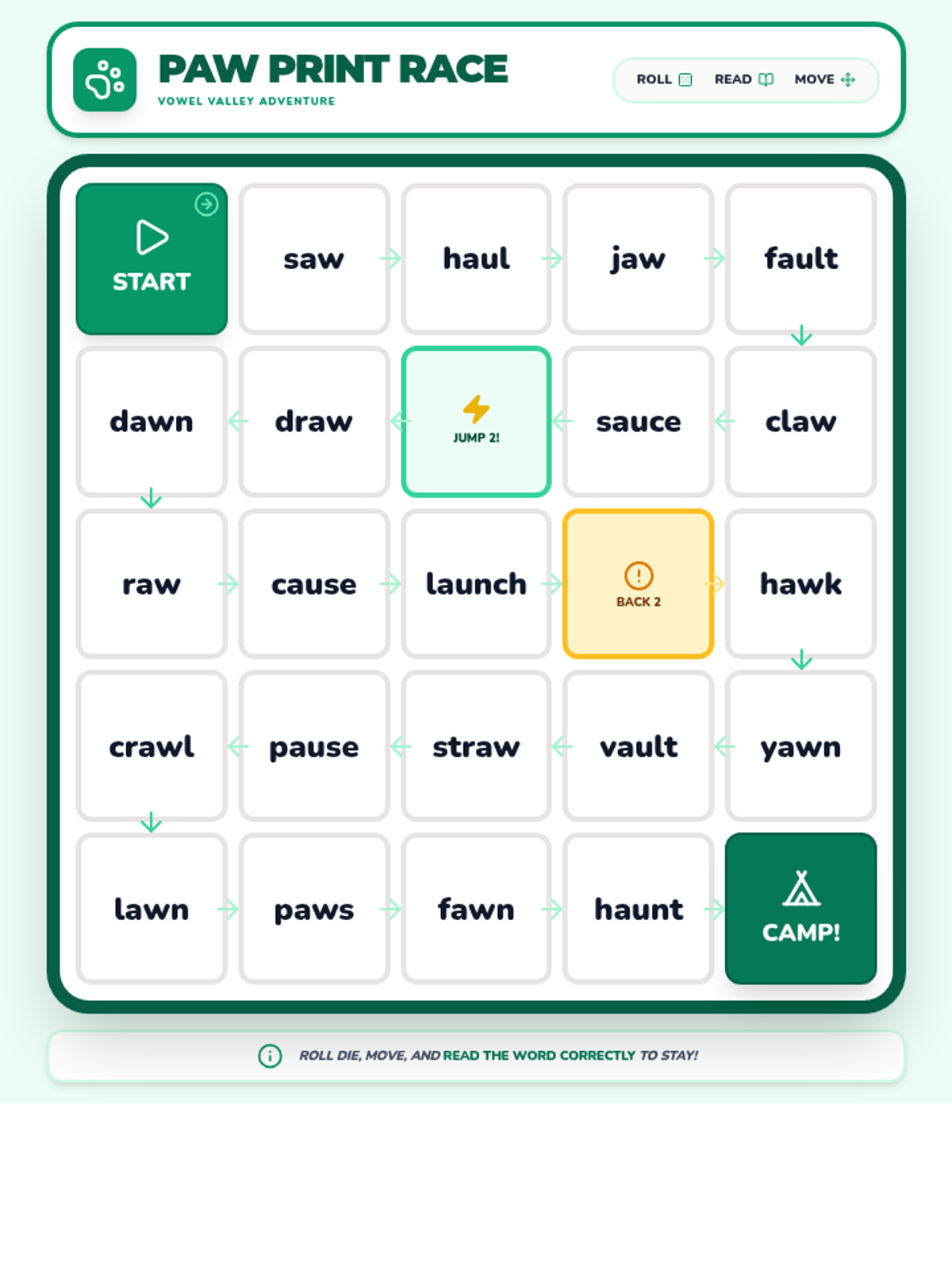
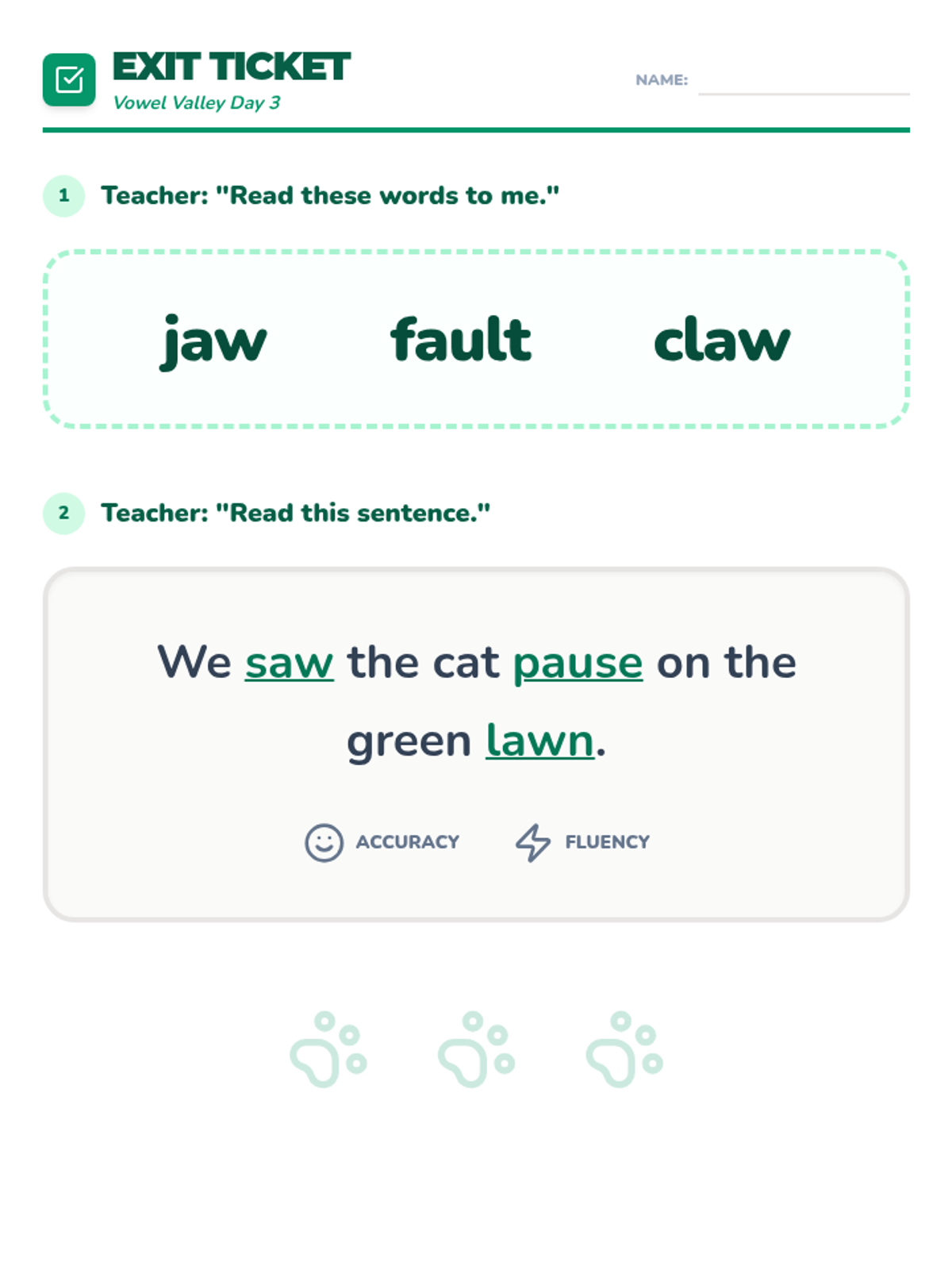
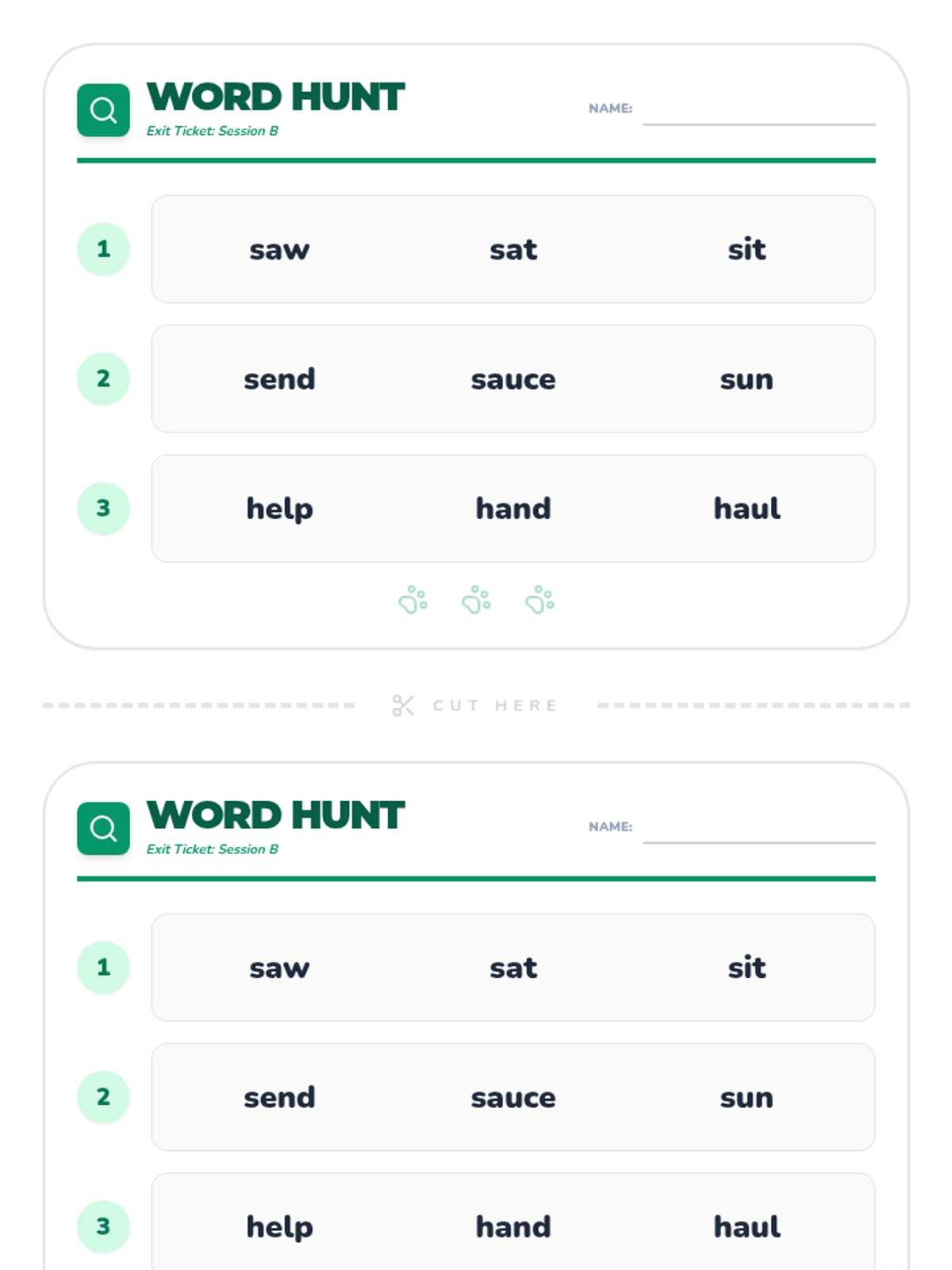
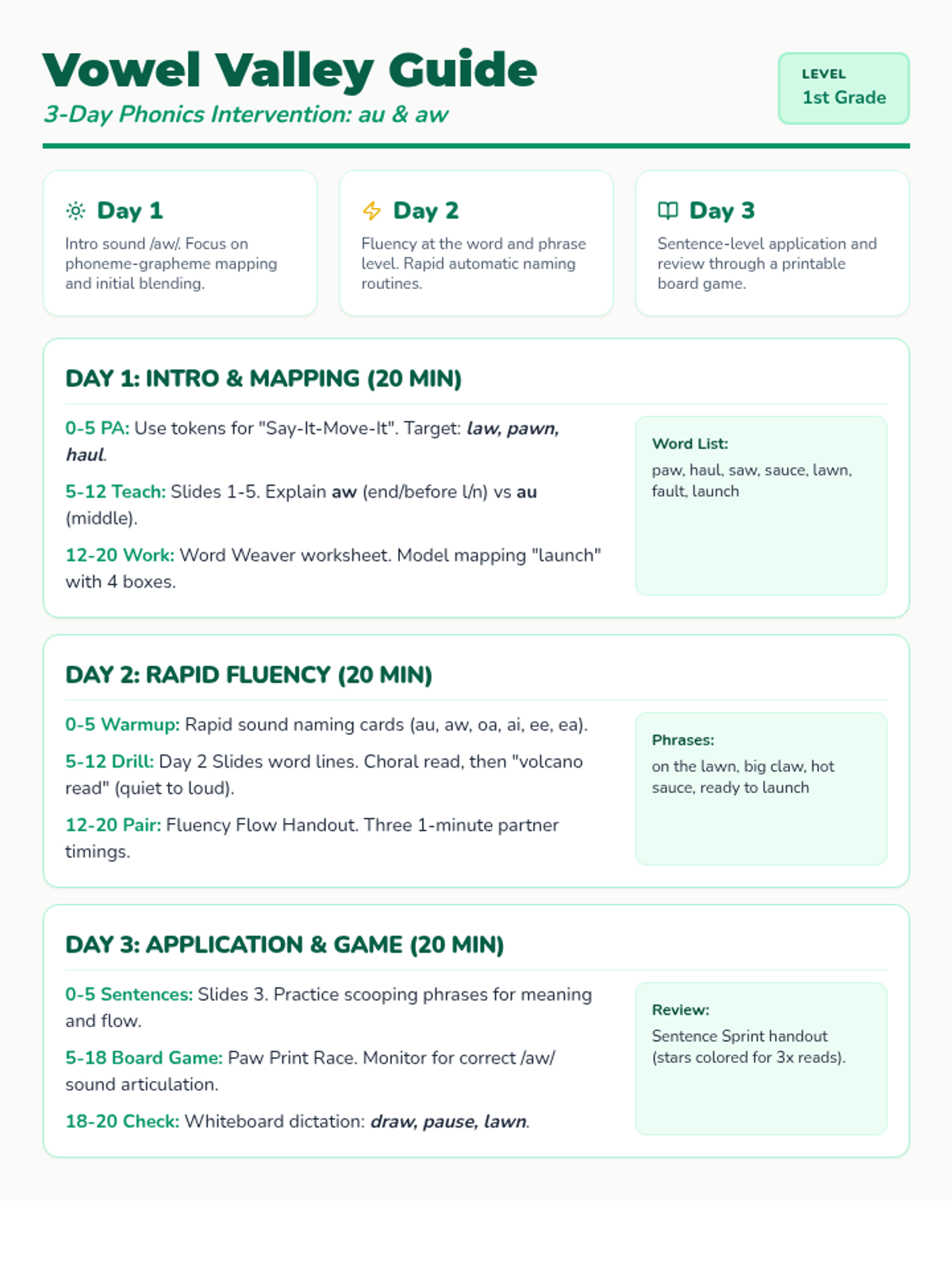
Applying 'au' and 'aw' knowledge to sentence reading and a collaborative board game review.
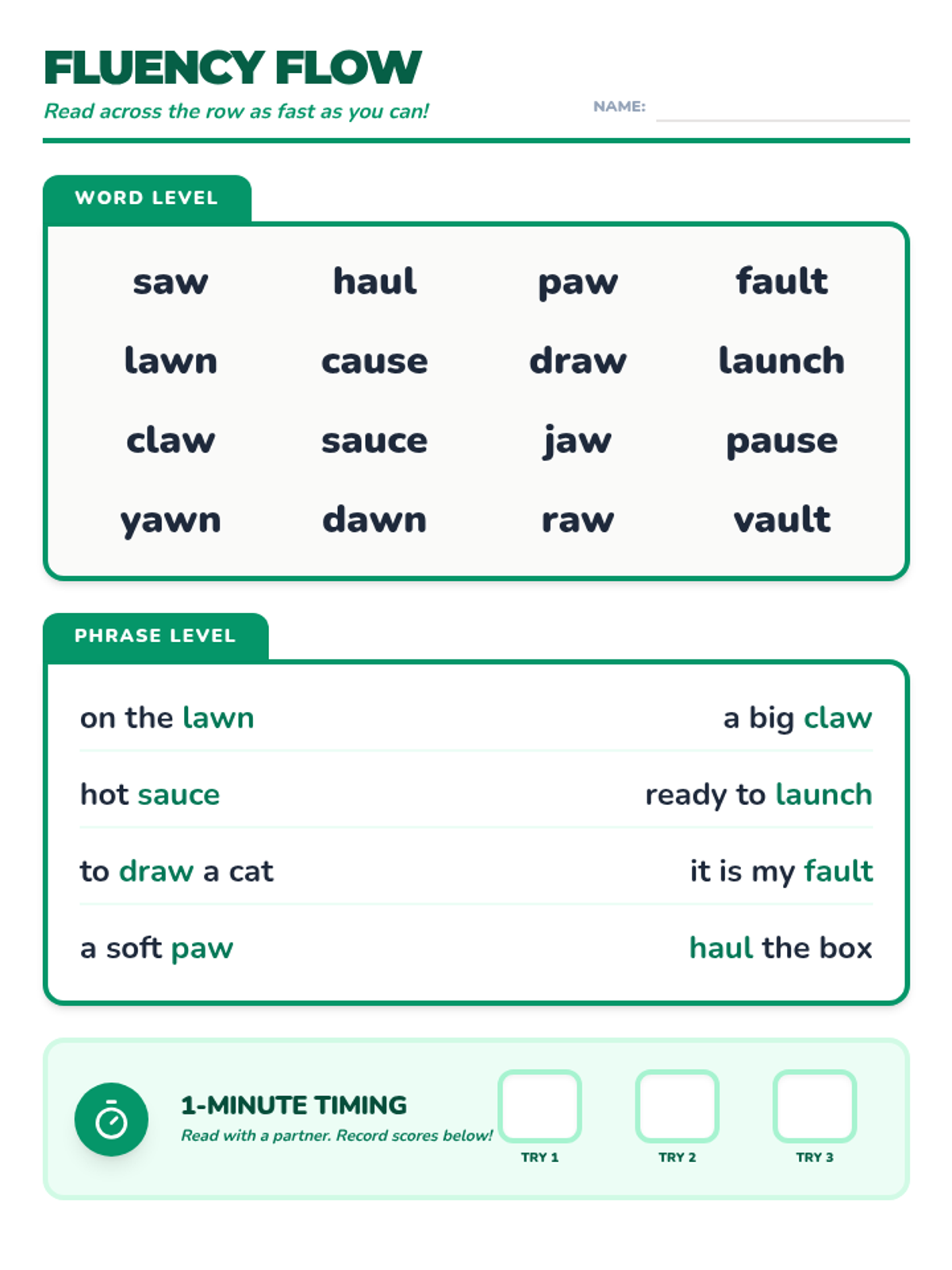
Building fluency with 'au' and 'aw' words and phrases through repetitive practice and blending routines.
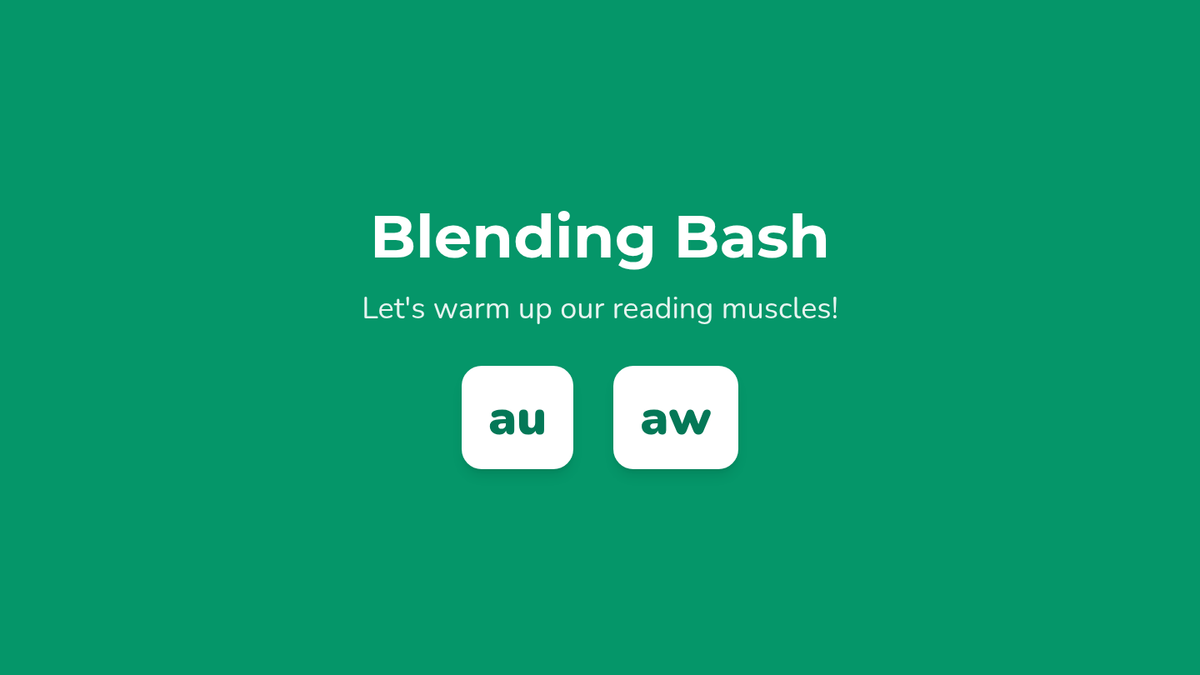
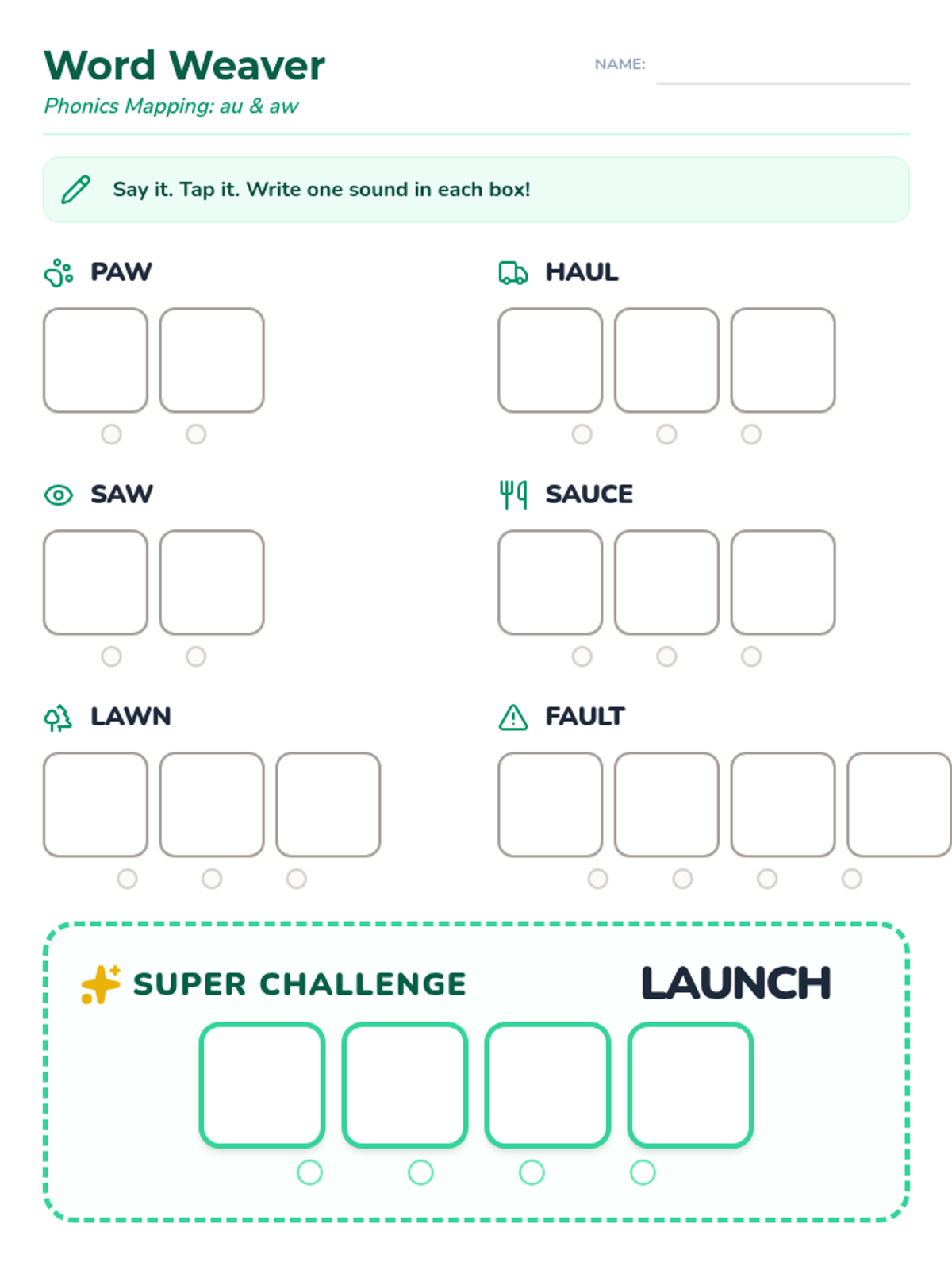
Introduction to the 'au' and 'aw' diphthongs, focusing on phoneme-grapheme mapping and initial word decoding.
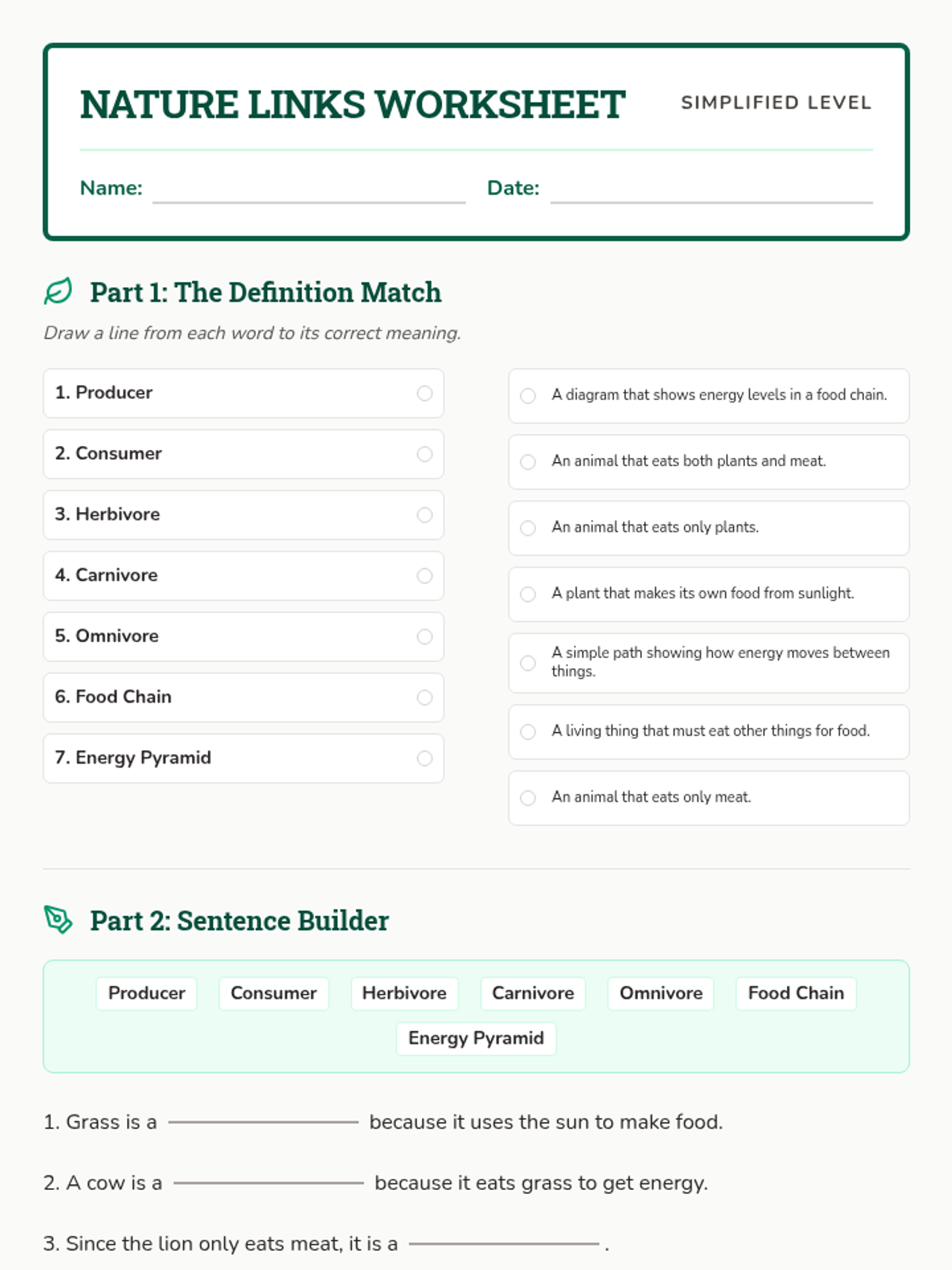
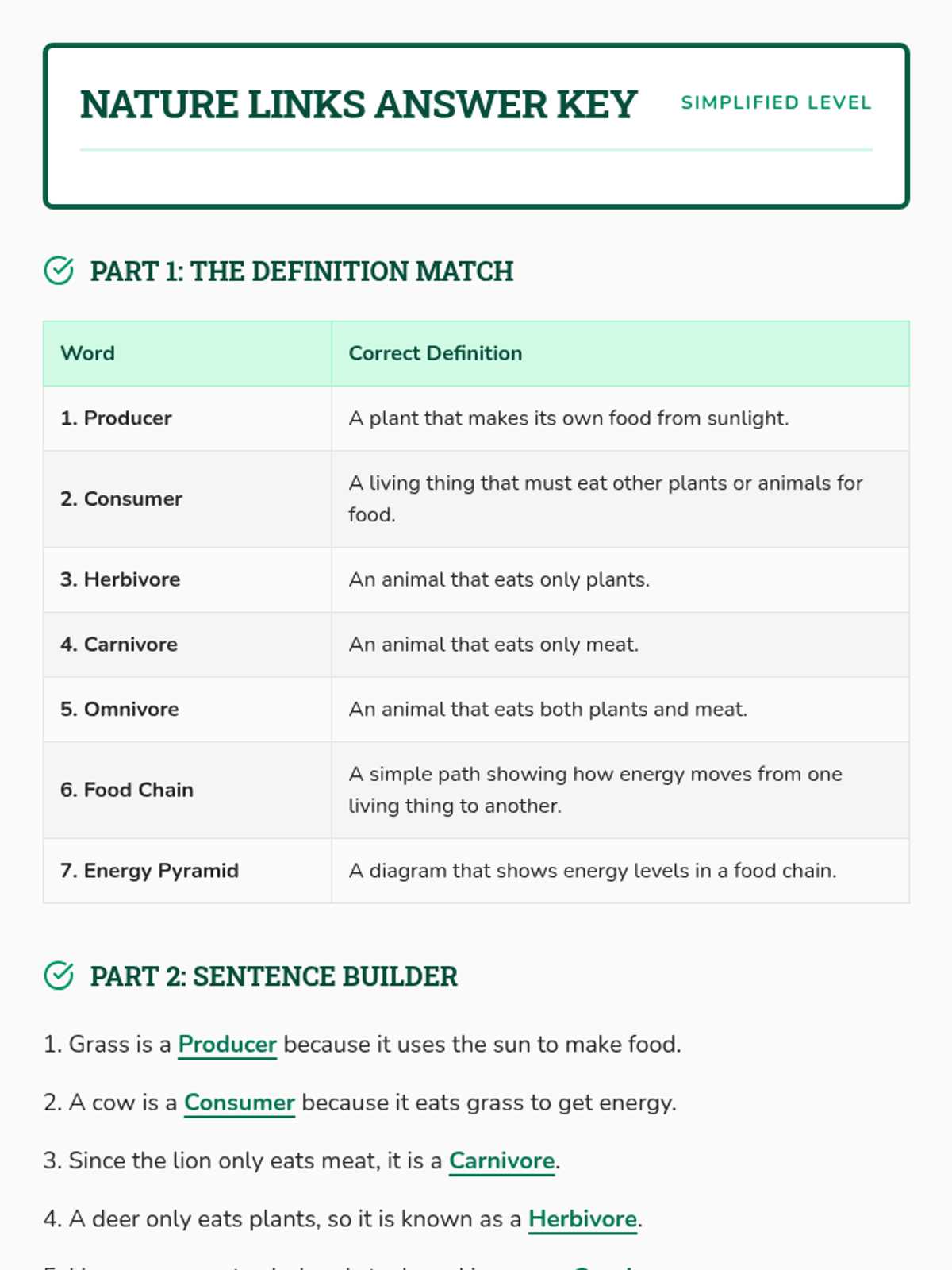
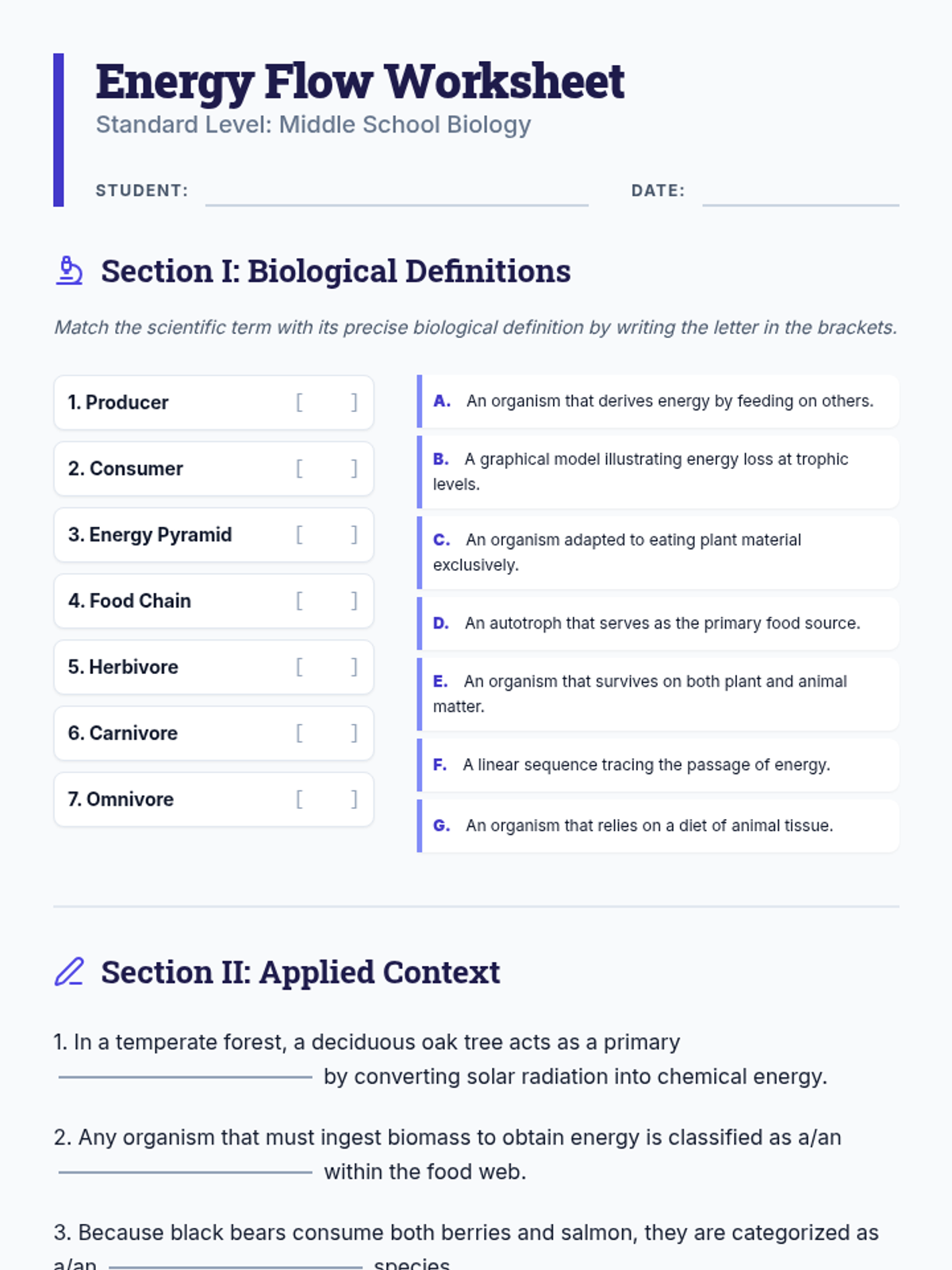
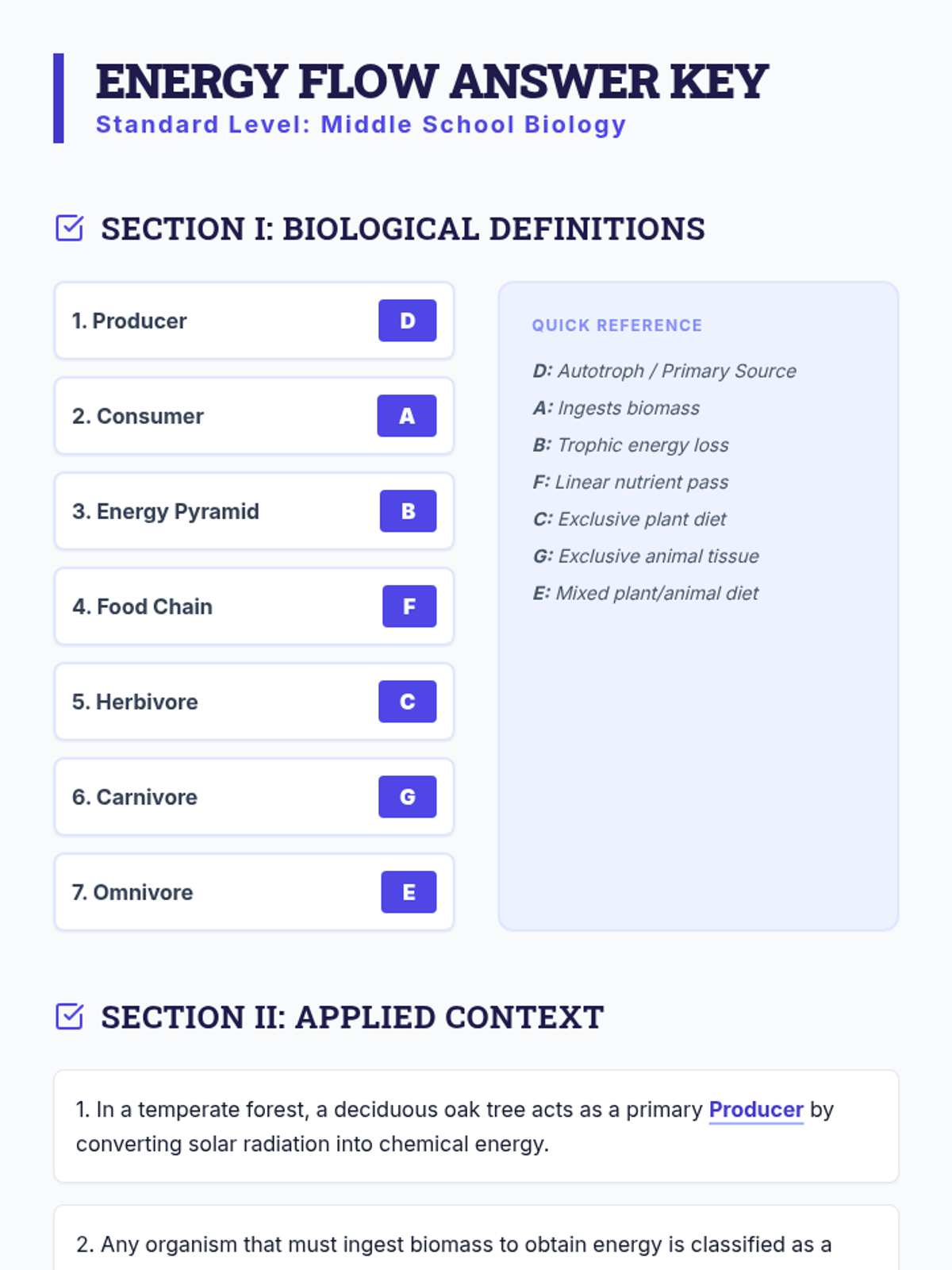
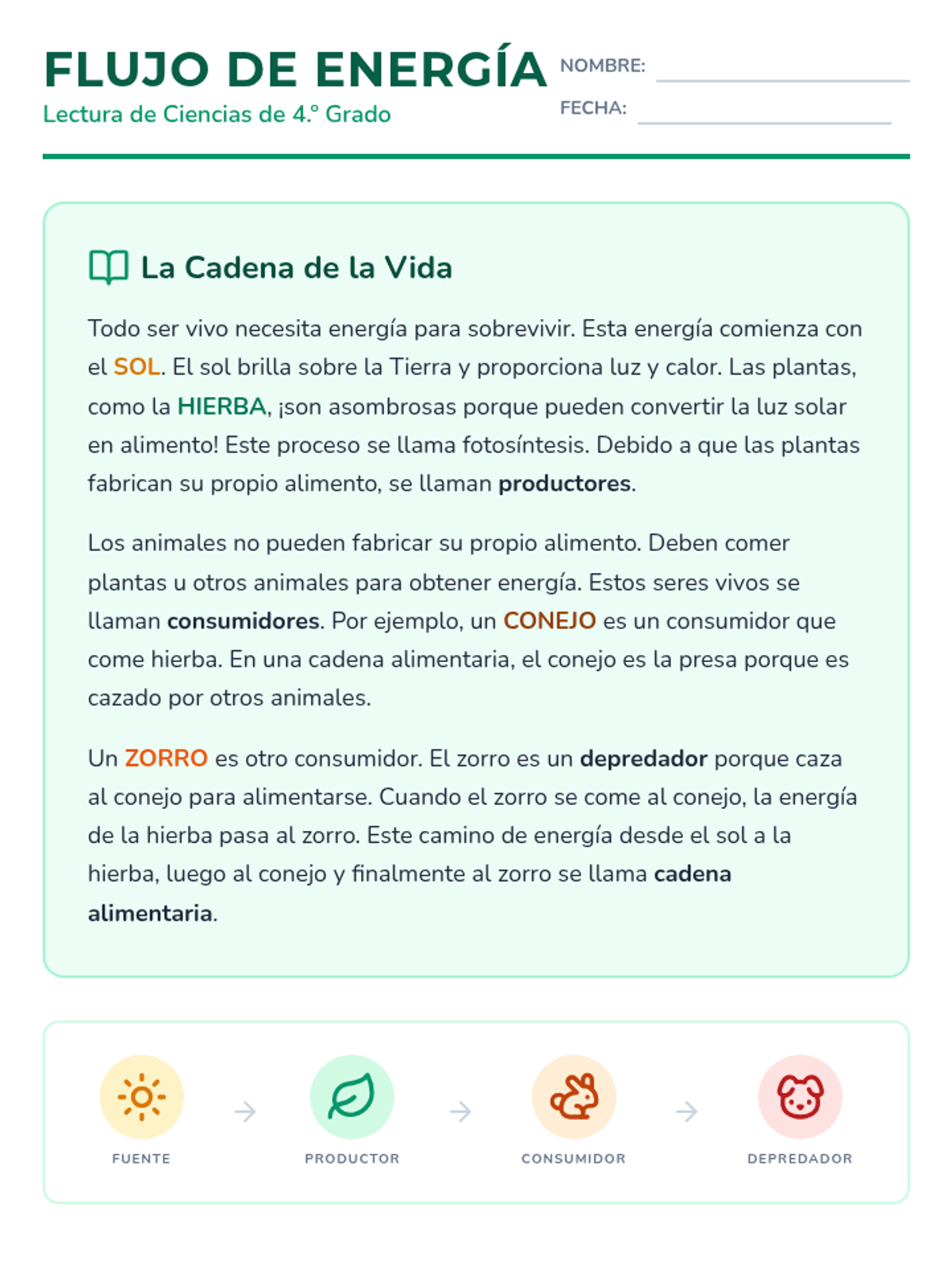
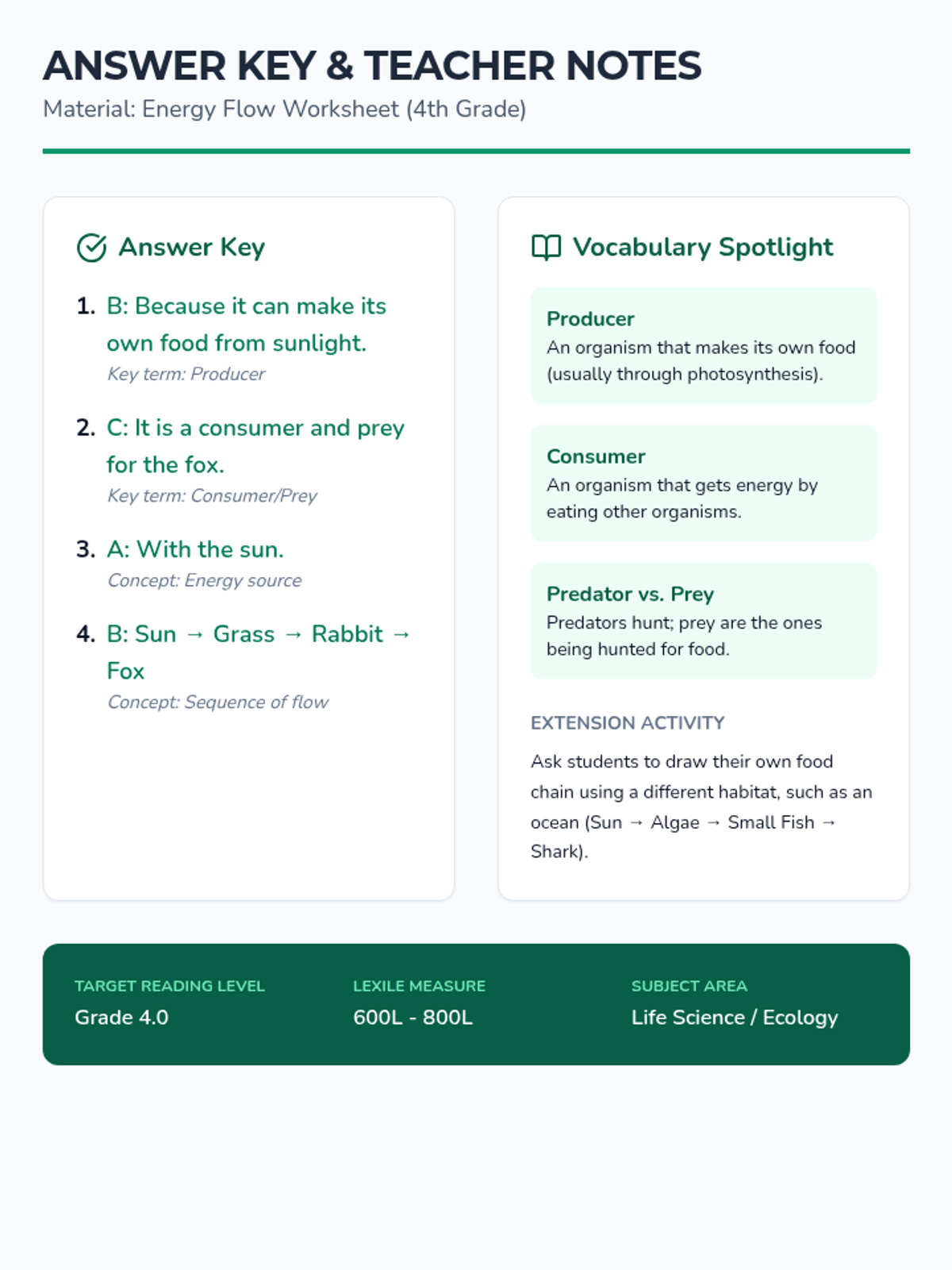
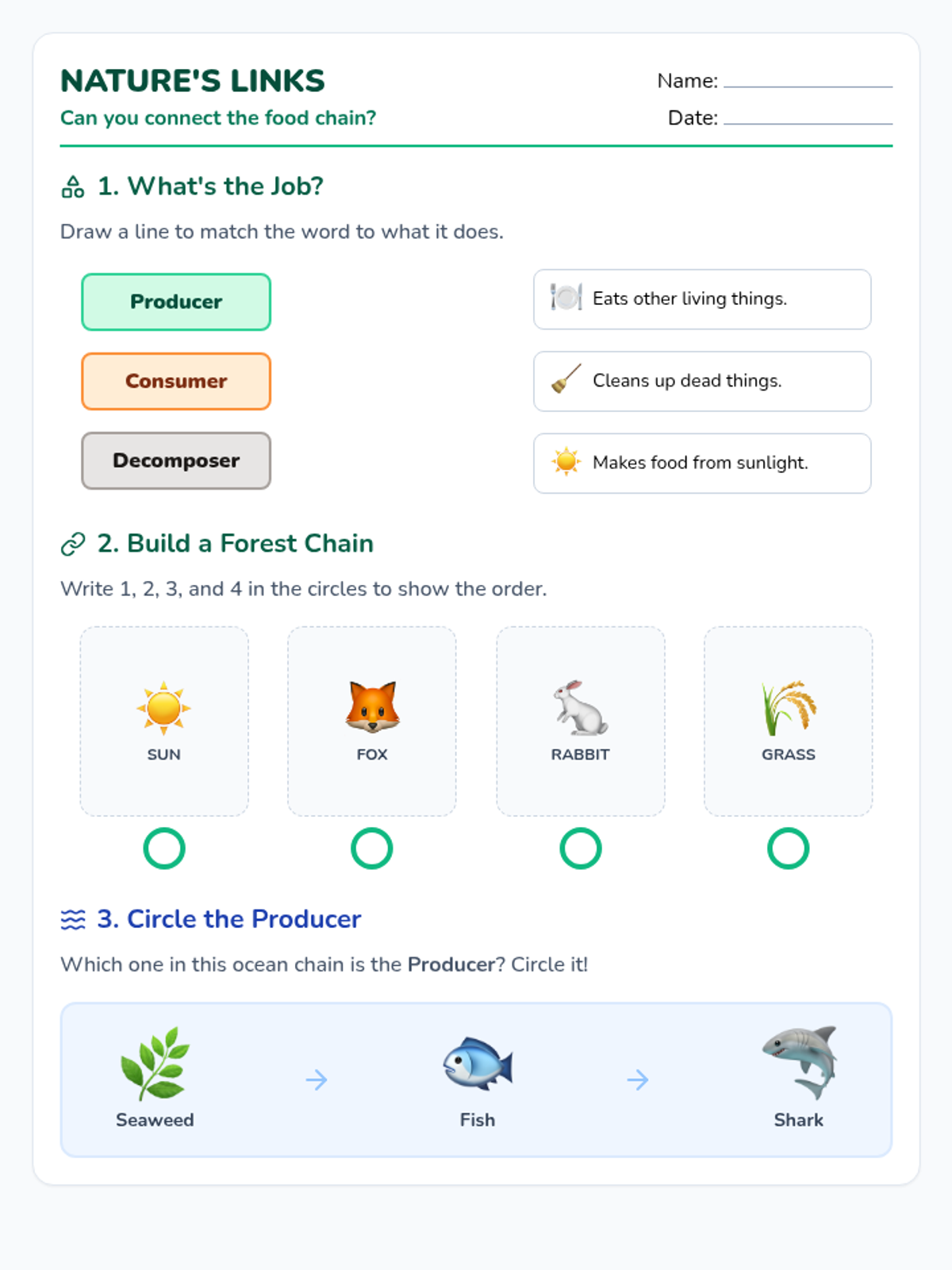
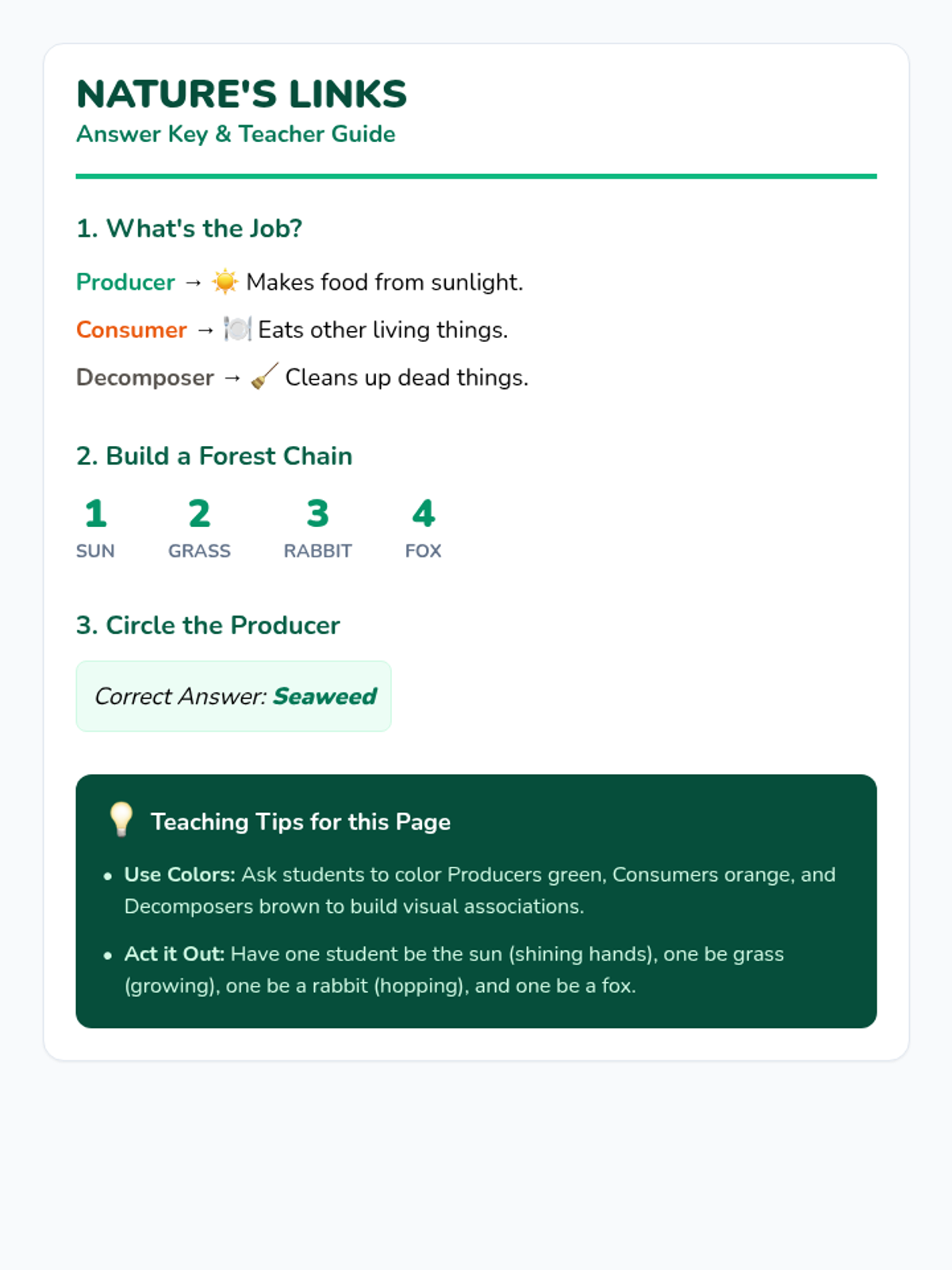
A lesson focusing on ecosystem vocabulary including producers, consumers, and energy flow through food chains and pyramids. Includes tiered materials for elementary and middle school levels.
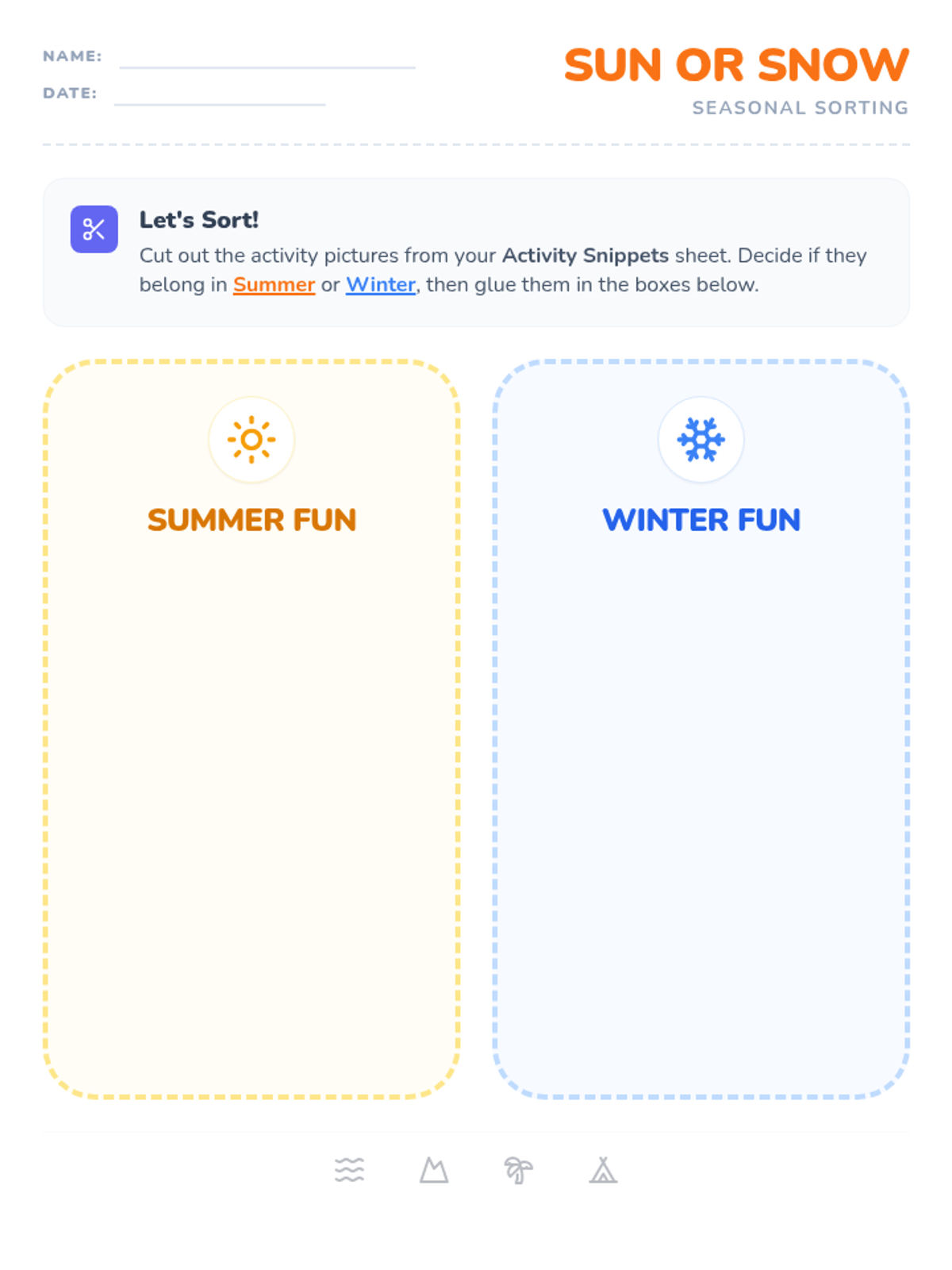
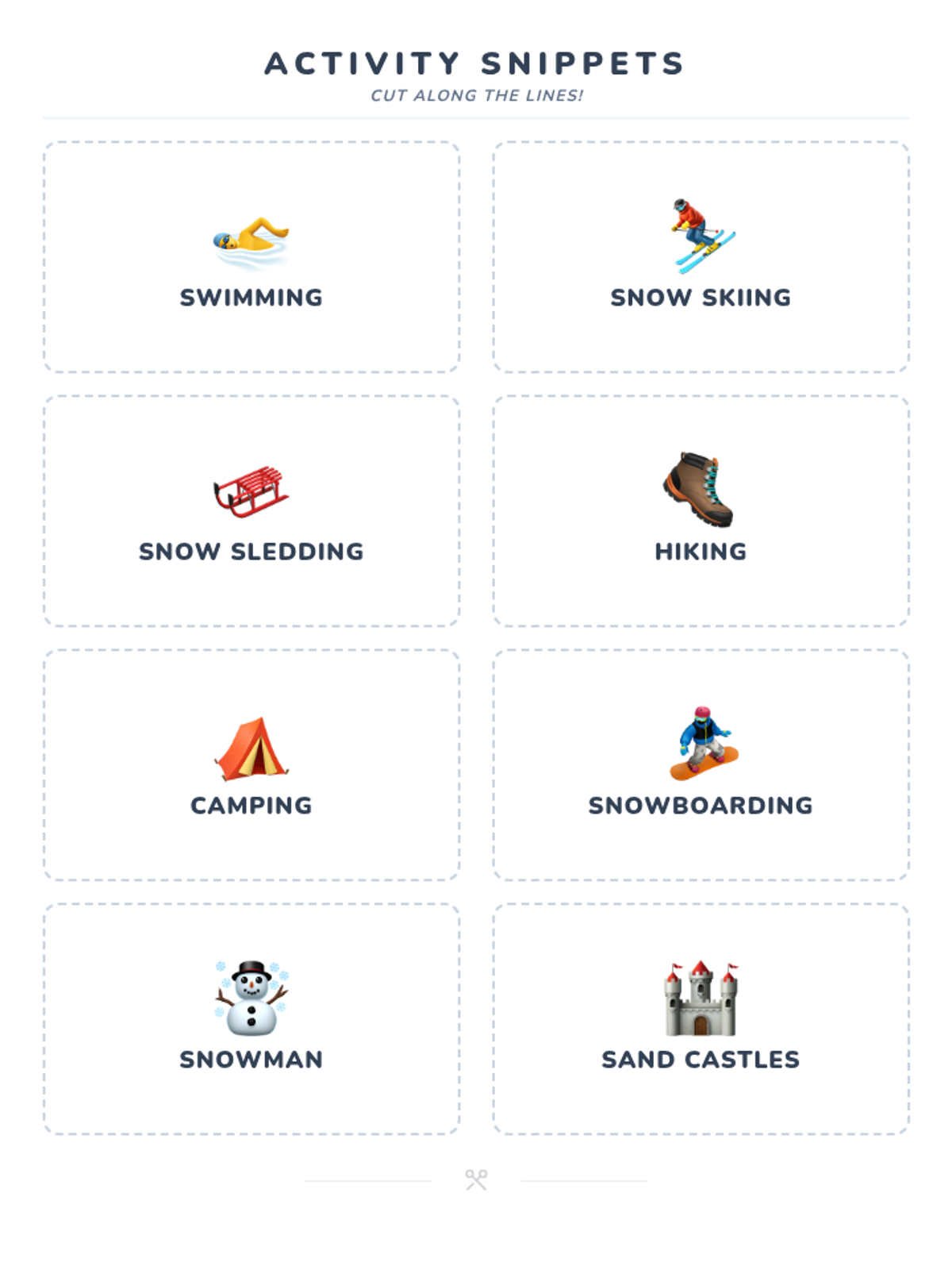
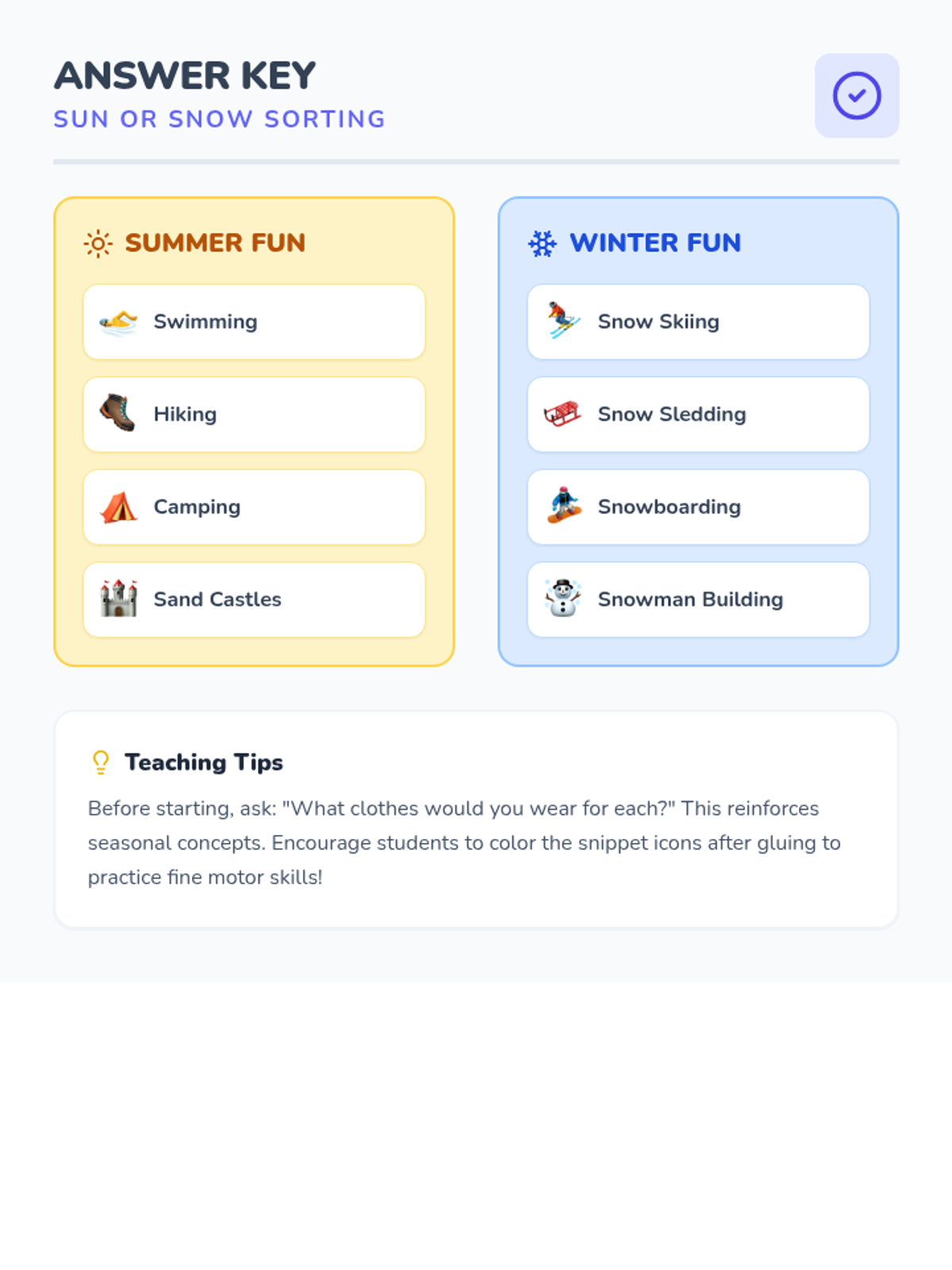
A hands-on categorization activity for kindergarteners to distinguish between summer and winter activities using cut-and-paste techniques.
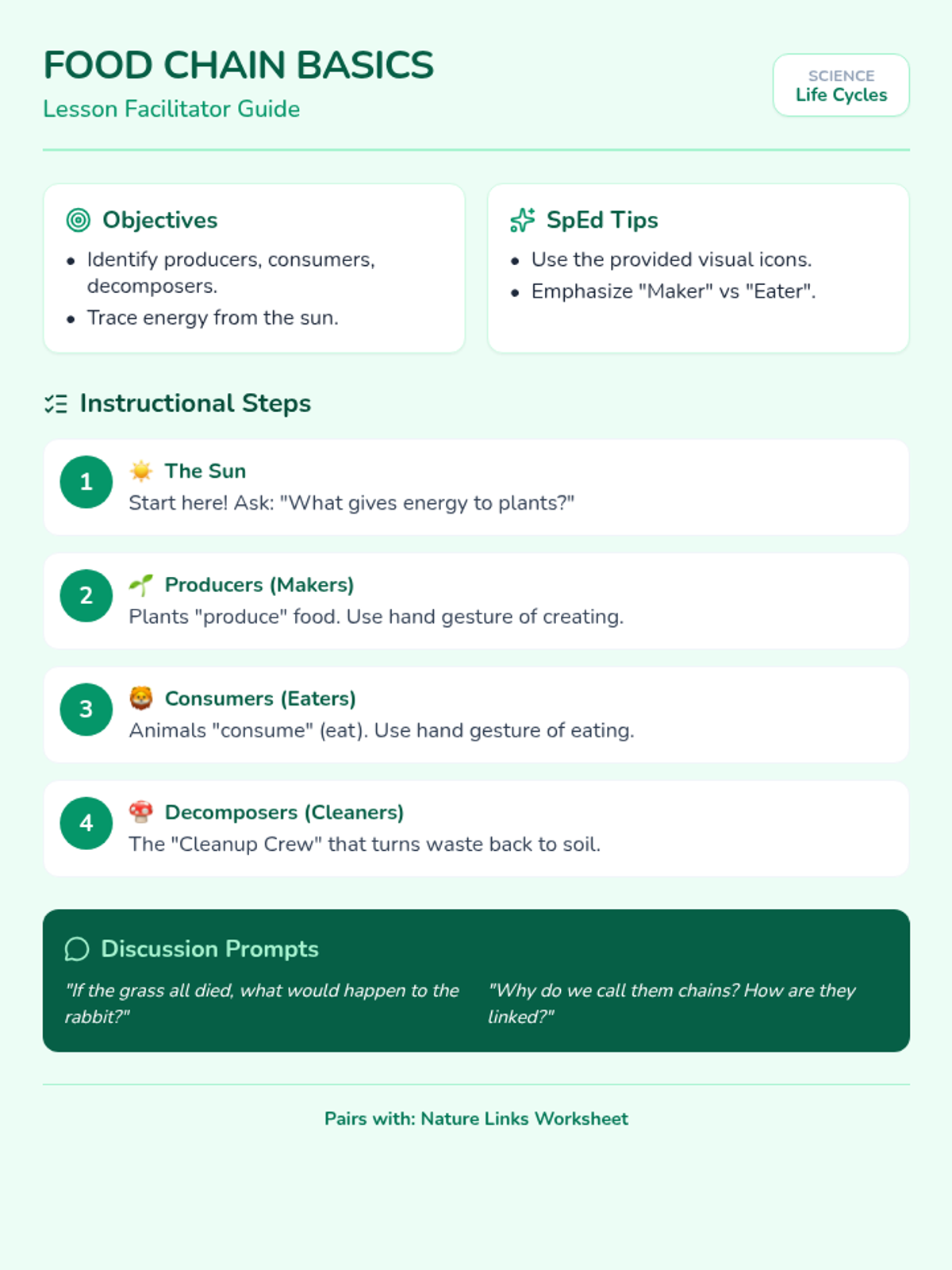
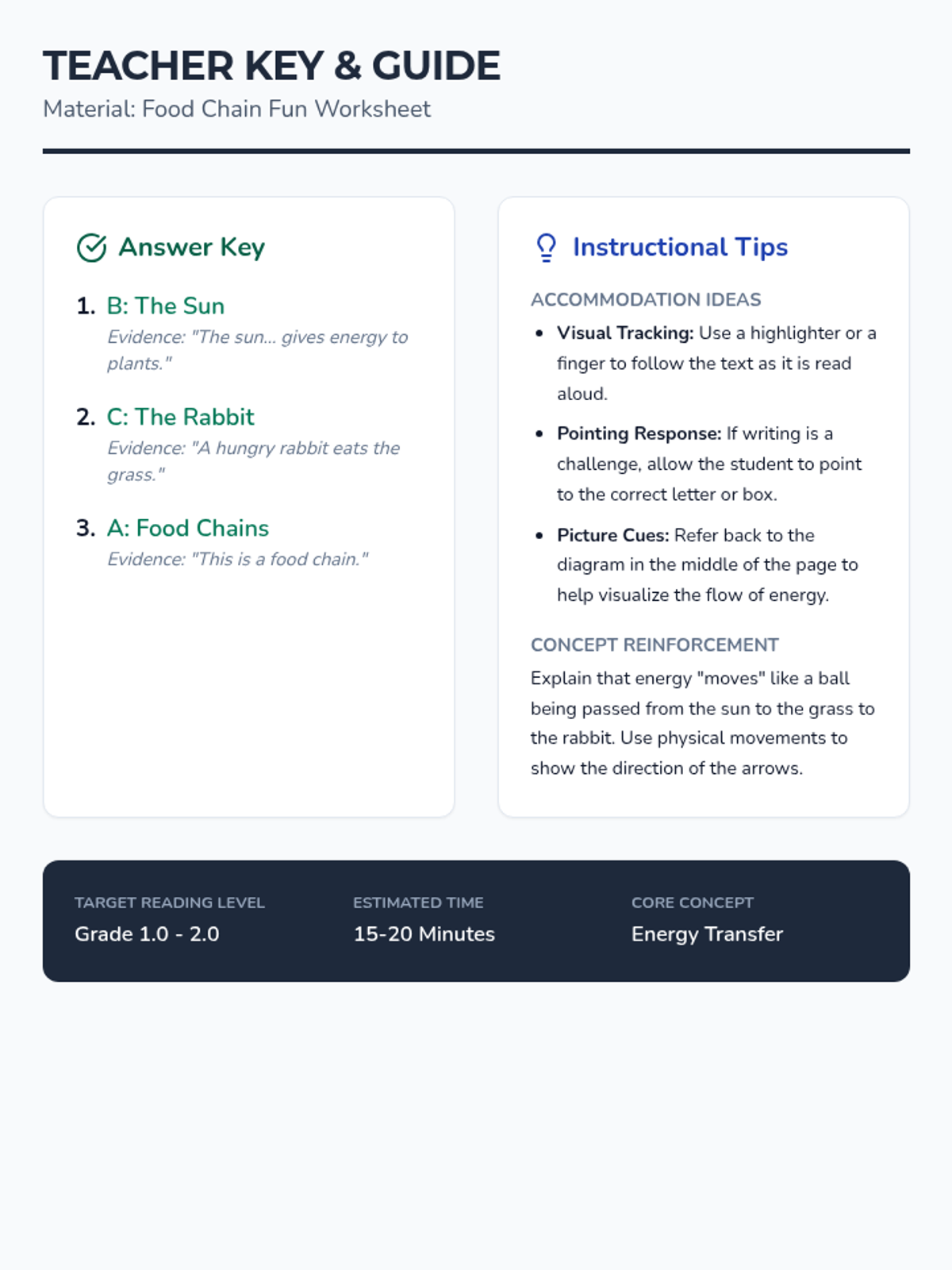
A foundational lesson on food chains across various ecosystems, specifically designed for special education students. Includes visual-heavy instruction on producers, consumers, and decomposers.
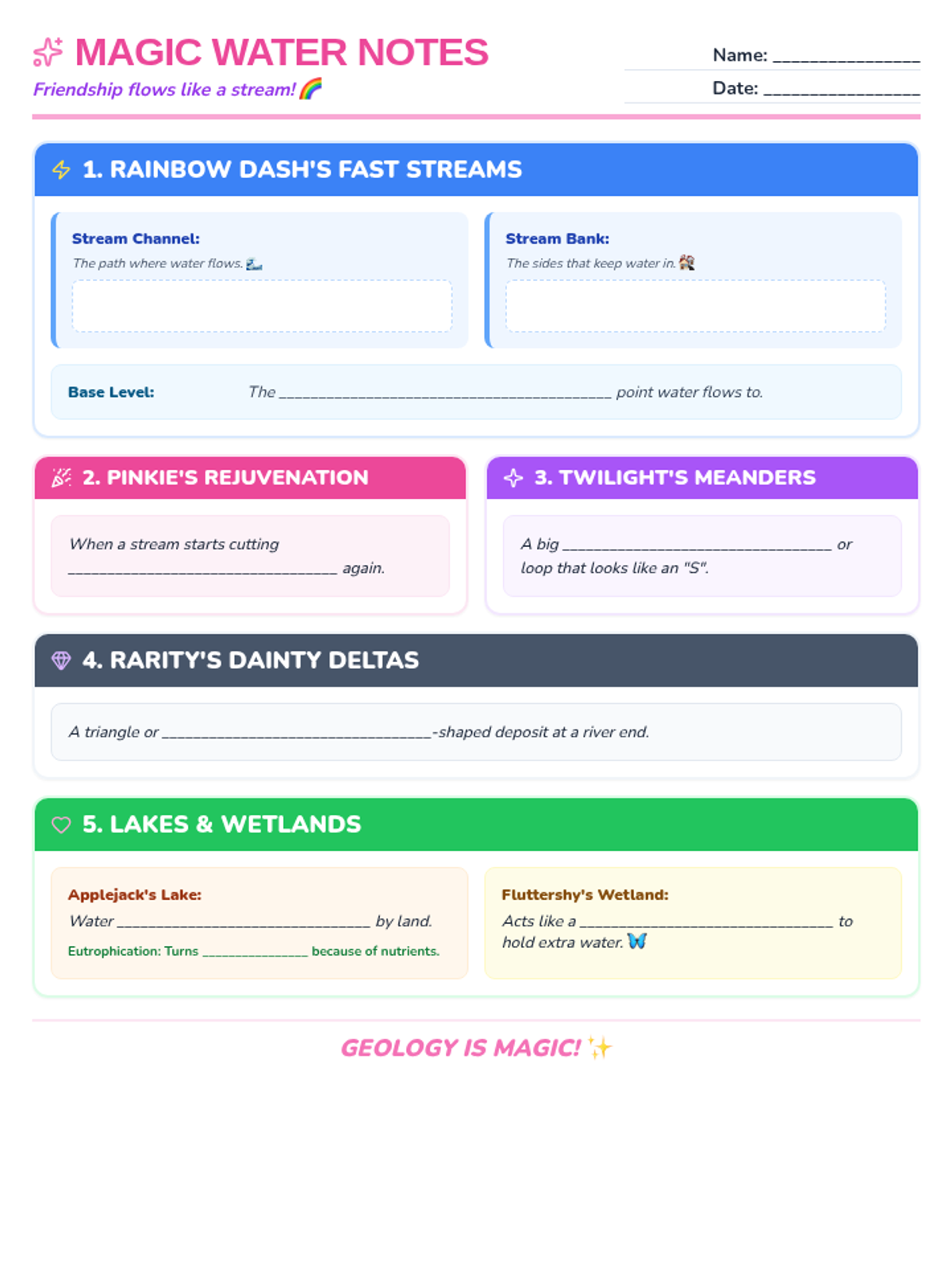
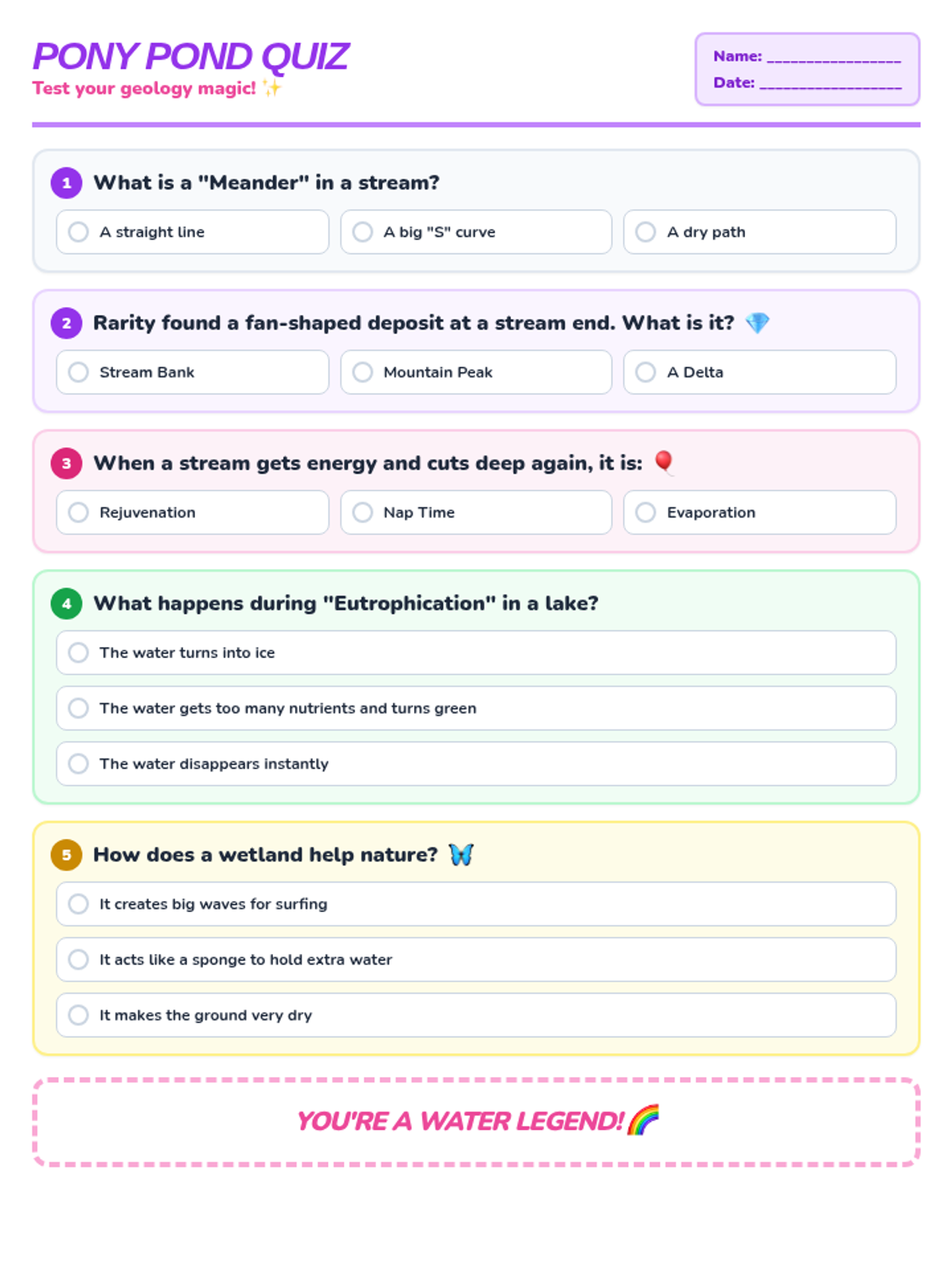
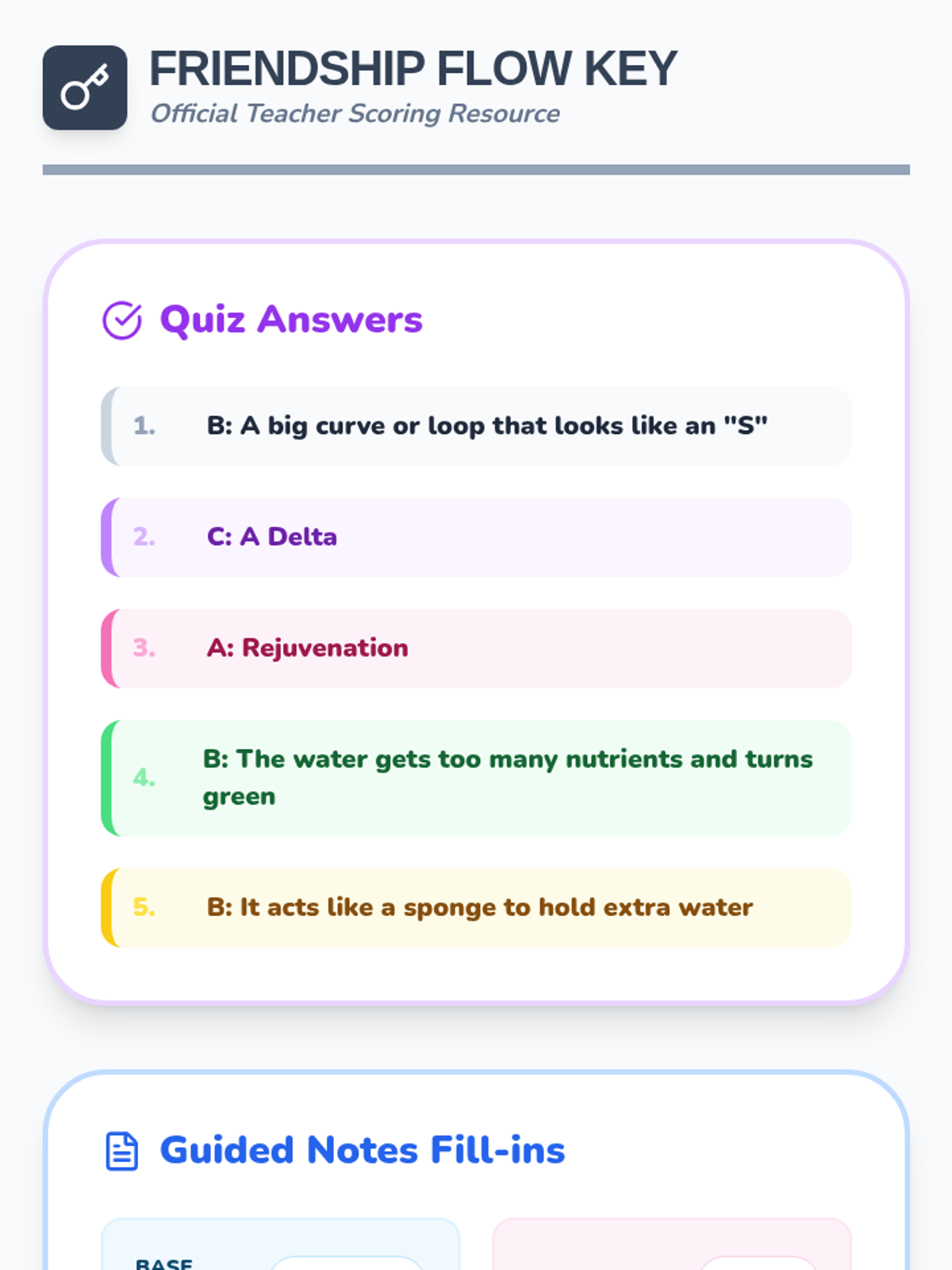
A lesson on surface water interactions with land, featuring My Little Pony characters to explain streams, lakes, and wetlands. Students learn key geological terms through simple bullet points and visual support.
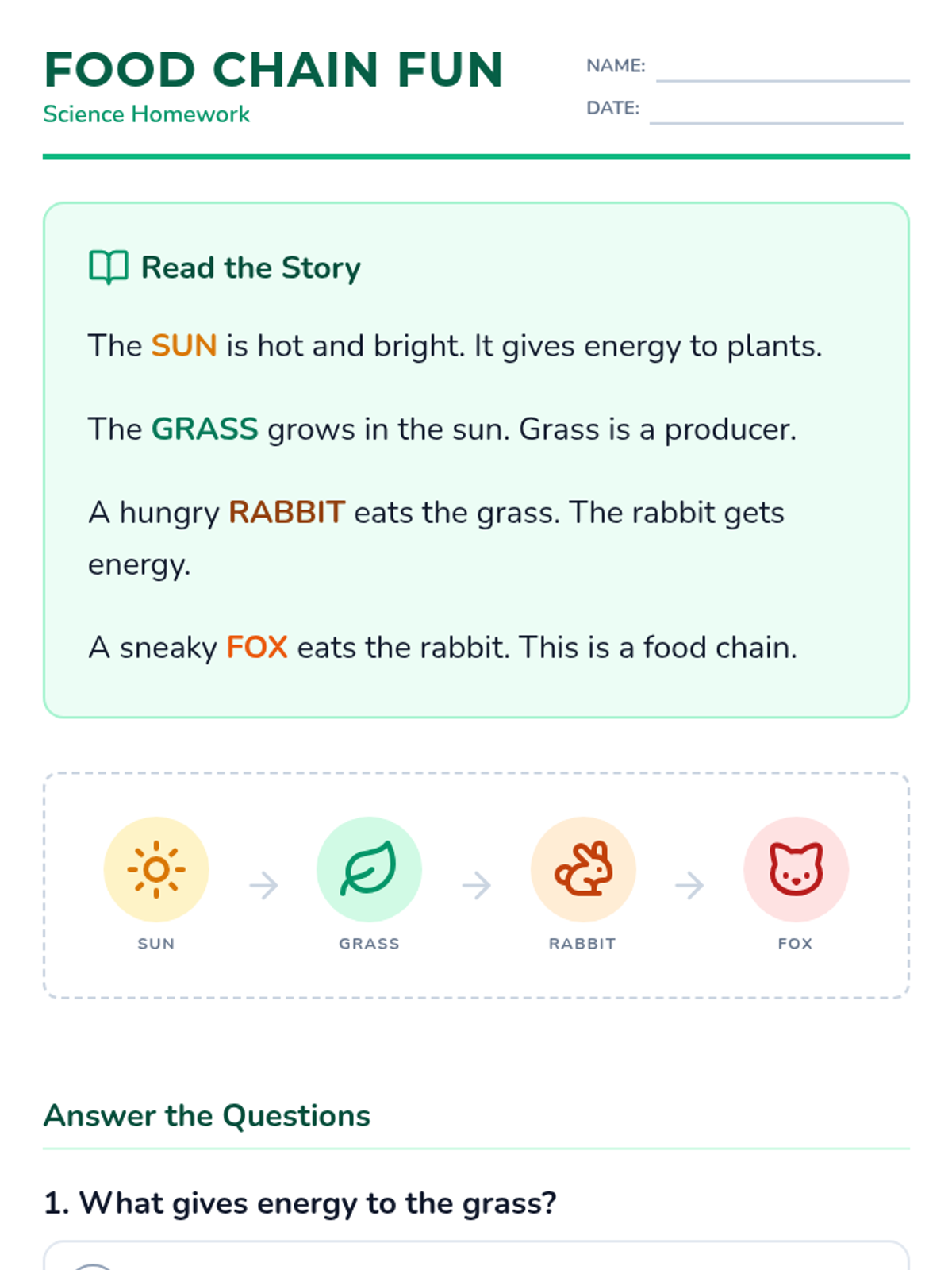
A simplified science lesson on food chains designed for 8th-grade students with severe disabilities, focusing on basic energy flow from sun to predator.
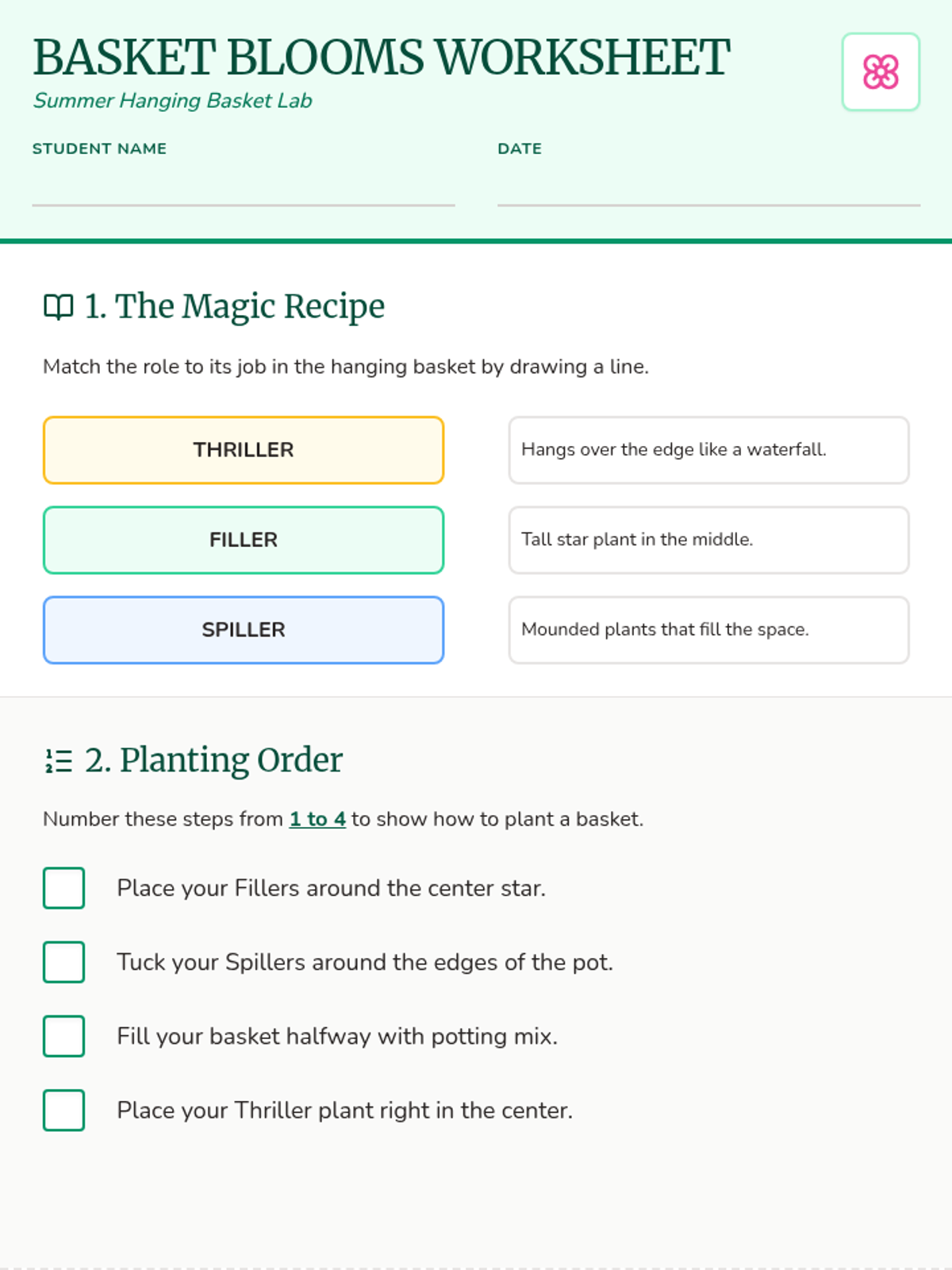
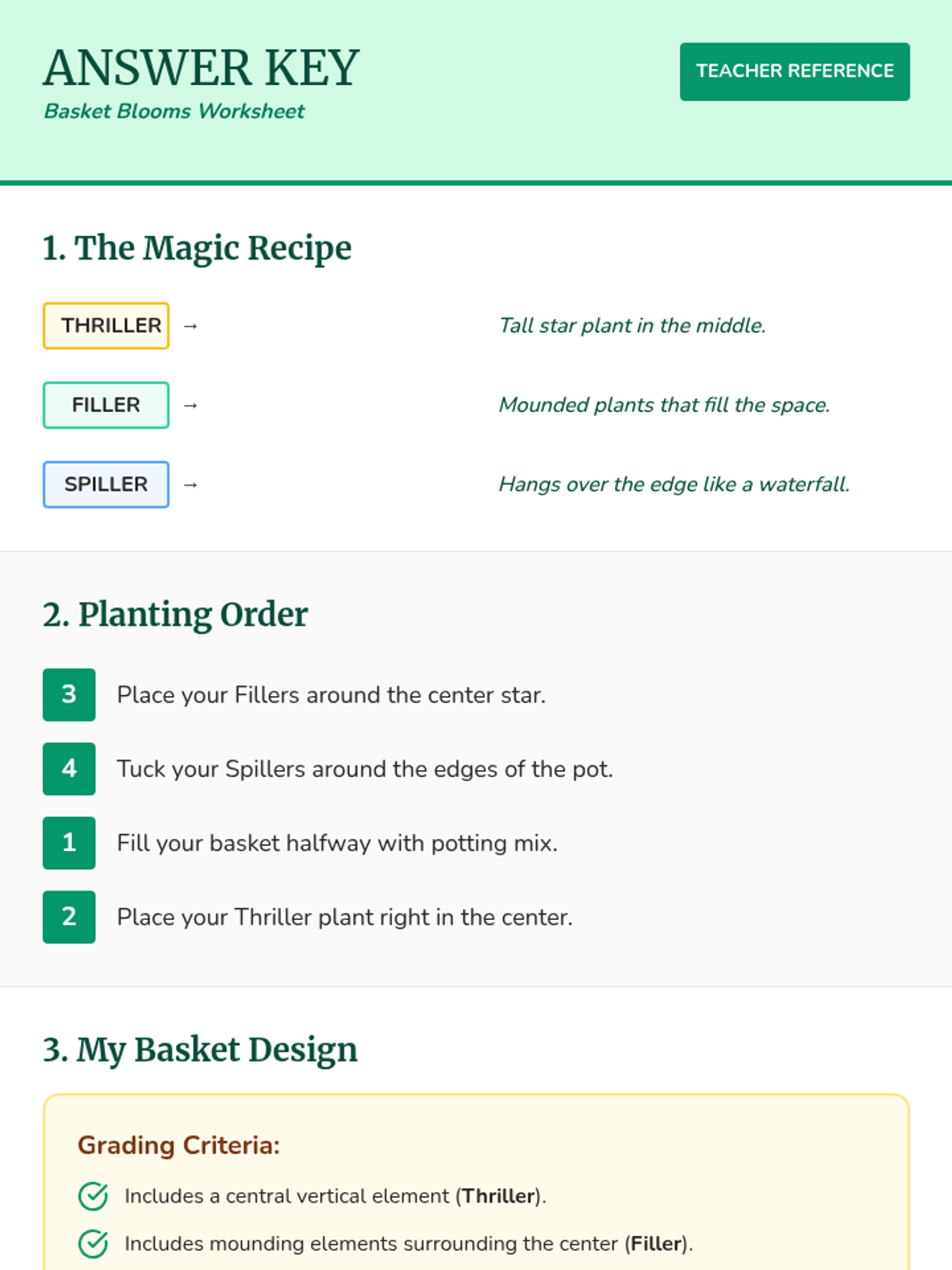
A hands-on lesson for elementary students on how to select plants and assemble a beautiful, healthy summer hanging basket using the 'Thriller, Filler, Spiller' method.
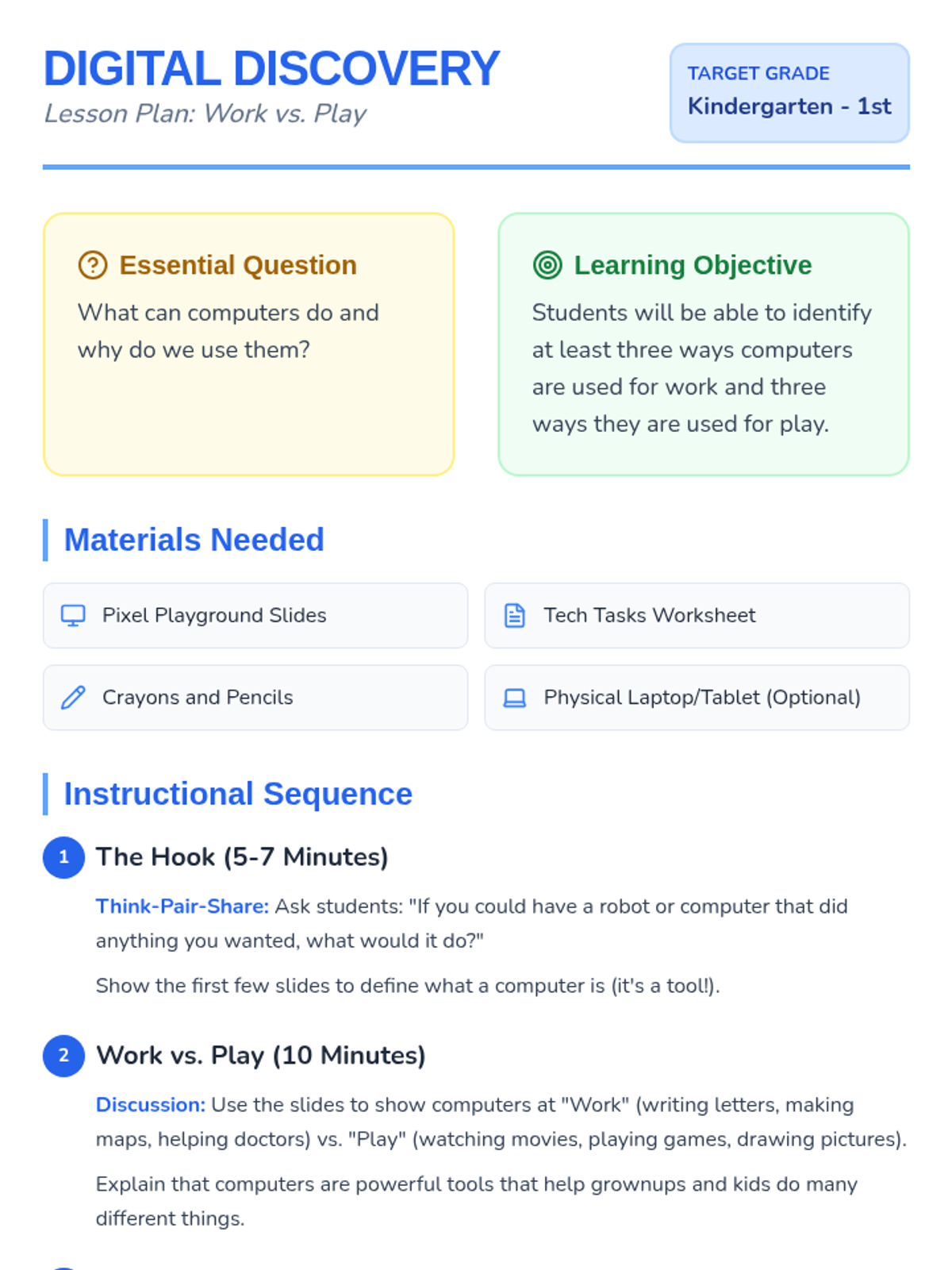
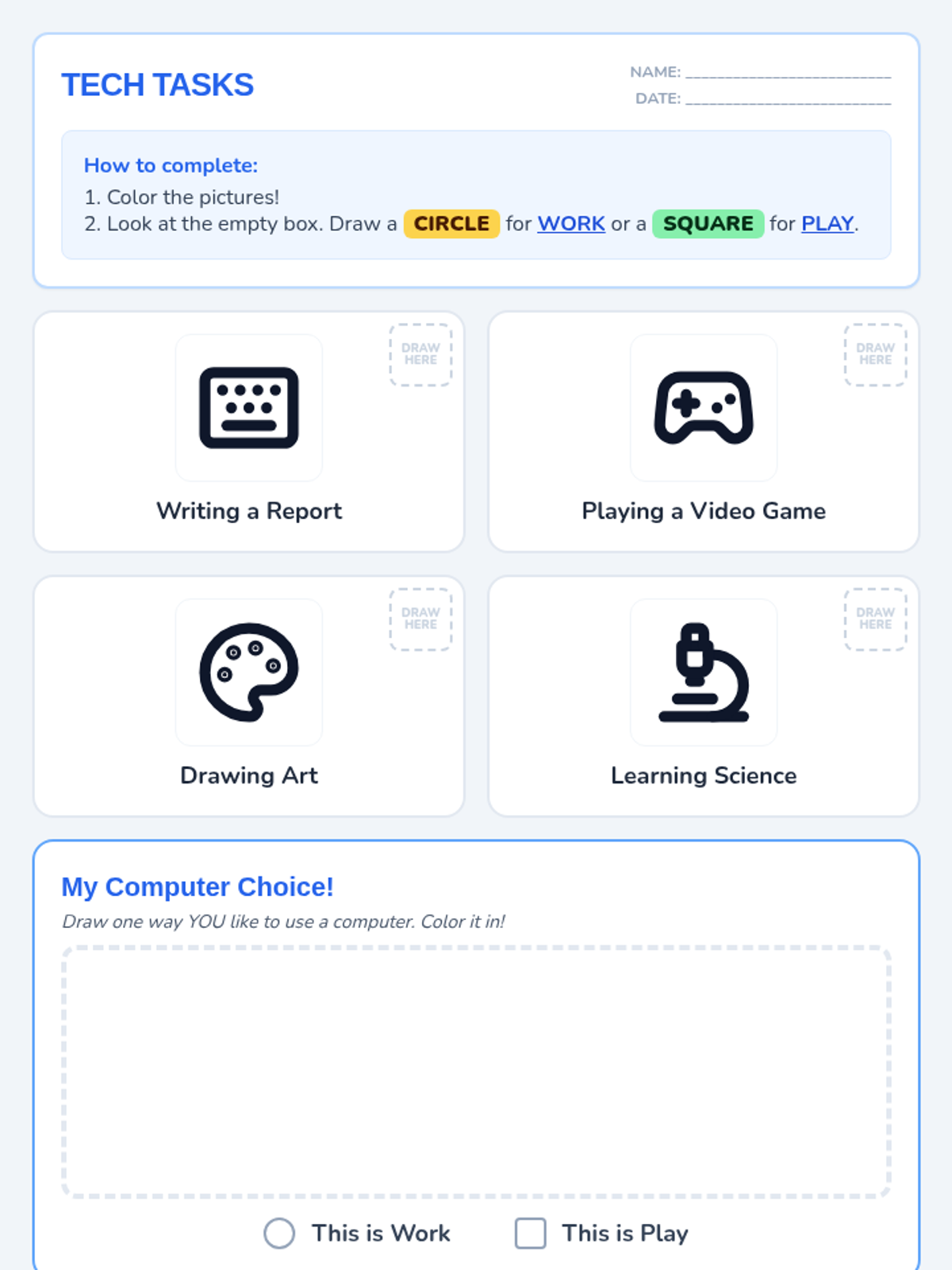
An introductory lesson for K-1 students exploring the versatile uses of computers in everyday life, focusing on the distinction between work and play.
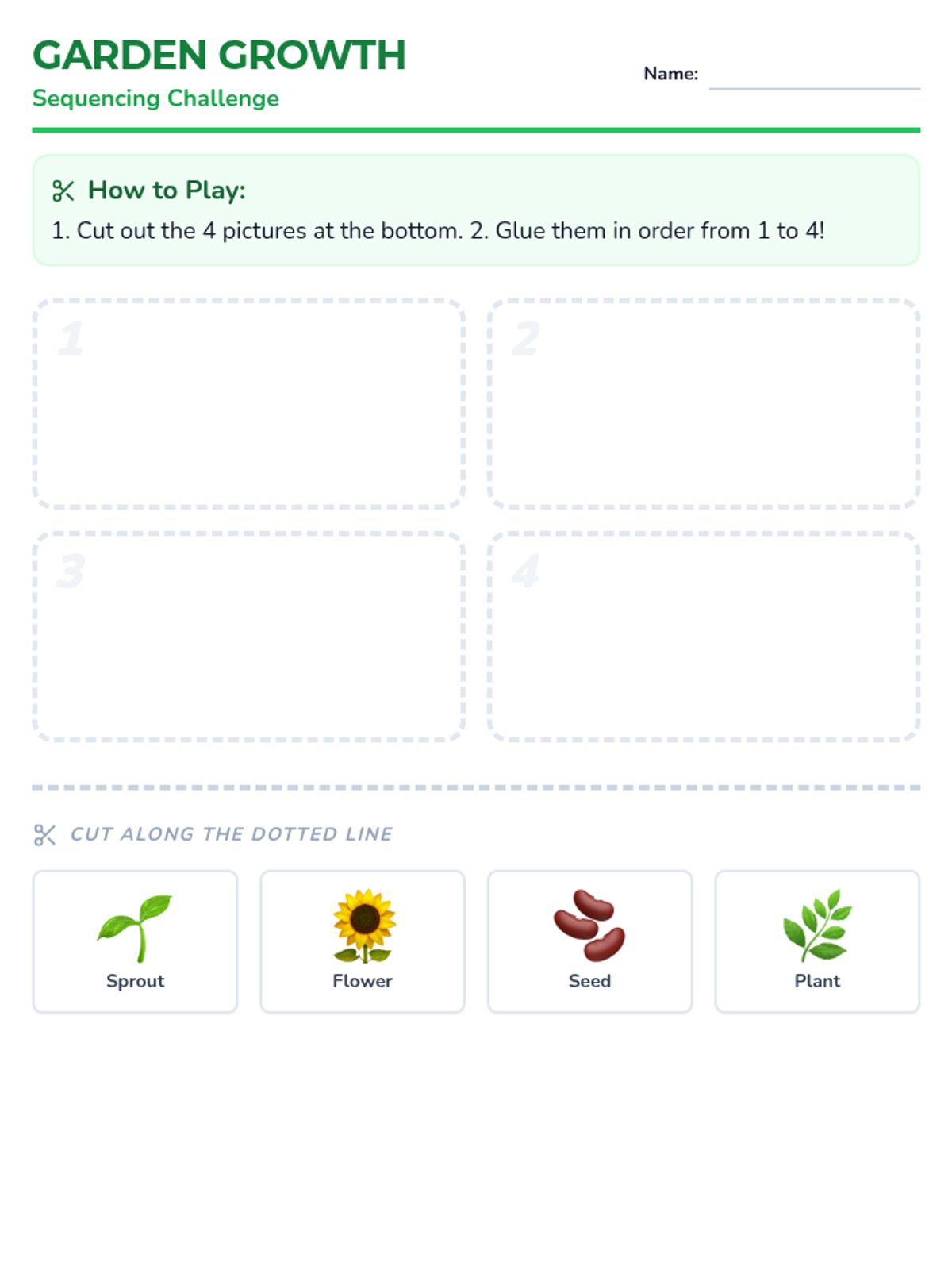
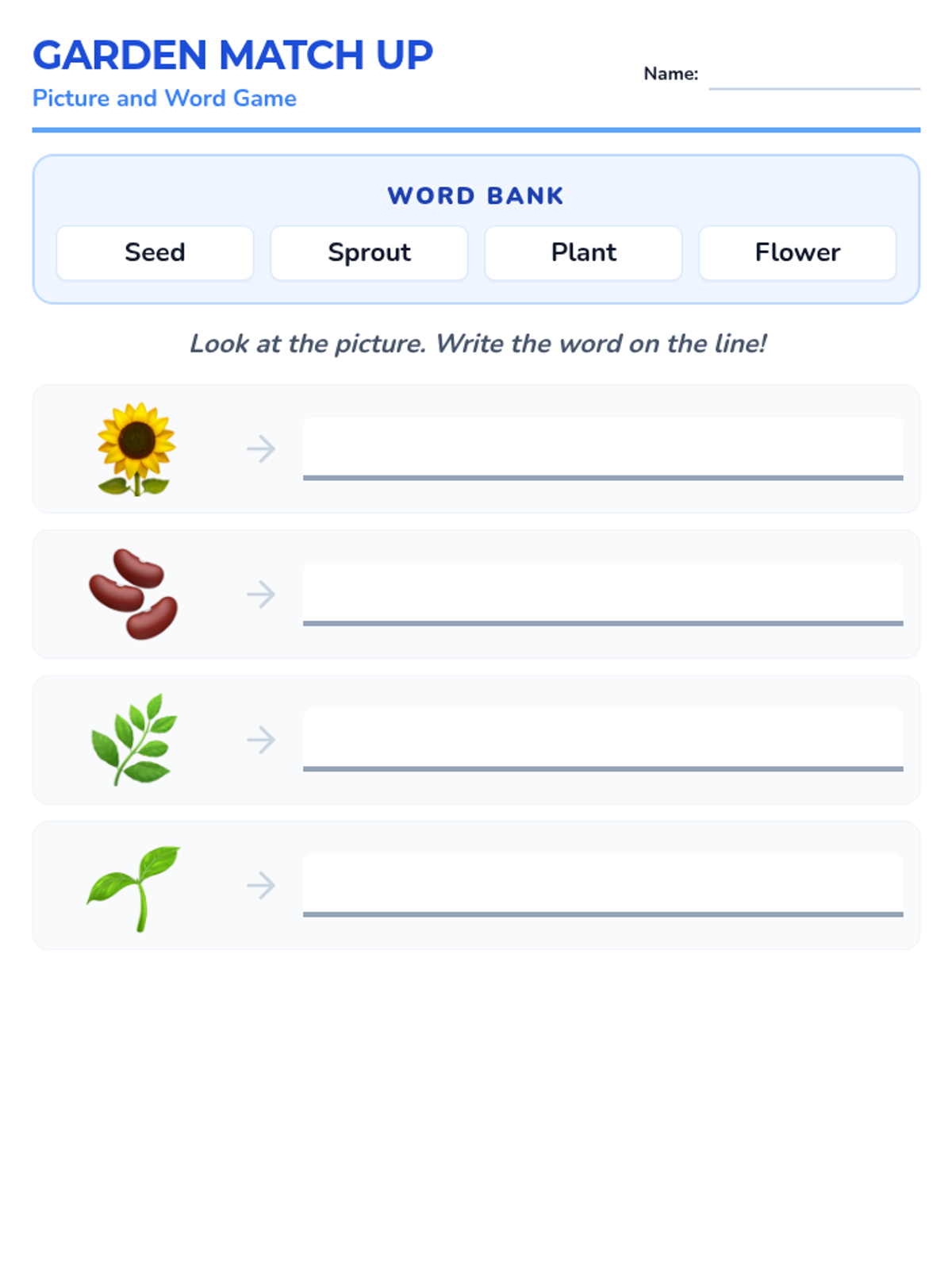
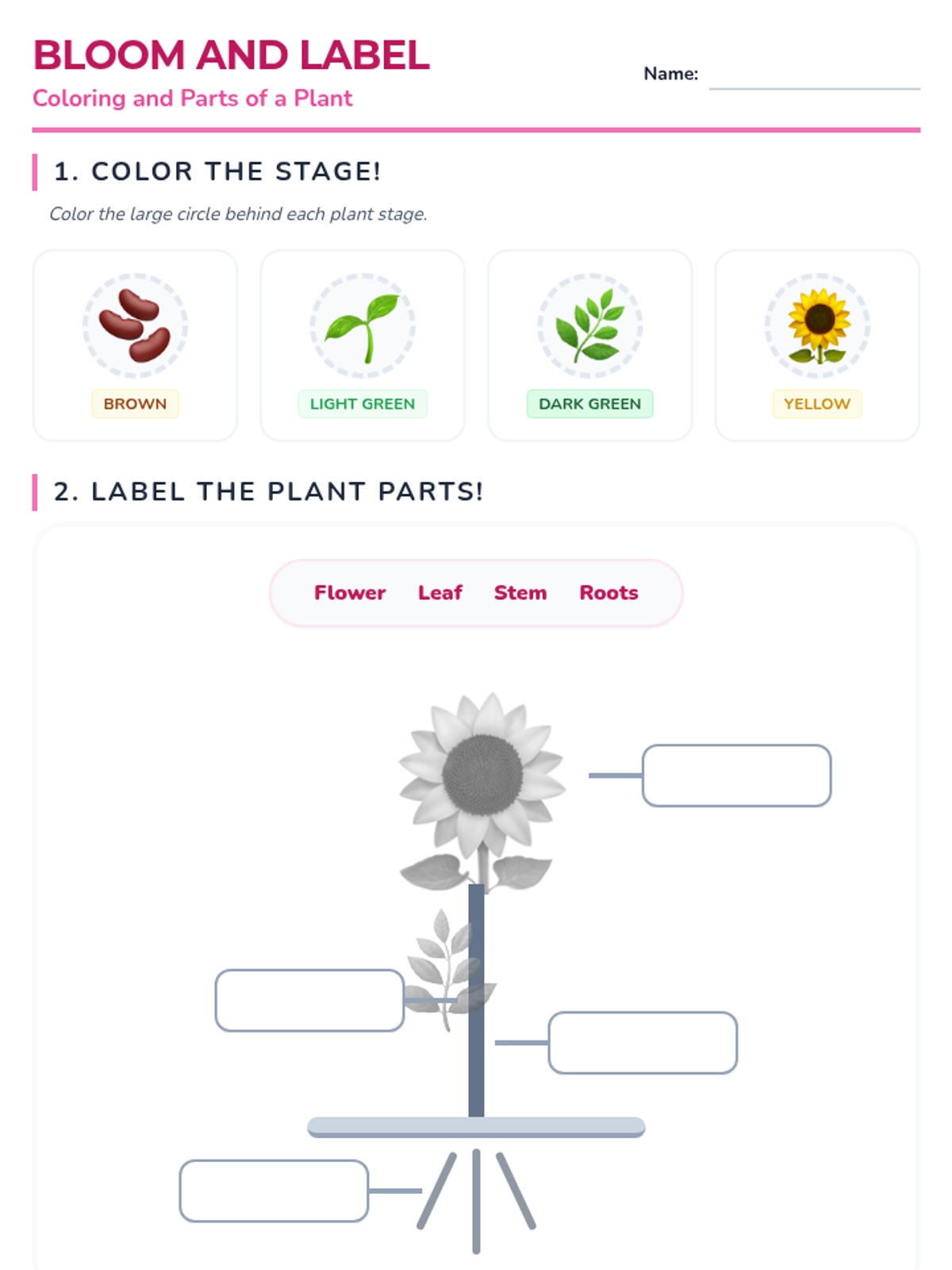
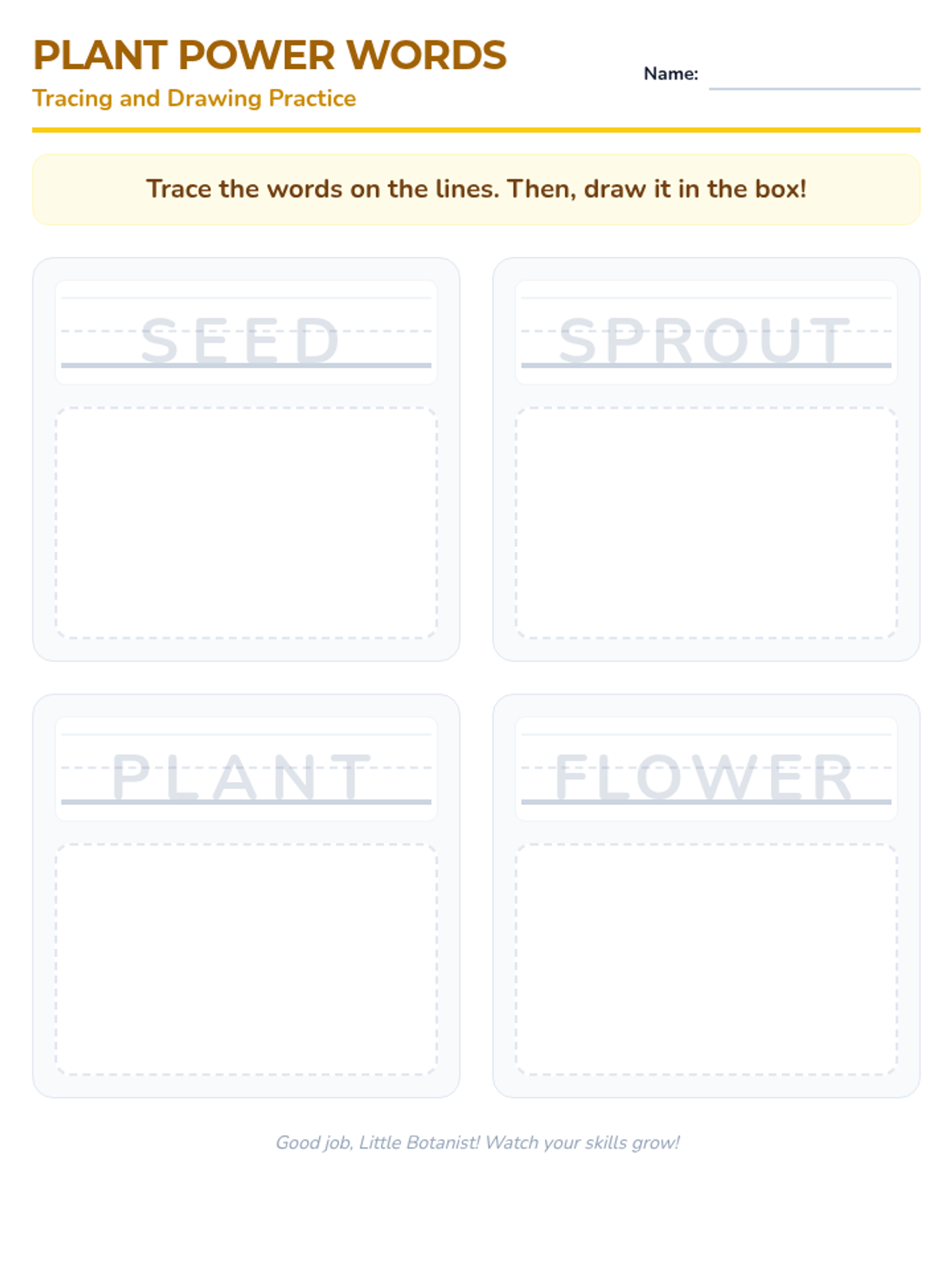
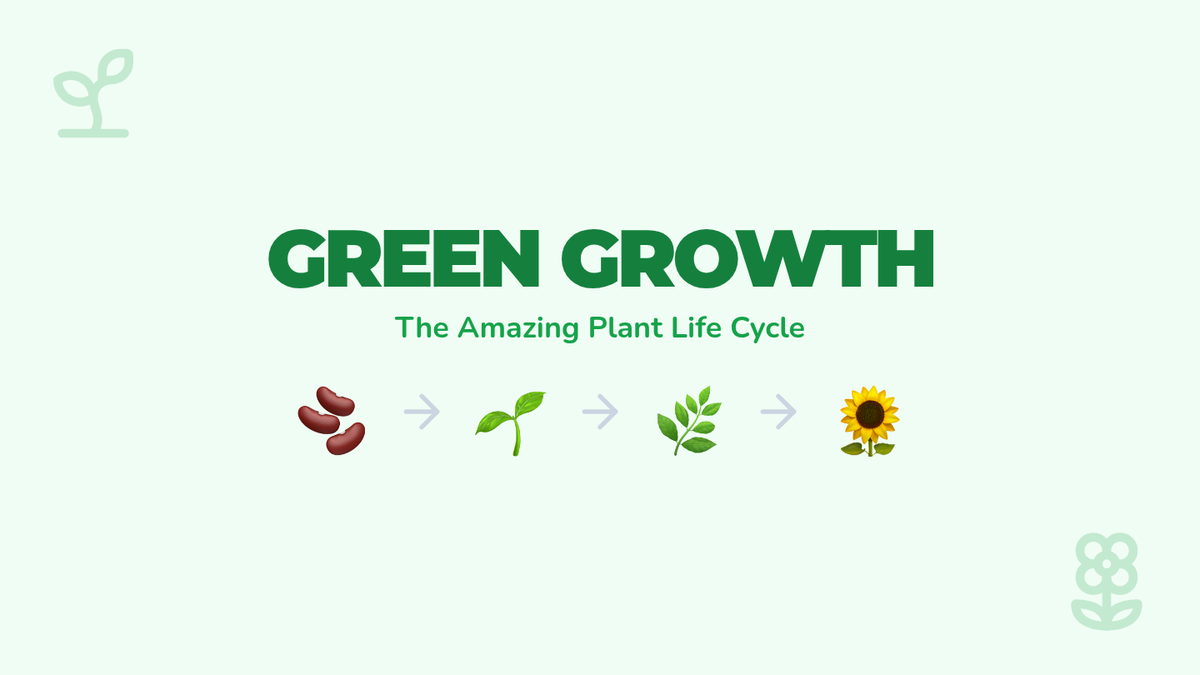
A simplified introduction to the plant life cycle for young learners, focusing on key stages: seed, sprout, plant, and flower. These materials use large fonts, clear visuals, and interactive activities modified for a 1st-2nd grade level.
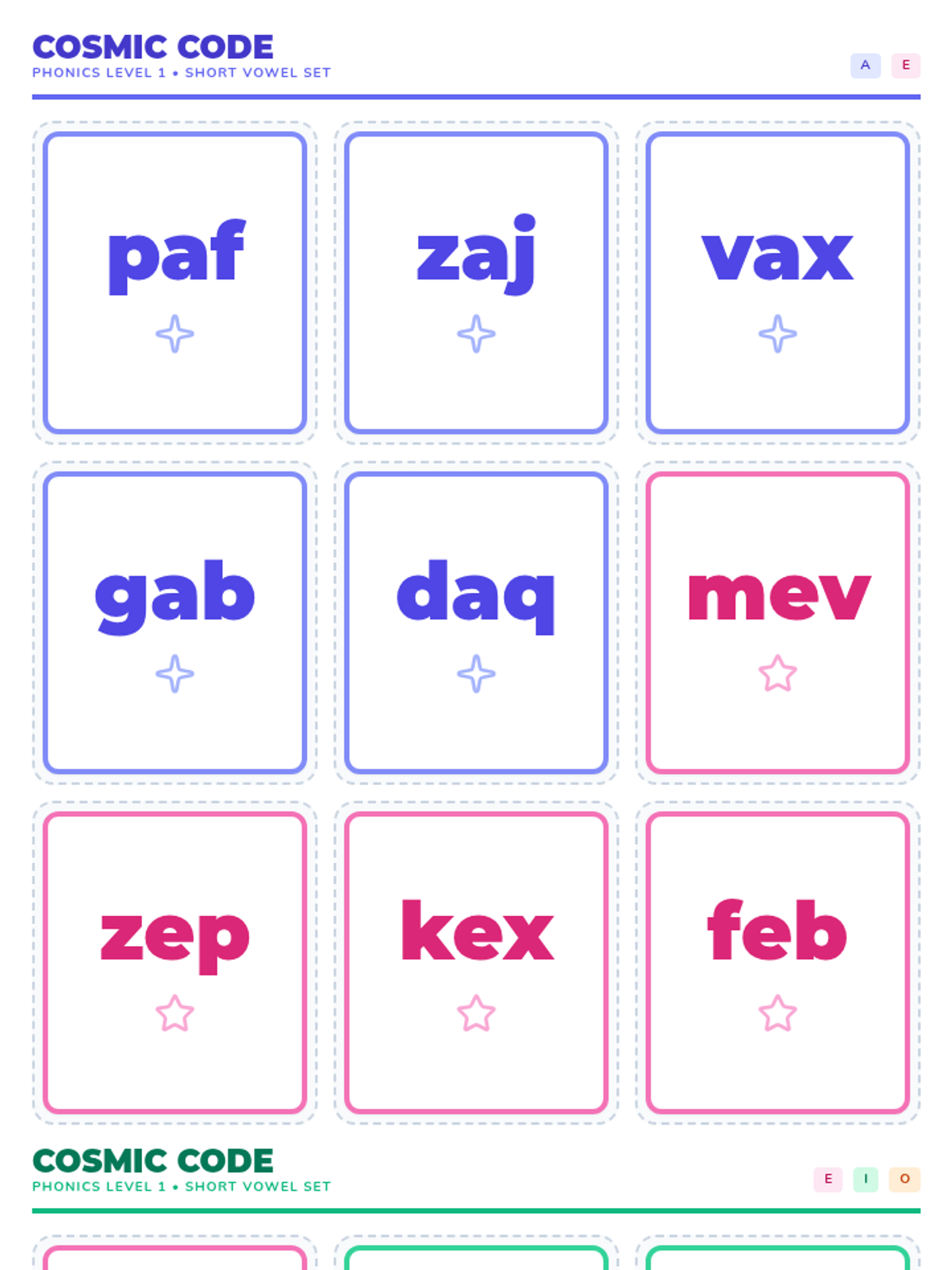
A collection of resources focused on decoding CVC nonsense words using an alien-themed narrative. Students practice phonics skills by "translating" extraterrestrial languages.
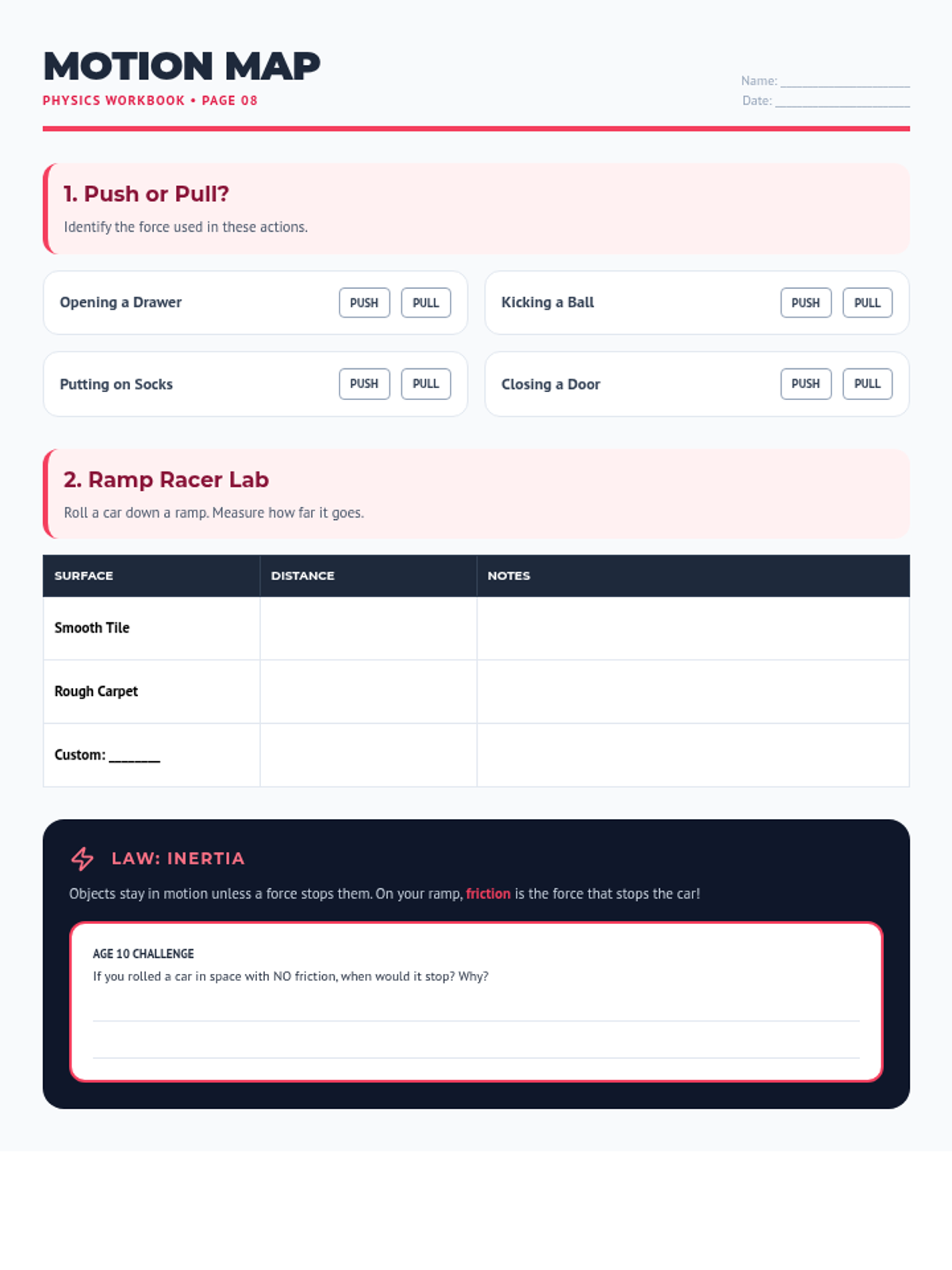
A study of kinetic energy and inertia using simple household objects and inclined planes.
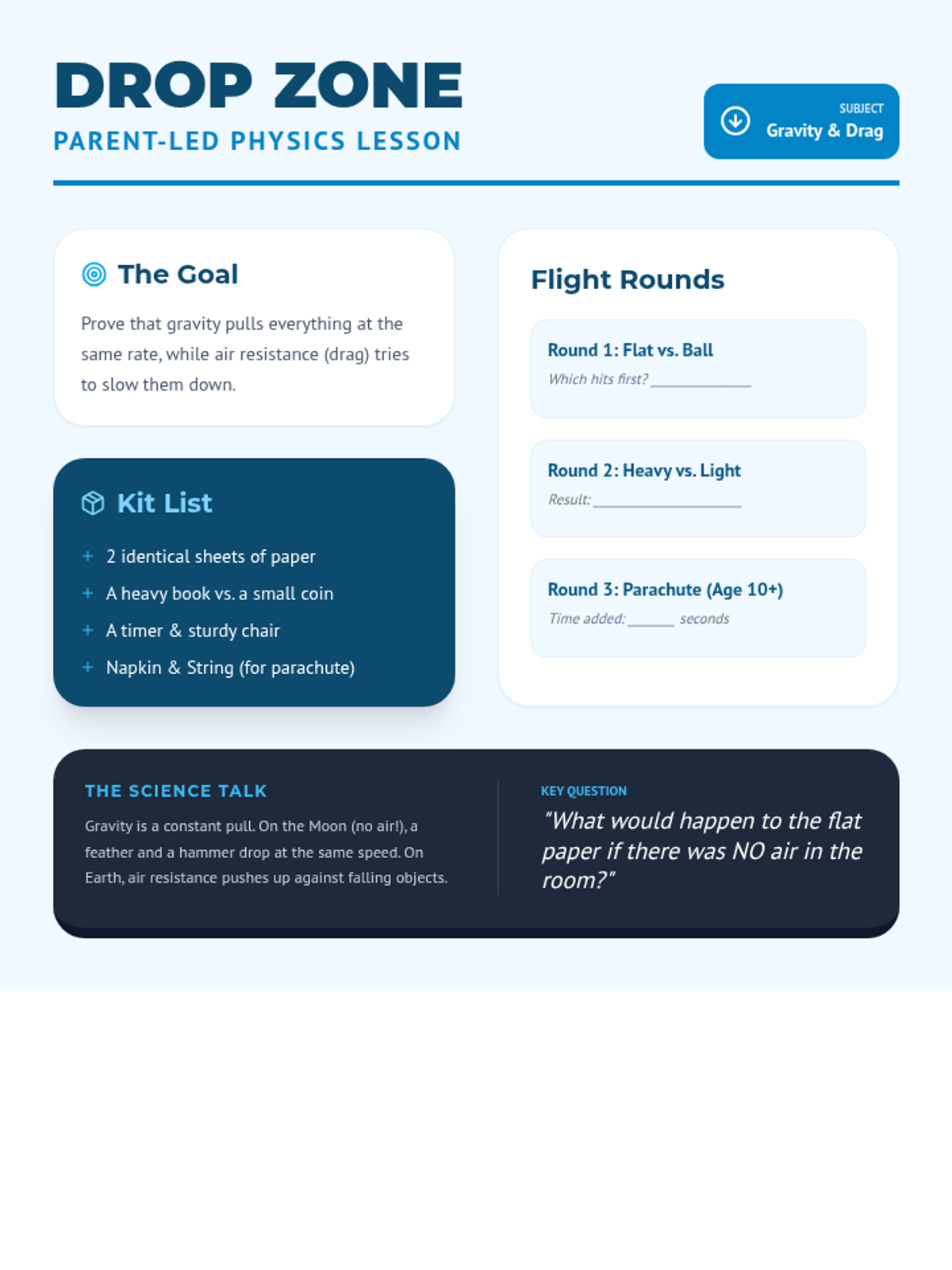
An exploration of gravity and air resistance through a controlled drop experiment.
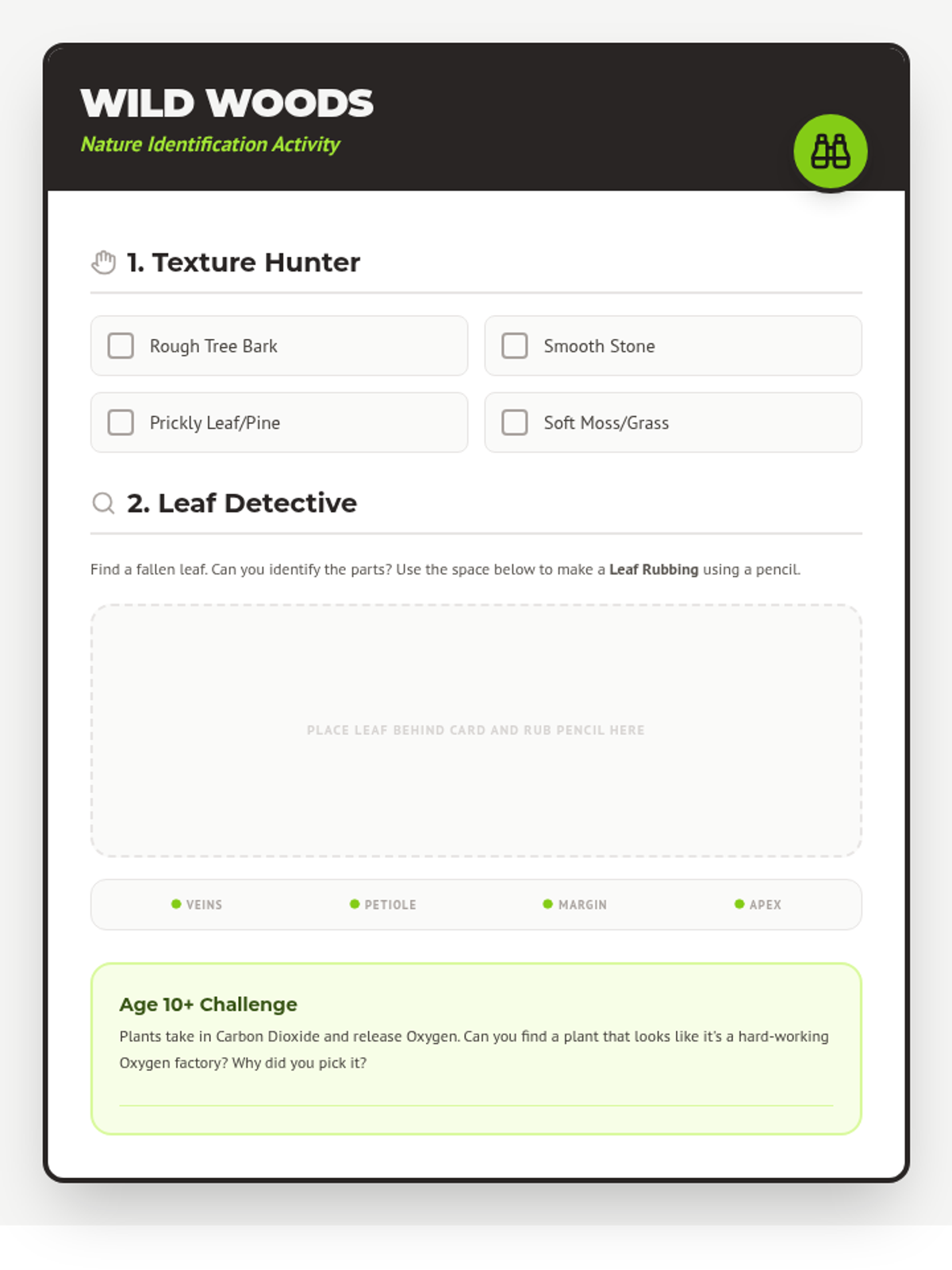
A nature-focused scavenger hunt designed to teach identification and observation skills.
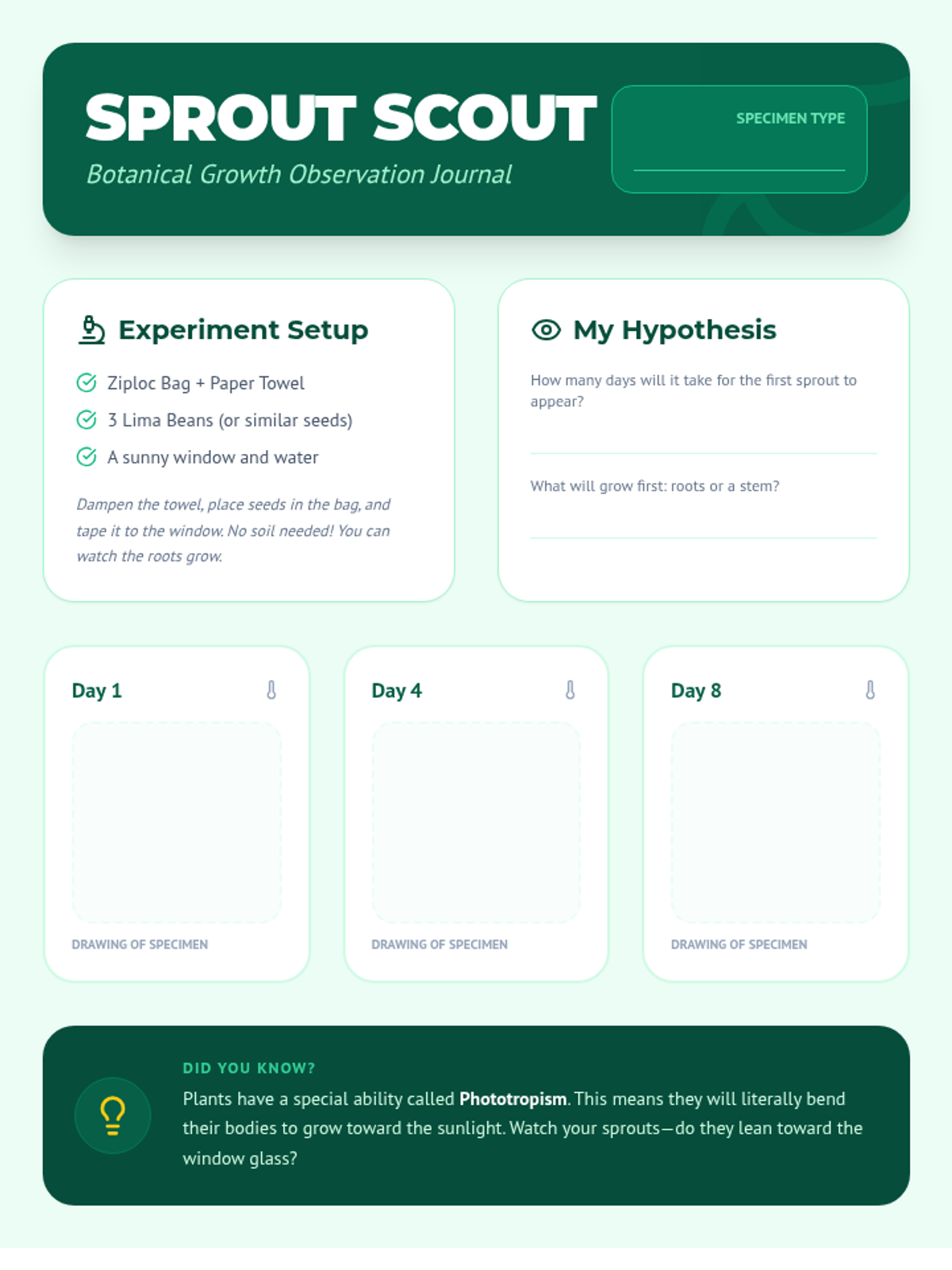
A botanical experiment focused on tracking the germination and early growth of seeds.
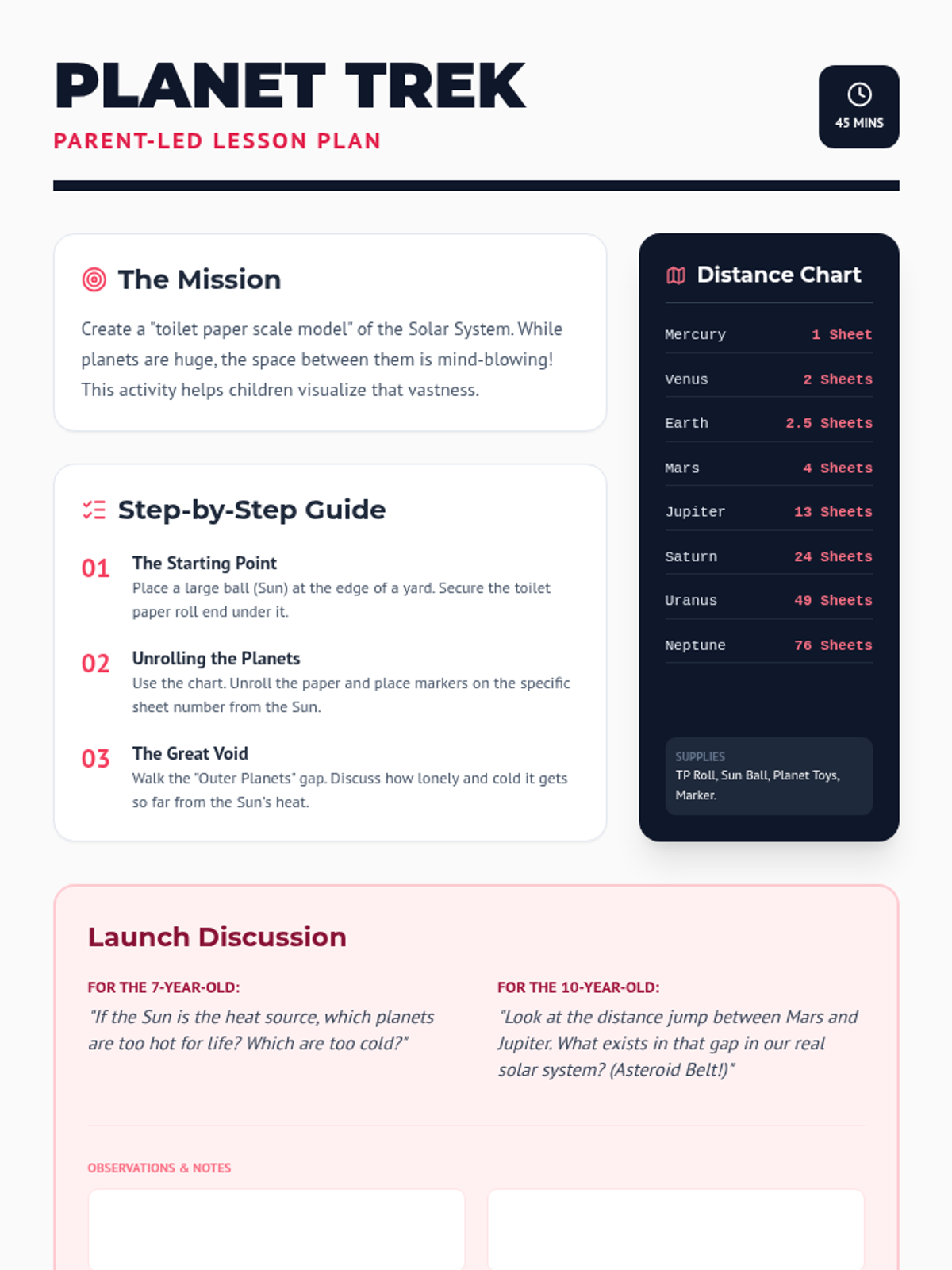
A scale-model activity to visualize the vast distances between planets in our solar system.
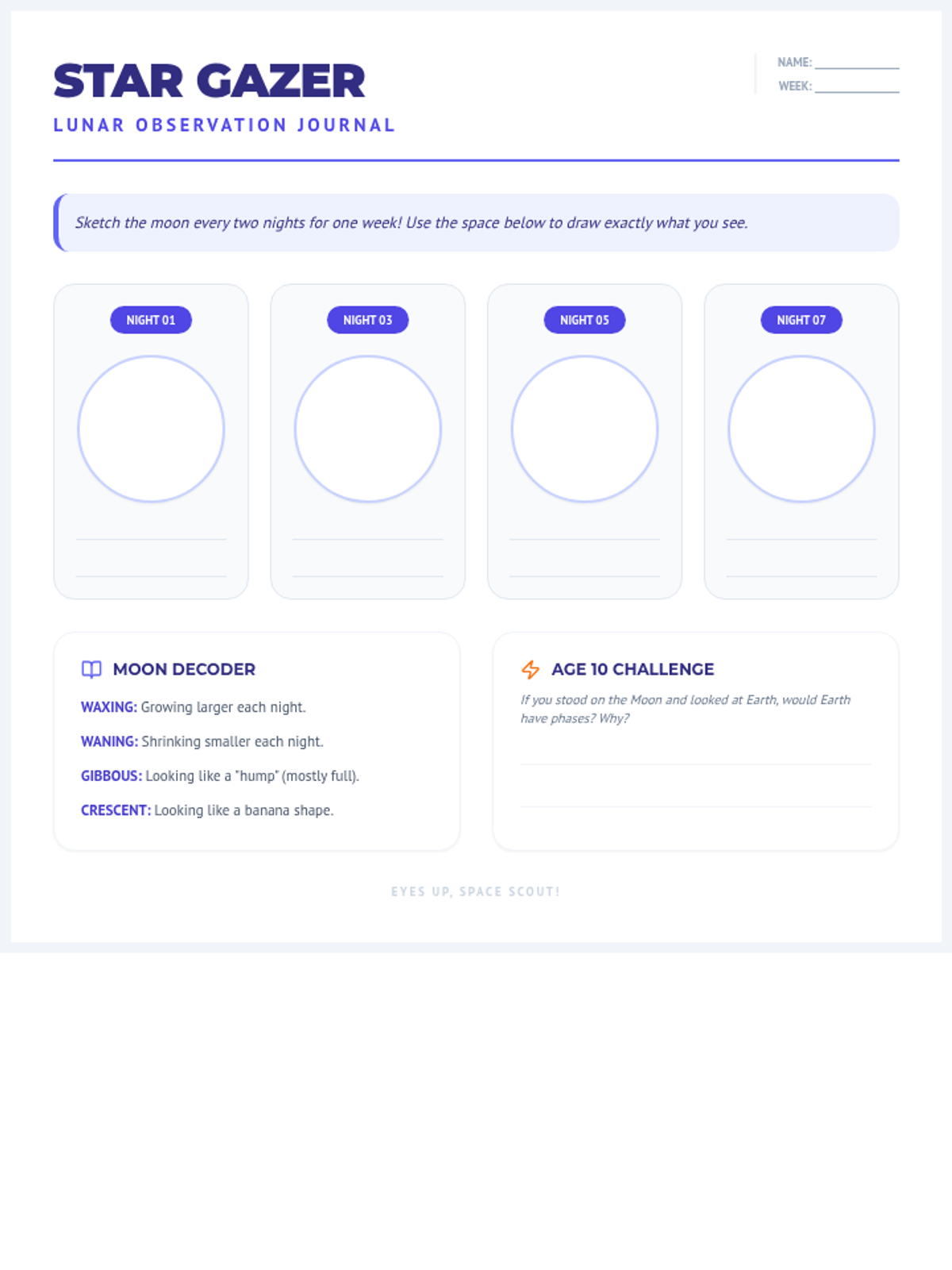
A week-long tracking activity to observe and record the changing phases of the moon.
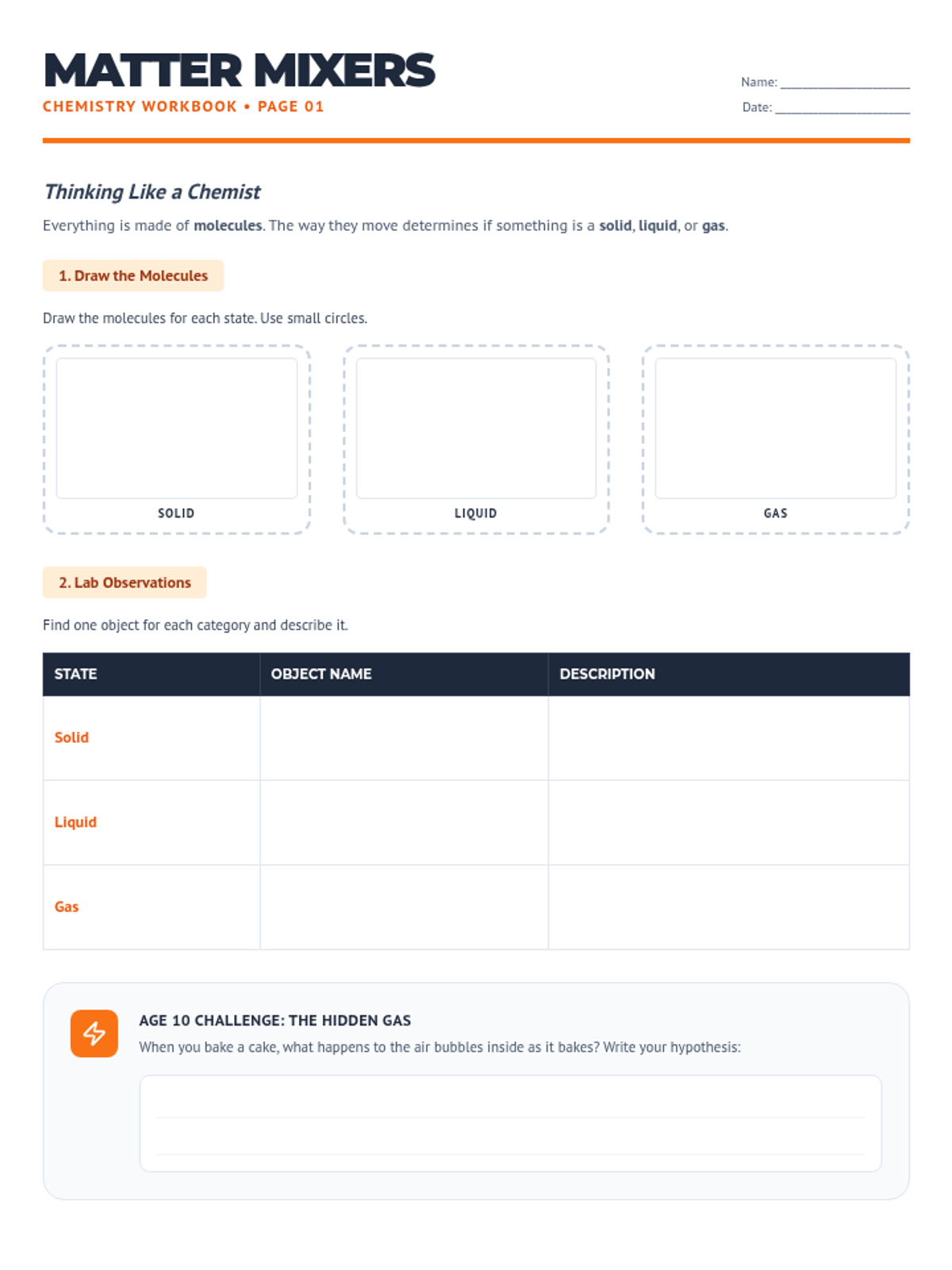
An investigation into the states of matter and how molecules behave in different environments.
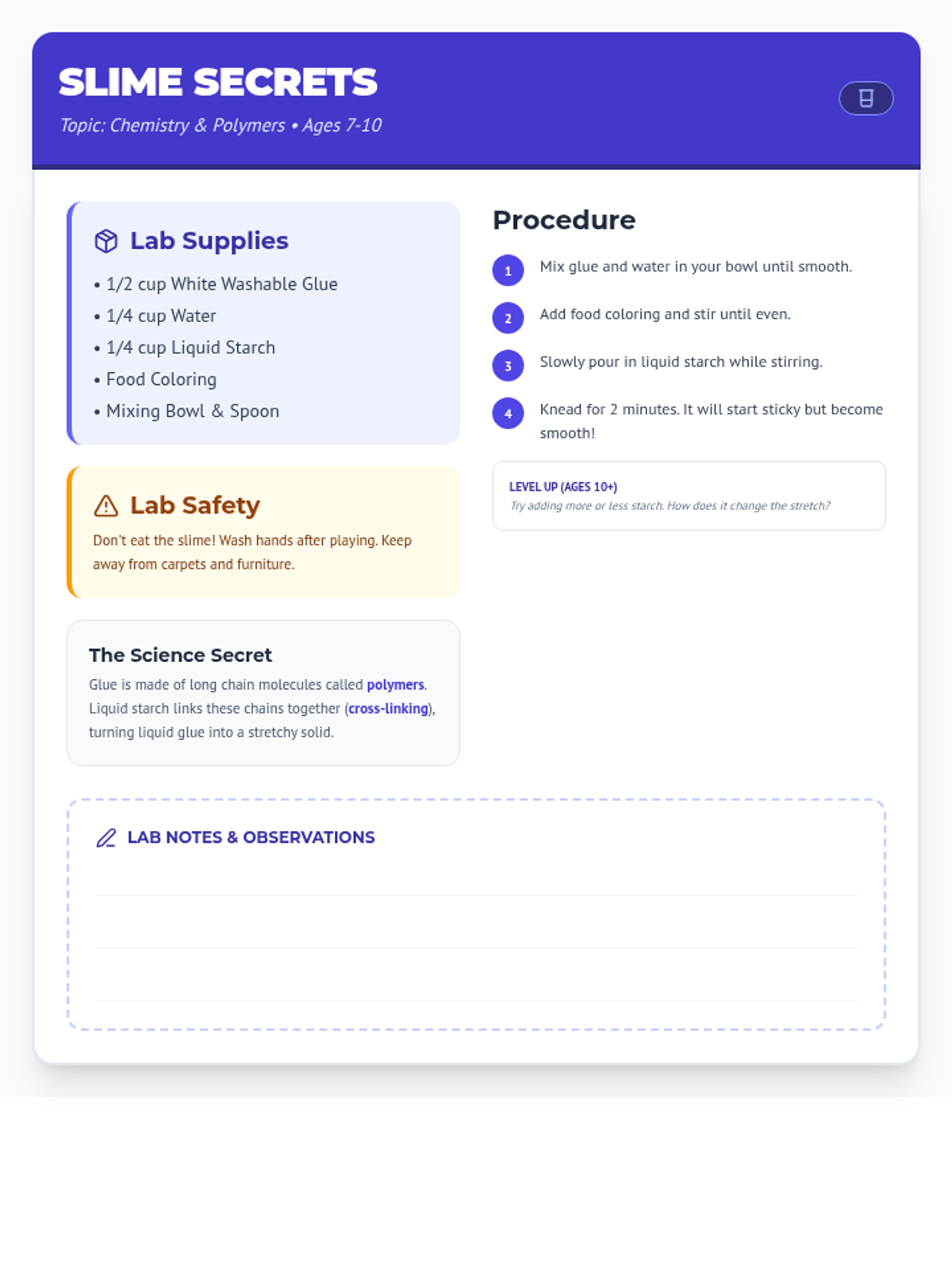
Explore chemical reactions and non-Newtonian fluids through a hands-on slime-making experiment.
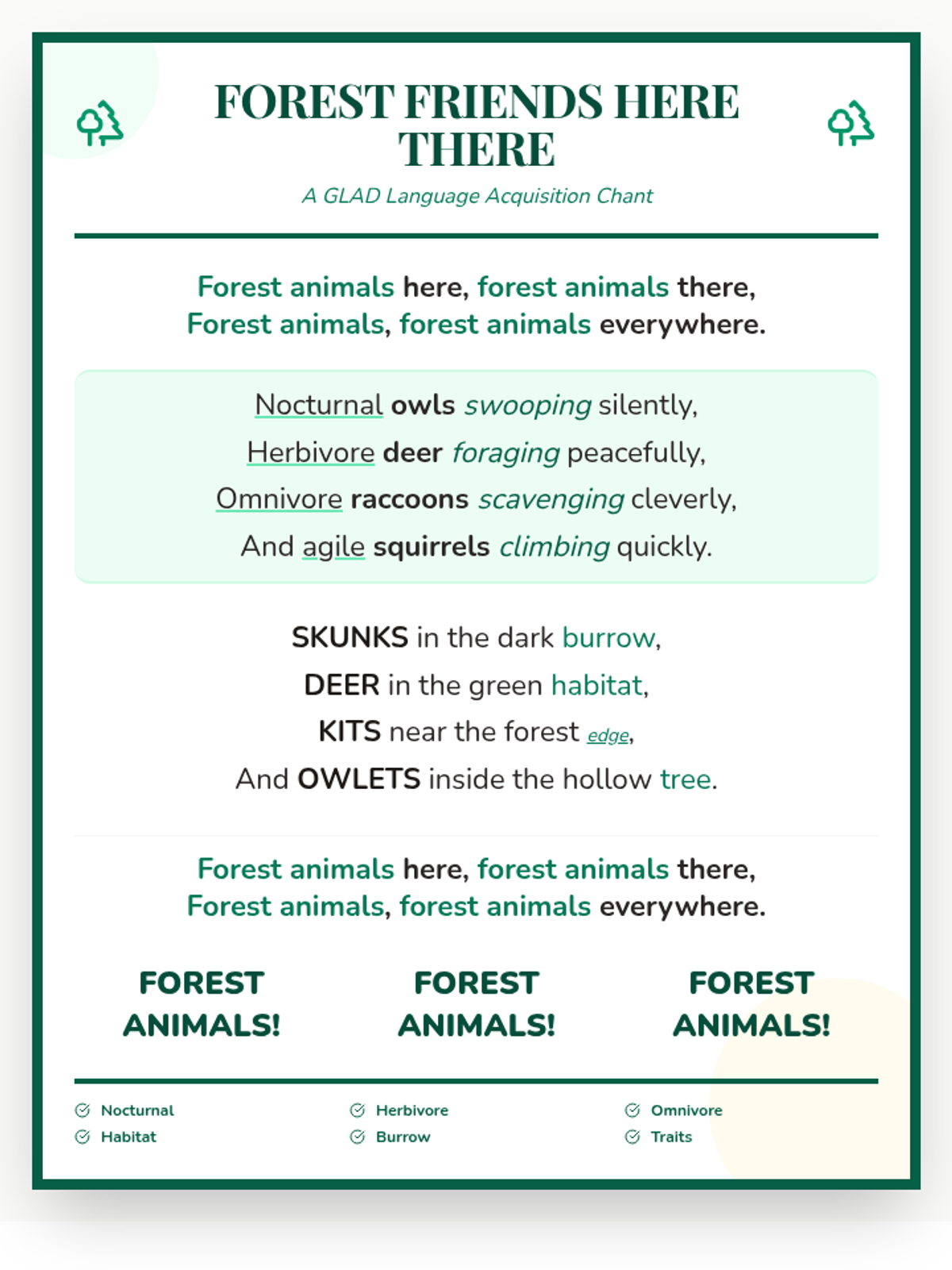
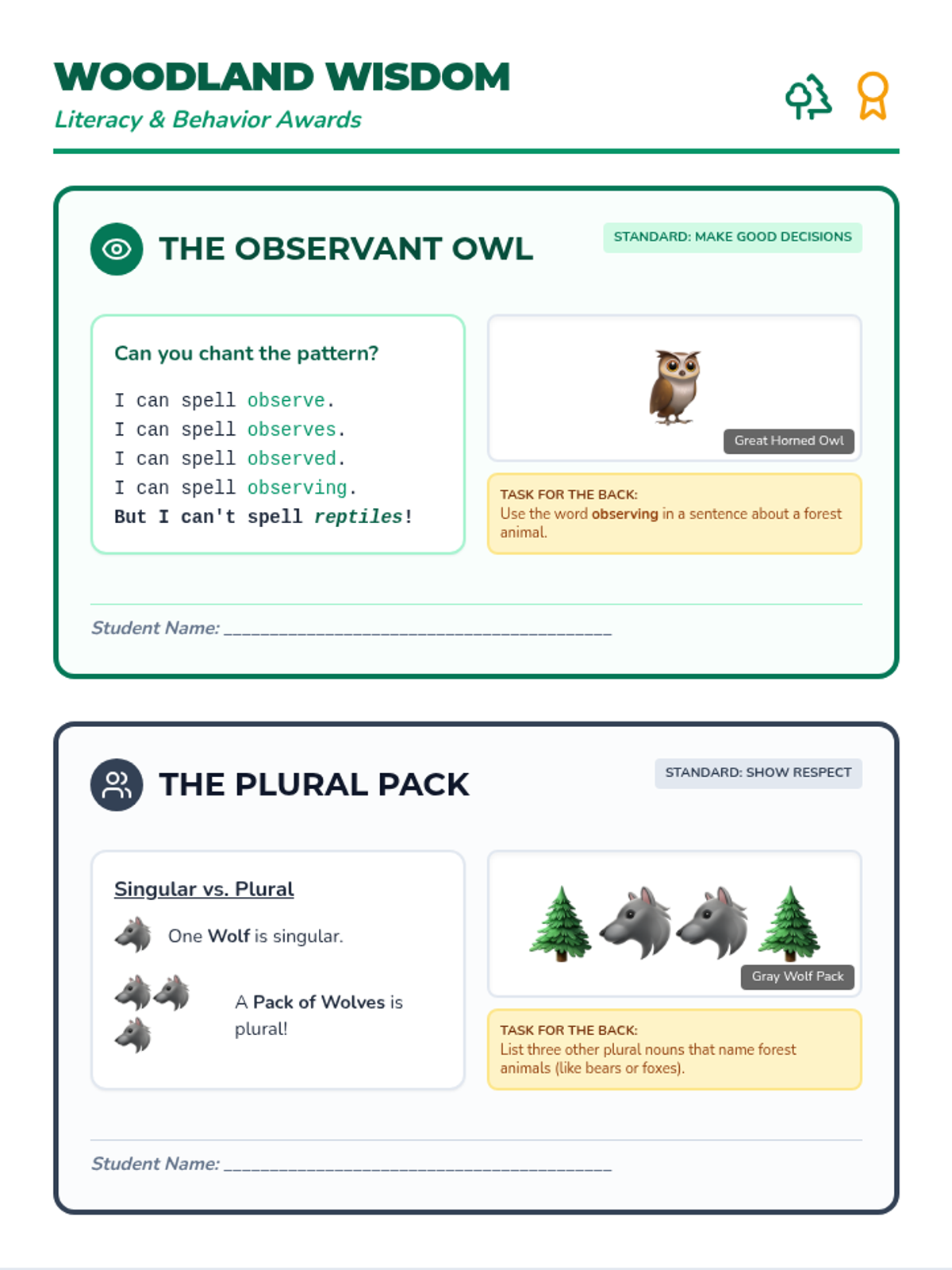
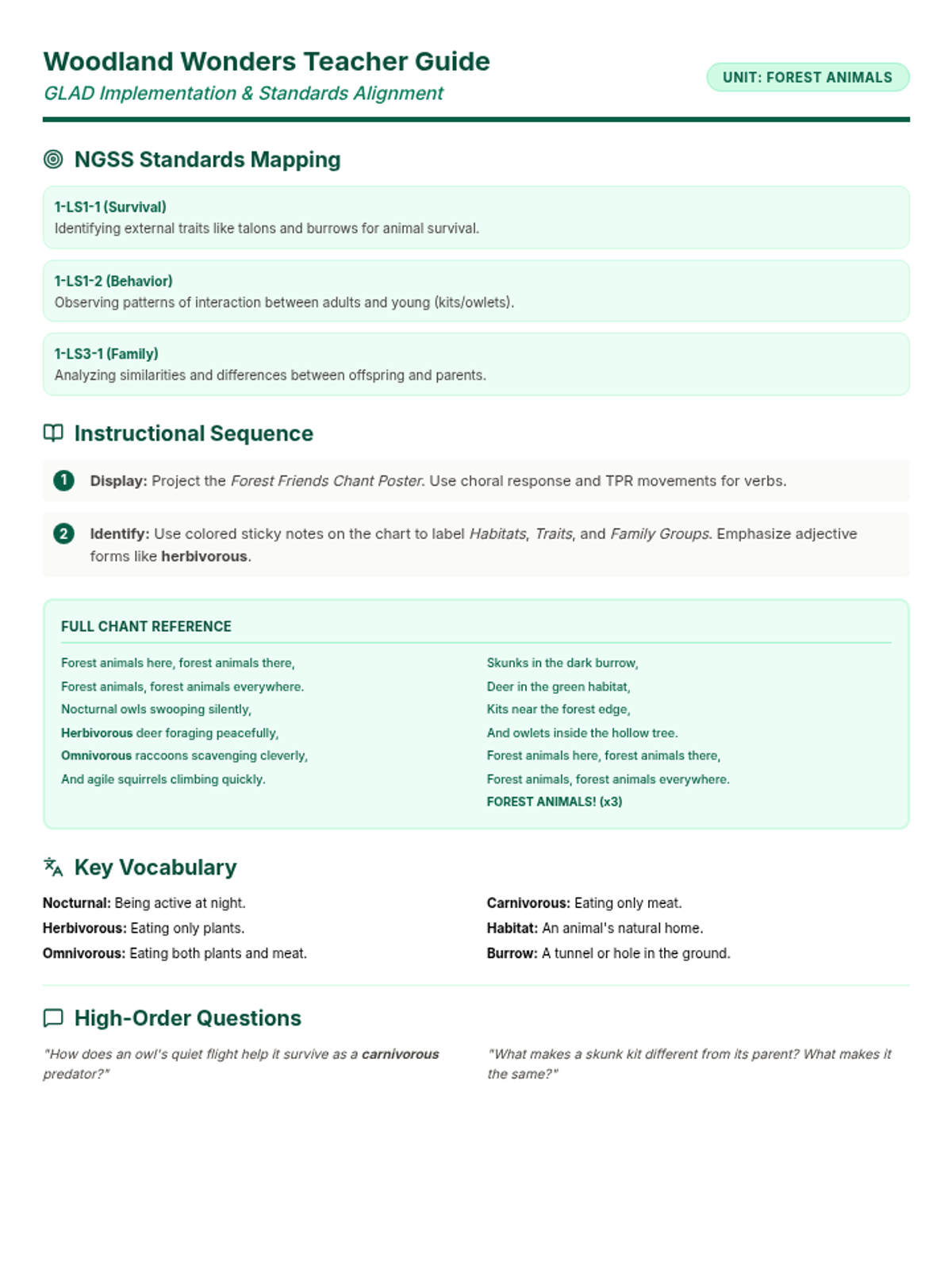
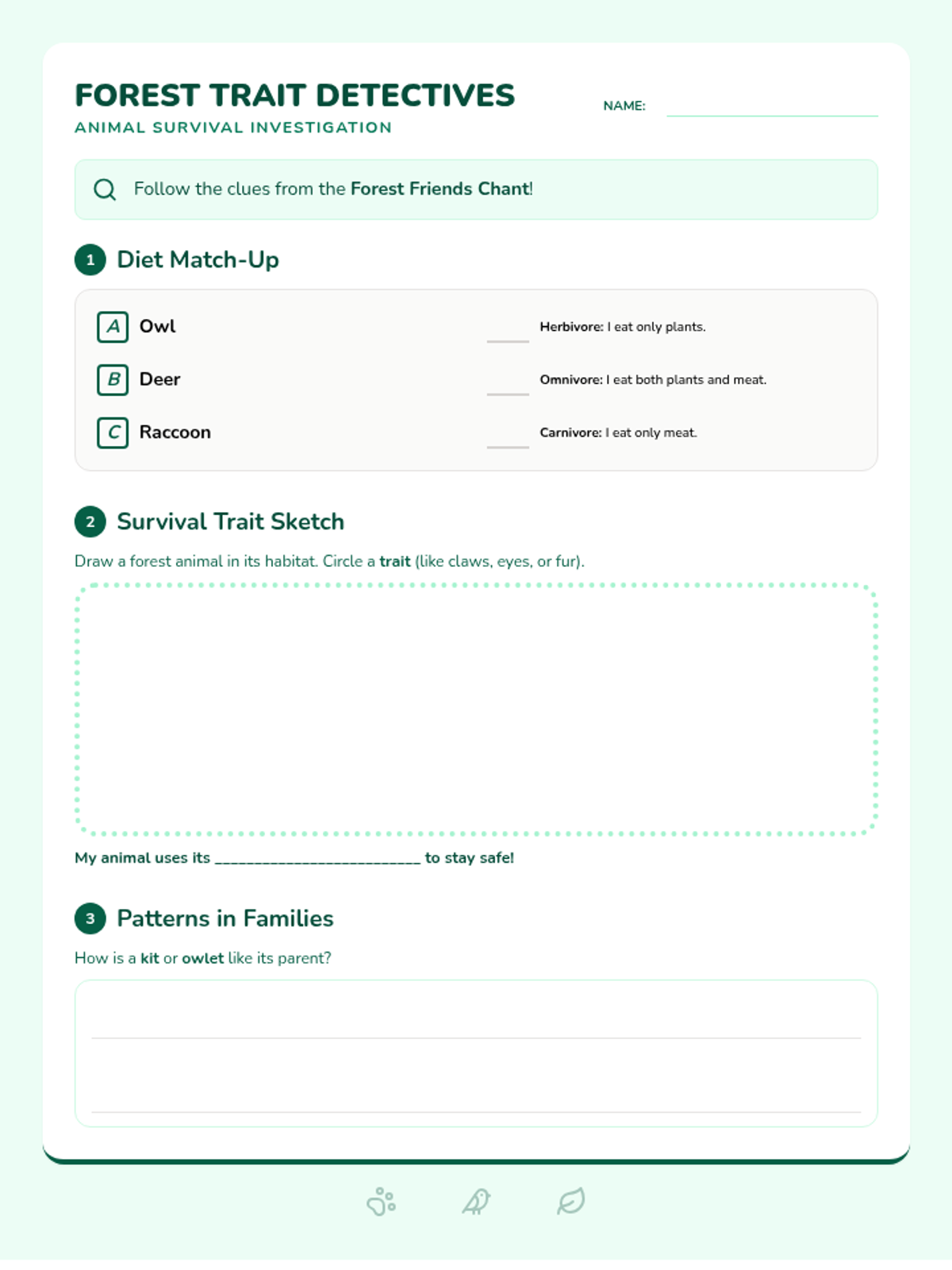
A lesson exploring the survival traits and behaviors of forest animals, focusing on how external parts and family patterns help them thrive in their habitats.
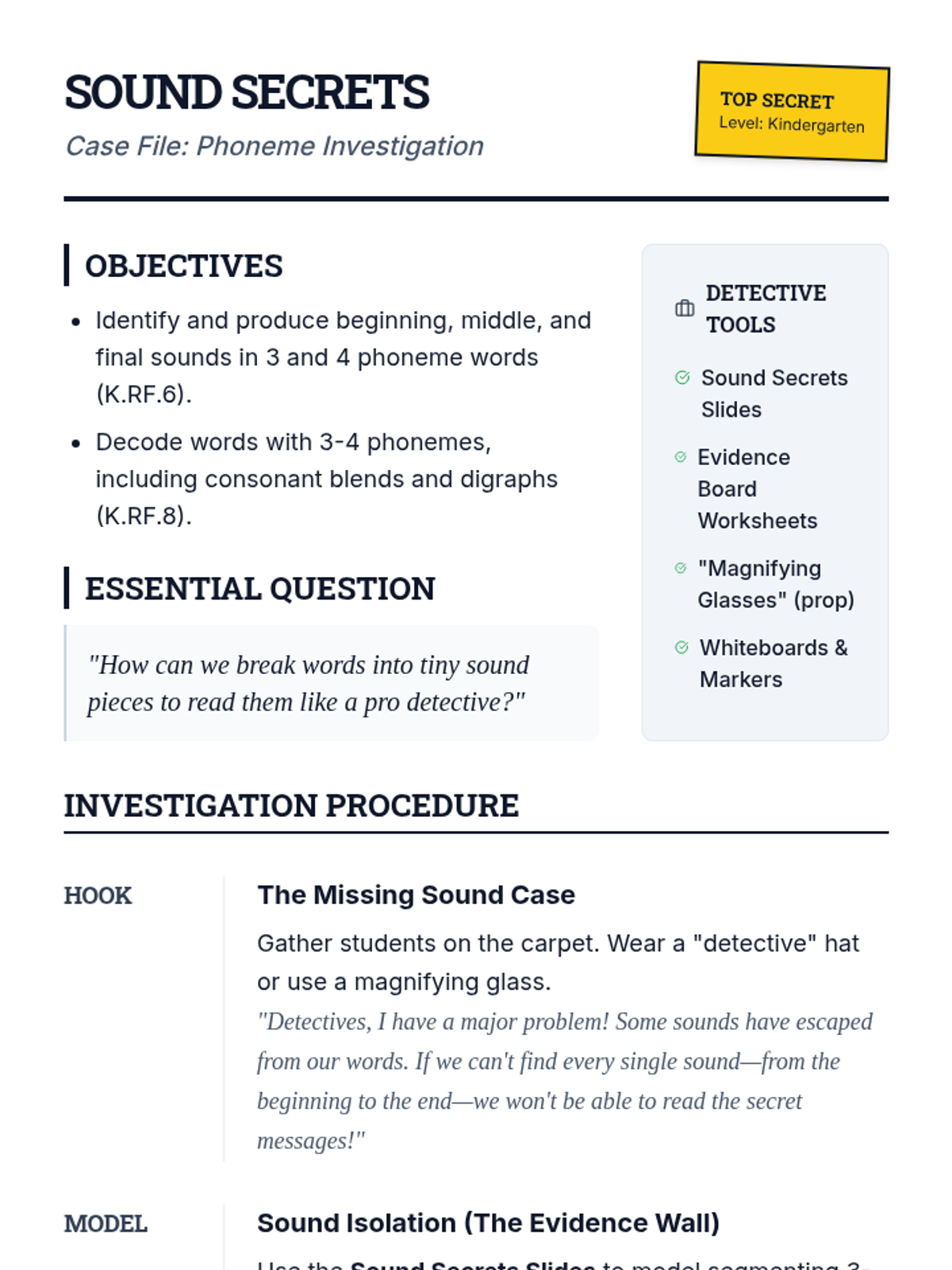
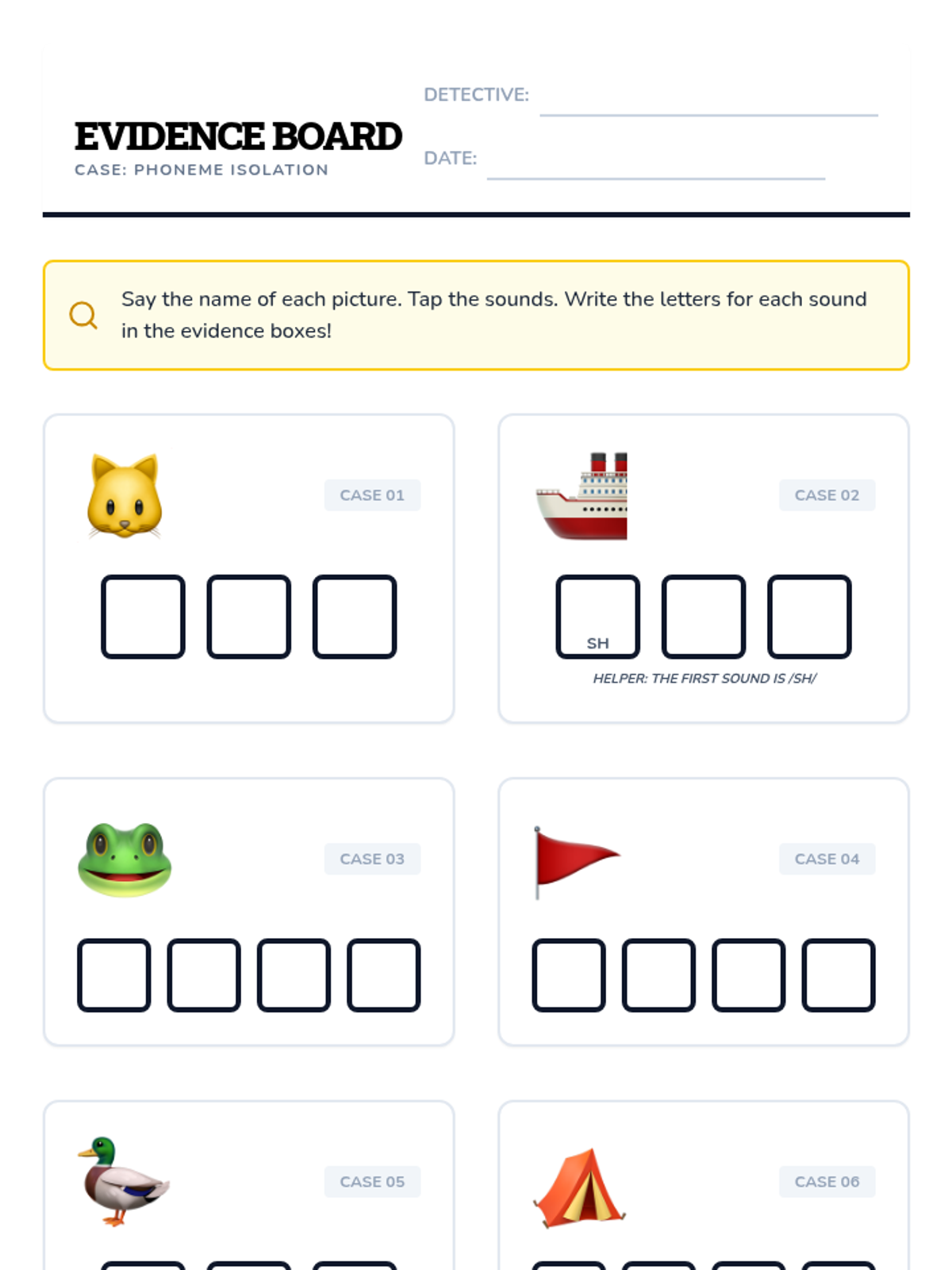
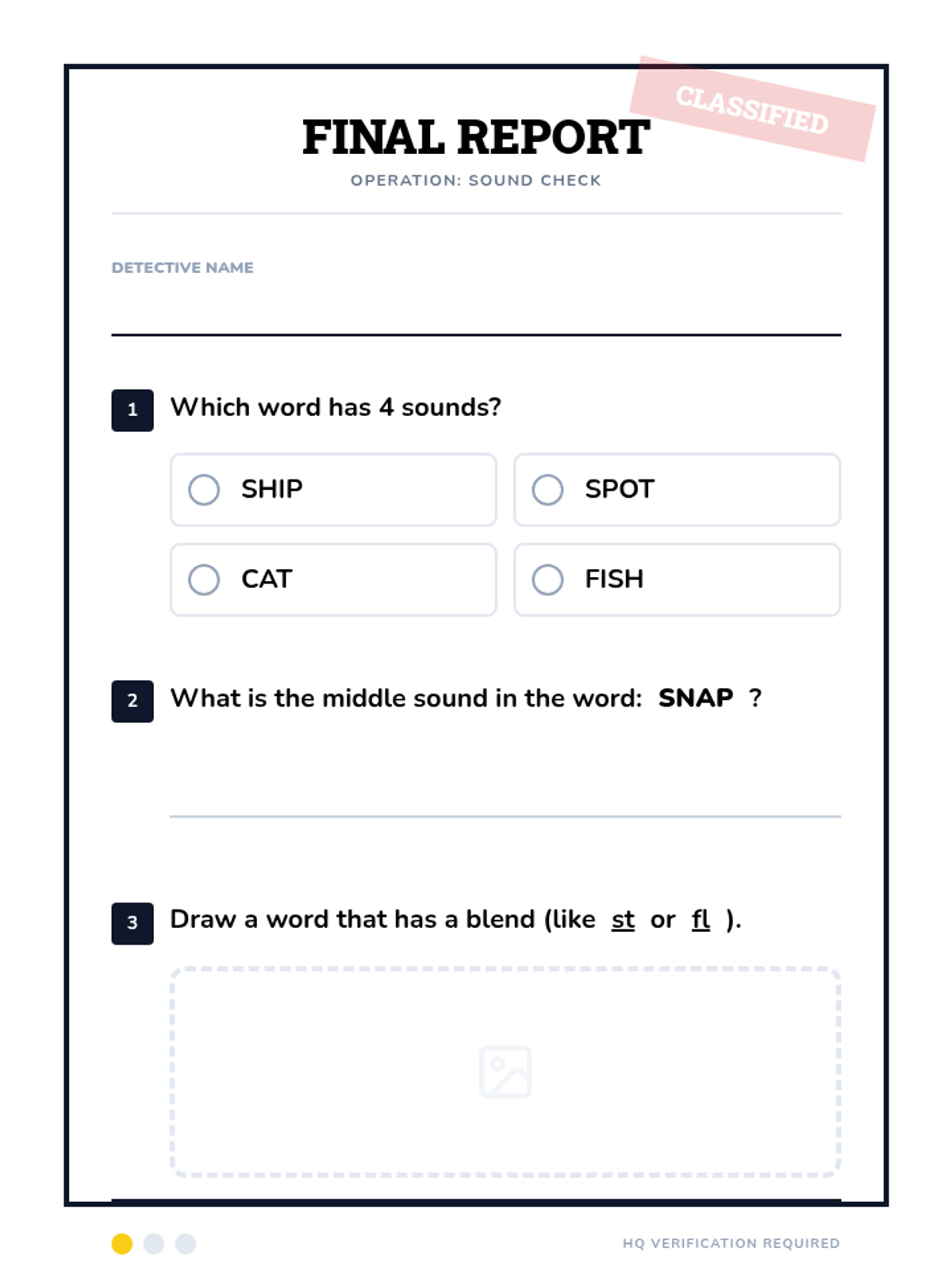
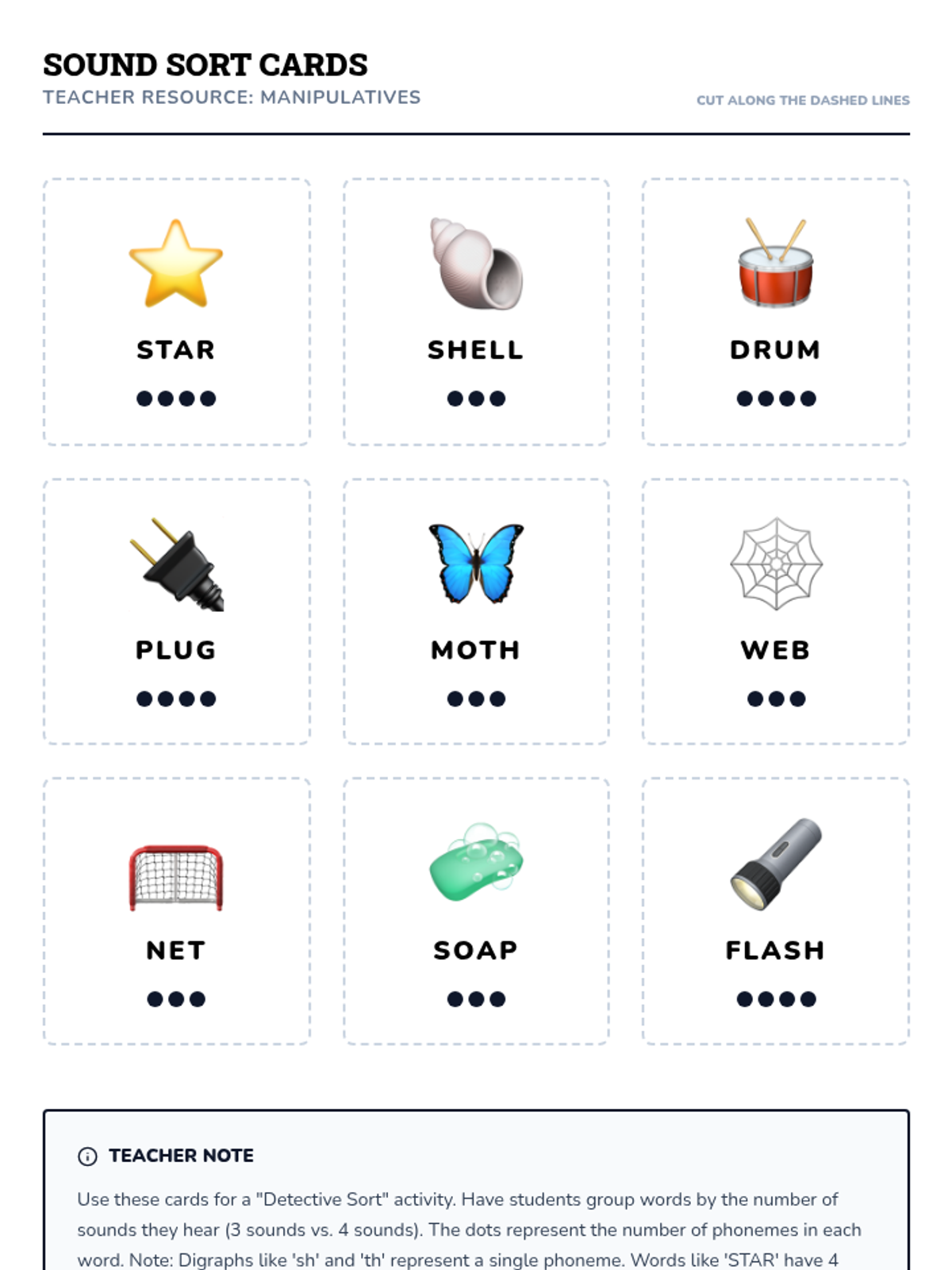
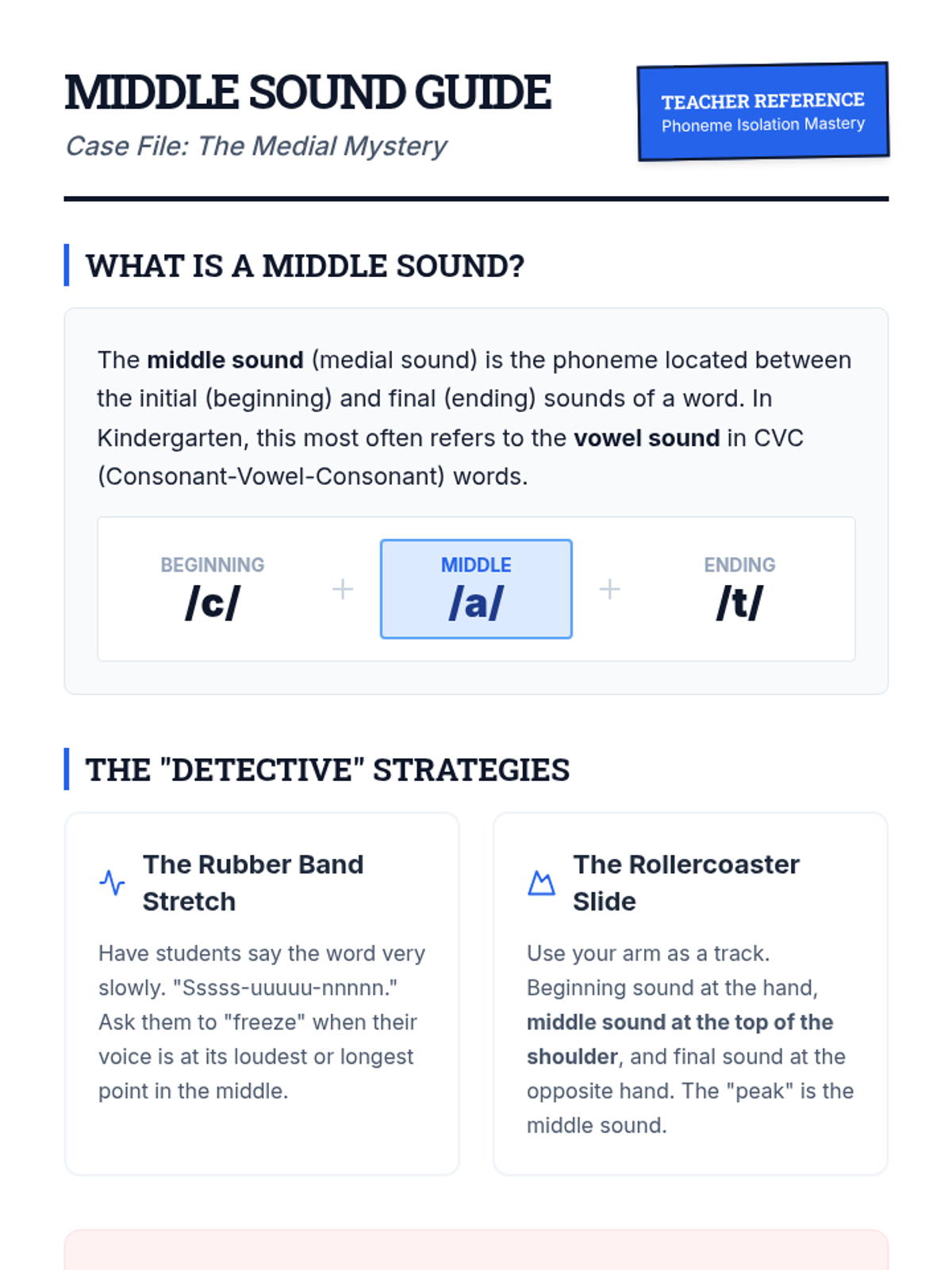
A comprehensive literacy lesson where students act as Sound Detectives to master phoneme isolation and decoding. Students will practice identifying beginning, middle, and ending sounds in 3-4 phoneme words, including those with blends and digraphs.
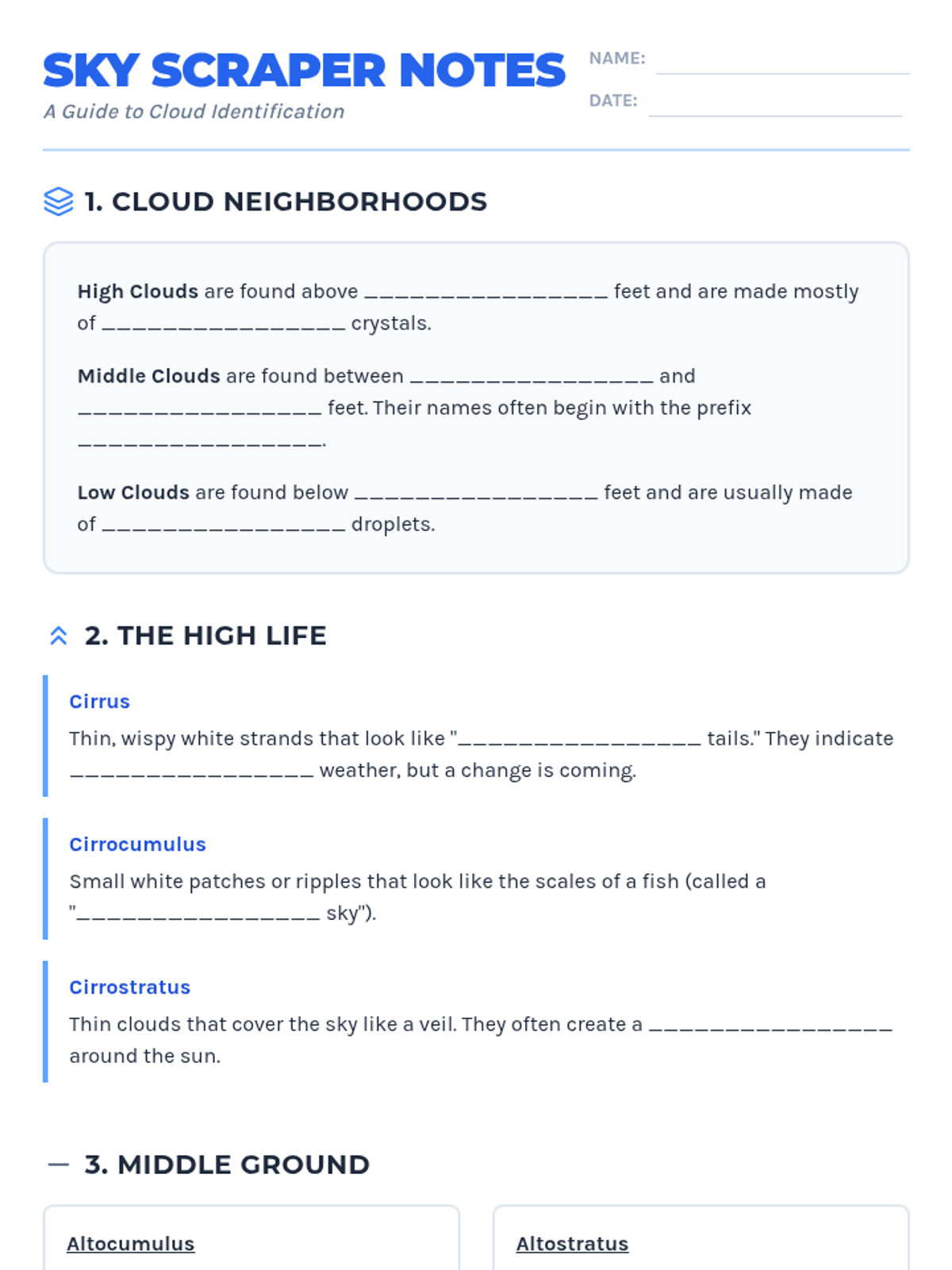
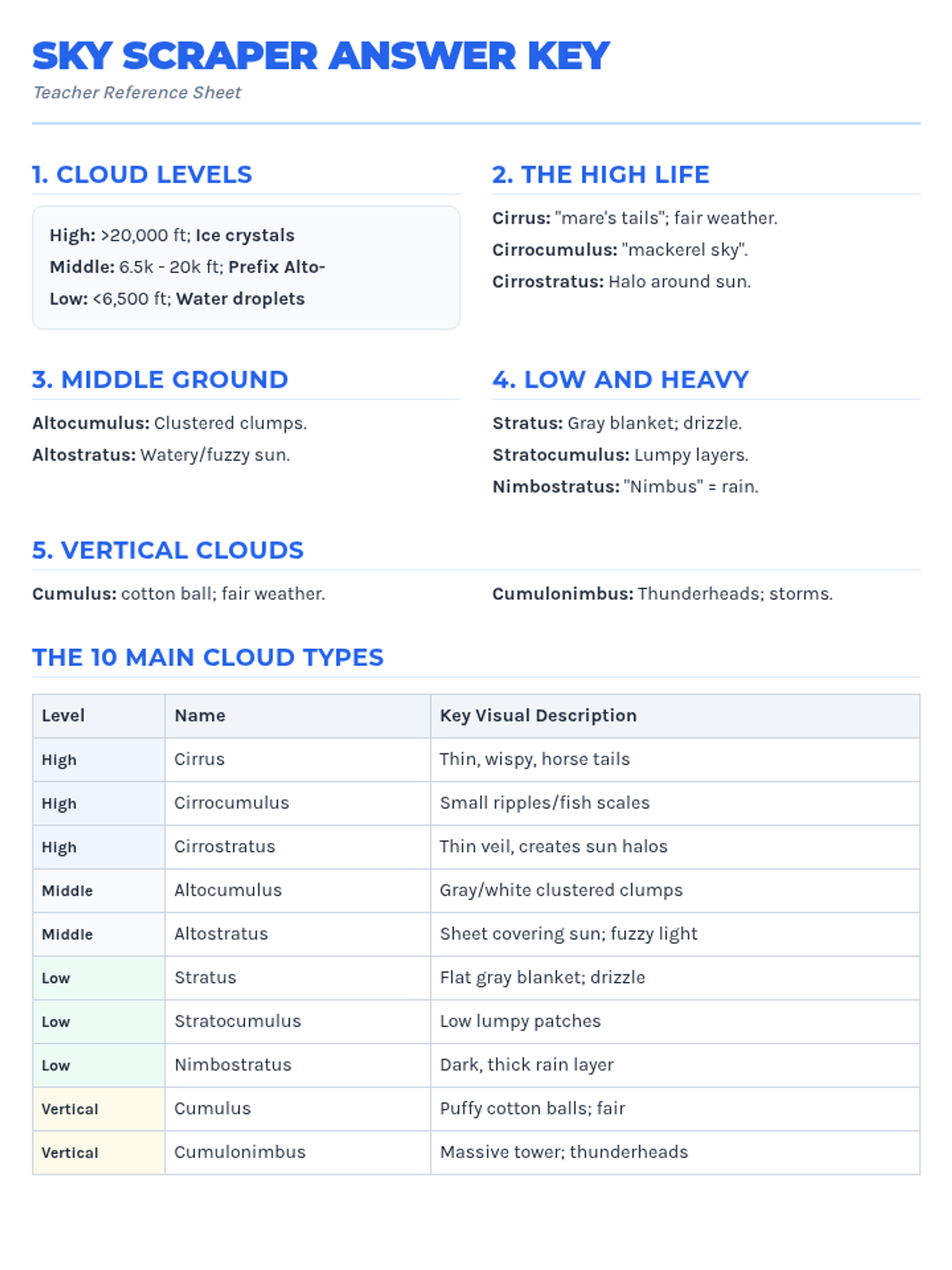
A comprehensive look at the 10 main cloud types, categorized by their altitude, with deep dives into Cirrus, Stratus, and Cumulus clouds.
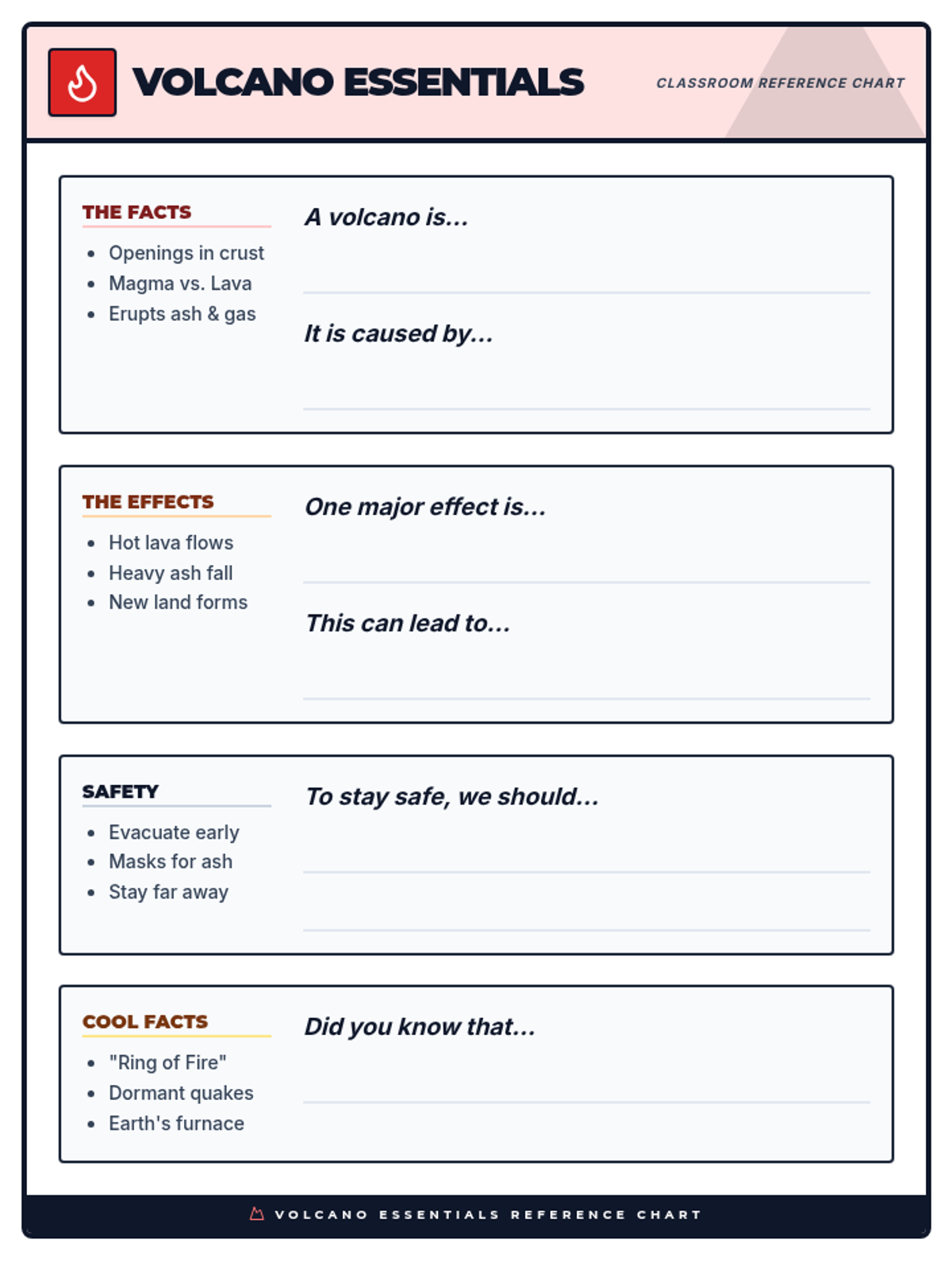
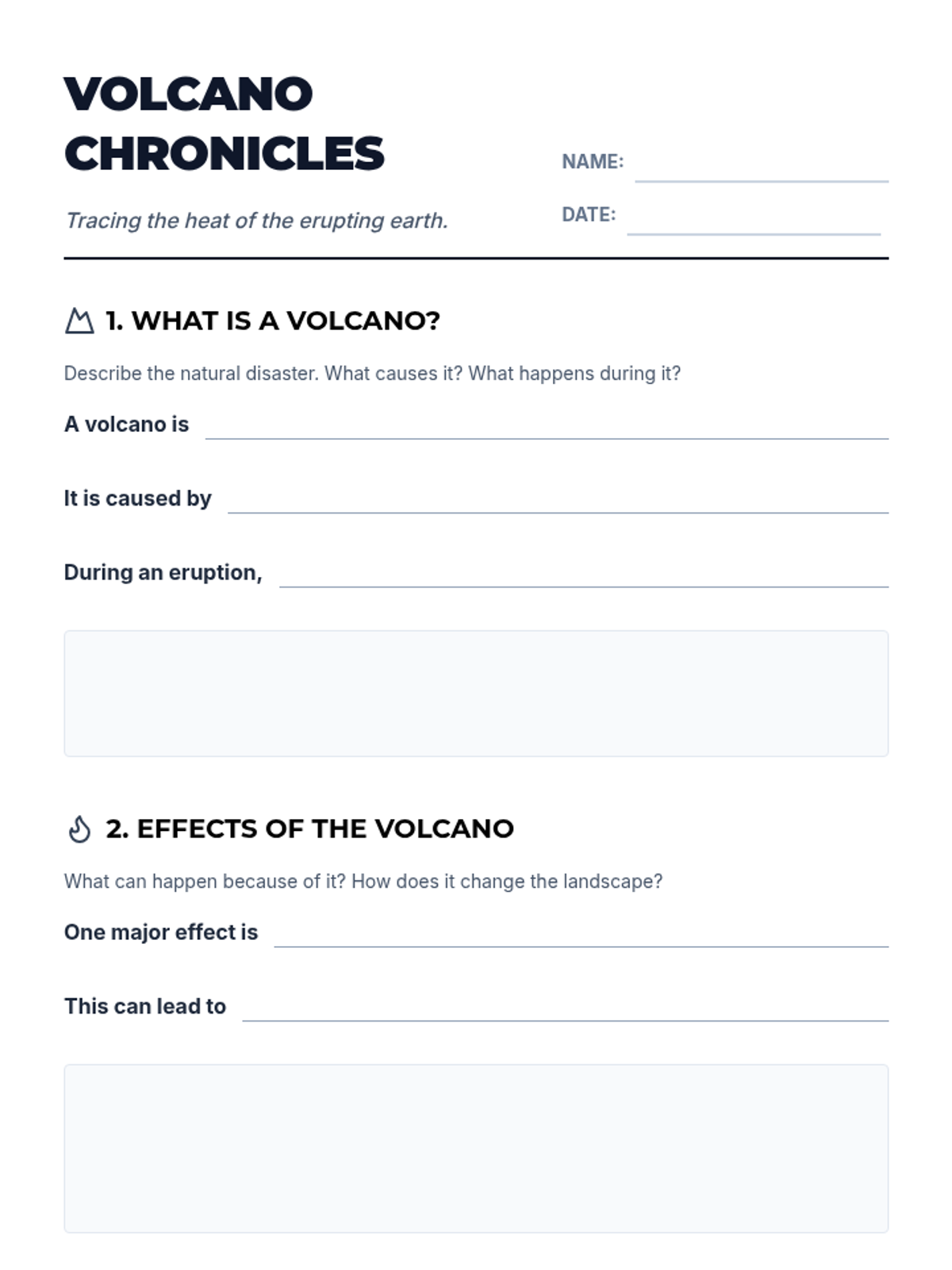
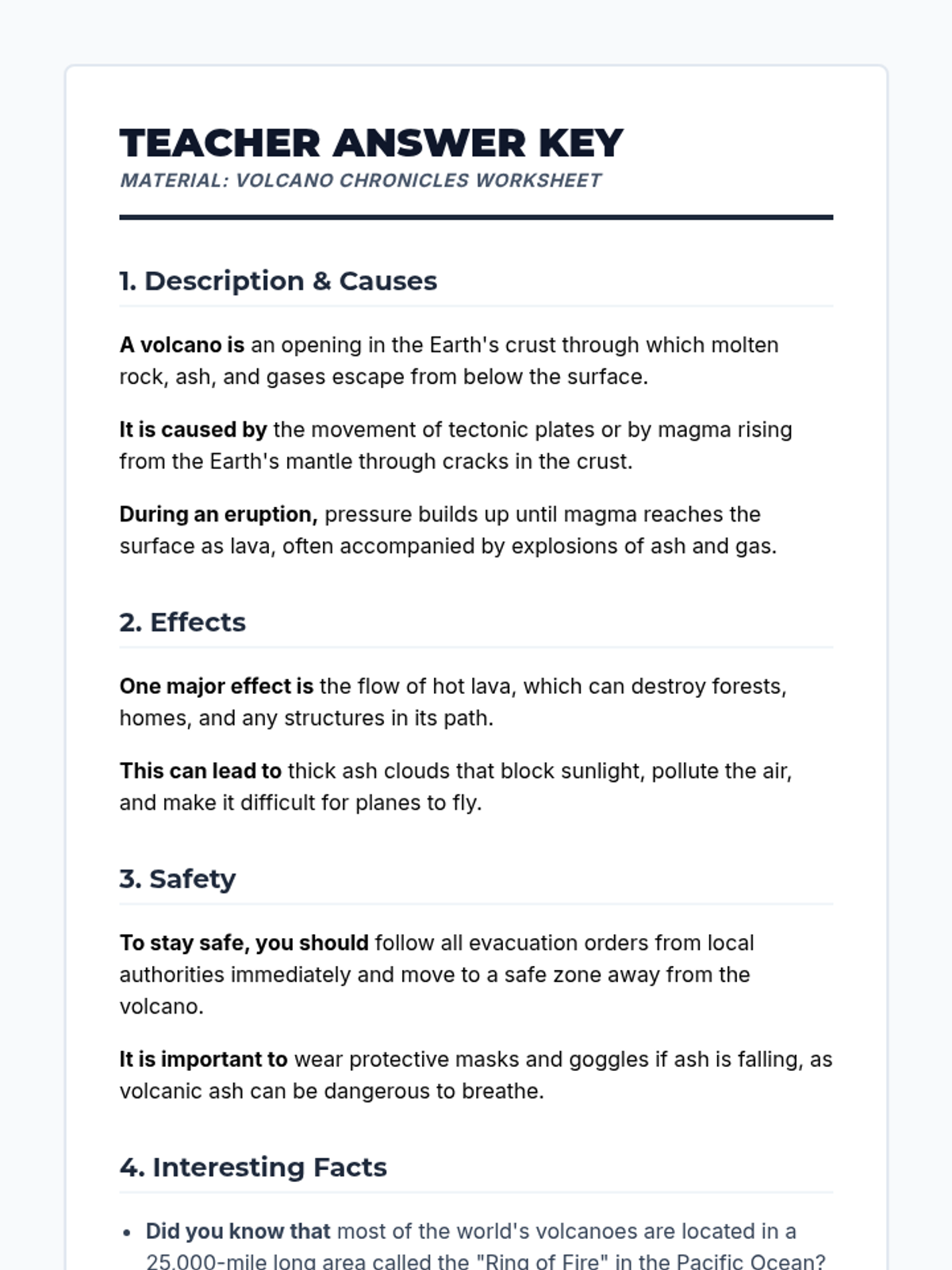
A comprehensive lesson on volcanoes, exploring magma and lava, eruption types, the impact of ash and lava flows, and critical evacuation safety protocols.
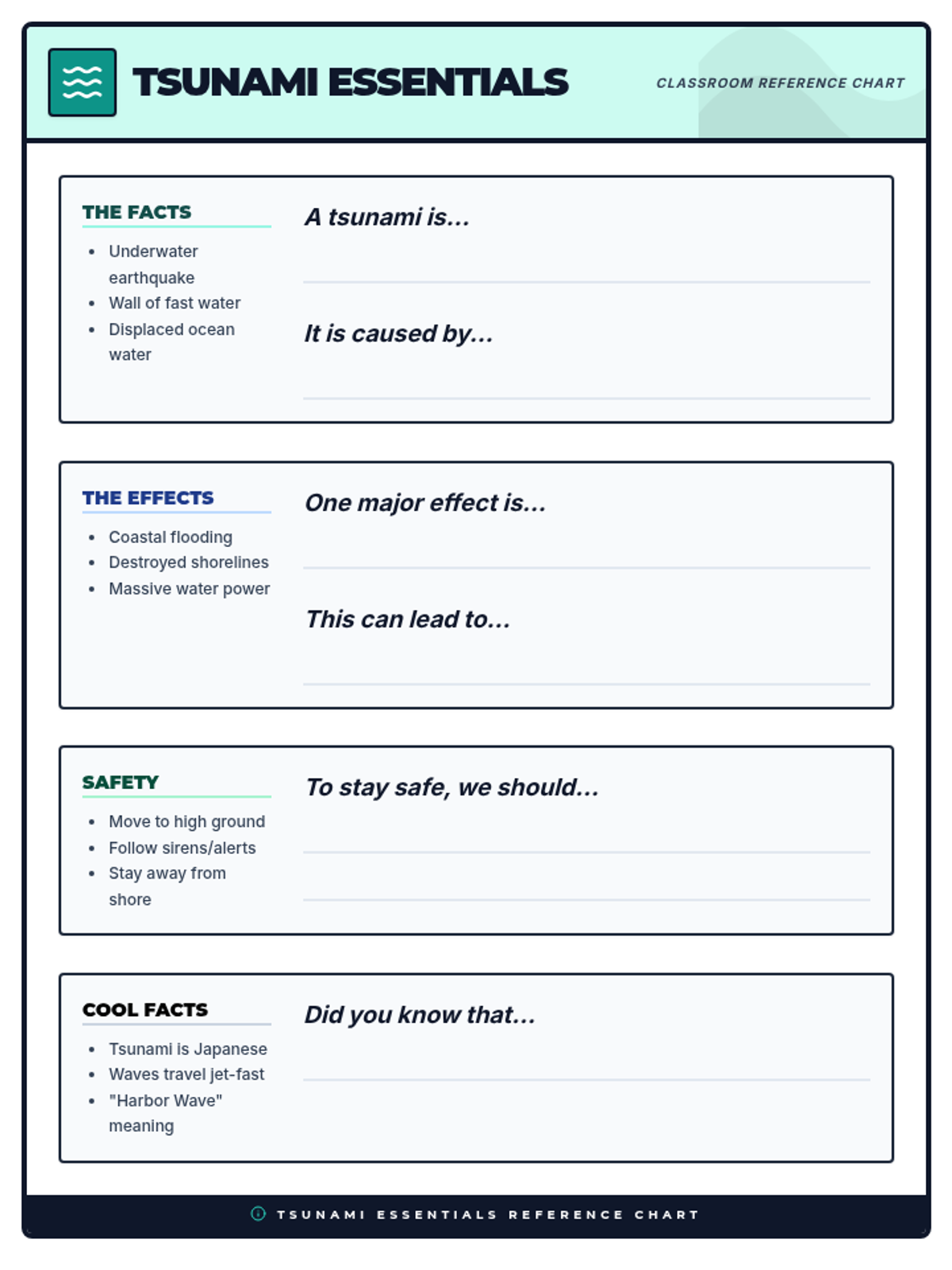
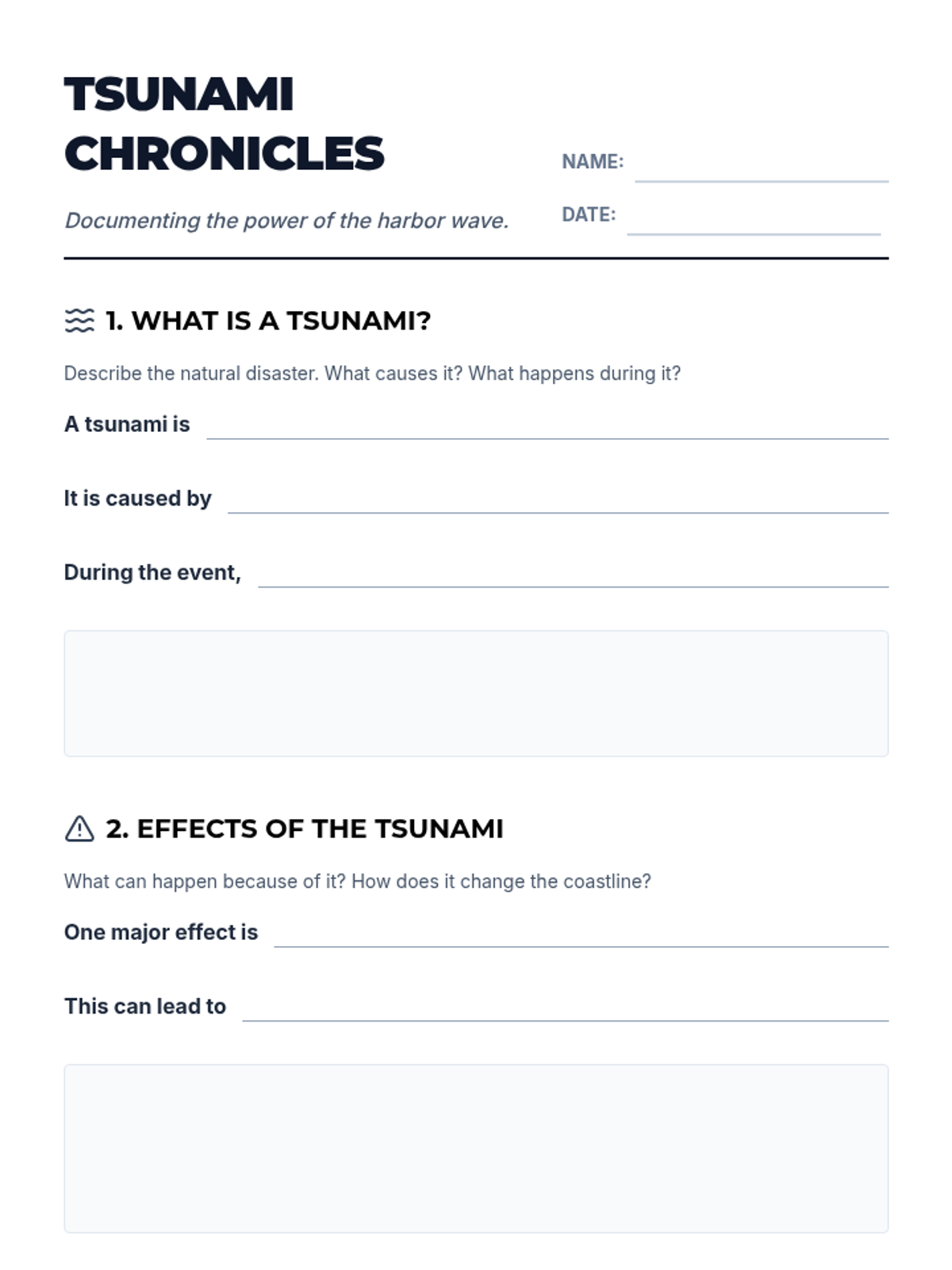
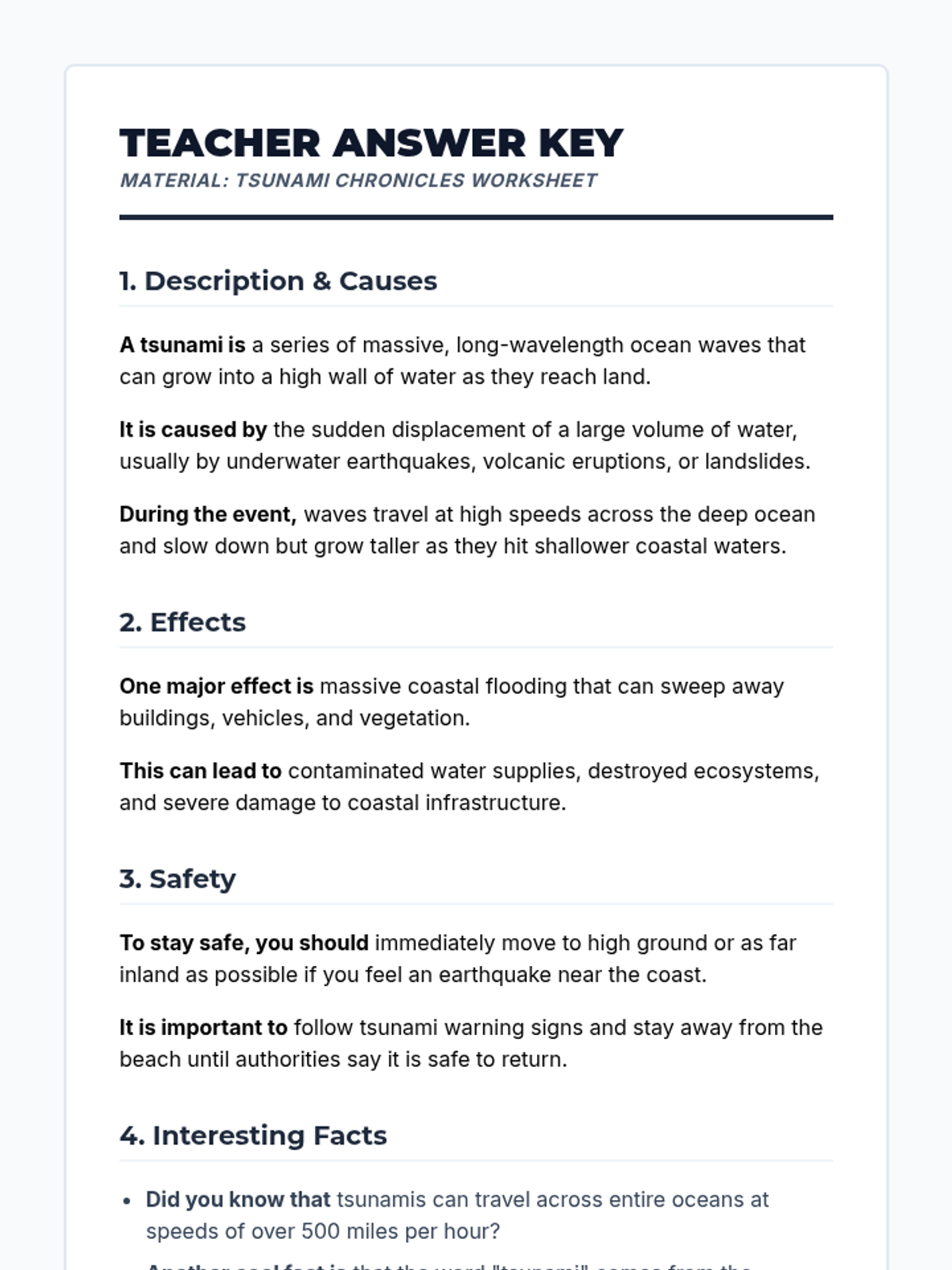
A comprehensive lesson on tsunamis, exploring their triggers like underwater earthquakes, the physics of wall-of-water waves, and critical coastal evacuation safety.
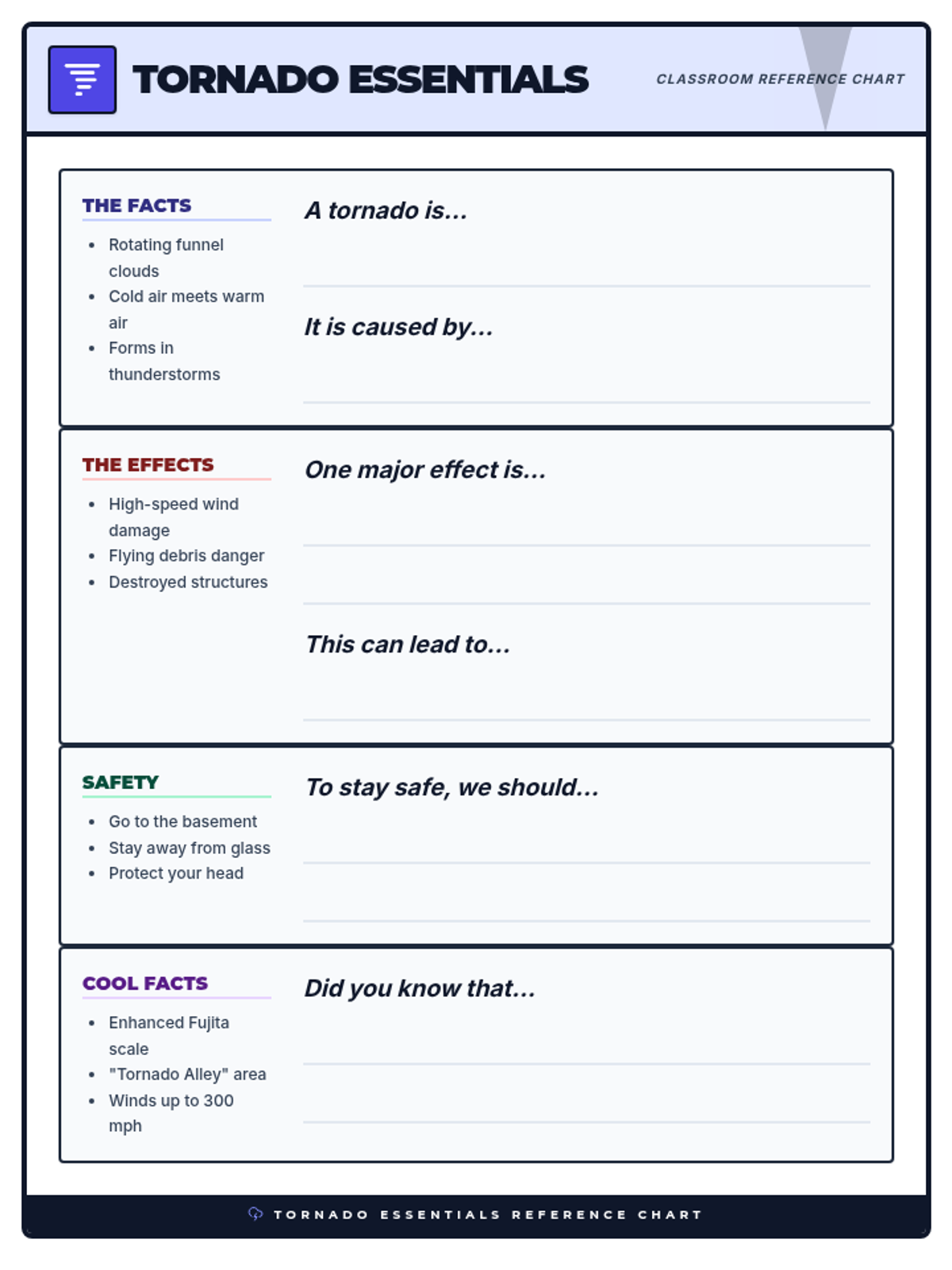
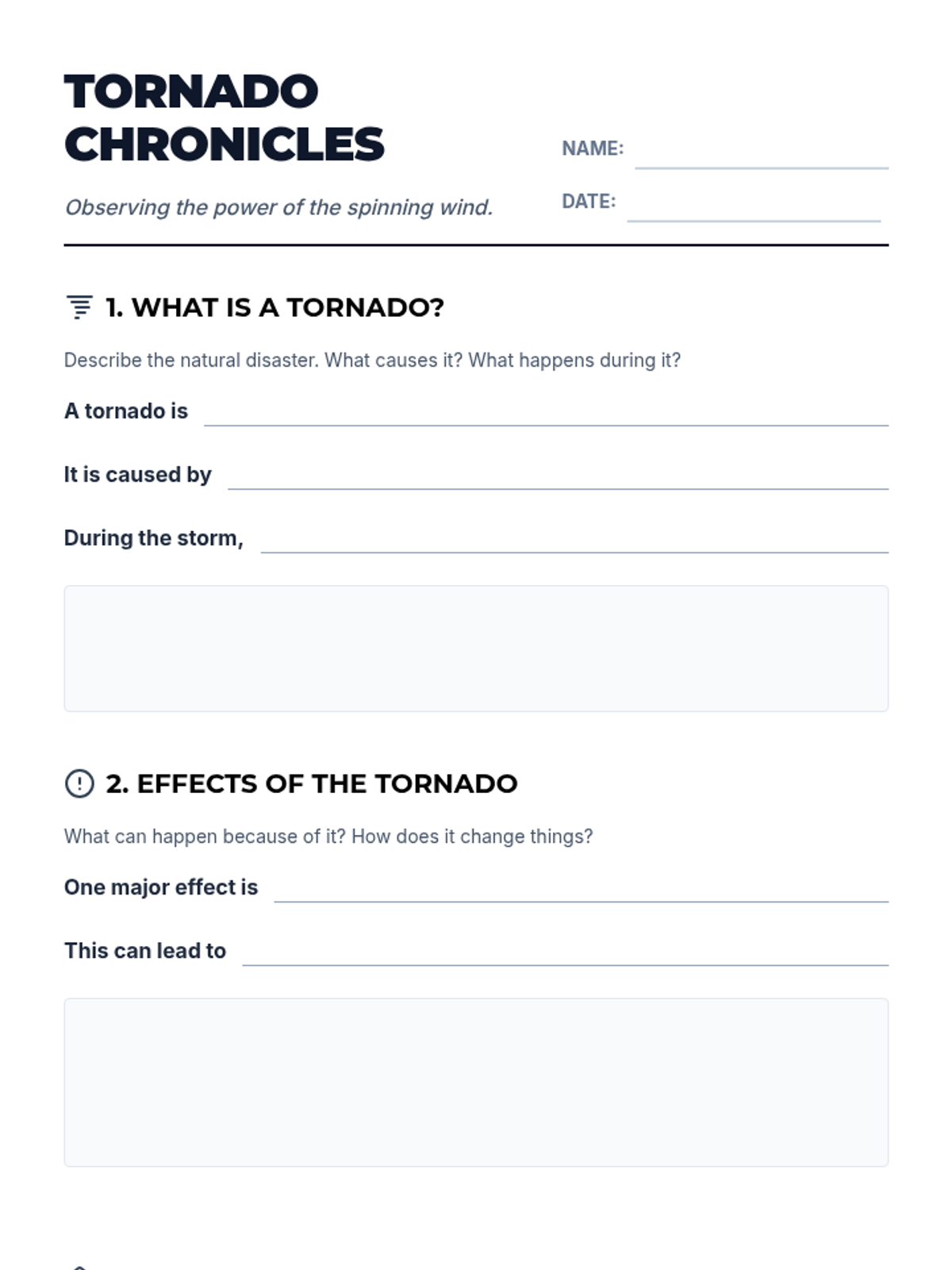
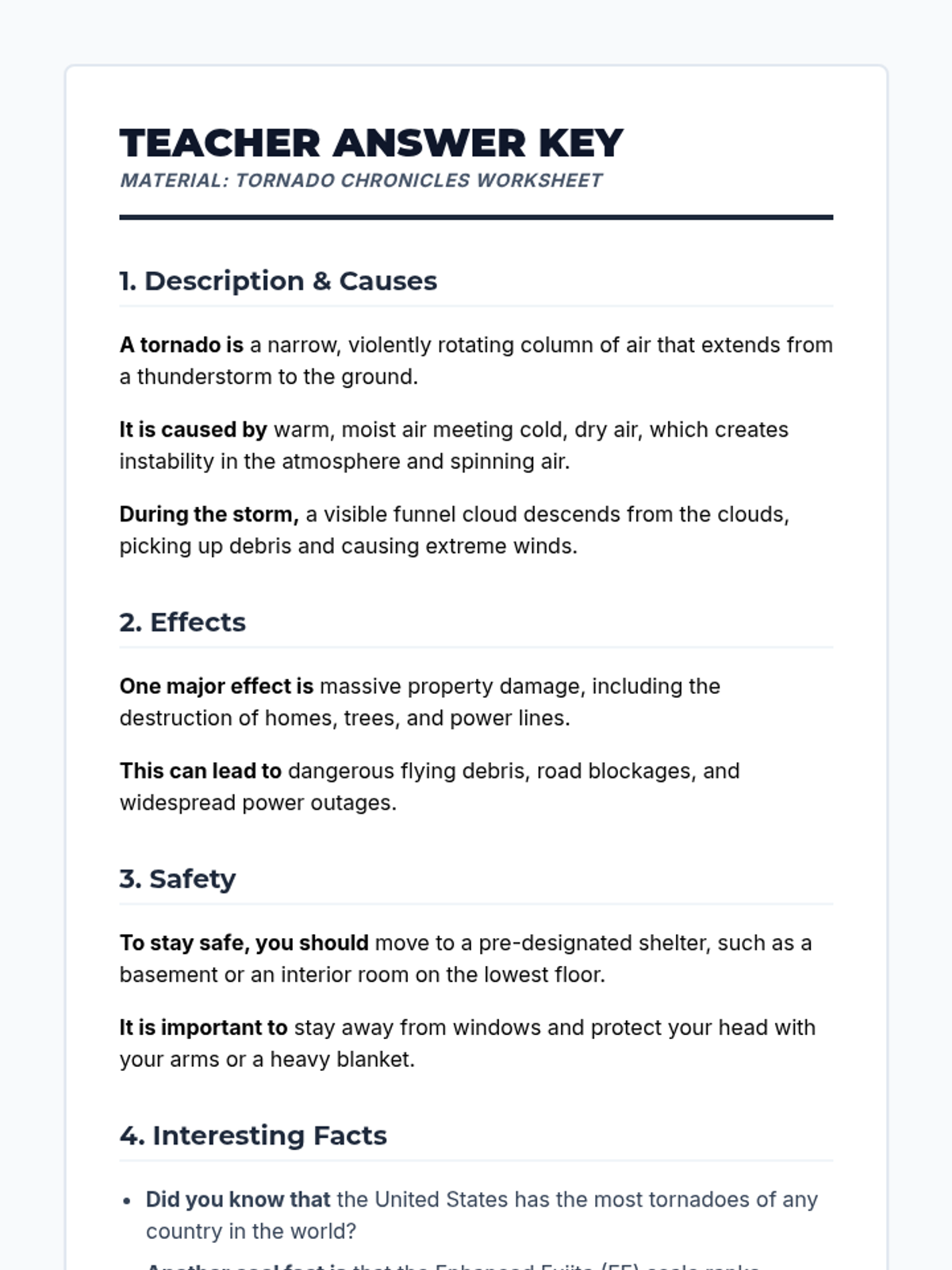
A comprehensive lesson on tornadoes, covering their formation from rotating thunderstorms, their devastating wind impacts, and critical "get low" safety protocols.
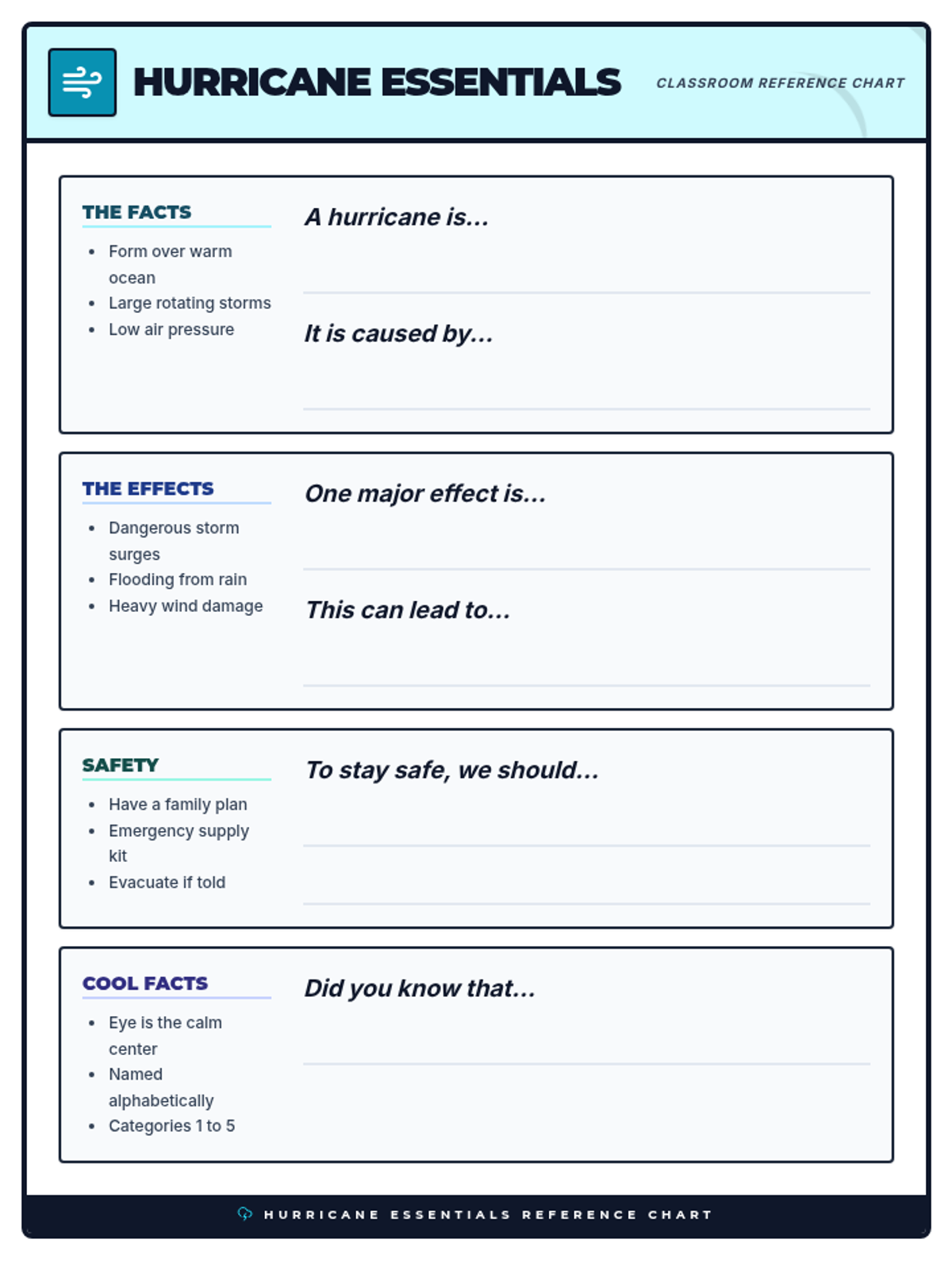
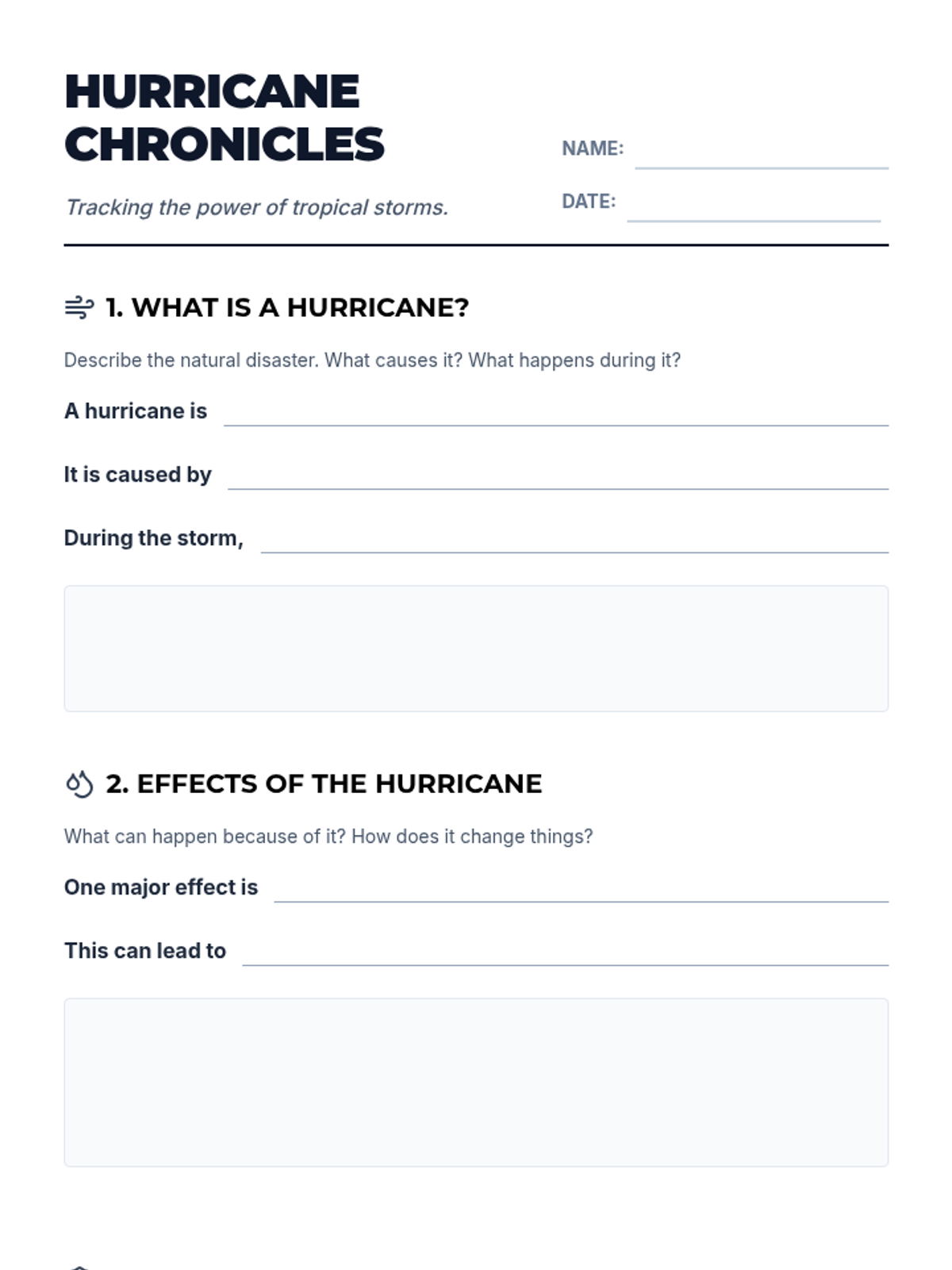
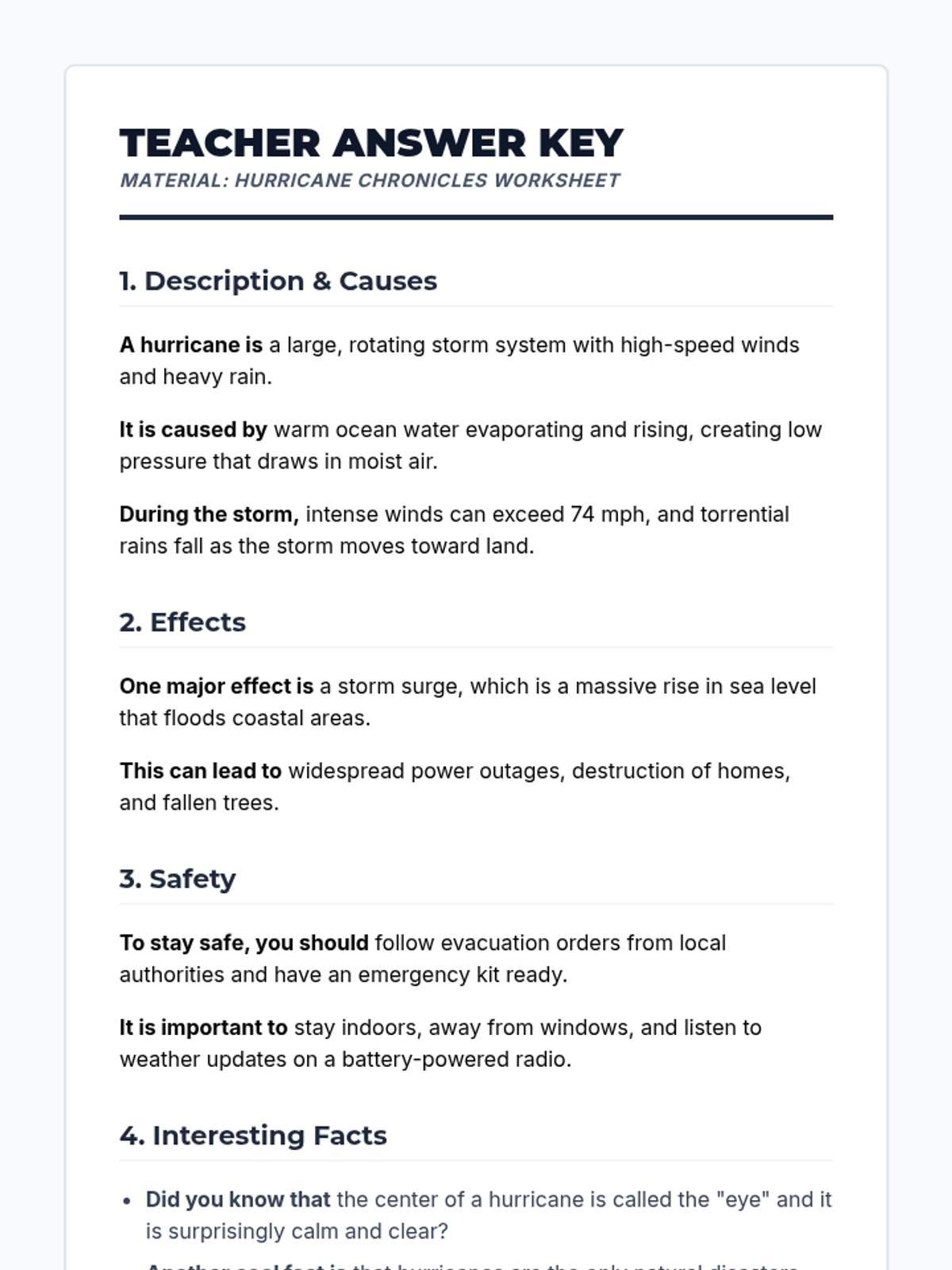
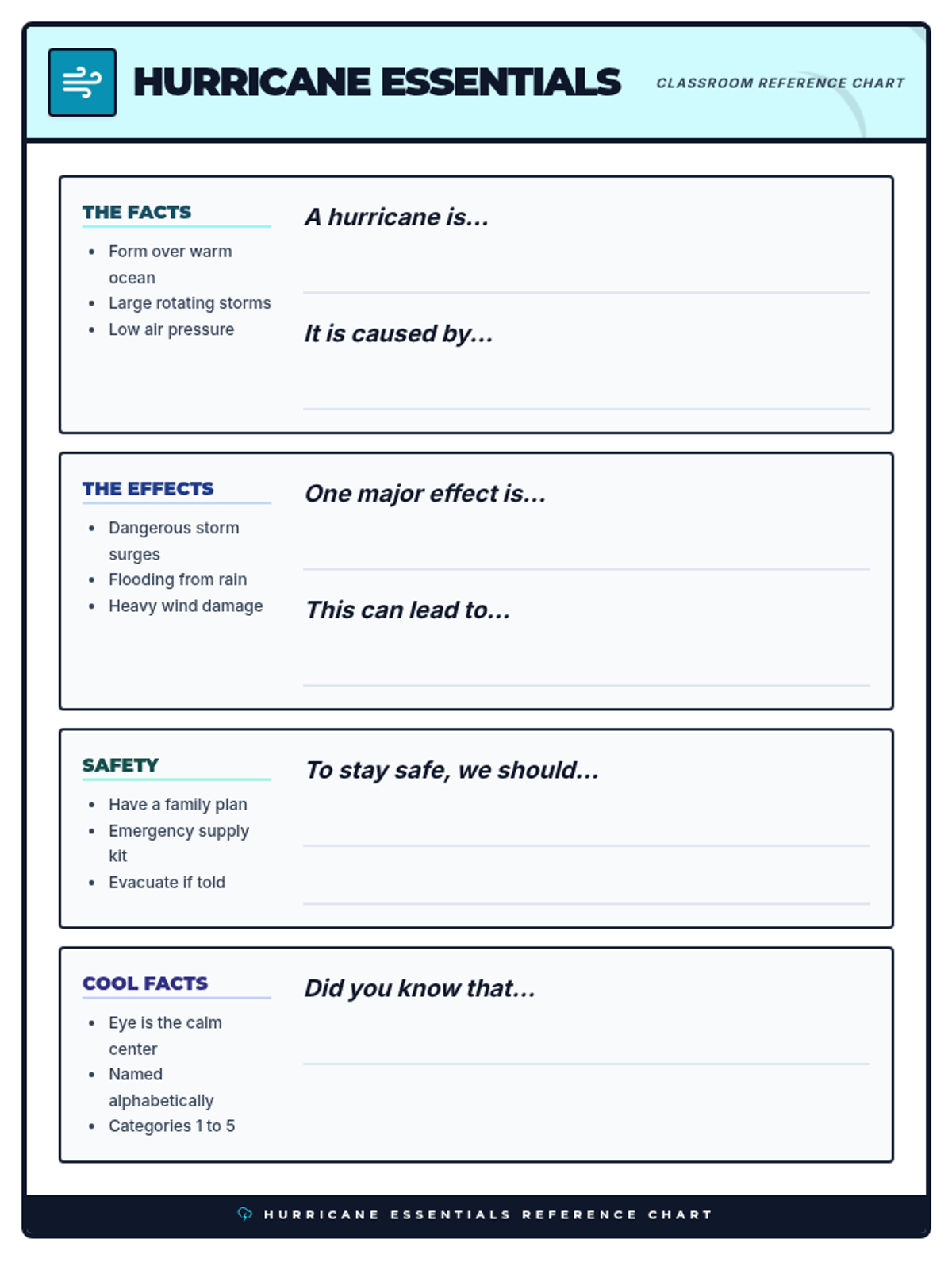
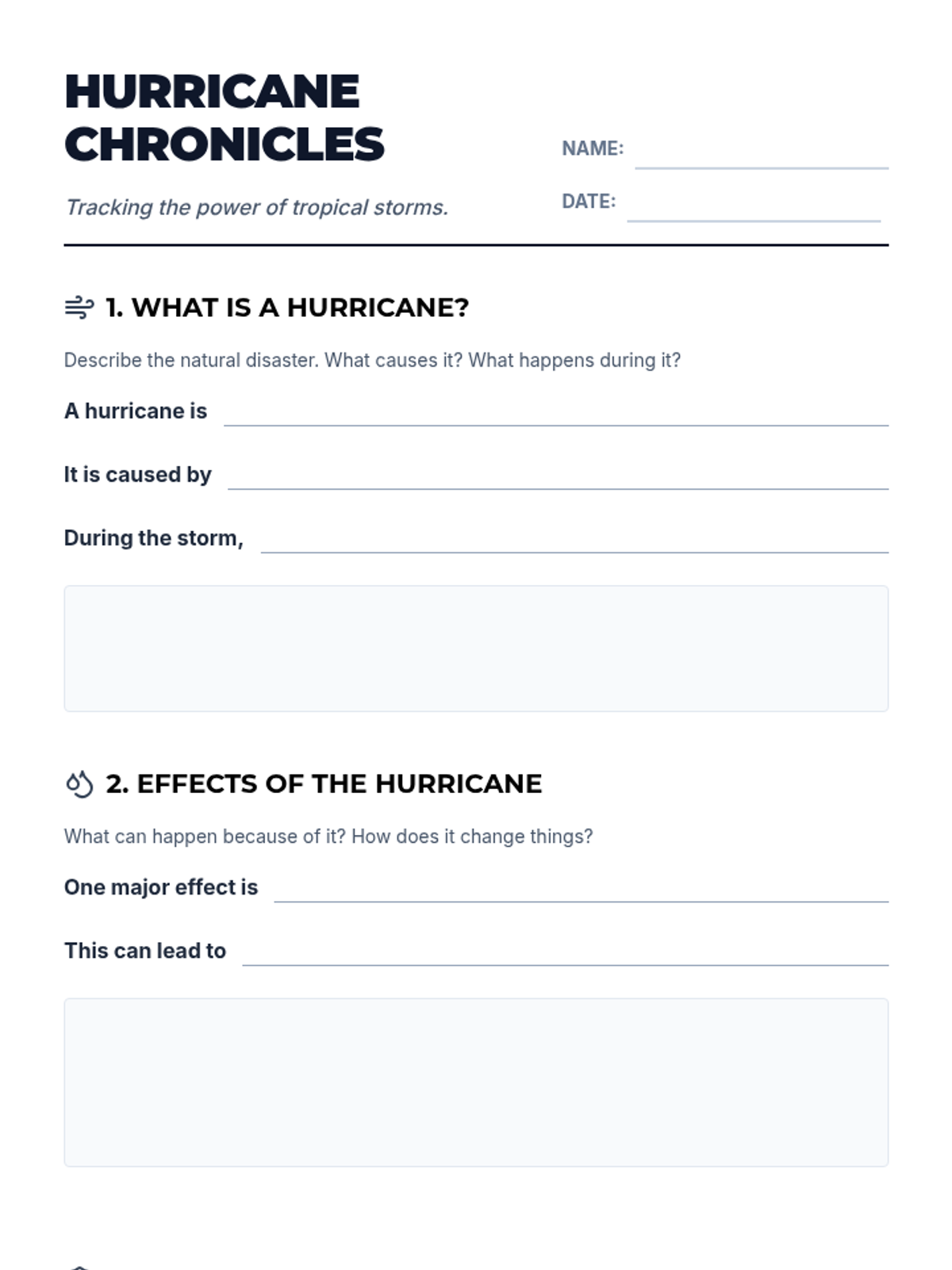
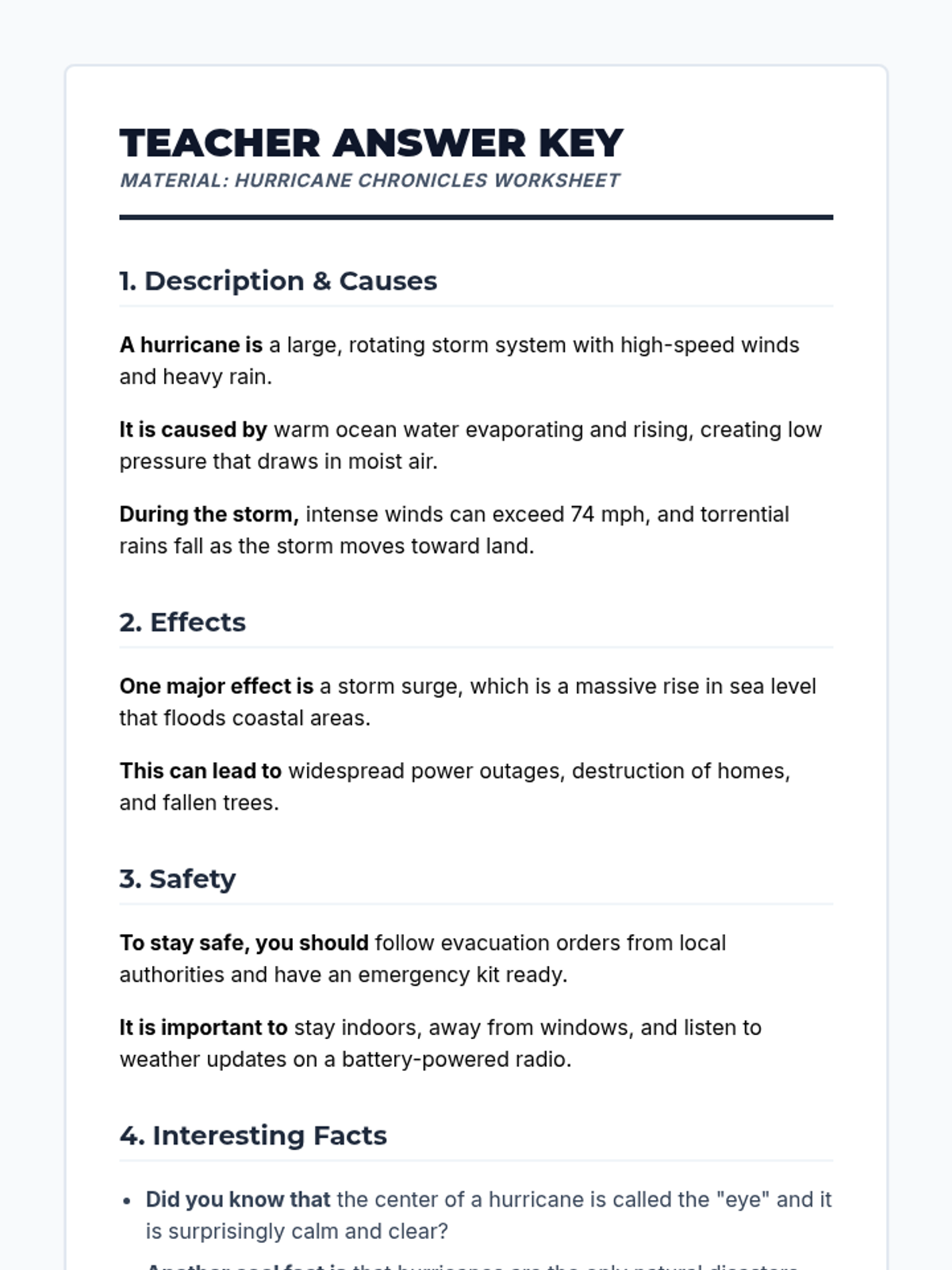
A comprehensive lesson on hurricanes, exploring their formation over warm oceans, their powerful effects like storm surges, and critical safety procedures.
The final week of Sound Sliders drills focusing on Open Syllables and comprehensive Blend review.
The third week of Sound Sliders drills focusing on Mixed Blends and Glued Sounds (-ng, -nk) with daily 12-word practice sets.
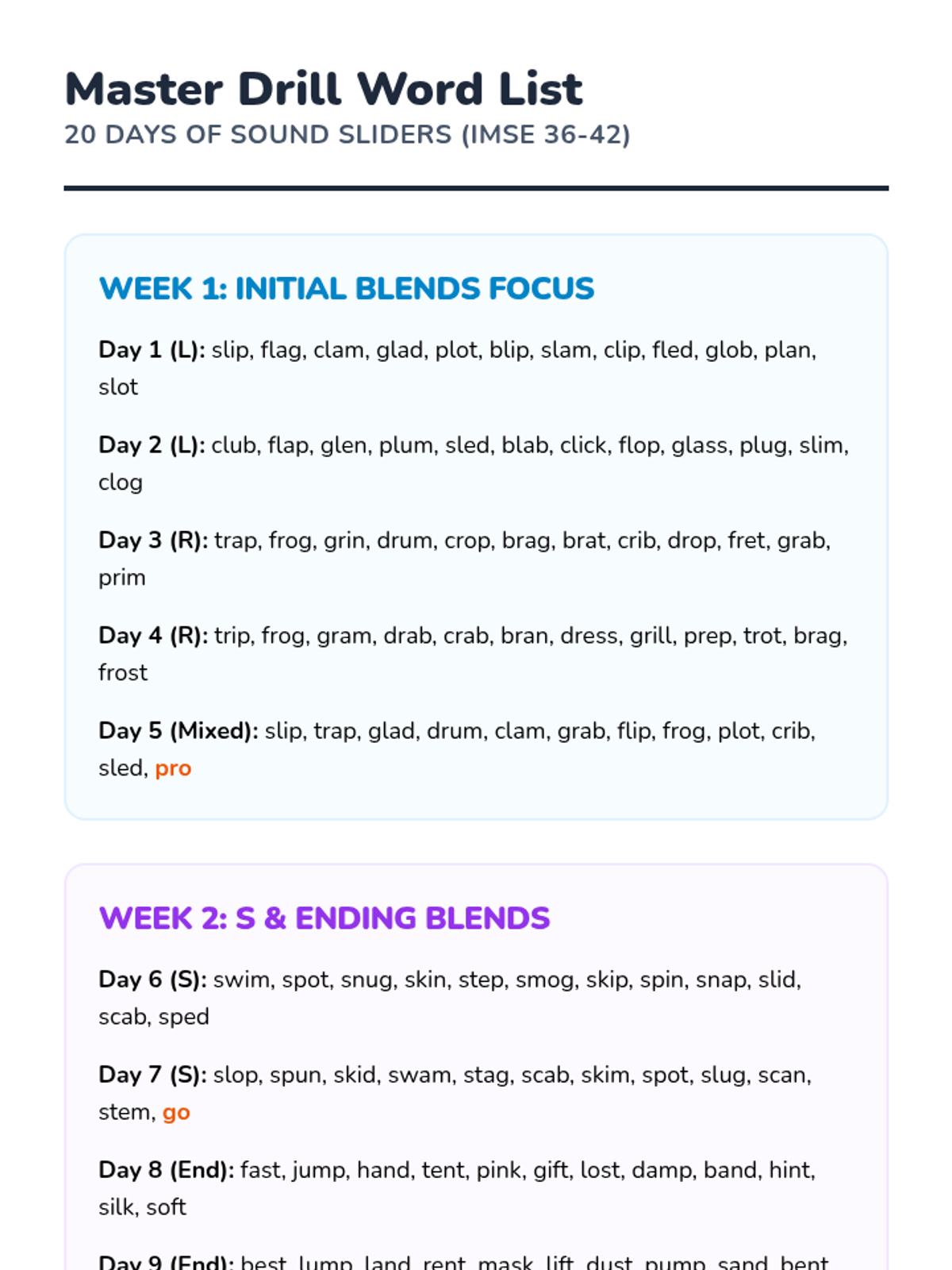
The second week of Sound Sliders drills focusing on S-Blends and Ending Blends with daily 12-word practice sets.
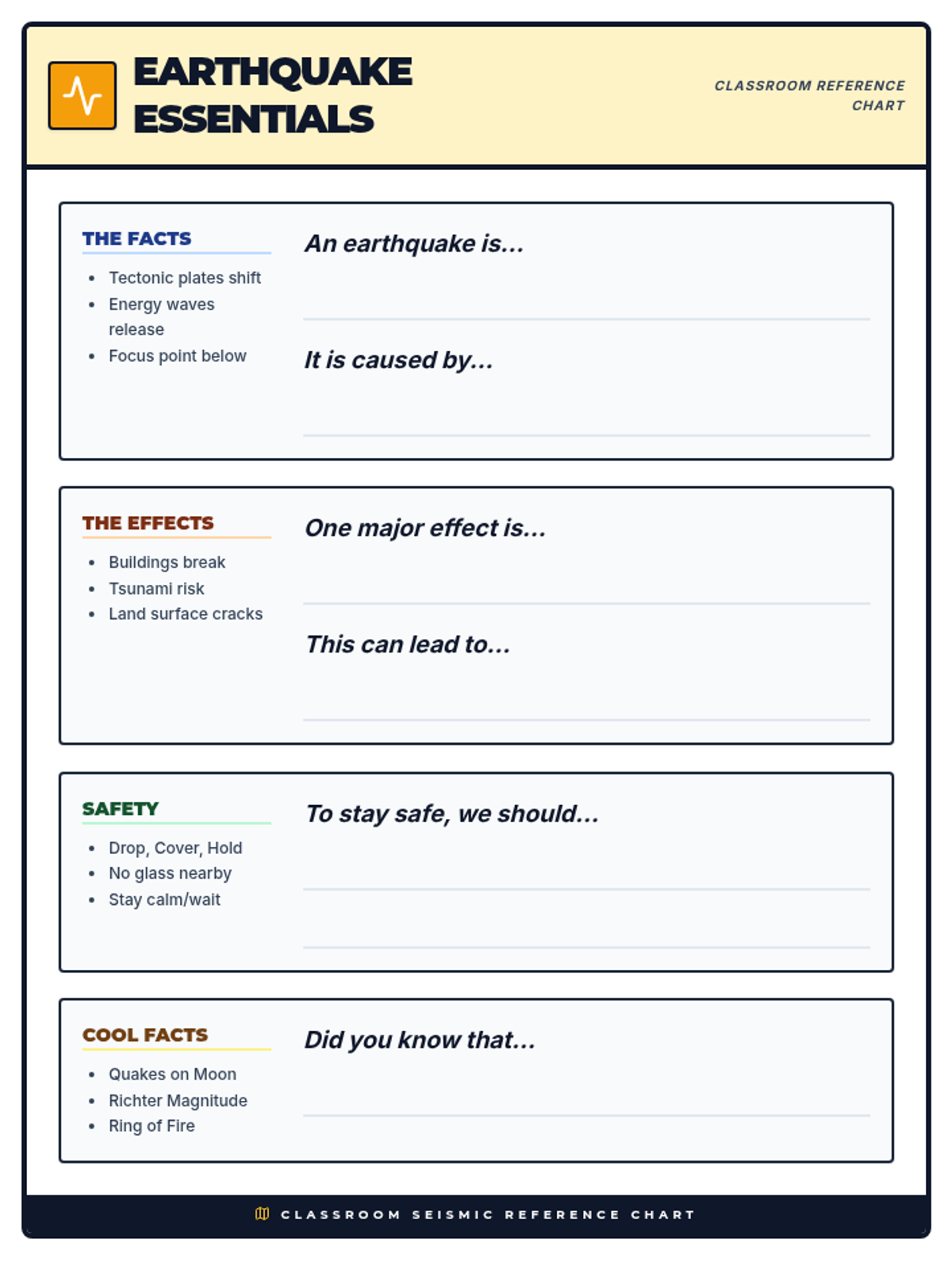
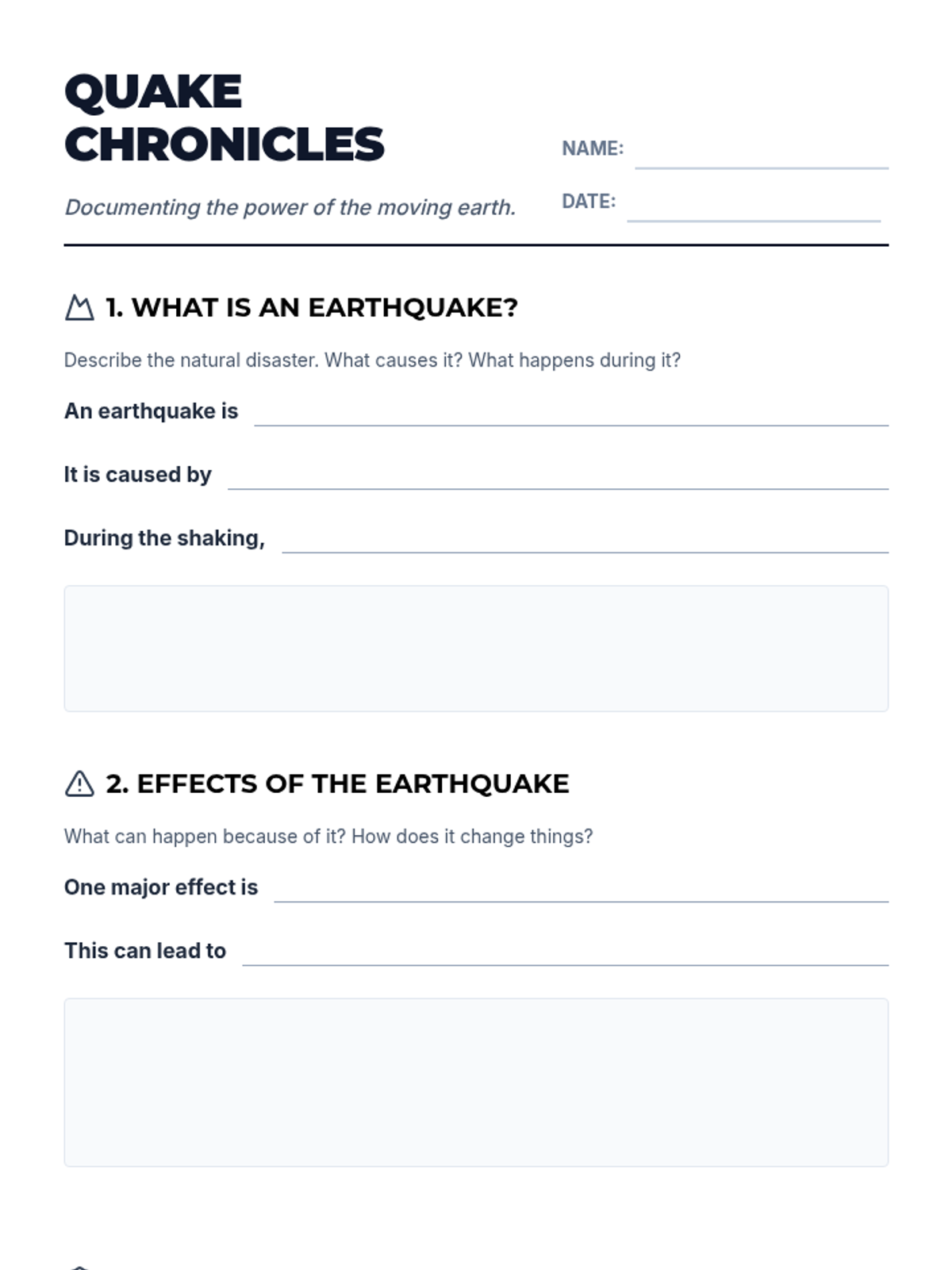
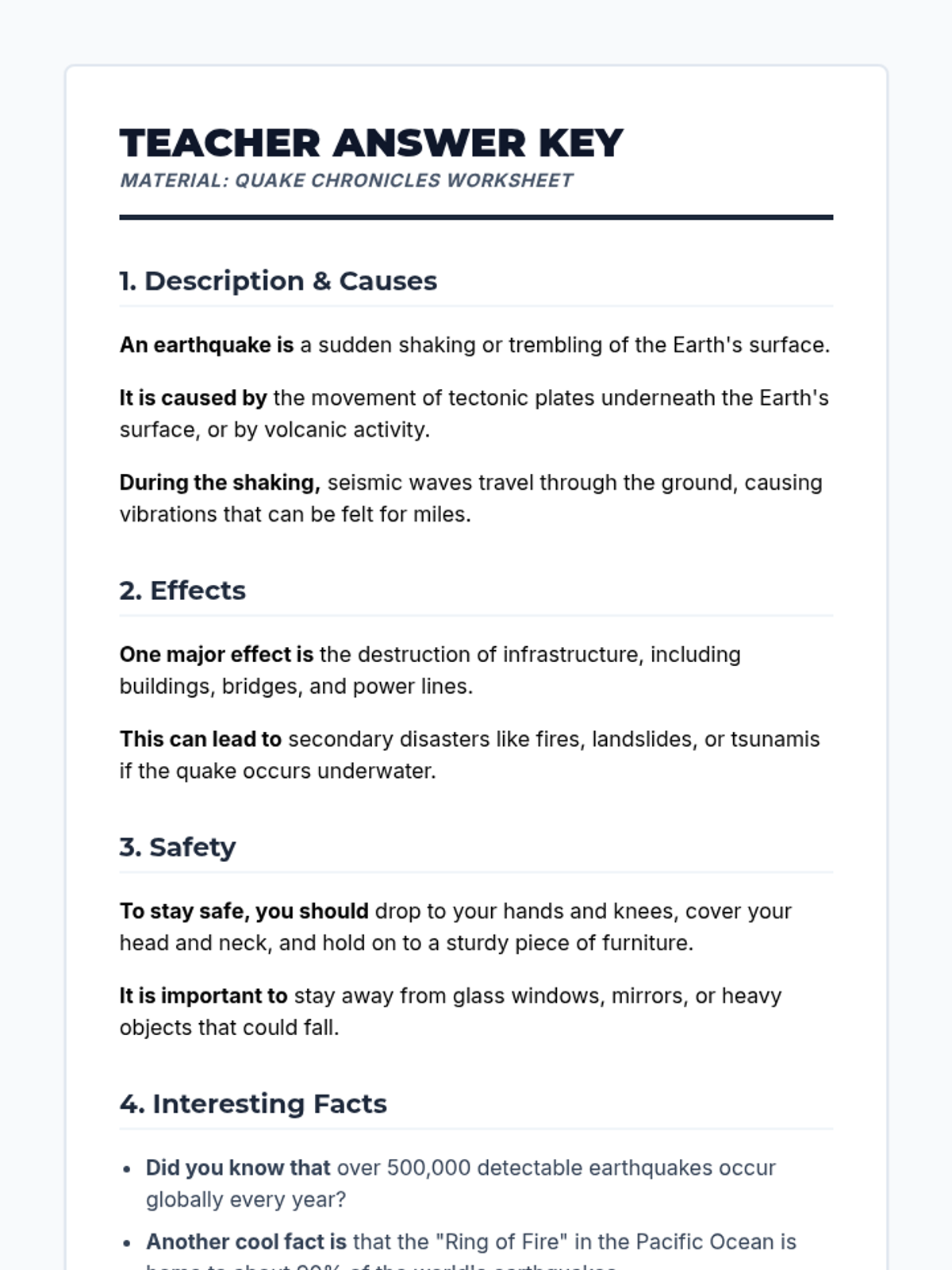
A comprehensive lesson on earthquakes, covering their causes, effects, safety protocols, and fascinating seismic facts using sentence starters to support student writing.
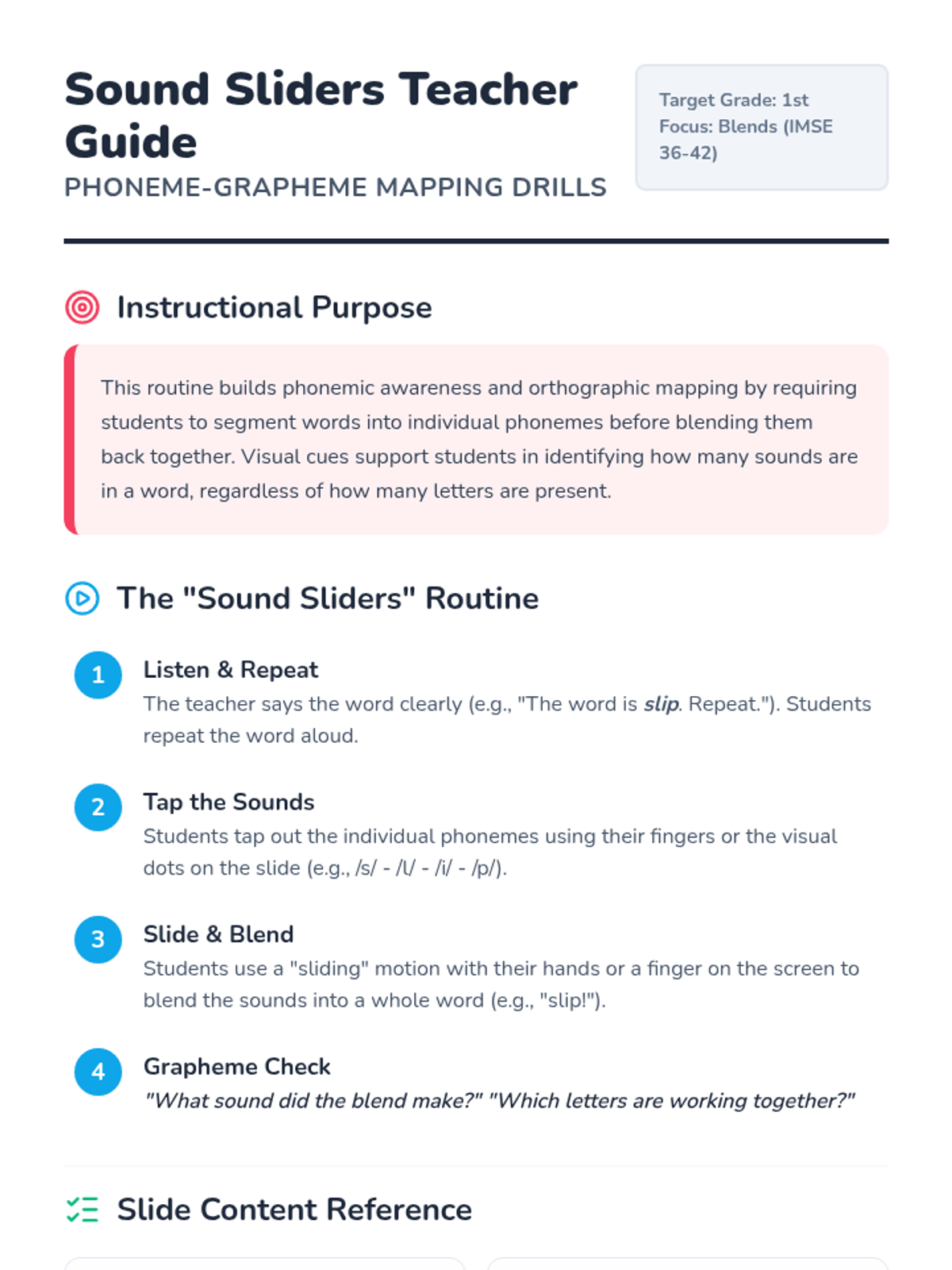
The first week of Sound Sliders drills focusing on initial L-Blends and R-Blends with daily 12-word practice sets.
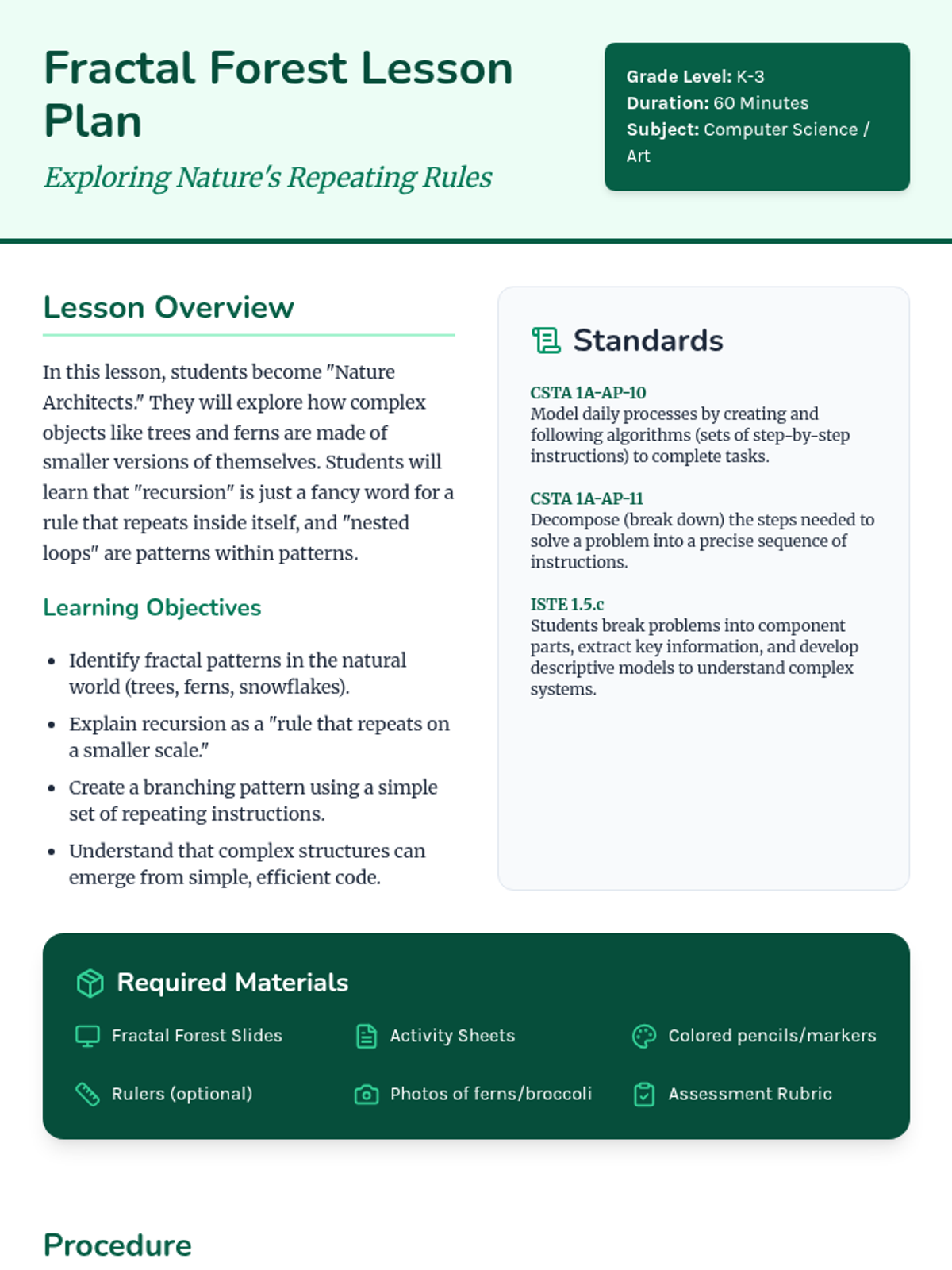
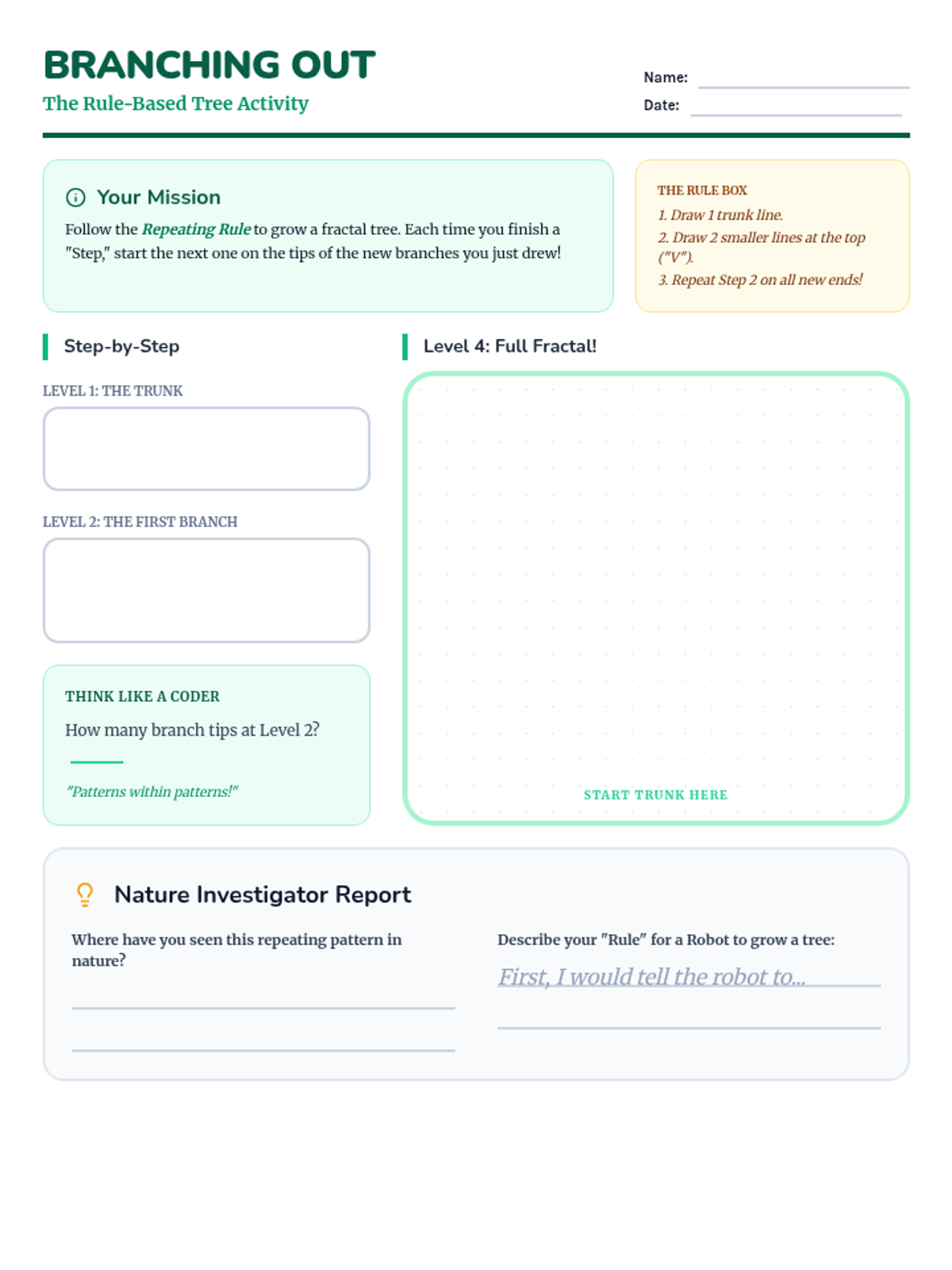
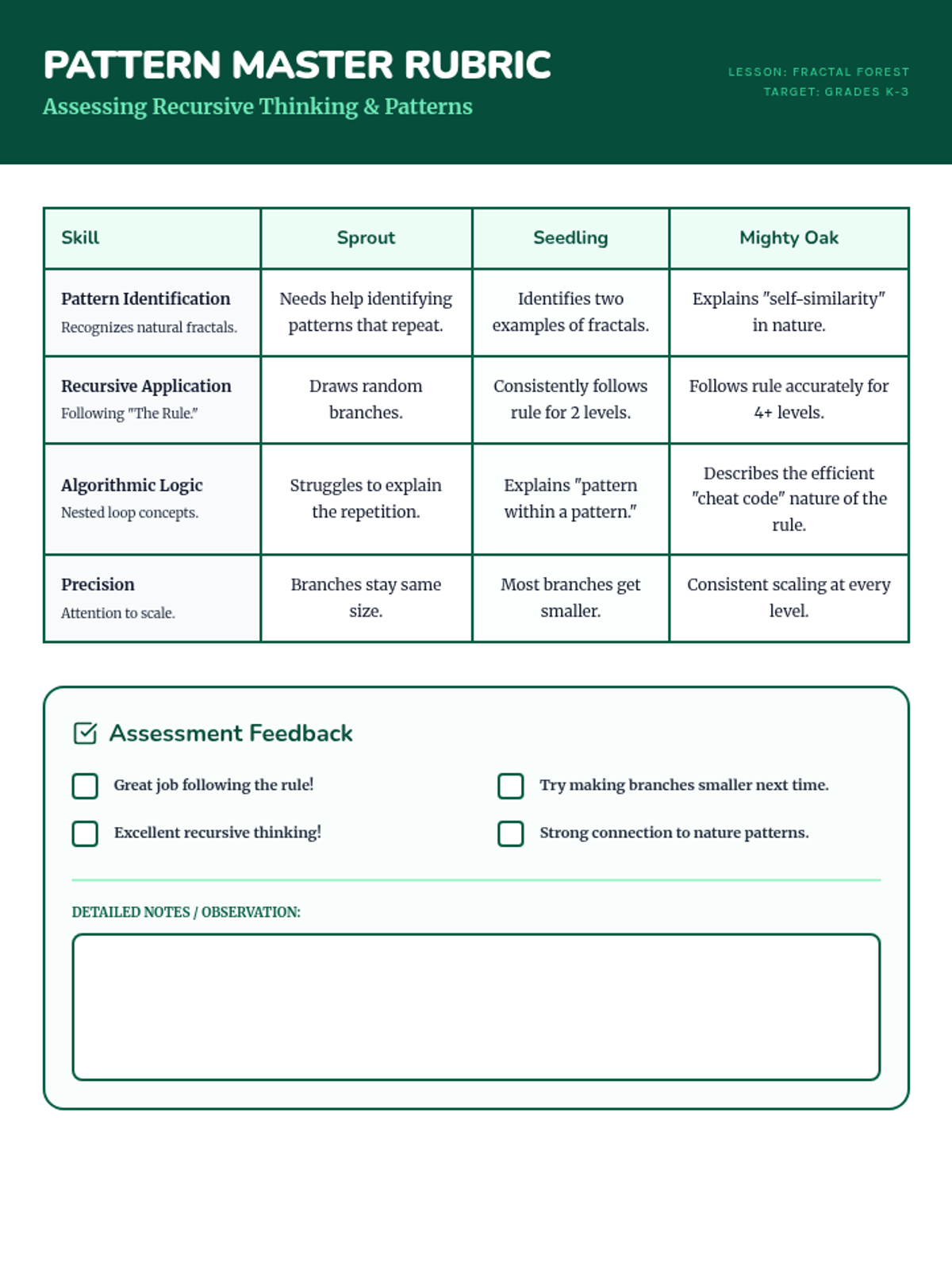
Students in grades K-3 discover the magic of recursion and nested loops by observing patterns in nature and applying simple repeating rules to grow their own digital and hand-drawn forests.
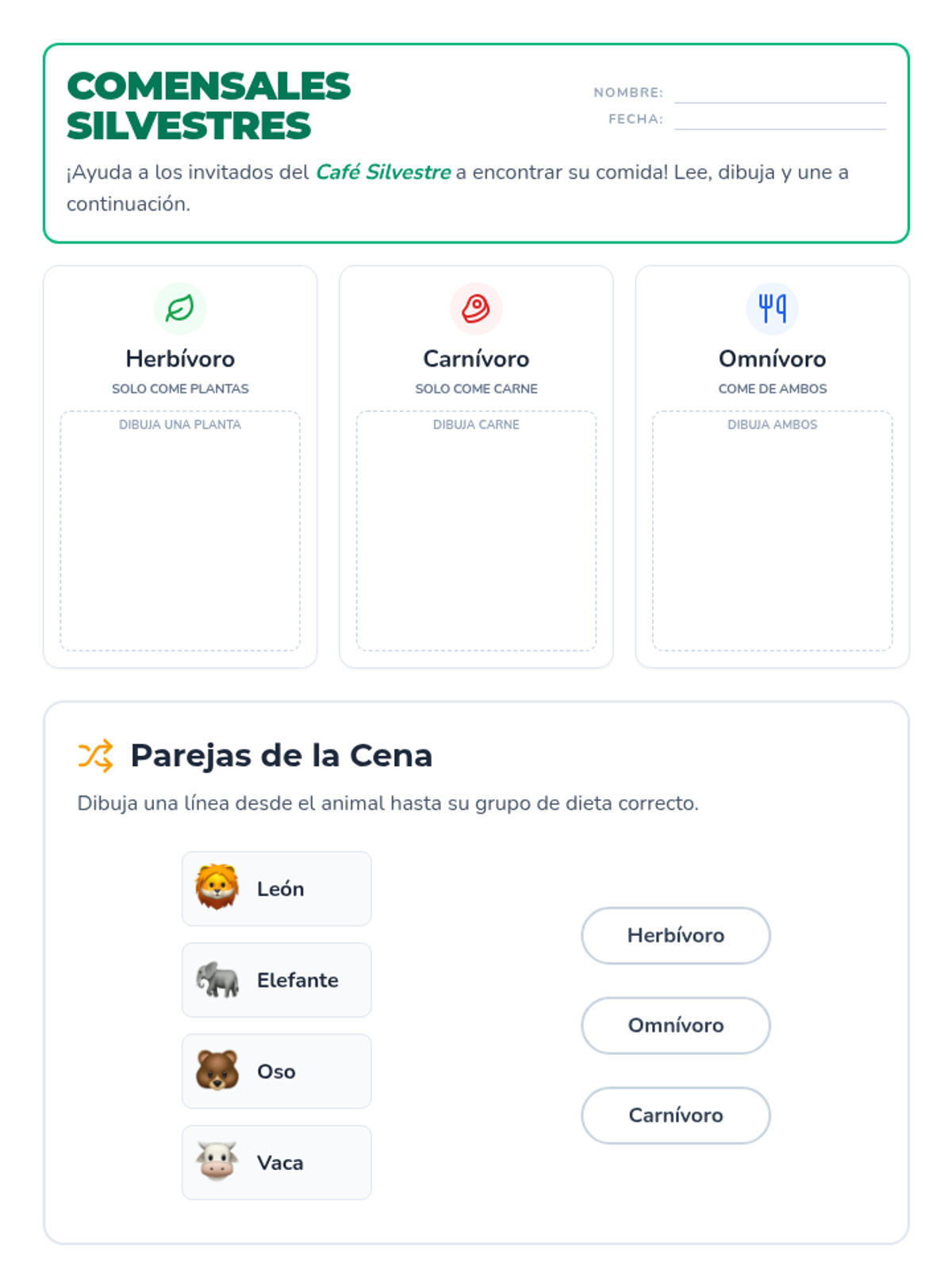
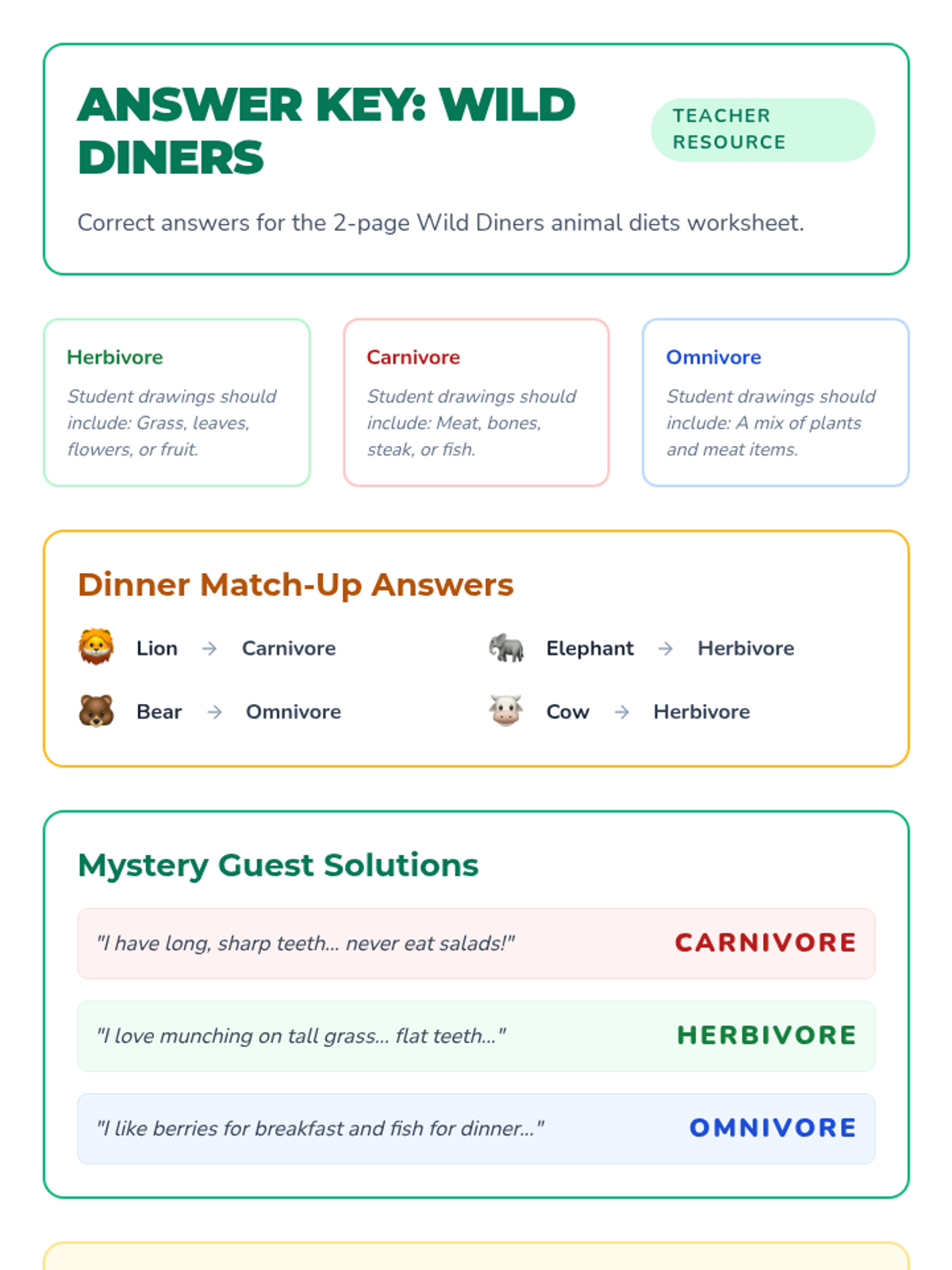
An introductory lesson on animal diets, categorizing creatures as carnivores, herbivores, and omnivores through visual identification and simple riddles.
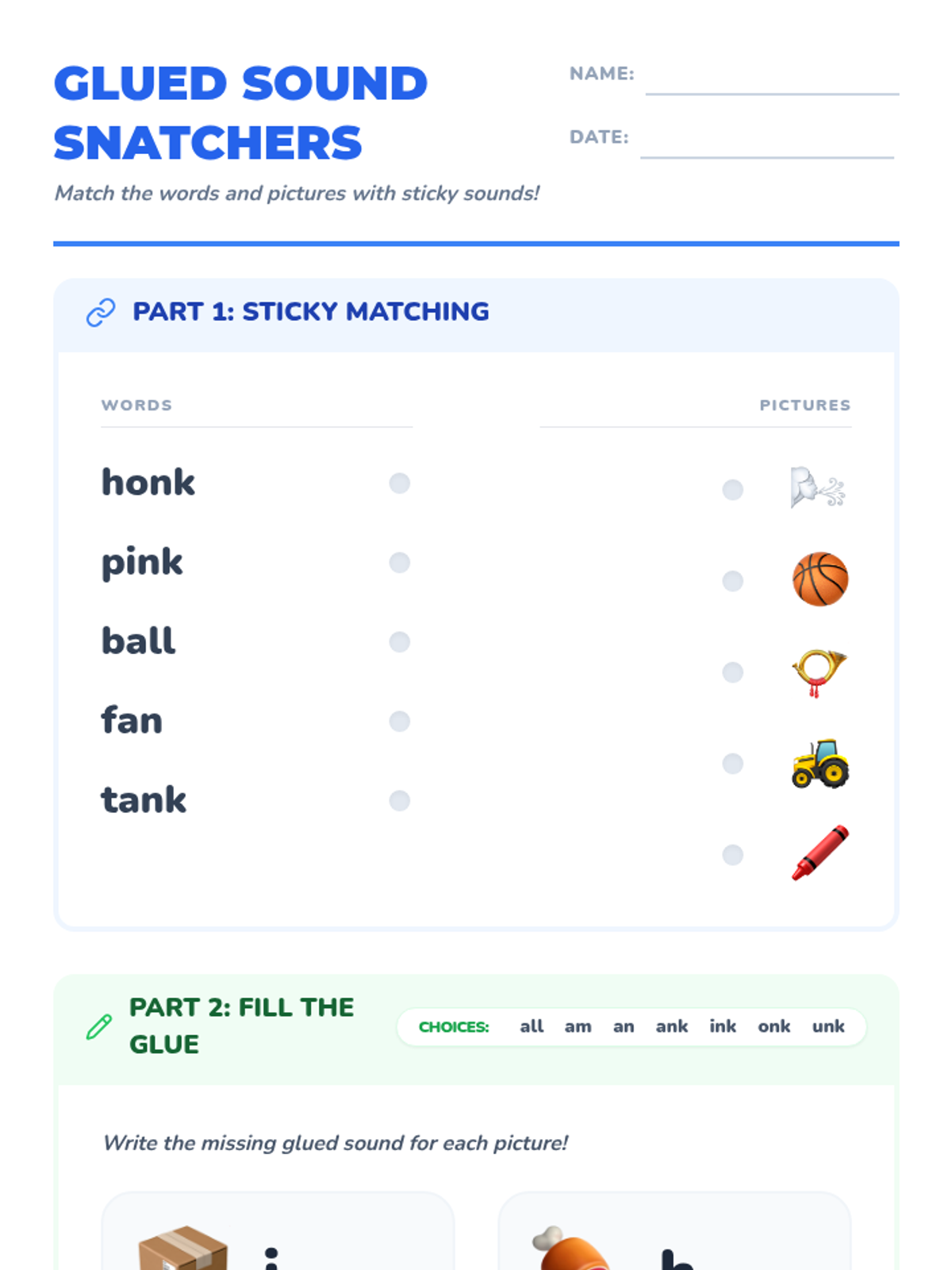
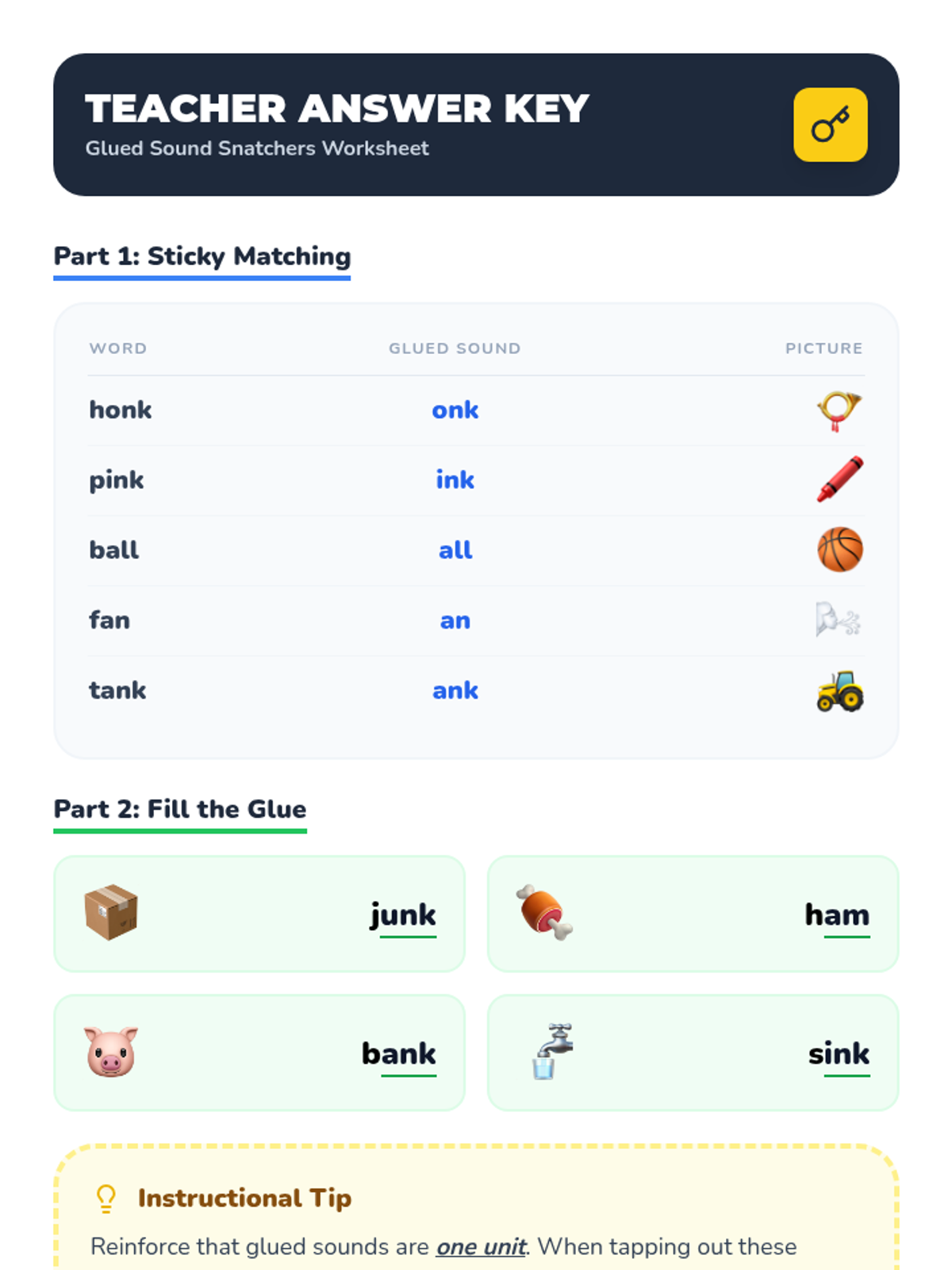
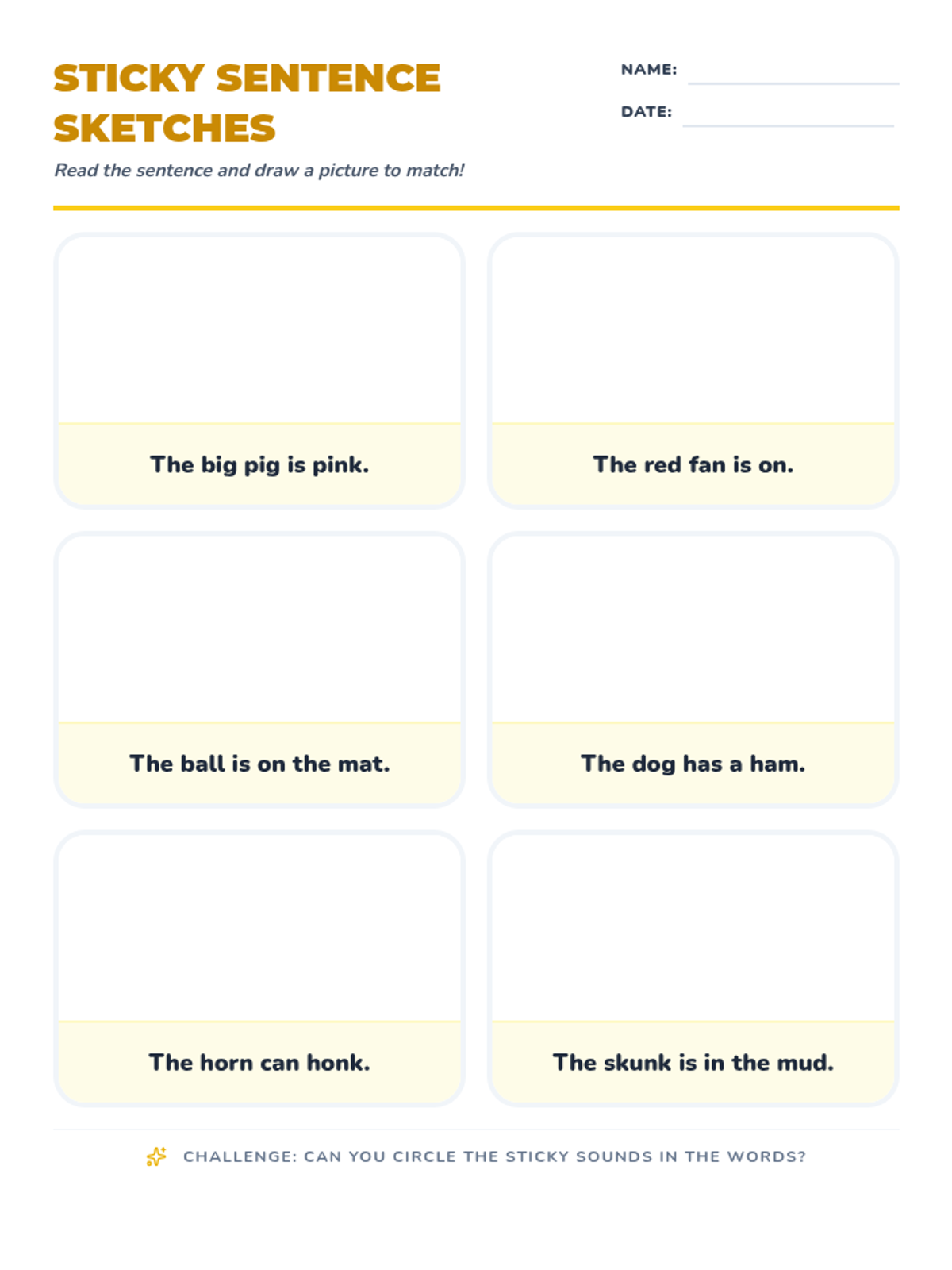
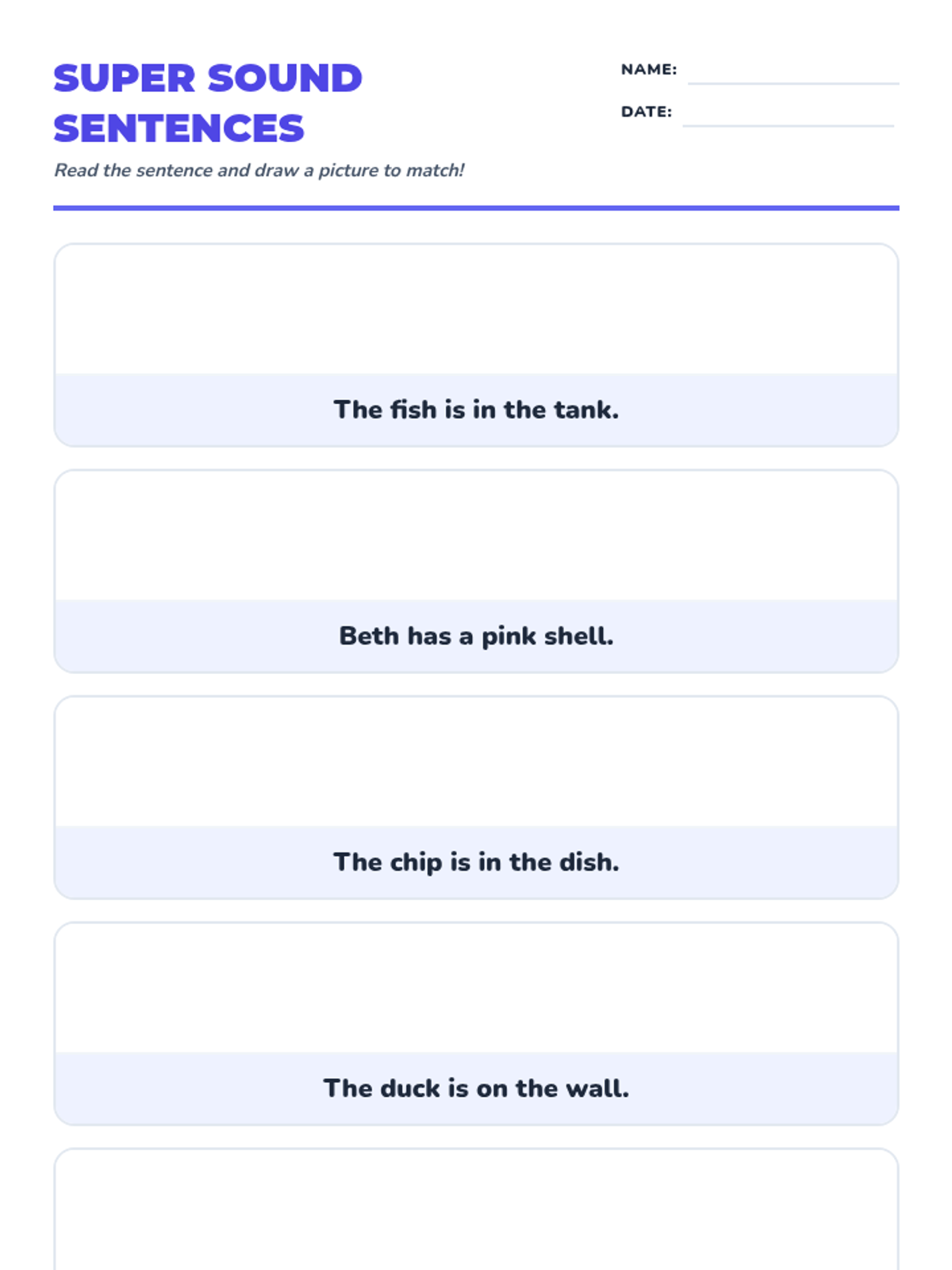
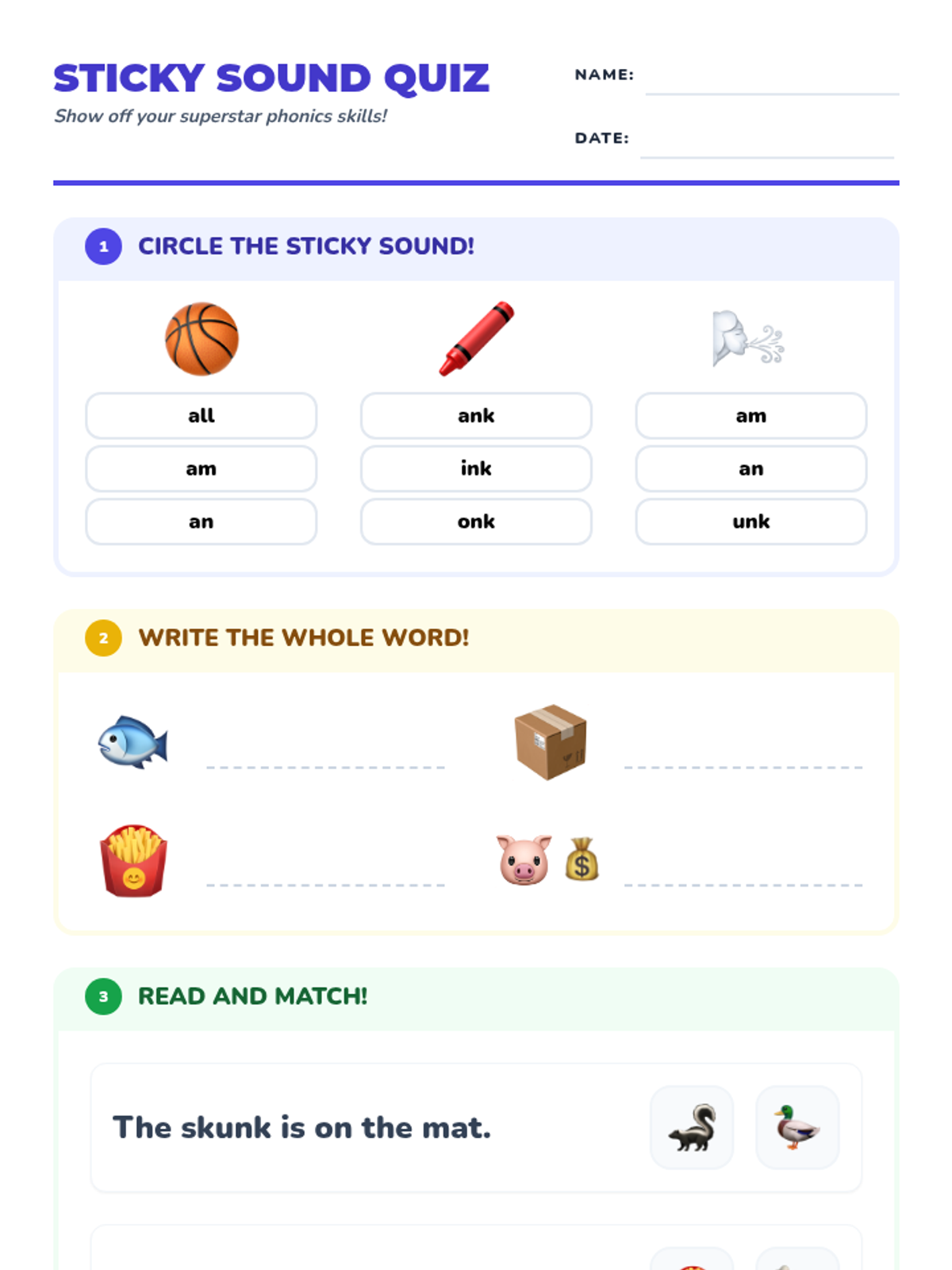
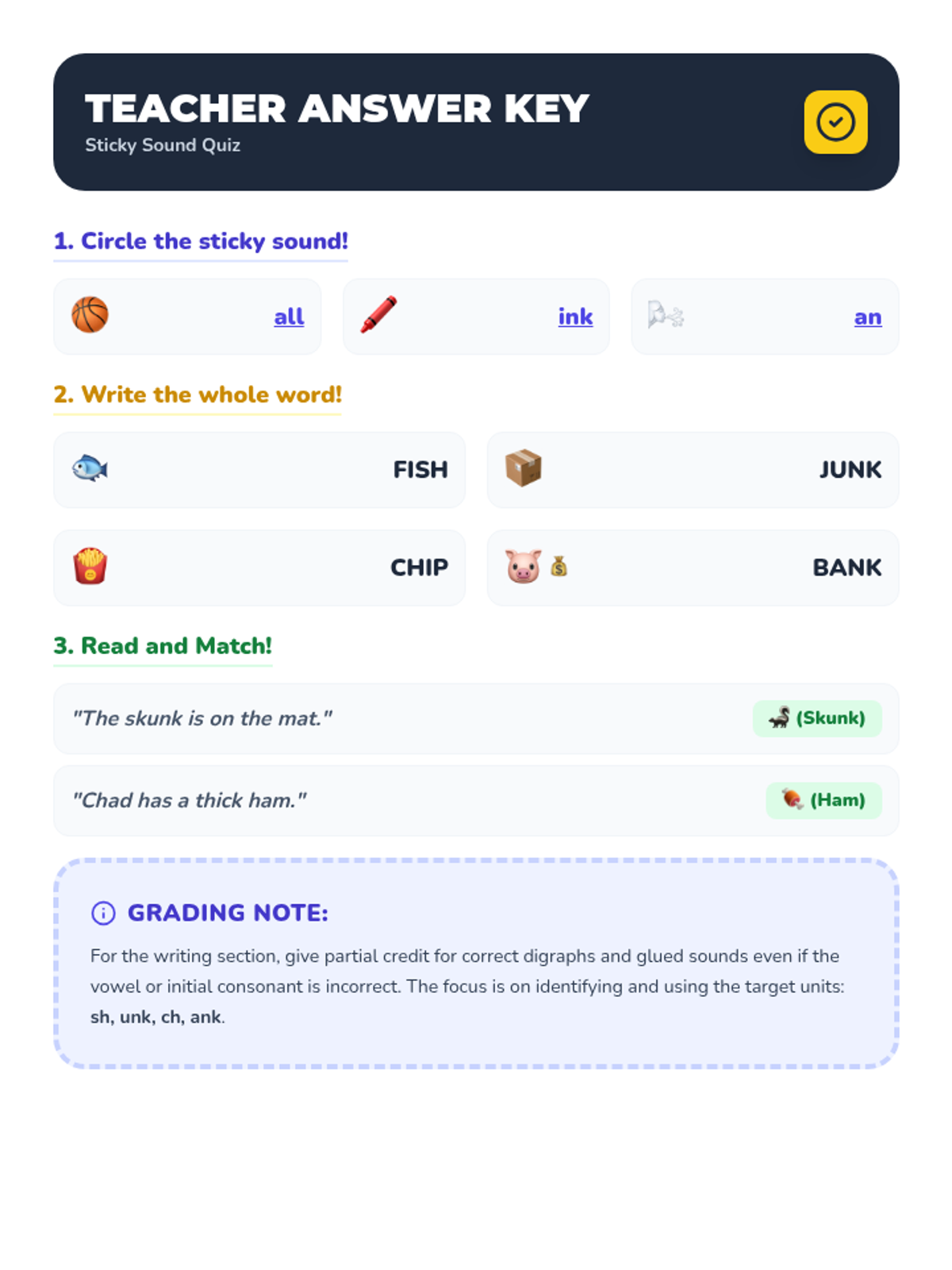
A first-grade phonics lesson focusing on 'glued sounds' (all, am, an, ank, ink, onk, unk). Students will identify, read, and match these sounds to corresponding words and pictures through an interactive slide deck and a follow-up matching activity.