A comprehensive lesson on tornadoes, covering their formation from rotating thunderstorms, their devastating wind impacts, and critical "get low" safety protocols.
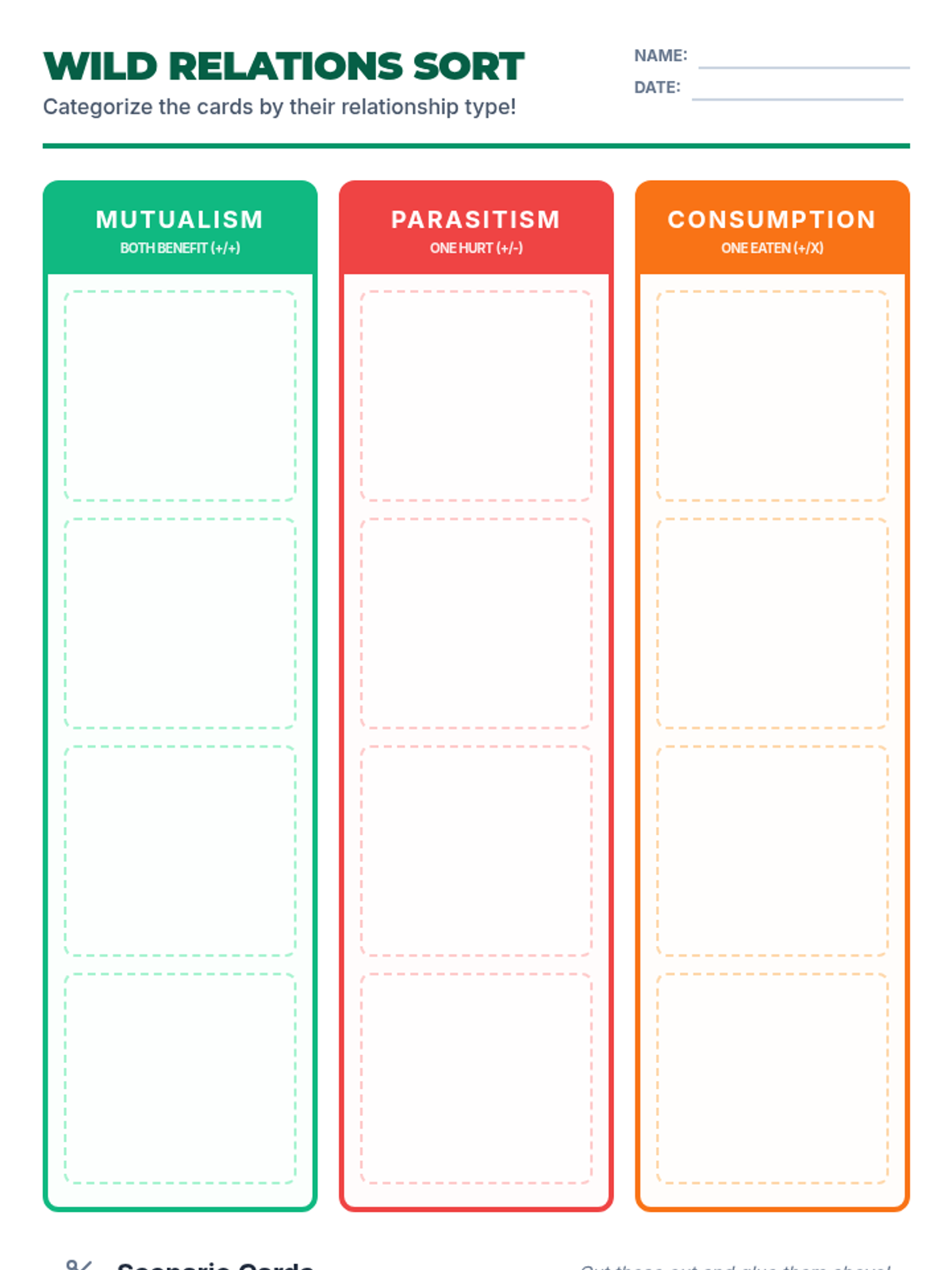
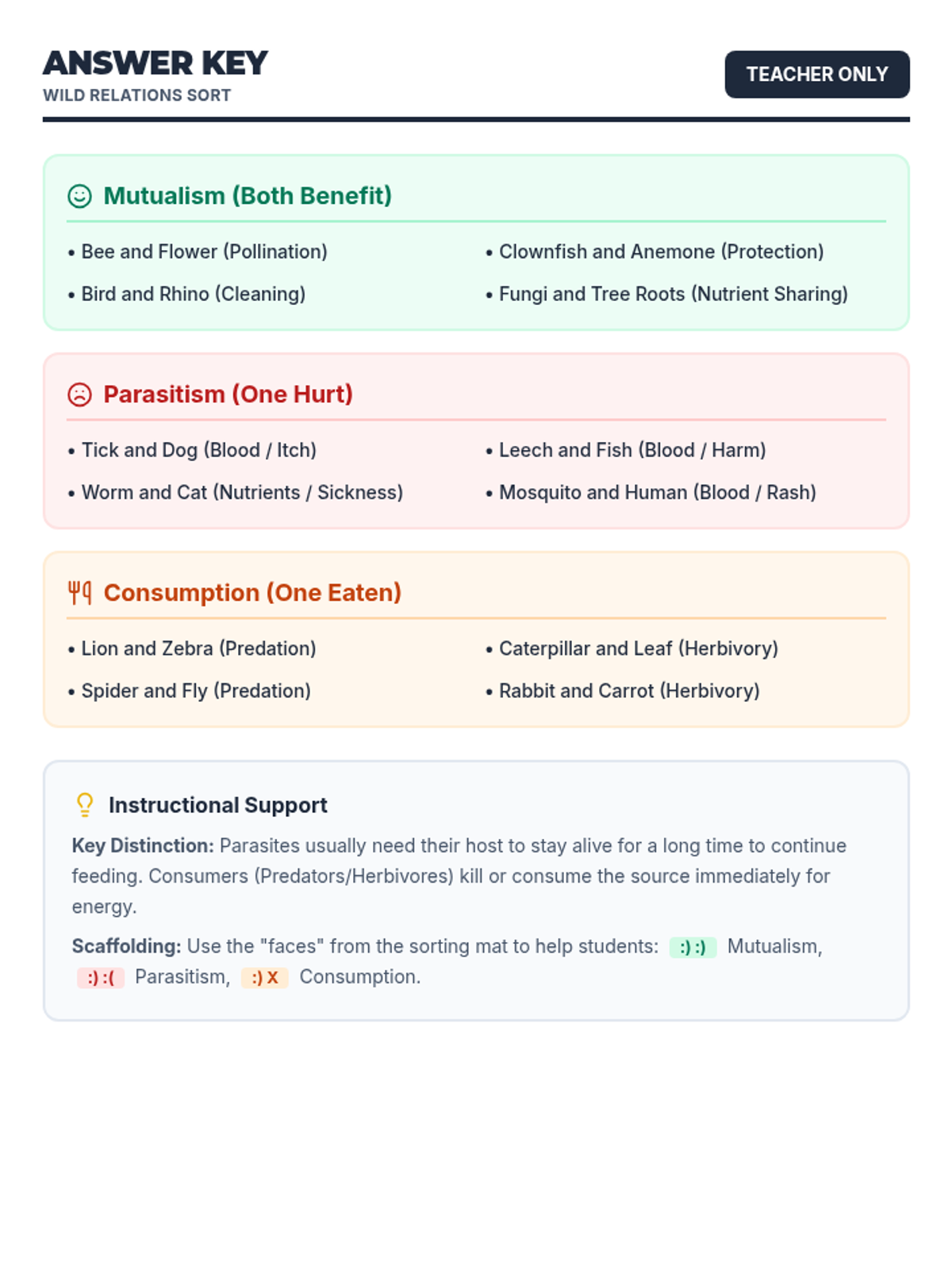
In this lesson, students explore the different ways organisms interact in nature. They will identify and categorize relationships into three types: mutualism, parasitism, and consumerism using visual examples and simple scenarios.
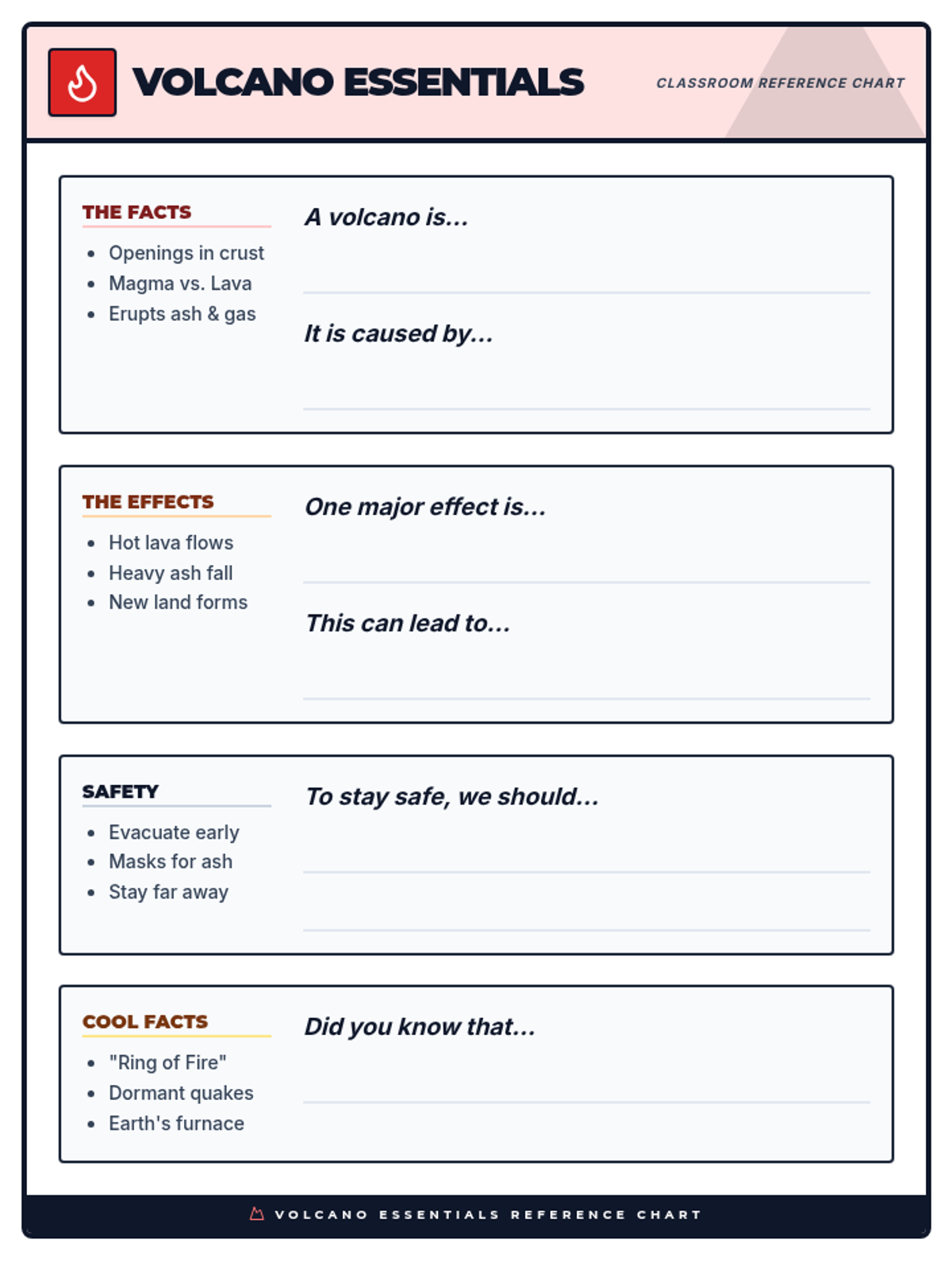
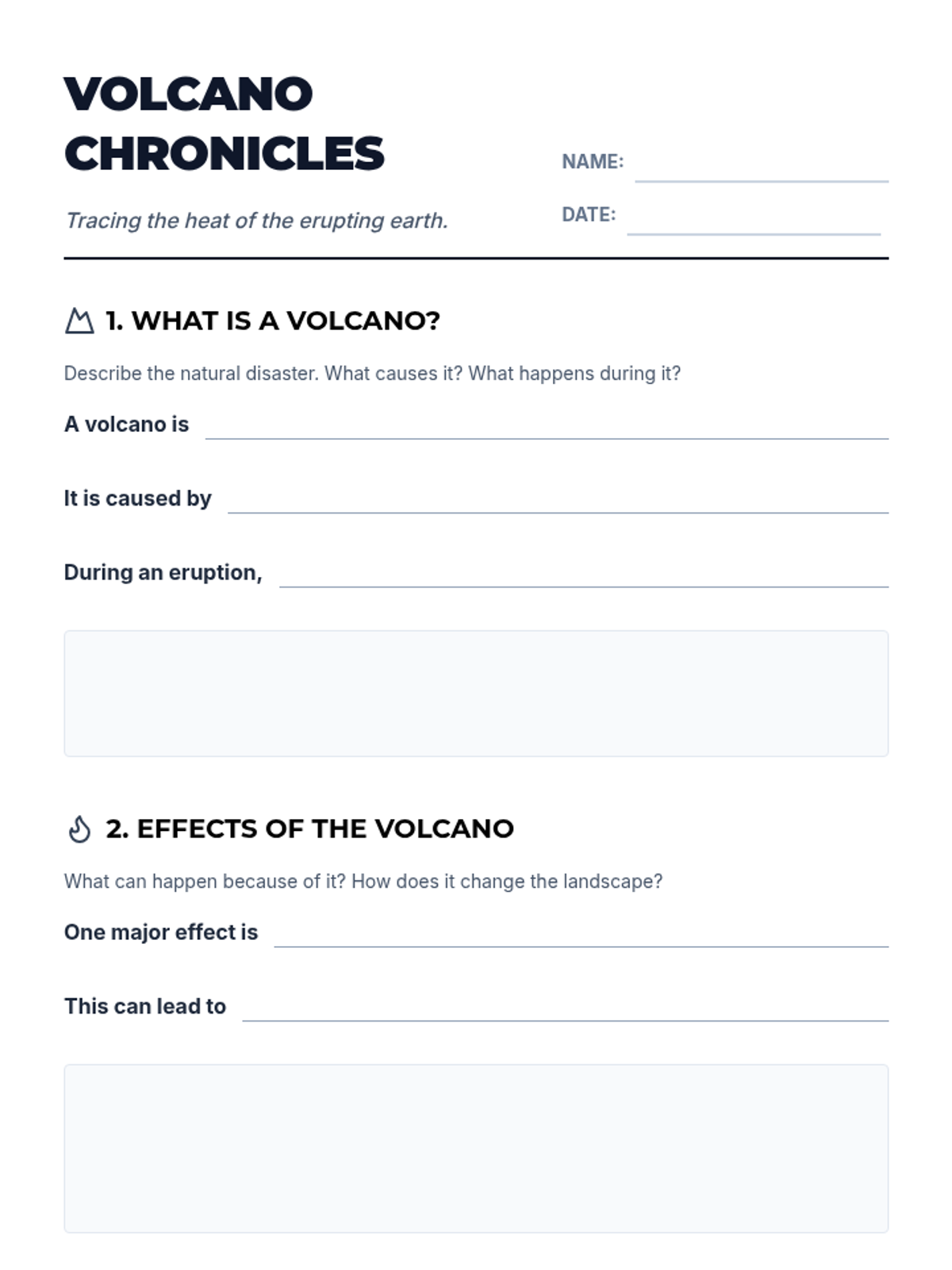
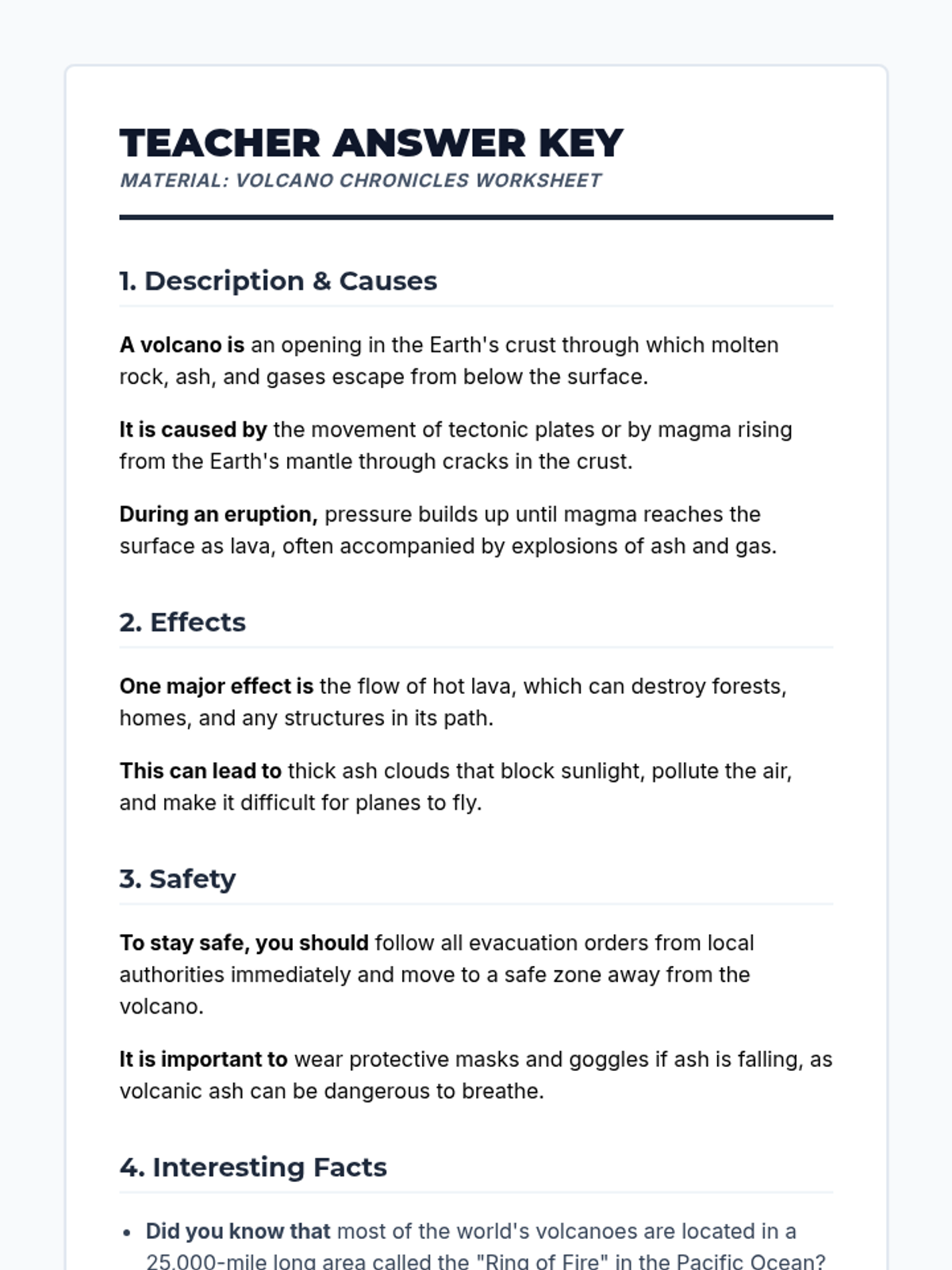
A comprehensive lesson on volcanoes, exploring magma and lava, eruption types, the impact of ash and lava flows, and critical evacuation safety protocols.
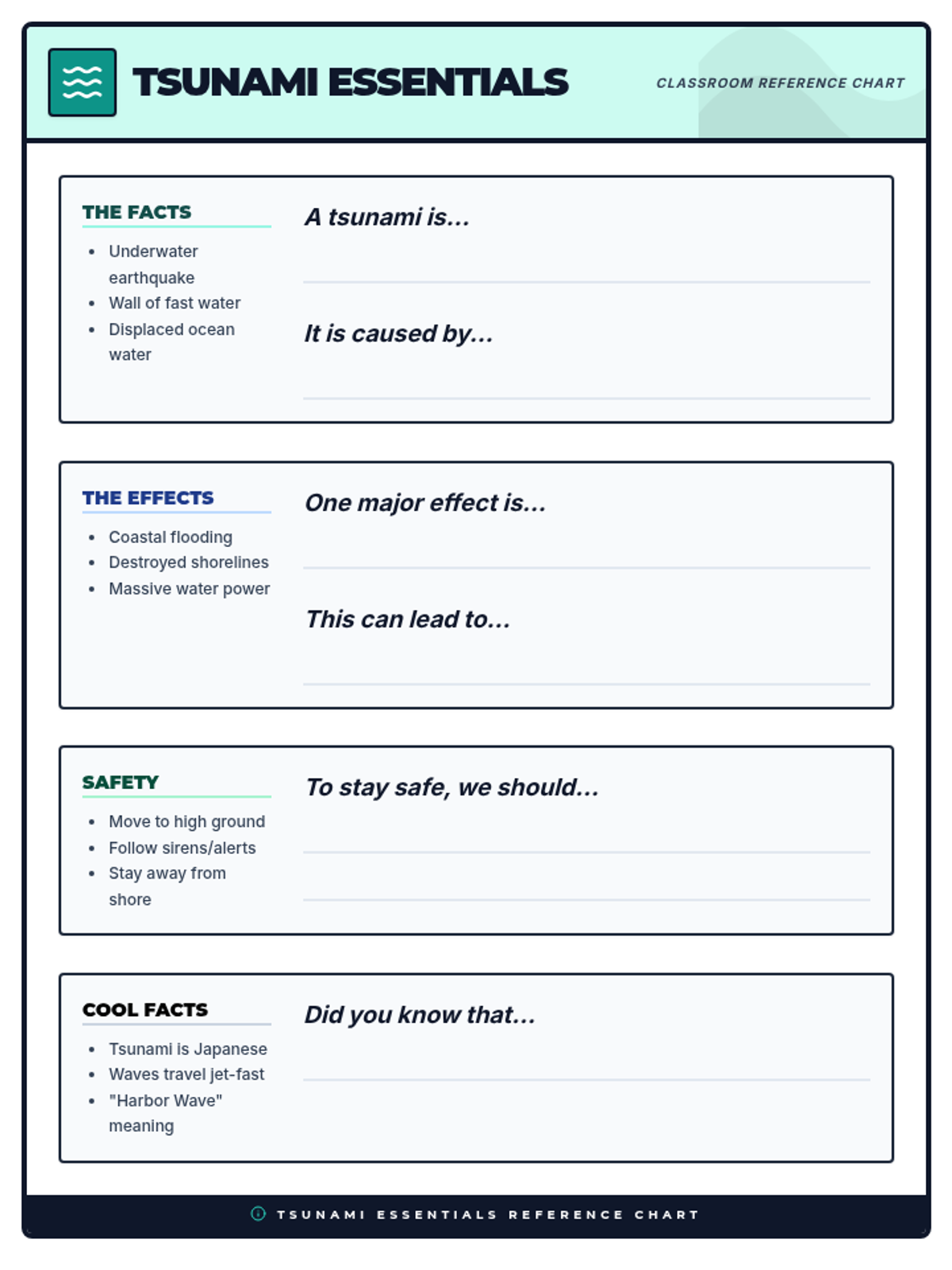
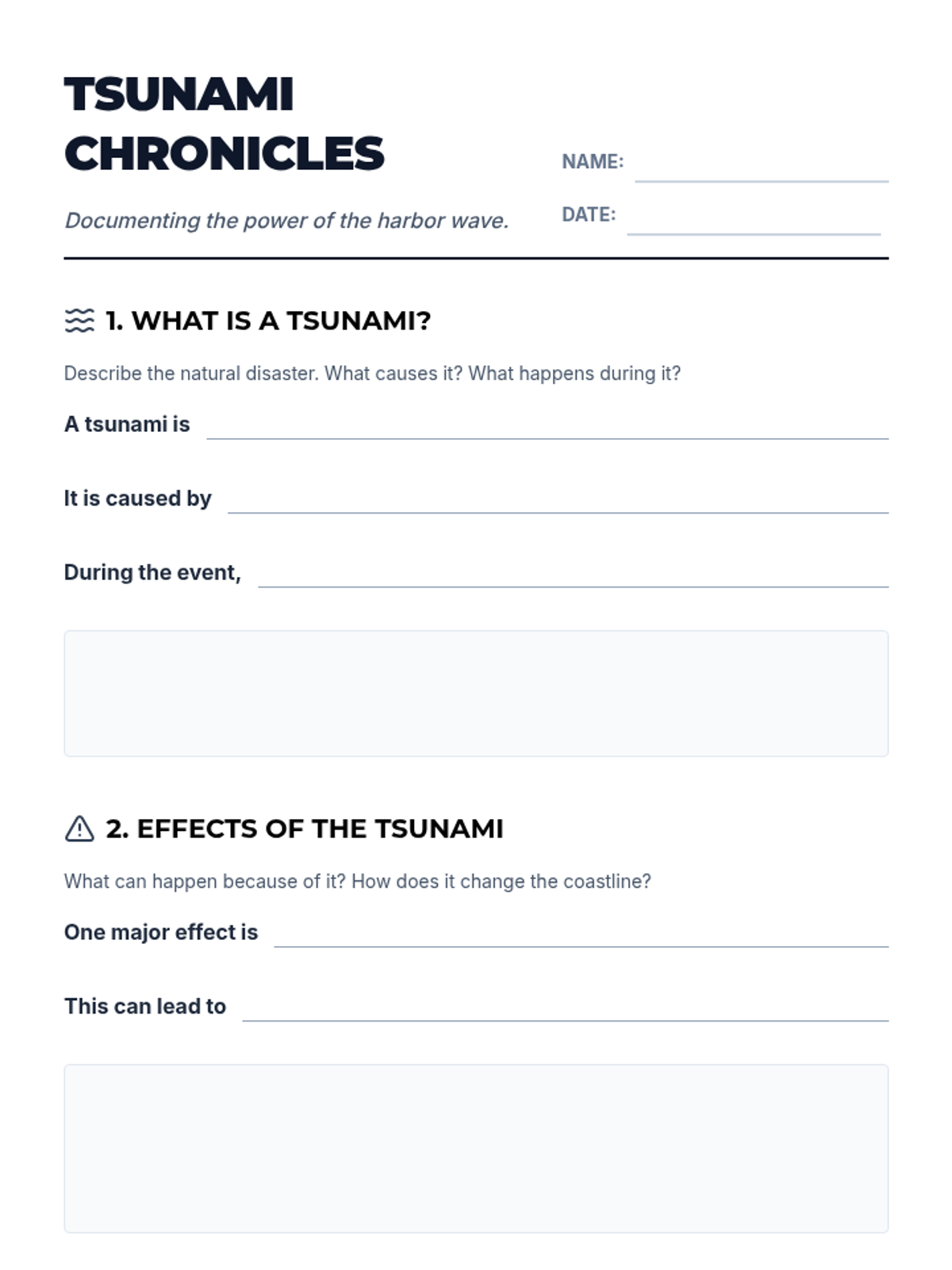
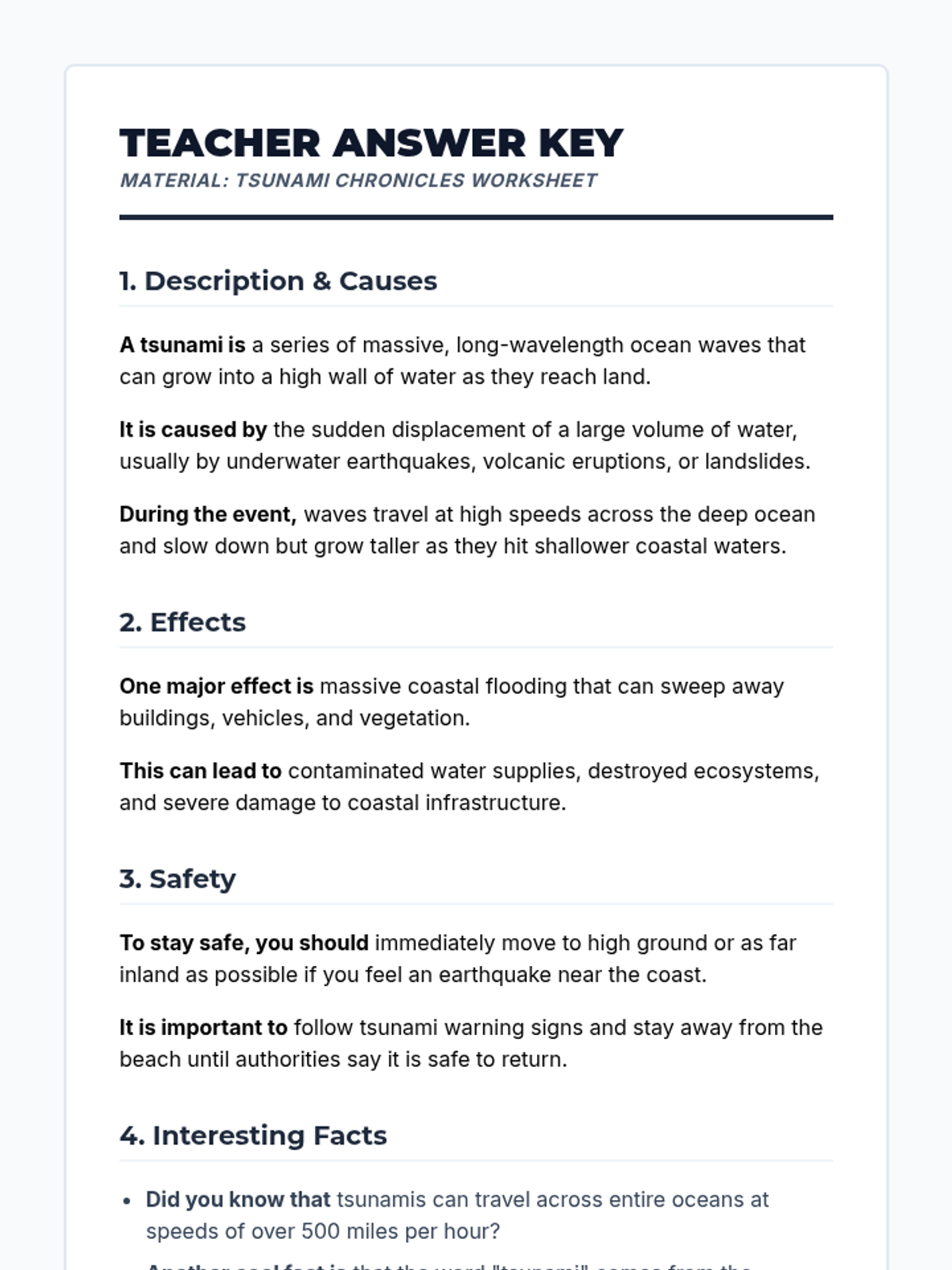
A comprehensive lesson on tsunamis, exploring their triggers like underwater earthquakes, the physics of wall-of-water waves, and critical coastal evacuation safety.
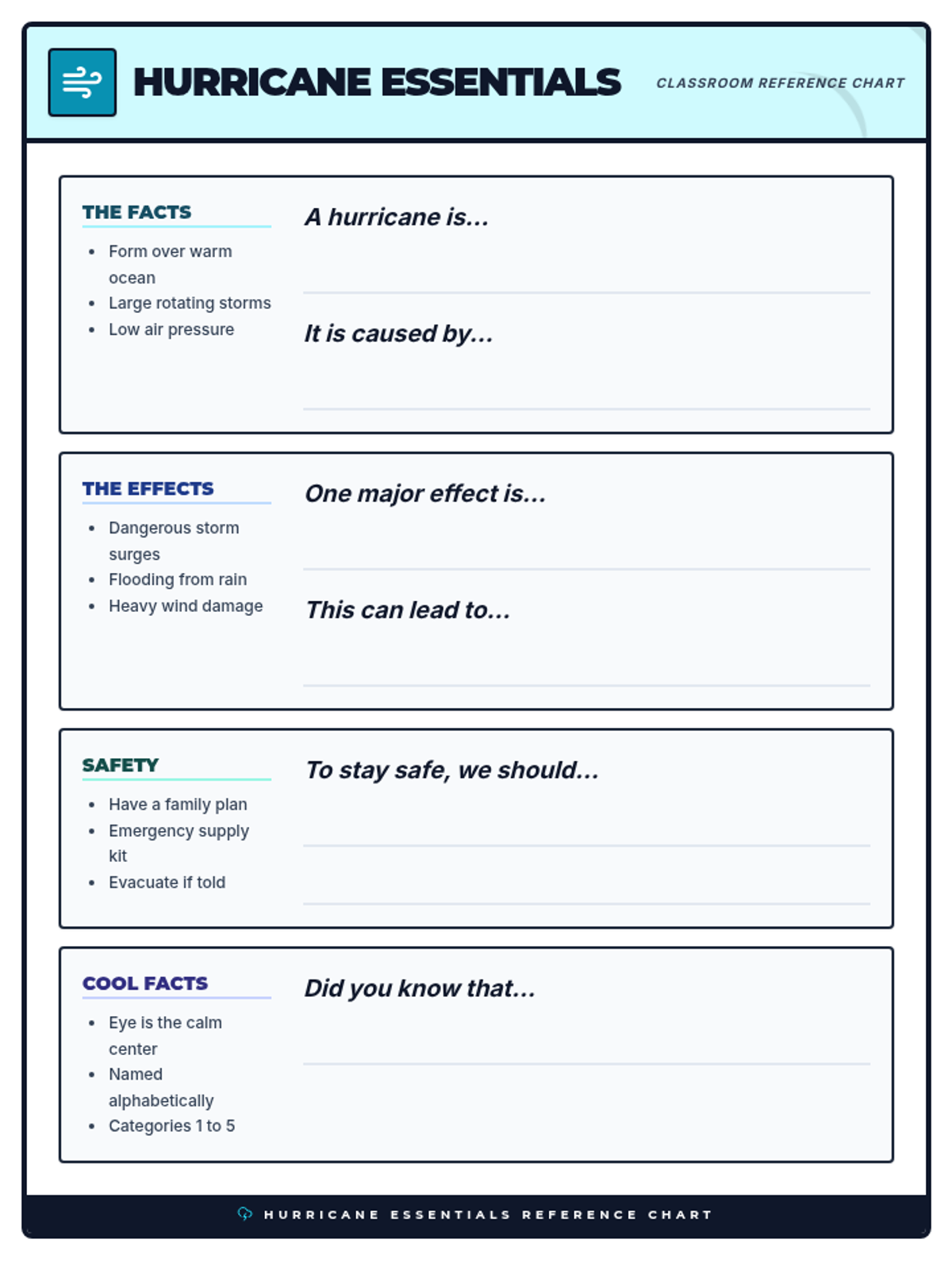
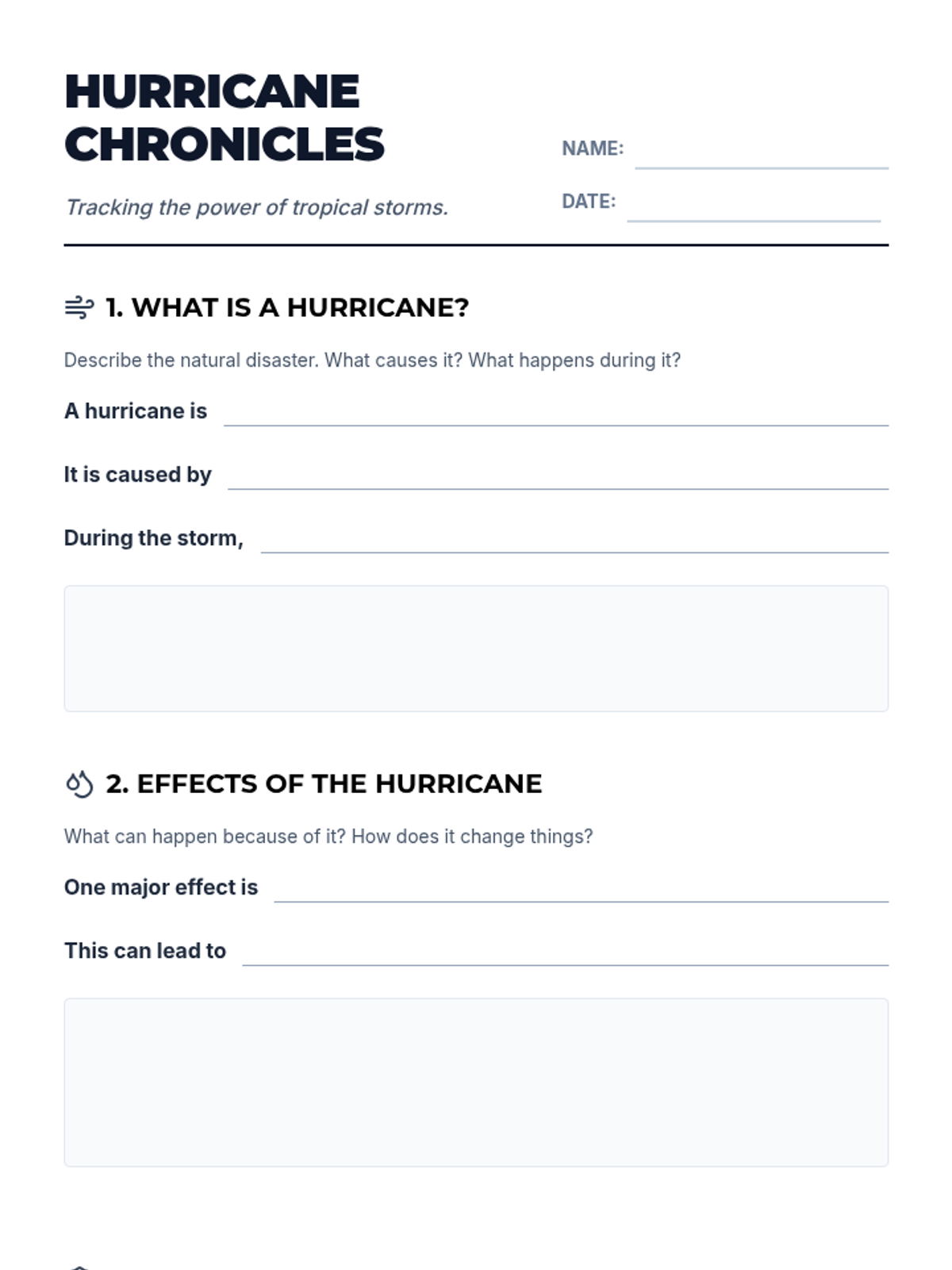
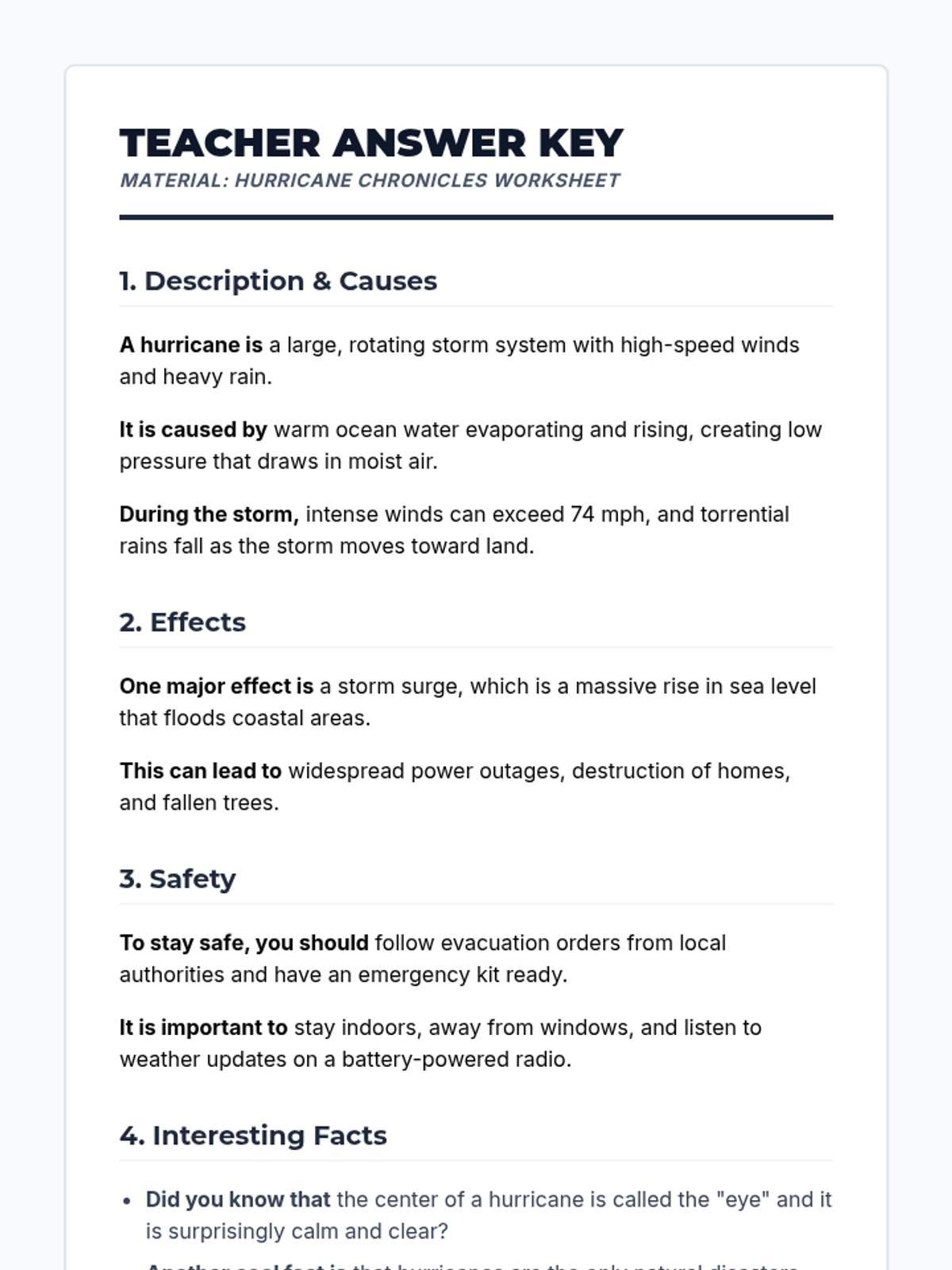
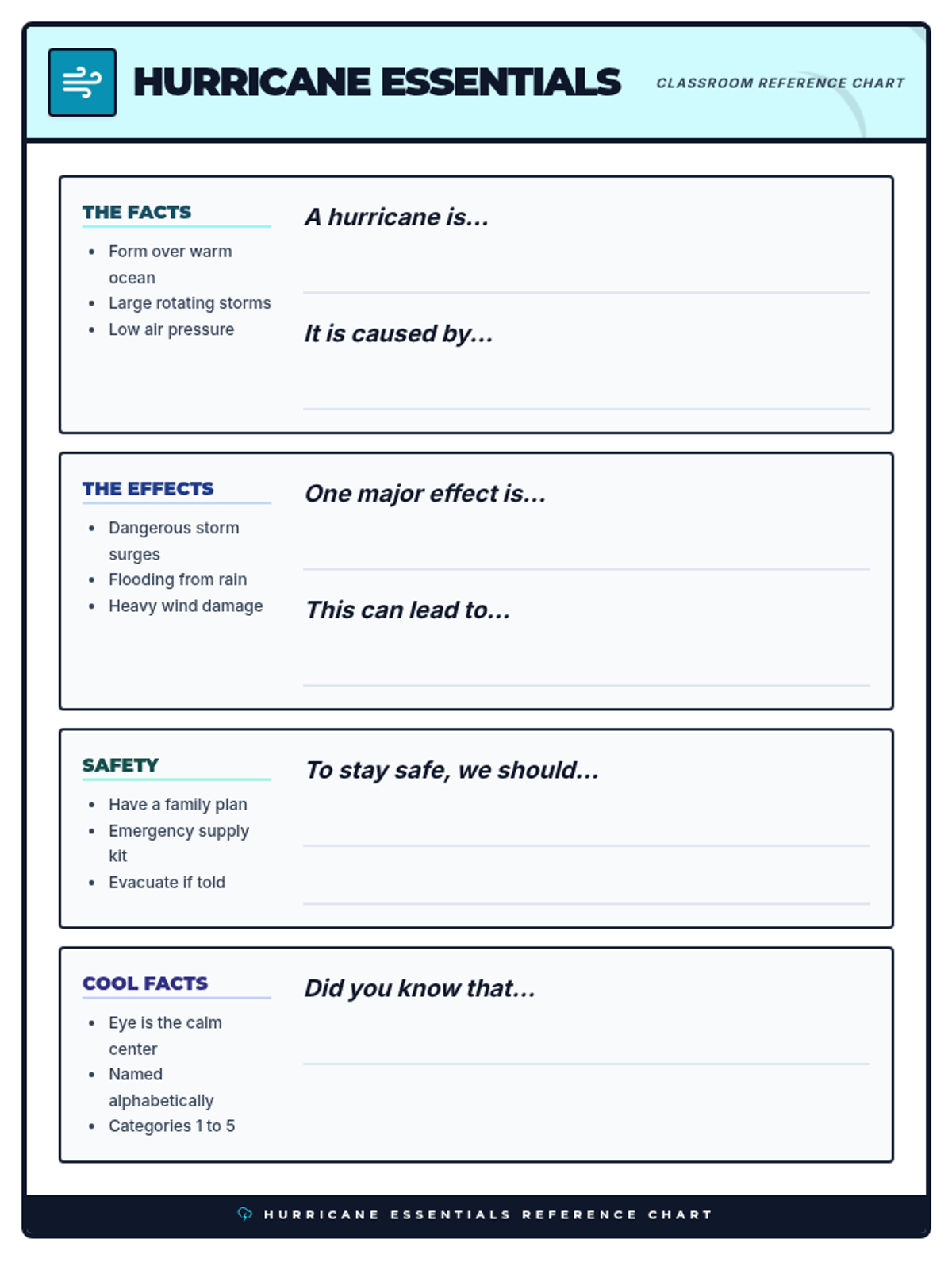
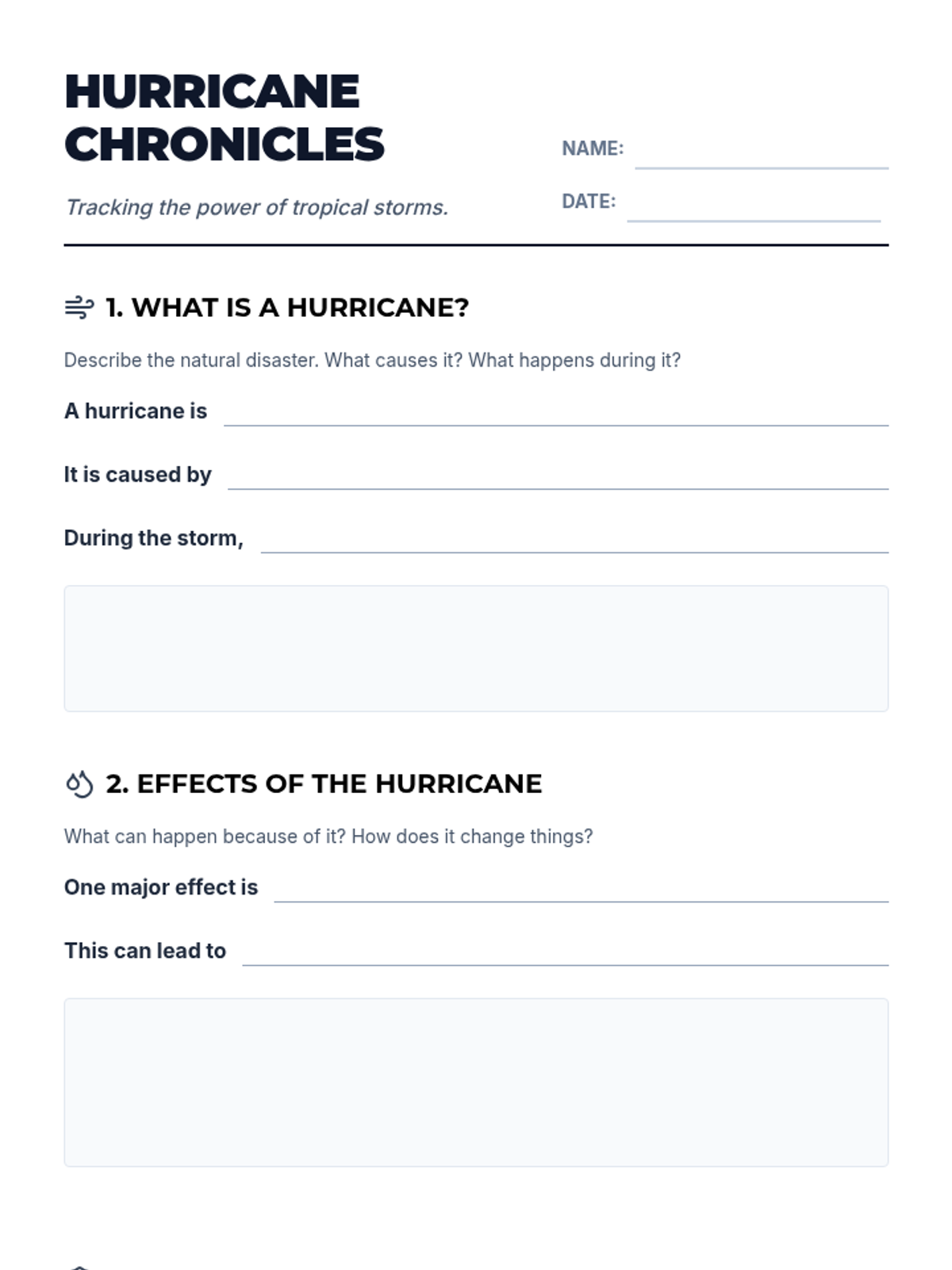
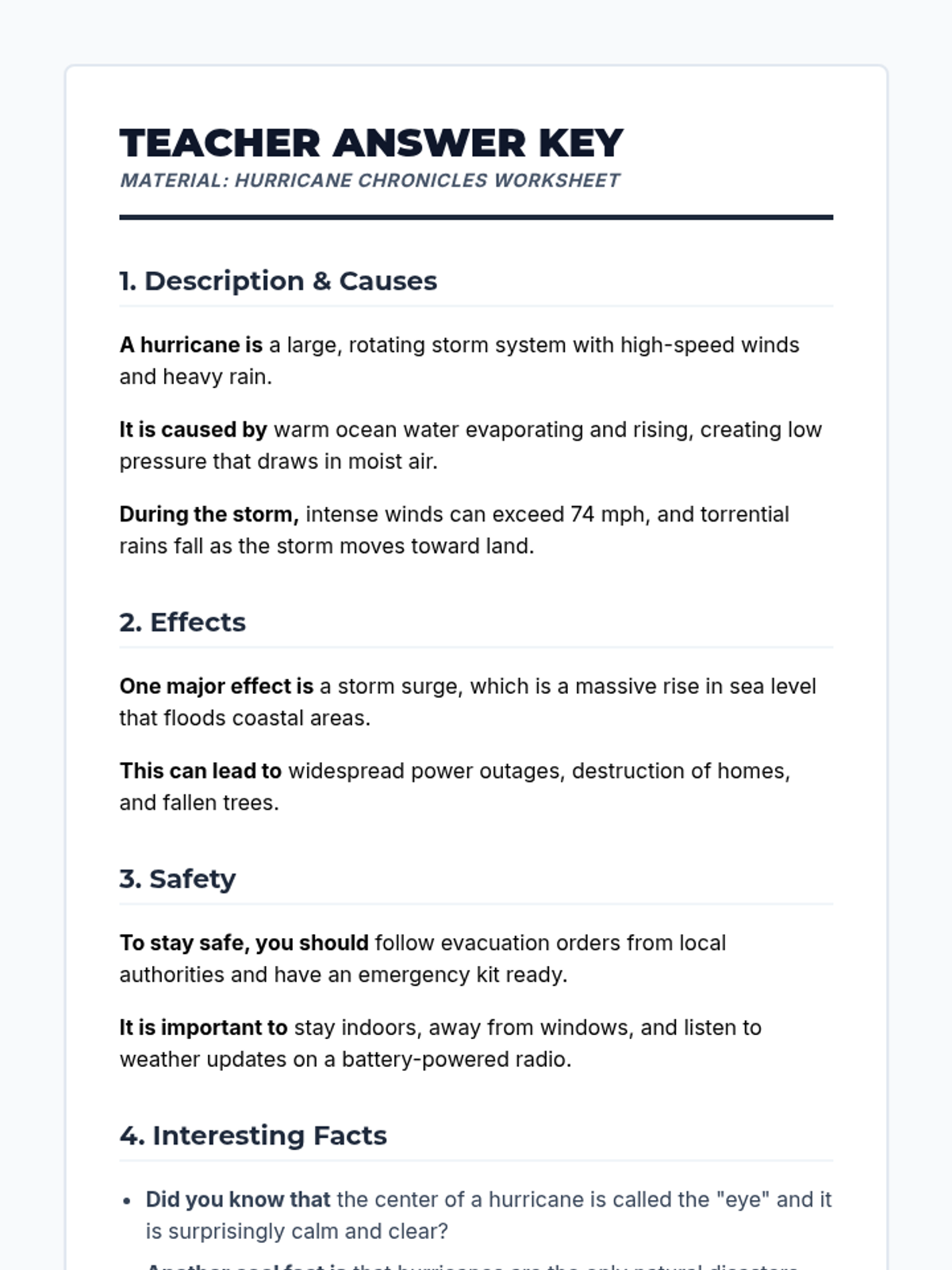
A comprehensive lesson on hurricanes, exploring their formation over warm oceans, their powerful effects like storm surges, and critical safety procedures.
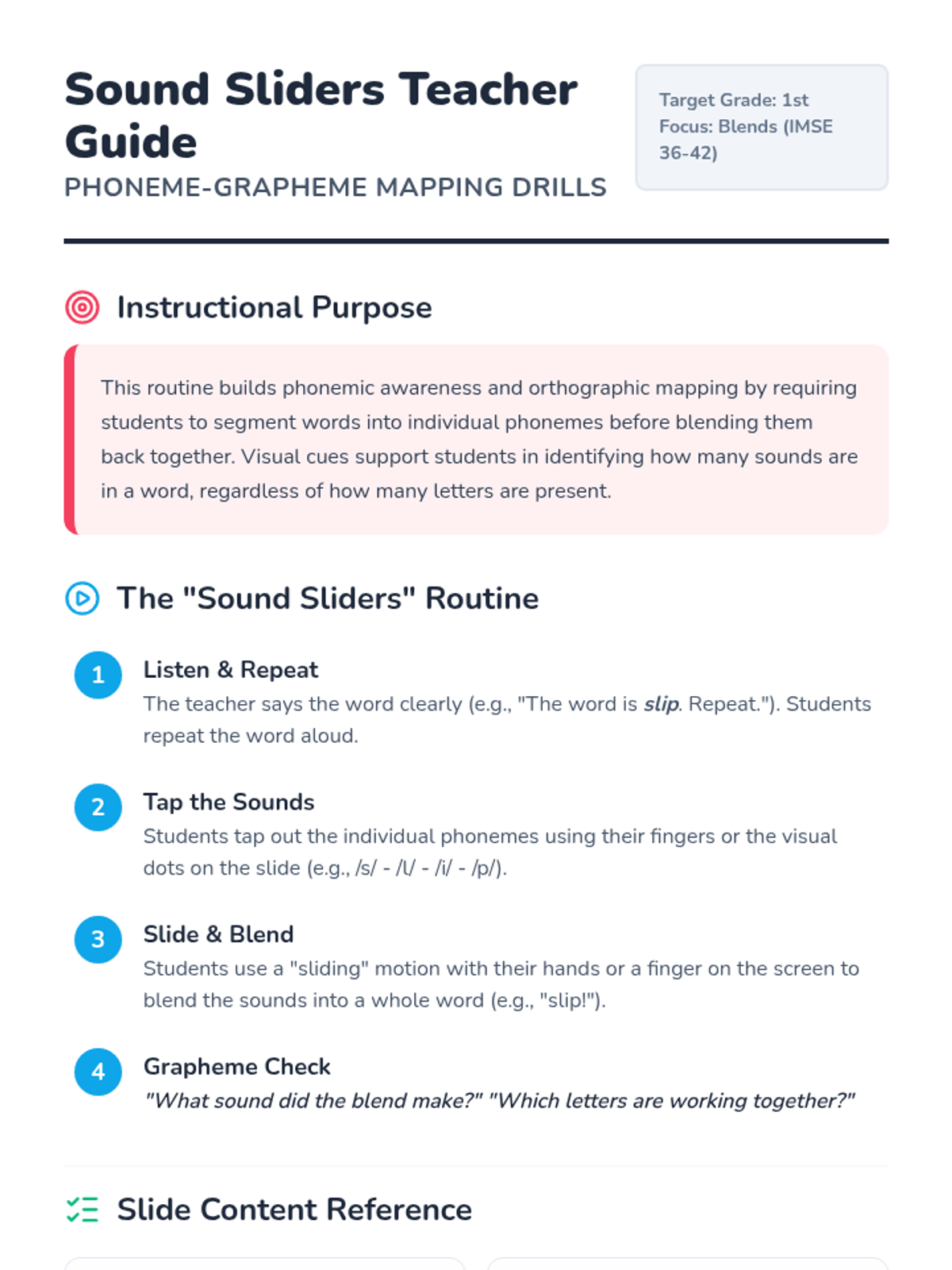
The final week of Sound Sliders drills focusing on Open Syllables and comprehensive Blend review.
The third week of Sound Sliders drills focusing on Mixed Blends and Glued Sounds (-ng, -nk) with daily 12-word practice sets.
The second week of Sound Sliders drills focusing on S-Blends and Ending Blends with daily 12-word practice sets.
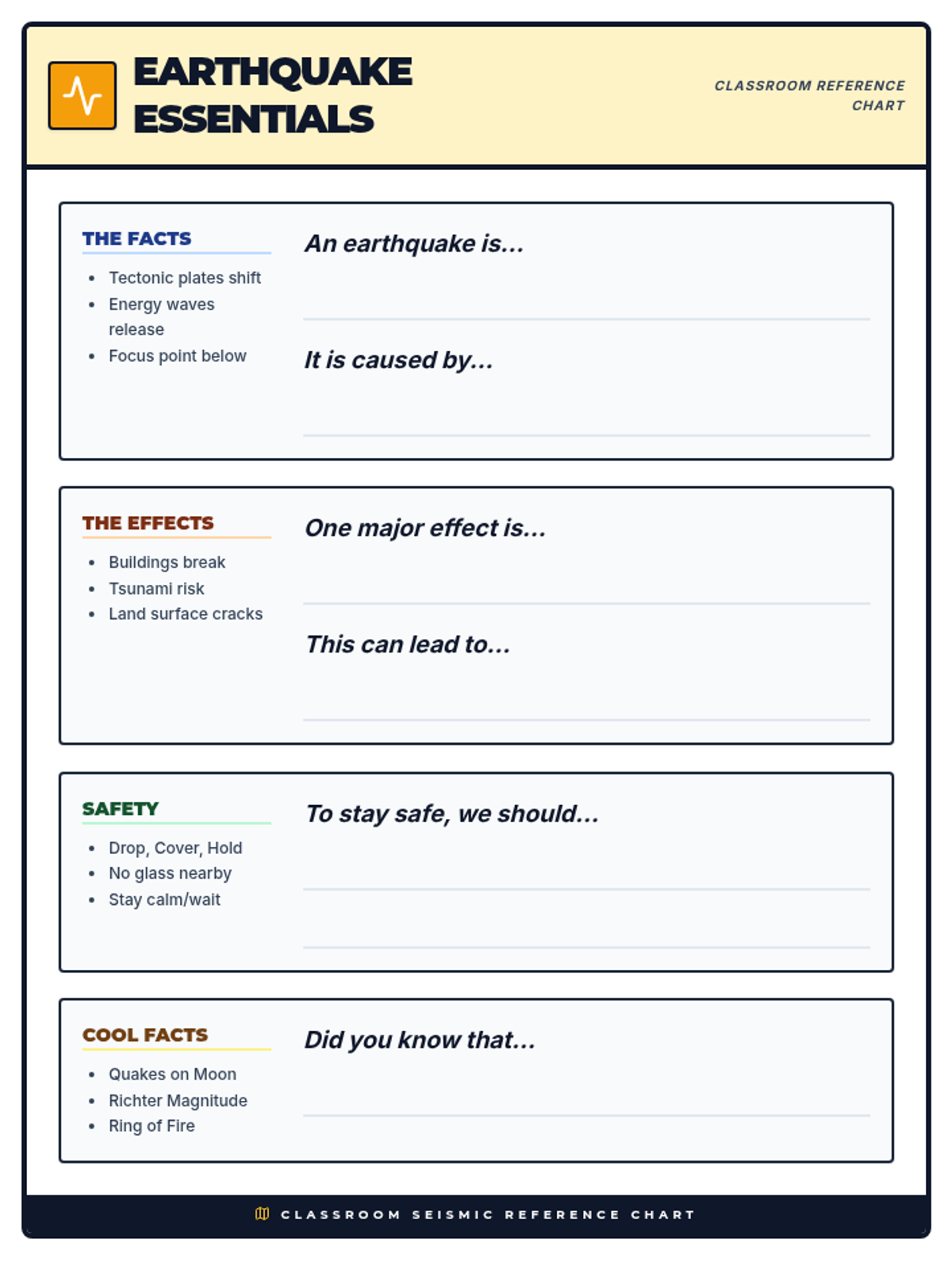
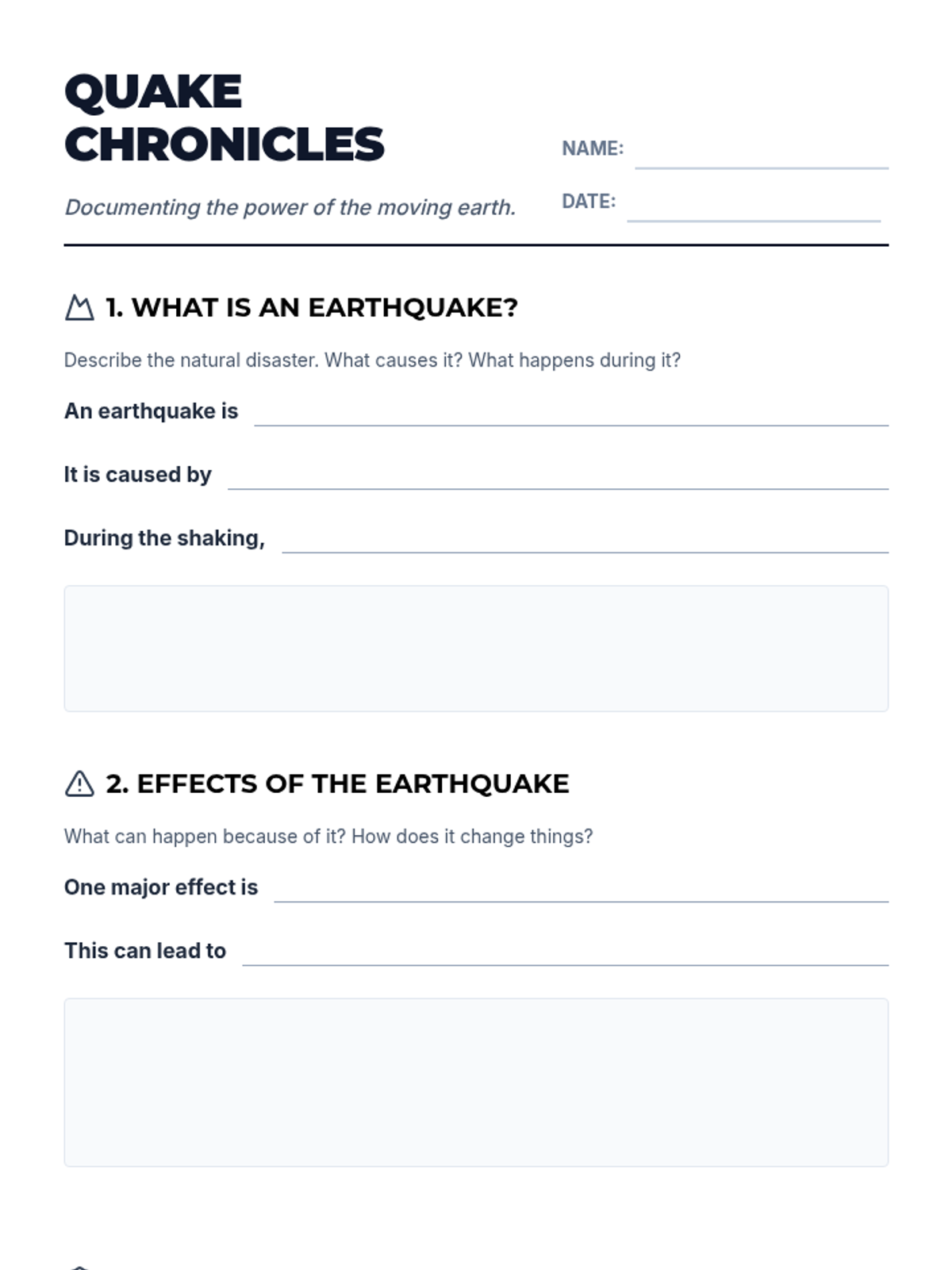
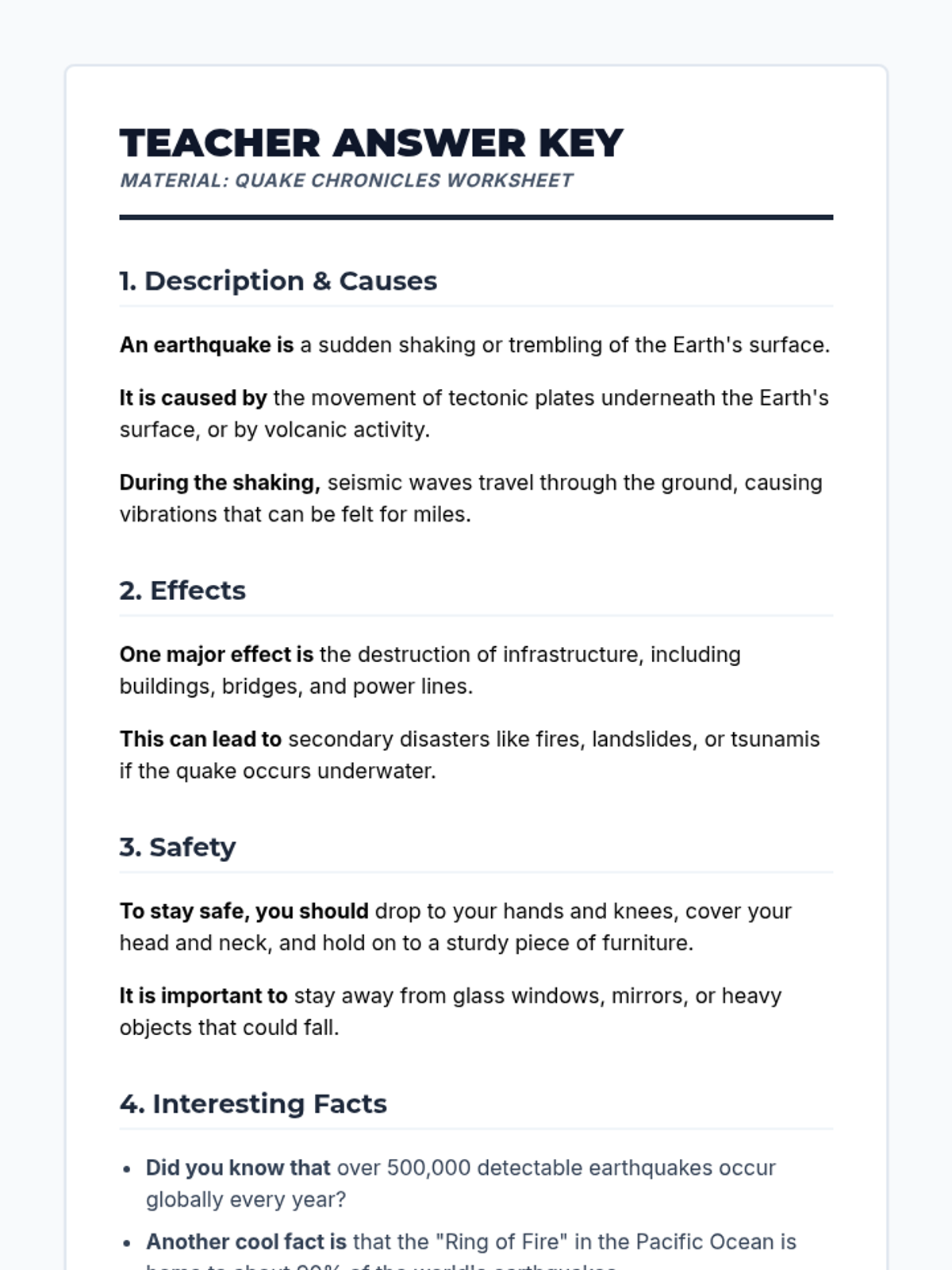
A comprehensive lesson on earthquakes, covering their causes, effects, safety protocols, and fascinating seismic facts using sentence starters to support student writing.
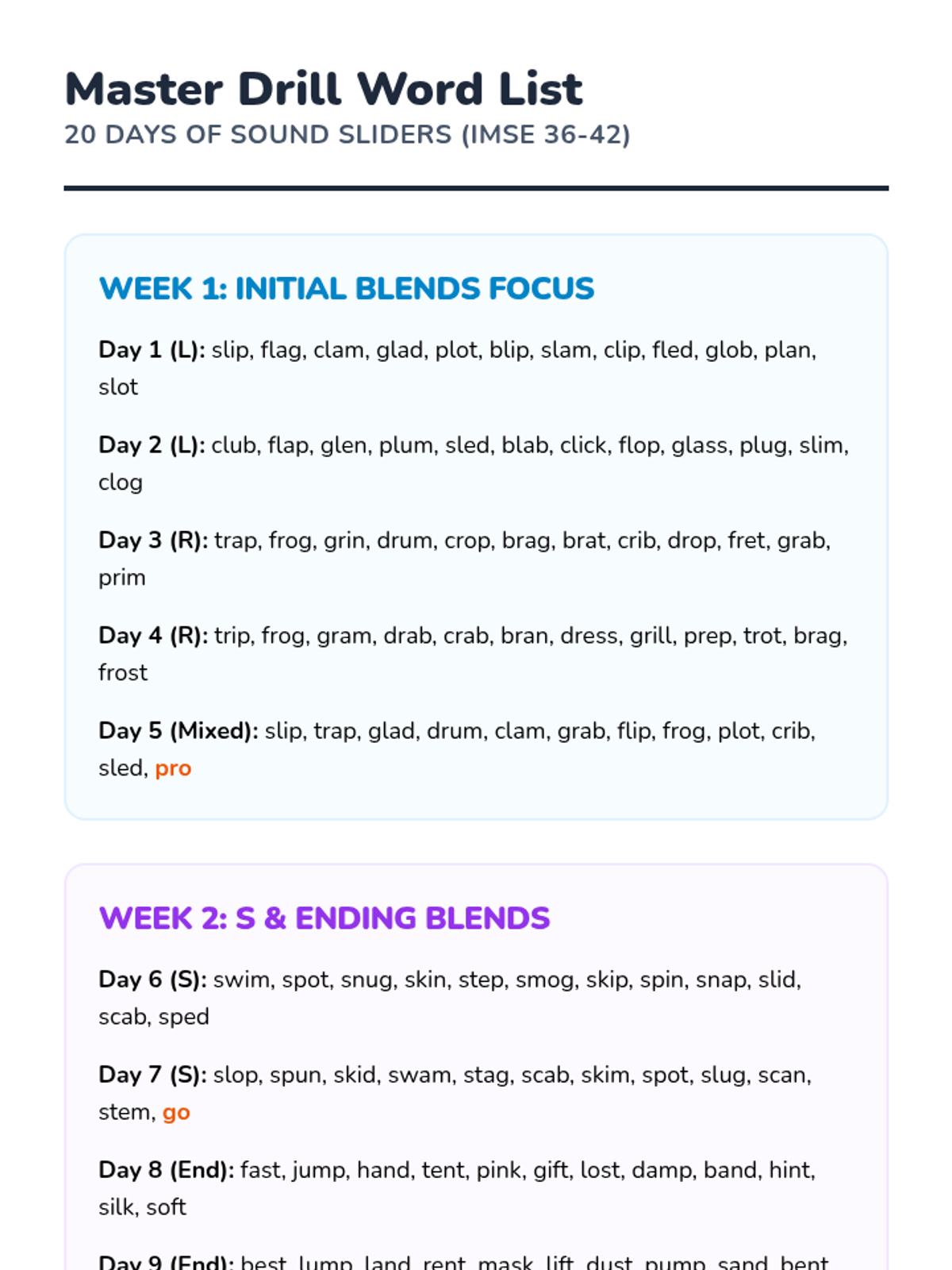
The first week of Sound Sliders drills focusing on initial L-Blends and R-Blends with daily 12-word practice sets.
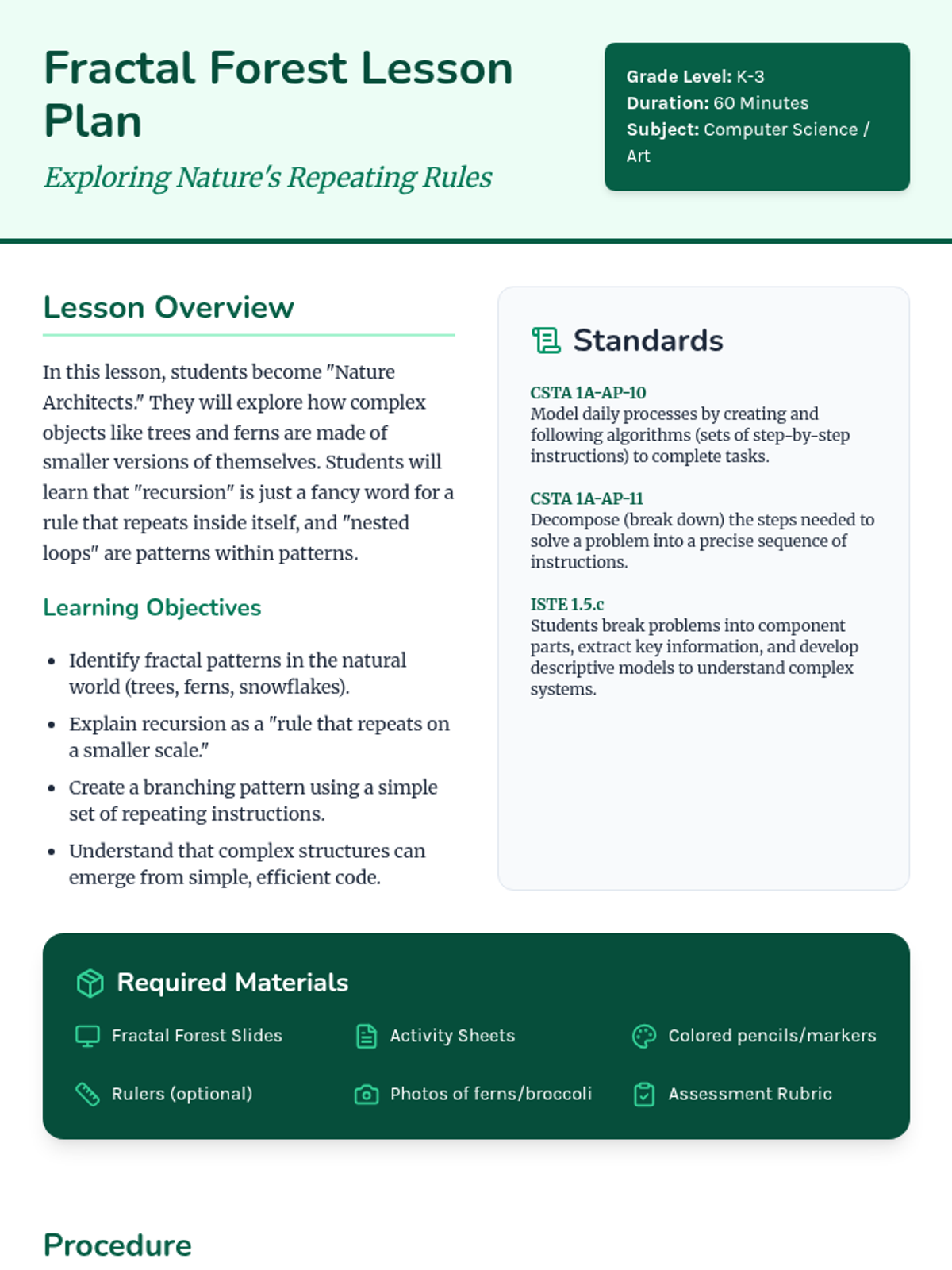
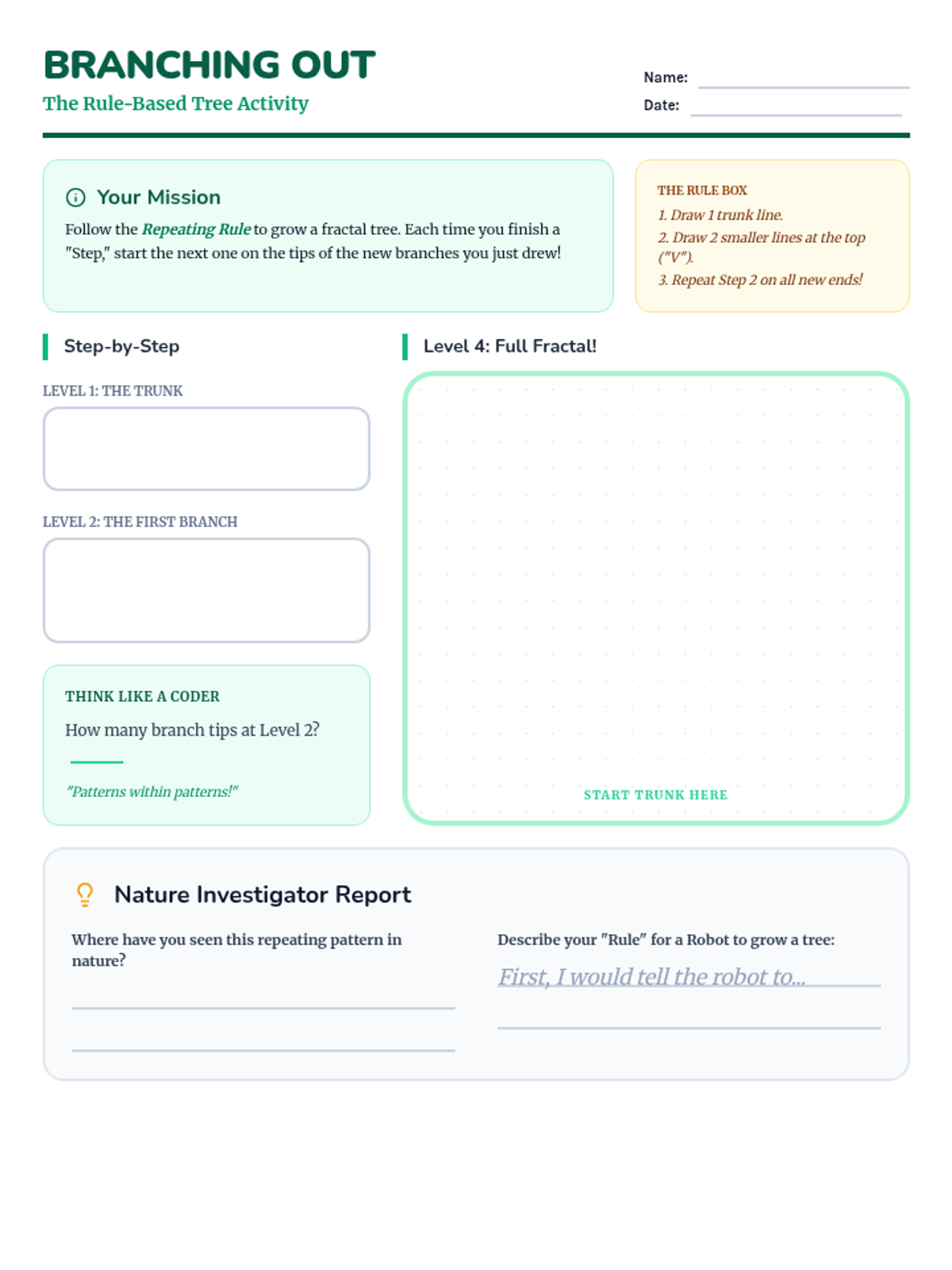
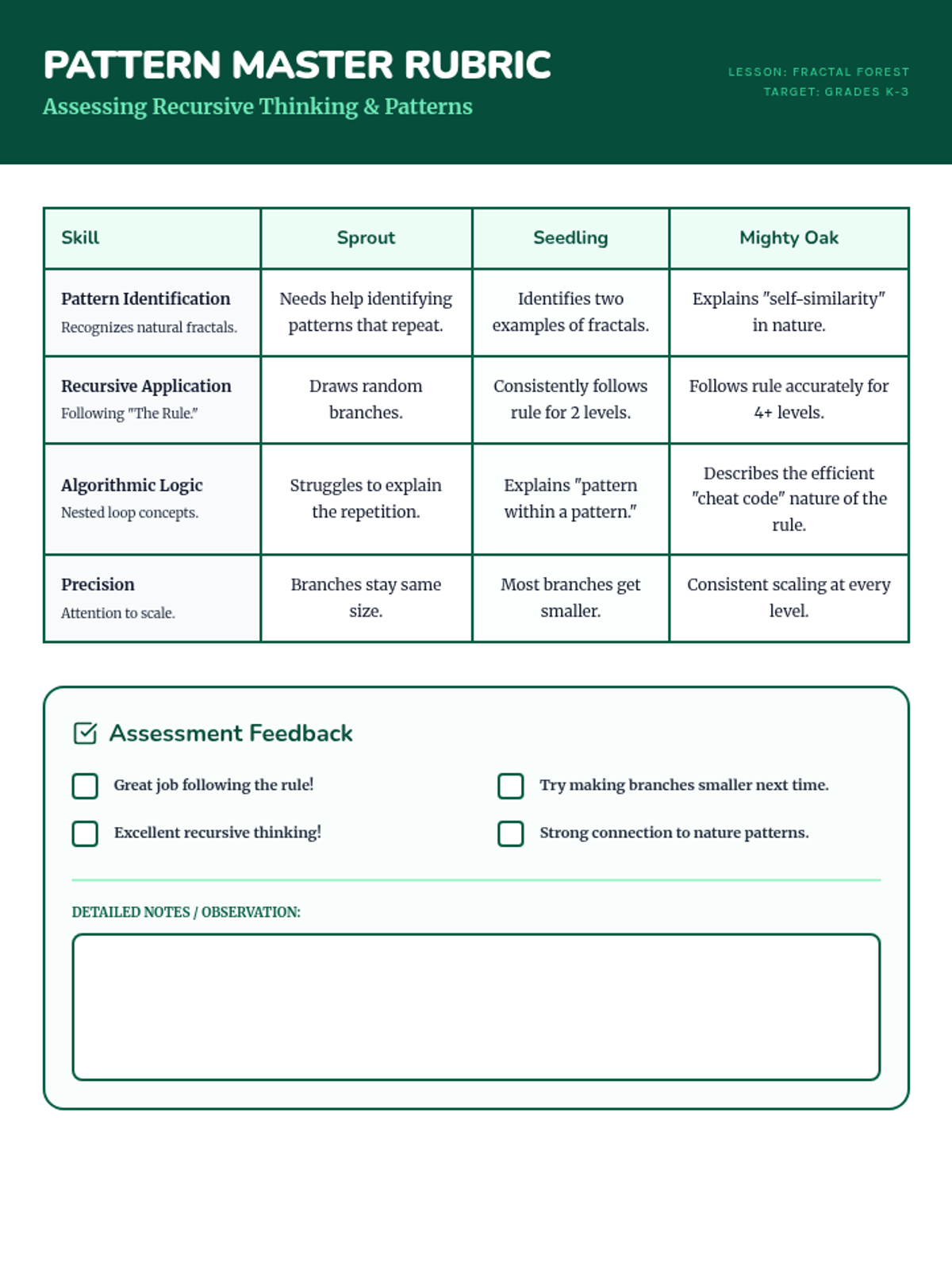
Students in grades K-3 discover the magic of recursion and nested loops by observing patterns in nature and applying simple repeating rules to grow their own digital and hand-drawn forests.
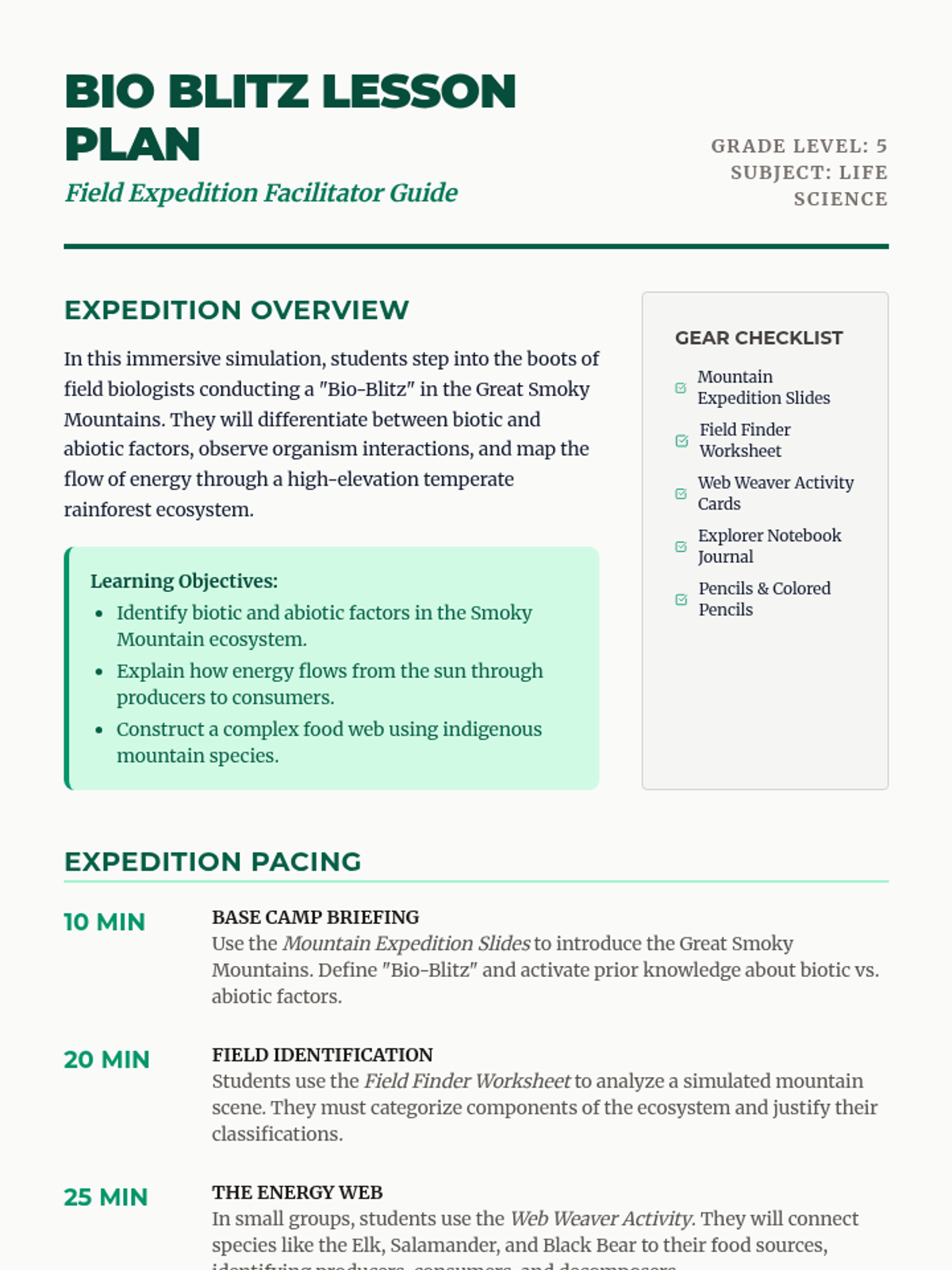
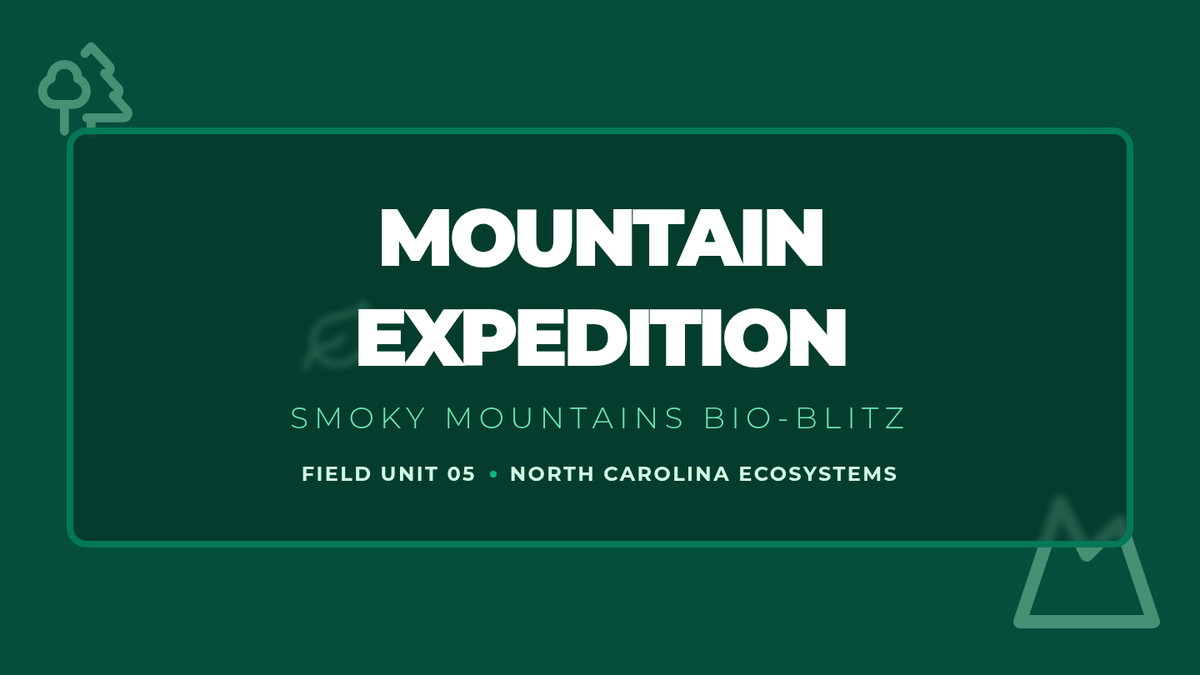
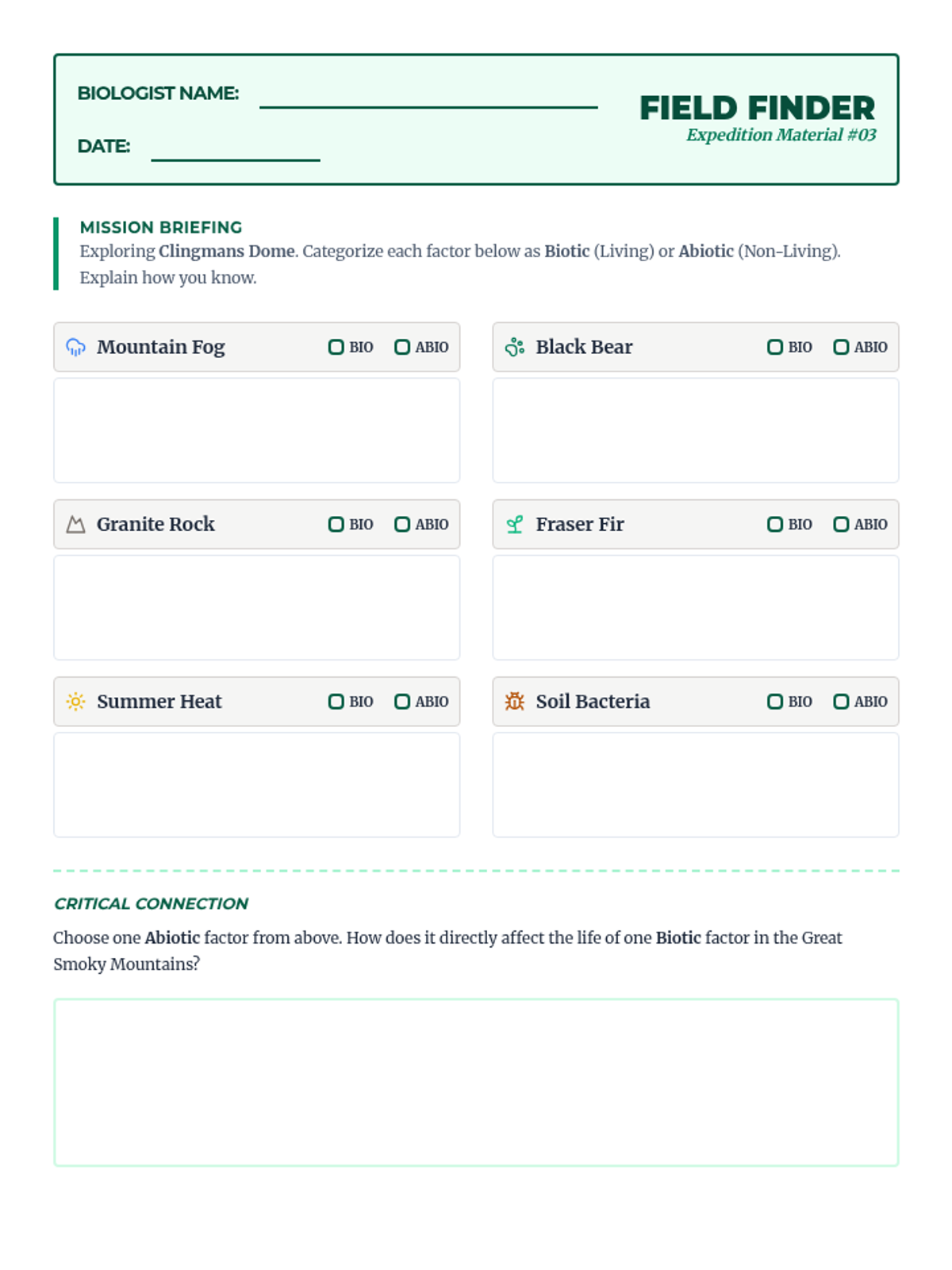
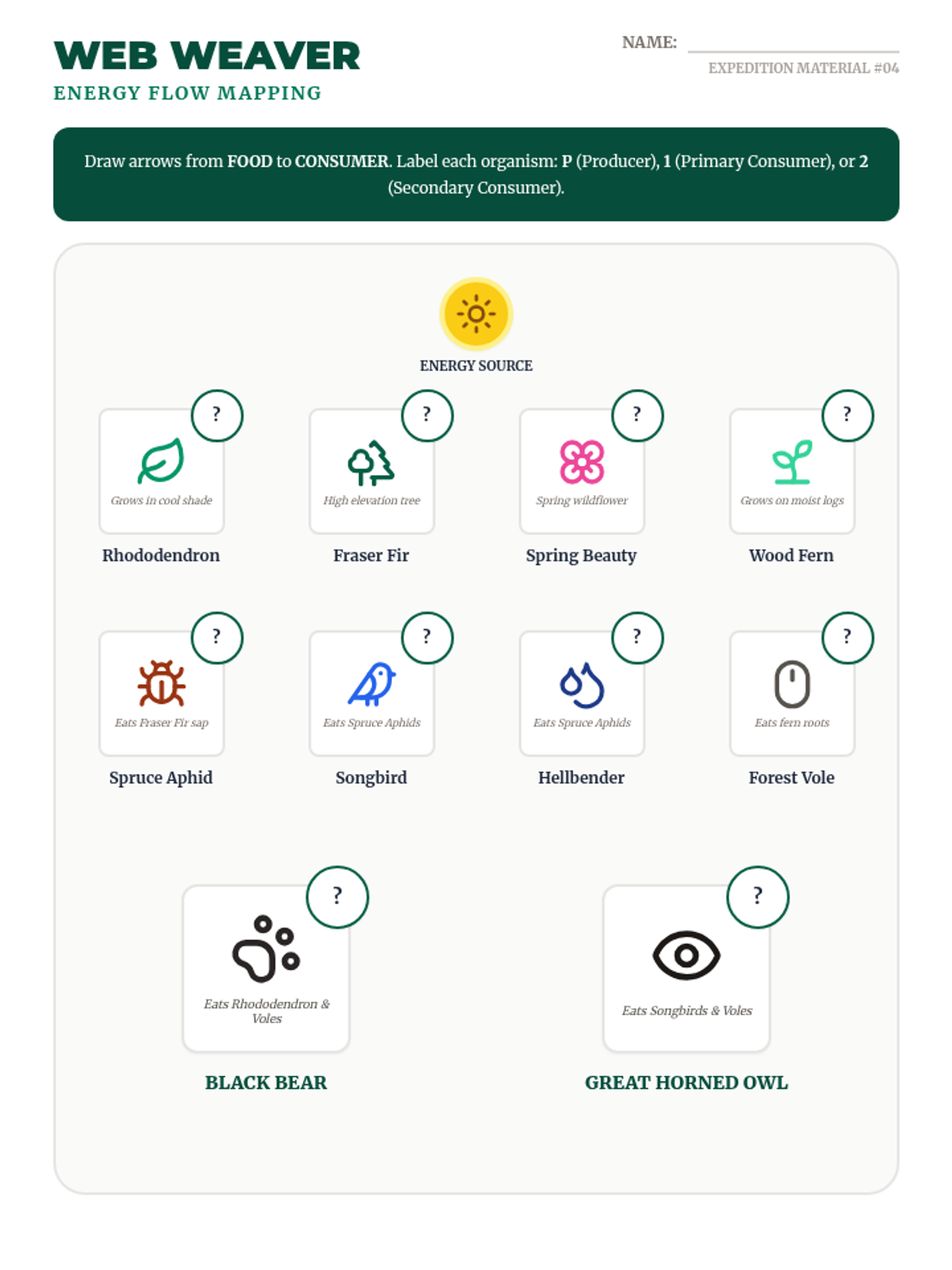
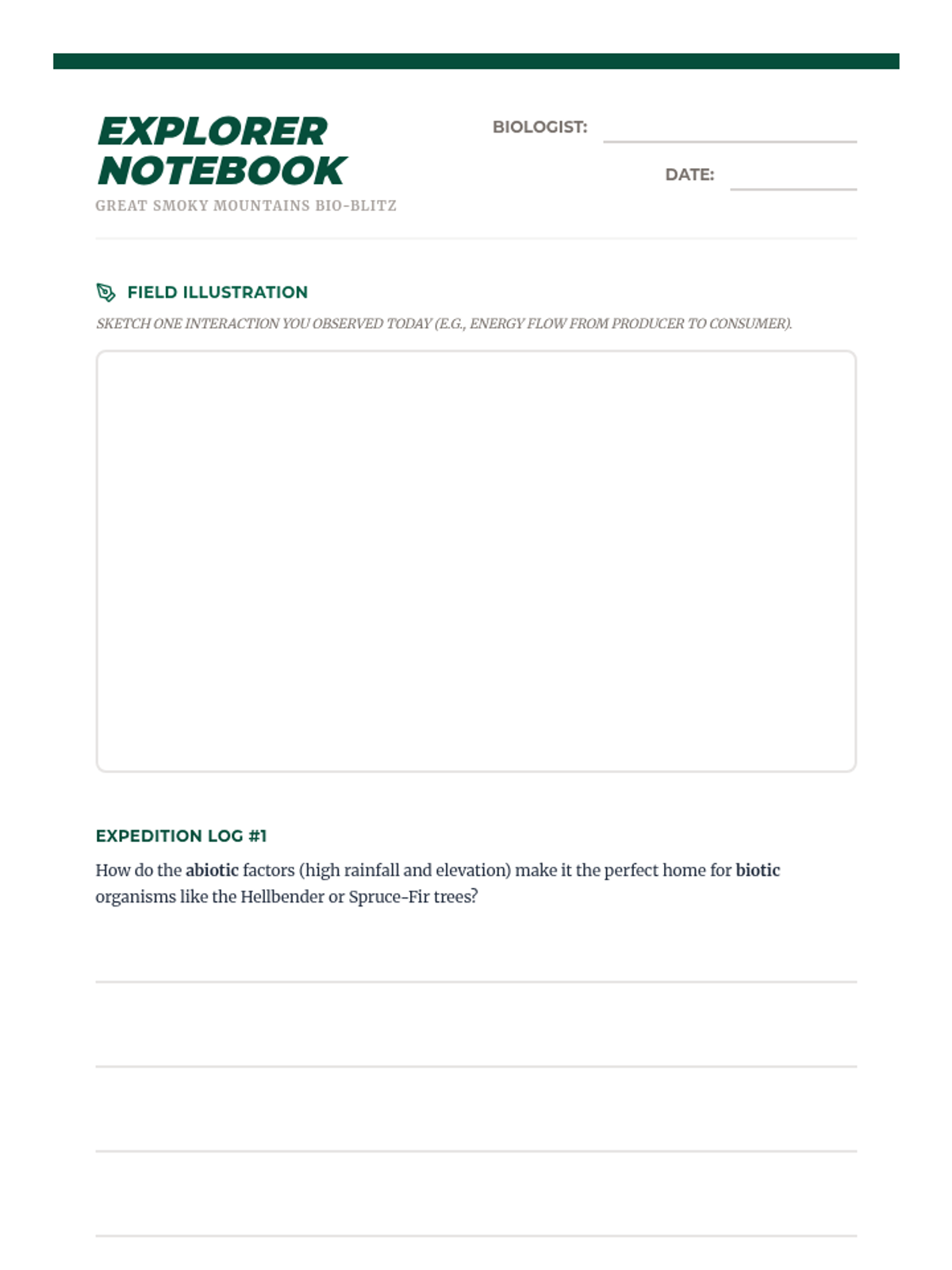
A comprehensive 5th-grade simulation where students identify biotic and abiotic factors and construct food webs within the Great Smoky Mountains ecosystem.
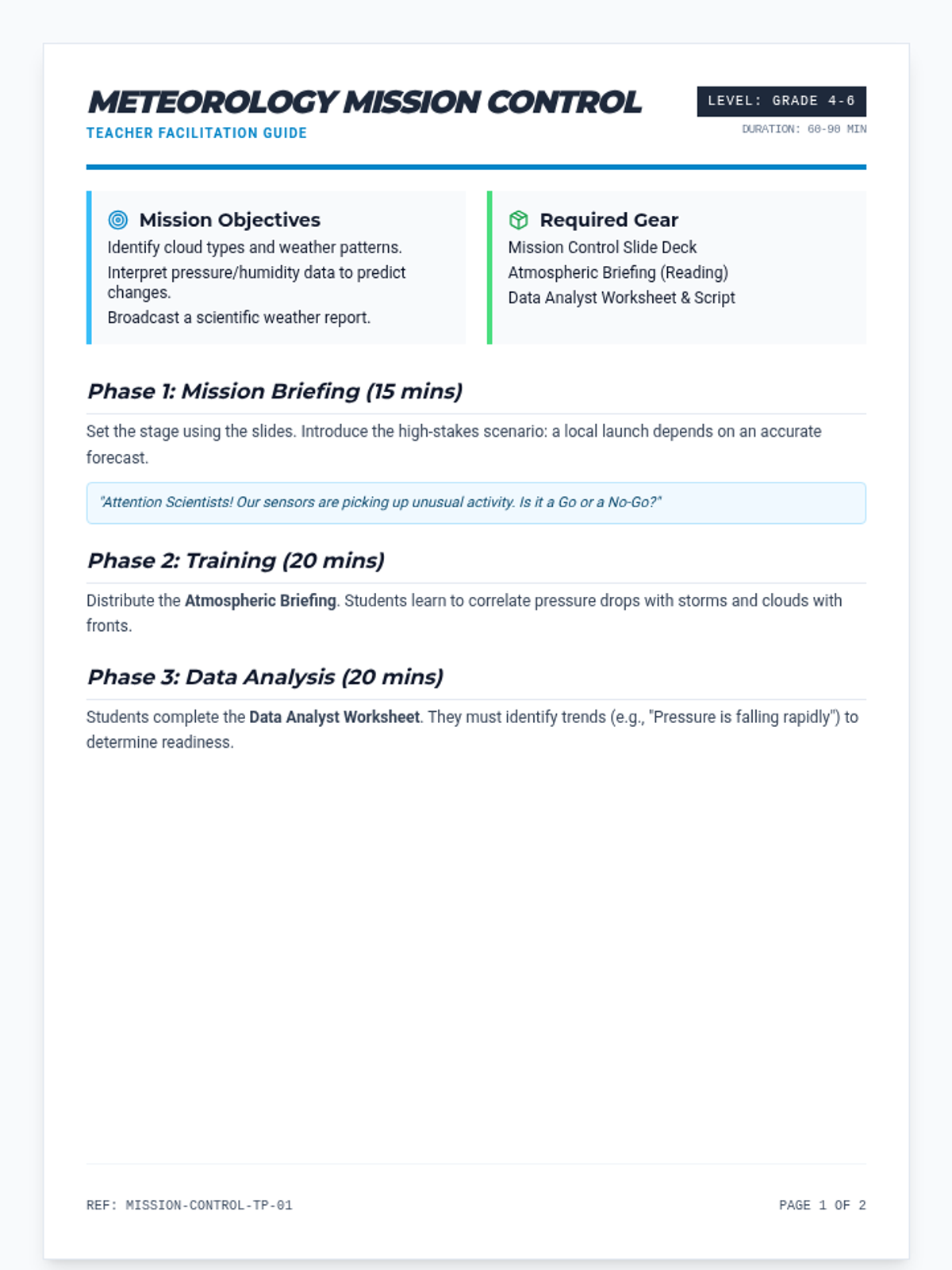
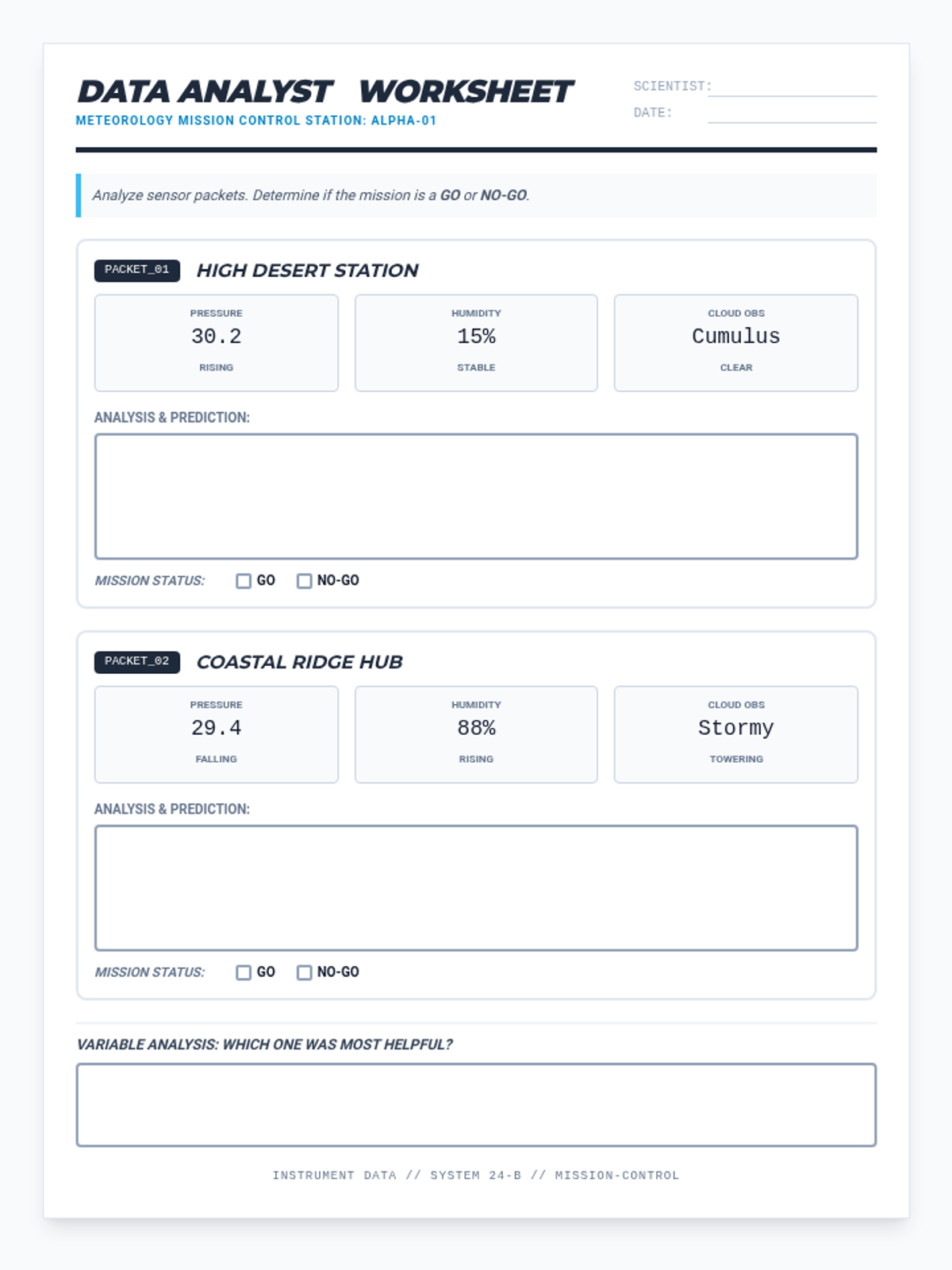
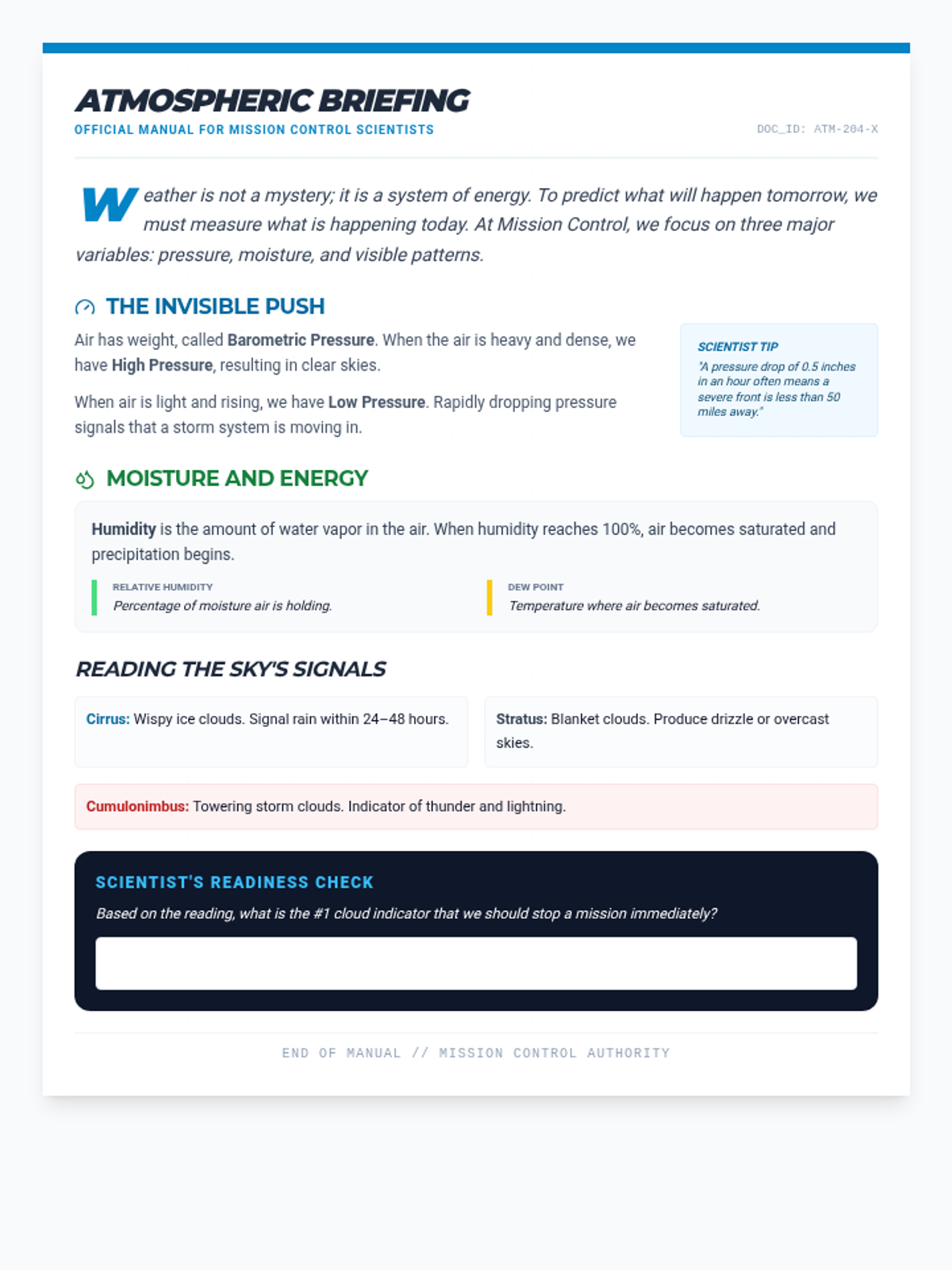
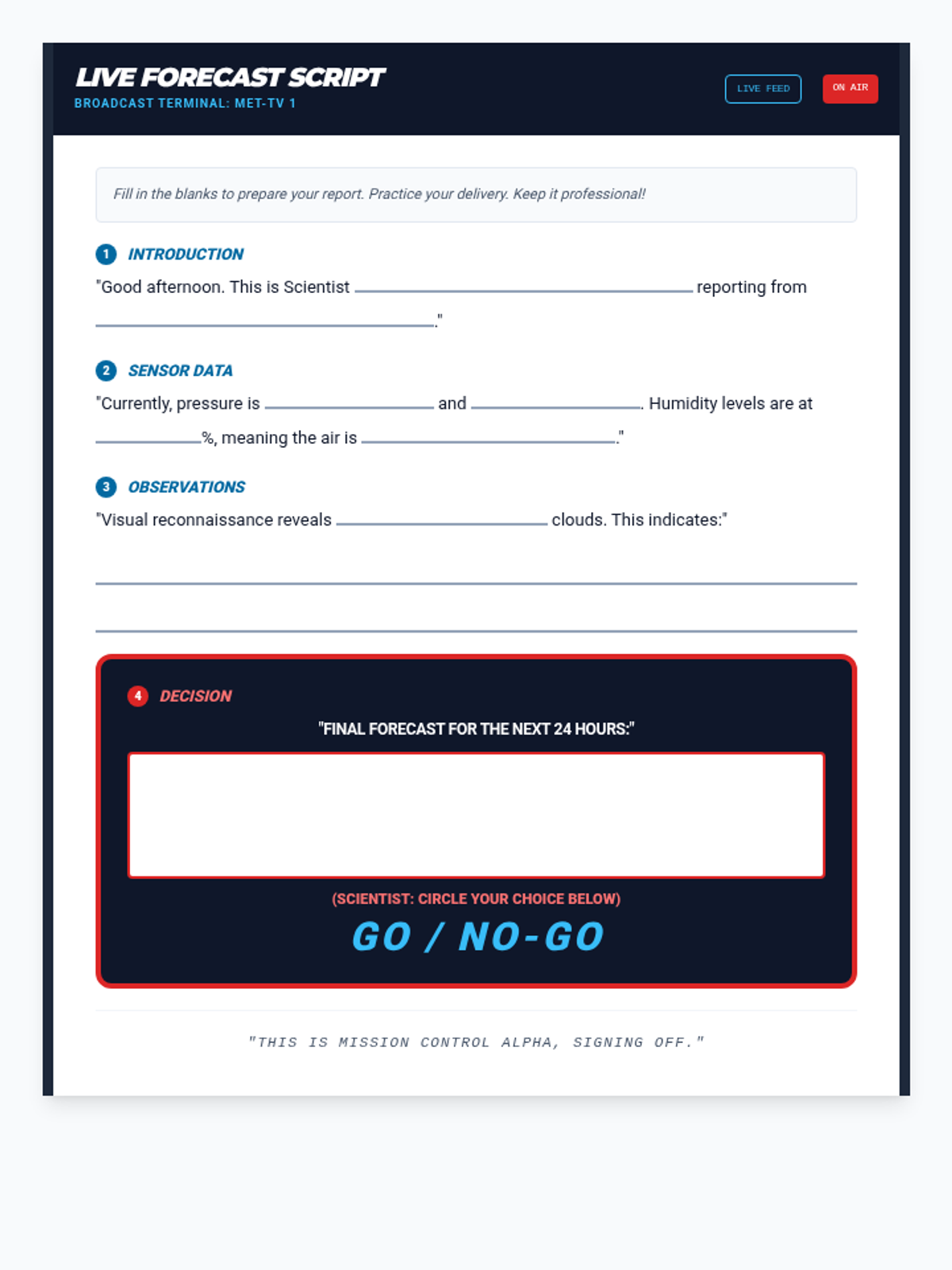
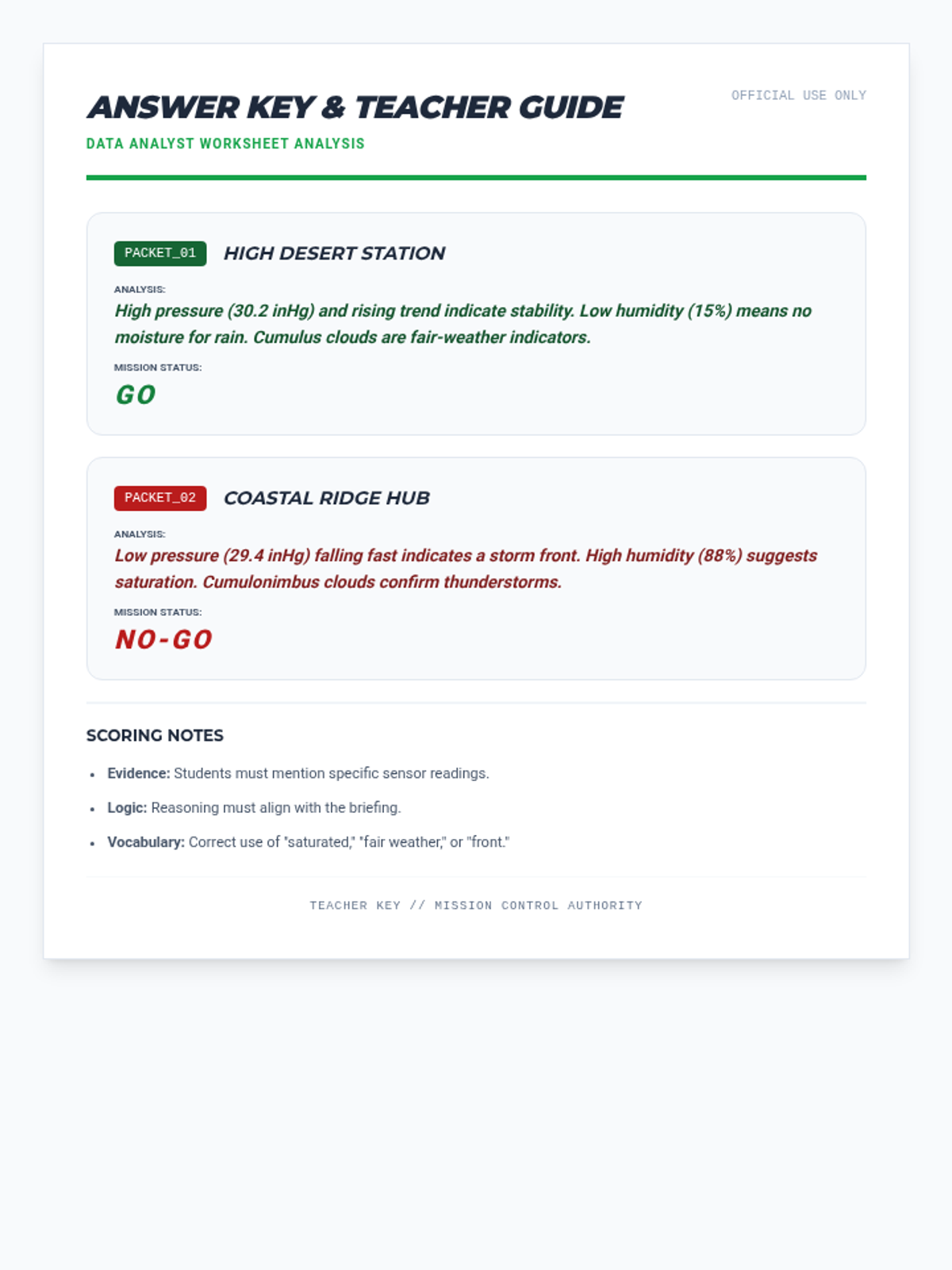
A high-energy meteorology lesson where students act as atmospheric scientists at a mission control center, analyzing real-world data and cloud patterns to broadcast a live weather forecast.
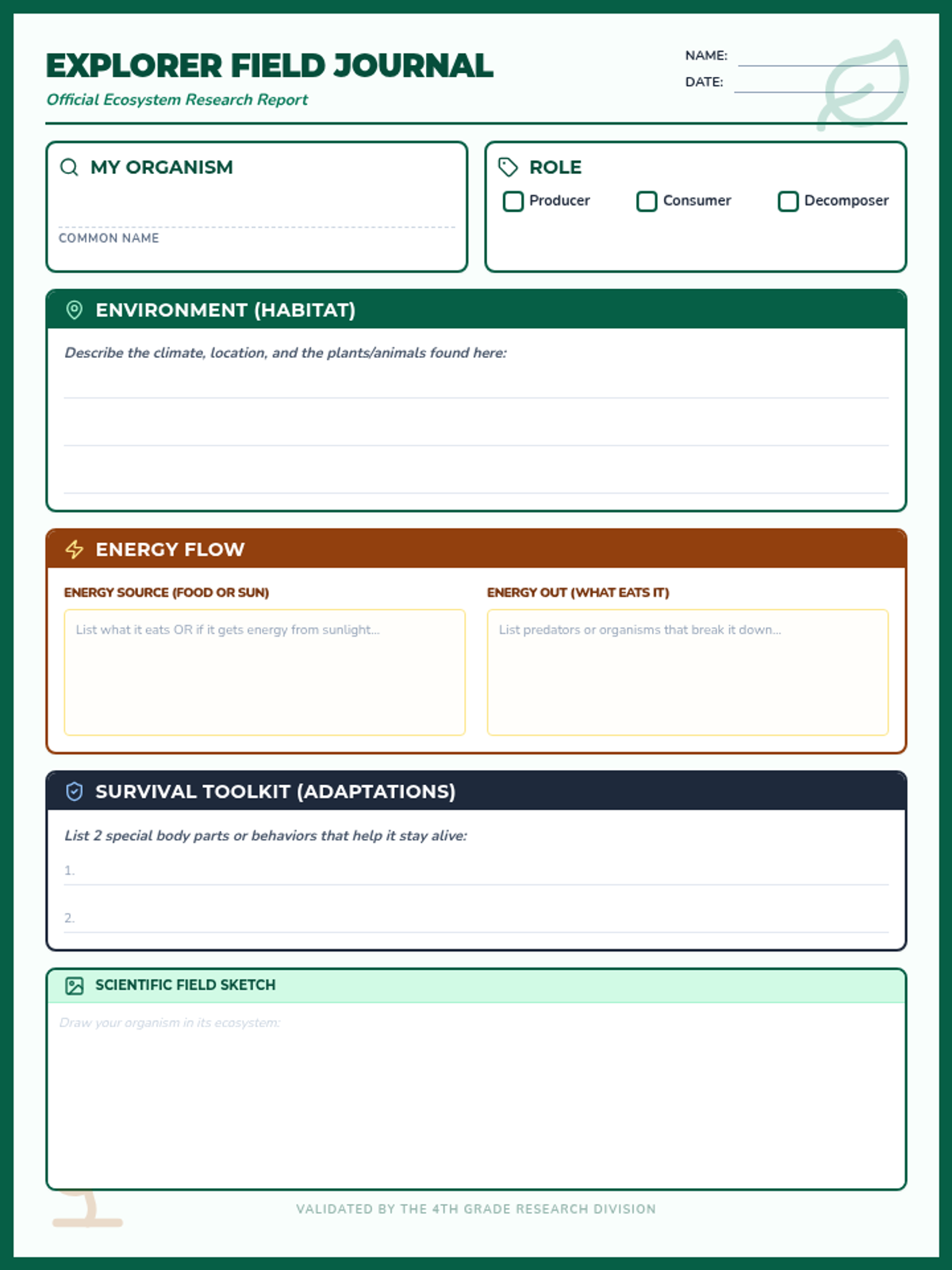
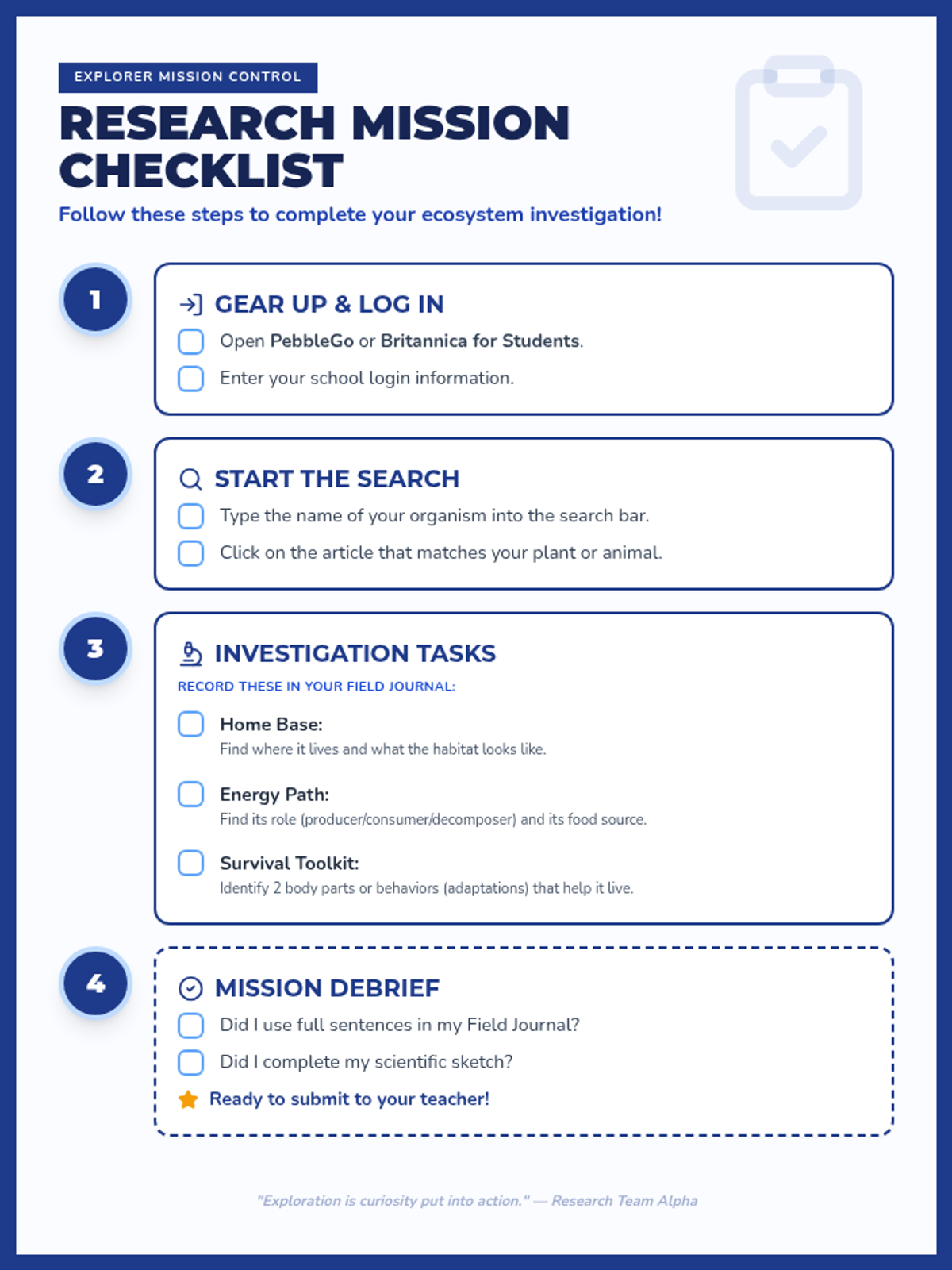
Students act as field researchers to investigate a specific organism's role in its ecosystem using digital research tools.
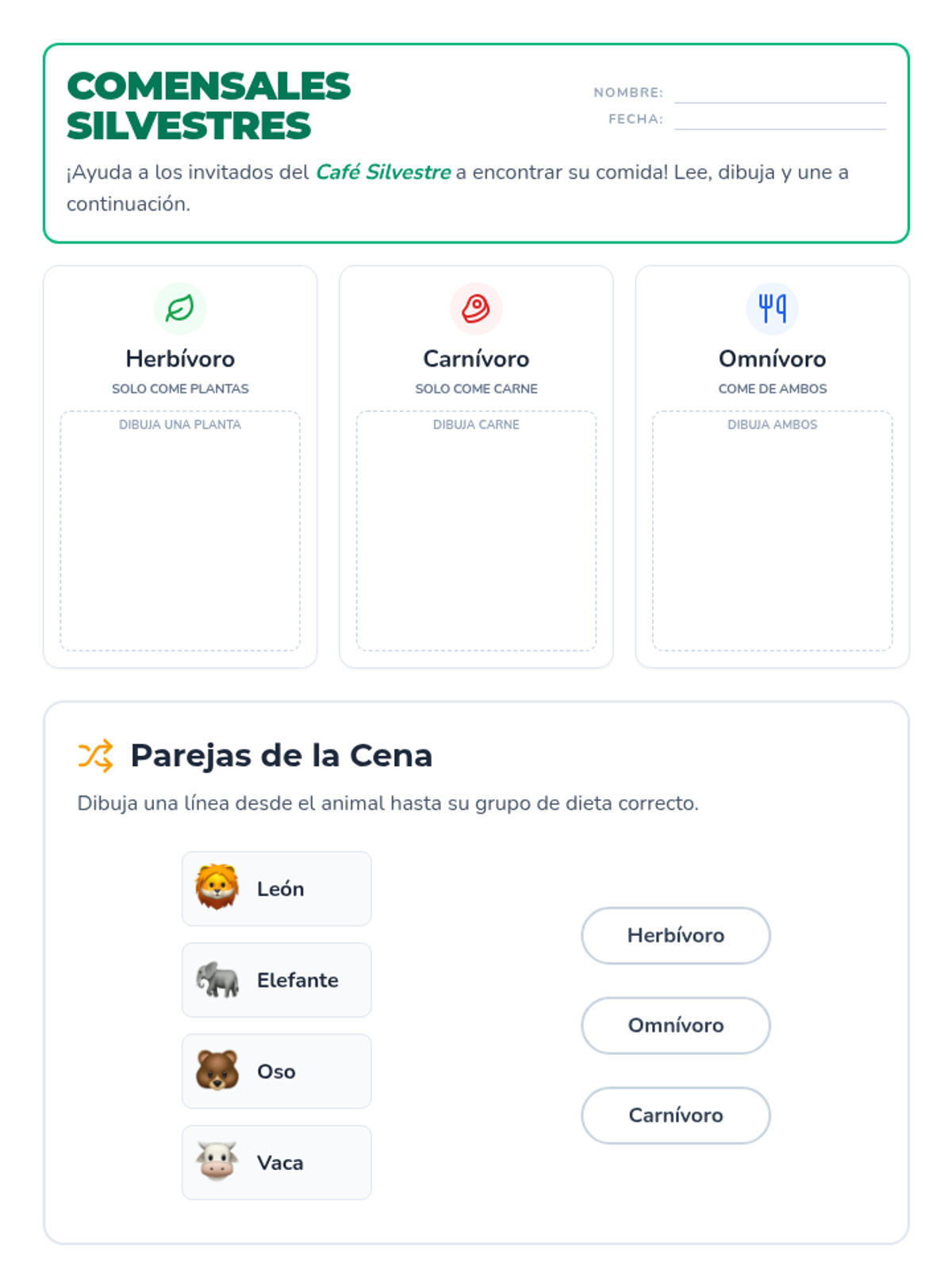
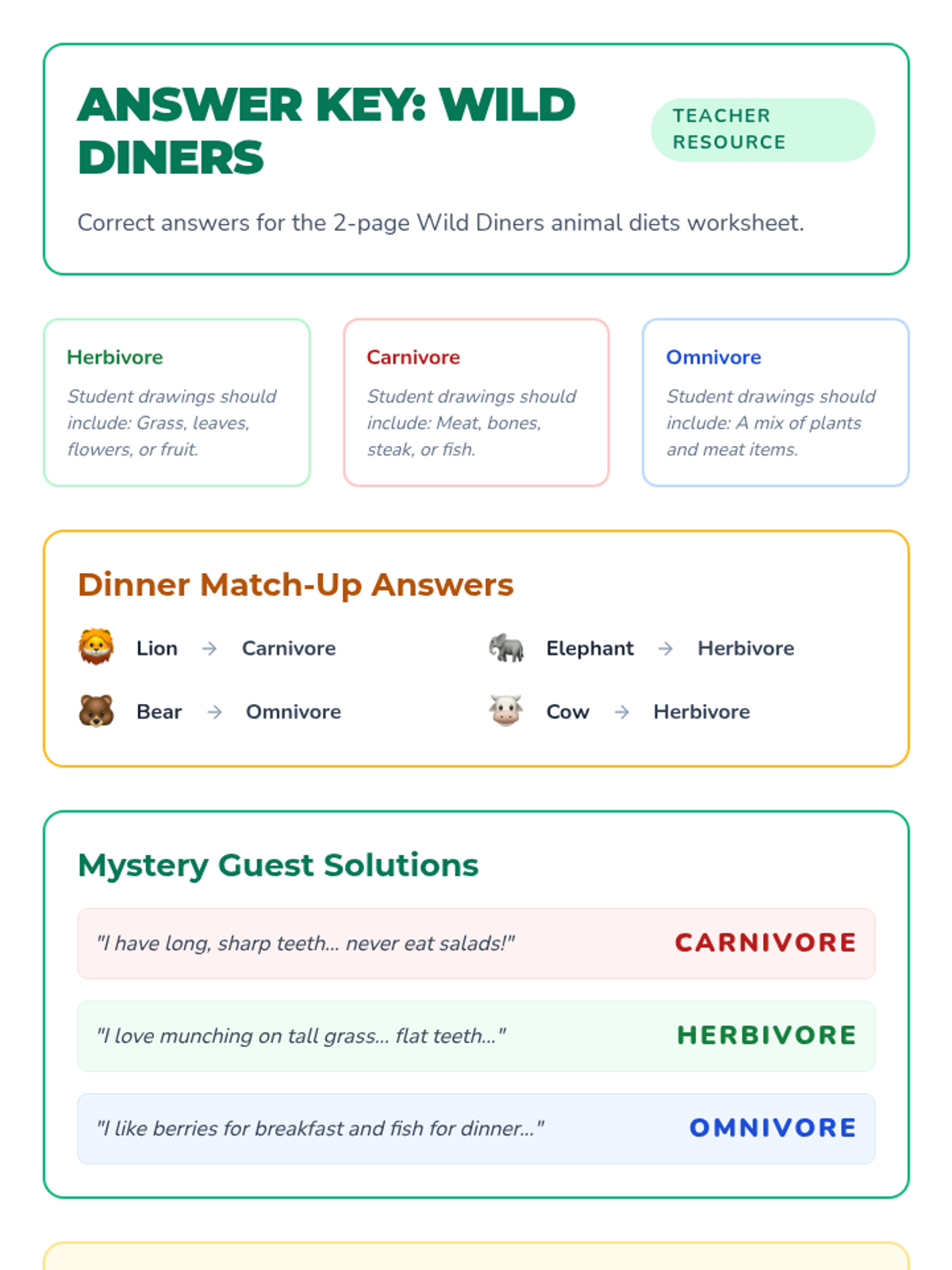
An introductory lesson on animal diets, categorizing creatures as carnivores, herbivores, and omnivores through visual identification and simple riddles.
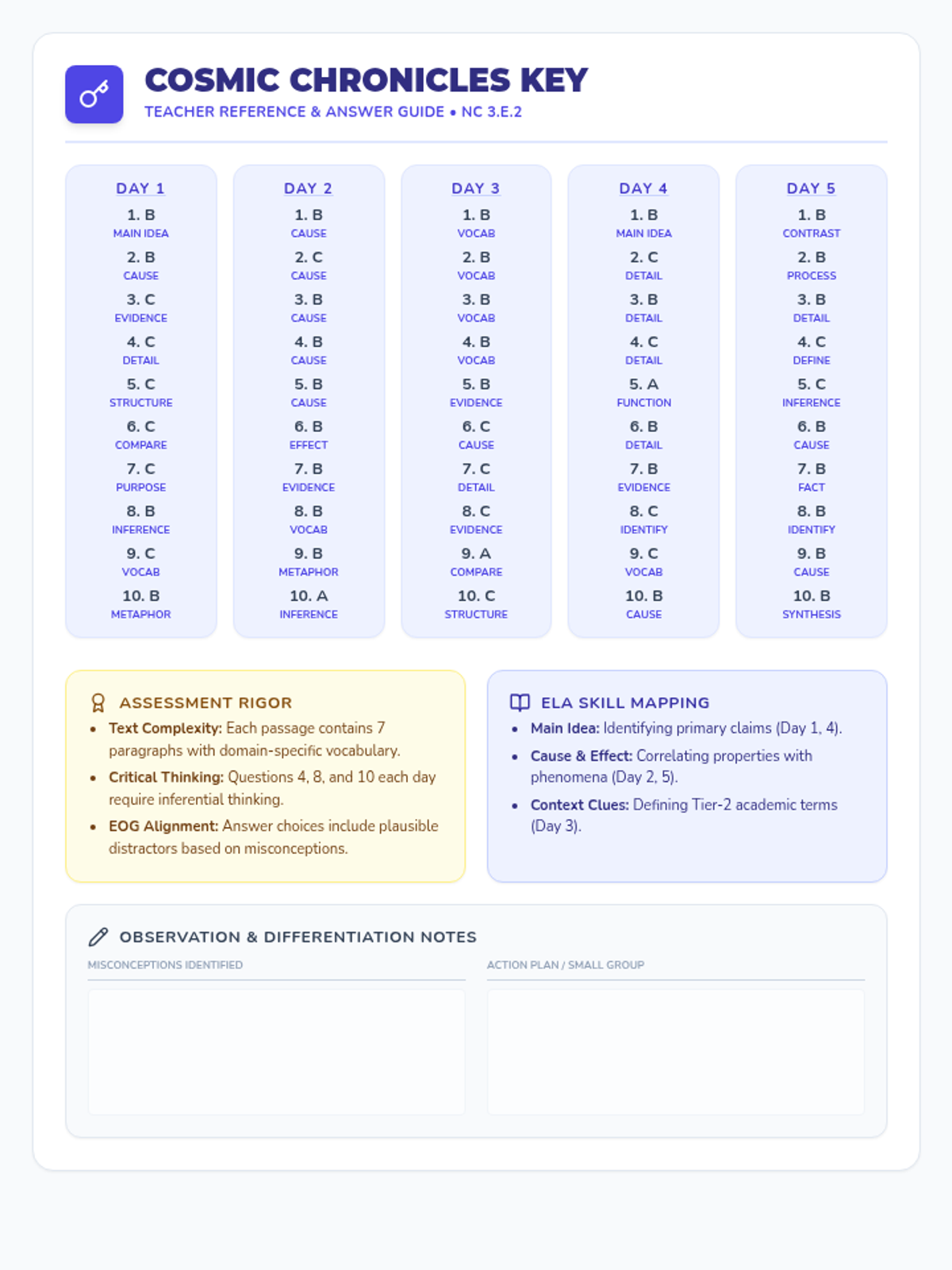
A week-long exploration of our solar system (NC 3.E.2) integrated with ELA skills like main idea, cause and effect, and context clues. Students will analyze the Earth, Moon, and planets through daily reading passages and 10-question assessments.
A comprehensive exploration of ecosystems and biomes, focusing on the interactions between biotic and abiotic factors, the flow of energy through food webs, and the impact of environmental changes on organism survival. Students will investigate how energy and matter move through nature's blueprint.
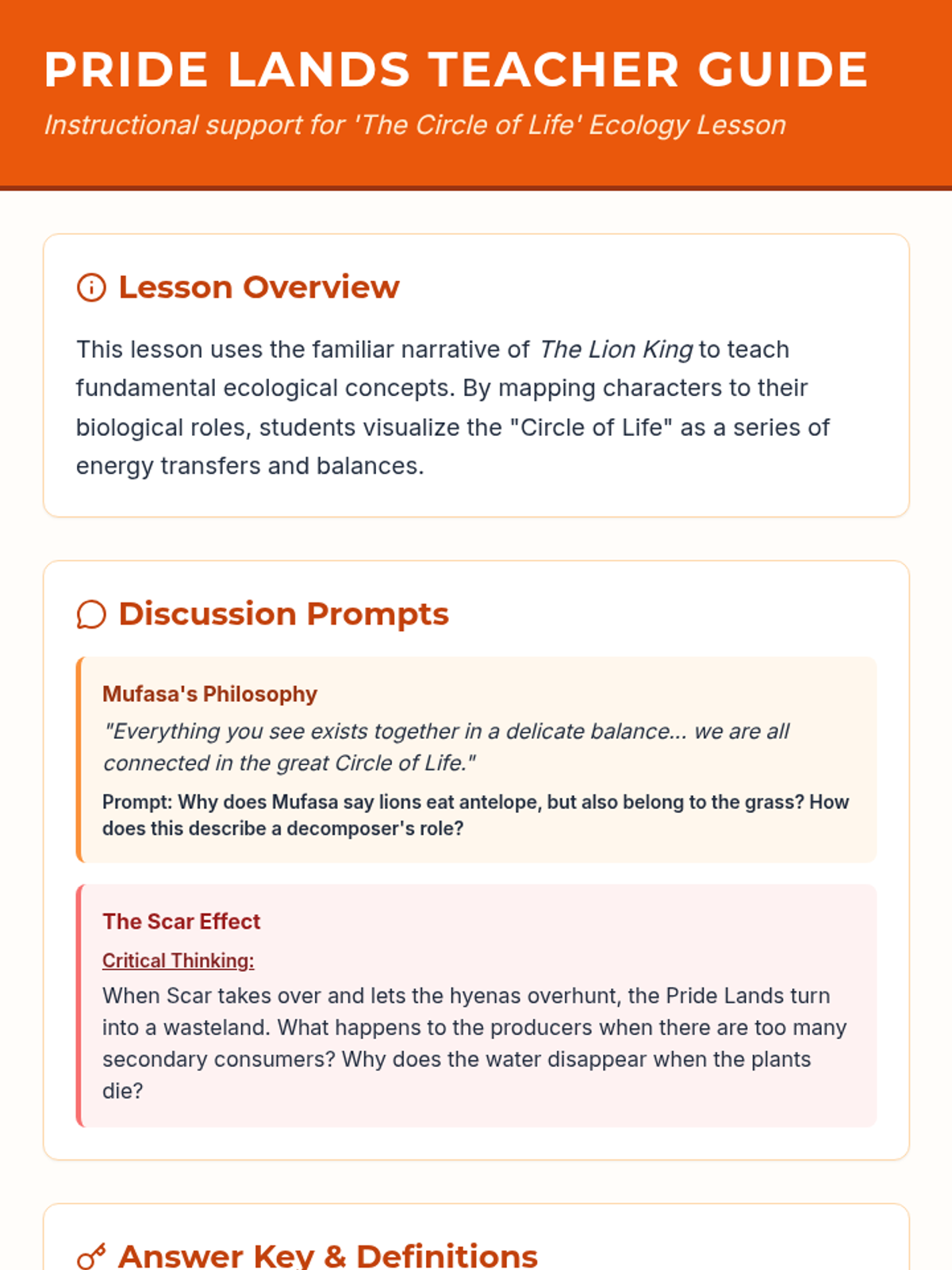
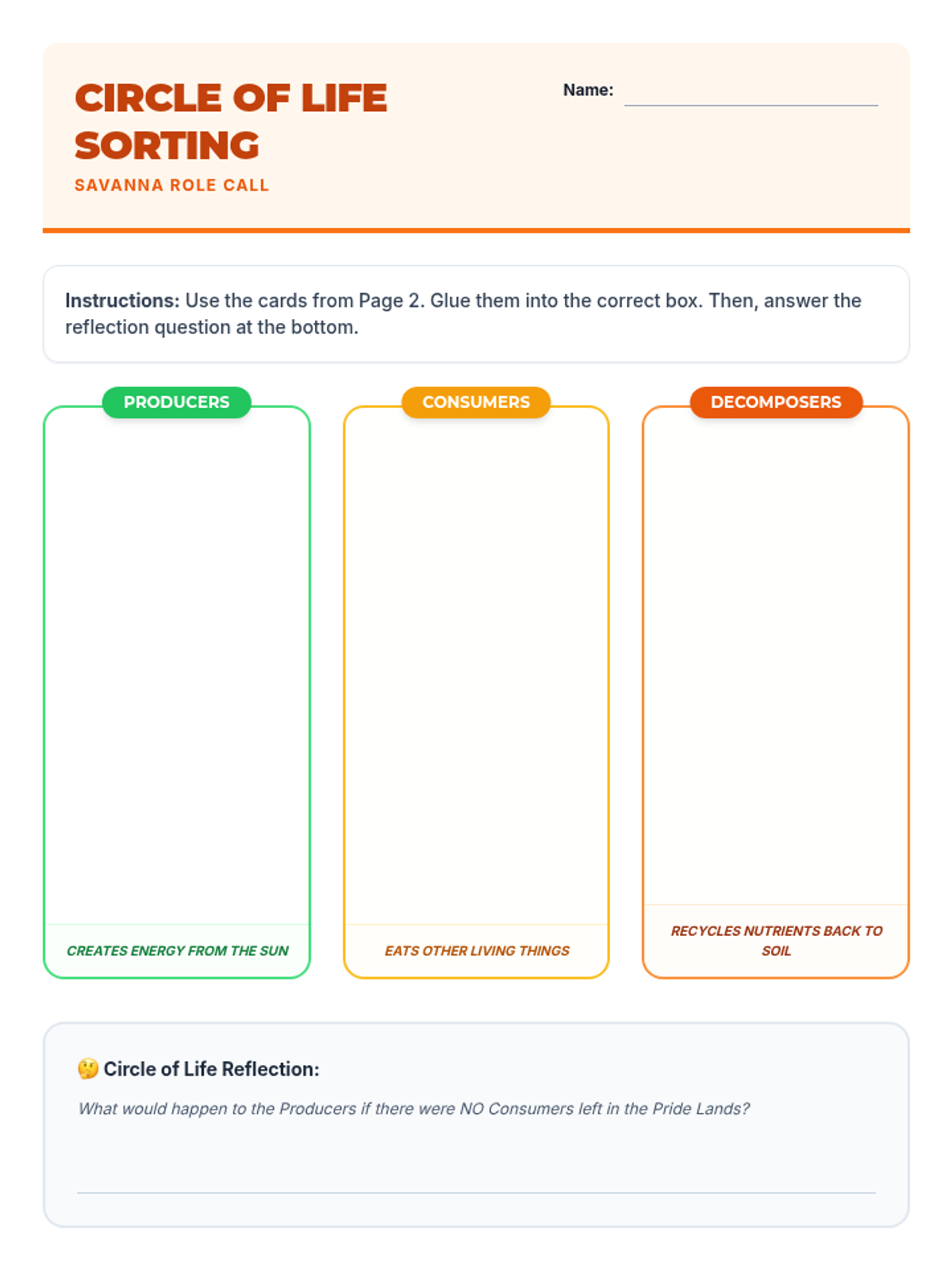
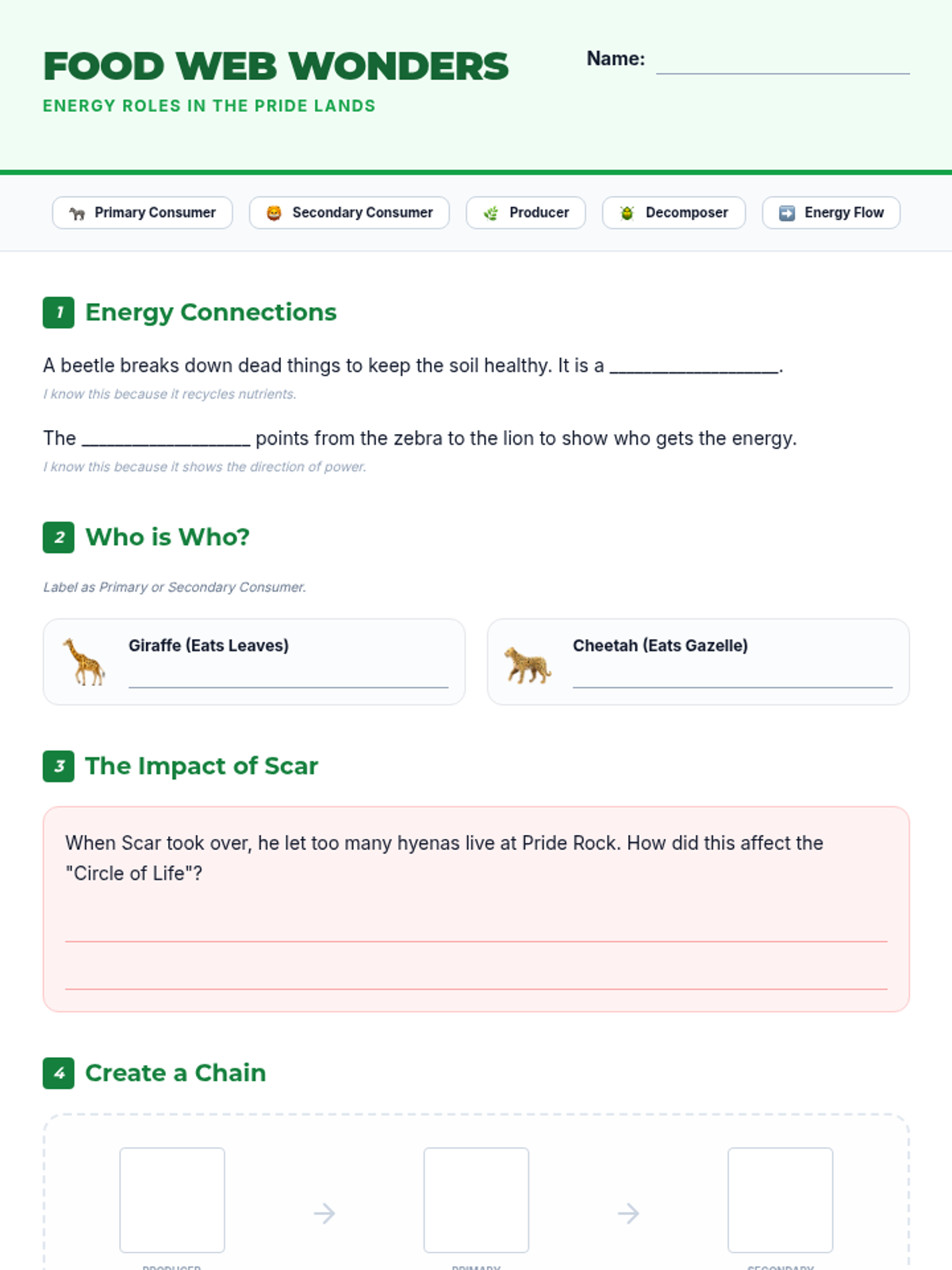
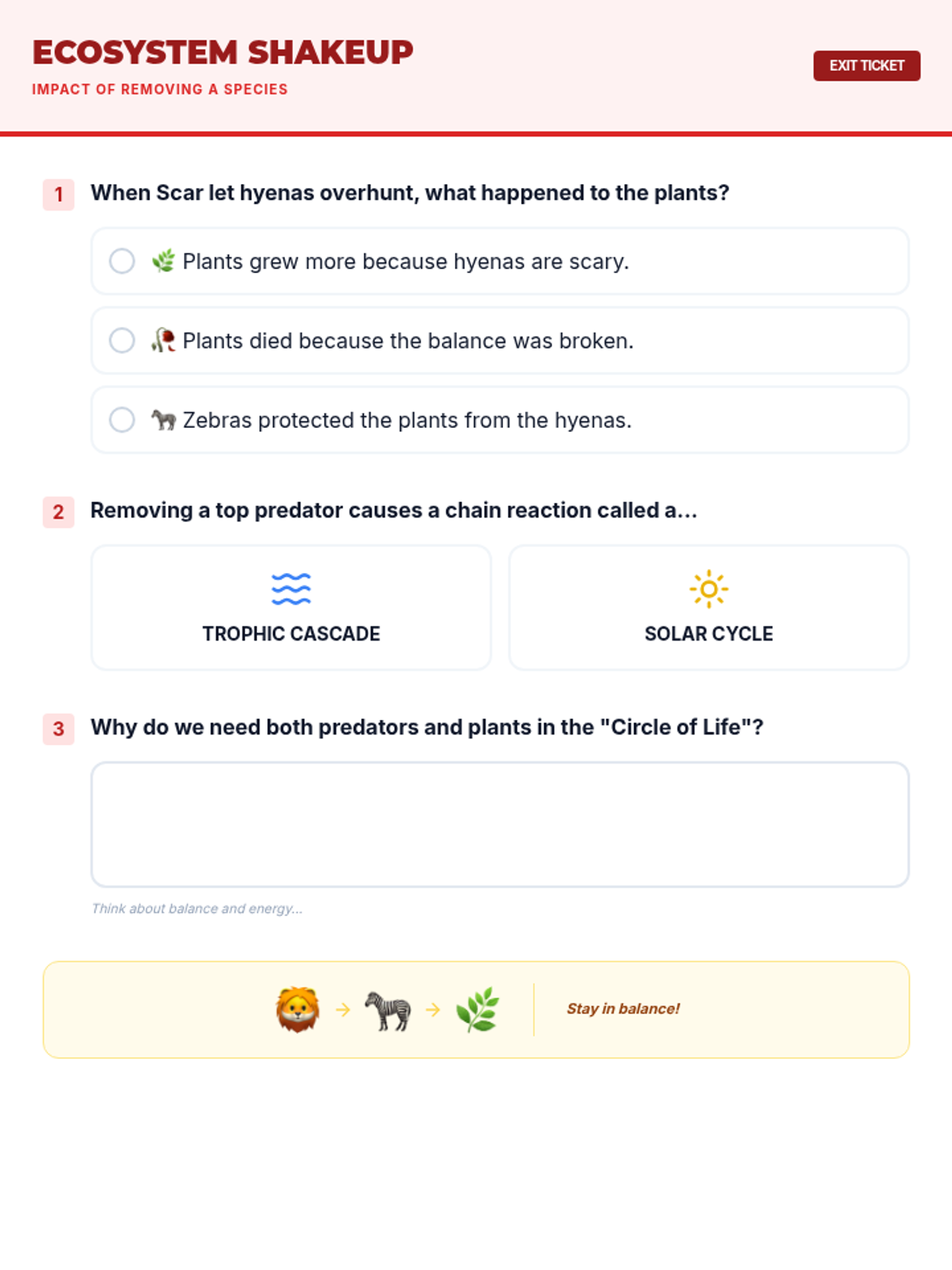
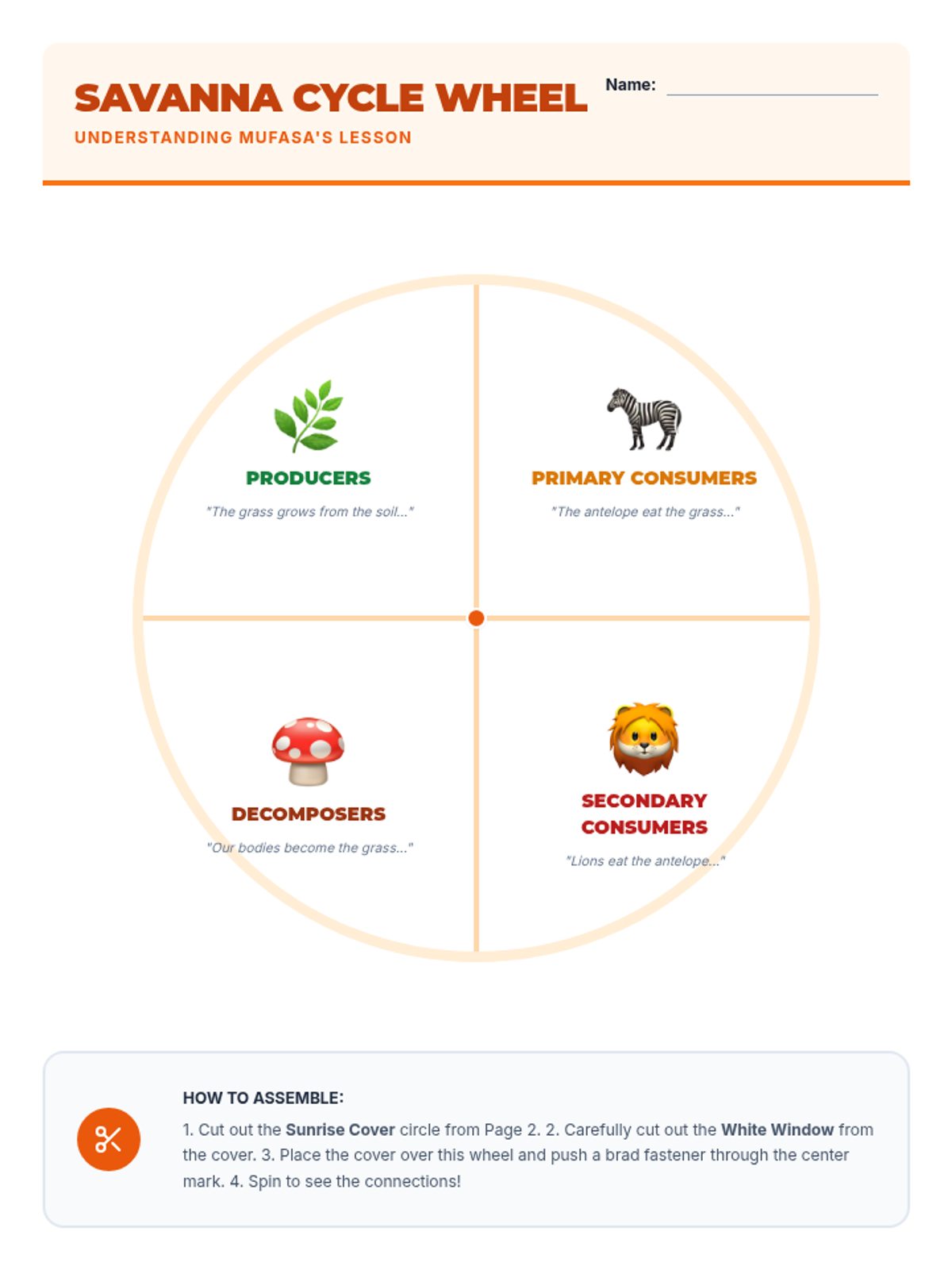
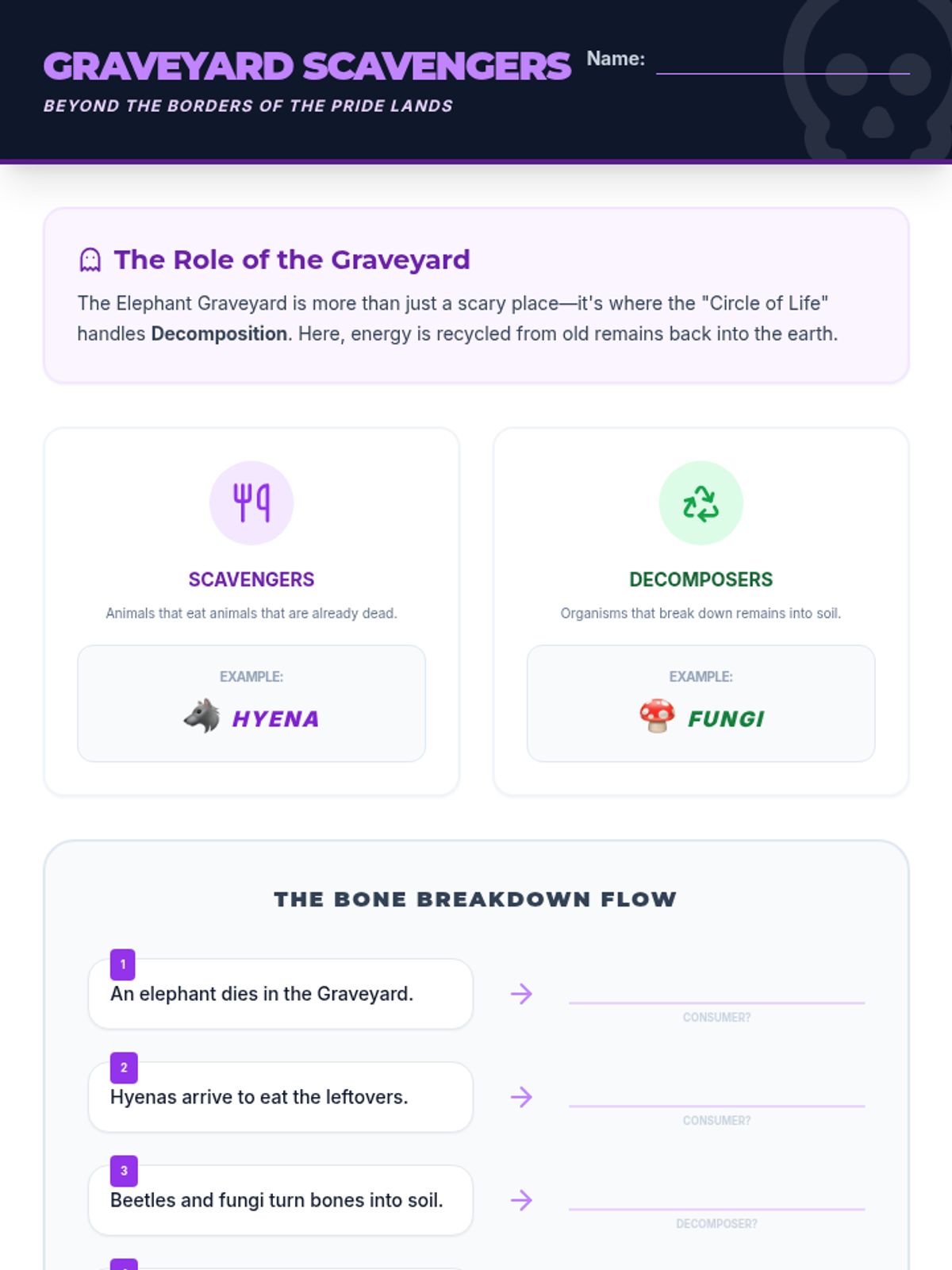
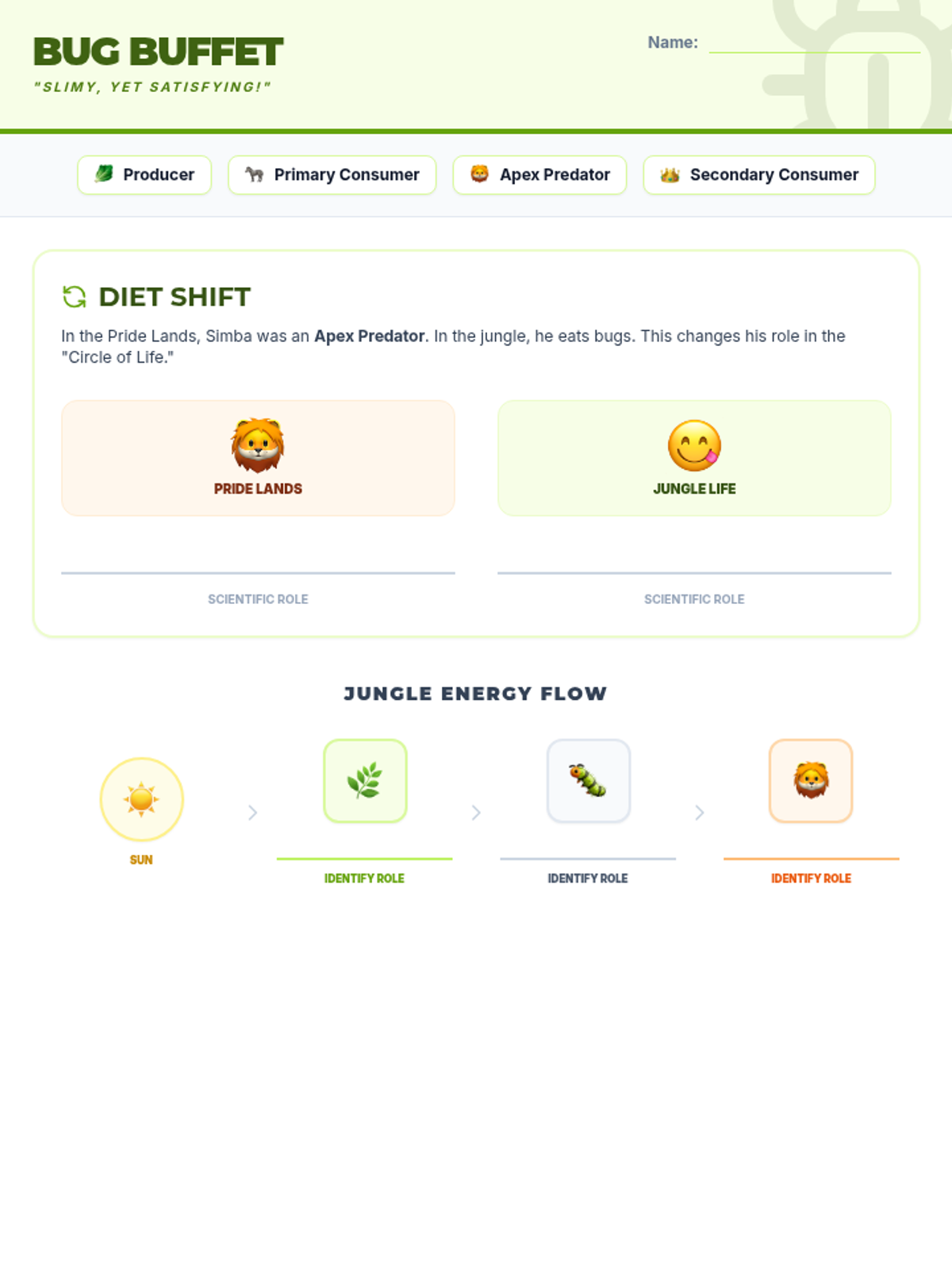
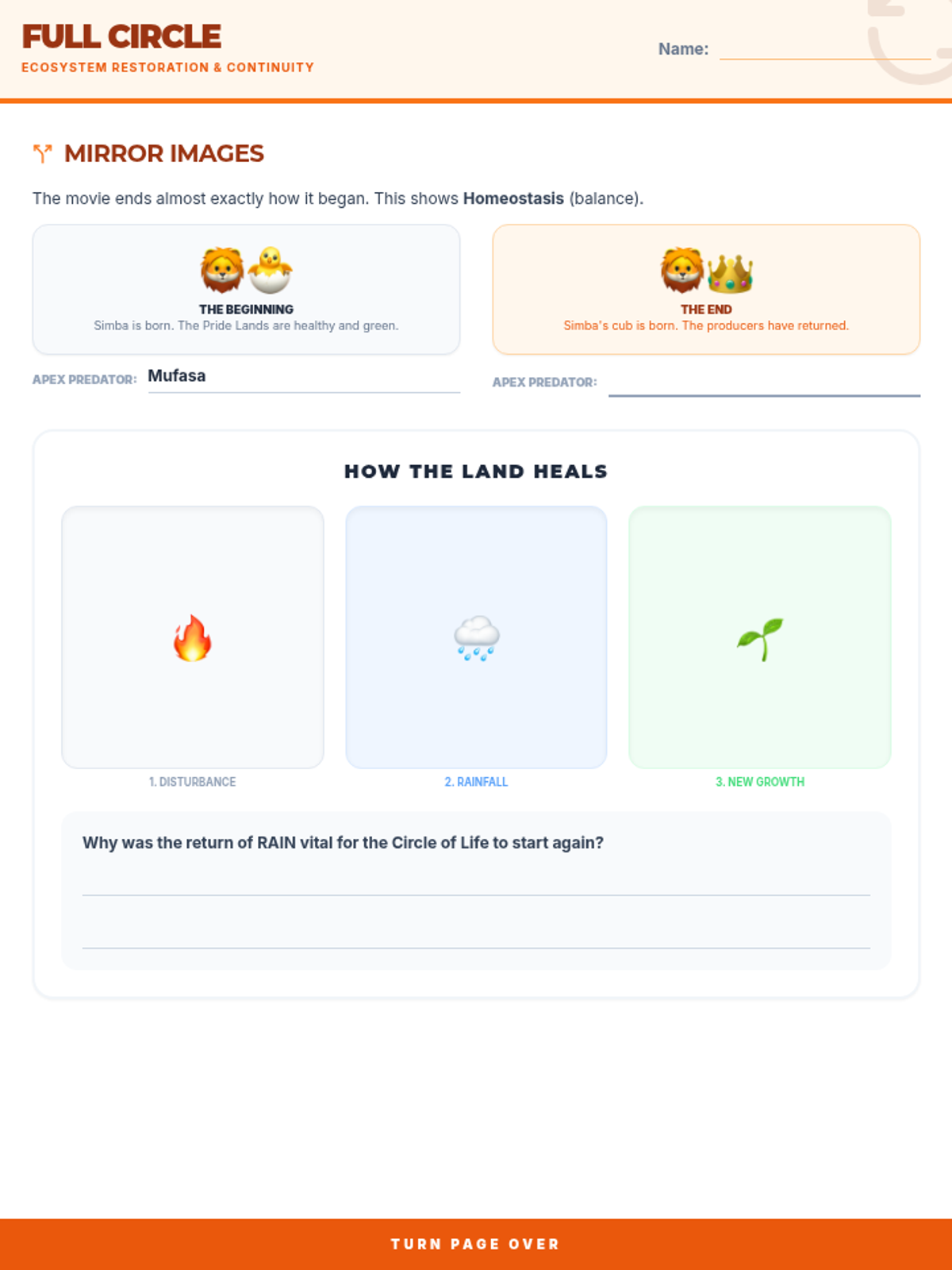
Students identify producers, consumers, and decomposers within the African savanna, construct food chains, and analyze how the removal of a top predator or a change in leadership (like the transition from Mufasa to Scar) affects the ecosystem.
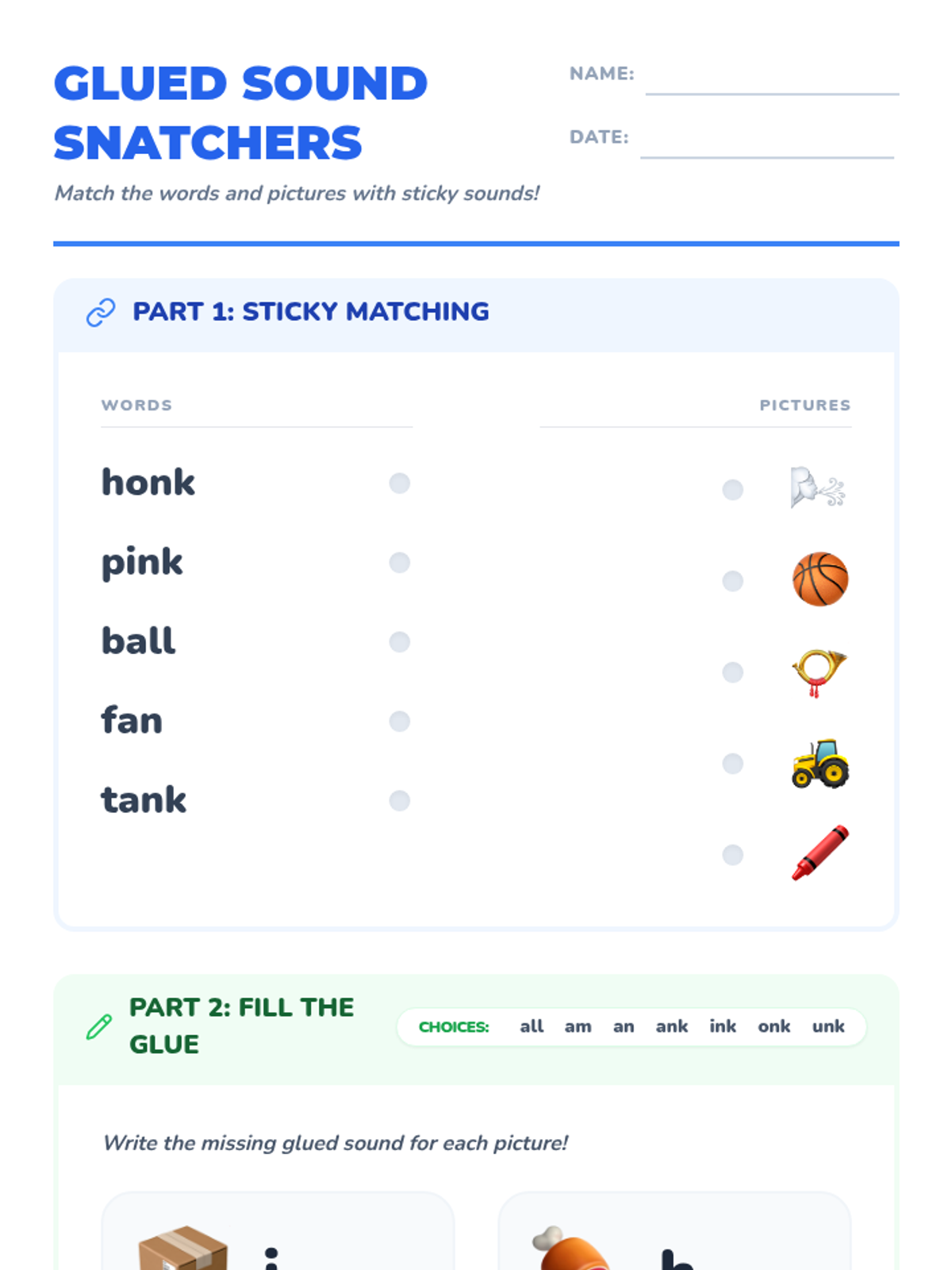
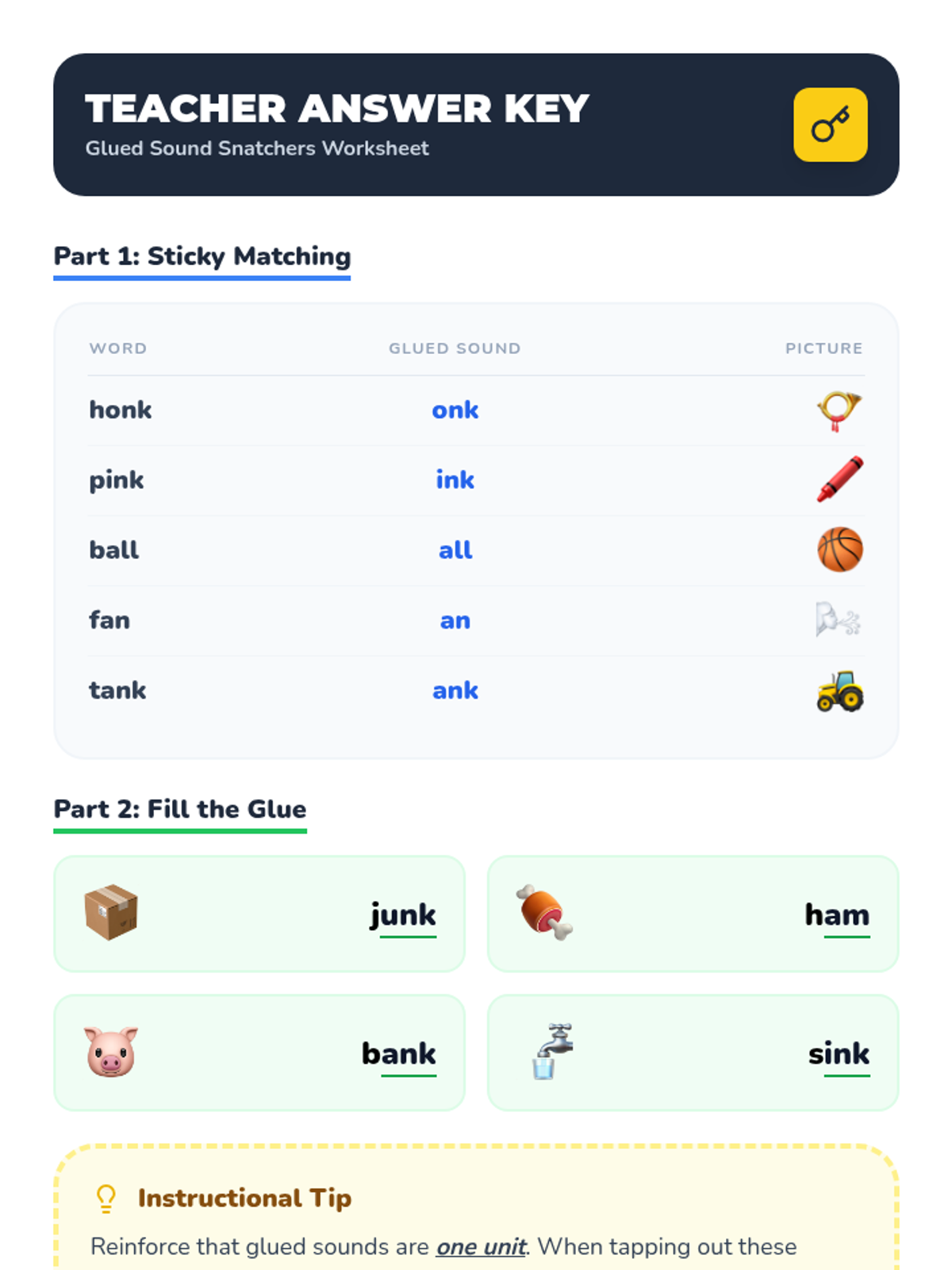
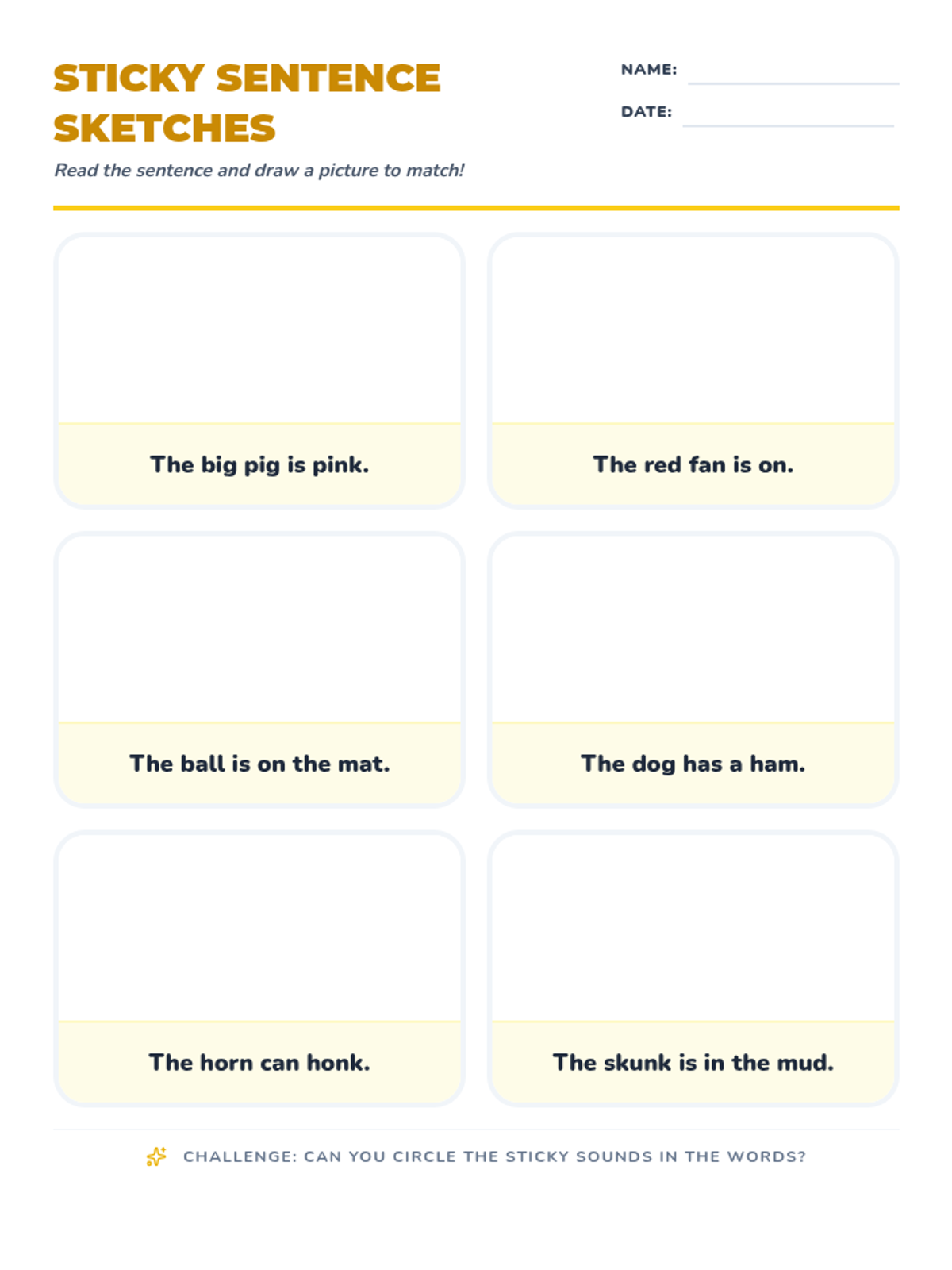
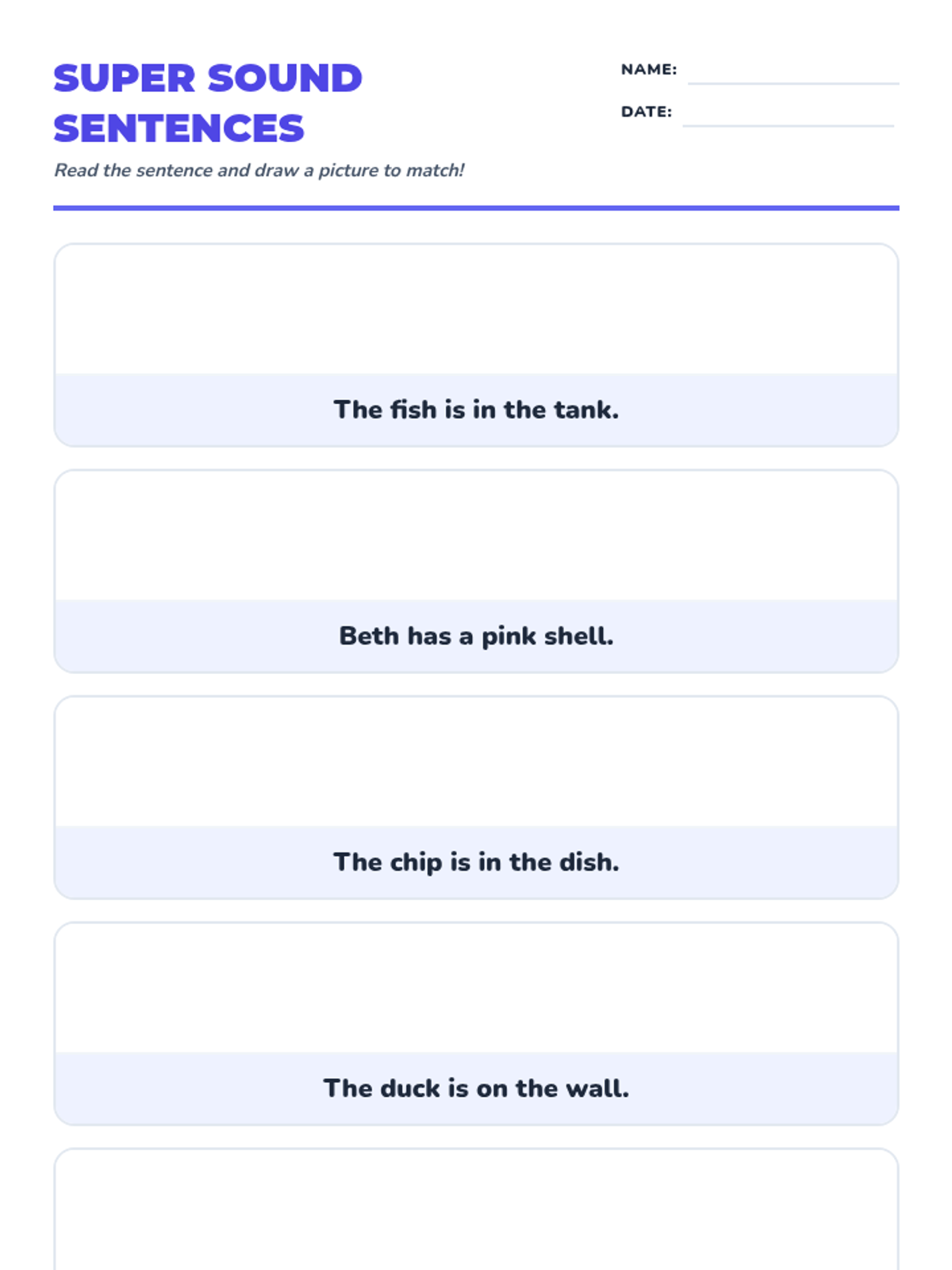
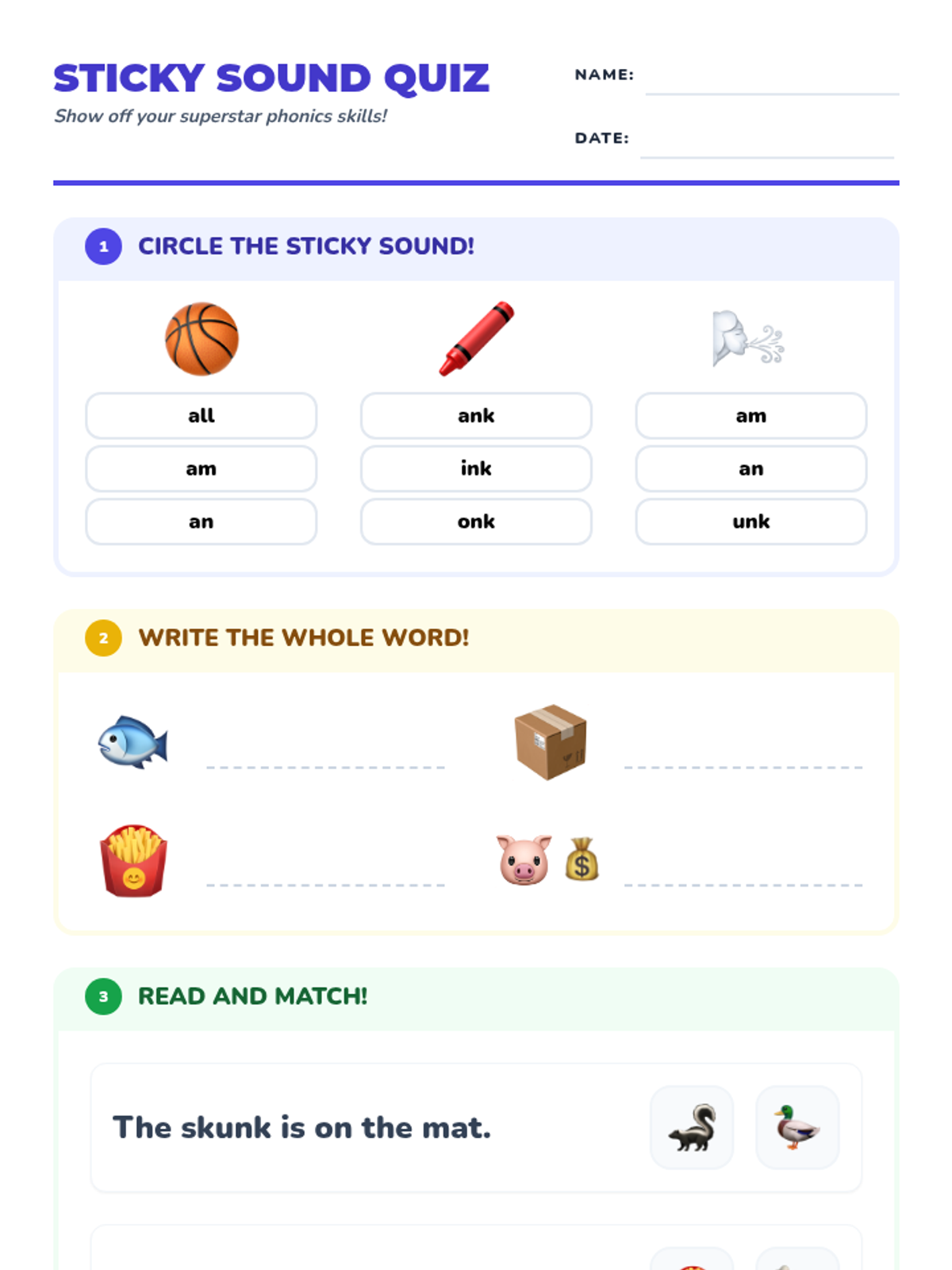
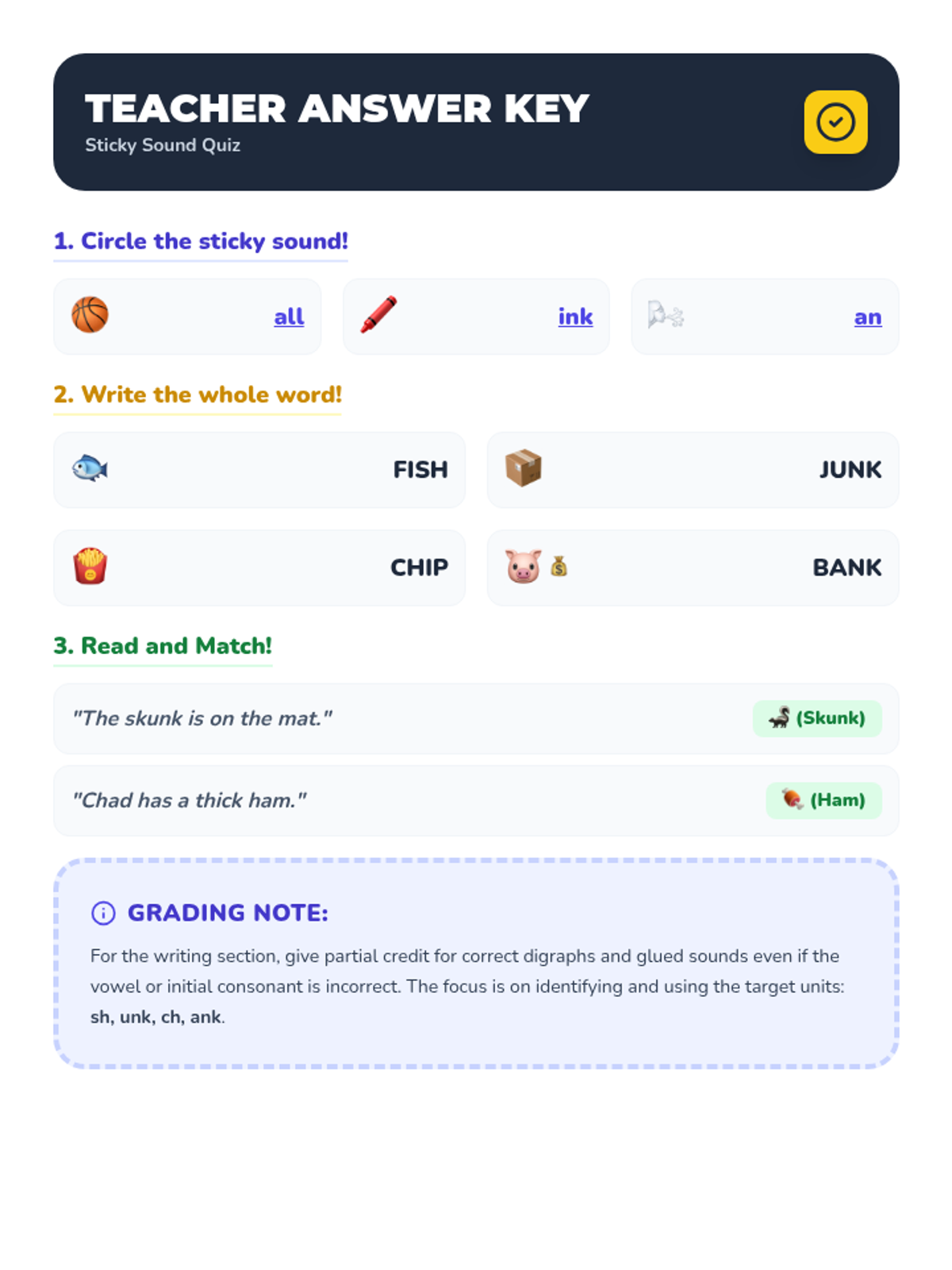
A first-grade phonics lesson focusing on 'glued sounds' (all, am, an, ank, ink, onk, unk). Students will identify, read, and match these sounds to corresponding words and pictures through an interactive slide deck and a follow-up matching activity.
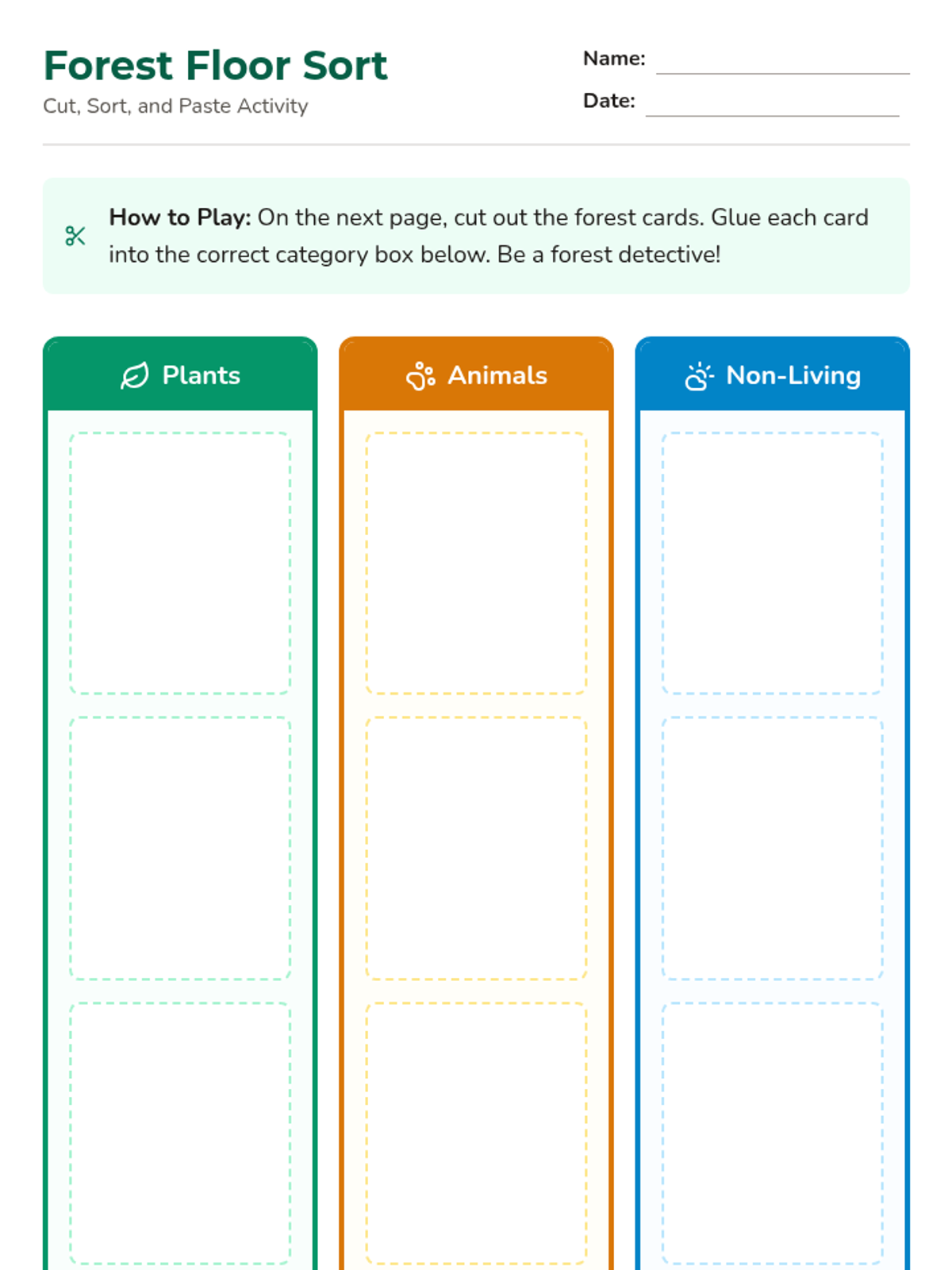
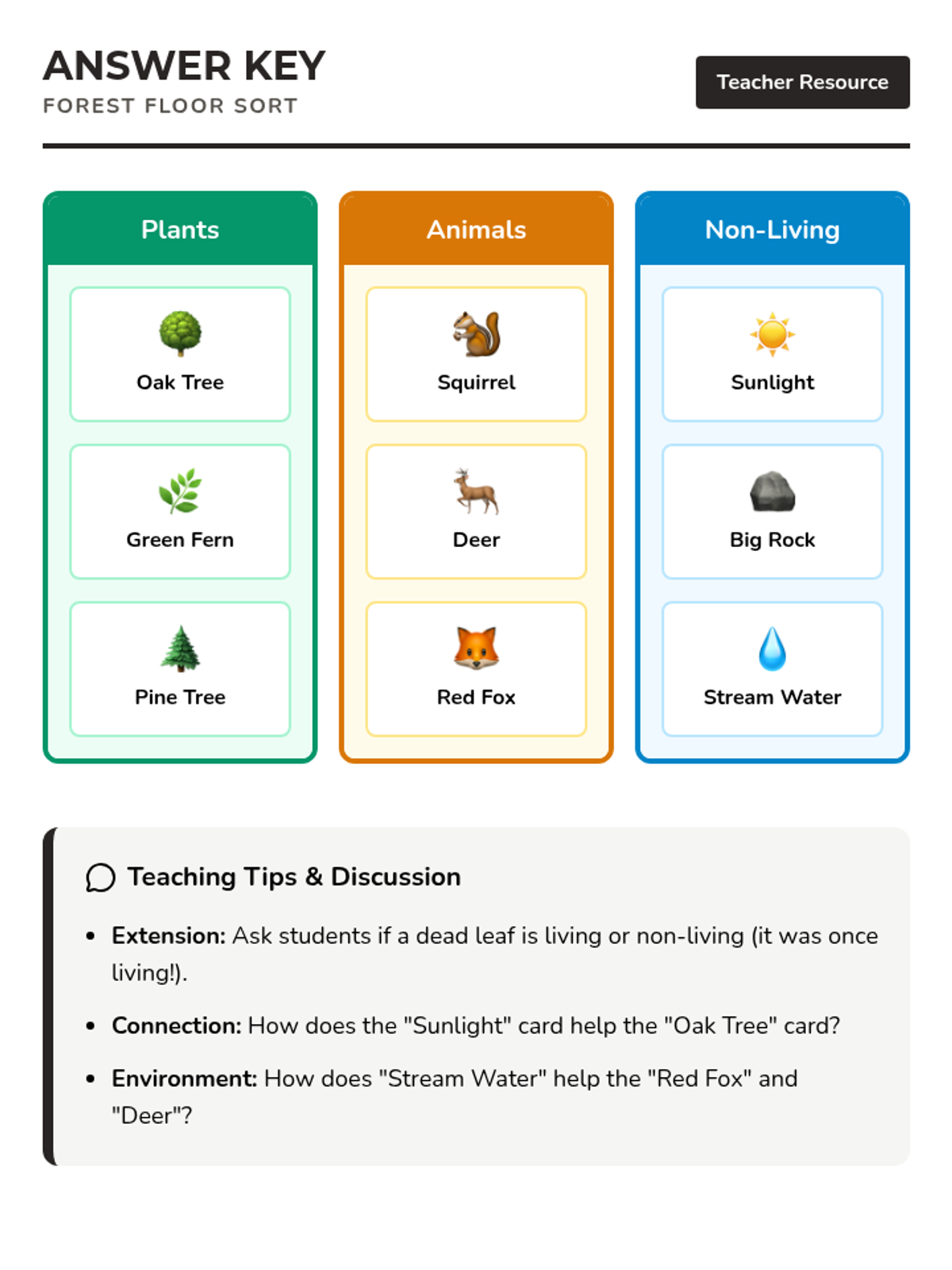
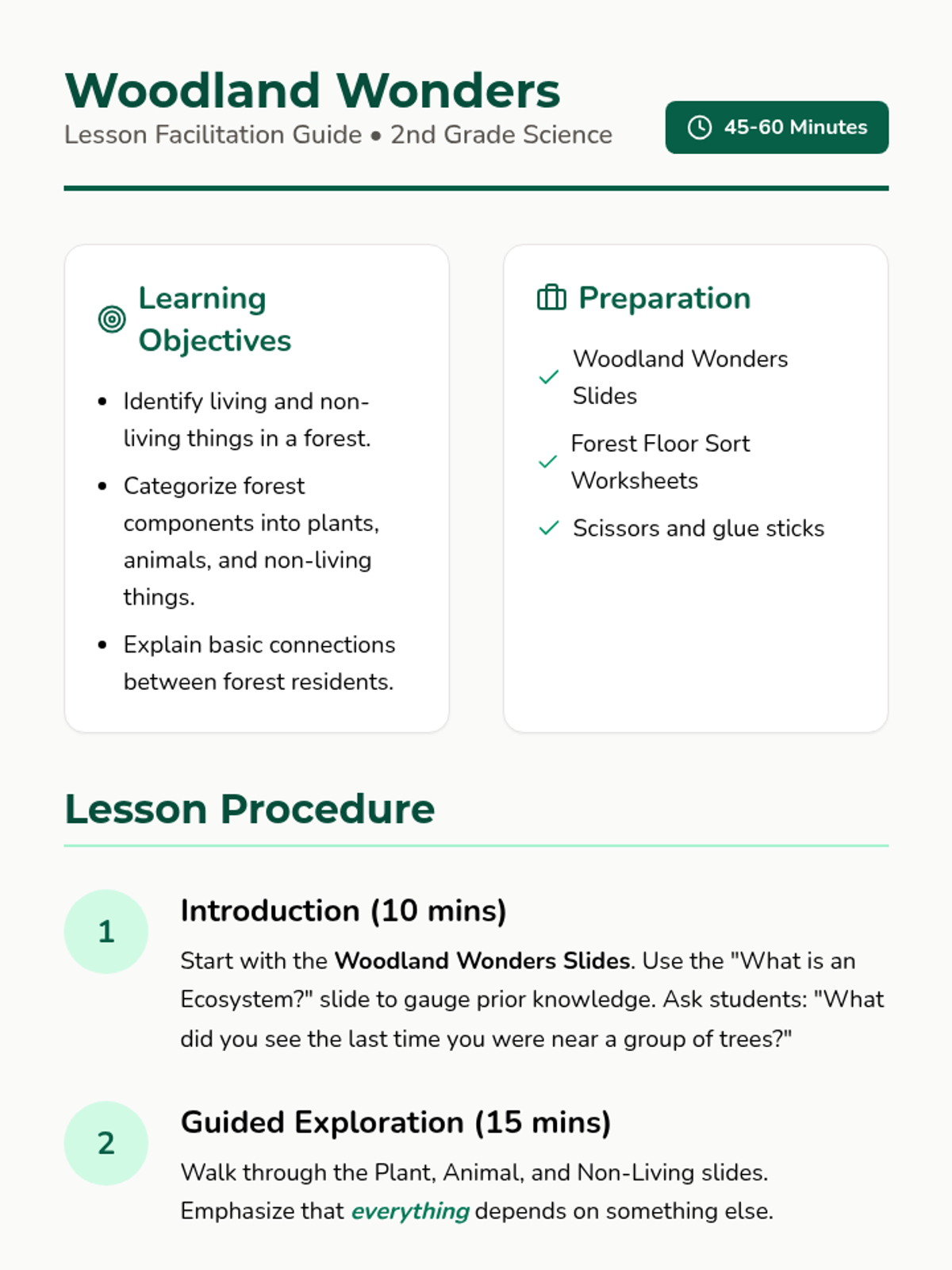
An introductory lesson on the forest ecosystem where students identify and categorize living and non-living components. Students will explore the roles of plants, animals, and the environment in a woodland setting.