A comprehensive 5th-grade simulation where students identify biotic and abiotic factors and construct food webs within the Great Smoky Mountains ecosystem.
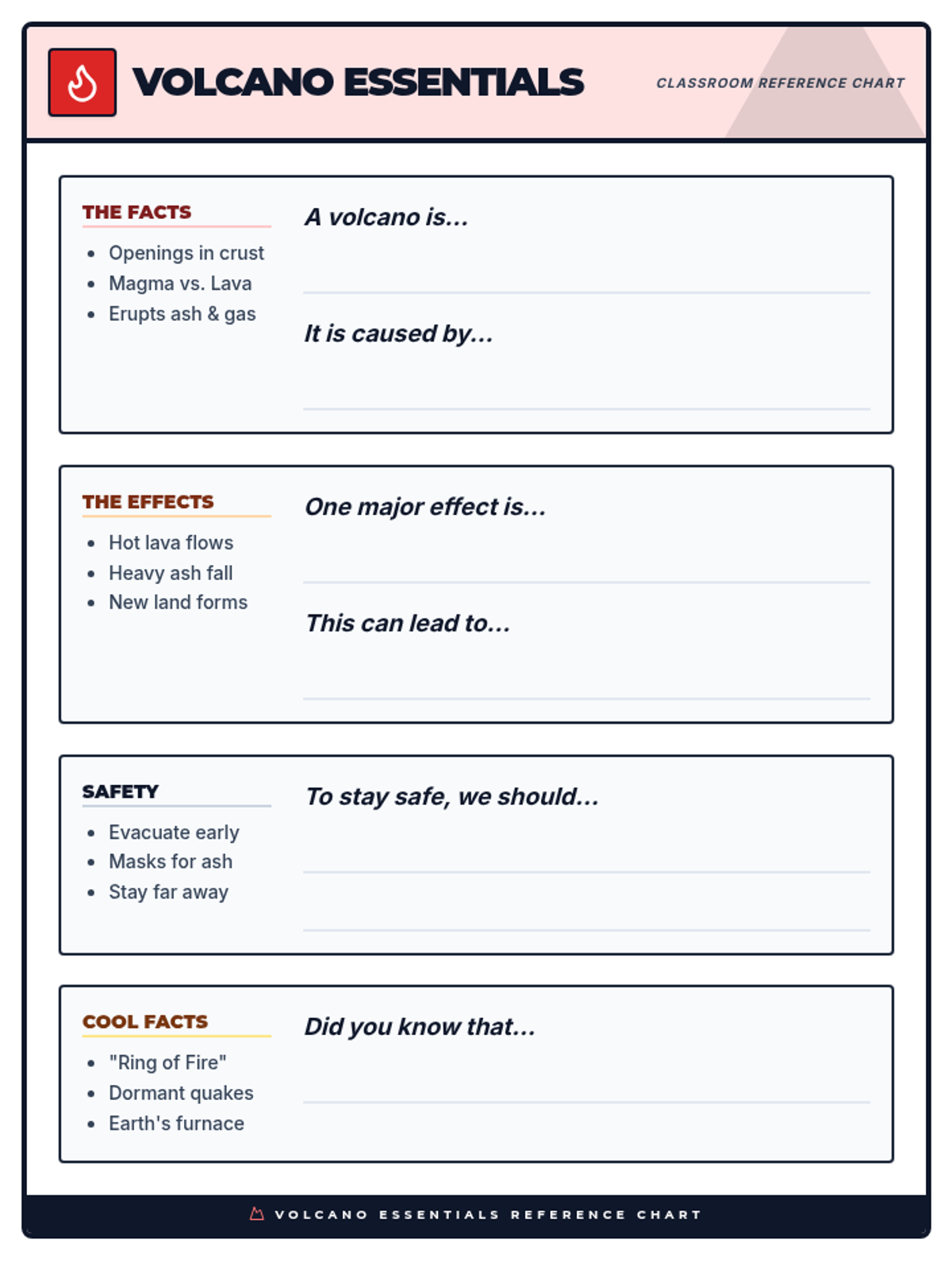
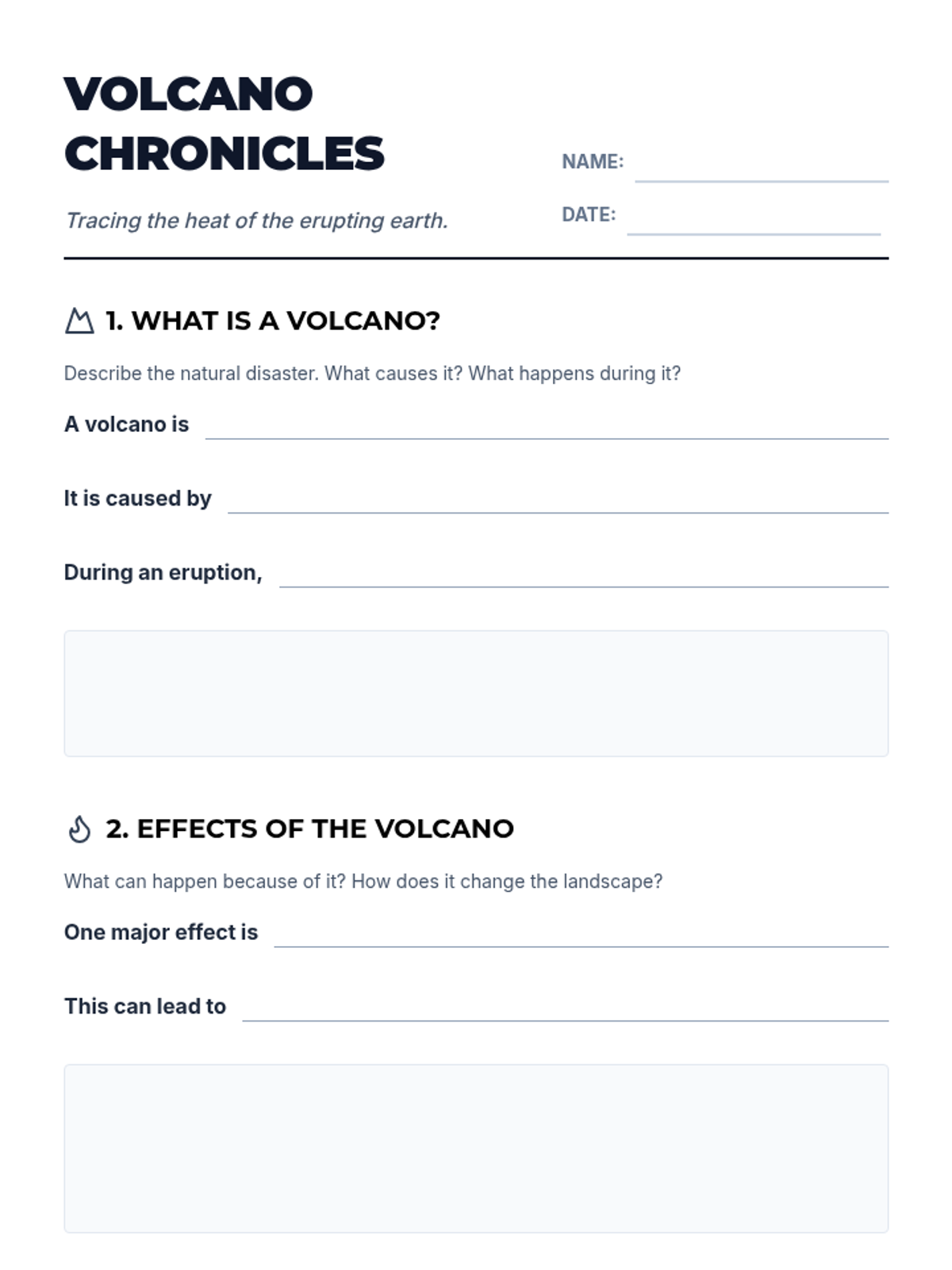
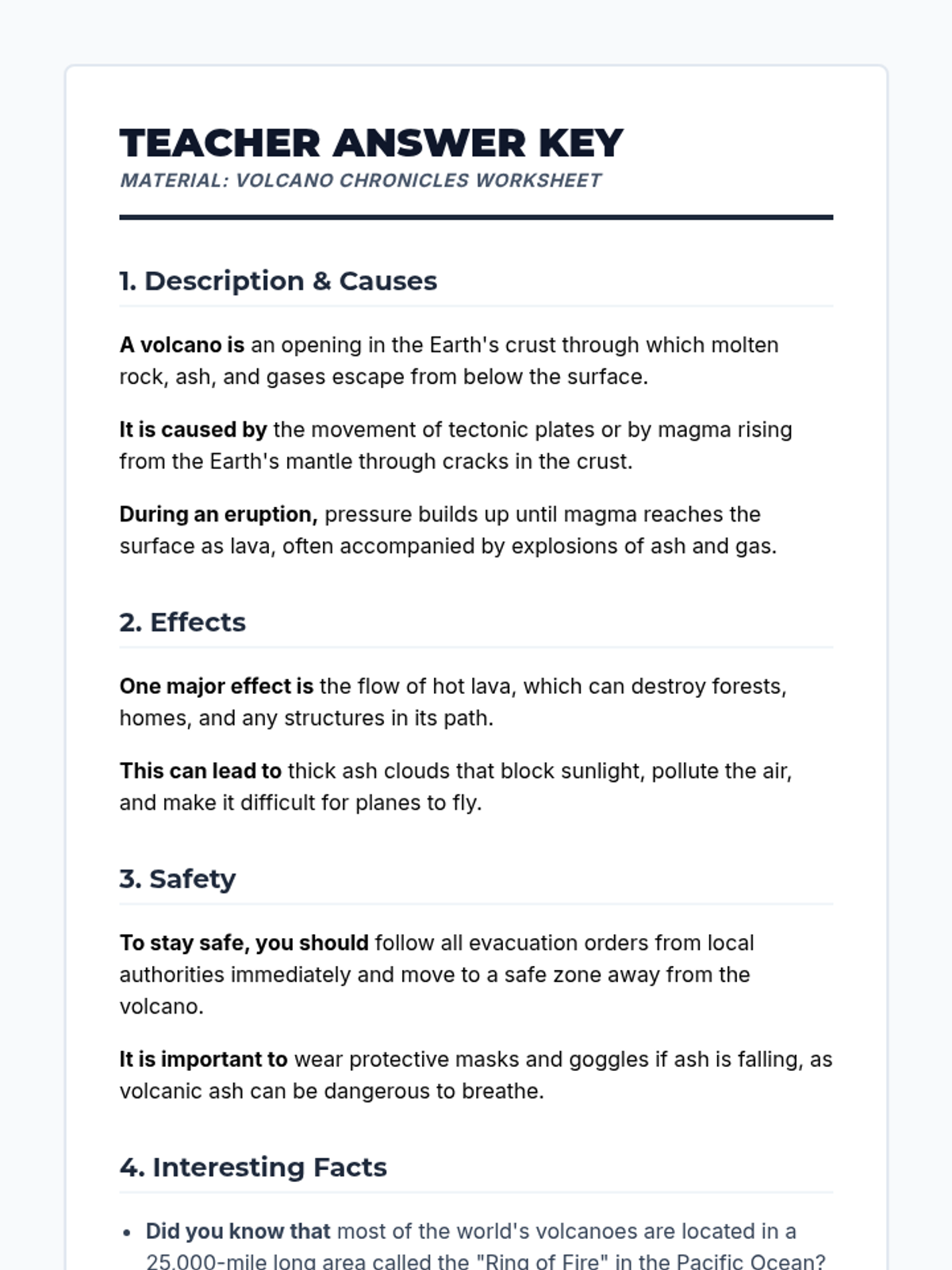
A comprehensive lesson on volcanoes, exploring magma and lava, eruption types, the impact of ash and lava flows, and critical evacuation safety protocols.
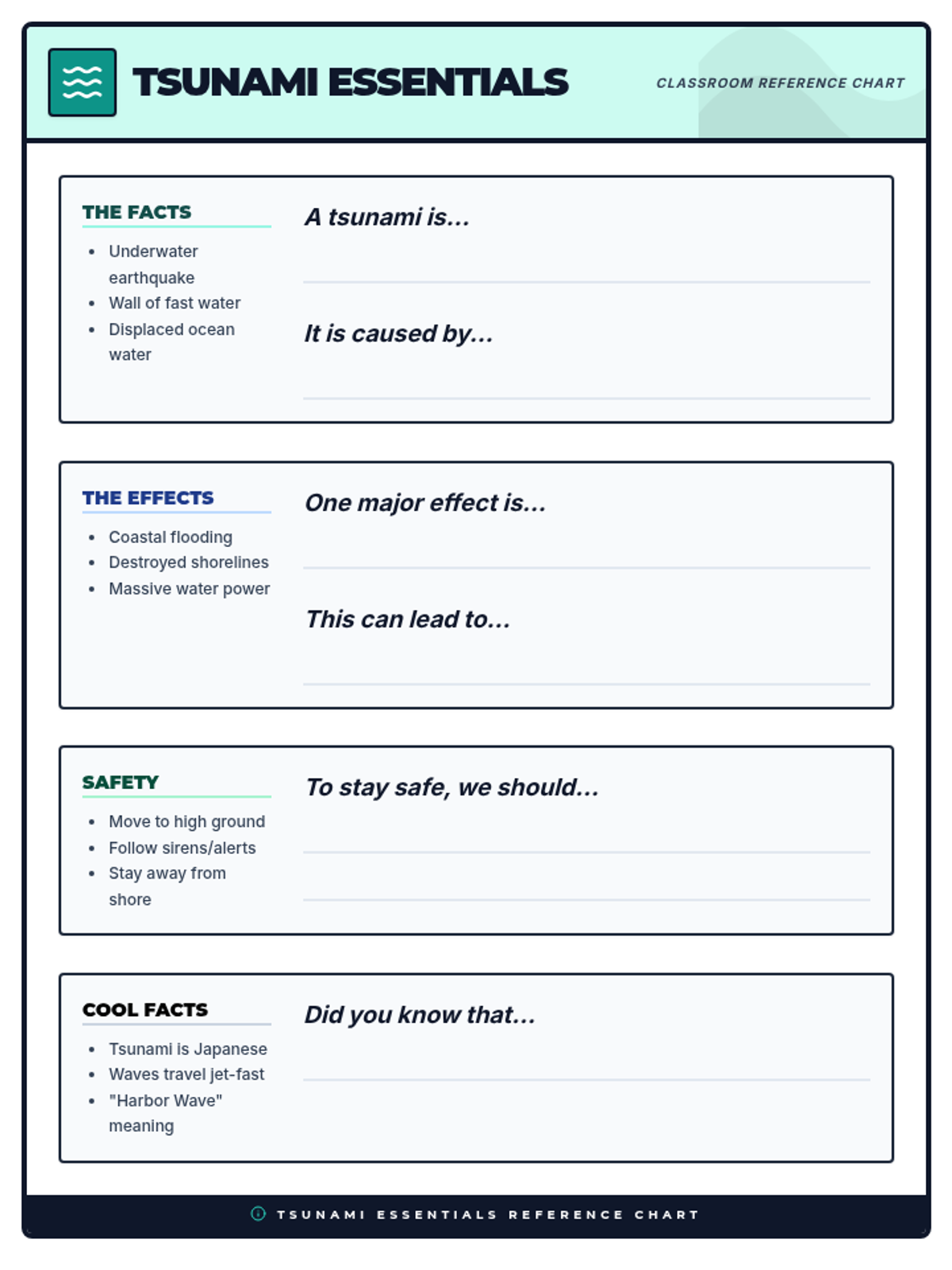
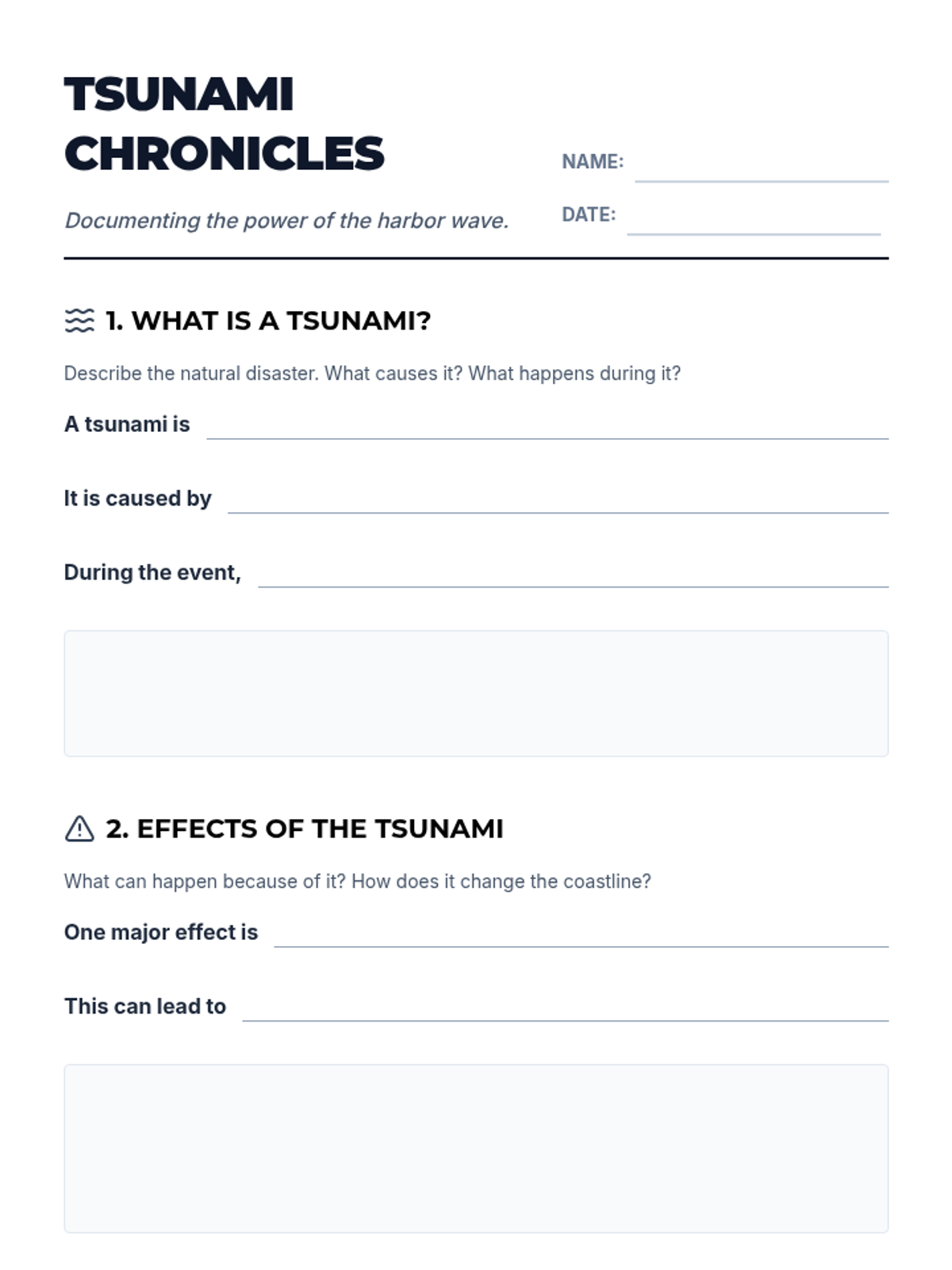
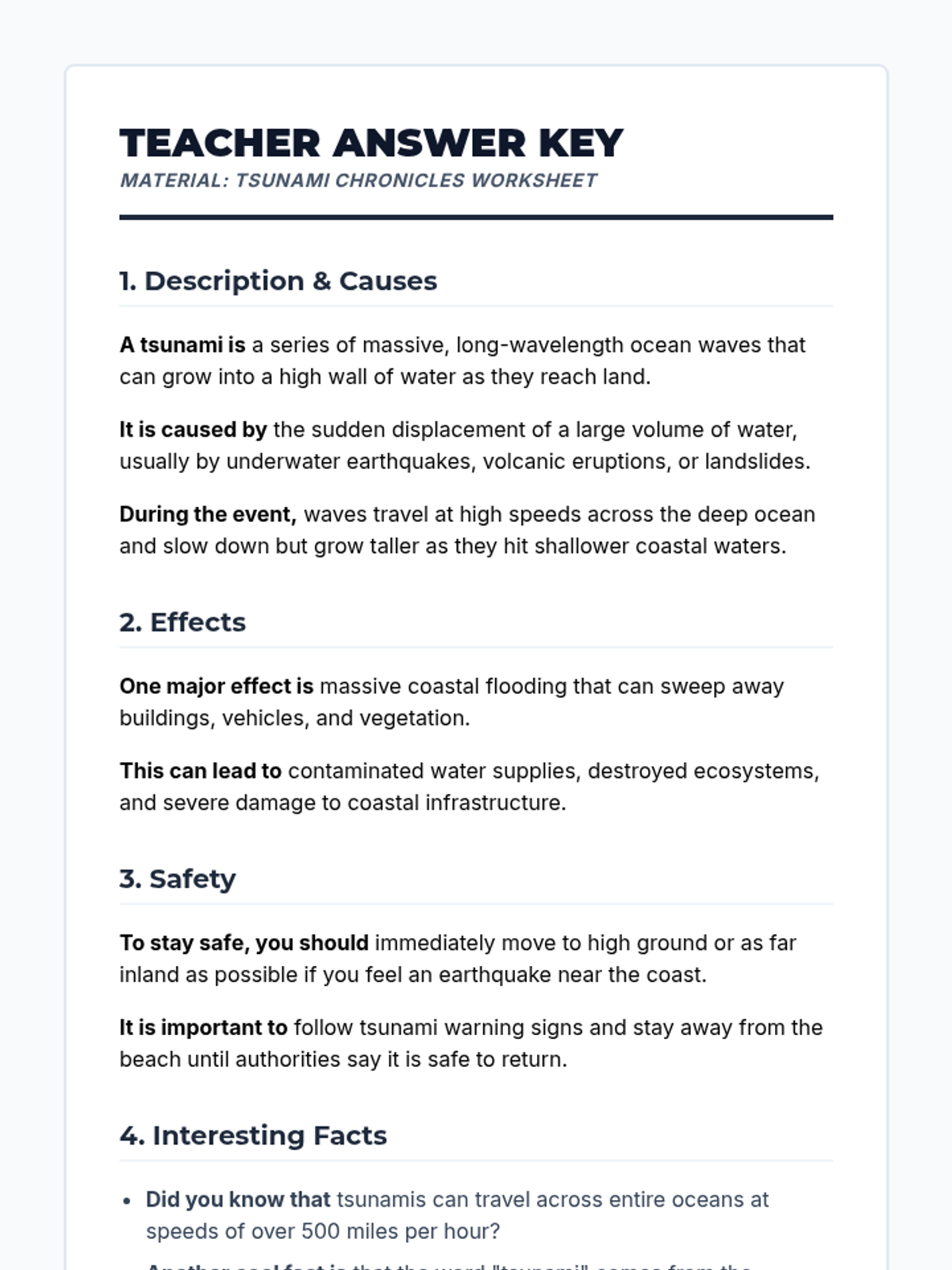
A comprehensive lesson on tsunamis, exploring their triggers like underwater earthquakes, the physics of wall-of-water waves, and critical coastal evacuation safety.
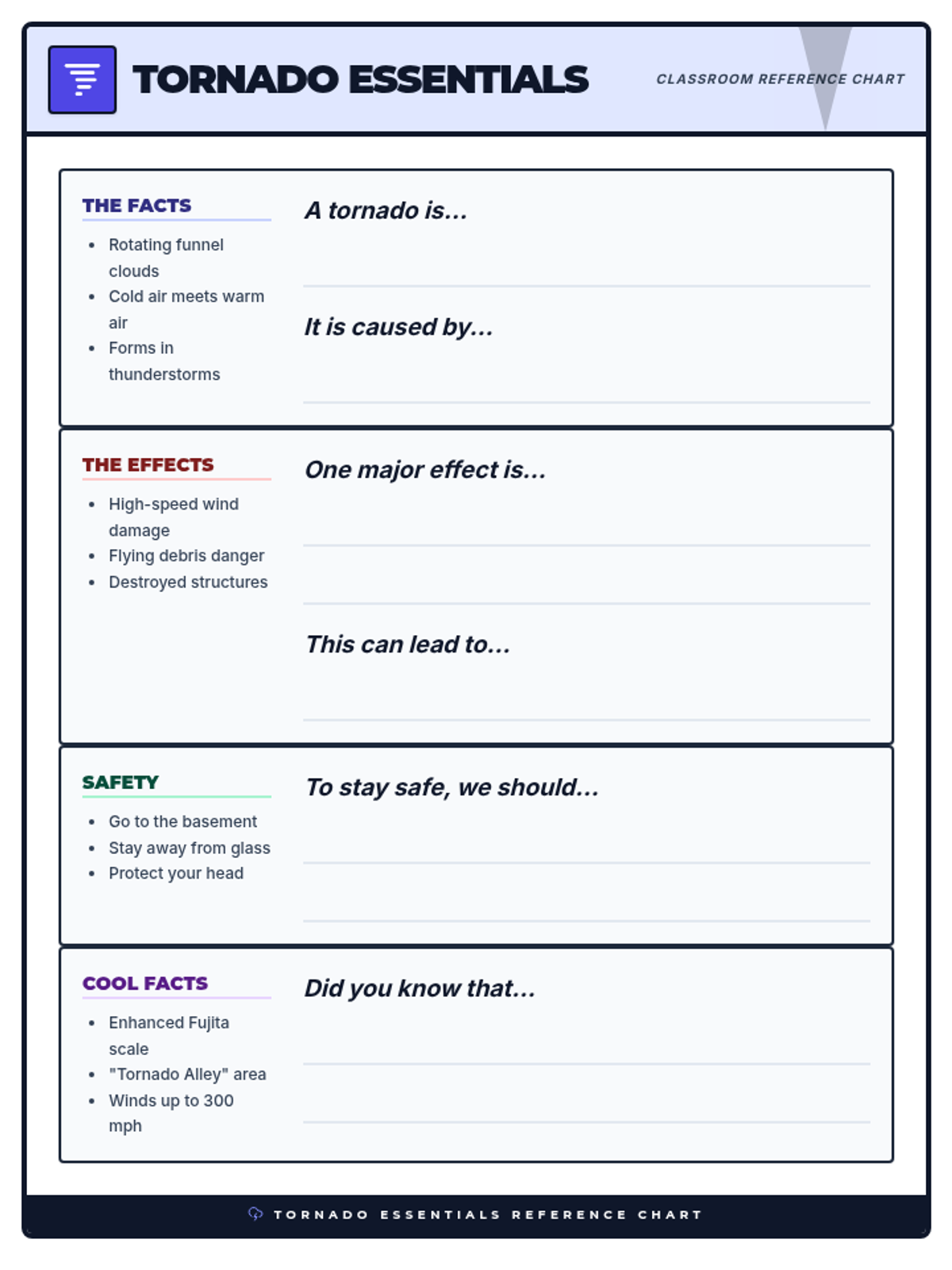
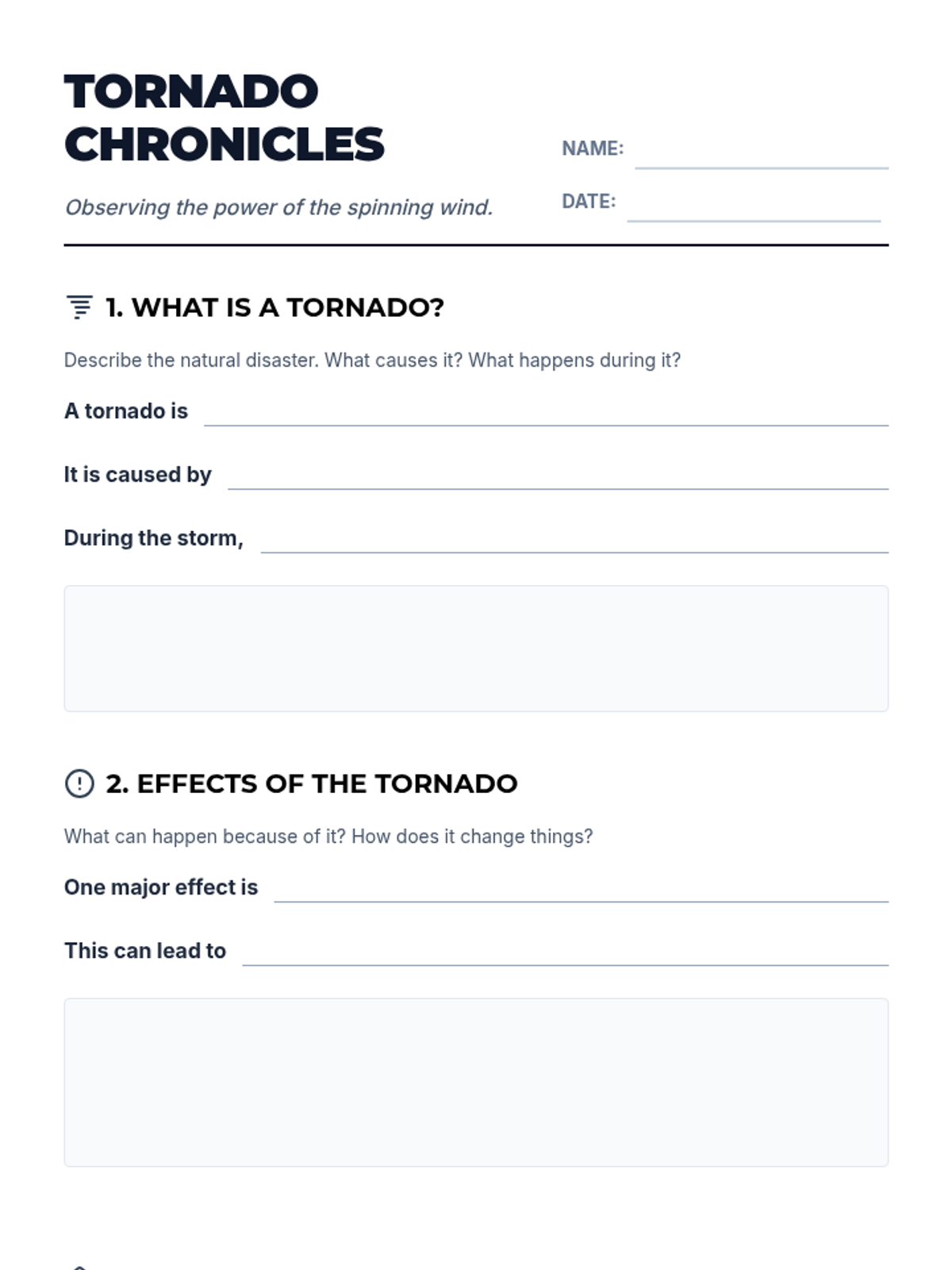
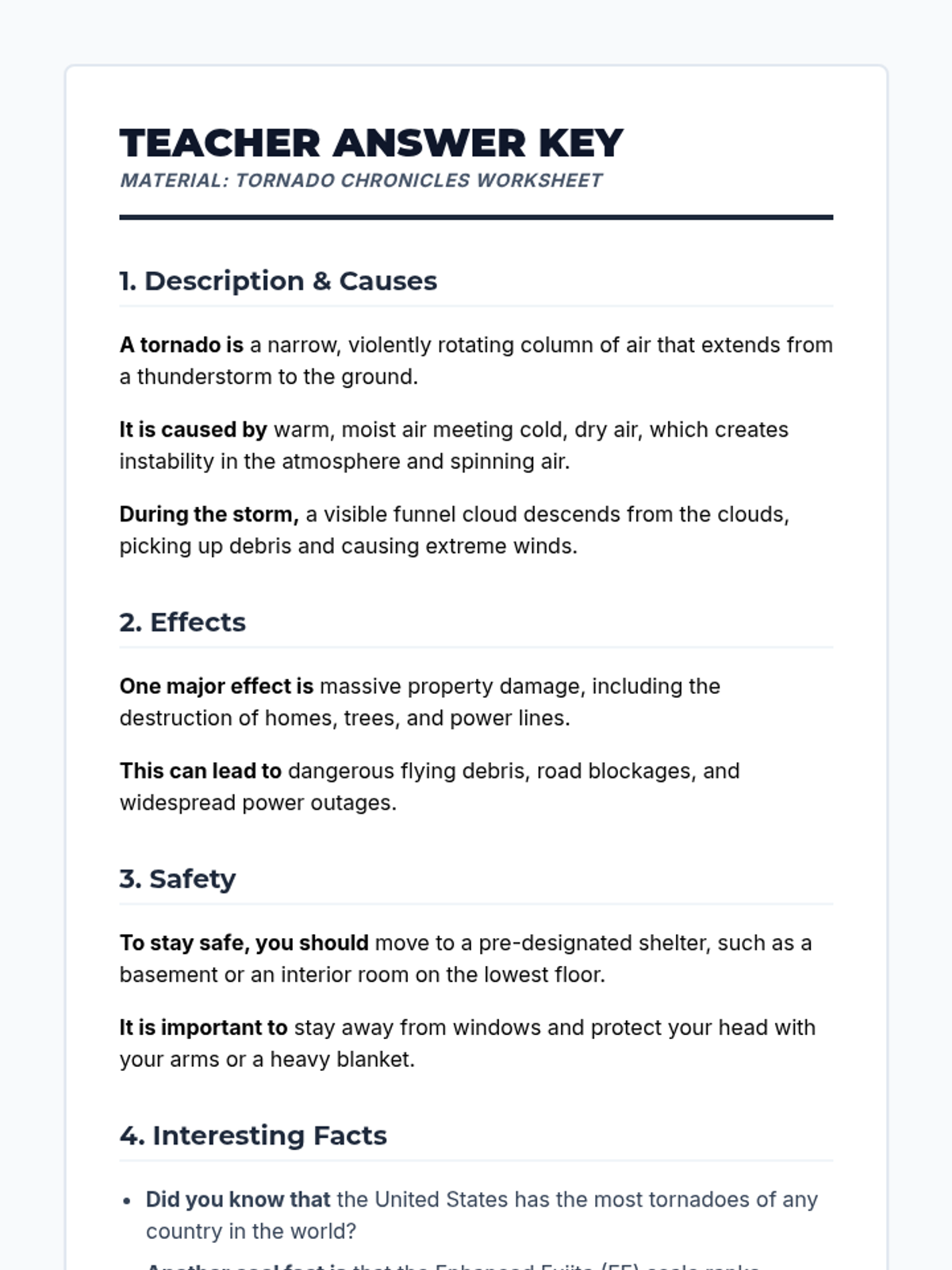
A comprehensive lesson on tornadoes, covering their formation from rotating thunderstorms, their devastating wind impacts, and critical "get low" safety protocols.
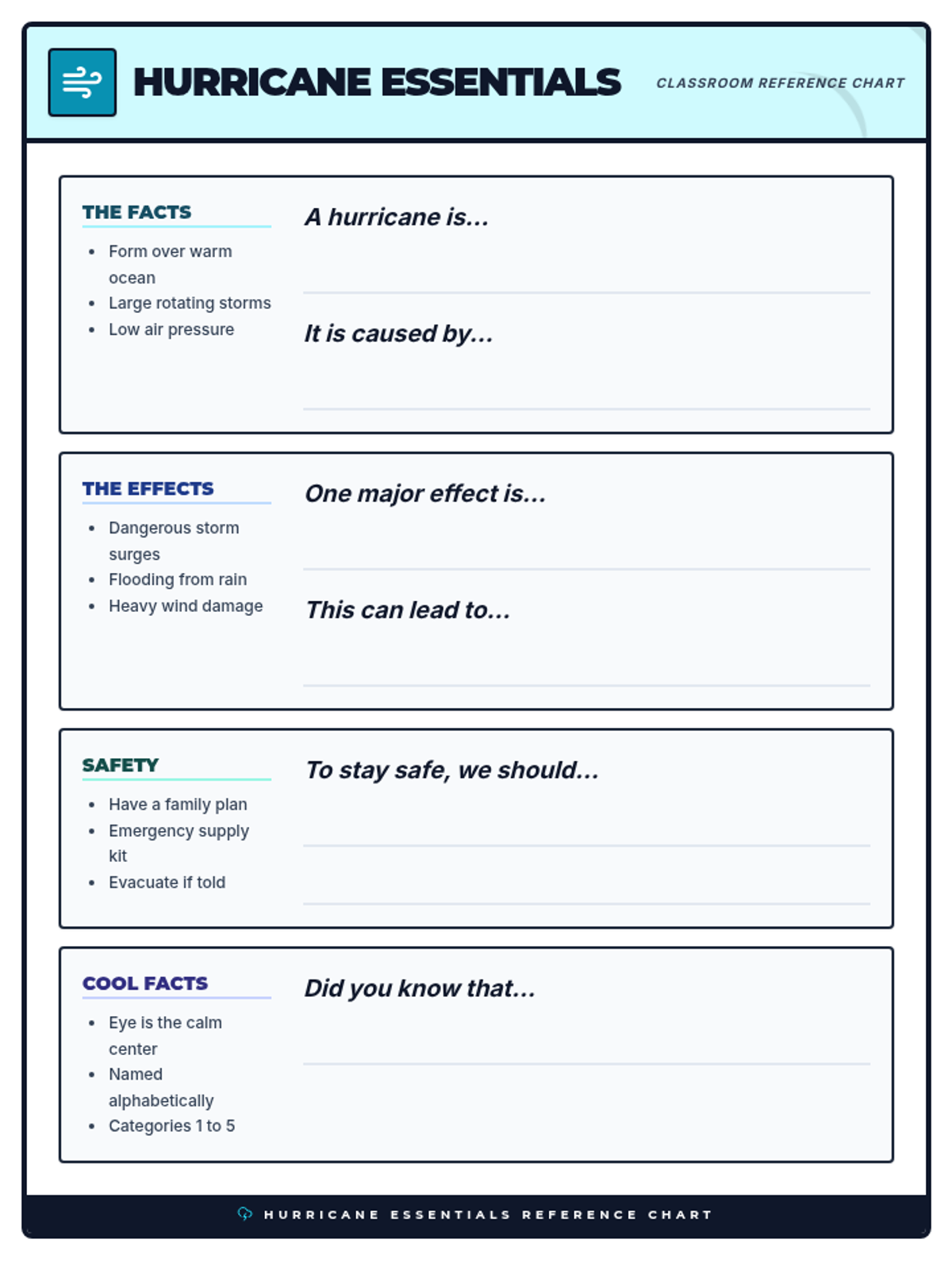
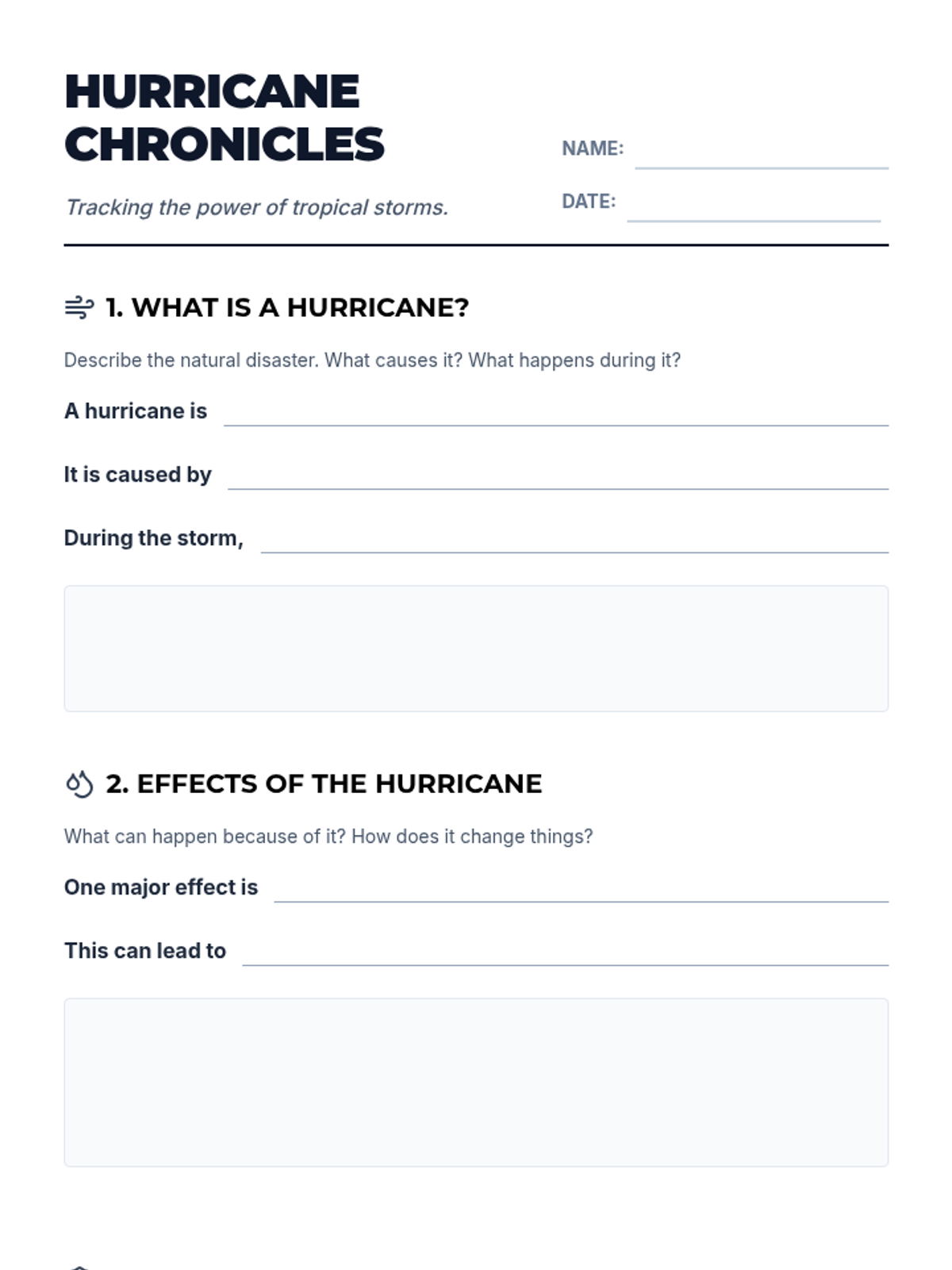
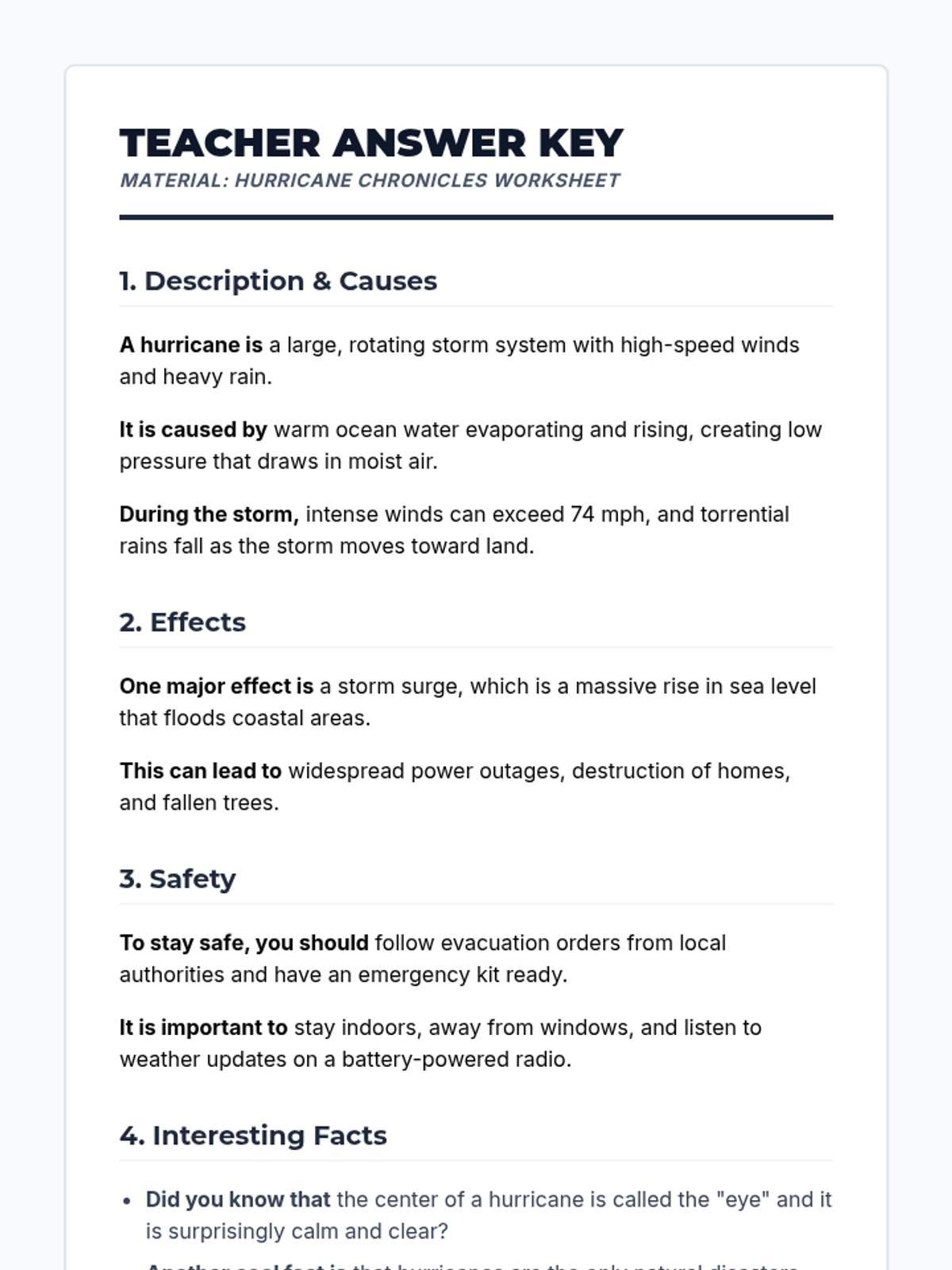
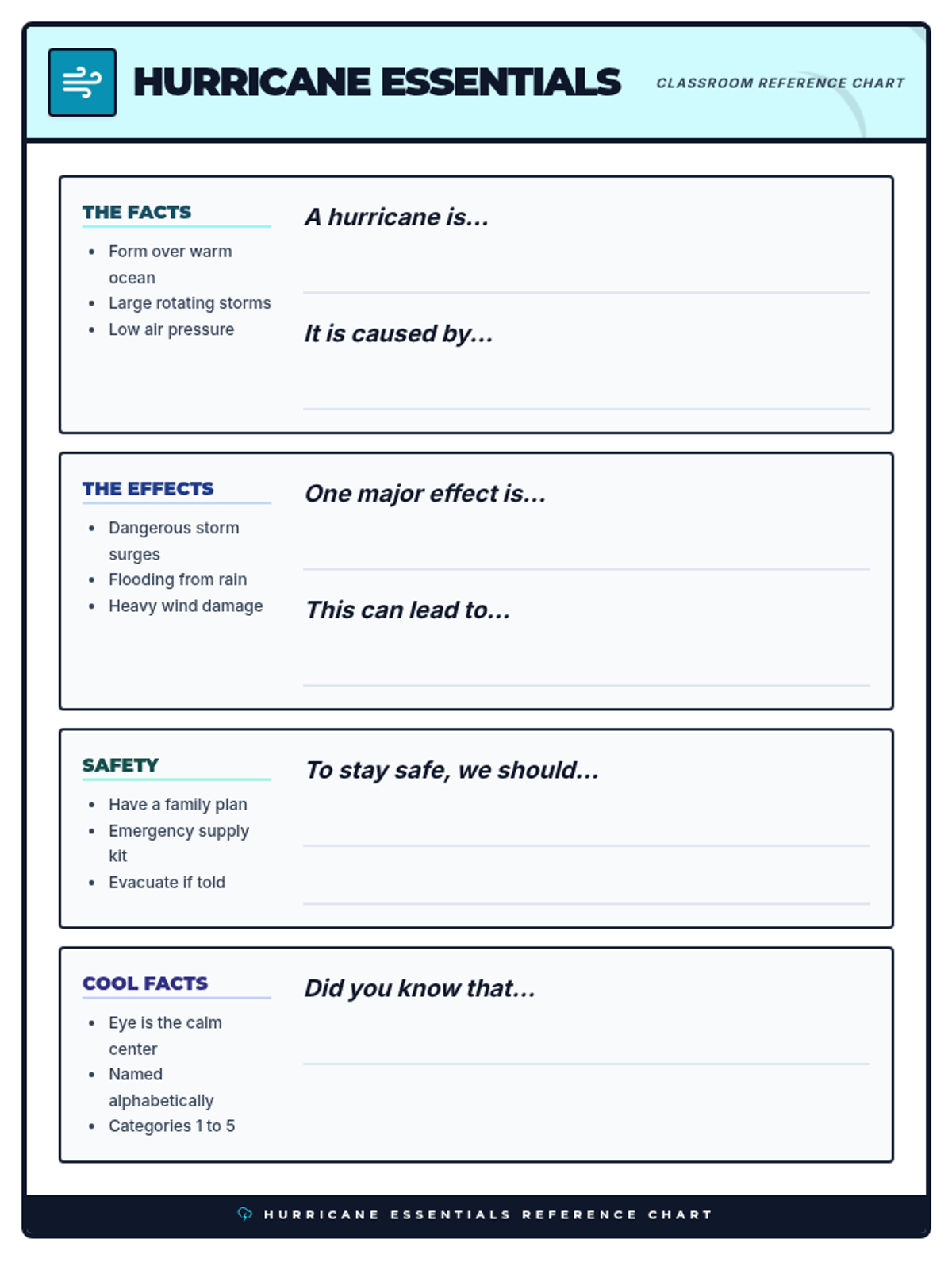
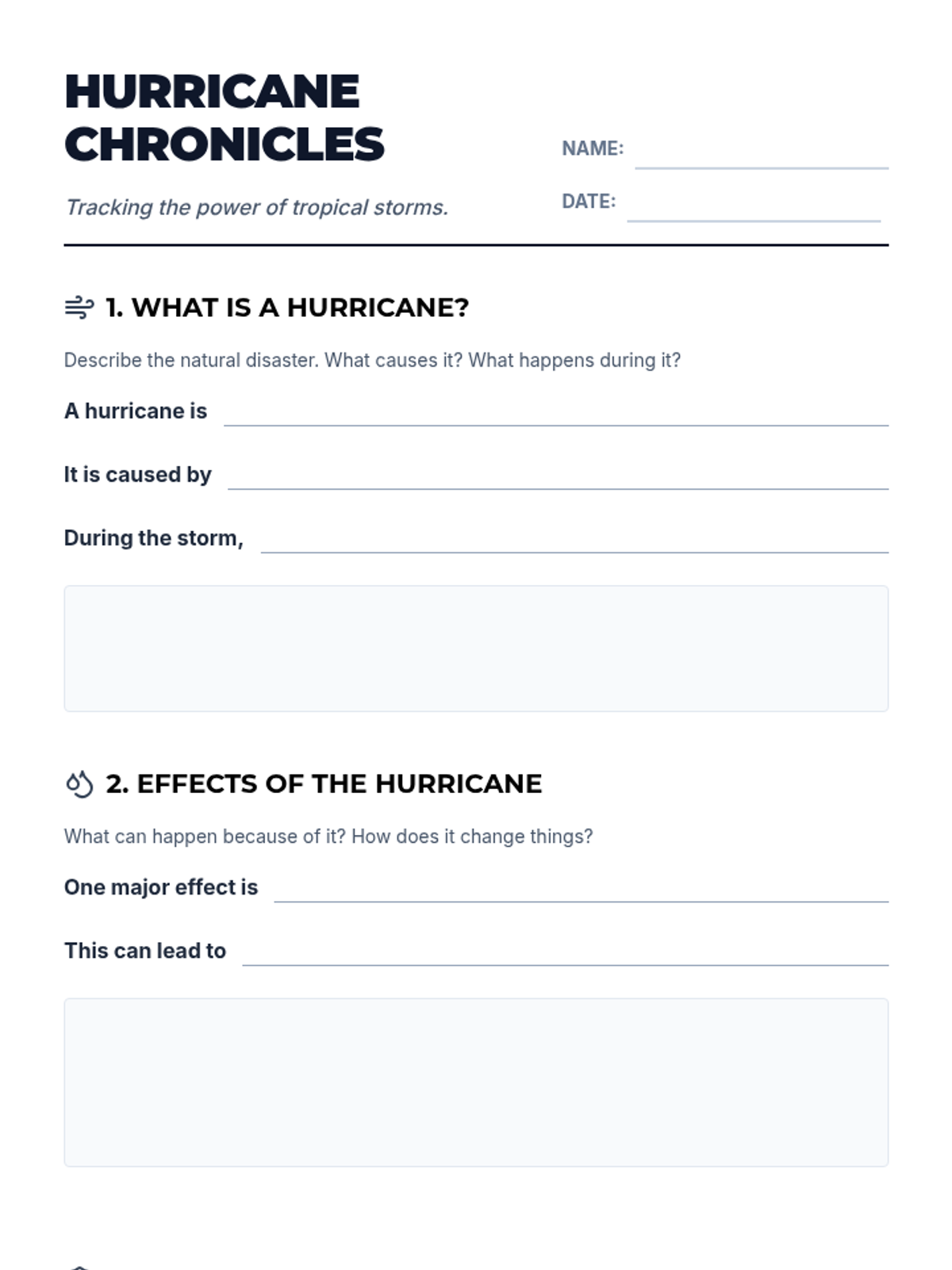
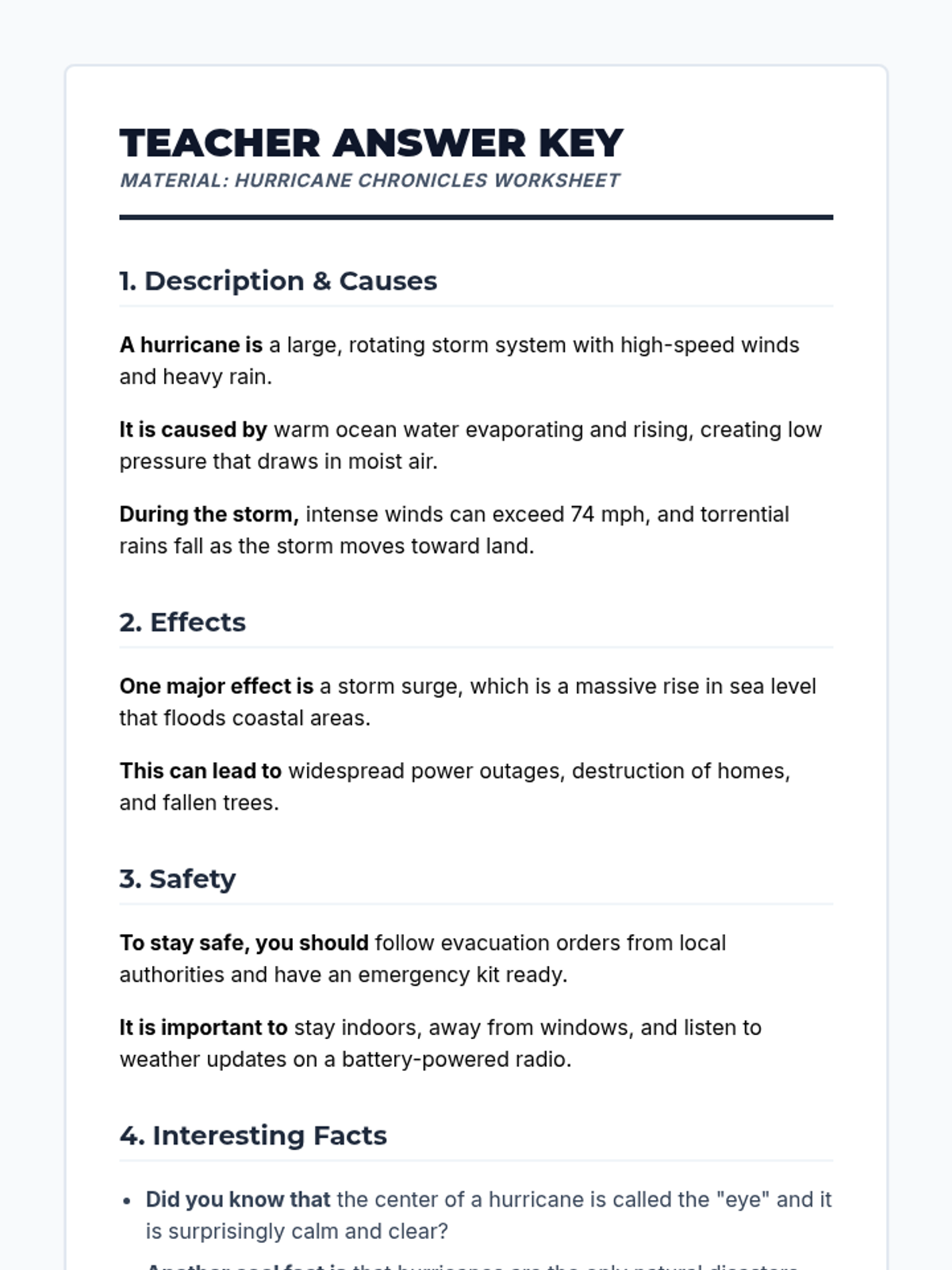
A comprehensive lesson on hurricanes, exploring their formation over warm oceans, their powerful effects like storm surges, and critical safety procedures.
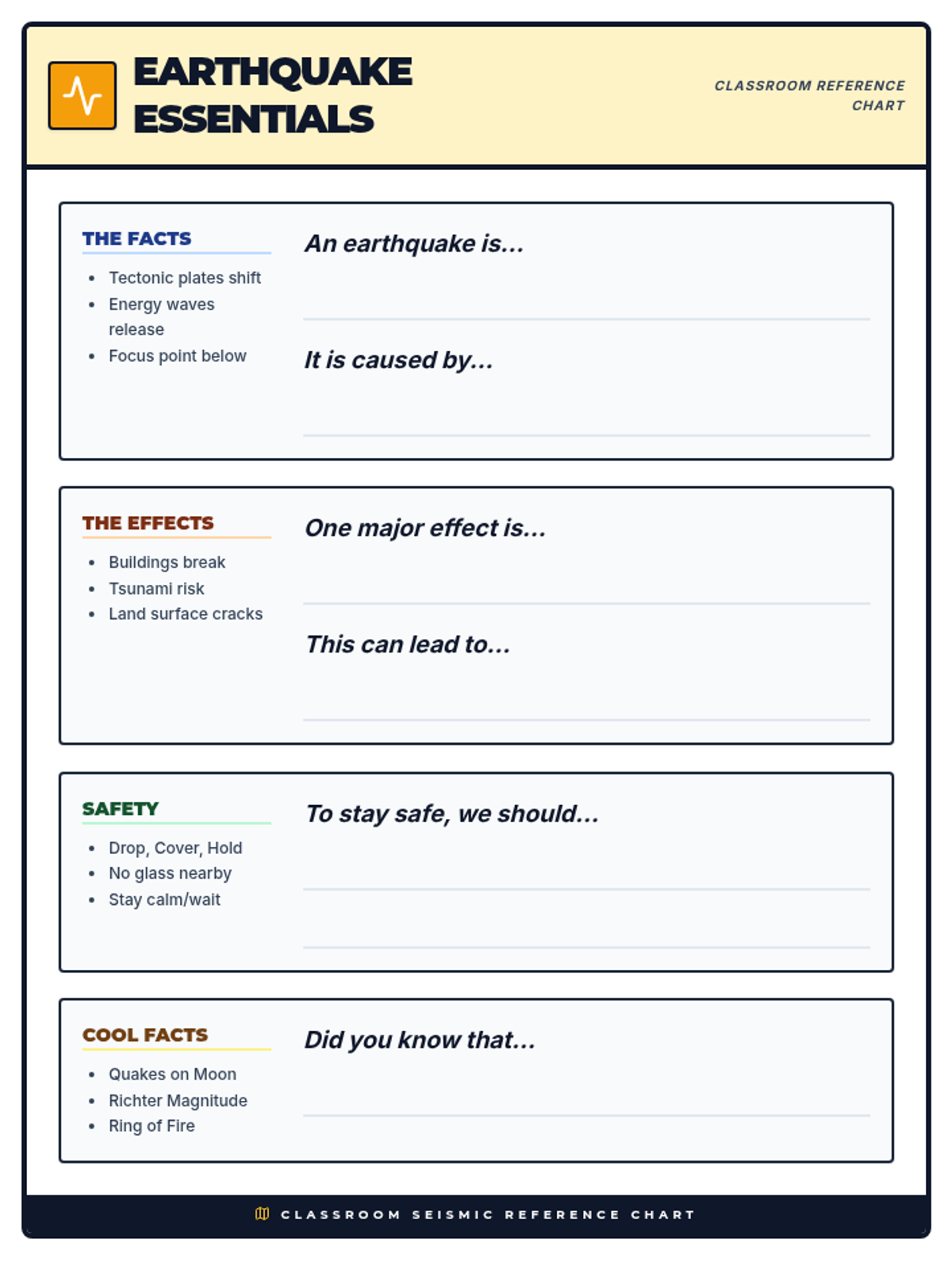
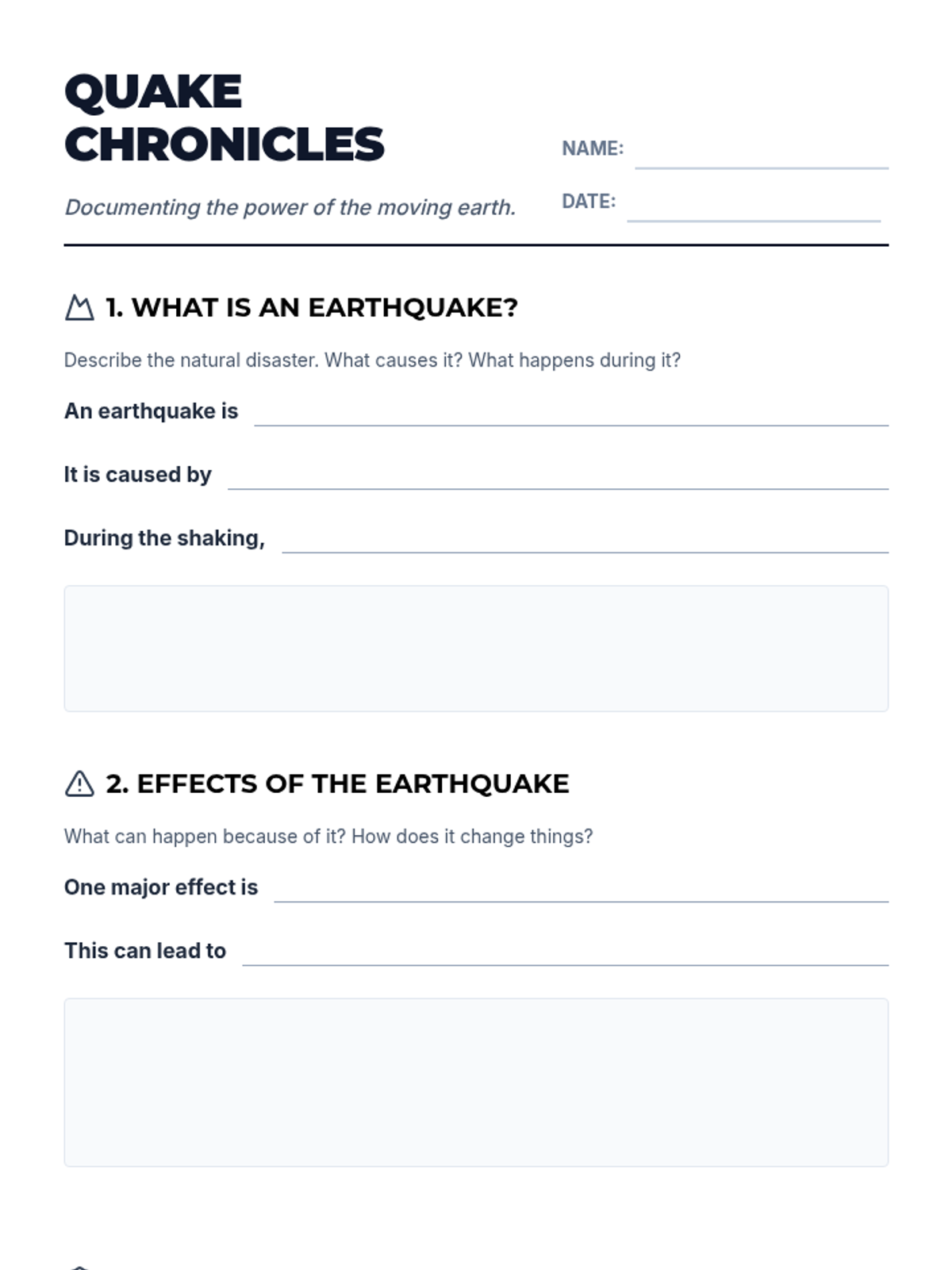
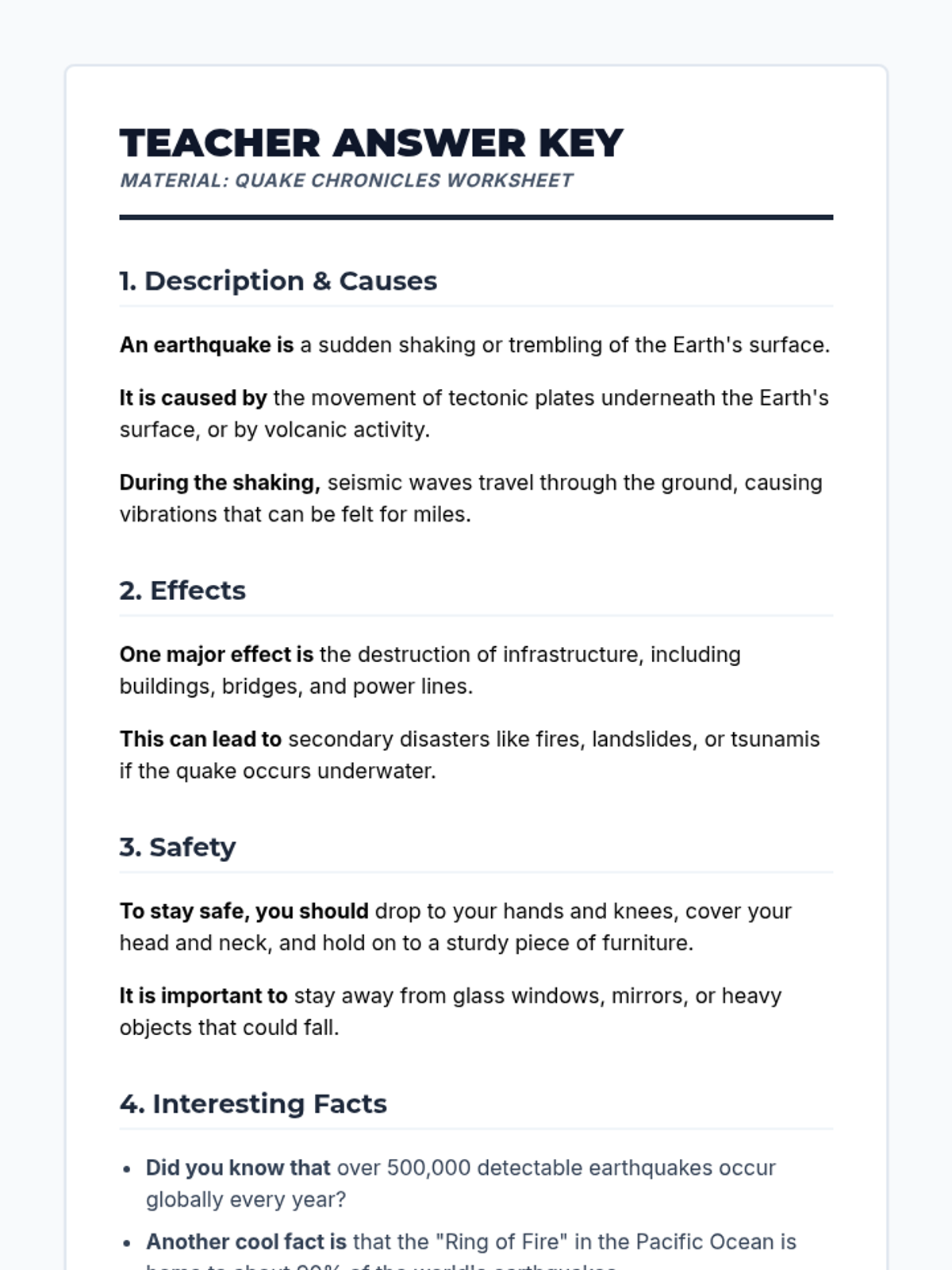
A comprehensive lesson on earthquakes, covering their causes, effects, safety protocols, and fascinating seismic facts using sentence starters to support student writing.
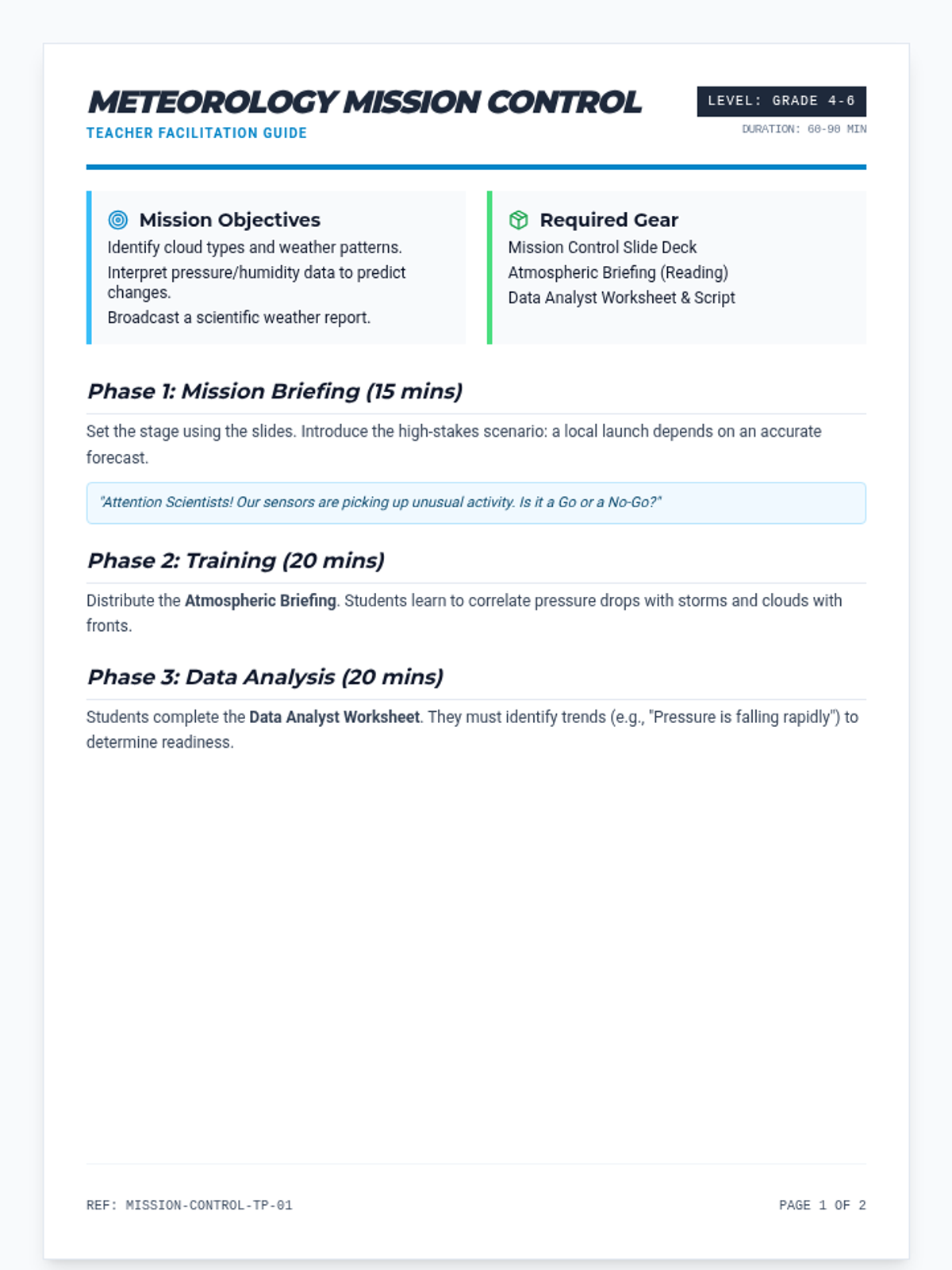
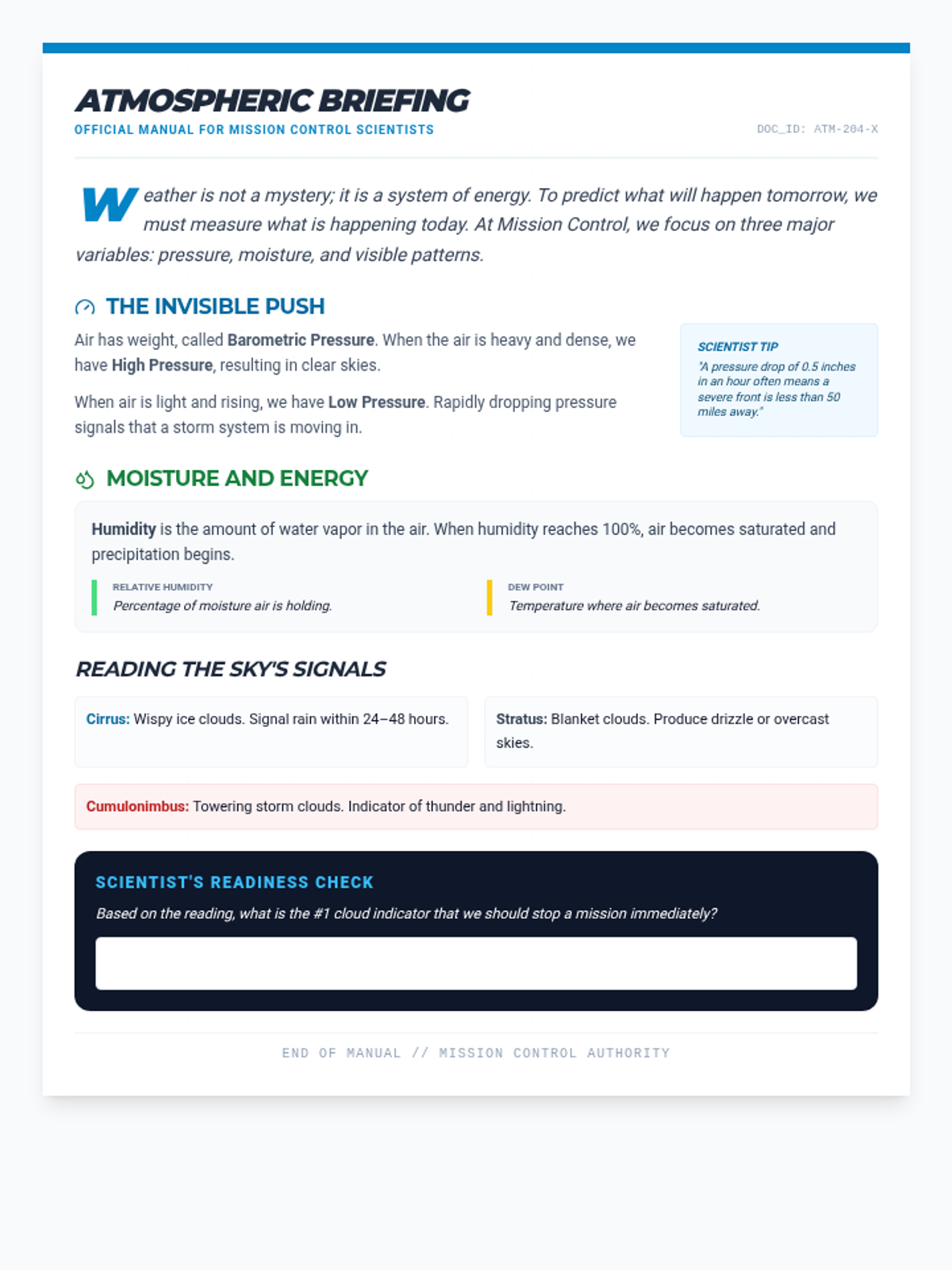
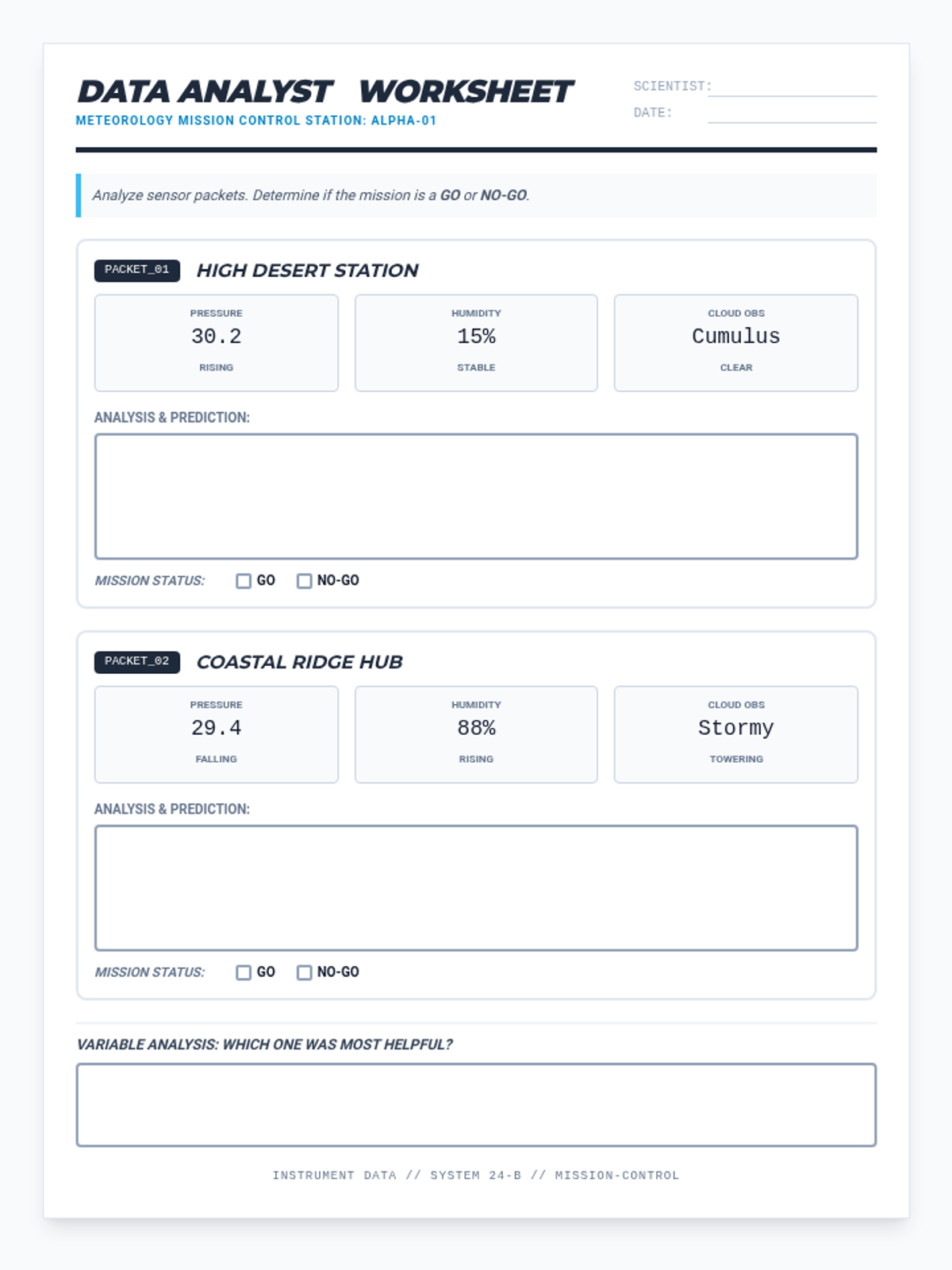
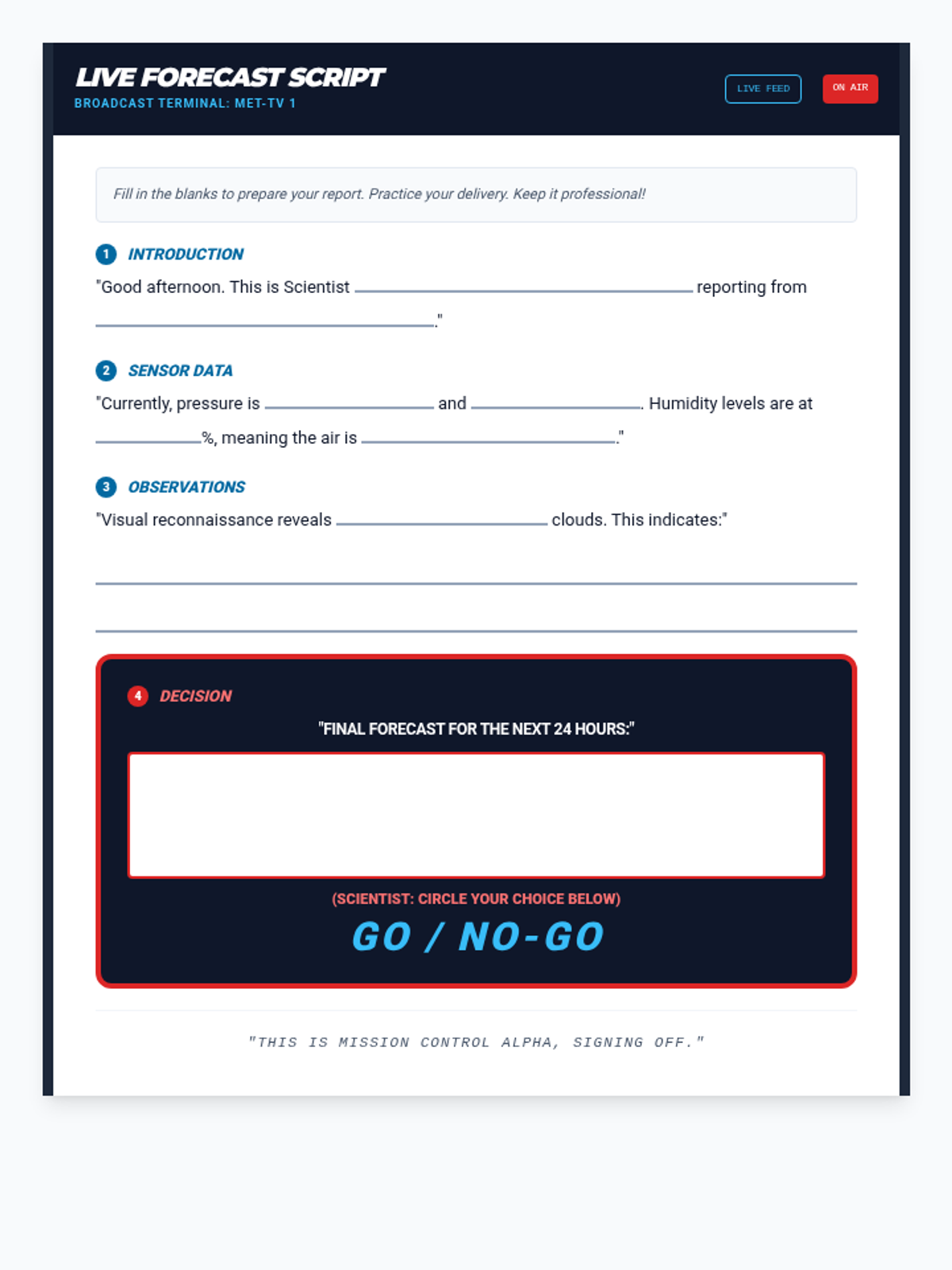
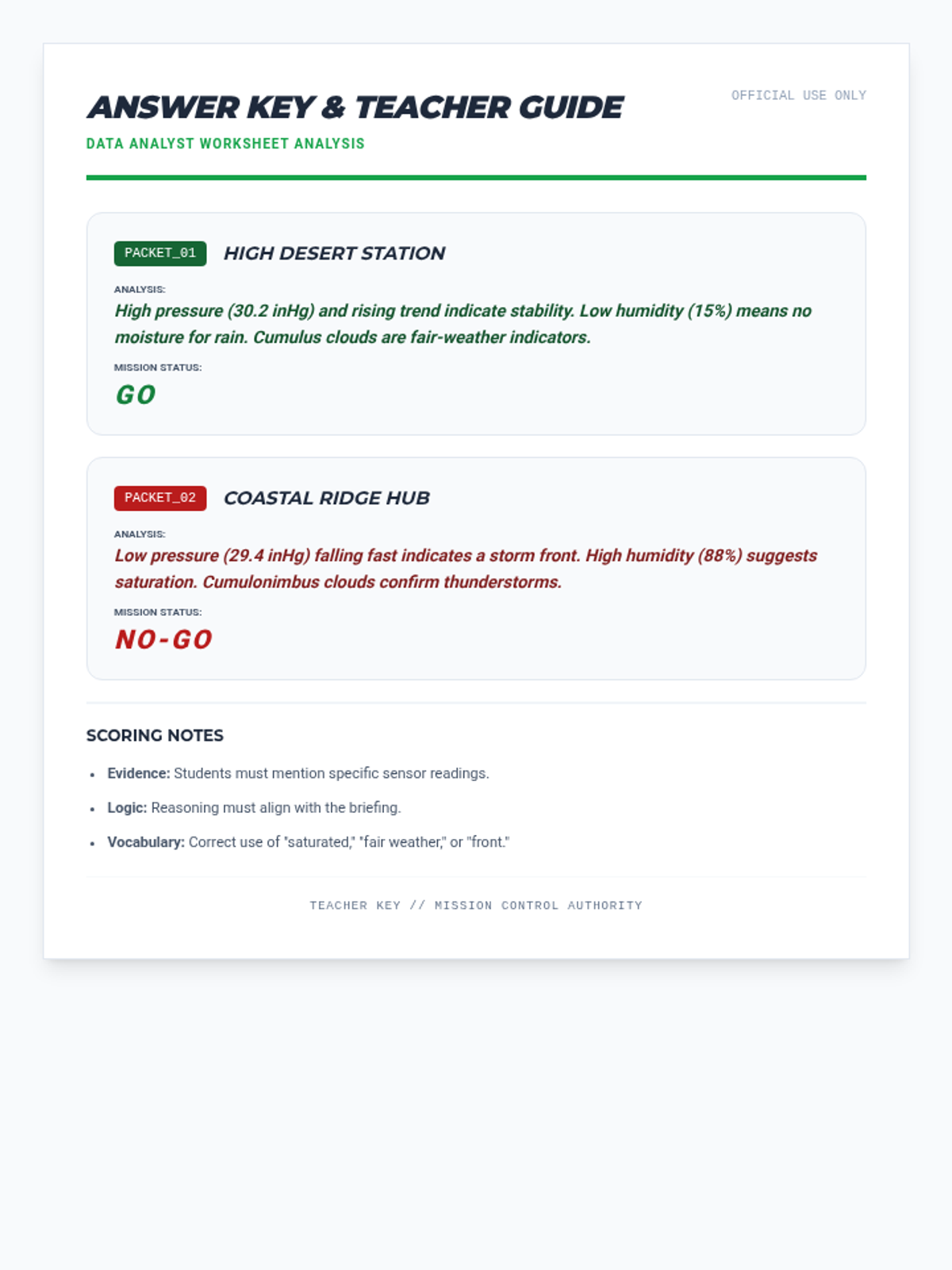
A high-energy meteorology lesson where students act as atmospheric scientists at a mission control center, analyzing real-world data and cloud patterns to broadcast a live weather forecast.
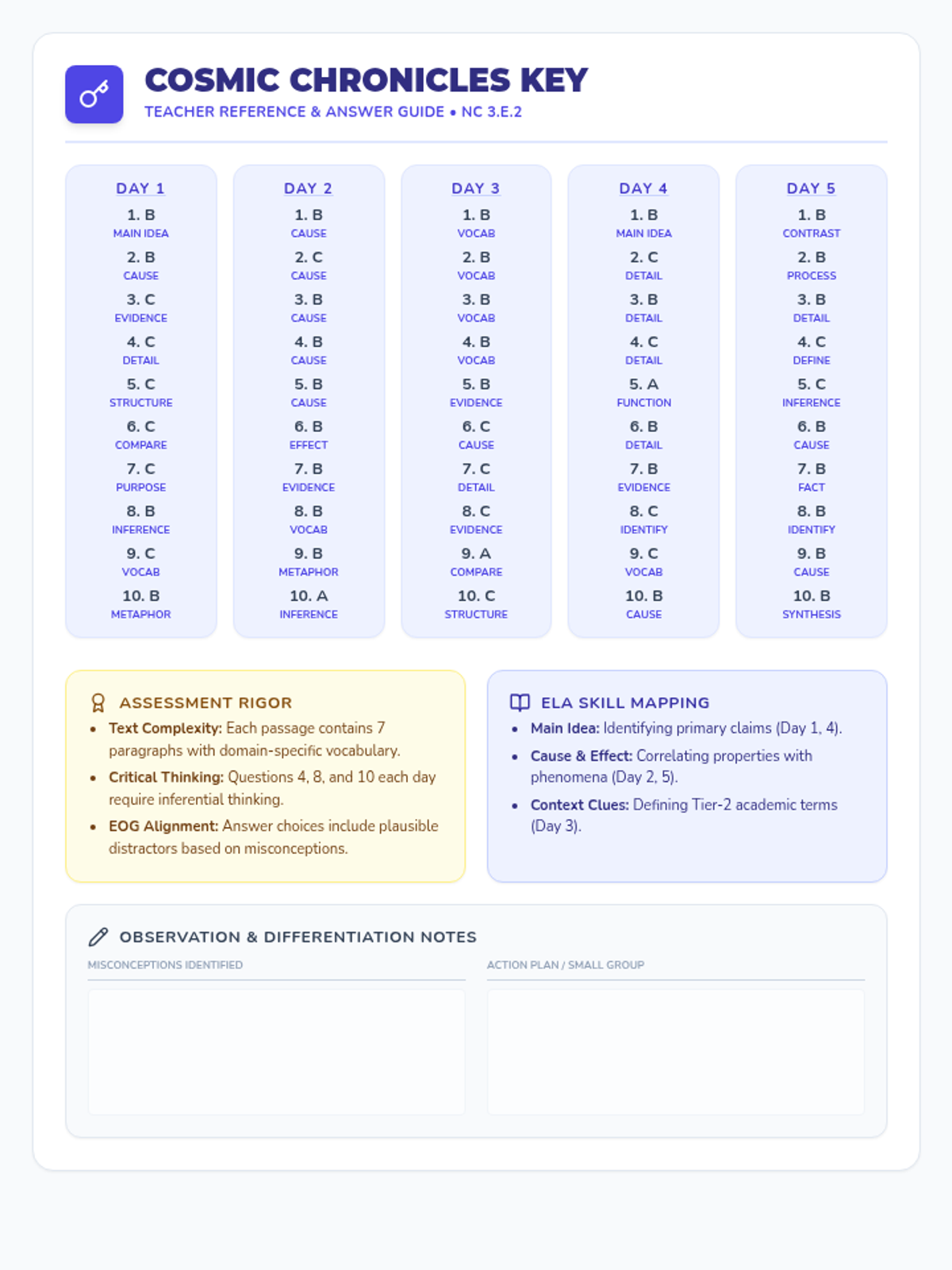
A week-long exploration of our solar system (NC 3.E.2) integrated with ELA skills like main idea, cause and effect, and context clues. Students will analyze the Earth, Moon, and planets through daily reading passages and 10-question assessments.
A comprehensive exploration of ecosystems and biomes, focusing on the interactions between biotic and abiotic factors, the flow of energy through food webs, and the impact of environmental changes on organism survival. Students will investigate how energy and matter move through nature's blueprint.
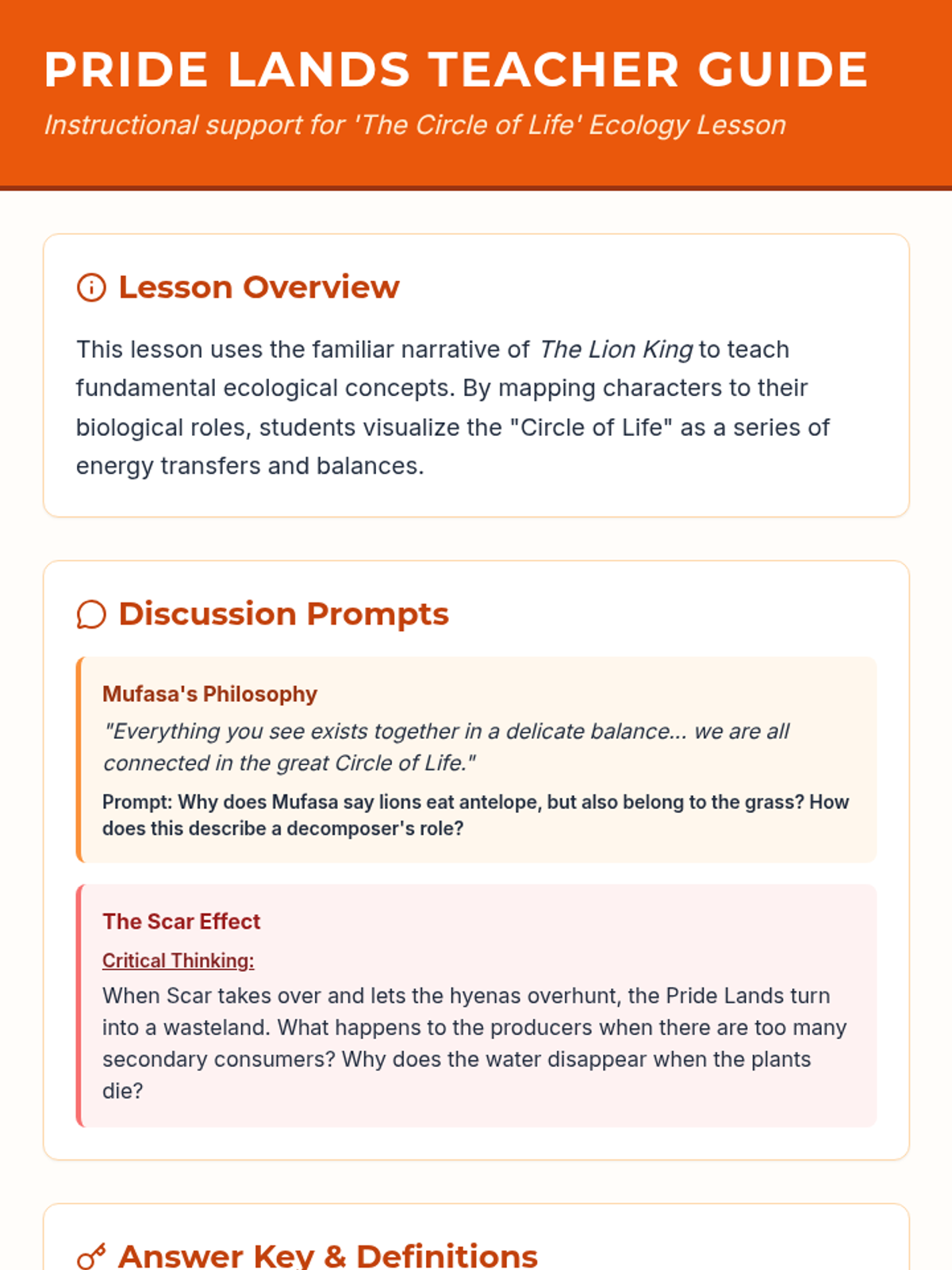
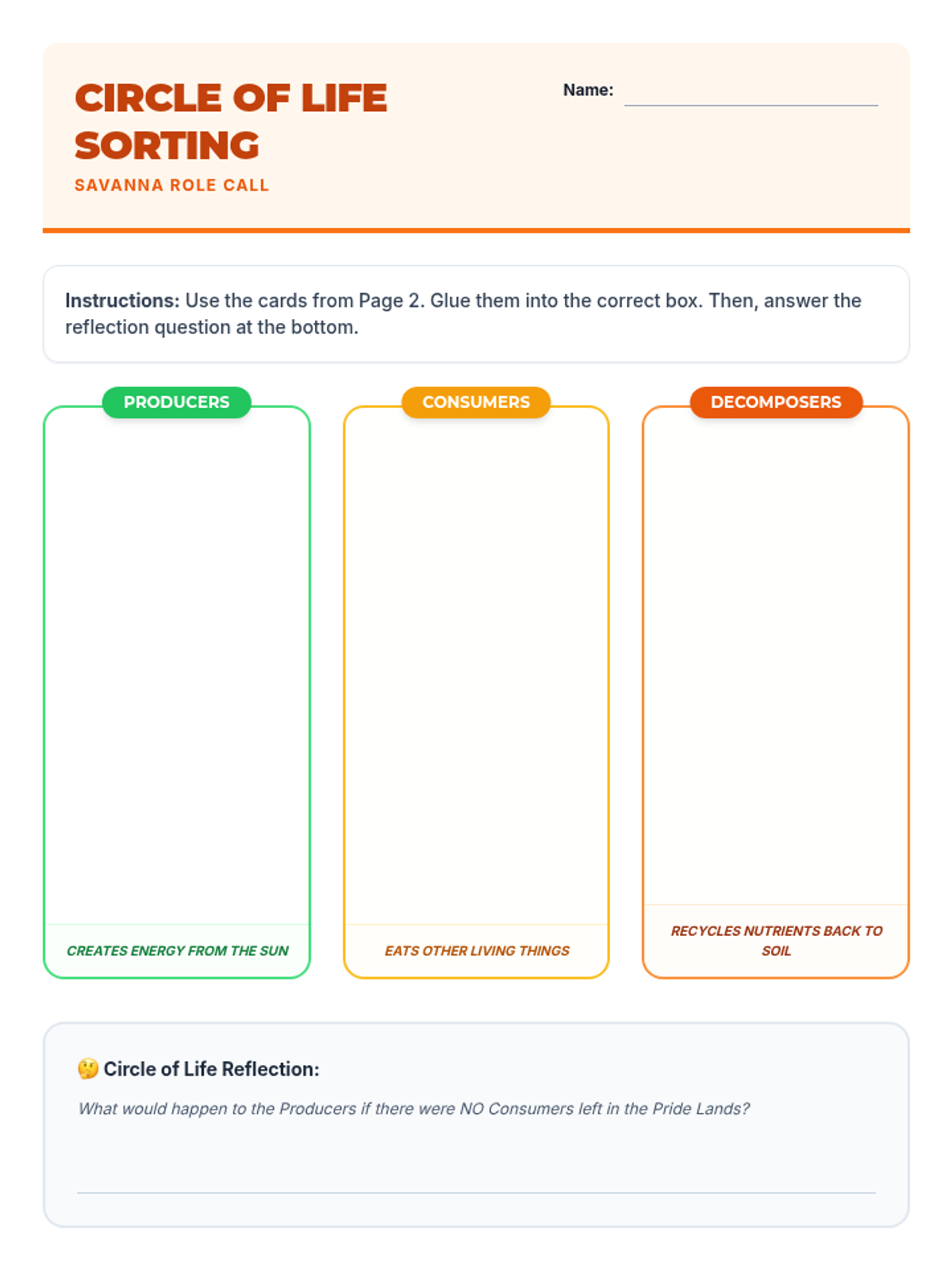
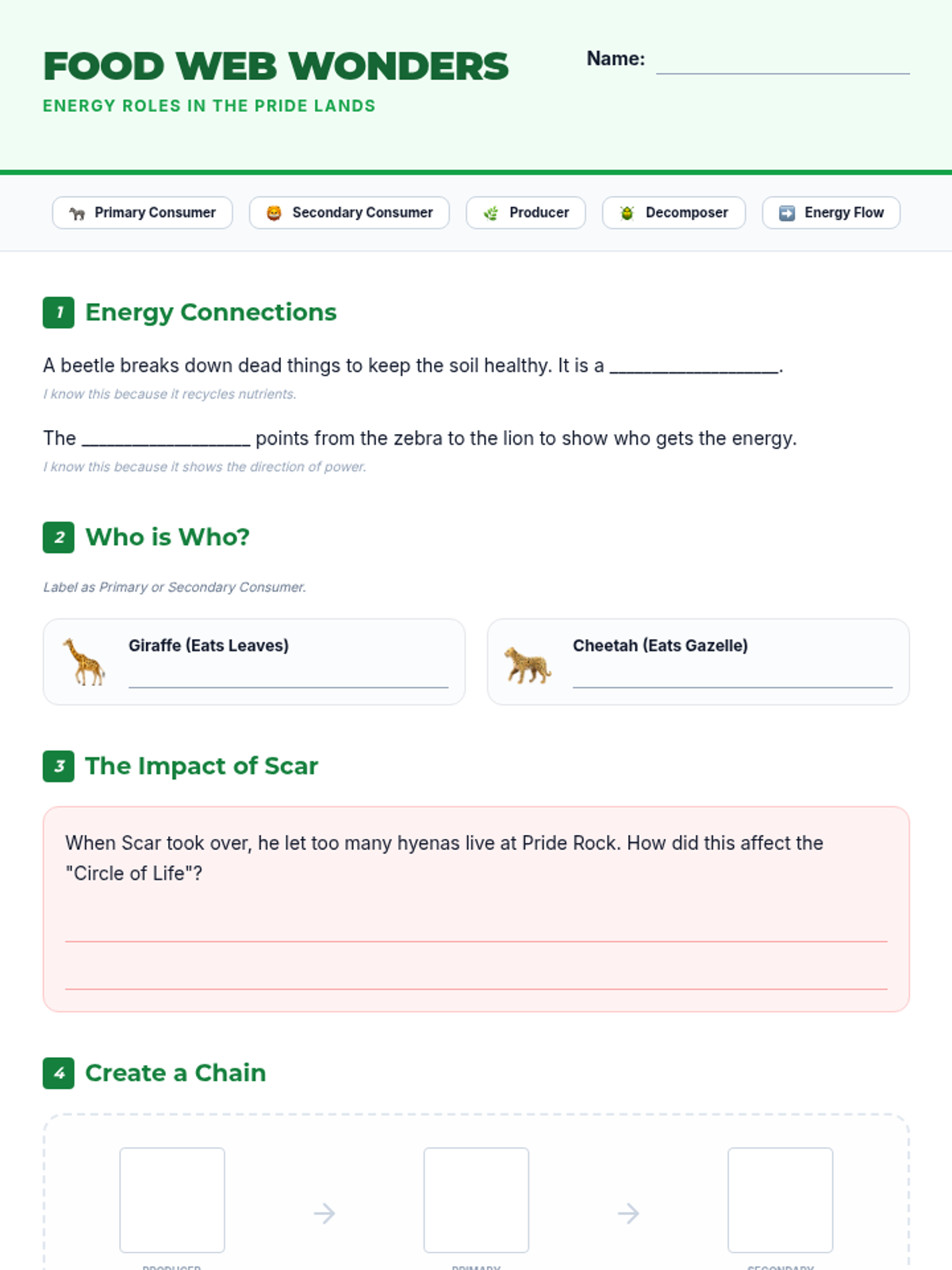
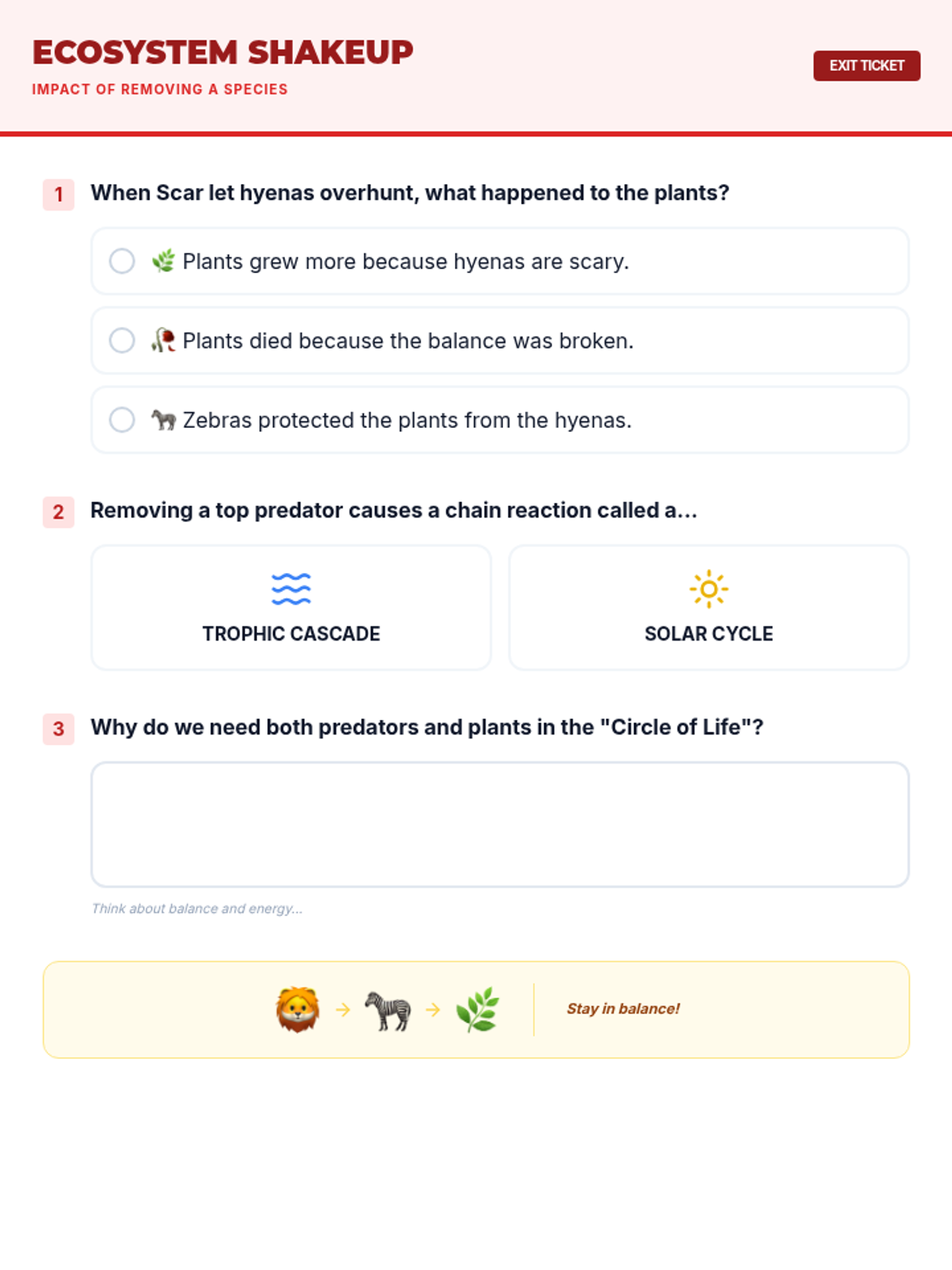
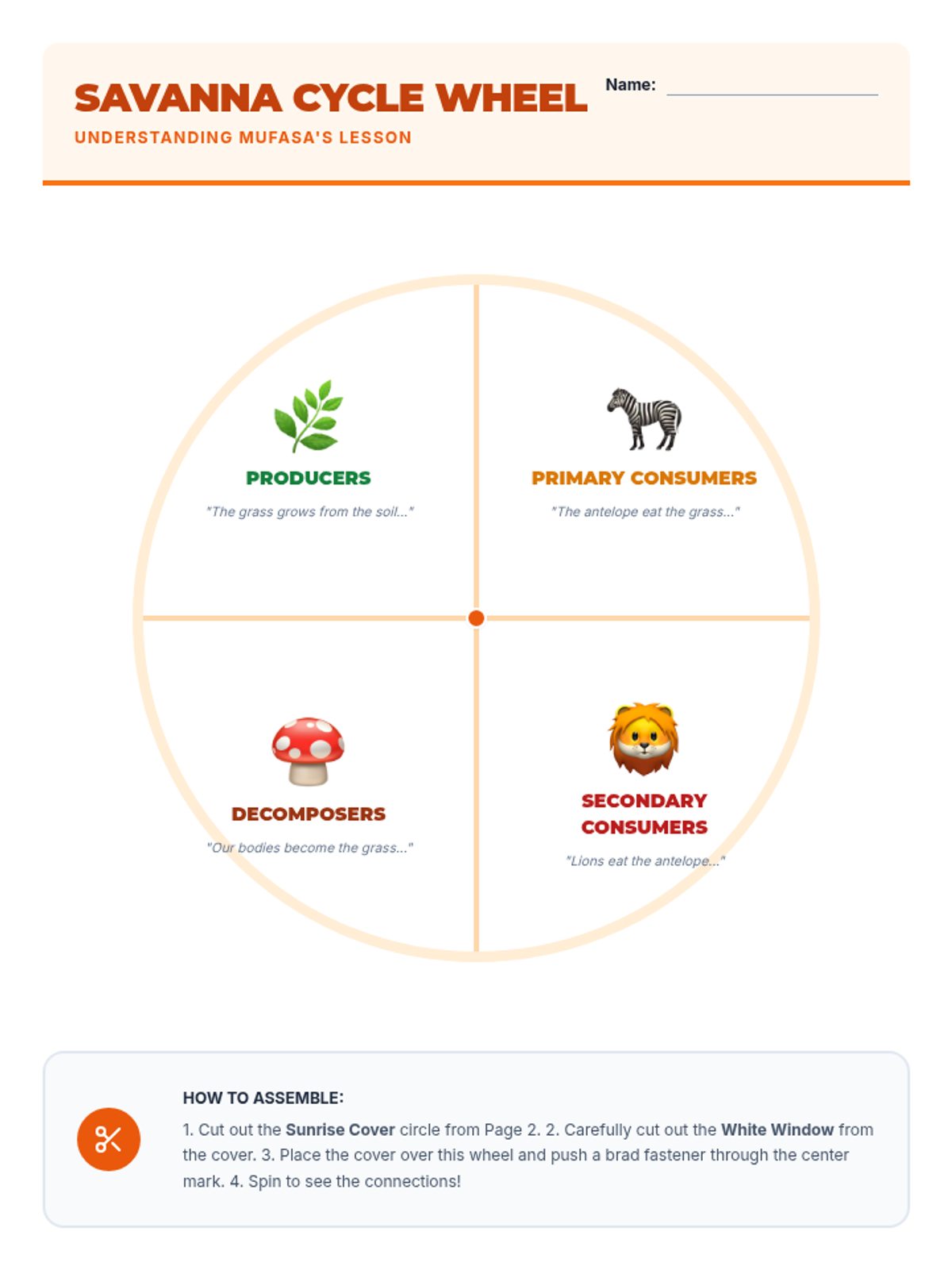
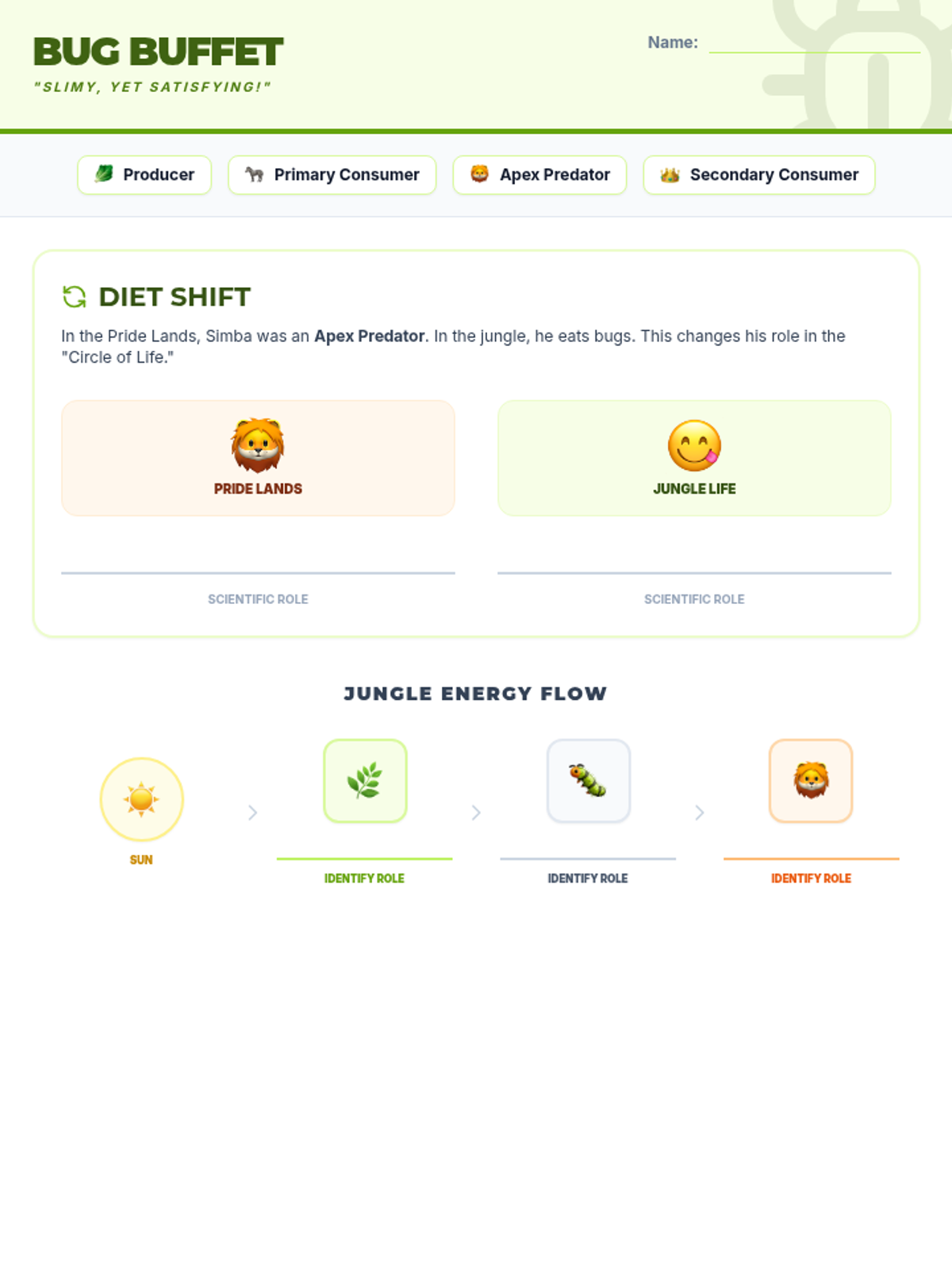
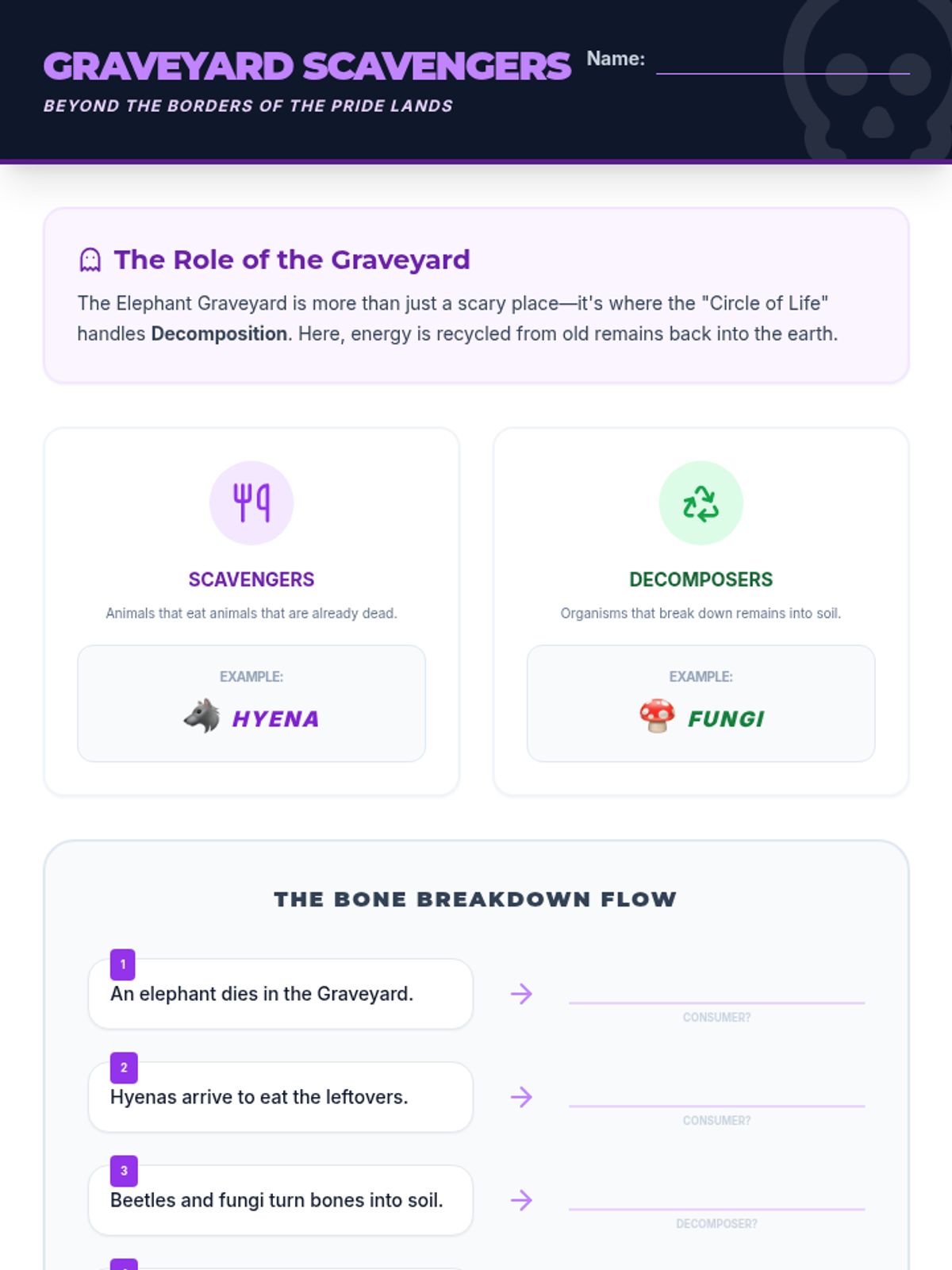
Students identify producers, consumers, and decomposers within the African savanna, construct food chains, and analyze how the removal of a top predator or a change in leadership (like the transition from Mufasa to Scar) affects the ecosystem.
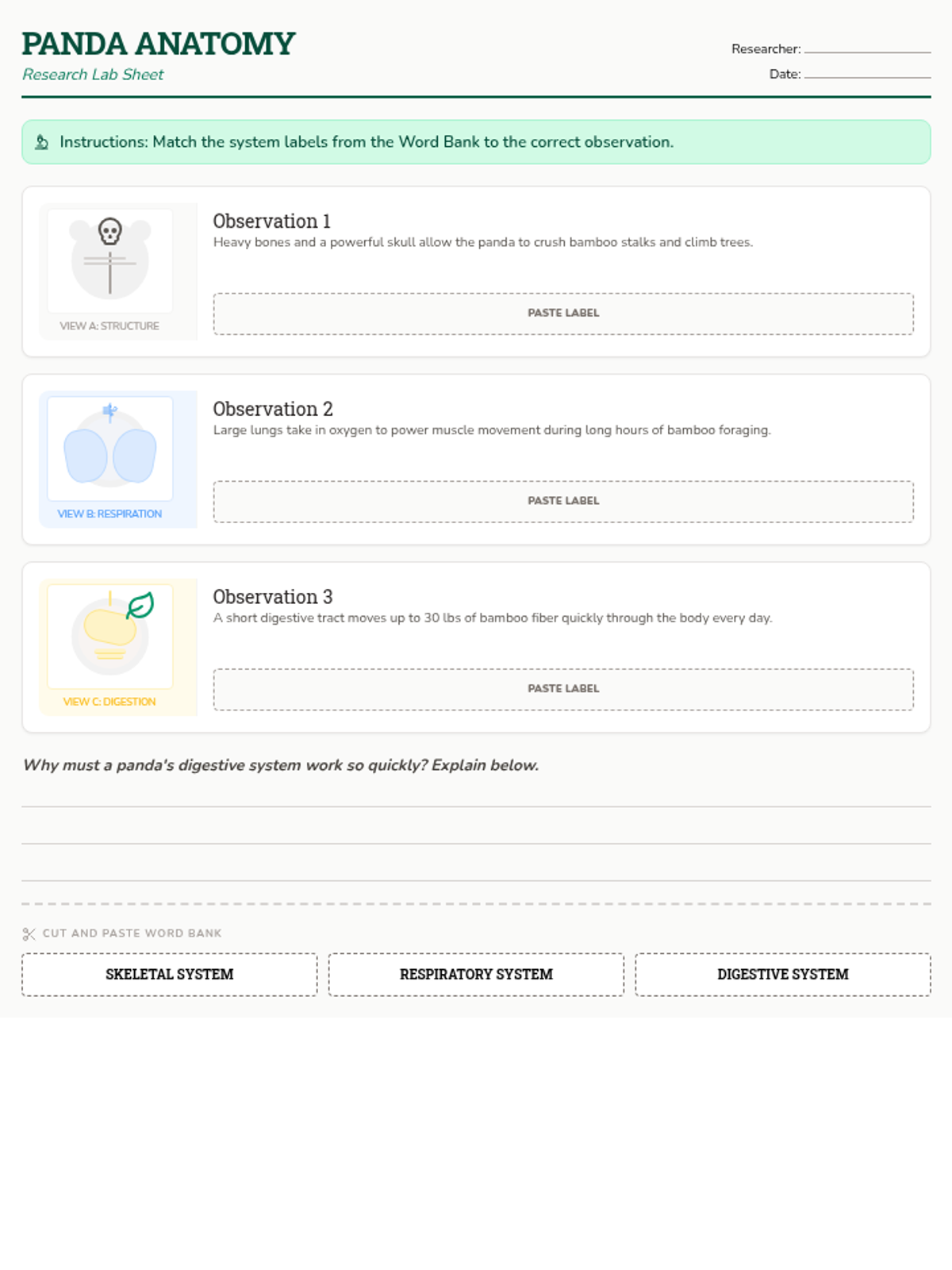
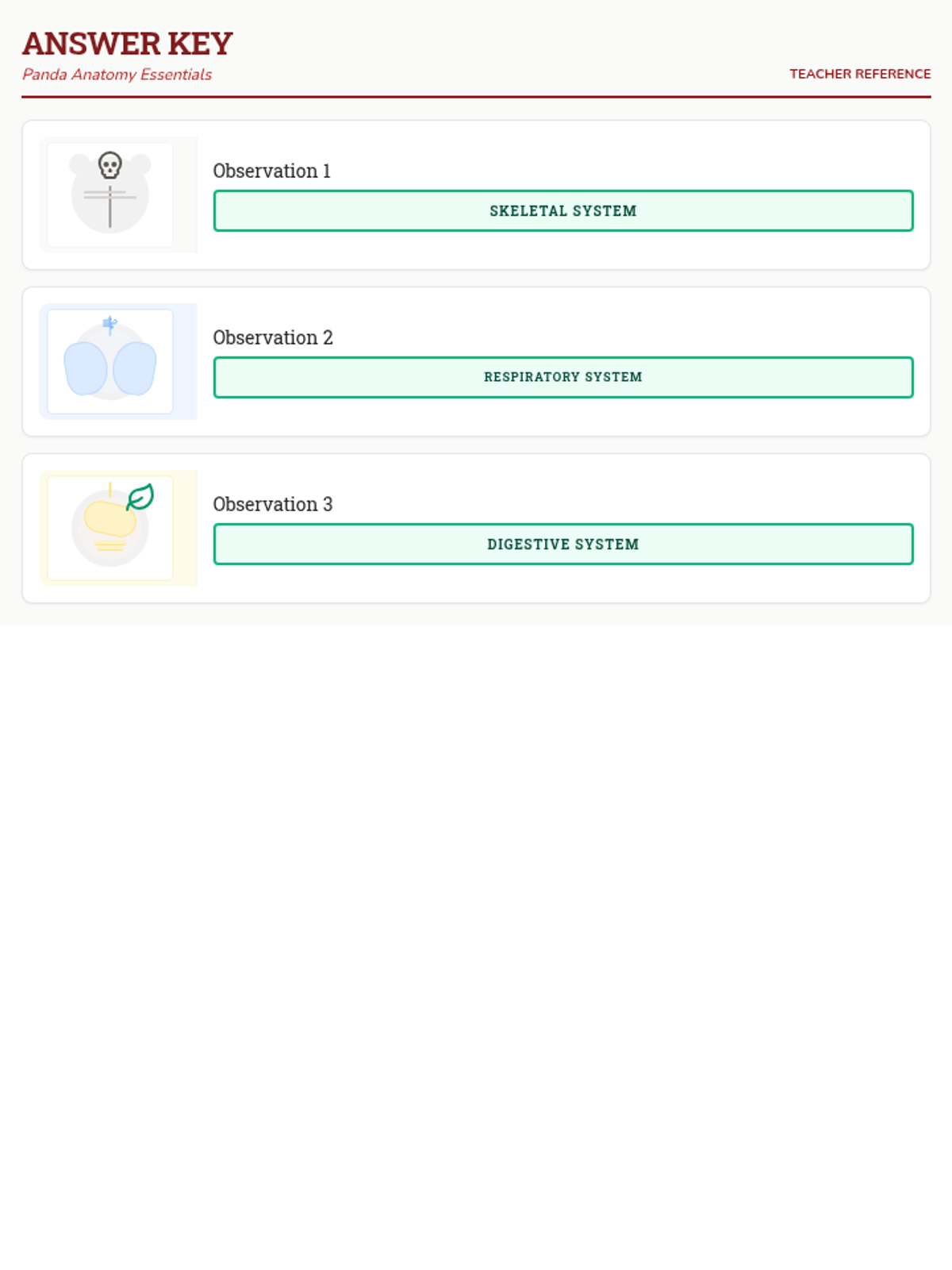
A hands-on lesson identifying the major internal systems of a Giant Panda, focusing on how their anatomy supports their unique bamboo-based diet and lifestyle.
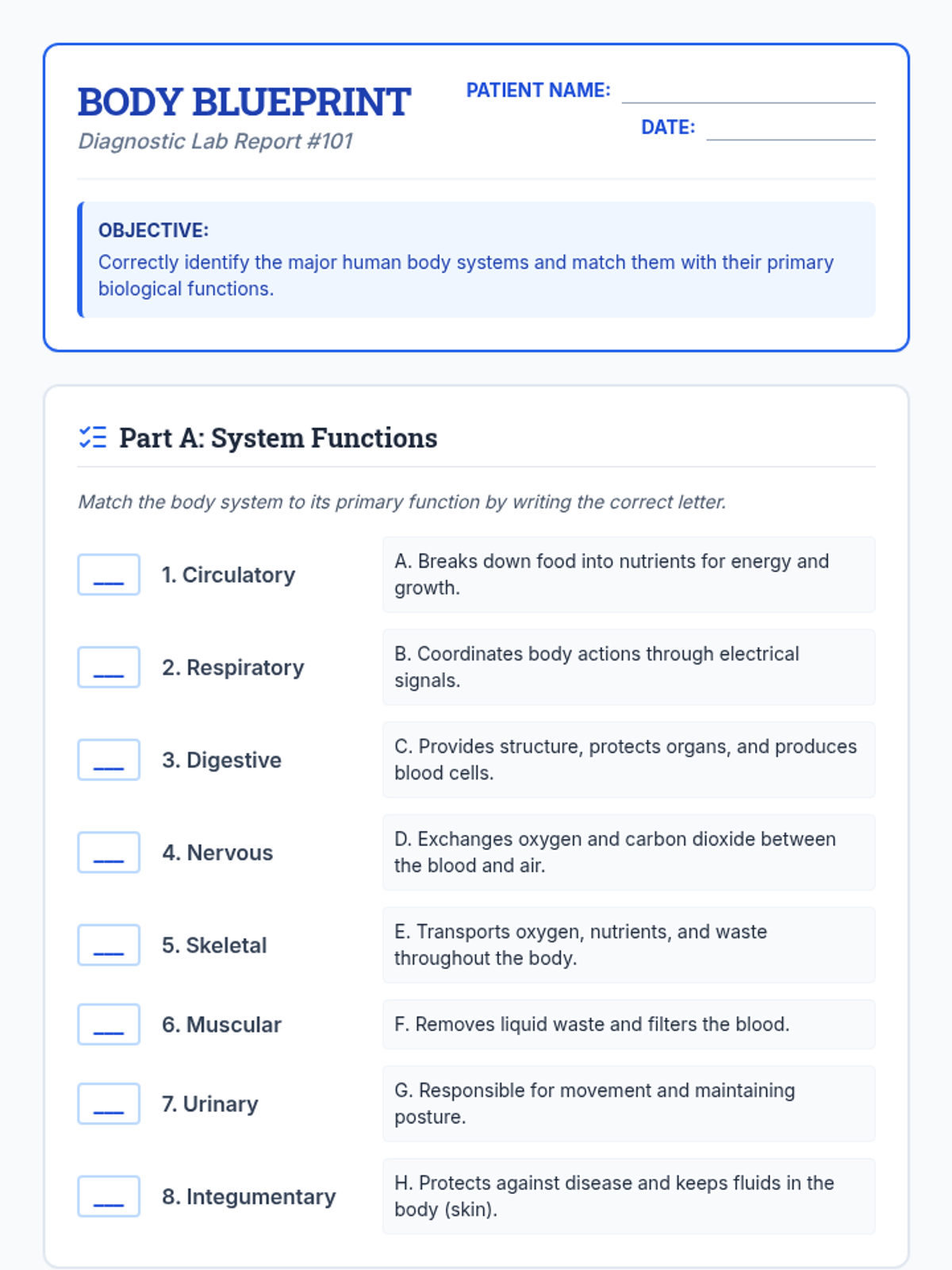
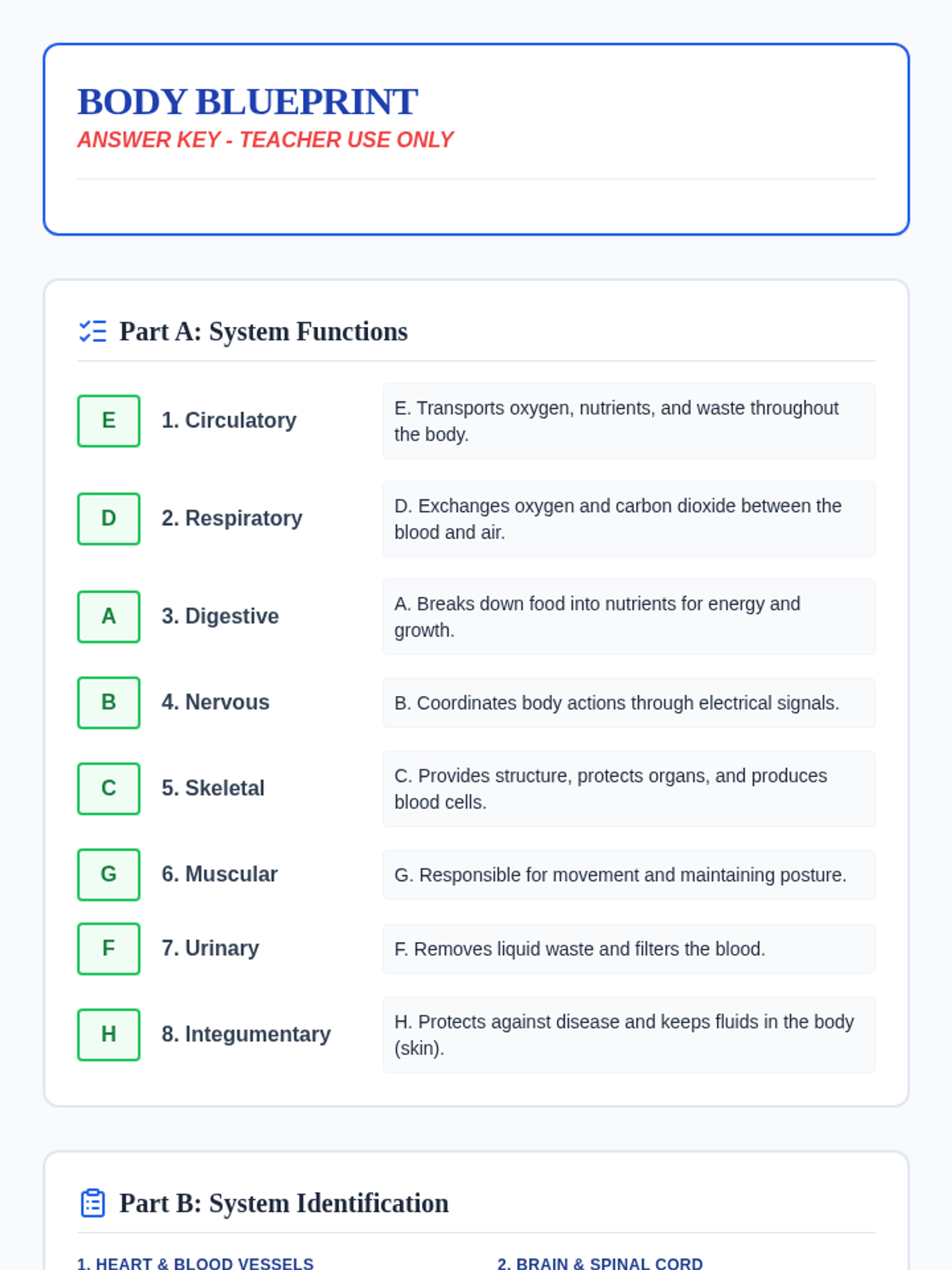
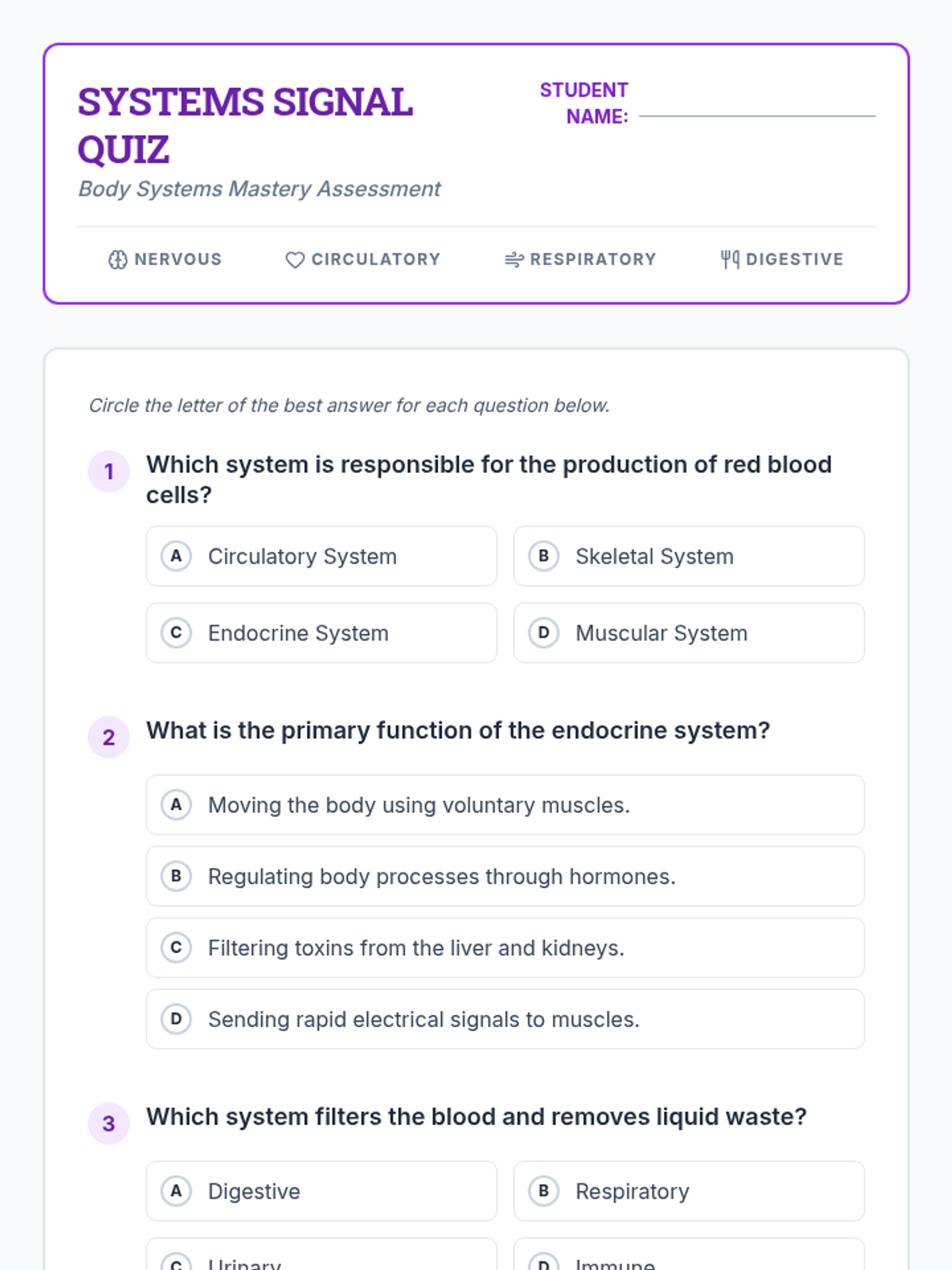
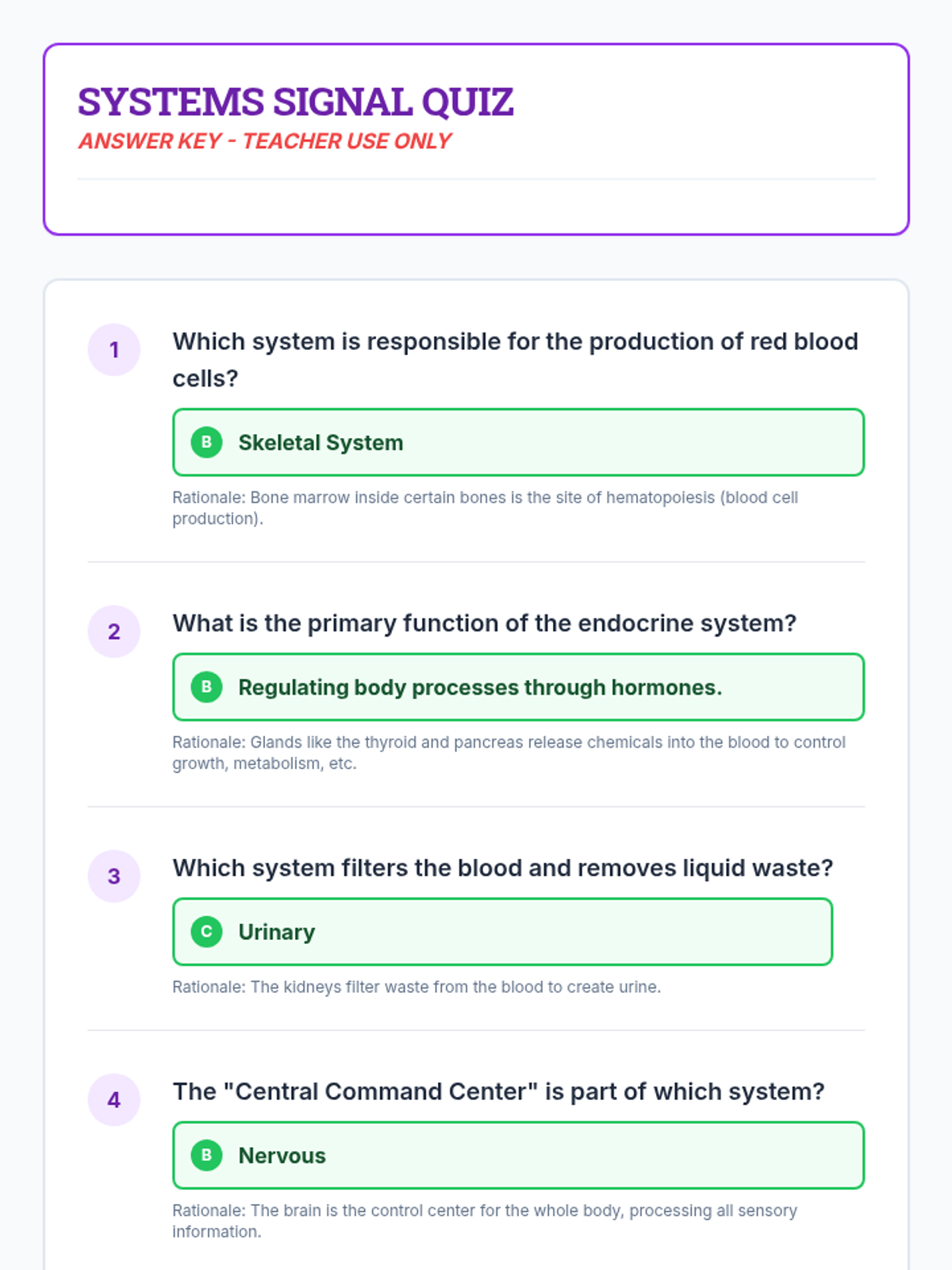
A comprehensive assessment suite to evaluate student understanding of the major human body systems, including their functions and key organs.
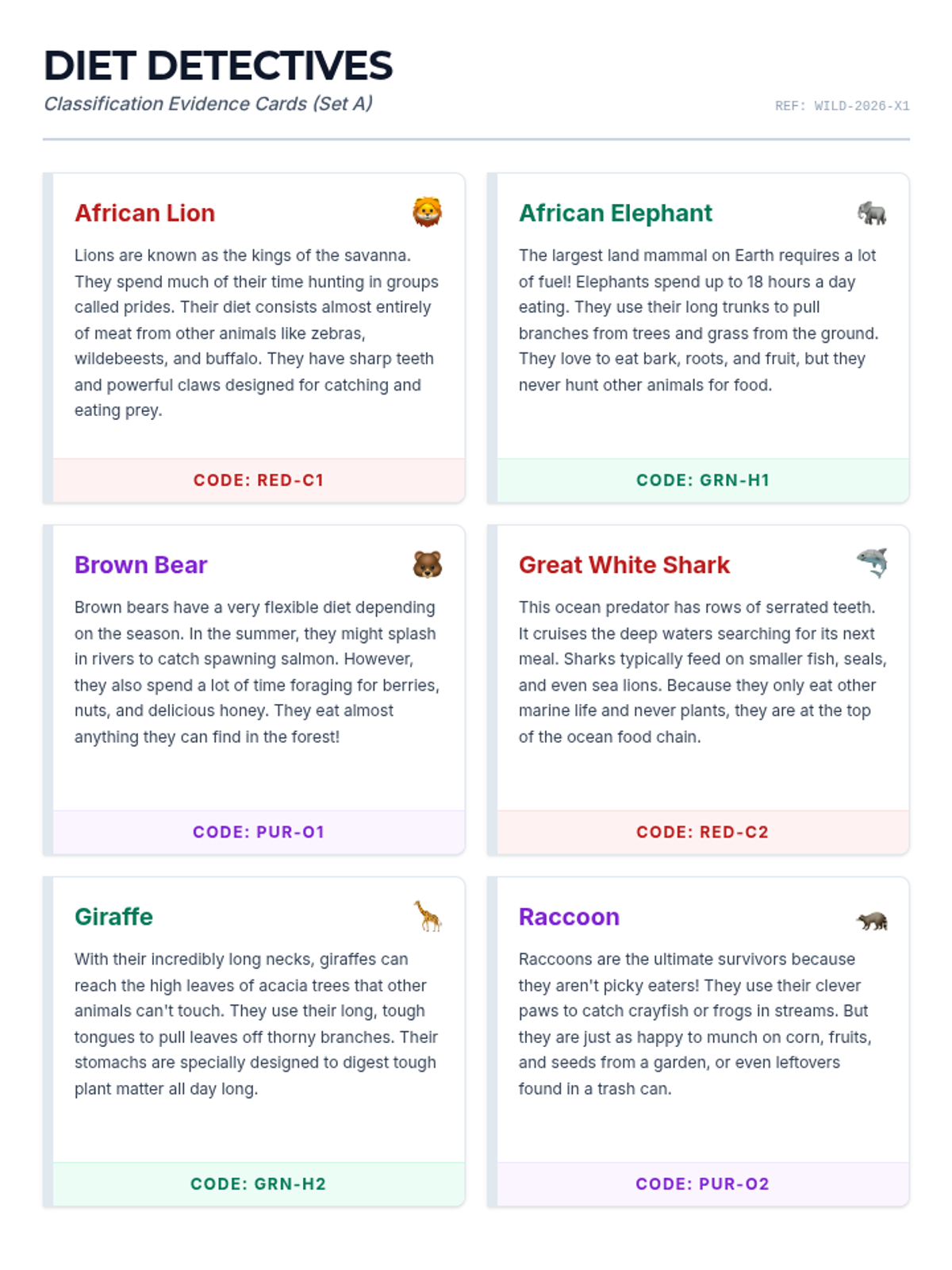
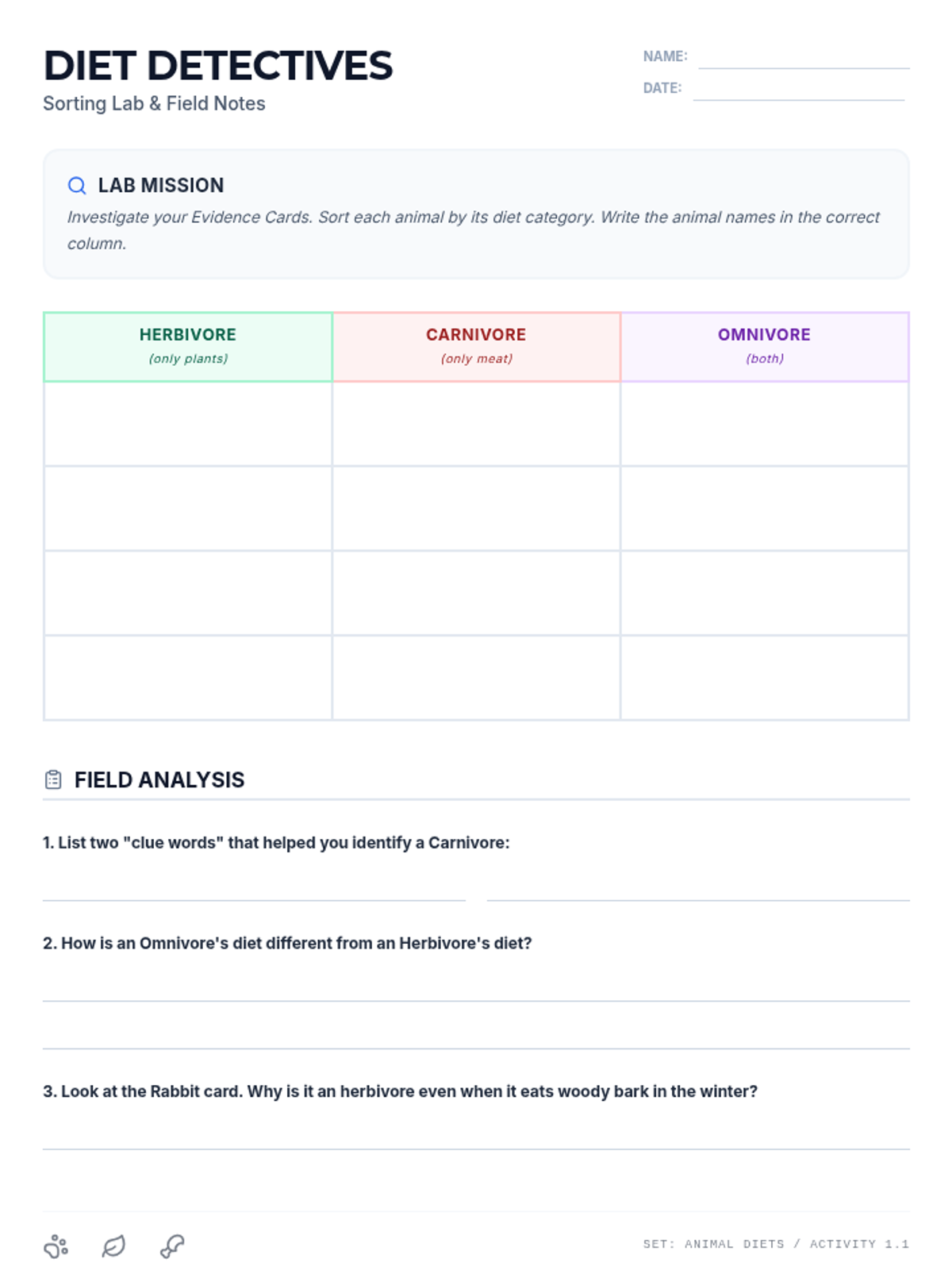
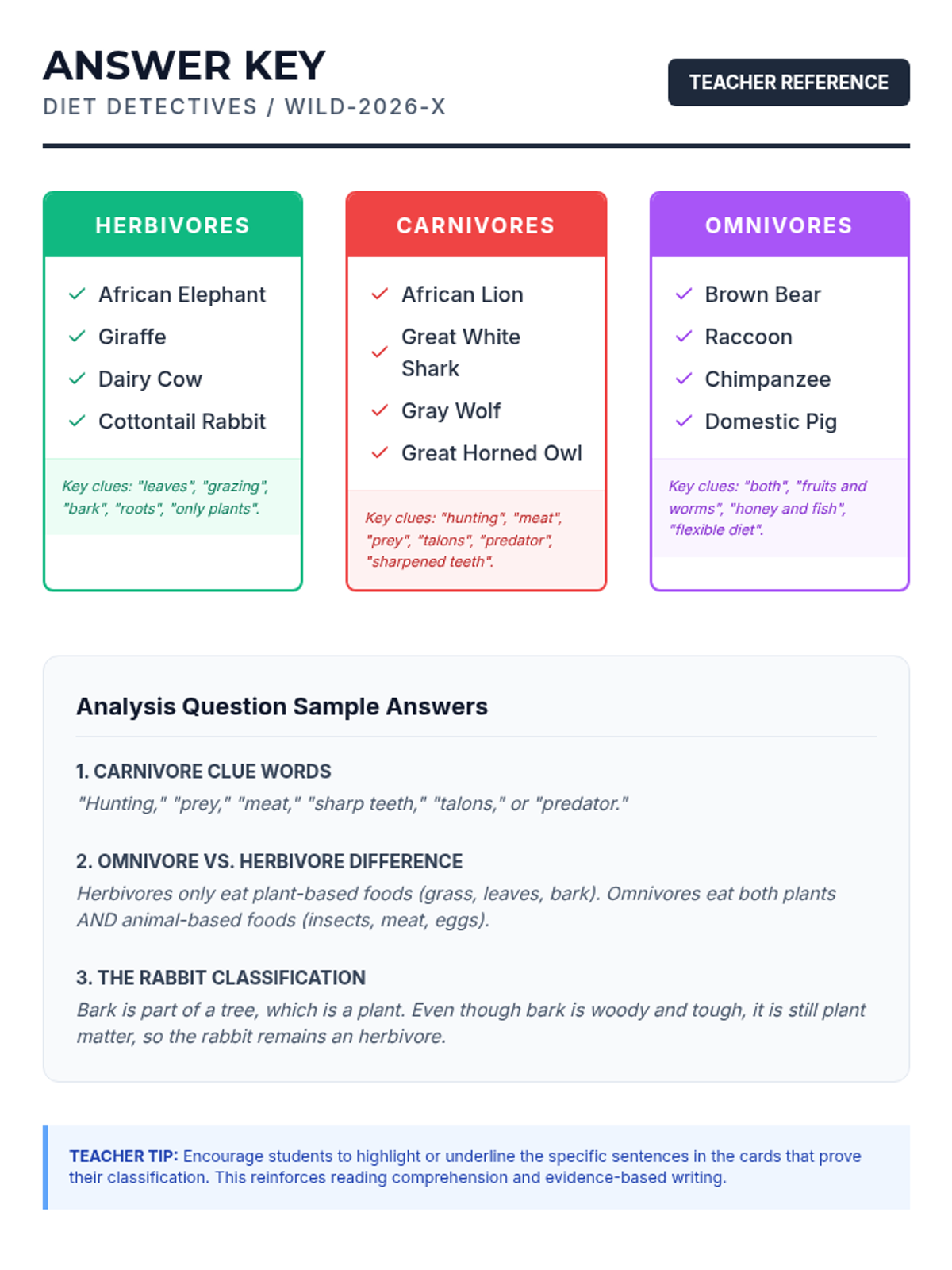
Students analyze short informational texts about various animals to classify them based on their diets using color-coded evidence cards.
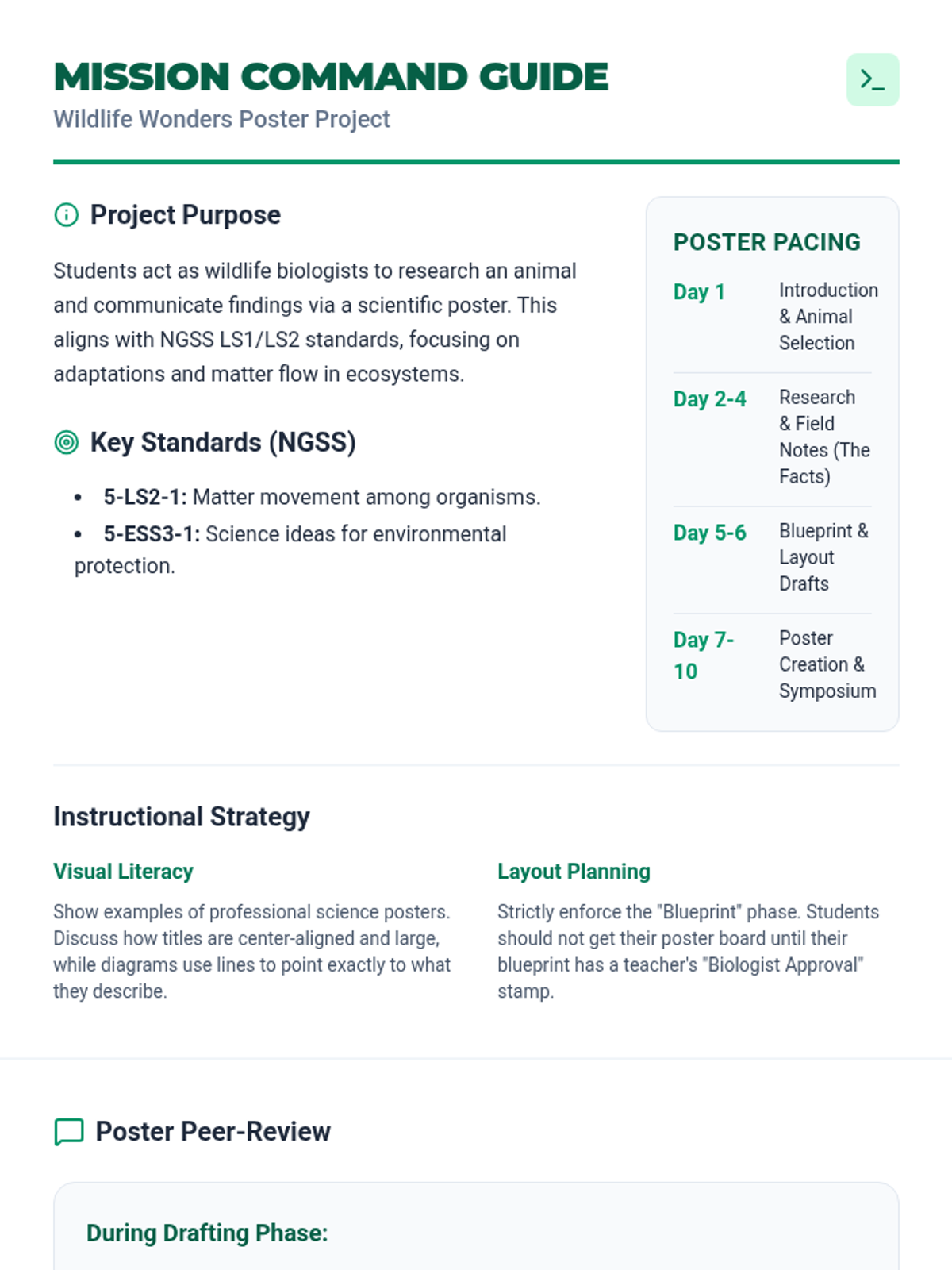
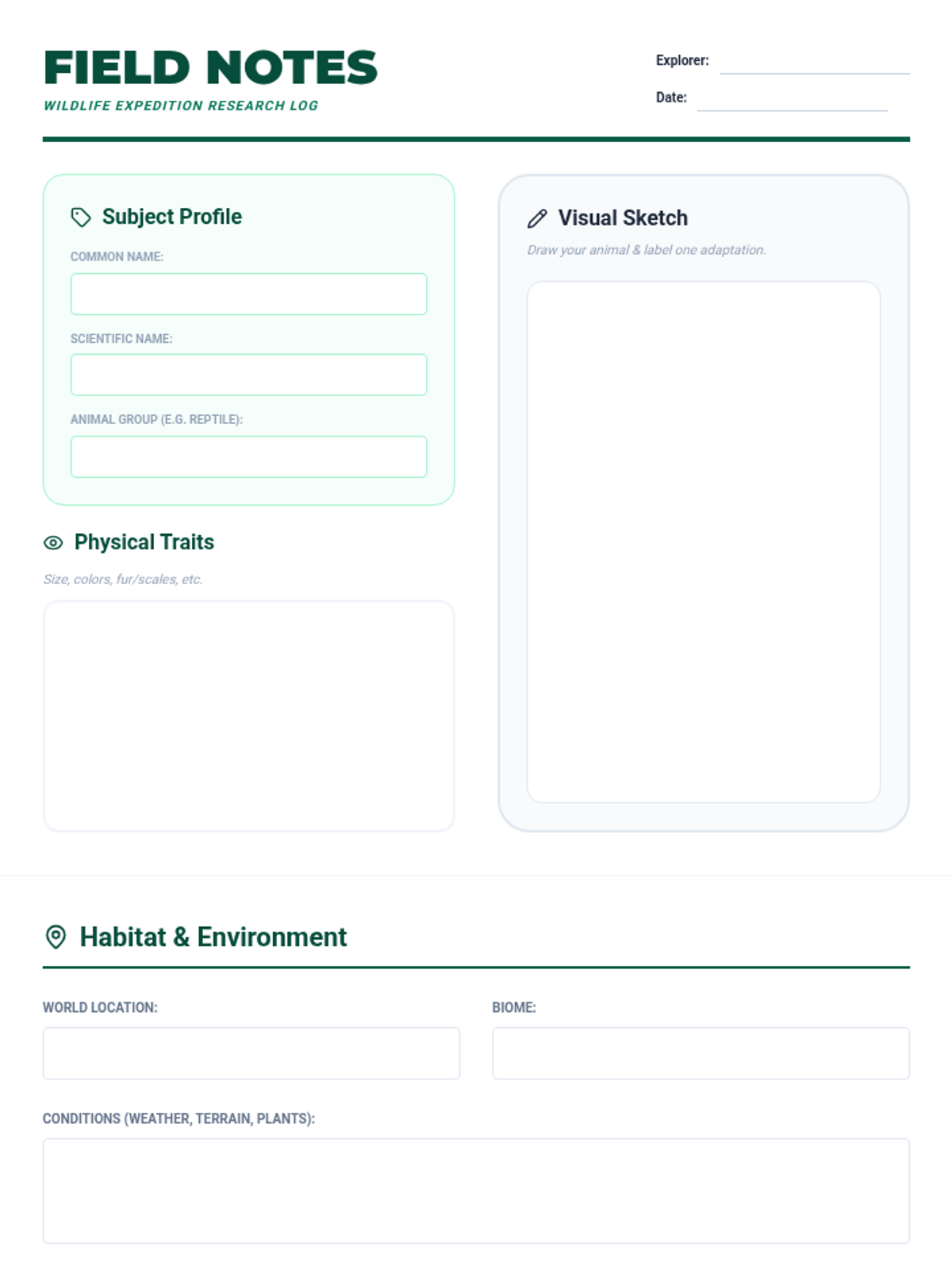
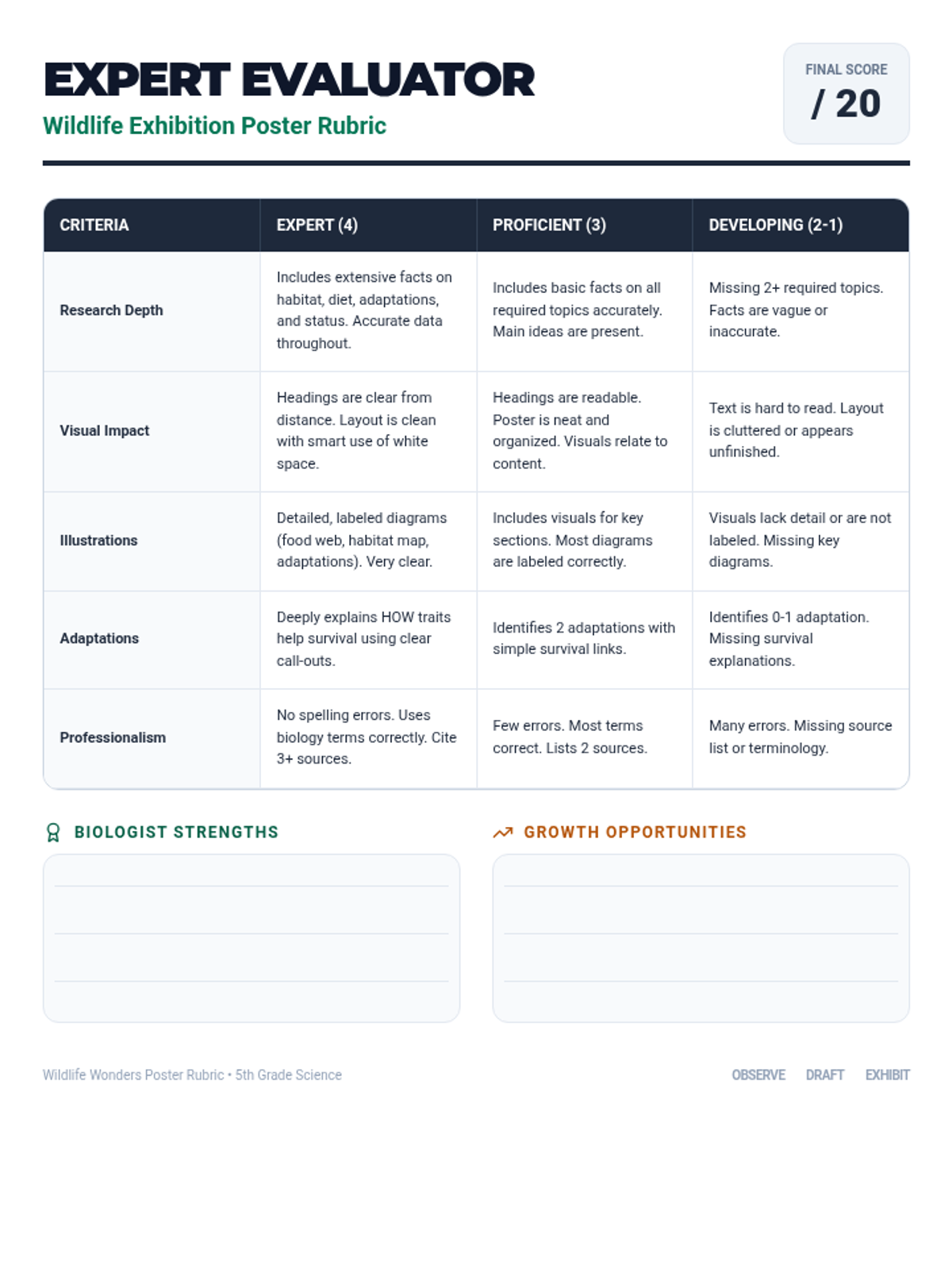
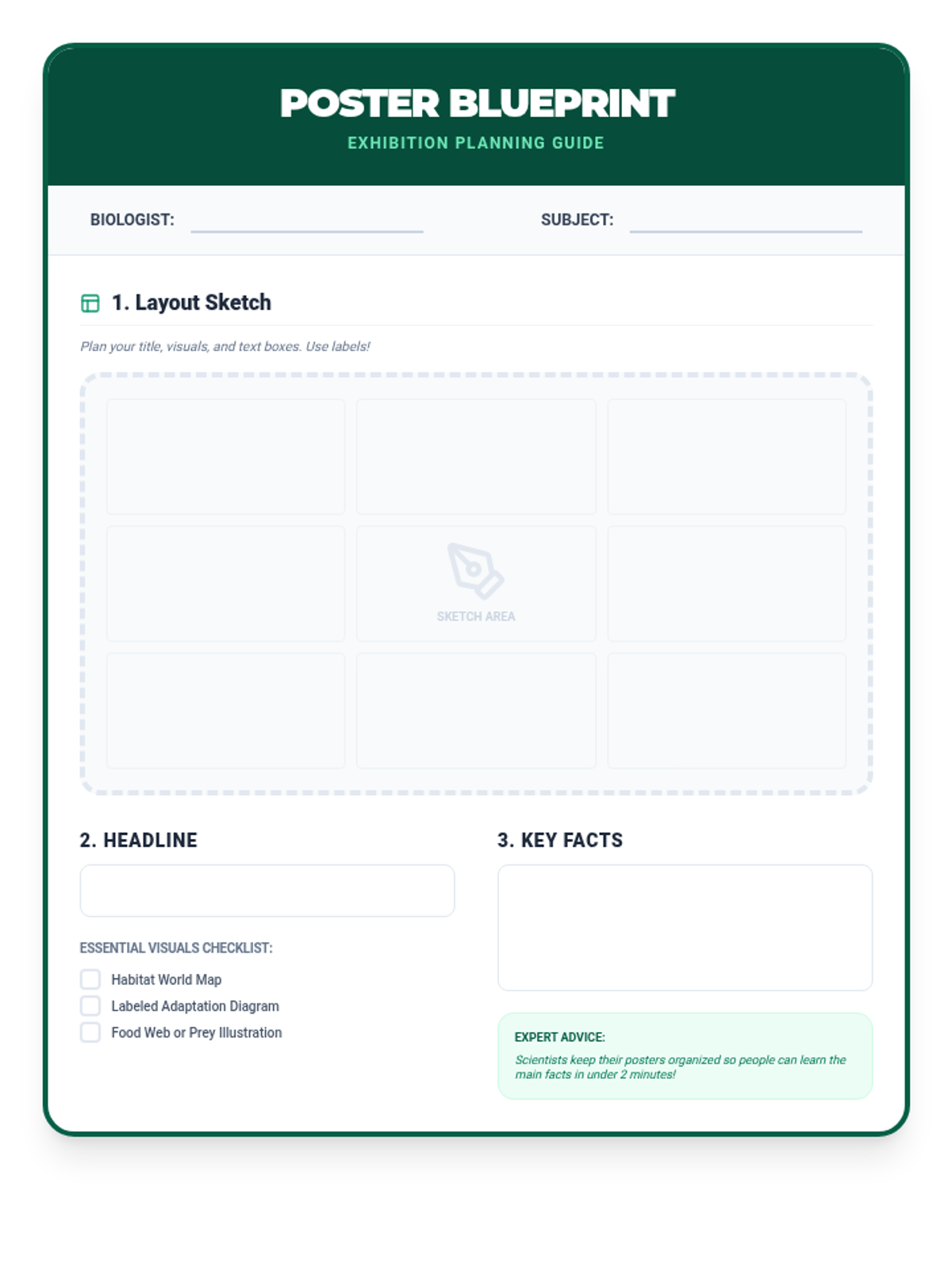
Students embark on a research journey, selecting a specific animal to study, gathering data on its biological needs and environmental role, and creating a final product to showcase their expertise.
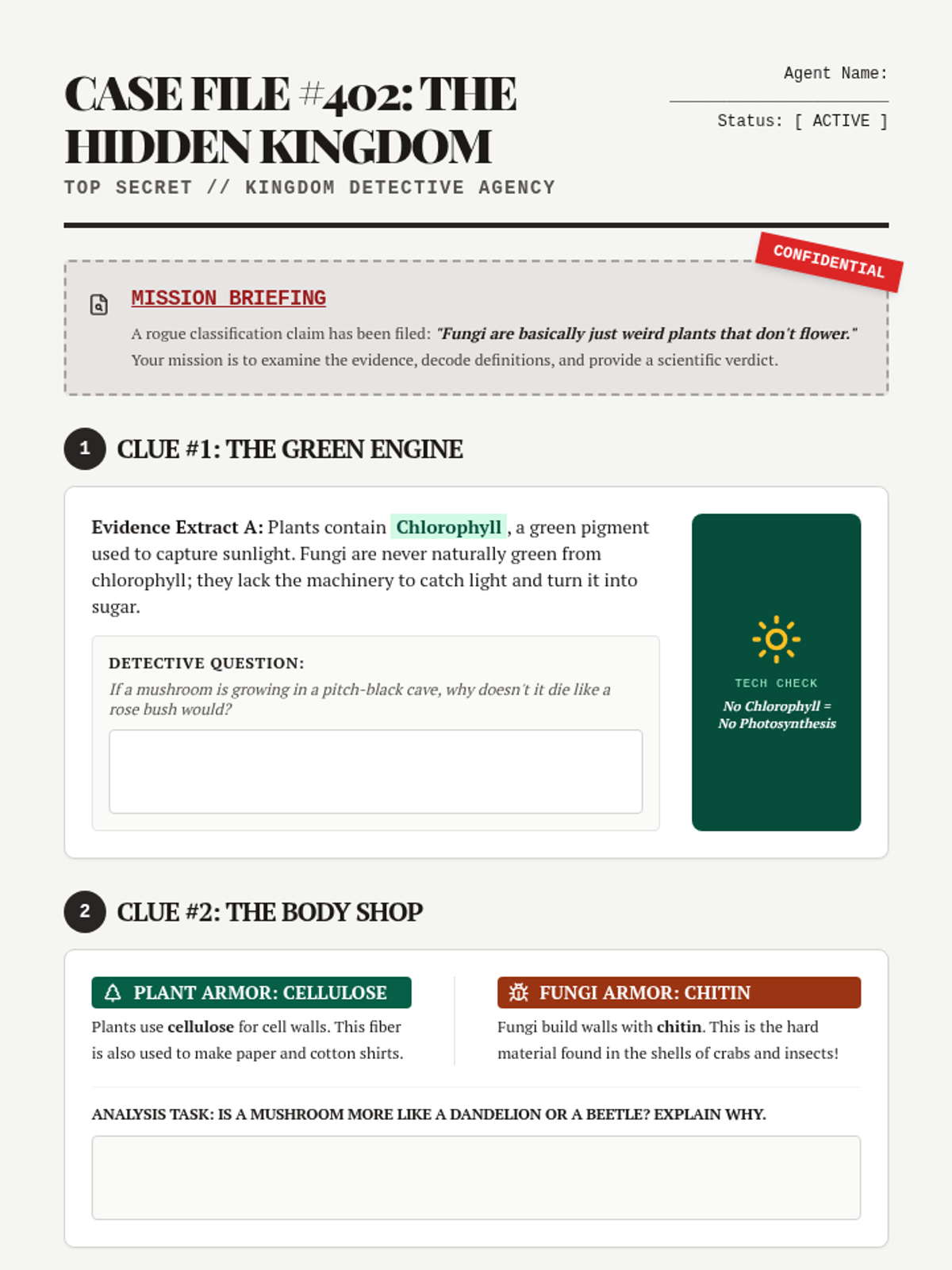
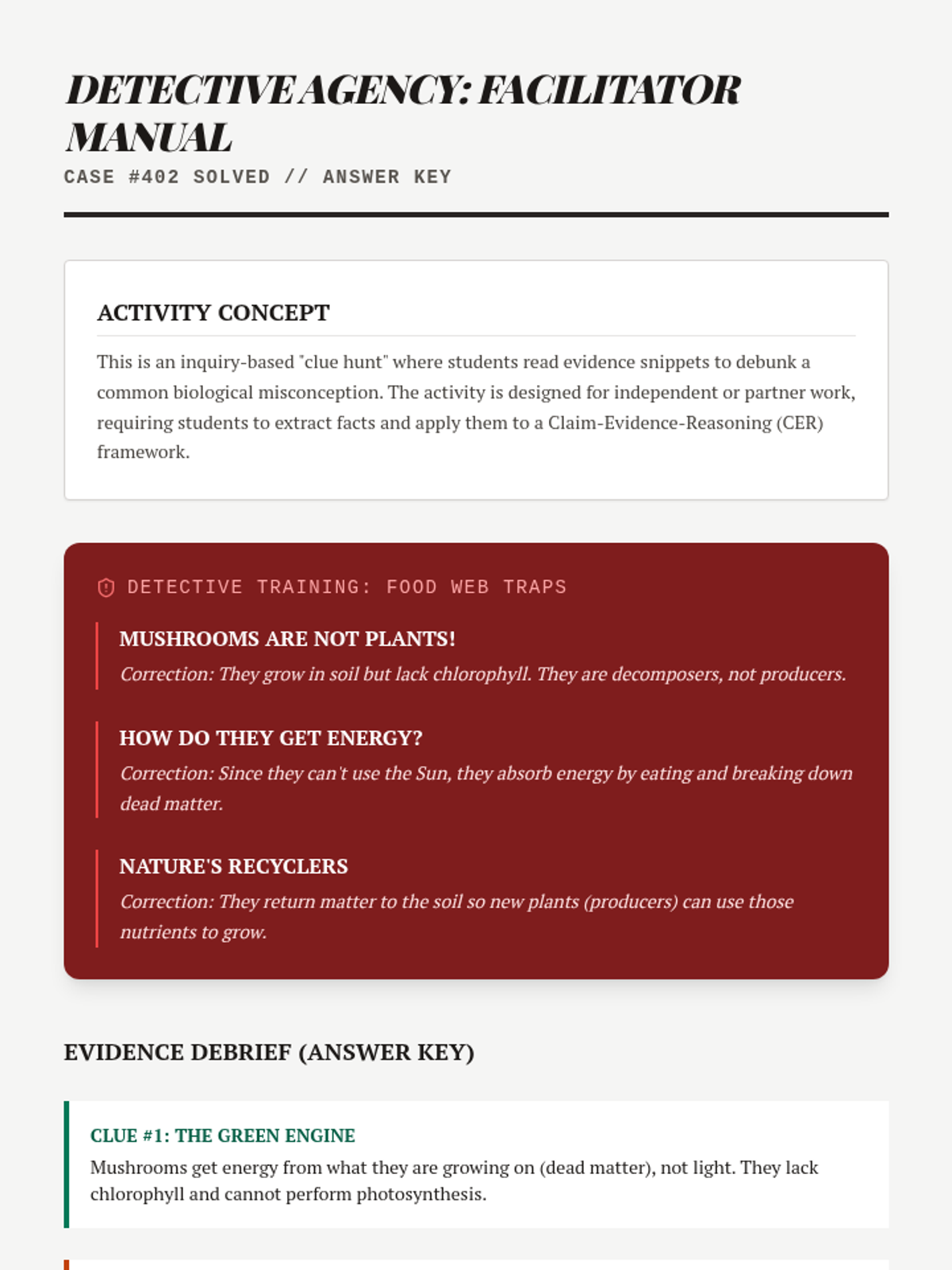
An independent, mystery-themed activity where students act as "Kingdom Detectives." They analyze a series of clues, definitions, and evidence files to determine why fungi are not plants and clarify the role of the sun in ecosystems.
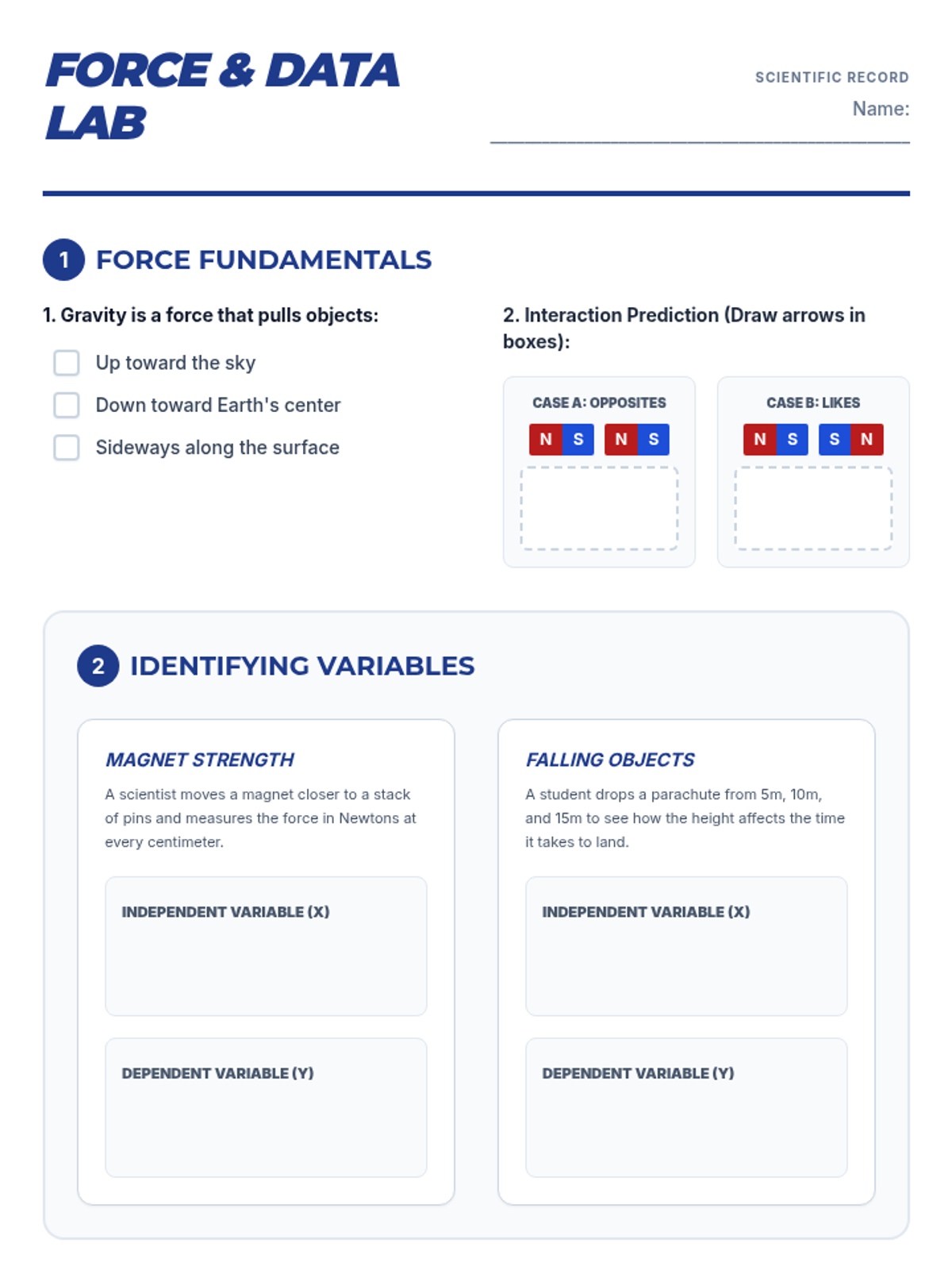
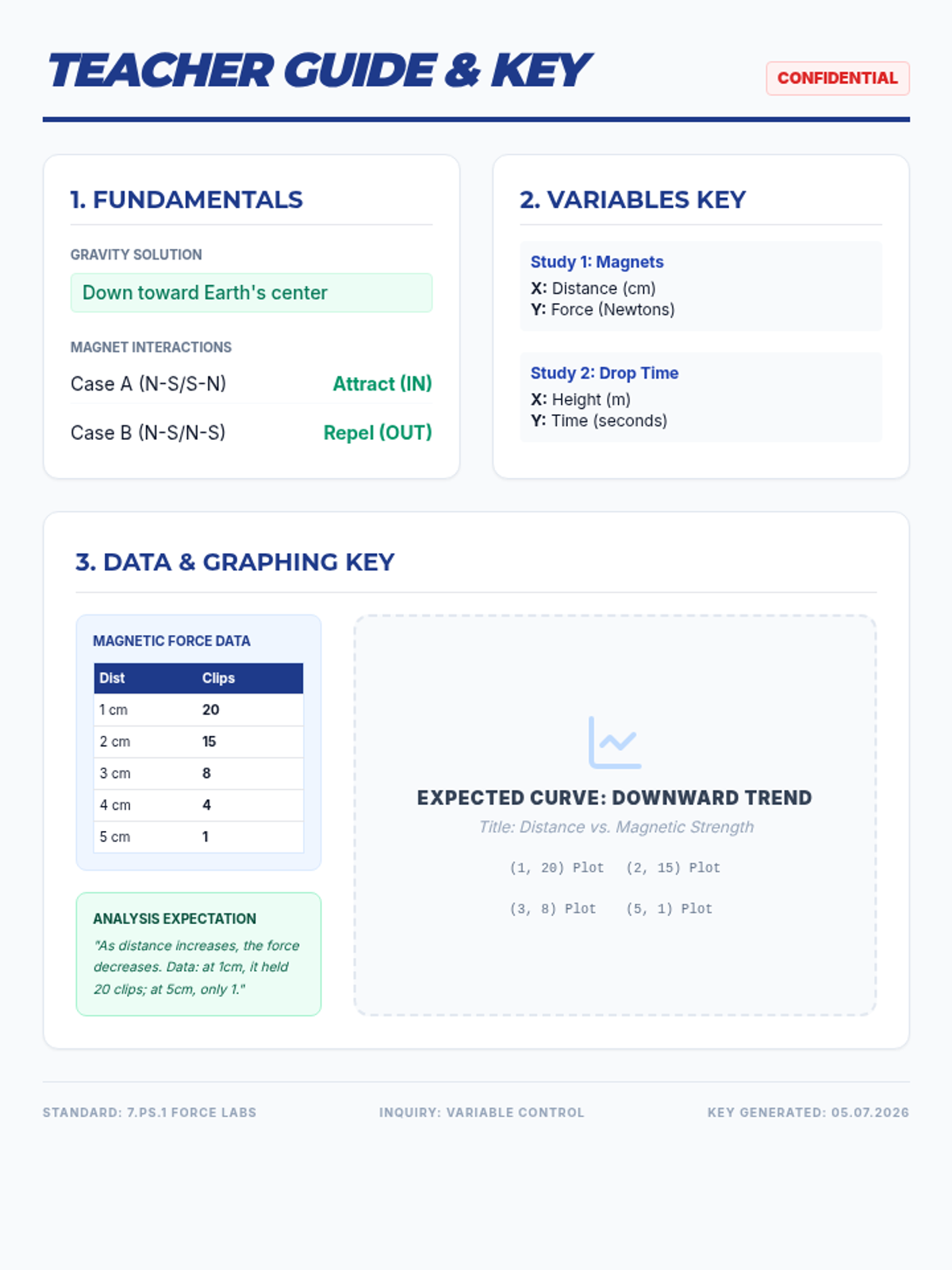
This lesson explores the invisible forces of gravity and magnetism, while teaching students how to organize and visualize scientific observations through graphing. Students will learn to identify variables and create accurate line graphs from experimental data.
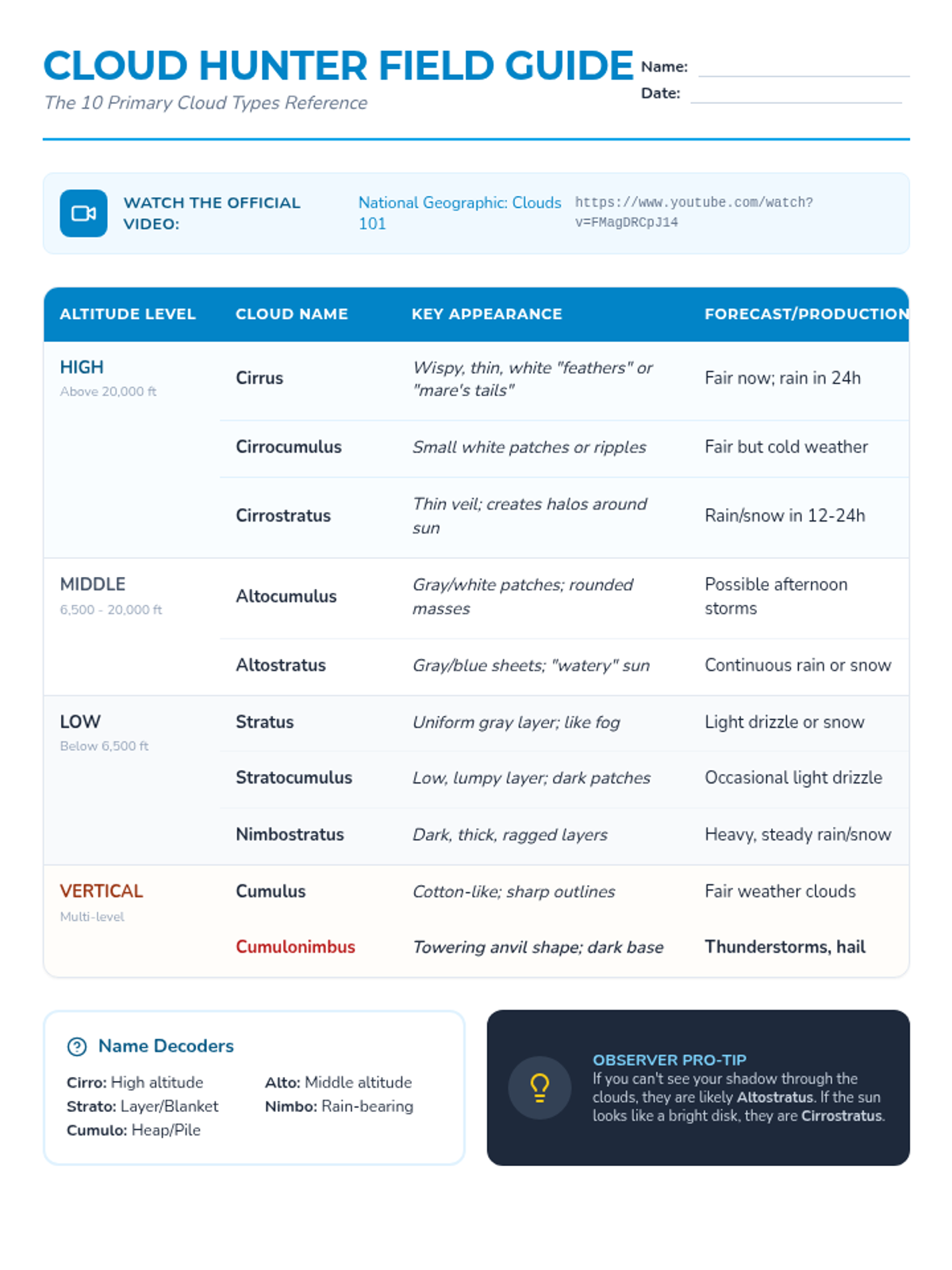
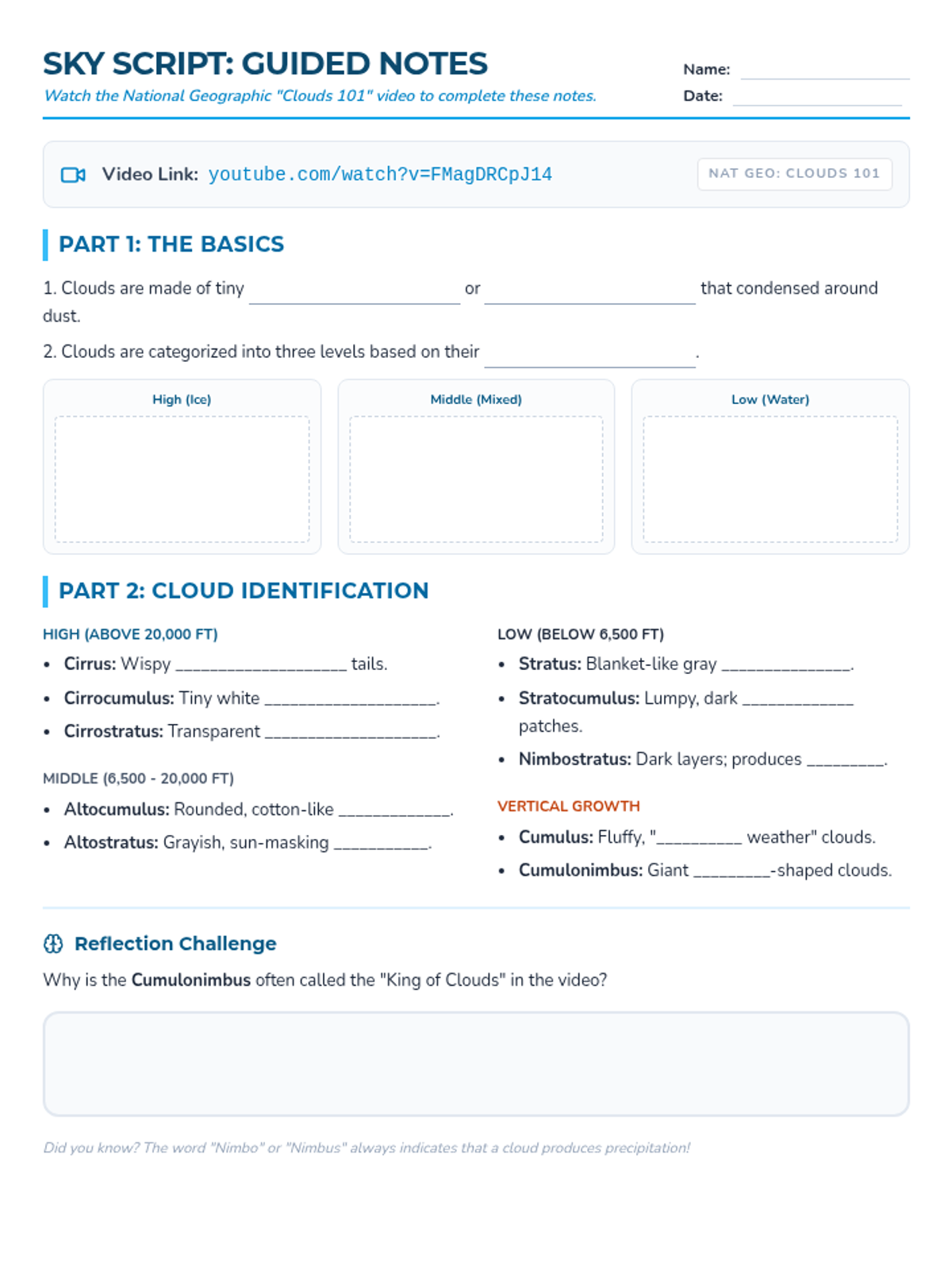
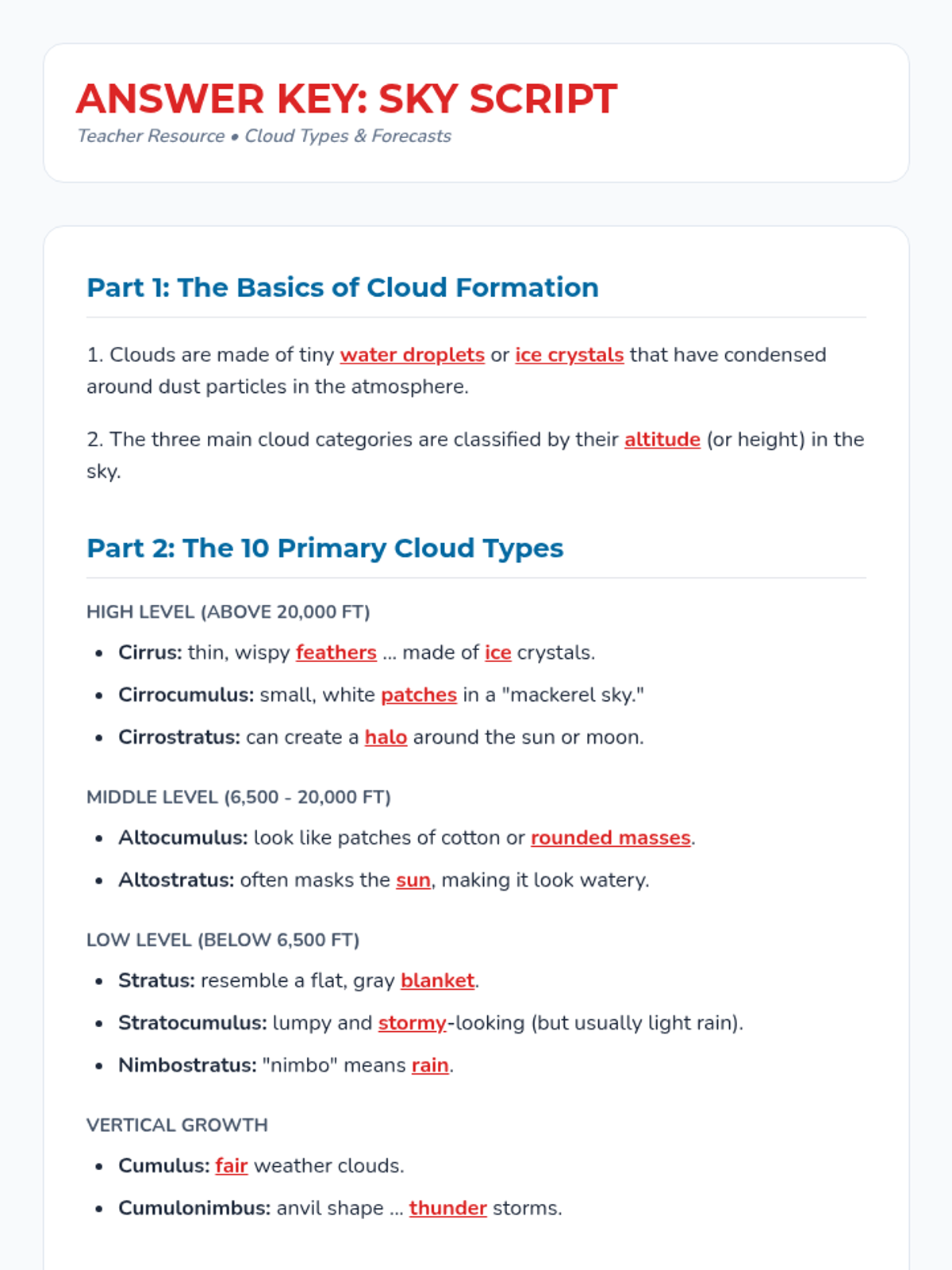
Students will learn to identify the ten primary cloud types, categorize them by altitude, and predict weather outcomes based on cloud formations.
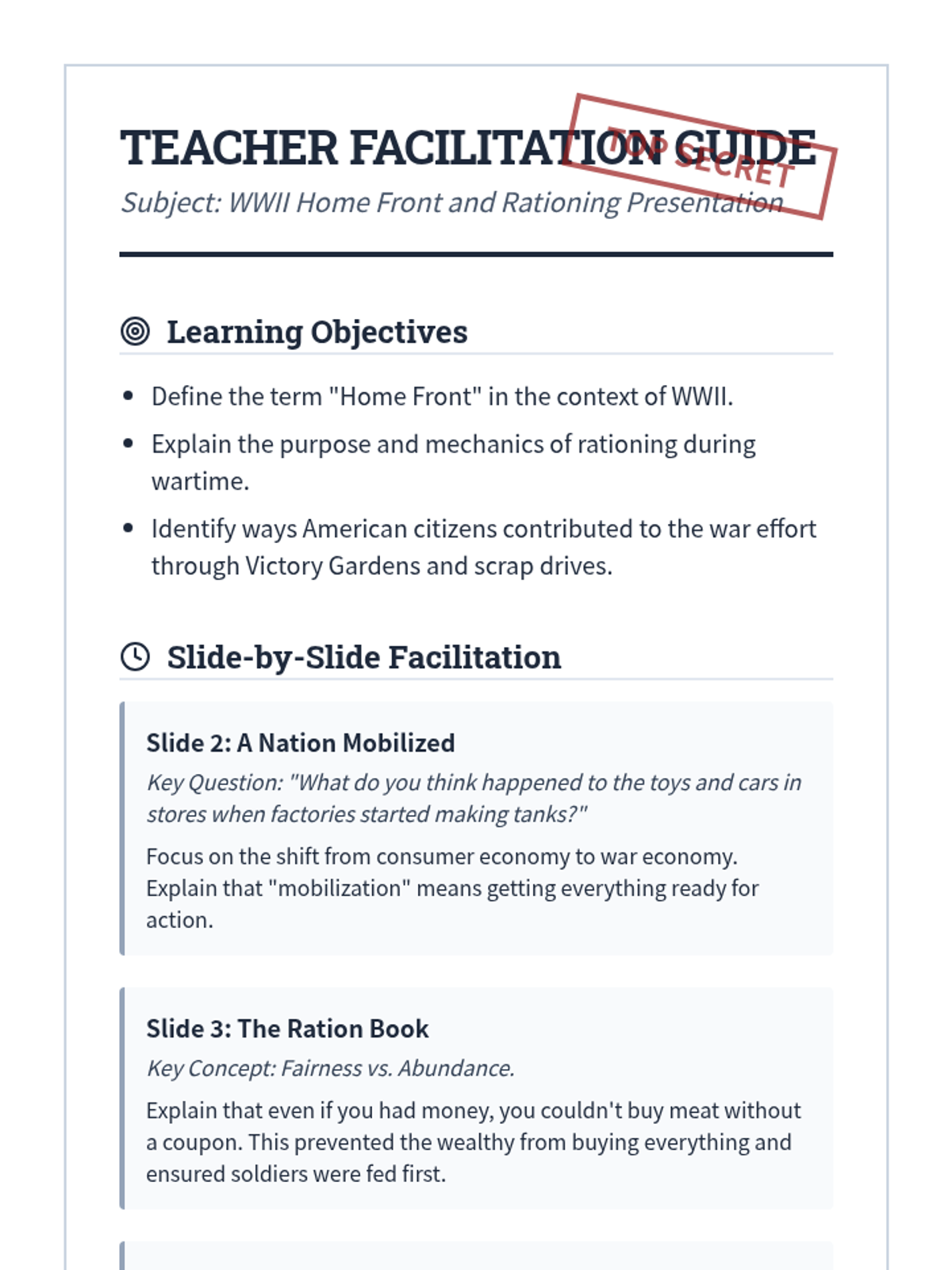
An exploration of life in America during World War II, focusing on how rationing, Victory Gardens, and community efforts supported the war from home.