Students embark on a research journey, selecting a specific animal to study, gathering data on its biological needs and environmental role, and creating a final product to showcase their expertise.
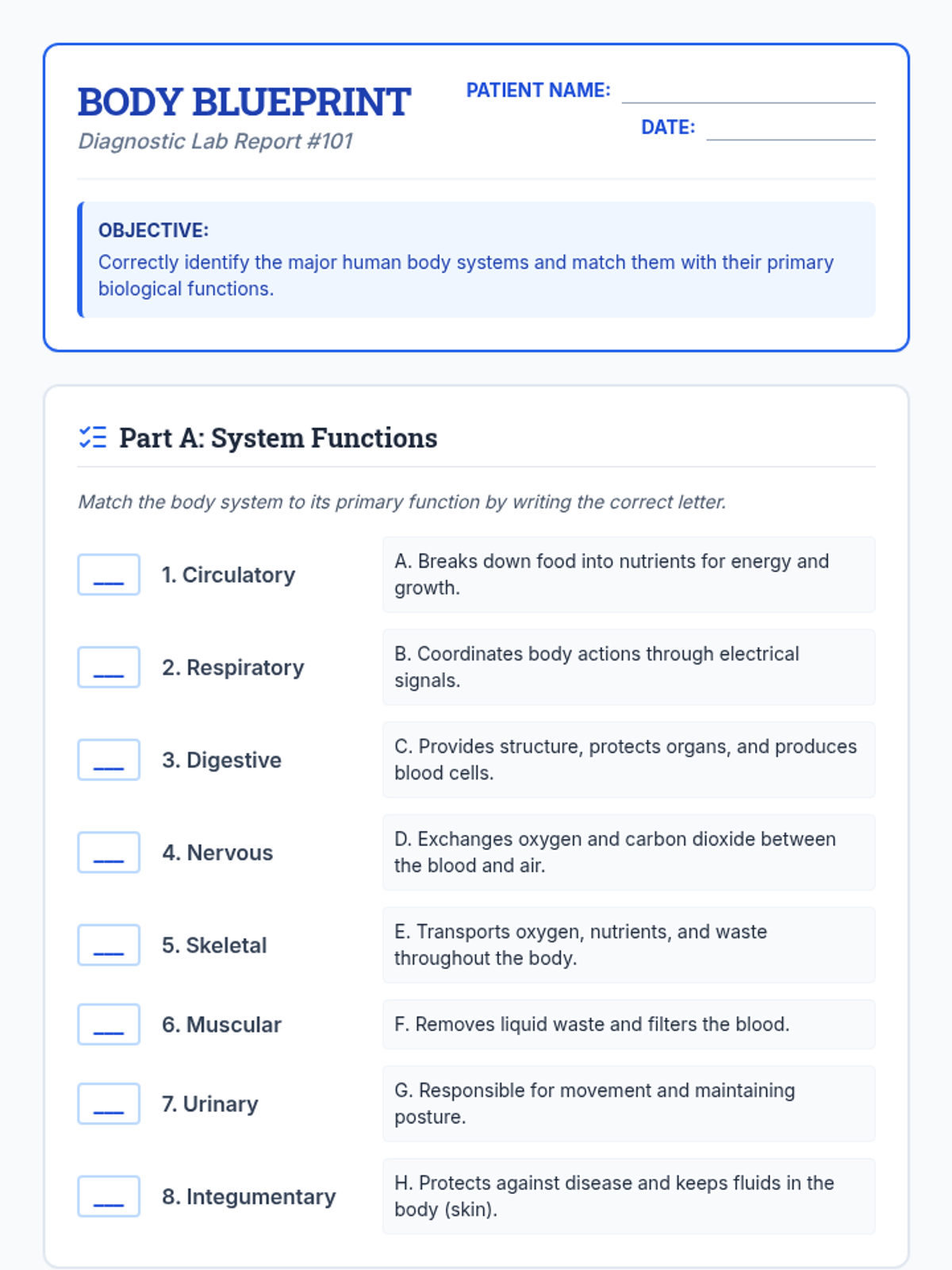
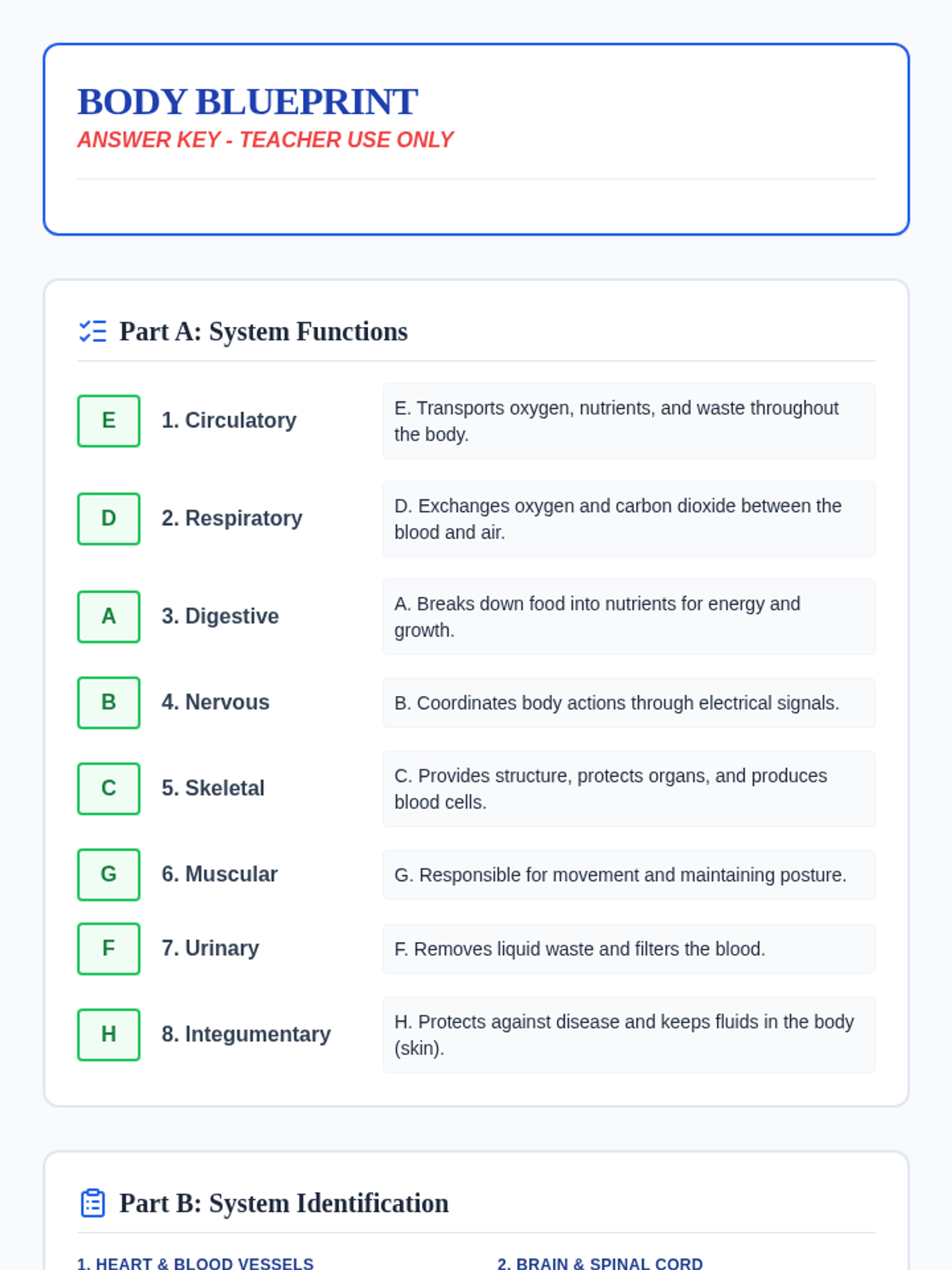
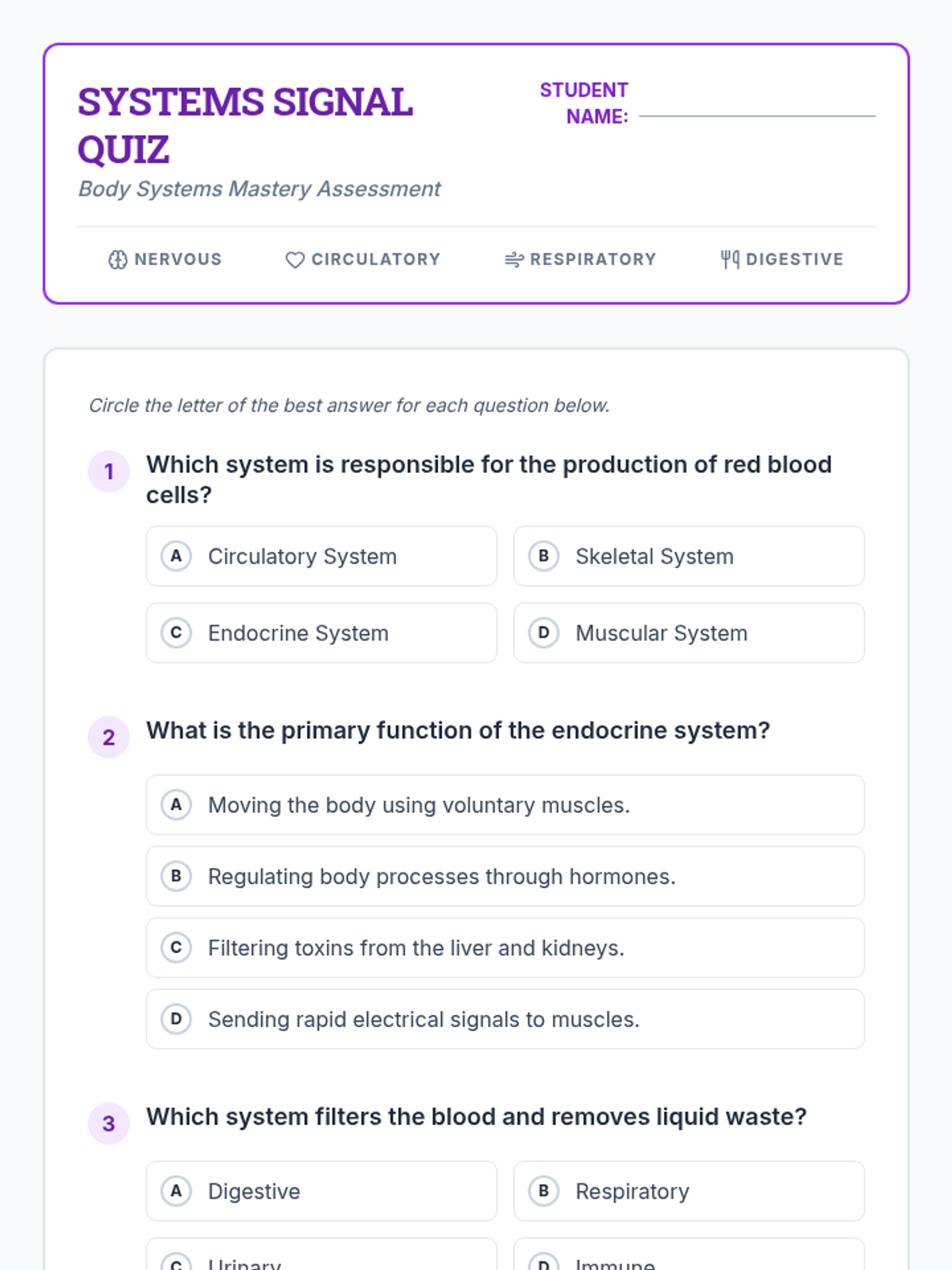
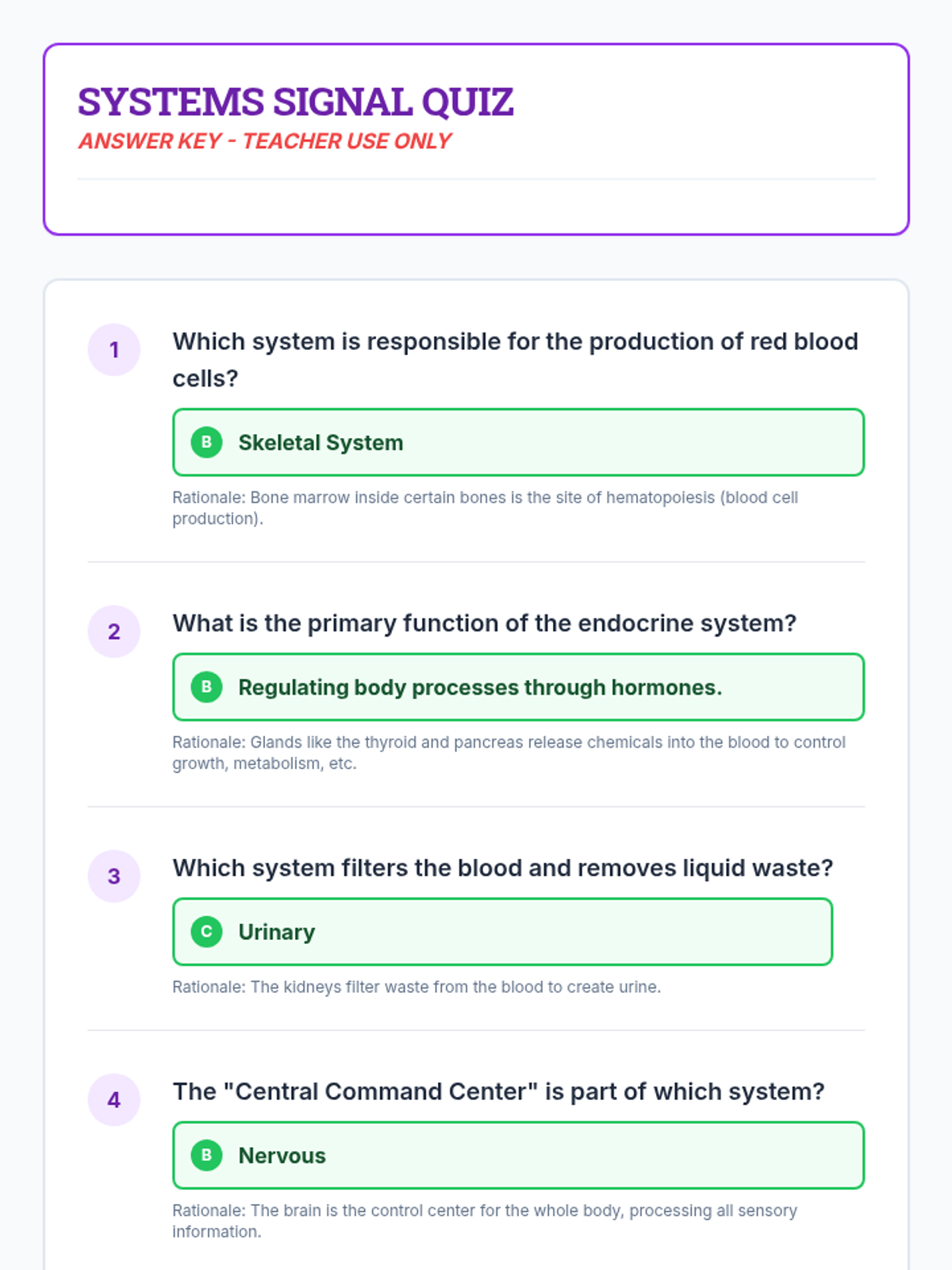
A comprehensive assessment suite to evaluate student understanding of the major human body systems, including their functions and key organs.
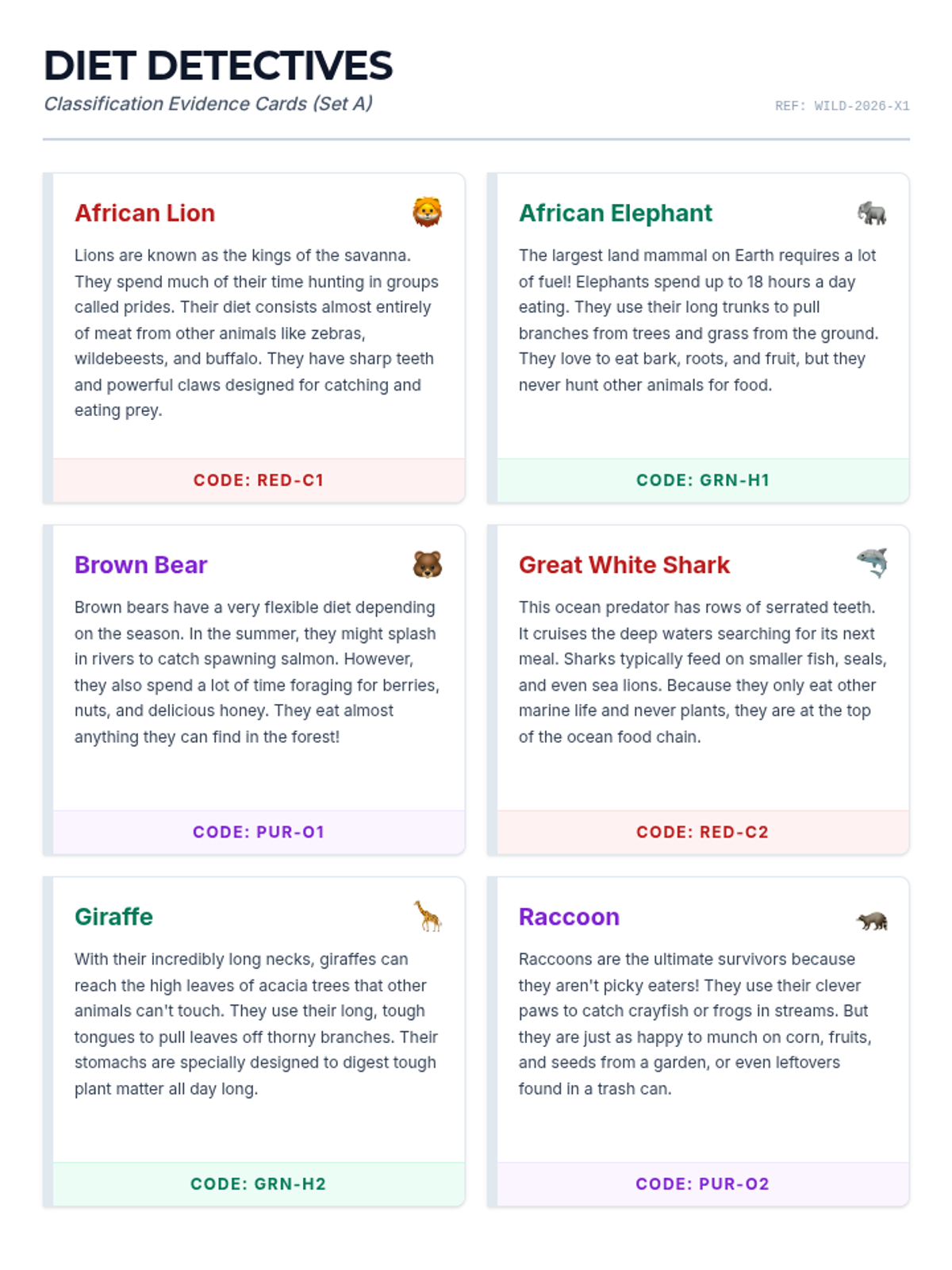
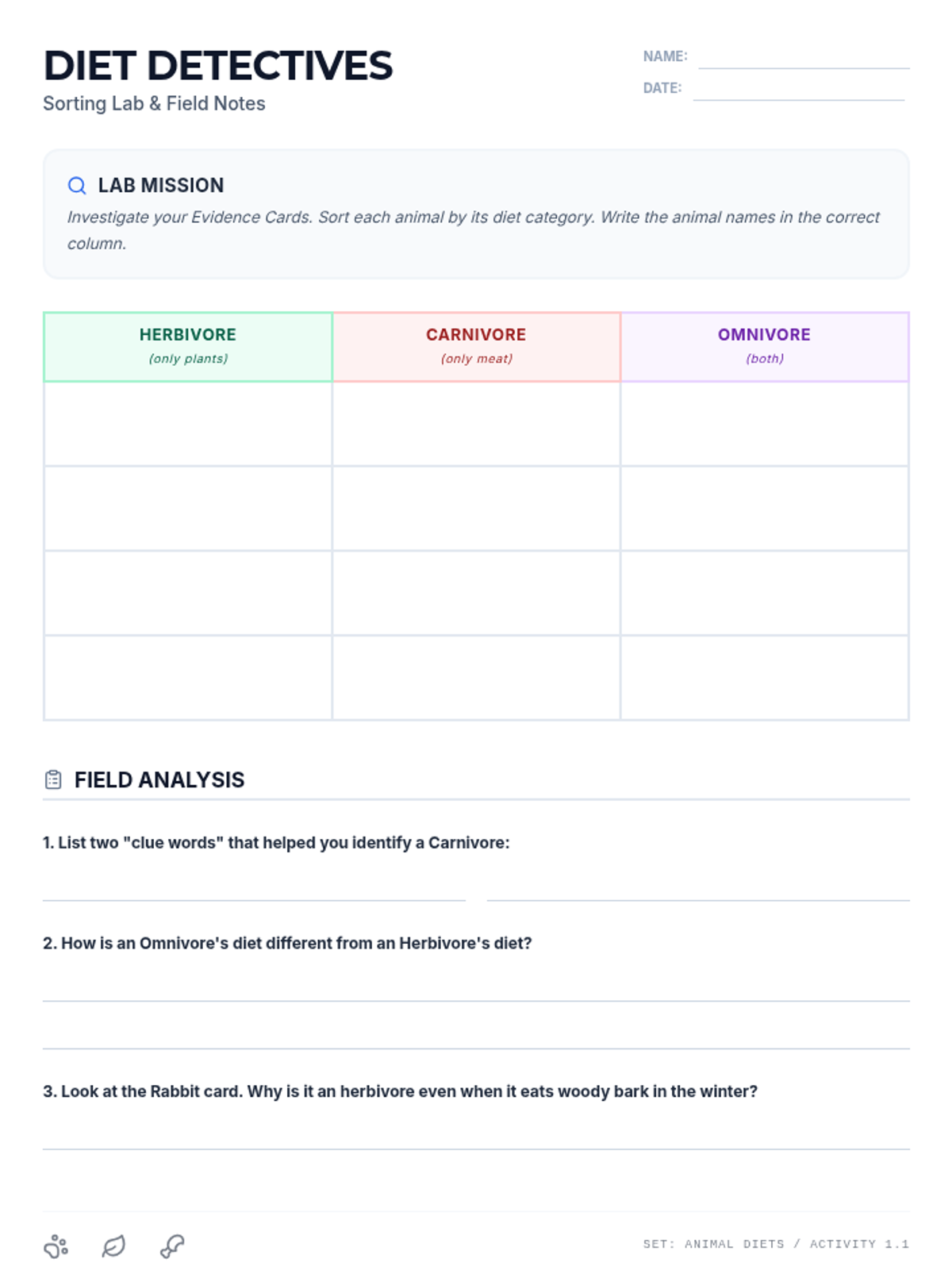
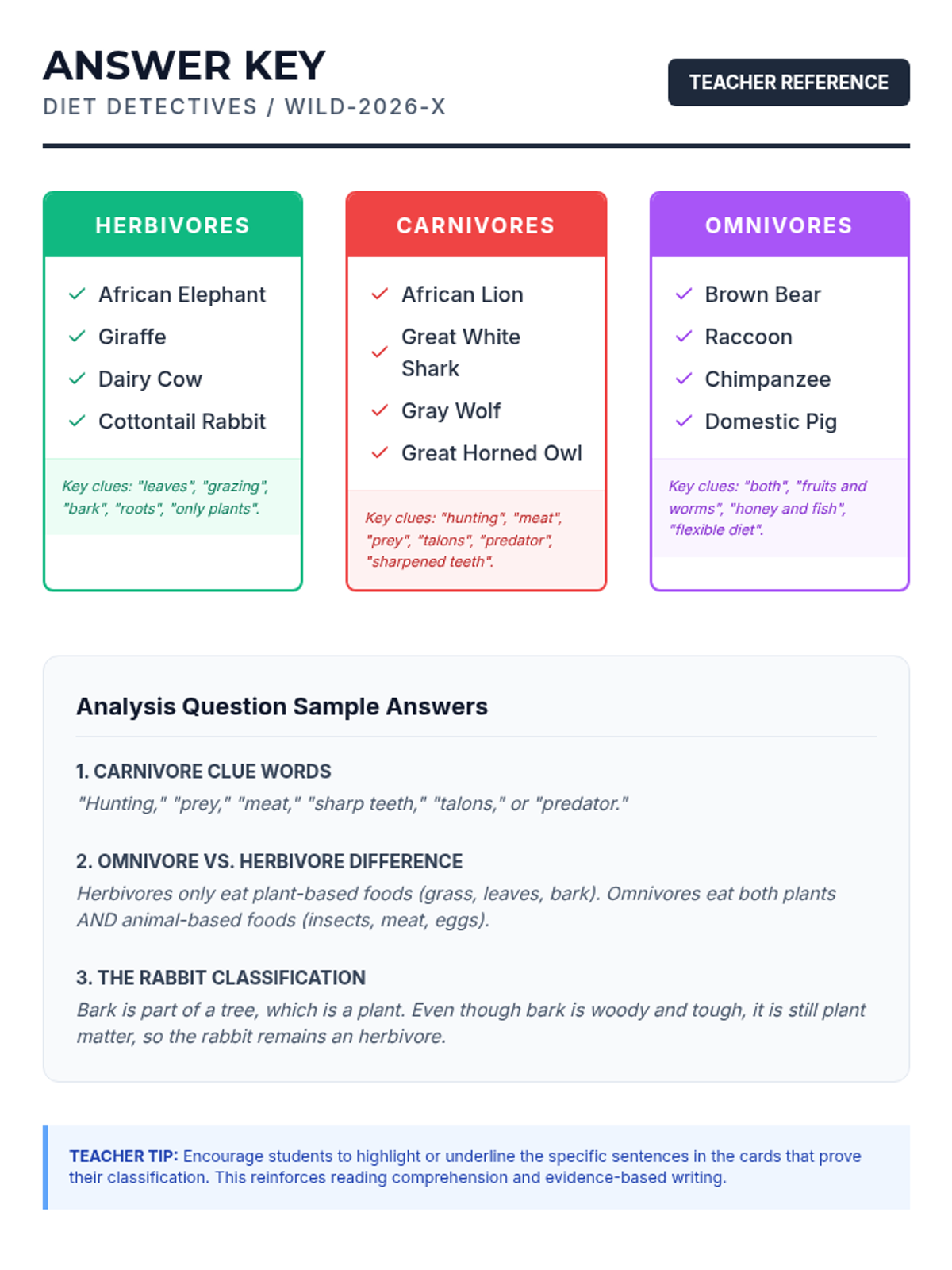
Students analyze short informational texts about various animals to classify them based on their diets using color-coded evidence cards.
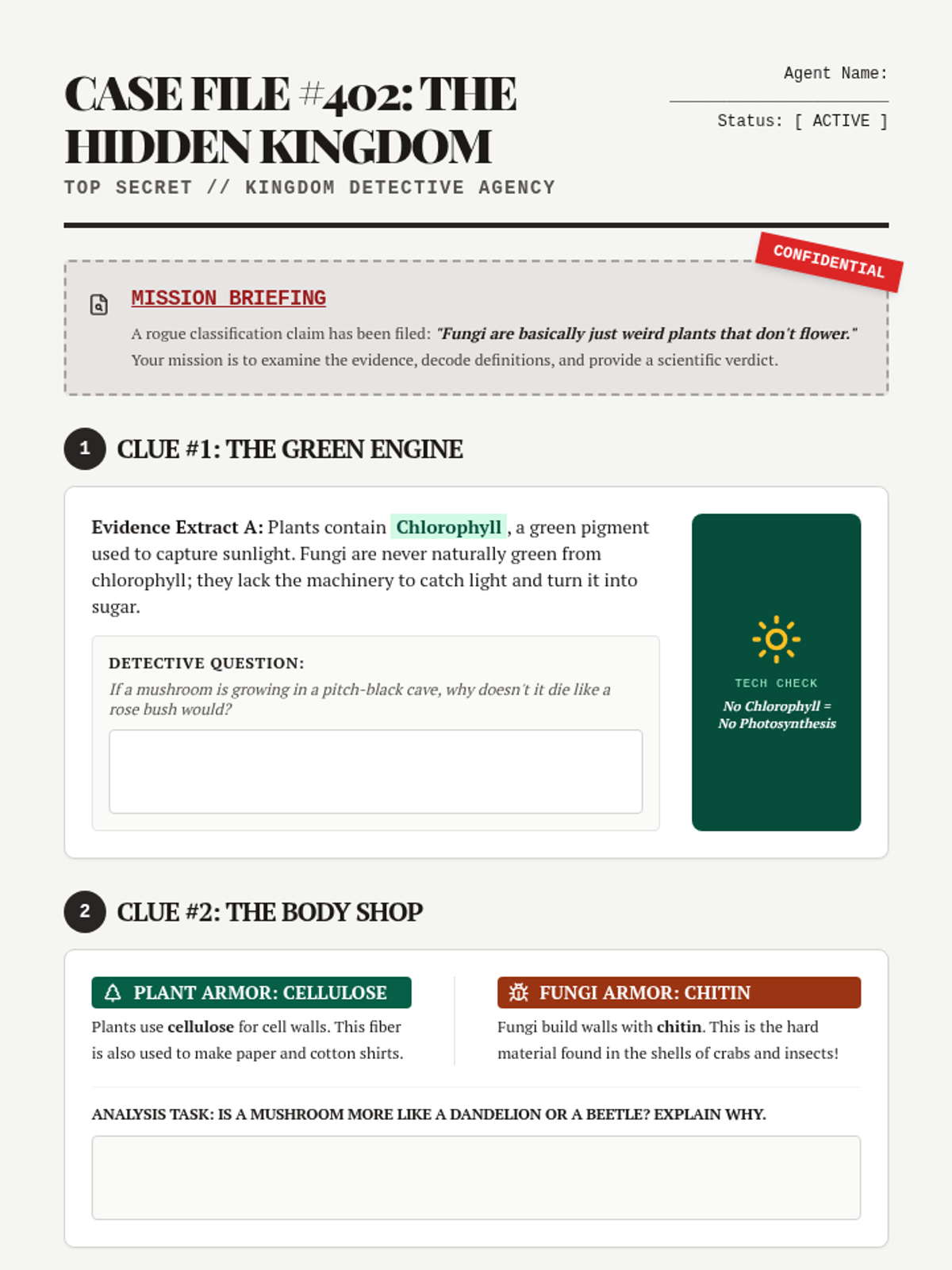
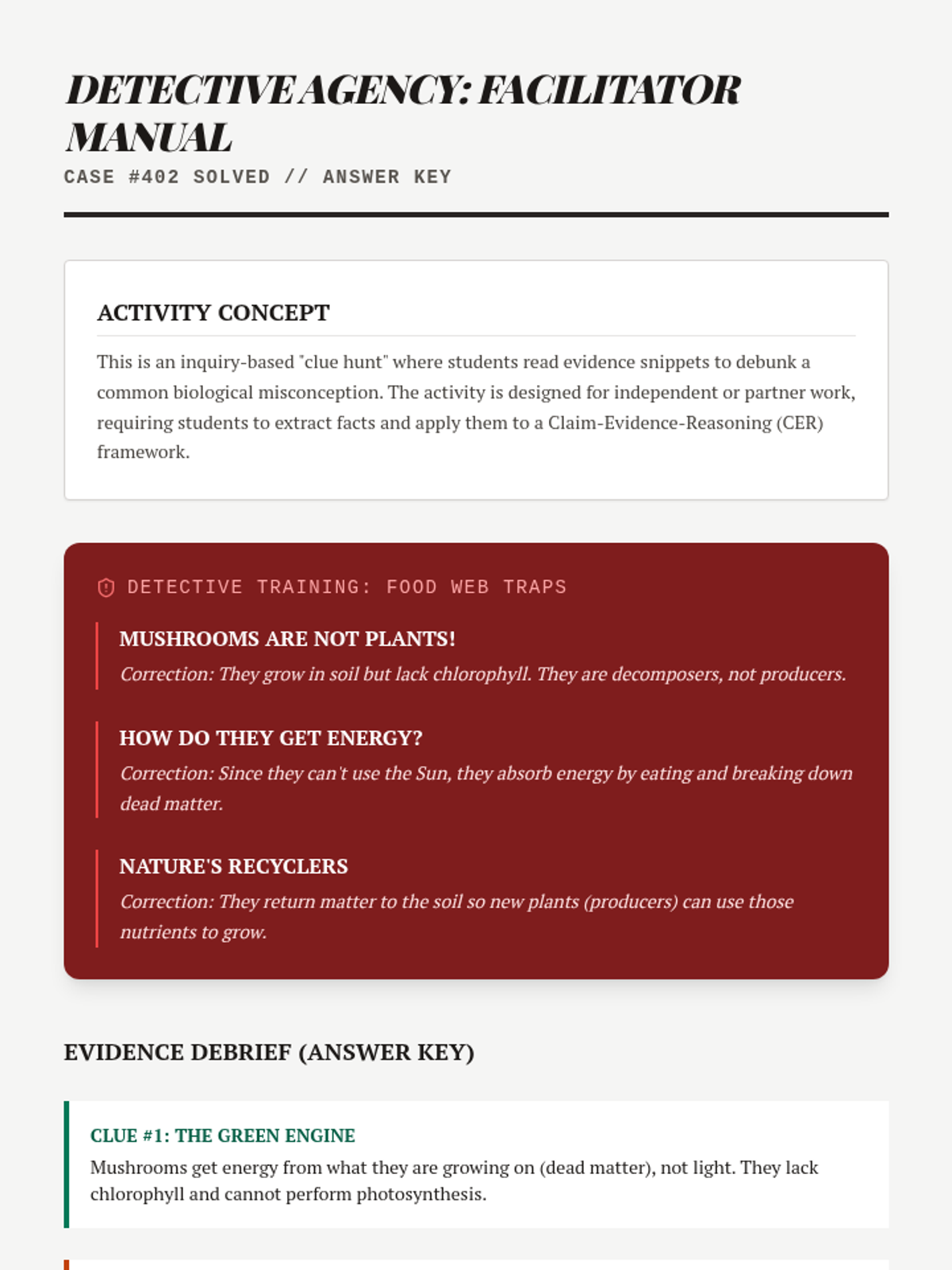
An independent, mystery-themed activity where students act as "Kingdom Detectives." They analyze a series of clues, definitions, and evidence files to determine why fungi are not plants and clarify the role of the sun in ecosystems.
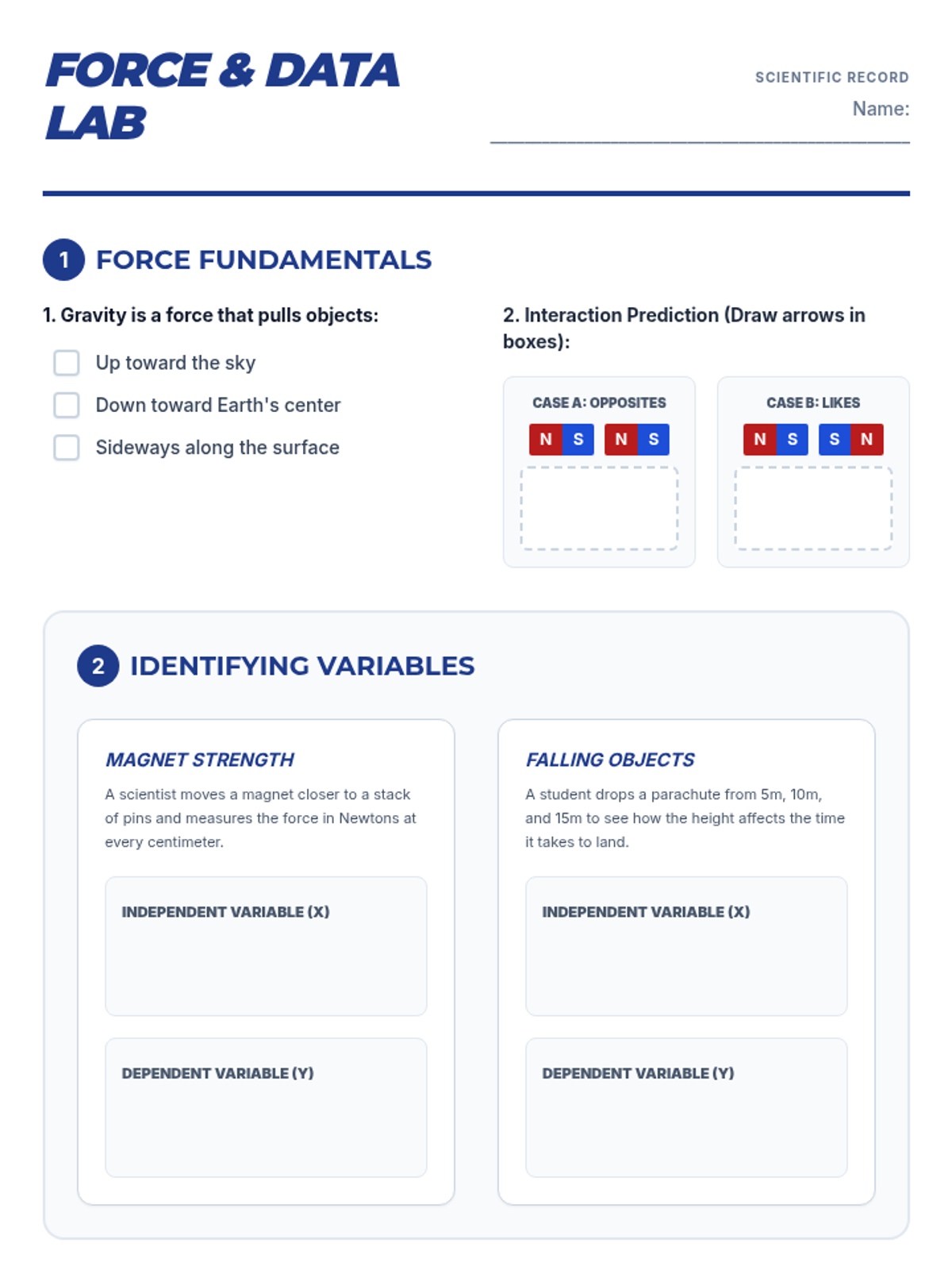
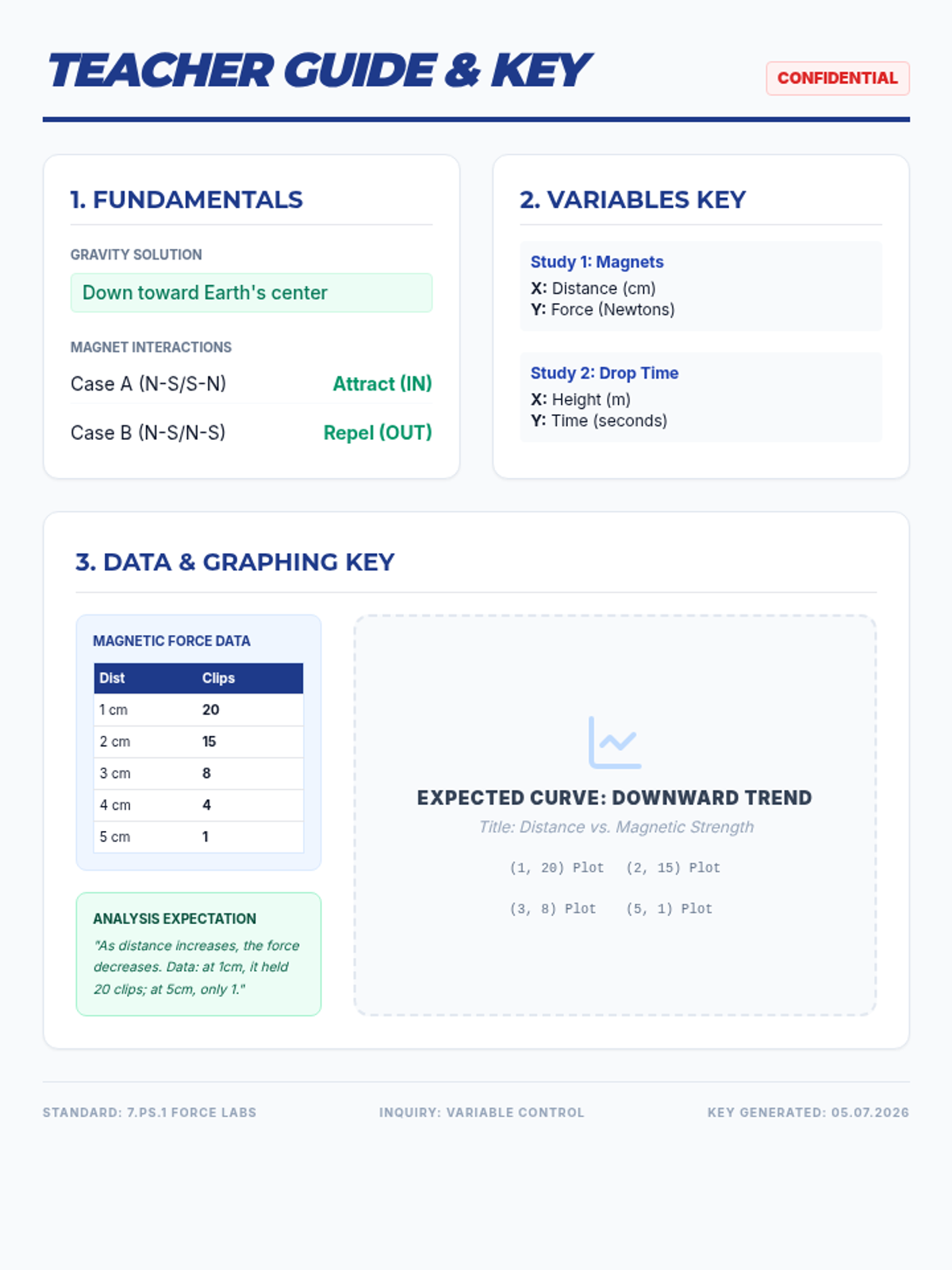
This lesson explores the invisible forces of gravity and magnetism, while teaching students how to organize and visualize scientific observations through graphing. Students will learn to identify variables and create accurate line graphs from experimental data.
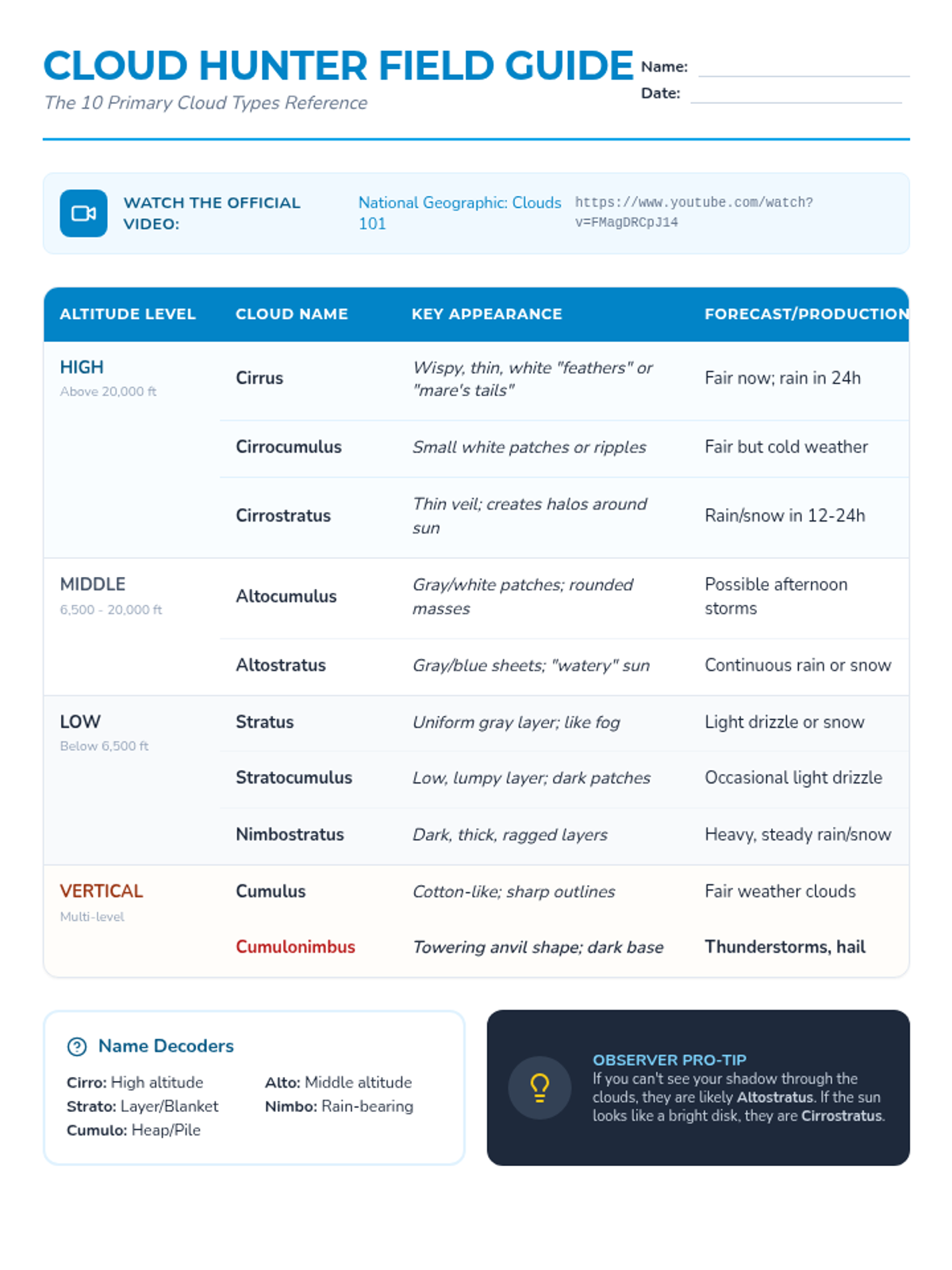
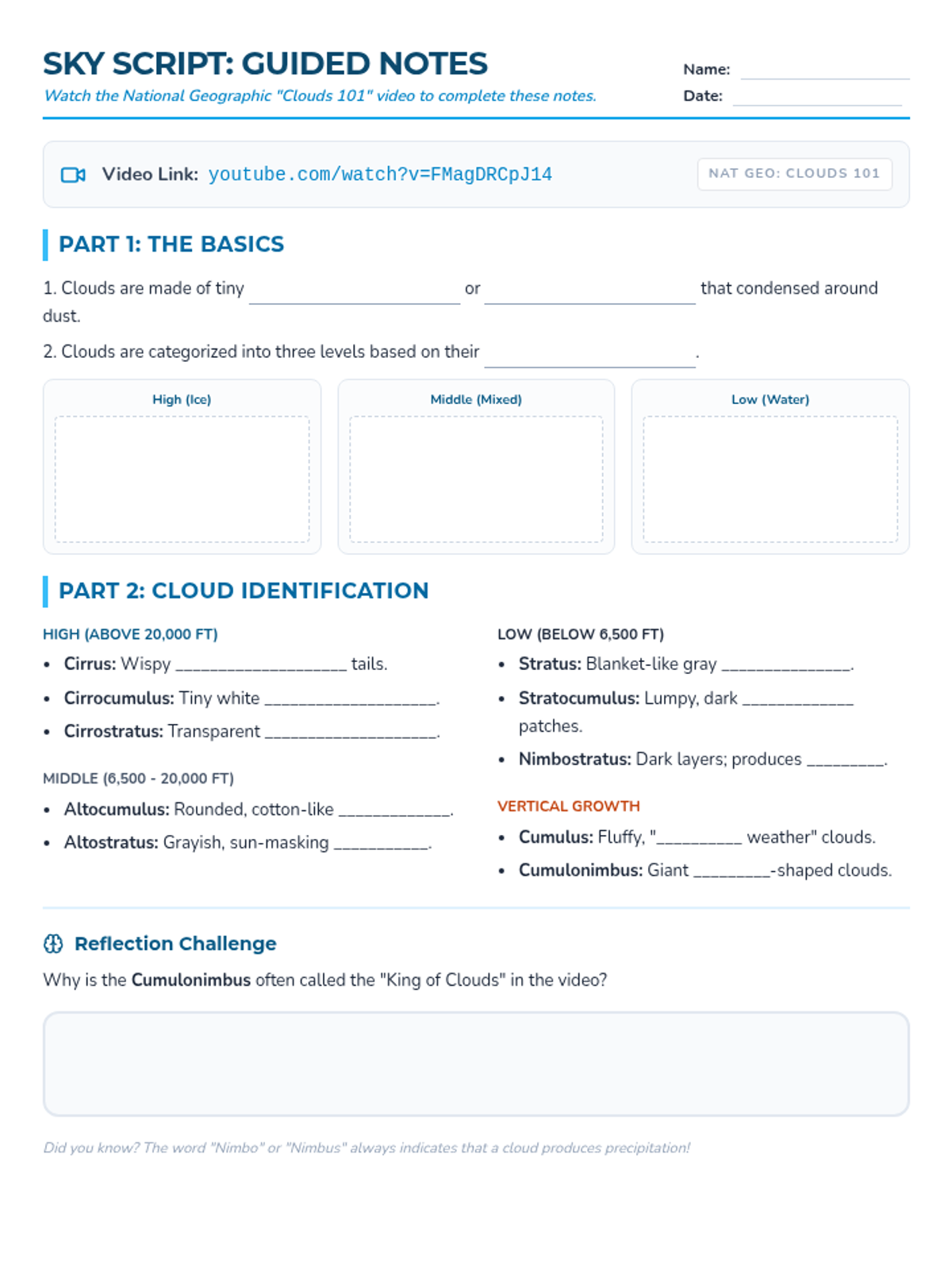
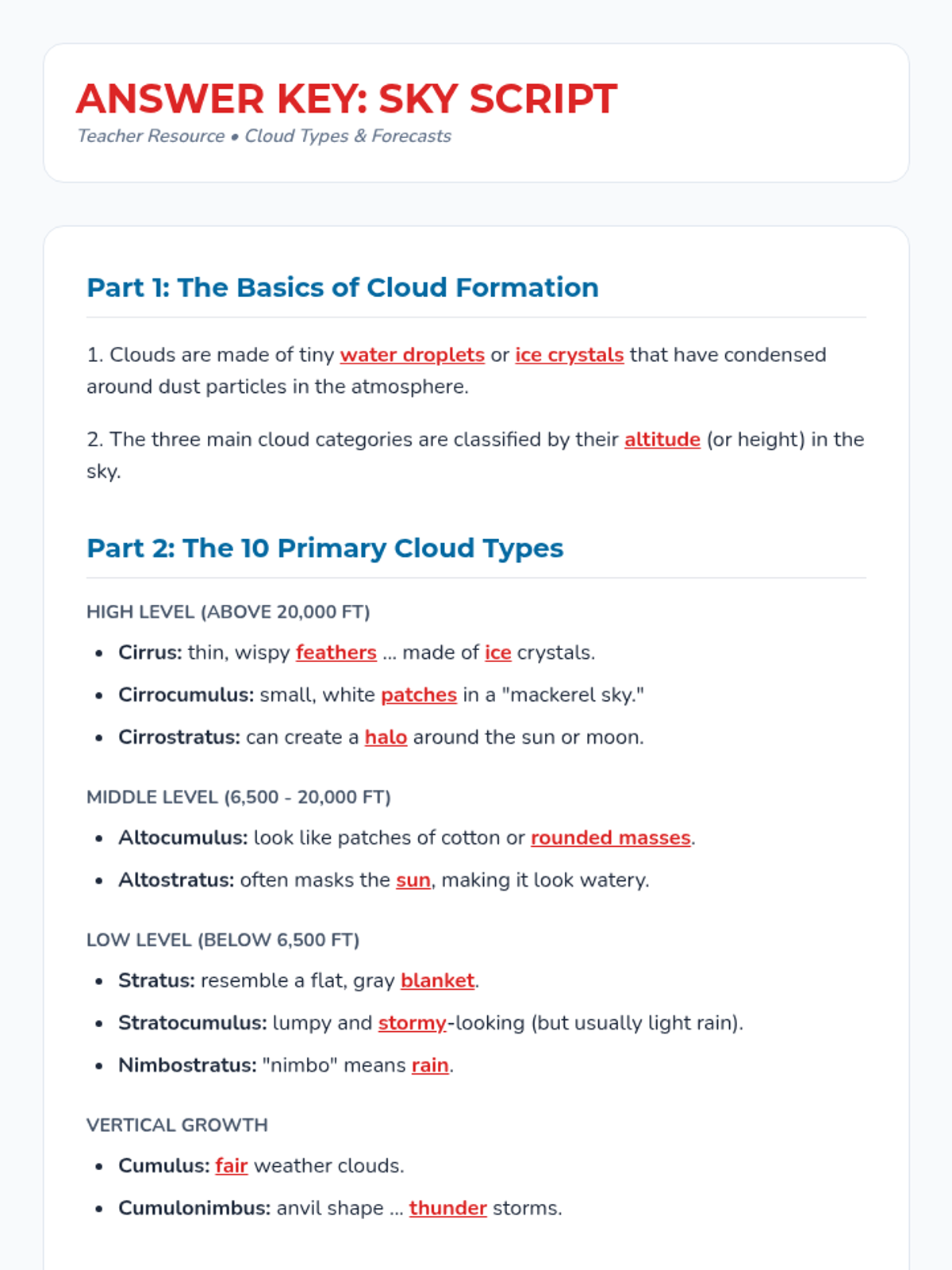
Students will learn to identify the ten primary cloud types, categorize them by altitude, and predict weather outcomes based on cloud formations.
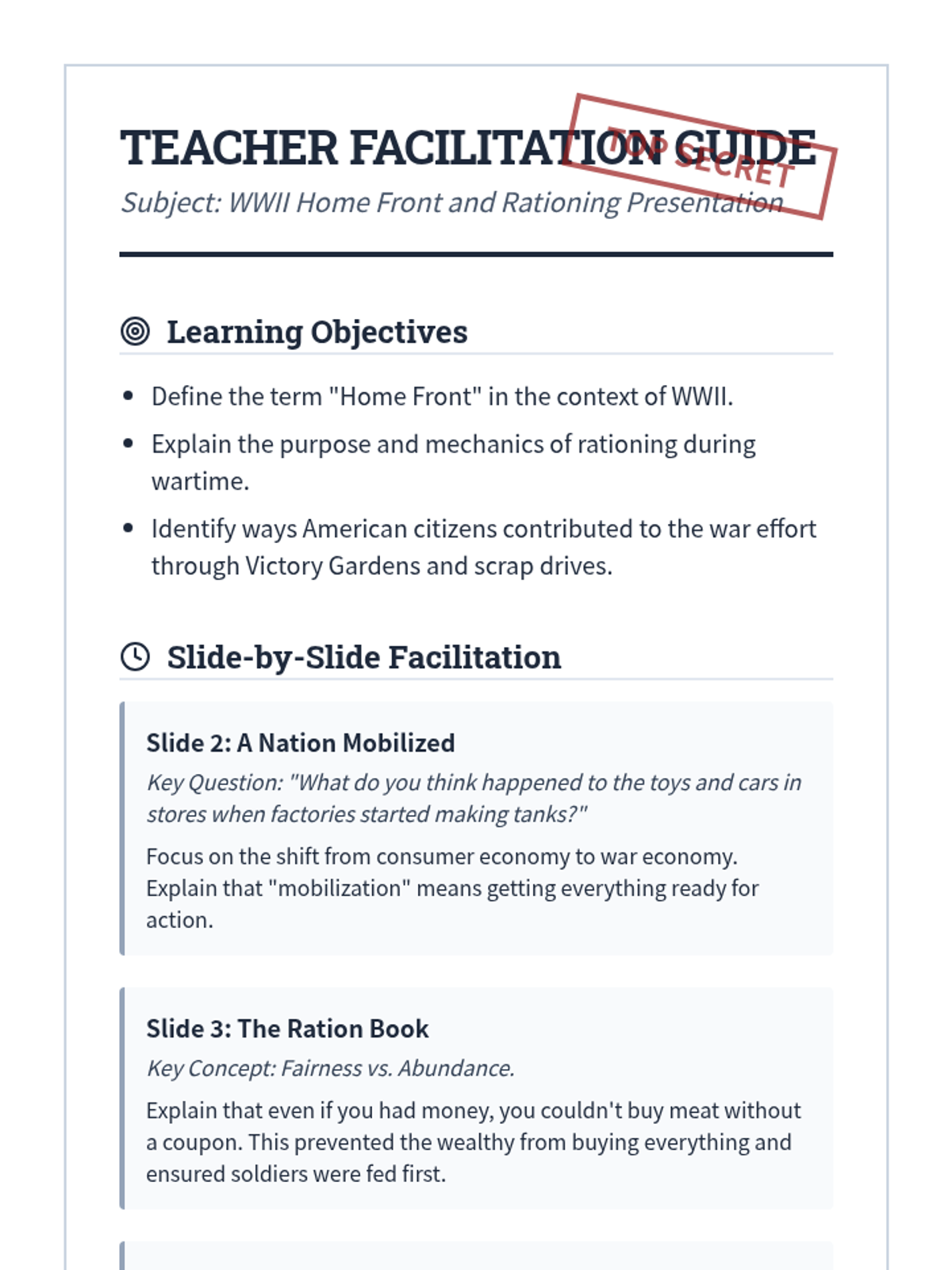
An exploration of life in America during World War II, focusing on how rationing, Victory Gardens, and community efforts supported the war from home.
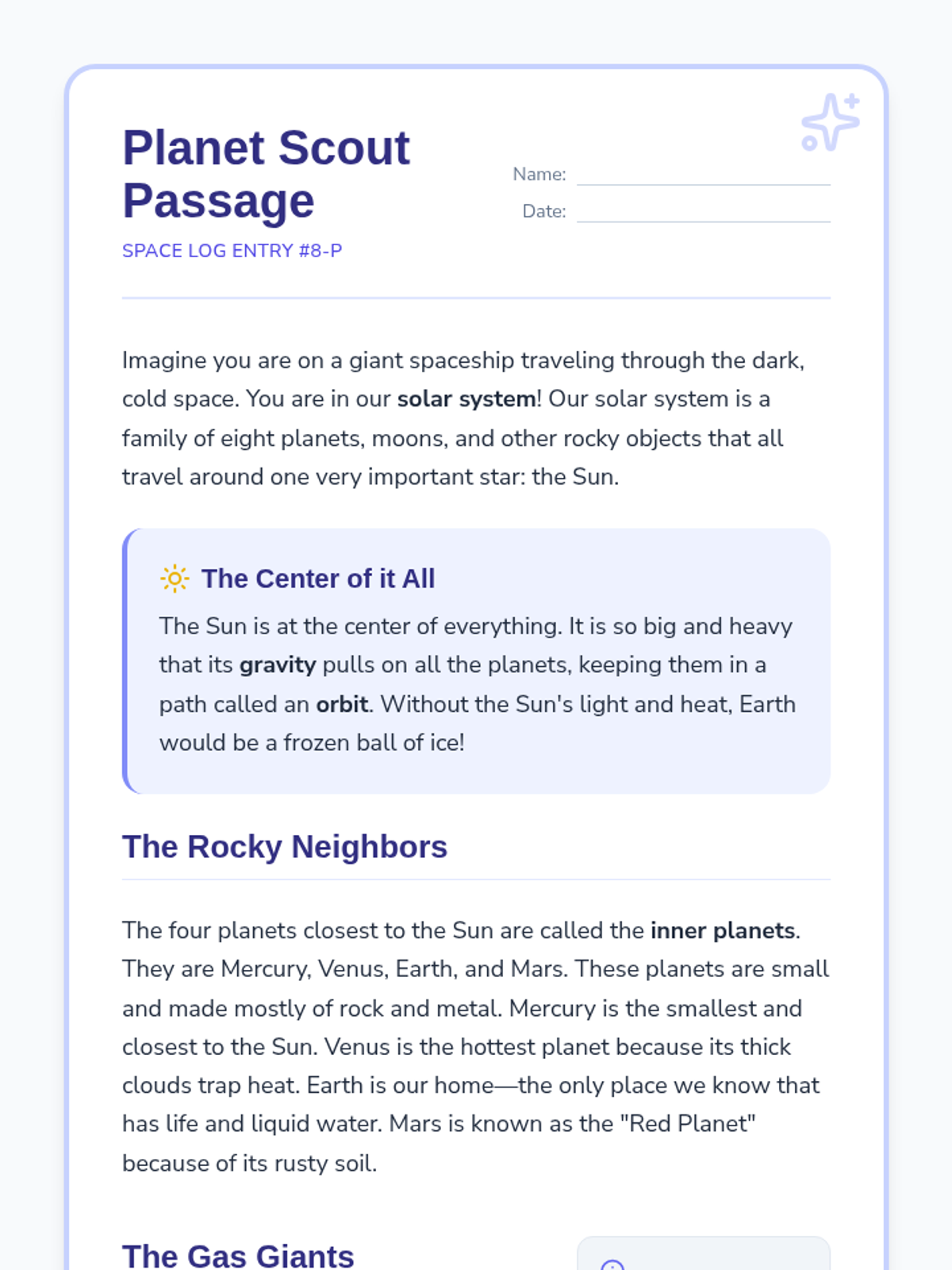
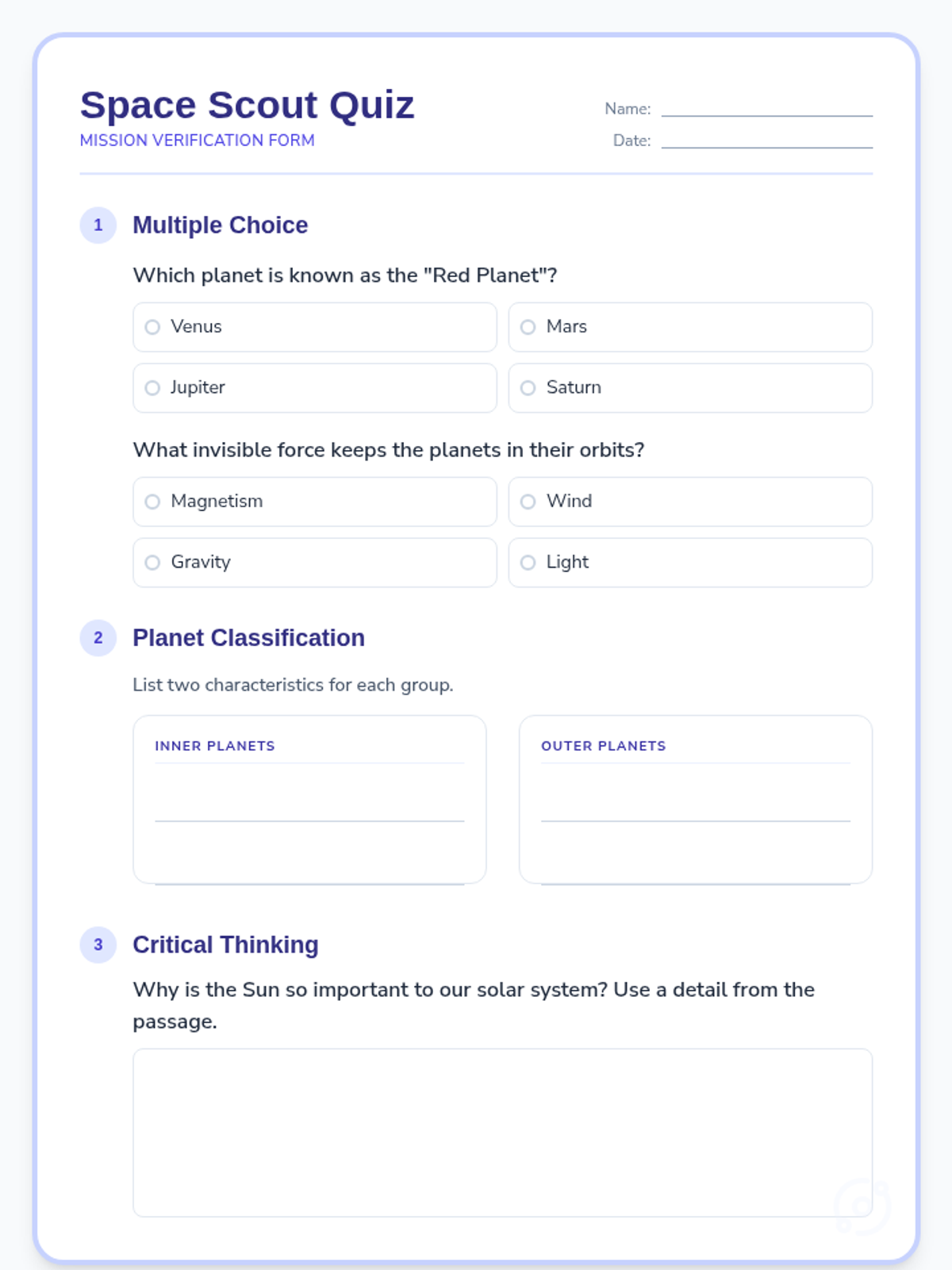
Students explore the eight planets of our solar system, learning about their unique characteristics and the forces that keep them in orbit.
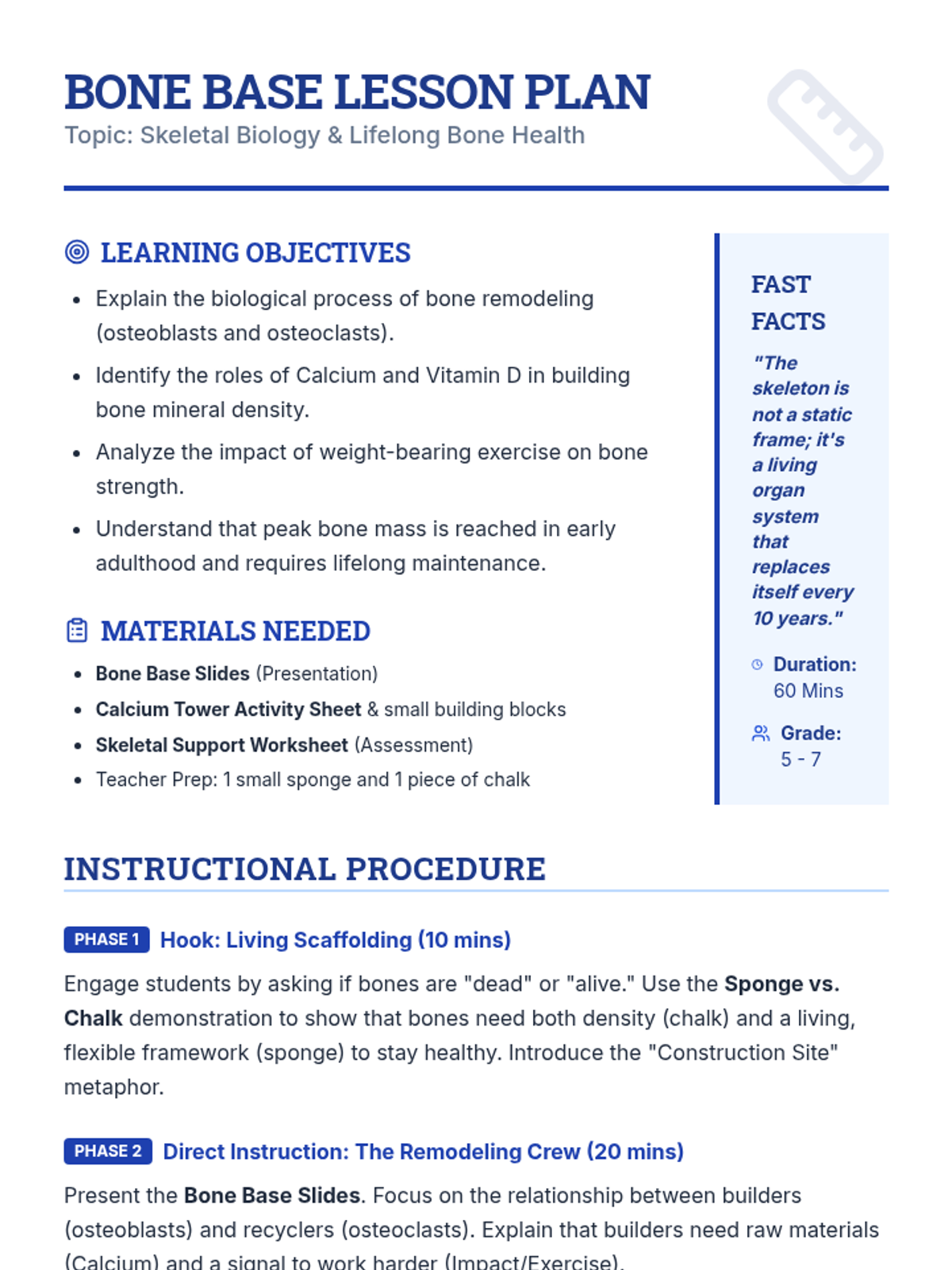
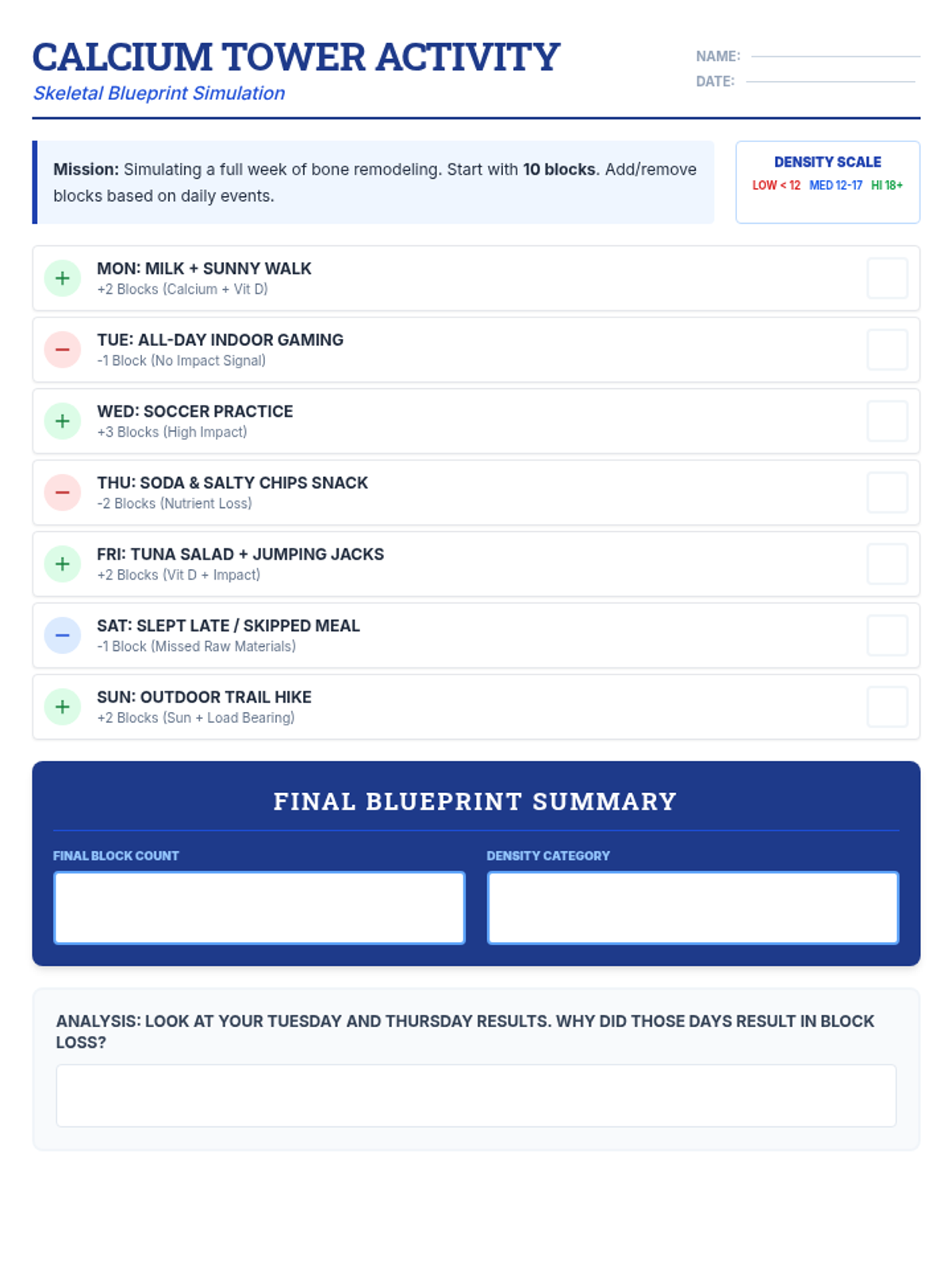
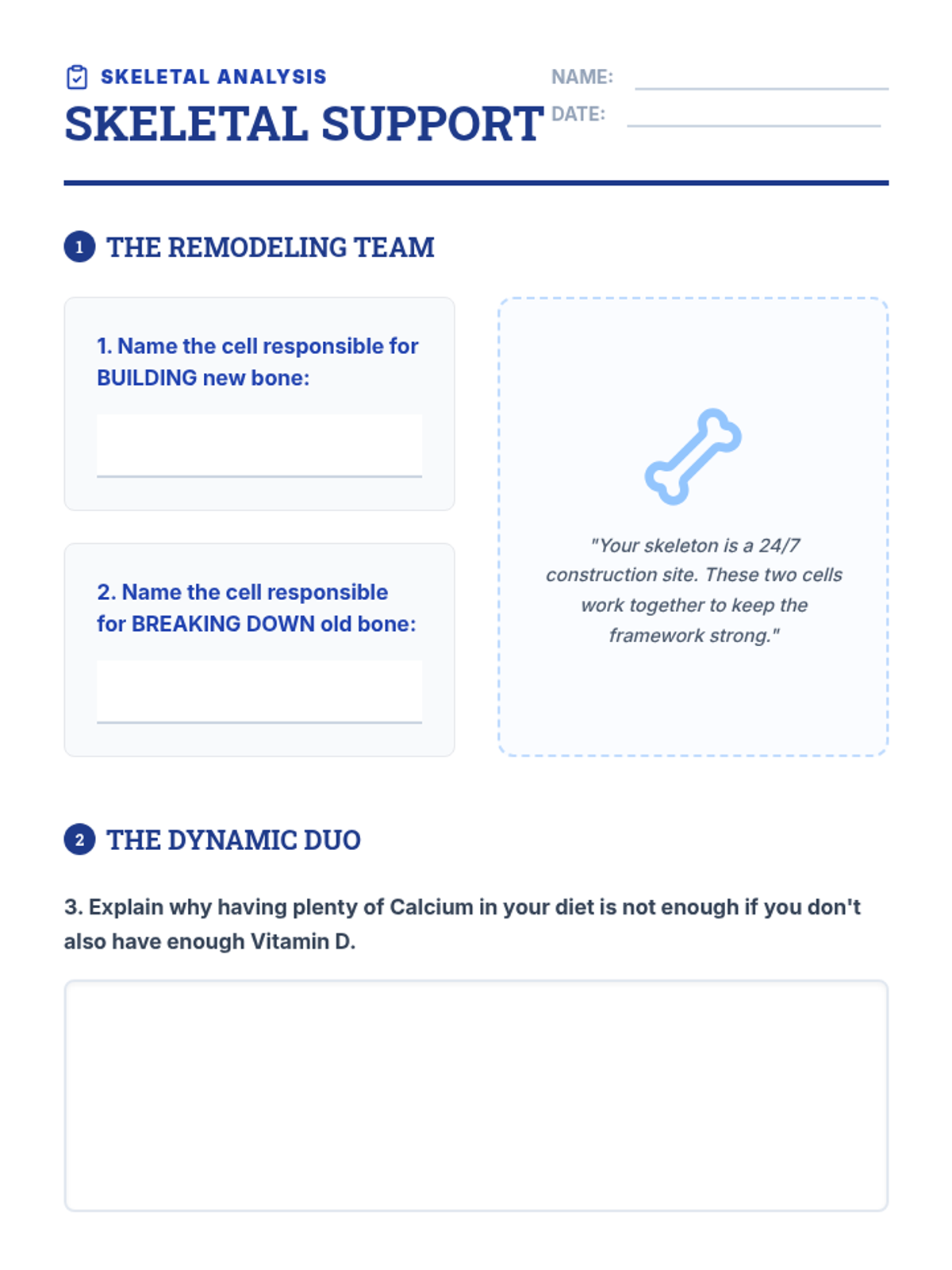
A biology and health lesson focused on bone growth, mineral density, and the lifelong habits required to build a strong skeletal foundation through nutrition and exercise.
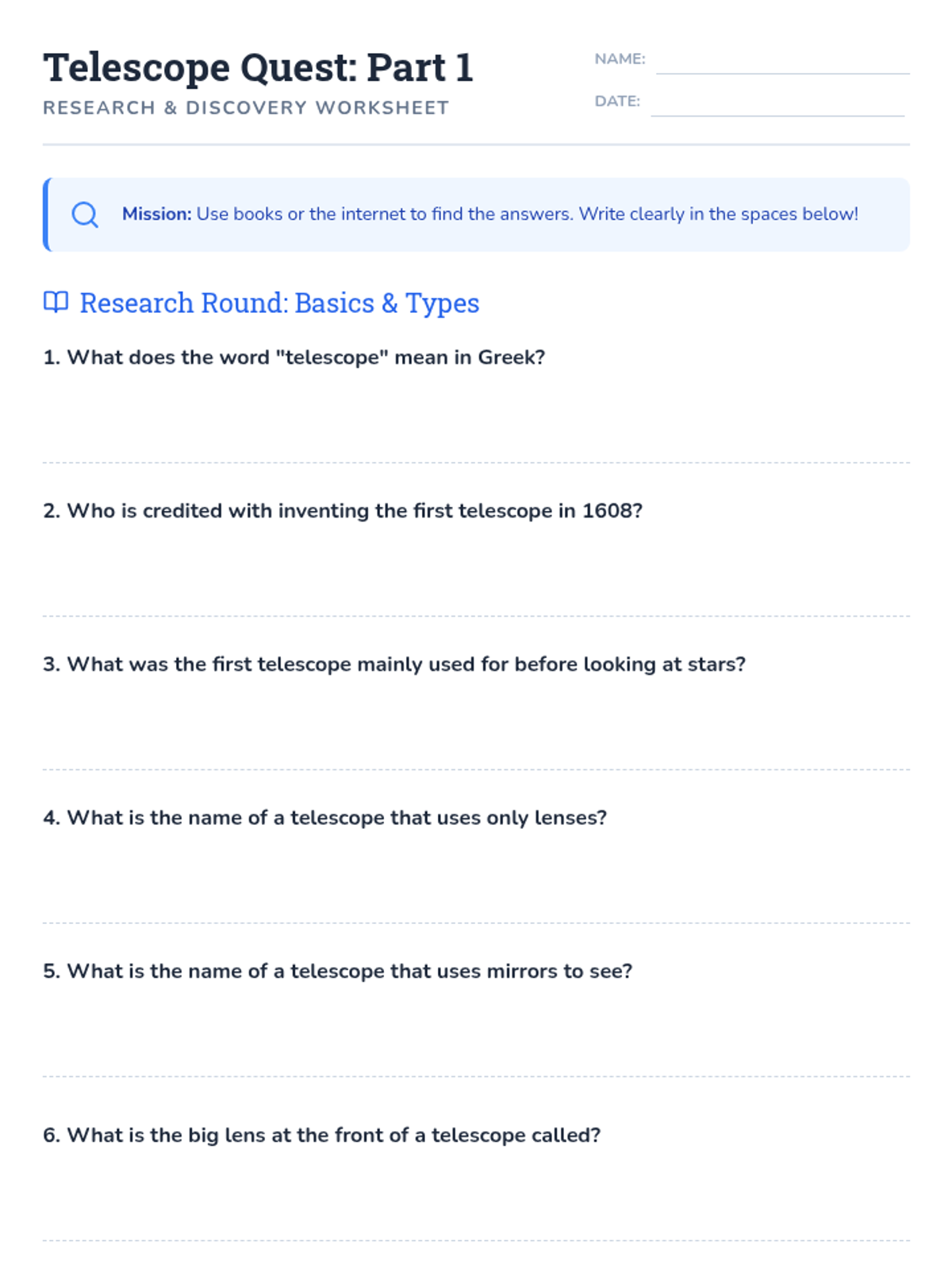
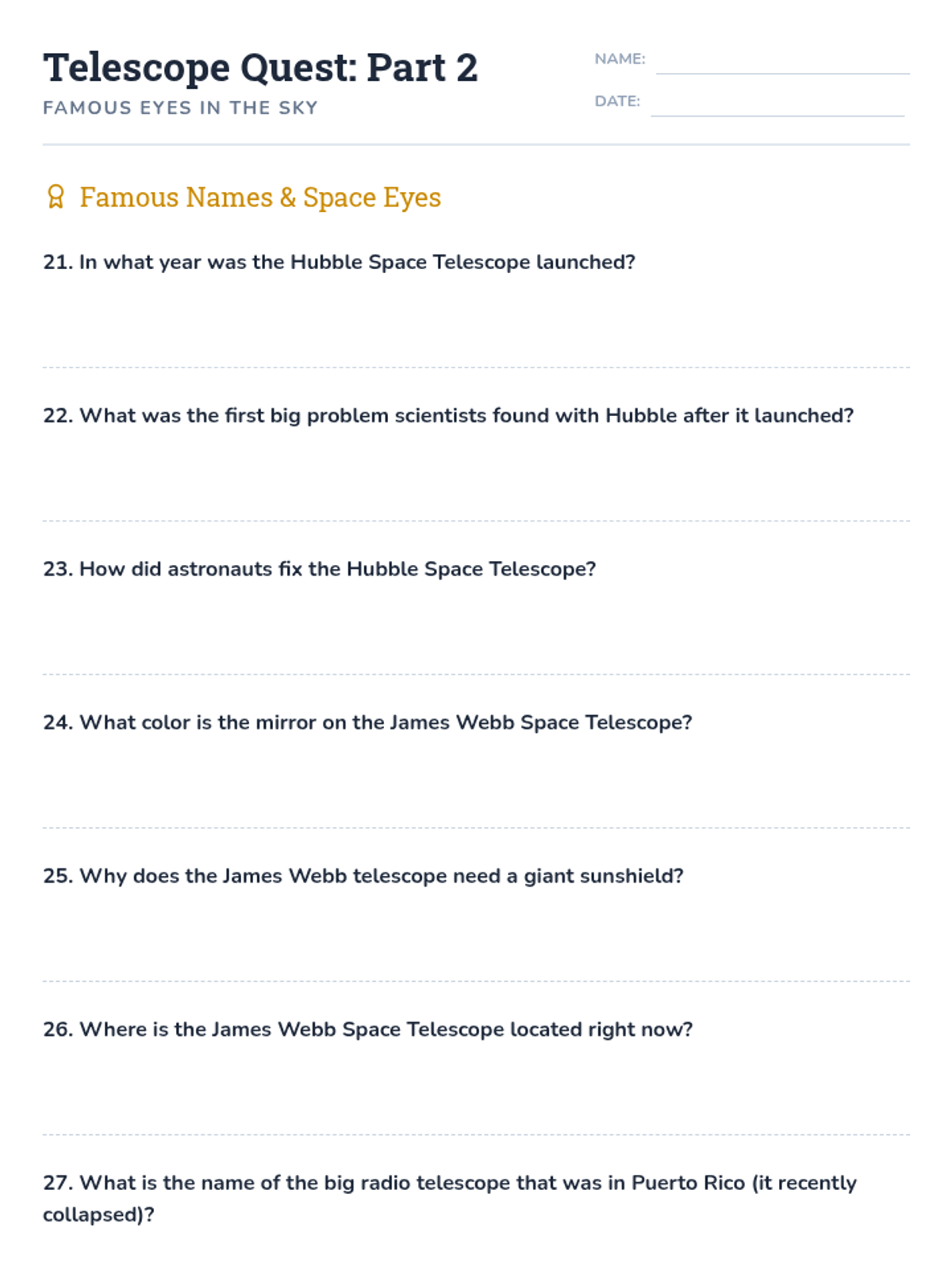
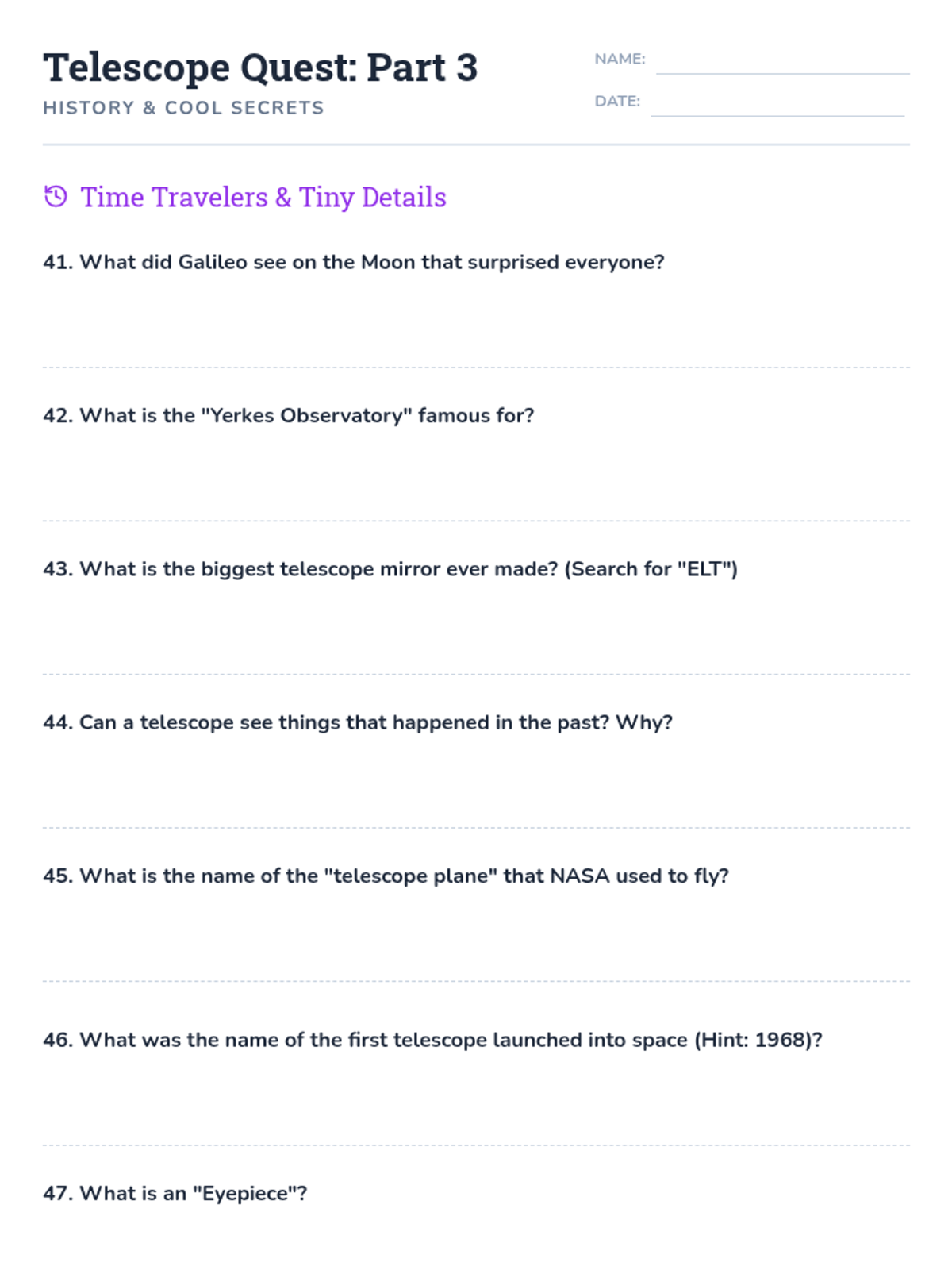
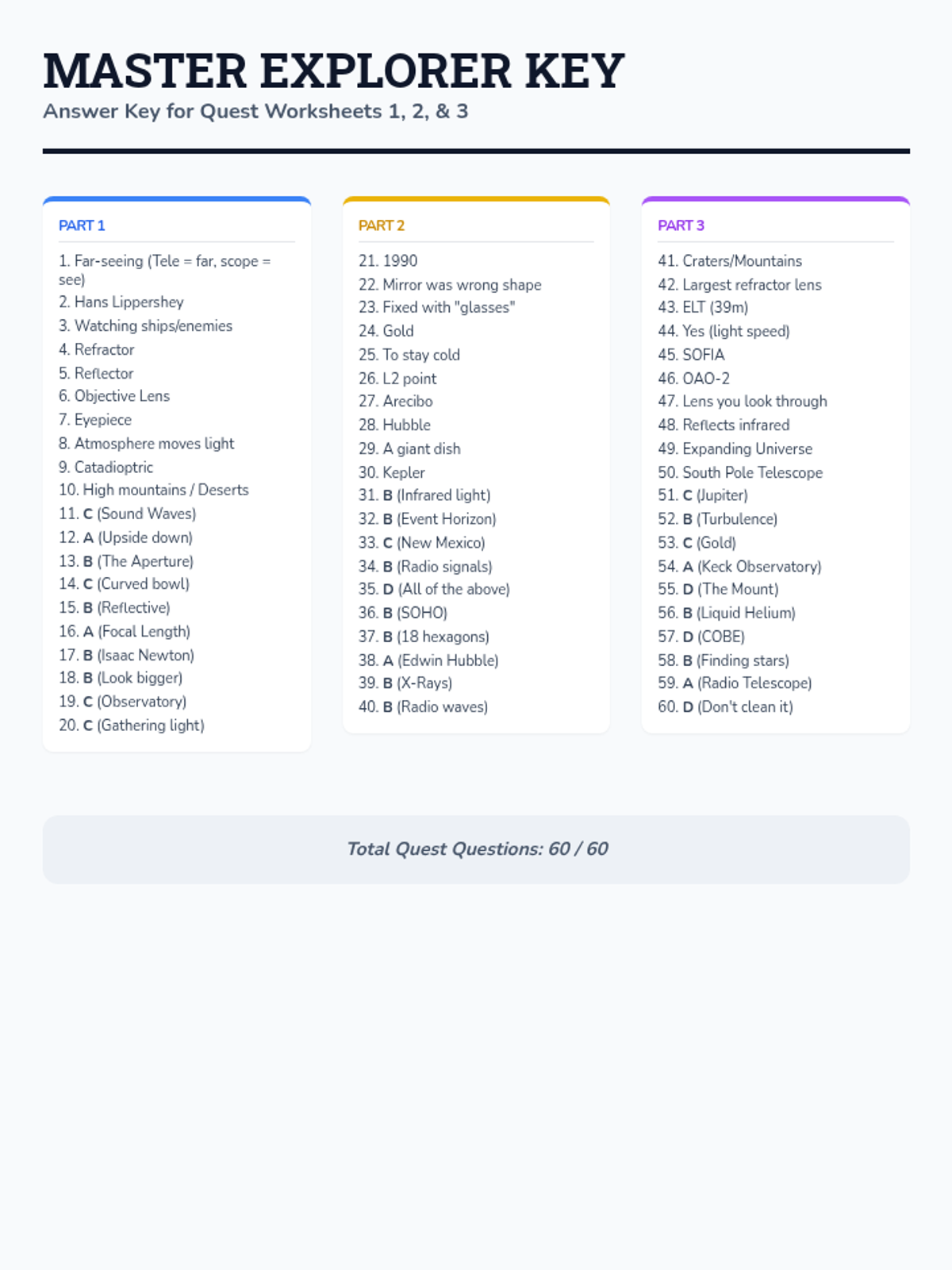
A comprehensive introduction to how telescopes work, their history, and the famous ones that help us see deep into space. Students will explore different types of telescopes through a massive research quest.
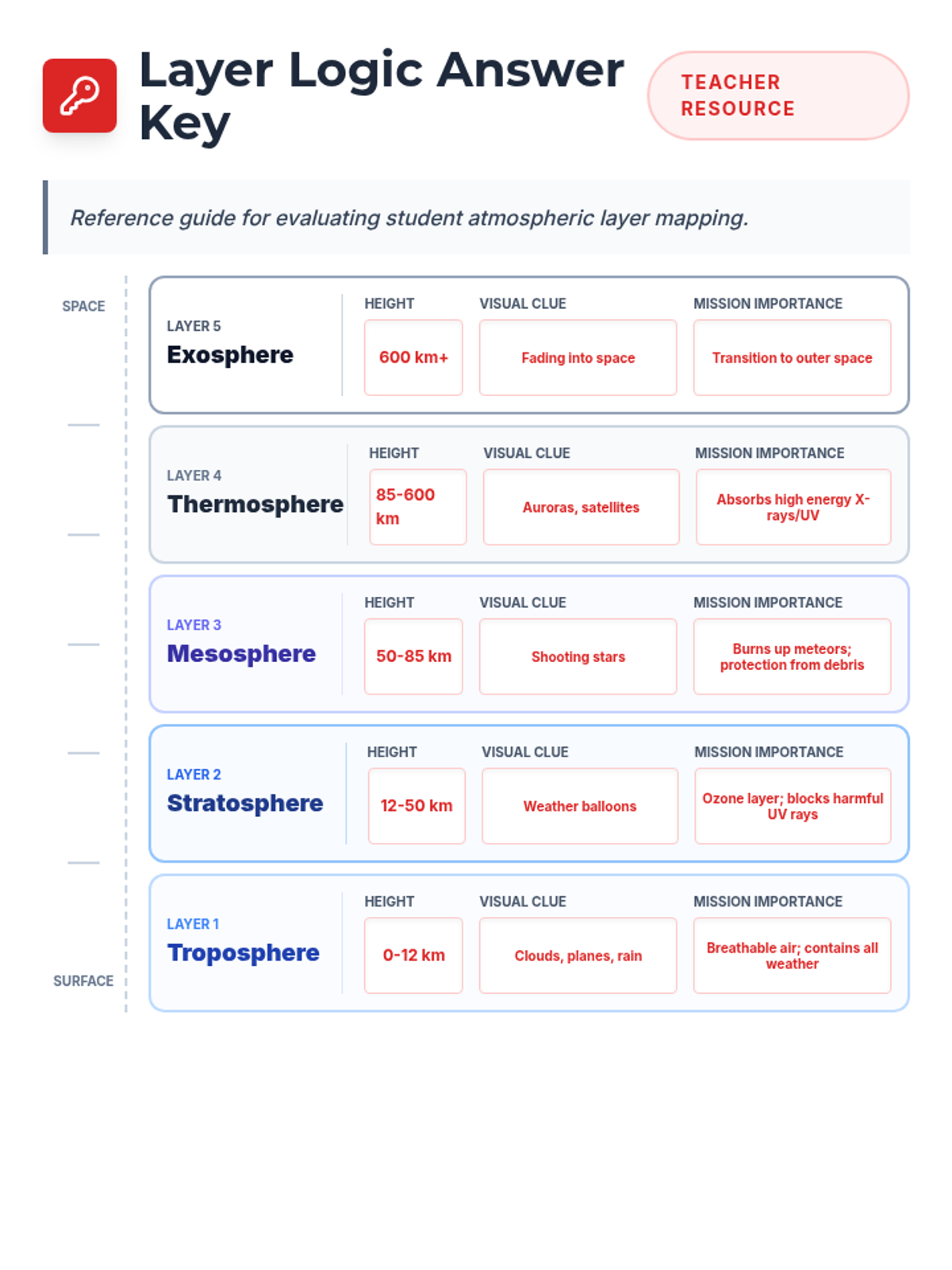
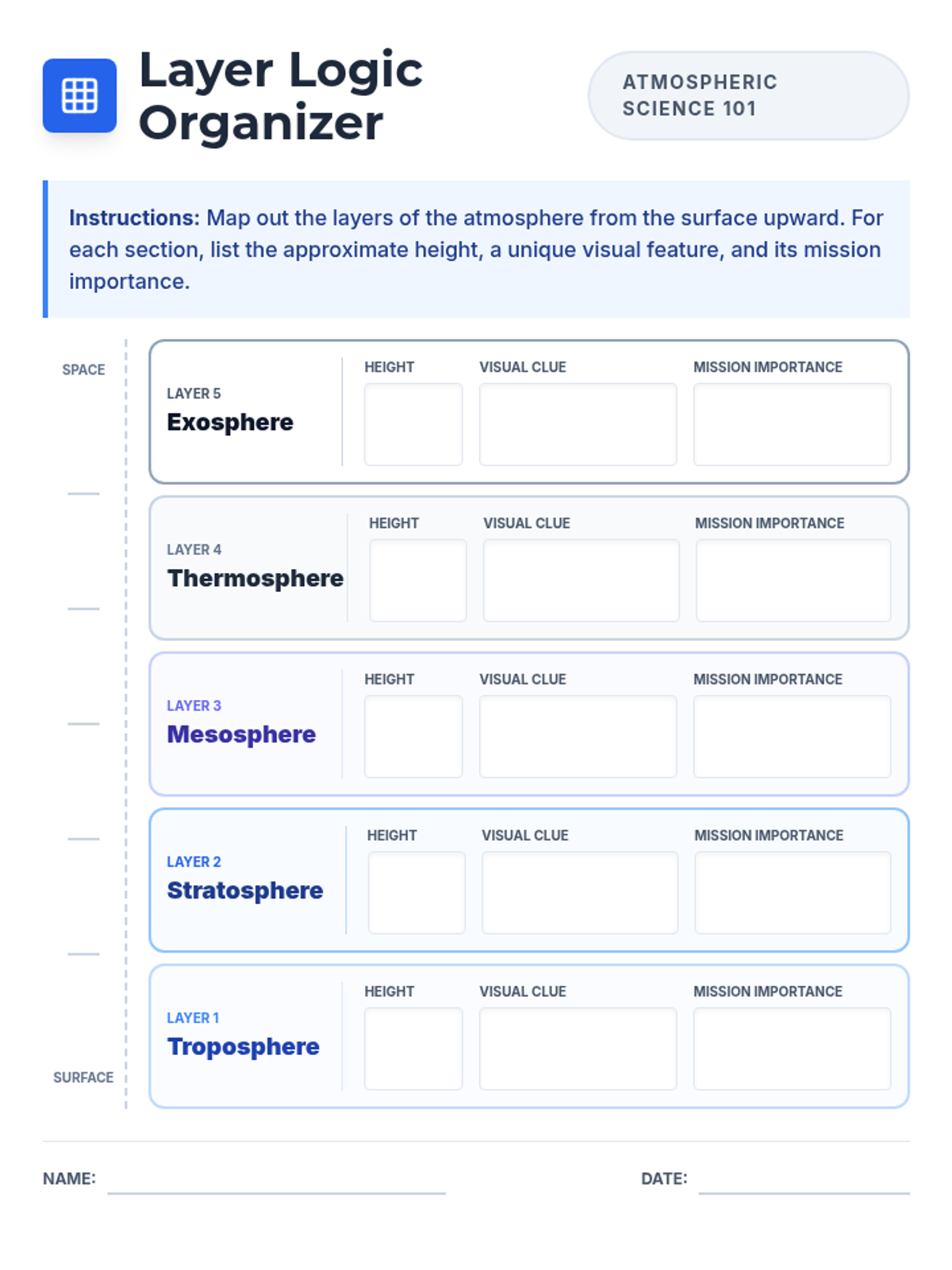
A comprehensive review of Earth's atmospheric layers, the crucial role of the ozone layer, and the chemical impact of CFCs on our planetary shield.
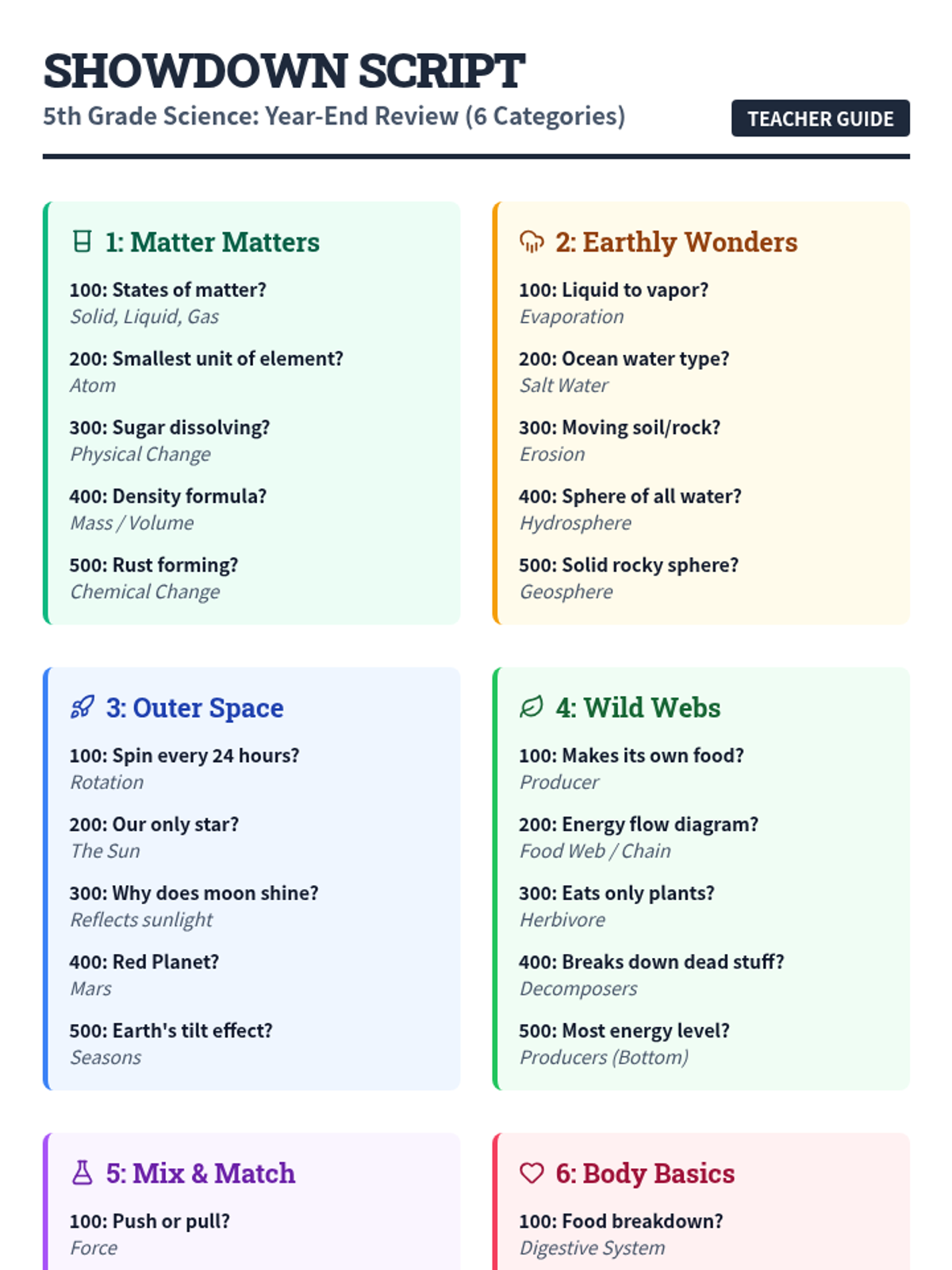
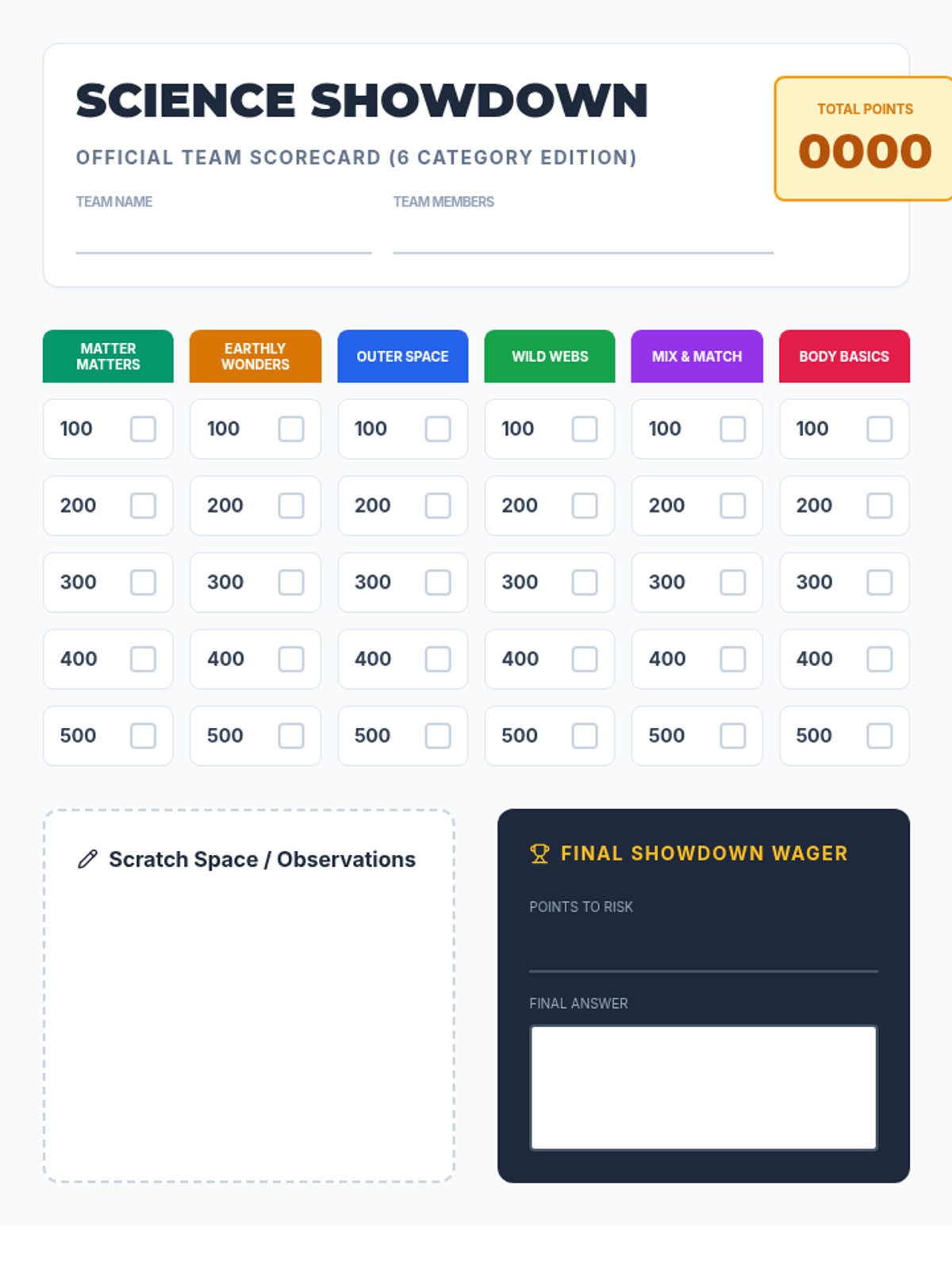
A comprehensive year-end science review for 5th grade designed as a high-energy Jeopardy-style game. This lesson covers matter, Earth systems, space, ecosystems, and scientific inquiry to prepare students for end-of-year assessments.
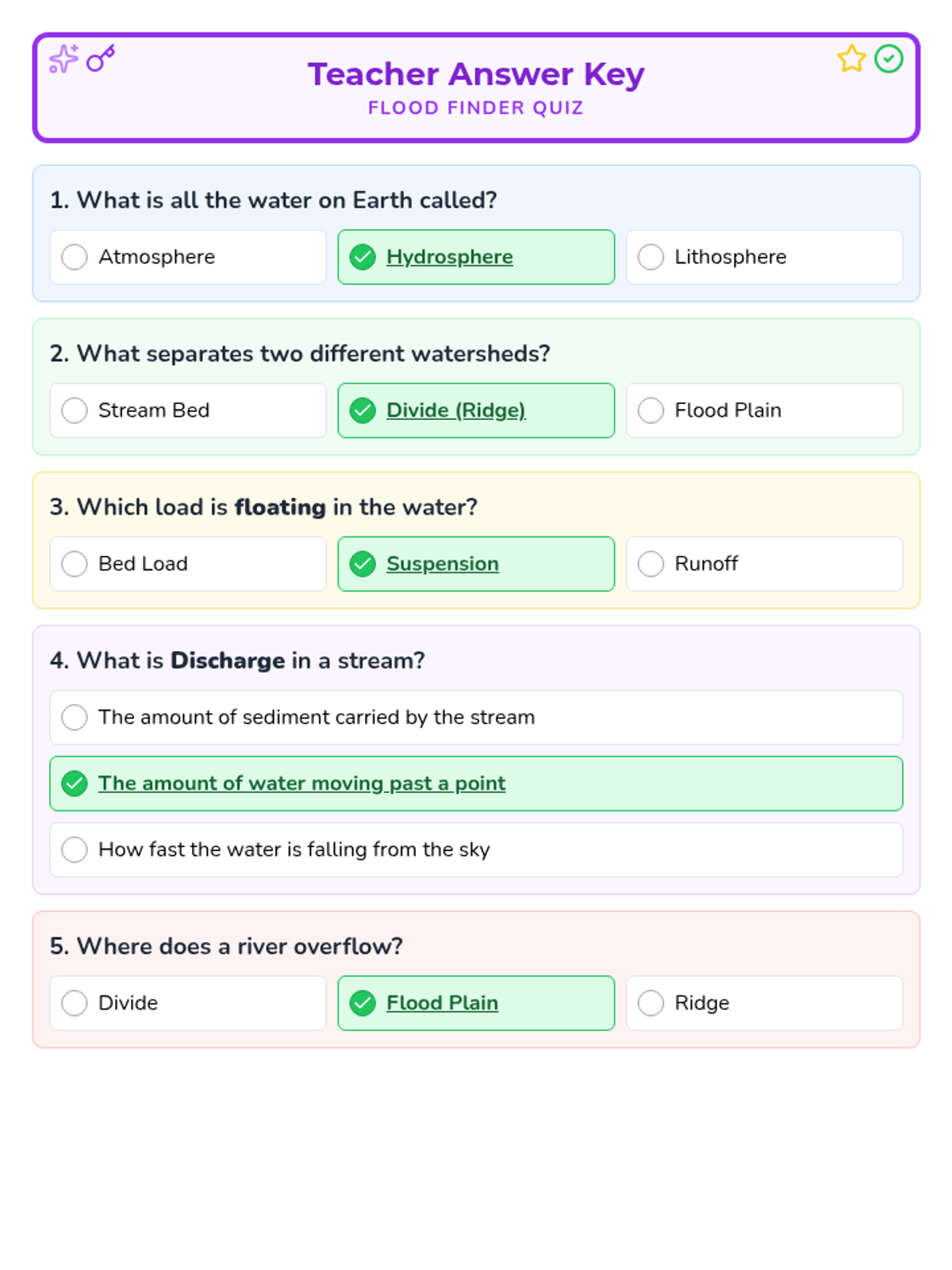
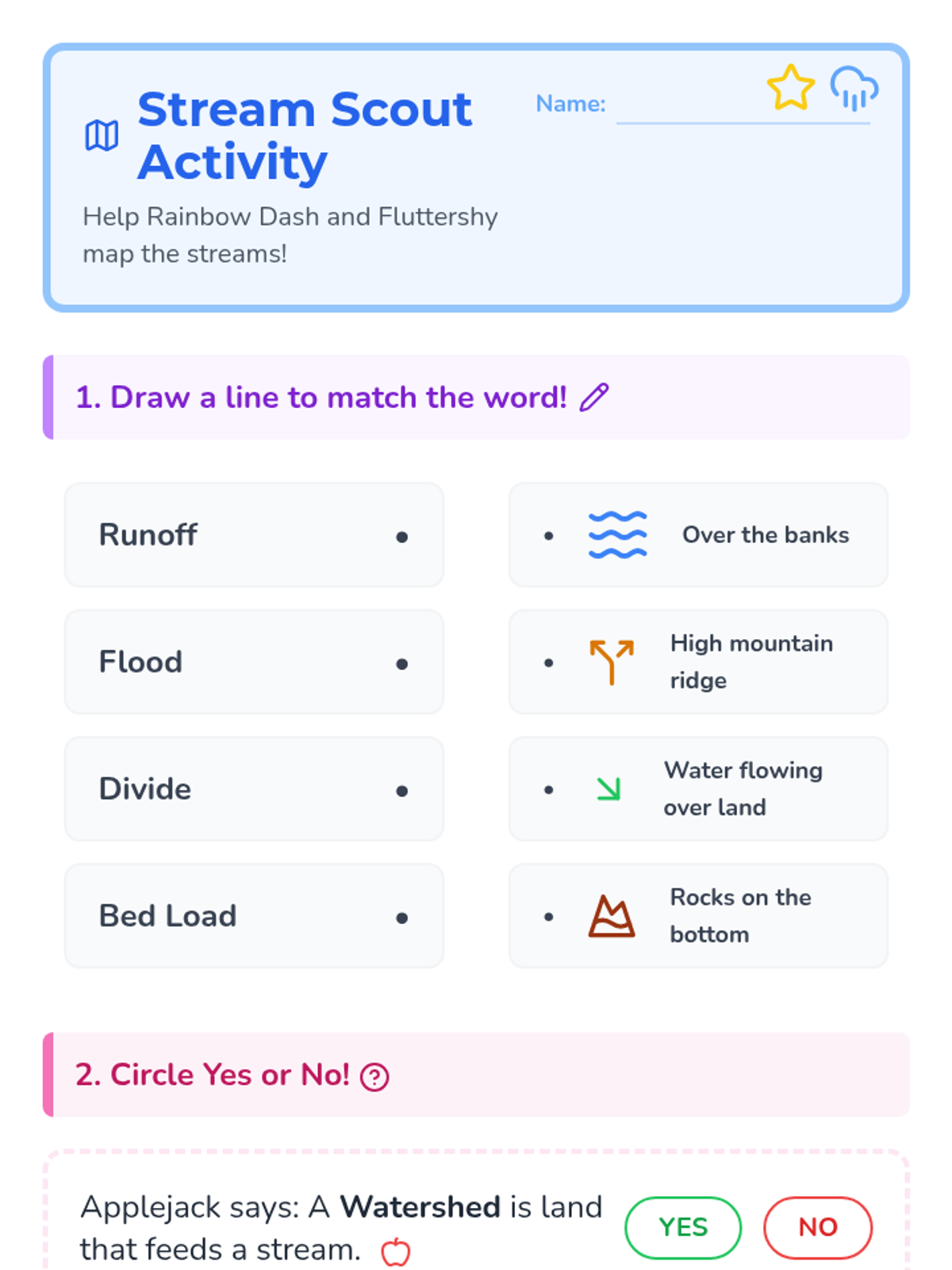
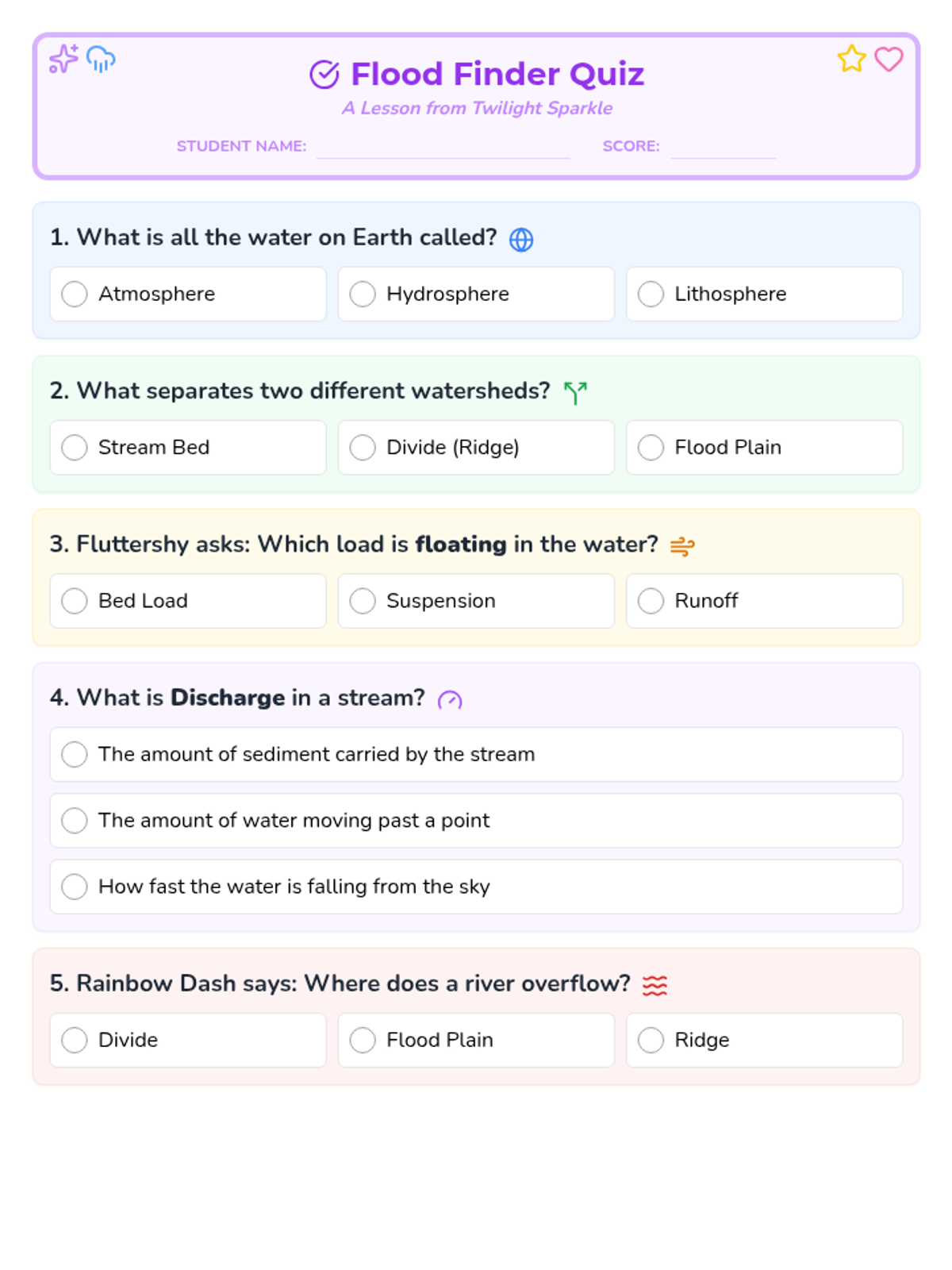
A simplified, symbol-supported lesson on surface water movement, covering watersheds, stream systems, and flood safety, themed around the world of Equestria.
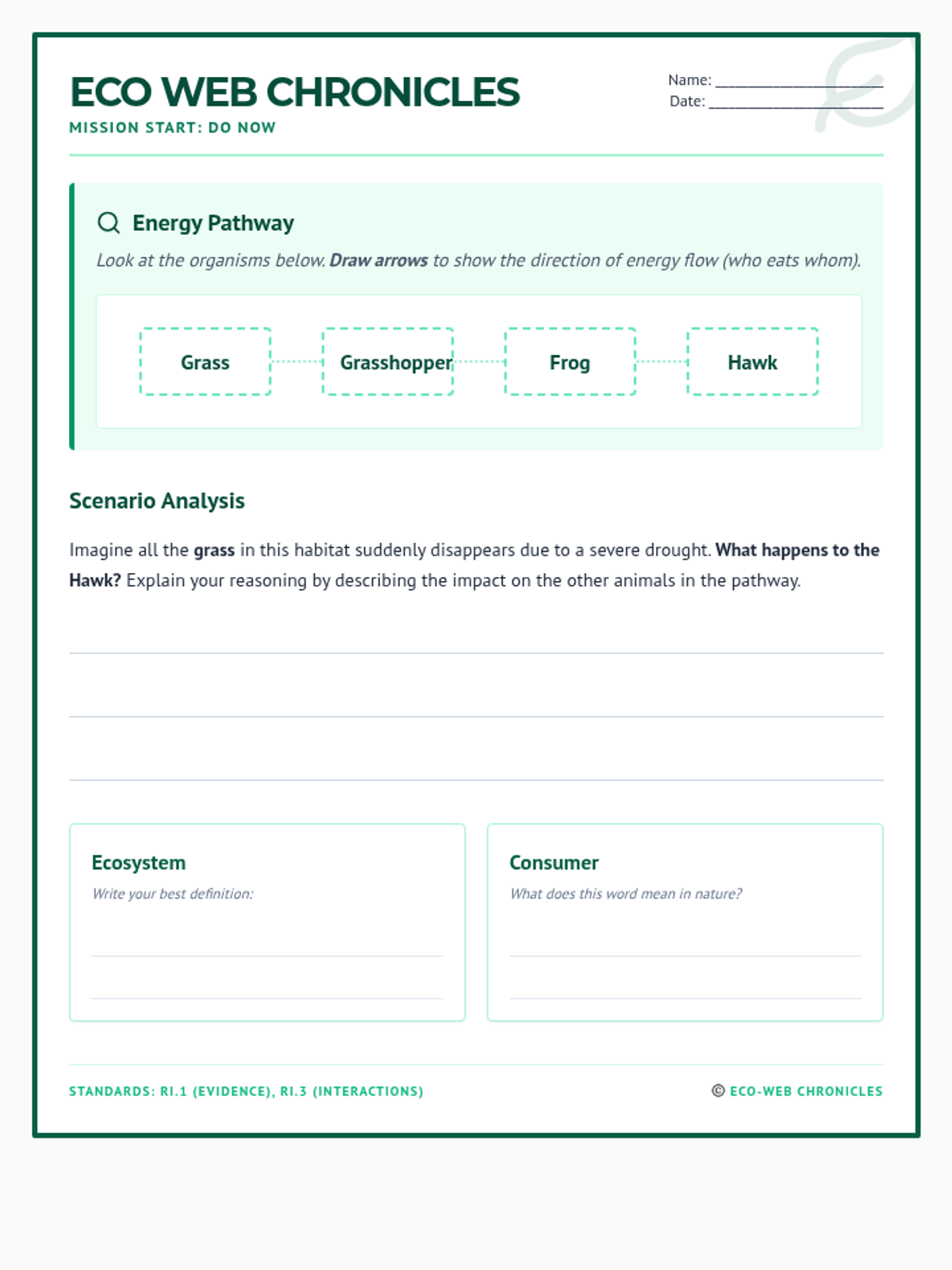
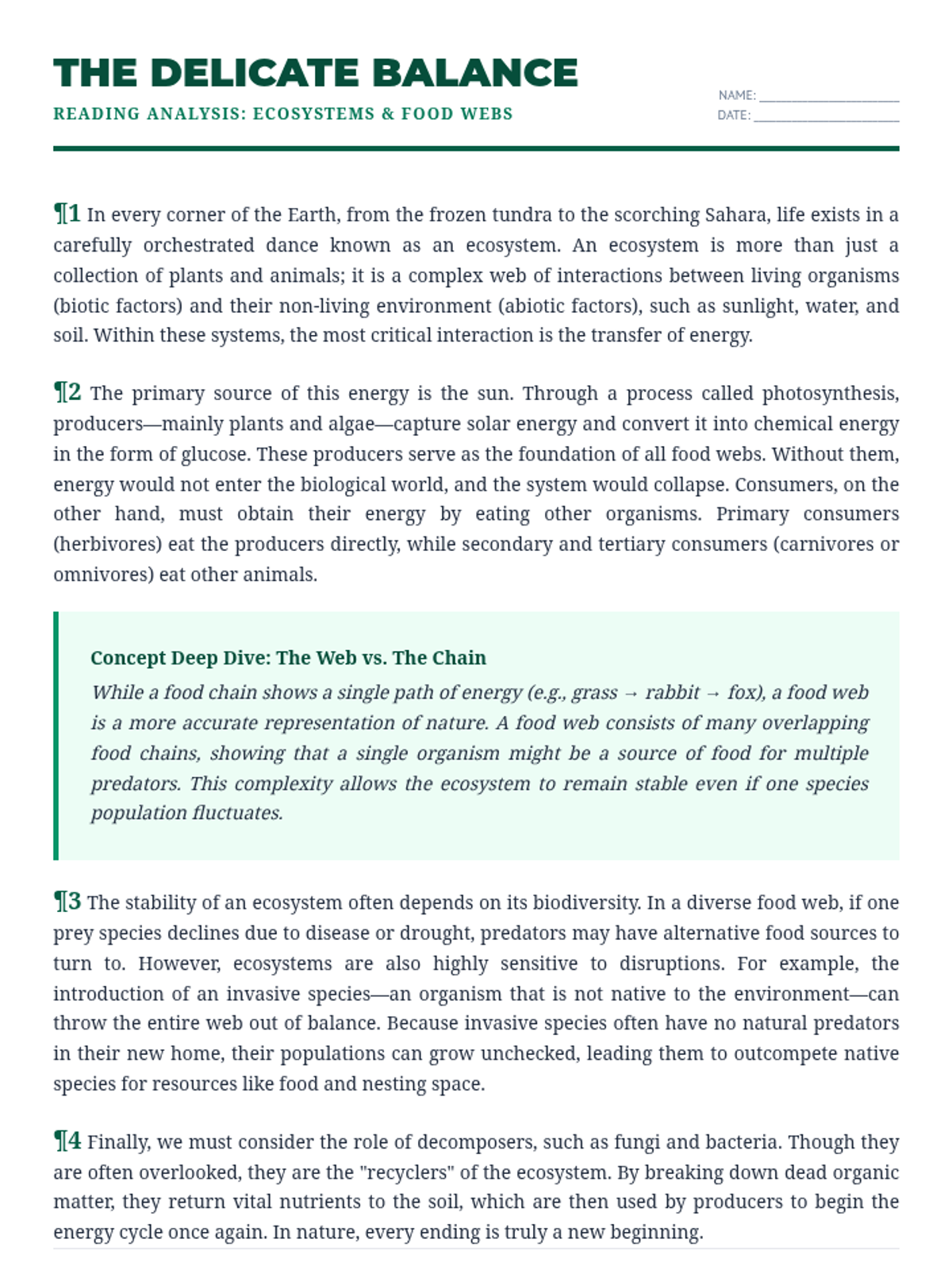
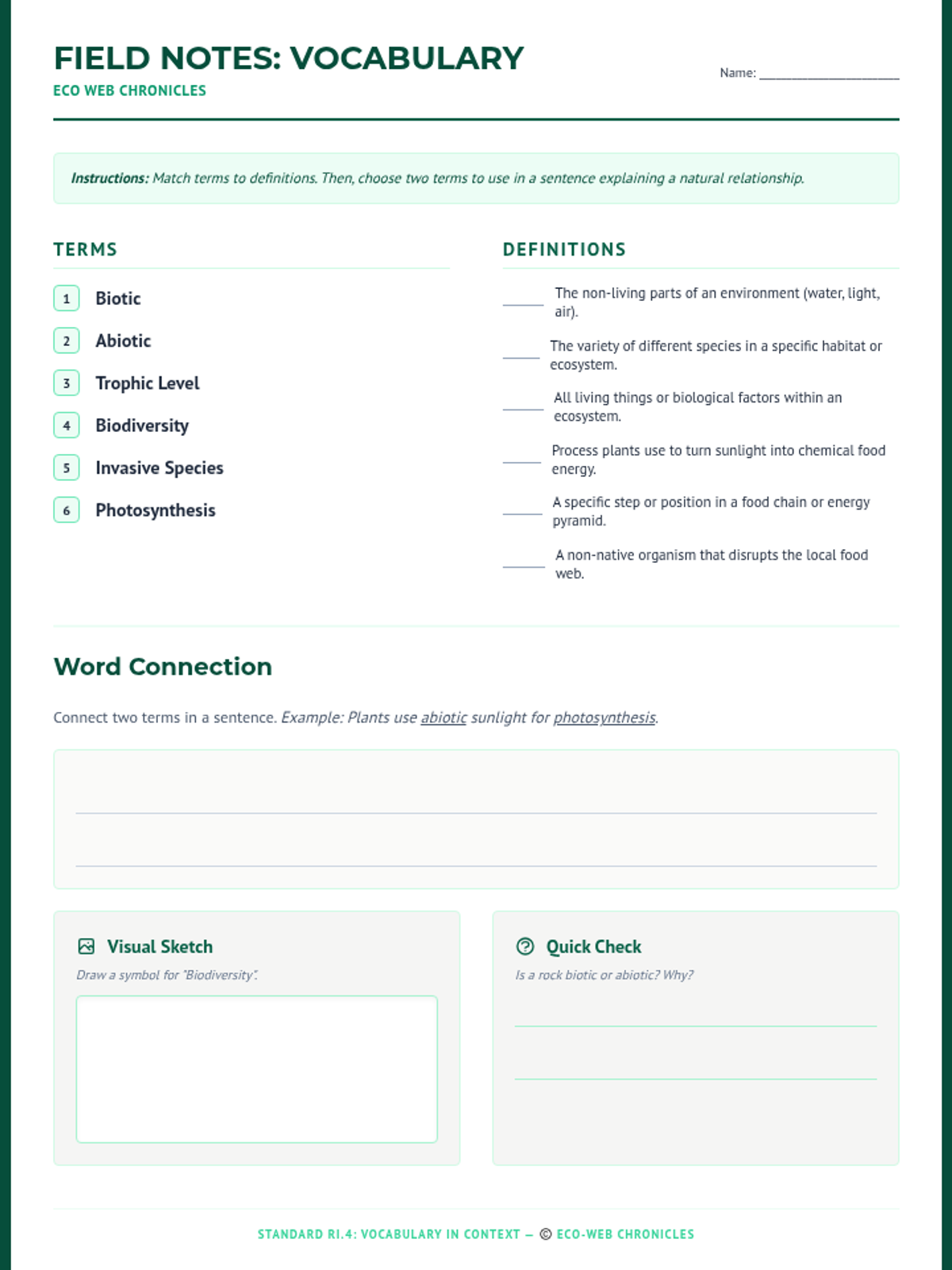
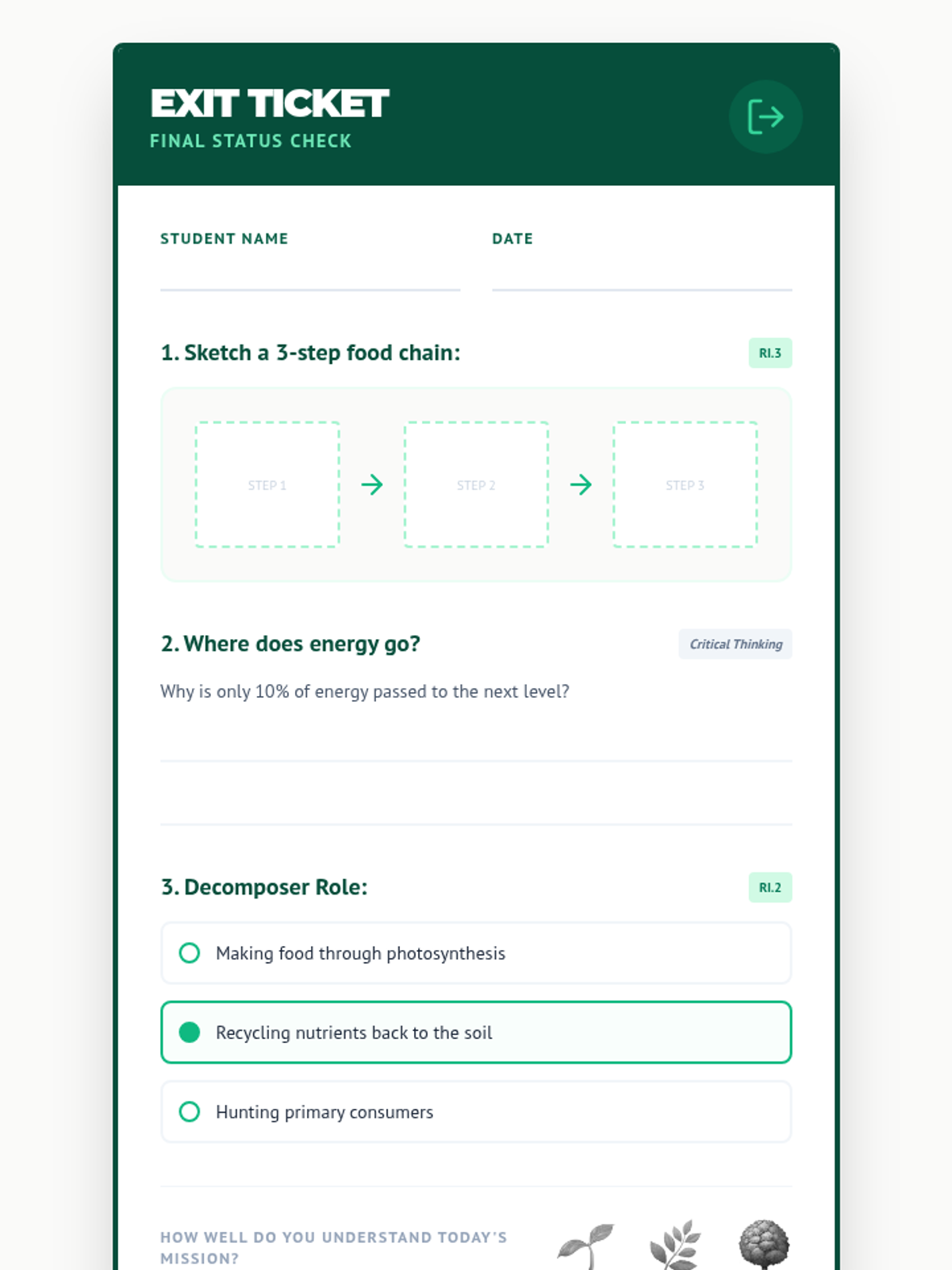
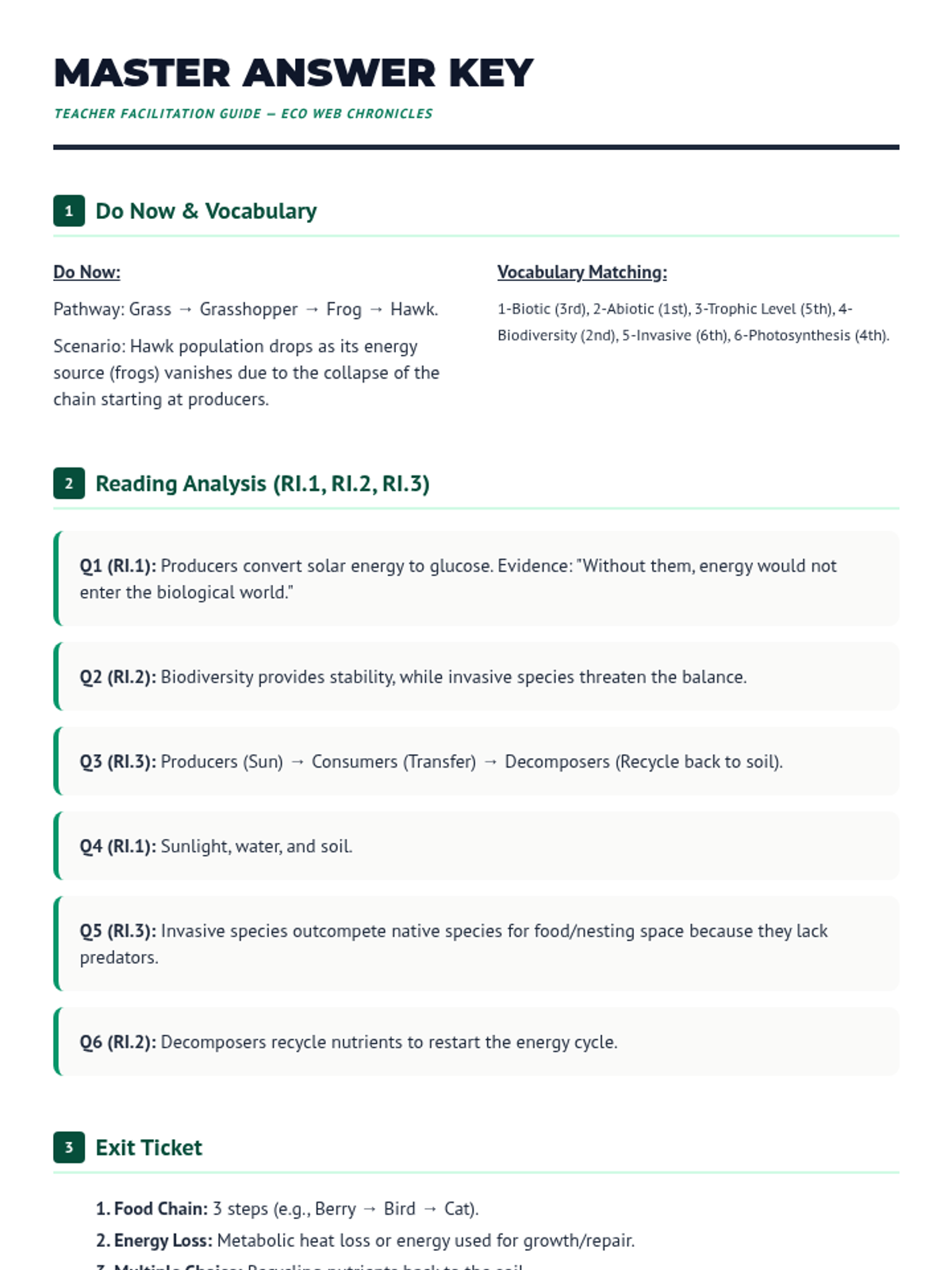
A comprehensive science lesson exploring the complex interactions within ecosystems and the flow of energy through food webs. Includes instruction, reading comprehension, and assessment materials.
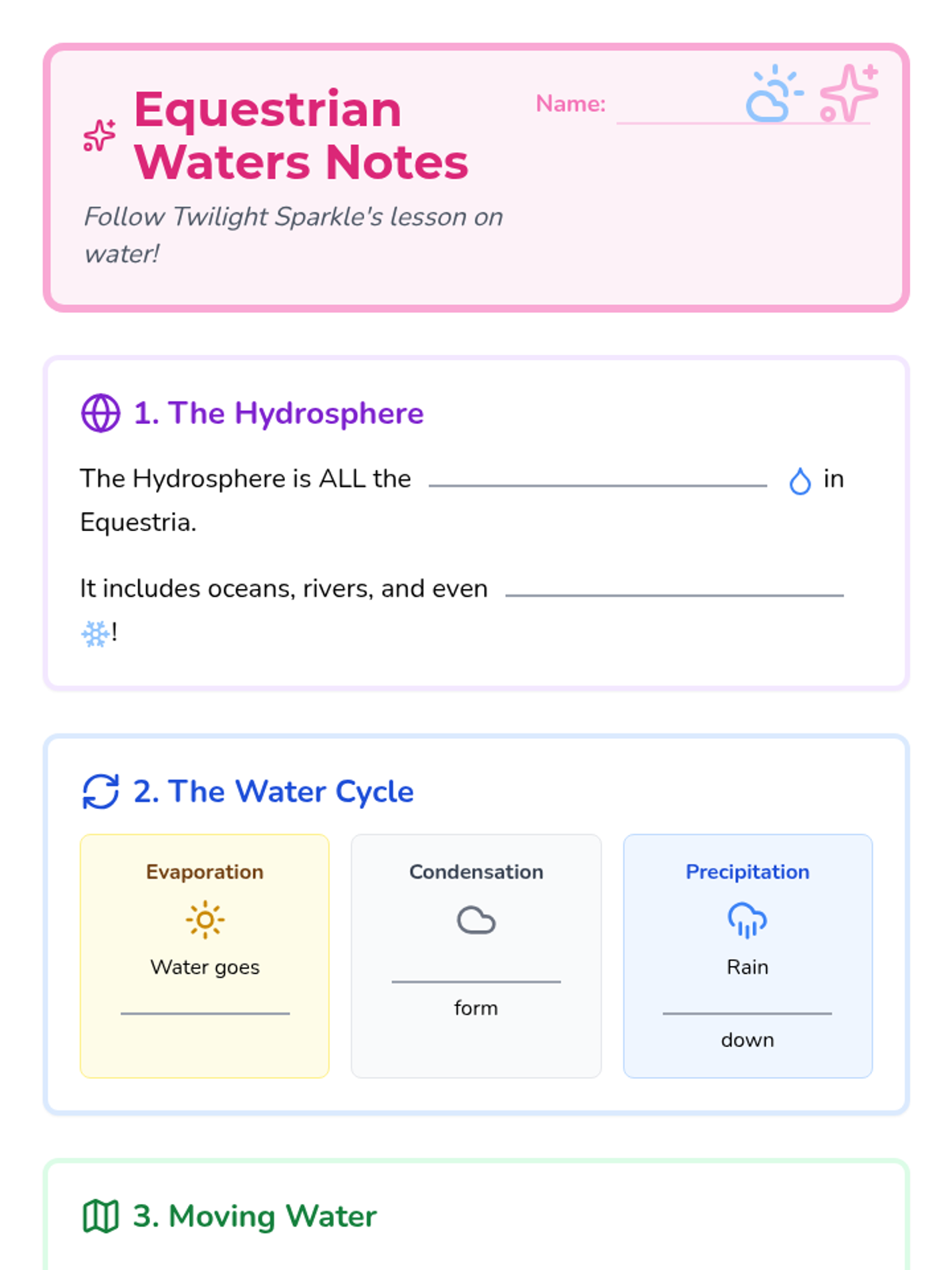
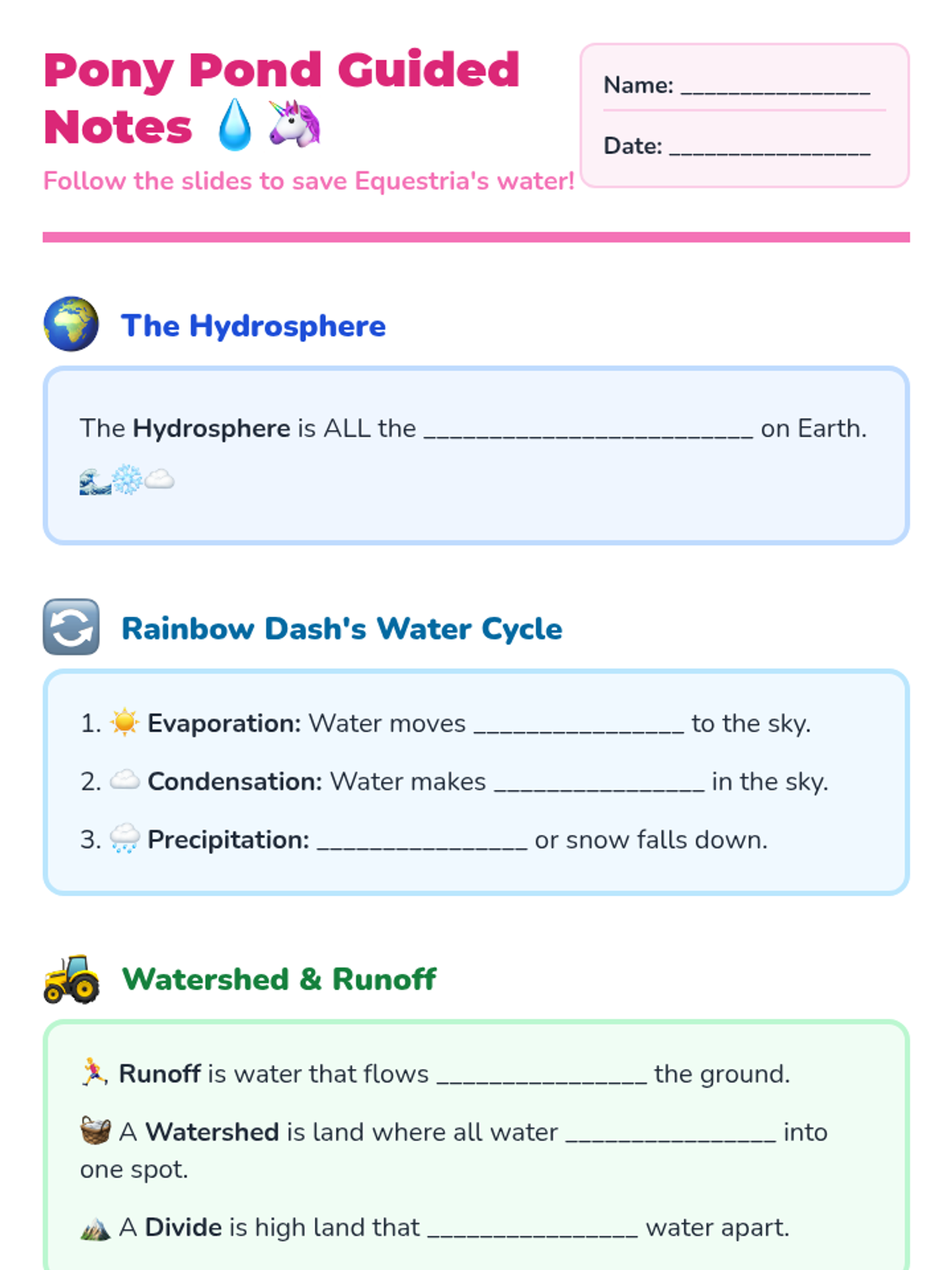
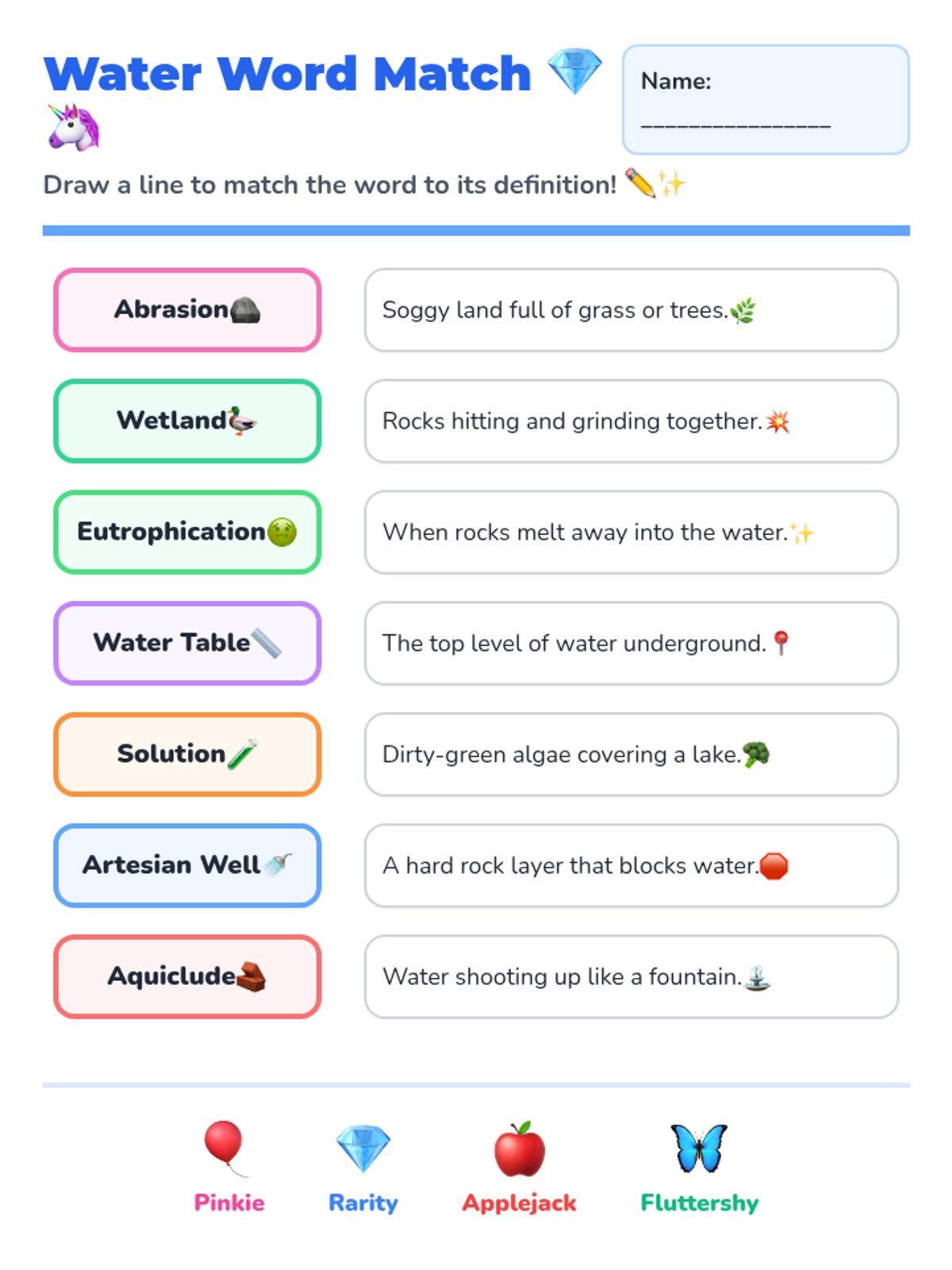
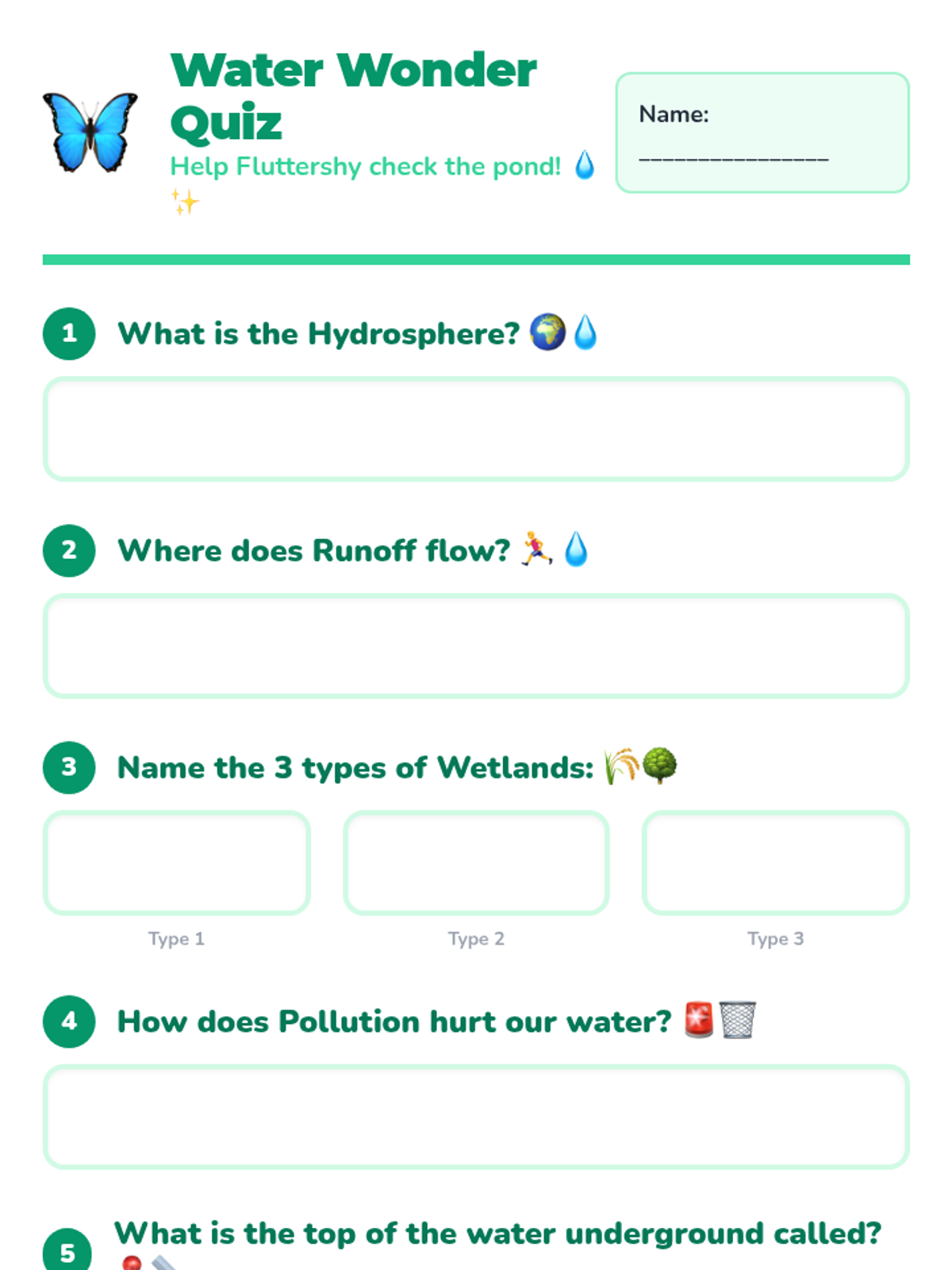
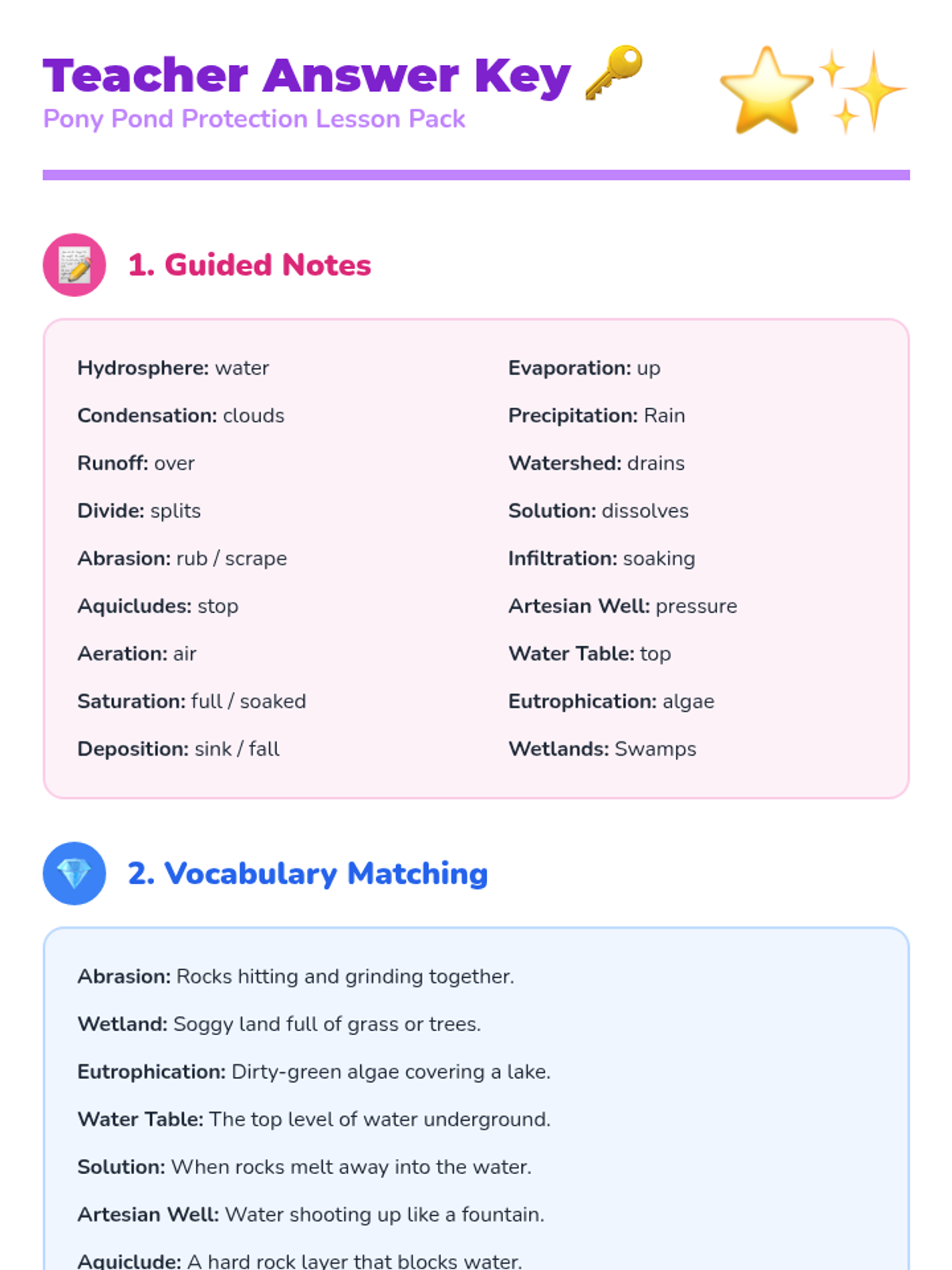
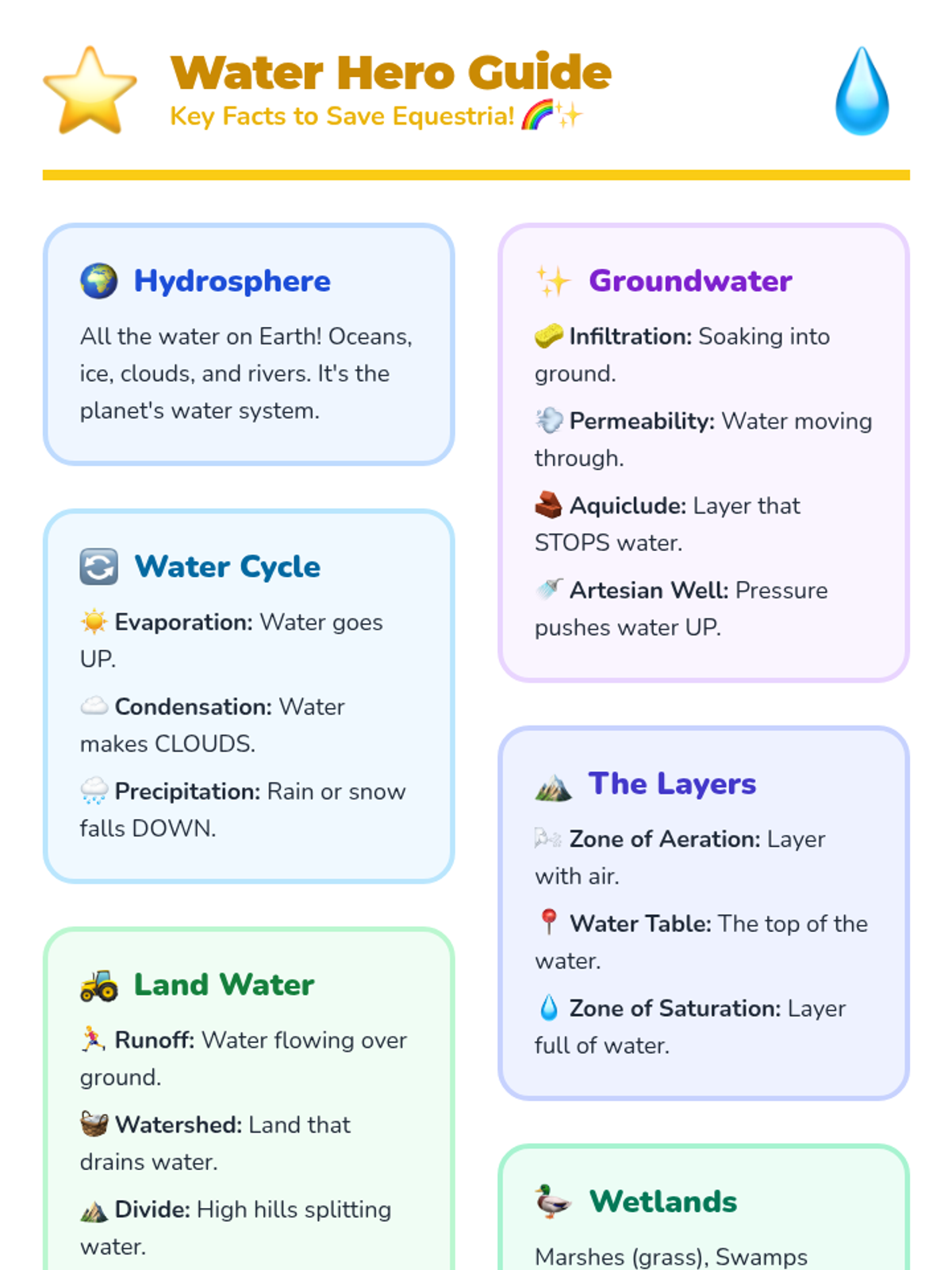
An introductory lesson on the hydrosphere and water systems featuring My Little Pony characters to explain complex concepts like groundwater, watersheds, and conservation through symbol-supported text.
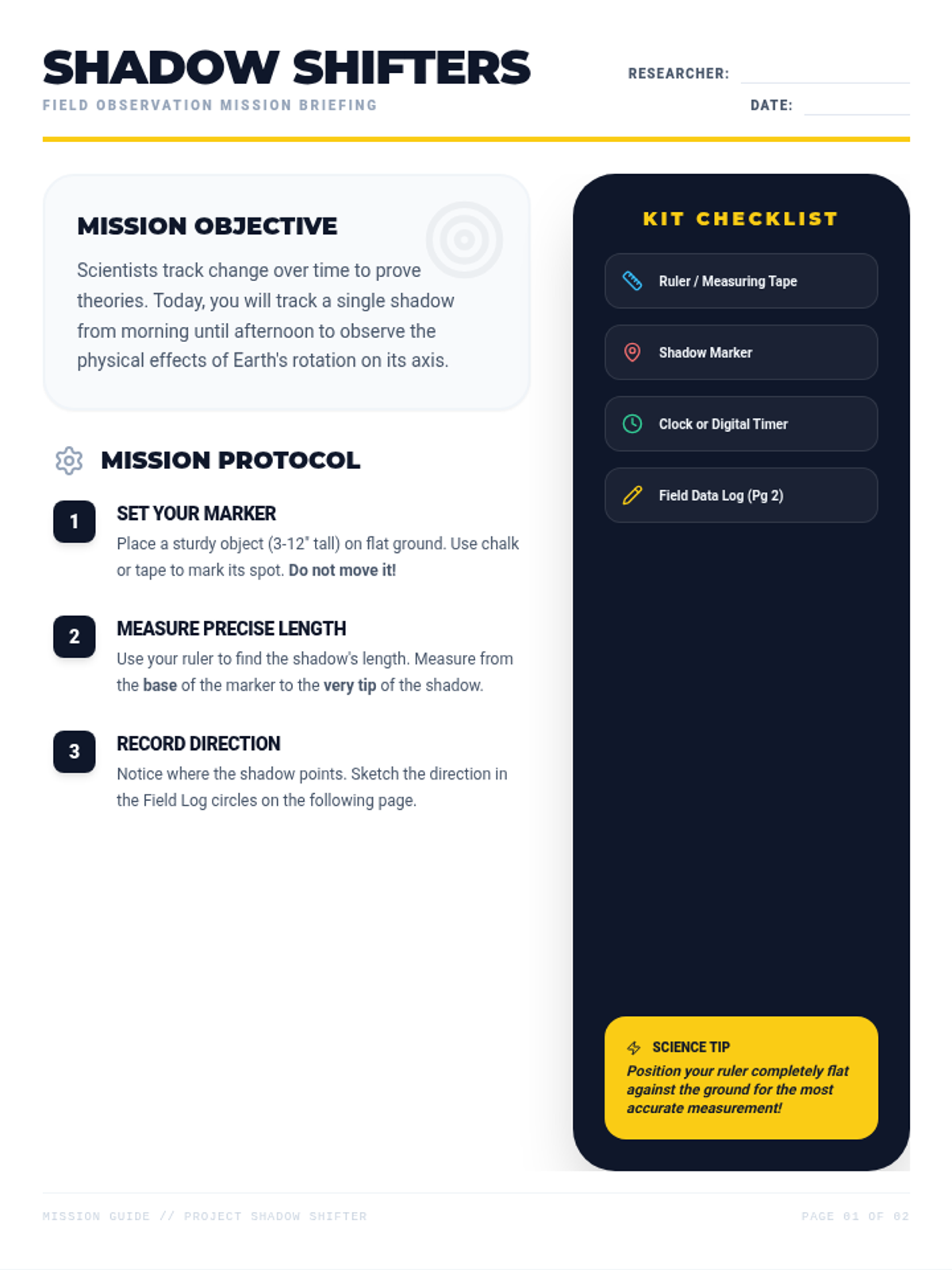
A hands-on, asynchronous observation lesson where students track the movement and size of shadows over the course of a single day to understand Earth's rotation and data collection.
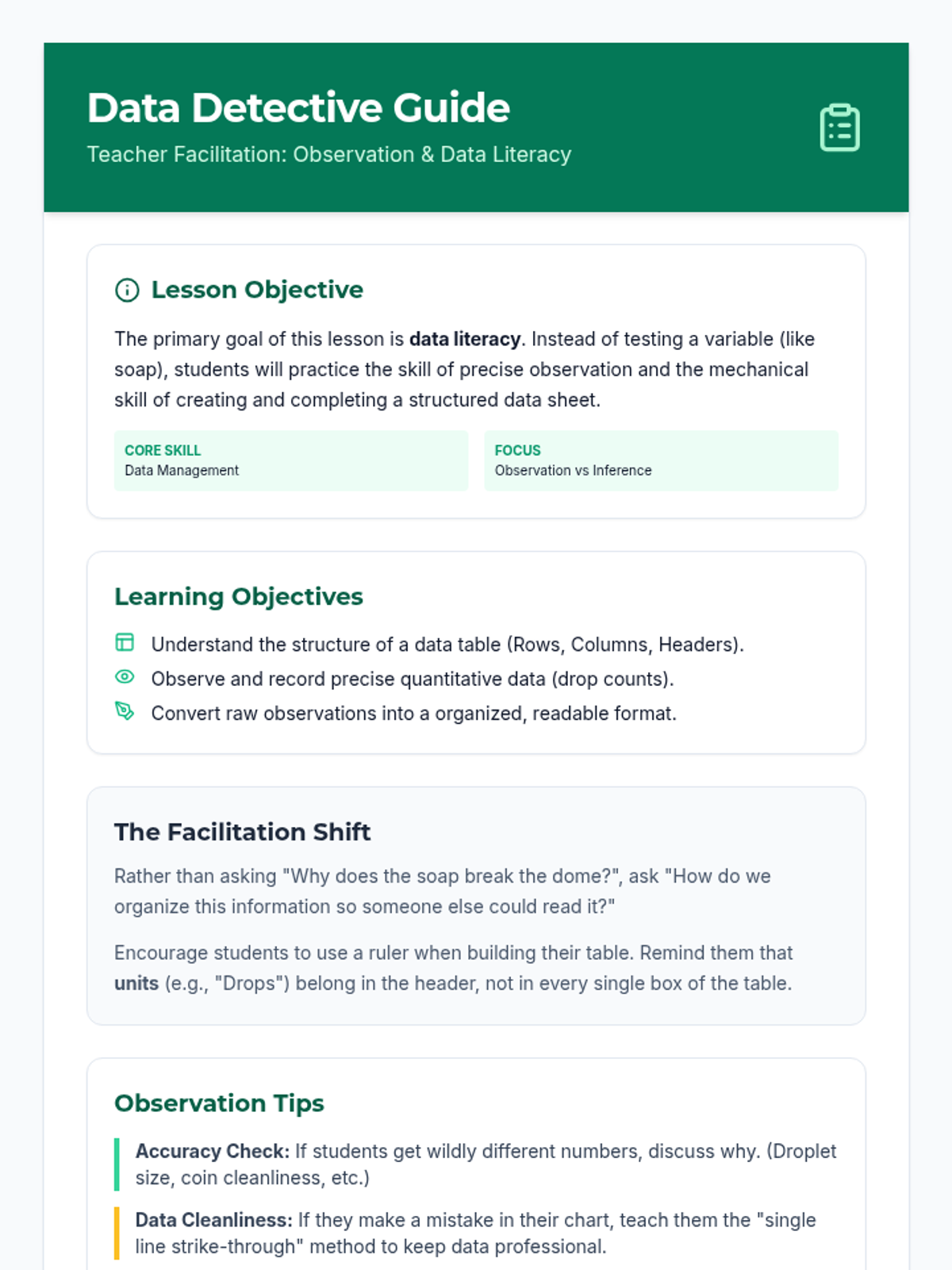
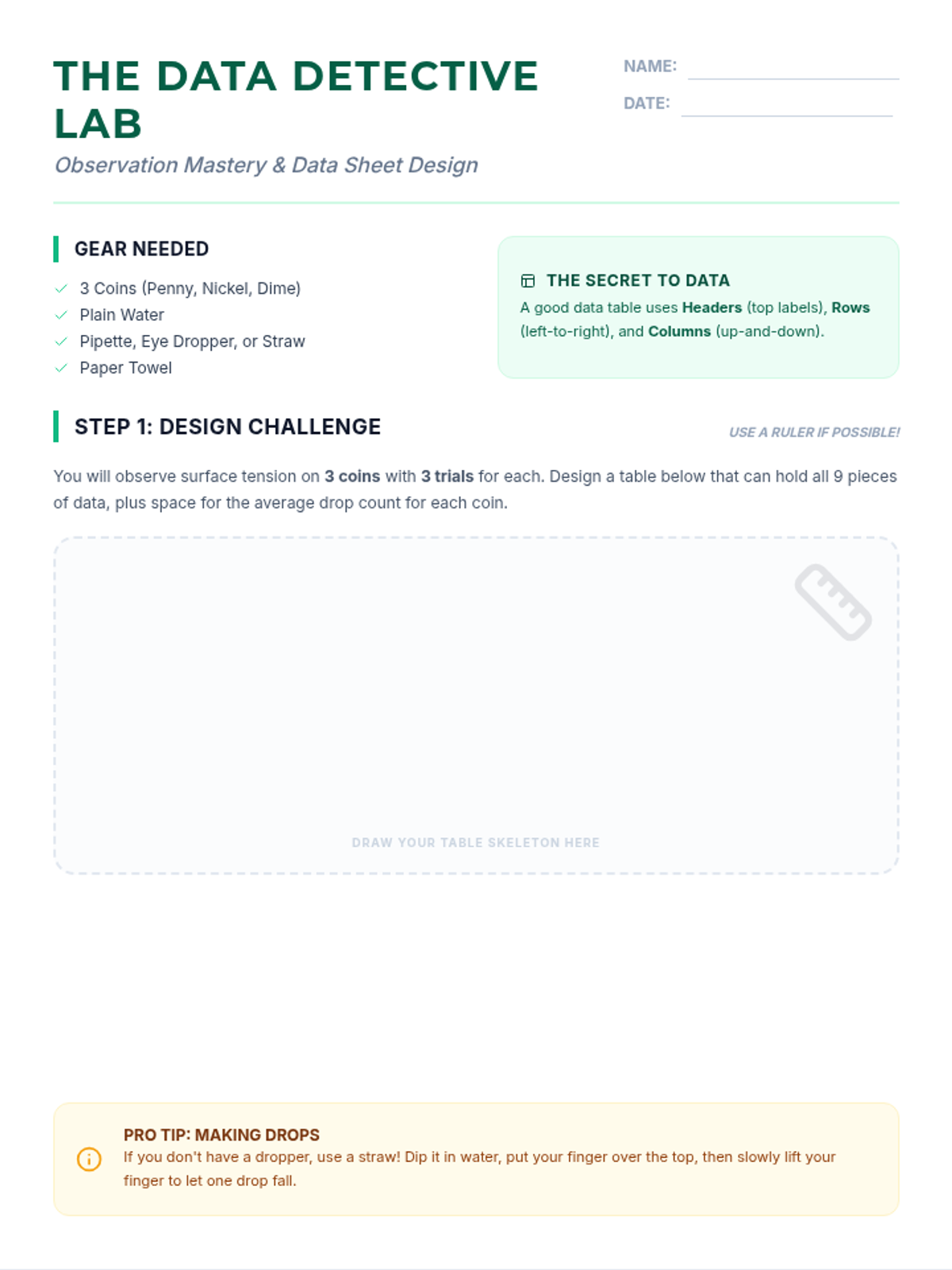
An introductory science lesson on surface tension where students conduct a hands-on experiment at home using coins, water, and soap to observe how molecules stick together.
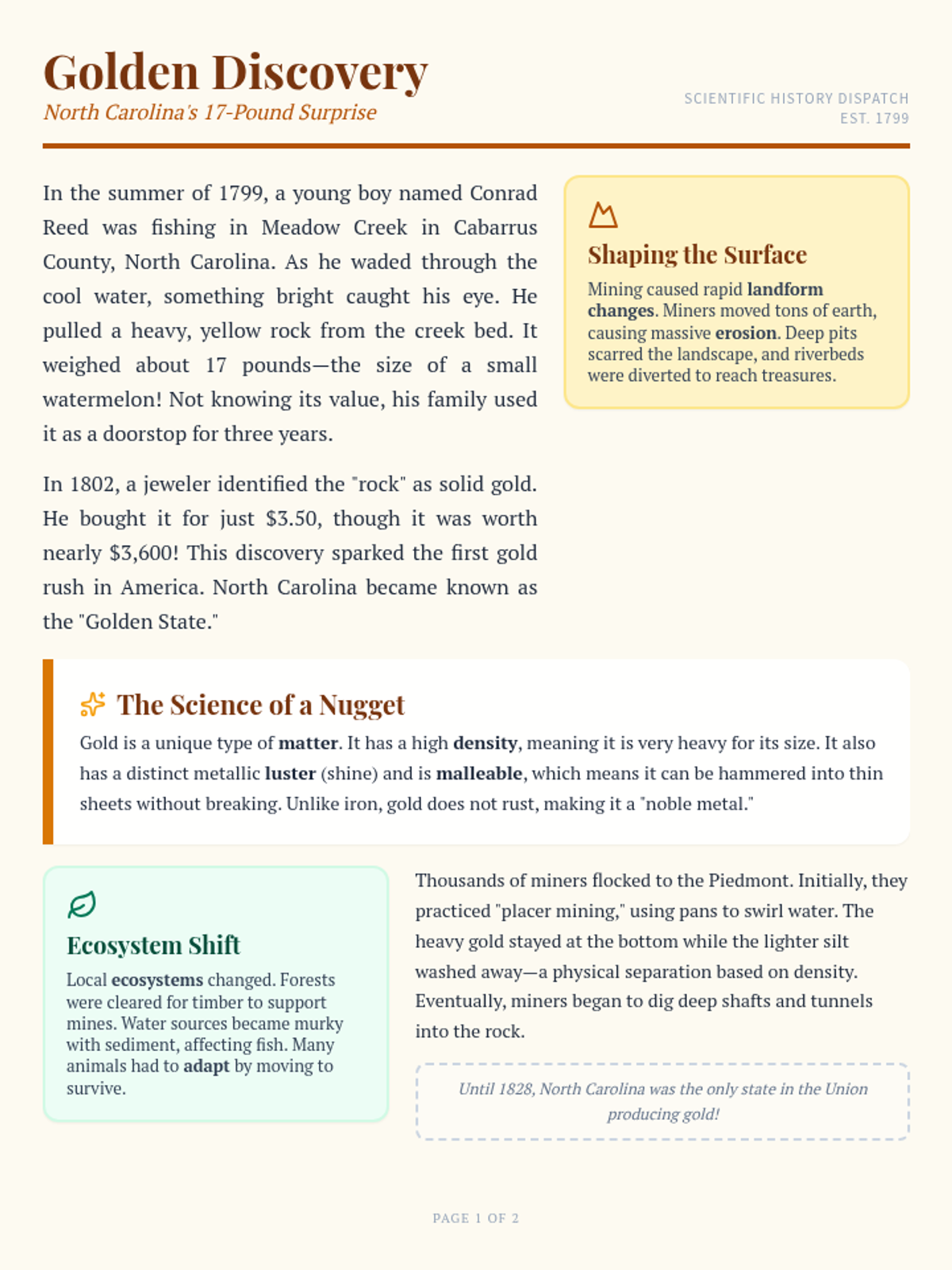
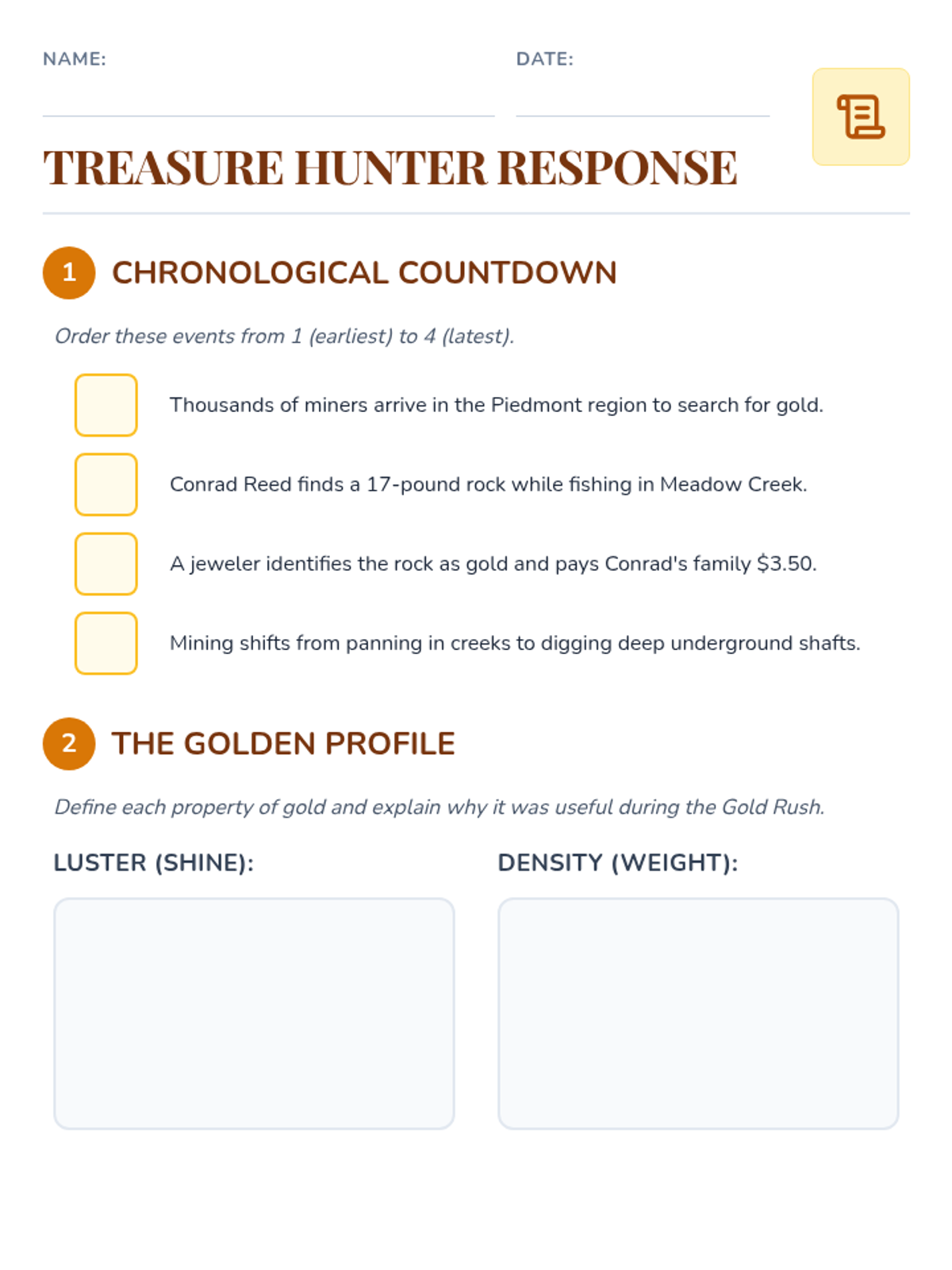
A cross-curricular lesson integrating North Carolina's gold rush history with physical properties of matter, landform changes, and ecosystem impacts. Students will explore the chronology of the 1799 discovery while analyzing the science behind the 'Golden State's' first boom.