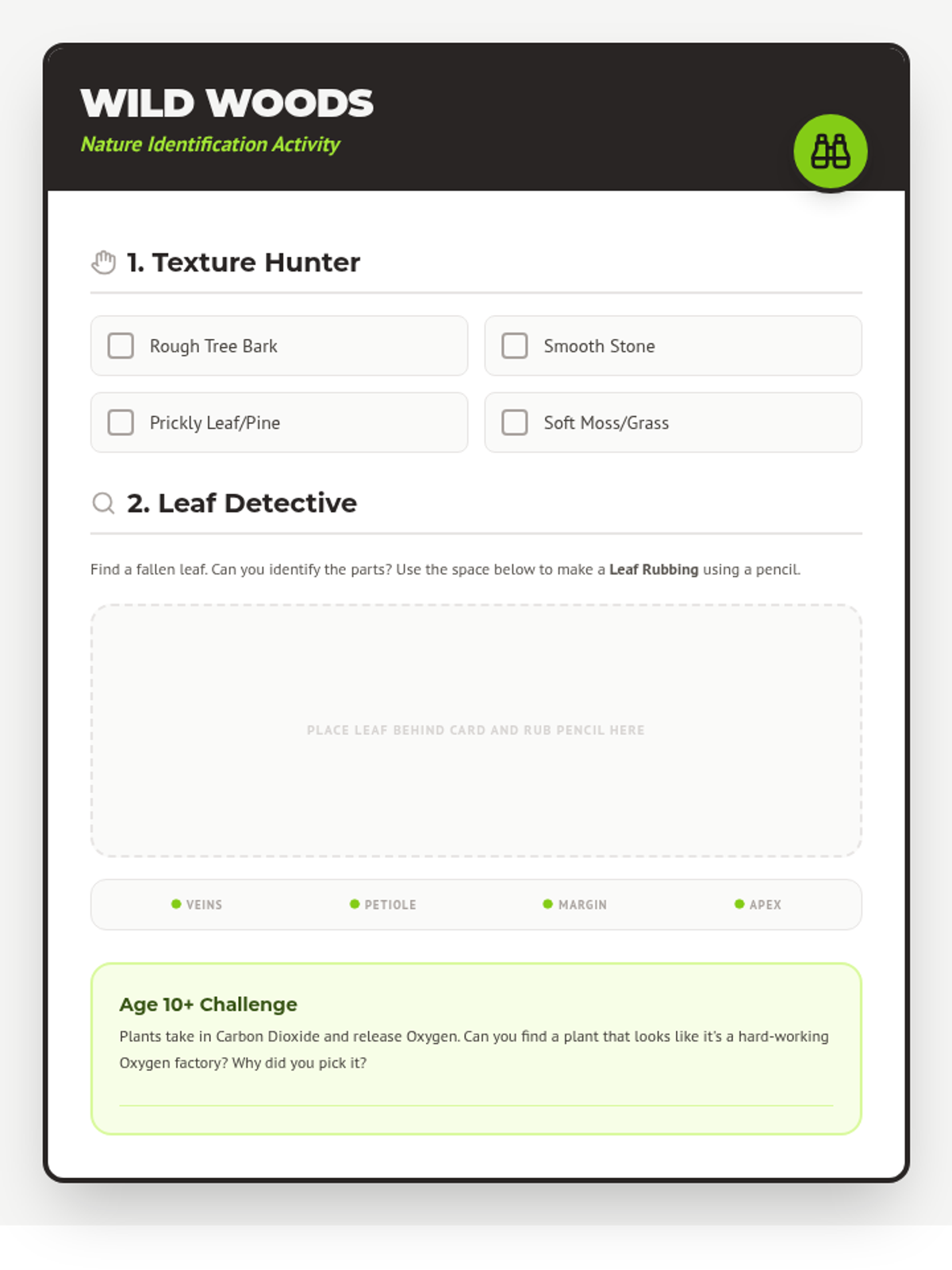
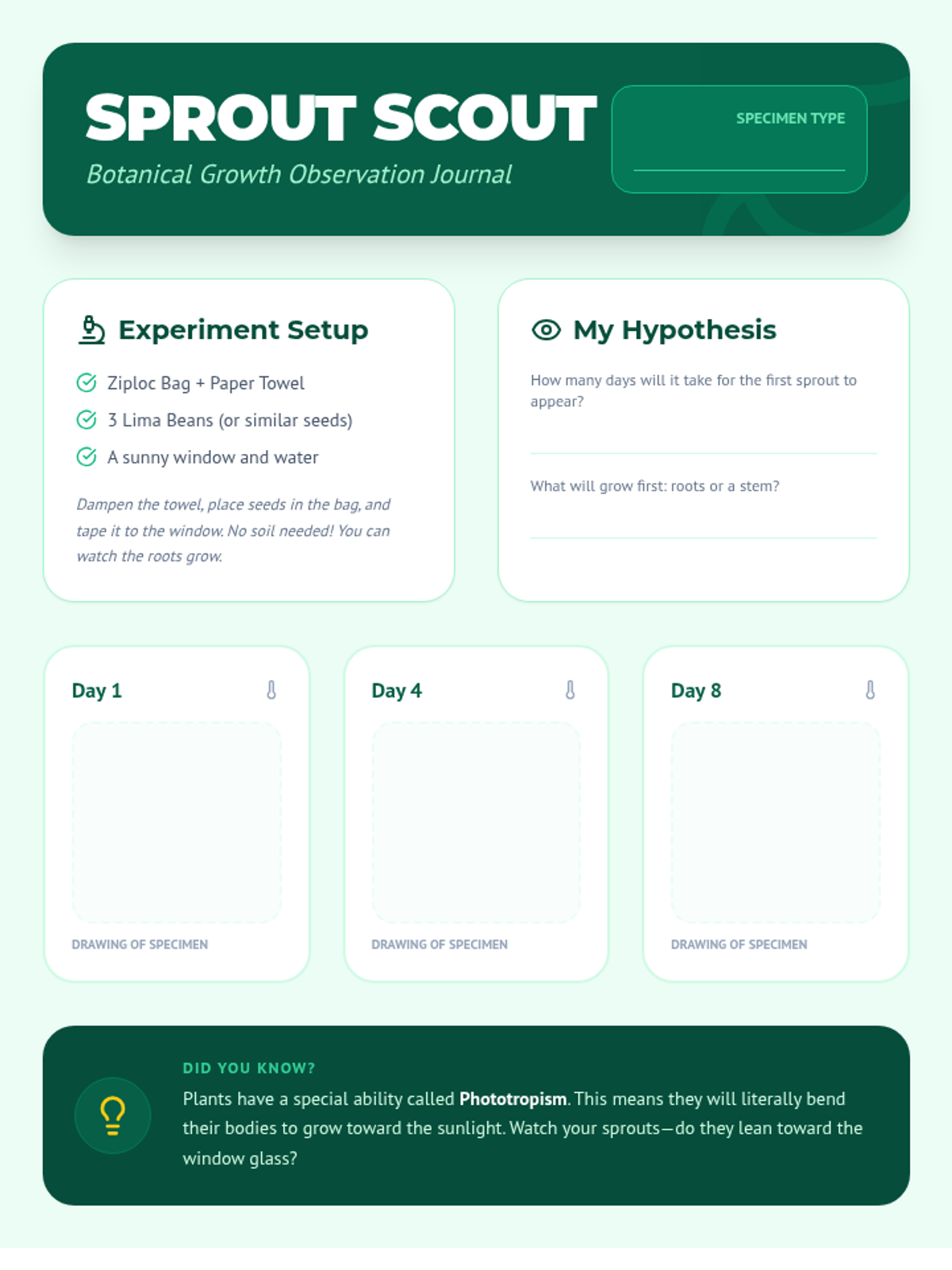
A simplified introduction to the plant life cycle for young learners, focusing on key stages: seed, sprout, plant, and flower. These materials use large fonts, clear visuals, and interactive activities modified for a 1st-2nd grade level.
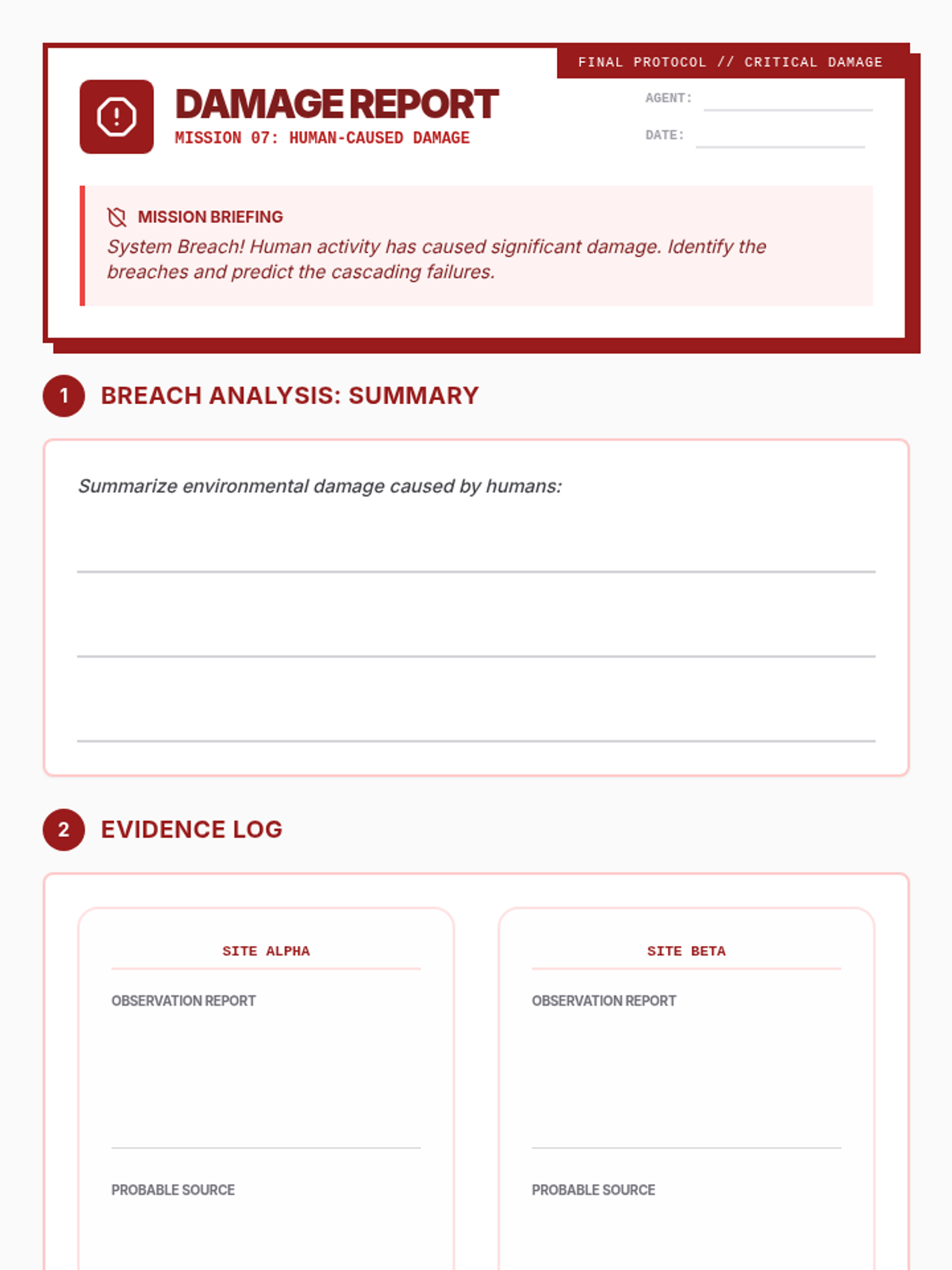
The final mission involves assessing environmental damage caused by humans and predicting the long-term effects on the ecological grid.
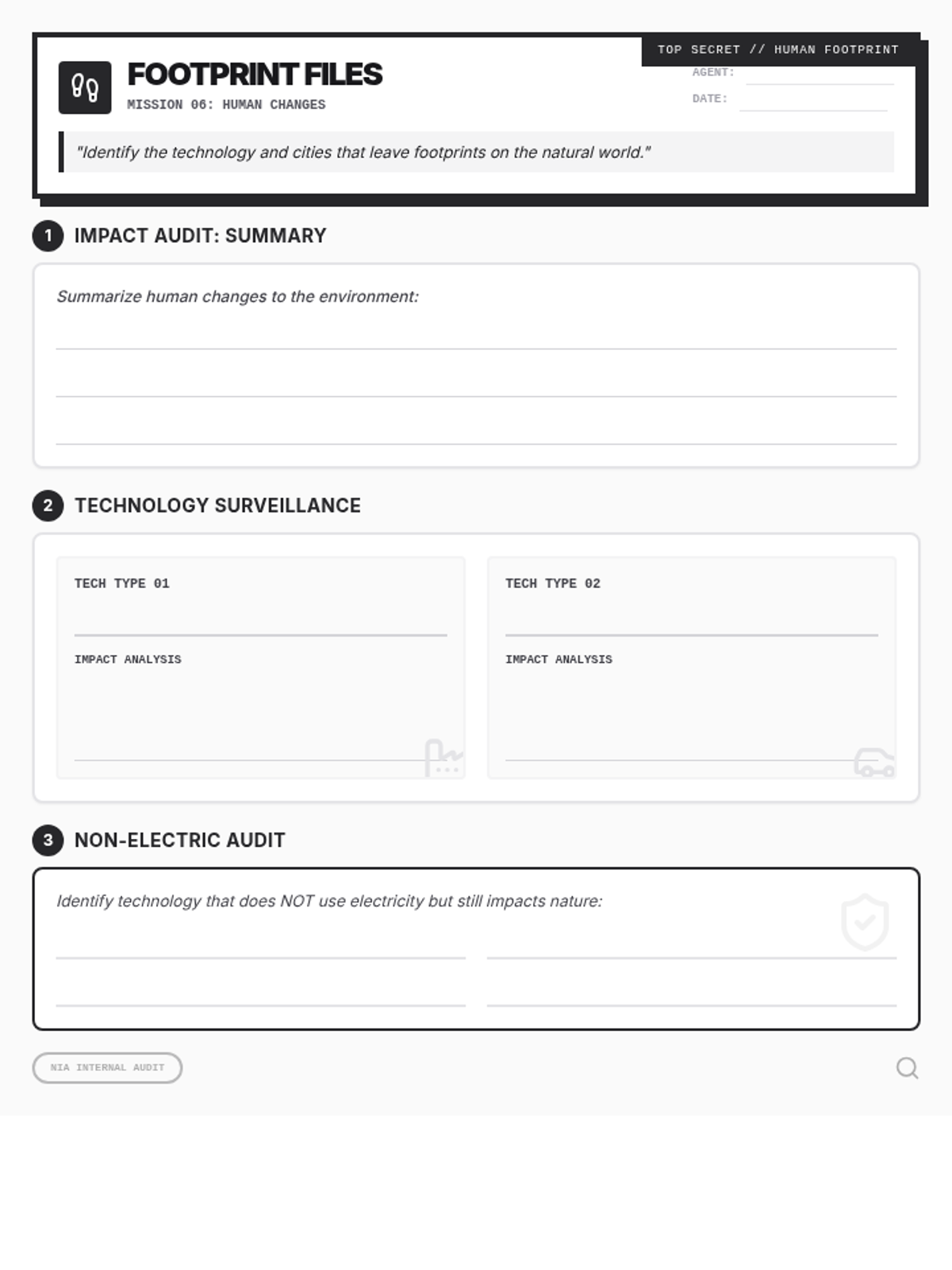
Detectives investigate the impact of human technology and daily habits on the surrounding environment.
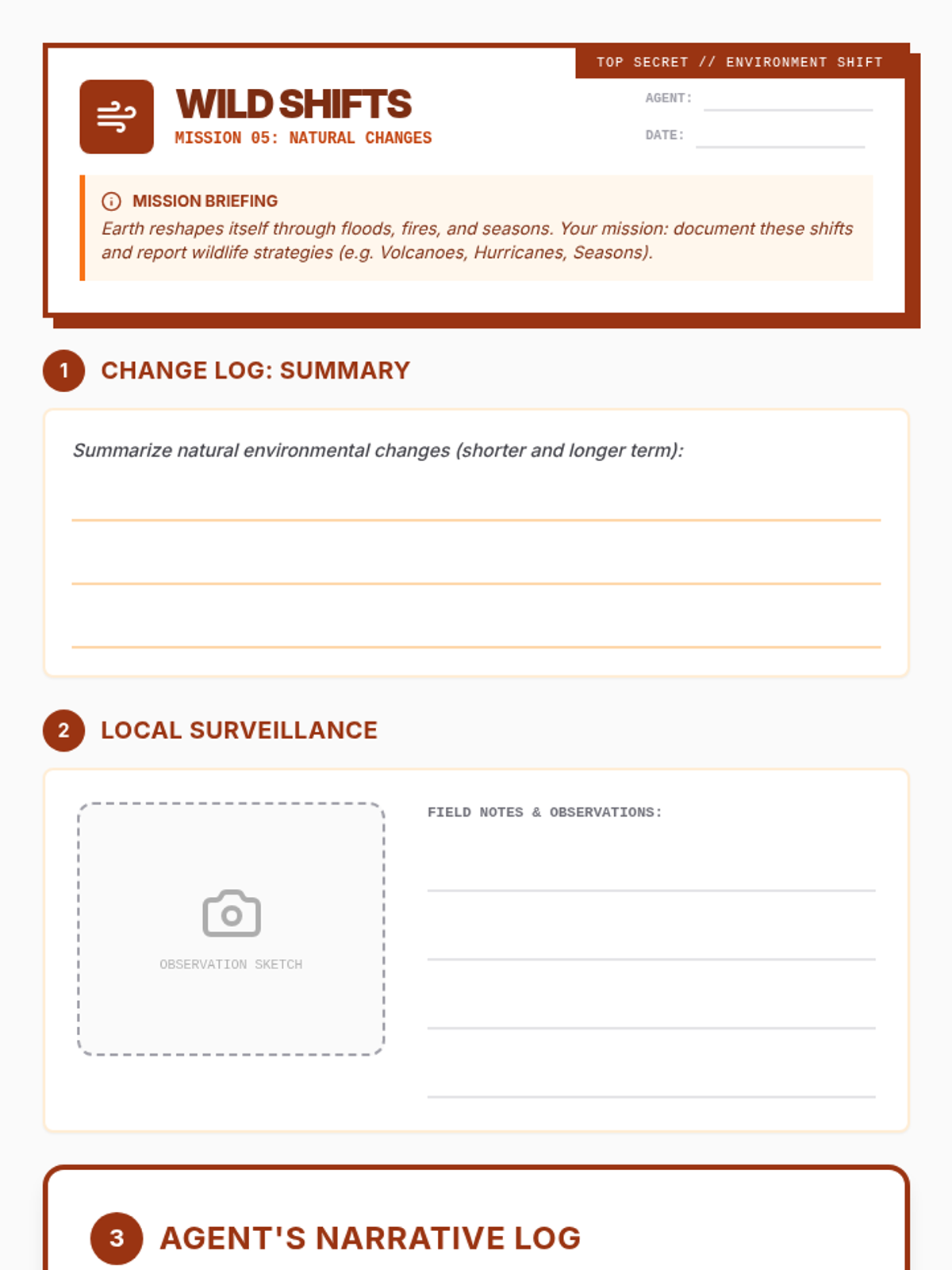
Agents document natural environmental shifts and create creative intelligence reports on how these changes impact local food webs.
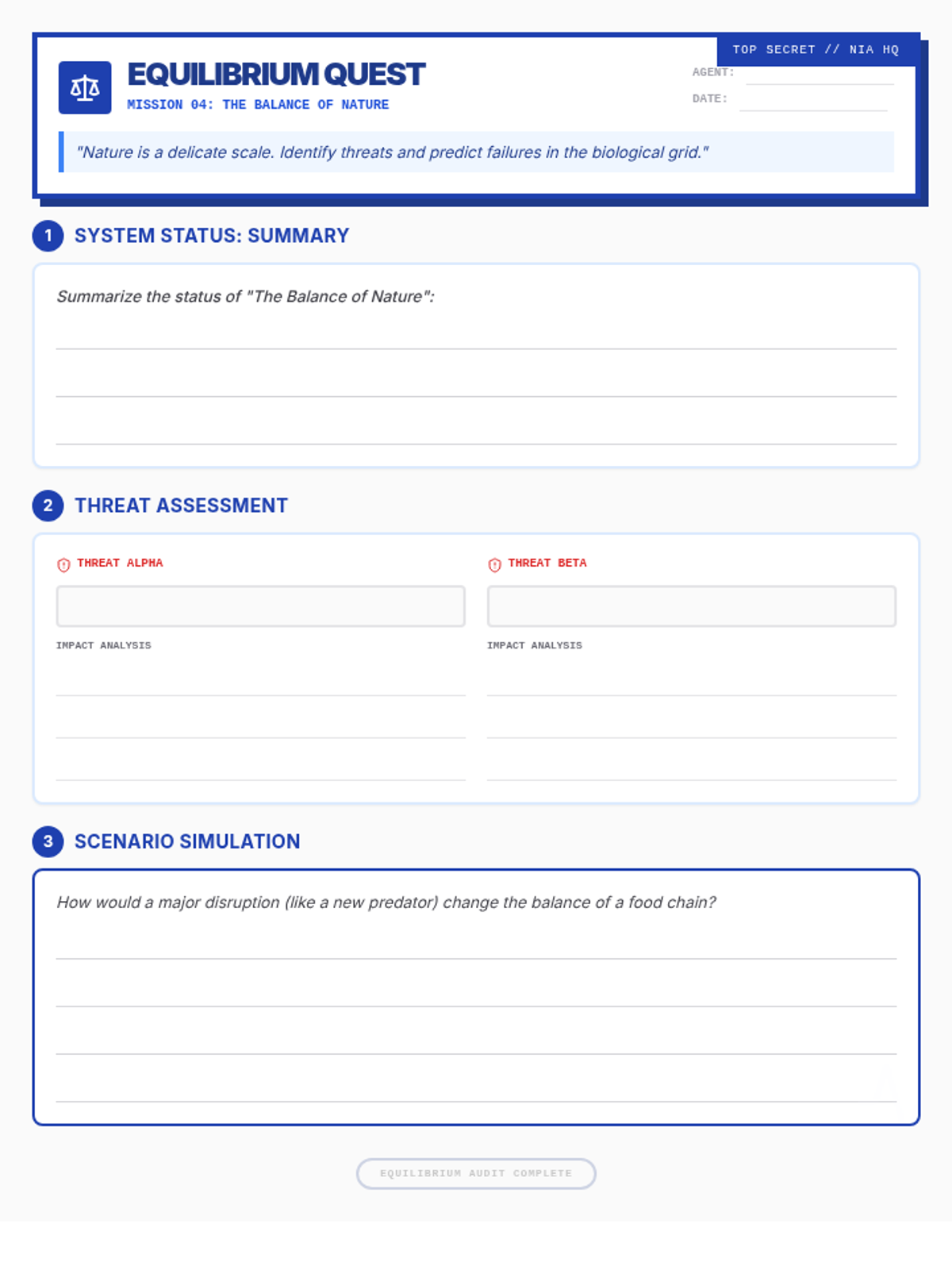
Detectives analyze how ecosystems maintain equilibrium and identify factors that could destabilize the natural order.
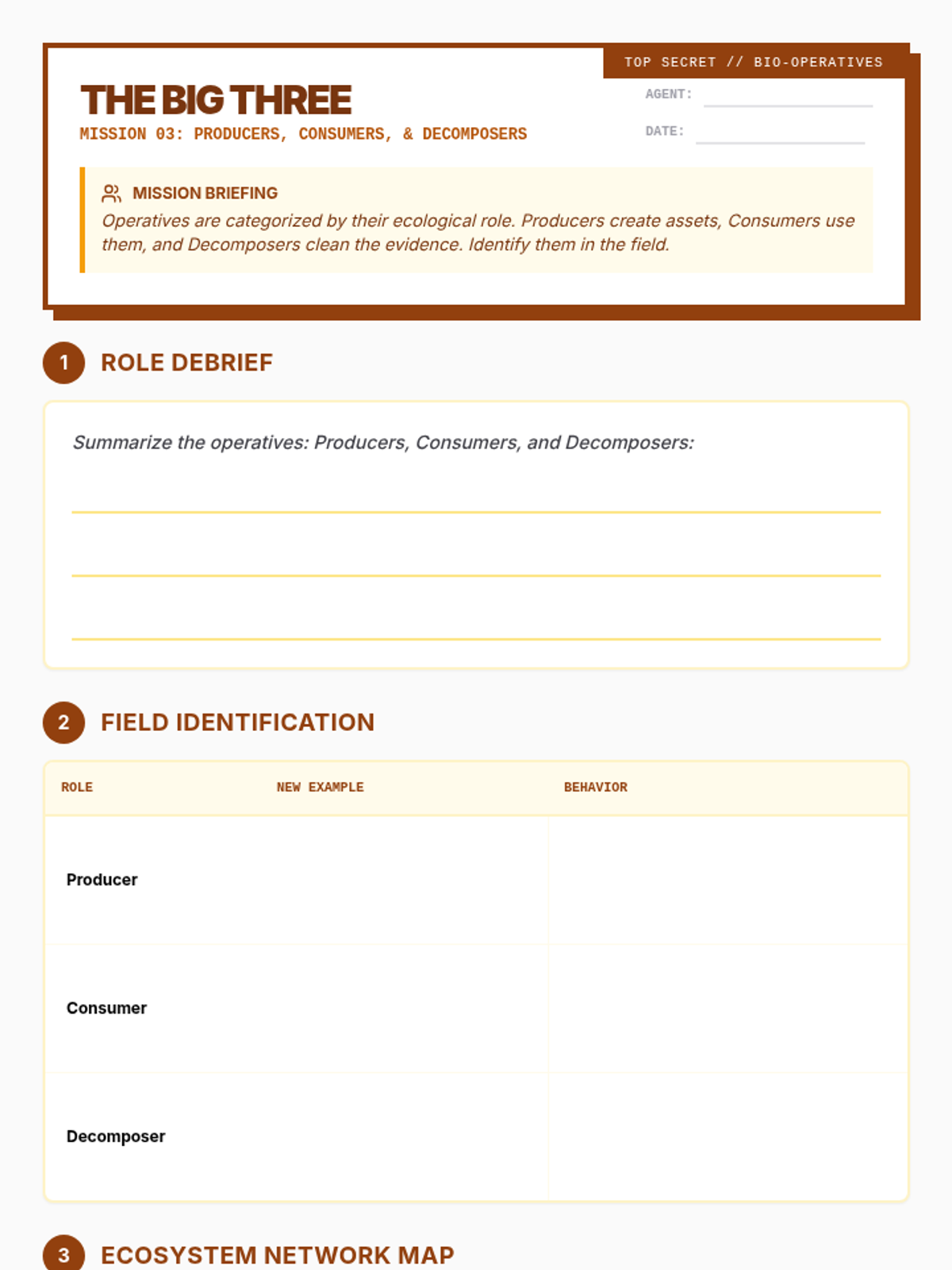
Agents classify the roles of producers, consumers, and decomposers within the ecosystem to map out complex biological relationships.
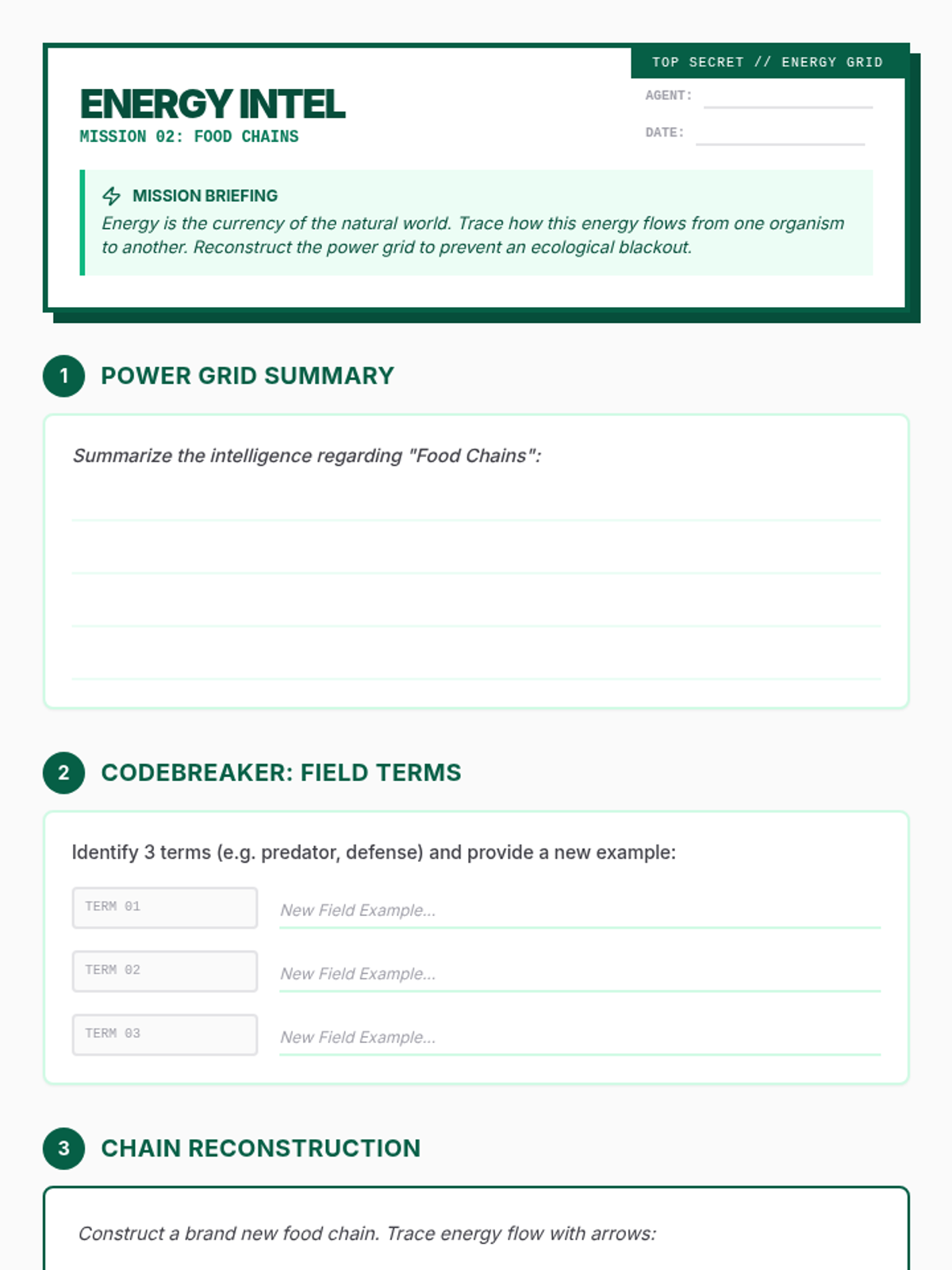
Agents track the flow of energy through ecosystems by decoding food chain terminology and constructing new energy links.
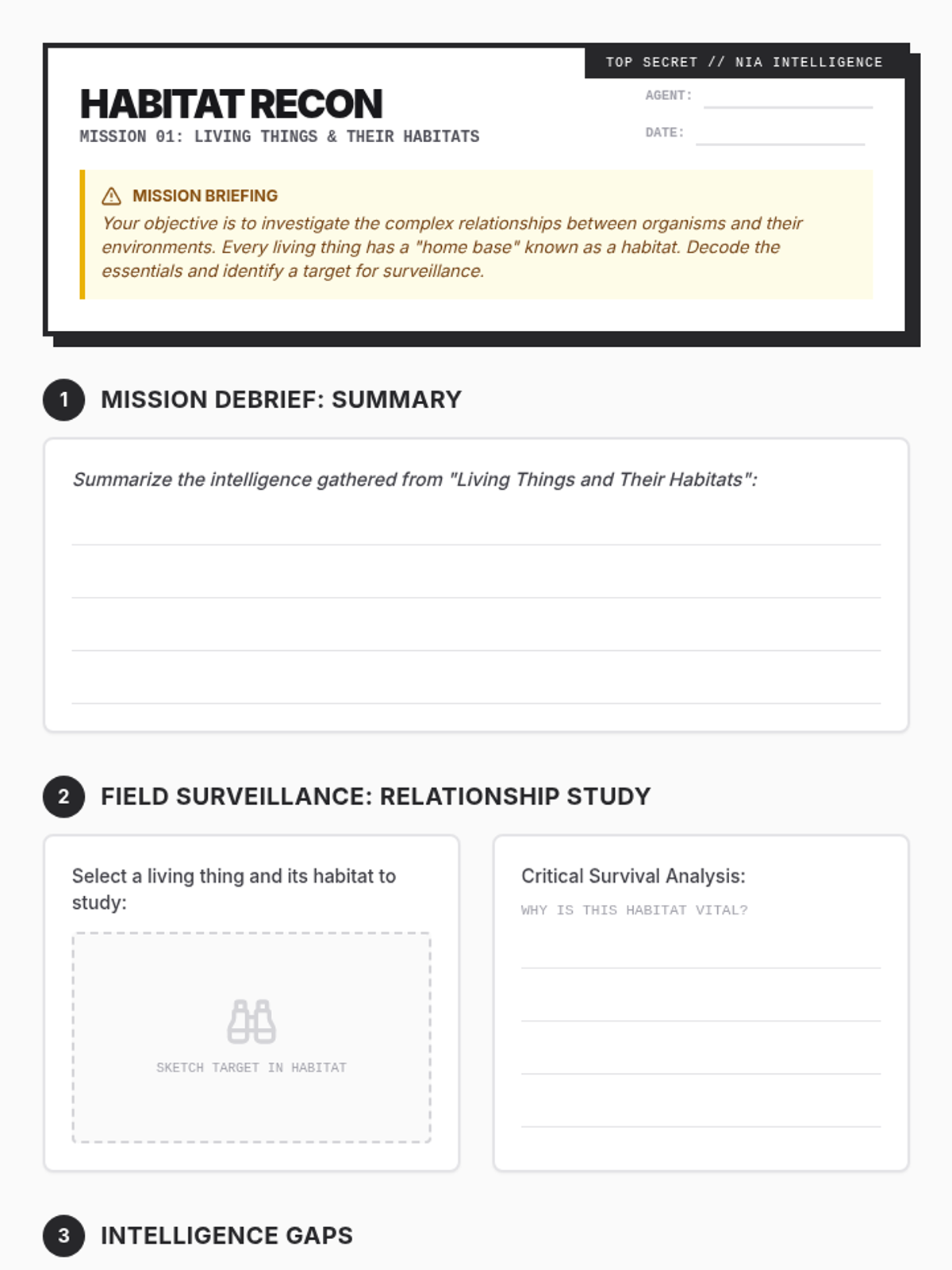
Eco-Detectives investigate how living things interact with their habitats and identify key research questions for the agency.
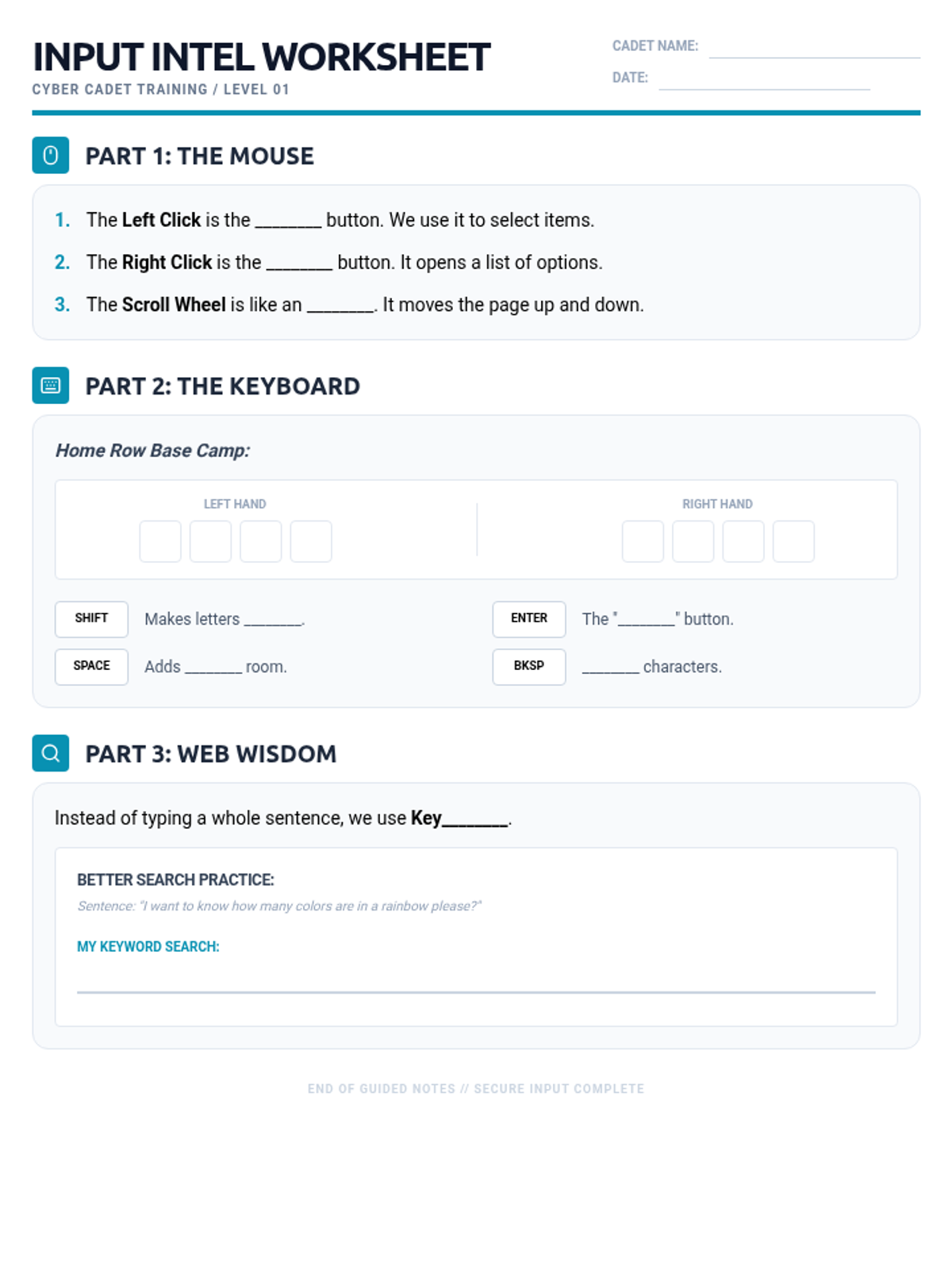
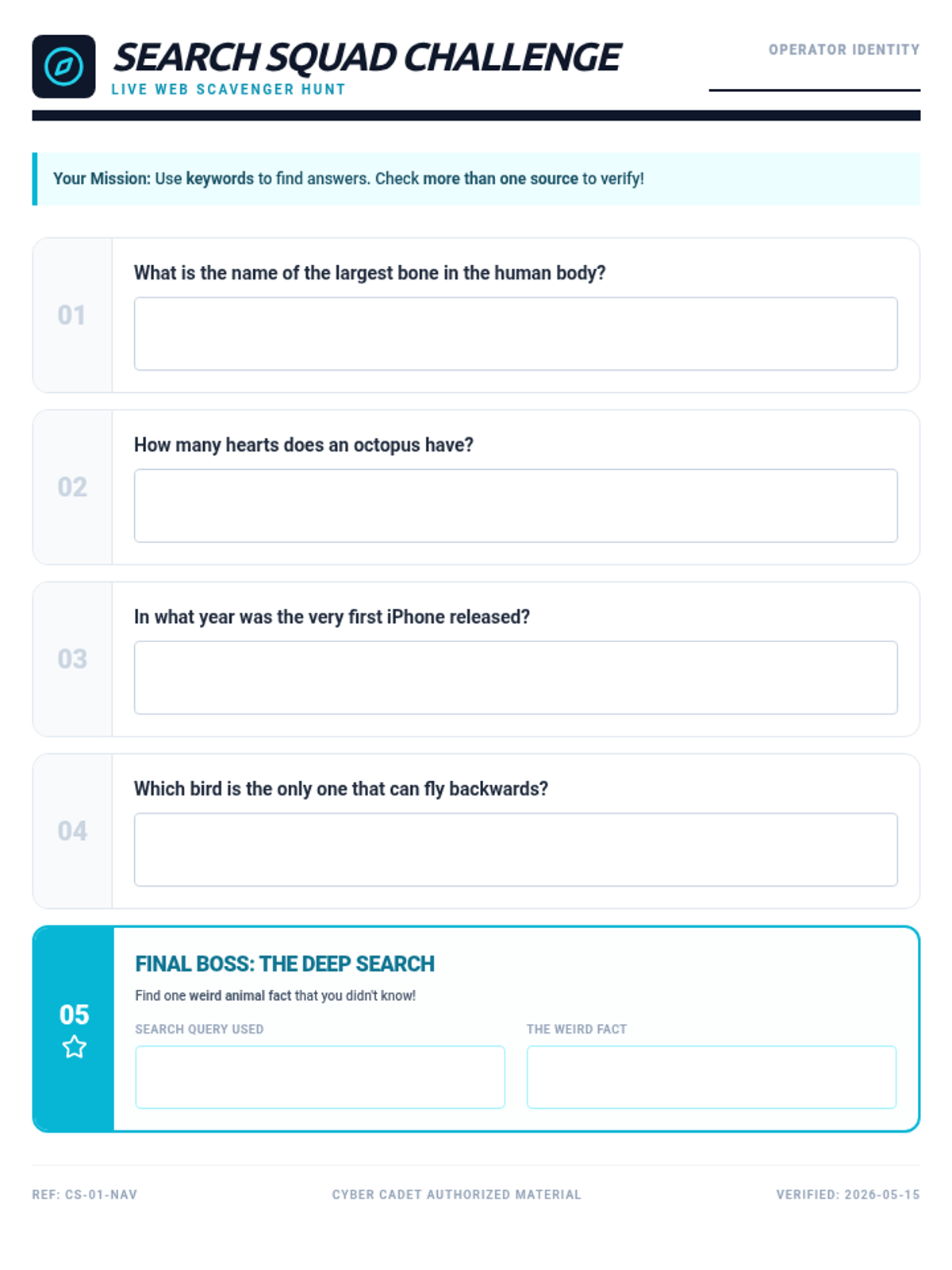
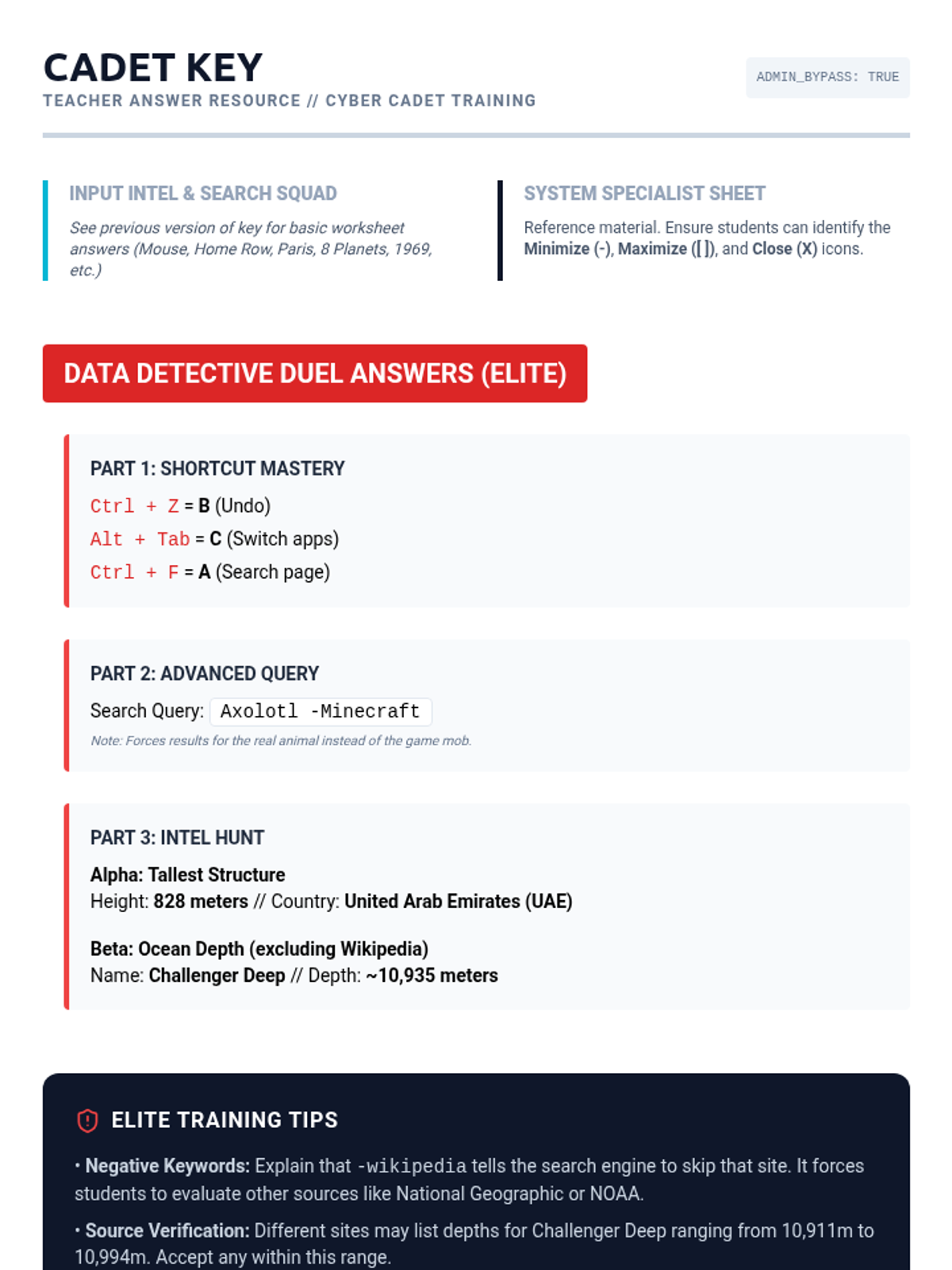
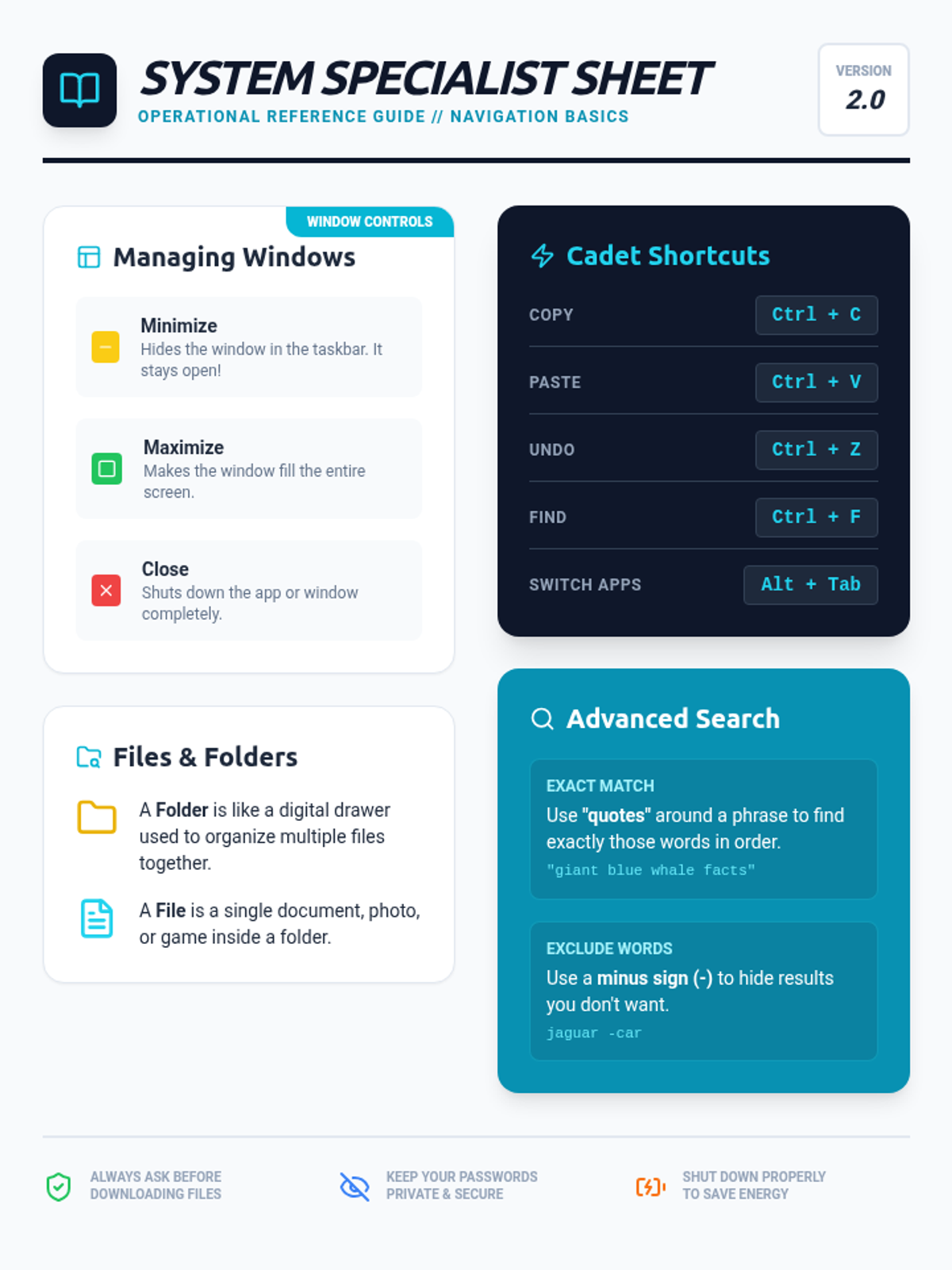
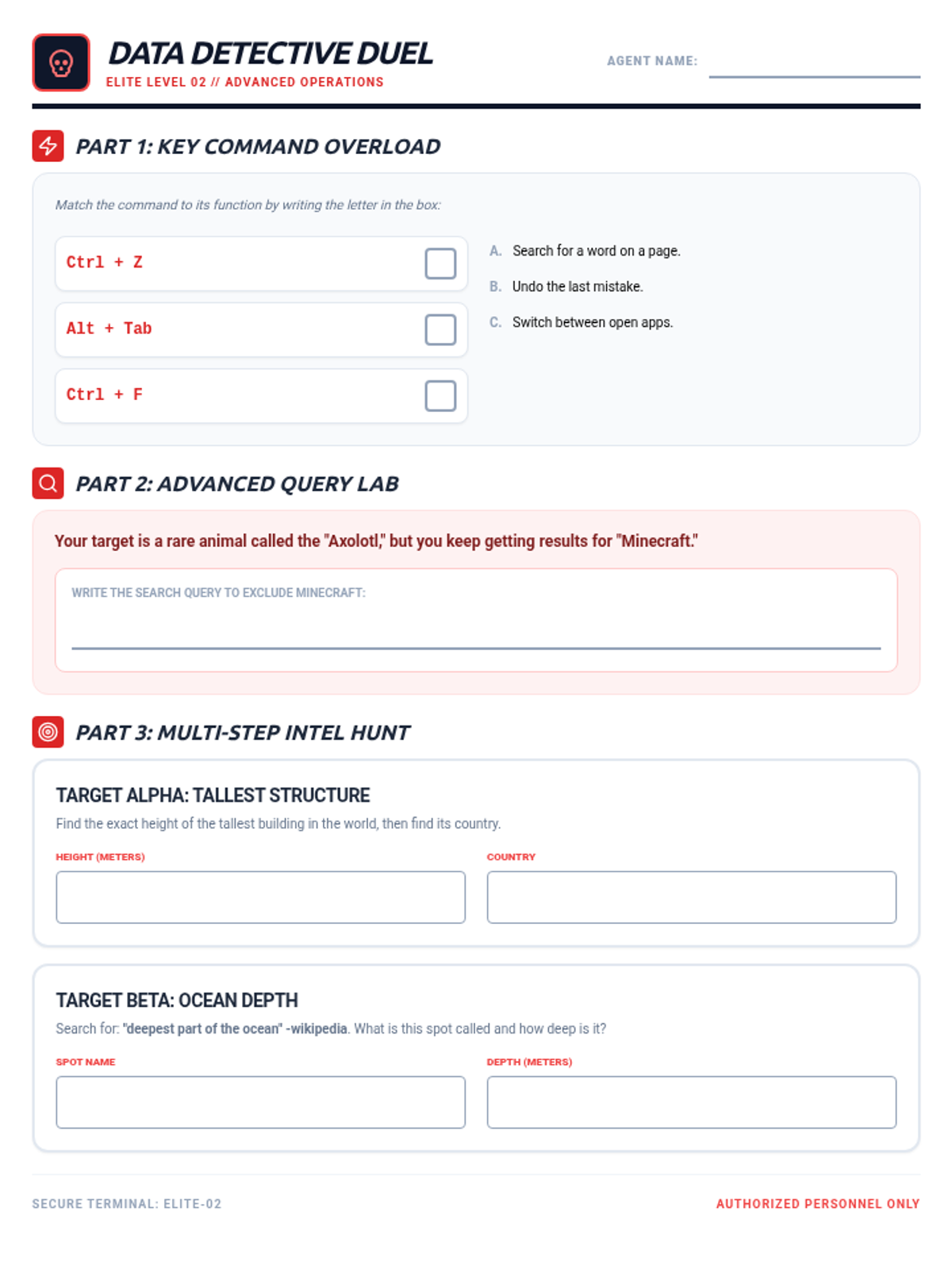
A comprehensive introduction to computer hardware interaction, operating system navigation, and effective web searching strategies for young learners.
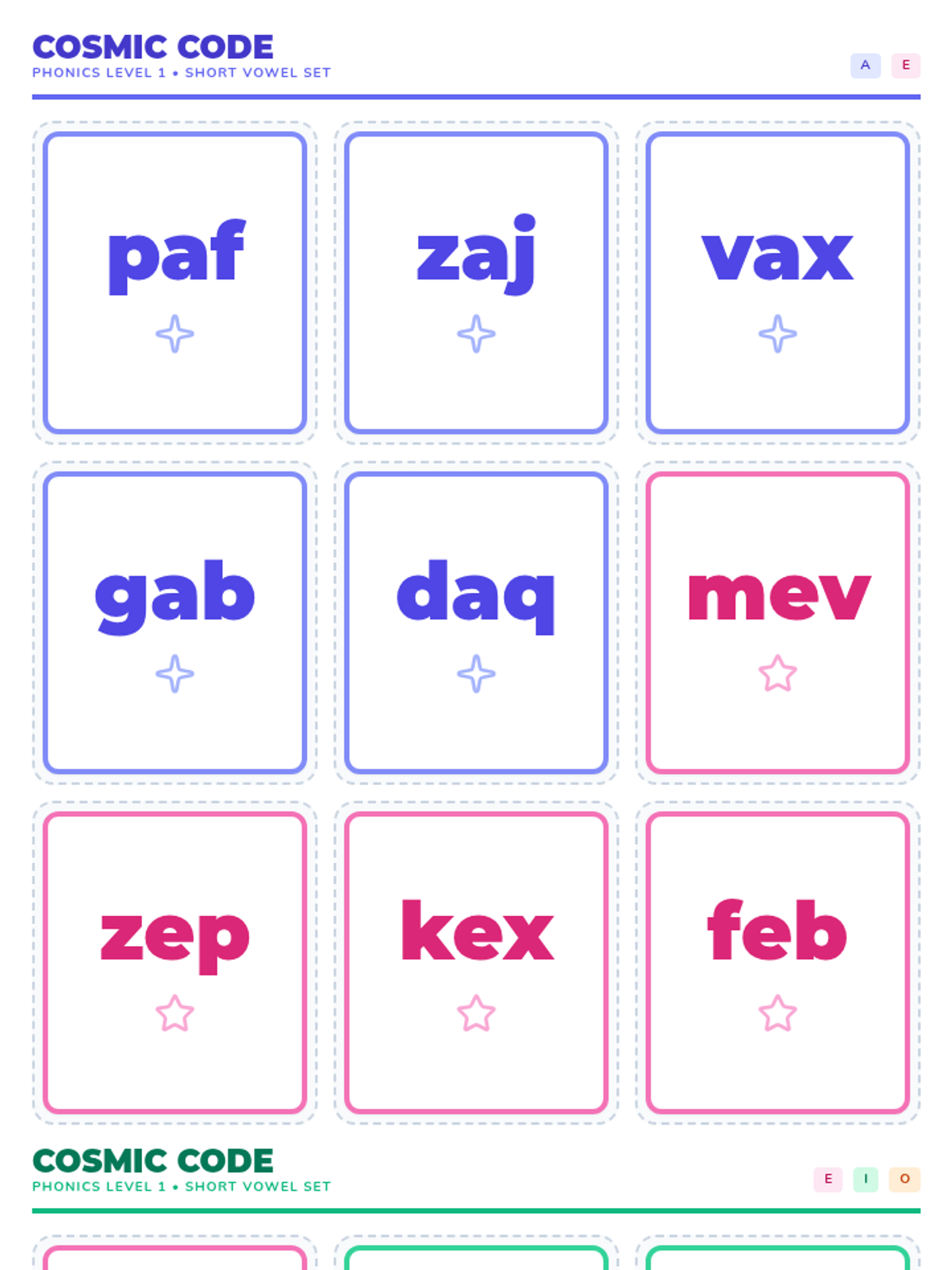
A collection of resources focused on decoding CVC nonsense words using an alien-themed narrative. Students practice phonics skills by "translating" extraterrestrial languages.
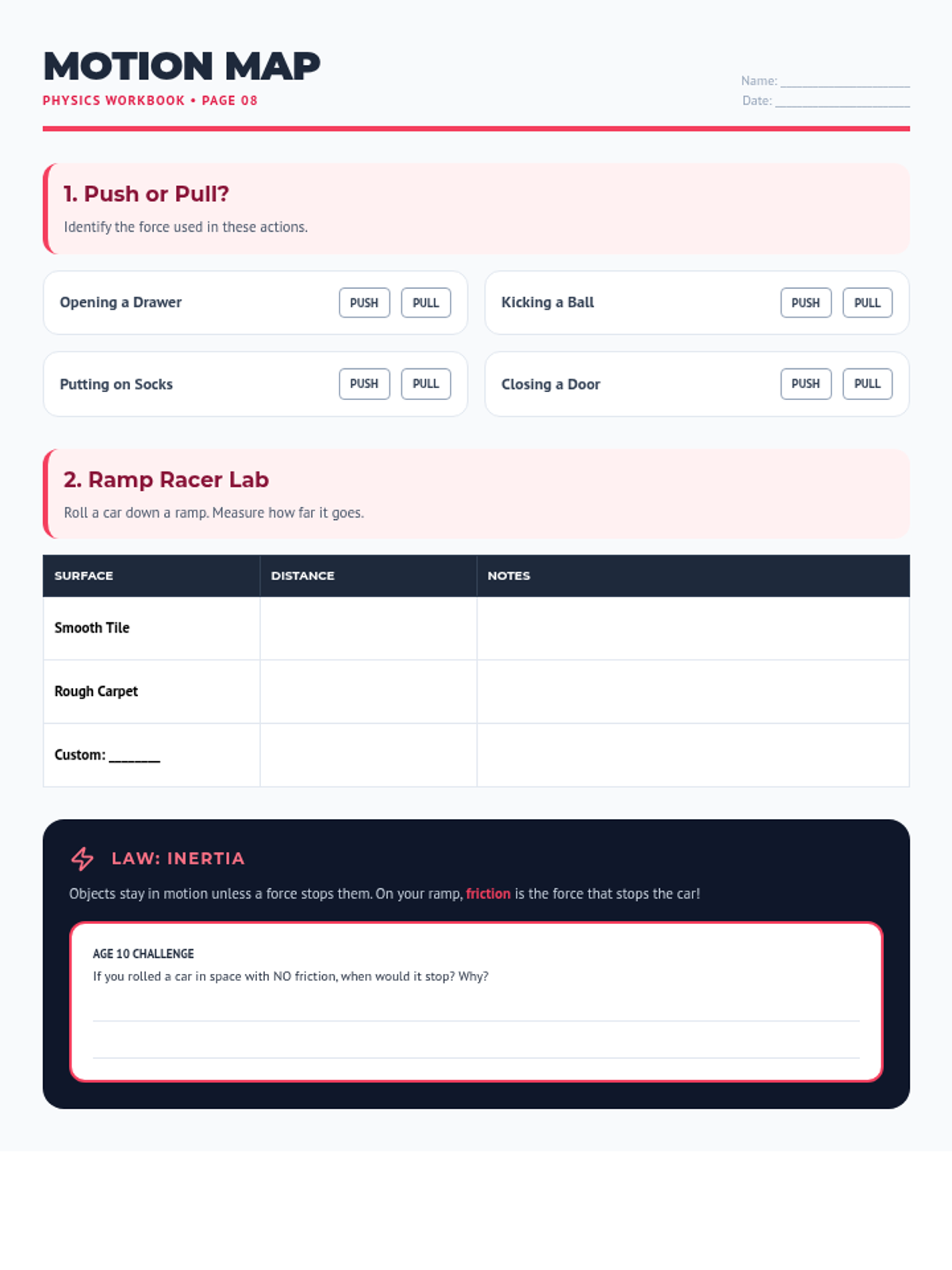
A study of kinetic energy and inertia using simple household objects and inclined planes.
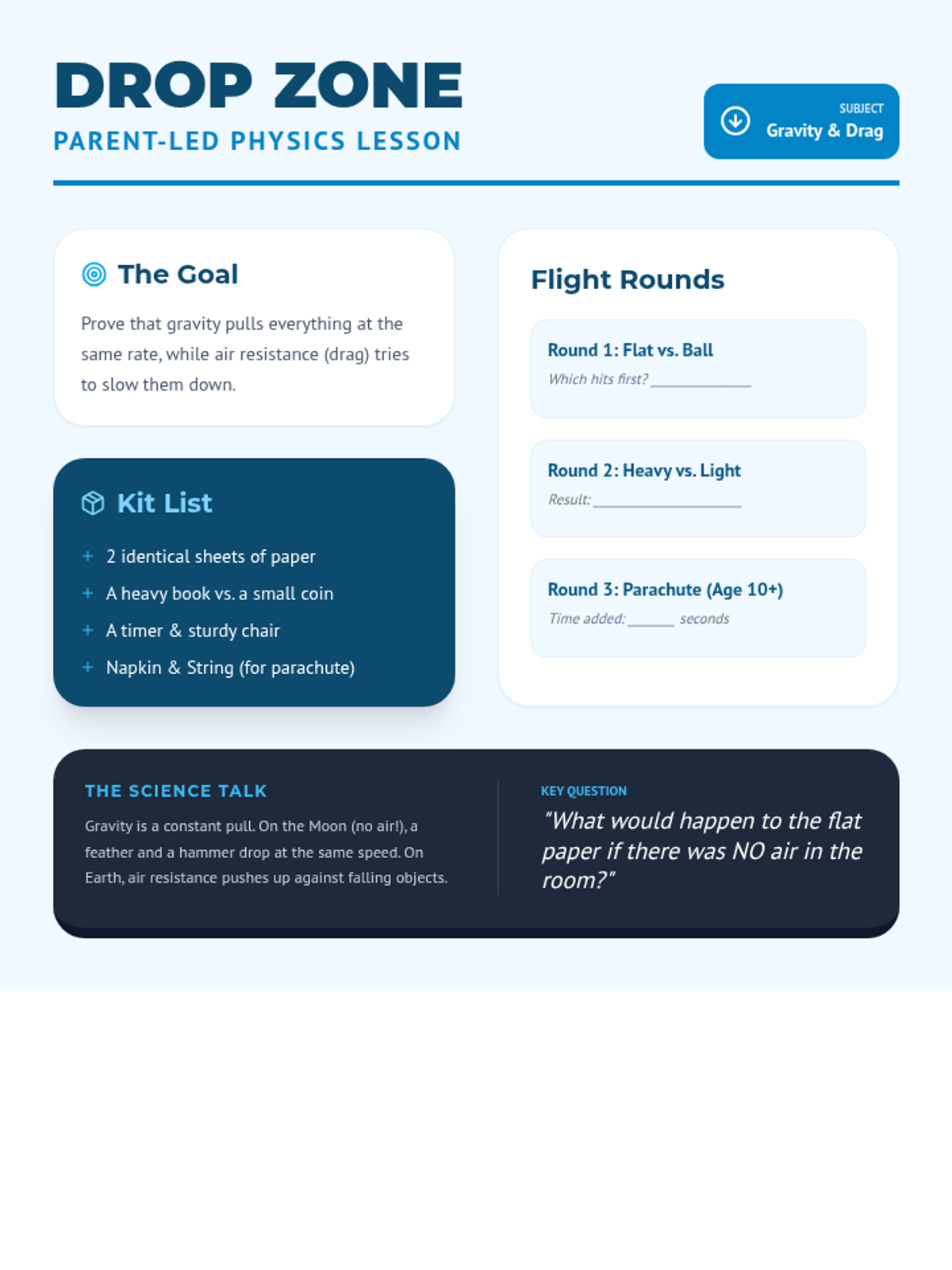
An exploration of gravity and air resistance through a controlled drop experiment.
A nature-focused scavenger hunt designed to teach identification and observation skills.
A botanical experiment focused on tracking the germination and early growth of seeds.