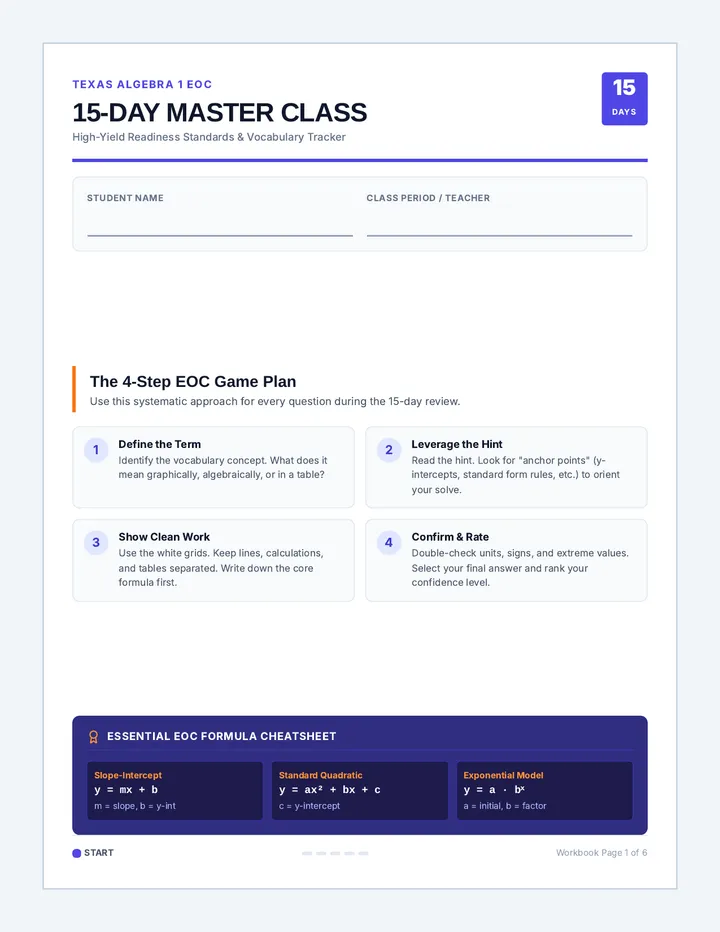
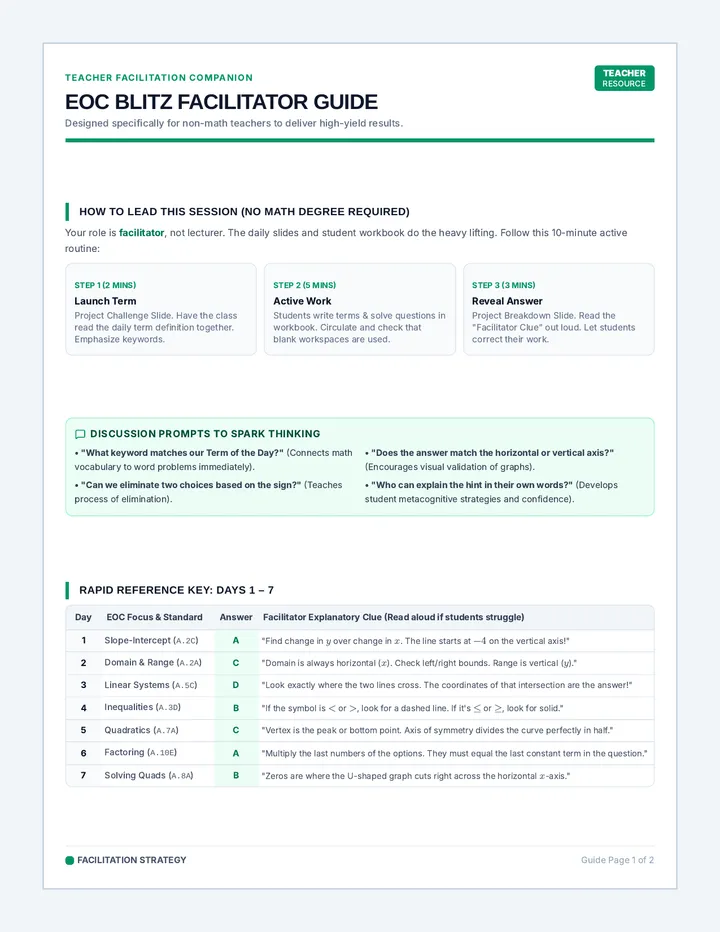
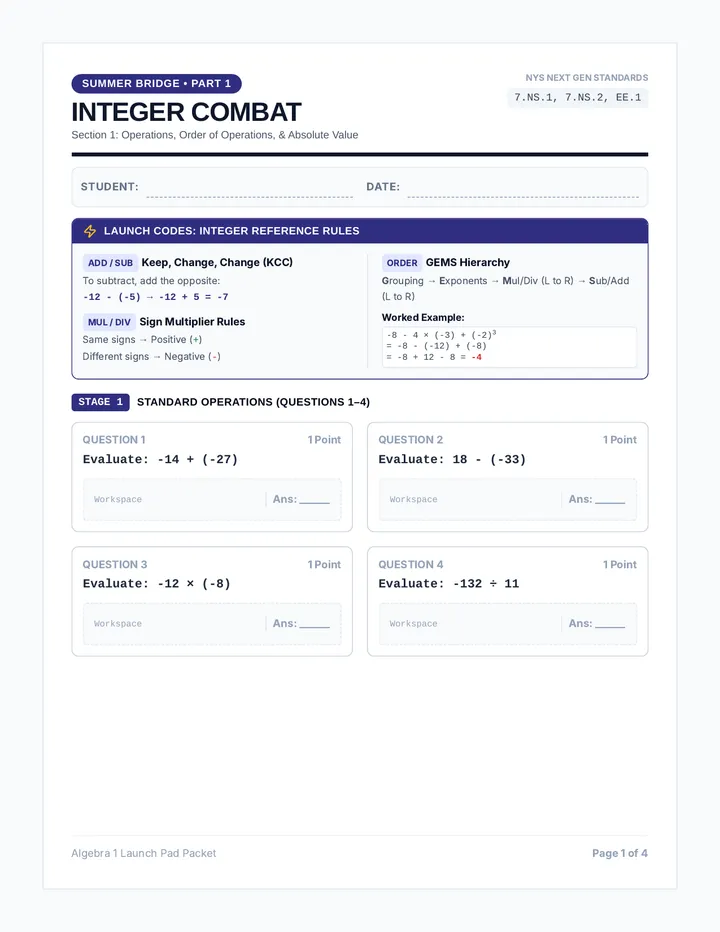
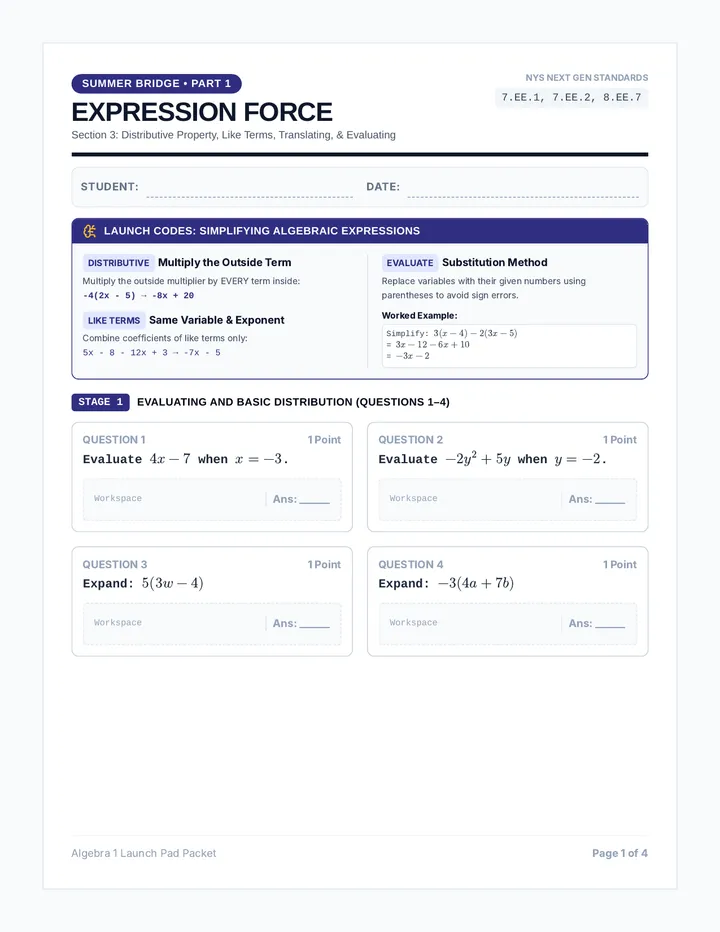
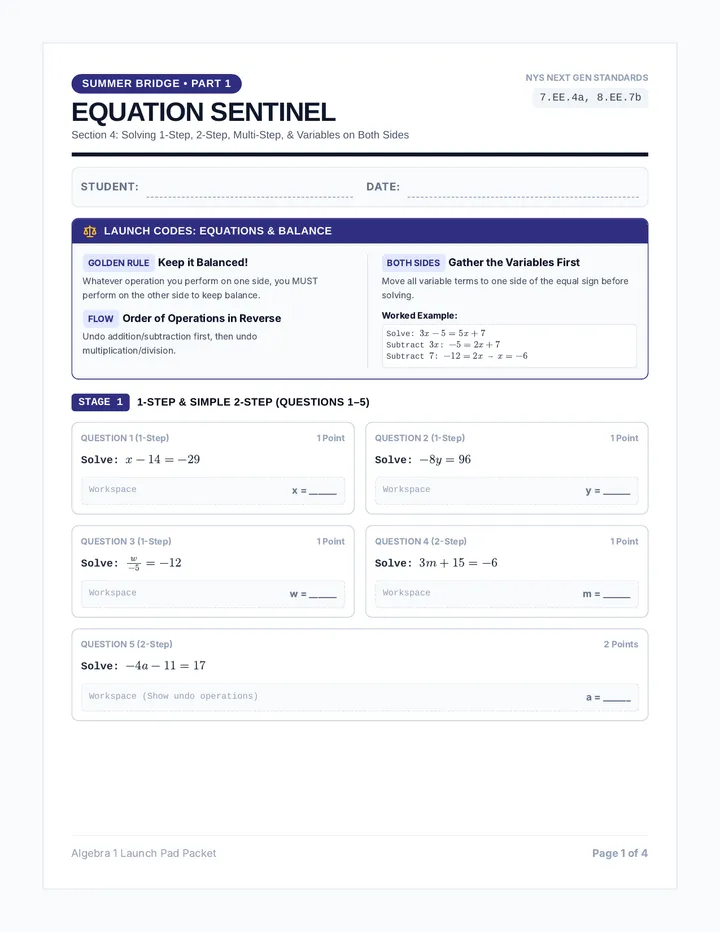
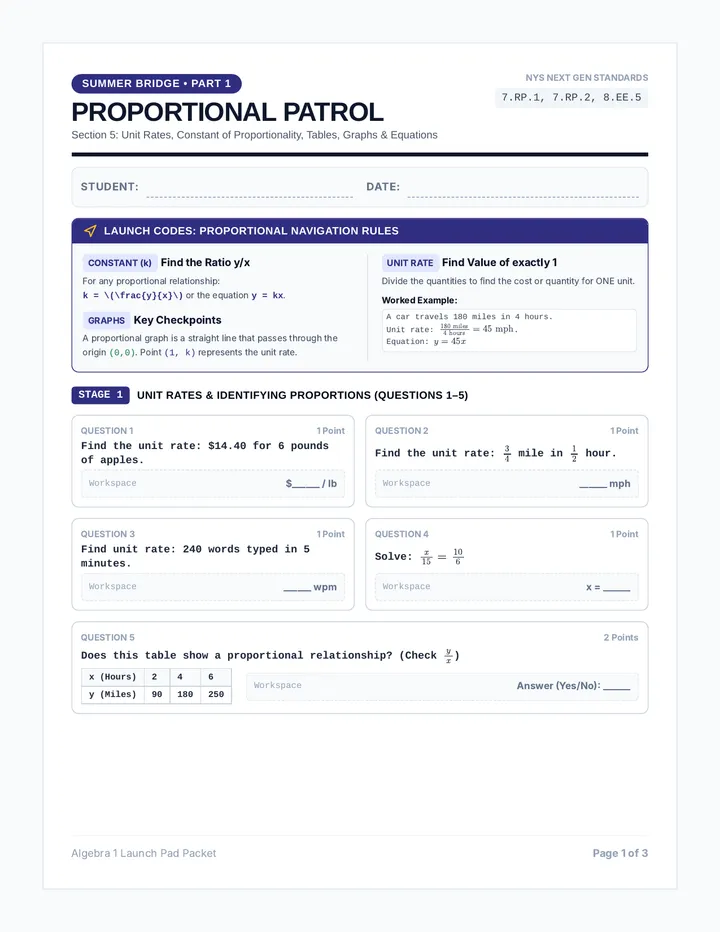
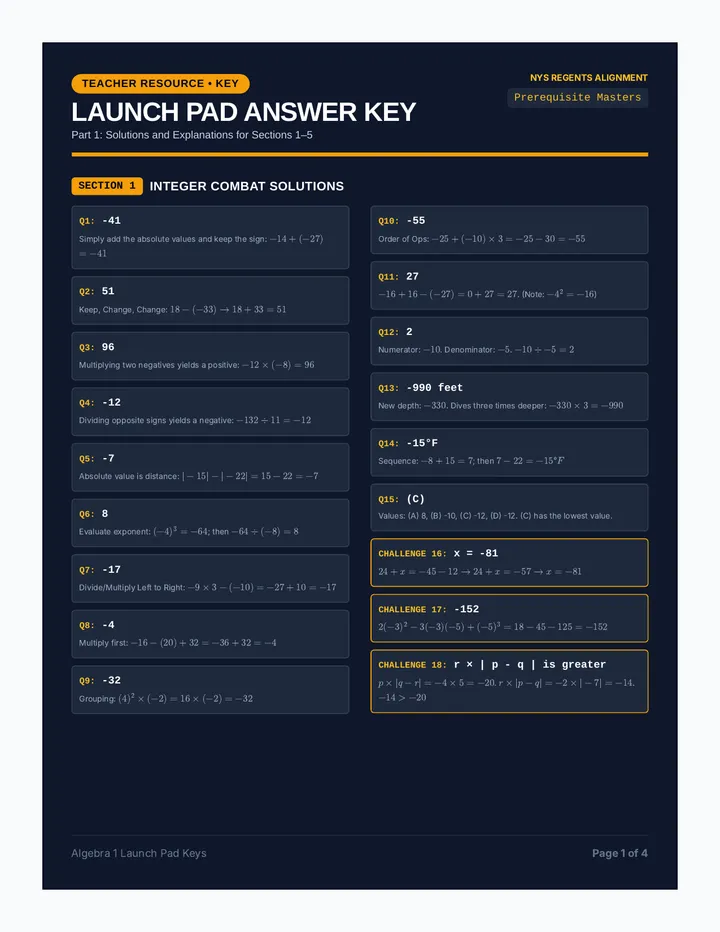
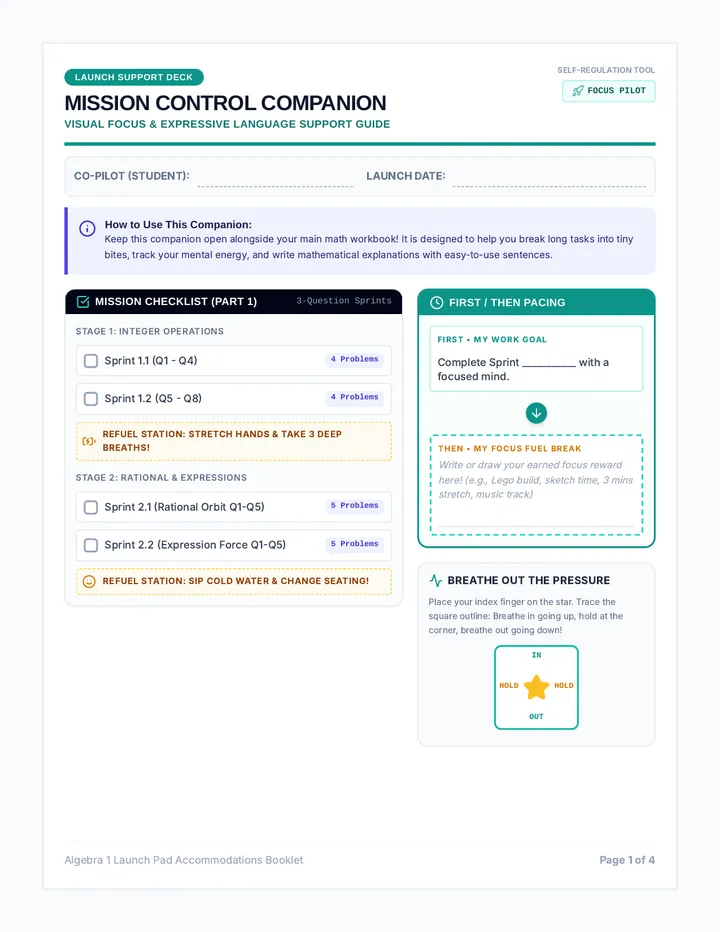
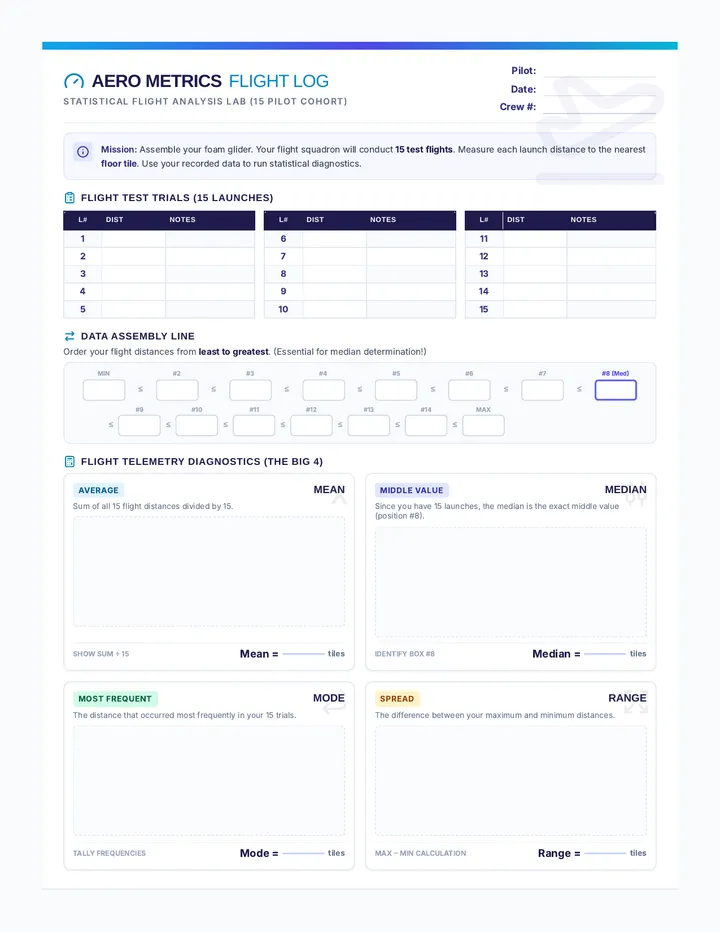
A comprehensive review lesson designed to prepare students for an upcoming Algebra quiz. It covers vertical lines, systems by elimination, factoring, vertex form, rate of change, and linear equations.
Une séance coopérative pour découvrir les propriétés des angles inscrits et au centre dans un cercle, conçue pour les élèves de 3ème.
A functional math lesson focused on calculating elapsed time for real-world scenarios, designed for high school students developing life skills.
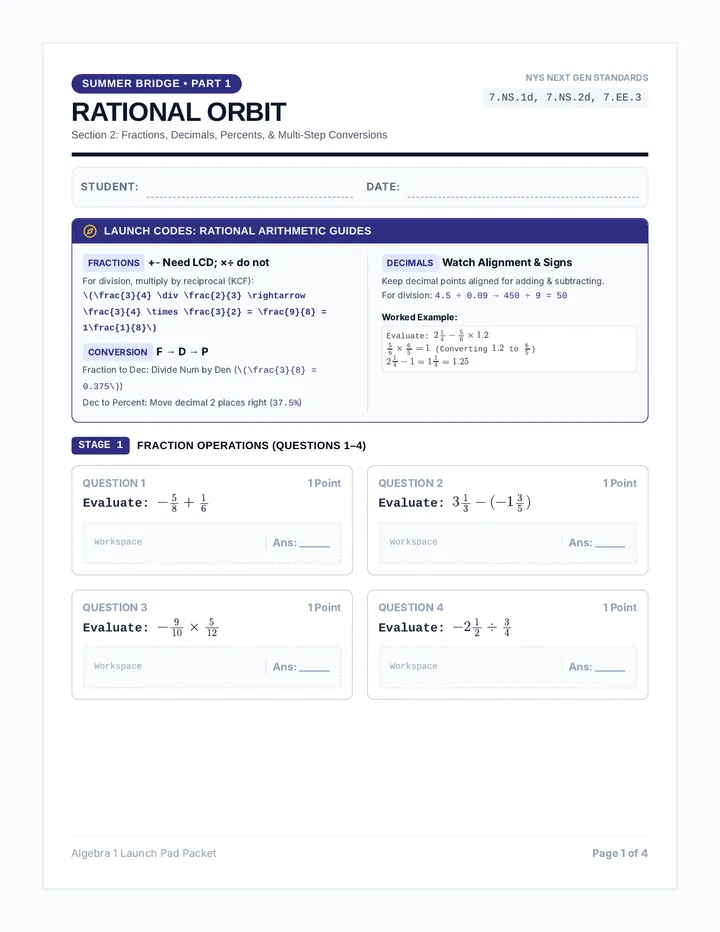
Master complex fractions and high-precision decimal operations through the lens of algebraic manipulation and real-world mathematical modeling.
Explore the architecture of rational numbers, focusing on the rigorous conversion between fractions and decimals and the proof-based patterns of repeating digits.
A hands-on probability lab where students rotate through various 'carnival' stations to explore theoretical and experimental probability, compound events, and tree diagrams.
A lesson focused on solving one-step equations using tape diagrams as a visual strategy to represent relationships between numbers and variables across all four operations.
A statistics lesson themed around Canterlot High and the Equestria Girls, covering measures of center, data visualization, and simple probability. Students will help their favorite characters analyze school data through engaging, themed problems.
A cumulative review where students use all their 'Flavor Lab' tools to solve complex recipe and mixing challenges.
Students will apply ratio reasoning to convert laboratory measurements between different metric and standard units.
Students will use 100-grids and tape diagrams to find the total volume of a solution when given a part and its percentage concentration.
Students will identify unit rates in laboratory mixing and travel scenarios using double number lines for precise measurement.
Students will mix base flavors using scaffolded tables and tape diagrams to find equivalent ratios and solve recipe problems.
A comprehensive review of basic trigonometry (sine, cosine, tangent) for finding missing sides and angles, featuring a step-by-step checklist and worked examples.
An introductory lesson covering the building blocks of geometry: points, lines, planes, rays, segments, and angles.
A lesson focusing on the Triangle Inequality Theorem, teaching students how to determine if three given side lengths can form a valid triangle.
A comprehensive practice module for high school Algebra 1 students focusing on slope, point-slope form, and slope-intercept form. Designed with scaffolding and visual aids specifically for special education support.
A hands-on geometry lesson where students act as structural engineers to discover the Triangle Inequality Theorem through sorting and investigation.
Students act as architects to verify the structural integrity of triangular designs using the Triangle Inequality Theorem. They perform numeric checks, analyze visual models, and solve word problems to determine if three side lengths can form a valid triangle.
A statistics lesson themed around Courage the Cowardly Dog, covering central tendency, dot plots, and probability.
A targeted assessment lesson focusing on applying one-step multiplication and division equations to solve real-world problems.
A statistics lesson for freshman students covering central tendency, probability, and stem-and-leaf plots, themed around the classic cartoon Ed, Edd n Eddy. Includes visual aids and simplified math for clear conceptual understanding.
Explores 8th-grade concepts like slope as a fraction (rise over run) and identifying rational vs. irrational numbers in structural engineering.
Covers 7th-grade topics including complex fractions, unit rates, and scaling designs for construction projects.
Focuses on 6th-grade fraction operations (addition, subtraction, multiplication, division) through the lens of foundational construction measurements.
A statistics lesson for freshmen using characters and scenarios from the Dog Man series to teach mean, median, mode, range, and probability.
The core instructional and project-based unit where students transition from architectural theory to a physical model, focusing on the mathematical precision required for construction.