A kinetic lesson where students use body language and facial expressions to demonstrate the specific nuances of synonyms. Peers guess the word based on the intensity of the physical performance.
A math place value unit focusing on identifying digit values through the thousands place with interactive detective-themed worksheets and puzzles.
A year-end writing celebration and awards ceremony designed to recognize growth, effort, and accomplishments in writing.
A completely redesigned, bespoke slide deck with a 'Digging for Diamonds' theme in a highly engaging Retro-Playful Flat-Pop style. Features thick black outlines, solid flat shadows, authentic lined paper journal pages, vibrant custom vector stickers, and the Chelsea Market title font. Built to look artisanal, warm, and classroom-native rather than AI-generated.
A structured reading intervention sequence at Douglas School combining targeted phonic lessons with the multisensory Nessy online literacy system.
A celebratory end-of-year lesson designed to honor student writing growth, showcase final projects, award special honors, and guide students through meaningful reflections on their journey as writers.
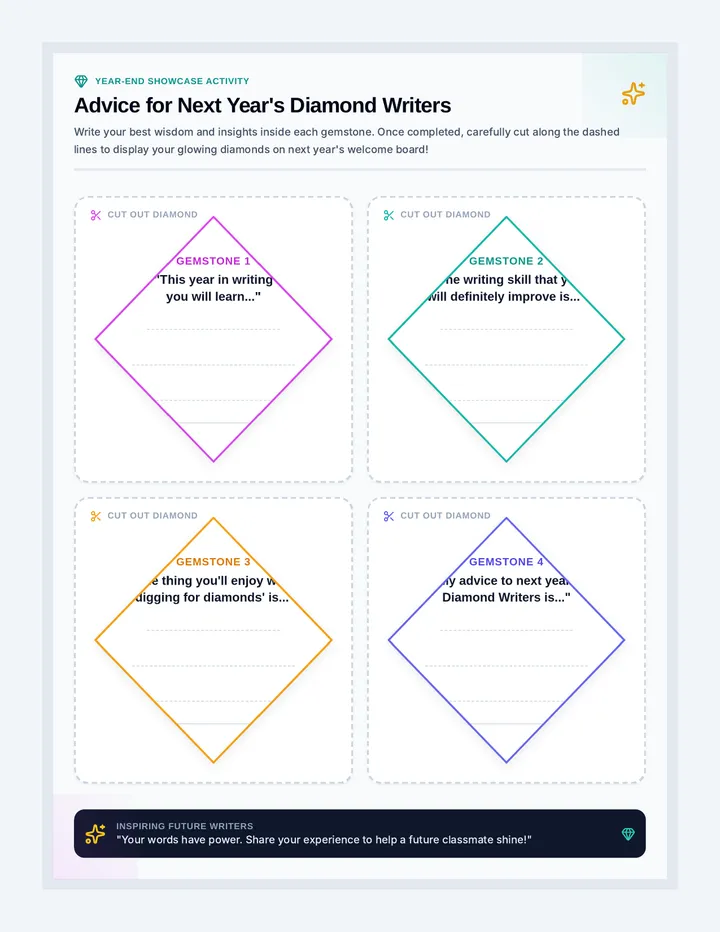
A printable year-end activity sheet featuring four large, beautiful cutout diamonds with ample writing space for students to share wisdom and advice with next year's incoming writers.
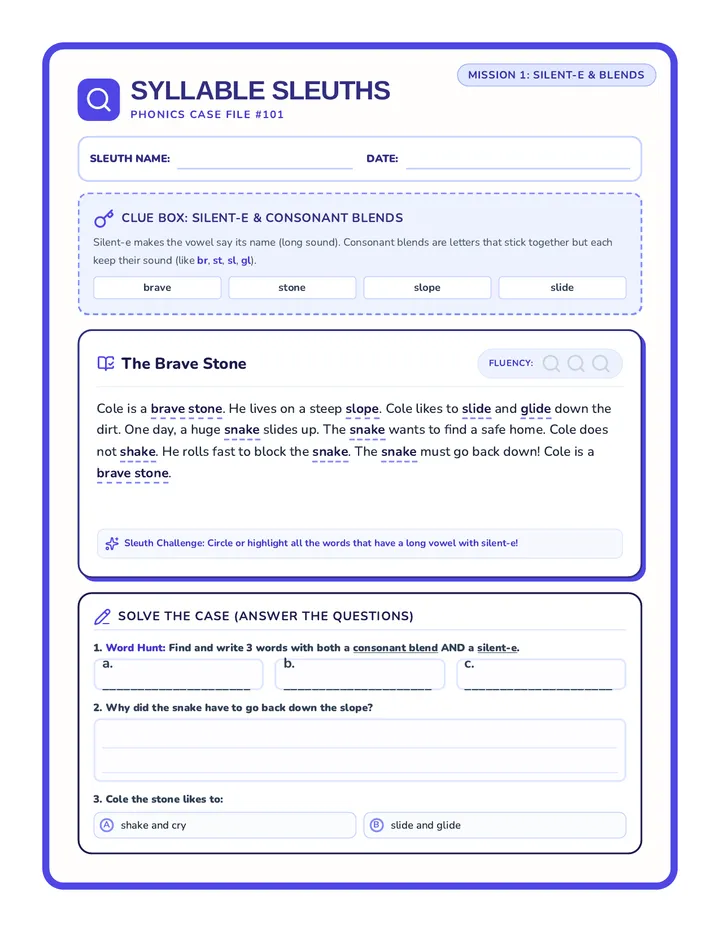
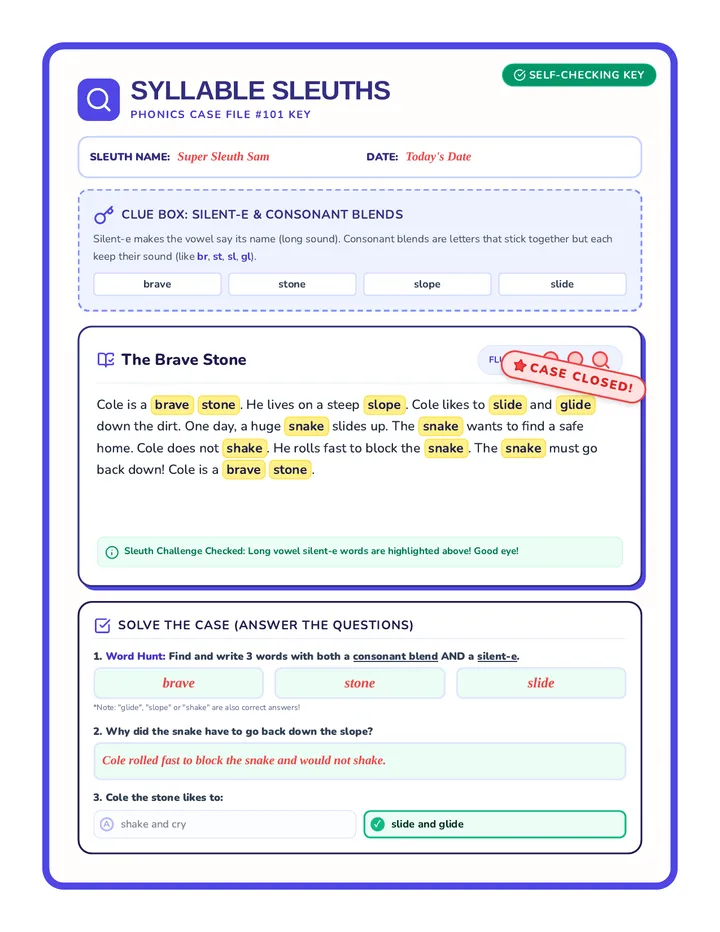
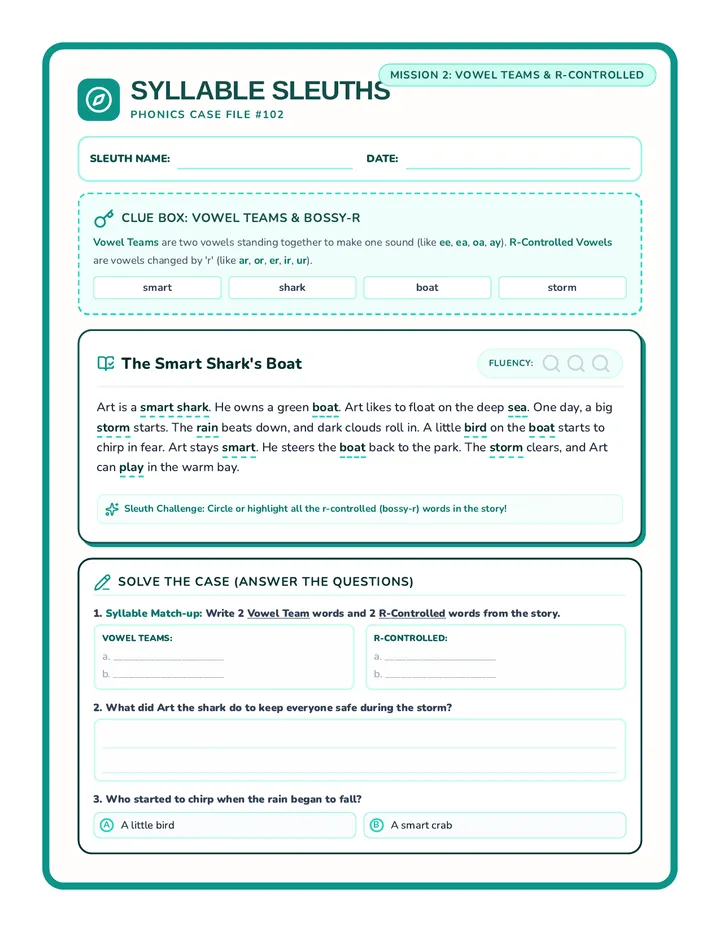
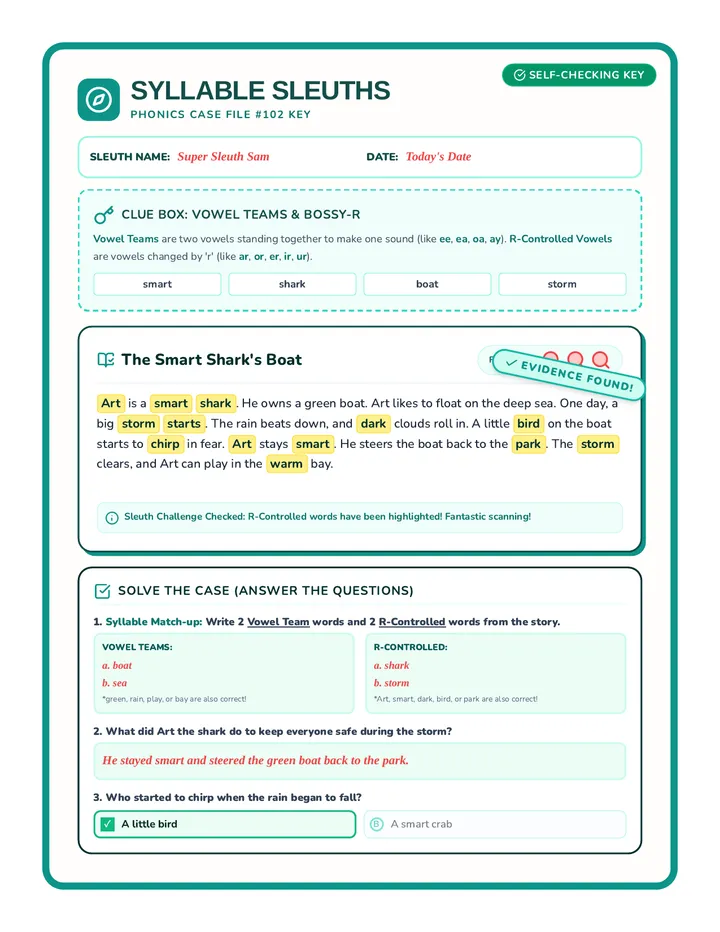
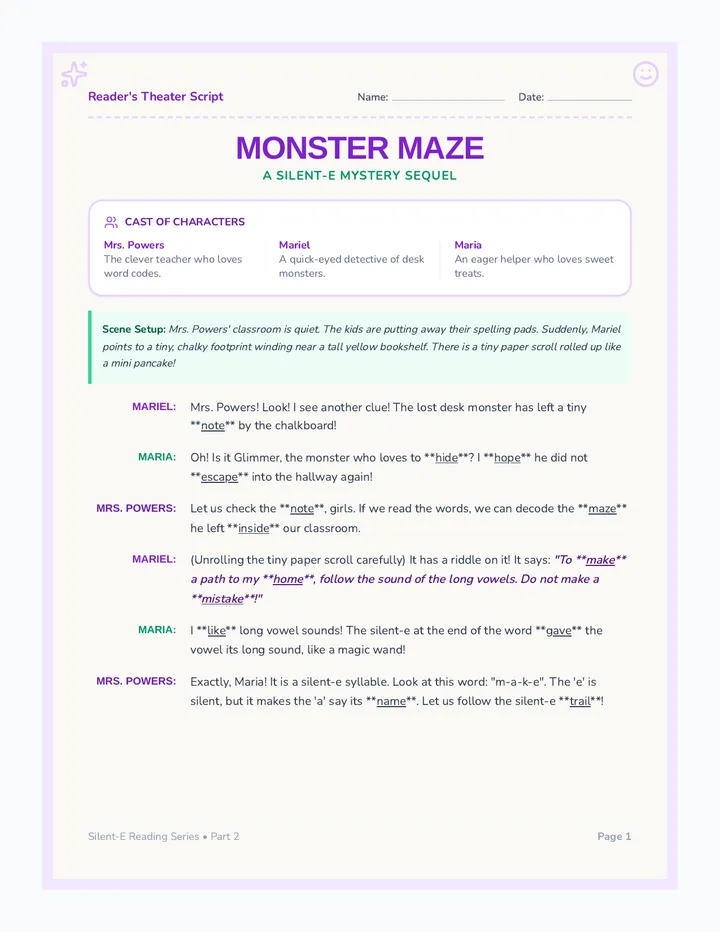
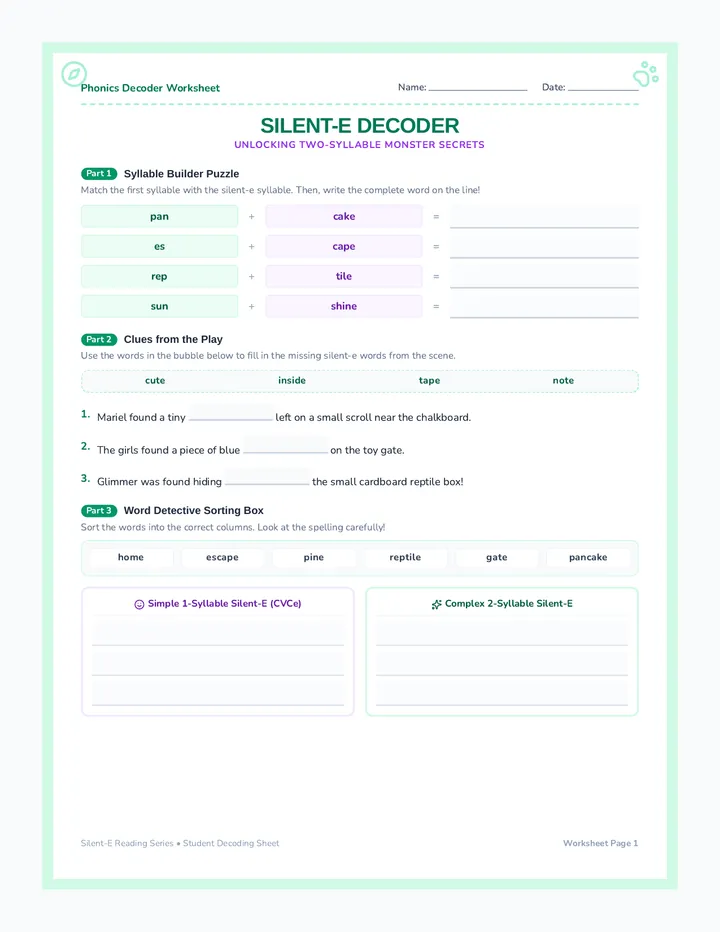
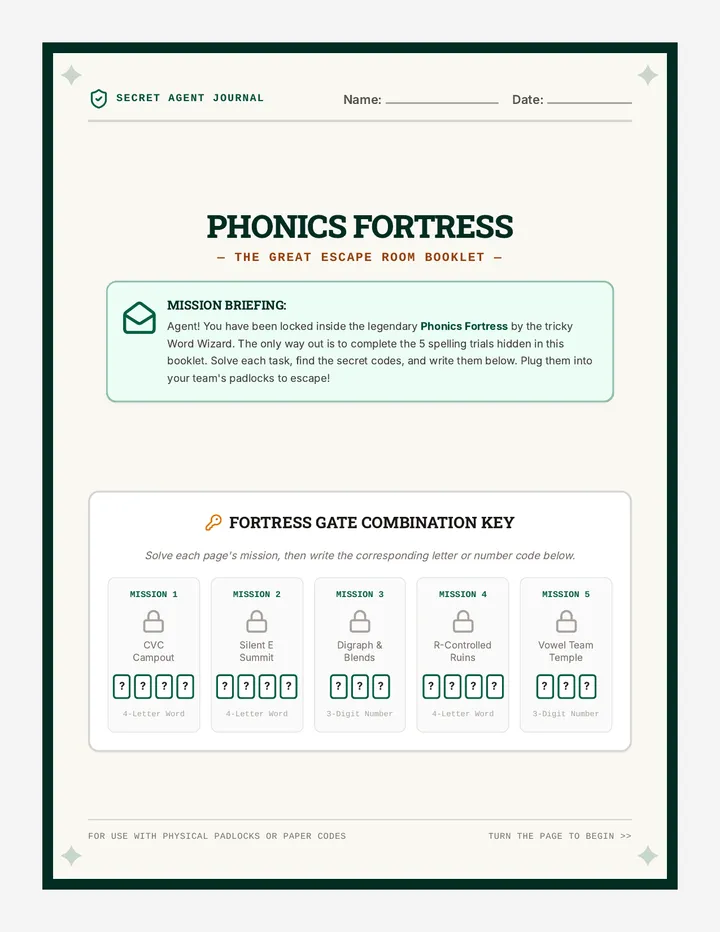
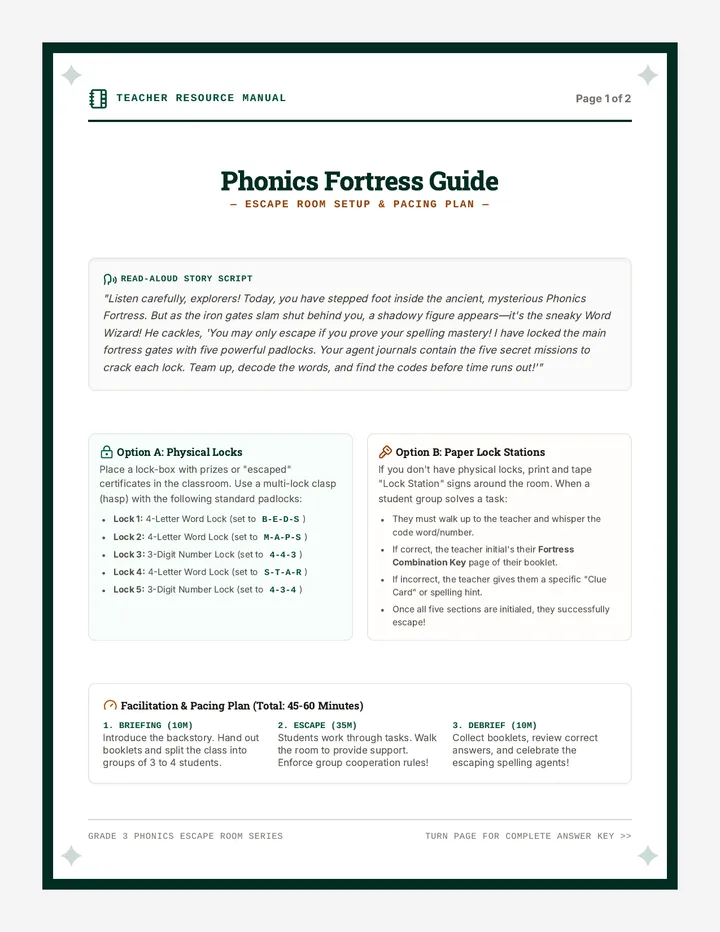
A comprehensive 5-day phonics breakout sequence where students complete daily independent spelling missions to crack codes. Covering CVC, Silent E, Digraphs/Blends, R-controlled vowels, and Vowel Teams, each day represents a new adventure challenge.
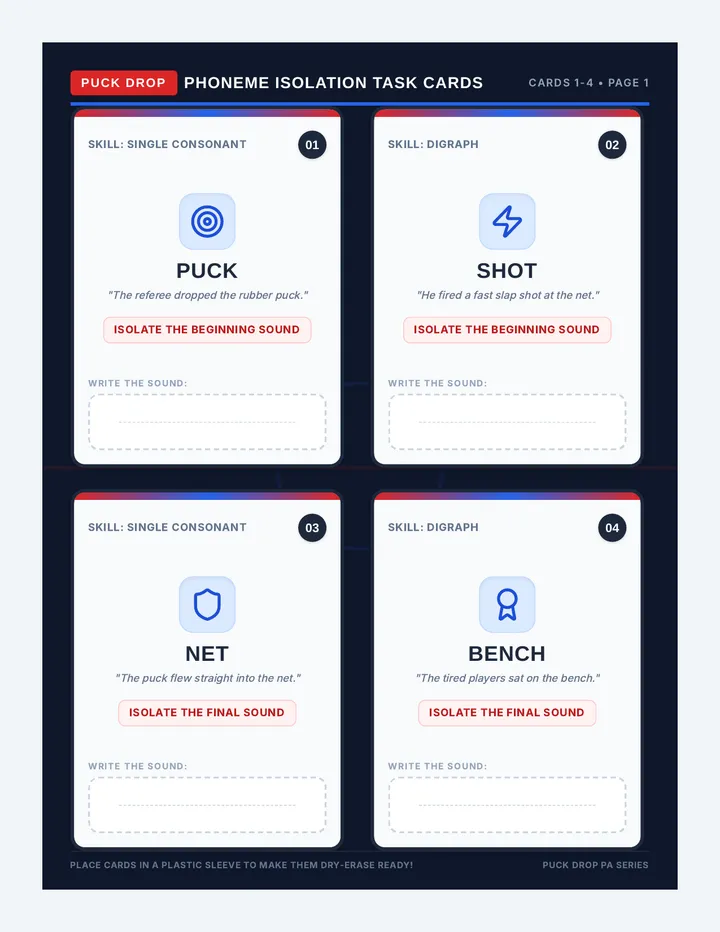
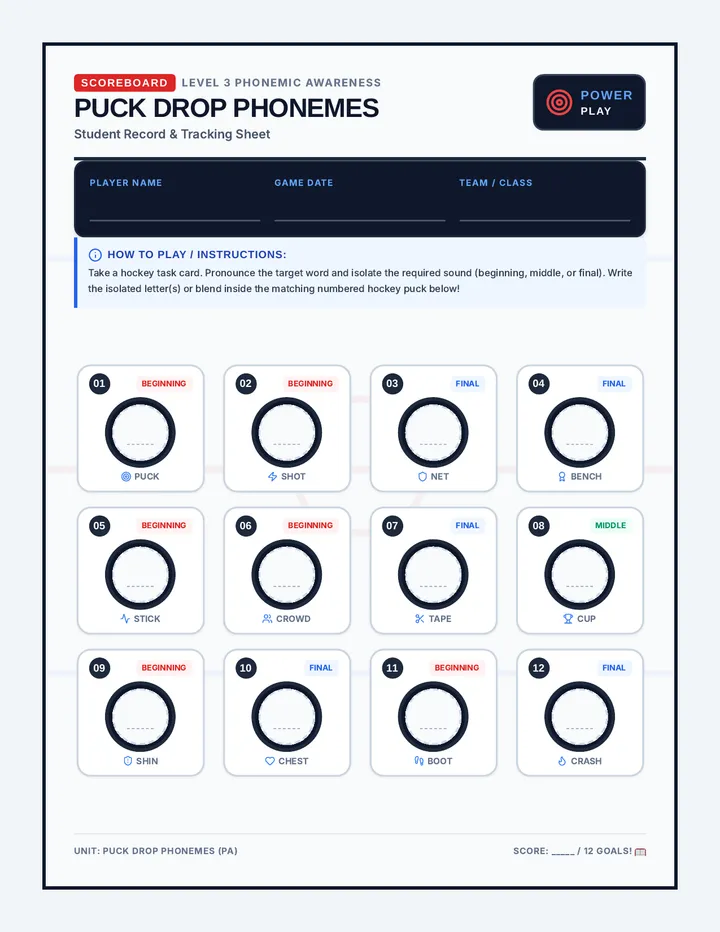
A hockey-themed phonological awareness unit designed for third graders to practice isolating beginning, middle, and final consonant sounds, blends, and digraphs. Features engaging task cards and a student tracking sheet with a dry-erase friendly design.
A highly visual, vibrant presentation for the year-end writing celebration, designed to excite students, present awards, and guide reflections with geometric diamond motifs.
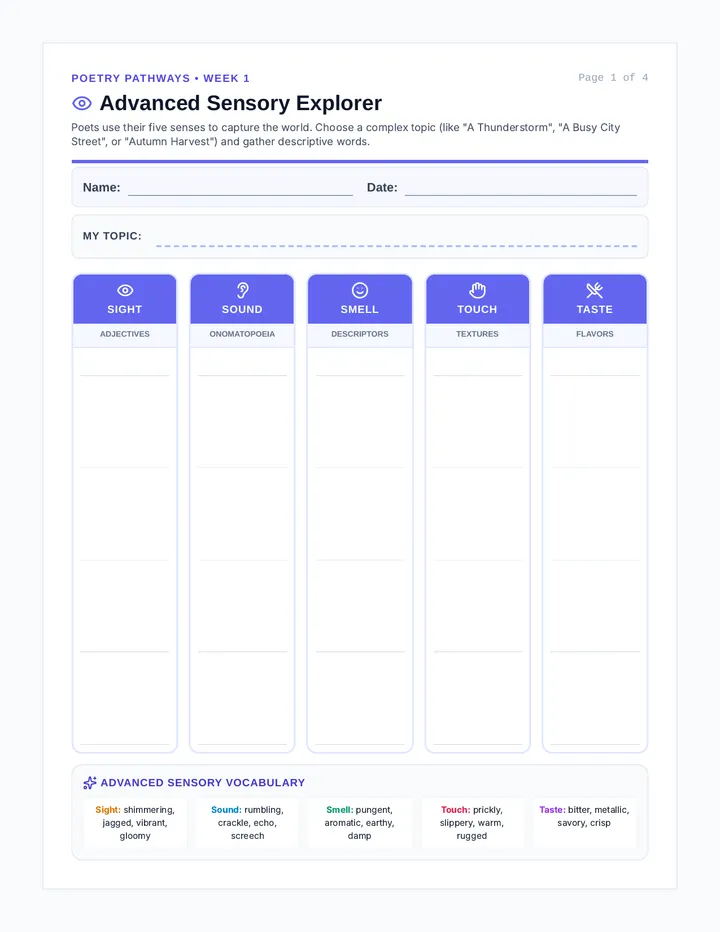
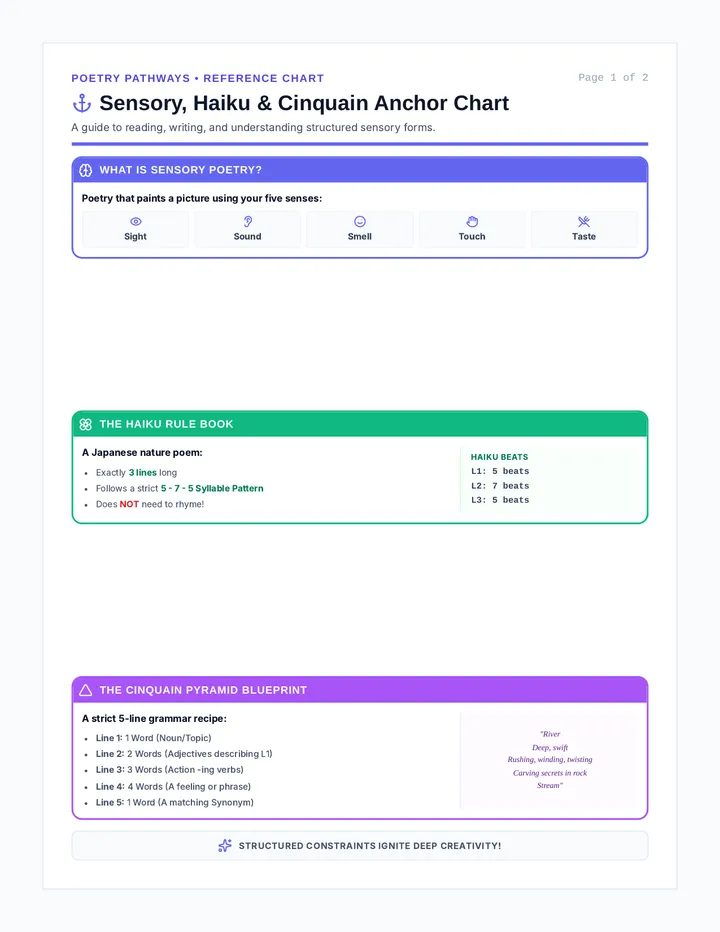
A comprehensive 4-week poetry curriculum designed for students requiring high structure and visual supports. It covers diverse poetry types (Haiku, Color, Acrostic, Couplets, Concrete, Free Verse, and Metaphor/Simile) with scaffolds like word banks, sentence frames, and graphic organizers.
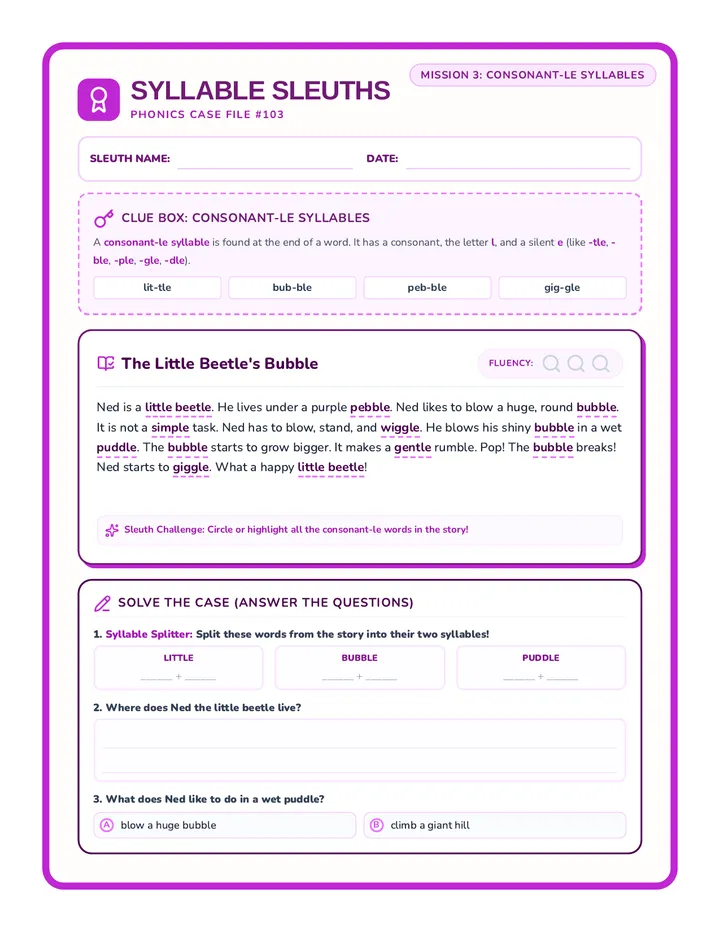
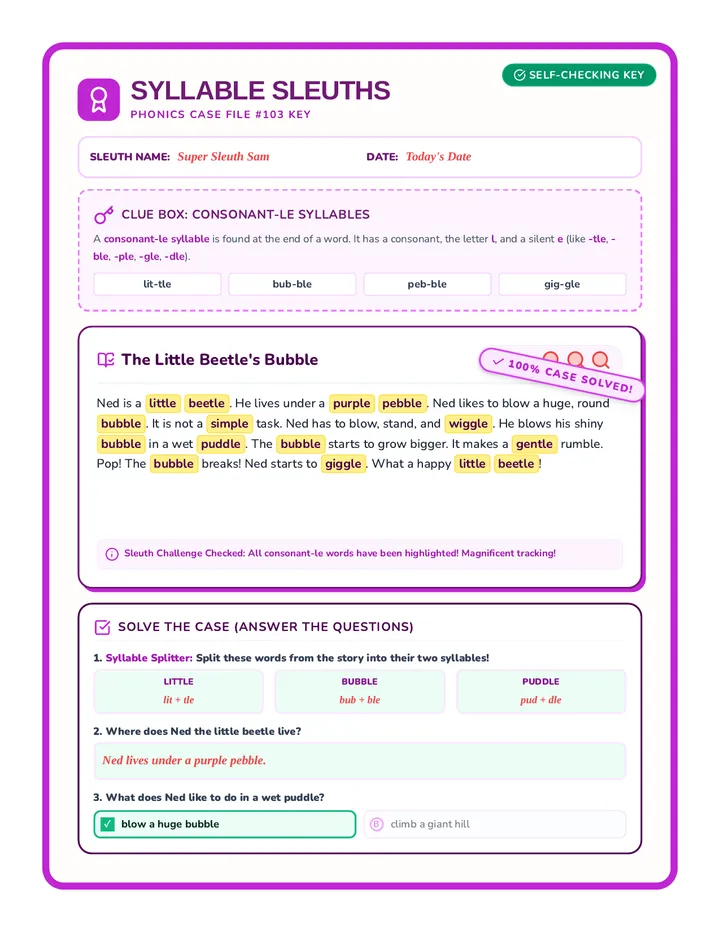
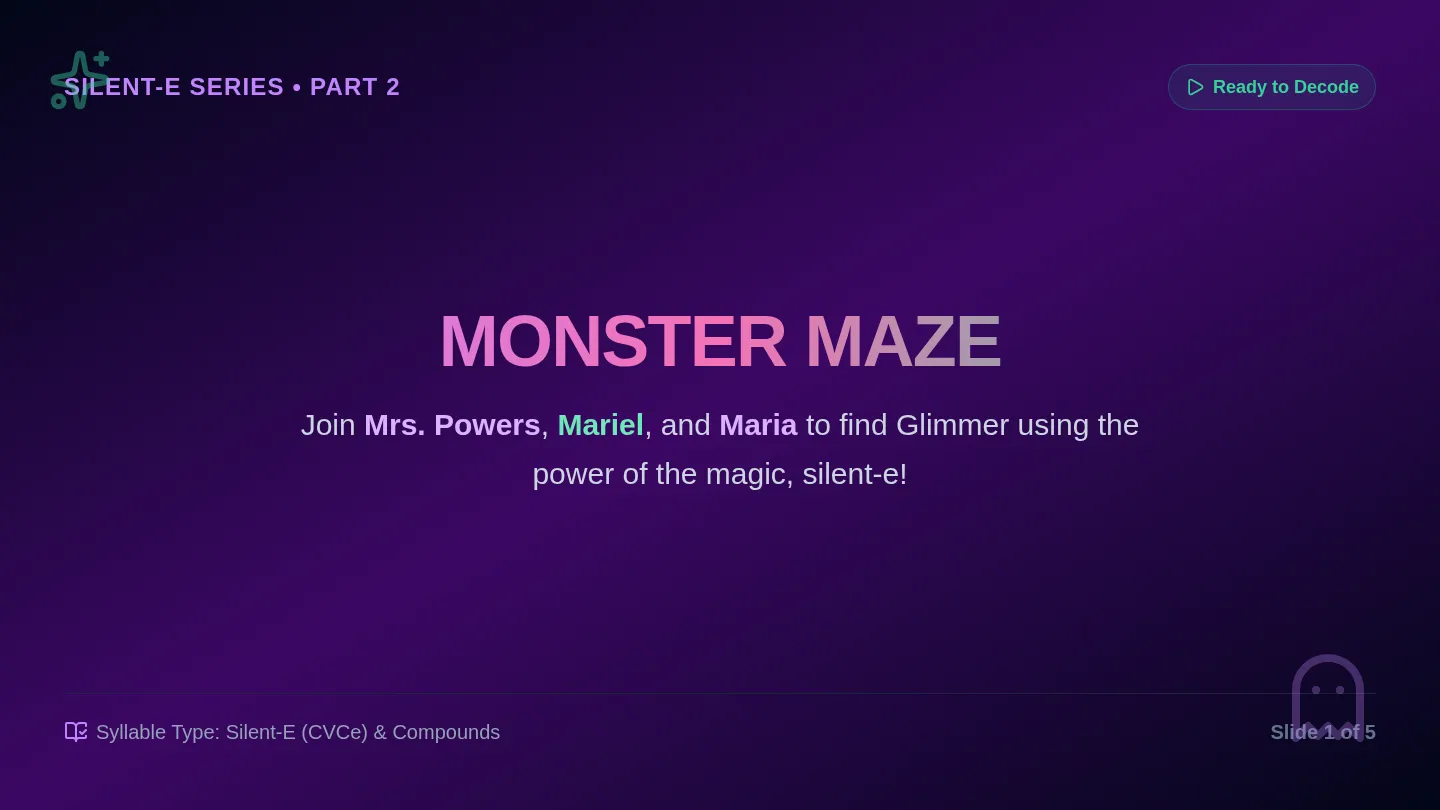
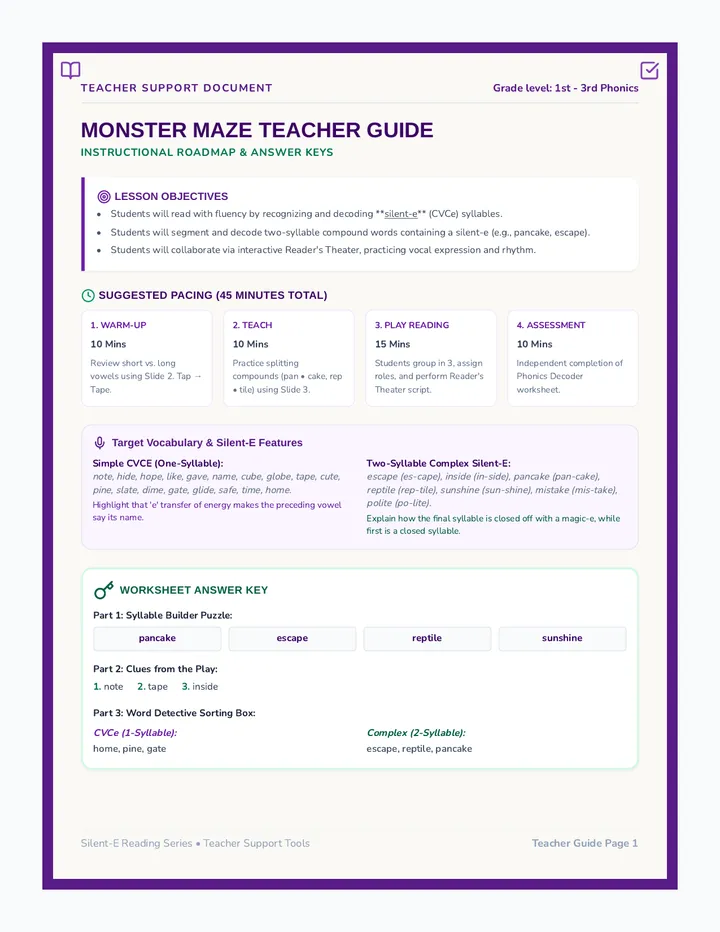
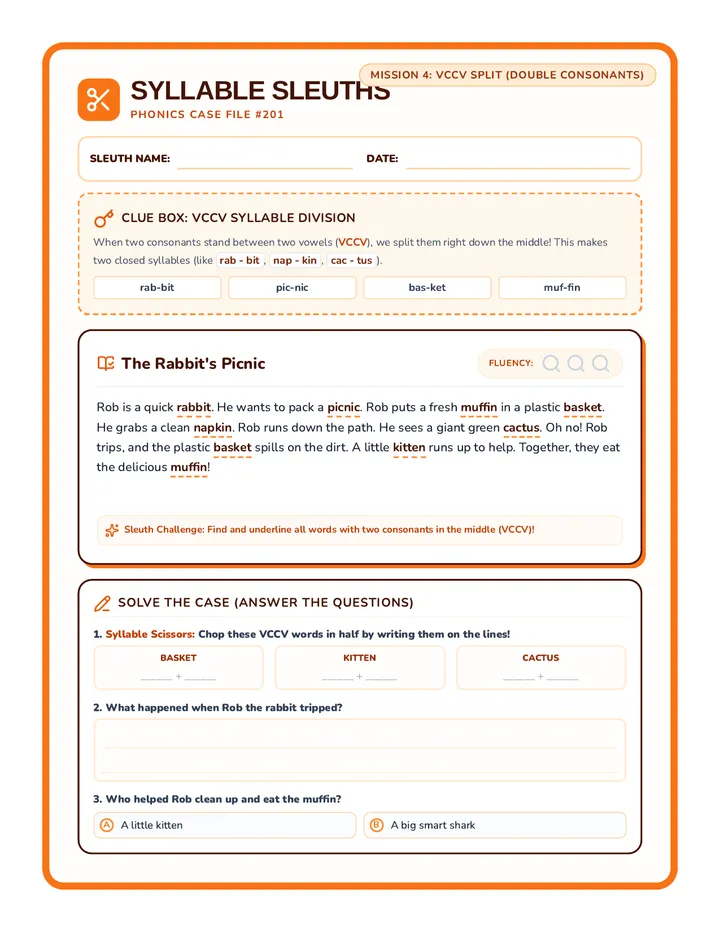
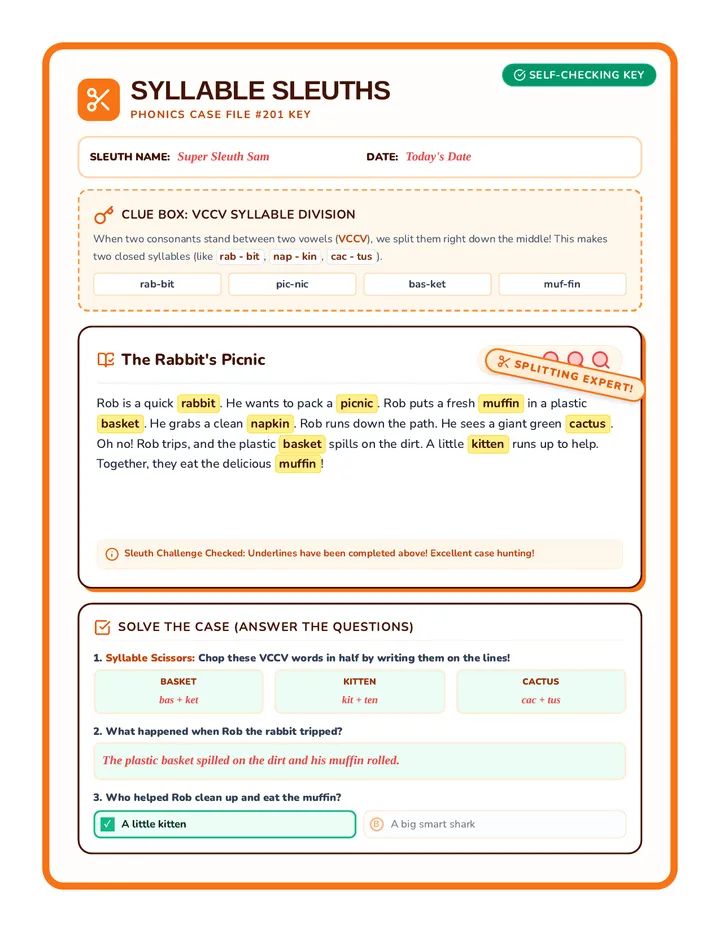
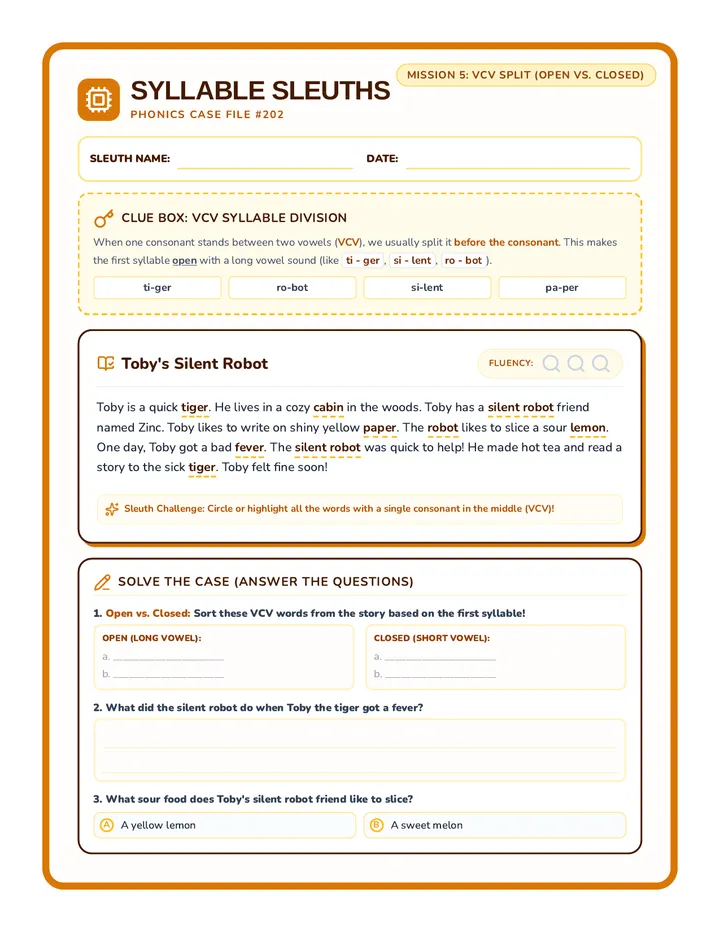
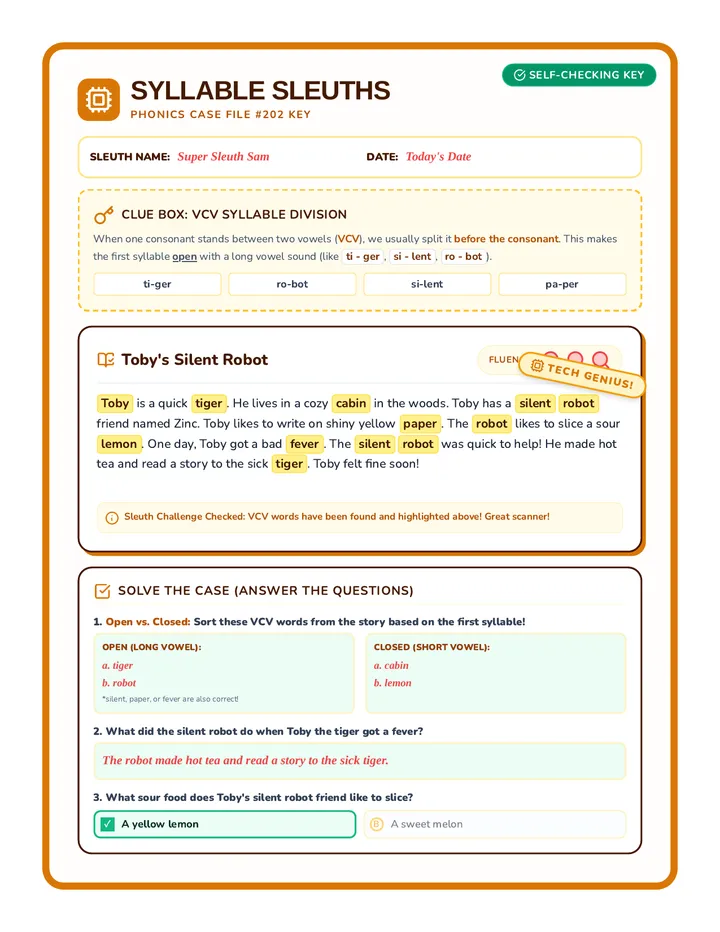
A structured, multi-part phonics intervention lesson focusing on compound words and syllable division rules (VCCV, VCV) for decoding 2-syllable and 3-syllable words.
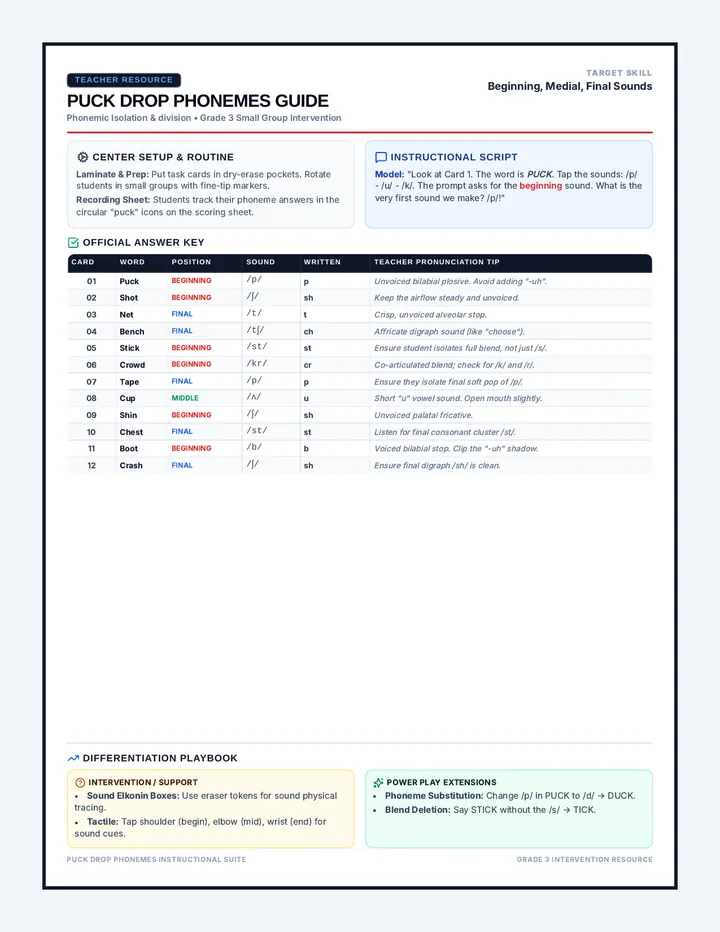
A teacher reference guide and answer key for the Puck Drop Phonemes task cards. Includes a short modeling script, an answer key table with pronunciation notes, and differentiation strategies.