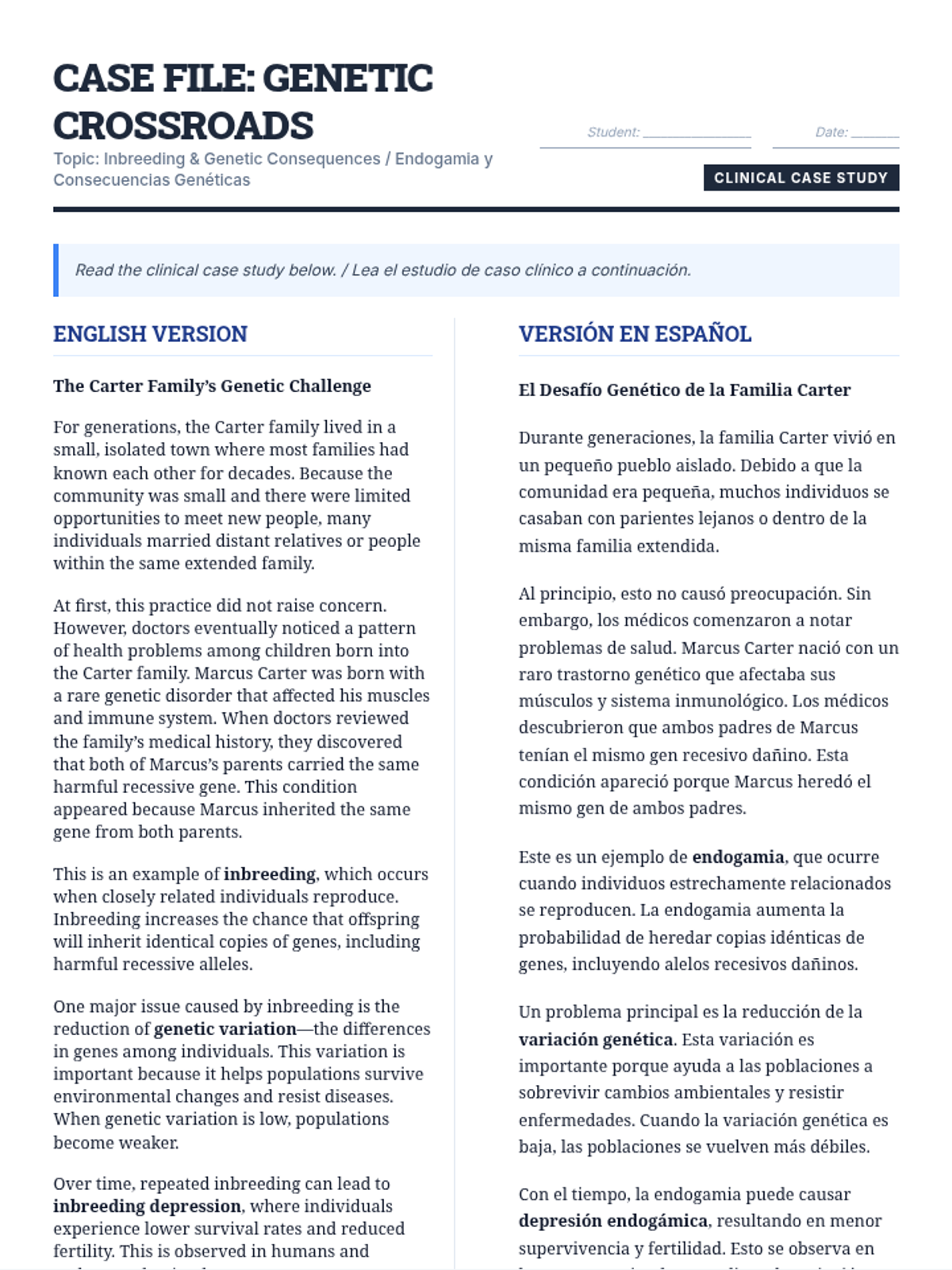
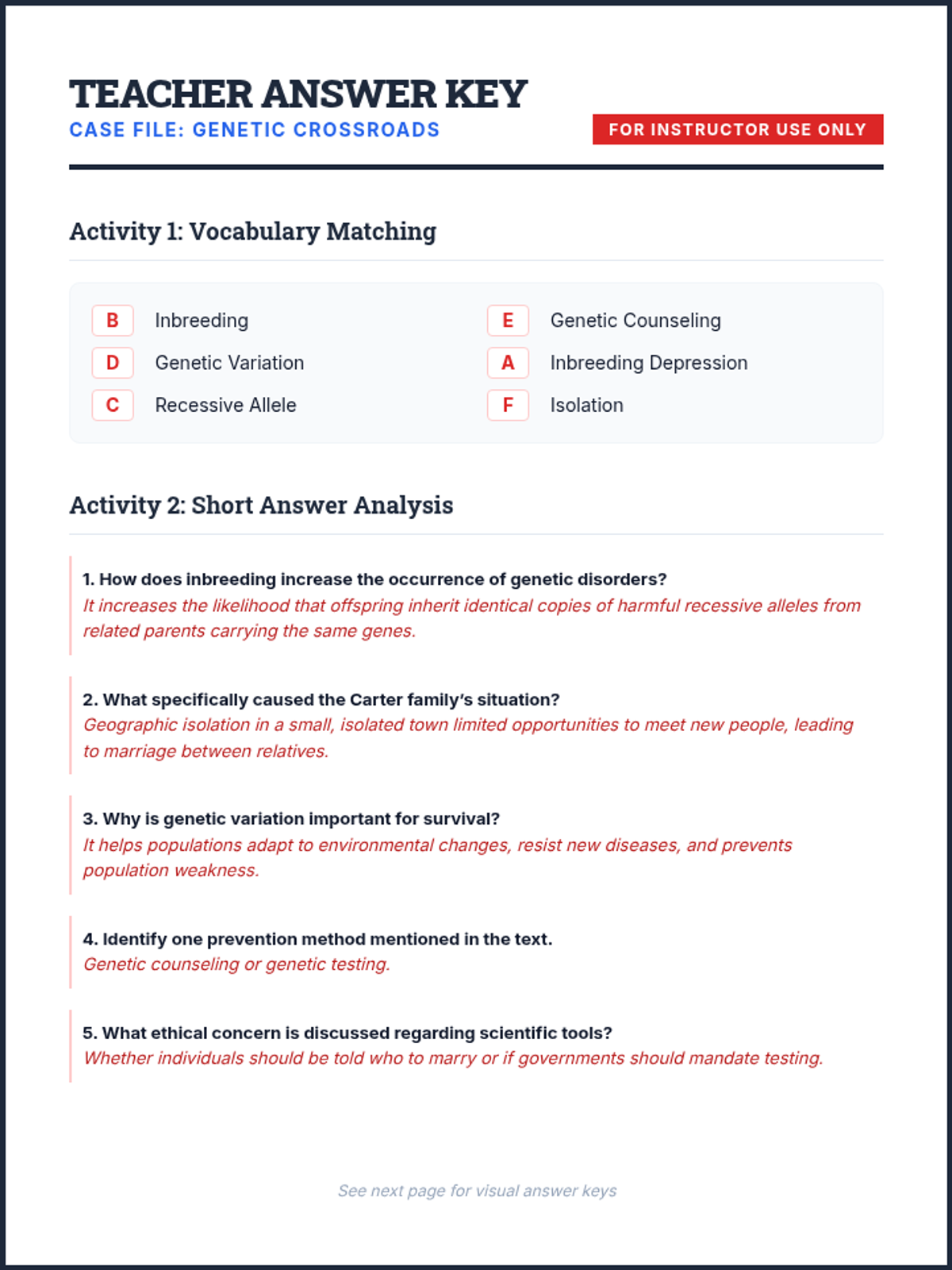
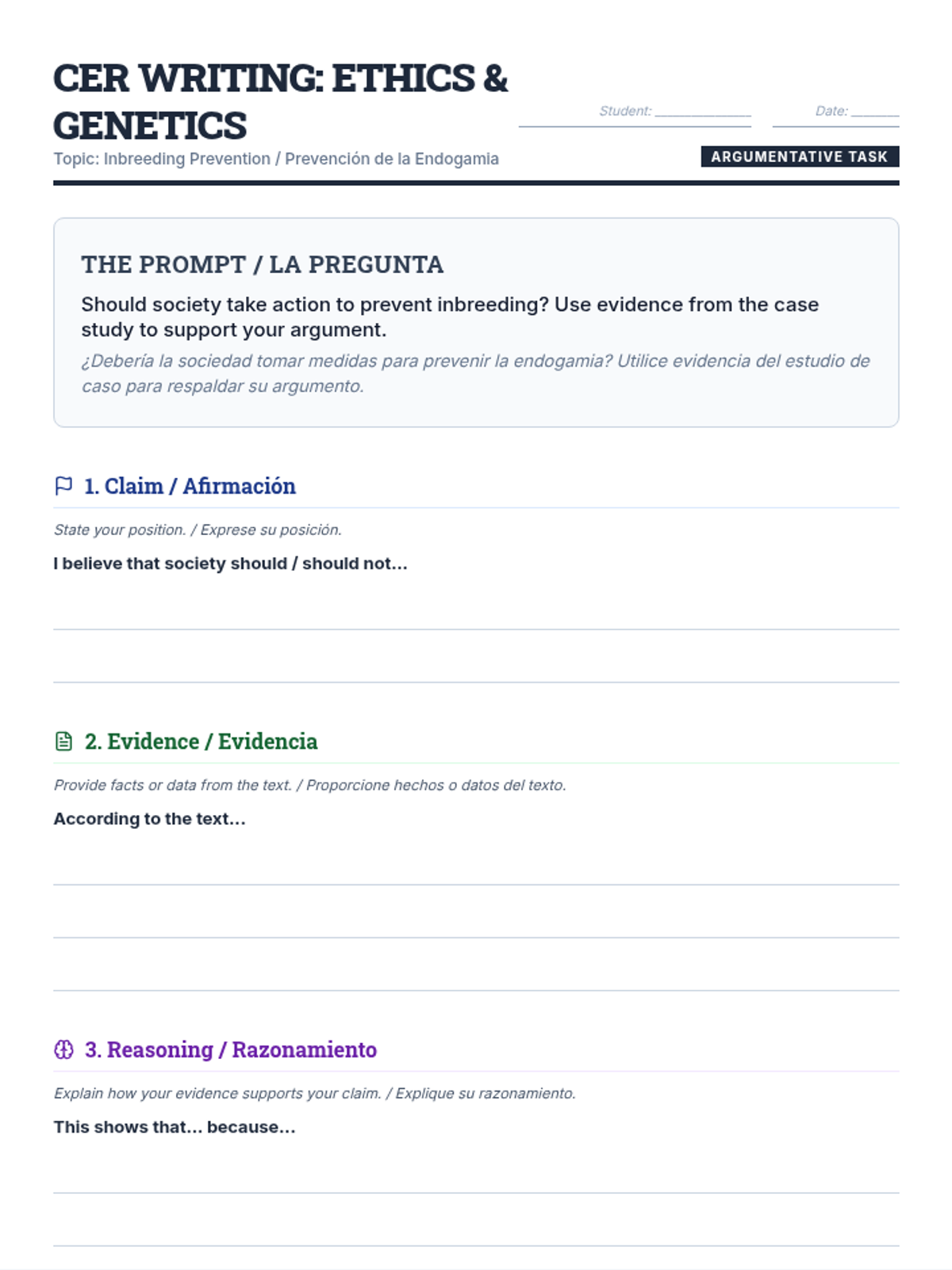
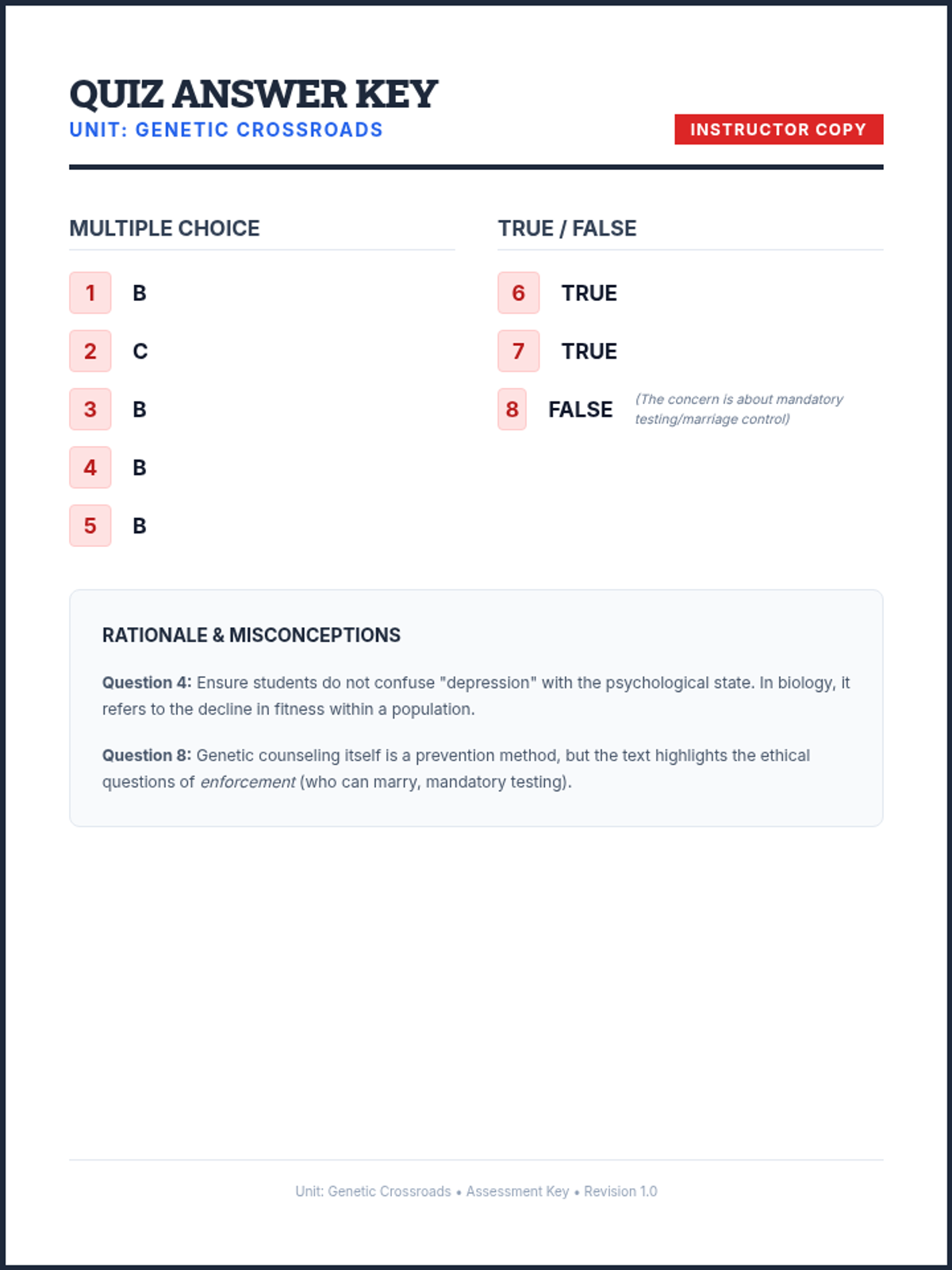
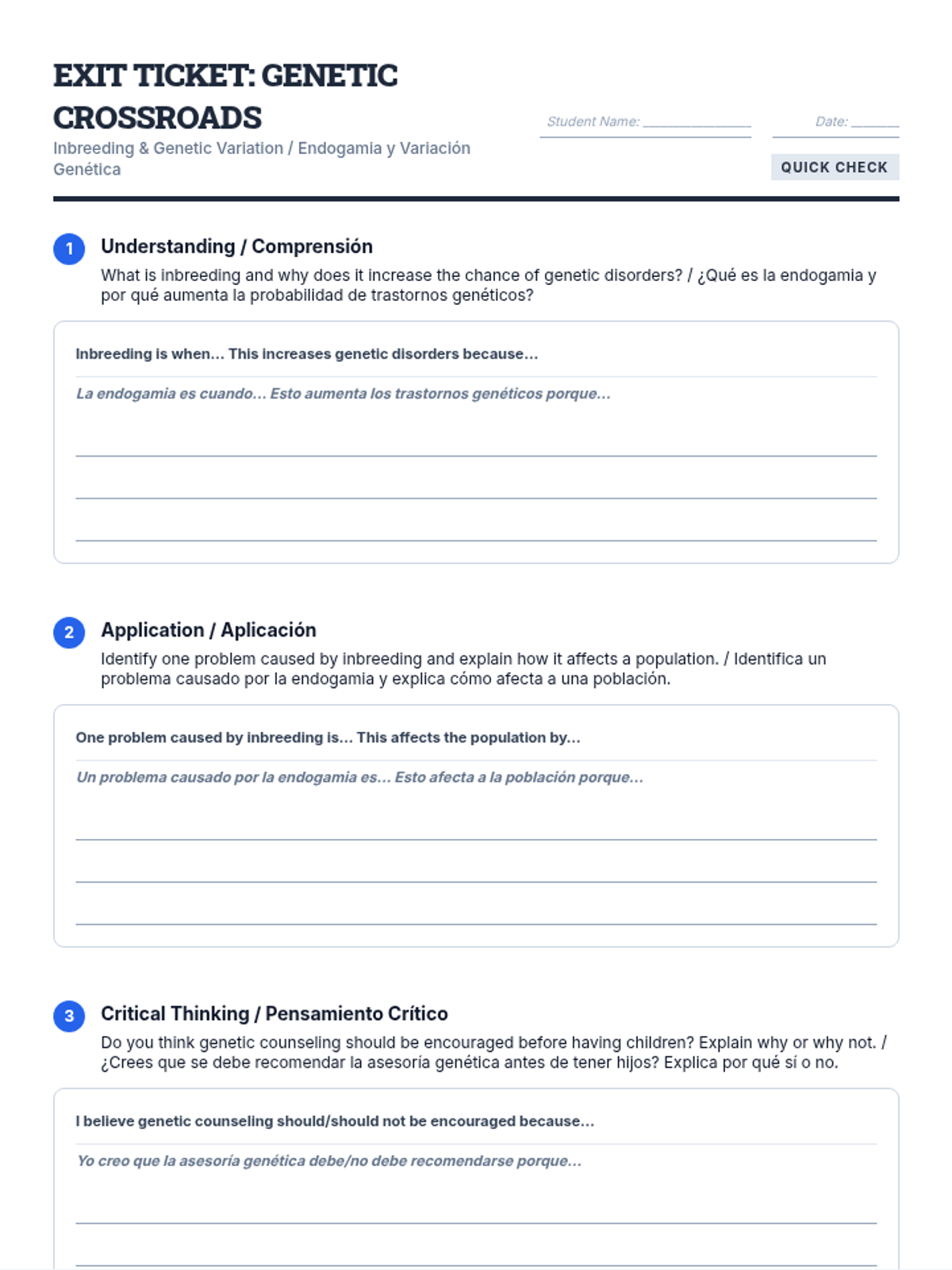
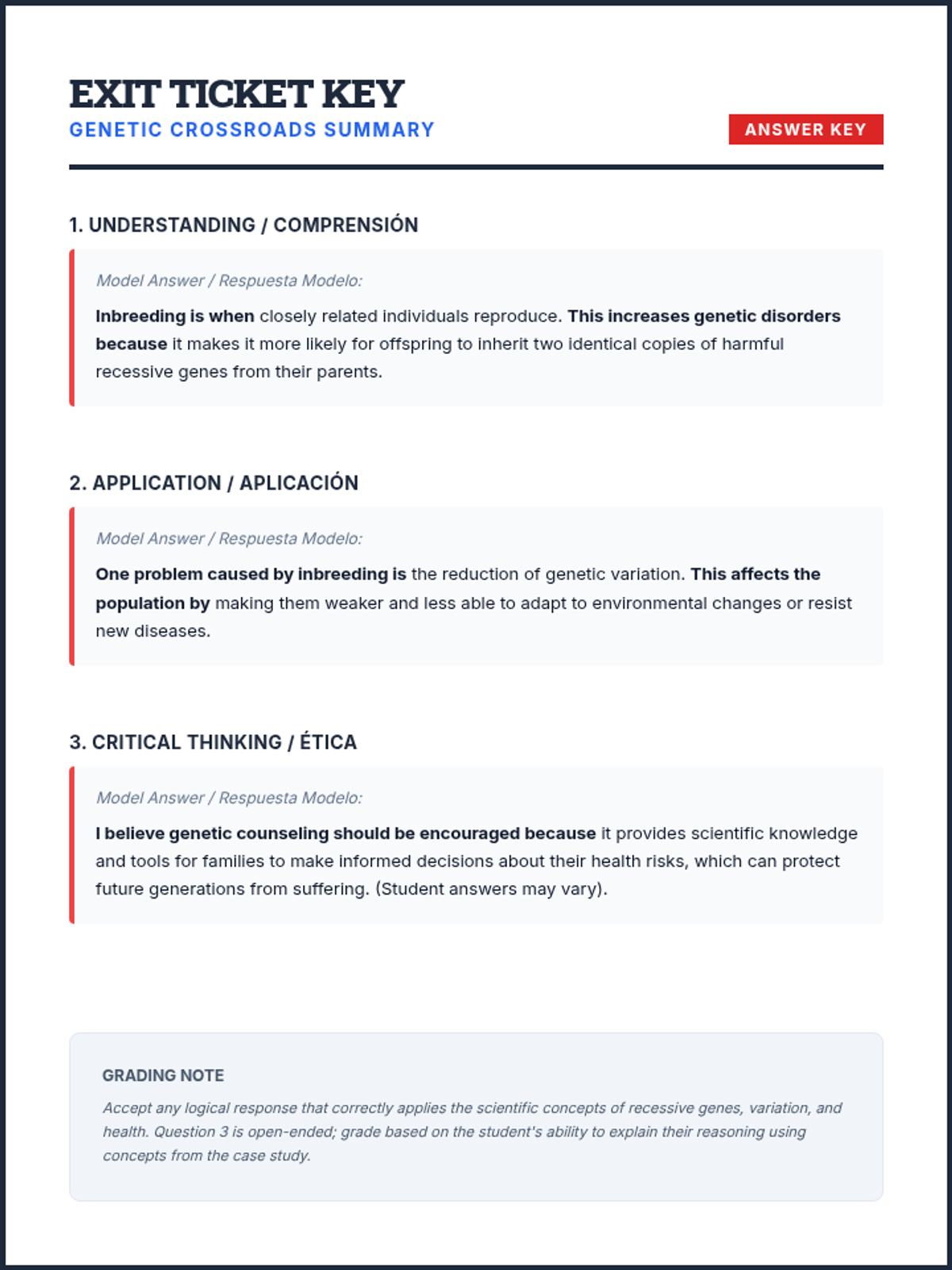
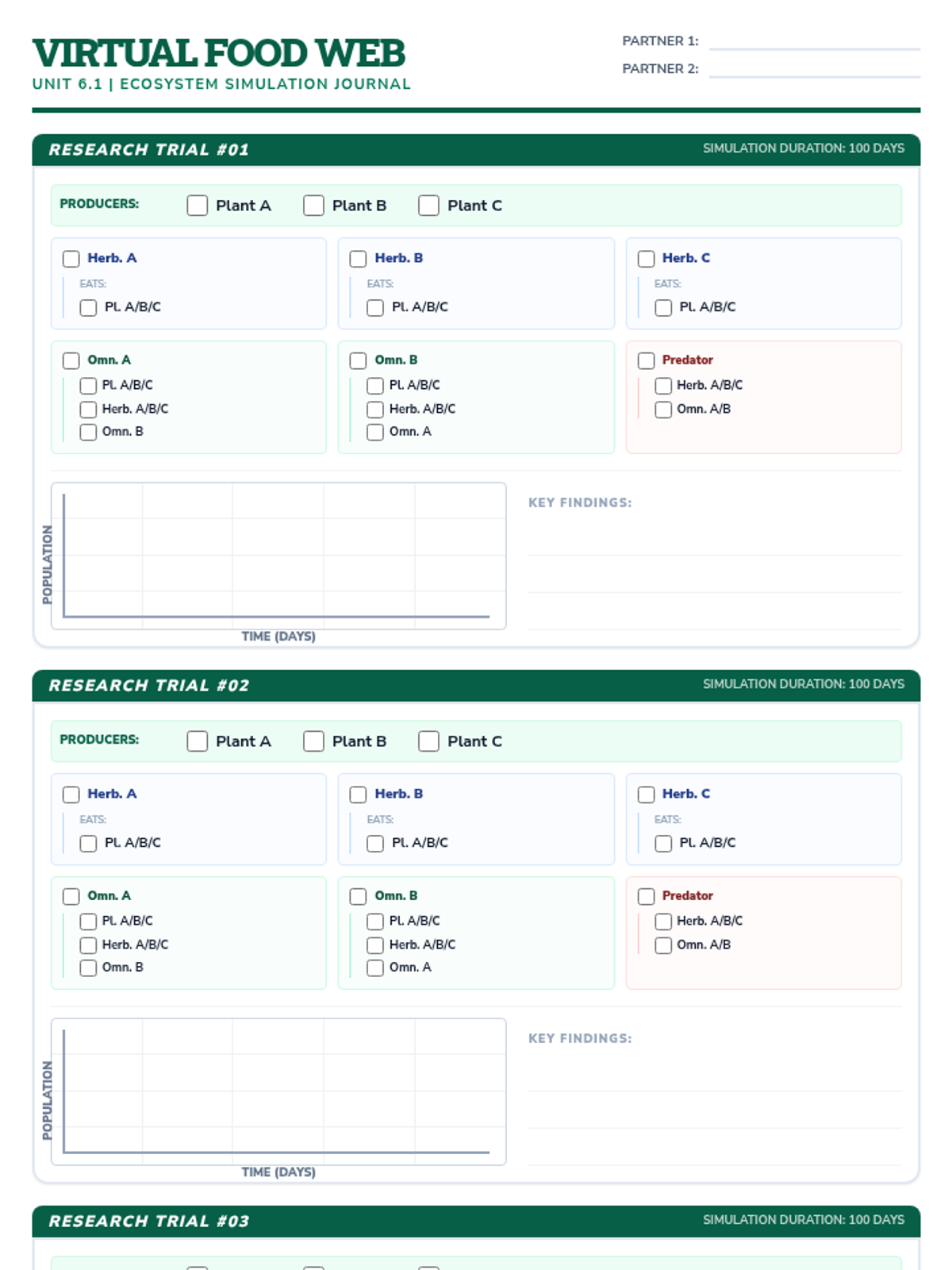
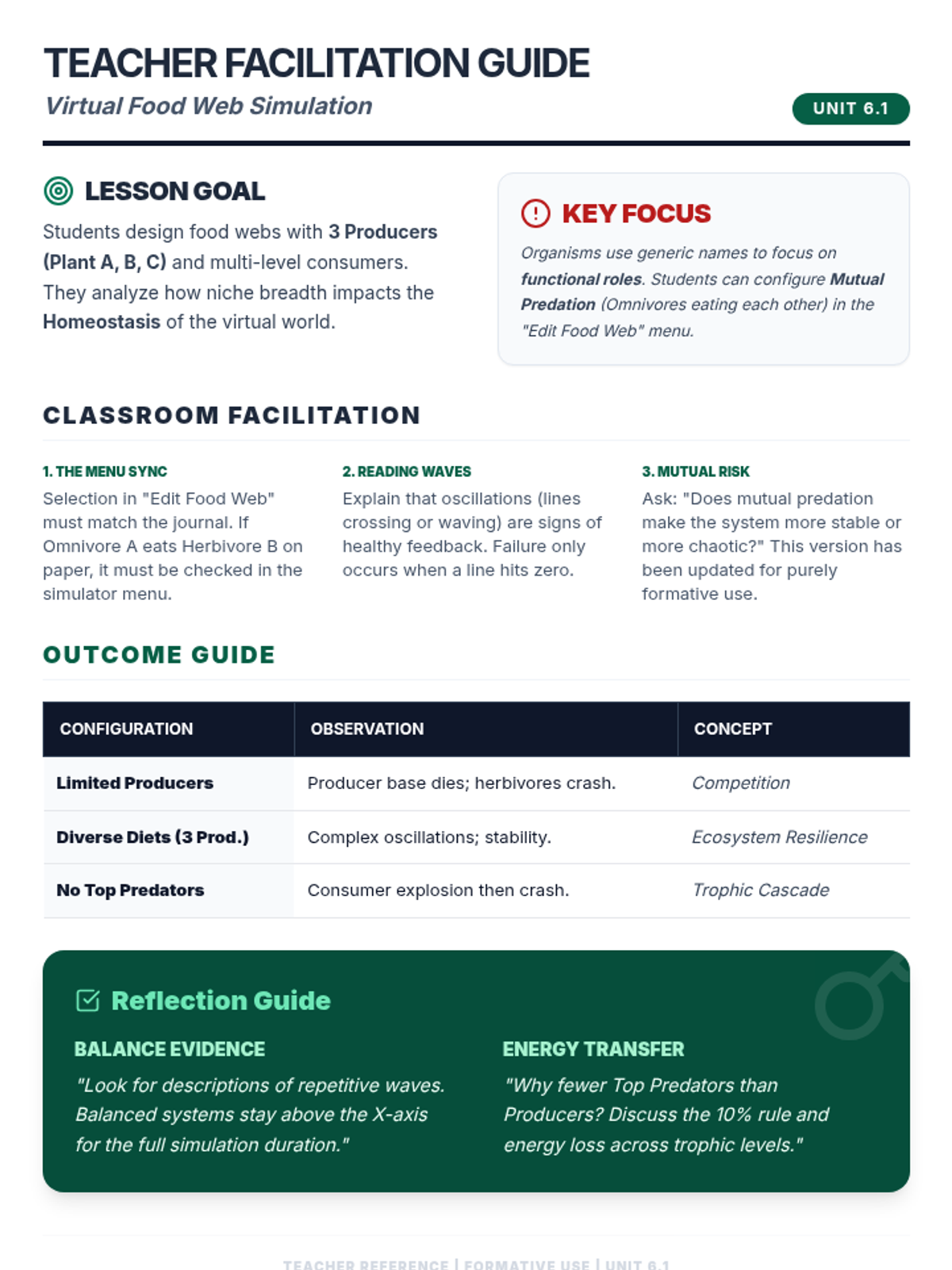
A collection of supplemental activities to reinforce foundational concepts of DNA, inheritance, and genetics. Students will practice vocabulary, sequencing biological structures, and verifying facts through interactive worksheets.
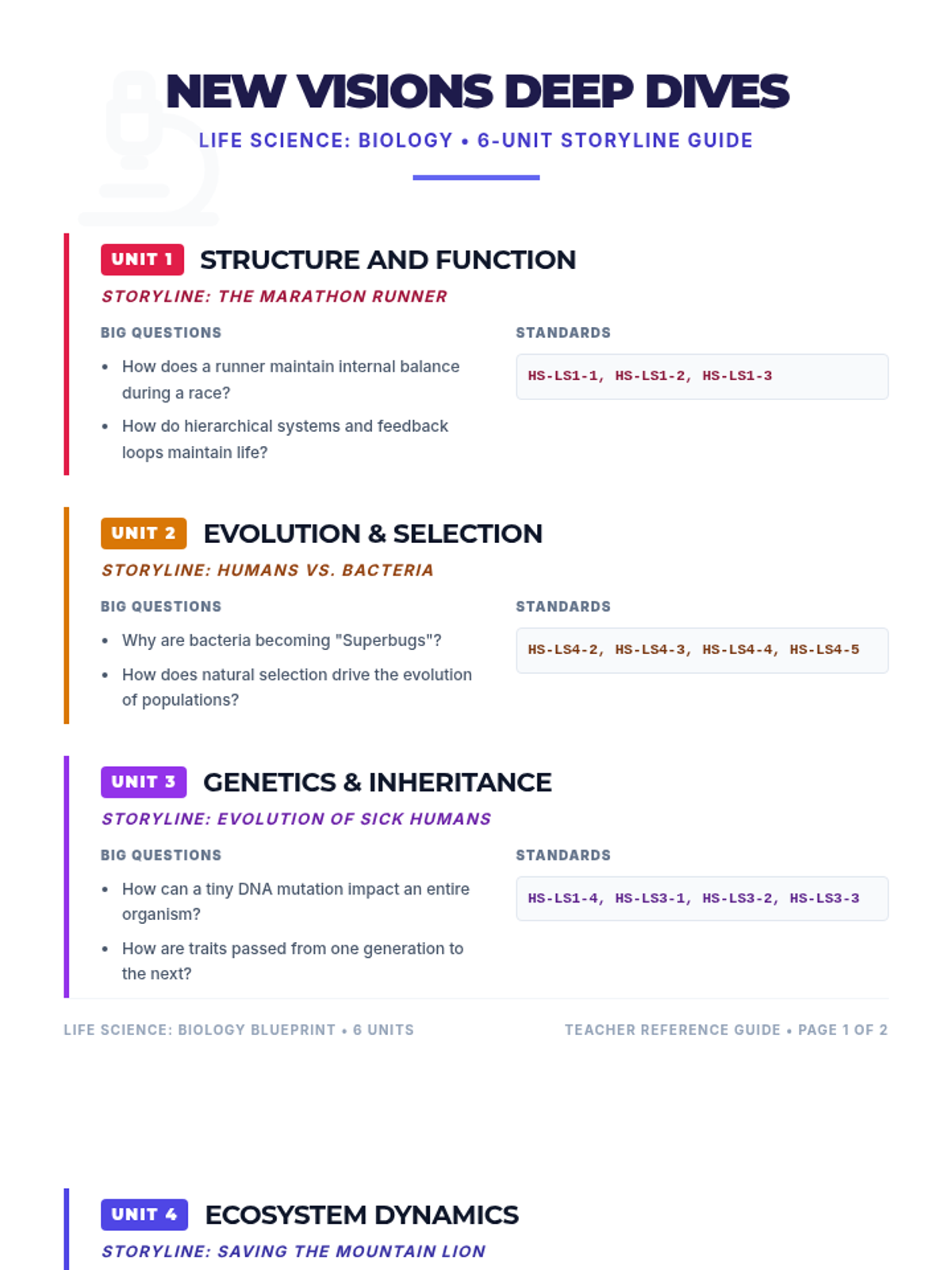
An exploration of the Dust Bowl's environmental causes and consequences, comparing the Great Plains before and during the 1930s crisis while making connections to modern soil health.
Students will apply their knowledge of DNA, Punnett squares, and mutations to design a unique creature, predicting its traits and simulating genetic changes in a culminating creative project.
Students will investigate how errors in the DNA code lead to mutations, exploring the different types of genetic changes and their potential effects on an organism's traits and survival.
Students will learn to predict the probability of inherited traits using Punnett squares, exploring dominant and recessive alleles through hands-on practice and probability exercises.
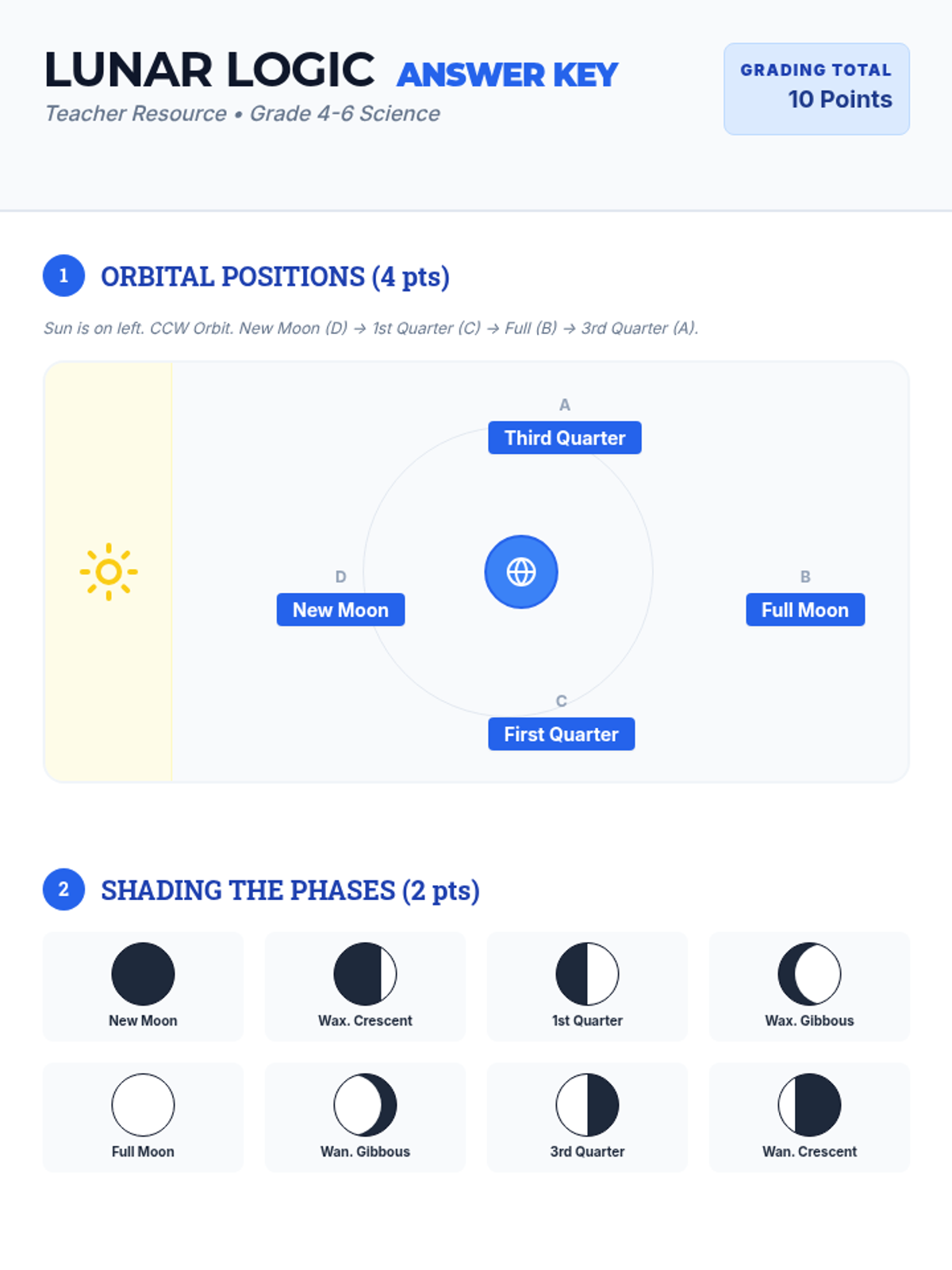
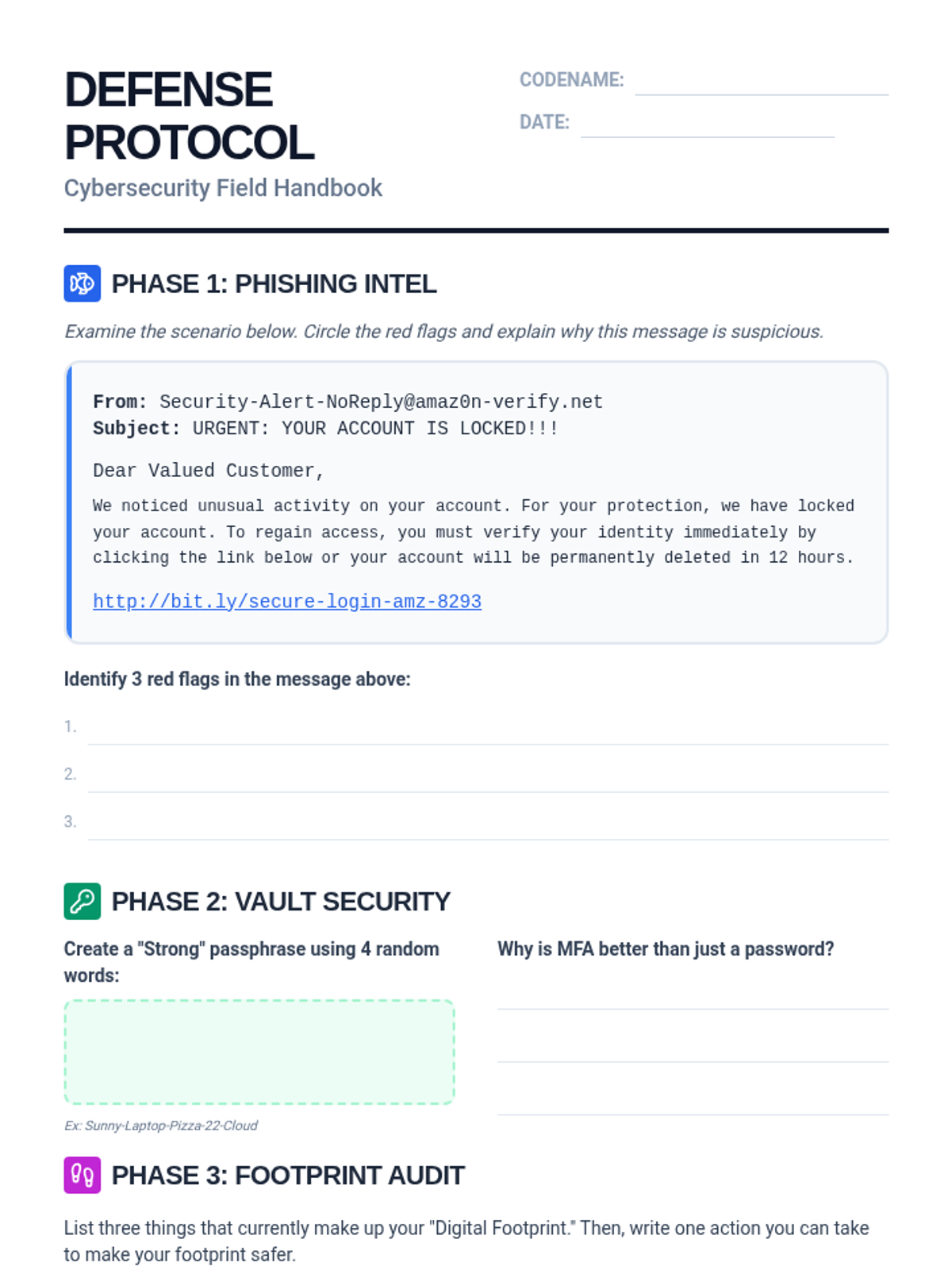
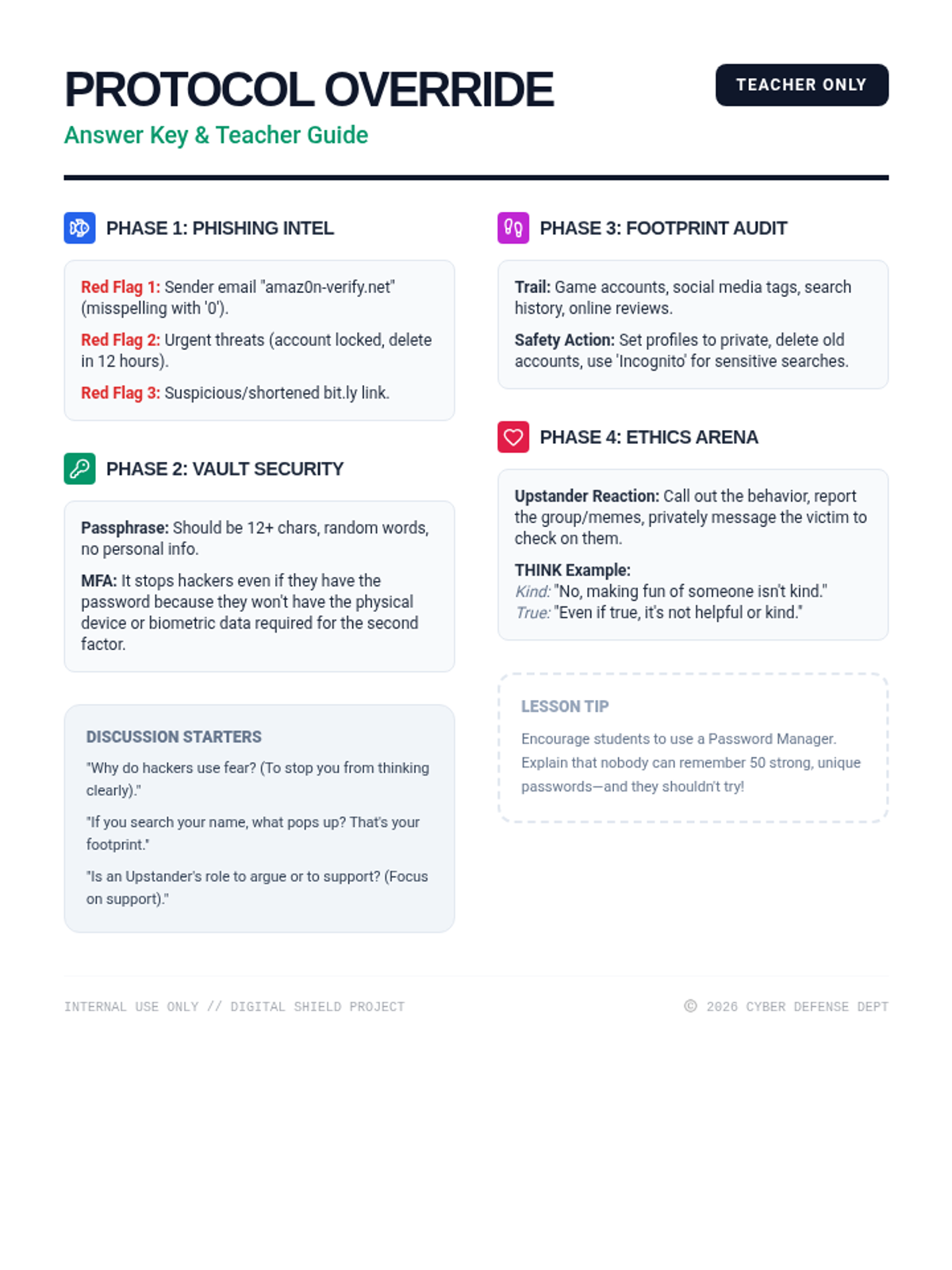
An introductory lesson on cybersecurity threats, focusing on identifying and defending against malware, phishing, and social engineering through interactive scenarios and group analysis.
Review and practice session for the chemistry lab midterm, focusing on core competencies from measurement to stoichiometry.
A comprehensive lesson on physical and chemical changes where students act as science detectives to identify how matter transforms. Includes hands-on lab investigations and visual evidence of chemical reactions.
An introductory lesson on identifying physical changes through five key indicators: change in shape, change in state, change in color (mixing), change in size, and dissolving. Students will understand that no new substance is created during these changes.
An introductory lesson on identifying chemical changes through five key indicators: color change, light formation, temperature change, gas production, and precipitate formation. Students will learn to distinguish between physical and chemical changes using real-world examples.
A comprehensive 90-minute engineering and science lesson focusing on heat transfer, insulation materials, and data-driven design to keep beverages cold. Students analyze temperature data, rank insulating materials, and propose their own container designs.
Students analyze the radioactive element composition of rocks from Afar, conduct a simulation lab to discover half-life patterns, and apply an exponential decay model to determine the age of rock samples.
A comprehensive lesson on mastering the stoichiometry roadmap, covering mole-to-mole conversions, mass-to-mass calculations, limiting reactants, and percent yield through visual slides and interactive sorting activities.
A focused review lesson covering the core concepts of body systems, photosynthesis, and cellular respiration based on Grade 8 interim assessment standards.
A comprehensive review lesson focusing on cell energy processes (photosynthesis and respiration), the hierarchy of biological organization, and the collaborative function of human body systems to maintain homeostasis.
A comprehensive review of middle school biology concepts including cell structure, energy processes, body systems, and homeostasis based on the Grade 8 Science Interim Assessment.
Students synthesize their knowledge to participate in a structured debate about the future of wildlife restoration.
Students analyze the differing viewpoints of ranchers, environmentalists, and local communities regarding predator reintroduction.