A comprehensive review lesson focusing on cell energy processes (photosynthesis and respiration), the hierarchy of biological organization, and the collaborative function of human body systems to maintain homeostasis.
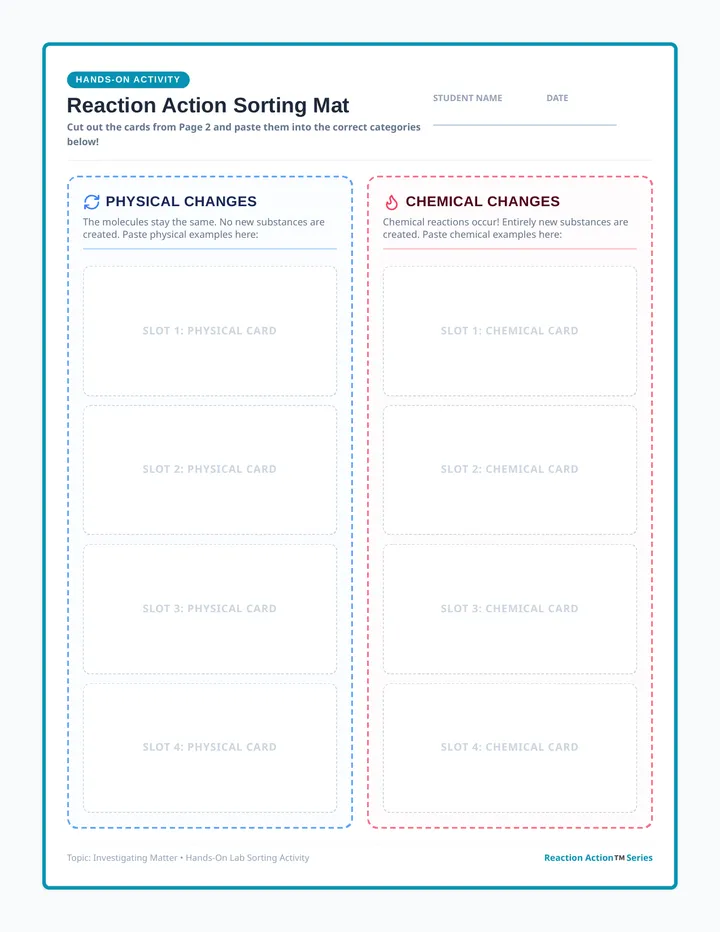
An introductory lesson on identifying physical changes through five key indicators: change in shape, change in state, change in color (mixing), change in size, and dissolving. Students will understand that no new substance is created during these changes.
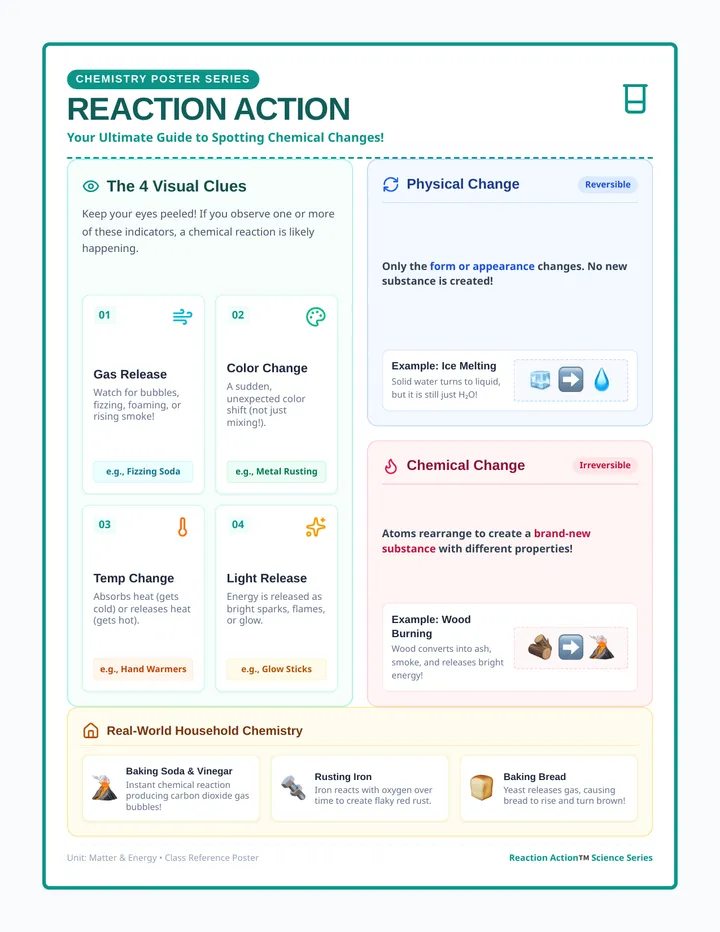
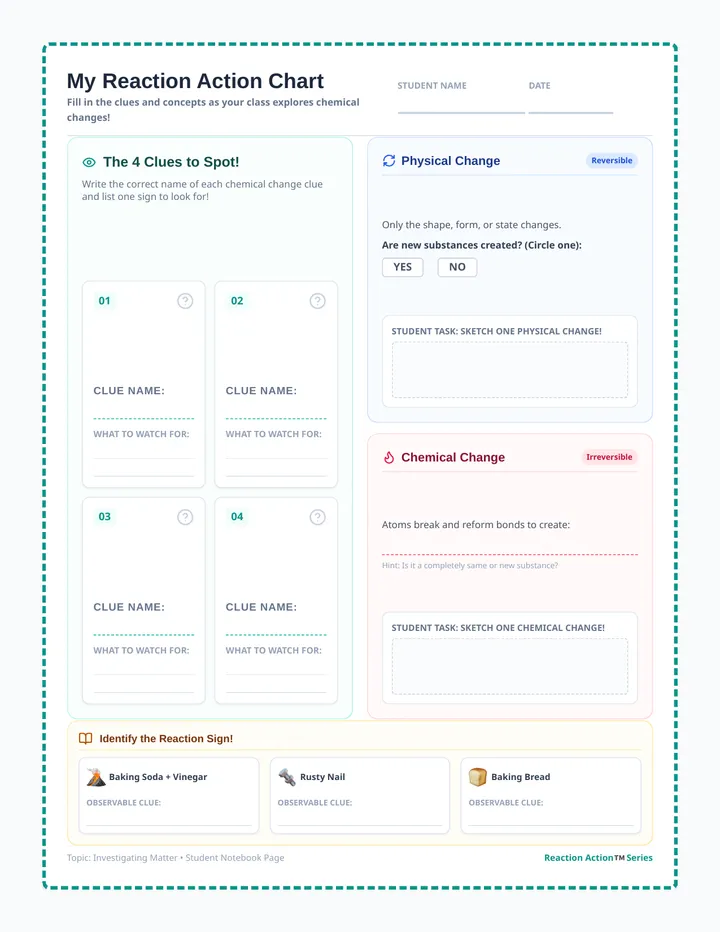
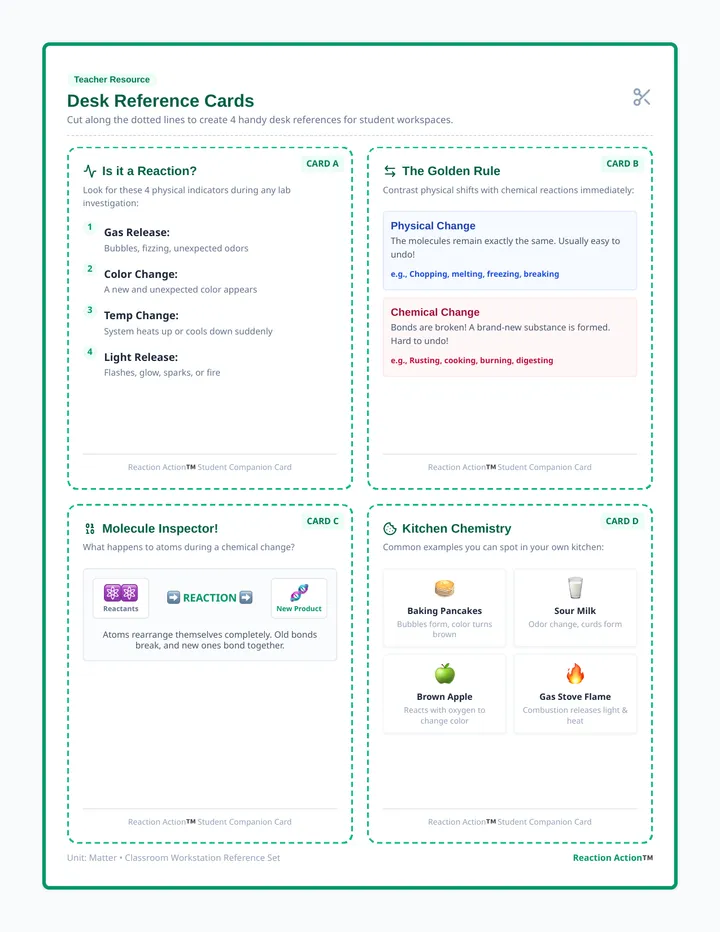
An introductory lesson on identifying chemical changes through five key indicators: color change, light formation, temperature change, gas production, and precipitate formation. Students will learn to distinguish between physical and chemical changes using real-world examples.
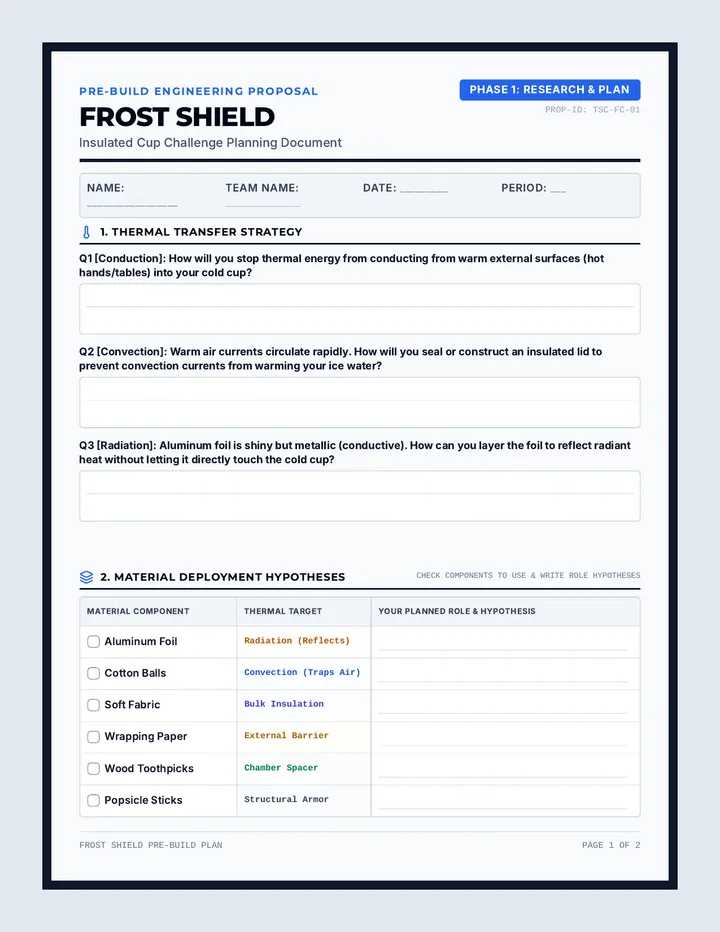
A comprehensive 90-minute engineering and science lesson focusing on heat transfer, insulation materials, and data-driven design to keep beverages cold. Students analyze temperature data, rank insulating materials, and propose their own container designs.
Students analyze the radioactive element composition of rocks from Afar, conduct a simulation lab to discover half-life patterns, and apply an exponential decay model to determine the age of rock samples.
A focused review lesson covering the core concepts of body systems, photosynthesis, and cellular respiration based on Grade 8 interim assessment standards.
A comprehensive review of middle school biology concepts including cell structure, energy processes, body systems, and homeostasis based on the Grade 8 Science Interim Assessment.
Students synthesize their knowledge to participate in a structured debate about the future of wildlife restoration.
Students analyze the differing viewpoints of ranchers, environmentalists, and local communities regarding predator reintroduction.
Students explore the scientific history of wolf reintroduction in Yellowstone and investigate the concept of trophic cascades and ecosystem engineering.
An exploration of the rock cycle's dynamic processes, from the fiery birth of igneous rocks to the transformative heat and pressure of metamorphism. Students will learn how Earth constantly recycles its crust through physical and chemical changes.
Students identify various landforms and apply their knowledge of geological processes to design their own island ecosystem in a culminating project.
A deep dive into the forces of weathering and erosion using mechanical simulations to observe how rocks break down and move over time.
Students explore the three main types of rocks and the processes that transform them through a hands-on simulation using crayons to represent the rock cycle.
Explore how ecosystems respond to disturbances through primary and secondary succession, and analyze the relationship between biodiversity and ecosystem stability.
Students investigate radioactive decay in rocks from Afar to determine their age, using mathematical modeling and simulations to reconstruct the region's geologic history.
A deep dive into the subatomic origins of plate tectonics, tracing the journey from unstable nuclei to the massive convection currents that move continents.
A comprehensive lesson exploring the physics of tsunami waves, from their seismic origins to their dramatic transformation as they approach the shore. Students will learn about wave propagation, the relationship between depth and speed, and the shoaling effect.
Day 2 dives into particle motion and spacing during phase changes, featuring a CER practice and a comprehensive exit ticket review.
Day 1 focuses on vocabulary, the direction of heat transfer, and the fundamental differences between temperature and thermal energy.
A comprehensive introduction to the compound light microscope, covering its anatomy, the function of each part, and the essential protocols for safe and effective use in a laboratory setting.