Students will learn to predict the probability of inherited traits using Punnett squares, exploring dominant and recessive alleles through hands-on practice and probability exercises.
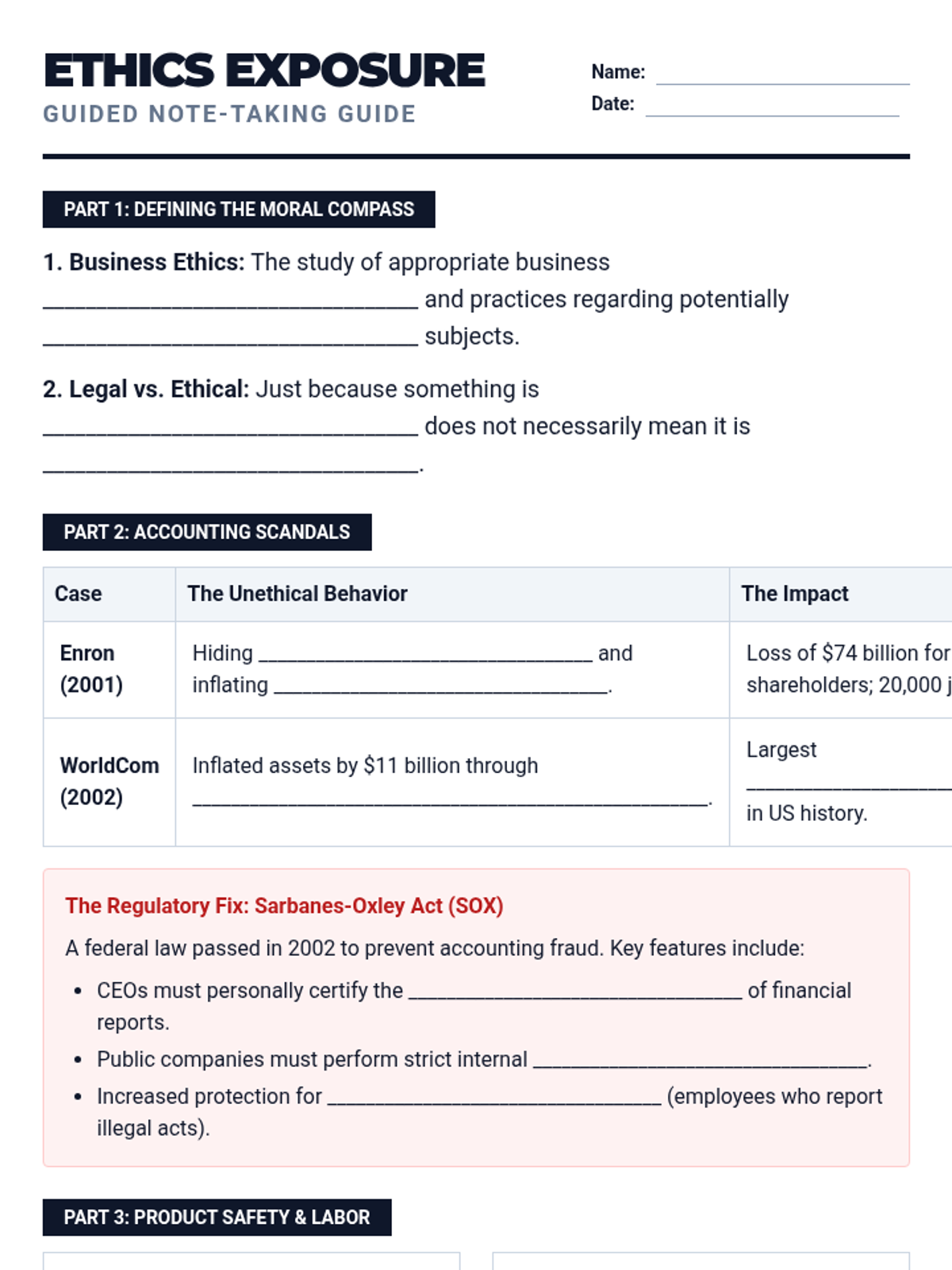
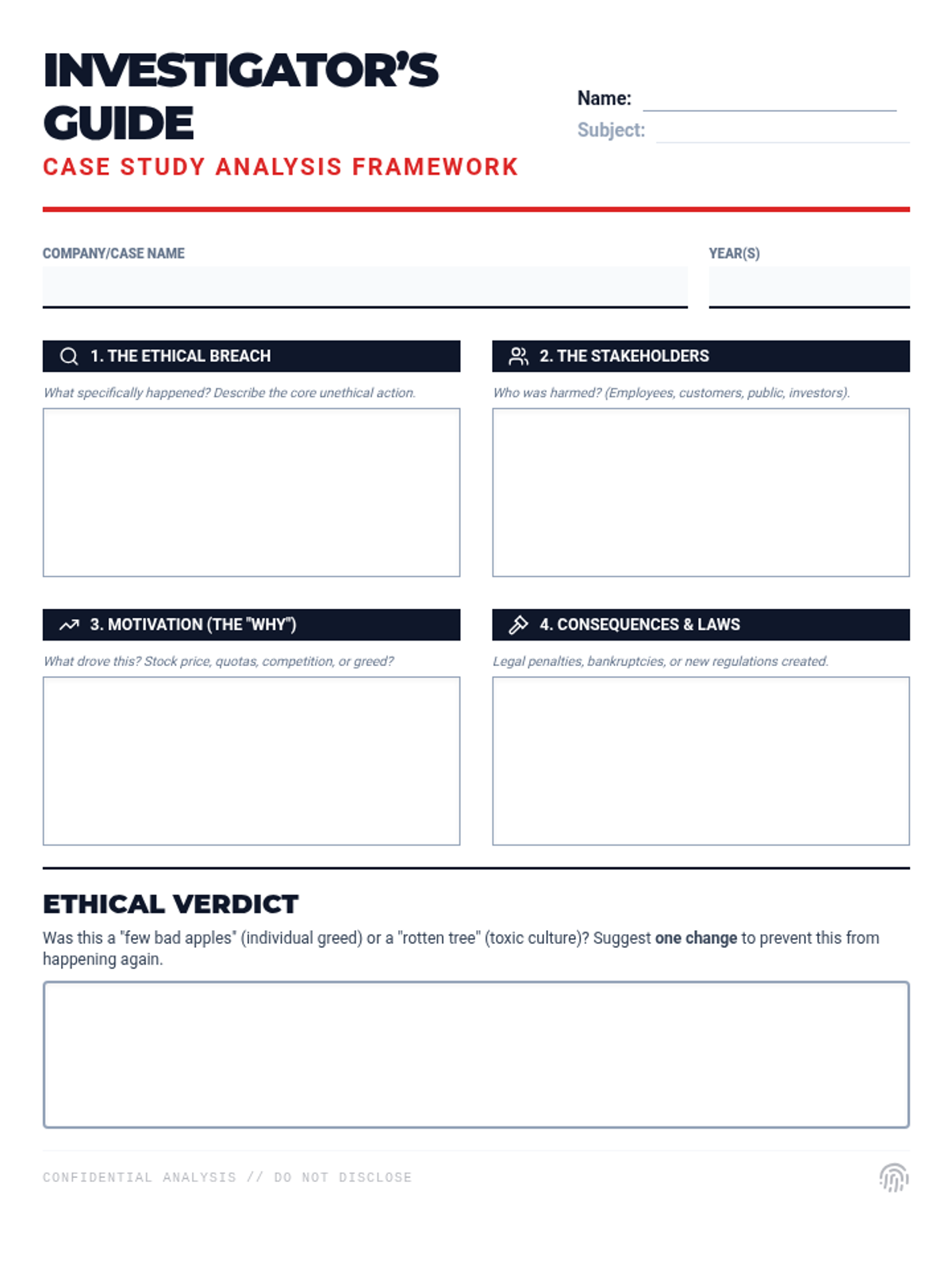
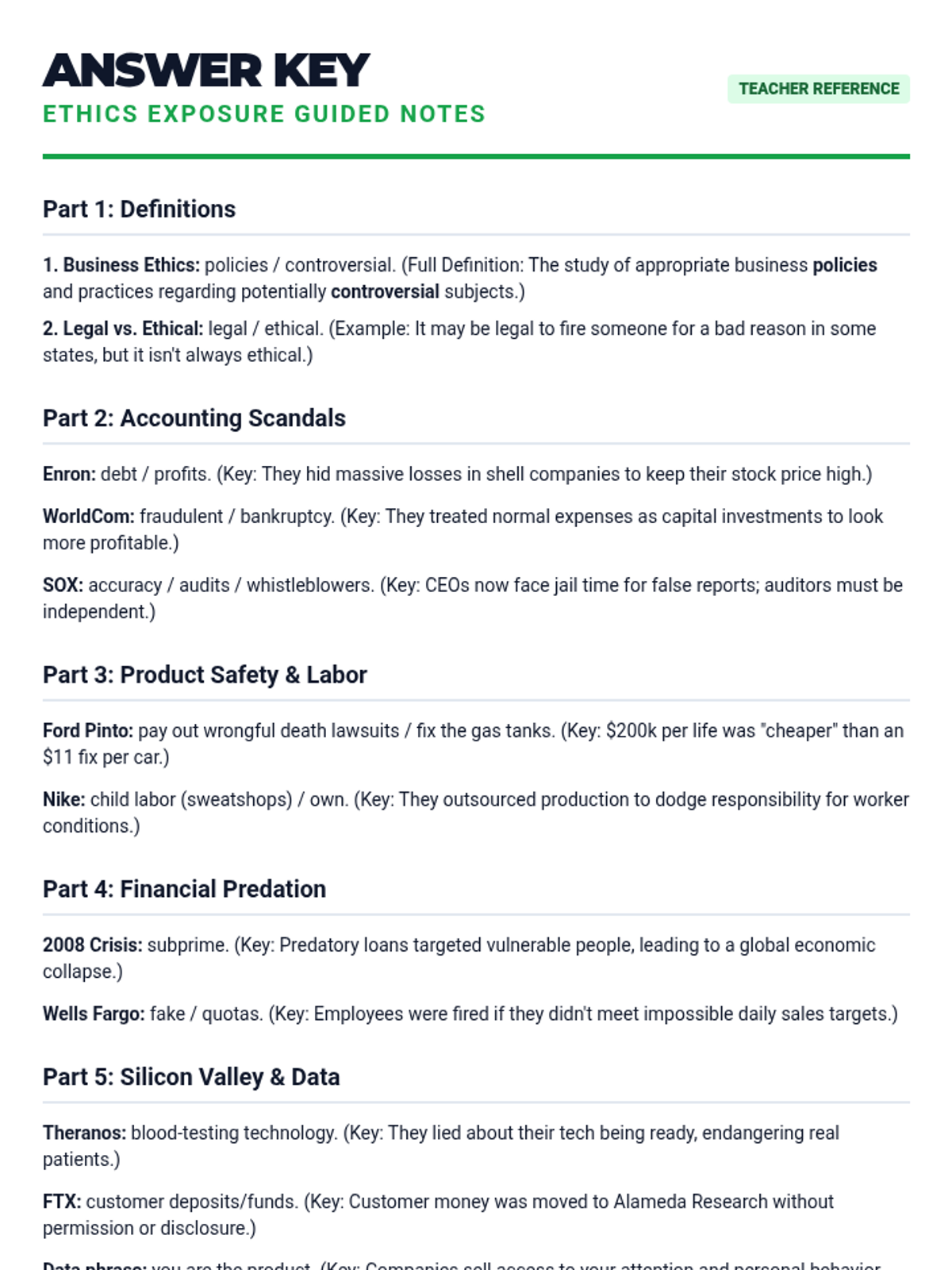
An introductory lesson on business ethics, covering major historical scandals, regulatory responses, and modern ethical dilemmas in the corporate world.
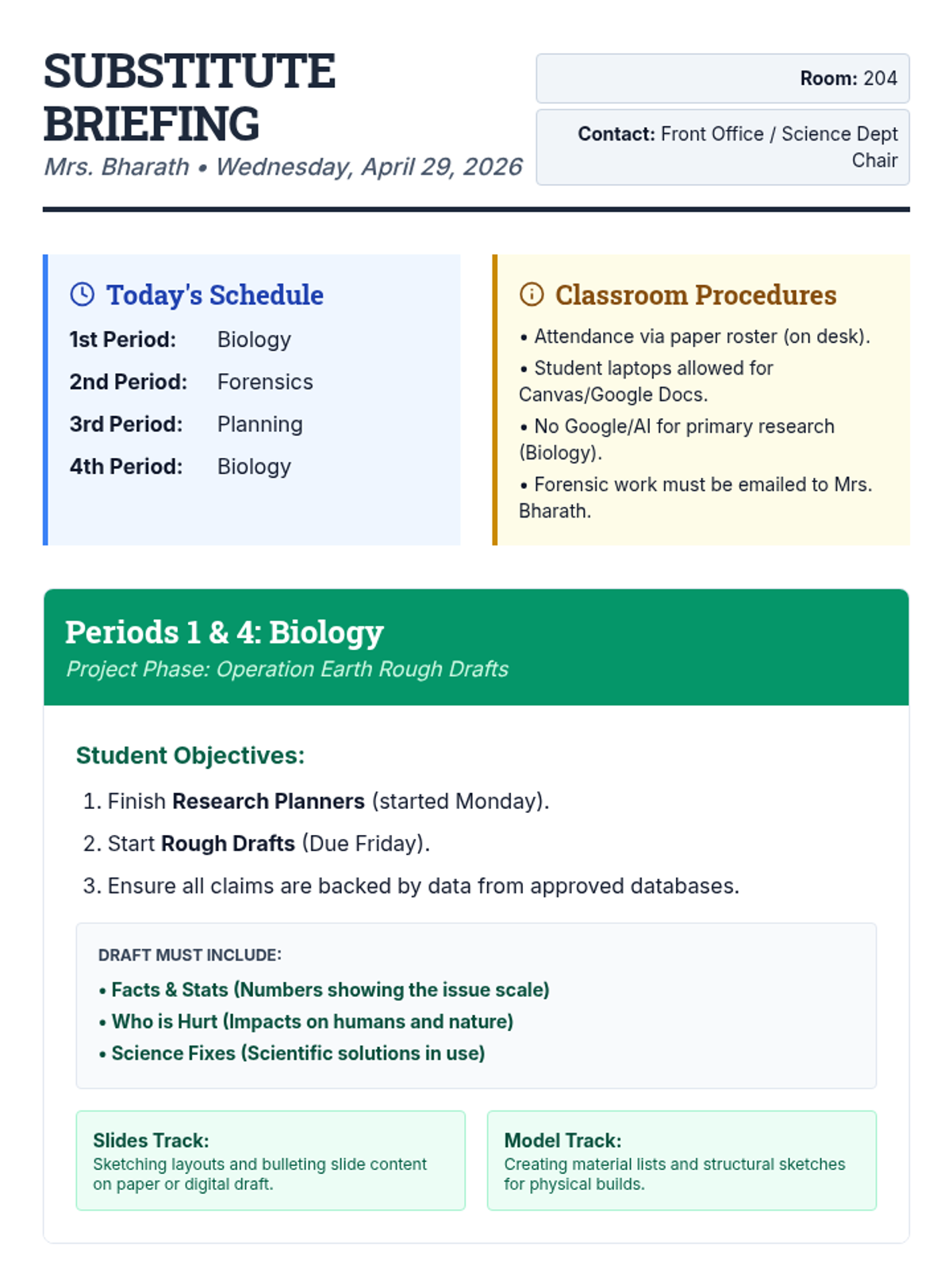
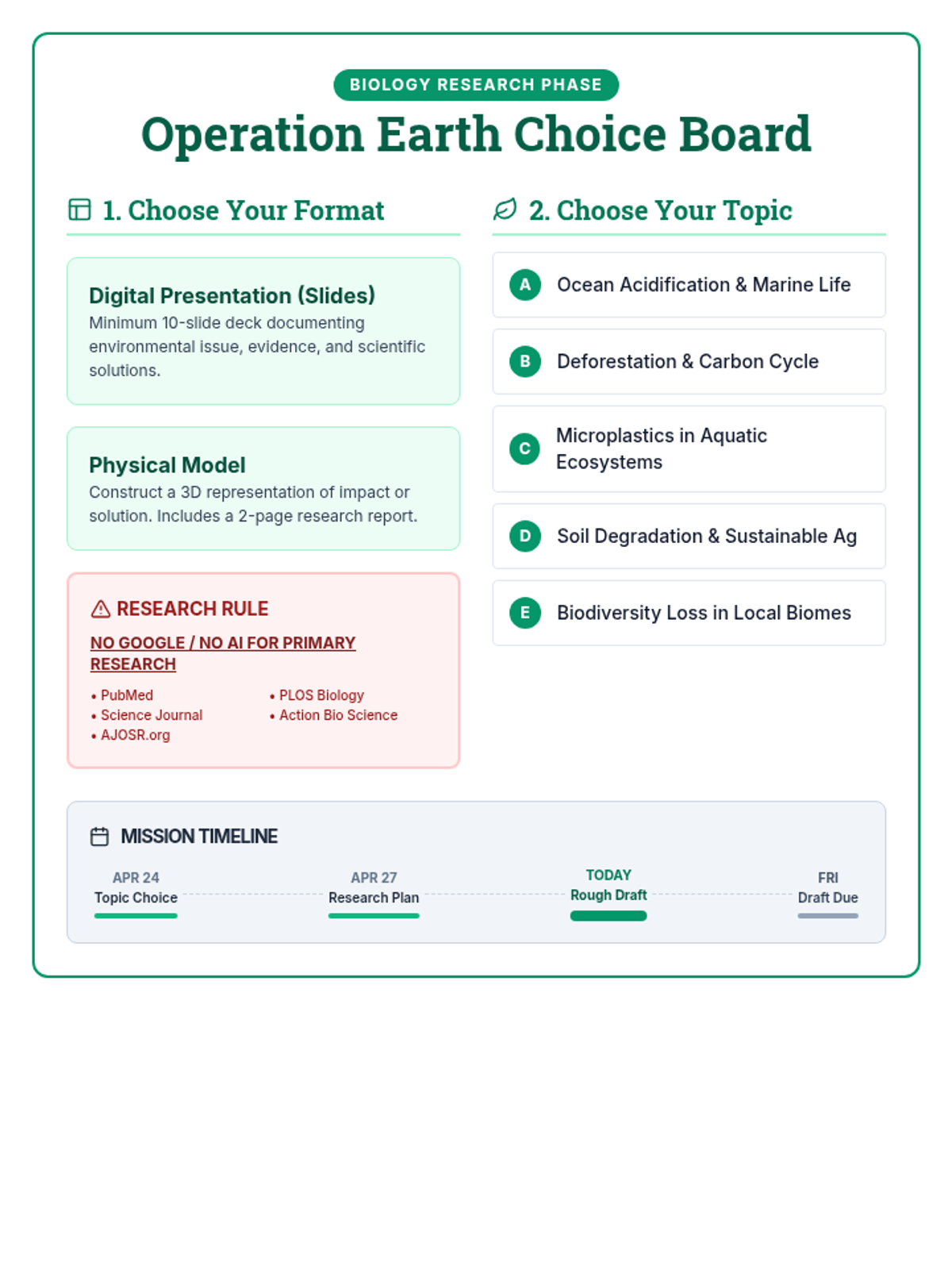
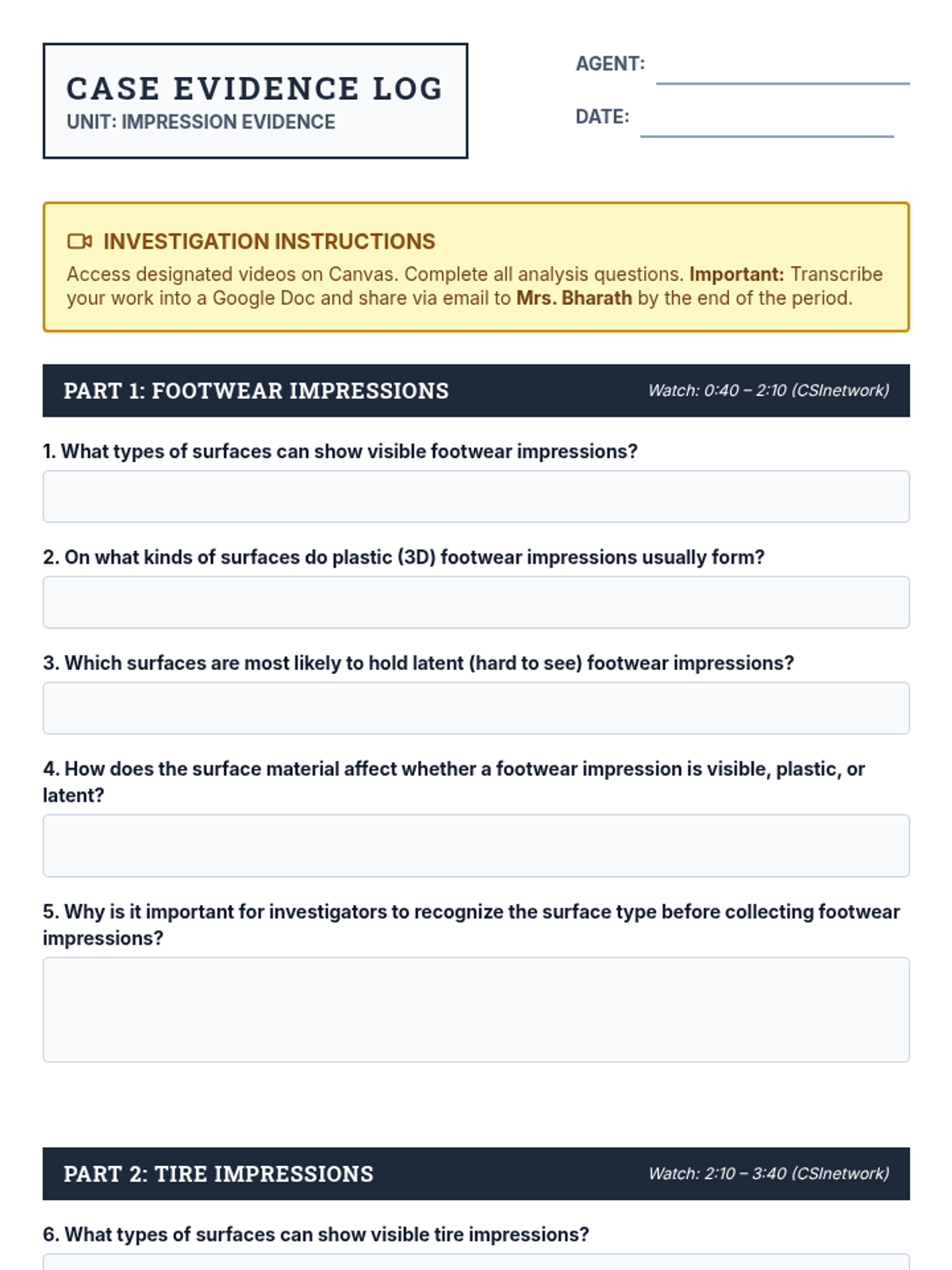
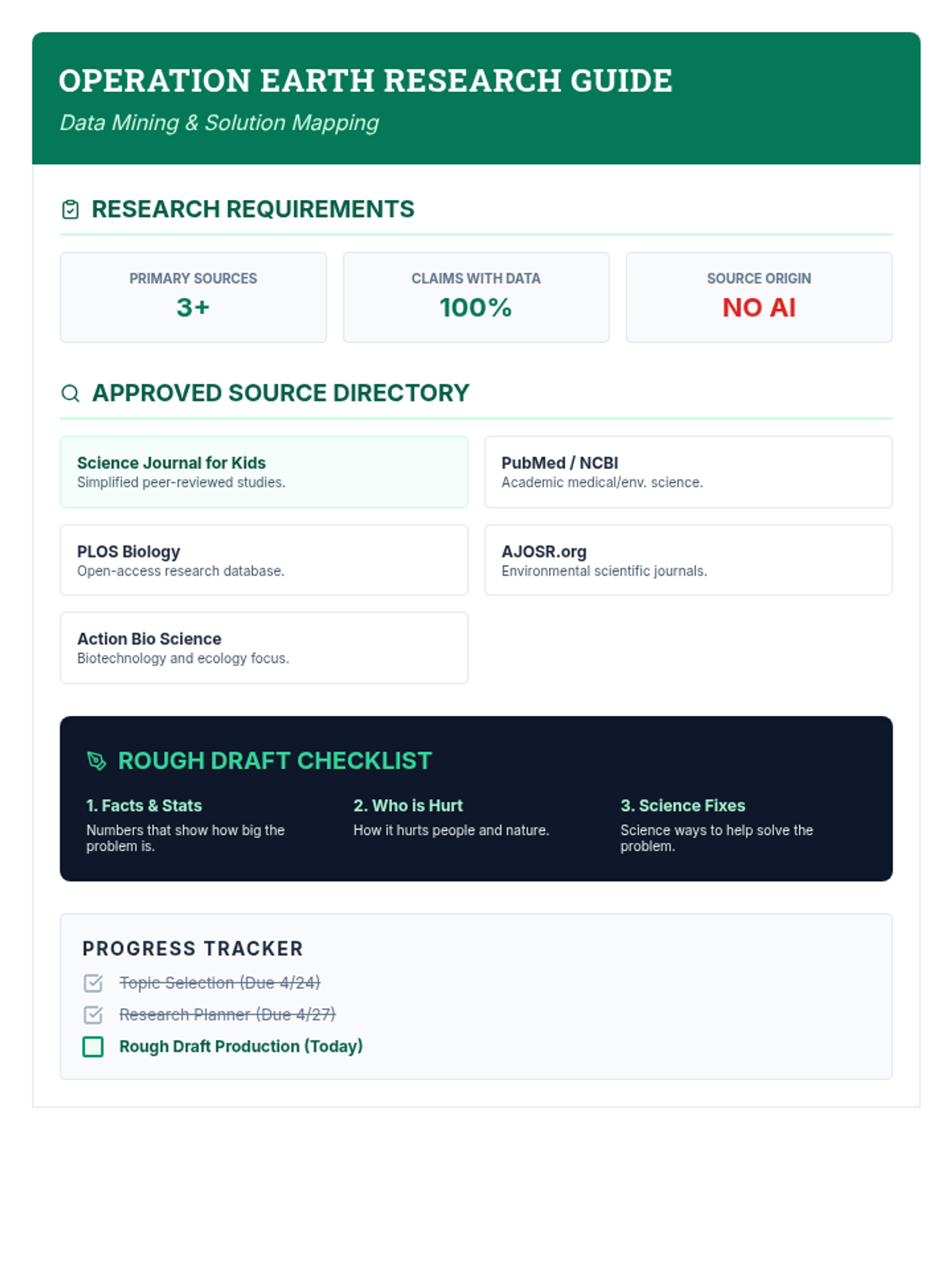
A comprehensive substitute teacher plan for 1st and 4th period Biology and 2nd period Forensics, focusing on environmental research and forensic impression evidence.
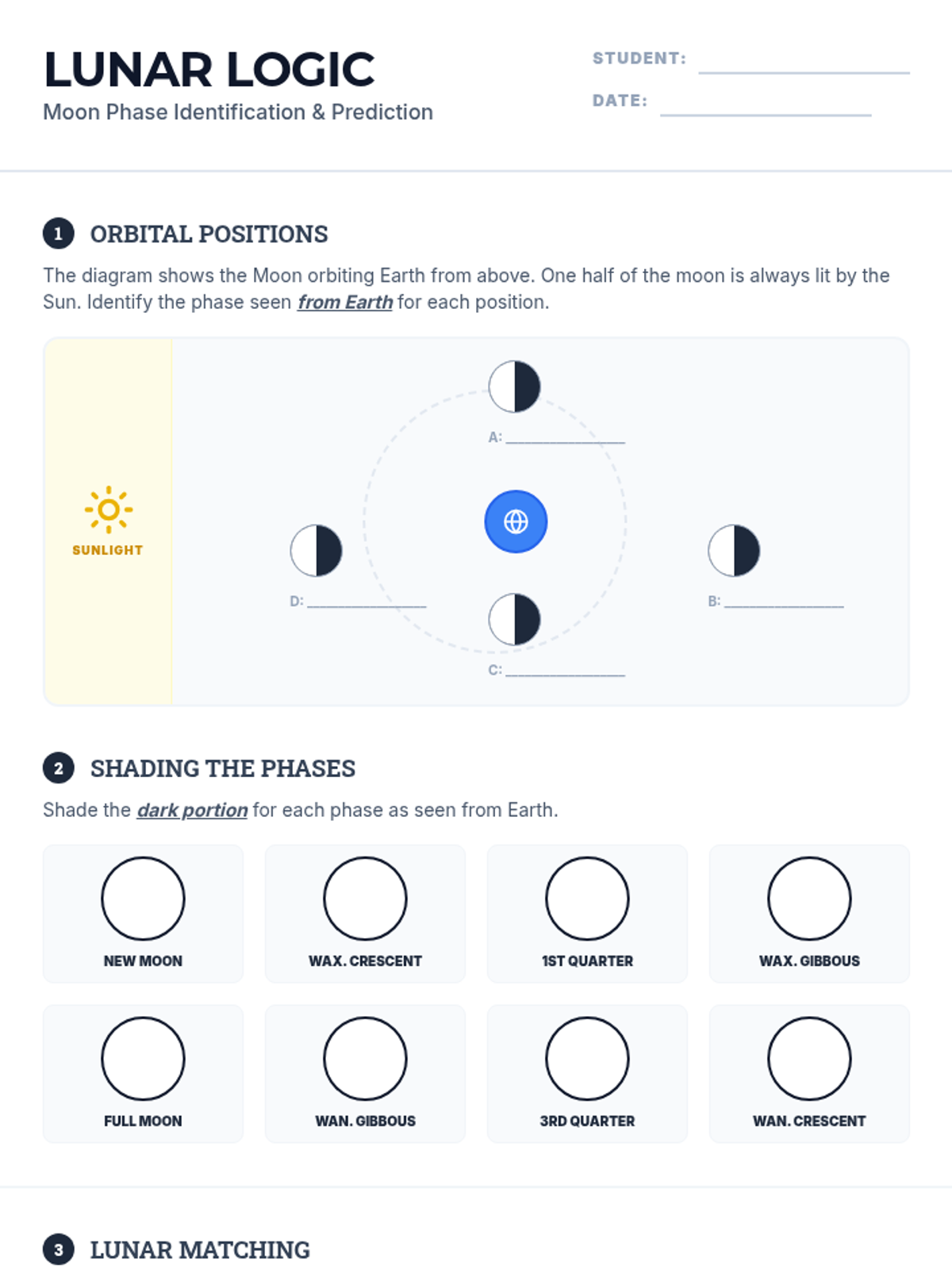
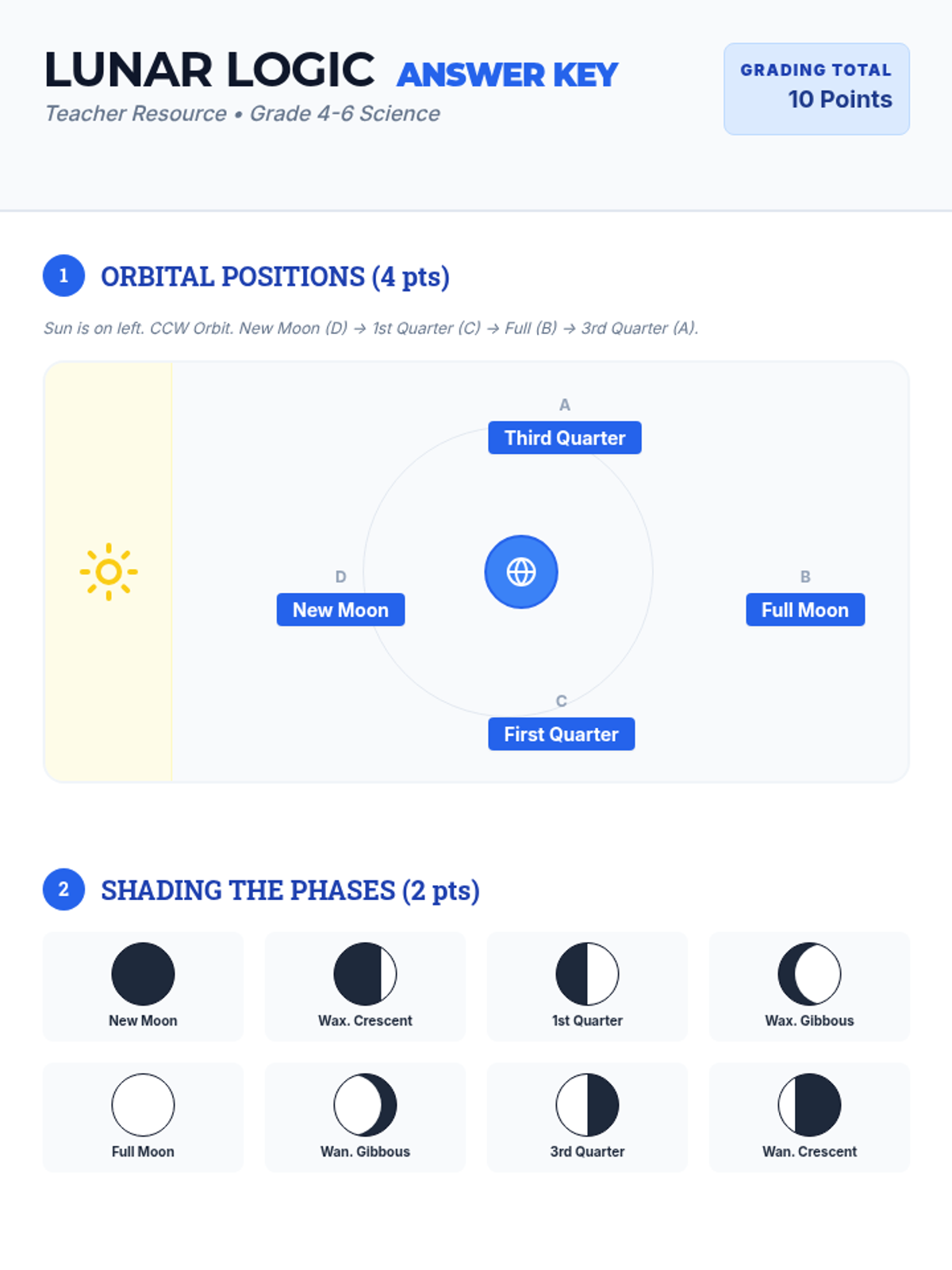
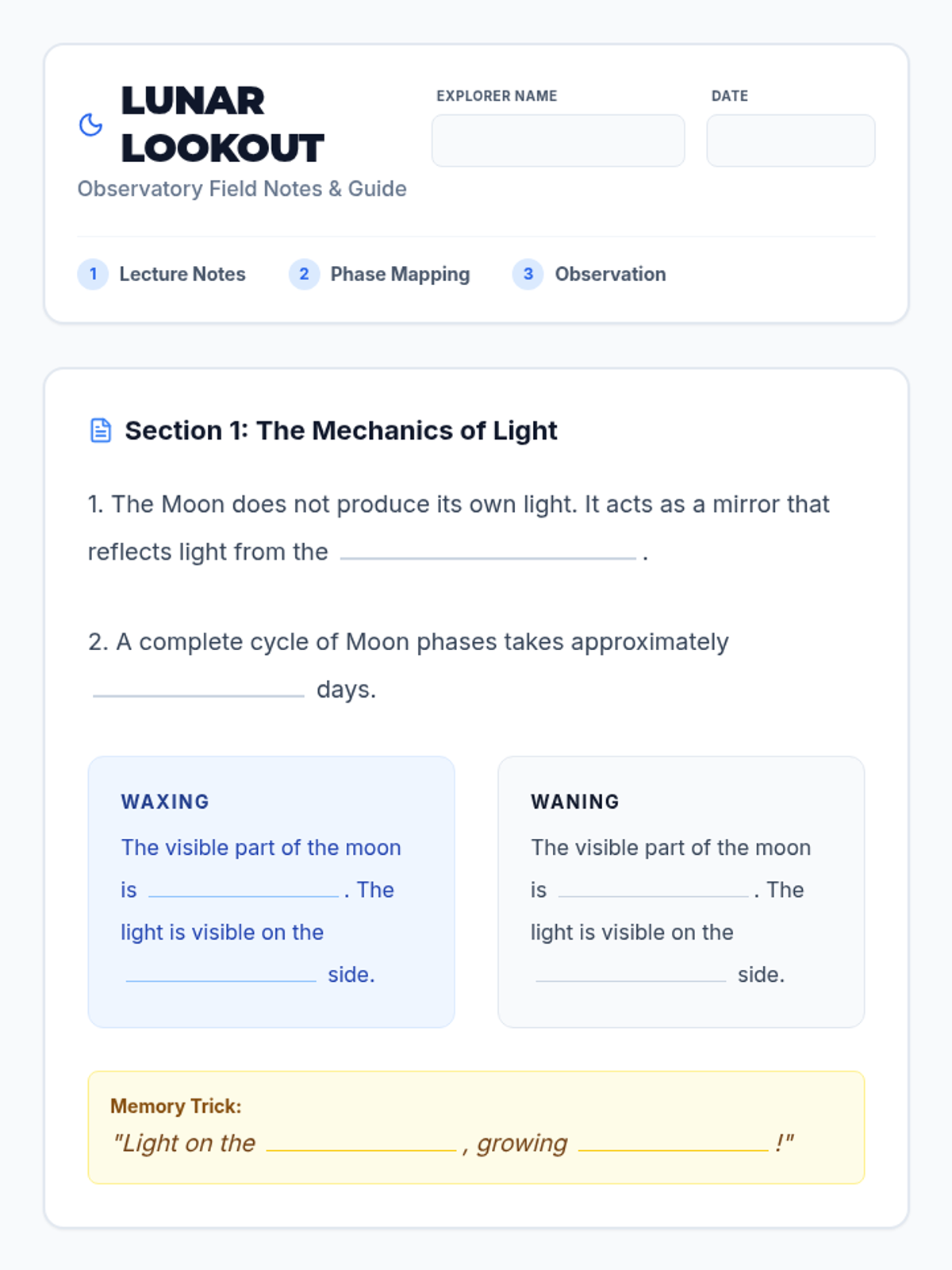
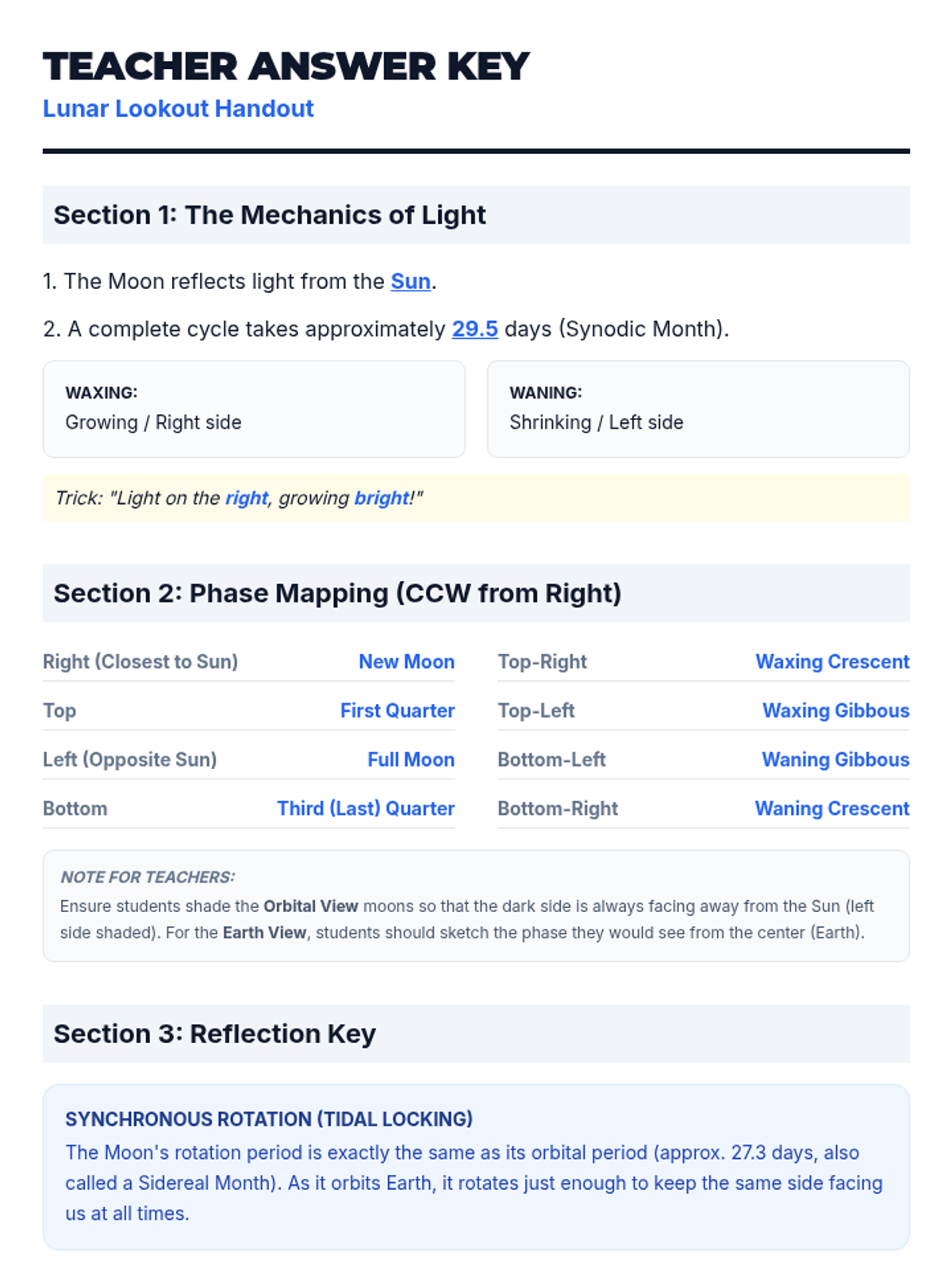
A lesson exploring the eight phases of the moon, focusing on their appearance from Earth, their orbital positions, and the predictable patterns of the lunar cycle.
A comprehensive 8th-grade review game covering major concepts in Social Studies, Math, and Science. Designed for classroom engagement and cumulative review.
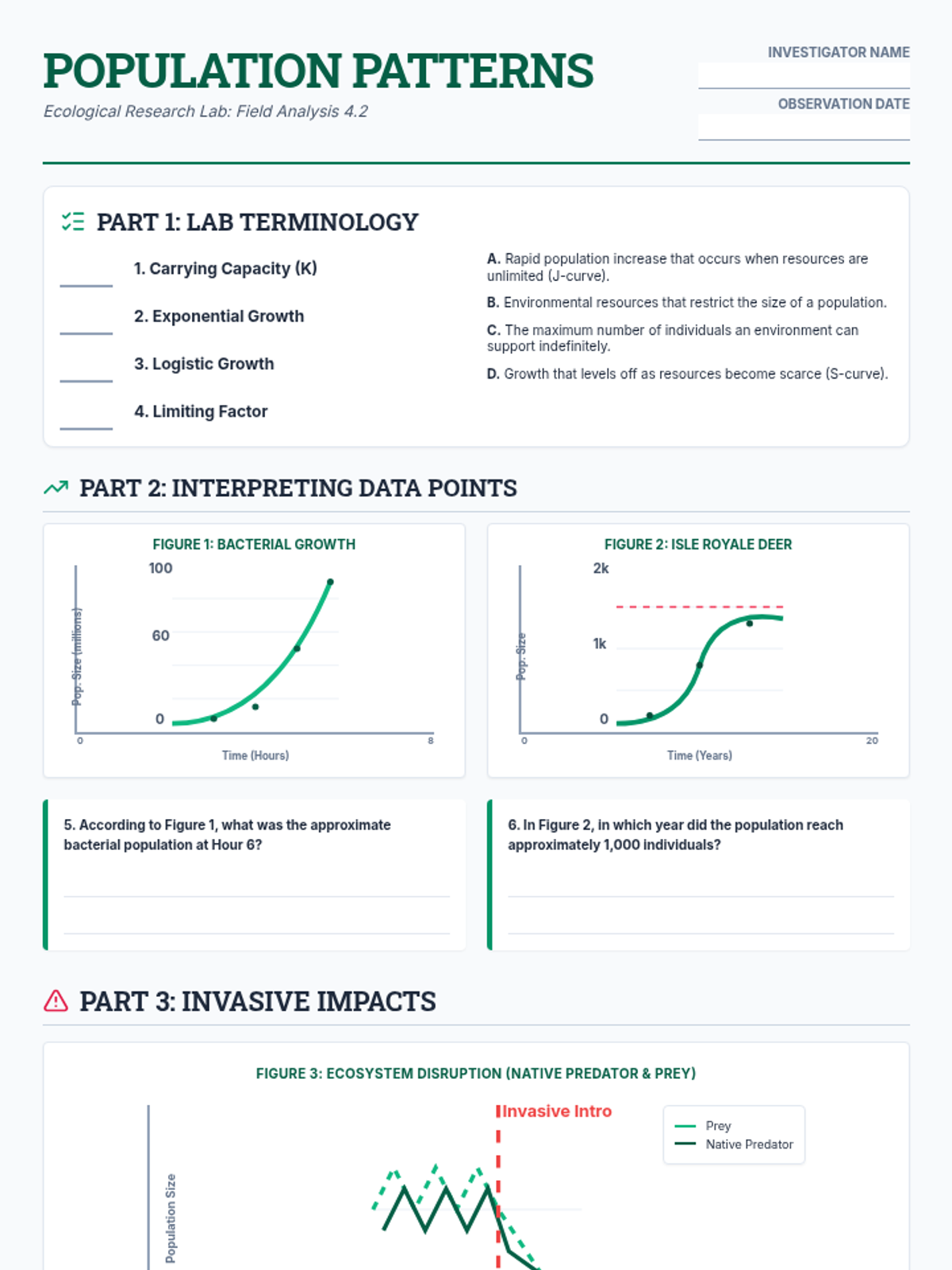
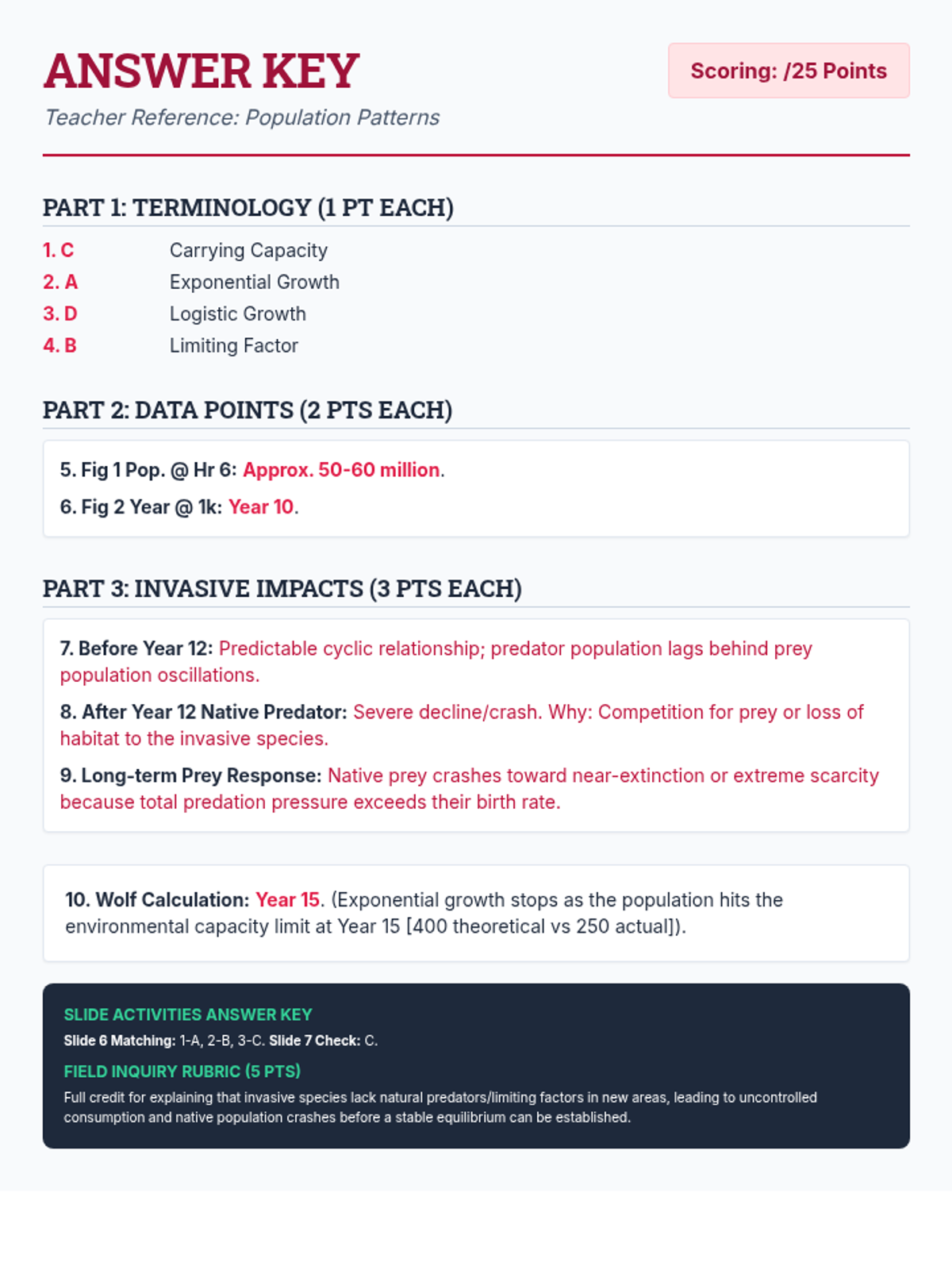
Students learn to distinguish between exponential and logistic population growth models, identify carrying capacity, and understand the role of limiting factors in shaping biological communities.
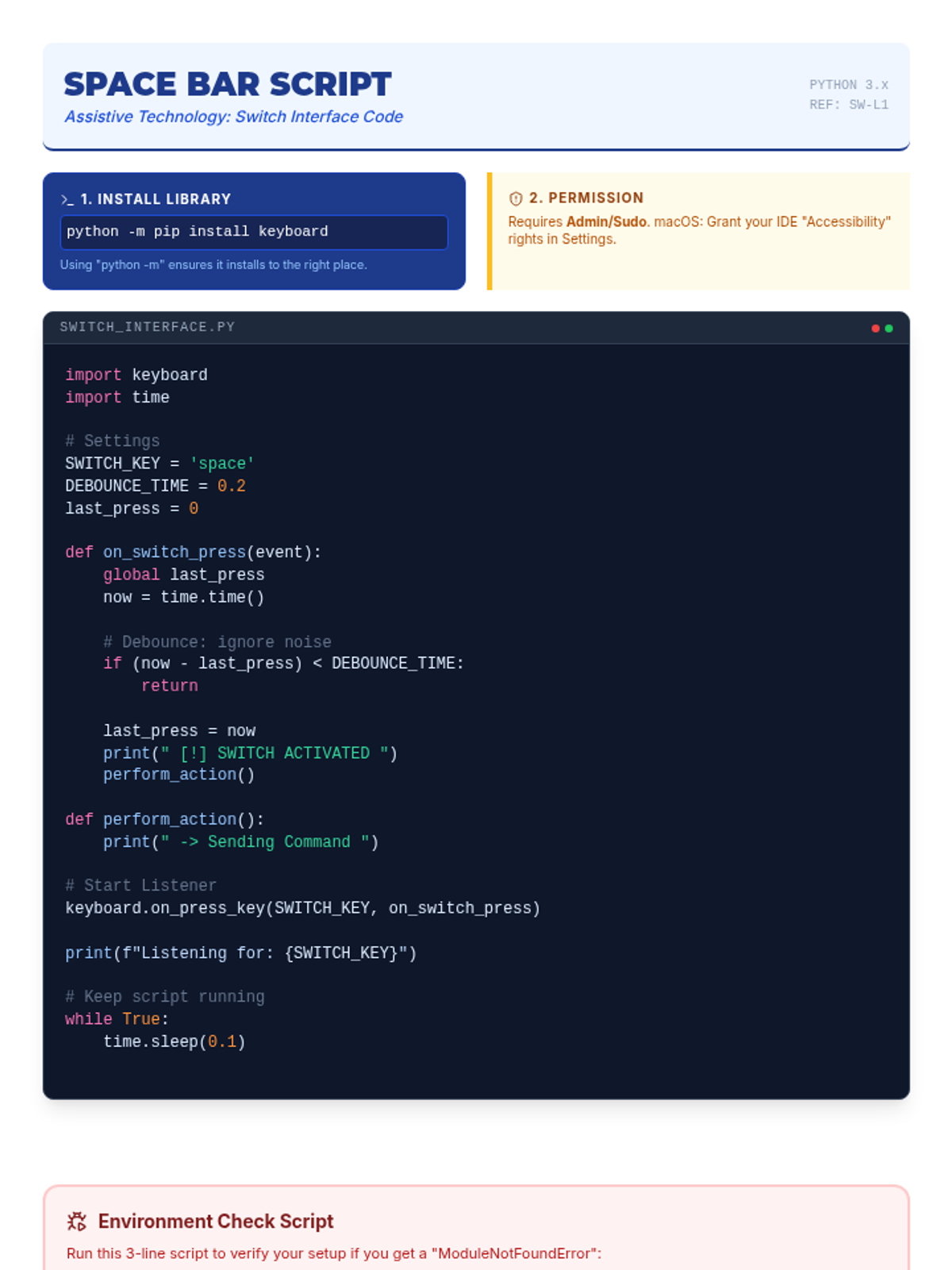
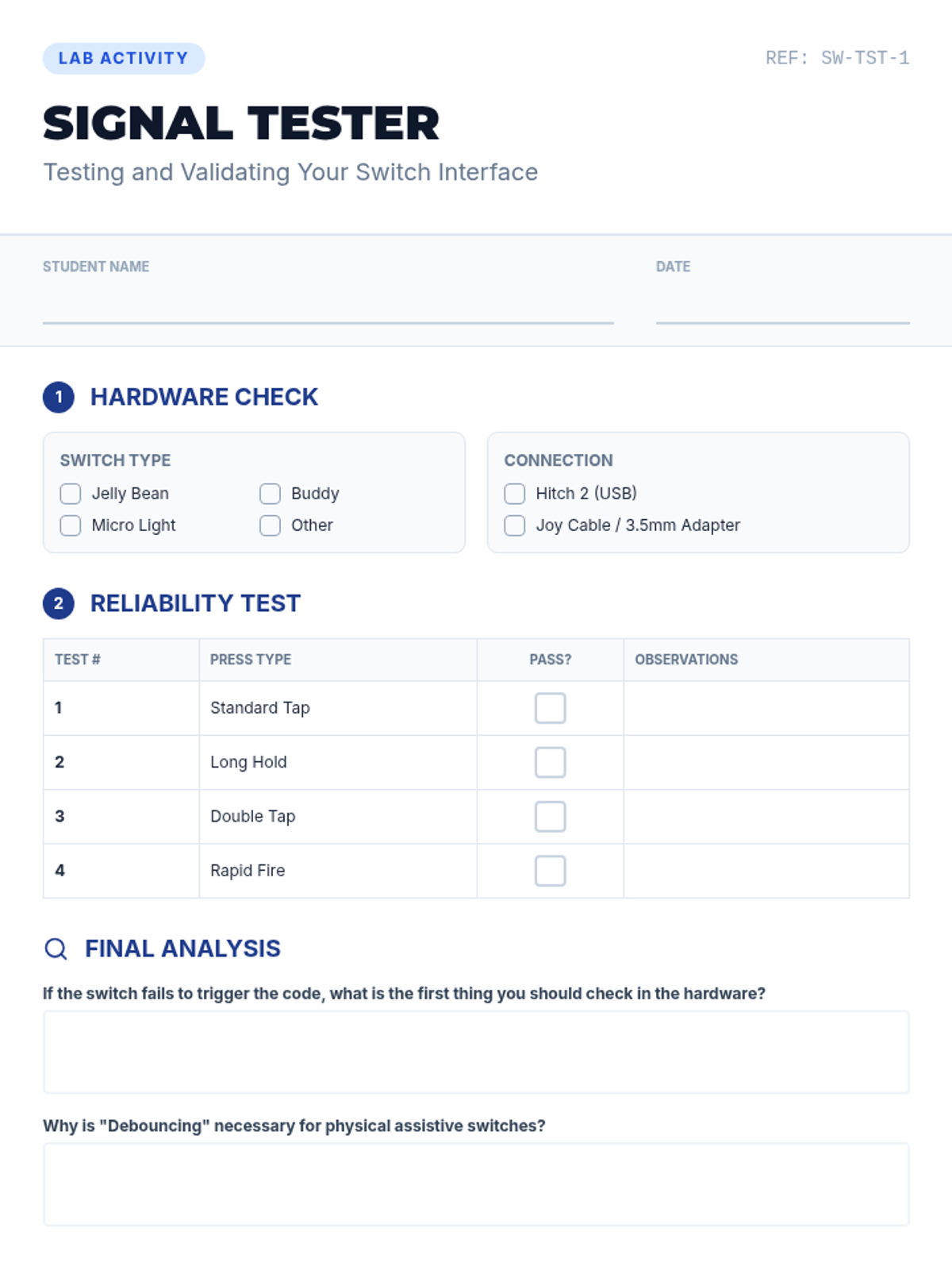
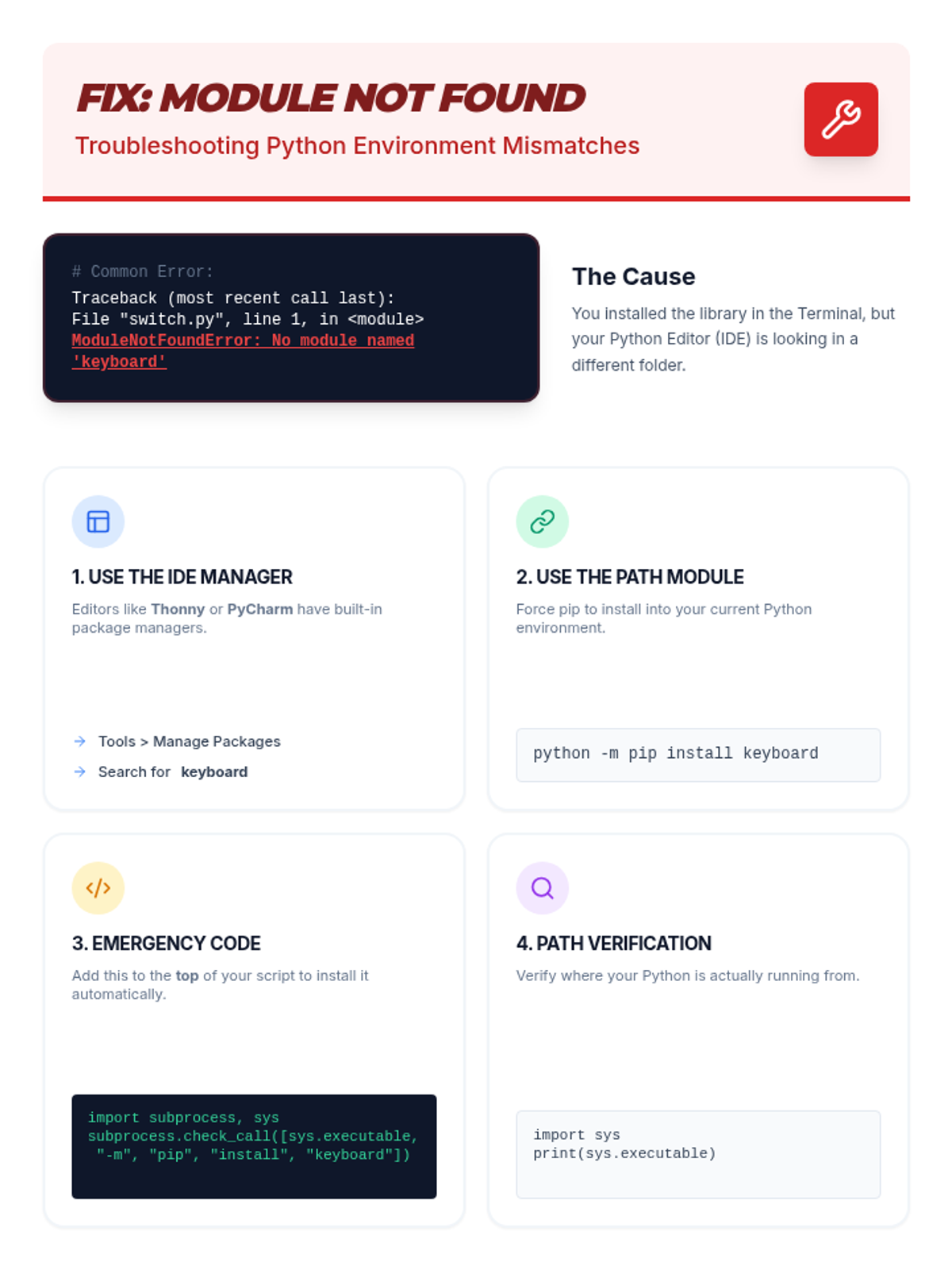
This lesson covers the logic and programming required to create a digital switch interface using Python, focusing on key bindings and signal processing.
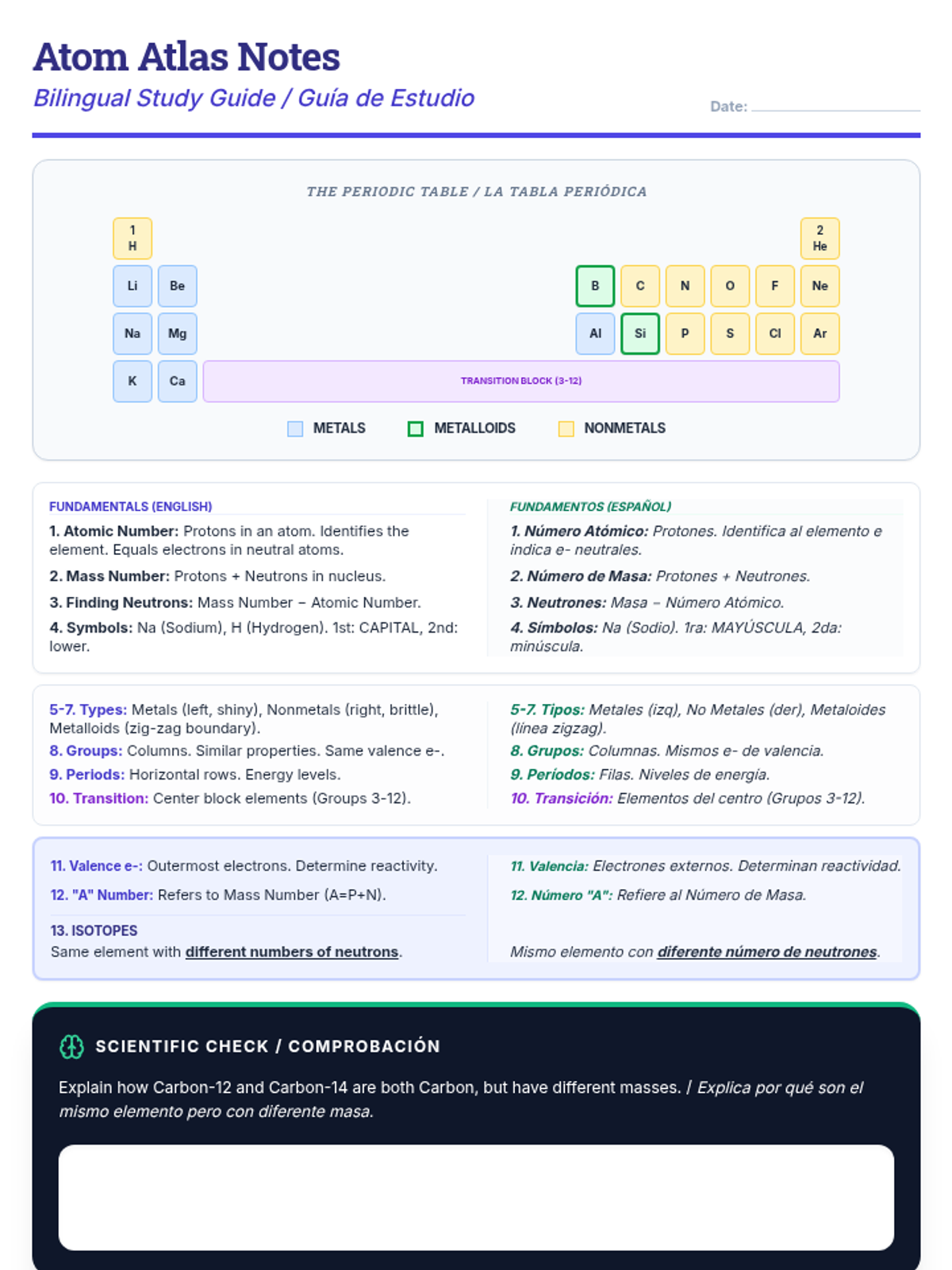
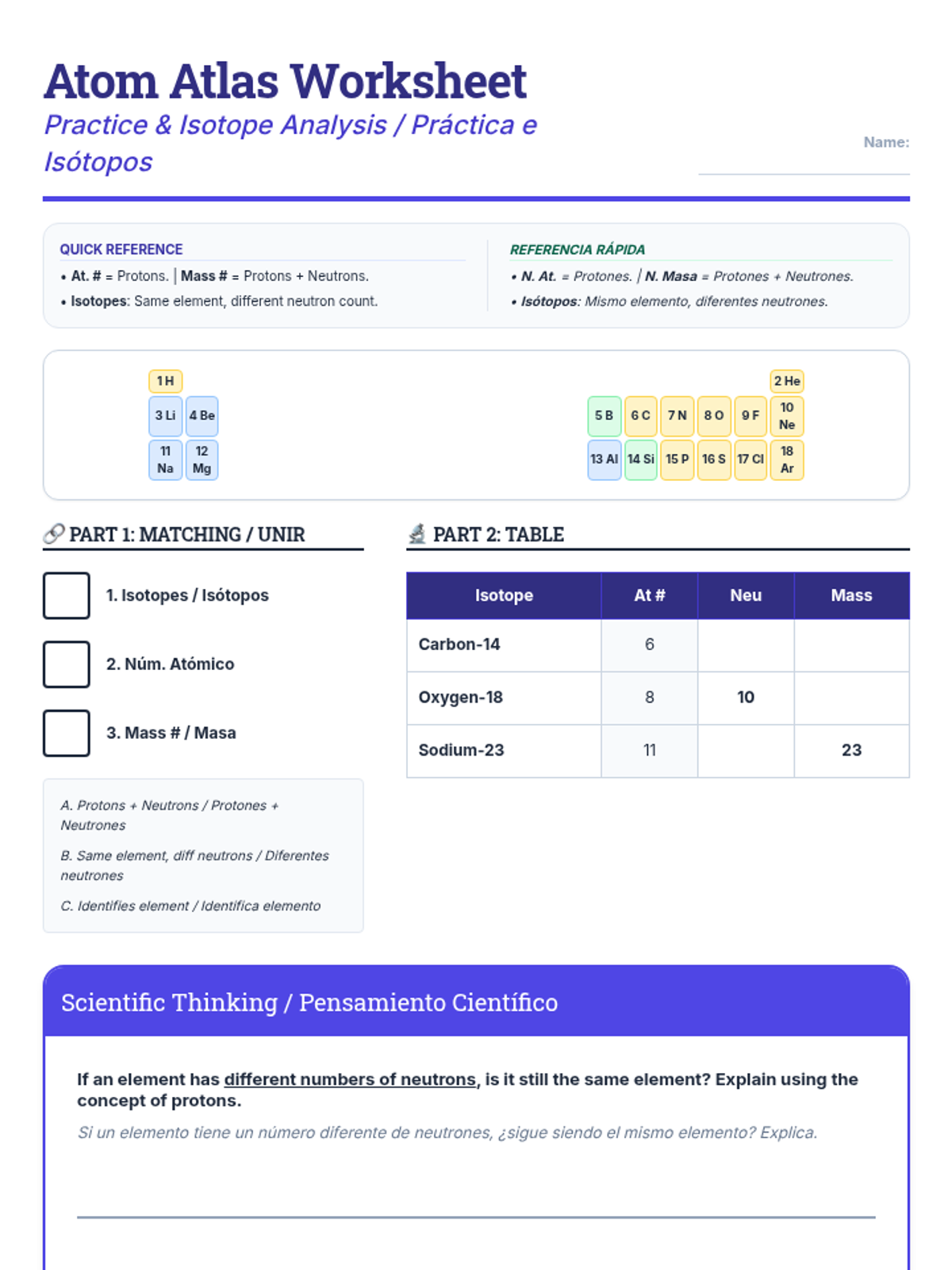
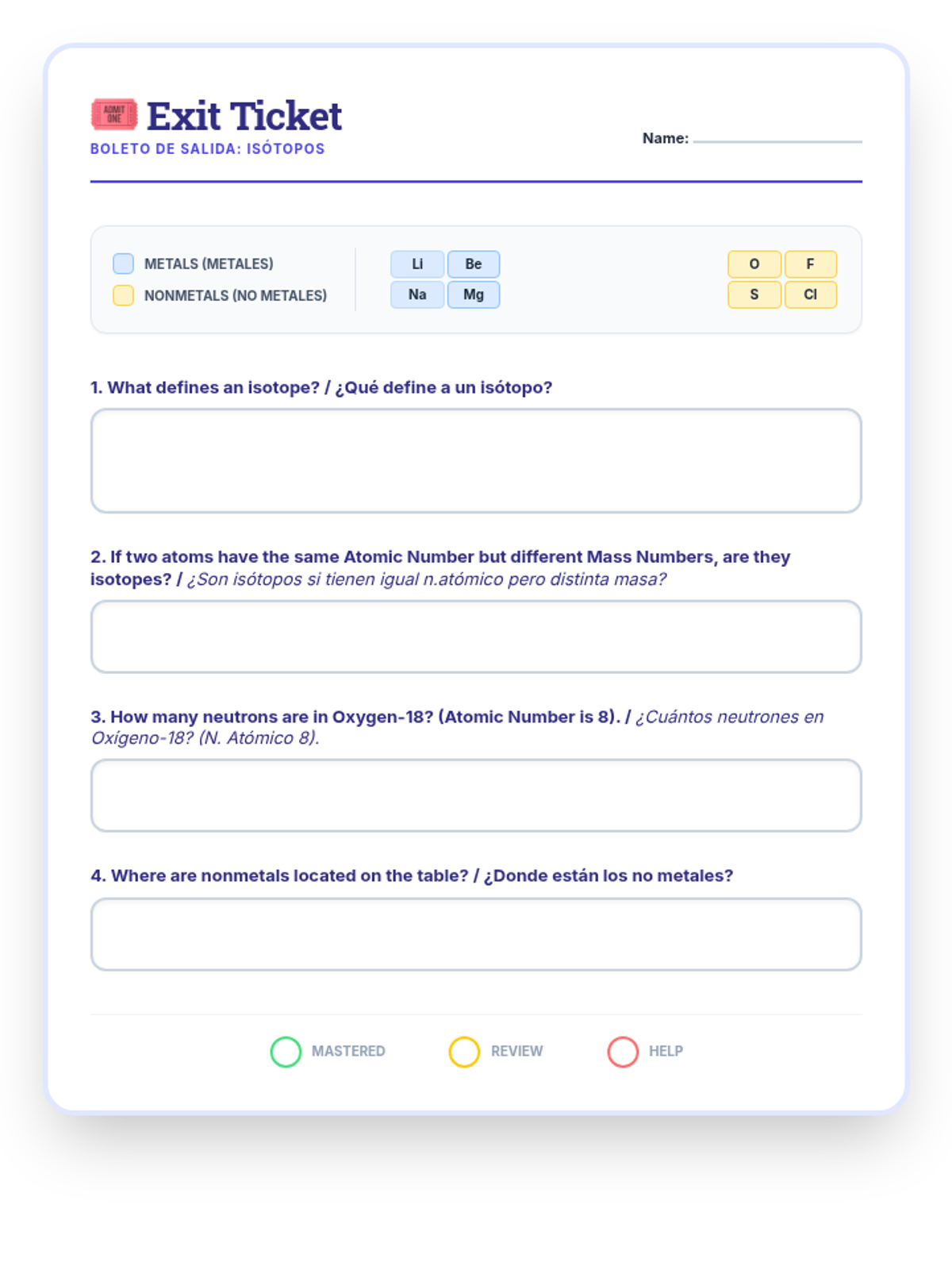
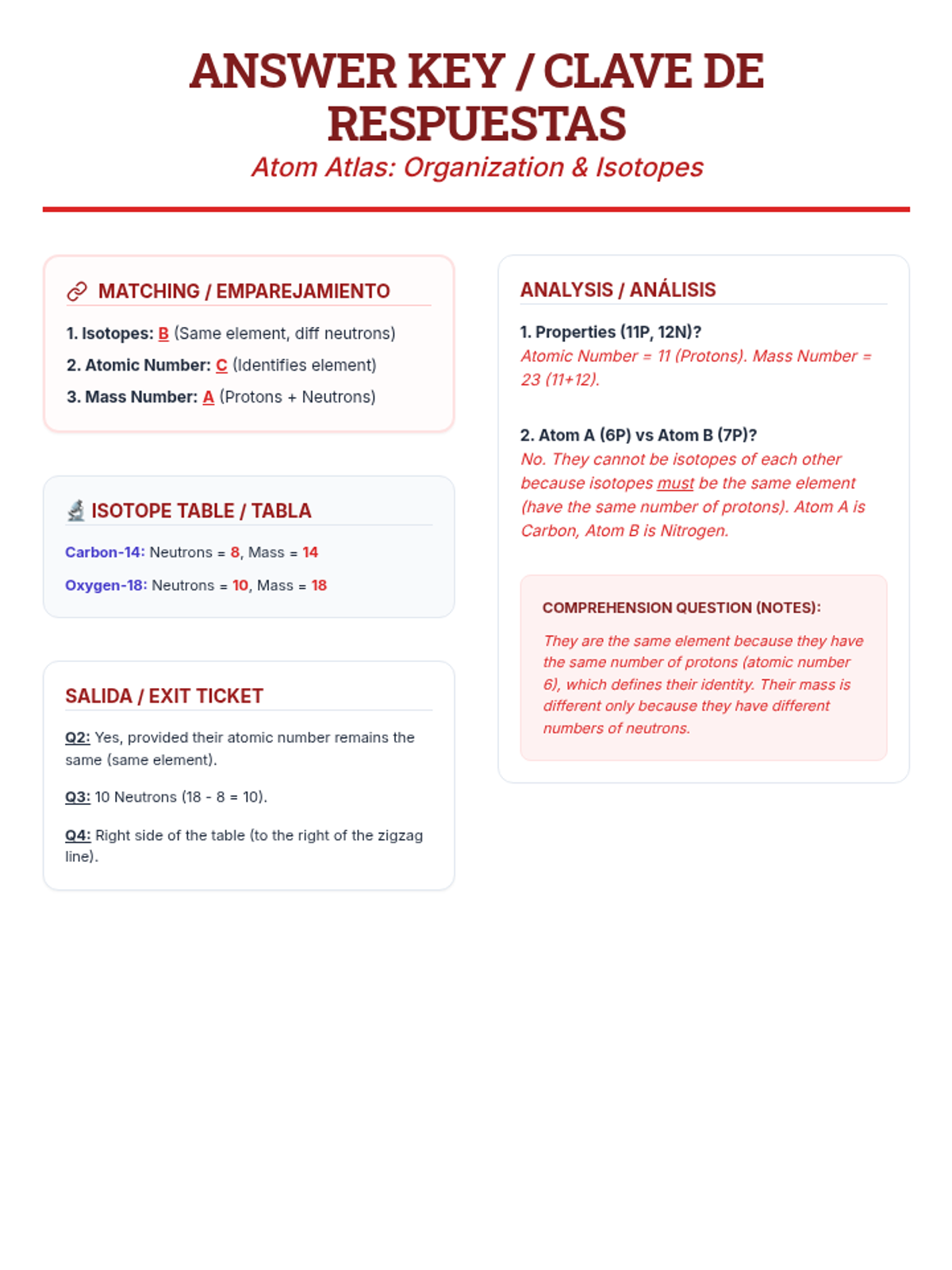
An introductory lesson on how the periodic table is organized, covering atomic numbers, mass, types of elements, and periodic trends.
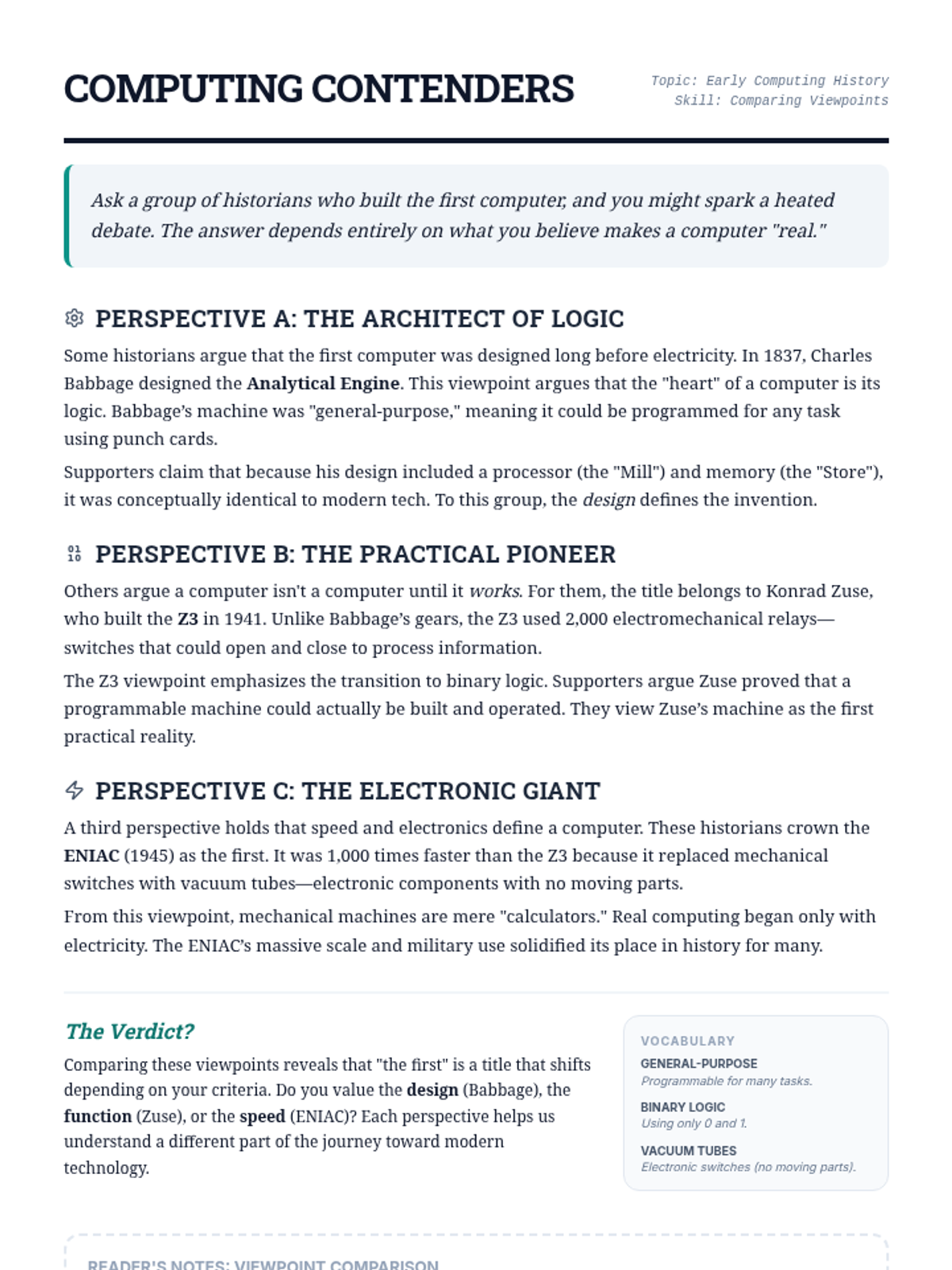
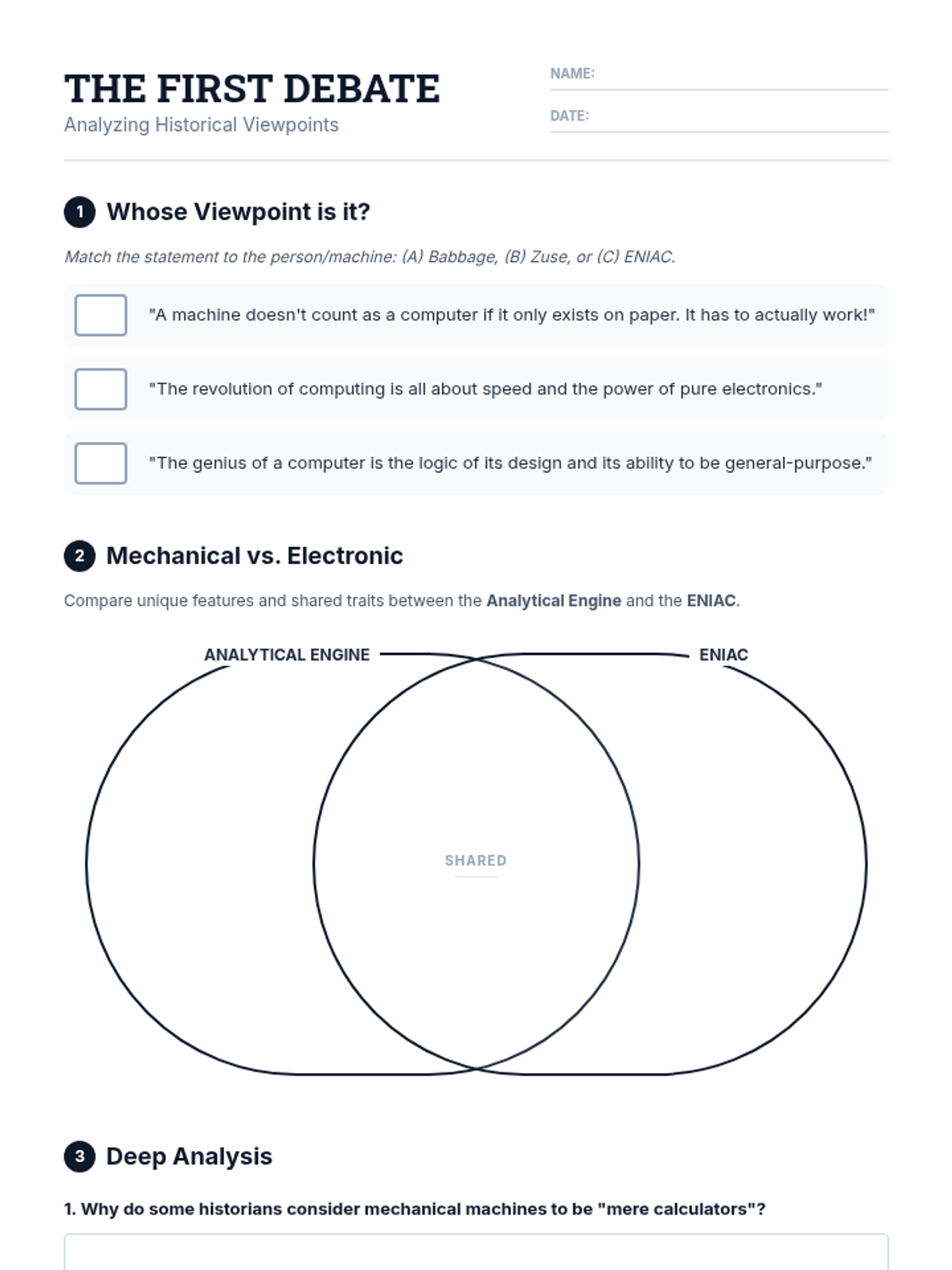
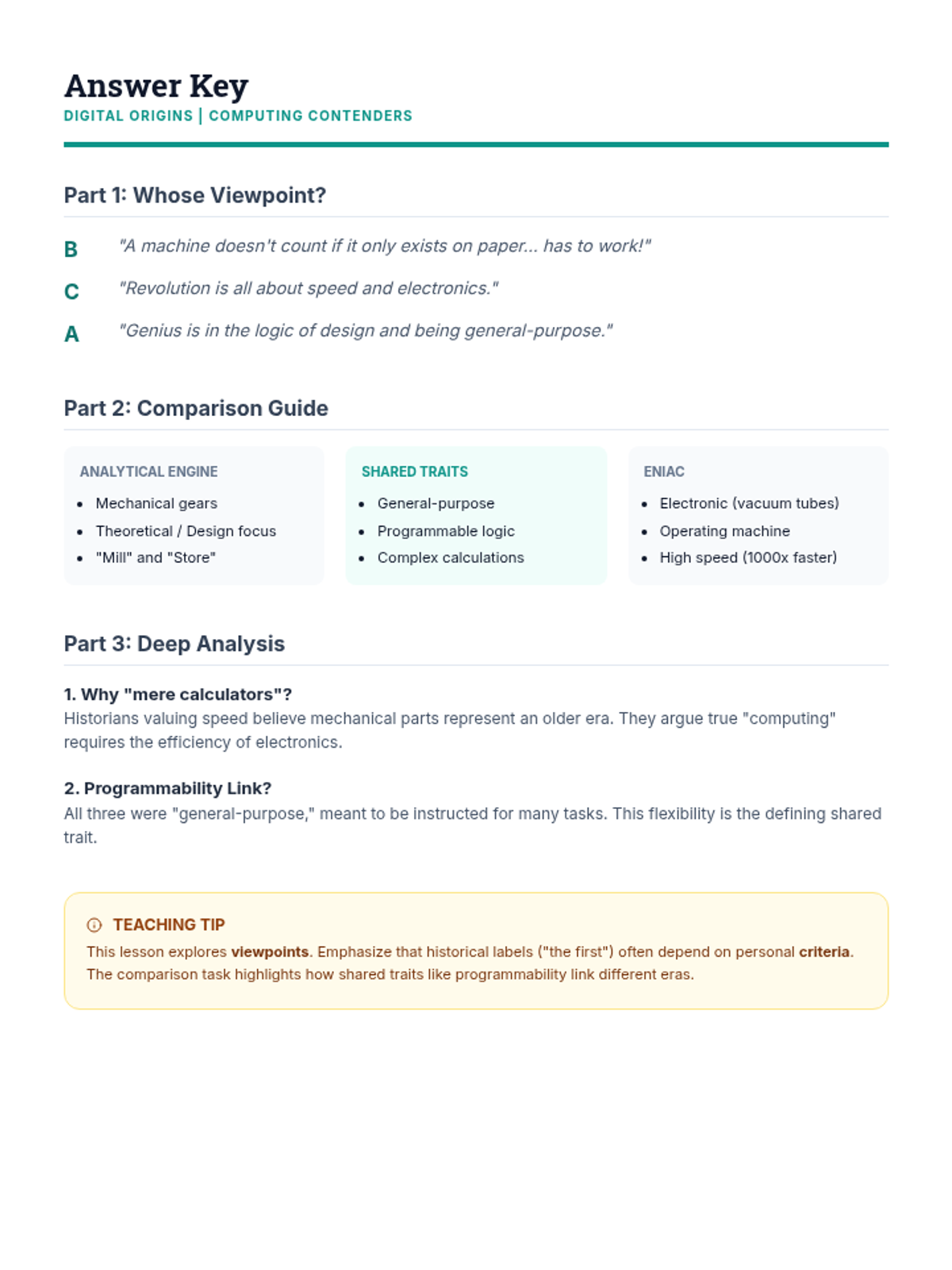
A lesson exploring the evolution of early computing machines and the varying historical perspectives on which machine deserves the title of the 'first' computer. Students will analyze different viewpoints based on technical criteria like programmability, electronics, and logic.
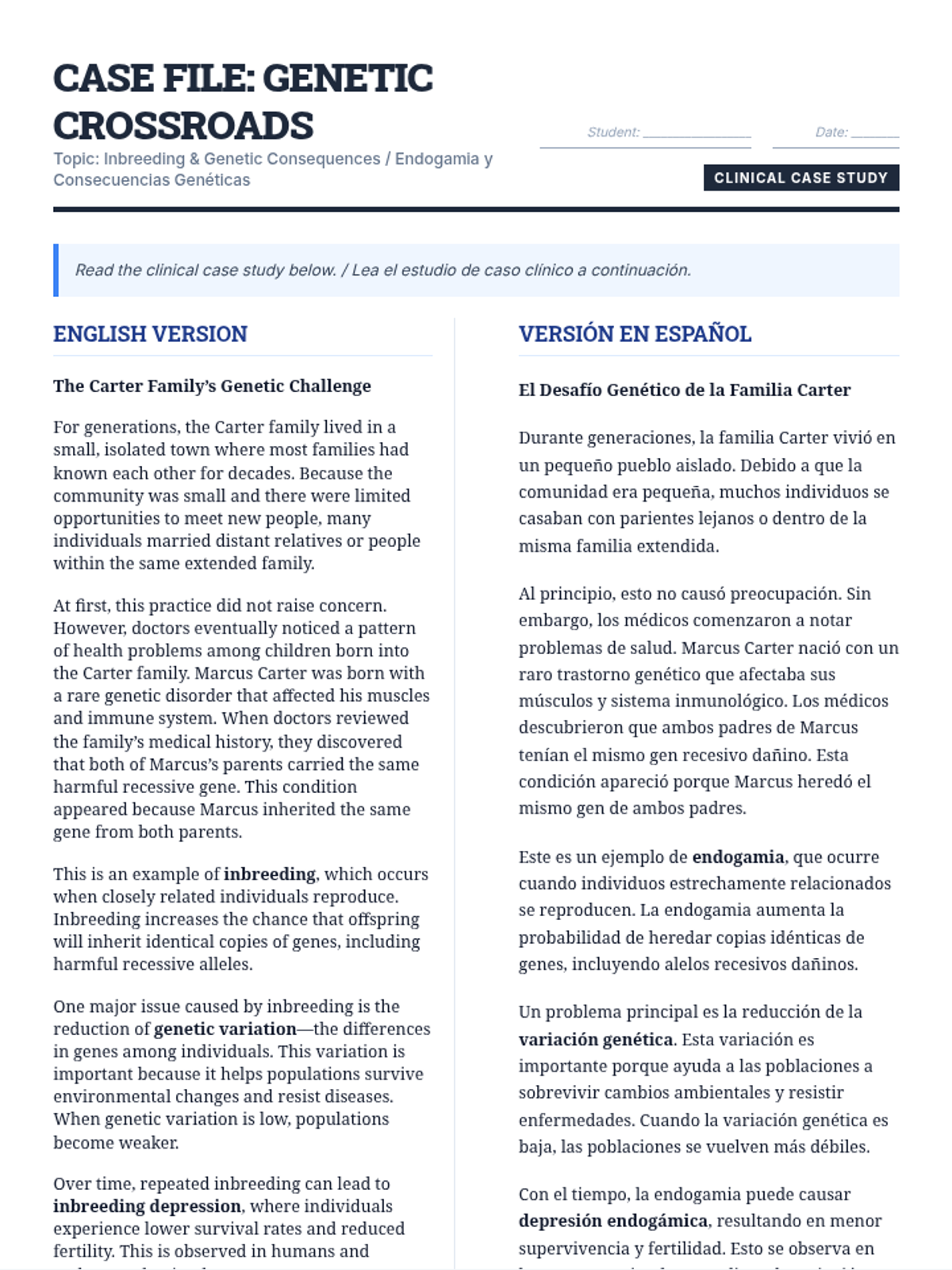
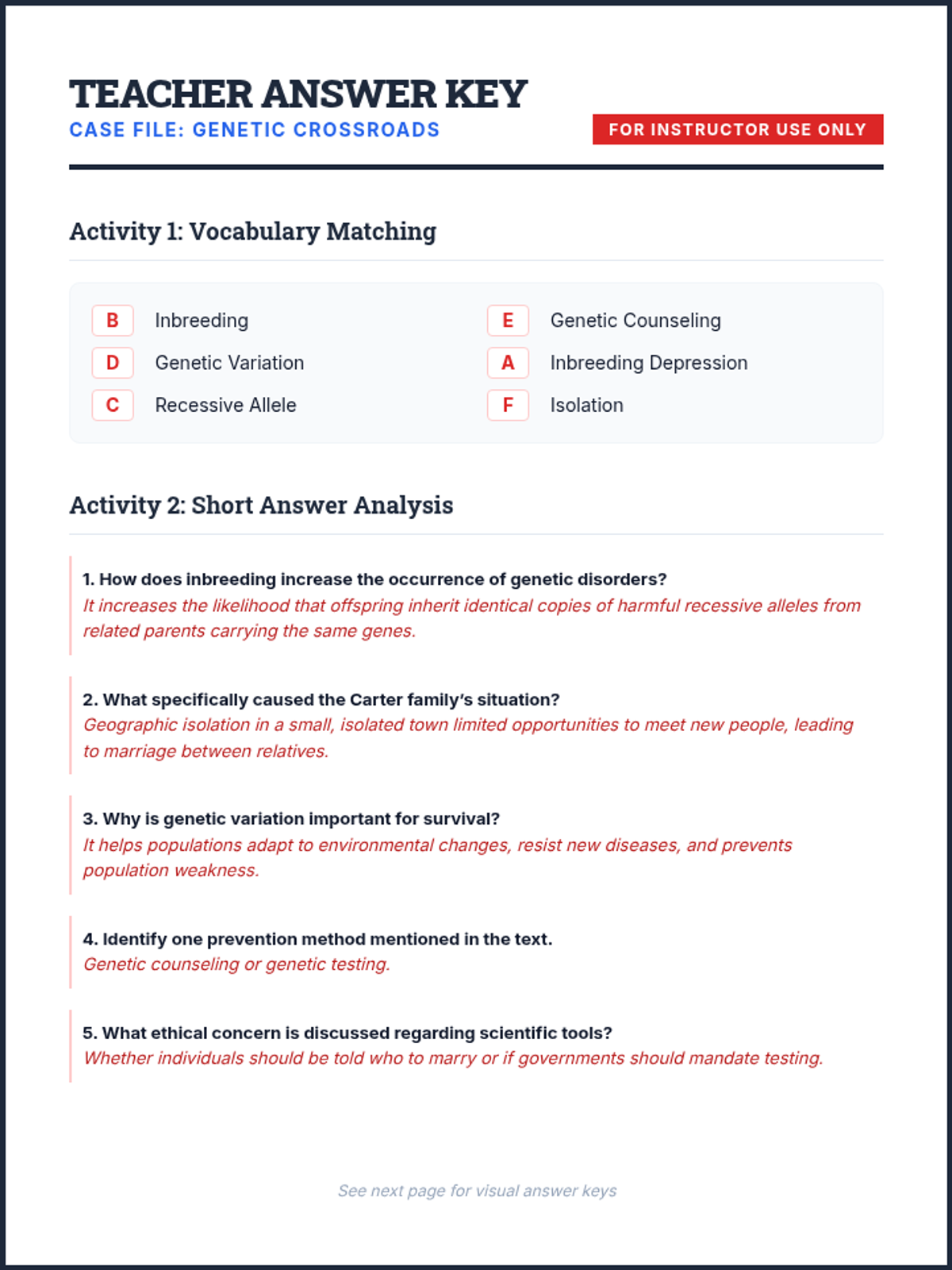
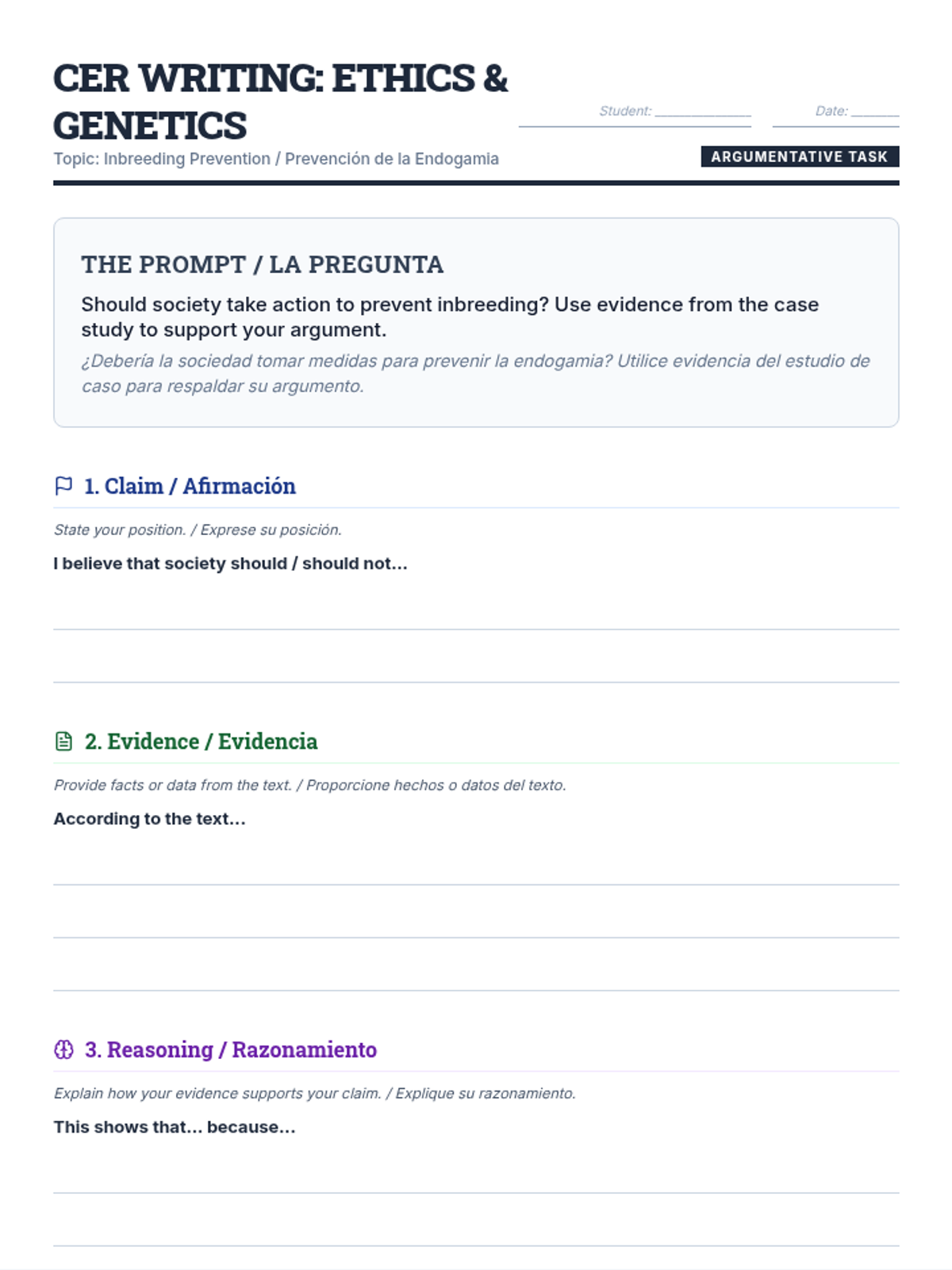
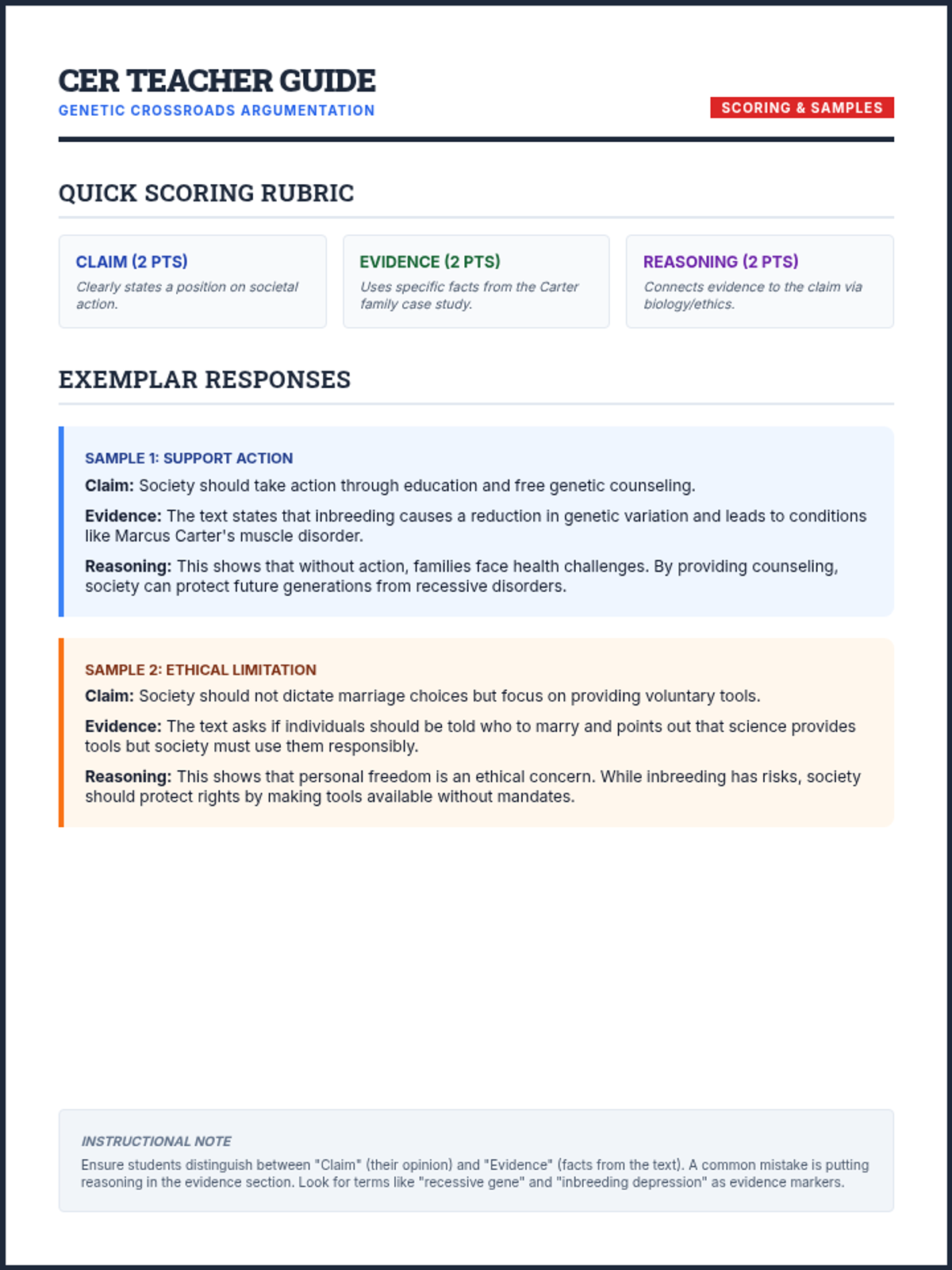
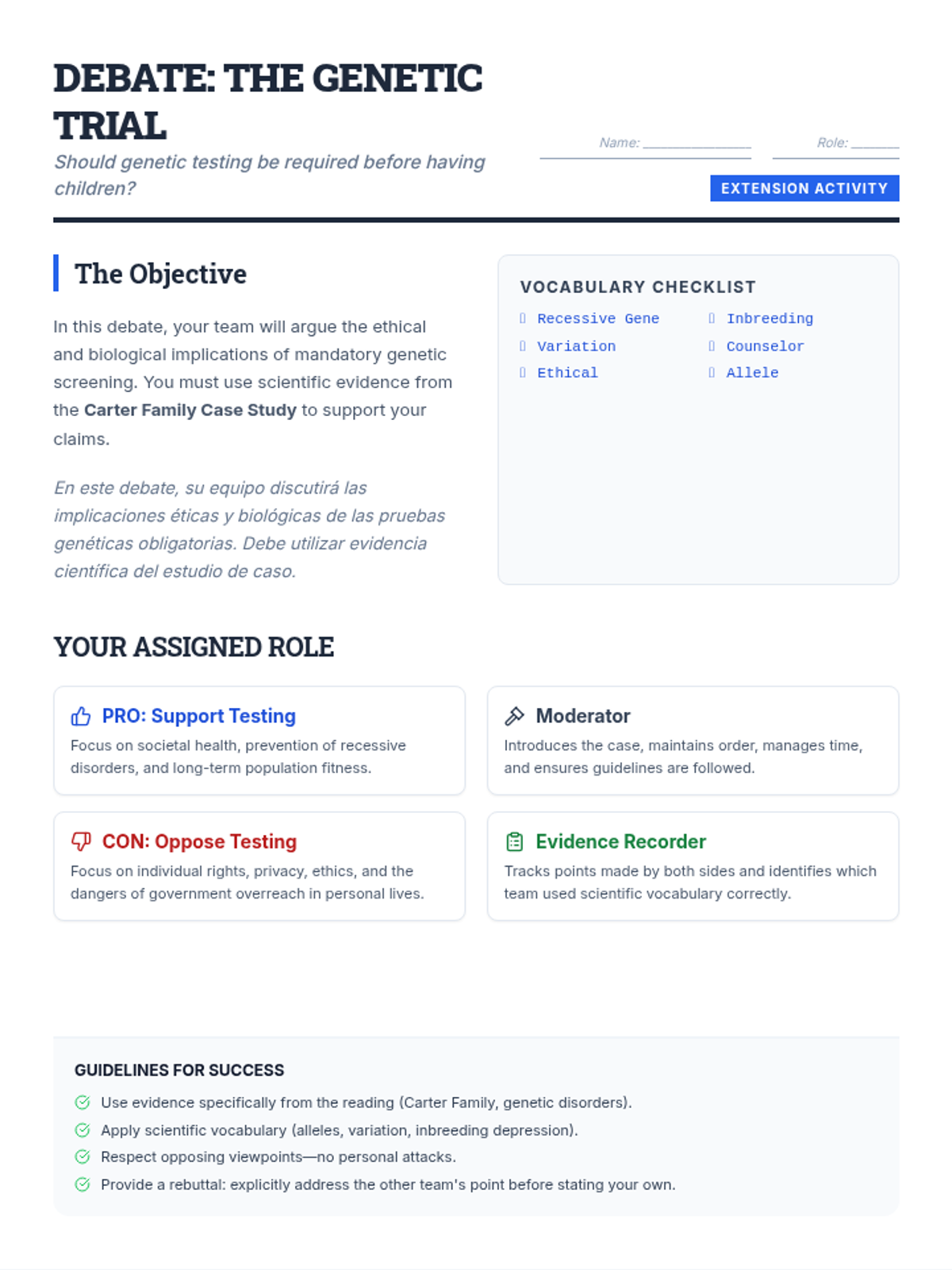
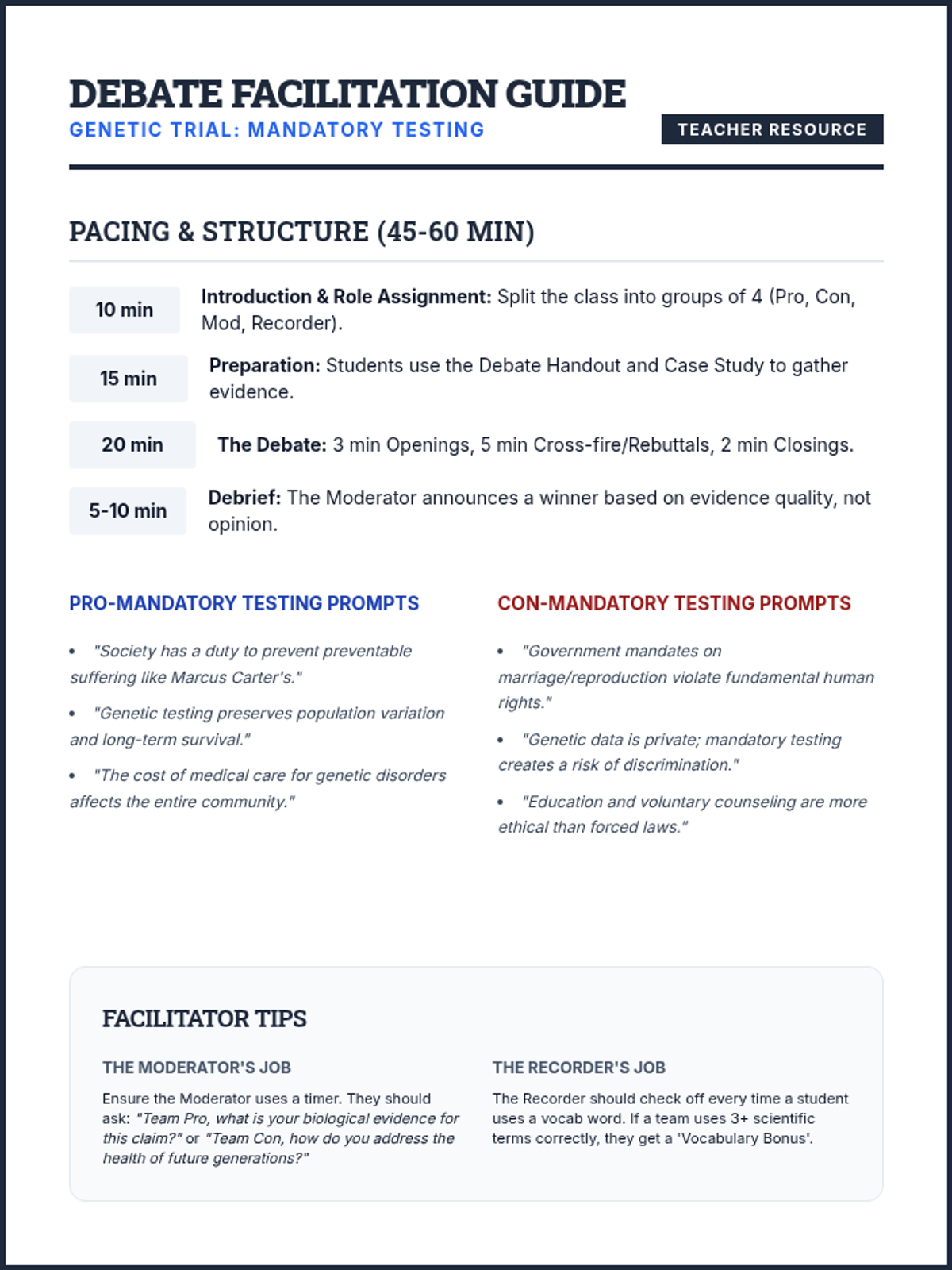
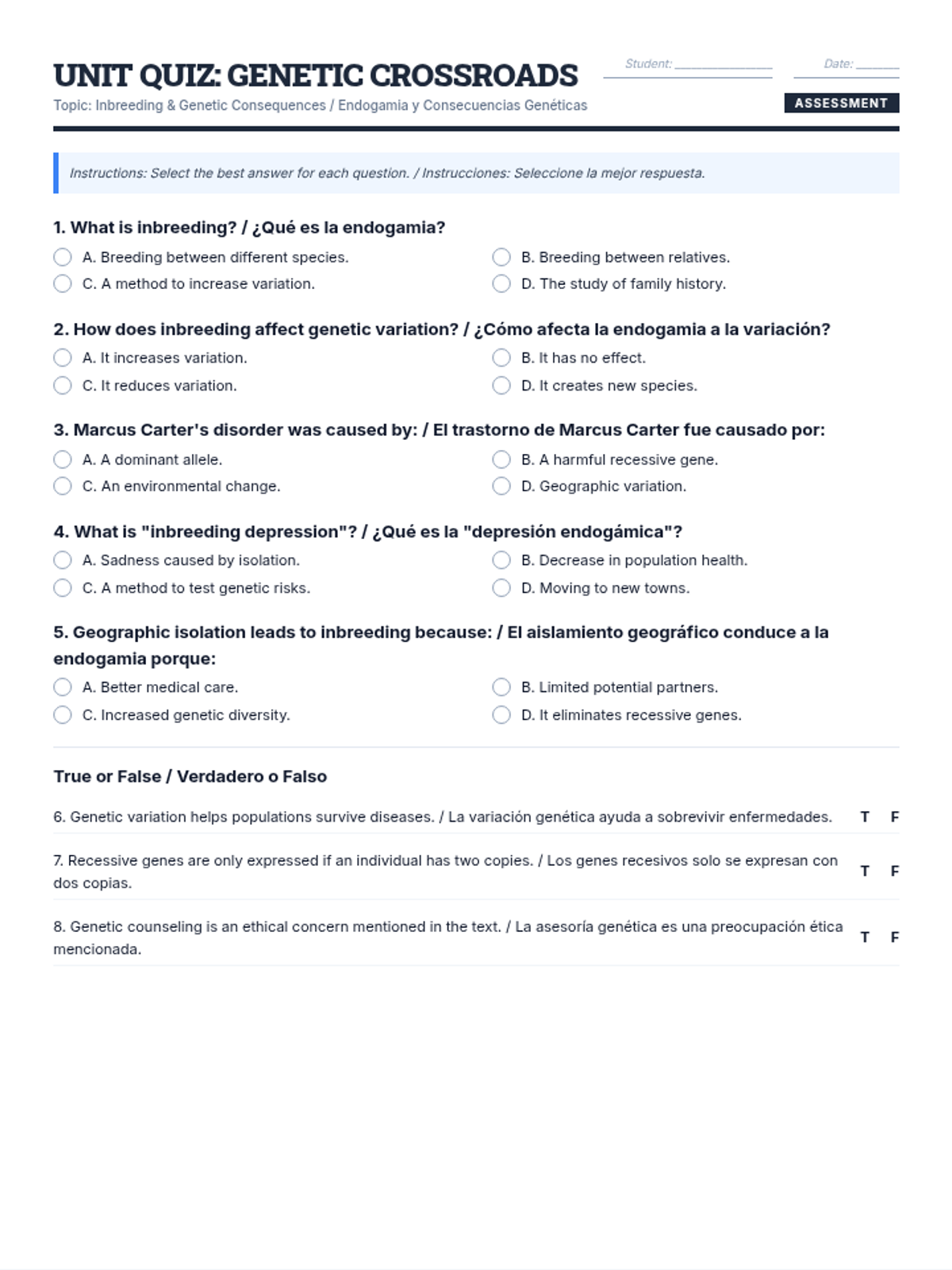
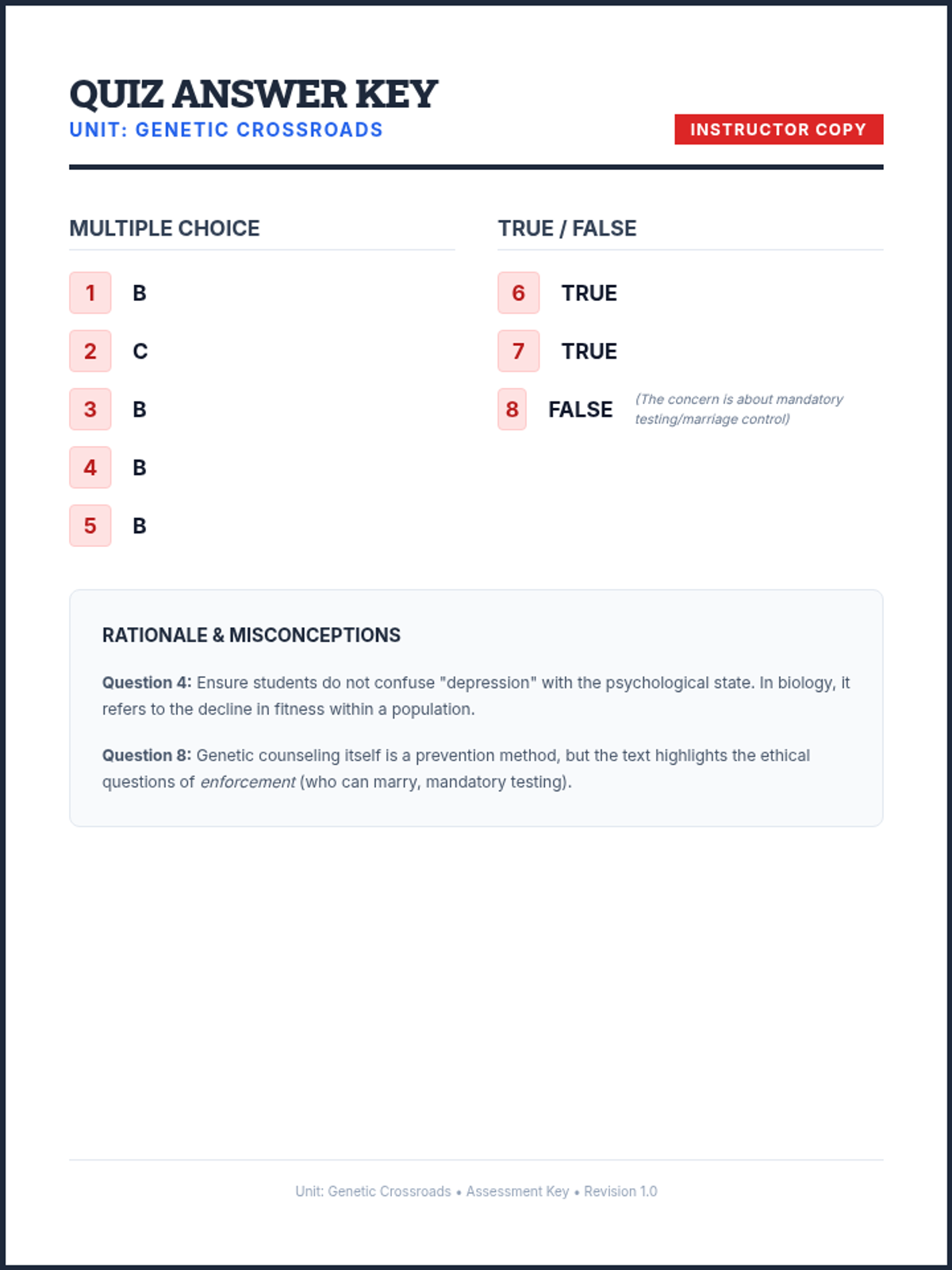
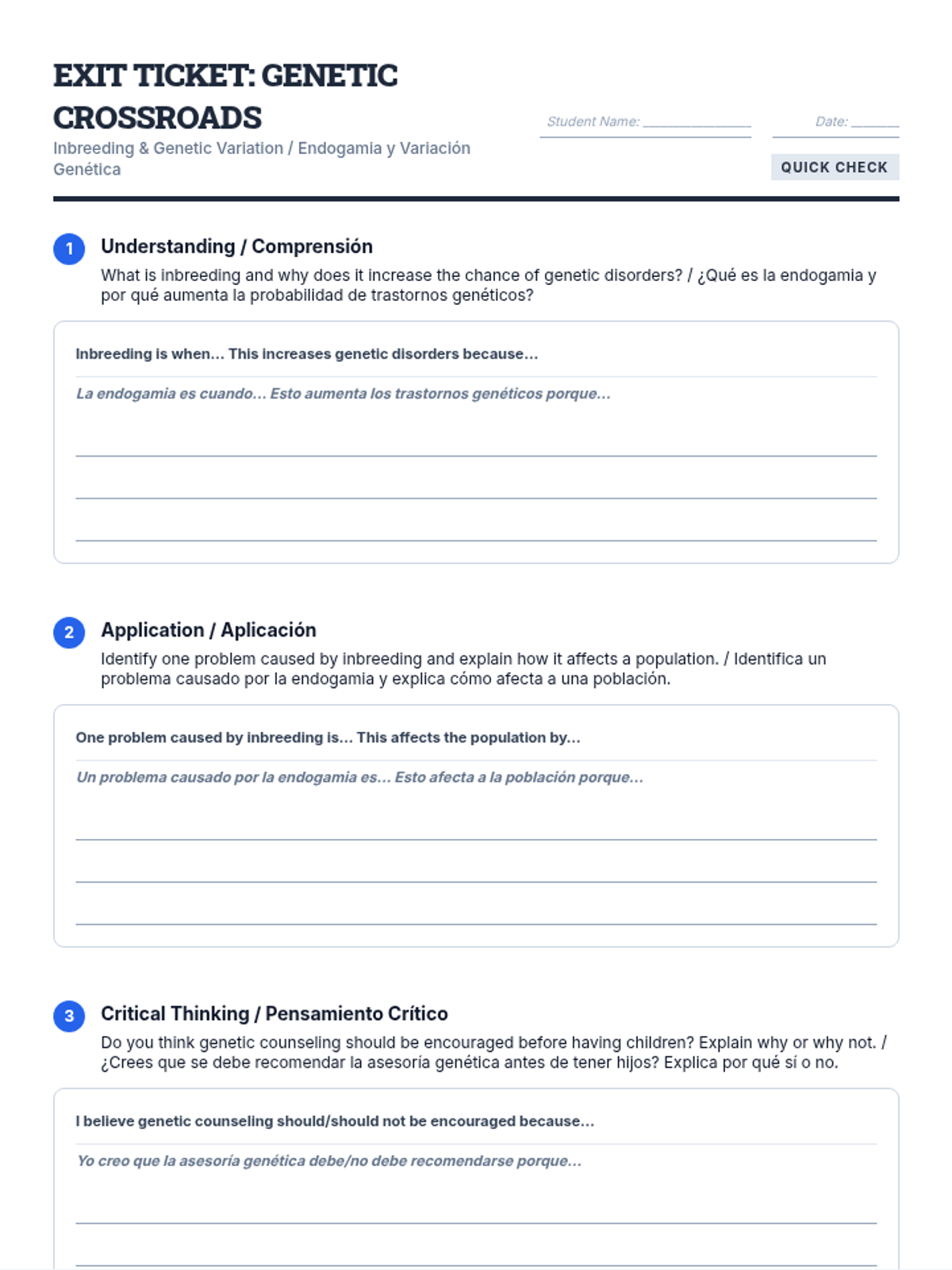
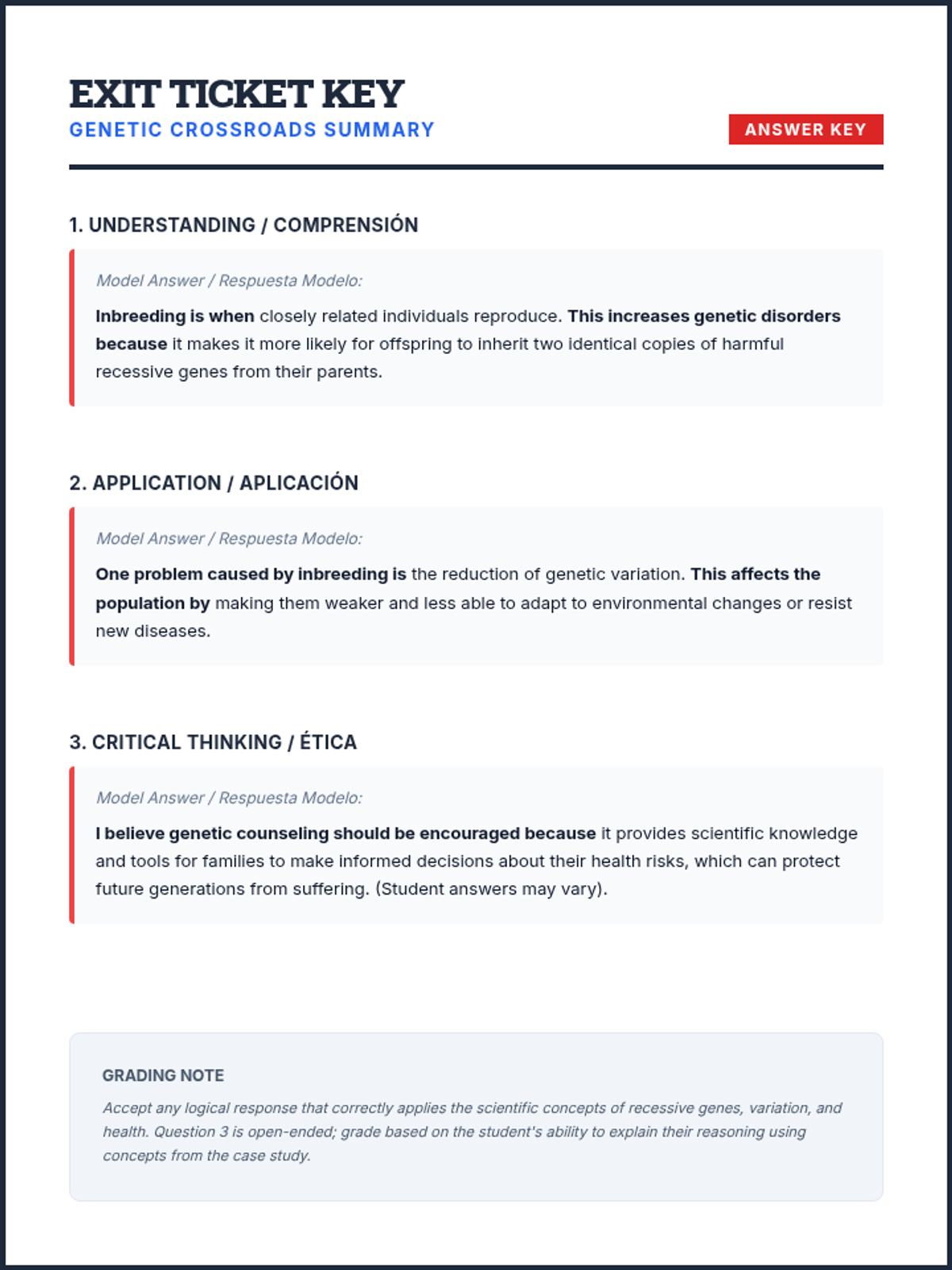
A biology lesson focused on the genetic implications of inbreeding, utilizing a bilingual case study to explore recessive traits, genetic variation, and population health.
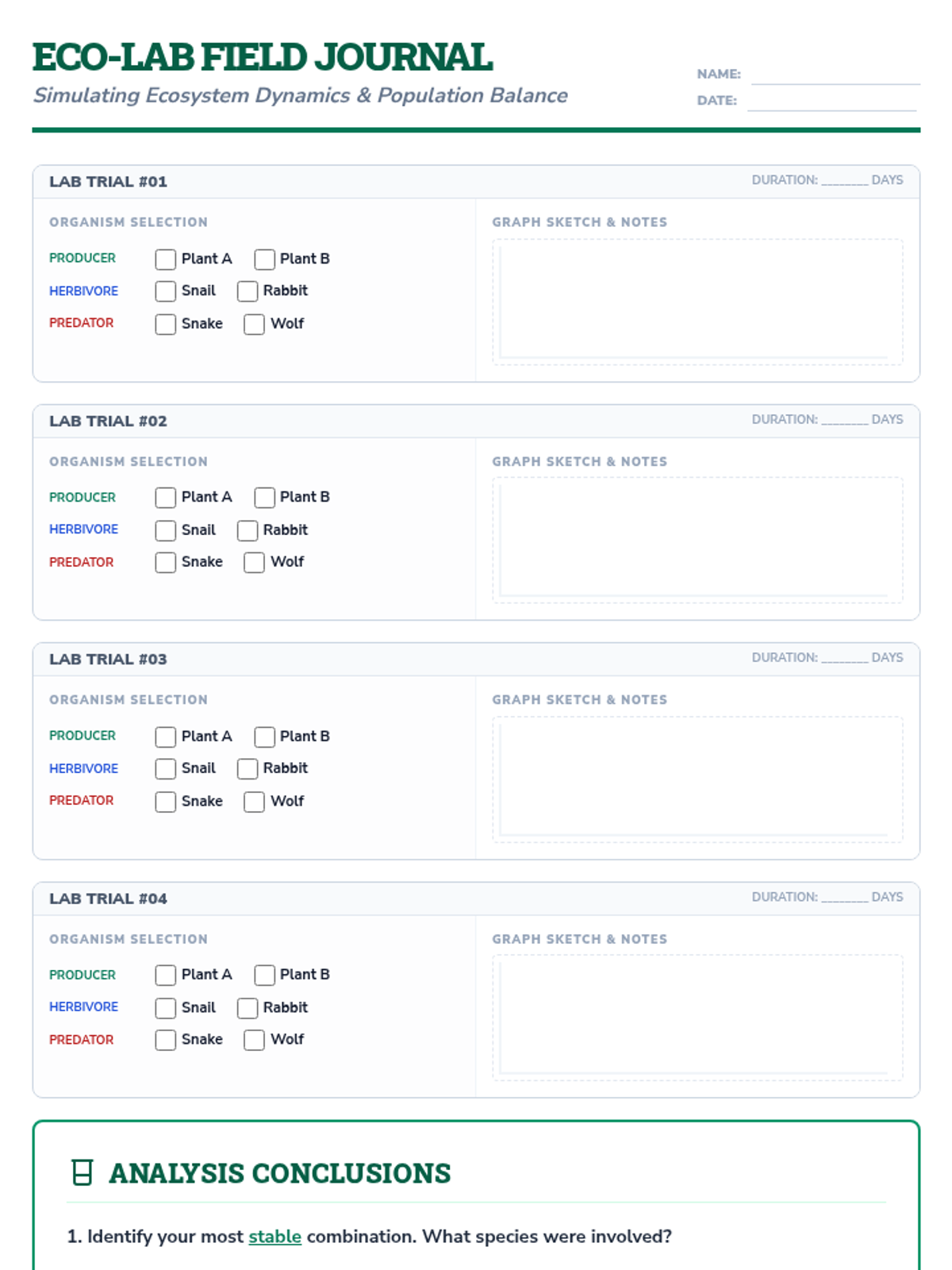
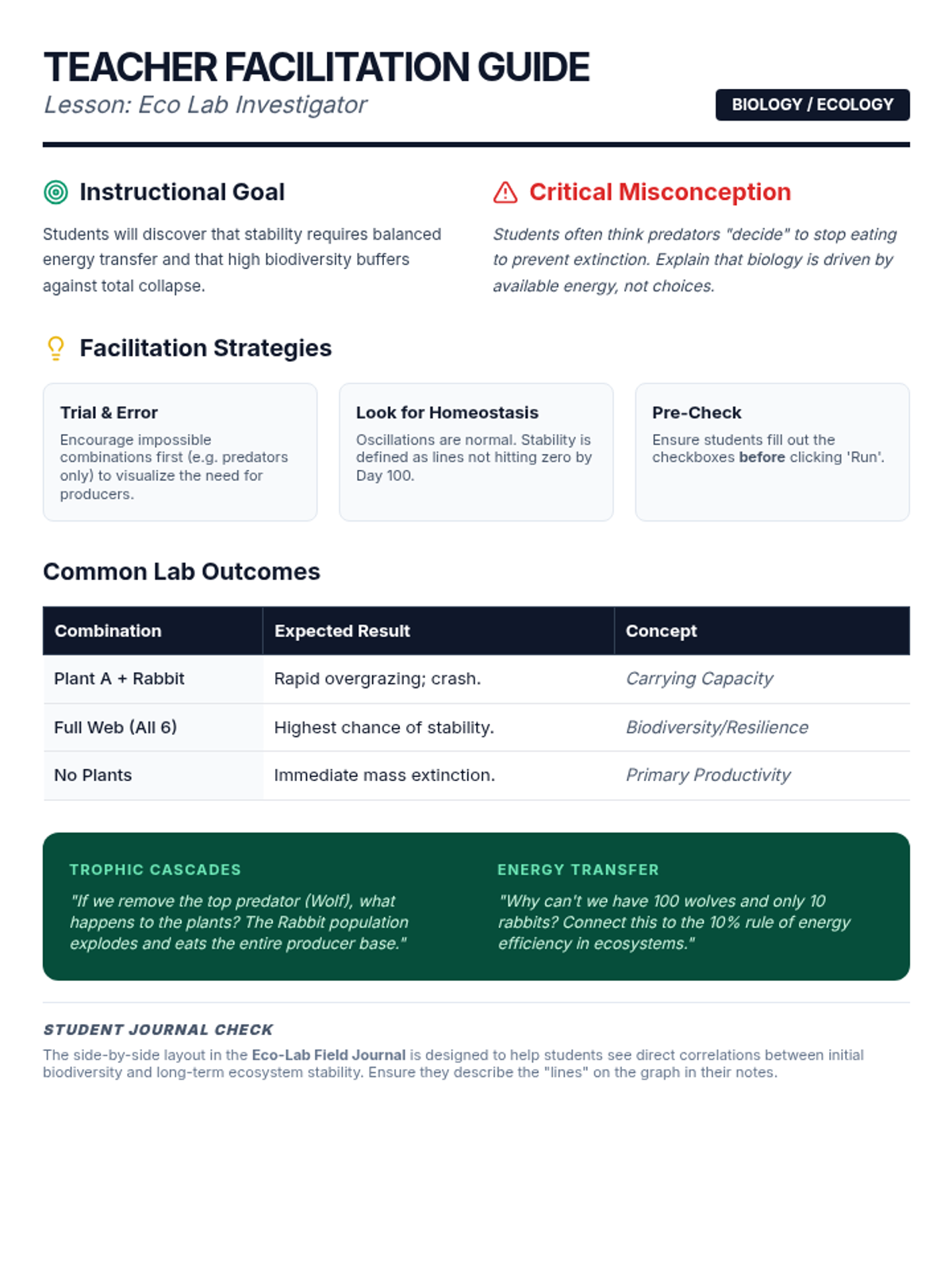
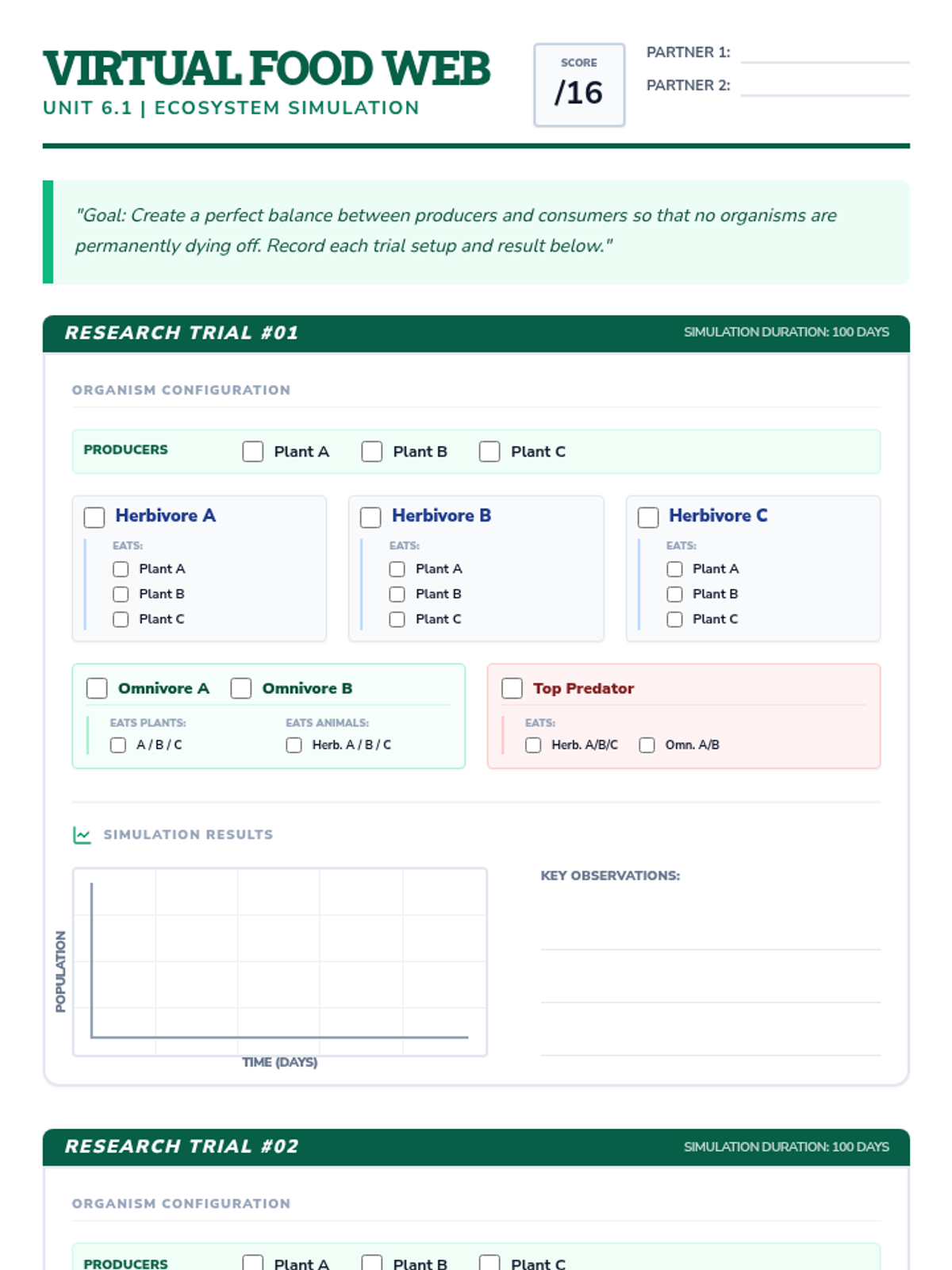
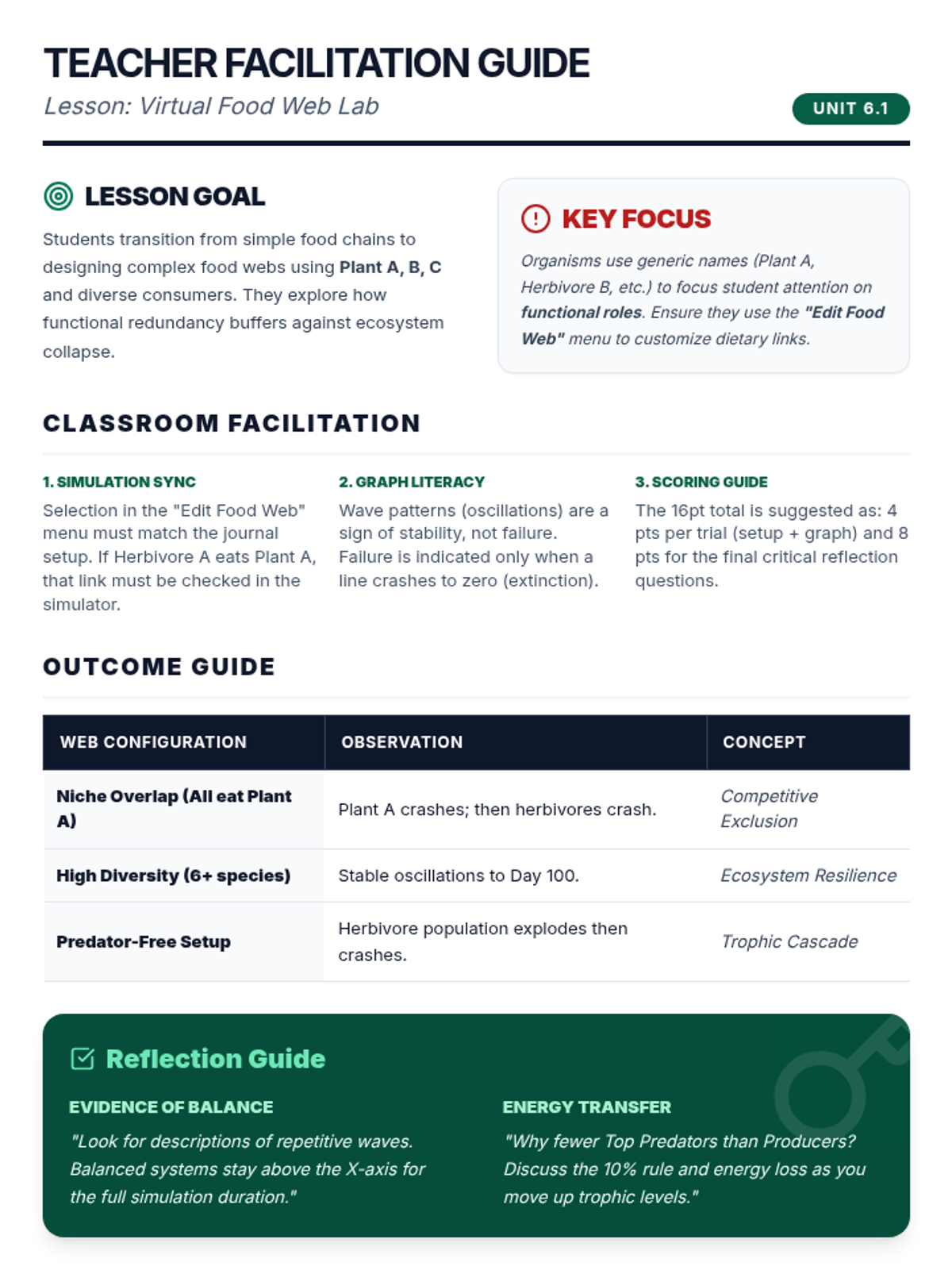
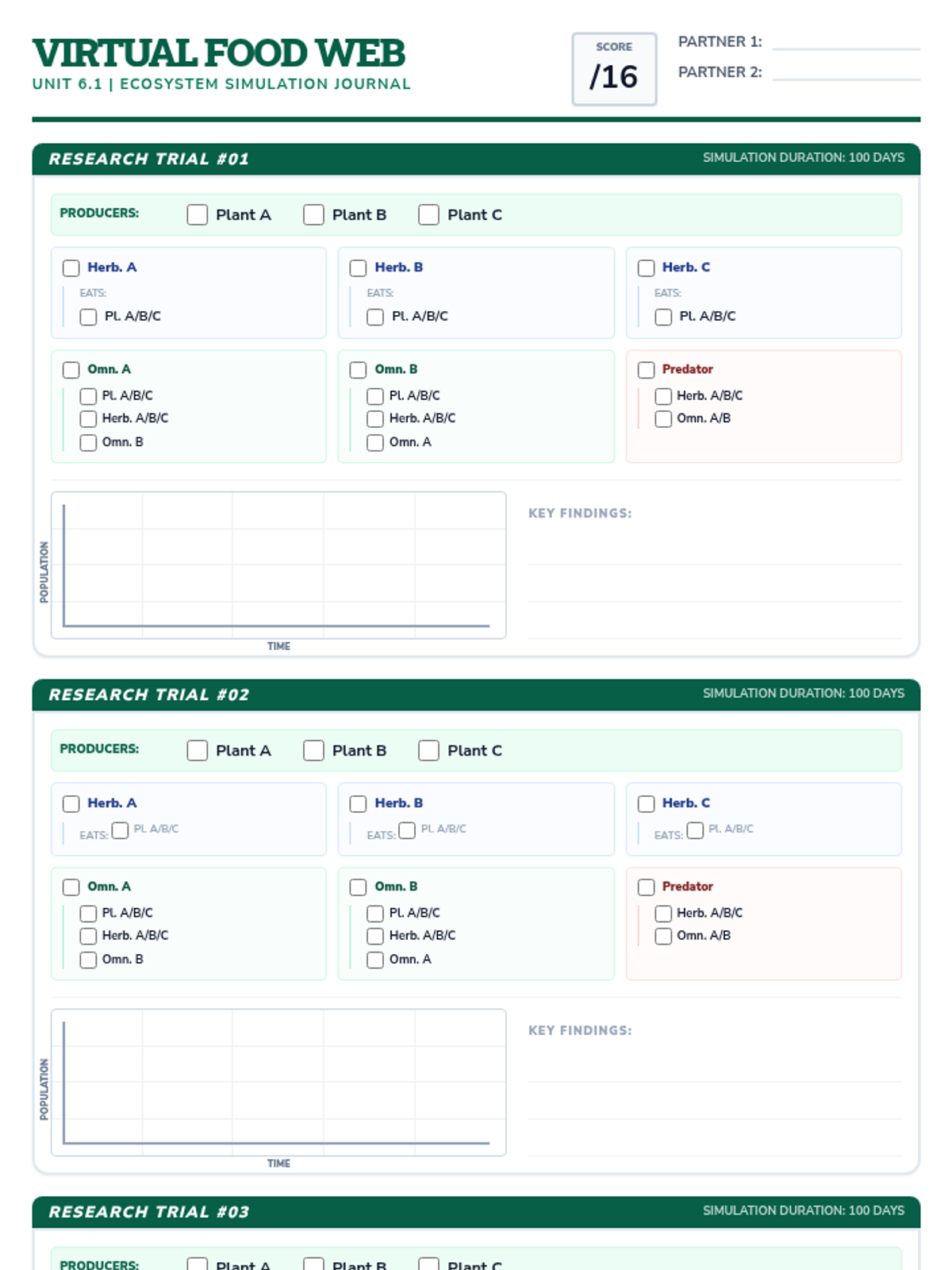
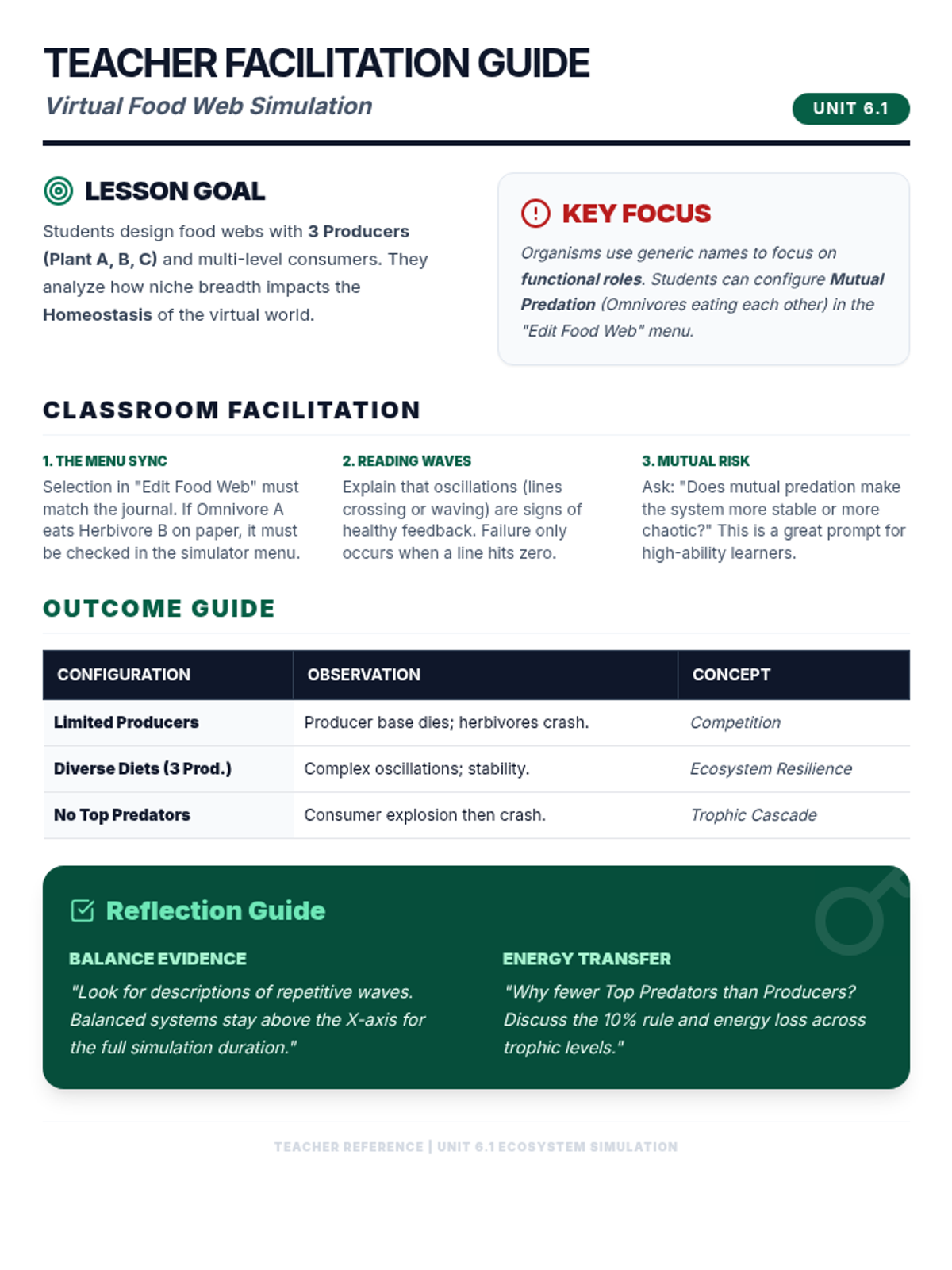
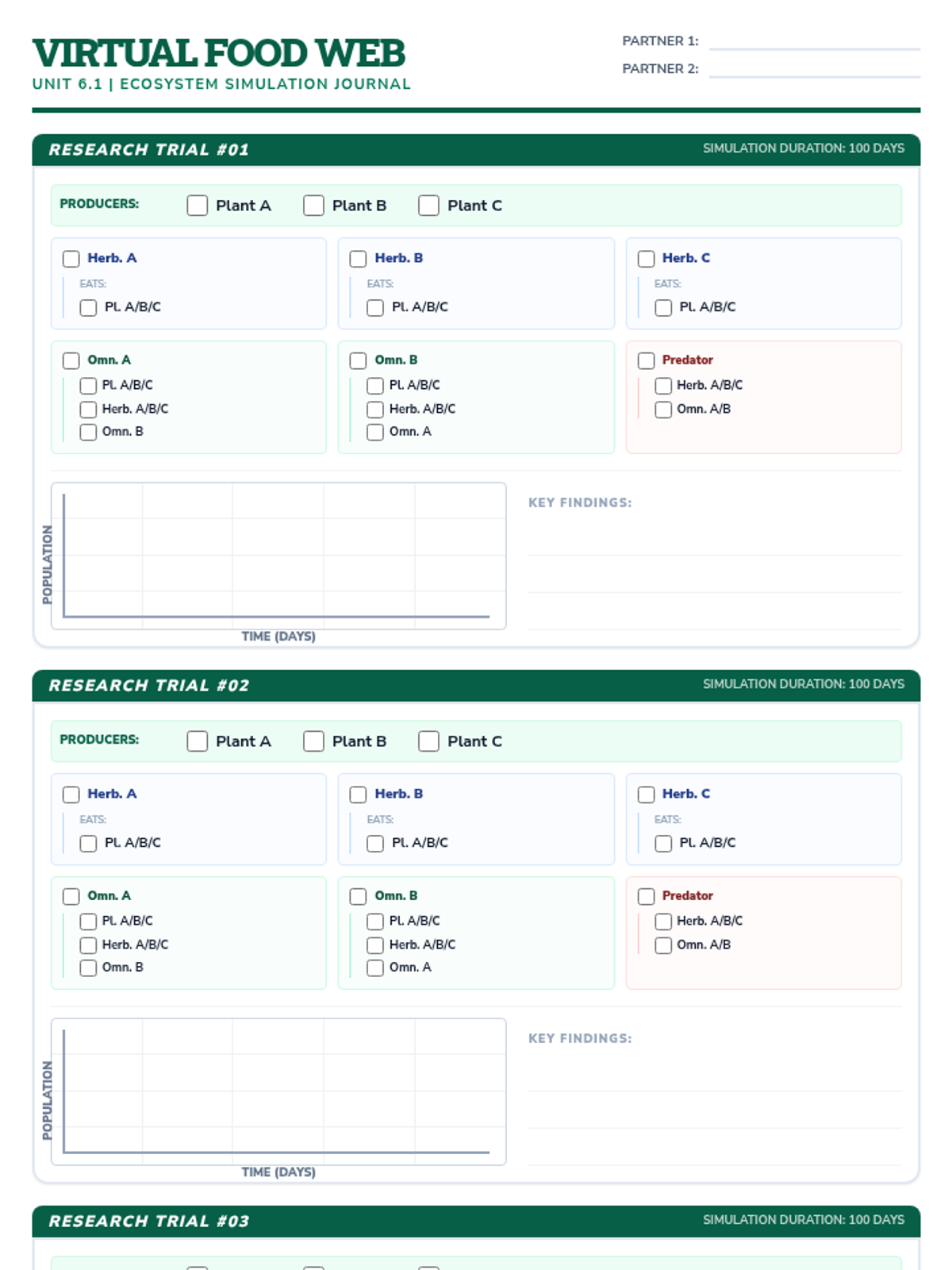
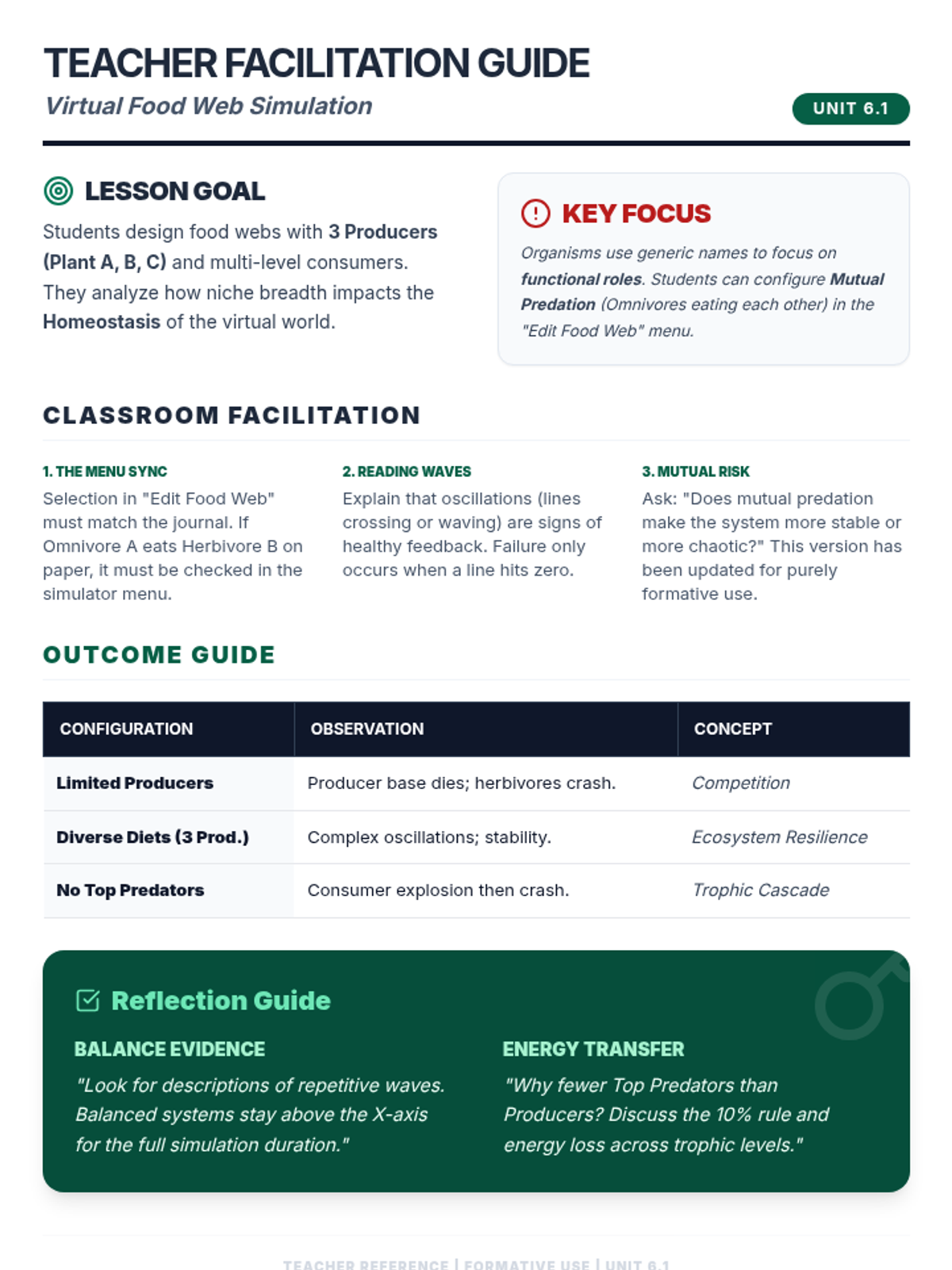
Students use an interactive ecology simulator to explore population dynamics by testing various combinations of producers, primary consumers, and secondary consumers. They record their findings in a structured field journal to identify patterns of stability and extinction.
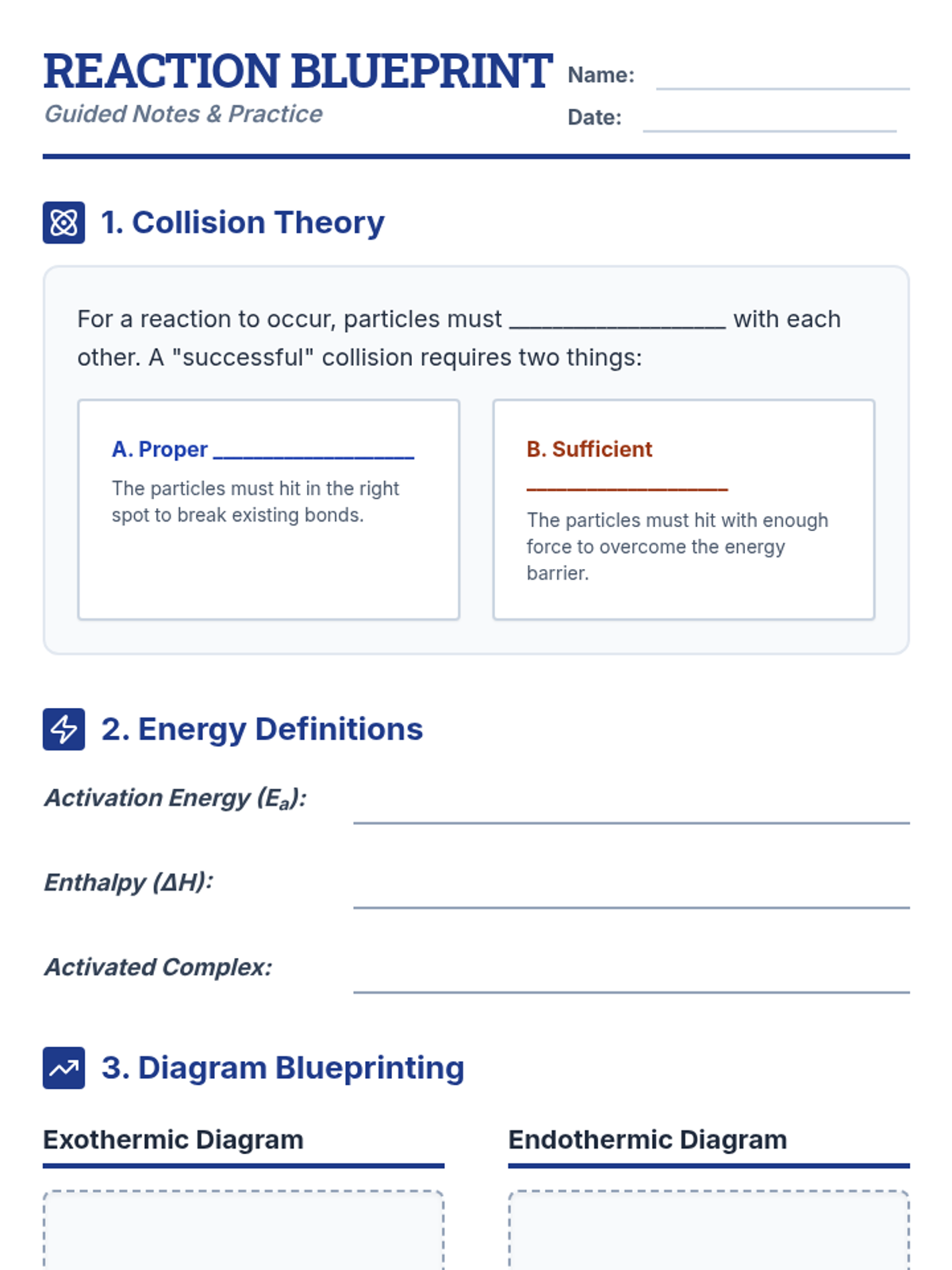
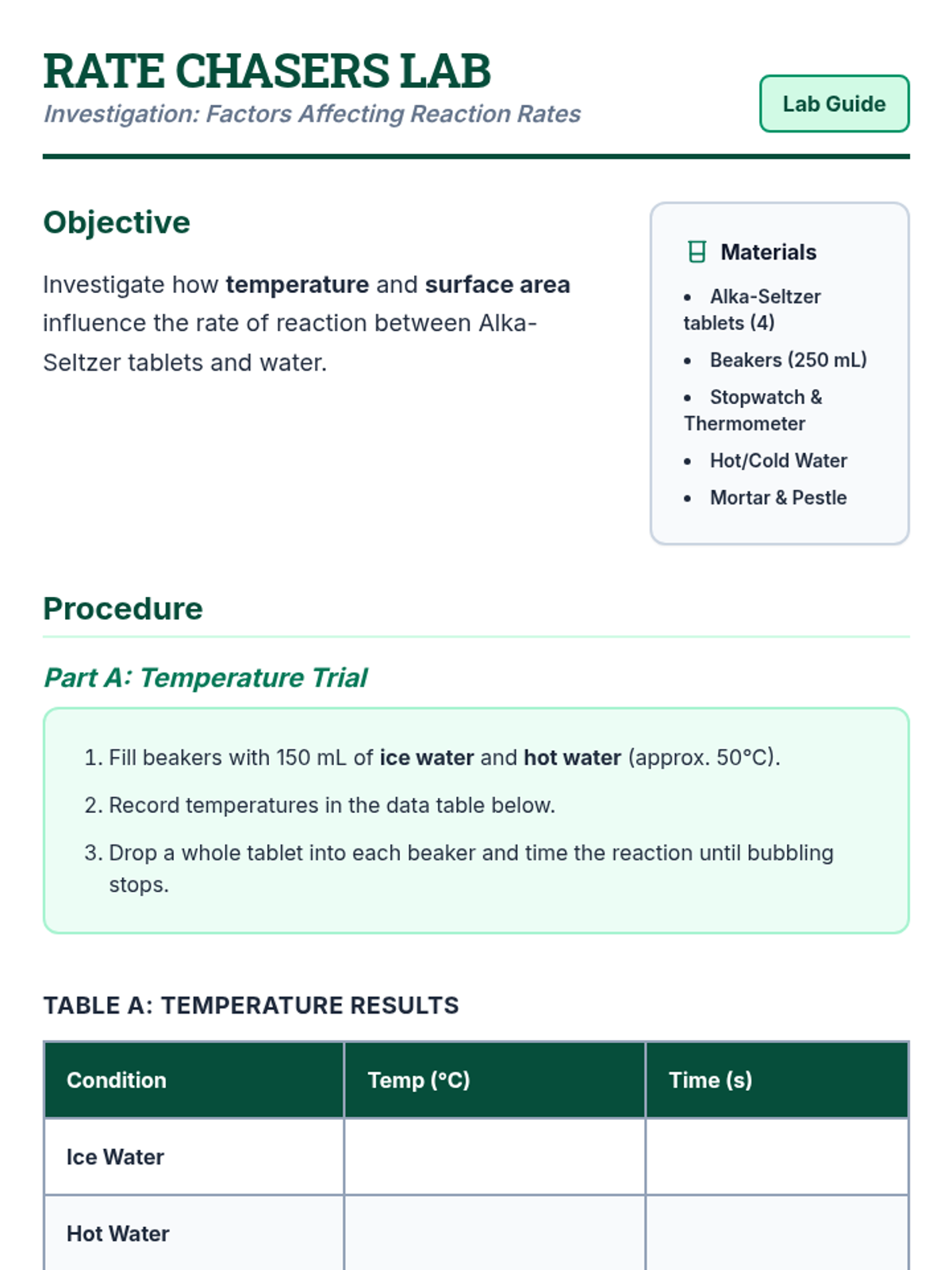
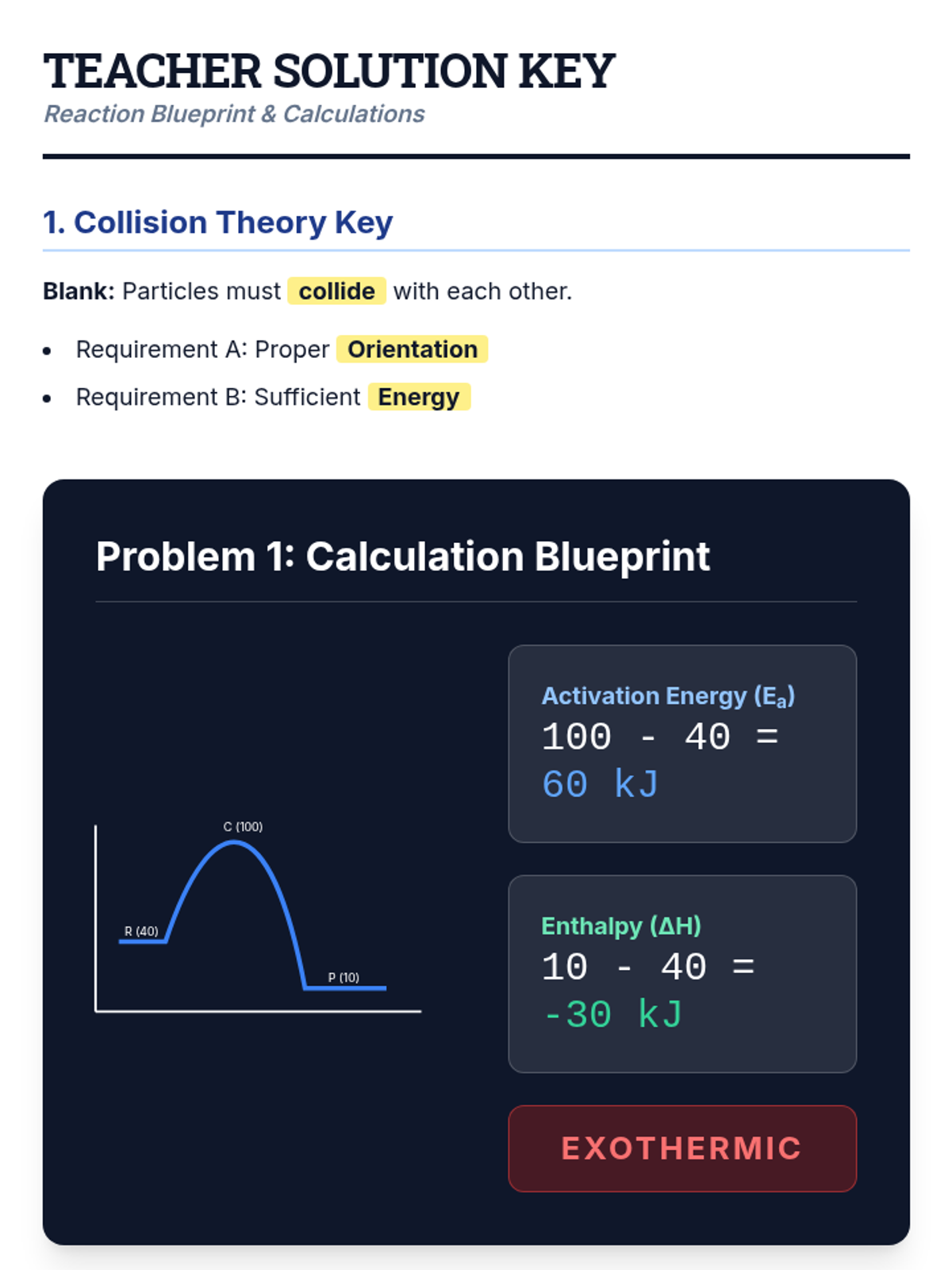
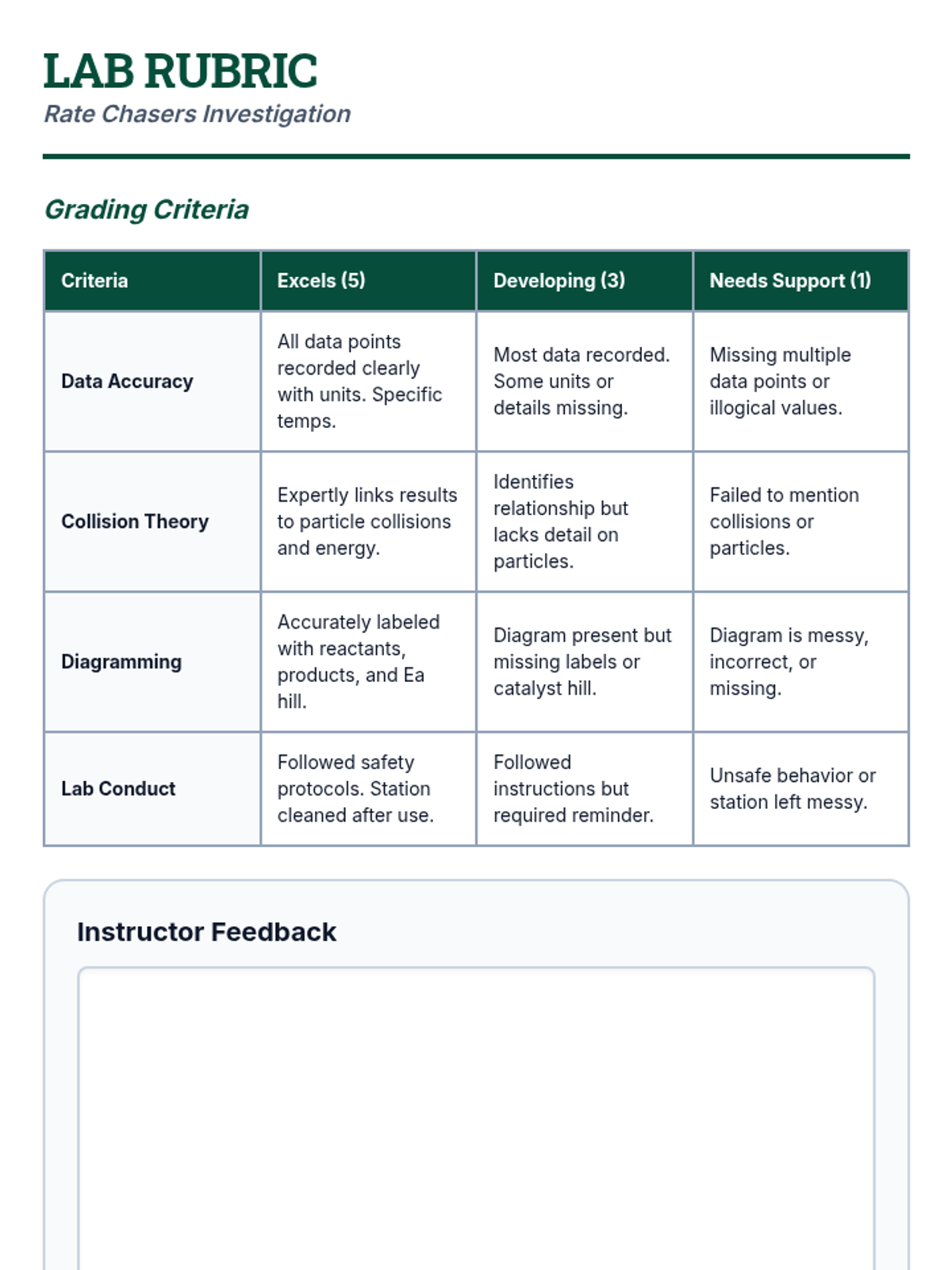
A comprehensive lesson exploring the mechanics of chemical reactions, including collision theory, energy diagrams, and the factors that influence reaction rates. Students will learn to visualize and calculate energy changes while conducting a hands-on investigation.
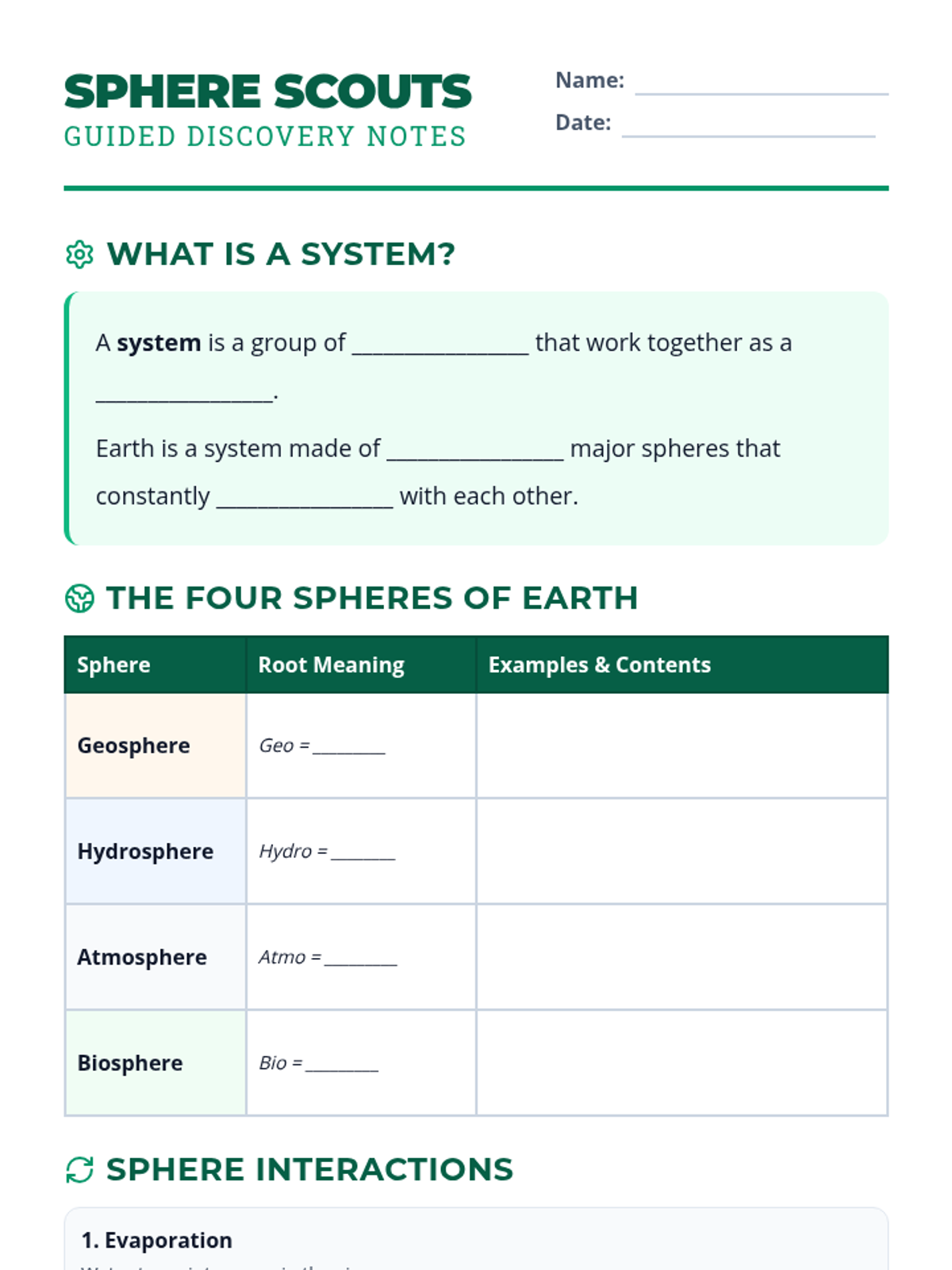
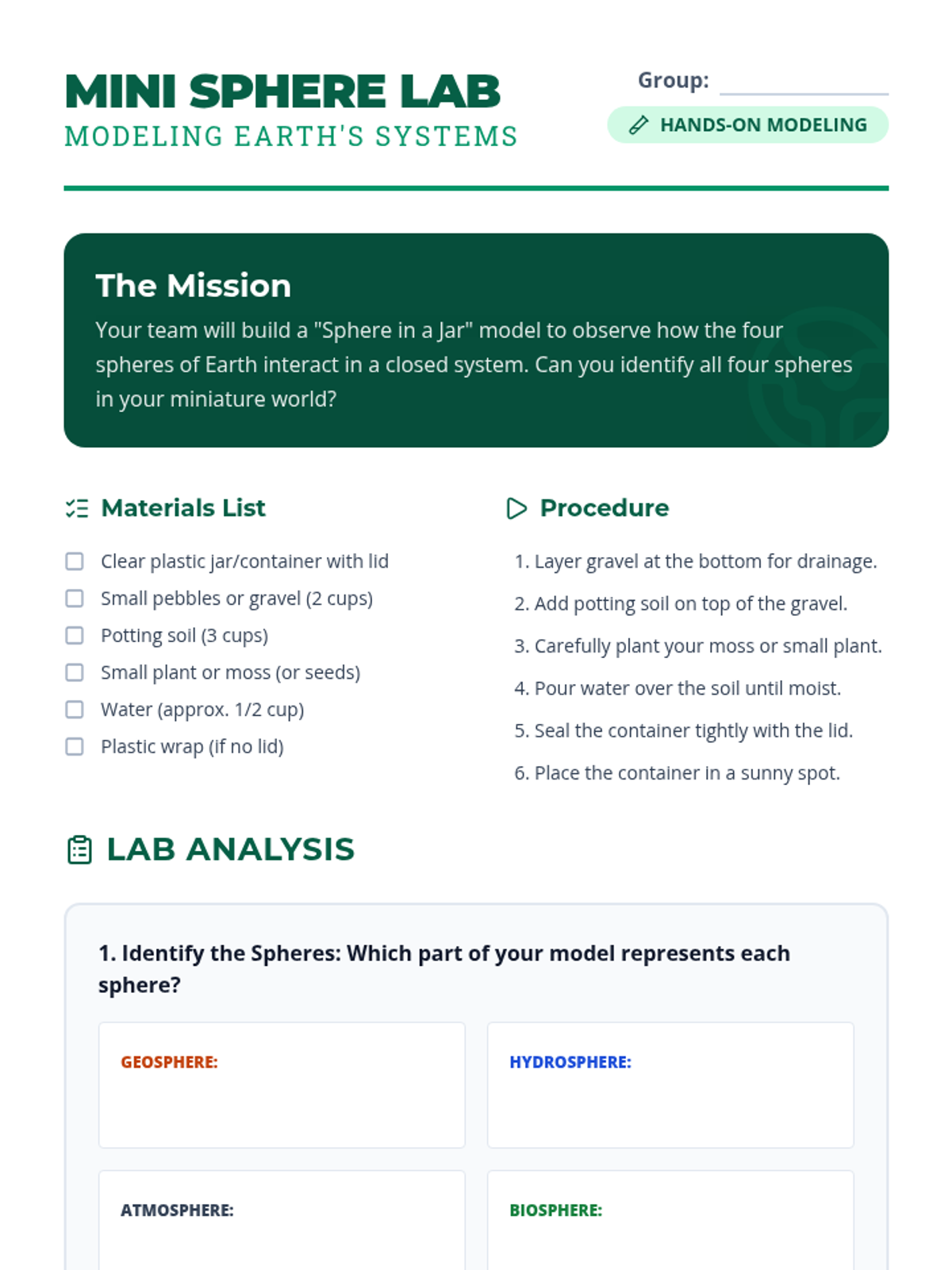
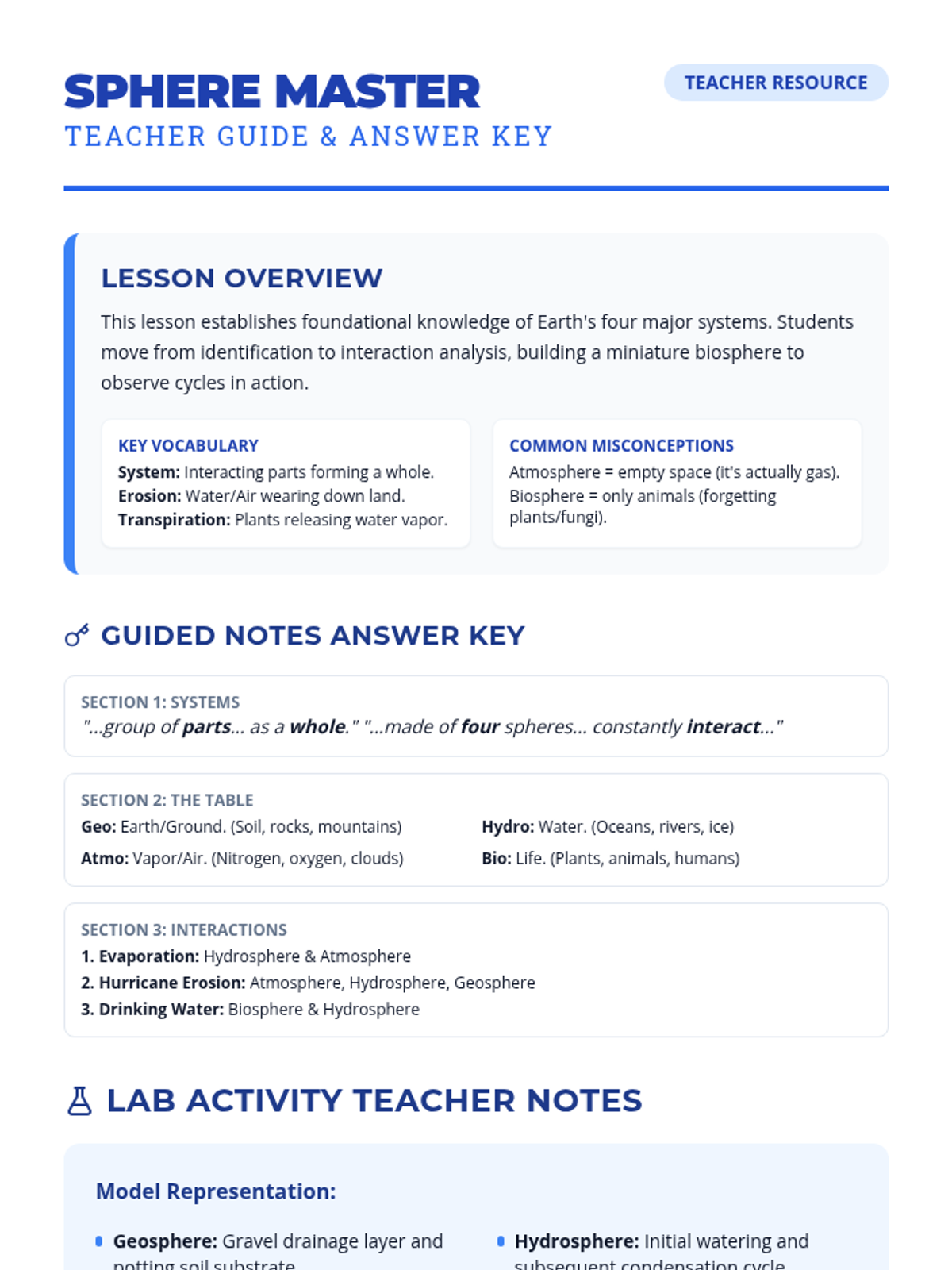
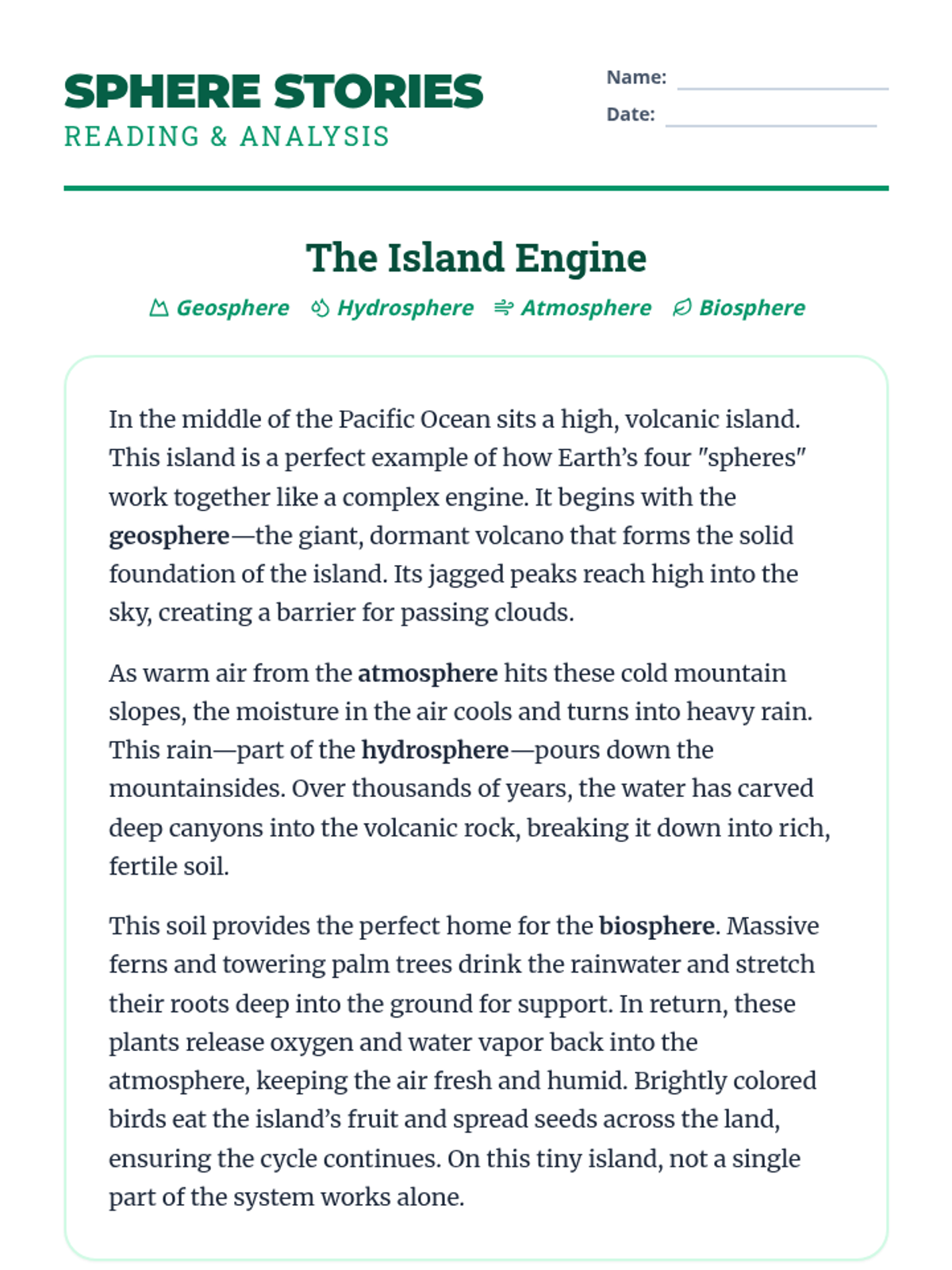
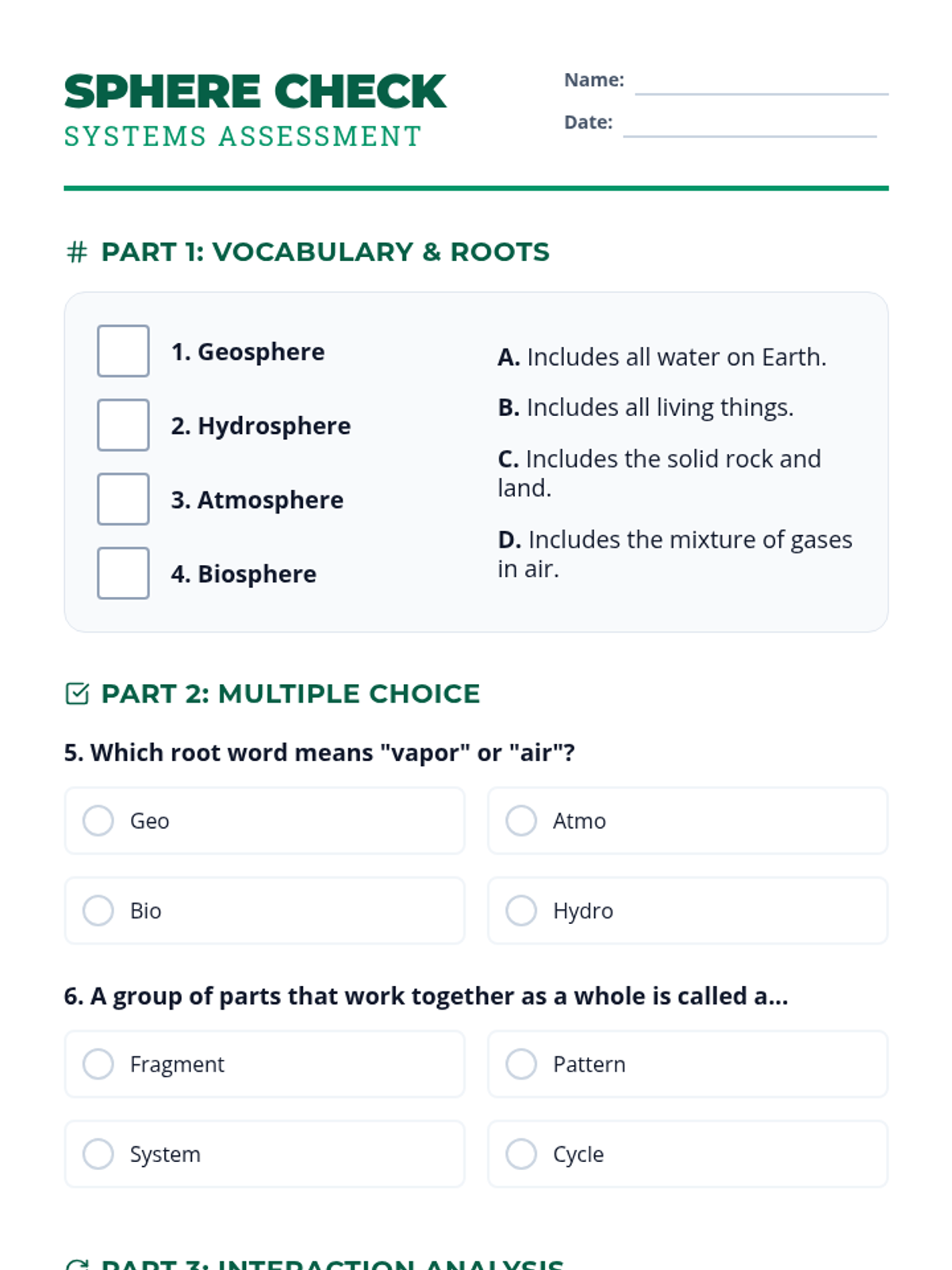
A comprehensive lesson exploring Earth's four major systems: the geosphere, hydrosphere, atmosphere, and biosphere. Students will learn to identify each sphere and describe the complex ways they interact to sustain life and shape the planet.
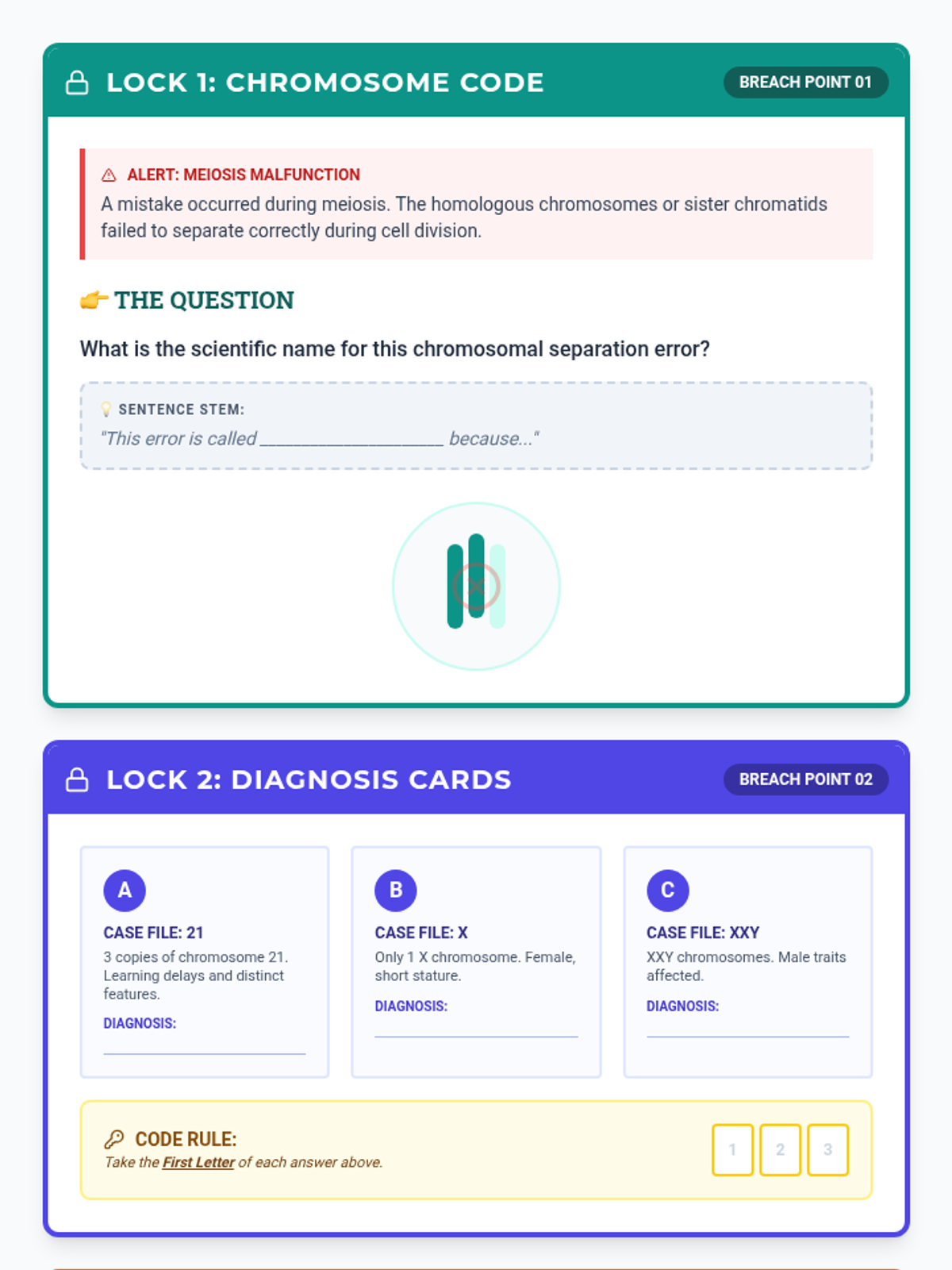
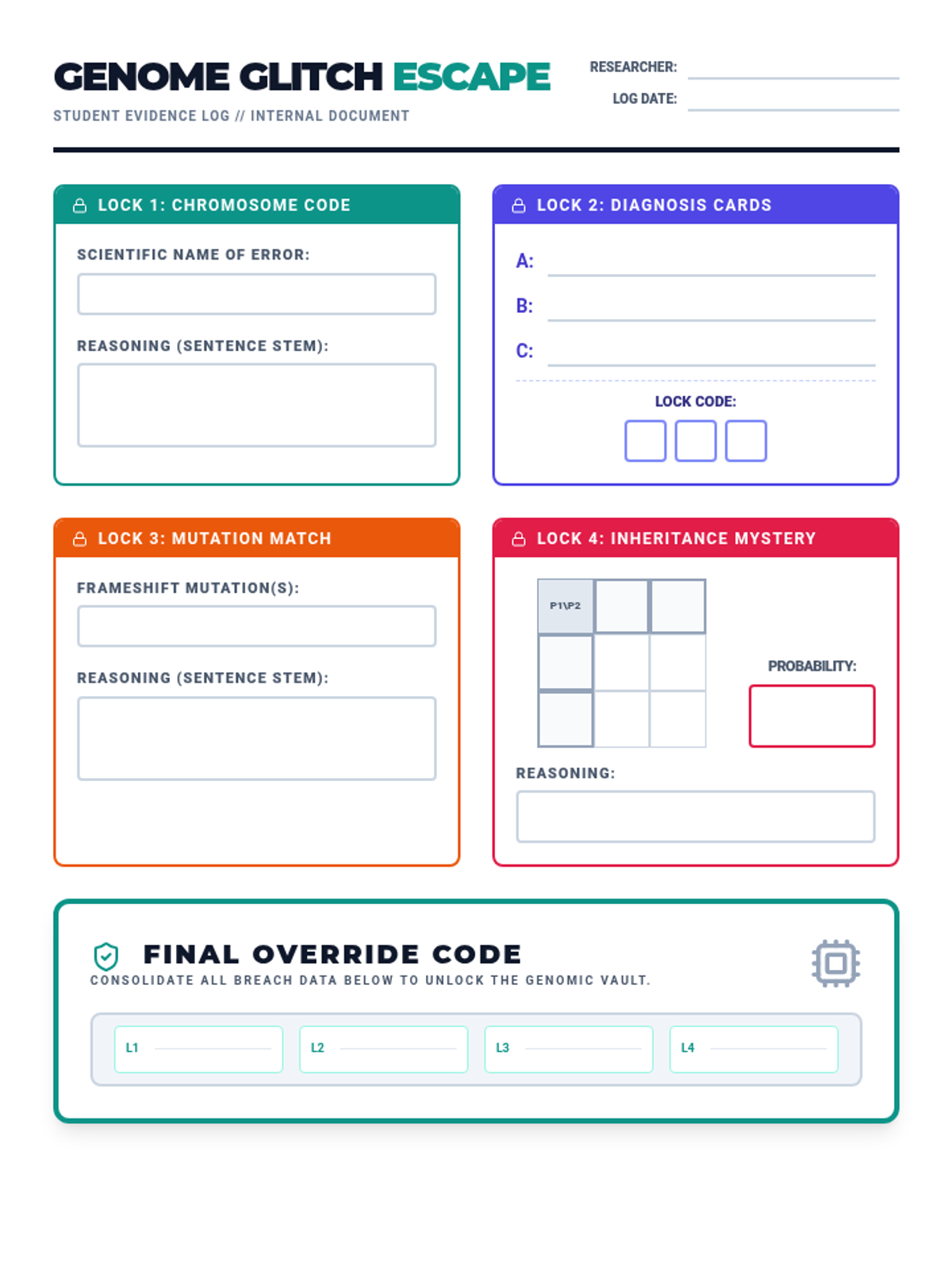
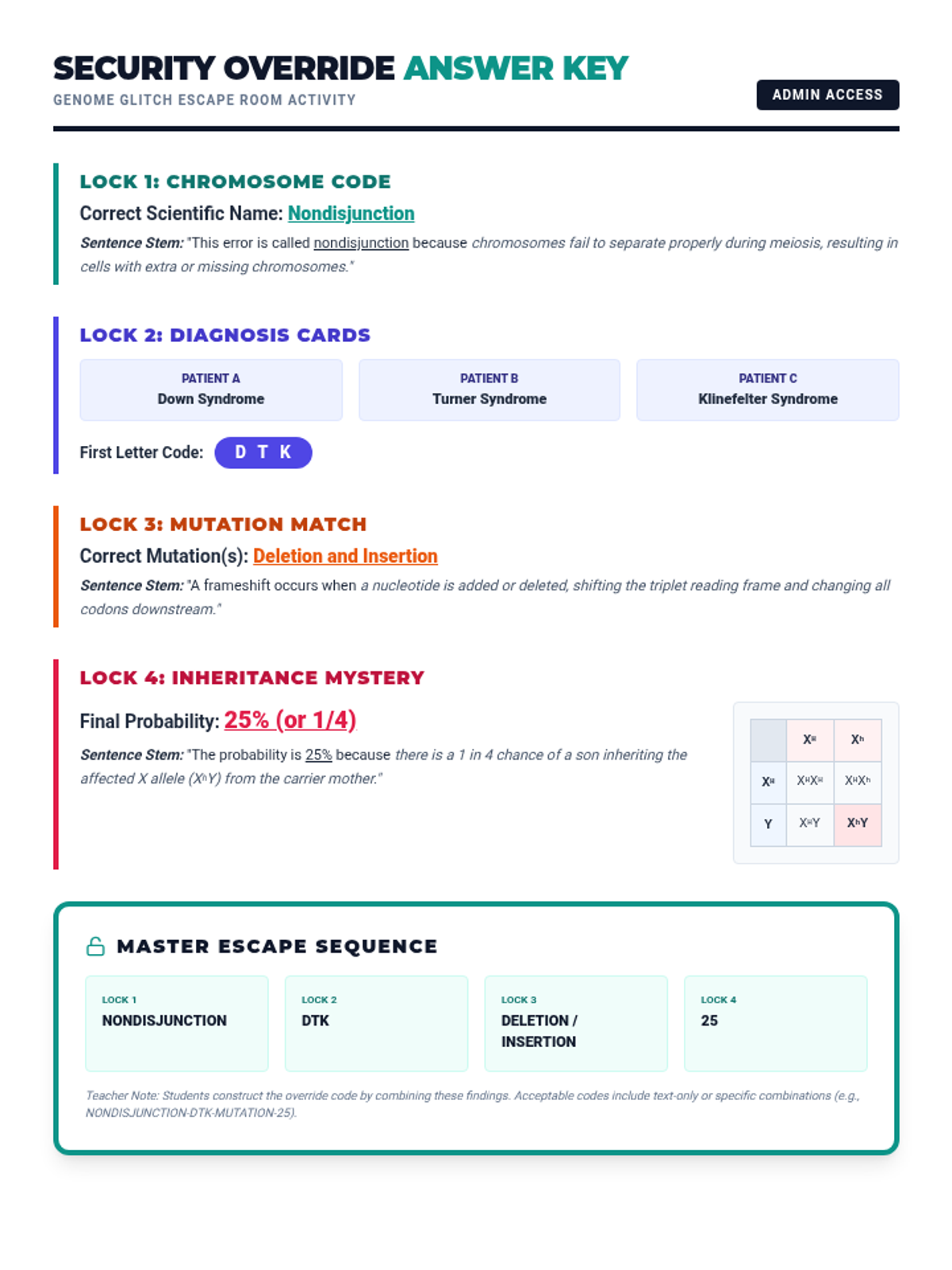
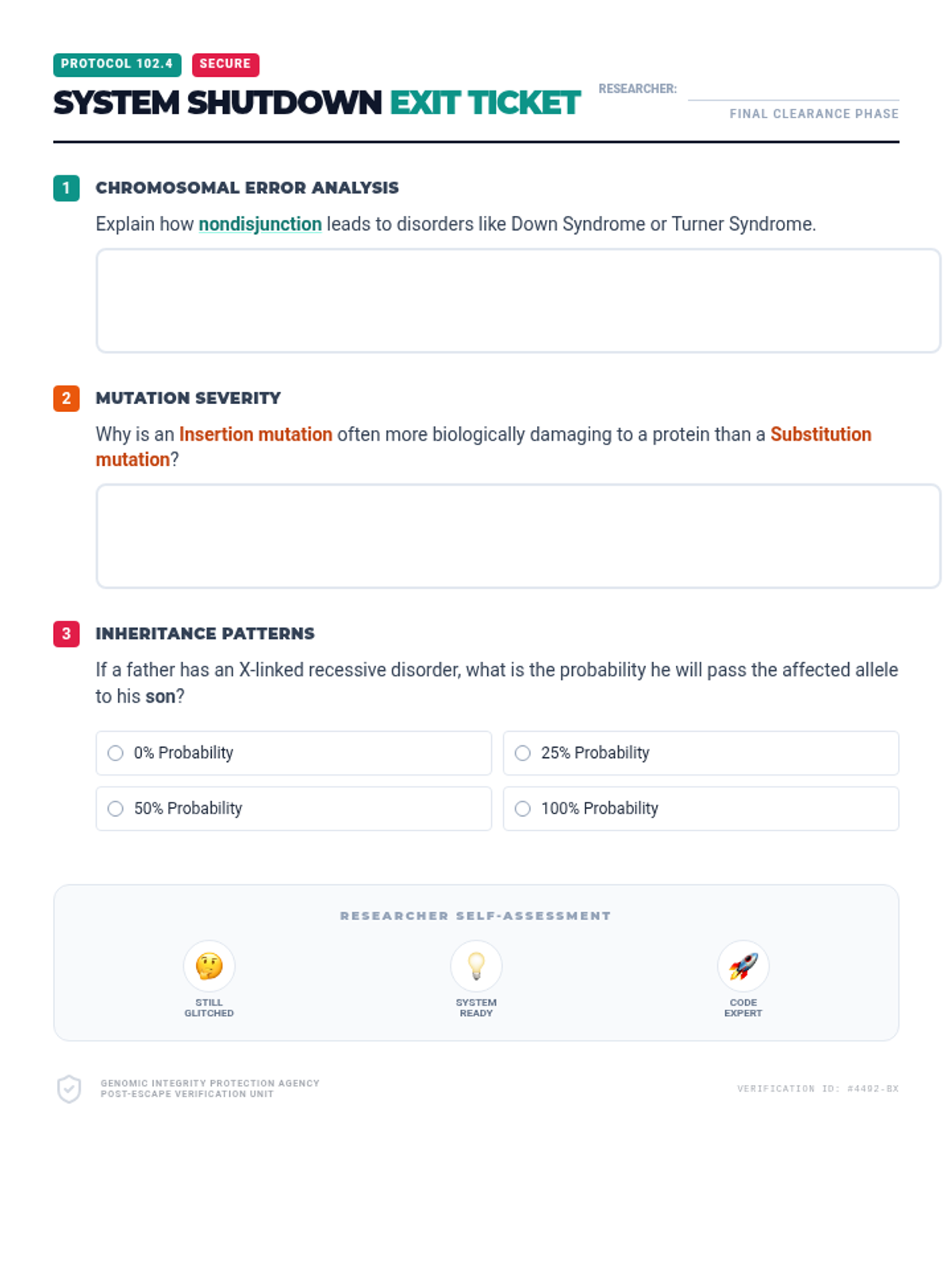
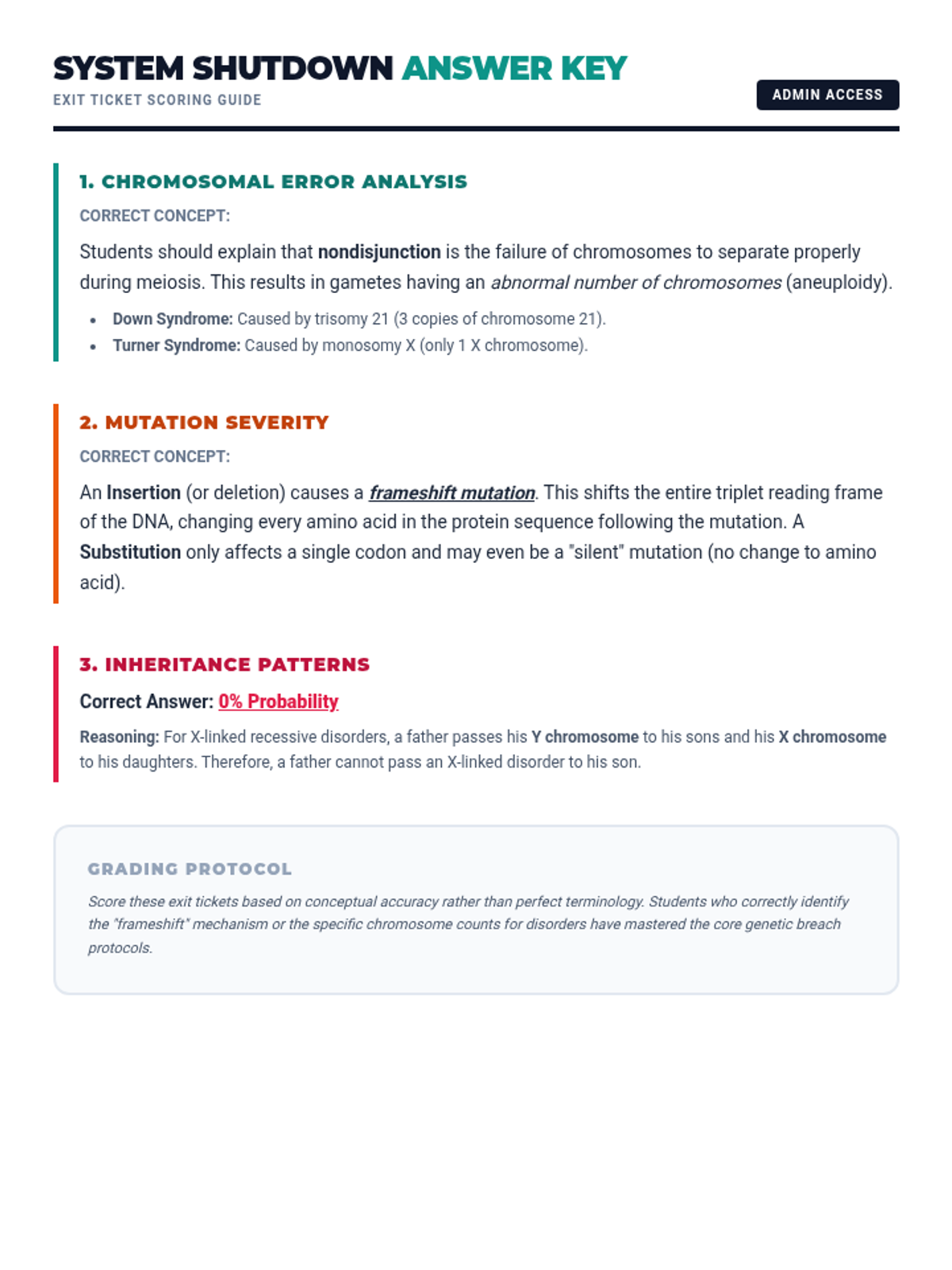
An immersive genetics escape room activity where students solve puzzles related to chromosomal errors, mutations, and inheritance patterns to 'unlock' a breached genomic system.
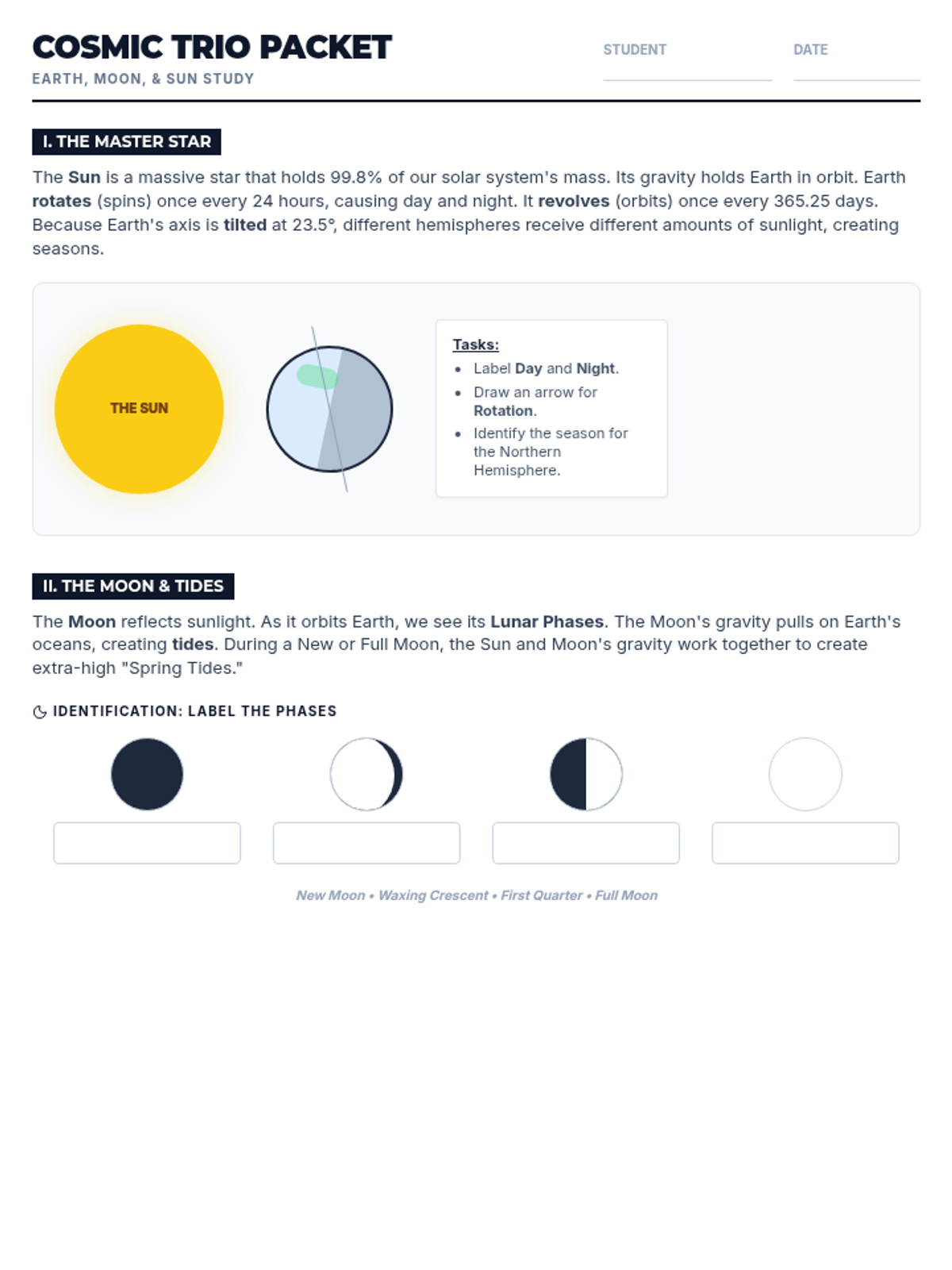
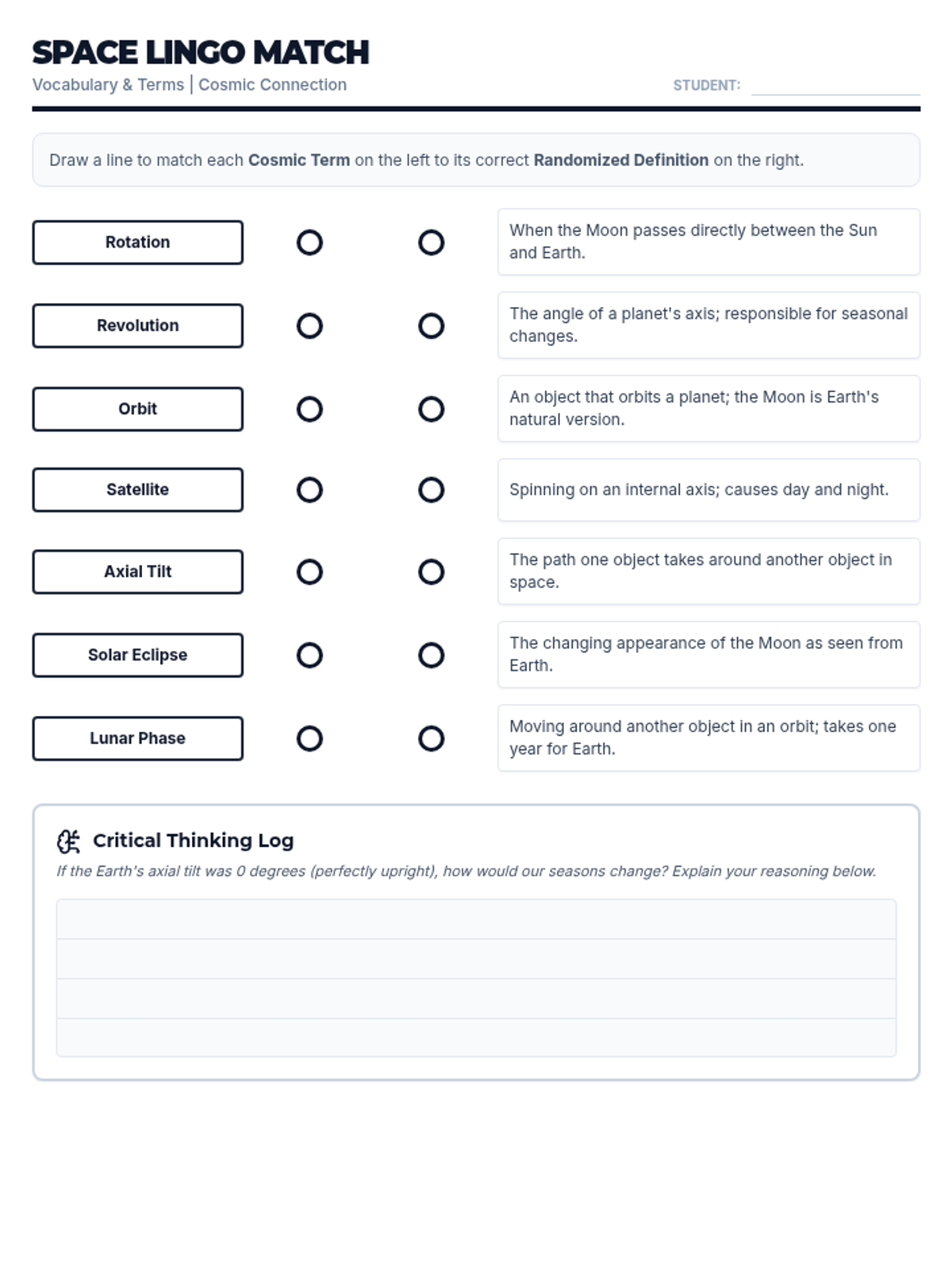
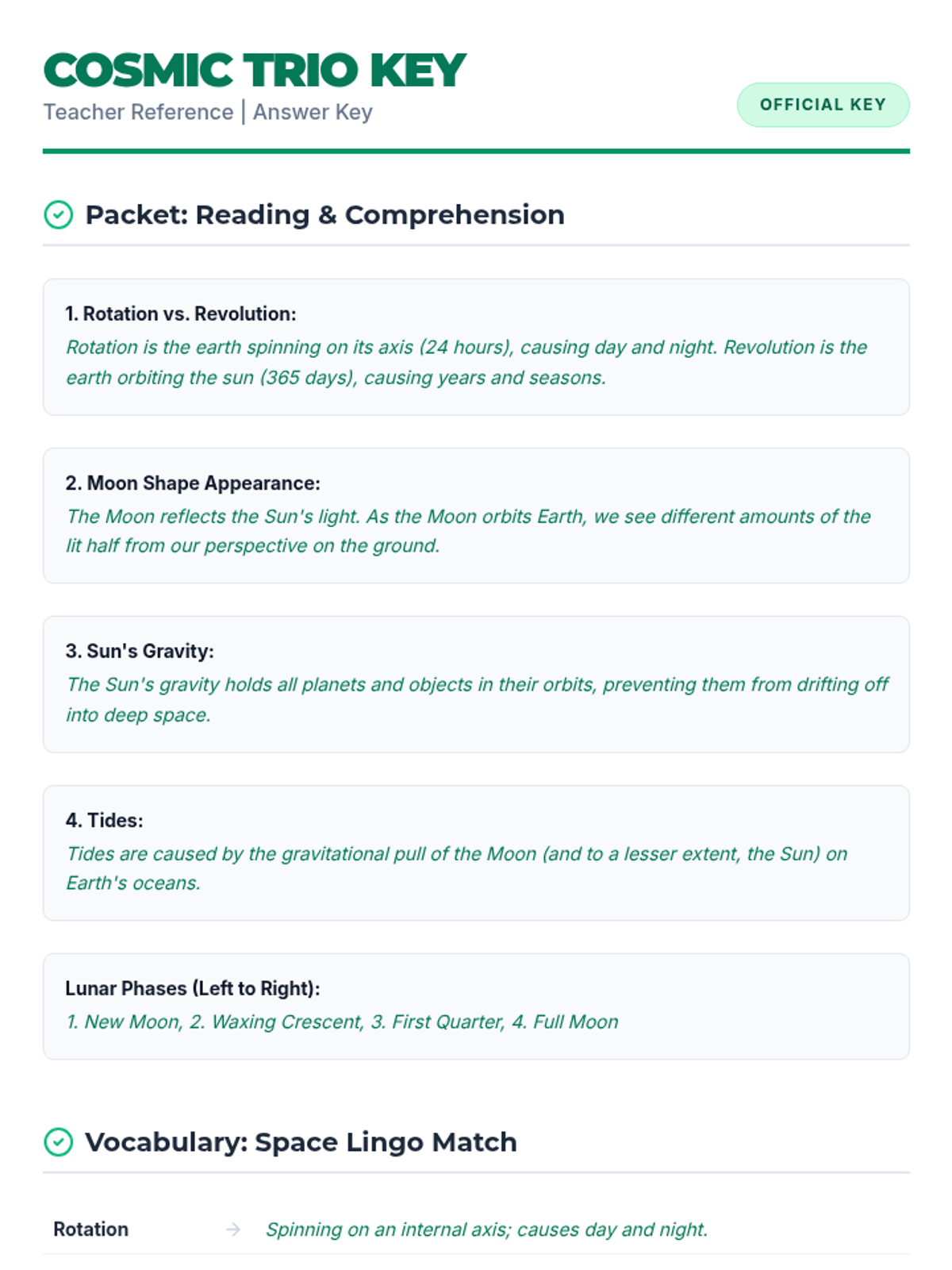
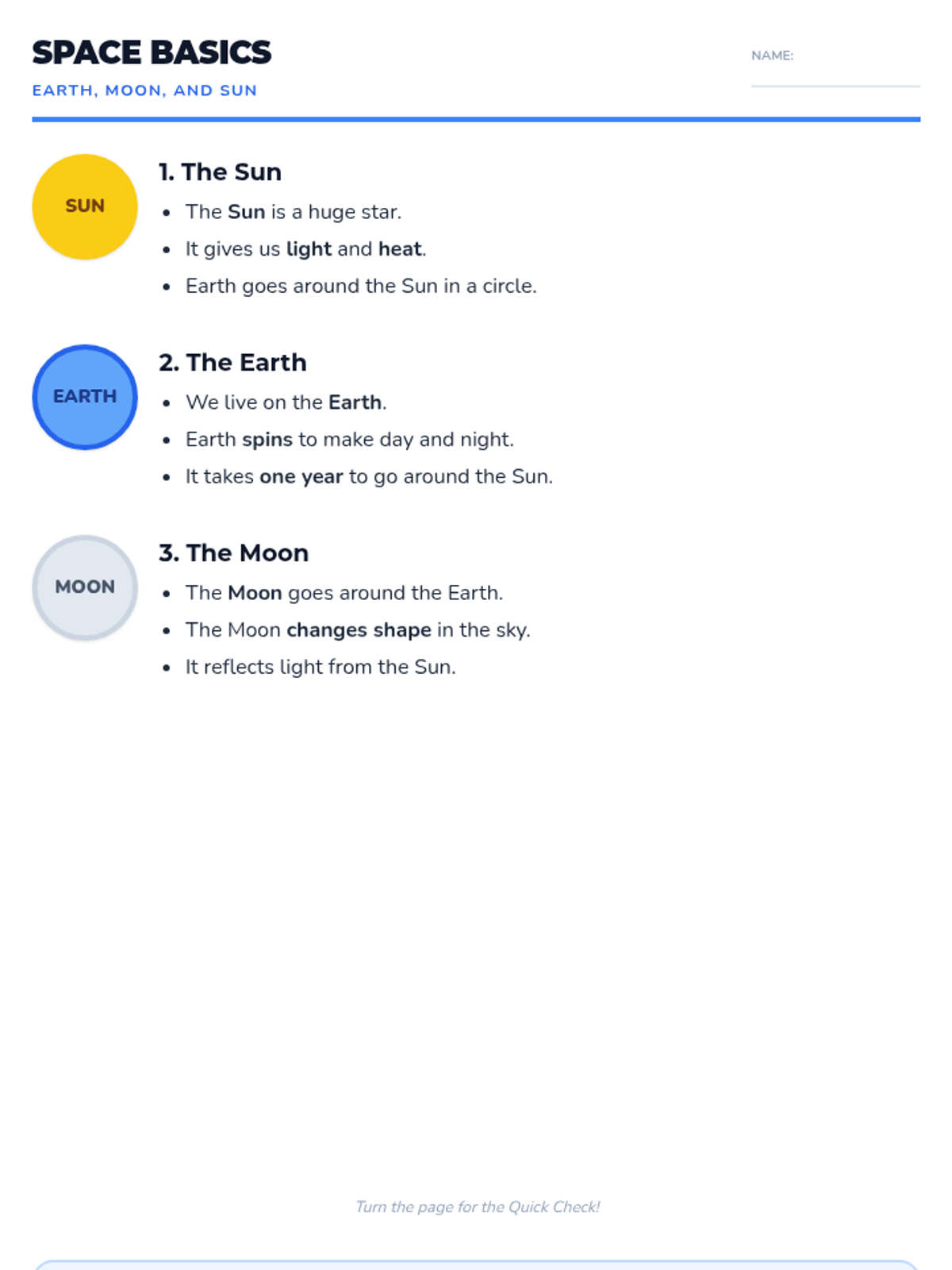
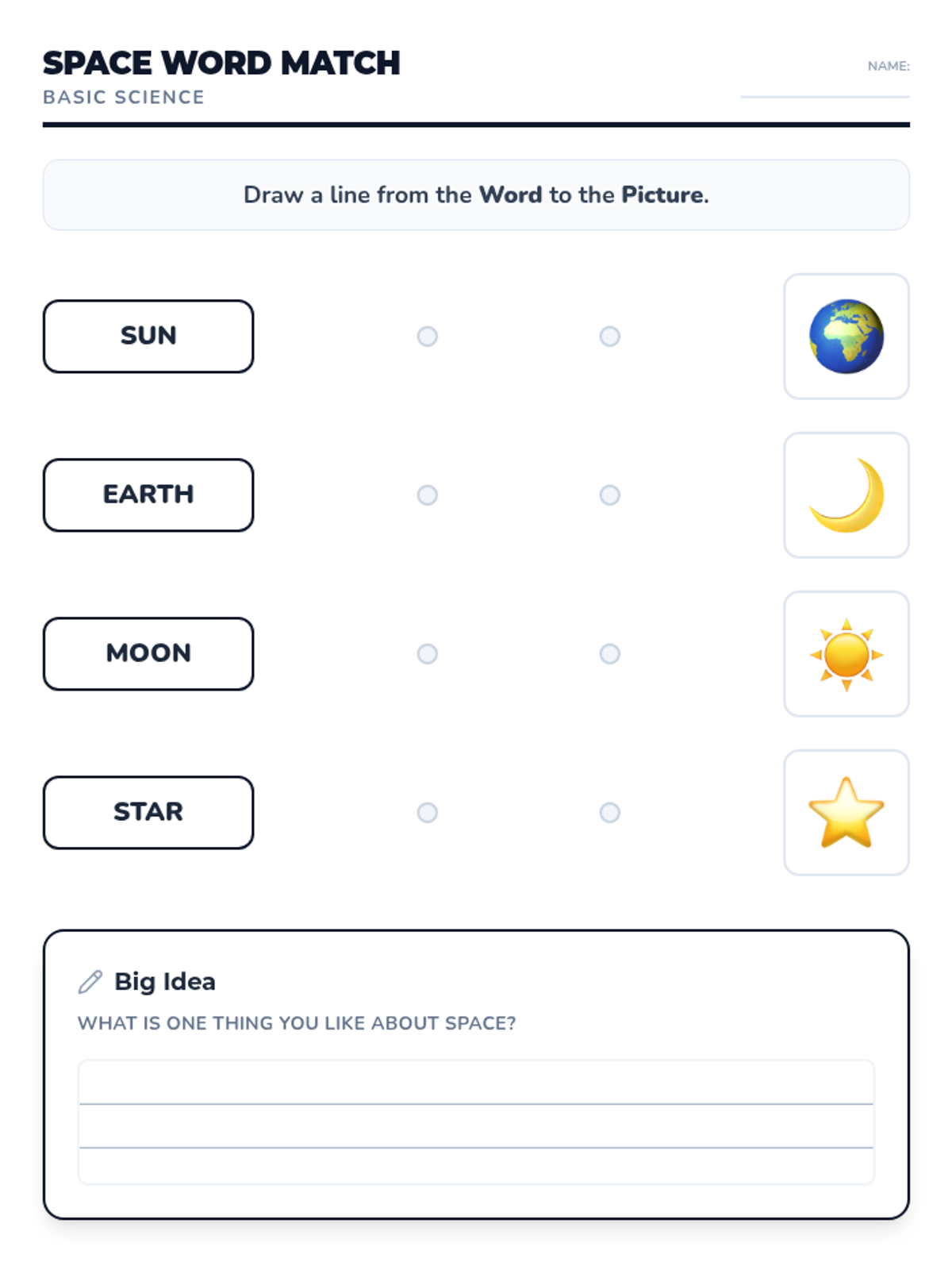
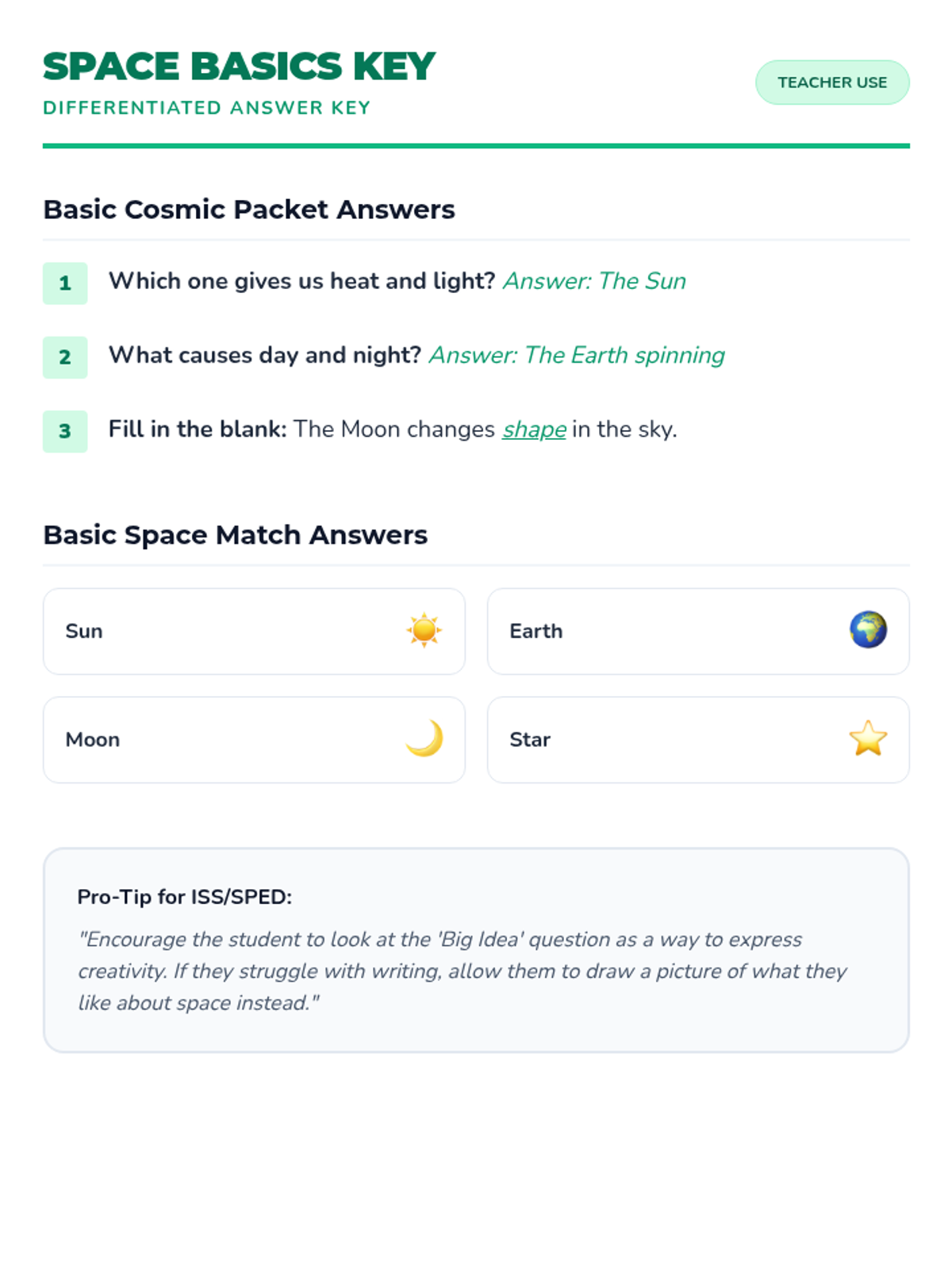
An independent study unit exploring the relationships between the Earth, Moon, and Sun, covering rotation, revolution, moon phases, and gravity.
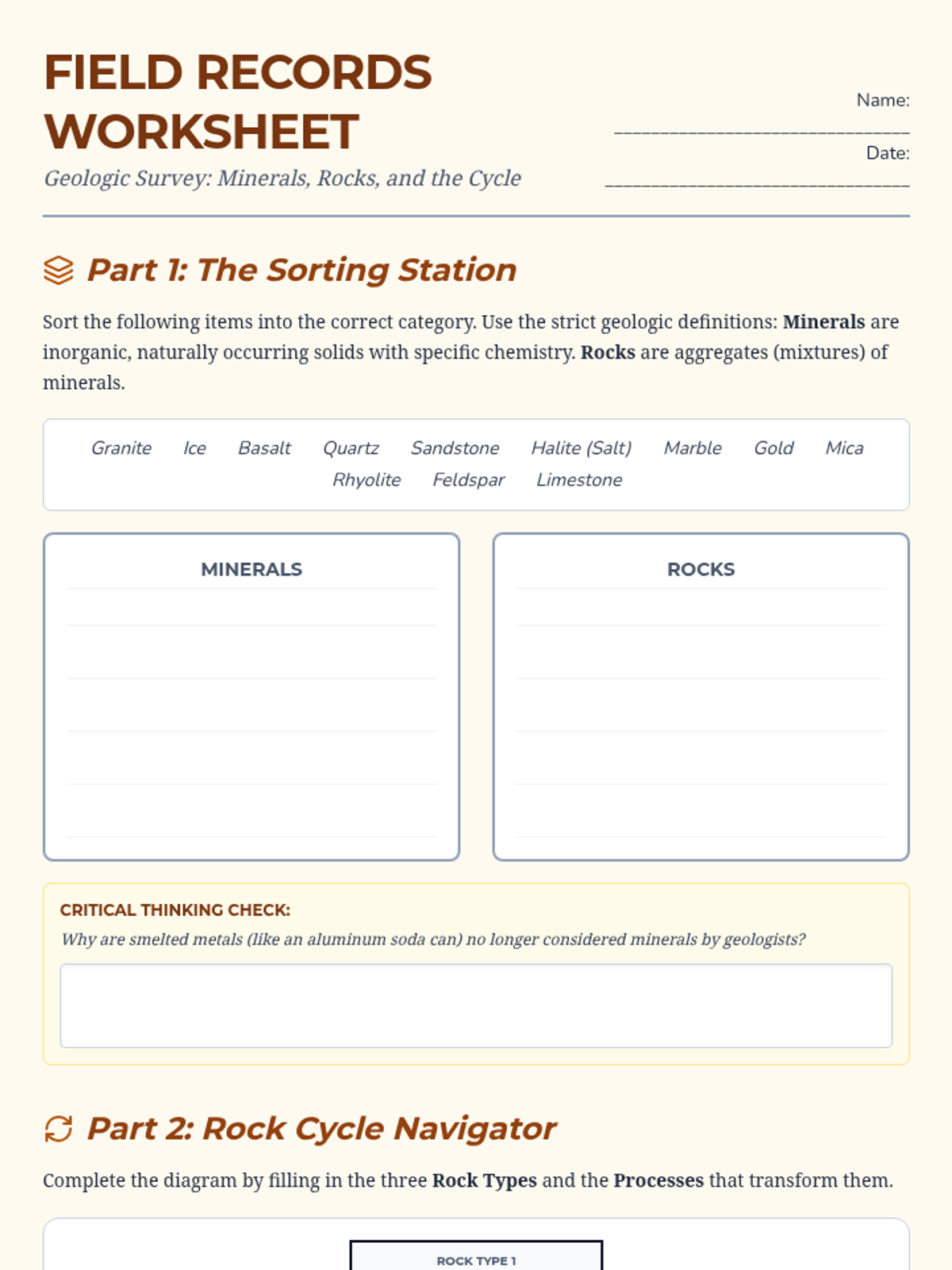
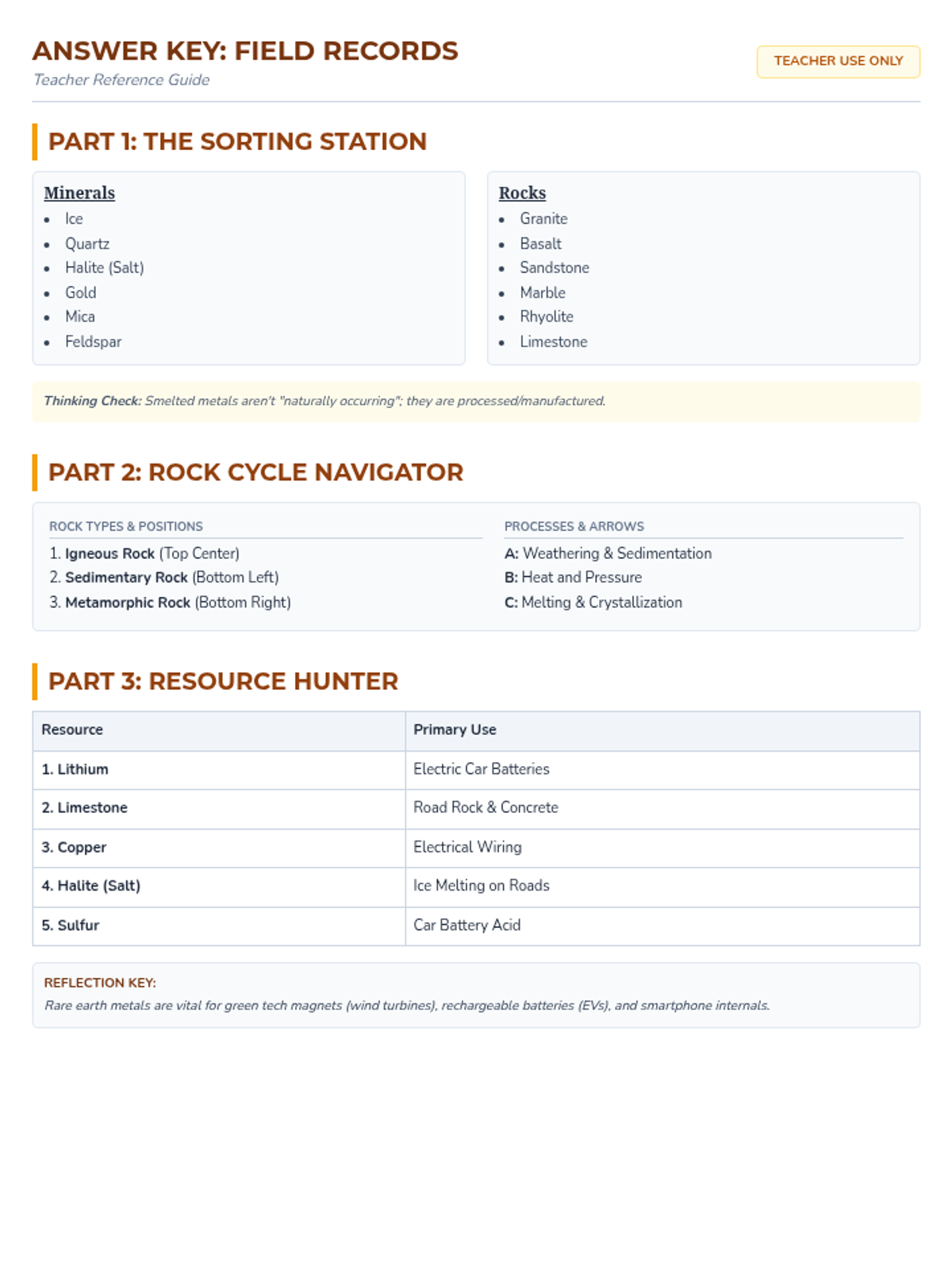
An exploration of the fundamental building blocks of Earth's crust, focusing on the differences between minerals and rocks, the dynamic processes of the rock cycle, and the economic importance of geologic resources.
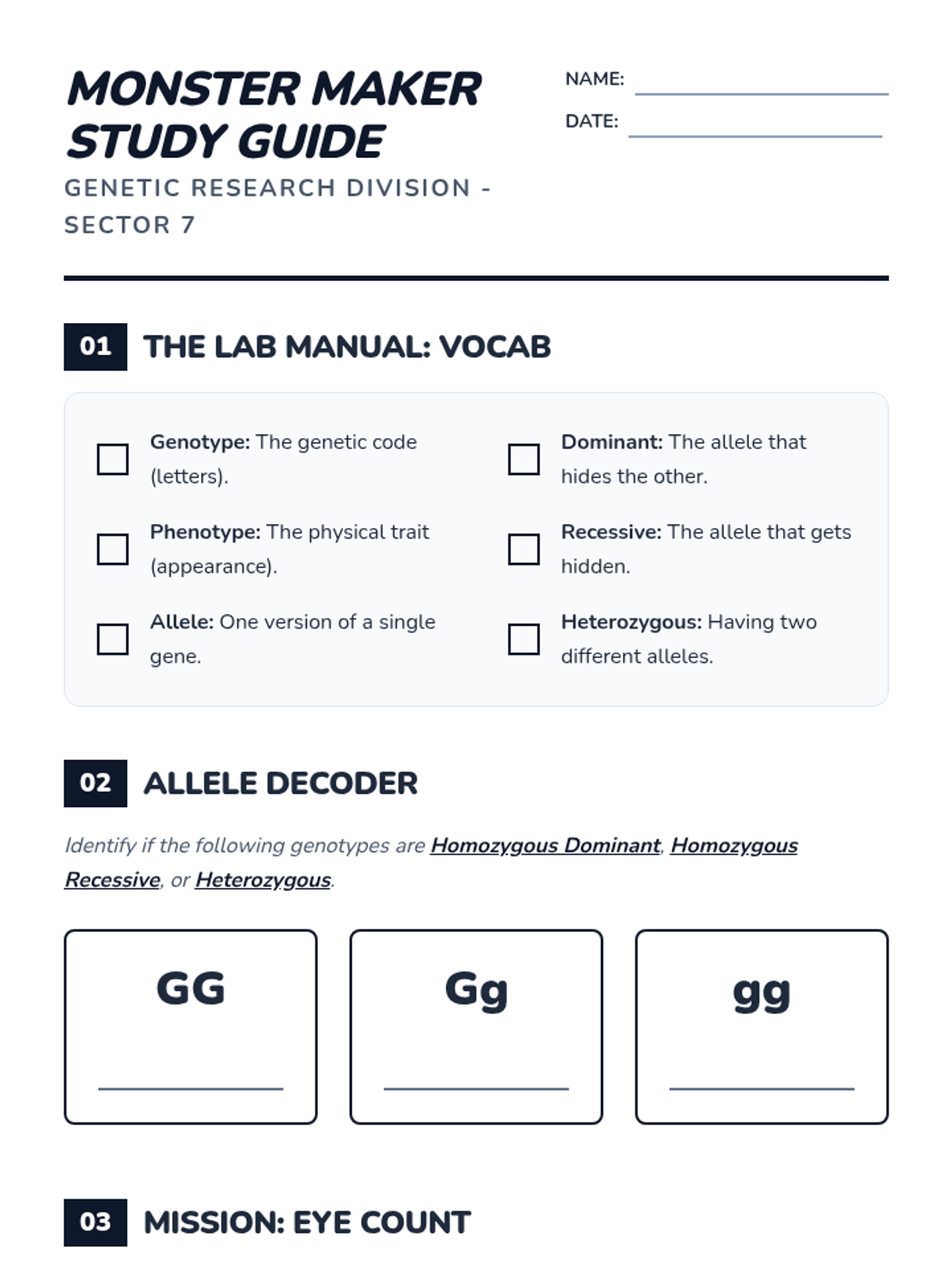
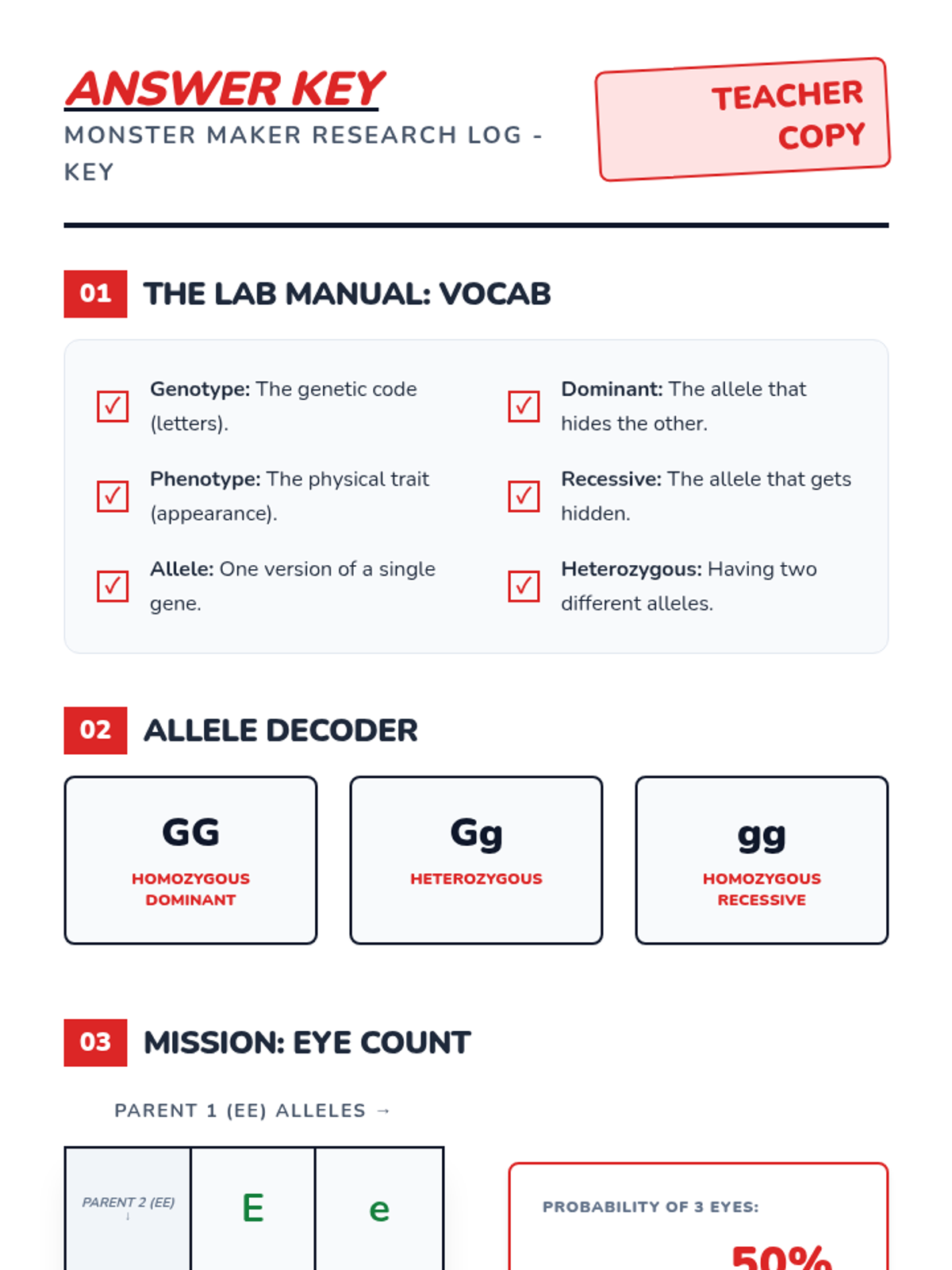
A lesson exploring genetic inheritance using alien and monster traits, focusing on genotypes, phenotypes, and Punnett square probability. Includes visual aids with color-coded alleles and scaffolded analysis prompts.
A complete introductory lesson on the lunar cycle, covering the eight phases of the moon, the concepts of waxing and waning, and the orbital relationship between the Earth, Moon, and Sun.