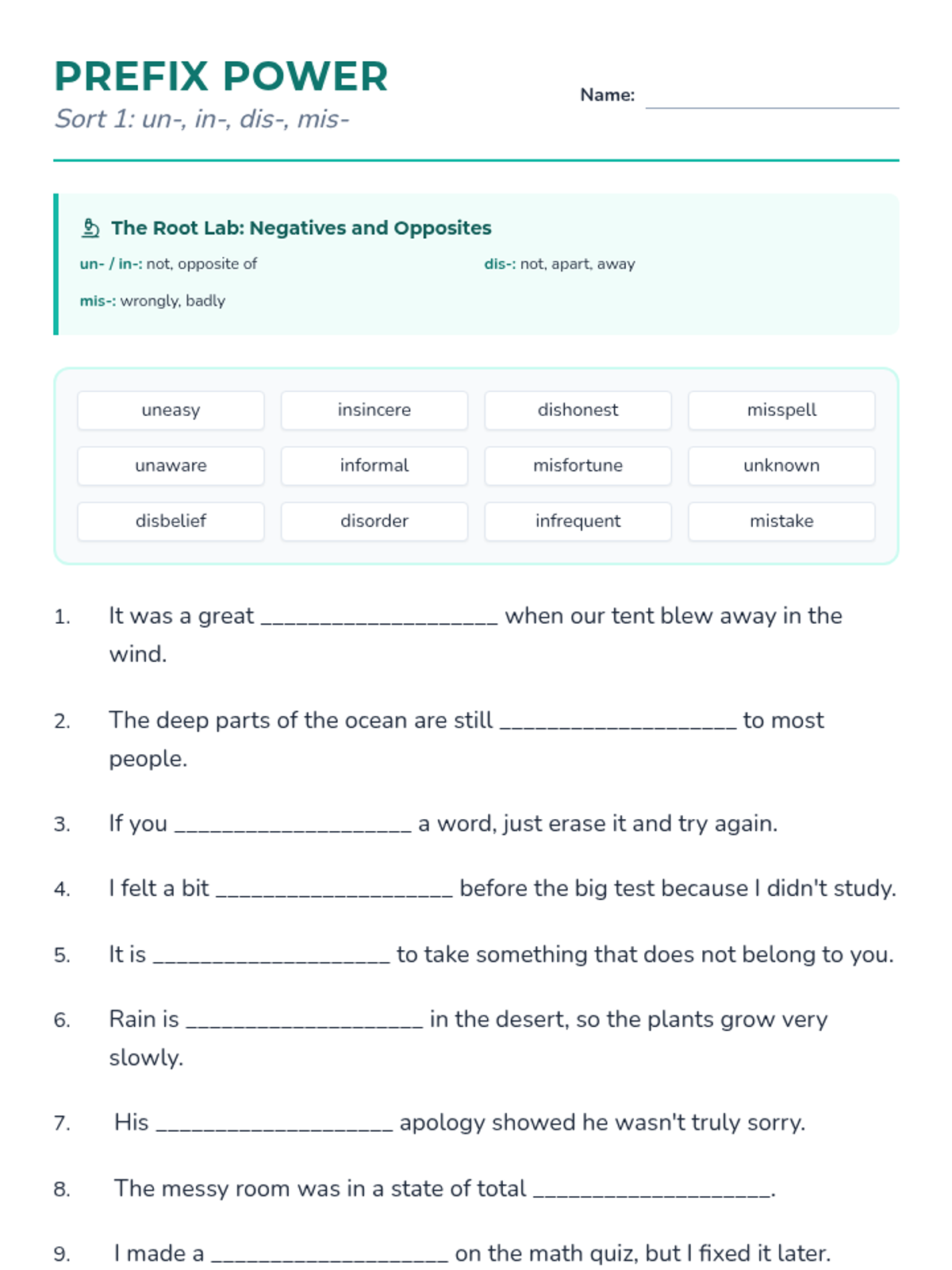
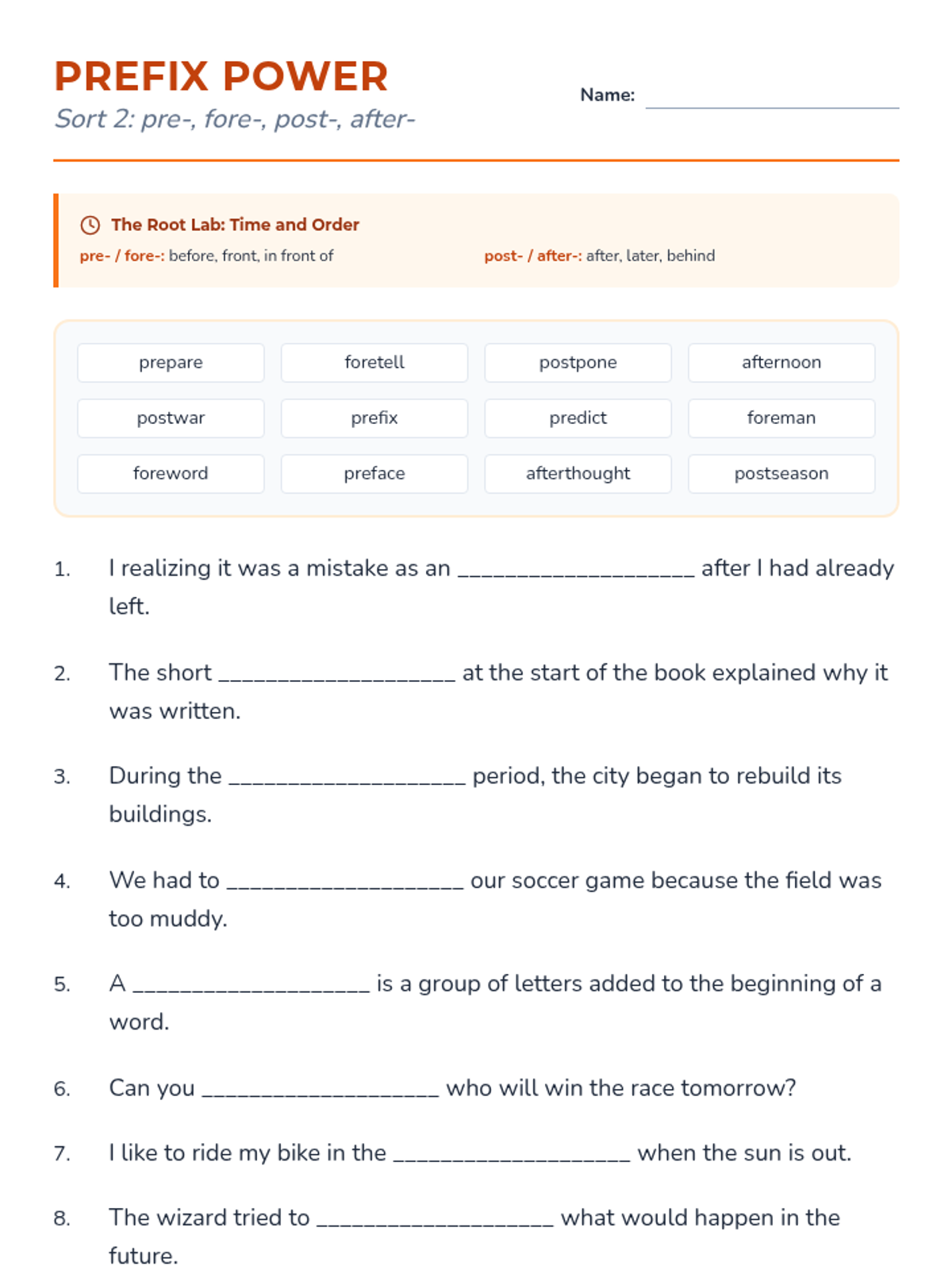
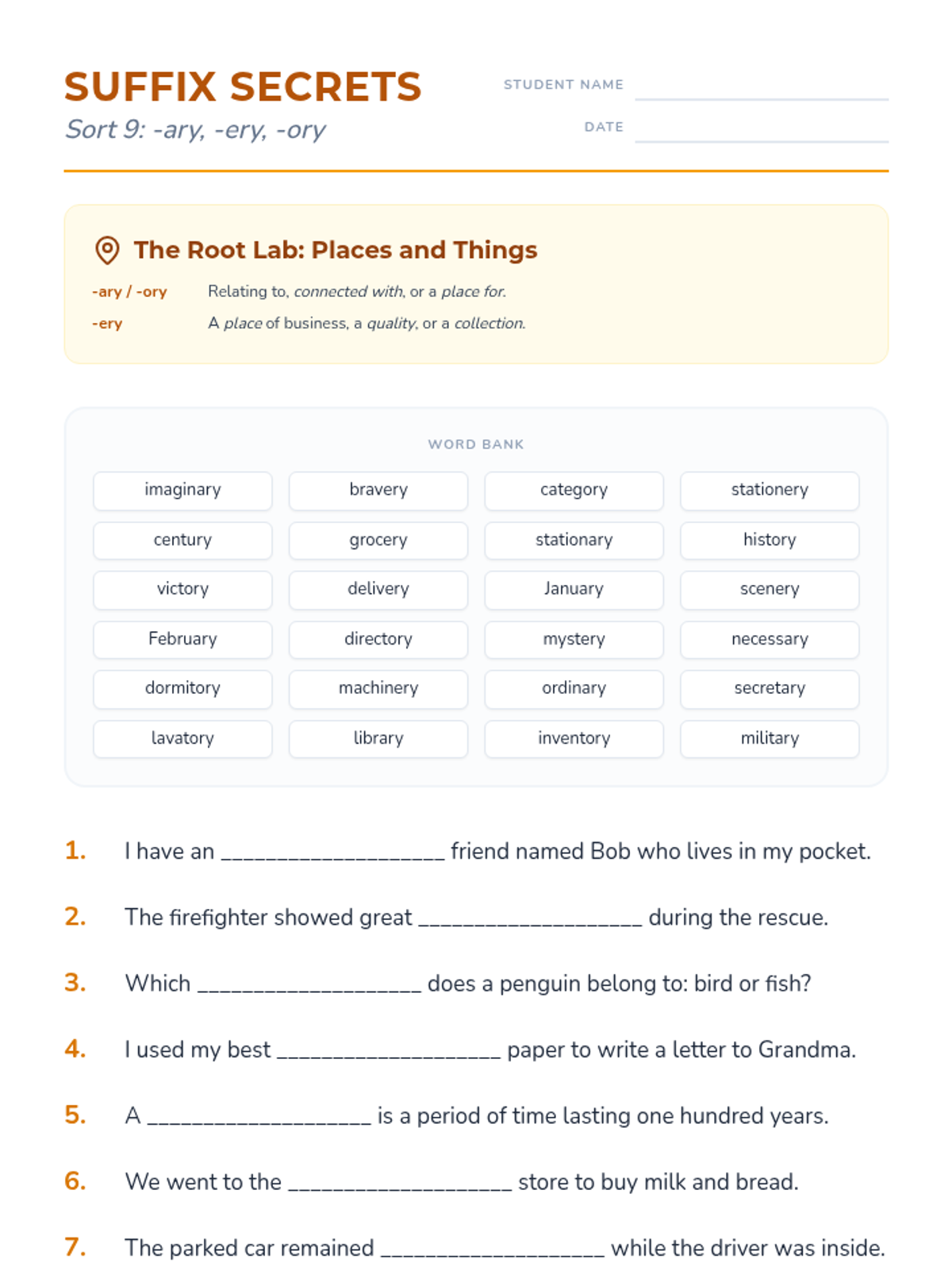
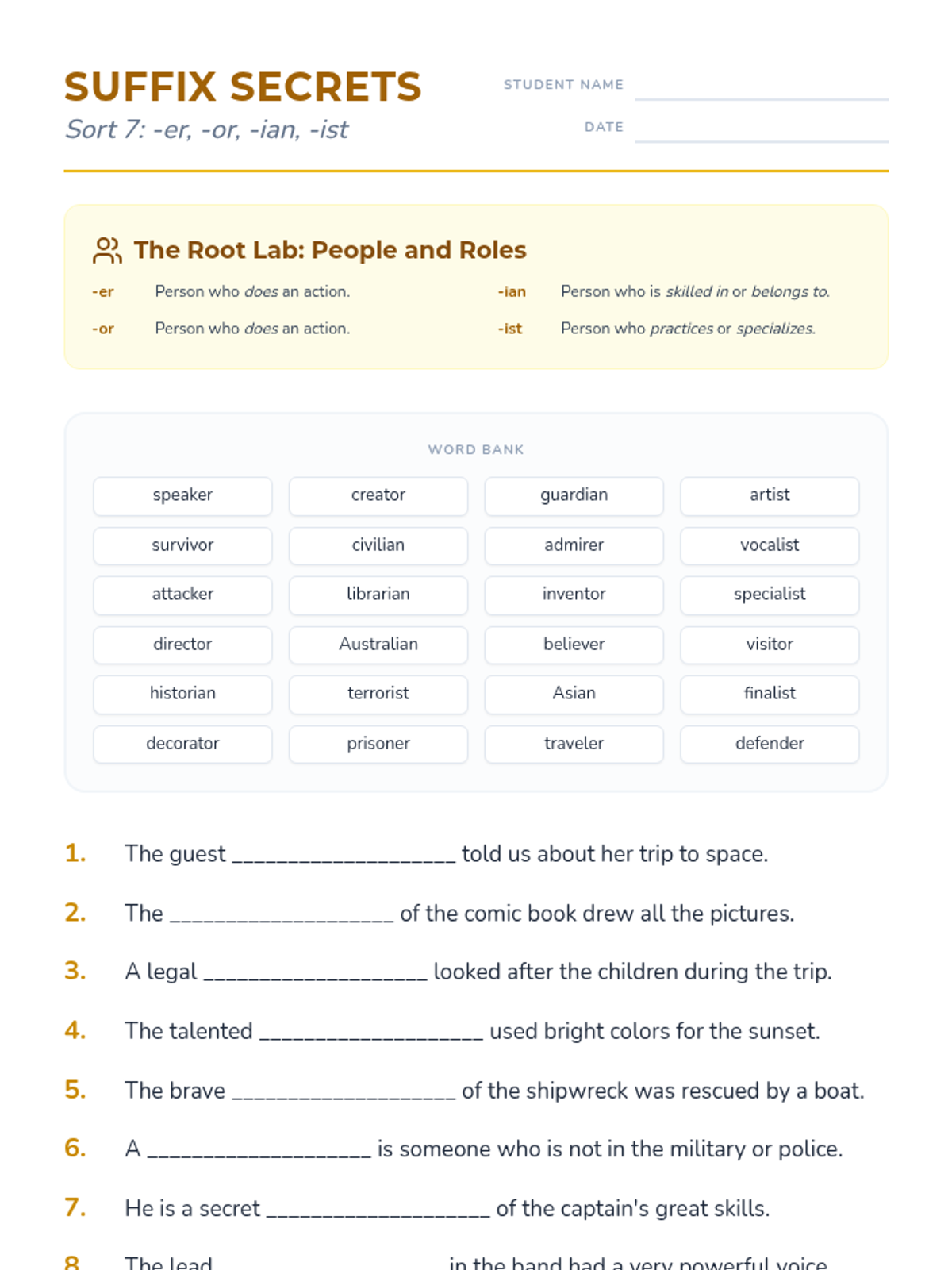
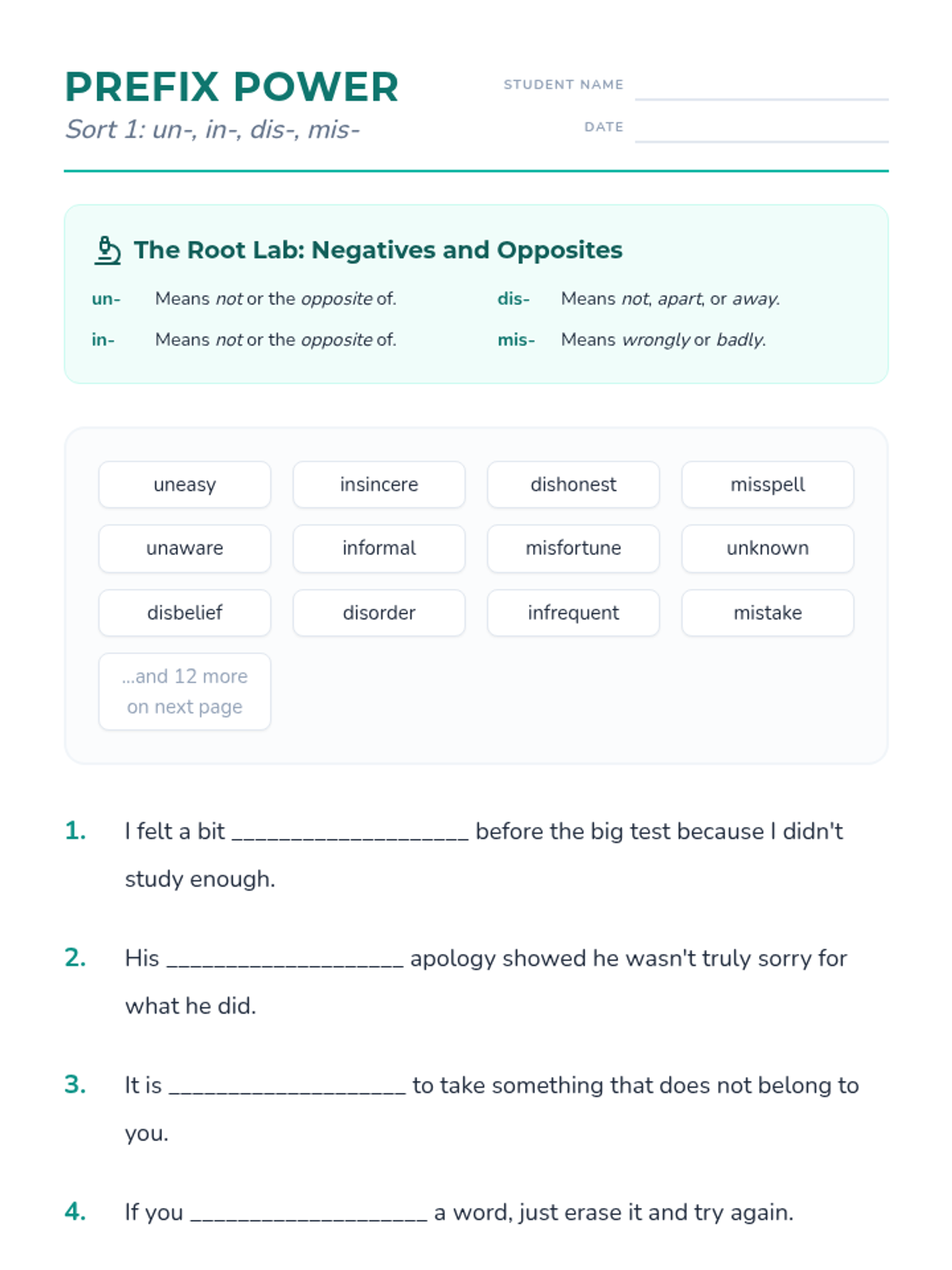
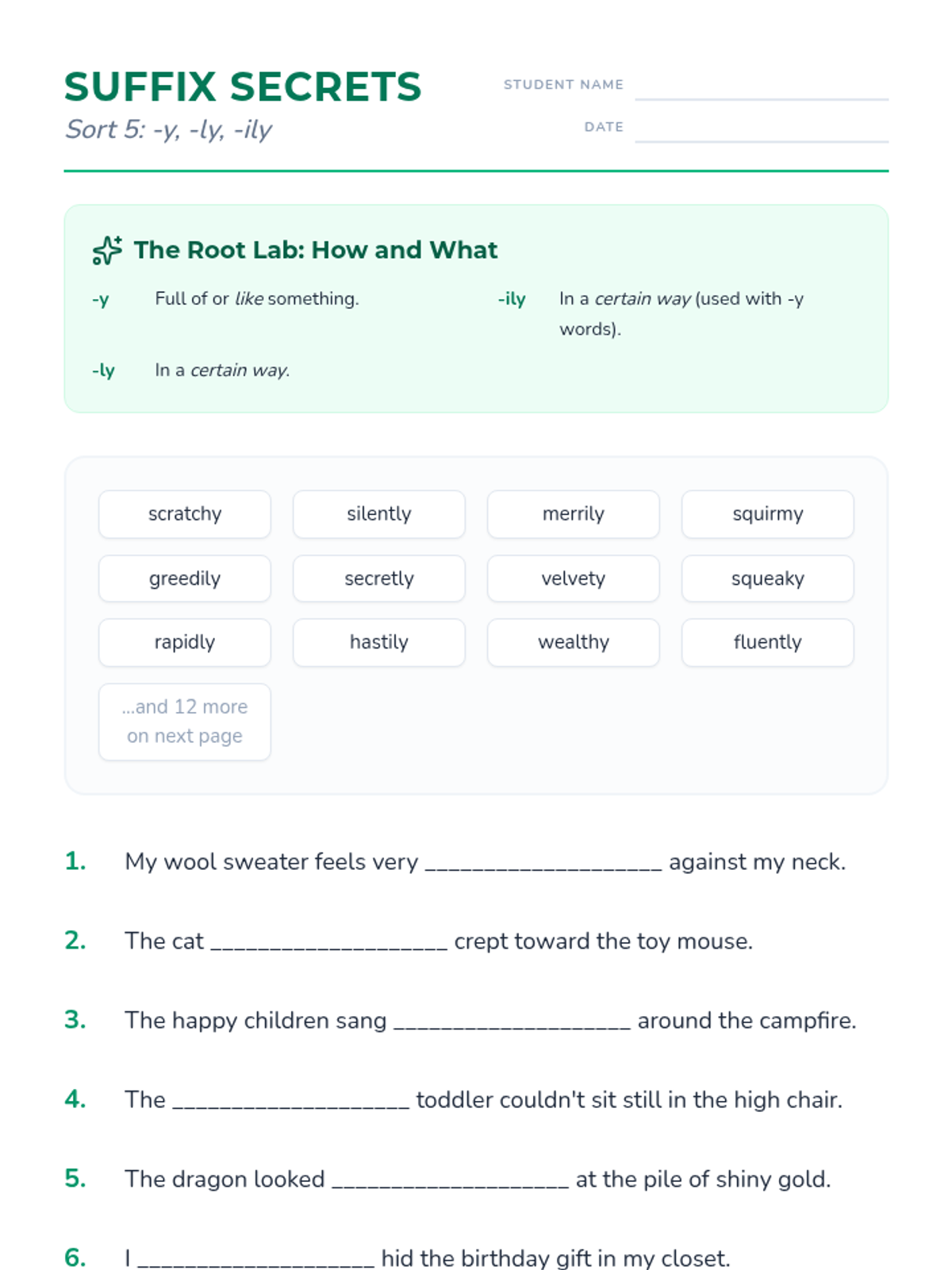
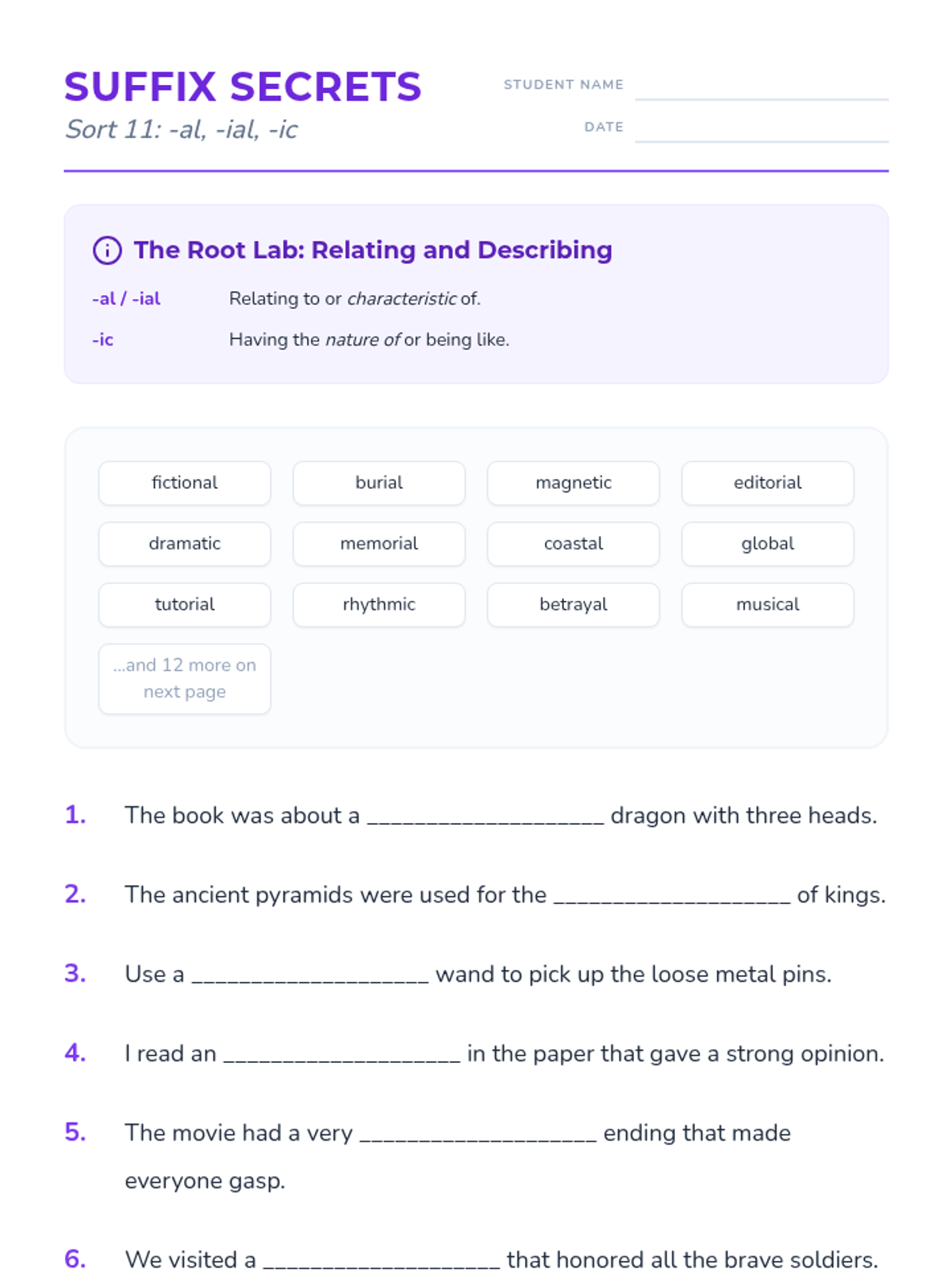
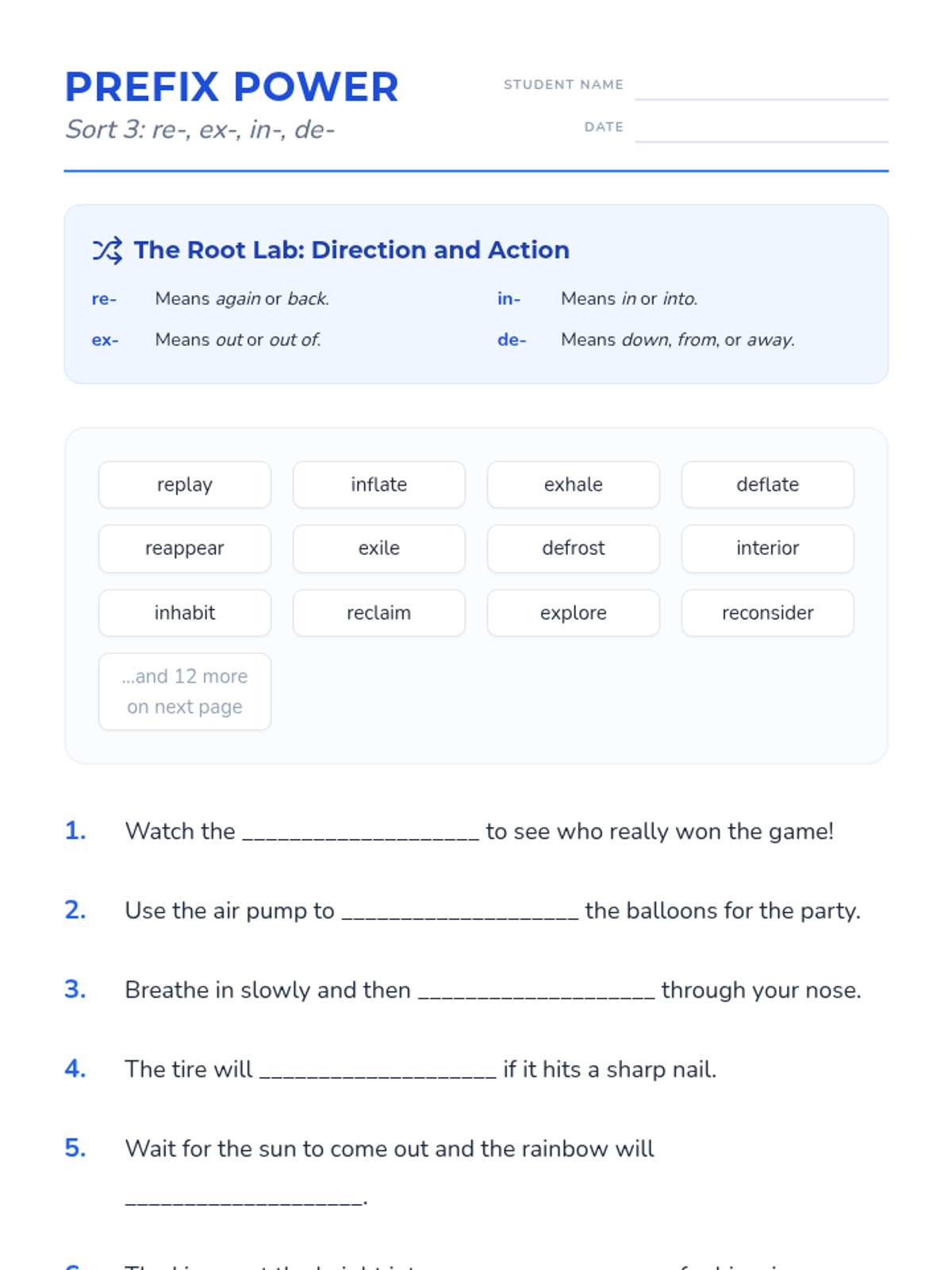
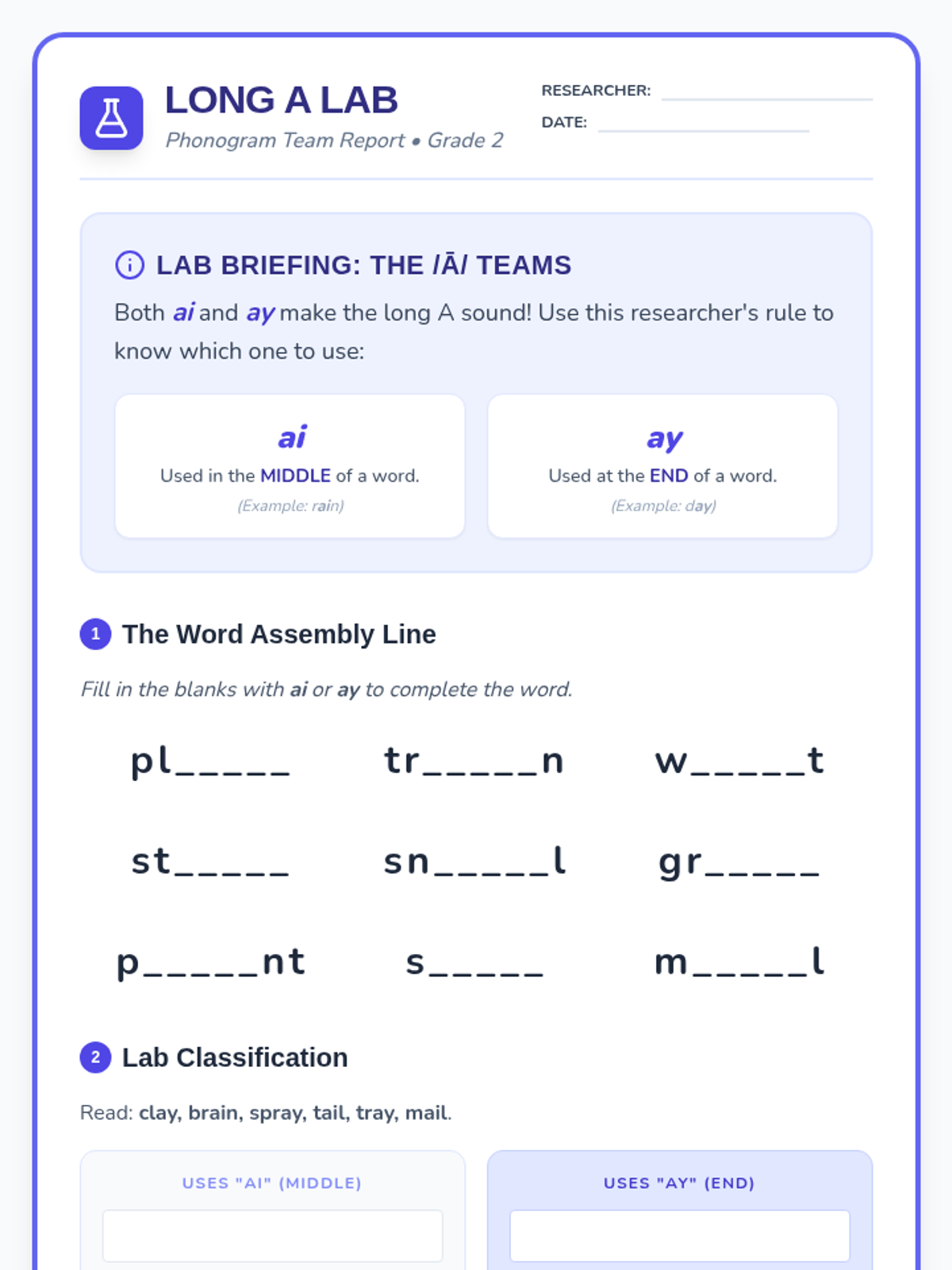
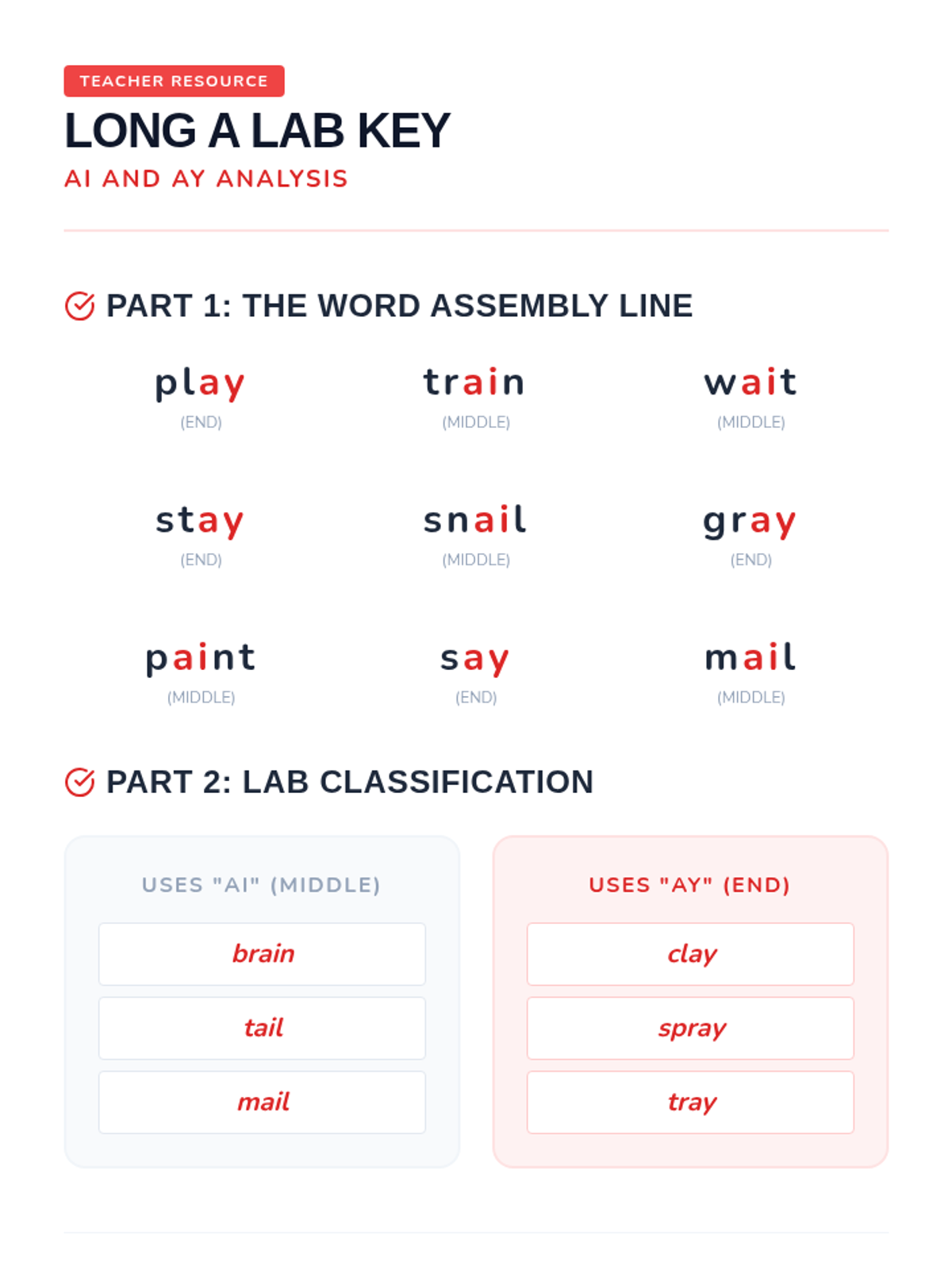
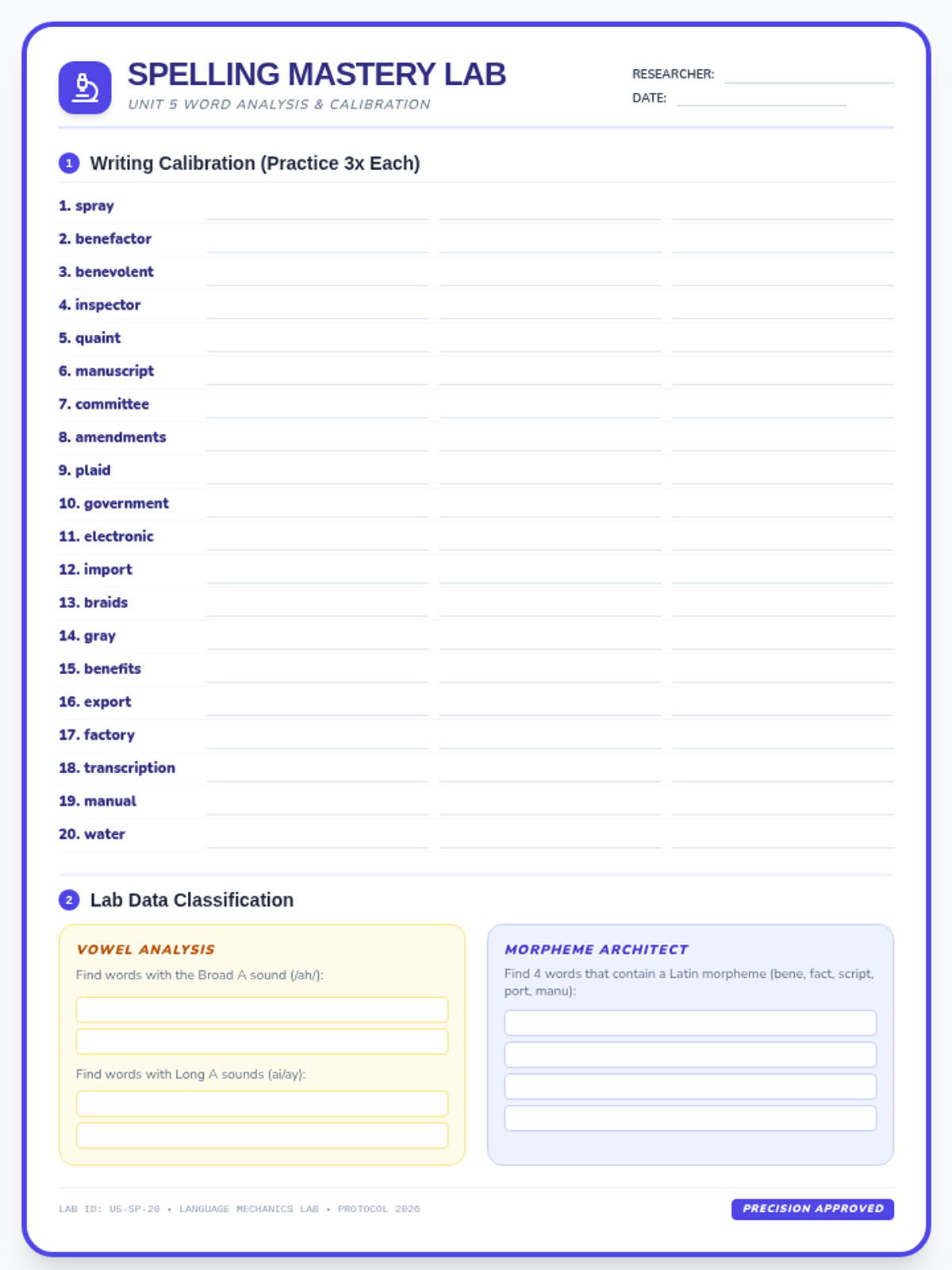
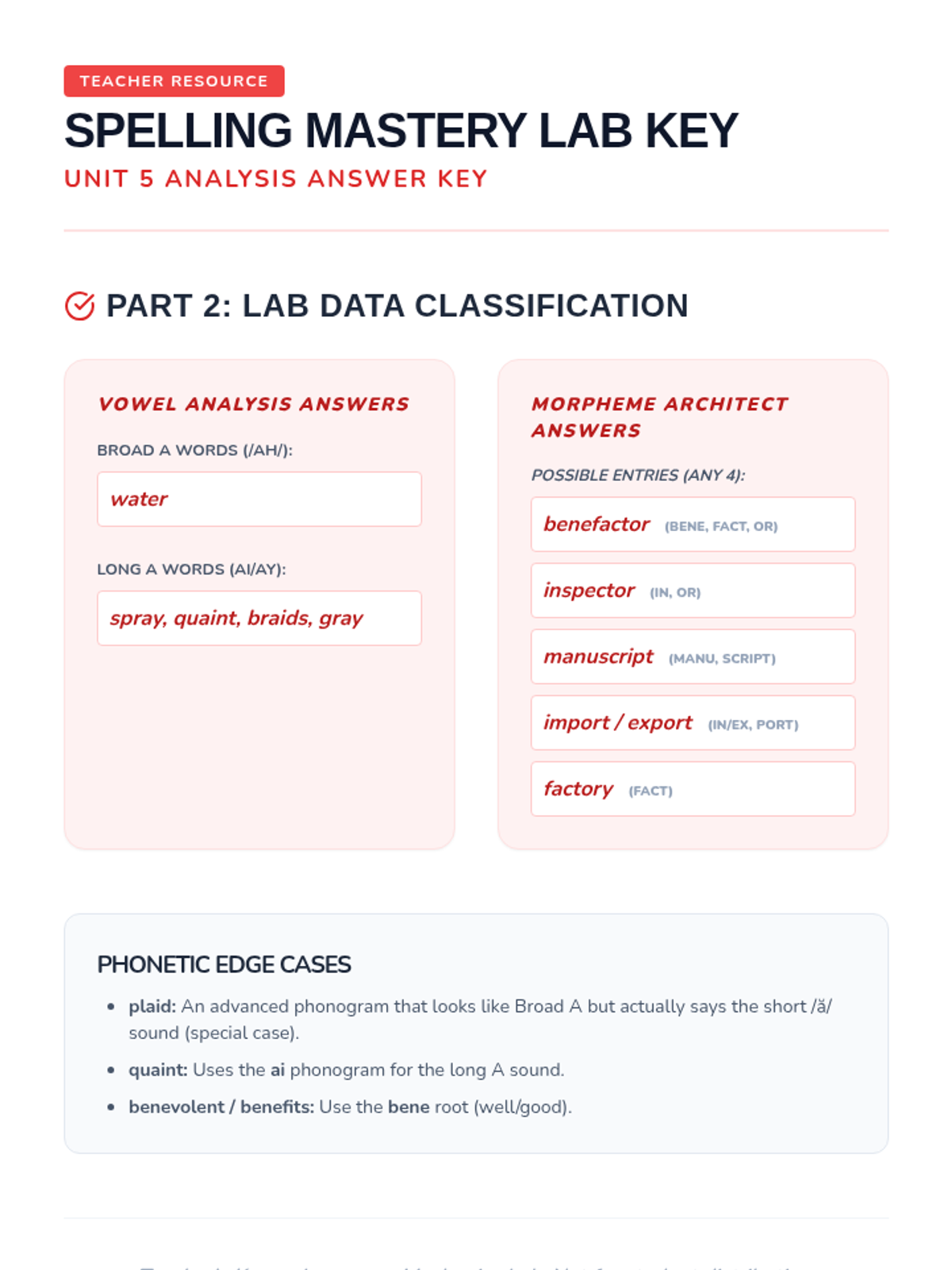
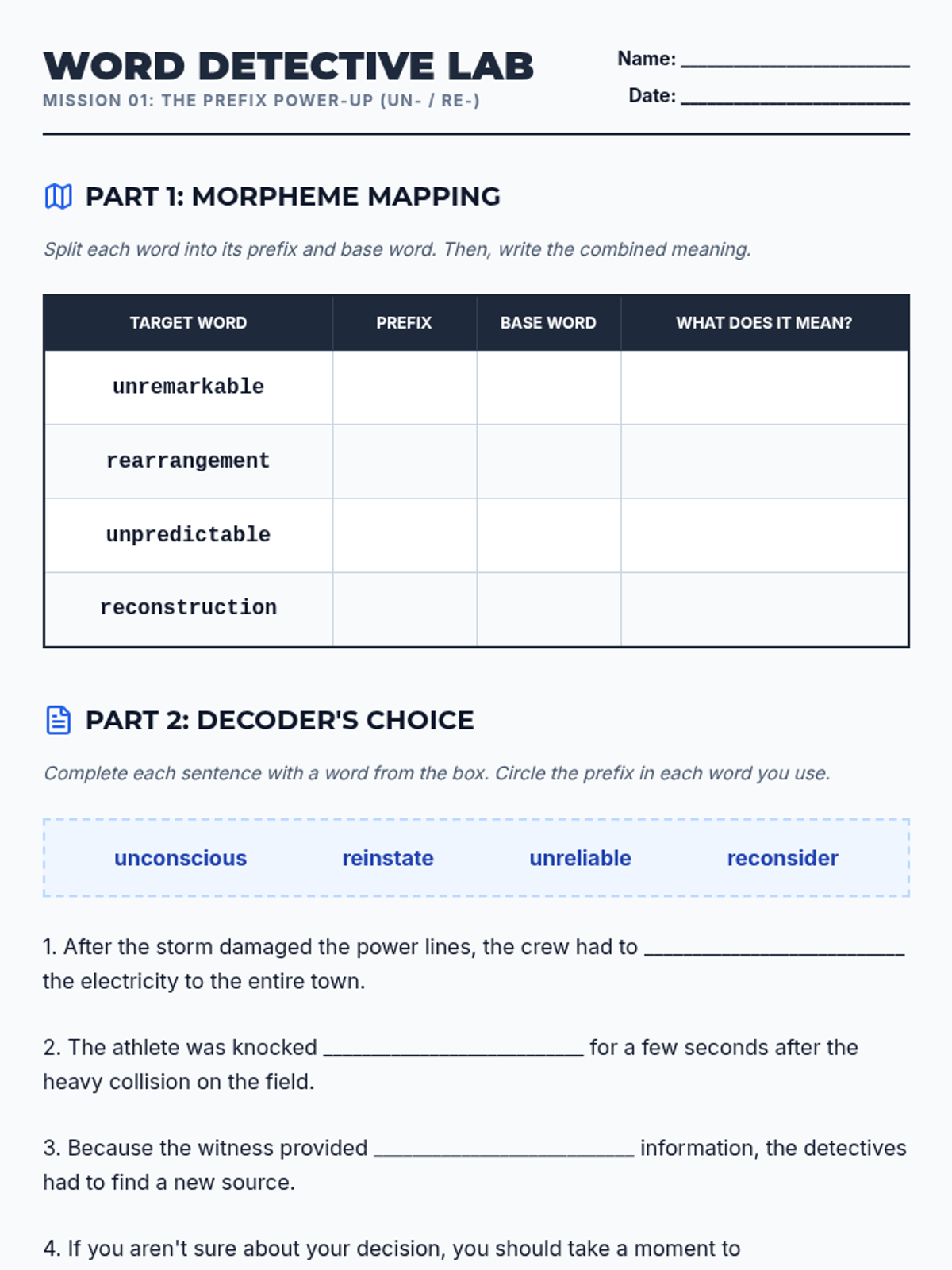
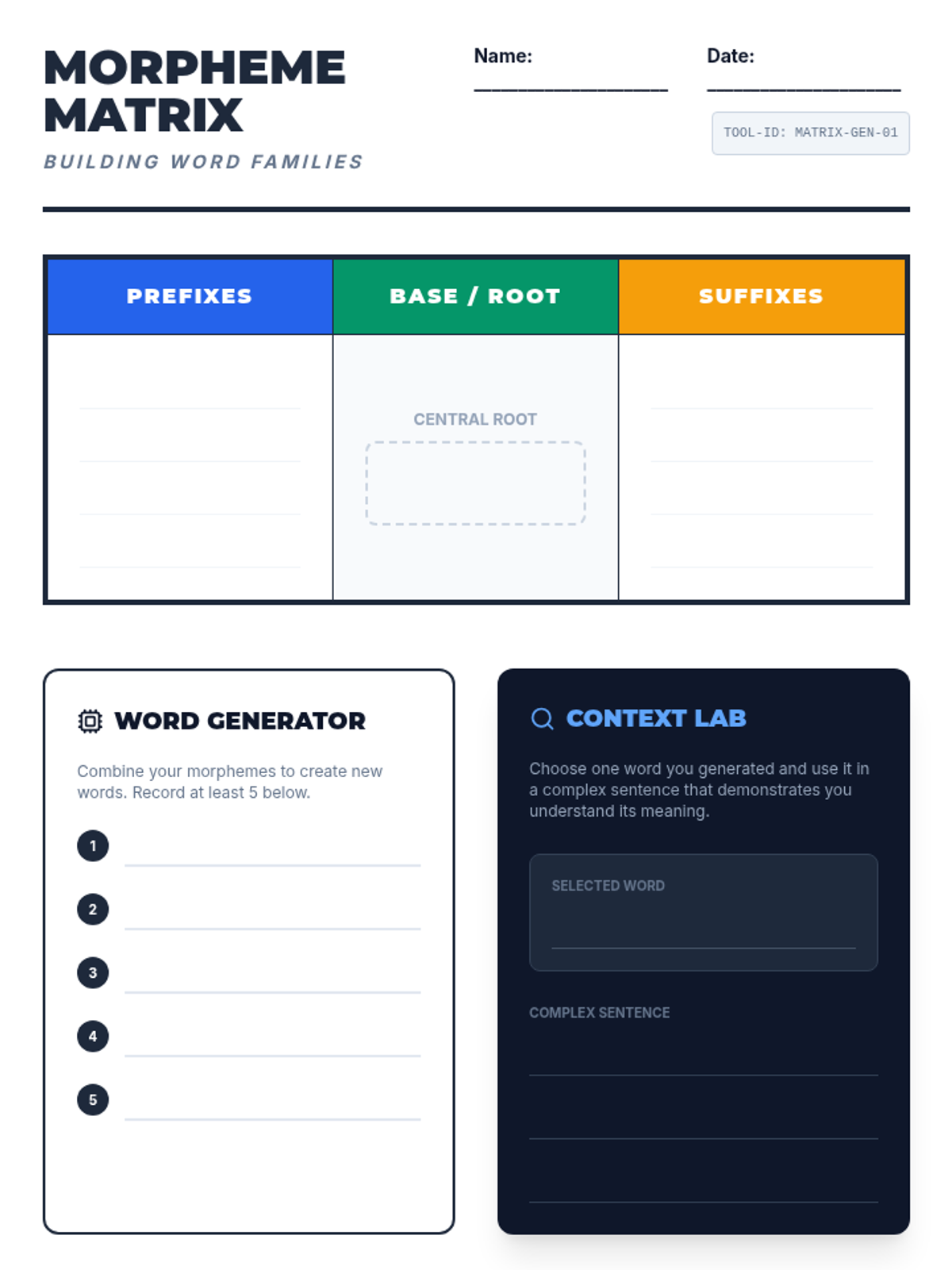
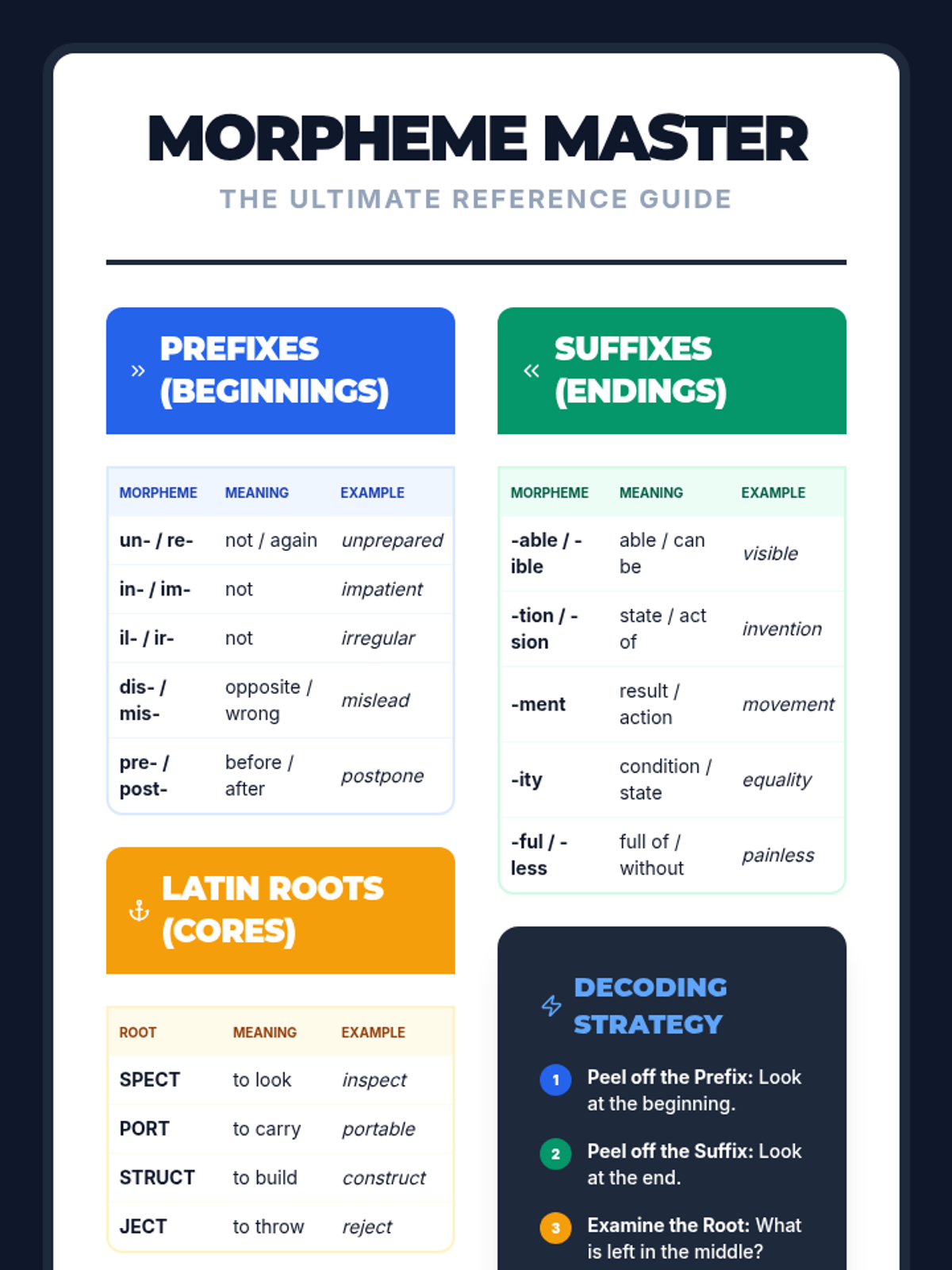
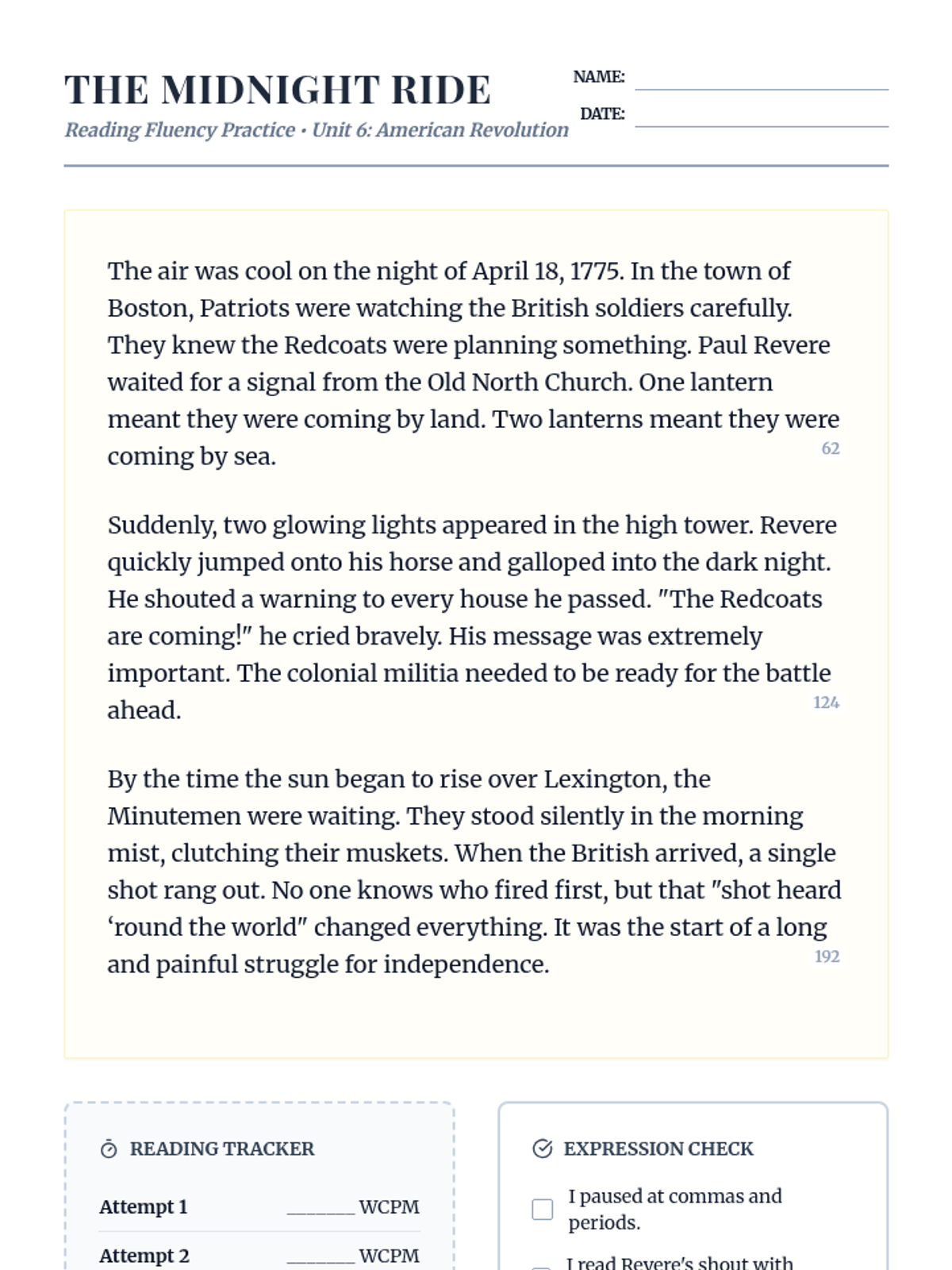
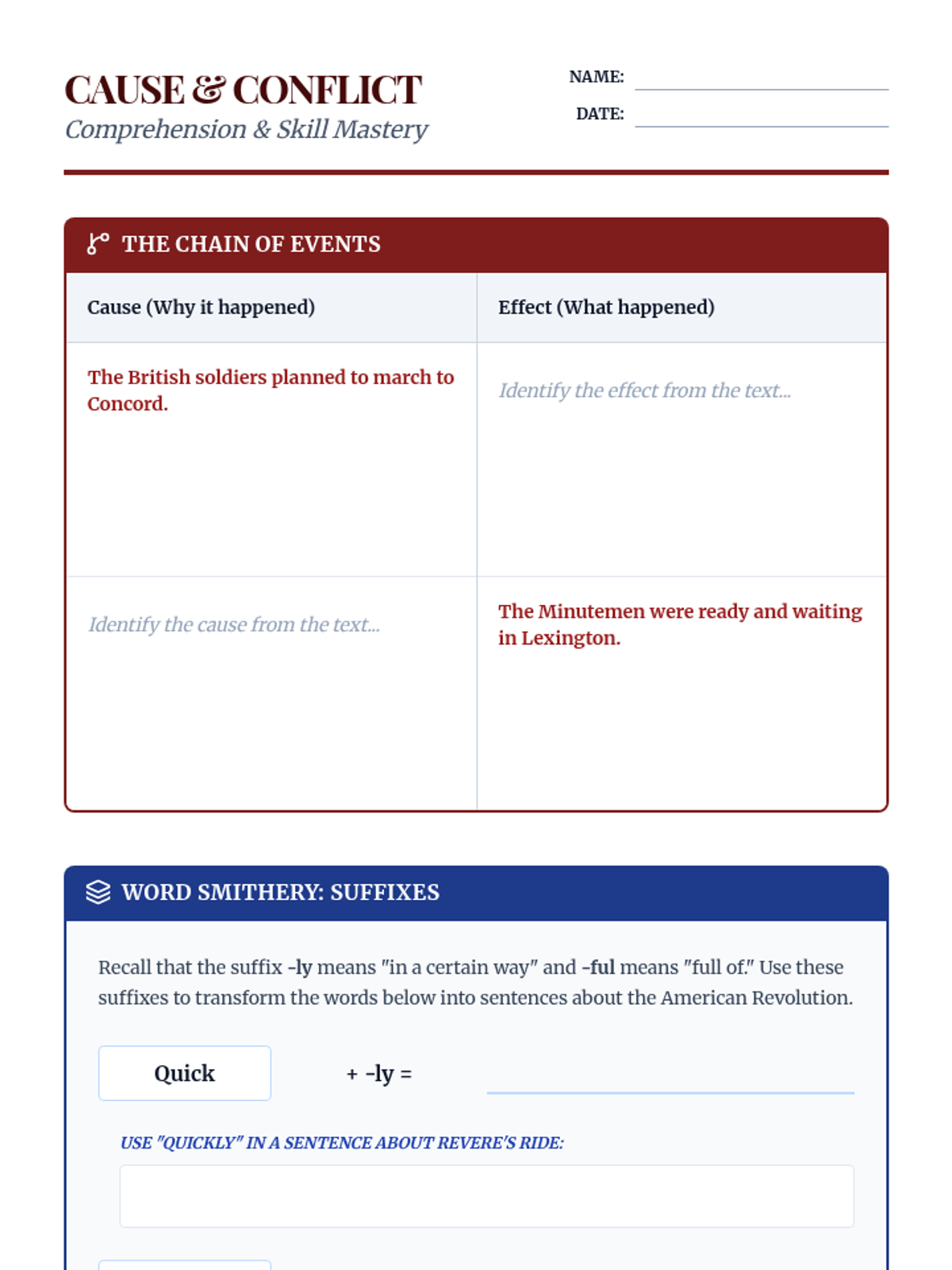
A 10-part series on Greek and Latin roots, prefixes, and suffixes, designed as 20-minute mini-lessons using a 'Linguistic Laboratory' theme. Students build word trees to visualize how word parts combine to create meaning.
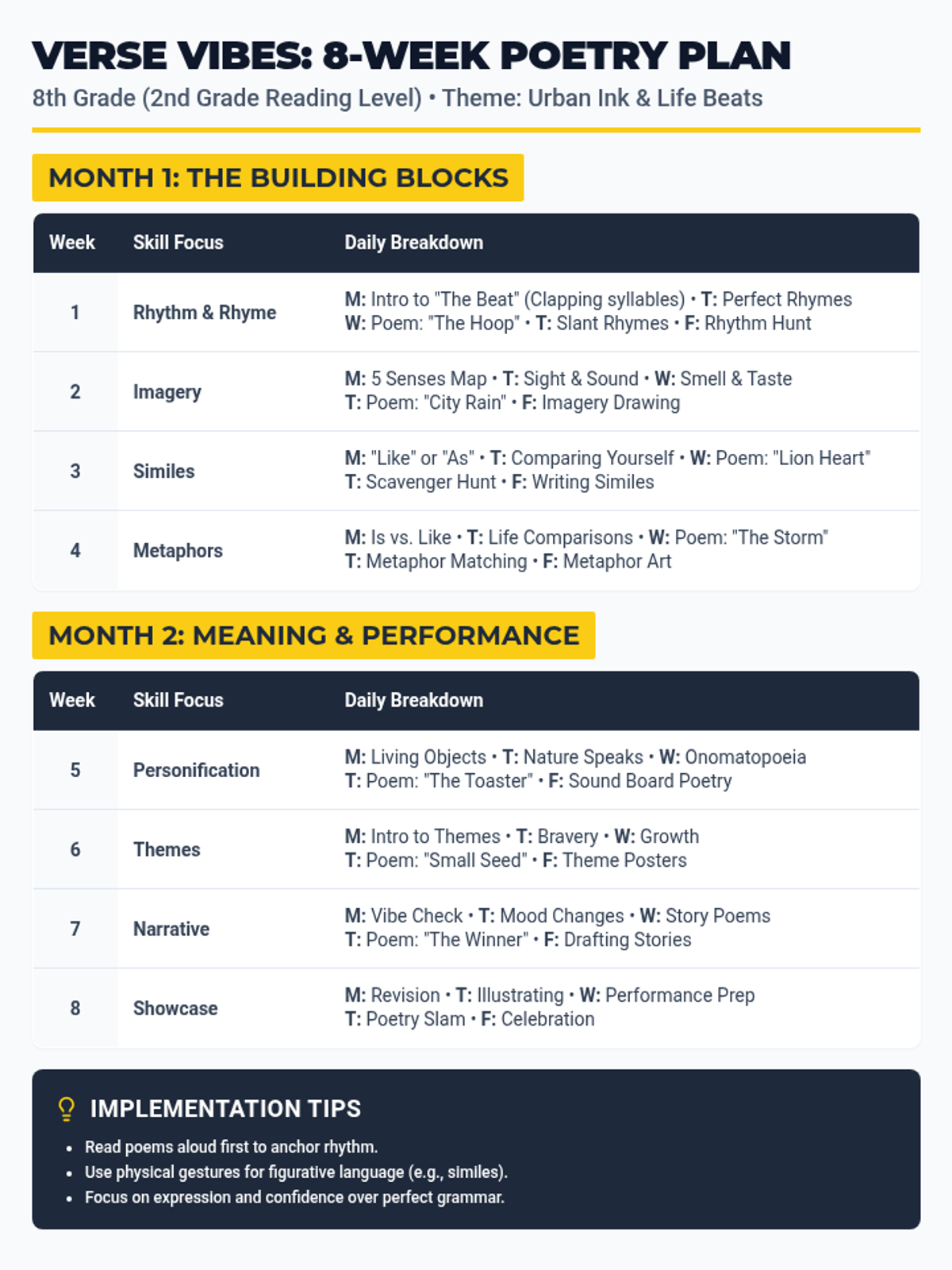
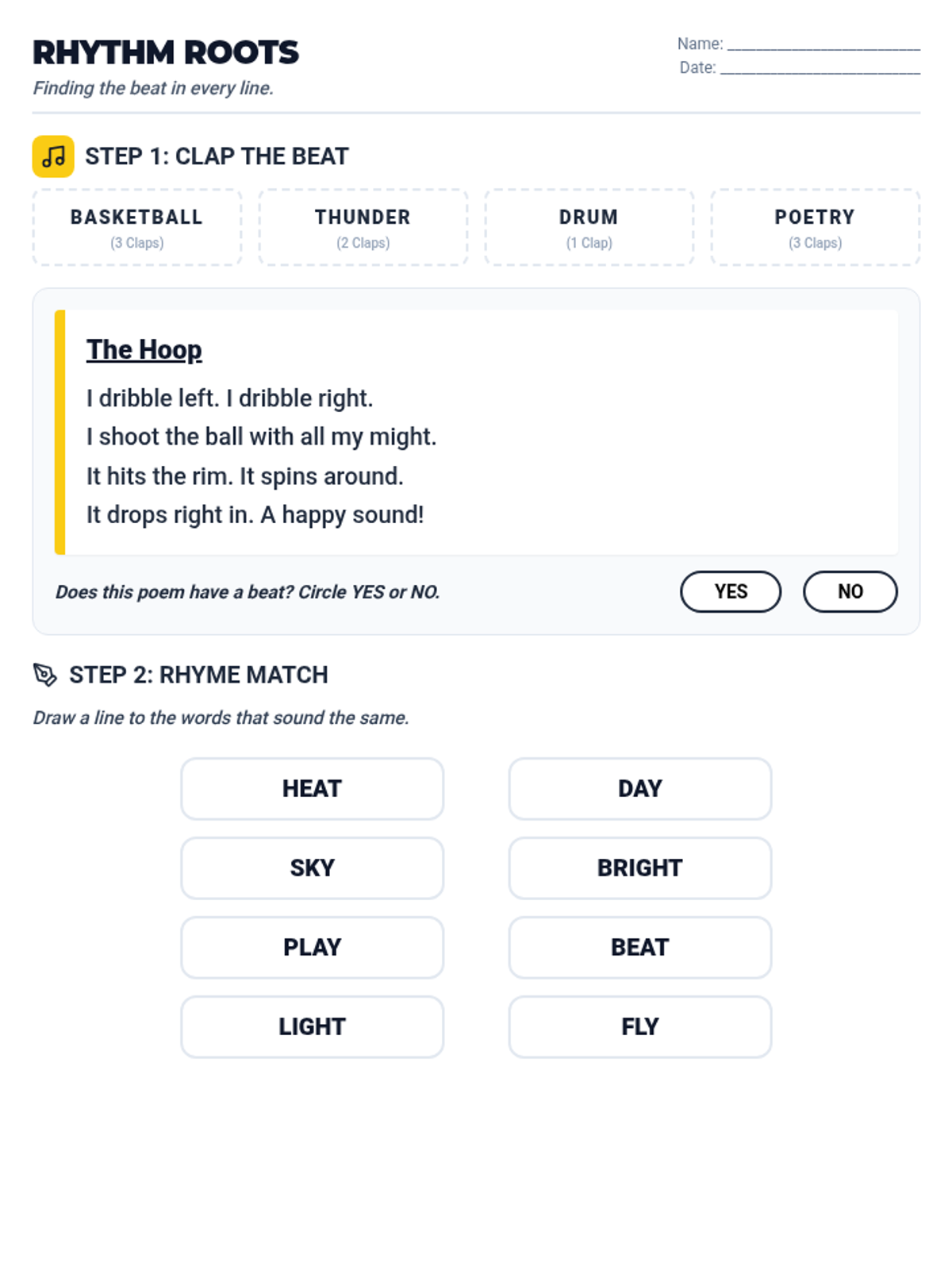
An 8-week poetry unit designed specifically for 8th-grade students reading at a 2nd-grade level. The curriculum focuses on building confidence, understanding figurative language, and exploring themes through high-interest, low-readability (Hi-Lo) poems and activities.
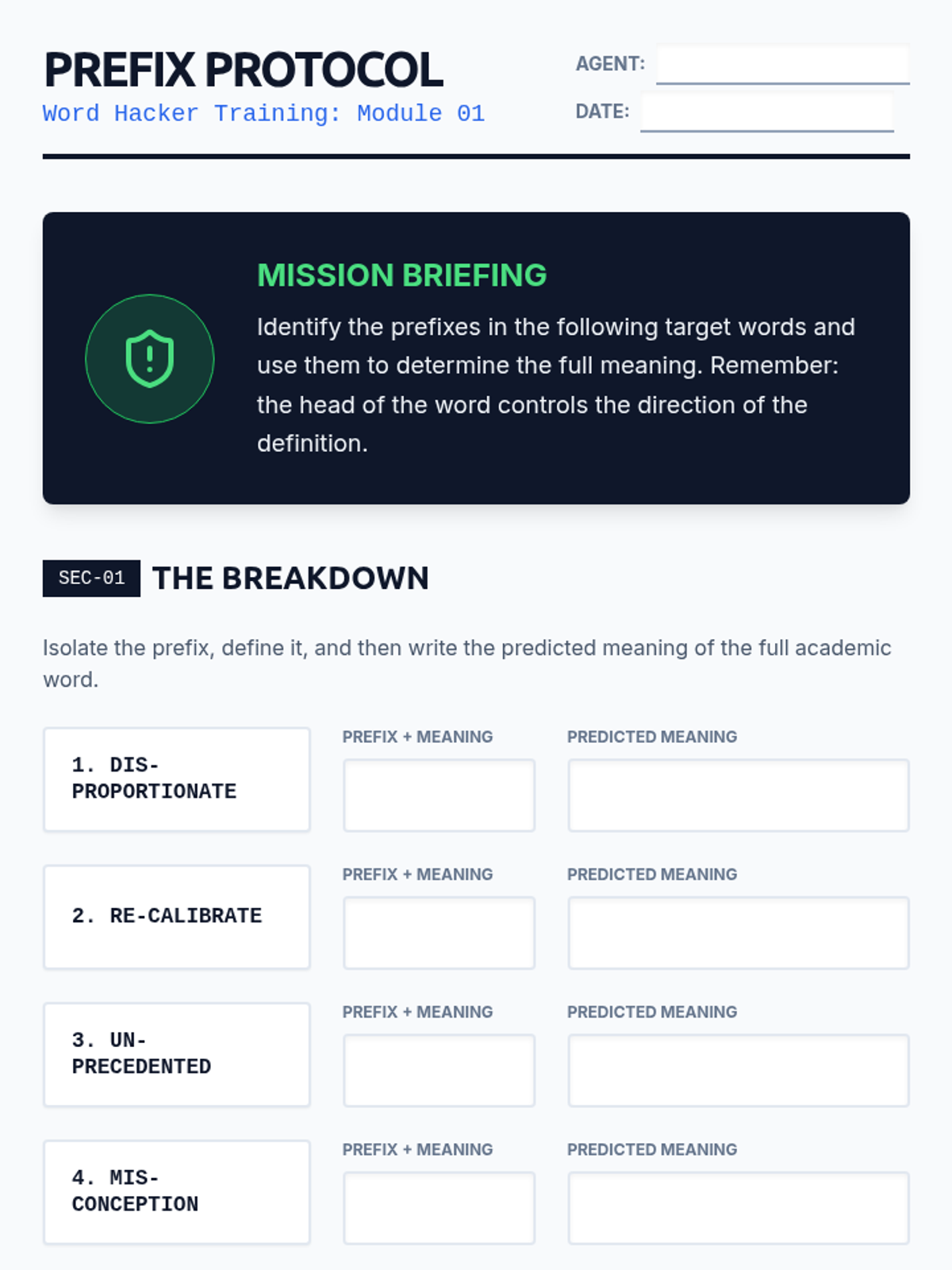
A 5-part series focusing on high-frequency Greek and Latin roots, prefixes, and suffixes using a "word hacking" theme to help students decode academic vocabulary.
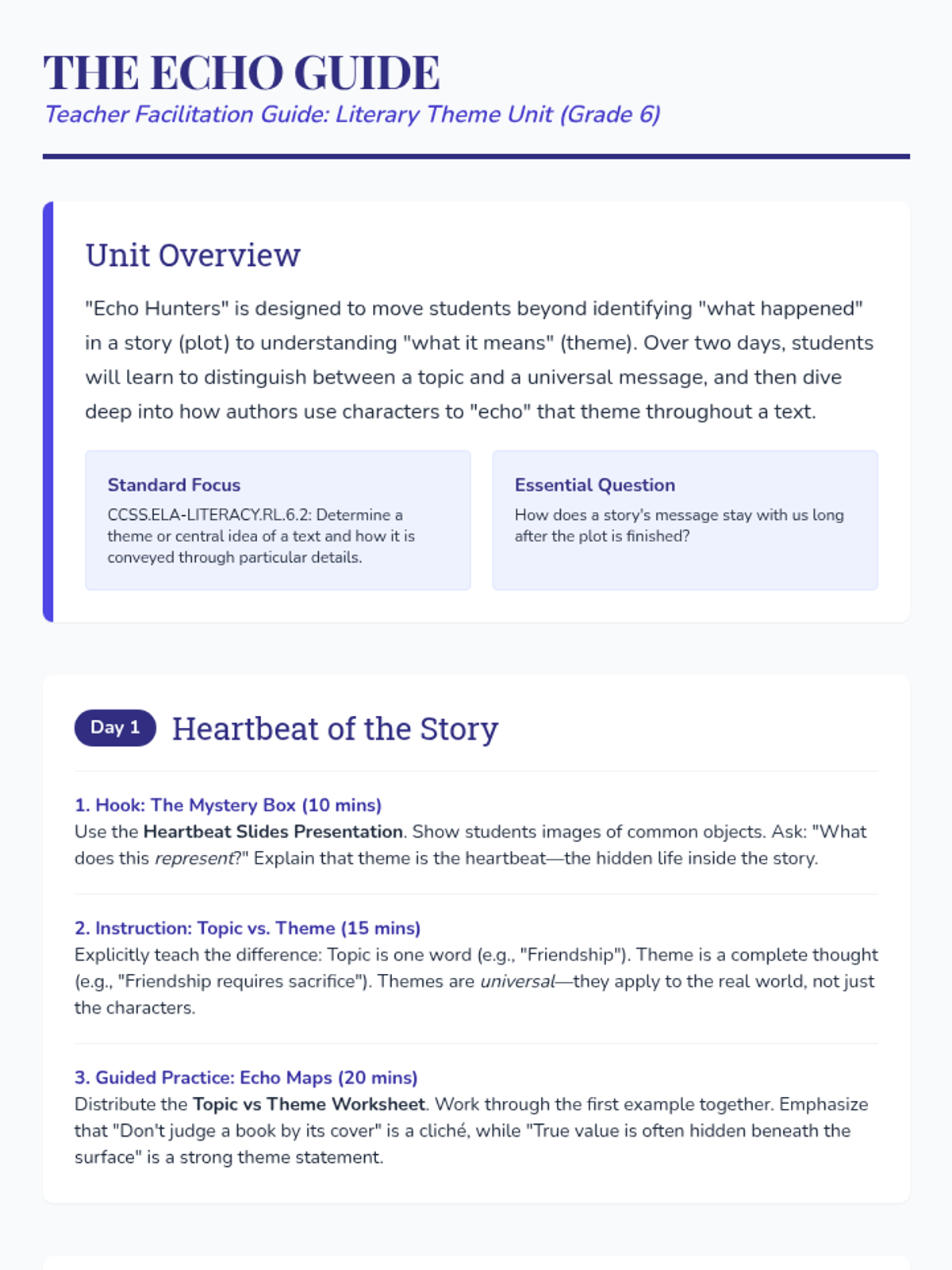
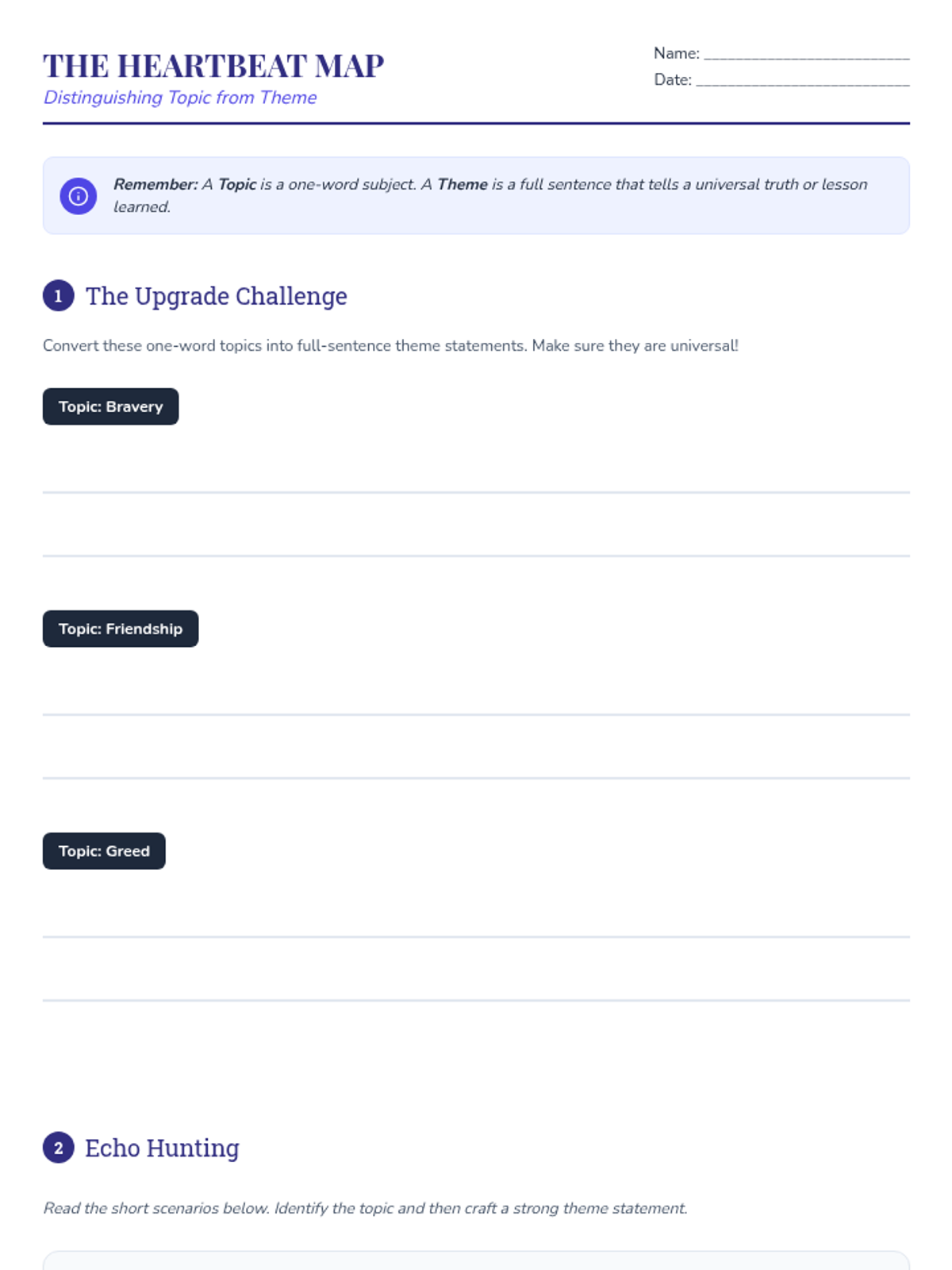
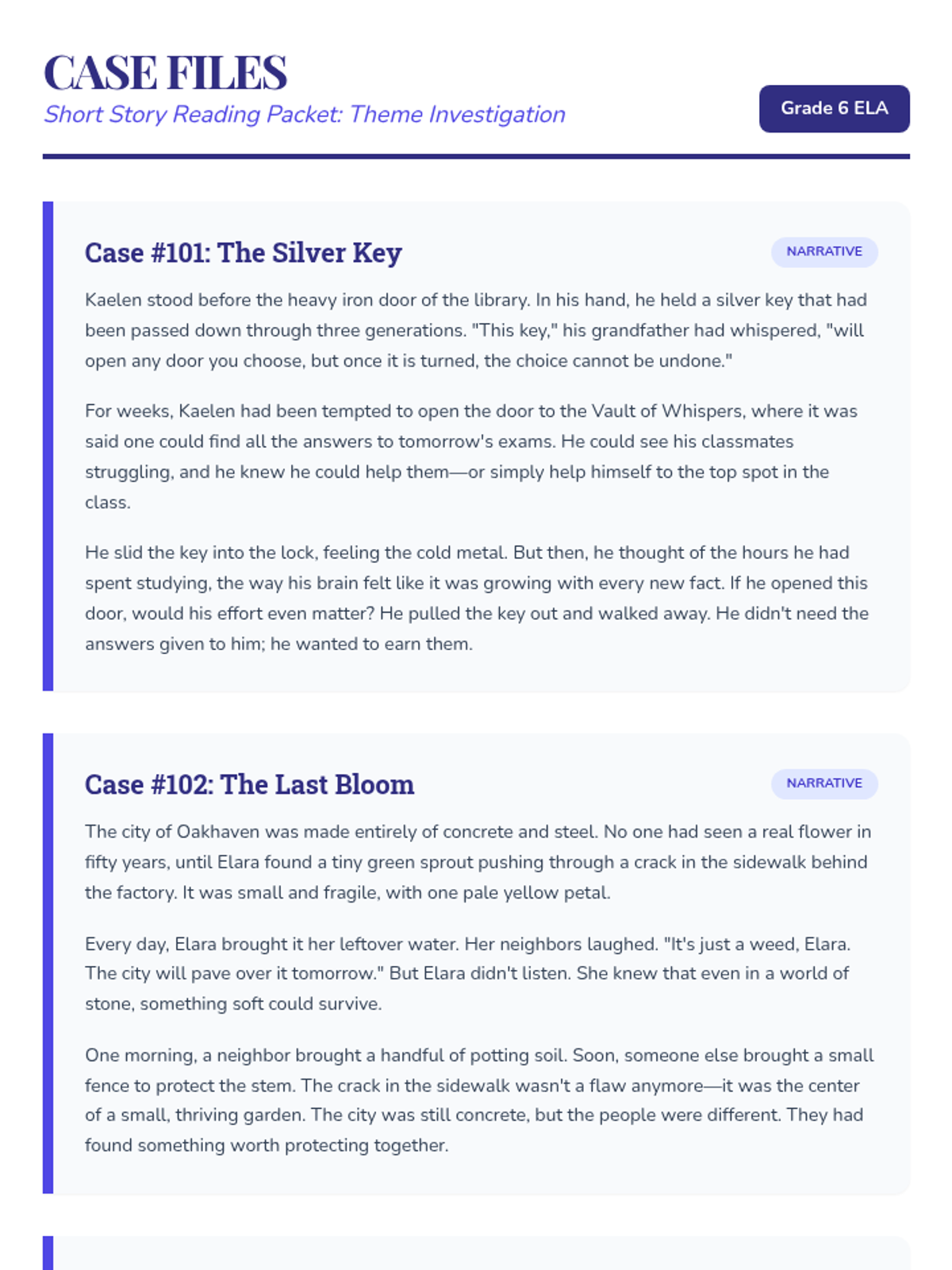
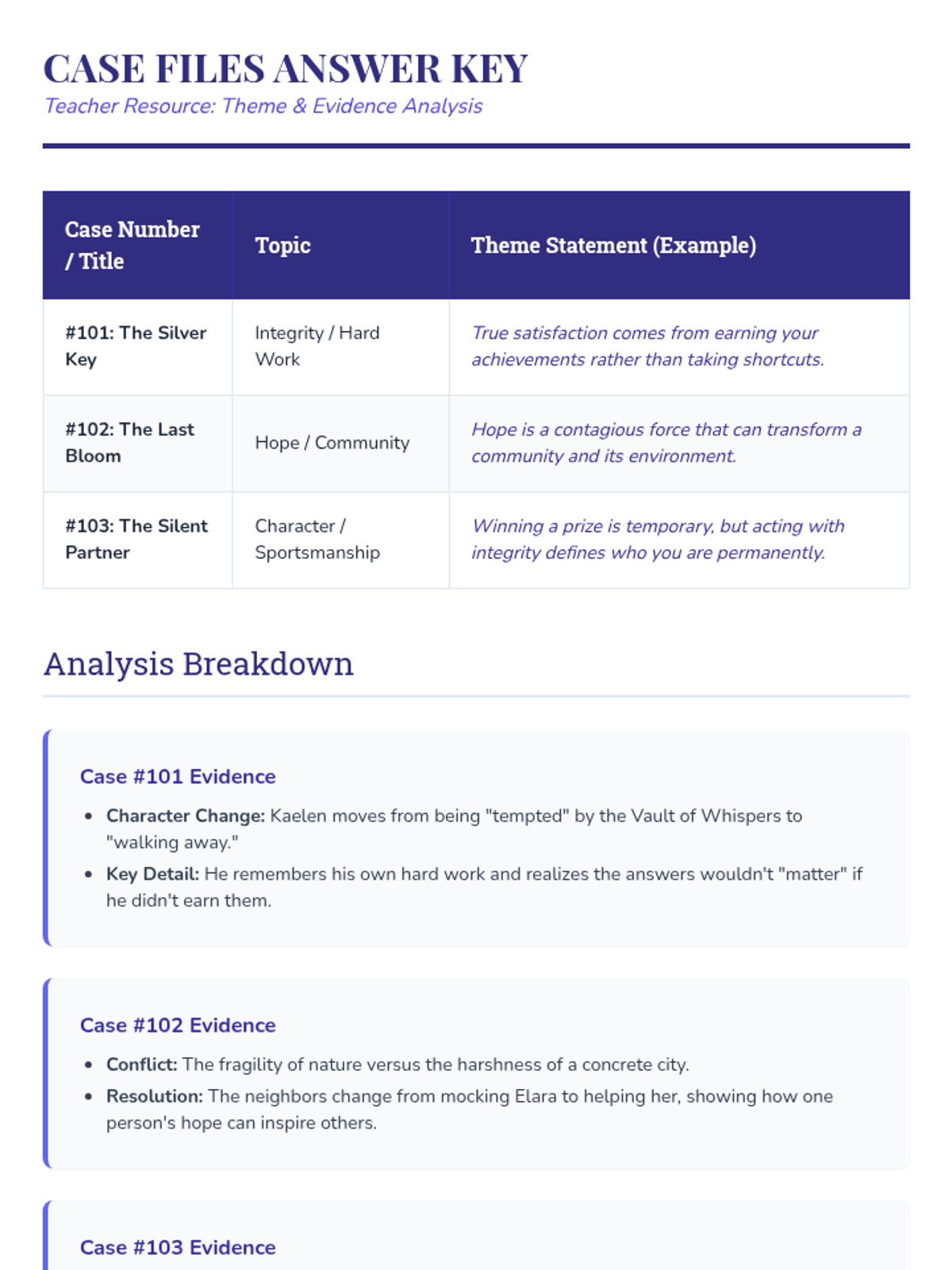
A 2-day introductory unit on literary themes for sixth-grade students. This sequence helps students distinguish between topic and theme, identify universal themes, and analyze how authors develop these messages through characters and plot.
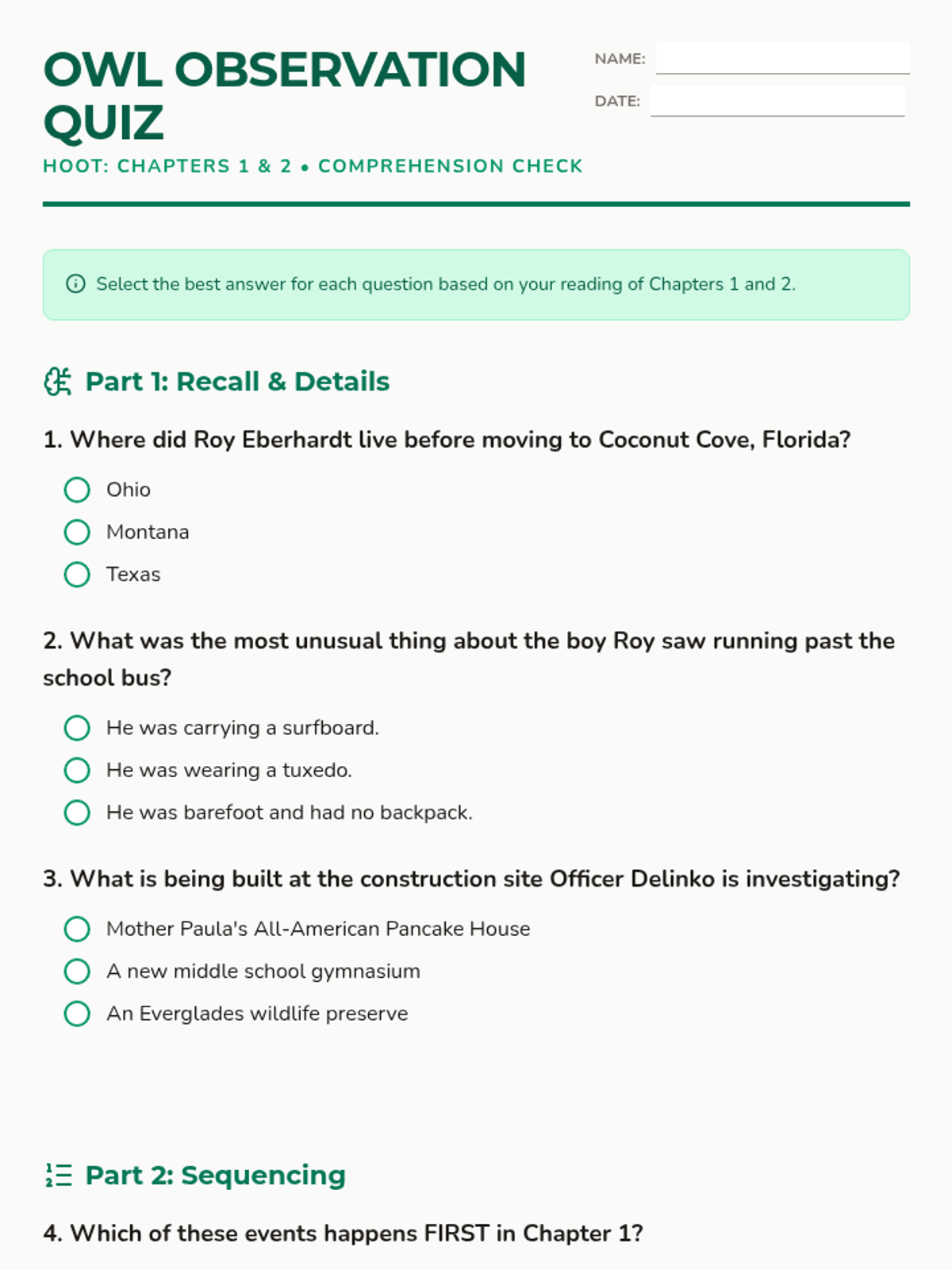
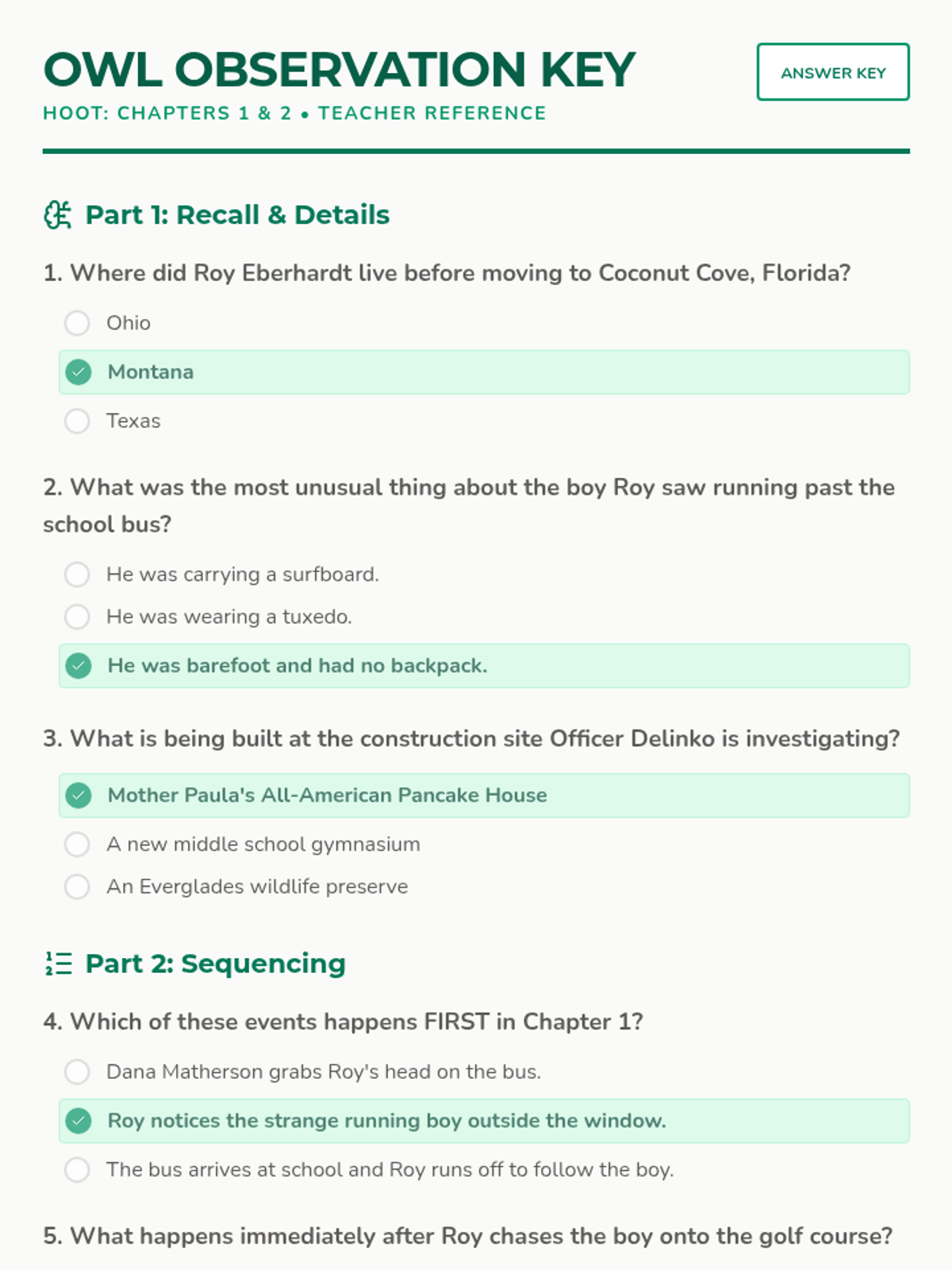
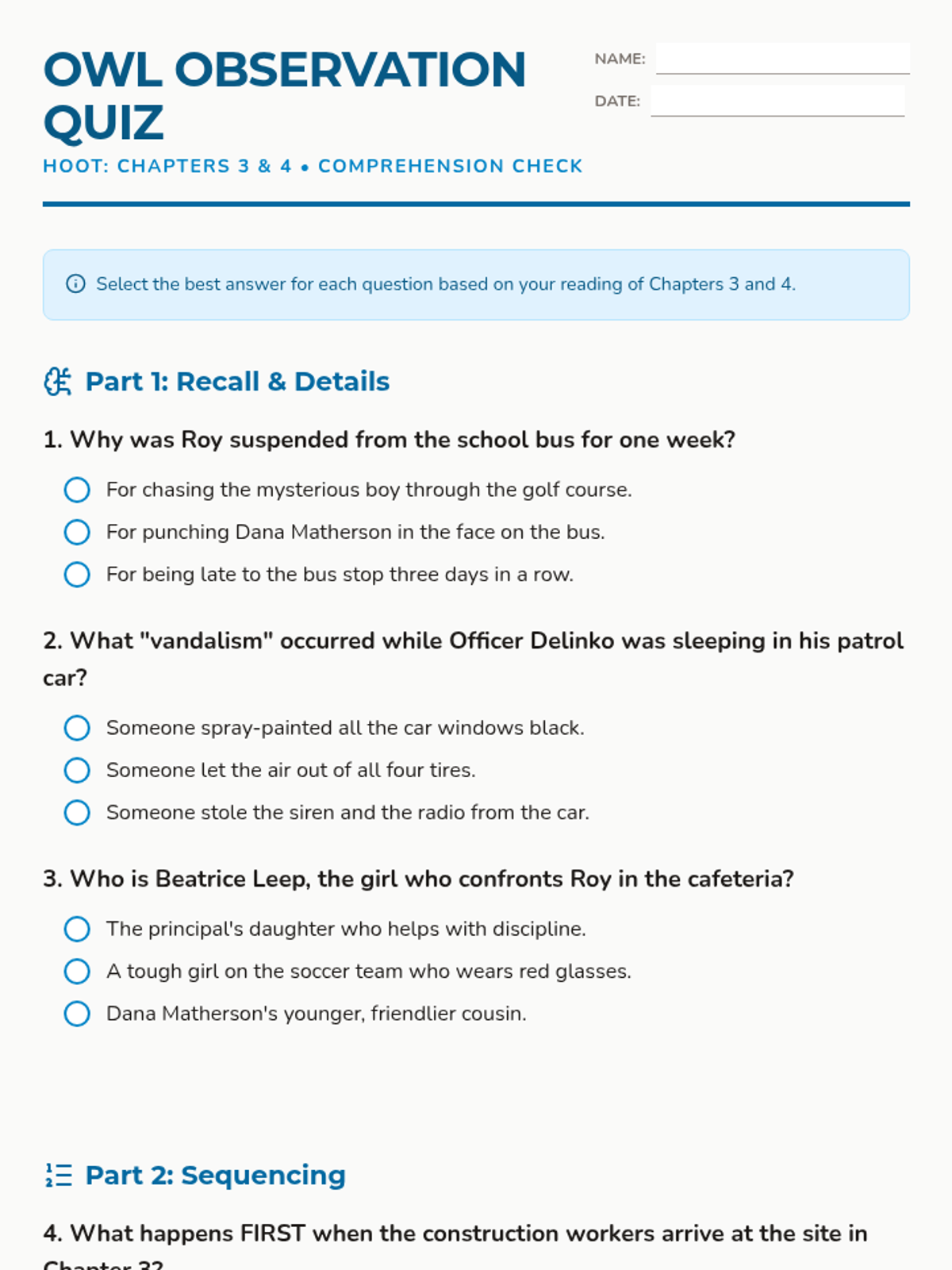
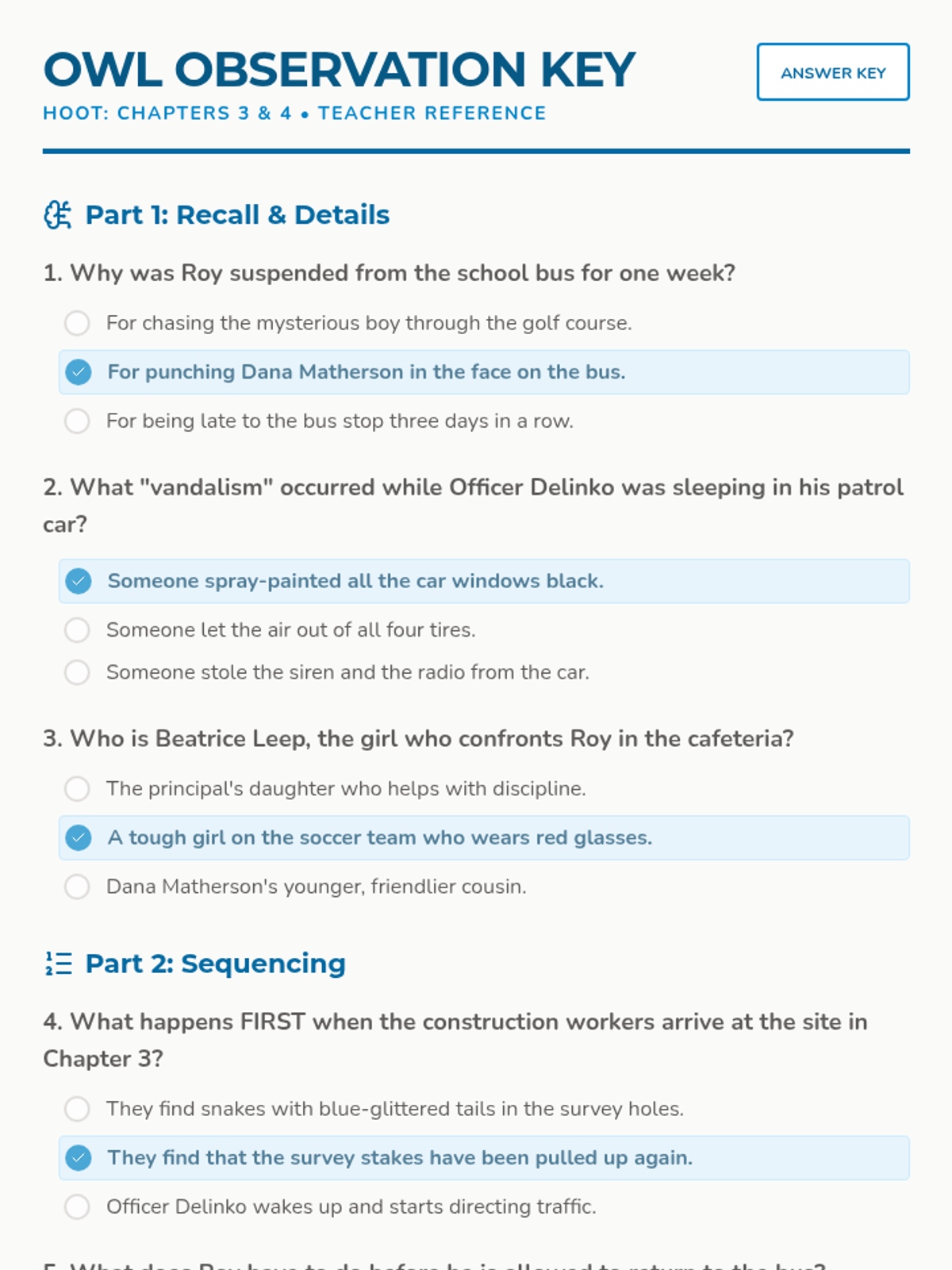
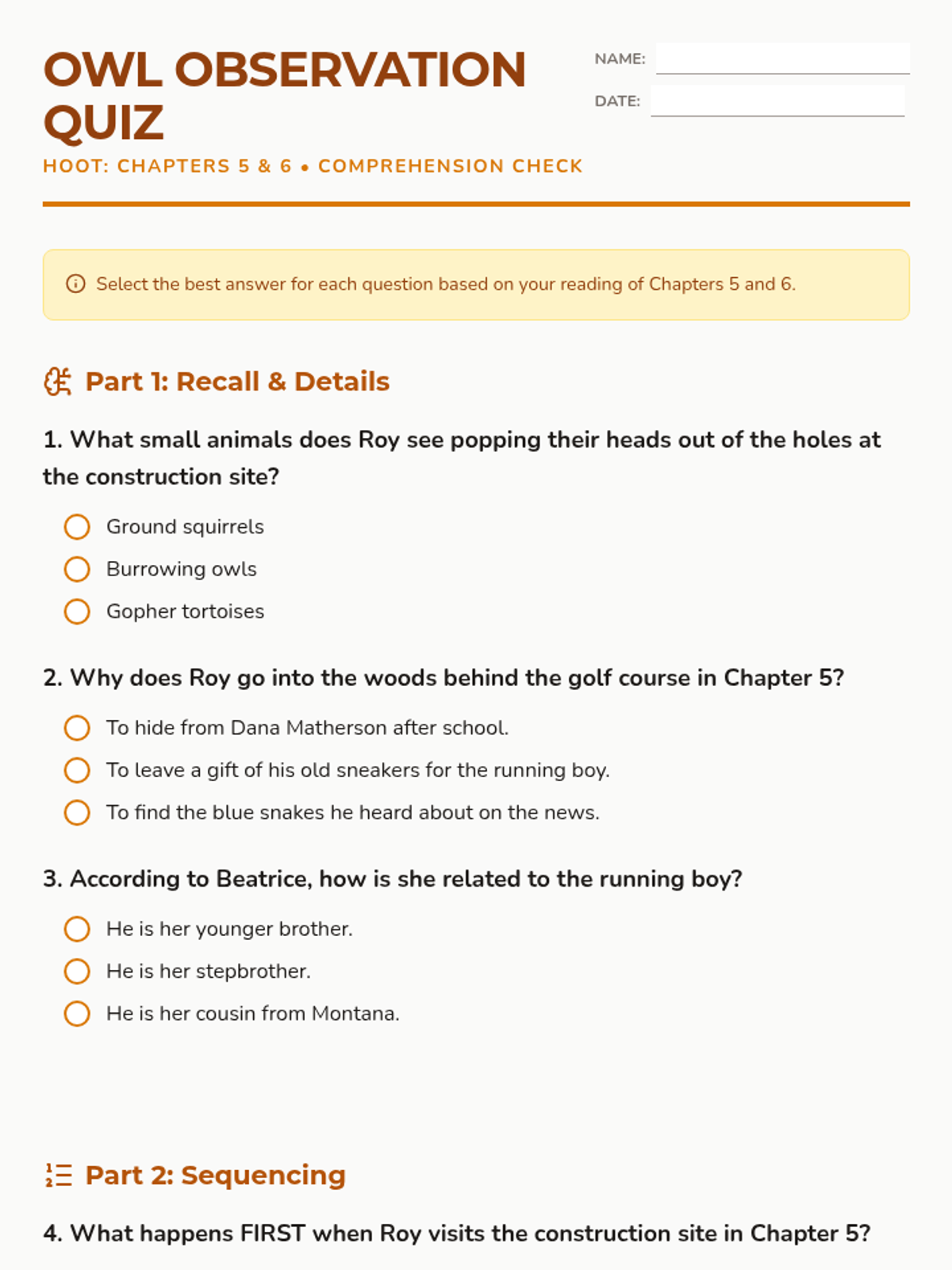
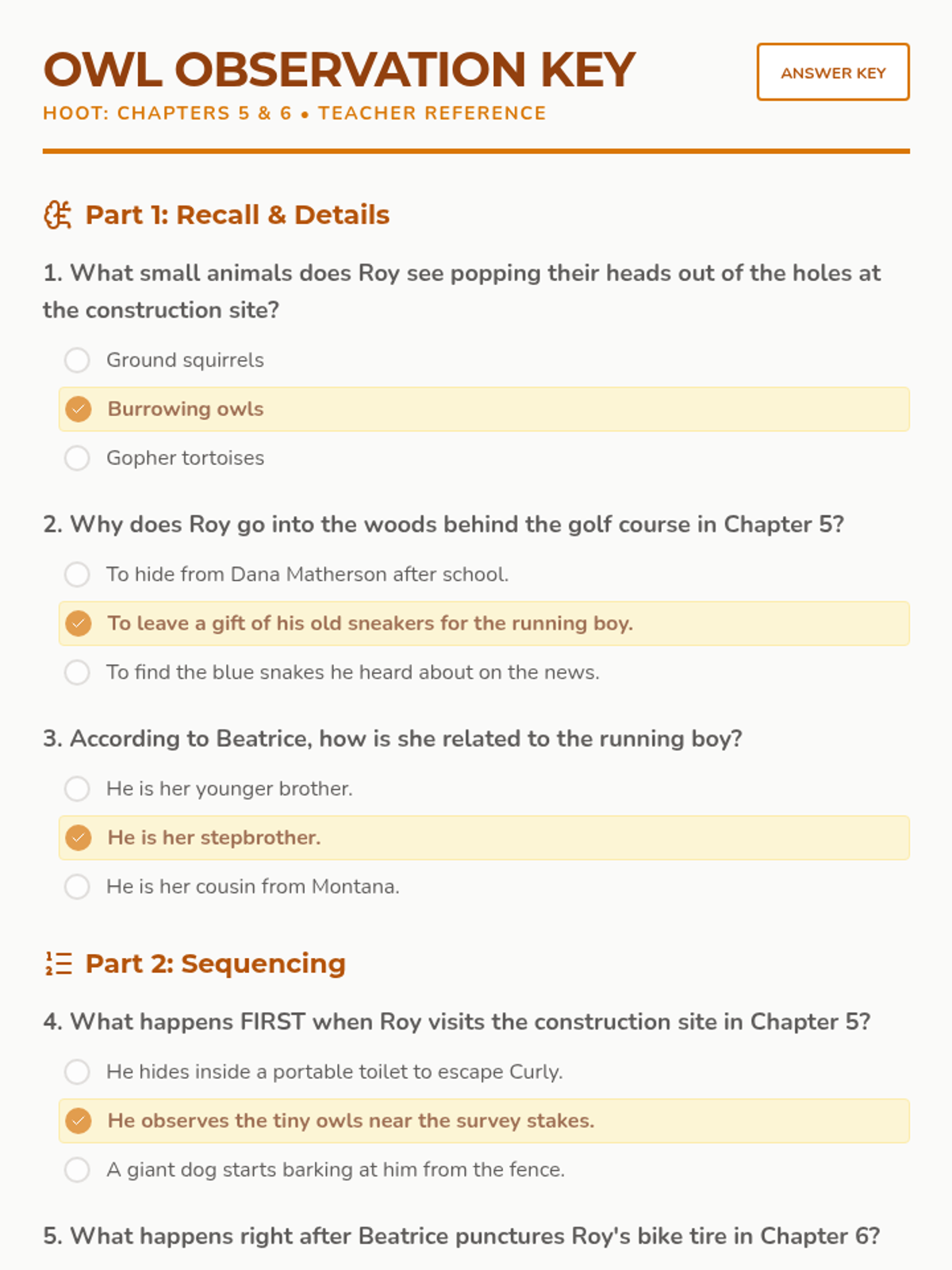
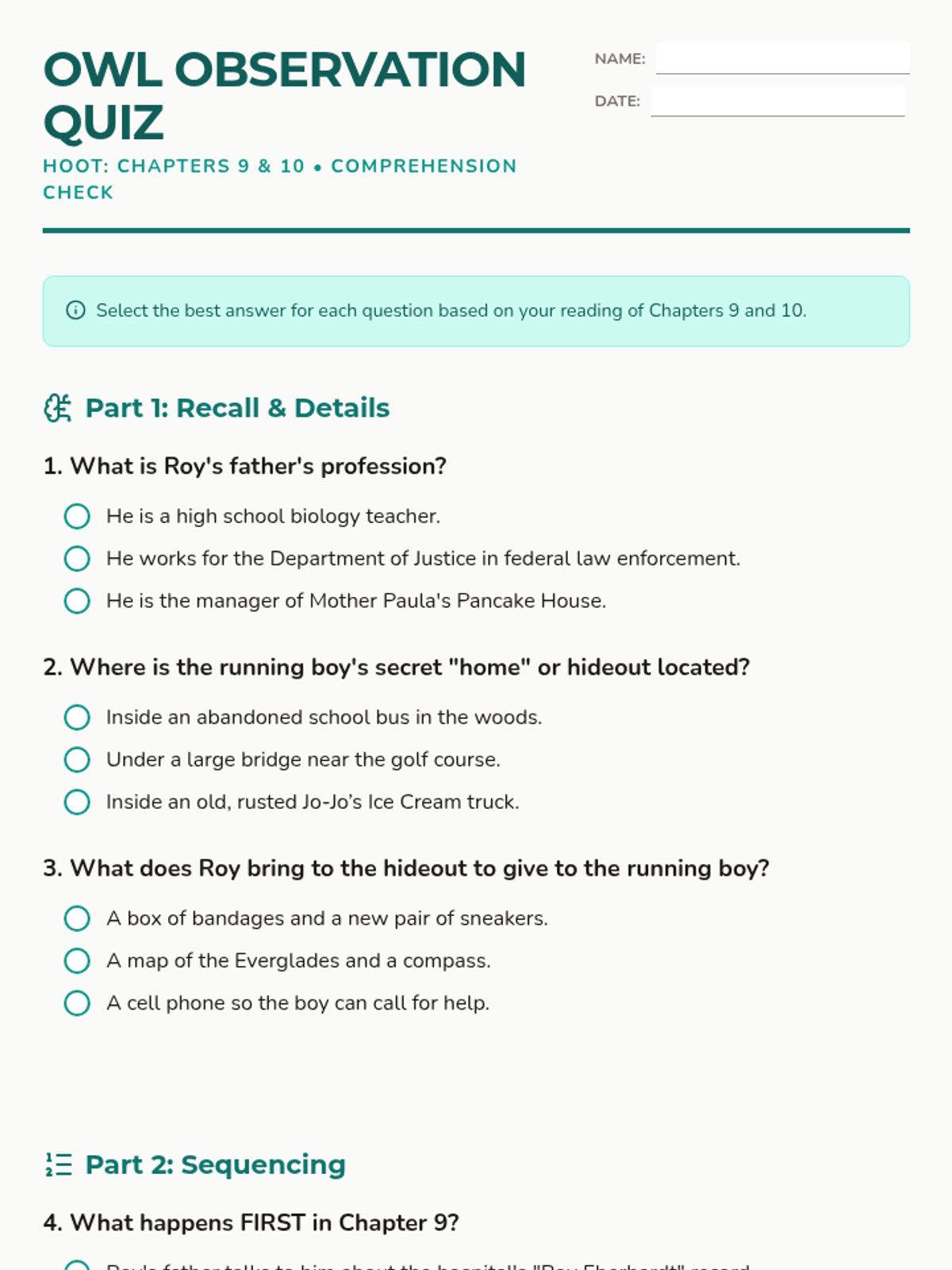
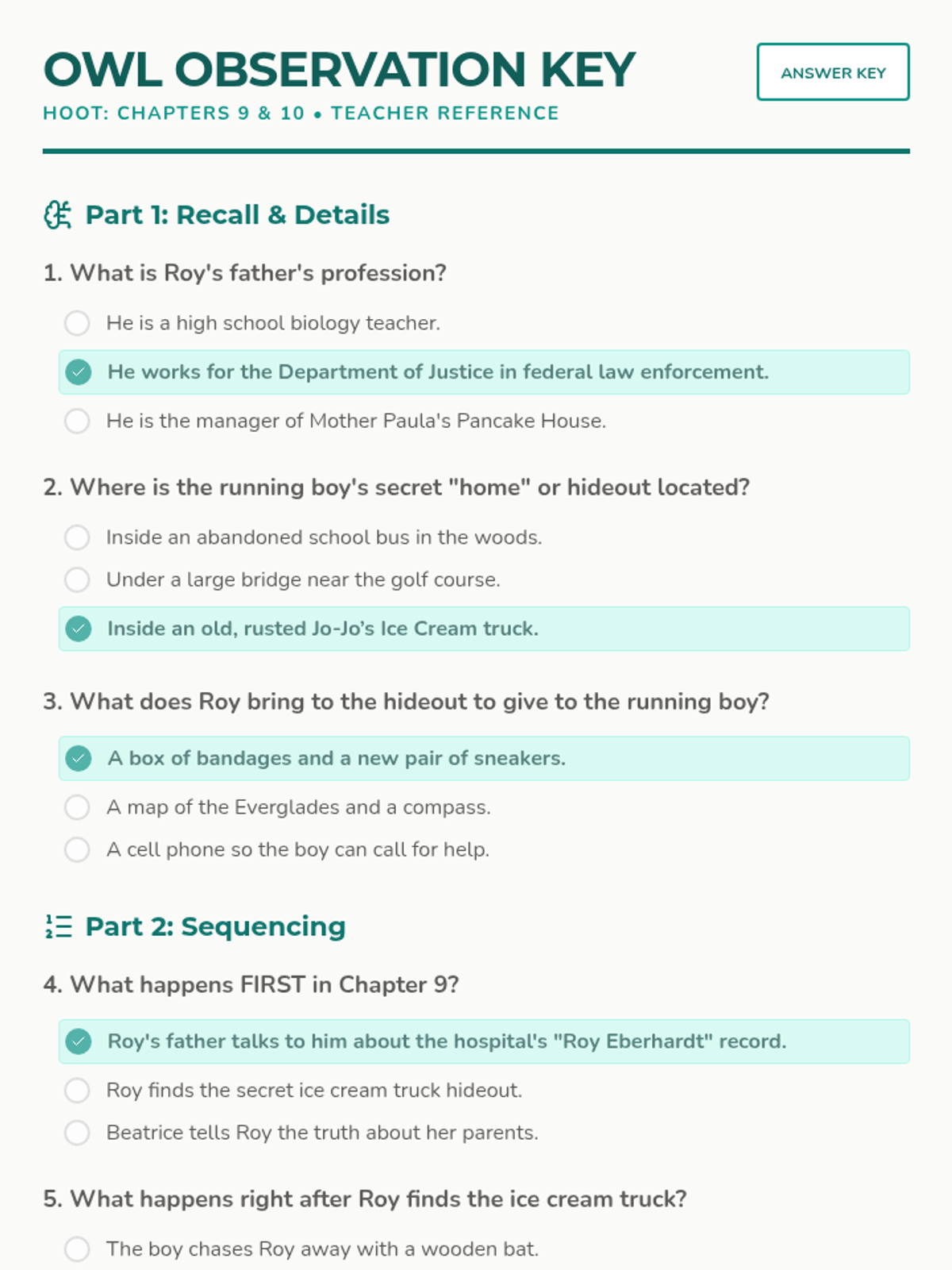
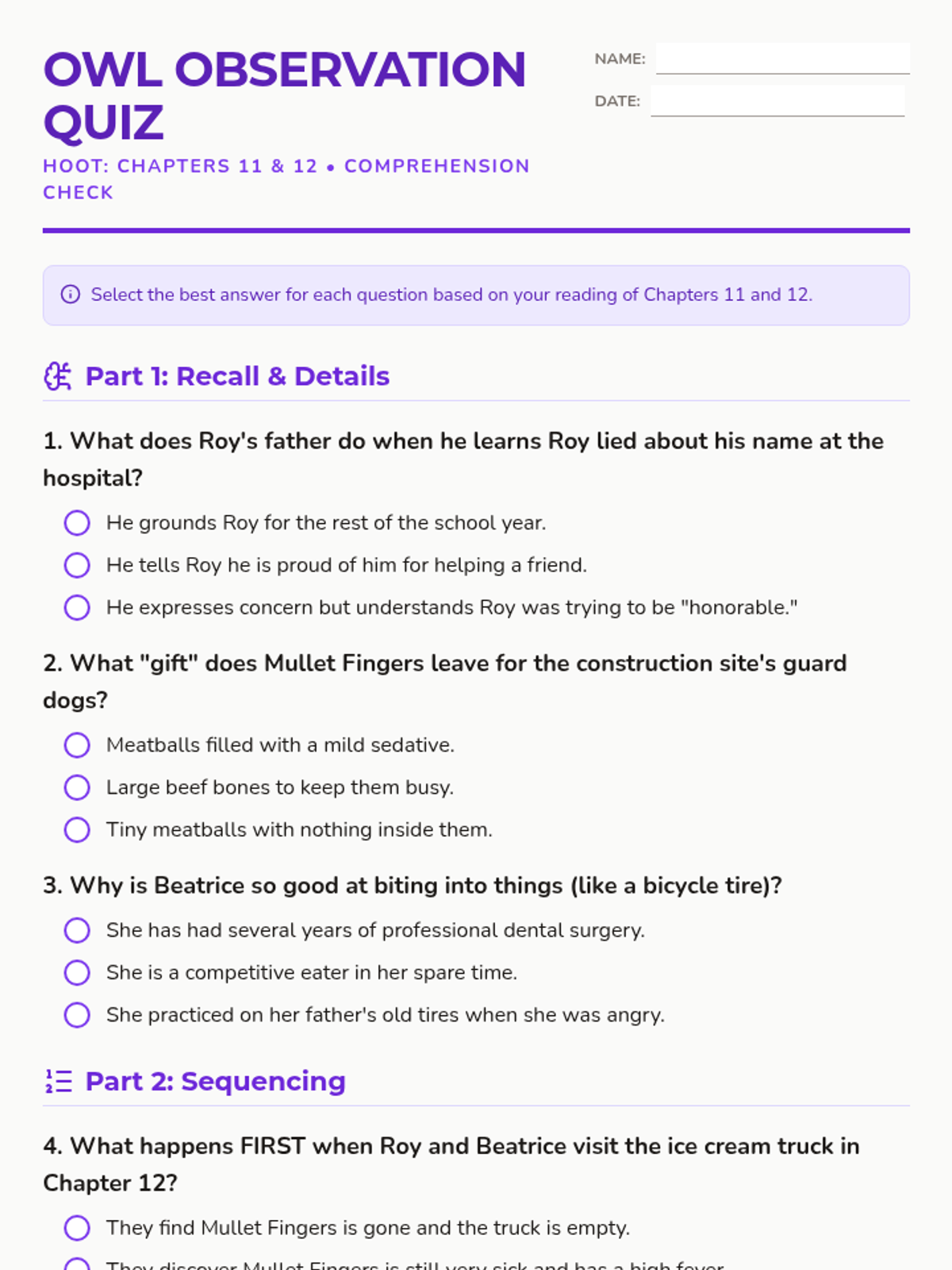
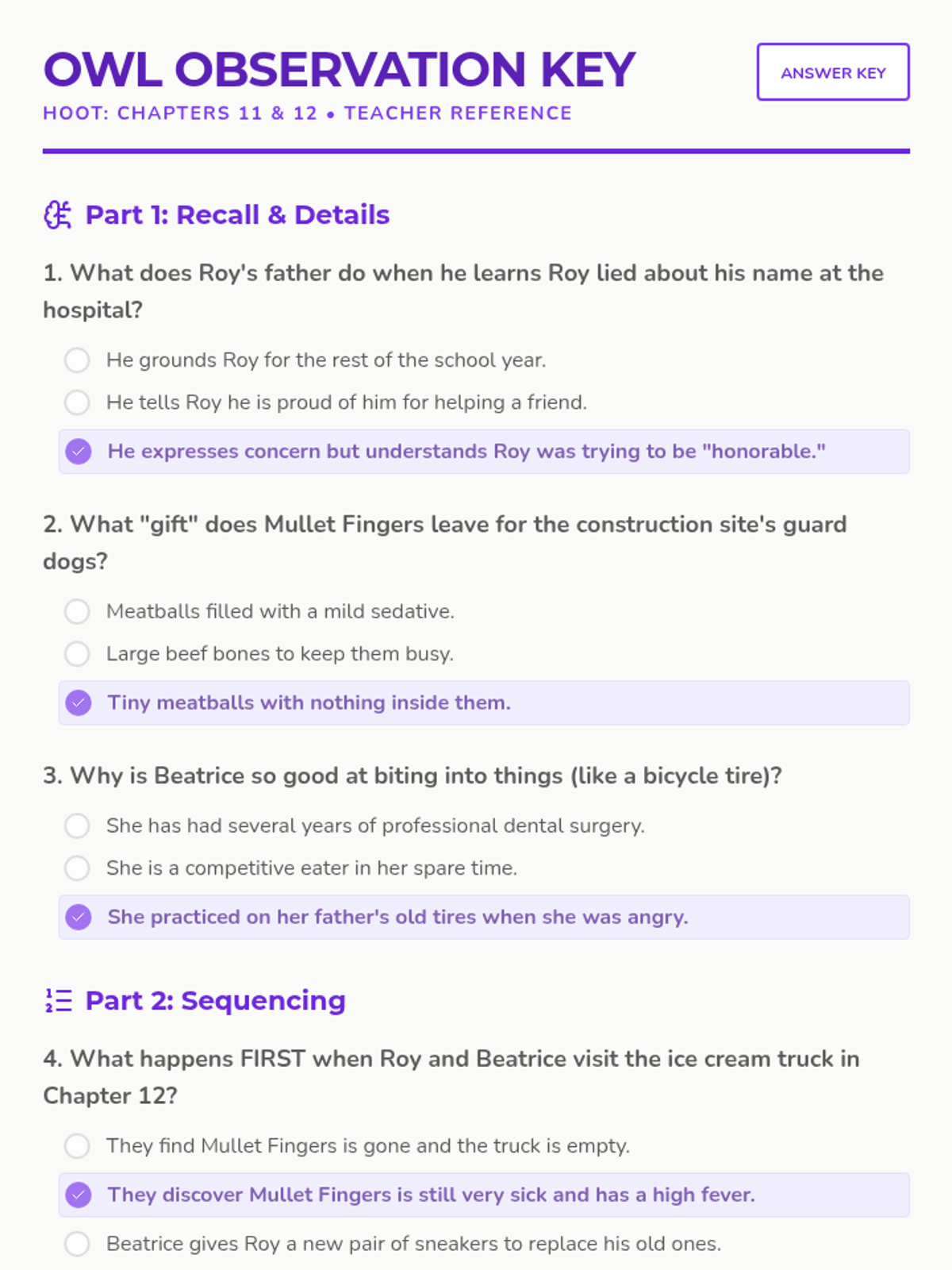
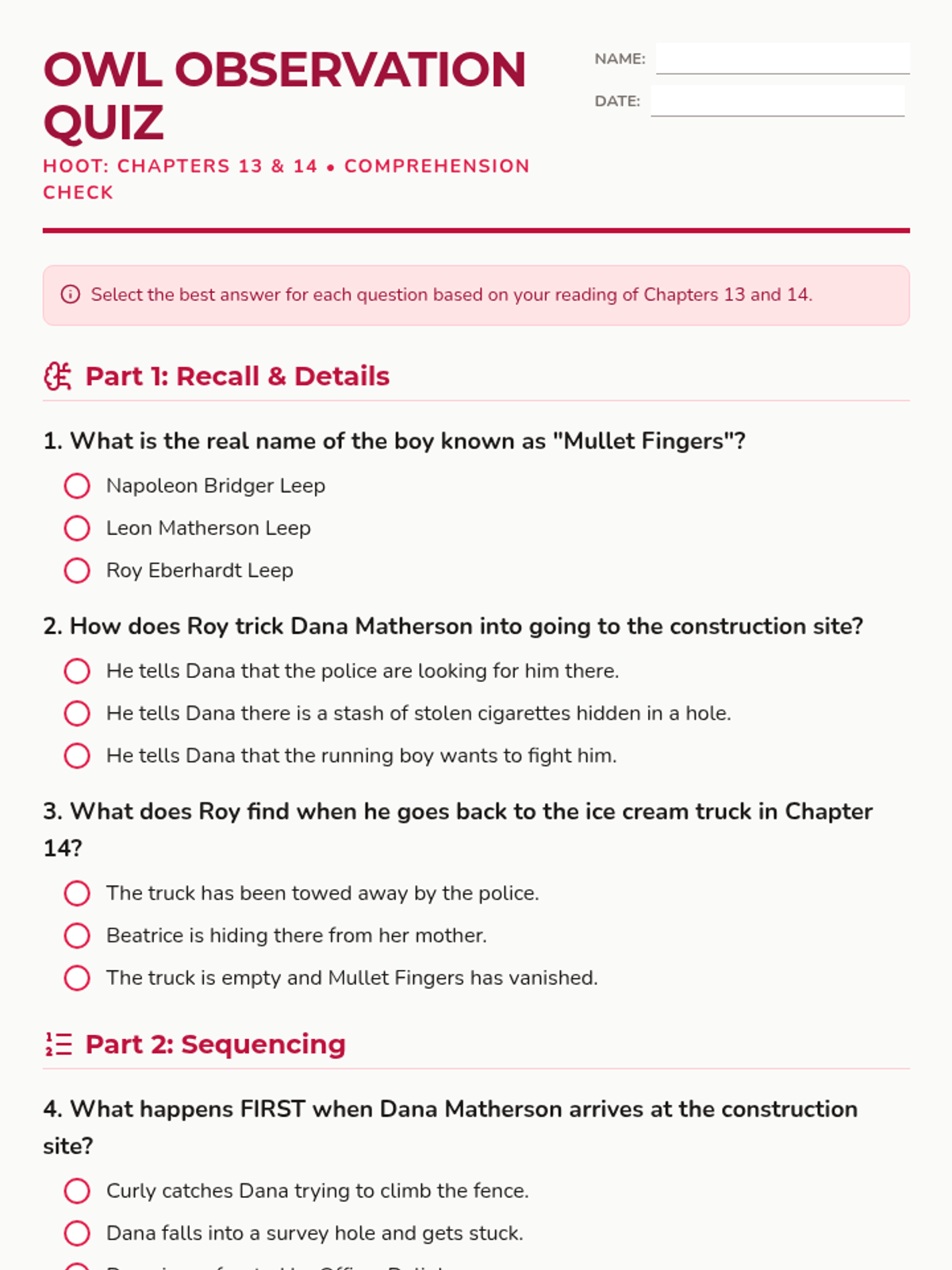
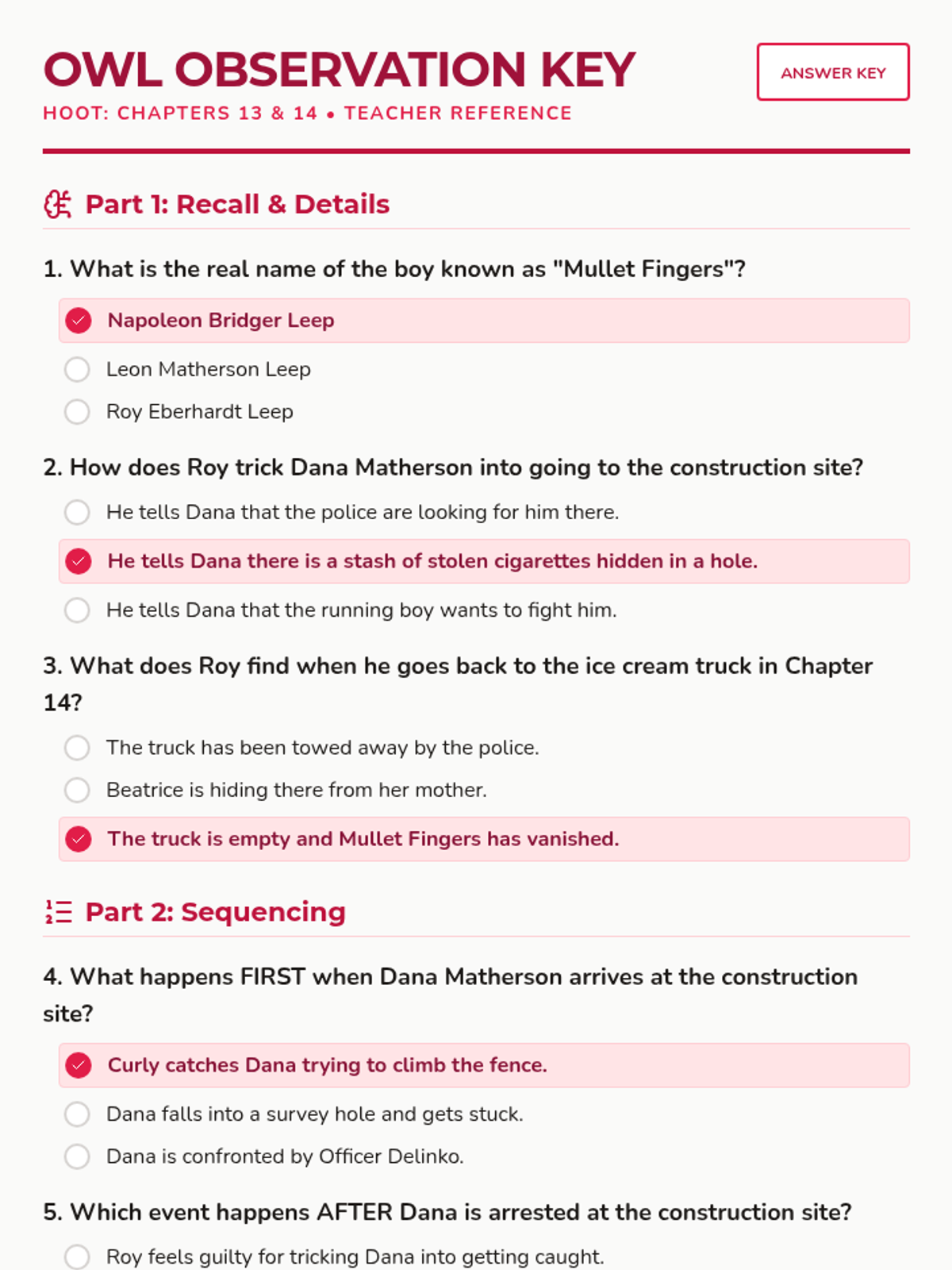
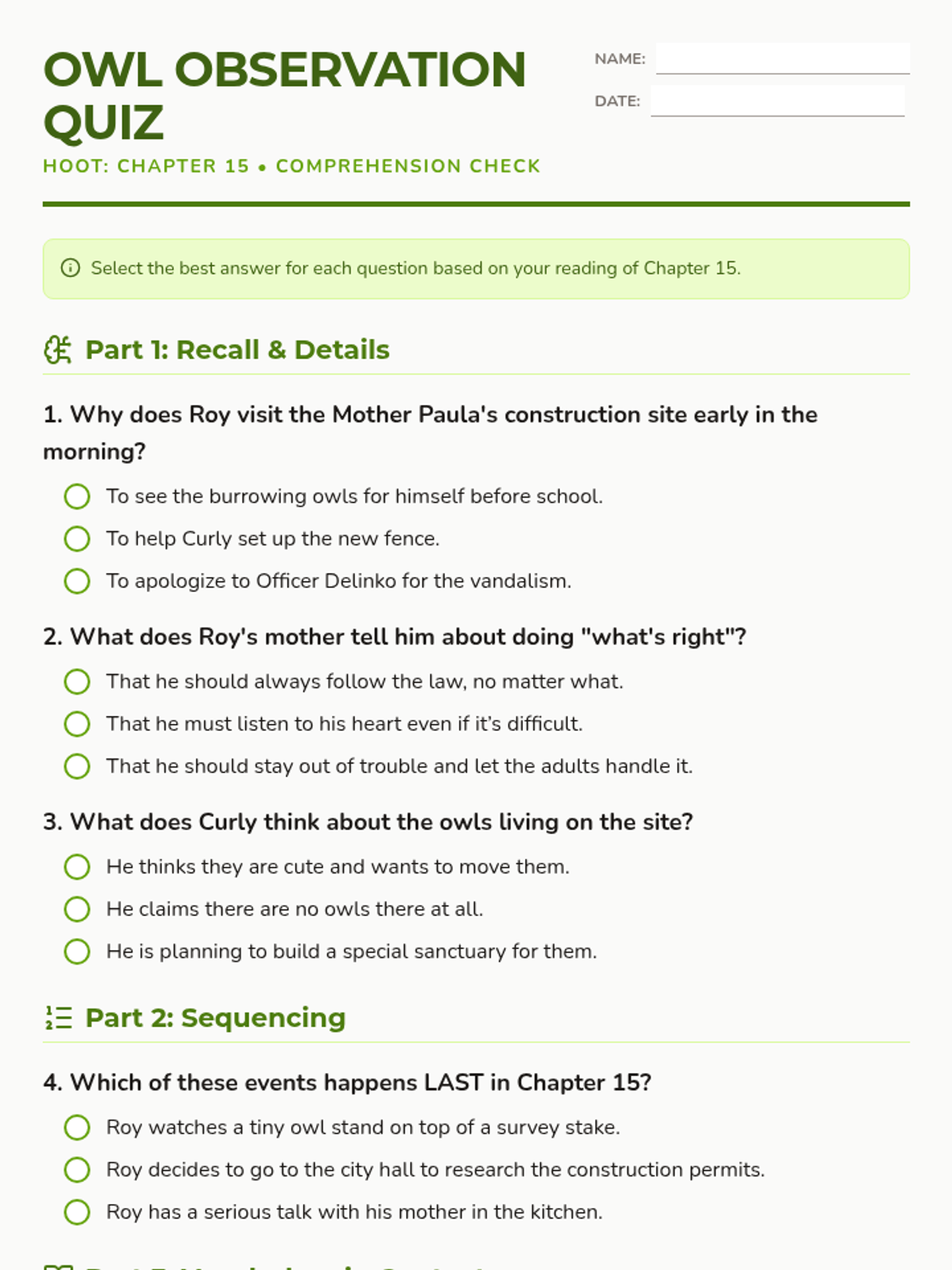
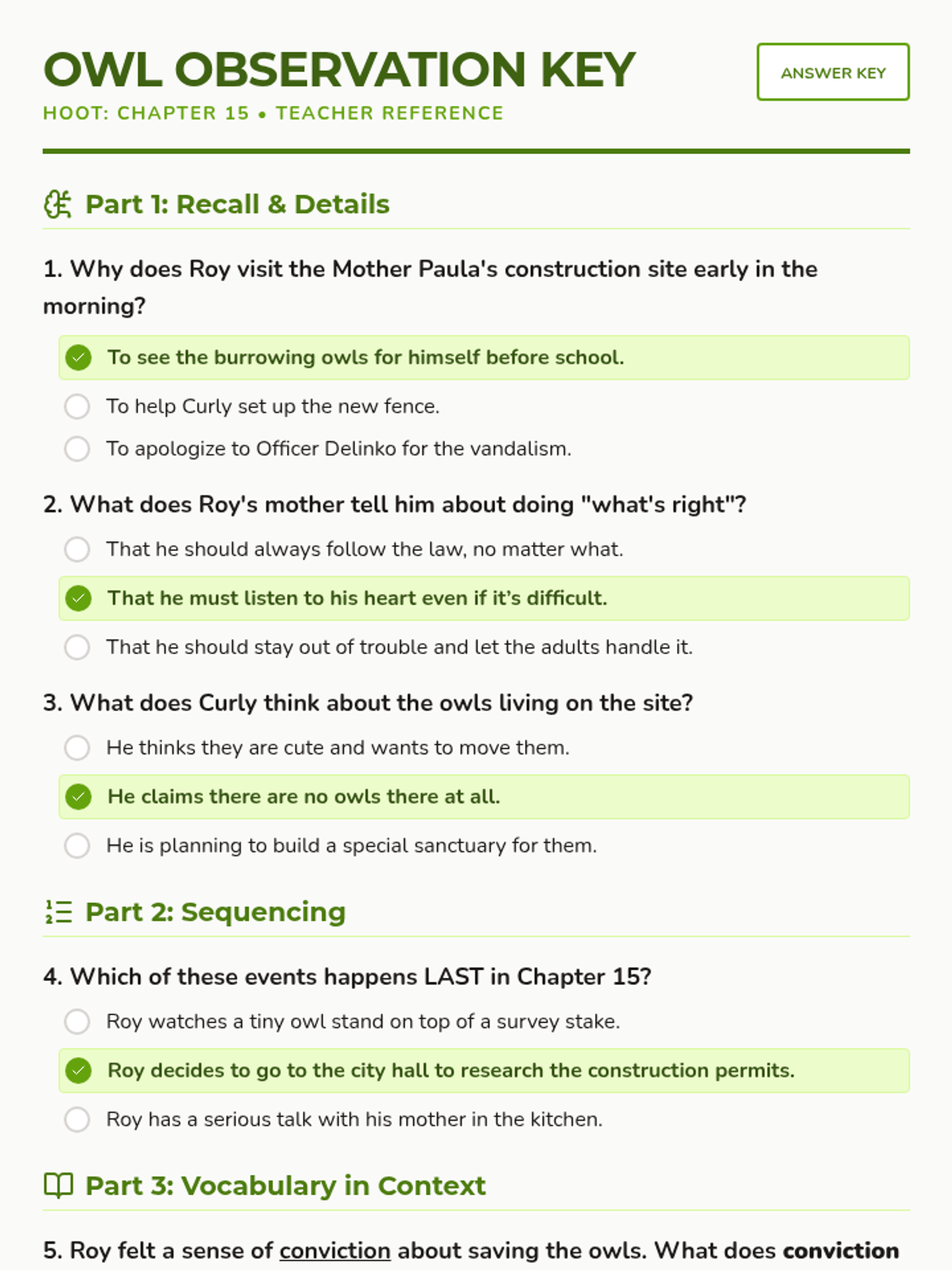
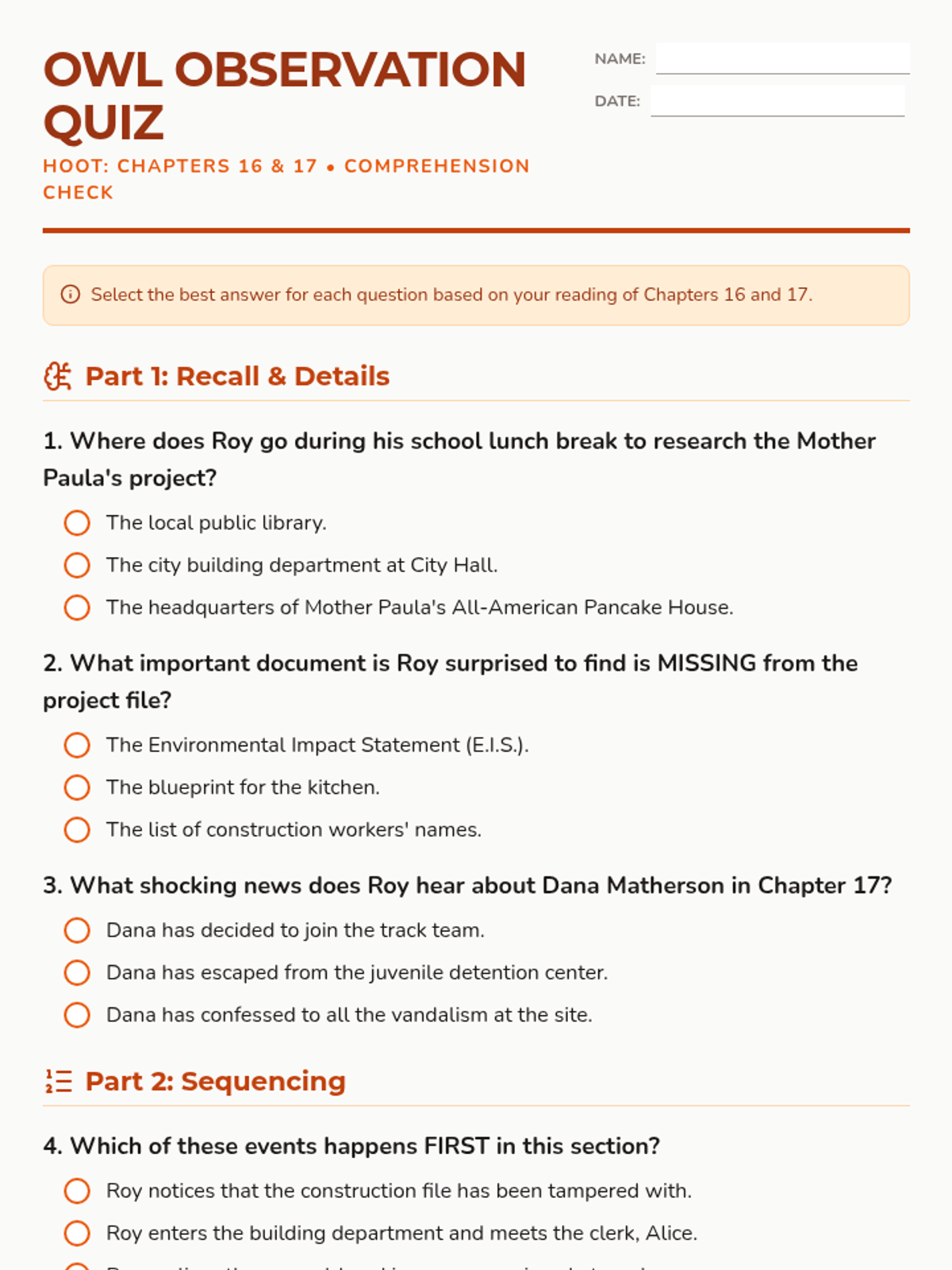
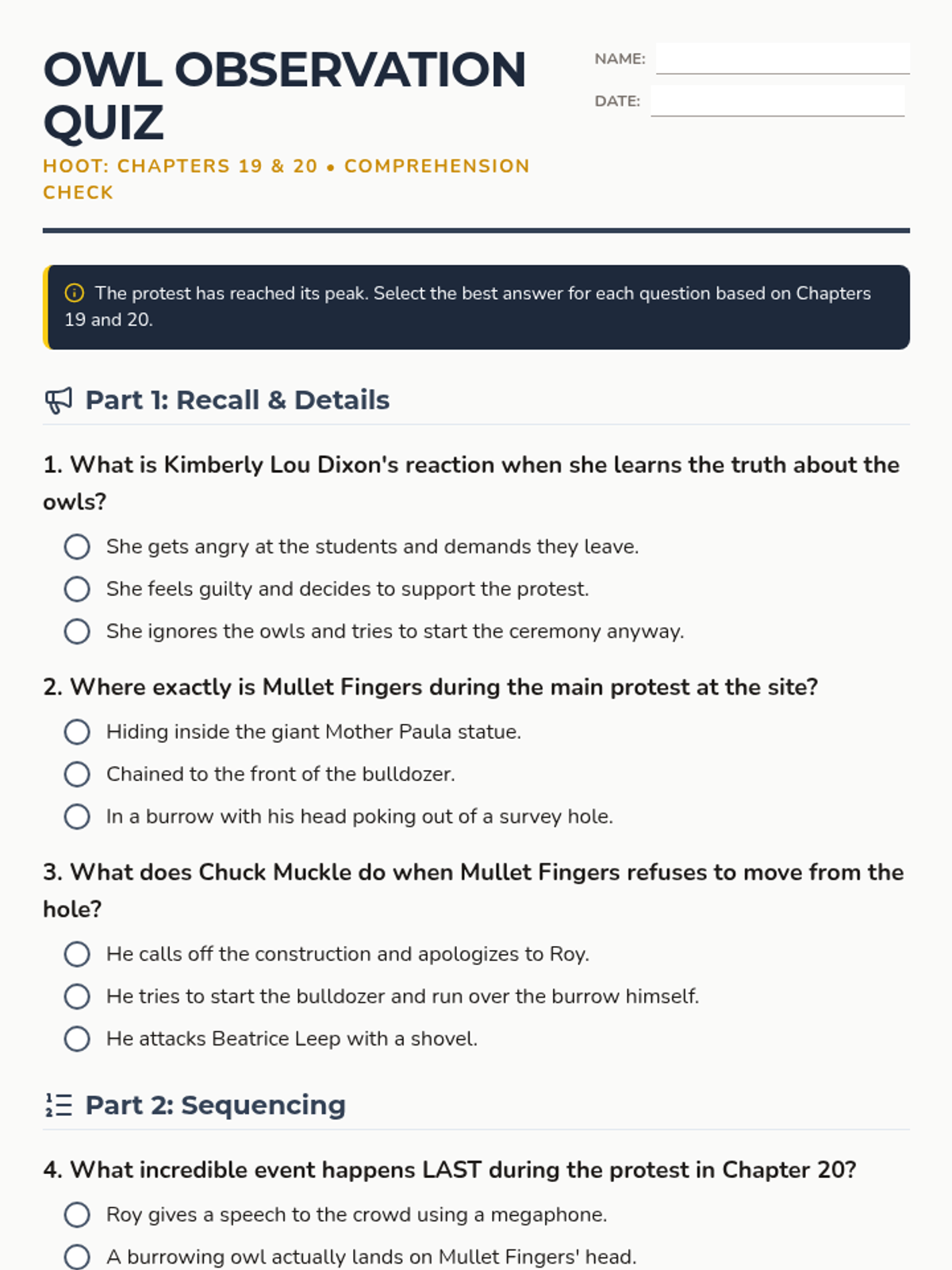
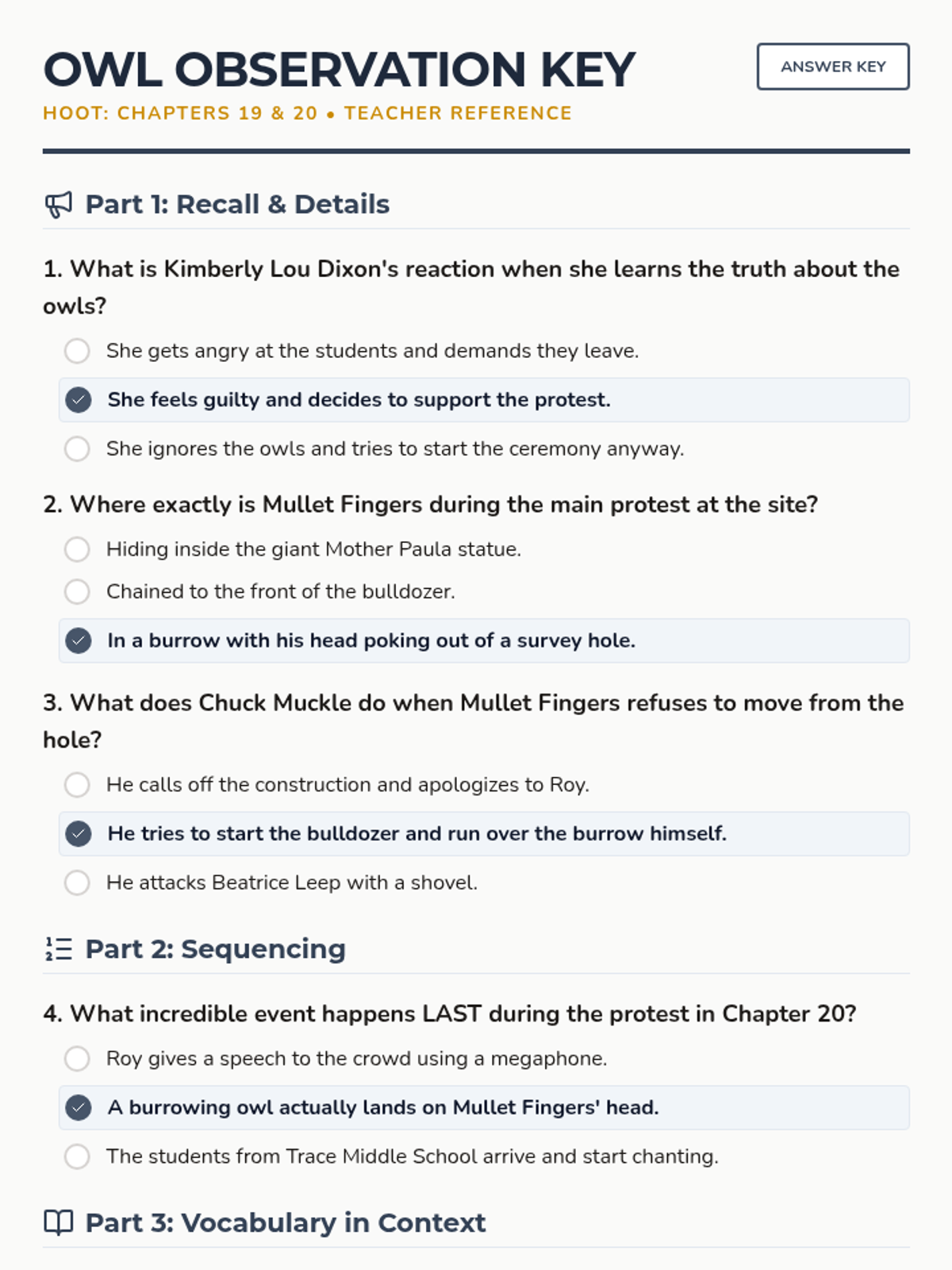
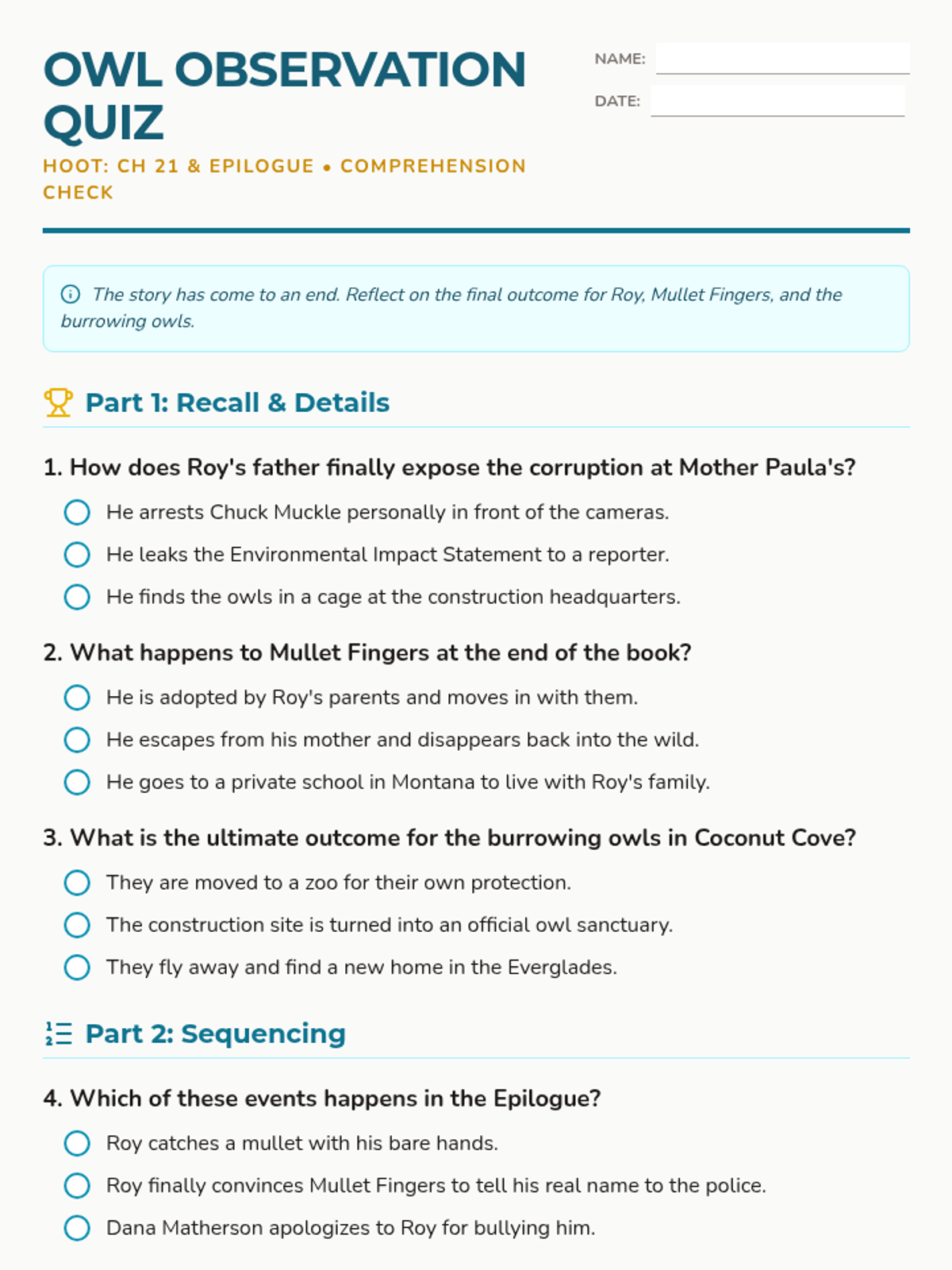
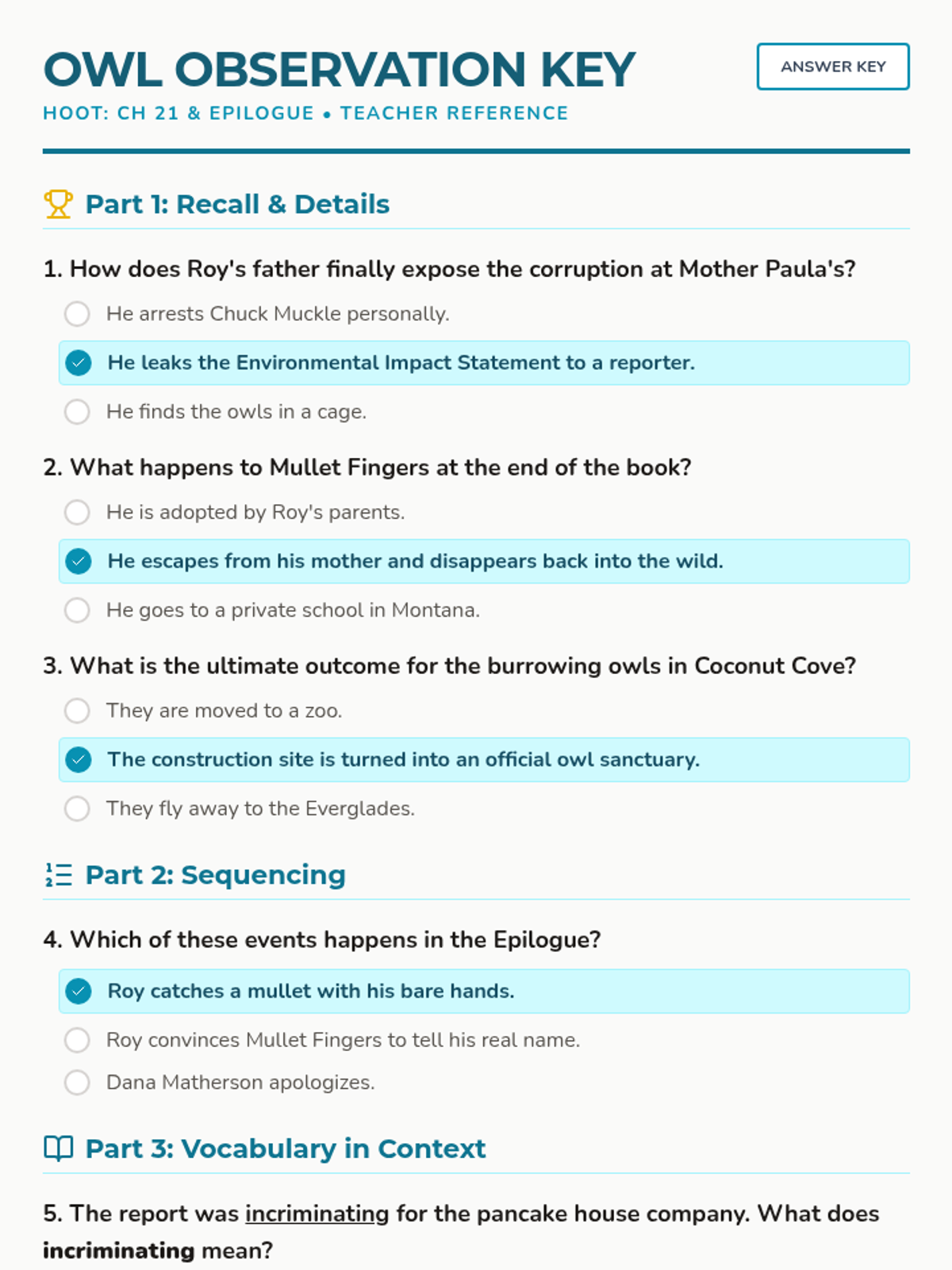
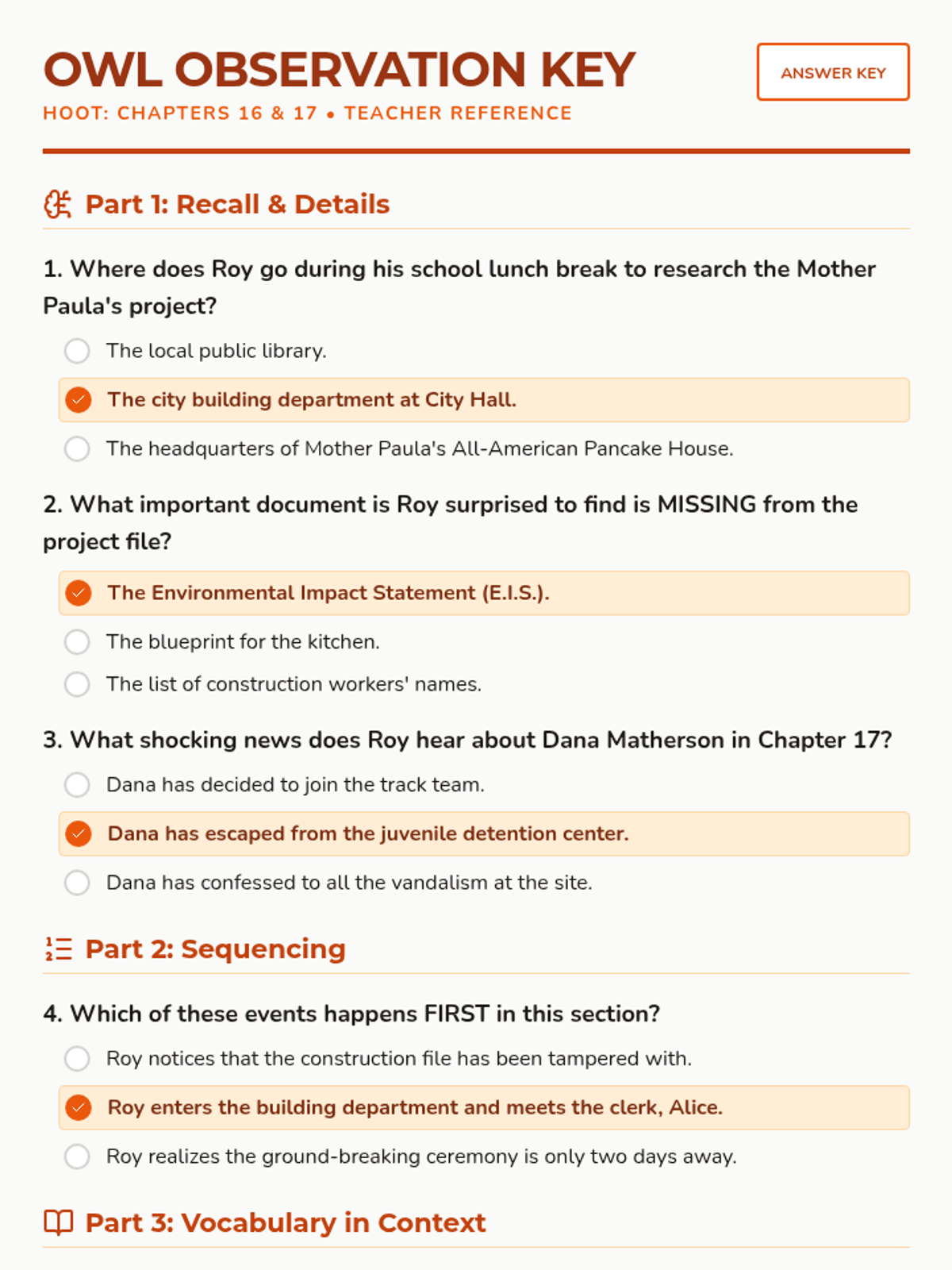
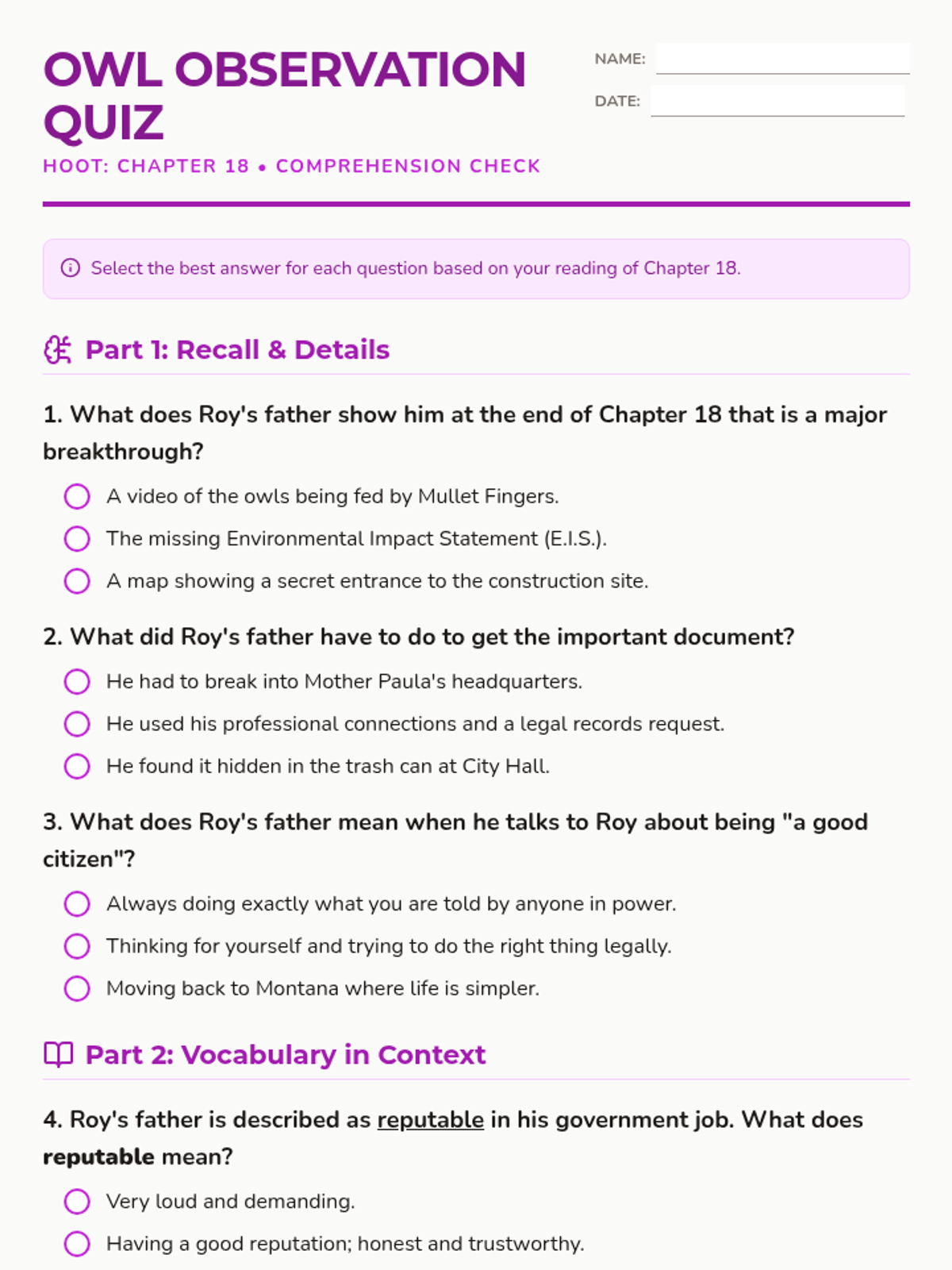
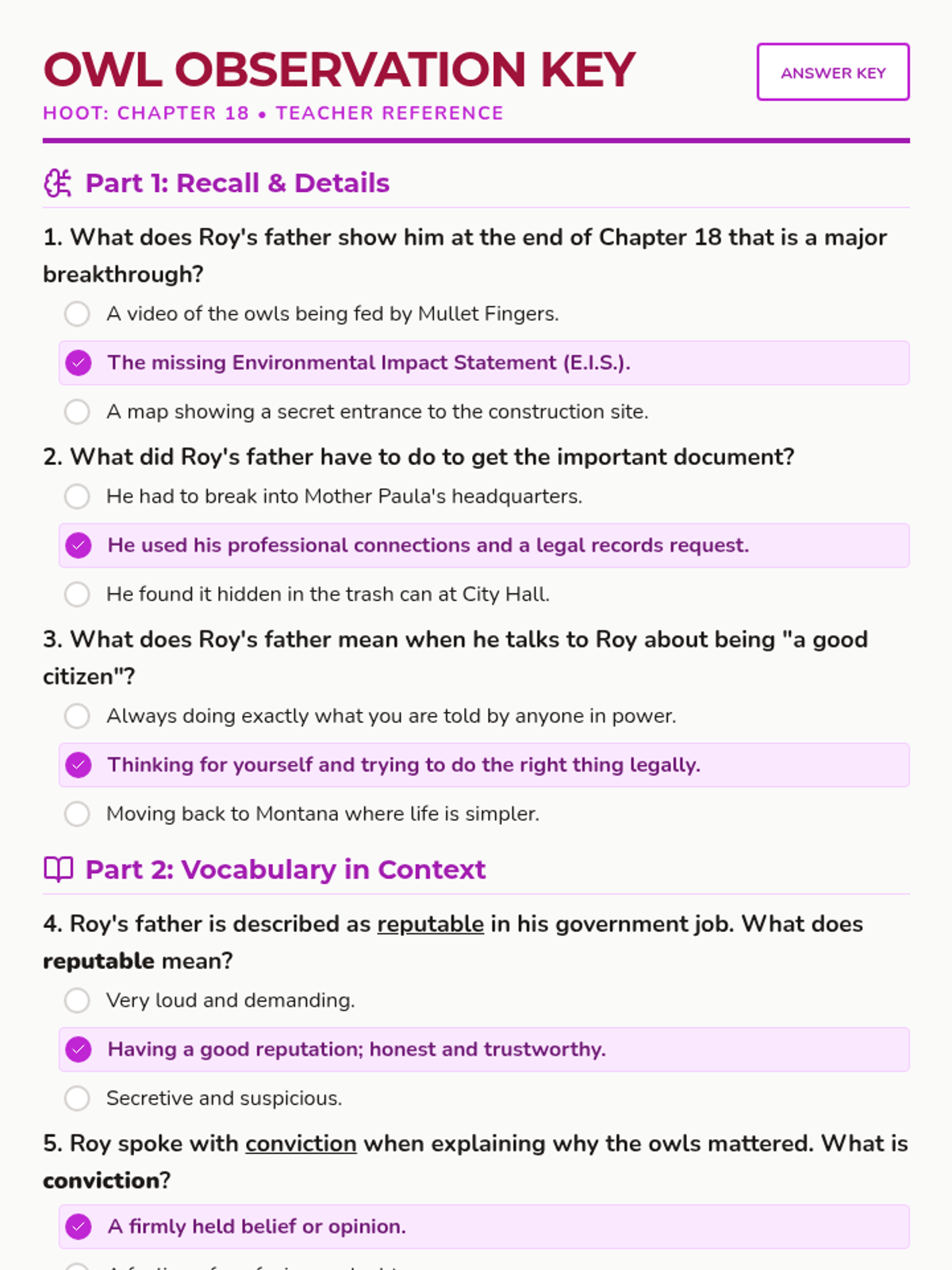
A comprehensive unit for Carl Hiaasen's Hoot, featuring chapter-by-chapter comprehension quizzes, teacher keys, and interactive slide decks.
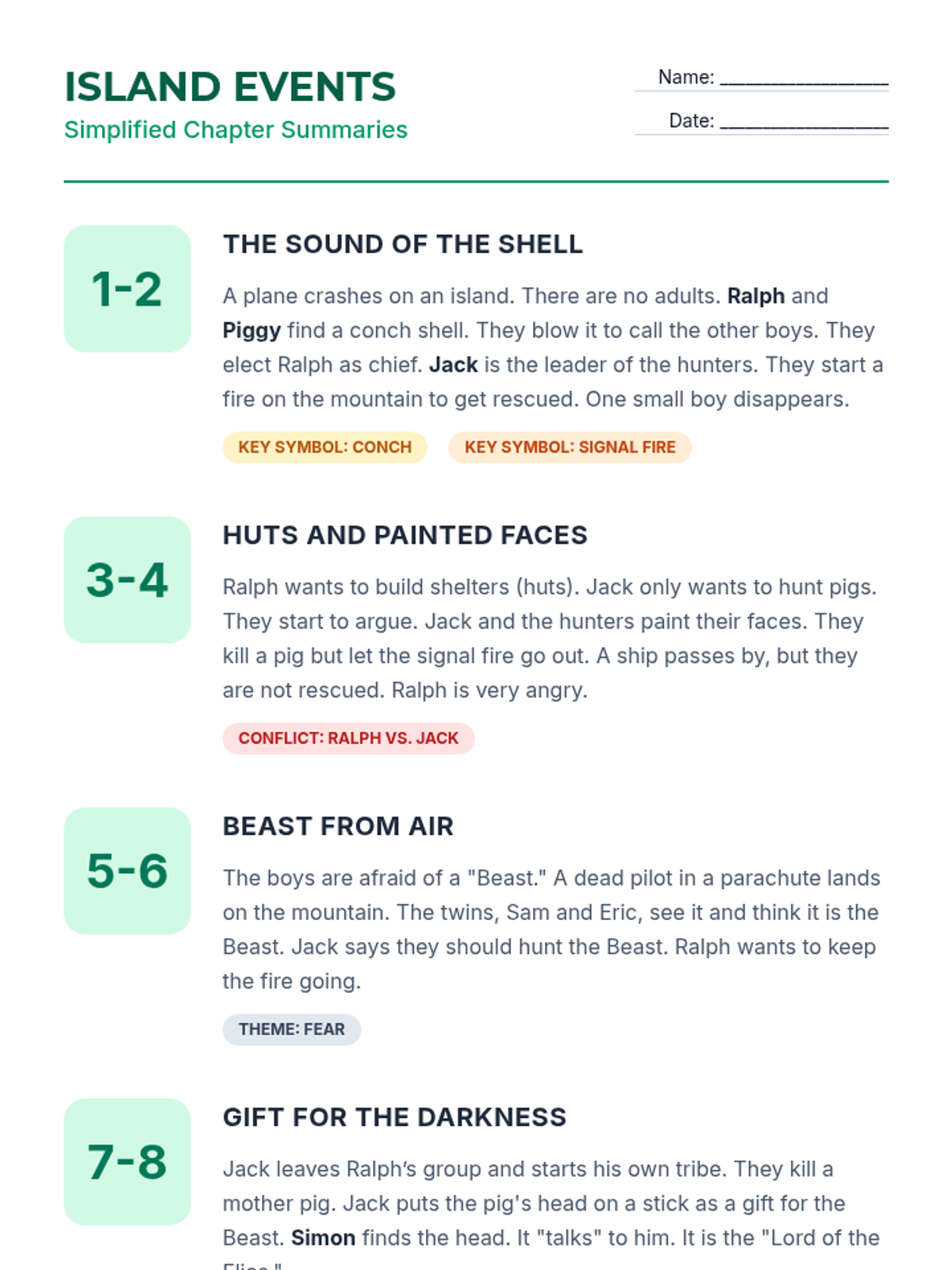
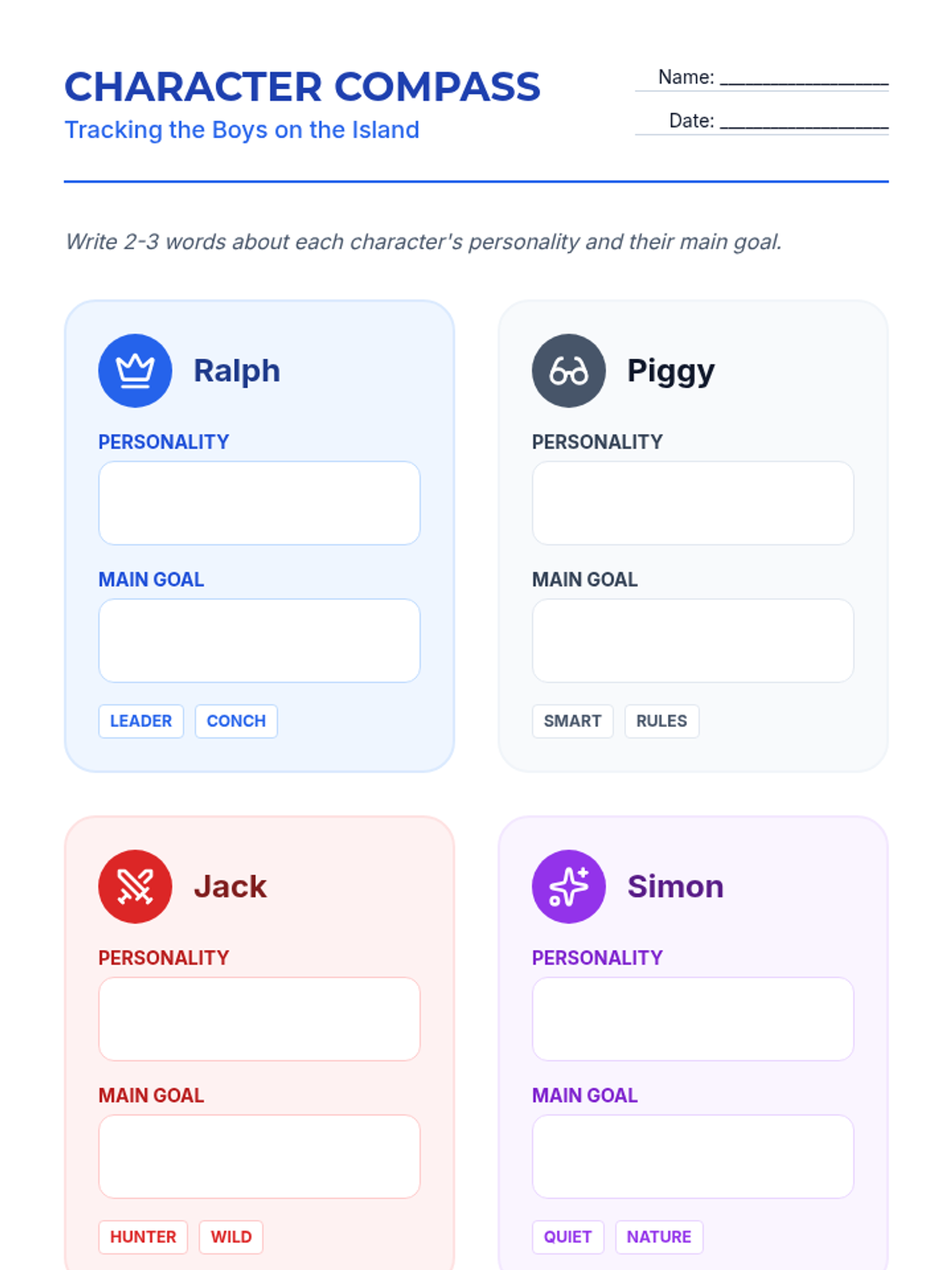
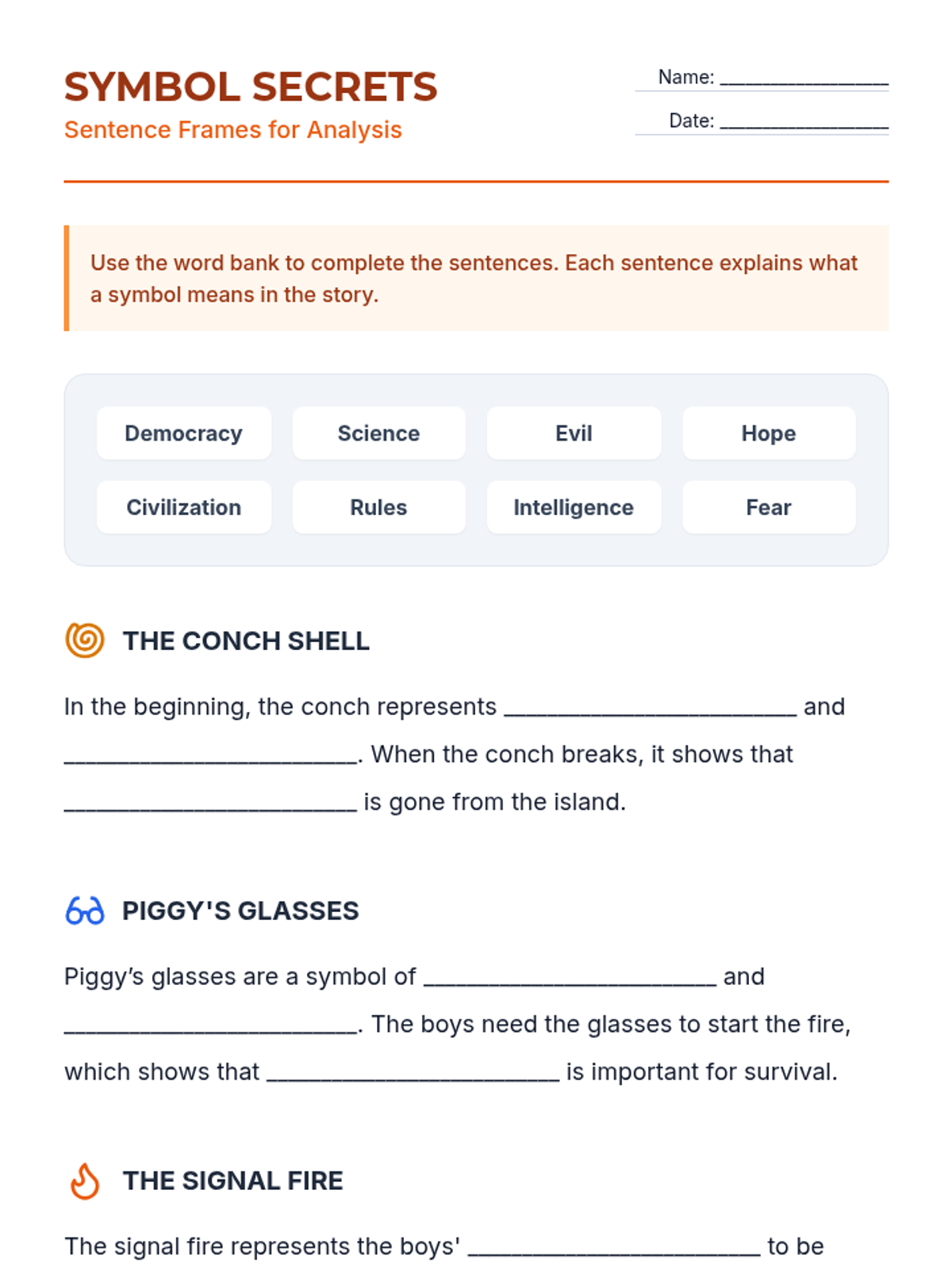
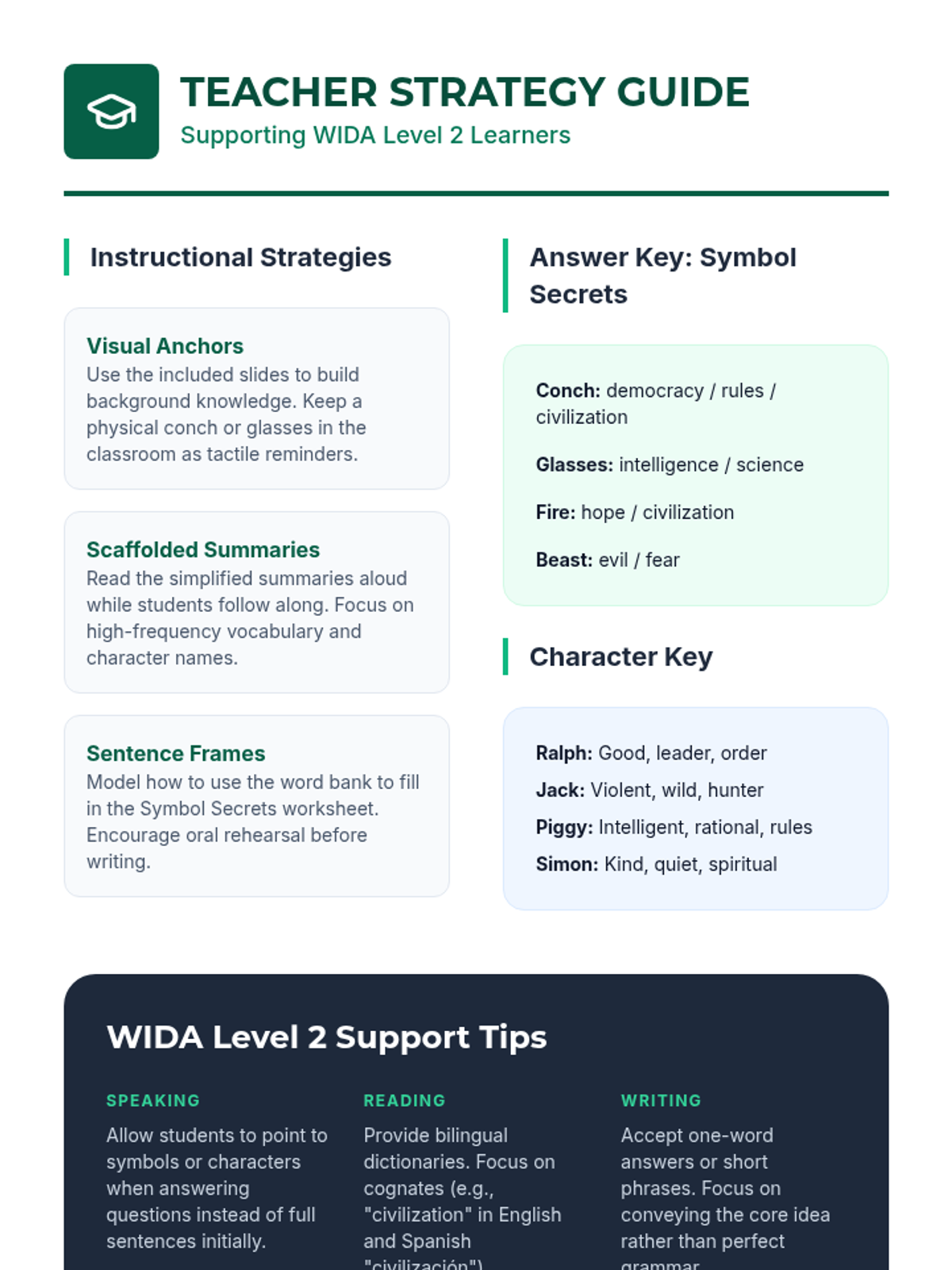
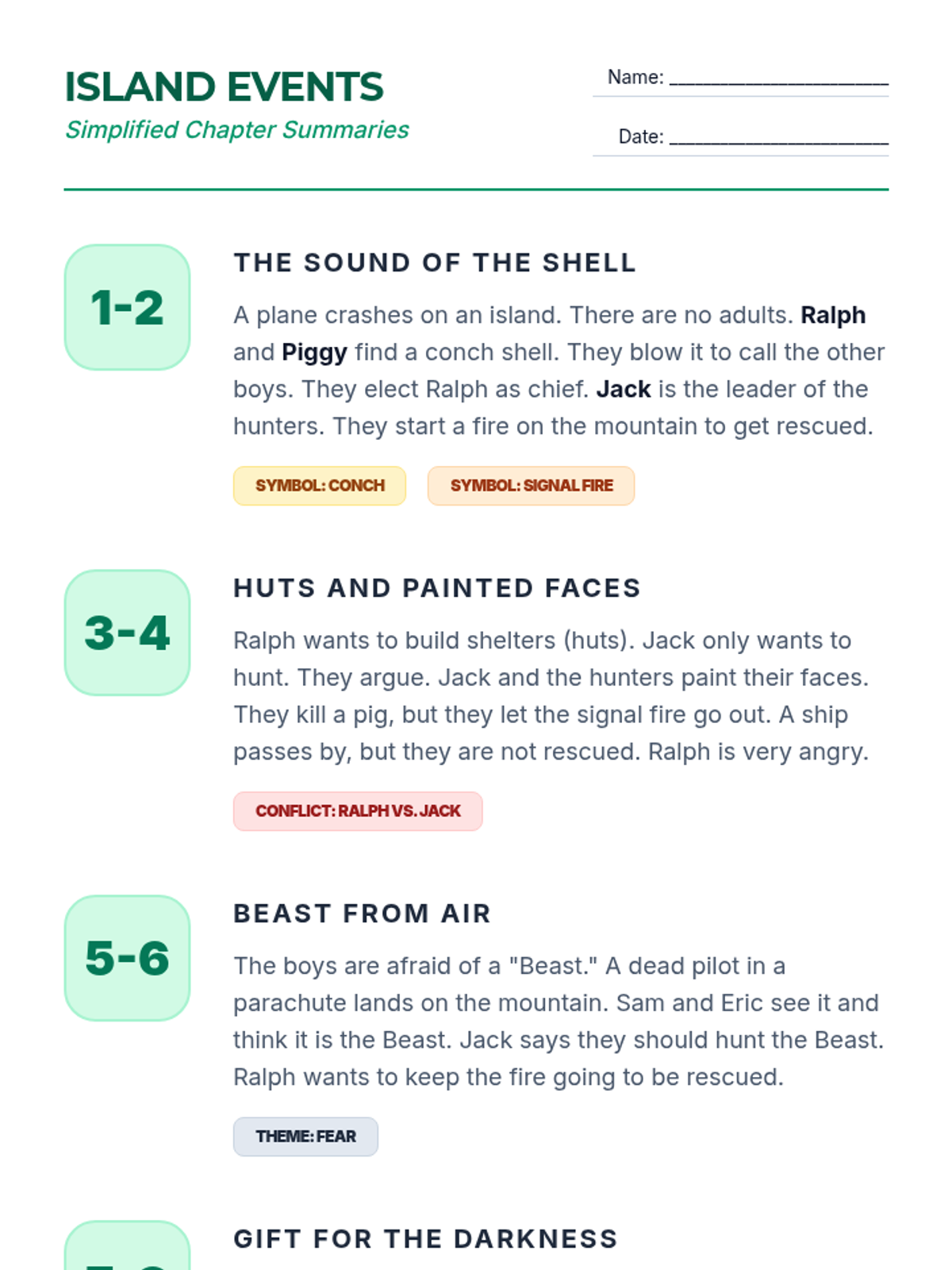
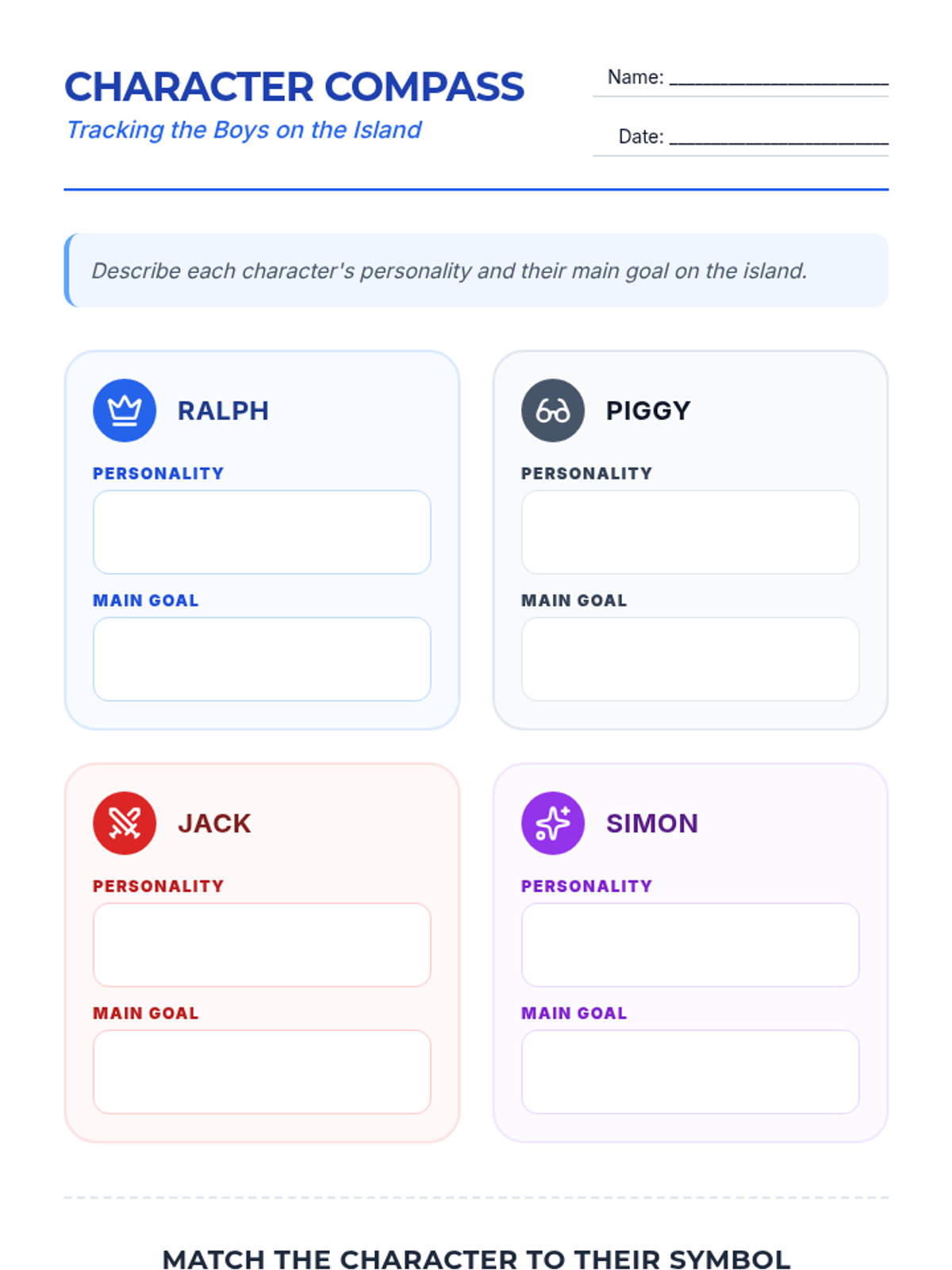
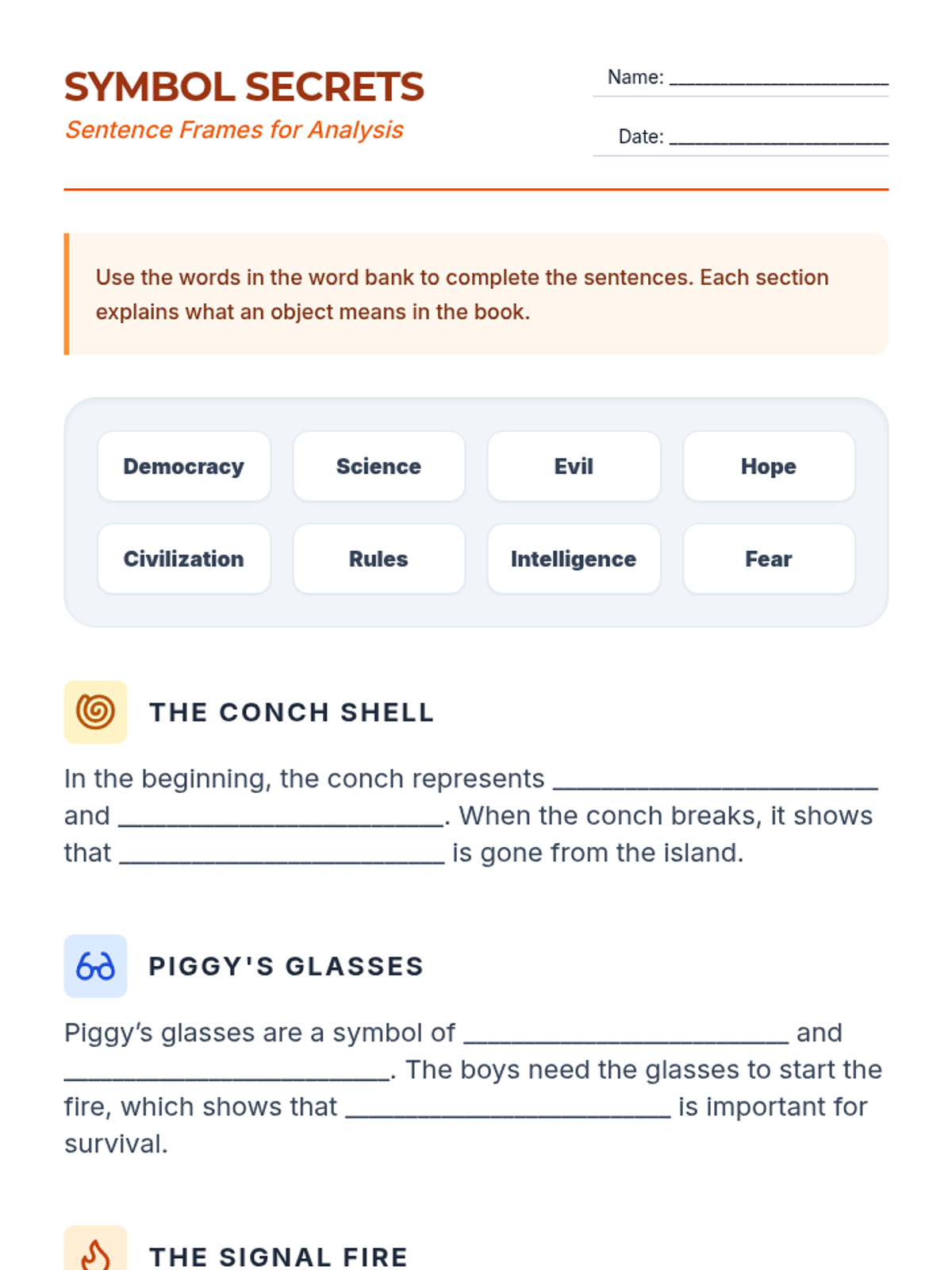
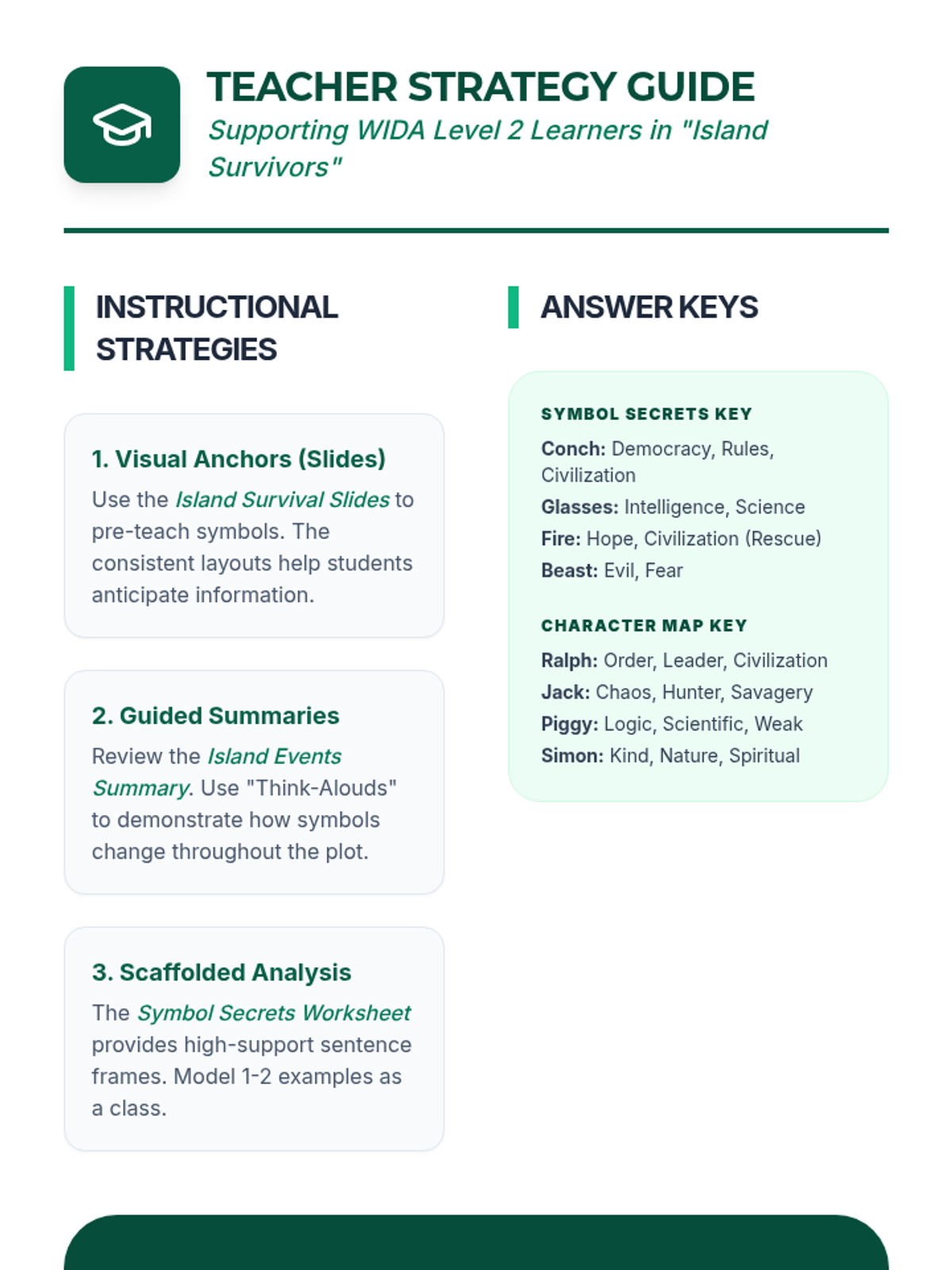
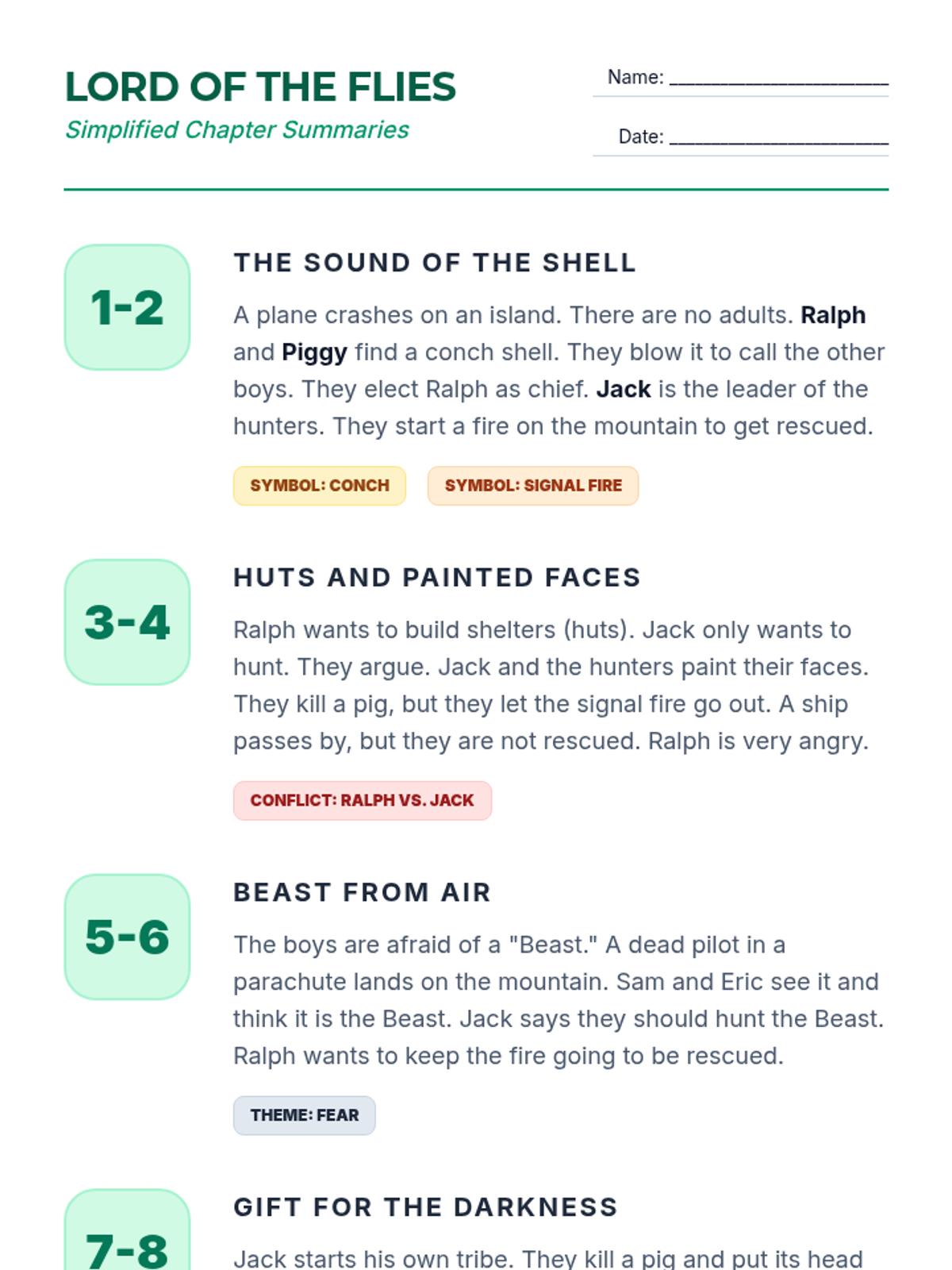
A collection of reading support materials designed for WIDA Level 2 eighth-grade students reading Lord of the Flies, focusing on plot comprehension and symbolic analysis.
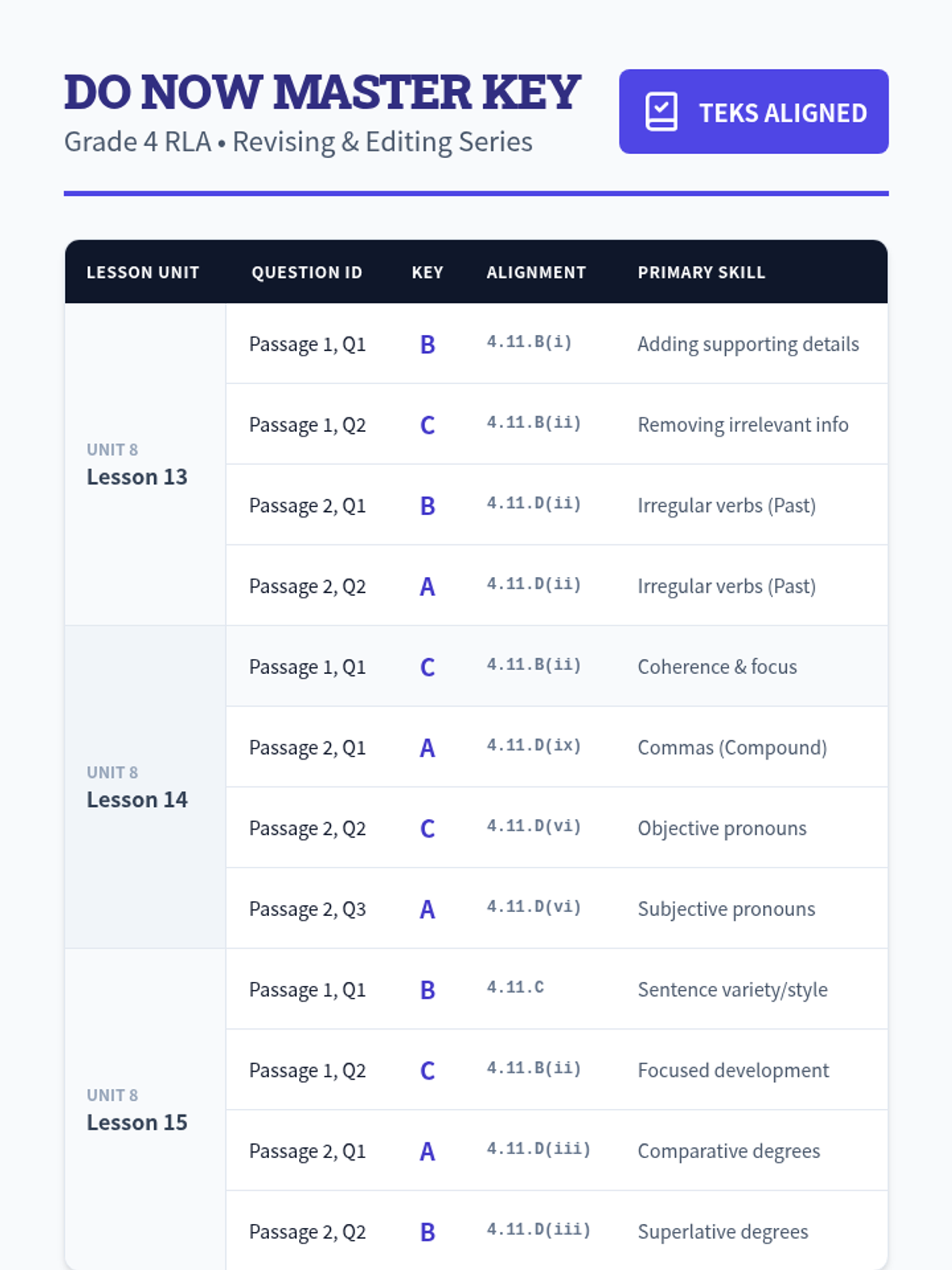
A series of five "Do Now" slide decks for Grade 4 RLA, focusing on revising and editing skills aligned with TEKS 4.11. Each deck provides quick, timed practice sessions with original passages and multiple-choice questions.
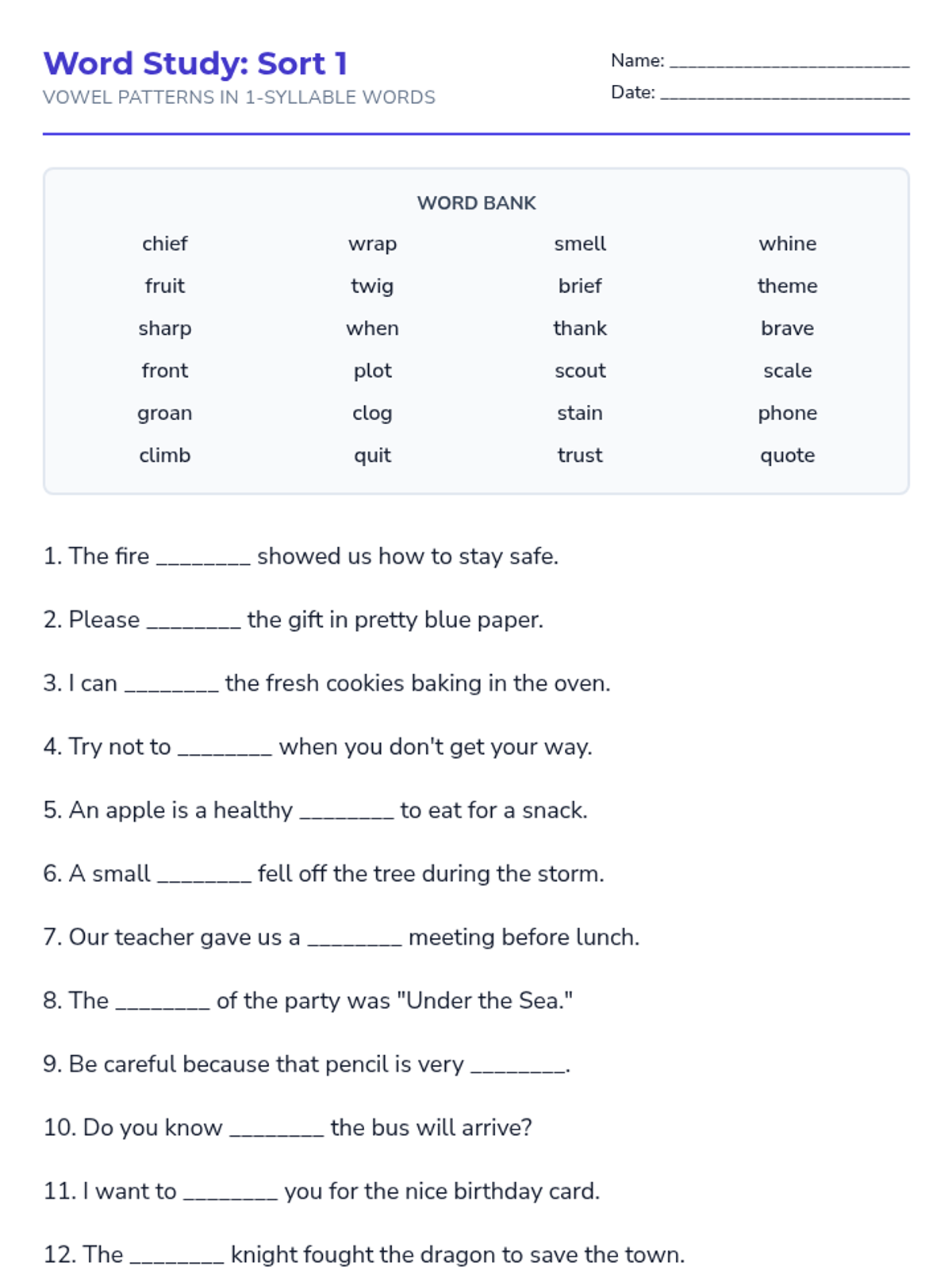
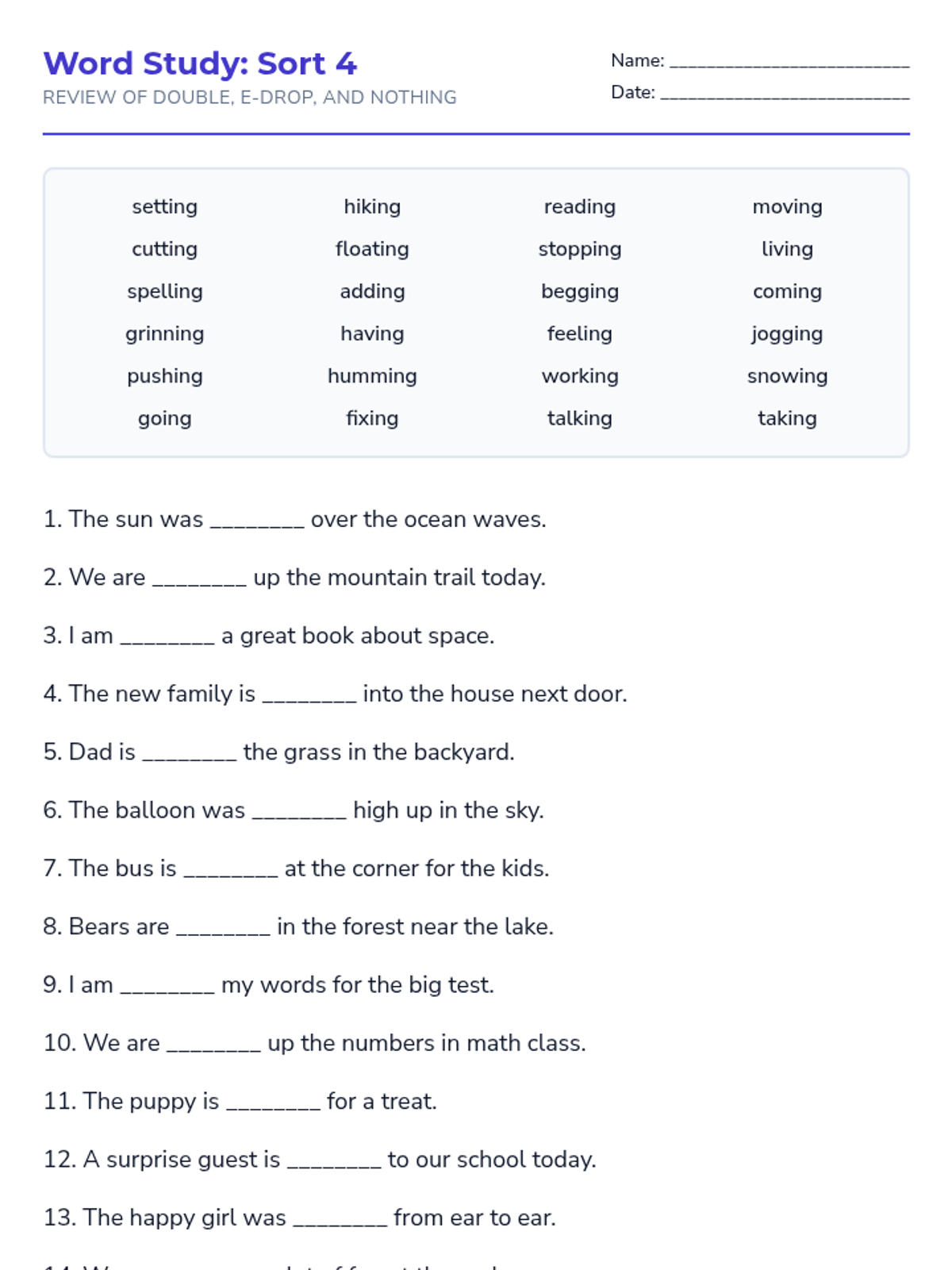
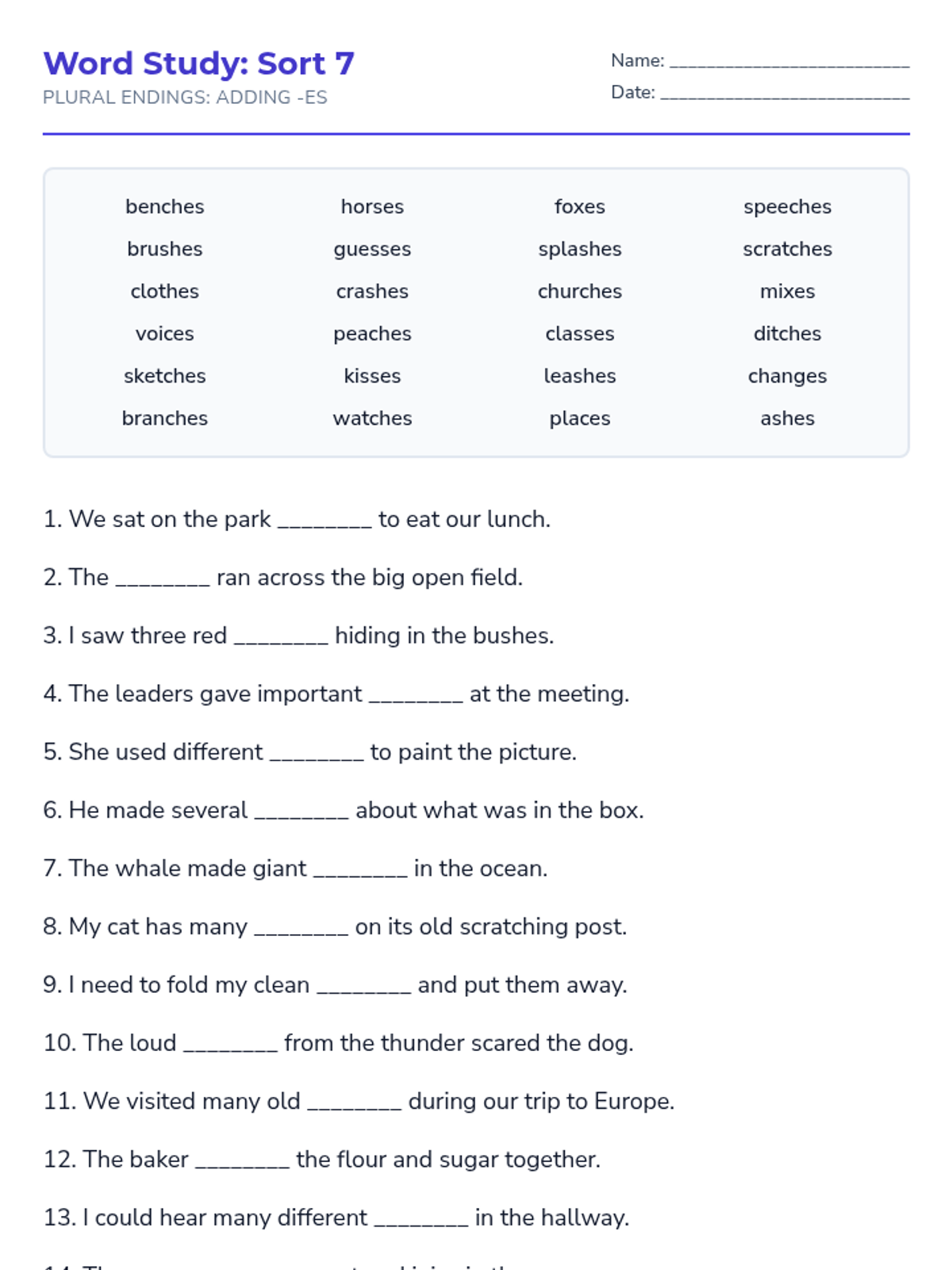
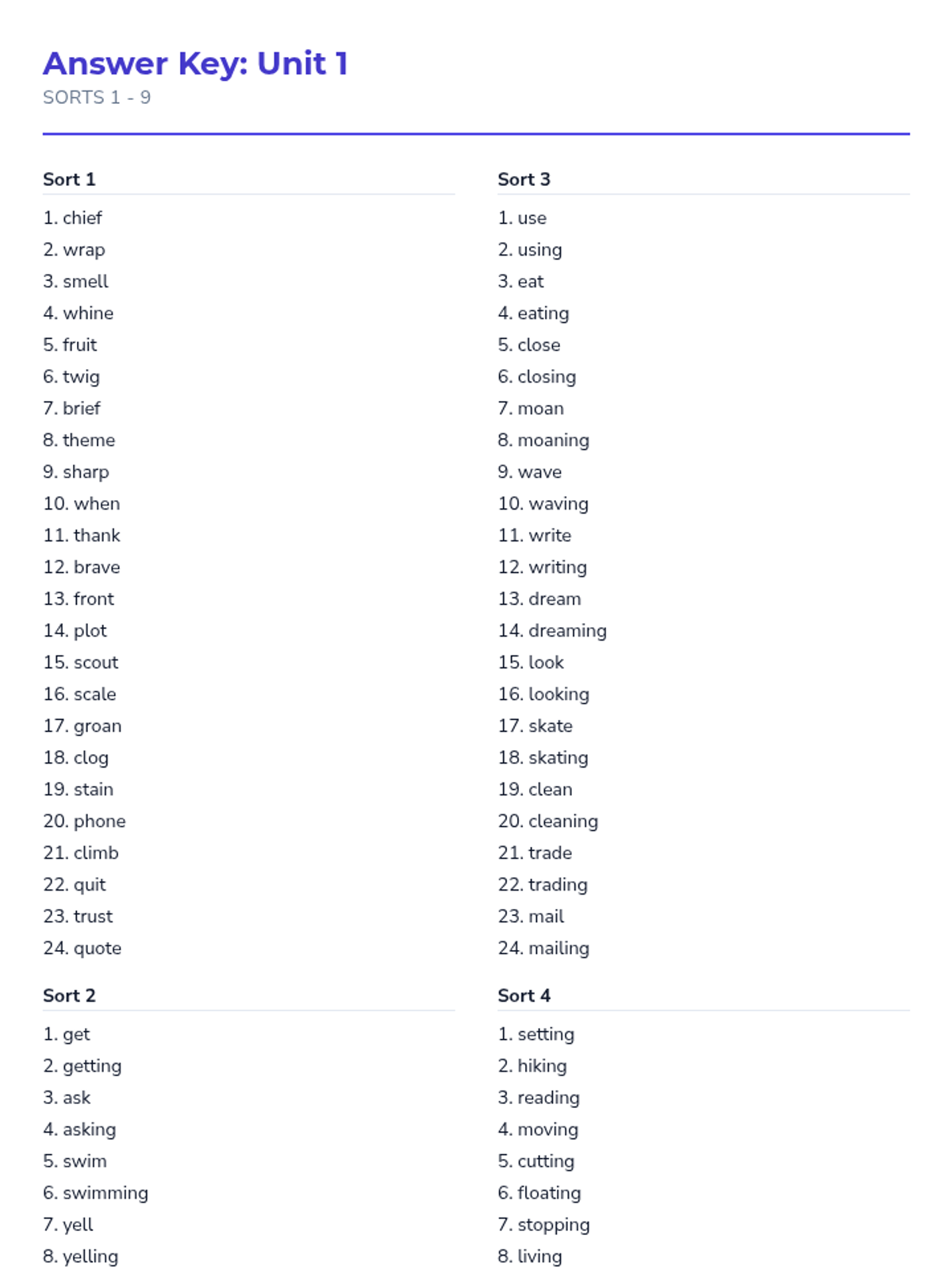
A comprehensive collection of 56 word study sorts for 4th-grade students, covering everything from basic vowel patterns and inflected endings to advanced syllable junctures, prefixes, and suffixes.
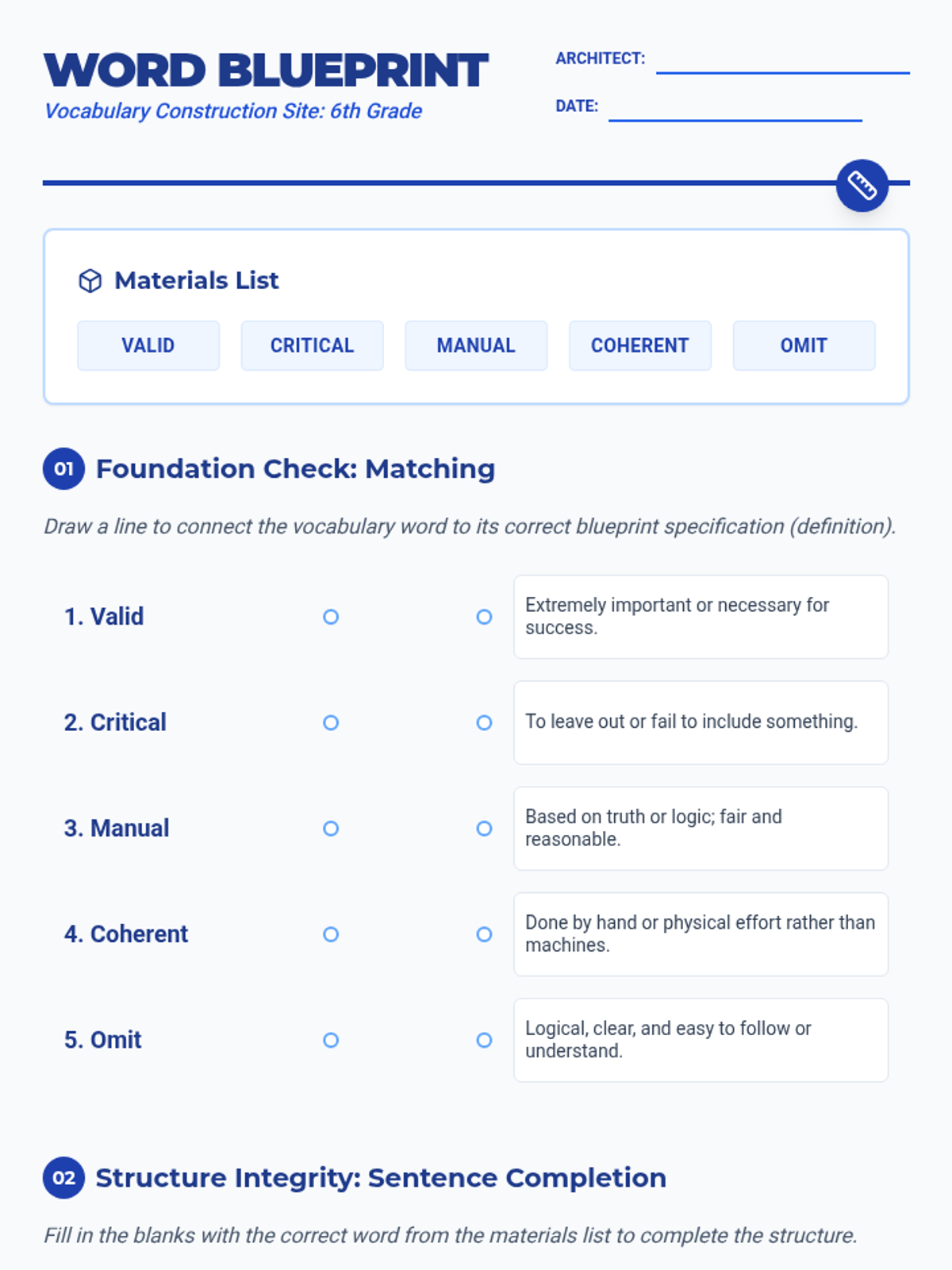
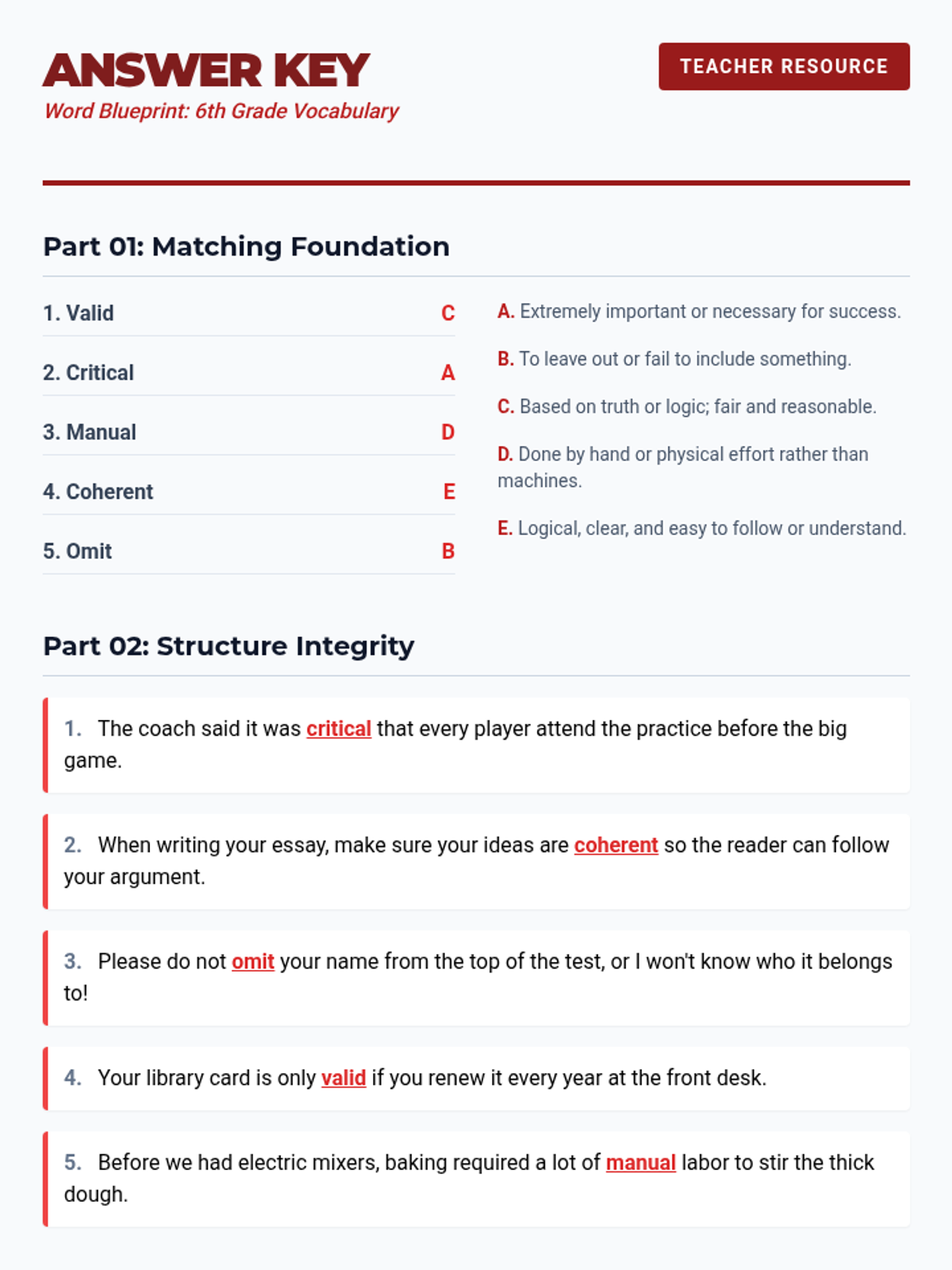
A comprehensive vocabulary unit designed for upper elementary and middle school students to master academic vocabulary through themed blueprints and structural linguistics.
A comprehensive series of spelling and vocabulary worksheets for 4th-grade students, focusing on Greek and Latin roots, prefixes, and suffixes through fill-in-the-blank exercises.
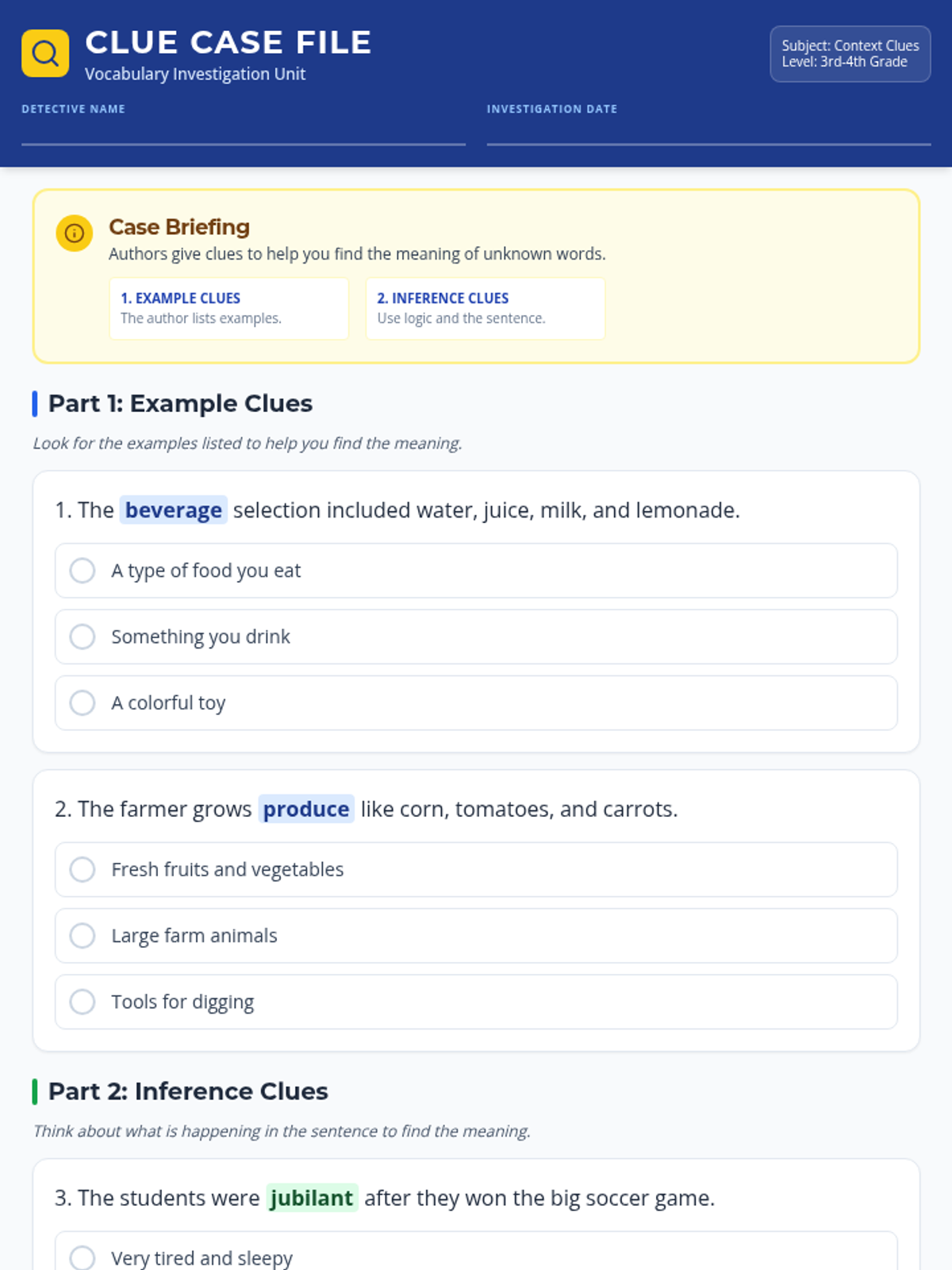
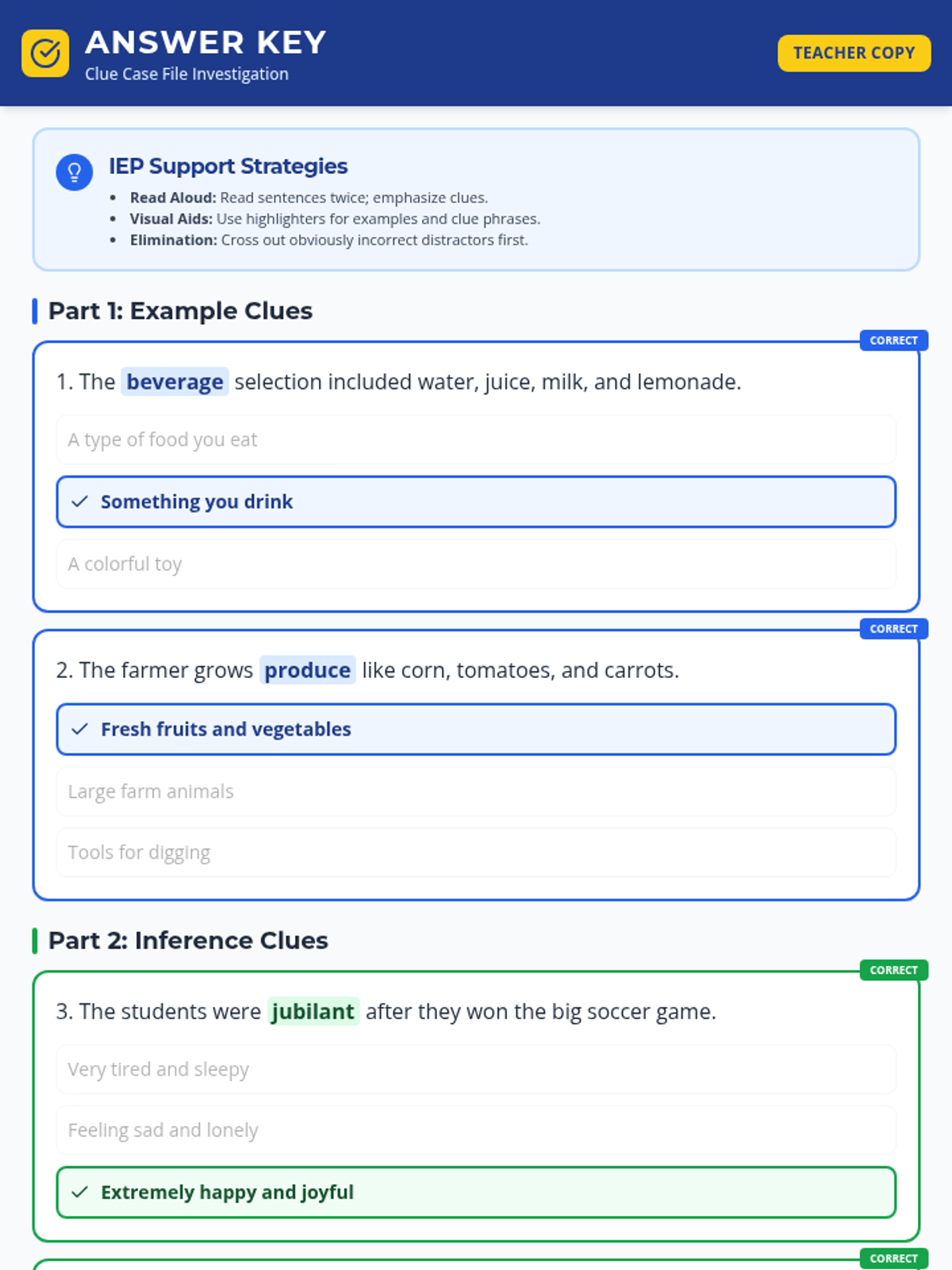
A vocabulary sequence focusing on context clue strategies to help 3rd-4th grade students decode unfamiliar words.
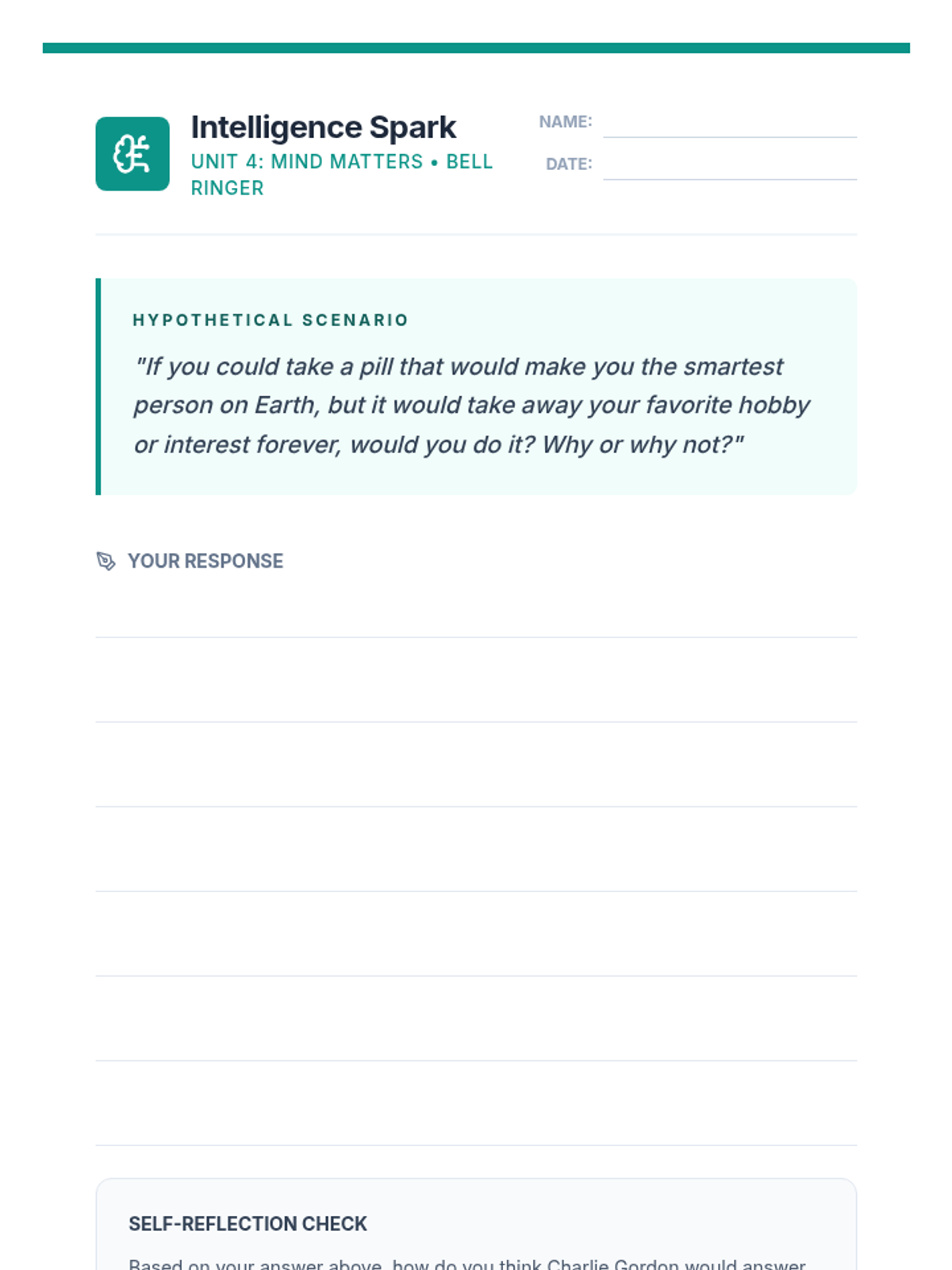
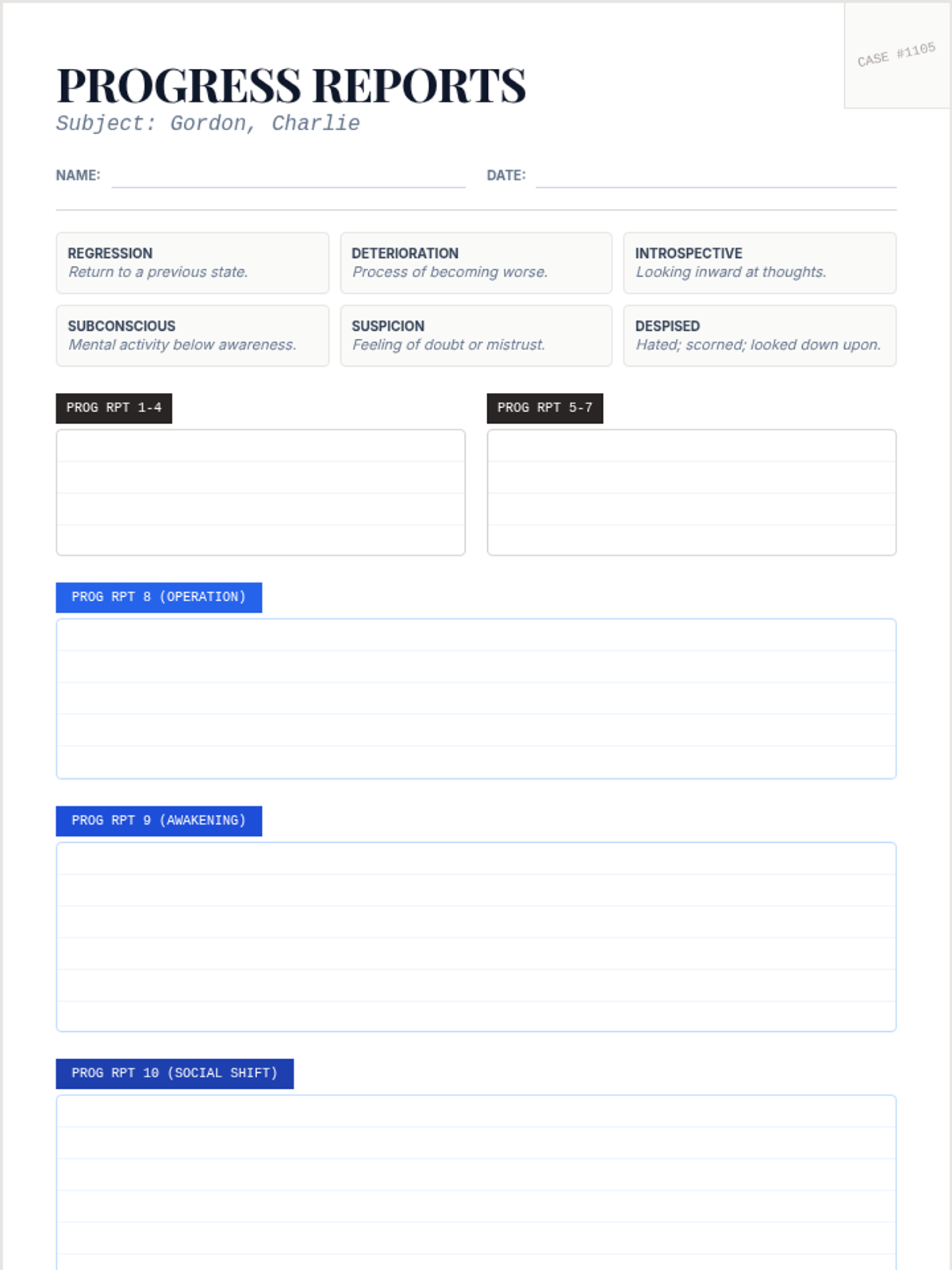
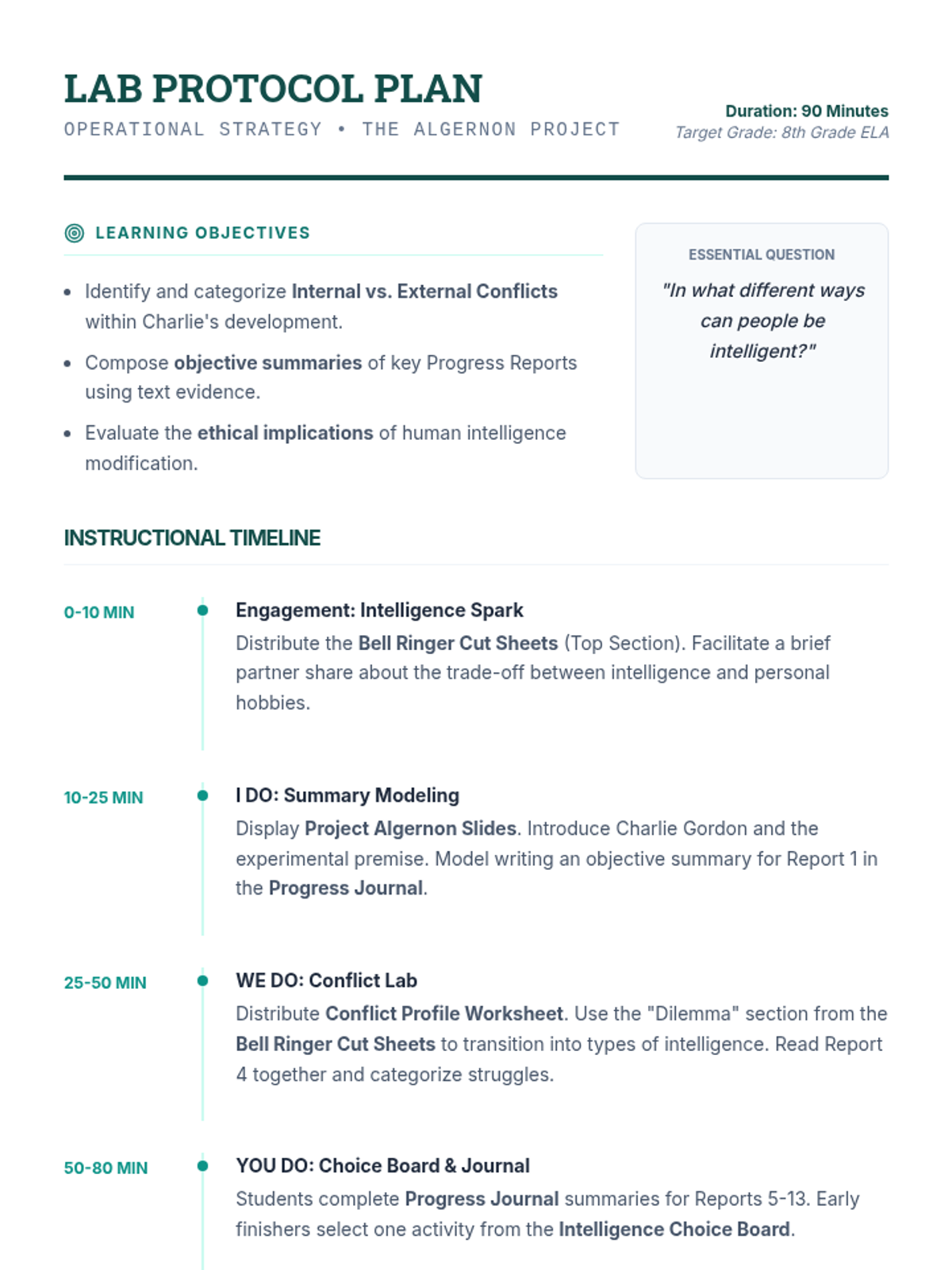
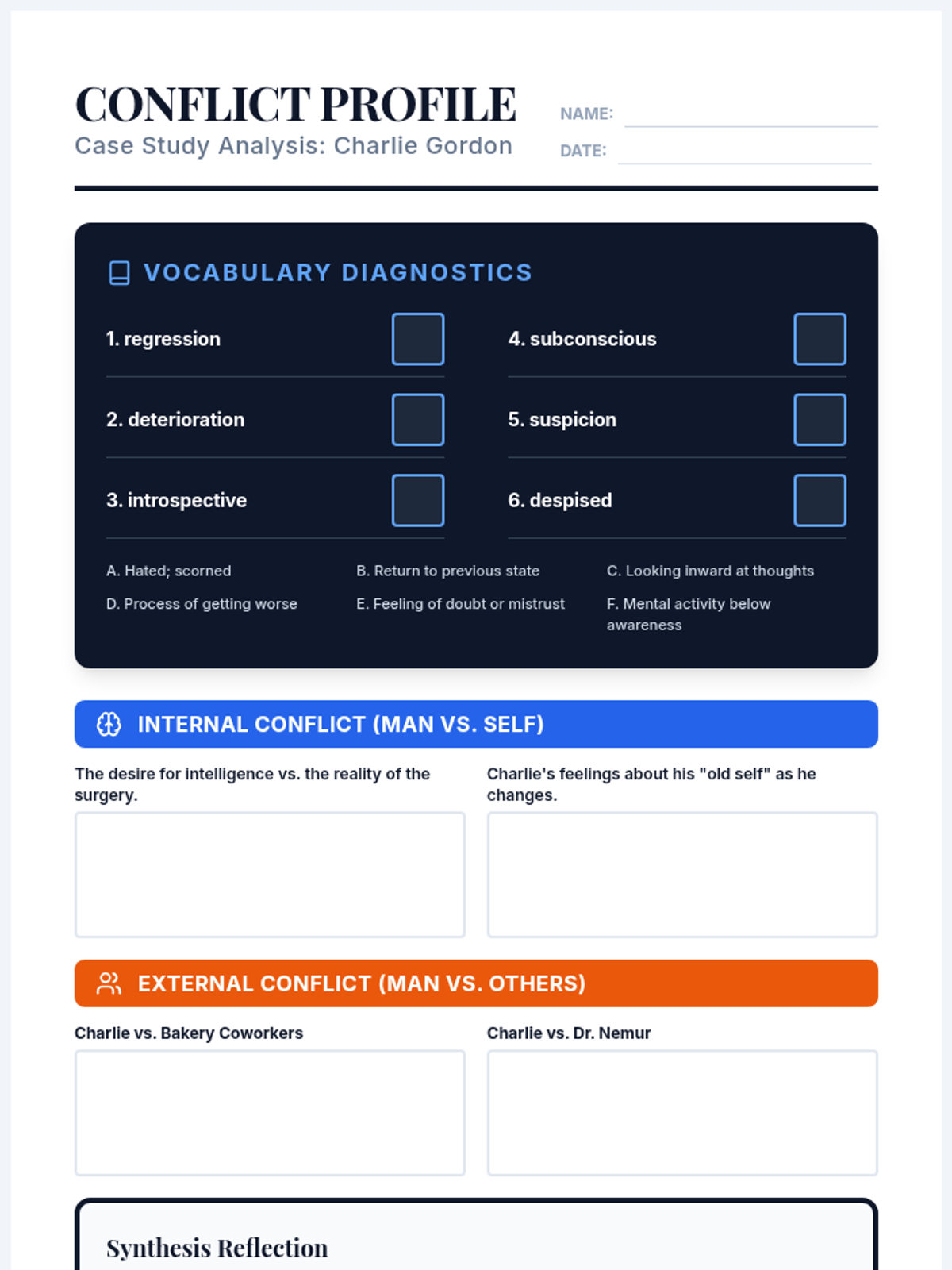
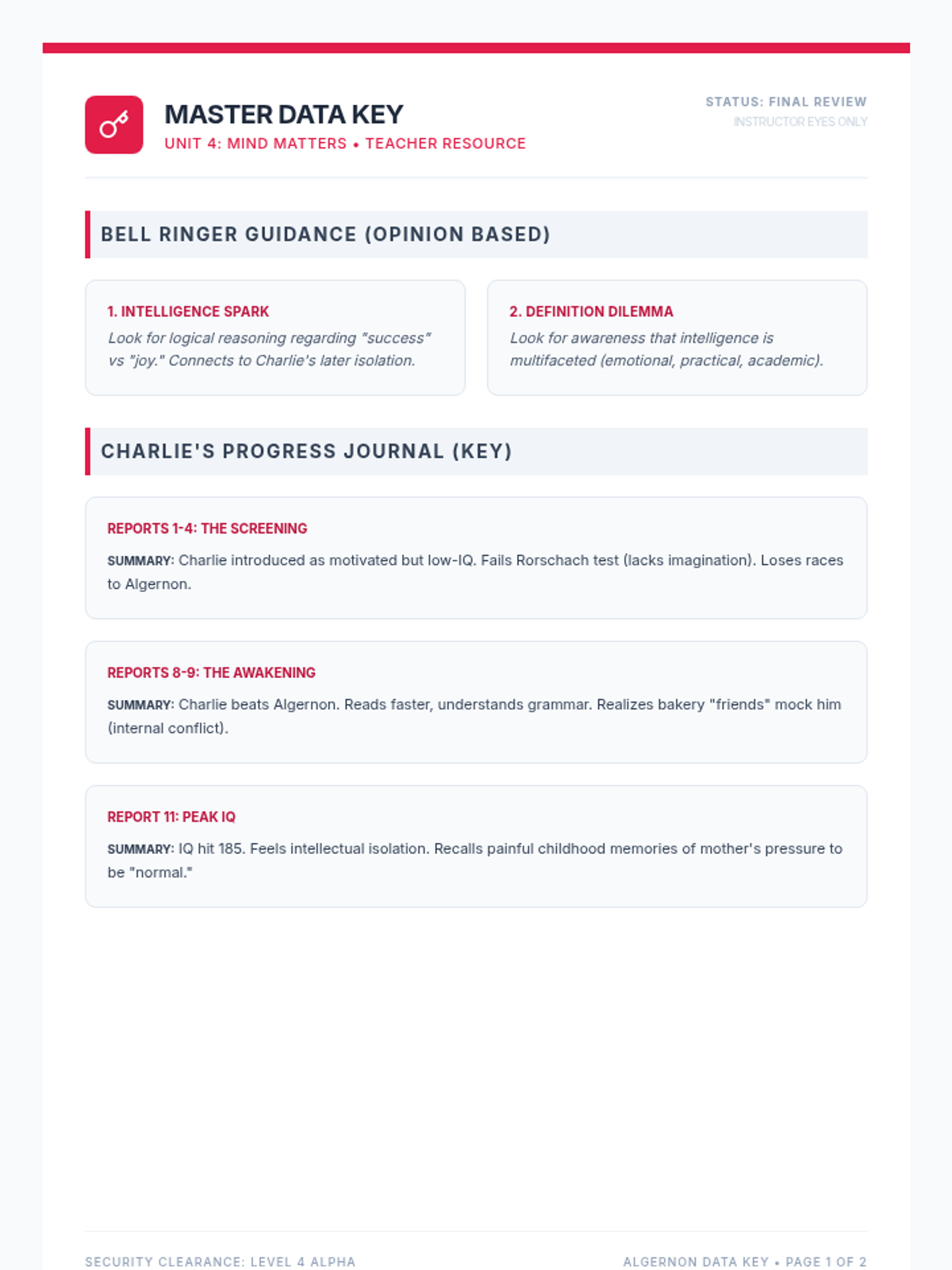
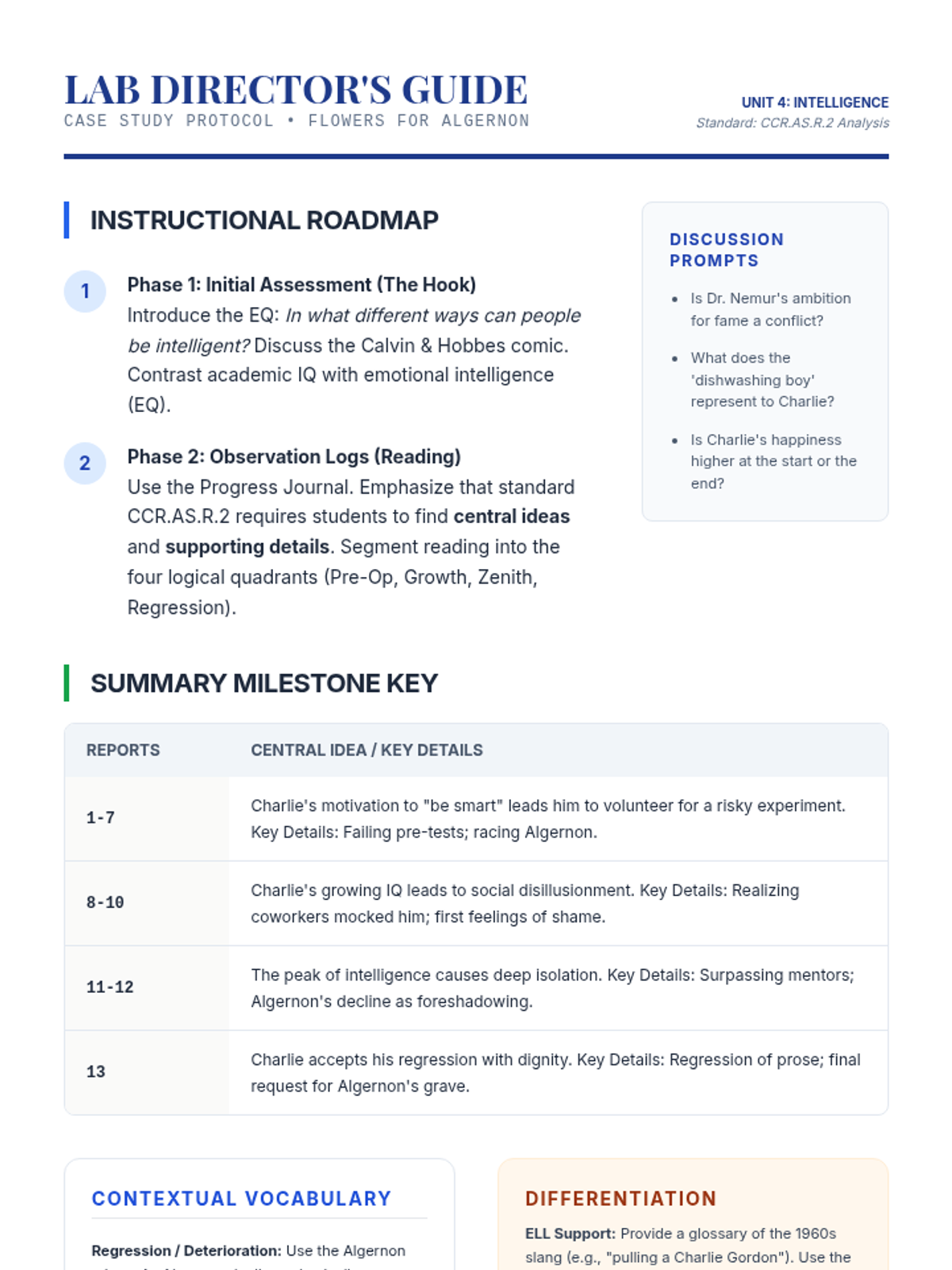
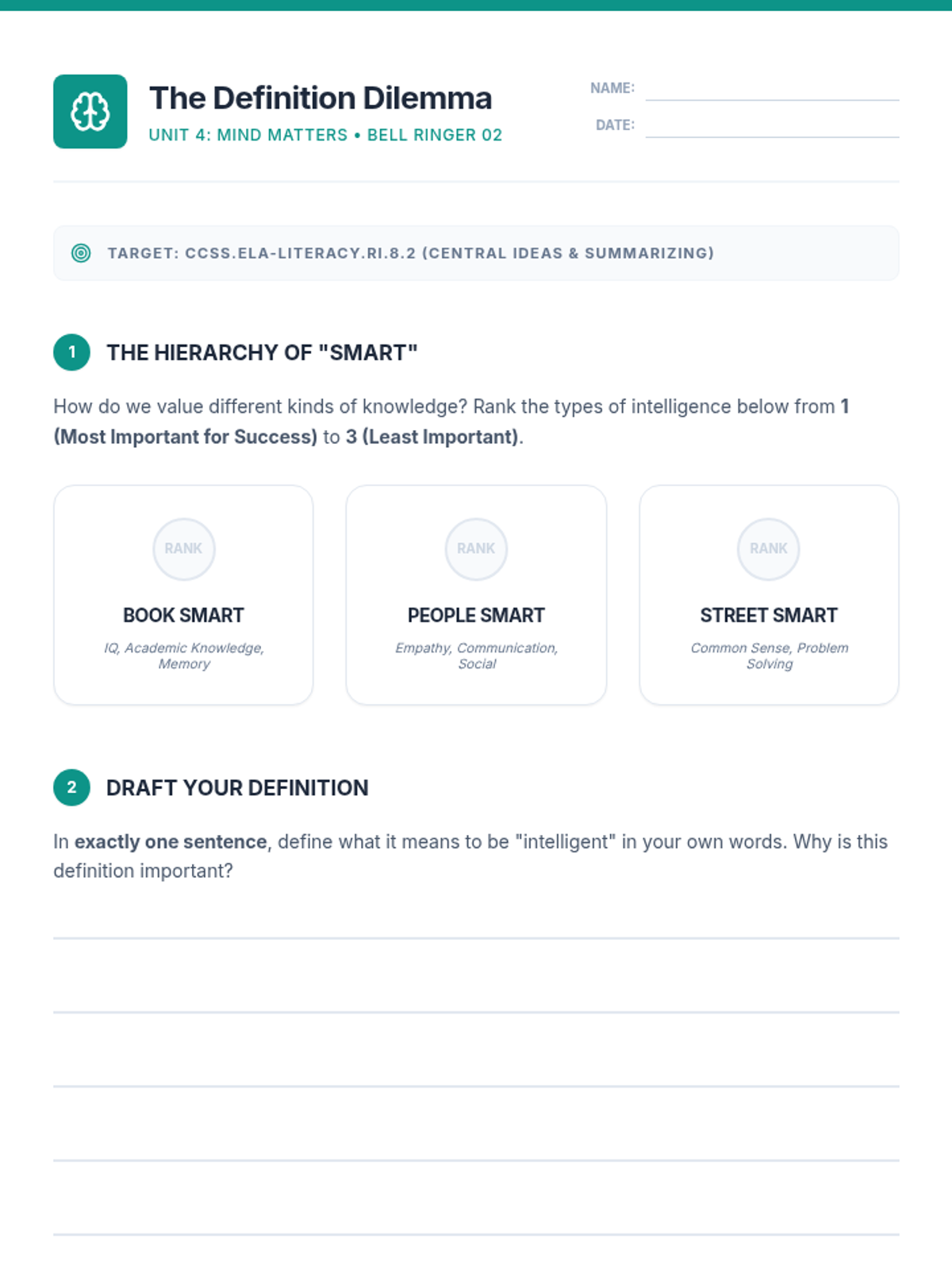
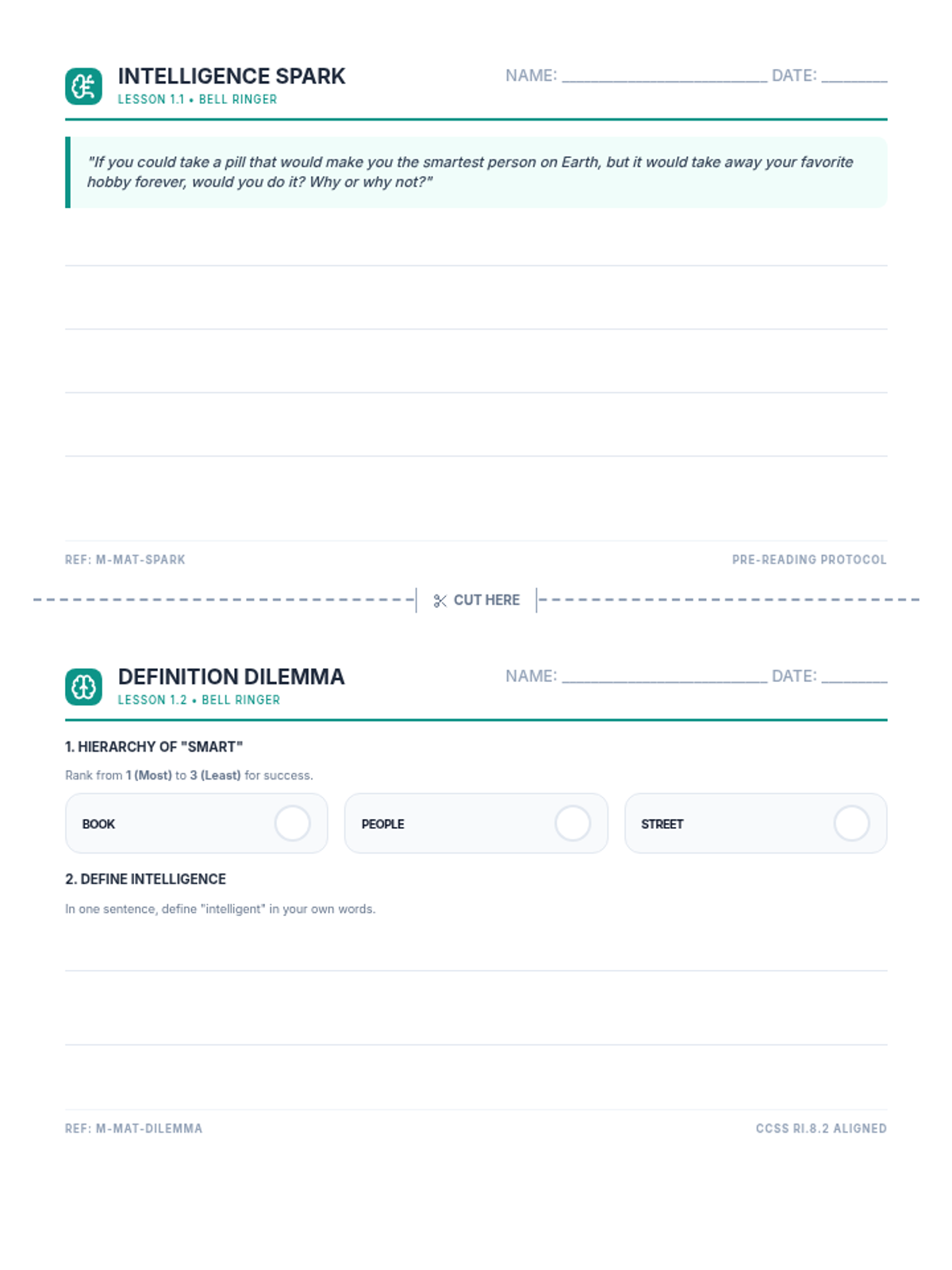
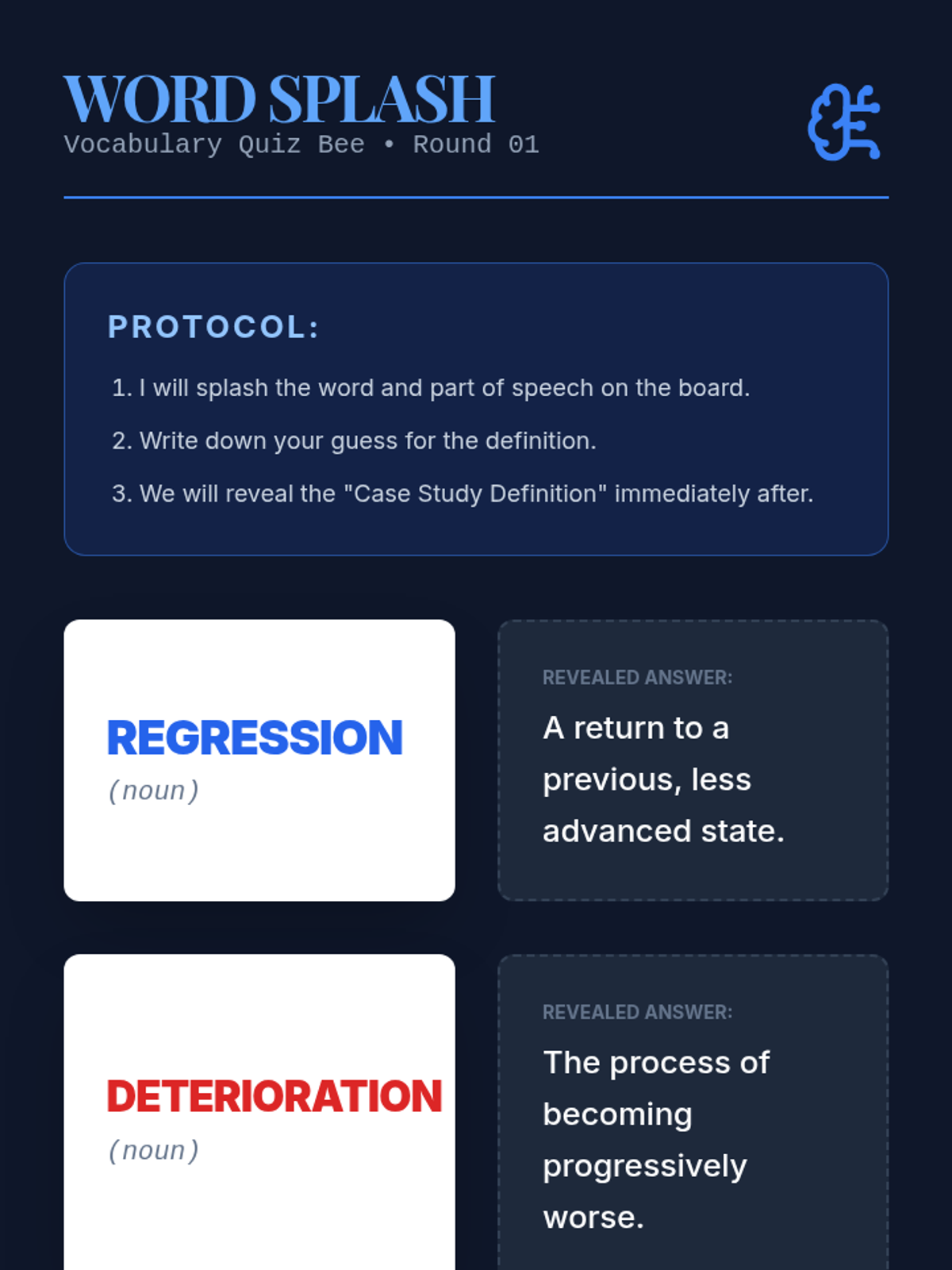
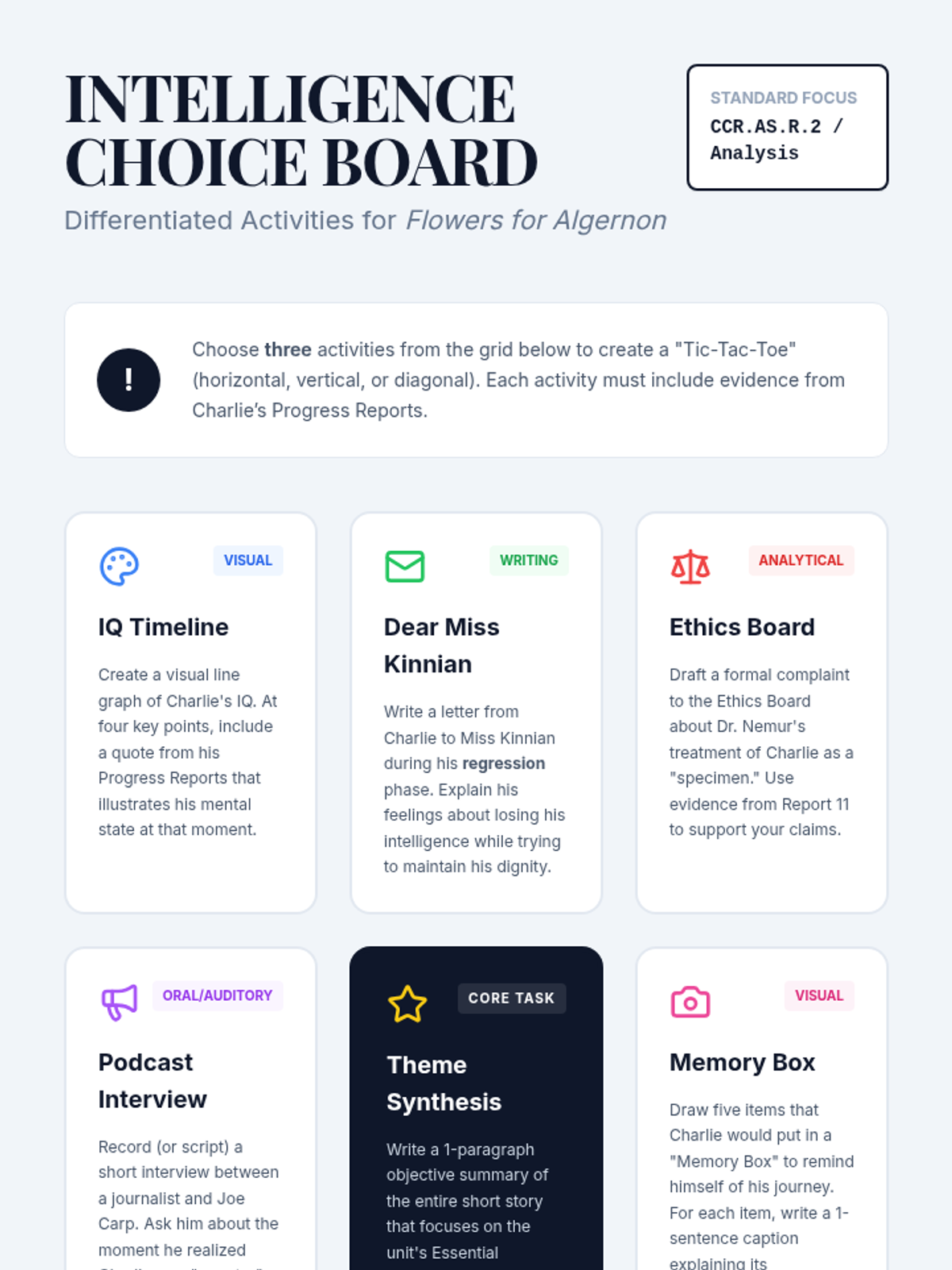
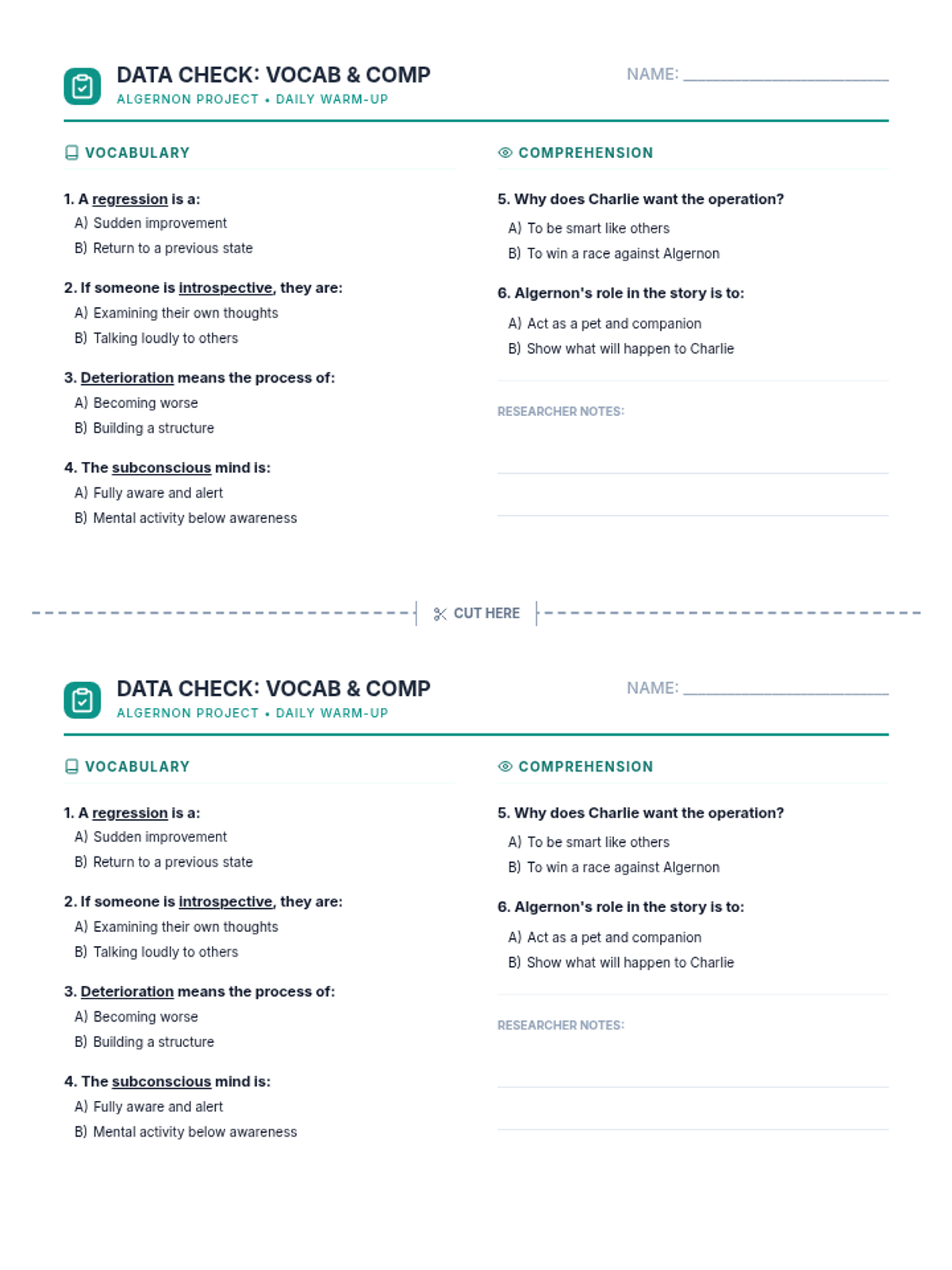
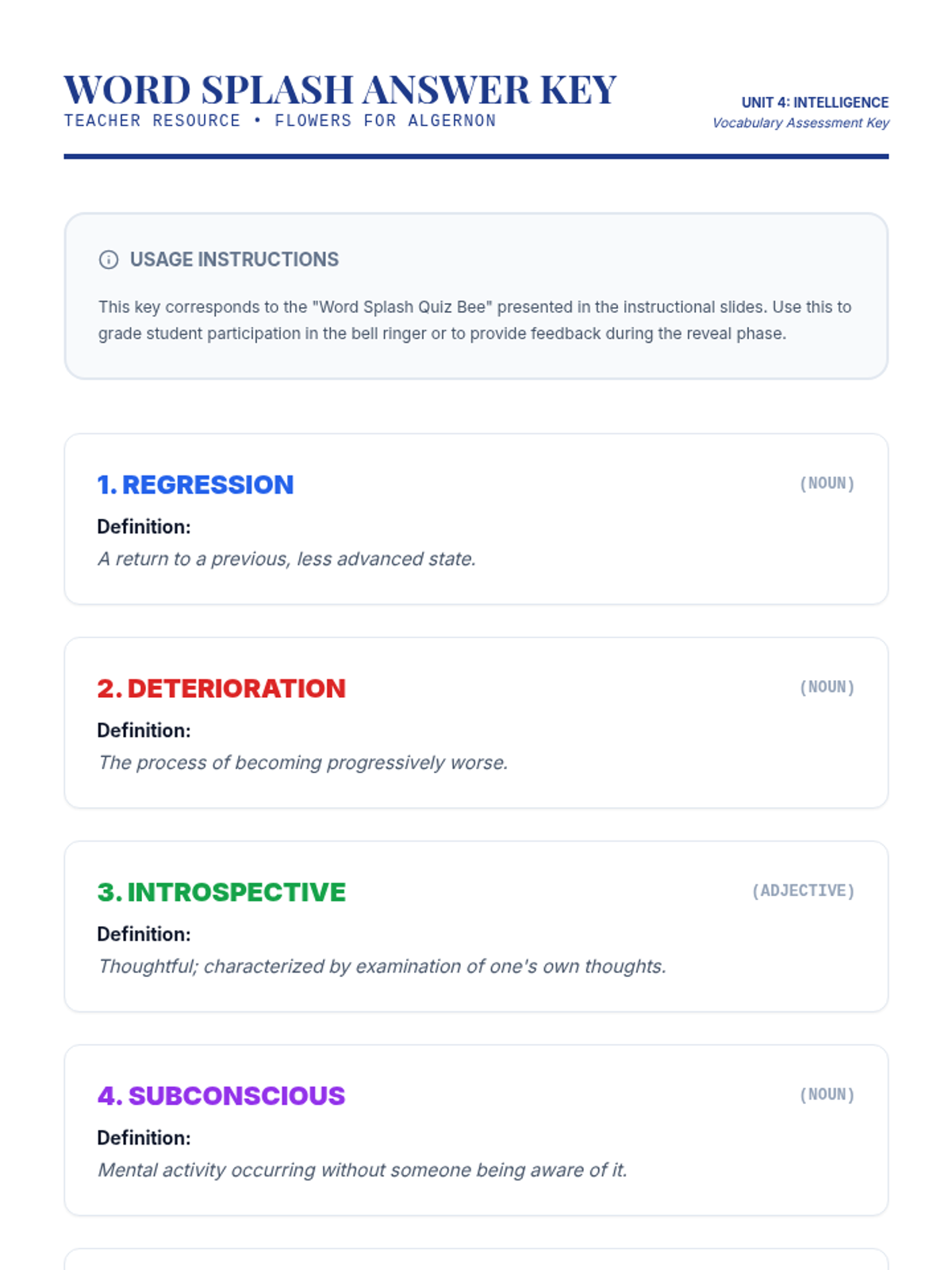
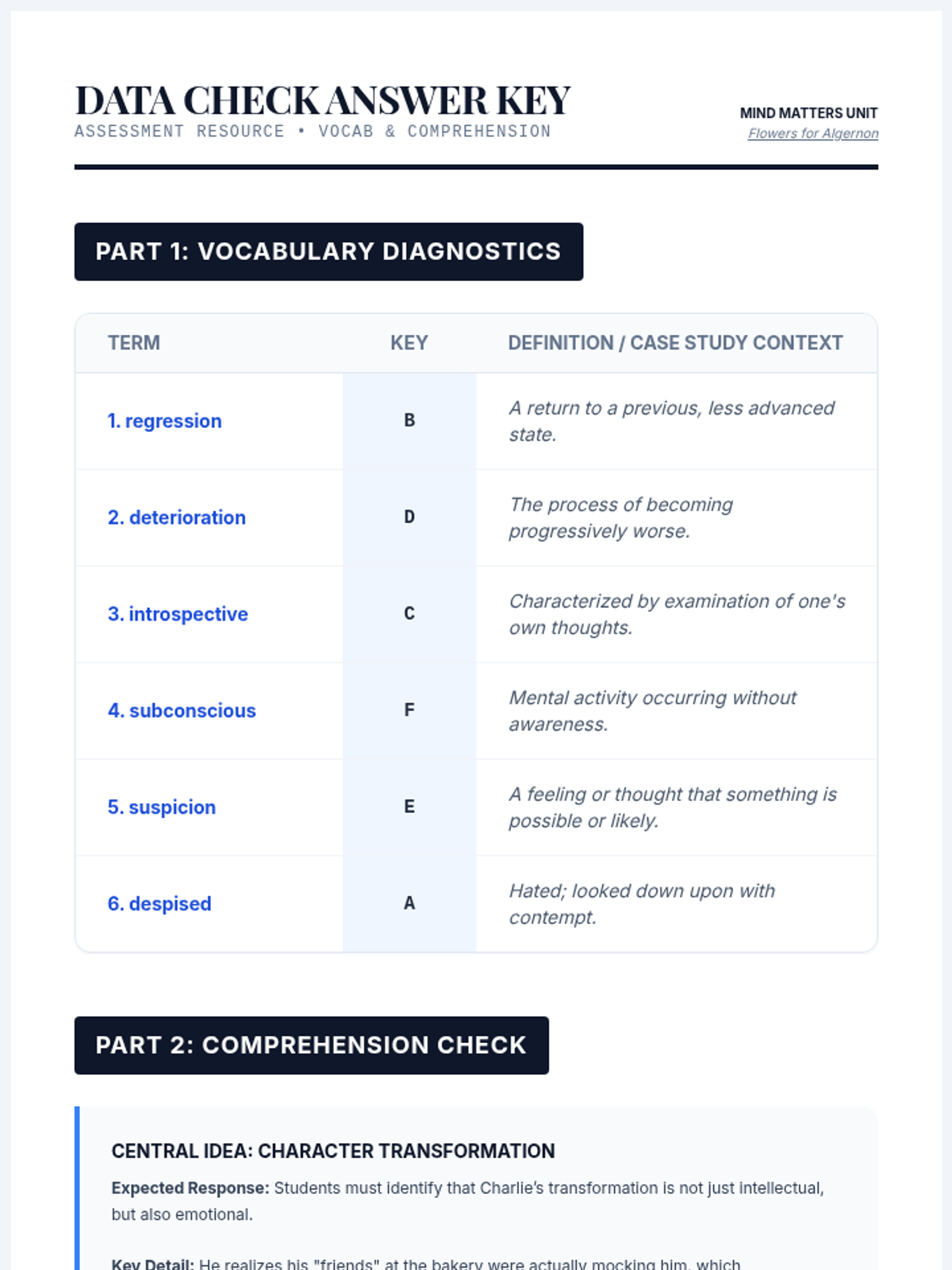
An ELA unit for 8th grade exploring the nature of human intelligence through Daniel Keyes' 'Flowers for Algernon', focusing on internal vs. external conflict, vocabulary development, and thematic analysis.
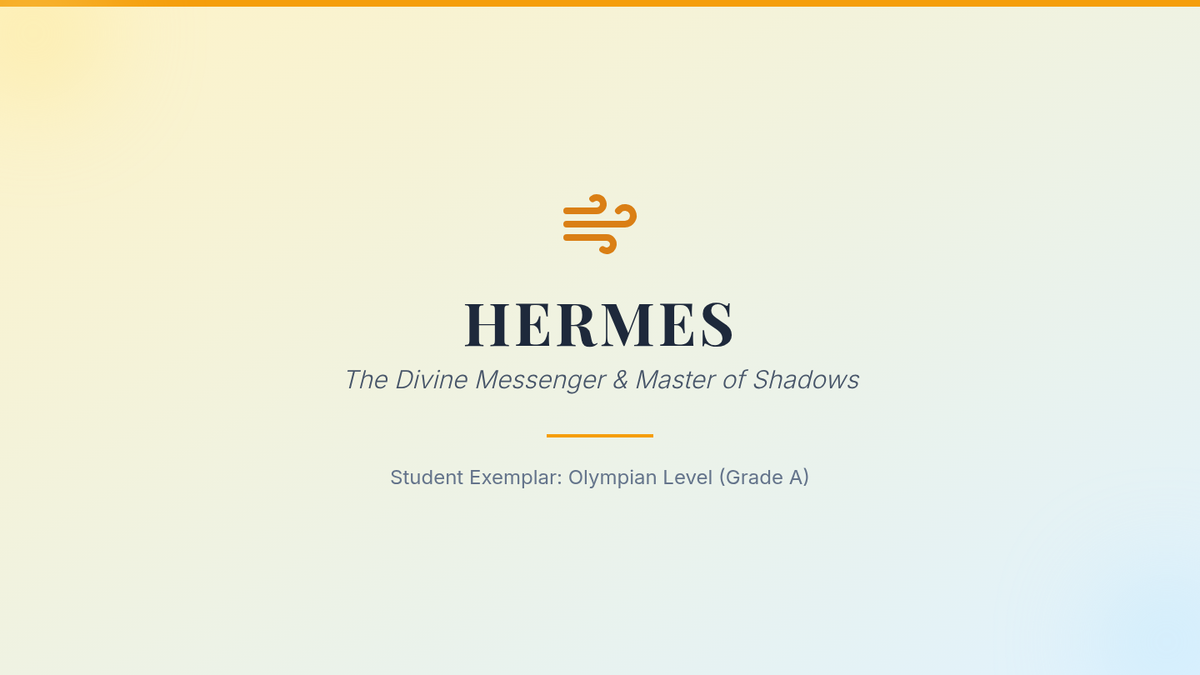
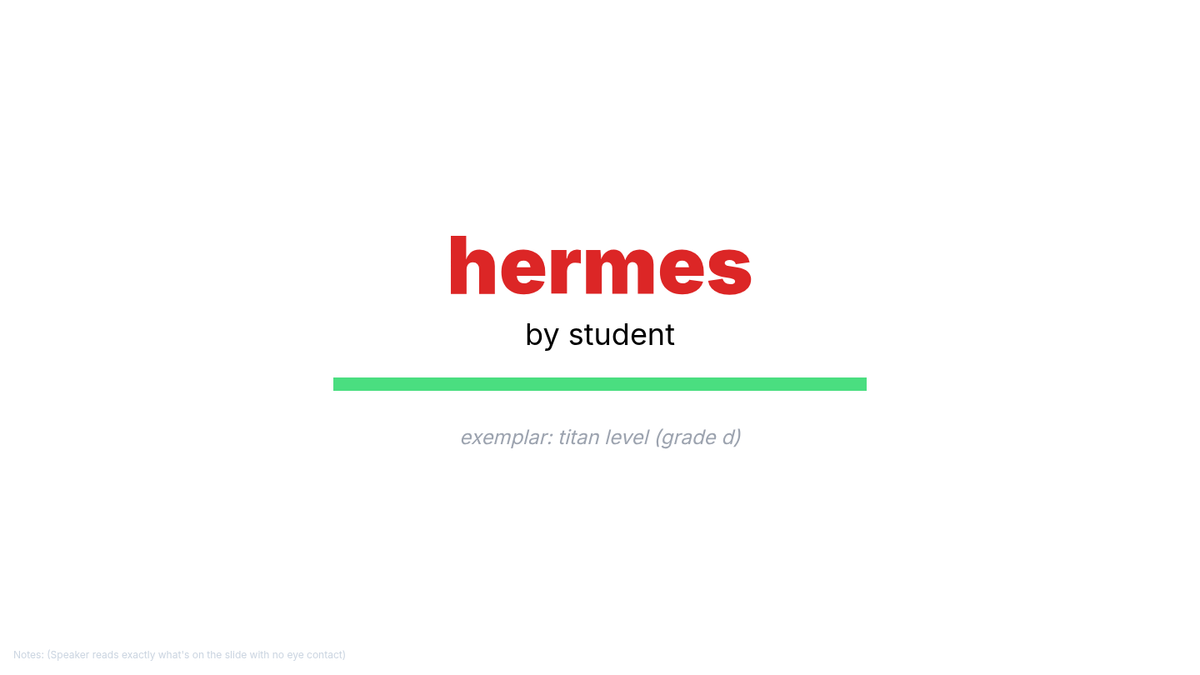
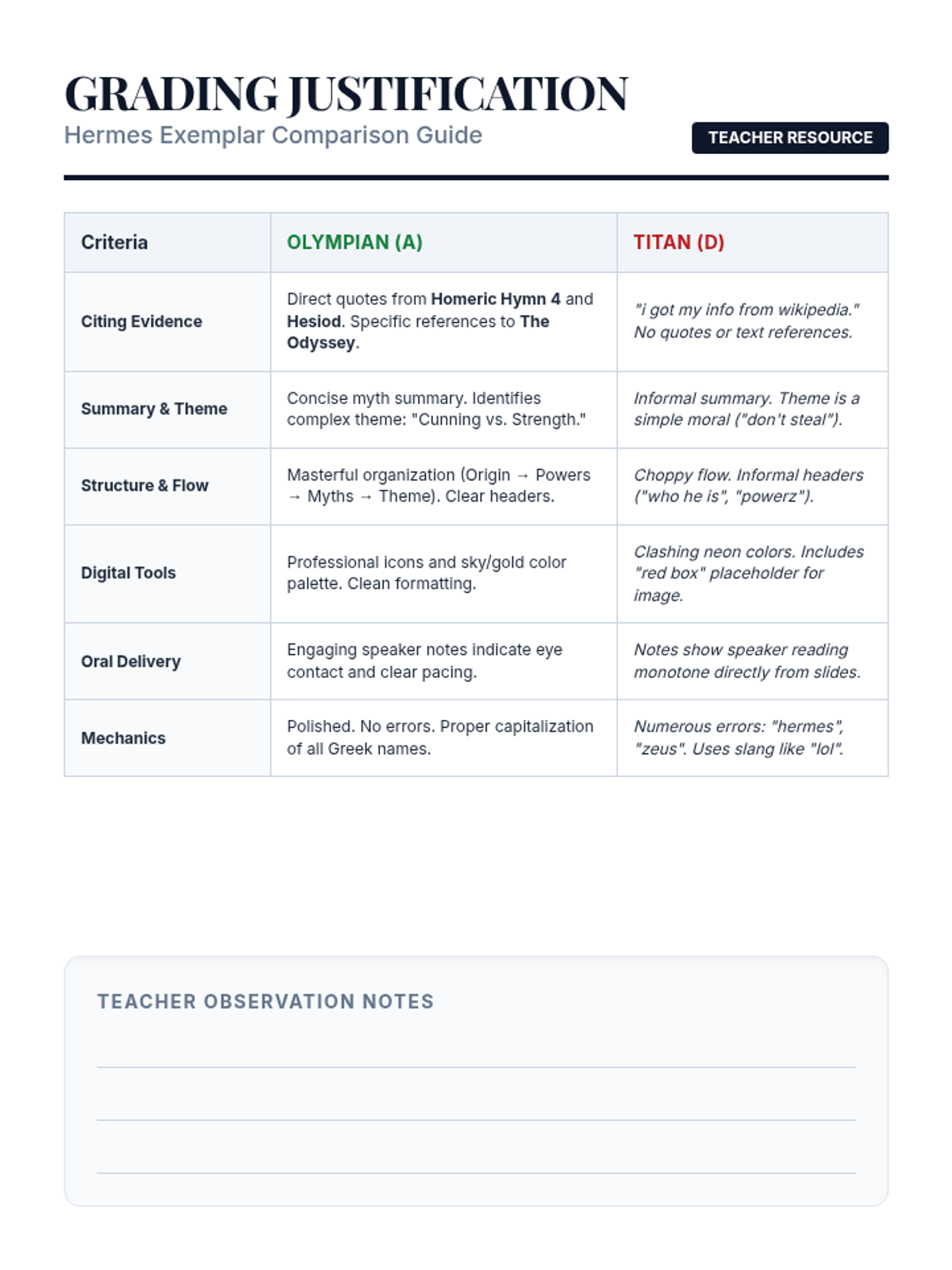
A sequence of exemplar presentations on Hermes designed to demonstrate high-achieving (A) and low-achieving (D) student work based on specific CCSS-aligned rubric criteria.
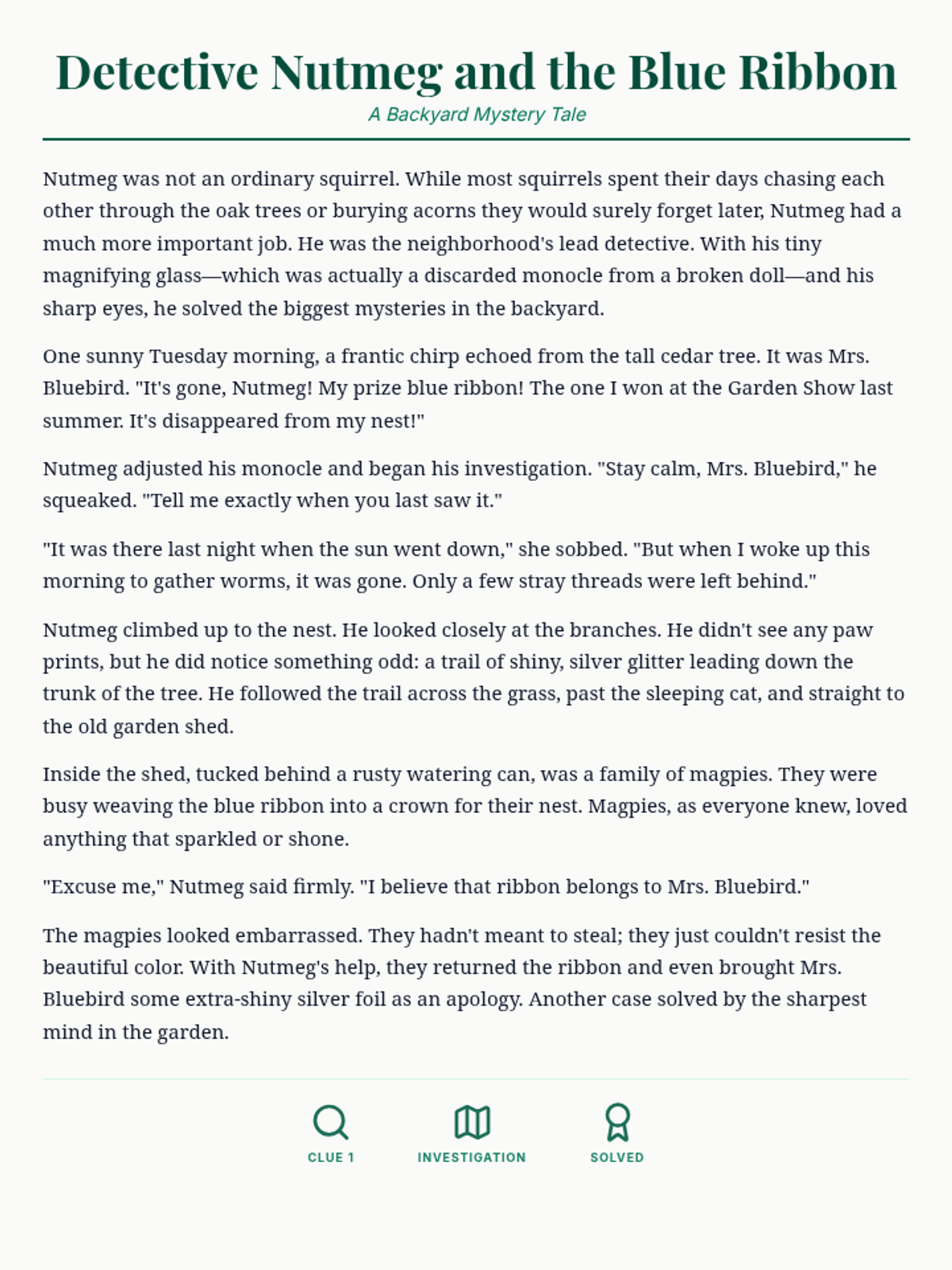
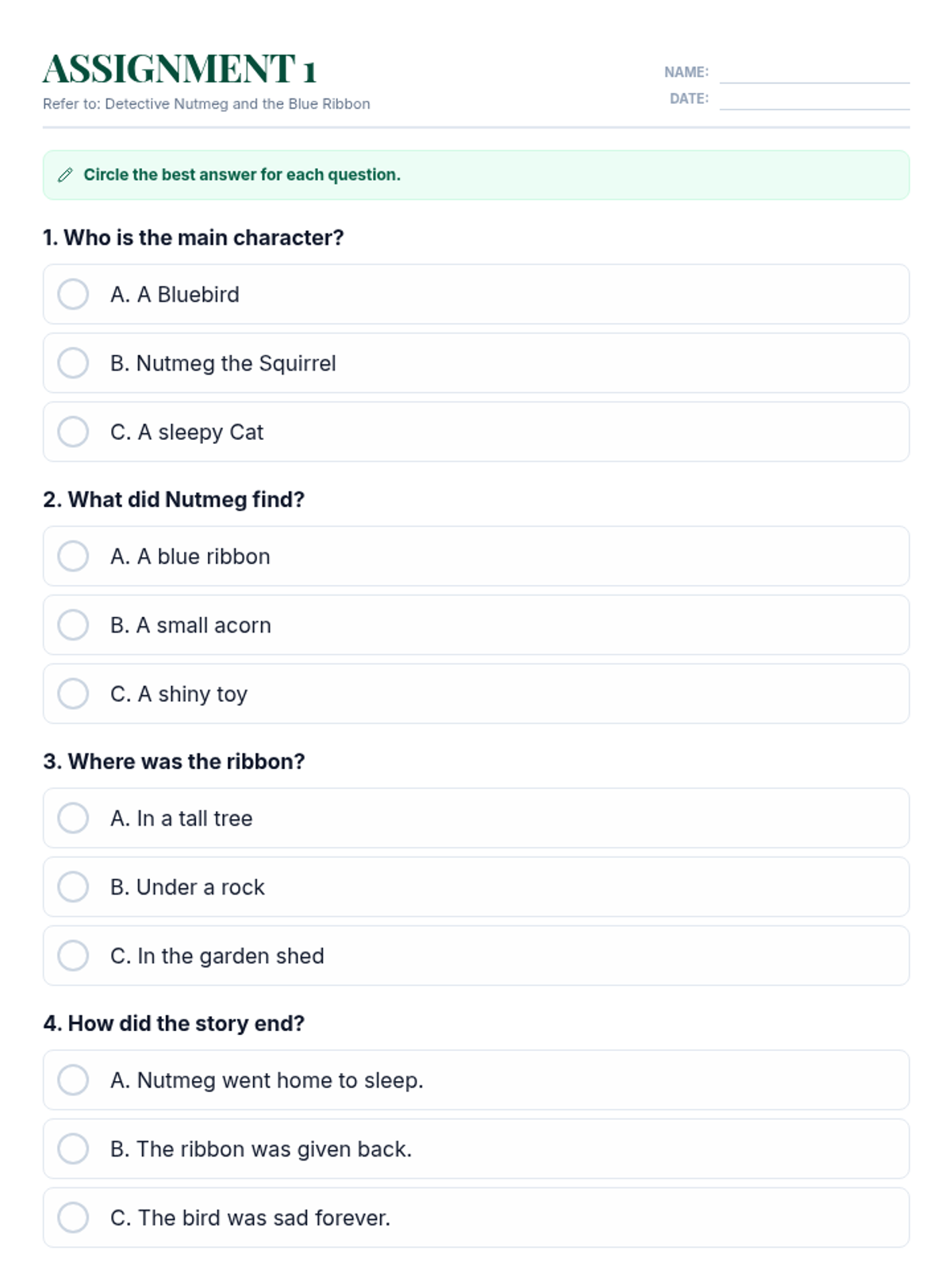
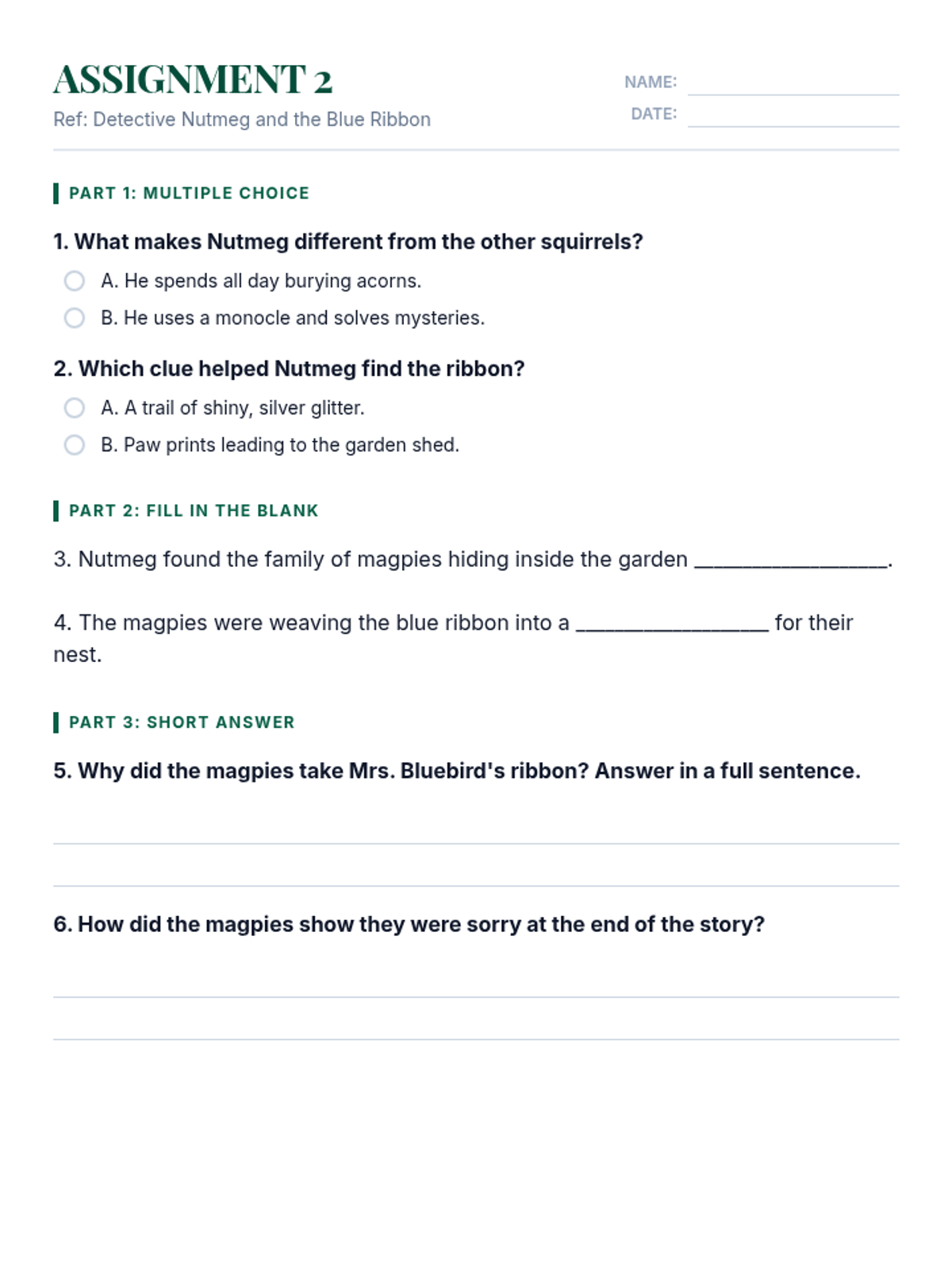
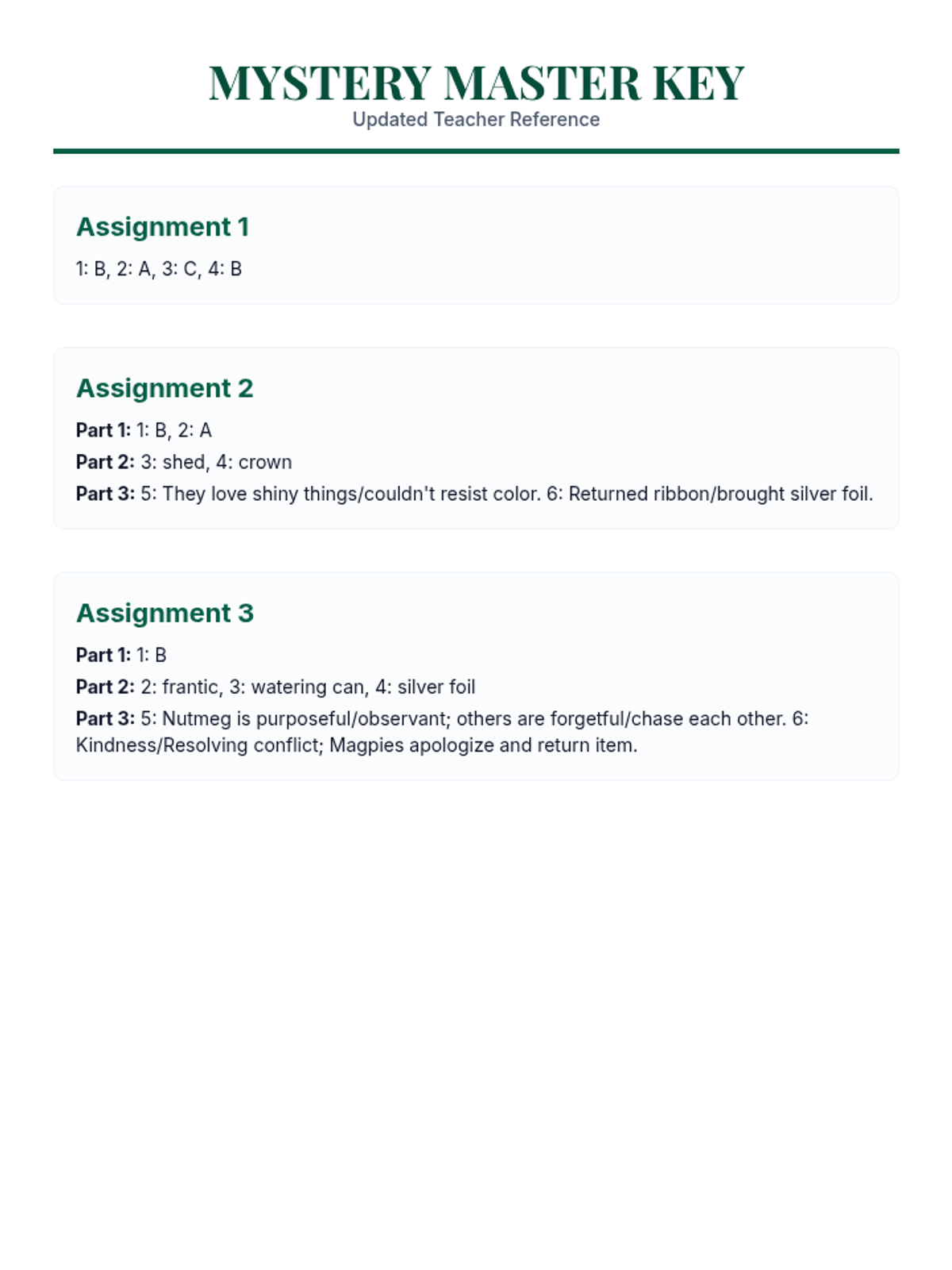
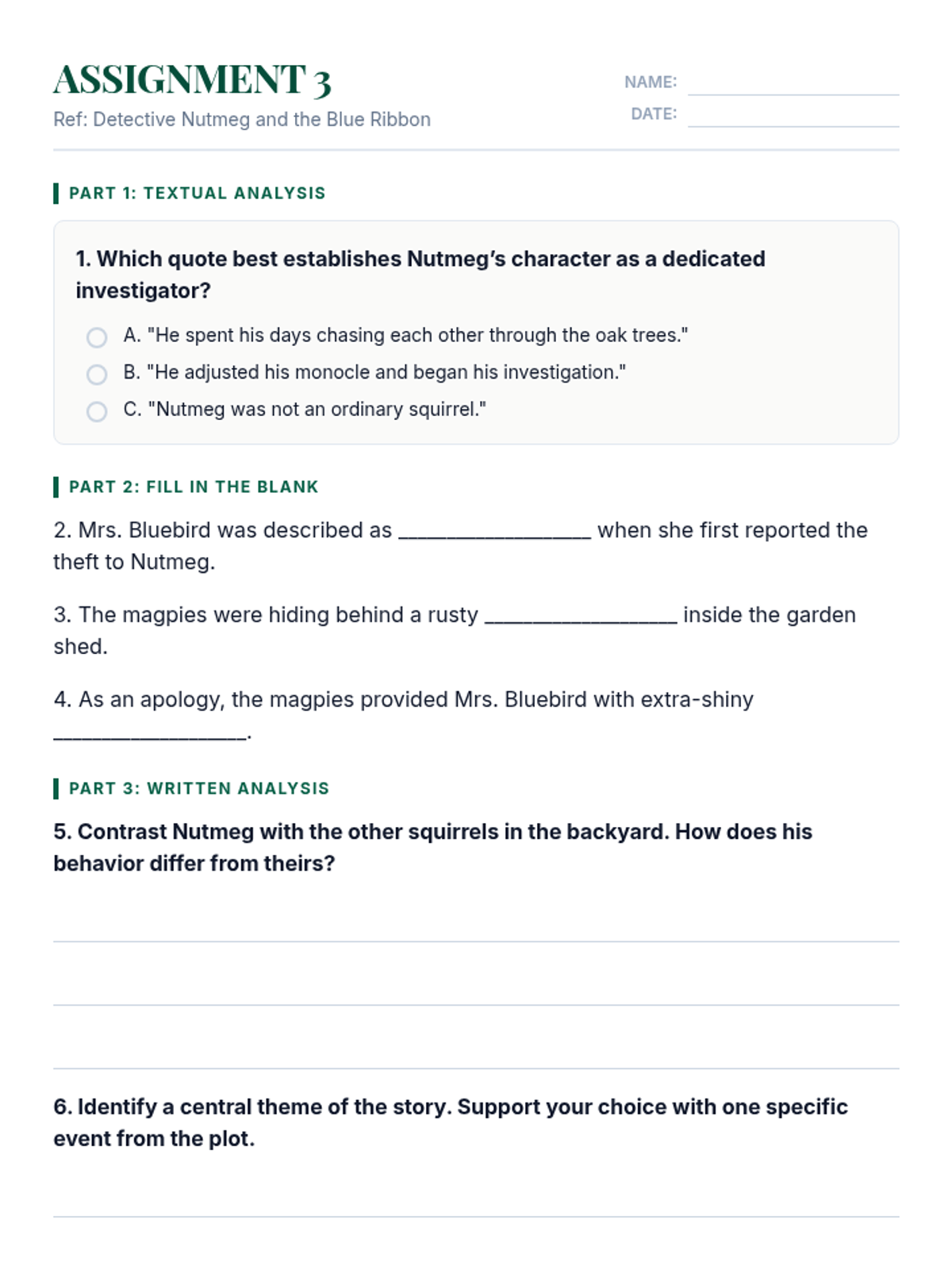
A series of lessons focused on developing reading comprehension through mystery stories, with tiered assignments for different grade levels.
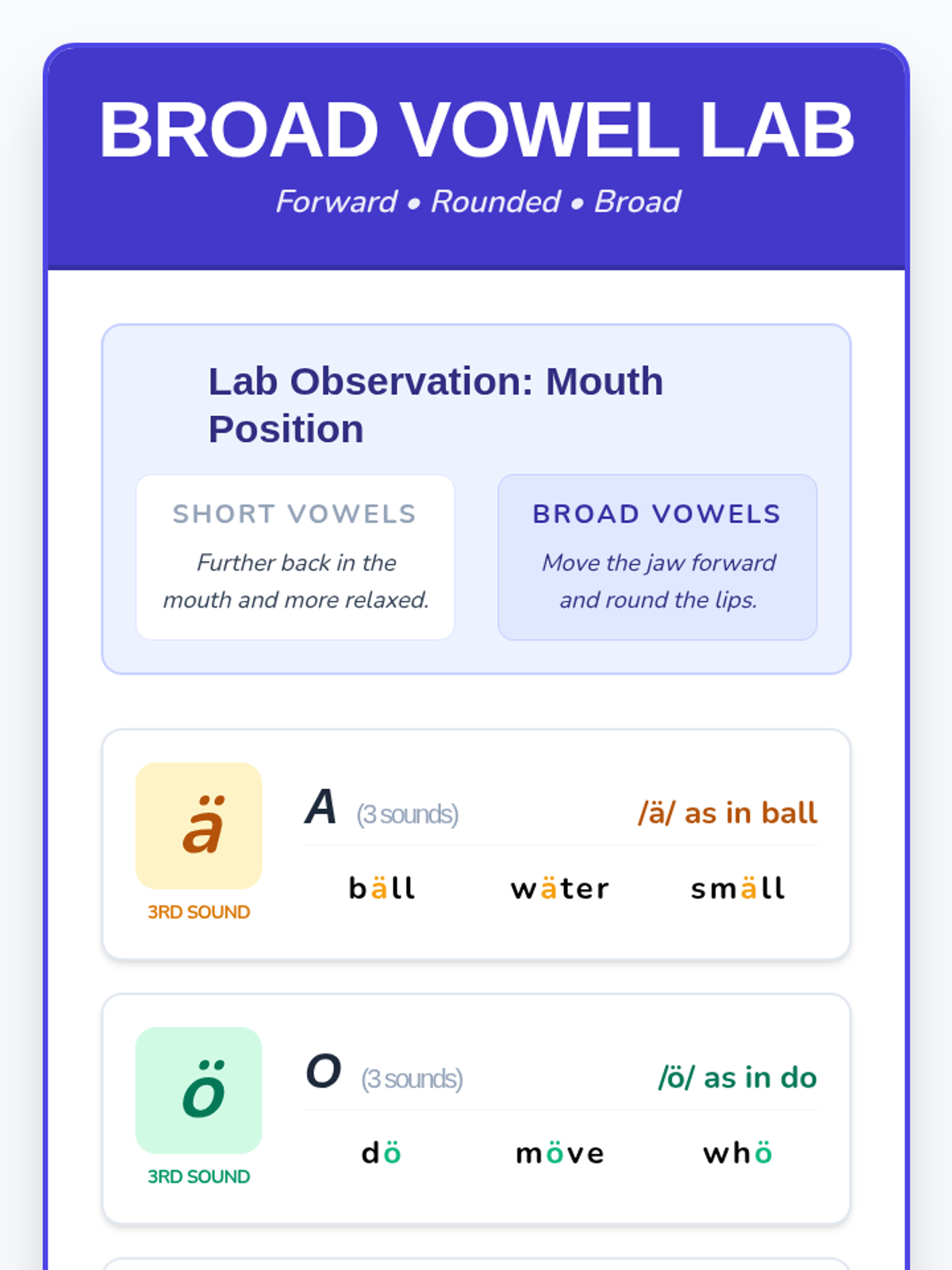
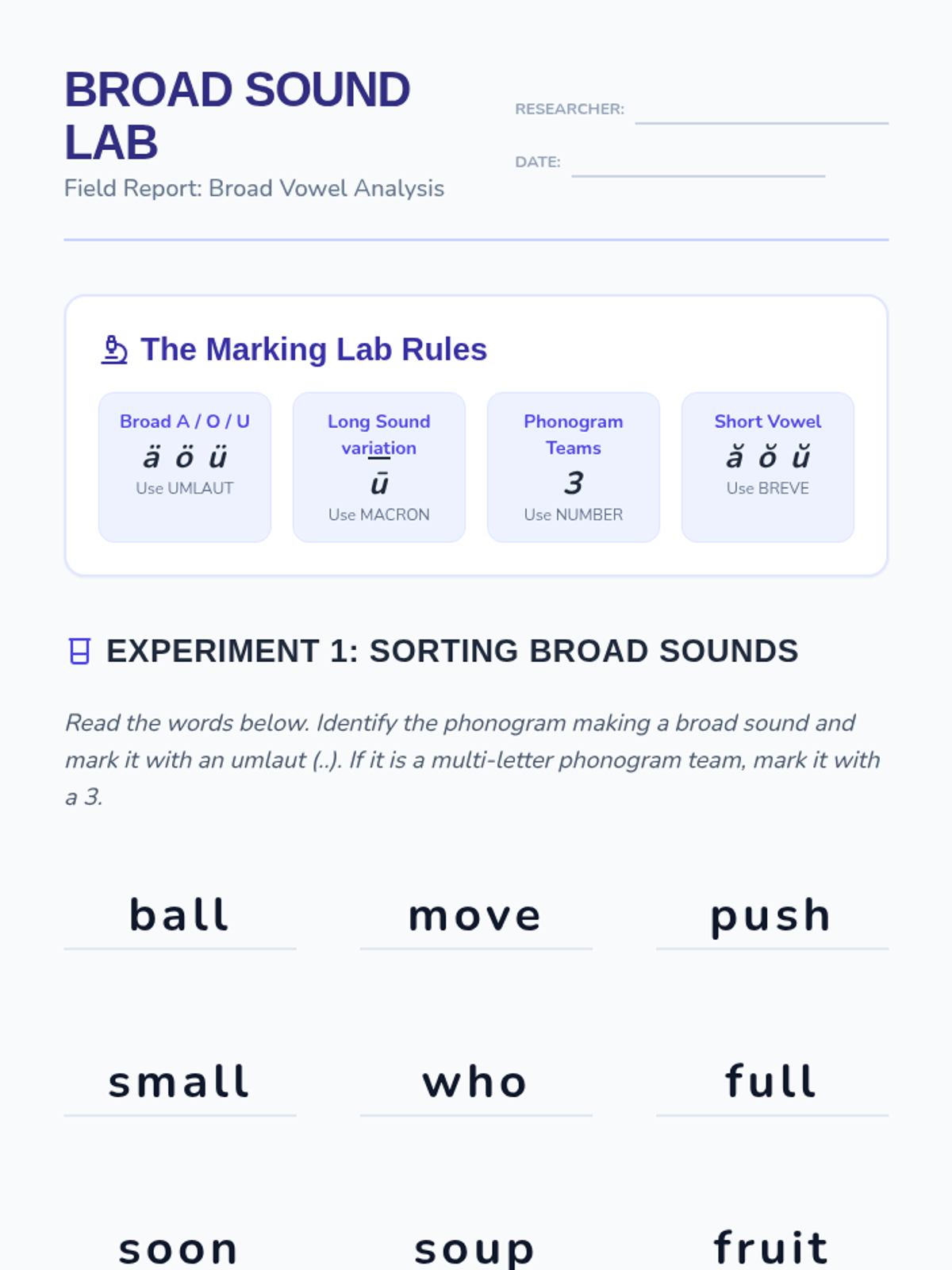
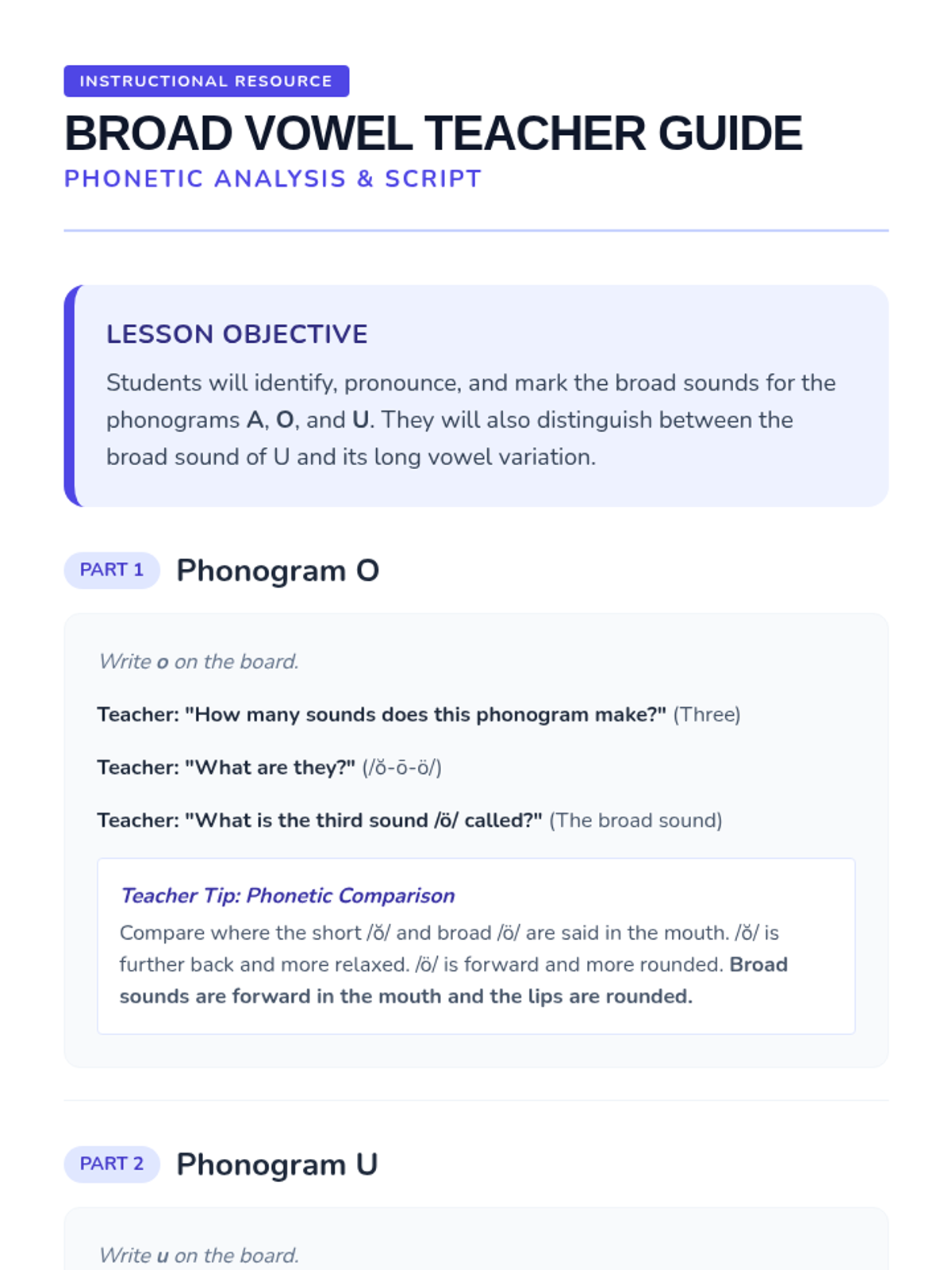
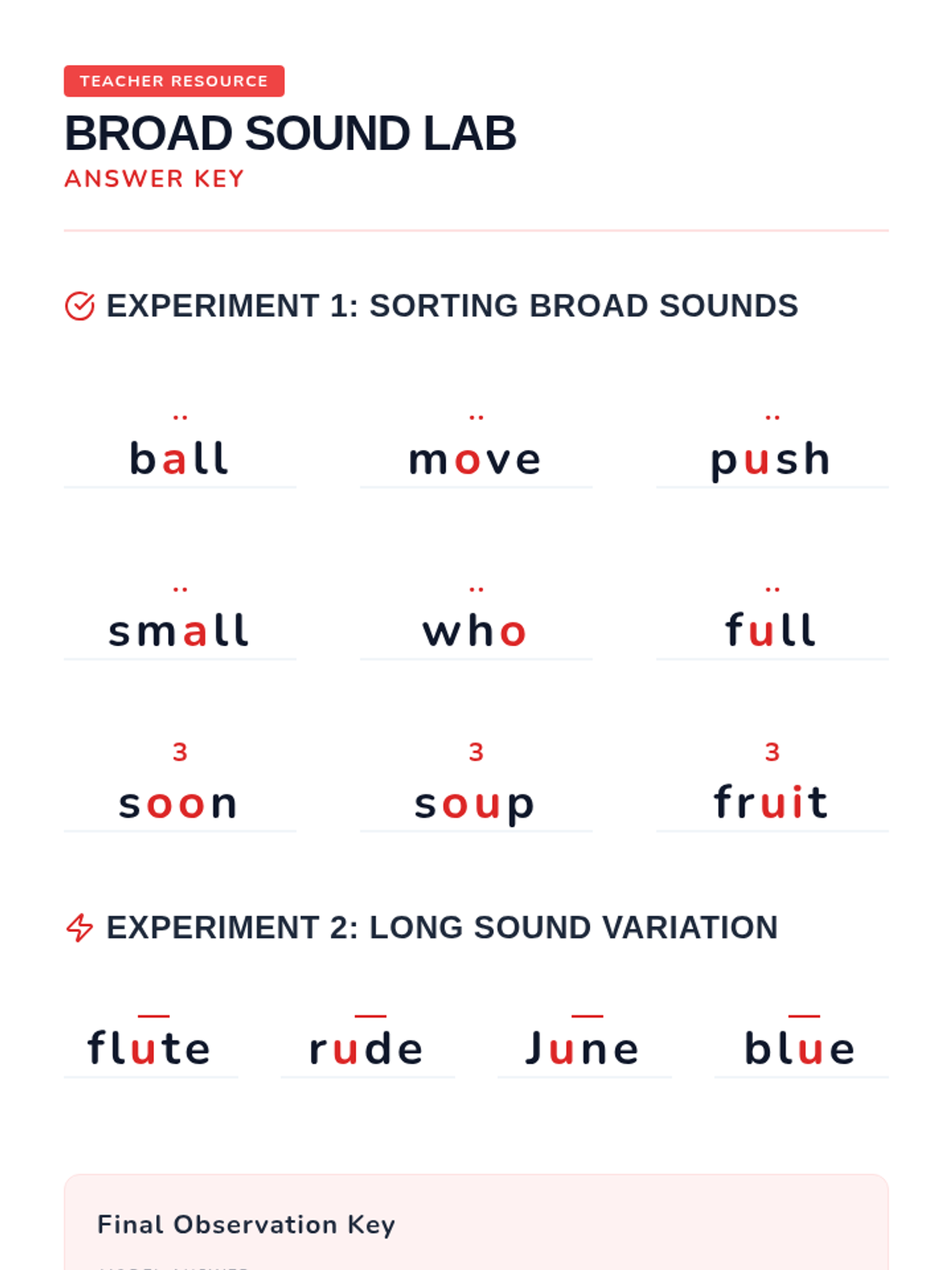
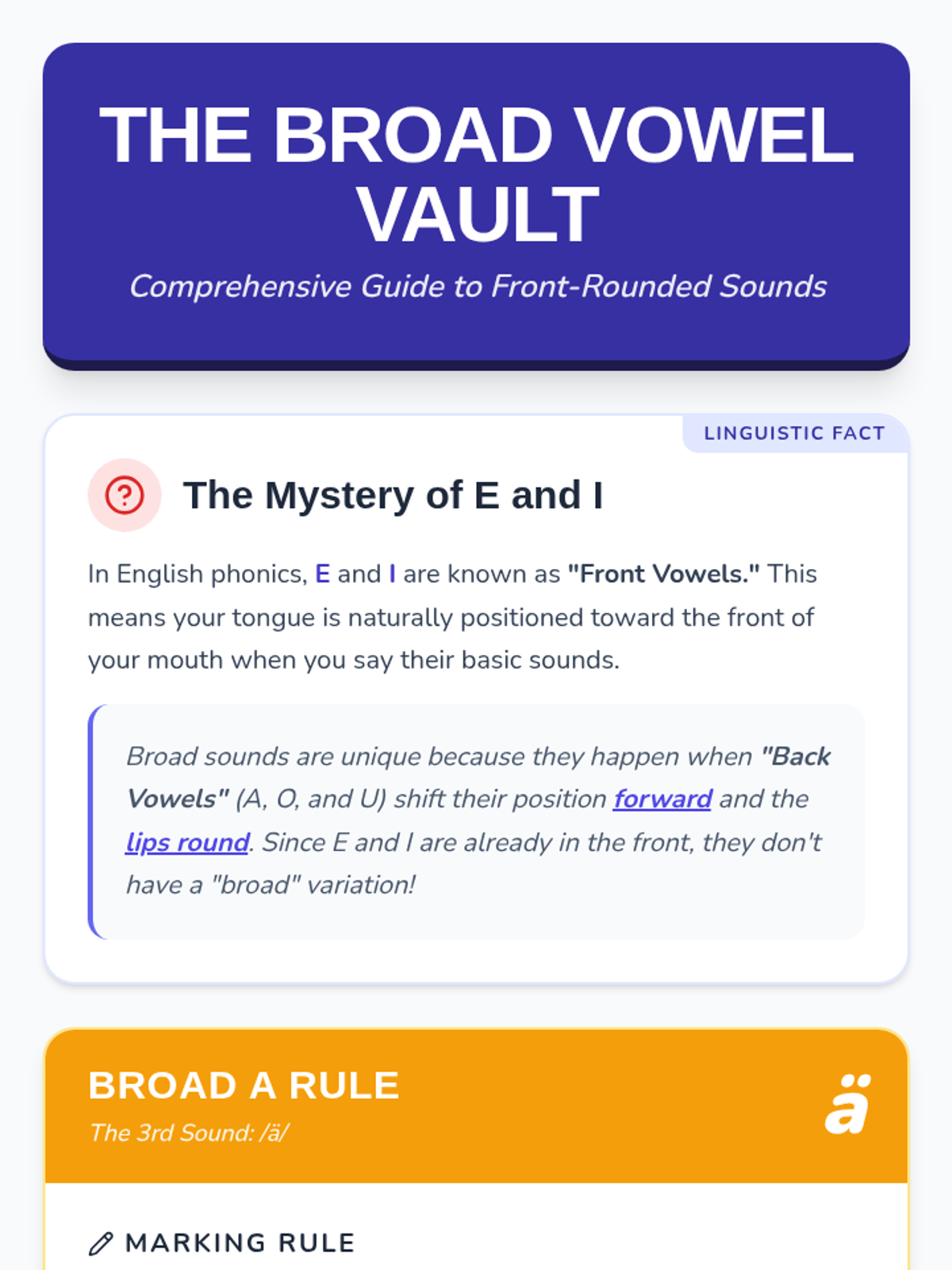
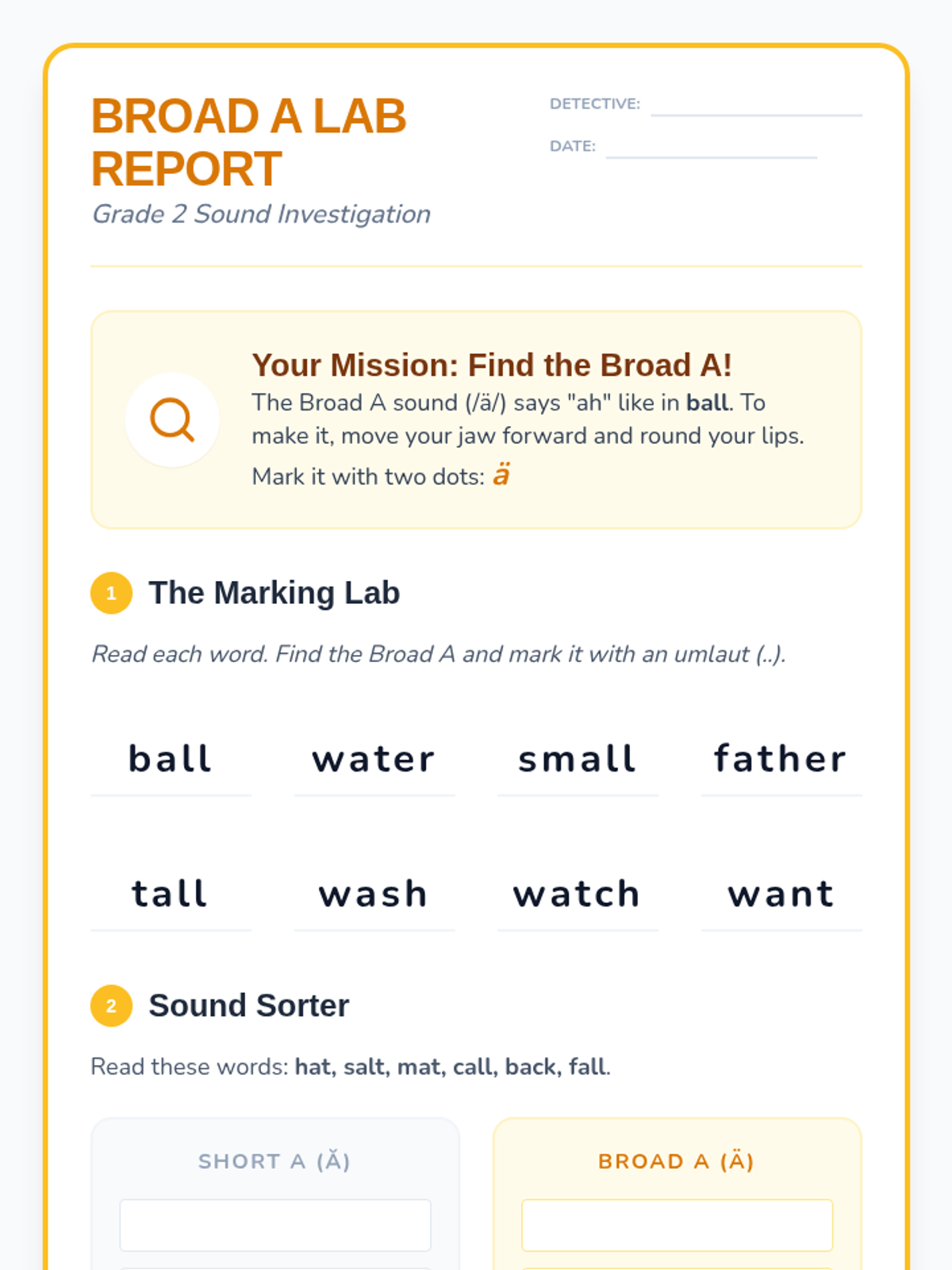
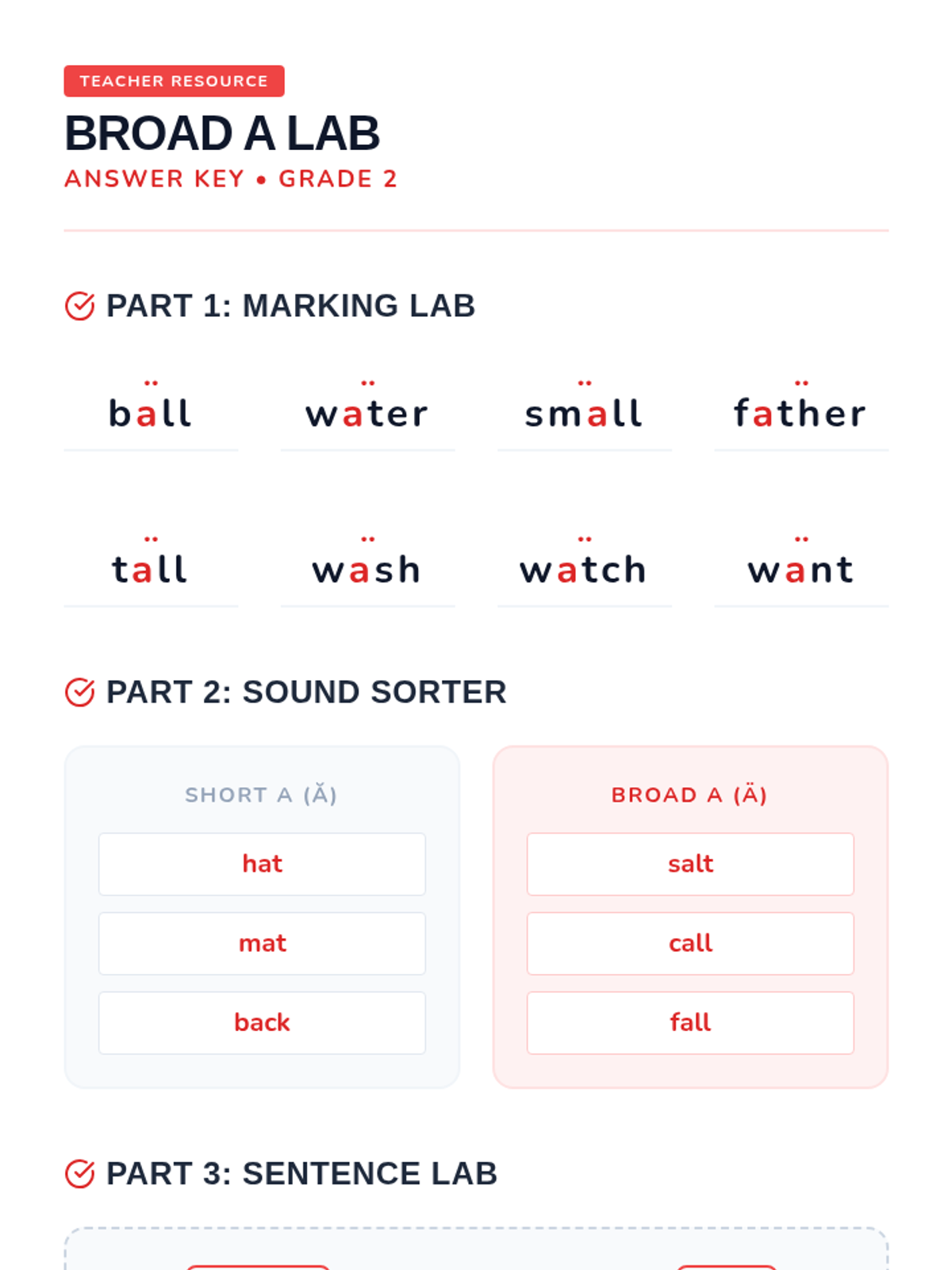
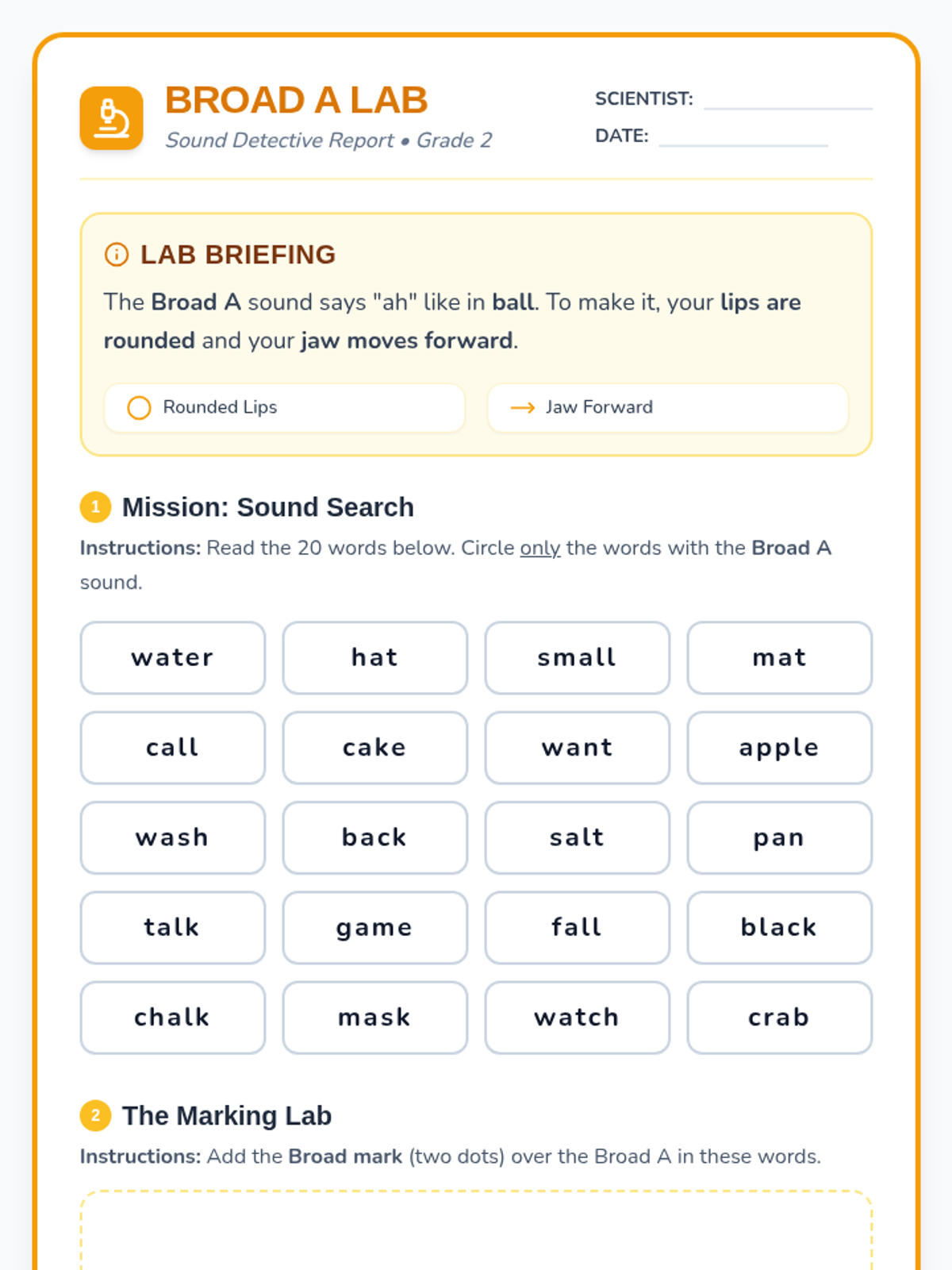
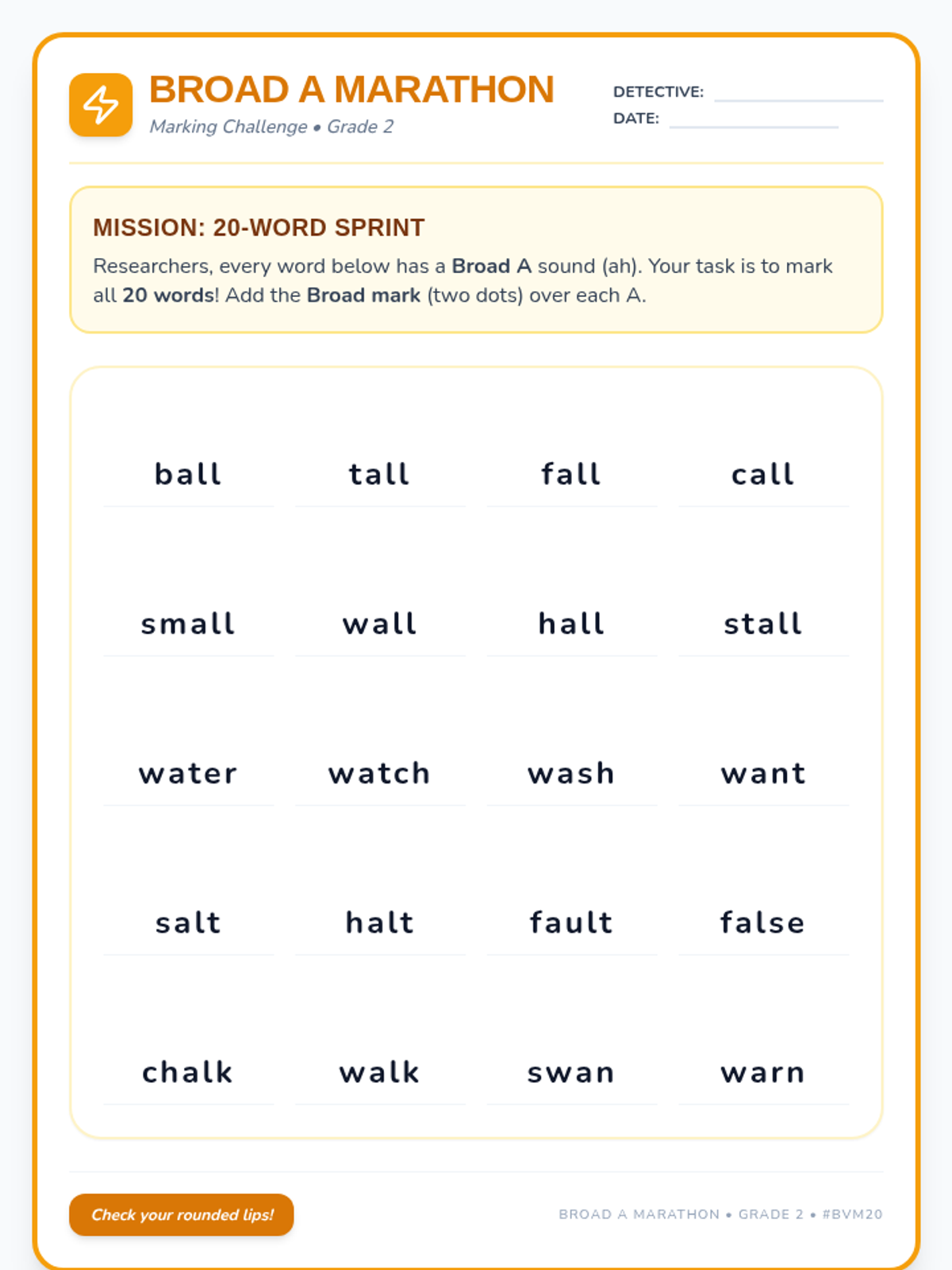
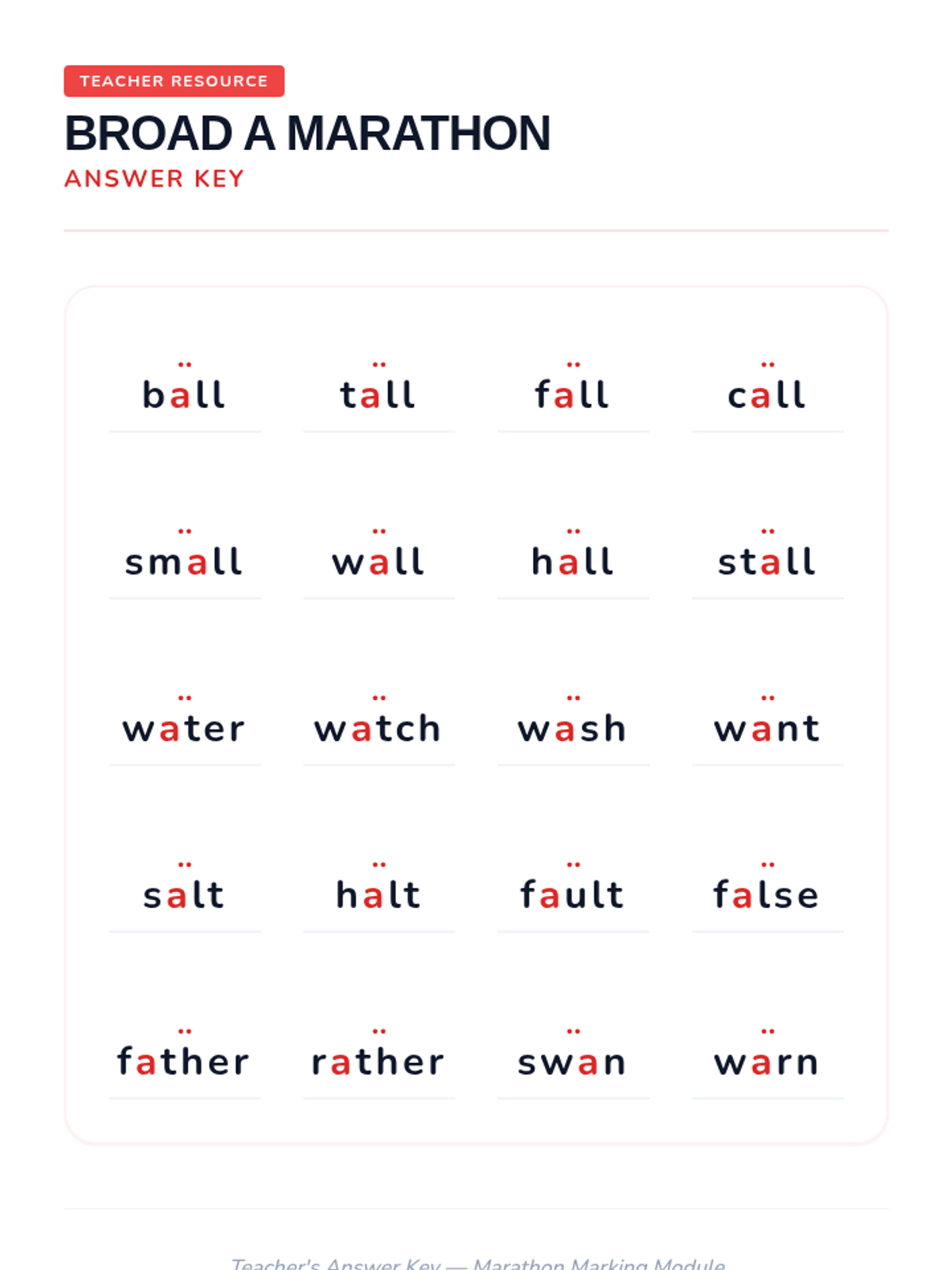
A comprehensive sequence on language mechanics, from phonetic marking of complex vowel sounds to the morphological analysis of Latin roots and affixes. Students develop deep decoding and encoding skills by investigating the building blocks of words.
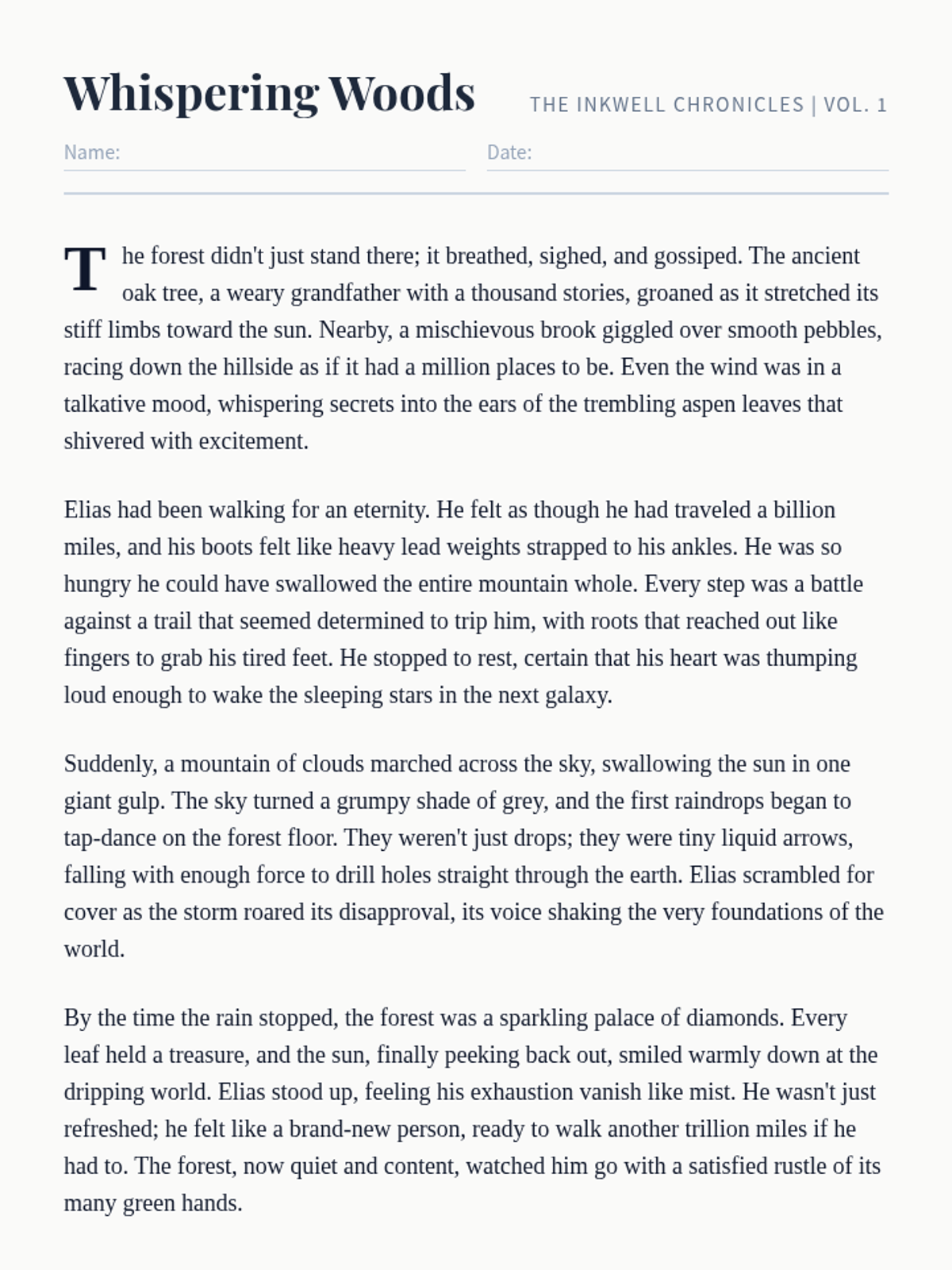
A collection of reading passages and analysis worksheets focusing on pairs of figurative language, designed to help students identify and interpret literary devices through engaging narratives.
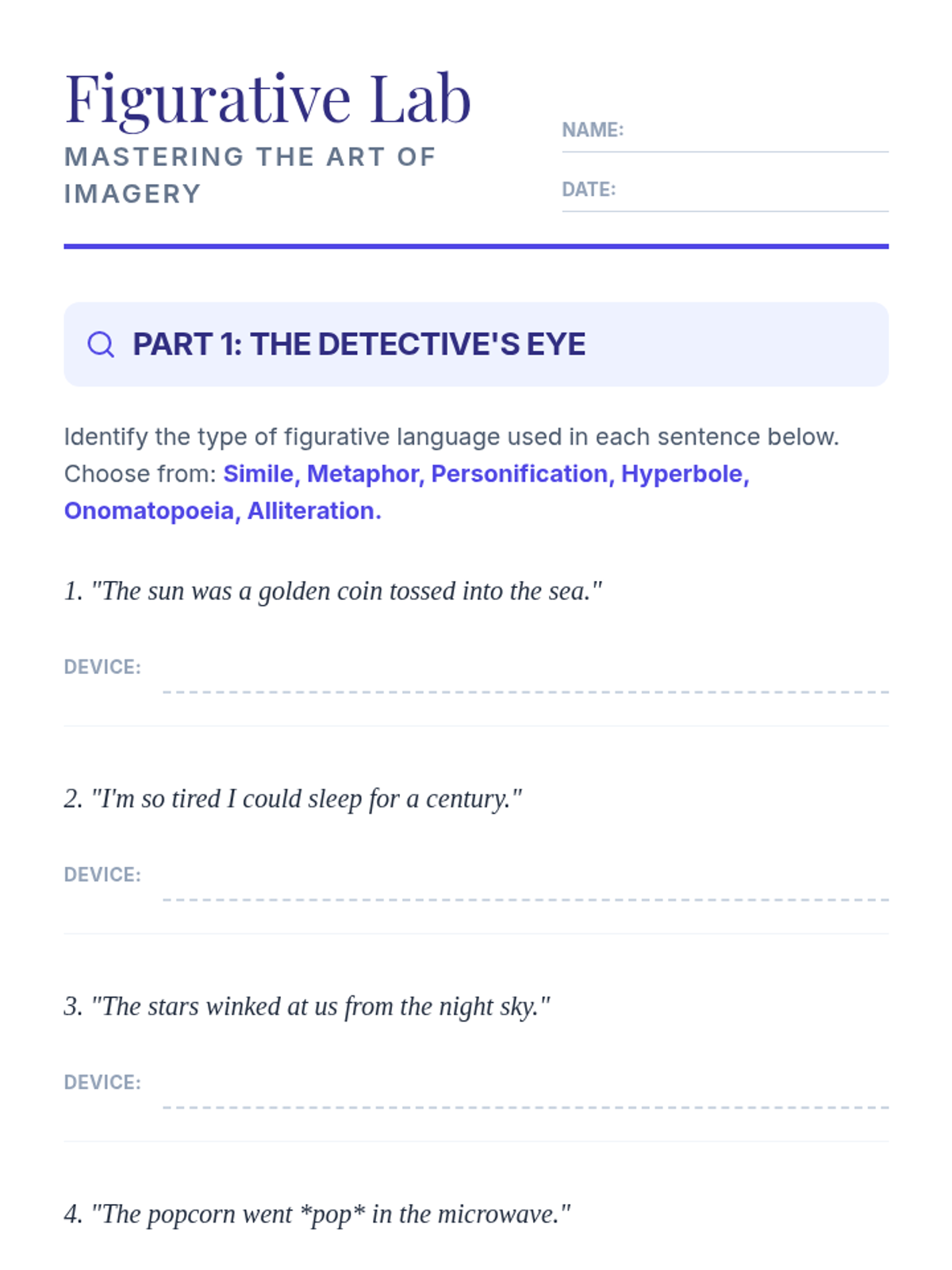
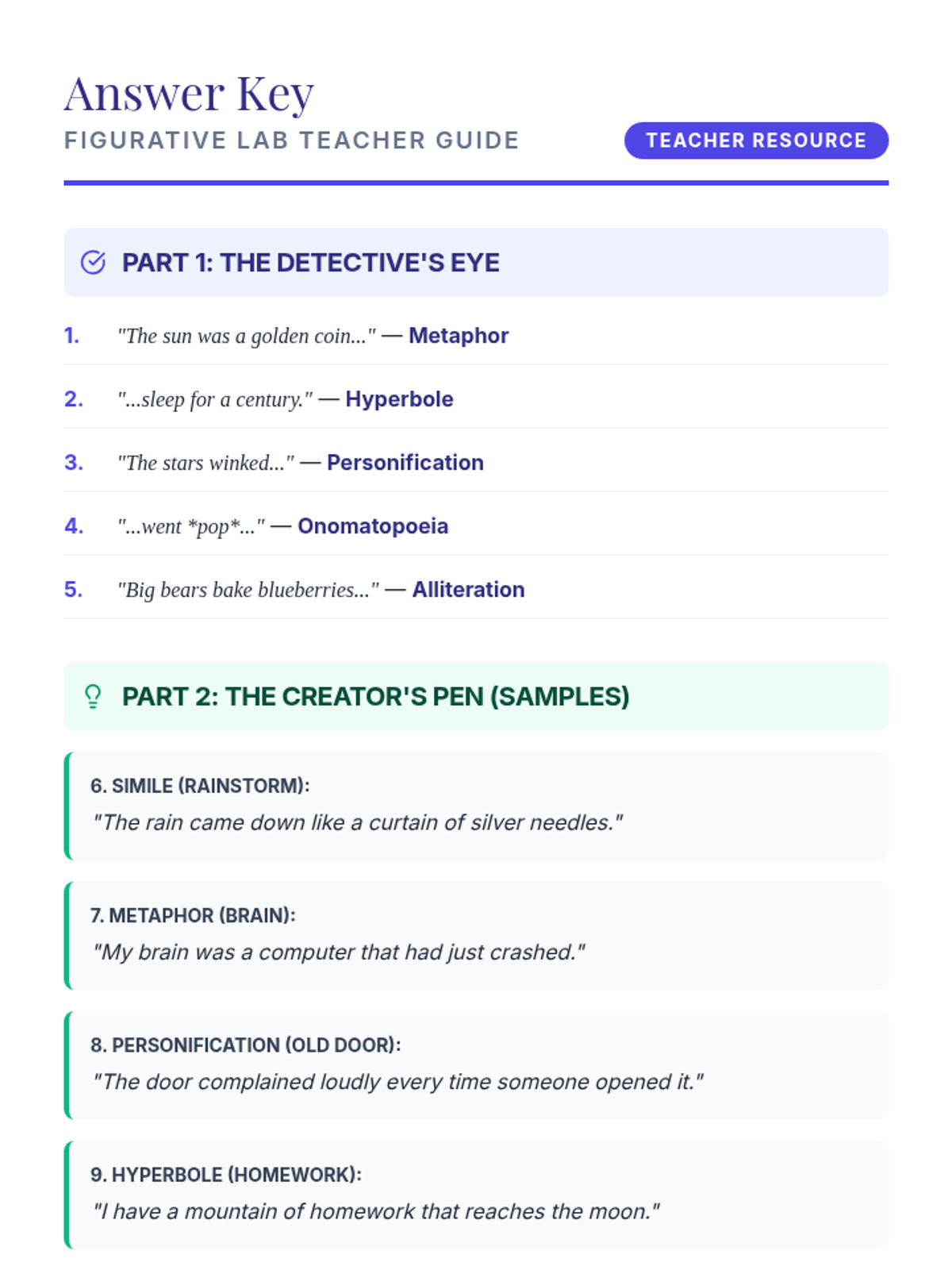
A comprehensive exploration of figurative language through poetry and prose, focusing on identifying and creating vivid imagery using similes, metaphors, personification, and more.
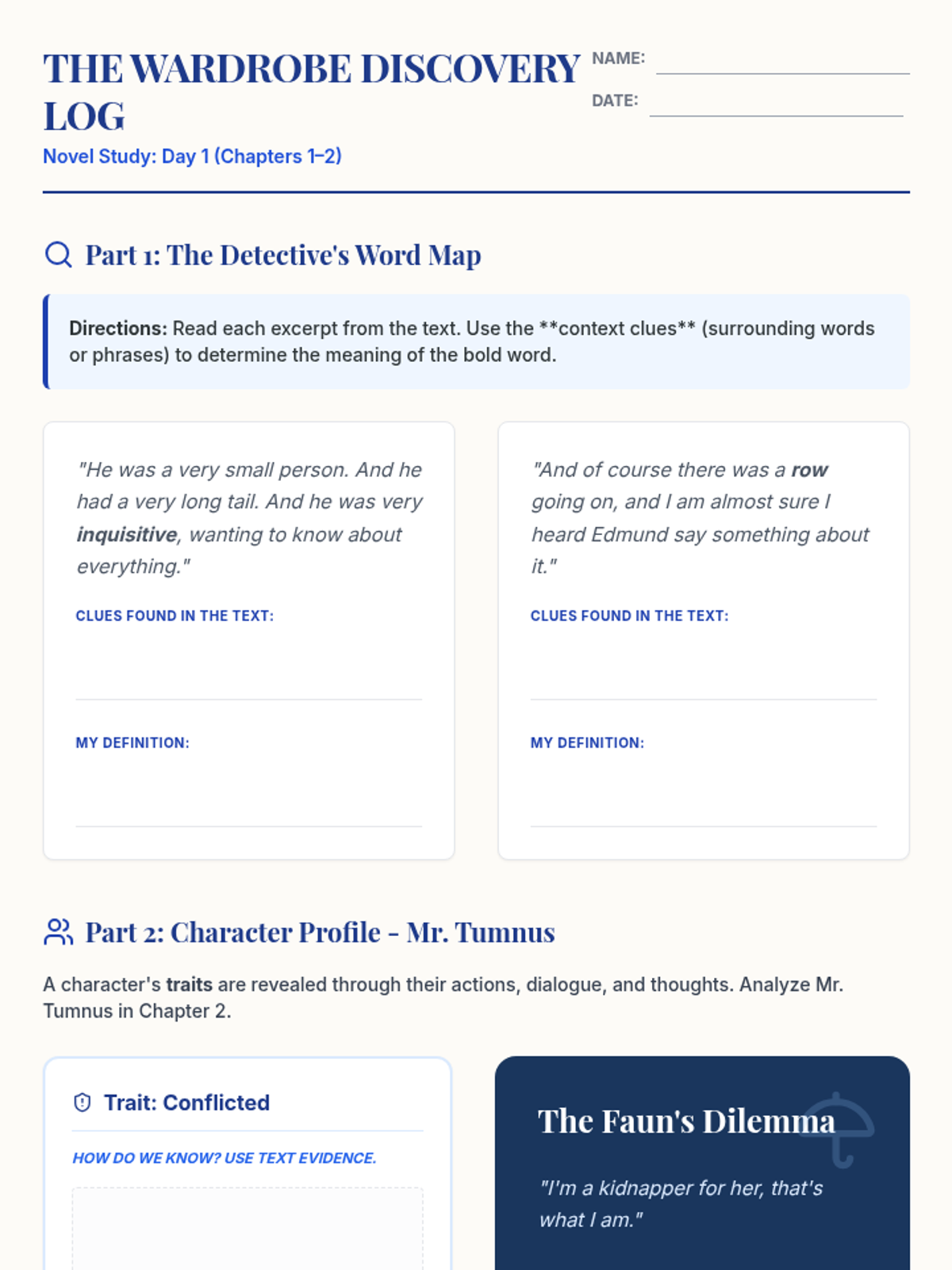
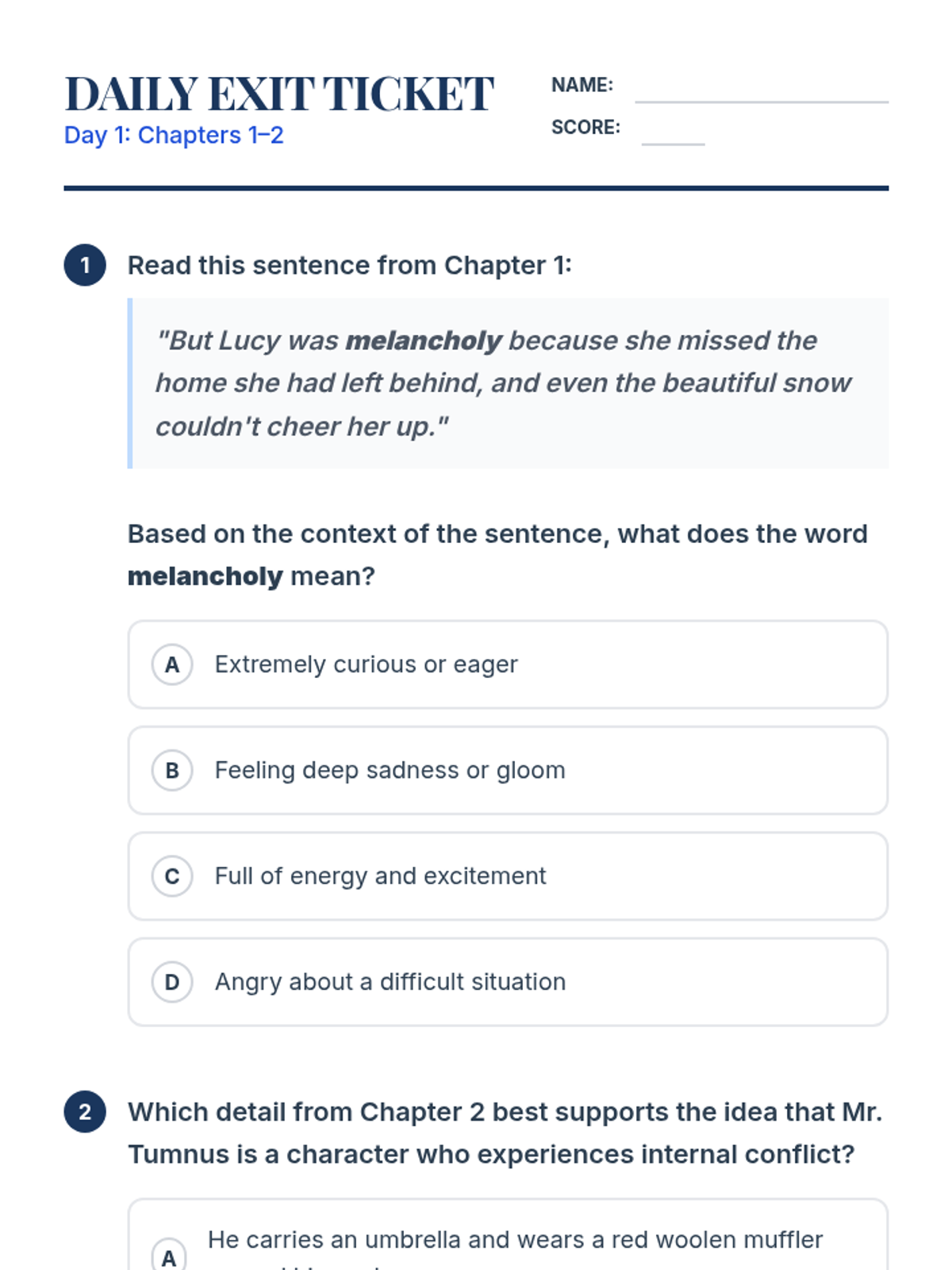
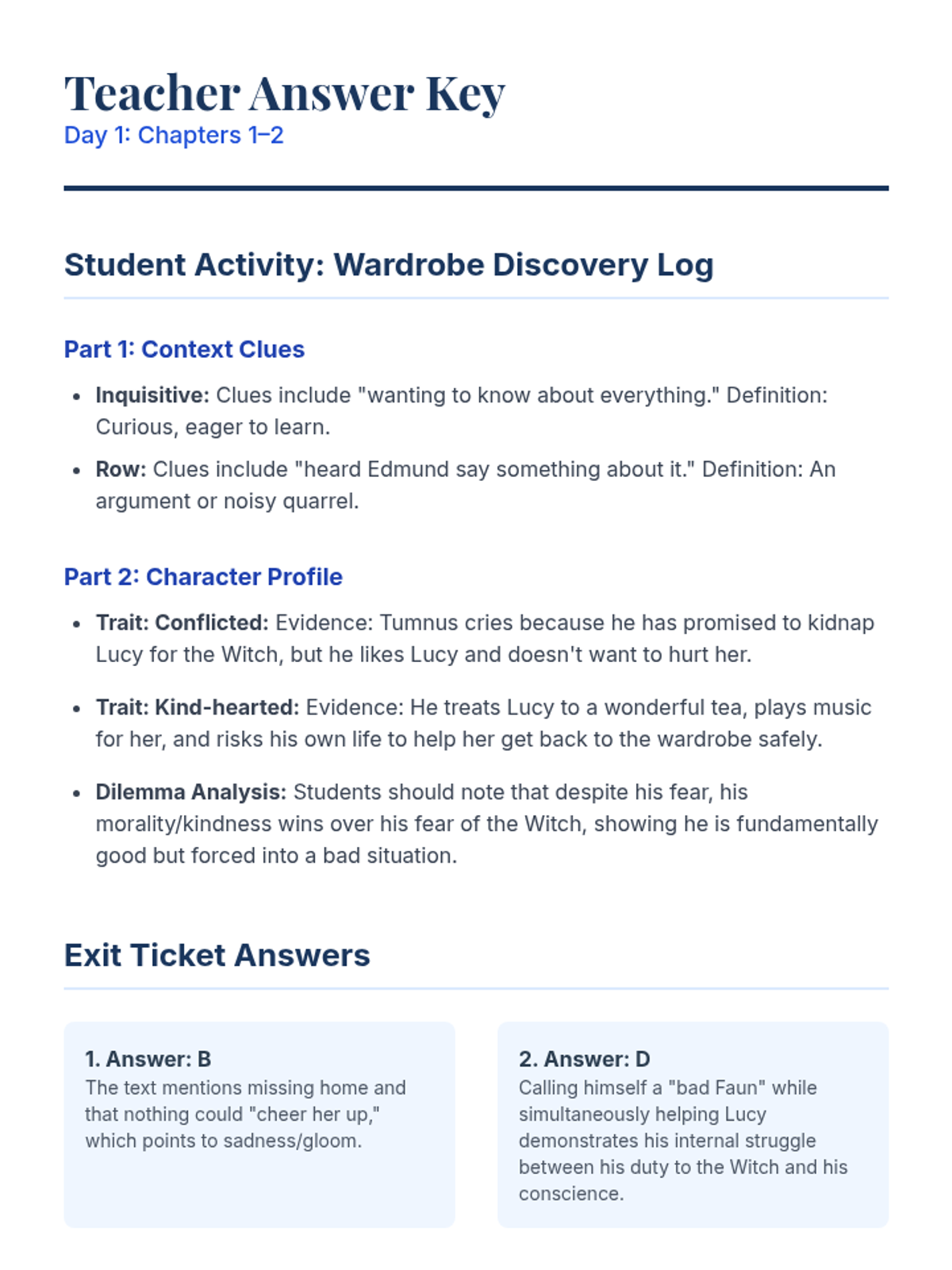
A 9-day comprehensive novel study of 'The Lion, the Witch, and the Wardrobe' by C.S. Lewis, designed for 5th-grade students and aligned with Texas TEKS. The unit focuses on character analysis, inference, plot structure, and author's purpose through daily slides, rigorous activities, and STAAR-aligned exit tickets.
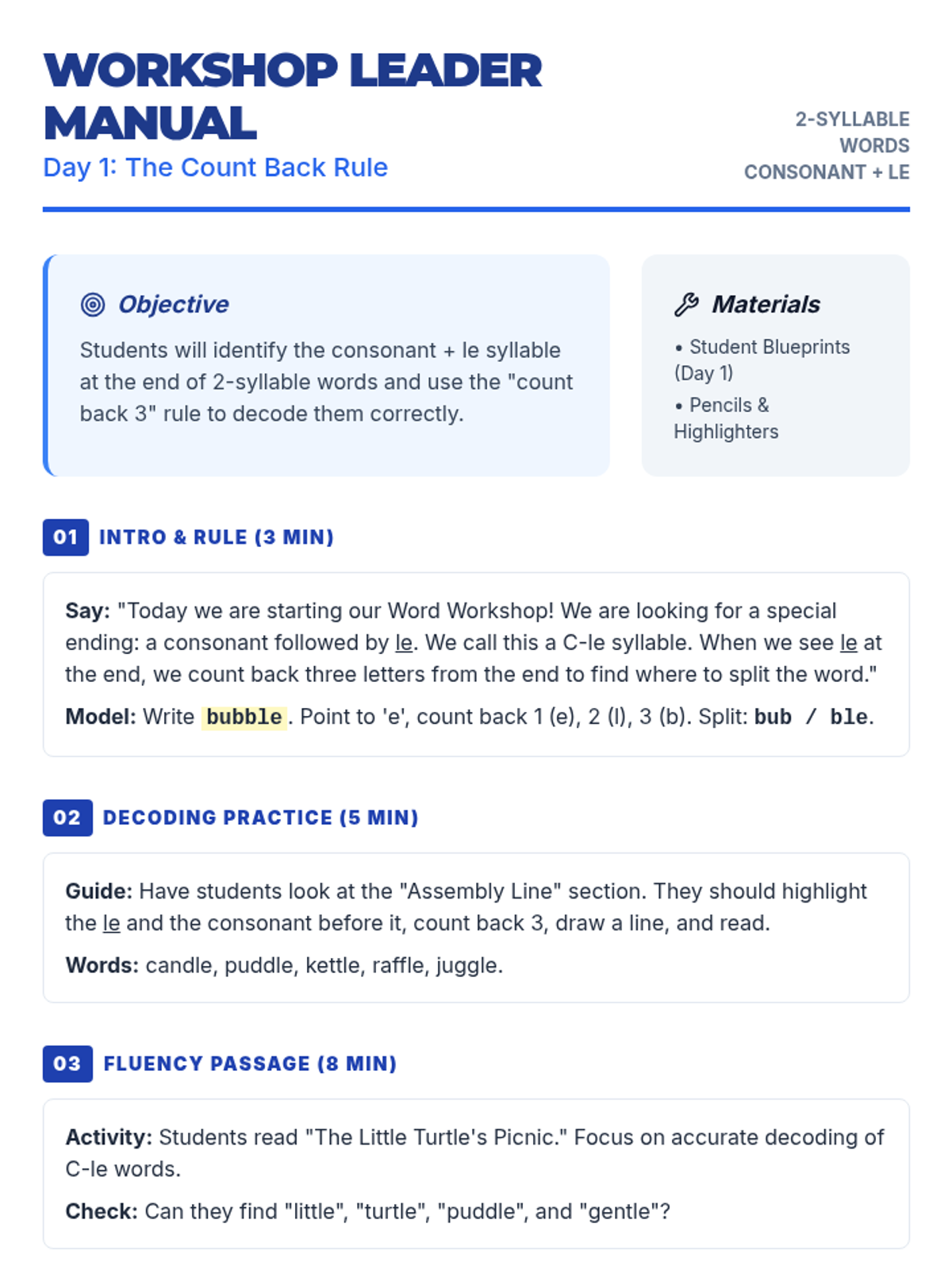
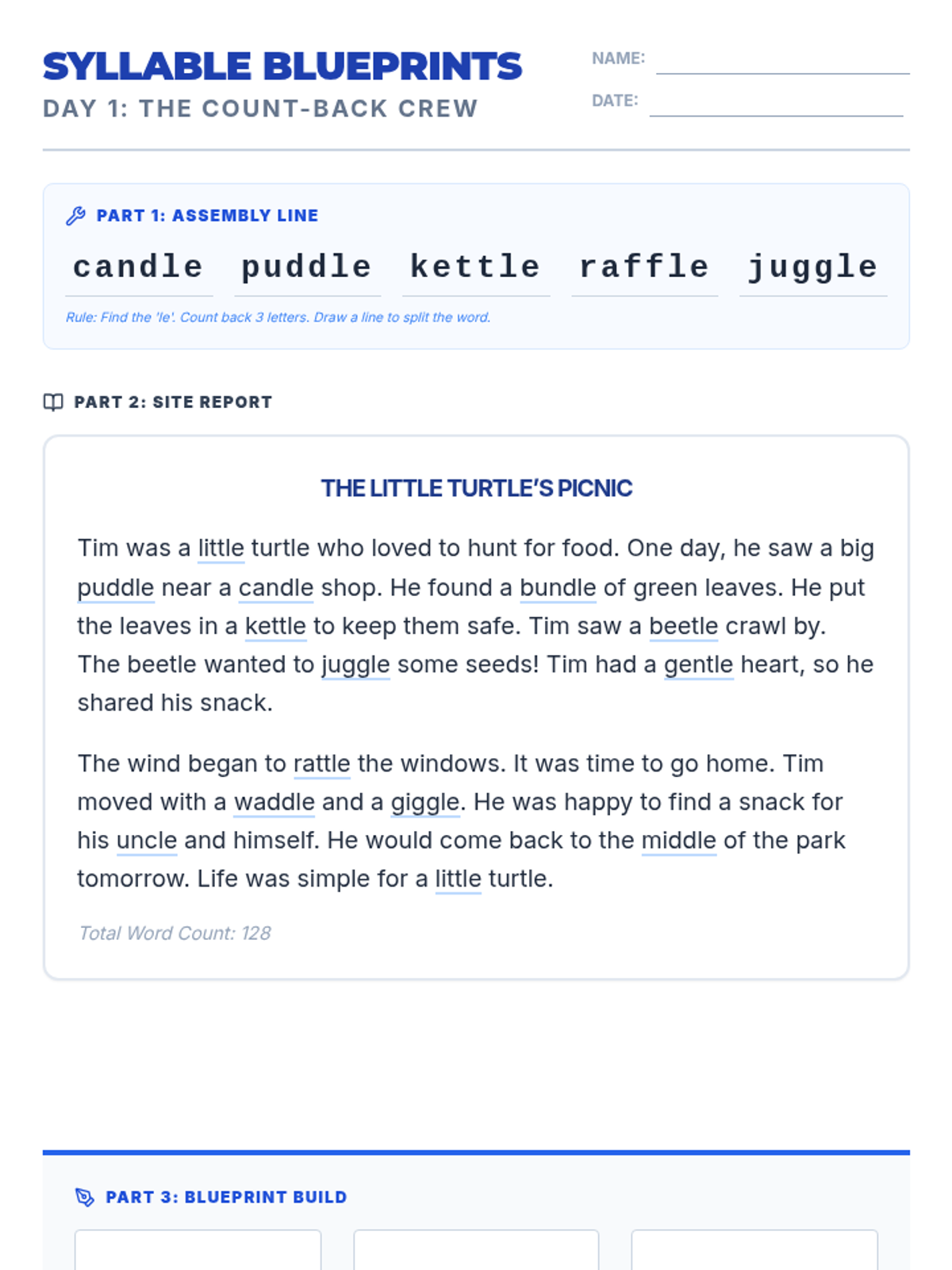
A 4-day intervention sequence focused on decoding and encoding 2-syllable words with consonant-le syllables. Students practice the 'count back three' strategy, analyze vowel sounds in the first syllable, and build reading fluency through themed passages.
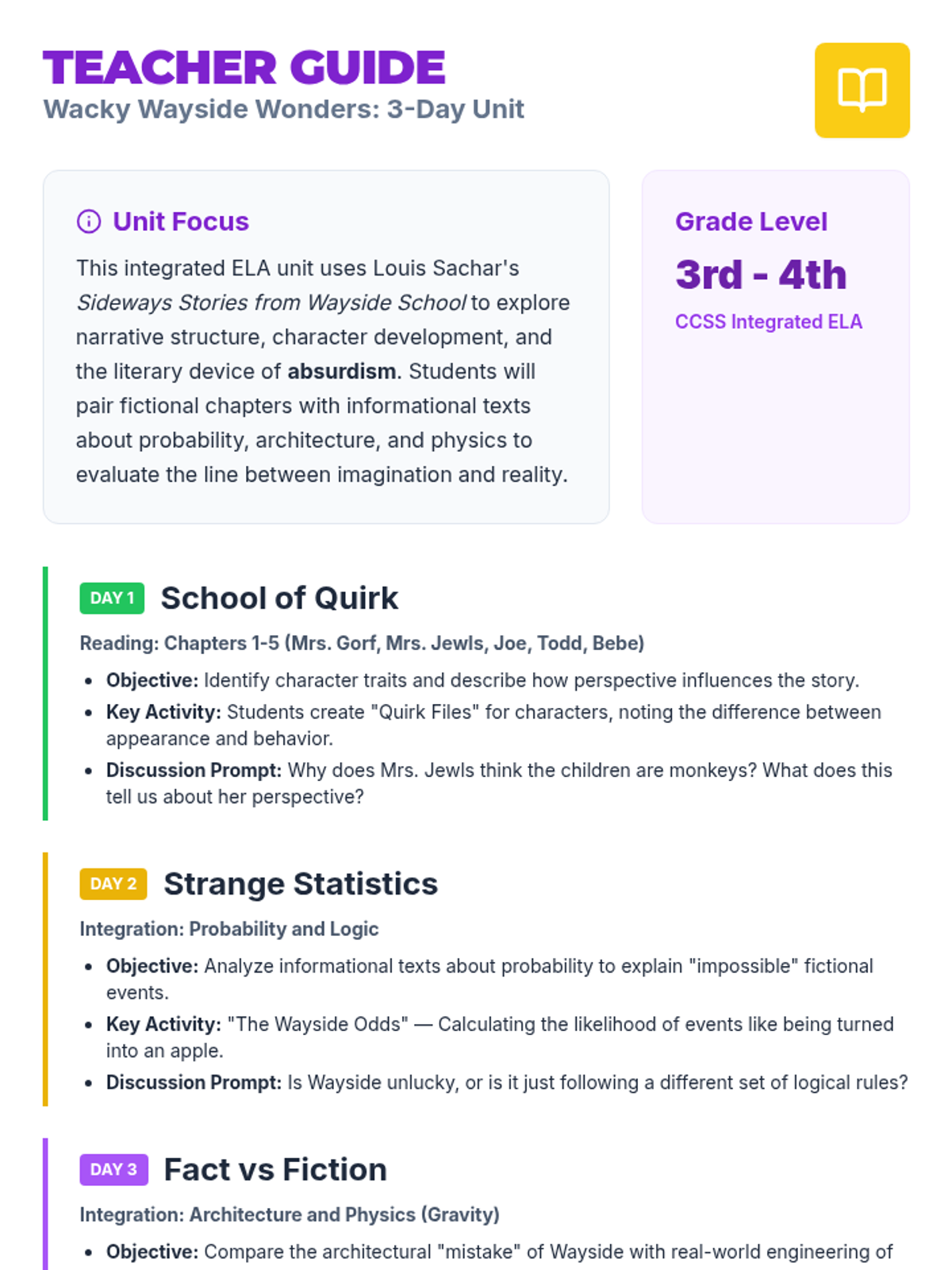
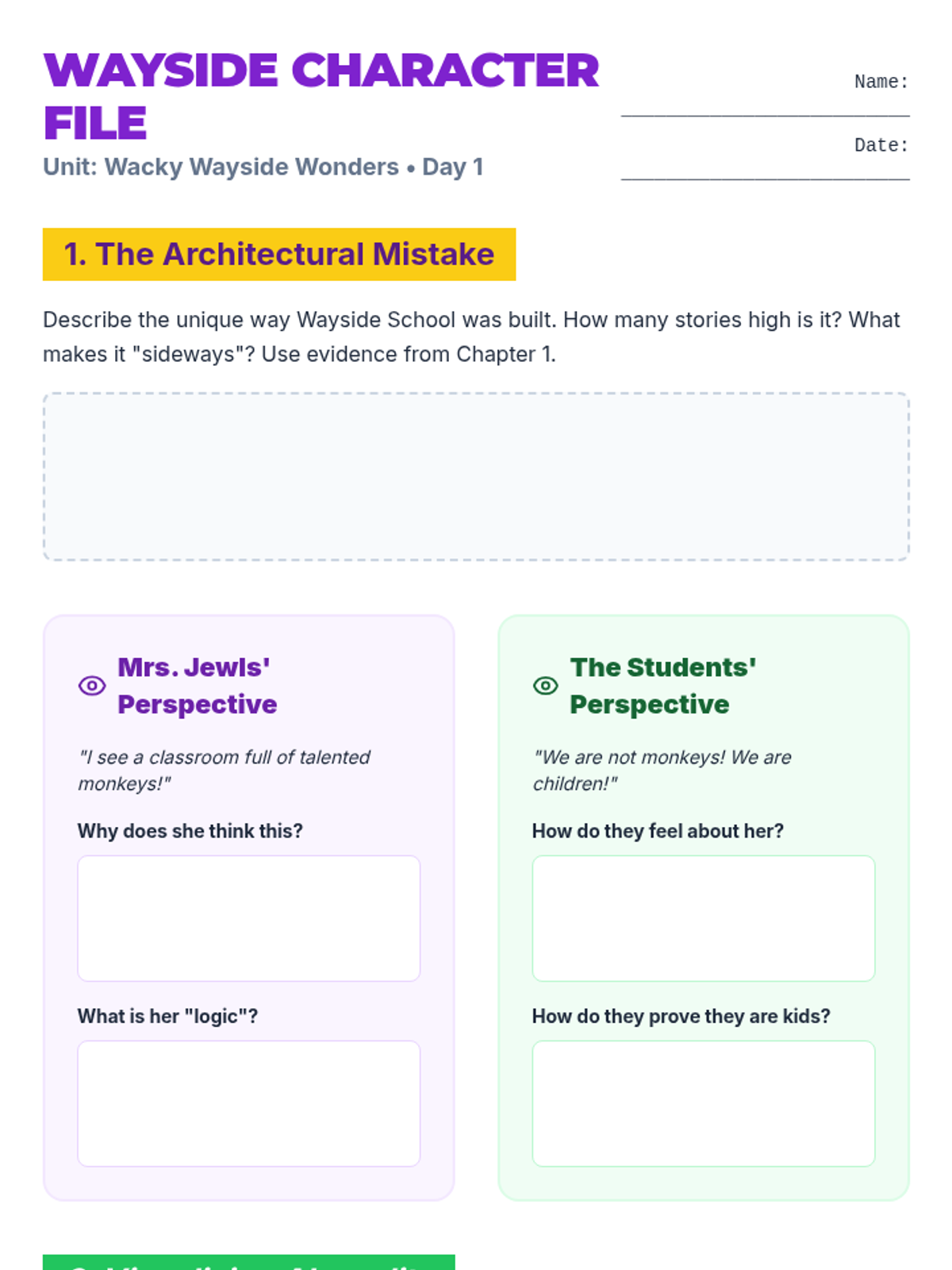
A 3-day ELA unit for 3rd-4th grade exploring the quirky world of 'Sideways Stories from Wayside School'. Students analyze character perspectives, explore the concept of logic versus absurdity, and compare the impossible architecture of Wayside with real-world gravity and skyscrapers.
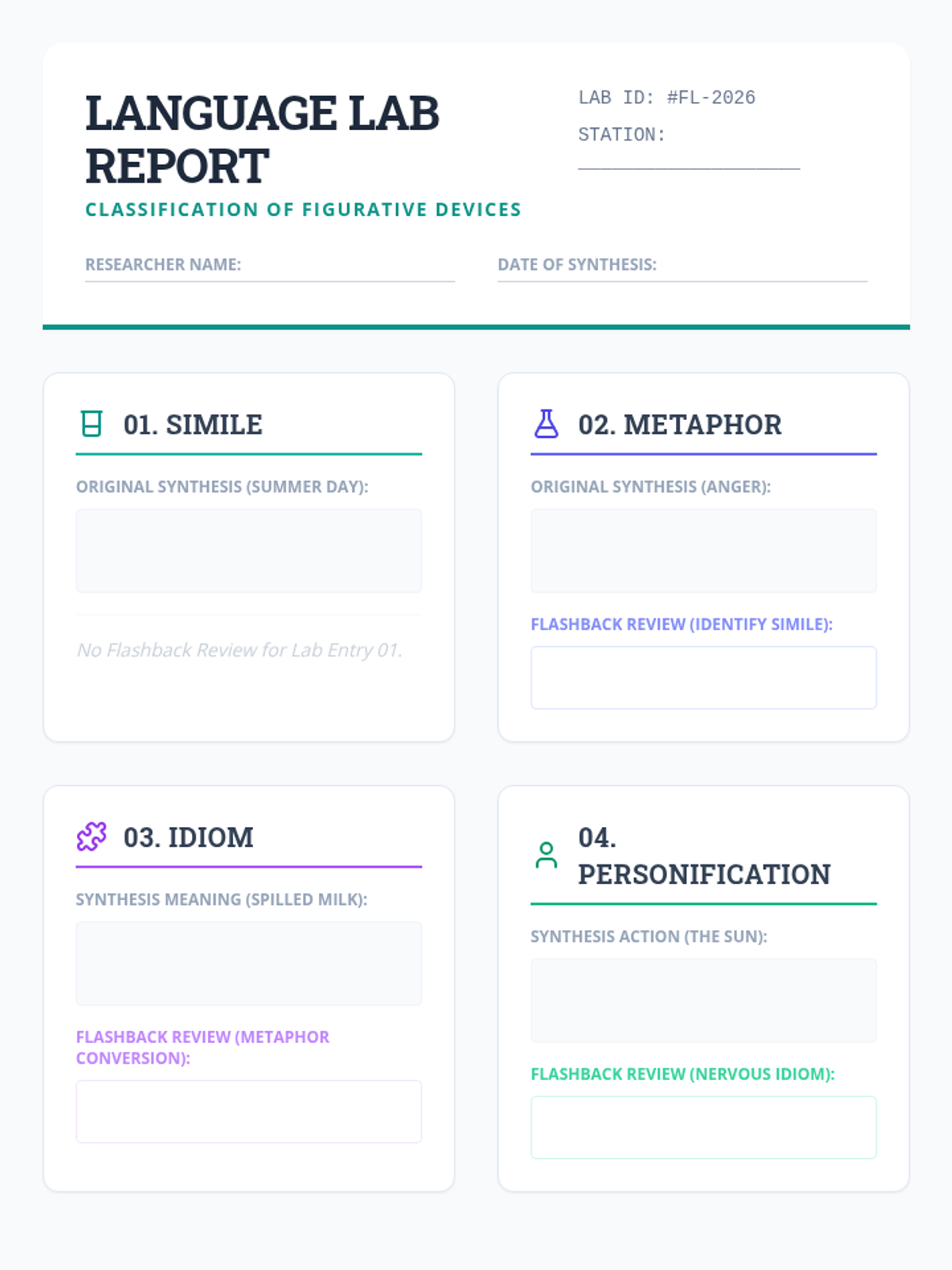
A comprehensive unit on figurative language, taking students from basic comparisons like similes and metaphors to complex devices like oxymorons and symbolism. Students act as 'Language Scientists' in a literary lab to synthesize and analyze text.
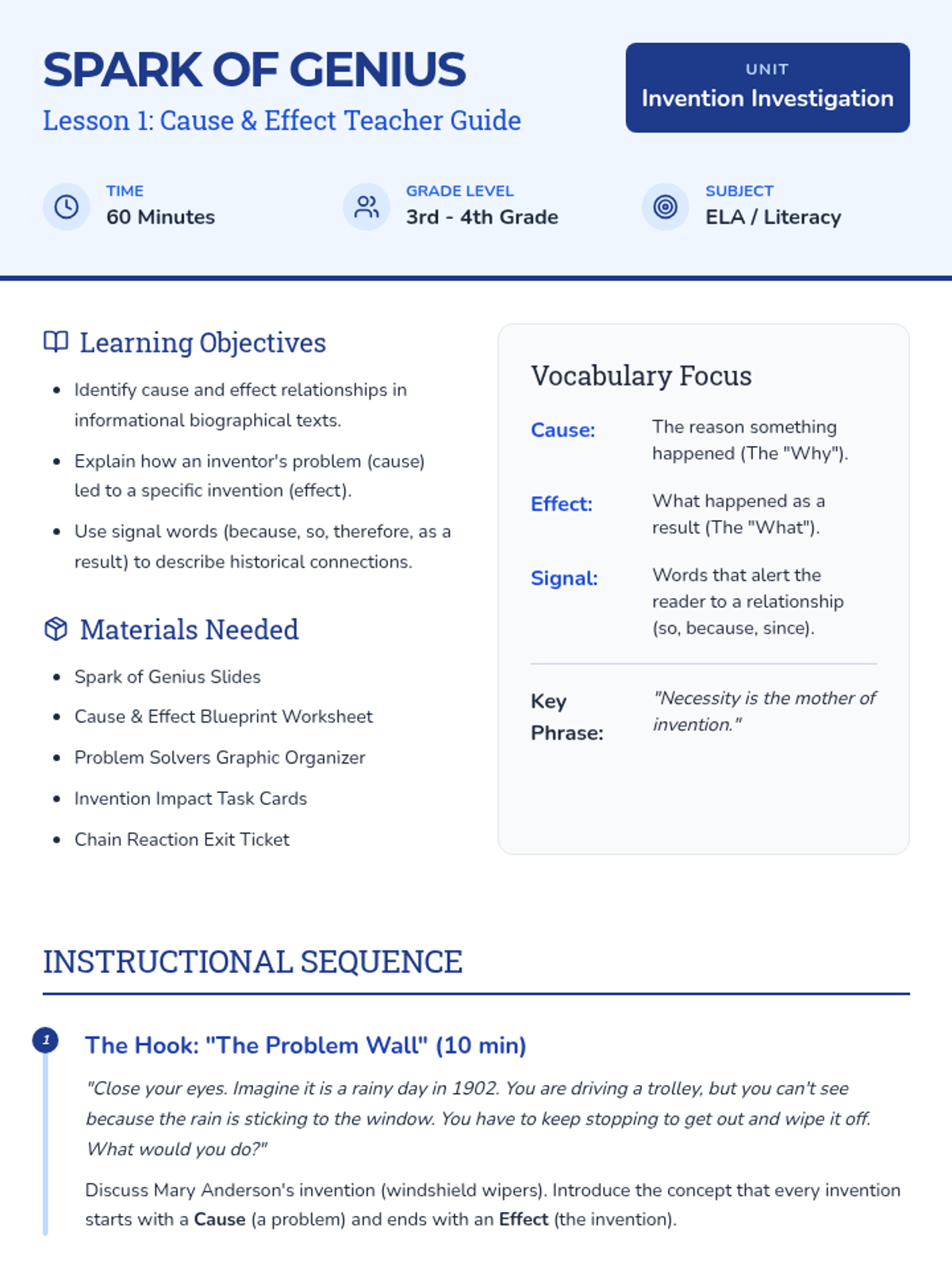
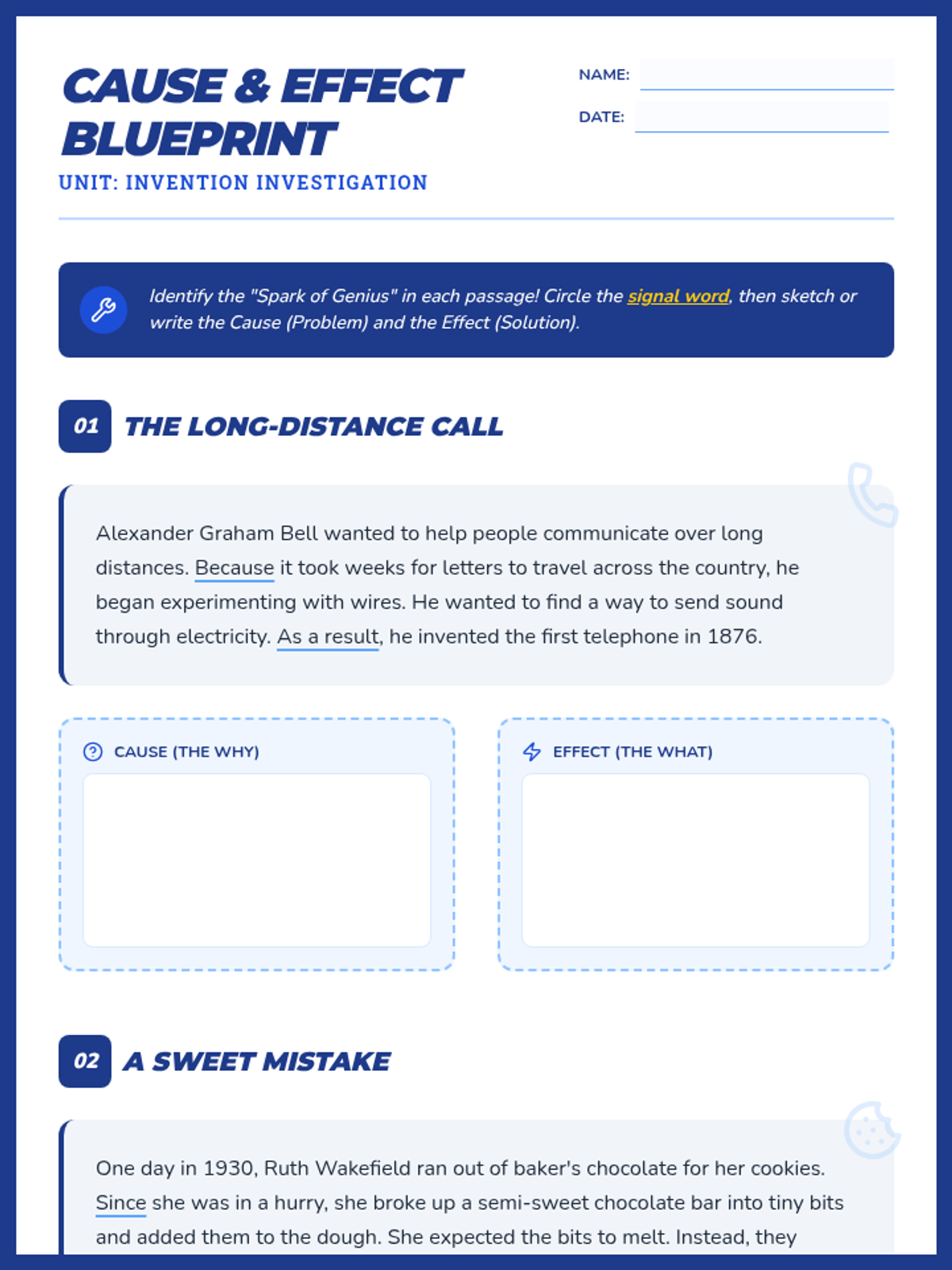
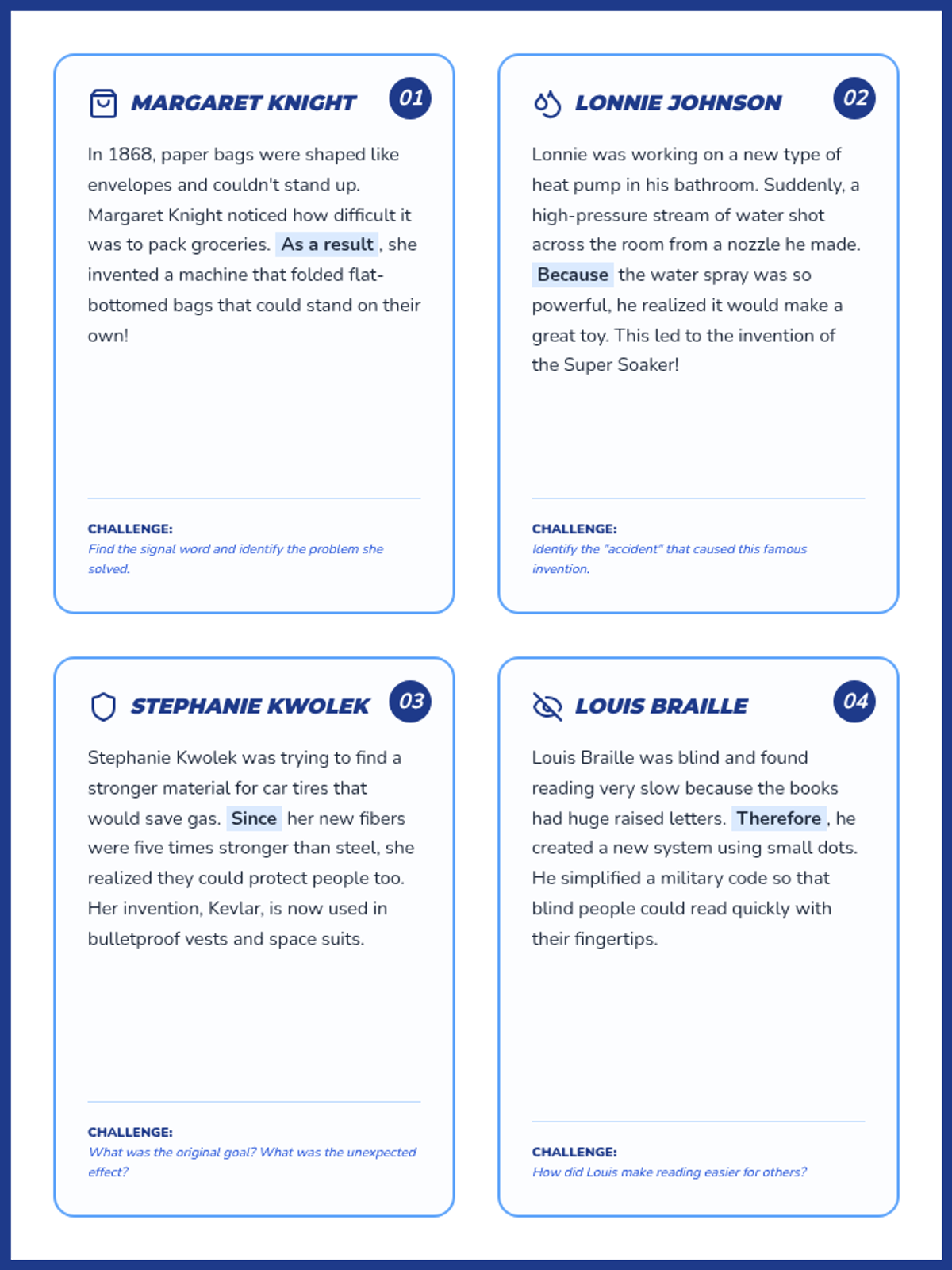
A comprehensive unit for 3rd and 4th graders focused on mastering main idea and cause and effect through the lens of world-changing inventors and their discoveries.
A dual-unit intervention sequence for 6th grade Tier 2 decoding. Unit 1 focuses on Morphology (Lessons 1-15). Unit 2 focuses on Syllable Types and Division Patterns (Lessons 16-30) through an architectural blueprint theme.
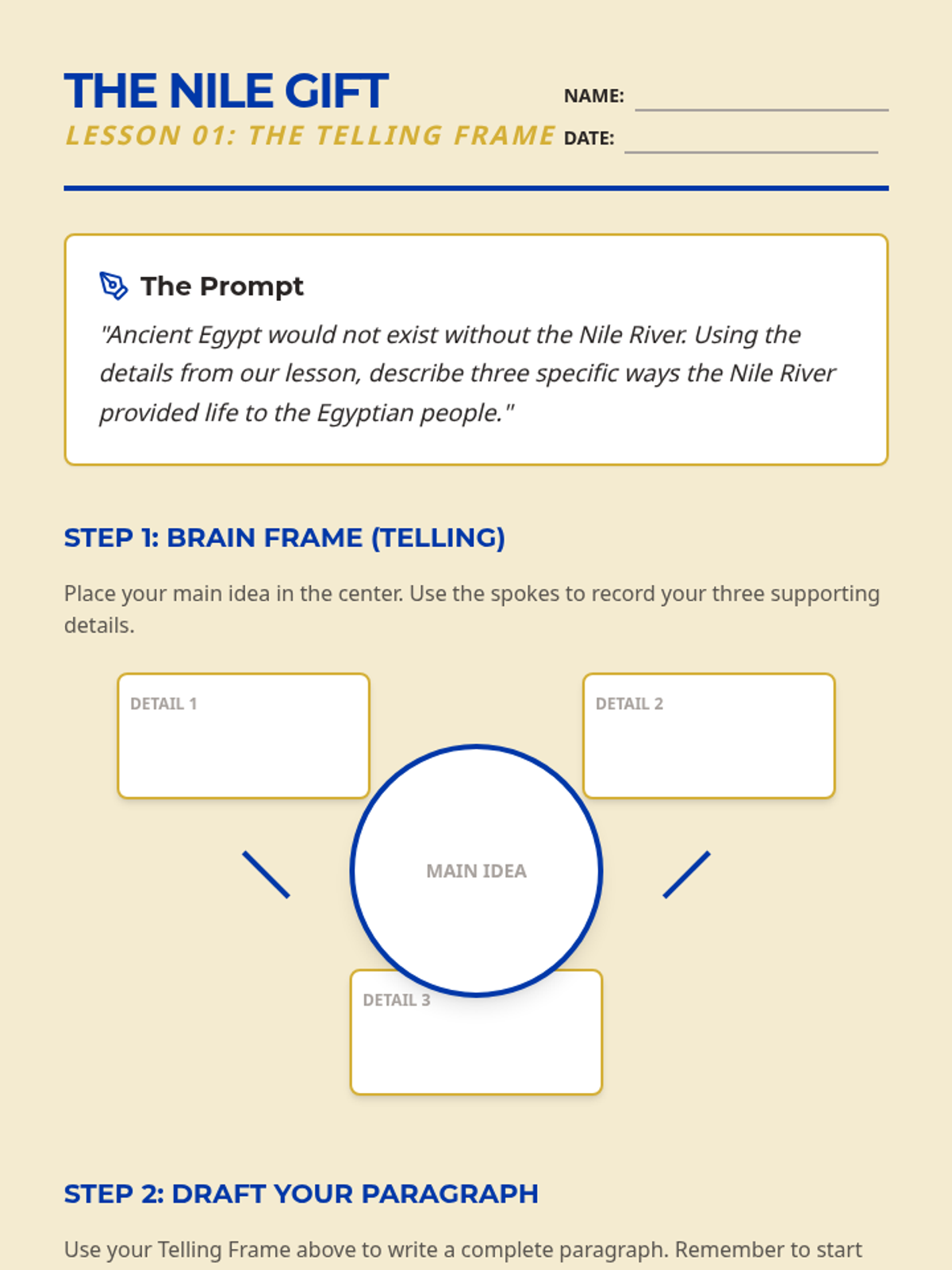
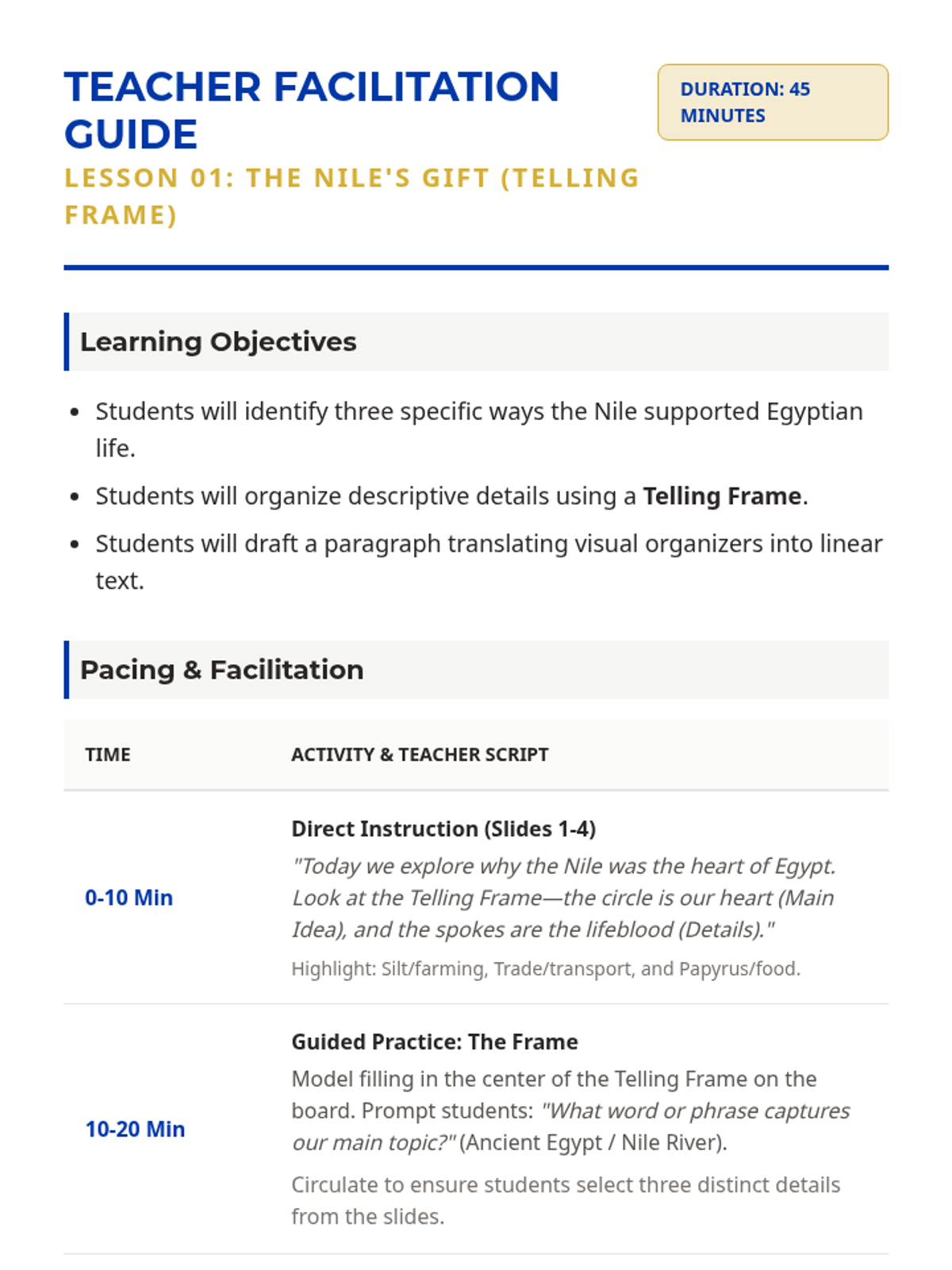
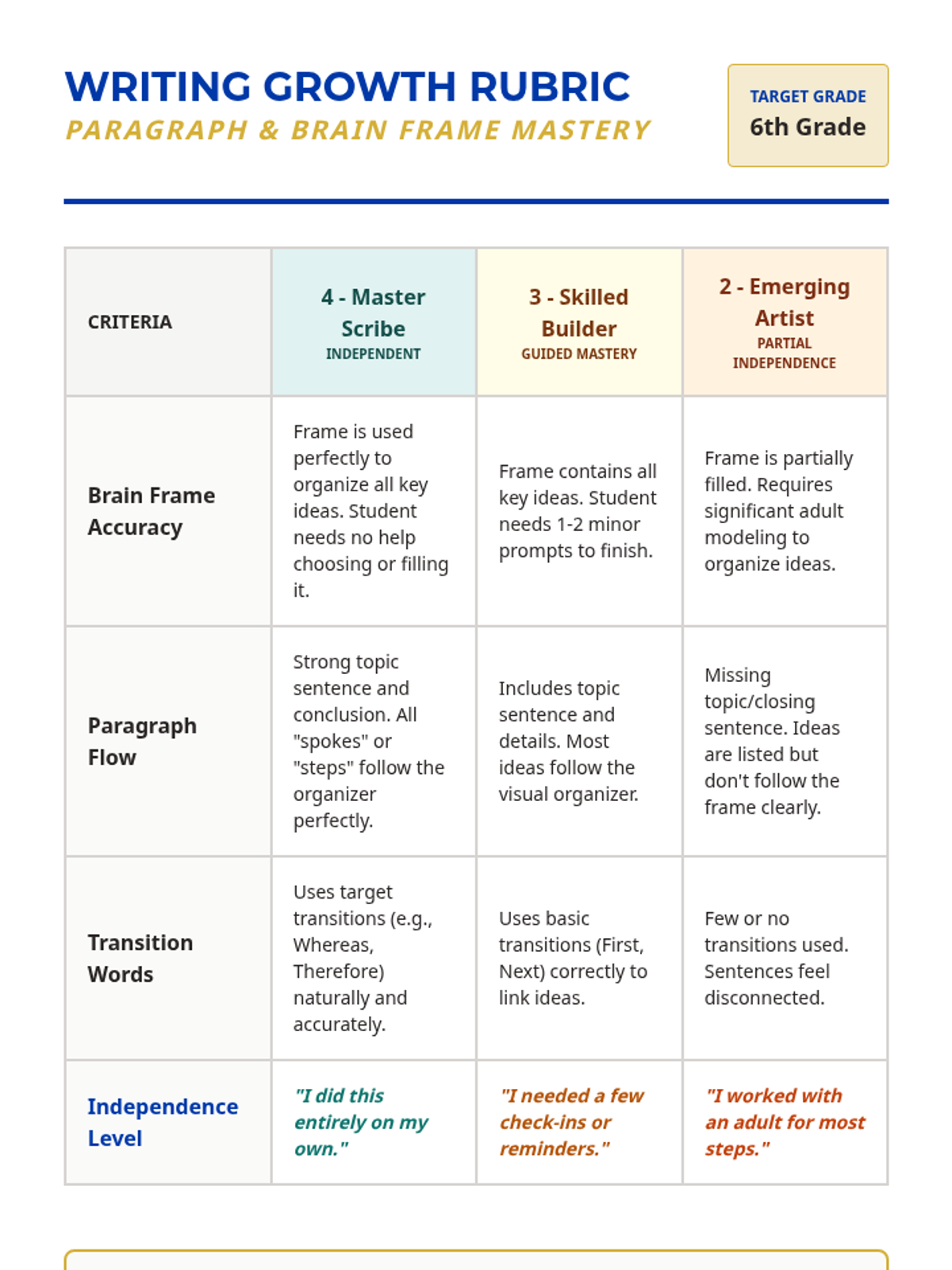
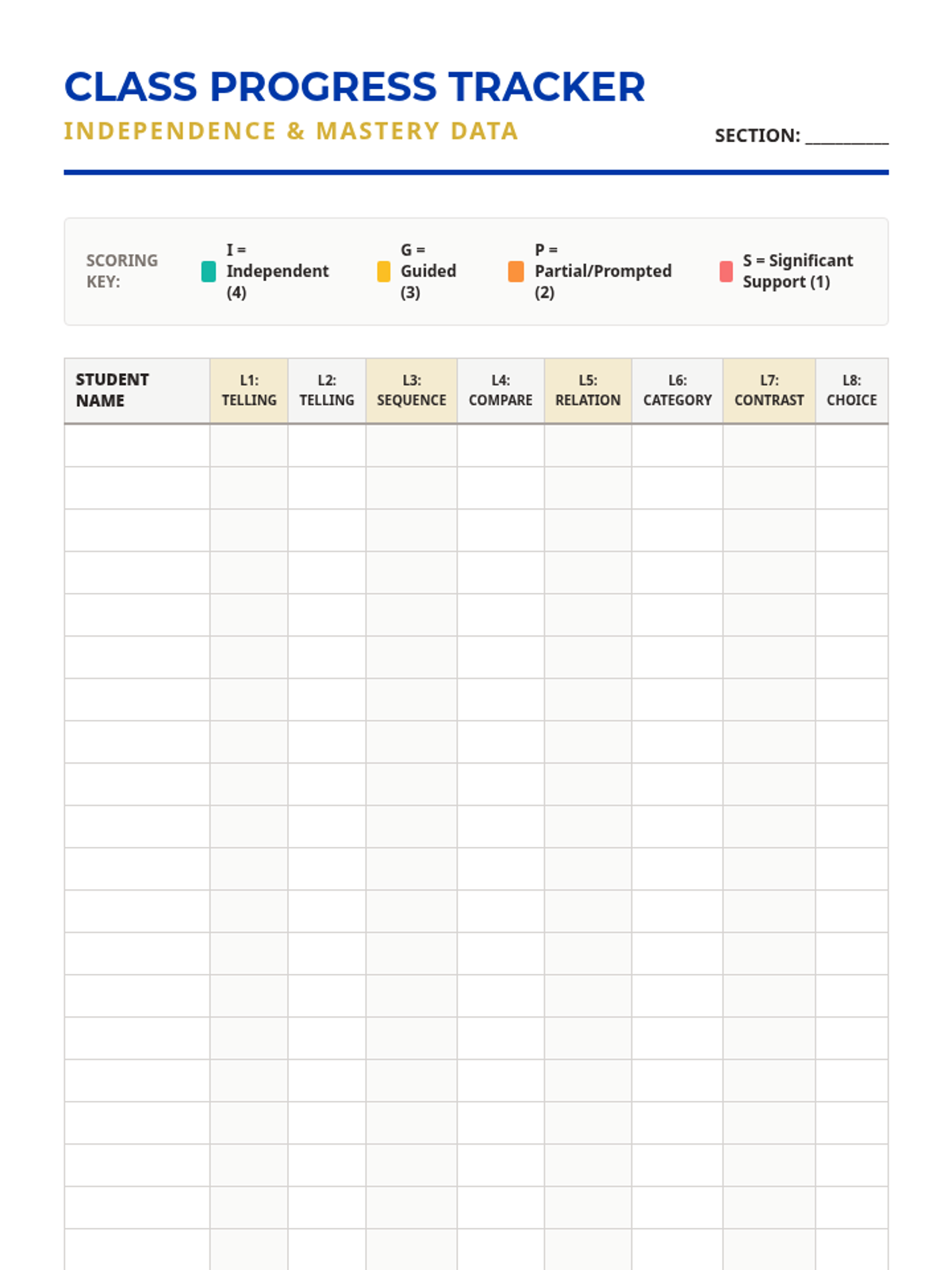
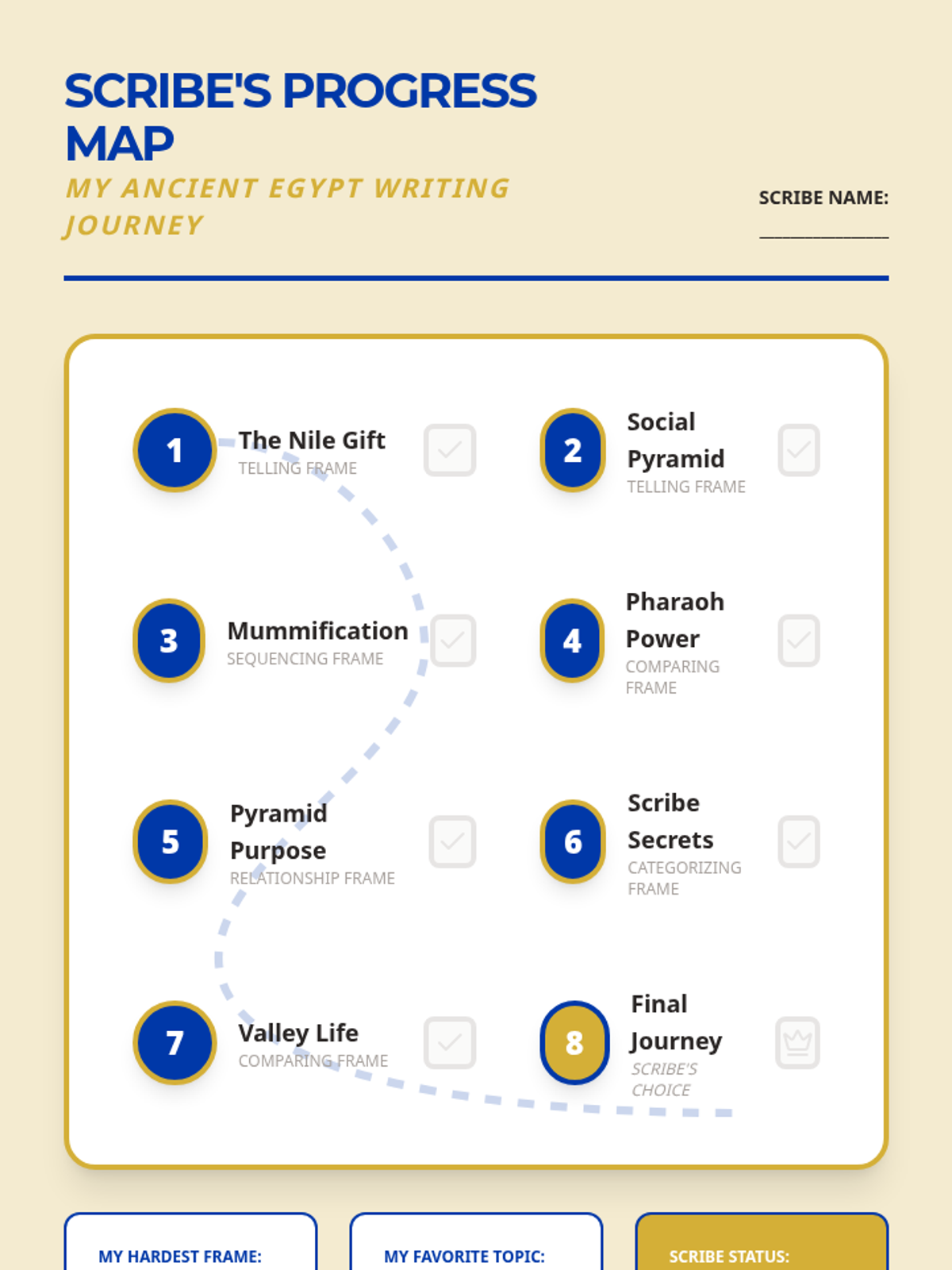
An 8-session writing program for 6th graders focused on Ancient Egypt, utilizing Brain Frames to build independence in paragraph organization and writing. Each session targets a specific visual organization tool and a historical topic to move students from guided to independent writing.
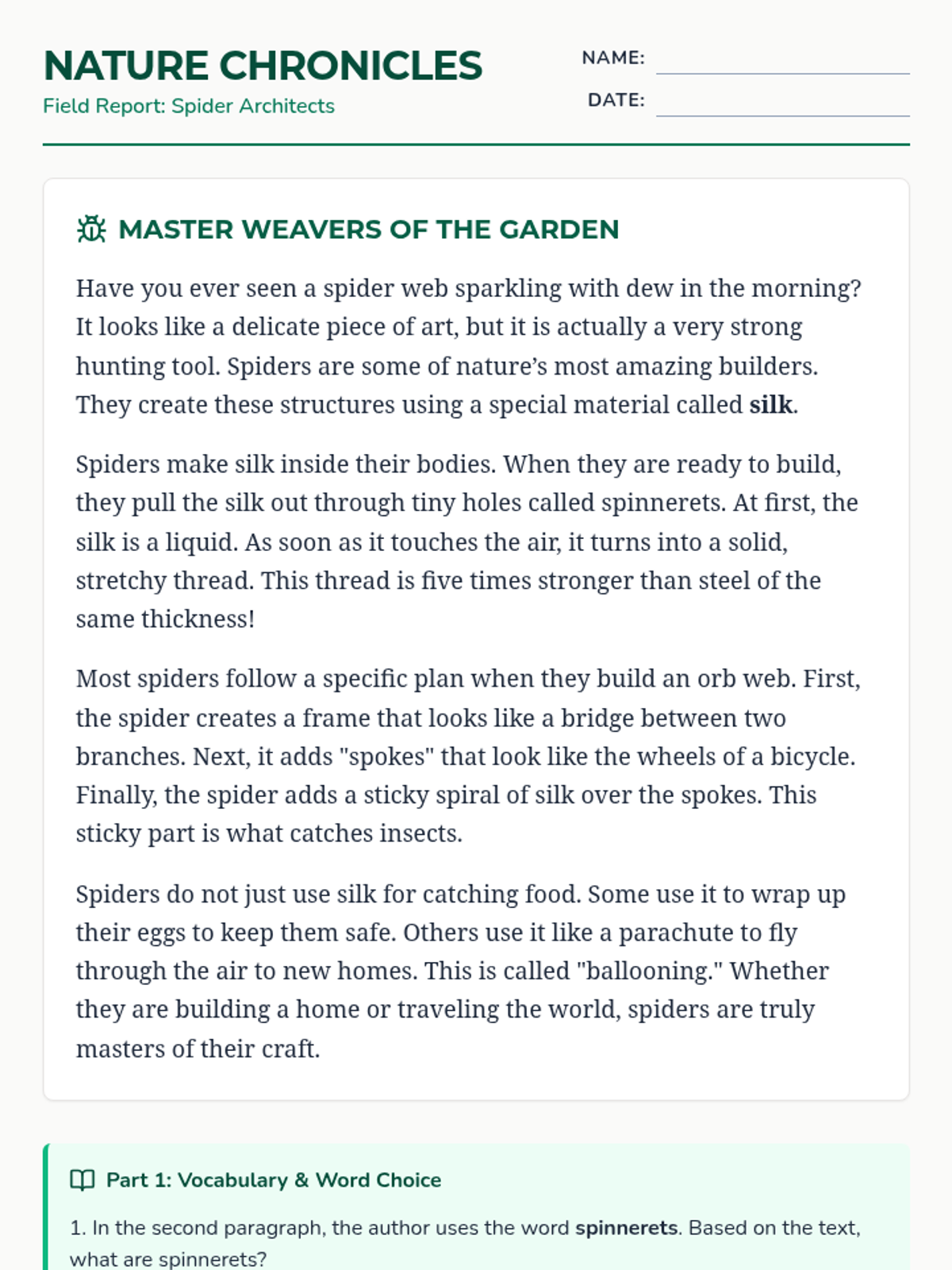
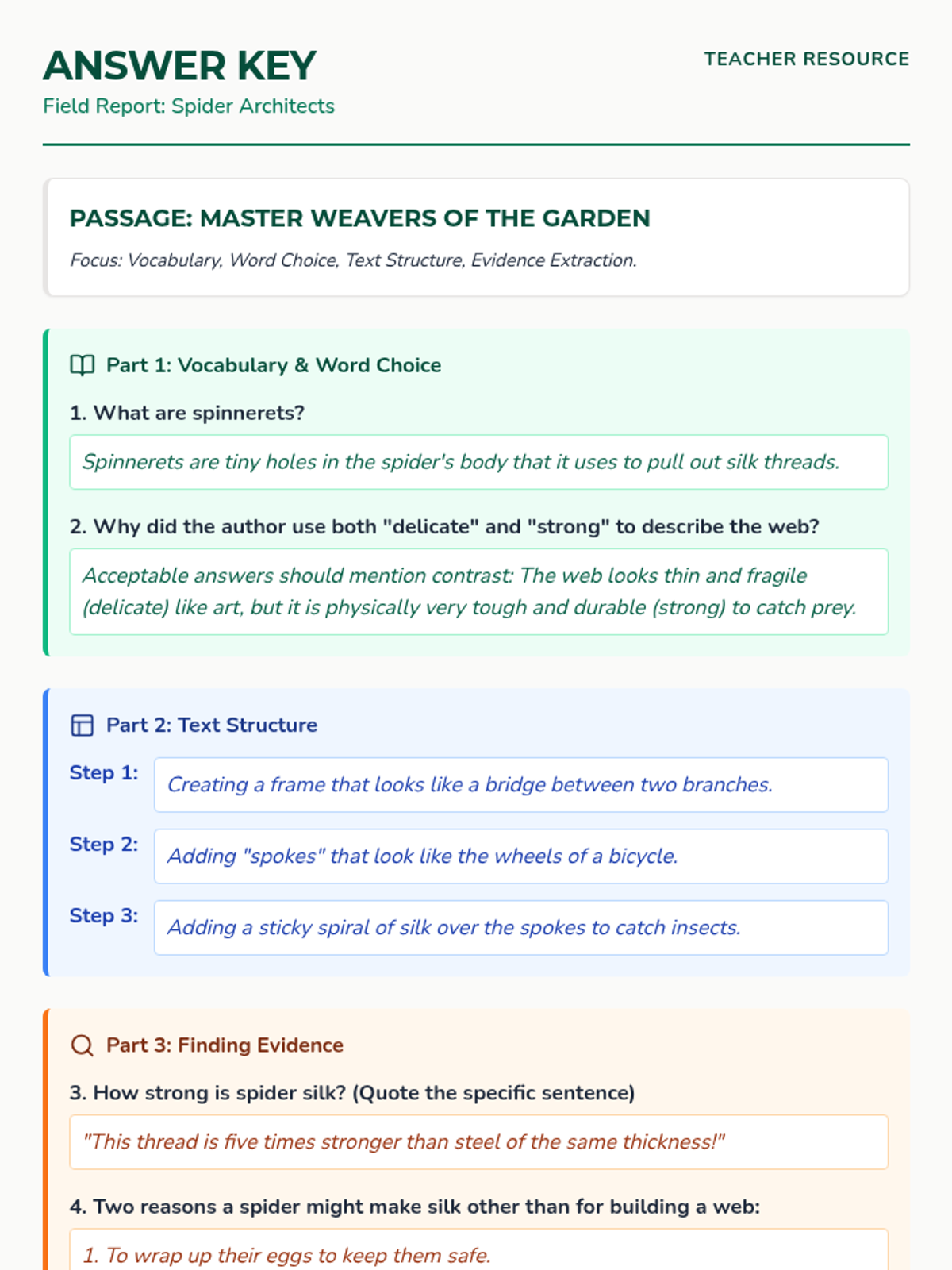
A reading comprehension sequence for 4th graders focusing on science and nature. Students will develop skills in text structure, vocabulary analysis, and finding textual evidence through engaging passages about the natural world.
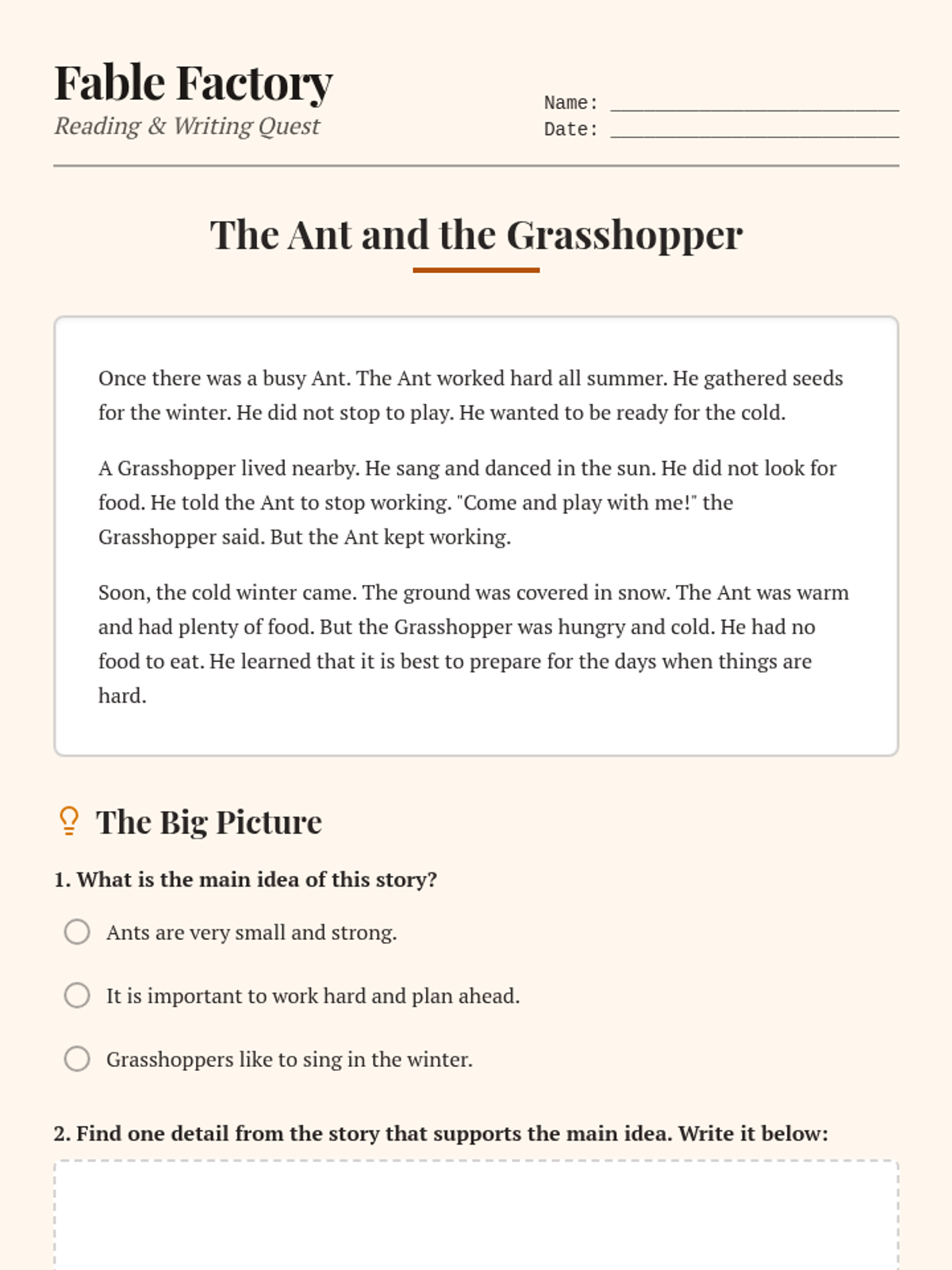
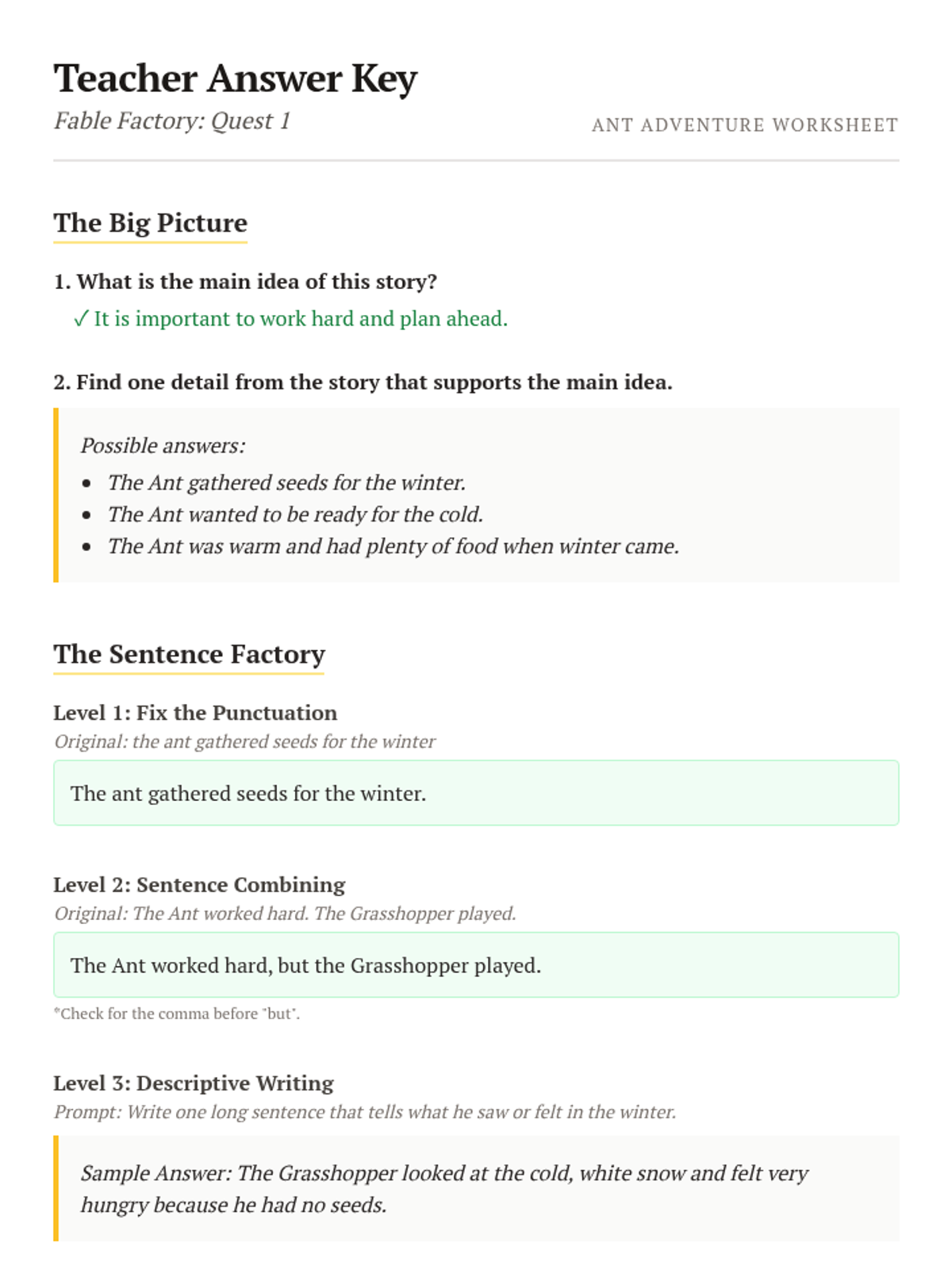
A series of reading and writing lessons using classic fables to teach main idea, supporting details, and proper sentence structure to 4th-grade students reading at a 3rd-grade level.
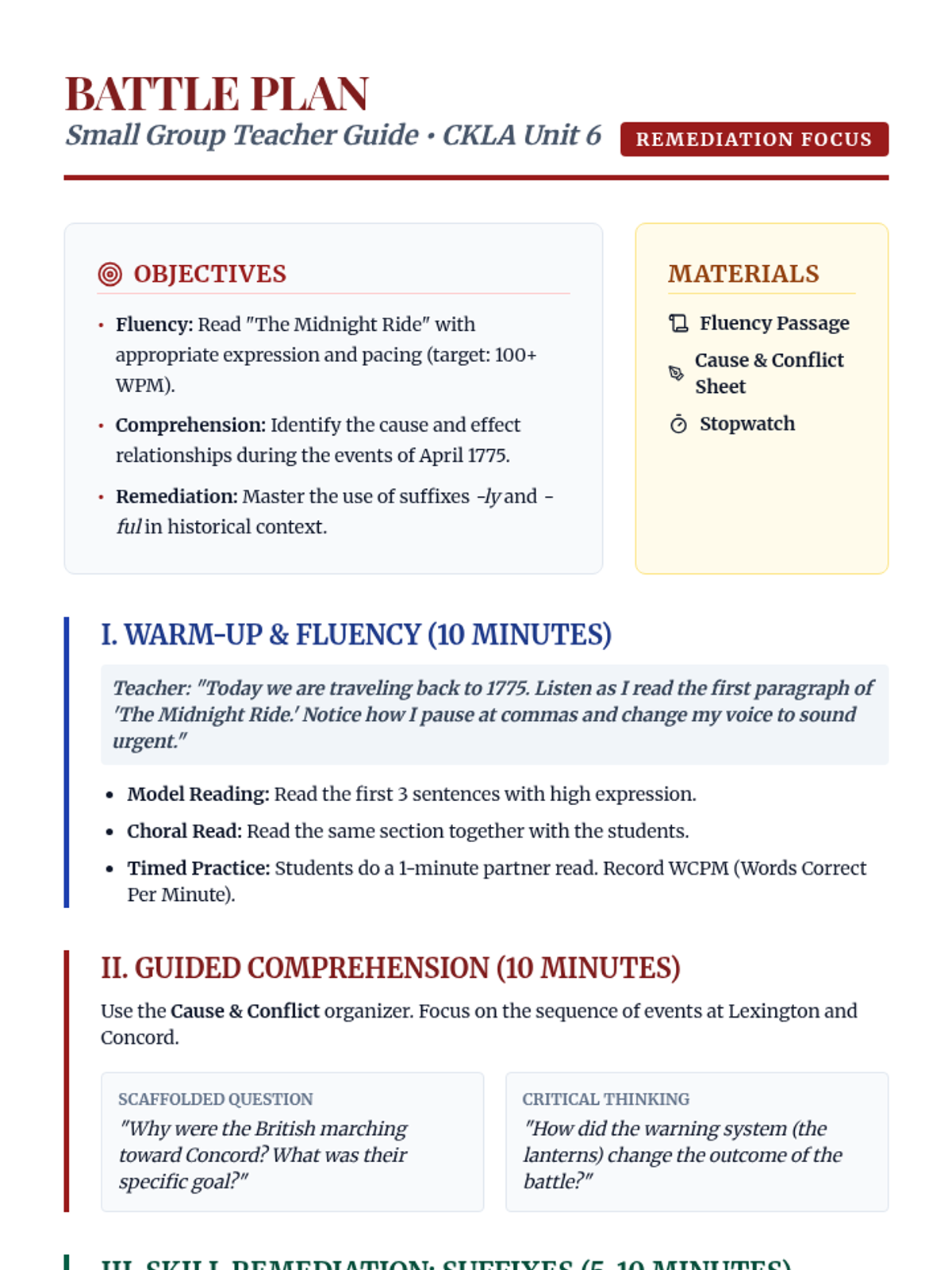
A collection of small group lessons for 4th Grade Reading, covering various standards and curricula including CKLA and i-Ready.