A comprehensive 6th-grade physics sequence exploring the nature of visible light, how it splits into the spectrum, interacts with surfaces through reflection and absorption, and behaves when passing through different mediums.
A comprehensive K-12 AI literacy sequence covering the fundamentals of how AI works, machine learning, ethics, social impact, and creative application through age-appropriate lessons.
A comprehensive 4-day sequence focusing on the application of thermal energy concepts, including conduction, convection, radiation, and insulation through hands-on labs and real-world analysis.
A cross-curricular unit blending astronomy and Greek mythology, exploring how ancient cultures interpreted the night sky and the scientific reality of stars.
A collection of lessons focused on nature and science, designed with differentiated reading materials for diverse learners including early readers and special education students.
A beginner-friendly introduction to coding concepts using the excitement of basketball tournaments to teach algorithms, sequencing, and selection.
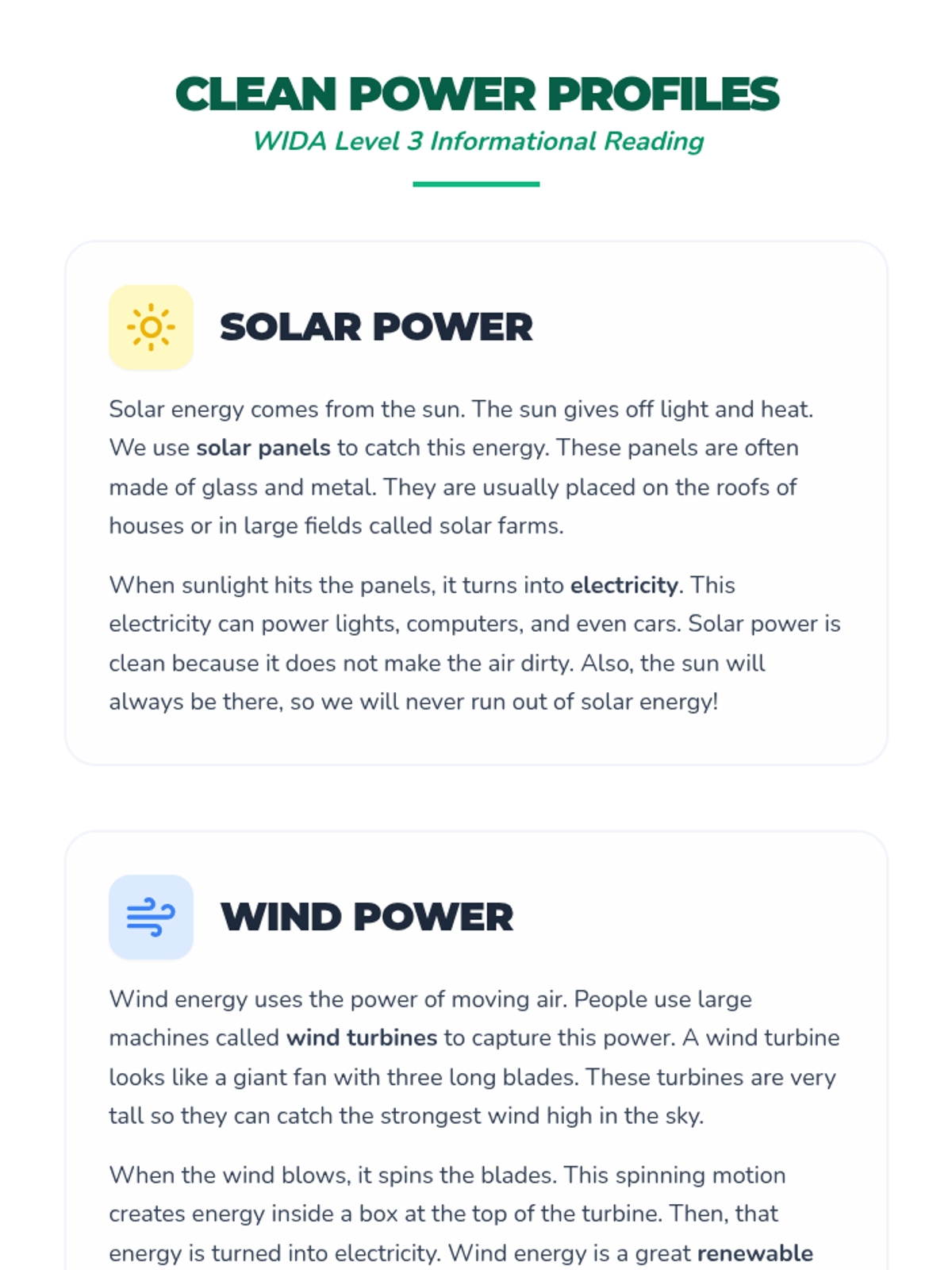
A three-day sub plan sequence for middle school students exploring wind and solar energy. Students learn about energy transformations, advantages and disadvantages, and analyze energy output data to prepare for upcoming engineering design challenges.
A comprehensive 2-day unit on heat transfer (conduction, convection, and radiation) featuring teacher-led demonstrations, visual slides, doodle notes, and exit tickets. Students explore how thermal energy moves through different states of matter and vacuum.
A comprehensive unit on thermal energy transfer where students use models and hands-on experiments to compare conduction, convection, and radiation. The sequence covers theoretical understanding and practical observation of how heat moves through matter.
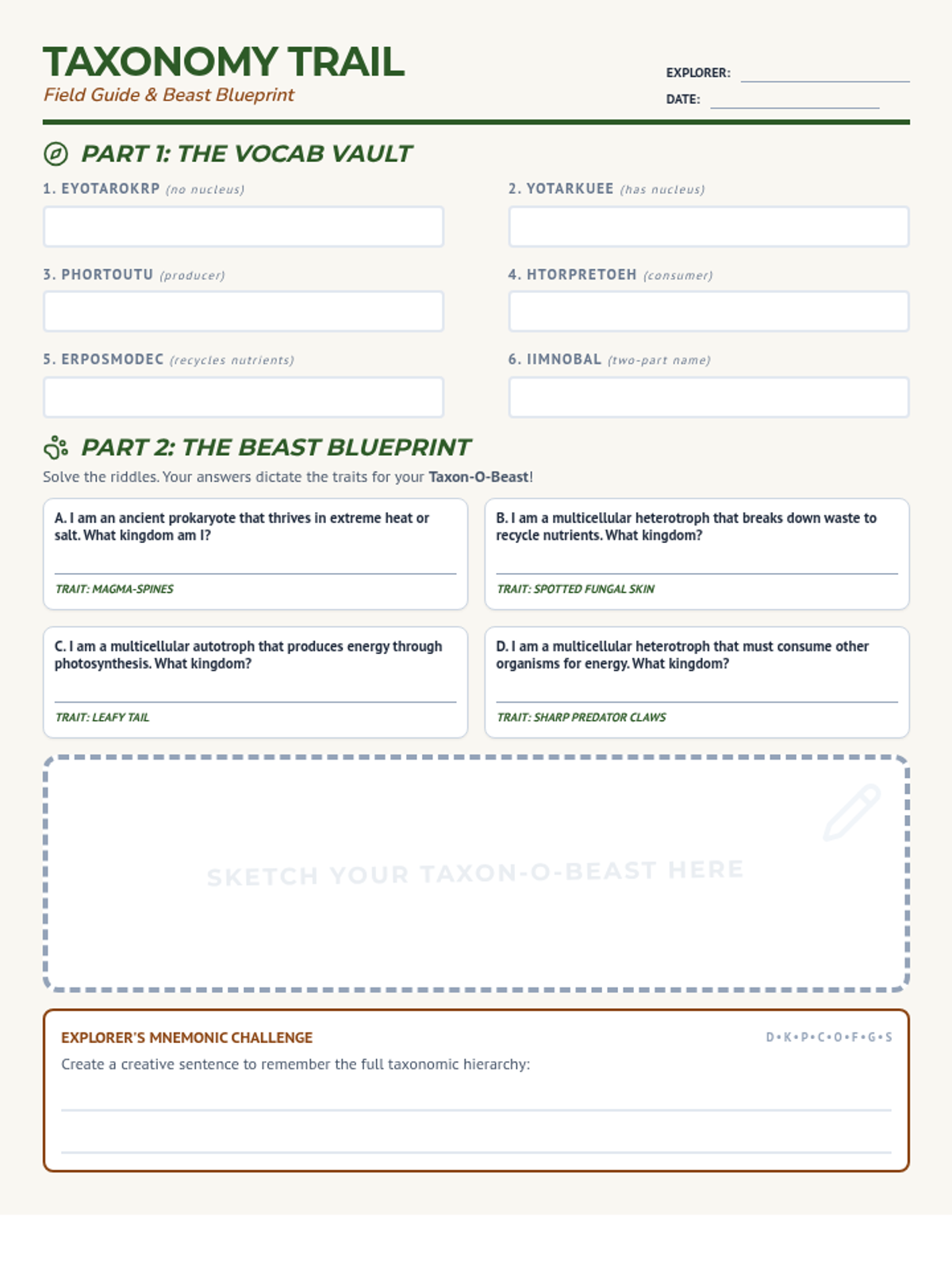
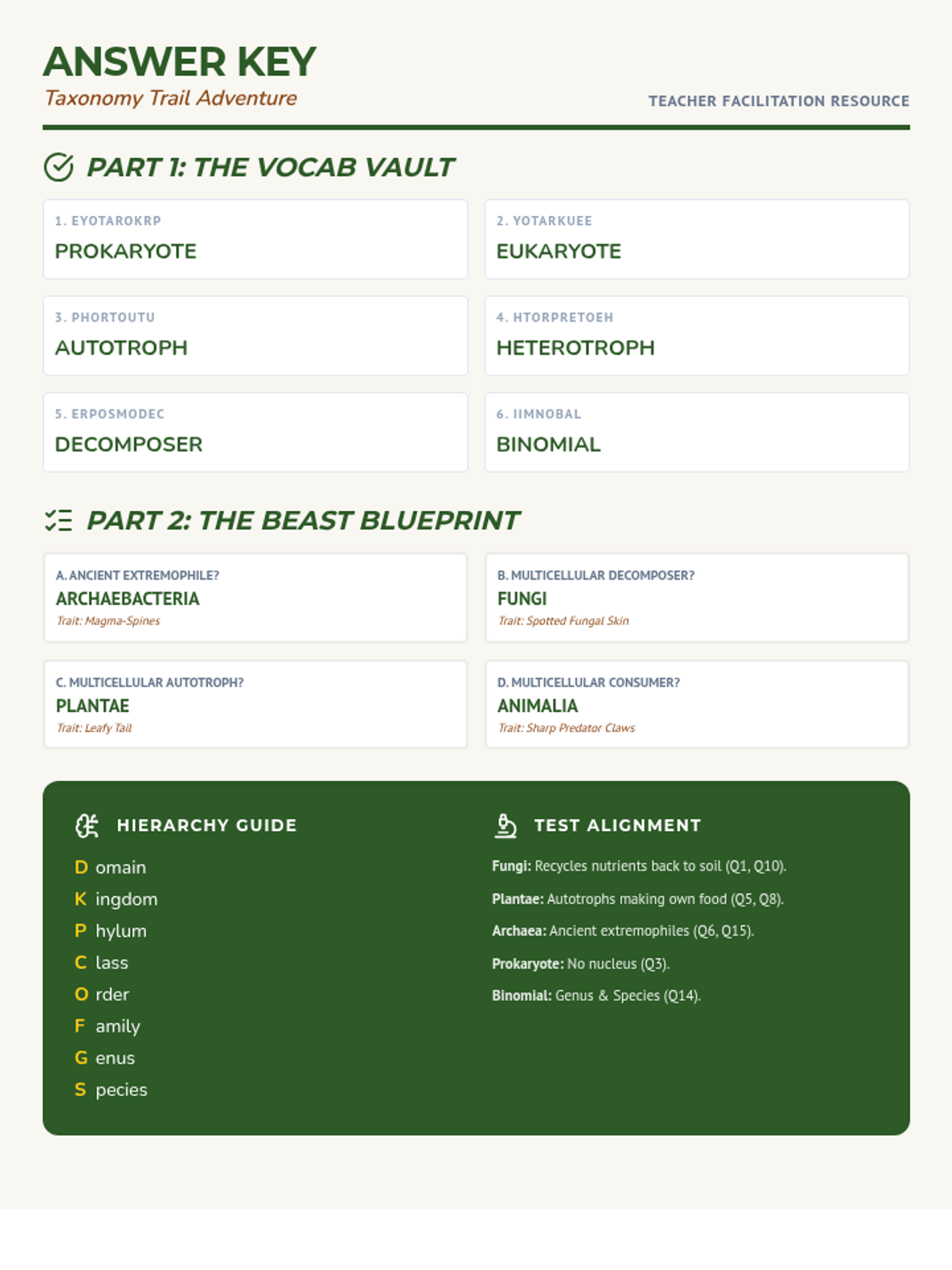
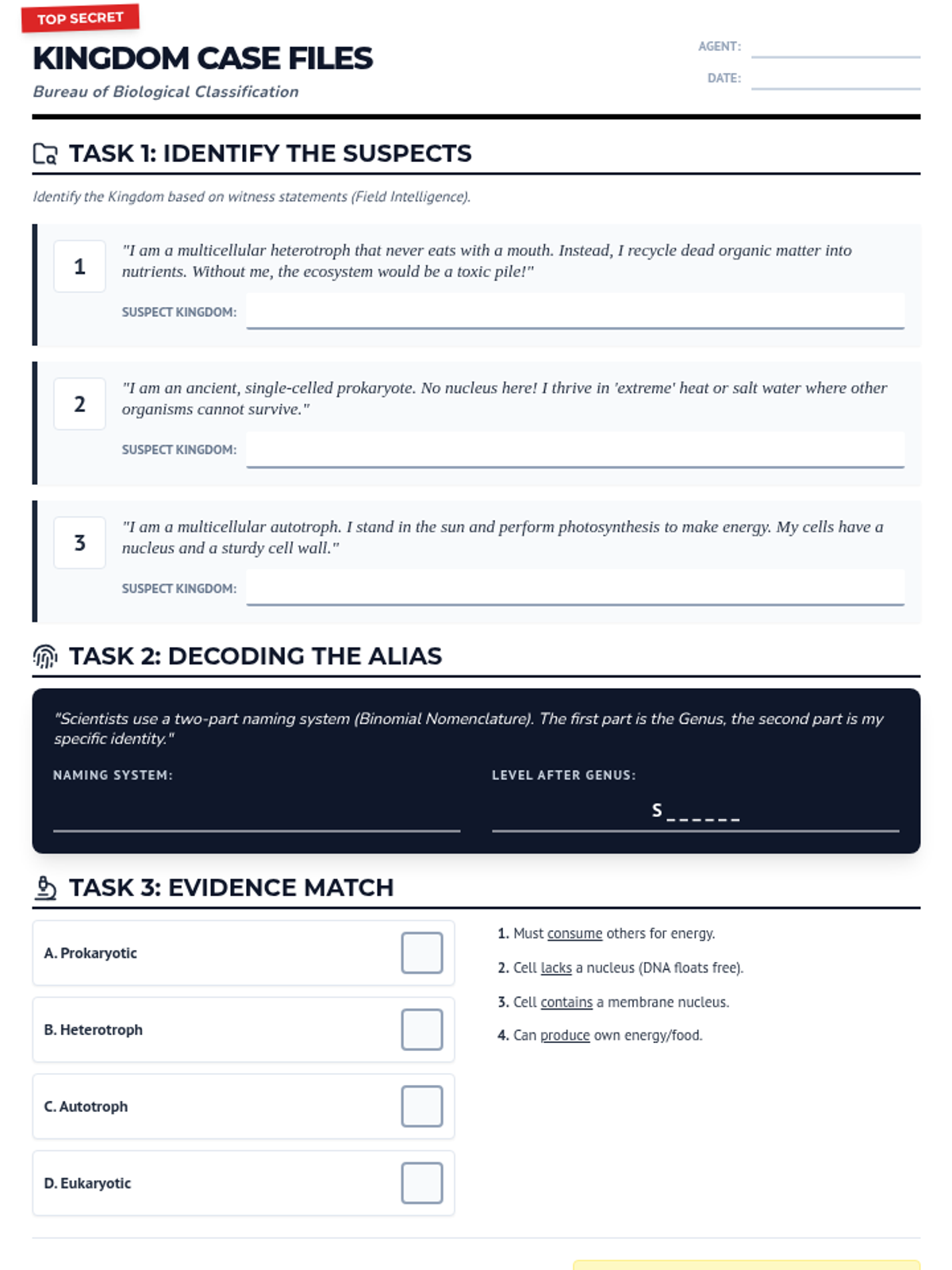
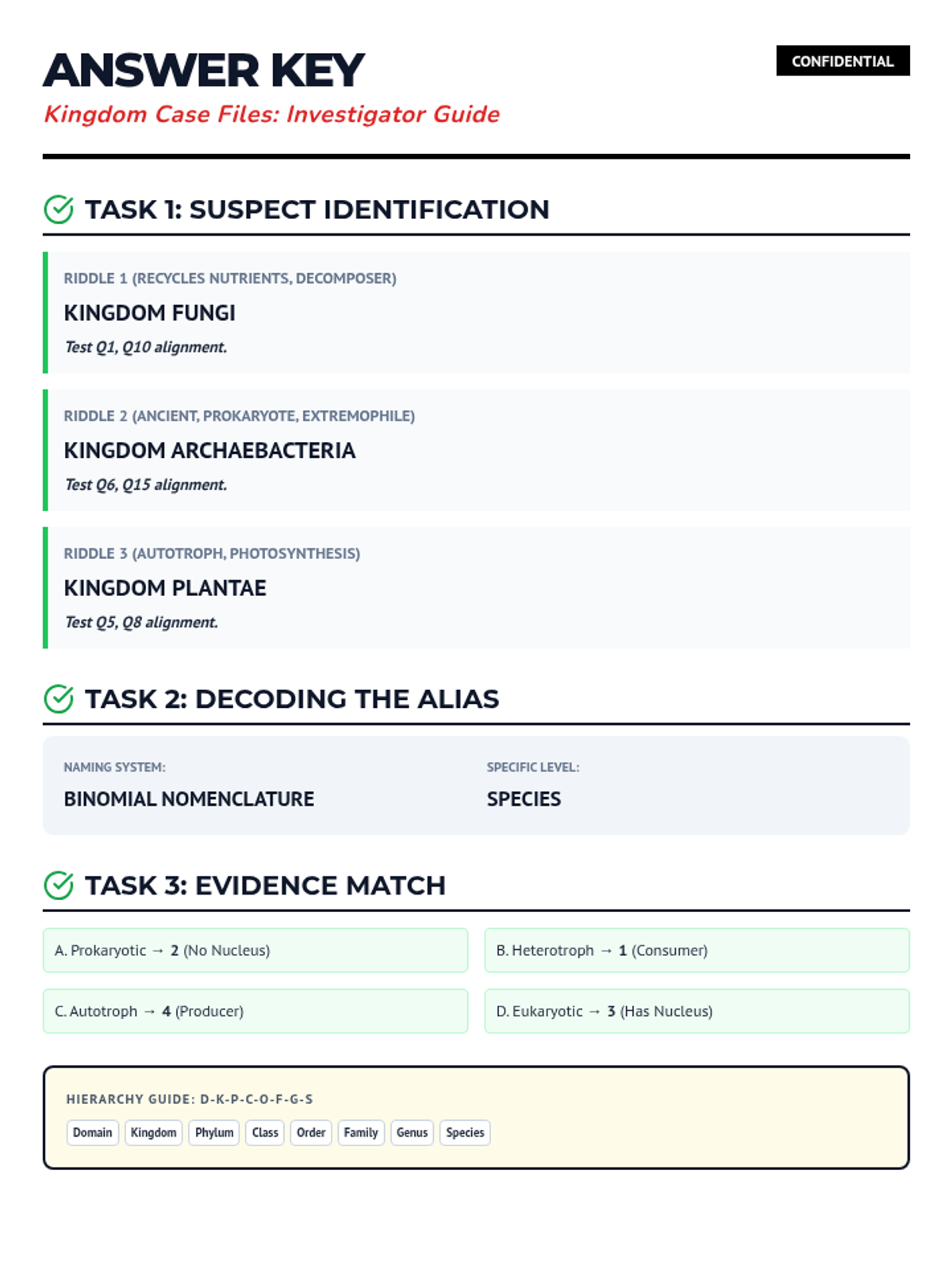
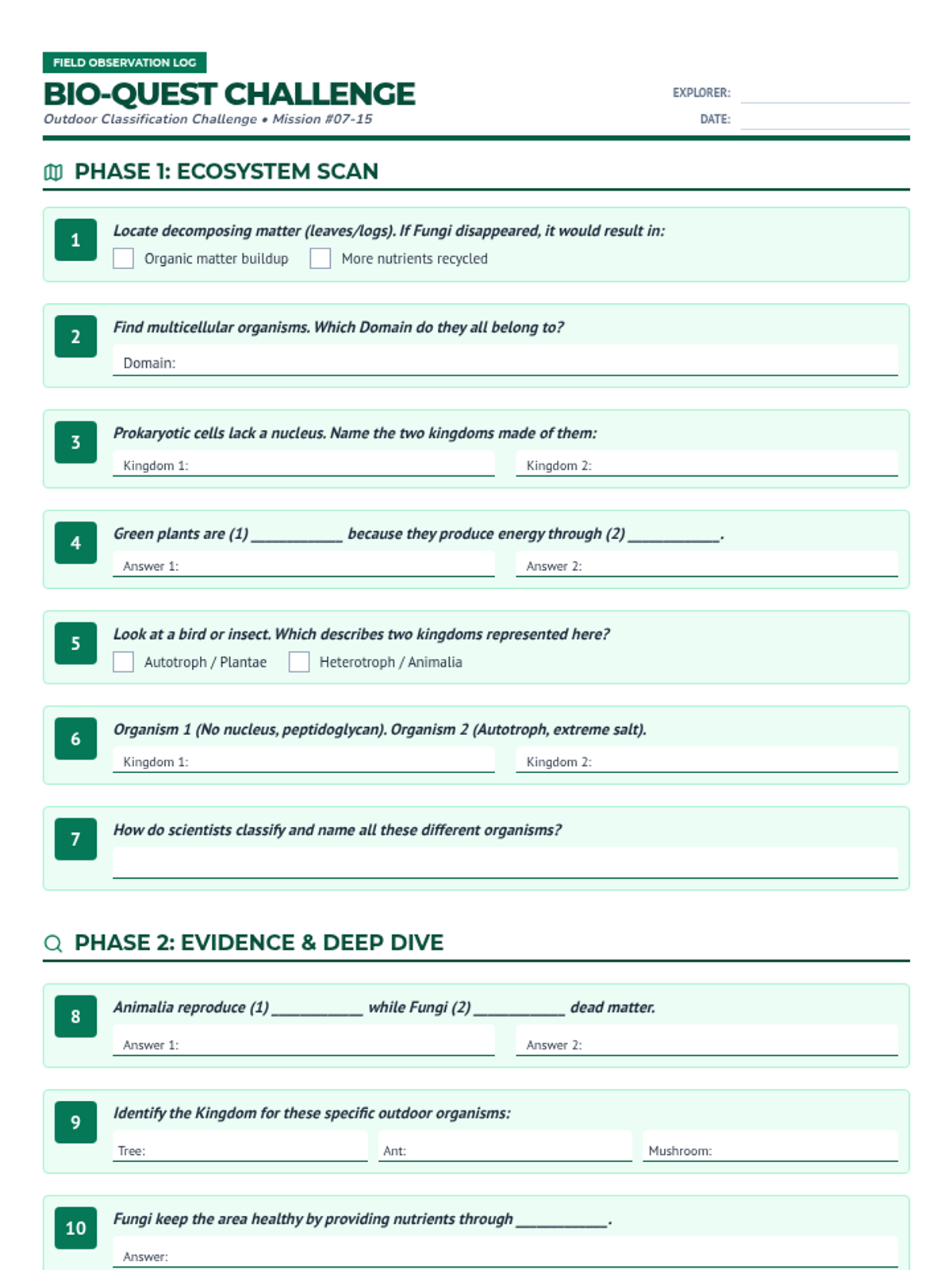
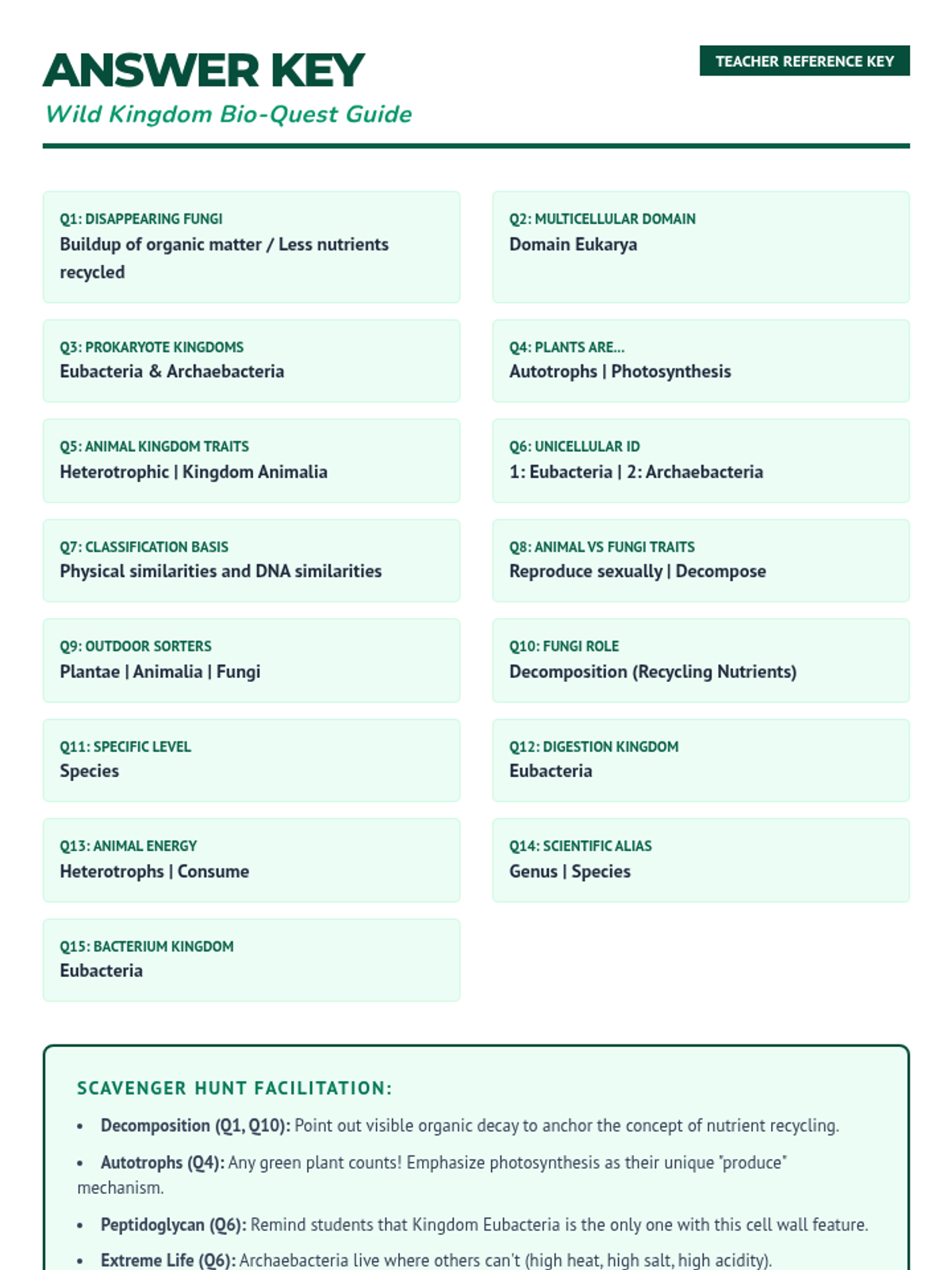
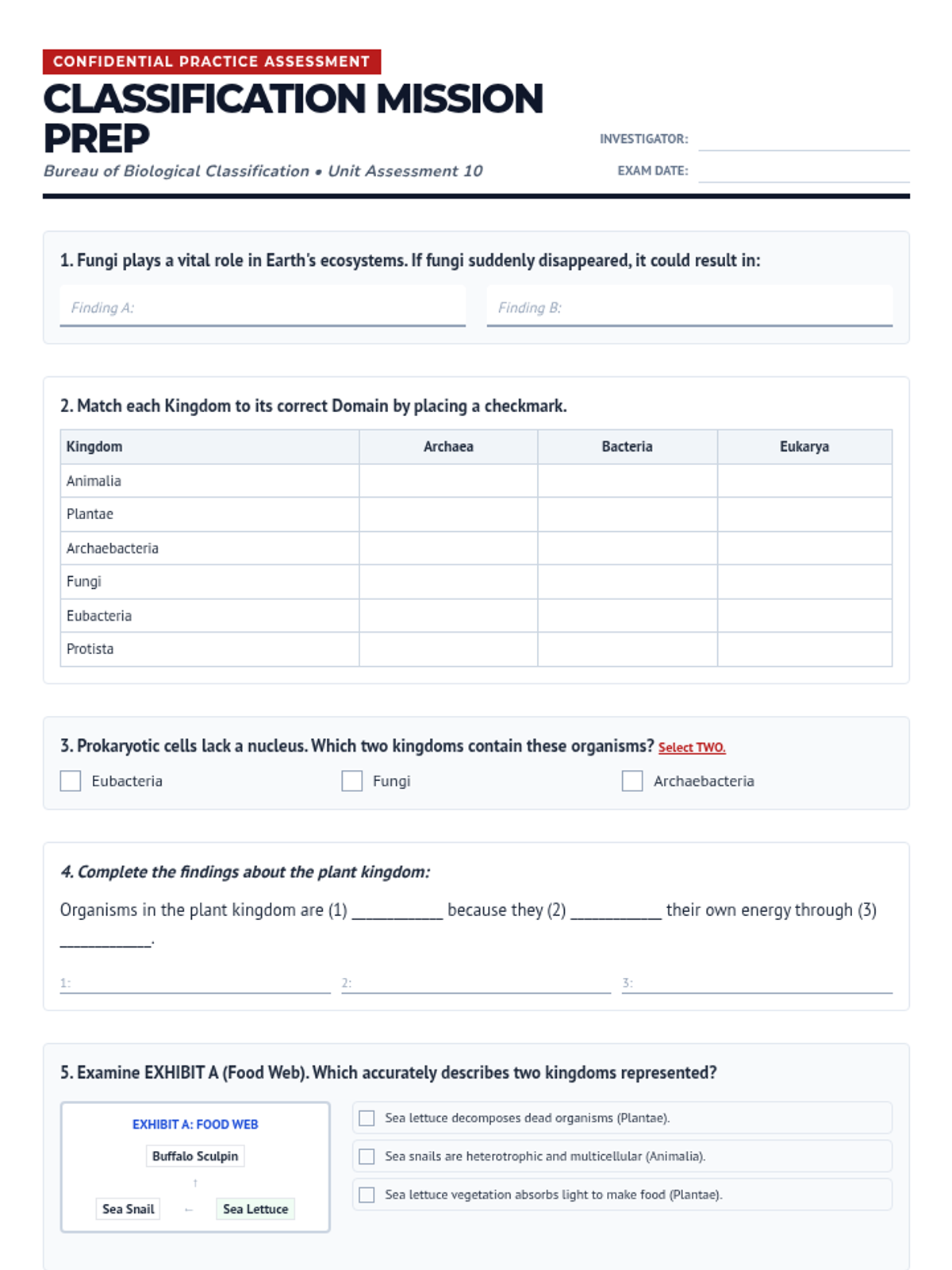
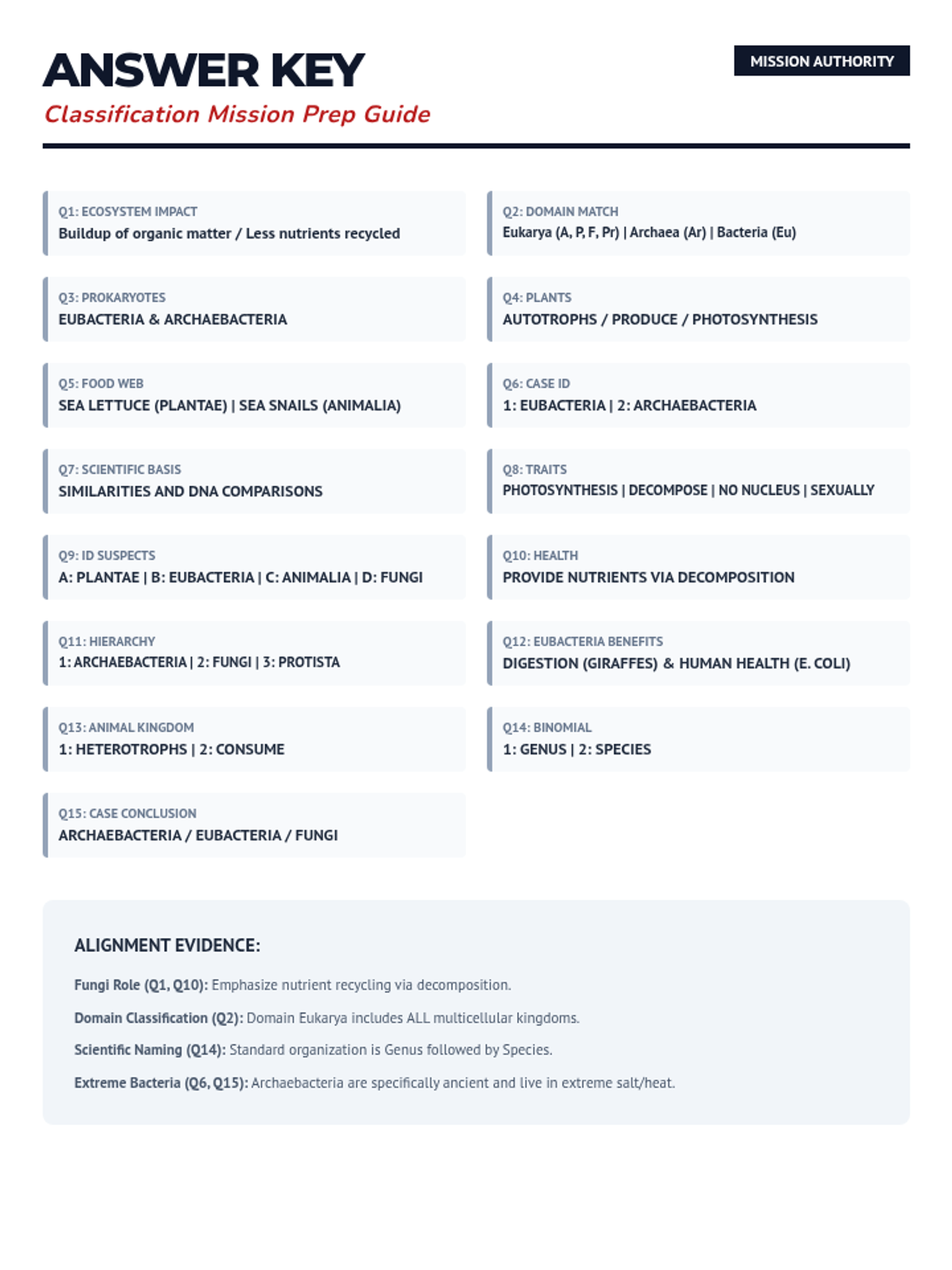
A comprehensive exploration of how scientists organize the diversity of life on Earth, from the broadest domains to individual species.
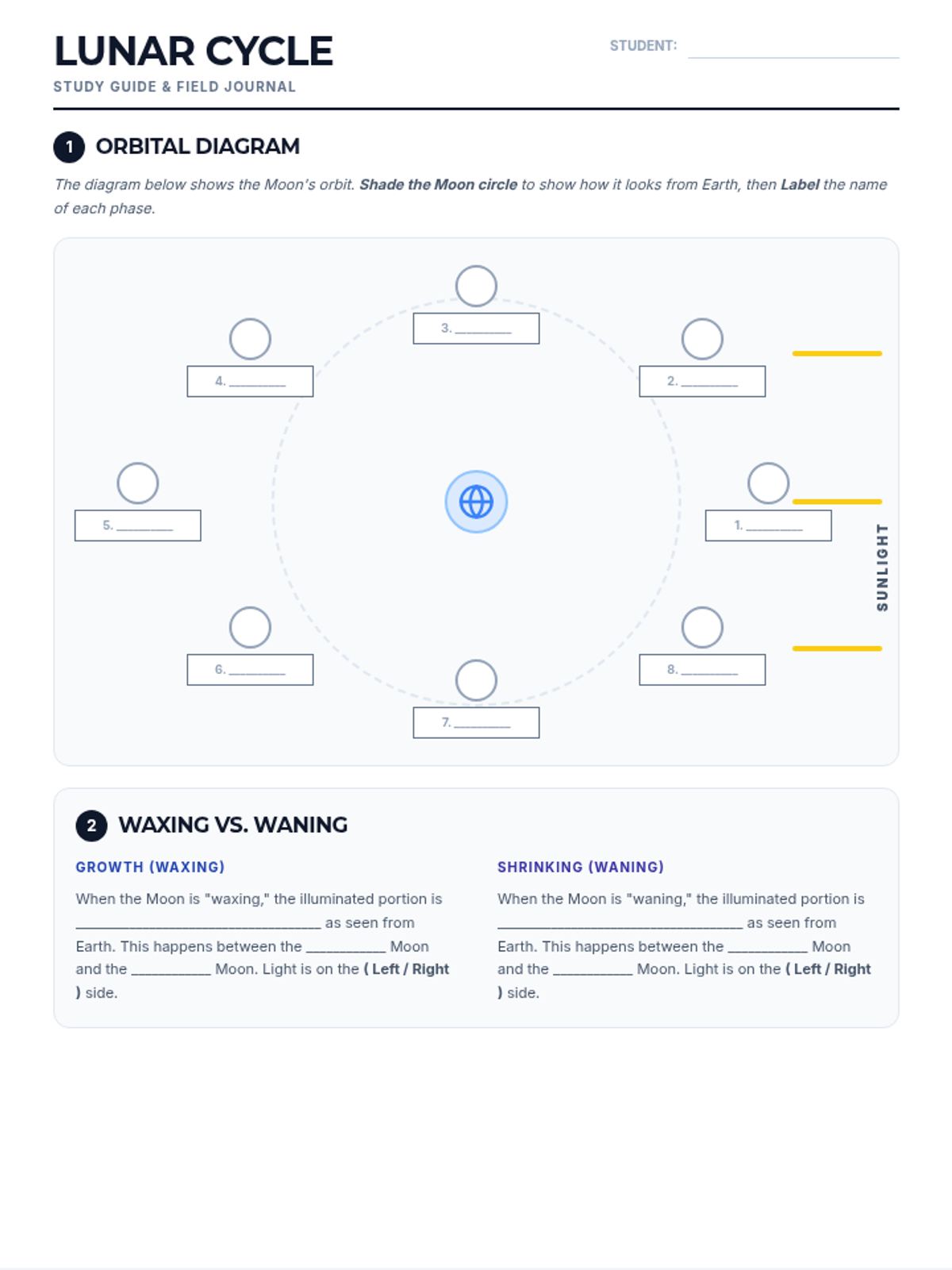
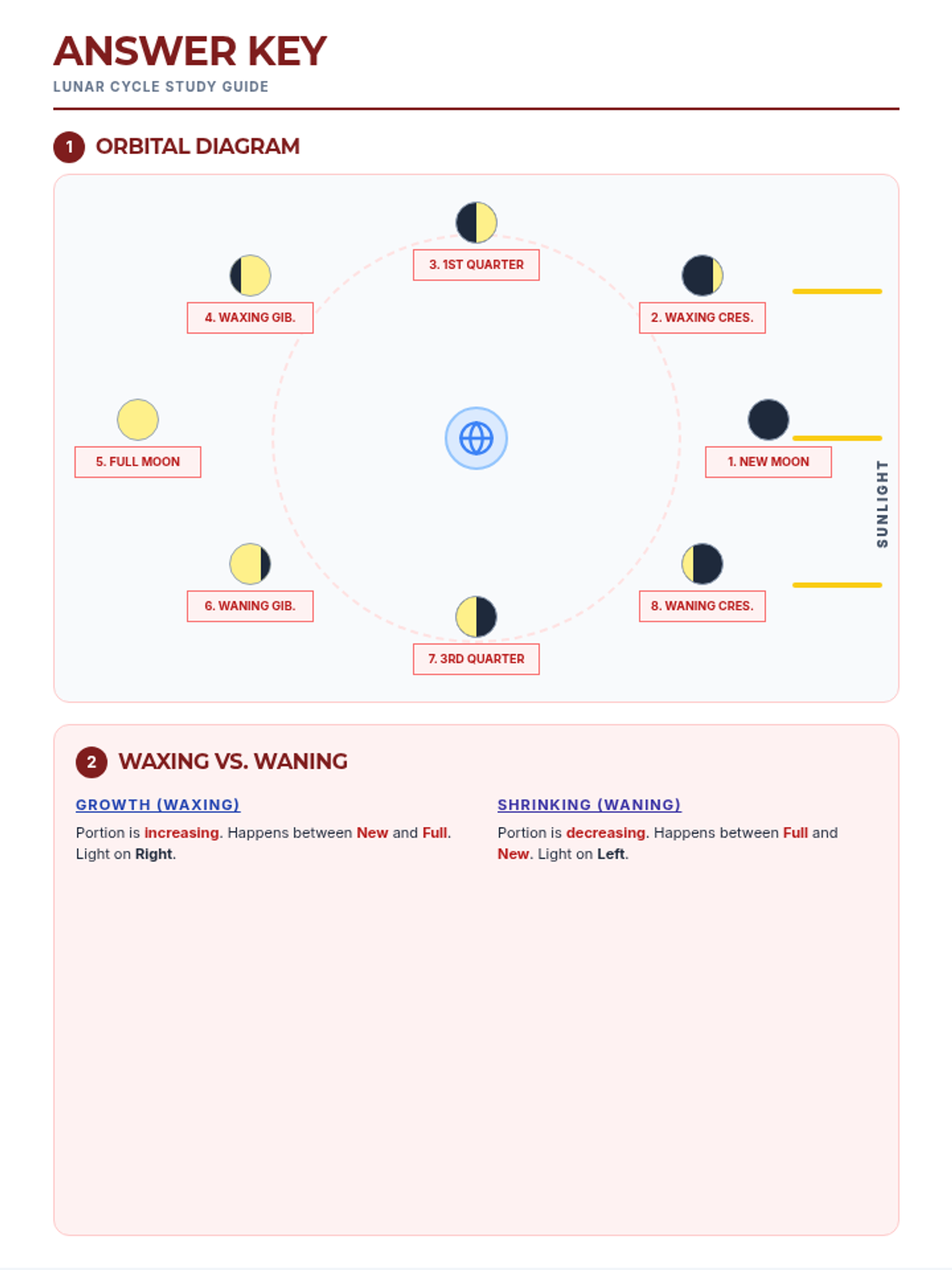
An investigative sequence diving into the mechanics of our solar system, focusing on planetary properties and the dynamic relationships within the Earth-Moon-Sun system.
A comprehensive unit exploring the human cardiovascular system, starting with the intricate anatomy of the heart and extending to blood vessels and circulation loops.
A comprehensive marine biology curriculum exploring the structural and functional design of ocean life, from microscopic plankton to massive cetaceans. Students act as 'Ocean Architects' to understand how environmental pressures shape biological forms.
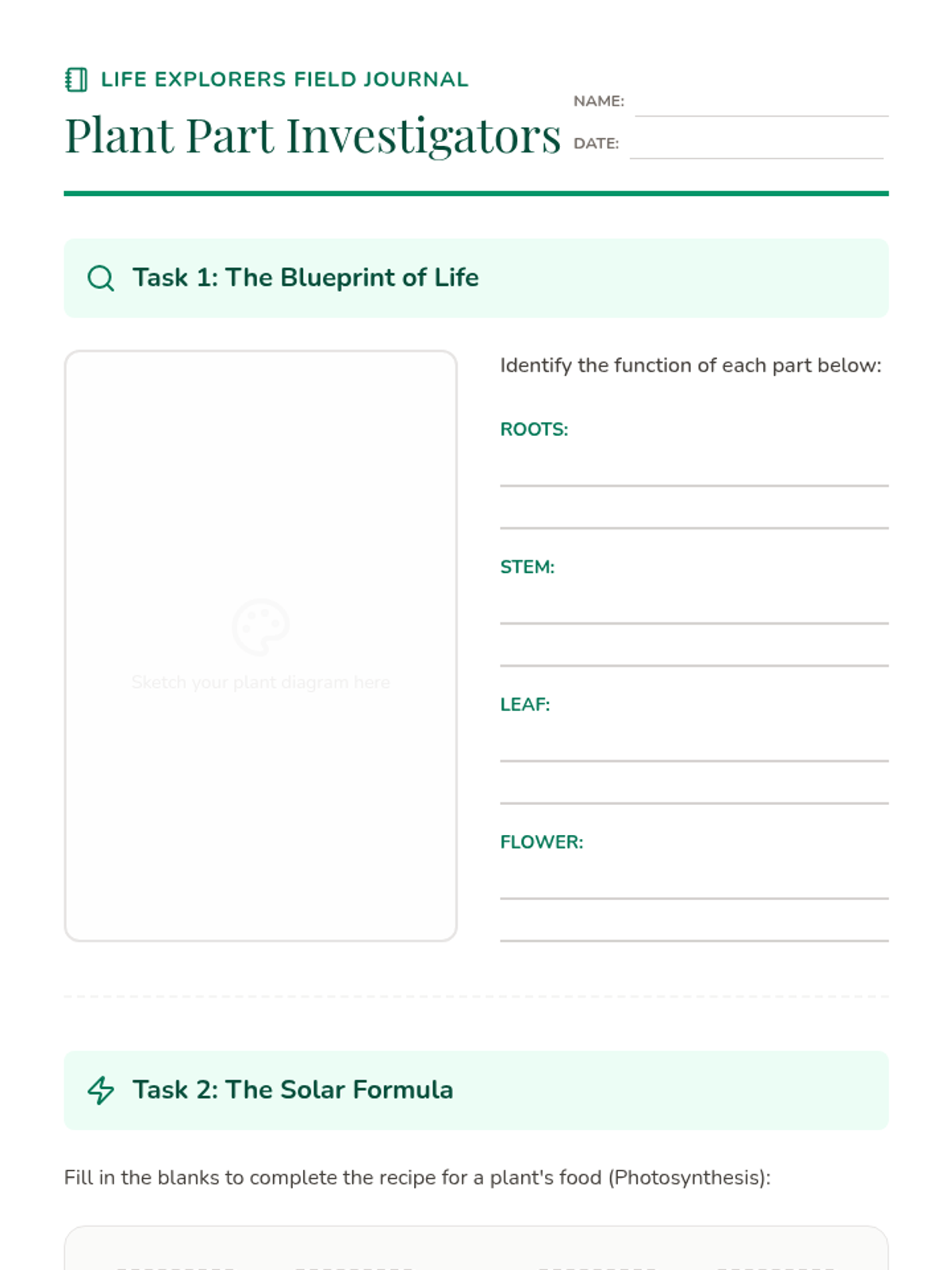
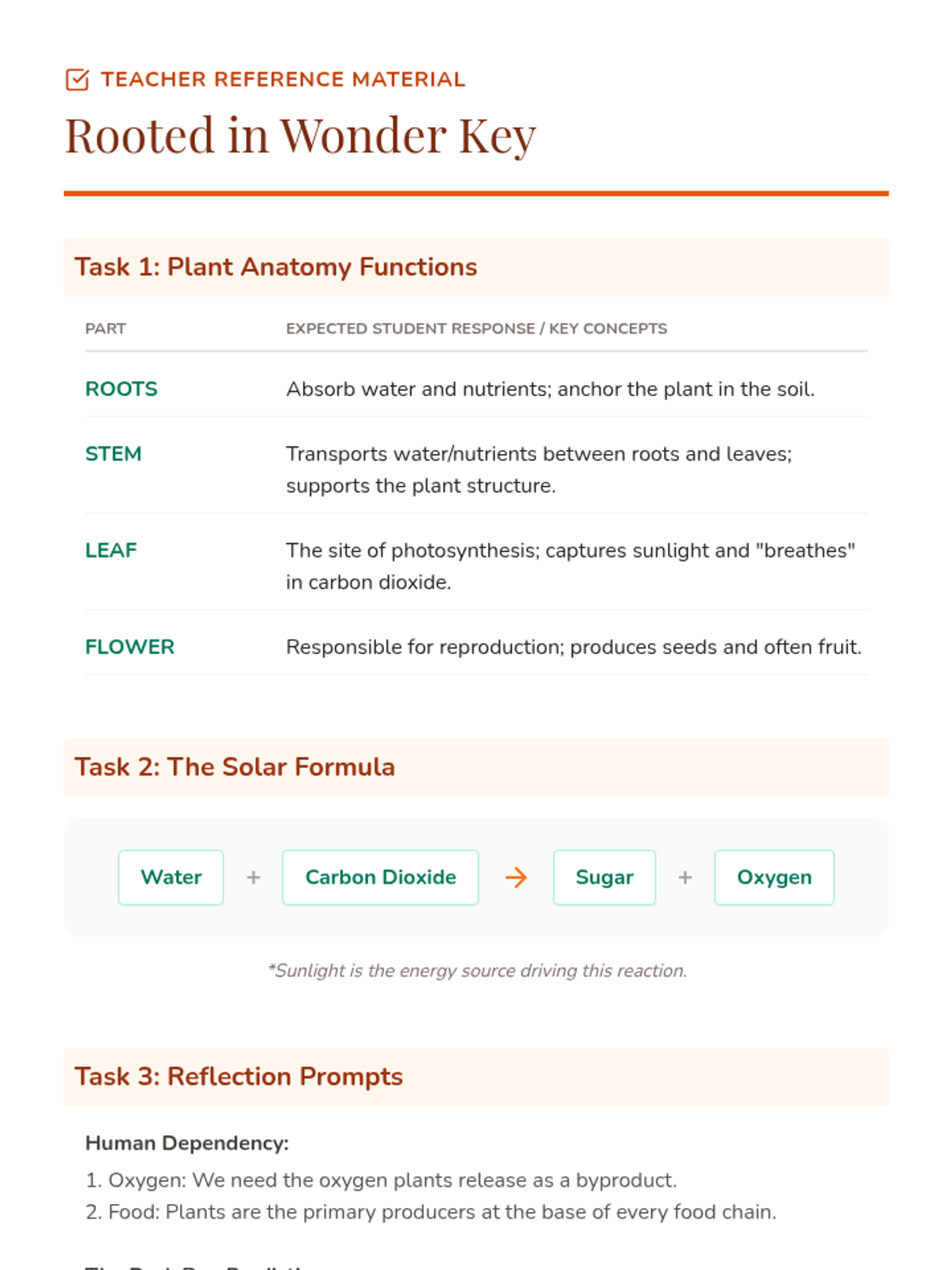
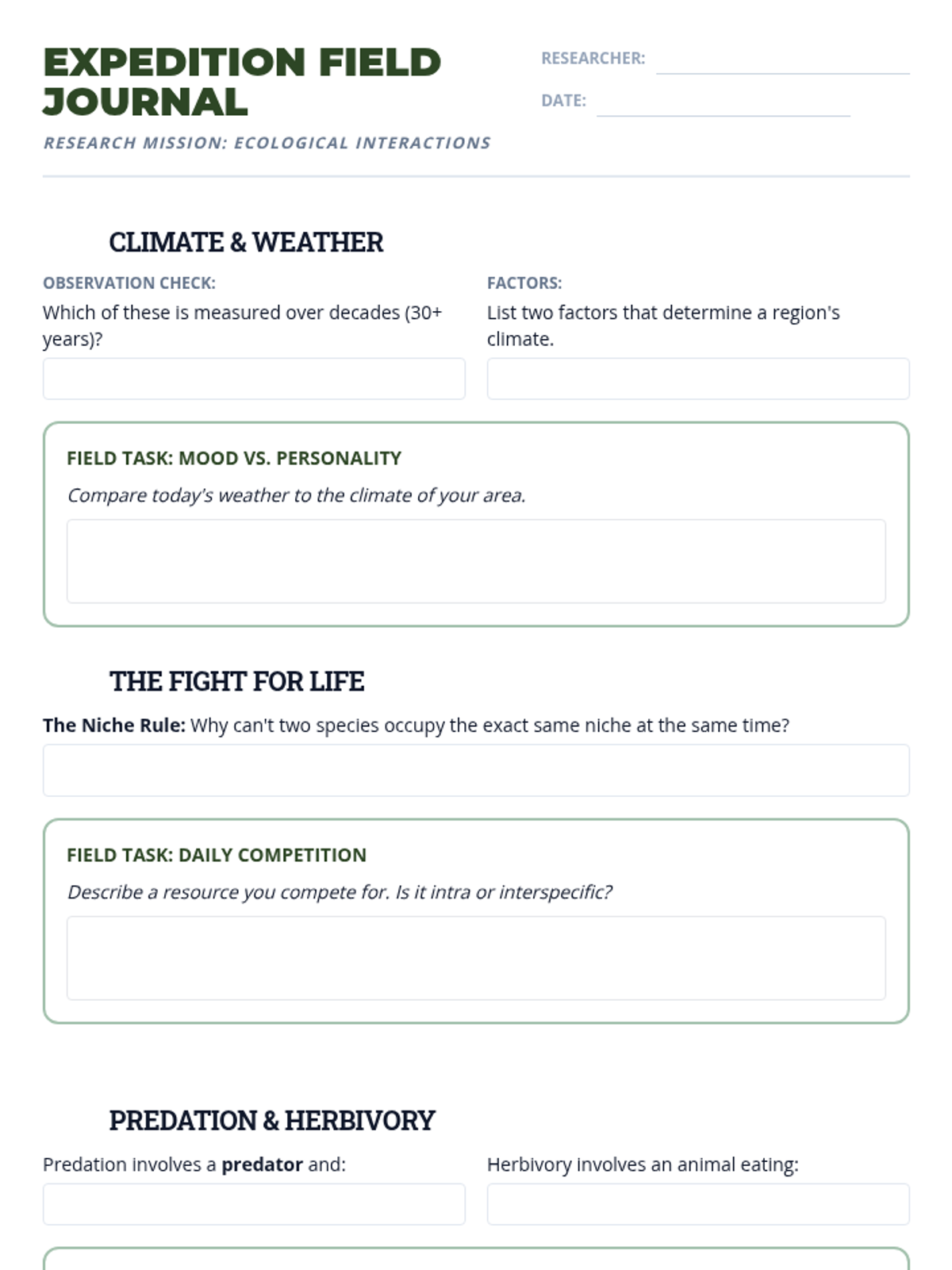
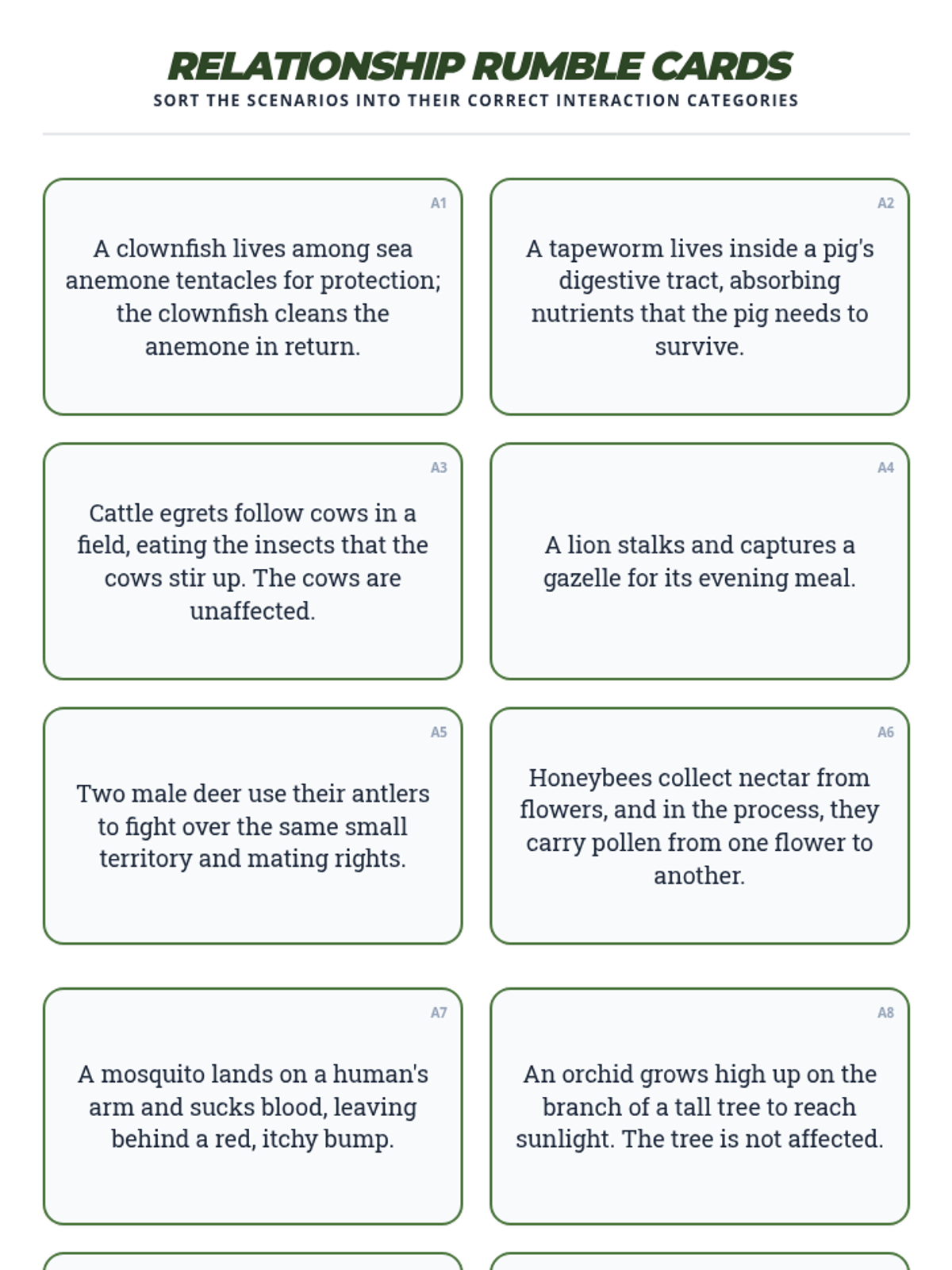
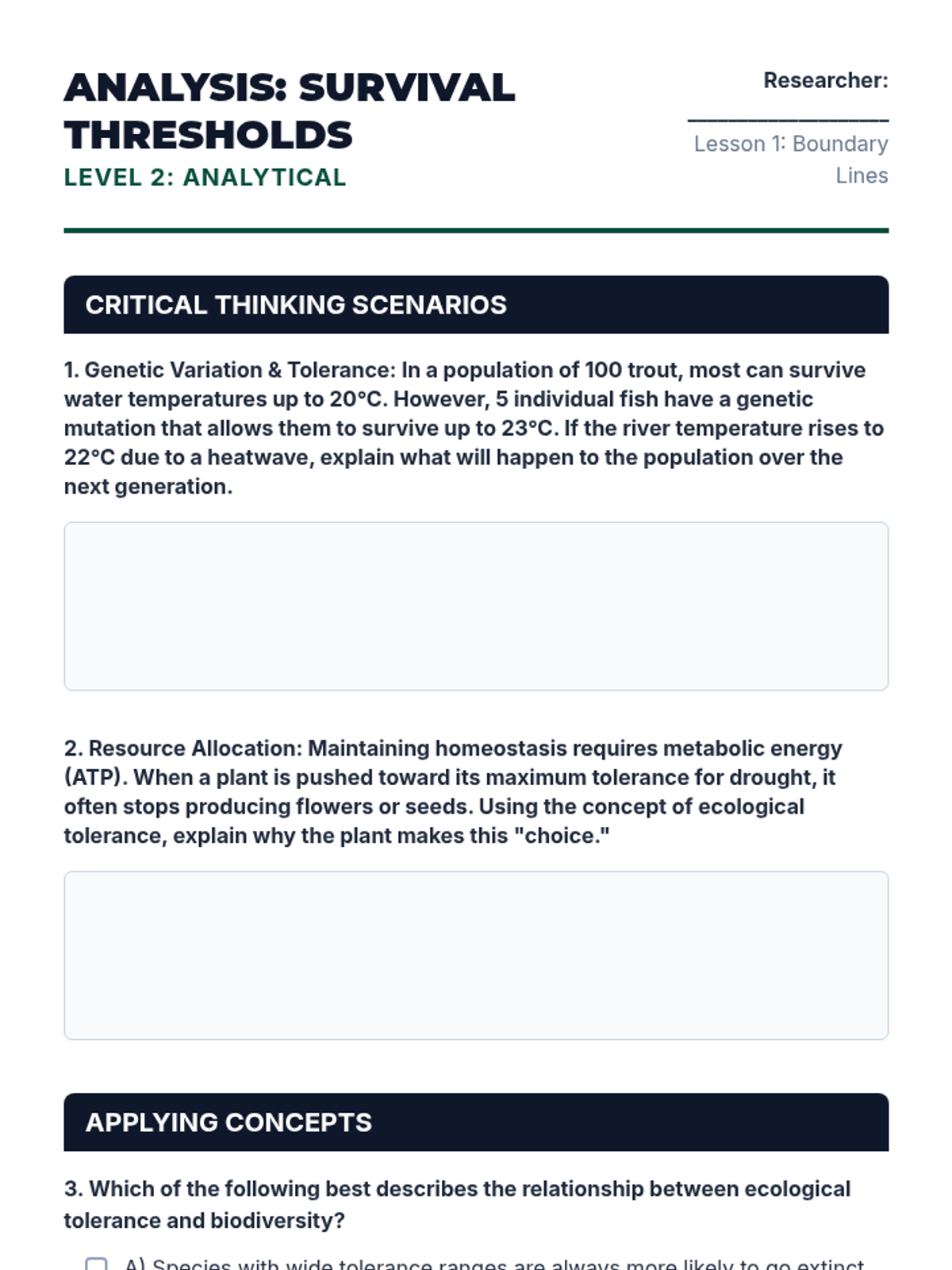
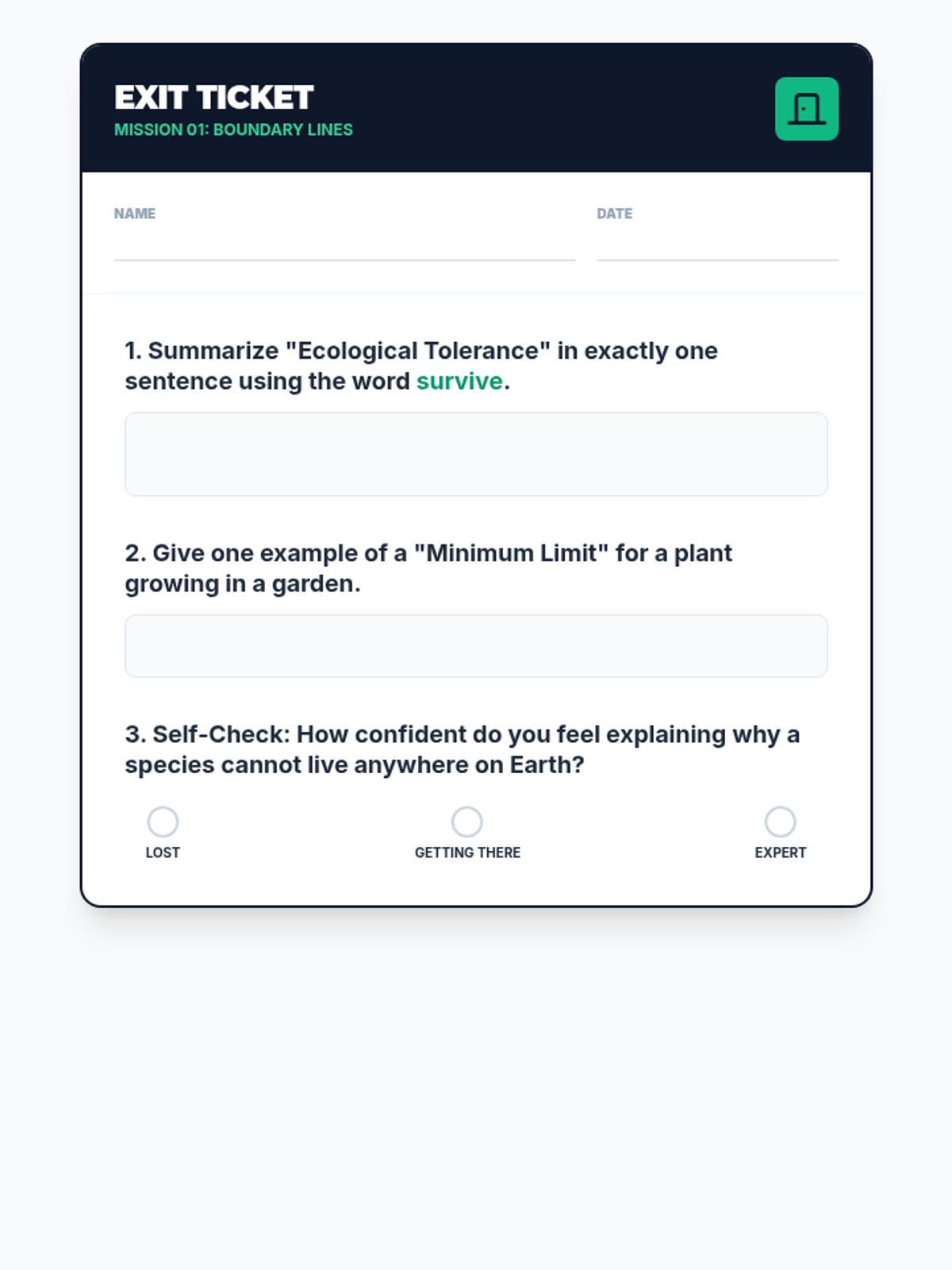
A comprehensive sequence covering introductory 6th-grade life science topics, from ecosystem dynamics to inheritance and evolutionary changes.
A scaffolded middle school unit exploring competition, energy flow, and ecosystem stability. Each lesson is tailored to specific NGSS performance expectations for grades 6, 7, and 8, building from individual organism growth to complex system dynamics.
A comprehensive unit on cellular biology spanning from introductory middle school concepts to advanced organelle systems and specialized functions.
A comprehensive Hi-Lo unit for 6th graders exploring the scale of the universe, our place in the Milky Way, the technology used to explore space, and the history of human spaceflight.
A two-day substitute-friendly introduction to the solar system, covering planetary order, key characteristics, and guided research.
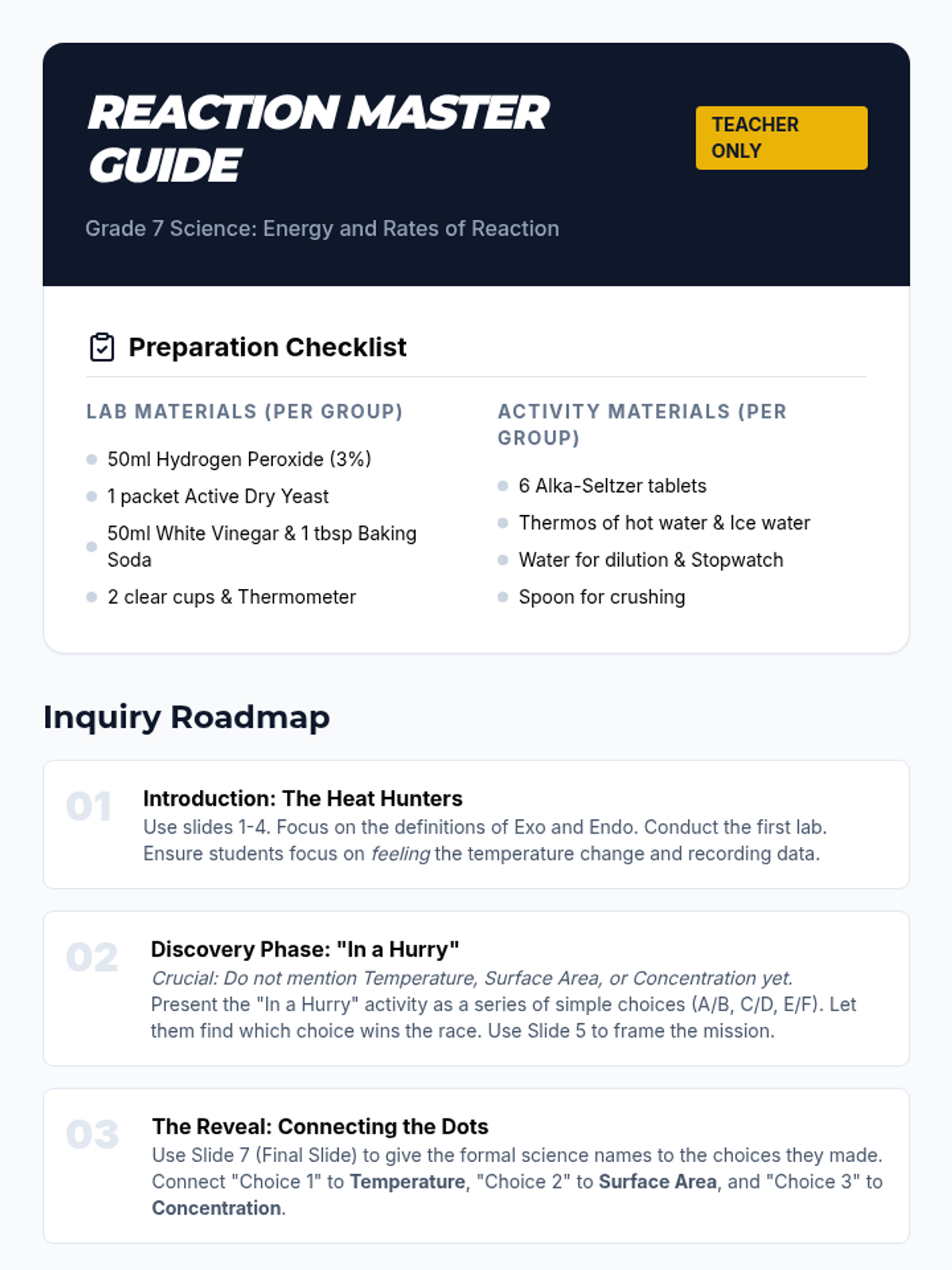
A two-week chemistry unit for middle school exploring pH through color-changing indicators, featuring hands-on labs with red cabbage and butterfly pea flower tea. Students learn to identify acids and bases, understand the pH scale, and observe chemical reactions in everyday substances.
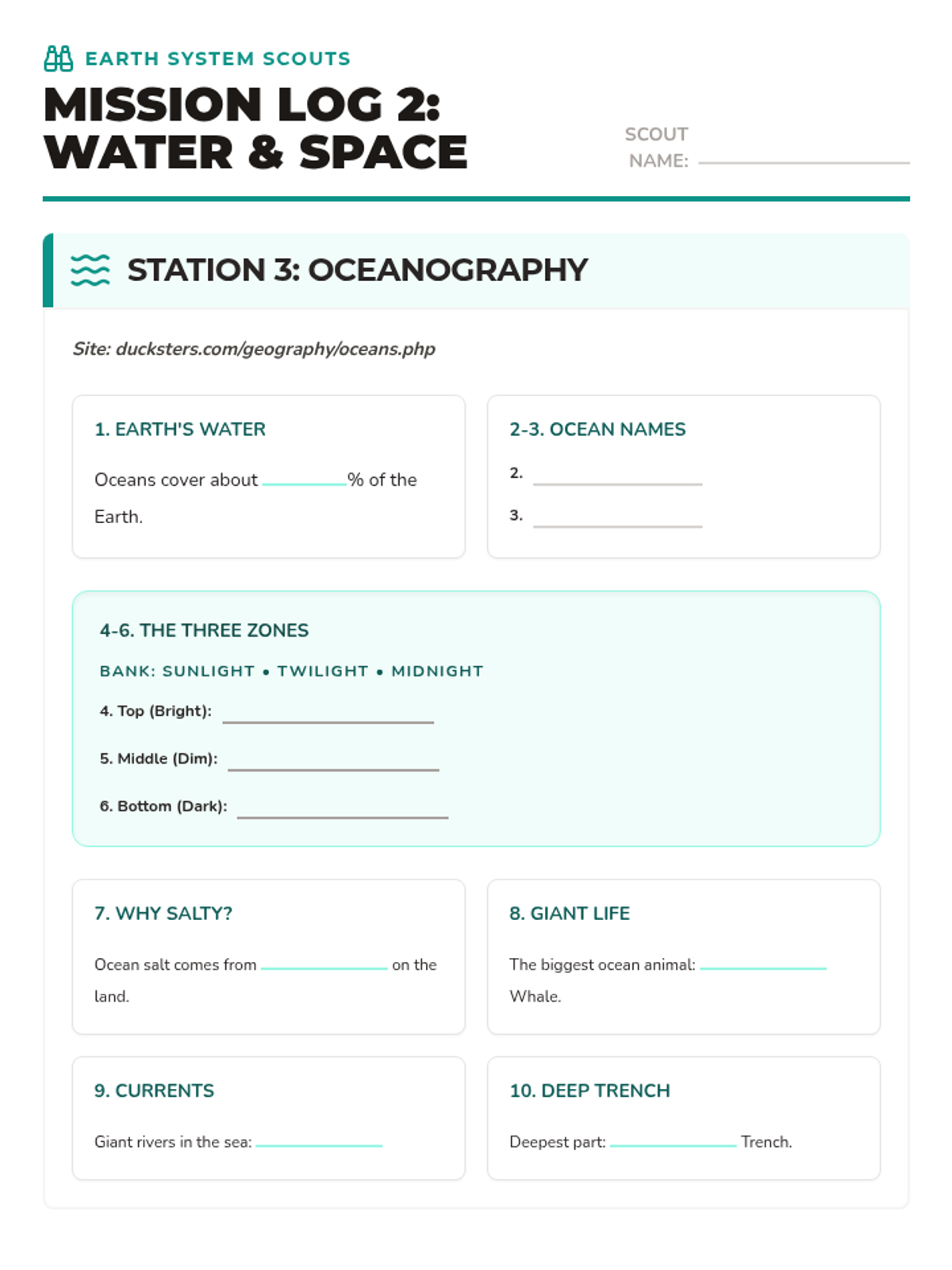
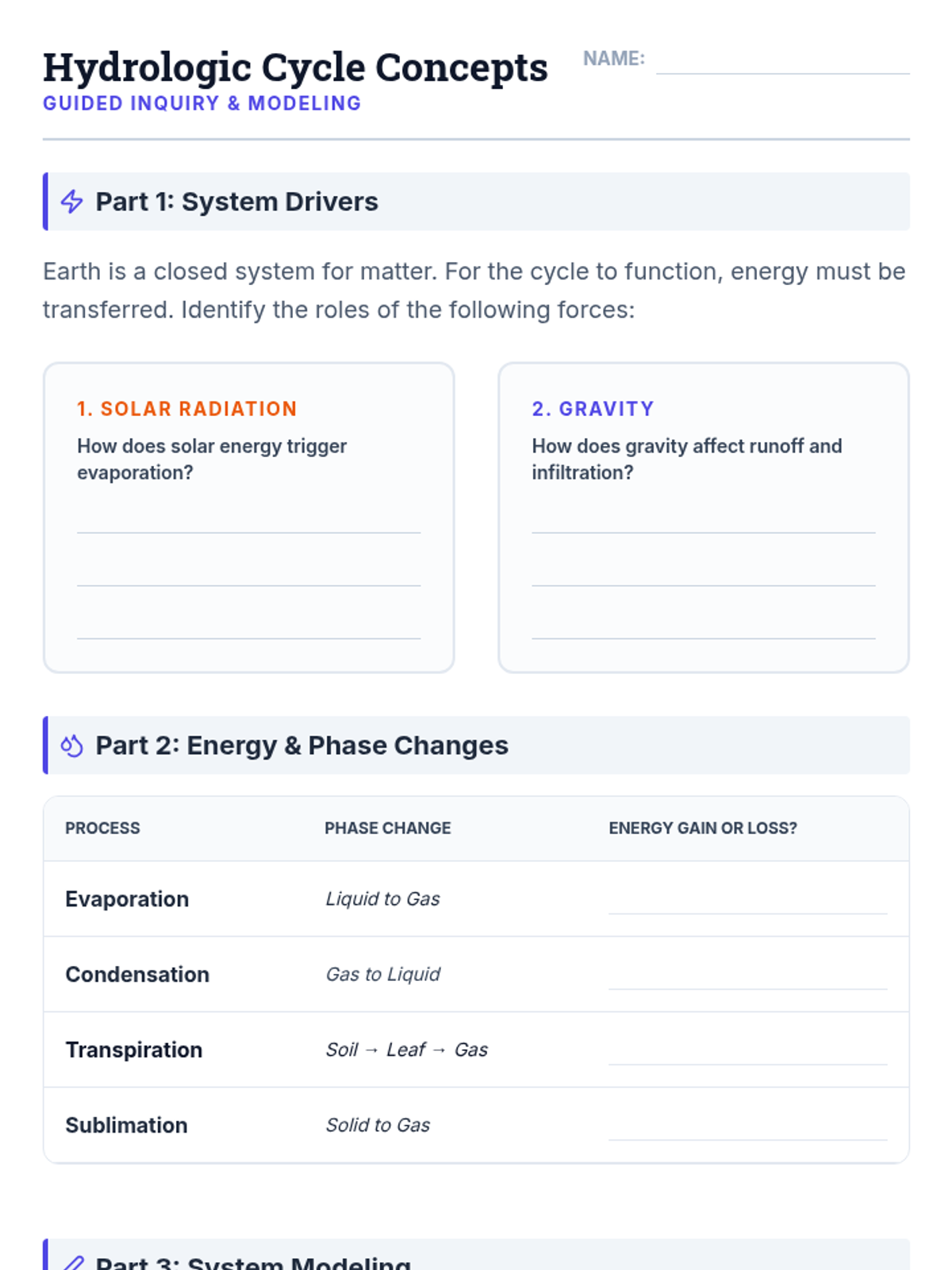
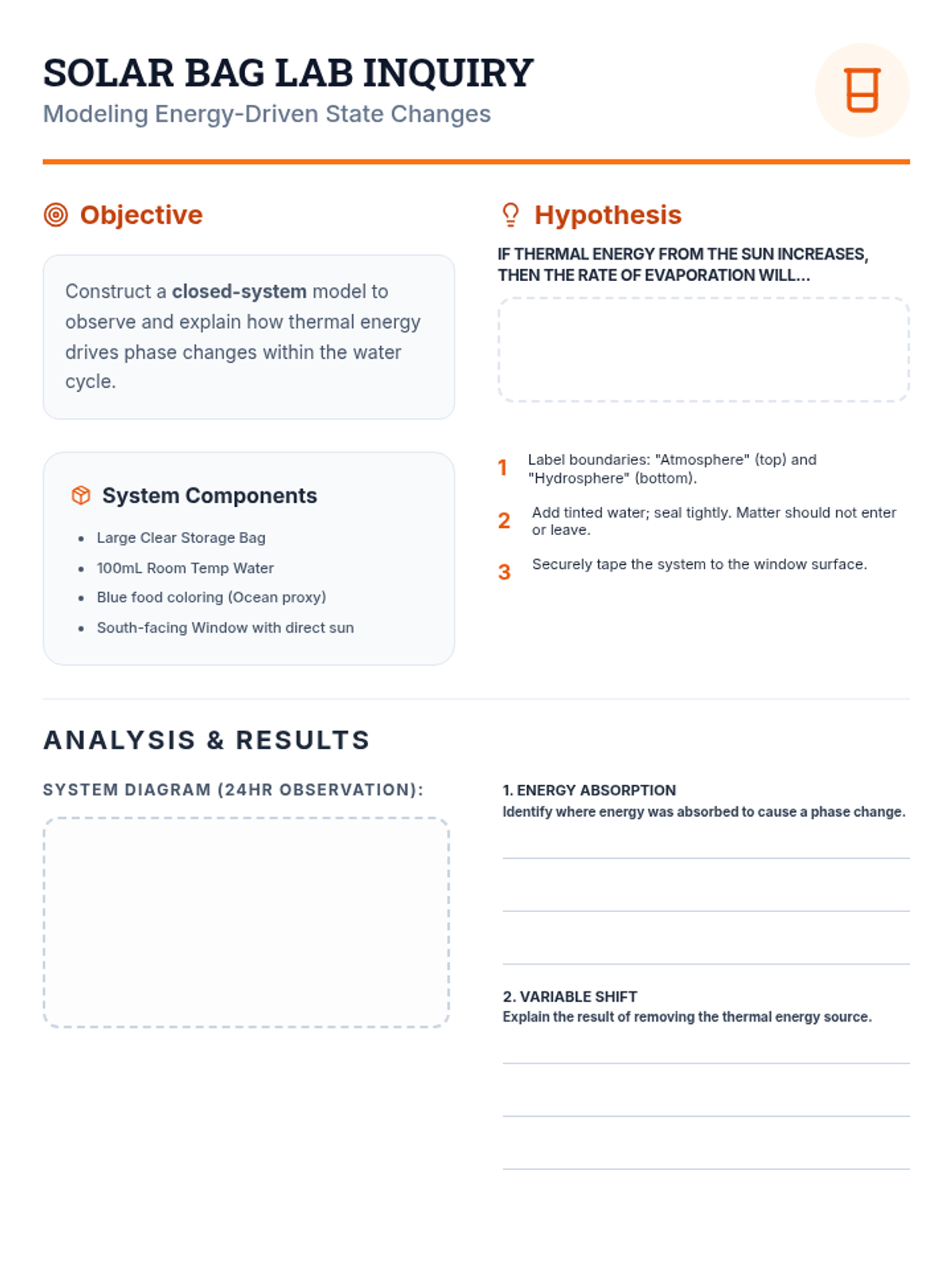
A series of lessons exploring Earth's major systems, starting with the hydrosphere and its impact on the planet's processes.
An engineering and biology sequence that teaches students to look to nature for sustainable and efficient design solutions, fostering innovation and biological appreciation.
An immersive journey through space science, mapping out everything from planetary orbits to the fundamental forces like gravity and stellar evolution that shape our universe. Designed as a cohesive "Field Manual" series for middle school explorers.
A two-part exploration of astronomy, tracing the journey from Ancient Greek mythological interpretations and star-based navigation to modern space science, GPS technology, and lunar missions.
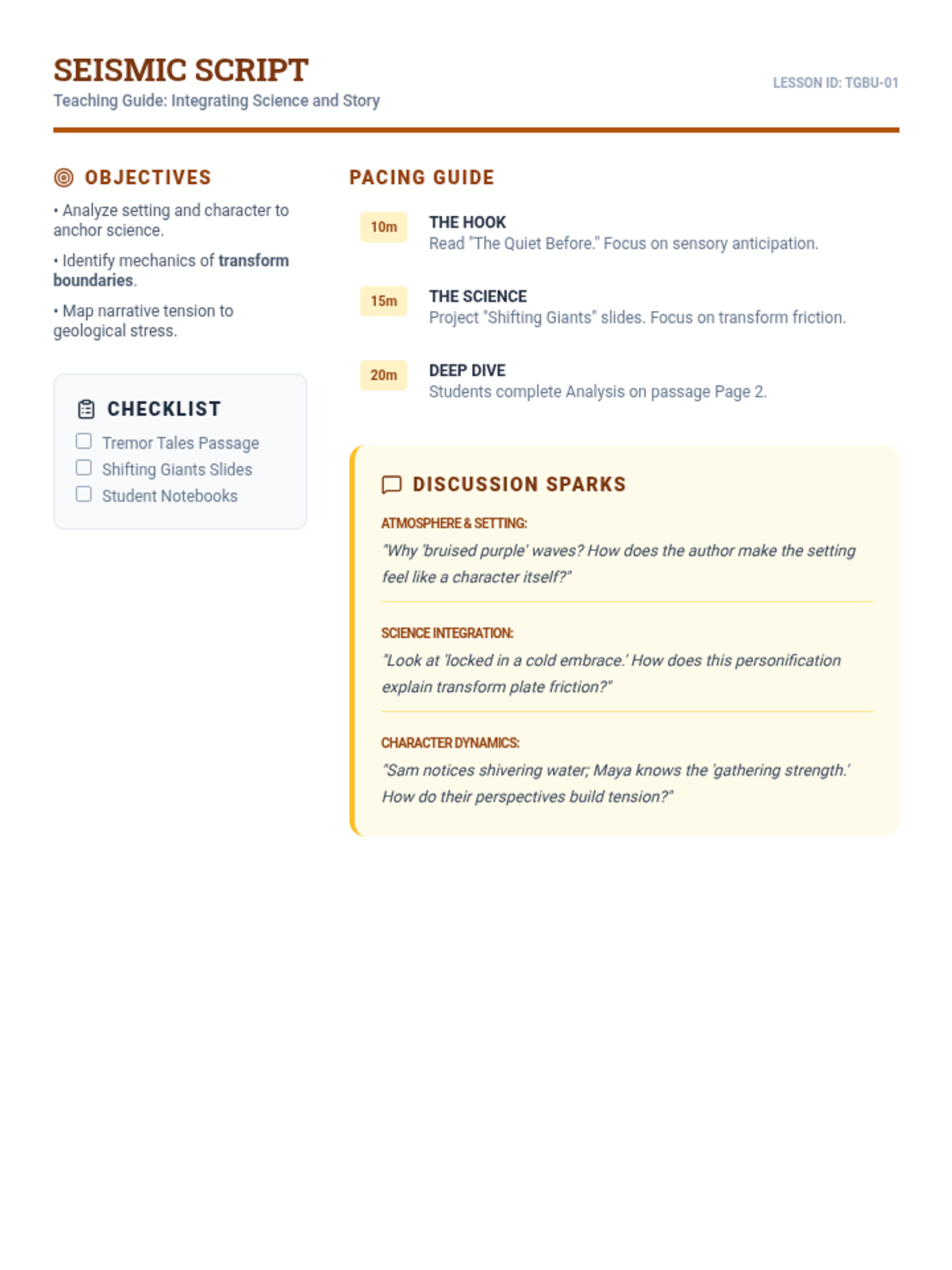
A week-long independent study unit based on 'The Boy Who Harnessed the Wind', guiding students through literary analysis, scientific research, and engineering design.
A two-day exploration of physical properties, distinguishing between those that depend on the amount of matter (mass, volume, weight) and those that are intrinsic to the substance (density, melting point, boiling point, solubility).
Une séquence immersive pour découvrir les secrets du cerveau humain, sa structure, ses fonctions et son incroyable capacité à apprendre.
An exploration of how humanity harnessed the stars and the physics of time to build global networks, mapping the Earth through celestial symmetry and precision engineering.
A high-energy exploration of gravity's invisible pull, from dropping everyday objects to calculating weight on distant planets. Students will engage in hands-on observations and creative writing activities to understand how mass and distance govern the universe.
A foundational biology sequence covering reproduction, cell classification, and organism traits for middle school science.
A deep dive into how animals use non-verbal signals, specifically posturing and threatening behaviors, to communicate dominance, defend territory, and avoid physical conflict. Students explore the biological 'why' behind these displays and practice identifying them across various species.
A comprehensive science sequence covering cellular biology for 6th grade and genetic inheritance for 7th grade, aligned with state-level testing standards.
An immersive 5-room murder mystery escape room experience designed for teens, focusing on collaborative problem-solving and logic. Students work in teams to solve riddles and puzzles to identify the culprit in the 'Midnight Manor' case.
A comprehensive 3-day sequence focused on distinguishing between physical properties of matter that are independent of amount (density, solubility, melting/boiling points) and those that are dependent (mass, volume, weight). Students act as 'Substance Sleuths' to investigate these properties through hands-on labs and visual note-taking.
A Gold Standard PBL unit where students investigate Earth's systems and human impact to design a community exhibit for local endangered turtle conservation in the Nashoba Brook watershed. Students explore water distribution, sphere interactions, and engineering design through the lens of protecting their 'headstarted' Blanding's turtles.
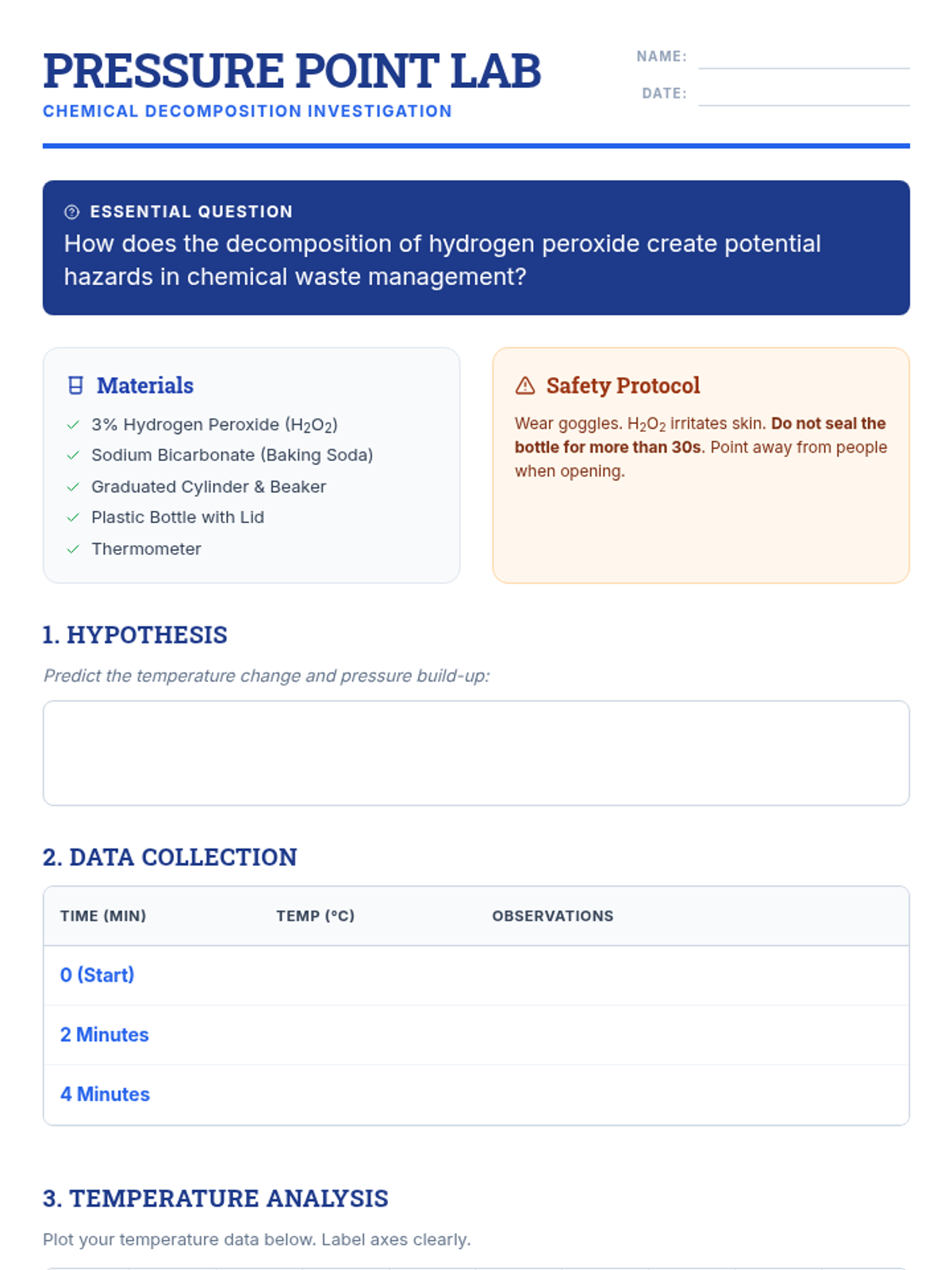
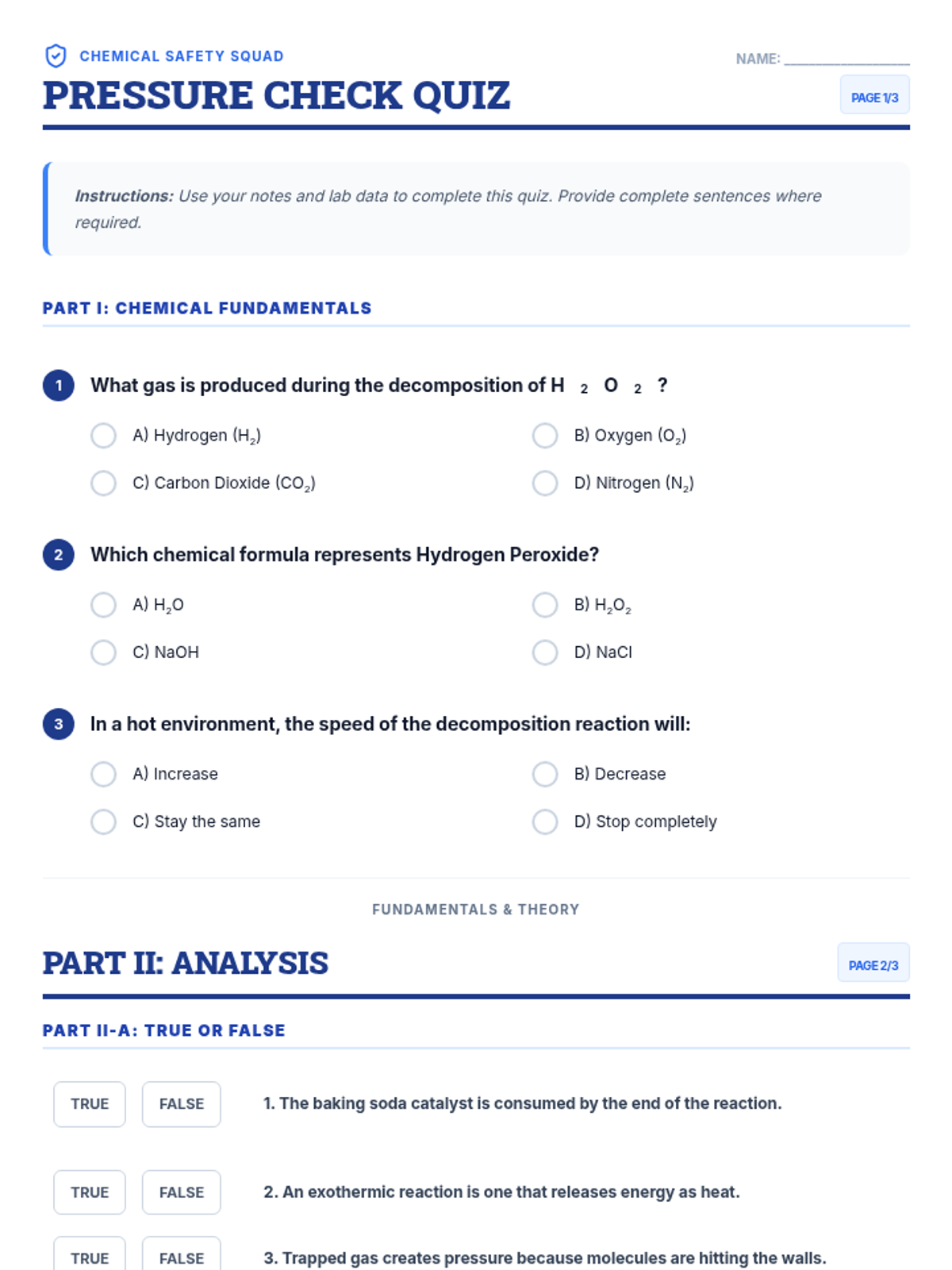
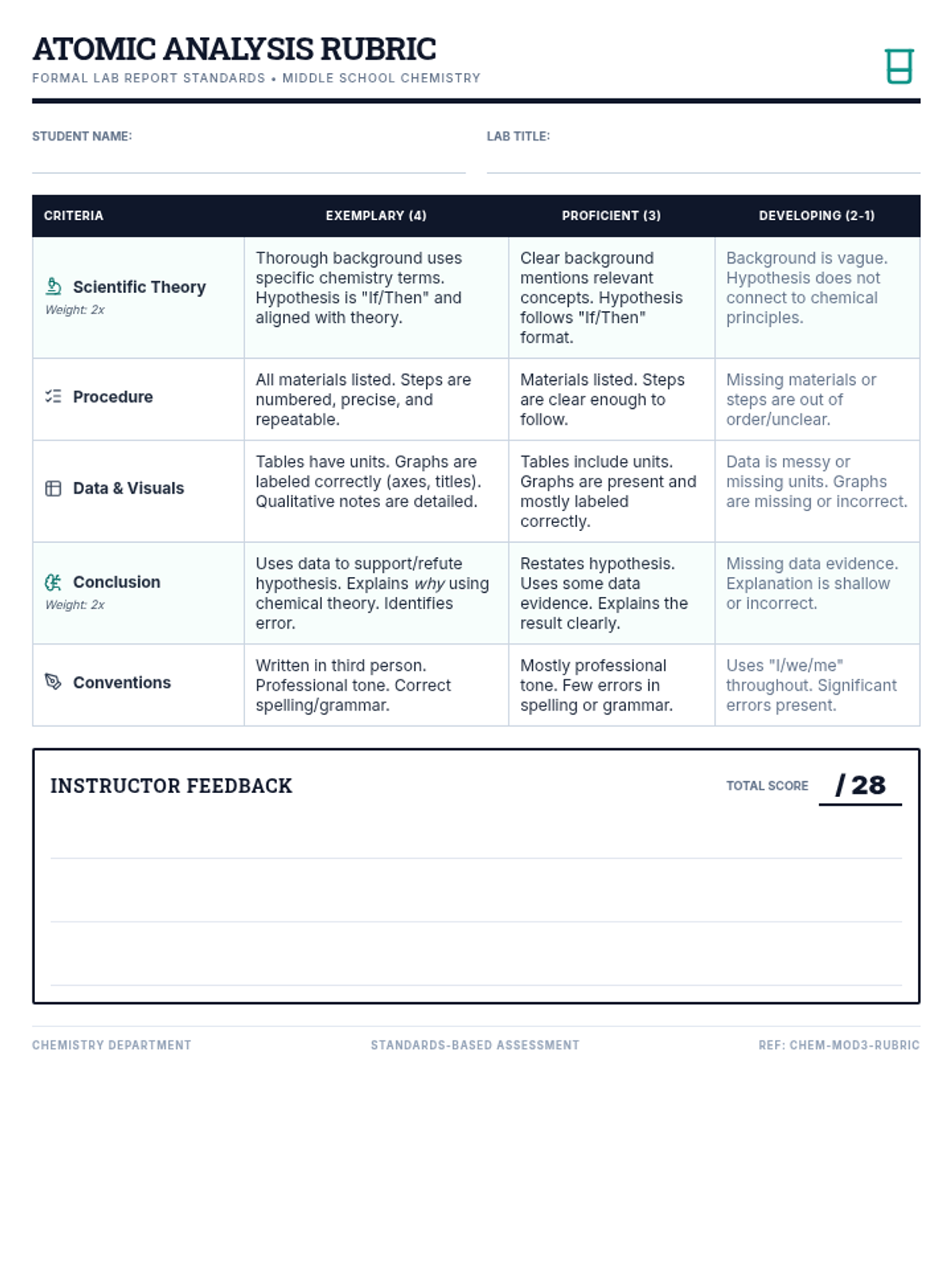
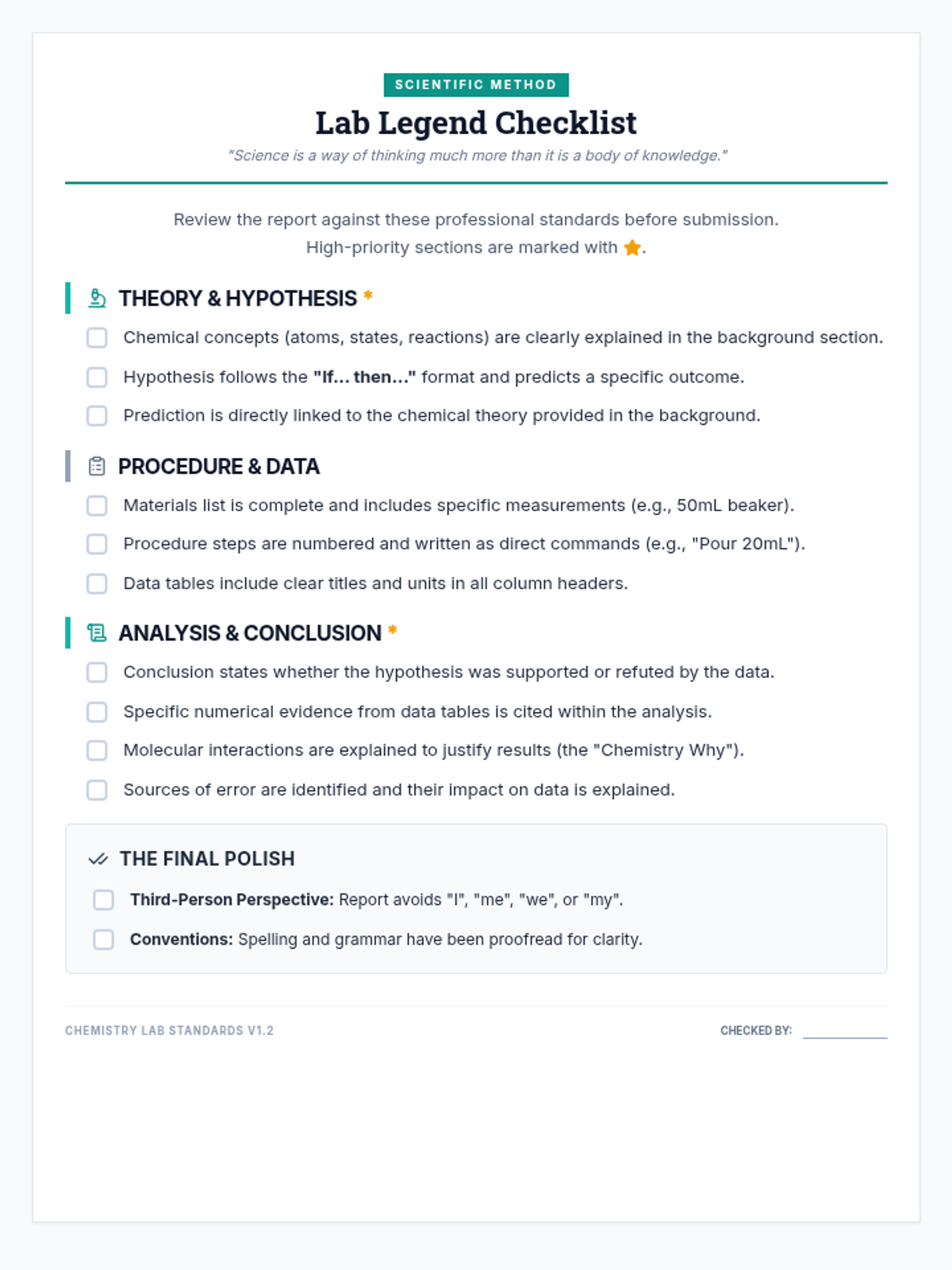
An exploration of chemical properties and their real-world applications, focusing on the balance of substances in our environment.