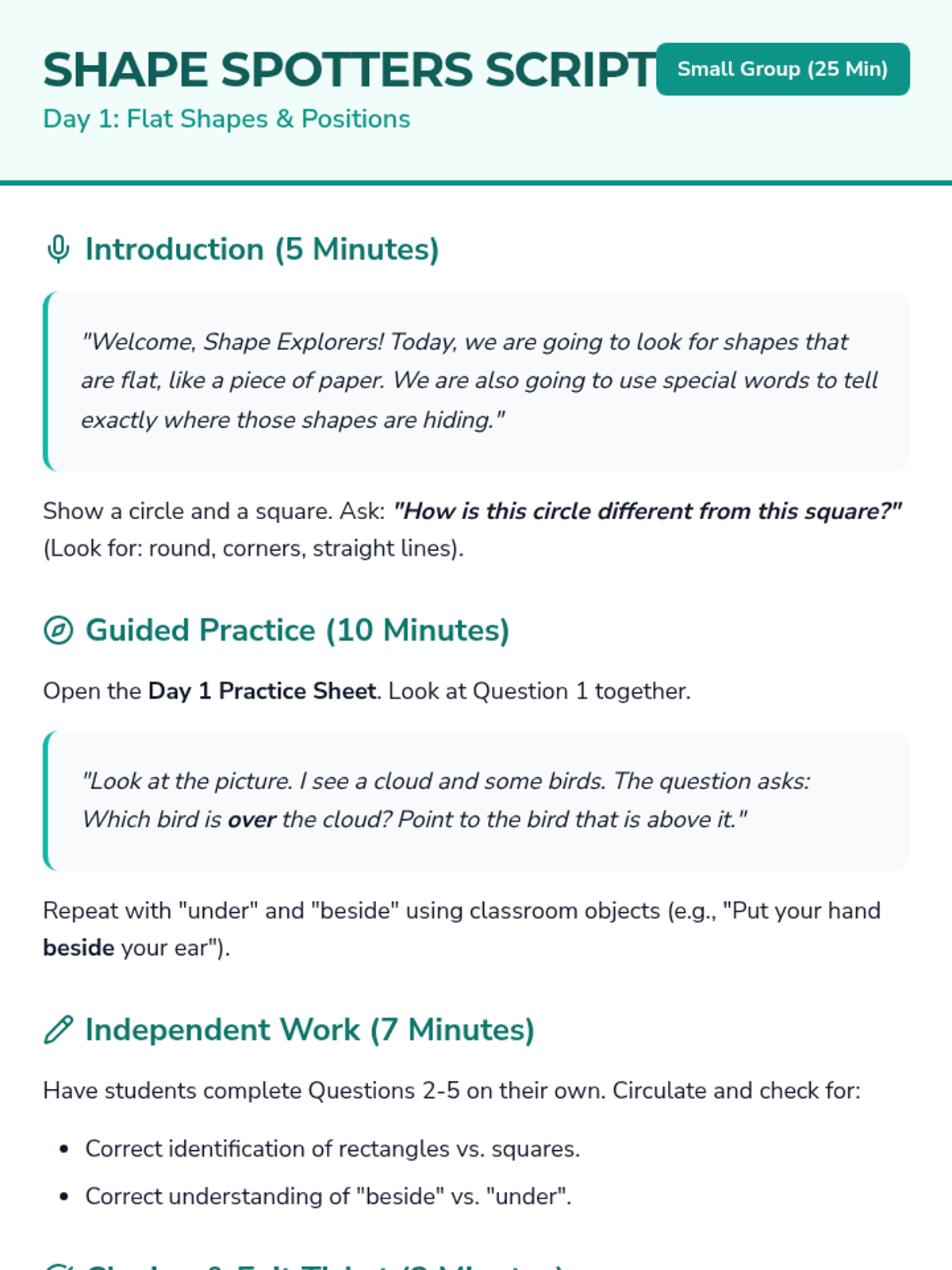
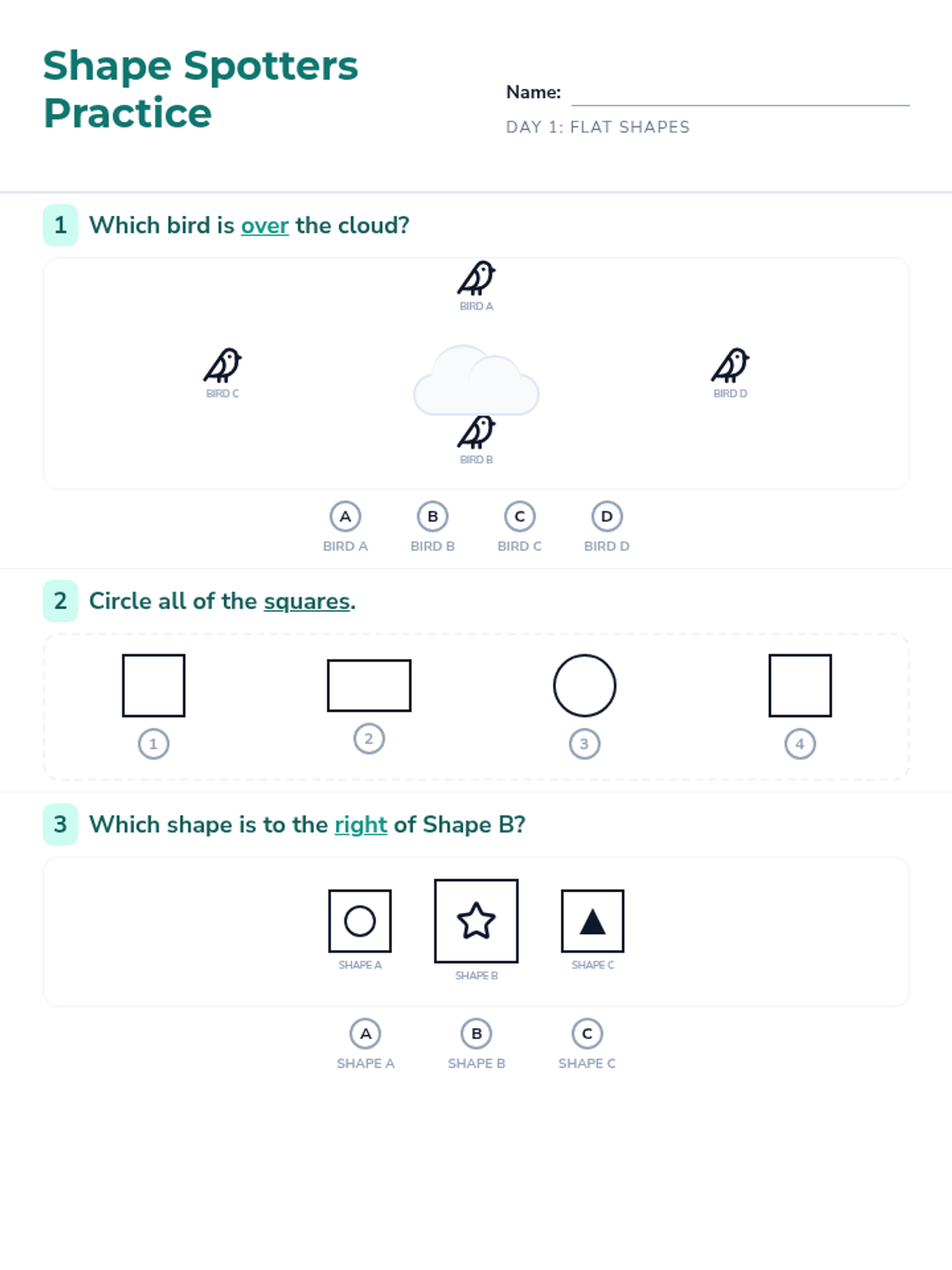
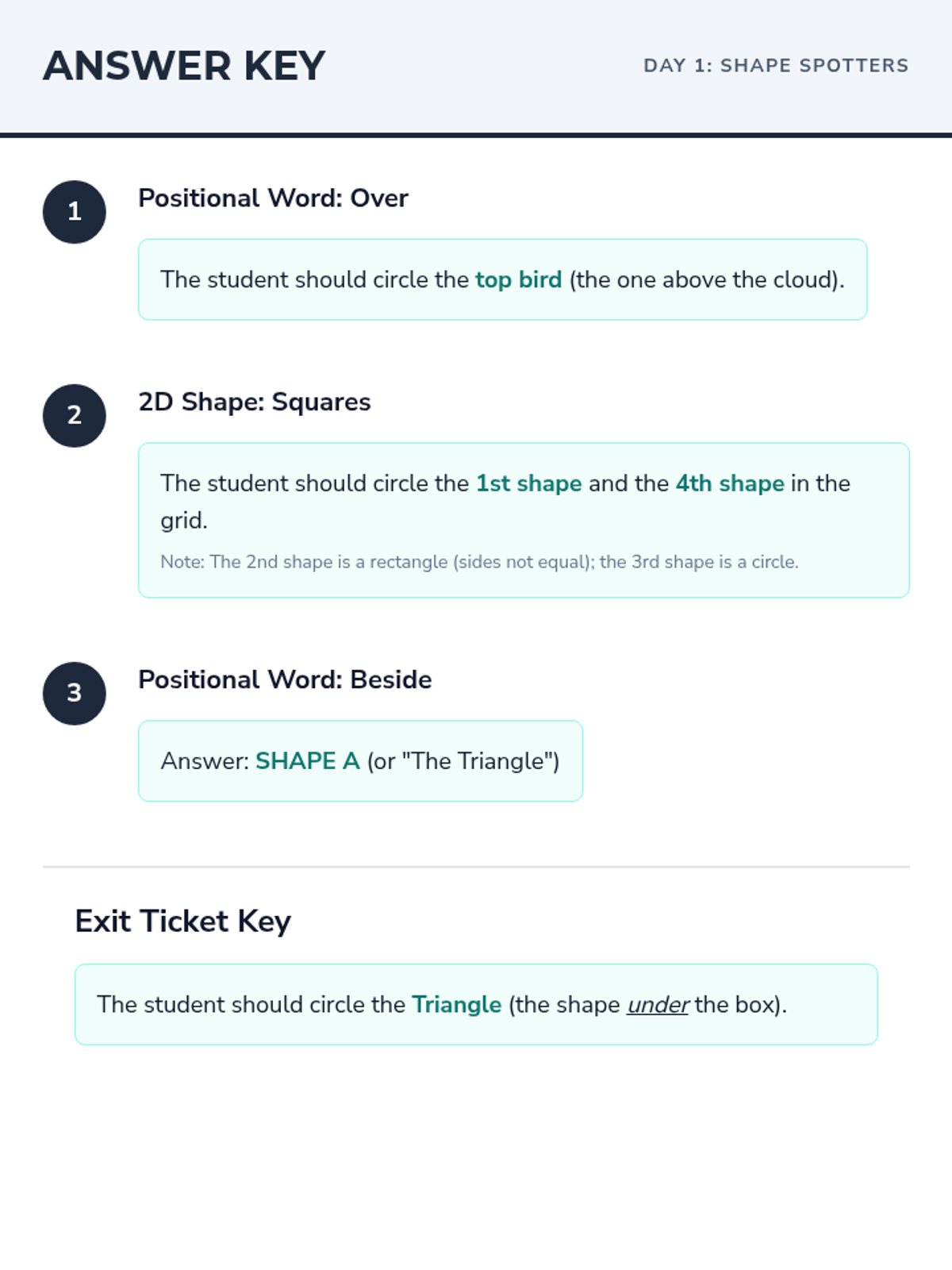
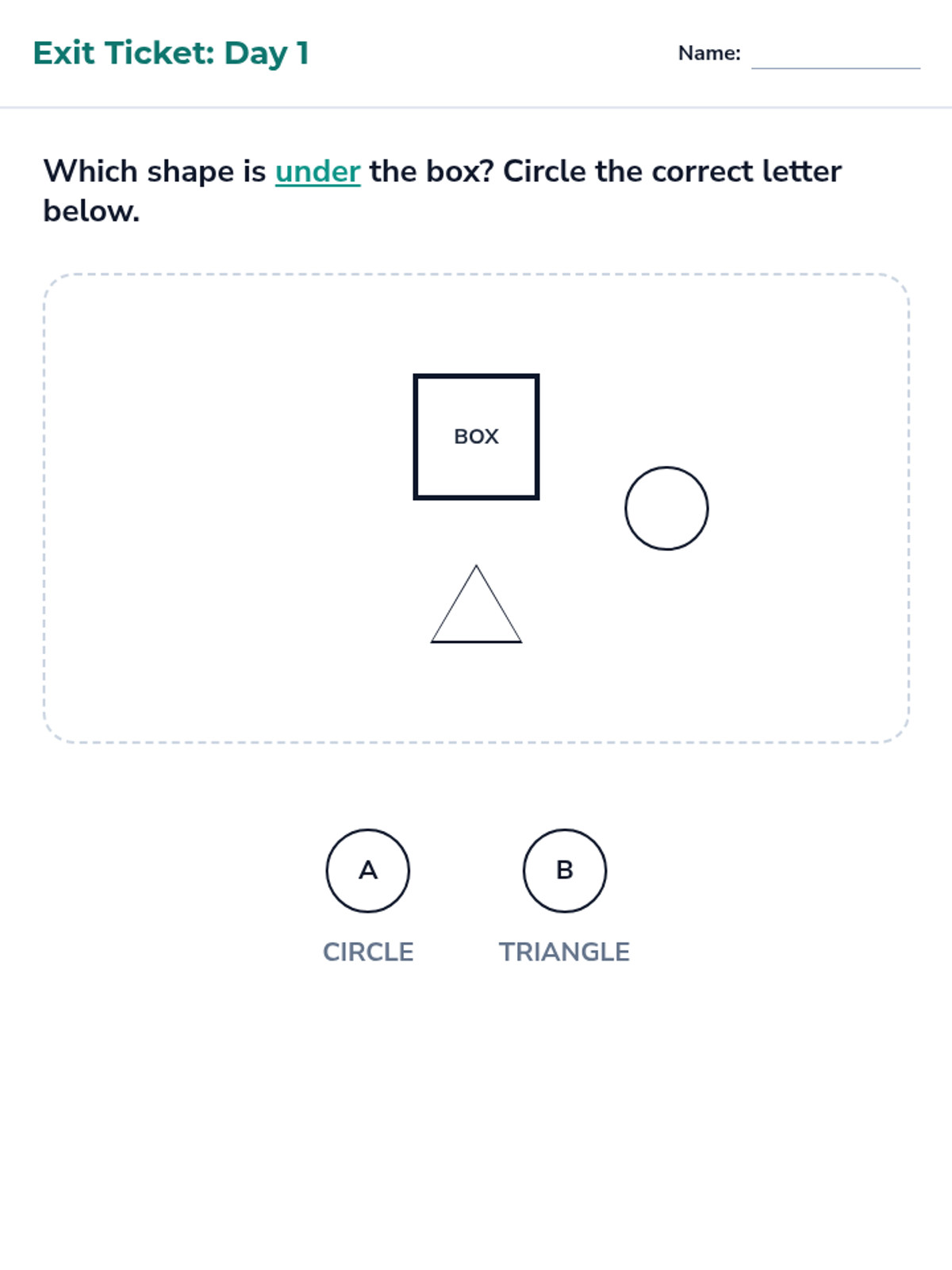
A 1st-grade sequence exploring spatial relationships and coordinate geometry through positional language. Students progress from physical movement to map-making, grid navigation, and basic algorithmic thinking.

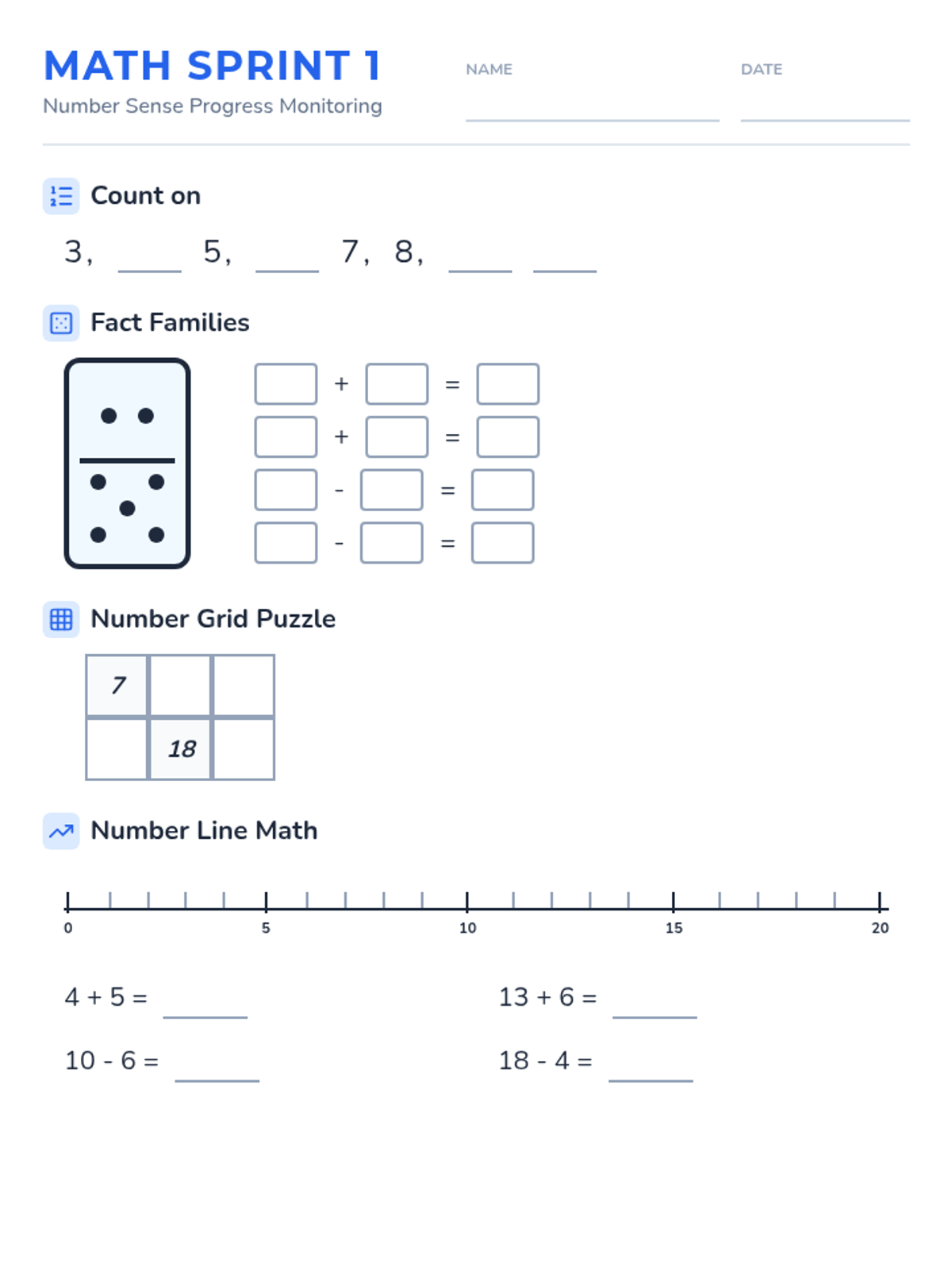
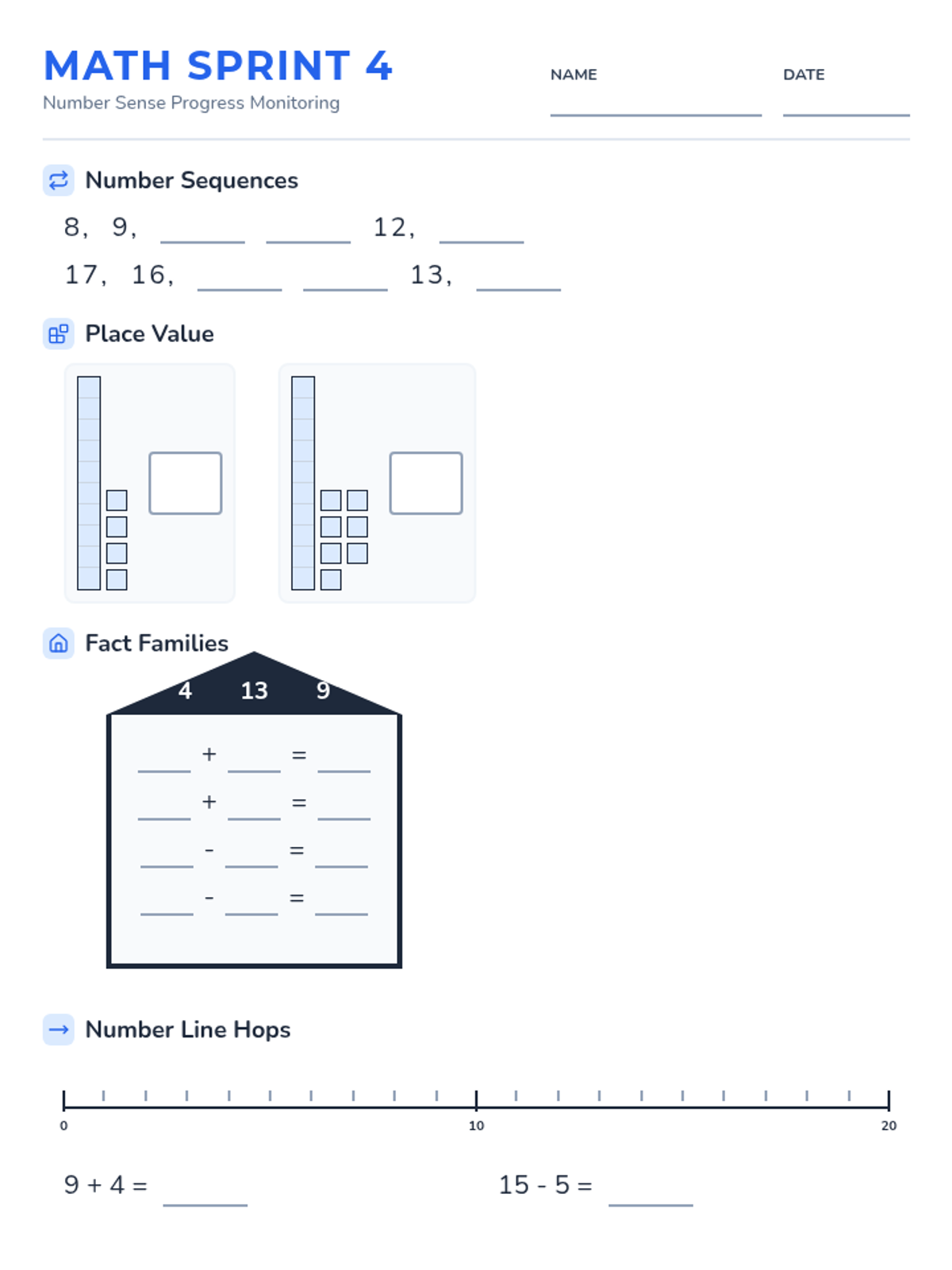
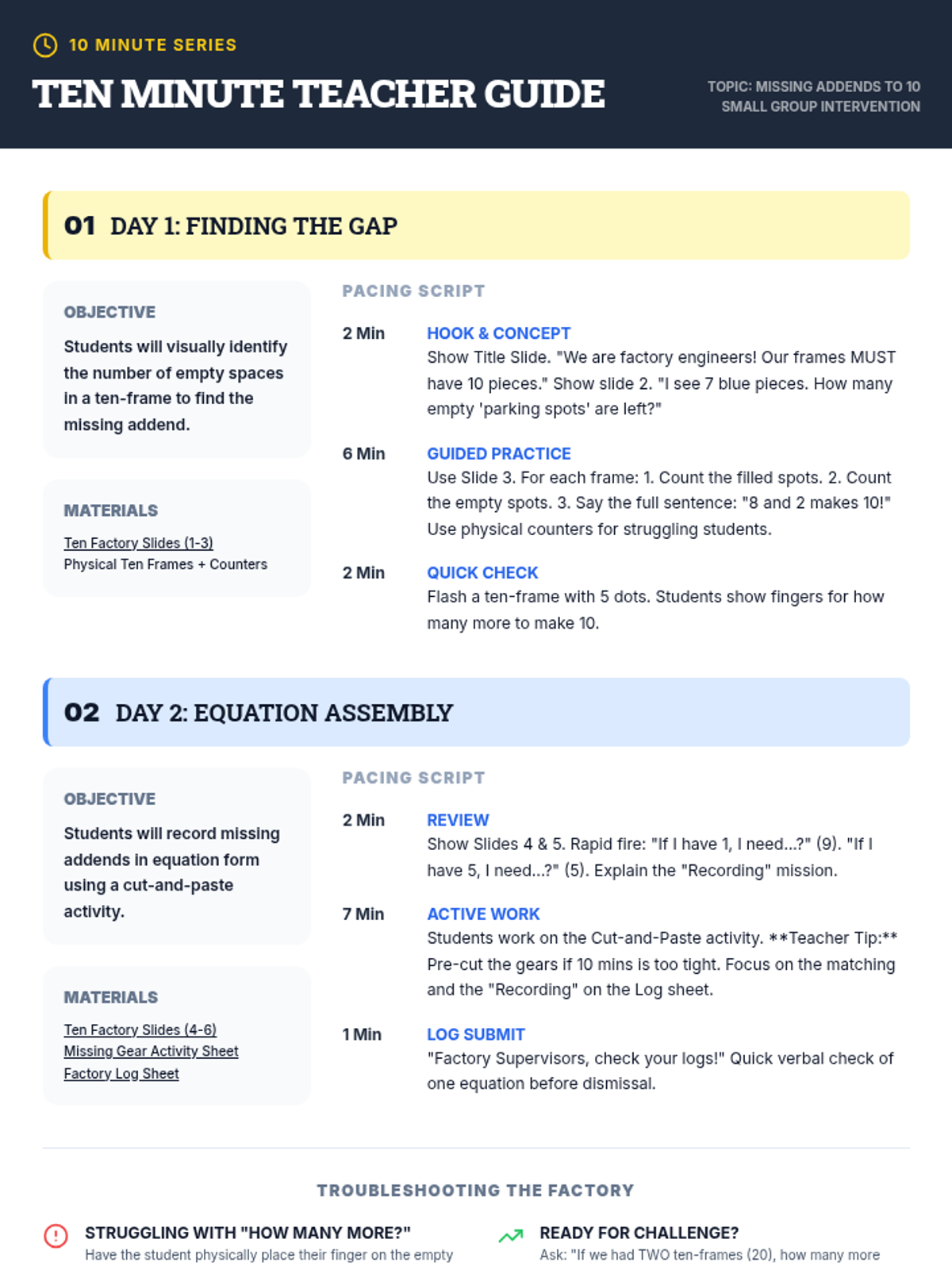
A 12-lesson intervention sequence focused on numeral identification, forward/backward sequences, and number lines for 1st-grade Tier 2 support, utilizing High Leverage Concepts from All Learners Network.
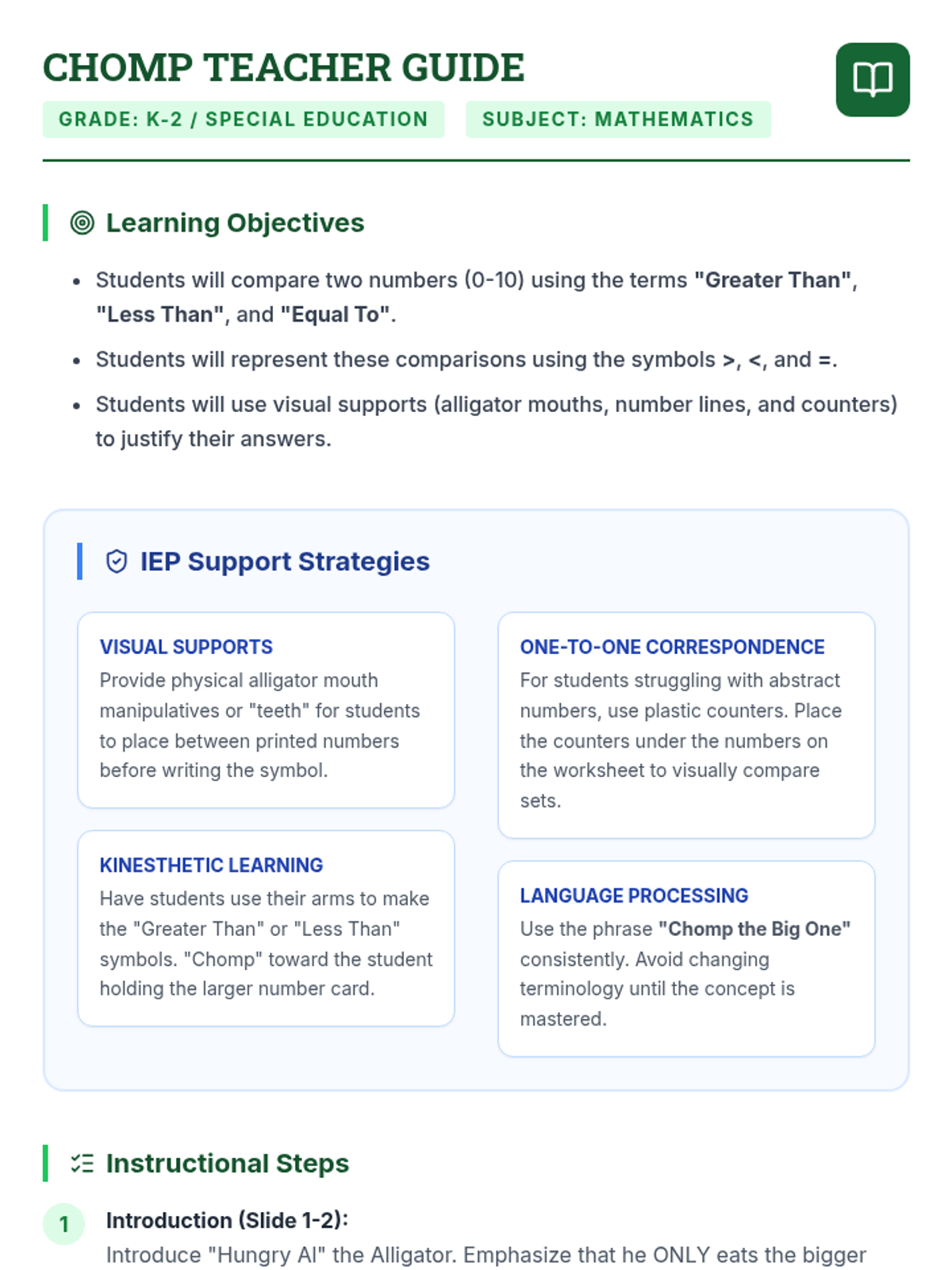
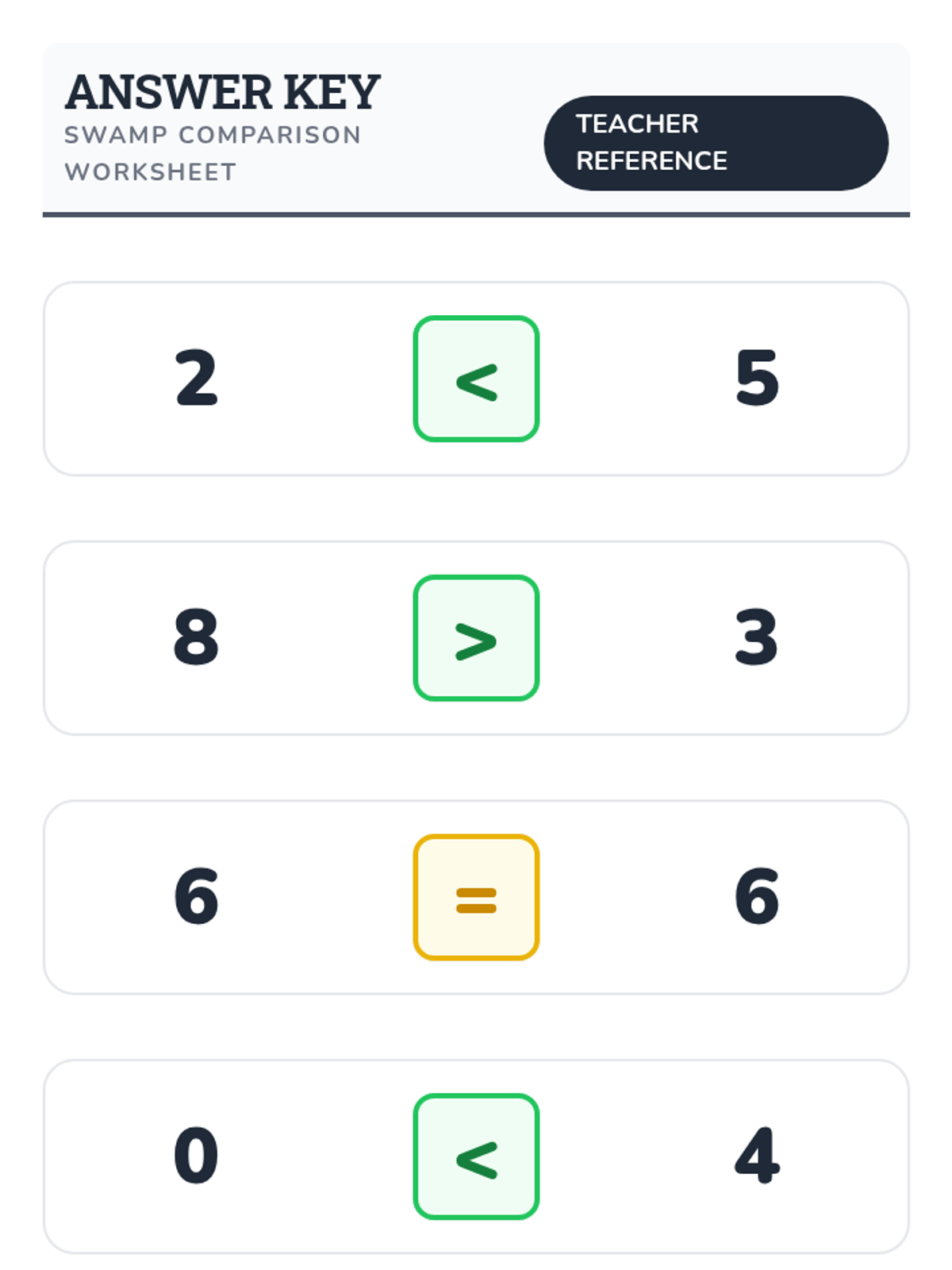
A 6-lesson Tier 2 intervention sequence for first-grade students focused on comparing two-digit numbers using tens and ones meanings and comparison symbols. Grounded in All Learners Network High Leverage Concepts, the unit moves from physical modeling to symbolic representation.
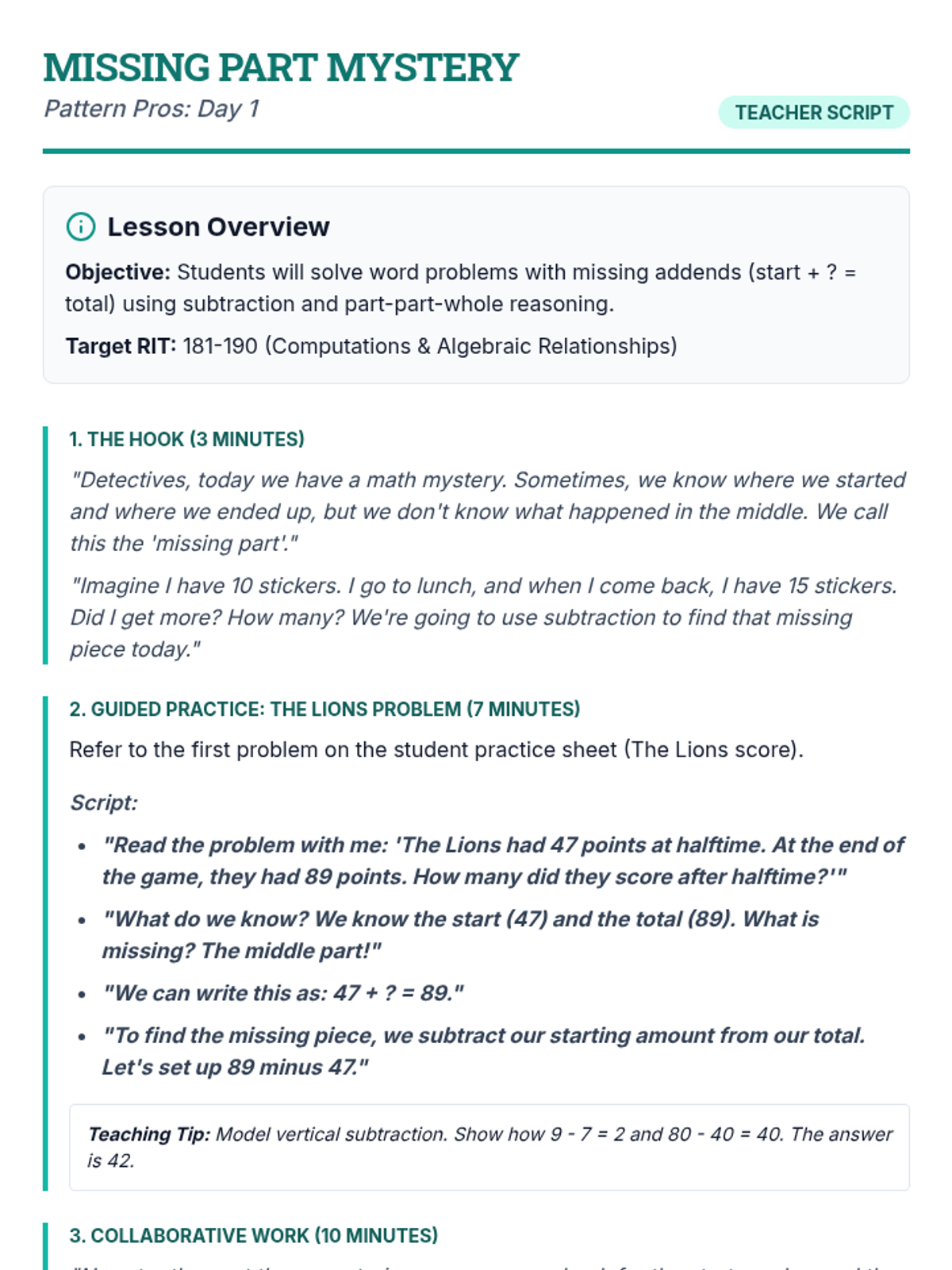
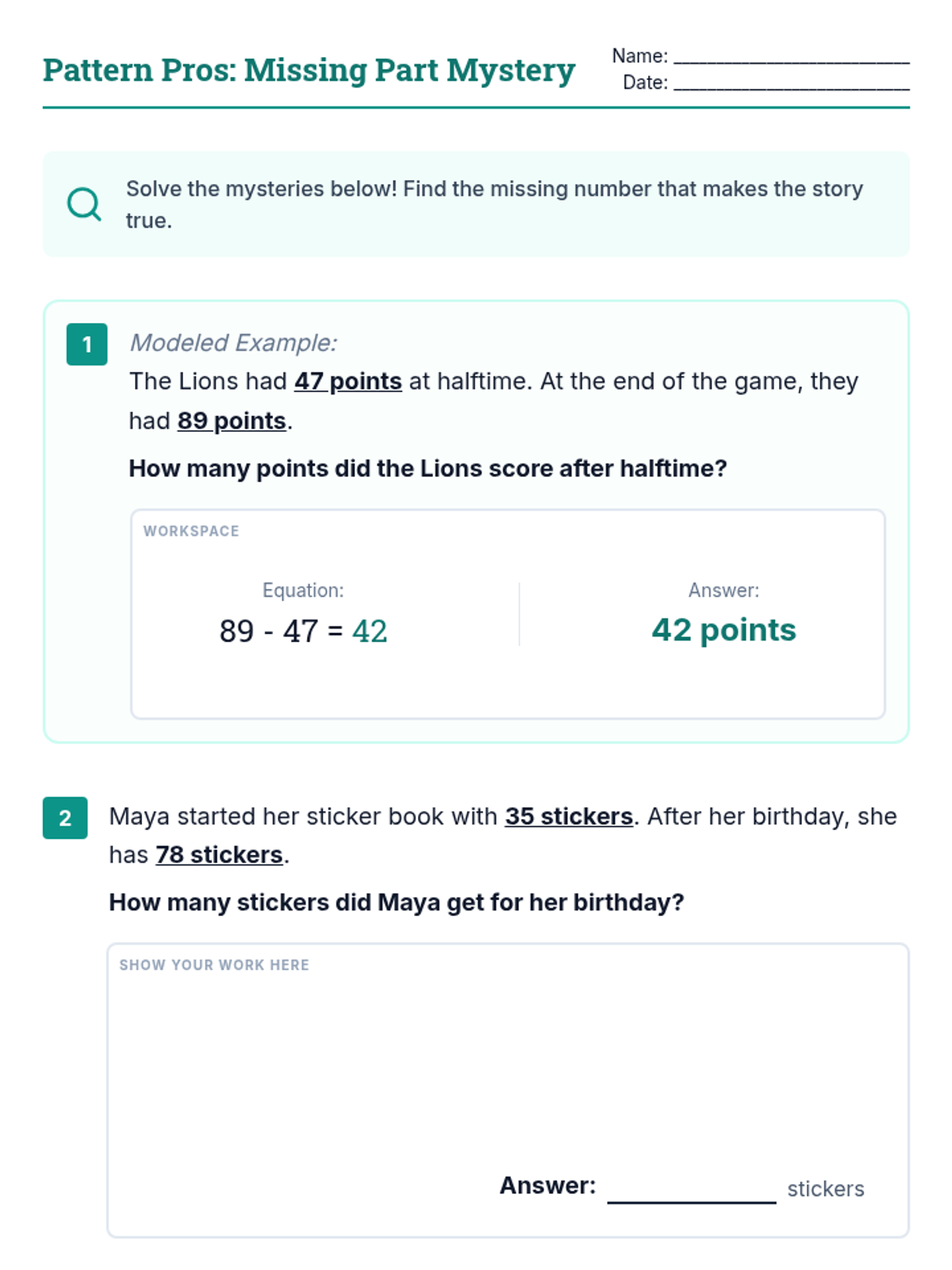
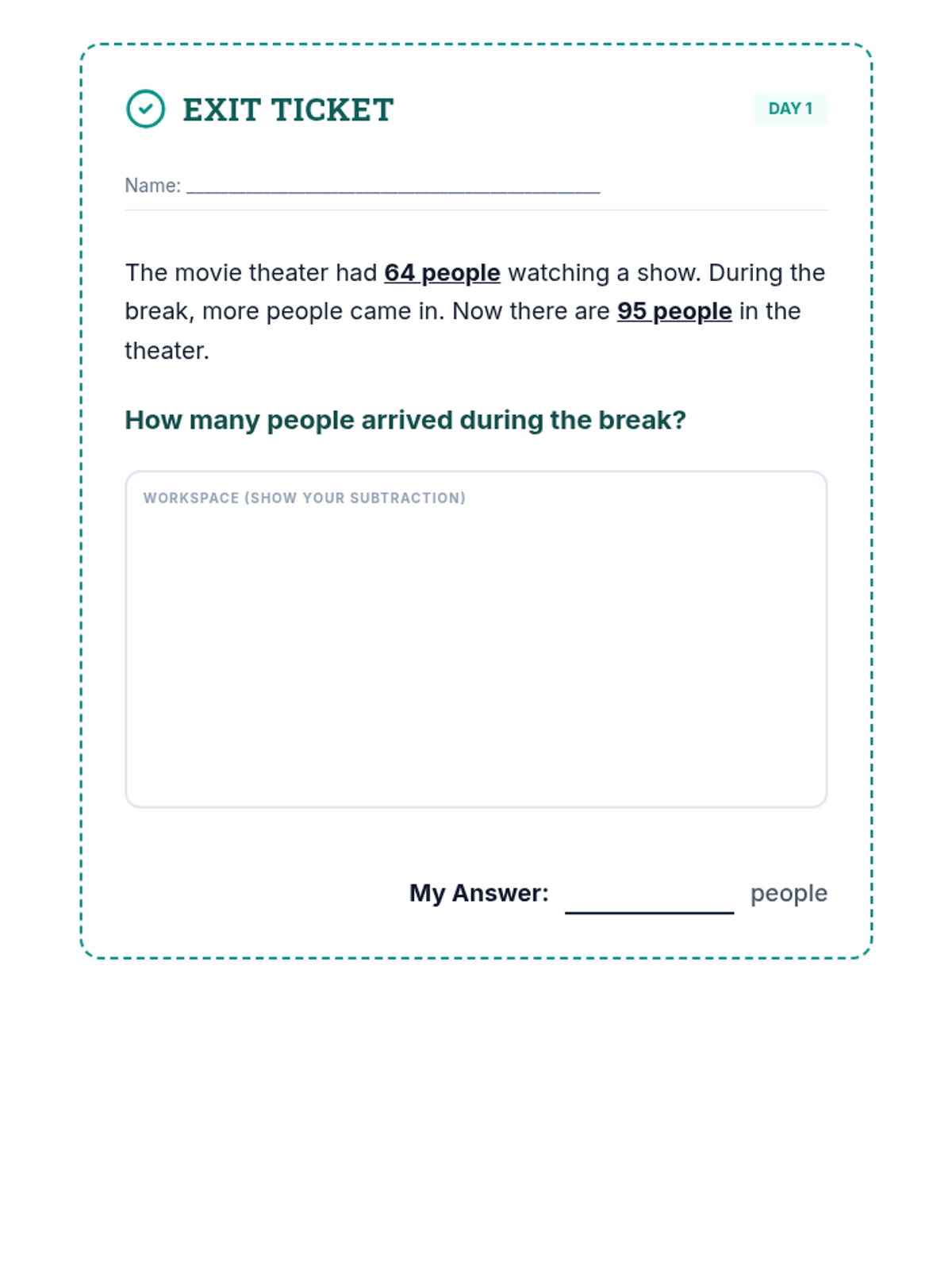
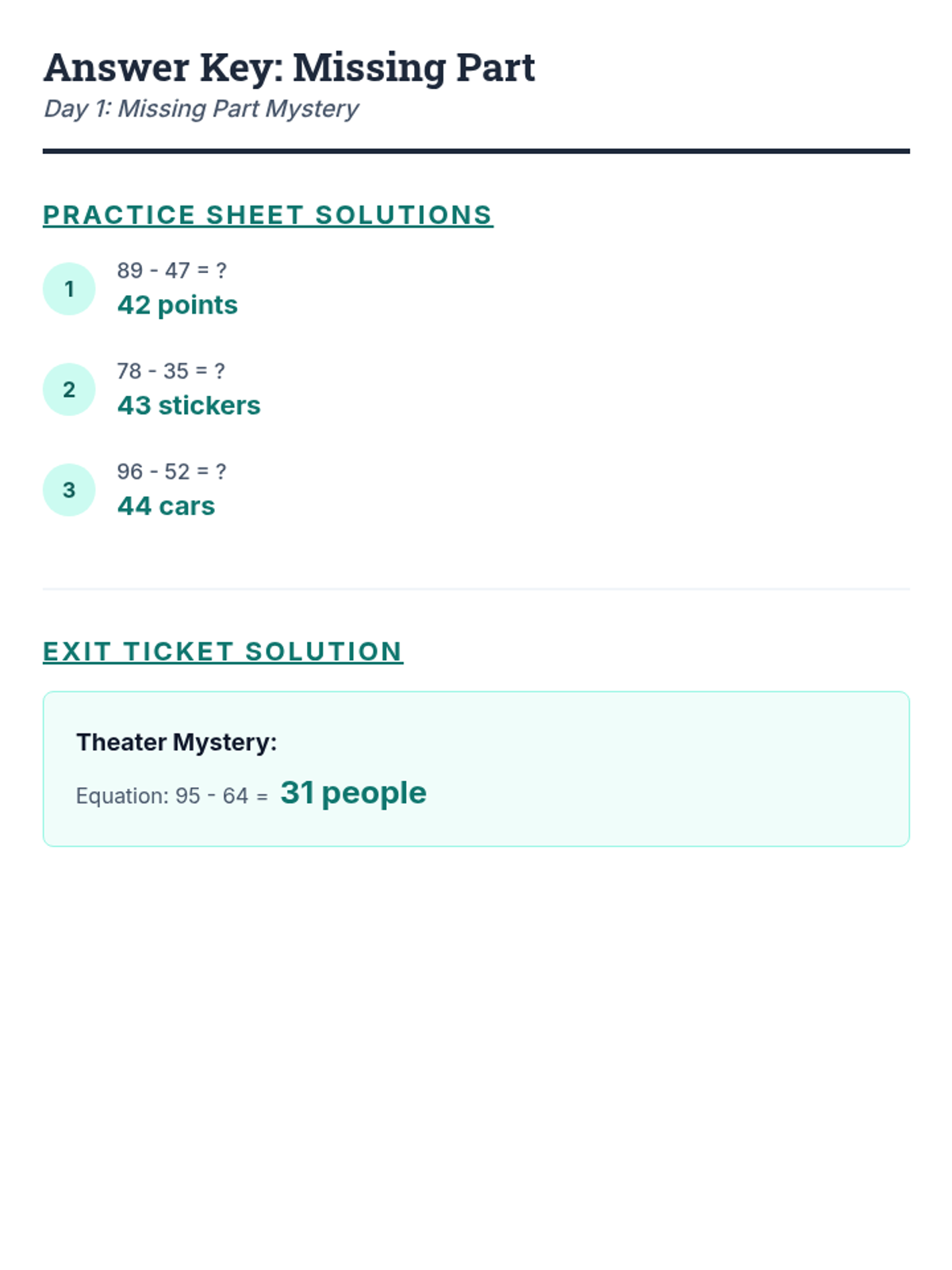
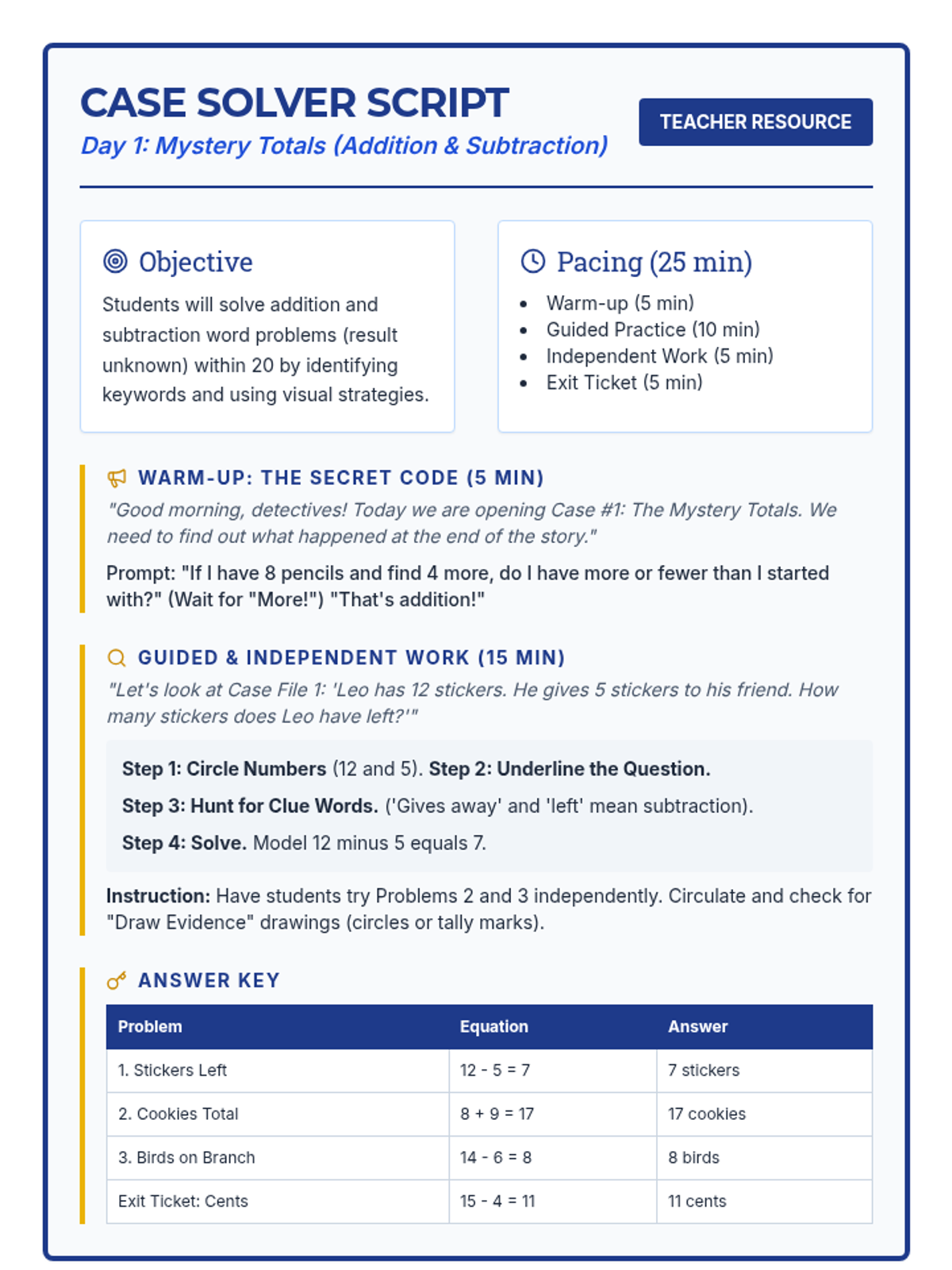
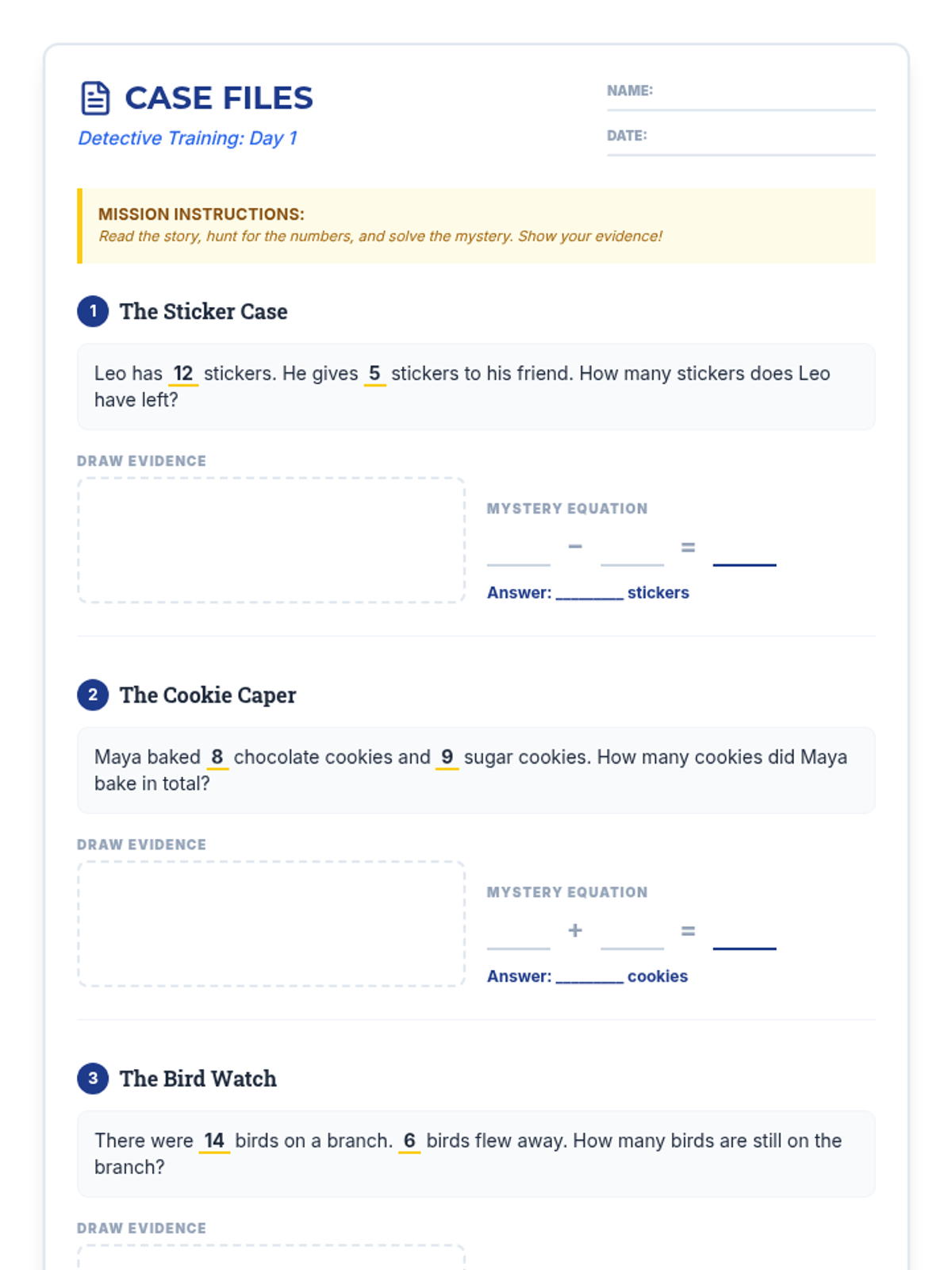
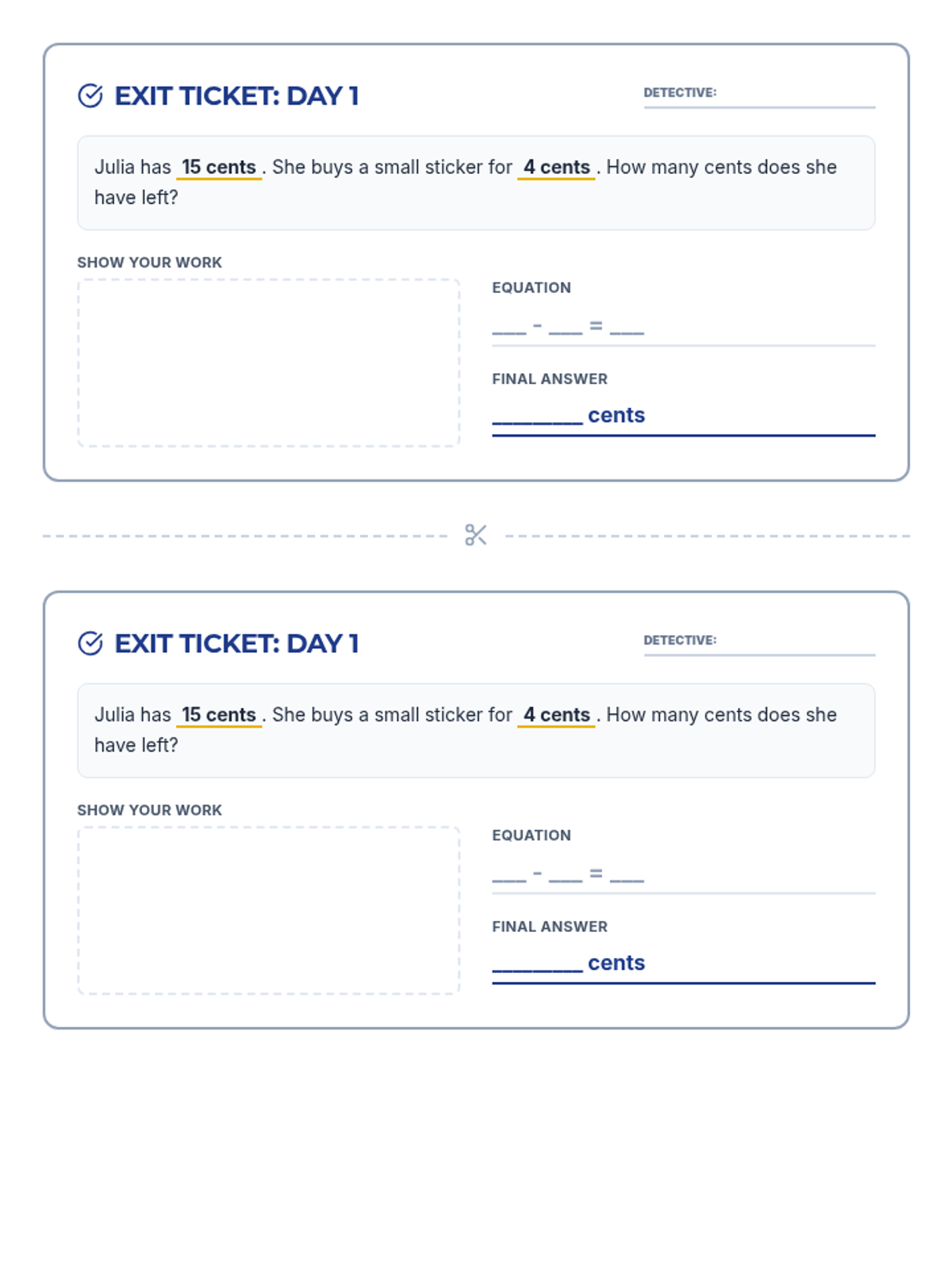
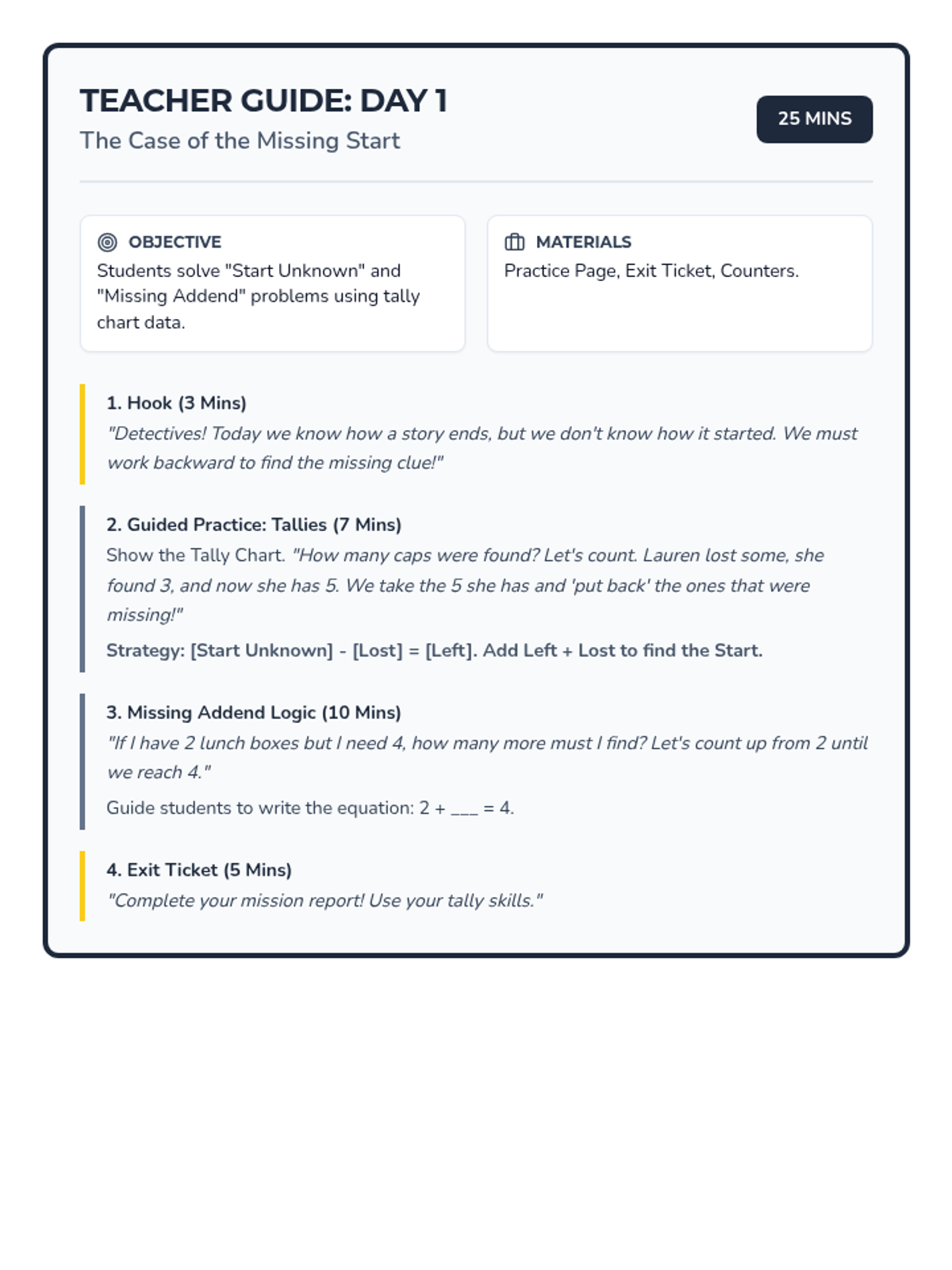
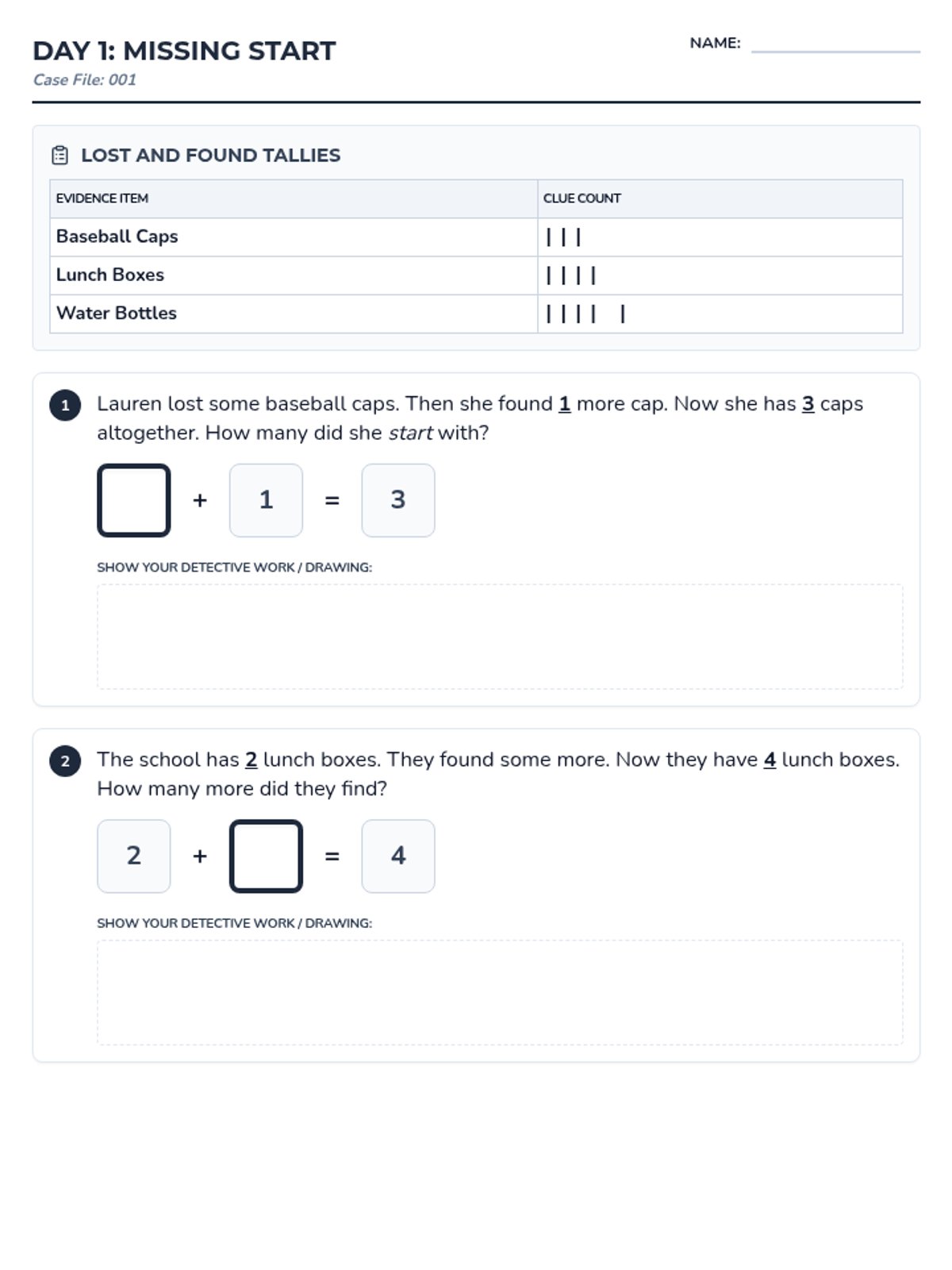
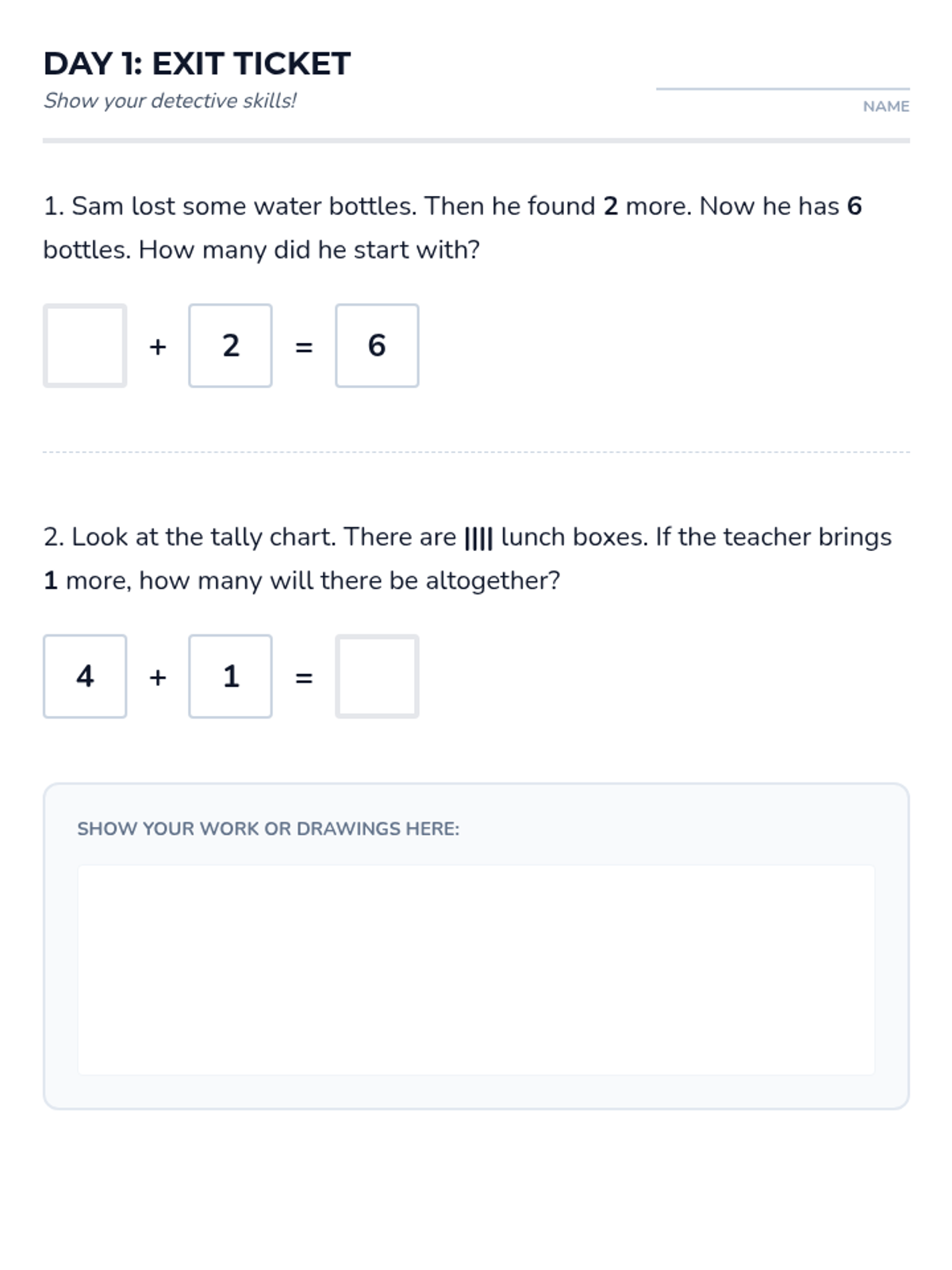
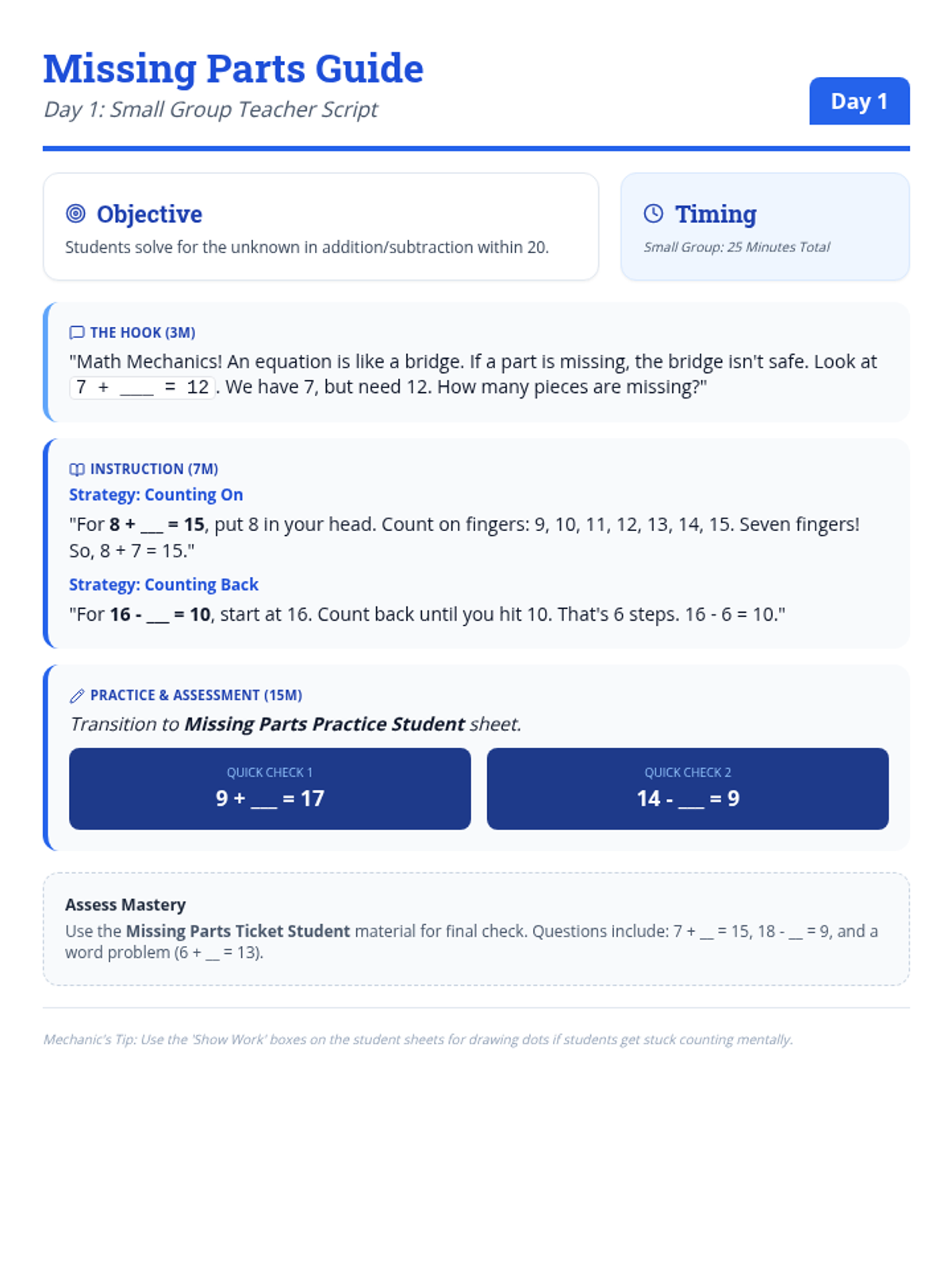
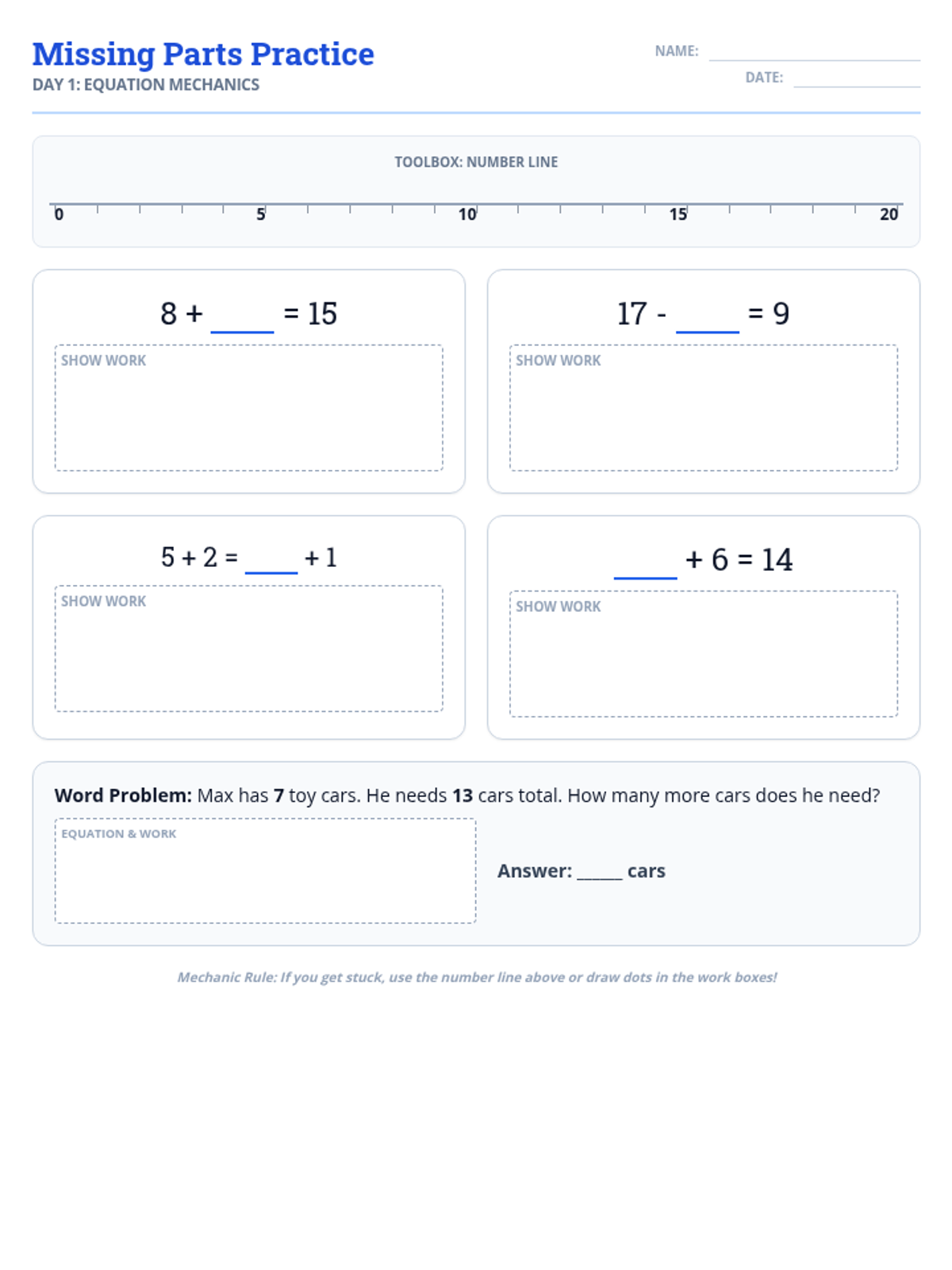
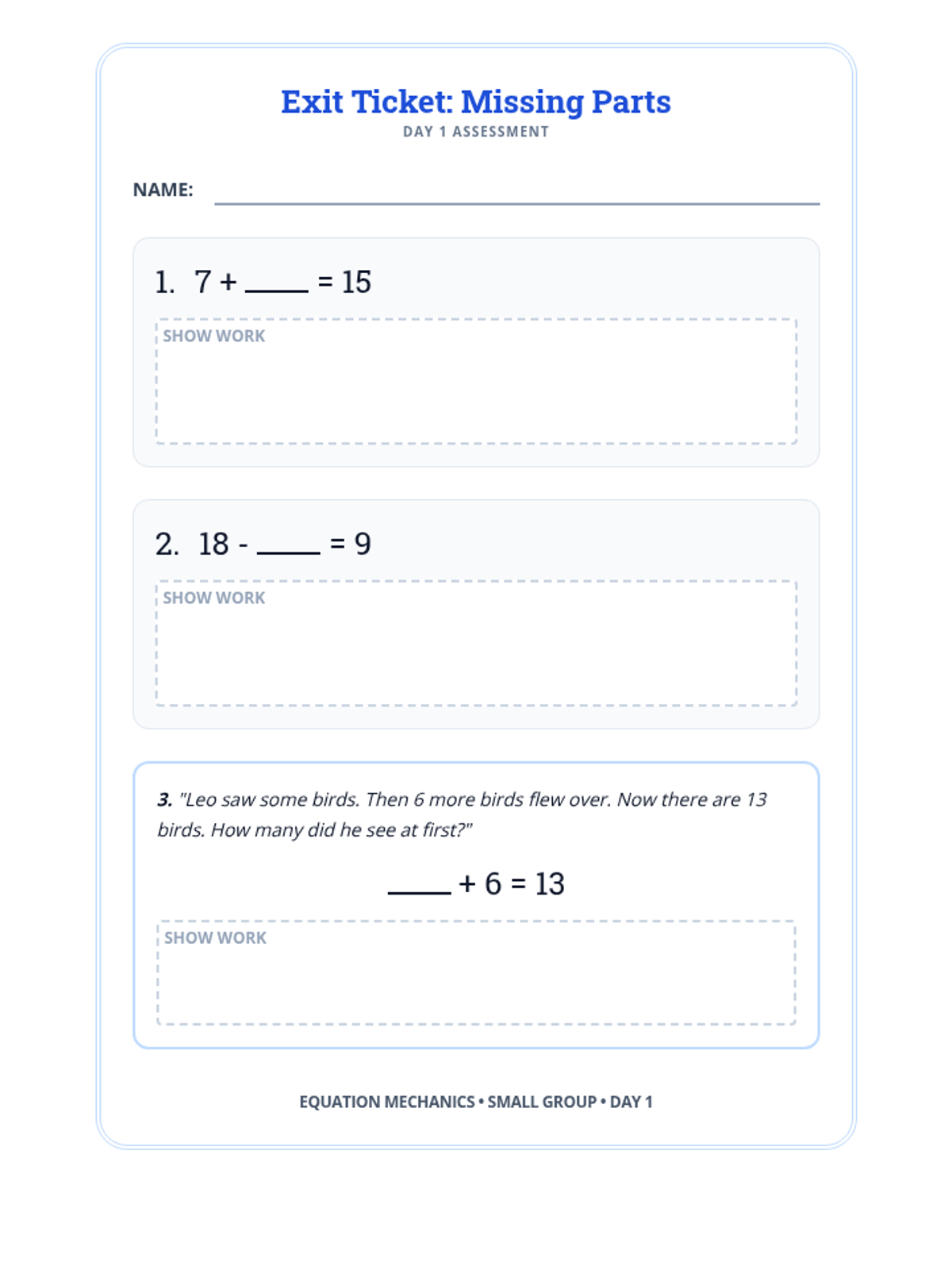
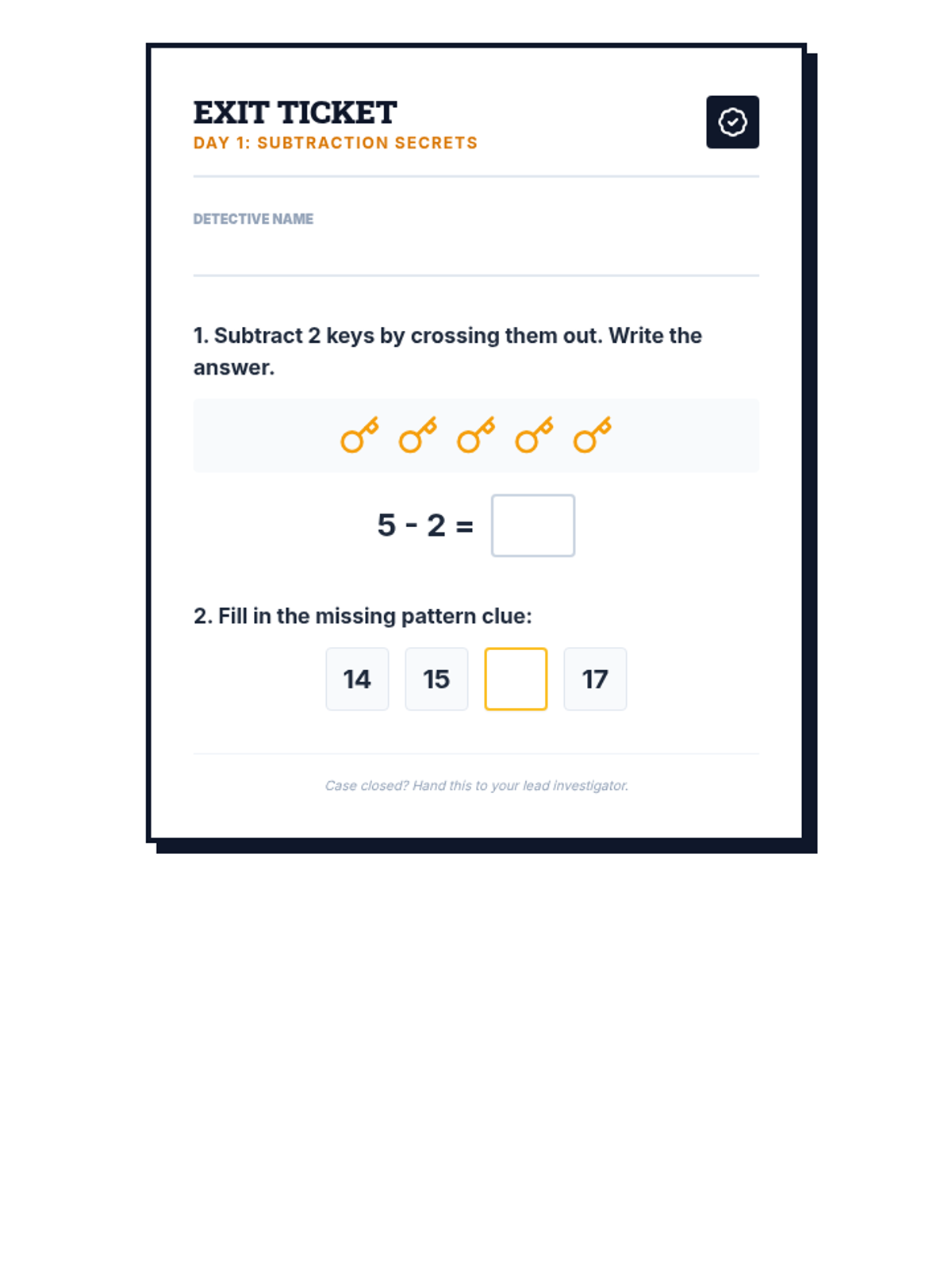
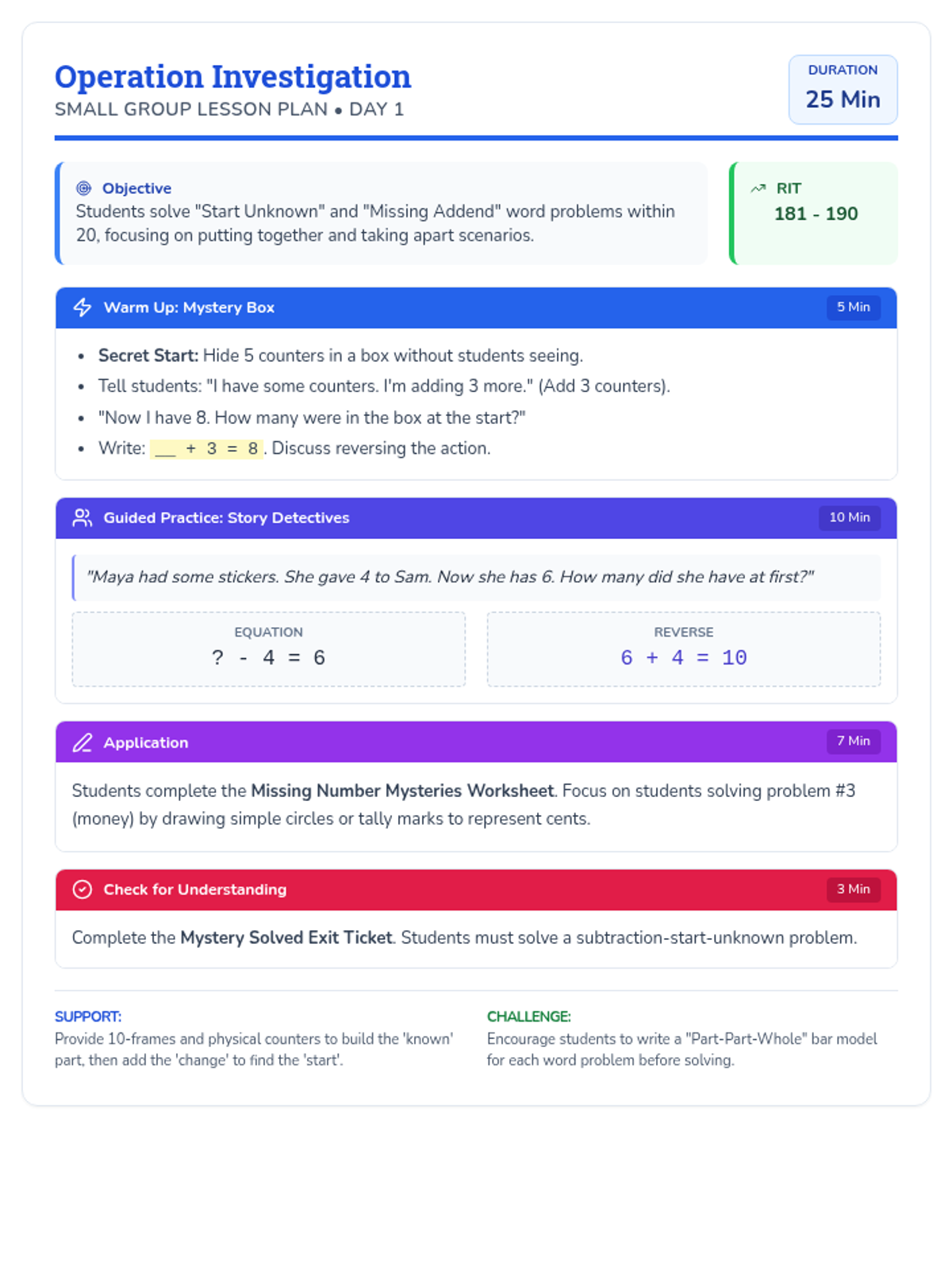
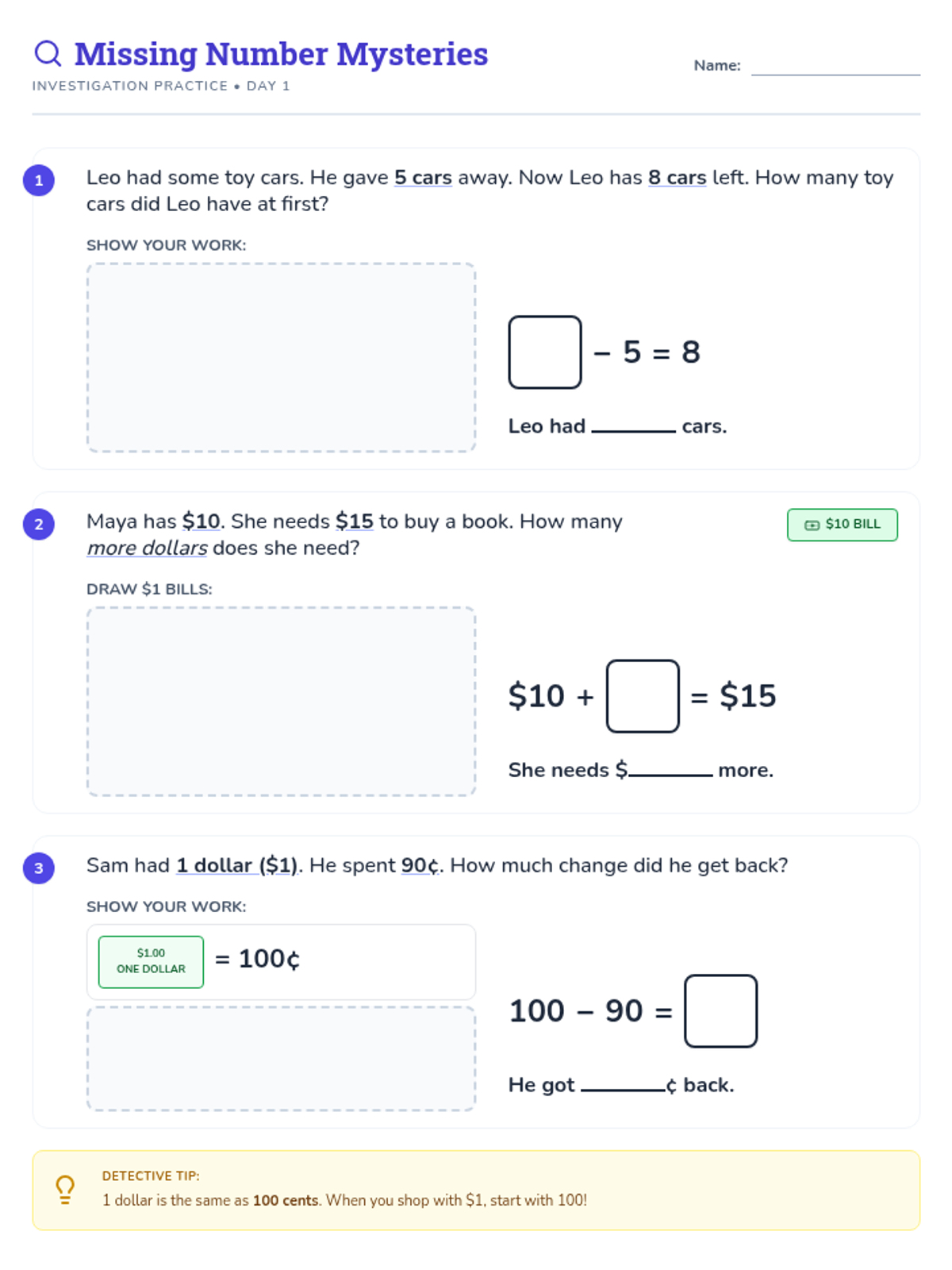
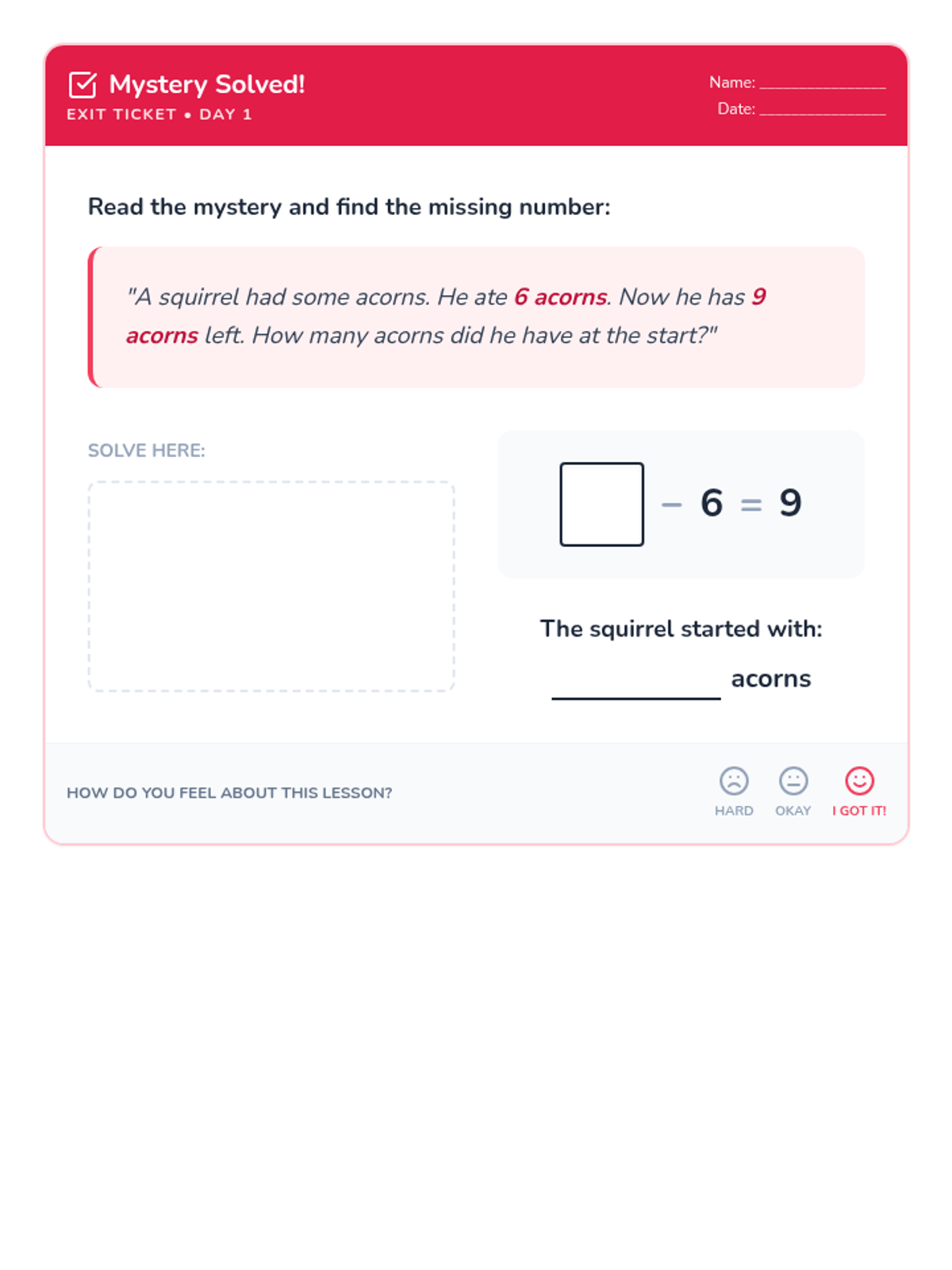
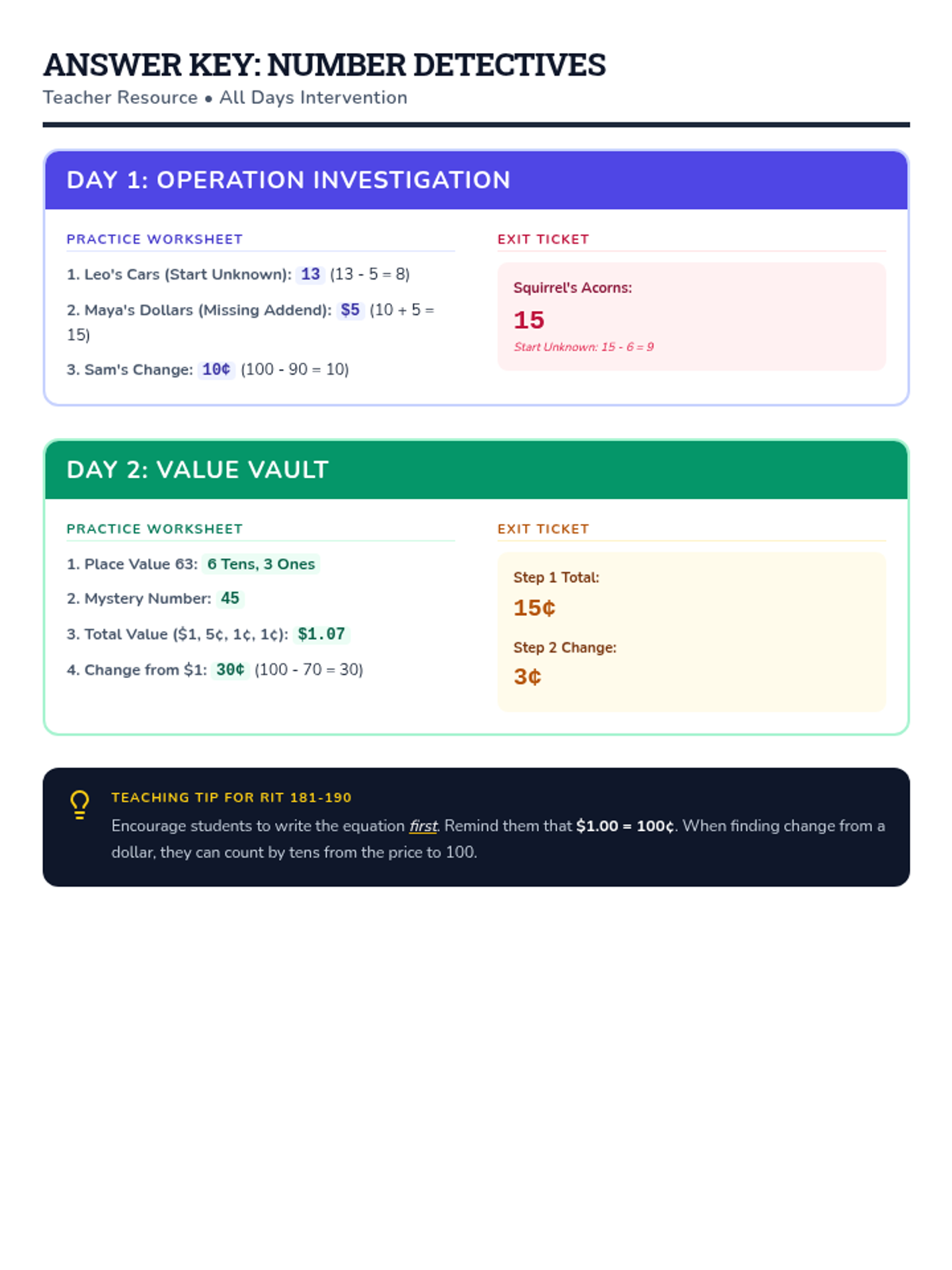
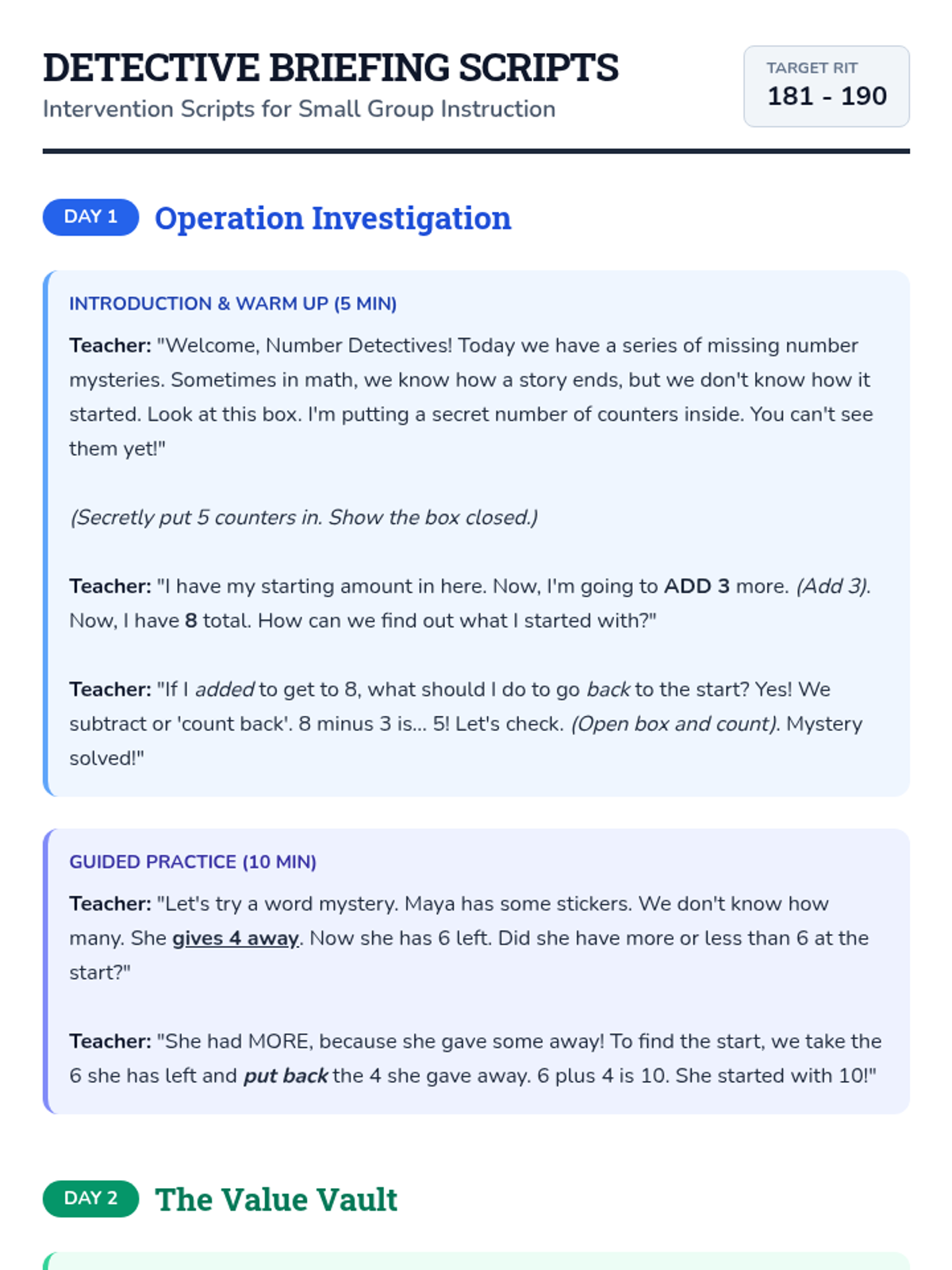
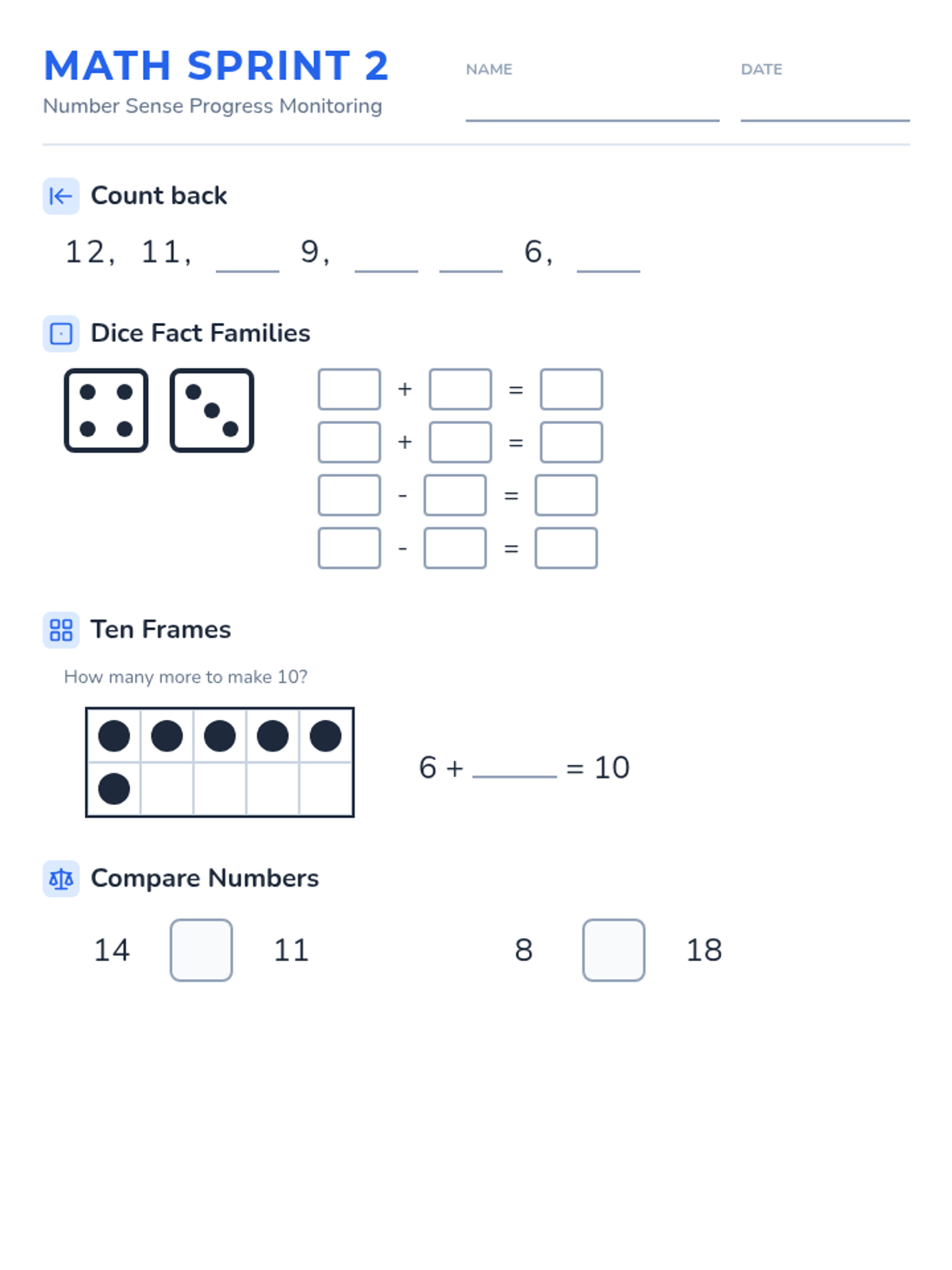
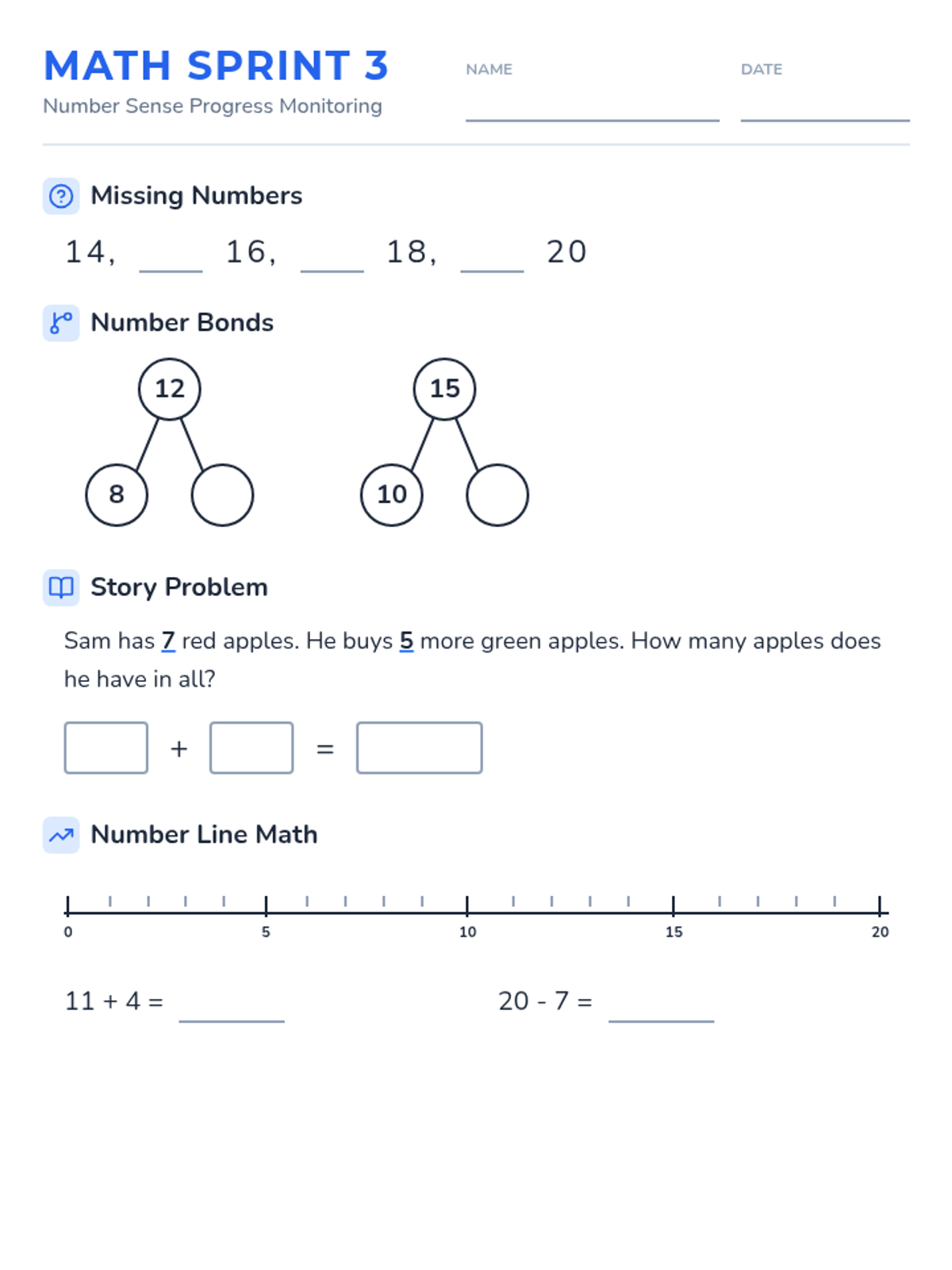
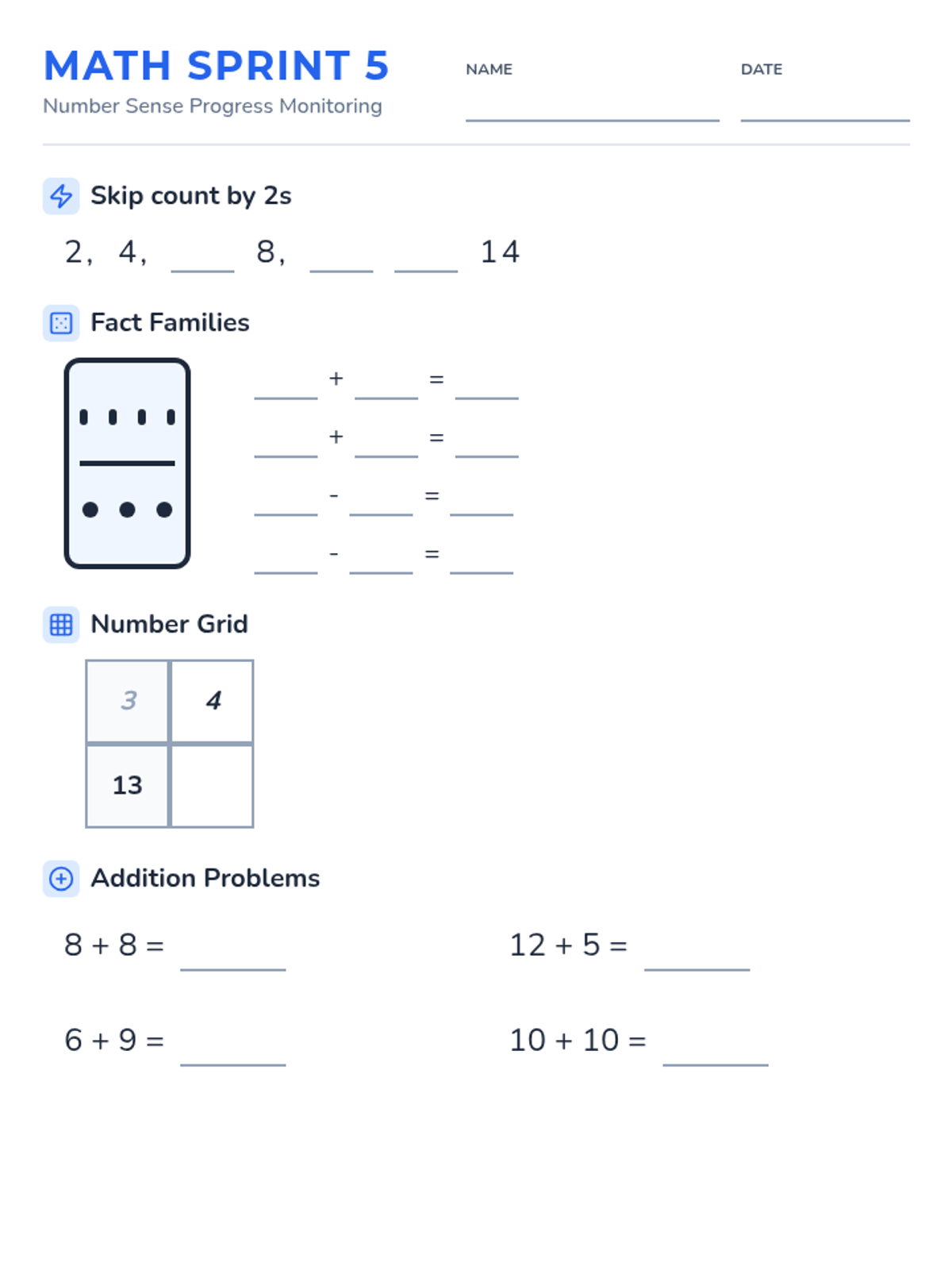
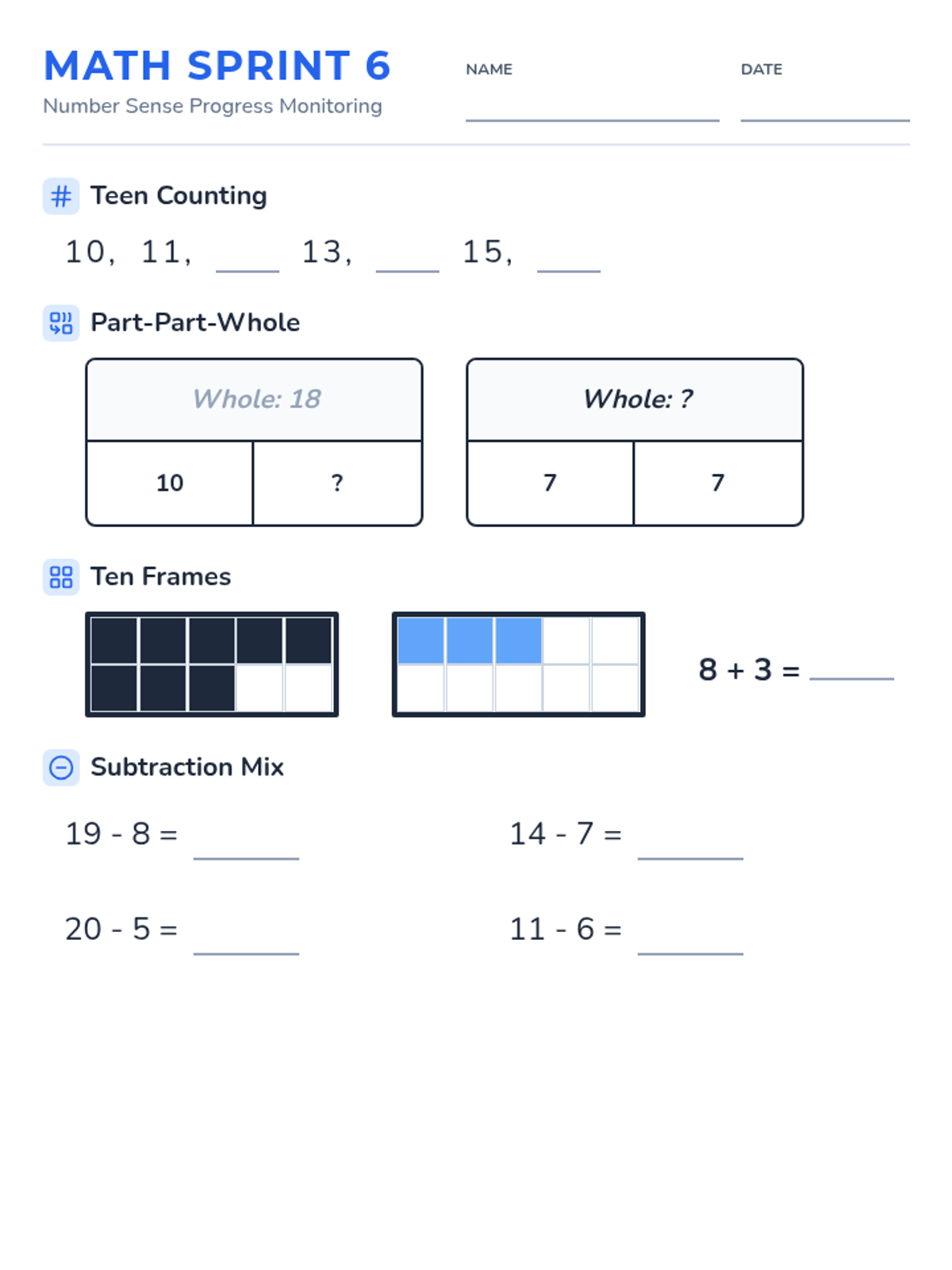
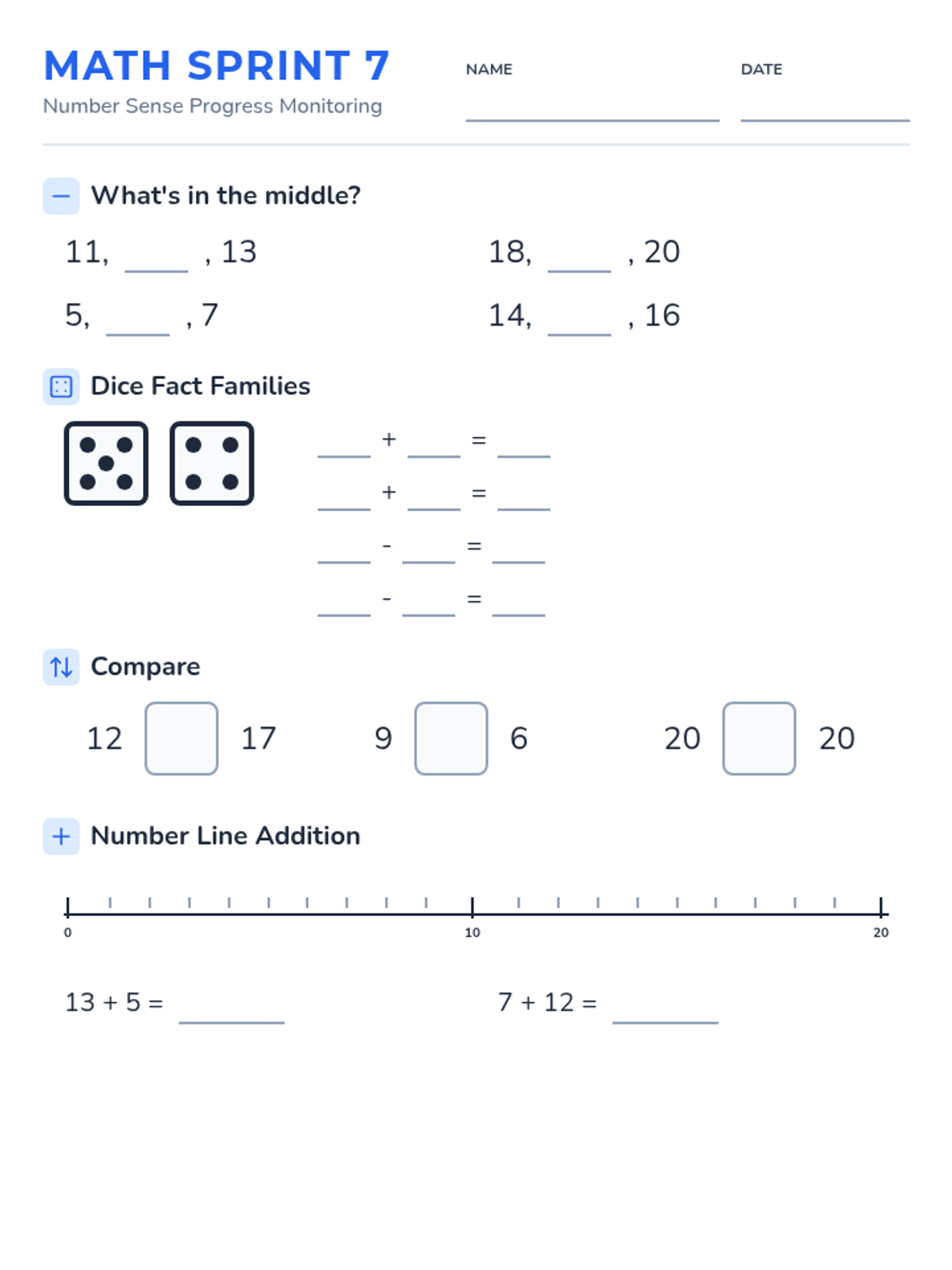
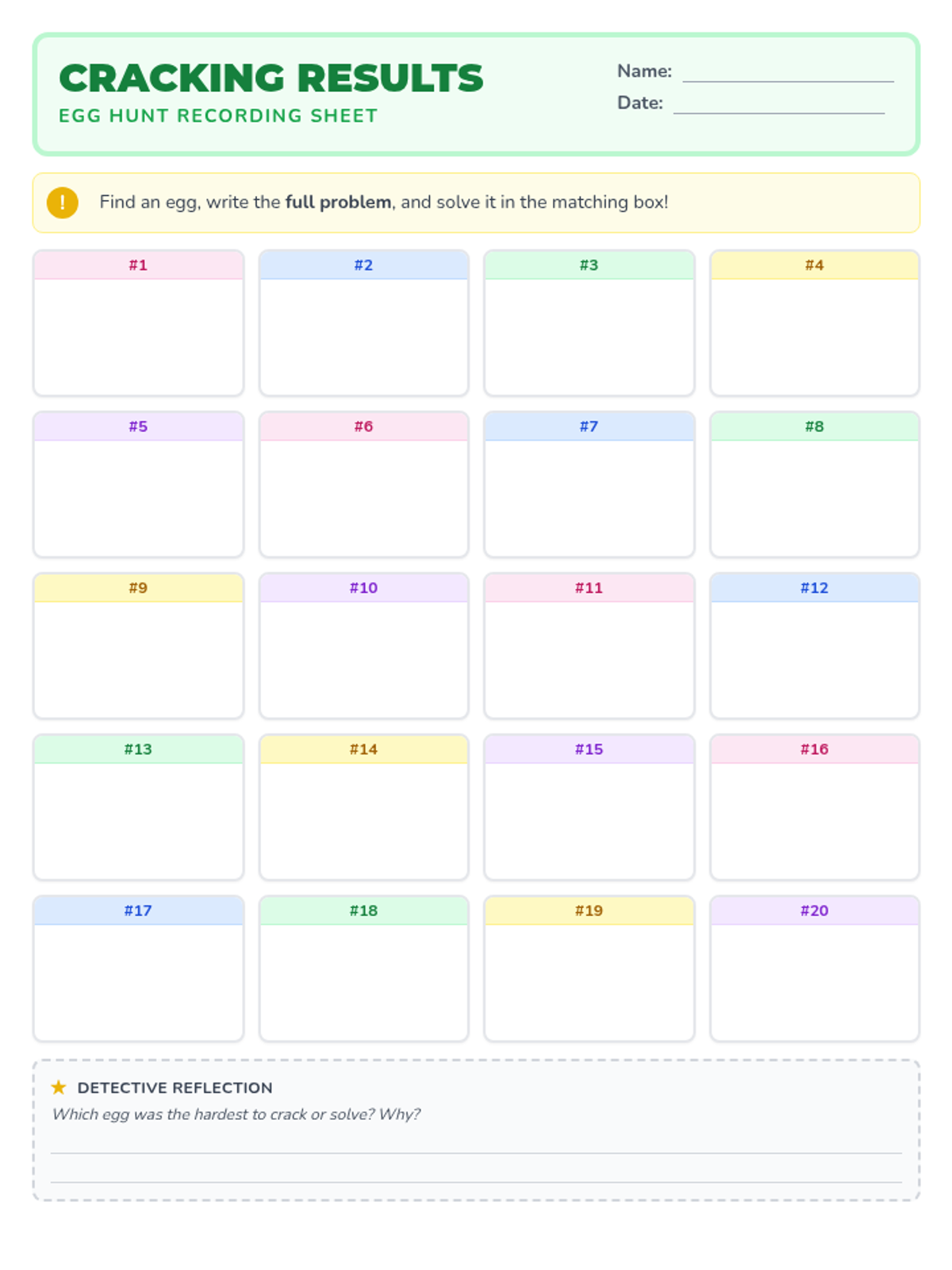
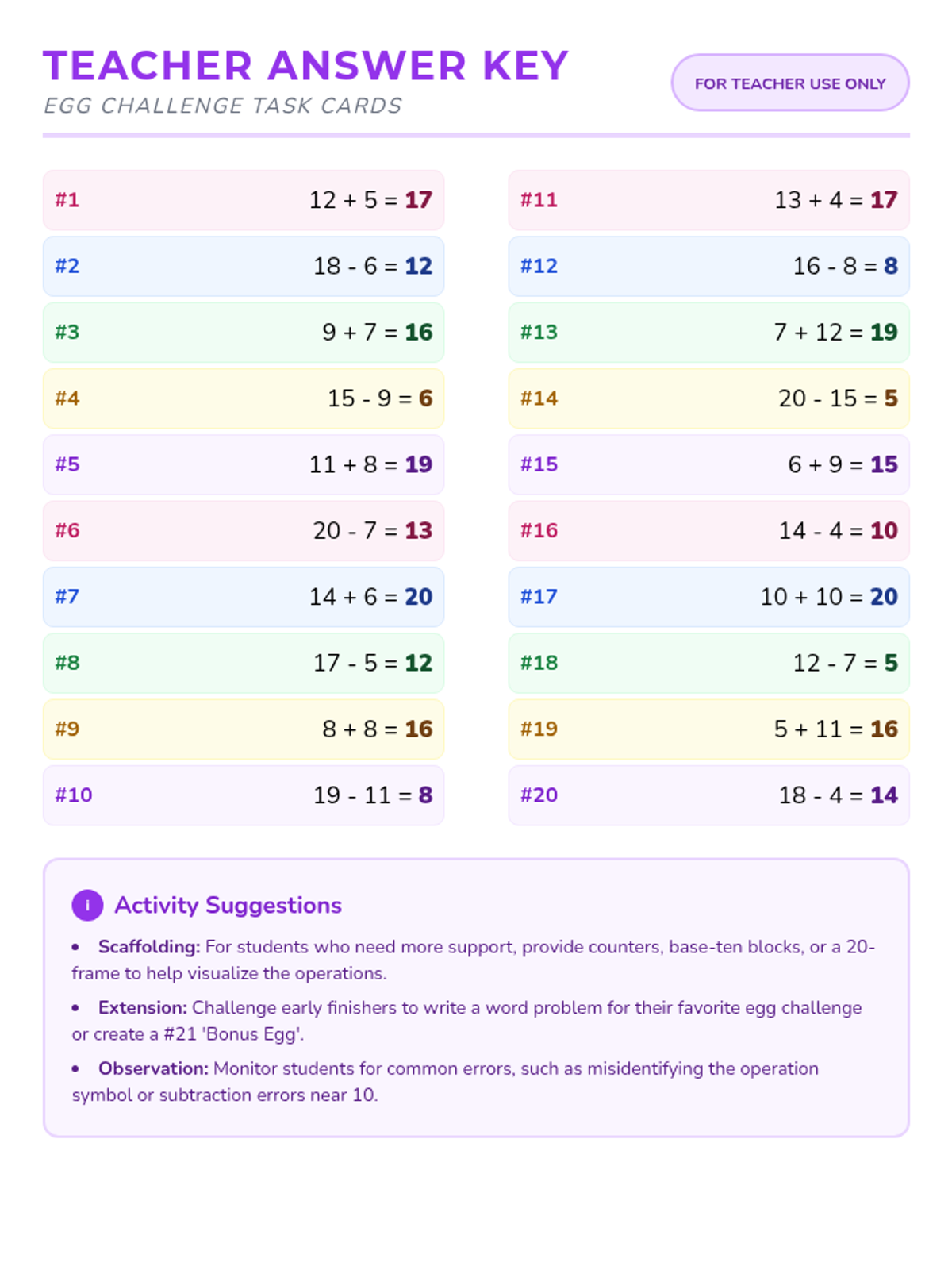
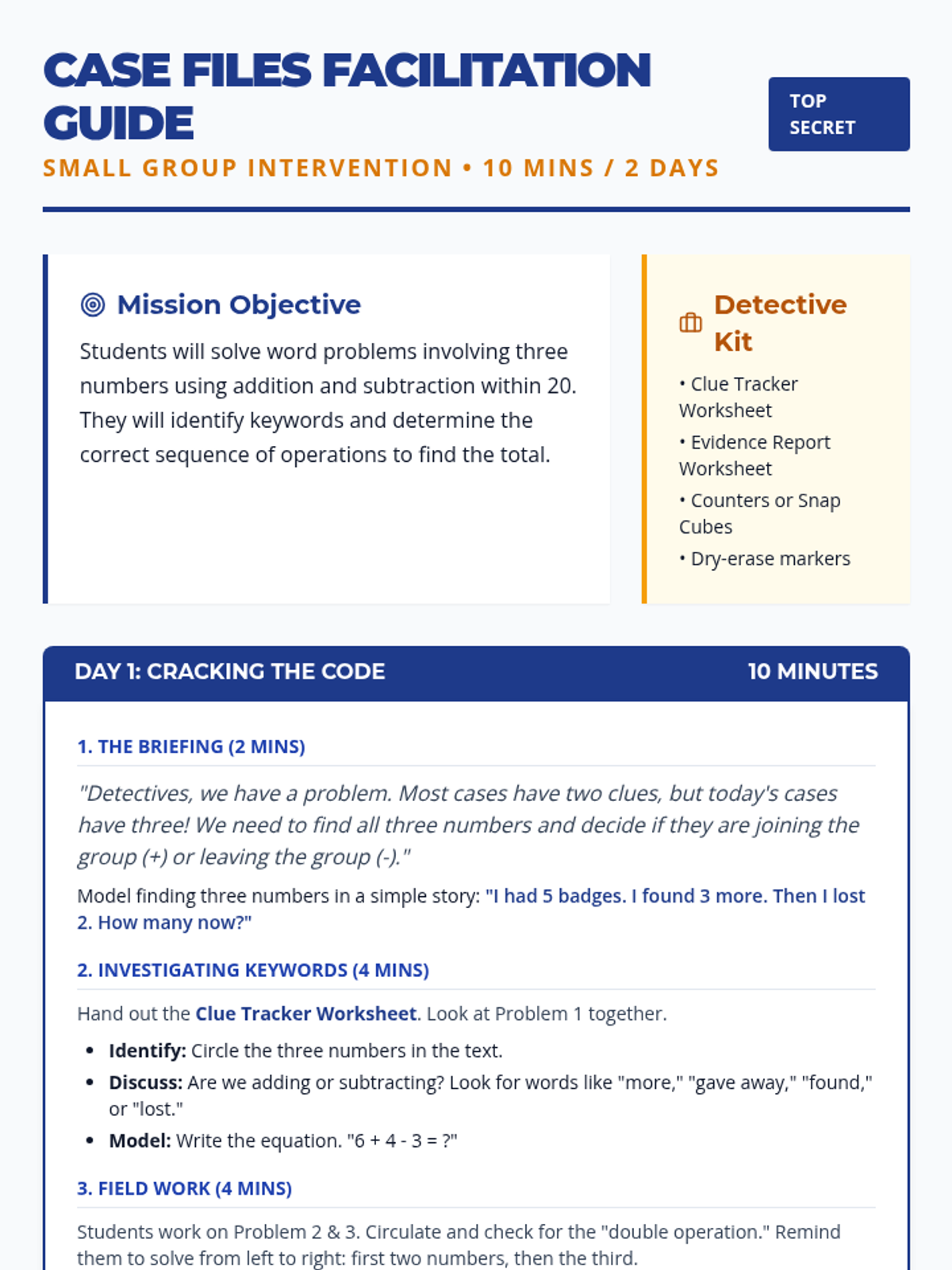
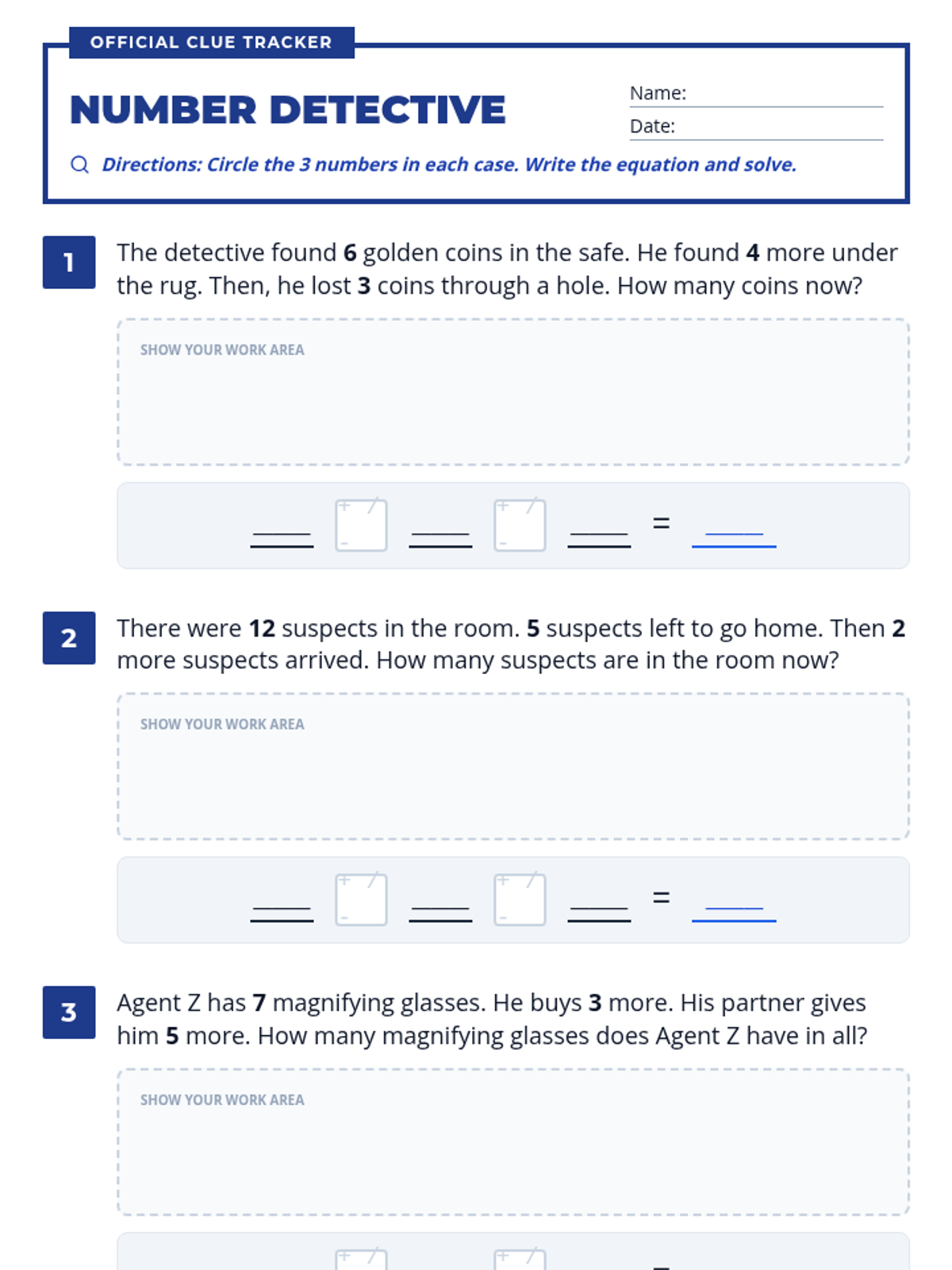
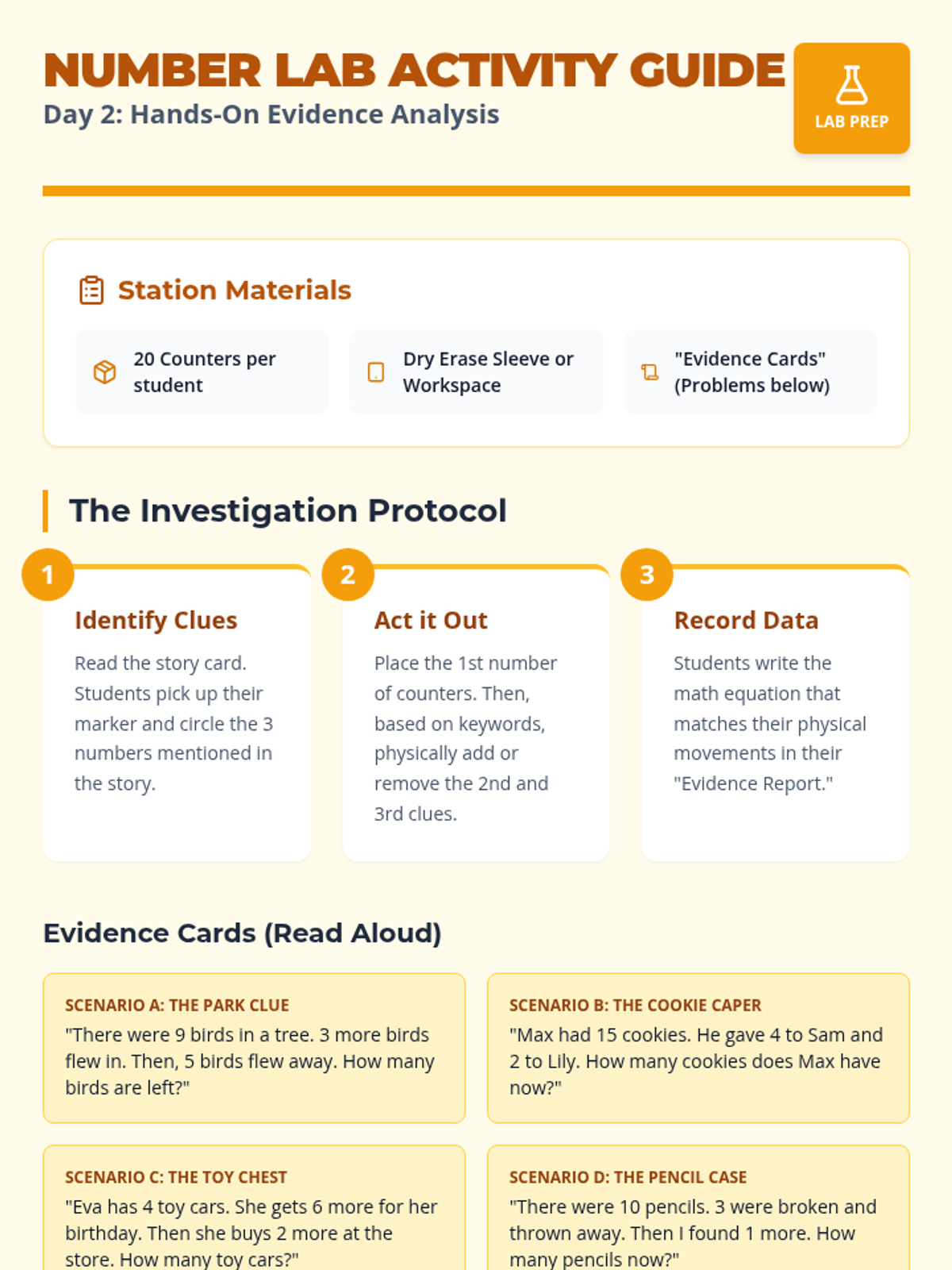
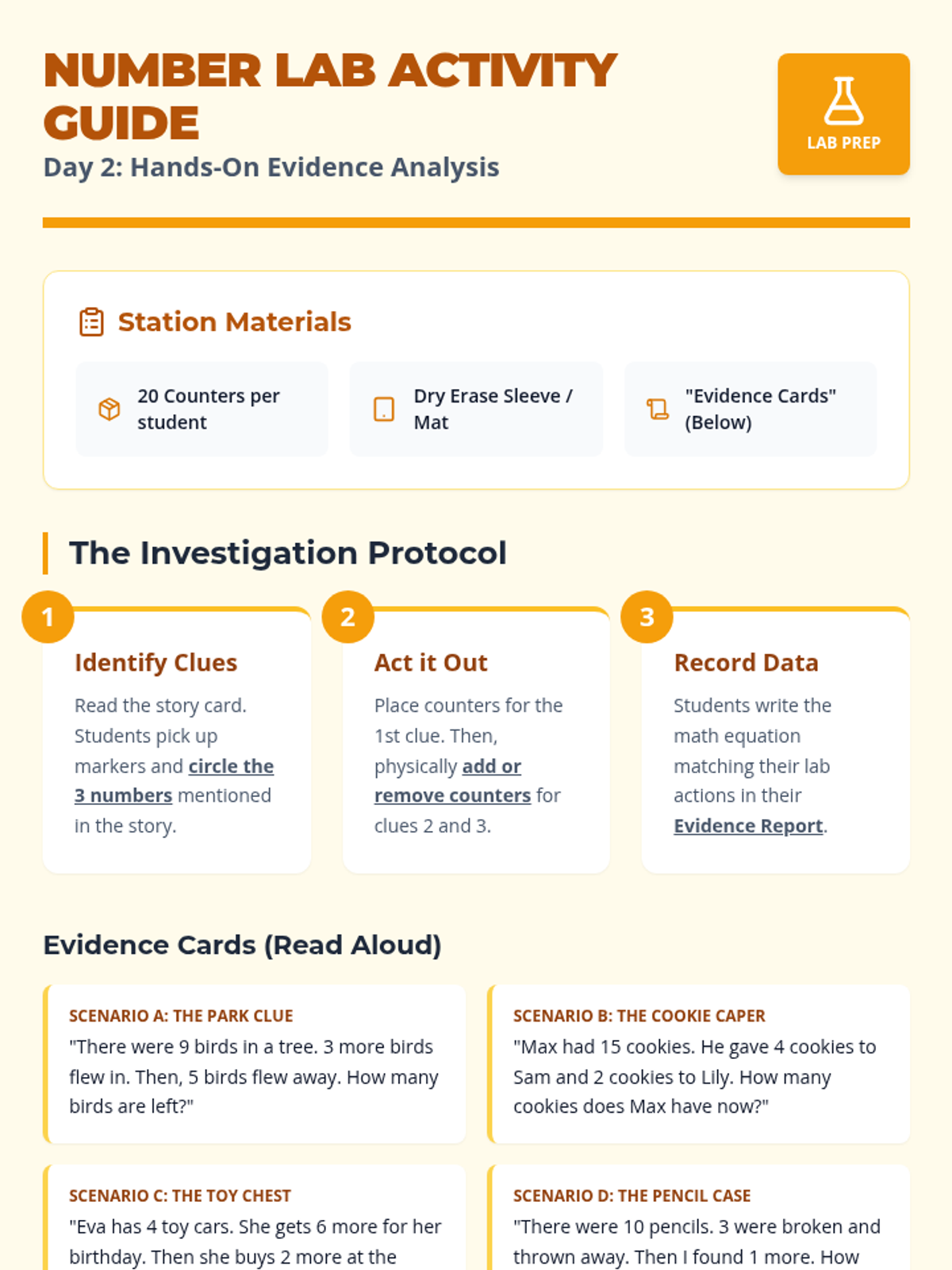
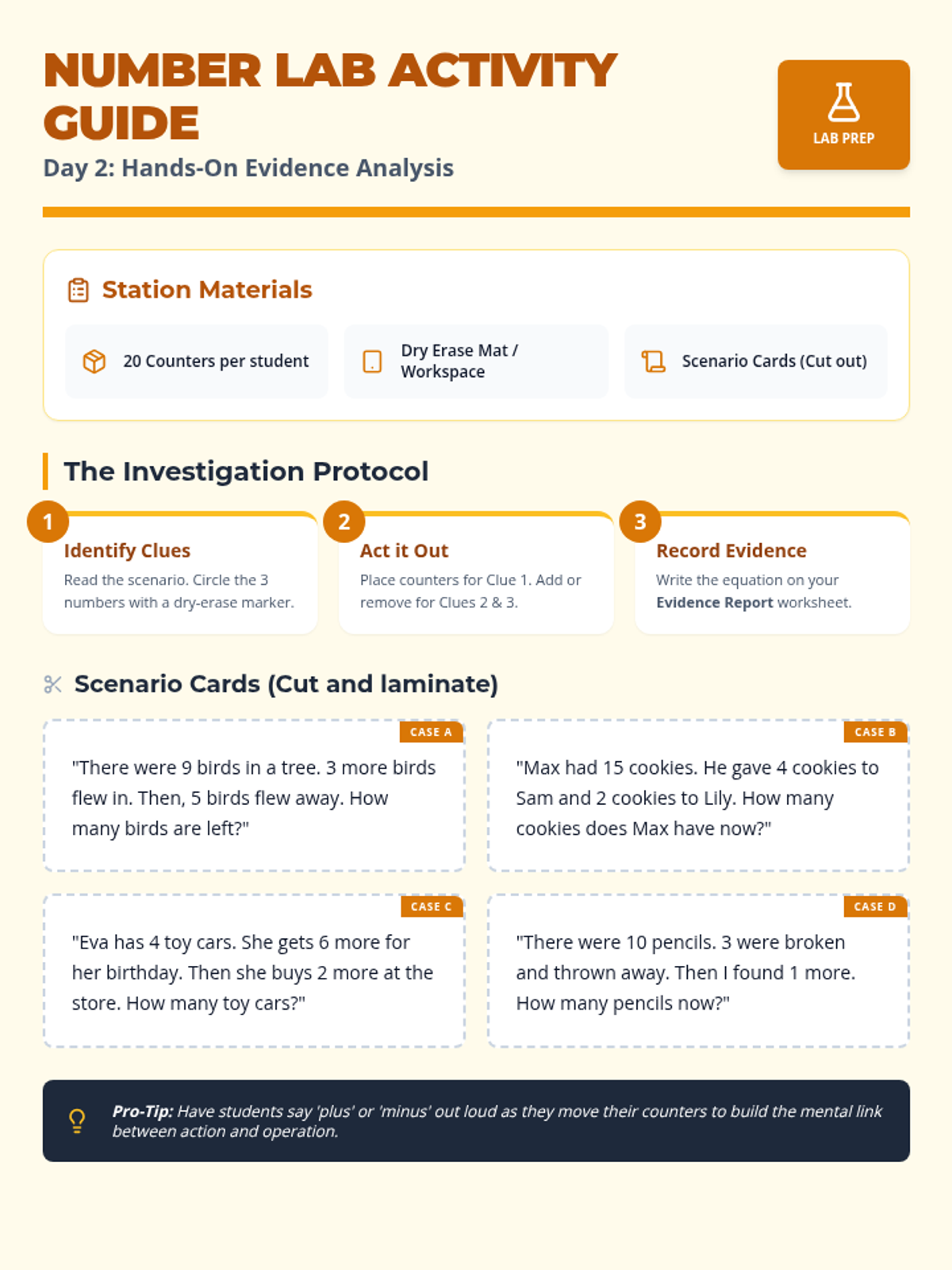
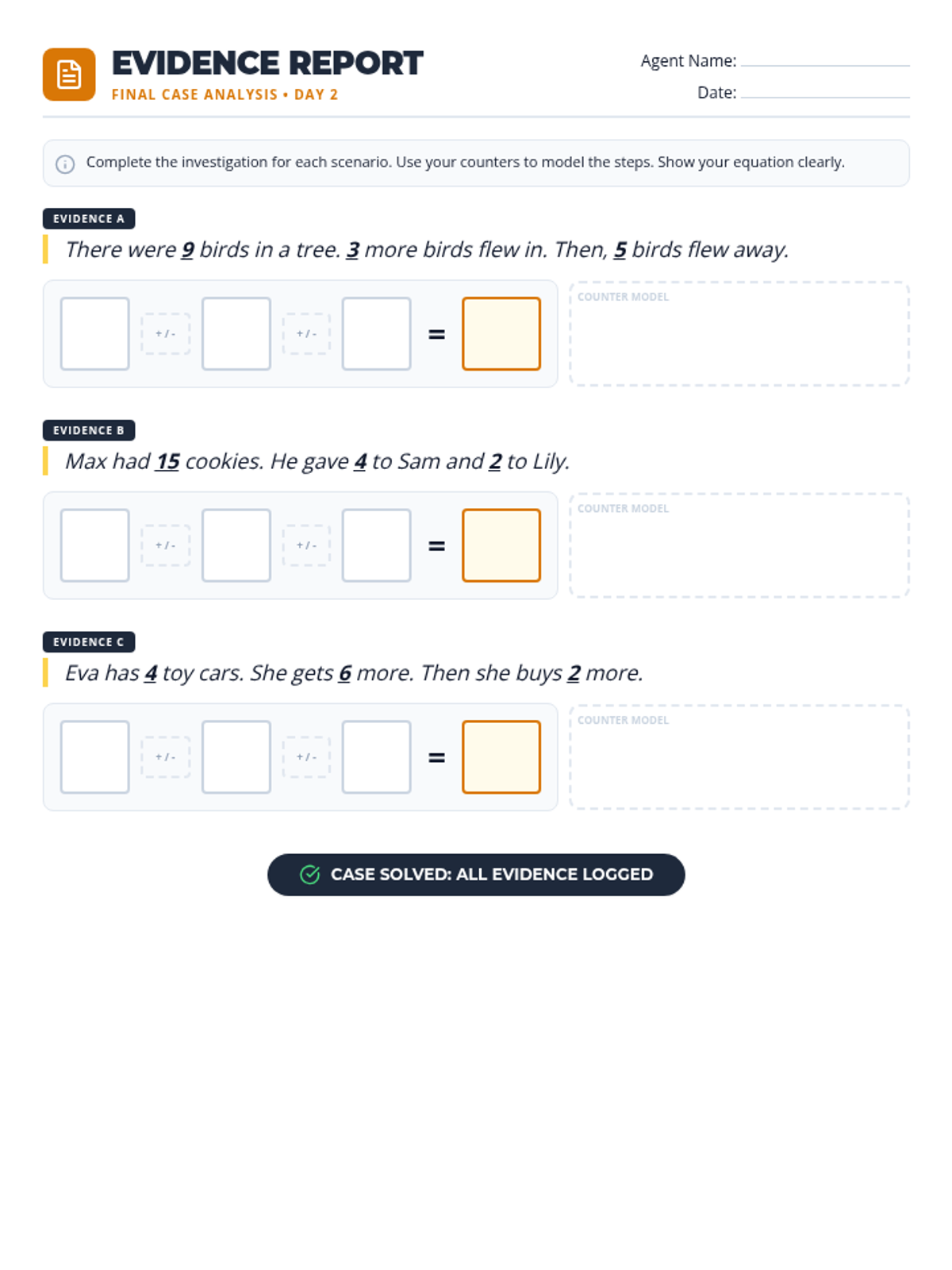
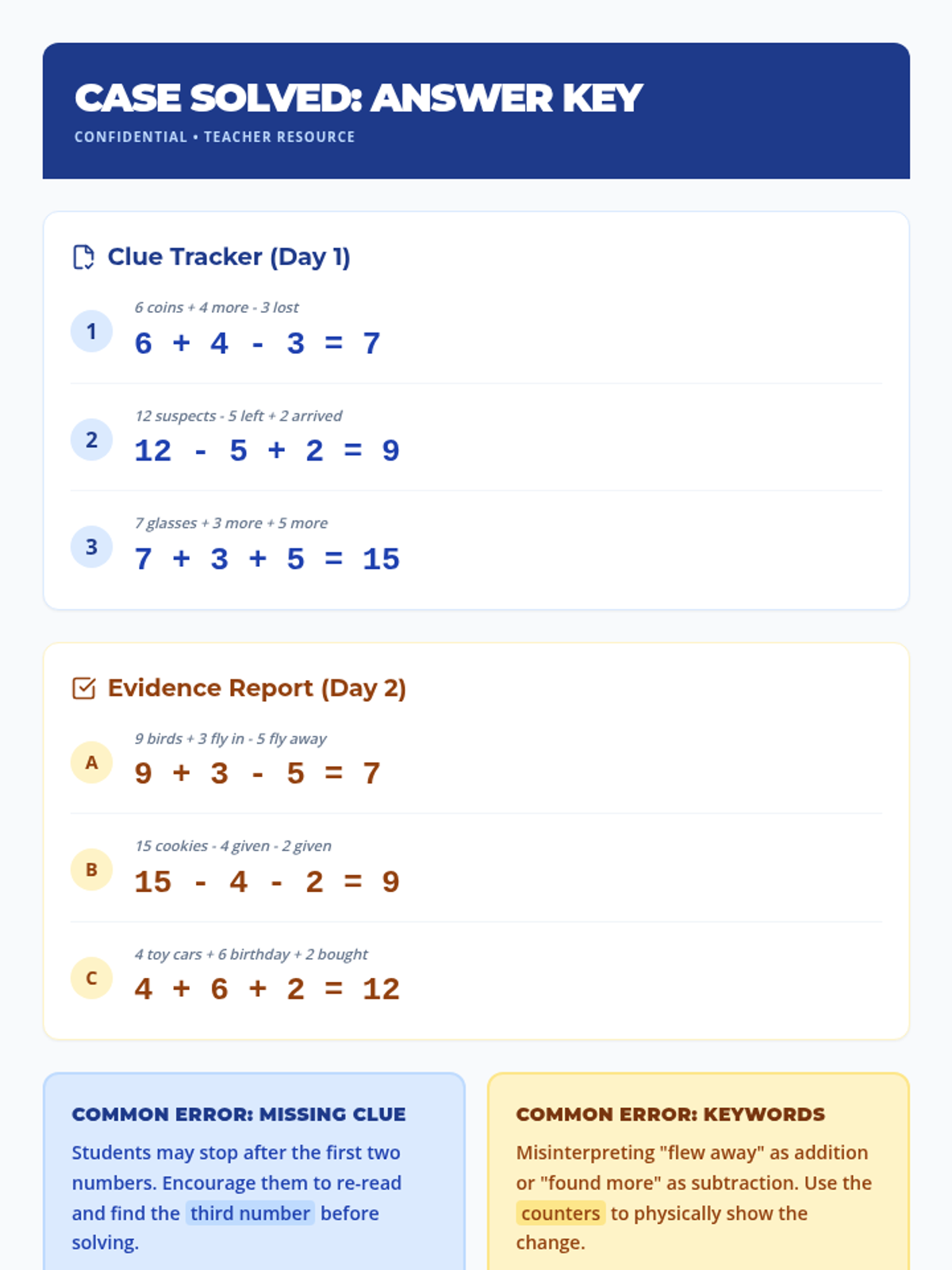
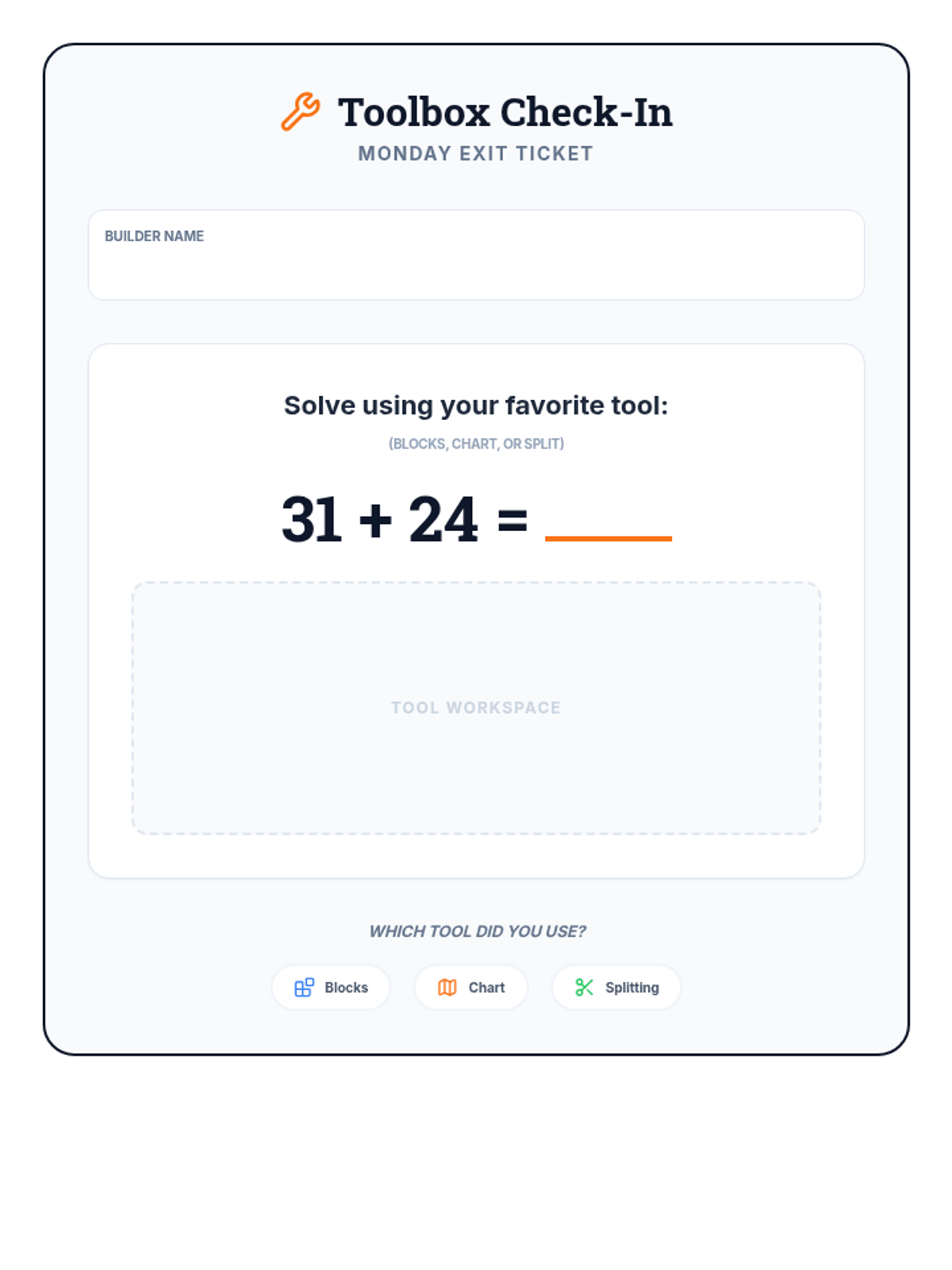
A 6-lesson Tier 2 intervention sequence for first graders focused on addition and subtraction equations. Using an 'Equation Lab' theme, students move from part-whole understanding to the concept of equality and the inverse relationship between operations, aligned with ALN High Leverage Concepts.
Une séquence pédagogique basée sur l'univers des Numberblocks pour aider un enfant autiste de 7 ans à maîtriser la comptine numérique jusqu'à 100, en mettant l'accent sur la structure décimale et les régularités.
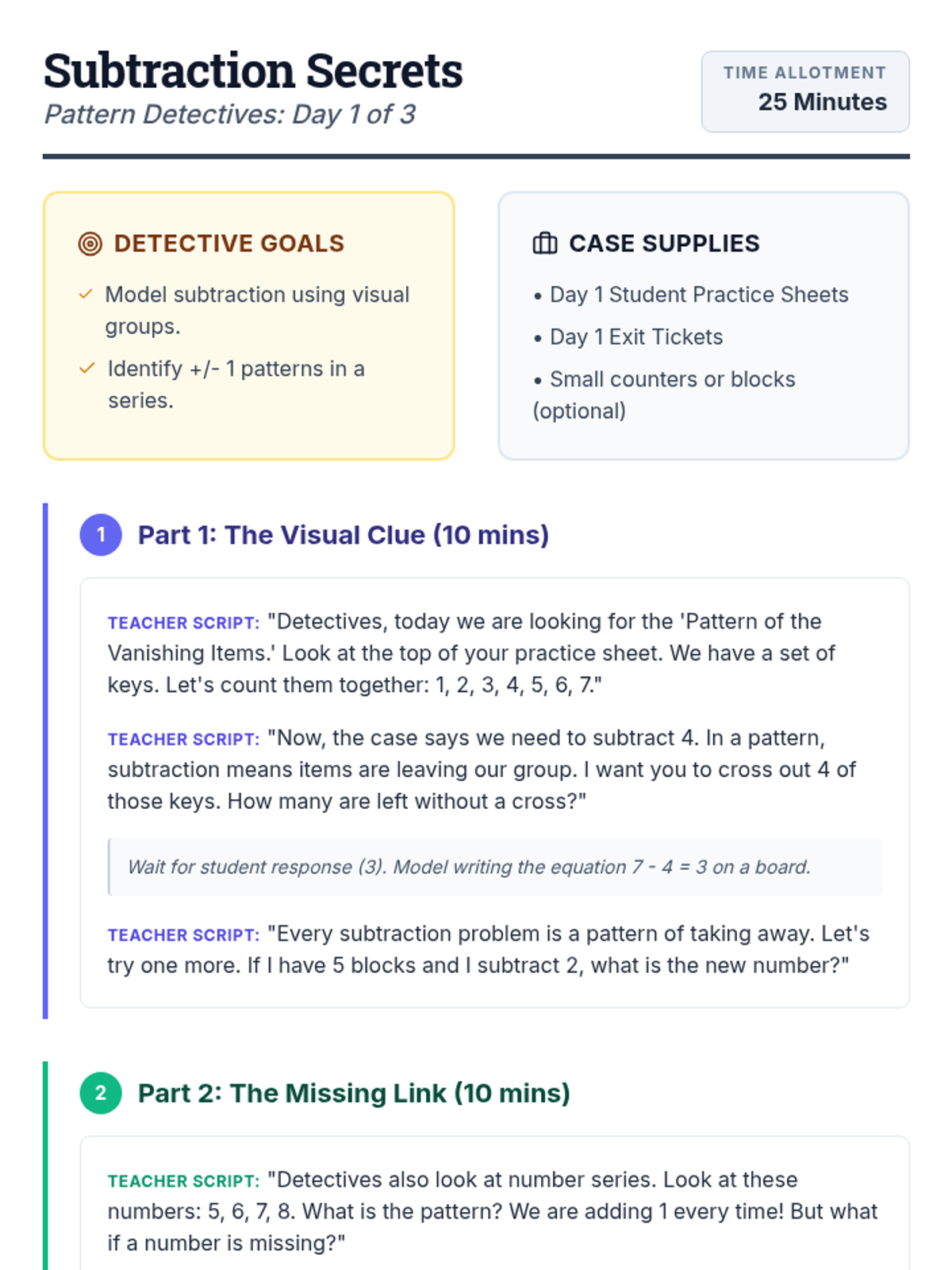
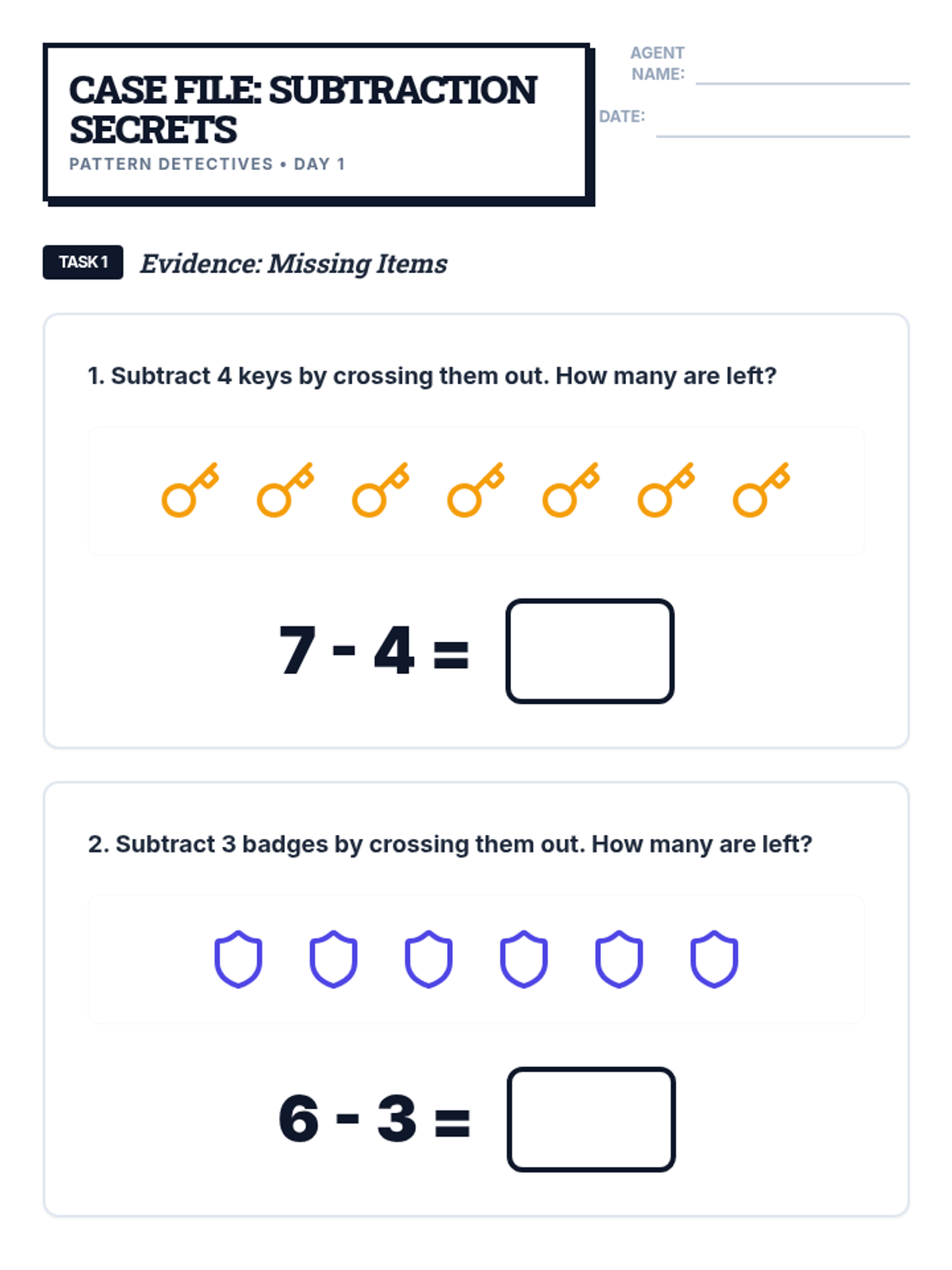
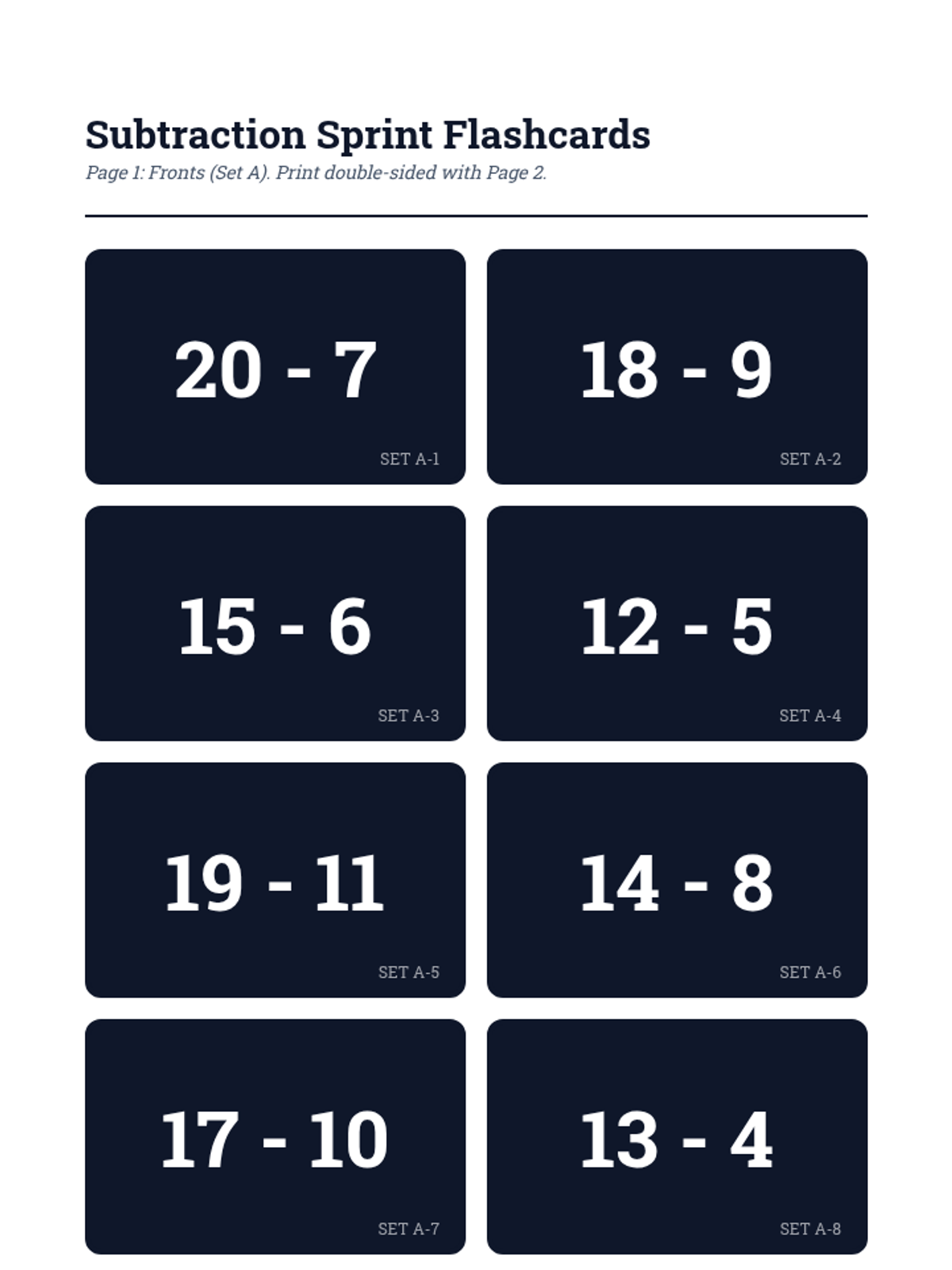
A series of lessons designed to help primary students master subtraction strategies using the CPA (Concrete-Pictorial-Abstract) model. Students progress from using physical manipulatives to mental math techniques focused on the base-ten anchor.
A hands-on introduction to probability and chance for early elementary students using the concepts of will, won't, and might.
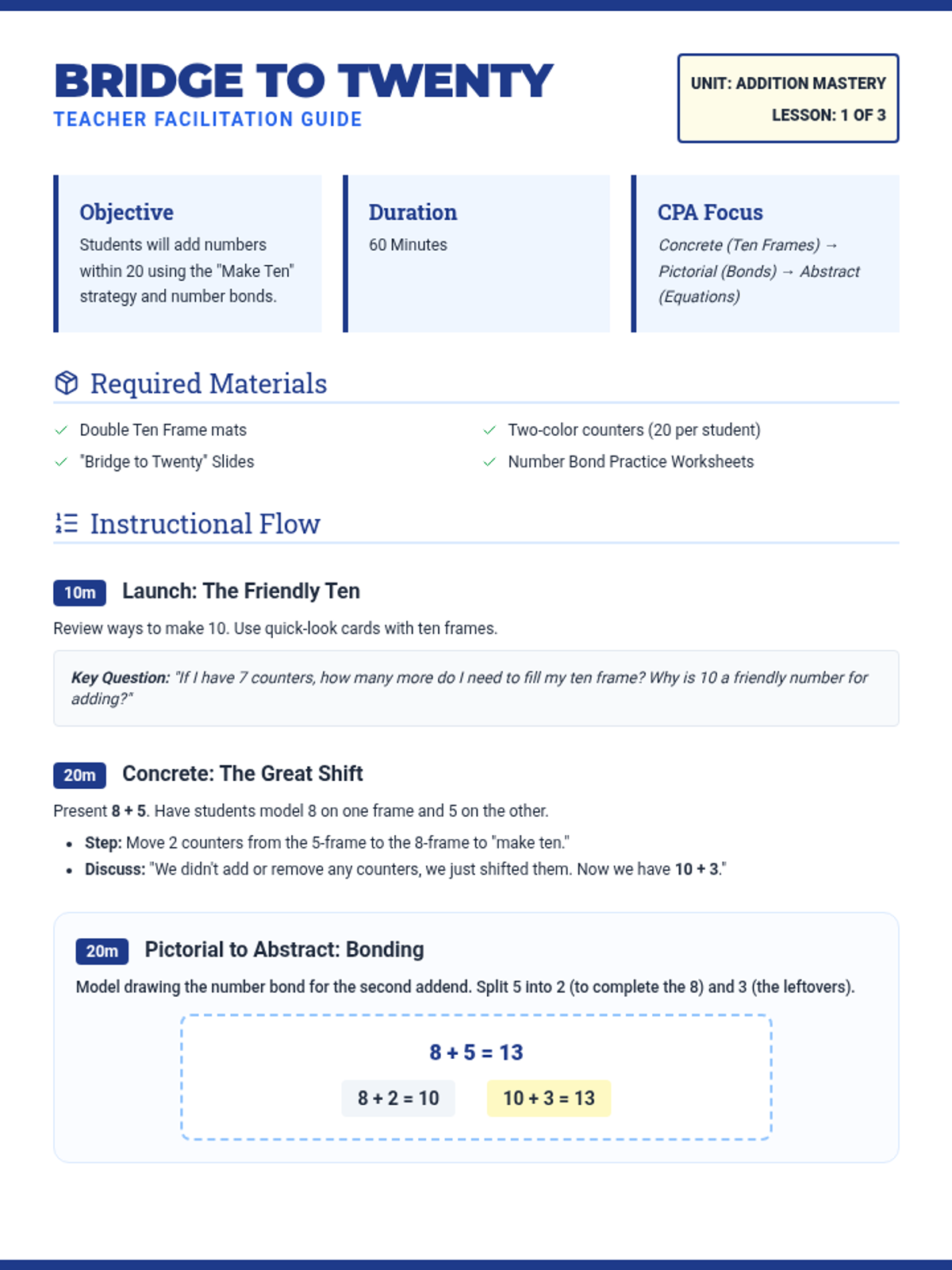
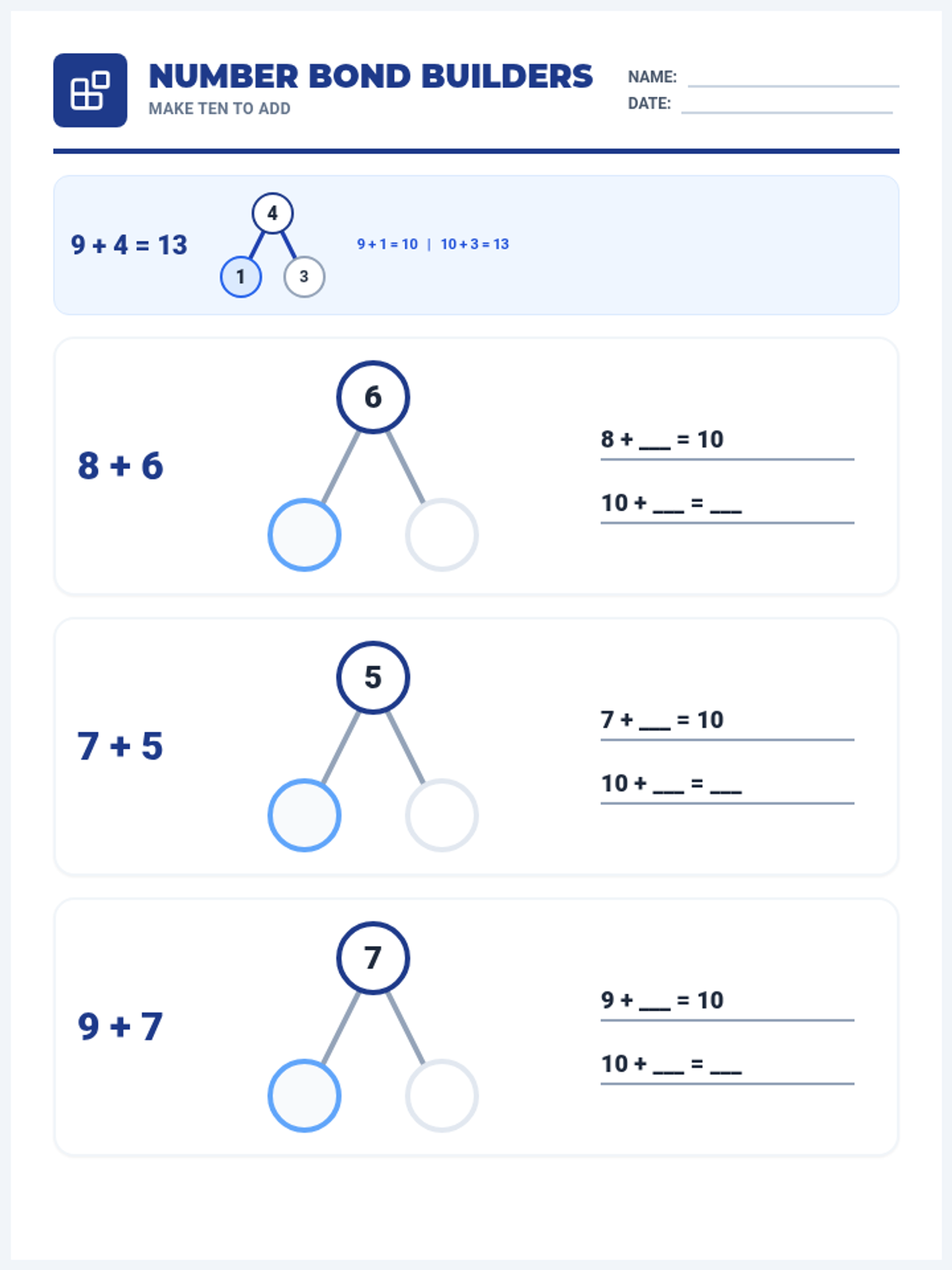
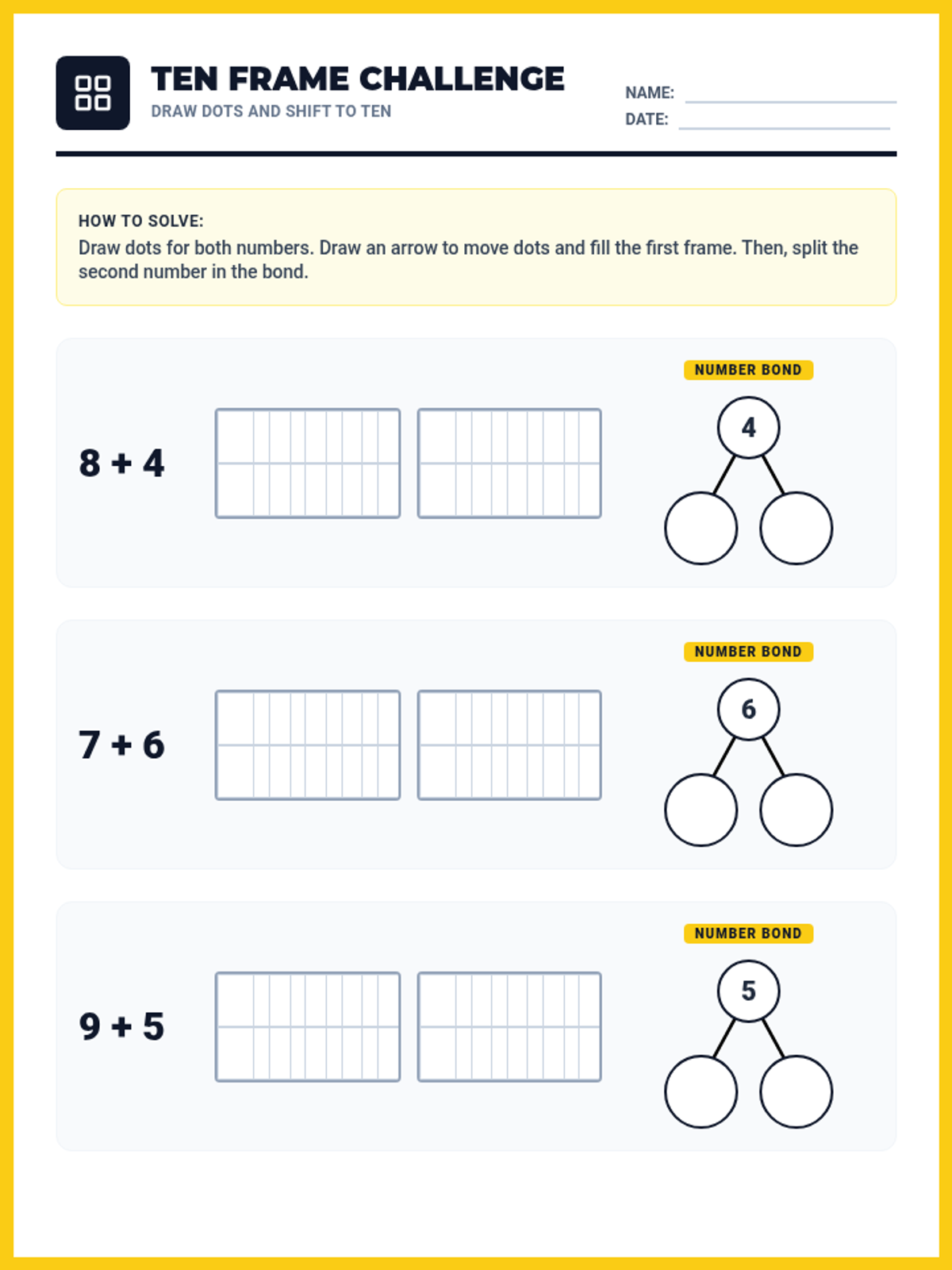
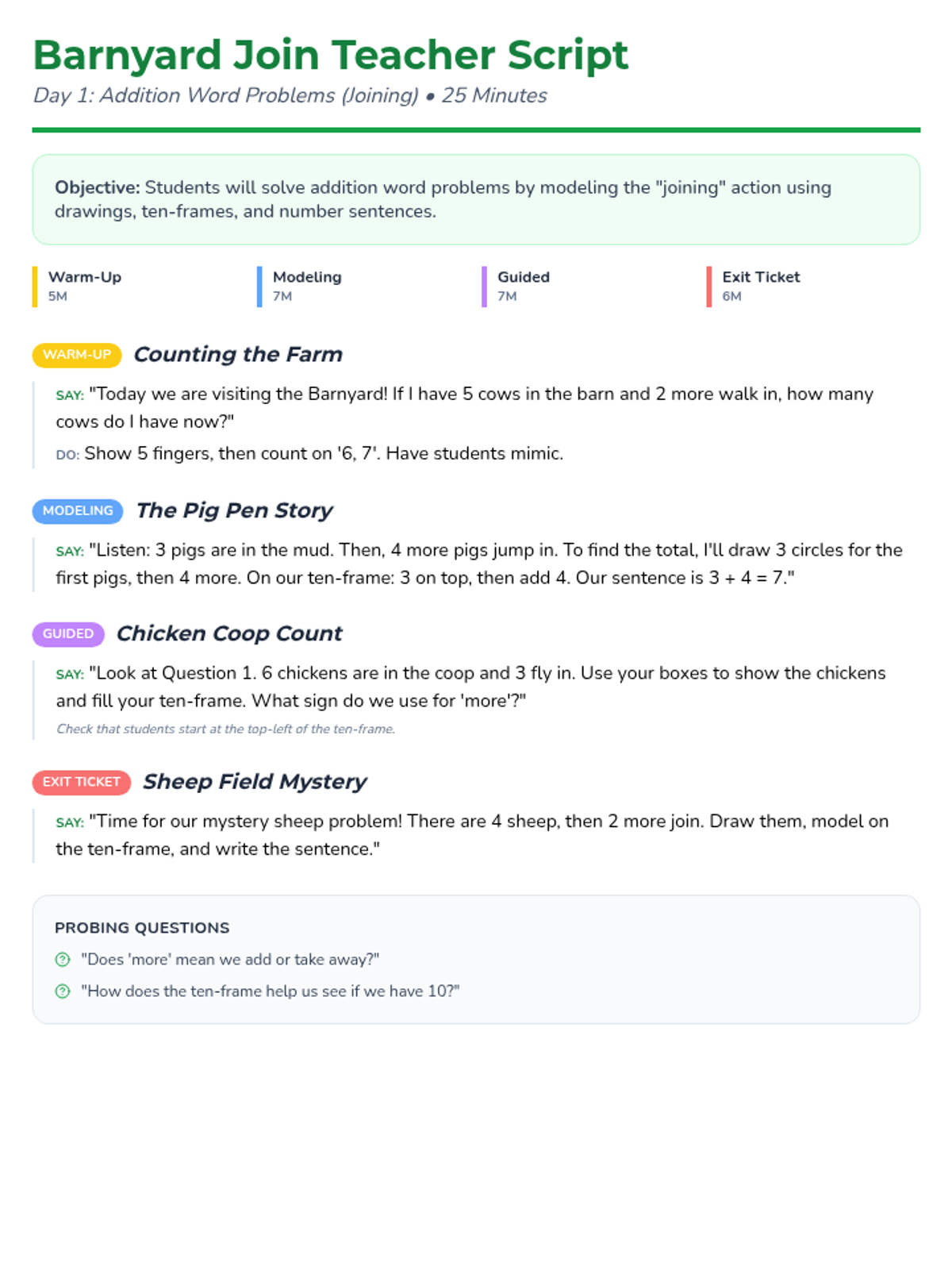
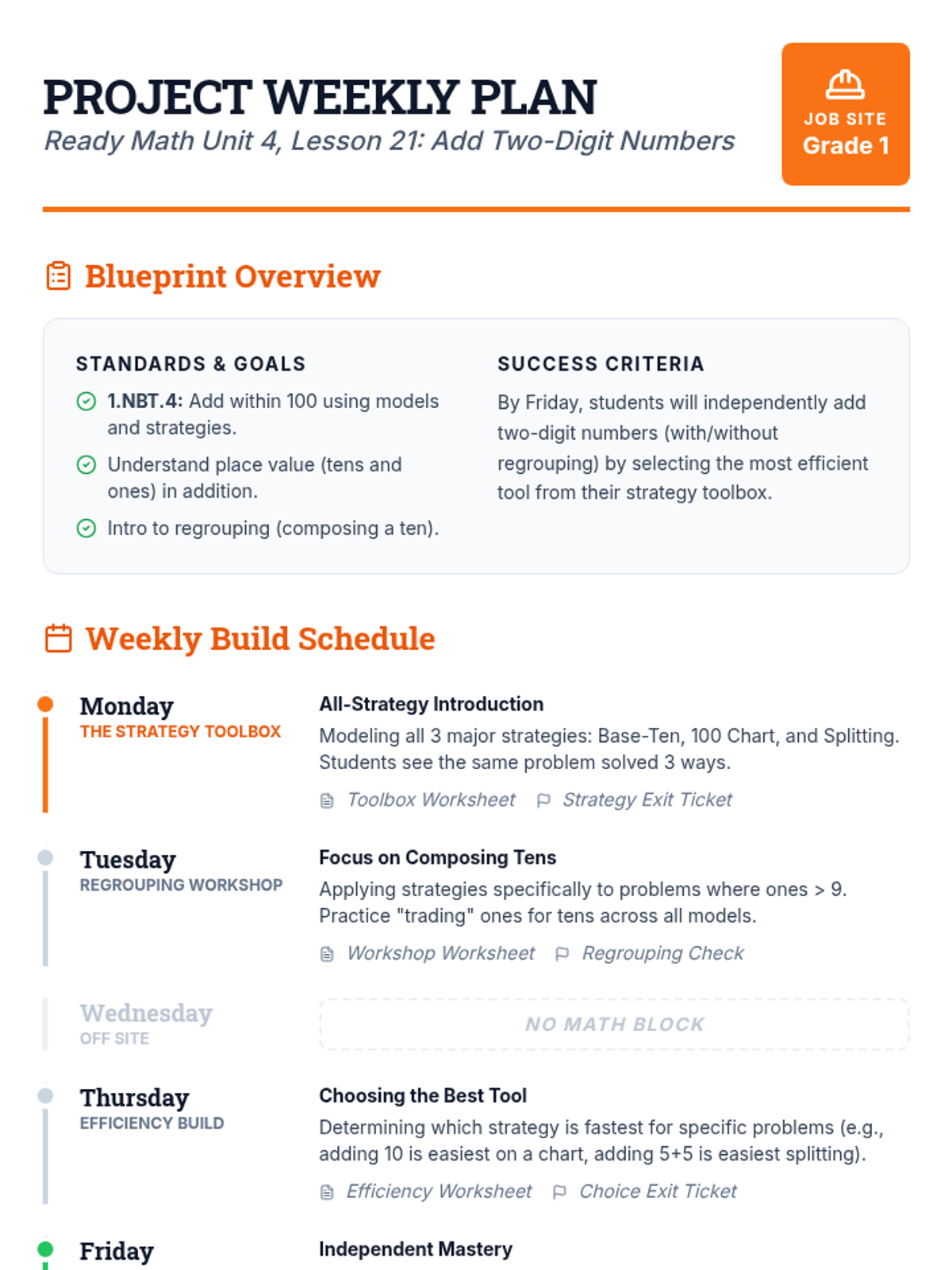
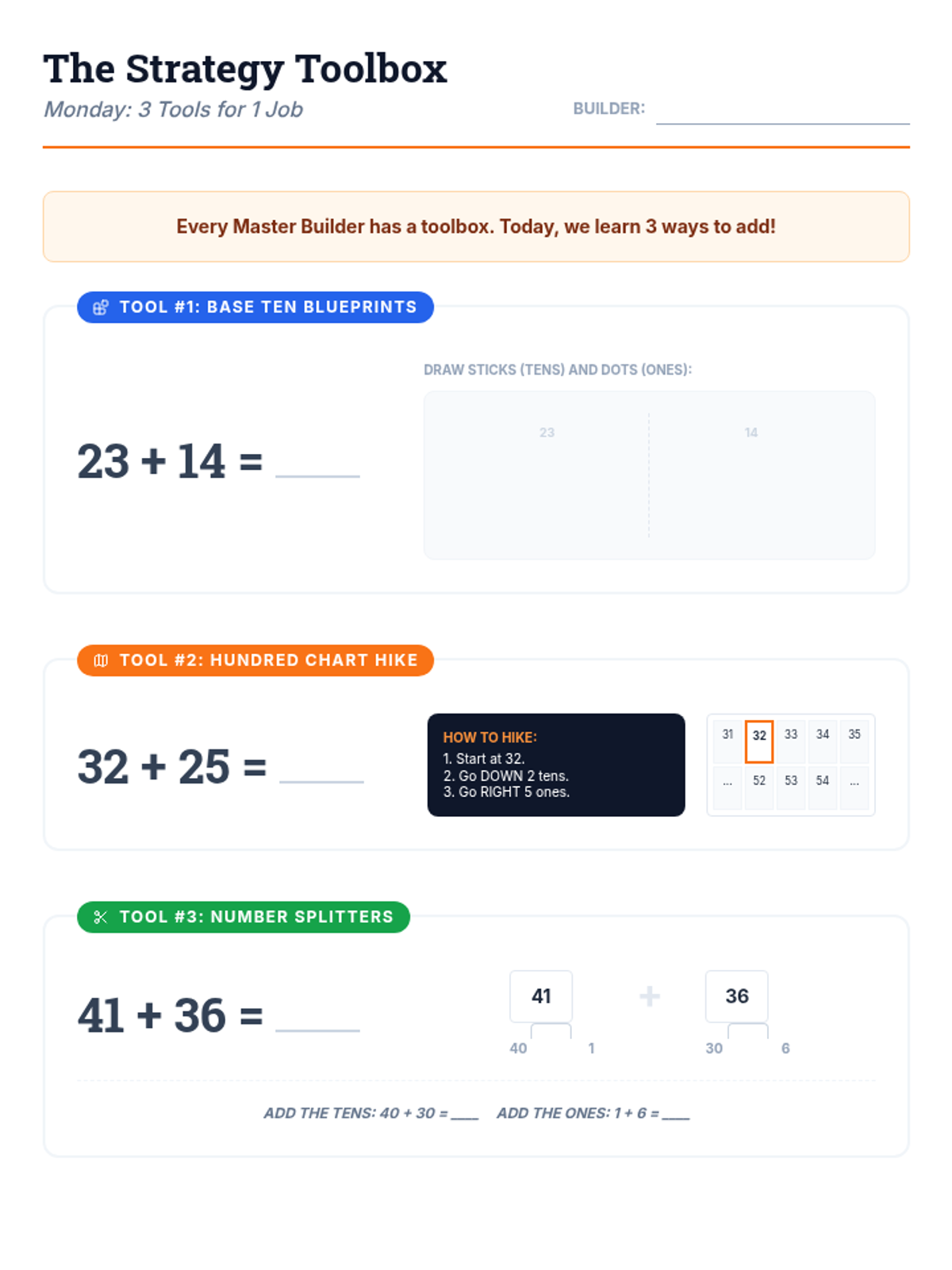
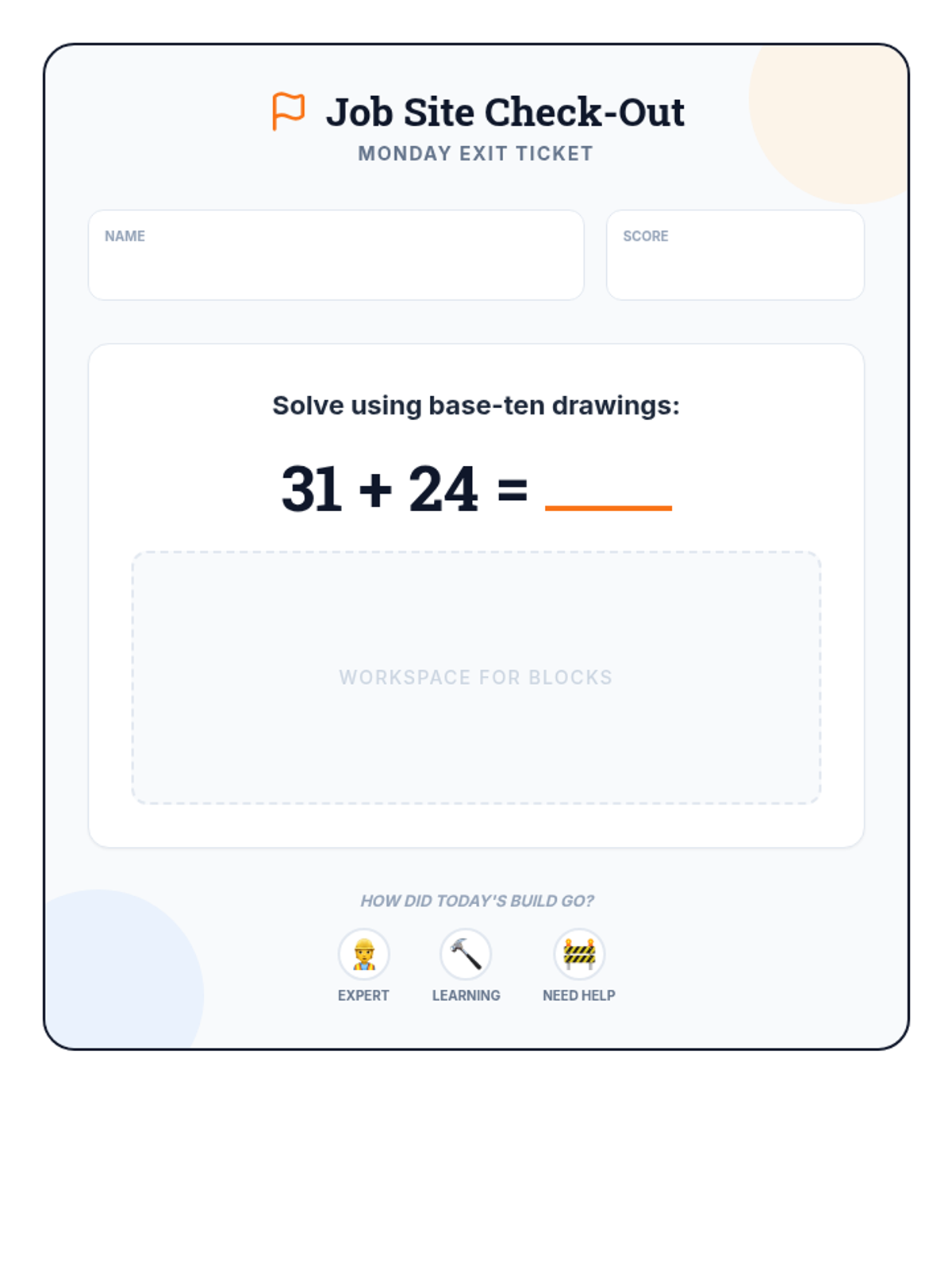
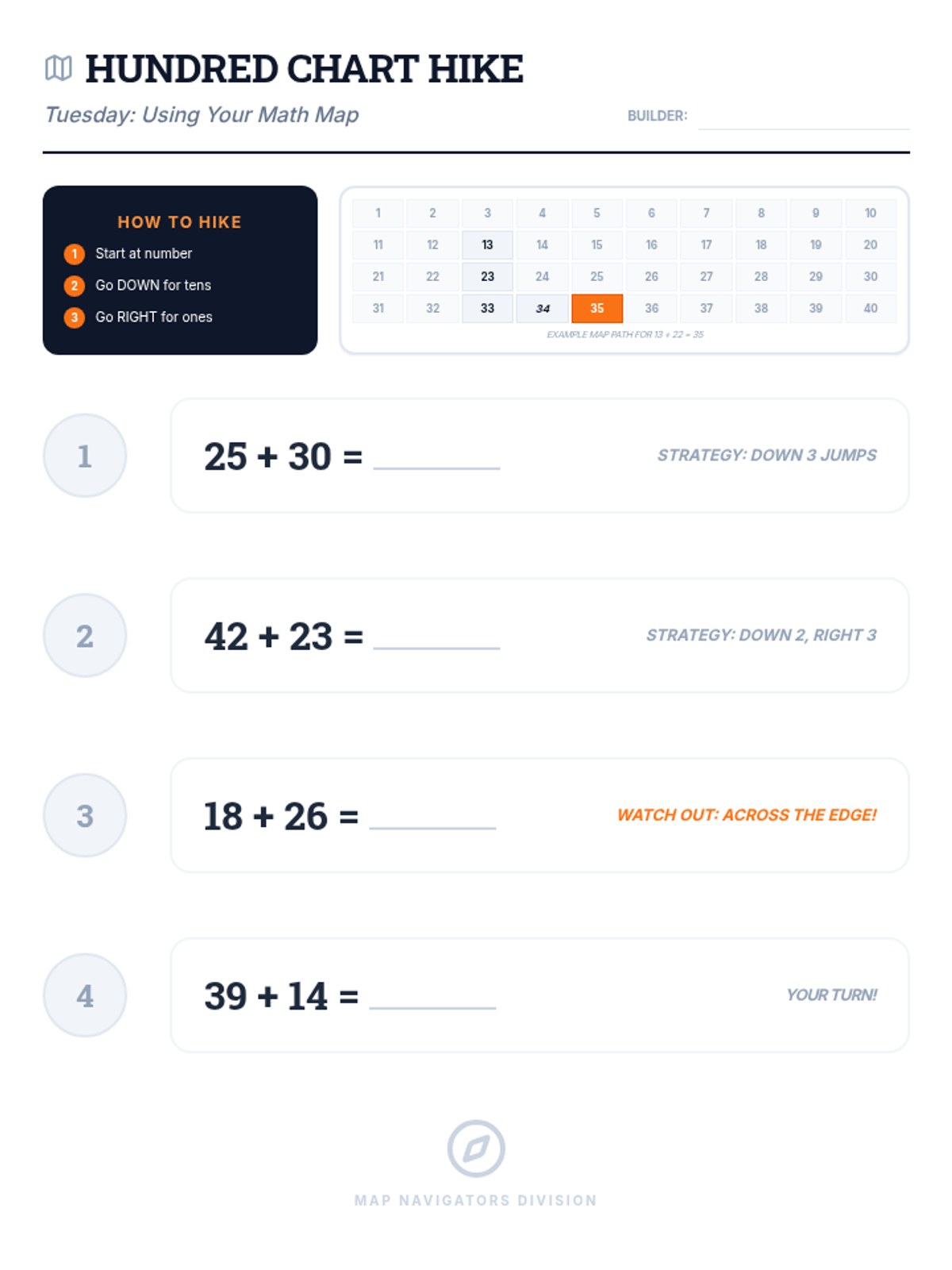
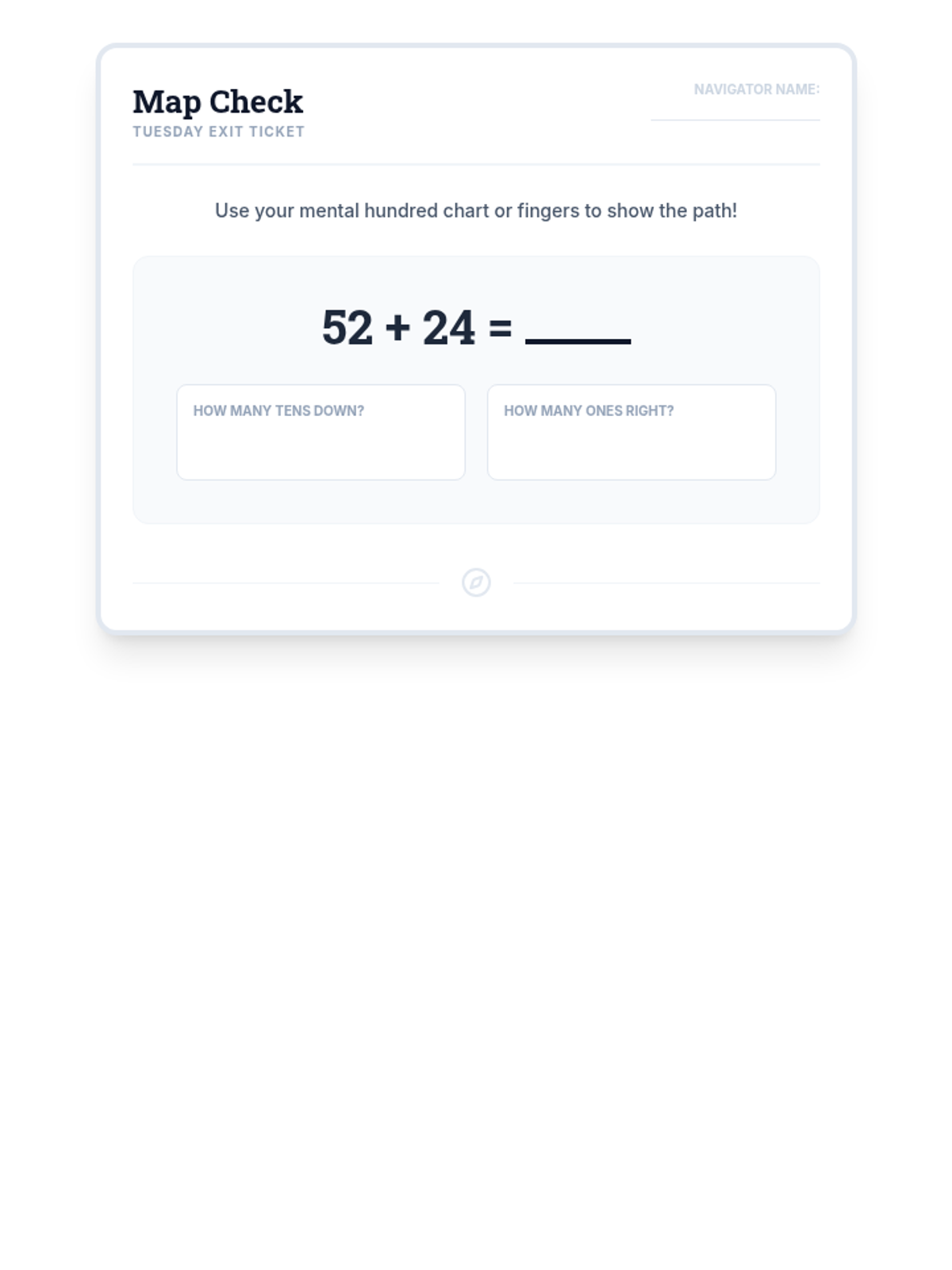
A series of lessons focused on foundational addition strategies for early elementary students, moving from basic counting to more efficient mental math strategies.
A sequence focused on using music, rhythm, and rhyme to master foundational mathematical concepts like addition and skip counting.
A series of parent engagement workshops designed to bridge the gap between classroom instruction and home support for early elementary mathematics. Each session focuses on a specific conceptual strategy to empower parents as learning partners.
A targeted intervention series designed to help 1st and 2nd grade students master two-digit subtraction by focusing on verbalization, place value decomposition, and mental math strategies.
A unit focused on building foundational number sense through skip counting patterns and visual representations. Students explore patterns of 2s, 5s, and 10s using movement and visual models.
A series of lessons focused on mastering skip counting patterns to build a strong foundation for multiplication and place value. Students engage in physical movement, musical rhythms, and visual aids to internalize counting by different intervals.
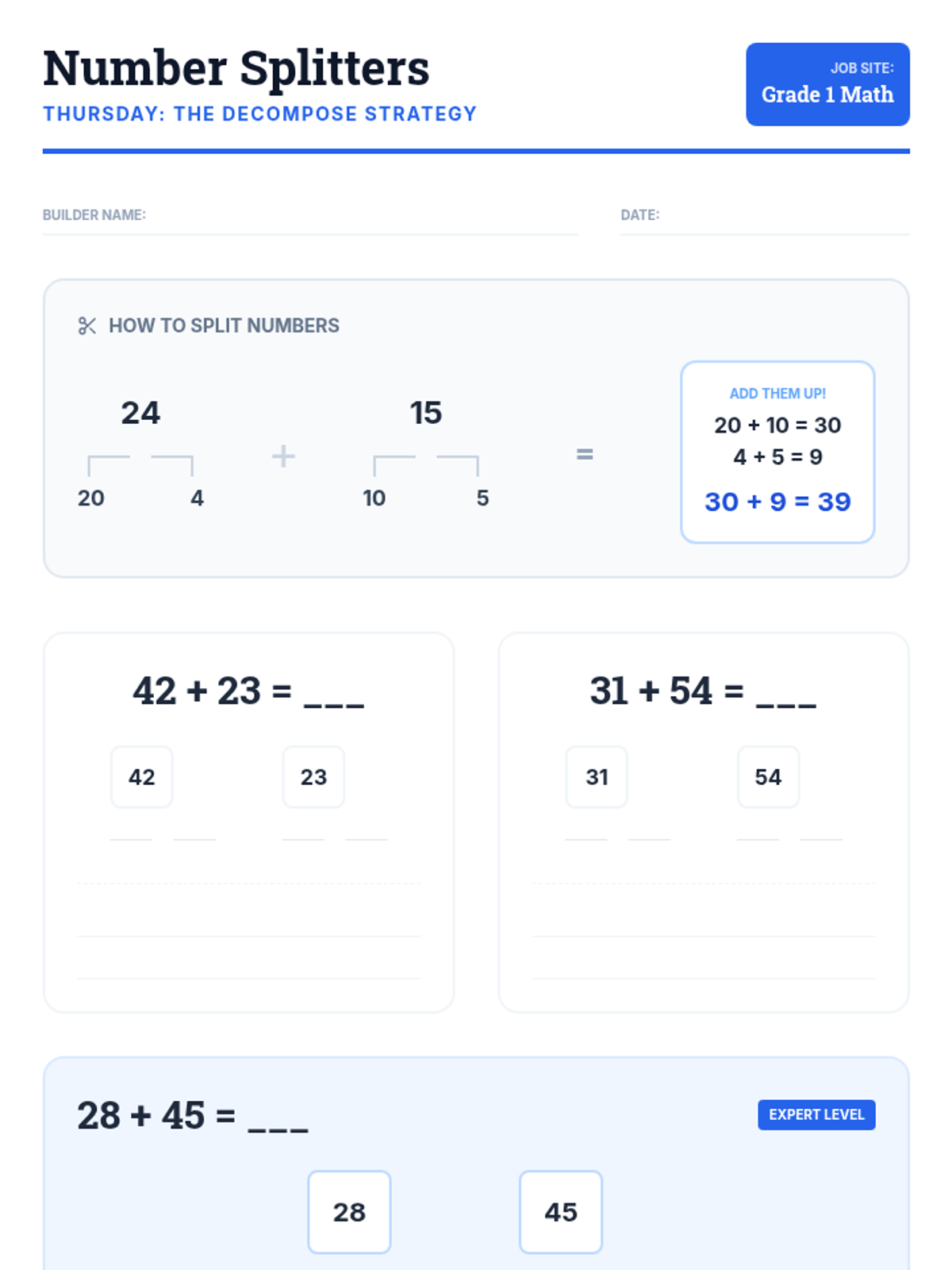
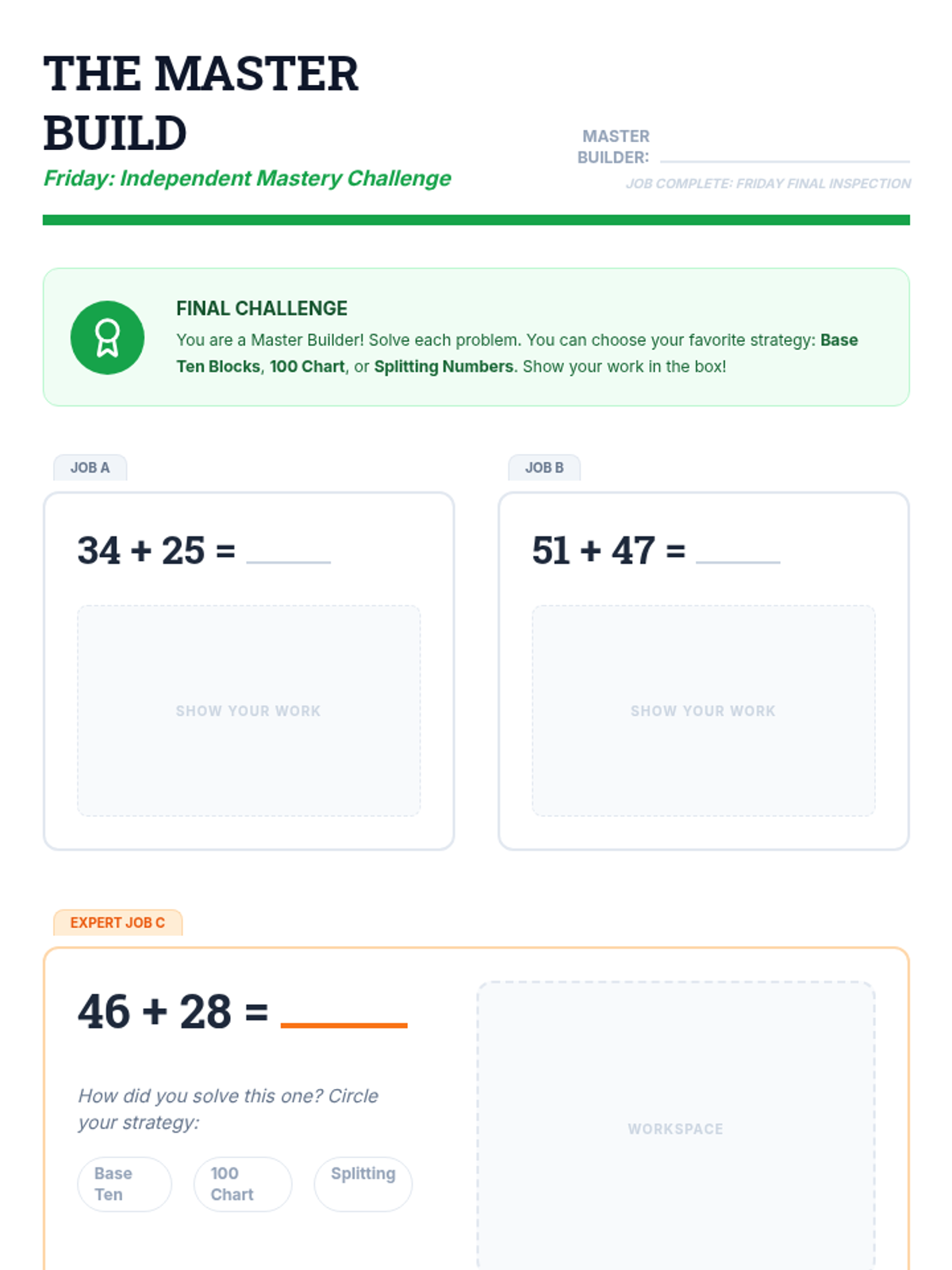
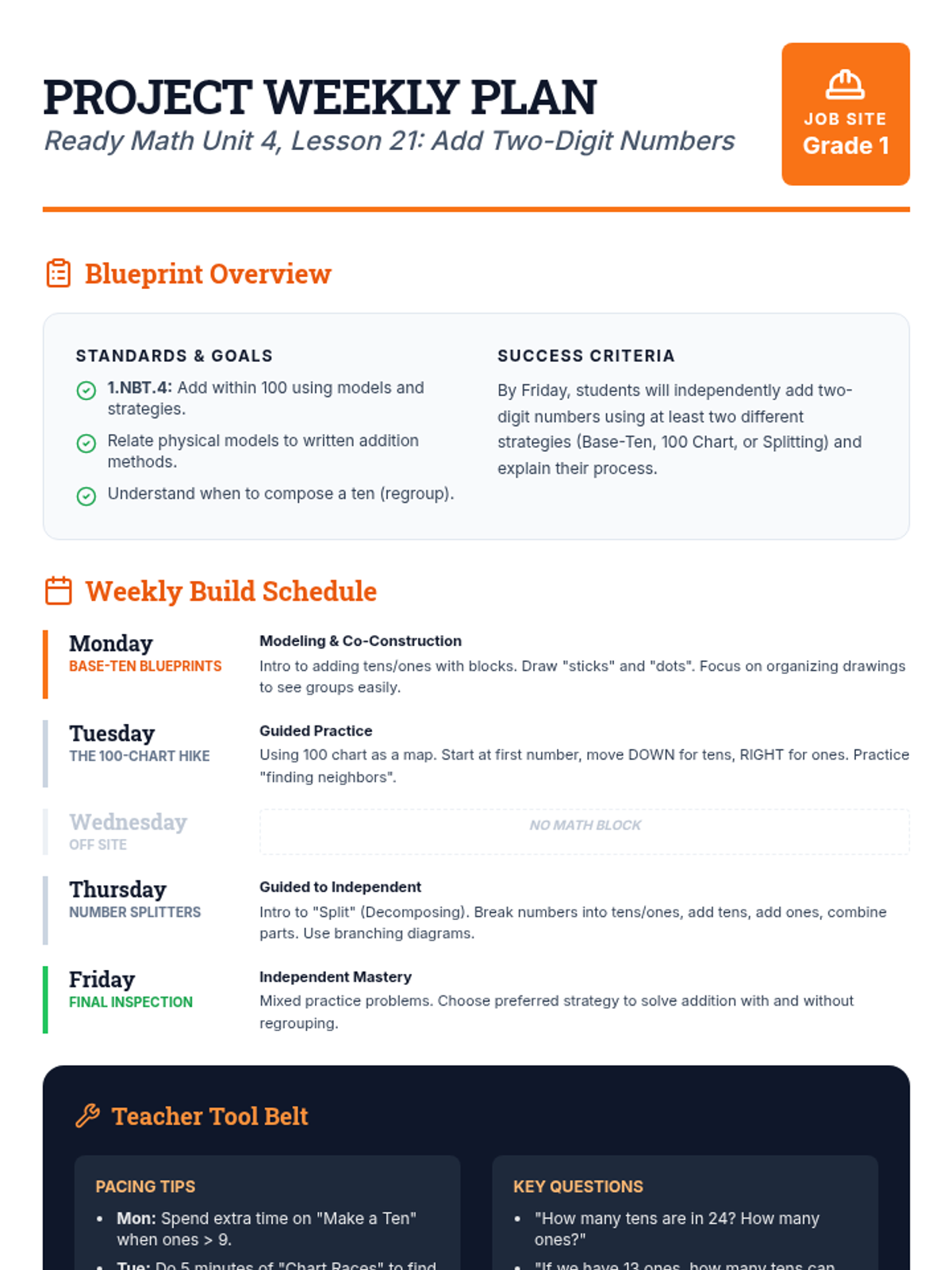
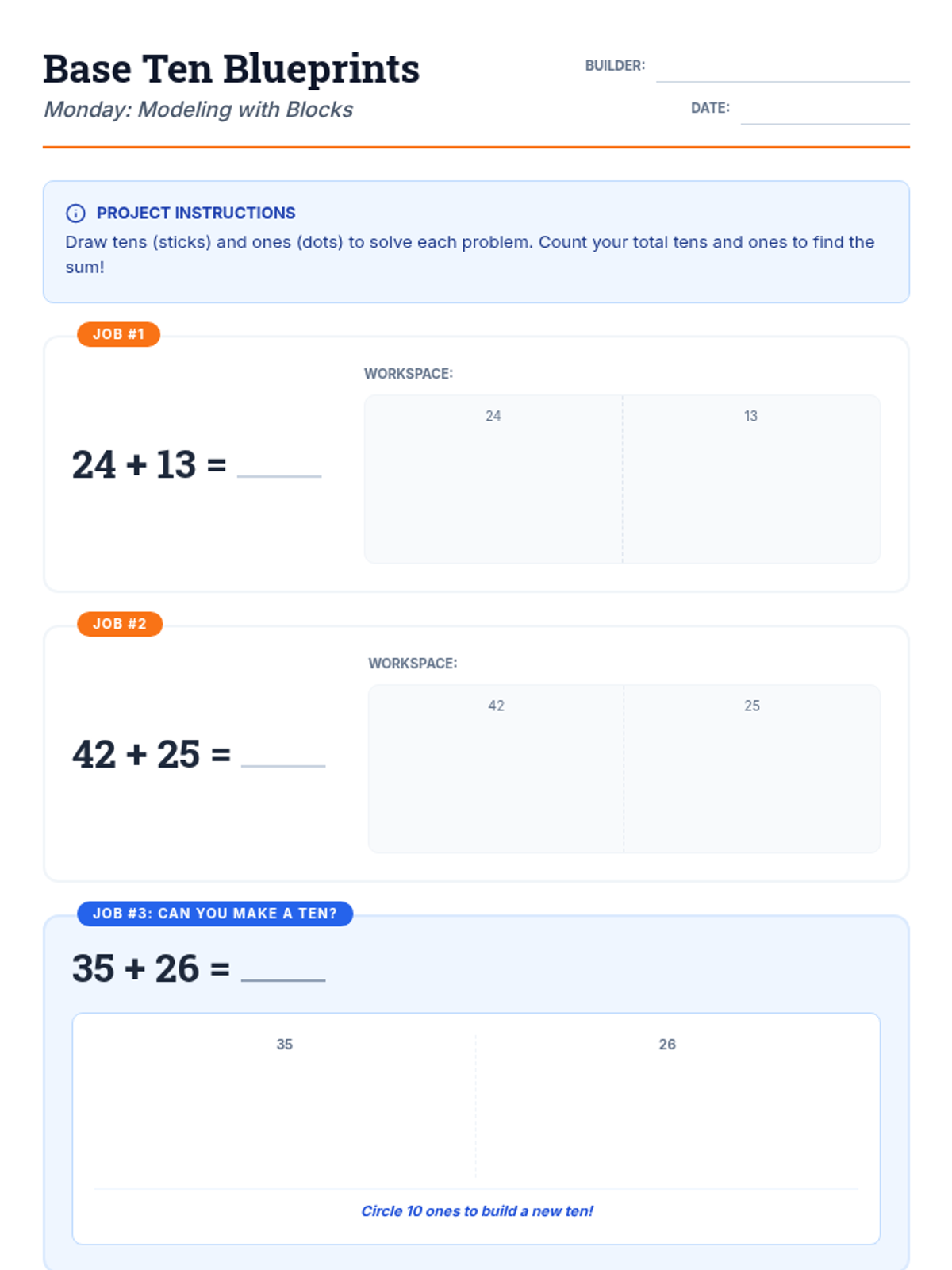
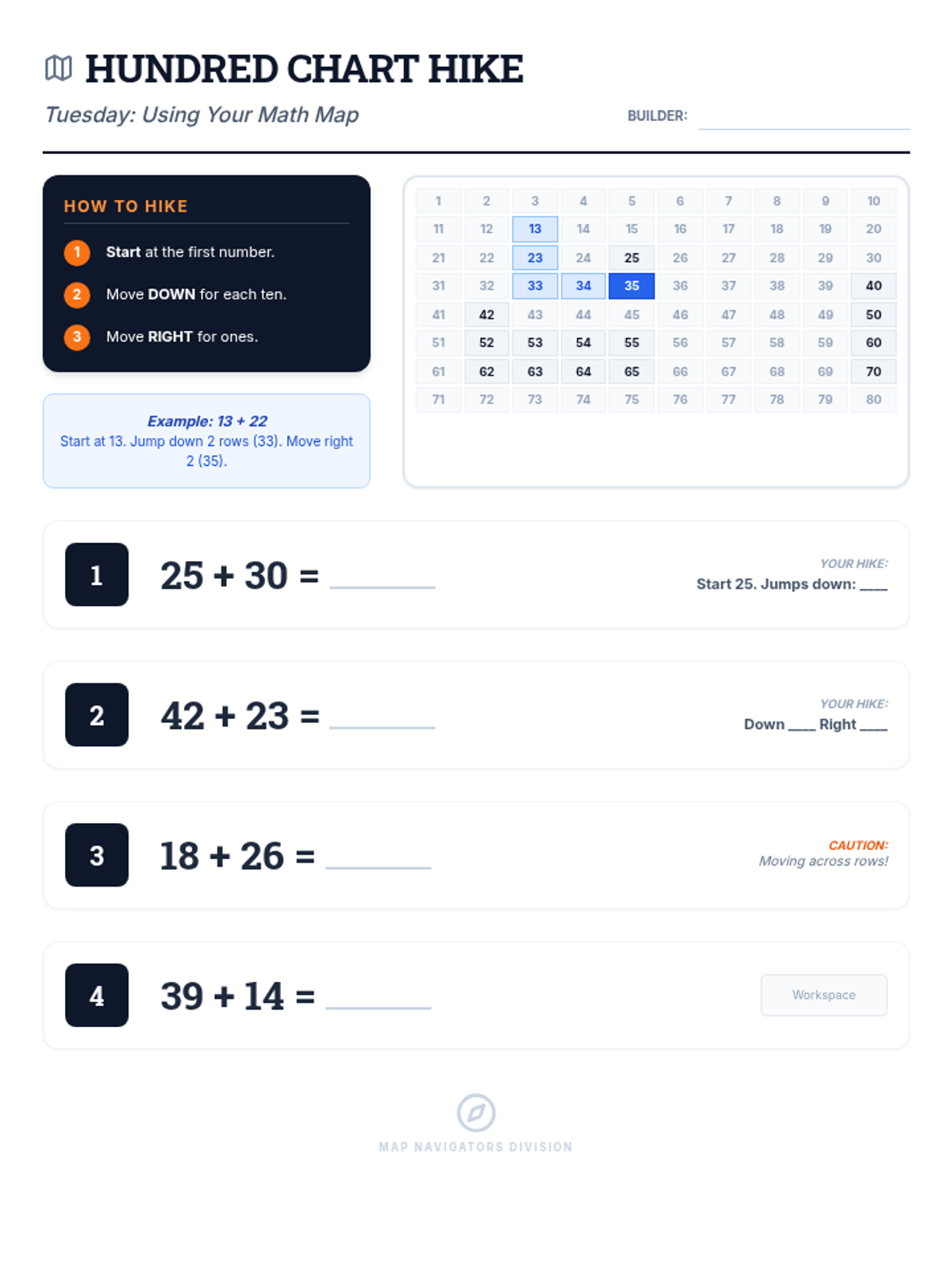
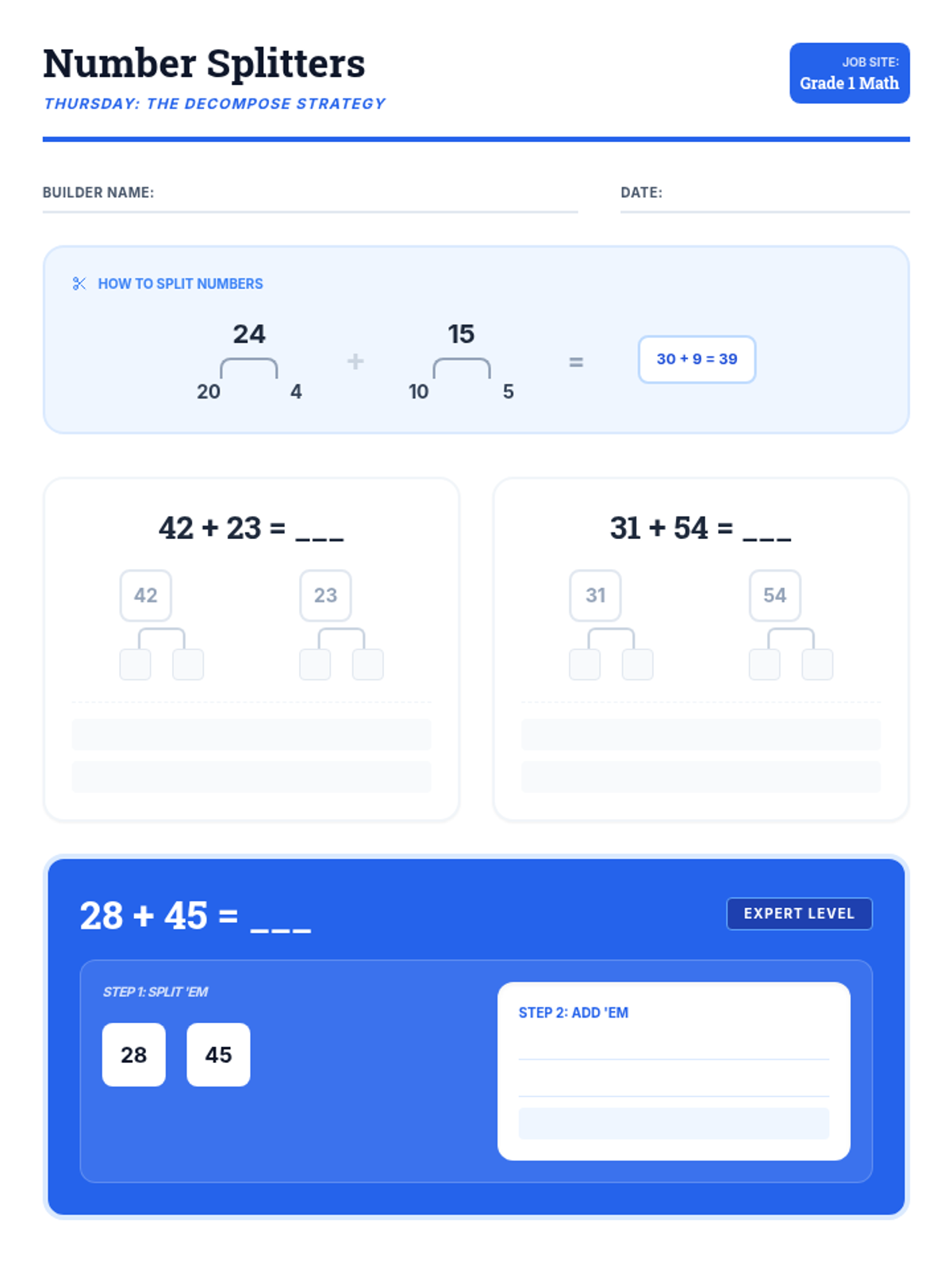
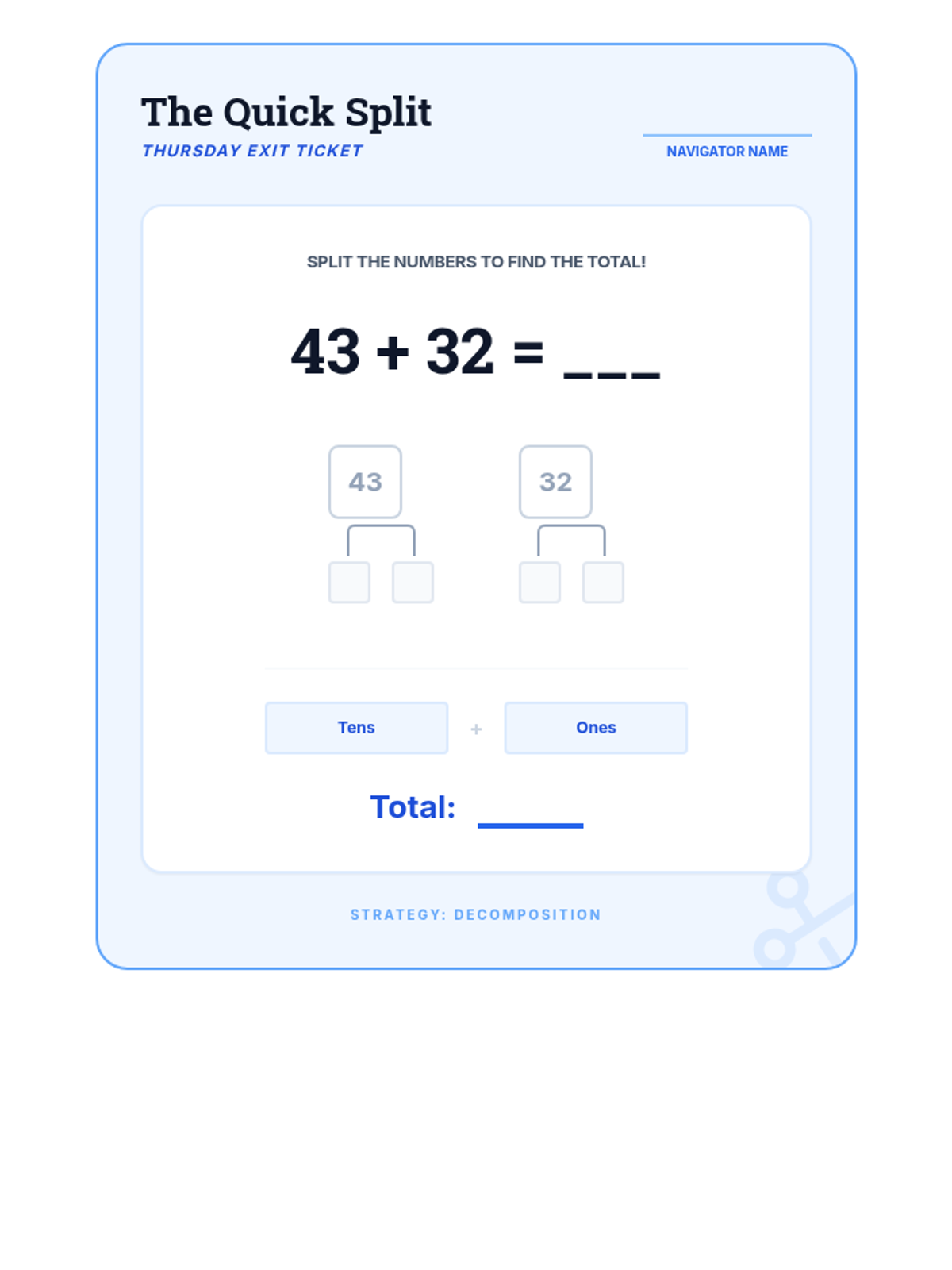
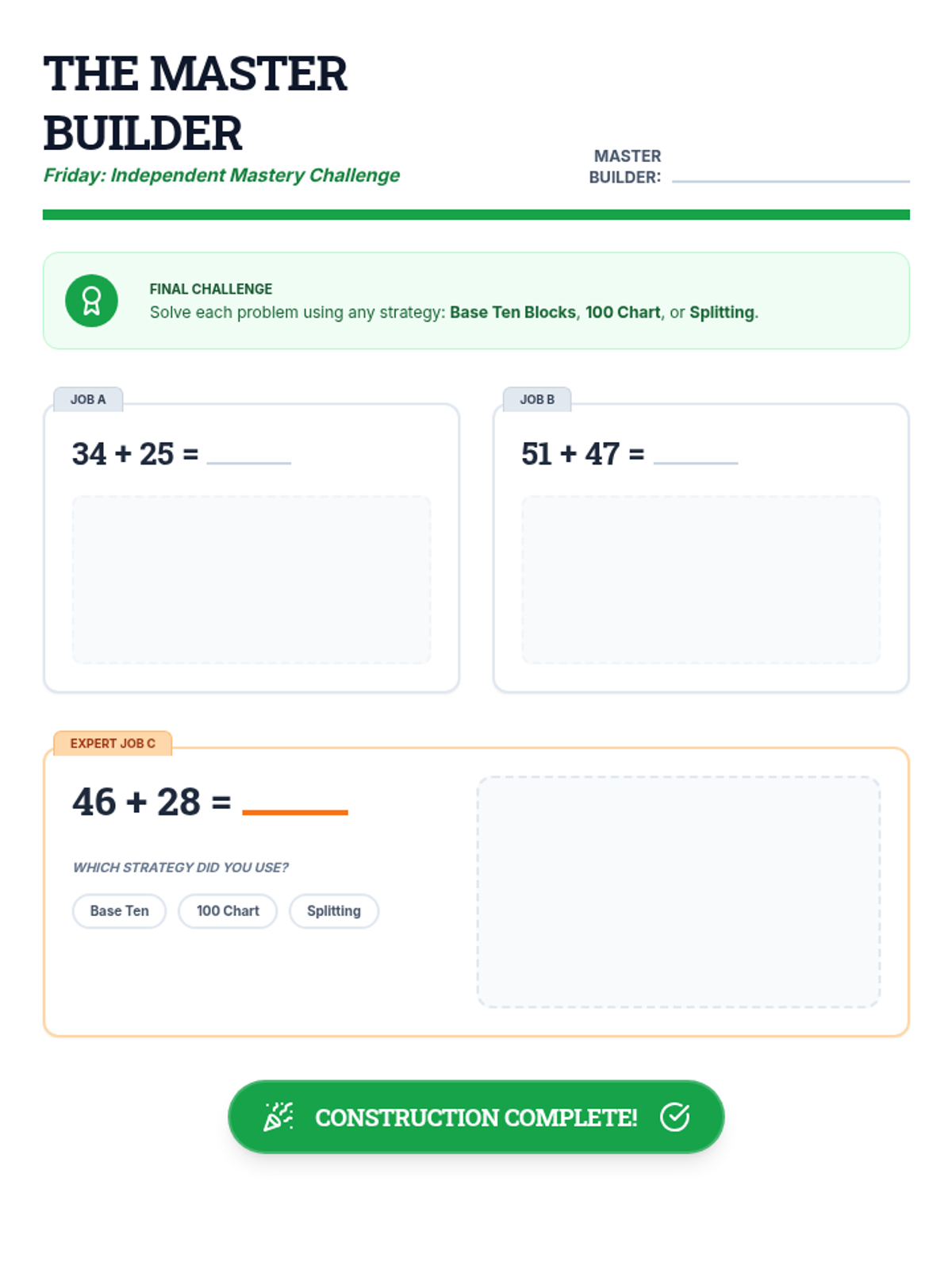
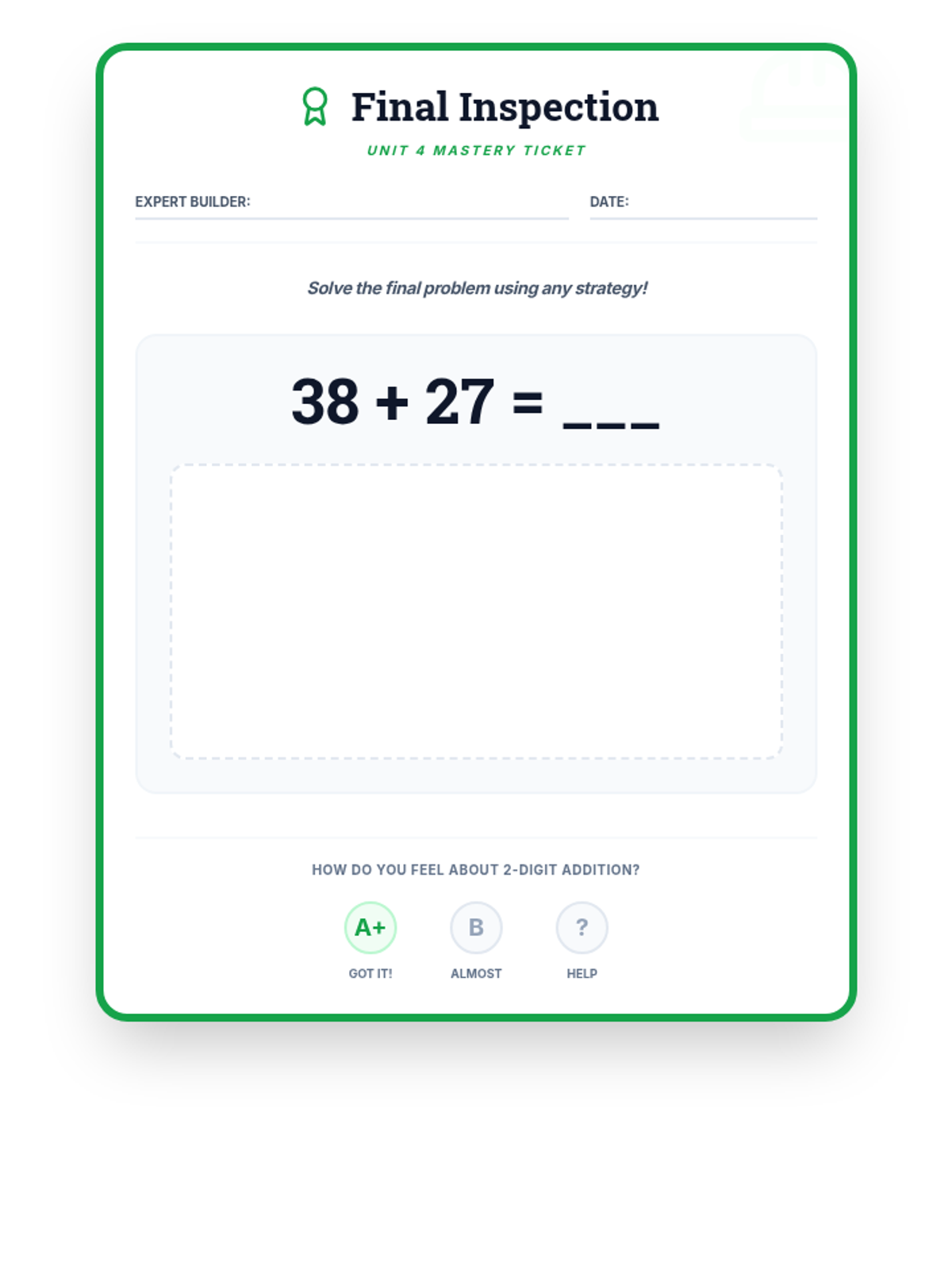
This sequence guides 1st-grade students through the Concrete-Representational-Abstract (CRA) model to master place value and addition. Students progress from tactile manipulation of blocks to drawing visual models and finally using abstract symbolic notation, building confidence through structured support and strategic choice.
This sequence bridges the gap between concrete manipulatives and two-dimensional drawings for Kindergarten students needing academic support. It guides students from tracing physical objects to using simple 'math drawings' (circles) for addition and subtraction.
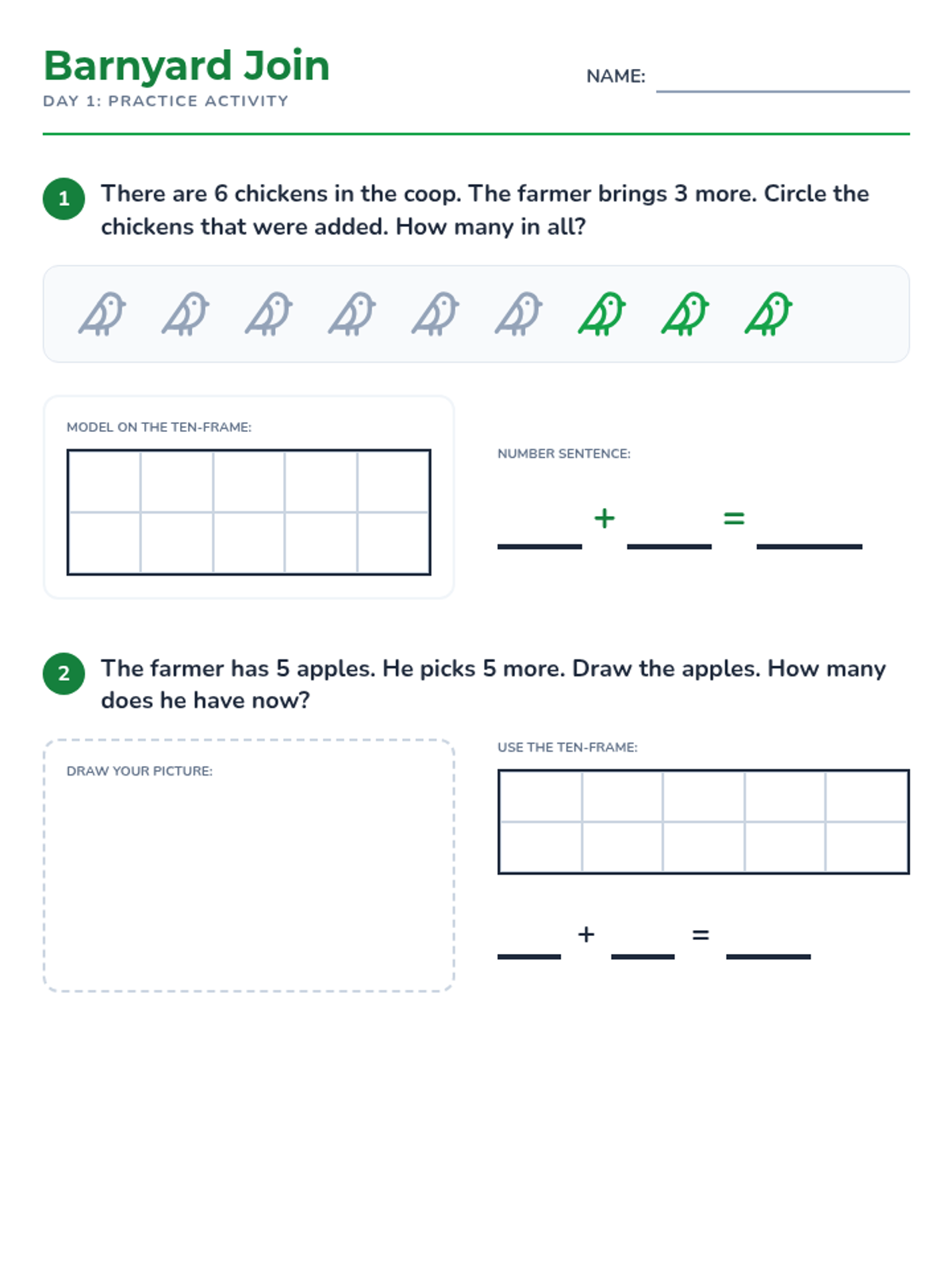
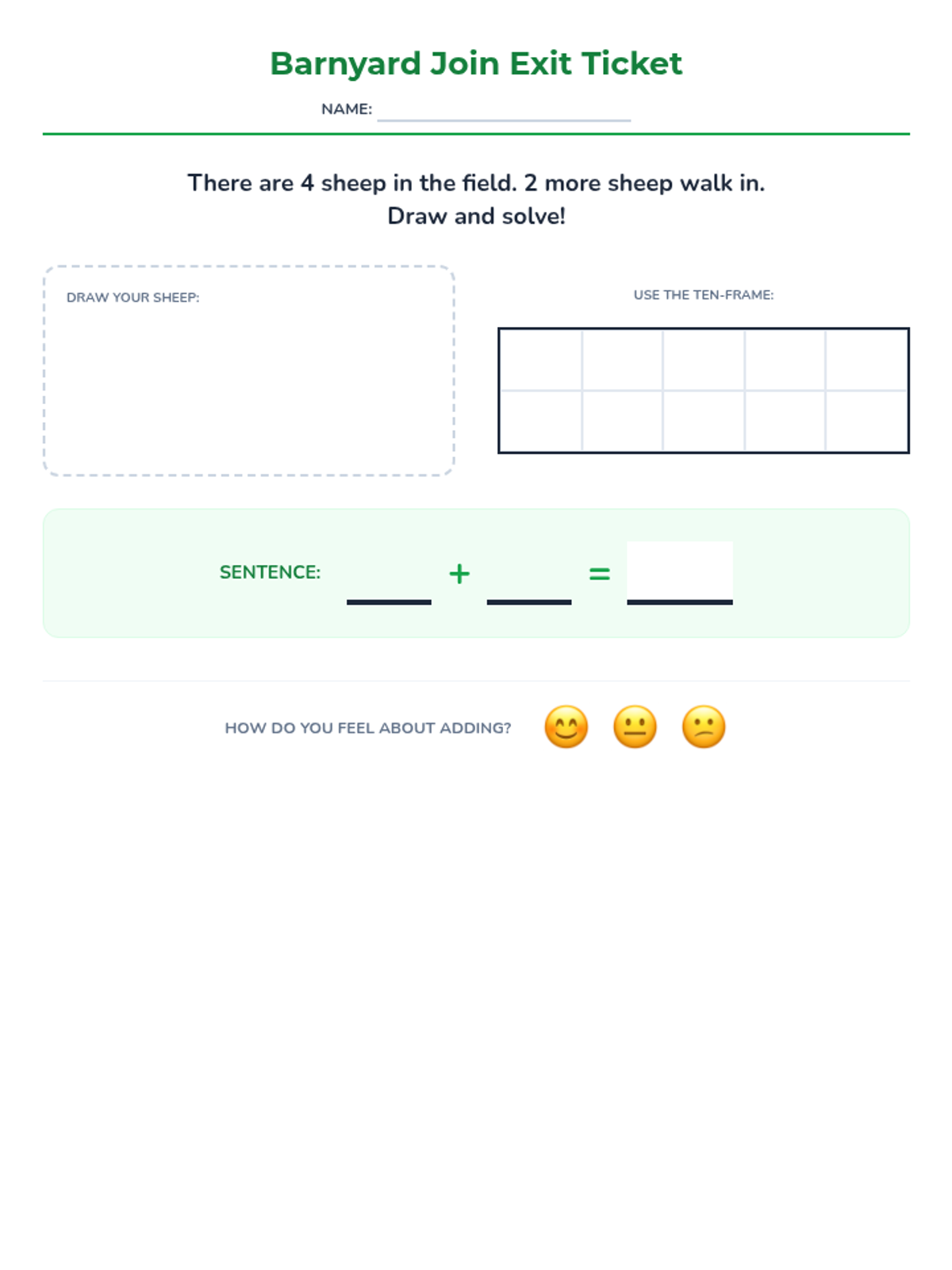
A 1st-grade math sequence focusing on the Concrete-Representational-Abstract (CRA) framework. Students use acting, sketching, ten-frames, number paths, and part-part-whole diagrams to solve word problems.
A 1st-grade mathematics sequence that bridges the gap between simple addition and the scientific concept of balancing. Students learn that the equals sign represents balance, solve for missing addends, and evaluate complex equations with operations on both sides.
This sequence introduces 1st-grade students to the concept of equality using physical balance scales. Students explore balance, 1:1 correspondence, maintaining equilibrium by adding to both sides, and representing weight relationships symbolically.
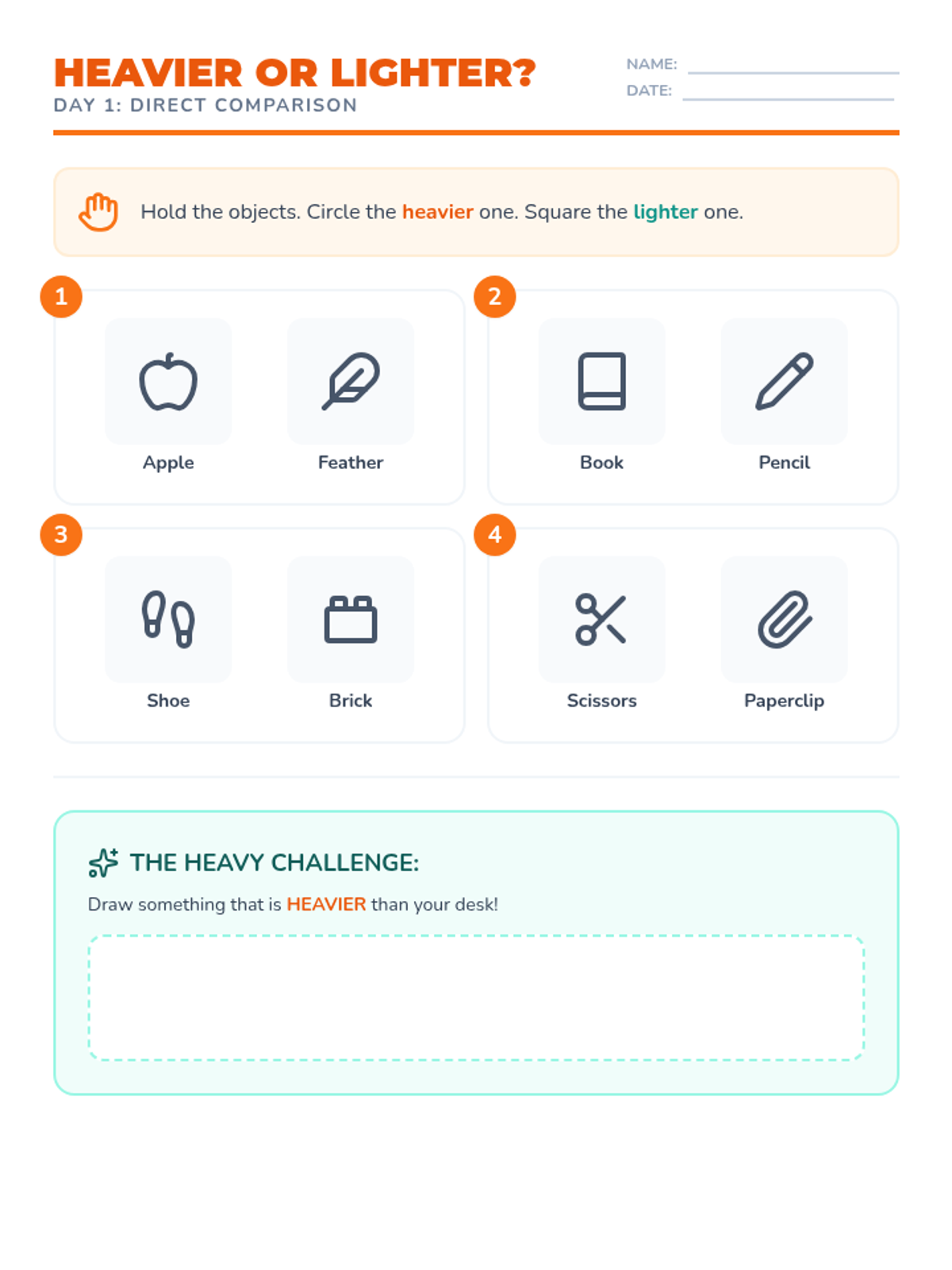
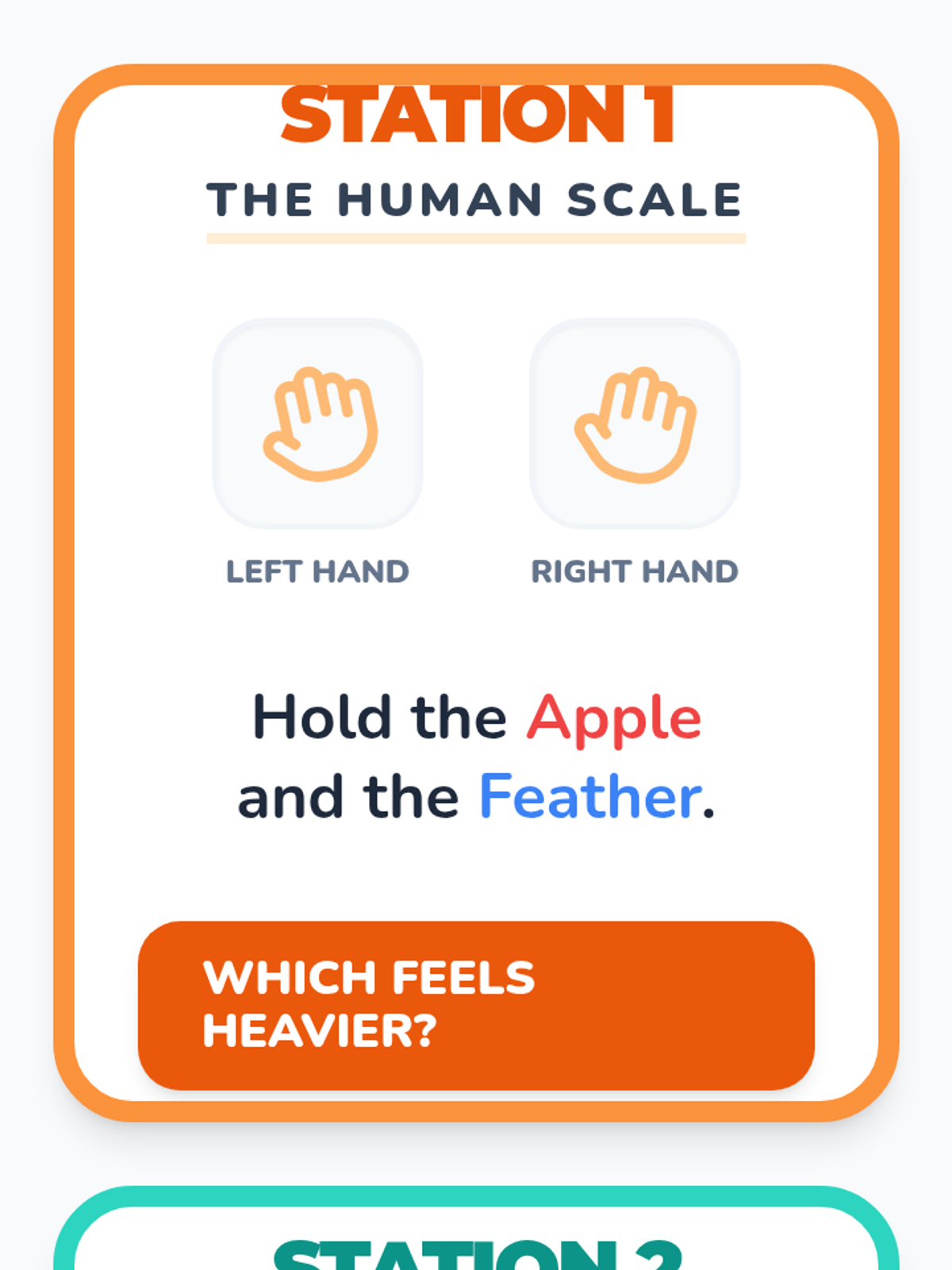
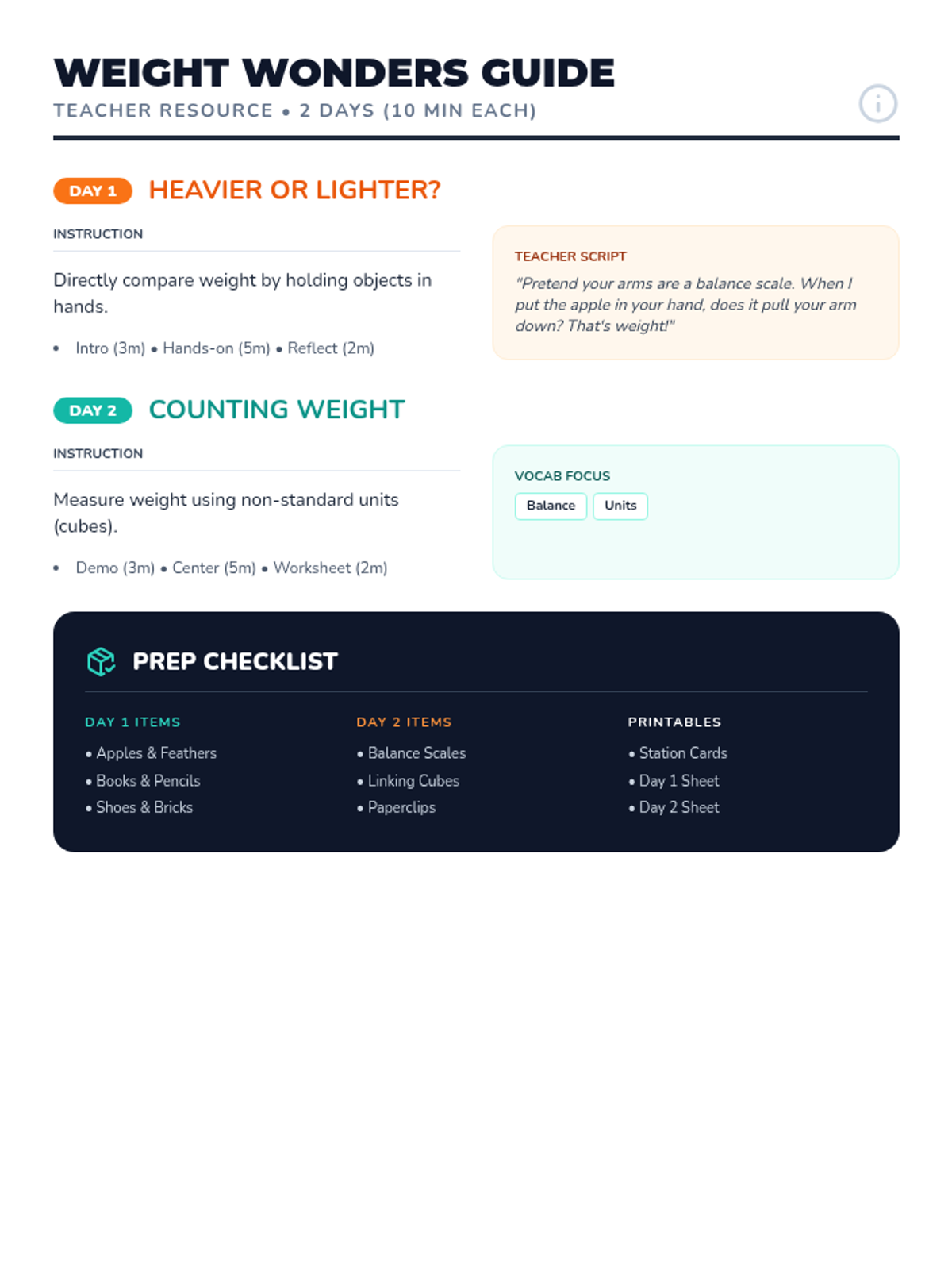
An inquiry-based sequence for 1st Grade students to explore mass and weight using balance scales. Students progress from sensory hefting to using standard units and conducting a mystery bag lab to understand measurement.
A project-based exploration for 1st graders where they transform into 'liquid scientists'. Students investigate capacity, learn to use standard tools, and discover that volume remains constant regardless of container shape through hands-on pouring and mixing activities.
A 5-lesson sequence for 1st graders introducing linear measurement through direct comparison, non-standard units, precision techniques, and unit comparison.
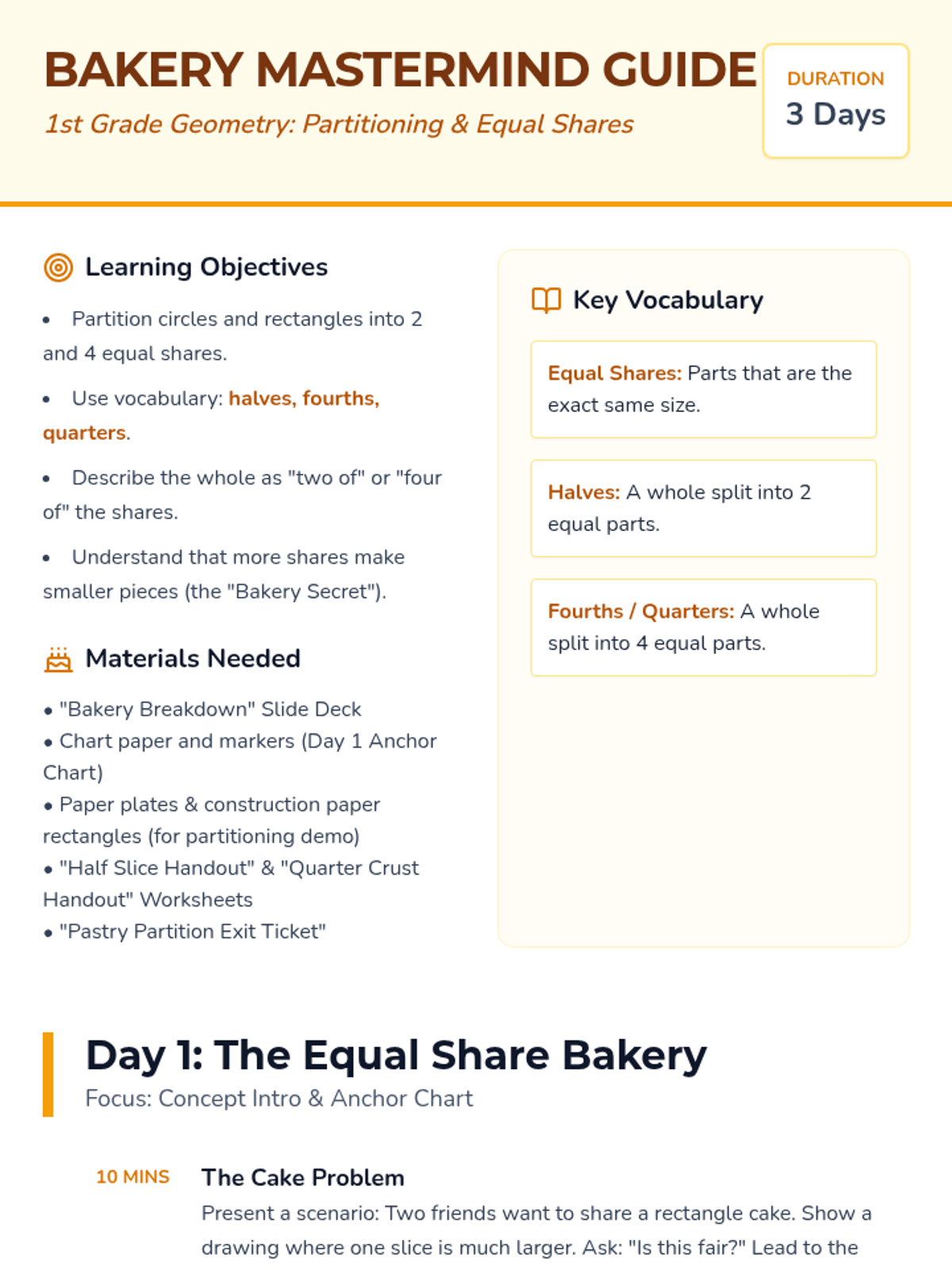
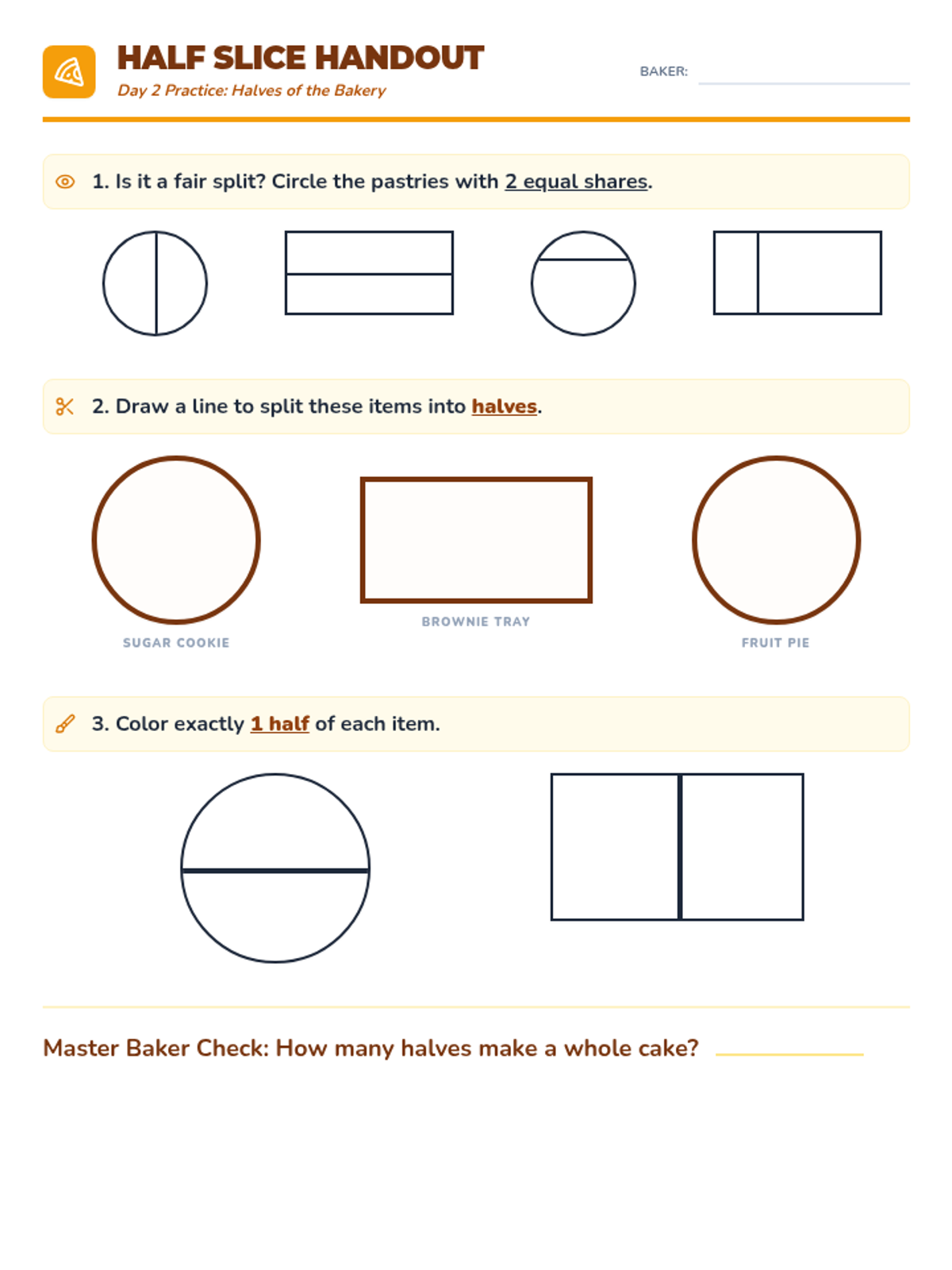
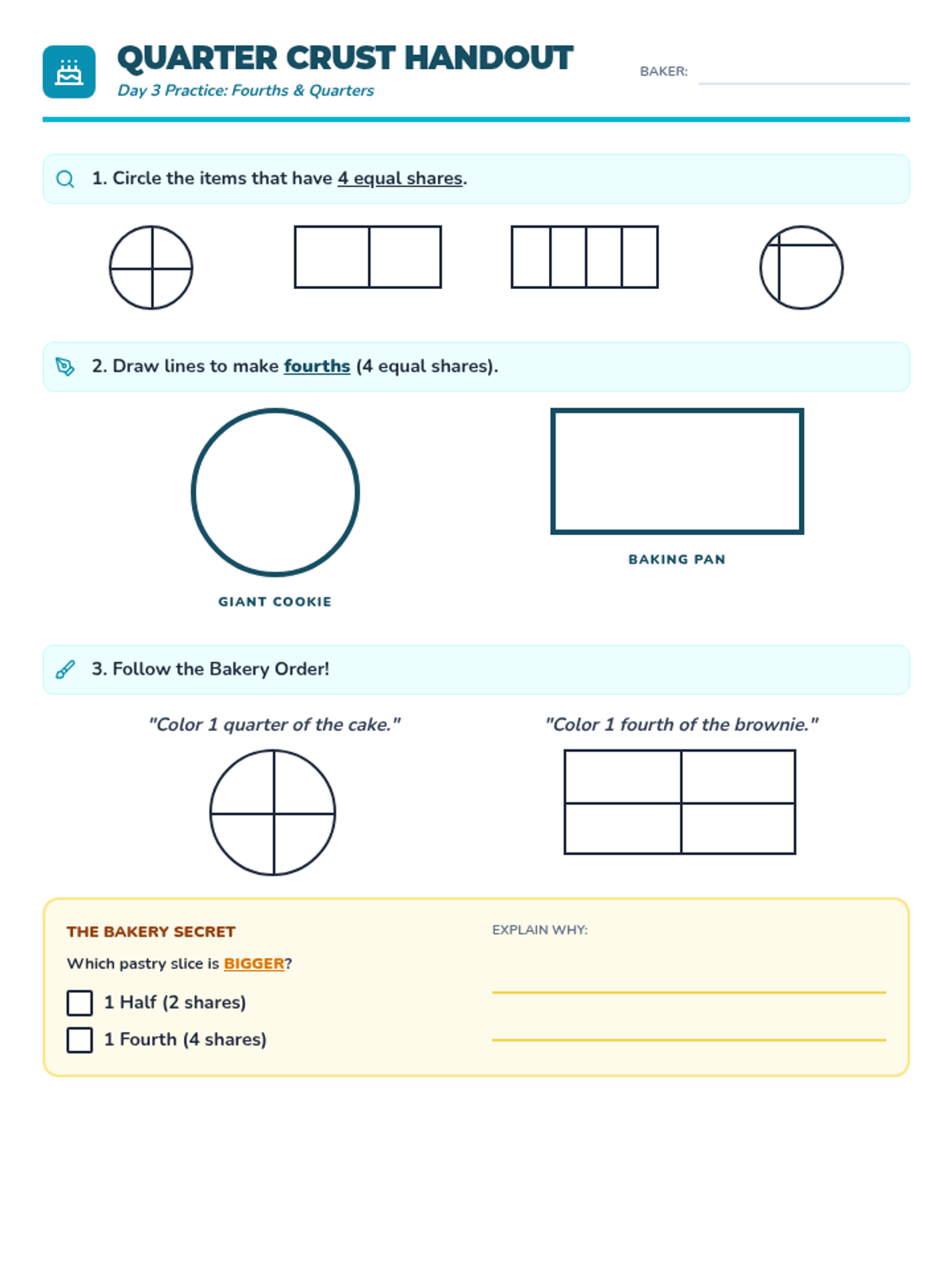
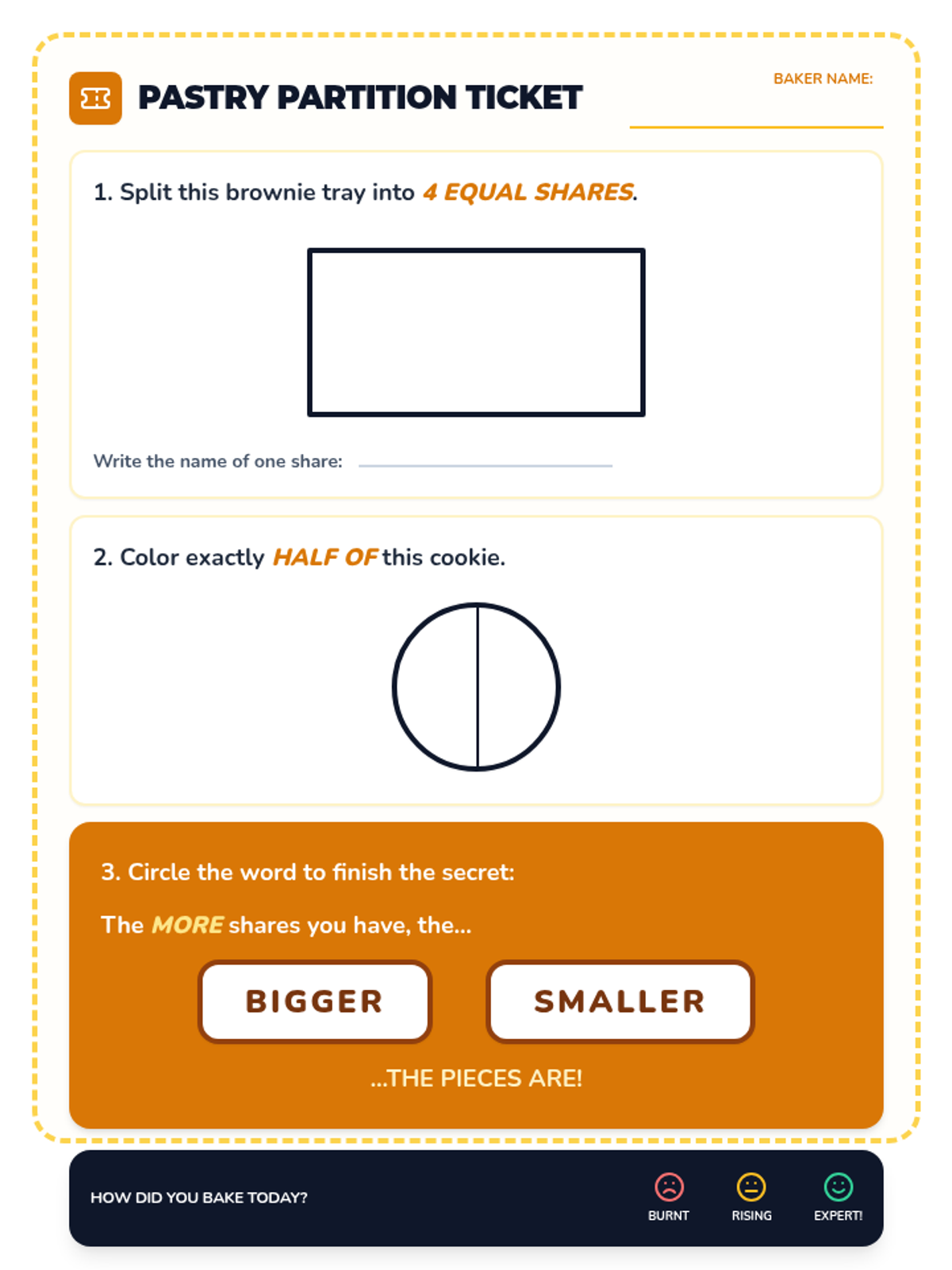
This workshop-style sequence bridges geometry and early fraction concepts through the study of symmetry and partitioning. Students progress from identifying balance in nature to dividing shapes into halves, thirds, and fourths, emphasizing that equal shares must be identical in area even if they look different.
A 1st-grade sequence exploring the concept of line symmetry through mirrors, paper folding, grid drawing, and natural observations. Students move from identifying simple mirror lines to creating complex symmetrical patterns using geometric shapes.
This sequence introduces 1st-grade students to spatial reasoning through the composition and decomposition of geometric figures. Students explore how shapes can be combined and divided using pattern blocks, tangrams, and paper-folding activities, building a foundation for understanding area and fractions.
A 1st-grade physics sequence exploring 3D solids, their properties (rolling, stacking, sliding), and their relationship to 2D faces through hands-on inquiry and engineering challenges.
A comprehensive first-grade geometry unit focusing on the defining attributes of 2D shapes, including sides, vertices, and closure, while distinguishing them from non-defining attributes like size and color.
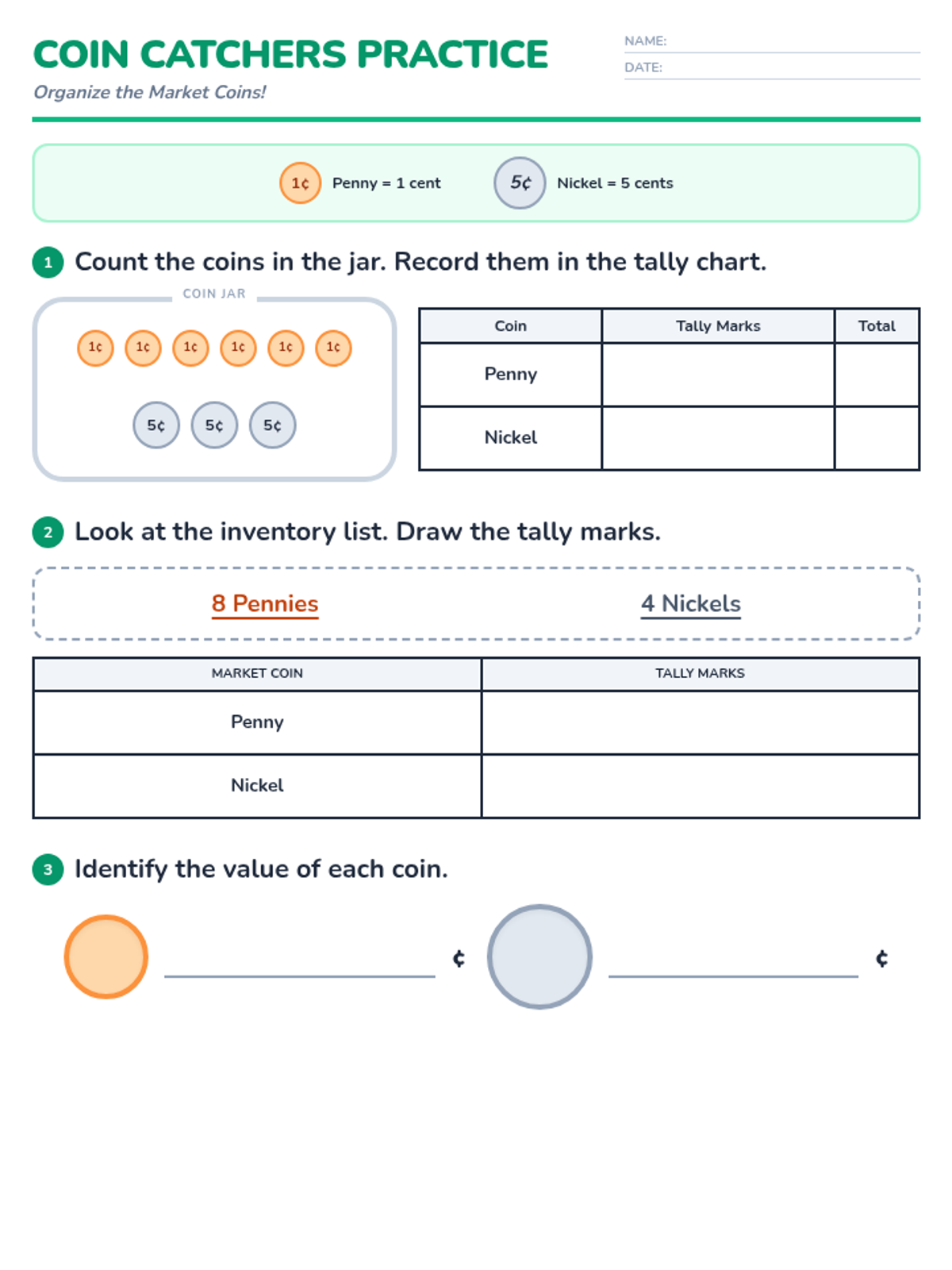
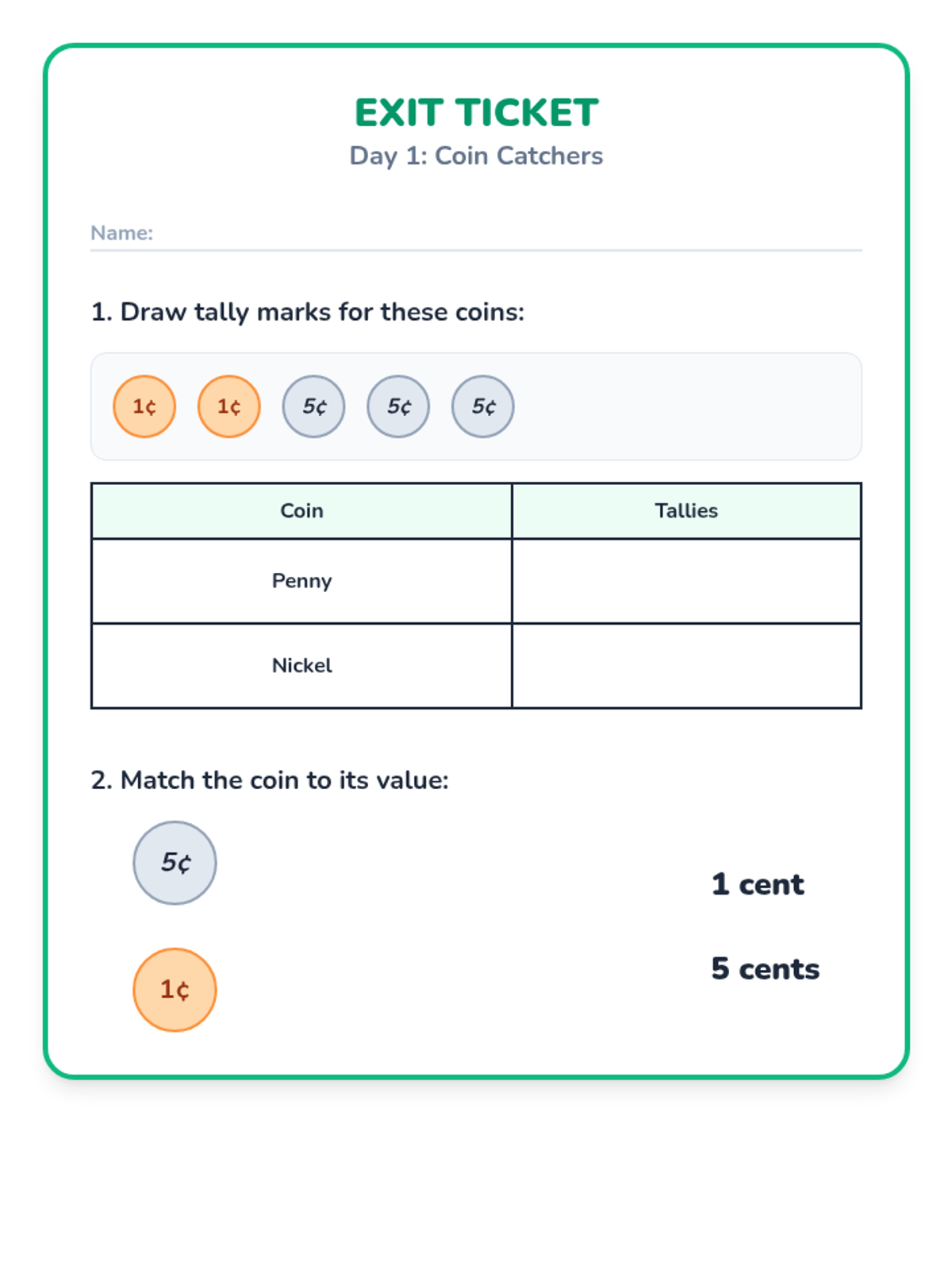
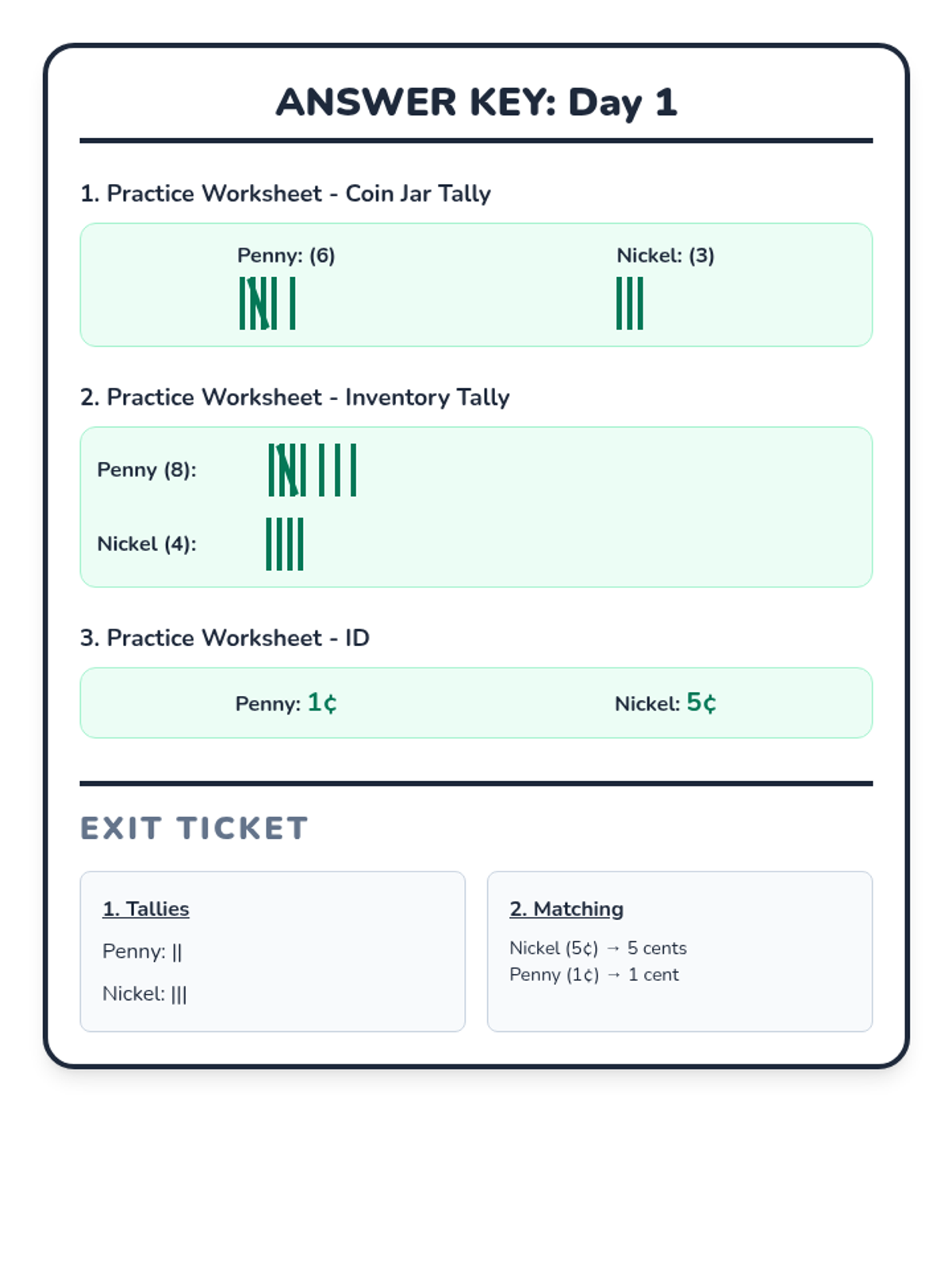
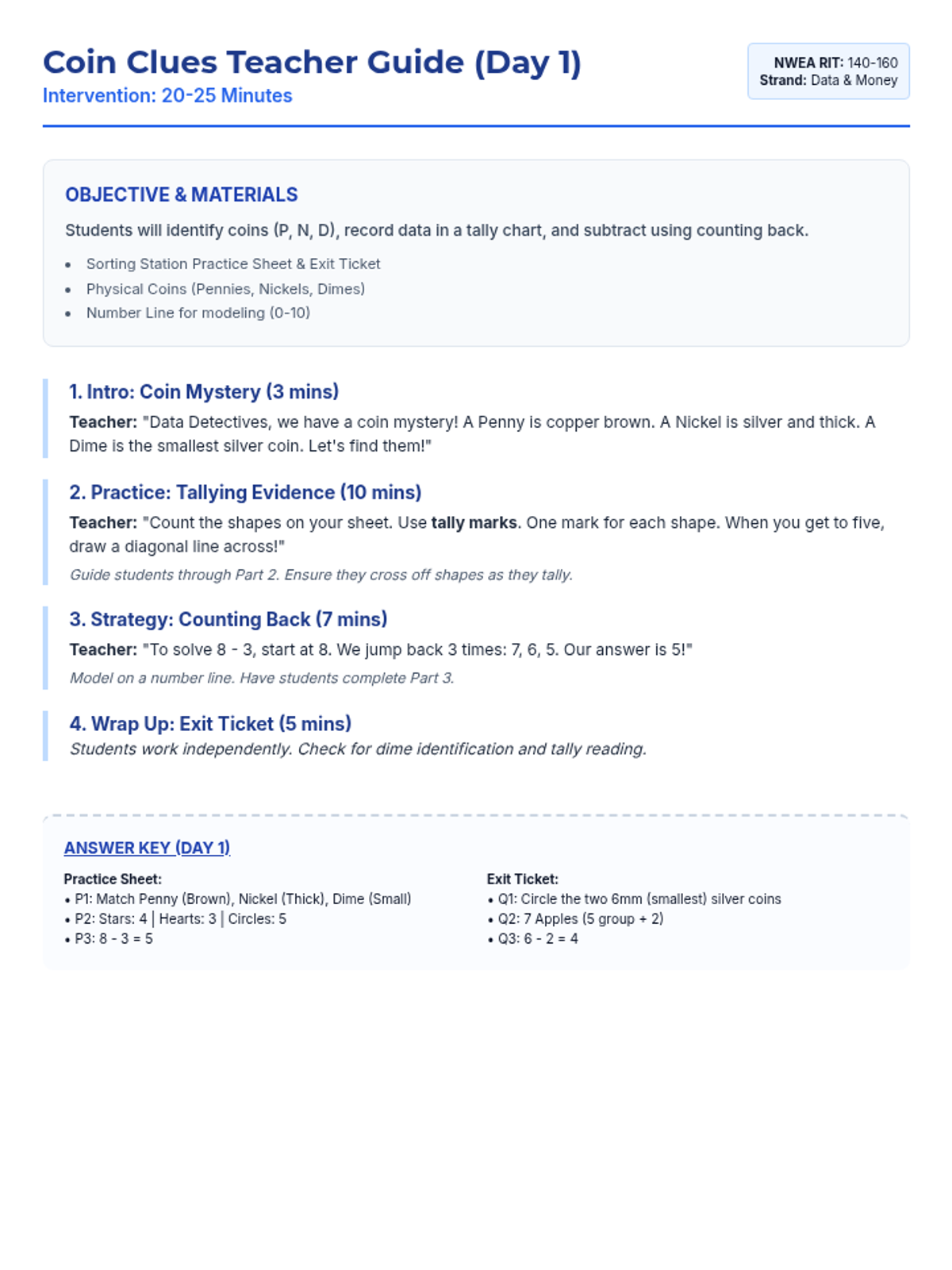
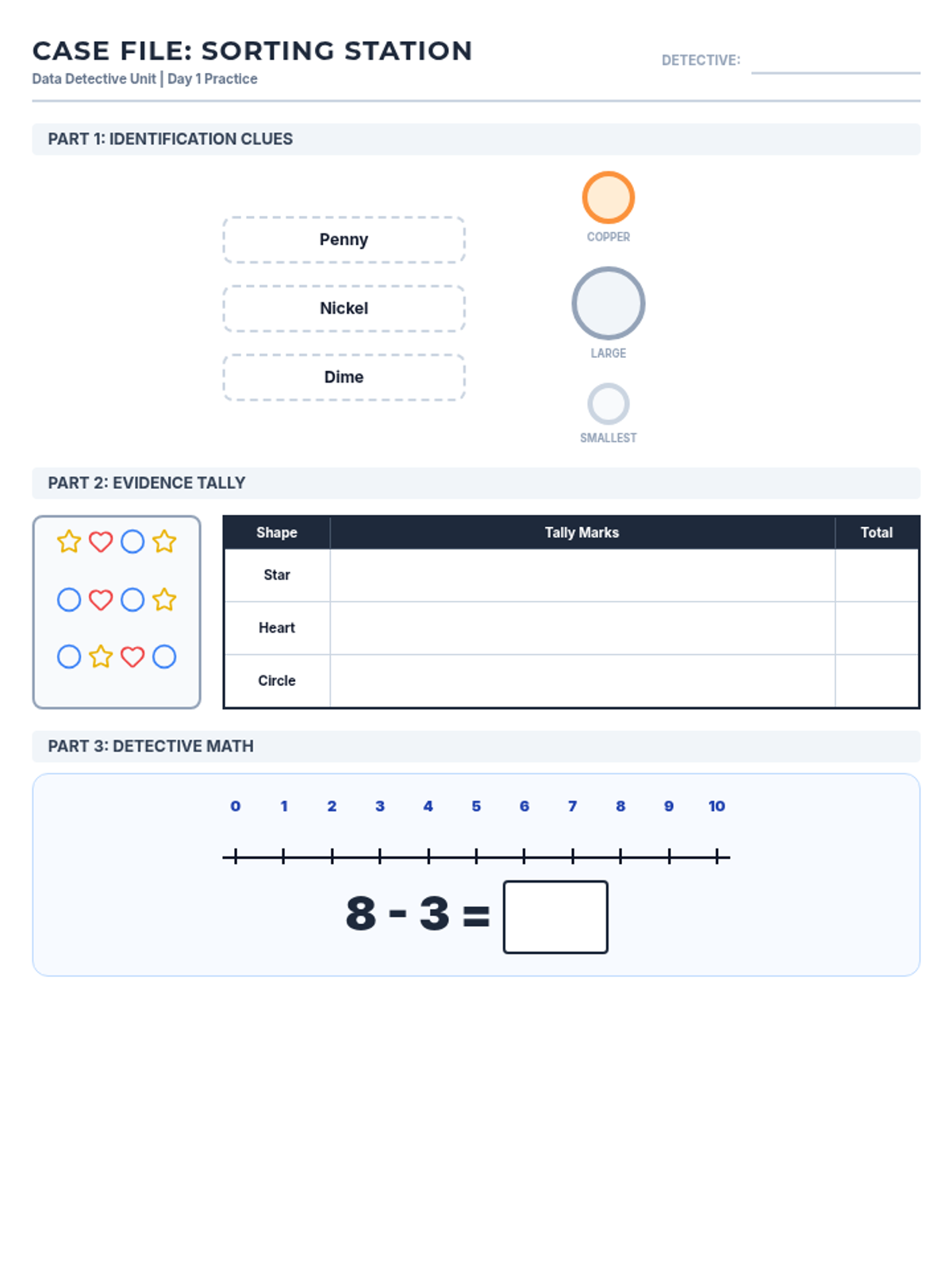
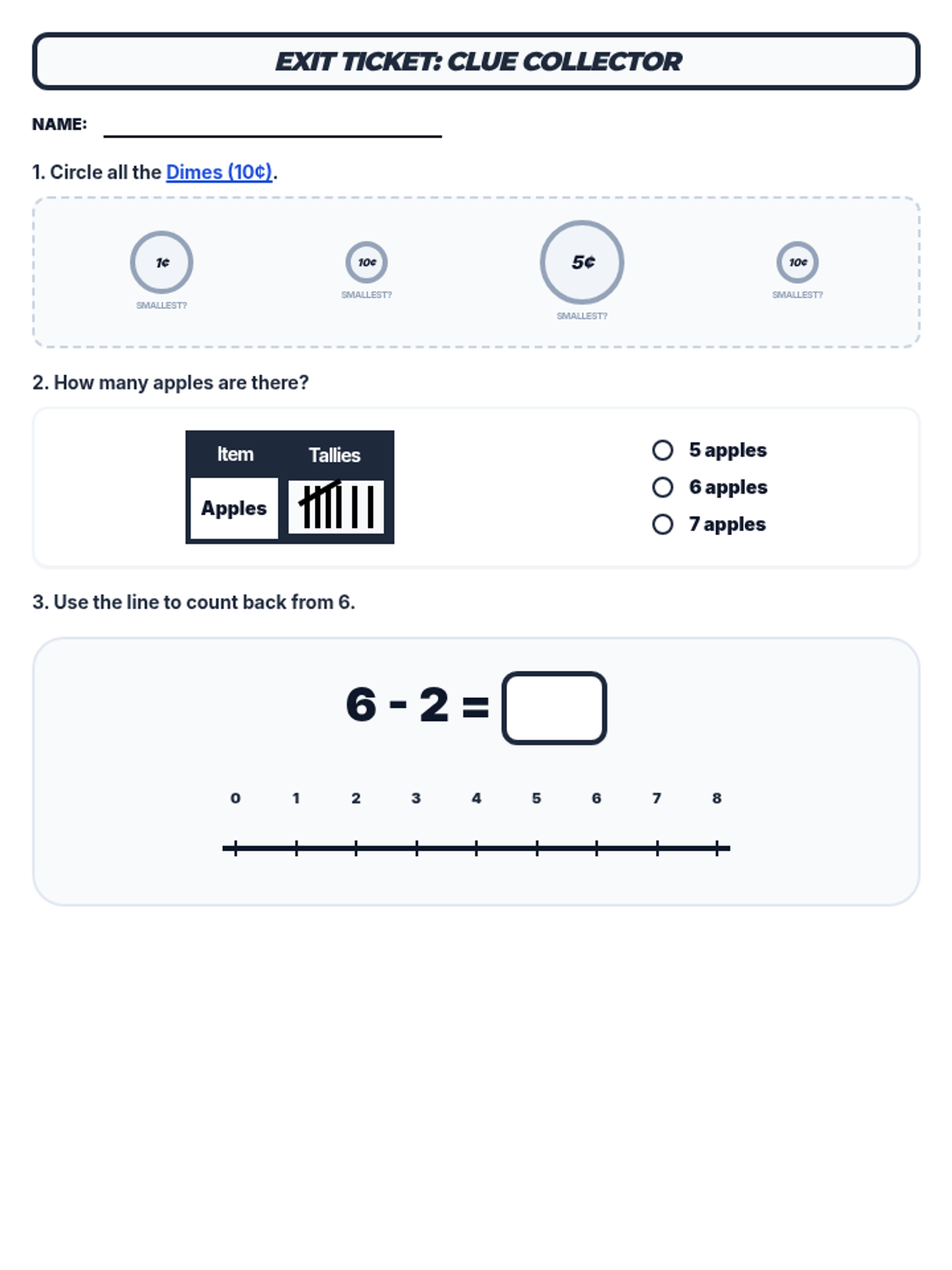
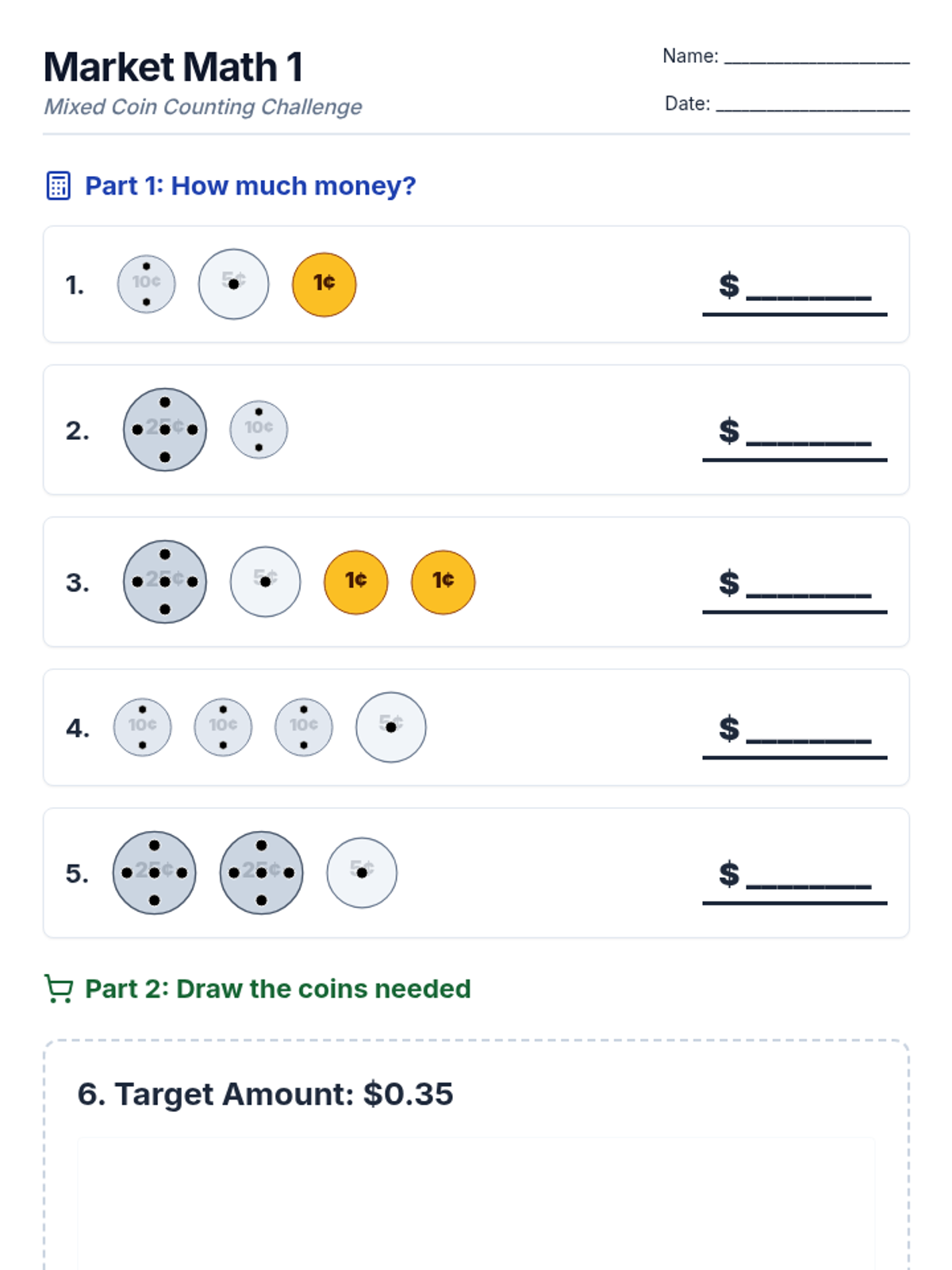
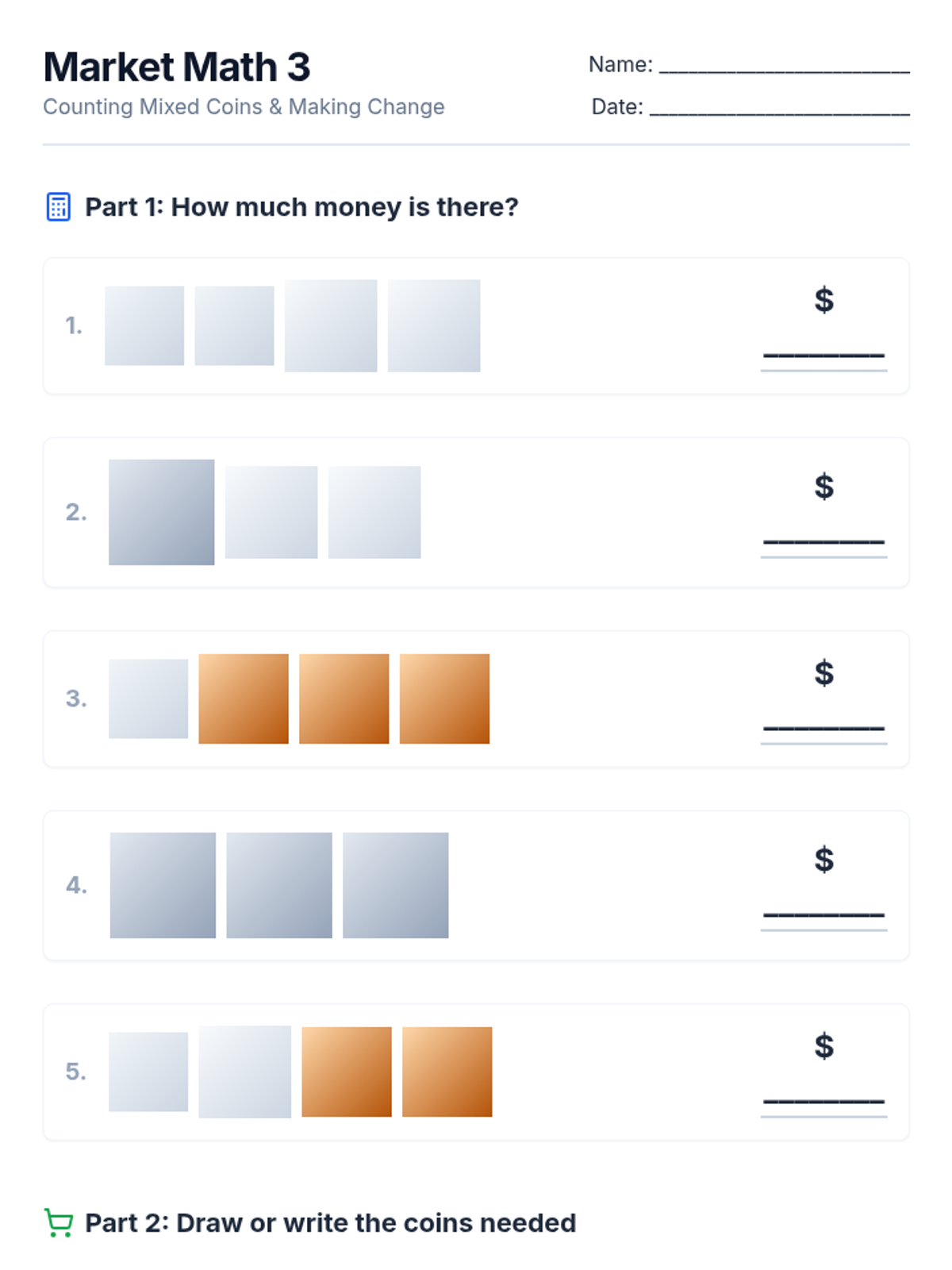
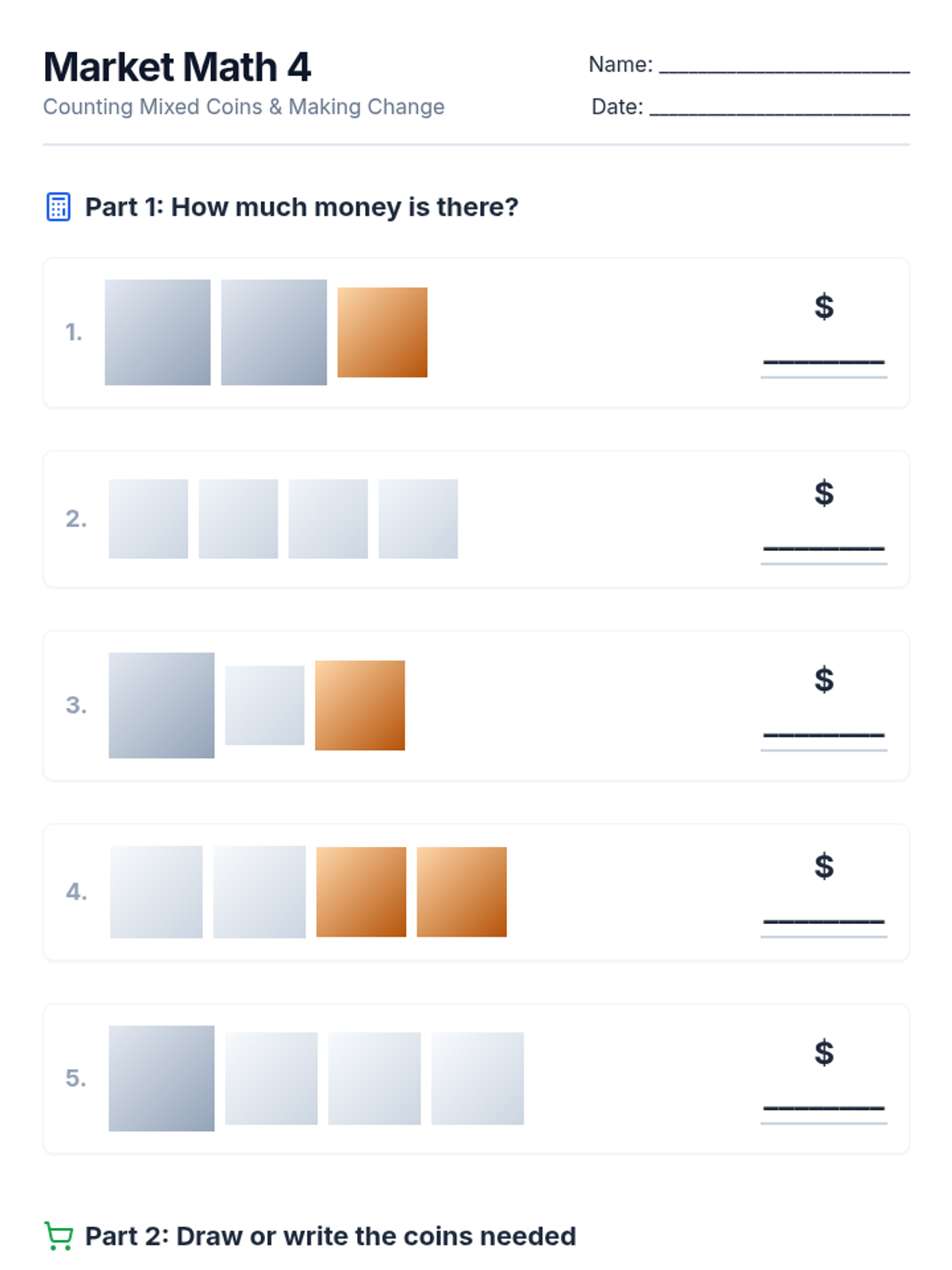
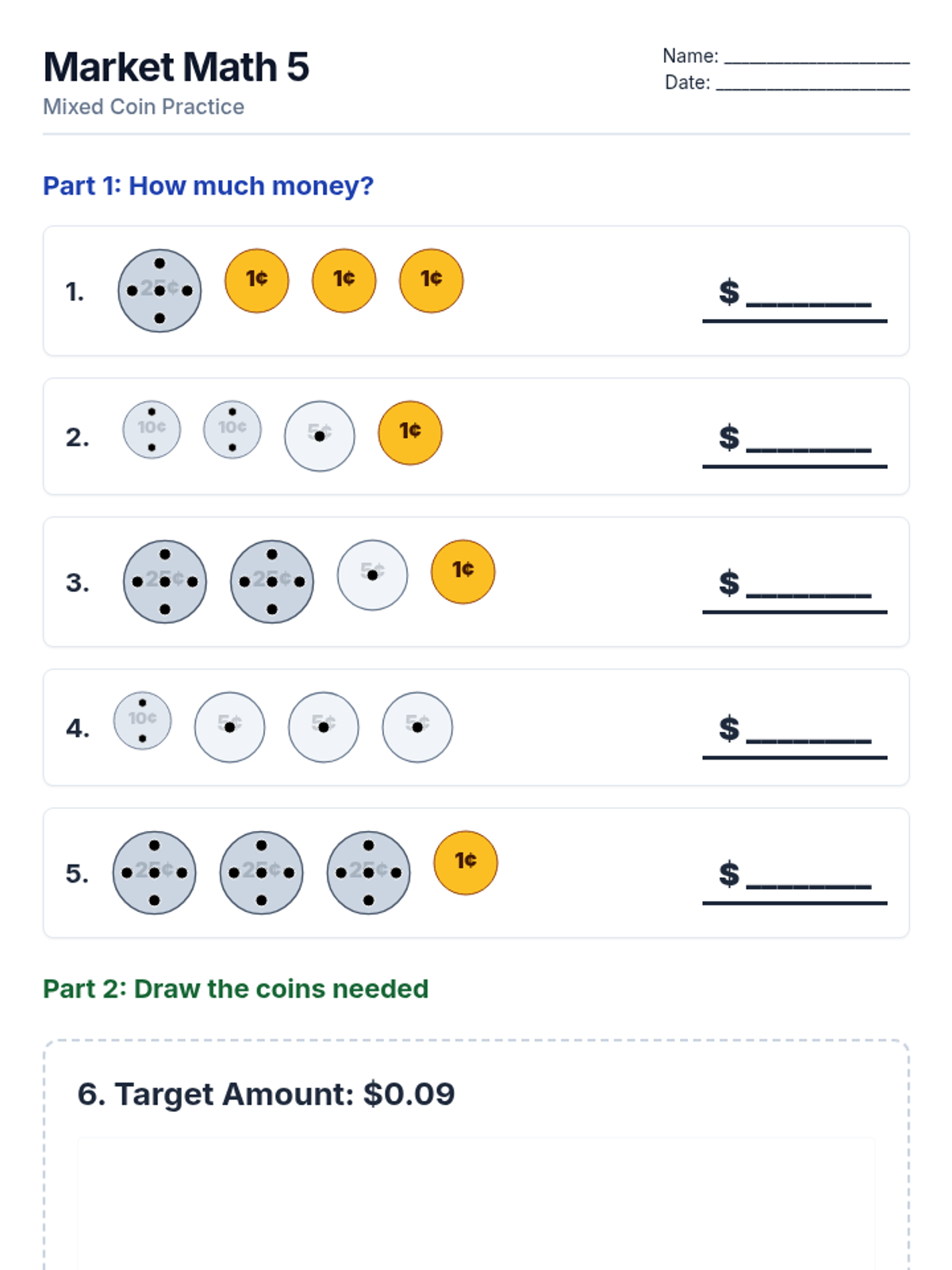
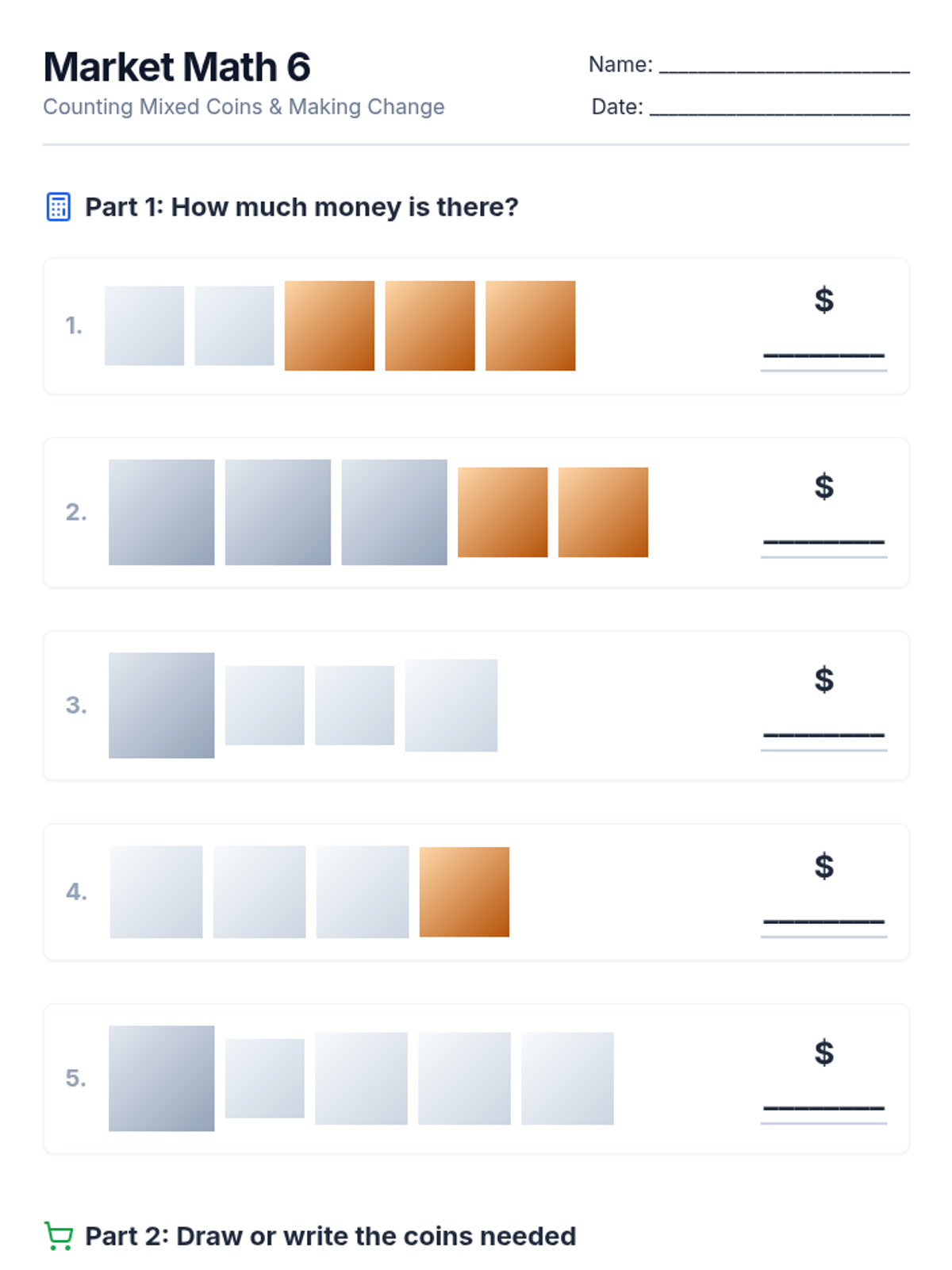
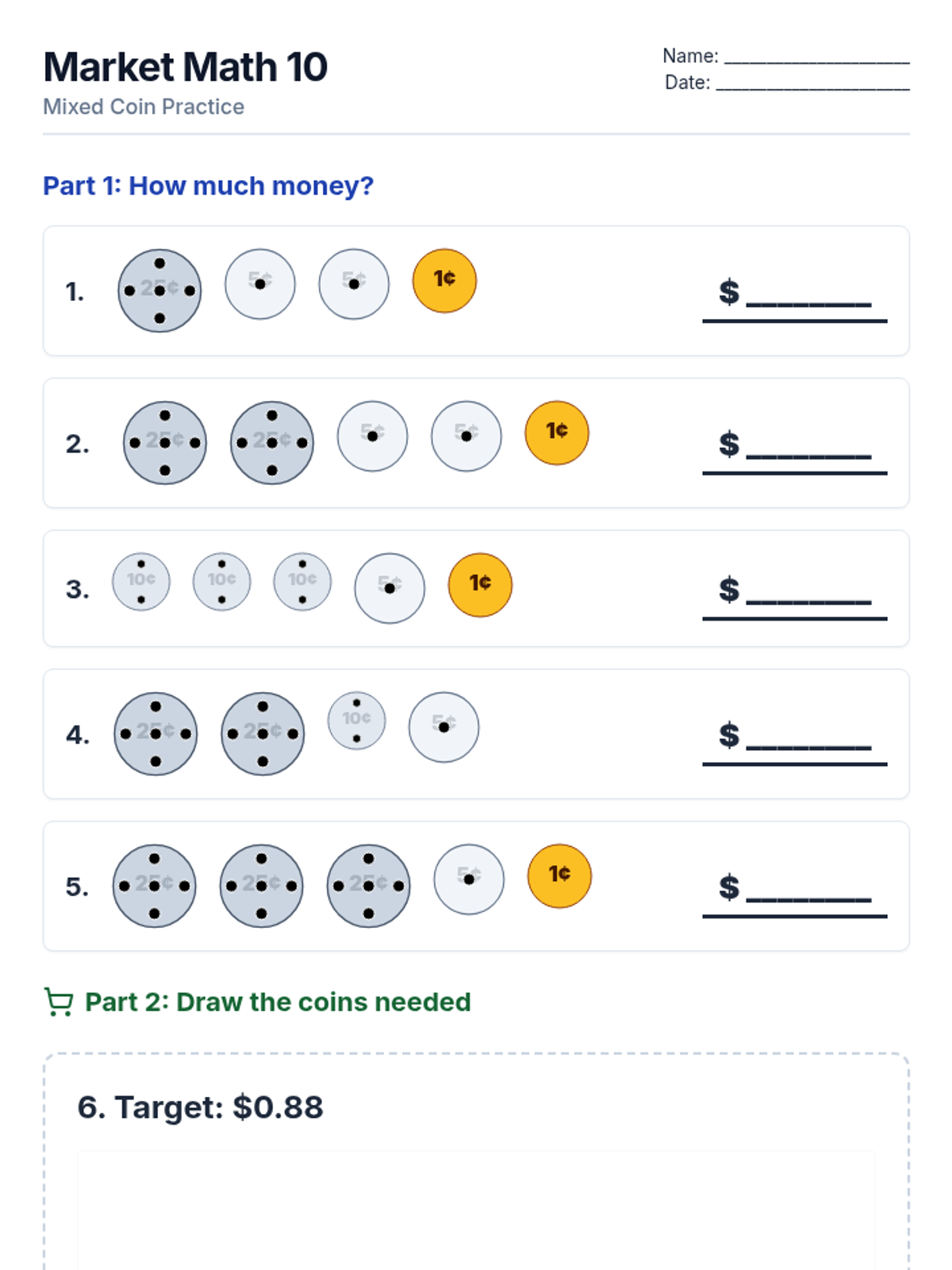
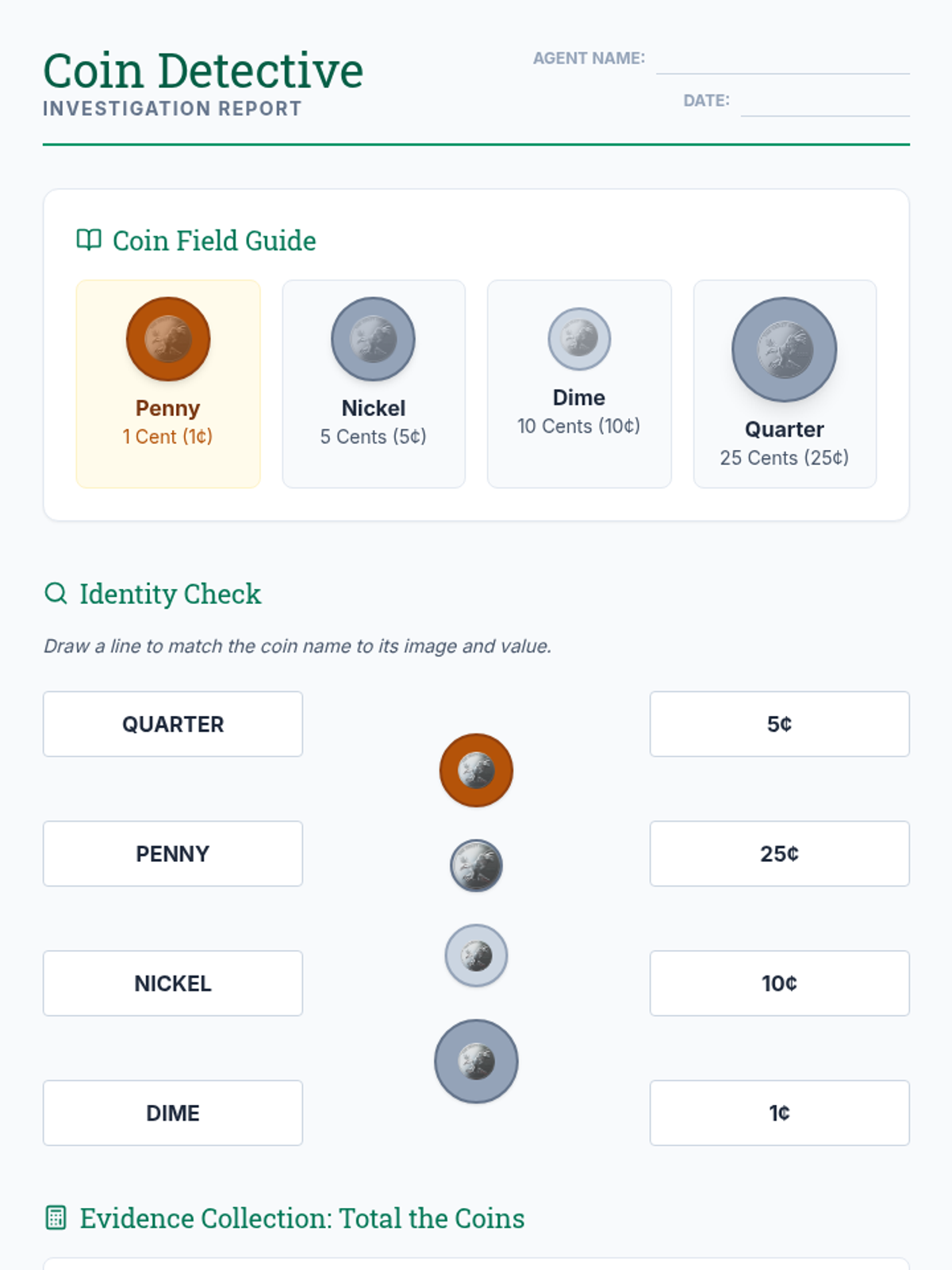
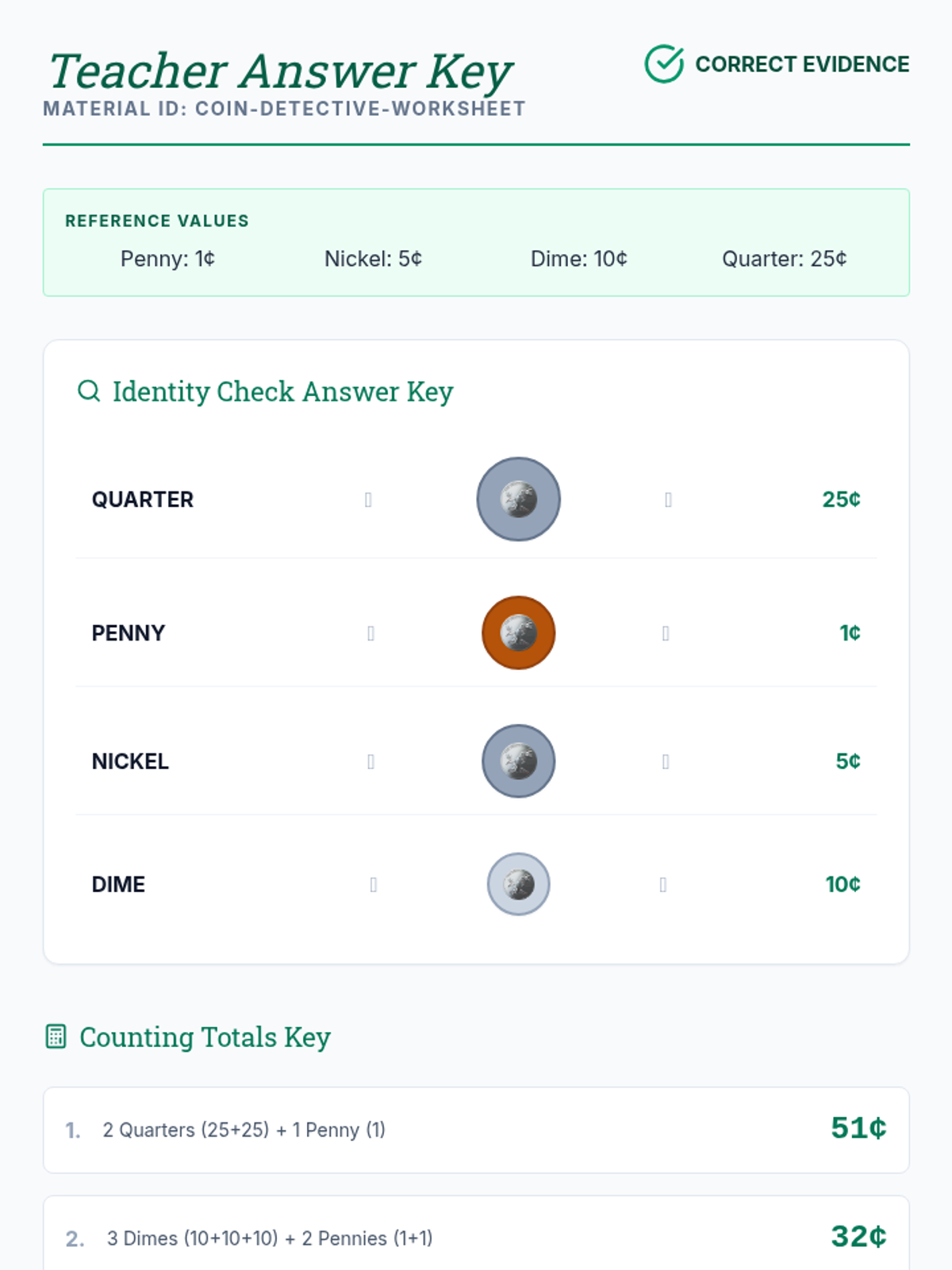
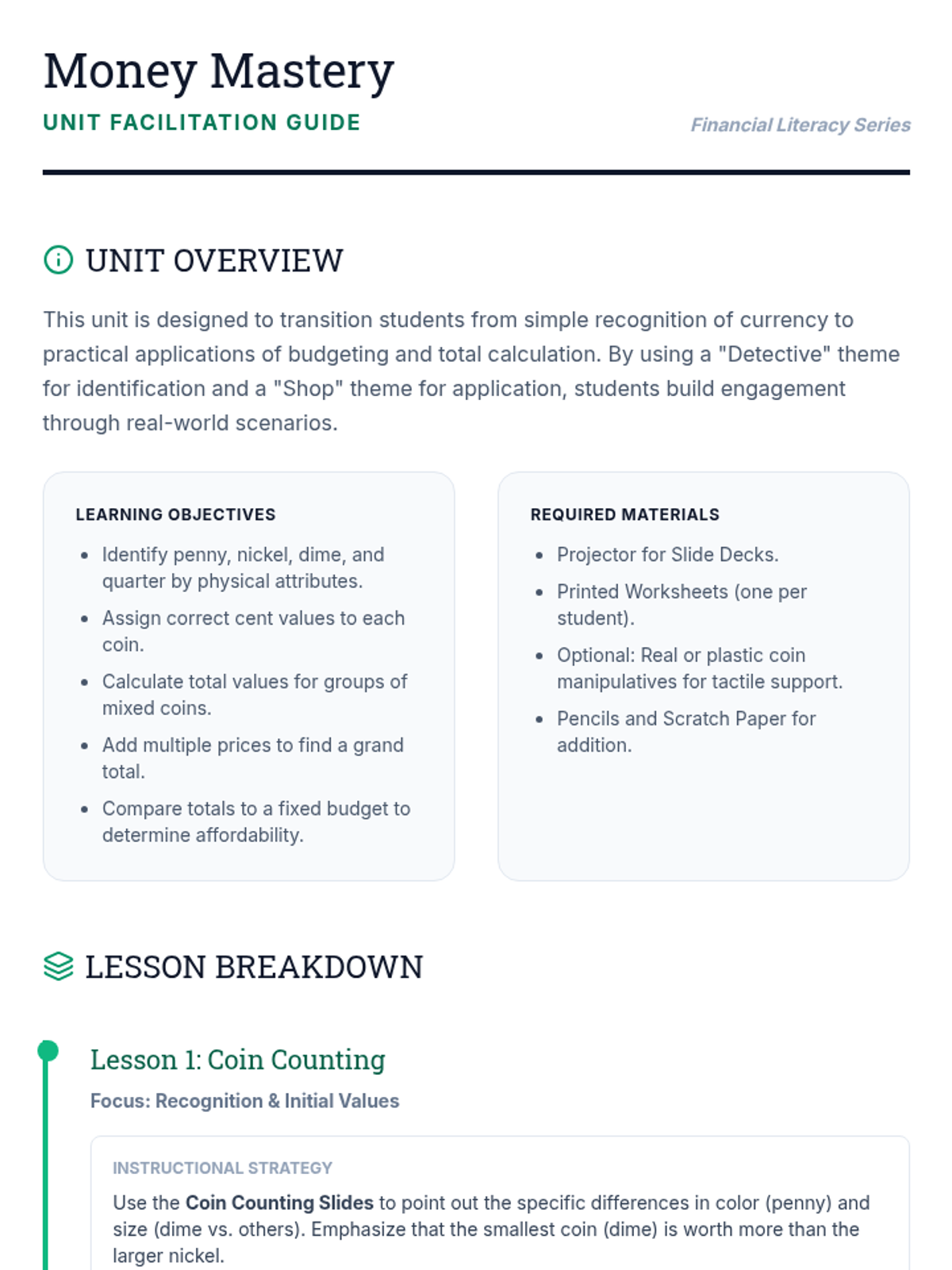
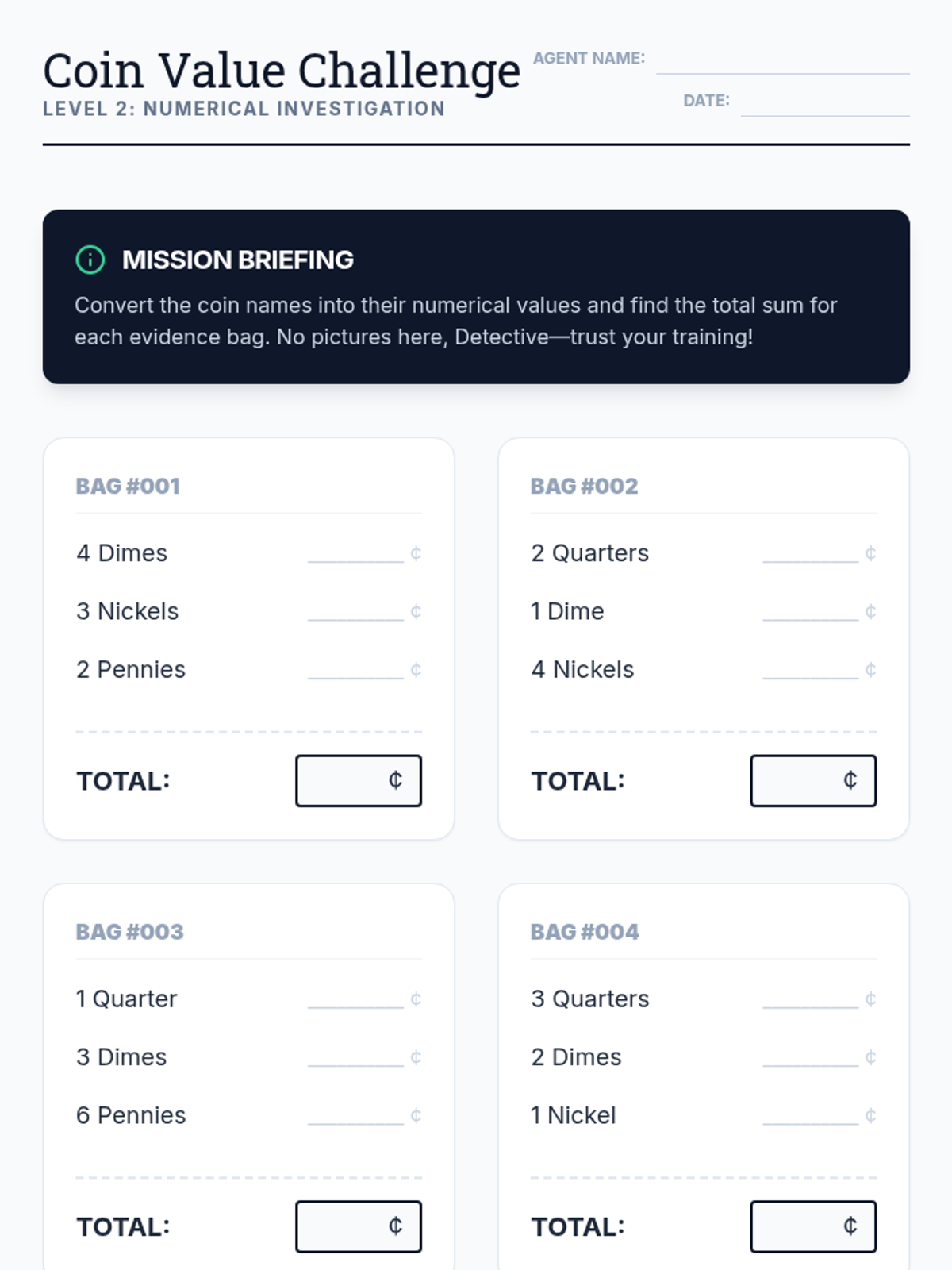
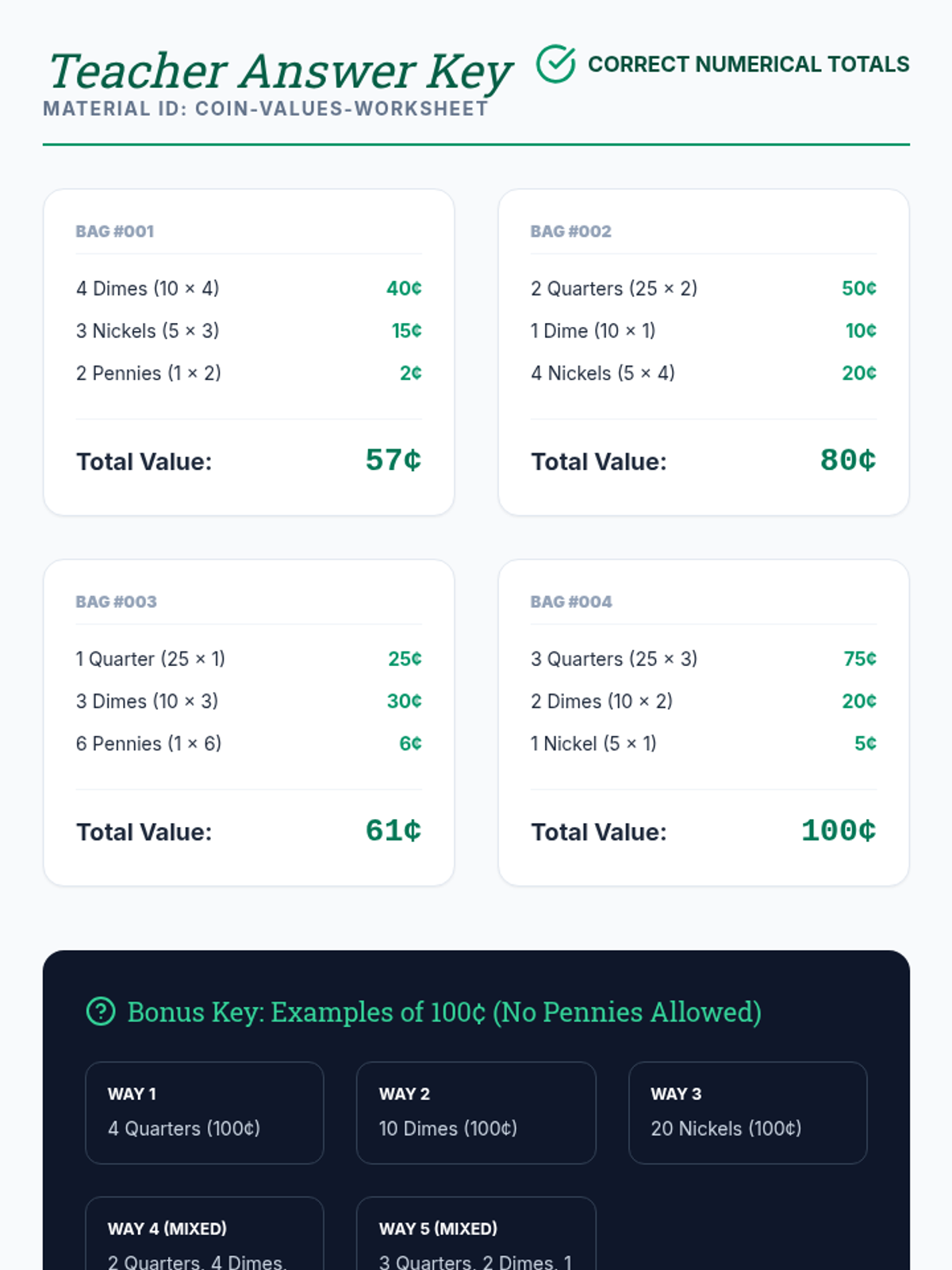
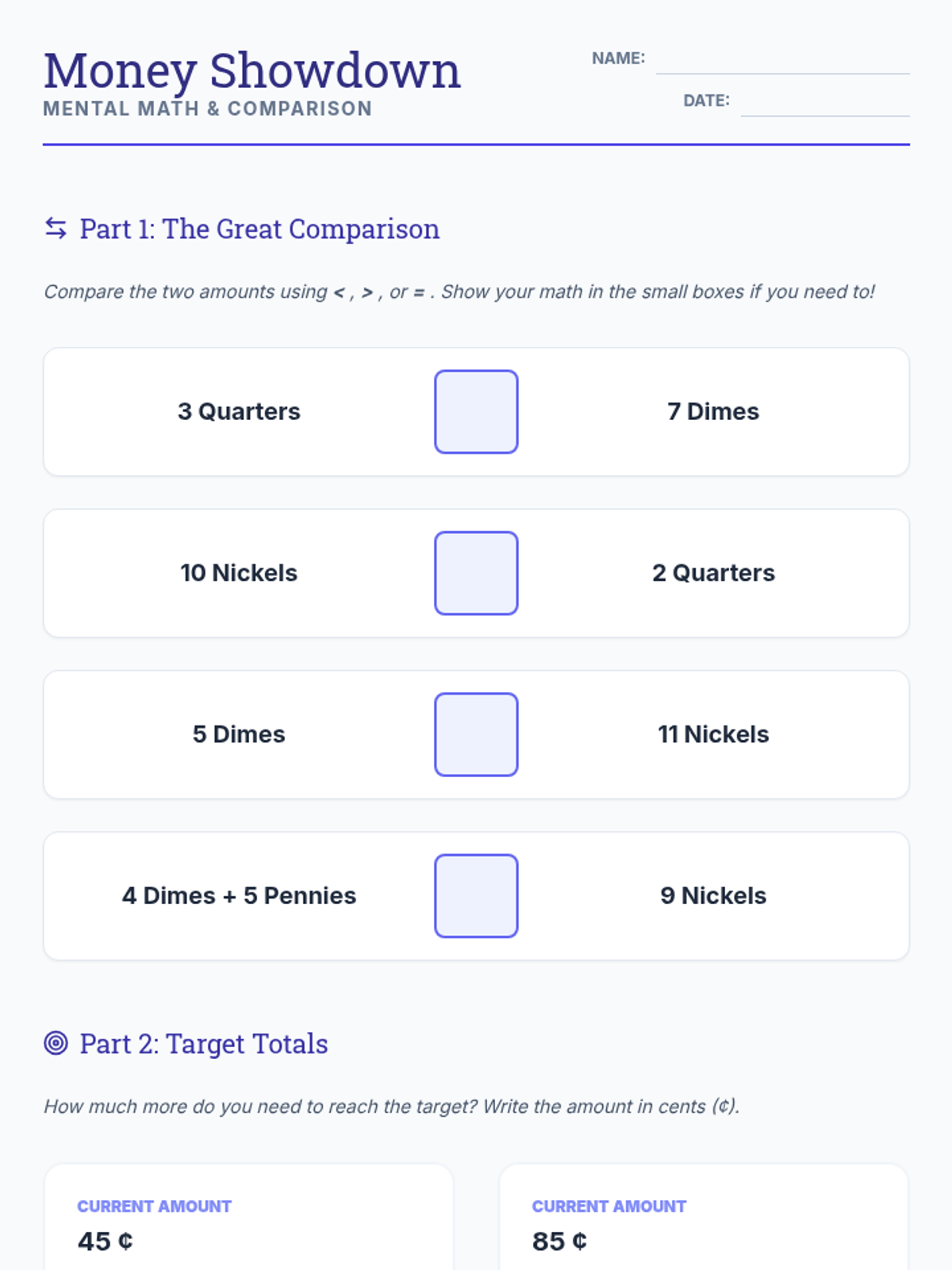
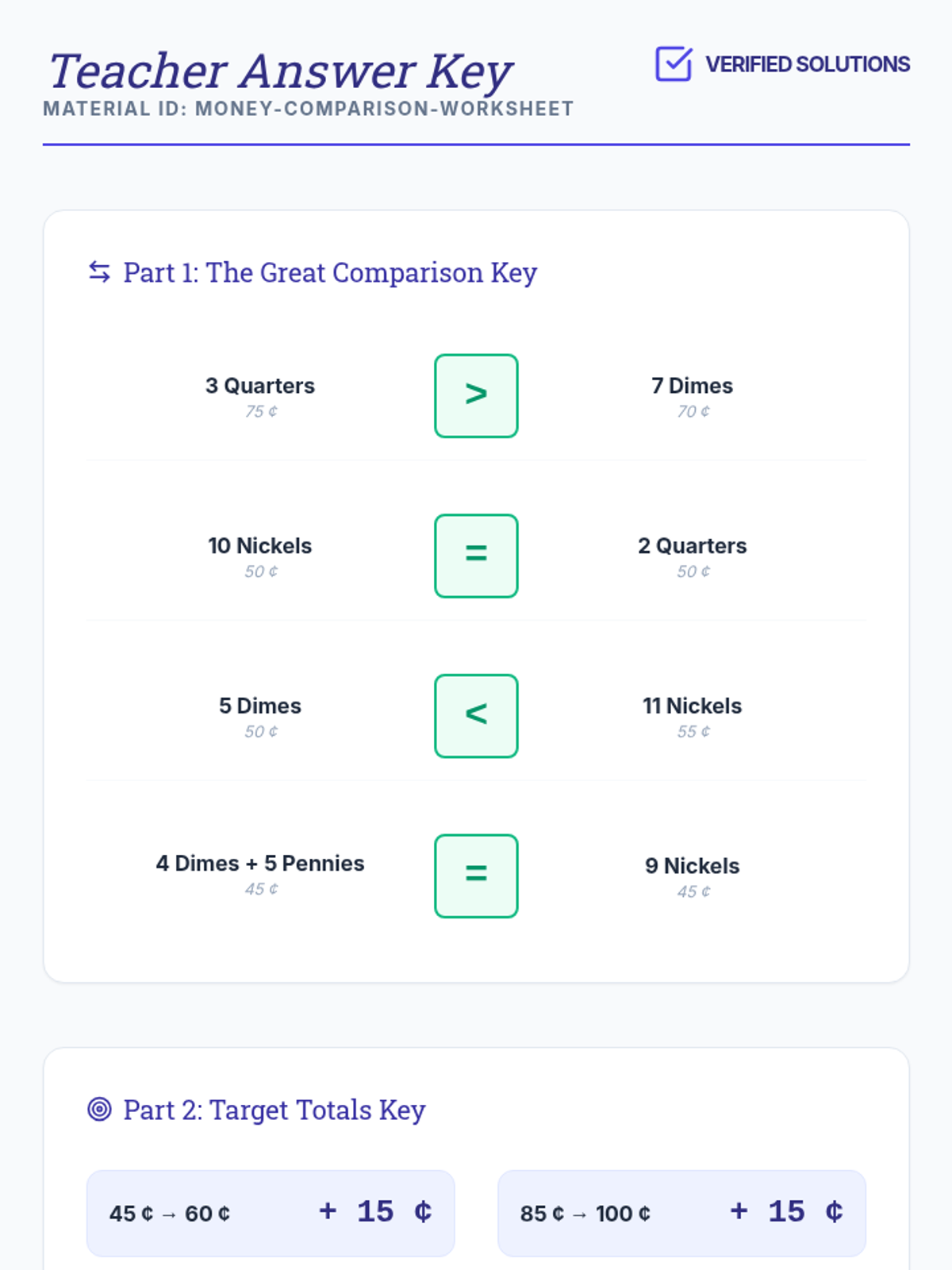
A comprehensive 1st-grade introduction to United States currency, focusing on physical identification, numerical value, paper bills, equivalencies, and the concept of digital money through the theme of 'Money Detectives'.
A 1st-grade sequence exploring quantitative relationships through geometric patterns, T-charts, skip counting, and simple graphing to build foundational algebraic thinking.
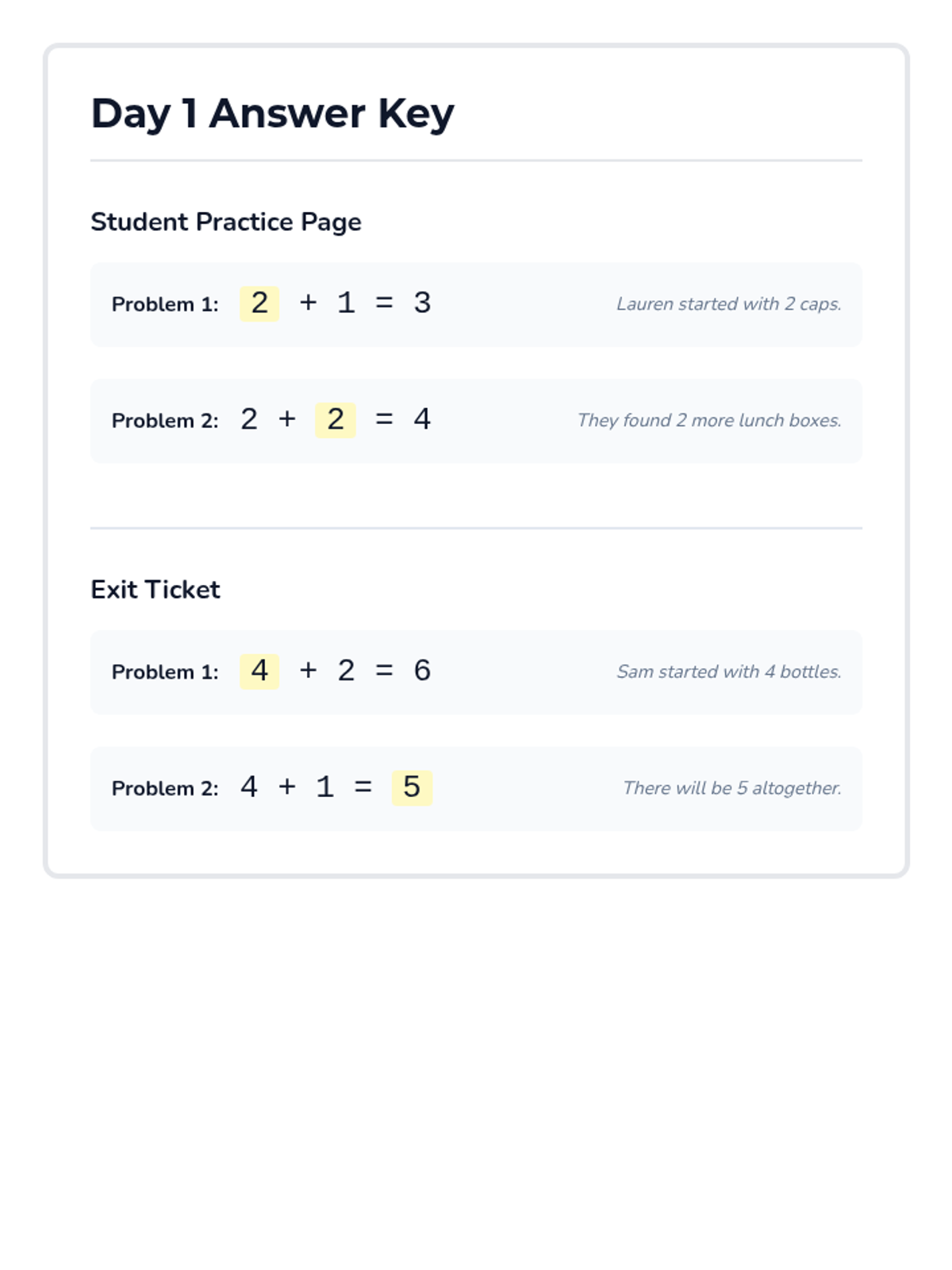
A 1st Grade sequence exploring quantitative relationships through the concept of 'Function Machines.' Students learn to identify and apply addition and subtraction rules to predict outcomes and create their own mathematical patterns.
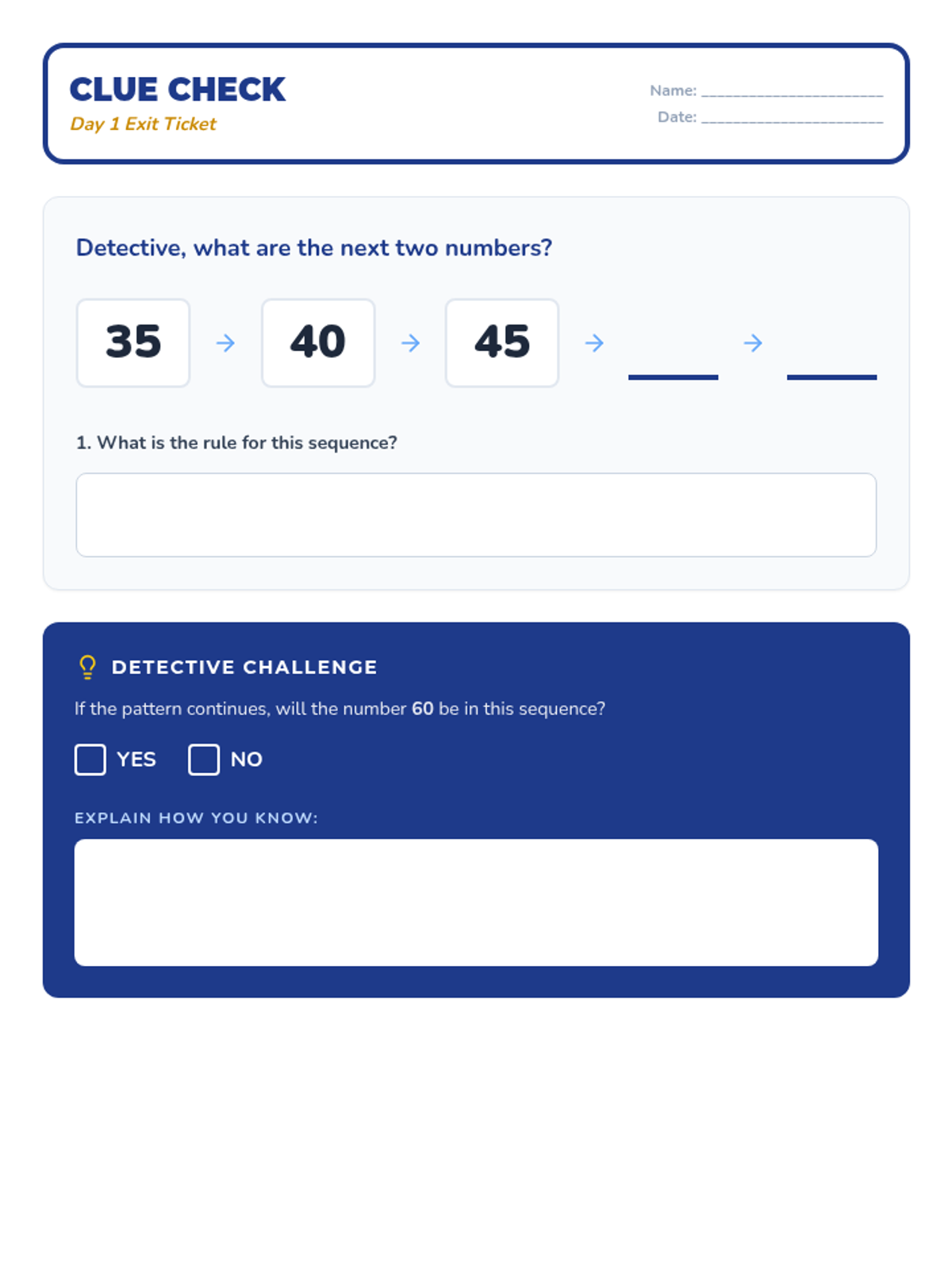
A foundational algebra sequence for 1st grade that shifts students' understanding of the equal sign from an 'answer' signal to a relational symbol of balance. Students use physical scales, visual manipulatives, and numeric equations to master quantitative relationships and solve for unknowns.
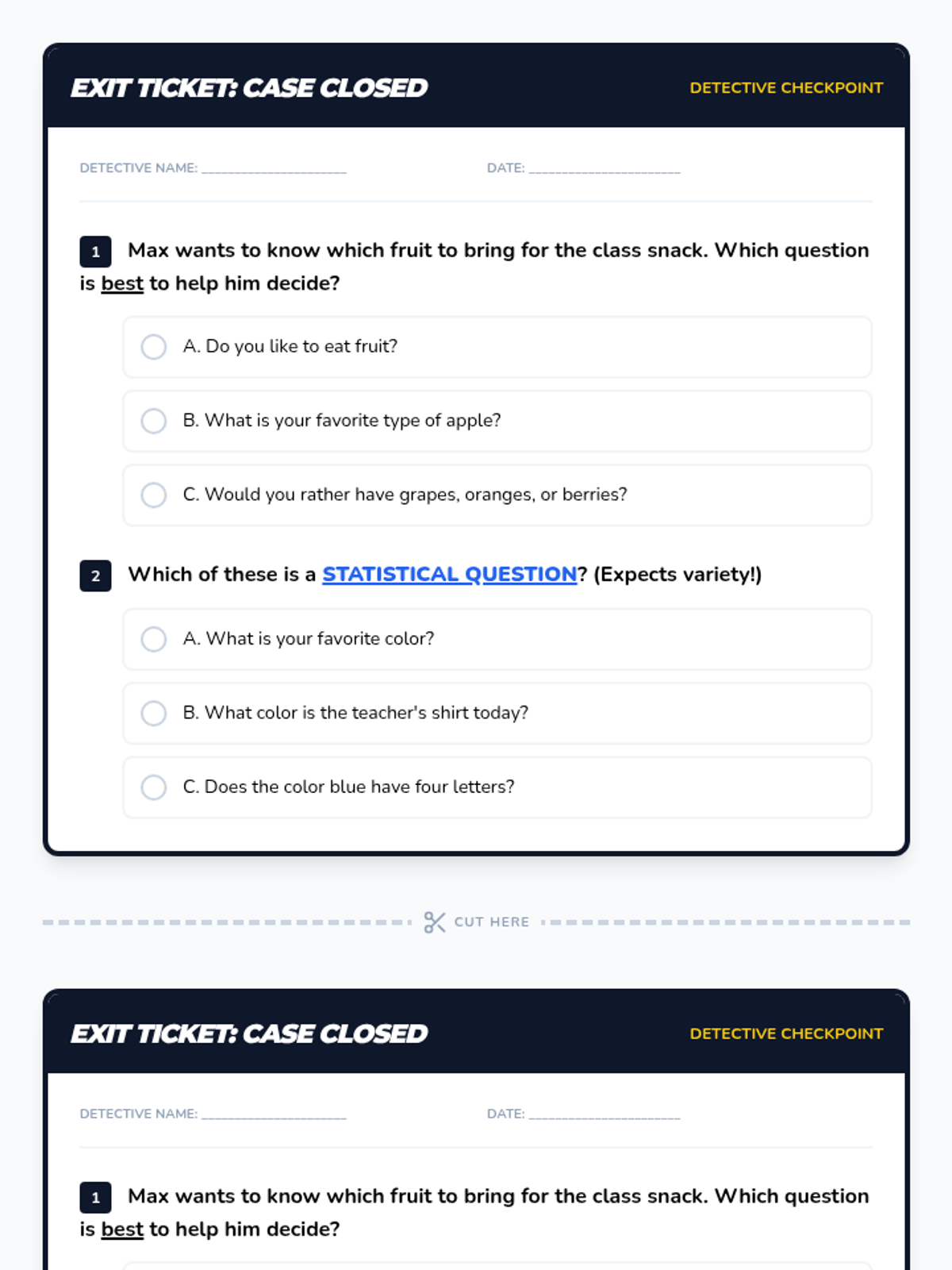
A hands-on geometry sequence for 1st graders to explore 3D shapes, capacity, and volume using 'Shape Lab' investigations. Students progress from distinguishing 2D from 3D to measuring volume with unit cubes and exploring capacity through liquid displacement and estimation.
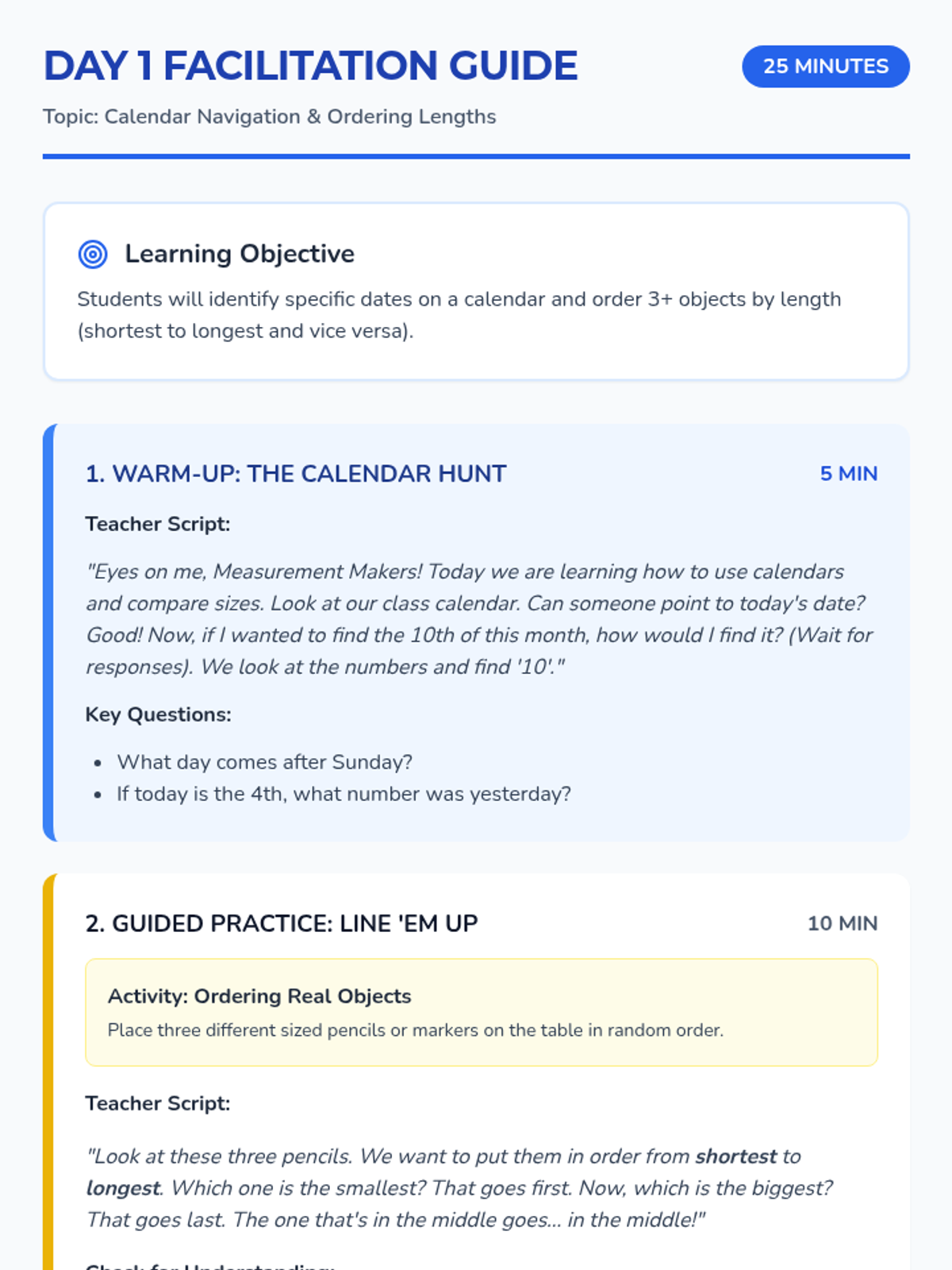
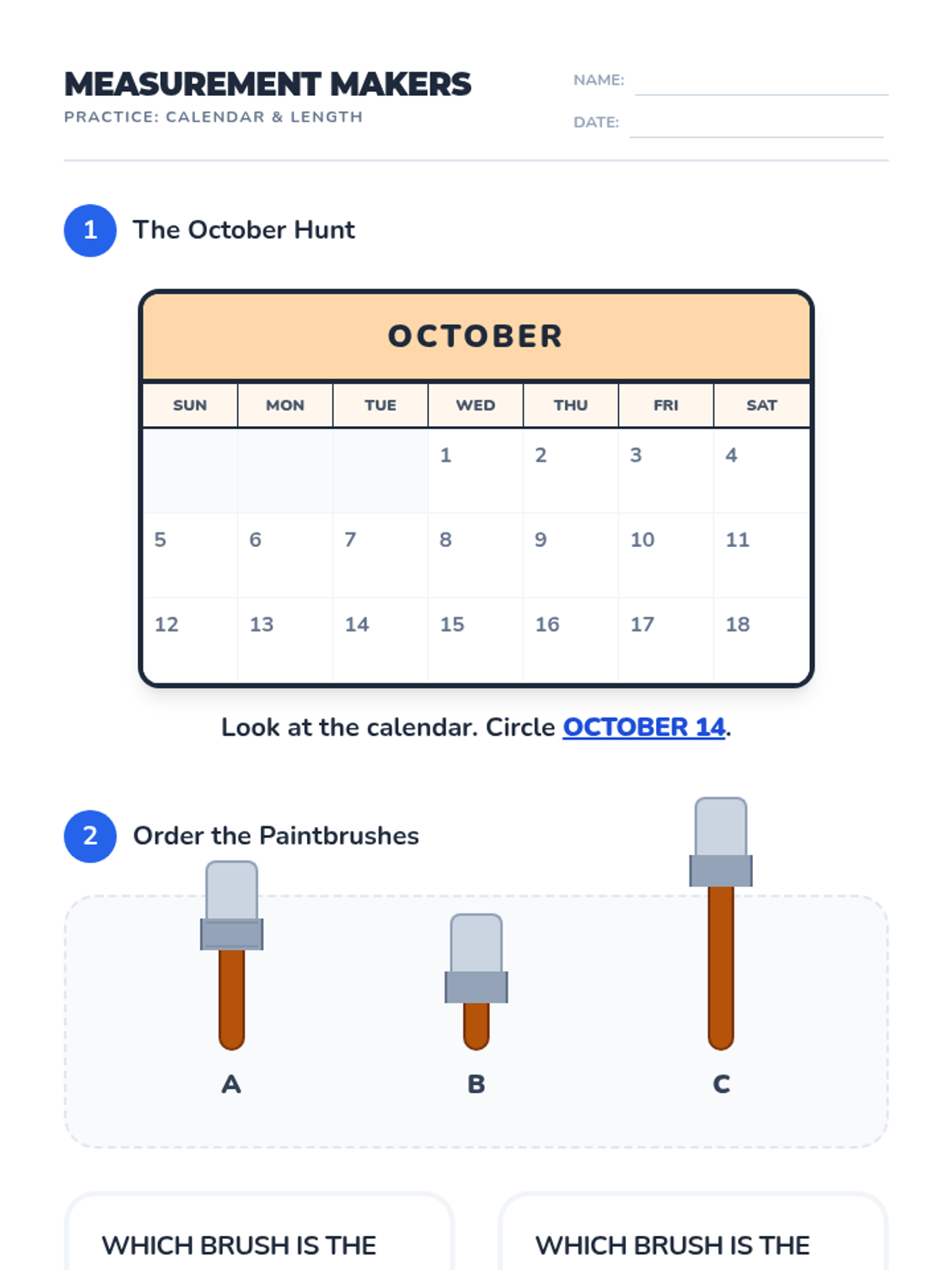
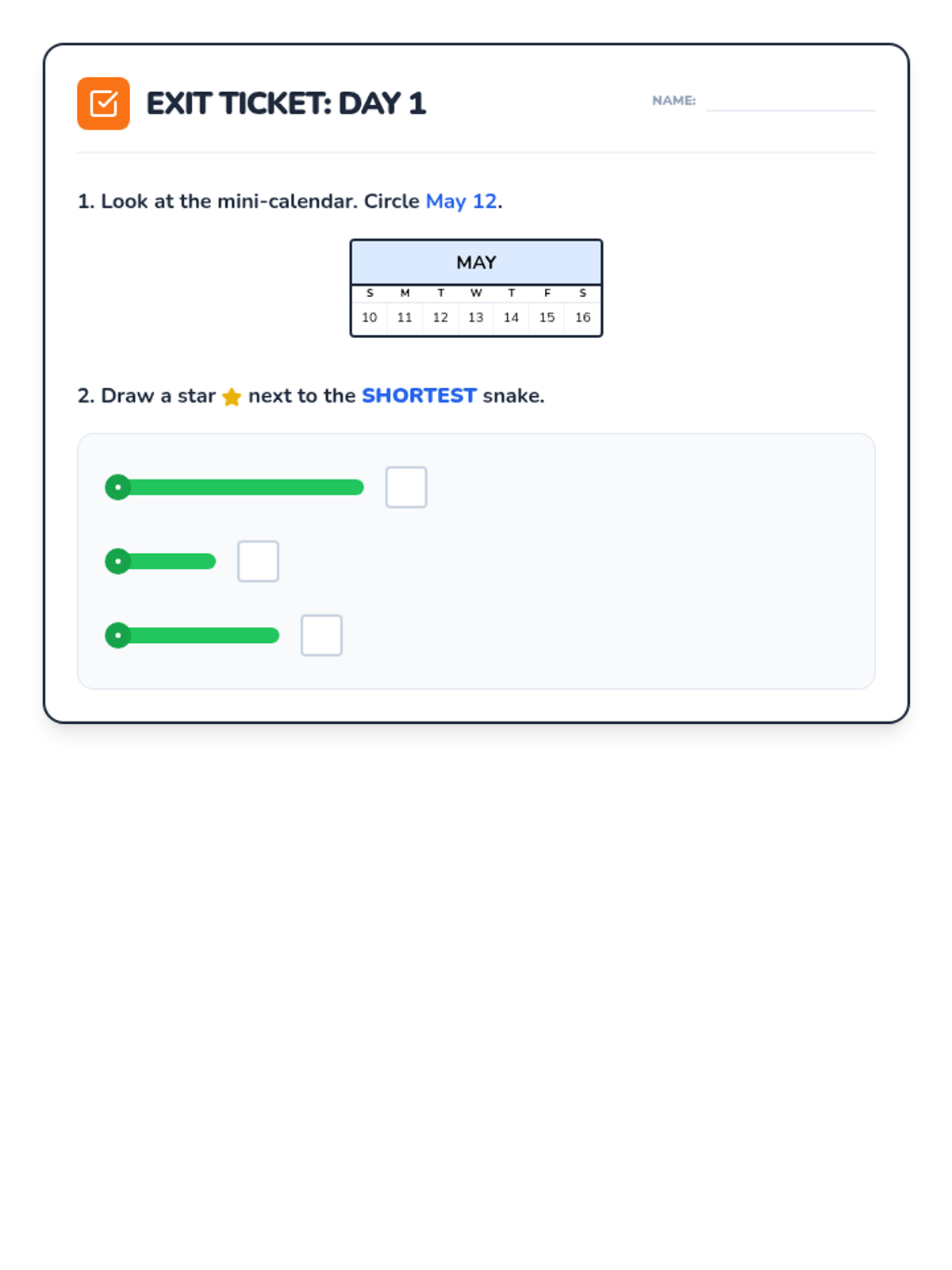
A foundational unit for 1st graders exploring the comparative language and logic of measurement. Students master direct and indirect comparison, ordering by attributes, and spatial reasoning before moving to standard units.
A 1st-grade geometry sequence exploring how shapes combine and break apart. Students use hands-on materials like tangrams, pattern blocks, and geoboards to develop spatial reasoning and understand the part-whole relationship in geometric figures.